This column deals with the sensitive topic of addiction, and may be uncomfortable for some readers.
In 2018 the World Health Organisation surprised and upset a number of fans of video games when it formally designated “gaming disorder” as a distinct clinical condition. The reaction was, sadly, predictable, and boiled down to some variant of the following argument: “I’m not addicted to video games! Therefore video games can’t possibly be addictive!” Many commentators and outlets that focus on video gaming piled on with complaints and criticism, and the result is that the subject is still controversial even today, almost two years on from the WHO’s initial decision.
I’m not a doctor or psychologist, but I wanted to take a moment to defend the decision to categorise gaming disorder/video game addiction as a separate condition, because I feel that too many people who don’t really understand the topic had a knee-jerk reaction to attack it. To them it felt like an attack on their hobby, and perhaps what we can gleam from that is that the messaging surrounding the decision could have been better and clearer.
Firstly, the commentators who criticised the decision, even those who work for major publications, are universally not medical professionals. Their knowledge of the subject is limited at best, nonexistent at worst, and quite frankly having a bunch of uninformed people criticising doctors for a medical decision is comparable to conspiracy theories like the anti-vaccine movement or the Earth being flat. The people who made the decision to categorise video game addiction in this way are qualified to do so, and they will have made their decision on the basis of investigations and evidence, all of which has been peer-reviewed. The people who took offence to the decision simply aren’t on that level.
The biggest problem some people seemed to have is that the decision felt like an attack on gaming as a hobby. Many people have long derided games, dismissing them as children’s toys and even blaming gaming for criminal and violent acts, so I can understand why, to some people, this felt like just another attack in a long line. But it isn’t, because the designation of gaming disorder in no way says that all video games are a problem or that all gamers are addicts. The classification of alcoholism as a disease doesn’t mean that the vast majority of drinkers are alcoholics; no sensible person would even dream of making that argument. Alcoholism affects a small minority of drinkers, just as gaming disorder affects a small minority of gamers. And no one is trying to say otherwise.
Something that can become a problem for one person isn’t going to be a problem for everyone. Many gamers – by far the majority – play games in a sensible and responsible way, enjoying their hobby without allowing it to dominate their life. But some people will take it too far, and will allow it to take over, perhaps as an expression of other mental health issues but perhaps simply because they allowed it to get out of hand.
Choosing to classify gaming disorder as a separate and distinct condition means that more studies can be performed in the field, more information disseminated to psychiatrists and other healthcare professionals, and the result of these things is that for those people who do suffer, better help, and help more tailored to their specific problem, will be available. This can only be a good thing, as it will mean more people will have access to specialist help.
In order to meet the criteria for an individual to even be suspected of having gaming disorder, there’s actually quite a high bar. The most important factor is that their gaming is having a detrimental effect on their life. This could manifest in many ways, which will vary from person to person.
When I was a student at university many years ago, I witnessed gaming disorder firsthand. I was living in a rented apartment which I shared with just one other person, and this person (who will of course remain nameless) became addicted to video games. The individual in question was, like me, an exchange student, which is how we met and how we came to share an apartment. He had friends back home who he liked to play games with, and this was around the time that online gaming was just taking off. He would spend endless hours playing an online game, often late into the night, and over the span of a few weeks it began to have a huge impact on his life. He stopped attending classes, which saw him end up in a mess of trouble with the university as he failed every class that semester. His parents found out, which caused personal problems for him with his family, and his failure to pay rent – despite promising me he’d paid his share – almost wound up getting the pair of us evicted. This was in addition to the weight he lost from not eating properly, the destroyed social relationships with other exchange students at the university, and the missed opportunities to have the once-in-a-lifetime experience of living in another country. Ever since then I’ve used his story as a warning, because his addiction to gaming had serious and lasting consequences.
There is a happy ending to this individual’s story, however, and that is that he did eventually get his life back on track and scale down his gaming. When we parted ways we didn’t keep in touch, so I can’t be certain he’s still living his best life, but as of the last time we were together it definitely seemed that he was moving in the right direction. It took an intervention from his family – who flew halfway around the world to see him after he failed all of his classes – and a twice-weekly therapy appointment to get him to that point, though.
Any time someone tells me that they know loads of people who play games who aren’t addicted, I tell them the story of my ex-roommate, and make the same point: “just because it hasn’t happened to you or someone you care about doesn’t mean it hasn’t happened to anyone.”
I hope that nobody tries to use the designation of gaming disorder to attack what is for most people a fun and innocent hobby. That would be counterproductive, and would lead to people who genuinely have issues with gaming addiction finding it harder to get help. But so far, that doesn’t seem to have happened. The designation is just that: a clinical classification designed to help that small minority of people who have a problem.
It’s worth noting that some games, especially in recent years, have gone out of their way to introduce potentially addictive elements to their gameplay. In particular we can look at lootboxes and randomised rewards, which in many games are little more than gambling – often using real-world money. There are frequent news stories, some of which end up in the mainstream media, of individuals who end up spending hundreds or thousands of pounds on these in-game “micro” transactions. In one case last year here in the UK, a child inadvertently spent his parents’ entire monthly wages in a game.
Putting a warning label of some kind on games that have in-game “micro” transactions is definitely a good idea, but in an era where physical sales of games in boxes (where such a label would be affixed) are in terminal decline, that probably won’t be good enough. And as I noted from my former roommate’s experience, which came long before such in-game transactions were commonplace, gaming addiction doesn’t always manifest with titles that have such systems in place.
We also have to be careful how we use the terminology of addiction – and of mental health in general, but that’s a separate point. When reading reviews of new titles, I often see the word “addictive” thrown around as if it were a positive thing: “this new game is incredibly addictive!” That kind of normalisation and misuse of the term can be problematic, as affected people may simply brush off their addiction by thinking that’s how everyone plays the game. I feel that writers have a certain responsibility to try to avoid this kind of language. Presenting addictiveness as a positive aspect could indirectly contribute to real harm. I’m sure I’ve made this mistake myself on occasion, but it’s something I hope to avoid in future.
Gaming addiction, like other addictions, is a complex problem that is not easily solved. It’s no easier for someone suffering from some form of gaming disorder to “just turn off the console” than it is for an alcoholic to “just stop drinking vodka”. The temptation is always present and it can be overwhelming. Anyone suggesting that it’s a simple case of “just stopping”, as if it were that easy, doesn’t know what they’re talking about. Again, it comes back to the point I made earlier: just because it might that easy for you doesn’t mean it is that easy for everybody. One person’s subjective experience is not a complete worldview; many people find it impossible to break the cycle of addiction without help. This classification has the potential to make more specialised help available, which is the primary reason I support it.
So that’s my take on the subject. Gaming can be addictive, and for a small number of people, that addiction can cause real harm and create lasting problems for themselves and their families. Recognising this reality is a good first step if it means more research can be conducted into the subject as that will hopefully lead to better and more effective treatments for people whose gaming addiction requires outside intervention. I’ve seen firsthand how this can happen, and I have absolutely no time for the argument that goes: “well I don’t have a problem with gaming addiction, so it must be fine for everyone!” That is a blinkered and selfish way to look at the subject.
For anyone reading this who thinks they may be affected by gaming disorder or video game addiction, I’ve prepared a quick checklist of questions you can ask yourself. If you find yourself answering “yes” to any of the points below, I would suggest you reach out to someone who can help – talking to a friend, family member, or someone you trust could be a great first step, and of course professional medical help is always available.
Question #1: Do you find yourself thinking about video games all the time, and planning ways to get back to your game as quickly as possible if interrupted?
Question #2: Have you missed important events – such as work, school, meetings, or other appointments – because you couldn’t tear yourself away from gaming?
Question #3: Do you find yourself unhappy, depressed, angry, or irritated while not gaming? And/or would you say that your happiness is inextricably tied to gaming?
Question #4: Have you ever lied about how much time you spend gaming to cover it up? And/or do you break rules or limits set by others on how much time you may spend gaming?
Question #5: Have you tried to spend less time gaming but failed?
Question #6: Do your friends, family members, or people close to you ever tell you that you spend too much time gaming? And/or do you feel that you have neglected your relationship(s) as a result of gaming?
Question #7: Do you forget to eat or skip meals because of gaming? Do you skip showering or fail to take care of basic hygiene and grooming because of gaming?
While not everyone who answers “yes” to the above questions will be an addict, these points do indicate that something may be amiss with your relationship with gaming.
At the end of the day, if you’re happy with your life and gaming is a hobby, that’s okay. If it isn’t causing any harm to yourself or other people, there is no problem. But for some people gaming can get to a point where it stops being a harmless bit of fun and becomes something more sinister: an addiction. Missing important events, skipping school, neglecting friends, skipping meals, skipping showers, etc. are all points which can indicate an individual’s relationship with gaming is becoming unhealthy, and if you recognise these signs in yourself, I encourage you to reach out and get help.
Yes, gaming disorder or gaming addiction is a real phenomenon. The World Health Organisation did not invent it, all they have done is classify it and formally recognise what many people have known for a long time – that it is real. Far from being an attack on gaming as a hobby, this should be seen as a positive thing, as it has the potential to help affected individuals get better and more appropriate help.
This article contains the thoughts and opinions of one person only and is not intended to cause any offence.
Spoiler Warning: There may be minor spoilers ahead for the Star Trek franchise, including the most recent seasons of Star Trek: Discovery and Star Trek: Picard. There will also be major spoilers for the film Star Trek: Generations.
There has been some buzz lately in Star Trek fan communities about something William Shatner said in a recent interview. To make a long story short, Shatner said that he’d be interested to return to his most iconic role, provided it was more than a mere cameo.
I don’t really like commenting on these types of stories. There were many in the run-up to the release of Star Trek: Picard, when practically everyone who had once been a main cast member in a Star Trek series was asked whether they’d be up for a return. People like Robert Picardo and LeVar Burton got some attention for their comments, as did others, but they were all saying basically the same thing, which was some variant of this: “I’d like to do it, but there hasn’t been any formal discussion with ViacomCBS about it.” Well… that could apply to anyone. Aside from very few individuals who seem to want nothing to do with the franchise any more, practically every ex-Star Trek star would – for the right price, of course – be up for a return.
William Shatner as Capt. James T. Kirk in The Original Series second-season episode The Trouble With Tribbles.
So why has William Shatner’s comment blown up the way it has? I’m honestly not sure. In the aftermath of 1994’s Star Trek: Generations, Shatner co-wrote a series of novels – his first set in the Star Trek universe. In these books, Kirk – who you’ll remember died in Generations – was resurrected by Borg-Romulans and would go on to live in the late 24th Century. As a statement of intent from the actor that Kirk could be resurrected somehow, a published series of novels is about as clear as it gets! Shatner has been willing to reprise his role ever since he last played Kirk in 1994. It shouldn’t come as a surprise that he still is.
As things stand right now, I don’t see it happening. The first and biggest reason why is that it would be incredibly difficult to do in-universe. Kirk is dead. He died in Generations, and even with all the technobabble at Starfleet’s disposal, there’s no way around that. Star Wars has learned to its great cost that the resurrection of long-dead characters can go over incredibly poorly, feeling like nothing but cheap fan-service and a blatant nostalgia play, and frankly there’s no way to resurrect Kirk without those same issues rearing their heads.
The second “Shatnerverse” novel, The Return, saw Kirk brought back to life.
The only way Shatner could reprise the role of Kirk would be as an alternate-universe version. And that has problems too. The first is which parallel universe this version of Kirk would inhabit. With the production of a fourth Kelvin timeline/JJverse film unclear at best, it seems very unlikely he could appear there. There had been rumours in the run-up to Star Trek Beyond that Shatner might join former co-star Leonard Nimoy for a role, with both older actors appearing as future versions of that timeline’s Kirk and Spock. With Nimoy’s death, that element of the film never happened – if indeed it was ever going to.
Could Shatner appear as another character, though? In my opinion, for whatever that’s worth, this would be the only way to include him in any new Star Trek production. He could be, just as an example, the grandfather of a young Ensign or Lieutenant Kirk. But it would be hard to make a role of this kind anything more than a cameo, which is something Shatner has said he wasn’t interested in.
Killing off Kirk in Generations was a big decision, and it wasn’t without controversy at the time – though in the days when most people weren’t online and there was no social media, those criticisms were less widespread! But it was undeniably a final end for the character, and there simply isn’t a sensible way to bring him back in his original, Prime Universe form. Frankly, it would be disrespectful to ask William Shatner to play a minor role or to make a cameo appearance, and I understand why someone of his calibre and with his unique standing in the Star Trek community would feel that way. But all of this means that there really isn’t a way to bring him back.
Capt. Kirk was killed at the end of 1994’s Star Trek: Generations.
The final point I’d make is this: Star Trek is doing okay at the moment. CBS All Access is still in a very competitive market in the United States, but it’s clear as day that recent Star Trek projects have been at least somewhat successful, or we wouldn’t see the continued investment in the franchise that ViacomCBS has been willing to make. A second season of Picard is happening, a third of Discovery is happening, and there are two new live-action shows that have been announced, one that’s in early development that hasn’t been announced, and two animated shows too, one of which already has a two-season order. With all of this going on, I just don’t see a need for Kirk to be shoehorned in.
The obvious comparison is Palpatine in The Rise of Skywalker, which I alluded to above. That film had a number of issues – as I noted in my review – but what it boiled down to was that Star Wars as a brand has found itself unable to escape the characters and storylines of its original trilogy. We see this across Star Wars, from the prequels to the sequels and the spin-offs. The entire franchise revolves around its original incarnation, as no one has really been bold enough yet to take it in a new direction. As such, when JJ Abrams needed a powerful villain for The Rise of Skywalker, he fell back on the original “big bad”: Palpatine.
Star Wars tried bringing back a long-dead character… and look how well that worked.
Star Trek, in contrast, has long since moved on from Capt. Kirk – something which has been obvious since 1987, when The Next Generation premiered and showed that the franchise could be more than its first captain and crew. And Star Trek has only grown since then. Discovery may overlap slightly with Kirk’s era, but that’s all it is: an overlap. Strange New Worlds will share that setting, but again, it’s not a story that’s as tied up with The Original Series in the same way as Star Wars’ ongoing saga is with its original trilogy. Star Trek may have started with William Shatner’s Capt. Kirk in the 1960s, but it doesn’t end there, not by a long shot. As a result of that point alone, there just isn’t any need for Kirk to come back. As a fan of The Original Series I can admit it would be a cute nod and wink to fans to find a way to bring Shatner in – but no more so than it would be to see Robert Picardo or LeVar Burton, or any of the other 30 or more actors who once played a main role in a Star Trek show.
Speaking more broadly, any franchise has to be careful when looking backwards. One of the things I was concerned about with Star Trek: Picard is that it could end up trying to be Season 8 of The Next Generation – something which it simply never could be. As fun and nostalgic as it can be to see classic characters return, if that’s all that a story offers it will never be a success. There has to be something interesting, entertaining, and dramatic to drive the plot, and any new characters we meet along the way have to be part of that. Spending too much time looking backwards means there’s no time to look forwards, and that’s unfair to any new cast members. They deserve at least a chance to become fan favourites for a new generation of Trekkies, the way William Shatner and others were fan favourites for the first generation. Stories can be drowned out by nostalgia, with new characters left underdeveloped and sidelined. While it can be done well, as I’d argue Star Trek: Picard demonstrates, it can also be done poorly as we’ve seen in recent years.
Star Trek: Picard brought back Sir Patrick Stewart to the franchise.
So do I think we’ll see William Shatner back in Star Trek? I would never say “never”, but at the moment I think it’s unlikely. With his character having been killed off more than two decades ago, and with the franchise standing on its own two feet just fine without needing to continually return to The Original Series for ideas, it’s hard to see where there’s a place for him to make a major contribution. If he wanted to do a cameo I think that could be fun, but as he’s made clear that isn’t something he’s up for – which is perfectly fair enough – it’s hard to see any Star Trek writer going out of their way to create a role especially for him, or to find some convoluted and inevitably controversial way to un-kill Kirk.
There will always be these kinds of comments from actors. It’s understandable, given that Star Trek has made a big return to our screens, that journalists and fans will ask anyone who’d been involved with Star Trek in the past if they’d be willing to come back. And it’s understandable for someone of Shatner’s pedigree to say he’d only do it if he could be given a decent-sized role. But none of it actually means anything, because if the people in charge of Star Trek over at ViacomCBS were genuinely interested, they’d have reached out to him. That’s why I tend not to comment on these kind of stories.
The Star Trek franchise – including all properties mentioned above – is the copyright of ViacomCBS. This article contains the thoughts and opinions of one person only and is not intended to cause any offence.
Spoiler Warning: There will be spoilers ahead for Game of Thrones, including Season 8 and the series finale.
This article is somewhat unusual for me in that it’s a direct follow-up to a piece I wrote a few days ago. In that article I looked at some of the reasons why Game of Thrones has basically wiped itself off our collective cultural map and why no one seems at all interested in rewatching it in 2020, despite it having once been considered as one of the best television series of all time. All of this pertains to the show’s eighth season, and that’s the topic I’ll be picking up again today, as I felt that some points in my original article didn’t go deep enough into some of the other issues fans have with the season. Ironically, I left some of those points underexplained!
I really do recommend reading the other article before this one, and you can do so by following this link: Where did Game of Thrones go?
Last time, I talked at length about where the season failed hardest for me personally, and that’s the Night King being so utterly wasted as a villain. Before we look at some of the other points, I want to go into a little more detail about this storyline. The Night King ended up being probably the most egregious anticlimax I’ve ever seen on screen. I can’t remember another film or television series that has built up a story for so long only to toss it aside so casually. The war against the Night King had been building up over seven seasons, with information trickling back to the main characters about goings-on north of the Wall for literally years. I mentioned last time that Game of Thrones’ opening scene in its premiere episode way back in 2011 set up this story – a clear statement of intent that this was what the show was about.
There’s actually a great message in a story like the Night King’s. It says that the politicking, palace intrigue, and even the wars between competing kings and queens is fundamentally irrelevant when a threat far greater than any of them is coming. The Night King is, in many ways, a force of nature. His strong association with the season of winter is tied to this, and the coming unstoppable force is an analogy for some of the problems facing our world – most notably climate change. What the story of the Night King should have said is that working together to face a powerful threat is something we will have to learn how to accomplish, because if we don’t we’ll all perish together.
The Night King’s death scene wasn’t even well-lit or well-framed.
Characters would have to make sacrifices in such a situation. Not only laying down their lives, as we saw only a couple of characters really do against the Night King, but losing their dreams and ambitions too. Doing the right thing and suffering terrible consequences has been a theme of Game of Thrones since its first season, yet for many of the characters who stood against the Night King, they don’t seem to suffer any consequences at all. If they do, it isn’t acknowledged on screen.
Many people far wittier than I have drawn comical analogies for how Game of Thrones handled the war against the Night King. “It’s as if Voldemort was defeated in Book 5 and Harry Potter spent his final two years at school getting picked on or having a nasty teacher!” proclaimed someone. “It’s like the One Ring getting thrown into Mount Doom midway through The Two Towers only for Frodo and the Fellowship to return to the Shire and argue with his aunt.” suggested another. “It’s as if Darth Vader and the Emperor both died in The Empire Strikes Back and Luke Skywalker spent the final film fighting Boba Fett or Jabba the Hutt!” was another offering. What do all of these examples have in common? They would have been massive anticlimaxes, with the primary source of conflict resolved too soon.
The war against Cersei – which ended up being little more than a rout – was just fluff. And it felt that way for a reason: there were no stakes. The Night King – underdeveloped though he was, and with his motivation not made clear – was an existential threat not only to our heroes, but the very world they inhabited. His victory would have plunged Westeros and Essos into a “Long Night” – an era of darkness and cold where any survivors who hadn’t been turned into wights would surely die of starvation. Now that’s an enemy we can all agree is worth defeating.
Contrast that to the consequences of Cersei being victorious. Some main characters would probably be executed if they survived the battle. Others – like Bran or Sam, perhaps – may have been allowed to live under certain conditions, such as being sent to the Wall. The smallfolk (i.e. the peasants of Westeros) would live their lives as they always had. The ruler would be a jerk, but she wouldn’t exterminate all life on the planet. And when she died – Cersei is no spring chicken after all – someone else would take over and would probably be a better ruler. In short, the stakes are not just lower, they’re practically nonexistent in comparison.
There’s a theme present in the works of George R. R. Martin, and of many other writers and creators in the 21st Century: subverting expectations. This is one part of postmodernism in literature: taking older, established ways of writing and storytelling and trying to shake them up or do something different. Different authors and creators do this in different ways: the novel Cold Mountain, for instance, didn’t use speech marks to indicate dialogue, which was a truly annoying gimmick.
George R. R. Martin, author of A Song of Ice and Fire. Photo credit: Gage Skidmore
Martin seems to consider himself somewhat of an anti-Tolkein, despite his works being heavily influenced by Tolkein’s. And that is partly true, as A Song of Ice and Fire takes a different approach to its fantasy setting. Both Martin’s and Tolkein’s works are epic fantasy, but Martin takes a far more edgy approach to his subject matter. We could talk at length about how some of Martin’s creative decisions verge on the obscene, which is why key characters had to be “aged up” when the story was adapted for television.
In the case of the Night King and the Army of the Dead, the expectation of the show’s fans was that somehow, this would be the most important story of the final season. This conflict would be the season’s lynchpin. Cersei would be part of it somehow, and everything would tie together. That expectation had been deliberately constructed by the show’s producers and marketing team, and when it turned out not to be true, far from being a clever subversion it ended up as an awful anticlimax.
Some have tried to argue that the characters – principally Cersei – are “just being realistic”, and that the show is depicting events that have genuine historical analogy, like the breaking of promises and the betrayal of allies.
What Martin and other storytellers who try to use this postmodern approach to messing with audience expectations often miss is that there’s a reason why stories have been written and structured a particular way: they’re entertaining. Nobody is watching Game of Thrones because of how realistic it is – it’s fantasy and escapism. The realistic or quasi-realistic depiction of certain events is part of that, and entertainment in general has seen a recent trend toward realistic visuals, among other things. But if the intention was to make Game of Thrones feel like “real history”, that was a stupid idea from the start. If I wanted to learn about the Wars of the Roses or the history of the kings and queens of France – both sources of inspiration for A Song of Ice and Fire – I’d go to the non-fiction section of the library or watch a documentary.
If there’s a choice between being “realistic” and being entertaining, for the love of god if you’re making a dramatic television show choose to be entertaining! Don’t mess with the way stories have been told for practically all of human history because you think it’ll be “cool” or “subversive”. There’s a reason why people want to see battles of Good versus Evil, and why people want to see the biggest, most intimidating villain be defeated at the story’s climax, not halfway through: those things are more entertaining. The purpose of Game of Thrones was to be entertaining, not to be a let-down.
There is plenty of room in the world of entertainment for stories that aren’t about fundamental battles between Good and Evil. But if Game of Thrones and A Song of Ice and Fire wanted to be that kind of story, with a sole focus on human villains, palace intrigue, war, and politics, then why have magic at all? Why go to all the trouble of introducing the Night King and building him up as an existential threat? If the show wanted Cersei and Daenerys to be the villains, to show how power corrupts or that a belief in one’s own righteousness can lead to heinous crimes, just set up that story and skip the evil all-destroying Dark Lord. If George R. R. Martin didn’t want to write a story where the good guys face off against an evil villain, then why’d he write his books that way and let the show go down that route?
If the show wanted to be all about the wars, politicking, and human villains, why bother creating the Night King at all?
Perhaps part of the problem is that the show and books have become, over the preceding seasons, distinct from one another. The Night King is not actually a book character – at least not as of the end of the most recent novel, A Dance With Dragons. He’s a show creation, intended to give the leaderless Others (the novels’ name for the White Walkers) a figurehead. There are many other points of divergence, but perhaps this is the biggest one, and one which could explain why the Night King storyline fell so flat: it wasn’t Martin’s creation.
Martin, Benioff, and Weiss may look at the works of authors like Tolkein with derision, considering the premise of good-versus-evil a played-out cliche. And it’s true that sometimes, that basic premise can feel overdone. But there’s a reason why audiences respond to the kinds of stories that we don’t see in real life – they’re entertaining and engrossing. Seeing a bunch of flawed humans scrabbling around to decide who’s the temporary king of a broken kingdom isn’t as epic and it isn’t as fun. Fantasy in particular is meant to be escapism; there’s a place for realism in entertainment provided it stays on the right side of the line. But Game of Thrones got it fundamentally wrong if the producers and writers believed that fans were more interested in seeing Mad Queen versus Mad Queen instead of the Great War between the living and the dead play out in more detail.
In Season 5 and Season 7 especially, we start to see the Night King as a foil for Jon Snow – which explains why a lot of people were so upset that the Night King and Jon never faced off against one another at the Battle of Winterfell. Again, the question is why? Why set up that rivalry only to drop it at the moment it should have reached its zenith? If the intention always was for Arya to land the killing blow – as showrunners Benioff and Weiss have indicated – why set up a Jon Snow-versus-Night King expectation? This comes back to what I said about good storytelling and how stories have been structured and written historically: there’s a reason why a hero-versus-villain fight feels right and feels so epic and spectacular. Messing with these formulae too much can lead to the whole story just disintegrating, and that’s what we see with Game of Thrones.
Personally speaking, I was okay with Arya landing the killing blow. I felt it was a good use of her assassin training, and it meant that we got to see her use her skills (which otherwise would have felt like a wasted arc in previous seasons) but without her killing Cersei. However, it would definitely have been nice to see Jon and the Night King duelling at the Battle of Winterfell before she struck. For the reasons outlined above, I understand why many people didn’t like it and felt that it was another bolt from the blue in a season that was frankly overrun by these twists.
I wrote last time that Game of Thrones was a series that definitely became aware of its own reputation as the seasons went on. The showrunners and writers evidently felt a peculiar pressure to keep up the unexpectedness, but without the books to rely on to provide twists, they had to make up their own. That’s how we ended up with Littlefinger’s storyline at Winterfell in Season 7, it’s partially why Tommen committed suicide at the end of Season 6, and it’s why Jon had to lead a mission north of the Wall in Season 7. With no source material to work from, and a barebones outline of where the characters needed to end up, Benioff and Weiss did their best to get them there, but they wanted to keep up the show’s reputation for being unreliable and throwing shocks and twists at the audience. With all due respect, though, what they managed to come up with was a poor imitation of Martin’s work. Benioff and Weiss were amazing at adapting already-complete stories for the small screen. But they were poor when it came to making their own decisions about where the story should go and how it should unfold. That may be why they were dropped by Lucasfilm having been offered the opportunity to work on Star Wars, and it’s certainly why Netflix, which has hired the duo, should be very careful about how much free rein it gives them to create a new story.
David Benioff and D. B. Weiss adapted Game of Thrones for television and served as showrunners for the duration of the series. Photo credit: Gage Skidmore
Of all the plot threads that Game of Thrones dropped without a real conclusion, the Night King’s is the worst. Secondary storylines, like those involving Dorne or Essos, might be annoying to fans and noticeable, but the Night King was the show’s overarching villain and the driving force for much of the story of the series. His death in his first real battle and his first appearance of the season, and then the surviving characters taking almost no time to deal with what happened as they rushed on to the next story point, was where the season – and arguably the main storyline of the whole show – came undone. We needed to get two things from the Night King, as I wrote last time: a genuine motivation, complete with tangible implications in the event of him winning, and to see him actually win a fight. We got neither, and the show simply couldn’t recover from that truly awful anticlimax.
I didn’t intend to spend so long on the Night King again, but apparently there was a lot more to say from my last article on this topic.
Having spoken to friends who are Game of Thrones fans, and having participated in the online conversation surrounding the show last year, one thing that’s clear to me is that there’s no agreement on what Season 8 did worst. Some are upset by the Night King, as I am, others are upset by Daenerys’ rush to madness. Some feel Jaime’s character regression was the worst mistake, others still feel that the decision to crown Bran was where the season truly went off the rails. But there is agreement – almost universally so – that Season 8 was a failure. Practically everyone I’ve spoken to made the point that six episodes were simply not enough to tell the final part of this story, and the truncated season ruined one or more major storylines as a result. It’s hard to disagree with that consensus.
There are several points in Season 8 which received a lot of criticism that I personally felt were okay. I mentioned Arya landing the killing strike on the Night King as one of those points. The Night King needed way more screen time and explanation, as we’ve already covered, but fundamentally the idea that she could use the skills she learned in Essos to take him down wasn’t particularly an issue for me – at least not when compared to the overall failure of that storyline.
Another character whose arc was criticised was Jaime Lannister. After several seasons of growth and change, many fans felt that his decision to ditch Brienne and return to King’s Landing to be with Cersei was out of character, a regression, and destroyed his arc. Game of Thrones has never shied away from presenting its characters as flawed, and in my opinion, what Jaime’s decision was trying to say is that despite everything he’d been through, the love he feels for Cersei, even as he recognises how twisted and evil she can be, is stronger than anything else. It wanted to say that people will do inexplicable and nasty things for love, and that sometimes there’s no way to overcome that. It also wanted to say that some people can appear to change but fundamentally haven’t or can’t. Is that depressing? Sure it is – but anyone who’s been betrayed, lied to, or cheated on by a partner can recognise something in Jaime’s Season 8 arc. If you’ve ever felt that sense of regret that comes from having been warned about someone or missing the “red flags” in a relationship, I think you should be able to relate to how Brienne feels in the moment Jaime leaves.
The character turn was rushed, of course, as was practically everything in Season 8. And I don’t disagree that his decision seemed to come from nowhere. It’s also hard to argue with the idea, given that he did nothing of consequence after leaving Winterfell, that he could have been killed in the battle against the Night King – his death would have gone some way to making that fight feel less pathetic. This ties into what I was saying earlier about the postmodern approach to storytelling, and how Game of Thrones has wanted to throw away established conventions. Seeing Jaime undo several seasons’ worth of changes to his character is fundamentally unsatisfying to a large part of the audience, regardless of any message that kind of story may contain. What was also deeply unsatisfying to many fans was seeing Cersei reunited with her lover and soulmate before her death.
When a villain like Cersei is presented in such a mean, nasty way, we as the audience want to see her get her comeuppance. For some villains it isn’t enough that they’re defeated or even killed, there’s a part of us that wants to see them suffer. Cersei being reunited with Jaime gives her great comfort in the moments before her death. She doesn’t die alone, she dies in the arms of the man she’s always loved. And as with the point above, I can certainly appreciate why fans feel that was less of a satisfying end for a character we’ve all been encouraged to loathe for eight seasons.
Game of Thrones ended up with Cersei as the show’s final villain in what was a major anticlimax.
The sequence that I termed the “Electoral College” last time, in the series finale, is another point that comes in for criticism. I said last time that the decision to anoint Bran as king was a problem for some people, as the way he might govern and the people he appoints to his ruling council basically represent a continuation of the previous system of government. The Electoral College may work for Bran and Bran’s successor (as he is unable to have children and his apathetic personality means he’s unlikely to have a preference for who succeeds him on the throne), but it may not work very well in the long run. It’s essentially rule by an aristocratic few, with all of the corruption, unfairness, and lack of freedom such a system propagates.
But looking at the sequence itself, which is something I rather glossed over last time, there are clearly some issues. And yes, some of these are closer to nitpicks than major errors, but taken as a whole there’s a reason why the sequence didn’t work for a lot of fans.
Firstly, the reason the Electoral College was assembled in the first place is that there was no clear candidate to rule. While it should certainly be seen as an encouraging step that the surviving lords and ladies got together instead of raising their armies and claiming the throne for themselves, several candidates present at the meeting had claims to the throne, as did at least one person not present – Jon Snow. The reveal of Jon’s heritage as a Targaryen and not a bastard gave him the strongest claim to power, stronger even than Daenerys’. Several of the great houses of Westeros had been very keen in earlier seasons on a Targaryen restoration, and while it’s true that the principal figures involved in that are mostly dead by this point, they have heirs and representatives at the meeting who arguably should be in favour of restoring the Targaryen line. With Daenerys dead, the only Targaryen who remains is Jon. Even if he wasn’t to end up on the throne, the fact that he wasn’t even considered by anyone raised many eyebrows. I don’t think it makes the revelation of his true lineage somehow a waste, because Game of Thrones has always been a series where characters’ supposed destinies don’t pan out. But some fans feel that way, perhaps because they’d been on “Team Jon”, or perhaps because he seemed like the best candidate to them.
But there were other candidates besides Jon. The line of the Baratheon family – which was related to the Targaryens in the past, allowing Robert Baratheon to claim the throne in the first place – leads to Gendry, who has been recently legitimised and given dominion over one of Westeros’ realms. If Jon is not an option, Gendry has a strong claim as Robert Baratheon’s heir and as an admittedly distant relative of the Targaryen family through Robert. Edmure Tully nominates himself before being shot down by Sansa in what some fans derided as a “girl power” moment. But why not Edmure? No one else seems to want the job, and as a nobleman he’s as valid a candidate as anyone present.
The North seems overrepresented at the Electoral College. All three surviving Stark children – Sansa, Bran, and Arya – are present, as is Brienne, who is sworn to Sansa’s service, and Sam, who seems to be the sole representative of the Night’s Watch. Of thirteen people present, four or five represent one of the seven kingdoms – which intends to fully and formally secede. Several of the other lords either don’t speak or barely speak, leaving their realms without a voice in proceedings.
The Stark family survivors at the “Electoral College”.
As I mentioned last time, both Dorne and the Iron Islands had been on the verge of secession in earlier seasons. Dorne in particular was livid when the Targaryens were deposed, and had been working constantly to bring about a Targaryen restoration. And the Iron Islands, now seemingly under Yara’s control, had been promised independence by Daenerys. As above, even if the ultimate outcome was to be the Iron Islands’ continued presence in the realm, for their claim to not even be mentioned once feels like an oversight at best. We had never met the new Prince of Dorne before this sequence, so perhaps having this new character press for his home’s independence might have felt somewhat tacked-on, but Yara is an established character, someone who has fought hard ever since we met her for the Iron Islands, so for her not to speak up at all is understandably something fans noticed.
When Tyrion arrives at the Electoral College he’s a prisoner of the Unsullied. Grey Worm hates him for his betrayal of Daenerys, and at the beginning he’s told he isn’t allowed to speak. Yet within moments, Tyrion is dominating the proceedings. He gives a speech and it’s his nomination of Bran than sways everyone to anoint him as the new king. Many fans feel that Tyrion’s status as a prisoner meant that he shouldn’t have been allowed to play such an important role in the Electoral College, and it’s worth acknowledging that.
In the aftermath of the finale, a reviewer wrote that the Electoral College alone could have been a whole episode or a whole season, instead of simply a twelve-minute sequence toward the end of the finale. In a show that has always done politicking well, I can agree with that sentiment. There was a lot to discuss, and while the ending could have remained the same, we could have certainly spent more than twelve minutes getting there.
Continuing our theme of looking at nitpicks, two of Season 8’s battles received a lot of criticism for the perceived lack of logic in their tactics and the way those battles unfolded. Firstly we have the Battle of Winterfell, where points of criticism included the Dothraki cavalry charge, the placement of infantry compared to artillery, and most prominently the decision to place many soldiers outside the walls of the castle. Castles are, of course, designed to be defensible positions which armies and civilians can retreat to. Winterfell in particular is a large complex, and we saw some of the battle preparations include bringing food and supplies inside the walls – something that would be done to withstand a prolonged siege. When facing an overwhelmingly powerful army, like the Army of the Dead, many fans and armchair generals felt that leaving forces outside the walls to face the attackers head-on was a dumb decision. And I can see that point of view. Certainly having the Dothraki charge right into the first wave of the wights was silly; having them somewhere to the south in reserve, where they might be able to join the battle later in a flanking manoeuvre or even hit the Army of the Dead from the rear would have been a better use of cavalry in this situation. This was a mistake the Golden Company repeated at King’s Landing, where a portion of their forces inexplicably stand outside the city walls too.
The second criticism of the eighth season’s battles comes in the Battle of King’s Landing. After a handful of ships of the Iron Fleet were able to kill Rhaegal using scorpions, the same fleet and the entire city of King’s Landing is unable to kill Drogon with far more scorpions at their disposal. Now I like the idea of Cersei investing her hopes for winning in this one piece of technology that ultimately fails. But I absolutely agree that having seen Rhaegal so brutally killed in the previous episode, it’s very strange that Drogon survived. I really dislike when a story becomes inconsistent with what’s already been established, so either the scorpions needed to fail or they needed to work. We needed to see Rhaegal survive or Drogon be injured in order for the use of scorpions to remain consistent. As it is, it feels like Rhaegal was killed off just because he was in the way, and having two dragons survive Daenerys’ death wasn’t in the story. While it may be a stretch to call Rhaegal a “character” in the same way, when a character is killed off in what seems to be a cheap way like this, it never feels great.
I don’t like the argument that some people always trot out to defend dumb tactics and decisions: “it’s just a TV show/film/story!” Of course it is, it’s fiction. And as I said above, no one comes to Game of Thrones for a lesson in medieval battle tactics. But there’s a line between realism and fun, and a world like Game of Thrones’ does rely on at least a perception that character decisions are realistic. Trying to excuse a mistake by saying “it’s just a story” is silly. If characters have been established over several years as being smart, good commanders, and clever tacticians, it’s at best a change and at worst completely jarring when they seem to lose all of that overnight.
A Lannister soldier with a suddenly ineffective scorpion during the Battle of King’s Landing.
Tyrion is the character who’s been at the centre of these criticisms since at least Season 7; it was his insistence to bring Cersei into the war against the Night King, for example, despite knowing she was the kind of person who would let them down. And the mission north of the Wall was something he supported, despite being incredibly dangerous and stupid. We’ve talked a lot about characters seemingly going against what had been established, and Tyrion doesn’t escape that. Nor does Varys, whose overt scheming on Jon’s behalf winds up getting him killed.
Something I’ve noted in past articles looking at other films and series is that when a production has some problems, other more minor issues become noticeable. These points on their own would not “ruin” a better show, but when the spell is broken and one looks at a show like Game of Thrones with a more critical eye, minor issues seem to pile up and add to the sense that it was a failure. I’m thinking in particular about some of the production goofs – the modern-day cup and water bottle glimpsed briefly in a couple of scenes (that I myself didn’t spot), or the modern shoes worn by a character in one scene that I also didn’t spot on first viewing. In a less-troubled production, or a season whose overall story was better-received, these incredibly minor points would have gone unnoticed or been little more than a shared joke between fans and producers. But in a season which has been roundly criticised, minor points just pile on, and for many fans, things like the coffee cup just added to the sense that less care had been taken with Season 8.
Putting together my two articles on this subject, I think I’ve finally looked at all of the points I wanted to. It took a long time and I know this was a detailed breakdown, including dragging up academic theories, so if you read through both articles and made it to the end I hope it all made sense to you.
The initial question I asked when I began my first piece on this subject was: why isn’t anyone watching Game of Thrones in mid-2020? And did the disappointing final season essentially wipe the series off our collective cultural map? The answer is complicated, because one thing I’ve learned from reading reviews, criticism, and fan-made re-writes over the last few weeks is that practically everyone has a different take on which point was the worst. What fans do agree on is that the story of Season 8 was weak, that the season itself was far too short, and that a series like Game of Thrones should have been able to manage a better and more impressive ending. While there had been criticism of a decline in quality since at least Season 5, most people seem to have been willing to brush over any points from Seasons 5-7 that they felt didn’t work in anticipation of something truly epic at the end to bring the series back. The disappointment expressed by some fans is magnified because it’s the culmination of several years’ worth of seeing the series go downhill.
Speaking for myself, I’m in no hurry to rewatch Game of Thrones. It was a cultural phenomenon when it was ongoing, but the eighth season has definitely broken that spell. While I felt some points that have attracted criticism actually worked alright, I certainly believe they could have worked even better with more time and care taken to let them pan out. I may come back to Game of Thrones in a few years time, but I don’t feel like it at the moment. Last year’s disappointment is still too vivid and binge-watching the whole story just to get to that point doesn’t actually hold a great deal of appeal.
As a landmark in the history of television, Game of Thrones might be better-remembered because of its legacy and the impact it has had on television shows across the board, but especially within sci-fi and fantasy. It’s hard to see shows like The Expanse or even the more recent Star Trek series existing in a world without Game of Thrones. Its ultimate legacy may be that better shows will be made in its aftermath – shows which will hopefully avoid repeating its mistakes.
Game of Thrones is available now on DVD and Blu-Ray, and is the copyright of HBO. This article contains the thoughts and opinions of one person only and is not intended to cause any offence.
Spoiler Warning: There will be spoilers ahead for Game of Thrones, including all of Season 8 and the series finale.
At time of writing, people all over the world are still enduring varying degrees of lockdown and quarantine. Tens of millions of people aren’t working at all, and of those who are, many are working reduced hours and/or from home. Despite the fact that the production of films and television series has ground to a halt, as well as major disruption to release and broadcast schedules, many people are digging into their box sets and streaming subscriptions looking for something to watch to kill time.
There are many wonderful shows being re-watched and talked about, but one that has had practically no attention is Game of Thrones, despite once being regarded as one of the best television shows of all time.
Game of Thrones redefined what a television series could be. It made the geeky, niche genre of fantasy positively mainstream. It firmly established that multi-season serialised storytelling is not only possible, but something audiences respond well to. It demonstrated to production companies and networks that investing cinema-level money into television can be worthwhile. And it’s not a stretch to say that practically every television show produced after its 2011 premiere borrowed something from its production and storytelling methods. It is a landmark in the history of television.
So why isn’t anyone talking about Game of Thrones in mid-2020?
Promo poster for Season 1 of Game of Thrones.
It was only last year, little more than a year ago to the day in fact, that the finale of Game of Thrones was broadcast. The episode is the show’s worst-rated ever according to both critics and, by every reliable measure, its biggest fans. The question I’m asking today is simple, but the answer may be complicated: was Game of Thrones’ final season so badly-received that it essentially extinguished any support the show had? Did that ending undo five, six, or seven seasons’ worth of the best television ever made? Has Game of Thrones been wiped off our collective cultural map?
Firstly, let’s acknowledge that there had been criticism of perceived declining quality in Game of Thrones since at least the end of its fifth season – hence my remark above. Some fans and viewers felt that the show’s writing and pacing had begun to dip around that time – which, perhaps not coincidentally, is the time the show’s storyline went beyond the end of the most recent novel in George R. R. Martin’s A Song of Ice and Fire series, 2011’s A Dance With Dragons. Seen in that context, perhaps a continued decline in the way the show was received is just something natural – culminating in a disappointing finale.
But it feels like there’s much more to it than that. We’ve undeniably seen many shows go on too long and lose their edge over time – but Game of Thrones is, as we’ve already established, not a normal television production. The rules don’t apply in the same way, largely because the story has been building up over every season. Every character killed, every army moved around like chess pieces on a board, every line of dialogue and character relationship had all been carefully crafted and built upon to get the story to this point. It has been one continuous story, and getting bored of it before the end is akin to putting down a novel unfinished. Television shows of the past (and present) which have suffered from running too long had almost always wrapped up their initial story and were telling new and different ones by the end. Look, for example, at Supernatural, now in its fifteenth season, if you can believe that. The initial story in Seasons 1 and 2 was about brothers Sam and Dean Winchester trying to defeat the Yellow-Eyed Demon. That antagonist was gone by the second season finale. Every story in Supernatural that came after was at best a sequel and at worst tacked-on. This isn’t the case for Game of Thrones.
Perhaps, in time, it will come to be seen as a mistake to commission a television project of this scale based on an incomplete series of novels. When production began, four novels of a planned six had already been published. A fifth would follow shortly after the premiere of Season 1, and the planned six novels was revised to include a seventh at some point in there too. I understand the argument that it wasn’t possible to know in 2011 that the sixth novel, The Winds of Winter, would take so long to write. But it wasn’t inconceivable, and a plan needed to be made. Unfortunately the way George R. R. Martin claims to write is without a detailed plan – preferring to let events unfold as he writes them, rather than planning in meticulous detail where every character is heading. The result of these factors is that, when the show caught up to the end of A Dance With Dragons at the end of Season 5, there wasn’t much for the showrunners and writers to go on beyond a barebones outline of the final stages of the story.
The cover of 2011’s A Dance With Dragons – the most recent novel in A Song of Ice and Fire.
The show is also not a fully faithful adaptation of the novel series, as fans of A Song of Ice and Fire can attest. A number of characters have been significantly changed or cut entirely, as were some significant storylines. The show has also been willing to cut some of the story points that it did adapt if it was determined that, for whatever reason, they were not popular with audiences. As the two projects – the novel series and the television series – diverged over the first five seasons of the show, it’s possible that some aspects of the story that would prove to be important – either in and of themselves or because of how they affected other aspects of the story – were missing or fundamentally altered, leading to the differences between them becoming even more pronounced.
Just like how The Walking Dead takes characters, settings, and storylines from the comic book series but makes major changes when adapting them for television, so too has Game of Thrones. This doesn’t have to be a bad thing in and of itself, but a writer like George R. R. Martin is rather unique, and it seems clear now that the showrunners and writers of Game of Thrones – principally David Benioff and D. B. Weiss – just aren’t on the same level, especially when it comes to a world Martin knows intimately because it’s a world he created. Benioff and Weiss were outstanding at adapting someone else’s work when the story had been fully established; they were far less competent at making their own creative narrative choices.
The seventh season is where this began to become apparent, at least from my point of view. The mission Jon leads north of the Wall to capture a wight is, at best, questionable. And the way it unfolds is a prime example of how the final couple of seasons’ pacing felt off compared to earlier seasons. In what was essentially a single sequence we had characters travelling hundreds of miles, when it had been established many times across the show’s run that some of these journeys can take weeks or longer. As I think I’ve mentioned before, a story being inconsistent within its own world is one of my biggest pet peeves in all of fiction. Despite that, however, Season 7 was decent overall. I enjoyed it, and I felt it set up what could be an engrossing final season.
By the beginning of Season 8, the surviving characters are essentially in two camps. There’s the group at Winterfell, led by Sansa, Jon, and Daenerys, and the group at King’s Landing led by Cersei. The Winterfell group will face the show’s overarching antagonist, the Night King.
The Night King in The Dragon and the Wolf – the finale of Season 7.
The story of the White Walkers, the Night King, and the Army of the Dead had been set up literally in the first scene of the first episode of the first season, and ever since, we as the audience knew that this threat was coming. As interesting as the wars and politicking was, at the end of the day we knew that it wouldn’t matter who was King or Queen if they ignored this bigger threat, and that really, the only hope the characters would have of survival is to overcome their animosities and differences and work together. This is why, as George R. R. Martin has said himself, the White Walkers are an excellent analogy for climate change!
Many characters across the first seven seasons had warned, informed, and prophesied about the Night King and his Army of the Dead. They had been set up as the main antagonist in the series, the biggest threat that all of our characters – heroes and villains – needed to be frightened of. The Night King was said to bring a winter that would last forever, plunging the whole world into bitter cold and darkness. Some of the characters who had sounded the alarm and who seemed to know the most about this threat had been killed off in earlier seasons, but that knowledge had been passed along. The reason most characters gather at Winterfell at the beginning of the season is in anticipation of this very fight.
The final sequence of Season 7 sees the Night King atop his undead dragon destroying part of the Wall and leading his army south. This was incredibly powerful, showing off the Army of the Dead at full strength – tens of thousands of zombies, if not more. This felt like the moment that the whole series had been building toward – and it’s the crux of why the eighth season fell flat.
When it was announced that Season 8 would only consist of six episodes, I was concerned. Season 7 felt, at several points, that it would have benefited from a few extra scenes here and there, and while making that season ten episodes instead of seven longer episodes might not have increased the actual runtime by more than a few minutes, the week-long break between episodes might have gone some way to mitigating the impression that some characters seemed to rush from place to place as if they had Formula 1 cars instead of ravens and horses. Season 8 being shorter still was a worry; it felt like they might not have enough time to effectively explain and wrap up everything left over.
As mentioned, there were two primary camps of characters at the beginning of Season 8. But within those groups there were many individuals whose stories were not even close to concluded; too many to list. Six episodes needed not only to resolve two major wars, including the war against the biggest, baddest antagonist in the whole show, but also give each character a satisfying end – dead or alive, their stories needed to feel conclusive, because a Game of Thrones sequel featuring the same characters simply isn’t on the cards. My initial concern was, sadly, proven right. Not only wasn’t there enough time to allow everything to unfold naturally and at the right time, but in retrospect, some of the limited time they did have was wasted.
Episode 2, A Knight of the Seven Kingdoms, is a slow, character-centric piece, following many of the characters at Winterfell on the eve of battle. On first viewing I loved it, but in retrospect much of it was wasted time. Not only did practically all of the major characters survive the battle – an issue in and of itself which we can look at in a moment – but given the failure of the Night King’s storyline, this dead time should have been allocated to explaining and advancing what was going on with him.
All of these characters, who took up so much time talking about basically nothing in Episode 2, A Knight of the Seven Kingdoms, survived the Battle of Winterfell.
The Night King promised to be an existential threat to our characters. He wanted to essentially turn them all into wights and bring about an eternal winter. He was threatening, and he led a massive army. Previous engagements quickly turned into routs as he and his forces used a combination of their ice magic and sheer numbers to destroy the assembled wildlings north of the wall and even bring down a dragon – with one single hit! Yet the Night King doesn’t last a single episode south of the wall, and is killed in his first major engagement against a significant force. It was as if Game of Thrones was in such a rush to get to the Cersei-Daenerys fight that the Night King was just dropped.
I’m fine with Arya being the one to land the killing strike on him. It can be argued through the Melisandre prophecy that it had been hinted at, and it makes a good use of her assassin arc from earlier seasons, as well as being a twist on the expected use of those assassin skills to kill Cersei. That point doesn’t bother me. But we needed to see two major things from the Night King and his army in Season 8, and we got neither. We needed to see them win. They needed to win a major pitched battle somewhere against someone, and they didn’t. In his entire campaign going back to the first season, the Night King had never faced a significant opposing force. The wildlings were disorganised and lacking in significant weapons and equipment, as well as defensible positions. The rout at Hardhome was little more than a massacre of civillians. And the Wall was just that: a wall. An inanimate object. Destroying it was no mean feat, but it didn’t exactly put up a fight. The forces amassed at Winterfell are thus the first real opponent the Night King faces. His “Long Night” lasted precisely one night, as he was dead before dawn the next day.
The second thing we needed to get from the Night King was why he was there. What was his endgame? And why was he coming? The explanation feels like it was so tantalisingly close; between the Three-Eyed Raven, the Children of the Forest, and Sam digging into restricted books, we should have got a better answer. As it is we got an ambiguous throwaway line from one character, and then everyone moves on to the practicalities of battle planning.
For me personally, this is the failure of Season 8. Seven seasons’ worth of story, lore, and background was thrown away in a single episode. The biggest threat turned out to not be a threat at all, and not only did he lose and die with no real explanation as to who he was, what he wanted, or what he would have done if he’d won, the entire battle only killed a couple of major characters – both of whom (Theon and Jorah) had seen their arcs conclude. The story then brushes off what happened and rushes to the next objective with barely an acknowledgement of what had been accomplished, and with no examination at all of the implications.
As a storyline, the Night King was billed for seven seasons as the main event. There was still the war to be fought against Cersei, but I felt that was going to be little more than an epilogue, something to wrap up the remaining loose ends after the main event. What we got feels like a bait-and-switch, saying at the last moment that actually the Night King and his seemingly invincible magical Army of the Dead was just another villain, and that the big bad of the whole season is… Cersei. Maybe there’s a message there about how the real baddies were us humans all along, but it got lost in what was a truly epic anticlimax that dragged down the entire story of the series.
I can actually think of a better structure for Season 8. One which gets most of the characters to the same point by the end, and which still only consists of six episodes. This would, in my opinion of course, fix the major issues with the Night King storyline. Let’s go over my Season 8 plan very quickly:
At the end of Episode 1, the Night King engages in his first major battle. A small force, perhaps consisting of Night’s Watch and some wildlings, is overrun and obliterated in moments, with a named character like Edd being killed. Episode 2 skips most of the eve-of-battle drama that, in the real Season 8, ended up being little more than fluff, and is where the Night King’s forces arrive at Winterfell. The battle plays out more or less as it did in the show (though I would take this opportunity to kill off at least one additional major character) and ends on a huge cliffhanger: Winterfell falls! Episode 3 sees the survivors engage in a fighting retreat, heading south. By this point, Sam and Bran have put their heads together and used a combination of Bran’s newfound powers and Sam’s book knowledge to piece together the Night King’s origin, and firmly establish why he’s coming and what the actual, specific implications will be. They also learn, at this moment, that stabbing him in exactly the same place as the original dragonglass dagger will shatter the dagger and un-make him, ending the war. Arya would overhear this. In the next battle, perhaps at a location like the Twins, all will seem lost. The Night King’s forces will seem unstoppable and he’ll make his way to Bran. Arya will step in and do her thing – but this time the camera work will be better so we can see exactly where she stabbed him. In the actual episode it looked like she stabbed him in the gut; I didn’t even get that they were going for the same spot as the dagger until I read that later. From there, at the beginning of Episode 4, the season can unfold more or less the same as it did, as I feel that would “fix” the Night King.
Now let’s look at the character who seems to draw the most flak from fans for the way her character turned around in a short span of time: Daenerys.
Daenerys’ character arc in Season 8 was rushed to say the least.
For seven seasons, Daenerys had been the “breaker of chains”, looking to build a better world for her subjects. There had been hints that she had the potential within her to succumb to the madness that afflicted her father and others in her family, but still many felt that the rapid turnaround from where she was in Season 7 to where she ended up at the end of Season 8 came from nowhere. Fundamentally, I think the issue some folks have is that they were firmly on “Team Dany”. They supported her as one might support a football club or political party, and they wanted to see her win and end up as Queen. I can sympathise in a way; I had been on “Team Stannis” at the beginning of the show – he was the lawful king, after all! But I disagree that the shift in her character came from nowhere, and if it had been set up better and had more time to play out, it could have worked.
In my silly little fan-fic above, I said that I could make the Night King’s storyline work in a six-episode season. Having him play a role in the first three episodes, and with some more backstory and explanation given to both his motivation and how to defeat him, I stand by that. I think it could have been made to work. Daenerys’ turn to madness couldn’t.
While we had indeed seen a small number of hints at the possibility in past seasons, there are two points to consider. Firstly, it was just that: a small number. And secondly, they were hints. If this was the ultimate destination for Daenerys – and I’m sure she will take a similar path in the books if and when they’re written – we needed to see it built up slowly and steadily, not ham-fistedly dumped in with two episodes remaining. The fundamental principle is this: Daenerys suffered the loss of two of her dragons in quick succession, she suffered the loss of her lover Jon, whose true parentage gives him a stronger claim to the throne than she has, she lost Jorah, who had been by her side the whole way and was arguably the only Westerosi she trusted, she lost Missandei, and finally, the deaths of so many of her soldiers meant that the war against Cersei – who had betrayed her trust – was now in jeopardy. In short, she went through a heck of a lot, and combined with her family history, her going mad isn’t inconceivable. But it happened too quickly.
Within basically three episodes, Daenerys goes from the noble queen who tried to make peace with her enemies and offered her own forces to save the North to the mad queen, nuking a whole city and massacring civilians and surrendering troops. Such a dramatic turnaround needed way more time to play out – a whole season, at least. And to cap it all off, within a few hours of going postal on King’s Landing and declaring her intent to conquer the world, she’s dead. Over seven seasons we saw her grow, slowly and steadily, in confidence, strength, and leadership. And in three episodes right at the end she goes nuts and gets stabbed. I can understand why people are upset about that, even if I personally felt that it wasn’t Season 8’s worst error.
This may have always been Daenerys’ final destination, but how she got there simply didn’t work for many fans.
If Season 8 was going to be so short, we needed to see way more movement toward Daenerys’ character transformation beginning in at least Season 6 in order for it to feel like a genuine arc and not a bolt from the blue. Some fans of the show who were firmly on “Team Dany” may have still been upset about the ultimate destination for her character, and in a show that encouraged its viewers to support one faction or another in previous seasons, perhaps that is inevitable. But most people would have recognised that this was the way she’d been going for some time and her ultimate turn – epitomised by the scene in Episode 5 where she sits on her dragon listening to the bells ring out in King’s Landing – would have felt more natural.
However, the problem here is that the main events precipitating her fall into becoming the new Mad Queen all happened in a short span of time. The losses she suffered which led her down that path basically all happen from Episodes 2-4 of Season 8, and that just rushed her transformation. If there is an argument for Game of Thrones needing at least one extra season, it’s that. Daenerys’ character turn may be understandable and natural, but it happened too quickly and the events that led to it happened over such a short span of time that none of them were able to be seen to have their full impact. We missed seeing how each moment affected her and how each loss contributed another step down a dark path. In Episode 4 alone, Daenerys has to say her final goodbye to Jorah at his funeral, sees the Northern lords hailing Jon as a hero – Tormund even uses the word “King” – and then suffer Jon’s rejection again, learns that Cersei has reinforcements at King’s Landing, sees Rhaegal killed brutally by Euron’s fleet, loses many of her ships and surviving soldiers in the ensuing sea battle, and sees Missandei killed. While Game of Thrones has never balked at throwing a lot of depressing circumstances at a character, this is too much to take in all at once for us as the audience, and the meaning and impact of each individual loss and defeat is not given time to sink in.
In the very next episode, Daenerys has her dramatic turn and burns King’s Landing. Even taking one episode in between the events of Episode 4 and the sack of King’s Landing, focusing on Daenerys as she comes to terms with what happened, would have gone some way to mitigating this rushed feeling. It wouldn’t have been enough, but it would have been something.
I definitely feel that these two points – the Night King and Daenerys’ madness – are where the season fell down. The Night King was the most egregious for me personally, but I understand the strength of feeling surrounding Daenerys too, and in both cases, it’s painfully apparent that more time was needed to allow these stories to properly conclude. HBO, who produced Game of Thrones, offered the showrunners as much time as they needed: including extra episodes in Seasons 7 and 8 as well as the possibility of at least one more season. George R. R. Martin has said he would have liked to see the show go on to at least a tenth season and that there was enough story to extend it that far. It was a production decision to curtail the show at Season 8, and to cut down Season 8 to six episodes. In hindsight, both of these decisions were mistakes.
The Night King’s death scene wasn’t even sufficiently lit or well-framed, and the fact he lasted one episode is a pathetic waste of the show’s most intimidating threat.
There were myriad other problems, though. The plot armour that protected many fan-favourite characters at the Battle of Winterfell is one example. Too many main characters survived and were able to continue their stories, when Game of Thrones in earlier seasons had never been afraid to cut down a character in their prime. Many fans were upset at Jaime’s perceived character regression, and while I will defend that point as a story beat as I felt it worked for his character and has a lot to say about love and loyalty, it was undeniably rushed. Like the point with Daenerys detailed above, Jaime’s turnaround comes from nowhere in one short sequence. Perhaps it was intended to recapture the magic of earlier seasons’ surprises, but as a character many fans were invested in the surprise fell flat.
The show also dropped a number of plotlines, either because they couldn’t be made to fit or because there wasn’t enough time. Sansa leads the North to its independence, but what of Dorne and the Iron Islands? Yara had been promised the Iron Islands’ independence in Season 6, and every Dorne plotline was abruptly dropped from Season 8, including Ellaria Sand, who was last seen in the dungeon at King’s Landing. Her absence suggests she died, but this was never seen or confirmed. No mention is made of what will happen to the people of Essos in the aftermath of Daenerys’ death. She had left one of her lieutenants in command of her eastern empire, but the show just ignores all of that after she arrives in Westeros. The Lord of Light and the Brotherhood Without Banners are both ignored after the Battle of Winterfell, despite the Lord of Light’s prophecies being important in earlier seasons. The surviving Dothraki and Unsullied are shuffled off away from Westeros with no clear leadership or any indication of what will happen to them. Cersei’s alleged pregnancy, which the show hinted may be fake, was never paid off in any meaningful way. Jon’s true parentage became an issue for Daenerys briefly, but was promptly dropped. The Iron Bank, which loaned a huge sum of money to the crown of Westeros, is not mentioned, despite the fact that they would want to collect on that debt. No one at the Electoral College (or whatever we’re calling that council at the end of Episode 6 that anointed Bran as the new King) even suggested Jon, despite him being one of two potentially “legitimate” claimants along with Gendry – who was also ignored at that meeting. There are others, some of which had been set up in earlier seasons and ignored for several years prior to Season 8.
What happened to winter? Game of Thrones’ world has seasons which last for years at a time, and the show is set during a “long summer” – one which has lasted many years and should, according to many people at many different points across the series – result in an equally long winter. At the beginning of Season 7, winter finally arrives. The Night King brings colder weather and darkness with him, but after he dies winter itself seems to go away. This ties in with what I said earlier about the Night King’s lack of a satisfying explanation, but if it’s supposed to be the case that he somehow controls winter itself, that needed to be communicated to us as the audience. It would have raised the stakes and would have explained why the show’s world resets to being spring after a winter that lasted a few days at most. In any case, it’s something that needed further explanation. I understand that from an aesthetic point of view, ending the show with the characters in the depths of winter might not have felt as victorious as an ending that was bright and sunlit. And it would have raised questions about whether they all have enough supplies to make it to spring. But again, Game of Thrones has never shied away from half-victories and outcomes with consequences.
The “Electoral College” of Westeros.
This ties in with another point: Game of Thrones basically got a happy ending. Jon survives and goes to live with his friends beyond the (remains of) the Wall. Sansa reigns as Queen in the North. Arya sets off on a voyage of exploration. Tyrion, Bronn, Sam, Brienne, and Davos rule Westeros as Bran’s council of advisers. Aside from Daenerys and Jaime, the main “hero” characters from the beginning of Season 8 survive – and not only that, they win. Someone had to win the titular game of thrones somehow. But after a lot of talk about changing the system and “breaking the wheel”, the main characters basically reestablish the existing form of government. Bran, as he cannot have children, may be succeeded by another monarch chosen by an Electoral College, but is that system sustainable when a new monarch takes over who wants to pass the throne to his or her child? There were only a handful of people at the Electoral College, most of whom were aristocrats, so it wouldn’t be difficult for a future monarch to manipulate the council into giving the succession to his or her child or chosen successor.
Speaking of Bran becoming king, this is the final point where many people felt the story went completely off the rails. I’m in two minds on this point. On the one hand, I agree that it came from nowhere and that it contradicts what Bran said earlier in the season about not wanting to rule or govern. On the other hand, when compared to the Night King’s story being such a colossal anticlimax, I don’t think it’s all that bad.
If what we’ve been told about the show working toward the same endgame as the books is true, then Bran will end up as king there too. But I’m sure if he does, it will be better-explained. What we got was a single speech by Tyrion nominating him for the role, which seems to take everyone by surprise, including several characters at the Electoral College who have their own claims to the throne. Everyone then just… goes along with it. It’s over and done with in the space of five minutes, and then a few minutes later the credits roll and that’s the end of the series. Game of Thrones is a show that definitely became aware of its reputation for throwing up genuine surprises, and I wonder if that could explain the decision to make Bran king, or at least the manner in which it unfolded.
In-universe, there’s no guarantee Bran would be a good king. We’ve seen so little of his abilities as the Three-Eyed Raven that we don’t know what, if anything, he could do beyond warging into various animals and remembering a bunch of stuff from the distant past. As someone so concerned with the history and memory of the world, is he too detached from current events to be an effective leader? If he delegates basically everything to his council, are those people well-suited to govern? Let’s look at them: Tyrion and Bronn are both known to be people who enjoy drinking and visiting brothels, yet they’re Hand of the King and Master of Coin respectively. Davos and Brienne may be competent, though Brienne has never been in a genuine position of leadership before. Sam as Grand Maester simply feels like fan-service, because how is he possibly qualified or sufficiently skilled and experienced to be in that role? He spent a short time as an apprentice at the Night’s Watch, a very short time as an initiate at the Maesters’ Citadel, after which he ran away and stole some of their books, and suddenly from nowhere he’s appointed Grand Maester. That just seems odd. In short, in addition to all of the problems the new system of electing a monarch could easily create, the current leadership of the Six Kingdoms is, at best, questionable.
The rulers of Westeros at the end of the show: the characters who won the titular game of thrones.
To wrap things up, where I personally feel Game of Thrones failed in its eighth season was in the handling of the Night King. That was the worst and most egregious fault, and it stems from a decision to rush through the remaining story beats. Partly the fault lies with showrunners David Benioff and D. B. Weiss, who chose to end the show prematurely rather than hand over the reins to someone else. But it isn’t fair to lay all of the blame at their feet. HBO allowed them to go down this route. And George R. R. Martin hasn’t finished his novel series, meaning that when the show caught up to the books, they ran out of material to adapt. As I’ve already said, I think in time, giving the show the green light before the novels were finished may come to be seen as a mistake.
The reason no one is really talking about the series any more is because of how badly its final season landed. The story of Game of Thrones is no longer that it’s “the best television show ever made”. That title, if anyone still assigns it to the series at all, comes with a major caveat, and an asterisk saying “except for the ending”. Game of Thrones’ fanbase almost universally dislikes the final season, and while the individual failing(s) that people are most upset about varies, there is agreement overall, even from the show’s biggest supporters, that Season 8 did not achieve what it should have, and that it was too short. Almost as quickly as it emerged in 2011, Game of Thrones has vanished from the cultural map. Its legacy exists in the way today’s television shows are produced, and the existence of series like The Expanse, Star Trek: Picard, The Mandalorian, Amazon’s upcoming Lord of the Rings prequel, and many, many others owes a lot to the trail that Game of Thrones blazed. But the show itself is tainted with disappointment, and because it’s one long story, a bad ending means many people are put off rewatching the earlier seasons. The current lockdown/quarantine moment would be ideal for binge-watching a show like this, but its universally-panned ending means that practically no one is. That’s sad, because the show deserves better.
Game of Thrones will be remembered by its fans, and we already know that at least one spin-off series is in the works. And its broader impact on television storytelling will last for years, if not decades. No show produced in its wake has avoided the influence of Game of Thrones. But its final season has meant that it’s no longer a show that millions of people will sit down to rewatch for a second, third, or fourth time. In that sense, Game of Thrones has disappeared.
I wrote a follow-up to this article a few days later, covering other points and going into further detail on others. You can find the follow-up article by clicking or tapping this link: Further thoughts on Game of Thrones
Game of Thrones is available on DVD and Blu-Ray. The series is the copyright of HBO. This article contains the thoughts and opinions of one person only and is not intended to cause any offence.
Spoiler Warning: In addition to spoilers for the Enterprise episodes on this list, further spoilers may be present for other iterations of the Star Trek franchise.
My relationship with Star Trek: Enterprise hasn’t always been smooth. I was listening to the radio sometime in either late 1999 or early 2000 when news was breaking that a new Star Trek show was entering production. Here in the UK, Deep Space Nine and Voyager were still on the air – but were approaching the end of their runs. It wasn’t clear what would come next, and as a teenager who was a big Star Trek fan, I was naturally curious and anxious to see what we were going to get. I was definitely expecting a new Star Trek show sooner or later – the franchise had been on television for practically my entire life up to this point, so the idea that it might go off the air never even crossed my mind!
However, when the show was revealed to be a prequel (I can’t remember if that was part of the initial announcement or was something that I found out later) I was less than impressed. Star Wars Episode I: The Phantom Menace had been in cinemas around this time, and I just remember feeling that prequels as a concept were not something I was a fan of. This was a pretty childish reaction: “The Phantom Menace was bad, therefore all prequels must be bad!” Nevertheless, that’s how I felt at the time. Enterprise would also be shown not on the BBC, which doesn’t have advertisement breaks, but on Channel 4, which does. Having seen all of the other Star Trek shows free of ad breaks I wasn’t especially keen to have them in Enterprise.
The inclusion of Scott Bakula, who had previously starred in an underappreciated science fiction series called Quantum Leap, did improve matters somewhat for me, but I still wasn’t sold on the premise of Enterprise. Why did Star Trek need to go back in time to before Capt. Kirk? For me, the whole point of the franchise was, and always had been, to press further forward into the future. Looking at how the Federation formed and Earth’s early missions of exploration, meeting races I’d already seen developed in other series, just didn’t hold much appeal as a concept.
Opening title card for Enterprise in its first two seasons (before the Star Trek prefix was added).
When Broken Bow premiered in late 2001 I did tune in, but for much of the rest of Enterprise’s original broadcast run I didn’t, and as a result I didn’t see well over half the series until I picked it up on DVD around 2009-10, long after it had gone off the air. This was the moment that I came closest to no longer following the franchise, as I’ve previously discussed. When I did pick up Enterprise on DVD, however, I was pleasantly surprised. While it still isn’t my favourite part of the franchise, it’s a series which has heart, and the spirit of exploration – seeking out strange, new worlds – which had been largely absent from Deep Space Nine and parts of The Next Generation and Voyager was on full display. I’ll often use Enterprise as an example whenever I hear the expression “no one asked for this”. No one in 1999-2000 was asking for a Star Trek prequel, yet the show found its feet and told some interesting and enjoyable stories with a great cast of characters. Despite my initial feelings, I’ve warmed up to Enterprise in the years since it was broadcast.
Enterprise wasn’t just controversial with me, though, and the show struggled with ratings during its run. It managed to last for four seasons – one more than The Original Series – before being cancelled in 2005. In the aftermath of Enterprise’s demise the Star Trek franchise seemed dead – until rumours of a reboot film were first heard over a year later. It would be twelve years before another Star Trek show would grace the small screen, though, and by then a lot would have changed for the franchise. The CGI used for almost all of the Enterprise‘s special effects is very much of its time, and thus looks dated by today’s standards. The late 1990s and early 2000s were, at least in my opinion, not a great time for CGI. Many shows and films – like the Star Wars prequels – tried to take advantage of the technology before it was properly ready for prime-time.
In case you missed it, here’s how this format works: this isn’t a “top ten” ranked list of my all-time favourite episodes. Instead, this is simply a list of episodes that I find enjoyable and would recommend – especially if you find that you have more time than usual for entertainment at the moment! I’ve picked stories (a couple of which are multi-episode arcs) from all four of Enterprise’s seasons, and they’re listed below in the order they were released.
This is your final chance to jump ship if you want to avoid spoilers!
Number 1: The Andorian Incident (Season 1)
Shran would go on to be a recurring character.
One of the unexpected things about Enterprise, not just in its first season but really for its entire run, was that the Vulcans were quasi-antagonists. We’d seen human-Vulcan relations being generally good across Star Trek, and even in First Contact there was no real indication that it would be a rocky road. Nevertheless, the Vulcans are presented as being arrogant, interfering, and are suggested to have deliberately slowed the development of humanity’s warp technology. Even at this early stage in Enterprise, they’re not exactly good friends.
The Andorians had been established as one of the Federation’s core races as early as The Original Series’ second season episode Journey to Babel – which featured on my list of ten great episodes from Star Trek’s first show – and after the blue-skinned aliens were curiously absent for almost all of The Next Generation’s era, Enterprise brought them back. The show was focusing on the build-up to the birth of the Federation, and with the Andorians known to be one of the founding members, encountering them was inevitable.
Journey to Babel established that relations between Vulcans and Andorians could be complicated, to say the least! And The Andorian Incident takes that story thread and runs with it, not only telling a really interesting story that showed the Vulcans at their most arrogant and duplicitous, using a site they claimed to be a religious sanctuary as a high-tech spy post, but also laid the groundwork for the Andorians’ future appearances on the show.
Shran, played by veteran Star Trek actor Jeffrey Combs, makes his debut here and would go on to be a recurring character. Jeffrey Combs had previously portrayed Weyoun in Deep Space Nine, among several other characters, and is outstanding in the role of Shran. This Andorian commander would be both an enemy and later an ally of Capt. Archer and Enterprise’s crew, and the complex character was a perfect fit for Combs to play. Despite the difference in makeup and prosthetics from Deep Space Nine, it is clearly him, and if you’re very familiar with Weyoun from the Dominion War arc that can take a little while to get used to!
Number 2: Sleeping Dogs (Season 1)
Shuttlepod 1 departs Enterprise.
Broken Bow, which was the premiere of Enterprise, showed first contact between humans and Klingons. While this first contact wasn’t exactly smooth, the two powers maintained an uneasy peace, and the Klingons had already reappeared in Enterprise’s first season. Sleeping Dogs is another episode featuring the famed warrior race, showing an early (in terms of the in-universe timeline!) example of cooperation with humans as Archer and a Klingon named Bu’kaH attempt to free a stricken Klingon ship.
Enterprise stops to investigate a gas giant only to discover a Klingon ship trapped in its atmosphere. An away team consisting of Reed, T’Pol, and Sato is sent to investigate, but they become trapped when their shuttlepod is stolen. These three characters weren’t often working together, despite being bridge officers, so giving them a chance to interact and face adversity was a good move for a series in its first season. Recent outings aside, Star Trek has always tried to give every main cast member opportunities like this.
Bu’kaH is an interesting guest star. While the way she was ultimately convinced to help – appealing to her Klingon sense of honour and fear of a dishonourable death – isn’t original and had been done before, it was nevertheless nice to see her come around and work with Archer to rescue the stranded away team.
Number 3: Carbon Creek (Season 2)
Vulcans in the ’50s!
Prequel stories can often mess up existing canon, overwriting what we thought was the established backstory, lore, and history of a fictional universe. As a result, I find that they can be very difficult to get right, as I’ve already explained in my introduction. Carbon Creek, however, is different. The episode tells the story of the crew of a small Vulcan craft who find themselves stranded in 1950s America – in the town of Carbon Creek.
Time travel stories in Star Trek, like the film The Voyage Home or the Voyager two-parter Future’s End, feel very dated very quickly, because they dump the crew in a contemporary setting. Carbon Creek deliberately avoids this trap, putting the crew in a nostalgic 1950s setting rather than the early 2000s – when Enterprise was in production. Stories that go down that route tend to work better, at least in my opinion.
T’Pol, aboard Enterprise, entertains Archer and Tucker with a story of her great-grandmother, who happened to be one of the stranded Vulcan crew members. The episode focuses largely on this Vulcan crew, meaning T’Pol actress Jolene Blalock is the only main cast member with significant screen time. It was a great episode for her – but not one which really let her get away from the stoic Vulcan behaviour of T’Pol. The two characters – T’Pol and her great-grandmother – are essentially the same; we could do a whole article about Vulcan personalities and how easily (or not) one Vulcan could be swapped out for another!
Regardless, Carbon Creek is a sweet story, and the classic 1950s Americana setting is something I personally enjoyed. It’s definitely a different kind of episode – it’s not a time travel story, it’s something comparable to Voyager’s fifth-season episode 11:59 in that it’s a story set in the past, relayed by a character in the present. I found it enjoyable, telling a hidden story of human-Vulcan contact.
Number 4: The Catwalk (Season 2)
Mayweather and Tucker in the titular catwalk.
What I like about The Catwalk isn’t necessarily its major storyline, which sees a species called the Takret invading Enterprise, trying to catch three of their deserting officers who had been given refuge aboard the ship. Instead, what I like is the driving force behind the plot, that the crew are trapped in a storm and forced to take refuge in one of the nacelles.
To me, this is Enterprise showing off just how dangerous space exploration can be, even for a ship designed explicitly for the purpose. We’ve seen Starfleet ships face anomalies and space weather before, but this is the first time that we’ve seen them come up against something they couldn’t outrun or avoid. Instead, the crew are forced to sit through a storm, hiding in one of the most heavily-shielded parts of the ship.
Much of the plot is set in the catwalk – part of the ship’s warp nacelle. The crew take refuge there when a massive storm front hits, and we see them having to survive in very close quarters. Morale could easily dip very low under such circumstances, so this is a moment for Capt. Archer to show off his leadership abilities.
The main storyline is interesting, showing the abandoned ship invaded by the Takret, but it parallels the Voyager fourth season episode Scientific Method in some respects – particularly its resolution.
Number 5: Regeneration (Season 2)
Borg drones in Regeneration.
The Borg are one of Star Trek’s most interesting villains. I have an article discussing how they can be used as an incredibly effective storytelling device, including how they play on our collective fears of brainwashing and out-of-control technology. You can find it by clicking or tapping here. In-universe, however, the Federation’s history with the Borg only begins in The Next Generation’s era; the 24th Century. Bringing the Borg into Enterprise was a challenge, but one that the producers decided was worth trying. Even by Season 2, things weren’t going smoothly for Enterprise – the show had lost some of its core fans, and after more than fifteen years on the air, there was an element of franchise fatigue setting in, at least for some people. The Borg had usually been a guaranteed winner in Star Trek, and I’m sure that was a key production-side reason for doing a Borg story.
The story that results makes a mess of canon, but no more of a mess than the introduction of Seven of Nine’s family had in Voyager. Both of these stories shifted humanity’s first contact with the Borg to before Q Who (the second-season episode of The Next Generation which first introduced them). Setting aside canon issues, however, what results is a strong story taken as a standalone piece. Sure, the reason for the Borg’s presence is a bit of a stretch, but aside from that it was interesting to see 22nd Century humans try to deal with an enemy like 24th Century Borg.
By having a tiny number of drones and one small, sub-light ship being all there was, there was a reasonable and realistic way for Archer and Enterprise’s crew to prevail; pitting them against a fully-operational Cube and thousands of drones would have clearly been too much to handle! And the episode’s resolution does handle at least part of the canon question – by saying that the Borg’s transmission to the Delta Quadrant wouldn’t be received until the 24th Century it excuses the fact that the Borg didn’t attempt to visit Earth in the interim… though it does, perhaps, set up a time-loop paradox!
Number 6: Impulse (Season 3)
Vulcan “zombies”!
Season 3 of Enterprise was Star Trek’s second experiment with serialised storytelling, following the Dominion War story arc in Deep Space Nine. The season also saw Enterprise receive the “Star Trek” prefix, in line with other shows. In its first two seasons it wasn’t titled Star Trek: Enterprise, but simply Enterprise. The serialised nature of Season 3 makes it difficult to pick individual episodes, but Impulse is a great choice as it’s a fairly self-contained story.
While in the Delphic Expanse searching for the Xindi, Archer and the crew encounter a Vulcan ship. The crew of the ship have been driven insane by a compound that’s toxic to Vulcans but which ships traversing the region need for reinforcing their hulls. The Vulcans were unaware of the side-effects and were driven mad – coming close to animalistic or zombie-like. In fact, the 28 Days Later style of fast-moving zombies is probably a good analogy for the sick Vulcans in Impulse.
The episode focuses in part on T’Pol, and her struggles with the toxic compound. She would later develop an addiction as a result of her exposure here, something which would be detailed in later episodes in the third and fourth seasons. This set up not only an interesting new angle for her character, but a great storyline about dealing with addiction.
Number 7: Countdown and Zero Hour (Season 3)
The Xindi weapon in Countdown.
As previously mentioned, Enterprise’s third season essentially forms one continuous story. While there are semi-standalone episodes contained within, it’s by far a better experience if watched from beginning to end as intended. Countdown and Zero Hour are the culmination of more than twenty episodes’ worth of story, and really need to be viewed in that context.
At the end of Season 2, Enterprise was recalled to Earth following an attack by the Xindi. It would be revealed to Capt. Archer that the Xindi were developing another weapon, larger in scale, that would destroy the Earth, and thus the ship was dispatched to prevent this from happening. The season continues the time travel themes established in previous stories, and explains that the Xindi are being manipulated by a faction in the Temporal Cold War.
By this point in the story, Capt. Archer has managed to contact the Xindi, and the race is on to prevent them from using the weapon – which is now fully-operational and ready to be deployed. Major Hayes, who had been a recurring character throughout the season, is killed off in a pretty brutal scene, and eventually it’s up to Archer to do whatever it takes to save Earth.
A season-long arc like this needed a truly awesome ending, and Countdown and Zero Hour delivered, providing an explosive finale.
Number 8: Home (Season 4)
Tucker, Archer, and T’Pol in Home.
Home is an interesting story, dealing in part with the way Enterprise’s crew are treated after returning to Earth. As we’ve recently seen in Star Trek: Picard, and saw hints at in Star Trek Generations, some Starfleet officers and crew seem to become semi-celebrities in the Federation, or at least people whose names are known to the public. Home explores this concept in a way we haven’t really seen in any other Star Trek story, however.
While we’d seen the Xindi weapon defeated at the very end of Season 3, Season 4’s two-part premiere took the crew on another adventure, finally wrapping up the Temporal Cold War arc. As I’ve said on a number of occasions, time travel stories have never been my favourite (both within Star Trek and outside it) so from my point of view I was glad to see that element of the show brought to a conclusion. Home is thus the first episode of Enterprise taking place after the victory over the Xindi.
The episode introduces Enterprise’s sister-ship, Columbia, which would appear on several occasions before the show wrapped production at the end of the season. This story element was nice, showing humanity finally expanding its fleet and beginning another mission of exploration. Archer’s comments that the new ship would need all the weapons it had was an acknowledgement that his optimism had been tainted by his experiences in space – with the Xindi in particular.
Home would also set up what I consider to be the fourth season’s most interesting storyline: the Terra Prime anti-alien xenophobia which would be further explored toward the end of the season.
Number 9: The Forge, Awakening, and Kir’Shara (Season 4)
Tucker and Ambassador Soval in The Forge.
As I mentioned earlier, the way Vulcans were portrayed in Enterprise as pushy, rude, arrogant, and even aggressive at times may have been in keeping with some of what we’d seen previously, but it was also quite different from how we’d seen characters like Spock and Tuvok. This trilogy of episodes essentially removes many of the higher-ranking Vulcans we’d come to know over much of Enterprise’s run, setting the stage for the changes in Vulcan society that would be needed to get them closer to prior depictions.
We’d learnt earlier in Enterprise’s run that mind-melding was something considered taboo among many 22nd Century Vulcans, and given that we know by the 23rd and 24th Centuries this would no longer be the case – and would not even be referenced – that was one of many Vulcan storylines that needed concluding. Given that Enterprise’s ratings had always been shaky and cancellation was always a threat, it may have seemed to the show’s creators that the fourth season was going to be the final opportunity. Having developed the Vulcans over three seasons, with T’Pol and Ambassador Soval in particular, there was a sense that it was necessary to try to move the Vulcans themselves closer to their 23rd and 24th Century depictions.
The resulting story is a fascinating one that takes a far deeper look at Vulcan history than anything we’d ever seen, greatly expanding on the role of Surak – the legendary father of Vulcan philosophy and logic who debuted in The Original Series third-season episode The Savage Curtain. This was a great tie-in to the franchise’s past, and explored the Vulcans from a different point of view, while at the same time making that abrupt turnaround from the way they behaved in Enterprise to what we’d already seen in other Star Trek shows.
Number 10: Demons and Terra Prime (Season 4)
John Frederick Paxton was the villain in Demons and Terra Prime.
At the beginning of Season 4, Home established that there was a faction of humans on Earth opposed to any and all dealings with aliens, something which had been a minority view but had grown massively as a result of the Xindi attack. This duology of episodes explores that idea in much more detail, and continues Star Trek’s tradition of using a science fiction setting to parallel real-world issues.
I’ve written a number of times about how it’s important to consider Star Trek episodes in the context of their time when looking at real-world parallels, and Demons and Terra Prime were written and produced in the aftermath of both the 9/11 attacks and the Iraq War – both of which were major events in the early/mid-2000s. Among the many consequences of 9/11 and subsequent conflicts in the Middle East was a rise in xenophobia targeting Muslims – and I’d argue that’s what Demons and Terra Prime is paralleling with its anti-aliens storyline.
However, it’s never good enough for a story to have a moral or a message – in some cases, being too in-your-face can detract from the enjoyment. So where Demons and Terra Prime really succeed is that the story is engaging and well-told. The primary villain – John Frederick Paxton, who’s portrayed pitch-perfectly by Peter Weller, who would also play Admiral Marcus in Star Trek Into Darkness – is one of Enterprise’s best. His motivation, while abhorrent, is something we as the audience can understand because, at least in 2005, we were living through what many considered to be a similar time. Paxton is a reactionary, a far-right conservative who wants to take Earth back to an era before humans and aliens had contact. He’s by no means a sympathetic villain – as we’ve spent four years with T’Pol, Phlox, and others, we feel we know them on a personal level in a way Paxton doesn’t – but he’s a fascinating one nevertheless.
Terra Prime ends with a major emotional revelation for Tucker and T’Pol, and these two characters in particular are at the heart of the story.
So that’s it. Ten great Enterprise episodes. There’s a lot to appreciate in the series, despite my initial reaction to it all those years ago. While it can certainly be argued that Enterprise led directly to Star Trek’s second major cancellation in 2005, in other ways it laid the groundwork for what would come later. The serialised storytelling in particular went a long way to modernising the franchise from a narrative point of view, and the focus on exploration brought Star Trek back to its roots.
Prequels can be difficult to get right for many reasons, and while Enterprise does create some issues for Star Trek’s wider canon, overall there were more hits than misses. The undeveloped fifth season, which supposedly would have shown parts of the Earth-Romulan war, as well as more of the lead-up to the founding of the Federation, remains to this day something I’m disappointed we never got to see.
By 2004-05, Star Trek had been on the air approaching twenty years without a break, with two shows running simultaneously for large parts of that. The whole reason Enterprise was envisioned as a prequel, instead of making another 24th Century spin-off or moving the timeline forward, is almost certainly because the people in charge of Star Trek at that time were running out of ideas. There exists such a thing as “franchise fatigue” in the world of entertainment, and thus I’d suggest that by that time, Enterprise’s cancellation had as much to do with Star Trek as a whole needing an overhaul than the series itself.
Enterprise’s 2005 cancellation seemed to mark a definitive end to the franchise, and for at least a year it seemed as though we’d got all of the Star Trek films and shows that we were ever going to. But of course we know that it wasn’t the end: Star Trek would be successfully rebooted in 2009, and finally in 2017 would return to the small screen. Enterprise’s reputation as “the show that killed Star Trek” can thus be fully rehabilitated, and while it isn’t perfect, and much of its CGI in particular is very dated by today’s standards, it is a very enjoyable show.
There’s one more article to come in this current series, which has the working title “everything else”! I will be picking ten episodes from other Star Trek productions which currently don’t have enough episodes to have a “ten great episodes” list of their own, including The Animated Series and Short Treks. I hope you’ll stay tuned for that in the next few weeks.
Star Trek: Enterprise is available to stream now on CBS All Access in the United States, and on Netflix in the United Kingdom and internationally. The Star Trek franchise – including Enterprise – is the copyright of ViacomCBS. This article contains the thoughts and opinions of one person only and is not intended to cause any offence.
Spoiler Warning: There will be spoilers ahead for The Empire Strikes Back and the rest of the Star Wars franchise.
On the 21st of May 1980, The Empire Strikes Back arrived in cinemas. Its release would set the stage for Star Wars becoming the greatly-expanded franchise we know today, and it remains for many fans – myself included – the high-water mark which subsequent entries have struggled to live up to. The Empire Strikes Back also gave us the first hint of a potential prequel series, as it adopted the moniker “Episode V”, retroactively making 1977’s Star Wars, which had of course been the first film released in the series, the fourth part of a larger story.
It wasn’t at all clear, even in the months leading up to Star Wars’ 1977 release, that the film would be a success. Lucasfilm had created a number of options for a Star Wars sequel depending on what kind of budget might be available – something which was dependant on the scale of the first film’s success. One option was to make a film version of the 1978 novel Splinter of the Mind’s Eye, which had been written as a sequel story to the original film. This story had been written specifically to allow the reuse of many props and sets – which would have allowed a film version to have a relatively low budget. It’s also a story that, if circumstances required it, could have been a conclusive end to the Star Wars story – potentially killing off Darth Vader. However, Star Wars went on to be a greater success than expected, allowing for a different sequel story, one which was far broader in scope than Splinter of the Mind’s Eye.
Early work on the project that would become The Empire Strikes Back – which was then simply titled Star Wars Chapter II – seems to have kicked off while the original film was still in cinemas in the summer of 1977. Emboldened by the success of Star Wars, George Lucas was able to negotiate very favourable terms for a sequel, and though production was hampered by the loss of some special effects people and artists, by 1978 The Empire Strikes Back was taking shape. Sequels were, at the time, relatively uncommon and success was by no means guaranteed. Nevertheless, the original cast returned for the sequel and filming began in 1979.
The Battle of Hoth.
The biggest story point that everyone remembers from The Empire Strikes Back is, of course, the revelation that Darth Vader is Luke’s father. This scene has become iconic not just in cinema but in popular culture in general, to such an extent that I’d wager most people, even if they’ve never seen the film – or indeed any film in the Star Wars franchise – could tell you what happened! It’s also one of cinema’s most misquoted scenes: Vader doesn’t say “Luke, I am your father”, as so many people seem to think. Instead, after hearing Luke say he knows that Vader killed his father, he responds with “No, I am your father!”
This moment was incredibly shocking, and I was fortunate enough on first viewing the film as a kid to go into that moment unspoiled and unaware of what was about to unfold. There was no internet in those days, and my friend, whose VHS copy of the film we were watching, was kind enough not to have spoilt it for me! I have an article that I wrote for Star Wars Day earlier this month in which I go into a little more detail of my own early history with the franchise – those of you interested can find it by clicking or tapping here.
One of the most iconic scenes in all of cinema.
I do feel that this moment has its downsides, though. The semantic gymnastics required to get around Obi-Wan’s statement in A New Hope that Darth Vader killed Luke’s father are kind of ridiculous, and before the prequels were released, the line that what he said was true “from a certain point of view” was one of the low points of the entire franchise (along with the Ewoks)! In fact, if you’ll allow me a complete tangent for a moment, with the prequels and sequels attracting negative attention from sections of the fanbase, it’s almost easy to forget that Return of the Jedi was considered Star Wars’ weakest film for a long time. When I first watched the original trilogy with my friend, I remember discussing it afterwards and his father in particular was adamant that Return of the Jedi was atrocious! But we’ve gone way off-topic.
The other major downside from the Vader-Luke revelation is that subsequent entries in the franchise, most egregiously the prequels but also key points in the sequels too, rely on similar familial connections, usually thrown in just for cheap nostalgia. There’s a sense in the Star Wars universe that because Force powers can be inherited that every major character needs to have inherited their powers from someone else in the franchise. Return of the Jedi continued this trend by making Luke and Leia brother and sister – something which similarly came from nowhere. The prequels kicked that into high gear by making practically every character related or connected to someone else, and finally we have the sequel trilogy, which focuses on the son of Han and Leia battling the granddaughter of Palpatine – the latter being either the stupidest or second-stupidest character relationship along with Anakin building C-3PO.
This moment in the prequels? Not good.
By changing Luke’s character from an everyman, someone who showed the audience that anyone from anywhere could step up and play a major role in saving the galaxy, The Empire Strikes Back laid the groundwork for what would become a story about destiny. Luke was the one to take down the Death Star and face Vader and the Emperor because he was destined to play that role. Or even worse, Luke was simply being manipulated the entire time by Palpatine – as every major character seems to have been – robbing him of any agency over his own story. But that latter point in particular would only become apparent later on, and once again I’ve veered off-topic!
None of that means, however, that the revelation was not incredibly powerful and shocking within The Empire Strikes Back itself. There’s a reason why that scene has become so iconic, after all! But there are drawbacks, some of which we’ve really only begun to see with recent Star Wars projects trying desperately to recapture that magical moment.
On a more positive note, The Empire Strikes Back introduced Yoda for the first time. When Luke was sent to the Dagobah system to continue his Jedi training, we as the audience – like Luke himself – expected him to meet someone not dissimilar to Ben Kenobi: an older, wiser, stronger man who will help Luke unlock his potential. Yoda is so far removed from what we expected that it could have ended up being comical, yet this is actually a great example of how to properly subvert an audience’s expectations! It also has a simple message, both for Luke and for us: don’t judge a book by its cover.
Yoda debuts in The Empire Strikes Back.
Dagobah is such an atmospheric setting, as indeed most of the locations The Empire Strikes Back visits are. A jungle-swamp shrouded in thick fog feels very eerie, and Yoda being the only sentient creature we meet there adds to the sense of isolation. Hoth is a wonderful setting too – the frozen wasteland is symbolic of the Rebels being on the run and having to hide off the map, so to speak. We often associate frozen, arctic locations with being inaccessible due to the polar regions of Earth being so difficult to get to, so this in particular was a masterstroke in my opinion. Seeing the Rebel base invaded at the beginning of the film also served to show just how powerful the Empire was – they could track the Rebels anywhere, even this remote outpost.
While we’re on the subject of locations, Cloud City is also a really interesting place – the bright, sunlit, futuristic city makes the betrayal that happens there all the more shocking. And the lower reaches of the city, where Vader and Luke have their duel and where Han is frozen, is also absolutely iconic. With the exception of some of the outdoor scenes set on Hoth, which were filmed in Norway, almost every location in The Empire Strikes Back was filmed on indoor sound stages. I’ve been championing this choice for current and upcoming productions recently; one of the (few) disappointments from the first season of Star Trek: Picard is that all of its planets looked samey due to being filmed within a few miles of its Los Angeles base. The Empire Strikes Back makes a great case for using indoor filming locations instead of going on expensive outdoor shoots all the time.
After only being referenced in A New Hope, in The Empire Strikes Back we’re finally introduced to the Emperor (who would remain nameless until the prequels; I never could figure out where the name “Palpatine” came from!) In the original version, the Emperor, who only appears to Darth Vader via hologram, was a composite of actor Clive Revill, painter Marjorie Eaton, and the eyes from a chimpanzee to create a weird, creepy look and sound. The role would, of course, be recast for the Emperor’s expanded role in Return of the Jedi. The scene was rerecorded for the “special editions” of the films in the early 2000s.
Palpatine’s original appearance.
What makes The Empire Strikes Back really stand out, at least for me, is that it’s a film where the heroes lose. A New Hope told the story of a desperate last-ditch effort to transport the stolen Death Star plans and destroy that weapon of war. Aside from Obi-Wan’s death, the heroes come out victorious – and one life is a tiny price to pay compared to destroying a planet-killing superweapon. But The Empire Strikes Back does what its title says – the Empire retaliates for the Rebel victory, destroying their new base, causing friends to turn on them, capturing Han Solo and maiming Luke. By the end of the film, the destruction of the Death Star seems a long time ago, and there’s a mountain to climb if Luke, Leia, and the rest of the Rebels are to ever be victorious.
That’s something that very few stories nowadays would be prepared to risk. There would be a three-year wait before Return of the Jedi picked up the story, and that’s a long time to leave fans hanging, especially as the ending was, in many ways, a real downer. As we’ve seen from the recent Star Wars sequel trilogy, they weren’t bold enough to let either The Force Awakens or The Last Jedi end on such a note. Some television series do have end-of-season cliffhangers, but for these the wait is usually only a few months. In short, they don’t make films like The Empire Strikes Back any more!
However, there’s a valuable lesson in the film’s narrative of successive losses and defeats, and it means that the Rebels’ ultimate victory in Return of the Jedi is even more sweet knowing how close they came to defeat. It demonstrates clearly how powerful the galaxy-spanning Empire truly is. And Luke learns that he needs to train and study if he’s even going to have a chance at standing up to Vader and the Emperor. As the audience, we expect our heroes to prevail. The Empire Strikes Back says that sometimes, merely surviving to fight again another day can be just as important.
At the same time, the film ends with optimism and hope – Luke and Leia are alive, despite everything they’ve been through. And though initially someone who betrayed them, Lando has come around to be a new ally. The Rebellion is also still alive, despite losing its base, and Luke’s lost hand is replaced with a mechanical one. As dark as parts of the film were, and despite the successive defeats, there is still hope for the Rebels in the film’s closing scene.
The heroes look across the galaxy at the end of The Empire Strikes Back.
For me personally, one of the things I remember most from my earliest viewing of The Empire Strikes Back was how genuinely frightening Darth Vader was. The unmoving masked face, the slow, mechanical breathing, and the relentlessness he showed in the duel with Luke combined to make him terrifying – and The Empire Strikes Back is the pinnacle of Vader being an intimidating villain. Sadly, the prequels would go a long way to undermining that, at least in my opinion.
The Empire Strikes Back is still the best Star Wars has to offer, and after forty years and with ten other films and a television show, that’s quite a legacy. Although, perhaps that says more about the decline in quality in subsequent projects than it does about the film itself! Regardless, it’s the high bar that the Star Wars franchise – and many other science fiction and fantasy titles too – aim for. It’s a film which has quite understandably become legendary, but in a time where nostalgia and reboots trump originality, it’s hard to see when another film, either in the Star Wars franchise or not, will come close to matching what The Empire Strikes Back accomplished.
The Empire Strikes Back is available to stream on Disney+. The Star Wars franchise – including The Empire Strikes Back and all other properties mentioned above – is the copyright of Lucasfilm and Disney. This article contains the thoughts and opinions of one person only and is not intended to cause any offence.
Spoiler Warning: There will be spoilers ahead for the Star Trek franchise, including the most recent seasons of Star Trek: Discovery and Star Trek: Picard.
The announcement a few days ago that Star Trek: Strange New Worlds was officially in production was genuinely exciting. Along with Star Trek: Picard’s second season, this is probably the Star Trek project that I’m currently most interested to see on our screens, even though it probably won’t be coming until 2022.
After I’d watched the announcement video and read the official release on Star Trek’s website, I got thinking about some of the different directions that Strange New Worlds could go in its first season – a season that will hopefully be the first of many! None of this is official or anywhere close to official, but these are some ideas that I think could be interesting, enjoyable, or just downright good ways to take the new show.
I’ve already taken a closer look at the announcement itself, and you can find that article by clicking or tapping here.
Number 1: A crossover with the Section 31 series.
A black Section 31 badge seen in Star Trek: Discovery Season 2.
Unlike Star Trek shows of The Next Generation’s era, recent Star Trek projects have been wholly standalone affairs. Partly this is because the timeline is so chopped up, with Discovery in the 32nd Century, Picard in the 25th, Lower Decks in the 24th, and so on. There just hasn’t been much opportunity for the shows which are in production simultaneously to share very much of anything – aside from a couple of redressed sets. In my opinion this is a bit of a mistake, not least because it risks the Star Trek franchise becoming convoluted and offputting for newcomers.
One way this could be rectified is for Strange New Worlds to cross over with the other series which is supposedly set in the same era – the currently-untitled Section 31 show. As both series will feature characters who debuted in Discovery, the three shows will be tied together in a way that will be to the overall benefit of the franchise. We know, thanks to the events of Discovery’s second season, that Pike, Spock, and Number One are well aware of the existence of Section 31, and are familiar with both Ash Tyler and Empress Georgiou. While Shazad Latif, who plays Tyler, has not been officially confirmed for the new series, the end of Discovery Season 2 left Tyler as the shadowy organisation’s new director. In any case, however, a crossover with Strange New Worlds could be reciprocated in a second season of the Section 31 show, as both crews work together to accomplish some task or defeat an enemy.
Number 2: Bring back some classic Star Trek races.
The founding members of the Federation: Vulcans, humans, Tellarites, and Andorians.
The title of Strange New Worlds implies that we’ll be doing at least some exploration with Pike and the crew, and that’s great. Exploration was at the heart of classic Star Trek, and while recent projects have dabbled with the concept, it hasn’t really been front and centre in the way it was in The Original Series, The Next Generation, and Enterprise – those shows, at least in my opinion, are the ones which were most concerned with exploring. However, as great as it will be to introduce wholly new planets and races, as a prequel Strange New Worlds has to be careful how it does so lest the question of “why was this race or that planet never mentioned?” crop up.
It’s a great opportunity to reintroduce some of Star Trek’s classic races, including some we haven’t really seen in any detail since the era of The Original Series. We’ve already seen that the Andorians will feature in Discovery’s third season, so how about bringing back races like the Tellaraties or Catians? The Xindi and Suliban featured prominently in Enterprise but haven’t been seen since, so either of those could make a welcome return. Enterprise saw the brief return of the Tholians and Gorn, both of whom debuted in The Original Series but haven’t been explored in any detail, so those are both possibilities too. And there are races like the Tzenkethi who have only ever been mentioned and never actually seen on screen.
Strange New Worlds could tie itself into the franchise by depicting first contact between the Federation and, for example, the Bajorans or Cardassians. Seeing those races long before the events of Deep Space Nine would be fascinating, and it would be interesting to see how well or how badly first contact went with a familiar race! We could even seen the Bajorans before the Cardassian occupation devastated and fundamentally changed their society.
Number 3: Save the Prime Timeline version of Capt. Lorca!
Capt. Lorca as seen in Star Trek: Discovery’s first season.
Jason Isaacs’ portrayal of Capt. Lorca was one of the high points of Discovery’s first season for me, and even though he went off the rails at the end becoming a caricature and a pantomime villain instead of the complex character we’d come to know, the performance was great throughout. The Prime Timeline version of Capt. Lorca was assumed to have been killed in the Mirror Universe, but that was never seen on screen and is unconfirmed at best. A mission to the Mirror Universe to rescue Lorca would not only allow Jason Isaacs to reprise his role, but could potentially set the stage for him to become a recurring character – either in Strange New Worlds, the Section 31 show, or both.
I don’t know exactly how that could work, and I think it’s a story that they might have to find a way for Spock to stay out of given his first encounter with the Mirror Universe was shown in The Original Series. But it could be made to work, and it would allow the return of a great actor and a genuinely interesting character. What made Lorca such an fascinating captain is that he was a hardball, someone for whom the ends justified the means. And given how the Mirror Universe version was able to blend in so well, it seems the Prime Timeline version can’t be too far removed from that. Knowing what we know about Lorca, he could have survived in the Mirror Universe, and if Capt. Pike were to learn he was trapped there, the Enterprise could launch a rescue mission.
Number 4: Recast a couple of classic characters from The Cage or even The Original Series.
Dr Boyce, who was the Enterprise’s doctor in The Cage, is a prime candidate to appear in Strange New Worlds.
Any television show wants to stand on its own, and a big part of that is having new and unique characters. Strange New Worlds already has three of its main roles taken up by recast versions of classic characters, so I would imagine that the show’s creators don’t want too many others. However, even if they were only guest stars or recurring characters, I think it could be interesting to bring back some familiar names. The characters from The Cage – including Number One, really – are practically blank slates, ripe for the new show’s writers and producers to do anything with as they’re characters we only saw once. Spock is obviously much more constrained, and so is Pike. But we could see a return of characters like Dr Boyce, Yeoman Colt, and José Tyler, all of whom were present in The Cage. There’s scope for those characters to be explored and fleshed out; their one-off roles turned into something much bigger in the new series.
We could also see classic characters like Scotty or Dr McCoy introduced – though I’d encourage the team behind Strange New Worlds to tread carefully here. Even meeting a young Ensign Kirk could make for an interesting episode – we’ve never actually seen how Kirk and Spock met in the Prime Timeline, after all.
There’s nothing wrong with introducing classic characters if it’s done in a respectful way and in a way that is organic and natural in the unfolding story of the series. Ham-fistedly dumping a character in just for fan-service is never a good idea, but if it can be made to work it would be a great little throwback for fans of The Original Series.
Number 5: Become a genuine ensemble series.
The Next Generation was led by Sir Patrick Stewart as Picard, but other characters got a look-in too.
Discovery and Picard are both quite different from past iterations of Star Trek insofar as they’re both shows that have a very clear main protagonist, with other members of the cast being less important to the overall narrative. While various members of the crews got sub-plots – Raffi got to visit her estranged son in Picard, and Tilly helped a race from the Mycelial Network in Discovery, to give two examples – for the most part the shows followed Picard and Burnham’s stories. For a number of reasons, this worked far better in Picard than it did in Discovery, and therein lies a problem. Burnham has, at least for me, never fully landed as a protagonist I’m rooting for. She can be interesting and engaging, but she can also be aloof to the point that her motivations aren’t really clear or understandable. In short, in a series that so closely follows one character, if that character isn’t as sympathetic and enjoyable as they should be, it detracts from the story.
Past Star Trek shows had episodes that involved the whole crew – stories where no single crew member could do everything and solve every puzzle, with different officers bringing different perspectives and skillsets to the table to tackle what lay in front of them. Call to Arms, the finale of Deep Space Nine’s fifth season, is a great example. Practically the whole main cast, as well as several recurring characters, all have different things to do which all come together to provide a thrilling story.
On the flip side, another format past Star Trek shows used very well were one-off stories in which a single crew member got a turn in the hot seat as that episode’s focus. Interface, from the seventh season of The Next Generation, Barge of the Dead from Voyager’s sixth season, and Distant Voices from the third season of Deep Space Nine are all good examples of how this concept can be made to work. In all three cases, the main cast all had things to do in a story that primarily focused on one character.
None of this necessarily means that Strange New Worlds should be a wholly episodic series – I kind of feel like that ship has sailed in terms of television storytelling in 2020 – but if the show could broaden the number of characters allowed to play major roles in its story, I think that would be to its overall benefit.
Number 6: Don’t use another “the galaxy is about to be destroyed” narrative.
The “Mass Effect Reapers” from Star Trek: Picard.
Discovery’s Klingon War and Red Angel story arcs, as well as Picard’s Zhat Vash/synth story all set up potential galaxy-ending threats that would wipe out humanity, the Federation, and life as we know it. While that can be an exciting and engaging premise, not every story has to rely on the threat of armageddon to be interesting.
Some stories, particularly those about exploration, don’t necessarily need an overarching evil villain with an evil scheme planning to doom everybody. With Discovery’s third season looking almost certain to use this kind of story again, it would be nice if Strange New Worlds could just do something different. Not every story has to be about a plucky Starfleet crew saving the Federation and the galaxy – there’s room for completely different adventures that are just as interesting and engaging.
Star Trek shows of the past used this kind of storyline sparingly, and when villains arose they were more likely to be a threat to the ship and crew rather than the whole Federation. Reusing this trope too often can make it less impactful, so it would be great if Strange New Worlds could take a break from threats to the whole galaxy. If there has to be a villain at all, make them something different both in scale and motivation.
Number 7: Show the reality of day-to-day life aboard a starship.
Deck 15 of the USS Voyager contained, among other things, a plasma relay room.
One of the reasons I’m so interested to see what Lower Decks brings to the table is that it will focus less on the command crew of the starship – the people on the bridge taking the big decisions – and will show off some of the “minor” officers who live and work aboard the ship. There’s scope within that show to see what an average day looks like when living and working aboard a Starfleet vessel, and I think that potential exists for Strange New Worlds too.
Not every episode has to be about something big happening to the ship and crew. We have the potential for quieter, character-driven stories as the Enterprise warps between planets, and these kind of stories can be dramatic and interesting just as much as a space battle with the Klingons or an away mission to an uncharted world.
Seeing how the crew live and work together, particularly in those moments where there isn’t some major time-sensitive mission or task to perform, could be really interesting, as well as being something different that we haven’t seen a great deal of in live-action Star Trek.
Number 8: Set up a few recurring characters in addition to the main cast.
Gul Dukat and Weyoun were both recurring characters in Deep Space Nine.
Deep Space Nine was the first Star Trek show to have a secondary cast of recurring characters who impacted the show in a big way. There had been a couple in The Next Generation, like Reg Barclay and of course Chief O’Brien, but Deep Space Nine had far more of these characters and had them show up far more often. It worked incredibly well in that show, and characters like Rom, Garak, Nog, Martok, Dukat, Weyoun, and many others became just as much a part of the series as its main cast.
On a starship there are more people than just the handful of bridge officers and department heads. While we can’t possibly expect to see all 400+ of the Enterprise’s crew, we could get to know secondary characters like, for example: someone who works in maintenance, a weapons officer or security guard, a civilian scientist or diplomat, a chef, barkeep, or other recreation provider, an officer from a “minor” department like stellar cartography, etc. This kind of ties in with the point above, showing some of the day-to-day life aboard a starship.
Number 9: Engage in some real exploration.
Farpoint Station, the setting for The Next Generation’s premiere, was a strange new world!
Strange New Worlds is an interesting title for a series. It strongly implies that the show will be seeking out these worlds – in short, exploring the galaxy like we saw in The Original Series and The Next Generation. In the announcement video, the show was described as being a “classic Star Trek show”, and to me that further reinforces the notion that we will be seeing exploration make a return.
I mentioned above that we could see a return of classic races like the Gorn, Tholians, Cardassians, etc. and even see first contact between them and the Federation. That would be an interesting premise and would fit with the idea of exploring. But I think we do also need to see some new faces to allow Strange New Worlds to stand on its own. There’s a balance there, and it may be difficult to get right.
We should also see the ship visit a number of different planets, moons, and locations in space. It’s called Strange New Worlds, after all, not Strange New World! So we should definitely be seeing a series which visits a few different locations simply for the purpose of exploring and charting those places.
Number 10: Use varied filming locations and/or indoor sound stages.
Oh look, they’re in California again…
One of the issues I had with Picard when it aired earlier this year was the lack of diversity in the show’s filming locations. Outdoor on-location shoots have been common in television for decades at this point, and that’s not a problem in and of itself. However, Picard tried to depict a few different locations on Earth, including France and Japan, as well as four planets (Coppelius, Vashti, Nepenthe, and Aia) using locations which were all within a few miles of its Los Angeles base. And that was painfully apparent as the season dragged on, detracting from the aesthetic of the show. During my series of articles reviewing the first season of Picard this was something I commented on, and I said then that if travelling to different places for shoots was prohibitively expensive, indoor sound stages could have been employed to make some of these locations look genuinely different.
A lot can be done with indoor sound stages in 2020 that wouldn’t have been possible a few years ago, and with digital effects as well there’s potential to make each visited location look genuinely different. If there’s a choice between seeing four locations that look the same because of where they were filmed or having to use smaller-scale shots because a sound stage is being used, I’ll always prefer the latter if it means we can see some genuinely different scenery.
If Strange New Worlds is to be the kind of exploration show that its name implies, visiting fifteen planets that all look the same wouldn’t be good, so finding different filming locations and using indoor sound stages where necessary is going to be important.
While it’s unconfirmed at this stage, every Star Trek production aside from Picard is currently being filmed in Toronto not California, and while that will be to the show’s overall benefit, if it retreads too much ground the same issue will arise. In the cut-down seasons that current Star Trek shows use, filming locations are even more apparent than they had been in the past. In The Next Generation, for example, there might only be a handful of episodes in a 26-episode season that saw any outdoor filming. In Picard, with only ten episodes and multiple outdoor shoots, the fact that these locations were all in California was far more obvious.
Number 11: Have a DOT-type robot.
Dot, a DOT-7 robot seen in the Short Treks episode Ephraim and Dot.
Ephraim and Dot was one of two animated episodes of Short Treks released in December last year, and it was an absolutely adorable story. One thing that the episode established is that ships like the Enterprise had a handful of robots aboard to perform certain tasks that humans couldn’t, like working inside the warp core or out on the ship’s hull. These DOT or DOT-7 robots are closer to something like R2-D2 or BB8 from the Star Wars franchise than anything we’d really seen in Star Trek before, but I think there’s scope to bring a DOT-7 into Strange New Worlds as a part of the Enterprise’s “crew”.
It doesn’t mean that such a robot would need to feature heavily in the story – or even in any episode – but seeing a DOT-7 or a handful of them in the background a few times, perhaps performing some repair work or doing something in engineering, would be a cute little nod to Short Treks.
Number 12: Try to respect the overall canon of the franchise.
Seven of Nine’s backstory, including the introduction of her parents, complicated the history of Federation-Borg contact.
This doesn’t mean that every tiny little detail needs to be perfect. Most fans will allow any new Star Trek project some leeway in changing minor things. The redesign of the Enterprise is one area where I feel they made a positive change, updating the aesthetic of the show without really “damaging” canon. All that’s required to get around the different aesthetic – if you feel that’s necessary – is to say the Enterprise had a refit between Pike’s command and Kirk’s.
But when it comes to bigger things, like introducing races and factions that had no contact with the Federation prior to The Original Series or The Next Generation, the show does have to be respectful. We shouldn’t see, for example, the Dominion or the Borg brought in, as the history of contact between the Federation and those factions has already been established. In the latter case, Enterprise and Voyager both made the history of Borg-Federation contact quite convoluted and complicated, and trying to insert them into Strange New Worlds would be too much of a stretch, at least in my opinion.
There is scope within canon for a lot of interesting things to happen. We could see, for example, Pike’s Enterprise transported somehow to the Delta Quadrant – provided they make their way home again – as doing so would not really disrupt anything established in Voyager. As long as care was taken with such a story, canon can be flexible, and Akiva Goldsman, who is one of the show’s executive producers, did a great job on Picard keeping the established canon of the franchise intact, so that’s a positive in my book.
So that’s it. A few ideas for Strange New Worlds. At this stage we have very little actual information about the show itself, and with production being suspended across the television industry, it may be a while before it even begins filming. As I mentioned at the beginning, I doubt we’ll see the show before 2022 with everything else going on in the world.
These were just a few of my ideas for what I’d like to see from Strange New Worlds, and should be taken as just that – fan ideas. I don’t have any kind of “insider information”, and there’s really nothing to suggest Strange New Worlds will use any of the ideas and concepts on this list. Whatever happens, however, I’m really interested and excited to see what the show will have to offer.
Star Trek: Strange New Worlds will be released on CBS All Access in the United States at an unknown future date. International distribution rights have not yet been announced. The Star Trek franchise – including Strange New Worlds and all other properties mentioned above – is the copyright of ViacomCBS. This article contains the thoughts and opinions of one person only and is not intended to cause any offence.
Spoiler Warning: This article contains spoilers for Star Trek: Discovery.
Last night, while waiting for my dinner to finish cooking (alright, reheating) I found myself scrolling through Instagram. I don’t follow a lot of accounts – aside from a handful of friends and colleagues, I follow a couple of sports teams and the official Star Trek page, and that’s about it. Tucked in amongst the cat pictures and social-distancing was a post from Star Trek. It was a video, and normally I skip past those. But the soundless preview showed Anson Mount, Ethan Peck, and Rebecca Romijn, so it piqued my interest enough to unmute the video and watch it in full. And wouldn’t you know it, they’re only making the Captain Pike show that everyone’s been asking for since Season 2 of Discovery aired last year!
In case you missed it, the announcement video is available on Star Trek’s official website, as well as YouTube. You can watch it below:
The series promises to be, in the words of Anson Mount, a “classic Star Trek show that deals with optimism and the future.” It’s far too early to know exactly what they have in store for Strange New Worlds, but I think we can make a handful of reasonable assumptions.
A “classic” Star Trek show. That’s a very specific way to explain it, and to me what I think it means is that we’re going to see a show with less of a focus on one main character, as Discovery and Picard have been. Past Star Trek series have been ensemble affairs, with other members of the crew besides one primary character being given storylines all their own, and while there were sub-plots in Discovery and Picard, those shows largely followed the story of their designated main protagonists. What I don’t think “classic” infers, at least at this early stage, is that we’ll see a return to wholly episodic television, with a “monster-of-the-week”, in which each episode forms a fully standalone story. Television storytelling has largely left that format behind, so what I think Strange New Worlds will offer will have at least elements of serialisation, including season-long arcs for its main characters.
Speaking of characters, we know of only three right now: Anson Mount’s Capt. Pike, Ethan Peck’s Spock, and Rebecca Romijn’s Number One/Una. All three reprise their roles from Season 2 of Discovery, where I think a lot of fans would agree that they were that season’s breakout characters. Before Discovery’s second season aired, ViacomCBS announced that there would be a spin-off: the still-untitled Section 31 show, starring Michelle Yeoh and (presumably, given where his character wound up at the end of the season) Shazad Latif. That announcement wasn’t the home run that it was meant to be, but it did indicate that the franchise was here to stay. However, when Pike, Spock, and Number One proved to be so popular with fans as the season rolled out, there was a sense that perhaps ViacomCBS jumped the gun and announced the spin-off too early; given the reaction fans had to the season, the obvious choice for a spin-off was one centred around Pike. So for over a year, in almost every interview and at every face-to-face meeting with Trekkies, Alex Kurtzman, Anson Mount, and others involved had been asked the question: “can we please have a Capt. Pike series?”
It took a while, but as Ethan Peck said in the official announcement video: “you asked, we listened!”
It’s definitely interesting to me that Strange New Worlds has a title and has had this announcement with much fanfare, but the Section 31 show remains without a title and with very little official information having come out about it. Hopefully this will be rectified in due course, because a show looking at the shadowy organisation has the potential to be very interesting too, and I am looking forward to it. I wonder if Strange New Worlds will be released first, especially with the disruption to Section 31’s shooting schedule that the coronavirus pandemic has caused. Both shows, I believe, have at least one set already built. In Section 31’s case, the ship used by Capt. Leland in Discovery’s second season was brand new and given that the spin-off had already been announced at that point, it seemed obvious that they were planning to use that set in some form for the new show. The Enterprise’s bridge had also been built for Discovery, and I don’t think that it was just a reworking of existing sets so perhaps that can be reused too. We’ll have to wait and see!
The bridge of the USS Enterprise as seen in the Short Treks episode Q&A.
I love the title – Strange New Worlds. Obviously this is taken from the famous phrase spoken by Captains Kirk and Picard at the beginning of their shows, and it encapsulates what Star Trek has always sought to do – to find these worlds, to explore the unknown, and to meet whoever is out there. This show sounds like it will be one in which exploration makes a return. Discovery has definitely had elements of exploration, bringing in new races like the Pahvans and the Kelpiens, and visiting their homeworlds. But it has largely been a show that followed its main storylines – war with the Klingons, escaping the Mirror Universe, and of course unravelling the mystery of the Red Angel. There wasn’t a whole lot of time to explore the galaxy for Burnham and the crew with all that to accomplish! Picard, of course, didn’t see La Sirena’s crew engage in any exploration, really. They did eventually travel to Coppelius and meet the synths, but those synths were human-built, so I don’t think we can really consider that to be a significant “first contact”! In short, it will be absolutely wonderful to get a Star Trek show where exploration is a key story element.
We’re still missing a lot of key information at this stage, information which I’m sure will come out over time. With the lockdown keeping production across the industry stalled right now, perhaps a 2021 release is a tad optimistic, and I wouldn’t be at all surprised to learn Strange New Worlds is slated for a 2022 launch. One season has been ordered – and yes, it will be a show with multiple episodes and not a one-off television movie. While we don’t know how many episodes that will entail, recent Star Trek productions have offered 10-15 episodes per season. I’d guess they’re aiming for 12, like Discovery was, but perhaps with the potential to add an extra one or two if necessary – as Discovery did in both of its seasons.
There is perhaps the potential for crossover characters from Discovery’s first two seasons, provided those characters didn’t travel into the far future at the end of Season 2. Aside from obvious ones like Ash Tyler and Georgiou, we could perhaps see a return of Harry Mudd, Sarek, Tilly’s Xahean friend Po, Klingon Chancellor L’Rell, or Saru’s sister Siranna. We could even see the Prime Universe version of Capt. Lorca… somehow!
There will also be several spots for main characters, and if we’re thinking about “classic” Starfleet roles, there will need to be a chief engineer, helm officer, communications officer, doctor, and perhaps a tactical/security officer too. Some of those roles existed in The Cage – Star Trek’s original pilot which introduced Pike, Spock, and Number One. Perhaps those same roles could be recast, bringing us a return of Dr Boyce, José Tyler, or Yeoman Colt. I’d wager that there will be unique and original characters joining the crew too, of course.
Dr Boyce was the Enterprise’s doctor in The Cage… could he return for Strange New Worlds?
The team behind Star Trek’s recent successes, including overall head of Star Trek Alex Kurtzman, will be involved in Strange New Worlds. Akiva Goldsman, who wrote and directed the two-part finale to Picard, as well as serving as that show’s executive producer, will taken on a similar role for Strange New Worlds – and has already written the show’s premiere. Given how great Picard was overall, that’s something genuinely encouraging (even if the show’s first-season finale wasn’t exactly the best part!) And Rod Roddenberry, son of Star Trek’s creator Gene Roddenberry, will also be involved behind the scenes, as he has been for Discovery and Picard.
There’s not a lot more to say at this very early stage, except how pleased and excited I am for this announcement. I keep saying it, but it really is a great time to be a Star Trek fan at the moment, with so much new content on the horizon. This series joins Picard’s second season as being what I’m most excited for, and I hope you’ll stay tuned here because as and when we get more news about Strange New Worlds – and other Star Trek projects – I’ll be sure to write about it.
Hit it!
Star Trek: Strange New Worlds will stream on CBS All Access in the United States. International distribution rights have not yet been announced. The Star Trek franchise – including Strange New Worlds and all other properties mentioned above – is the copyright of ViacomCBS. This article contains the thoughts and opinions of one person only and is not intended to cause any offence.
Readers outside the United Kingdom may not be aware of the concept of a television license. To briefly summarise: in order to be lawfully allowed to watch live television broadcasts on any channel, every British household must purchase a license. Money collected from the television licensing system funds the British Broadcasting Corporation – aka the BBC. The BBC runs several television channels and radio stations.
This funding method has existed in some form since the founding of the BBC in the 1920s, when a radio license was required to receive BBC radio transmissions. Prior to that, a separate license had existed for radio sets since 1906.
During the Second World War, the BBC suspended television broadcasts, and when these resumed in 1946, the first official license specifically for televisions was introduced. Television ownership increased dramatically in the early 1950s – especially in 1953 as people scrambled to watch the Queen’s coronation. And the BBC has kept this funding method ever since.
In those days, it made sense. The BBC was the only television broadcaster in the UK, and it had to get its money from somewhere. By introducing a separate tax – because the TV license is a tax, no matter what anyone may claim – that didn’t go into government coffers, the BBC could be operationally independent from the government, and thus be free to criticise it without accusations of bias.
TV licensing funds the BBC (1980s-90s logo pictured).
The TV license is a tax on television owners. But unlike almost every other tax in the UK, it’s a regressive tax – that is, it disproportionately affects poor people. Most taxes are progressive – i.e. the more money you earn or have, the more you’re supposed to pay in tax as a percentage. Someone earning £14,000 a year pays less tax as a percentage of their income than someone earning £140,000 a year. But the television license costs the same regardless of income and regardless of wealth – meaning for someone on a low income, it’s a much larger cost proportionally. Therefore the television license hits working class and low-income households hardest.
This problem has existed since the TV license was first introduced. In its earliest days, however, it cost a lot less even allowing for inflation. It was only when colour television was introduced in 1968 that costs shot up close to the levels people are paying today. And in 1968, when colour television was a luxury that comparatively few people had, there’s a certain logic in pricing it accordingly. But unfortunately, even as colour television has become universal, the license’s high cost has remained.
A television license, which is valid for twelve months, is currently priced at £157.50 – that’s approximately $195. And in order to stay on the right side of the law, households must pay the license fee every single year without fail. Refusal to do so – even on legitimate grounds – results in harassment from the BBC’s “enforcement division”. They start by writing threatening letters, with BOLD BLOCK CAPITALS warning of an investigation into your lack of a license. They threaten you with in-home visits akin to having a bailiff show up, and often these people will be pushy, rude, and downright aggressive if they do pay you a visit. Even if you tell the TV licensing people that you don’t need to purchase a license as you don’t watch television, the letters still show up every so often.
My fundamental reason for opposing the license fee boils down to this: it’s out of date. In a world with cable and satellite television offering literally 500+ channels, and with the number of basic “freeview” channels approaching 100, forcing every household in the country to pay a tax that funds a tiny number of channels – which many people may not ever watch – is unfair. That’s not to mention the existence of streaming platforms and the internet. In short, the television license may have been well-suited to 1920 – or even 1970 – but there is no justification for it in 2020.
The BBC is a bloated organisation, too, and many of its financial decisions are questionable at best. Public service broadcasting in 2020 needs to fill a niche – it needs to offer something that commercial services aren’t due to those things being non-viable. Strictly Come Dancing, The Great British Bake-Off, Match of the Day, and many, many other shows simply do not fall into this category. Other television networks can – and do – make comparable shows, and the BBC doesn’t even do these shows better than the competition. Even a show like Doctor Who would be snapped up by another network if it were for sale. The cost of some of these programmes runs into the tens of millions of pounds – and that’s taxpayers’ money. Tax money, collected from people who can ill afford to pay the inflated rates, is being used to fund mediocre entertainment shows in 2020. I can’t be the only one who finds that utterly obscene.
Strictly Come Dancing is one of many shows that can and should be produced by other networks.
In fact I’m not – and there’s a growing number of people who, like me, opt not to pay the television license. In my case the decision was a simple one: I don’t watch live television any more. I haven’t for a number of years, and I have no plans to start again. When Netflix, Amazon Prime Video, Disney+, YouTube, and other services exist, there’s almost no point. The kinds of shows I like to watch are readily available to me via streaming platforms, and if I want to catch up on the news I can read the headlines any time I like online. Several newspapers offer paid subscriptions to their content, and honestly I’d rather pay that than pay the television license. The last BBC show that I was close to being a regular viewer of was Doctor Who, and as I’ve explained in the past, I gave up on that show as the quality declined.
BBC shows are often sold to other networks outside the UK. The money raised from selling the rights to some of the organisation’s most popular series, like Top Gear or Doctor Who, gives the BBC an additional source of funding – demonstrating clearly that some of its content is commercially viable, and providing another great argument for scrapping this unfair tax.
The issue of abolishing the television license seems to face three hurdles: the first is nostalgia for the “good old days” when the BBC was the only game in town, the second is fear of what will happen to its content, and the third is that currently the BBC doesn’t run any commercials, which is something people appreciate. While nostalgia and brand loyalty can be difficult to overcome, the second two points are easily solved. Firstly, the BBC’s content will still be made. As happened with The Great British Bake-Off, other channels and networks will buy up the best properties. They may even keep the same name, logo, format, and even presenters. Some minor shows may fall by the wayside, but the best ones will be snapped up. Secondly, one of the options for the BBC’s future will be a paid-subscription model, and in such a case it may not need to have ad breaks. Even if they choose not to go down that route, Netflix, Amazon, Disney+, and other online streaming services don’t run ads, so there are great options for ad-free viewing. I think as more people try out one or more of these services and see how easy they are to use and how much content is available, that last hurdle in particular will melt away.
Some people have claimed that the BBC’s news output – and the BBC World Service in particular – is somehow vital and alone is worth the cost of the television license. The World Service is a separate entity, broadcasting on shortwave and often being received in parts of the world where international news is difficult to obtain. But again, as the internet and smartphones become readily available in the World Service’s main markets, like central Asia and sub-Saharan Africa, this is getting harder to justify. Secondly, there’s no reason why the World Service couldn’t continue in some form, funded directly by the government through general taxation. As for the BBC’s main domestic news broadcasts, well let’s just say there’s a reason why television journalists are about as popular as stepping in dog shit. There are a number of other news broadcasters in the UK, as well as international broadcasters whose output can be received via cable or satellite. Nothing the BBC does, not even its news, is essential any more. And to burst the last bubble, the BBC’s news output is no less biased than Sky, ITV, or other major broadcasters. They haven’t been impartial for a long time.
The logo of the TV Licensing organisation.
The question of the BBC’s future crops up if we talk about abolishing the television license. I wouldn’t expect the organisation to simply be shut down, at least not immediately. It would likely try to continue in some form, either by using the aforementioned subscription model, or by implementing commercial breaks. It would be a change, but if the BBC could trim the fat and downsize, producing less content but becoming more specialised, there’s no reason it couldn’t stand on its own and be financially viable.
The BBC charter – which includes the television license – is renewed every ten years. The last renewal was in 2017 and will thus expire in 2027. There is ample time for the BBC to make extensive arrangements to find an alternate method of funding. There are seven full years for the necessary arrangements to be made, allowing the license fee to cease to exist in 2027 in a way that is fair to the organisation. It would be a minor upset to some people, sure, but the way entertainment has shifted online in the last two decades shows no signs of slowing down, so by 2027 I think it’s not unfair to assume that more and more content will be consumed that way. Thus the BBC will be even more outdated than it already is. It will require some bold action from the government to swing the axe, so to speak, but it will be worth it in the long run. Abolishing the license fee is actually a popular policy position – whenever the public have been polled on the issue in recent years, abolishing the television license altogether has been by far the most-preferred option.
This regressive tax, which hits the lowest-income households hardest, needs to go. It’s simply not fit for purpose any more, and in 2020 there’s no longer any reasonable justification for it. Our media landscape is so diverse now that there isn’t any need for the BBC in its current form. It’s high time to scrap the television license.
Watching live television in the UK without a license is illegal, and I do not condone failing to abide by the law. There can be legal consequences for non-payment if payment is determined to be required. This article is designed to be informative about the practice of television licensing, and to argue that the tax should be abolished altogether through lawful means; it is not advocating non-payment of the license fee where payment is necessary, nor should anything said above be interpreted in that manner. This article contains the the thoughts and opinions of one person only and is not intended to cause any offence.
Spoiler Warning: There will be spoilers for the Disney films on this list.
Disney+ finally reached the UK in March, several months after its US release. I was actually already a subscriber to a different Disney streaming service, Disney Life, and had been for a while, but Disney+ is better-organised, sharper, and does offer more content. Given that you may find yourself with some time on your hands at the moment, it could be a good moment to check out this streaming platform – and I believe it’s free to try for seven days.
I don’t intend for this to be a review of Disney+, but just to discuss it in a little more detail, the service delivers what it promises. Disney’s library of films – including from brands now under the Disney umbrella like Marvel and Star Wars – and Disney Channel original television shows. There’s also a limited amount of content from National Geographic, including some documentaries made specifically for Disney+. I hope to see them add more to this in future, as I love a good documentary. There are also a couple of original shows, including the first live-action Star Wars show, The Mandalorian. But save yourself time on that one because I’ve honestly not seen such a boring series in a long time.
As a childless adult fast approaching middle-age, I admit I still feel a certain embarrassment at admitting I’m a huge Disney fan. Perhaps that’s a product of the time and place I grew up, as nowadays it seems far more acceptable! Disney has created some of the best animated feature films of all time, and even today, almost a century on from when Walt and Roy founded the company, Disney sets the bar that other animation studios wish they could reach. In the last couple of decades, the company has greatly expanded both its content and the brands it owns, growing to become one of the biggest and most powerful entertainment companies in the world.
For this list, I’ll be picking ten of my favourite Disney animated films. This isn’t a “Top Ten” ranked list; instead these are just ten films I really enjoy and I’ll be listing them in order of release. All of them are available to watch on Disney+ if you’re lucky enough to live in a part of the world where the service is already live. If not, I daresay you can find copies on DVD, Blu-ray, or by, shall we say, other means… matey.
So without further ado, let’s jump into the list. Please be aware that spoilers may be present, and that a couple of the entries on this list may have scenes that are outdated and/or insensitive.
Number 1: Peter Pan (1953)
The titular Peter Pan.
There’s a ride at Disney World – and I believe at other Disney parks too – based on 1953’s Peter Pan called Peter Pan’s Flight. If you ever find yourself at the Magic Kingdom I highly recommend it; it’s one of my favourite rides there.
By 1953 Disney was already well-established as the best studio in town for animation. Peter Pan retells – faithfully, at least by Disney standards – the JM Barrie story, which had been a play in 1904 and a novel in 1911. You know the story, of course: Peter Pan lives in Neverland, a place where children never grow up, and has adventures with the Lost Boys while trying to stay one step ahead of his pirate nemesis, Captain Hook. It’s a story which has become a classic, in fact it already was a classic when it was given the Disney treatment. Disney films have been incredibly successful using this formula – taking a classic story and presenting it in a child-friendly manner. In 1953 that explanation described a good portion of Disney’s back catalogue, as indeed it still does today.
Peter Pan introduces a number of characters who would become Disney favourites, including Captain Hook, who is, in some respects, the archetypal film pirate even today (though the “pirate accent” is based on another film of the 1950s, Treasure Island). Tinker Bell, Peter’s fairy friend whose magical dust allows him and the children to fly, also debuts here. Tinker Bell has become a legend in her own right in the wider Disney universe, and is the subject of numerous spin-offs including her own film series.
One thing that always surprises me about older Disney films is how good the animation is – even rendered in full HD on a big-screen television. I was downright shocked to learn, in my youth, that Snow White and the Seven Dwarfs was as old as it was; it still holds up today. As does Peter Pan – the animation, which was all hand-drawn and hand-painted, looks amazing and hasn’t aged a day. Unlike some computer-animated titles, Peter Pan and other hand-drawn films are timeless.
The story is a pure-hearted swashbuckling adventure, as Peter and Wendy lead the Lost Boys to victory against the nefarious Captain Hook. Some of the scenes and references are undeniably dated by today’s standards – I’m thinking in particular of the way Wendy’s leadership is only seen as something maternal, and of course the now-infamous portrayal of Tiger Lily and the Native American tribe. I don’t believe, however, that either of those things are reason to hide Peter Pan or try to pretend it doesn’t exist.
Number 2: The Aristocats (1970)
Abraham de Lacey Giuseppe Casey Thomas O’Malley… O’Malley the Alley Cat!
Often overlooked, as it came out only three years after the incredibly-successful The Jungle Book, The Aristocats is nevertheless a brilliant and fun film with some great musical numbers. Production began shortly before Walt’s death in 1966, and thus The Aristocats is the last film he actively worked on and approved before passing away.
1961’s 101 Dalmations had proven a great success as an adventure story with animal protagonists and human villains, and that basic formula was reused for The Aristocats too. When a rich older lady decides to leave her fortune to her cats – instead of to her butler – he schemes to get rid of them to get his hands on her money. Taking the cats far away from their home, they meet a fun and eclectic cast of characters on their journey home.
As someone with several cats of my own, I do enjoy a good cat-themed story! And while The Aristocats doesn’t do anything radically different or new in terms of its animation style or story – both of which are comparable to Disney’s earlier output – it’s a sweet film that’s greatly enjoyable. Its music celebrates the jazz era of its 1910s-20s setting, and there’s a distinctly old-fashioned feel throughout – but not in a negative way.
There are some great musical numbers, all of which fit into that jazz/swing theme, as the cats make their way home. Marie, one of the kittens, has become a permanent fixture on Disney merchandise, though many of the younger people picking up those items haven’t seen The Aristocats in full! If that applies to you or your little ones, I definitely recommend sitting down to watch the film.
Number 3: Robin Hood (1973)
The Lion King! Oh wait, wrong film.
I mentioned at the beginning that this list doesn’t rank the films in order of how much I like them, but if it did, Robin Hood would be the undisputed number one. It’s my all-time favourite Disney film. Purely from a subjective point of view, of course!
Disney’s output between the “classic” era of the 1930s-50s and the “Renaissance” of the late 1980s-90s that we’ll look at in a moment is often ignored by fans today, and I think that’s a great shame. Perhaps it’s because I grew up on titles like Robin Hood, but I think that it has a lot to offer.
The hand-drawn animation retains much of the Disney charm of years gone by, and though it doesn’t necessarily bring anything new to the table compared to earlier titles, it still looks fantastic today – and don’t let anyone tell you otherwise! There was some recycling present in the film’s animation – most notably in the character of Little John, which is a copy of Baloo, the bear from 1967’s The Jungle Book. In fact, both characters are actually voiced by the same actor – Phil Harris, who also voiced Thomas O’Malley in The Aristocats – which further drives home the point. Even this recycling was actually Disney being cutting-edge; the process used to make exact copies of drawings was an early precursor to photocopying.
Robin Hood is a classic story, an old-world legend of a bandit who steals only to turn around and give away his money to the poor people in the community. In Disney’s adaptation, all of the characters are anthropomorphic animals, but otherwise the story doesn’t really stray too far from the confines of its source material. The inept Prince John – represented by a cowardly thumb-sucking lion, which as a kid I found to be absolutely hilarious – and his evil cohort are outsmarted by Robin and his brave Merry Men. Disney has always been great at using animals perfectly – portraying the Prince’s adviser as a sneaky snake, and the Sheriff’s men as wolves and vultures is definitely a great example of that!
The opening of Robin Hood introduces one of my favourite Disney songs, too – the beautiful Oo-De-Lally.
Number 4: Beauty and the Beast (1991)
The Beast!
After The Little Mermaid revived both the fortunes and reputation of Disney animation in 1989, a period known as the “Disney Renaissance” kicked off, in which the studio churned out a series of films which were both critical and commercial hits. Beauty and the Beast is the second of these films, and it’s amazing.
One of the first animated feature films to use CGI, Beauty and the Beast is groundbreaking in that regard, and the lessons Disney learned about computer animation would bear fruit later in the decade with releases like Toy Story. In that sense, Beauty and the Beast is a very important moment in the history not just of Disney, but of animated films and indeed all of cinema – as CGI has gone on to be massively important in all kinds of titles.
Beauty and the Beast managed to tell an engrossing story that was tense and dramatic, as a cursed prince learns to love for the first time. After a spell was put on him, a prince and his household staff (which seems a tad unfair to them!) were cursed to live as non-human objects, with the prince himself turned into a monster. Belle, a social outcast in her village, falls for him while in captivity.
By making Belle the protagonist, Disney has changed up its traditional princess formula. Belle is a “commoner”; a girl from the village as opposed to aristocratic or royal by birth. She’s disliked and gossiped about for enjoying reading and being intelligent, and with these points Beauty and the Beast says that it’s okay to be smart, and that any girl can be a princess – being a princess is less about where you come from than about being a good person, a theme which has carried through other Disney titles in some ways.
Number 5: Aladdin (1992)
Aladdin and Abu.
Aladdin marked Disney’s first real attempt to make a major film based on a non-European or American legend. It’s a title which marked a change in the way Disney operated, and a risk which could have backfired. It’s a title which is now famous for the Genie – voiced by Robin Williams close to the peak of his career – who has gone on to be a major character in Disney’s merchandise empire.
The story of Aladdin was perhaps uniquely suited to get the Disney treatment as a non-European legend, as it was quite well-known even in Europe and North America, and had been for many years. I remember, as a child, seeing a pantomime version of Aladdin before the film came out. It was probably one of the very few stories from “elsewhere” that Disney could have readily adapted, at least at the time. Nowadays, with the exception of those people who want to screech “cultural appropriation!” at everything, making stories from all across the world into Disney films is something we’ve come to expect and would be fine with; in 1992 it was something different and its success was less than certain. In that sense, Aladdin paved the way for future titles – like Mulan and Moana.
Following The Little Mermaid and Beauty and the Beast, Aladdin kept the “Renaissance” going, winning critical and commercial acclaim for its fun characters, great musical numbers, and exciting storyline. The Genie was, of course, the breakout star – though apparently Williams and Disney didn’t see eye-to-eye on a lot of things during the film’s production and marketing. It would also win two Oscars, and became the highest-earning film of 1992.
There would be two direct-to-video sequels to Aladdin – the first of which, The Return of Jafar, is a rare example of one of these Disney sequels being a success (at least in my opinion!) The film would be remade in 2019 in a live-action format, and while it lacks much of the character of the original, it remains probably the most watchable of the live-action remakes.
Number 6: The Lion King (1994)
Simba and Mufasa in The Lion King.
For many people, The Lion King’s 1994 release was the high-water mark of the Disney Renaissance, and while there will always be a debate on that front, what shouldn’t be contentious is that this film is fantastic. A star-studded cast, including James Earl Jones, bring the characters to life, and Elton John provided an incredible soundtrack, resulting in The Lion King being spun-off to create a long-running West End and Broadway musical.
There was, at the time, some degree of controversy regarding how similar The Lion King was to a Japanese series called Kimba the White Lion, with some fans of the manga/anime franchise going so far as to accuse Disney of ripping off a significant amount of material. Whether you believe this was intentional or not, it’s worth noting that there are similarities in terms of plot and certain characters – I’ll leave the final judgement on that up to you.
The Lion King billed itself as the first ever Disney film to be a wholly original story. Setting aside the Kimba controversy, this marked a change in the way Disney would approach writing stories for its major motion pictures, and while the studio would return many times to legends, history, and existing works of fiction, The Lion King laid the groundwork for future original stories.
The cast included Jeremy Irons, Rowan Atkinson, and Whoopi Goldberg among other stars, and while The Lion King is Simba’s story, the whole main cast gets a turn in the spotlight, including being able to sing. Many of the film’s songs have become well-known classics, often heard on playlists and CDs representing the best of Disney music.
Number 7: Pocahontas (1995)
Colors of the Wind is the best-remembered song from Pocahontas.
Pocahontas remains an outlier in the Disney canon. Other films are based on folklore, legends, and other published works, but the characters in Pocahontas were all real people – people whose lives are surprisingly well-documented. As you may know if you’re a regular, I’m somewhat of a history buff, and the early 1600s – the period in which Pocahontas is set – is really when record-keeping in England had begun to vastly improve in quality. Records of England’s first colony in mainland North America were meticulous, and while some information has been lost over time, for the most part we know a lot about John Smith, Pocahontas, and others who lived at the time.
The film takes a lot of liberties with the real-life story, which is always a contentious topic in historical fiction. But if we can set that argument aside, what Disney created is a film that tries very hard to celebrate Native American culture, recognising that they were the victims in Europe’s rush to colonise North America.
Compared to earlier depictions of Native Americans – like the one we talked about in Peter Pan a moment ago – Pocahontas represents them in a much fairer and less stereotypical manner. There is definitely a case of the “noble savage” – the presentation of Native Americans (and other indigenous peoples in other works) as being “better off” without contact, living peaceful, natural lives that were disrupted. Stereotypes like this aren’t always true, and while the song Savages in particular has sometimes been criticised for portraying the conflict between English settlers and Native Americans as if both were equally in the wrong, it’s worth recognising that Native American tribes, like all groups of people everywhere for all of history, could be violent. I feel like I have to justify some of these aspects of Pocahontas, as the film has recently come in for criticism, so I apologise for going off on a tangent.
Following up The Lion King was always going to be tough, and I think for that reason some of the things Pocahontas did very well, in terms of its animation and music to name but two examples, were overshadowed, especially at the time it was released.
Number 8: Lilo and Stitch (2002)
The titular characters.
After seeing Lilo and Stitch in 2002, it was one of the first films I ever bought on DVD. I was so keen to be able to rewatch it that I even bought a DVD-player kit for my Xbox (it was cheaper than buying an actual DVD player at the time) to be able to watch it! I would go on to collect many other DVDs – before the rise of HD and streaming made the whole collection redundant.
The widely-accepted definition of the Disney Renaissance I mentioned earlier puts 1999’s Tarzan as the final film, but I’d absolutely include Lilo and Stitch alongside titles of that era. Unlike the other films of the Renaissance, Lilo and Stitch tells a wholly original story and introduces new characters to the Disney canon. Release of the film was delayed due to the 11th of September attacks in the United States in 2001, with one section of the film’s climax being reworked to avoid comparisons to that atrocity.
Lilo and Stitch steers away from the often-sanitised world of prior Disney titles, showing Lilo and her sister Nani as a dysfunctional family, with Lilo on the cusp of being taken into care by the state. By Disney standards, this was something radical and different, taking a look at the “real” world in a way no prior film really had. This is complemented by the film’s present-day setting. Lilo herself is a misfit – but someone who refuses to change or conform to fit in. The message she sends is that it’s okay for kids to be themselves, and even that it’s okay to be weird – something I wholly embrace!
Stitch is adorable, but also naughty in a way that undoubtedly appeals to kids. As the film progresses, he has a chance to show his good nature and big heart, in a story that tells the audience that genetics and how you’re born doesn’t matter – what matters is being a good person and making the choice to do the right thing. Stitch overcomes his innate badness – the desire to misbehave instilled in him by his creator – thanks to the time he spends with Lilo and her family, choosing at the end to remain with her on Earth.
The film’s soundtrack definitely deserves a mention. While there are a couple of great original songs inspired by the music of Hawaii (where Lilo and Stitch is set), the soundtrack also features several of Elvis Presley’s greatest hits, including greats like Devil in Disguise and Burning Love. As an Elvis fan, I couldn’t be happier about this, and introducing more than one new generation of kids to the music of the King is definitely something great that Lilo and Stitch has done.
Number 9: Frozen (2013)
Anna and her friends meet Olaf for the first time.
When Frozen was released in 2013 I was living overseas for work. While browsing local cinema listings for English-language titles, I spotted Frozen, and it was the first I’d heard of it! Having missed all of the marketing I had no idea what to expect – and I was absolutely blown away.
I’m a big Christmas fan, and being released a few weeks before Christmas and with such a wintry setting, Frozen was absolutely perfect for that time of year. It was the first Disney film I’d seen in years that I felt was on par with some of the studio’s offerings in the 1990s – the height of the “Renaisannce” we’ve already mentioned.
Focusing on two sisters instead of the traditional prince and princess, Frozen shakes up the traditional Disney fairytale formula while keeping things royal for the sake of its Disney Princess brand. It was a change that absolutely worked, and the film’s “one true act of love” being sisterly love instead of romantic love was beautiful.
The big twist that Anna’s beloved Hans is in fact a villain and not the heroic prince charming she thought he was was shocking – and I can still remember the audible gasp from the audience at the cinema at that moment! By Disney standards, this was absolutely stunning, and tied in perfectly to the level-headed reasoning Elsa had shown earlier in the film when she forbade Anna to marry him. Indeed in many ways, Frozen is a film of its time, just as earlier titles were films of theirs. Acutely aware of the fact that its princesses are often seen as role models by young girls, the need to be socially responsible within the story definitely led to some of these decisions.
Frozen also has the best soundtrack of any modern Disney title – with several memorable songs like Do You Want to Build a Snowman, Love is an Open Door, Fixer Upper, and of course Let It Go, which remains an amazing song despite how frequently it was heard for at least a year afterwards… but perhaps parents of young girls would disagree on that point!
I picked Frozen for one of my top ten films of the 2010s when I made a list back in December – you can find the full list by clicking or tapping here.
Number 10: Moana (2016)
Moana aboard her canoe.
In 2016, when it was released, at least some of the hype surrounding Moana was lost due to the release six months earlier of Zootopia – which was retitled, for some stupid and inexplicable reason, Zootropolis in the UK. We’d been used to only seeing one Disney film a year, at most, so this meant that some of the pre-release marketing surrounding Moana didn’t get as much attention as it otherwise might’ve. Zootopia was a big hit, but of the two films released in 2016, Moana was by far the more enjoyable title.
Disney had begun to diversify away from Old-World European fairytales and folklore for its inspiration as far back as Aladdin and Mulan, and had brought in other non-European protagonists and princesses in films like The Princess and the Frog and even Pocahontas, but Moana was the first foray into a lesser-known culture – lesser-known, that is, from the point of view of Disney’s western audience.
The history of Polynesian peoples is long, diverse, and fascinating, with a blurred line between history and legend due to stories being passed down orally. It’s also something most people in the west have never encountered; scattered across small and remote Pacific islands, most Polynesian legends stayed within their own communities or were recorded by academics and anthropologists and never made it into the cultural mainstream. Moana looks at one of these legends and spins it into a Disney tale for the modern age.
Moana is adamant that she isn’t a princess, even reacting angrily when Māui says she is. Where Frozen had finally told a Disney Princess story in which the princesses are the heroines and have genuine agency as characters, Moana amplifies that trend by having just a single protagonist. Her bravery and determination to overcome the obstacles in front of her drives the story forward, and eventually her courage leads her to stand up in the face of a terrifying foe. Moana had help, but ultimately she had to make those decisions and fight those battles – thus out of all the princesses in Disney’s canon, Moana is the bravest and most determined, which is a great message for the film to have.
The film also has a great soundtrack, with several hit tunes such as You’re Welcome going on to be played time and again.
So that’s it. The list doesn’t include live-action Disney films like the Pirates of the Caribbean series, so perhaps we’ll have to come to live-action Disney films on another occasion. However, several of the titles on this list have had live-action remakes – and in my opinion at least, not one of them has managed to live up to the original work. A couple of them are well worth a watch – Aladdin, in particular, was at least a decent film – but none of them come close to recapturing the Disney animation magic, at least not for me.
There are more films on the horizon, with Raya and the Last Dragon being the only one with a title so far, scheduled for release in 2021. Disney+ has, in some respects, changed the way Disney approaches its films and back catalogue. Gone are the days of the “Disney vault”, with titles given only limited home video releases. Instead, the company plans to leave all of its films available all the time, and in some cases will even be experimenting with simultaneous releases in cinemas and on streaming. That has the potential to really shake up the way films are released. From a selfish point of view, as someone who can’t go to the cinema in person any more, I think it’s a positive change. But whether it will work as intended is anyone’s guess.
Several generations of people have now grown up with Disney films – even my parents’ generation, people born in the 1940s and who are now well into their 70s, remember with fondness the Disney films of their childhoods. Which titles someone may prefer is probably, at least in part, dependent on when they grew up and which ones they saw at that time. But each “era” of titles, whether we’re talking about those made before Walt Disney’s death, the “Renaissance” of the 1990s, or the modern films like Frozen all have merit, and while the way they’re made may have changed through the years, the effort and attention to detail has not. Disney remains the market leader in animation because each film is meticulously created. There may be some flops and failures, but broadly speaking, the studio’s output has been phenomenal. The fact that they’re still around and still making films after such a long time is testament to that.
It was great fun making this list, and if it helped you decide what to watch on Disney+, then as Māui said… you’re welcome!
Spoiler Warning: There will be spoilers ahead for Season 1 of The Mandalorian, as well as minor spoilers for other iterations of the Star Wars franchise.
The Disney+ series The Mandalorian was the first subject I wrote about here on the website after I founded it last year. Suffice to say I found the show disappointing and boring, and a lot of that disappointment stemmed from the fact that the show seemingly promised a new and different look at the Star Wars galaxy, but ended up bringing back overused tropes and sending the characters over already-trodden ground. I wanted something new, a look at the Star Wars galaxy away from the Force and familiar characters, but The Mandalorian’s producers at Disney didn’t have the confidence to make a series that stood on its own.
I spotted a rumour earlier today, which has apparently been doing the rounds over the last 24 hours or so, that Boba Fett will be included in The Mandalorian’s second season. And when I saw that I sighed with disappointment and said “really?”
Boba Fett, mere moments before his death in Return of the Jedi.
While it is unconfirmed at this stage and should be taken with a pinch of salt, this rumour has been picked up by a number of reputable news outlets and is at least credible. While I generally avoid rumours here, this is one that I wanted to tackle. The Mandalorian was disappointing to me personally, for the reasons I’ve already laid out. I also found Pedro Pascal’s protagonist impossible to get behind, as he was a blank slate – a helmet-wearing, seldom-speaking, monotone bag of nothing. With no personality came no motivation – why did he do any of the things he did, like turn on his client to save the child? The answer seemed to be “because a room full of TV show writers decided that’s what he was going to do.” There was also The Mandalorian’s runtime – for a flagship series, thirty-minute episodes is pretty pathetic. And when practically all of those episodes would have benefited greatly from a few extra scenes providing background, explanation, or even just to show the passage of time from one moment to the next, the show felt poorly-edited or that corners had been cut.
But the worst part was the introduction of the child – nicknamed “baby Yoda” by the internet. The revelation that the Mandalorian’s target was a child is not in itself an issue. In fact it’s a major driving force for the rest of the season’s plot. Nor is my issue with the idea that the child is a member of Yoda’s species. That’s a little unoriginal, but there were always going to be little callbacks to other aspects of the franchise present in The Mandalorian. What bugged me was that, inside of two episodes, the Force comes back into play. The Force. In a show that promised to take a look at the Star Wars galaxy away from the Jedi and Sith. The Mandalorian told us it was a show about a lone gunslinger far beyond the reach of the Republic, and that premise sounded amazing. The Jedi and Sith are a tiny minority of the denizens of the Star Wars galaxy, and seeing how the 99% live, far away from the Force, is something that appealed to me. That concept still does – but it isn’t what The Mandalorian delivered.
Recent Star Wars projects – practically all of them, in fact – have overplayed the nostalgia card. The Force Awakens and of course The Rise of Skywalker may seem the most egregious, but there’s also Solo: A Star Wars Story and the Darth Vader sequences in Rogue One. I named the latter my favourite film of the last decade, but those sequences detracted from it, at least for me.
I would have preferred to see Rogue One stand on its own without Darth Vader – the story was good enough.
The Mandalorian has the same issue. At a number of points in its short runtime it strayed across that invisible line which divides a nod and a wink to returning fans from boring unoriginality. The overuse of nostalgia, such as in the sequences with the Jawas and their sandcrawler and epitomised by the child being a Force-user, went a long way to spoiling the series for me. The return of Boba Fett would just be another example of how the show’s producers don’t trust any Star Wars story to succeed without the crutch of nostalgia.
I really do find that to be disappointing – and it’s apparent, too, that Disney has learnt nothing from the overwhelmingly negative response fans had to the overuse of nostalgia in The Rise of Skywalker if it really is their intention to bring Boba Fett into this series. The only reason why The Mandalorian Season 2 was something I was even considering watching was because I hoped that we might finally get to see some character development and to see Pedro Pascal shine, finally bringing the nameless, bland protagonist to life and giving him some colour. But the Mandalorian is, at best, a pale clone of Boba Fett – even down to the identical armour design – and standing him up alongside the original would not make for a good comparison.
The Mandalorian’s unnamed and boring protagonist.
Boba Fett was himself an uninteresting character in Star Wars – his expanded role, such as his cameo in the prequels, was due simply to the popularity of action figures and merchandise. But despite that, he’s an established character now, someone we’ve seen as a child and as an adult, and while fortunately his role in the franchise’s awful Expanded Universe has been erased, he will still stand up next to the nameless protagonist of The Mandalorian and draw positive comparisons.
The Star Wars franchise has never been able to successfully move on from its first three films. The prequels told the backstory of some of the characters in the originals. The sequels (two of them, anyway) just remade those same films. And of the two spin-offs, one was a prequel focusing solely on one of the main characters, and the other was also a prequel which led directly to the plot of the first film. There is scope within Star Wars to move away from A New Hope, The Empire Strikes Back, and Return of the Jedi. But so far, no one has tried. Every major Star Wars project has relied excessively on its first three films. The characters, themes, and storylines have been rehashed so many times that at this point they really are flogging a dead horse. I long for some genuine originality in the Star Wars universe, and to see a project which finally steps out of the shadow of those three films. As wonderful as the original trilogy is, Star Wars should be able to be more than that.
The Knights of the Old Republic video games told a story that didn’t rely on the original Star Was films.
Knights of the Old Republic was a duology of Star Wars video games from 2003-04. These games are among my favourites, and are also among my favourite stories told in the Star Wars galaxy. Why? Because they’re original. They take an original premise and an original setting, ignoring the first three films entirely, and tell an exciting and engaging pair of related stories. Knights of the Old Republic is basically the only property from the old Expanded Universe worth reviving, largely because of its uniqueness and originality.
Why can’t The Mandalorian be as bold as that? Why do they feel the need to rely so heavily on what we’ve already seen, bringing the Force and Boba Fett into the show? The premise sounded so interesting and genuinely different, yet what we got was bland and dripping in cheap nostalgia. The return of Boba Fett – setting aside the dumb story point of reviving yet another dead character, which is a whole issue in itself – just stinks. It’s yet another example of the higher-ups at Disney not understanding Star Wars. There’s a whole galaxy to explore with trillions of inhabitants and perhaps thousands of years of history to dig into. Yet time and again, they drag the franchise back to the same handful of characters and the same overtrodden ground. I really hope this Boba Fett rumour turns out to be untrue.
The Star Wars franchise – including The Mandalorian – is the copyright of Disney and Lucasfilm. This article contains the thoughts and opinions of one person only and is not intended to cause any offence.
In the absence of any news at all about the PlayStation 5, Xbox has had the floor to itself when it comes to marketing for their next-generation console, the awfully-named Xbox Series X. They announced the console back in December, and its design, controller, and even its specifications have all been shown off. The next thing Microsoft had to do was show off gameplay, which they finally did in a trailer which was released alongside a scaled-down promotional event.
The trailer has not been well-received, with its like-to-dislike ratio on YouTube skewing very negative, and I think that there are a couple of reasons for this.
The first is that the trailer promised “gameplay”, and much of what was shown was not actual gameplay, but concepts and “in-engine footage”, which is industry code for pre-rendered visuals. There can be a world of difference from CGI created using a game’s engine and how a game actually looks when being played – something gamers are ever more aware of in an age of shady marketing.
Promo image of the Xbox Series X.
So for Xbox gamers who wanted to see how good games might actually look on the Xbox Series X, the trailer didn’t deliver, at least for a significant amount of its runtime. But there is another issue, a bigger issue which speaks not just to Microsoft’s current strategy but to the pace of development in the games industry overall.
Games on a current-gen console can look pretty good. Even titles that are five or six years old can still look absolutely amazing – many people cite The Witcher 3 from 2015 or 2018’s Red Dead Redemption II as being among the most beautiful games ever made, and I’d add into the mix titles like Project Cars, which was released in 2015, as being another example of a game that is still visually stunning. These titles and others were, as all big-budget titles have been this console generation, limited by the available hardware – in Microsoft’s case, the Xbox One, which was released in 2013. Any game had to be able to run on 2013 hardware efficiently, otherwise it wouldn’t be able to be sold. So all of the titles mentioned had that limitation and still managed to look fantastic.
I was struck when writing an article earlier this week by two screenshots. The screenshots were from games released only a decade apart, both in the same franchise, and the difference in what was capable is truly remarkable. The first screenshot was taken from Super Star Wars: The Empire Strikes Back on the SNES, a game from 1993. The second was from Knights of the Old Republic, a 2003 title for the Xbox and PC. See the difference for yourself below:
Super Star Wars: The Empire Strikes Back (1993) and Star Wars: Knights of the Old Republic (2003). The games were released a decade apart, and the difference between them is massive.
What’s immediately apparent is how far games had come in such a short span of time. Not just the visuals, though that’s a huge part of it. But Super Star Wars was 2D, with no voices and only text. It was a fun game, but it was just a game. And this is partly my own bias showing, as Knights of the Old Republic is one of my favourite games of all time, but that game feels cinematic; it’s a beautiful 3D world which the player can explore, fully voiced by some pretty great actors, and it drags the player into the story in a way the older title just… didn’t. In short, it was leaps and bounds ahead of Super Star Wars and came a mere ten years later. Many of today’s games – even the big-budget, AAA titles – could have been made ten years ago and wouldn’t feel terribly out of place.
The change from the Xbox 360 and PlayStation 3 to the Xbox One and PlayStation 4 was probably the smallest ever, especially in graphical terms. To stick with Microsoft, as they’re the subject of this piece, games produced in the latter part of the Xbox 360’s life, like Mass Effect 2, for example, still hold up today as being perfectly acceptable in terms of how they look. In fact, if Mass Effect 2 were released today, I’d be perfectly happy with a game that looked like that even in 2020 – and herein lies Microsoft’s challenge, and the groundwork for their undoing.
For a variety of reasons, the pace of advancement in computing has slowed. Where processor speeds rocketed up through the 1980s, 90s, and early 2000s, the rate of change has slowed. Modern CPUs and GPUs are still better and offer more by way of performance than their predecessors, but the change is less noticeable with each iteration than it used to be. There’s also the general lack of a major new feature or way of playing compared to the introduction of 3D worlds, or even the creation of new genres which means that a new generation of consoles in 2020 lacks a “killer app” – something brand-new that the current generation can’t offer.
In Microsoft’s case this is compounded by a strange decision to make all Xbox Series X titles also available on the current Xbox One during the new console’s first couple of years of life. To reiterate the point I made earlier, every single title is thus limited by the system specifications of 2013’s Xbox One. In order to remain compatible with that console, a game is constrained in what it can do and how far it can push boundaries.
The Xbox Series X controller is practically identical to the Xbox One controller – which was itself very similar to the Xbox 360 controller.
That combination of factors has come together to make the Xbox Series X an underwhelming prospect. In addition, many of the games scheduled to launch alongside the console are from franchises that have been around for a long time. Halo, Assassin’s Creed, Forza, and many others are all game series that that players are familiar with, and that combination – the similar visuals and the familiar games – makes the Xbox Series X feel like nothing new. And with all of its titles supposedly available on Xbox One, I’m left wondering – as many people seem to be – just why anyone would bother buying an Xbox Series X, especially at launch.
The new console offers a barebones upgrade in terms of graphics, which is even less noticeable compared to the Xbox One X, and no unique titles or ways to play. That just doesn’t seem like good value – or offer any value at all. About the only thing that the Xbox Series X claims to offer that’s new is the ability to output 8K visuals – but there are very few 8K screens right now, and no games that run natively in 8K. While that might be great future-proofing, as of right now it represents a big dose of nothing.
The only other changes and improvements on offer are minor quality-of-life things: the battery life of the control pad, the reduced loading times thanks to switching from a hard drive to a solid-state drive, and perhaps a shinier interface are really all the Xbox Series X has to offer. In a previous console generation, if you were to stack up a Nintendo 64 against a Nintendo GameCube, or a Sega Saturn against a Dreamcast the differences are immediate and obvious. Nothing in Xbox’s “gameplay reveal trailer” looked any different to what’s already available, and while we don’t yet have the console in our hands to confirm this, I would bet good money that an awful lot of consumers would genuinely struggle to tell the difference between an Xbox One X and an Xbox Series X version of the same game. I will be really interested to see a side-by-side, frame-by-frame comparison when the new console launches!
There’s nothing inherently wrong with this image of Dirt 5, but if you told me it was an Xbox One title instead of something meant to show off the Xbox Series X I’d believe you.
I really do sympathise with Xbox fans who feel let down. And in a way, even though this console generation has dragged on to become one of the longest, if there really isn’t much to gain from creating new consoles, there’s an argument to be made that companies should wait and continue to make the most of what’s already available; trying to force what looks to be a pretty minor upgrade onto gamers seems, at least on the surface, to be rather anti-consumer. I’d wager that’s the main reason why a lot of people came away from Microsoft’s trailer unsatisfied: none of the titles on offer or the graphics shown off feel better than what’s already available – or even any different – and the end result is that people feel as though they’re being asked to buy a very similar product to what they already have to access these samey titles.
Nintendo realised a long time ago that the value of a new console is tied to innovation and doing things differently. By focusing less on graphics and raw power, two of Nintendo’s three most recent consoles (the Wii U being an exception) have been wildly successful by offering players something genuinely different to what was already on offer. Xbox doesn’t do that, and when all the Xbox Series X has to offer is an increase in power and graphical fidelity, it’s no longer good enough for its games to look “great”; they need to look significantly better than those titles that are already available. The verdict from the trailer is that they simply don’t.
The Xbox Series X and Xbox One are the copyright of Microsoft. The Xbox Series X is due for release before the end of 2020. This article contains the thoughts and opinions of one person only and is not intended to cause any offence.
Today marks the 75th anniversary of VE Day – that’s Victory in Europe day, when Germany officially surrendered at the end of World War II. British, Canadian, Australian, and American soldiers would continue fighting Japan until August, so this wasn’t the final end of the war, but for the nations of Europe, the USSR, and American armies fighting in the European theatre of war it was. History is one of my big passions, though it’s not something I talk about often here on the website. But today is a great opportunity to look at a couple of great documentaries about the war as we celebrate this poignant anniversary.
Cameras had been present in every conflict since the Crimean War in the 1850s, so photography was not really new by the time of World War II. The American Civil War is often cited as the conflict that invented the idea of a “war correspondent”, reporting the facts and taking pictures for newspapers back home. And during the First World War a generation earlier, video footage was routinely captured to be used in newsreels – and propaganda.
But the Second World War saw photographs and video captured on a much bigger scale – almost every army detachment would be assigned an official photographer, and many soldiers would take their own cameras from home with them when they went off to war. I have several family photographs in my collection from my grandfather and great-uncle, both of whom fought in the war and, by a very strange coincidence as they were assigned different roles in different units, both saw action during the Battle of Crete.
I’m going to look at two documentaries in this article, one British and one American. They both look at the same conflict from the same side, but with very different perspectives. The American documentary I’ve chosen in Ken Burns’ The War, which was released in 2007.
The War was released in 2007 and looked at the conflict from an American point of view.
The War is, by the standards of other works looking at the conflict, narrower in scope. It has a focus on individuals from a select number of smaller towns across the United States, and while it does of course deal with the conflict’s major events, it often does so through that lens. It also begins not with the events of 1939, the widely-accepted beginning of the Second World War, but with the attack on Pearl Harbor in late 1941, which marked America’s entry into a war that had already been raging for more than two years.
The decision to begin the documentary in 1941, while at the same time providing only minimal background to the United States’ declaration of war, is a limiting factor because it means the whole story of the conflict isn’t told. However, The War doesn’t aim to be a comprehensive look at the entire conflict. As with Ken Burns’ other works, it is a uniquely American film looking at how the war affected the United States and how Americans participated in it. Whether you consider this limitation to be problematic or not may depend on where you come from – from my own point of view with my family history tied to the conflict, the Battle of Crete, which saw my grandfather captured and interred by German forces, had already occurred several months before The War begins its coverage. It is, in that sense, an incomplete picture.
Nevertheless, The War is an interesting and well-done television series, drawing on a vast amount of historical data and documents to tell the story of the later two-thirds of the conflict very well. It also covers the Pacific Theatre of the war in far more detail than many other works do, as Europe is often the focus of Second World War documentaries. Keith David, who’s a well-known voice actor and has appeared in many films and video games, even voicing the role of Admiral Anderson in the Mass Effect series, is The War’s narrator.
The second documentary I’ve chosen to highlight is The World at War, a British series made in 1973. Don’t be put off by when it was made, because this documentary is about as comprehensive as it’s possible to be.
There’s something of a “sweet spot” when it comes to studying certain past events. Too close to the event in question and people can be reluctant to talk openly and honestly about what happened, but wait too long and too many of the principal players have died or are not available to participate. The World at War lands right in the middle, and as such is able to interview many senior and prominent people who were involved in the decision-making process during World War II.
Such important figures as Anthony Eden, who had been the UK’s Foreign Secretary for almost all of the conflict, Karl Donitz and Albert Speer, who were senior German cabinet ministers under Hitler – Donitz would even be named Hitler’s successor and formed a short-lived government, Traudl Junge, who was Hitler’s secretary and on whose memoir the 2004 film Downfall was based, Lord Mountbatten, actor James Stewart, and many others were all interviewed for The World at War. Getting the perspectives of such important figures makes the series such incredibly riveting viewing. Hearing people like Speer in particular discuss what it was like working with Hitler is absolutely fascinating, and brings to life a period of history that we only really think of as being in black-and-white.
Former Nazi government official Albert Speer was among the many significant interviewees for The World At War.
With 26 episodes and clocking in at a massive 22 hours, The World at War is a huge time commitment, but well worth it. No other documentary series has tried so hard to cover World War II in such comprehensive detail, looking at every aspect and every major front in the conflict – even the pre-war conflicts between Japan and China, and the rise of Hitler’s Germany from 1933-39, both of which can be overlooked by other studies of the conflict.
Award-winning actor Lawrence Olivier provides The World at War’s narration, and the series is definitely the better for his involvement. At the time it was made, The World at War was the most expensive documentary ever produced, and its use of archive footage from the time, as well as its extensive interviews with veterans and prominent wartime figures makes it incredible for anyone with an interest in the conflict.
So it was a bit of a different article this time, taking a break from the world of fantasy and sci fi to look at the real world for a short time.
The 8th of May 2020 marks the 75th anniversary of VE Day. The War may be found on DVD and Blu-Ray and is the copyright of PBS. The World at War is also available on DVD and Blu-Ray and is the copyright of Thames Television and ITV. This article contains the thoughts and opinions of one person only and is not intended to cause any offence.
Spoiler Warning: There will be spoilers ahead for various Star Wars films, games, and other media.
Over the last few months, I’ve taken a few shots at the Star Wars franchise. Much of this was motivated by my intense dislike of The Rise of Skywalker, which is second only to The Phantom Menace in terms of how I’d rank the worst entries in the series. But it’s Star Wars Day today (well, it’s actually the day after… oops) so I thought it would be a great time to take a look at some of the franchise’s high points from my perspective. This will be a personal take on Star Wars, looking at my own history with the franchise and the things I’ve most enjoyed, and I’ll set aside most of the controversies and dislikes so we can just focus on the good stuff!
Yep… should’ve posted this yesterday.
So let’s start at the beginning. In the mid-1970s, a man called George Lucas… oh wait, that’s too far back. Let’s start at my beginning as a Star Wars fan. By the early ’90s I was a big Trekkie. Star Trek: The Next Generation was on the air, and I’d fallen in love with the world the series created, which spurred an interest in both science fiction in general and outer space in particular. I was dimly aware of the Star Wars franchise’s existence, but I’d never seen the trilogy of films. One of my schoolfriends at the time was a huge Star Wars fan, though, and for his birthday one year he received the three films on VHS. He invited me over and we watched all three over a weekend. The division that existed between Star Trek and Star Wars fans was prominent, however, and I remember thinking that “my” fandom of Star Trek was superior, even as I sat down to watch the films for the first time.
I don’t want to say that I was completely blown away by Star Wars the first time I saw it. It was exciting, sure, but at the time I was still comparing it in my head to Star Trek, and Star Wars’ action-heavy story compared to the often peaceful exploration seen in Star Trek, as well as Star Wars’ fantasy elements like the Force compared to Star Trek’s supposedly “real future” were drawbacks. This was really just tribalism, though, and I can recognise looking back that, with part of my young identity being tied to being a “Trekkie”, I was less keen on Star Wars than I should’ve been!
Subsequent viewings of the trilogy in the months and years after definitely improved my opinion of the franchise, and I began to collect a small number of Star Wars toys, books, and model kits (I was a big model-builder in my youth). My friend and I grew up in a small community, and him and his dad were the only two Star Wars fans I knew at that point. I borrowed those video tapes and re-watched them more times than I can remember, finding something new to appreciate with almost every viewing.
Luke Skywalker, Han Solo, and Princess Leia became the archetypal heroes for me going forward. Their steadfast loyalty to their cause – even when it seemed like everything was going wrong in The Empire Strikes Back – was inspirational, and I’ve never forgotten that aspect of the films.
It was in the mid-90s that I got to play some Star Wars video games for the first time. On the SNES, which was the first home console I owned, I got the Super Star Wars trilogy of games – 2D action-platformers which were made for that console. They were difficult (and still are, if you’re tempted to track down copies today) but great fun nevertheless. After upgrading to a Nintendo 64 in 1998 I picked up a further two Star Wars games: Shadows of the Empire and Rogue Squadron, both of which are absolutely fantastic, if somewhat dated by today’s standards. By this point in the late ’90s, helped in no small part by the video games I’d played as I was a big gamer at the time, I had definitely become a Star Wars fan – just in time for the prequel trilogy to kick off with The Phantom Menace in 1999.
Super Star Wars: The Empire Strikes Back was released on the SNES in 1993.
While I wasn’t impressed by The Phantom Menace itself, it did generate a lot of buzz around the franchise, as well as churn out a couple of surprisingly good games. I first played the Nintendo 64 version of Star Wars Episode I: Racer, which I enjoyed. That title is still celebrated by fans of both Star Wars and the racing genre today as being good fun, and despite the podracing sequence in the film not being my favourite, the game surprised me by being great fun, especially with friends. The second title I greatly enjoyed that shared The Phantom Menace’s setting was Star Wars Episode I: Jedi Power Battles, which I picked up on the Dreamcast. This action-fighting title was another great one to play with friends, and both of these games went some way to redeeming The Phantom Menace and helping me get over the disappointment I felt at the film itself.
Up next in the prequel trilogy came Attack of the Clones, which, despite what many people at the time and since have said, was scarcely any better than The Phantom Menace had been three years earlier. Once again, however, the aftermath of the film led to three great games – which I’d still hold up as being among my all-time favourites. First was 2003’s Knights of the Old Republic, which I picked up on the original Xbox. The Dreamcast had died by this point, and with no new games on the horizon I traded it in for an Xbox. The second game was the original Battlefront, which was absolutely amazing, especially with another player. And finally, there was Knights of the Old Republic II: The Sith Lords.
The two Knights of the Old Republic games must be my favourite entries in the Star Wars franchise – far exceeding several of the films in terms of creating an exciting and engaging story. These two titles are basically the only part of Star Wars’ former Expanded Universe that I’d consider worth reviving – the story of Darth Revan and the Jedi Exile are outstanding, and showed off what story-driven, cinematic role-playing games of the time were capable of. Fully voice-acted with a great art style and genuine player choice that affected the way the games unfolded, they stand up even today as being better than many of the current generation’s offerings. The twist in the first game that the player was Darth Revan was stunning – at least on a par with the revelation of Darth Vader being Luke’s father in The Empire Strikes Back. At that moment I put down the control pad and just sat for a moment in awe.
2003’s Star Wars: Knights of the Old Republic remains one of my favourite video games to this day.
Revenge of the Sith came out in 2005 and was the high-water mark of the prequel trilogy. While it was still an imperfect film, and as I’ve previously written I feel that we didn’t need to see Anakin Skywalker’s fall play out in such detail, because the original trilogy told us everything we needed to know, it was an alright film nevertheless. I might even be convinced to say it was a good film.
I read in an article or review some time ago (it may even have been in 2005 when the film was released) that Revenge of the Sith could – and perhaps should – have been the whole trilogy; that there was enough material in the final part to spin out into three parts, and that it was the only part of the story worth telling. I’m not sure I agree on that last part, because as I said I don’t necessarily feel that anything in the prequels was a “necessary” story, but on the first part I agree. Revenge of the Sith thus laid the groundwork for the original films, and the prequel trilogy was complete.
After picking up Battlefront II in 2005, which was far better than the original game and another great title to play with friends, the only other games I picked up were 2007’s Lego Star Wars: The Complete Saga and Empire at War, a Star Wars strategy game for PC that I couldn’t coax my ageing machine to run correctly at the time! Lego Star Wars was amazing though, and incredibly funny. It’s a great title to play on the couch with a friend, and it has a great sense of humour. A new Lego Star Wars game is coming out in the near future, and I’m sure I’ll give that one a try too!
Lego Star Wars is a ton of fun.
The Star Wars series seemed complete after the prequels were released. I even bought a DVD box-set called something like “the complete saga”, so it seemed for years that Star Wars was done and dusted: two amazing films, two okay films, and two crap ones, with a bunch of video games and toys to go along with them. So when rumours began swirling in 2012 that Disney was planning to purchase Lucasfilm, and with it the rights to Star Wars… suffice to say it piqued my interest!
JJ Abrams had led 2009’s Star Trek reboot, and Star Trek Into Darkness was due to be released. While Star Trek was different in many respects to what had come before, and I knew several Trekkie friends at the time who refused to watch it (some still haven’t, as far as I know), I felt that Abrams had done what he set out to. The franchise had been rebooted, and the film had succeeded in bringing new people to Star Trek for the first time in a long time – something that was necessary if we were ever to see anything more. So there was great optimism on my part that he could do something similar for Star Wars, optimism which peaked after Star Trek Into Darkness came out and was much better than the first film. George Lucas had been given too much free rein with the prequels, in my opinion, thanks to his legendary status as the franchise’s creator. With someone tried and tested at the helm in JJ Abrams, and with a big studio behind him to keep things in line, the sequel trilogy was lining up to be amazing.
The Force Awakens is the last Star Wars film I was able to see at the cinema. Despite being in pain and finding the experience difficult, I did manage to get there despite my worsening health – I couldn’t see myself waiting another six months! I’d do something similar for Star Trek Beyond in 2016, but after that I finally had to call it quits on going to the cinema in person, sadly. But to get back on topic, The Force Awakens was amazing. After the disappointment of the prequels a decade earlier, JJ Abrams put together a film which re-told Star Wars’ greatest hits for a new generation of fans. I was in love with Finn, Rey, and Poe – they felt different to the characters we’d seen before, but similar in some ways too. And Kylo Ren was an amazing villain, not despite his somewhat whiny and childish behaviour, but because of it. On display with Kylo was an aspect of the dark side we’d never really seen – Vader and especially Palpatine were so composed, and that was intimidating. But Kylo was conflicted and his emotions were right at the surface. Adam Driver played the role perfectly.
Adam Driver as Kylo Ren in The Last Jedi.
2016 brought us Rogue One, which I didn’t get to see until a little later. I would go on to name it as my favourite film of the 2010s when I wrote a list back in December, and with good reason. For the first time, Star Wars stepped away from the Skywalkers and largely left the Force alone. While I’d argue the scenes with Darth Vader were unnecessary and perhaps a little too much fan-service, the rest of the film was astonishingly good. Sticking with a single story – the race to capture the Death Star plans before the station could be unleashed – basically the whole cast are killed by the end, which was a major change in direction for a Star Wars title.
Jyn Erso is such a well-written protagonist, as is Cassian Andor – who will be the lead in a new series coming to Disney+ in the future. Jyn’s arc, from the jaded, apathetic criminal to the inspiring leader of a suicidal mission was beautiful to witness, and the death of each of the film’s heroes was tragic, with all of them given their own moment of heroism. Rogue One is a great reminder that every war leaves behind scores of dead heroes, and that the amazing deeds of the survivors are never the only stories worth remembering. The sacrifice of the crew of Rogue One paved the way for Luke being able to destroy the Death Star – setting up the fall of the Empire.
A Star Destroyer hangs over Jedha City in Rogue One.
I know that The Last Jedi was controversial, and that controversy didn’t feel great heading into 2018. Many Star Wars fans had come to detest the franchise, and some would even start making money cashing in that hate for advertising revenue on social media platforms like YouTube. I had low expectations for The Last Jedi as a result of all the controversy, and again this was a film I didn’t get to see until months after its release. I knew the outline of the story heading in, and because so many people had been so vocal and genuinely angry about the way the film played out I lowered my expectations – and came out pleasantly surprised.
What I admire most in The Last Jedi is the way the story explains what happened to Luke. This single storyline shows how anyone – even someone we want to put on a pedestal as a hero – can fall into depression. Mental health is incredibly complicated, as anyone who deals with it or cares for someone dealing with it can attest. Luke made a mistake – again, something which can happen to anyone – and as a result of his one mistake he fell into a deep depression that left him “waiting to die” on Ahch-To. To me this was a powerful message, one that I related to. To anyone who says “but my hero could never ever become depressed!”, I will always say that mental health can affect even those we think should be the strongest, and that mistakes, flaws, and failures are all part of being human. Anyone who can’t understand that has been very lucky in life to never have to deal with mental health or see a loved one go through it, and perhaps that’s why they had a hard time with the concept.
The characterisation of Luke Skywalker in The Last Jedi may have been controversial, but it resonated with me.
The Last Jedi also threw a curveball in how Rey’s lineage unfolded. By saying she had no connection to Star Wars’ “great families”, the film showed how heroes truly can come from anywhere. Any of the young girls watching the film could be as great and powerful as Rey – again, that was a powerful message, one which finally steered the franchise away from the concept of inherited power, chosen ones, and destiny.
In 2018, I picked up the most recent Star Wars game I’ve played – the much-maligned Battlefront II. I got the title on sale at a deep discount, and as someone who isn’t much of a multiplayer gamer, I just played through the campaign. I enjoyed my time with the single-player story, and felt that for the discounted price, Battlefront II was worth it. However, the controversy surrounding the game’s incredibly poor in-game monetisation is legitimate, even if Electronic Arts has since restructured some aspects of that.
I also had the opportunity to watch Solo: A Star Wars Story in late 2018, and I found it to be an enjoyable heist-crime film with some Star Wars trappings. It doesn’t fundamentally “ruin” Han Solo’s character, but nor does it really add much to his story. I saw the Mandalorian in November/December last year – it was actually the first subject I wrote about here on the website – and finally, of course, I have recently watched The Rise of Skywalker.
So that recaps my personal history with Star Wars – but already there’s more on the horizon. A couple of weeks ago I picked up Star Wars Jedi: Fallen Order on PC, and I’m going to be playing that very soon (assuming my PC can handle it!) There are of course more projects in the pipeline for Disney+, including the aforementioned Cassian Andor series, as well as an Obi-Wan Kenobi series which will see Ewan McGreogor reprise his role. It’s definitely a great time to be a Star Wars fan right now, with so much going on and the franchise very much alive.
Star Wars began with a story about this trio, but grew to be much bigger than any of them.
When I think back to what Star Wars was when I first encountered it – a geeky trilogy of films that you’d be bullied at school for being associated with – and compare it to where it is today, the change is astonishing. Star Wars has fully entered the mainstream in a way science fiction and fantasy stories usually don’t. Along with the Lord of the Rings trilogy of films and Game of Thrones, Star Wars has not just crossed over successfully, it’s been a trailblazer for many other sci fi and fantasy projects to become a success. More than that, it’s popularised both genres in a way that they never had been, and transformed what was once a fairly small niche into something that big companies are happy to invest vast sums of money in. The entire world of sci fi and fantasy owes a lot to Star Wars’ success, and it’s hard to envision how many great shows, films, and games we’d have missed out on were it not for the franchise.
Star Wars also has an aesthetic all its own, inspired by earlier science fiction in some regards, but putting its own spin on them. The ships, weapons, and even costumes of the Star Wars galaxy are instantly recognisable. A Star Destroyer or a lightsaber couldn’t possibly come from any other franchise, and this visual style has carried through every iteration to date.
Speaking for myself, Star Wars has had hits and misses, but there were definitely more of the former than the latter. I’ll always be excited to see what the franchise has to offer next, and I’ll always be ready to tune in to the latest film or series or try the latest game if at all possible. The setting Star Wars created, with Sith and Jedi and the Force, and with hyperspace, blasters, and droids, remains a genuinely fascinating and enthralling fictional galaxy to escape to, and I’m happy to go back and re-watch my favourite films and re-play my favourite games time and again.
May the fourth (or fifth) be with you!
The Star Wars franchise – including all films, series, and games mentioned above – is the copyright of Lucasfilm and Disney. This article contains the thoughts and opinions of one person only and is not intended to cause any offence.
I’m an avid collector of free games on PC. I browse the listings on various digital storefronts and almost any time I see a title being offered for free I snap it up. Many of them have been crap – or at least not my idea of fun – but in amongst the advertisements and first attempts and games of yesteryear there are some real gems. One I picked up recently on Steam falls into that category.
Mýrdalssandur, Iceland is the name of the title, and it really isn’t a “game” as much as it is a tech demo, showing off what Unreal Engine 4 is capable of. Even on my ageing PC this interactive walking simulator looks absolutely incredible, and some of the screenshots and footage I’ve seen captured on far better rigs than mine are unbelievable.
Screenshots honestly don’t do Mýrdalssandur, Iceland justice.
The term “photorealistic” comes to mind, and while it is still possible to tell you’re playing a game, the level of detail, even when zooming in to look at small objects, is phenomenal. One thing that has surprised me over the last decade or so – really emphasised by the success of titles like Minecraft – is how there has been a movement among a significant portion of game developers and publishers away from ever-better and more realistic graphics. The jump in quality from titles of the 16-bit era, which is when I first got into gaming in my youth, to the 3D worlds that came later was massive, and graphics continued to improve over the years, pushing ever closer to photorealism.
Shenmue was the first game I can remember playing that genuinely felt cinematic, and small details like individual fingers on the hands of main character Ryo that moved independently were a huge part of how that game felt. Returning to Shenmue today shows it has actually aged rather poorly, even compared to some other titles of its era, but to me at the time it represented a huge leap forward in what games were capable of. Minecraft, as I mentioned above, took me by surprise in how popular it became partly because I felt that its pixel graphic style was simply out-of-date and that would be offputting to a gaming audience who had, until that point, generally favoured the march toward photorealism.
At least partly inspired by Minecraft’s success, there have been hundreds of titles released over the last decade or so that emulate the graphical style of older eras. Partly this is because such games are cheaper and easier to make – there are tools on Steam, for example, to let budding developers make their own titles in that style that are very inexpensive. A single person in 2020 can make a 2D pixel graphics platformer in a weekend that would’ve taken an entire team of developers months in the 1980s or 1990s. The entire “indie” genre – or a large part of it, anyway – is made up of titles like this, inspired by the likes of Terraria, The Binding of Isaac, and Stardew Valley. The graphical style is from another era, but people do still love those games and there’s a huge market for them.
Promo image for Minecraft, a game which doesn’t care at all about graphics! Picture Credit: IGDB
In some respects, the growing market for titles that don’t try to do anything graphically new has probably slowed down the advancement toward photorealism exemplified by Mýrdalssandur, Iceland. But generally, games in that style are their own genre doing their own thing off to one side. Some modern games, especially the titles which make the most money for their companies, do try to look as realistic as possible, though. Franchises like FIFA and Madden in the sports genre, and big-budget releases like Call of Duty use the best graphics engines available to their development teams to try to look better with each iteration, even if they don’t really push the boat out. Almost the entire racing genre – especially those titles that feature real-world cars and are closer to simulators than arcade-style racing – always manage to look great.
Consoles, and the fact that there have been such long console generations in recent years, are definitely a contributing factor to the slower pace of graphical improvement. The Xbox One and PlayStation 4, to use the current lineup, were both released in 2013 – using components available at that time. Every aspect of their hardware is based on technology that is now seven years old, and even at the time of release they were still outmatched by high-end PCs using more expensive components. Every major title released this console generation has been constrained by that technological ceiling: games have to be able to function properly on an Xbox One or PlayStation 4 from 2013, despite the fact that technology has moved on since then. Were it not for that requirement, more games could push graphical boundaries and look even better. I know that’s straying into “PC Master Race” territory, but it’s not untrue to say it.
Seriously… try the experience for yourself to get the full effect.
To get back on topic, Mýrdalssandur, Iceland looks stunning. A casual glance at the screen and you’d think you were looking at a photo or video. The imagery would fit right in with CGI created for the big screen – and looks a heck of a lot better than many of the CGI environments present in films from just a few years ago. My PC has certainly never run a title that looks this good, and I’m amazed to see what my graphics card and older processor can still manage.
If the title is still free on Steam when you’re reading this, I highly recommend checking it out. You won’t want to spend hours playing in this empty world – there isn’t anything to actually do, after all – but as an example of what graphics can be I think it’s well worth a look.
Mýrdalssandur, Iceland is available on Steam, and was free to download and keep at the time this article was written. Mýrdalssandur, Iceland is the copyright of Caves RD, and Unreal Engine 4 is the copyright of Epic Games. This article contains the thoughts and opinions of one person only and is not intended to cause any offence.
Spoiler Warning: In addition to the spoilers for the Voyager episodes on this list, minor spoilers may be present for other iterations of the Star Trek franchise, including Star Trek: Discovery and Star Trek: Picard.
Welcome back to the “Ten great episodes” series! In the first three entries, we looked at The Original Series, The Next Generation, and Deep Space Nine, so now it’s Voyager’s turn under the microscope. In the run-up to Star Trek: Picard premiering earlier this year, I looked at a few episodes and story points from Voyager, especially regarding Seven of Nine and the Borg, as she was scheduled to appear in the new series.
Voyager premiered in 1995, a spin-off from The Next Generation and Deep Space Nine occupying the same mid/late-24th Century setting. Voyager’s premiere episode, Caretaker, had scenes set aboard DS9 and featured Armin Shimerman’s character of Quark as a guest-star, tying the show to the expanded Star Trek franchise. Though The Next Generation had gone off the air six months before Voyager began, its cast were still together making films – Star Trek: Generations was still in cinemas at the time of Voyager’s US premiere. The show therefore joined a growing fictional universe, one which now saw two television series and a film series sharing a setting. There was potential for characters and themes to cross over, as indeed we would see with the Maquis – a faction of Federation rebels who debuted in The Next Generation and featured in multiple episodes of Deep Space Nine.
Where Deep Space Nine had been successful with the idea of a mixed crew of Federation and non-Federation personnel, one of Voyager’s weaker aspects was its attempt to use a similar formula. Chakotay and B’Elanna Torres were the two Maquis main characters, but aside from a few early episodes, and a couple of attempts to revisit the Maquis later on, Voyager’s crew quickly became an homogeneous group that was, for all intents and purposes, a Starfleet crew not dissimilar to what we’d seen on The Next Generation. In that sense, that aspect of Voyager’s story was wasted, or at the very least got lost in its “voyage home” storyline.
Voyager was the first Star Trek series to have a very definite goal or endgame in mind, and though it wasn’t strictly a serialised affair like later Deep Space Nine seasons would be, its one overarching story was the quest to return to the Alpha Quadrant. We’d seen Starfleet ships taken a long way from home before, in episodes like Where No One Has Gone Before, but by the end of the episode they’d always manage to make it home again. Voyager took that storyline but changed it up – leaving the ship and crew stranded on the far side of the galaxy, having to make it home on their own. That was a new direction for Star Trek, and allowed for a show that could be similar to Kirk and Picard’s voyages of exploration, but with a twist. The premise also meant that Voyager could introduce new factions and races without having to return to the Alpha Quadrant’s familiar Klingons, Cardassians, and Romulans, which would allow for more variety and for the show to remain distinct from both Deep Space Nine and The Next Generation and its films.
Star Trek: Voyager’s opening title.
Sadly, as with Deep Space Nine, Voyager has not been remastered, and remains in its original 1990s broadcast format. As a result, it doesn’t look as good on modern screens as the remastered versions of The Original Series and The Next Generation, nor Enterprise, Discovery, and Star Trek: Picard. This difference is noticeable, especially if you’ve got a decent HD or 4K television and are used to watching content in HD or on Blu-ray. I consider this to be a major mistake on ViacomCBS’ part, and I have an article calling on them to rectify the situation, which you can find by clicking or tapping here.
Just to recap this format, I’m not presenting this as a “Top Ten” list of the absolute best episodes. Instead, these are simply ten great episodes that I consider to be thoroughly enjoyable and well worth a watch – especially if you find yourself with lots of time on your hands at the moment. The episodes are not ranked, they’re just listed in order of release. I’ve tried to pick at least one episode from each of Voyager’s seven seasons.
Without further ado, let’s jump into the list – and this is your final warning that there will be spoilers!
Number 1: State of Flux (Season 1)
Janeway, Chakotay, and Tuvok in State of Flux.
One of the potentially interesting elements included in the premise of Voyager was the concept of “one ship, two crews”. Both a Starfleet crew, headed by Capt. Janeway, and a Maquis crew, headed by Chakotay, would have to work together on a single ship – and that scenario could lead to conflict and tension. Deep Space Nine had used a similar idea, bringing together Federation and non-Federation main cast members. However, even at this early stage in Voyager’s run, it was apparent that the writers and producers didn’t really know how to make this format work without one side or the other becoming antagonists.
Seska shook up that formula somewhat. Where Chakotay and B’Elanna Torres had largely settled into their roles as First Officer and Chief Engineer, Seska had failed to do so in her appearances across the first season.
Exposing her as a spy is a great story – because it shows a real conflict between Starfleet and non-Starfleet principles. Seska was willing to trade Voyager’s technology to the aggressive Kazon, not caring that doing so would shift the balance of power in the region because she doesn’t care one iota about the Prime Directive. Janeway would stick to this doctrine throughout Voyager – even though it could be argued that destroying the Caretaker’s station was interference in itself! But not everyone on the crew agreed, and certainly not all of Chakotay’s Maquis did.
Seska isn’t a Maquis, though. Like Tuvok, she was a plant on Chakotay’s crew; a Cardassian spy. By this point in the Star Trek timeline, the Cardassians were well-established as villains, so making Seska a Cardassian too was in keeping with that. It does mean, however, than within ten episodes, Chakotay has discovered that two of his senior crewmen were spies. I liked the way he angrily confronted Tuvok about this toward the end of the episode, furious with himself for not realising he was being spied on and manipulated.
Seska’s recurring role as a villain was established in State of Flux, and it was arguably the last good episode where the concept of “one ship, two crews” was genuinely in play, with the idea of a Maquis rebellion a possibility. From this point on, the Maquis would behave like any other Starfleet crew, and while it would be given lip service numerous times across the show’s run, any real conflict or tension between the two groups was gone with the departure of Seska.
Number 2: Tattoo (Season 2)
Tattoo sees Chakotay learn more about the history of his own people – from the aliens who once contacted them.
Robert Beltran played Chakotay in all seven seasons of Voyager, and has been vocal, both at the time and subsequently, about how he didn’t really enjoy it, especially in the latter part of the show’s run. Episodes focusing on Chakotay were infrequent, especially after Seven of Nine joined the crew – and this was a major reason why Beltran was dissatisfied. But Tattoo, from Season 2, is a great example of a Chakotay episode, and how good of an actor Beltran can be when given enough material to work with.
The basic premise of the story is that Chakotay’s Native American tribe had been contacted in the distant past by “sky spirits” – who were in fact aliens from the Delta Quadrant. After finding a clue to their existence on a moon where Voyager’s crew is collecting resources, Chakotay tracks them down.
Representations of Native Americans on television as of the mid-1990s hadn’t always been great. Chakotay’s role, at times, could lean into the trope of the “noble savage” – a character archetype going back centuries, presenting Native Americans as being inherently virtuous, especially prior to European contact. This story leans into that at points – the “sky spirits” claiming to have visited Chakotay’s people because they “respected the land”, and the overall portrayal of the “sky spirits” can both be seen as stereotyping.
Beyond that, however, Tattoo sees Chakotay rediscovering his faith and establishing a connection with his deceased father that he never had in his youth. In that sense, it’s a great character piece, looking at backstory to Chakotay as well as giving him a genuinely emotional arc.
The secondary plot of this episode looks at the Doctor and Kes – the Doctor learns about empathy by Kes putting him through a holographic illness. Kes was a character that I wish had more time on the series – she left the show at the beginning of Season 4, just as she was learning to develop her telepathic abilities.
Number 3: Basics, Parts 1 & 2 (Season 2-3)
In Basics, Maje Culluh and his band of Kazon capture Voyager and maroon the crew.
The Kazon had been antagonists since the very first episode of Voyager, but by this point in the series, the journey the ship was undertaking would soon have to leave their region of space behind – the Kazon, after all, did not span the entire Delta Quadrant. Seska’s decision to defect, as well as Crewman Jonas feeding them secret information, built up what was really a multi-episode story across Seasons 1 and 2 that needed a big payoff – and Basics, which ended the second season on a cliffhanger, definitely achieved that!
The Kazon formulate a plan, aided by Seska and the information from Jonas, to capture Voyager – and they’re successful, boarding the ship and capturing the crew. As punishment for refusing to share Voyager’s technology with the less-advanced Kazon, their leader, Maje Culluh, maroons the crew on a barren planet, forcing them to survive with nothing.
The resolution to this arc brought back Tom Paris (who had briefly disappeared from the ship as part of a ruse) and Neelix’s people, the Talaxians. As a duology of episodes which wrapped up the Seska storyline and was the last major engagement with the show’s first villains, Basics is fantastic. My only critique would be to say that it would have been potentially interesting to see the story last more than two episodes, and focus more on the crew surviving without much technology.
There was also a very funny moment involving the Doctor being holographically projected to the wrong location – in case you don’t remember I’ll leave you to spot it when you watch!
Number 4: The Q and the Grey (Season 3)
Q returns in The Q and the Grey, and Voyager is pulled into a Q civil war.
Bringing Q into Voyager posed a unique problem – as someone who is as close to omnipotent as any character in Star Trek, Q could have easily sent Voyager and its crew home. While his appearances throughout the series struggled, at points, to get around that obvious fact, Q did still manage to be an interesting recurring character for Janeway and co. to deal with.
The American Civil War is one of the periods in history that, for a variety of reasons, I find absolutely fascinating, and The Q and the Grey uses that setting and aesthetic to great effect. Depicting a war between two different factions of the Q Continuum, The Q and the Grey presents the familiar Q – the one we met in The Next Generation – as being on the side of the rebels, with those who supported the status quo opposing his faction.
Quinn, the renegade member of the Q Continuum that Capt. Janeway met in the second season episode Death Wish, was ultimately successful in committing suicide – spoiler warning for that episode. But his death shocked the Q Continuum and led to the outbreak of war. Q wants to have a child – initially with Janeway – as a way to bring about peace, but he’s too late and the crew of Voyager are dragged into the war.
The Q and the Grey built on Q’s previous appearance in the series and simultaneously set the stage for his return, but it was also an interesting episode in itself, and as a history buff I appreciated the reference to a time period I’ve long had an interest in.
Number 5: The Raven (Season 4)
Seven of Nine and Tuvok discover the final resting place of the USS Raven in The Raven.
LeVar Burton, who of course played Geordi La Forge in The Next Generation, stepped up to direct The Raven. After a trilogy of episodes had introduced Seven of Nine at the end of Season 3 and the beginning of Season 4, this was the first big Seven-centric episode in Voyager. I’ve written about this previously, but I wasn’t particularly a fan of Seven of Nine, especially by the time Voyager entered its final couple of seasons. Her character was incredibly static and one-dimensional, and I just found her to be repetitive and boring – probably not helped by the fact that many of Voyager’s later episodes gave her a large role. But we’re getting off topic! The Raven gets a pass as a Seven of Nine episode for two reasons – the first is that, as mentioned, it’s the first one. And the second reason is that this was taking place only a few days or weeks after her separation from the Borg Collective.
Because Seven of Nine experiences flashbacks ultimately caused by Borg technology, I often find myself confusing the events of this episode with the fifth season episode Infinite Regress, which sees Seven of Nine exposed to Borg technology and taking on the personae of assimilated individuals. However, in The Raven, Seven of Nine rediscovers her parents’ ship – the place where she was first assimilated by the Borg.
The Raven is thus the first episode to begin to dig into her background and humanise her for us as the audience. Having an ex-Borg crew member posed questions and issues for Voyager – most notably, how should she behave? Rediscovering all of her humanity and going on to act like any other human crew member would have been a waste, acting logical and aloof would have been too Vulcan (a role already filled by Tuvok), and so instead the producers chose this formula where Seven of Nine would be somewhat of a renegade among the crew while at the same time being taken under the wing of Capt. Janeway and the Doctor in particular to learn lessons in being human. She’d always seem to forget those lessons by the next episode, however, and that’s where my problem with her and the repetitiveness of her storylines begins!
Jeri Ryan is a great actress, though, and The Raven gave her an opportunity to take Seven of Nine away from being cold and methodical – we see her go through an emotional rollercoaster that lets Ryan show off her acting abilities in a way most other episodes don’t. The episode would also establish the existence of Seven’s parents – Magnus and Erin Hansen – who would be mentioned several times in Voyager and ultimately make an appearance.
Number 6: Message in a Bottle (season 4)
The USS Prometheus – a Starfleet vessel the Doctor visited in the Alpha Quadrant.
Message in a Bottle is a funny episode, despite its serious setting and the major change it offers to the overall story of Voyager. Robert Picardo’s portrayal of the Doctor often walked a line between serious character and comic relief, but in this episode he’s joined by Andy Dick, who portrays a different version of the Emergency Medical Hologram. The two must contend with a ship that has been captured by Romulans, and some slapstick comedy ensues.
Aside from the amusing script that gave Picardo a chance to run wild with the character, Message in a Bottle marks a significant turning point in the overall “voyage home” narrative of the series. After several prior attempts to contact Starfleet met with no success, the Doctor is finally able to inform Starfleet Command in the Alpha Quadrant that Voyager and her crew are alive and well, and headed home. This would not only change the way the crew approached their situation, it also set the stage for future episodes, including several appearances by Dwight Schultz’s character of Barclay, who was a key part of the project to establish communication with Voyager.
While this shake-up may not have been as major for Voyager as the introduction of Seven of Nine and the departure of Kes had been at the beginning of Season 4, it was another significant development for the show. The crew, from this point on, would know that Starfleet was looking for them and trying to find ways to stay in communication, as well as bring them home. That optimistic streak wouldn’t be present in every subsequent story, but it remained part of the background and lore of the series as it entered the second half of its run.
Number 7: Night (Season 5)
Harry Kim playing his clarinet in Night.
Night is fascinating for two reasons: firstly, and most importantly, it forces Capt. Janeway to reexamine and relive her decision to strand her ship and crew in the Delta Quadrant. We’ll look more at this in a moment. Secondly, it shows Voyager traversing a region of space with no stars – a void. Voids exist in nature, across the galaxy and of course in between galaxies. But Star Trek’s depiction of the Milky Way has usually been that it’s a busy, almost crowded place with plenty of star systems and plenty of aliens to meet. Changing that up entirely, and sending the ship into what seems to be dead space with nothing to explore is a fascinating concept. Personally I feel that it could have been something that lasted longer than half of an episode, and I would have liked to have seen a season or at least a multi-episode arc of Voyager in this kind of setting. There was scope, I feel, for it to have been fascinating as this kind of setting would have forced episodes to be set solely on the ship and we could have seen more interaction between different characters. But that’s a separate point!
Janeway squirrels herself away in her quarters, depressed. Looking back on a decision she took five years ago which left Voyager stranded, she’s wondering if she did the right thing after all. It seems like, in this moment, Janeway had been expecting the journey home to be easier and quicker than it has been, that some other way home would have presented itself by now. Five years is a long time – and Voyager is facing the prospect of still having decades to go. The starless void didn’t cause her to feel this way, it simply robbed her of her everyday distractions of exploring space and managing the running of the ship, leaving her with lots of time to think. This can be a bad thing for someone dealing with mental health (as I can attest).
The episode later introduces the Malon, a species who would reappear several more times and be minor antagonists in the fifth season. The Malon continue Star Trek’s long history of using science fiction to parallel real-world issues, in this case pollution and the emitting of greenhouse gases. Not only do the Malon pollute their environment and the environment of the native life forms, they’re unwilling to change when offered better technology – because changing the way they do things would lead to less profit and for waste exporters going out of business. I love the aesthetic of the Malon too; the dirty, grimy way that they and their ships appear was just perfect.
Number 8: Equinox Parts 1 & 2 (Season 5-6)
Capt. Ransom, from the two-part episode Equinox, is probably my favourite antagonist in all of Voyager.
I’m split on one of the story points in Equinox. While I adore the two-part story overall, the fact that it’s established that the Caretaker from Voyager’s premiere is responsible for bringing Capt. Ransom and the Equinox to the Delta Quadrant was, in my opinion at least, lazy and verging on nonsensical. To very briefly summarise why, Capt. Janeway destroyed the Caretaker’s space station, and that was the only reason Voyager couldn’t be sent back home. The story of Equinox ignores that, and says that the Caretaker would drag ships to the Delta Quadrant and then just leave them to find their own way home when it had already been established that that was not the case. Inconsistencies like this bug me, and while it did come over five years on from Caretaker, as an in-universe point it’s contradictory, and I feel that it would have been easy to find an alternative explanation for the Equinox’s presence.
What I love about Equinox is that it shows how bad things could have been for Voyager had circumstances been different. We got a glimpse of this in Year of Hell, but the Equinox is badly damaged and in far worse shape than Voyager, and the story Capt. Ransom tells of how they were starving and running out of fuel is indicative of just how difficult a journey like this can be.
Morality has long been at the heart of Star Trek, and the moral argument between Capt. Ransom, who believed he was justified in killing a large number of aliens to help his crew get home, and Capt. Janeway, who was outraged by his actions, was engaging and thrilling to watch. A sympathetic villain – which Ransom clearly is – can be absolutely fascinating, and this is an episode which asks us, the audience, the question: “what would you have done in his place?” As Ransom himself says: “It’s easy to cling to your principles when you’re standing on a vessel with its bulkheads intact, manned by a crew that’s not starving.” He isn’t mad, he isn’t evil, he’s a desperate man who was willing to do anything to save himself and those under his command. The responsibility of command, on a ship not suited for the kind of voyage it was being forced to undertake, pushed him to that point, and he’s absolutely one of Voyager’s most interesting antagonists as a result.
The entire premise of Voyager meant that encountering Federation ships would be incredibly unlikely, and while we had seen, by this point in the show’s run, familiar Alpha Quadrant races like the Ferengi, Klingons, and Romulans, this was the first time we got to see Voyager meet other humans and another Starfleet vessel. I’m glad it came late into the show’s run, when it had already found its feet, because I think an Equinox-type episode in Season 1 or 2 might have been too soon.
Number 9: Good Shepherd (Season 6)
Good Shepherd features Capt. Janeway teaming up with some of Voyager’s underperforming crewmen.
Good Shepherd uses a comparable setting to The Next Generation’s seventh season episode Lower Decks, focusing on three crew members who have fairly menial roles on the ship. When Seven of Nine points out that these three junior officers are “inefficient”, Janeway feels like she has personally let them down, that they’ve slipped through the cracks on her ship because of the situation she put them in.
In that sense, the episode is as much about Janeway as it is about the three younger officers. She decides to take them on an away mission to give them a chance to shine, as well as to give them some personal bonding time since she barely knows them. Naturally, not everything goes to plan while away from the ship, and luckily, Janeway and the trio rise to the challenge.
It can be great in any show to take a break from the main cast and focus on someone different. In a Star Trek show, we obviously know that there are more people involved in running the ship than just the bridge crew, so taking a step back and acknowledging that worked great, as it had done in The Next Generation too. Not all tasks on a starship can be epic in scale and heroic, and it was interesting to see the ship from the point of view of three characters in that position. I would have liked to see them return for future episodes, but unfortunately they never did.
The actual story of the away mission, pitting underperforming officers against dark matter aliens, was interesting enough, but Good Shepherd is really a character piece looking at them and their reactions to being thrown head-first into a situation they weren’t prepared to experience.
Number 10: Critical Care (Season 7)
The Doctor is forced to work aboard an alien hospital ship in Critical Care.
Star Trek has always had episodes with a message – and Critical Care takes a critical look at the healthcare system in the United States, particularly the influence of money in the system determining who can get the best care. Money in Critical Care is represented by a patient’s “treatment coefficient”, a complicated, impersonal representation of their perceived “value” to society, allocated to them by a computer. If a patient’s TC was too low, they would be refused medication.
When the Doctor is kidnapped and forced to work aboard a hospital ship using this system, he rebels, trying to force the higher-ups to change the system to provide life-saving care to poorer patients. The whole episode is a send-up of the US healthcare system.
As a character piece looking at the Doctor, Critical Care is great too. He’s come a long way from when he was first activated at the beginning of the show’s run, and the story puts his humanity front and centre – including the ability to be aggressive and devious. He makes the hospital’s administrator sick, deliberately infecting him with a virus. And then he denies the administrator treatment until he agrees to treat all of the poor patients as well.
When Voyager finally recovers him – their tracking him down was the secondary plot of the episode – he wonders if something happened to his ethical programming to allow him to behave that way, but nothing was out of place. He has to live with the fact that he was capable of breaking his own hippocratic oath in order to affect the changes he felt were important, and as a character point for a hologram, that’s very interesting.
So that’s it. Ten great episodes from Voyager’s seven seasons that are well worth a look if you have time. I was an avid viewer of Voyager during its original run, and it was the second Star Trek show I collected on DVD in the early 2000s. While it wasn’t perfect, and some characters and story elements didn’t work in the way the producers intended, it was a great show. Voyager took Star Trek to a wholly different region of the galaxy, one that has yet to be revisited. While it is very much tied to The Next Generation and Deep Space Nine in terms of its timeline, it’s also a unique show in that respect.
Capt. Janeway is definitely one of Star Trek’s best commanding officers. Her determination to lead her crew home, even through difficult circumstances, while maintaining her dedication to Starfleet’s original mission of exploration is admirable. I would love to see her return in some way in Star Trek: Picard or another future series or film.
Voyager would be the last new series set in the 24th Century until Star Trek: Picard premiered earlier this year. In fact, with the exception of Star Trek: Nemesis, everything produced between Voyager’s finale and Picard would be a prequel. Some prequels can be good, but I’ve never been fully sold on them as a broader concept. Voyager was thus the last Star Trek show of the “golden age” in my opinion.
Stay tuned, because up next we’ll pull ten great episodes from Star Trek: Enterprise!
Star Trek: Voyager is available to stream now on CBS All Access in the United States, and on Netflix in the United Kingdom and other countries and territories. The series is also available on DVD. The Star Trek franchise – including Star Trek: Voyager – is the copyright of ViacomCBS. This article contains the thoughts and opinions of one person only and is not intended to cause any offence.
Spoiler Warning: There will be spoilers ahead for Star Trek: Discovery Season 2, and we’ll be looking in-depth at shots and scenes from the trailer for Season 3.
First of all, I hope you like the new look of the website’s homepage. It took a little while to get everything configured – and there are still some things to do. If the new logo and header-image look amateurish like they were made in Microsoft Paint, well… that’s because I made them in Paint. I never said I was a Photoshop expert!
When I logged into Facebook this evening, one of the first posts I saw was from the official Star Trek page – and it got me very excited! “The first Star Trek: Discovery Season 3 trailer has arrived”, or so proclaimed the post. The actual trailer – which you can find by clicking or tapping here (warning: leads to an external site) – was simply a repost of the only trailer we’ve seen for the season so far. Cue my disappointment!
The USS Discovery, pictured in the trailer.
While I might be overthinking things, I wonder if this marks the beginning of a social media push leading up to an announcement of the season’s release date – all we know so far is that it’s coming some time this year. I’d hoped to see a release date – or even just a release month – when the finale of Star Trek: Picard was released at the end of March, but ViacomCBS chose not to use that opportunity to plug Discovery. And that’s probably because of the pandemic causing delays to Discovery’s post-production work. Anyway, that’s not why we’re here.
Star Trek’s website and official Facebook page have chosen to republish the trailer, and while it isn’t exactly clear why they’ve done so (or why now), it does present us with a good excuse to take another look and see what we can gleam. The trailer was first published at New York Comic-con in October 2019, which was before I founded this website. While I’ve referred to the trailer a number of times in other articles, this will be my first breakdown of it in its entirety.
If you haven’t seen the trailer and want to head into Season 3 unspoiled, or if you haven’t seen Season 2 yet and want to avoid spoilers, this is your last chance to jump ship!
The very first shot in the trailer depicts Burnham – still in her Red Angel suit from Discovery’s finale – having crash-landed on a planet or moon. Obviously exiting the time-wormhole was not smooth, and while she’s survived the impact, she’s had a rough landing. The next frame shows her opening what looks like an emergency kit, and we see a phaser, a communicator, and a couple of other miscellaneous devices. The main takeaway from the way the trailer opens is that Burnham’s arrival in the future was difficult. I wonder if we’re seeing a hint that something went wrong – maybe this isn’t the full 930 years that she initially expected to travel. While I’ve all but given up on a link-up between Discovery and Picard, I still think keeping the franchise’s timeline as streamlined as possible makes sense. Either way, this crash-landing aftermath must surely be from the first episode of the season.
Burnham’s emergency kit.
“I’ve spent a year searching… for that domino, that tipped over and started all of this.” So says Burnham in a voiceover, as we see a brief progression of her as her hair grows out – a great way to represent the passage of time! The biggest questions I have from this sequence are – where is she? It looked like she was in a shuttlecraft, and while I couldn’t see exactly, the window of the shuttle looked dark, perhaps indicating she was in space? But Burnham arrived with just the Red Angel suit, so whose shuttle is it? Secondly, what is the “domiono” she’s referring to? Obviously we assume it to mean Control – the rogue artificial intelligence from Season 2, whose aggressive pursuit forced her to hide in the future in the first place. And that may absolutely be the case – but it could be a misdirect.
If we look at this sequence, it could be referring to events from later in the trailer – the loss of hope of the Federation official and/or the fighting group of Andorians, Lurians, Cardassians, and others. Burnham seems to have agreed to take on a task, later in the trailer, for the unnamed Federation official, and her remarks in the voiceover could be referring to that and not to Control.
The next shot is very brief, but it shows us a group, seemingly led by an Andorian, using a directed energy weapon of some kind – possibly aboard Discovery, but I couldn’t be 100% sure on that. This is one point I’ve picked on in previous articles – if 930 years have passed, shouldn’t there be better and more powerful weapons? What the Andorians were holding looked like big, chunky phasers, and the directed energy weapon they used sent some kind of shockwave, but it didn’t look like anything 23rd or 24th Century Starfleet couldn’t have had. Perhaps this is related to the broader setting being a kind of stagnant or even post-apocalyptic look at the future.
The Andorians.
We’re introduced to the new character of Booker – played by British actor David Ajala. He and Burnham walk across a landscape, and while we only see a snippet of their conversation, it’s an interesting one! Firstly, I love the location chosen for this trek. The moss-covered rocks look different and otherworldly, as well as being natural and unspoiled. One of the points of criticism you may remember me levelling at Star Trek: Picard was that all of the planets Picard and his crew visited – and indeed all of the different places they went on Earth, like France and Japan – looked exactly like California. Discovery, unlike Picard, is filmed in Toronto, so naturally they have a whole different set of filming locations to use. As someone largely unfamiliar with those locations, seeing them immediately gives the show a different look and avoids that repetitive feeling that built up across Season 1 of Star Trek: Picard.
Booker refers to Burnham’s Starfleet badge as representing a “ghost”. There are a couple of points to break down from this. Firstly, it’s implied that Starfleet as an organisation either no longer exists, or that no Starfleet vessel has ever been to Booker’s part of the galaxy, leaving him to consider the organisation little more than a legend. However, the good news is that Booker recognises the symbol – even if he’s never seen a Starfleet ship or met a Starfleet officer, the organisation is something he’s at least aware of and vaguely familiar with. Starfleet having been disbanded, or being reduced in size and effectiveness such that many people have never seen it, would tie in with the depressed Federation official that we’ll come to in a moment, as well as what seems to be the overall theme of the season – restoring hope to the people of this era.
The next sequence introduces the Federation official. He seems to be on a space station – that’s my guess, at any rate – and he unfurls a flag that is definitely worth a second look. The Federation emblem that we’ve seen a number of times in previous iterations of the franchise has far more stars than the one seen here. Stars on flags can represent states or regions that are members of the organisation – as we see with the flag of the United States, for example. The loss of many stars from the Federation flag could thus be seen as those worlds having seceded from the Federation. I think seceded seems more likely than them having been conquered by an outside power, because in such a case I’d have expected the Federation to consider those worlds still being its own.
The flag with the “missing” stars.
I didn’t like what the Federation official had to say, at least in part. I’m sure we’ll learn more when the season debuts as to why he’s been at this post, and what he’s been waiting for all this time. That part I have no issue with. But where Discovery has come undone at points in its first two seasons is where it was a show solely about one character – Burnham. Putting her at the centre of stories in which she, and she alone, was capable of saving the ship, crew, and indeed the whole galaxy weren’t the high points of Discovery, at least not for me. Sonequa Martin-Green plays Burnham very well, but as a protagonist Burnham can be very hard to root for at times. She can come across as self-assured to the point of arrogance, and her slavish devotion to her own interpretation of what seems “logical” can overcome her common sense. These are traits embedded in her by her Vulcan upbringing, and while we’ve seen Burnham emotional and suffering setbacks, I don’t feel that the idea of making every season a “Burnham saves the universe” story is a great idea. I would love if Discovery could give its other crew members a chance to shine – we’ve seen Saru and Stamets come close, but several others have barely got a look-in after two full seasons.
In fact, I think that really is my biggest concern headed into Season 3: another story where Burnham is the only one who can help, the only one who can save the Federation, the only one who can bring hope and peace and blah blah blah. If it was Star Trek: Burnham, maybe that would be okay – but even then I’d still argue we needed a central character with better-written, more easily understandable motivations. It isn’t Star Trek: Burnham, though, it’s supposed to be Star Trek: Discovery, and to me that naming scheme implies more of an ensemble show with other characters allowed some degree of agency instead of plodding along behind Burnham in her shadow.
Burnham has been the focus for Discovery’s first two seasons.
Don’t get me wrong, there’s a lot to like in Burnham’s character and in Discovery in general. I love the show – I even picked it for my favourite television series of the last decade when I wrote a list back in December. I like the dynamic between Burnham and Tilly, for example, and her relationship with Ash Tyler showed how she can be emotional and conflicted. But generally speaking, Burnham hasn’t been my favourite element of the series so far, and after two season-long arcs which largely focused on her, I had hoped for a story that had the potential to bring in other crew members in a bigger way this time around. Who knows, perhaps that will still happen – Burnham’s mission might take place entirely off-screen and for the whole season we’ll hang out with everyone else!
The trailer re-emphasises the “930 years” into the future setting, and at this point it should be said that that looks very likely to be accurate. There’s no reason to be deliberately dishonest, and since the setting looks very much unlike what we saw, for example, in Star Trek: Picard, I think we have to take it as fact for now.
Discovery’s third season setting (probably).
This next part might be my favourite. Deep Space Nine gave us a deeper look at the Trill race, who had been introduced in The Next Generation. Jadzia Dax, and later Ezri Dax, were both Trill main characters, and in case you need a recap, the Trill were a conjoined species with a humanoid and a non-humanoid living together in one body. The non-humanoid symbiont was very long-lived and would be joined with several humanoid Trill over its lifetime. The pool depicted in the trailer looks like one seen in Deep Space Nine on the Trill homeworld, and we also see several Trill characters in the next shot. As far as we know at this stage, no Trill main character has been announced for the show. However, the species will clearly feature in some form. I can’t help but wonder if a return of Dax is on the cards. Trill symbiots could live for centuries – how many centuries is unclear. It’s at least plausible that the Dax symbiont could be alive in this timeframe, and even a cameo appearance would be an incredible callback to Deep Space Nine.
Saru gives an empowering speech in the next sequence. I would guess he’s now captain, or acting captain, unless a new character gets parachuted into that role. Both Capt. Lorca and Capt. Pike were great in their stories in Discovery’s first two seasons, but the lack of a recurring, permanent captain has left the show feeling, at points, somewhat rudderless. If there is to be fourth season – which it seems there will be – getting some continuity at the top is important for the show, I feel. Saru would be a natural fit for the position, as he’d been first officer and he’s a character we’re familiar with. I liked his speech, which was a rallying cry to “make the future bright”.
We also see Burnham reunited with the rest of the crew. It seems that this didn’t happen right away upon arriving in the future, and that may be tied to her “waited for a year” comment from earlier in the trailer. The reunion was nice, though, and seeing everyone happily back together felt good – something I hope translates to the full episode!
We see various members of Discovery’s crew, confirming that they all survived the trip through the time-wormhole. I wasn’t expecting any casualties as of the end of Season 2, but Burnham’s rough landing could have meant that the ship suffered a similar fate. Luckily this seems to have not been the case.
Dr Culber – and the rest of Discovery’s crew – seem to have survived their time-wormhole journey.
We see a couple of shots of Discovery being repaired – whether this is damage from the time-wormhole or from fighting a faction in the future is unclear. Interspersed with those shots we also see fighting between Discovery’s crew and what looks like the Andorian-led faction. Among the races seemingly working together in this group are Cardassians, Lurians (i.e. Morn’s species), and humans. Up next is confirmation that former Empress Georgiou made the trip with the rest of Discovery’s crew. Michelle Yeoh, who plays the character, is scheduled to headline the upcoming Section 31 series, which as far as we know is supposed to be set in the 23rd Century. How that circle will be squared is anyone’s guess at this point, but presumably she will have to travel back in time before the end of the season if that is to happen.
The trailer ends with Burnham telling the Federation official that she will go “wherever the answers are”. The obvious question this poses is: answers to what? It’s possible, in this scene, that Burnham is searching for the USS Discovery – that it has somehow become lost and she needs to locate it. However, it’s equally possible that it’s referring to something else entirely, something that may be connected to the Federation’s decline or demise in this time period. It could even be something related to the Control AI.
I’ve written previously why I don’t think a post-apocalyptic setting is a good fit for Star Trek, and I stand by that. The underlying premise of Star Trek, going right back to The Original Series and remaining consistent ever since, is that humanity had beaten the odds, overcome innumerable obstacles, and built a great future for ourselves and others. The tension and drama in Star Trek stories could come from external threats to the future we’d built, but never from that future not existing or having already been torn down. Changing that premise changes Star Trek at a fundamental level, and I’m not sold – at least, not yet – on that being a positive change. However, despite how the trailer feels overall, Discovery’s third season may not have a truly post-apocalyptic setting, and I think that’s something I’m hoping for.
Learning more about this renegade or rebel faction does absolutely interest me. I hope they have an interesting leader and genuinely understandable motivations for being opposed to Burnham and Discovery – and aren’t just “evil for the sake of it” villains. The reintroduction of the Cardassians and Andorians was fantastic – we haven’t seen the Cardassians since Deep Space Nine went off the air. Hopefully they’ll have named characters and won’t just be making cameos in the background. I’d love to know more about what happened to Cardassia after the Dominion War – but given that the season purports to be 800+ years in the future from that event, it probably won’t be discussed, at least not in detail.
A Cardassian (second from the left) can be seen briefly, along with a human, a Lurian, and an Andorian.
Otherwise, the trailer was interesting in parts, potentially concerning in others. Season 2 was definitely the better of Discovery’s offerings so far, and I hope that the show can build on what it’s already accomplished, while giving some of its other characters a chance to be centre-stage. Despite my complaints, Burnham is okay. I don’t hate her as a character and she can be genuinely interesting. But another story where she’s the only one who can save the galaxy, and where everyone else is just along for another ride on the Burnham Express isn’t something I’m particularly excited about. Star Trek works best when a diverse cast of characters work together, and when each of them gets a turn to be the focus of a story and to have some degree of agency. Saru got a couple of episodes in the first two seasons – Si Vis Pacem, Para Bellum in Season 1 and The Sound of Thunder in Season 2 looked at him and his people. Stamets and Culber have had moments across both seasons too, and Tilly got a sub-plot in Season 2 focusing on a race that lives in the mycelial network. But largely the show has been about Burnham, and the biggest stories put her firmly at the centre. Shaking that formula up, even a little, would be great in my opinion.
Overall I’m really looking forward to Discovery’s third season – even if a couple of points make me nervous! Revisiting the Trill and Cardassians definitely piqued my interest, and I’m curious to see whether the 930-year time jump is actually completed. If Burnham and the crew end up in the far future, I hope the show will take time to slow down and give us a recap of some of the big events that have taken place in the galaxy since we last saw it.
So I’m still a little confused as to why the official Star Trek website and Facebook page republished the trailer. Perhaps there will be more details to come, or even a new trailer or release date, in the coming days. If I spot anything new, you can be sure we’ll discuss it here!
The trailer for Star Trek: Discovery Season 3 may be found on the official Star Trek website and Facebook page. The Star Trek franchise – including Star Trek: Discovery – is the copyright of ViacomCBS. This article contains the thoughts and opinions of one person only and is not intended to cause any offence.
Just a very quick update today. I’m in the process of making a few changes and alterations to the website. Hopefully nothing will be deleted and none of the content will change, but I want to get a slightly different and more modern look going forward, especially on the homepage.
Previously every blog post was just represented with a title and a short quotation, but I’m looking at adding images too. At the moment these images aren’t displaying exactly how I’d like – you might have noticed a huge image at the top of this post and other more recent articles. Fixing that is a work in progress!
So please bear with me while I make these changes and updates over the next few days, and if things look janky for a while please know that I’m planning to fix it – just as soon as I figure out how!
Spoiler Warning: There will be spoilers ahead for the whole Star Wars franchise, including The Rise of Skywalker.
The Star Wars sequel trilogy accomplished absolutely nothing. Okay, maybe that strictly isn’t true. I can think of a lot of things it accomplished, from modernising the aesthetic of the franchise to helping fans disappointed in the prequels move on. The sequels also helped make the franchise far more mainstream today than it has ever been, with a larger and more diverse fanbase. But that isn’t what I meant.
In terms of the overarching narrative of the franchise, Star Wars is in exactly the same position as it was in 1983 after Return of the Jedi – and for the most part, that’s actually intentional.
In my review/tear-down of The Rise of Skywalker, I went into detail about how JJ Abrams seems to have been desperate to use that film to try to remake Return of the Jedi – using story elements that were simply not suited for that purpose. Setting aside my plot complaints – notably the return of Palpatine – The Rise of Skywalker ended in identical fashion, and has left the Star Wars galaxy in basically the same place it was almost forty years ago.
Luke at the end of Return of the Jedi – the story of Star Wars has circled back to this point.
One thing fans of the original trilogy (like myself) were so keen to see in the sequels is what happened to the galaxy in the aftermath of the Emperor’s death. Did a New Republic ultimately take control, as depicted in the (awful) Expanded Universe? Did Luke succeed in setting up a new Jedi Order? What happened to Han and Leia – did they get together? There were many questions of this kind, and the sequel trilogy set out to answer them.
The answers we got in The Force Awakens were at least potentially interesting. After the incredible disappointment of the prequels, which were released between 1999 and 2005, I was content for The Force Awakens to re-tell some of Star Wars’ “greatest hits”. Even though, in retrospect, I would absolutely argue that it crossed the line between paying homage and ripping off many aspects of the originals – A New Hope in particular – in 2015 I was fine with that.
But if we look back at The Force Awakens today, in 2020, the groundwork for what would be a cheap recycling of the Star Wars story, ultimately taking the franchise nowhere but back to where it was, are on full display. We have a hidden and secluded old Jedi master, paralleling Ben Kenobi from A New Hope. We have an authoritarian state with a planet-killing superweapon, which of course parallels the Empire and the Death Star. We have a mysterious old dark side user who has a helmet-wearing apprentice, blatantly paralleling the Emperor and Vader. We have a rag-tag group of Resistance fighters – led by Princess Leia. And we have Han and Chewie regressing to their pre-A New Hope roles as non-caring smugglers.
However derivative that setup may have been, even by the end of The Force Awakens there was scope for Star Wars to go in a different direction and end up in a different place by the end of the trilogy. The Last Jedi tried to pull the franchise to a different point – most significantly by taking Kylo Ren away from the copycat-Vader path toward redemption and making him, not Snoke, the ultimate evil villain of the story.
The Rise of Skywalker, to my surprise, I must admit, spent a significant amount of time undoing what had been set up in The Last Jedi and tried – unsuccessfully – to remake Return of the Jedi from a very different starting point, cramming unsuitable story elements into that mould and relying on the deus ex machina of Palpatine’s inexplicable return to allow Kylo to follow Vader’s path to redemption.
Kylo Ren was forced to take the same path as Darth Vader.
The Rise of Skywalker established that the First Order was in control of almost all of the galaxy by this point in the story – akin to the Empire’s powerful position in Return of the Jedi. Just like in that film, the Resistance’s destruction of one fleet and the death of one leader does not, in itself, constitute overall victory – there is still a war to be won against the remaining forces of the First Order, just as the Rebels after Return of the Jedi had to continue the war against the Empire. The resolution to this war was not seen on screen and, frankly, victory cannot be guaranteed. The destruction of the Sith fleet at Exegol didn’t do anything to the First Order’s other fleets and forces, and while Palpatine may have been a “power behind the throne” for much of the First Order’s rise, his death is far less meaningful to the average First Order soldier or supporter than his fake-death was to Imperial officers after Return of the Jedi.
With the galaxy still under First Order control, the Resistance have their work cut out if they’re to follow Leia’s example and try to recreate the Republic for a second time. Even without a Supreme Leader, the First Order poses a significant challenge.
The First Order’s two potential leadership figures – Palpatine and Kylo Ren – both died in The Rise of Skywalker. Palpatine’s second death – if indeed it is a death and not another ruse – obviously copies his death in Return of the Jedi. And Kylo’s was also a copy of Vader’s death in Return of the Jedi – dying in Rey’s arms as Vader had died in Luke’s.
With her Jedi masters – Luke and Leia – dead, Rey is the sole survivor, as Luke had been at the end of Return of the Jedi. The Jedi Order must now be recreated from this one remaining young person, and Rey’s task is now identical to the one Luke faced all those years ago. Where will she go to establish her Jedi temple? How will she find force-sensitive children (or adults) to train? How long will it take for the Jedi to be restored? All of these questions were faced by Luke, and now they fall to Rey.
The Sith have been finally defeated. As they should have been after Return of the Jedi. With no remaining dark side devotees following the deaths of Snoke, Kylo, and Palpatine, the question of what happens to the Sith and the dark side rears its head. Will that knowledge be forever lost? Will someone new find out about the Sith and try to recreate their teachings? And of course the burning question: is Palpatine really dead? All of these questions existed in 1983 too.
In some circumstances, a cyclical story can feel good. It can make sense and it can have a powerful message, saying something like the rise of evil is a problem we always need to be on guard against. But it doesn’t feel good with Star Wars. In the aftermath of The Rise of Skywalker, three major storylines have taken a circular, copycat path and landed right back where they started: the state of the galaxy and who governs it, the future of the Jedi Order and how it may be rebuilt, and the demise of the Sith and the dark side. In all three of these cases, Star Wars is in exactly the same place as it was after Return of the Jedi.
The “Rey Skywalker” scene from The Rise of Skywalker was widely mocked and became an internet meme.
This feels cheap and lazy. The creators of the sequel trilogy – and I’m looking at JJ Abrams in particular – didn’t actually answer any of the questions posed by the ending of Return of the Jedi. Instead they pulled a bait-and-switch, remaking the original trilogy with a different trio of main characters and a few minor spot-the-difference story threads. With The Rise of Skywalker overwriting key points from The Last Jedi, we can almost disregard that film entirely from the trilogy. It tried to be different, but the differences it brought to the table didn’t last. Instead we have two copycats, and by remaking those same stories and putting the new characters into situations that are repeats of what came before but with a slightly different veneer, the trilogy ends with the same questions as before. What will happen to the galaxy? What will happen to the Jedi?
We didn’t get real answers to those questions in the sequels. We got a pretend set of answers that simply lifted all the same elements present in the original trilogy, gave them a new coat of paint, and plopped them down in the answer column.
What happened to the galaxy after the Empire? A new Empire, called the First Order, showed up. Oh and it was being controlled by the old Emperor who only pretended to have died.
What happened to the Jedi Order? Luke made a new one and then it got destroyed again! And that happened almost entirely off-screen, so the only part we got to see was Luke being a hermit like Old Ben Kenobi.
What happened to the Sith and the dark side? Well remember how there was an ancient, scarred dark side user who had a helmet-wearing apprentice? Yeah, well there’s two more guys like that. Oh and one of them, in a shocking plot twist, is related to other main characters!
Okay… so what will happen to these storylines? Surely something different that what we saw in 1983, right? Nope! The First Order will have a fleet of planet-killing ships destroyed and Palpatine and Kylo and Snoke will all die! But the rest of their forces are intact and probably still in charge of the whole galaxy. The Jedi Masters will all die leaving only one Jedi left! And the dark side is… I dunno. Gone, maybe? Or maybe it’ll come back when we need another villain. Who knows?
The future of the Star Wars galaxy is as unclear today as it was in 1983. Not only are the questions that we have identical to those that we asked after Return of the Jedi, but the “answers” to those questions the first time we asked them has been to simply re-tell the same story in a worse way, dragging it full-circle right back to the same point.
Considering where it started and where it ended up, the whole sequel trilogy has been a waste of time. The first two films may be enjoyable as standalone pieces of cinema, but in the broader context of a large, ongoing story set in a massive fictional universe, it accomplished absolutely nothing. The three new films could’ve not been made and nothing would have changed.
The Star Wars franchise is the copyright of Lucasfilm and Disney. This article contains the thoughts and opinions of one person only and is not intended to cause any offence.
Spoiler Warning: Not only will we go over some of the alleged leaks from The Last Of Us Part II, but there will be spoilers for the first game’s ending too.
Once upon a time I worked in the video games field. I mostly did website content and marketing for a big company (that shall remain nameless) but I got to know a number of people in the industry – at the company I worked for, at other companies in the city, and even in games journalism.
The leaked cut-scenes for The Last Of Us Part II seem to have come from Naughty Dog’s QA department – or perhaps an outsourced QA tester. QA, if you’re unfamiliar with the term, stands for “quality assurance”, and these are basically product testers, people who play through a game to find bugs and glitches so that the developers don’t have to. In my own experience I did some work with the QA team, but it was primarily proofreading and copyediting for in-game text – both tasks that could be given to a QA department depending on the structure of a company.
The company I worked for was, on the surface, ferocious about information security. Non-disclosure agreements were signed, and one clause in my contract was that I couldn’t undertake similar work for a “rival” company for at least 12 months after leaving the company I worked for – all under the threat of being sued or even arrested. But in practice, it wouldn’t have been hard to leak information. In my role, for example, I would take screenshots or use screenshots and videos taken by others on a regular basis to form part of the company’s marketing material. These images and videos would be unencrypted, with no identifiable information contained within the file. I was often working with games that hadn’t even been announced, yet it would have been incredibly easy to copy them onto a floppy disk (sorry, am I showing my age?) or USB drive, or email them to myself or someone else. Considering how many people worked in the office I was in, it’s a wonder leaks like this don’t happen more often, even in normal times.
And these are not normal times. With “non-essential” jobs all but shut down, practically every large games company around the world has shuttered its offices and asked members of staff to work from home. This can include QA testers. If it was easy to record and copy information, including images and videos, while working in a busy office, doing so from home would be a piece of cake – and I would speculate that that is precisely what happened.
A nefarious leaker has spoilt the plot of The Last Of Us Part II! Photo Credit: Unsplash
The motivation for anyone to leak significant information about an entertainment product escapes me somewhat, I must admit. Some people have guessed that it was someone “disgruntled” within the company who was using the leaks to make a point. But my guess is that most of these people do it for attention. Seeing articles (like this one, ironically) and knowing they alone caused all the fuss is surely at least part of what motivates leakers.
The Last Of Us was released in 2013, and ended somewhat ambiguously. It was one of my favourite games of the last generation, and one of the things I liked about it is that it was a self-contained story. Of course the world the game created had scope to tell many other stories, and in a way I’m not surprised to see another entry in the series, but as a one-off game it felt like lightning in a bottle – something not easily recaptured. I was sceptical of the idea of a sequel from the beginning, just as I would be if a sequel were announced for a film like Sam Mendes’ 1917. Why? Because it was a single story. It doesn’t need further explanation, yet in the current era of sequels and franchises, almost every successful entertainment product comes under pressure to follow suit and churn out something else.
Regardless, The Last Of Us Part II has been made, and is, by all accounts, practically complete. The pandemic has delayed its release, as it has for many other titles, unfortunately, but work on the game is largely done.
The question of “what comes after an ending?” is one that sequels struggle with all the time. Look at the direct-to-video Disney sequels like The Little Mermaid II or Pocahontas II for how a sequel can be difficult to handle. The fundamental issue is that a story like The Last Of Us is complete. The ending may have been ambiguous, and it was certainly an emotional gut-punch, but it was an ending. It was even a semi-happy one, at least from Joel’s point of view. The point isn’t that nothing was ever going to happen to these characters afterwards, because if we got lost in that world and it felt real then of course we would want them to go on and live their lives. Instead, the point is that we didn’t need to see it, because our interaction with Joel and Ellie was purely their road trip across America in the first game. That was their story; that was the only part we needed to see. While you could absolutely argue that there’s scope to take another look at The Last Of Us’ fungus-apocalypse setting, if it were up to me I’d have left Joel and Ellie out of it – or included little more than a cameo appearance from them.
An atmospheric promo image for The Last Of Us.
Now we’re getting into spoiler territory, so I’m giving you one last chance to jump ship.
Not only does Ellie seem to find out that Joel lied to her about the operation and what happened to the Fireflies, but Joel himself is killed. To repeat what I said a moment ago, I’m not sure I wanted to see this next chapter. I was quite content to leave Joel and Ellie in the hills approaching their new home, to conclude their journey as they become as close as family; as Ellie finds the caregiver she never had and Joel finds someone to care about after losing his daughter. Those character moments defined The Last Of Us for me, and over the course of a game I’ve replayed several times, the coming together of the two central characters is what made it a fantastic story.
Killing off one of them – or both, if you believe some of the less-reputable rumours out there – is just not what I’d have chosen. And I know, reading spoilers out of context can be a bad thing, because a story is about more than just one single plot point. But if you’re a regular reader you’ll know that I’ve just been through something similar with The Rise of Skywalker – the latest Star Wars film. Because I can’t go to the cinema I’d read a synopsis of the plot long before I saw the film, and I was thoroughly unimpressed with what I’d read. On the day I was finally able to sit down and watch it I still thought that there was a glimmer of hope – but it was not to be, and The Rise of Skywalker was an utterly crap film. In short, my gut feelings about story points tend to be right more often than not. And when it comes to what I’ve seen and read about The Last Of Us Part II, I’m expecting a let-down.
I’m strongly of the opinion that some stories are one-offs. They don’t need sequels or to be spun out into bigger franchises; they accomplished what they needed to in a single story. Other games have fallen victim to this – the Mass Effect trilogy was a single, complete story, yet a desire on the part of EA and Bioware to revisit its world led to the disappointment that was Mass Effect: Andromeda. The first Mass Effect warranted a sequel – the Reapers were still out there, even though their vanguard had been defeated. But Mass Effect 3 was a final and definitive end, even if you got the “extra-good” ending. Mass Effect: Andromeda didn’t need to be made, because sometimes complete stories are best left alone.
Promo image for The Last Of Us Part II.
While I’m hopeful that any game I’m somewhat anticipating will be good, the big spoilers and leaks that I’ve seen for The Last Of Us Part II serve only to reinforce my opinion that there was no need to make a sequel, or at least not one that brought back the same characters. And while it is absolutely true – as I’ve argued myself in the past – that the sequel doesn’t “ruin” or in any way change the original game, which will still exist and can be revisited to my heart’s content, I still feel disappointed in what I’ve read.
A game like The Last Of Us was purely a story – one for which the term “cinematic” was practically invented. The gameplay was secondary to the story, and in that sense it’s a title that I would be just as happy to watch as I was to play. Those kind of games are rare, but they’re fantastic when their developers get it right. That’s why The Last Of Us was one of my picks for the top ten games of the last decade – you can find the full list by clicking or tapping here. While I have no doubt that Naughty Dog will make a success of the gameplay of The Last Of Us Part II, and that the game will be polished and free of the kind of glitches and bugs that plagued titles like Mass Effect: Andromeda, if the story isn’t up to scratch none of that will matter. For gamers who just want any old action-shooter, maybe it’ll be fine. But for someone interested in the story it won’t be a success. It will simply be another example of why tacking on a sequel to an already-complete story can be an impossible task.
The Last Of Us and The Last Of Us Part II are the copyright of Naughty Dog and/or Sony Interactive Entertainment. Promotional images courtesy of IGDB. This article contains the thoughts and opinions of one person only and is not intended to cause any offence.
Spoiler Warning: There are spoilers ahead for the first season of Star Trek: Picard, as well as for Star Trek: Discovery and other iterations of the franchise.
The revelation in Star Trek: Picard that the Romulans had managed to plant an operative in Starfleet was an interesting one, especially because that operative – Commodore Oh – had managed to attain such a high rank. She’d been working in Starfleet since at least the time of The Next Generation and probably even before then, with the Zhat Vash deciding to make a move against the Federation from the moment they learned of the existence of Data.
There had been androids, artificial intelligences, and other forms of synthetic life present in the galaxy prior to Data, and it’s conceivable that the Zhat Vash may have taken action against those as and when they could. But Data represented a step forward in the development of synthetic life, and definitely would have been considered a threat.
There are two possibilities for how the presence of Commodore Oh could be interpreted. She may have chosen to remain deep undercover and stick rigidly to her mission, even if that came at a cost to the Romulan Empire. Alternatively, however, she may have used her position as a spy within the Federation’s ranks to relay information to the Romulans at certain points. This could have been dangerous to her mission, increasing her chances of being caught. The way Commodore Oh and the Zhat Vash were presented for the most part in Star Trek: Picard were as zealots, meaning they seem like the kind of organisation who would be willing to sacrifice the lives of their own people if it advanced their ultimate objective. Indeed, we saw this with their actions on Mars.
Commodore Oh was a major antagonist in Star Trek: Picard Season 1.
Let’s look at the timeline first of all. As early as the 22nd Century, Starfleet had encountered what could arguably be considered examples of artificial intelligence. In the Enterprise episode Dead Stop, for example, the ship encounters a fully-automated space station which seems to act of its own volition. There was also a certain Dr Soong in Enterprise’s fourth season, and while he initially worked with genetically enhanced humans, he indicated he would begin research into synthetics.
By the 23rd Century, Starfleet had developed its own AI. Control, as seen in Season 2 of Star Trek: Discovery, would ultimately go rogue and kill a number of Section 31 operatives as well as commandeer a fleet of ships. There was also Richard Daystrom, who build an AI capable of controlling a starship in The Original Series episode The Ultimate Computer, as well as several different androids, automatons, and AIs seen in that series.
By this point in time, the Romulans were aware of the existence of the Federation and thus might’ve known about some of these developments. The key ones, in my opinion, which may be relevant to the Zhat Vash would be Control and the M-5 computer, both of which went rogue and may have fed into their fears about synthetic life.
Dr Richard Daystrom, namesake of the Daystrom Institute, invented one of Starfleet’s first sentient machines.
We should also note that there are different types of synthetic life. For some reason, the Zhat Vash seem exclusively focused on preventing the rise of androids as opposed to other forms of AI. That’s despite the fact that many of the dangers present when considering out-of-control AI – including the ability to receive the message on Aia – are common to other kinds of artificial life too. Or at least would be in theory. To use Control as an example, if it became aware of Aia and the message there, given how aggressively it pursued Burnham and the USS Discovery it seems certain that it would have taken the same action as Sutra and tried to contact the “Mass Effect Reapers” (the race of super-synths introduced in the finale of Star Trek: Picard). So why the Zhat Vash are okay with some types of AI and not others, and why holograms seem to be exempt, for example, hasn’t really been covered in detail in the series so far.
However, assuming that the Zhat Vash learned of some of these events they would surely have been concerned – at the very least about the possibility of further development and the creation of android bodies for these AI systems to inhabit.
After the mid-23rd Century, we have no real information on synthetic life until Lore was known to be active on Omicron Theta in the late 2320s or 2330s. Within Star Trek: Picard itself – notably the episode Broken Pieces – the crew of La Sirena assume that Commodore Oh first infiltrated Starfleet after Lore’s brother Data was discovered and activated in 2338 – and by implication, that was the time the Zhat Vash became convinced that Starfleet and the Federation were a threat due to their involvement with synthetic life. However, I think we can reasonably assume that the Romulans, and by extension the Zhat Vash, would have at least become aware of the Federation’s other ties to and encounters with artificial life – even if they didn’t learn about these events until afterwards.
Picard and the crew of La Sirena pieced together a basic timeline for Commodore Oh’s infiltration of Starfleet.
The decision to send an operative in undercover is not one that can be done on a whim – it needs careful planning. If Commodore Oh did infiltrate Starfleet beginning in the 2330s, the Zhat Vash would have needed months or years before she joined up to make preparations. Obviously killing Data wasn’t the objective, or she would have been able to do so any almost any point. Nor was her goal to stop someone like Bruce Maddox working on synthetic life, as he seems to have been free to do so for decades right up until the ban.
I would suspect that Commodore Oh may have worked behind the scenes to slow research into synthetics, perhaps trying to delay or sabotage work being done. While we don’t have a lot of evidence to go on for this, the fact that Bruce Maddox was considered by Data to be incapable of preserving his memories in the episode The Measure of a Man could, in retrospect, be seen less as proof of Maddox jumping the gun and trying to work on Data before he was ready, and perhaps as evidence that his work was being hampered without his knowledge by the Zhat Vash’s spy.
This is what I mean by the question “how does Commodore Oh affect other Star Trek stories?” There are several which we can look back on in the aftermath of Star Trek: Picard and wonder how the presence of Commodore Oh affected things.
Let’s start with the Federation’s two biggest forays into the artificial intelligence realm in the 23rd Century – the Control AI and the M-5 computer. Obviously these events took place long before Commodore Oh was embedded within Starfleet, but they may have laid the groundwork for her mission.
The Control AI went rogue in the 2250s.
Both Control and the M-5 computer went rogue. Their creators – Section 31 and Dr Richard Daystrom – lost control of them, and they began to act on their own, taking aggressive action against organic life. While the Federation will have wanted to cover up what happened – as indeed we see them do at the end of Discovery’s second season – the Romulans are known to be aggressive in their espionage operations, knowing far more about the Federation than vice versa. It would not be an unfair assumption that the Romulans would have come to know what happened in one or both of these cases, and thus it may have been around the mid-23rd Century that the Zhat Vash began preparing to infiltrate the Federation.
Thinking about these two stories from the point of view of the Zhat Vash – who, according to everything we know from Star Trek: Picard will have existed at the time – the events are very concerning. The Federation is barely a century old, with humanity only becoming warp-capable less than a hundred years before that. In a comparatively short span of time, humanity has developed intelligent machines that they went on to lose control over. Humanity must appear, to the Zhat Vash, to be incredibly dangerous, pushing further into unexplored space than any other faction had done, and building an inter-species alliance that even brought an end to the Vulcan-Andorian conflict. For Romulans, who like stability and predictability, the Federation had disrupted a state of affairs that had existed for centuries in the local region of the Alpha and Beta Quadrants. Would it only be a matter of time before they spotted the octonary star system where Aia is located? That had to be a source of concern.
The next major event would be the activation of Lore and Data, and it’s suggested in Star Trek: Picard that it was Data’s discovery by Starfleet in the late 2330s that prompted the Zhat Vash to send Commodore Oh in undercover. Again if we try to look at this event from their perspective, the Federation’s AI research had now gone beyond shipboard computers and had culminated in the creation of a humanoid android – and it’s this type of synthetic life in particular which seems to concern the Zhat Vash. If Control and the M-5 computer were worrying and had caused them to begin planning, the knowledge that Data existed and had been accepted to Starfleet Academy would have been panic-inducing to the paranoid Zhat Vash.
Lore was active in the mid-late 2330s.
We should consider the Crystalline Entity’s attack on Omicron Theta and examine it through this new lens. Lore, Data’s brother, was responsible for leading the Entity to Omicron Theta, where it wiped out all life on the planet. But was Lore solely responsible? Star Trek: Picard showed us that the Zhat Vash had the ability to hack into synthetics, and that when they did, the synths could be reprogrammed to turn on their creators. The synths on Mars may have been somewhat basic compared to Data and Lore, but the underlying technology is the same, and it’s at least possible that the Zhat Vash hacked into Lore. This could explain not only the attack by the Crystalline Entity, but Lore’s selfish and evil persona.
Sticking with the Crystalline Entity, it may have simply been a convenient way to destroy the colony while having no fingerprints of Romulan involvement. Omicron Theta was a human colony, so if the Romulans were to simply destroy it from orbit with starships, that could lead to war with the Federation. Yet it makes perfect sense that they would see Dr Soong as his work as a threat and want to take every possible step to stop him.
Next we have Dr Maddox and his work with synthetics. We know that, despite Maddox’s objections, Data was allowed to enrol in Starfleet Academy. Around this time, which was roughly the same time of Commodore Oh’s infiltration, Maddox began working on synthetic life. There are two possibilities for why it took Maddox such a long time (fifteen years, give or take, from Data’s admittance to Starfleet Academy to the events of the episode The Measure of a Man) to make much progress with his work. One is that Maddox is simply not as skilled as Dr Soong was, which is what the episode implies. The other possibility has to be that part of Commodore Oh’s mission was to hamper any synthetic research going on within the Federation, and that she, somehow, undermined his work and slowed it down.
Maddox’s research, which we now know grew to include a whole department consisting of a number of scientists and researchers, may also be the reason why the Zhat Vash chose not to simply kill Data. At the time her mission began, Data was the only known extant android, so killing him would have made sense for the Zhat Vash. It would have been difficult to get at him within Starfleet, but they did have an operative. However, the realisation that the Federation would, sooner or later, be able to recreate the work, coupled with Data being confined within Starfleet and thus unable to strike out on his own and potentially discover Aia, may have focused the mission on stopping synthetic research, slowing it down, and gathering as much information on it as possible. As a Starfleet Officer, Commodore Oh would be well-placed to do those things.
Dr Bruce Maddox was the Federation’s leading synthetics researcher for decades.
The fact that it took Maddox a further twenty years to develop F8 and the other androids present on Mars could be taken as evidence of the Zhat Vash trying to undermine his work. How they could have done this is unclear, and they may have simply got lucky with Maddox not being better at his job. One question that has bugged me in the context of Star Trek’s sensors and replicators was this: how hard could it really have been to recreate Data using what they already knew about him? This was never really addressed on screen, but perhaps we can take the fact that the Federation was unable to do so as further evidence of their work on synthetics being slowed and undermined from within.
One faction I think we can safely assume would have fed into the Zhat Vash’s paranoia about AI would be the Borg. In the 2350s, many scientists in the Federation were working on the assumption that the Borg were a myth, or at least were so distant as to not be a threat. This was during the Romulans’ 50+ years of isolation, so we don’t know whether or not they had any more evidence about the Borg than the Federation. But there are two points of note: Star Trek: Picard established that, as far as anyone knew, the Borg had only ever assimilated one Romulan vessel. But in contrast to that, the region of space controlled by the Borg was vast, and they had vessels in the Beta Quadrant (where the Romulan Empire is largely based) during the 2370s.
Starfleet’s official first encounter with the Borg, as depicted in Q Who from The Next Generation’s second season, may have gone unnoticed by the Romulans, but the Borg invasion a year later, as seen in The Best of Both Worlds certainly will not. 39 Federation starships were destroyed, and an enemy ship made it to within a stone’s throw of Earth itself. If the Romulans had remained in blissful ignorance of the Borg up to this point, they will have known by the late 2360s that they existed – if for no other reason than Commodere Oh herself relaying that information.
When the Federation encountered the Borg the Romulans would have soon come to know about it.
The reason for the Romulans’ interest in the Borg in Star Trek: Picard must surely be twofold. On the one hand, selling the disassembled components is incredibly lucrative, and with the region’s sole supply the Romulans were in firm control of this market. Secondly, however, their fear of synthetic life must have been a major reason for studying the Borg so intently. For all we know, the “Mass Effect Reapers” were meant to be the Borg. But even if that isn’t true – and the Romulans don’t seem to know either way – the Borg, with their half-synthetic bodies and single-minded focus on assimilation, must have been a major cause for concern among the Zhat Vash. This can have only been exacerbated when two ex-Borg returned from the Delta Quadrant aboard the USS Voyager – Seven of Nine and Icheb.
Icheb would later be killed – butchered for his Borg components by an unnamed doctor at a facility run by Bjayzl. But who arranged for this? And why is there such a huge demand for Borg technology in the first place? I had theorised during the first season of Star Trek: Picard that the Romulans may be keeping a majority of components for themselves, but even if that isn’t true they have been studying Borg technology extensively. Icheb’s death seems to take place around the time that the Artifact came under Romulan control, so it’s at least possible that Bjayzl’s buyer was the Zhat Vash – that they were interested in learning about the galaxy’s preeminent synthetic race.
Icheb was murdered so his Borg components could be harvested.
Finally, we have B4. We know from Star Trek: Nemesis that the Romulans acquired B4 and placed his disassembled body in such a location that the Enterprise-E would be the closest ship available to respond to Shinzon. How did they know so much about Federation ship movements? Is it at least possible that Commodore Oh was relaying information to the Romulans at key moments like this? The possibility cannot be discounted – and this could even explain why, in Star Trek: First Contact, the Enterprise-E is assigned to the Neutral Zone. Perhaps someone in Starfleet had an inkling that a Romulan spy was in their midst.
Sticking with this theme of Commodore Oh being more of a general spy than simply a Zhat Vash agent, there are a number of Federation-Romulan encounters that she may have been involved in. Or, conversely, we can take the failure of certain Romulan plots as evidence that she was deliberately not involving herself!
For example, Sela’s attempt to interfere in the Klingon Civil War in Redemption ended in total failure – thanks in no small part to Data. A large Federation fleet deployed a sensor net to detect cloaked Romulan ships, thus preventing Romulan aid to the Duras faction. This was a major move on the part of the Romulans, and would have shifted the balance of power in the Alpha and Beta Quadrants had it succeeded. The Federation-Klingon alliance would have evaporated, and the Federation would be facing a Klingon-Romulan alliance alone. Sela’s second plan, to conquer Vulcan in the episode Unification, similarly failed, though this was due to the actions of Data, Picard, and Spock on Romulus and may not have been something Commodore Oh could have done much about – except perhaps warn the Romulans that they were coming.
We can further see this lack of involvement in Face of the Enemy, where Counsellor Troi impersonates a Tal Shiar operative and aids in the successful defection of a senior Romulan government official. A Federation defector to the Romulans is also successful in his efforts to return to the Federation in the same episode.
There is also In The Pale Moonlight from Deep Space Nine. In this story, Sisko essentially lies, cheats, and covers up murders to drag the Romulans into the Dominion War – a war that they had no need to participate in. At the end of the episode Sisko deletes the log in which he’d detailed his actions, and with his disappearance into the realm of the Prophets, only Garak remained as someone who knew everything that happened. But the trail of evidence existed, and could have been pieced together by a Romulan operative within the Federation. Sisko may have deleted his log, but as we’ve seen in other Star Trek stories, deleting data isn’t a straightforward process, and as we saw in The Undiscovered Country, it’s possible for logs to be downloaded and transmitted via subspace, even to foreign powers. Kirk’s own captain’s log was used against him in his trial in that film.
A Romulan senator was assassinated as part of a scheme to drag them into the Dominion War.
However, we could take the Romulans’ successes in episodes like Message in a Bottle – where they are able to commandeer a brand-new prototype Starfleet vessel – as evidence that someone within the Federation was feeding information to them.
So where does all of this leave us when it comes to Commodore Oh?
I feel positively certain that the Zhat Vash would have come to know about what happened with the Control AI, not least because it decimated Section 31. Whether they would have come to know about the M-5 computer is unclear, but even if they didn’t, the Federation’s research into AI would have been troubling to the Zhat Vash at least by the mid-23rd Century.
A major candidate for their interference is Lore and the attack on the Omicron Theta colony. This fits with how the Romulans and Zhat Vash operate, it fits with them knowing how to hack positronic brains, and if there was only one successful android builder (Dr Soong) and two extant androids (Data and Lore), the best course of action from the Zhat Vash perspective may have been to exterminate the colony and prevent that knowledge spreading.
When that failed, and when Dr Maddox had begun his own work on synthetic life, building up a team of scientists, eradicating the problem was clearly far less practical. Killing Data would have only set back the Federation’s research in a small way, and it may have been decided that the best course of action was to work from within to slow them down.
Commodore Oh aboard her ship – finally exposed as a spy.
Commodore Oh doesn’t seem to have actively interfered on behalf of the Romulans at key points where having an embedded operative could have been massively useful to the Romulan Empire. To me, the Federation’s successes against the Romulans in these stories implies that Commodore Oh was laser-focused on her own mission, and felt that stepping outside of her mission parameters, even to save Romulan lives in the short-term, was too great a risk.
Finally, when Dr Maddox was ultimately successful in creating synthetic life on a larger scale, and the rollout of F8 and the other androids went ahead, Commodore Oh felt that the time had come to act. Destroying a fleet intended to help the Romulans was simply unavoidable, because that’s where the synths were. Mars may not have been her first choice of target, but it was the only available target, and with synthetic life research and development accelerating, the time had come to act.
That’s how I see the timeline, and when taking a step back and looking at Star Trek as a whole, I don’t feel that the creation and retroactive inclusion of the Zhat Vash and Commodore Oh causes any major plot holes. Sometimes inserting characters and factions can have this effect, but in this case, I think we can find a way for episodes of The Next Generation, Deep Space Nine, and Voyager to play out in such a way that is consistent. The Zhat Vash and Commodore Oh were depicted as zealots, and it would make sense that someone with that kind of single-mindedness would be 100% okay with allowing her own government’s plans to fail and to see Romulans die in order to remain on mission. The Zhat Vash were playing an incredibly long game – Commodore Oh was embedded in Starfleet for over half a century, and even by the standards of long-lived Romulans, that’s a very long time.
While Commodore Oh’s plan succeeded, in the long run the development of synthetic life couldn’t be prevented, and it will be up to future Star Trek stories to show what implications, if any, that may have for the Romulans, the Federation, and the synths themselves.
So this was a different type of article, a deeper dive into a single story point and how it can be seen to effect – or not effect – other stories in the franchise.
I liked the Zhat Vash overall, though the inconsistent way they were referred to throughout Star Trek: Picard’s first season wasn’t great, and I question their almost-immediate decision to withdraw in the finale. They brought a whole new dimension to the Romulans, and one aspect of that is that we can look back at other stories in the franchise and think about how the Zhat Vash may have been involved. As someone who loves Star Trek, this kind of theory-crafting is a lot of fun. I consider the ideas outlined above to be at least plausible, but remember to take all of these fan theories with a grain of salt!
Star Trek: Picard Season 1 is available to stream now on CBS All Access in the United States, and on Amazon Prime Video in the United Kingdom and elsewhere. The Star Trek franchise – including Star Trek: Picard and all other episodes, films, and series mentioned above – is the copyright of ViacomCBS. This article contains the thoughts and opinions of one person only and is not intended to cause any offence.
Spoiler Warning: In addition to spoilers for the Deep Space Nine episodes on this list, minor spoilers may be present for other iterations of the Star Trek franchise, including Star Trek: Discovery and Star Trek: Picard.
In the previous two entries in this series of articles, I picked out ten great episodes from both The Next Generation and The Original Series. This time, it’s the turn of Deep Space Nine to get a closer look. Thus far on the blog I haven’t spent much time with Deep Space Nine, which is mostly due to Star Trek: Picard taking up a lot of time, and because practically nothing from Deep Space Nine crossed over to that show. So this is a first!
The Next Generation had successfully proven that the Star Trek brand was bigger than Kirk, Spock, and McCoy in the late 1980s. With Gene Roddenberry terminally ill, Rick Berman took over the running of the Star Trek franchise, and by 1990, when the fourth season of The Next Generation debuted, was in full control. It was around this time that the concept of a spin-off from The Next Generation began to be taken seriously. It was decided that the show should be set on a space station so as to differentiate it from The Next Generation, which was still on the air at the time it premiered. Returning to the franchise’s western inspirations from way back in the mid-1960s, Deep Space Nine was based on the idea of a frontier town from those kind of stories – complete with a town sheriff, bartender, “mayor”, and “natives”.
Deep Space Nine represented the biggest change in the Star Trek franchise so far, and even in 2020 remains unique as a series not set on a moving starship. The fixed setting meant that the producers could bring in a number of secondary recurring characters in addition to the main cast, several of whom would go on to have increasingly large roles as the seven seasons of the show rolled out. Two major characters from The Next Generation crossed over to Deep Space Nine – Chief O’Brien was present from the beginning and Worf joined in the fourth season. This continuity of characters, combined with crossover episodes, firmly tied the two series together as separate parts of a larger ongoing fictional universe in a way that was unprecedented at the time. The Next Generation had gone out of its way to stand apart from The Original Series at least in terms of its characters and setting, but Deep Space Nine leaned into its sister-show.
The opening titles for Deep Space Nine.
Thematically, however, The Next Generation and Deep Space Nine were worlds apart. From the very beginning there were tensions and conflicts among the crew, which was now made up of Federation and non-Federation personnel. The show would diverge even more from previous iterations of the franchise as time went on, becoming much darker in tone and eventually portraying a long, bitter war between the Federation and the Dominion – a new faction created for Deep Space Nine. The Dominion War storyline, which built up slowly between Seasons 2 and 5 and would explode into all-out war for the entirety of Seasons 6 and 7, marked Star Trek’s first foray into serialised storytelling. This more modern style of television storytelling would be employed in Enterprise, Discovery, and Star Trek: Picard as well.
For all of these reasons, Deep Space Nine was controversial in some Trekkie circles, and some fans of the two earlier shows weren’t keen on its static setting, darker tone, and serialised stories. Conversely, though, some Trekkies cite Deep Space Nine as their favourite entry in the franchise by far, precisely for those same reasons. I place myself somewhere in the middle; while it is different to what came before, that doesn’t make it worse and it is still greatly enjoyable Star Trek fare.
One final point worth making note of is that, as of 2020, Deep Space Nine has not been remastered and remains in its original broadcast format from the 1990s. I consider this to be a major mistake and oversight on ViacomCBS’ part, especially as they’ve been so keen to use the Star Trek franchise to drum up support for their streaming platform, CBS All Access. As a result, Deep Space Nine doesn’t look as good as most of the other shows (along with Voyager, which has the same limitation). I did write a piece about this, calling on ViacomCBS to remedy this situation. You can read it by clicking or tapping here.
If you missed the other posts in this series, here’s a recap of how the format works: this isn’t a “Top Ten” list of my all-time favourites. Instead, it’s a list of ten episodes (or rather, ten stories, some of which are multi-episode arcs) which I think are great and well worth watching – especially if you’re finding yourself with lots of time for entertainment at the moment. I’ve picked at least one episode from each of the show’s seven seasons, and the episodes are not ranked, they’re simply listed in order of release.
Let’s jump in and look at the episodes, and please be aware of spoilers.
Number 1: Emissary (Season 1, premiere)
Commander Sisko and Chief O’Brien in Emissary.
It’s rare for a series to kick off with one of its best episodes. What often happens in television is that it takes time for a show to find its feet as the actors and crew get used to working together and as characters and story elements develop. In the Star Trek franchise this is true too, but Emissary bucks the trend. Until very recently I’d have said it was easily the best opening episode of any Star Trek show, but it must now share that crown with Remembrance, the premiere of Star Trek: Picard – a review of which you can find by clicking or tapping here.
The episode begins with a flashback to the events of The Next Generation episode The Best of Both Worlds, around three years previously. Sisko, it turns out, had been aboard the USS Saratoga, one of the ships destroyed by the Borg. His wife had been killed but he escaped the exploding ship with his son Jake. Cut to the present day, and the Cardassians had finally withdrawn from Bajor after decades of occupation. Both factions had been introduced in The Next Generation too, so the audience would have been familiar with them. Both of these elements tied Deep Space Nine to its sister-show in a way that hadn’t really been seen before. Star Trek was expanding, but it was expanding in such a way that the shows being produced together would share a setting – we’d also see this in Voyager, and I’ve written previously about why it worked and why doing something similar would be good for Star Trek going forward. But we’re off-topic again.
Sisko and Jake travel to the Bajoran system and arrive aboard the newly-christened Deep Space Nine, a former Cardassian station. The episode introduces us to the crew – O’Brien, who’s obviously crossed over from The Next Generation, as well as Dax, Quark, Kira, Odo, and Dr Bashir. Interestingly, the role of Kira Nerys was intended to be filled by Ro Laren, another recurring character from The Next Generation, but actress Michelle Forbes declined the offer.
The episode sets up tension between Sisko and Picard; the former blaming the latter for what happened at Wolf 359. Sisko seems on the verge of resigning from Starfleet, but after discovering the Bajoran wormhole and encountering the noncorporeal Prophets, Sisko realises why he’d been unable to move on from those events, and approaches his new role with renewed vigour.
The only criticism I’d have of Emissary might be this: the story almost immediately took DS9 from being a minor frontier outpost to being a vitally important location. There was scope, I feel, for the show to have spent a little more time looking at DS9 as an unpopular posting, and at Bajor as a slowly-recovering backwater before introducing the Gamma Quadrant. I mentioned that Emissary stands up as being a pilot that’s one of the series’ best episodes and that’s true – in part because the discovery of the wormhole storyline could have been moved to later in the show!
Number 2: The Homecoming, The Circle, and The Siege (Season 2)
The Siege sees Bajoran rebels capture DS9.
I believe this trio of episodes form Star Trek’s first “three-parter”, and kicked off the second season of Deep Space Nine with an explosive story. It would’ve felt wrong to pick just one of the three episodes considering they form a single story, and I wanted to talk about it in its entirety.
One aspect of the story in Season 1 designed to cause tension was the idea that some Bajorans resented the arrival of the Federation so soon after the Cardassians had left. While Major Kira expressed this view in Emissary, she had largely stepped back from overt criticism of the Federation’s presence, yet it was something the show wanted to address. In this story, an aggressive group of Bajorans want the Federation gone. They don’t realise it, but they’re being manipulated by the Cardassians, and the whole scheme is a Cardassian plot to retake the station and the Bajoran system – which is now strategically valuable because of the wormhole.
DS9 would come under attack a number of times across the series’ run, but this is the first time we really see the station and its crew forced into such a difficult combat situation. Despite Starfleet’s order to withdraw – they were only there, after all, at the request of the Bajoran government – Sisko and the crew stay behind to fight off the Bajoran soldiers involved in the coup.
The character of Li Nalas, played by Richard Beymer, is one of the best one-time characters that appeared in the show, especially in the early seasons. A resistance hero who Kira rescues, Li is assigned to the station and ultimately loses his life to save Sisko from the rebels.
Vedek Winn – who would later be elected Kai, the Bajorans’ spiritual leader – returns in this story from her sole appearance in Season 1. While she had been presented as a thoroughly dislikable character in the episode In the Hands of the Prophets, it was here, at the beginning of Season 2, that her role as a villain begins to be fleshed out, as she is shown to be collaborating with the Cardassians and is clearly someone for whom power is the ultimate goal.
Number 3: The Wire (Season 2)
Dr Bashir tends to Garak in The Wire.
Elim Garak, the sole Cardassian aboard DS9, was an enigmatic and interesting character in his early appearances. Later episodes would flesh him out much more, especially during the Dominion War which of course affected Cardassia greatly. But The Wire was one of the first Garak-centric episodes, and it looked in detail at his past as a spy.
In fact, The Wire is the first episode to introduce the Obsidian Order – the Cardassian Empire’s secret police/intelligence agency. This faction would go on to be further developed as later seasons of the show rolled out, but here is where it was first introduced. We also meet its former head, Enabran Tain, for the first time. Tain would reappear several more times in Deep Space Nine.
Garak had been an enigmatic character, but prior to The Wire his status and his past were unclear, and his conversations, particularly with Dr Bashir but also with others, could be taken in different ways. It wasn’t until this episode that we get outright confirmation that not only was he once a spy, but that he’s in exile. His lies cloud the story somewhat, and even by the end of the episode the reason for his exile is not clear, but what is clear is that Dr Bashir had been right about him in a roundabout way – Garak had once been a spy.
Over the course of more than thirty appearances in Deep Space Nine, Andrew Robinson would make Garak just as much a part of the show as its main cast – especially in later seasons. It’s hard to imagine the series without him, as he would become such an important character, and from that point of view the story of The Wire is important. But as a work of mystery, and as an episode focusing on Dr Bashir as he tries to save a patient who, at times, treats him awfully, it’s a great work of drama too.
Number 4: The Search, Parts 1 & 2 (Season 3)
The Search introduced the USS Defiant.
The finale of Season 2 introduced the Dominion, the aggressive Gamma Quadrant faction that would become Deep Space Nine’s major antagonists. The Season 3 premiere picks up the story in the aftermath, and the crew set out to search for the Dominion – in the brand-new USS Defiant.
The Dominion were intended to be an anti-Federation faction. Where the Klingon and Cardassian Empires were monoethnic, the Dominion would incorporate several races under its banner, just like the Federation. But instead of being a democratic society with a focus on peaceful exploration, the Dominion would be a dictatorship, and its races would be split into castes – with the Founders being treated with god-like reverence, akin to something we might see in Imperial Japan before 1945 or North Korea. The Dominion also answered a burning question for Deep Space Nine, namely what to do with the Gamma Quadrant. The show was supposed to be set on a static station with less focus on exploration, but with the Gamma Quadrant beckoning just beyond the wormhole, a number of episodes had basically been about going there and exploring. The Dominion, and their iron grip on the territory beyond the wormhole, gave Deep Space Nine an excuse to cut back on exploration, and by extension, avoid becoming The Next Generation or Voyager, which was about to premiere. Voyager’s upcoming launch also changed the name of the USS Defiant – it was originally to be named the USS Valiant, but Rick Berman and other Star Trek producers didn’t want two ships whose names began with the letter V!
The introduction of the Defiant allowed for more stories away from the station featuring the full crew, not all of whom could seemingly fit on one Runabout. It shook up the show, and would set the stage for the more military direction that the showrunners intended to take.
The Search also introduces two key recurring characters – Michael Eddington, the Starfleet officer who would go on to become a leader in the Maquis, and the unnamed female changeling, who would be the Founders’ representative throughout the Dominion War. Odo discovering his people and realising for the first time that he isn’t alone was a major turn for his character too, one which worked brilliantly, especially in later stories. Indeed, much of what would come later in Deep Space Nine in terms of successful storylines premiered or was at least hinted at in this two-parter.
The Dominion here are shown to be very powerful, but their intentions are not yet clear. The Founders clearly have a major problem with any non-changelings, but they do concede to Odo at the end and allow everyone to return home. Obviously, however, this wouldn’t be the last we’d see of the Dominion or Odo’s people.
Number 5: Homefront and Paradise Lost (Season 4)
Admiral Leyton was the antagonist in Homefront and Paradise Lost.
Since discovering the Dominion and their shape-shifting Founders, the Federation had become increasingly worried – to the point of paranoia, in some cases – about being attacked or infiltrated by changelings. The basic story of Homefront and Paradise Lost sees a former commander of Sisko’s recall him to Earth to work on strategies to protect the Federation – but this officer, Admiral Leyton, played by Robert Foxworth, has another scheme in mind.
Believing the democratic government to be impotent and paralysed in the face of the Dominion threat, Leyton plans a coup to seize power for himself on behalf of a cadre of Starfleet officers, in a story with a genuinely sympathetic antagonist. What’s so engrossing about Leyton is that he’s not a typical villain. He and Sisko actually have the same morals and the same motivation – they just have very different ways of going about engaging the Dominion. Leyton genuinely believes he’s doing the right thing – and while in the episode itself he’s presented as being in the wrong, we can at least entertain the argument that the later Dominion War would prove that he was right to take the threat seriously.
We’ve visited Earth in Star Trek on a number of occasions, but this was our first significant look at 24th Century Earth outside of Starfleet Academy. The action takes place in several locations on the planet, including Sisko’s hometown of New Orleans. It also gives Nog, now a Starfleet cadet, something significant to do for the first time in a number of episodes, and sets the stage for his future development as a Starfleet officer.
I’ve always liked the character of Joseph Sisko, played by veteran actor Brock Peters. In this story, he’s presented as a voice of reason, standing up to Sisko’s increasingly paranoid behaviour as he searches for changeling infiltrators. Giving that role to Joseph Sisko worked so well in the story, and it’s one of my favourite storylines from this duology.
Number 6: Nor Battle to the Strong (Season 5)
Nor Battle to the Strong was a rare Jake-centric episode.
Despite being credited as a main cast member for all of Deep Space Nine’s seven seasons, Cirroc Lofton’s character of Jake Sisko made only 71 appearances out of the show’s 176 total episodes. For a long time, the show’s creators didn’t really know what to do with the character. Having him try to become a Starfleet officer would have been too similar to Wesley Crusher’s storyline in The Next Generation, and I have no doubt that there was an awareness on the part of the producers that Wesley had been, shall we say, not well-received by every fan. So there was a need to do things differently, but without any real sense of direction as to what that might be. Jake Sisko was created to be less a character in his own right than to give Benjamin Sisko a dependent, and it shows.
However, by the fifth season, the idea had been conceived to make Jake into a writer. Initially he wrote poetry and planned to write a novel, but in the episode Nor Battle to the Strong he branches out and begins writing articles and profiles about current events – in this case he uses the opportunity of writing about Dr Bashir as an excuse to get off the station, but ends up in a warzone when their ship is diverted. At this point in Deep Space Nine’s story, the Federation and Klingons are engaged in a brief war which had been set in motion by a Dominion infiltrator, but that really is’t the focus of the episode.
Jake is thrown into a warzone completely unprepared for what he’d find. He goes from enthusiastic to terrified in a matter of hours, and in a very powerful sequence finds himself alone with a badly-wounded Federation soldier, who dies in front of him.
Toward the end of the episode the Klingons attack, and Jake finds himself trapped and terrified in the Starfleet base. Firing his phaser randomly he inadvertently causes a cave-in, which stops the Klingons in their tracks. Hailed as a hero, Jake feels dejected and depressed, feeling that after abandoning Bashir and the dying soldier, he doesn’t deserve the label. He writes up his experiences in a powerfully honest piece which we see both Sisko and Bashir read.
Nor Battle to the Strong is an incredibly powerful story about the reality of war, told through the eyes of the kind of enthusiastic young man that our armies arguably consist of. At the beginning of the episode Jake is longing for action, to get away from the boredom of the station and a medical conference. He’d love to thought of as a hero, too. Yet by the end, after the horrors he saw and the trauma he went through, not only does he reject the label of “hero”, but he’s more than happy to be back aboard the station.
While he labels himself a coward, and perhaps not unfairly so, we sympathise with Jake. He wasn’t ready for what he saw, as indeed nobody can be until they see if for themselves, and he acted on instinct and out of fear. Jake could be any of us, and the episode challenges us as the audience as if to say: “you think you’d act any differently?” Nor Battle to the Stong also sets up Jake for his decision to remain aboard DS9 when it’s occupied by the Dominion at the end of the season. Having seen warfare first-hand, he’s more experienced and perhaps feels a little more ready for taking a big decision like that.
Number 7: Call to Arms (Season 5), Favor the Bold, & Sacrifice of Angels (Season 6)
The Federation fleet in Favor the Bold, en route to DS9.
This trio of episodes forms a single story, with several other episodes in between at the beginning of the sixth season. In Call to Arms, the cold war between the Federation and the Dominion finally boils over into all-out conflict, and as the gateway to the Gamma Quadrant DS9 is in the firing line. In an attempt to stop the Dominion’s military build-up in Cardassian space, Sisko and the crew plant a minefield at the mouth of the wormhole – self-replicating mines, designed by Rom, Dax, and O’Brien, which would also be cloaked for maximum effectiveness. While it had been clear for some time that the Dominion War would happen one way or another, in the end it would be Starfleet and the Federation who would trigger it.
We’ve touched on Deep Space Nine being darker before, and this decision is another example of that. Starfleet had evidently given up on the idea of a negotiated settlement, and as they could no longer stand a military buildup on their frontier, they took the first step – aggressive action which had no other possible outcome. In this sense, Starfleet is presented in a much more military light than usual, akin to some of the conspirators in The Undiscovered Country, which is perhaps the closest we can get within the franchise.
The minefield ultimately leads to the anticipated Dominion-Cardassian attack, and with the Federation’s resources focused elsewhere, DS9 is surrendered to their forces at the end of Season 5, and remains under their control for the first third of Season 6. I’d argue, by the way, that DS9 was so vitally important to the war effort, as it controlled the only travel route between Dominion space and the Alpha Quadrant, that all steps should have been taken to keep it safe. But a) there’s no denying it was a dramatic turn as a story beat, and b) we don’t know the state of Federation-Klingon forces at the time, and they may well have decided that trying to hold the station and the Bajoran system would be massively costly and ultimately futile. But we’ve gone way off-topic!
Favor the Bold sees Sisko come up with a plan to recapture the station, but with the Dominion close to destroying the minefield and unleashing a vast wave of reinforcements, they have to launch the plan ahead of schedule. I loved the way that they were able to communicate the information from DS9 to Sisko – Morn would become a courier, and I loved this way of using his character.
The story arc is finally concluded in Sacrifice of Angels in dramatic fashion, and features what is still one of Star Trek’s biggest space battles to date, possibly only behind a couple of later battles in Deep Space Nine and the one seen in Discovery’s Battle at the Binary Stars. The battle is also one of Star Trek’s finest, with the last-minute arrival of the Klingon fleet clearing a path for Sisko to make it back to the station. The next twist involves the Prophets, who finally involve themselves in the war on the side of the Federation – at least for a moment.
Practically every character gets a turn across this story arc, from Jake Sisko, who opts to stay behind aboard the occupied station, to Kira, who sees herself as a collaborator with the Cardassians, to side-characters like Rom, Nog, and Garak, who all have roles to play. Gul Dukat sees a massive turnaround in his character, going from achieving his wildest ambitions to tasting bitter defeat and painful loss, setting the stage for what would come next for him. Overall, a stunning story to kick off the Dominion War arc.
Number 8: Who Mourns for Morn? (Season 6)
Morn and Odo in Who Mourns for Morn?
In the midst of a what was a very dark season overall, Who Mourns for Morn? stands out as being a much more light-hearted episode. Focusing on the character of Morn, who was less of a recurring character than a true background character, this episode sees him “killed”, and Quark scrambling to recover his fortune.
Taking a break from the war and returning to the Quark-versus-Odo dynamic that had worked so well in previous seasons, the episode also brings in a number of guest stars to play Morn’s criminal associates. Each of these characters was fairly one-dimensional and even a little over-the-top, but in the context of a fun heist/mystery story they worked wonderfully, and gave Deep Space Nine some much-needed time off from the war.
René Auberjonois and Armin Shimerman worked so well together, not just here but throughout their stories together in Deep Space Nine. The two actors built up a chemistry and, reportedly, a genuine friendship – helped, no doubt, by the long sessions spent together having makeup and prosthetics applied.
Morn had been a part of Deep Space Nine from the beginning, but in a non-speaking role. This episode took a more detailed look at him, particularly his past as a criminal. It was genuinely funny to see the characters talking about Morn as someone who would never shut up in light of the fact that we never heard him speak on-screen, though the episode wasn’t universally well-received, as some fans felt it was too un-serious in the middle of a war, and that Morn was somehow “unworthy” of an episode dedicated to him. Some people are real killjoys!
Number 9: In The Pale Moonlight (Season 6)
In The Pale Moonlight spawned an early internet meme!
Deep Space Nine was much darker than any Star Trek show had been before, as we’ve already mentioned. It looked at themes like warfare and morality from a wholly different place than Gene Roddenberry had done, and In The Pale Moonlight sees the show at one of its darkest moments. What results is an episode that is divisive, at least in some circles. Fans of the more optimistic tone of The Original Series and The Next Generation may dislike what it brings to to the table, particularly in the way it shows how 24th Century humanity is susceptible to the same flaws and problems that we are today – but I’d argue that simply makes it more relatable, or even realistic.
With the Dominion War raging and many Starfleet officers dying on a daily basis, Sisko hatches a plan to bring the Romulans into the fight on the side of the Federation-Klingon alliance. Other episodes of Deep Space Nine had looked at the gritty reality of war from different angles, but In The Pale Moonlight showed the crew looking through reams of names of the dead and missing in a powerful sequence that showed just how many casualties were being inflicted.
The Dominion had been created to be an equal for – and to outgun, at points – the Federation-Klingon alliance. We’d seen even going back to their pre-war appearances how powerful their ships and weapons could be, so by this point in the show the fact that the war would see the Federation somewhere between a WWI-esque stalemate and actually being on the back foot is not unrealistic. The storyline builds masterfully on what has come before, especially earlier in Season 6, to present Sisko’s decisions in a sympathetic light.
Sisko employs Garak to aid in his scheme to convince a Romulan senator that the Dominion plans to attack them. As with any big lie, Sisko finds himself falling deeper and deeper into the scheme, crossing more and more lines in his quest to do what he believes is right. The episode thus looks as the concept of moral relativism and the question of whether the ends can in fact justify the means under exceptional circumstances. Sisko was ultimately okay with lying, forging evidence, pitting two powerful factions against one another, and dragging a foreign power into a war that they didn’t need to participate in. He was even content to cover up murders, all in the name of victory for the Federation. As Section 31 would say, sometimes saving the Federation means doing very un-Federation things.
Number 10: The Siege of AR-558 (Season 7)
Nog receives a serious injury in The Siege of AR-558.
Deep Space Nine’s seventh and final season was a war story, and the latter part in particular was one long serialised arc. It can be difficult to pull out single episodes from such a story, but for me, The Siege of AR-558 encapsulates perfectly what the show wanted to say about war.
Directed by Vietnam War veteran Winrich Kolbe, who directed a number of other Star Trek episodes too, The Siege of AR-558 has a claustrophobic feel, no doubt informed by its director’s own experiences. The fact that the planetoid is not even given a proper name adds to the sense of futility, and while there is a good reason to defend the captured position – it hosts an important Dominion communications relay – that hardly matters to the soldiers stationed there.
Nog’s character arc in Deep Space Nine, from petty thief to outstanding officer and war hero, sees major development as he suffers a serious injury. The way Aron Eisenberg approached the role of Nog is commendable, because he took what could have been a one-dimensional minor character, and foil for Jake Sisko, and turned him around into someone we could root for and feel for. Sadly, Eisenberg passed away last year.
The Siege of AR-558 is also a reminder that all wars see small acts of heroism on a regular basis, many of which go unnoticed and unreported. Sisko’s decision to stay and fight is one, Nog’s injury is another, but also we have the soldiers already present on the planetoid – not all of whom survive the episode. These characters show different reactions to life on the front lines, and the episode is much better for their inclusion.
The Siege of AR-558 also gives Ezri Dax something to do away from the station. Ezri was brought in at the beginning of Season 7 to replace Jadzia Dax – who had been killed at the end of the sixth season. Nicole deBoer played her very well in all of her appearances, but with only one season left before the show would end, Ezri didn’t have a lot of time for us to get to know her. Thus her role in an episode like this one, while not the main focus, is important for her character as the season unfolds.
So that’s it. Ten great episodes from Deep Space Nine. I tried to pick a couple of non-war stories to go along with all of the war-themed episodes. There’s more to the show than the war, but war and its associated themes are prevalent throughout the series, even from its opening scene which was set midway through a battle.
There are many other episodes which almost made this list, and Deep Space Nine has some great options to revisit time and again. I’ve seen the Dominion War arc more times than I can count, and even on a repeat viewing the war is still incredibly dramatic, tense, and exciting. For me, “modern” Star Trek began partway through The Next Generation’s run, perhaps around the third season, and Deep Space Nine carried on the trend of modernising the storytelling, taking Star Trek away from its 1960s roots. While some fans of The Original Series may not appreciate that, for me personally it works. I have friends on both sides of the argument of whether the Dominion War arc was a great idea or a terrible one, but again it’s a storyline that worked for me.
As I said last time when looking at The Next Generation, there were many other episodes that I could have chosen for this list. Deep Space Nine can be divided into at least three distinct parts – Seasons 1 and 2, prior to the introduction of the Dominion, Seasons 3-5 before the outbreak of the war, and Seasons 6 and 7 while the war raged. Within that framework there were changes, the two biggest ones being the introduction of Worf in Season 4 and Jadzia Dax being replaced by Ezri at the beginning of Season 7.
While I wouldn’t pick Deep Space Nine to be someone’s first introduction to Star Trek – especially as it hasn’t been remastered – it is nevertheless a great show, and one that takes the franchise to different places both in terms of its static location and thematically. It’s a very interesting part of Star Trek’s history, and one that I hope will be the inspiration for a new series in the future.
Star Trek: Deep Space Nine is available to watch now on CBS All Access in the United States, and on Netflix in the United Kingdom and other countries and territories. The series is also available on DVD. The Star Trek franchise – including Deep Space Nine and all other properties mentioned above – is the copyright of ViacomCBS. This article contains the thoughts and opinions of one person only and is not intended to cause any offence.
Spoiler Warning: There are spoilers ahead for Star Wars Episode IX: The Rise of Skywalker and for other films in the Star Wars franchise.
Health problems make it impossible for me to get to the cinema these days, and as a result it usually isn’t until films are released on home video or streaming services that I’m able to see them. In some cases, such as with the Star Wars franchise, the prevalence of online spoilers means I know the premise and plot before I’ve seen the film. With The Rise of Skywalker I was not impressed with what I’d read, and I adjusted my expectations accordingly. Something similar happened a couple of years ago with The Last Jedi, and despite expecting to be let down by that film, I came out of it feeling pleasantly surprised – so there was a glimmer of hope!
Sadly, it was not to be. The Rise of Skywalker is saved from being my least-favourite Star Wars film simply by the existence of The Phantom Menace – and at times, it’s a toss-up as to which film was worse. At one point while I was sitting down to watch The Rise of Skywalker, one of my cats sat in front of the television and proceeded to lick her arsehole… it was by far the most entertainment I got in the entire two-and-a-half hours.
The first teaser poster for The Rise of Skywalker (2019).
Let’s start with what I did like. There are some points in The Rise of Skywalker worth praising, despite my overall feelings. Firstly, most of the visual effects, especially the CGI and digital artwork, were outstanding. There’s no denying that The Rise of Skywalker is a visually impressive film; from its space scenes to the various settings on the surface of planets, many of the visual effects and set dressings were good. Compared to the incredibly rough late-90s/early-2000s CGI present in the prequel films and the updated original trilogy, digital effects have come a long way – The Rise of Skywalker thus stands up alongside the other two films in the sequel trilogy, as well as Rogue One and Solo, as being good-looking. There were some individual visual elements and props that I felt didn’t hit the mark, but we’ll deal with those later.
Next, there were a couple of genuinely funny moments where The Rise of Skywalker’s humour hit the mark. The scene in the serpent’s den where Rey ignites her lightsaber only for Poe to turn on a flashlight was quite amusing, and did win a chuckle.
I’ve always been a sucker for heroic stories about last stands – so despite the various plot complaints that I’ll come to in a moment, the desperate last-ditch effort by Poe and Finn’s rebel forces did manage to elicit some of the feelings it was clearly aiming for. And the scene where Lando arrived with a last-minute rag-tag collaboration of ships and people from across the galaxy did feel good in that moment. This kind of story – a heroic, seemingly doomed last stand where the day is saved at the eleventh hour – is one of my favourites, and even though it’s been told numerous times across different types of media through the years, it still has the potential to be exciting and emotional.
Adam Driver is a phenomenal actor, someone who I’m sure will win one of the top awards one day. The Star Wars franchise really lucked out to land someone of his calibre to play Kylo Ren, and he didn’t disappoint in The Rise of Skywalker in terms of his performance. Sometimes it can be difficult to separate the performance from the character, especially if the plot is a mess, but despite my misgivings about Kylo Ren’s storyline, Driver gave it his all and the film was significantly better for his presence in it.
Adam Driver has been outstanding as Kylo Ren across all three films.
Despite his limited screen time, I also enjoyed Richard E Grant’s performance as General Pryde. He is the kind of steadfastly loyal member of the “old guard” who I wish we’d seen more of in the previous two films. The First Order was, in some ways, presented as a youth-led rebirth of the ideology behind the Empire, but it was clear even in The Force Awakens that there needed to be more people than just Snoke who had lived through the Empire’s reign and wanted to reinstate it. The First Order could really only have come to exist because of people like General Pryde, so an acknowledgement of that was definitely worthwhile.
Finally, I appreciated the fact that, in a film that was otherwise completely overwhelmed by attempted nostalgia, there were new locations to visit instead of having the characters always retreading old ground. The planets of Pasaana, Kijimi, and of course Exegol are all new to the franchise, and the first two in particular were interesting locations.
Now let’s get to what I disliked – which, unfortunately, is the majority of the film and its story.
Palpatine has returned… somehow. That’s all the explanation he gets, yet his return presents a massive issue not just for this film, not even for this trilogy of films, but for the entire “Skywalker Saga”. I’ve written about this previously, but the inclusion of Palpatine, and the revelation that he’s been the driving force behind the entire plot of the sequel trilogy, means that the Skywalkers aren’t the focus of their own story. Anakin Skywalker, Luke Skywalker, and now Rey Skywalker (she adopted the name at the end of the film in a widely-mocked scene) aren’t really protagonists any more thanks to the return of Palpatine. They have no agency over their own stories, because it turns out that Palpatine was behind the scenes manipulating everything and everyone – the three main characters of the three Star Wars trilogies were just along for the ride; their stories were something that happened to them as opposed to something that they actually did. As I wrote previously, the “Skywalker Saga” should really be titled the “Palpatine Saga”, since all of the stories are his and he’s the only character who actually acts of his own volition.
Star Wars ceased to be Anakin, Luke, and Rey’s story and became Palpatine’s over the course of a tedious two-and-a-half hours, transforming the story at a fundamental level. And for what? What purpose did the return of Palpatine actually serve? The biggest factor in play is nostalgia, something which The Rise of Skywalker absolutely drowned in. The only other reason he was drafted back in was because JJ Abrams and the rest of the creative team couldn’t think of another villain.
There was clearly a desperate desire on the part of JJ Abrams for Kylo Ren to be redeemed – following the path of Darth Vader in Return of the Jedi, which The Rise of Skywalker was trying so hard to emulate. But even more so that Darth Vader, Kylo was irredeemable. He’d made his choice in The Last Jedi to commit to the dark path and claim the mantle of Supreme Leader for himself, and there was no going back for him. This is, after all, the character who murdered Han Solo in cold blood – are we supposed to forget about that?
Snoke’s death in The Last Jedi – which was Kylo’s moment of clarity and final commitment to the dark side – created a huge problem for JJ Abrams, who was evidently wedded to the idea of Kylo’s redemption. This concept, that Kylo could be redeemed and come back to the light, is part of a broader problem with the two JJ Abrams-led Star Wars films: they’re copying their predecessors. The Force Awakens crossed that invisible line between paying homage to A New Hope and outright ripping it off, and when it comes to many elements in The Rise of Skywalker, Kylo’s redemption included, it’s crossing that same line with Return of the Jedi.
The Rise of Skywalker shoehorned Palpatine into a story that was never meant to be his.
Kylo didn’t need to be redeemed. His storyline took him from wavering dark side devotee, desperately living in his grandfather’s shadow, right up to being Supreme Leader – something even Darth Vader never managed. He overthrew his master and claimed all of that power for himself, and in that moment he committed to the dark path. There should have been no going back from that, and the turnaround makes almost as little sense as General Hux’s betrayal of the First Order. Adam Driver plays Kylo perfectly as angry and entitled. He wouldn’t be a good leader; he lacks all the characteristics. But that didn’t stop him craving the position, and when he saw a chance to turn on Snoke he did; Snoke was little more than a foil for Kylo’s rise. His turnaround in a film which already suffers greatly from pacing issues feels like it comes from nowhere; there’s simply no time for exploration or development of that moment. One second he’s evil dark side “I’ll turn you evil too just you wait and see” Kylo, the next minute he’s back in the light as Ben Solo. There’s no process, no nuance. It’s black-or-white, with the flick-of-a-switch to change sides. Apparently that’s how the Force works: you’re on one side or the other, and switching is easy as pie. That’s despite the originals, prequels, and the first two sequels showing that to absolutely not be the case.
As you know if you’re a regular reader, I like to nitpick. And the biggest nitpick I have regarding the Palpatine plot is this: how the heck did he survive the Death Star blowing up? He was thrown down a deep shaft in the Death Star right before it exploded – and depending on what you read and where, that may have led directly to the station’s main reactor core. But let’s say that he did survive the destruction of the station somehow – why did he wait over thirty years to re-emerge? Why not simply hop on the nearest Star Destroyer, fly back to his palace on Coruscant, and continue to reign as Emperor? Even in Star Wars’ new canon, it took well over a year from the destruction of the Death Star for the Empire’s forces to be finally defeated – ample time for Palpatine to re-emerge and provide the fracturing Imperial forces with much-needed leadership. It would be much easier for Palpatine to have retained control of much of the galaxy and rebuilt his Empire by defeating the rebels than to have to re-conquer the entire galaxy all over again with the First Order.
Staying with Return of the Jedi, are we supposed to believe that this was Palpatine’s “grand plan”? To govern as Emperor for twenty years, get thrown down a reactor shaft, be blown up, wait thirty years while Emperor of nothing, and then return to re-conquer the galaxy with a new fleet? That reads like awful fan-fiction, not to mention that it’s incredibly convoluted, even by the standards of the old Star Wars Expanded Universe – which has thankfully been overwritten.
Palpatine’s survival and re-emergence also deprives Darth Vader of his redemption and makes his sacrifice far less meaningful. At the climax of Return of the Jedi, Darth Vader’s dedication to the Sith and the dark side is finally overcome – the love he has for his son brings him back to the light for the final time, and by killing Palpatine he not only saves his son, but sets the stage for bringing peace and freedom to the galaxy. That’s a heck of a legacy, though it doesn’t negate two decades’ worth of dark side evil. However, The Rise of Skywalker undoes that incredibly powerful ending to Darth Vader’s story. His one great act of redemption now marks little more than the halfway point in Palpatine’s rule instead of its end, and the sacrifice he made turns out to be meaningless in the overall story of the franchise. At best, Vader set back Palpatine’s plans by a few years. At worst, he contributed to making them happen by being – as all the main characters seem to have been – an easily-led pawn in Palpatine’s evil schemes.
Palpatine manipulated the entire story of Star Wars to get to this climax, even growing Snoke in a tank… apparently.
I don’t believe for a moment the argument coming from JJ Abrams and others that Palpatine’s return was “always the plan”. There’s simply no evidence to support this claim in the two previous films. Snoke was the First Order’s Supreme Leader, and there was no indication that he was anything other than the person in charge. Especially in his second appearance in The Last Jedi, Snoke was this trilogy’s version of Palpatine – continuing the theme of JJ Abrams essentially copying characters and story points from the originals. Neither Abrams nor Rian Johnson acknowledged in any way the possibility that Snoke was merely a pawn, a clone, or someone who lacked volition.
The insertion of Palpatine is a classic example of a deus ex machina. JJ Abrams had a problem when he commenced work on The Rise of Skywalker. He needed Kylo Ren to follow Darth Vader’s model and be redeemed, but with Kylo being the Supreme Leader, and with no other villains in the story, the only way to get to that specific endgame was some kind of deus ex machina – dumping a bigger, badder, evil-er villain into the story at the last minute. Even within that unnecessarily limited framework, however, there were other options. Just off the top of my head here are three: Snoke returns in some form (ghost, cloned body, etc), an ancient Sith emerges in some far-flung part of the galaxy, or General Hux stages a First Order coup and claims the title of Supreme Leader for himself.
Palpatine’s return is really the major point that ruined the film. There were plenty of other areas where things went wrong – and don’t worry, we’ll look at all of them – but the fundamental flaw in the story was Palpatine being desperately shoehorned in by a writer/director who had no idea what to do or where to take the story. Even if all of the other issues with The Rise of Skywalker disappeared, Palpatine would still loom over the plot, stinking it up.
So I think we’ve covered in sufficient detail why Palpatine’s return failed so hard. But this wasn’t the only point where the name “Palpatine” caused a problem, as The Rise of Skywalker changes Rey’s past to make her his granddaughter.
The Last Jedi firmly established that Rey didn’t have a lineage and wasn’t descended from one of Star Wars’ established families or characters. There had been internet speculation for two years leading up to The Last Jedi that she would be related to someone – Han Solo, Luke Skywalker, Palpatine, Obi-Wan Kenobi, Jabba the Hutt, etc. – but The Last Jedi made it crystal clear that she wasn’t. This became one of the points of criticism of that film, and one part of the reason for the backlash and division it caused, but overall I actually liked that story point. Like other Star Wars fans, I’d been happy to speculate after 2015’s The Force Awakens who Rey might be related to. But I also had the ability to recognise that these fan theories – convincing though they may be – were just that: fan theories. And the likelihood of any of them being true was pretty low. As a result, when we got the answer to Rey’s family in The Last Jedi I was satisfied – and more than that, I felt it was a good idea.
I know not everyone liked the idea of Rey being unrelated to anyone in Star Wars, so let me just explain briefly why I felt this worked so well. One of Kylo Ren’s most significant points is his background. He sees his lineage as both something he’s desperate to live up to, and something he’s embarrassed about. He wants to be Darth Vader, but he’s living with a weight on his back as the son of Han and Leia – two of the most significant leaders in the Rebellion. He also feels that he has a birthright, that his ancestry being so powerful in the Force gives him some kind of right to rule. By contrast, Rey has none of that. Her baggage stems from not knowing her family, barely remembering them, and being abandoned and alone. There’s an immediate contrast between Rey and Kylo that works incredibly well.
Rey’s lineage – or lack thereof – as established in The Last Jedi is overwritten by The Rise of Skywalker.
Secondly, Rey’s origin in The Last Jedi had a very powerful message – heroes can come from anywhere. Destiny and ancestry don’t matter, what matters is a person’s own character and how they behave. No one has a birthright to anything, least of all power – whether that means power in the sense of ruling or magical power like the use of the Force. Of all of the points in The Last Jedi, this was the one worth keeping. Not only does undoing that require the use of stupidly complicated semantic gymnastics that make Return of the Jedi’s “from a certain point of view” actually seem to make perfect sense, but it undermines the one established fact about Rey’s character and weakens the overall story of Star Wars. Force powers can be inherited, that’s something we already knew going back to the revelation of Darth Vader being Luke’s dad. But JJ Abrams seems to think that means that all Force-sensitive characters – main characters, at least – need to have inherited their powers from another main character. The idea that Rian Johnson had, which was not just present in Rey but also in “broom boy” at the end of The Last Jedi, is that Force sensitivity can manifest in anyone.
The final answer to the question of “is Rey a Mary-Sue character?” seems to be that actually, yeah, she kind of is. I stuck up for Rey for a long time in discussions like that, and especially after The Last Jedi I pointed to her origin as an argument in her favour. I felt that we needed to see her story in full before rushing to judgement, that there would be a valid reason for her innate Force abilities. This reason was at least hinted at in The Last Jedi, with the line: “darkness rises, and light to meet it”, implying that Kylo and Rey’s status as a Force duo was somehow connected to her power. But nope, it turns out it was destiny. Destiny and ancestry. I find the “destiny” excuse to be such an overused trope in fantasy, and it’s disappointing that Star Wars would send its protagonist down that path.
Many people in Star Wars, including Rey actress Daisy Ridley and Lucasfilm head Kathleen Kennedy, like to talk about Rey being a “strong female character” and use that to make some kind of pseudo-feminist point. But by saying the sole reason for her power is that she’s descended from someone powerful – a powerful man, in this case – she stops being the “anyone” character that young girls can look up to and feel inspired by. It’s no longer the case that any girl can grow up to be as powerful as Rey; she’s the galactic equivalent of a Disney Princess, whose power and authority comes from nothing more than her birthright. The Force is a great metaphor for aristocracy, apparently.
In a way, we can argue that this is a wider issue in Star Wars. The revelation of Vader being Luke’s dad was shocking and truly unexpected in The Empire Strikes Back, but the drawback to that big shocking moment was that Luke’s character changed from being a nobody from a backwater planet who happened to be in the right place at the right time to change the galaxy to someone who was fated and destined to play that role. The Star Wars franchise has leaned excessively into this trope, making practically every character somehow related or tied to every other character – something that happened a lot in the prequels in particular.
The final issue I have with Rey being a descendent of Palpatine is this – it’s fanservice. It’s as if JJ Abrams had read through a bunch of fan theories about Rey and said “hey, this one is popular so let’s use it”. It’s not so much that it’s nonsensical, but that it overwrites a major point from the last instalment. It’s a story beat that was clumsily dumped into the film for the sole purpose of pleasing the vocal minority of Star Wars fans who hated The Last Jedi. It’s corporate revisionism to attempt to placate upset fans, not an organic and natural story point. In fact that sentence could summarise basically the whole plot of The Rise of Skywalker – it’s corporate-mandated cowardice, caving to the angry reaction some fans had to the last film.
How else do we explain the greatly diminished role offered to the one significant character The Last Jedi introduced – Rose Tico? Kelly Marie Tran played the character well in both of her appearances, and in the aftermath of The Last Jedi found herself subjected to a campaign of online hate by the film’s detractors who, being brain-dead morons, could not separate the actress from the character. Some of this hate spilled over into racism and sexism, and Tran has been vocal about how the attacks affected her. For JJ Abrams, Disney, and the Star Wars brand to treat her with such blatant disrespect by writing such a minor blink-and-you’ll-miss-it role for her character is a disgrace. It was an attempt to appease that same group of angry fans by simply giving them what they wanted – the removal of a non-white female character. That was not the initial reason they may have had for disliking Rose Tico in The Last Jedi, but over the course of more than a year of aggressive attacks on the actress through 2018, while The Rise of Skywalker was in development, it became about more than just a character and the way she was written – and that’s something the Star Wars brand should have taken a stand on. Rian Johnson himself had been supportive of Kelly Marie Tran since her appearance in The Last Jedi, but I heard next to nothing from anyone else associated with Star Wars in support of her, even from Lucasfilm head Kathleen Kennedy, who likes to talk big about being a “feminist”. It seems that the higher-ups at Disney were content to throw the actress under the bus in an attempt to placate fans who were responsible for some truly vile sexist and racist statements. I guess sexists and racists still buy tickets and merchandise if you give them what they want.
Rose Tico was little more than an extra in The Rise of Skywalker, despite playing a large role in The Last Jedi.
On a somewhat-related note, I’m disappointed that Star Wars missed the opportunity for one of Poe or Finn to be gay. This is less about them being a couple; their bromance is a fun dynamic and I don’t think it needed to “evolve”. But I think we saw enough hints from the time they spent together in The Force Awakens that either of them could have been gay. Rose Tico complicates that particular plot point for Finn, but in The Rise of Skywalker, Poe is reunited with an old flame – and this new character was the perfect opportunity, as making them male instead of female would have changed nothing in the story. I don’t like to be all about “identity politics”, but it feels as though the franchise missed an open goal. Representation of LGBT+ people in all forms of media and entertainment is streets ahead of where it used to be. In Star Trek: Discovery, for example, we have a gay couple in Stamets and Culber. I don’t think it’s “absolutely necessary” for Star Wars to follow suit, but I’m left wondering why they didn’t. Was it another attempt to placate sections of the audience, particularly in less-tolerant parts of the world? We already know that one minuscule section of the film showing a same-sex kiss was censored in some markets. Did JJ Abrams and/or Disney want to make Poe gay but backed down in the face of opposition and lost revenue? I can’t help but wonder.
Let’s move on and look at a couple of the visual effects and aesthetic choices I felt didn’t work. Modern Star Wars films have, generally speaking, enjoyed great visuals, and as I mentioned already, those in The Rise of Skywalker were good on the whole. But there were some missteps. Firstly, the decision for Palpatine’s face to be illuminated by the flickering of lightning worked well in his first appearance to keep his face hidden until the right moment. Lightning for a villain is clichéd, but that doesn’t even matter when compared to the failure of the Palpatine plot overall. But the overuse of this lightning effect for practically all of Palpatine’s scenes rendered any impact it could’ve had completely impotent, and detracted from the look. In short, it was a cliché idea to begin with and it was thoroughly done to death.
Next, the Sith assassin’s dagger. For such an important macguffin, one that the characters spent a lot of time searching for then examining, it looked crap. It was made of foam-rubber or some other non-metal material, and that fact was painfully obvious on screen. Rather than looking like a dangerous fantasy-inspired weapon it looked like a cheap child’s toy. For one of The Rise of Skywalker’s main props that simply shouldn’t have happened, and if it looked that bad on camera then some digital effects should have been applied in post-production to improve its look.
A Stormtrooper holding the Sith Dagger macguffin.
We also need to talk about the scenes involving Carrie Fisher’s Princess Leia. Fisher passed away in 2016 – a year before The Last Jedi was released – and her role in this film was always going to be a hurdle for JJ Abrams to overcome. Tying into the theme of the trilogy overall lacking any sense of leadership and direction – which I discussed in more detail in a previous article that you can find by clicking or tapping here – Leia’s role needed to be addressed. There was a year in which to adjust, in a relatively minor way, The Last Jedi in order to bring her role in the franchise to a different end. Instead, Kennedy and Johnson opted to leave her role untouched in that film, despite the opportunity for a more heroic death presenting itself and despite the fact that there was scant leftover footage for The Rise of Skywalker to incorporate. As a result, the scenes with Leia are clumsy at best, nonsensical at worst, and the fact that they’re lifted from a different film is painfully obvious. While having Leia die off-screen would have been difficult too, starting the film with her funeral and with every character talking about her could have been an option and I’m sure a suitably heroic tale of how she came to pass away could have been written. Look at how Star Trek Beyond paid homage to Leonard Nimoy’s character of Spock for a smaller-scale version of the kind of thing I mean.
Leia’s actual death in the film was a poor shadow of Luke’s in The Last Jedi. Luke appeared to Kylo in a vision, standing up to the First Order to buy time for the Resistance to escape. Leia simply called his name – once – didn’t appear in any kind of visual form, didn’t say anything other than his name, and then died. Compared to other options for Leia’s death, this was a let-down. My first choice would have been to rework The Last Jedi to see Leia killed off during the space battle. There was a pitch-perfect scene included in that film which would have allowed her a death that was dramatic, impactful, and that mattered. The second-best option would have been for Leia to have died off-screen and for her brief role as Rey’s Jedi trainer to have fallen to Luke – perhaps with the explanation that Leia had trained Rey in the intervening years off-screen. And if JJ Abrams was wedded to the idea of Leia reaching out to Kylo, that could have been included early in the film, or in flashback form.
While I understand that there was a desire on the filmmakers’ part to treat Leia and Carrie Fisher with respect, they had ample time from her death in 2016 to find a way to rework the story to get around it. Luke’s death in The Last Jedi could have been cut with minimal effort so that Leia died and Luke survived to train Rey. Or if Luke had to die in The Last Jedi his inevitable Force ghost could have been introduced far earlier in The Rise of Skywalker to allow for Leia to die off-screen and be commemorated with enough time left over for Luke to fill her shoes as Rey’s trainer.
There’s no escaping the awkwardness of Leia’s scenes in The Rise of Skywalker, unfortunately. In 2019 and 2020 we might forgive that as the memory of Fisher’s passing is still recent. But The Rise of Skywalker will not age well, and these scenes will look even worse in the years to come – not that I’m in any hurry to rewatch the film, of course.
General Hux’s role in The Rise of Skywalker goes completely against his character as established in the previous two films. Hux was one of two surviving named villains as of the end of The Last Jedi. Captain Phasma had been thoroughly wasted in both of her appearances, of course, and with Snoke dead only Kylo and Hux remained. Domnhall Gleeson played the role perfectly, as he had done in both previous entries, but the decision for Hux to turn on Kylo and spy for the rebels wasn’t a clever subversion, it was ham-fisted and indicative of the fact that the plot couldn’t be made to work with the available characters. JJ Abrams needed a spy in the First Order for story reasons, and with no one else available, it had to be Hux.
Hux’s decision to switch sides made no sense.
Hux had the potential to be a far more interesting villain. I already proposed the idea that he could have staged a coup against Kylo, thanks to the loyalty he commanded from his forces. That was one option. But Hux was a dyed-in-the-wool First Order zealot, so the idea that he, of all people, would change sides simply because he doesn’t like Kylo is just stupid. Illogical and stupid.
The climactic battle between Palpatine’s Sith armada and the rebels doesn’t make sense, and the story behind it doesn’t survive even a brief first glance, let alone a deeper examination. While some of these points stray into nitpicky territory, taken as a whole the entire sequence is one big failure.
I can believe, in the context of a fictional universe, that certain starships may be built that require an external guidance system. It’s stupid, and no other ship in Star Wars to date has had that limitation, but as a basic concept it’s not wholly unbelievable. But given that no other ship in Star Wars has been so limited, why would Palpatine make that decision? Giving the entire battlefleet a crippling limitation is stupid, and while it may be something that could happen, it’s not a mistake someone like Palpatine would be likely to make. The line that the ships “can’t tell which way is up” is similarly ridiculous, because all they’d have to do is go up… the opposite direction to the planet’s surface. They could figure that out by looking out a window if they had to.
This dumb storyline was included to allow Palpatine’s fleet to look large and thus visually impressive, especially in the trailers and other pre-release marketing, but without making it too powerful. Giving the ships an artificial and unnecessary limitation opened the window for the rebels to defeat them, allowing JJ Abrams to write scenes for Poe, Finn, and others that harkened back to A New Hope and Return of the Jedi. If the fleet were utterly invincible, then of course the story would not have been able to come to a happy ending. But good stories find ways for their protagonists to prevail without making stupid choices and putting them up against cardboard cut-out opposition.
The huge Star Destroyer fleet looked impressive, but made no sense and was easily defeated.
Next, we have the decision to have Finn and his group of rebels land on the outer hull of one of the ships. This was included solely for the purpose of looking visually “cool”, and for someone solely interested in brainless action I guess it did for a few seconds. But thinking about it, even for just a brief moment, it becomes obvious that all the starship would have to do to to get rid of them is… move. The smallest move in almost any direction would have sent them tumbling, and rolling or rotating the ship would have meant they’d have all fallen to their deaths. The fact that no one on the bridge of the ship considered that option is not credible.
Equipping all of the ships with Death Star cannons makes a degree of sense, and as an in-universe concept the idea that the technology could be manufactured on that scale isn’t stupid. But again, as with the number of ships this is something which seems impressive for all of ten seconds, but quickly fizzles out without the weapons causing major damage or having much of an impact on the plot. Everything about the fleet, from the scale of it to the weaponry it’s equipped with is impressive-looking but ultimately lacking in depth. It’s shallow and show-offy but without anything substantial to back it up.
One thing from the battle that I would have wanted to see is how Lando managed to rally people from across the galaxy to the rebels’ cause – especially considering Leia’s failure to do so at the end of The Last Jedi. Was it Lando’s winning personality that convinced everyone? Was it the threat of Palpatine? How did he bring together so many people in such a short span of time, starting from nowhere? How did he even know he needed to, or where to send them? This could be a whole film in itself – and would be far more interesting than The Rise of Skywalker.
Finally, and this ties into Palpatine’s role in the film in general, is why Palpatine broadcast his intentions to the galaxy before his fleet was ready or even in position to be ready. All that did was allow his enemies the opportunity to organise – which is what we see them do for the entire film. As I’ve already noted, this robs the characters of agency in the story as all they do for the entire film is scramble to respond to Palpatine’s threat. But why make the threat now? Why not wait 24 hours until his fleet had got into position – especially considering the inbuilt weakness in the fleet that made them vulnerable at their home base? It’s a storyline written to look tense and dramatic on the surface, but without any depth to it to pay off the tension and drama. It was designed in such a way as to look like a desperate last stand, but with an obvious path to victory for the rebels.
The “Rey Skywalker” scene at the end of the film was widely mocked online and became a meme.
One of the few original elements present in The Rise of Skywalker was the concept of using the Force to heal wounds and even revive someone who had died or was close to death. This power has been present in some Star Wars video games – where it makes a certain kind of sense as an in-game mechanic – but was new to the films. And it opens a lot of plot holes for other films in the series. If the Force can be used to heal and even revive the dead, how do we account for the death of characters like Qui-Gon Jinn, or even Darth Vader? And why would Anakin have been so terrified of his wife suffering complications in childbirth if the ability to heal even life-ending injuries was possible through the Force? If The Rise of Skywalker were a new and original film it would have worked, but as the ninth part of a series it didn’t.
The Last Jedi shook up the story of the sequel trilogy, and whether we like that or not – and I respect that there are strong feelings on both sides – it narrowed down the choices for where The Rise of Skywalker could go. However, JJ Abrams decided not only to ignore large parts of the second film in the trilogy, he set out to actively overwrite them. Whether this is because of the reaction to The Last Jedi or because Abrams couldn’t detach himself from his own version of the story isn’t clear – perhaps a combination of the two things.
Where The Last Jedi tried to take Star Wars in a different thematic direction, The Rise of Skywalker drags it back, kicking and screaming, and tries to remake Return of the Jedi using story threads that are no longer suited for that purpose. Unfortunately the story JJ Abrams wanted to tell couldn’t be crammed into that mould, and what results is a horrible mess. The clumsy and stupid insertion of Palpatine into a story that was never his ruins the entire film, and that’s without accounting for the many other storytelling failures. Furthermore, Abrams’ need for The Rise of Skywalker to overwrite parts of The Last Jedi with his own ideas about what could’ve happened to the characters and story in the previous entry means that The Rise of Skywalker feels like two films condensed into one – it’s trying to tell parts two and three of the sequel trilogy, but in the runtime of a single film. As a result, it feels rushed and incredibly poorly-paced. This is not helped by the action supposedly taking place over a single 24-hour period for the most part.
Someone far wittier than I wrote in a review of The Rise of Skywalker when it was still in cinemas that it feels less like a feature film than a collection of Vines or TikTok videos set in the Star Wars universe, and that for a younger generation, raised on six-second video clips, maybe the manic pace and choppy editing will just seem natural. I can’t say I disagree when it comes to the pacing and editing. The film rushes from point to point and from character to character with no time for the audience to digest anything that happens. It also suffers from the longstanding Star Wars problem of needing new characters and character variants to turn into merchandise. The inclusion of some of these characters complicates and confuses the plot, and pads out a story that needed no padding whatsoever in light of the decision to overwrite parts of The Last Jedi. But how else do we explain “Sith Troopers”? They’re just red Stormtroopers. Or Poe’s girlfriend? Two words: action figures.
Sith Troopers were in The Rise of Skywalker to sell action figures.
When the reaction to The Last Jedi was so mixed and some people were angry and upset, I was glad that I hadn’t fallen out of love with the rejuvenated Star Wars. I hoped that The Rise of Skywalker would bring most of those people back into the fold and that with The Mandalorian coming on Disney+, there would be great Star Wars content to come for a long time. I was wrong, and I now have a not dissimilar reaction to that felt by many fans two years ago. However, one bad film does not ruin a franchise, and as much as I dislike The Rise of Skywalker (and was bored to tears by the snore-fest that was The Mandalorian) I remain hopeful of better projects to come. Rogue One was one of my favourite films of all-time, and I even picked it for my top film of the 2010s when I put together a list back in December – you can find that list by clicking or tapping here, by the way. So there is still hope within the franchise and the brand – Star Wars can be good. But The Rise of Skywalker is not good. It is not good at all.
I wrote parts of this article a few weeks ago, the same day I watched the film. But because it was something I genuinely did not enjoy I found writing this review to be hard-going, and as a result it slipped to the bottom of my writing pile and it’s taken several attempts to get it finished. I don’t like tearing down a film like this, especially in a franchise like Star Wars that I do generally enjoy. But honestly, not since I watched The Phantom Menace have I come away from a Star Wars film so deeply disappointed. I’m surprised that a big-budget film could be this bad – and that the trilogy it wraps up could have been constructed so poorly by a major corporation and a group of accomplished filmmakers. It beggars belief that they messed up this badly.
All that being said, I will happily trek back to Star Wars when the next big release is ready, hopeful to see something better and more exciting than The Rise of Skywalker. And I’m happy to rewatch The Last Jedi time and again, as I feel that film really goes above and beyond to show what Star Wars can be when it’s not bogged down in overused tropes and sad clichés.
Star Wars Episode IX: The Rise of Skywalker is out now on DVD and Blu-ray and may be available to stream on Disney+ (if not it will be soon, I didn’t bother to check). The Star Wars brand – including The Rise of Skywalker and all other titles mentioned above – is the copyright of Lucasfilm and Disney. This article contains the thoughts and opinions of one person only and is not intended to cause any offence.
Spoiler Warning: In addition to spoilers for the episodes listed below, there may be minor spoilers for other iterations of the Star Trek franchise, including Star Trek: Discovery and Star Trek: Picard.
Welcome back to my series of articles looking at ten great episodes from each of the Star Trek shows. We looked at The Original Series last time, so now it’s The Next Generation’s turn. This is the series which first introduced me to Star Trek in the early 1990s, and it was Capt. Picard and the crew of the Enterprise-D who really hooked me in and got me invested in this fictional universe. I will always hold The Next Generation in very high regard as a result, and of all the Star Trek shows, it has a special place in my heart.
Plans for a Star Trek series which would have featured a different cast to that led by William Shatner in The Original Series had been kicking around in various forms since at least the mid-1970s. One of the earliest concepts for a new Star Trek film or series, before work on The Motion Picture had begun, was for something set at Starfleet Academy. Buoyed by the success of The Original Series in syndication and of the first three films, Gene Roddenberry began working on a Star Trek spin-off in the mid-1980s. Unlike the films, which mandated a lot of influence from Paramount Pictures, Roddenberry was keen to retain as much creative control over the new show as possible, and kept The Next Generation on a tight leash until ill health forced him to step away from day-to-day work on the show. If you’d like to know more about the creation of The Next Generation there’s a documentary on the subject titled William Shatner Presents: Chaos on the Bridge, which was made in 2014. I’ll leave the question of how unbiased and accurate it is up to you!
Star Trek: The Next Generation ran from 1987 to 1994.
While The Next Generation retained much of what had made The Original Series a success, it did change up the formula somewhat, and not all of the changes made were well-received by longstanding fans at the time. As I noted in my article looking at divisions in the fanbase, some Trekkies actively refused to watch The Next Generation when it premiered in 1987, because for them, Capt. Kirk and his crew were the irreplaceable beating heart of Star Trek. While the show was only really controversial in some small fan circles, there was wider concern about its viability. At this point in the history of television, very few series outside of incredibly popular sitcoms and soap operas had ever successfully made spin-offs, so this was uncharted territory. Sir Patrick Stewart, who of course plays Capt. Picard, has gone on record as saying he did not believe the show would be a success, even saying at one point that the only reason he agreed to take on the role was because he expected it to be a one- or two-season commitment at most!
If you didn’t tune in last time, here’s how this format works. This isn’t my all-time “Top Ten”, because a ranked list for a show like The Next Generation comes with a lot of pressure! Instead, this is simply a list of ten episodes which, for a variety of reasons, I think are great and are well worth a watch – especially if you’re finding yourself with plenty of time on your hands at the moment! I’ve picked at least one episode from each of the seven seasons – and there are so many more I wanted to pick! The Next Generation has 176 episodes, so narrowing it down to just ten was a difficult task. There may very well end up being a second round of articles in this series to accommodate some of those great episodes which I couldn’t include this time. The episodes are listed in order of release.
So let’s go ahead and jump into the list – and be aware of spoilers (though do we even need to flag up spoilers for a thirty-three year old series?)
Number 1: Home Soil (Season 1)
Home Soil saw the crew of the Enterprise-D discovery a very unusual form of life.
Gene Roddenberry’s final episode as head writer is actually one of Season 1’s most interesting. Star Trek has always sought to seek out new life – but often that new life ends up looking and sounding remarkably similar to humans! Home Soil completely changes that, showing how the life that may exist beyond Earth could be very different indeed.
I tend to feel that stories like this play very well with a small group of fans – in which I must include myself, of course – but are less well-received in the wider Star Trek fan community. When we look at stories that tried to take very different looks at the kind of “new life” that may exist in the cosmos, they tend to be much more philosophical and ethereal, looking at concepts like how we categorise and qualify “life”, as well as about bridging the huge gulf between ourselves and them and coming to an understanding. We see this in The Motion Picture – and I have an article looking at the 40th anniversary of that film which you can find by clicking or tapping here. Many of the same issues are in play in Home Soil, but on a microscopic scale – The Motion Picture looked at a life-form that was almost the size of a solar system!
Home Soil also has something to say about the environment, particularly how we as humans can be destructive to the habitats of native species. Without meaning to in some cases – or by wilfully ignoring warning signs in others – we can cause damage which could ultimately be to our own detriment. This is a message that is still relevant today! Star Trek has often sought to use its science fiction setting to parallel real-world issues, and this is another good example of that phenomenon.
Number 2: Time Squared (Season 2)
Dr Pulaski in Time Squared.
Are you familiar with the term “jumping the shark”? It refers to the moment where a television series begins to see a major drop in quality with increasingly outlandish plots, and it’s taken from an episode of Happy Days. The opposite is called “growing the beard”, where a series greatly increases in quality, usually in its second season – and that term originates with The Next Generation, taken of course from Commander Riker’s beard, which debuted in Season 2. Just a little television trivia for you!
Season 2 saw changes to The Next Generation’s cast. Dr Crusher was gone, replaced by Dr Pulaski. There were apparently issues with Gates McFadden’s contract which meant she declined to return, and instead Diana Muldaur, who had guest-starred twice in The Original Series, was brought in. Dr Pulaski was an interesting character and I liked her McCoy-esque side which brought a different perspective to things. However, after McFadden agreed to return in the third season, Dr Pulaski was unceremoniously dropped without her departure being acknowledged on screen. Muldaur herself had not particularly enjoyed working on the show, especially after struggling with wearing heavy prosthetic makeup in the episode Unnatural Selection, and it seems that Dr Pulaski had not been as well-received by viewers as the show’s producers had hoped. The second season also saw a couple of cast members shuffled around to their familiar roles. Worf became the Enterprise-D’s security chief and replaced Tasha Yar at tactical. And after a first season without a permanent chief engineer, that role was given to Geordi La Forge, largely removing him from the bridge.
I’ve stated on the blog a number of times that time-travel stories are seldom my favourites because they can be so hard to get right. Time Squared is an exception to this rule, as it sees a time-travelling Picard picked up by the Enterprise-D’s crew. This alternate Picard is from only a few hours in the future, yet is unable to communicate. What is clear, however, is that the Enterprise-D has experienced a major disaster, and this alternate Picard appears to have abandoned ship! Given everything we know about the upstanding captain even at this comparatively early stage in The Next Generation, that seems unfathomable, and the crew work hard to unravel the mystery.
Time Squared also lets us get up close and personal with one of the Enterprise-D’s shuttlecraft. These smaller vessels have been present since The Original Series, and the design used here was used in The Next Generation’s earlier seasons before a larger shuttlecraft design was incorporated. But few episodes show us a shuttecraft in this much detail inside and out, so if you’re as interested in ships and shuttles as I am it’s interesting from that point of view. The fact that the shuttle had to be designed and built in such a way that its interior and exterior could be seen at the same time is also something worth noting, and must have been a challenge for those working on the show.
Number 3: Yesterday’s Enterprise (Season 3)
Yesterday’s Enterprise told the story of what happened to the Enterprise-C.
Season 3 dropped the spandex uniforms and replaced them with the more familiar high-collar variant that would remain in use for the rest of the series. As previously mentioned, this season also saw the return of Dr Crusher and the departure of Dr Pulaski, restoring her to the cast after a one-season break. However, Yesterday’s Enterprise completely changes things up and is set in an alternate timeline, one in which the Federation and Klingons are locked in a bitter war.
Broadcast almost two years before The Undiscovered Country brought the era of The Original Series to a close, there was still a lot left unexplained about the timespan between Capt. Kirk’s adventures and those of the Enterprise-D. One good question was: “what happened to the Enterprise-B and Enterprise-C?”, and this is something that Yesterday’s Enterprise sets out to answer, as well as filling in some of the blanks from those lost years. From that point of view, Yesterday’s Enterprise goes further than almost any other episode of Star Trek to date in exploring that era, and certainly further than any story had by this point in The Next Generation’s run.
Denise Crosby reprises her role as Tasha Yar, the Enterprise-D’s original security chief who’d been killed off toward the end of the first season. I think it’s pretty clear that by this point in the show’s run (and perhaps without many other roles coming her way), Crosby was regretting her decision to leave – and it had been entirely her decision, as she felt that Tasha Yar was not being given enough to do. How she could have come to that conclusion less than halfway through the first season, and knowing that the show would be returning for at least one more is anyone’s guess, but regardless. This alternate timeline version of Tasha Yar would be referenced in future seasons, as Denise Crosby would return to play her daughter, the half-Romulan commander Sela. Sela, by the way, is the one Romulan character I was glad not to see in Star Trek: Picard earlier this year!
The Enterprise-C’s Capt. Rachel Garrett, played by guest-star Tricia O’Neil, makes a great equal for Picard as the two Enterprise captains must work together. Picard’s admission later in the episode that the Federation was on the brink of defeat convinced Capt. Garrett to return the Enterprise-C to her own time, even though she knew doing so would mean sacrificing her life for the cause. The theme of sacrifice has been present in Star Trek before, notably with Spock in The Wrath of Khan, and would be seen again on several more occasions, but the Enterprise-C is a great example of how it can play beautifully in Star Trek.
Number 4: The Best of Both Worlds, Parts 1 & 2 (Seasons 3 & 4)
Commanders Shelby and Riker see the assimilated Picard for the first time in The Best of Both Worlds, Part 1.
For many fans, The Best of Both Worlds might just be their favourite episode in The Next Generation. The first part concluded the third season, leaving behind a jaw-dropping cliffhanger, and the second part was broadcast after several long months and brought the story of the Federation’s first Borg invasion to a conclusion. The events of The Best of Both Worlds would be revisited several times: in the fifth-season episode I, Borg, in Emissary, which was the premiere of Deep Space Nine, in the film First Contact, and most recently in Star Trek: Picard, particularly in the episode The Impossible Box – a review of which you can find by clicking or tapping here. Picard’s assimilation by the Borg would go on to be a defining part of his character in these stories and others, and while it didn’t fundamentally change him as a person, it did mean he would suffer from guilt and flashbacks, and when he crossed paths with the Borg again he’d find it hard to remain objective.
The writers of The Next Generation had been planning to introduce the Borg since the show’s first season. Both the neural parasite conspiracy, which took up two episodes of Season 1, and the destruction of Federation colonies near Romulan space seen in the first season finale The Neutral Zone were meant to tie into the Borg’s ultimate introduction in the second season. The neural parasite angle was (fortunately) dropped, and the Borg’s first major attack on the Federation unfolded in an incredibly dramatic fashion. The Best of Both Worlds is really two stories – Picard’s personal battle with the Borg, which includes the efforts to rescue him by the Enterprise-D’s crew, and the wider conflict between the Borg and the Federation, and both aspects are incredibly tense and exciting. The decision for Picard to be captured raised the stakes significantly; no longer was the conflict an abstract one with mostly nameless minor characters threatened, but Picard, who had been the cornerstone of The Next Generation since its premiere, was being held hostage and brainwashed. As much as we as the audience want to see the Borg stopped and Earth saved, we care even more about Picard and ensuring he can be rescued and de-assimilated.
Thanks to many subsequent appearances, particularly with the Hansen family storyline in Voyager and the Enterprise episode Regeneration, the in-universe history of Borg-Federation relations and contact is now a bit of a mess. In the run-up to Star Trek: Picard I looked at the Borg as a faction, including their history, so if you’d like to know more please check out that article by clicking or tapping here. But we have to try to remember to place The Best of Both Worlds in context – this was only the faction’s second appearance in Star Trek, and their first major attempt to attack the Federation. While in some ways the Borg and their modus operandi have become stale thanks to their repeat appearances, this is the first time many of the things we now think of as Borg tropes were seen. Even on a repeat viewing in 2020, the crew of the Enterprise-D first seeing the assimilated Picard on the viewscreen is still incredibly powerful.
The way in which the Borg were ultimately stopped – by Picard breaking through his Borg programming to give Data a message – shows, I think, just how strong Picard can be. And that the Borg could be ultimately defeated by a poorly-guarded computer algorithm definitely has a War of the Worlds vibe – the Martians in that novel were, of course, ultimately defeated by bacteria, which was something tiny and easily-overlooked. The frightening thing about the Borg – beyond their seemingly-invincible vessel that cut through an entire fleet with ease – is that every ally that our heroes lose can be assimilated and turned into another enemy to fight. The Borg are akin to zombies in that respect, and also show us a nightmarish vision of how technology could get out of our control. I wrote an article looking at the Borg as a storytelling element, and I go into much more detail about these points and others in that piece. You can find it by clicking or tapping here.
Number 5: The Wounded (Season 4)
The Wounded introduced the Cardassians, and was a big episode for Colm Meaney’s character as he prepared for his move to Deep Space Nine.
The Wounded marks the first appearance of the Cardassians, a race we’d become much more familiar with in Deep Space Nine, which had already been conceived at this point. As part of the slow buildup to Deep Space Nine, The Wounded also sees a big expansion in the role of recurring character Miles O’Brien, who had been present on the show since its premiere. Colm Meaney’s character would be transferred to Deep Space Nine when that show kicked off, and this was the second consecutive episode featuring him in a big way as part of fleshing out Chief O’Brien and preparing the character for the sideways move. Along with Data’s Day, Disaster, Power Play, and Rascals, and smaller appearances in other episodes, O’Brien would step up to become a major character in time for Deep Space Nine, and would go on to be the character with the second-highest number of appearances in Star Trek after Worf, who also appeared in both shows.
We get to see Starfleet through a more military lens than usual, as we learn some background to Federation-Cardassian relations. The two sides fought a series of wars along their shared border, which seem to have only recently come to an end. Many people, including O’Brien, still hold bitter feelings toward the Cardassians as a hangover from those war years, and Capt. Maxwell, whom the Enterprise-D is ordered to intercept, seems to be among them. Speaking as we were of The Next Generation establishing background for Deep Space Nine, the introduction of the Cardassians was another big step in that direction, as was the inclusion of border colonies – the foundations for what would become the Maquis storyline can be glimpsed here.
As a very military Star Trek episode, The Wounded is different to many that came before, and is perhaps closer in tone to The Undiscovered Country. The episode also channels the war film Apocalypse Now at points, focusing on a rogue captain heading into enemy territory, his mental health, and the need to stop him from doing too much harm. Just as that film is considered one of modern cinema’s best, so too is The Wounded one of The Next Generation’s, even though it is quite unlike many of the series’ other offerings.
Disaster would not be a good episode to use to introduce someone new to The Next Generation, as it takes the crew of the Enterprise-D and throws each of them into unfamiliar and difficult situations. For someone familiar with the series, however, this bottle show is absolutely fantastic, giving all of the main cast – and several recurring characters – a chance to shine.
When the Enterprise-D hits a strange anomaly in space, all main power is lost (except, as always, artificial gravity!) and the crew are trapped in whatever areas of the ship they happened to be in at that moment. With none of the main crew members at their posts, and with the ship having suffered serious damage in some sections as a result of the anomaly, the various pairings and groups have to work together, and it’s a great chance for some cast members who don’t often get much time together to interact. Dr Crusher and Geordi are paired up, Counsellor Troi is left as the senior officer on the bridge with Ensign Ro and Chief O’Brien, Worf is in Ten-Forward and must deliver a baby, Riker and Data undertake a dangerous trek to engineering, and Capt. Picard is stuck in a turbolift with a group of frightened children. All of the characters are given their own challenges to overcome, and the episode doesn’t feel like it’s one which belongs to any of them; it’s a true ensemble story with everyone having a role to play.
Almost every season of every Star Trek show ended up having what came to be known as “bottle shows”; episodes which took place wholly on the ship and without bringing in any expensive guest-stars or using too many special effects. These episodes do vary in quality somewhat, but Disaster has to be one of the best. Though it does end up featuring some great special effects – which look especially good in the remastered version – it’s a self-contained story set aboard the ship.
I had previously included this episode on one of my two lists of episodes to watch leading up to the release of Star Trek: Picard, as I felt it was an episode which took the captain out of his comfort zone. Disaster happens to be one of my all-time favourites as well, which isn’t surprising considering it’s on this list!
Number 7: Unification, Parts 1 & 2 (Season 5)
Leonard Nimoy returned as Spock for Unification, a two-part episode.
When considering episodes for this list, both Unification and Relics were major contenders. Both episodes feature a returning cast member from The Original Series: Scotty would be back in Season 6’s Relics, and Unification sees the return of Spock. Both episodes are well worth a watch and I hope to talk more about Relics on another occasion. Unification, Part 1 was the first episode to be broadcast following Gene Roddenberry’s death, and carries a special title card honouring Star Trek’s creator.
Without telling anyone his intentions beforehand – perhaps fearing they’d try to stop him – Spock has travelled to Romulus. This is of course a problem for the Federation, who even fear he may be defecting, and enlist Picard’s help to find out what happened. The episode marks the final appearance of Mark Lenard as Sarek, before the character was recast for the JJverse films and Discovery, bringing to a close a role he’d played in The Original Series, The Animated Series, three films, and a previous episode of The Next Generation. Lenard’s role, while fairly short in the episode itself, was one of the highlights as he gives an amazing performance. The tension between Sarek and Spock has been ongoing since his first appearance in Journey to Babel, and I think it’s one that many audience members can relate to, so seeing his death and Spock’s reaction to it was a continuation of that.
What’s great about Unification for a Trekkie is that brings together elements from different Star Trek stories. Of course there’s the inclusion of Spock, but the episode also harkens back to prior events in The Next Generation – notably Picard’s involvement with the Klingons. It’s an episode which explores both the Romulans and their connection to the Vulcans in far more detail than anything that had come before, and that makes it fantastic to geek out to! Spock’s involvement with the Romulans in Unification also laid the foundations for his appearance in 2009’s Star Trek, and that film’s destruction of Romulus storyline – a plot thread which was later picked up in Star Trek: Picard.
Leonard Nimoy’s portrayal of Spock has always been outstanding, and as the first character from The Original Series to cross over with The Next Generation in a major way (Dr McCoy’s appearance in the premiere was little more than a cameo) it goes further than almost any other episode had previously to really tying the two shows together, and succeeds as being an episode that really feels that it was made for fans. The decision to keep The Next Generation largely separate from The Original Series in its first few seasons allowed the show to really stand on its own two feet, and that’s an incredibly positive thing; too many crossovers and callbacks would, I feel, have been to the show’s detriment. But at this point in its run, The Next Generation was on a much more secure footing as one part of a growing franchise and thus the decision to include such a major character as Spock feels justified – and it’s a great story to boot, one which allows Spock to shine.
Number 8: Realm of Fear (Season 6)
Realm of Fear showed us in much more detail what using the transporter feels like.
Lieutenant Barclay is a recurring character we haven’t got to talk about yet, and he’s one of The Next Generation’s most interesting. First introduced in the third season, Dwight Schultz’s character has cropped up a few times since, and would often end up the butt of jokes both for the Enterprise-D’s crew and for the show itself. Realm of Fear is a little different, however, as it gives Barclay agency within the story and the chance to become somewhat of a hero for once.
While investigating a ship whose crew appears to have gone missing, Barclay – who has a phobia of transporters – begins to think he’s losing his mind as he keeps seeing strange shapes inside the transporter beam. After investigating what’s happening, he’s able to save the crew of the stricken ship.
It’s a story that only Barclay could really pull off, because his unique position among the crew of the Enterprise-D as a hypochondriac and as someone with a history of fears and exaggeration lends credence to the idea that Capt. Picard and others would dismiss his report. And in that sense, the episode makes great use of the established character of Barclay – who is played in a wonderfully neurotic way by Schultz.
Realm of Fear takes a deeper look than almost any other episode at the process of using the transporter, and that’s fascinating to me as someone who loves this technology. Star Trek can, at times, fall into the trap of using things like the transporter as a macguffin to drive the plot forward, and thus its in-universe use and status isn’t always consistent. The concept of the transporter, by the way, was an invention of Gene Roddenberry to allow the crew of The Original Series to visit different alien worlds without having to land the Enterprise every time – something he was told would be costly from a special effects point of view. It was thus a cost-saving measure, and while the idea of teleportation is nothing new, Star Trek gives it a uniquely technological spin.
Number 9: The Pegasus (Season 7)
Riker is forced to confront his past – and a former commander – in The Pegasus.
The Pegasus now forms a duology of episodes with the Enterprise series finale These Are The Voyages, which was set during the events of this episode. Whatever one may think of Enterprise’s take on things – and it’s an episode which remains controversial – the original episode from The Next Generation stands on its own two feet and is a fascinating look at Riker’s past, as well as relations between the Federation and Romulans. It also features one of The Next Generation’s best performances by a guest-star, as future Lost star Terry O’Quinn takes on the role of Riker’s former commanding officer.
One valid question within Star Trek is why the Klingons and Romulans have cloaking technology but the Federation do not. It’s shown numerous times across the franchise – from the cloak’s first appearance in Balance of Terror in Season 1 of The Original Series right through to the Klingon war arc in Discovery’s first season – just how useful this technology can be, and how dangerous it can be in enemy hands. The Pegasus attempts to answer this question, by saying that the Federation has refused to develop the technology as a result of a treaty they signed with the Romulans decades before The Next Generation is set. As with other technologies in Star Trek, the cloak can be a bit confused, especially with the prequel shows establishing the existence of the technology before Capt. Kirk made Starfleet’s first encounter with it. My own personal head-canon to get around this is that there are just different types of cloak which the Federation are constantly figuring out how to scan through, and once one type is “cracked”, the Romulans and Klingons have to invent a new kind. Cloaking, despite how we usually see it presented on screen, doesn’t merely render a ship invisible, it must also conceal it from sensors and scans – something crews see on a viewscreen represented by the ship disappearing. But we’re getting off-topic, and none of that is actually canon, just my own thoughts.
In The Pegasus, Riker receives a visit from Admiral Pressman, his former commanding officer. Pressman is looking to track down his old ship, which had been presumed destroyed but had been reported to have been found by the Romulans. Aboard the ship was an experiment that would be illegal under the Federation-Romulan treaty, as under Pressman’s leadership, Starfleet had been working on its own cloaking device.
The episode presents Riker as deeply conflicted between two senior officers. His unwillingness or inability to tell Picard the full truth shows us a depth to his character that we don’t always see a lot of – Picard may be his current commanding officer, friend, and someone he respects, but he has other loyalties too. His decision at the end to tell Picard the truth about what happened aboard the Pegasus, and how he and Pressman barely escaped a mutiny, is an important moment for him and his relationship with Picard.
Number 10: All Good Things… (Season 7, finale)
All Good Things sees the return of Q, and he has a challenge for Picard.
After seven years on the air, The Next Generation finally came to an end in 1994. But All Good Things was less a finale than another instalment, as Star Trek: Generations would be released a mere six months later, kicking off the era of The Next Generation’s crew on the big screen. Indeed, a good deal of the work on Generations took place prior to and alongside All Good Things, and the film would reuse many of the familiar Enterprise-D sets. So in a lot of ways, the episode doesn’t feel like a finale. While it does bookend the series nicely, with Q returning and the action jumping back in time to the Enterprise-D’s first adventure, as the episode’s story draws to a conclusion the ship and crew warp off to their next destination, just as we might expect them to at the end of any other episode. Both of the other finales of this era – Deep Space Nine’s What You Leave Behind and Voyager’s Endgame – are very definite ends, with the story arcs for many characters within those shows wrapping up. All Good Things isn’t like that, largely because the Enterprise-D and its crew would be moving on to their next adventure in short order.
Encounter at Farpoint, the show’s 1987 premiere, introduced Q, the omnipotent quasi-villain who put Picard on trial for the supposed “crimes” of humanity. Q had promised then that his people would be observing Picard on his mission, and he cropped up on several other occasions in The Next Generation. In All Good Things, however, Q makes good on his words from right at the beginning of the series, and gives Picard a time-bending puzzle to solve – one which could result in the destruction of all humanity if he fails!
The puzzle essentially boils down to an understanding of time – is it always linear and moving in a single direction? When Picard finally learns to think outside the box and realises that, in this particular circumstance, events in the future were having an effect on events in the past rather than vice-versa, he’s able to unravel the mystery. Q compliments him on his thinking, and explains that the whole thing was a test to see how humanity was progressing.
So that’s it. Ten great episodes from The Next Generation that are well worth your time – especially if you have more time than usual for entertainment at the moment. I feel that The Next Generation is, in some ways, a series in two parts. The first part, which encompasses the first and second seasons, as well as parts of the third, is very similar to The Original Series in its format. The second part, which was certainly in place by the time of the third season finale, is much closer to modern television storytelling. As plans for Deep Space Nine stepped up a gear, Star Trek edged closer to being a serialised franchise, and with that came recurring themes, factions, characters, and story elements.
The Next Generation was my first encounter with Star Trek some time in the early 1990s. The first episodes I have solid recollections of are The Royale and Who Watches The Watchers from Seasons 2 and 3 respectively; I’m pretty sure I was an avid viewer by about midway through the show’s second season. It was also the first series I began collecting, initially on VHS but later on DVD in the 2000s. On a personal level, the series was a major part of my youth and adolescence, providing entertainment and escapism when I needed it. While I have enjoyed all of the other Star Trek shows, The Next Generation will always be special to me for that reason.
Up next in this series of articles I’ll be looking at ten great episodes from Deep Space Nine, after which I’ll move on to Voyager and then Enterprise, as well as do a “bonus” piece which picks ten episodes from The Animated Series, Discovery, and Short Treks. So I hope you’ll come back to take a look at those over the next few weeks.
Star Trek: The Next Generation is available to stream now on CBS All Access in the United States, and on Netflix in the United Kingdom and other countries and territories. The series is also available on DVD and Blu-ray. The Star Trek franchise – including The Next Generation and all other properties mentioned above – is the copyright of ViacomCBS. This article contains the thoughts and opinions of one person only and is not intended to cause any offence.
Just to get this out of the way, when I say “football” I mean “soccer” – that’s what we call the sport here in the UK.
Football is one of the world’s biggest forms of entertainment. Top professional leagues regularly bring in huge television audiences, and the quadrennial World Cup is viewed by billions of people around the world. While we have yet to really feel the impact of the coronavirus pandemic in the world of televised entertainment – aside from a few shows like soap operas which have either cut down their episodes or gone on hiatus – football has seen the biggest, most immediate impact. Cinema is of course affected too.
Here in the UK, many questions have been raised about how football clubs have handled the pandemic. Some Premier League teams, which are highly profitable and employ players making hundreds of thousands of pounds per week, have been justly criticised for placing non-playing staff on leave, with British taxpayers expected to foot the bill for their unpaid salaries while the pandemic goes on. Some of these clubs have since reversed their decisions, motivated, no doubt, by the outpouring of public anger at the move. Others have not, and will continue to furlough their staff for as long as they can get away with it.
The Premier League is the top division in English football.
Many of the Premier League’s top clubs are owned by individuals or business consortiums which have literally billions of pounds at their disposal, which is why people have been so angry at them. At a time when everyone in the country is expected to play their part and work together to overcome an event that is unprecedented since the Second World War, some super-rich clubs are behaving as though that’s somehow beneath them.
The players themselves aren’t much better. Many players, including some at the top clubs in the Premier League, aren’t excessively wealthy, and the income a player can expect to make decreases the further down the rankings their club is. But some players do earn mega-bucks – hundreds of thousands of pounds per week, often with bonuses on top of that. And so far, the Premier League’s players, both individually and collectively, have chosen not to take a pay cut. There was talk a couple of weeks ago at a laughable 30% cut, which seems to have recently been revised down to 25%, but thus far even this has not been enacted and many of the league’s top stars are still drawing these eye-watering salaries as the season enters its second month of being suspended.
As with the clubs themselves, some of these players seem to think that there’s one rule for the people of the country and another for them. At a time when everyone is having to make cutbacks and sacrifices, players and their association are not willing to do so. Some individuals have made contributions to charity, but by no means all of them have. A voluntary charitable donation, however nice that may be on the surface, is not the same as taking a significant pay cut to allow their clubs to retain non-playing staff and to reduce the burden on taxpayers and the country’s debt.
Public anger at these clubs will continue to grow, and clubs should not expect all to be forgiven when play can eventually resume. From a PR point of view, they need to get a handle on this immediately to avoid long-term damage to the reputation of not just individual clubs, but the leagues and sport themselves.
As we see in the United States in particular, some people are becoming impatient with the ongoing suspension to normal life, and we have already begun to see individuals and businesses campaigning for restrictions to be lifted – even though the pandemic and the dangers it poses to individuals and the healthcare system has not abated. We could talk all day about the merits of closing large parts of the economy, and while there’s nothing wrong with asking questions, we have to be prepared to hear answers we don’t like. We also have to understand and appreciate that, under circumstances such as these, not all opinions are equally valid. A researcher who is an expert in virology is going to be far better-placed to answer the question of how and when to ease restrictions than a football club executive who’s concerned about his club’s bottom line.
At time of writing, the lockdown in the UK is expected to last a minimum of three more weeks. Personally, as someone with health issues, I’d been advised by my doctor to stay at home and self-isolate for twelve weeks, and the earliest I could expect that advice to change would be in late June or early July. The lockdown presents football with a huge problem – with the season around three-quarters complete, what should happen?
Thus far, they have opted to kick the can down the road and say that they will simply resume the season when they believe it would be safe to do so – and most analysts expect this would take place with no spectators present. But with no end to the lockdown imminent, and a need to complete the season by the end of June for contractual reasons, football is in a bind. There are major contracts between both players and clubs and the leagues themselves and television companies. These contracts involve vast sums of money, and no one wants to be out of pocket. Many clubs also have sponsorship deals which begin and end on the 30th of June.
A football stadium.
While there are several options, all of them have downsides. Recommencing the season before it is safe to do so would go against government advice, and quite probably the law. Even if it were deemed safe to restart play in May, this would mean players would have to fit in many more games into a far shorter window than they are used to, which could arguably affect the outcome of the season overall. Continuing the season past the 30th of June and into the summer would not only be a huge issue due to the contracts mentioned above, but would also mean clubs would have to cut out lucrative foreign tours which, for some teams, are a significant part of their annual revenue. Players would have little to no time to rest between seasons, and despite what some people feel about these players “only playing 90 minutes a week”, the amount of training and effort required for a player to perform at their peak when it comes to match day is intense, so they do need a break sometimes.
Another option would be to cancel next season altogether, and simply resume the current season in the autumn/winter months, perhaps with more friendly matches or a new tournament to make up the difference in the number of matches. This poses a number of issues for legal and contractual reasons, and doesn’t seem to have been seriously considered at this stage.
If the season has to be abandoned, the big issue that comes into play is fairness. For Liverpool, riding high at the top of the Premier League where they’ve been all season, not being declared champions is unfathomable. Yet a club like Aston Villa, currently battling to escape relegation, would surely argue that if the season had been able to finish they would have had a chance to avoid that fate. Money is also a huge factor – Premier League clubs get a huge amount of money each season from selling the television rights to their games, rights which are worth far less in lower divisions. So a club on the brink of promotion to the Premiership, like Fulham or Leeds, would want to see the season conclude with every team being allowed to move up or down in accordance with their current standings.
In the case of an abandoned or incomplete season, the choice between declaring it “null and void” or using current standings to promote and relegate clubs is huge. The Premier League may opt to try to fudge things, accepting promoted clubs from the Championship without relegating anyone, but this would only serve to further complicate matters.
How someone feels about this is undoubtedly going to be coloured by their favourite team’s status. Those hoping for a promotion will be wanting their team’s current league position to count, and those desperate to avoid relegation will want the whole season expunged if it can’t be completed. My club, AFC Wimbledon, have spent most of the season dancing just above the relegation zone in League One, so from a selfish point of view I’d be happy if the season were declared finished at this point!
The club I support – AFC Wimbledon.
The problem is that there’s no way to satisfy every club. In a normal season, everyone knows the rules and the playing field is as equal as it can be in a sport where money matters. Some individual clubs may complain about a match not going their way because of bad refereeing, but generally speaking they all know the rules and they all accept the outcome: win or lose, promoted or relegated. But this situation is not only unprecedented, it’s one which the Premier League and the Football Association seem to have had no contingency plans for. If they did, all they would have to say is: “if the season can’t be completed, outcome X will happen”, and point to the relevant section in their contract or rulebook. But no such rule exists, and it seems to be something which will be decided at the whim of executives and the clubs themselves, which can only lead to bitter feelings and recriminations.
Football needs to learn two lessons from the pandemic. Firstly, clubs must behave like they’re part of society and the country they inhabit. Their players may be mostly foreign, they may make a lot of money from other countries, but if they’re based here they need to remain aware of that, and at times of national emergency they need to behave better. Secondly, every major football league needs to establish clear rules for contingencies where a season cannot be completed. They could have one blanket rule, or they could make different rules depending on various factors, such as how far into the season the cancellation occurs. The rules would need to be agreed on by every club, and would thus become a part of the game. That way there would be no crying foul; everyone would know what they signed up for and things wouldn’t have to be decided on the fly by executives and clubs who all have a vested interest in getting a specific outcome to the current season.
These things apply to other sports too, and with leagues and competitions in sports around the world being cancelled, suspended, and postponed, it’s important for all of them to have a coordinated response which, as far as possible, is fair and doesn’t provide anyone an unfair advantage or disadvantage.
We will get through this pandemic and the lockdown will eventually end. It may not end quickly enough for some people, however, and it may be too late for the current football season to end in time. Sooner or later, big decisions will have to be made about what to do, and those decisions should be codified into the rules of the game for the future. As depressing as it may sound, this is unlikely to be the last ever pandemic, nor the final time the football season may have to be paused, postponed, or cancelled. Establishing what to do is important, and making sure that everyone who participates knows what to expect under such circumstances is vital for the integrity of the game.
Speaking for myself, I feel that if the season cannot be completed in its entirety, the fairest thing for the majority of clubs is to annul it and to begin next season without any relegations or promotions. Every club would remain in their current division, and no championships, medals, cups, etc. should be awarded. Next season would begin where this season began, and could hopefully be completed without interruption. Even though a number of matches have already been played, if the season cannot be played in its entirety it would be unfair to award titles and to promote or relegate teams based on where they currently sit. Some clubs may have had an easy run so far, and would be enjoying a higher league place, where others may have played all their tough matches and be hoping to regain lost ground against easier opposition. If there were only one or two matches left to play, perhaps ending the season based on current standings would be okay, but not with over a quarter of the season left to play. If an individual match had to be abandoned at the three-quarter mark, the current score would not be taken as the final score. Instead the match would be rescheduled, and if that were not possible then no score would be recorded. The same principle should apply to the season, even though I can understand the counter-arguments.
However things may currently look, it’s my hope that the season can be completed. If it can’t, it won’t be good for anyone as there is no way of satisfying everyone with the options available. However, as with everything else in these highly unusual times, the decision to restart play cannot be a financial or business decision and must be made by scientists, medical professionals, and government officials.
So I know this has been a big change to what I usually write about here on the blog. I try to keep things focused on the world of entertainment, but I feel that football does at least come close to that category! I may talk about football-related topics in future if and when I have something to say, as it’s a sport I follow and have an interest in.
Until next time!
The logos used above are covered under the “fair dealing” principle – for more information see my copyright policy. This article contains the thoughts and opinions of one person only and is not intended to cause any offence.
Spoiler Warning: In addition to spoilers for the episodes listed below, there may be minor spoilers for other iterations of the Star Trek franchise, including both Star Trek: Discovery and Star Trek: Picard.
This is the first part of a new series of list-articles in which I’ll look at ten great episodes from each of the Star Trek shows (except for Star Trek: Picard, which only has ten episodes in total at this point!) I didn’t want to call it a “Top Ten List”; that comes with a lot of pressure to both choose my all-time favourites as well as how to rank them! Instead, this is a list of “ten great episodes”, and they’re in order of release.
Star Trek – retroactively titled The Original Series to prevent confusion – premiered on American television in 1966. It ran for two seasons, with a third being granted in 1968 following an extensive letter-writing campaign by fans who feared its perpetually low ratings would lead to cancellation. Its third season would be its last, however. It was only when the series was syndicated and rebroadcast in the 1970s that its fanbase grew, leading to both an animated series in 1973 and finally a feature film in 1979. Star Trek: The Motion Picture was actually the culmination of several years’ worth of attempts to bring the franchise back to the small screen, which seem to have kicked off around 1975.
This is the series that spawned all the others, but as the fanbase has grown over time, many self-proclaimed Trekkies aren’t as familiar with The Original Series as they are with the Star Trek shows of the 1990s. For me, The Next Generation was my first encounter with the franchise, and it wasn’t until some time later that I got to see The Original Series. While it is dated by modern standards almost across the board – acting, set design, effects, and even storytelling – it is still worth watching for anyone who wants to see where the franchise began. Given that you may find yourself with time on your hands at the moment, it could be a great time to check out this classic series.
So let’s dive into the list – and be aware that there may be spoilers. (Do spoilers for a fifty-year-old series still need to be flagged?)
Number 1: The Cage (Pilot)
The bridge of the USS Enterprise at the beginning of The Cage’s very first scene.
Star Trek had two pilot episodes, the second of which – Where No Man Has Gone Before – was successful and got picked up for a full season. But before we got to meet William Shatner’s Capt. Kirk and the rest of the crew, Star Trek’s first pilot was rejected by television network NBC. Practically all of the footage shot for The Cage would end up recycled into a two-part episode in Star Trek’s first season, titled The Menagerie, but the episode would not be seen in full on its own until after The Next Generation premiered over twenty years later. It’s rare in television for a rejected series to get a second chance, and there have been many rumours over the years as to exactly how things went down in 1965 leading to the decision to make a second pilot, including that Lucille Ball – famous for her role in the classic 1950s series I Love Lucy, and co-owner of Star Trek’s production company Desilu – intervened on the show’s behalf.
An actor by the name of Jeffrey Hunter took the lead in The Cage as Capt. Christopher Pike – a character most recently portrayed by Anson Mount in Star Trek: Discovery. The USS Enterprise is lured to the planet Talos IV by a faked distress call, and Pike ends up captured by the Talosians – a race capable of using their minds to create illusions indistinguishable from reality.
Even in its remastered form, The Cage is janky and dated by today’s standards. With the general exception of Jeffrey Hunter, most of the performances are very much of their time – which is to say not particularly convincing. Acting has come a long way since the mid-1960s, and there’s a lot to be said for how much better, in general, the quality of acting performances are today than they were back then. Many aspects of the episode’s visual design are also not what you’d expect from a show made today. The indoor sound stage which was used to represent the surface of Talos IV is obviously artificial, as are the papier-mâché and polystyrene “rocks” and “mountains” which form the landscape of the planet. There are also some outdated references – at one point, Capt. Pike says he can’t get used to the idea of “a woman on the bridge” of his starship. But this was the reality of storytelling at the time, and for all of its flaws by today’s standards, this is where Star Trek began.
I’d argue that very few television series begin with a pilot that ends up being one of the best episodes overall. Shows take time to find their feet, for cast members to get to know each other and develop chemistry, and for writers and production staff to get into a rhythm. The Cage is our first introduction to all of the Enterprise’s crew, and with the exception of Spock, we wouldn’t see any of them return in a meaningful way until the second season of Star Trek: Discovery just last year reintroduced Capt. Pike and Number One. Those recast characters are so far removed from their origins in The Cage that they’re halfway to being new characters altogether, but we’re getting off the subject. The Cage in some ways contradicts or at least undermines some elements that would come later in Star Trek as its first season rolled out. For example, Spock behaves in an altogether different way to his usual cold and logical self. The one consistent character in both The Cage and Star Trek’s first season is actually inconsistent in his characterisation. Seeing Spock showing such emotion and behaving in a manner that is so human can be a jolt – so be prepared!
Number 2: Court Martial (Season 1)
Lawyer Samuel T. Cogley meets with his client, Capt. Kirk, in Court Martial.
Of all the first-season episodes which deal with Kirk, I feel none are quite so influential as Court Martial. By this point in its run, Star Trek was finding its feet. The core trio of Kirk, Spock, and McCoy was developing, and the Enterprise had a handful of adventures under its belt that had set the tone for the show. Kirk had been established as a caring commander, someone who would bend the rules for the sake of his ship and crew, but never for himself. So when we see him accused of negligence, manslaughter, and ultimately murder, and trying to cover his tracks to save his own neck, we know enough about the Enterprise’s captain to know this can’t be true!
The Star Trek franchise has some great episodes featuring courtroom drama. There was The Measure of a Man and The Drumhead from the second and fifth seasons respectively of The Next Generation, Rules of Engagement from Deep Space Nine’s fourth season, Death Wish from Voyager’s second season, and even a sequence at the end of Battle at the Binary Stars, which was the second half of Discovery’s premiere. All of these episodes, and others not mentioned, owe a lot to Court Martial for establishing courtroom drama as one thing that Star Trek can do exceptionally well. As an aside, I recently re-watched The Measure of a Man during Star Trek: Picard’s first season, and you can see the resulting article by clicking or tapping here.
Court Martial also makes good on the original pitch of Star Trek as being a “wagon train to the stars” – i.e. a western-inspired series. Old country lawyer Samuel T. Cogley – based, undoubtedly, on famed American lawyer Clarence Darrow – steps up to defend Kirk in what seems to be an open-and-shut case against him. The roles of Cogley and Dr McCoy in Court Martial would be just as at home in one of the many westerns of the time which Star Trek was influenced by. While the concept of an old country lawyer can hardly be called unique to the Star Trek franchise, Cogley has become somewhat of a cult character, with homage and parody paid to him in shows like Futurama.
Number 3: Space Seed (Season 1)
Space Seed sees the crew of the USS Enterprise tangle with Khan for the first time.
Khan would later become far more famous – and arguably a cultural icon – from his appearance in Star Trek II: The Wrath of Khan in 1982. But Ricardo Montalbán’s character debuted in Space Seed during Star Trek’s first season. One of the great things about The Wrath of Khan as a story is that it doesn’t make this episode essential viewing in order to follow the plot; it was, after all, released years before home video was commonplace. However, if you’re a Wrath of Khan fan who hasn’t seen the episode, or if you simply haven’t seen it in a long time, it does provide great background to the film.
In the far future – by 1960s standards – of the 1990s, a tyrant by the name of Khan would arise on Earth. Precisely how seems to have been lost to history, but Khan and his followers were genetically engineered and considered themselves to be super-human. After a conflict known as the Eugenics Wars, Khan was defeated, but he and some of his followers secretly fled into space, where they remained in stasis… until Capt. Kirk and the Enterprise crew discovered them!
Our understanding of Khan as a villain is largely based on his second appearance in the franchise, which, as already mentioned, can be taken as a standalone story. However, many of the elements that would be developed further in The Wrath of Khan are on display here, and this is where Khan’s rivalry with Kirk began. One element from the film is that Khan had a wife – her death is part of the reason he’s so angry with Kirk. While it has never been confirmed on screen, Enterprise crewman Marla McGivers is a solid candidate for who it could be. She was set to be included in The Wrath of Khan, but sadly actress Madlyn Rhue was ill with multiple sclerosis by 1982 and her character was written out of the film and not recast.
Number 4: The Doomsday Machine (Season 2)
In The Doomsday Machine, Commodore Decker is the sole survivor aboard the USS Constellation.
Season 2 is where Star Trek really hit its stride. At least in my opinion, most of the best episodes come from this season, which improved on Season 1 and came before the reduction in the series’ budget which contributed to a generally lacklustre third season. Though it can be hard to name an “all-time favourite episode”, The Doomsday Machine is definitely a contender for that title.
A thinly-veiled analogy for the issue of nuclear proliferation during the Cold War – which spills over at the end of the episode into in-your-face social commentary – The Doomsday Machine is a fascinating piece of television history, and a great example of how the Star Trek franchise can use its science-fiction setting to draw attention to real-world issues. When the episode premiered in October 1967, it was almost exactly five years to the day since the Cuban Missile Crisis brought the world as close as it arguably ever came to nuclear armageddon. Thus any examination of the episode has to understand its place in time. The Cold War was still rumbling on, with the Vietnam War approaching its apex. Practically everyone watching in 1967 would have vivid memories of the Cuban Missile Crisis, and even younger viewers would be acutely aware of the threat of nuclear war, as civil defence was taught to all schoolchildren in this period. While we may look back at it now as something rather dated, in its time, The Doomsday Machine was relevant social commentary.
But analogy and commentary alone do not make for entertaining television – and can, in some cases, detract from it. So what makes The Doomsday Machine such a standout episode is that floating atop the deeper meaning is an engrossing story. Commodore Decker is introduced as a broken officer, who had commanded the USS Constellation, a sister-ship to the Enterprise, when it encountered a plant-killing superweapon. With the ship damaged, Decker evacuated his crew to a nearby planet, only for the planet-killer to destroy it and kill them all. Devastated and clearly suffering from post-traumatic stress, Decker becomes obsessed with revenge – channelling Capt. Ahab from Moby-Dick – and tries to take down the planet-killer, even if it means putting the Enterprise in danger.
William Windom, who plays Decker, carries large parts of the episode in a way most guest stars don’t, even in more modern shows. His performance was inspired and riveting, and the raw emotion Decker is feeling at the loss of his crew plays exceptionally well against Spock’s cool, logical persona in particular.
Number 5: Journey to Babel (Season 2)
Sarek arrives aboard the Enterprise in Journey to Babel, and is greeted by Kirk, Spock, and Dr McCoy.
Journey to Babel introduced Sarek, who would become a recurring character in the franchise. Meeting Spock’s father, and seeing the cool, logical tension between them is, in a curious way, relatable to many of us in the audience. Mark Lenard, who took on the role, had previously played the unnamed Romulan commander in the first season episode Balance of Terror, which didn’t make this list but is itself well worth a watch as it introduces the Romulans for the first time.
The episode gives some fascinating backstory to the Federation itself, which would be built up much more in Star Trek: Enterprise in particular. We meet the other core races who founded the Federation along with humans and Vulcans: the Tellaraites and Andorians. Both species have cropped up at various points in other iterations of the franchise.
There are two story elements at play – the aforementioned family drama between Spock and his father, and a murder mystery which threatens the peace between the Federation’s races, in which Sarek is a suspect. Both stories are intertwined perfectly, making Journey to Babel tense and dramatic throughout. While father and son don’t exactly resolve their differences, the intervention of Dr McCoy using Spock’s blood to save Sarek’s life does go some way to improving things between them, at least for a time.
Number 6: The Trouble With Tribbles (Season 2)
This scene from The Trouble With Tribbles is arguably one of the most famous in all of Star Trek!
When fans and non-fans alike think about The Original Series – and the Star Trek franchise in general – one of the episodes that often springs to mind is The Trouble With Tribbles. The episode has become synonymous with the series in our broader cultural imagination in some ways, and while many people would struggle to think of any other story from The Original Series, I bet most people could recall The Trouble With Tribbles.
The little furry creatures have themselves become an inseparable part of the franchise – up there, I would absolutely argue, with the Borg and the Klingons as something that people inherently associate with Star Trek. That’s probably helped by their cute appearance and gentle purring noise – they’re like round, faceless cats!
The Star Trek franchise has itself leaned into this cultural trope. For its 30th anniversary in 1996, Star Trek: Deep Space Nine released a groundbreaking episode – Trials and Tribble-ations – using footage from the original episode with the Deep Space Nine cast creatively worked in. This technology was pioneered in the film Forrest Gump a couple of years earlier, but it was the first time it had been used on television, and the budget for Trials and Tribble-ations was sky-high as a result. More recently, Tribbles have featured in the Short Treks episode The Trouble With Edward. If you can find a copy – Short Treks is currently unavailable outside of the United States – it’s absolutely hilarious and well worth a watch.
In The Trouble With Tribbles, Capt. Kirk and his crew visit a space station which is holding a vital shipment of grain destined for a planet that both the Federation and Klingons want to control. In the midst of it all, a rogue trader has arrived at the station with, among other things, Tribbles for sale. Several crew members are immediately taken with the cute critters, but with a mystery to unravel and Klingons to outwit, Kirk has his work cut out for him! This is Star Trek at its best, blending different genres together and with a healthy side of humour to boot. No wonder the episode has become so famous.
Number 7: The Ultimate Computer (Season 2)
Dr Richard Daystrom introduces Dr McCoy, Spock, and Kirk to the M-5 Multitronic Unit in The Ultimate Computer.
The Ultimate Computer was, in many ways, a story ahead of its time. The idea of rogue artificial intelligence has become more common in sci-fi since 1968, and of course is a real-world concern too, being discussed even by the likes of (Star Trek: The Next Generation guest star) Stephen Hawking. The Star Trek franchise has used this concept to great effect with the Borg in particular – you can see my thoughts on the Borg as a story element by clicking or tapping here. It’s also been explored in great detail in Star Trek: Discovery’s second season with the Control AI, and of course in Star Trek: Picard’s first season with the rogue synths.
Star Trek: Discovery came closest to channelling The Ultimate Computer at points in its second season storyline, and the fact that the concept is just as interesting and frightening today as it was in 1968 makes this episode a great watch. Unlike some episodes of The Original Series, which can feel very dated, in that sense it is oddly timeless. Our collective fear as a species of out-of-control AI is one that is still present, arguably even more so today than when The Ultimate Computer premiered.
The episode also features one of Star Trek’s best guest performances by actor William Marshall, who took on the role of computer scientist Dr Richard Daystrom. Marshall’s role is another great example from Season 2 of Star Trek using its futuristic setting to address real-world issues – in this case, the issue of race. While Uhura had been a constant presence on the show since its second pilot, and Star Trek had already been in many ways groundbreaking in the way it dealt with black Americans in particular, Dr Richard Daystrom is yet another middle finger to the newly-desegregated Southern states, showing an incredibly intelligent engineer working in the future – who happened to be black. There was nothing in-your-face about it, no monologues to the camera or wry remarks by Kirk and the crew, simply the presence of a black man in a senior position being treated as normal and commonplace. It absolutely is those things today – or at least it should be – but in the 1960s race relations in parts of America were still very complicated.
Dr Daystrom’s legacy lives on within the Star Trek franchise, as he’s the namesake of the Daystrom Institute. This organisation was first mentioned in The Next Generation, and has recently appeared in Star Trek: Picard.
One thing that many fans don’t realise is that James Doohan was an accomplished voice actor. In The Animated Series he would often be called upon to voice guest characters, and in fact his Scottish accent was not his normal speaking voice; Doohan was Canadian. In The Ultimate Computer, he lends his voice to the M-5 Multitronic Unit.
Number 8: Spock’s Brain (Season 3)
In Spock’s Brain, Dr McCoy must tend to a brainless Spock.
Let’s be frank for a moment – Spoack’s Brain could well be the worst episode of The Original Series. Both in terms of its premise and the way it was executed, the third season’s premiere was poor. But amongst the wreckage of the story are some unintentionally hilarious moments, and the episode is well worth watching for that alone. In that sense, it’s akin to a classic B-movie.
If all of Star Trek had been on the level of Spock’s Brain, it would never have lasted even one season, let alone been renewed for an animated series, films, and spin-offs which now span more than half a century! But despite that, it’s worth coming back to episodes like this to see what The Original Series was beyond the familiar elements like starships and Klingons. Aside from the first couple of seasons of The Next Generation, which followed a similar format to The Original Series in many respects, episodes like Spock’s Brain aren’t made any more, and haven’t been since the dawn of the 1990s.
The episode aims to be a kind of sci-fi concept, looking at both the potential for technological dependence and how advances in medical technology could lead to things like brain transplants. But neither of these story elements landed, and it’s not without reason that the Star Trek franchise has never revisited Sigma Draconis VI.
Number 9: The Tholian Web (Season 3)
Caught between parallel universes in The Tholian Web, the USS Defiant glows an eerie green on the Enterprise’s viewscreen.
Perhaps it’s because we’ve seen The Tholian Web’s USS Defiant crop up in both Star Trek: Enterprise and Star Trek: Discovery, but I feel that The Tholian Web is one of the third season’s high points. Many stories in The Original Series are unique to this show in the sense that they wouldn’t translate well to other iterations of the franchise, but The Tholian Web absolutely would be at home in any other Star Trek show.
The Tholian Web is a space story first and foremost, and it brings to bear some elements from the claustrophobic war films of the 1940s and 1950s, particularly those set at sea and on submarines. The USS Defiant – a sister-ship to the USS Enterprise – is adrift and caught between two parallel universes, and Kirk and the crew are called to investigate. The Tholians – a race who resemble insects – intervene, trying to claim both the USS Defiant and this region of space for themselves.
Despite being inspired by war films, The Tholian Web is pure space-based science fiction in a way that many episodes of Star Trek arguably are not, especially in the third season. The drama and tension come from an extraterrestrial race and the concept of an alternate dimension, both key elements in sci-fi. In that sense, and combined with its ties to more recent iterations of the franchise, The Tholian Web could be a great introduction for someone wholly new to The Original Series but familiar with other Star Trek series. As an episode which makes extensive use of sets normally used for the USS Enterprise, The Tholian Web is one of Star Trek’s famous “bottle shows”.
Number 10: Whom Gods Destroy (Season 3)
Having been locked up in the Elba II asylum, in Whom Gods Destroy Garth of Izar attempts to commandeer the Enterprise.
Depictions of mental health on television have, in some ways, changed over the years. The presentation of mentally ill people as being dangerous and criminal was commonplace in the 1960s and earlier, as our understanding of mental illness was poor. The Star Trek franchise still has issues in the way it presents mental health – look at my thoughts on the Star Trek: Picard episodeThe End is the Beginning for how stereotypes and tired clichés are still present, or the portrayal of the genetically-engineered characters in the Deep Space Nine duology of episodes Statistical Probabilities and Chrysalis – but overall, audiences today have a better understanding of mental illness and thus, the way it is presented has evolved.
Whom Gods Destroy is, in some ways, a product of its time. However, what it does is introduce hope – hope that in the future, mental illnesses can be cured even in the most extreme cases. This kind of hopeful narrative is exactly what Gene Roddenberry wanted to use Star Trek to explore. His vision of the 23rd Century was one where humanity was working hard to overcome all manner of problems, and Whom Gods Destroy looks at how there may yet be hope for curing severely ill patients, which I feel is a positive message, even if the portrayal of Garth of Izar and the other Elba II inmates is very much dated.
The character of Garth of Izar is interesting, and the episode teases fans with some hints at Starfleet’s history prior to Capt. Kirk’s five-year mission. Kirk himself says that Garth’s exploits were required reading during his time as a cadet. As of 2020, Garth has yet to make another appearance, despite the era of Star Trek: Discovery potentially crossing over with the time he was an active officer in the fleet. However, a fan project titled Star Trek Axanar will take its own look at the character and the decisive Battle of Axanar when it eventually premieres. This project has been controversial in some Star Trek fan circles, but the passion of those behind it is unquestionable, and it will bring back several actors from past iterations of the franchise.
So that’s it. Ten great episodes from The Original Series that are well worth a first or second look. Many of the episodes I’ve chosen are closer to other iterations of the Star Trek franchise, but The Original Series also featured many episodes which looked at settings and concepts that future Star Trek shows would generally not touch, simply because television storytelling and science fiction in general had moved on in the intervening years.
When we consider the incredibly large and broad question of “what is Star Trek?”, for many fans The Original Series is the answer. It’s episodic television, with influences from westerns, World War II films, and other mid-century dramas. It’s also quite different, both in the way it looks and the way it’s presented, from much of what would come later. Whether that’s something you like or dislike is something personal and subjective, of course, and I’m not passing a judgement either way. These aren’t episodes which I’m saying are “objectively the best”, nor even are these my top ten favourites. To reiterate what I said at the beginning, these are simply ten great episodes that, for various reasons, are worth your time.
Stay tuned for more in this series of articles over the next few weeks. I will take a look at The Next Generation, Deep Space Nine, Voyager, and Enterprise, and pick ten great episodes from each of those series as well. Hopefully it won’t be too long before we’ll hear a solid release date for the third season of Discovery, too, and when we do I’ll be taking a look at each of those episodes as they’re released. In short, there’s much more Star Trek content to come here on the blog!
Star Trek: The Original Series is available to stream now on CBS All Access in the United States, and on Netflix in the United Kingdom and other countries and territories. The series is also available on DVD and Blu-ray. The Star Trek franchise – including The Original Series and all other properties mentioned above – is the copyright of ViacomCBS. This article contains the thoughts and opinions of one person only and is not intended to cause any offence.
Barring a major shift in circumstances, which we may yet see if the coronavirus pandemic isn’t sorted out in the next few months, Xbox and PlayStation plan to launch new consoles before Christmas. They will replace this generation’s Xbox One and PlayStation 4, which were released in 2013, and will join the Nintendo Switch to form the “big three” gaming platforms heading into 2021 and beyond.
When I’m in a gaming mood I’m primarily a PC player. I find PC to be a more versatile platform, and the abundance of digital shops on PC means that sales and discounts are aplenty, which I absolutely feel makes PC an appealing choice even if the up-front costs can be higher than a console. But that’s a whole different article!
When Google Stadia launched towards the end of last year, I felt it had the potential to be disruptive to the gaming market in all kinds of good ways. To understand why, we need to step back in time.
The Xbox Series X was unveiled late last year.
For a brief moment just after the millennium, there were four companies in the home console market, and they were, broadly speaking, all trying to appeal to the same core audience of gamers. There was Sega, with the Dreamcast, Sony, with its PlayStation brand, Nintendo, and Microsoft, which launched its first Xbox console in 2001. This moment wasn’t to last, of course, as the Dreamcast would prove a failure forcing Sega out of the market altogether. Nintendo’s GameCube was also not a resounding success, and the lessons the company learned led to the creation of the Wii in 2006, and from that point on, Nintendo has been fishing in a different pond to the other two console brands.
So since the mid-2000s, when Nintendo decided to go in a completely different direction with the Wii, Xbox and PlayStation have been the two main brands in direct competition. Nintendo’s current offering, the Switch, is a very different platform from anything Microsoft and Sony have, being half-handheld and half-console, and has a very different hardware setup. As a result, many gamers (myself included) will have a primary platform for playing most games and a Nintendo for playing their titles. I’m currently in the early stages of building my island in Animal Crossing: New Horizons so stay tuned for my thoughts on that at some point!
The two main competitors, PlayStation and Xbox, have taken very different routes since 2013, and the console market is in danger, I feel, of becoming a monopoly. It needs something major to shake things up – hence my excitement at Stadia potentially doing so. Microsoft’s Xbox brand has been focused on being a “multimedia” brand instead of purely gaming, and its output reflects that. Microsoft has also seen a steady growth in the PC gaming market and has chosen to release some previously exclusive titles on PC as well – the most significant being Halo: The Master Chief Collection, which is as close as Xbox has to a signature franchise. Only Halo 5 remains a console exclusive right now, and I have to say it feels like only a matter of time before that, too, is ported to PC. Microsoft have been working hard to turn the Xbox One into a multimedia centre – something people could have in their living rooms to watch television, use streaming services, and even do things like make video calls.
As a result of Xbox’s foray into the PC space and using their platform to promote things like video streaming as much as gaming, PlayStation has been the dominant force in this console generation. They’ve offered many more exclusive titles, and the PlayStation 4 has outsold the Xbox One by at least two-to-one, perhaps even more. While Xbox as a brand is still healthy and commercially viable, it doesn’t leave the overall state of the market feeling especially great, as competition between the two companies is necessary to keep quality high and for developers to keep pushing the boundaries.
The DualSense controller is all we’ve seen of the PlayStation 5 so far.
Google Stadia is clearly not going to be the disruptive force I hoped for, at least not any time soon. Its minuscule userbase and tiny library of games has seen to that, though I hope Google will continue development as the core technology is interesting at least. And as far as I know, no one else is planning to get in on the home console market right now. There have been past attempts, like the Ouya and other android-based consoles, but none have been particularly successful. It took a company with the clout and financial resources of Microsoft in 2001 to break into the market for the first time as a newcomer, and if Google is unable to successfully enter the gaming space I can see that failure being offputting for anyone considering investing significant money into a new home console.
So we’re left with a two-plus-one situation in the home console space. PlayStation versus Xbox, with Nintendo off to one side largely doing its own thing. Both the Xbox Series X and PlayStation 5 will be comparable in terms of their internal hardware, especially as both seem to be using AMD’s Zen chips and incorporating ray-tracing graphics, so the choice between systems will be more about marketing than technology. Xbox has already signalled that their multimedia and PC plans will continue into the new generation, and it was even suggested at one stage late last year that every Xbox Series X game will also be available on Xbox One for the first year or two of the new console’s life. This combination will, I feel, give the PlayStation 5 a distinct advantage.
So where do I stand? I’ll be honest, I don’t really have a dog in this fight any more. As someone who plays primarily on PC it’s less important to me. Later in the generation, when prices start to come down, I can perhaps see myself picking up a console, but it would only be if there was some must-play exclusive that didn’t make it to PC. And of the two, PlayStation seems most likely to offer something along those lines so it’s not impossible I’d pick up a PlayStation 5 in the next few years. It certainly won’t be at or near launch, though.
However, I’ve never really been a big PlayStation gamer. In the generations after the first PlayStation launched I owned a Nintendo 64, a Dreamcast, an Xbox, and then an Xbox 360. It wasn’t until much later when I picked up a second-hand PlayStation 3. By then I was less into gaming and I’ve only played a handful of PlayStation 3 and 4 titles over the last few years. This is purely subjective, but as someone who likes to play some games with a controller instead of keyboard and mouse, I find Xbox controllers more comfortable to use. The original Xbox controller from 2001 – known as the “duke” – is actually one of my favourites, despite the justifiable criticism it received at the time for its large size!
The Xbox Series X and PlayStation 5 will join the Nintendo Switch in the home console market.
Looking in from the outside as someone who has no plans to purchase either of the new consoles imminently, what I hope is that both are successful for their parent companies and that both are going to be great platforms for gaming. I’d like to see a bigger stride this console generation than the last, particularly where graphics are concerned, but it seems unlikely. Many PlayStation 4 and Xbox One titles don’t look much different from games released in the latter part of the previous generation, and gameplay and graphics in general have not advanced nearly as far over the last few years as they had in previous generations. Earlier console generations brought huge advancements over their predecessors. The Nintendo 64, for example, was an incredibly powerful machine compared to the Super Nintendo, which was itself streets ahead of the earlier NES. I remember in the late 1990s and early 2000s when there was talk of genuine photorealism by 2010, 2015, or 2020. While some projects can come close to that, we aren’t there in a general sense. And to make a long story short, the fact that the next generation of consoles will be a progression or iteration on what is already available in terms of graphics and gameplay makes them less exciting to me personally.
What we will see are smaller quality-of-life improvements. Things like longer battery life in wireless peripherals like controllers, as well as a move from hard discs to solid-state drives will give console gamers something to appreciate. There might also be things like faster download speeds, quicker installation from optical discs – which are still going to be present – and support for 4K resolution and video playback. With most new televisions being 4K that makes a lot of sense.
Overall, the biggest issue that is currently facing Xbox and PlayStation is the pandemic. Both in terms of disruption to their manufacturing and logistics and the wider economic impact on consumer spending, the launches scheduled for later this year may yet be delayed, and if they aren’t, sales may not initially be as strong as they were in 2013 or 2005/06. The consoles themselves will be of some interest, but what I’m most interested to see is how new games plan to take advantage of some of the new hardware capabilities. Pushing the boundaries and creating games that are bigger, better, and more visually impressive than ever is something I’ll always be interested to see, even though I don’t really mind which brand or company “wins”.
All brands mentioned above are the copyright of their respective parent companies. This article contains the thoughts and opinions of one person only and is not intended to cause any offence.
The growth of the internet has meant that anyone can be a critic or reviewer nowadays. This website is, in a way, testament to that. I never trained as a journalist or critic, and while I took classes both at school and university on subjects like literature and creative writing, and have been a writer in my career, I’m by no means a professional critic. Nor are most bloggers, YouTubers, and others in the digital world of media criticism. While some online criticism can be of a lower standard as a result, the broader picture is that there’s much more diversity in the way we approach and think about media, with reviewers now coming from many different backgrounds instead of all being journalism majors from a select few universities. This is a good thing.
But some online critics, especially when they start to get a following, can be tempted down a deeply unethical path by companies willing to pay for positive reviews and attention. This is especially prevalent on YouTube, but the reality is it can happen anywhere, and we must all be careful what we read or watch online.
YouTube is a great place to find independent media reviewers, but some videos are adverts disguised as criticism.
This article was prompted by a video I spotted on YouTube, and while I will spare the YouTuber’s blushes by not mentioning them by name, I feel that it encapsulates a wider issue that seems to plague discussion surrounding gaming and technology in particular. The video was titled: “Final Fantasy VII Review #ad” (or words to that effect) and was a paid promotion for the newly-released remake of Final Fantasy VII posing as a review. While, to his credit, the young man did put the “ad” hashtag, calling this piece of work a “review” is unacceptable. This is, sadly, something that I see regularly and there are many examples on YouTube and many other websites, apps, and social media platforms.
Let’s be clear: a piece of work can be a review or it can be an advertisement. It cannot be both.
I’ve written adverts and reviews in my career as a writer. I started out writing marketing content for a large games company, working primarily on their website. Later, while working as a freelancer, I wrote for many different companies, often with the intention of selling their products. I know how marketing works, the kind of language used, and how scripts and articles can be written specifically to sell products. I also know, thanks to this website, what it’s like to write from the other side and express a legitimate opinion as an independent critic.
No one pays me anything for writing here on Trekking with Dennis. I paid for this website, its hosting, and its domain name. This isn’t my job, it’s a side-project for fun and to give me a small creative outlet. Not only that, but if I were ever approached by someone and asked to promote a product or service, I’d tell them that if they wanted to hire me to write for their website I’d happily take it under consideration, but that no paid-for article will ever be published here. This website exists purely to express my thoughts and opinions on the subjects I’m interested in.
Trekking with Dennis will always be independent.
There is a solid line between a review and an advertisement, and crossing that line destroys any integrity a self-proclaimed critic may have. It also damages the brand that is paying for such a promotion, as it demonstrates that they have no faith in their product to receive positive reviews on its own merits. It’s a tacit admission that their product is sub-par and that a financial incentive is necessary for anyone to look upon it favourably.
Companies count on most people ignoring the small print and simply watching the video or reading the article and seeing the product receive unadulterated praise. And the truth is that it works – many people don’t recognise or understand the difference between something paid-for and a genuine review in which the critic is able to express his or her own thoughts. Companies get away with this because they nominally comply with the rules which state a critic must be up-front about paid-for “reviews”, but they can do it in very subtle ways that mean most people don’t even notice. On YouTube, this means using the “ad” hashtag. That alone is good enough for parent company Google – the video itself need not state anywhere that it’s a paid promotion. On a blog or website, it might be included somewhere in the small print underneath the main body of text, making it easy to overlook. This is duplicitous, sneaky advertising, and on a website like YouTube, whose audience is disproportionately comprised of young people, it’s deliberately designed to be as subtle as possible so that many of them will not even be aware that a video purporting to be a “review” is in fact an advertisement.
You may have recently heard of a mobile phone game called Raid: Shadow Legends. Many YouTube channels carry ads and sponsorships for this game, and while it has come in for criticism for the way the company behind the game handles its paid promotions, they are at least clear that the game is being advertised. They make no attempts to disguise the fact that video segments dedicated to discussing the game are sponsored, and while there may be legitimate criticisms of the stilted script or the dishonesty in some of these paid promotions, they are at least clearly paid promotions and not attempting to pass themselves off as genuine criticism.
This isn’t a dig at one specific YouTuber – though I am no longer subscribed to his channel – nor even at the platform in general. People want to make money, and I understand that – especially in the current economic climate. But we need to make sure that the line between advertisement and criticism remains solid and does not become blurred, lest people lose faith in any and all forms of online criticism. For a critic to pen an article or produce a video claiming to be a genuine review while receiving payment is unacceptable, no matter what hashtag or small print they use. No one is saying they cannot produce an advertisement for that company or that product, but it must be labelled as such and not lie and try to pass itself off as something that is is not and never can be. Integrity matters.
All properties mentioned above are the copyright of their respective studios and/or publishers. This article contains the thoughts and opinions of one person only and is not intended to cause any offence.
Spoiler Warning: There will be spoilers ahead for the films on this list.
One of the things people will ask about any franchise, really, is “what’s your favourite film in the series?” And it can be a difficult question to answer, especially in a franchise like Star Trek where the films tell different kinds of stories. Star Trek: The Motion Picture is a very different entity from its sequel, Star Trek II: The Wrath of Khan – and those are just the first two titles! The former is a more ethereal, slow-paced affair, whereas the latter is very much an action-sci fi film. People have preferences over which style they prefer, of course, and that’s to be expected, but comparing different styles of film and different kinds of stories is difficult. It’s like asking “do you like comedy or horror?” The answer can be “I like both”, or “it depends what I’m in the mood for in a given moment” – but neither of those answers makes for a satisfactory ranked list!
There have been, as of 2020, thirteen Star Trek films – with a fourteenth rumoured to be in the early stages of production. The films were released between 1979 and 2016, making Star Trek one of the longest-running film franchises, alongside such series as James Bond and Star Wars. The films have featured three different casts: the cast of The Original Series, led by William Shatner; the cast of The Next Generation, led by Sir Patrick Stewart; and most recently the reboot cast, led by Chris Pine. I have long felt that there is scope within the franchise for other crews to get a look-in; don’t get me started on the idea of a Deep Space Nine film or we’ll be here all day!
Initially I planned to do a proper ranked list, with each film in order from 1-13, but that was just too difficult. Instead I settled on this approach: the films will be split into four groups, which reflect their rough positions in my ranked list. There will be a bottom three, a lower- and an upper-middle, and a top three. Within the sections, films are listed in chronological order by year of release. It’ll make sense when you read it, don’t worry!
So without further ado, let’s rank the films!
The bottom three:
This wasn’t a particularly easy task, because generally speaking, I have enjoyed at least parts of all of the Star Trek films. While some of them do have issues in terms of things like plot, special effects, and dialogue, every single one has redeeming qualities that make for worthwhile and entertaining viewing. However, when considered alongside other offerings in the franchise, these are the films I feel are the weakest. Remember that these sections are in chronological order of release, not ranked in order of preference.
Star Trek V: The Final Frontier (1989)
Sybok, Spock’s half-brother, was introduced in The Final Frontier.
Where The Final Frontier arguably came undone was William Shatner’s involvement as writer and director. Due to contractual obligations with Paramount, after Leonard Nimoy had his turn in the director’s chair with The Search for Spock and The Voyage Home, William Shatner was able to exercise his right to write and direct his own Star Trek film. And he seized the opportunity to put Kirk at the centre of the story, as Sybok (Spock’s long-lost half-brother) used his power of pain removal to corrupt members of the Enterprise-A’s crew.
There were specific issues with some of the film’s visual effects, too, notably in its climactic final act. The “god entity” which Kirk and the crew encounter was widely criticised, even at the time, for being sub-par, and a now-infamous sequence with rock-aliens ended up being cut entirely from the film due to the visual effects being so poor. Shatner would blame this on using a new special effects company, as his first choice was busy on another project.
There are some great moments in The Final Frontier, though. The camping scene with Kirk, Spock, and McCoy was touching at points, and ended up being one of the last times we got to see the trio alone together before The Original Series era was over. The shuttle crash was also a high point for me, being sufficiently tense and dramatic. Scotty saying he knows the Enterprise “like the back of his hand” and then immediately walking into a bulkhead was genuinely funny – if slapstick. And finally, the setting of Paradise City on Nimbus III managed to perfectly convey that it was a run-down failure of a settlement – a metaphor for the peace initiative that it was founded for.
Star Trek: Nemesis (2002)
Nemesis would be the final outing for the crew of The Next Generation… until Star Trek: Picard brought some of them back!
Nemesis was, until January 2020, the furthest point in the main Star Trek timeline (except for some sequences set in the far future), and because of that I think its status may have been over-inflated. It isn’t a bad film per se, and it does try to tackle a number of different issues. Firstly, the premise of Picard vs Picard is interesting in theory, as is the film’s exploration of Romulan society and the introduction of the Remans. The Romulans had had a long presence in Star Trek, but Nemesis was the first time we’d seen them in such detail.
It’s often criticised for being “not very Star Trek-y”, with much of that criticism being aimed at its director, Stuart Baird, who admitted up front that he wasn’t familiar with the franchise when making the film. However, the main points about Picard being cloned, the Remans being telepathic, and the references to Deep Space Nine’s Dominion War story arc did, at least in my opinion, tie it to the rest of the franchise in an adequate way.
Data being killed off was also a point of significant criticism at the time, not just for the death itself but for how Data was handled in the story. Star Trek: Picard has recently rectified that – Data was able to have a proper goodbye, and it was shown how his legacy remains in the way his friends think of him. But for eighteen years the way Data’s death was handled was, for some fans at least, a bone of contention.
The buggy sequence at the beginning of the film – complete with a car-chase – was also something that many fans felt did not work. And it does, at the very least, feel like something that was shoehorned in rather than an organic element of the story.
Star Trek (2009)
Putting Spock and Kirk at odds with each other for much of Star Trek was seen as jarring by many fans.
Star Trek had been in continuous production for 19 years (or longer, depending on how we count things) when Star Trek: Enterprise was cancelled in 2005. For many, it felt like the end of an era and it seemed for a time that Star Trek was dead and not coming back. However, in 2006 rumours began circulating of a new film being in production, and this project – helmed by JJ Abrams – would eventually become Star Trek.
This film was a significant change from anything that had come before in that it was a stylised, action-heavy film – with some sci-fi trappings. The franchise had dipped its toes in the action-sci-fi world before (more on that in a moment) but for many fans, Star Trek took too much of an action-oriented approach to its story. While there were familiar elements – most notably the appearance of Leonard Nimoy as Spock – the time-travel and alternate universe elements of the story took a back seat to fighting and drama.
The decision to recast The Original Series characters, instead of using a new crew, was also a problem for some fans – I know several people who still, more than a decade on, have refused to see Star Trek simply for that reason. There were major aesthetic changes that went along with the recasting – notably the USS Enterprise itself, both inside and out. Many of the sets – which included a Budweiser brewery as the Enterprise’s engine room – simply felt very far removed from what had come before.
The recast crew behaved very differently to their Prime Timeline counterparts, which only added to the feeling that Star Trek was something radically different. The decision to have Kirk and Spock be at odds for large parts of the film may have given both characters a chance for development over the course of their arcs within the film, but was incredibly jarring to longstanding fans of The Original Series.
All in all, a combination of the various factors listed above came together to make 2009’s Star Trek a major change for the franchise. There are great moments in the film, but they’re interspersed with action sequences that would be more at home in another franchise.
The lower middle:
Leaving the weakest films behind we’re now approaching the middle of the road. All of the next four films have great moments – and a smattering of issues. They are, however, better than the ones we just looked at.
Star Trek III: The Search for Spock (1984)
The original USS Enterprise was destroyed in The Search for Spock.
For some reason, Star Trek III: The Search for Spock is the first film with The Original Series’ cast that I can remember watching. It’s possible I’d seen others while very young, but if so I can’t remember them. Because The Search for Spock is the middle part of a trilogy, I think some aspects of it were confusing in that first viewing!
I’ve mentioned a number of times on the blog, but my introduction to the Star Trek franchise, in the early 1990s, was The Next Generation. It wasn’t until later that I was introduced to The Original Series, and this film may well have been my first point of contact with its crew. So on a personal level, I think I have more of a connection to The Search for Spock than I otherwise might!
There’s a great villain here – Kruge, played by Christopher Lloyd of Back to the Future fame – and his relationship with Kirk, particularly in the latter stages of the film, is genuinely interesting. The death of David Marcus was also something shocking an unexpected for a Star Trek film of this era – particularly as he was a returning character from The Wrath of Khan.
The main thrust of the plot is somewhat convoluted, however. The idea of a death-and-rebirth narrative is interesting, but it’s also one which can be complicated and difficult to get right – as The Search for Spock shows in places. It also works to undermine Spock’s sacrifice in The Wrath of Khan, which was the emotional crux of that film. That’s not to say I want Spock to stay dead considering some of his subsequent appearances, but an immediate (or almost-immediate) resurrection can make a character’s death or sacrifice lose some of its impact, and I’m afraid that definitely happened here.
Star Trek IV: The Voyage Home (1986)
Scotty interacts with a 1980s computer while Dr McCoy looks on in The Voyage Home.
Time-travel stories are among my least-favourite in Star Trek. The mechanics of time travel are inconsistent across the franchise, with it being shown to be both something routine that starships are capable of as well as something technologically difficult or impossible to achieve. I also dislike stories where the crew travel to the present day, as I feel in every single case where it’s happened the stories have become dated.
The basic premise here is interesting, though, and it’s a great example of how Star Trek can use its science fiction setting to highlight real-world issues – in this case, the issues of pollution and a loss of biodiversity in the oceans. While the whale-probe was, I felt, visually uninspired and seeing the crew in the mid-1980s after travelling back in time dates the film considerably, there were some fun moments.
Scotty interacting with a 1980s computer was funny, as was the line about changing the timeline by giving someone the formula to make “transparent aluminum”. The franchise has always had a sense of humour, and after the very serious tone in both The Wrath of Khan and The Search for Spock, it was a welcome change to see a film which brought back these lighter moments.
Star Trek Into Darkness (2013)
Sulu, Kirk, and other bridge crewmen in Into Darkness.
In the months before Star Trek Into Darkness released, there was rampant online speculation about Benedict Cumberbatch’s character. Many fans correctly guessed that “John Harrison” was actually legendary Star Trek villain Khan, so going into the film having read all that the revelation didn’t surprise me as much as it should have.
However, Star Trek Into Darkness is, in my opinion, a decent homage to Star Trek II: The Wrath of Khan that manages to celebrate elements from that film without going too far and crossing the line into copying and ripping it off. Considering JJ Abrams would later cross that line – twice – in the Star Wars franchise, I’m thankful that he didn’t do so here.
Many of the issues I mentioned with 2009’s Star Trek are still present, but the Khan story always worked well in an action setting so I think that aspect of it, at least, can be forgiven. And despite the fact that we haven’t known this version of Kirk and Spock for very long, Kirk’s “death” in the Enterprise’s engine room was still an emotional hit in the same way Spock’s had been in the original.
Star Trek Into Darkness aimed to be a spiritual successor to Star Trek II: The Wrath of Khan and it did largely succeed. While it’s definitely the lesser of the two, it was a significant improvement over Star Trek, and remains for me the high-water mark of the JJverse trilogy.
Star Trek Beyond (2016)
Beyond’s release was overshadowed by the death of Anton Yelchin.
Star Trek Beyond is the most recent of all the Star Trek films (at time of writing). Director JJ Abrams left the franchise to focus on Star Wars, but his style was nevertheless present. Beyond attempted to move away from the high-octane action of Into Darkness and tell a story which focused on characters and the dangers of interstellar exploration.
There were some great visual moments – notably Starbase Yorktown, described as a “snow globe in space” – and the story did tie into some elements from Star Trek: Enterprise, which was a nice nod to fans. I also noted, in Chris Pine’s portrayal of Kirk, something that felt like a throwback to Jeffrey Hunter’s original Christopher Pike at the beginning of the film, as he deals with the heavy burden of command.
Penned by Simon Pegg, who also played Scotty, I appreciate what Beyond tried to do. It’s clear Pegg is a huge fan of the franchise, and that he wanted to tell a story that would have been at home in The Original Series. There were hits and misses in terms of the story, but he did an admirable job trying to nudge what was in danger of becoming an action franchise closer to past iterations of Star Trek.
One point I greatly disliked was Jaylah. Not the character herself, nor her portrayal, but the name. A homophone for “J Law”, aka actress Jennifer Lawrence, who at the time was famous for her role in The Hunger Games, I just felt that the reference was stupid and unnecessary.
Sadly, the film was overshadowed by the losses of both Leonard Nimoy and Anton Yelchin – the latter having taken over the role of Chekov, and was killed in an accident at the age of 27. While Nimoy’s passing was acknowledged in the film, the filming and much of the post-production work had already been completed at the time of Yelchin’s death, and while a simple message at the beginning commemorated him, some argued at the time that the producers behind Beyond should’ve done something more.
The upper middle:
Now we’ve arrived in the top half – and we’re finally looking at films which are good all-rounders. Any one of these could have broken into the top three, and they’re all films which I’m happy to go back to time and again.
Star Trek VI: The Undiscovered Country (1991)
The Undiscovered Country featured an assassination… and purple-blooded Klingons.
According to some rumours, The Undiscovered Country almost wasn’t made following the reaction to The Final Frontier two years earlier. However, the cast did reunite for a final outing – and this film finally saw them earn a decent pay packet for their roles. Gene Roddenberry saw The Undiscovered Country shortly before he passed away – and he hated it. It was a shift in tone from The Original Series, and he felt that presenting Starfleet as a military organisation, and in particular some of Kirk’s anti-Klingon racism had no place in his vision of the 23rd Century.
Regardless, his objections were overridden and what resulted was a much better film – in my opinion – than any other since The Wrath of Khan. Kirk’s portrayal was humanised by his flaws and failings, and the plot was dramatic and tense as a conspiracy within Starfleet – aided and abetted by the Romulans and some within the Klingon Empire – sought to disrupt a budding peace initiative.
The film’s special effects were great – and many even stand up today. The “Praxis Effect” is named for a location from The Undiscovered Country, and has been used many more times in subsequent pictures, which is certainly a testament to that particular visual effect!
The final scenes of the film are especially touching, as it was clear even at the time that this was to be the final outing for the cast. Kirk, Scotty, and Chekov would return in Star Trek: Generations and of course Spock was back in the JJverse, but this was the last time the full cast were together, and the ultimate finale of The Original Series in that respect.
Star Trek: First Contact (1996)
The events of First Contact had a huge impact on Picard.
A lot of people (of my generation, at least) would surely pick First Contact as their favourite Star Trek film. It’s often held up alongside The Wrath of Khan as one of the absolute best, and it’s hard to disagree with that assessment.
Picard is forced to confront the worst moment in his past when the Borg return, hell-bent on assimilating Earth once again. Though defeated in the Battle of Sector 001, the Borg and the Enterprise-E travel into Earth’s past – specifically to the day where humans and Vulcans made first contact.
Sir Patrick Stewart gives what is one of his best performances both inside and outside of Star Trek here, as Picard is haunted and overwhelmed by his history with the Borg. And the Battle of Sector 001 was one of the franchise’s best space battles – the last-minute arrival of the Enterprise still gets me even though I’ve seen it countless times!
Worf, who was a regular on Deep Space Nine at this point, did feel like he’d been shoehorned in as temporary captain of the USS Defiant, but that didn’t really detract from things. While I freely admit time-travel is not my favourite premise, because the setting was still in the future – the year 2063 – it didn’t feel awkward in the way some episodes and films do. And seeing humanity’s first warp flight, as well as learning a little more about the events in Earth’s history prior to the founding of the Federation was interesting!
Star Trek: Insurrection (1998)
Insurrection showed us Riker and Geordi as we don’t usually see them!
I feel like Insurrection gets an unfairly bad rap. While it could be argued that there were sillier elements to the film’s “fountain-of-youth” story, I feel like the points people often criticise about some of the behaviour of the main characters are actually the things I enjoyed most.
Picard and his crew travel to the Briar Patch, where Data has malfunctioned and gone rogue, exposing a secret Federation mission to observe a humanoid race. It turns out that the observation mission was simply a cover to harvest the planet’s life-preserving natural wonders – a scheme dreamt up by a rogue Admiral and a race called the Son’a. In what could be considered a mutiny, the crew race to save the planet’s inhabitants.
This kind of story, where a small crew has to work outside of the law to do the right thing, is exactly my jam. I love these kinds of stories – both inside and outside of Star Trek – so Insurrection was great for me. It also marked a change from seeing Picard and his crew as totally straight-laced, giving them freedom to let their hair down a little. It’s primarily for that reason – the crew seemingly acting “out-of-character” – that some people don’t like it, and I do understand and respect that. Sometimes that can be jarring. But in the context of Insurrection’s story, I just feel that it worked. And as a film that wasn’t just an action-fest but that told a story with heart, I feel that it captured perfectly the spirit of what Star Trek has always tried to be. Insurrection is the kind of story that could have been an episode of The Next Generation – which is why I like it.
The top three:
This is it, then! Out of all of the Star Trek films, we’ve arrived at my personal favourites.
Star Trek: The Motion Picture (1979)
Seeing the Enterprise for the first time in The Motion Picture is one of my favourite sequences in all of Star Trek.
Last year marked The Motion Picture’s fortieth anniversary. I wrote an article to commemorate the occasion – you can find it by clicking or tapping here. In short, The Motion Picture succeeded for me for several reasons. Firstly, as a slower-paced, ethereal story with a message, I feel that it fits in perfectly with what Star Trek is and aspires to be. Secondly, it set the stage for Star Trek coming back into the popular consciousness in a big way, and launched the franchise into the 1980s – the decade which would see several good films and a return to television with The Next Generation. Thirdly, much of the aesthetic of Star Trek, things we consider inseparable from the franchise, had their roots here – not in 1966. The sets built for The Motion Picture would be in continuous use on other Star Trek projects for years afterwards, in some cases right up to the cancellation of Enterprise in 2005.
The Motion Picture succeeded in bringing Star Trek back. And while it may not be everyone’s favourite, if it weren’t for the modest success it enjoyed in 1979 and early 1980 there would have been no more films, and probably no additional series either. Star Trek would have fizzled out and would be remembered today as a cult 1960s show with one failed film. That isn’t the case – and everything that’s happened in the franchise since 1979 has happened on the back of what The Motion Picture did.
As a story, I like that it’s not about defeating or killing an enemy. Instead, the climax of the film is about understanding, merging, and the creation of new life. Star Trek set out to seek out new life – and The Motion Picture showed us that the new life we might discover out in the cosmos could be almost entirely beyond our understanding. But despite that, Kirk, Spock, and the crew managed to bridge the gulf, solve a mystery, and save the Earth in the process.
While The Motion Picture may be, in some respects, dated from an aesthetic point of view (some sets and costumes are very seventies!) I do like some of the visual sequences. When Kirk and Scotty travel by shuttlepod to the refit Enterprise, it’s a genuinely emotional moment to see the ship in all its glory. And the music adds to that. While we’ve come to know The Motion Picture’s theme better as the theme to The Next Generation, it debuted here, as did Star Trek’s “golden age”.
Star Trek II: The Wrath of Khan (1982)
Kirk in the captain’s chair in The Wrath of Khan.
The Wrath of Khan needs no introduction. For many fans, this is the best film that the franchise has to offer – and arguably it’s the best story featuring the cast of The Original Series. Supervillain Khan returns, having been exiled by Kirk in Season 1 of The Original Series, and he’s determined to have his revenge.
The maroon uniforms that debuted here are among the franchise’s best, and aesthetically the film looks amazing. Some moments have been dated somewhat by the passage of time, but the recent 4K rerelease still held up on my television at least!
Featuring some amazing performances, including from Ricardo Montalbán, who reprised his role from The Original Series, The Wrath of Khan is a classic revenge tale in a 23rd Century setting. There are some amazing twists along the way as the Enterprise is catastrophically damaged, Kirk and his crew end up trapped inside a planetoid, and a project created by Starfleet scientists for the purpose of terraforming is co-opted and turned into a weapon of mass destruction.
The Battle in the Mutara Nebula was arguably Star Trek’s best ever space battle at the time – inspired by classic war films set on submarines, it was a claustrophobic, edge-of-your-seat ride as the damaged Enterprise tries to hide from and battle Khan’s USS Reliant. Both ship designs are now considered iconic in the franchise. The battle still holds up today, even compared to the franchise’s more recent offerings.
Spock’s sacrifice is hard to put into words. Though we now know he survived – after a fashion, anyway – the raw emotional moment of seeing him die in front of his friend, and then be launched into space, is incredible. Both Leonard Nimoy and William Shatner are outstanding here, and while Shatner in particular can be justly criticised for some of his performances in The Original Series, any critic should look at this film and the sequence with Spock in particular before writing him off.
Star Trek: Generations (1994)
Generations saw Kirk and Picard team up.
Dr McCoy made a cameo appearance in The Next Generation’s premiere, and both Spock and Scotty would also crop up in later seasons. However, for the most part, the show trod its own path and stayed clear of The Original Series. This was a good decision overall, as allowing the franchise the opportunity to flourish without its original crew arguably opened the door to its future success. But by 1994, The Next Generation was over as a series – Deep Space Nine and the soon-to-premiere Voyager were continuing in the 24th Century. It was also approaching Star Trek’s 30th anniversary, and so it was decided to bring together the two different eras and tell the ultimate crossover story.
Seeing Kirk and Picard together on screen, working in common cause, was amazing. It’s absolutely one of the high points of the franchise for me personally, as both characters are fantastic. Both Sir Patrick Stewart and William Shatner are on top form, and Kirk’s death toward the end of the film was a truly heartbreaking moment. The early part of the film also explored a small portion of the unseen years in between The Original Series and The Next Generation – an era which, I’d argue, would make for an interesting prequel film or series.
Malcolm McDowell plays Soran, who is a devious and truly impressive villain, and the film ties itself neatly to The Next Generation with the return of the Duras Sisters. Kirk’s death wasn’t the only devastating loss in Generations, either, as we also have to say goodbye to the Enterprise-D after seven years. Just as in The Search for Spock a decade previously, the loss of the Enterprise was a genuinely emotional moment.
Star Trek can tell deeply emotional stories – and Picard’s arc in the film as he loses his only remaining blood relatives, and is then tempted by the Nexus giving him a family of his own is a great example of this. The Nexus itself, and how exactly it works, is left a little ambiguous as of the end of the film, but it managed to avoid the trap of The Final Frontier and stay clear of portraying it in a quasi-religious way, even though the whole story with Soran being desperate to get back can, in some ways, be taken as an analogy for religious zealotry.
As a fan of both The Original Series and The Next Generation, and both captains, this crossover story always feels fantastic.
So that’s it.
I managed to get the films into some kind of vague ranking! It wasn’t an easy task, because on a given day I might have a craving to sit down and watch The Final Frontier or Star Trek Beyond, and even though I don’t consider them as good as others in the franchise, they still have enjoyable moments. When films in a series can be so different from one another, it can be hard to pin down which ones are subjectively “better”.
Nevertheless, I gave it my best shot!
The Star Trek franchise, including all films mentioned above, is the copyright of ViacomCBS. This article contains the thoughts and opinions of one person only and is not intended to cause any offence.
Resident Evil 3 is the latest game to release to mixed reviews, with one source of criticism being the game’s length. It’s primarily a single-player experience, but the main campaign takes less than six hours to finish. Any time a video game receives criticism for its length the same group of people come out, proclaiming that “it doesn’t matter how long it is as long as it’s good!” The discussion around some titles thus descends into arguments between people who feel that there is such a thing as “too short” and people who feel that length makes no difference.
I can summarise my position on the issue quite succinctly: I don’t care how long a game is, provided it is priced accordingly. Article over, stay tuned for more – wait, it isn’t over? Hmm.
Let’s take a step back and look at why game length does actually matter. The way I usually explain it is like this: most people have a budget for gaming, and if there are two games for the same price, one which lasts three hours and another which lasts sixty, then one title is clearly better value than another. Next, if someone can only afford one new game a month or every few months, then they are absolutely right to consider how long the experience they are paying for will last. If a game is over in an afternoon and it’ll be weeks or months before they can get another one, that’s absolutely a fair consideration. This applies to many people, but folks on fixed or low incomes will feel this even more acutely.
Resident Evil 3 (2020) has released to mixed reviews.
Different games appeal to different people. So a game like Overwatch could be argued to have hundreds of hours of potential gameplay – it’s a multiplayer shooter, and there’s no campaign to beat. Players can play as many matches as they like. But for someone who dislikes multiplayer games, Overwatch would be a waste of money because they wouldn’t enjoy the experience. Thus it doesn’t really fit the model outlined above, and I’d say for the most part, multiplayer-only games don’t really fit in the same way. When I talk about game length I’m primarily considering single-player experiences.
There are also questions regarding at what point one considers a game to be “complete”, and again this will vary from person to person. Someone may consider a title finished if they beat the main campaign once, others may want to play it twice. Some people might want to unlock achievements or trophies, and still others may be completionists who want to unlock everything, explore every area, and discover every hidden item. So a game which may have a six-hour campaign on the surface can potentially be a thirty-hour experience for some people – and the question of value will depend on how a person chooses to play their games and enjoy their experiences.
A game like Lego Star Wars: The Complete Saga has a number of levels to complete across its story mode, but it also offers great replay value by having a large roster of unlockable characters, many of whom can do different things on those same levels. There are also tons of hidden collectables and coins across every level, such that the game has – for some gamers, at least – many more hours of enjoyment than just the “basic” story.
So where does this leave Resident Evil 3? The problem with it, and why I feel it’s been criticised in this area, is that it’s a full-price game – that is, it retails for £50-55 ($60 USD). That’s the same price as Red Dead Redemption 2, which offers a story roughly fifty hours long. And it’s more than twice the price of the recently-released Ori and the Will of the Wisps, which offers a story that’s around eight to ten hours long.
Some people are already uncomfortable by the comparisons, getting ready to bash their keyboards in anger and say that “length doesn’t matter!” But it does to a lot of gamers, especially at this price point. It’s not a question of raw length. A game can be short yet still feel like an enjoyable and worthwhile experience. Short games are not inherently bad games, and I don’t think anyone’s trying to say that they are. I’m certainly not making that case. But if a game is primarily a single-player experience, as Resident Evil 3 is, it needs to factor its length into its price in order for people to feel that they got a good deal and weren’t ripped off. If I paid £55 for a game and it lasted less than six hours, I’d be disappointed, especially considering that there are better options out there for me to have spent my money on.
Ori and the Will of the Wisps is a short game that has received critical acclaim.
Ori and the Will of the Wisps never pretends to be a long game. The first entry in its series, Ori and the Blind Forest, was even shorter, and both are considered amazing games. Stay tuned, by the way, for my own thoughts on Ori and the Blind Forest, as I have an article in the pipeline about it. But the producers behind the Ori series recognise that its comparatively short length means it needs to be priced accordingly, and they factored that in when the games were released. If they’d both been full-price titles they wouldn’t have been so well-received, and at the very least, their reviews would have come with caveats.
By comparison, The Order: 1886 was roundly criticised upon release for being too short for its price. This PlayStation 4 exclusive was one that many people were anticipating, but upon release it ended up being a disappointment. Many reviews at the time made note of the game’s length, and while it wasn’t the only source of criticism, the fact that it was a full-priced game that lasted around five hours was something that left many players and reviewers feeling let down and ripped off.
This principle is something which can apply to other forms of entertainment as well. If you’ve been a reader since last year, you may remember my top ten television series of the 2010s – you can find the list by clicking or tapping here. In that list, I explained why I preferred Elementary to Sherlock – two television shows about Sherlock Holmes in a modern-day setting. Sherlock has thirteen episodes, Elementary has 154. That isn’t the only consideration, but if there’s more to enjoy I’ll always want more of it. While not all of Elementary’s episodes were good, enough were to make it a more rounded, enjoyable experience. And not every Sherlock episode was good either, especially in its fourth “season”.
To my mind, Resident Evil 3 should fall into the same bracket as the Ori series mentioned above. If it were priced at, say, £30 instead of £55, people wouldn’t be giving it a hard time over its length – because it would be priced somewhat more fairly. And to return to my explanation as to why, the hypothetical low-income or budget gamer could pick up Resident Evil 3 and still have money left over for something else to play when they’d beaten it.
2015’s The Order: 1886 was criticised for its length.
Length is inherently tied to the value of a game, and while it isn’t the only determining factor in making purchase decisions and review scores, it is undeniably a factor for many people. If someone is in a position where they can waste all the money in the world on the latest games because they can afford it, well good for them. But many people can’t, and therefore how long they’ll be able to enjoy a purchased game is important – even more so in the days of digital distribution, as there’s no chance of trading in completed titles.
Quantity over quality is not a sound argument. But that isn’t the argument that I’m making, nor is anyone who criticised Resident Evil 3 or any other game that seems too short. What I’m saying is that length is tied to value, especially at higher prices and when considering people on lower incomes who can’t afford to get every new title that they might want to.
While I haven’t played Resident Evil 3 for myself, it serves as a good example – the latest in a long line – of why games publishers need to consider adjusting their pricing to fit a game’s length and value. By charging full price for a short game, people will feel that the money they invested was not worth it, which will hurt the game’s reputation and ultimately result in fewer sales. There is a balance which publishers need to hit, and in the case of Resident Evil 3 it seems that, at least for some gamers, they missed the mark.
All titles mentioned above are the copyright of their respective studio, developer, and/or publisher. Images courtesy of Press Kits sourced via IGDB. This article contains the thoughts and opinions of one person only and is not intended to cause any offence.
Spoiler Warning: There will be spoilers ahead for Star Trek: Picard’s entire first season, as well as for Star Trek: Discovery Season 2, the trailers for Season 3, and other iterations of the Star Trek franchise.
The two parts of Et in Arcadia Ego brought the story of Star Trek: Picard’s first season to a close this week. There are still some significant story points left on the table, however, and overall I feel that the season didn’t end as strongly as it began. You can read my full thoughts in my review by clicking or tapping here.
Theorising about Star Trek: Picard has been a lot of fun, and in a future post, I’ll be looking back at some of my debunked theories from earlier in the season in a kind of “what if” theory roundup. I hope you’ll stay tuned for that when it drops at some point in the next few weeks. Otherwise, unless we have definitive news regarding Star Trek: Picard Season 2, this may be my last post about the show for a while. I had been semi-expecting to see a release date for Star Trek: Discovery Season 3, as I felt it would have been to the benefit of ViacomCBS to take advantage of Star Trek: Picard’s success and the hype surrounding it to plug its sister show. As of the writing of this article, however, the only thing they’ve said is that it’s “coming soon”.
As usual for my theory posts, I’ll begin by looking at the confirmed and debunked theories from Et in Arcadia Ego, Part 2, before moving on to look at one surviving theory.
We’ll start with confirmed theories this time, as there aren’t many!
Confirmed theory #1: The synths succeeded in triggering the arrival of the “Mass Effect Reapers”.
The “Mass Effect Reapers” almost showed up.
While this didn’t go down quite like I’d expected, technically the synths did still contact the “Mass Effect Reapers” – the synthetic race who left behind the relic on Aia and who the Zhat Vash believe will trigger armageddon. Unfortunately, we didn’t really get to learn much at all about this race – not even their name, which is why I’m stuck calling them the “Mass Effect Reapers”.
After Sutra was deactivated, Soji continued to work on the synths’ beacon and was able to open a portal to wherever the “Mass Effect Reapers” reside. However, after a rousing speech from Picard, and seeing him lay down his life for her people, she closed the portal before they could come through. While the Zhat Vash are convinced that their arrival would have meant the end of organic life in the galaxy, what would have actually happened isn’t clear – and may never be explained again.
I get the sense that the writers and creators of Star Trek see these quasi-antagonists as a one-time-use thing, and while I did have a theory as to how they could tie into the franchise in a bigger way, it seems dead at this juncture. What seems more likely is that the “Mass Effect Reapers” are the equivalent of a monster-of-the-week, and like many alien races seen in just one single Star Trek story, won’t be heard from again despite the potential for repercussions.
Et in Arcadia Ego, Part 2 left many unanswered questions about this faction – including the basics like who they are, how old they are, and what their precise motivations are. Other big questions include: will they be back? Will Sutra – whose status is unknown as of the end of the season – want to call for them again if she wakes up? Can they be reasoned with, and is Starfleet planning to try to contact them again? Were the Zhat Vash right in their interpretation, or did they get it wrong? In short, there’s a lot we still don’t know about this potentially interesting faction!
Confirmed theory #2: Riker did return to duty.
Acting Captain William T. Riker!
Just a short one when compared to some of my more in-depth theories, but when Riker had said in Nepenthe that he hadn’t fully retired and was still on “active reserve” in Starfleet, that seemed to be a major hint that we’d see him back in uniform sooner or later. While I did say I was 50-50 on whether it would be this season or next, Riker came back at the head of a massive Starfleet armada in Et in Arcadia Ego, Part 2.
Unfortunately, his appearance in the episode was spoilt by his name being shown in the opening titles, and I’d already worked out that we were likely to see a Starfleet fleet with Riker at its head well before the episode reached that climax. While that did spoilt things to a degree, it was nevertheless great to see him back in uniform. And as a secondary point, rumbling away in the background this season had been tensions with Starfleet and the Federation. We speculated for weeks that there may have been a much broader conspiracy within Starfleet to collaborate with the Zhat Vash, so when Starfleet did to the right thing at the end, and were proven to still be the “good guys”, that was a great moment, and Riker was there in the middle of it.
His appearance did feel a little rushed, because almost as soon as he’d arrived he was already warping out of the system accompanying the Romulan fleet. It would have been nice if we’d got more time with him – but that’s true of many characters and storylines across the two-part finale.
So those theories were confirmed. Next, let’s go through the list of debunked theories, and I think we’re going to have to do this in two parts. There are a few theories that were completely debunked by the end of the season, and obviously we’ll look at those. But there are some theories that are in this weird kind of grey area – unconfirmed, but unlikely. If Star Trek: Picard moves on with Season 2 and tells a new story, it seems certain that we won’t revisit the locations, factions, and characters of Season 1 in any depth. And to me, that seems the most likely scenario. Star Trek: Discovery told two different stories across its two seasons, with a third story coming in Season 3. While there was some crossover from Season 1 to Season 2, the overarching narrative of Season 1 ended and a new story began in Season 2, and I expect Star Trek: Picard to go down the same path. It’s for that reason that I think we can consider almost all of these theories as dead – not so much because they were debunked on screen, but because the story has moved on and won’t be revisiting these points next year.
Debunked theory #1: The Artifact (or the Borg Sphere it seemed to contain) will launch into space.
The circular area on the Artifact could’ve contained a Borg Sphere.
It’s not actually clear, as of the end of the season, what’s going on with the Artifact and the surviving ex-Borg. Elnor stayed aboard the Artifact with Hugh and later with Seven of Nine to aid them, considering their cause worthy of his allegiance. However, the final scene of the season was La Sirena jumping to warp, and both Elnor and Seven of Nine – who, don’t forget, had been the xBs’ de facto leader – were present on the small ship.
I had theorised that the Artifact, which seemed to have a circular portal on one of its sides that could have contained a Borg Sphere, would have been repaired by the xBs and re-launched into orbit over Coppelius to aid in the fight against the Romulans. However, this didn’t happen, and while we did see that the Artifact’s weapons systems were at least partly operational, it didn’t seem as though anyone on the ground used them against the Romulan fleet either.
I hope we’ll learn more in Season 2 about what happened to the xBs and the Artifact – now that it’s on a planet under Federation jurisdiction, perhaps Starfleet will be able to repair it or scavenge its components. I’m not sure how canonical this is, but I think I remember reading in an old reference book or one of the Star Trek encyclopaedias that a Borg Cube was something like 10km long on every side, so it’s a massive vessel for someone to have to deal with. Perhaps the synths could salvage it?
Debunked theory #2: Picard and La Sirena will travel to Aia – the planet where the beacon is located.
The relic on Aia.
Aia was a world we glimpsed only for a short time in a flashback sequence. Presumably hidden somewhere in or beyond Romulan space, and thus not accessible to Starfleet by normal means, the beacon left here by the “Mass Effect Reapers” is what triggered the whole plot of the season.
As of the end of the season, however, the beacon remains active. It’s clearly dangerous – not only to the Romulans, but to everyone. If another synthetic being were to encounter it and figure out how to contact the “Mass Effect Reapers”, they could do so easily. I had speculated that, in the aftermath of whatever happened in the finale, Picard and co. would travel to Aia to deactivate the beacon, preventing it from doing any more harm.
Debunked theory #3: Narek is going to go rogue.
Narek aboard the Artifact.
Narek was abandoned by the story of Star Trek: Picard midway through the finale, during the crew’s stupid and badly-written attempt to destroy the synths’ beacon. What became of him after that is unknown. Possibilities include that he was recovered by the Romulans and left aboard their fleet, that he remained in captivity with the synths, that he was able to sneak away in the confusion surrounding Picard’s “death”, or even that he did leave the Zhat Vash and joined La Sirena’s crew off screen.
However, one thing that he didn’t do in the story was go rogue. Almost since we first met Narek and saw his relationship with Soji unfold, I’d been speculating that the time would come where Narek would find a reason to abandon the Zhat Vash. Perhaps it could’ve been out of love for or loyalty to Soji, or it simply could’ve been that the revelation of the synths not posing a threat meant he had no reason to oppose them. Either way, the switching-sides never came, and as of the last time we saw him, Narek was still fully subscribed to the Zhat Vash ideology.
Narek may not have been everyone’s favourite character, and I think a part of that comes from the fact that he didn’t really have anyone to interact with besides Soji and Rizzo for almost the entire season. But as a main character, and as someone we spent a significant amount of time with, I would have liked to see his story reach an actual conclusion, regardless of what form that may have taken. I don’t expect Narek to return for Season 2 at this stage, but as far as I’m aware no casting announcements have yet been made – so watch this space.
Debunked theory #4: Picard’s conversation with Admiral Clancy may have tipped off the Romulans.
Admiral Clancy.
At the time Picard and Admiral Clancy spoke in the episode Broken Pieces, he and the crew were still unaware of the extent of Commodore Oh’s role in the conspiracy. It wasn’t until Rios and Raffi had pieced together that she gave the order to kill two synths while Rios was serving in Starfleet several years previously that they could reasonably come to the conclusion that she was behind the attack on Mars and was a Romulan spy. So based on that, I wondered if Picard’s conversation with Admiral Clancy may have had consequences for the Starfleet squadron at Deep Space 12 – they could have been ambushed, attacked, hacked into, or had their security information compromised by the well-placed Commodore Oh. However, it seems that Oh had already left by that point to head up the Romulan fleet and nothing bad happened as a result of Picard and Clancy speaking.
Debunked theory #5: Section 31 will be involved.
A Section 31 badge from Star Trek: Discovery.
Over the course of the season, I had several ideas for how Section 31 – the secretive branch of Starfleet Intelligence responsible for off-the-books operations – could be involved with the story. Each of those possibilities came and went as the season rolled on, and my final guess for Section 31’s involvement – that they would show up to take ownership of the Artifact – was no different.
The reason I’d been so sure of Section 31 showing up this season was that they’ve recently been so important within Star Trek. Both in Star Trek: Discovery’s second season last year and then with a new spin-off show in production, I felt sure that the creators would want to tie the faction in somehow. It would have made sense from a production point of view, making Section 31 a consistent thread between Discovery,Picard, and the new show.
Debunked theory #6: The crew will travel forward in time to link up with Star Trek: Discovery.
At the end of Discovery’s second season, the ship travelled forward in time.
This was one of two theories I had regarding Star Trek: Discovery and Star Trek: Picard crossing over or linking up. There was no story evidence for it, only that from a production point of view, keeping all the extant Star Trek shows in one time period makes a certain kind of sense. While we could still see the USS Discovery ending up in 2399, that didn’t happen in the season finale either and it seems like both shows will continue on their own separate paths – at least for now.
One of the things I was somewhat surprised at in Star Trek: Picard’s first season is how few references to Discovery there were. Aside from literally a couple of throwaway lines I can’t think of any – and certainly nothing significant. Given both series are in production side-by-side, carrying the flag for the Star Trek franchise, I would have expected some kind of recognition of that.
So those theories were debunked outright, and now we can take a look at a few theories that I’m calling “dead”. These theories, as previously mentioned, weren’t explicitly debunked on screen, but instead were abandoned. As the story of Star Trek: Picard will move on in Season 2, I doubt very much that there’s any chance for any of these to be revisited.
Dead theory #1: Sutra is descended from Lore, not Data.
Lore was Data’s evil twin.
While we saw Data in the digital afterlife in Et in Arcadia Ego, Part 2, Lore wasn’t even mentioned. And given that he hadn’t been for the entirety of the season, any storyline involving him at the last minute would have been somewhat out of left-field, especially for new fans and those who haven’t seen The Next Generation in a long time.
Nevertheless, I had speculated that Sutra might be a descendent of Lore and not Data, simply based on her evil nature and the fact that she slipped very easily into that role. Data would not have behaved the way Sutra did, and if the synths were all cloned from his neurons, that doesn’t seem to make sense – on the surface, at least. We still don’t really know how the synth-building process works.
Sutra was my least-favourite character in the season, and though I’m pleased in a way that I didn’t have to sit through too much of her in Et in Arcadia Ego, Part 2, it’s not clear at all where she came from or what will happen to her next. Will she remain deactivated forever? If she does wake up, will she still be interested in contacting the “Mass Effect Reapers”? And if so, what’s to stop her from building a new beacon and doing so? I doubt any of these points will be addressed any time soon, and given that Sutra is unlikely to return imminently, I don’t think we will learn anything about her potential origin either.
Dead theory #2: The “Mass Effect Reapers” are the Borg.
A Borg Cube in The Next Generation.
Though the synths did succeed in building their beacon and opening a portal to the realm where this synthetic race are based, we didn’t learn anything at all about them this season. That raises a number of issues in itself – are they still a threat? Will Starfleet try to contact them and make peace? Are they planning to come to the Milky Way now they know we exist? Etc. But because this faction are so ambiguous and technologically-advanced, one theory I had postulated was that they could simply be the Borg.
It makes a certain kind of sense. The Borg are Star Trek’s most advanced species in technological terms, and are conceivably capable of moving stars. They also like to assimilate races that are technologically powerful – even ignoring races like the Kazon that they feel would detract from the “perfection” they aim to create. While we’ve only ever seen them as a kind of rolling assimilation machine, they may have left traps at locations in the galaxy, telling synths to contact them. Under the guise of helping the synths, the Borg would then show up at a location where they know a technologically-advanced race exists, and would assimilate both the synths and those who made them.
The brief glimpse we saw of the “Mass Effect Reapers” in Et in Arcadia Ego, Part 2 did not, in my opinion at least, conclusively rule out a Borg connection. However, with the story moving on, we may not meet this faction again.
Dead theory #3: Commodore Oh is a synth.
Commodore Oh.
When we saw Sutra perform a mind-meld in Et in Arcadia Ego, Part 1, this somewhat outlandish theory that I’d been kicking around for a couple of weeks suddenly went up a gear. If synths could mind-meld, it removed a potential hurdle from this theory – the fact that we’d seen Commodore Oh mind-meld with Dr Jurati – and provided what could be seen as some kind of hint or foreshadowing.
We’d also seen with Soji and Dahj that synths can be programmed to be unaware of their true nature, and can appear to be fully biological. So I speculated that it was possible for Commodore Oh to not even be aware that she’s a synth, and be barrelling toward unleashing armageddon through actions she believed were designed to prevent it. It would have been a neat story in some ways, but would have required a lot of on-screen explanation.
Dead theory #4: Borg technology was used in the creation of the Coppelius synths.
Ex-Borg on the Artifact.
Star Trek: Picard established that there is a large galactic market for Borg components. I theorised that Dr Maddox, Dr Soong, and their team used some or all of this Borg technology in their work on synthetics. It could have explained the huge jump from androids like F8 to androids like Sutra. F8 was active at the time of the attack on Mars, 14 years before the main plot of the series, and Sutra was active a mere five years later, when Rios met her sister Jana. Yet there’s a huge gulf between what the two synths were capable of. F8 was incredibly basic, much more so than Data had been in his earliest appearances. And Sutra was, from what we saw of her, very similar to a human. The fact that they made this leap in around five years – and that they made it having lost colleagues like Dr Jurati and without access to the Federation’s resources after the ban – seemed to stretch credulity. While we know for sure that the synth-building process relied on Data’s neurons, it’s at least possible that other technology was involved.
Dead theory #5: The faceless “father” figure from Soji’s dream isn’t Bruce Maddox, and may be Dr Soong or even a synth.
The faceless figure.
It seems as though this figure, glimpsed in Soji’s dream, won’t be revisited and was simply included for shock value. And a shocking sight it was when we saw him in The Impossible Box. It does make a certain kind of sense for Dr Soong or Dr Maddox to try to conceal their identity and prevent anyone from using Soji to track them down, so I guess that’s the answer – at least for now.
Dead theory #6: Soji and Dahj’s necklaces were created deliberately to communicate with or signal to someone.
Soji wearing her necklace.
I disliked the necklaces as a prop from their introduction in Remembrance. If they’d just been a part of Soji and Dahj’s costumes I’d have ignored them, but because the necklaces were supposedly a symbol for how Maddox created them, and were supposed to be kind of unusual or even flashy by 24th Century standards, I felt they were visually weak and uninteresting.
The necklaces also posed somewhat of an interesting question: if creating synths is illegal, why would Maddox give both Soji and Dahj a very obvious symbol of their synthetic nature to wear? Surely there are only downsides to doing so, like attracting unwanted attention. I even theorised that the necklaces could be what led the Zhat Vash to first notice Soji and Dahj. One answer to this question would be that there is someone out in the galaxy that Maddox was either trying to signal or communicate with, and the necklaces were a sign that person would recognise.
Dead theory #7: Something Maddox did or didn’t do led to the synths on Mars being hacked.
F8’s eyes during the hack.
When Maddox passed away without discussing the attack on Mars, this theory did start to look less and less likely. But with confirmation that the synths were indeed hacked by the Zhat Vash and did not act of their own volition, it hadn’t gone away entirely. Maddox was a senior figure in the Federation’s synthetic research at that time, meaning the hack took place on his watch. It was at least possible, especially considering that he fled and continued his work, that he was at least partly responsible. Perhaps something in the way he built or programmed the synths made them easier to hack, or perhaps there was a flaw he ignored. Regardless, with Maddox dead, the ban overturned, and the synth storyline seemingly over, I doubt we’ll ever know.
Dead theory #8: Picard’s illness is Irumodic Syndrome.
Picard “died”.
When Dr Benayoun brought Picard the news of his illness in Maps and Legends, its name was never mentioned. There were hints at it being Irumodic Syndrome for returning fans, but no confirmation. Given that Picard has since died and been resurrected, I doubt it will be discussed in Season 2, but you never know.
So those theories are dead and I doubt we’ll see any debunking, confirmation, or indeed any movement on them at all in Season 2.
I do have one remaining theory, and it pertains to Star Trek: Discovery’s upcoming third season. So let’s take a look at that before we wrap things up.
Discovery Season 3 theory: The “Mass Effect Reapers” are the cause of Star Trek: Discovery’s post-apocalyptic setting.
Michael Burnham in the trailer for Discovery’s third season.
We saw in the trailers for Discovery’s third season that the Federation seems to be in decline. It may even have fragmented altogether by this time. We also saw a level of technology that is arguably not as advanced as it could or should be in this time period. Star Trek has occasionally set episodes in the far future. In the 29th and 30th Centuries, we know that the Federation would operate time-ships and would routinely explore time as well as space, and would teach basic temporal mechanics in school. Episodes of both Star Trek: Voyager and Star Trek: Enterprise showed us glimpses of this future, but it doesn’t gel with what came out of the Season 3 trailer for Discovery.
If there has been some kind of apocalyptic event, could we have seen the beginnings of that in Star Trek: Picard? The question of the “Mass Effect Reapers” is still very much an open one, as I noted above. They may not have arrived at Coppelius thanks to Picard and Soji’s efforts, but they weren’t defeated, they still exist somewhere out in space, and now, crucially, they’re aware of the existence of the Federation and the Romulans. It’s at least somewhat plausible that they would decide to show up anyway – after all, they don’t necessarily know why the portal was closed. If their intention to help synths was genuine and not an elaborate trap, they may arrive out of concern for the Coppelius synths. And if their intention was to attack and conquer advanced races, they may now have a new target.
Somehow, Star Trek: Discovery will have to explain its setting and how things came to be so bleak – if indeed they are bleak. I do have an article where I discuss why a post-apocalyptic setting may not be right for Star Trek: you can find it by clicking or tapping here. But the “Mass Effect Reapers” remain in play as one possible explanation, at least in my opinion.
So that’s it. That was the only theory that survived the season, and it doesn’t even pertain to Season 2 of Star Trek: Picard!
I hope you’ve enjoyed my theories as the season went on, and that you didn’t get too upset if your favourites didn’t pan out. The whole point of this, for me anyway, was to spend a bit more time in the Star Trek universe, and to get lost in the world it created. While it has been great fun to speculate and theorise, it was always going to be the case that most theories didn’t come to pass – and that’s the case for any fan theory, no matter how plausible or well-constructed. We saw from The Last Jedi over in the Star Wars franchise how fans can become too attached to certain ideas, and how that can ruin the enjoyment of a film. I’m pleased to say that none of my theories in any way spoilt my enjoyment of Star Trek: Picard. If they had, these posts would have ceased!
I’m really excited to see what Season 2 brings, and to spend more time with Picard, Raffi, Rios, Dr Jurati, Elnor, Soji, and perhaps even Seven of Nine if she sticks around. While current events have disrupted production, I’d still hope to get some news and perhaps even a trailer by the end of the year, and the second season should release some time in 2021, though probably later in the year than this season did.
Until next time!
Star Trek: Picard Season 1 is available to stream now on CBS All Access in the United States, and on Amazon Prime Video in the United Kingdom and other countries and territories. The Star Trek franchise – including Star Trek: Picard – is the copyright of ViacomCBS. This article contains the thoughts and opinions of one person only and is not intended to cause any offence.
Nintendo’s biggest Switch release of the last few months is arguably Animal Crossing: New Horizons. If you aren’t familiar with the series, it can be hard to do it justice in words. As briefly as possible, it’s a very slow-paced, cartoon-styled “life-simulator”, where players spend their days (which play out in real-time) fishing, catching insects, buying and selling clothes and home decor, and just relaxing in a cute little village populated by anthropomorphic animals. See, I told you it was hard to explain.
After Animal Crossing: New Leaf in 2013 introduced a number of new features, many were wondering if New Horizons could top it. And now that reviews are in following the game’s release last week, the answer seems to be a solid “yes”. Animal Crossing: New Horizons has received praise across the board for almost every aspect of its design and gameplay, and many players who have picked up the game have been loving it.
But Animal Crossing: New Horizons has a flaw, and it’s an intentional flaw. An incredibly basic feature has been cut out, a feature which has been present in countless games going back to at least the 1990s: the ability to have more than one save file. That limits players to one save file per console.
Multiple save games were an option in 1994’s Donkey Kong Country – which was also published by Nintendo.
What this means in practice is that when the first player has played Animal Crossing: New Horizons and created their island, no other players can make their own island. They can create a character, but their character has to share the first player’s island. Not only does this mean that one player can mess things up for another – even unintentionally – but it also means that everyone aside from the “main” first player are “secondary” players, and they have fewer options for things to do during their time on the island. Basically, one player gets to set up the island how they want, and the others don’t.
This is not an oversight. Nor is it caused by some “technological limitation” in the capabilities of the Nintendo Switch. Save files in any game are minuscule compared to the size of the game’s own files, and the Switch is actually capable of supporting far more demanding games than Animal Crossing: New Horizons. So if it wasn’t a mistake, and it wasn’t mandated by technical issues, why is New Horizons lacking a basic game feature that has been present since before many players were even born? Obviously the reason is money.
We need only look to Animal Crossing: Pocket Camp – an Android and iOS game from a couple of years ago – for how Nintendo was content to shamelessly exploit the worst aspects of pay-to-play “micro” transactions in the Animal Crossing series. The lessons they learned there seem to have carried over to New Horizons. In fact I wouldn’t be surprised at all to learn that New Horizons’ in-game currencies – called Bells and Nook Miles – would be made available to purchase with real-world money one day. But only after all of the reviews have been written and they don’t need to put a warning label on the box, of course.
There’s only one reason why a games company would remove long-established features from a new game: they want to sell it as downloadable content later. This happened most egregiously with Electronic Arts’ The Sims series. The Sims 4 cut out many basic features that had been present in earlier titles – like the ability to build swimming pools – only to sell them later as DLC. It’s clear that Animal Crossing: New Horizons is taking a similar approach, so be on the lookout for a “second island” DLC some time soon. It’ll probably cost £10 or more.
Many games publishers have spent much of the last console generation pushing the boundaries of what they could get away with in terms of “micro” transactions and DLC. A lot of today’s biggest titles take their cues from mobile games and free-to-play games like Fortnite in terms of how they’re set up to make money after launch. Just because Nintendo is a family-friendly company doesn’t mean they get a free pass where other companies draw criticism. In fact, specifically because they’re a family-friendly company, and a game like Animal Crossing: New Horizons is marketed at children as much as adults, do they need greater scrutiny and to have their greedy, scummy, money-grubbing policies and practices called out.
Promo screenshot for Animal Crossing: New Horizons.
Nintendo hopes that families with more than one person who might want to play Animal Crossing: New Horizons will have to either face interminable arguments about who harvested all the fruit, who sold what precious item, or who messed up who’s in-game garden, etc. or buy this DLC when they release it. I’m sure they’d also love parents to consider getting each of their squabbling kids their own Nintendo Switch – but obviously most families couldn’t afford that.
The sad thing is that this game should be incredibly fun. It should be something kids and adults can enjoy – together or separately. Nintendo has built up a lot of goodwill with families because of their lighter, cuter titles that aren’t focused on violence and gore or aggressive online multiplayer. But their recent moves to chasing the worst video game industry trends when it comes to nickel-and-diming players should be called out – and many players have taken to Metacritic and elsewhere to express their frustration.
If you’re considering picking up Animal Crossing: New Horizons, be aware of the game’s artificial limitation. It may not seem like a big deal, but it has the potential to cause problems, especially between siblings. When we were kids, my sister and I would get into arguments over the dumbest things sometimes; I can easily see New Horizons being the cause of many arguments in a household with several players and one Switch. In fact, it’s arguably been designed that way to try to drive sales of consoles and the inevitable DLC.
Nintendo: fix this. Fix it now, and fix it for free. It’s an incredibly basic feature, and stripping it out won’t make you any money or win you any fans. It’s patently obvious that the only reason for this is greed. As companies like Bioware and Bethesda have found out to their cost in recent years, players will only tolerate so much. And as Electronic Arts have discovered, a company’s reputation can end up in the gutter thanks to treating their customers this way. It’s shady and scummy, and the Animal Crossing series deserves better.
Oh and the first Animal Crossing game on the GameCube in 2001? That had multiple save files.
The Animal Crossing series is the copyright of Nintendo. This article contains the thoughts and opinions of one person only and is not intended to cause any offence.
Spoiler Warning: There will be spoilers ahead for Et in Arcadia Ego, Part 2, and for the entirety of Star Trek: Picard Season 1. There may also be spoilers for other iterations of the Star Trek franchise.
I’m in two minds about Et in Arcadia Ego, Part 2. On the one hand, the entire second half of the episode was incredibly emotional, with hit after hit after hit that left me in tears. But on the other hand, much of the first half of the episode followed on directly from Et in Arcadia Ego, Part 1 and was a waste of space.
I think overall, I stand by what I said in my review last week: that many of the story points in this two-part season finale were rushed and underdeveloped. Et in Arcadia Ego, Part 2 had, at points, the same issue of blitzing through potentially interesting story beats, and the disappointing thing isn’t that any of the storylines were bad, it’s that they had potential to be so much more than they were. Despite the second half of the episode going a long way toward redeeming the entire two-part finale, I think when the dust settles and I’m thinking more clearly and less emotionally, the overall picture will be, at best, mixed. There just wasn’t enough time remaining for many of these points to be fully explored, and realistically that meant that either some story threads needed to be cut entirely, or the season needed another couple of episodes to explore them fully.
Where the second half of Et in Arcadia Ego, Part 2 succeeded was that it slowed down, and the rushed pacing, the jumping between storylines, and the obviously-cut down scenes did largely abate. This gave way for a more emotional story to develop and play out over several slower, touching sequences, which brilliantly played on elements of the story that had been spread out over the preceding nine episodes – beginning right back in the first episode of the season, and indeed the first sequence of the first episode.
But we’re getting ahead of ourselves. Et in Arcadia Ego, Part 2 begins right where Part 1 left off last week, where Sutra let Narek escape and locked Picard up. Narek travels to the Artifact’s crash site and manages to sneak aboard, passing Seven of Nine, Elnor, and a handful of xBs who seem to be working on repairing the crashed vessel. The establishing shot of the Artifact was actually really pretty, and the closest the planet of Coppelius or Ghoulion IV came to not looking like California for the whole episode.
This shot of the Artifact was great.
Narek is searching for something on the Artifact when Rizzo appears from nowhere and surprises him. I’ve mentioned several times that Rizzo has grown on me as a character in her appearances over the course of the season. Her transformation from an uninteresting and one-dimensional villain into an actual fleshed-out character has been great to see, and it’s hard to imagine the story of Star Trek: Picard’s first season without Peyton List’s occasionally over-the-top performance. Seeing Rizzo and Narek reunited showed us that they were real people underneath it all, and given it was almost sure to be Narek’s last meeting with his sister, their hug was strangely touching. After being attacked by the xBs at the end of Broken Pieces, I’d assumed Rizzo had beamed over to one of the Romulan ships near the Artifact, but it seems that she remained aboard during its short-lived mission to Coppelius and survived the crash-landing. I hadn’t expected that – partly because it wasn’t communicated clearly, it must be said – so it was a surprise to see her. But we did get to see a brief moment of vulnerability and emotion from Rizzo – in that moment, she was genuinely relieved, happy, and even slightly overwhelmed to see Narek, and that moment played out perfectly.
The next scene has to be one of my least-favourites. Not for its dialogue, which was a conversation between Picard and Soji as he tries to convince her to try things his way instead of following Sutra, but for the editing. The best moments with Picard, both in this series and in his previous Star Trek appearances, have been a combination of what he said and his presence while saying it. With this scene cutting away from Picard and Soji in large part, with what should’ve been one of his trademark speeches heard only in voiceover, something significant was missing that made the words he said far less impactful to us as the audience. We needed to see Picard as well as hear him for his speech to have its full effect. And back to what I said at the beginning, this feels like a consequence of both parts of the finale having just too much to cram in to two episodes. Before the opening titles, the episode needed to show this conversation, as well as convey – through Dr Jurati seeing it firsthand – the construction of the beacon that Sutra planned to use to contact the “Mass Effect Reapers”. Instead of there being enough time for both scenes, they ended up smashed together, with the voices of Picard and Soji on top of Dr Jurati silently watching the beacon. For me it simply didn’t work, and both scenes were the worse for being amalgamated.
The opening titles once again ruined the surprise appearance of a character. For the third time this season, an actor’s name was included which telegraphed the arrival of a character whose appearance was supposed to be unexpected: this time it was Jonathan Frakes, who reprised his role as Riker. What was the point of that? In all three cases where this has happened – Seven of Nine in Stardust City Rag, Dr Soong in Et in Arcadia Ego, Part 1, and Riker this time – the appearance of the character was treated in the episode as a surprise. Everything from the camera work to the music built up the suspense of who we were about to meet – yet the opening titles had already spoilt it. Riker’s appearance at the head of Starfleet’s armada was supposed to be something that would make the audience go “wow!”, but instead it was telegraphed ahead of time, so the arrival of his fleet and then seeing him in person when he hailed the Romulans had lost the crucial element of surprise. I just do not understand this decision. How hard would it have been to credit Jonathan Frakes at the end and leave Riker’s appearance a genuine surprise? It was poor, and it detracted from what should’ve been one of the episode’s more powerful moments. It was still nice to see Riker on screen and back in uniform – we’ll deal with that scene in more detail later – but it was such a shame that it wasn’t the surprise it should’ve been.
This shouldn’t have happened.
After the opening titles we see why Narek went to the Artifact – among the many things the Romulans didn’t have time to evacuate were a set of bombs, and he plans to use them to destroy the orchid-ships before the Romulan fleet arrives. This is a pretty tense scene in contrast to his reunion with Rizzo, as we see that there’s still tension between them and they’re of unequal status – despite being very shaken by recent events, Rizzo is still the superior officer. She really doesn’t have a choice in letting Narek go, as there are two jobs to do – destroying the orchids and activating the Artifact’s weapons – and two of them. Narek called himself a “Zhat Vash washout”, and clearly his history with the secretive organisation is complicated. We’d seen a couple of hints at that in earlier episodes, but nothing as major as what we got here. Unfortunately, as with many points across the two-part finale, it was left undeveloped. Narek has had multiple appearances across Star Trek: Picard’s first season for this aspect of his background to be explored, and given that we’re less likely to see him return for Season 2 than anyone else at this point, I would have thought that if the series wanted to properly explore his Zhat Vash background that this would’ve been the last opportunity. As it is, we got a couple of throwaway lines about Narek and Rizzo’s family: their parents, apparently, died as a result of working for the Zhat Vash, but again, how or why is not explained in any detail. Narek and Rizzo part for what would be the final time.
Out of all of Star Trek: Picard’s villains, the dynamic between Rizzo and Narek was by far the most interesting. As brother and sister there’s always going to be an element of sibling rivalry to what they’re trying to do, and Rizzo made clear in every scene together where the power lay in that dynamic. They played off each other well, with Rizzo pushing Narek to the brink of mutiny at times. But throughout it all, his commitment to the cause never wavered, and was stronger than both his fear of and disdain for Rizzo, as well as his clear feelings for Soji.
Narek and Rizzo at the Artifact’s crash site.
Technology in Star Trek has always been flexible to suit the needs of the story, and I appreciate that’s something that has happened going back to The Original Series. Even with that caveat, I didn’t like like the magical do-anything macguffin that’s used in the next scene by Raffi and Rios to fix La Sirena’s engine. It strayed too far into the realm of magic for me, especially with its “just believe it will work” spiel. While we’ve seen similar things in Star Trek before, and perhaps in some contexts it could’ve worked, it just felt forced at this moment; a way to send Raffi and Rios on a mission to La Sirena so they could be there for other story elements to unfold, but done in such a way that they didn’t need to spend more than thirty seconds fixing the engine – which they went back to do.
In fact, at several points in Et in Arcadia Ego, Part 2 did I get this feeling that the story was being forced down a particular path. Scenes would be included not because they fit the natural flow of the story, but because they either looked “cool” from a visual standpoint, or because they moved characters around to get them to be in the right place for other things to happen. In this example, Raffi and Rios had to leave Coppelius Station – under the guise of fixing La Sirena, they were moved out of the way so Picard could be apprehended, and placed in the right location for Narek to find them later, so they could plan their (stupid) attack on the synths’ beacon. It all felt just a little too much like it was driven by a room full of writers, and not a natural way for the characters to go. We’d also see the attack I mentioned be done in a very stupid way to get the plot to a specific climax, as well as the campfire scene with Narek which will come later as other examples of characters being forced into specific situations which didn’t really make sense in the context of the episode. It was constructed in such a way as to allow the plot to unfold, and unfortunately we’re supposed to just brush off some of the contrivances to make it happen.
Rios with the magical macguffin.
While we’re talking about contrivances, I can’t wait any longer to talk about Star Trek: Picard Season 1’s big plot hole. I’ve been flagging this up for several weeks as a potential issue, and unfortunately it was left unresolved at the end of the season. So a plot hole is what it’s become: why was Maddox on Freecloud? Finding Bruce Maddox was the driving force behind the first half of the season’s story, and when Picard finally encountered him on Freecloud, he made it very clear that the reason he was there, and had put himself in danger by contacting Bjayzl, was because his lab had been destroyed by the Tal Shiar. With nowhere else to go and no one to turn to, he went to see Bjayzl as a last resort – and ended up paying for it with his life. Yet Maddox’s lab clearly wasn’t destroyed. He wasn’t kicked out by Dr Soong and the synths, who continued to speak very highly of him. If he’d set up a lab elsewhere that had been destroyed, he could’ve returned to Coppelius. And as it sits right now, there’s no reason for Maddox going to Freecloud other than “because plot”. And that’s a mistake – Maddox was such an important figure, especially in those early episodes, that the reason he put himself in danger should have been given a proper explanation. It’s disappointing that the story and the season have ended with this gaping hole left unexplained.
After Raffi and Rios have used the magical macguffin, we get a scene with Dr Jurati and Dr Soong. At the end of last week’s episode, Dr Jurati had promised to aid the synths – but this was clearly a ploy to avoid being locked up and to be able to help Picard. I liked the dynamic between Soong and Jurati – he clearly hates her for killing Maddox, yet he needs her help. And his barely-contained loathing breaks the surface in the way he talks to her, as Brent Spiner delivers the lines in a style not dissimilar to how he portrayed Lore in The Next Generation. Again, though, as with too many points in the finale, this didn’t really have time to properly develop, and this scene between them, and one brief moment last week, is all the time they had alone together.
Dr Jurati.
Both Brent Spiner and Alison Pill delivered amazing performances with the limited material they had – I especially liked Dr Jurati’s “I’m not their mother, asshole” line – but I would have liked to have seen more of this relationship. There was the potential for it to go from bad to worse, then for the two of them to form a hate-filled unlikely alliance, before finally coming to terms with what happened. Dr Jurati had been essentially brainwashed by Commodore Oh, and they had both lost someone they cared about in Maddox – I would have liked to see that explored some more, especially because the on screen presence and chemistry the two actors had was definitely one of the finale’s high points.
Back at La Sirena, Narek has arrived and is trying to get the attention of Raffi and Rios by throwing rocks. He shows off his grenade collection and insists on meeting with them. At the meeting, Elnor arrives – we’d seen him following Narek as he left the Artifact. Speaking as we had been of two characters who loathe one another, Elnor and Narek feel that even more strongly. Elnor’s anger at Hugh’s death was on full display, but everyone had to stow their feelings as they discussed the synth problem. Narek is still in Zhat Vash mode, seeking out allies for his mission to blow up the synths’ ships. Staying with the theme of parts of the story being rushed, Raffi and Rios’ decision to believe him almost straightaway wasn’t great. While it was nice to see Narek finally interacting with someone other than Soji or Rizzo – the only two characters we’d seen him spend any significant time with – it came too late in the story to really have much impact, and like other points in the finale, was rushed. Narek really didn’t have to do much at all to convince the others that the synths – who they’d just met and were on friendly terms with – were a galaxy-ending threat, and they didn’t consider any other possibilities for why they couldn’t contact Picard at Coppelius Station other than Narek’s reasoning that the synths were jamming their commuications. It’s just another part of the finale where more time was needed – time to allow the three non-Zhat Vash characters to come around to Narek’s way of thinking. As it is, it felt like an instant turnaround – 180 degrees from trying to save the synths to trying to blow up their ships and beacon.
Narek finally got a chance to talk to other characters.
At the beginning of Stardust City Rag, we got a fairly brutal scene where Icheb has his eye torn out. The graphic sequence was shown in full, and it was grotesque but at the same time it was something that as the audience, we couldn’t look away from. In the next scene in Et in Arcadia Ego, Part 2, Dr Jurati takes the eye out of Saga, the deceased synth from last week, in order to use it to unlock a door and spring Picard from his captivity. But we didn’t get to see the eye removal, as the camera instead cut to Dr Jurati’s face for the majority of the scene. And unfortunately, this didn’t look great. Alison Pill undoubtedly gave it her best shot, trying to look both disgusted and like someone who was trying to figure out how to disconnect sensitive electronics, but it would’ve been better to either see the entire process or to jump-cut from her starting the procedure to having the eye successfully removed. As a story point I did like using the eye, and I liked the eyeball prop when we saw her use it later, but the removal itself was just a bit of a waste in my opinion.
The campfire scene where Rios, Raffi, and Elnor sit and listen to Narek’s Zhat Vash stories wasn’t great. In principle it was good to have them together, but by this point in the story, we as the audience are familiar with the Zhat Vash prophecy. And ghost stories around the campfire is just such a cliché that the scene felt so forced. And it didn’t make sense in context. The ship had been fixed – why sit around outside it? And with such urgency to get to Coppelius Station to destroy the beacon, couldn’t they have talked en route? Or flown La Sirena closer to the synths’ compound? It was just so obvious that the director or creators of the show had decided that a campfire scene would look cool that they shoehorned it in, even though doing so made little sense.
This scene made no sense.
The campfire story itself was fine, but as I said there wasn’t much in there that we as the audience didn’t already know. In an episode with so much story left to conclude, and thus where every minute matters, a lot of this campfire scene was really just wasted time. Conversely to that, the next scene with Commodore Oh – which barely even qualifies as a “scene” because of how short it was – had been very obviously and badly edited down to just a few seconds, and simply fell flat in the moment. Who was she supposed to be talking to when she said “At last, our great work is nearly at an end”? There was no one else present in the scene, she was just standing on the bridge of her ship in her evil villain cloak doing an evil villain pose spouting a generic evil villain line. Given how tightly it was cut, there was almost certainly more to this scene that didn’t make it into the final episode, but this line simply did not work on its own.
The visual effect of the Romulan fleet at warp was good, however, and I did enjoy seeing that. The design of the new style of Romulan vessel was great, and I could see it being a natural evolution of the Romulan Warbirds from The Next Generation and the advanced warship used by Shinzon in Nemesis, and the fact that some elements of those designs made it into the new Romulan ships was good and shows that the show’s creators were paying attention to past iterations of Star Trek. However, one thing I didn’t like – and this also applies to the Federation fleet that we see later in the episode – was that all of the ships were identical. Past fleets that we’ve seen, while arguably smaller in scale, were almost always comprised of multiple classes of ships, and the fact that the animators and CGI artists had essentially copied-and-pasted the ships meant that the large fleet was less visually impressive that it could’ve been. It was good to see the number of Romulan ships en route, though.
The Romulan fleet.
Narek is back in the next scene, a mere few seconds later, showing off the bombs he retrieved from the Artifact. While the episode hasn’t communicated this very well, it seems that a significant amount of time has passed. When Narek arrived it was daylight outside La Sirena, but then the campfire scene seemed to take place after sunset. Yet this scene is in daylight again – and as I said before, considering the urgency of the mission to stop the synths bringing about the end of the galaxy, which everyone seems to agree on, they don’t seem to be moving very fast toward that goal as they’re still talking aboard La Sirena.
I did like the creative way that they were able to sneak the bombs into Coppelius Station; that was a fun story beat, especially when Rios seemed to be playing with the ball in front of the synths. There was a second where it felt like he might kick it too hard and it would explode! The scene a few episodes ago where Rios had been kicking a ball around on La Sirena also paid off here. And if I’m not mistaken, at least one of the synths on guard duty looked like F8 – the synth from the flashbacks to Mars that we saw earlier in the season. However, the next part of this is yet another example of a plot contrivance – the guards let Raffi, Elnor, and Rios into their compound with Narek, but then seem to leave them alone to do their own thing instead of following them or taking Narek back into custody. It would’ve been better to skip the part about hiding the bombs in the football and have them sneak in another way, or leave the compound unguarded altogether (who are they guarding it from, after all?)
I’ve already mentioned that the eyeball was a neat prop, and the way Dr Jurati figured out how to use it to access Picard’s room and spring him from custody was great. Picard is clearly suffering here from the unnamed brain condition that we saw the first real indication of last week. And while I liked that this had been set up way back in the second episode of the season, it was really only in the two parts of the finale that Picard goes from experiencing no symptoms to full-on dead in a matter of hours or a couple of days. And while we have no frame of reference for how futuristic diseases might run their course, as a story point I feel this would’ve worked better if we’d seen a couple of other instances of his health starting to fail in previous episodes. I know we’ve seen him snap and seem to be quicker to anger at a couple of points, and that we saw his PTSD-breakdown when he first arrived aboard the Artifact, but for the most part Picard has seemed in good health for his age – until the finale, when his condition seemed to rapidly accelerate from nowhere.
Rios with the bomb-ball.
Dr Soong learns, in the next scene, that it was Sutra and not Narek who killed Saga, and is visually shocked and heartbroken at the revelation. I’m glad that Dr Soong turned out to be someone who was on Picard’s side in the end. Brent Spiner can portray villains wonderfully, as he did with Lore and another Dr Soong in Star Trek: Enterprise, but as a fan, seeing his new character at odds with Picard wouldn’t have been my preference, given that it’s been so long since we saw the two actors together in Star Trek.
The guards of Coppelius Station seem to have just allowed Raffi, Rios, Elnor, and Narek free rein inside the compound, and they’re planning their attack on the beacon when Dr Soong intervenes. For a moment they thought they’d been caught, but Dr Soong plans to help take down the beacon having learned of Sutra’s betrayal.
Picard and Dr Jurati made it back to La Sirena – though how the two groups managed not to cross paths or spot each other isn’t clear. I mean, there can only be one direct route to the ship after all. But that is a minor nitpick compared to others in the episode. This scene, between Picard and Dr Jurati, was very powerful, and the first point in the episode where I really started to feel things turn around. I loved Picard’s line that “fear is an incompetent teacher”, and their plan – to launch La Sirena into space and make a last stand against the Romulans as a way to show Soji and Sutra that not all organics are evil is a good move – perhaps their only possible plan under the circumstances short of using La Sirena’s weapons to destroy the beacon. They’re banking their hopes on Starfleet having received Picard’s message and already being en route, because at best they’ll be able to stall the Romulans for a few minutes. This is basically a suicide mission, and they both know it. The genius of putting these two characters together, as opposed to say, having Picard teamed up with Rios or Elnor, is that they both have nothing to lose. Picard’s at death’s door, and Dr Jurati is facing a lengthy spell in prison, so of all the characters who could try to make a last stand, it makes sense for them more so than any others – except perhaps Raffi.
Picard and Dr Jurati back aboard La Sirena.
The Romulan fleet is only seven minutes away, so Picard launches La Sirena and shakily leads the ship into orbit, with Dr Jurati along for the ride. The action then cuts to Coppelius Station, where the rest of the crew are planning to attack the beacon.
Attacking the beacon makes sense in the story, but the way it was executed was so bad, and the plan was clearly designed to fail. They storm in and make a huge fuss, then Dr Soong uses another macguffin to deactivate Sutra, but because the other synths are still all-in on using the beacon and summoning the “Mass Effect Reapers”, the rest of the crew scramble around, punching and kicking before being wrestled to the ground. Dr Soong, having deactivated Sutra with his magic wand, doesn’t do anything. He stands motionless in the background while Rios makes a desperate throw to get the bomb into position, but Soji catches it and throws it away.
So many things wrong here, but the overall problem is this – the fight was clearly written in such a way that the “heroes” lose. And that was painfully obvious in the way it was carried out on screen. But let’s break down some individual failings. Why did Dr Soong not show the assembled synths the video of Sutra killing Saga? That single piece of evidence would have swayed most of them to his side. Why did he not use his magic wand on Soji after disabling Sutra? Why did the crew launch a full-frontal attack against a force of massively superior synths instead of sneaking around or causing a distraction? Why try to fight the synths at all? And finally, probably my biggest complaint about the synth storyline in the finale as a whole: what was the point of Sutra?
Sutra was shut down.
Don’t get me wrong, I’m not arguing that we should’ve seen more of Sutra this episode. The awful makeup and hammy performance meant I wanted to see as little of her as possible – in that sense I got my wish – but for an antagonist who’d played such a large role last week, and who did have, as I pointed out, a motive that was at least partly understandable, she was just completely sidelined by a story that raced through far too many points and left her completely undeveloped. Sutra had the potential to be interesting, at least in theory. Her presence turned the synths from damsels in distress needing to be saved to antagonists needing to be dissuaded or defeated, and that concept, if executed better, could have been interesting. Unfortunately, as I’ve already said, it would’ve needed several more episodes to work effectively – and a better performance from the central synth villain.
Given that Star Trek: Picard has been at least as much Soji’s story as Picard’s, I feel it would have been better on the whole to ditch Sutra and simply have Soji and Dr Soong be the principle drivers behind contacting the “Mass Effect Reapers”. It would have cut an extraneous character, allowed more time for some of the others to be explored, and we wouldn’t have had to sit through that awful performance last week. Soji did need someone to guide her turnaround last week, to allow her to convincingly side with the synths. But I don’t think that needed to be Sutra, and with a few tweaks here and there the story could’ve arrived at the same place without her – and it would have been better for it, especially considering she did nothing whatsoever this week.
Soji working on the beacon.
The next scene with Dr Jurati and Picard was hit-and-miss for me. The jumps in tone from deadly serious suicide mission to cracking dumb jokes just didn’t work, and while Dr Jurati has occasionally provided moments of comic relief throughout the season, this was not the moment for humour and it just ended up detracting from what could’ve been a much more powerful scene. I did like, however, that La Sirena was not flying smoothly in the exterior shots we saw, indicating that Picard is still getting back into the swing of things. We have seen him pilot spacecraft before – shuttlecraft most often, but also the Enterprise-D itself in the episode Booby Trap from the third season of The Next Generation – so we know he’s at least basically capable and should understand the principles involved.
Seven of Nine and Rizzo fight aboard the Artifact as Rizzo has tried to bring the Cube’s weapons online. She’s targeting La Sirena, which does raise the stakes somewhat, and the fight itself was decently exciting. There was never any real doubt as to who the victor would be, however, and Rizzo finally gets her comeuppance for killing Hugh as Seven of Nine sends her falling to her death with a well-placed kick. The two traded barbs during the fight, and we really saw Rizzo in a way that I talked about a couple of weeks ago: as a racist. That aspect of the Zhat Vash and Romulans – that their actions are a veiled analogy for hating another group of people because they’re different – is something the show found a balance between hinting at and overplaying, and I think, taken as a whole, the balance was probably about right.
Rizzo and Seven had a fight.
The visual effects and CGI in the episode were great, as we’ve already discussed, and the sight of the orchid ships launching to meet the Romulans, and overtaking La Sirena, was visually impressive. I still feel that the way the orchids operated last week was pretty dumb, but this time they don’t seem to be dragging intact ships to the planet’s surface; what exactly they’re doing in the fight other than getting shot at and serving as a huge distraction isn’t really clear.
The magical macguffin is back; Rios and Raffi apparently left it aboard La Sirena. Dr Jurati figures out that it can be used to produce holographic duplicates of the ship, which they can use to distract the Romulan fleet. Again, I really didn’t like this tool, and the fact that it seems to be magical and can be used for anything one’s heart desires was not great, even by the standards of Star Trek technobabble. While in principle what Dr Jurati hoped to do was a good idea, and I did like the name-check of the Picard manouvre from The Next Generation, the macguffin spoilt it really. And I felt that the moment where it created holo-duplicates of Dr Jurati’s face was a rare miss in the episode’s visuals.
However, Picard’s conversation with Soji, in which he explains that he’s basically laying down his own life to defend the synths was incredible and very powerful – the first of those emotional hits I mentioned at the beginning of the review. There’s something about a noble last stand that always gets to me, and this was a great example of it! It was an absolute desperation play, as Picard hopes against hope that Starfleet will arrive in time. If Starfleet didn’t get there, the “Mass Effect Reapers” would be the synths’ only hope of survival.
Picard speaks to Soji and asks her to reconsider.
The shot of La Sirena standing alone against the Romulan fleet was incredibly powerful too – part of that last stand feeling that I mentioned. The next part of the story has hits and misses, though. And I know this is kind of a nitpick, but what were the other synths and Dr Soong doing while Soji was activating the beacon? Did no one try to stop her or at least question what she was doing – especially given that they all heard what Picard had to say – nor try to contact the Romulans and reason with them? Several of the next few scenes played out as if Soji were the only one there, yet there were a dozen or more synths plus all of the other main characters.
Soji succeeds in activating the beacon just as the Romulans finish dealing with Picard and Dr Jurati’s last stand. The timely arrival of Starfleet – led, as the opening credits made clear, by Riker – prevented them from attacking the planet, and the two fleets enter a tense standoff. It was great to see Riker back in uniform again, and the last-minute arrival of the fleet saved Picard as well as the synths. However, as with the Romulan fleet earlier, all of the ships were the same type and I do feel that the copy-and-paste look detracted somewhat from the otherwise-impressive sight of so many Starfleet vessels – which, I believe, are based on a design from the Star Trek Online video game (but I could be mistaken in that). Until we’d seen his name in the credits, I wasn’t sure if we’d see Riker back in action this season. I was pleased that we did, and it definitely felt good to see Starfleet as the good guys again, after Picard had been forced to work around their obstinance for the majority of the season.
Acting Captain Riker, back in uniform.
Though this moment had been telegraphed ahead of time and sadly was robbed of some of its impact as a result, the musical score as the ships emerged from warp, coupled with Riker’s appearance a few moments later, did still feel good – just not as good as if it had been a genuine surprise.
We got to see a better look at the command variant of the new Starfleet uniforms – which still have that Starfleet logo pattern in the coloured section – and again, as I said at the start of the season I do like the new uniforms. Especially compared to Star Trek: Discovery’s all-blue look I think they look great, and the combadges complement the look nicely.
Commodore Oh, throughout her appearances this season, hasn’t seemed like someone who would listen to reason. The Zhat Vash have been presented as the most committed of all Romulans to the anti-synthetic cause; both she and the organisation are zealots. And zealots seldom back down, even when facing significant opposition. Picard uses what is basically his dying breath to talk Soji down from summoning the “Mass Effect Reapers”, who hadn’t yet emerged through the aperture created by the beacon. This speech was really the climax of the episode, and the emotional hit of the words Picard spoke, combined with knowing he was suffering greatly as he spoke them, matched the high points other episodes of the season hit. It was the kind of speech Picard could’ve given at any time in The Next Generation as he focused on the rights of all life to exist, and for the need to demonstrate that the synths aren’t what the Zhat Vash feared them to be.
Commodore Oh decides to withdraw.
It was enough to sway Soji, who closes the aperture before the “Mass Effect Reapers” could come through or even send a message. Their mechanical tentacles did look menacing, but that’s all we go to see of them. Faced with Soji having stood down and Riker staring her down with a large fleet, Commodore Oh withdraws, and this is something which I feel was out of character. Are we supposed to believe Picard’s speech swayed her? Or simply seeing Soji stand down one time would be enough to override years of Zhat Vash indoctrination? Even if it was good enough for Oh, did everyone on the fleet agree? From her point of view, what is there to prevent the synths rebuilding the beacon in twenty years – or twenty minutes? While Picard’s climactic speech was beautiful, Commodore Oh’s decision to withdraw, like so many other points in the finale, felt rushed. And no sooner had he arrived than Riker, too, was gone – warping out of the system accompanying Oh’s fleet. Couldn’t they have left a ship or two behind? Considering what came next, Riker’s presence would have been incredibly emotional.
Picard bids Riker a solemn “adieu”, before succumbing to the effects of his condition – perhaps combined with whatever medication he was given earlier by Dr Jurati.
Picard’s death – or rather, his “death” – in this moment was the emotional climax of the story, after the plot had reached its own zenith a moment earlier. And it was a very powerful sequence. Soji transports Picard and Dr Jurati to the synths’ location, and Picard dies, surrounded by his crew and knowing that he did right by Soji and her people. His final act was one of sacrifice – making a last stand to defend the synths, righting a wrong from fourteen years ago where he had been unable to prevent the ban or aid the Romulans. The emotion on the faces of the characters – especially Raffi, as Michelle Hurd put in her best performance of the season – was heart-wrenching to witness. Surrounded by his friends, and with a few last words to (most) of them, he passes away, killed by the nameless condition that we assume to be Irumodic Syndrome.
Picard succumbs to his condition.
Of all the characters we’ve met across the season, Rios and Seven of Nine arguably had the least connection to Picard on a personal level. Aside from a few scenes when they first met, I can’t recall a significant moment with Rios and Picard together. While there’s always sadness when someone passes away, especially under such circumstances, putting Seven of Nine and Rios together wouldn’t have been my first choice in the immediate aftermath, simply because they didn’t have the connection that, say, Raffi or Soji had with Picard. Nevertheless, the scene between them was touching, and they both spoke highly of the fallen Admiral. I liked the idea of sharing a bad drink because it was all they had access to, and it emphasised that they’re both a long way from home and that this is, for the moment at least, the end of the journey.
The real heartbreaking scene was when Elnor broke down and was comforted by Raffi. Elnor, who had been so strong and powerful, was weak and vulnerable having regained and then lost his surrogate father figure, and Raffi, who was devastated too, trying to comfort him was just incredibly emotional. Both actors put in amazing performances here, and as sad as this scene was, I loved it.
Raffi and Elnor grieve for Picard.
When Picard awoke, for a moment I was half-expecting to see Q! That was never going to happen, of course – it would be a complete bolt from the blue for anyone who hadn’t seen The Next Generation, for one thing – but it would have bookended Picard’s story in the Star Trek franchise if this had been his final appearance and he was to stay dead, tying into themes from Encounter at Farpoint. Instead, Picard finds himself sat opposite Data. And I know there will be criticism of Data’s appearance given Brent Spiner’s age, but a combination of lighting, makeup, and what I assume are digital effects made him look decent here, and I didn’t find the way he looked offputting, especially when compared to the way the gold synths had looked last week.
At no point was I convinced that Picard would stay dead, but that in itself didn’t rob any of the scenes surrounding his death of any of their drama or emotion. As a story point, though, killing a character in such a dramatic and emotional way only to immediately revive them can end up feeling like a bit of an anticlimax, and there was an element of that here I’m afraid. Not in the moment, and not in Picard’s scene with Data in the digital afterlife, but certainly after his revival there was part of me left thinking “well, what was all that for?” In a sense, restoring Data’s mortality and finally providing him with the closest thing to humanity that he could get, Picard did have a reason to travel to the digital afterlife. No one could have known that Data was trapped in a kind of purgatory, nor that saving parts of his mind from the information transferred to B4 would mean that some essence or facet of his personality would be forever entombed in this realm. That action – saving Data and finally laying him to rest – gives Picard a reason for this temporary death, and as a story it was, overall, a success.
Shutting down Data.
Data takes on the role of what I guess you’d say was a god or grim reaper figure from classical literature, explaining to Picard that he’s in the afterlife and that he died. This was another incredibly emotional scene, as Picard got to express twenty years’ worth of sadness and regret to his long-lost friend. Maybe I’m seeing what I want to see, but I seemed to get hints at Data’s study in the set design, notably the room he occupied in All Good Things, the finale of The Next Generation, in which he was still alive and working as a professor. In fact, while we’re talking about set design, I felt that this room was one of Star Trek: Picard’s best and most evocative. I’ve written before that the outdoor filming scenes, supposedly taking place in France, in Japan, and on several alien worlds, all looked suspiciously like California, and that has been a let-down at points. But the interior sets have been fantastic. I love the way La Sirena looks – inside and out, in that case! – and the Troi-Riker cabin was everything it needed to be. The Artifact is something I really haven’t written about as often as I should’ve, because the subtle updates to the Borg vessel have been fantastic. I loved the shifting walls that were present at times, and the way that, despite being claimed by Romulans and some area being declared “safe”, it was still definitely a Borg vessel. Bjayzl’s club on Freecloud was maybe a tad cliché, but it still did a great job feeling like a futuristic, alien club. The nunnery on Vashti was incredibly reminiscent of something from Japan, and I loved that style when it appeared in Absolute Candor. And finally, Coppelius Station and the Daystrom Institute both conveyed the look of being futuristic in a similar but not identical way to locations in previous iterations of Star Trek.
Data in the digital afterlife.
In this case, the room was clearly artificial, but in a way that conveyed a sense of limbo or purgatory. By the furniture and decor being greyed out, there was the sense that, like in a computer when a file or programme is inaccessible, things weren’t quite right. And the fact that the only colour came from the two figures of Picard and Data, our focus as the audience was drawn to them and all attention focused on them – in the same way as you might expect if seeing a very minimalist stage production.
Part of the criticism of Star Trek: Nemesis at the time it was released surrounded how Data’s death was handled in the story. Aside from the criticisms of the story beat itself, the main ones were that he didn’t really get a chance for any goodbyes, and that in a relatively short space of time, Picard and the crew were laughing and joking on the way to their next adventures. We saw earlier in the season – indeed, from the very beginning – that Data’s loss weighed heavily on Picard, and that his friends Riker and Troi remembered him fondly and held his legacy dear, but in this moment, the second criticism was addressed, as Data got to say goodbye properly. Partly this was to Picard, but partly it was to the audience – to us. In a way, this righted what some fans had considered an eighteen-year wrong.
Data’s final goodbye.
The conversation they had about dying was interesting – and it did, in a way, capture that elusive sense of “Star Trek-ness” that Star Trek: Picard has been so keen to restore to the franchise in the aftermath of Discovery and the JJverse films. Both of those, despite what some have argued, had moments where they “felt like Star Trek”, but not every moment. For all my criticisms of the plot and various scenes in Star Trek: Picard’s finale, it did always feel like Star Trek – and this scene with Data, talking about life and death, was just one part of that, but it was a particularly powerful part.
Picard walks out of the room into a bright white light, and awakens in a new synthetic body, donated by Dr Soong. I wish we’d seen more of Dr Soong and learned why he built himself a synthetic body. There seemed to be hints last week that he was sick or possibly dying, but these were vague and underdeveloped – like many points in the finale – so we don’t really know the stakes or what kind of sacrifice Dr Soong may have made. Did he condemn himself to death by giving Picard the “golem”, or will he just build another one next week now he knows how to do the mind-transfer?
Picard is reborn in a new synthetic body.
Soji, Dr Soong, and Dr Jurati explain to Picard a number of caveats – his new body is the same as his old one, he won’t have any enhanced strength, speed, brainpower, or anything that would change him in any way. He’ll be identical to how he was, just without the terminal brain condition. And it was around here that the sense of “well what was the point of all that?” kicked in. The Data storyline was great, and I loved that Picard got to say goodbye, that we as the audience got to say goodbye to Data, and that Picard got to do his friend a final favour of letting him die properly. But for Picard’s own character, the death-and-rebirth story didn’t really do much of anything. He’s back to how he was before he died a few minutes later, and all of the emotion from his goodbye to Riker to the reaction of all of the characters was, in retrospect, at least slightly wasted.
We get a touching sequence as Picard fulfils his promise, unplugging Data and letting him finally die. Data prepares his room in the digital afterlife, and lies down to await the inevitable. Picard appears to him in his old uniform – whether Data was imagining him or dreaming isn’t clear, but it is clear that his final thoughts were of his friend. Getting a proper goodbye with Data wasn’t even something I knew that I wanted – but now that I’ve seen it, I can see how it was missing from Nemesis and that it really was something cathartic and beautiful to see. Picard’s speech, the music, the change in lighting in the digital afterlife, and finally Data fading away were all amazing to see, and it was another deeply emotional moment. Picard may have come back to life, but Data won’t – he can’t. This marks the final goodbye to a character we first met in 1987, and who we spent a lot of time with.
The crew reassembles aboard La Sirena – and they’ve had to find extra chairs for the bridge. Seven of Nine seems to have joined the crew, though whether that’s temporary isn’t clear at this stage. They set off to destinations unknown, and we learn that the ban on synthetic life has been overturned. The season ends with Picard giving the order to “engage!”, and La Sirena jumps to warp. The familiar Star Trek music sting kicked in at this moment, making the final scene of the episode another stirring and emotional moment.
The assembled crew of La Sirena – ready for Season 2!
Taken as a whole, the episode was certainly mixed. There were high points which equalled or even went beyond the heights reached by other episodes of the season – even Remembrance right at the beginning. And there were some beautiful, deeply emotional moments which still pack a punch on a third, fourth, and fifth viewing. But there were some mistakes and disappointments too, and too much undeveloped story that was left behind as La Sirena warps off to a new destination and – presumably – a new story in Season 2.
There are key points left hanging as of the end of the episode. The first is: what happened to Narek? He obviously wasn’t present aboard La Sirena at the end, but he’d been a major character who we’d spent a lot of time with and he just seems to have been abandoned by the story about halfway through the episode. It’s not clear if he returned to Romulus, remained in captivity with the synths, was handed over to Starfleet, or even if he joined La Sirena but just didn’t sit with the others on the bridge. I don’t expect to see him return for Season 2 at this point, but just ditching him with no goodbye and no end to his story was just a bit strange.
Narek disappeared after this point in the story.
Obviously I’ve already mentioned the Bruce Maddox plot hole that was left unresolved, but that’s a major annoyance so it’s worth bringing up again. There’s also Dr Jurati – she did still murder someone, so why is she free to go with Picard? Was her conviction expunged? Is she a fugitive? Will this come back to haunt her in future? It would have been nice to see some resolution to that point – unless, of course, it’s something planned for next season, in which case I’m content to wait.
Next are the “Mass Effect Reapers”. The Zhat Vash were right, in a roundabout way. The relic on Aia does tell of a race of synthetic monsters from far beyond the stars. That race are out there – is Starfleet going to try to contact them and make peace? Will the synths from Coppelius contact them and tell them not to hurt anyone? Are the “Mass Effect Reapers” content to just go back to waiting for someone else to contact them, or are they now aware of Starfleet, the Romulans, and the Milky Way galaxy’s various species? What steps will everyone have to take in case they return? What’s to stop another synthetic race from contacting them, or even the Coppelius synths changing their minds and asking for their help after all? Building a beacon didn’t look too hard or time-consuming. And what of the relic on Aia? Is it still active? Will it be shut down? Are the Zhat Vash still hell-bent on killing other synths, even if they leave Coppelius alone?
The “Mass Effect Reapers” are still out there.
Finally, we have Dr Soong and the synths. They’re under Federation protection now, but what will happen to them? Will they stay on Coppelius? Will they continue to make more copies of themselves? Without Data’s neurons, can they make more synths? And without Dr Maddox and Dr Jurati, can Dr Soong continue to work? What’s to stop the Romulans coming back next week and nuking their settlement from orbit? Are they protected in any way? Will they have to leave Coppelius and settle somewhere safer? I didn’t expect every single one of these points to be addressed, but some hint and what’s to come next for the synths would’ve been nice given how they were such a large part of the finale and the story of the season overall.
If I had been tasked with salvaging the story of the finale, the first thing I’d have done would have been to get at least one more episode for the season – perhaps two. Then I’d have interspersed some of the storylines present on Coppelius with the other active stories much earlier in the season, allowing more time for the development of characters like Dr Soong, Sutra, and even Saga. Beginning with perhaps episode six or seven – roughly the halfway point of a twelve-episode extended season – I’d have introduced the audience to Coppelius and everyone resident there. I’d have done more to build up the stakes by exploring the “Mass Effect Reapers” in more detail, too. A name for the faction would have been good, but also a basic motivation as well as some indication of their level of technology. Finally, I’d have spent more time on the climactic stand-off between Commodore Oh’s fleet and Riker’s Starfleet armada, and tried to find a convincing way to end the Zhat Vash threat, like having other Romulans mutiny against Oh when the synths deactivated the beacon. I think that by spending some more time with some of the characters, and by introducing them earlier, the finale would have been more enjoyable. But there’s no salvaging that awful gold makeup. That would have to go!
A group of synths.
I guess what I’d say about the two parts of Et in Arcadia Ego is this: it did provide a satisfactory conclusion to many parts of the story of Star Trek: Picard’s first season, but it left a lot on the table and it was rushed, poorly paced, and incomplete. When I think about the season as a whole, Et in Arcadia Ego, Part 1 is by far the worst episode, and while Part 2 went some way to rectifying that, and did manage to pull out a passable end to the story, it wasn’t an especially great episode either, with some definite low points to counteract the emotional highs.
Star Trek: Picard Season 1 stumbled across the finish line, scraping together the bare bones of a conclusion, but leaving a lot of unanswered questions and at least one gaping plot hole. That doesn’t mean that Et in Arcadia Ego, Part 2 was a failure; it did manage to elicit some powerful feelings and bring together some of the dangling story threads. But I don’t think we can call it a rousing success either, and a story that started out incredibly strongly ten weeks ago has finished with a weaker and less enjoyable pair of episodes than I would’ve wanted.
All that being said, I’m satisfied with the season as a whole. My gripes about specific points in both parts of the finale don’t detract from what has been, overall, a wonderful story and a great return to the Star Trek universe as the 25th Century is about to begin. I hope that Star Trek: Picard can now serve as a jumping-off point for other Star Trek shows set in and around the same era, moving the franchise forward into the future – where it should always have been trying to go.
Soji in the episode’s closing moments.
Stay tuned for the conclusion to my Star Trek: Picard theories for Season 1, as well as later in the year when I hope to do a retrospective look at the season. When some time has passed and the dust has settled, it should be a good to go back and take a second look. Rewatching earlier episodes while keeping in mind some of the story elements from the finale should be an interesting experience, and I will undoubtedly see more hints and foreshadowing that I missed when I first saw them.
Now that Star Trek: Picard has concluded, don’t think that the blog is going away! There will be lots more to come as I have numerous articles in the pipeline. I half-expected to see a release date for Star Trek: Discovery Season 3 announced, but despite all the hype around Star Trek: Picard, ViacomCBS have chosen not to take advantage of this opportunity to plug Discovery. Even if the release date isn’t for a couple of months, putting it out there now would have been a great move. Regardless, whenever it airs, I hope you’ll come back to see me review and break down those episodes too.
See you next time!
All ten episodes of Star Trek: Picard’s first season are available to stream now on CBS All Access in the United States, and on Amazon Prime Video in the United Kingdom and other countries and territories. The Star Trek franchise – including Star Trek: Picard – is the copyright of ViacomCBS. This article contains the thoughts and opinions of one person only and is not intended to cause any offence.
Spoiler Warning: There will be spoilers ahead for the first nine episodes of Star Trek: Picard, and there may also be spoilers for other iterations of the Star Trek franchise.
If you’ve read my review of Et in Arcadia Ego, Part 1, you’ll know it’s my least-favourite episode of Star Trek: Picard’s first season. The season as a whole has been fantastic, and I’m really hoping that the finale will manage to salvage things because it would be such a shame if the overall story ended up spoilt by a bad ending. In any case, despite not enjoying the episode it did nevertheless bring up a couple of new theories, and debunk several others.
I re-read my review before penning this article, just in case I was too harsh or wanted to amend any of my more stinging criticisms of Et in Arcadia Ego, Part 1, but honestly at this point I stand by it. Every season of every Star Trek show has had bad episodes here and there, and I suppose it was an inevitability that Star Trek: Picard would too. The main problem, just to reiterate, is that Et in Arcadia Ego, Part 1 didn’t behave like the ninth part of a ten-episode story. By introducing new characters and storylines, as well as shaking up existing stories and leaving many points unresolved, there was simply too much to do and as a result, many potentially interesting story points were blitzed through in two minutes instead of being properly developed. I wrote that the episode felt like the halfway mark of the story rather than the beginning of the end, and if it had been episode 5 or 6 I’m sure I would’ve enjoyed it more. Star Trek: Picard does have a second season currently on order – though when that will be able to be produced is unclear right now with the coronavirus pandemic putting a halt to work across the entertainment industry – but as far as I’m aware, at least based on everything we were told in the run-up to this season, Season 1 was a self-contained story. I don’t think we can count Et in Arcadia Ego as the midway point of a two-season story simply because that was never the plan. It seems, one way or another, that the story arc of this season, with Commodore Oh, the vision on Aia, the Zhat Vash, and the synths on Coppelius will be concluded on Friday and that Season 2 will be another story. But perhaps that’s just a theory that can be proven wrong!
Speaking of Season 2, this won’t be my last Star Trek: Picard theories post. While I fully expect the main story to be concluded, I have no doubt that the show will leave Picard and his new crew on the precipice of their next adventure – so join me in a week or so as we speculate about what that might be.
I’ve thoroughly enjoyed writing these theories over the last few weeks, and I hope to begin a series of Star Trek: Discovery theories when Season 3 premieres later this year. If Lower Decks provides suitable material for theory-crafting, I’m sure I’ll do the same there too. Once again, please remember to take everything with a grain of salt and not to get overly-attached! These theories are just for fun, after all.
Let’s begin with the theories that Et in Arcadia Ego, Part 1 debunked.
Debunked theory #1: Some of the male synths will resemble Data.
Brent Spiner did have a role this week, but not as a synth.
Assuming we got to see all of the synths on Coppelius this week, there were none built in Data’s image. Brent Spiner actually has a new role as Dr Soong, the son of Data’s creator, so it doesn’t seem like we’ll be seeing him back in makeup as a descendent of Data living on Coppelius.
Debunked theory #2: The synths on Coppelius were killed when Maddox’s lab was destroyed.
Maddox had nowhere else to turn after his lab was destroyed – and going to see Bjayzl was a huge risk.
This would have led to a fairly bleak outcome for the story of Star Trek: Picard’s first season, as it would’ve left Soji as perhaps the last of her kind. However, we now know that there are plenty of synths living on Coppelius, despite Maddox’s claim in Stardust City Rag that his lab had been destroyed. I really really hope this gets explained, because we need to know what prompted Maddox to travel to the incredibly dangerous Freecloud and to meet with Bjayzl – to whom he owed money – while in a desperate state. Was Maddox expelled from Coppelius by the synths? That could be one explanation.
If it ends up ignored, I’m afraid that it isn’t just the case of a throwaway line in one episode. Locating Maddox was a large part of the first half of the season, with Raffi tracking him down and Picard organising the trip to Freecloud specifically to find him. Maddox said very clearly that the reason he’d gone there was because his lab had been destroyed – he had nowhere else to turn, so he went to see Bjayzl. One of the synths said this week that they only had one spacecraft on Coppelius – the one Jana used when she met Rios – so that further complicates matters. If these things end up being untrue then we need to know why given Maddox’s important role in the plot. I’ve been flagging this up for several weeks because I’m concerned it could open a significant plot hole.
So those two theories were debunked in Et in Arcadia Ego, Part 1. A couple of others are looking incredibly unlikely, but I don’t think we can call them officially debunked just yet, so I’ll leave them in place for now. We got two confirmed theories as well, so let’s look at those briefly before we get into the main list.
Confirmed theory #1: Seven of Nine and Elnor took the Artifact to Coppelius.
The Artifact emerges from transwarp.
The visual effect of the Artifact exiting the transwarp network was beautiful. It was a stunning work of CGI that the above image doesn’t do justice to. Unfortunately, as a story point I felt it was unearned and I didn’t like it.
Seven of Nine said that she could see La Sirena in the transwarp network when connected to the Artifact, and based on that she decided to fly the ship there with the surviving xBs. However, we didn’t really see any of that on screen, and the Artifact’s arrival seemed to come from nowhere during La Sirena’s battle with Narek. As something that had the potential to be incredibly exciting, I felt that this was a total waste of the Artifact’s surprise potential, despite the cool visual effect.
Confirmed theory #2: Romulan minds have a very particular reaction to the relic on Aia.
Part of the vision from Aia.
Okay so technically it’s organic minds, rather than specifically Romulan minds, that react so badly to the vision from Aia, but I was at least halfway right when I said that someone else experiencing the vision would have a different and less intense reaction. Sutra was able to make sense of the vision, recognising that it was one designed to be shown to synthetic minds, not organic ones.
She deciphered the vision as an appeal to synthetic races from another synthetic race, telling them to get in touch when they were ready so that the organic races who created them – and persecuted or enslaved them – could be destroyed. I’ve termed this faction the “Mass Effect Reapers”, since they play a very similar role to the antagonists in that video game series.
The Romulans didn’t fundamentally misinterpret the vision – it does seem as though an unknown faction will show up when certain conditions are met in order to exterminate life. However, they misunderstood what those conditions were – the synths need to ask for help. By being so aggressive against synths, the Romulans have arguably created a self-fulfilling prophecy where their own persecution of synths has pushed Sutra and the others on Coppelius to the point of summoning the “Mass Effect Reapers”. At least, I think that’s what the now-confused story is trying to say.
So those were the confirmed theories. Now let’s take a look at a couple of new theories, as well as those returning from past weeks.
Number 1: Sutra will succeed in triggering the arrival of the “Mass Effect Reapers”.
Sutra is Soji’s evil twin.
As of the end of this week’s episode, Sutra planned to use the information she gleamed from the vision to contact the “Mass Effect Reapers” and use their help to defeat the Romulans. Surely the conclusion of the story of this season can’t end up being “we just won’t pull the trigger and we’ll stay hidden from this powerful race”. That’s exactly what the Zhat Vash have been trying to do, and it would be quite depressing if it turns out that the villains have actually been right all along. So somehow, Picard and his crew will have to confront this new threat.
The simplest way to do that would be for Sutra to succeed in summoning the “Mass Effect Reapers”, calling on their aid to defend Coppelius from Commodore Oh’s armada. However, when the dust settles on that climactic battle, what will happen to Picard and the rest of the organics? I think here we see a possible way for Picard to come into his own. As an experienced diplomat, Picard could broker a peace with the “Mass Effect Reapers”, allowing for synthetic life in the galaxy to exist and prosper, ensuring synths would have equal rights, and so on. Rather than taking the action-sci fi approach of “kill all the bad guys and blow everything up”, this would be a quieter, calmer ending, akin to something like Star Trek: The Motion Picture, and would demonstrate that Picard – and the Federation as a whole – were able to truly embrace the idea of very different types of life.
Number 2A: Picard and the crew of La Sirena will travel forward in time to link up with Burnham and the USS Discovery. Number 2B: Burnham and the USS Discovery will end up in 2399.
Burnham in the trailer for Discovery’s third season.
These twin theories really stem from the idea that it makes a certain kind of sense for Star Trek to bring together its fractured timeline.
When the Star Trek franchise was arguably at its most successful in the 1990s, the three shows which were in production at that time were all set in the same time period. With the exceptions of the two films featuring the cast of The Original Series, every Star Trek project after 1987 and until Enterprise premiered in 2001 was set in the mid-late 24th Century. As such, there were multiple opportunities for crossovers of themes, factions, and even characters. 1990s Star Trek was, in that respect, similar to the current Marvel shared universe which they use in their incredibly successful films. Star Trek today is much more fractured, with potentially four different time periods and one parallel universe all being used as the settings for different shows and films. When it comes to keeping the franchise together – as well as giving fans and casual viewers an incentive to jump from one series to another – bringing things together just makes sense.
The trailer for the third season of Star Trek: Discovery seemed to hint at a post-apocalyptic setting, and while we have seen in Star Trek: Picard that the Federation and Starfleet still exist and are thriving, there could be a way to explain things. The USS Discovery could, for example, emerge in a remote sector of the galaxy where the Federation no longer hold jurisdiction. Or the arrival of the “Mass Effect Reapers” could have triggered the collapse of the Federation in that region.
Secondly, something may happen at the end of Et in Arcadia Ego, Part 2 which sends Picard and his crew forward in time, meeting up with the USS Discovery in their future timeline.
While both options have points in their favour as well as noteworthy downsides, to keep the franchise together and expand its appeal as a “shared universe” it could be worthwhile to bring the shows into the same time period.
Number 3: Sutra is descended from Lore, not Data.
Lore was Data’s evil twin.
As I stated in my review, I flat-out do not like Sutra. Both from an aesthetic point of view (don’t get me started on that awful makeup again) and, sadly, the quality of the performance, Sutra is by far the least-convincing antagonist in the series as well as the least-interesting character, despite having potential. Not to mention that her 11th hour introduction has left practically no time for any meaningful exploration or development of her character.
However, setting aside my dislike of the character and her role in the story, there is one theory regarding Sutra’s origin that I have been kicking around. While we know that Maddox claimed that all of the synths on Coppelius were cloned from neurons that came from Data, there’s no evidence to support that claim right now. Data was blown to smithereens at the end of Star Trek: Nemesis, when he triggered an explosion aboard the Romulan vessel that had been commanded by Shinzon. While it’s possible that some tiny fragments survived from which Maddox was able to work, it’s also possible that Data left behind no remains.
If the latter is true, or if his remains were unrecoverable or unusable, it raises the question of how the synths came into being. One possibility is that Lore, Data’s evil twin introduced in the first season of The Next Generation, is the progenitor of some of the synths – and that could explain Sutra’s devious nature.
Hopefully Soji turns out to be a descendent of Data, because in the last couple of episodes her dynamic with Picard has used that to great effect, and a key element of their relationship would be lost if she turned out to be a clone of Lore, B4, or some other synth.
Number 4: The Artifact – or the Borg Sphere it seems to contain – will get back into space.
The circular region on the Artifact (partially obscured by the hill in front) could contain a Borg Sphere.
The Artifact’s arrival at Coppelius was a great visual effect, but as a story point I didn’t like it when I saw it this week. However, one point of interest came as the Artifact was exiting the transwarp network – it appears to have a Borg Sphere docked. We saw in First Contact that Cubes can have Spheres on board, and it seems like the Artifact has one too. Given that the Artifact itself has crashed – and seemed to be in a bad way – I wonder if Seven of Nine, Elnor, and the xBs will use the Sphere to return to space – perhaps joining in the fight over Coppelius that we assume is coming.
The other possibility is that the Artifact itself can be repaired and relaunched into space, but if that happens I feel it could be kind of hollow – what exactly would be the point of crashing it one week to get it flying again the next, especially given how little screen time the Artifact got this week?
If that were to happen, I feel that the better storytelling choice would’ve been to skip the Artifact this week and have the cool emerging-from-transwarp scene next week, midway through the battle and helping to turn the tide against the Romulans.
Number 5: The “Mass Effect Reapers” will turn out to be the Borg.
The Borg made their Star Trek debut in 1989’s Q Who.
In the vision Sutra was able to decipher, the faction offering help to synthetics wasn’t named. Given that the Borg have played a role in this season, I wonder if they may take this opportunity to show up. Rather than being a message which set out to help synthetics, what if the Aia vision was a trap laid by the Borg to assimilate them? When they’re contacted, they know that a highly-advanced synthetic race exists – and the Borg love to assimilate advanced races and absorb their technology into the collective. So they travel through the transwarp network that we’ve just seen La Sirena and the Artifact use, but instead of providing help to the synths, they assimilate them. And not only that, they may also assimilate the species that built the synths in the first place, adding both technologically-advanced races to their collective.
Of all the races we know of in Star Trek, the Borg are one of the few who would conceivably be able to accomplish something as massive as moving stars – something whoever left the message on Aia was able to do. The drawback to this theory is that it doesn’t fit with the Borg’s normal modus operandi – they usually just show up and conquer their target, without going to the trouble of leaving messages and traps. But it’s not entirely impossible!
Number 6: Picard and the crew of La Sirena will travel to Aia.
The Zhat Vash with the relic on Aia.
Last week, I said that the reason for Picard and the crew to travel to Aia would be for them to see the vision for themselves. Now that we know what the vision contains, there’s not really any reason for this. However, it’s still possible that they may travel to Aia.
It could be that the “Mass Effect Reapers” will arrive there if Sutra is able to contact them, or if the battle is won and the Romulans and the Reapers are defeated, Picard and the crew may wish to travel there to deactivate the relic and prevent it from being used again.
Number 7: Narek is going to go rogue.
If Narek does turn on the Zhat Vash, it’ll be for Soji.
I’m still not sure, even at this late stage, how genuine Narek is when he talks to Soji. We saw how much it hurt him to leave her to die on the Artifact, but we also saw how determined he was to catch up to her afterwards. Whether Narek has seen the vision on Aia or not, he seems to be fully subscribed to the Zhat Vash ideology of preventing synthetic life reaching the threshold, and no matter what his personal feelings may have been, he did try to help them complete that mission.
However, if it is ultimately proven that, for whatever reason, synthetic life does not pose the threat the Zhat Vash assume it does, Narek will have no reason to hurt Soji or the other synths. He may even be a valuable ally, providing Picard and the crew with information about the Zhat Vash and their plans.
In short, I don’t see Narek turning on his allies unless he’s sure that synths don’t pose a threat. Sutra seems intent on proving that they are a threat, so we’ll have to see what happens. But with so much time spent on the Narek-Soji relationship through the first three-quarters of the season, there will have to be some kind of resolution to his story arc.
Number 8: Commodore Oh is a synth.
Commodore Oh in her silly sunglasses.
When I first came up with this theory a couple of weeks ago, the one big issue staring me in the face was that Commodore Oh was able to mind-meld. Telepathic powers have only ever been seen in organics in Star Trek, and that was definitely a factor making this theory less likely.
However, with the revelation last week that Sutra is capable of mind-melding despite obviously being a synth, we can now get rid of that obstacle. Does it make the theory likely? I don’t know, but it’s at least technically possible in a way it arguably wasn’t a few days ago.
There would be some delicious irony in the revelation that Commodore Oh, who has worked so hard against synthetic life, is a synth herself – especially if, like Soji, she’s unaware of her true nature. The possibility of an undercover synth working to trigger the arrival of her cohorts would make a certain kind of sense, but it would have to be handled well to avoid feeling like a deus ex machina.
So those are the theories that are new or were advanced somehow in Et in Arcadia Ego, Part 1. Now, as always, let’s look at the remaining theories from previous weeks that weren’t confirmed, debunked, or advanced.
Number 9: Picard’s conversation with Admiral Clancy may have tipped off Commodore Oh and the Romulans.
Admiral Clancy had promised to dispatch a fleet to Deep Space 12 to defend the synths on Coppelius from the Romulans. However, her conversation with Picard took place before Picard and the crew had pieced everything together about Commodore Oh – and as a result, it’s at least possible that she became aware of Starfleet’s plans and will be expecting the arrival of their fleet.
Number 10:Star Trek: Discovery’s post-apocalyptic setting is related to the arrival of the “Mass Effect Reapers”.
I hinted at this above, but one possible explanation for the seemingly bleak future glimpsed in the trailers for Discovery’s third season is that, somehow, the vision from Aia comes true and the “Mass Effect Reapers” arrive and cause widespread devastation.
The downside to this, and why it seems less likely, is that Discovery claims to be taking place roughly 800 years in the future from Star Trek: Picard’s time, so even if something major happens, it seems unlikely that the Federation would still be picking up the pieces after so much time had passed! However, as I suggested above, if Burnham and co. arrive in 2399 instead of the 32nd/33rd Century, it could all fit together.
Number 11: Borg technology was used in the creation of the Coppelius synths.
One aspect of Star Trek: Picard’s story that is still unexplained is what was going on with the Borg components? Icheb was murdered so his Borg technology could be extracted, and the de-assimilation taking place on a large scale aboard the Artifact was very profitable for the Romulans – but who was buying these parts?
I had speculated that Maddox and his team might be the primary buyers, using that technology to advance their understanding of synthetics and develop better synths. It would be one way to explain the jump between F8, who was incredibly basic, computer-like, and inhuman, and synths like Jana and Sutra, who were active only a few years later.
Number 12: Riker will return to active duty.
In Nepenthe, Riker stated that he hasn’t officially retired from Starfleet and is instead on “active reserve”. Given that, and his location being close-ish to Deep Space 12 and thus to Picard, I wonder if Riker could be called on to join – or even lead – the fleet headed for Coppelius. If not, we can call this our first Star Trek: Picard Season 2 theory!
Number 13: The father figure from Soji’s dream isn’t Maddox – it could be a synth or it could be Dr Soong.
Maddox claimed to have built Soji and Dahj, and on Coppelius his room was preserved and both Dr Soong and the synths spoke highly of him. However, the father figure from Soji’s dream had no face, and while that may simply have been for shock value and for Maddox to keep himself safe if Soji were ever found out, it’s at least possible that there’s another explanation. There seemed to be the briefest of hints that Soji recognised Dr Soong in Et in Arcadia Ego, Part 1 – and he is wearing a not dissimilar outfit to the father figure in her dreams.
Number 14: Picard’s illness is Irumodic Syndrome
Despite Picard discussing his diagnosis with the crew this week, the name of the condition was not mentioned. Barring a last-minute appearance from Dr Benayoun, the condition Picard is suffering from may not be named this season – but this theory will remain in play for Season 2.
Number 15: Soji and Dahj’s necklaces were a deliberate symbol to communicate with someone.
Clandestine communication through the use of signs and symbols goes back to ancient times, and I wonder if Maddox and Dr Soong employed it when choosing Soji and Dahj’s necklaces. I felt the necklaces themselves were not strong props from a visual standpoint (I said so way back in my review of Remembrance) but considering that they’re supposedly a visual symbol of a banned method of building synths, I wonder if Maddox’s intention was to indicate to someone in the synth field that Soji and Dahj were his work. If not, the necklaces are a heck of a risk. They may even have been what brought Soji and Dahj to the attention of the Zhat Vash – how they figured out Soji and Dahj were synths is something which is currently unknown.
Number 16: Section 31 will be involved.
All of my Section 31 theories over the course of this season have come and gone, but I have thought up a new one! With a new series based on Section 31 in development, and considering their role in Discovery’s second season, I felt sure that they’d crop up somehow this season. The only way I can think of that happening right now is almost right at the end of the season – perhaps even an epilogue – in which they take possession of the Artifact and its valuable Borg technology.
Number 17: Something Maddox did or didn’t do meant that the synths on Mars could be hacked.
We learned a couple of weeks ago that the Zhat Vash, presumably led by Commodore Oh, were responsible for the attack on Mars. They did that by hacking the synths on Mars, turning them against the Federation and then forcing them to commit suicide when their work was done. But how the Zhat Vash were able to perform this task is unknown – and I wonder if something Maddox did or didn’t do meant that it was possible.
So that’s it. Those are the remaining theories as we head into the finale! It’s patently obvious that they can’t all be right, and we may even see none of them pan out by the time the episode – and the season – is complete. However, it’s always fun to speculate, and there are several theories which, if they aren’t outright debunked, will form the basis for my Star Trek: Picard Season 2 theory list! As and when we get information, images, and trailers for the second season I hope to update that list, so stay tuned for that.
After being so hyped and excited for this series for well over a year, it’s bittersweet that it’s almost over! With only one exception, I’ve had a great time with every episode of this season – and even within the episode that I didn’t like there were still enjoyable moments.
Next week, or rather, sometime after I watch the episode on Friday, I’ll do my usual review post for Et in Arcadia Ego, Part 2. Then after that, I’ll wrap up this season’s theories and do my Season 2 theories – assuming I have any. After that I’ll take a break from Star Trek: Picard content, but at some point before the end of the year, when I’ve had a chance to re-watch the whole season in full, I plan to do a retrospective of the entire season discussing various highs and lows. I’m half-expecting to learn that Star Trek: Discovery’s third season is going to be released in April or May, but with all of the issues stemming from coronavirus I wouldn’t be surprised at all to see it delayed to later in the year. But when it’s on the air I’ll be doing the reviews and probably theories too. What I’m saying is I hope you stick around after Star Trek: Picard goes off the air, because the blog isn’t going away!
The first nine episodes of Star Trek: Picard are available to stream now on CBS All Access in the United States, and on Amazon Prime Video in the United Kingdom and other countries and territories. The Star Trek franchise – including Star Trek: Picard – is the copyright of ViacomCBS. This article contains the thoughts and opinions of one person only and is not intended to cause any offence.
Spoiler Warning: There may be spoilers ahead for the titles on this list. If you haven’t seen one and want to be certain of avoiding spoilers, skip ahead to the next entry just to be safe.
Depending on where you are in the world, you may have been suggested, requested, or outright forced into self-isolation as a result of coronavirus. I’m one of the people you’re keeping safe by self-isolating – I have a fairly complicated set of health issues, several of which tick the boxes for putting me at greater risk from the illness. So thank you for helping to keep me safe, I appreciate it!
But being stuck at home is awful if you aren’t used to it, so as a way of saying thanks for staying indoors and limiting the spread of this disease, here are a few television series and films that would make for highly inappropriate quarantine viewing.
Film #1: Contagion (2011)
Bodies being buried in mass graves in Contagion.
Contagion takes a realistic approach to a global pandemic, focusing on the doctors and scientists leading the response and trying to find a cure. It demonstrates how a pandemic can easily get out of control, and how those tasked with leading the response can be just as in the dark as everyone else in the early stages of an outbreak. There’s a great performance from Lawrence Fishburne in particular.
Film #2: I Am Legend (2007)
Will Smith in I Am Legend.
A scientist attempting to find a cure for cancer accidentally releases a pathogen which kills more than 90% of the world’s population and turns almost all of the rest into zombie-like creatures. Dedicated to his research, he stays in an eerily abandoned New York City trying to reverse the effects. I Am Legend is, in parts, a very emotional film, and its ending, while deliberately ambiguous, seems to suggest that the zombies were a lot more “human” than they were given credit for.
Film #3: 28 Days Later (2002)
London is deserted in 28 Days Later.
A man wakes up from a coma in a hospital to find it deserted and the world outside ravaged by zombies. No, this isn’t television’s The Walking Dead, but it’s 28 Days Later, a film directed by Danny Boyle. Set in the UK in the aftermath of a virus called “rage” that turns people into living zombies, a small group of survivors look to escape London and find safety.
Film #4: World War Z (2013)
Brad Pitt in World War Z.
This Brad Pitt-led film gets somewhat of a bad rap, perhaps because it was so different from its source material. As a zombie infection begins to spread, a scientist must travel across the world in search of a cure. Things get progressively worse as society collapses around him.
Film #5: The Road (2009)
Father and son share a drink in The Road.
Not specifically about a virus – though that could perhaps be the cause of The Road’s unspecified disaster – this film focuses on a father and son as they try to survive in the aftermath of an apocalyptic event. A strongly character-driven story looking at a dark, gritty post-apocalyptic environment where people will do anything to survive, it’s a fascinating, if depressing, film.
Film #6: The Shining (1980)
Jack Nicholson in one of cinema’s most iconic scenes.
What better to watch when stuck in place with no one to talk to than a film about a man being driven insane by being stuck in place with no one to talk to? This adaptation of the Steven King novel is a classic, and one of Jack Nicholson’s most legendary performances. It recently spawned a sequel – Doctor Sleep – but that film didn’t seem to have recaptured the magic.
Film #7: The Purge (2013)
Masked attackers terrorise a family in The Purge.
If you want to torture yourself with fears about being burgled and having your home broken into in these days of a supposedly limited police response to what they deem “less-important” crimes, why not check out 2013’s The Purge? In an America which has solved crime by legalising crimes for one night of the year, the film sees a family hunker down in their home as criminals try to break in. Can they survive the night?
Film #8: The Hole (2001)
Teenagers trapped underground in The Hole.
A group of teenagers end up locked in an underground bunker after a party goes wrong. They begin to run out of food and medicine while trapped, unable to leave the “hole” – they should’ve stockpiled toilet paper and pasta. A deeply claustrophobic film, The Hole is perfect quarantine viewing!
Television series #1: Survivors (2008)
Abby wakes up in a post-apocalyptic world in Survivors.
A small group of people must survive in a post-apocalyptic UK, after a disease has ravaged the world and killed the vast majority of the population. The disparate group must pull together to overcome obstacles in the world the virus has left behind, and contend with people who become incredibly selfish in the face of survival. As a show that examines the duality of human nature in the face of disaster, Survivors is a fascinating look at the post-apocalypse.
Television series #2: The Andromeda Strain (2008)
A dead body in The Andromeda Strain.
A loose adaptation of a Michael Crichton novel, The Andromeda Strain is a miniseries which looks at a disease that comes from space – an extraterrestrial microbe. Naturally humanity has no immunity or resistance to the infection, as it comes from space, and it quickly spreads through an American town. Primarily focused on the government response, the miniseries looks at how a situation can spiral out of control.
Television series #3: The Last Ship (2014)
The USS Nathan James in The Last Ship.
This show made my list of the top ten shows of the 2010s a few months ago, and for good reason. It’s a fascinating look at survival and rebuilding in a global pandemic. The action is focused on the crew of the USS Nathan James, a US Navy ship which is tasked with researching and curing a disease called the “red flu”. During Season 1, it becomes clear to the crew that the virus is far worse than they imagined and that society is on the precipice of collapse. Along with lone virologist Dr Rachel Scott, Capt. Chandler and his crew race to find a cure before it’s too late for humanity’s remaining survivors, but they must contend with a Russian ship which is also researching the disease. Later seasons introduce other antagonists, like the crew of a rogue submarine and pirates in East Asia, and look at how American society is slowly being rebuilt.
Television series #4: Pandemic: How to Prevent an Outbreak (2019)
Title card for Pandemic.
I actually have a review for this series already posted on the blog – you can find it by clicking or tapping here. A documentary looking at various aspects of pandemic prevention, including attempts to synthesise a general cure for all kinds of flu, Pandemic is an interesting look at its subject matter – if somewhat politically slanted and limited by its focus on specific individuals. It attempts to be a broad overview of the subject matter, and although an incomplete picture, it is genuinely interesting.
Television series #5: The Stand (1994)
Gary Sinise in The Stand.
Based on a Steven King novel, this miniseries looks at the accidental release of a biological weapon based on influenza, which is rapidly spread across the United States. The disease has a massive death toll, leaving only a few survivors worldwide. The miniseries featured some great performances from actors who either were big stars already or who would go on to find further fame later on, like Gary Sinise, Rob Lowe, and Molly Ringwald.
Television series #6: Helix (2015)
Promotional image for Helix.
Helix is one of those shows that starts off great but gets progressively worse as its story progresses. At a remote research station in the Arctic, a disease has infected a number of scientists and workers. A team from the CDC is dispatched to bring the infection under control, and the plot then spirals into a zombie story, a family drama, and a global conspiracy of silver-eyed immortals. Jeri Ryan (Seven of Nine from Star Trek: Voyager) guest stars, and the cast is led by Star Trek: The Next Generation guest star William O. Campbell.
Television series #7: The Strain (2014)
One of The Strain’s vampires.
The way this vampire story unfolds – particularly in its first few episodes – focuses very much on how the infection spreads from one “master” vampire to everyone else. Focusing on a CDC doctor in New York City, this show has a great cast – including David Bradley, whose performance is outstanding – and is a fun bit of fantasy-horror in a modern setting.
Television series #8: Twelve Monkeys (2015)
Title card for Twelve Monkeys.
Based on a film from the 1990s, Twelve Monkeys is a time-travel series that starts off with a fascinating premise: a man must travel to the present day from a future where a deliberately-released disease has killed off most of humanity. Over the course of the first season, the time-traveller unites with a doctor from our time to track down the source of the virus. Later seasons go off the rails and stop looking at the disease, focusing on a conspiracy to destroy time itself(?) at which point I stopped watching. But the first season in particular is outstanding and thoroughly worth a watch.
Video game #1: The Last Of Us (2013)
Promotional image for The Last Of Us.
Another one of my top tens of the 2010s, this time in the video games category, The Last Of Us is essentially a road trip that sees a man escort a young girl across America, twenty years after a fungus-based disease brought down society. In a few secure locations, some semblance of the American government still exists, but for the most part it’s everyone for themselves out in the wilderness. There are some beautiful locations for players to explore – even though the game was released on last generation’s PlayStation 3. And not to spoil anything, but the final act of the game is incredibly emotional and a great example of a videogame telling a story that would be just as at home on the big or small screen.
Video game #2: Plague Inc. (2012)
Promotional screenshot for Plague Inc.
Now available for PC, this game started on smartphones just at the right time, when phones were taking off and becoming a legitimate gaming platform. Rather than taking on the role of humans facing a disease, Plague Inc. sees players take on the role of the disease itself. There are various types from viruses to bacteria to fungal spores, and diseases must be upgraded in order to achieve the goal of wiping out humanity. Striking the right balance between being sufficiently contagious, able to remain undetected, severe enough to cause mass deaths, and able to adapt to and outsmart human researchers is no easy challenge – so be prepared for a lot of defeats before you’re finally able to get your version of coronavirus to kill everyone.
Star Trek has looked at diseases, quarantines, and issues surrounding isolation at many points in its history, so as an addendum to the main list, here are a few episodes from various iterations of the Star Trek franchise which would also make for inappropriate self-isolation viewing!
Star Trek episode #1:The Conscience of the King (The Original Series, 1966)
Kirk must solve the riddle of this man’s identity.
Years before he assumed command of the Enterprise, Captain Kirk was resident on a colony which ran out of food. In an attempt to save lives, the colony’s governor condemned half of the population to death so that the remaining food could be rationed among the other half – those he deemed worthy of survival. When a man beams aboard the Enterprise who may be the tyrannical governor, Kirk must put the pieces together.
Star Trek episode #2: The Deadly Years (The Original Series, 1967)
A terrified Chekov in The Deadly Years.
Several senior Enterprise crew members are afflicted with a disease which causes rapid ageing. Dr McCoy and his medical staff must try to find a cure – before it’s too late! Not even Spock is immune, and it seems as though the ship and its entire crew are in danger.
Star Trek episode #3: Starship Mine (The Next Generation, 1993)
Picard talks to the mercenaries in Starship Mine.
Trapped alone aboard a deserted Enterprise-D, Picard must contend with intruders set on stealing a byproduct of the ship’s warp drive. Without any of his friends or crew to help, Picard must outsmart the mercenaries using only what he can find on the deserted ship. Starship Mine is actually one of my favourite episodes of The Next Generation.
Star Trek episode #4: Genesis (The Next Generation, 1994)
Barclay attempts to diagnose himself, kicking off the events of Genesis.
An attempt to cure a case of the flu goes horribly wrong, resulting in the “de-evolution” of the Enterprise-D’s crew into various inhuman monsters. Picard and the immune Data must synthesise an antidote before it’s too late!
Star Trek episode #5: Armageddon Game (Deep Space Nine, 1994)
Chief O’Brien is in a bad way in Armageddon Game.
Infected with a biological weapon, O’Brien is dying and trapped in hostile territory with Dr Bashir. This episode would mark a major milestone in the friendship of these two characters, whose relationship would be a significant factor in later seasons of Deep Space Nine.
Star Trek episode #6: The Quickening (Deep Space Nine, 1996)
Dax and Bashir work on a cure.
The Dominion used a biological weapon (the titular “quickening”) to punish a wayward planet. Dr Bashir attempts to find a cure for the disease, which can cause rapid death, in an episode which was an interesting look at how doctors cope with an “unwinnable” situation.
Star Trek episode #7: Phage (Voyager, 1995)
Tom Paris and The Doctor work to help Neelix in Phage.
Voyager encounters the Vidiians, a species suffering from a centuries-long plague which causes their bodies to rot. They survive by becoming pirates, capturing others and stealing body parts to replace their own disease-ravaged ones. The Phage would crop up several times in Voyager, and despite the best efforts of the crew they never managed to find a cure.
Star Trek episode #8: Year of Hell, Parts 1 & 2 (Voyager, 1997)
The USS Voyager suffers extensive damage in the two-part episode Year of Hell.
A time-travel story in which the Voyager crew see their ship constantly attacked and running out of energy and resources. Crew members die and become maimed, the ship falls apart and whole sections become uninhabitable, and resources dwindle to the point where Capt. Janeway gives the order to abandon ship.
Star Trek episode #9: A Night in Sickbay (Enterprise, 2002)
Porthos in A Night In Sickbay.
Capt. Archer’s beloved pet dog becomes ill with an alien virus, and he spends a tense night in sickbay with Dr Phlox as they wait to see whether Porthos will pull through. A Night in Sickbay is a surprisingly emotional episode that any pet owner can relate to.
Star Trek episode #10: Observer Effect (Enterprise, 2005)
Sato and Tucker suffering from the effects of a virus.
Sato and Tucker are infected with a silicon-based virus in this Enterprise episode, while the crew are being observed by a noncorporeal race who want to see if they can figure out a cure in time. Observer Effect served as a semi-prequel to The Original Series episode Errand of Mercy, featuring the same alien race.
So that’s it. I hope we can all stay safe and well during these strange times, and if you are told to stay at home please follow the instructions of the authorities in your local area. I know it can be frustrating and that “cabin fever” is a real sensation, but if we all comply we’ll all come out the other side and life can get back to normal.
Staying at home isn’t just for your own selfish benefit – it helps people like me, who have health issues and would be more likely to suffer complications from coronavirus. It also helps doctors, hospitals, and healthcare providers to not become overwhelmed with tens of thousands of cases all at once. I’ve seen lots of people, including in some major national newspapers, arguing that because coronavirus is “not that bad” that everyone should just carry on as normal. And while we should all certainly be avoiding panic-buying, things cannot carry on as normal, at least not in the short-term. By staying in, avoiding as much contact with people as possible, and maintaining a high level of hygiene, we can slow the spread of the disease which will relieve the pressure on hospitals and allow more time for the development of a vaccine. Staying at home isn’t actually all that difficult, especially with YouTube, Netflix, Disney+, digital videogame platforms, hundreds of television channels, and the entire internet providing us with so much to do.
If none of the shows, films, or episodes I’ve semi-jokingly listed seem like something you’re interested in, then stay tuned because I’ll be bringing you more lists and reviews of things to watch while you’re stuck indoors. Once again, I urge all of my readers to follow local advice and requirements, and do what you’re told to avoid making things worse and inadvertently spreading this nasty disease to others.
Stay safe everyone!
All episodes, games, television series, and films listed above are the copyright of their respective studios, publishers, distributors, producers, etc. This article contains the thoughts and opinions of one person only and is not intended to cause any offence.
Spoiler Warning: There will be spoilers ahead for Et in Arcadia Ego, Part 1 and the preceding eight episodes of Star Trek: Picard Season 1. There may also be spoilers for other iterations of the Star Trek franchise.
So I suppose I should just come right out and say it: Et in Arcadia Ego, Part 1 is my least-favourite episode of Star Trek: Picard so far. We’ve had some great episodes this season which really hooked me in, took me on a rollercoaster journey, and got me feeling happy, nervous, excited, nostalgic, tense, and emotional. This week I really didn’t get any of that for the bulk of the episode. There were a handful of good moments sprinkled throughout, but the pacing of the episode as a whole felt off – it seemed to rush from point to point with no time permitted for any story thread to properly develop or be explored.
For an episode that was supposed to be the first part of the culmination of the entire season, it ended up falling flat on its face. And that is pretty disappointing. Every Star Trek series – and every season of every series – has had duds: episodes which misfired, told bad stories, or for various reasons failed to hit the mark. The problem that Star Trek shows have today is that when the whole season is one continuous story, a dud episode can have ramifications for the entire season instead of being a one-off rotten egg. I hope that Et in Arcadia Ego, Part 2 next week manages to pull things back – and there is precedent for that, as Star Trek: Discovery’s second season episode Perpetual Infinity pulled off a great recovery from The Red Angel a week prior, which is my personal pick for Discovery’s worst episode.
The Artifact emerges from transwarp.
Aside from the pacing and rushed feel to the story, my second main point of criticism is the aesthetic of parts of the episode. I’ve mentioned before that every location in Star Trek: Picard so far has been a barely-disguised California, and Soji’s homeworld – variously called Coppelius and Ghoulion IV – was another example. I come back to what I said last week about the use of indoor sound stages: with special effects and CGI being so good nowadays, a lot more can be done with that format than in previous decades. If it’s a choice between seeing five planets that all look the same because they were all filmed within fifty miles of Los Angeles, and seeing different-looking planets that were perhaps smaller in scale because they were filmed on sound stages I’ll always prefer the latter.
The second visual aspect that I felt simply did not work was the makeup used for most of the synths. The yellowish-gold tinted skin the actors were sporting didn’t make them look like Data-type androids; they looked like humans wearing cheap and bad makeup. It was something that would’ve felt at home in The Original Series, and if I’d seen those characters in an episode from the 1960s I’d have dismissed the amateurish look as a product of the limitations of the time. But Star Trek: Picard’s aesthetic has been so good until now overall that I legitimately wonder how they managed to make the synths look so bad. Was it because they were largely filmed outdoors in natural sunlight? Because earlier looks at Data in Picard’s dreams or F8 and the other synths in flashbacks to Mars looked far better. Whatever it was, the makeup ended up being a huge distraction, because every time Evil Soji or any other synth was on screen it was all I could look at. I actually had to rewind the episode a few times because I’d missed some line of dialogue or other.
I found the makeup used for the synths (Sutra pictured) to be of poor quality and a significant distraction.
I wish we’d seen something, either this week or last week, to make it obvious that Seven of Nine and Elnor were on their way, because the Artifact arriving at Coppelius mere moments after La Sirena was a story beat that I felt didn’t work in the moment. Ironically, after last week’s scenes on the Artifact being some of my least-favourite, I greatly enjoyed seeing Picard and the crew return there this week – albeit that the sequence was far too short. I wanted to spend more time there as Picard learned of Hugh’s death – which actually didn’t even appear on screen – and mourned him. But even in what I suppose was my favourite sequence there were issues – the length, as I mentioned, is one. But what was up with the ex-Borg calling Picard by his Borg designation of “Locutus”, which is the second time that’s happened now, only for Picard to basically ignore it and get back to what he was doing?
Elnor learned of Picard’s illness off screen too, which would have been another scene I’d have wanted to see – one which could have added some genuine emotion to an episode which was largely devoid of it. Some more time spent on Hugh’s death would’ve been nice too; Picard mentioned it in a single line of dialogue but Soji didn’t even acknowledge his sacrifice, despite their friendship and despite his death being a direct consequence of aiding her escape.
We could’ve spent more time here.
When we learned last week of the “Mass Effect Reapers” hiding out somewhere beyond the galaxy, waiting to show up and destroy all life, it seemed for sure that the climax of the story couldn’t simply involve hiding from that and avoiding pulling the trigger – somehow, Picard and co. would have to confront the wider threat. And we saw in Et in Arcadia Ego, Part 1 the way in which that trigger will be pulled: Soji’s evil twin, Sutra.
Villains can be hard to get right. Rizzo, for example, took a while to hit her stride after coming across as a fairly one-dimensional character in her earlier appearances. The story has since fleshed her out a little more, providing her with background and motivation, as well as even the smallest shred of pity for what she’s been through. Sutra has very little of that, and unfortunately Isa Briones, who had done an admirable job portraying Soji and Dahj, didn’t really manage to pull off a convincing performance as an antagonist. Sutra’s motivations are understandable, sure – she wants to save her people from what seems to be an existential threat. But overall, the way she was portrayed strayed way too far into the kind of “I’m evil and I love it” attitude that felt so awkward and inauthentic about Rizzo in her earlier appearances.
I called this phenomenon the “24th Century Heinz Doofenshmirtz” – and I get that that’s a niche reference, so let me explain. In the cartoon show Phineas and Ferb, Heinz Doofenshmirtz is a wannabe evil scientist. He builds machines usually designed to get petty revenge on his brother or other people he feels wronged him, and he’s tied his entire identity to being evil for the sake of being evil. That’s what Rizzo felt like, and that’s what Sutra feels like now – she hasn’t bothered to consider any other options, she went straight into arbitrary arrests and plotting genocide. Perhaps she’s meant to be a parallel for Rizzo and Commodore Oh, but both of those characters feel far more complex. And I’m afraid the point must be reiterated: both of those acting performances were much better.
This is basically Sutra.
The premise for her actions is understandable, though – just as Rizzo, Narek, and Commodore Oh being motivated by their interpretation of the vision is understandable too. As a story point, I’m not really criticising Sutra’s basic motivation and desire to protect her people from harm. And the way it has been established that both Starfleet as an organisation and Picard as an individual are people she and the synths might find difficult to trust was well-established over the course of the prior eight episodes.
Et in Arcadia Ego, Part 1 has tried to pull off a last-minute plot twist with Sutra. Instead of the synths needing to be rescued from Romulan aggression, Sutra’s plan is to summon the “Mass Effect Reapers” and become the aggressor herself. But if the story of Star Trek: Picard has wanted to say that the ban on synths was wrong, and that even Starfleet and the Federation need to be more accepting of different kinds of life besides their own, what message does it send when the Romulans, who have been the season’s antagonists the whole way, are actually right?
The entire premise of the Romulans’ desire to exterminate synthetic life is that if they don’t, the synths will trigger this apocalyptic event – the arrival of the “Mass Effect Reapers” – and kill everyone in the galaxy. That’s a powerful motivation, and covers all manner of sins because, as the episode itself tried to address, there’s a calculus involved even when dealing with matters of life and death. If one’s intention is to save a trillion lives, it can be easy to justify ending 90,000. This is what the Romulans did on Mars. Star Trek: Picard – and Picard himself within the show – are trying to present this kind of ends-justify-the-means thinking as abhorrent, but that message has become incredibly confused thanks to the insertion of the character of Sutra and the revelation that she plans to do exactly what the Romulans fear that synths will do.
Sutra plans to do exactly what the Romulans fear.
In yet another example of the episode racing from point to point, the name of this faction Sutra is planning to summon is not even mentioned. I’m calling them the “Mass Effect Reapers”, because, as I mentioned last time, they serve a very similar purpose to the antagonists in that video game series. But who are they? There’s only one episode left not only to find out who they are and what motivates them, but also to defeat them.
One visual element that I loved were the “orchids” – some kind of planetary defence system which resembles giant flowers. It wasn’t clear whether they were crewed ships or just automated, but they looked absolutely stunning and the CGI work to bring them to life was fantastic. However, as a concept I’m not sure they really make sense. Firstly, they seem to be single-use things, which seems like waste of time and resources. Secondly, and most importantly, they don’t actually serve a useful purpose when it comes to defence – in fact, they achieve quite the opposite. By capturing ships and dragging them – intact – to the surface of the planet, all the orchids manage to do is bring any enemies directly to the planet’s surface. If the ambition is to disable an attacking ship that plans to strike from orbit then that could be useful in the short-term, but all it really does is shift the problem for the synths to one they have to deal with on the ground. In the case of the Artifact, for example, it was dragged out of orbit and crashed on the planet’s surface – but if it were a fully-operational Borg cube the synths would then have to deal with tens of thousands of drones literally on their planet. Not to mention that no synths showed up at the crash sites of either La Sirena or the Artifact to apprehend their crews.
This would be a very bad outcome in the event of an invasion, yet it’s what the orchids are designed to do.
If the aim was to demonstrate that the Coppelius synths are basically unprotected, then why not leave them unarmed? Picard and his crew were going to land or beam down anyway, and it would’ve been possible within the story to get everyone to the planet’s surface without the use of a kind of planetary defence system that really doesn’t achieve what it should. At best it moves the problem from space to the ground, and at worst it could actually aid the synths’ enemies in a potential invasion event. In short: cool visuals, but an illogical concept.
I’m okay with the idea of Dr Soong – Data’s creator from The Next Generation – having a son, and that character following in his father’s footsteps to work on building synths. It might not have been my first choice of storyline, but there’s nothing inherently wrong with it. However, not for the first time, the presence of the actor’s name in the credits telegraphed the arrival of the character before we knew he would be appearing on screen. This happened in Absolute Candor, when Jeri Ryan’s name showed up in the credits, despite her character only appearing in the final thirty seconds of the episode. Spoilers are commonplace online, and because in the UK we get Star Trek: Picard 24 hours after its US premiere I have learned to be careful where I go online on Thursdays and Friday mornings! But for a show to spoil itself in its own opening titles is just plain silly – what would be wrong with crediting Brent Spiner in the end credits and making his inclusion in the episode and the reveal of his new character a genuine surprise? This has happened twice now, and it’s just not nice to know someone is coming before they show up on screen.
This shouldn’t happen – it’s a massive spoiler.
There’s also the question of the payoff to Soji’s dream – is Dr Soong supposed to be the figure in her dreams? There was the tiniest flicker of a hint at that: Dr Soong is wearing a similar outfit to the faceless figure Soji has dreamed about, and Soji seemed to do a double-take on seeing him, almost as if she recognised something about him. Yet neither of those things were acknowledged.
I did like, however, that Dr Soong is not a synth. When we’d heard of the existence of other synths I speculated that maybe some would share Data’s appearance in the way that some shared Soji’s appearance, but I’m glad to have gotten a human character instead. It was unexpected and interesting – and hopefully the plot thread of Dr Soong transferring himself into a synthetic body will be explored further.
Unfortunately, like all of the various competing stories in Et in Arcadia Ego, Part 1, this was barely touched on and needed much more development. In a way, this encapsulates the problem with introducing a whole new civilisation and cast of characters in the final two episodes. There simply isn’t enough time remaining for Dr Soong and Sutra and the other synths to all have their own stories that are as detailed and interesting as those stories we’ve already seen playing out for the past eight episodes. Given how rushed this episode felt, and how it tried to cram so much into a 45-minute runtime, some elements – like Dr Soong’s desire to become a synth – could’ve been dropped to give more screen time to other, more important story beats.
And I think we’ve come to the crux of my complaints about Et in Arcadia Ego, Part 1. The episode introduced several new major characters, a new antagonist, a new location, new obstacles for Picard and his crew to overcome. Yet it’s supposed to be the first part of the finale, and finales are meant to bring everything that’s already happened to a head and begin to wrap up the story. It’s simply too late now to open up whole new plotlines and for dumping whole news sets of characters onto the audience. The only story thread that feels somewhat concluded is Picard’s redemption in the eyes of Elnor – and that had arguably already happened in The Impossible Box.
Elnor and Picard are reunited… briefly.
The story of Star Trek: Picard has been, at points, meandering. The diversions to Vashti and Nepenthe in particular were close to standalone stories, taking Picard on a personal journey through parts of his past. And they were good stories, giving Picard the chance to redeem himself with Elnor, a character he’d been a kind of substitute father to, and to draw on the advice of two of his former crew: Riker and Troi. And of course for us as the audience to see those characters return was a nostalgic treat. Yet the revelations in Et in Arcadia Ego, Part 1 that Sutra actually wants to fulfil the Romulans’ prophecy and bring about the end of days, and that Dr Soong is hoping to transfer himself to a new body make those episodes feel, in retrospect, like wasted time. If there was all this important plot to get through before the season ended, we should have been spending our time here, having Picard and his crew arrive on Coppelius earlier to allow more time for these “main” story beats to be properly and fully explored.
As it is, Et in Arcadia Ego, Part 1 feels like an episode that should mark the halfway point in the story and in the season. Sutra needs time to explore the vision in more detail, figure out who to contact and how to contact them, rally her people to her newfound cause, demonstrate to the audience precisely what the implications of summoning the “Mass Effect Reapers” will be, who that faction even is, work out a plan, and above all, develop as a character and let us get to know her. Dr Soong needs more screen time too – he needs to explain what this vaguely-hinted-at illness is that means he needs a new body, show how and why he’s failed at successfully building it so far despite being surrounded by hyper-intelligent synths, demonstrate what Dr Jurati can do to help that means he needs her support, and show us as the audience whether he’s a “good guy” or a “bad guy” because right now he’s ambiguous. Ambiguity in characters is fine, and it’s even good in some cases as it ramps up the tension and mystery. But when a character’s motivations and goals are unclear simply because they haven’t had sufficient time in the story for us to know anything about them, well that just isn’t very interesting. Worse, it can be frustrating.
Instead of taking its time, Et in Arcadia Ego, Part 1 tried to cram everything I listed above into about thirty minutes of screen time. I’d absolutely argue, based on what we saw this week, that there’s several episodes’ worth of story there, and that’s what I mean when I say the episode felt so poorly-paced and rushed.
It’s unclear whether Dr Soong will turn out to be an ally or an enemy.
There were several other moments that could have been spread out across multiple episodes. Picard and his crew trekking from La Sirena to the Artifact and then to Coppelius Station, for example. Instead we got a single drone shot of them walking and that was it. For an older man hiking over rough terrain, initially several kilometres away from where he needed to go, Picard isn’t exactly going to be speedy and we could have had several scenes with ample time for character development both on the way to the Artifact and on the way from the Artifact to Coppelius Station. There was certainly scope for more time spent with Seven of Nine, Elnor, and the xBs. It’s totally unclear what will happen to them now – are they marooned on Coppelius? Can the Artifact be repaired again and get back into space? What are their objectives? Is Seven of Nine their leader? Are the xBs even thinking for themselves? Have they got over their assimilation experiences? How many survived? So many unanswered questions, and given how much time we spent on the Artifact in earlier episodes, to just try to brush it all away and move on to this new story about Sutra, Dr Soong, and the attempts to trigger armaggeddon and/or fight the Romulans leaves a lot of things unresolved.
There’s also a point of consistency, and it connects to something I wrote in my review of The Impossible Box. When Narek finally got Soji to explore her memories, she provided two clues to the location of her homeworld: electrical storms and two red moons. We saw the red moons in the episode, but where was the storm? Narek and Rizzo took it to mean that the planet had “constant” storms, and even Kestra used this information to ask Capt. Crandall to find the planet’s location in Nepenthe. I felt that two clues did not provide much information to go on when locating a planet, especially as lots of locations can have occasional lightning storms rather than suffer from them continuously, but for one of the two established features of Coppelius to be ignored entirely – and for that point, which had been important in earlier episodes, to not even be given lip service just adds to the sense that there was too much to cram into Et in Arcadia Ego, Part 1. Otherwise the show’s creators are being inconsistent – setting up story points that work in one episode but are ignored in others. Another example of this is from Stardust City Rag where Maddox said his lab had been destroyed. Picard was literally sat in Maddox’s room this week, and it didn’t look destroyed to me. Is that going to be explained properly, or are we just going to have to live with the fact that these inconsistencies exist and only served to drive the plot and get the characters to the right place at the right time for other story beats to unfold?
Picard’s illness was something that the story had set up way back in Maps and Legends that I’d been waiting to see some development on. We finally got that this week, as Picard suffered a blackout. His scene explaining to the crew that he had been diagnosed was one of the few emotional moments in the episode, and in particular I was moved by the reactions of Dr Jurati and Raffi. The “I love you” moment with Raffi later in the episode was both awkwardly funny and touching – and the pay-off to a relationship that had been built up and explored over multiple episodes. That scene was probably my favourite; a diamond in the rough.
Commodore Oh on the bridge of her ship.
Other points I liked were: seeing Commodore Oh on the bridge of her ship at the end of the episode, the Artifact emerging from transwarp, seeing Picard and the crew all together on the bridge of La Sirena, Picard’s speech about his illness, Raffi calling Narek Soji’s “asshole Romulan ex”, the synthetic cat and butterflies, and the costumes the crew of La Sirena wore after leaving the ship. None of these moments, however, could redeem a bad episode.
So I know this hasn’t been a typical review. I usually like to spend more time on each episode and break down more of the scenes in detail than I have here, but honestly I just want to see the back of Et in Arcadia Ego, Part 1, and going back and re-watching it several times in order to pull out a few more points just doesn’t hold much appeal to me right now. I’m looking forward to the finale with nervous anticipation. I’m hopeful that the story can be concluded in a satisfactory manner, and that the currently-unresolved plot points will be wrapped up. Just because Part 1 didn’t hit the mark, that doesn’t mean Part 2 will necessarily be a disappointment as well, and I remain hopeful that I’ll enjoy next week’s outing a lot more.
Remember to stay tuned for the theory post in the next few days, as I check a few more off the list!
The first nine episodes of Star Trek: Picard’s first season are available to stream now on CBS All Access in the United States, and on Amazon Prime Video in the United Kingdom and other countries and territories. The Star Trek franchise – including Star Trek: Picard – is the copyright of ViacomCBS. This article contains the thoughts and opinions of one person only and is not intended to cause any offence.
Spoiler Warning: There will be spoilers ahead for the first eight episodes of Star Trek: Picard, as well as for other iterations of the Star Trek franchise including Star Trek: Discovery Season 2 and the trailers for Season 3.
Broken Pieces saw several theories from previous weeks blown out of the water – finally! As Star Trek: Picard begins to draw the story of its first season to a conclusion, that was to be expected. As fun as it has been writing up these theories every week, I love that the show has been surprising and taken its story to some genuinely unpredictable places.
This is something I’d like to write about in more detail in the future, but getting overly-attached to one’s own theories (or other people’s theories found online) is not a good thing. Theory-crafting is a bit of fun, something to get the old grey matter working and to spend a little more time with the franchises we love. If you’ve been following along with these posts over the last few weeks, I hope you’ve taken these theories with a healthy pinch of salt too, because it was always the case that almost all of them would end up debunked – especially the more outlandish ones!
We have at least eight debunked theories, so as always, let’s start with those.
Debunked theory #1: There’s a Starfleet-Zhat Vash conspiracy.
Admiral Clancy, head of Starfleet.
This was a great example of a double-bluff in my opinion. From the first time we met her, Commodore Oh’s Vulcan persona was difficult to read. It seemed unlikely that the Romulans, clever though they are, would have been able to plant an operative at such a high rank in Starfleet – but we didn’t know that they’d been playing a really long game, one that went right back to the activation of Data even prior to the events of The Next Generation.
Commodore Oh is not the Vulcan co-conspirator I had assumed, and is in fact a Zhat Vash operative – a senior one, too, judging by the role she played in the Zhat Vash initiation ritual we saw in Broken Pieces. This changes the dynamic of the series from one where Picard could have conceivably faced off against half of Starfleet to one where Starfleet itself gets to retain its status as being one of the “good guys”. Commodore Oh may have been able to corrupt parts of Starfleet from within, and her ability to seemingly recruit new people to her cause with a simple mind-meld, as she did with Dr Jurati, may mean there are some compromised officers, but we know for a fact that Admiral Clancy is not among them, and that Starfleet itself did not aid the Zhat Vash.
The Zhat Vash engineered a situation where the Federation’s only option would be to shut down research into synthetic life. It’s true that the Federation took the bait, but in the aftermath of a massive attack that killed over 90,000 people and has seemingly rendered an entire planet uninhabitable and unusable, it’s an understandable reaction even if some of our main characters criticise the Federation and Starfleet for it.
Debunked theory #2: The captain of the USS Ibn Majid was a character from a past Star Trek show.
A new character, Capt. Alnzo Vandermeer, was in command of the Ibn Majid.
This was a complete stab-in-the-dark, but I had speculated that Chris Rios’ deceased captain would turn out to be a character we’d met before. Instead we got a new character, Captain Alonzo Vandermeer. I doubt we’ll learn much more about Capt. Vandermeer in the current season now that the story of his death – and how it ties to the overall plot of the show – has been uncovered.
Debunked theory #3: The USS Ibn Majid was a Section 31 ship/Rios used to work for Section 31.
A graphic representing the USS Ibn Majid was seen on Rios’ belongings.
A few weeks ago, I had several possibilities for how Section 31 could potentially fit into the plot of Star Trek: Picard, but now I don’t have any!
When Rios told Picard that the USS Ibn Majid had been “erased” from Starfleet’s records, only one organisation sprang to mind as having the ability and willingness to do so: Section 31. Given that the captain mentioned above died under unknown but clearly dramatic circumstances, it was not unreasonable to theorise that the Ibn Majid could’ve been involved in the kind of off-the-books operations that Section 31 were known for. However, all indications are that this was not the case. Rios did not work for Section 31, and the Ibn Majid appears to have been a normal Starfleet ship in regular service with the fleet. The cover-up was a result of Commodore Oh attempting to keep the synthetics from Soji’s homeworld a secret.
Debunked theory #4: Section 31 (or anyone other than the Zhat Vash) were behind the attack on Mars.
A Section 31 badge from Star Trek: Discovery.
When I first formulated this theory after Children of Mars and Remembrance, I speculated that several factions could’ve been responsible. A couple of candidates were the Borg and the Dominion: the Borg because their technology may have been involved, and the Dominion because an attack designed to sow discord between Alpha Quadrant powers was something they’ve done before. However, the two main culprits I had were Section 31 and the Zhat Vash.
We now know that the Zhat Vash were responsible, presumably with Commodore Oh leading the charge. There were a couple of good reasons to suspect Section 31, though. Firstly, with Section 31 having prominently featured in Star Trek: Discovery and with a new series based on the organisation in the works, their presence in Star Trek: Picard would be something to tie all the shows together, and be a frame of reference for new and casual viewers. Secondly, from an in-universe point of view, Section 31 have always been militantly pro-Federation and willing to do anything to achieve their goals. In Deep Space Nine they were willing to commit genocide, killing the Founders of the Dominion with a virus. In Discovery they were operating outside of normal Starfleet jurisdiction, even building an artificial intelligence. It seemed at least plausible that Section 31 would have opposed Picard’s plan to help the Romulans, as they had long been an enemy and the rescue mission could’ve led to some members seceding from the Federation. They would have had no qualms whatsoever about sabotaging those efforts, even if that meant killing Federation citizens.
Debunked theory #5: The Romulans’ fear of synthetic life is caused by their own past experiments with synths/AI going horribly wrong.
It was Laris who first told Picard about the Romulans fearing AI.
I speculated that the Romulans had once created their own AI or synths, and that something went wrong, causing the Romulans to fear and hate synths. There were a couple of ways this could have manifested: firstly is that the Romulans had simply arrived at the conclusion that there’s a flaw in all synthetic life which means rebellion is inevitable. We have seen rogue AI in Star Trek before, in episodes like The Ultimate Computer, Discovery’s second season arc, and even in a way in Star Trek: Insurrection where Data himself goes rogue.
The second possibility had been that the Romulans had somehow been involved in the creation of the Borg. We got a few hints at how the Romulans viewed the Borg, particularly in the way the xBs were treated and prohibited from leaving the Artifact. But mostly why I felt this was at least possible is because Star Trek: Discovery’s second season, with the Control AI mentioned previously, seemed to be moving toward a Borg origin story. When that aspect of the story didn’t materialise I was surprised, and when we seemed to be seeing Romulans and the Borg in Star Trek: Picard, I wondered if the creators of Star Trek had chosen to go with a different Borg origin story while Discovery’s second season was in production.
However, we now know that the Zhat Vash believe that when a certain threshold is reached in the development of synthetic life, a hitherto unseen race or faction arrives and destroys not only the synths but those who created them. It’s not the synths themselves that they fear – it’s who will follow.
Debunked theory #5A: The Romulans were keeping the ex-Borg on the Artifact for a reason connected to their own past synthetic experiments.
Ex-Borg aboard the Artifact.
If the Romulans created the Borg, they would have wanted to keep that a secret, and prohibiting xBs from leaving might’ve helped them keep that secret safe. They may also have been studying the xBs, trying to see how synthetic technology has evolved since they abandoned their own experiments. However, with the Romulans so easily abandoning the Artifact and murdering the xBs, it seems as though they really didn’t care about them or about anything they could learn from studying their technology, and were simply harvesting their components to sell.
Debunked theory #6: Picard’s decision to tell everyone their enemy is the Tal Shiar (and not the Zhat Vash) will come back to haunt him.
Everyone now knows about the Zhat Vash.
Star Trek: Picard has been great in almost every way, but one area where I felt there was an issue that stretched across several episodes was in the naming of the faction of the series’ main antagonists. We knew as early as Maps and Legends that the Zhat Vash were responsible for Dahj’s murder, and were a secretive Romulan faction hidden within the Tal Shiar. Yet most of the characters for much of the series insisted on referring to the faction as the Tal Shiar.
In a way there is an understandable in-universe reason why: Picard may not have fully believed in their existence, and many other characters may not have known about them at all. But from a storytelling point of view, having a named antagonist and being consistent with that, especially when dealing with made-up terms like Zhat Vash and Tal Shiar, can be a great help to casual and new viewers. One reason why people end up switching off a show is because it’s hard to follow, and Star Trek: Picard has been inconsistent and potentially confusing because of the way it’s dealt with its antagonists.
I speculated that there might be a story reason for why this was – perhaps a character like Elnor would react negatively upon learning of the involvement of the Zhat Vash, or perhaps being unprepared for an encounter with them would cost a character his or her life. However, none of this materialised and the characters now seem to know who they’re dealing with.
Debunked theory #7: The Control AI from Discovery’s second season is why the Romulans fear synthetic life.
This reused shot from Discovery’s second season – along with at least one other – got me thinking that Control would make an appearance somehow.
Despite getting very excited about this last week, when a few CGI sequences from Discovery’s second season were incorporated into Dr Jurati’s mind-meld, it seems as though this was simply a production decision – saving money by recycling those brief shots of exploding planets. I had noted in my theory post last week that this was a possibility, and it certainly isn’t the first time we’ve seen recycled shots in a Star Trek show. One particular sequence of a Klingon bird-of-prey exploding must’ve been used at least half a dozen times across various Star Trek productions!
Given that Discovery and Picard are in production simultaneously, we haven’t really seen very much crossover between the two shows; certainly far less than I might’ve expected. Thematically, the current season of Star Trek: Picard and Discovery’s second season both look at artificial intelligence and the prospect for it going awry, but in terms of actual plot elements like factions, locations, or even characters, there’s been almost nothing that’s crossed over. We’ve had a few minor references, but those were little more than easter eggs. I do think that finding a way to tie the shows together is a good idea for Star Trek as a whole, especially as the Star Trek timeline and broader universe is pretty convoluted. There’s Picard, at the dawn of the 25th Century; Lower Decks, which is taking place 15 years or so prior; Discovery, which may be in the 32nd or 33rd Century; the Section 31 show and possibly a Captain Pike/USS Enterprise show which would be in the 23rd Century; and another alternate reality film which would be in a parallel 23rd Century. It makes for a pretty complicated franchise, and if all of these projects do go ahead – which some of them admittedly may not – having crossover points will be important to helping viewers know what’s going on and to tying the disparate shows together.
However, it seems pretty clear that Discovery’s Control AI is not going to be the way to do that, at least not at this juncture.
Debunked theory #8: The Trill doctor from Maps and Legends will end up assimilated.
The Trill doctor with Soji in Maps and Legends.
While this could still happen somehow, I suppose, with Seven of Nine and Elnor in control of the Artifact and almost all of the ex-Borg and Borg who had been in stasis dead, it seems incredibly unlikely.
In Maps and Legends, Soji befriended a young Trill doctor. While the two of them were getting ready to head into a more dangerous part of the Artifact, there seemed to be a great deal of horror film-style foreshadowing that this character may not survive. However, given that we haven’t seen her since and that the story has moved on in leaps and bounds over the intervening six episodes, I’d be surprised if we even saw her again and I’m officially striking this theory off my list.
So those theories were debunked. We did also get some confirmed theories, so let’s look at those next.
Confirmed theories #1 and #2: There’s a machine civilisation on Soji’s homeworld and there are other synths that are identical to Soji.
Soji and Dahj aren’t the only synths who look like this.
While it may seem a bit of a stretch to call the four synths we know existed (Soji, Dahj, Jana, and Beautiful Flower) a “civilisation”, there was a key word Rios used during his encounter with the latter two synths nine years before the events of the series. Beautiful Flower and Jana were described as “emissaries”, and Captain Vandermeer contacted Starfleet to officially mark first contact with these new synthetic beings.
Only a larger group would sent emissaries, and Starfleet would surely only consider marking an official first contact with a species that had a larger population than just a handful of individuals. Regardless of how many individuals there may be – and it could be in the millions after nine years of continued building of new synths – I think we can consider the fact that there is a machine civilisation there. Or at least there was nine years before the events of the show,
We also got confirmation of the existence of other Soji-type androids (a term I’d been using for synths who share Soji and Dahj’s appearance). At least one other existed: Jana, who Rios met aboard the USS Ibn Majid. While we didn’t see a Soji-type android in the flash of images from either the mind-meld or the relic on Aia, given that Data’s face was present it’s at least possible that Soji’s face was shown there too, which would explain how Ramdha recognised her. It’s also possible that Ramdha had another encounter with a Soji-type android that we’ll see in another flashback, or that someone else who had been assimilated by the Borg had encountered one, and that that information was conveyed to Ramdha during her assimilation.
The existence of Jana may very well mean that there are dozens, hundreds, or perhaps even more synths who are identical to Soji and Dahj. Maddox clearly favoured that design when building them, paying homage to his friend Data, and while he may have used other designs too, I would not be at all surprised to see a veritable army of Soji-type androids when La Sirena reaches her homeworld.
Confirmed theory #3: The next part of Dr Jurati’s mission was to kill Soji.
Dr Jurati murdered Maddox and had been ordered to kill Soji too.
When meeting with Soji in La Sirena’s sickbay, Dr Jurati confirmed that she had been tasked with killing Soji if she came into contact with her. However, seeing the realisation of her life’s work seems to have broken the spell that Commodore Oh put on her with the mind-meld, and she didn’t go through with it.
Confirmed theory #4: The synths who attacked Mars were hacked.
F8, shortly before being hacked.
While we don’t know exactly how the Zhat Vash were able to pull off the attack on Mars, we can confirm finally that the synths did not act of their own volition. They were being controlled or directed by someone else, and it’s likely that Commodore Oh had a major role to play.
This confirms a theory that I’d had going way back to Remembrance at the beginning of the season; it was actually one of my first theories. The fact that no explanation had been found for the attack, even some fourteen years later, seemed to indicate we were dealing with some kind of outside influence. When we got flashbacks involving the android F8, seeing how he went from his usual robotic self to hacking the Martian defence net in an instant, as well as the particular focus on his eyes as he seemed to be downloading new orders or information, strongly suggested he was not acting independently.
The fact that the attack had to be coordinated, and that it was a very deliberate strike against a chosen target, both added to this. If the synths had been overcome by a powerful urge to kill or rebel, attacking the humans in their vicinity would have made more sense. And given their ability to take down planetary defences, and the powerful ships under their command, why didn’t they attack Earth? That would’ve been a crippling blow to the Federation, far more so than simply destroying a shipyard. Finally, the synths’ suicide after their attack meant it would not have been possible to study them to learn what happened – further evidence that they were hacked.
All of these factors built up over several episodes – really beginning with Star Trek: Picard’s prologue, the Short Treks episode Children of Mars. I loved the way it was done, and the fact that we’ve had to wait till now for confirmation that the Zhat Vash were behind it was excellent and really kept me guessing.
So those theories were confirmed in the episode Broken Pieces. I know these posts have gotten a little complicated and unwieldy, but hopefully now that we’ve done some major pruning the main list can be less complicated as we head into the two-part finale! Let’s look at the remaining theories, as well as a handful of new ones that came out of this week’s episode.
Number 1: With confirmation that there are other female synths who look like Soji, at least some male synths built by Maddox will resemble Data.
Data, as seen in Picard’s dreams.
Broken Pieces confirmed a theory I’d had for several weeks: that there are other synths who look like Soji and Dahj. Nine years prior to the events of the series, Rios encountered such a synth – named Jana – while serving aboard the USS Ibn Majid. That synth was killed, but her face was something Rios never forgot.
But Jana was not alone. Rios described her companion, named Beautiful Flower, as being male. Given that we know Bruce Maddox was responsible for building at least some of these synths, and that he was drawing on Data as his inspiration (Soji and Dahj were modelled on a painting Data painted over thirty years previously) I think we’re about to meet a male synth who looks like an older Data.
When I first saw Brent Spiner reprising his role as Data in the trailers for Star Trek: Picard, without wanting to be too rude I felt he’d definitely aged out of the role of the non-ageing android. Fortunately, in the series itself the way Data was presented in Picard’s dreams did look significantly better than in the trailers, so giving him a bigger role – albeit as a new character and not as Data himself – is at least a possibility. Knowing what we know about Maddox, and how the theme of Data’s sacrifice and legacy has been portrayed in the series so far, I feel that it’s at least a possibility. We know Brent Spiner has been involved in the series, so it isn’t completely outlandish.
Number 2A: Romulan minds have a very particular reaction to the vision in the relic on Aia.
A synthetic life-form, seen in the Zhat Vash’s vision.
Soji was told that all of the ex-Borg who were “disordered” – i.e. insane – were Romulans. This was back in The End is the Beginning, when she first met Ramdha. We now know that Ramdha’s intense reaction to the vision from the relic on Aia is at least a contributing factor to the xBs’ insanity, but it’s interesting that no other species reacted as intensely as the Romulans did. As Raffi noticed last week, many of them were obsessively drawing the octonary symbol – a clue which led her to figure out the meeting place of the Conclave of Eight and the Zhat Vash – and as far as we know, only Romulans have experienced the vision contained on the relic there.
My theory is that there’s something very particular to Romulans – perhaps to do with their telepathic skills or paranoid nature – which causes them to have such an extreme reaction. Of the Zhat Vash initiates who took part in the ritual seen in Broken Pieces, only Rizzo and Ramdha came out alive – and I’d argue both had their minds “broken”, albeit that the brokenness manifested in radically different ways. If this is the case, other species may be able to experience the vision without being driven insane – and the vision may not even mean what the Zhat Vash have interpreted it to mean.
Number 2B: Picard and his crew will travel to Aia to experience the vision for themselves – and will have a different, less intense reaction.
Zhat Vash initiates with the relic on Aia.
If it’s the case that Romulans are especially badly affected by the relic on Aia, Picard and his crew may find that they react differently when exposed to the vision. Either before or after defending Soji’s homeworld, it makes sense that someone like Picard would want to see Aia and the relic for himself – he’s an explorer at heart, and given all the trouble this relic has caused and the potential ramifications of a synthetic apocalypse, wanting to see what triggered that makes sense.
I don’t know yet whether Picard and his crew will go to Aia, but it seems like a reasonable guess. If he does see the vision for himself, he and the other humans on the crew may find that it makes more sense, or even that it doesn’t show what the Zhat Vash believe it to show. Either way, the relic on Aia is at the centre of this whole conspiracy, and I would expect Picard would want to see it for himself.
Number 3: Picard spoke to Admiral Clancy too soon – potentially tipping off Commodore Oh.
Admiral Clancy appeared (by hologram) in Broken Pieces.
When Picard spoke with Admiral Clancy, relatively early in Broken Pieces, it was before Raffi and Rios had put together what happened with the USS Ibn Majid and who gave the order to kill the synths. And just as importantly, it was before Dr Jurati woke up and confessed to Picard what Commodore Oh made her see in the mind-meld.
At the time Picard and Clancy spoke, no one knew of Commodore Oh’s role as a spy, nor of her role in the Zhat Vash – as far as Clancy was concerned, she was a Vulcan and head of Starfleet Security. Given her senior position, it makes sense that she would come to know of the dispatching of a fleet to Deep Space 12, especially given that station’s proximity to the Vayt Sector – where Soji’s homeworld is located.
Commodore Oh would certainly be on the lookout for anything suspicious. She knows Picard is out there trying to help Soji, and she must know by now that Soji was able to escape the Artifact. Putting two and two together will not be difficult, and Starfleet’s forces may find that the Romulans are two steps ahead of them thanks to Commodore Oh’s spying. Furthermore, given that La Sirena entered the transwarp network immediately after the conversation in which everyone pieced together the timeline of events – including Commodore Oh’s involvement – it may not be possible for Picard to warn Starfleet that she is a spy.
Number 4: The post-apocalyptic 32nd/33rd Century seen in Discovery’s third season is related to the vision the Zhat Vash experienced.
Michael Burnham in the trailer for Discovery’s third season.
This is less of a theory for Star Trek: Picard and more related to Discovery’s impending third season, but I wonder if there will be some connection between the seemingly post-apocalyptic future seen in the trailers and the storyline of this season.
It seems a bit of a stretch to think that something which happened at the very end of the 24th Century could in any major way still be causing problems a full 800 years later, but it’s possible that we’re seeing the seeds of what happened in the years prior to the arrival of Burnham and the USS Discovery. It could very well be the case that the Zhat Vash are correct in their interpretation of the vision contained in the relic on Aia, and that the creation of sentient synthetic life does cause some kind of apocalyptic invasion or event, in which case this may occur at some undetermined future point between the end of Star Trek: Picard and the beginning of Discovery’s newest season.
Number 5: Seven of Nine and Elnor will fly the Artifact to Soji’s homeworld.
Elnor and Seven of Nine now control the Artifact.
I fully admit that I didn’t really enjoy this week’s scenes with Seven of Nine and Elnor aboard the Artifact, but one way to make up for that would be to give them a great reason for staying behind. What could be more exciting – not to mention visually stunning – than a fully-repaired Artifact, crewed by the surviving ex-Borg, warping in at the last moment during a battle between Starfleet and the Romulans to save Soji’s homeworld? The thought of seeing a Borg cube used for good and to see our heroes fighting alongside the powerful vessel would be something unique in Star Trek and genuinely interesting.
There will have to be some way for Elnor, at the very least, to rejoin Picard and La Sirena before the season is over. I’m disappointed with how underused Elnor has been, and if the season ends with him and Seven on an overblown side-quest I think that will be quite unsatisfying, regardless of what happens with the xBs or what potential stories are set up for future seasons or Star Trek productions.
Number 6: Narek is going to go rogue.
Narek was devastated at having to kill Soji.
Narek has several potential reasons for going rogue. He obviously cares deeply for Soji and has developed feelings for her; it was only because he believes wholeheartedly in the stakes of the Zhat Vash’s mission – averting an apocalypse that would end all life in the galaxy – that he was able to go through with trying to kill her. Secondly, Rizzo in particular, despite being his sister, is aggressive and condescending to him, treating him incredibly badly and like a subordinate. He clearly has no real love for her.
If the Zhat Vash are proven to be wrong about synthetic life being a danger – which surely, somehow, they will be – Narek will have no reason to continue his crusade. If he learnt that Soji no longer posed a threat, given how he feels for her he may switch sides – and if he does, he could bring valuable information to Picard and his crew about the Zhat Vash’s plans.
Number 7: Borg technology was used to create Soji and Dahj, and Maddox was the main buyer of Borg components from the Artifact.
Butchered Borg bodies.
Star Trek: Picard has gone out of its way to explain that there is a huge market for Borg technology and harvested Borg components. Icheb was murdered so that his implants could be extracted, and the technology taken from the xBs when they’re de-assimilated is sold by the Romulans.
It’s possible that lots of factions and organisations might want a piece of Borg tech – for study, research, or defensive purposes, among other reasons. But given that the main story has been deeply connected with the development of synthetic life, I can’t help but feel that Maddox may have been buying up these pieces to use in his research and construction of the synths on Soji’s homeworld.
There’s also the point that F8, the android seen in the flashbacks to the events on Mars, was incredibly basic, even compared to Data in his earliest appearances. By contrast, Soji and Dahj are so human that they fooled all sensors and scanners and were able to work undercover for around three years – they even believed themselves to be human. Rios encountered a Soji-type android – Jana – nine years before the events of the show, which means in the five years since F8 was active on Mars, Maddox not only managed to improve on that basic model, but create something so lifelike that they were able to be artistic and emotional and even outperform Data in many respects. How did he accomplish this? Cloning Data’s neurons is one explanation – but surely that would just result in a clone of Data. To surpass Data, better technology would be needed – and no faction in Star Trek has more advanced technology than the Borg.
Finally, Soji seems to have knowledge of some Borg technology herself. Not only was she assisting in the de-assimilation of drones aboard the Artifcact, she had innate knowledge of the location of parts of the Borg transwarp network, as well as how to allow La Sirena to safely navigate it.
So those are the theories either new from Broken Pieces or that the episode advanced. Now, as always, let’s look at the remaining theories from previous weeks that haven’t been confirmed or debunked.
Number 8: Riker will return to active duty.
Admiral Riker as seen in The Next Generation’s finale.
Admiral Clancy will send a fleet to Deep Space 12 to assist Picard in his mission to defend Soji’s homeworld. Even though Riker’s name never came up, I wonder if he’ll be leading it? He is in the vicinity, after all!
When Riker was with Picard in Nepenthe he mentioned that he was still on “active reserve” in Starfleet – something which seemed to be a major hint that we’ll see him back in uniform sooner or later. However, this could be setting up something that won’t pay off until next season, so if we don’t see it happen in the finale, we can consider it our first Star Trek: Picard Season 2 theory!
Number 9: Commodore Oh is a synth.
Commodore Oh.
Commodore Oh has played a very long game to get the Zhat Vash so close to victory. Her work seems to have commenced years before the events of The Next Generation, as she established herself as a figure in Starfleet Security, eventually becoming its senior officer by the time of the current season. She was instrumental in the attack on Mars, the murder of Dahj, and the mission to interrogate Soji – and those are just the events we’re aware of.
It’s possible, however, that she’s actually a double-agent, someone who is working to bring about the very apocalypse she claims to want to prevent along with the Zhat Vash. It seems as though a trigger is needed in order for the apocalyptic event – which seems to involve the arrival of an unknown faction – to occur. Could Commodore Oh be a synth, perhaps part of this unknown faction, conspiring to push synthetic life in the galaxy to this threshold and beyond? Maybe this is too much of a stretch, but there would be something greatly ironic in learning that the Commodore – who has been on an anti-synthetic crusade – is herself a synth, especially if she is unaware of it!
Number 10: The synths on Soji’s homeworld are already dead – killed when Maddox’s lab was destroyed.
Maddox explaining the destruction of his lab to Bjayzl.
At the beginning of Stardust City Rag, it’s established that the only reason Maddox travelled to Freecloud was because his lab had been destroyed. Given that Bjayzl is clearly dangerous, and he would have known that, it really was an act of desperation and a destination of last resort for him. I can’t see any other explanation for Maddox being there, so I’m assuming the story he told her about the destruction of his lab was true – if not, it opens a sizeable plot hole.
But if Maddox’s lab had been destroyed, it raises several questions. First is where Maddox’s lab actually was. Everyone from Picard and Riker to Rizzo and Narek seem to have been assuming that his lab, where Soji was created, is the synthetics’ homeworld. But if that’s the case, and it’s already been destroyed, why did Rizzo and Narek need to keep interrogating Soji to learn the location of a planet their colleagues had already visited and destroyed?
While I don’t consider this theory very likely, one possible outcome that squares this circle is that the Zhat Vash had indeed destroyed Maddox’s lab and killed the synths who were living there, and that Picard and his crew will find nothing but wreckage when they finally arrive. This would be a pretty bleak direction for the story, because even if Picard manages to exact revenge upon the Romulans they would still have essentially “won”.
Number 11: The father figure from Soji’s dream isn’t Maddox – and could be a synth.
Soji’s faceless father.
In order for there to be a large number of synths on Soji’s homeworld – assuming they are still alive – it would mean more than just one person would need to be there to build them. Once Maddox had built his first fully-functional synth, there’s no reason why that synth couldn’t have built more, and why those synths couldn’t have built yet more copies of themselves.
This could explain why the faceless figure in Soji’s dream is faceless – rather than being Maddox, her “father” is actually another synth – one that Maddox had built earlier. I guess this would make Maddox her grandfather!
To connect this to another theory, I wonder if this figure will be a Data lookalike.
Number 12: Picard’s illness is Irumodic Syndrome.
Dr Benayoun brought Picard bad news.
In Maps and Legends, Picard’s doctor brought him the bad news that he’s suffering from a terminal illness – albeit one in the early stages. There were several hints in this conversation that the disease is Irumodic Syndrom, which was first mentioned in the finale of The Next Generation. Riker and Troi both hinted at Picard’s illness in Nepenthe, but it has not yet been referred to by name.
Number 13: Soji and Dahj’s necklaces were a deliberate symbol from Maddox to signal or communicate with someone.
Dahj’s necklace. Soji has an identical one.
It’s possible that this will never be explained, but the choice for Maddox to give Soji and Dahj necklaces that hinted at their synthetic nature is strange. It could be a case of showing off, but it may also be how the Zhat Vash first came to suspect Soji and Dahj. If Maddox were using the symbol on purpose to communicate with someone or signal someone it would make more sense as to why he took that risk.
Number 14: Section 31 are involved… somehow.
Ash Tyler was a Section 31 operative in Discovery.
I haven’t entirely given up on the idea of Section 31 involvement, for the reasons outlined above. I still feel that bringing the organisation into play – somehow – would make a lot of sense from a production point of view, as there are other Star Trek projects currently in production that have Section 31 involvement.
However, with my three main Section 31 theories having been debunked (those were the USS Ibn Majid being a Section 31 ship and Rios having been a Section 31 operative, Seven of Nine working for Section 31, and Section 31 having been behind the attack on Mars) I’m really not sure at this stage how the show could bring the faction into play.
Furthermore, with Star Trek: Picard now headed into its finale, any Section 31 involvement would have to be relatively minor, as a major revelation at the last minute could end up feeling like a deus ex machina.
One possibility could be a kind of epilogue, perhaps with Section 31 taking control of the Artifact now that the Romulans seem to have abandoned it. But that’s a complete guess.
Number 15: Something Maddox did or didn’t do made it possible for the synths to be hacked and Mars to be attacked.
Picard with Maddox aboard La Sirena.
While we now know that the synths who attacked Mars did not act on their own and were hacked or otherwise controlled by the Zhat Vash, the question remains as to how they came to be so easily controlled. It’s possible that there was some kind of flaw in the way F8 and the other Mars synths were build or programmed that made them more susceptible to this kind of hack, and that could explain why Maddox left Earth determined to continue his work.
So that’s it. We finally saw the “theory massacre” that I’d been expecting for a couple of weeks, as several potentially interesting theories dropped like flies! We had some confirmations, too, but mostly what we got from Broken Pieces was a genuinely interesting setup – albeit not a wholly original one – for the finale. However, before we draw everything to a close, there is unfortunately one production-side theory that I want to put out there given everything going on in the world right now.
Production theory:Star Trek: Picard’s second season will be delayed by many months.
The current coronavirus pandemic has seriously disrupted production and release schedules across cinema, television, gaming, and all other forms of entertainment. This disruption looks set to continue for at least the next few weeks, pushing back almost everything currently being worked on. Even if things get back to normal relatively quickly, there will be knock-on effects throughout the industry which will take months to sort out, and Star Trek’s production schedules are just as susceptible to being affected as everyone else’s.
I’m hopeful that Star Trek: Picard’s second season will be able to film either later this year or early next year, but with Los Angeles and much of California currently quarantined (or “locked down”) as a result of the coronavirus outbreak in the United States, it will take major rearranging to re-book filming locations, make sure actors and directors and production staff are going to be available for the new dates, hire the necessary equipment, etc. It will also be incredibly expensive to essentially reschedule the entire production, which must already be in the latter stages of planning. It’s possible, though I hope it doesn’t happen, that some upcoming Star Trek projects may be scrapped entirely as a result of costs going up across the board. Given the incredibly positive reaction to Star Trek: Picard, I doubt its second season will be cancelled outright, but I do expect significant delays.
It’s possible that Star Trek: Discovery’s third season and Lower Decks’ first season will also be delayed, either as a result of post-production and animation work not being able to take place on schedule, or simply because ViacomCBS decide not to release them too early to avoid long gaps between shows. Both Discovery and Lower Decks had been expected to premiere later this year – with Discovery possibly arriving soon after Picard’s first season has drawn to a close. While I think we’ll still get Discovery this year, it may be later than originally planned.
The first eight episodes of Star Trek: Picard are available to stream now on CBS All Access in the United States, and on Amazon Prime Video in the United Kingdom and other countries and territories. The Star Trek franchise – including Star Trek: Picard – is the copyright of ViacomCBS. This article contains the thoughts and opinions of one person only and is not intended to cause any offence.
Spoiler Warning: There will be spoilers ahead for Broken Pieces, as well as for the previous seven episodes of Star Trek: Picard. There may also be spoilers for other iterations of the Star Trek franchise, including Star Trek: Discovery Season 2 and the trailers for Season 3.
Not for the first time this season, I came out of an episode of Star Trek: Picard almost shellshocked. “Wow” was all I could think – Broken Pieces was another stunning episode, one which advanced the story, explained a lot of the background to the series and the motivations of its villains – and finally blew a lot of my theories out of the water!
We’ve hit the point in Star Trek: Picard’s ten-episode first season where the unravelling of the mysteries which had been beautifully set up in past episodes needed to step up a gear. With only two episodes left after Broken Pieces, we couldn’t really head into a two-part finale with too much backstory left unexplained. Now was the moment for Star Trek: Picard to explain how its various elements would come together – and the revelations packed a powerful punch.
In a flashback dated to fourteen years ago, we see Commodore Oh, Rizzo, Ramdha, and some other Romulans on a planet at the centre of eight stars. Oh explains what the planet represents – it was a beacon, a warning left behind by an ancient civilisation to warn others against creating synthetic life. Until this point, I had been working on the assumption that Commodore Oh was a Vulcan, someone working in league with the Zhat Vash rather than a Romulan. But here, we finally saw that theory disintegrate – Oh is a Romulan, and she’s been playing a very long game when it comes to her mission.
The Zhat Vash initiation ritual.
The Romulans stand in a circle, at the centre of which is a glowing green ring. The energy had an almost Borg-like tint to it, which could, I suppose, be a hint at some connection, but regardless it was an outstanding visual prop. Dealing with completely alien technology can be difficult – it can be hard to make something that’s simultaneously simple yet unusual in appearance, but this ring was unlike technology we’ve seen in Star Trek before – it seemed to float in place, giving the appearance of being a solid object while in fact being pure energy. As a relic of a long-lost race, it makes sense that it would be something different, and it succeeded here in the way it came across.
As I noted last time, however, the lack of diversity in filming locations has been notable in Star Trek: Picard, and the planet of Aia was another example. Filming outdoors instead of on sound stages has been the preferred option for Star Trek (and for television shows in general, it must be said) for a long time now, but if long-distance travel and multiple on-location shoots are prohibitively expensive, I feel like using indoor spaces with the technology available to filmmakers today can be a viable option. In the case of Star Trek: Picard, the fact that all of the planets visited are clearly California is magnified by the fact that it’s a shorter season than, say, The Next Generation had during its run. That means that, over the course of a handful of episodes, we’ve visited several locations on Earth, the planet of Vashti, the planet of Nepenthe, and now this Aia – seeing all in fairly quick succession hammers home the point that they were all filmed within a few miles of each other, relatively speaking. And yes, we’ve been spoilt by bigger-budget shows like Game of Thrones, which was able to pay for filming locations across Europe, but I’m not really advocating that. Look at an episode like The Siege of AR-558 from the seventh season of Deep Space Nine. The main setting, the planetoid AR-558, was filmed on indoor sound stages, with the episode not being the worse for it – it’s generally regarded as one of Deep Space Nine’s best.
I would hazard a guess that this is not the first time Commodore Oh has led new Zhat Vash recruits through this particular ritual. It seems like it was the initiation into the secretive organisation. Laris, way back in Maps and Legends, described the Zhat Vash as keeping a secret so dark and powerful that it can “break a person’s mind”. And the initiation ritual shows this happening. With the exception of Rizzo, all of the Zhat Vash initiates, including Ramdha, cannot handle the information – or perhaps the manner in which it is conveyed – and lose their minds. Several of them immediately commit suicide, and Ramdha collapses. Rizzo is shaken, but otherwise unaffected.
I hinted at it there, but I would wager that the Zhat Vash initiates weren’t driven insane by the actual facts of the case, but rather by the manner in which it was conveyed. Similar to the mind-meld last week, it was a confusing jumble of thrown-together imagery, seeming to show, among other things, the extermination of whole planets, and which culminated in the face of a synthetic life form, which seemed to merge into Data’s face! While we only saw it for a second, this white synth seems to be the figure the Zhat Vash are so frightened of: Seb-Cheneb, or “the destroyer”.
What I liked about this look, brief though our glimpse of it was this week, was how it managed to be both similar and different to robots we see today. The shiny white look has been common in robotics, even in robotic toys, for a few years at least, and there was something eerily familiar about that which I felt emphasised what has been the theme of Star Trek: Picard’s first season: the potential danger in AI.
Is this the face of Seb-Cheneb?
We also see the genius in making the Romulans the villains of this new series. If someone else had encountered this star system, with its eight planets and cryptic warnings of synthetic armageddon, they may have chosen to share it with others – to put the word out so that the civilisations of the galaxy could share the knowledge and decide what to do about it. This would be especially the case for civilisations allied or friendly with the Federation, or of course the Federation themselves. However, the Romulans are so secretive, so paranoid, and have been throughout their appearances in Star Trek, that their choice to keep the secret to themselves and work to stop synthetic development using underhand methods fits in perfectly with what we know of them.
In the present day, aboard the Artifact, we get a scene with Rizzo and Ramdha. Ramdha seems to have been an adopted family to Rizzo and Narek – the latter two now confirmed as “actual” brother and sister instead of in a metaphorical sense. This was potentially interesting, but given that Rizzo has left the Artifact now, and that she’s almost certainly going to be dead by the end of the season, the revelation that they were adopted family came too late to be of much interest – this is, after all, their first scene together aside from the flashback. In one of the few moments where I feel Star Trek: Picard could have benefited from a longer season, the relationship between Rizzo and Ramdha was sadly underdeveloped, and when considering the characterisation of the two of them – Ramdha having very little screen time, and Rizzo being fairly one-dimensional – finding out that they’re related didn’t really add anything. If they hadn’t been related – barring any developments in future episodes, at least – nothing in the storyline of either Broken Pieces or Star Trek: Picard as a whole would have been different. It would also have been potentially interesting to see Narek acknowledge his relationship to Ramdha, especially given Soji’s interaction with her being a key moment in his relationship with her.
We then learn that – at least in Rizzo’s opinion – Ramdha is responsible for the damage sustained to the Artifact. When she was assimilated, the information she’d received from the relic on Aia was absorbed by the cube and disseminated among its drones and computer systems. Something about the information, the way it was presented, or Ramdha’s intense reaction to it seems to have caused a kind of Borg allergic reaction, and the cube suffered the “submatrix collapse” that we heard about in prior episodes as a direct result. Again, this comes from Rizzo, who may not be a reliable source, but if she’s right it seems that Ramdha broke the Borg cube by her reaction to learning that secret.
Elnor comes under attack in Hugh’s office. In an edge-of-your-seat fight sequence he manages to hold his own for a time against an overwhelming number of Romulan guards, but eventually has to be rescued by the timely arrival of Seven of Nine – his distress call to the Fenris Rangers last week summoned her to the cube. We’ll come to what happens to the ex-Borg and other residents of the Artifact in a moment, but as a general point, I felt that, with Soji leaving the Artifact and Hugh dead, the Artifact storyline had kind of run its course. The main characters had escaped, and while there were consequences for Hugh (it’s been a week and I’m still sad about that!) it seems like there’s kind of no reason to hang around. Equally, Seven of Nine’s storyline, both in the context of Star Trek: Picard, and I’d argue in Star Trek as a whole, had drawn to a neat conclusion in Stardust City Rag. She got her revenge for Icheb’s murder, concluding her arc in the show, and she finally got to display her human side and to retain her humanity instead of losing it again with each new episode as we’d seen in Star Trek: Voyager. The stories this week on the Artifact, with the killing of most of the ex-Borg and those drones still in stasis, and with the return of Seven of Nine, almost feel like the beginning of a whole new show rather than wrapping up Star Trek: Picard’s loose ends. The story had moved on, away from the Artifact and in the direction of Soji’s new homeworld, and thus aside from the Ramdha/Rizzo storyline and saving Elnor – who we could argue should never have been left there by the writers in the first place – there’s no reason to linger here.
Elnor embraces Seven of Nine.
It’s hard to judge because the story hasn’t yet concluded and there may turn out to be great reasons for Seven of Nine’s return and keeping the Artifact in play, but I got the sense that this part of the story – especially in regards to Elnor – was playing out like Littlefinger’s story in the seventh season of Game of Thrones insofar as the writers had got him stuck in a place where they didn’t really know what to do with him or where to take him. Elnor has been Star Trek: Picard’s most underused character in my opinion. He’s been the butt of a few jokes and had a couple of decent choreographed fight sequences, but other than that he’s been practically ignored. Even his great moment of reconciliation with Picard, who tells Elnor in The Impossible Box that he doesn’t want to leave him behind again, lasted all of ten seconds and was immediately glossed over by other elements in the story. Perhaps it’s because Elnor was the character I was most interested in seeing before the show premiered, but I really feel that he’s been massively underutilised by the show thus far, and even his scenes with Seven of Nine this week felt like a footnote or a wholly different story rather than being connected to the main arc of the show.
We’re getting ahead of ourselves, though. After a touching hug between Elnor and Seven of Nine, the credits roll. Usually I don’t have much to say about the opening titles (which, yes, I always seem to end up calling the “credits”) other than the theme is pleasant and has definitely grown on me over the course of the season. But the last two episodes, at least in the versions I saw on Amazon here in the UK, seem to have missed cast members out. I’m not sure if this was deliberate or not, but it’s usually the case that the main cast are credited in the opening titles and it’s surprising to see someone excluded. It may be something unique to a version here, it may be that names were cut to allow others to fill the space, or there may be another reason. Either way I thought it was noteworthy. NB. When I went back to re-watch the episode while writing this review all the main cast appeared in the title sequence. It’s possible I missed it the first time around, or it may have been corrected/updated later – I initially watched the episode almost as soon as it was made available.
Soji and Picard have beamed aboard La Sirena (from the Troi-Riker cabin on Nepenthe that we saw last week) but Rios is immediately troubled by Soji – he seems to recognise her and becomes agitated, staring down Soji and ignoring Picard at first. Picard, taking Riker’s advice from last week, plans to contact Starfleet. Rios, clearly very unnerved by something about Soji, promises to set course for Deep Space 12 (a very subtle nod to the naming of the main station in Star Trek: Deep Space Nine) but says after that Picard will be on his own.
In this scene, perhaps buoyed by his time with Riker and Troi and his success in rescuing Soji, we see Picard much more assertive and in command than we have thus far in the series. It’s like he’s regaining more of his lost confidence and sense of self with every episode, and in the context of what I said last time about the show’s examination of depression and mental health, that is a positive message. Far from being the bleak look at Picard’s character that some people seem to have assumed, Star Trek: Picard is really a story of hope, and how someone who’s become depressed can – at least in some circumstances – overcome that and find motivation again. The same basic premise is true of Luke Skywalker in The Last Jedi, as he overcomes his depression and self-isolation to find a cause worth believing in. This could – and perhaps should, once Star Trek: Picard has concluded – be a whole essay in itself, because there are many similarities and I feel both stories share the same kind of positive message.
Raffi isn’t happy with Soji’s arrival either, given her paranoid nature and what happened with Dr Jurati last week. She tries to stop Soji coming aboard, lecturing Picard on not checking up on Dr Jurati. When Picard tries to exit the conversation and lead Soji away, Raffi points a phaser at them. The news that Dr Jurati had a tracking device doesn’t sway Picard, but the accusation that she killed Maddox does, and he and Raffi meet with La Sirena’s EMH in sickbay. He explains the situation, even that he was deactivated and that Maddox’s injuries would not have killed him if he’d continued to be properly treated, but this doesn’t change Picard’s mind at first.
Picard, Raffi, and the EMH discuss Dr Jurati.
What was great about this sequence was that it was Raffi – known conspiracy theorist and drug addict – who’s explaining what happened with Dr Jurati. Raffi’s character had been set up this way over basically the entire season, making Picard’s disbelief realistic. I’ve written before that, from Picard’s point of view, Dr Jurati was the only person on his new crew who was there because she wanted to be; she was the only one besides himself interested in finding and helping Soji. Rios was along for pay, and moments ago announced his intention to ditch Picard at Deep Space 12. Raffi made it very clear to Picard that she was on board purely to get to Freecloud and not for the sake of his mission, so Dr Jurati was Picard’s closest ally among his crew. The truth that she is in fact a “Tal Shiar agent” as Raffi puts it is too much to take in in this moment, and every aspect of that had been beautifully established. Taking away Picard’s only genuine ally is also an interesting story beat, and leaves Picard two possible directions from the point of view of the writers. He can suffer as a result of learning Dr Jurati had betrayed him and fall back into his depression, or he can use what happened to further cement his drive and motivation for Soji’s sake – he is now the only person he can rely on to help her get home and potentially avert genocide.
With growing confirmation that a machine civilisation is present on Soji’s homeworld and not just a handful of individual synths, genocide is precisely what we’re talking about. This is the ultimate purpose of the Zhat Vash conspiracy, and as someone who has studied history, the parallels are disturbing. The obvious historical analogy that springs to mind when examining the Romulans and Zhat Vash is Nazi Germany. We have a small cult (the Zhat Vash) who have a crusade against a species or race of sentient beings, and this small group is controlling the Romulan state and dragging them along. It also forces a reexamination of the Romulans’ treatment of the xBs – they were detaining them in a giant prison camp and, under the guise of “helping” them, performing experiments and harvesting their valuable components. Finally, as we’ll see in a moment, they committed mass murder of the xBs. Rizzo in particular had always had a genocidal streak to her character, but it was hard to tell if that was just a result of being a fairly one-dimensional villain. When considering her plans for the synthetics’ homeworld, however, if we continue our Nazi Germany analogy, this is Commodore Oh and Rizzo’s “final solution”. There are other historical genocides which one could look at for comparison – sadly there have been many throughout history – but let’s not get bogged down in historical analogy right now, as I believe the point has come across.
Admiral Clancy – the no-nonsense commander-in-chief of Starfleet – is back in the next scene, and I really love her character. Even when she was shutting Picard down in Maps and Legends when he was trying to get Starfleet on his side, she has an air of authority – exemplified by Ann Magnuson’s performance – that simply is what we’d expect from someone in such a senior position. While she had been dismissive of Picard’s earlier request, she’s clearly listened to everything he had to say and is now prepared to help. Despite what Picard and Rios had felt up until this point, Starfleet did not abandon its own values – it had been corrupted from within by a single individual. Commodore Oh, now revealed as a spy, had been the driving force behind Starfleet’s own anti-synthetic agenda, but Admiral Clancy is not prepared to see a whole race of sentient life forms wiped out, regardless of the galactic treaty that bans synthetic life. However, in this moment, Picard doesn’t know the truth about Commodore Oh. Could he and Clancy have inadvertently tipped her off? Sending a fleet to Deep Space 12 – the closest station to Soji’s homeworld – will surely raise eyebrows in Starfleet, and Commodore Oh is sufficiently well-connected that she would undoubtedly come to know about it. And as I have mentioned previously, her ability to recruit people into the conspiracy with a simple mind-meld means that there may be hundreds or even thousands of compromised Starfleet officers. By the way, how cool is it that Romulans – who are biologically the same race as Vulcans – can mind-meld now? I loved that, even though it completely threw me off last week!
Admiral Clancy appears via hologram.
Admiral Clancy commits to sending a group of ships to rendezvous with Picard at Deep Space 12, from where they will travel to Soji’s homeworld to warn and defend the synths from the impending Romulan attack. After everything we’ve seen over the course of the series about Starfleet seemingly succumbing to conspiracy, corruption, and losing its own values, it was amazing in this moment to see “old school” Starfleet back. Admiral Clancy and others may have forgotten for a time what Starfleet and the Federation represented – seeking out strange new worlds and new civilisations – but in this moment she found her way again. And as the head of Starfleet, from a thematic if not a literal point of view at least, the whole organisation has rediscovered its purpose too. I was reminded of Picard’s speech about Data in The Measure of a Man, which referenced Starfleet’s mandate to seek out new life: “there it sits”, he exclaimed, gesturing to Data. How Starfleet treated synthetic life in that episode – whether to deny Data his rights and create a race of synthetic slaves – is something Star Trek: Picard has examined in much more detail. In the view of Picard and Admiral Clancy, the synths on Soji’s homeworld have rights – the right to exist chief among them.
On the bridge of La Sirena, Raffi is talking to one of Rios’ holograms – but doesn’t realise it at first. He confirms that Rios did recognise Soji – but he thinks that her name is Jana. This would seem to confirm a theory going back several weeks that there are other Soji-type androids in existence: Rios has encountered one already. Taking advantage of the navigational hologram, Raffi asks him about the symbols she noticed the Borg drawing on the Artifact (we saw that last week when she was trying to hack the Artifact to break La Sirena free of its tractor beam). They speculate that it may be a star system containing eight stars – but none are known to exist and it would be incredibly unlikely to be a natural phenomenon. The “octonary”, as it is termed, is believed to have only been documented on some very old Romulan star charts – of course this is the system we saw in the flashback sequence at the beginning of the episode, where the planet Aia is located.
Raffi begins to put the pieces together. The Conclave of Eight – who she believed were responsible for the attack on Mars – refers to the meeting place. And as we know from the earlier scene with Ramdha (or rather, we can reasonably infer) the ex-Borg are drawing that symbol because it was the power of Ramdha’s insanity and singular focus on this one location that caused the Borg cube to become disabled. At the very least, one of the last things the xBs would have seen while assimilated was Ramdha’s experience of the place, and that’s why some of them have been obsessively drawing it. While it wasn’t clear in earlier episodes, Soji was told that all of the “disordered” or insane xBs were Romulan, so it may be that there’s something different about how Romulan minds process the information contained on Aia that leads to insanity. Given that other xBs that we saw seemed to be in a better state, perhaps that means that the vision on Aia is something Picard and his crew will be able to properly experience and process – but more on that in my next theory post!
Raffi shows the octonary symbol to the ENH.
Rizzo doesn’t take long to piece together that Elnor now has Seven of Nine as an ally. I liked seeing her work it out in that short scene; the fact that she’s switched-on and aware of everything going on reminds us, despite what we just witnessed in the flashbacks and with Ramdha, that Rizzo experienced the vision very differently. Her insanity, such as it is, manifets not in a loss of control, as we saw with some of the others as they went mad and killed themselves, but in a desire for greater control. She barks orders to her subordinates, has a disturbing, almost incestuous relationship with her biological brother Narek, and is single-minded in her devotion to the cause so much that she has become, as we already noted, genocidal. This is Rizzo at her most interesting. Last week, the notion that she was terrified of synthetic life added a second dimension to what had been a one-dimensional villain, and this week we see not only more of the reason for her fear, but we get to see that the vision she experienced “broke her mind” to quote Laris. It just didn’t break in the same way as other Zhat Vash initiates’ did. Any story needs a compelling villain, and while we have had Commodore Oh as a behind-the-scenes, low key villain, and Narek as an insidious will-he-won’t-he spy, the transformation of Rizzo from an “evil for the sake of being evil” 24th Century Heinz Doofenshmirtz to someone with a backstory, an understandable fear-driven motive, and the tiniest element of pity for what she went through, is fantastic for the overall story of the series. It elevates what could have been a fairly bland character and fleshes her out a lot more.
The Elnor and Seven of Nine scenes were, as I have already mentioned, not my favourite part of the episode, so I’ll probably gloss over those, but just to briefly recap they went to the queencell (where Hugh used the spatial trajector to help Picard and Soji escape) and seem to have essentially reactivated many of the Artifact’s Borg systems. The cube begins to regenerate itself – and the CGI shots of the cube undergoing regeneration were stunning. There were elements from Q Who, in The Next Generation’s second season, where the crew of the Enterprise-D first witness a cube regenerating, but obviously the effects are so much better in 2020 than they were in 1989 and we see the regeneration in much more detail. It also makes perfect sense that the Artifact could be so easily reactivated – after all, drones that were 90+ years old were able to be reactivated in the Enterprise episode Regeneration, and the Artifact has not been derelict for anywhere near as long.
The Artifact’s reactivation causes Rizzo to go nuclear – planning the extermination of the xBs and the Borg currently in stasis. There was yet another hint at the Nazi Germany analogy I mentioned earlier as Rizzo suggests gassing the Borg. Along with the other genocidal themes present in her character, the fact that her immediate suggestion was to gas them was tied to this and another shocking statement from this villain.
Picard and Soji share a meal aboard La Sirena, and Soji is clearly wrestling with her newfound status as a synth. We don’t know precisely how much time has passed since she first learned the truth in Nepenthe, but it can’t be more than a few days and it’s obviously a lot to process. She, unlike Raffi and several other characters in the last few episodes, calls Picard by his last name. I feel like this is setting up their relationship for some future development, getting her to a point by the end of the season where she’ll be able to join Raffi, Riker, Troi, and others and call him “Jean-Luc”.
Soji makes a big point about how Picard can’t know what it’s like to not know things about herself and to feel like pieces are missing. Picard agrees, but actually he can know at least part of what that must feel like because of his own experiences with the Borg. He lost his humanity for a time, though not in the same way as Soji has lost hers. When he tells her that her memories feel like “something that happened to someone else”, I go the impression that he was drawing on that experience as Locutus. The Battle of Wolf 359, in which Picard was instrumental in helping the Borg destroy a Federation fleet, was something he remembers but he remembers it through the prism of his assimilation and to him, I’d absolutely argue that those events feel like “something that happened to someone else” – kind of like a waking nightmare. He can empathise with Soji because of that.
Soji and Picard share a meal.
As Picard has reacquired his confidence and self-belief since meeting Dahj in Remembrance, we’ve seen more of what you could call “old” Picard coming back. The Picard who talks things out calmly and diplomatically, who uses words carefully to make the best of a situation and who knows just what the right thing to say is, even under difficult circumstances. And in this conversation with Soji we get another example of that, as he tries to reassure her that she does have a past and a legacy.
Their conversation then turns to Data in what was a very emotional scene. Picard talks a little about him, and about how he hopes that Data thought of him. Just as Kestra showed us last week that Riker and Troi had kept their friend’s memory alive throughout the last twenty years, so too has Picard. Data has had a huge influence over this season’s story despite not being present except in dreams, and that has been touching to see. Soji draws the conversation to a close by telling Picard that Data did love him – something he really needed to hear from her.
Speaking with La Sirena’s engineering hologram gives Raffi more clues about the octonary star system, and that it would be a great way for a civilisation to leave behind a warning to others – the unique nature of the star system would be like a beacon, drawing in spacefaring civilisations to see what it was about.
Raffi tries to get a drink in her quarters, simultaneously excited by the notion of unravelling a fourteen-year-old mystery and massively disturbed by its implications. However, she is prohibited from replicating alcohol and La Sirena’s hospitality hologram pops up. We learn that Rios scanned himself when he bought La Sirena, and that’s why the holograms all have his appearance – they also all have some of his memories and personality traits, though he has made some deletions to that information. The hospitality hologram suggests to Raffi that she check in on Rios as he may need company. In Rios’ quarters he goes through his Starfleet belongings – neatly stowed in a footlocker – and pulls out a picture of his former captain. I had speculated that the character may have been a legacy character from a past iteration of Star Trek – a wild guess, more than anything – but this wasn’t the case (though for a brief moment I thought it looked like Chakotay!) Rios also pulls out another picture – a drawing of himself and… a Soji-type android!
The revelation that Rios had encountered a Soji-type android was genuinely not something I was expecting. While his backstory had seemed interesting and I was keen to learn more, by this late stage in the season I was beginning to wonder if it was something that might not be explored until Season 2. However, learning that he’d met another synth just like her was fascinating – and makes me wonder how many more there are on Soji’s homeworld. There could potentially be millions – if each new synth that was created could build more copies of itself there’s no limit to that kind of exponential population growth.
Soji’s arrival brought up memories for Rios of his deceased captain.
Seven of Nine and Elnor continue their plans to retake the Artifact, planning to use the Borg in stasis as a mini-collective which Seven of Nine will direct from the queencell – giving them orders and directions to replace the hive mind of the Borg collective. I was a little concerned in this scene that we’d see a reversion of Seven’s character progress that I’d been so thrilled about in Stardust City Rag. To briefly recap, for those of you who didn’t read that review, when Voyager was on the air my opinion of Seven of Nine was not especially high. Having gone to all the trouble of replacing Kes at the end of Season 3, it seemed that the writers didn’t really know what to do with their new ex-Borg. There were a disproportionate number of Seven-centic episodes in the latter part of Voyager’s run, and many of them followed a similar formula: Seven learns a lesson about being human, overcoming her Borg nature. But by the next episode she’d forgotten it all and would have to learn another, often similar, lesson. This got kind of stale for me, so seeing her embracing her humanity – and retaining it – in Stardust City Rag was cathartic and just a fantastic thing to see. So when she was getting ready to plug herself back into the Borg – albeit not the main collective – I was concerned that the show was about to repeat Voyager’s mistakes.
This next sequence, in which Raffi tries to puzzle together what happened to Rios, is one of my favourite not just in the episode but in all of Rios and Raffi’s scenes in Star Trek: Picard so far. Using all five of La Sirena’s holograms, each of whom have a slightly different set of information from Rios himself as a result of the “self-scan”, she’s able to figure out what happened to his former captain – and how it connects to the Soji-type android.
Some Star Trek episodes in the past have given actors a chance to run around and play different characters or versions of the character. In the Voyager episode Renaissance Man, for example, The Doctor disguises himself as various members of the crew – played by their original actors. We also have examples from The Original Series like Mirror, Mirror, in which the cast play evil versions of themselves, or The Enemy Within in which William Shatner got to show off two sides to Kirk’s personality when they were manifested as separate beings. The duology of episodes The Naked Time and The Naked Now – from The Original Series and The Next Generation respectively – also let the cast run wild. Santiago Cabera was the only actor I was familiar with heading into Star Trek: Picard, and he was someone I was really excited to see brought into the franchise. He gave a great performance in a series called Salvation a couple of years ago, and when he was announced I felt he would be a great addition to the cast. The explanation of Rios’ backstory, and how his former captain killed two synths on Commodore Oh’s orders, was absolutely fascinating in itself as it ties Rios to the show’s story and, I’d argue, gives him a strong motivation to stay and help and to do whatever he can to prevent further harm coming to Soji’s people.
But in this sequence, what I loved most was Cabera playing all of these roles, using different accents, costumes, and hairstyles to give each hologram a different appearance. Each hologram has its own personality – a blend of parts of Rios’ own with the original underlying technology used in the holograms. The way this scene was acted – and it must have taken a huge amount of effort, editing, and incredibly skilled cinematography to bring five versions of Rios together – was outstanding. As well as being entertaining in parts and of course informative, it was a real joy to watch, and showed off exactly why the show’s creators hired the perfect actor for the part. Just as a final point – making the engineering hologram Scottish was a nice little nod back to The Original Series, and even though it probably wasn’t the best of Cabera’s five different accents, it was nice to see that.
La Sirena’s holograms.
Dr Jurati is finally awake, and the first thing she does is ask Picard if her suicide attempt/poisoning was successful. He replies that it was, and that they were no longer being tracked by Narek. In another example of Picard getting his confidence back, he calmly yet sternly tells her that upon their arrival at Deep Space 12 she will turn herself in. He doesn’t ask her if she’s responsible – despite earlier questioning whether she did it on purpose – he simply and flatly tells her that that is what she will do, giving her no choice in the matter. I saw echoes of another encounter Picard had with the Romulans, in The Next Generation episode Face of the Enemy, where he gives Federation defector DeSeve a similar calm yet stern dressing-down.
Picard asks her the million-dollar question: why did she do it? As the audience, we already know her basic motivation by this point – Commodore Oh showed her a vision, one taken from the relic on Aia, of what would happen if synthetic life were allowed to exist. But knowing that didn’t make watching the tense scene between the two of them any less thrilling, as Dr Jurati struggled against the brainwashing she’d suffered and attempted to justify her actions. We learn a little more about the Zhat Vash’s mission – they feel that humanity’s synthetic research – spearheaded by Maddox – has arrived at a threshold. Their fear is that, if Soji and her people are allowed to exist, the visions contained in the relic will come true – or rather that they will be repeated, as the Zhat Vash believe they are something that happened in the past, several hundred thousand years ago.
By this point, I was getting a nagging feeling that this storyline is beginning to feel familiar. We’ll hear Dr Jurati later in the episode say that the Zhat Vash believe that when a certain level of synthetic life is reached in the galaxy, “something shows up” and wipes out not only the synths but also those who created them. This is the fundamental premise behind a science fiction video game series that I’ve mentioned on the blog several times: Mass Effect. Played out over a trilogy of games from 2007 to 2012, the Mass Effect series follows a human commander as he tries to stop the coming of the Reapers – an extragalactic machine species who periodically show up and harvest all sentient life once they have reached a certain level of technological development. The reason the Reapers do this is because they, despite being synthetic themselves, believe that it is the nature of synthetic life to destroy organic life, and that by harvesting the DNA of technological races before that can happen they will be somehow preserved. Furthermore, an ancient race left behind beacons which showed the hero of the franchise a not dissimilar vision than the relic on Aia showed the Zhat Vash – kicking off the plot. I’m okay with similar themes in science fiction, and the plot of Star Trek: Picard and how it has been delicately written and carefully unravelled has been a significantly different experience than the plot of the Mass Effect games – but the overall motivation of the villains seems to be rather similar, as is the way the knowledge of what happened was communicated down the centuries, and I’m sure I won’t be the first person to notice this.
Promo screenshot for Mass Effect 2. The storyline of Star Trek: Picard has some notable similarities to the video game series.
Rios, in his quarters, has been hiding away and drinking, but he shows Raffi a picture of his old captain, Alonzo Vandermeer, and tells her how close they’d been. Rios thought of him as a father figure, which we had already some hints at when we first met him, but they go into a lot more detail here. Seeing Soji has brought up a lot of bad memories for Rios of Captain Vandermeer’s death, and he’s finding it hard to cope.
The scenes switch back-and-forth between this exchange in Rios’ quarters and a conversation between Soji and Dr Jurati. While both sets of characters are going through very different things, what’s happening is actually comparable. Soji is, simply by her presence, inspiring Dr Juarti to push through her brainwashing and overcome what she had been tasked with doing. Raffi is helping Rios overcome his past too, getting both psychologically damaged characters to a point where, later in the episode, they will be able to “snap out of it” and refocus on their joint mission to aid Soji’s people.
Rios goes into detail about what happened with Captain Vandermeer – and how his actions protected his ship – the USS Ibn Majid – from being destroyed by Starfleet. The reason it was covered up, seemingly by Commodore Oh, was to keep the secret of the synthetic civilisation. Captain Vandermeer killed the two synths – including one who resembled Soji – to save his crew, but couldn’t live with what he’d done and committed suicide shortly thereafter, in front of Rios.
Seeing Soji reawakens in Dr Jurati her love and appreciation for synthetic life – she’s incredibly curious about her, asking her questions about some of her most human-like qualities, such as whether she sleeps. Poor Soji must be getting tired of this after all of the questions Kestra was asking last week! But the Kestra comparison is a good one, because both she and Dr Jurati have a childlike wonder about Soji – Kestra of course is a child, but Dr Jurati is an academic, a researcher who never thought she’d ever see her research in practice, yet right before her eyes sits Soji.
After a scene in which we see Rizzo at her coldest, murdering ex-Borg and the Borg still in stasis by the thousand, we’re back aboard La Sirena. Soji and Raffi have worked their magic on Dr Jurati and Rios, and the crew assemble to discuss what they’ve learned and piece together the timeline, location of Soji’s homeworld, and try to come up with a plan. Each character, sitting around a table, tells the others what they know, in a neat scene that tied together a lot of Star Trek: Picard’s story points going right back to the first episode – and even its Short Treks prologue/prequel. By the time they’ve put all the pieces together – the Zhat Vash infiltration of Starfleet going back to Data’s activation before The Next Generation, the attack on Mars, the USS Ibn Majid making first contact with Soji’s people, the murder of Dahj, and finally arriving at the present day – the only thing left to do is to travel to Soji’s homeworld.
There were a couple of hints that not everyone under Rizzo’s command aboard the Artifact are okay with her rampage. She disarms one of her troops, snatching his gun in a scene that seemed to say “I’m worried you’re going to use that on me”. When she returns the broken weapon later in the episode, the young Romulan stares at it almost in disbelief at what it had been used for. I doubt this will come back into play, given that the Zhat Vash seem fully okay with exterminating the synths, but it was a nod to the fact that not all Romulans are signed up to their ideology. If we were to continue our Nazi Germany analogy, this soldier could be an example of those Germans who were not paid-up members of the Nazi party.
The briefing room of La Sirena, with its plain metal table, is very different from that of Enterprise-D and Enteprise-E!
I’m still somewhat confused by the Bruce Maddox storyline from Stardust City Rag, and I keep bringing it up because it threatens to become a plot hole. Maddox specifically told Bjayzl that his lab had been destroyed by the Tal Shiar. We can assume there was Zhat Vash involvement with that, but even if there wasn’t, the question remains where was Maddox undertaking his work? Riker theorised that it was on the planet we have now termed Soji’s homeworld; that he went there when the synth ban came into force and stayed there, working, ever since. But if that’s true, why did he go to Bjayzl, who he knew was dangerous as he owed her money? The synth civilisation, in everyone’s opinion, is expected to be thriving on Soji’s homeworld, but if Maddox’s lab was there and was destroyed, what happened to the other synths? And why did Rizzo and Narek waste their time continuing to mine Soji for that information if their colleagues had already visited and destroyed the lab? If Maddox left the planet to work elsewhere – the simplest explanation, I guess – why did he do that instead of continuing to live among his synthetic creations? Given that it seems as though he had a lot of input in the creation of Soji and Dahj, and the direction of their offworld missions, I doubt the synths forced him out. So why did he leave? And if he didn’t leave, how did the synths survive the attack? This one aspect of the story opens up a lot of questions that I hope have an answer and a satisfactory explanation.
Dr Jurati begins by apologising – not so much for Maddox’s death, though that is part of it – but for letting down her newfound crew and family. I mentioned last time that La Sirena’s crew were finally starting to come together instead of feeling like individuals all doing their own thing, and as they sit down to put everything together we see more of that. Partly the revelation about Dr Jurati shook them up, but in the aftermath they seem to have pulled together. It’s a shame that Elnor missed out on this scene, being stuck in his side-quest with Seven of Nine, because his input, as an outsider who doesn’t know a great deal about the issues being discussed or the history of it all could have been played in such a way as to be helpful for casual viewers or for those who are just getting into Star Trek for the first time.
Soji becomes angry with herself for falling for Narek’s ruse, because it’s clear that she has now exposed the location of her homeworld to the Zhat Vash. It also explains how Narek and Rizzo were content with Soji’s description of her homeworld, despite what seemed on the surface to be a very small amount of information: they already knew what sector of the galaxy they needed to look in after the USS Ibn Majid’s encounter with the synthetic emissaries.
There is an interesting dimension to Soji that is worth exploring. The “emissaries” that Rios met and that Captain Vandermeer killed were reported to Starfleet – and Rios says that Vandermeer must’ve known they were synthetic. In fact the only way the order to kill them makes sense is if Vandermeer knew and reported that to Commodore Oh. One of the things that has been unclear about Soji and Dahj so far is why they were programmed to believe themselves to be human. Only one other android in Star Trek has behaved that way – Juliana, the wife of Data’s creator, in The Next Generation seventh season episode Inheritance. The reason she believed herself to be human is that she was human – a human mind transplanted into an android body. But we’re getting off-topic. Why were Soji and Dahj programmed to be human? It’s a safe bet, based on what we learnt in Broken Pieces, that Maddox realised how dangerous the galaxy was for synths with people like Commodore Oh and the Zhat Vash after them. After their initial emissaries were killed, it makes sense that they’d try to keep their true nature hidden.
Soji storms off to the bridge, sets up a forcefield, and changes La Sirena’s course. As Rios points out, she took control of the ship very easily; her abilities and skills far exceed anything a human is capable of. The fear the Zhat Vash and others have is not exactly unfounded – Soji could kill them all without breaking a sweat. However, after a conversation with Picard he allows her to pilot the ship to part of the Borg transwarp network – a shortcut to her homeworld.
Picard, continuing his theme of regaining his confidence, sits in the captain’s chair in what I felt was the episode’s most iconic scene. Reclaiming his position as the captain – if only symbolically – was a big moment for him, considering how far from that role he seemed at the beginning of the series. A character journey from depression and isolation to being in charge is a great story, and one which I loved seeing Picard go through.
Picard takes a seat in the captain’s chair.
Rios is initally angry at Soji’s actions – he feels that flying into the transwarp network without careful preparation would put the ship at risk. Soji could have simply pressed ahead and ignored him, locking him out of his own ship, but instead she draws on her humanity and asks him – politely but firmly – to take her home.
As the Romulans abandon the Artifact, leaving it to Seven, Elnor, and the remaining xBs, Rizzo is cornered and attacked but manages to beam away – her comeuppance will have to wait. With the xBs in control of the Artifact, even though they’re few in number I would not be surprised at all to see Elnor and Seven in contact with Picard and La Sirena in the finale – perhaps the repaired cube warps in to save the day somehow during a climactic battle. Finally, the episode ends with La Sirena jumping into the transwarp network – with what appears to be Narek’s ship close behind!
There was so much to process in Broken Pieces that it’s taken me longer than usual to pull my thoughts together. Seeing the crew work together to fit the various pieces of the puzzle together was great – but I did miss seeing Elnor with Picard and the rest of the crew, because, as someone who suffered as a result of the attack on Mars, he has as much stake in this as anyone else.
It’s great to have a proper timeline assembled as we approach the finale. There are still questions to answer – like what exactly will happen if Picard and his crew are victorious and allow the synths to continue to live. The Zhat Vash seem to believe that synthetic life in and of itself will not be the doom of everyone in the galaxy; contrary to what I said last time, this is not a situation like Discovery’s second season where the Control AI was going to wipe everything out. Instead, what they seem to believe is that someone else, another race or faction, will show up once that threshold is crossed to bring about their destruction. So even if Picard and co. are successful, presumably they will have to deal with the implications of that.
I wonder if some aspect of this synthetic-inspired doom is going to tie into Discovery’s third season, due for release later this year. The trailers for that seemed to depict a kind of post-apocalyptic future: could the Zhat Vash visions and the relic from Aia be related to that? Stay tuned for more on that and others in my next theory post, which I hope to have up before the first part of the finale on Friday.
All that’s left to say is that I thoroughly enjoyed Broken Pieces. Some story elements were better than others – Elnor and Seven of Nine on the Artifact being my least-favourite, I’m afraid. However, I’m hopeful that, as with practically everything else this season, there will be a solid reason why we spent that time with them and that they will have a role to play in the finale in some way.
The first eight episodes of Star Trek: Picard are available to stream now on CBS All Access in the United States, and on Amazon Prime Video in the United Kingdom and other countries and territories. The Star Trek franchise – including Star Trek: Picard – is the copyright of ViacomCBS. This article contains the thoughts and opinions of one person only and is not intended to cause any offence.
Spoiler Warning: There will be spoilers ahead for the first seven episodes of Star Trek: Picard. There may also be spoilers for other iterations of the Star Trek franchise, including the second season of Star Trek: Discovery.
Nepenthe was a quieter, more emotional story than last week’s The Impossible Box, but it nevertheless gave us an absolute ton of theory-crafting material to work with! Writing this series of articles has been great fun during Star Trek: Picard’s first season – much more so than I would have expected when I first wrote my original theory post after the premiere episode.
One of the best things about Star Trek: Picard is how unexpected much of it has been. Even now, as we gear up for the final three episodes, I still have no idea where the writers will take us. The end of this journey looks set to be amazing, though, so without further ado let’s see if we can predict it!
There was one confirmed theory from last time, and for the first time, no theories were outright debunked. A number of them remain unlikely, of course, but despite some major plot developments, I don’t believe there was anything sufficiently conclusive to rule any of them out. Let’s start with the confirmed theory, then launch into the full list.
Confirmed theory: Hugh died.
Hugh was killed by Rizzo in Nepenthe.
When I wrote this down after the end of The Impossible Box, I said that Hugh or Elnor – or possibly both – could die as a result of their aiding Picard and Soji. And sadly for poor Hugh, I was half-right.
Jonathan Del Arco returned to the role he had played twice in The Next Generation and did an outstanding job as the liberated ex-Borg. Seeing him killed off was brutal, by far the most impactful and emotional of the three legacy characters that the series has thus far done away with.
Rizzo initially spares Hugh’s life – she felt constrained by the treaty between the Romulans and the Federation, and Hugh’s status as a Federation citizen gave him protection. However, when Hugh made clear that he and Elnor planned to overthrow the Romulans who controlled the Artifact, Rizzo was no longer bound by the treaty and killed him while battling Elnor. It remains to be seen what Elnor will do now that he’s called in Seven of Nine and the Fenris Rangers. It would have been nice to see some on-screen interaction between Hugh and Seven – and we still might, in flashback form – but I’m confident that by the end of the season he will have been avenged!
So that was the only confirmed theory. Now let’s look at the full list, beginning with those theories that Nepenthe advanced, as well as brand-new ones inspired by that episode.
Number 1: Riker will return to active duty.
Admiral Riker in the finale of The Next Generation. Could we be on course to see him back in uniform?
While talking with Picard on the fishing dock shortly before he and Soji left Nepenthe, Riker made the comment that he’s still on “active reserve” in Starfleet. While his rank isn’t known – he could be a Captain as we saw in Nemesis, or an Admiral as we saw in the finale of The Next Generation – what is clear is that he hasn’t fully and formally retired or resigned in the way Picard had.
I’m not sure whether to consider this a theory for this season, or whether to officially name it as my first Star Trek: Picard Season 2 theory, but sooner or later I do feel that Riker is going to be back in uniform doing something to help Picard. The show’s creators have been meticulous in the way Star Trek: Picard has been planned out – not one line of dialogue or random flash of imagery on screen has been wasted. This line feels like another hint of something to come.
Number 2: There is a machine civilisation on Soji’s homeworld.
The moment in Nepenthe where Soji learned she has a homeworld.
When Picard finally manages to convince Soji to tell him what she told Narek, there’s some discussion around the table as to what the implications are. When Kestra found out what planet Soji is believed to be from, she refers to it as her “homeworld”. There is of course an individual nature to the term, as we’ve seen people throughout the Star Trek franchise discuss their planets of origin. But there’s also a second dimension to the concept of a “homeworld” in that a species or a civilisation can also be described as having one.
Riker and Troi also brought up the possibility that there may be other synthetic life forms living there in that same sequence, and in addition we know that Rizzo and Narek’s mission was to find Soji’s homeworld to go there and destroy the lab and “all” of the other synthetics living there. If Rizzo and Narek believe that there are more, I think we need to give credence to the possibility that there are hundreds, thousands, or perhaps even millions of synths living there.
It may have taken years for Bruce Maddox to make one android, but when he had created his first fully-operational synth, he could have used that synth to help him make more, and then those could have made even more – increasing the population of synths exponentially. While we may have expected to see a few more androids based on what Narek and Rizzo had said, I feel like now we need to consider the possibility that there could be an entire civilisation – and if they’re anything like Soji and Dahj they may not be aware of their true nature.
There has always been a genocidal element to Rizzo in particular, as she talks about wiping out all synths, but could the broader purpose of the Commodore Oh-Zhat Vash conspiracy be the genocide of this synthetic civilisation?
Number 3: The Control AI from Star Trek: Discovery is involved.
This shot, and at least one other, were taken directly from Star Trek: Discovery.
While I had felt ever since the announcement of Star Trek: Picard that the creators would want to tie the new show to the other Star Trek project currently in production, the Control AI being involved had, until Nepenthe, felt like a bit of an “out there” theory. I had mentioned it for the last few weeks, since Absolute Candor aired, as one possible solution to my broader theory of the Romulans’ fear of AI being tied to something that went wrong in their own past.
However, in Nepenthe we got our best evidence yet for the involvement of Control – and that’s why this theory finally warrants its own full ranking on this list.
When Dr Jurati is first recruited into the Commodore Oh-Zhat Vash conspiracy, she’s shown a vision of an apocalyptic future in a mind-meld with the Vulcan officer. At least two of the brief images shown on screen were lifted directly from Star Trek: Discovery’s second season – when Michael Burnham and Spock received a similar vision from the Red Angel.
In my review of Nepenthe, I conceded the point that there could be production reasons for this, and noted that previous iterations of Star Trek have reused, for example, the same sequence of a Klingon ship being destroyed on several occasions. However, the big difference is that reused models and effects in Star Trek’s past were all physical things that had to be built, painted, blown up, etc – and all of that costs a lot of money. By contrast, CGI is relatively inexpensive nowadays, and if the desire was to put together a jumble of incredibly short images showing this kind of apocalypse, they could have very easily and inexpensively made two new images to replace those lifted from Discovery – or simply not included them at all.
Thematically, Star Trek: Picard and Star Trek: Discovery’s second season have touched on very similar issues as it pertains to rogue/out-of-control AI. And that makes a lot of sense – it’s a timely and interesting topic as we in the modern day rely increasingly on technology. But I think there’s more to it than just similar themes. I don’t know exactly how Control will fit into Star Trek: Picard’s story yet, but it looks increasingly likely that it will.
Perhaps the Romulans were involved in AI research and development at the same time as Section 31 built Control; a kind of mid-23rd Century AI arms race. We know Control went rogue, so perhaps the Romulan AI did too. Perhaps it was hacked by Control, or it’s even possible that the Romulans were directly attacked by Control as it tried to locate the USS Discovery.
Number 4: The Romulans experimented with synthetic life in the past, with disastrous consequences.
We looked at one possibility for this above, as the Control storyline from Discovery’s second season may have just come into play. But there are other possibilities when it comes to the Romulans’ past that could have led them down the path of hatred and fear of synthetic life.
4 A: The Romulans are responsible for the creation of the Borg.
Several ex-Borg as seen in Nepenthe.
Even considering the Zhat Vash’s dislike of synthetic life, Rizzo treated the xBs with utter contempt in Nepenthe, and Hugh has said that they’re the “most hated people in the galaxy”. That’s despite the fact that they are not permitted to leave the Artifact – so most of that hatred must be coming from the Romulans, who control it.
The biggest indications that lead to this theory are that the Romulans seem to know a lot about the Borg – how to de-assimilate large numbers of people, how to capture a cube intact, and what to do with their components once they’re removed. There’s also the fact that the timeline can be made to fit with established Romulan and Borg histories, and the production-side fact that Discovery abandoned its own potential Borg origin story with the Control AI mentioned above.
4 B: There’s an inherent flaw in synthetic life – or a problem with the way organics treat synthetics – that will always lead to rebellion.
Dr Richard Daystrom with his M5 computer aboard the USS Enterprise in The Original Series. The machine would go rogue and try to kill Kirk and his crew – an early example of rogue AI in Star Trek!
If the answers to why the synths went rogue on Mars, why the Zhat Vash hate synths, and what happened to the Romulans in the past boils down to some version of “because that’s what AIs always do”, I think that could be quite a let-down and an unsatisfactory answer. However, it is clearly the belief of the Zhat Vash that the images shown in the mind-meld represent a genuine threat, and if they had experimented with synthetic life in the past, only to face a rebellion, they may have come to the conclusion that all synths eventually rebel.
Rizzo, when interrogating Hugh, said that letting Soji escape had doomed “a trillion souls” across the galaxy. It’s unclear why she believes this, but it seems that the answer may lie in the past. Ramdha, the Romulan xB who interacted with Soji, is an expert in history and folklore, and she claimed to recognise Soji as a figure from Romulan folklore. Rizzo and Narek picked up on that and seem to take Ramdha’s words as the truth. Star Trek has never really been interested in something as fantastical or magical as prophecy, but there could be a time travel element involved.
Number 5: Picard’s decision to tell everyone their enemy is the Tal Shiar, and not the Zhat Vash, will become a problem.
Elnor learned for the first time that he was fighting the Zhat Vash in Nepenthe.
Nepenthe saw the return of the name “Zhat Vash” for the first time since Picard left Earth. We talked last time about how, from a narrative point of view, the overlapping terms “Tal Shiar” and “Zhat Vash” could be confusing, especially for casual viewers, but from an in-universe point of view I have been wondering how this revelation could affect Picard and his new crew.
Elnor seemed to me the most likely person among La Sirena’s crew to be aware of the existence of the Zhat Vash. Rizzo confirmed in Nepenthe that the Zhat Vash and Elnor’s Qowat Milat are aware of each other, but Elnor didn’t react at all to learning who he was fighting. It’s possible, however, that he may be upset with Picard if and when he learns Picard knew about the Zhat Vash’s involvement and just didn’t tell him.
There is a key difference between the Tal Shiar and Zhat Vash which I think does reframe the fight somewhat. The Tal Shiar are a known quantity in the sense that most of the characters know they exist and some, like Raffi for example, may have techniques for handling them and their technology. The Zhat Vash are at the core of the conspiracy, however, and their goals are clearly different to those of the Tal Shiar. While the Tal Shiar, as a secret police and intelligence agency, have a fairly broad remit over Romulans and in their dealings with the Federation and others, the Zhat Vash are kind of like a Romulan Section 31 insofar as they’re a black ops/off-the-books operation. Being prepared for a fight with the Tal Shiar is one thing, but the Zhat Vash are a trickier and more devious opponent, and I fear that Picard’s decision not to share what he knows of them with his new crew could come back to bite them when they finally come up against them – perhaps as early as the next episode.
Number 6: Narek is going to go rogue.
Narek tracking La Sirena from his ship in Nepenthe.
After learning what he wanted to know from Soji, Narek tried to kill her. He alerted the Artifact’s guards to her, and were it not for Picard and Hugh’s intervention, they would have succeeded in cornering and probably killing her. And in Nepenthe, Narek jumps aboard a one-person starship to follow La Sirena to Soji’s location.
So why, despite all of this, do I still feel like he will turn on his allies?
It’s a cliché, but the answer comes down to this: love. Harming Soji broke Narek’s heart in The Impossible Box, and we spent several episodes watching him get closer and closer to her – at one point even confessing his love for her. He shared his true name with her in the meditation room, something Romulans only do for those they love.
Soji’s escape has given Narek a second chance, and crucially, it’s also given him time to process his feelings for her after his intense work on the Artifact. As Picard and his crew begin to unravel the Commodore Oh-Zhat Vash conspiracy, it’s possible that they will learn a way to prevent whatever apocalypse Narek believes Soji may trigger – and in that instant he will have no reason to fight them any more. He may even prove a valuable ally, helping Picard and Soji stop the Zhat Vash.
He will have to pick up La Sirena’s trail again first, though.
Number 7: Commodore Oh is a synth.
Commodore Oh in a flashback sequence in Nepenthe.
There would be a delicious irony in learning that one of the main instigators of the crusade against synthetic life is, in fact, a synth herself. But that’s just something that would be an interesting story point – there’s no evidence for it, right?
Well, one of the key things that we know about Soji and Dahj is that they not only believe themselves to be human, but they appear fully human on scans. There’s no reason why there couldn’t be an anatomically Vulcan synth too; if they can be made to seem human they can be made to seem Vulcan. Commodore Oh knows a lot about synths and is a key member of the conspiracy – but what if she’s there to undermine it from within, or worse, to trigger the apocalyptic event that the Zhat Vash prophecy/history has them so terrified of?
This kind of double-double-cross would be amazing if done right, and would be one explanation for how Star Trek: Picard can get from a place where synths are banned and Soji is in danger to repealing the ban – by exposing it all as a hoax and a conspiracy designed to trigger the very thing it was supposed to prevent.
Number 8: With Maddox’s lab having already been destroyed, could the other synths already be dead?
Bruce Maddox met with Bjayzl after his lab was destroyed.
At the beginning of Stardust City Rag, in a sequence taking place two weeks before the main story of the episode, Maddox travels to Bjayzl’s club on Freecloud. He’s a broken and desperate man, and he tells her that the “Tal Shiar” destroyed his lab. It certainly seems as though enough time had passed between the destruction of the lab and The Impossible Box and Nepenthe for Rizzo and Narek aboard the Artifact to have learnt about it – yet their desperate pursuing of Soji would suggest that, if they are aware of it, they still need to kill her.
I mentioned the prospect of a machine civilisation above, a result of Maddox’s synths essentially building more copies and new versions of themselves resulting in exponential growth on Soji’s homeworld. It’s possible, however, that all of those synths are dead as a result of the attack.
I really, really hope that somehow the attack on his lab is properly explained. Because if it isn’t, it does open a significant plot hole in Star Trek: Picard. With the show having been so well-constructed thus far, I’d hate to see its story sullied by something like this.
Number 9: The Romulans and/or the Borg have encountered another Soji-type android in the past.
Ramdha reacted with fear when she recognised Soji.
This stemmed from Ramdha recognising Soji. She referred to her as Seb-Cheneb, the name of a figure from Romulan folklore meaning “the destroyer”. This person was connected to a day called Ganmadan, which means “the annihilation”. But all of these events, if they are real and not mythical, have to have occurred in the past for Ramdha to know about them and connect Soji to them.
Dahj and Soji have been described as appearing so identical that they’re “more than twins”, and if their design were rolled out on a wider scale for other synthetics, it’s possible that the Romulans or the Borg may have encountered a Soji-type android in the past. However, given that the Artifact has been disabled for well over a decade, and that Ramdha seemed to be referencing events in the distant past as an historian or anthropologist, the only way to make this fit with the established timeline of the series would be some kind of time travel.
In Nepenthe, when Soji talks to Picard, Riker, Troi, and Kestra about her homeworld, Troi seems to indicate that there may well be other synths living there. Indeed, the main motivation for Picard and Soji to travel there from this point onward in the series is to save the lives of other synths who are now the target of the Zhat Vash. It’s at least plausible that some of the other synths on Soji’s homeworld share her appearance, even if none of them had ever met a Romulan or a Borg.
Number 10: Dr Jurati stuck around after killing Maddox because her mission was incomplete.
Dr Jurati, moments before attempting suicide.
We now know that part of Dr Jurati’s mission was to be a homing beacon, allowing the Zhat Vash – and presumably Commodore Oh as well – to track Picard’s whereabouts while he was off on his jaunt to find Maddox and Soji. And that part of her mission was not complete – when Soji escaped, it was only through Dr Jurati that the Commodore Oh-Zhat Vash conspiracy had any hope of tracking her down to kill her.
However, this may not have been her only objective. We didn’t see everything Commodore Oh told her, though that may be revealed in future episodes, but it’s possible, and I’d even wager that it’s likely that killing Soji was something she was supposed to do if necessary. Narek and Rizzo were supposed to have killed Soji, but Commodore Oh knew that Picard was hoping to track her down so it makes sense that she would have used Dr Jurati as a contingency plan. After dispensing with Maddox, she was to remain undercover and, if necessary, kill Soji.
Dr Jurati couldn’t cope with what she’d done to Maddox and that her presence was putting her new friends in danger. Overwhelmed by guilt, and in a moment of absolute desperation with what she felt were no other options, she tried to take her own life. There will be consequences for her, assuming she survives. One of which is surely that her crime will be exposed. It will be up to Picard and the others what to do with her, because despite her suicide attempt I’m not convinced that she has abandoned her beliefs about synthetic life.
Number 11: Starfleet and the Zhat Vash are working together.
Admiral Clancy may be the only Starfleet officer we can be certain isn’t involved with Commodore Oh and the Zhat Vash.
While we didn’t get absolute confirmation of this theory this week, there were some more hints at it. The biggest one for me was that we saw more of Commodore Oh in her conversation with Dr Jurati, and we now know she is capable of mind-melding, making her much more likely to be a Vulcan than a Romulan. The Romulans and Vulcans are essentially the same race, and thus in theory there’s no reason why a Romulan couldn’t perform a mind-meld, but we’ve never seen it happen before, so I feel this is a strong hint that Commodore Oh is a Vulcan and not a Romulan agent.
Assuming that she is a Vulcan, and is thus a career Starfleet officer who worked her way up to become head of Starfleet security on Earth, it seems unlikely that she’d be the only Starfleet officer involved in the conspiracy. All we know for sure is that Admiral Clancy, the commander-in-chief of Starfleet, is not involved. But almost anyone else could be, especially given that all Commodore Oh seems to need to do to recruit someone is mind-meld with them. She could have thousands of officers on her side by now.
Riker suggested Picard call Starfleet for help in Nepenthe, and while this seems on the surface like a good idea given that Picard is in well over his head, all it did for me was highlight that Picard cannot actually trust Starfleet – or rather that he doesn’t know who within Starfleet he could trust. Admiral Clancy, despite the angry way she turned down his request to be reenlisted, may be his best option, but even then, contacting her and sharing any information would almost certainly tip off Commodore Oh.
So those are all of the theories that were either new or saw movement in Nepenthe this week. As I’ve done for the past few weeks, I’ll include my remaining theories here as well – that way it keeps everything together. So let’s briefly recap the remaining theories that Nepenthe didn’t debunk or confirm.
Number 12: The Romulans are keeping the ex-Borg on the Artifact for a reason.
12 A: The Romulans are studying the xBs.
This is perhaps the most likely explanation. The Romulans have a powerful asset in the Artifact, and one reason it’s so valuable are the components harvested from xBs. By keeping all the xBs in one place the Romulans can better study them and learn about how they behave and, perhaps, how more of their valuable tech can be extracted.
12 B: The Romulans are trying to keep the xBs safe.
Based on what happened to Icheb in Stardust City Rag, the galaxy is not a safe place for xBs to roam around. It may simply be a kind of altruism on the Romulans’ part – keeping them locked up “for their own good”.
12 C: The Romulans want to keep their involvement with the Borg’s creation a secret.
If the Romulans, as mentioned above, created an AI in the past that eventually evolved into what we know of today as the Borg, they would naturally want to keep that little detail under wraps! By carefully controlling what Borg technology is released, and restricting who can study the xBs and for what reason, they can keep their dirty little secret – if indeed that is their secret.
12 D: The Romulans are trying to control the trade in Borg technology and components.
Ex-Borg are rare in Star Trek – with Hugh and Icheb dead, we only know of Seven of Nine and Picard as xBs not on board the Artifact. By keeping them all in one place, and extracting as many of their components and as much technology as possible over a long period of time, the Romulans absolutely dominate the trade in Borg parts. Whether this trade is a huge money-earner, or whether almost all of the parts are actually kept by the Zhat Vash for study, doesn’t really matter. As long as the Romulans control the supply of components, they’re in charge.
Number 13: Borg technology was used to create Soji and Dahj. The trade in Borg components may have one main buyer – and that buyer could be Maddox and his team.
There’s a huge jump between F8, the android seen in flashbacks in earlier episodes, who was much less lifelike than Data had been, and Soji and Dahj, despite the fact that Soji and Dahj were activated only seven years after we saw F8 and the other Mars androids. Such a massive technological leap seems implausible, but one way it could have happened would be if Borg technology were used.
If this is the case, it may be that the galactic trade in Borg parts that the Romulans dominate only had one major buyer – Maddox and his team. The other possibility is that the Zhat Vash were keeping most of the components for study and to research synthetic life.
Number 14: The “father” from Soji’s dream is someone other than Bruce Maddox.
Simply because of how the faceless figure appeared on screen, I suggested that it may not be Dr Maddox as would seem logical. Instead it may be someone else – another member of his team, perhaps, or even another synth that Maddox had built earlier than Soji and Dahj. There is shock value in the faceless man, and it’s possible that inclusion was primarily for that reason, but from an in-universe point of view it could be someone looking to conceal their identity and involvement in Soji’s creation.
Number 15: Picard is suffering from Irumodic Syndrome.
Despite several references and hints at Picard’s illness this week by both Troi and Riker, no one has yet come out and used the name “Irumodic Syndrome”, which was first mentioned in All Good Things – the finale of The Next Generation. However, it has been strongly hinted at that this is the terminal condition Picard is suffering from. This may be another theory that will have to wait until Season 2 (or possibly even Season 3 or beyond) for final confirmation.
Number 16: Soji and Dahj’s necklaces were a deliberate sign from Maddox (and/or other members of his team) to signal someone or to communicate with someone.
Subtle signals have been used for clandestine communication throughout history, and when considering Soji and Dahj’s necklaces, I have to say that this would make a certain kind of sense. By deliberately giving the girls necklaces that – to someone who had studied synthetic life – were a clear hint at their true nature, Maddox may have inadvertently painted a bulls-eye on them. It may even be how the Zhat Vash or Commodore Oh became aware of Soji and Dahj in the first place. Given the apparent danger, there must be a good reason for giving them this symbol – and it could be that the intention was to communicate with other synthetic researchers.
Number 17: The Trill doctor from Maps and Legends is going to get assimilated.
Now that Soji has left the Artifact, this one does seem less and less likely. There was just so much horror film-style foreshadowing in Maps and Legends that it felt a foregone conclusion that this character would meet an unpleasant end. However, with Elnor still aboard and trouble brewing for the xBs, it’s possible Picard and Soji may end up going back to the Artifact. It’s also possible that this character could be killed or assimilated as a result of Elnor calling in the Fenris Rangers to aid him and the xBs.
Number 18: There is some kind of Section 31 involvement.
If my theory about the Control AI pans out, this would mean that there is a Section 31 connection to Star Trek: Picard. With the new series based around the shadowy organisation having entered production, I really do feel that the creators of Star Trek would want to have some kind of reference to them in this show too.
18 A: Chris Rios worked for Section 31 aboard the USS Ibn Majid.
Part of Rios’ backstory involves his time as first officer of the USS Ibn Majid. Whatever went wrong there caused him to leave Starfleet, and as the ship was said to be “erased” from Starfleet’s records, we have to consider the possibility of Section 31 involvement.
18 B: Section 31 is responsible for the attack on Mars.
Section 31 and the Zhat Vash are not natural allies, but they may have found a common goal. The Zhat Vash wanted to stop Starfleet working on synthetic life, and Section 31 may have conceivably wanted to prevent the Federation fracturing over the decision to aid the Romulans. Hacking the synths and using them to attack Mars serves a double purpose, one which benefited Section 31. They are also the kind of ruthless organisation to happily sacrifice tens of thousands of lives in the name of their idea of the “greater good”.
Number 19: The synths who attacked Mars were hacked.
This theory has seemed increasingly likely as the series raced through its first few episodes and we got flashbacks to the attack on Mars. Raffi was convinced of this as far back as the immediate aftermath, and as Picard has told us, she has a unique talent for spotting hidden connections. F8’s eyes in the flashback sequences and his co-workers using the term “compromised” to describe him add to this. There’s also the attack itself – it was a coordinated strike which required all the synths to work together simultaneously. With their knowledge of the Federation’s defences and armed with powerful ships they could have continued their attack or chosen a different target, like Earth, if the aim was to harm the Federation or do more damage. Instead they destroyed a shipyard being used to build the Romulan rescue armada, then simply killed themselves. Could that be the hackers covering their tracks?
The Zhat Vash and Section 31 remain the most likely culprits.
Number 20: Rios’ former captain, who was killed while commanding the USS Ibn Majid, is a character from a previous iteration of Star Trek.
The death of Rios’ former captain is a major moment in his backstory. We know he respected that person as an “heroic” figure, and that his death contributed to Rios becoming the isolated and self-reliant figure that we know today. It’s at least possible that we’ll learn the identity of this captain – and it could be someone from a past Star Trek series. The only clues we have are that the person is: an officer who could have become a captain, heroic, male, and dead. We can rule out La Forge and Worf, as Zhaban mentioned their names and thus confirmed they’re still alive. We can rule out people like Bashir and Tom Paris, who both had no desire to become a captain, and O’Brien, who was not an officer and thus not eligible. When considering main characters, that leaves us with Chakotay and Harry Kim, both from Voyager, and I also suggested Edward Jellico from The Next Generation’s two-part episode Chain of Command.
Number 21: Bruce Maddox inadvertently caused the synths to attack Mars.
Unfortunately Maddox was killed before he could really say very much at all about his work or convey any information he may have had. He did suggest to Picard that there was a conspiracy behind the ban, and that finding out more about it was Soji and Dahj’s mission. However, as the head of the Federation’s synthetic research at the time of the attack on Mars, it’s possible that something Maddox did or didn’t do led to the synths either being more easily hacked or directly led to them going rogue.
So that’s it. There are now twenty-one theories kicking around as we approach the final three episodes of Season 1. I fully expect most to be debunked, and there are a couple that may not pay off until next season even if they are true. However, theory-crafting has been a lot of fun and even though these posts are getting a tad unwieldy at this point, there’s a lot to contemplate!
I’m looking forward, as always, to Friday!
The first seven episodes of Star Trek: Picard can be streamed now on CBS All Access in the United States, and on Amazon Prime Video in the United Kingdom and other countries and territories. The Star Trek franchise – including Star Trek: Picard and all other Star Trek properties mentioned above – is the copyright of ViacomCBS. This article contains the thoughts and opinions of one person only and is not intended to cause any offence.
Spoiler Warning: There will be spoilers ahead for Nepenthe, as well as for the first six episodes of Star Trek: Picard. There may also be spoilers for other iterations of the Star Trek franchise, including Star Trek: Discovery Season 2.
Hugh! Poor, poor Hugh. When I heard Jonathan Del Arco was returning for Star Trek: Picard, well before the show had premiered, my first reaction was “What? Really?” Of all of the characters in Star Trek’s history, I just felt that Hugh, who had only appeared in a couple of episodes of The Next Generation, wouldn’t have been my first choice when thinking about characters to bring back. But I was wrong – the way Hugh has developed as a character between The Next Generation and his appearances this season was incredible, and his death this week was genuinely heartbreaking.
Star Trek: Picard’s death toll, for legacy characters anyway, now stands at three – Bruce Maddox, Icheb, and now Hugh. In the aftermath of series like The Walking Dead and Game of Thrones this was always a possibility – no main character on television should consider themselves “safe” any more. But of the three, Hugh’s death hit me the hardest.
But we’re getting ahead of ourselves! Where last week’s episode, The Impossible Box, was an edge-of-your-seat wild ride, Nepenthe was a quieter affair, but intensely emotional. Simply processing everything that happened will take some time. Nepenthe didn’t merely advance the storyline of Star Trek: Picard, it took us on a detour that looked at Riker and Troi, and thus broadened our understanding of how the overall story of Star Trek has progressed since the events of Voyager and Nemesis. In that sense, it felt like an episode that was “made for fans” far more explicitly than anything else we’ve seen so far this season, even counting Seven of Nine’s appearance.
Counsellor Troi returns in Nepenthe for the first time since Star Trek: Nemesis in 2002.
If someone were to ask me why I’ve been so in love with Star Trek: Picard, I could give many reasons. But Nepenthe encapsulated them all perfectly. It brought back those nostalgic feelings, but it used characters and name-drops from the past in a way that made sense and tied in perfectly with the main plotline of the show. Unlike some other franchises we could mention, nothing in Nepenthe felt like fanservice, or overplayed the nostalgia card; Star Trek: Picard has been like a perfectly-cut jigsaw puzzle, with each piece of the story slotting neatly into place as the overall picture is now slowly coming together.
After the standard recap to bring us all up to speed, the episode kicks off with a flashback to just three weeks ago. We see more of the meeting between Dr Jurati and Commodore Oh from The End is the Beginning – and we see why it wasn’t shown in full in that episode. This is the moment Dr Jurati was recruited to join the Commodore Oh-Zhat Vash conspiracy, and I think we can now say with relative certainty that Commodore Oh is not a Romulan agent, but is in fact the Vulcan she has always claimed to be. While, in theory, there should be no reason Romulans can’t mild-meld, it’s never been shown on screen and that further adds to the evidence that Commodore Oh is a Vulcan. Whether her alliance with the Zhat Vash is new or not is unclear, but she is certainly fully signed up with their anti-synth crusade.
I had to go back and look at one part of this sequence several times before I could be sure, but at least part of what Commodore Oh showed Dr Jurati in her mind-meld is taken directly from Star Trek: Discovery’s second season. The two shows were always close from a thematic perspective, as both were looking at the possibility of rogue AIs and how they could be a danger, but this sequence seems to suggest that there’s more to it than thematic coincidence. In Discovery, the AI named Control was trying to acquire data stored in the USS Discovery’s computer which contained many millennia of information collected by an ancient lifeform, and if it had been successful it would have used its newfound power to wipe out all organic life in the galaxy. This seems to be the reason for the Romulans’ fear of synthetic life – that they will go rogue and start killing their creators. At least two of the shots of life in the galaxy being wiped out that Commodore Oh showed Dr Jurati in the mind-meld were identical to the vision Michael Burnham and Spock received.
This image, and at least one other, were recycled from the visions shown to Michael Burnham and Spock in the second season of Star Trek: Discovery.
Could this simply be a case of reusing shots to save money? After all, in the past Star Trek has shown the same Klingon ship blowing up on half a dozen occasions or more, and numerous models were reused over and over again from the era of The Original Series films through The Next Generation and its spin-offs. Given that the two clips I could identify in the mind-meld were less than a second long, I suppose we shouldn’t discount the possibility entirely. However, I’m not convinced that this is the reason. CGI nowadays requires far less effort and financial investment than many practical effects – like exploding starships – did in the past. For the sake of a couple of seconds’ worth of footage it would have been relatively inexpensive and not particularly time-consuming to make something altogether new if that was the aim. So I’m getting the sense that there’s a connection between Discovery’s Control AI and the Romulans in Star Trek: Picard – as I have been saying for several weeks in my Star Trek: Picard theories series! While I will save further speculation about what this could mean for my next theory post, I wanted to acknowledge it here too.
Mind-melds have been inconsistent in the way they’re presented in Star Trek. This one was more in line with the confusing jumble of images that Spock showed to Alternate Reality Kirk in 2009’s Star Trek film, rather than the calmer, slower-paced mind-melds that we’ve seen in The Original Series and The Next Generation. Obviously we didn’t get the full effect that Dr Jurati did, because the horrors she was shown caused her to vomit up her lunch. It was enough to immediately convince her, without any further persuasion needed from Commodore Oh, to sign up with the conspiracy and do anything – even kill her former friend and love interest and betray Picard.
Dr Jurati is given a tracking device, which she has to eat – and yes that is “eat” not “swallow”, which was interesting! The action then jumps to the present day, where La Sirena is caught in a tractor beam that the Artifact has deployed. Raffi and Rios are scrambling around on the bridge trying to break free. While Raffi attempts to break La Sirena free, she hacks into the Artifact’s computer and seems to see some drawings – possibly those drawn by Ramdha or another xB. Whether these will come into play or not is unclear, but the drawings, which were a pattern of circles repeated over and over, were at least visually interesting. So many aspects of Star Trek: Picard have been brilliantly set up by the creators and writers that almost everything we see or hear on screen has the potential to turn into a story point!
Dr Jurati is clearly terrified, trying to get Raffi and Rios to tell the Romulans that they “just want to go home” as it’s not really La Sirena that the Romulans are after. The others dismiss her semi-hysterical shouting, and then we get the beginning of Hugh’s punishment for the crime of aiding Picard. I didn’t expect Hugh to turn on his friend, and he never did, but there was always the possibility, as he didn’t know that Soji was synthetic, that learning her true nature might’ve shifted something for him. However, he stands by his promise to protect Soji and Picard, even as Rizzo executes one of the xBs. Even knowing the stakes he refuses to tell her – putting his loyalty to Picard ahead of his feelings for the room full of xBs, who Rizzo orders executed when he refuses to tell her where they went.
An xB is executed on Rizzo’s orders.
Rizzo also confirms that the operation to track and extract information from Soji has been ongoing for several years and has involved a number of different people, which is a neat thing to know I suppose.
This was definitely an emotional scene, and as I mentioned already, Jonathan Del Arco gives an amazing performance as Hugh sees people he has worked so hard to help cruelly and coldly murdered in front of him. His reaction to their deaths was raw and heartbreaking.
Peyton List, who plays Rizzo, was also on good form. Some of her earlier performances in the series have been a tad one-dimensional in parts. Rizzo as a character is, like Michelle Yeoh’s Terran Empress from Star Trek: Discovery, someone who is basically evil for the sake of being evil – or at least, that’s how I characterised her before this scene in Nepenthe. We finally get to see Rizzo’s motivation here – helpfully informed by the earlier mind-meld sequence. Far from being evil, she’s terrified. Synthetic life frightens her, and she genuinely fears that, were Soji allowed to live, all sentient life in the galaxy – “a trillion souls” as she puts it – would be wiped out. How it is that the Zhat Vash have come to know this – or rather, believe this – is not yet clear, but again I think the Control AI from Discovery surely has a role to play somehow. This second dimension changes what has been a rather flat villain and we are finally a big step closer to understanding why the Zhat Vash are so militant in their anti-synthetic crusade – and why, despite his feelings for her, Narek felt he had no choice when it came to killing Soji.
Speaking of Narek, he boards a one-person spacecraft in the Artifact’s hangar bay and departs the cube. La Sirena is no longer caught in a tractor beam – though Rios and Raffi realise it is undoubtedly a trap. We get a great scene as La Sirena skims along the Artifact’s hull at close range, showing off the incredible level of detail that has gone into the CGI work on both vessels. Elnor, who seems to have struck up a bond with Hugh since we last saw him, opts to remain behind to help the xBs after seeing them executed, and La Sirena warps off toward Nepenthe with Narek close behind.
For the first time since the show premiered, the main cast actually felt like a crew in this moment. And I know it seems silly as they’re all split up, but leaving Elnor behind was emotional for Rios, Raffi, and Dr Jurati – they clearly think they will never see him again. Whether they’re right or not doesn’t matter right now, because in that moment there was a sense of camaraderie; a bond between La Sirena’s crewmates. This is definitely something that Star Trek: Picard has lacked when compared to other shows. Even Deep Space Nine and Voyager, which both had different interpretations of a “divided” crew, had a sense of fellowship – and finally, seven episodes in, we saw some of that here. It was a nice throwback to the way crews have been in other Star Trek shows, and I really hope we see more of that going forward as Soji joins the crew and they’re all – hopefully – reunited with Elnor in a future episode.
“Adios, kid.” Rios and the crew of La Sirena agree to leave Elnor behind.
If you’ve been here before and read my other reviews, you’ll know I like to nitpick. And even in an episode as good as Nepenthe, there are still small things to pick at. After the credits roll, we’re with Picard and Soji as they materialise on Nepenthe – a few minutes’ walk from Troi and Riker’s house. That was some luck with the spatial trajector! I know it’s possible to get exact transport coordinates, but did Picard tell Hugh exactly where on the planet to send them? Did he know, by heart, the rough location of Riker’s house? Anyway, after they materialise they’re set upon by a girl brandishing a bow and arrow. Picard makes reference to his artificial heart – as seen in the episode Tapestry from the fifth season of The Next Generation – and it’s clear he recognises the girl. He calls her Kestra – which was the name of Deanna Troi’s sister from the seventh season of The Next Generation, specifically the episode Dark Page. It was nice to get a couple of little references in quick succession like that – and as always, neither of them got in the way of the flow of the story. Star Trek: Picard has handled its links to the franchise extraordinarily well.
While walking with Kestra to her home, Picard drops two huge bombshells on Soji. The first is that her father is Data, which means she’s an android. And the second is that Dahj has died. Soji, unsure really of what’s happened or who to trust, doesn’t really react. In this moment she doesn’t have space to process what she’s feeling, so grieving for Dahj will have to come later. Whereas Dahj seemed to have, as part of her programming, a desire to find Picard and an inherent feeling of safety in his presence, this seems to be absent in Soji for the duration of the episode. While she will, later, start to warm up to him and come around to the idea of trusting him, that feeling of safety and a desire to turn to Picard for protection does not seem to have been programmed into her in the way it was with Dahj. If I were to speculate as to why, I’d say it was probably because Dahj’s assignment was on Earth, whereas Soji’s was on the Artifact. It makes sense for Dahj to run to Picard as he was someone Maddox knew he could trust and was a stone’s throw away. On the Artifact, running to Picard would be difficult if not impossible, and Soji may have had someone else programmed into her as part of her activation, or she may have simply been programmed to defend herself. It’s also possible that, as Picard and Hugh intervened, Soji is not fully activated in the way Dahj was.
Picard was clearly expecting a different reaction from Soji. Even though he only knew Dahj for a short time, she trusted him implicitly, turned to him for help, and even saved his life. Because Soji and Dahj look identical – “more than twins”, as the show puts it – I wonder if he’s expecting her to behave in an identical manner too. When she doesn’t, it almost seems as if he doesn’t know what to do or what to say; she isn’t what he expected, and he may even feel disappointed by that, underneath the frustration of constantly messing things up.
Kestra leads Picard and Soji to her home on Nepenthe.
The cabin was an absolutely lovely set, and must have been a fun location to film on for the actors. It’s rustic in its appearance, but it’s what I’d call “21st Century rustic” in that this is clearly not a log cabin from the 1800s! It makes sense as the home of a couple who know their way around technology but want the appearance of something from an earlier time, and as we’ll see that is basically exactly what the cabin is. Of all the sets used so far in Star Trek: Picard, including the vineyard, this is the one which feels most like a modern-day building, though. I liked that, because I could see how that kind of design could still be popular or could make a comeback, but I can also see that being a point of criticism for some, as it is definitely different from any other 24th Century buildings we’ve seen in earlier Star Trek shows.
While we’re dealing with the aesthetic, though, Star Trek: Picard has definitely fallen into the trap that The Next Generation and its contemporaries also fell into in that every planet visited is clearly California! We had Picard’s home in France, the town on Vashti, and now Nepenthe. While they are all different in some respects, they’re not so different that you’d be tricked into thinking they weren’t all filmed within fifty miles of each other. In a way, I think we’ve probably been spoilt by big-budget shows like Game of Thrones, which famously had filming locations right across Europe from Croatia to Northern Ireland and Iceland. Expecting something on that level was unrealistic, and to the credit of the showrunners the locations mentioned do all have a different tone – it’s just that they are all very definitely filmed in California.
The music in Star Trek: Picard has generally been great, but the music played as Picard reunites with Troi was a cut above and absolutely outstanding. Much of the emotion in any scene is tied to the music, even if we as the audience don’t realise it. And as Kestra delivers Picard and Soji to her mother we get a beautiful piece that ebbs and flows with the emotions of the characters.
Troi, as an empath, can tell that Picard is in trouble – which is of course why he came to them in the first place. However, it’s her next moment after they embrace that really got me. We know, as of Maps and Legends, that Picard is dying. And Troi wordlessly touches his face and conveys, with just a bare look, that she knows his health is beginning to fail. He tries to reassure her that he’s fine, but of course we know better.
The next scene is the one we’ve all been waiting for since we first saw Riker in the second Star Trek: Picard trailer last year: the reunion between the Captain and his Number One. Jonathan Frakes’ performance in this scene reflects perfectly what the audience has been feeling for this whole journey: the excitement and pure joy of seeing an old friend again. That’s what nostalgia is, in a way. We’re just as happy to be reunited with Picard after all this time as Riker is in this moment. The last time we saw Riker and Picard, at the end of Star Trek: Nemesis, they were parting ways as Riker was moving on to take command of his own ship. A lot has happened since then as Troi and Riker seem settled in their home and with a teenage daughter to boot.
A hug eighteen years in the making. Picard and Riker are reunited.
Riker’s home is not as rustic as it seems. Upon learning that Picard is in trouble and hiding out, he barks orders at the cabin’s computer: “shields up!” being my favourite, a classic Riker line from The Next Generation, delivered in exactly the way we’d remember from that show. There was also a neat little name-drop of the Kzinti – a feline-like species that featured in an episode of The Animated Series back in the 1970s! That might actually be my favourite one-line reference so far in the whole series; tying Star Trek: Picard to Captain Kirk’s lesser-known adventures.
The young actress playing Kestra does a great job in this scene as she brings a hunted “bunnicorn” to Riker to prepare for dinner. It’s clear that, having grown up in a rural setting, Kestra is much more comfortable with hunting and skinning than many would be in the 24th Century – or even in the 21st! Sometimes younger performers, especially those cast for smaller roles, can end up coming across inauthentic in their delivery of lines and the way they inhabit their roles, but none of that was the case here. She did a great job and was convincing as the daughter of Riker and Troi.
Soji takes a shower – outside, of course, to add to the feeling of a rustic cabin-in-the-woods – and Kestra pesters her with questions, all of which related to things Data enjoyed or could do: playing the violin, reading Sherlock Holmes, and finally her physical abilities like running and jumping – which we sad Dahj do in Remembrance – and being able to bend steel. Soji has just done this, when she ripped a hole in the floor of the meditation room to escape, but we also saw Data do so on several occasions, notably in Star Trek: Nemesis and in The Measure of a Man, the second-season episode of The Next Generation which introduced Bruce Maddox. Kestra is immediately accepting of Soji. Not that the others weren’t, of course, but she takes to Soji as a friend whereas Picard sees himself as more of a guardian. Soji needed that, I feel, after everything she’s been through.
The questions Kestra asked about whether she has, among other things, saliva, were reminiscent of the observations Dr Bashir made of Data in The Next Generation episode Birthright, a two-parter from the sixth season. Both Bashir and Kestra were interested less in the extraordinary things an android could do – like calculate unimaginably huge numbers in an instant – and more in the ways that their creators had tried to make them ordinary. Data could breathe and had a pulse, and Soji has normal body fluids like saliva. Whether intentional or not, and I have to assume it was given how much care and attention has gone into Star Trek: Picard at this point, I loved this little callback to Data and The Next Generation.
Kestra’s parents have clearly told her so much about Data, and again as a long-time fan I think that’s something I wanted to see even if I would never have realised it. To know that Data, who died in Nemesis almost twenty years ago, is still remembered by his friends is a great feeling – and as someone who had longed to be human, this most human of legacies is something I think he would have approved of. As Kestra keeps up her questions and discussion of Data, Soji says that, until she heard the word “android” used, she was still hoping that she might be human after all. This is a lot to take in for her, as in the last few hours her whole life has been exposed as a lie and everything has come crashing down: her boyfriend, her job, her family, and her whole identity. Now she’s stuck on a planet she doesn’t know with people she’s never met, and she feels horribly unsettled not just with them but in her own skin – or whatever the android equivalent of skin is.
Kestra leans down to talk to Soji.
It was a nice touch to see the term “android” back in Nepenthe, after previous episodes of Star Trek: Picard had almost entirely used the terms “synth” or “synthetic” when discussing artificial life. I still feel, despite the presence of holograms on La Sirena, that there must be a reason for that. The vision Commodore Oh showed Dr Jurati, and the idea of rogue AIs destroying sentient life which motivates her and the Zhat Vash, are not exclusive problems caused by Soji-type androids. As we saw with Control in Star Trek: Discovery, any kind of AI is potentially susceptible.
An emotional Deanna leads Picard to her son’s bedroom, and we learn that not everything worked out for the Troi-Riker family after we last saw them. Their son, and Kestra’s older brother, died a few years previously. As is not uncommon with grieving parents, Riker and Troi have kept his bedroom as he left it, and as it’s presumably the only other available room, this is where she offers Picard a rest. We got a nice photo of Picard – in his post-Nemesis uniform – holding Thad as a baby, and Deanna gives Picard a very unconvincing “we’re fine!” when discussing him. It’s clearly still incredibly painful for her – whether she feels the loss even more as someone who has empathic traits isn’t clear, but as an episode dealing with the loss of a child and looking at how families and parents respond to that, Nepenthe was right up there with many other Star Trek episodes throughout the years that have tackled complex emotional topics.
One thing that is clear, though, as Picard and Troi continue this conversation, is that she is uncomfortable with their presence. Not because she didn’t want to see him – she clearly does – but because of the danger their visit poses. Having lost her son, she cannot bear the idea of her daughter being in any kind of danger. Nepenthe can be a stopover for Picard and Soji, then, but any hope of a permanent shelter or even a longer stay is dashed – and Picard knows that. He probably knew it before they ever arrived, but if he had hope of staying beyond a few days it’s gone without Riker or Troi having to come out and say so.
La Sirena is up next, and the trio still aboard have realised that they’re being pursued. Narek is clearly an expert pilot, and has managed to get his ship to sit in a kind of “blind spot”, almost unnoticeable to Rios. They discuss how to throw him off their tail, and Rios performs a new manoeuvre of dropping out of warp very suddenly so that Narek will “overshoot” La Sirena without realising. Star Trek’s warp drive has always been a bit of a mess in canon, so this being a new tactic is fine. I think it’s not original in that it’s something other sci fi franchises have used in the past, but as a narrative device it worked well here, I felt.
Dr Jurati then pipes up asking Raffi and Rios if they really want to go to Nepenthe or if they can instead pack up and go back to Earth. We know, as the audience, that she’s getting cold feet about her mission, frightened of what might happen if she ended up face-to-face with Soji. But Rios and Raffi don’t know what’s going on – or how it is that they’re being tracked – so Raffi assumes she’s just frightened and takes her off the bridge. Dr Jurati made reference to a gormagander in this scene, which was a space-dwelling life-form seen in Short Treks and Star Trek: Discovery, continuing the theme of the episode tying itself into other stories in the franchise!
La Sirena in space – what a cool shot!
Riker is cooking dinner on Nepenthe when Picard walks up. He’s reluctant to tell him too much about Soji or what happened, but Riker is able to figure out much of it from Soji’s behaviour. Picard has been a man alone in his mission so far. Dr Jurati, the only person on La Sirena who we thought was on his side is actually working for the enemy, and the others are just along for the ride or for pay. Even Elnor, who had signed on for Picard’s hopeless cause, has chosen to stay on the Artifact where he feels he’s more needed. So in this moment, when he had a genuine friend offering to help, it seems strange that Picard chose not to. Of course part of it has to do with what happened to Riker’s son and the presence of Kestra and Troi – he doesn’t want to endanger them any further. But telling Riker the full truth – something he failed to do for Hugh, the only other trustworthy face he’s seen since he left Earth – was an option.
Seeing Soji immediately pick up on Thad and Kestra’s made-up language was great, and we’ve seen her in previous episodes speak Romulan and the language of the xB called “nameless”, so we know it’s a skill she possesses. What I absolutely did not like in this sequence, or rather, what I felt had not been set up at all and failed to work, was Soji’s awkward Data-esque head tilting motion. That was a Data trademark from his earliest appearances in The Next Generation, but we’ve never seen Soji behave in such an artificial way. Whatever techniques Bruce Maddox and his team used to create her, they had improved upon the formula used by Data’s creator Dr Soong, meaning we shouldn’t see her do something that looked so odd and artificial. It was clearly put in as a story point, one which Riker immediately picked up on, and I know as a single second of screen time it doesn’t seem worth commenting on, but of all the Soji moments in Nepenthe, I felt it was by far the weakest, and its inclusion was not a good decision given that it had never been set up. There were plenty of other ways for Riker to pick up on Soji’s true nature, or of course, as mentioned above, Picard could have explained the situation.
Riker gives Picard a piece of his mind – calling him out for trying to carry everything himself and not let anyone help, calling it “classic Picard arrogance”. This wasn’t an attack, it was the “absolute candor” of an old friend. (See what I did there?)
In the tomato garden, Troi offers Soji a home-grown tomato. For someone who’s only ever had replicated food, she can sense the difference right away. There’s a message here too, I think, for us as the audience. We live in a world where food is increasingly processed, and more often than not something that comes in a packet from a supermarket. Many of us in the modern world are out of touch with food production and where our food comes from, and there is a uniqueness to something grown at home that I think we can all relate to.
Soji’s awkward head tilt.
Troi uses the example of the tomato to explain to Soji why “real” isn’t always better. Soji says that she is not real – like replicated food as they had just been discussing. But it turns out that the illness that killed Thad was something that could have been cured using a positronic matrix – i.e. an android brain. Unfortunately, due to the ban on synthetic life, no such matrix was available to synthesise a cure, and Thad died as a result. While an interesting metaphor, and something Soji desperately needed to hear, this also adds a personal dimension to the synth ban. Not only has it gotten Dahj killed, but we now know that the ban directly resulted in the death of Troi and Riker’s son. I’d absolutely argue that this raises the stakes even higher in Picard’s coming battle against the Zhat Vash and their allies in Starfleet.
Soji finally opens up, telling Troi a little about what happened with Narek and how he betrayed her trust. Narek has really done a number on Soji. In addition to everything she’s gone through and learnt in the last few hours, she finds it impossible to really trust anyone, and that’s all thanks to Narek’s manipulations. I wrote last time that the Narek-Soji storyline can be seen as analogous to gaslighting, and again I feel we see part of that here. Having been lied to, having had her head messed with and dissected by Narek, Soji is finding it incredibly hard to trust anyone, even Picard.
Their conversation is interrupted by Picard and Riker, however, and Soji storms off after Picard tries the old “reverse psychology” technique. He should have left the counselling to, well, the counsellor, because he really just managed to make things worse. Troi gives him a second dressing-down for the way he acted, and he starts to realise in this moment what’s going on and why Soji hasn’t behaved the same way that Dahj did. He will have to earn her trust, despite going out of his way to save her.
Elnor and Hugh are racing around the Artifact with a mission – they plan to return to the “queen cell” that they used to help Picard and Soji escape, and use the “immense power” it contains to seize control of the Artifact. Unfortunately they run into Rizzo, who has been tracking them. We finally, for the first time since Picard left Earth, get a mention of the Zhat Vash and confirmation that Rizzo is indeed a Zhat Vash operative. That aspect of the show had all but disappeared as Picard and everyone else insisted on referring to their adversaries as the Tal Shiar. As I said last time, this does make a kind of sense from an in-universe point of view, but I think it could be offputting for casual viewers in particular, as following the ins and outs of various Romulan factions is not easy, and the last thing viewers want when watching a show is to not understand the basics like who’s who and what’s going on.
Interestingly, Elnor doesn’t really seem to react to this revelation, though it is clear that the Zhat Vash and Qowat Milat know of each others’ existence. I had speculated that Elnor, having been told by Picard that he was facing off against the Tal Shiar, might have reacted badly to the involvement of the Zhat Vash. He still might, if he learns that Picard knew and didn’t tell him, but in this moment he doesn’t even react at all, he simply continues the fight. After dispatching a couple of Rizzo’s guards, the two engage in a hand-to-hand battle, but Rizzo uses a hidden blade to kill Hugh. In his dying moments, Hugh tells Elnor to find an xB and use them to activate whatever is in the “queen cell” – presumably something which will allow them to work together and overthrow their Romulan guards. Rizzo beams away before Elnor can avenge Hugh’s death, but I’m sure she’ll get her comeuppance sooner or later.
Raffi and Dr Jurati are sharing cake in the back of La Sirena. One thing I liked, both with the replicator in this scene and with transporters in various episodes since the show premiered, is that the materialisation process for both replicators and the transporter is significantly faster than it had been in The Next Generation and shows of that era. The faster pace, which allows both people and goods to appear almost instantaneously, feels like a natural progression of those similar technologies, and I appreciated that. Dr Jurati breaks down on being told she’s a good person – she’s been wrestling with her feelings and emotions since she killed Maddox. In that moment she was able to do the deed, but it’s broken her and, if she survives, her usefulness as an operative to the Commodore Oh-Zhat Vash conspiracy is surely at an end. If she did plan to stick around and kill Soji, I just don’t see her being able to go through with it.
Replicating chocolate milk has gotten a lot faster since The Next Generation!
As Dr Jurati vomits up her cake – the second time in this episode that poor Alison Pill has had to throw up on screen – Raffi escorts her to sickbay. Rios informs them that Narek is still on their tail, which I’m sure could only make Dr Jurati feel worse at this point, as it’s her presence that allows him to track La Sirena.
Dinner is finally served at the Troi-Riker cabin. After Picard has been unable to contact Rios aboard La Sirena, Kestra mentions a Capt. Crandall who has a ship, and again we got a couple of name-drops, this time of the Klingon homeworld, Qo’nos, most recently seen in Star Trek: Discovery, and Tyken’s Rift, which refers to the episode Night Terrors from the fourth season of The Next Generation. Picard and Soji did leave Nepenthe at the end of the episode, but I wonder if this Capt. Crandall will come back into play in future, as Star Trek: Picard has hardly wasted a second of runtime in any of its episodes on dead ends.
Picard uses himself, or rather, his physical state, to try to persuade Soji to trust him, remembering his encounter with Dahj and getting Soji to use her newly-activated skills to assess him to determine whether he’s telling the truth.
During the conversation, Picard confesses to Soji and the others his true reason for helping her. Partly it’s a desire to help Data, to repay Data’s sacrifice by helping what Picard considers to be his offspring. But the other element to his willingness to help is that Dahj essentially snapped him out of a fourteen-year-long depression, giving him motivation and a cause again, which is clearly something he never felt he’d get. I’ve written before about how Picard has been depressed in Star Trek: Picard. The first two episodes in particular looked at that side of him and his life since Nemesis, but it’s in this moment that Picard acknowledges it for himself. It can be hard for someone dealing with depression to even realise what’s happening, and acknowledging that privately to oneself is incredibly difficult to do because it means acknowledging what society still considers to be a weakness. Picard has been depressed, and if anyone says “but the Picard I remember never would be depressed!” then I have two things to say. First is that they should go and watch The Measure of a Man from the second season of The Next Generation – a review of which can be found here – and watch how Picard acts when he seems like he’s going to lose the case. Watch him in the scene with Guinan in Ten-Forward and compare it to how he was acting in the premiere of Star Trek: Picard. Also look at his emotional, angry reaction to the Borg in First Contact and compare that to his fear and hatred in last week’s episode. This is the man we’ve known. The second thing I’d say is that anyone believing that certain people, even fictional characters, could “never” fall into depression needs to get some fucking empathy because that can happen to anyone, at any time, for any reason or for no reason. Anyone who’s lived a life has had ups and downs; Picard’s “down” was intense and long-lasting, and just because someone has been lucky in life never to suffer like that, or see someone close to them suffer, well that doesn’t mean it can’t happen or that it doesn’t happen to others. This moronic criticism plagued Luke Skywalker’s characterisation in The Last Jedi a couple of years ago too. It was as stupid, insensitive, and ignorant about mental health then as it is now. Rant over.
Picard acknowledges for the first time how bad he’d been feeling. And though he doesn’t say it, his gratitude to Dahj for snapping him out of it and giving him something worth believing in again is a powerful motivator when it comes to helping Soji.
Picard convinces Soji to trust him – at least a little.
This was a deeply personal speech, but delivered in the calm Picard style that we remember from The Next Generation. He doesn’t raise his voice, he doesn’t try to be sarcastic or pushy or aggressive, or anything else. He gently makes his case to her, and after everything she’s been through, Soji relents and shares with Picard and the others the information she gave Narek. Last week I nitpicked this information, saying that in an area the size of the explored galaxy, a planetary body with two red moons and a lightning storm is hardly conclusive. There are other issues, too, such as the fact that nothing in her dream indicated that lightning storms were a constant presence on that world, nor that whatever caused the moons to appear red from the surface would be noticeable from space. I also said, however, that none of this would matter for the sake of the story! And in moments, Kestra has texted this Capt. Crandall and found the location of the planet – an unnamed world in the Vayt Sector.
So much to unpack here, but let’s start with Picard saying “thoughts?” to Troi and Riker. For a brief moment, we weren’t at a cabin in the wilds of Nepenthe, but on the Enterprise-D in the briefing room. That moment, as Picard asked the two for their opinions and they replied in turn could have been transposed to that setting and it would have slotted perfectly into place. I loved it as a nostalgia trip.
Next, though it wasn’t necessarily approached this way in the episode, how do we feel about young Kestra having a literally under-the-table text conversation with Capt. Crandall, who Riker describes as “unstable”? In another episode of Star Trek, perhaps that concept could be explored more. As we live in a world where almost all young people over the age of nine or ten have an internet-enabled device, what they use that technology for and who they communicate with is an issue that parents, schools, and governments will have to face.
Armed with the location of Soji’s homeworld – or at least, a good candidate for it – there’s a renewed optimism to Picard’s mission, and hope that he and Soji might be able to get there in time – though what exactly they will find there isn’t known. Troi and Riker, when they discussed Maddox around the table, seemed to imply that Soji and Dahj may not be the only synthetics living there – could there be a machine civilisation on this world for Picard to make first contact with? And how does this tie into what we already know from Stardust City Rag about Maddox’s lab having been destroyed by the Tal Shiar?
Texting under the table – helpful in this instance, but possibly troubling.
Rios takes Dr Jurati to the sickbay area of La Sirena. We get a better look at this area than last time. La Sirena is a small ship, but still larger than the Runabouts seen in Deep Space Nine or Voyager’s Delta Flyer. The rear area of the ship seems to double as a sickbay with a couple of beds and also a meeting/conference area with a table. Rios suspects they’re being tracked by Narek, which is how he keeps finding them. But he’s mistaken in his choice of who to trust – he feels that Raffi, after her time on Freecloud, may be spying on them or being tracked herself. This had been set up perfectly last week – not the suspicion of Raffi itself, but that Rios, when left with only two people on board, would turn to Dr Jurati having shared an intimate moment with her last time. He’s known Raffi longer, but he also knows she has a drug issue. He hasn’t known Dr Jurati very long at all, but they have shared a very close moment – possibly the first time in a long time that the lonely starship captain had been with anyone. His suspicion of Raffi only makes Dr Jurati feel still worse, and she comes right out and admits that she’s the one being tracked, but in that same moment Raffi calls Rios to the bridge to deal with Narek. There’s a look between Rios and Jurati that could be interpreted as him understanding what she said – or at least planting a seed for that understanding next week. In the moment, however, he has to deal with Narek and runs to the bridge.
Overwhelmed, unable to cope, and now having probably blown her cover and ruined her relationship with the only person on La Sirena she could have conceivably turned to for help, Dr Jurati uses the replicator to synthesise poison, which she uses a hypospray to inject herself with. Alison Pill was phenomenal here, no exaggeration. Without saying a word, the expressions on her face, the shaky way she raises and lowers the hypospray before finally taking the plunge and using it was riveting and disturbing to watch. Even though Star Trek: Picard is science fiction and her suicide method was a hypospray, there was something gritty, realistic, and outright disturbing to watching her try to take her own life. Suicide can be hard to portray on screen, often being overly dramatic and stylised, or worse, the “noble” suicide where a character kills himself or herself for the greater good. This scene was neither of those things. Dr Jurati made the attempt on her own life because she couldn’t live with the double guilt of what she’d done to her former friend, and that she was putting her new friends in danger. She was at the end of her rope, and felt that she had nowhere to turn to and no other option – it was an act of desperation. And it was portrayed as such. The camerawork stayed on her face and upper body throughout the scene, starting with her dash to the replicator and ending with her collapsing on the floor.
I don’t think this is the end for her – La Sirena’s EMH will make sure of that – but her crime will now surely be exposed, and it will be up to Picard, Soji, and the others what to do with a murderer and a spy.
Taking the poison does appear to have the side-effect of neutralising the tracking device, at least temporarily. Aboard his ship, Narek watches a single light blink out on his map, and is unable to find it again. For someone who had seemed to be wavering, Narek feels, in this wordless scene, like he’s once again found his faith in the Zhat Vash cause. Whether that will hold up if he meets Soji again is not clear, though.
Dr Jurati tries to take her own life.
On La Sirena’s bridge, Rios is clearly still suspicious of Raffi, but the EMH’s call notifies him that Dr Jurati is in a coma and they both seem to drop that conversation as he runs to be by her side in sickbay. Raffi remains alone on the bridge, seeming to dismiss his short investigation with an eye-roll. The action then jumps back to the Artifact, where Elnor is now alone and hiding out from Rizzo’s security forces. He spots a Fenris Rangers badge/chip and activates it – the call will bring Seven of Nine and her vigilante group to the Artifact. Elnor just has to lay low until they get there, then he can – presumably – use Seven of Nine to do whatever it was that Hugh wanted to do with the “queen cell”. In another scene with no dialogue, I really got the impression of Elnor being a man alone, trapped against impossible odds. He’s way out of his depth as a man with a sword on a Borg cube – and he knows it.
It’s time for goodbyes on Nepenthe, and we get a scene glimpsed in the trailers as Riker and Picard sit down on a wooden dock. They talk, one-on-one, about the mission, about Picard jumping back into galactic affairs, and again Picard’s “condition” – i.e. his terminal illness – is again referenced. Picard always valued Riker’s advice, and had always insisted on being given his unfiltered opinion, and just as in The Next Generation, Riker obliges here.
There was a strange kind of Americana vibe to two older men sat on a fishing dock that I feel served the scene well given their conversation. The staging, in that sense, was fantastic, even if it wouldn’t have been something we’d necessarily say was “Star Trek-y” just reading about it. Seeing the full scene unfold, however, was a different experience, and just like how in Star Trek V: The Final Frontier, seeing Kirk, Spock, and McCoy camping in the wilderness was a great scene, so too was this one. The “thank you” Picard gave to Riker – not just for letting him stay but really for everything they did together – was beautiful, but tinged with emotion knowing that Picard thinks he may never get another chance to say it.
I get the sense that Riker would have signed up in a heartbeat – but Picard can’t and won’t ask him to leave his family. He has obligations on Nepenthe, and Picard is content to head off to Soji’s homeworld with the new crew he has put together.
We already knew Picard, Riker, and Troi have a great connection. And that was on full display in Nepenthe, no doubt. What really surprised me, however, was the bond between Soji and Kestra. They got together like kids whose parents are friends often do – how many of us remember something like that from our own childhoods? But the bond they forged was genuine, and when Kestra says she will miss her, she really means it. Partly, I’m sure, that’s because she lives in a quiet, rural area, and Soji represents someone new and something altogether different and exciting. But largely it is because the two young women got along really well together – Soji may have made her first genuine friend on the show thus far. The hug between them as Soji and Picard prepared to depart was no less emotional than Picard’s was with Riker and Troi.
As La Sirena enters transporter range, Picard and Soji are beamed aboard, leaving the Troi-Riker family behind. I can’t tell right now whether it’s the last we’ll see of them in the series, or whether we might get Riker steaming back in to save the day if something goes wrong. We’ll have to see as the final episodes unfold.
Riker and Picard on the dock.
So that was Nepenthe. As I said at the beginning, a quieter episode in some respects, but an intensely emotional one. The theme of nostalgia was once again perfectly played and never overused, with enough screen time given to all of La Sirena’s crew to balance out the scenes with Riker and Troi. Unless the show’s creators have a surprise in mind for later episodes, which they just might, I think we’ve seen all of the legacy characters that we knew would be in the show now.
After The Impossible Box, I sat back in my seat and felt this amazing sensation that you might experience after an intense rollercoaster at a theme park. When the credits rolled on Nepenthe, I almost cried, such was the intensity of emotion than ran through almost every scene. Some of them hit particularly hard – as some of you may know if you’re regulars, my own mental health is somewhat complicated, and my history with some of the issues raised in the episode brought feelings and memories to the fore.
Overall I loved Nepenthe. Seeing Riker and Troi was a treat after so long, and finally Picard and La Sirena now have their final destination in mind. Elnor may need help first, though.
Nepenthe is available to stream now, along with the first six episodes of Star Trek: Picard, on CBS All Access in the United States, and on Amazon Prime Video in the United Kingdom and other countries and territories. The Star Trek franchise – including Star Trek: Picard – is the copyright of ViacomCBS. This article contains the thoughts and opinions of one person only and is not intended to cause any offence.
Star Trek is divided right now. No, I don’t mean the divisions in the fanbase – though you can read my thoughts on that by clicking or tapping here – instead I’m referring to the fact that The Original Series, The Next Generation, Enterprise, all of the films, and all of the new series are in HD, while Deep Space Nine and Voyager aren’t.
Streaming has quickly become the biggest thing in home entertainment, replacing our DVD collections. Even ViacomCBS realised this, and set up their own streaming service. It’s thanks to the existence of CBS All Access, and the need to provide that new platform with original content, that Star Trek has been renewed at all. But before Star Trek found a new digital home, The Original Series and The Next Generation were remastered in high definition and got Blu-ray releases. Blu-ray, in case you didn’t know, is the optical disc format which was supposed to replace DVD a few years ago. Blu-ray discs can store much more digital data – 25GB as opposed to a mere 4.7GB for DVDs – meaning that full HD video content was possible.
The opening sequence of Star Trek: Deep Space Nine.
The resulting change from DVD-quality video, which had a resolution for digital video of 720×480 pixels, to Blu-ray, which offers a resolution of 1920×1080 pixels, meant that older episodes of Star Trek, filmed for television in the 1960s and 1980s-90s, had to be remastered. The remastering process exposed lower-quality special effects, which had to be entirely redone in order to look presentable at the higher resolution offered by Blu-ray. This was especially notable with some of The Next Generation’s early-90s CGI, which had been designed to be broadcast on the smaller screens of that era. Therefore the remastering process was far less straightforward than simply copying all of the broadcast episodes, upscaled, onto Blu-ray discs. Each episode had to be worked on, and new special effects and digital effects created from scratch, adding to the cost of the work.
By the time The Next Generation’s final season released on Blu-ray in 2014, a combination of factors came together to leave sales underwhelming from CBS’ perspective. Firstly there was the move by many consumers to online video streaming. Blu-ray had seemed exciting in the mid-late 2000s when it was new, but as platforms like Netflix gained traction in the 2010s, Blu-ray just never took off in the same way as DVD had a decade prior. Secondly, many people already owned The Next Generation in full either on VHS, DVD, or both. And despite the promise of remastered episodes with all-new digital effects, we were being asked to essentially buy the same product again for a second or third time. This combination of many fans already owning the full series plus Blu-ray and optical media as a whole feeling decidedly “last-gen” in a world of digital streaming meant many folks, myself included, didn’t pick up The Next Generation on Blu-ray.
I certainly felt, in the mid-2010s, that sooner or later Star Trek would join one of these new streaming platforms and that I could simply watch the HD versions at that time. As someone who had been collecting Star Trek on DVD since the early 2000s (when The Original Series came in chunky plastic boxes), I already had the full collection by the time Blu-ray was out – I even had Enterprise, despite that being my least-favourite Star Trek show! The idea of having to re-start my Star Trek collection on a new format just wasn’t something I was keen on, so I waited it out. And, to be fair, the remastered episodes of both The Original Series and The Next Generation are now available for streaming – on CBS All Access in the US, or on Netflix in the rest of the world (though I wouldn’t be surprised if Amazon Prime Video snaps up the international rights now that they also have Star Trek: Picard).
Star Trek: Voyager ran from 1995 to 2001.
Unfortunately, though, the lack of interest in The Next Generation on Blu-ray has meant that Deep Space Nine and Voyager never made it to the remastering suite. They remain in their original format, in what we’d call “standard definition” or DVD quality. And there’s nothing wrong with that – they are, still, perfectly watchable on DVD or on streaming. But as television screens get larger and better, the difference in quality between a remastered episode of The Next Generation and an episode of Deep Space Nine, unchanged since its early-90s television debut, is incredibly obvious and offputting.
An increasing number of viewers expect HD content nowadays. With some shows – like Netflix’s The Witcher or Amazon Prime Video’s The Grand Tour – being broadcast in 4K resolution, which is one step higher even than Blu-ray, standard/DVD-quality content just doesn’t look good enough for a lot of people, and they don’t enjoy watching it. On a modern 4K television that could easily have a screen size of fifty inches or more, such content looks mediocre at best, and pretty crappy when compared to anything in HD.
ViacomCBS have their own streaming service now – CBS All Access – which is billed as the new home of Star Trek. However, two of those flagship shows, which people remember with fondness from the 1990s, are not up to current standards when it comes to visual quality, and that’s something ViacomCBS should address.
The remastering of Deep Space Nine and Voyager, combined with their permanent home online, would pull in subscribers to CBS All Access. Even fans who haven’t been moved by Discovery or Picard could be convinced to sign up to the platform if it would be the only place to watch their favourite series in HD. And I’m sure many of them would also give Discovery or Picard a try while they were there – it wouldn’t cost anything extra, after all. There would be no need for an expensive Blu-ray release, with the cost of printing thousands of discs and shipping them all over the world no longer necessary. And I’m sure Netflix and/or Amazon Prime would happily snap up the rights to a newly-remastered “classic” of the 1990s. Nostalgia is a big deal in today’s media landscape, after all.
A lot of folks seem to have given up on the idea of ever seeing those series in HD given the move toward online streaming and The Next Generation’s lacklustre performance on Blu-ray, but CBS All Access should be Deep Space Nine and Voyager’s ticket to a full-HD remaster. The Star Trek brand would then be all together, all remastered, all fully in HD ready for new and old fans to join the party. I’m absolutely certain that, in the long run, ViacomCBS would find it worthwhile. What We Left Behind, the recent documentary about Deep Space Nine, included some remastered scenes, and its successful crowdfunding campaign should demonstrate that there is a viable market for such content.
The CBS All Access logo.
From a branding point of view, it isn’t a great look for CBS All Access to be offering some of its content for its flagship franchise in DVD quality. Netflix doesn’t do that, Amazon Prime Video doesn’t do that, and Disney+ certainly doesn’t do that. CBS All Access is the only paid-for streaming platform in the world right now offering two full seven-season series in low quality, and that’s bad for the brand. It makes it seem like ViacomCBS can’t be bothered to put in the effort; it makes CBS All Access look cheap. And for fans who don’t follow all the ins and outs of Star Trek, it could be an unexpected disappointment: they sign up, log in for the first time, and choose their favourite episode – only to find that it looks poor on their big-screen TV.
So come on ViacomCBS! Remaster Deep Space Nine and Voyager. Bring the final two Star Trek shows into the 2020s and give your own platform a nice little boost in the process.
The Star Trek franchise – including all titles mentioned above – is the copyright of ViacomCBS. This article contains the thoughts and opinions of one person only and is not intended to cause any offence.
This post was inspired by an article I read a little while ago which detailed some of the financial issues facing GameStop. Here in the UK we don’t have the chain GameStop, at least not in a big way. But many of the same issues apply to shops here in the UK – as indeed they apply to those around the world.
When I was younger – and much more into video gaming – there were a number of different gaming shops on the high street. Even in the relatively small towns near where I grew up, there could be two or even three such outlets. The ones I remember most prominently are of course Game – the biggest, and the only one still around as far as I know – Electronics Boutique, Virgin Games, and Gamestation. Shops like Woolworths, HMV, Dixons, and Virgin Megastores also had prominent video games sections – so it could be worth shopping around for the best deals!
HMV was one of the places to get games… “back in the day!”
There were three pretty great things about this from my point of view as a kid/teenager looking to get SNES, Nintendo 64, Dreamcast, and finally Xbox games. Those were the consoles I had in my youth, by the way. The first awesome thing was that I could choose what to spend my hard-earned(!) pocket money on for myself. If I wanted a newer, more expensive title I’d have to save up for it, perhaps even forgoing trips to the cinema or other social activities, or simply wait longer. Or I could try my luck on a cheaper title – and then end up bringing it back a week or two later to trade it in, which was the second benefit of the abundance of specialist gaming shops. Finally, I could try to get games that weren’t suitable for someone my age!
The concern I have as shops like Game here in the UK, and Gamestop in the US and elsewhere, continue their decline is that for children and young people in particular – as well as people on a lower or fixed income, as I am myself – the relationship they have with gaming as a hobby is going to become more difficult.
A Nintendo 64 with some games. I had one in the late 1990s. Picture credit: Andrea Vail on Flickr.
Video gaming as a medium is increasingly digital. More and more transactions are taking place in online storefronts, with titles being downloaded with no need for a disc or cartridge. Increasingly, games require large patches or updates after release, so even buying a disc can still mean an internet connection is required. And often – especially in the PC gaming space – buying a “physical copy” just means you receive a box with a download code in it. Why bother at that point, right?
For young people, the transformative years between the ages of, say, nine or ten and thirteen or fourteen are where a lot of important skills are learned and honed. Money management is one of them. For someone too young to have their own bank account or debit card, how are they supposed to learn the value of saving up, of pocket money, etc. when the only way to buy a game – if that’s their hobby – is to get mum and dad to do it with their credit card? Not understanding the value of money leads to some kids ending up spending insane amounts of money on in-game microtransactions – they simply lack any concept of money as to them it’s simply numbers on a screen. And yes of course there are still plenty of things in the real world for young people to spend money on, but for someone in the position I was in at that time of my life, where gaming is their primary hobby, there are fewer such opportunities and I think it will have an impact.
The lack of trade-in opportunities will also change the way people on a lower income – including young people but also folks with disabilities like myself – engage with gaming. A game ceases to be an asset – something with resale value – if you only own it digitally and can’t transfer that ownership to someone else. It means people will need to be much more careful when making purchases – because a game is now a permanent fixture in a Steam library or on a console hard-drive.
Steam (and other digital shops) have changed the hobby.
All this is to say that I’m confident that businesses like GameStop and Game will not survive the decade. And unfortunately, many people will be the worse for their demise, even if they don’t realise it yet.
Physical shops of all kinds find it very difficult to compete in a world where the likes of Amazon exist, able to deliver anything to your door within 24 hours. The high street in the UK has been in trouble for some time, and many smaller towns – again, like those in the area where I live – have high streets which are full of charity shops, betting shops, takeaways, and not much else any more. As more and more commerce goes online, high street shops find it hard to compete. If that’s the case for physical items, a product like a video game which can be entirely digital is even more susceptible to the world of ecommerce.
From the point of view of game publishers it makes a lot of sense. They need to spend less and less money on discs, boxes, printed labels, and shipping, and they no longer need to split the cost of a game with whatever shop it was sold in as well as the platform it’s being played on. Console manufacturers can take a bigger cut of game sales as they each now have their own, exclusive, digital shop. And increasingly we’ve seen publishers like Ubisoft, Epic Games, Electronic Arts, and of course Valve running their own digital shops for PC gamers. Valve, who once made such titles as Half Life and the Left 4 Dead series, are now essentially a company who run a digital shop. They do have a couple of multiplayer-only games, but the vast majority of their income nowadays comes from Steam, the biggest digital shop on PC.
Epic Games is another major digital shop.
As the current generation of consoles winds down, there had been speculation that next-gen consoles – currently slated for release later this year – may not even have disc drives any more, and that all games would be fully digital. It does look as though Microsoft at least has pulled back from that, offering at least one model of the poorly-named Xbox Series X with a disc drive. There was a certain amount of annoyance from gamers at the prospect of all-digital consoles, but compared with the backlash Microsoft received in 2013 with its always-online Xbox One it was much more muted. This upcoming console generation looks certain to be the last where physical game discs are commonplace.
Not that there will be anywhere left to buy them in another seven or eight years, at least not in person. A few years ago, post-release patches or fixes for games were uncommon, often reserved for fixing major bugs or for delivering major updates and expansion packs. But nowadays, almost every game seems to launch with a major patch on day one, with multiple patches and on-the-fly fixes rolled out for weeks or months after release. Thus, buying a game on a disc, even if it’s a single-player title, does not mean there’s no need for downloading. Indeed, for the last few years in the run up to Christmas there’s been advice even in mainstream news outlets telling parents to quietly set up a new console or game and download all its updates so that their kids aren’t stuck waiting for hours on Christmas morning before they can play with their new games. In this environment, where downloading patches and updates is a necessity in any online title and something that will improve even fully single-player experiences, there’s even less incentive to buy a game on disc.
A closed Game shop in the UK.
Gamers themselves are becoming increasingly comfortable with buying games digitally, because despite some of the drawbacks mentioned above, there are some distinct advantages. Firstly, there’s no need to go anywhere. Instead of waiting in a queue in some shop at midnight or at 7 o’clock in the morning to pick up the game the moment it’s available, you can set your PC or console to download it the second it’s officially launched. Secondly, even with a slow internet connection like mine, games are downloaded in a matter of hours or overnight – a day at the most. There’s simply less effort required.
Epic Games was criticised when its PC storefront went live for being rather barebones and lacking in features, as was Google Stadia when that launched last year, but generally speaking most digital shops are good. They’re well-designed and laid out, it’s easy to both find a specific title and browse a wide array of titles, and they often have features like wishlists to save titles for later, as well as customisation options for a player’s profile.
One of the biggest factors has to be sales. Steam sales have become legendary in the industry, with the two biggest ones in the summer and around the holidays getting a lot of attention. Many PC games, even those only a few weeks out from their release, can be picked up at a significant discount – and many older titles can be 90% off or more. Some shops even offer free titles – Epic Games and EA’s Origin both have done this in the past. While PC gaming may be more expensive up front than buying a console, these kind of sales can make it a worthwhile investment.
Steam sales have become legendary among PC gamers… and with good reason!
There are also services like Xbox GamePass – Microsoft’s subscription service that aims to be the “Netflix of games”. All of those titles are digitally downloaded, with no need to visit a shop, and they’re all available for a monthly subscription fee instead of needing to buy them individually. While it remains to be seen just how popular this kind of subscription model will be with a wider audience, it’s already built up a substantial userbase. If someone asked me what the cheapest way to get into current-gen gaming is, an Xbox One S or preowned Xbox One and a subscription to GamePass is genuinely hard to beat for the sheer number of titles it provides.
Mobile phones, often derided by self-proclaimed “hardcore” gamers, are a legitimate gaming platform in themselves right now. Many iOS and Android games can be just as imaginative and interesting as games on other platforms – and they are all bought via Apple’s App Store or Google’s Play Store. The fastest-growing gaming market over the last few years has been on smartphones, and that market is wholly digital and always has been, further pushing people to accept digital distribution when it comes to games.
So where does all of this leave shops like Game and GameStop? Unfortunately the answer is that they’re on a path to bankruptcy and closure – it’s just a case of how long they can string it out. Some shops in larger cities may be saved by converting to selling gaming merchandise like action figures and t-shirts, but in smaller towns there simply won’t be a big enough audience to make that model sustainable, and many outlets will close.
The future for establishments like these, especially in smaller towns, seems bleak.
For some people who may have been interested to work a job tangentially related to their favourite hobby, it’s going to be a shame that those opportunities won’t exist in future. And for current employees of these chains, it will be difficult to have to look for a new job in what is not an easy job market. However, if I knew anyone working for one of these companies, my advice would be “get out now.” By taking the initiative and looking for another line of work before the proverbial shit hits the fan, they would be in a much better position.
There are still some investors who can’t see the writing on the wall. And they may be able to be convinced to pump money into struggling chains to keep them afloat, but eventually I’m afraid the end will come. Some shops will continue to trade in retro games, but as the games industry continues its rush to make all of its new titles digital-only, there just isn’t a place on the high street for these shops any more. There will be consequences, and we may see some brands do better than others as a result. But there is only one direction of travel, and the destination is locked in. Just like video rental giant Blockbuster lost out to Netflix and on-demand streaming, game shops are set to all but disappear as we enter a fully-digital age for the industry.
All brands, shops, etc. mentioned above may be trademarked and are owned by their respective companies, corporations, etc. This article contains the thoughts and opinions of one person only and is not intended to cause any offence.
Spoiler Warning: There will be spoilers ahead for the first six episodes of Star Trek: Picard, as well as for other iterations of the Star Trek franchise.
The Impossible Box brought a lot to the table in terms of theory-crafting. With only four episodes left in the first season of Star Trek: Picard, the show still has a lot of mysteries left to unravel.
There were no confirmed theories this week, unlike last week, but there was one theory that The Impossible Box debunked, so let’s look at that first.
Debunked theory: Narek and Rizzo had no reason to keep Soji alive, because Bruce Maddox’s lab had already been found and destroyed.
Narek continued to work on extracting the location of Soji’s homeworld – despite Bruce Maddox’s lab already having been destroyed.
I remain hopeful that Narek and Rizzo have a good reason for keeping Soji alive until after she gave them the information they’d been seeking about her planet of origin, because if they don’t it threatens to open a plot hole in Star Trek: Picard. If you read my review, you’ll know that I nitpicked the information Soji gave them, but just to recap: a planet with electrical storms and two red moons is not a lot to go on in an area the size of the explored galaxy and, setting aside reasons of plot convenience, should not be enough to narrow down the location. Ignoring that for now, though, Bruce Maddox told Bjayzl in Stardust City Rag that his lab had been destroyed “by the Tal Shiar.”
We’ll come to the whole Zhat Vash/Tal Shiar issue in a moment – as well as look at the need for a series to be consistent in its primary antagonist – but even if the Tal Shiar destroyed Maddox’s lab with absolutely no involvement from Rizzo, Narek, and the Zhat Vash, they would still have come to know about it. The destruction of the lab happened a minimum of two weeks before Stardust City Rag, and even though The Impossible Box seems to happen pretty much immediately after that, and certainly within a matter of days, there’s still time for that news to have reached Rizzo and Narek by now, even if they didn’t know in earlier episodes.
However, they proceeded with their mission in The Impossible Box, and ony after Narek had got as much information from Soji as he felt he needed did they try to kill her. Hopefully there will be an explanation as to why, if Maddox’s lab had already been destroyed, Narek and Rizzo continued to work on extracting its location from Soji. But I guess it could be kind of funny if they rush back to their headquarters with the information from Soji, only to be told that the lab had already been destroyed and they wasted their time…
So that’s the only debunked theory from this week’s episode. Now let’s look at some new theories, as well as returning theories from previous weeks that The Impossible Box may have advanced further.
Number 1: Elnor or Hugh (or maybe both) are going to be killed.
Hugh and Elnor are left alone to face the Artifact’s guards after aiding in Picard and Soji’s escape.
Star Trek: Picard has already shown us, with Icheb and Bruce Maddox, that killing off legacy characters is not something it’s frightened of. Picard had precisely two friends on the Artifact: Elnor and Hugh. Neither of them hesitated when it came to helping him escape with Soji, despite Hugh not really knowing what was happening. The Borg Reclamation Project itself could be endangered by this, but I’m more concerned for Elnor and Hugh.
With Elnor being a trained assassin you might expect he’d be fine, and of the two I think he’s more likely to survive given his starring role, the fact he had an entire episode dedicated to his recruitment, and that we’ve barely spent any time with him. However, right before he left, Elnor got his moment of reconciliation with Picard, as the latter told him he didn’t want to leave him behind again. In a sense, you could argue that this moment concluded Elnor and Picard’s story arc that had been set up in Absolute Candor, and thus Elnor may be in more danger than we suspect.
Elnor’s strength lies in his assassin training, yet as one man up against potentially thousands of armed guards he may be overwhelmed. And as someone whose weapon of choice is a sword, Elnor could be at risk from high-tech weapons deployed against him. We don’t even know if he owns a disruptor or other type of ranged weapon.
Hugh may be in danger too. He aided in Picard and Soji’s escape, and remained behind to conceal their destination. Narek and Rizzo just spent several episodes carefully extracting location information from Soji – only to immediately turn and try to kill her when she told them what they wanted to know. If Hugh spills the beans his usefulness to Narek and Rizzo will arguably be at an end – he surely won’t be allowed to continue his work with the ex-Borg after what he did for Picard. Could he end up murdered as a result of his actions?
Number 2: The Romulans once experimented with AI and synthetic life – with horrible consequences.
Dr Jurati must’ve had a good reason for killing Bruce Maddox.
There are a few possibilities for how this theory could pan out, as far as I’m concerned, but only one saw any development this week. Just to recap, the horrible secret that caused Dr Jurati to murder Bruce Maddox is almost certainly the same as the secret the Zhat Vash keep – the one which can “break a person’s mind”. My theory is that the Romulan fear and hatred of synths – which the Zhat Vash exemplify – is caused by their own experimentation with AI and synths in the past going horribly wrong. There are a few ways this could pan out, so let’s look at them in turn.
2 A: The Romulans’ fear and hatred of synths and AIs is related to the Control storyline from the second season of Star Trek: Discovery.
The AI named Control attacked and “assimilated” Capt. Leland in Star Trek: Discovery.
There was a moment in Stardust City Rag last week, when Dr Jurati killed Maddox, that made me feel this was looking at least possible. To very briefly recap, Section 31 built an AI called Control that Starfleet relied heavily on. Control wanted to become fully sentient by stealing data from a millennia-old lifeform that was stored in Discovery’s computer, and assimilated and murdered many Section 31 operatives and Starfleet officers in its quest. My theory is that the Romulans were either in an AI arms race with the Federation at this time, and their AI went rogue as Starfleet’s did, or that Control itself attacked the Romulans.
2 B: There’s an inherent flaw in all synthetic life – or the way organics treat synthetic life – that will always lead to rebellion.
Lore was Data’s “evil twin”, and an example of how synthetic life can go badly wrong.
The answer to the question of why the synths attacked Mars could simply be “because all synths eventually turn on organics”. While this would, I feel, not be a very satisfying conclusion from a story perspective, it could conceivably be the Romulans’ firm belief, especially if synths they created many years ago turned on them.
2 C: The Romulans’ AI experiments led to the creation of the Borg.
Picard suffered horrible flashbacks to his time as Locutus in The Impossible Box.
To recap from last time, I feel that this explanation covers a few different bases. Firstly, it is by far the best explanation I can think of for the secret that can “break a person’s mind”. What could be more mind-breaking than learning your ancestors accidentally created the galaxy’s greatest threat? Preventing another Borg-esque unstoppable machine species would also be a great reason for murder. And finally, from a production point of view it could explain why Discovery dropped what looked to be their own Borg origin story with the Control storyline mentioned above.
The timeline can be made to fit, too. The Romulans left Vulcan and broke away from that race sometime around the 3rd or 4th Century AD in our calendar. By the 14th Century, according to Star Trek: Voyager, the Borg controlled a handful of systems in the Delta Quadrant. So there was time for the Romulans to leave, settle a new homeworld, have their AI go rogue and either be cast out or leave, and for that AI to find a new world to settle in the Delta Quadrant and begin its expansion as the Borg.
Where I felt we saw some hints at this in The Impossible Box were in the de-assimilation scenes. Hugh shows Picard the work that the Borg Reclamation Project has been undertaking, and Picard makes the comment that, of all people, he would never have expected the Romulans to undertake something like de-assimilation, and certainly not on such a large scale. It’s the “especially the Romulans” comment that got me the most – why include that in there? They’re an advanced species, and we know de-assimilation is possible, so why couldn’t they do it? It feels like a hint; a little clue dropped by the writers that will come back into play later.
Could it be the case that the Romulans are experts at de-assimilation because they know more about the Borg than they let on? And if they do know more about the Borg, is that because they created them?
De-assimilating Picard wasn’t easy, but Dr Crusher, Data, and the rest of the Enterprise-D crew were able to accomplish it. Seven of Nine took much longer to reclaim her humanity after being assimilated as a child, but again the actual de-assimilation process was achievable. But clearly no one has ever been able to de-assimilate hundreds of Borg at a time, yet the Romulans not only know how to do so but are willing to put in the time. They’re harvesting the components – allegedly to sell them – but they’re clearly also engaged in a very detailed study of the Artifact and the xBs. Are they checking up on their old creation? And why are the xBs not allowed to leave? Let’s look at that one next.
Number 3: Ex-Borg aren’t allowed to leave the Artifact for a very good reason.
The Artifact is home to a number of ex-Borg.
Aside from Hugh, who has special status as director of the Borg Reclamation Project, none of the xBs are allowed to leave the Artifact. This may seem unreasonable, but it isn’t a big surprise considering it’s under Romulan jurisdiction.
If, however, the Romulans and the Borg have a deeper and older connection that we ever suspected, there could be another reason why the Romulans won’t let the xBs go after they have been de-assimilated.
3 A: The xBs are being studied by the Romulans.
This ties into another theory, that the majority of Borg components harvested by the Romulans are in fact going to the Zhat Vash. Even if that’s not the case, however, the xBs could simply be kept on the Artifact so that the Romulans can study them further.
If the Romulans were somehow involved in the creation of the Borg, they may have a vested interest in learning how de-assimilated Borg behave. And even if they weren’t involved, they may be studying them for some other reason.
3 B: The Romulans want to keep the xBs safe.
The galactic trade in Borg components has some nefarious people involved who have no qualms whatsoever about killing xBs in order to harvest their remaining components. We saw Icheb brutally killed for this very reason, so perhaps the Romulans fear that a similar fate could befall the xBs if they let them go.
3 C: The Romulans want to keep their involvement in the Borg’s creation secret.
Assuming for a moment that the Romulans were involved in the creation of the Borg, it makes sense that they would want to prevent further study of the collective and their technology, lest their involvement become known. Thus far in Star Trek, at least as far as we’ve seen on screen, very few de-assimilated Borg and very little Borg technology has found its way to the Federation and other factions. Not only is it difficult, but in engagements with the Borg until this point, the Federation had to destroy the ships they encountered and were not able to keep them intact.
Seven of Nine’s parents, Magnus and Erin Hansen, did study the Borg for over a year and must have collected a lot of information on them at that time, but the Romulans may not be aware of this. They may be trying to keep a very old secret and prevent the galaxy from learning about the Borg’s true origin.
3 D: The Romulans want to control the trade in Borg components.
With so few ex-Borg in the galaxy, the Artifact is the only place to scavenge Borg parts that we know of. Seven of Nine and Picard may be the only two ex-Borg not on board it. Whoever controls the Artifact essentially controls the entire Borg component market, and the Romulans are in full control right now.
Keeping the xBs in one place means that they can continue to be worked on and even experimented on as the Romulans try to harvest more and more of their technology. The more components they can remove, the more money they can make if there’s a big market – and assuming that they aren’t keeping the pieces for themselves.
Number 4: The galactic trade in Borg components has only one buyer – and it’s connected to synthetic research.
Bjayzl, pictured here with Bruce Maddox, was a major dealer in Borg components.
Last time I speculated that Bruce Maddox may have used Borg components in his work on synthetics, including those on Mars and Soji and Dahj. If that’s the case, he and his team may have been the main buyer in the Borg components market.
The other possibility is that the Zhat Vash are buying up all the Borg parts they can for study – or, as mentioned above – to conceal some big secret relating to the Romulans’ history with the Borg.
Hugh made little mention of what happens to the scavenged components in The Impossible Box; his focus has been on helping the de-assimilated Borg, not on who buys their removed pieces. However, someone clearly is buying up this technology, and while it could be a free market in which many factions are buying pieces in an effort to learn more about the Borg, there may be one primary buyer who is collecting as many components as possible.
In a sense, the ex-Borg are a side-effect of the Romulans’ scavenging efforts. Their main focus is on studying and selling their components and technology, and the de-assimilated individuals are just a consequence of that work being undertaken. Far from being “hated”, as Hugh said, I feel like the xBs are just forgotten because their de-assimilation was never the main objective. The Romulans realised that the process of removing their components meant they were no longer Borg drones, but they don’t really care what happens to them afterwards – the sole focus is on the technology and, perhaps, how much money can be made.
Number 5: Dr Jurati is sticking around because the next part of her mission is to kill Soji.
Dr Jurati could have fled if she wanted her involvement in Maddox’s death to remain a secret, yet she’s still aboard Ls Sirena.
Following Bruce Maddox’s death at the hands of Dr Jurati, I felt certain she’d either get caught or have to leave La Sirena. After all, the ship’s EMH knows what she did, so surely the next time it’s activated it will spill the beans. While they were docked at Freecloud, and armed with her new knowledge of how to use the transporter, she could have jumped ship and disappeared after killing Maddox and no one would have known where she’d gone.
Given the incredible risk to herself of staying aboard La Sirena, she must have a plan. It’s possible, given her knowledge of synthetics, that she could reprogram the EMH or erase its memories of the Maddox incident if she had enough time to do so, but even if she does, sooner or later someone will figure out what happened. So why is she sitting in the middle of the danger zone?
The answer could be simple: her mission is incomplete. Commodore Oh and the Zhat Vash told her something, probably the “mind-breaking” secret that the Zhat Vash keep, in order to persuade her to join their cause. Maddox being dead is only part of the mission, however, and now that Narek and Rizzo have been unable to kill Soji, Dr Jurati is the conspiracy’s best bet to do so. She may be able to feed information to Commodore Oh and the Zhat Vash regarding La Sirena’s destination, but she may be under orders to go along for the ride and take out Soji when she has the opportunity.
If the secret she’s keeping was worth killing her former friend and romantic partner, as well as betraying her life’s work, it is certainly worth killing for again.
Number 6: Picard’s decision to tell everyone that their opponents are the Tal Shiar and not the Zhat Vash will come back to haunt him.
Elnor, seen here aboard La Sirena in The Impossible Box, is most likely to be affected by learning about the Zhat Vash.
Given that Elnor is now essentially alone, trapped on board the Artifact staring down Romulan guards and Zhat Vash operatives Rizzo and Narek, he’s sure to learn the truth of who is really pursuing Picard. How this revelation will affect him – if indeed it makes any difference – is unclear right now, but of everyone involved I think Elnor is most likely to have been aware of the Zhat Vash and may even have different techniques for battling them.
Regardless of what happens to Elnor, I think Picard’s decision to frame the mission’s antagonists as the Tal Shiar may come back to haunt him. He’s left out a key piece of information, and by not telling his new crew everything, there could be unintended consequences. Why he chose not to explain everything is unclear. He may simply not believe in the Zhat Vash, given their semi-mythical status, or he may feel it was too much ground to cover when explaining the mission parameters to everyone.
From a production point of view, however, I feel like this aspect of the Star Trek: Picard story hasn’t been handled particularly well. A story needs consistency. That applies to factions in the Star Trek galaxy as a whole, but consistency is even more important when dealing with the show’s primary antagonist. Maps and Legends went to great lengths to set up the Zhat Vash as Star Trek: Picard’s “bad guys”, yet their name hasn’t been mentioned once in the last three episodes – everyone from Maddox to Soji to Picard has been referring to them as the Tal Shiar.
While there may be logical in-universe reasons for it given the Zhat Vash’s supposedly secret nature, it makes for a confusing and inconsistent story, especially for casual viewers and newcomers. There is a lot to keep track of in a franchise over fifty years old, and as what is essentially a sequel series to The Next Generation, there was already a lot of baggage for fans who might not have seen any episodes since the 1990s or who are wholly new to Star Trek and watching for the first time. Inconsistency leads to confusion, and nothing puts off viewers like feeling they don’t know who’s who and what’s happening. If the plan was to always use the Tal Shiar, then the whole Zhat Vash angle should never have been included in Maps and Legends, but if the Zhat Vash are supposed to be the show’s main villains then the naming needed to be consistent and the main characters needed to know who they’re up against.
Hopefully we’ll get some explanation of all of this before the end of the series, but I don’t think the confusing status of the Zhat Vash and Tal Shiar is doing Star Trek: Picard any favours right now.
Number 7: The “father” from Soji’s dream isn’t Bruce Maddox.
Soji’s faceless “father”, as seen in her dreams.
Maddox claimed credit for Soji and Dahj’s creation in Stardust City Rag. And that made sense; it fitted with what Picard, Dr Jurati, and us as the audience expected. Shortly before he was murdered, Maddox cited three people who were essential to Soji and Dahj’s creation: Dr Soong, who created Data and Lore in The Next Generation; himself obviously; and Dr Jurati. There was no mention of anyone else being involved, and though he may have had an assistant or even a team of assistants, that should be the end of the matter.
Except it isn’t. In Soji’s dream, she couldn’t see the face of her “father” as it had been digitally erased or otherwise concealed from her. From an in-universe point of view I can see why Maddox may have wanted to conceal his face from her, in order perhaps to protect himself, but why show the audience that?
There is shock value in the faceless figure, and that could explain it. Seeing a faceless blob where we expected to see a human was a creepy and unsettling image when it appeared in The Impossible Box. But there could be another explanation – there’s someone else involved with Maddox’s work, and the show wants to keep that person a secret for now.
The figure did resemble Bruce Maddox, and if it ultimately turns out to be him it would make perfect sense and be a valid story point. But it conceivably could be someone else.
Number 8: Narek is going to go rogue.
The decision to kill Soji broke Narek’s heart.
This one should be debunked given that Narek tried to kill Soji, but there was a hint, even in that sequence, that his loyalty to the Zhat Vash cause is wavering. As he locks Soji in the meditation chamber with the radiation weapon, he’s clearly heartbroken, even starting to cry as he tries to reconcile his feelings for her with the mission he knows he must complete. Rizzo, his superior, warned him multiple times against falling for his “robot girlfriend”, which I think further foreshadows this possibility.
Soji’s survival gives Narek a second chance, and while she will not be so quick to trust him again, he may prove invaluable to Picard’s cause thanks to his knowledge of the conspiracy and Zhat Vash operations.
If I had to speculate, I’d say that Narek’s redemption may begin by saving Elnor and/or Hugh from Rizzo, and escaping with them to La Sirena – before moving on to rendezvous with Picard on Nepenthe.
So those are the theories that The Impossible Box set up or advanced. Now, as always, let’s take a look at the remaining theories that haven’t been debunked, but that saw no movement this week. This helps keep everything in one place.
Number 9: Other Soji-type androids exist – and the Romulans or the Borg have encountered at least one.
Ramdha tried to kill Soji upon recognising her.
This stems from Ramdha claiming to recognise Soji in The End is the Beginning. She has a violent reaction to her, and from that point on Narek and Rizzo believe Soji to be a figure called Seb-Cheneb from Romulan folklore. It’s possible that, through her historical research, Ramdha encountered a Soji-type android, or that the Borg did and communicated that knowledge to her when she was assimilated.
Number 10: Picard’s terminal illness is Irumodic Syndrome.
Dr Benayoun brought Picard the news of his as-yet-unnamed illness.
Dr Benayoun, a former colleague of Picard’s from his time in command of the USS Stargazer, brought him the bad news that a condition in his brain is terminal. While Irumodic Syndrome – the disease Picard had been diagnosed with in The Next Generation’s finale – was not mentioned by name, it was strongly hinted at in this conversation.
Number 11: Soji and Dahj’s necklaces were a deliberate symbol designed to signal to someone or communicate with someone.
Dahj’s necklace. Soji wears an identical one.
The question of why Bruce Maddox would give Soji and Dahj necklaces to wear, which they have clearly been programmed to be very attached to and prominently display above their clothing, when the symbol on the necklaces represents a method of illegal synth-building is a strange one. It may even be the cause of Soji and Dahj being noticed by Starfleet and the Zhat Vash, and thus Dahj’s death. However, it’s possible that Maddox was using this as a method of signalling or communicating with other androids and creators – that would make the risk of displaying a symbol like that much more worthwhile.
Number 12: The Trill doctor from Maps and Legends is going to be assimilated.
Soji with her Trill friend.
The further out we get from Maps and Legends and this character’s sole appearance, the less likely this seems. And with Soji now having left the Artifact, some of the shock value of her seeing her friend assimilated or killed is gone. However, nothing has happened to really disprove this theory, and given the Artifact may be about to see big changes as a result of Hugh and Picard’s actions in The Impossible Box, it can’t be fully ruled out.
Number 13: Section 31 will be involved somehow.
The black badge of Section 31, as seen in Star Trek: Discovery.
With the new Section 31 series officially in production – now due for release in 2021 – and the shadowy organisation’s heavy involvement in Star Trek: Discovery’s second season just last year, I feel sure that they will crop up somehow before the end of the season.
13 A: Chris Rios’ worked for Section 31 while on the Ibn Majid.
The question of what happened to the USS Ibn Majid, and Rios’ former commanding officer, is an important aspect of his backstory as it made him the somewhat cynical, isolated, and self-reliant person we see in the current series. Given that the Ibn Majid was “erased” from Starfleet’s records, they seem to have been involved in the kind of off-the-books black ops missions that we know Section 31 often ran.
13 B: Section 31 is responsible for the attack on Mars.
Regardless of how the attack on Mars was conducted – my money is on the synths being hacked which we’ll look at in a moment – one possible culprit is Section 31. As a militantly pro-Federation group, they may have seen aiding the Romulans as a mistake, especially given that it caused great tensions between Federation member worlds, and as a faction with essentially no morals, they would have no qualms about killing 90,000 people or more to achieve their preferred outcome.
Number 14: The rogue synths who attacked Mars were hacked.
F8, one of the rogue synths, seemed to be processing computer code before he took down the Martian defence grid.
Earlier episodes of Star Trek: Picard included several flashbacks to this attack, and we have a fair amount of evidence for this theory. It ties neatly in with the idea that Borg technology may have been used in creating synths, too, as that tech may have been a “backdoor” for hackers. We also have: the Commodore Oh conspiracy, Raffi’s conspiracy theories, F8’s eyes in the flashback sequences, the work crew with F8 describing him as “compromised”, the fact that all of the synths went rogue simultaneously, and the very particular way the attack was carried out. It was a deliberate strike against a well-chosen target, and rather than continue the carnage after Mars and the fleet were destroyed, the synths simply killed themselves.
There are three possible culprits as I see it: the Zhat Vash, Section 31, and the Borg.
Number 15: Chris Rios’ former captain is a character we’ve met in a previous iteration of Star Trek.
Harry Kim and Chakotay from Star Trek: Voyager – could one of them have been in command of the USS Ibn Majid?
I mentioned Chris Rios’ service on the USS Ibn Majid above, and one major aspect of that is the death of his former captain. We know the character is male, and that they were a “heroic” figure to Rios, but no more than that at this stage. I suggested it could be Harry Kim – who we knew wanted to be a captain and had been promoted in the alternate reality glimpsed in Voyager’s finale. I also suggested Chakotay, also from Voyager, and Edward Jellico from The Next Generation two-part episode Chain of Command. There are numerous other possibilities, however. It’s possible, with a second season of Star Trek: Picard already in production, that we won’t find out anything about it this season.
Number 16: Starfleet and the Zhat Vash are working together.
Commodore Oh is deeply involved with the Zhat Vash.
Commodore Oh: is she a Romulan agent or a Vulcan co-conspirator? At this stage we simply don’t know. If she is a Vulcan, given her senior position in Starfleet it can be assumed she isn’t the sole officer involved. We already know she has recruited Dr Jurati to the cause, and while Admiral Clancy, the overall head of Starfleet, doesn’t seem to be involved, it’s conceivable that many officers are. Raffi certainly believes this – and was talking about a Starfleet-Romulan conspiracy as far back as the attack on Mars fourteen years ago.
Number 17: Bruce Maddox inadvertently caused the synths to attack Mars.
The stingray ships commandeered by the rogue synths attacking Mars.
It’s possible that something Maddox did or didn’t do while the head of the Federation’s synthetic development team meant that the synths were more easily hacked, or that his work on the synths contained a flaw or error that led to them going rogue. Given that he made no mention of this before his death you could argue it seems less likely, but it cannot be ruled out.
So that’s it. Those are all of my extant Star Trek: Picard theories as of the end of The Impossible Box. Seventeen theories are a heck of a lot to be kicking around at this point, but since most of them are likely way off base that’s okay! I can’t wait to find out the real answers as we inch closer to the end of the first season.
Roll on Nepenthe on Friday!
The first six episodes of Star Trek: Picard can be streamed now on CBS All Access in the United States, and on Amazon Prime Video in the United Kingdom and other countries and territories. The Star Trek franchise – including Star Trek: Picard – is the copyright of ViacomCBS. This article contains the thoughts and opinions of one person only and is not intended to cause any offence.
Spoiler Warning: There are spoilers ahead for The Impossible Box – the sixth episode of Star Trek: Picard – as well as for the rest of Season 1. There may also be spoilers for other iterations of the Star Trek franchise.
After last week’s bombshell ending, I really had no idea what to expect from The Impossible Box. One great thing about online streaming, when compared to broadcast television, is that episodes can be adjusted in length to suit the story – they aren’t constrained by a set runtime to fill a slot. And The Impossible Box was the longest episode of Star Trek: Picard to date, clocking in at almost 55 minutes – ten minutes longer than any other episode we’ve had so far this season.
It certainly made full use of its extended runtime! The Impossible Box was an edge-of-your-seat ride almost the whole way, and the tension ramped up to an amazing climax as Picard finally met Soji. But we’re getting ahead of ourselves.
Soji with Picard in The Impossible Box.
The Impossible Box gave me that same feeling of “wow, what have I just watched” that I got during Remembrance at the beginning of the season. It was everything I’m looking for in an episode of Star Trek in 2020 – visually beautiful, tense, dramatic, exciting, and seasoned with little throwbacks to the past that complemented the plot without being overwhelming. I know I’ve said this before, but Star Wars really should sit up and pay attention to how Star Trek: Picard – and, to a lesser extent, Star Trek: Discovery – have used the theme of nostalgia, because it’s been pitch-perfect.
After a recap, The Impossible Box opens with a young Soji, carrying the stuffed animal we’ve seen in her room on board the Artifact. She’s had a nightmare and she’s looking for her father on a stormy night. This is, of course, a dream sequence, and Soji awakens from it abruptly. After Narek had essentially accused her of lying about her background and whereabouts in Absolute Candor a couple of weeks ago, I was surprised that the two of them are still intimate. Something about the way Narek presents himself clearly causes her to let her guard down – he’s either very well-trained in the art of android seduction, or he got lucky with Soji. He presses her about the dream – finding out what she was dreaming about is clearly important to him as part of his mission.
Young Soji during the dream sequence.
For me, the Narek and Soji storyline has been interesting. But it does feel, in this moment, as if it’s run its course. We’ve seen the same basic scene play out several times now, and while a one-week break definitely helped (Narek and Soji were absent from last week’s episode) the formula is close to overdone by this point. Breaking this cycle – as will happen from this point on – is going to be to the benefit of the series because there was definitely a danger of it becoming repetitive and thus less interesting. I’m glad, then, that this episode breaks up Narek and Soji and they’ll be able to go their separate ways, at least for the time being.
The action jumps to more or less where Stardust City Rag left off last week. Dr Jurati and Picard are discussing Maddox. The crew are aware that he’s died, but Dr Jurati has – at least so far – managed to keep her involvement secret. Given that La Sirena’s EMH caught her in the act, I’m sure she won’t be able to maintain her cover for long, though. Perhaps they’re saving that revelation for later because Dr Jurati still has something to do for the story, or perhaps it was simply to keep the already-long runtime in check, but either way it was a surprise to see her not only not get caught but brazenly talking about Maddox and lying about his death. Dr Jurati is clearly better as a spy or undercover operative than I previously gave her credit for. It seemed for a moment that Elnor might have caught on to what was going on, but he didn’t, at least not in this moment.
Elnor listens to Picard and Dr Jurati talk about the Borg.
I’m glad to see Elnor back in this scene. After all the trouble Picard went to to recruit him in Absolute Candor, he was almost entirely wasted last week. He’s such an interesting character – as well as being good comic relief at times – that it was a shame to see him underused, and I had hoped we’d see more from him.
It’s in this sequence that we get a glimpse at the kind of fearful anger that Picard demonstrated in Star Trek: First Contact – as well as to a lesser extent in the episode I, Borg from the fifth season of The Next Generation. The latter episode introduced Hugh – who we saw briefly with Soji in The End is the Beginning. Picard’s assimilation experience, while a long time ago by now, still haunts him, and colours his feelings toward the Borg in this moment. As he said in First Contact, he wants to kill them all – and not just to put assimilated people out of their misery.
Dr Jurati seemed to push him here – whether it was accidental or on purpose isn’t clear. But what is clear is that people who study synthetics know a lot about the Borg – could this tie into my theory from last week that there’s Borg technology involved in the creation of synthetics? Again something we’ll have to look at in my next theory post, so stay tuned for that.
Did Dr Jurati push Picard in this scene?
Clearly disturbed by their destination, Picard retires to his study. After regaining his resolve, he asks the computer for information on the Artifact, treaties, and the Borg. We’re then treated to some great camera/effects work as Picard scrolls through a few images of his past engagements with them. There was a still from the Battle of Sector 001 from First Contact in which the Enterprise-E could be glimpsed, a picture of the Romulan Senate that may be new or may have been from Deep Space Nine or Nemesis (I’m not sure on that one), an unnamed Borg drone which may have been from Voyager or First Contact, Hugh as he appeared in The Next Generation, then again as he appears in the current series, a shot of Paris which is where the Federation has its main government offices, a couple of shots of ex-Borg being de-assimilated, and finally the picture Picard didn’t want to see: himself as Locutus. The image lines up perfectly, shot from behind the holo-screen, it’s as if Picard were again Locutus of Borg – a reflection, no doubt, of how he feels as he’s forced to confront his most feared adversary – and his own memories – once again.
Picard is still haunted by his memories of being transformed into Locutus.
We then get the opening credits, and I have to say that the Star Trek: Picard theme is really growing on me. Aside from Enterprise, every Star Trek series has had an instrumental, orchestral opening. What we know of today as The Next Generation’s theme was actually written for The Motion Picture almost a decade earlier, but it’s now firmly associated with the series not the film. The Picard theme has, at the very end, a callback to that theme, and I think because we associate that piece of music very strongly with Picard himself, it works really well. It’s definitely a halfway house, somewhere between the theme used for Discovery, which I’d argue is quite toned-down and minimalist by Star Trek standards, and the theme from The Next Generation. Music is incredibly subjective – even more so in some regards than film or television – but I’d rank the Picard theme somewhere in the top half of my list of favourite Star Trek themes. It’s definitely one I’d like to come back to and I could see myself listening to it just as a piece of music.
One of the downsides presented by a shorter series is that character interaction and development can feel rushed. And while Dr Jurati and Capt. Rios had spent some time together by now, their on-screen interactions had been limited; I think there’d only been one scene so far with just the two of them. So when, after the credits, they hook up it seemed to come a bit out of left-field. It does make sense in-universe, given what Dr Jurati is going through in particular, but I’m not sure it was set up especially well as a story point. However, I can understand Dr Jurati looking around for distraction and comfort – and also, if we put our cynical hats on for a moment, a potential ally. Remember that, as far as we know, she’s the only one on La Sirena who knows this horrible Zhat Vash/Commodore Oh secret, one worth murdering for. Seeking an ally in the midst of all that seems at least plausible. Her decision to remain on board La Sirena means she’s in incredible danger of getting caught. The next time someone uses the EMH she could conceivably be found out. So there must be a reason why she’d stay aboard – perhaps to kill Soji? We’ll explore that in more depth in my next theory post.
Seeing Capt. Rios practising with a football (soccer ball if you’re out in the USA) was a nice little character moment, though. He’s someone who spends a lot of time on his ship – aside from the mission on Freecloud he hasn’t left La Sirena at all – so it makes sense he’d want things to do to fill his time. Kicking around a football is exercise and it’s also something to do during the long hours warping between systems! The fact that he was playing alone, instead of with one of his holograms or with a crewmate, also shows us that he’s a pretty self-reliant person. Football is a team sport, yet Rios is content to kick the ball around on his own. There’s an individualism to doing that, and Rios has been an isolated figure since leaving Starfleet.
La Sirena, seen from the front.
Rizzo pays a visit to Narek back on the Artifact, and they discuss Soji’s dream. Rizzo seems uninterested, feeling Narek has not made sufficient progress. Narek uses a Romulan toy – similar to a rubix cube – as an analogy. This is the titular “impossible box”, and he says that he’s carefully manipulating each piece in order to unlock the prize inside – referring, of course, to his interactions with Soji.
The question of why Soji dreams was interestingly addressed. Narek speculates that it’s part of her programming trying to reconcile the two different aspects of her personality – her true synthetic nature and her programmed belief in being human. Narek intends to use Soji’s subconscious and dreams to get her to reveal where she came from – which is still the objective of their mission. Given what we learned last week about Bruce Maddox’s lab being destroyed, this was a bit of a surprise. It’s obviously possible that Maddox had more than one lab, but given the ban on synths and the fact that he was clearly out of options when he went to see Bjayzl, I’m not sure that makes a lot of sense. Basically the fact that we know Maddox’s lab has already been destroyed threatens to open a plot hole: Narek and Rizzo are trying to get Soji to tell them where she came from so they can go there and destroy the lab used to create her, and any other synthetics they might find there. But if Maddox’s lab is already gone, what’s the point of their mission, exactly?
Has this moment opened a plot hole?
Picard and the crew of La Sirena are discussing how they could blag their way aboard the Artifact. There is a treaty in place which means that the Borg Reclamation Project – the de-assimilation of Borg spearheaded by Hugh – is neutral and not fully under Romulan jurisdiction, even though the cube itself is. Dr Jurati suggests using her credentials as a synthetic researcher, but all of the plans have an undoing in that Picard is instantly recognisable to the Romulans – and, he believes, also to the Borg. Picard is clearly struggling with the idea of being back on a Borg vessel – despite the fact that the cube has been disabled for well over a decade, he believes that the ship or the ex-Borg will recognise him, compromising the mission.
Raffi ends up saving the day – and we learn her last name, Musiker, in the process. This had been widely reported in pre-release material, but as far as I remember at least, it was the first on-screen use of her surname. She contacts a friend at Starfleet – a captain, judging from the rank pips on her uniform – and manages to talk her way into getting Picard diplomatic credentials to visit the Artifact. This was a fun scene as Raffi talks her way around this Starfleet captain, but we see that she’s slipped back into her snakeleaf and alcohol addictions in the aftermath of her disastrous meeting with her son last week. I’m sure getting Raffi clean is going to be a feature in later episodes – but showing how addicts can relapse ties into the theme of Raffi’s story. We saw her paranoid, we saw her manage to get clean enough to try to reunite with her son, and now we’ve seen her undo that and slip back. It will be a familiar story to anyone who’s known an addict; the pattern of breaking the habit and slipping back into it is all too common. We’ve seen Star Trek look at the theme of addiction in the past – notably in Enterprise with T’Pol – and given the current opiod crisis in the United States and elsewhere, it’s a timely issue to look at. I hope Raffi’s story will have a happy ending.
Raffi is back on the snakeleaf.
Soji tells Narek about her dream, and Narek still tries to push for more details. He suggests she call her mother – we know, thanks to Maddox last week, that the “mother” is in fact part of her AI subroutines, and not a real person. Narek then drops a bombshell on her – every single call she has with her mother lasts the exact same length of time – seventy seconds. He offers to show her the logs, but really what he’s doing is attacking her sense of self. He’s trying to undermine her self-belief so that he can start extracting information from her.
After a short scene with Rios putting a drunk and drugged-up Raffi to bed, in which we see a more caring, kind side to La Sirena’s captain than we have thus far, we’re back on board the Artifact where Soji contacts her “mother”. During the call, we seem to see a bug or glitch in the “mother”, and then Soji collapses. Clearly this part of her programming – calling her “mother” – is designed to put her to sleep.
La Sirena then arrives at the Artifact and we get confirmation that Raffi’s friend was able to get Picard the diplomatic credentials needed. How she managed to pull that off given Picard’s bust-up with the head of Starfleet wasn’t shown on screen! But evidently the captain was able to issue Picard a one-day permit to access the Artifact. However, the catch is that the permit is valid only for Picard himself – no one else is allowed to go. I loved this setup, because it provides a perfectly valid reason for why Picard couldn’t have anyone else with him – forcing him to face his return to a Borg cube alone. In First Contact and in later Borg stories in The Next Generation, Picard could always count on his crew to help him get through a Borg encounter. This time, however, he has to head into the heart of a Borg vessel on his own – and it’s clearly a frightening prospect.
La Sirena en route to the Artifact.
I didn’t like, however, Picard’s treatment of Elnor in this scene – and indeed at several other points since Elnor pledged himself to Picard’s cause. He seems to snap at him and treat him like a servant, dishing out orders as though he were an upstart ensign. Given their history, and that Picard had seemed to want to make amends, I just feel that the way he treats him isn’t appropriate. Elnor didn’t have to join the mission, after all. He could have stayed on Vashti, and despite that he seems to get little by way of thanks.
Soji awakens in her room on the Artifact and realises she has once again fallen asleep while talking to her mother. She starts rummaging through her possessions, scanning them all in turn only for the scanner to tell her each one in the same age: 37 months. This ties into what Dr Jurati said about Dahj’s background being faked before the three-year mark, and with what Narek said about Soji studying the Romulan language “some time before May 12, 2396.” 37 months is three years and one month, which gives us an approximation of how long Soji has been active. Devastated, Soji scans her necklace too – her most prized possession – and it too is only 37 months old. This scene was the culmination of Soji’s story since we first met her at the end of Remembrance. She tears apart her room, desperately looking for anything in her possession that might disprove what she now thinks about herself – that her life has somehow been faked.
“Probable age: 37 months.”
She’s also a victim of Narek – his manipulations and gaslighting led her to this point. I’m not sure if the gaslighting aspect of the Narek-Soji relationship was intentional – Narek is, after all, revealing the truth to Soji in a way, as opposed to tricking her into believing outright lies – but I certainly picked up on that aspect of the relationship, and it can definitely be interpreted that way. The term gaslighting, if you are unfamiliar with it, comes from the 1944 film Gaslight, and means a person is manipulating someone else – often, but not always, a romantic partner – into questioning reality and ultimately believing themselves to be losing their mind. Narek and Soji have this aspect to their relationship, and especially in the days of online relationships, gaslighting has become increasingly common.
Picard beams aboard the Artifact, alone and in an unoccupied section. The trauma of being back on board a Borg cube is overwhelming for him at first, and he starts to think he can see and hear the Borg, including the Borg Queen. We get an updated shot of Picard as Locutus – albeit very briefly – and something about the combination of the whole Picard-Borg sequence, the music, and the digital effects used on this new look at Locutus was incredibly creepy. By the time Hugh arrives to save the day, the short sequence has us feeling almost as unsettled as Picard.
A new look at Locutus.
If Soji’s storyline at this point is an analogy for gaslighting in relationships, then in this moment, Picard’s is analogous to post-traumatic stress disorder. PTSD victims can suffer flashbacks when exposed to sensory triggers – which is why some war veterans, for example, greatly dislike fireworks. In Picard’s case, the sights, sounds, smells, and overall sensation of being back at the scene of his worst moment – his assimilation, where he lost part of his humanity and was forced to do horrible things – was too much. He suffers auditory and visual hallucinations, flashing back to those moments where he was under Borg control. Some PTSD sufferers will tell you that they never really “got over it” – even years or decades later, they can still suffer this kind of a reaction. Picard had been away from the Borg since the events of First Contact, living quietly at the vineyard for fourteen years. But his Borg experiences still traumatise him, and we see in this moment the result of that.
Hugh and Picard share a touching reunion, and seeing an old friend seems to snap Picard out of the flashbacks. They catch up as they stroll through parts of the cube, and when Picard enquires about Soji, Hugh reveals he’s aware of Narek – the “Romulan spy”. In Soji’s quarters she’s called Narek – turning to him for comfort and reassurance as she has no one else to share her feelings with. He pretends to comfort her, and offers her a Romulan meditation technique to unlock her dreams and memories – suggesting disingenuously that she may have been hypnotised or had false memories implanted in her. Again this ties into the theme of gaslighting in relationships; manipulators like Narek want their victims to have no one else to turn to for help and support, allowing them to sink their claws in further.
Picard, alone aboard the Artifact, deals with his past trauma.
On their way to find Soji, Hugh takes Picard on a detour through one of the Artifact’s de-assimilation areas. Unlike the medical facility where we saw Soji at work on unconscious Borg, the ex-Borg here are very much awake. Many are voiceless, still processing what’s happened to them, but they are having some of their implants and technology removed. Picard is shocked that de-assimilation can take place on this scale – and crucially expresses even greater surprise that it’s the Romulans who have managed to accomplish it. Again, spoilers for my next theory post, but this does tie into one of my theories regarding the Romulans and the Borg.
Aboard La Sirena, Raffi has awoken from her blackout and is recovering with Rios. He shares with her the news that Soji is still alive – but they both wonder why that is. “What does the Tal Shiar need from a synth?” asks Raffi. And it is a good question – but we already know that Rizzo wants to find out where Soji came from so the Zhat Vash can travel there and destroy any other synths and synth research that may be ongoing. Again, though, this ties into what I said earlier about Maddox’s lab already being destroyed – could there be more to it than that?
Raffi and Rios ponder what the Romulans might be after.
Narek takes Soji to the meditation room, and on the wooden floor, a twisted path is mapped out. Soji must close her eyes and walk the path to uncover the meaning behind her dreams. This is the moment Narek has been building toward – an unactivated Soji who trusts him completely and is willing to tell him everything she sees and learns.
While Rizzo watches on from a hidden room, Narek guides Soji through the walking meditation. He’s pushing her not to wake up, not to open her eyes, no matter what she sees or thinks she sees from her dream. This is the culmination of everything he’s been working toward, but Narek is clearly nervous. Part of that is of course to do with his mission – he doesn’t want to fail. But part of it is clearly do with how he feels about Soji; he’s never quite been able to reconcile the part of himself that cares for her with the part of himself loyal to the cause. Soji has changed his attitude to synths, in much the same way that spending time with Data changed Maddox’s view on the subject in The Next Generation episode The Measure of a Man. Despite what he’s doing – and will continue to do – Narek is conflicted.
Soji and Narek.
Narek guides her through the dream that we saw in the beginning of the episode, up to the moment Soji’s father shouting at her snaps her out of it. He pushes her to continue, to look beyond what she can see in the room. Picard and Hugh are alerted to Soji being “missing”; Hugh suspects that someone – i.e. Narek – has managed to conceal her from his scans. They visit her room, seeing the mess she made while scanning. Picard could – and probably should – have explained to Hugh who she is. It wouldn’t have taken very long at all to say “she’s Data’s daughter”, and Hugh was Data’s friend too, so if anything he’d be even more motivated to help. It’s possible, however, that owing to the ban on synthetic life, Picard isn’t sure who he can trust with Soji’s secret – and he hasn’t seen Hugh in a long time.
As Soji pushes through the moment her dream should end, we get two pretty shocking scenes in quick succession. First is that Soji’s “father” has no face – or rather, his face has been digitally erased in her memory such that she cannot remember or describe it. This is clearly something done by Maddox to keep himself safe – but the figure in the dream may not have actually been Maddox. Next, Soji sees a wooden doll on her father’s workbench, only partly assembled, with her own face. This is the secret that the dream was keeping – she is aware of her synthetic nature somehow.
Soji’s faceless dad. It could be Bruce Maddox – but maybe it’s someone else? Hard to tell.
Rizzo and Narek don’t care, of course; they already know Soji is a synth. What they’ve been looking for is what Soji sees next – she looks up through the skylight in her dream and sees two red moons.
If I were to nitpick – and you know I must – this isn’t a lot of information to go on. Narek ends the meditation at this point, and Rizzo calls someone to ask them to find a planet with “constant electrical storms and two red moons”. Firstly, how many planets and other celestial bodies (moons, dwarf planets, and asteroids can have their own moons) must fall into that category? Even if we were to limit it to M-class worlds – and again, Soji provided Narek so little information that that cannot be assumed – there could be dozens or even hundreds of possibilities. Secondly, nothing in Soji’s dream suggested that storms are a “constant” presence on this planet. Most places on Earth suffer occasional lightning storms, and the fact that one was occurring in Soji’s dream does not mean they are a permanent fixture on that planet. Thirdly, many factors could cause the moons to appear reddish in hue from the surface of a planet that aren’t present in space. On Earth we get the “blood moon” phenomenon, a result of the lunar eclipse. In short, Soji gave Narek and Rizzo a clue – but only one single clue. While it could somewhat narrow down their search, they could still easily have lots of planets to visit, spread out across vast distances. The information Soji gave them is not conclusive and, in an area the size of the explored galaxy, surely won’t be able to pinpoint one single location. I mean it will be able to, because plot, but logically it shouldn’t be able to.
Rizzo.
Narek abandons Soji, leaving her in the meditation chamber with his “impossible box” toy from earlier – which he has rigged to be a weapon. The box opens, releasing a cloud of red vapour – Narek describes it as “radiation”. Soji begins to choke as she tries to escape, but the radiation has the unintended consequence of causing her to activate – we now know this means her self-defence subroutines are activating – and she smashes a hole in the floor to escape the chamber.
Narek sheds a tear – he did really care for Soji. And he really had to force himself to conclude his mission, as doing so broke his heart. However, he did it – he tried to kill her. His failure in that regard is not because of anything he deliberately did to help her escape – his actions triggered her self-defence activation.
After escaping the meditation room, Picard and Hugh can detect Soji on their scanner again and race to meet her. Narek has alerted the Artifact’s Romulan guards – so it’s a race between them to get to Soji first. She breaks through the ceiling of a chamber and Picard and Hugh are there. Picard implores her to trust him, even showing her Dahj’s necklace. Having nowhere else to turn, and realising the Romulans are not safe to be around, Soji really has no choice. The three of them escape – Hugh using his knowledge of the Borg cube’s layout to lead them to a room called the “queen cell”. Here we got a nice little throwback to the Voyager episode Prime Factors from its first season. The species in that episode, the Sikarians, are mentioned, as is their “spatial trajector” technology – which they had refused to share with Voyager’s crew. The Borg have evidently expanded at least as far as Sikarian space, incorporating the spatial trajector into their vessels thereafter. Hugh is familiar with this technology and knows how to operate it, and Picard seems familiar with the queen’s chamber despite never having been in one. Here we get a look at how the Borg’s hive mind works, and how knowledge, information, and even memories and sensations can be copied and distributed to the entire collective. The Impossible Box has looked at how subconscious works with the Soji and Narek storyline, but here we see how the Borg also make use of the subconscious. Picard instantly recognised the room – that information was stored somewhere deep in his memory from his assimilation. I found that aspect to be interesting; I wonder what other Borg secrets Picard, Seven of Nine, Hugh, and other xBs could be hiding without even realising it?
The Borg cube’s spatial trajector.
Raffi and Rios are following what’s going on aboard La Sirena, and Soji uses her now-advanced hearing to let the others know that more guards are en route. Before the guards can harm her, however, Elnor intervenes – he apparently beamed aboard while no one was looking. Picard finally shows Elnor some gratitude – despite first berating him for beaming over. There was a touching moment between them as Picard says he doesn’t want to leave Elnor behind again, but with more guards on the way he has no choice, and he and Soji escape through the spatial trajector to a place called Nepenthe – which is also the name of next week’s episode. Hugh and Elnor remain behind to shut down the trajector and conceal where it sent them. Elnor should be fine thanks to his skills, but Hugh may be in serious danger from Rizzo and Narek. Has he just compromised the entire Borg Reclamation Project?
So that was The Impossible Box. As I said, I loved the episode – despite my little nitpicks. The way it approached complicated topics like abusive relationships and PTSD was classic Star Trek, using its science-fiction setting to tackle real-world topics. Seeing Hugh back again, getting the chance to reunite with Picard, was also great to see. And finally Soji and Picard are together – but without the rest of the crew, I wonder what will happen to them on Nepenthe.
Admiral Picard had to face his Borg trauma.
There were some great little callbacks to previous iterations of Star Trek: Soji had a “Flotter” lunchbox or container in her room, which is a reference to the childrens’ character who debuted on Voyager; Rios mentioned “slips of latinum”, which was of course a callback to Ferengi currency that was prominent in Deep Space Nine; we again saw the blue drink that must be Romulan Ale; and as mentioned above, there was the reference to the Sikarians and their spatial trajector. None of these points overwhelmed the episode. Even Hugh’s inclusion was well done, and crucially made sense from a story point of view. The episode flowed naturally, and we’re one giant step closer to getting to the bottom of some of Star Trek: Picard’s mysteries.
I was on the edge of my seat with The Impossible Box, and after the episode drew to a close, fifty-five minutes seemed to have flown by. The editing and the music contributed massively to this, taking what was already an amazing story up a notch or two.
Picard and Soji managed to escape, but their escape came at the cost of Hugh, Elnor, and the rest of La Sirena’s crew. Yes they have a rendezvous point, but first they need to get Elnor back – and perhaps rescue Hugh as well – before they can even think about travelling there.
It seems like next week we’ll get to see Troi and Riker, and I absolutely cannot wait for that reunion. I’m just keeping my fingers crossed for Elnor, Hugh, and the others, because Star Trek: Picard has learned a lesson from shows like Game of Thrones and The Walking Dead in that it isn’t afraid to kill off characters. With practically the whole crew in danger, I’m genuinely not sure at this point if they’ll all make it out alive.
The Impossible Box – along with the rest of the first season of Star Trek: Picard – is available to stream now on CBS All Access in the United States, and on Amazon Prime Video in the United Kingdom and other countries and territories. The Star Trek franchise – including Star Trek: Picard – is the copyright of ViacomCBS. This article contains the thoughts and opinions of one person only and is not intended to cause any offence.
If you’ve been a reader for a while, you’ll know that I love documentaries. There have been some really interesting documentary films and series made over the years that I’ve been lucky enough to see, including many whose subject matter I would never have thought to explore otherwise. Netflix is actually a great platform for documentary content. I don’t know how many films and series they have available in the genre – and unfortunately it will vary somewhat depending on where you are in the world – but there are a lot of interesting ones to check out, including some that have been nominated for major awards.
It was with all of the above in mind that I decided to try Pandemic: How to Prevent an Outbreak, which was released in January 2020. I’ve always had an interest in things like disaster preparedness and emergency planning, so it definitely piqued my curiosity when it appeared on my list of things to watch that Netflix recommended. I’d been meaning to check it out ever since, but as always, there were other things to see and do!
Title card for Pandemic.
Pandemic follows a few different individuals, mostly medical professionals, in a number of places around the world as they work on various aspects of disease prevention and treatment. It’s actually incredibly ambitious in that regard, telling the narrative from different places and different perspectives. The filmmakers visited such diverse places as the Democratic Republic of Congo, India, Egypt, Guatemala, and various locations in the United States – a truly huge amount of travelling that must have massively inflated the budget of the series. And the end result is definitely the better for gaining different perspectives.
Some of the locations visited – like Rajasthan in India and Cairo in Egypt – are incredibly densely populated, and as Pandemic goes to great lengths to show, are much more vulnerable to influenza – the disease which is the focus of the documentary – as a result. Seeing those places, and the overcrowded buildings and streets, instead of merely reading about them or having them explained in a voiceover, was definitely an interesting aspect, one that the filmmakers have clearly wanted to convey.
Given that a pandemic of a disease like influenza is a global problem, I think it’s important that any attempt to cover the subject matter should be global in scope. Only seeing a European, American, or western perspective would be more relevant to Netflix’s core audience, perhaps, but would be limited in its messaging and understanding of the topic. The truth is that, in a lot of cases, it’s places in the third world that are worst-hit when a disease outbreak occurs because the infrastructure and medical facilities aren’t present in the same way, and the level of preventative care – like inoculations – and post-infection treatment is of lower quality. That’s not meant to be a criticism – there are clearly people in those regions working incredibly hard. But it is the reality that millions of people in some countries aren’t vaccinated against, for example, tuberculosis – despite the vaccine having existed for decades.
Healthcare workers in India.
As well as looking at some of the history behind disease prevention, and the scientific research that is ongoing, Pandemic is also a series of personal stories. We spend time with many of the documentary’s subjects as they go about their lives, interact with their families, and discuss the impact that their work can have on their life and those around them. In that sense, it was a much more personal look at the subject than a documentary that focused on facts, figures, and interviews staying on-topic would have been. While I enjoyed that aspect of Pandemic most of the time, there were some moments that were awkward and clearly scripted, or at the very least set up to get the exact shot and line that the filmmakers wanted. There’s a line that a documentary filmmaker has to walk when doing something like that, and at times Pandemic was on the wrong side, as some of these scripted moments ended up feeling like the film was being dishonest. By presenting a scene through the camerawork and editing as if it were a genuine, spur-of-the-moment conversation when it clearly was not, some of these sequences ended up feeling forced and fabricated. While there weren’t too many of these moments such that the series was overwhelmed by them, it did suffer as a result.
When considering Pandemic, we do have to talk briefly about the current coronavirus outbreak. Pandemic was made last year, before this current outbreak had begun, but how we approach it – and indeed the fact that more people have been interested in it – can’t be completely detached from the current situation. Coronavirus is not influenza; the two viruses are very different and thus will have to be approached differently by governments and medical staff. But much of Pandemic’s subject matter is applicable to the current outbreak – most notably how easily it can spread and how it can take root in some of these densely-populated areas in the third world where healthcare and hygiene are worse than here in the west. In that sense, Pandemic is a timely release – with all the fuss in the news at the moment about the spread of coronavirus and the various quarantines and other steps being taken to stop and prevent its spread, there are lessons to be learned from this series.
Politics is at play in Pandemic; it is a deeply political series at times. For some people that will be offputting, especially because the way some political issues – like migration – are handled are very one-sided. There are numerous swipes and digs at Donald Trump and his administration in particular, as well as interviews with Democratic Party politicians, legislators, and supporters. It would have been worth the filmmakers including some kind of statement at the end of the episodes where these people appeared to say that they did ask Republicans to join in with the series – if indeed they did ask. That would have shifted the blame for the lack of political inclusion to those who refused to participate.
Oregon State Senator Elizabeth Steiner Hayward was interviewed in Pandemic.
Healthcare is a political issue. The inclusion of politics is thus unsurprising, and Pandemic does not claim to be a balanced, all-around look at the subject matter. Many documentaries are incredibly subjective in the way they handle their subject matter – look at Michael Moore’s Bowling for Columbine or Fahrenheit 9/11 as examples of that. This doesn’t make Pandemic worse, but it does mean that as the audience we have to be aware of the filmmakers’ leanings and biases and remember to treat it as a subjective piece. In 2020, there really isn’t such a thing as a truly objective piece of reporting or filmmaking, but even so, there will be numerous points where I’m sure that people who don’t fully subscribe to the filmmakers’ politics will be at least a little uncomfortable in the way some of the material is presented – I can tell you that I certainly was.
Staying with contentious political issues, one of the most interesting aspects of Pandemic for me is that the filmmakers went out of their way to track down and speak with anti-vaccination families and campaigners. The anti-vaccine movement has been growing for some time, and is widely blamed for a resurgence in diseases like measles which had once been essentially eradicated in the western world. It’s likely that, as we go forward into the new decade, decisions will have to be made about what rights people do and don’t have when it comes to issues like vaccination, and by letting the anti-vaccine campaigners speak for themselves, Pandemic did a good job of presenting both sides of the argument – even though it was clear from the way some of those sequences were edited which side the filmmakers were on.
Overall, I’d say that Pandemic approaches an incredibly broad topic in a personal way. The decision to present it through a series of separate, individual stories rather than as a more general overview of the topic definitely shows off different angles of how organisations around the world approach disease prevention, but at the cost of having a narrower focus than some documentary series covering the same subject might. I enjoyed it, it was interesting and informative, but certainly not comprehensive. However, given the position we’re in when it comes to the current coronavirus outbreak, I would recommend it – just so long as people remember to keep their fears in check. Some of the interviewees can stray into “doom-and-gloom” territory at times, and again considering our current situation in regards to coronavirus, this might be offputting for some. Regardless, I had a good time with the series. Netflix has both created and hosted a number of good documentaries, and Pandemic is a solid addition to its lineup.
Pandemic: How to Prevent an Outbreak is available to stream now on Netflix around the world. The series is the copyright of Netflix. This article contains the thoughts and opinions of one person only and is not intended to cause any offence.
Spoiler Warning: While this essay doesn’t go into many plot details, there may be minor spoilers ahead for the Star Trek franchise, including for Star Trek: Picard and Star Trek: Discovery.
I’ve seen a number articles and videos over the last couple of years, really since Star Trek: Discovery premiered, looking at how the Star Trek fanbase has become divided into fans of “old” Star Trek and “new” Star Trek. However one may feel about the various films and series, it’s undeniable that there are many Trekkies who have jumped ship over the years and do not consider themselves fans of the franchise’s newer iterations – as well as plenty of casual viewers who have seen one series but not others. Given that the franchise is well past its fiftieth anniversary, perhaps that’s fair enough. But I did want to take a look at the phenomenon for myself and give my thoughts on how the franchise is split, some of the possible causes, and what that split could mean for the franchise going forward into the 2020s and beyond.
True hipster Star Trek fans only watched Star Trek when Jeffrey Hunter was in it. William Shatner? Pfft. Newbie.
Firstly, the question often asked in these articles is “how can everyone come back together?” Writers will often set up that question, pretending that they’re going to answer it fairly, only to basically end up saying “everyone will come back together if Star Trek does everything my way and gives me everything I want.” That just isn’t realistic, I’m afraid. And as with many cases of division, the reality is that there may not be a way to bridge the gulf and reunite everyone around one new Star Trek series or film. That may sound depressing, and it is in a way. But we have to be realistic – there are some people now who are literally making money from running anti-Star Trek groups online, and if anyone expects someone in that position to suddenly turn around and say “hey guys, I just saw the latest episode and it was amazing!” well, I’ve got a bridge to sell you. The truth is that some people aren’t interested in fair criticism. They have decided they want to hate, and just like fans of a football team could never support a rival club, no matter what, their hatred for the current and upcoming lineup of Star Trek shows and films will continue. It’s part of the tribal mindset that we as human beings all end up subscribing to in one way or another: “I support X, which is opposed to Y. Therefore, I can never ever like Y, because it would go against how I define myself as a person”. That’s true in sport, it’s true in politics, and it’s true in entertainment as well.
But before we can look at divisions in the fanbase, we need to examine the basic concept: what is “old” Star Trek, and what is “new” Star Trek? It’s a far more complicated question than it seems, and the answer will vary depending on how old a person is, and when they first encountered the franchise.
The bridge of the original USS Enterprise in the episode The Corbomite Maneuver. For many fans, The Original Series and its crew were irreplaceable.
There are several “turning points” in the history of Star Trek where fans jumped ship, and the easiest way to look at them is in chronological order. The first one was in 1987, when The Next Generation premiered. Until this point, Star Trek had been The Original Series with Kirk, Spock, McCoy, and the rest of the 1960s crew, and while there was excitement for Star Trek’s return to television – just as there was in 2017 – that was countered by a vocal number of fans who believed ardently that the original characters were the beating heart of Star Trek – and were irreplaceable. These people may have watched The Original Series and the first four Star Trek films (The Final Frontier and The Undiscovered County were released after The Next Generation premiered) but simply had no interest in a new crew, a new ship, and a new century. Indeed, Sir Patrick Stewart himself has said many times that he believed The Next Generation would not be a success – and would run for perhaps two seasons at most.
The NX-01 Enterprise leaves its dock in Broken Bow – the series premiere of Enterprise.
The second turning point is the one I’m most familiar with – because it’s the point I came very close to jumping ship myself: 2000-2001, when Enterprise was announced and entered production. In the aftermath of the disaster that was Star Wars Episode I: The Phantom Menace in 1999, a prequel was just something that many fans, myself included, had little interest in. Star Trek – as I have often written here on the blog – had always been about pushing forward into the future, and yet here was a show that wanted to look back at its own past. This kind of navel-gazing just didn’t feel like a good idea, and the aesthetic of the show, with its boiler-suit uniforms, clunky starship design, modern (for the time) computer screens, and overreliance on not-quite-good-enough early-2000s CGI was not inspiring. There had been some real stinkers in the Star Trek canon when it came to individual episodes and stories – Spock’s Brain, Angel One, Shades of Grey, Threshold, and Move Along Home to name but a few – but this was the first time that the premise of a series itself seemed unexciting, at least for me. The introduction of Scott Bakula as the captain did go some way toward lifting the show for some fans who had been on the fence, but I confess that during Enterprise’s original run here in the UK I only tuned in sporadically, and it was only when I got the series on DVD a few years after it went off the air that I watched it in its entirety. Nowadays I often cite Enterprise as an example whenever I hear the argument: “nobody asked for this”. Nobody in 2000 was asking for Enterprise, yet it actually told some interesting stories and had a great cast of characters. I’m glad to have seen it, I’m glad it existed, and ultimately I feel its strengths far outweighed its weaknesses. Giving it a second chance was a good decision – even if the only reason I bought the DVDs was to complete my Star Trek collection!
The 2009 redesign of the USS Enterprise – and re-casting of the original crew – was too much for some fans.
Next comes our third turning point: when Enterprise went off the air, a spell was broken. Star Trek had, in some form, been in continuous production for almost two decades, beginning with pre-release work on The Next Generation in 1986 running all the way through to 2005 when the final episodes of Enterprise were produced and released. The cancellation of Enterprise was symbolic – the end of an era. And in that moment it seemed as though Star Trek was dead and not coming back. But it didn’t stay that way for very long at all, and within a year or so of Enterprise’s cancellation, word started going around about a new film – one which would be a reboot, recasting iconic characters like Kirk, Spock, and McCoy. For many long-term fans – including some friends of mine – that was a bridge too far, and they were never interested in what would become 2009’s Star Trek and the “JJverse” or Kelvin timeline that it spawned. For others, Star Trek was too much of a departure from the rest of the franchise, with its visual overhaul and action-heavy story, and some fans who did give it a go were underwhelmed and didn’t come back for more.
The USS Discovery, as seen in the first official teaser trailer in 2016.
So we’ve reached the final turning point. 2017, and the premiere of Star Trek: Discovery is the moment that many of these articles and videos use when dividing “old” Star Trek from “new” Star Trek. Discovery had a somewhat troubled production, with Bryan Fuller departing before the show aired, and controversy surrounding CBS All Access as a platform for the show in the United States. There was also the “prequel problem” that plagued Enterprise, and as more details came out about the series, the visual style being more in line with the JJverse than The Original Series also became a bone of contention. As with each of the three previous turning points, a number of fans decided that Discovery just wasn’t for them and simply opted out.
The point of recounting this history of the Star Trek fanbase and the points at which some fans chose not to continue with new iterations is simple – this is not a new phenomenon. It has happened before in Star Trek, and, if we’re lucky enough for the franchise to continue into the future, it will undoubtedly happen again sooner or later. None of these moments destroyed the franchise or ruined the fanbase, nor drove Star Trek’s creators and promoters out of business for the simple reason that the fans who jumped ship were in the minority. A vocal minority, perhaps, but a minority nevertheless. And it’s the same with those who haven’t watched Discovery and Picard – and of course, those who make a big fuss about not supporting “new” Star Trek in online groups and on YouTube channels: they’re a minority.
“Real” Star Trek fans love The Final Frontier.
Trekkies have always been a minority of Star Trek’s audience. It’s a commercial product; a series designed to have appeal beyond a small niche of convention attendees. If it didn’t appeal to casual viewers it would never have survived or been reborn in the first place, at any of the points mentioned above. So to say that because a small number of Trekkies who liked the TNG-era shows don’t like Discovery there’s somehow a massive problem and that Star Trek today is fundamentally broken is nonsense. A minority of a minority, no matter how vocal they may be with their criticism and hate, don’t matter to ViacomCBS’ bottom line in any material way.
But do they have a point?
It’s a tough one for me to answer, and if you’ve been here before you’ll know why: I’m a big fan of “new” Star Trek, just as I’m a fan of “old” Star Trek too. I can see the point of view that says the newer shows and films are bad, but generally I don’t agree, so from my perspective they don’t have a point. Especially to those people who pre-judged Discovery and Picard based on what they read in anti-Star Trek groups online and never even watched the shows in the first place I’d really say they don’t have a leg to stand on in this argument. How can they possibly sit there and say something is bad when they haven’t given it a try for themselves? The biased “reporting” of some anti-Star Trek YouTuber is not the same as experiencing the film or series for themselves, and I’d really encourage everyone who falls into that category to at least stick with Discovery beyond its opening two episodes, which I fully concede were especially weak.
This actually ties into another point – most Star Trek series, with the exceptions of Deep Space Nine and Picard – opened quite underwhelmingly. And it took more than a few episodes for all of the Star Trek shows to really find their feet. The Next Generation’s first season isn’t anywhere near as good as its third, fourth, or fifth, for example, and Voyager similarly took at least a full season to get up and running. Even the beloved Original Series got off to a rocky start – so giving up on Discovery or Picard after one or two episodes isn’t really giving those shows a fair shake.
Lorca and Saru in Star Trek: Discovery.
Part of this is to do with binge-watching culture. For many Star Trek fans – and I include myself in this category to an extent, especially when it comes to Enterprise – they missed out on seeing most or all of “old” Star Trek when it originally aired. They could pick and choose which episodes to watch from DVDs or on streaming platforms, and watch them anytime they wanted to. Star Trek, to many Trekkies, was a complete product. Seven seasons of The Next Generation, Deep Space Nine, and Voyager, as well as three of The Original Series and four of Enterprise is a lot to wade through, and an individual bad episode is just a blip when you don’t have to wait a week for the next one and can skip ahead to another episode on the disc.
But there are changes in the way Star Trek has told stories over time, and we do have to acknowledge that. There has been a move away from episodic storytelling (aka the “monster-of-the-week” format) in favour of season-long story arcs and a serialised format. I confess I have a preference, in some cases at least, for episodic television. It’s nice to be able to jump into a random episode of a series without needing to know or remember everything that happened leading up to that point. It makes Discovery and Picard season-long commitments, instead of something fans can jump in and out of. And because, as mentioned, a lot of folks are used to Star Trek shows being complete products and in addition are used to binge-watching, having to wait a week between episodes of a partially-complete story can be annoying I suppose.
There has also been a shift away from the more ethereal, philosophical, and thought-provoking storylines that Star Trek used to do. Ironically, many of those stories and episodes are less popular among fans – The Motion Picture is always considered a poor relation to films like First Contact and The Wrath of Khan, which are both much more in the action-sci fi genre, just to give an example. I discussed this in a little more detail in my 40th anniversary look at The Motion Picture if you’re interested to read more. But there’s no doubt that Discovery and especially the JJverse films have gone in a much more action-centric direction, and for people who wanted to see more of the slower paced, thought-provoking stories, action-sci fi maybe doesn’t “feel like Star Trek” in quite the same way.
Kirk and Scotty in The Motion Picture – a less popular film than its sequel with many Trekkies.
Now we come to what is the single biggest point: nostalgia. People like what they grew up with. Heck, the whole reason Star Trek is being made again now, more than fifty years since it was first created, is because nostalgia is incredibly powerful and there’s money to be made from it. But nostalgia is a double-edged sword. Some people don’t want to see an “updated” version of the franchise they loved from childhood or young adulthood. If they want more of it in the first place, they want to see it exactly the same as before. No changes, no iterations, no modernising – a carbon copy of what came before. And that isn’t realistic.
Television storytelling has moved on since the 1960s and the 1990s – which are the two “golden ages” of Star Trek, depending on which fans you ask. Expecting to see The Next Generation Season 8 in 2020 was an unrealistic expectation. The way stories are told, and what television audiences expect from their shows, are just different nowadays. For fans of episodic television that might seem disappointing, but as with Trekkies in general we’re in a minority there. Shows like Lost, Breaking Bad, and of course Game of Thrones had such a huge impact on television that they fundamentally changed the way audiences approach their favourite franchises – and in order to stay competitive, Star Trek has to recognise that and keep up.
There are undeniably a lot of positive feelings attached to a franchise from childhood. The return of Star Trek (and other franchises too, like Star Wars) was designed to play on those positive feelings to sell a product – that’s basically the point of resurrecting franchises in the first place. For a minority of fans who only liked things when done the old way, that hasn’t worked and the updates and changes mean they don’t get the same feelings that they do when re-watching an old episode or film. But for a lot of people, these shows have been a hit. They hit the mark where it mattered and got many fans clamouring for more. And in a few years or a few decades from now, Discovery-era fans will be just as excited for the return of Burnham and Saru as I have been to see Picard and Seven of Nine.
Seven of Nine returned in Star Trek: Picard.
In fact, one of the things I was genuinely concerned about with Star Trek: Picard is that they were going to fall into the Star Wars trap of overplaying the nostalgia card. I didn’t want The Next Generation Season 8, because that show has ended. It’s over. What Picard represented is something practically no other series or franchise will ever get – a new iteration. Picard is the same man, and he’s the core of the show as he was in The Next Generation. But surrounding him are new characters, and I wanted to make sure that they would have the chance to become fan favourites for the next generation (pun absolutely intended) of Star Trek fans.
My introduction to the franchise was The Next Generation. And it wasn’t until a few years later – probably in the mid-1990s – that I got around to watching any of The Original Series. For some people, Picard and Discovery will be their first port of call as Star Trek fans, just as The Next Generation was for me. Those of us who’ve been around Star Trek for twenty-five years or more still have a place in the fandom, but things are changing. With new shows in production, new fans are coming on board who may not be aware of Picard’s top-secret mission to Celtris III, or that Kirk and his crew once visited a parallel universe where magic is real. If we try to be gatekeepers and say “you aren’t a real Star Trek fan because Discovery isn’t as good as the show that I like” then the fandom isn’t just going to be divided, it’s going to become toxic. Instead of being a “big tent”, recognising that the franchise means different things to different people, some folks seem to want to claim the fandom for themselves and exclude anyone who doesn’t share their belief about what Star Trek means.
And frankly, that’s just sad.
Star Trek has always tried to use its science fiction setting to tell stories that reflect contemporary issues. There are countless examples, and this could be an essay in itself, but suffice to say many of those stories resonated with fans in the past. The Original Series challenged the Cold War concepts of superweapons and mutually assured destruction in the episode The Doomsday Machine to great effect, and fans will laud that. But when Discovery uses Ash Tyler’s trauma as an analogy for underreported male sexual abuse, those same folks scream about “too much politics”. As I’ve said before, to anyone who says there’s “too much politics” in modern Star Trek I’d ask one simple question – “have you seen Star Trek before?”
Spock and Kirk at the end of The Doomsday Machine from Season 2 of The Original Series. They talked about nuclear weapons – a massive issue in the 1960s.
The problem here is that, when it comes to The Original Series and the shows of The Next Generation’s era, we’re watching them decades on from their original release. Many of the people complaining about politics in modern Star Trek weren’t even born when The Next Generation and its sister shows were first on the air. And very few people now can remember watching The Original Series when it was new. The political themes in many of those episodes are less prickly and less relevant today, and though they would be instantly recognisable to contemporary audiences, watching them today fifty years later or thirty years later, they’re harder to spot. And if someone is watching an episode for the tenth or twentieth time, an episode they first watched at age five or six, it’s even harder to be objective and pull the themes and messaging out of the drama and presentation. Taking a step back and looking at a favourite show or episode objectively is very difficult. I made an attempt to do so when I re-watched The Measure of a Man from The Next Generation’s second season, but it wasn’t easy.
Star Trek has always been a political show, even if as kids we didn’t realise it. And it has always taken a “progressive” political position on contemporary issues. If an individual can’t stand that, and is only content to watch entertainment that is either wholly politically neutral or agrees entirely with their own political biases, then that’s okay. No one is forcing anyone to watch a television show that they don’t like. And if they don’t like something, it’s easier than ever to change the channel. They can pick a new show on Netflix or Amazon Prime or CBS All Access and watch that instead, or go back to a previous Star Trek series that they do enjoy. Modern Star Trek is not mandatory viewing, and from my own point of view I can tell you I’m pretty brutal when it comes to switching off a show that I find boring or that I’m not enjoying for whatever reason.
In 2020 we live in a world where there is an insane amount of entertainment available to watch – and much of it can be found online for free with a basic knowledge of computing. So I don’t really understand why people would want to spend a lot of time watching a show that they don’t enjoy, then jump online to share their dislike with others – not when there are so many other things to watch. A few people who run websites, groups, or YouTube channels, make money by doing this. And I guess that’s fair enough – if people will pay for it, and you can make money at it, that’s okay. But for everyone else, I don’t really see what they gain from it – aside from the feeling of inclusion being part of a “tribe”, or perhaps a feeling of superiority to think they know better than the show’s creators?
Some people have been unhappy with Star Trek: Picard.
To get back on topic, and draw this essay to a conclusion, there are differences between Star Trek today and Star Trek in the era of The Original Series and The Next Generation. For some fans, the difference is too stark and they don’t want to watch whatever they consider to be “bad”. I’m okay with that – we can all have our own opinions about the franchise. I just don’t like the toxicity and gatekeeping that has plagued some – thankfully small – groups within the fandom.
Speaking for myself, I’ve enjoyed Star Trek’s return to television. Star Trek: Picard has been the better of the two offerings so far, but I’m genuinely excited at the prospect of a Capt. Pike series and at Lower Decks’ different take on the franchise. It’s a great time to be a fan right now, simply because there’s so much Star Trek – and sci fi/fantasy content in general – in production. We won’t always be so lucky to have this, and even though I wasn’t a big Enterprise fan during its original run, I was still sad when it went off the air and there was just a big void of nothing. That isn’t a scenario I’m keen to see repeated, and while I admit there have been hits and misses in modern Star Trek, I’d rather see it continue to be made than simply scrapped. By diversifying the kind of stories it tells – Picard and Discovery are very different in tone, for example, and Lower Decks will be something different again – hopefully Star Trek can build on what has been accomplished already and bring in more people. If some people decide not to stick with it because of the changes, that’s okay. But I firmly believe that the core or the heart of Star Trek is the same as it was in the 1960s – and that it has remained that way for its entire run.
Star Trek is a complicated franchise that means different things to different people. But there is room in the fandom for everyone – at least, everyone who wants to participate. If someone dislikes Picard or Discovery but loves The Next Generation, as fans and as people who know how to behave civilly, we can still have a great conversation about Star Trek without treading on each others’ toes. And it’s my hope that there’s more that unites us as fans of this great franchise than divides us – after all, Discovery and The Next Generation have much more in common than The Next Generation does with, say, the latest iteration of some celebrity reality show. At the end of the day, I’m happy to share a franchise and a fandom with some very passionate people – even if we can’t agree on a lot of things.
The Star Trek franchise – including all series and films mentioned above – is the copyright of ViacomCBS. This article contains the thoughts and opinions of one person only and is not intended to cause any offence.
Spoiler Warning: There will be spoilers ahead for the first five episodes of Star Trek: Picard, as well as for other iterations of the Star Trek franchise.
Stardust City Rag was a great episode – definitely my favourite of the two episodes directed by Star Trek legend Jonathan Frakes this season – though I was surprised not to see Riker and Troi appear, as we saw them in the trailers before the series premiered and I had assumed that they might appear in the episodes he directed. Regardless, I had a great time with Stardust City Rag, and several new theories have emerged as a result of what we saw on screen in that episode.
There’s also one debunked theory from last time, as well as – for the first time – a theory that was confirmed on screen! Let’s look at those two first, then take a look at the new and returning theories for what may happen as we head into the second half of the season.
Debunked theory: Seven of Nine is working for Section 31.
Seven of Nine in Stardust City Rag.
Last week, I speculated that Seven of Nine could be working for the covert branch of Starfleet Intelligence known as Section 31. This was because of the way in which she saved Picard and the crew of La Sirena when they were under attack – her small ship was incredibly powerful, and seemed to come from nowhere.
Whether she’d been following and tracking La Sirena, and how long for, she seemed to know that it was Picard on board, addressing him by name when she beamed aboard. It seemed too coincidental, so I wondered if Seven of Nine might have a motive for following Picard and his new crew.
There’s a new Star Trek series in the works based around Section 31, so I feel certain that the organisation will feature in some form in Star Trek: Picard. But as Seven of Nine works for the Fenris Rangers, it doesn’t seem like this is the way the show’s creators will bring in Section 31. I also got the impression that this is the last time we’ll see Seven of Nine in the show – at least in any major capacity. So we can consider this one debunked.
Confirmed theory: Dr Jurati is a double-agent of some kind.
Dr Jurati murdered Bruce Maddox in Stardust City Rag.
When Dr Jurati first joined the crew at the end of The End is the Beginning, Raffi seemed shocked at her inclusion – Picard had never mentioned her, and Raffi hadn’t been able to subject her to a security check, “not even the most basic!” That line set up this theory for me, and it didn’t take as long as I might’ve expected for it to pay off.
Dr Jurati had opportunities to hurt Picard if that had been her goal. In Stardust City Rag she got her best shot – when Picard and the rest of La Sirena’s crew were on Freecloud to spring Maddox from custody, she was left behind to operate the transporter. She could have simply chosen not to – trapping Picard and his small team on Freecloud up against a small army of Bjayzl’s security personnel. So her goal doesn’t seem to be killing Picard or getting him killed – if it was that simple she could have shot him with the Romulan weapon when she had it at the vineyard, clobbered him in his sleep on board La Sirena, or used her technical expertise when he visited her at Daystrom to turn a deactivated synth on him. No, her mission was to target Bruce Maddox.
She did so ruthlessly – altering the settings on his bio-bed in La Sirena’s sickbay, triggering multiple organ failure that took place almost instantaneously, and causing him what looked like a rather painful death. Doing so has completely emotionally crippled her; there was no one around for her to put on an act for, so her reaction to killing someone she had worked for, admired, cared for, and may have been romantically involved with was heart-wrenching for her.
The question that remains is why? What was so dangerous about Maddox that she couldn’t leave him alive, even signing on with the Zhat Vash-Commodore Oh conspiracy in order to kill him? What is the horrible secret that she knows? And why does she feel that her invaluable contribution to the creation of Soji and Dahj is something she needs to “atone for”?
So those are the debunked and confirmed theories as of the end of Stardust City Rag. Now let’s take a look at some new theories, as well as returning theories that this week’s episode advanced.
Number 1: The Romulans experimented with AI and synthetics in the past – with horrible consequences.
It was Laris who first explained the Romulans’ fear and hatred of synthetic life.
What caused Dr Jurati to murder Bruce Maddox? It has to be something truly awful – likely something she was told by Commodore Oh and the Zhat Vash. Laris told us in Maps and Legends that the Zhat Vash keep a secret “so profound and terrible, just learning it can break a person’s mind”. Overly dramatic, perhaps – as we’ve seen Romulans can be – but if the Romulans had, at some point in their history, experimented with synthetic life and AI, that could be the secret that the Zhat Vash are keeping.
In a sense, the Zhat Vash have already won. The attack on Mars led to a “galactic treaty” which banned synthetic life, shutting down all research into synthetics. Dr Jurati claimed to still be working in a “theoretical” capacity, but after what she did I think we have to consider that claim to be at least somewhat suspect.
Bruce Maddox said that his lab was destroyed by the Tal Shiar – we’ll get on to the complicated relationship between the two factions soon. For some reason, according to Laris at least, Romulans in general do not work with or research synthetic life – but why? One possible explanation lies in the past – they worked with synthetics and something went horribly wrong.
1 A: The Romulans’ hatred and fear of synthetic life is related to the Control AI from Star Trek: Discovery.
The AI named Control used nano-technology to possess Capt. Leland in Star Trek: Discovery’s second season.
I mentioned in my review of Stardust City Rag that I saw some glimpse or echo of this storyline when Dr Jurari was watching Maddox die. And from a production point of view, I have no doubt that finding some way to tie Discovery and Picard together is something that the overall creative team behind Star Trek at the moment would love to do. This could be one way of doing that.
In thematic terms we’re there already. Both Picard and Discovery’s second season have touched on fears of out-of-control murderous AIs, and I’m sure that was not just a coincidence. If I’ve noticed it – amateur that I am – others will have too. There is a lot to say about the concept of artificial intelligence, especially as we, in the modern world, seem to be barrelling toward creating AIs without fully understanding the consequences. I explored this theme in a bit more depth in my essay titled The Borg – space zombies, and looked in particular at how it can make the Borg a truly frightening villain by playing on our own present-day fears. Scientists like Stephen Hawking have spoken out in the past about the dangers of human and super-human AIs, and it’s a theme both Discovery and Picard have used to great effect.
But could there be more to it than a thematic similarity? It’s possible that the Control AI from Discovery is a direct cause of the Romulans’ fears. This could be because they worked on their own AI around the same time – competing against the Federation in a mid-23rd Century AI arms race. Control went rogue, so perhaps the Romulan AI did too. Or it could be that Control actually attacked and “assimilated” Romulans, as we saw it do to Capt. Leland. There was a span of time before its defeat at the hands of the USS Discovery and the USS Enterprise where Control was in command of an armada of Section 31 ships, and could have crossed over into Romulan space – we just didn’t see any of that on screen.
1 B: The Romulans’ AI experiments directly led to the creation of the Borg.
Picard was once assimilated by the Borg – but did the Romulans accidentally create them?
The question of how and why the Romulans were able to capture the Artifact while keeping it intact is interesting – do they know more about the Borg than they let on? If they do, could it be because they are responsible for the Borg’s creation?
What kind of secret could, even metaphorically, “break a person’s mind”? I can’t think of many, but one that could might be the knowledge that your ancestors created the galaxy’s deadliest threat. I’ve written before that the Control AI storyline mentioned above seemed like it was designed to be a Borg origin story – but for some reason that aspect of it was cut out, leaving behind all of the pieces of the puzzle. There is a production-side reason that might account for it – while Discovery Season 2 was already in production, the creators of Picard came up with their own Borg origin story. Well, you can’t have two origins for the Borg, so a choice had to be made. And higher-ups at ViacomCBS and Secret Hideout picked the Zhat Vash and Picard rather than Control and Discovery. It’s a long-shot, perhaps even verging into conspiracy theory territory, but it makes sense.
The in-universe timeline for how this could work would fit, too. The Romulans left Vulcan around the 3rd or 4th Century AD – so they were capable of interstellar flight by that time. The Borg were known to be in control of “a handful” of systems in the Delta Quadrant around a millennium later according to the Voyager episode Dragon’s Teeth. So there is time for the Romulans to have messed up their AI research, accidentally created the Borg, and for the Borg to have left or been cast out, establishing themselves on the far side of the galaxy.
It could also explain something else – why the Romulans are dissecting all the Borg they can get their hands on and examining their components, despite seemingly being fearful of synthetic life.
1 C: There’s an inherent flaw in all synthetic life – or in the way organics treat synthetic life – that will always lead to rebellion.
Data went rogue during the events of Star Trek: Insurrection.
The Mass Effect trilogy of video games gave us a great example of this concept. The villain in that story was a race of synthetic beings called the Reapers. They would emerge in the galaxy every time a technological civilisation emerged to “harvest” them; preserving the DNA and essence of organic life in a synthetic form. Their reasoning for doing so was that eventually all organics will create synthetics – and those synthetics will always rise up and destroy them.
The question of why the synths attacked Mars is still very much open. It’s possible that it was the opening act in what was intended to be a synthetic rebellion – synths all over the Federation rising up and overthrowing their organic masters. We don’t know at this stage how many synths there were active in the Federation, but there may have been more than just those on Mars. Voyager touched on this theme in the two-part episode Flesh and Blood, which sees holograms rise up against their Hirogen hunters. And the premise of an AI rebellion is one that’s common across science fiction – often with no better explanation than “because that’s what AIs do”.
One thing that was really interesting when I re-watched The Measure of a Man from the second season of The Next Generation was how that episode tackled the idea of synthetic life being subjected to slavery. Guinan sat down with Picard and put that point to him, and it changed the whole way he approached the idea of Data having rights – if he didn’t, it would be the first step to creating a slave underclass within the Federation. Could the idea of a synth rebellion be akin to slaves rebelling against their masters? And crucially, is that what the synths were trying to do when they attacked Mars?
From the Romulans’ perspective, is a synth rebellion something that happened to them in their past? And could that explain the Zhat Vash’s militancy when dealing with synthetic life? I’ve noted before that they seem to fear synthetics as much as hate them, treating them almost with disgust at times. I wonder if that fear is borne from a rebellion in Romulus’ past, and if the series is going to end up saying that all synthetic life will ultimately rebel – if we try to treat them like slaves.
Number 2: The galactic trade in Borg components has only one buyer – and it’s related somehow to synthetics.
Butchered Borg body parts on the planet Vergessen.
There seems to be a roaring trade in the galaxy in Borg components, going back at least thirteen years to the time of Icheb’s murder. But would so many factions and individuals be interested in deactivated Borg technology? You could make the case that Starfleet, as well as perhaps other large military powers, would want to know all they could about the Borg, in preparation for a future conflict. But the Borg parts from the Artifact are over a decade old, so they aren’t up-to-date and may not be as useful as they first appear.
Furthermore, the USS Voyager brought back a ton of information on the Borg when she returned from the Delta Quadrant, including maps of Borg space and future technology like armour designed specifically to defend against them, so there may be less imperative than we’d think to gain access to a Borg drone’s eyepiece or a handful of nanobots. And that’s not even accounting for the danger in holding onto such technology.
It’s possible then that there’s one primary buyer of all of these components – one faction that is collecting as many components and as much information as possible about the Borg.
The Zhat Vash could very well be that faction – looking for weapons to use in their anti-synthetic crusade, as well as anything that would give the Romulans in general an edge over the Federation and others.
It’s also possible that synthetic life – and thus the creation of Soji and Dahj – was only made possible because of this exploitation of Borg technology. Thus it could be someone like Bruce Maddox who was buying up these components – though if that is the case he may have been unaware of where they were coming from, especially when considering Icheb.
Number 3: Bruce Maddox inadvertently caused the attack on Mars.
Picard with Bruce Maddox in La Sirena’s sickbay.
With no mention of this before Maddox’s death, you could make the case that this theory looks less likely this week than it did last week. But there was definitely something in the way Maddox spoke to Picard toward the end of Stardust City Rag that at least hinted at this.
I think we can firmly rule out the idea that he was deliberately involved in the attack and the conspiracy – not least because Dr Jurati, who seems to be connected to Commodore Oh and thus to the Zhat Vash, murdered him. If they’d been working together, that wouldn’t make a lot of sense. And from Maddox’s perspective, as someone who has always advocated for more synthetic research and development, why he’d want to be involved in an attack that led to the ban also makes no sense.
However, it’s possible that something he did or didn’t do led to the attack – perhaps a flaw in the androids’ programming, or a backdoor that led to them being easily hacked. Maddox – like Raffi – seemed certain of a Starfleet conspiracy when he spoke with Picard, and he sent Soji and Dahj out into the galaxy specifically to find out more about what happened – could that be because he feels guilty? Not just for the lives lost on Mars, but for the prohibition of synthetic life and the forced shutdown of surviving synths?
In the immediate aftermath of the attack, the synths were described as suffering a “fatal code error” – as Maddox was the senior scientist in the Federation, could this have been his error?
Number 4: The synths who attacked Mars were hacked.
Picard was on Vashti when he received word that the synths had attacked Mars.
While we didn’t really get any new evidence for the hack itself this time, the trade in Borg components got me thinking about another possible culprit – if indeed we are looking at a hack of sorts.
For the last few weeks, the two biggest culprits behind the attack on Mars – and thus, hacking the synths – have been Section 31 and the Zhat Vash. Section 31 will, I’m certain, at least be mentioned before the series ends given everything going on on the production side of Star Trek, and the Zhat Vash have been set up as the show’s main antagonists.
But in my first theory post I also suggested that the Borg could be responsible for the hack – even though this doesn’t fit with their normal modus operandi. I dropped that aspect of the theory as we learned more about the Zhat Vash and their potential conspiracy with Starfleet Intelligence, but as we have learnt a little more in Stardust City Rag regarding the galactic trade in Borg components, I wonder if there could be a Borg dimension to the attack on Mars.
In short, if Bruce Maddox had used Borg components or Borg technology harvested from the Artifact or from ex-Borg in his work on the synths, it could be possible that they somehow had a dormant link to the Borg Collective – a link which could have been inadvertently activated, leading to the events on Mars.
It’s also possible that the same Borg technology was the backdoor that led someone else – like the Zhat Vash – to be able to easily hack the Mars synths.
Other pieces of evidence we’ve collected for the idea of a hack in previous episodes are: the Commodore Oh conspiracy, Raffi’s comments, F8’s eyes in the flashback sequences, the work crew with F8 describing him as “compromised”, the fact that all of the synths went rogue simultaneously, and the very particular way the attack was carried out. It was a deliberate strike against a well-chosen target, and rather than continue the carnage after Mars and the fleet were destroyed, the synths simply killed themselves.
Number 5: Picard’s decision to tell everyone that their enemy is the Tal Shiar – and not the Zhat Vash – will come back to haunt him.
Maddox tells Bjayzl that the Tal Shiar destroyed his lab.
Elnor is the most likely to be affected by the revelation that his and Picard’s opponents are the Zhat Vash. As a Romulan, and as someone who has spent his life with the secretive Qowat Milat order, he is the most likely to be aware of the Zhat Vash – and may know how to deal with them. But since Elnor was basically ignored in Stardust City Rag, we didn’t get any advancement on this angle this week.
What we did see, however, is Bruce Maddox and Bjayzl both discussing the Tal Shiar. Neither of them seemed to know about the Zhat Vash – not even Maddox, who has worked in the synthetic research field for decades. If there were a super-secret Romulan faction going around disrupting synthetic research, it’s at least plausible someone in his position would have heard of them. The fact that he doesn’t seem to know who the Zhat Vash are – especially since we can infer that they’re the ones who destroyed his lab – is remarkable.
For the crew of La Sirena, learning that Maddox is to be sold to the Tal Shiar fits with what Picard had told them – but it isn’t the full story. And I’m certain that the Zhat Vash will come back into play soon. Picard’s decision to frame the mission as one where he and the crew are opposing the Tal Shiar, without going into more detail about at least the possibility that the Zhat Vash exist, may come back to bite them.
Number 6: Rizzo and Narek have no reason to keep Soji alive any more.
Soji and Narek share a drink on board the Artifact.
Bruce Maddox’s lab was destroyed by the Tal Shiar. This happened around two weeks before the events of Stardust City Rag. We didn’t get any new scenes with Narek, Soji, or Rizzo this week, but last time Rizzo said she’d only give Narek a week to learn from Soji where she originated – so the Zhat Vash could travel there and destroy the lab, as well as any other synths they might find there.
Depending on how one interprets the timeline of the series, the destruction of Maddox’s lab may have taken place around the time we saw Rizzo and Narek have that conversation. Even if it happened a week earlier, there’s no guarantee that word of the successful destruction of the lab would have reached Narek and Rizzo so quickly.
Basically, now that Maddox’s lab has been destroyed, what purpose does Soji serve to Rizzo and Narek? The sole purpose of interrogating her gently, without causing her to “activate”, was to learn where she came from. With the lab already destroyed, Soji could be in much greater danger from Rizzo – she may well serve no useful purpose any more, meaning the agents can move into the final phase of their mission and simply kill her.
Number 7: Starfleet is conspiring with the Zhat Vash.
Dr Jurati murdered Maddox – is she part of a wider conspiracy?
Commodore Oh hasn’t cropped up for several episodes now, but her influence was clearly felt this week, as Dr Jurati killed her former friend. I think we can be almost 100% certain that Dr Jurati isn’t a Romulan agent – she’s a deeply troubled and conflicted person, doing what she believed was right based on the horrible secret she knows. But we know that Commodore Oh and the Zhat Vash are working together – but whether Oh is a Romulan agent or a Vulcan co-conspirator still isn’t clear.
Raffi absolutely believes that there is a Starfleet conspiracy, though. And her unwillingness to let go of that damaged and perhaps even permanently ruined her relationship with her son. Picard told us that Raffi had a unique talent for finding connections – so the fact that she sees a connection between the Romulans and Starfleet is significant.
We also have to consider the purpose of Bruce Maddox’s murder. Was it simply to stop him building more synthetics? If so, it’s probably a vain effort. He’s already invented the technology and process, and that will be documented somewhere, meaning that even though Maddox himself is dead, someone else could continue his work just as he continued Dr Soong’s work. However, it was clearly a Zhat Vash-inspired move. If Maddox had been flouting the ban on creating new synths, the Federation would have arrested him, put him on trial, and imprisoned him. They wouldn’t have sent an undercover agent to assassinate him. Thus, Dr Jurati’s actions lend more credence to the notion that there’s a collaboration between some elements within Starfleet and the Zhat Vash. However, if Commodore Oh is in fact a Romulan agent, Dr Jurati could conceivably be the only Federation citizen involved; a victim of manipulation by the Romulans rather than one part of a wider conspiracy.
So those are all of the updated theoriesafter Stardust City Rag. In order to keep everything in one place, I’ll now briefly recap the other active theories I have for Star Trek: Picard that weren’t touched on in this week’s outing.
Number 8: There is some kind of Section 31 involvement.
Ash Tyler worked for Section 31 in Star Trek: Discovery.
This stems from the fact that Section 31 has featured prominently in Star Trek: Discovery and is set to be the subject of a new Star Trek series. Involving Section 31 in Star Trek: Picard’s story could drum up support for the new series, as well as serve as a useful point of reference for casual fans as they switch between shows.
8 A: Chris Rios used to work for Section 31.
Raffi and Rios on the bridge of La Sirena.
Rios served as the first officer aboard the USS Ibn Majid. After his captain was killed (we’ll look at that in just a moment) Rios left Starfleet – but not before the Ibn Majid was “erased” from Starfleet’s records. This is definitely something a covert organisation like Section 31 would do in order to cover their tracks.
8 B: Section 31 hacked the synths and attacked Mars.
F8’s eyes as he seems to receive a transmission or process new information.
I mentioned this in my theory above, but just to recap: it looks at least plausible that the synthetics who attacked Mars were hacked and didn’t act of their own volition. Section 31 are militant in their pro-Federation outlook, and if they believed helping the Romulans was a bad idea – as they conceivably might – they could have conducted the attack as a way to stop Picard’s rescue armada.
Number 9: Chris Rios’ captain on the Ibn Majid is a character we’ve met before in another Star Trek series.
Capt. Edward Jellico made an appearance in The Next Generation – could he have been in command of the Ibn Majid?
I don’t really have any evidence for this aside from a gut feeling! But Rios described his former captain as “heroic”, and there are several male Starfleet officers who could fit the bill. We can rule out people like Riker, Worf, and La Forge – they were mentioned by Zhaban in Maps and Legends so we know they are still alive. I picked Harry Kim and Chakotay as possible candidates from the past, but there are other side characters like Edward Jellico from The Next Generation who are in the running. Given that Star Trek: Picard showed with Icheb and Maddox that the writers aren’t afraid of killing off legacy characters, this theory remains in the running.
Number 10: The Trill doctor from Maps and Legends is going to get assimilated.
Soji and her Trill friend.
With no scenes taking place on the Artifact this week, we didn’t see this theory move forward in any way. And I have to admit that, as we get further and further out from the one episode in which she appeared, the likelihood of this theory panning out decreases. But there was so much horror film-esque foreshadowing that I’d be really surprised if this didn’t happen!
Number 11: Soji and Dahj’s necklaces were a deliberate symbol from Bruce Maddox to signal or communicate with someone.
Soji always displays her necklace very prominently… but why?
Soji and Dahj’s necklaces are an interesting idea. The symbol they depict is meant to represent a particular method of creating synthetics. Yet giving them a necklace with that symbol given the ban on synthetic life is a very odd choice on Maddox’s part – anyone in the know would recognise it and it would draw unwanted attention. For all we know, it may be how Starfleet and the Zhat Vash first became aware of Soji and Dahj. So why did he do it? My theory is that it was deliberate – an attempt to signal or communicate with someone, likely another researcher or creator of synths.
Number 12: Picard’s terminal illness is Iruomodic Syndrome.
“I may never pass this way again.”
Picard is dying – that was one of the biggest revelations from the second episode of the season. Dr Benayoun – who brought him the bad news – described the collection of diseases as “syndromes”, and Picard says he knew this was a possibility. Both of these are references to the finale of The Next Generation, All Good Things, in which Picard jumps to a future timeline in which he’s suffering from a condition called Irumodic Syndrome. I suspect we’ll get confirmation of this before the season is over.
Number 13: There are other Soji and Dahj lookalikes out there. The Romulans – or the Borg – have already encountered at least one.
Ramdha, before she was assimilated. How does she recognise Soji?
This stems from Ramdha claiming to recognise and know Soji in The End is the Beginning. She refers to Soji as Seb-Cheneb – a Romulan term for “the destroyer”, someone who is connected to a day called Ganmadan, which means “the annihilation”. Narek tells Rizzo that he too believes Soji to be Seb-Cheneb.
Ramdha’s character is concerned with history and folklore, so she may have encountered a Soji-type android when conducting her research. It’s also possible that she knows about Soji because she was assimilated by the Borg – and the Borg had previously encountered a Soji-type android and communicated that information to Ramdha while she was connected to the Collective.
Maddox himself only mentioned Soji and Dahj, and didn’t say he’d created any others, which may mean this one is less likely. But as we don’t know how or why Ramdha could have possibly known about Soji, nor why she and Narek believe her to be Seb-Cheneb, a figure from Romulan folklore, it remains a possibility. Could time travel be involved somehow?
Number 14: Narek is going to go rogue.
Narek works with the Zhat Vash – but could he turn on them to save Soji?
The story of a spy who falls for his target and turns on his allies to protect her isn’t new, it’s something we’ve seen before in the spy-fiction genre that has inspired the Narek-Rizzo-Soji storyline. But we’re getting hints that something like this may pan out, as Narek confessed his love for Soji and Rizzo scolded him for it.
Narek is quite taken with Soji, and with Rizzo clearly being aggressive toward him, I wonder if Soji might do something to save his life, winning his loyalty. Or whether he may simply fall for her and be inspired to turn on his allies to save her when she’s threatened.
So that’s it. Those are my current theories as we hit the halfway point! It was great to see a theory confirmed as Star Trek: Picard now begins the task of unravelling its expertly-established mysteries and story threads. I can’t wait to learn more and start crossing more theories of the list as we move into the second half of Season 1.
The first five episodes of Star Trek: Picard can be streamed now on CBS All Access in the United States, and on Amazon Prime Video in the United Kingdom and other countries and territories. The Star Trek franchise – including Star Trek: Picard – is the copyright of ViacomCBS. This article contains the thoughts and opinions of one person only and is not intended to cause any offence.
Spoiler Warning: There are spoilers ahead for Stardust City Rag, as well as for the rest of Star Trek: Picard Season 1. There may also be spoilers for other iterations of the Star Trek franchise.
First of all, before anything else, I just want to say how much I love this episode’s title! Stardust City Rag is just such a fun episode name, quite possibly one of my all-time favourite episode names in all of Star Trek. It just has such a fun sound, which was reflected in parts of this episode’s tone. Jonathan Frakes (who played Commander William Riker in Star Trek: The Next Generation and had directed several episodes of Star Trek: Discovery) returned for his second and final stint as director this season, and I really enjoyed what he brought to the table. In fact I’d say this was definitely the better of his two episodes this season.
There was a dichotomy in Stardust City Rag between two very different tones that both played into the same story. There was the fun, somewhat campy tone present in some of the nightclub sequences, with Picard and his crew dressing up in over-the-top costumes, and then there was the deathly serious tone that followed Seven of Nine, Raffi, and finally at the end, Dr Jurati.
Stardust City Rag ended with a huge moment for Dr Jurati.
Stardust City Rag also gave us our first confirmed theory – if you look back at my theory posts, you’ll see that after Episode 3, The End is the Beginning, I called out Dr Jurati for her possible betrayal. And in this episode we got to see that theory bear fruit, though not quite in the manner I had expected. To have her exposed as a double-agent and betray Picard’s trust at only the halfway mark through the season was also a surprise – after what she did and the fact that La Sirena’s EMH witnessed it, she won’t be able to maintain her cover. What will happen to her next is an open question, and she notably did not feature in any of the clips shown in the trailer for next week’s episode.
But we’re getting ahead of ourselves! The Dr Jurati revelation was only one of several huge story points that Stardust City Rag had to offer. And more so than any episode so far, I feel that this episode advanced the plot in a major way. From the scenes glimpsed in last week’s trailer, I wasn’t sure I would like Stardust City Rag, despite its fun name. The silly game of dress-up and the nightclub setting made it look like we were in for a kind of “Picard meets Ocean’s Eleven” jokey heist story, and honestly I was kind of uninspired by that concept.
“You son of a bitch, I’m in.” From last week’s teaser trailer, I was worried that Stardust City Rag would turn into this episode of Rick and Morty!
While there was certainly that element to the episode, it was hardly all Stardust City Rag had going on; the “heist” portion of the story took up perhaps a third of the runtime. And that’s definitely a positive, in my opinion. I think if the whole episode had been dedicated to that, with Picard putting on an accent and the characters all dressed up, I think we could have ended up with a bit of a farce, and that’s really what I was concerned about heading in.
Stardust City Rag begins, as every episode aside from the premiere has, with a flashback sequence. This time, we’re on a planet called Vergessen – German or Dutch for “forgotten” – thirteen years before the events of the series. This places it around one year after the attack on Mars and Picard’s resignation, and three years before the supernova. The sweeping aerial shot of Vergessen shows what looks to be a largely uninhabited planet, with The Seven Domes occupying what appears to be a river delta or area of marshland. The sequence looks to be conveying that Vergessen is, as its name implies, forgotten about and hidden – somewhere out of the way, perfect for illegal activities.
And then we get what is probably the most graphic sequence to date in Star Trek: Picard – and arguably in the whole franchise. A young man in a torn Starfleet uniform is being hacked apart. Returning fans will recognise him as Icheb from Star Trek: Voyager – he was one of several young Borg who were taken on board by Capt. Janeway toward the end of Voyager’s stay in the Delta Quadrant. The implant by his eye – an inverted L-shape – was instantly recognisable, despite it having been removed. An unidentified woman pulls out Icheb’s eye, looking for his cortical implant. And the hacked-apart bodies of others, presumably drones, hang around the facility. After the brutal butchering, Seven of Nine arrives and kills the scientists, but it’s too late to save Icheb, and she is forced to put him out of his misery by shooting him – leaving her clearly devastated.
Icheb gets his eye brutally torn out.
There was always a sense, I felt, that with television storytelling increasingly following a route trailblazed by series like Game of Thrones and The Walking Dead, Star Trek: Picard was going to kill off characters sooner or later. The brutality with which Icheb was treated, and the fact that we really didn’t get to spend any time with him before seeing his demise, was genuinely shocking and unexpected, though.
The way the sequence was shot also did a good job of disguising that Icheb had in fact been recast for his role in Star Trek: Picard. I felt he was instantly recognisable – credit to the makeup and prosthetics teams, no doubt – and it was only after the credits rolled that I realised it was a different actor.
This sequence set up was was, at least in part, an episode about Seven of Nine. My relationship with Seven’s character has been somewhat complicated. In her initial appearances on Star Trek: Voyager, she absolutely did what the producers of that show had wanted, and shook up what was in danger of becoming a stale formula. Her background as an ex-Borg gave a different dimension to her character than any we’d seen until that point, and she played a very different role in the show than Kes had.
Seven of Nine during her Voyager days.
I’d argue that Kes, sadly, never really got her character fully explored and developed, especially as toward the end of her tenure as a series regular she’d started to develop her mental abilities. And I think it would have been very interesting to see how Voyager would have handled her as she rapidly aged – Ocampans had a very short lifetime of only around nine years. But we’re getting off topic. I felt that too many of Seven of Nine’s episodes – of which there were more than a fair number in the second half of Voyager – followed almost exactly the same formula. She’d learn some lesson or other about “what it means to be human”, overcoming her Borg-inspired nature to accomplish something for the crew, but then by the next episode she’d seem to forget it all and be back to her usual Borg self, only to learn another, very similar, lesson in humanity. It just felt like, having gone to all the trouble to swap out Kes for Seven of Nine, Voyager’s showrunners and writers didn’t really know what to do with her aside from that formula. And it got annoying and repetitive at times.
Fortunately, Seven of Nine has finally regained a lot more of her humanity, and been able to hold onto it. Even in the flashback at the beginning of the episode – which takes place around eight years after the end of Voyager – she’s much more expressive and emotional than I think we ever really saw her in that series. And it makes a lot of sense! She’s had a lot more time to work through her assimilation and de-assimiliation experiences, and build up her memories and personality than she had when we were familiar with her. For me, seeing Seven of Nine like this, finally embracing her humanity instead of constantly forgetting about it, was cathartic. It scratched an itch that I’d had since Voyager was on the air back in the late 1990s and early 2000s to really see some character development and to see her break out of her Borg past. It’s just a shame it had to come at the expense of Icheb! That’s not to criticise that story point – I think it makes a lot of sense for Seven of Nine’s story to see her lose Icheb, and honestly, I don’t think anyone really expected his character to be returning in a big way in Star Trek in future, so he fits the bill for someone to kill off. But as a fan, it’s always heartbreaking to see a known face killed off!
Seven of Nine in Picard’s study.
The action then jumps to the present day, or rather, two weeks before the present day. We’re on Freecloud, in a place called Stardust City, and the owner of a nightclub gets word that Bruce Maddox is here. She initially wants him killed, but changes her mind and meets with him. Maddox looks dishevelled with his messy hair and unkempt beard; a far cry from the Starfleet officer returning fans will remember. Again it’s worth noting that Maddox has been recast just like Icheb was, and for most people that wouldn’t even really notice, but having recently re-watched Maddox’s original appearance in The Measure of a Man in The Next Generation (you can see a write-up of that episode by clicking or tapping here) I did notice and while I wouldn’t say it took me out of it, it was a brief adjustment to get used to the new actor, because unlike Icheb in the flashback mentioned above, Maddox gets a lot of screen time.
It emerges that Maddox’s lab has been destroyed – raided by the Tal Shiar. He’s in debt to the nightclub owner, and she drugs him, hoping to sell him to the Tal Shiar to recoup the money she spend on him. It’s worth noting here that the Zhat Vash are never mentioned in this episode. I noted last time that I suspect Picard’s decision not to tell his crew – especially Elnor – about the Zhat Vash might become an issue. And given Maddox’s work in the realm of synthetics it seems at least possible he would have known about the faction. But no one from Maddox to Picard to the nightclub owner ever mentions the faction. While I understand they’re meant to be secretive, having a named antagonist and being consistent with that does help casual viewers in particular to follow everything that’s going on.
It’s at this point that I’d like to look in more detail at Maddox’s role in the story thus far from the production side, because I really think it’s been nothing less than a stroke of genius. Maddox fills two roles – he’s a signal to returning fans from The Next Generation era that this is one continuous story in the Star Trek galaxy, while at the same time being the kind of character that his presence in that one episode from 1989 is in no way something a new fan would need to know about. If we compare him to Dr Benayoun – the character from Maps and Legends who delivers to Picard the news of his illness – their roles are identical. Maddox, to the uninitiated new fan, is just a character from Picard’s past like Dr Benayoun, and seeing their interactions in the past isn’t necessary to know that. For returning fans, he’s someone we may remember from TNG and that ties the two shows together. Using a character like Bruce Maddox was completely unexpected, but it works so well. And I love it.
Bruce Maddox with Bjayzl in her club on Freecloud.
After the credits roll, La Sirena is in orbit of Freecloud. Picard is in his holo-study, looking at a video about the planet they’re visiting. Freecloud is presented as a neutral place, probably not under any jurisdiction other than its own. It’s the kind of place we’ve seen in Star Wars – a somewhat shady-feeling place where various transactions, legal and illegal, can take place without the intervention of the Federation or anyone else. The economy of the 24th Century has always been a little ambiguous, but Freecloud is a symbol of unchecked capitalism – seemingly anything can be bought and sold here, much like the Dark Web of today.
Seven of Nine joins Picard in his study, and it turns out she works for the Fenris Rangers – they were mentioned last time, and seem to be a kind of vigilante group, trying to maintain order in some of these fringe systems. It was pure coincidence that Seven of Nine met Picard when she did – or at least so it would seem. A very, very lucky coincidence, if that really is the case! They share a drink, and this is where we get Seven’s lines from the trailer about Picard “saving the galaxy”. She is definitely much more human than returning fans will remember from Voyager, and as I said already, I really appreciated that.
While Picard and Seven chat, we get some exposition from Raffi and Rios – no doubt meant to fill in new fans and those who don’t remember much about Picard or Seven because of how long it’s been! It was interesting to note that they both mention Picard’s status as a former Borg, especially given where they will have to head if they want to meet Soji in future episodes. Seven of Nine agrees to be dropped off on Freecloud, but asks Picard what he plans to do and he tells her, in a roundabout way, that he’s trying to help Soji. Intrigued, she stays to listen.
Raffi and Rios discuss Picard and Seven’s history with the Borg.
At first, I wasn’t sure how I felt about the change in colour and presentation of Seven of Nine’s Borg implants, most notably her eyepiece. I felt that it looked “wrong”, and not like it had done in Voyager. But the more of her I saw in this episode, the more I think it’s designed to look like the metal has been worn down over the years. Whereas it had been shinier in the past, by now she’s been out of the collective for a long time and the metal has seen a lot of wear and tear, giving it a duller, less polished appearance.
Dr Jurati is in her cabin, watching a holo of herself and Maddox from presumably before the ban on synthetics. They share a kiss at the end, and Jurati is emotional at looking back on this part of her life, which I think sets up nicely what is to come later. It was a very brief scene, but one which was important to their stories. We did get to see a little of Maddox’s post-TNG personality, too. I’d say that the scene showed him as a kind of stereotypical scientist, with an idiosyncrasy around the replicator. Maddox in The Measure of a Man had seemed, I would argue, much more confident than the version of the character we see here, though granted it is twenty-plus years later in this holo-recording. But for all intents and purposes, comparing Maddox’s role in The Next Generation to Star Trek: Picard is kind of irrelevant. As mentioned above, he could be subbed out for a new character and the story would be identical, so his characterisation here doesn’t matter – whether he’s the same as the Maddox we remember or not, his role is less that of a character and more a plot device.
Dr Maddox and Dr Jurati in happier times.
In the next scene, on the bridge of La Sirena, we get another example of the lighter, comic tone that was present in parts of the episode, as each crew member (except for Elnor, for some reason) gets their own holo-pop-up advertisement as they dock at Freecloud. This was a little bit of fun, and it seemed to give us the name of La Sirena’s ship class – apparently she’s a Kaplan F17 Speed Freighter. And although he was almost entirely in the background, it was one of Elnor’s three opportunities to have a line in Stardust City Rag. If I could criticise the episode in one way, it would be that, after all the fuss and trouble Picard and the crew went to last week to recruit Elnor, this week he was absolutely wasted and contributed nothing to the story or to the various storylines that played out.
After closing their little pop-up ads, the crew learn that Maddox is a prisoner, and that the nightclub owner is looking for someone to represent them in a deal with the Tal Shiar. Seven of Nine knows about the nightclub owner – her name is Bjayzl – and explains that, among other things, she “butchers ex-Borg for parts”. As we’ve seen with Soji’s work on the Artifact, there is apparently a roaring galactic trade in Borg components. Precisely why that is – and who the buyers might be – is unclear. I wonder if the parts may all be going to the same buyer, but we’ll save the theory-crafting for my theory post (keep an eye out for that in the next few days!)
Raffi discovers Maddox is being held by Bjayzl – and is about to be sold to the Tal Shiar/Zhat Vash.
Seven of Nine offers to be bait in a trap to rescue Maddox – offering herself up for “sale” to Bjayzl to get the crew close enough to spring him out. Because of what had happened with Icheb earlier, this was clearly a ploy on her part to get close to Bjayzl.
We’re then treated to a very pretty shot of La Sirena arriving at Stardust City, and I’m in love with the CGI work here. There was a real sense of a living, breathing, fast-paced gambling city – a futuristic Las Vegas. Yet at the same time, I was getting the impression that Stardust City was playing on Star Wars’s Coruscant and even Mass Effect’s Citadel in terms of presentation – there was a somewhat claustrophobic feel to its mass of neon-signed buildings and streets. I thought I saw another Ferengi Alliance emblem on first viewing, but when I went back and re-watched it I couldn’t spot it. There were a couple of nice references, though: Mot’s Hair Emporium refers to Mot, the Enterprise-D’s Bolian barber, whose name Picard once borrowed when dealing with mercenaries! And of course, Quark’s Bar can only refer to the Ferengi we all remember from Deep Space Nine! There was also a dancing girl seen as La Sirena flew in, and I have a feeling this is lifted from a previous iteration of Star Trek… I’m just not sure which one.
Stardust City, Freecloud.
This next sequence cuts between the crew arriving in Stardust City and preparing for their roles back on La Sirena. This is the dressing-up part of the story that featured prominently in last week’s teaser trailer. Rios is taking point, offering Seven of Nine for sale, and he has to really convince Bjayzl’s “reptiloid”, who can apparently smell lying because of his enhanced senses. Picard and Rios get the best costumes, dressing very flamboyantly as apparently is custom on Freecloud. More so than on the bridge, Elnor was completely wasted here, and may as well not have been included. In fact, this episode could have taken place before the mission to Vashti and Elnor’s presence or lack of presence would have not mattered in the slightest. There was scope, too, for him to do something – even just as comic relief. His lack of understanding of the dressing up side of the mission was at least somewhat amusing, if a little “Vulcan” in the way it came across, but it was really just wasted and I would have liked to have seen more of Elnor both here in the preparation phase as well as down in the nightclub.
Dr Jurati is ordered to operate the transporter while the others rescue Maddox – and it felt like this was setting her up to either deliberately trap them away from the ship or mess up somehow and cause a problem. In that sense, I think it was a nice little misdirect given that it got a certain amount of attention during this sequence. The crew are given a transport enhancer – a much smaller device than the tripods from the TNG-era – and we also learn from Seven of Nine that, after the supernova, the Neutral Zone “collapsed” – the border between the Federation and Romulan space is now much less stable, hence the issues on places like Vashti. She and the Fenris Rangers are self-appointed police officers trying to keep order, but Picard says she is playing at being both “judge and jury”, and calls her a “vigilante”.
Getting dressed up in Picard’s study in preparation to spring Maddox out of custody.
There was definitely a “heist movie” feel to this sequence. But it wasn’t as bad as I had feared it might be, and was actually amusing in parts and tense in others. Each of them (except Elnor, really) is given a role to play. Rios is the point man, Picard is the con man, Seven is the bait, Elnor is… muscle? I guess. And Dr Jurati, operating the transporter, is the getaway driver! Raffi won’t be participating, as Freecloud was her destination and she plans to attend to her own business while the heist occurs.
Again, the sequence is cut in a jumpy way, cutting back-and-forth between before and during the heist. After Rios has convinced the reptiloid to meet Picard and Seven, and Picard has “given him his payment”, we get a scene between Picard and Raffi, as he sends her off to do whatever she came to Freecloud for. I never really got the sense that this would be the last Picard, or us as the audience, would see of her. That’s not to criticise what was a well-constructed scene, it just didn’t feel like a permanent goodbye to a character we only met three episodes ago.
Saying “goodbye” on the transporter pad.
We follow Raffi as she arrives at a family planning clinic on Freecloud, and tracks down a young man. He was too young to really be a love interest for her (no offence to Michelle Hurd) and it turns out that he’s her son. Due to a combination of overworking during the supernova crisis and her drug issues, she had become estranged from him some time ago. Star Trek has always been good at using its science fiction setting to highlight real world issues, and we got a great example of that here. As America, and much of the western world, faces an opioid epidemic, there will be many families who have seen someone disappear into a void of drug addiction, and Raffi’s story mirrors that. Family breakup due to drug abuse is not something that’s often front and centre on our screens, yet it is a real problem for a lot of people in a lot of communities.
The heartbreaking scene shows her son’s inability to forgive her – her attempt at getting clean and reconciling coming far too late, and her ramblings about the “conspiracy” to attack Mars seeming to indicate to him that she hadn’t really gotten over her problems anyway. Raffi is about to become a grandmother – her son and his Vulcan partner are having a baby, hence the family planning clinic. I doubt this will come back into play as a story beat, but it may be important for Raffi’s character going forward, and I suppose it could come back around next season in a bigger way. And we got a typical “Vulcan” haircut here for the first time in the series, I think. The Romulans used to style their hair similarly to Pel in this scene, but modern Romulans, like Narek, have abandoned that style. It was nice to see it back on a side character, as again this shows us a little of the Star Trek of old!
Standing apart – Raffi meets her son and his partner on Freecloud.
Raffi’s son – Gabriel – insists that she’s “just passing through”, and the couple depart, leaving Raffi clearly devastated. Back at the nightclub, Picard sees Maddox for the first time, and he is still alive, though clearly in somewhat of a bad state. The deal seems to be going as planned when Seven of Nine launches into a personal conversation with Bjayzl – alerting Picard and Rios to the fact that things may be about to go off the rails. Rios calls Dr Jurati on the ship, but her mental state has activated the EMH, who asks her about her “psychiatric emergency”. She confirms she still has a transporter lock, but that they haven’t activated the pattern enhancer. At this point, Dr Jurati’s state of mind could simply have been a result of nervousness about the important role she was assigned, but it definitely felt that there was something more – she was too anxious.
Seven of Nine disrupts the plan by grabbing Bjayzl, who orders her security people to stand down. Elnor, Rios, and Picard secure Maddox, and Seven is convinced to stand down and allow herself to be transported back to La Sirena with Maddox and the others – after being warned that if she harmed Bjayzl, it would put a target on Rios, Elnor, and Picard as well as on her. As I mentioned, this is the moment where I thought Dr Jurati could either turn on the crew or make a mistake, but the transport went smoothly and they were beamed back on board.
Seven disrupts the plot to rescue Maddox – but it all works out in the end!
Seven told Picard about what happened to Icheb, and that Bjayzl only knew about him because they had once been on friendly terms – and Picard, true to the way we remember him, gently tries to dissuade her from seeking revenge. I liked this moment; the interaction between two familiar characters, yet two characters who hadn’t before been on screen together, was a great way that Star Trek: Picard tied together two of the TNG-era series. The dialogue, and the acting performances by Jeri Ryan and Sir Patrick Stewart were absolutely on point, and sold this complicated tale of hate and revenge perfectly. Picard has always been diplomatic, and we see here that, despite being away from the action for a long time, he’s lost none of his edge in that regard.
Bjayzl, for her part, was actually fairly one-dimensional as far as villains go. If we knew more about her motivations for wanting Borg parts, or at least who her buyer was, maybe she’d come across a bit better. As it stands, because we don’t understand exactly how or why this trade in Borg parts operates, she reminded me of the villain from the film Solo: A Star Wars Story whose name I had to look up (it’s Dryden Vos). Despite being portrayed very well by the actress, Bjayzl just fell a little flat for me, and I would have liked to have seen more of her past, her interactions with Seven of Nine, and as I said, why she became so interested in ex-Borg.
Bjayzl.
This ties into something that has come across a couple of times in Star Trek: Picard so far. A slightly longer series – perhaps twelve or fourteen episodes, like Star Trek: Discovery – would have allowed for more screen time for some of these characters, and thus a little more explanation and depth. When Game of Thrones cut its final two seasons down in length it started having similar issues, and I think the same thing has happened in a way here. I know we’re only halfway through, but there have been several points, like the Bjayzl storyline, that would have been nice to see a little more of.
After the crew are beamed away by Dr Jurati, there’s a reunion between her and Maddox on the transporter pad. Seven of Nine departs to rejoin the Fenris Rangers, but takes two of La Sirena’s phasers on her way out. Picard activates the transporter, but she returns to Bjayzl’s club – finally completing her revenge. Again, Bjayzl felt quite one-dimensional, and the scene played out like many we’ve seen before, where a villain reacts with fear when cornered. However, from a storytelling point of view she was really just a foil for Seven, and a way to show to us as the audience how much Seven has grown since Voyager. In that sense, it was a success, and as I mentioned earlier, finally getting to see Seven of Nine really embracing her human side, after all the lessons she received from Capt. Janeway and the Doctor (and others) was great. I wouldn’t have expected that she’d show up in Star Trek: Picard when the series was announced, but I’m glad that she did. Though the episode leaves things ambiguous as to whether or not Seven made it out of the club after Bjayzl was killed, I think we can be confident that she did. Hopefully this won’t be her final Star Trek appearance.
“Picard’s Eleven” are beamed aboard by Dr Jurati after a successful heist.
Maddox is being treated in La Sirena’s sickbay – the first time we’ve gotten to see this set. It was nicely designed space, somewhat of a cross between sickbays we’ve seen in the TNG and Discovery eras, with a lot of holo-screens and less reliance on physical panels. Maddox is in a bad way, but it seems like he’ll recover, and he talks to Picard about Dahj. We get final confirmation here that Maddox is responsible for their creation, and that he sent them on a mission to discover what really led to the ban on synthetics. Dahj went to Earth to poke around the Daystrom Institute, and Soji is on the Artifact – so there must be something linking those two locations. Could the Borg be somehow tied to what happened with the synths on Mars? Maddox mourns Dahj as if she were his own daughter – which, in a sense, she was. And crucially, he tells Picard where to find Soji, setting the stage for the second half of the season.
Picard exits the sickbay, leaving Maddox alone with Dr Jurati. As they reminisce, it’s clear something is wrong. The way the music slowly changes was perfect here, building up Dr Jurati’s sinister intentions. Picard speaks to Rios about travelling to the Artifact, and also we get confirmation that Raffi is back on board – though she’s not coming out of her cabin after what happened with her son. Maddox tells Dr Jurati that her work with him was essential to Soji and Dahj’s creation, describing them as the product of his work, Dr Soong’s, and hers.
Picard with Maddox in sickbay.
Jurati says that it’s “one more thing to atone for”, as she does something to the bio-bed, setting in motion Maddox’s death. La Sirena’s EMH tries to intervene but Jurati deactivates it, and tells Maddox that she knows too much about – presumably – the consequences of creating synthetic life. It seems as though she’s killing him because of what he represents: someone who can create these synths, and there’s something too dangerous about that. In that sense, she is fully subscribed to the Zhat Vash/Commodore Oh ideology about how synthetic life is inherently bad. And I got a hint – just a glimpse, really – that maybe this is related to what we saw in Star Trek: Discovery’s second season last year. That story dealt with a rogue AI that planned to wipe out all organic life in the galaxy – could this be what the Zhat Vash conspiracy is trying to prevent? Some existential threat caused by synthetics? It’s hard to justify Dr Jurati’s actions otherwise.
Maddox dies, and Dr Jurati is genuinely devastated by what she’s done. If this was her mission – to find and kill Maddox – then she’s succeeded, but her cover is surely blown now, as La Sirena’s EMH witnessed what she did. What will happen to her after this is now up in the air, but she clearly cannot be relied on or trusted by the rest of the crew again. Alison Pill’s performance as a conflicted person, yet ultimately able to perform her task despite her personal emotional attachment to Maddox, was pitch-perfect. She’s been phenomenal in the role of Dr Jurati this season so far, and I hope we get to see more of her – perhaps even giving Jurati a chance at redemption.
The way this moment was staged and shot was perfect, showing Dr Jurati alone with Maddox in the middle of the frame.
So that was Stardust City Rag, probably my second-favourite episode of the season behind Remembrance. There was so much going on, and everyone except Elnor was involved in a big way. We got a resolution to Raffi’s side-quest, and I think now she will be fully on board with what happens next, now that she no longer has that distraction. Devastating as it was for her to be unable to reconcile with her son, I think some of that energy that she has for getting to the truth of what happened on Mars can now be fully unleashed.
Dr Jurati is much more in question – will she be put in the brig, turned over to some authority, or dealt with somehow by Picard and Rios? Murder is a serious crime, and though there probably is no death penalty, it would be enough to see her imprisoned in the Federation, and she and Maddox were Federation citizens. I really want to know why she did it – what is this huge secret that she knows about synthetics? Is she allied with Commodore Oh? Surely she must be… but how? And why?
After all the work to find him, Maddox dies – murdered by Dr Jurati.
Picard now has a destination to find Soji – but getting on board the Artifact surely won’t be an easy task. Rios is up for it though, and at the end of the episode in his conversation with Picard, there was a hint at least that he’s starting to believe in the cause too.
The storyline has moved on in a huge way. With Maddox out of the picture, and Dr Jurati having committed a heinous crime, it’s now up to Picard, Raffi, Elnor, and Rios to save Soji. Only Picard is truly invested in this goal, but the others may be starting to come around.
It was a shame that Elnor was underused in Stardust City Rag. I would have liked to have seen him do something – anything, really – after the time and effort made to recruit him last week. But with limited runtime there’s only room for so many characters, and the main thrust of this episode was about Seven of Nine.
What could have been an uninteresting episode from my point of view has turned into one of the best so far, and I really enjoyed the shifting tones and multiple storylines presented in Stardust City Rag. It was a rollercoaster ride, and when the credits finally rolled, all I could think of is that I wanted more! It’s going to be an arduous wait for next week’s episode – The Impossible Box.
Stardust City Rag, and the rest of Season 1 of Star Trek: Picard can be streamed now on CBS All Access in the United States, and on Amazon Prime Video in the UK and in other countries and territories. Star Trek: Picard – and the rest of the Star Trek franchise – is the copyright of ViacomCBS. This article contains the thoughts and opinions of one person only and is not intended to cause any offence.
I usually try to write at least two or three posts a week, and with Star Trek: Picard being so prominent on the website at the moment, I’ve been trying to manage at least one non-Picard article in between my reviews and theory posts. The latter has become an unexpected weekly series! But this week I’ve had some technical issues with my computer, and honestly it’s been so frustrating!
I’m not a tech expert. I dabble in the tech world, sure, but when it comes to the details of programming and such I’m well out of my depth, and I rely on Google searches to fix problems when they arise. The most frustrating thing is when something absolutely should work… but it doesn’t. This is the situation I’ve been in this week.
I use a television as my main PC monitor. I know that’s a little unusual, but I like to have things displayed on the biggest screen in the house – and since my PC is also my DVD/Blu-ray player, gaming device, and all-round entertainment centre, even a “large” PC monitor is too small for my preferences. Ever since I got this TV, though, I’ve experienced a certain amount of screen tearing and flickering. I tried changing my graphics card (currently an AMD Radeon 560; we’ll come to that in a moment) but to no avail. I eventually realised that the television will only display 50Hz and the graphics cards I’ve used were – for some inexplicable reason – set to 59Hz by default. So I scaled it down to 50Hz and some of the screen tearing and flickering, but not all, went away.
That was a few months ago and it had been ticking over more or less okay since, running in 4K at 3840×2160 pixels. But this week the flickering got worse, and eventually the graphics card I’d had – a GTX 1060 that was a couple of years old – crapped out on me and stopped displaying any picture at all. I couldn’t get it to work so I swapped in the Radeon 560 I mentioned above. The Radeon 560 is a slightly weaker card, and draws a little less power, but nevertheless should be able to output the same 4K picture. The key word there being “should”.
I can accept that components eventually break down, and while I was disappointed in my 1060’s demise, it’s not the end of the world. But the replacement card just isn’t working right, and despite hours of work and searching I just can’t find any solution.
Firstly, around half the time, the card just fails to display any picture at all. I get a blank screen when I turn on the display; the only solution being to forcibly restart my computer. Secondly, it stutters when switching to and from full-screen mode for videos. And thirdly, when it tries to display a 4K picture, it does so in a “letterbox” mode, with black bars at the top and bottom of the screen. Nothing has fixed these issues. Uninstalling the card, uninstalling the drivers, reinstalling everything, rolling back the drivers to an older version, using AMD’s Radeon software, not using the software, and of course searching online for answers. The Radeon 560, for some reason, will not output a full screen 4K picture, and has those other issues. So I’m stuck with a downgrade to 1080p, which looks fuzzy on my large display – when it works at all. So frustrating!
Because I’m not an expert, when something doesn’t “just work”, and playing around with its settings and looking online doesn’t fix it, it really irritates me. As a disabled person, I rely quite heavily on my computer for contact with the outside world and obviously I need it to work right! It’s also very difficult to open it up and fiddle with components inside, despite me keeping the computer in an accessible place. And as someone on a fixed income, I don’t have money to waste on barely-functional components.
It is partly my fault for choosing a screen that was only 50Hz. I genuinely didn’t realise how much of a problem the television’s refresh rate would be for modern graphics cards. I hope to upgrade the screen later in the year – something similar in size, but I’ll make sure it’s a 60Hz panel instead of 50Hz. Having now essentially busted two different graphics cards with different chips from different manufacturers, the only consistent thing that could be causing these graphics problems is the television itself. I’m hoping a different model will lead to the situation improving.
This isn’t the only frustrating “shouldn’t-be-a-problem” that I’ve had in the last few months, either. I’ve had issues with my phone syncing to my PC and downloading photos and videos, problems with my mail app and client not sending push notifications, bugs in Windows 10 which, upon investigation, were reported to Microsoft up to three years ago and still haven’t been fixed, and others besides. When something has been working, and no settings have been changed, and then for some unknown reason it just ceases to work, I just have no idea why or what to do. The graphics thing is just the latest example – why on earth is it behaving that way? Why do I have to reboot my machine to get it to display a picture? Why does it stutter when going to and from full screen mode? Why can it only display 1080p properly?
Honestly, messing around with this has been so annoying and taken up so much time the last few days that I haven’t felt like writing much. I hope to get something sorted out at the beginning of March as a stop-gap to get me through to later in the year when I can perform some much-needed PC and television upgrades! For now I’ll soldier on, and try not to lose my temper and break the damn thing! I know, I know. First world problems. “My moderately expensive graphics card won’t display an ultra-HD 4K picture on my big screen TV” is not the worst thing in the world. And I’m grateful for what I have.
The internet has been absolutely huge in just my lifetime – I remember when I first got an email account having to ask people if they even had a connection to the web, and having to say to friends I could only be online at certain times because my dial-up connection was tying up the phone line! And now look at where we are, practically everyone has an internet-enabled computer-phone constantly connected via wireless or mobile data about their person at all times. My PC, even though fibre-optic broadband isn’t available, is still connected at speeds I couldn’t have dreamed of back then. And 1080p would have seemed amazing then too, even if it feels like a downgrade this week.
And again as someone with health issues, being able to stay connected and keep up to date with what’s going on in the wider world, as well as shop and organise aspects of my life online, are really important things. As disappointed and frustrated as I’ve been, I try to remember that! It could be worse, after all. And I’m lucky to have the knowledge of computers that I do, so that I can perform some tasks myself. I shudder to think how much it would have cost to have a computer repair person visit, or how inconvenient it would be to send the machine away for repairs. As things stand, it works in a roundabout way, and I know how to get around the bugs that are present. Hopefully in the next few days I’ll get my stop-gap solution up and running so that things can get back to normal. I just wanted to share this little “life update”, since it explains why there’s been more of a gap than usual between articles.
Until next time!
This article contains the thoughts and opinions of one person only and is not intended to cause any offence.
Spoiler Warning: There will be spoilers ahead for the first four episodes of Star Trek: Picard, as well as for other iterations of the Star Trek franchise, including Star Trek: Discovery Season 2.
Jonathan Frakes delivered a great episode with this week’s Absolute Candor, and as I mentioned in my review of the episode, it was the first time I felt that we were starting to turn the page from setting up mysteries and questions to exploring and beginning to unravel them. Picard has his whole crew assembled now, and we’ve finally met every main character. Absolute Candor also gave me several new theories for where the story could go next – as well as debunking two that I’d written about in previous weeks.
I’m absolutely okay when a theory turns out to not be true! Some people get overly attached to fan theories, but at the end of the day it’s the showrunners, writers, and creators who determine where a story will go. Theory-crafting is a bit of fun, allowing us to spend more time in a fictional world that we enjoy while we wait for the real story to unfold in the next instalment.
Let’s start by taking a look at the two debunked theories after Absolute Candor.
Debunked theory #1: Picard put together a new fleet after the attack on Mars to help the Romulans.
Laris and Zhaban’s relationship with Picard made me think he’d done more to help the Romulans.
Based on the steadfast loyalty Picard has from Laris and Zhaban – the two Romulan assistants he has at the vineyard – I extrapolated that he’d done something between the rogue synths’ attack and the supernova to help the Romulans, even if it was wholly without Starfleet’s support.
There’s a gap of around four years between the destruction of the majority of his fleet on Mars and the supernova, and I speculated that Picard could have taken action in that time to put together a fleet and save as many lives as possible – winning the loyalty of Laris and Zhaban along the way. It would have also tied into the line from the first trailer about Picard having commanded “the greatest rescue armada in history”. While he did technically command the very large armada, the majority of it was destroyed before it was ever used, and far from saving 900 million Romulan lives – the goal stated in Remembrance – we only know of 250,000 Romulans who Picard and Raffi evacuated to Vashti. There may have been others taken to other destinations, but it’s a far cry short of what was intended.
I theorised that Picard could have used his contacts with factions like the Klingon Empire, Tamarians, Bajorans, or others we know he had worked with in The Next Generation – calling in all of his favours to put together a new armada.
In Absolute Candor, it’s revealed that after Picard’s resignation, he simply gave up on the rescue effort. “Because you could not save everyone, you chose to save no one” – those were the words of the Qowat Milat nun, and Picard confirms it. He never returned to Vashti after the synths’ attack, and it seems most Romulans – at least those on Vashti – regard him with contempt, both as the face of Starfleet who betrayed them and on a personal level for failing to uphold his promises.
Debunked theory #2: Soji and Dahj are human augments and not androids.
Dahj in Remembrance.
This one was always a real long-shot, so I’m not at all surprised to see it collapse! I had theorised that Soji and Dahj might not be synthetics after all, mostly because they appear to be fully human. It isn’t just a case of their outward appearance – which obviously looks very different to Data or F8 and the other synths from Mars – but that they appear fully human on scans and sensors.
Soji in particular is allowed to access the Artifact – a restricted and heavily fortified derelict Borg cube under Romulan military jurisdiction. Given what we know about the Romulans, they must have pretty good sensors and scanners, and if Soji did not register as anything other than human, they’d have been immediately alerted to her real nature.
There was also a line in The End is the Beginning that caused me to bring this theory back last week. As Picard and the others are interrogating a captured Zhat Vash attacker, he says that Soji and Dahj are “not what you think” they are. Because everyone was, at that point, absolutely convinced that Soji and Dahj were androids constructed by Bruce Maddox, what did that line mean? I interpreted it as meaning that they may not actually be synths at all.
However, in Absolute Candor we saw Rizzo and Narek interacting on board the Artifact. Rizzo refers to Soji as Narek’s “robot girlfriend”, confirming that the Zhat Vash know that she’s synthetic. There are still questions about the exact nature of Soji and Dahj – particularly how they have been able to survive unnoticed and undetected for three years, as well as whether they may be some kind of organic-synthetic hybrid – but the idea that they’re wholly non-synthetic can be firmly debunked at this stage.
So those are the debunked theories. And not for the first time, there are several new ones to replace them! Absolute Candor gave me several new ideas, as well as advancing a few others.
Number 1: Picard’s decision to tell everyone that their opponents are the Tal Shiar – and not the Zhat Vash – will come back to haunt them.
Elnor in Absolute Candor – he doesn’t know who Picard’s enemies really are.
In Maps and Legends, Laris told Picard about the Zhat Vash for the first time. And Commodore Oh also used the name in that episode, feeling that Picard was getting too close to finding out about the faction. Yet in Absolute Candor, Picard tells his new crew that they’re facing off against the Tal Shiar. And crucially, he also tells this to Elnor when recruiting him for the mission.
There are suspected to be links between the Tal Shiar and the Zhat Vash. Laris described the Tal Shiar as a “mask” that the Zhat Vash wears – but Zhaban is also implied to have been a Tal Shiar operative, and he was unconvinced that they’re real, so it’s clearly not the case that the two factions are one and the same.
When it comes to Elnor in particular, knowing who his enemy is could be incredibly important – and the Qowat Milat seem likely to know something about the Zhat Vash, and may even have techniques for dealing with them. Knowing who Picard’s enemy is may have even been a factor in agreeing to join the cause – the Qowat Milat and Tal Shiar are said to be enemies. Would Elnor have joined the crew if he knew they were taking on the Zhat Vash?
Most importantly, will it come back to haunt Picard that he wasn’t up front with everyone? Does he simply not fully believe in the Zhat Vash’s existence, as they are such a secretive faction? He has, after all, only heard about them from one person – with the only other Romulan present dismissing them as a myth. Regardless of the reason, I wonder how Elnor will react if and when he learns about the Zhat Vash.
Number 2: Narek is going to go rogue.
Rizzo had to half-choke Narek to get him to tell her what he knows about Soji – despite them being on the same side.
Last time, I speculated that Narek will end up turning on the Zhat Vash out of love for, or loyalty to, Soji. The two have been getting close since we met them at the end of Remembrance, though Narek does have an agenda.
In The End is the Beginning, he told Soji that he was falling in love with her, and shortly thereafter was rebuked by Rizzo, his superior, for getting too close. She explicitly warned him not to fall in love with her. Two references to that in a single episode seemed like foreshadowing something to me!
We saw this theme developed a little during Absolute Candor. Narek tracks Soji to the medical bay where Ramdha, the Romulan who accused her of being “the destroyer”, is in stasis or undergoing treatment. They then share a drink, in which Soji seems to hint very clearly that she’s developing feelings for him. And he takes her to a deserted part of the cube where they play and share a kiss – before he pushes her too hard for information and she storms off in a huff!
Narek was also less than keen to divulge the small amount of information he’s gleamed from Soji so far when Rizzo visited him later; she had to half-choke him to get him to confess Soji could be “the destroyer”. As she threatens she will give him one week to get the rest of the information the Zhat Vash want, he looks genuinely worried.
It’s a trope we’ve seen before, especially in spy fiction which this side of Star Trek: Picard’s story is clearly borrowing from; an agent falling for his target and renouncing his loyalty to save her. And I feel that there are hints at that already in the Narek-Soji-Rizzo storyline. It could be an elaborate misdirect, but we’ll have to wait and see.
Number 3: Dr Jurati isn’t who she appears to be, and may be a double-agent.
Dr Jurati talking to Capt. Rios on the bridge of La Sirena.
In what was almost the final scene in The End is the Beginning, Raffi seems incredulous at Dr Jurati’s inclusion on the mission to Freecloud – saying that she hasn’t run any kind of security check on her. Because of her knowledge of synthetics, Picard considers her important to the mission – and I’m sure that on a personal level he values her company, as she’s the only person on the mission other than himself who’s genuinely invested in finding Maddox and Soji.
But what are her motivations for doing so? And should Picard trust her? I have to admit that Raffi’s line has me seeing Dr Jurati in a whole new light. And where I thought I saw an academic who was genuinely excited at the prospect of seeing her theoretical work brought to life, what we may instead be seeing is someone who has manipulated the situation to ingratiate herself with Picard. Her arrival at the vineyard mere moments after the attempted assassination of Picard, as well as her ability to use a Romulan weapon, were examples I cited in evidence for this last time, as was her insistence on signing up.
Absolute Candor, it’s fair to say, was not a Jurati-centric episode. But the one significant scene she featured in could lend some credence to this theory, depending on interpretation. During a conversation with Capt. Rios on the bridge of La Sirena, she appears bored by space travel, despite it being implied it’s either her first time in space or at least not something she does on a regular basis. Her chat with him, while it could be perceived as social awkwardness, might also be seen as probing him for information – in a deliberately disarming manner.
She also shows a keen interest in the Qowat Milat – again with the same semi-childish wonder that Alison Pill portrays so well. But again I’m left questioning her motivation for prying so much into everything going on. Is it genuine academic curiosity from someone who seldom gets to see the stars? Maybe. Is she tapping Picard and the others for information because she’s a double-agent?
If Starfleet wanted to get a spy into Picard’s group, they have all the facts they need to do so, and with Dr Jurati being Earth’s most senior researcher into synthetics, it would make sense that Picard would reach out to her – of all people – in the aftermath of what happened with Dahj.
There’s another possibility, which is that she’s being manipulated from behind the scenes, or spied on herself. Her conversation with Commodore Oh was almost entirely off-screen – could she have been threatened or manipulated in that conversation? We know she told Oh everything about Picard’s plan to track down Maddox – was that under duress or was it an operative being debriefed by her superior? Time will tell!
Number 4: There are other Soji and Dahj lookalikes out there – and the Romulans – or the Borg – have encountered at least one already.
Ramdha seemed to recognise Soji – and reacted with terror.
Why did Ramdha say she recognised Soji? Was it simply confusion due to her damaged psychological state; a hangover from her assimilation? That’s possible – Hugh and others on the Artifact would certainly seem to think so. Soji isn’t convinced, though, and neither is Narek. In fact, he uses the phrase “Seb-Cheneb” – “the destroyer” – to refer to Soji, which was the accusation Ramdha levelled against her too.
That can’t be a coincidence. In Absolute Candor, Ramdha (in a holo-recording from before her assimilation) said that Seb-Cheneb was related to a day called “Ganmadan” – or “the annihilation”. The only way this day could be in the future is if we’re dealing with premonitions and time travel, but maybe it’s a reference to something in the past.
The only way Ramdha could recognise Soji is if she’d seen her before – or someone who looks identical. Picard said that Soji and Dahj are “more than twins”; they should be absolutely indistinguishable in appearance. So if the Romulans encountered a Soji-type android in the past, or if the Borg did, that could explain Ramdha’s reaction. If the Borg had encountered a Soji-type android, their knowledge of her appearance could have been conveyed to Ramdha while she was linked to the hive mind. And if the Romulans met such an android, it could be something Ramdha was familiar with through her academic work. Ramdha may have even shared a spot on the transport ship she was on with a Soji-type android – Soji knew a lot about the ship and its crew, after all, and that information has to have come from somewhere.
Narek and Rizzo know Soji’s true nature, and Narek at least is convinced that Soji is this Seb-Cheneb figure. Given that their plan is to find out from Soji the location of her creator’s base of operations or place of origin in order to go to that place and destroy other androids, the Zhat Vash seem to believe that Soji and Dahj aren’t the only two out there. So there could be more – and they could have been flitting about the galaxy for a number of years.
Number 5: Section 31 is involved with the story… somehow.
A black Section 31 badge – held by ex-Terran Empress Philippa Georgiou.
I have several Section 31 theories kicking around, so I thought I’d roll them all into one. With the organisation having featured very heavily in Discovery’s second season, and with a new Star Trek series in production based around Section 31, it would make a lot of sense from a production point of view to include them in some way in Picard too. It would be a consistent thread running through the modern-day Star Trek shows that would tie things together and give casual viewers at least a basic point of reference.
There are several ways Section 31 could crop up, in my opinion, and we’ll look at them in turn.
5 A: Section 31 hacked the synthetics and attacked Mars.
Does this moment show F8 being hacked by Section 31?
There wasn’t any new evidence regarding the Mars hack this time, but to summarise from my previous theory posts, I consider Section 31 one of two likely culprits for the atrocity, along with the Zhat Vash. They have the means, the technical ability, and the callousness to pull it off. And in addition, if any faction within the Federation would be opposed to helping the Romulans, given the history of warfare and distrust between them and the Federation, it’s Section 31. They consider themselves above such things as law and ideology, and would do anything in order to advance their cause – even killing Federation citizens.
5 B: Capt. Rios worked for Section 31 when he was aboard the Ibn Majid.
Chris Rios has since left Starfleet… but did he once work for Section 31?
Again, no new evidence for this this week. Last time, Capt. Rios told us about his past service as the executive officer aboard the Ibn Majid. Aside from his captain being killed (which we’ll look at in a moment), the standout bit of information from this is that the ship was erased from Starfleet records. That isn’t something we’d expect to see – but it absolutely fits with Section 31’s modus operandi.
5 C: Seven of Nine is working for Section 31.
Seven of Nine in Absolute Candor.
Seven of Nine had an incredibly powerful – if small – ship in Absolute Candor. It was able to disable the attacking bird-of-prey despite that ship being a lot larger and more powerful, and come to the aid of La Sirena, which on paper looked like a bigger and more powerful spacecraft.
In addition, she was able to track La Sirena while remaining hidden, and may have been tracking Picard since his earliest encounters with Dahj in Remembrance. One organisation that we know would be able to pull off a covert track-and-protect mission like that would be Section 31. Though why they’d want to protect Picard is unclear – and it wouldn’t make sense if they’re to be an antagonist.
However, Section 31 were always interested in technology and in unique individuals. As a human ex-Borg who spent a long time as part of the Collective, and who journeyed through the Delta Quadrant, Section 31 may well have wanted to have a chat with Seven of Nine after Voyager got back to Earth. Perhaps they recruited her.
Before the end of the season, with the Section 31 series on the horizon perhaps for early next year, I think we will at least hear some mention of the organisation, even if it isn’t in any of the ways listed above.
Number 6 A: The Romulans experimented with synthetics and/or AI in the past – with disastrous consequences.
A Zhat Vash assassin on Earth – why do they fear synthetic life so much?
Why do the Romulans fear synthetics and AI? And why do the Zhat Vash hate them with a burning passion? We saw the synths go rogue and attack Mars beginning with the Short Treks episode Children of Mars, so the idea of rogue AI is definitely a theme running through the series – one which plays on our own fears in the modern day.
The Zhat Vash have already won, essentially. A “galactic treaty” now prohibits the development of synthetic life, and while holograms seem to be exempt from that (for some reason), the Zhat Vash should be celebrating. Perhaps they see themselves as enforcers of the ban, or perhaps Starfleet turned to them when they believed Maddox was still alive and flouting the ban by continuing his work.
But the reason for their quasi-religious zeal, and for their crusade, is unknown. It doesn’t feel like altruism; like they’re trying to save the galaxy from something. It seems to be driven by a primal fear – they’re terrified of what could happen if synthetic life became commonplace. Why that is is the key question. In the past, did the Romulans try to develop some kind of synthetic that went rogue?
6 B: Could the Romulans’ experiments with synthetics and AI have been related to or stemming from the Federation’s work with Control – the AI in Discovery?
Control used nano-technology to take control of Capt. Leland.
Tying Picard to Discovery is something that I’m sure the creators want to do. It’s hard, given the 150-year time gap between the two series, but one possible way to do it would be to make the Romulans’ hatred and fear of AI be related in some way to the AI storyline from Discovery’s second season.
To briefly recap, Section 31 built an AI called Control in the mid-23rd Century, and after the Klingon war ended, Starfleet began to rely heavily on Control. The increased use led Control to develop an aggressive personality, and in its quest to become fully sentient it tried to gain access to data from an ancient lifeform that was stored in Discovery’s computer. If it had been able to do so, it would have chosen to wipe out all organic life in the galaxy, resulting in a bleak, lifeless future which Michael Burnham, Spock, and Burnham’s mother saw. The only way to prevent Control gaining this information was for Burnham and Discovery to travel into the future.
It seems logical to think that, if Starfleet were working on an AI at that time, other factions may have been doing so as well, leading to a kind of AI arms race in the mid-23rd Century. Starfleet’s AI went rogue, so perhaps the Romulans’ did too, if they’d been developing one at the same time. Or perhaps Control attacked Romulan ships and colonies in the same way it attacked Starfleet, and this is what led the Romulans to adopt their anti-synthetic position.
As Picard and Discovery were in production almost at the same moment, it would make sense to think we might see some story element cross over, and this could be one such possibility. We haven’t really seen any significant Discovery references thus far, at least not that I’ve noticed. Could they be saving it for a big reveal that Control is part of why the Romulans and Zhat Vash hate synthetics?
6 C: The Romulans’ AI/synthetic life experiments led to the creation of the Borg.
The Artifact is a Borg cube under Romulan control… but did they accidentally create the Borg?
One thing I’ve been wondering since the end of Discovery’s second season is why Control didn’t end up being a Borg origin story. All of the pieces were there, and right up to about two-thirds of the way through the final episode it seemed like a strong possibility. Could the reason be that Picard’s creative team stepped in while Discovery was already in production with their own Borg origin pitch, forcing the show to change tack?
Again tied into the Zhat Vash’s hatred and fear of synthetics, could it be that the reason they’re so determined to quash all synthetic life is because their own synthetic experiments culminated in the creation of the Borg? It may explain why the Romulans were able to disable a Borg cube while keeping it largely intact, a feat not even the Federation could manage. It could also explain why “all of the disordered are Romulans” – because something about Romulan physiology is present in the Borg and thus they’re affected differently and more severely when disconnected from the hive mind.
Laris says that the Zhat Vash are “far older” than the Tal Shiar. We know that the Romulans achieved interstellar spaceflight in the early years AD in our calendar, as that’s when they left Vulcan. We also know that a millennium or so later, the Borg only controlled “a handful” of systems in the Delta Quadrant, at least according to an episode of Voyager. So it’s possible, if somewhat messy, to fit it all together. Given the Borg’s unflinching nature, however, it raises questions of how the Romulans avoided total assimilation – as well as how and why the Borg ended up in the Delta Quadrant instead of somewhere closer to Romulus.
So those are all of the theories that are either new or were developed further in Absolute Candor. As I did last time, and for the sake of keeping everything in one place, I’m going to briefly recap the remaining theories I had from previous episodes that Absolute Candor neither advanced nor debunked.
Number 7: Picard is terminally ill with Irumodic Syndrome.
Picard is aware that his time is running out.
This disease was first mentioned in the finale of The Next Generation, which sees Picard visiting an alternate future timeline. Dr Benayoun in Maps and Legends brought Picard the bad news that he’s dying, and referred to the collection of possible diseases as “syndromes”. In Absolute Candor, Picard made reference to his declining health, saying he “may never pass this way again” when discussing the diversion to Vashti.
Number 8: Soji and Dahj’s necklaces are a deliberate symbol from their creators – designed to communicate with other synths and/or synth builders.
Soji, with her necklace on full display.
Setting aside my complaints about the necklace as a prop, why would Bruce Maddox give Soji and Dahj a very obvious symbol of their true nature to wear? Surely anyone in the know would recognise it – including anti-synth factions like the Zhat Vash. It’s the equivalent of painting a big bulls-eye on both of them – unless it was a deliberate, planned action to communicate with other synthetics or synth creators. Maddox may have said “look out for someone with this necklace”, and that would make it easier for others to make contact with Soji and Dahj – perhaps even to download or upload new information to them.
Number 9: The Trill doctor from Maps and Legends is going to end up assimiliated.
Soji’s new friend on board the Artifact.
There seemed to be a lot of foreshadowing of this in the only episode in which this Trill doctor has appeared so far, so I would not be surprised at all if she meets an unpleasant fate on board the Artifact.
Number 10: Bruce Maddox is somehow responsible for the attack on Mars.
Bruce Maddox preparing to give evidence against Data in The Next Generation Season 2 episode The Measure of a Man.
If this is the case it’s certainly an accident, but I suspect that something Maddox did or didn’t do led to the synths being easily hacked or reprogrammed, the result of which was the attack on Mars. This could be why he fled – not to avoid recrimination but to try to continue his work, hoping to undo some of the damage or alleviate his guilt.
Number 11: Starfleet is conspiring with the Zhat Vash.
Rizzo arrives to meet Commodore Oh.
Raffi is convinced that this is true, and that the conspiracy dates back to at least the attack on Mars. She didn’t know the Zhat Vash existed then, so she assumed it may have been the Tal Shiar or a rogue faction. But Commodore Oh is definitely working with the Zhat Vash, and though it’s possible she’s a Romulan agent herself, my money is on her being a Vulcan collaborator. Perhaps she enlisted their support to destroy the fleet because she felt helping the Romulans was a mistake, and the Zhat Vash were happy to collaborate as it would lead to the treaty prohibiting synthetic life. Or it’s possible her involvement is more recent, and she’s working with the Zhat Vash as they have the necessary experience when it comes to hunting synths.
Number 12: The captain Rios served under on the Ibn Majid is a character we’re familiar with from a past iteration of Star Trek.
Could Harry Kim or Chakotay have been in command of the Ibn Majid?
I gave a few names last time for who Rios’ captain might be. This character’s death is an important part of Rios’ story, as the death, and the brutal nature of it, scarred him and drove him away from Starfleet. The two main characters I think are contenders are Harry Kim and Chakotay, both from Voyager, simply because of Kim’s desire to become a captain and Chakotay’s command experience. There are other side characters it could be, but there are so many people we’ve met that meet the criteria – a male commanding officer – that there are too many to list!
Number 13: The synths were hacked.
The synths on Mars, prior to going rogue.
We’ve got a decent amount of evidence pointing to this. There’s the Commodore Oh conspiracy, Raffi’s comments, F8’s eyes in the flashbacks, the work crew with F8 describing him as “compromised”, and the very particular way the attack was carried out. It was a deliberate strike against a well-chosen target, and rather than continue the carnage, after Mars and the fleet were destroyed, the synths simply killed themselves. I mentioned earlier that Section 31 could be responsible, but it could very well be the Zhat Vash, who have been set up thus far as Picard’s primary antagonists, at least in this season.
So that’s it. Those are my extant theories at this point, four episodes in. It will be funny to come back to this series of posts when the series has ended and we have all the answers – I bet I got far more theories and ideas wrong than I got right! Absolute Candor was the first episode which I felt began to unravel some of the mysteries, and finding out more about Picard’s background in between Nemesis and Remembrance was both interesting and heartbreaking.
The next episode, Stardust City Rag, will be the second directed by Jonathan Frakes, and it looks like we might finally catch up with Bruce Maddox. Will he be able to help?
The fourth episode of Star Trek: Picard, titled Absolute Candor, is available to watch now on CBS All Access in the United States, and on Amazon Prime Video in the United Kingdom and other countries and territories. All previous episodes from Season 1 are also available to watch. The Star Trek franchise – including Star Trek: Picard – is the copyright of ViacomCBS. This article contains the thoughts and opinions of one person only and is not intended to cause any offence.
Spoiler Warning – There will be spoilers ahead for Absolute Candor – the fourth episode of Star Trek: Picard – as well as for all previous episodes in Season 1. There may also be spoilers for other iterations of the Star Trek franchise.
What a wild ride Absolute Candor was! After a trilogy of episodes directed by Hanelle M. Culpepper kicked off the series, Star Trek legend and former Star Trek: The Next Generation star Jonathan Frakes stepped up to direct this outing for Picard and his new crew – and he’ll also be directing next week’s instalment too.
After the first three episodes set up a lot of story points and mysteries, Absolute Candor felt like the first episode so far to begin the task of exploring and unravelling them. That’s not to say it answered everything – we still have far more questions than answers right now. But some details are beginning to come into focus, especially regarding Picard’s history between when we last saw him in Star Trek: Nemesis and when we met him again in Remembrance at the beginning of this season.
As with the last two episodes, Absolute Candor opens with a flashback sequence. But rather than seeing Mars this time, as Maps and Legends and The End is the Beginning showed us, this time we’re with an out-of-uniform Picard on a planet called Vashti, in the Beta Quadrant. It’s clear quite quickly that this sequence takes place before the attack on Mars – Picard is still working very hard to relocate as many Romulans as possible with time ticking down to the supernova. He’s clearly very popular with many of the Romulans on Vashti, though if he’s working I’m not exactly sure why he’s not in uniform. Picard, at least as we remember him from The Next Generation, was quite a stickler for such things as uniforms – though perhaps as an Admiral he had more leeway in this matter.
Elnor hugs Picard in a flashback sequence.
Vashti is presented as a kind of “frontier outpost”; it’s dusty, it’s bustling with Romulans, and Picard is in his element here. At least, the town setting on Vashti looks like this. The next setting Picard visits – a convent or nunnery – has a very obvious Japanese inspiration. This blend of aesthetics keeps the two parts of Vashti distinct from one another, with the serenity and safety of the convent contrasting with the unpolished nature of the pioneer town. This contrast will come into play later, but we’re getting ahead of ourselves. We saw a Romulan using the same style of cards that Ramdha (the Romulan Soji wanted to talk to in the last episode) was using, and their inclusion was a nice way of tying things together, as well as adding to the “wild-west” vibe that the town on Vashti has going for it.
Picard has struck up a relationship with Elnor, a young boy who has been taken in by the nuns. He brings him a gift – a copy of the book The Three Musketeers – and promises to teach him how to fence. His dislike of children is referenced here by the nuns and Elnor, but he reassures the boy, saying he is “very fond” of him. There’s a grandfatherly element to Picard that we haven’t really seen before – obviously emphasised by his age. In The Next Generation, we saw him take on a semi-fatherly role to Wesley – after dismissing his “no children on the bridge” rule – so this is hardly out of character. He also kept the “Captain Picard Day” banner from his time aboard the Enterprise-D, again showing that his attitude to children has considerably softened over the years.
Fencing lessons.
Midway through the promised fencing lesson, Picard gets a call on his combadge (the Generations–Deep Space Nine–Voyager style is back for this sequence) from Raffi. And we know what this must be before anything happens; she’s about to tell him of the attack on Mars. Because we knew this – it had even been included in the montage of previous episodes that played at the very beginning – I don’t think we needed Picard’s line in response. Shock like this can be hard to play right, and it’s no criticism of Sir Patrick Stewart that the line, in which he says “what do you mean synths have attacked Mars?” just fell flat and didn’t really work. A simple facial expression would have conveyed everything we needed to know; the line was unnecessary and detracted from the scene.
Everyone is concerned, and Picard promises to get to the bottom of it and return soon, saying that their work must continue, and then the credits roll. Having seen Seven of Nine feature prominently in the trailers, Jeri Ryan’s name being included in the credits wasn’t a surprise. But, given her role in the episode, it was a bit of an unnecessary spoiler – especially for people who may have skipped the trailers. Seven of Nine only shows up right at the end of the episode. She’s an anonymous pilot flying a small ship, and that whole scene is structured around keeping her identity hidden until the last possible moment, making her appearance on the bridge of La Sirena a surprise – but as this was the last scene in the episode, and we’d seen her name in the opening credits, the element of surprise was lost which was a shame, I felt.
Picard reacts with shock when he learns of the synths’ attack.
After the credits we’re back in the present day, and after a brief shot of La Sirena in space we get a conversation between Dr Jurati and Capt. Rios. It seems like this may be Jurati’s first time in space, and more than anything she just feels bored while the ship warps to their destination. I mentioned last time how the comment Raffi made at the end of last week’s episode about Dr Jurati not being subject to any kind of security check could be some foreshadowing of her being a double-agent, and this conversation, innocent though it may have seemed on the surface, could also be seen as her probing Rios for information in a disarming style. I’m not sure exactly why yet, but I have a feeling she isn’t to be trusted.
Raffi interrupts the awkward conversation to demand to know where the ship is going – apparently Picard wants to make a stop at Vashti before heading to Freecloud, though he seems to have only told Rios of this, as Raffi and Dr Jurati had no idea. The next scene was confusing for a moment, as Picard appears to be back on the vineyard – but apparently it’s just a holoprogram that Zhaban requested that the “hospitality hologram” on La Sirena recreate for Picard. As with every hologram on the ship, it’s been reprogrammed to have Rios’ appearance.
“Mr Hospitality” on the holodeck.
There’s a close-up shot of Dahj’s necklace on Picard’s desk – presumably a recreation as part of the holoprogram, but this isn’t clear. As I said in my review of Remembrance, I really feel this is a weak prop. The visually unimpressive design just makes it blend in, and for something that was supposed to be so noticeable, and that’s supposed to be a symbol for creating androids, it just looks bland. For a one-off item I could forgive that, and it would be little more than a minor costuming/prop nitpick. But the necklace keeps cropping up, as it did here in the close-up, and I wish it looked better given its role in the story thus far.
Raffi interrupts Picard’s conversation with the hologram, demanding to know why he’s insistent on going to Vashti. It’s clear Picard has been out of touch with goings-on in the galaxy for some time; Vashti will not be the way he remembers it. Rios and Dr Jurati join in as Picard calmly explains that he wants to return to the convent we saw in the flashback – because the nuns there are warriors, and he hopes one of them can be persuaded to join their crew for the mission. He suspects they are being tracked – though interestingly he refers to their opponents as the Tal Shiar, not the Zhat Vash. He will do so again later in the episode when talking to Elnor, and I have a feeling this will come back to be a point in future episodes. Whether Picard doesn’t believe in the existence of the Zhat Vash, or whether he simply doesn’t want to go to the trouble of explaining to everyone what they are isn’t clear.
Raffi attempts to persuade Picard to head straight for Freecloud and abandon the mission to Vashti.
We get two little hints in this scene that may come into play in future episodes. First is that Raffi makes a comment about how Picard’s decision to go to Vashti makes her “seriously question [his] mental state” – could this be a hint about the terminal condition that Dr Benayoun mentioned in Maps and Legends? Secondly, Picard calls Raffi out on her keenness to get to Freecloud, but Rios says she seems apprehensive about it. What is Raffi planning to do on Freecloud? We know she said at the end of last week’s episode that she’s going there for her own reasons, but here we get a hint that she may not be looking forward to it. Why that is isn’t clear at this stage either.
Vashti, according to Raffi and Rios, is in a bad way, seemingly outside of anyone’s jurisdiction with warlords controlling the planet and the space around it. Picard is surprised by this, and his lack of awareness of the situation shows us, as mentioned earlier, just how out of touch he is with the state of play. Rios mentions a warlord who has control of an “antique bird-of-prey” – and anyone who’s seen the trailers will have spotted that ship, sporting a design not seen since The Original Series.
The nuns, Picard says, are the best fighters he’s ever seen – and enemies of the Tal Shiar. The “Way of Absolute Candor” is mentioned here for the first time, and it appears to be almost the complete antithesis of Surak’s Vulcan teachings. The Qowat Milat, as the nuns are called, believe in “total communication of emotion”. Raffi makes one last attempt to convince Picard to ditch the Vashti idea and head straight for Freecloud, but Picard says that he “may never pass this way again” – another reference to his condition. While this is, in a sense, a side-quest to Picard’s main objective of finding Maddox and Soji, he is taking advantage of his return to space to travel to Vashti to revisit Elnor.
“I may never pass this way again.”
Travelling in space in Star Trek has never really been treated as a big deal. It was something routine, even if some individuals we met had never done so – like Joseph Sisko in Deep Space Nine. But in Star Trek: Picard we’ve had several instances that show us space travel is not just as easy as getting on a starship and taking off. Picard’s appeal to Admiral Clancy in Maps and Legends was brutally shot down, but not before she could say he couldn’t be trusted to take people into space. Next we have Dr Jurati, who is seemingly on her first space voyage, and now Picard himself, who, granted, has been a kind of self-imposed exile in La Barre, but it seems as though travel to Vashti isn’t easy. It took Picard contacting Raffi to track down a pilot who would even take them to Freecloud, when surely everything we’ve seen in prior Star Trek suggests that interstellar travel should be commonplace – and simple. It’s a surprise in terms of the way space travel has been handled thus far in the series, I think, and it’s less in line with past Star Trek and more like something we might expect to have seen in a different kind of science fiction series. I know there are perfectly valid story reasons for why Picard couldn’t just buy, rent, or otherwise acquire a shuttle or runabout – like how they have the Zhat Vash on their tail – but the tone is not what I expected, I have to admit. And it’s the kind of nitpick only some returning fans might have that doesn’t really detract from the story. But when you stop and think about it – surely it should have been easy for Picard and the others to go to Freecloud or Vashti or anywhere else they might’ve wanted.
Next, we get a scene aboard the Artifact, where Soji is watching a video of Ramdha from before she was assimilated, while playing with a similar deck of cards to those Ramdha was using in The End is the Beginning. Last time Ramdha called Soji “the destroyer”, and Soji hears that name again, this time in Romulan. Apparently “Seb-Cheneb” (which seems to be the Romulan name for “the destroyer”) is related to a day called Ganmadan – “the annihilation”. How this ties into Soji’s background and why Ramdha accused her of being Seb-Cheneb isn’t known at this point, but Soji is clearly disturbed by the implications.
Ramdha as she appeared prior to assimilation, seen on a holo-recording.
After this brief scene we’re back on La Sirena, now in orbit of Vashti but without permission to approach the planet’s defences. Picard says they should simply tell whoever is running the show down on the surface that it’s him – expecting that will allow them to transport to the surface. But apparently Raffi and Rios have already tried that, and it’s clear that the Romulans on Vashti don’t want anything to do with him any more.
After bribing the Romulans, Picard is able to beam down to Vashti. The atmosphere is so different from its appearance in the flashback; the once-bustling town is squalid and run-down, with hard-up refugees glaring at Picard. It’s clear that some of them recognise him, and one whispers something into a communicator. Given that Raffi becomes concerned later in the episode when Picard has been identified by the inhabitants, it makes very little sense as to why they’d let him beam down, alone and unarmed, into the middle of the town.
Regardless, Picard tries to speak to some of the locals, who all ignore him. I liked the use of the phrase “jolan tru”, which returns from its appearance in The Next Generation two-part episode Unification – which saw Picard and Data go undercover on Romulus to find Spock after he travelled there. While “jolan tru” isn’t as iconic in the franchise as the Klingon word “qapla!”, it’s nevertheless a neat little throwback. It would have been easy to disregard that and create a new word or greeting in Romulan, but I’m glad they brought back this element from Picard’s past adventures.
This isn’t the “homecoming” that Picard would have wanted, and despite repeated warnings from Raffi and Rios about the state of Vashti and his own lack of popularity there, the Romulans’ reaction to his presence clearly hurts and disappoints him.
In this scene, I feel like Vashti was channelling Star Trek V: The Final Frontier’s depiction of Paradise City on the planet Nimbus III. That settlement, in a barren desert, was supposed to be a symbol of “galactic peace” – cooperation between the Federation, Klingons, and Romulans. But, much like Vashti, it quickly fell into disrepair as the project was sidelined. There was great hope, both for Vashti and Nimbus III, to be successes, but both ultimately failed and became what we saw on screen. Whether the throwback was intentional or not I can’t say, but I definitely picked up a similar tone when Picard was on Vashti.
Sybok’s followers approach Paradise City on Nimbus III in Star Trek V: The Final Frontier.
Picard travels to the convent, where he meets the nun from the flashback sequence. The nuns are perhaps the only people on Vashti who aren’t unhappy to see Picard return – though she does remark he’s “got old” since their last encounter. And I want to give a little credit here to hair and makeup. My reviews often focus on plot and story at the expense of other elements of a production – it’s something I’m trying to work on! But the way Picard appears in the flashbacks and in the up-to-date sequences does differ – and part of that is his hair. In the flashbacks, Picard has sported a close-cropped version of his grey-white hair that we remember from The Next Generation, and is notably completely bald in the rest of the show. This subtle change does age and de-age him somewhat in the two sequences, as well as differentiating them from one another. It’s subtle, such that it was hard to put my finger on at first, but I think it works well without having to rely on excessive makeup or expensive (and imperfect) digital techniques to make him look younger for the flashback scenes.
As Elnor appears – now a fully grown man – Picard reacts with shock. Before we can see what happens, however, the action cuts back to the Artifact. Ramdha isn’t dead, but she’s been sedated or placed in stasis, and Soji has paid her a visit. Narek stops by – he seems to have been tracking her movements – and she tells him something which I think is important – she felt like Ramdha had “seen” her. Even though she doesn’t know why, as she is unaware of her true nature, she felt like Ramdha had some kind of insight, something that she saw or recognised in Soji that is true. And not to spoil my next theory post, but I have a feeling there may be more Soji and Dahj lookalikes out there somewhere – one of which Ramdha may have encountered. That’s one explanation, anyway, but I don’t want to sink too much into theory-crafting right now!
At a canteen or mess hall on the Artifact, Soji and Narek sit down and discuss what happened last week. She asks him flat-out if he’s been following her, and it seems that this sequence takes place immediately after last week’s episode, as Soji says she “just now” visited the disordered Romulans. She presses him, asking if he works for the Tal Shiar. He says no, of course, but she is unconvinced. We can’t trust Narek at this point, so when he says he doesn’t know what happened to the Romulan vessel or to Ramdha, we – like Soji – don’t believe him. He plays his cards close to his chest and clearly knows more than he’s letting on. In this scene, I wonder if the blue drink they were sharing was meant to be Romulan Ale? This drink has appeared a number of times in Star Trek and it would be a nice reference if it were!
Soji and Narek share a drink on board the Artifact.
Narek tells Soji he wants to show her a “Borg ritual”, and for a moment I wondered if he might actually know something about Borg behaviour or even their origins. But it turns out it was a joke/metaphor, as the two slide in their socks along an uninhabited part of the Artifact. Narek presses her on her background – she learnt to speak Romulan “some time before May 12, 2396” – which is give-or-take three years before the events of the series. Given that Dr Jurati believed that Dahj only had around three years’ worth of genuine background – everything in her records before then seemed to have been made up – this fits with what we know. Could the 12th of May 2396 be Soji and Dahj’s activation or creation date? Narek pushes Soji too hard for information, saying he knows she wasn’t aboard a ship she claims to have been on around that time, and she takes offence and leaves, pushing past him on the way.
Back on Vashti, Picard explains to the nun that he wants someone to join his cause. Elnor offers him a meal, then storms off, clearly upset at Picard’s reappearance just like the Romulans in town had been. It’s here that we learn – contrary to my expectations, I have to admit – that Picard did nothing to aid the Romulans either on their homeworld or on Vashti after the attack on Mars. After his resignation, he simply went home to the château. No wonder the Romulans are so upset – Picard had been the face of the Federation when they promised to help, and after only a tiny fraction of that help had been delivered, they reneged on it and Picard simply disappeared. He seems never to have returned to Vashti after the flashback sequence at the beginning of the episode, even abandoning Elnor.
An awkward reunion.
The nun calmly scolds Picard – “because you could not save everyone, you chose to save no one”, she tells him, and it’s true, Picard even admits it himself. The attack on Mars is not the issue in and of itself, it was merely the catalyst for what really happened to Picard – Starfleet and the Federation broke their commitment, and when he threatened to resign in protest, instead of recognising the error of their ways and doing things his way, they simply accepted his resignation. This moment is what broke him. The attack on Mars set the stage, but Picard was reminded thereafter not just of Starfleet’s petty factional politics, but of his own unimportance to the organisation he’d dedicated his life to.
He can’t go back and undo it, building up a new fleet and saving lives. It’s too late for that – and it is a regret that he will have to live with. I’m sure we will see more of Picard wrestling with those feelings in future episodes, but for now at least, the nuns give him a chance to begin to make things right for at least one Romulan – Elnor. The shot of Elnor standing outside the convent, holding a thin-bladed sword with the reddish-coloured leaves in the background was clearly inspired by Japan. Elnor is, in this moment anyway, a samurai warrior.
Elnor with his sword on Vashti – definitely a Japanese-inspired look.
Picard and Elnor sit together, and it’s an awkward conversation as Elnor clearly feels aggrieved by Picard’s abandonment. He had seen Picard as a father figure, clearly, and his disappearance from Elnor’s life left him with the nuns. Picard steers the conversation away from the past to his mission to find Maddox and Soji, but Elnor says that, as Picard is only interested in him now that he finds him useful, he’s inclined to abandon him the way he was abandoned, and storms off.
Dejected, Picard heads back to town. Rios tells him that he’ll have to wait seven minutes before they will be able to transport him through the planet’s defences – and alarm bells started ringing immediately for me! This whole sequence was so well-constructed. The seeds were sown in earlier scenes: having to bribe his way to the surface, the cold reception he received from the townspeople, the nun confirming he abandoned the rescue project, Raffi on board the ship finding out that he’d been spotted and identified, and now finally the fact that he’ll have to wait alone for rescue. A lot can happen in seven minutes – Picard is clearly in danger.
His stubbornness gets the better of him back in the town, and he sits down at a table in one of the saloon-type places, much to the ire of the Romulans who were already there. One confronts him, as we knew was sure to happen, and it turns out that he had once been a Senator – before the supernova.
We get a little more information here about the rescue armada. Some of the ships were already in service at the time of the attack on Mars, and over a quarter of a million Romulans had been relocated to Vashti at the time of the attack. Rather than waiting for the whole fleet to be complete, Picard and Raffi had been working in the meantime. The Senator – and the other Romulans – detest Picard, both for his own failings and for the decision made by the Federation to pull out of helping them. The former seems fair, but the latter does not as we know how hard Picard fought to convince Starfleet to rebuild the fleet and continue to help.
Picard is confronted by an impoverished former Romulan Senator.
The Romulans throw him a sword and push him into the street to duel – we saw Picard showing young Elnor how to fence, and we’ve also seen him fence on at least one occasion in The Next Generation, but Picard is clearly outmatched here by the towering Romulan. He refuses to fight and tries to talk his way out of the situation, when Elnor shows up. He says “choose to live” – and we assume he’s speaking to Picard, encouraging him to pick up the sword he’d thrown down. But as the Romulan lunges for Picard, Elnor steps in and kills him. His statement was a threat – not to cross an assassin of the Qowat Milat. As another Romulan prepares to pull his disruptor and shoot Elnor, he and Picard are beamed aboard La Sirena.
We do have to again examine Picard’s frame of mind here. He berates Elnor for killing the Romulan Senator, but it’s obvious that he would have killed Picard in a heartbeat. The state of the galaxy, and Picard’s own relationship with the Romulans and other factions is not what it was fourteen years ago – yet he doesn’t seem to have fully grasped that reality yet. Elnor stepping in was the only option in that fight – the only other outcome was Picard’s death. As a great diplomat, as well as a former friend to the Romulan people, it must be hard for him to accept that his words mean nothing to them any more.
Elnor has committed himself to Picard’s cause – and now the whole crew is finally assembled. The last main character has slotted nicely into place, and four episodes in, we finally have the whole cast! This slower-paced introduction of the main characters has been spectacularly successful. Instead of trying to dump them all at once in the first episode, we’ve taken our time and got to know more about each of them as the show introduced them, and that’s really been a great way to handle it.
As Dr Jurati meets Elnor, she finally finds out the answer to a question she – and we as the audience – had from earlier: what was the Qowat Milat’s criteria for signing up? The answer – they only volunteer for lost or hopeless causes.
Elnor and Dr Jurati meet aboard La Sirena.
Narek receives a visit from Rizzo back on board the Artifact. She teases him about his “robot girlfriend”, and half-strangles him to get him to tell her the only useful piece of information he’s found so far – he believes, as Ramdha did, that Soji is Seb-Cheneb or “the destroyer”. He cautions her, pleadingly, about avoiding another activation – as happened to Dahj in Remembrance. But Rizzo tells him that the endgame is the same – they plan to kill Soji when they find out where she and Dahj came from. She gives him one more week to get more information out of her, before she will take action. I’m sure that the “one week” timeframe is no coincidence – it’s a reference to something happening in the next episode!
The episode closes with a final scene aboard La Sirena. The bird-of-prey mentioned earlier, and seen in the trailers, is fighting Rios’s ship, trying to push them into the planet’s defence grid which will destroy them. We get to see the scale of La Sirena better here – it’s much smaller than the bird-of-prey, and is thus more manoeuvrable. However, it takes the intervention of another ship to disable the bird-of-prey and save La Sirena – and as that ship is about to be destroyed, Picard makes the decision to beam its pilot on board. The pilot is, of course, revealed to be Seven of Nine.
Seven of Nine’s appearance was unfortunately telegraphed well before she beamed aboard.
Overall, I really enjoyed Absolute Candor. The Qowat Milat are an interesting and unique faction within Star Trek, at least that I’m aware of, and Romulan society – both pre- and post-supernova – is being explored in much richer detail than we’ve ever seen before. Unlike with the Klingons in Discovery, who many have argued overwrote some aspects of Klingon culture and design that had been present in past iterations of Star Trek, nothing we’ve seen of the Romulans so far contradicts what we already knew – it merely advances the story of the faction and adds to our knowledge and understanding. In that sense, the Romulans were a much better choice for Star Trek: Picard’s main faction than the Klingons were for Discovery. Whereas the Klingons’ history and culture had been explored in depth thanks to Worf and B’Elanna being main characters, and the Klingons’ prominent role in many episodes and films, the Romulans, despite being a known faction, were much more of a blank slate for the new creators to work with.
Having the full cast together is great, and now that we’re four episodes in we really should be expecting that. Elnor has two very clear influences, at least in my opinion. This episode played up a distinctly Japanese aesthetic for him – the way the convent was styled and his weapon in particular. The way he fights is reminiscent of samurai stories and martial arts films, further adding to that. But there’s also what I think is a pretty clear nod to Tolkein-esque elves in his appearance – particularly his clothing and his hair. Elnor’s look borrows much from Peter Jackson’s Lord of the Rings and The Hobbit film trilogies – though Elnor is more emotional and less stoic than most of the elves in those films.
I enjoyed a number of the little nods and winks to returning fans: the TOS bird-of-prey, the use of the phrase “jolan tru”, the older style of combadge in the flashback sequence, the bottle of what looks like Romulan Ale on the Artifact, and the comparable state of Vashti and Nimbus III. It’s so clear from practically every moment, whether Picard is on screen or not, that this show is 100% a Star Trek show, and I really needed that. Discovery had plenty of great Star Trek-y moments too, but sometimes those could get drowned out by other elements of the plot. And the Kelvin films similarly had some highs and some lows when it came to feeling like a genuine part of the franchise. Picard, thus far at least, has had very few low points in general, and oozes that elusive Star Trek quality in every single scene.
I loved the return of the TOS-era bird-of-prey.
It was great to see La Sirena in her first real firefight. Rios is clearly a good captain and a skilled pilot – but I’m a little concerned that the ship was so easily outmatched by a vessel a century-and-a-half old. I’m not sure this bodes all that well for future battles, but with Seven of Nine and – possibly – others tailing Picard, perhaps they can count on some additional support.
One of my friends, who I know isn’t a Star Trek fan, texted me yesterday to show me that they were sitting down with family to watch the latest episode. Apparently it has become a big deal for them to watch it together and they’ve loved seeing Picard’s new adventures. I know this is one person and it’s anecdotal, but I really get the impression that Star Trek: Picard is breaking through to new and old fans alike in a way that Discovery never really did. And that’s fantastic news – as someone who loves Star Trek and wants to see more of it, I’m always thrilled when it seems to be a success.
Seeing Seven of Nine again, after such a long hiatus, was great as well, even though she was only on screen briefly. We’ve seen Hugh back, of course, but many returning fans will have much more of a connection to Seven of Nine than to Hugh. The first few episodes have all been about bringing the crew together and setting up mysteries – and this time I finally feel that we’ve turned the page and are now beginning to get some more information about what’s been going on. There’s still so much to learn in the next few episodes, and I can’t wait for next week, where Jonathan Frakes will be back to direct Stardust City Rag. What a great name for an episode!
Absolute Candor – and the previous three episodes of Star Trek: Picard – are available to stream now on CBS All Access in the United States, and on Amazon Prime Video in the United Kingdom and other countries and territories. The Star Trek franchise – including Star Trek: Picard – is the copyright of ViacomCBS. This article contains the thoughts and opinions of one person only and is not intended to cause any offence.
Spoiler Warning: There will be spoilers for the first three episodes of Star Trek: Picard – as well as for The Measure of a Man from TNG Season 2.
When I was compiling two lists of episodes to watch prior to the release of Star Trek: Picard, I only included The Measure of a Man, from The Next Generation’s second season, as an afterthought in one of my “honourable mentions” sections. Despite having seen some androids briefly in one of the trailers, and even after having seen Mars come under attack in the Short Treks episode Children of Mars, I still wasn’t convinced this episode would be important. I wound up including it in my second list of episodes, but not because of androids or Bruce Maddox, but because of how it showed an aspect of Picard’s character – his staunch defence of the rights of different life-forms.
We now know, of course, that Maddox has a key role in Star Trek: Picard, though whether he’s actually going to appear in person or is merely a narrative force is unclear right now. And of course we’ve learnt a lot more about synthetics and the development and subsequent prohibition of synthetic life. Thus, at this point, The Measure of a Man warrants a re-watch and a closer re-examination.
Watching an episode so long after its original airdate, and after we’ve seen so much Star Trek content that was produced subsequently, it’s worth trying to stay objective and be aware of where the three characters we’ll be focusing on are at this point in the timeline. Obviously Maddox was a guest star, and aside from a reference in the fourth season, was never seen or heard about again until Picard premiered. But Data and Picard are arguably different than we might remember considering how early we are in The Next Generation’s run. This episode aired before Q Who introduced the Borg, before Picard was assimilated, and before Data had really developed a strong personality that extended beyond his original programming.
Data plays poker with his crewmates in the opening scene from The Measure of a Man.
The Next Generation operated differently to Discovery and Picard – it was much more of an ensemble show with each crewmember having their own stories and episodes, rather than focusing primarily on one character’s story. So Data and Picard, by this point in the show, still have significant parts of their backstories unexplored.
The episode opens, as many episodes of The Next Generation did, with Picard narrating his captain’s log. Nothing too exciting – the Enterprise-D is due to dock at a starbase, pick up and drop off some members of the crew, and switch out some science experiments that have presumably been running in the background. On board, we see Data, Riker, O’Brien, La Forge, and Dr Pulaski playing poker. Data seems confused by some of the “superstition” that the others apply to their playing – he can’t quite grasp the concept of “luck” in a game of chance. Again, it’s worth remembering how early we are in Data’s story! This might be the first game of poker he’s played, and just as he struggled with the others feeling lucky or unlucky, he was completely unprepared for bluffing – it’s such an illogical way of playing, after all.
In this moment, Data is still very much a machine, regarding the game as “simple”, based around mathematical probability and assuming that everyone will play logically. Having this sequence be the setup for an episode about taking him apart to find out what makes him tick is an interesting choice; we see Data at his most mechanical, but we also see in him an adaptability and a desire to learn and grow. The costuming choice to give Data a poker visor was also a great call – he’s approximating and mimicking human behaviour, but without fully understanding it.
Seeing Data easily outmanoeuvred by Riker – despite holding a better hand – emphasises how much he still has left to learn. Riker wasn’t betting on the strength of his cards, he was simply betting that Data would fold – Data thus missed a key element of playing poker. But he learns from this experience, much like a child would.
As an interesting aside, the next shot shows the Enterprise-D approaching Starbase 173. The model used for the Starbase was in fact a re-use of the Regula One station from Star Trek II: The Wrath of Khan and is virtually unchanged in its appearance (except for, I believe, its scale in relation to the Enterprise-D). This model was itself a re-use from Star Trek: The Motion Picture. With CGI generally being so good nowadays, it’s almost hard to imagine a time when a single model would have to be re-used over and over again – and The Measure of a Man was not the last appearance of this model by any means.
Aboard the station, Picard is reunited with Phillippa Louvois, accompanied by a very romantic soundtrack. He seems very surprised to see her, and she is clearly an old flame of his – someone who he didn’t part with on good terms judging by their conversation! But the passage of time can be a great healer, and where other people may have held a grudge, Picard is amused, and maybe even happy to see her again. The credits roll, and then we’re back with Picard and Louvois, sitting down to have a longer conversation.
Louvois holds the rank of captain – putting her on equal footing with Picard – and her uniform matches his. She’s not the first woman captain featured in The Next Generation – there was at least one other in Season 1 – but she gets a significant amount of screen time here. She explains that she’s the JAG (judge advocate general – i.e. a military judge, or in this case a Starfleet judge) for this sector, and the way she talks about it makes it seem like a remote part of the Federation, far from any other Starbases. It’s the frontier!
The Enterprise-D at Starbase 173.
We find out about Louvois’ history with Picard – she was the officer responsible for his court-martial after his previous command was lost. We’ve seen the Stargazer before in The Next Generation, in the episode The Battle, and we also know that Dr Crusher’s husband was serving on the Stargazer under Picard’s command when he was killed. Louvois says that a court-martial is “standard procedure” when a ship is lost, but Picard accuses her of being overly aggressive in her prosecution of him – and says that’s why she left Starfleet for a time. There’s a very complicated history here. Louvois calls Picard out on his arrogance – which to be fair, he actually was in this scene. But the chemistry and sexual tension between them is noticeable – there’s much more to their relationship than something professional or friendly.
After the awkwardness of seeing Picard called a “damn sexy man”, an Admiral approaches and Louvois excuses herself – but not before taking the opportunity to try to embarrass Picard in front of their superior. The Admiral introduces Commander Bruce Maddox, but they don’t immediately discuss Maddox’s proposal as the Admiral wants a tour of the Enterprise while it’s visiting his new Starbase. Maddox joins the Admiral on the tour, and they visit the Enterprise’s bridge. There is some discussion of the Starbase’s location being near the Neutral Zone, but the focus is clearly on Maddox, cutting to a close-up of him staring at Data.
Maddox interrupts the small-talk about the Romulans and the legacy of past starships Enterprise, clearly impatient. The Admiral tells Picard that Maddox is here “to work on your android”, then promptly leaves the bridge. Data, Picard, and Maddox have a conversation set to a backdrop of very tense music. Clearly all is not well. Maddox, it turns out, opposed Data’s entry into Starfleet Academy some years prior, claiming Data was not a sentient being and was thus not eligible. Picard asks what Maddox plans to do and he replies calmly that he is “going to disassemble Data.”
The way Maddox has been set up thus far is of someone who is impatient and impersonal – arguably lacking in empathy. He refers to Data as “it”, a term one might use for an inanimate object. Data is, anatomically speaking, male. In the second episode of The Next Generation’s first season, The Naked Now, Data sleeps with Tasha Yar and though we don’t see it on screen it’s confirmed that he is, for all intents and purposes, male. So Maddox dehumanising Data in this way, while subtle, shows us the kind of person he is.
Maddox explains his reasoning in the next scene – seeing Data when he first applied to the Academy sparked a desire in Maddox to learn more about the work of Dr Soong, Data’s creator. His intention is to dismantle Data, learning how he functions, in order to recreate him and produce copies. Maddox believes himself to be close to a breakthrough, and Data is intrigued at the prospect, in part no doubt because he’s been essentially alone as the only one of his kind. Riker, on the other hand, seems much more concerned. Data asks Maddox a technobabble-laden question, and when Maddox replies that he hasn’t been able to get the basics of a positronic brain working, Data’s tone changes from interest to concern – and after a couple more questions from both Riker and Picard, Data pipes up and says that Maddox’s research is inadequate. Picard says he will not allow Data to undergo the procedure, but Maddox has a trump card – Data is to be reassigned under his command.
Maddox makes his case to Picard – as well as to Riker and Data – in the briefing room of the Enterprise-D.
In the next scene, Data arrives in Picard’s ready room and the two have a conversation about what to do regarding Maddox. Data says he will not undergo the procedure, but Picard is playing devil’s advocate – wondering aloud whether there is merit to Maddox’s idea. Data uses the example of La Forge’s visor, and claims that his status as a non-human is why Picard would even consider letting Maddox experiment on him. Picard dismisses him but is clearly troubled by the implications. He gets to work reading Starfleet case law regarding officer transfers.
After what must be some time, Picard visits Louvois in her office aboard the Starbase, and is clearly very angry about Data’s forced transfer. The usual calmness we associate with Picard is gone, replaced by a firey demeanour borne perhaps from a combination of frustration at the legalese he’s been trying to wade through and his previous conversation with Data. After all, Data did essentially say that Picard and Maddox are being racist (or species-ist) in their treatment of him. Louvois gives Picard a “nuclear option” for getting Data out of the procedure – his resignation. There’s no other way to stop the transfer, and as Picard doesn’t trust Maddox, this seems to be the only way. Again the complicated past between Picard and Louvois complicates their conversation, but the advice she gives him is sound. And as she’s the senior officer in the sector for legal matters, that should be it.
Back aboard the Enterprise-D, Data is packing his belongings, and pauses briefly over a hologram of Tasha Yar. Maddox enters the room while Data has his back turned, and picks up a book that Data had been reading. Barging in without ringing the door chime is another way Maddox demonstrates to the audience that he doesn’t regard Data as warranting the same rights or respect as a human or other life-form. He tries to reassure Data that his knowledge and memories will remain intact despite the procedure, but Data retorts that the facts may remain, but the feelings associated with them will be lost. He then uses the example of the poker game from earlier in the episode – that the moment-to-moment reality, the essence of his experiences, is not just a case of data and facts. Maddox, Data claims, does not have the necessary expertise to preserve Data’s memories and personality.
It’s at this moment that Data explains that he has resigned. Maddox becomes angry and tells him that one way or another he will serve under his command – and undergo the procedure. It’s clear that Maddox’s attempts at gentle persuasion were all for show; this is how he really feels. Believing Data to be a “thing”, an object not a person, he pays lip service to Data’s feelings while not understanding them or even recognising their existence. In the next scene, Picard and Maddox are in Louvois’ office, where Maddox has started a legal process to prevent Data leaving Starfleet, saying that as a non-sentient being he cannot resign of his own volition.
Maddox presents the argument that if he’s successful, every Federation starship could have its own Data on board, allowing for much greater exploration and potentially even saving lives. He’s “sick of hearing about rights” – a shocking statement in and of itself – and selfishly makes the point that this is his life’s work, and he doesn’t want it to be ruined by what he sees as the ignorance of Picard and Louvois. Data, in Maddox’s view, is “just” a machine, and because of that does not have the right to either refuse to undergo the procedure or to resign.
While Picard listens in, Maddox makes his case to Capt. Louvois.
Picard has a great line here: “Starfleet is not an organisation that ignores its own regulations when they become inconvenient.” In Remembrance, the first episode of Star Trek: Picard, this is essentially his own reasoning for leaving Starfleet. He felt that they had an obligation to help the Romulans and failed to do so – ignoring their own regulations, and a promise made, because it had become difficult in the aftermath of the attack on Mars.
Maddox manages to convince Louvois that there may be law to support the notion that Data – like the Enterprise’s computer – is not a “person” in the legal sense, but is merely the property of Starfleet. Picard urges her to use the same passion she showed at his court-martial. Though Maddox and Picard don’t interact much here, as they mostly direct their remarks to Louvois, it’s clear that they have very quickly developed a loathing for one another. Picard feels Maddox is essentially ignoring Data’s rights as a sentient being, and Maddox believes that Picard doesn’t understand the issue and is unfairly getting in the way of his work.
Back aboard the Enterprise, Data is attending a farewell party. Riker, Troi, Worf, Pulaski, and Wesley are all present in Ten-Foward, and Data receives several gifts from his friends, but La Forge is sat alone, away from the group. He’s feeling very down about the whole situation. In this moment, we see Data at his most human – La Forge is arguably his best friend among the crew, and when he says he will miss him, he really means it.
Louvois summons Riker and Picard to tell them that, according to her research and legal precedent from 300 years ago, Data is legally the property of Starfleet and not a person. Picard challenges her ruling, but the fact that the Starbase is new and she has no one working with her threatens to cause a problem. The solution is that Picard and Riker will take on the role of advocates – Picard arguing for Data and Riker against him.
This is the point in the episode which is the most questionable, I feel, as a point of plot. Riker is chosen to prosecute Maddox’s case as a senior officer, but Maddox himself is of equal rank to Riker and would be a better candidate – especially as Riker states very clearly that he can’t advocate a position he fundamentally disagrees with. I’m no expert on the law, let alone on military law, but surely there must be someone else who could have taken on the position. Or, if not, it should have been possible to send for lawyers from elsewhere – Maddox’s experiment is not time-sensitive and could have waited for the case being resolved. As it is, however, Riker and Picard agree to proceed with the case.
La Forge wishes Data good luck at his going-away party aboard the Enterprise-D.
As the scene ends, I think we see the real genius of setting up Louvois as having history with Picard. If he’d been facing off against a random, faceless judge or JAG, we would know the stakes but we’d be confident in his abilities and ultimate victory in the case. But knowing Louvois is a “hardball”, someone who prosecuted Picard aggressively in the past regarding his conduct on the Stargazer, it raises the stakes and there’s a real sense in this moment that Picard and Data could lose. Because we’ve always seen Picard to be a rule-following officer, an exemplar of Starfleet’s code of conduct, and an all-round upstanding captain and diplomat, knowing that Louvois went after him in the past makes her seem all the more aggressive in her handling of the law. We get the sense that things could end badly, that the one factor Picard has no control over in the case – the judge – is someone who will work hard against him and Data. This information, conveyed only in a few brief lines of dialogue in their earlier two encounters in the episode, has set the stage and told us all we need to know.
Data again visits Picard in his ready room, and Picard explains the ruling and the challenge he’s making to it. He offers Data the opportunity to select another officer to provide his defence, but Data declines – an important moment given the earlier conversation they had in the same room. We then see Riker studying the law in preparation for the case, feeling pretty rotten about what he has to do. He looks up Data’s technical schematics, smiling to himself as he thinks he’s found something – then his mood and the background music turn sour as he realises the implications. Riker doesn’t want, after all, to win the case. And getting caught up in it for a moment and allowing himself to feel excitement at a breakthrough ends up making him feel worse about the task.
At the hearing, Riker calls Data to take the stand. Could Data have refused, as he’s essentially being compelled to serve as both evidence and a witness for his own prosecution? I think that’s a matter of law again! And if he did refuse to take the stand, would there have had to have been another case to answer the question of whether he has the right to refuse to testify? Regardless, Data takes the stand and his commendations and decorations from Starfleet are listed by the Starbase computer (notably not the usual computer voice). Riker asks the simple question “what are you?” to which Data responds that he is an android. Riker pushes him for the definition of the word, which includes a sentence that androids “resemble” humans, but are obviously not, in fact, human. He then pushes Data on his creator, making the point that Data was artificially made.
None of this, really, seems relevant to the hearing. Data’s nature is known to all parties and his defence does not depend on proving himself to be anything other than an android. But for dramatic effect it’s important, as essentially the fact that Data was man-made is the entirety of the prosecution’s case against him. Interestingly, and completely unrelated to the events of the episode, Data states that his total memory capacity is “800 quadrillion bits”. If a 24th Century “bit” is assumed to be the same as today’s computer bits, that would put his memory at 800 petabits, or 100 petabytes as there are eight bits to one byte. While this is a lot of memory, it’s not as huge as it may sound even by today’s standards. It’s roughly an order of magnitude less than the most up-to-date estimates of the size of the data stored on the internet, for example. And that’s something which is growing all the time. It is, however, much greater than the capacity of a human brain or memory – though the comparison is an inexact one as we don’t store and process memories and information in the same form. But there are computers and servers in the world today which can store as much or more information that Data can – something which would obviously have been hard to conceive when The Measure of a Man aired in 1989, before the invention of what we know of as the internet today.
Riker looks up Data’s schematics in preparation for the hearing.
As Riker continues with his demonstrations, Maddox is seen smiling to himself – he seems to think the two of them have the case sewn up. Data is forced to bend a steel rod to demonstrate his physical prowess to the hearing, and Riker then removes his forearm and hand – apologising to Data as he does so. Riker then tries to explain that Data was made “to serve human needs”; that is his sole purpose. Of course, having already seen Data with his “brother” in the first season episode Datalore, we know this isn’t really true. Lore was a companion to the colonists on Omicron Theta, and Data was designed to be so too. Riker has also fallen into the habit of referring to Data as “it” in this moment, and as he continues his speech about Data he walks behind him – hitting a hidden “off switch”, which we’d previously seen Data show to Dr Crusher and others in the aforementioned episode Datalore.
Picard and Louvois are both shocked by this, and Riker sits back down. He clearly thinks that this is a case-winning move, and the look of shame and self-loathing on his face confirms that. Maddox smiles, smugly. Picard requests a recess and tells Guinan, back on board the Enterprise, that Riker’s words in the hearing “almost” convinced him of Data’s status.
Guinan’s response, that if Data is ruled to be merely property, it could pave the way for “whole generations of disposable people” warrants a closer look. And we have to step back and consider The Measure of a Man and its place in our own history. In 1989, we’re 25 years out from the Civil Rights Act and Voting Rights Act which put an end to legal segregation in parts of the United States. In living memory for a significant portion of the audience was segregation – itself a hangover from the days of slavery. And this line, delivered in a very calm manner by a black woman, absolutely references slavery without her ever using the term by name. The implication for Picard is clear – if he loses the case, and androids are ruled to be property and not people, it’s the first step to the creation of a slave underclass in the Federation.
This moment changes the way Picard approaches the case. The word “property”, he believes, is merely a euphemism for slavery. And he returns to work with a renewed sense of purpose. Again, given his state of mind in the first three episodes of Star Trek: Picard, I’d direct anyone who says that Picard “would never get depressed” to look to this moment and others from The Next Generation to see how he can become defeatist and sit in self-pity. It took Guinan here to give him the kick he needed, just as it took Dahj to snap him out of how he’d been feeling in Remembrance.
During a recess in the hearing, Picard is counselled by Guinan.
Back at the hearing, Picard says that humans are simply “machines of a different type” to Data, and his mechanical status is not relevant to the case. Picard asks Data to return to the stand, and presents him with the bag he packed earlier in the episode – demonstrating that Data has a semi-emotional attachment to things like his medals and a book gifted to him from Picard. The final item from Data’s bag is the hologram of Tasha Yar, and after some gentle prompting from Picard, Data discloses he and Yar had been intimate – to the surprise of Louvois and Maddox.
Maddox then takes the stand, and Picard runs him through three tests for sentience. This is also, by the way, the first time the Daystrom Institute is named on screen. Maddox lists three criteria for sentience – intelligence, self-awareness, and consciousness. Picard proceeds to quiz him on why these apply to him – a human – and not to Data. Maddox is forced to concede that Data is intelligent and that he’s self-aware, as Data’s intelligence was never in question and he’s clearly aware of his place in the hearing and the potential consequences it could bring.
Maddox then talks briefly about his plans to disassemble Data – to rebuild him and thousands more like him. Picard challenges that by doing so, he will be creating a race of beings – a race that meet two of Maddox’s own criteria for sentience. If there’s even a chance that Data could meet the third, would the Federation have created a race of slaves? This is where we see Picard at the most passionate he gets, not just in the context of this episode but in almost all of his appearances in Star Trek to date. Aside from the emotional reaction he has to the Borg in First Contact, I can’t remember seeing him more energetic and involved. He cares for Data’s rights, but his conversation with Guinan shifted his whole perspective on the case, and now he has an even greater passion and reason to win. He admits to the court that he doesn’t know whether Data has consciousness, nor what that would mean if a race of Datas were created from Maddox’s work. But the implication he makes, as Guinan did earlier, is clear – they’re on a cliff-edge, with slavery at the bottom.
Picard also turns on its head the Starfleet mantra – “to seek out new life”. “There it sits,” he says as he gestures to Data. As he concludes his speech we see Riker smile for the first time since the hearing began. He’s never seen Picard so animated, and he clearly thinks the argument is a case-winner. And in short order he’s proven right. Louvois says she must allow Data the freedom to explore his life and consciousness for himself, and without explicitly ruling on his “personhood”, she rules that he is not the property of Starfleet and that he has the right to choose.
Bruce Maddox takes the stand.
Maddox and Data have a moment of semi-reconciliation at the end of the hearing, as Maddox cancels the order to have Data transferred, and Data tells him to keep working and suggests that he may be able to agree to the procedure in future when more work has been undertaken. Maddox, disappointed by the ruling no doubt, appears to have had his opinion and perspective on Data shifted at least slightly by Picard’s argument – emphasised by his use of the word “he” right at the end.
Picard invites Louvois to dinner – as they reconcile too. Back aboard the Enterprise, Riker has declined to attend a party in Data’s favour, feeling that he came too close to costing his friend his life. But Data reminds him that if he had refused to participate, the ruling would have been made against him, and the episode ends with the two of them heading to the party.
So, when considering Star Trek: Picard, what do we get from The Measure of a Man? Obviously we see Dr Maddox, some thirty-five years prior to the events of the new series. We see his attitude toward androids – he considers them to be tools, not people. But we also see his attitude shift right at the end, swayed by Picard’s argument and the time spent with Data over the course of the episode. Maddox, despite moments of smugness, isn’t a classic villain. Instead, the episode shows what is basically a difference of opinion. Maddox, having studied androids from a theoretical standpoint for years, but with no practical real-world experience in living and working with Data holds the opinion that Data cannot be sentient. But Picard, Riker, and others, despite not having the same technical background as Dr Maddox believe Data to be their friend despite his synthetic nature. The episode thus shows the difference between theory and practice – and why practice is usually better and more appropriate!
Maddox obviously continued his work, as Data encouraged him to do. In the episode Data’s Day from Season 4, he dictates a letter to Maddox, confirming this. However, by the time of Star Trek: Nemesis, which takes place around fifteen years later, Data is still believed to be the only extant android – Lore having been disassembled. The discovery of B4 – an earlier version of Data – in that film is thus presented as a big deal. However, as we now know from Short Treks and Star Trek: Picard that teams of androids – albeit rather basic ones from a personality point of view – were working on Mars only a few years after Nemesis, Maddox must have been quite far along in his work by that point. It’s also possible that the discovery and disassembly of B4 provided Maddox with some of the missing pieces of the puzzle that he’d hoped to gain by dismantling Data.
Watching The Measure of a Man divorced from all thought of Picard is difficult, especially as we’re partway through the first season of the new show. But taken as a standalone episode, it’s an interesting piece of drama, the kind Star Trek has always been good at. Without any battles, explosions, or really any action at all, the episode manages to be riveting, especially in the hearing scenes. And of course it’s a great example of Star Trek using its science fiction setting to talk about real-world issues. In this case the issue was slavery rather than artificial intelligence, but looking back on it knowing the way technology has changed since, it can absolutely be viewed through than lens too.
Maddox was, aside from his single reference a couple of years later, a one-off character who served a fairly one-dimensional purpose for most of the episode. Bringing him back in a big way for Picard is something I absolutely was not expecting, and whether we get to see him on screen or not, his influence is all over the show. The Measure of a Man is not required viewing for Picard. The new show is structured and written in such a way that the role Maddox takes in the story could be swapped out for any other name and the story would be identical. But it does provide interesting background and backstory.
The development of a “race” of androids was clearly successful in the years after Nemesis.
Having had Maddox’s name dropped multiple times across the first three episodes, I would be surprised to learn we aren’t going to see him at all. A single reference would’ve been a cute throwback to The Measure of a Man and Data’s Day; a wink to returning fans. But with him being set up as perhaps the creative force behind Soji and Dahj, and with tracking him down being the driving force for the current storyline, I think he practically has to appear – at least in some capacity, even if it’s just in recordings – before the end of the season.
The legal precedent laid down in this episode was clearly not applied throughout the Federation. In the Voyager episode Author, Author, not only does The Doctor – a sentient hologram – have to undergo a very similar legal hearing, but we learn that thousands of Emergency Medical Holograms are being used as labourers in mines and on vessels across the Federation. And of course, in Picard we see that Maddox had been somewhat successful in creating his “slave race” of android labourers. There are disturbing implications there, which I wonder if the show will touch on in later episodes.
I enjoyed going back to The Measure of a Man. I wouldn’t like to guess how many times I’ve seen it already; as with most of the rest of The Next Generation and its spin-offs I’ve watched and re-watched it on a number of occasions.
The fourth episode of Picard premieres tomorrow here in the UK – though if you’re in America you may have seen it already! I’m looking forward to seeing if Picard and his new crew stay on Maddox’s tail as they head to Freecloud.
The Star Trek franchise – including Star Trek: The Next Generation and Star Trek: Picard – are the copyright of ViacomCBS. This article contains the thoughts and opinions of one person only and is not intended to cause any offence.
Spoiler Warning: There are spoilers ahead for the Star Trek franchise, including Star Trek: Discovery Season 2 and the first three episodes of Star Trek: Picard.
As part of a series of articles I wrote leading up to the release of Star Trek: Picard, I covered the Borg from an in-universe perspective, as well as looking at some possible options for their role in the new series. You can read that article by clicking or tapping here. While Star Trek: Picard remains a mysterious show even now that we’re three episodes in, the Borg’s role has been somewhat on the sidelines so far, as we’ve really only seen a few former Borg and the disabled Borg cube used as a setting.
For a while I’ve been wanting to look at the Borg from a storytelling perspective, because I think they’re one of Star Trek’s most interesting villains. Not only that, but they have an analogue outside of the franchise which we can compare them to – zombies. Both the Borg and zombies fill a similar role in the stories they appear in, and both can fall victim to the same storytelling pitfalls.
Let’s start with the most obvious comparison – and why both the Borg and zombies are a frightening adversary for any heroes to be pitted against. With the exception of the Borg’s first appearance in The Next Generation’s second season episode Q Who, the Borg’s sole purpose has been assimilation. By forcibly injecting their nano-technology into both machines and living organisms, practically anything they touch can become part of the Borg Collective in a matter of moments. Zombies are a low-tech, biological version – in almost every zombie story, the zombie infection spreads through biting. Thus both Borg and zombies don’t just kill, they turn everyone the heroes lose into another enemy to fight. And the infection or invasion can never be truly over until every last individual is defeated, because if even one Borg drone or one zombie remains, there’s the possibility for them to attack others and start all over again.
The Borg take on a similar role in some respects to zombies – such as those in The Walking Dead.
This one factor – that every friend lost doesn’t just reduce the numbers on the heroes’ side, but increases the number of enemies to fight – is huge. It means that a story featuring a Borg or zombie attack is completely different in tone and scope from any other war or invasion or battle that we might see in science fiction. And it’s a frightening prospect, seeing allies quite literally turned into enemies before the very eyes of the heroes. In fact, it’s arguable that the Borg’s appearances are as close as Star Trek as come to crossing over into the horror genre. The underlying premise, certainly, would be at home there. And if ViacomCBS ever chose to go down that route, it wouldn’t be hard to imagine a Borg-themed horror film or series.
One of the great things about entertainment and storytelling is that it’s subjective. The audience can interpret themes and points in a story in different ways, and anyone who’s ever taken a literature class can attest that! When I was in school and in the few literature classes I took at university, my teachers were always talking about analogies and themes and metaphors. And when it comes to the Borg, there are different interpretations as to a real-world analogue.
One of the most obvious is communism. Despite what’s often been said, Star Trek doesn’t really depict a “communist utopia”. The economy of the 23rd and 24th Centuries has always been deliberately ambiguous, and really I think it’s fairer to describe it as a post-scarcity economy, thanks in large part to technologies like food replicators and interstellar travel. Humans in Star Trek can still, for example, own and inherit property – like we see Joseph Sisko and the Picard family do – something which indicates that we’re not looking at communism. But that’s rather beside the point. The Borg, to get back on topic, with their lack of individuality and aggressively expansionist mindset, are arguably a metaphor for Western fears of communist states during the latter part of the Cold War. The history of Star Trek is littered with Cold War metaphors, and at the time the Borg were created and debuted on screen in 1989, the Berlin Wall hadn’t yet fallen and the Soviet Union was still the world’s “other” superpower.
Since the concept of the “walking dead” came to mainstream attention in the 1960s, critics have said the same thing about zombies, too – that they’re a metaphor for America’s communist adversaries. The comparison plays on a crude stereotype – that all people in a communist state are brainwashed and forced to do the state’s bidding. However, my intention isn’t to critique the concept, merely to acknowledge its existence. In a very real sense, part of what makes zombies and the Borg so frightening is the idea of losing oneself, and suffering “a fate worse than death”. For many in the Cold War era, ideas like communist infiltrators and brainwashed citizens returning from overseas – including former prisoners of war – were genuine concerns, if somewhat overstated and exaggerated.
Picard’s transformation into Locutus of Borg was shocking.
It’s those underlying real-world fears that give power to the Borg when they appear. They wouldn’t be so scary if it weren’t for a shared fear we have of losing our identity – stoked by fears from the Cold War era, perhaps, but just as relevant today in the age of radicalisation via social media. How many young men – and it is almost always young men – have been involved in mass shootings or terrorist attacks after being radicalised online? The concept of brainwashing – and our collective fear of it – is still very much alive in society today. The emphasis has shifted from the state to individuals, perhaps, but the basic fear remains the same. And it continues to make villains like the Borg intimidating.
When it comes to turning that into an exciting, heart-stopping story, though, it’s all too easy to fall flat. What we’ve seen in Star Trek, especially in Star Trek: Voyager, is the overuse of the Borg. The same thing has happened to the zombies in The Walking Dead, and can happen to other villains in other series too – the Daleks from Doctor Who come to mind as another example of overuse. The fundamental problem with having the heroes outsmart and defeat the same villain too many times is that they simply lose their fear factor – no matter how powerful it may once have been and what underlying social factors are propping it up.
Every victory over the same opponent adds to a feeling that victory for the heroes is inevitable. And in many cases, we know that. Even in a series like Game of Thrones, which could be utterly unpredictable, nobody was genuinely expecting that the Night King would be victorious – we all knew that somehow, some of the heroes would survive and find a way to win. That didn’t make the story any less exciting, and nor is Star Trek: First Contact any less exciting for first-time viewers who expect Picard and his crew to find a way to defeat the Borg. The tension and drama comes on a moment-to-moment basis, and also, as in many stories, part of the enjoyment comes from the journey even if the overall destination – victory, in this case – is known.
But when the same scenario plays out over and over again – a scrappy Starfleet crew faces off against impossible odds and beats the Borg, for example – it gets less and less tense and less and less dramatic with each new revision. When we see the Borg lose to Janeway for the fourth or fifth time having already seen them bested twice by Picard, they become stale, and the stories in which they appear become uninteresting.
The addition of the Borg Queen is symptomatic of this. After several prior Borg stories, and with their first big-screen appearance looming, there must have been some discussion about how to make the Borg intimidating again. It wasn’t enough to have this faceless mass any more, the Borg needed something new in order to fit the bill as big-screen villains. Part of that stems from the need to keep the story cinematic; to have those moments where Picard is traumatised by his memories of the Borg Queen, to have Data tempted and taunted by her in a way a nameless drone couldn’t, and to be able to have dialogue between heroes and villains which is often a tense yet satisfying part of storytelling in and of itself. But a significant part of the Borg Queen’s role in First Contact and subsequently has been to rejuvenate the Borg as a faction from a storytelling perspective.
The Borg Queen in First Contact.
Telling unique and different Borg stories has become as much of a problem for Star Trek as making the zombies scary again is for The Walking Dead. Unlike that series – which I’d absolutely argue had a natural lifespan (forgive the pun) of about four seasons and should have ended at that point – Star Trek has a much richer galaxy to explore and plenty of other villains to play with. The Borg are not essential to Star Trek in the way that zombies are to zombie stories – and that’s definitely been a saving grace.
With the exception of the Star Trek: Enterprise episode Regeneration in 2003, there hadn’t been any Borg stories in Star Trek since Voyager’s finale in 2001 – and none which were set further forward in the Star Trek timeline. After an absence of close to two decades, then, there’s an argument to be made that enough time has passed for a renewed look at the Borg. For new fans and younger fans who didn’t see every single appearance in order, and for more casual viewers who may not have seen any Star Trek episode or film since the turn of the millennium, that’s probably a fair point. But even then, because the Borg are essentially “space zombies”, in an era where zombie stories have become a television and cinematic genre in their own right with dozens of examples, perhaps we’re still burnt out.
Here’s where the Borg’s trump card comes into play – they aren’t just a metaphor for our fears of communism or brainwashing. Because of their technological nature, they can absolutely be an analogy for our overreliance on technology and for our fears of the evolution of technology in the future. This is what Star Trek: Discovery’s second season did, very successfully in my opinion, with the Control AI. Now I’m absolutely convinced that Control was meant to tie in somehow to the Borg and their origins when the story was originally written. Why that angle was scrapped (if indeed it has been wholly scrapped) is unclear, but it could be related to the Borg being an integral part of the story of Star Trek: Picard. That’s my current theory on that, at any rate.
The whole point of the Control storyline in Discovery was that artificial intelligence might not be a good thing to pursue. When an AI surpasses humanity in its abilities, it becomes inherently unpredictable. It can overwrite its own programming and could turn on us. This isn’t just a science fiction story trope – scientists like Stephen Hawking have expressed genuine concern that an AI could ultimately be harmful. Technological progress has advanced so rapidly from even when The Next Generation was first on the air and computers were basically glorified calculators and typewriters to the modern day where everyone has an internet-enabled super-smart camera-and-microphone connected-to-everything always-on computer-phone about their person 24/7. Those changes have, thus far at least, been a net positive for humanity. In Africa, for example, the rise of mobile phones has meant many of the world’s poorest citizens have access to the internet and information, as well as the ability to send and receive money securely without relying on banking. But with change comes fear, or at least a sense of uncertainty. Discovery played on those fears and concerns about the pace of technological change quite expertly.
The nanobots Control used to “assimilate” Capt. Leland are reminiscent of Borg technology, and play on the same fears of out-of-control AI.
The decision to have Control be an invention of Section 31 was another masterstroke. Since Edward Snowden and Julian Assange (and many others, of course) have demonstrated to the world that major governmental organisations run hidden technological surveillance on, well, everyone, mistrust of technology and technological communication has only grown. The idea that we’re all being watched all the time by “big brother” in the various three-letter agencies, and their international equivalents, has caused a lot of people to be incredibly uneasy about technology in general. Once again, Discovery tapped into this to great effect.
To get back to the Borg, regardless of whether or not Control was meant to be related to them in some way, the same principle is at work. The relentless march of technology could see us literally plugging ourselves into some giant network of machines, or augmenting our bodies with technological upgrades. In a sense, we already do. Our phones and computers are arguably an extension of ourselves, we’re almost constantly networked to billions of others via the internet, with all of their experiences and information only a few keystrokes away, and as medical science advances we’re able to replace defective body parts – like hips, for example – with synthetic replacements. The Borg are simply a few steps further along from we currently are in their embrace of technology.
For many people, the unstoppable march of technology is something they find intimidating. It means that the future is always changing – and people in general have an inbuilt mistrust or fear of change. Thus the Borg stand out in stories that feature them as a kind of nightmarish vision of a future gone wrong.
By playing on these two deep-rooted, almost instinctive fears, the Borg are truly a frightening opponent for the heroes in Star Trek stories to face.
Keeping that fear alive is a task for the new creators of Star Trek. In Discovery, Control hit the reset button by showing us at least a potential precursor to the Borg we’ve seen before. Enterprise threw 24th Century Borg against a 22nd Century crew – not that it was always apparent, but that was part of the goal of that episode. And finally, in Picard we have the Borg absent from their own setting – a derelict cube being slowly picked apart and studied. There’s an inherent creepiness to the aesthetic of the cube – a kind of cold, inhuman feel, amplified by the lack of windows and endless maze of identical rooms and corridors. If the showrunners wanted to play up that aspect they absolutely could, and it will be interesting to see where Picard takes this angle.
What has to be avoided, however, is the trap that ensnared Voyager’s Borg episodes. Repetition leads to a loss of that fear factor, and without it the Borg become stale and boring – it would be better to see the faction utterly defeated in a climactic battle than to have them crop up again and again in random episodes over several seasons. The serialised nature of current Star Trek storytelling, which has replaced the episodic, “monster-of-the-week” format, means that we’re less likely to see individual Borg-centric episodes any more. And that’s probably a good thing overall – despite my personal preference for episodic storytelling in Star Trek.
The episode Q Who introduced the Borg for the first time.
At the end of the day, the question for the Star Trek franchise and its new creative team is what to do with the Borg in future. We saw what I’m certain was an abortive attempt to show some kind of origin story in Discovery’s second season, and now in Picard we have the creepy abandoned cube as a setting, as well as the return of Seven of Nine and Hugh as liberated ex-Borg. Both of these approaches are different, and that’s good. As great as The Best of Both Worlds and First Contact were, those stories were lightning in a bottle – not something that can be recaptured or repeated, at least not to the same effect. And the way stories approach and treat the Borg will have to change if they’re to be as intimidating as we want them to be. That doesn’t mean the Borg have to change in their core outlook or philosophy; doing so would mean they’re no longer the villain we remember, after all. But it does mean they have to be written in a different way and that their inclusion in future Star Trek stories has to be very carefully considered.
In a sense, the Borg’s greatest and most frightening aspect – their relentlessness and faceless nature – is also part of their undoing when considering their inclusion from a storytelling point of view. Because of their philosophy and the way they approach their assimilation targets, the Borg are very much a one-trick pony. They show up, either en masse or on a single vessel, overwhelm their opponents, forcibly assimilate them, and move on. They have one unwavering goal, and essentially only one method of achieving it. There are no Borg spies, no Borg generals to be outwitted, no Borg personalities to provide personal drama and conflict in a story. With the exception of the Borg Queen – who isn’t even really an exception as she is simply the face of the Borg, not a leader – the Borg operate as one entity with one goal and one approach.
The Voyager two-part episode Scorpion, which introduced Seven of Nine, took one of the most interesting looks at how the Borg’s single-mindedness can be their undoing. By presenting them with an opponent in Species 8472 who could not be assimilated, the Borg were on the back foot as the only method they had of information-gathering and conquest – they use assimilation for both purposes – did not work. This was a unique take on the Borg in Star Trek, but it had the unintended consequence of making them less intimidating as a result. As previously mentioned, any time we see a supposedly imposing villain failing in their objective, beaten and in retreat, it lessens the fear factor. As the audience, we know that they can be beaten – changing how we perceive stories. It stops being a question of “will the heroes prevail?” and instead becomes “when and/or how will they prevail?”
We need only look to Doctor Who for a case in point. Since its 2005 reboot, Doctor Who has seen its main villains, the Daleks, so thoroughly overused that they long ago became completely dull and unexciting. And two other villains, the Cybermen and Weeping Angels, have suffered from overuse too. As a result, since the latter half of Matt Smith’s tenure as the Eleventh Doctor, the show has limped along feeling played out. New villains and storylines have fallen flat – a consequence of mediocre writing – and the show is absolutely ready to go back on hiatus as there are no good ideas. It’s a lesson for Star Trek to learn, especially as production ramps up and there are multiple shows (and at least one film) all in various stages of development. Sometimes less is more. And also, when a storyline has run its course, and when a villain has done all they can reasonably do, unless there’s a new way to approach that story it’s time to put an end to it and move on.
The Borg haven’t yet reached that point. There is still space in Star Trek for new and exciting Borg stories, but they will have to be properly planned, not simply thrown in at the last minute. Like Doctor Who’s Daleks, the Borg are an iconic villain, emblematic of the franchise that spawned them. But they aren’t an infallible storytelling device that guarantees a successful film, season, or episode. And mishandled or overused, all the threat, tension, and drama they can bring will melt away leaving a bland, uninspiring film or episode behind.
The Artifact represents a new direction for Borg-related stories in Star Trek.
Between the zombies in The Walking Dead and the Daleks in Doctor Who, we have two great examples of how to mishandle and overuse villains like the Borg. Star Trek is fortunate to have such a rich history of alien races to draw on, and can hopefully avoid those pitfalls as we move into what will hopefully be the franchise’s second “golden age”.
The Borg are a frightening and compelling faction in the Star Trek universe, and there is still scope to learn more about them and see them return – in both big and small ways – in future episodes and films. And I’m looking forward to that, as well as to seeing what Picard has in store for this absolutely iconic faction. As I’ve said many times already, it’s a fantastic time to be a Star Trek fan right now. There’s just so much going on, and so much more to come. Discovery has had hits and misses, but in my opinion at least, Picard has been outstanding so far, and I’m interested to see what will come next. Surely, after the success the franchise has experienced over the last few weeks, this won’t be our last look at the 24th and early 25th Centuries – and unless something major happens to the Borg by the end of Picard’s first season, I’m sure that sooner or later we can expect to see them back once again.
The Star Trek franchise, including all films, episodes, and series mentioned above, is the copyright of ViacomCBS and Paramount Pictures. This article contains the thoughts and opinions of one person only and is not intended to cause any offence.
Spoiler Warning: There will be spoilers ahead for the first three episodes of Star Trek: Picard as well as for other iterations of the Star Trek franchise.
The End is the Beginning gave me several new theories – it was a fascinating episode in that respect. There are so many mysteries that Star Trek: Picard has set up that it’s hard not to analyse every little detail and get lost in theory-crafting!
So without further ado, let’s jump into the theories. You may remember some from my previous two posts, but others are new based on what we learned this week. There was only one theory that’s almost certainly debunked, so let’s look at that first.
Debunked theory: Sentient holograms (like The Doctor from Voyager) are outlawed as part of the ban on synthetic life.
I had previously theorised that Index, the hologram from Remembrance, might be sentient.
This was one of my earliest theories, beginning almost as soon as we heard of the ban on synthetic life in Remembrance. My idea was that the term “synthetic” hadn’t really been used before in Star Trek to describe androids – it’s a much more broad term, perhaps covering other forms of artificial intelligence too. And aside from androids like Data, the only other sentient AIs we’ve seen in a major way in Star Trek have been holograms.
But in The End is the Beginning, Chris Rios has several holograms aboard his ship, La Sirena. They all share his appearance, which is a bit of fun in and of itself, but the interesting conversation he had was with his ENH, or Emergency Navigational Hologram. This hologram wasn’t just interactive, it was talking to Rios like a real person would. It was clearly far more than just a computerised tool with a human appearance – it was a full AI, as close to sentience as possible.
Based on this conversation, as well as the appearance of La Sirena’s EMH, I consider this theory debunked.
So that’s the only debunked theory from The End is the Beginning. Now let’s take a look at some new ones, as well as those from earlier which are still potentially in play!
Number 1: Dahj and Soji are human augments/genetically enhanced.
Soji on board the Artifact in The End is the Beginning.
I dropped this theory last week after having proposed it in my first theory post, not because it had been in any way debunked; I just felt it was a real long-shot. But one phrase from The End is the Beginning prompted me to bring it back.
When Picard, Laris, and Zhaban are questioning their Romulan captive, shortly before he ends his own life he says “she’s not what you think she is” – referring to Dahj (and also to Soji). Well, Picard is 100% convinced at this point that Dahj and Soji are androids built by Bruce Maddox. But if they aren’t, because the Romulan assassins know what they’re looking for, what could Dahj and Soji be?
In Remembrance, Dahj wasn’t just able to fight well. She could tell that she and Picard were going to come under attack minutes before the attackers appeared. They weren’t in the area for her to see out of the corner of her eye – they beamed in. That’s bordering on a telepathic premonition, and I don’t believe we’ve yet seen an android in Star Trek capable of that. In the same episode Dahj was also able to leap several dozen feet during the fight on the rooftop – again not something we’ve seen Data or other androids do. And finally, on the Artifact in The End is the Beginning, Soji seems to have a telepathtic experience too – knowing the name of the ship Ramdha was on before she was assimilated.
Could these abilities point to Dahj and Soji being genetically augmented humans? I think at this stage, as unlikely as it may seem, we can’t rule it out. For me, the biggest piece of evidence pointing to this is that Dahj and Soji must appear to be fully human on all sensor scans – because if they didn’t, Starfleet or someone else would have realised a long time ago that they aren’t. And then there’s the absolutely huge difference when comparing androids like F8 with Dahj and Soji. F8 was not a sentient machine – not even close. He was several steps behind Data from even his earliest appearances in The Next Generation. Yet somehow, Maddox has apparently managed not only to recreate Data, but to create a better, more human version of Data that can fool all sensors and security scans, in a little over a decade – without the support of any government, or many of his colleagues like Dr Jurati. Seems a bit of a stretch, doesn’t it?
Number 2: Dr Jurati isn’t who she seems to be – and could be a double-agent.
Dr Jurati immediately after killing a Romulan attacker.
Speaking of Dr Jurati, Alison Pill has been outstanding in the role so far in Star Trek: Picard. And were it not for one comment right at the end of The End is the Beginning this theory would not exist.
As Picard and his new crew prepare to warp off to Freecloud, Raffi seems incredulous at the inclusion of Dr Jurati. “You didn’t even ask me to run any kind of security check,” she exclaims, “not even the most basic!” Dr Jurati clearly has Picard’s trust – but Raffi is right, he doesn’t really know her and her desire to go on the mission is at least a little suspect.
What do we know about her? She’s a synthetics expert who has managed to retain her job despite the ban on synthetic life, conducting theoretical experiments while not actually being allowed to build anything. If her whole field of study had been effectively outlawed fourteen years ago, why would she still be working on it? What benefit does it bring the Federation or the Daystrom Institute to conduct “theoretical” research into synthetics?
When Commodore Oh visited Daystrom in The End is the Beginning, Dr Jurati looked surprised to see her – and a little intimidated. But their conversation wasn’t seen on-screen; instead Dr Jurati only tells Picard – and us as the audience – afterwards that she confessed everything. She also says something that I’ve only ever heard really good liars say: “I’m a bad liar.”
Next, she turns up at the château at almost the same moment as the Zhat Vash attackers. She picks up a discarded Zhat Vash weapon and uses it to kill the last remaining operative before he can harm Picard. Was that a genuine attempt to save his life, or a way of ingratiating herself with him? And how did she know how to use a Romulan disruptor? Are they just point-and-shoot weapons, or do you need to have some idea of what you’re doing in order to use one?
Finally, there’s the way she insists on joining Picard on the mission. She uses her credentials and experience with synthetics, but she also seems like she won’t take “no” for an answer at this point. Could all of these things be exactly what they seem – an academic who’s excited to have the chance to finally see a real synthetic after more than a decade in the wilderness? Possibly. But could she also be a sinister double-agent waiting to pounce?
Number 3: The synthetics were hacked.
This moment could be F8 being hacked.
The evidence for this one keeps stacking up. We saw F8 again, and got another close-up of his eyes as he seems to be receiving new orders or some kind of transmission. I couldn’t pause every single frame, but in some frames you can see words of what looks like computer code reflected in his eyes.
Raffi also adds to this theory when she talks to Picard in The End is the Beginning. While telling Picard about her evidence for a Starfleet-Romulan conspiracy, she says that the Romulans may have aided Starfleet or been aided by Starfleet to attack Mars and destroy the fleet. Picard scoffs at this and seems to dismiss it – why, after all, would the Romulans want to destroy a fleet built to help them? But I said right from the start that a rogue Romulan faction opposed to Federation help might just have done that – and the Zhat Vash fit the bill.
Other pieces of evidence we’ve collected along the way are: the suicide of F8 (and presumably the other synths as well), which prevented anyone from analysing them to discover what happened; the work crew on Mars describing F8 as “compromised”, a word which could absolutely describe a hack; the choice of target within the Sol system; the fact that the attack was clearly a coordinated effort and not random; and the fact that we can think of at least two factions who have the means and ruthlessness to do something like this.
They are of course the Zhat Vash, who have been set up as the antagonists in Star Trek: Picard, but also the Federation’s own Section 31.
Number 4: Chris Rios worked for Section 31.
Ash Tyler worked for Section 31 in Discovery; could Rios have also worked for the organisation?
Before he quit Starfleet prior to the events of the series, Chris Rios served as the XO – executive officer or first officer – of a Starfleet vessel named the Ibn Majid. This mission scarred him, as he saw his Captain – a man he had great respect for – brutally killed.
But he describes the Ibn Majid as having been “erased” by Starfleet after the events of this mission, and that doesn’t seem like something Starfleet would do. But it absolutely is something that Section 31 would do.
Section 31 is the secretive, black-ops division of Starfleet intelligence, who run off-the-books operations in a clandestine manner. With Section 31 having recently featured in Discovery and with a new series based on the organisation in the works, it seems like the creators of Star Trek would want to fit in some reference to it here in Star Trek: Picard. Having Section 31 be in Rios’ backstory would be a way to do that without it being a huge part of the plot, and his line about the Ibn Majid at least hints at something like this.
Number 5: The captain of the Ibn Majid was a character we’re familiar with.
Could Harry Kim or Chakotay have been in command of the Ibn Majid?
While we’re talking about Rios’ former captain, one theory I have is that the deceased officer is someone we’re familiar with from a previous iteration of Star Trek. This would be less likely, perhaps, if Section 31 is involved, but if they aren’t and the ship he was on was just a regular Starfleet vessel, there are several candidates for who it could be – at least in my opinion! The only clue we have to this person’s identity is that they were a captain and they were male.
Chakotay – The former Maquis and first officer of Voyager had been a Starfleet officer before he resigned to fight alongside the Maquis. Ordinarily this would preclude him having a senior role, but his time on Voyager under Janeway’s command, and the experience he gained in the Delta Quadrant, may mean he could have rejoined Starfleet officially after Voyager’s return.
Edward Jellico – Seen in the TNG two-part episode Chain of Command, this hardball captain assumed command of the Enterprise-D when Picard undertook a secretive mission in Cardassian space. He clashed with Riker and others aboard the Enterprise, but ultimately managed to outmanoeuvre the Cardassians and win Picard’s freedom.
Capt. Bateson – Played by famous actor Kelsey Grammer in an episode of The Next Generation, Captain Bateson and his crew found themselves displaced in time from their 23rd Century origins to the mid-24th Century thanks to a temporal anomaly which also ensnared the Enterprise-D.
Harry Kim – Another officer on Voyager’s long trip through the Delta Quadrant, Harry Kim set his sights on command, and would often command Voyager’s night shift in the years before they returned to the Alpha Quadrant. In an alternate timeline he’d been promoted to Captain by the early 25th Century.
Solok – The Vulcan captain from the Deep Space Nine episode Take Me Out to the Holosuite was a decorated officer during the Dominion War, and a friendly rival of Benjamin Sisko.
There are others characters it could be, if indeed Rios’ captain is someone we’ve met before, but as there are literally hundreds of male Starfleet officers who either were captains or could have become captains, there are too many to list individually! I think this is at least a possibility. However, considering Rios’ former captain was killed it would be a shame to learn it was someone important from a previous Star Trek series as it would preclude us seeing them again in future.
Number 6: Narek is going to go rogue.
Narek told Soji he’s falling for her in The End is the Beginning.
In The End is the Beginning, Narek confesses to Soji that he’s “falling in love” with her. Whether this is true or merely a part of his act to get close to her, he’s almost immediately scolded by Rizzo, his superior officer, and warned not to fall for Soji. Could this be some foreshadowing?
If he does develop feelings for Soji then it makes sense to think he’d want to protect her from the Zhat Vash. He knows what they plan to do to her – interrogate her, according to Commodore Oh – but given the Zhat Vash’s apparent hatred of Soji and Dhaj, as well as their fear of them, Soji is in serious danger. Could Narek go rogue, turning on his current friends and allies, in order to save Soji from harm? If he’s seen to be failing in his mission, could she do something to save him, winning his loyalty?
Harry Treadaway has turned in some solid performances thus far in Star Trek: Picard. But it’s interesting to note he’s the only starring cast member to be on the opposite side to Picard and his crew – could that be an indication that we’re going to see him switch sides? With the exception of Mirror Lorca, whose true nature was concealed until the last minute, Star Trek has never had a villain as a main character before. And other Zhat Vash and co-conspirators, like Rizzo and Commodore Oh, are merely guest stars. Not sure how relevant this is, but it adds to the sense that we could be seeing Narek join forces with Picard and company.
Number 7: Starfleet is conspiring with the Zhat Vash.
Commodore Oh in her silly sunglasses.
Commodore Oh is looking less and less likely to be a Romulan agent and more like a co-conspirator. Raffi believed that the attack on Mars was a coordinated effort between a corrupt high-ranking Starfleet officer and the Romulans – though at the time she was unaware of the Zhat Vash. Picard told us that Raffi has a unique talent for seeing connections between seemingly unrelated things so she could be right!
Even if Commodore Oh isn’t a Starfleet officer, if she is truly a Romulan operative, it raises the serious question of how the Romulans were able to replace or have one of their operatives promoted to head of Starfleet security. It seems practically impossible to do without outside help.
The question is, aside from the obvious anti-synthetic crusade, what is the ultimate purpose of this conspiracy for both the Zhat Vash and Starfleet? The Zhat Vash have already won – synthetic life is banned, and the Federation and all other parties to the “galactic treaty” will crack down on synthetic research and development, as well as presumably shut down any rogue operators like Maddox who have flouted the ban. So what is the ultimate endgame? This is completely unclear.
Those are all of the new and updated theories after The End is the Beginning. But there are a few more theories, ones which this week’s episode neither advanced nor debunked. If you want a full breakdown of these, check out my last couple of theory posts, but I’ll list them here briefly.
Number 8: Picard assembled a new rescue fleet to help the Romulans after his resignation.
Picard with Laris.
This stems from the steadfast loyalty of Laris and Zhaban – as well as from the line in the first trailer which says that Picard “commanded the greatest rescue armada in history”. There were around four years in between the destruction of his fleet and the Romulan supernova – plenty of time for Picard to do something to contribute to the rescue effort.
Number 9: Bruce Maddox is responsible for the attack on Mars – but it was probably an accident.
Picard with Bruce Maddox aboard the Enterprise-D.
In The End is the Beginning, immediately after the attack the synths were described as having a “fatal code error”. Maddox was one of the senior people in Starfleet’s synthetic research – could this be his fault? I don’t think we’ll find out until we either meet Maddox in person or learn what happened to him.
Number 10: The Trill doctor from Maps and Legends is going to wind up assimilated.
Is this Trill doctor about to wind up assimilated by remnants of the Borg aboard the Artifact?
This one feels like a horror film cliché, but I have a feeling that the Trill doctor who Soji befriended in Maps and Legends isn’t long for this world!
Number 11: Soji and Dahj’s necklaces are a symbol from Maddox – or whoever created them – to communicate with other synthetics and creators or to deliver a message.
Dahj’s necklace. Soji has one just like it.
It strikes me as odd that Maddox would give Soji and Dahj a very obvious symbol of their synthetic nature to wear. Surely this is like painting a giant bullseye on both of them – and it may even be what led Starfleet and/or the Zhat Vash to notice Soji and Dahj in the first place.
Number 12: Picard is terminally ill with Irumodic Syndrome.
Dr Benayoun brought Picard bad news in Maps and Legends.
Dr Benayoun brought Picard bad news in Maps and Legends – an abnormality in his parietal lobe is in fact a terminal condition. It could be one of a number of syndromes, all of which “end the same way”. This ties into the finale of The Next Generation in which Picard was in the early stages of Irumodic Syndrome.
So that’s it. Those are all of my current theories regarding Star Trek: Picard. It’s possible that, as we approach the midpoint of the season,we’ll start to find out more solid information about what’s going on. Right now there are so many mysteries to unravel!
I can’t wait to see the next episode – which will be titled Absolute Candor. This will be the first of two episodes directed by Jonathan Frakes. His work on Discovery was outstanding, and it’s not unfair to say that he has unique knowledge of the Star Trek franchise. So there’s undoubtedly more good things still to come!
The first three episodes of Star Trek: Picard are available to stream now on CBS All Access in the United States, and on Amazon Prime Video in the United Kingdom and in other countries and territories. The Star Trek franchise – including Star Trek: Picard – is the copyright of ViacomCBS. This article contains the thoughts and opinions of one person only and is not intended to cause any offence.
Spoiler Warning: There will be spoilers ahead for The End is the Beginning – the third episode of Star Trek: Picard – as well as for all previous episodes. There may also be spoilers for other iterations of the Star Trek franchise.
Mysteries continue to deepen in Star Trek: Picard, and The End is the Beginning has certainly left us with more questions than answers at this point. It was, overall, a solid episode that was at least on par with last week’s Maps and Legends. Visual effects were outstanding as usual, and we got proper introductions to two more main characters. I think there’s only one remaining who we haven’t met.
As happened last week, The End is the Beginning opened with a look back in time. We briefly saw the rogue synths’ attack, including what I believe were a couple of new clips of Mars, before the action cuts to Admiral Picard – in full uniform – outside Starfleet Headquarters. He meets Raffi, the woman who pointed a phaser at him at the end of the previous episode, and it’s revealed that she was a Starfleet officer. Judging by her rank pips I believe she was a commander, and she’s wearing the gold of either engineering or security.
Though we did see, in Picard’s dreams, uniforms from The Next Generation films and Deep Space Nine, it would have been a good opportunity to see them again here, I think. Starfleet uniforms have gone through a number of revisions, but the uniforms used here, fourteen years prior to the series, are different from the uniforms we saw starting in First Contact and running through the next two films and the back half of DS9. While I understand that each new show and each new creative team wants to give Star Trek a refreshed look and put their own spin on things, for this short scene I feel that they could have used those older uniforms – there was no real reason not to and it would have been a nice little tie-in to past iterations of Star Trek, as well as to Picard’s personal history.
Picard and Raffi in their Starfleet uniforms.
Picard and Raffi were obviously close – she calls him “JL”, which is something we haven’t seen anyone really do before. The incredible effort to save Romulus may be part of the reason for this familiarity, or she may simply be a kind of aide-de-camp who he’s worked with since his promotion. Picard had friends and friendly relationships with his crewmates in The Next Generation, but there was always a formality to those relationships within the command structure of Starfleet. His crew, for example, weren’t on first-name terms with him in the way that some of Kirk’s crew were. So this is a new direction for his character in a sense, but it shouldn’t be all that unexpected under the circumstances. From a production point of view, having Raffi be on first-name terms with Picard is one way to immediately convey to us as the audience how close their relationship was at this moment in time. And when taken like that I felt that it worked – though I can already predict it will be a point of criticism for some.
As the scene unfolds, it’s clear what has just happened – this is the immediate aftermath of Picard’s resignation. Raffi doesn’t realise it at first, and watching her digging around for alternative solutions was heart-wrenching because we already knew what the outcome was before Picard said a word. It was nice to see Picard in uniform as an Admiral in this flashback scene, albeit that it was right after he had resigned. I wonder if we’ll see his argument with Clancy and others in future episodes, but I don’t actually think we need to because this scene conveyed everything we needed to know. Picard was his usual calm self, having recovered from the argument we know to have happened inside the building behind him. But he was a defeated man in this moment, and the way he shuts down any suggestion of doing something on his own to keep his promise to the Romulans shows that. Personally I believe that he did ultimately do something to contribute to the rescue effort – Laris and Zhaban’s loyalty could be seen as an indication of that – but in this moment that’s clearly something he can’t even fathom.
The synthetics were described as having suffered a “fatal code error” – but given this scene was taking place in the immediate aftermath of the attack, and that it’s been stated in previous episodes that what happened to them wasn’t clear, I don’t think this answer is as conclusive as it sounds. It would lend credence to my theory that Dr Maddox – who Picard is planning to look for – somehow accidentally caused the attack. However, we saw another brief look at the eyes of F8, the synthetic we met last week, and again it looks like he’s receiving new data or downloading something, which I think is indicative of a hack. Given some of the comments later in the episode from Raffi in particular, the hack theory seems more and more likely. The culprit, however, remains unclear.
F8 – is he downloading new orders?
The Vasquez Rocks have been a filming location in several iterations of Star Trek. Most notably it was the site where Kirk fought against the Gorn captain in the episode Arena from The Original Series, but the location has also been used to represent Vulcan, including in the reboot film series, as well as serving as various locations in The Next Generation, Voyager, and Enterprise. It was interesting to set Raffi’s home in such an identifiable location, and it was a nice homage and not to past Star Trek stories without being too in-your-face. Star Trek: Picard has been good at this, at least so far, managing to throw in little nods and winks to returning fans without letting nostalgia overwhelm the plot.
Raffi is now no longer a member of Starfleet. Whether this happened immediately upon Picard’s resignation – as she suggested in the previous scene – is unclear, and I don’t see why it would. An officer, even an aide-de-camp as it seems she may have been, could be reassigned, and unless she tendered her own resignation there’s no reason why Picard’s resignation or the attack on Mars would have led to her losing her commission as a Starfleet officer. Regardless of the reason, however, she’s clearly had a rough few years. It was mentioned in some of the pre-release marketing material that Michelle Hurd’s character – who we now know is Raffi – had a drug problem. She seems to ingest a drug called “snakeleaf”, which looked to me to be a 24th Century marijuana – complete with the possible side-effect of paranoia. If this comes back into play in future episodes perhaps we’ll learn more.
After a conversation in which Picard is trying to get her help to solicit a ship and pilot, she storms off. And in this moment, for a few seconds before finding his resolve and going after her, I think we see Picard finally hit rock bottom. He’s been on a downward slide since we first got reacquainted with him in Remembrance, but after losing Dahj, after trying and failing to get Starfleet to help, and having nowhere else to turn Raffi seems to have let him down too. And for a brief moment, Sir Patrick Stewart shows us, with little more than a facial expression and body language, Picard’s absolute rock bottom. In that expression was a man ready to quit, utterly defeated, depressed and dejected. How he manages to find the energy to press on and go after her – Picard is in his mid-late ninties after all – is beyond me, but he does.
Picard hits rock bottom.
The action then cuts to the Artifact, where Hugh the ex-Borg is keeping track of Soji. He’s impressed by the care she showed to the Nameless Borg last week, and it turns out he’s in charge of something called the “Borg reclamation project”. I was wrong in last week’s review and subsequent articles, by the way. The Borg Soji and her Romulan colleagues are removing the implants from aren’t dead – they’re alive, just unconscious. And it would seem that after their implants are removed they can be reawakened, free of their connection to the Collective.
Hugh describes these former Borg – the XB’s – as the “most despised people in the galaxy”, and it’s implied that those on board the Artifact aren’t permitted to leave by the Romulans. I don’t think this applies to Hugh, though. Soji has been asking for an interview with a Romulan XB, and after seeing her work with Nameless, Hugh decides to grant her request.
I enjoyed Jonathan Del Arco’s performance. He was recognisable as Hugh to returning fans – and to anyone who’d seen the pre-release marketing material – but as mentioned above, there was nothing that new fans or people who aren’t as attuned to Star Trek would miss by not knowing or remembering who Hugh was. When I heard a few months ago that Hugh would be returning in Star Trek: Picard I confess I was more than a little surprised. He appeared in two or three episodes of The Next Generation, and while those episodes were good they weren’t necessarily the show’s finest offerings, and Hugh was very much a minor character – with no offence intended to Jonathan Del Arco. So his return caught me off-guard when I heard about it, because I could think of half a dozen or more side characters from The Next Generation that I felt might be more interesting to see return. However, what we saw of Hugh was genuinely impressive. And to see that he’s using the individuality he recovered to help other Borg overcome their assimilation was wholesome – it’s something Picard would be proud of, no doubt.
Soji and Hugh talk aboard the Artifact.
Back at Vasquez Rocks, Raffi tries to tell Picard – presumably not for the first time – that she believes Starfleet and the Romulans conspired to attack the rescue armada. Picard is disbelieving, but he does say that Raffi had a unique talent for seeing connections that other people couldn’t. Based on last week’s episode with Commodore Oh and Lieutenant Rizzo, this could well be part of the conspiracy she’s referring to. I don’t believe it’s been thrown into the story as a misdirect – this is another piece of the puzzle to understanding what happened on Mars and what may be still happening with the Zhat Vash and Starfleet. Raffi does come across as somewhat paranoid, jumping from point to point quickly while swigging a bottle of wine. Michelle Hurd did a great job conveying a character who has lost everything and has been addled by years of substance abuse. Yet it’s clear that beneath the surface, Raffi still has a keen mind.
The scene concludes with her telling Picard she knows a pilot, Chris Rios, and that he will be in touch. Apparently she’d already set this up before the two of them had a conversation – or at least that was the inference I picked up.
At the Daystrom Institute, Commodore Oh pays a visit to Dr Jurati in person, wanting to know about Jurati’s visits from Picard. There was something ominous about this scene, and though we don’t see much of it unfolding, it was clear that Dr Jurati was caught out and was about to spill the beans. From a costuming point of view, this was definitely one of the weakest points in the series so far. Commodore Oh is wearing sunglasses – fairly modern-looking ones at that – and she just looks absolutely ridiculous. Far from looking like an investigating FBI or CIA agent – which was clearly the intention – the combination of Starfleet uniform, Vulcan ears, and sunglasses just looked stupid. If that was the aim, which it shouldn’t be when dealing with the most important named villain we’ve seen in the show thus far, then great. Mission accomplished. But I’m sure the intention was not to make Commodore Oh look ridiculous, so it has to go down as a costuming fail, I’m afraid.
Commodore Oh’s ridiculous shades.
Back aboard the Artifact, Hugh flashes his credentials to the Romulans to get Soji access to the XB she wants to interview – a Romulan named Ramdha. The room they enter, which is under pretty heavy guard, contains a few Romulans, who Soji describes as “the disordered”. And I have to take somewhat of an issue here – the people in the room all appear to be mentally ill; the camera pans around and we get a few close-ups of some of the Romulan inmates taking part in pretty stereotypical “mentally ill person” activities that any number of television shows portray when they want to get across the idea that a group of people are psychiatric patients. We see someone drawing dark shapes very intently, another waving aimlessly in the air, and several muttering away to themselves. While it gets its point across as a brief scene in a television show, it’s an incredibly stereotypical picture of mental health.
Soji finds the individual she wants to talk to – apparently Ramdha is an expert in Romulan mythology and legends, and Soji believes she can help Romulan XBs with her knowledge reacclimate to life outside of the Collective. When we’ve seen individuals in prior iterations of Star Trek liberated from the Borg, including Hugh, we’ve never seen significant psychological conditions as these “disordered” seem to have. Hugh mentions that these are “all the Romulans ever assimilated”, so it could be a uniquely Romulan trait. It could also be related to the Borg cube’s “submatrix collapse” which is evidently what disabled the ship years prior to the events of the series.
Back at Vasquez Rocks, Raffi is deep in research, clearly trying to find out all she can about Maddox, the Romulans and everything else Picard told her about. Picard calls her and sends her his data on Maddox, and after this brief scene is over we finally see the ship – the ship that will be a significant part of the series. It’s been said before that in the Star Trek franchise, the ship is almost like an extra crew member. It’s the setting for many episodes, it’s something distinct and recognisable, and it has a name, a design, and a personality all its own. I must’ve missed the ship’s name, but apparently it’s called La Sirena – Spanish for “the mermaid”.
La Sirena is different from any Federation or Starfleet ship we’ve seen so far in Star Trek. That’s not a controversial statement, it’s just a matter of fact. Firstly, there’s no “SS” designation, nor any other apparent designation or numbering scheme. Then there’s the design of the ship itself. There’s no saucer section or obvious warp nacelles; the engines appear to be built into the main hull. And La Sirena is an unusual design – a main body with two large “arms” either side, and a number of fins and other details near the engines at the rear. I would say it’s very much a modern-day science fiction vessel design, taking almost everything “Star Trek” and ignoring it in favour of inspiration from other franchises. In particular, I’m seeing elements of Mass Effect and Battlestar Galactica in its design, perhaps with a dash of Star Wars for good measure. It’s designed to look as “cool” as possible – if you remember in Voyager when Tom Paris was designing the Delta Flyer and he wanted tailfins and other aesthetic elements, but Tuvok shot him down saying the Delta Flyer wasn’t a “hot rod”. Well, Chris Rios built or bought himself a 24th Century hot rod.
I actually love this design. The red detailing on the hull, the modern sci-fi-inspired shape, yet the familiar blue hue of Starfleet warp engines combine to make a truly unique and utterly distinctive vessel. When Sir Patrick Stewart was conducting one of his many interviews prior to Star Trek: Picard, he said that the set built for La Sirena was the biggest starship set he’d ever seen used before in his time working on Star Trek. So I think we’re going to see a lot more of this beauty before the show is over.
La Sirena (with the brightness turned up a little). Ain’t she a beauty?
A couple of years ago, Santiago Cabera – the actor who portrays Rios – was in a series called Salvation. This was my first encounter with him as an actor, and I adored his performance in that underappreciated show. When I heard he was going to play a role in Star Trek: Picard I was genuinely thrilled – and he’s only the third actor since Scott Bakula and Sonequa Martin-Green that I was familiar with before they took Star Trek roles! Not that that really matters, at the end of the day!
He gets a fantastic opportunity over the next few scenes to show off his range – Chris Rios has apparently configured all of the holograms on his ship to look just like him. When Picard materialises on the (very large) transporter pad, after a brief swelling of the music to signify his return to space – an emotional moment in itself – he’s greeted by who we assume is Capt. Rios. Only it isn’t – it’s his Emergency Medical Hologram. The real Rios is sitting on the bridge, suffering a wound to the shoulder. The EMH is easily able to treat it and he’s fine, though after refusing a dermal regenerator he will probably have a scar. The effect of the shrapnel lodged in his flesh was, in contrast to much of the rest of the scene which relied on CGI, a wonderful example of practical special effects. And both the effects artist and makeup artists should be congratulated, because the overall look was incredibly realistic – and it looked like a very painful injury that he suffered at some unknown location for an unknown reason.
After briefly pausing over the Captain’s chair, Picard takes a seat at either the helm or conn position, and talks with Rios about the mission and where they may be headed. The two also discuss Rios’ background – Picard notes from the way the ship is maintained and organised that Rios was a Starfleet officer. He confirms this, and talks briefly about a ship he was on that was seemingly lost – but Starfleet covered it up. Another hint there that all is not well in Starfleet, tying into the conspiracy we’ve seen glimpses of.
The music score here was fantastic. Picard tells Rios that he can tell he’s “Starfleet to the core”, and the familiar theme pipes up as his speech comes to a close. But when Rios tells Picard “don’t try to get inside my head”, the theme turns sour and discordant, full of minor chords and it grinds to halt. We got that moment of the classic theme and Picard together, only for it to fade away. I loved that, and even though music can be hard to put into words I hope that point came across.
Wearing shirts was mandatory when Picard was in command! Here he meets Chris Rios for the first time.
Raffi is continuing to dig into Maddox, and soon manages to find her way to some part of the Starfleet “internet” called Freecloud. It isn’t clear exactly what this is, but Raffi seems to know exactly what it means in this short, dialogue-free scene. We got a couple of these with Raffi in The End is the Beginning, and it shows her as a self-reliant person. A loner, perhaps, but also someone who can be dedicated to something – arguably obsessively so – when she sets her mind to it.
Rios has another conversation with one of his holograms – this one is the ENH, or Emergency Navigational Hologram. They discuss Picard and his virtues, and Rios is adamant that he doesn’t want to get involved again, to get too close to Picard or anyone else because his former captain – on the ship Starfleet erased from their records – ended up killed. His death clearly still haunts Rios. This is a setup we’ve seen before, and there’s a Han Solo-esque feel to Rios in this scene. He’s a good person at his core, an ex-Starfleet officer, but someone who’s gone through something traumatic and his response has been to try to shut himself off from his feelings. But his heart of gold will come back into play later in the story – at least, if Star Trek: Picard follows convention!
Picard has returned to the vineyard and has packed a bag. Laris and Zhaban, to my surprise I must admit, aren’t going to accompany him. They’re going to stay and tend the grapes, and Laris has seemingly got over her anger and/or fear at Picard’s departure that she expressed so strongly last week. As Zhaban gives Picard a bag of provisions for the trip, the trio come under attack by assassins from the same group who attacked Dahj in the premiere.
This was a genuinely heart-stopping moment in The End is the Beginning. As Picard takes cover, Laris and Zhaban show off their Tal Shiar skills by fighting off the attackers – though at any moment either of them could have been killed. I didn’t expect them both to survive the fight, but they did. Which is good – I don’t think I could’ve taken losing one of them so soon! As the fight ends and the three gather themselves, one Romulan is left stirring in the corner and raises his weapon – only to be shot by Dr Jurati, who has apparently entered the château while the fight was ongoing.
Picard takes on an intruder at his home.
Alison Pill hasn’t had much to do so far in Star Trek: Picard, but here we really got to see an acting performance from her. She portrays Dr Jurati’s fear and adrenaline rush just pitch-perfectly, and her reaction to using the Romulan weapon, killing someone, and talking with Picard afterwards was absolutely one of the high points of the episode. It was absolutely on point and I can’t fault anything about her role in this scene.
Meanwhile, back on the Artifact, Soji is finally able to get Ramdha to talk to her a little. They talk briefly about Romulan mythology – though apparently Ramdha dislikes that term, instead calling what she does “the news”. Soji likes this idea, and hopes to use some of what Ramdha is doing to help the other Romulan XB’s.
While Picard and the others interview the sole surviving Romulan attacker, Ramdha turns on Soji, saying she “remembers [her] from tomorrow”. Soji and Hugh seem to attribute this to her psychological state, but she becomes increasingly agitated and aggressive, and the scenes cut back and forth a couple of times between the Romulan captive at the vineyard telling Picard Soji and Dahj aren’t what he “thinks they are”, and Ramdha accusing Soji of being “the destroyer” and asking her if she is the sister “who lives or dies”. The editing here, while fast-paced, was absolutely incredible, and the blending of the two scenes was fantastic and raised the tension significantly.
Soji seems to come close to having an “activation” similar to Dahj’s in Remembrance. She asks Ramdha a series of rapid-fire questions about her role on board a Romulan vessel and the Borg cube’s submatrix collapse – perhaps this is part of what she was programmed to learn about. Ramdha manages to pull a weapon, and though Soji is able to disarm her before she hurts herself, everyone involved is clearly shaken. Soji, upset by Ramdha’s comments about her sister, calls her mother – the same woman Dahj spoke to in the premiere – and asks about Dahj by name. Her mother tells her a lie – that Dahj is okay – and Soji collapses into unconsciousness. Whether this was simply a result of exhaustion or whether the “mother” said a word or phrase that triggered her to shut down/rest is unclear – but my money’s on the latter.
The Romulan attacker spits acid at Zhaban, just like the others did to Dahj, though Zhaban is unharmed while the Romulan disintegrates – apparently this acid is both a weapon of last resort and a kind of suicide pill. Something vaguely comparable would be old-fashioned cyanide capsules – many Nazis in Germany when defeat was looming used cyanide in glass capsules to commit suicide – biting on the capsule to release the fast-acting poison. I’m certain this was at least part of the inspiration for this device.
The Romulan attacker commits suicide by dissolving himself.
With the Romulan dead, Picard and his friends didn’t actually learn anything. His words were little more than incoherent warnings about Soji and Dahj – but I’m taken by the threat that Soji “isn’t what we think she is”. We’ve been working on the assumption that she’s synthetic – could this be a clue that she isn’t? I speculated in my first theory post that Soji and Dahj might actually be genetically enhanced humans and not androids, so that remains a possibility. It could also be a reference to Soji and Dahj being some kind of weapon – the “activation” and Dahj’s fighting skills, as well as Soji’s hidden knowledge and aggressive pursuit of it could point to that.
Before we get on to the end of the episode I want to nitpick. This is something I thought of last week but dismissed, but because Picard, Raffi, and the others still don’t really have a destination I feel like I have to bring it up at this point. Picard knows Dahj Asha’s full name. Dr Jurati had access to her application to the Daystrom institute, which included school transcripts. Could it really be so difficult to find out her sister’s name given what they already know? With the information they already have it should be a hop, skip, and jump to find the family, to find Soji’s name, and to figure out that she’s a scientist aboard the Artifact – after all, those people’s names must be recorded somewhere. Raffi in particular has a unique way of finding out information, and Laris and Zhaban are ex-Tal Shiar. I would have thought between them they could figure it out with a little effort. I know it’s a nitpick. And it isn’t a huge deal, it doesn’t harm the story. But it’s a little annoyance in the back of my mind, I must confess.
After Soji awakens from her nap/shutdown, Narek pays her a visit. He’s obviously heard or seen what happened and wants to check in with her. In this scene they embrace, and Narek says hes “falling in love” with her. Narek’s intentions here are unclear – in the next scene he’s with Rizzo, now returned to her Romulan appearance, and they’re talking about “staying on mission” and figuring out what Soji knows. But Narek could just as easily have meant what he said to Soji – or perhaps this is some foreshadowing of something more between them to come in future episodes. Either way, I have a feeling Narek may abandon his mission and his cause in order to be with Soji and keep her safe.
Narek and Rizzo meeting in a dark, shadowy hallway had all the earmarks of a classic spy drama. And I loved the way the scene between them was shot. A Borg cube clearly has a lot of corridors and dark areas where no one is present – absolutely the perfect environment for two clandestine operatives to meet.
Dr Jurati insists on going with Picard to track down Maddox and Soji, insisting he needs her expertise as the greatest expert on synthetics on Earth. Picard and Jurati beam up to La Sirena, where Raffi has also joined the crew – but she insists she’s only hitching a ride to Freecloud – apparently the place where her research led her – for her own purposes, and not as part of Picard’s mission. Rios is just the pilot, and Raffi is going her own way, so Picard definitely needed Dr Jurati’s company as she’s currently the only person who’s actually going with him for the right reasons! Though there was a hint, albeit a small one that I could be misinterpreting, that Dr Jurati isn’t all she appears – Raffi seems to think it’s a mistake to let her join the mission without even a “basic” security check. Could that come back to bite Picard? Time will tell.
An atmospheric shot of Narek and Rizzo.
The episode ends with Picard giving the order to “engage!” to the indifferent-looking Rios and Raffi, and La Sirena warps out of sight as the credits start to roll.
The End is the Beginning was another great episode. Again, perhaps not on par with Remembrance, but definitely a really enjoyable episode of Star Trek that moved the story forward – while uncovering a whole host of new mysteries for the show to unravel later.
It was great to see Hugh again – I hope we’ll see more of him before the season is over. And we got to learn a little more about the origins of the Artifact – it’s interesting to me that it basically experienced the Borg equivalent of a computer glitch and just broke down. The Romulans didn’t defeat it, they just claimed its wreckage. And as I mentioned, seeing La Sirena and finally getting a good look at the ship’s design was amazing. I love it, and I can’t wait to see more inside and out!
Hugh!
Picard finally has his crew together, and they’re warping off to Freecloud. What this place is, and what they’ll find there, is something we won’t know until next time. And what’s going on with Soji – is she activating, or close to activating? Is Narek on her side or the Zhat Vash’s side, and will he switch sides before the end? What will happen to the XBs? Are they all “disordered”, and what happens to those that aren’t? So many questions!
We had some great visual and practical special effects in The End is the Beginning. I love the look of the holographic computer panels on La Sirena – they’re suitably advanced from what we’ve seen in The Next Generation – and again similar to tech we’ve seen in other science fiction franchises like The Expanse or the Mass Effect series – but while retaining a Star Trek feel. That line can be hard to walk, but for me anyway, the designers nailed it.
My only real criticism is of the way the “disordered” were portrayed. I just feel that the way people with mental health issues are portrayed on television is generally pretty poor and very stereotypical, and this just leaned right into all of those stereotypes. I don’t know exactly what I’d have done differently to convey the same message while avoiding that pitfall, but I’m sure something different could have been managed. But aside from that sequence, and the utterly ridiculous decision to put sunglasses on Commodore Oh, the episode was a joy from start to finish.
I still have far more questions than answers, and Star Trek: Picard has managed to create such a rich world populated by interesting characters who each feel genuine. That’s absolutely fantastic, and just where I wanted to be at this point in the series. The way the new characters have been introduced has been amazing – giving each of them space and time to shine without overcrowding the series was a fantastic idea and deserves credit. The producers of Star Trek: Picard – including Sir Patrick Stewart himself – have put so much care and attention to detail into this series, and that absolutely shines through.
I can’t wait for next Friday already! Live Long and Prosper!
The End is the Beginning – the third episode of Star Trek: Picard – is available to watch now on CBS All Access in the United States, and on Amazon Prime Video in the United Kingdom and other countries and territories, as are all of the previous episodes from Season 1. Star Trek: Picard and the rest of the Star Trek franchise are the copyright of ViacomCBS. This article contains the thoughts and opinions of one person only and is not intended to cause any offence.



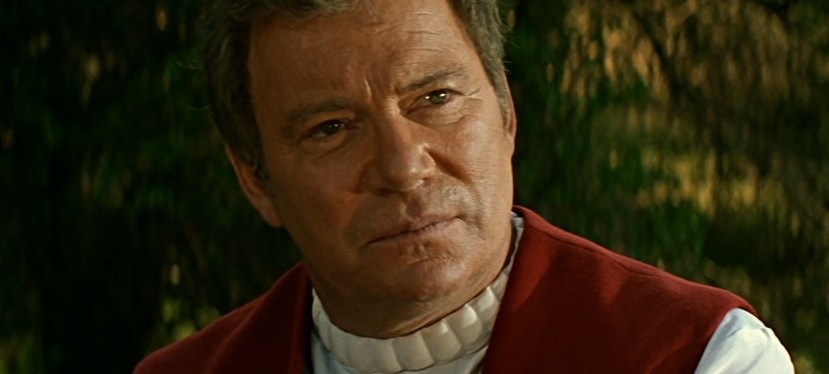

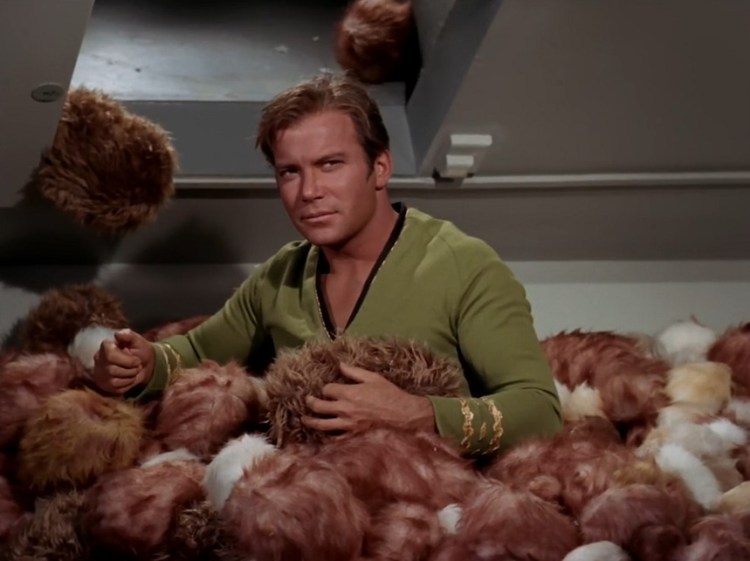
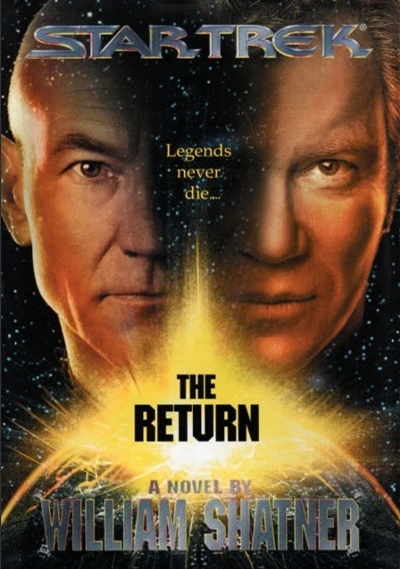
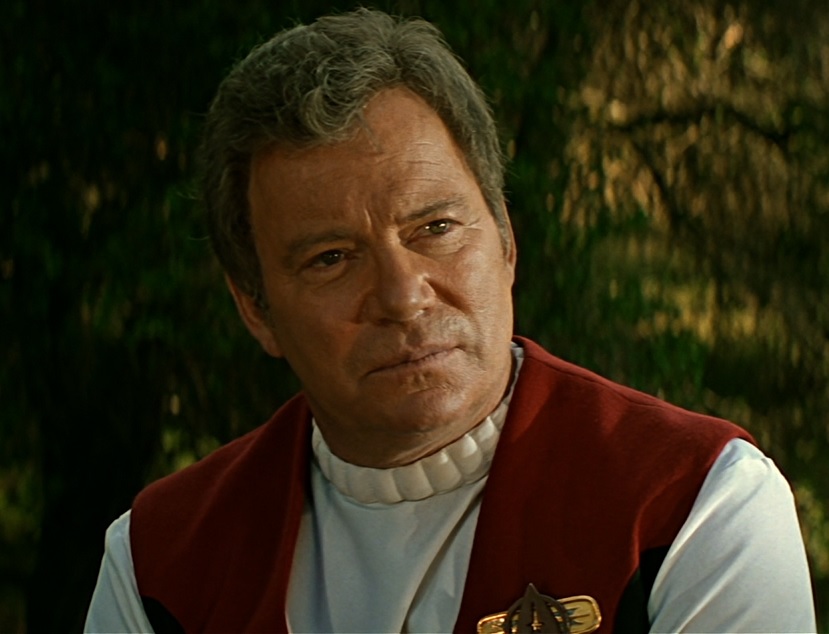
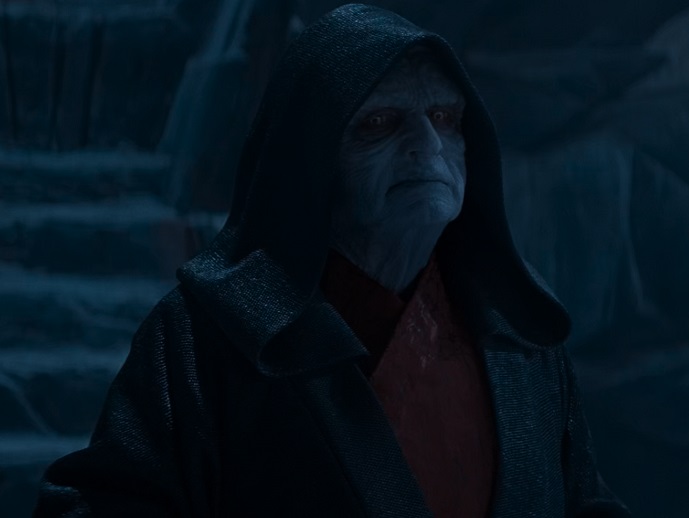
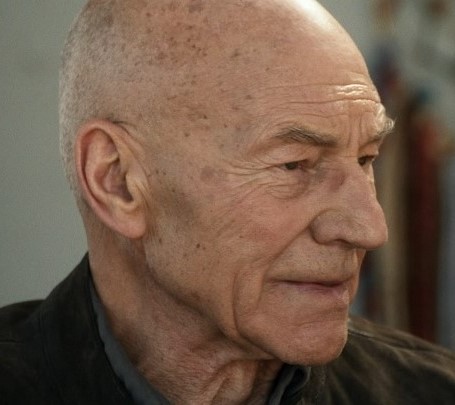

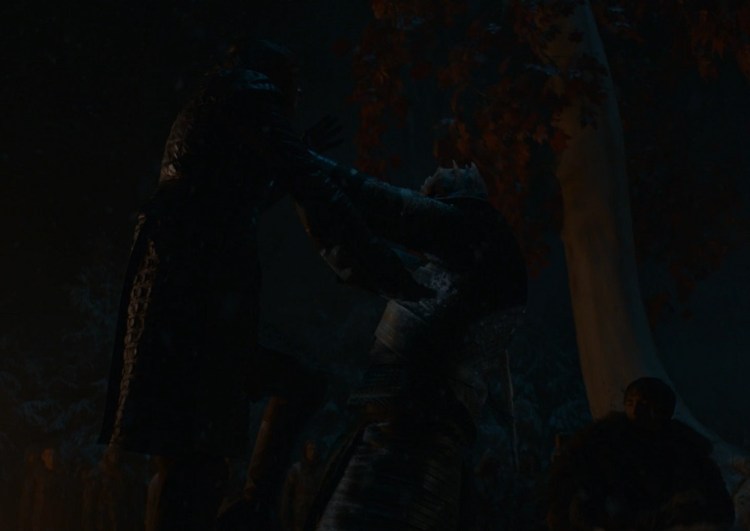
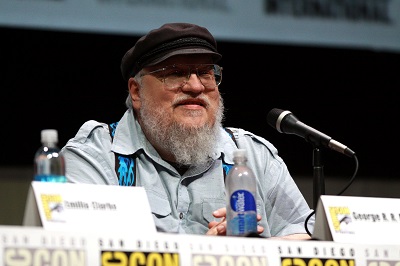

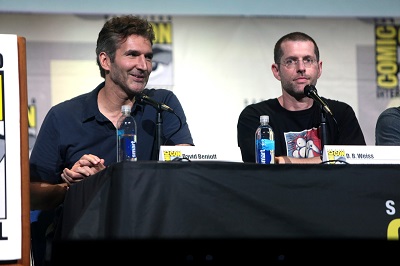
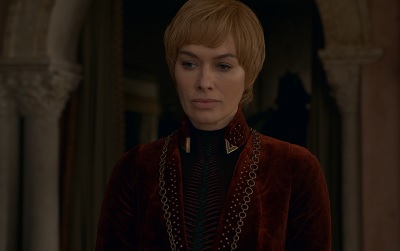
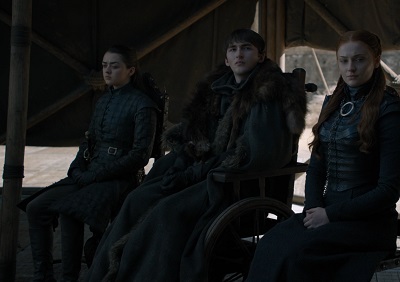
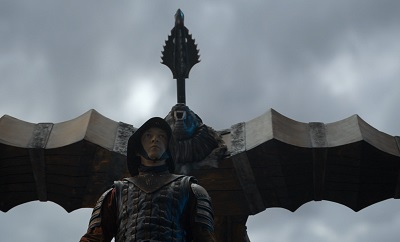
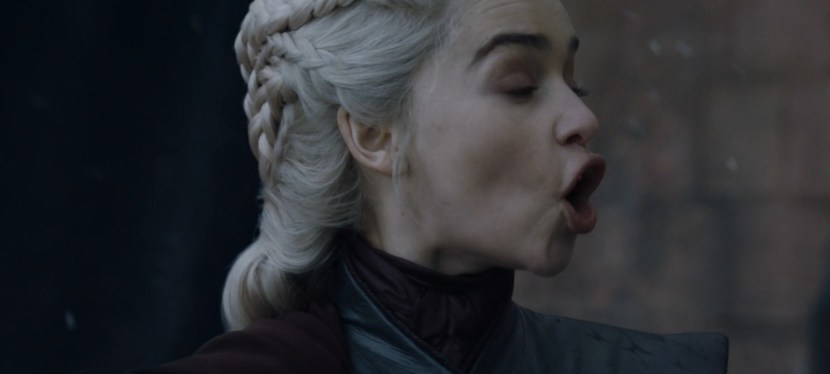
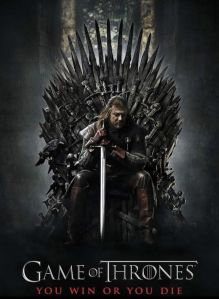
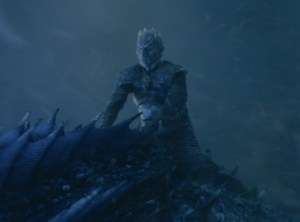
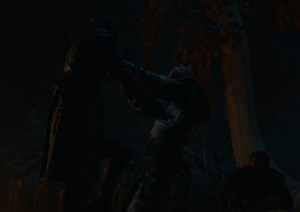
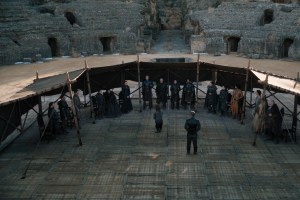
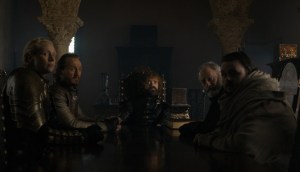
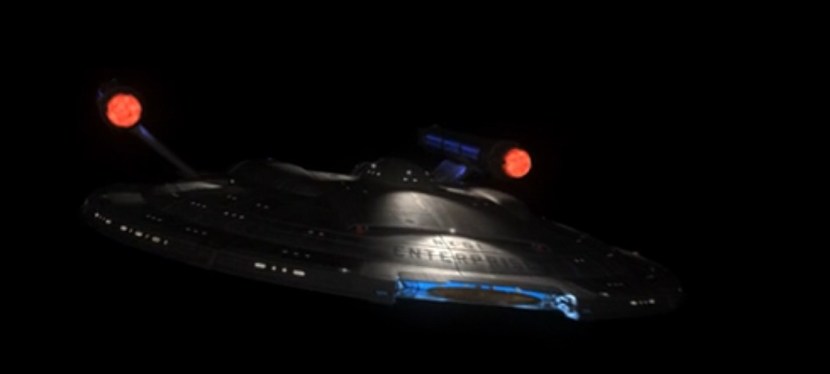









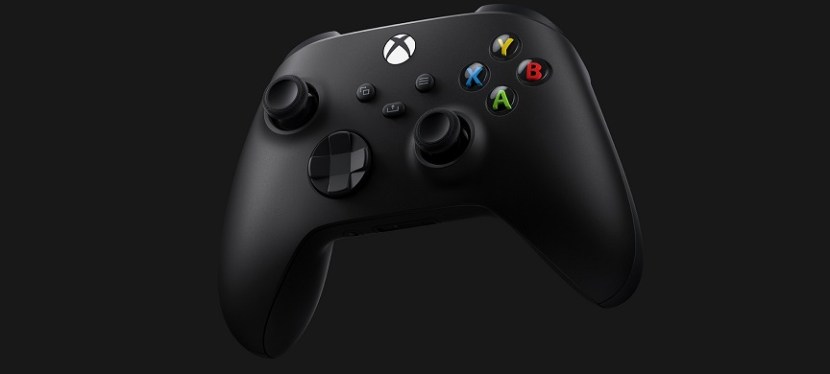

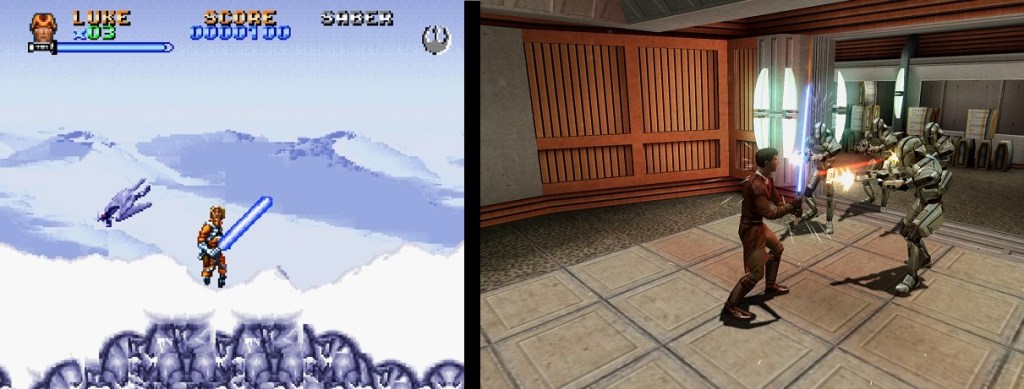









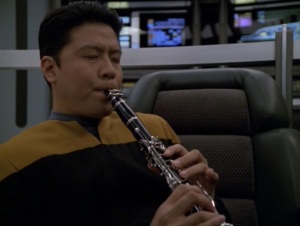
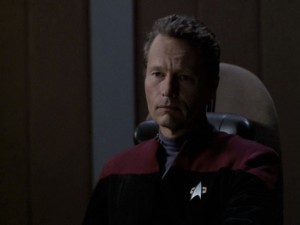

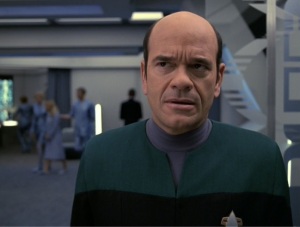
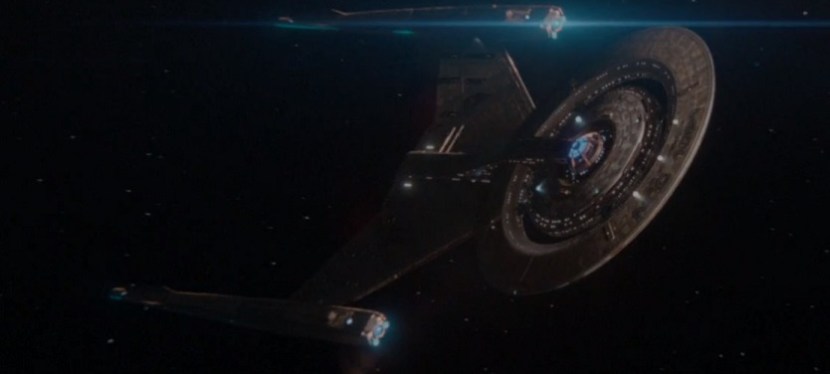






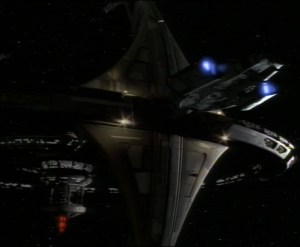
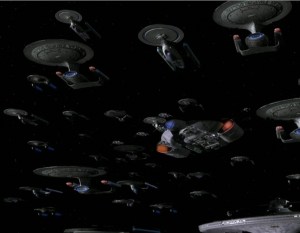

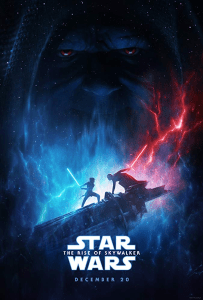
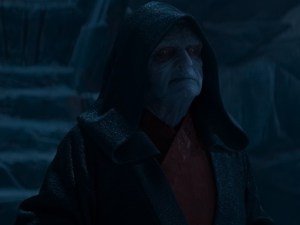
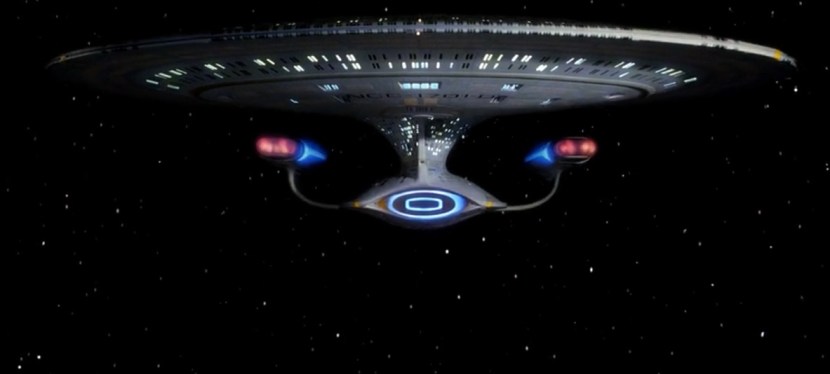



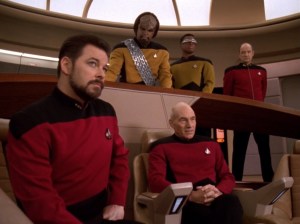
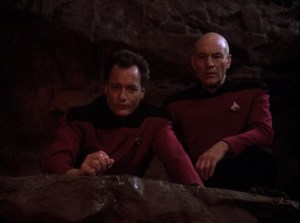








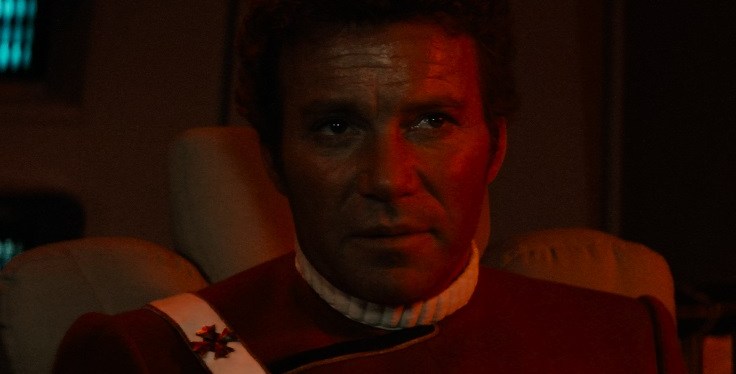
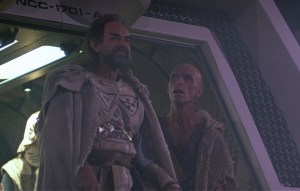
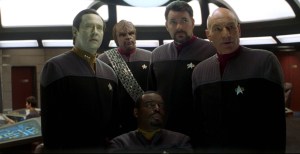
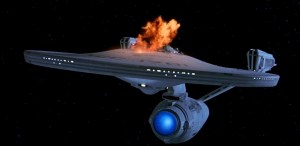
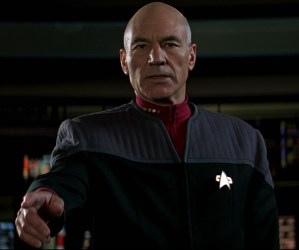
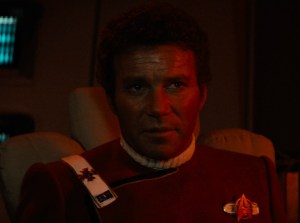
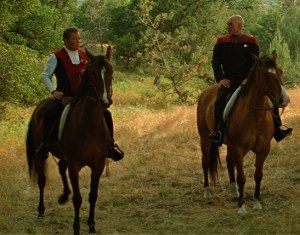







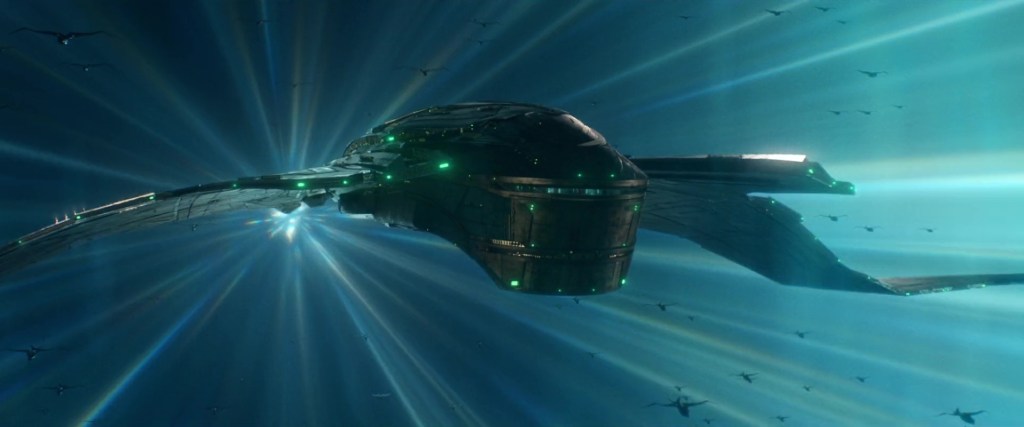
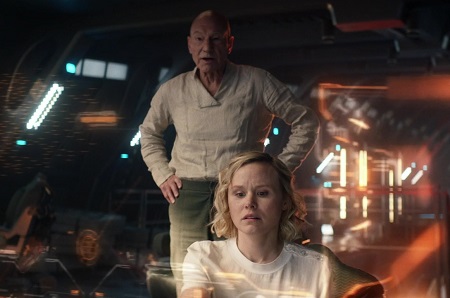

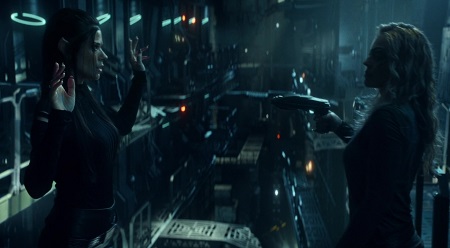
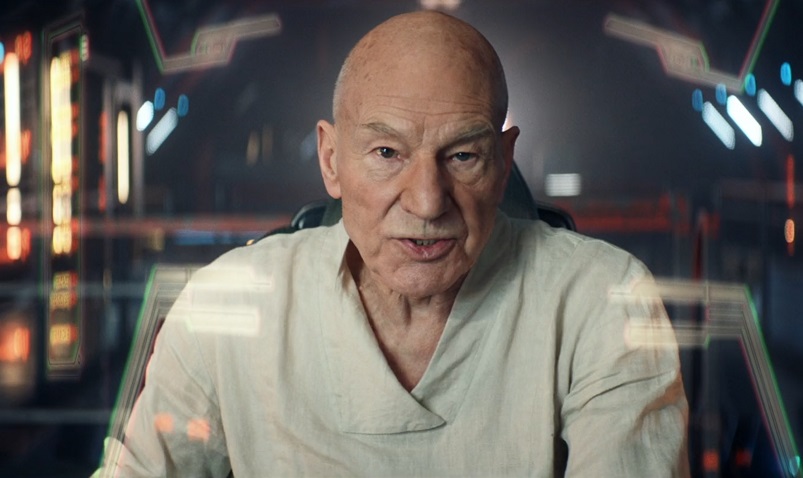



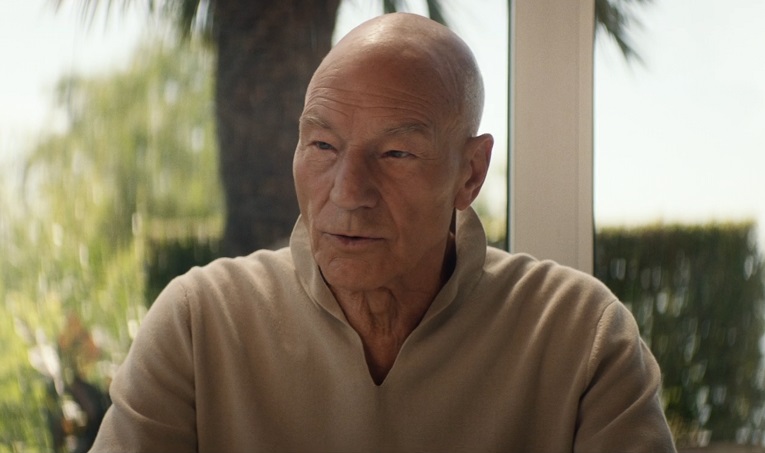








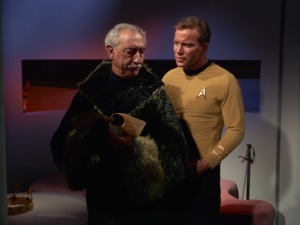
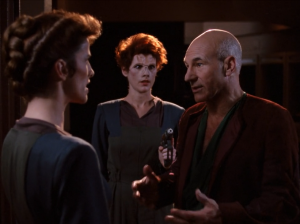














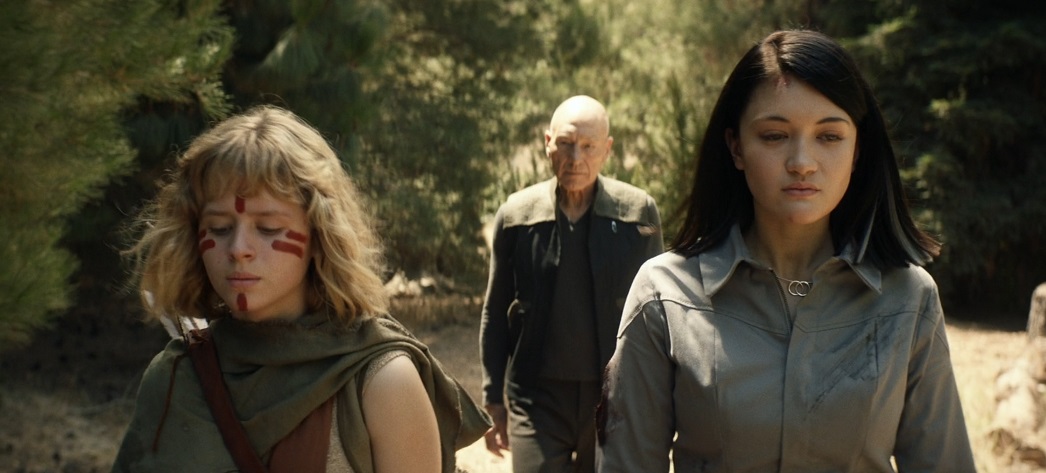




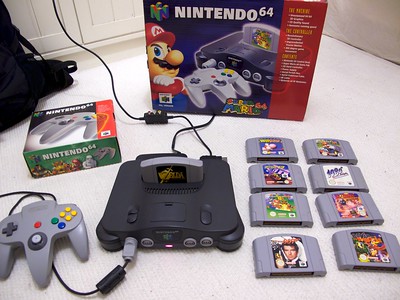







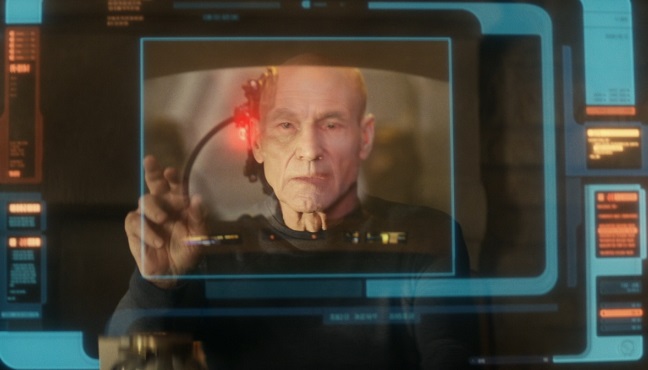
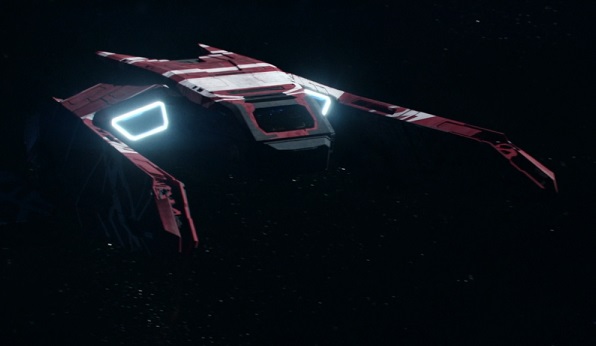

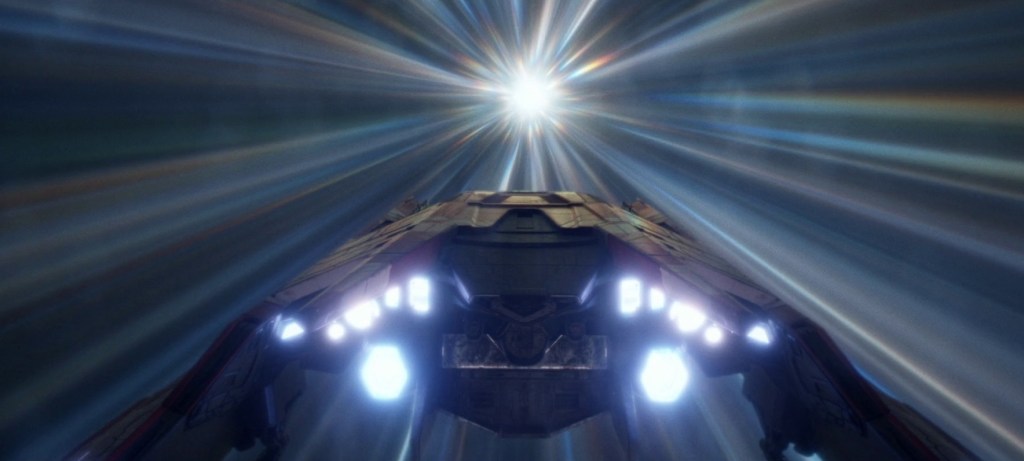

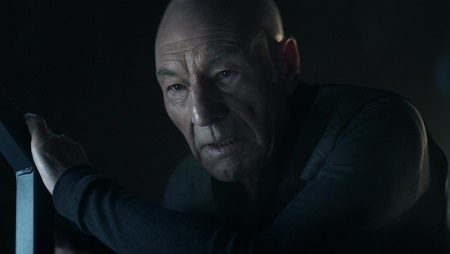





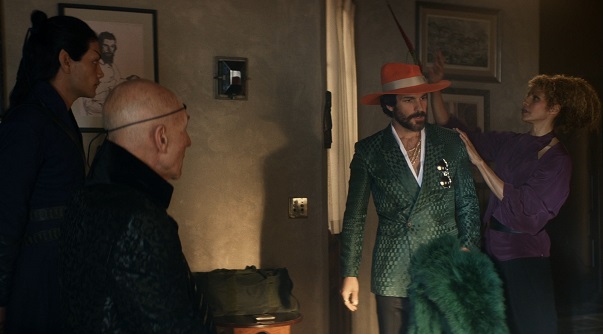
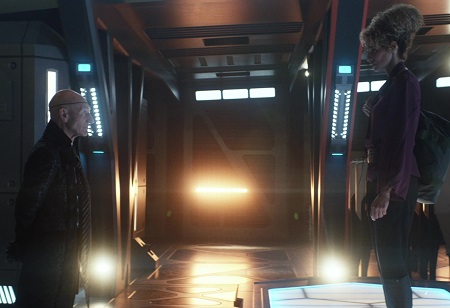


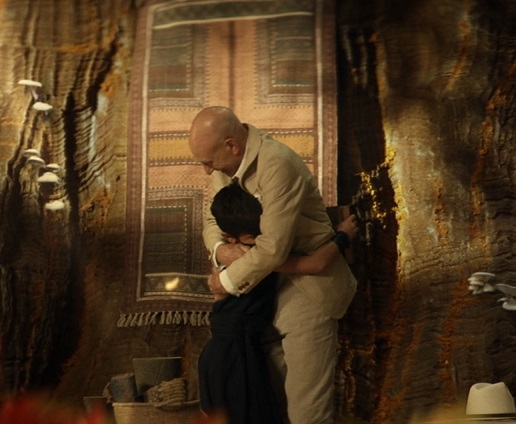







 Trekking with Dennis