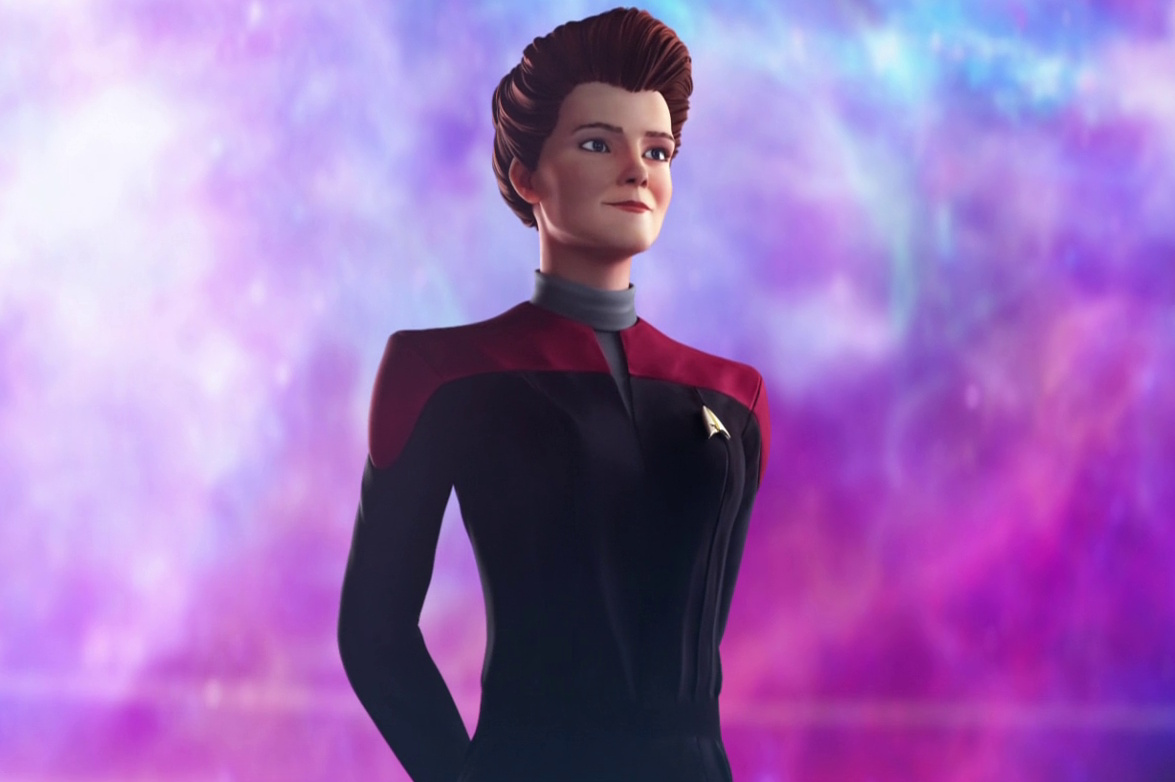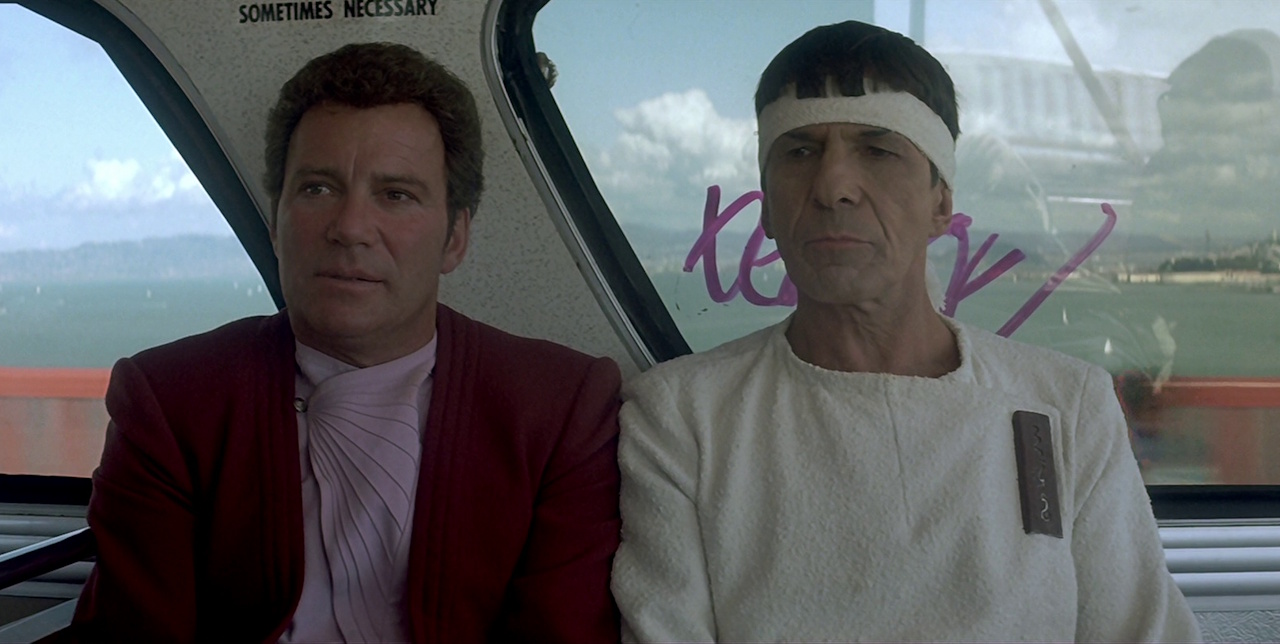
Which Narrative Clichés Would I Remove From Star Trek?

A Star Trek-themed spoiler warning.

Spoiler Warning: Beware spoilers for the following Star Trek productions: The Wrath of Khan, The Next Generation, Deep Space Nine, Voyager, Into Darkness, Discovery, Picard, Prodigy, Strange New Worlds, and Section 31.

I hope you all had a lovely Halloween! October was a busy month for me, but I did manage to put out a few Halloween-y posts, so I hope you’ll scroll back and check out some of those; they were a lot of fun to write!

Onward to the subject of today’s piece, then.

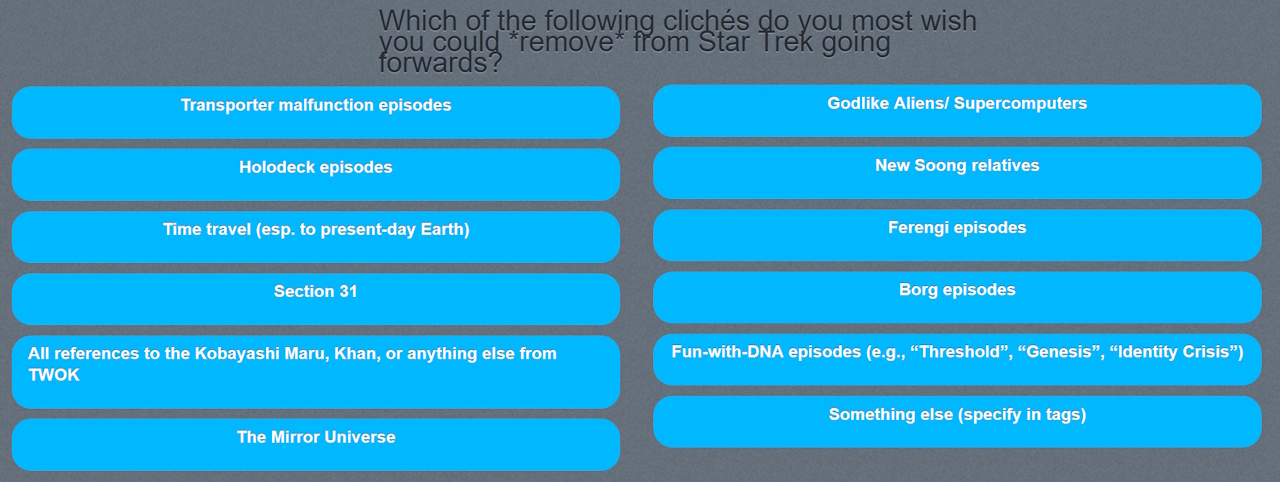
I was scrolling Facebook when I noticed a Star Trek fan page had posted a screenshot of a Tumblr poll (because that’s all social media is these days: screenshots of the same handful of pages being endlessly recycled!) But the original post, first shared on Tumblr by user “quasi-normalcy,” was one that I thought could be very interesting to address. In short, it asked the question “which clichés do you most wish you could remove from Star Trek?” followed by eleven options that form the basis of a number of Star Trek episodes.

Screenshot of Tumblr showing a poll.
The original Tumblr poll upon which this piece is based…
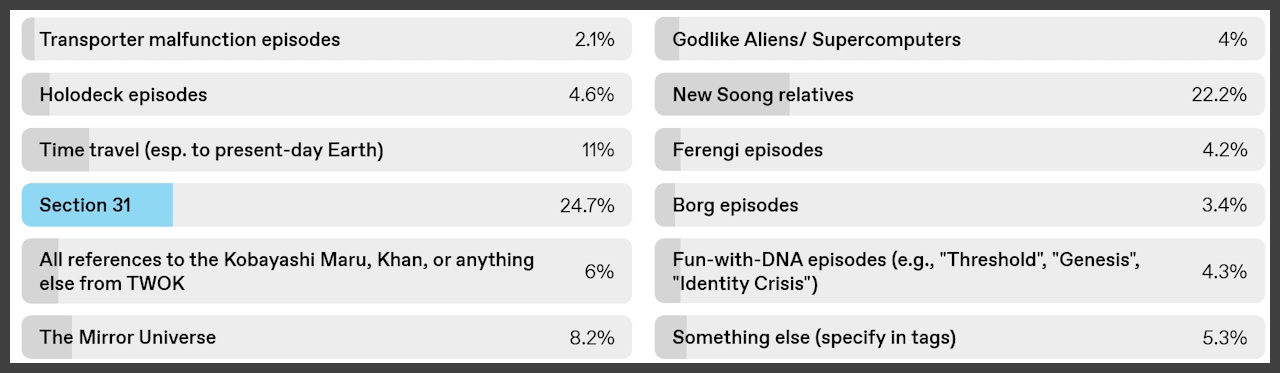
Screenshot of Tumblr showing the results of a poll.
…and the eventual results.

The original Tumblr poll has now concluded, but I’ll drop a link to the post below in case you want to see it or check out the original poster’s page – this is not a unique idea and I am not claiming to have come up with it! But I am going to do something a little different than just clicking or tapping on a poll! I’m going to address all eleven of “quasi-normalcy’s” Star Trek narrative clichés, explain what I like or dislike about them, and perhaps add one or two of my own, too!

So thank you “quasi-normalcy” on Tumblr, and random Star Trek fan page on Facebook, for introducing me to this idea. I think it’ll be interesting to talk about some of the narrative frameworks that Star Trek has used, in some form, on multiple occasions – and maybe a little controversial, too! My usual caveat applies: everything we’re going to discuss is the subjective, not objective, opinion of just one Trekkie. If you hate everything I have to say about these episodes, think I’ve totally misunderstood something, or if we just disagree on what makes for a fun episode of Star Trek… that’s okay! Star Trek is a big tent, and there’s room for all kinds of opinions. I share mine with the Star Trek fan community in that spirit.

That being said, if you don’t want to read some potentially controversial Star Trek thoughts, this is your opportunity to beam out! I’ll address each potential cliché in the order they were listed in the original poll, then give my verdict on whether it should be “removed from Star Trek” going forward!

Cliché #1:
Transporter Malfunction Episodes

Still frame from Star Trek: Picard showing a transporter energising.
Transporting.

This feels like too broad of a category to want to see removed, in my opinion. A “transporter malfunction” can be handled in so many different ways, with so many different outcomes. We can bring Scotty forwards in time by eighty years in Relics, then cross over to a parallel universe in Mirror, Mirror – with completely different results. The transporter is a key part of Star Trek, and when it goes wrong, it can lead to all kinds of stories which vary in tone, structure, and genre. With that in mind, I really don’t see this one as a problem. It can feel like a cliché sometimes, sure… I will concede that point. But because transporter malfunctions vary so much in terms of outcome, I don’t see them as an issue and I’m happy to have more “the transporter done goofed” stories going forward.

That being said, there are some places where more common transporter problems could be shaken up – or the frequency of these instances lessened. For example, the way transporters work or don’t work floats around at the behest of the plot, and it’s a pretty common trope for the transporter to break or not be able to work just at the moment when it’s needed. Think about it: how many episodes would’ve been completely different if the transporter didn’t stop working just when a character needed to be rescued? Generally, these episodes work well enough. But I’m certainly open to the “broken transporter” or “the transporter won’t work because of technobabble” kinds of story beat being reduced in frequency.

My Verdict: Keep It!

Cliché #2:
Holodeck Episodes

Still frame from Star Trek: Strange New Worlds showing La'an, in costume, on the holodeck.
La’an on the holodeck.

As above, there are so many different ways to take holodeck stories, and the ones we’ve seen have varied so much, that I don’t really consider this to be a “cliché” as such – they’re just one more type of Star Trek episode. As with any sub-genre, there are some holodeck stories that I enjoy more than others, and some I’m happy not to see repeated. But as a concept? I think holodeck stories can open things up, give the cast a chance to step out of their usual roles, and it can be a lot of fun to see them interacting in more of a social setting.

That being said, *modern* Star Trek shows, which tend to have fewer seasons as well as fewer episodes per season, don’t need nearly as many opportunities to do something like this. I noted in one of my Strange New Worlds Season 3 episode reviews that, out of fewer than thirty episodes at that point in the show’s run, characters like Pike and Spock had appeared out-of-character on at least four or five occasions apiece. Not all of those were holodeck stories, but the basic point remains. However, I think there’s still a place for stories set on the holodeck on occasion, as they can be fun ways to explore new characters, new locales, and just different themes than would be possible in a more straightforward episode set aboard a starship or planet.

My Verdict: Keep It!

Cliché #3:
Time Travel (Especially to Present-Day Earth)

Still frame from Star Trek IV: The Voyage Home showing HMS Bounty approaching the sun.
Kirk and the crew prepare to travel back in time.

Can I break this one into two pieces?

Pretty please?!

Cliché #3-A:
General Time Travel

Still frame from Star Trek: Deep Space Nine showing Kirk and Sisko meeting.
Two Captains!

Okay, thank you for allowing me to split this one up! Time travel within Star Trek’s timeline – backwards and forwards – can be a blast. Viewers rank The City on the Edge of Forever as *the* best of The Original Series, and I adore episodes like Trials and Tribble-Ations, All Good Things, and Shattered. Time travel has been a key plot point in episodes like Time Squared, Twilight, Tapestry, Eye of the Needle, and many more. All of these are fantastic, and show what the franchise can do with time travel within the confines of its universe.

Discovery shooting forwards in time at the end of Season 2 arguably improved that series, with many interesting episodes coming after the leap to the 32nd Century. Strange New Worlds’ fantastic first-season finale leaned on time travel in a unique way, too. Face the Strange was especially creative, probably one of the highlights of Discovery’s fifth season. So modern Star Trek has utilised time travel phenomenally well. I wouldn’t want to see these kinds of stories erased from Star Trek.

My Verdict: Keep It!

Cliché #3-B:
Time Travel to Modern-Day Earth.

Still frame from Star Trek: Picard showing Los Angeles from above.
Contemporary Los Angeles in Picard.

This is why we had to split time travel into two separate pieces! Time travel within Star Trek’s fictional timeline can be a blast – even to Earth. But time travel to the modern day? Those stories tend to feel out-of-date pretty quickly. Look at The Voyage Home and Future’s End – not to mention Picard’s entire second season. Sometimes, stories like this work well, and use a modern-day setting in creative ways. But too often they lose too much of what makes Star Trek… feel like Star Trek.

Star Trek is about the future. And sometimes, figuring out how that future came to be can be interesting. But in a lot of cases, time travel episodes that visit contemporary Earth don’t have enough to say – or what they try to say is pedestrian and bland, like “climate change is bad.” Again, if we assume modern Star Trek shows will continue to have ten-episode seasons and four or five seasons max, I think the less time spent on modern-day Earth the better. As I said once: I can barely re-watch Picard’s second season – a full one-third of that show – because of how unenjoyable it is, a significant part of which is due to its modern Earth setting. So… yeah. Let’s give modern Earth a break, eh?

My Verdict: Vaporise It With A Disruptor!

Cliché #4:
Section 31

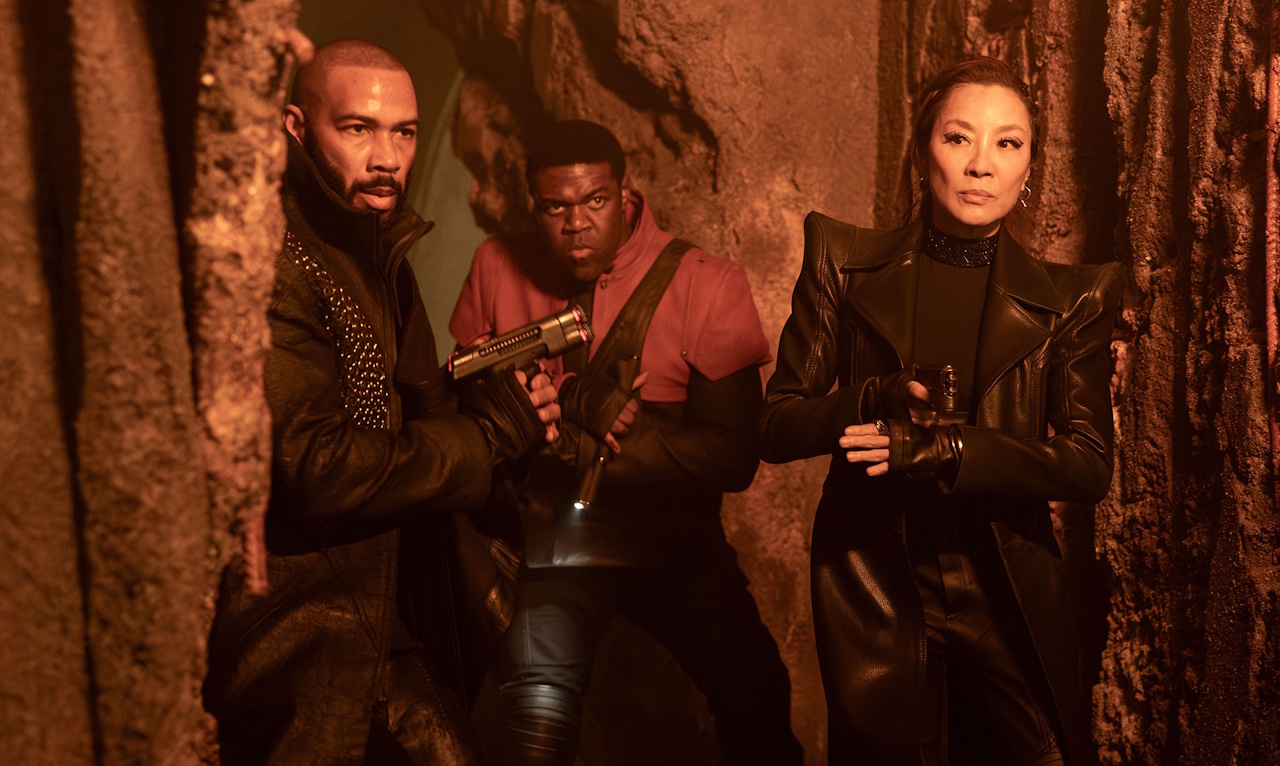
Promo photo for Star Trek: Section 31 showing Georgiou and two other operatives.
Three Section 31 operatives.

I believe the original Tumblr poll was written before this year’s Section 31 movie, so the author couldn’t have known what the reaction to that would be. Given the apparent disappointment of Section 31 to Paramount (and new owner Skydance), I have to assume that any more Michelle Yeoh-led Section 31 sequels or spin-offs won’t be going ahead. So in that sense, we already have part of an answer to this point!

Section 31 was incredibly controversial when Deep Space Nine introduced it. I remember furious debates on Star Trek message boards around the turn of the millennium about “Gene’s vision” and how Section 31 shouldn’t exist in the Star Trek universe. I gotta admit that I found the original idea and the original presentation of Section 31 to be interesting – and it seemed logical, to me, that an organisation as massive as the Federation would run this kind of off-the-books organisation. However, Section 31 as it was depicted in Discovery and the Section 31 film strayed a long way from that, and arguably trod all over the toes of canon by showing the organisation as being so out in the open more than a century before DS9. It would’ve been possible, perhaps, to show how Section 31 disappeared and went underground in the intervening years, but that idea was never picked up. I still think there’s potential in the idea of a “black ops” Federation organisation, but it has to be handled a lot better.

My Verdict: Keep It!

Cliché #5:
All References to the Kobayashi Maru, Khan, and The Wrath of Khan.

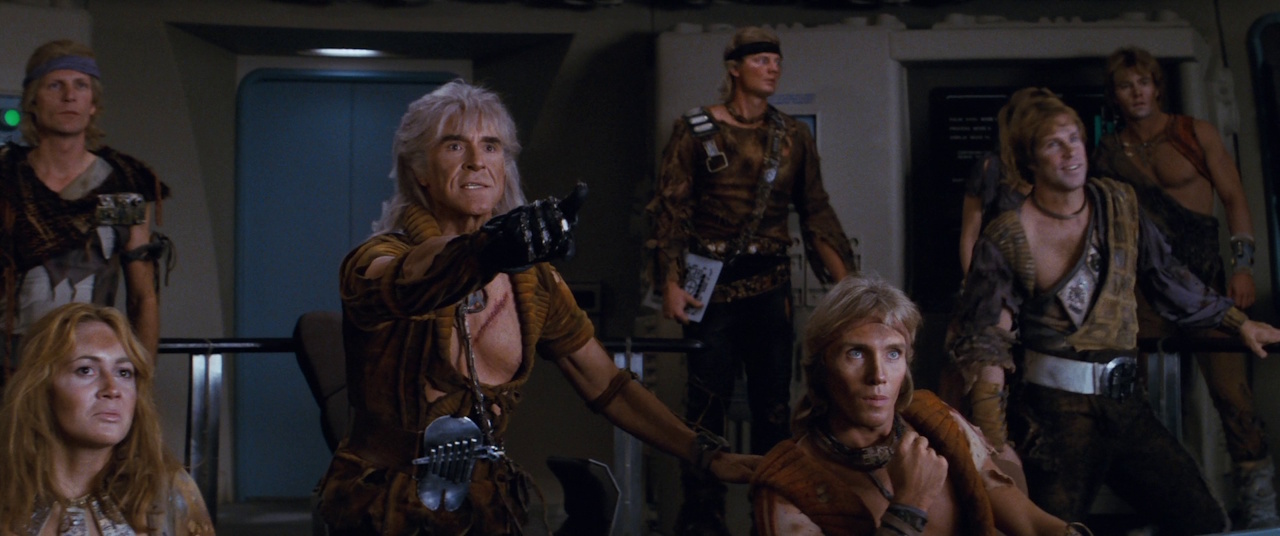
Still frame from Star Trek II: The Wrath of Khan showing Khan and his crew.
Khan and the augments on the Reliant’s bridge.

I think saying *all* references to The Wrath of Khan might be a bridge too far, but I get where this is coming from. I noted in one of my Strange New Worlds Season 3 episode reviews that making La’an a direct descendant of Khan has been a complete waste, and that basically nothing would’ve changed for her character if she’d been given a different last name. So in that sense, that kind of direct reference to Khan himself – particularly as SNW is a prequel – is something I’d happily live without. I’m not caught up on the Khan audio drama yet, but my initial reaction to a Khan-focused series wasn’t especially positive, either, as I felt we’ve already seen everything we need to see of Khan.

However, I think some things from The Wrath of Khan – like the Kobayashi Maru – can and have been used well elsewhere. Prodigy’s first season episode Kobayashi is a case in point: a great episode that built on those foundations. So while I think references to Khan himself can definitely be scaled back, if not dropped entirely for a while, this entry’s “all or nothing” attitude gives me pause. The Wrath of Khan is a great film, and some of the elements it introduced have gone on to be widely celebrated parts of Star Trek. There are new ways to approach things like the Kobayashi Maru scenario and human augments, and I wouldn’t want to rob future Star Trek writers of those.

My Verdict: Keep It!

Cliché #6:
The Mirror Universe

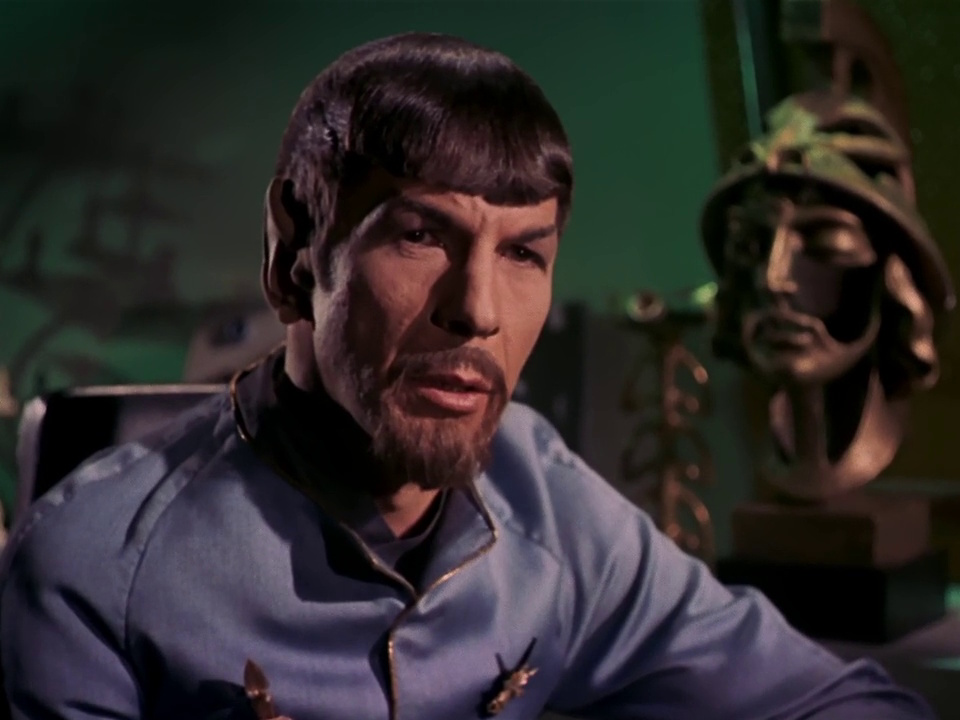
Still frame from Star Trek: The Original Series showing Spock from the Mirror Universe.
Mirror Spock.

If the Mirror Universe had been a one-off, I’d probably say it was worth re-visiting. But even as far back as Deep Space Nine, the Mirror Universe was played out. This is a setting where violence, murder, and torture are the norm, and it’s so boring and one-dimensional that it tricks even the best Star Trek actors into putting out hammy, over-the-top, ridiculous performances that are, in some cases, genuinely so bad that they’re unwatchable for me. The Mirror Universe *can* be interesting to visit for a single episode, on rare occasions, but where it’s failed has been repeat visits, recurring or main Terran characters, and just its general over-use.

Discovery did not benefit from any of its Mirror Universe storylines, and I don’t think Georgiou’s Terran Empire origin did wonders for Section 31, either. I don’t really understand why modern Star Trek writers have developed an obsession with the Mirror Universe (or Mirror Universe-inspired settings, like Picard’s Confederation of Earth), but I think we’ve seen more than enough of this parallel universe. The *only* Mirror Universe story I’d have even potentially been interested in was one involving the rescue of the Prime Timeline version of Captain Lorca – but I suspect that ship has sailed. The Mirror Universe can sail into the sunset with it!

My Verdict: Vaporise It With A Disruptor!

Cliché #7:
Godlike Aliens/Supercomputers

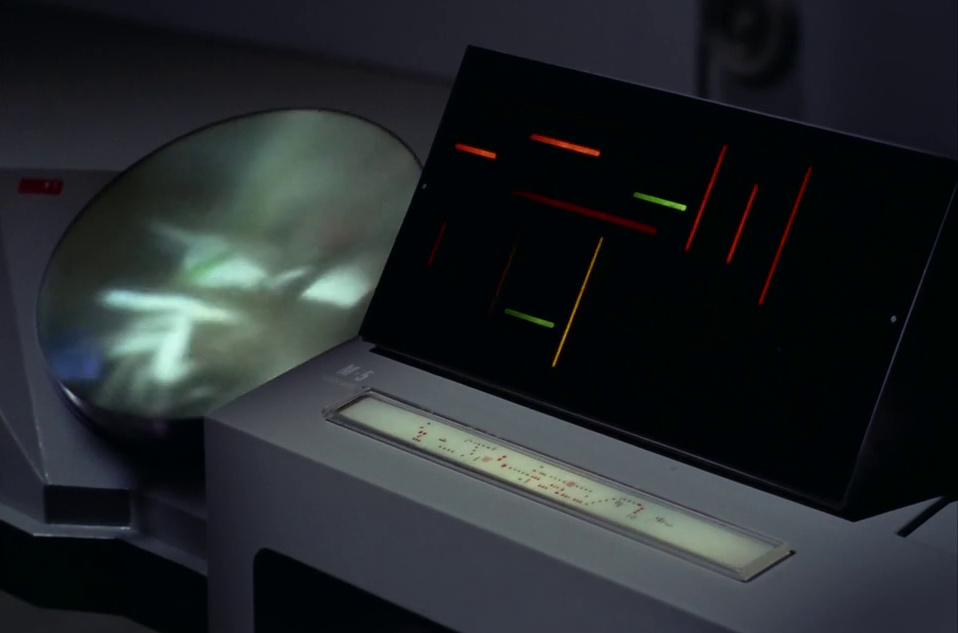
Still frame from Star Trek: The Original Series showing the M-5 computer.
The M-5 Multitronic Unit.

Not only does this one feel way too broad, but I think Star Trek has demonstrated that there’s huge value in exploring how we might interact with an alien or entity possessing “god-like” powers. There’s also the current trajectory of artificial intelligence here in the real world, and how some people feel we’re only a few years away from superintelligent A.I. systems. Star Trek has been an early pioneer of showing the dangers of A.I., as well as potential benefits.

I suppose, though, too many of these stories could feel samey. As with any sub-genre, it needs to be handled well, not over-exposed, and kept to a reasonable level. But I definitely think the positives outweigh the negatives, and in the near future, there could be a ton of value in exploring supercomputers and “god-like” A.I. systems in particular.

My Verdict: Keep It!

Cliché #8:
New Soong Relatives

Still frame from Star Trek: Picard showing Adam Soong wielding a pistol.
One of the Soongs.

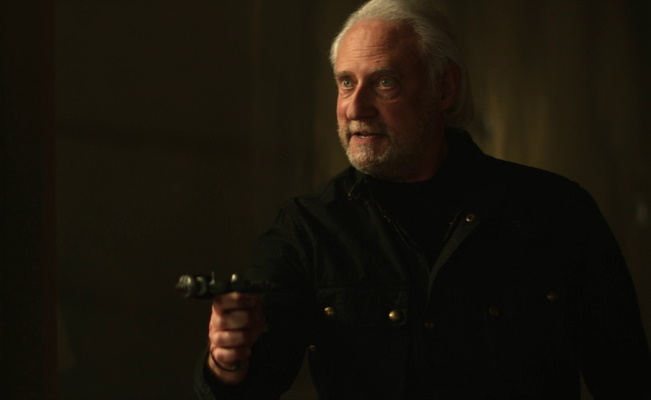
Noonien Soong, Arik Soong, Altan Soong, Adam Soong, and a couple of illusory Noonien Soongs. Then we have Lore, B-4, and the new Data android. Not to mention Kore Soong, and other Soong-type androids. Yeah… I think this is getting pretty silly now! I really didn’t like what Picard did with Data in Season 3: resurrecting him after he’d been so beautifully and fittingly laid to rest in Season 1 just felt wrong. And the inclusion of *two* new Soongs in Picard was definitely a bit too much. Brent Spiner is great, don’t get me wrong, and he can play villains and devious characters exceptionally well. But I think we’ve taken the family of Data’s creator as far as it can reasonably stretch – too far already, some might say!

With Legacy seemingly not going ahead, I don’t know what the future holds for the renewed Data. But with Altan Soong dead, that could be the last descendant of the Soong family – at least as of the dawn of the 25th Century. I don’t think we need to go back in time to see Adam Soong’s work on the augments, nor revisit Noonien Soong’s creation of Lore and Data. Some storylines just have a natural end point. Adding more Brent Spiners to the Soong family wouldn’t really add anything new to Star Trek at this point, either.

My Verdict: Vaporise It With A Disruptor!

Cliché #9:
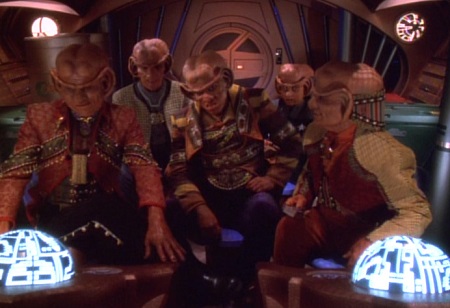
Ferengi Episodes

Still frame from Star Trek: Deep Space Nine showing a crew of Ferengi.
The Magnificent Ferengi!

Though we spent a lot of time with the Ferengi in Deep Space Nine, the faction hasn’t been seen very much this side of the millennium. With that in mind, I’m definitely down for more Ferengi stories! I’d love to see, for instance, how the Ferengi are coping in the 32nd Century. Did they ever join the Federation? Are they still obsessed with latinum and profit? And in the Picard era, too, were a new series ever to be commissioned, it would be lovely to catch up with Grand Nagus Rom in live-action.

In DS9, Ferengi episodes often took on a comedic tone, and I think I’d happily entertain less of that; a more straight-laced and serious Ferengi story could be an interesting change of pace. Though we know a lot about the Ferengi thanks to Quark, Rom, and Nog in particular, there’s still a lot that can be done with the Ferengi, and there are certainly more stories to tell where Ferengi characters are in focus.

My Verdict: Keep It!

Cliché #10:
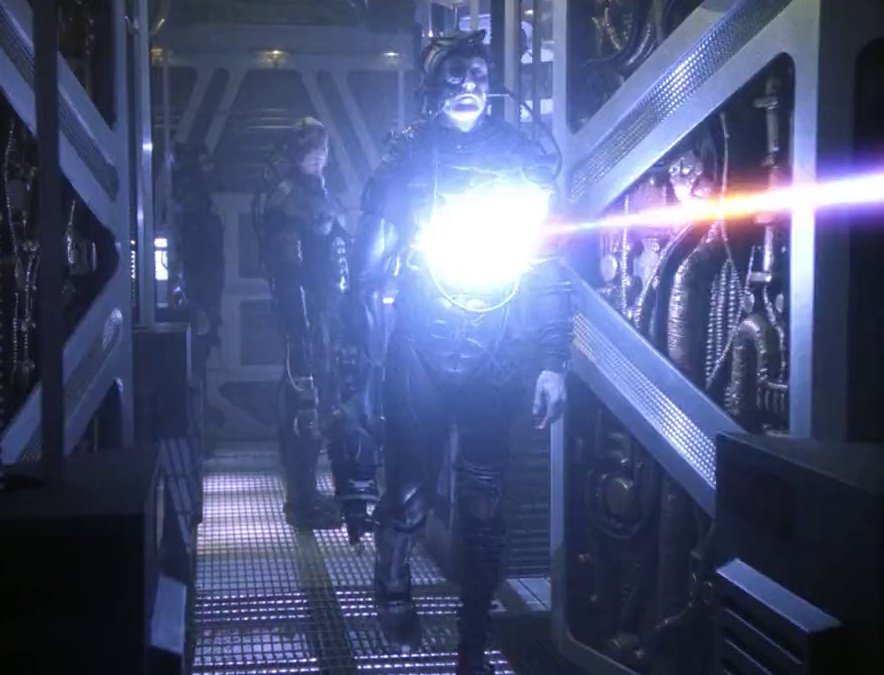
Borg Episodes

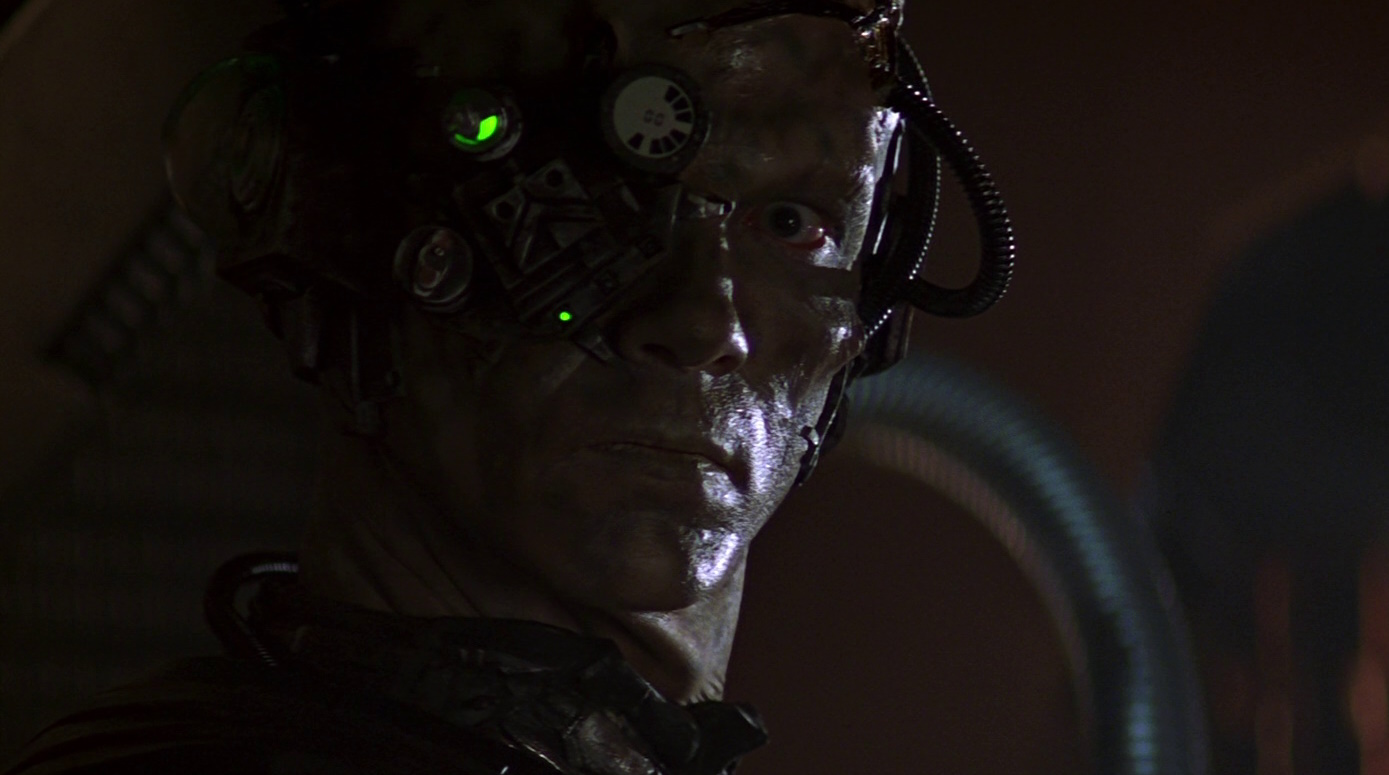
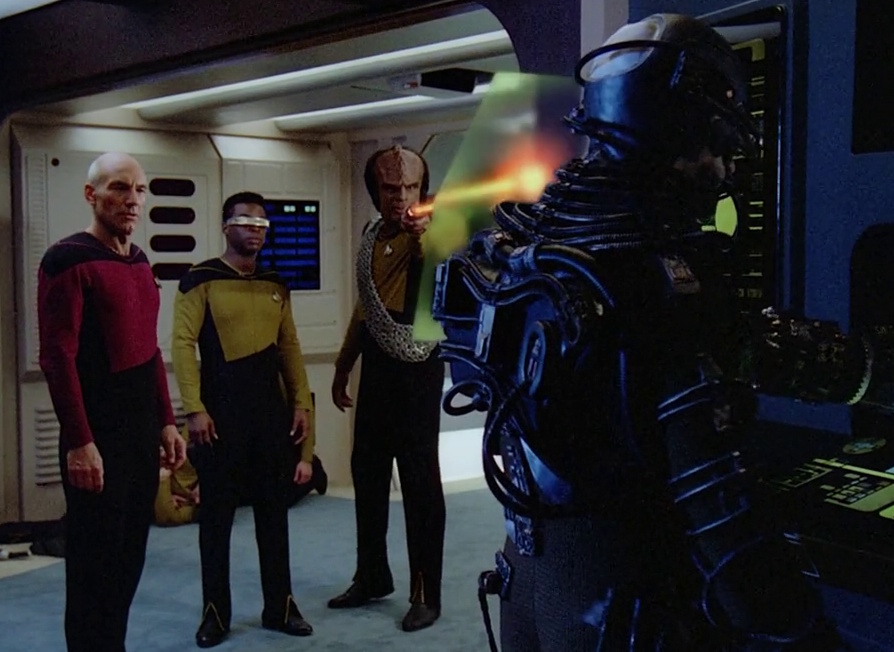
Still frame from Star Trek: The Next Generation showing a Borg drone being phasered.
Is it time to kill off the Borg?

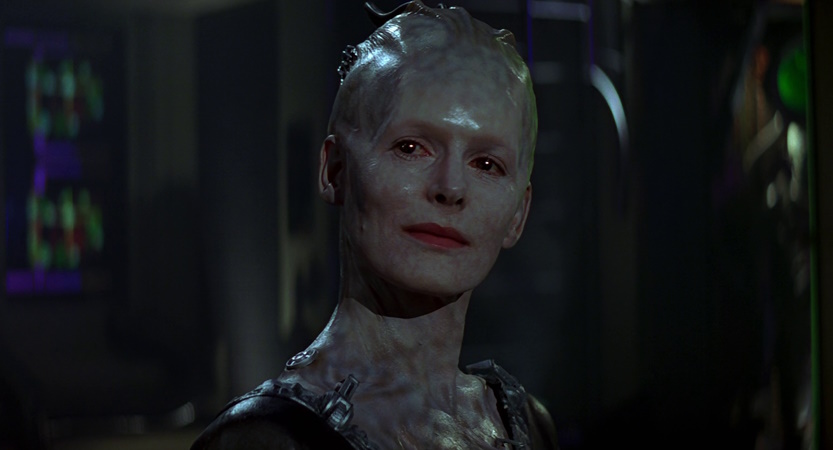
This one… I’m torn, to be honest with you. Picard over-used the Borg, and that came after Voyager had already done a lot to lessen the Borg’s fear factor and imposing nature. There are also issues with the timeline thanks to Voyager and Enterprise, and I still think that the introduction of a Borg Queen in First Contact was a mistake! However, I still like the idea of a Star Trek series I’ve provisionally dubbed the “Borg Invasion” show, in which a war against the Borg is the main focus of the series.

This show would take on a much darker tone, with themes of horror and war being prevalent. If done well, with a clear three- or four-season plan from the get-go and a sufficiently high budget, I really believe it could work exceptionally well. However, I won’t deny that the Borg have been over-exposed, not only in modern Star Trek, but really going as far back as Voyager. And I wouldn’t blame any Trekkie who wants to give the faction a break, especially after Picard brought them back three seasons in a row.

My Verdict: Keep It!

Cliché #11:
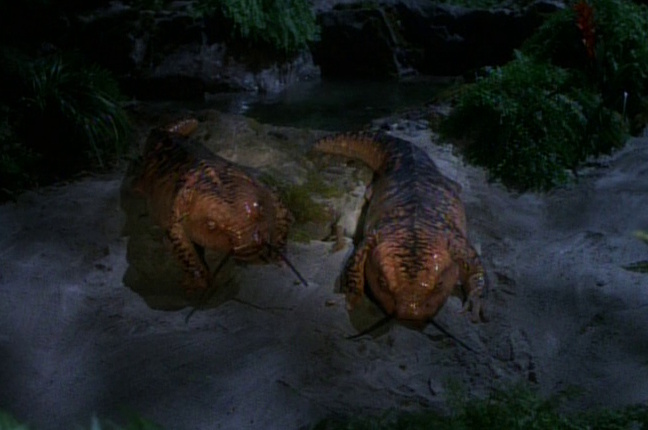
Fun-With-DNA Episodes (i.e. Genesis, Threshold, etc)

Still frame from Star Trek: Voyager showing hyper-evolved human salamanders.
Hmm…

As I’ve said several times now, this feels like quite a broad concept that could go in many different directions. As such, I don’t think I’d be willing to say there should “never” be another episode in which the DNA of some of our heroes gets muddled up! That being said, episodes like Threshold, Extinction, Favorite Son, Unnatural Selection, and Four-and-a-Half Vulcans aren’t necessarily shining examples of the best of Star Trek. So this one, I suppose, can feel a bit hit-and-miss.

I still think I come down on the side of saying “do more with this idea,” though. Shuttle to Kenfori, with its “zombies,” and Discovery’s Tyler-Voq storyline, both did interesting things with DNA, and I think there’s potential to take the basic idea in different directions. So while it’s true that not every “fun with DNA” idea has stuck the landing, I’m up for trying it again if the script is right!

My Verdict: Keep It!

So that’s all from the poll… but there’s more!

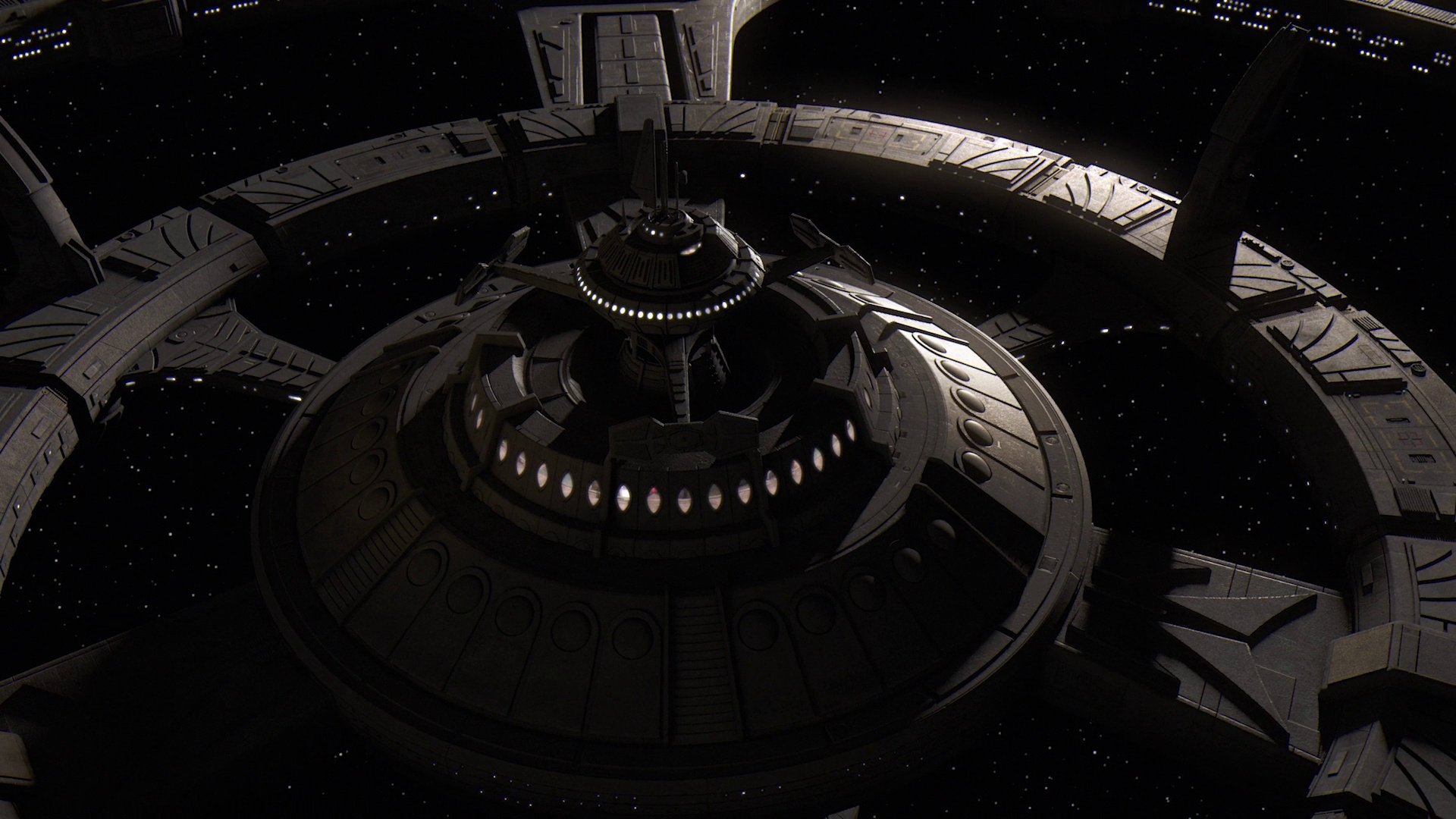
Still frame from Star Trek: Deep Space Nine showing the titular space station.
DS9.

The original poll also contained one final option: Something Else!

So… I thought we could go through a handful of my own “Star Trek clichés” and talk about them before we wrap this up.

Cliché #12:
Redshirts

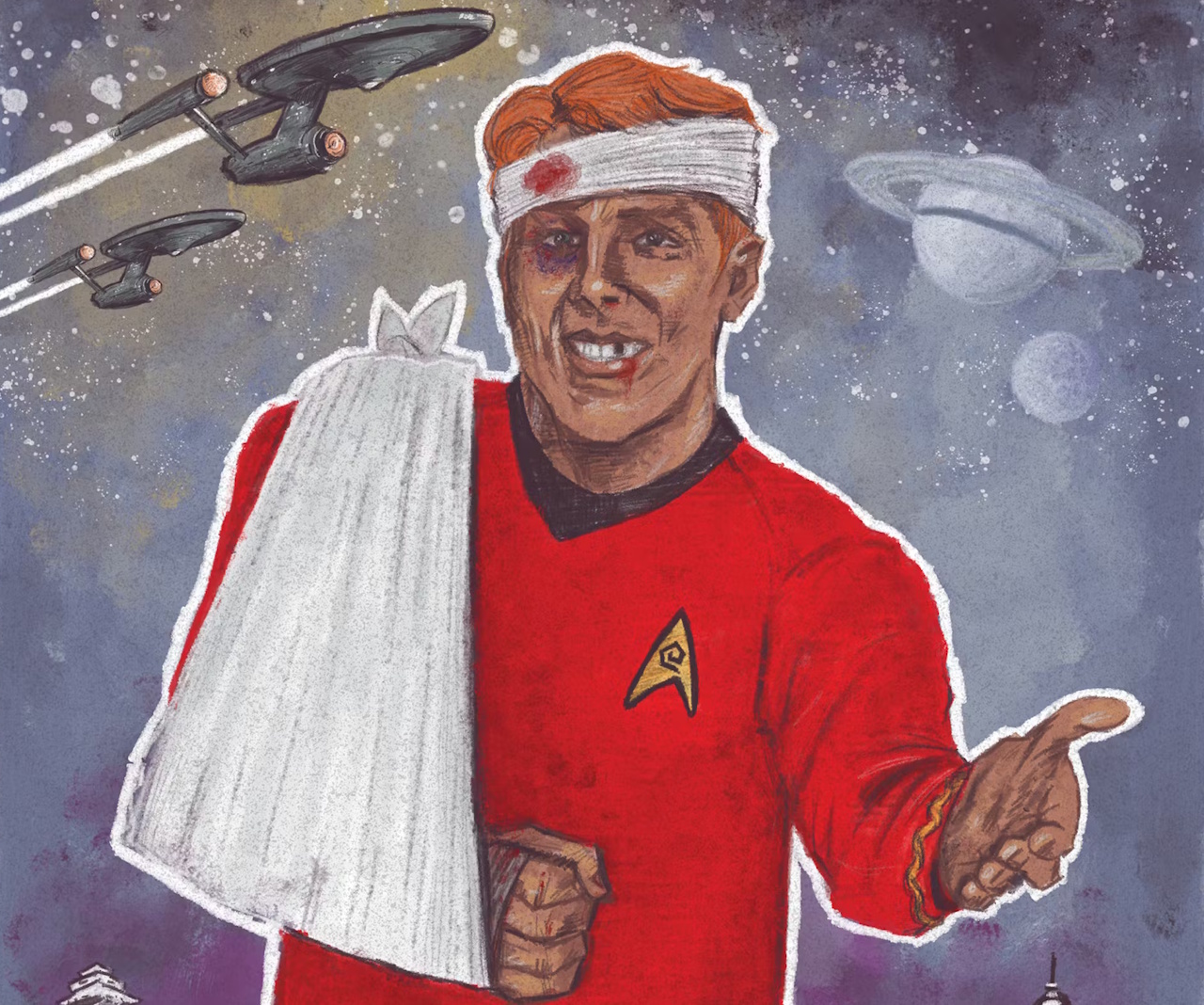
Cropped Star Trek: Redshirts comic book cover.
A redshirt!

I’m surprised the original poll didn’t include what is arguably one of Star Trek’s biggest clichés: the redshirt! These characters, named for the red uniform shirts they wore in The Original Series, were junior officers who usually made one appearance – only to be killed off pretty early in the story. After The Original Series, we saw fewer redshirts, but the trope has stuck around, even into Star Trek’s modern era.

Sometimes you need to kill off a character to communicate the dangers of a situation or the stakes to our heroes. Redshirts – these “disposable” one-off characters – arguably serve that purpose pretty well, and I wouldn’t want to see Star Trek limited by removing them. I also think that redshirts have become, in some ways, an inseparable part of Star Trek itself, and while we’ve seen fewer bona fide redshirts really since The Next Generation premiered, I wouldn’t want the franchise to lose them entirely.

My Verdict: Keep It!

Cliché #13:
The “Half-Arsed Mental Health Storyline”

Still frame from Star Trek: Discovery showing Culber and Stamets.
Dr Culber and Stamets.

Discovery was, in my opinion, absolutely atrocious in most of its attempted mental health storylines, but this problem has also plagued other Star Trek productions – notably Picard. And in the bygone days of episodic TV, characters would suffer a traumatic event that would have a massive impact on them… for all of a single episode, before the show moved on to new adventures a week later. There are some absolutely fantastic explorations of mental health on television… but Star Trek, even in the modern era, has slipped up way too often.

I’ve said this before multiple times here on the website, especially when discussing Discovery, but here we go: if there isn’t time to do justice to a complex mental health storyline, skip it. Don’t half-arse it, don’t give ten minutes to a complicated topic that needs way longer, and just… pick something else. Literally *anything* else. Star Trek has been bold in approaching some of these topics, and that’s great, but the execution has left a lot to be desired in too many cases. If Star Trek’s writers want to keep returning to mental health as a topic for storylines, then we need to see significantly better results.

My Verdict: Vaporise It With A Disruptor!

Cliché #14:
Klingon Episodes

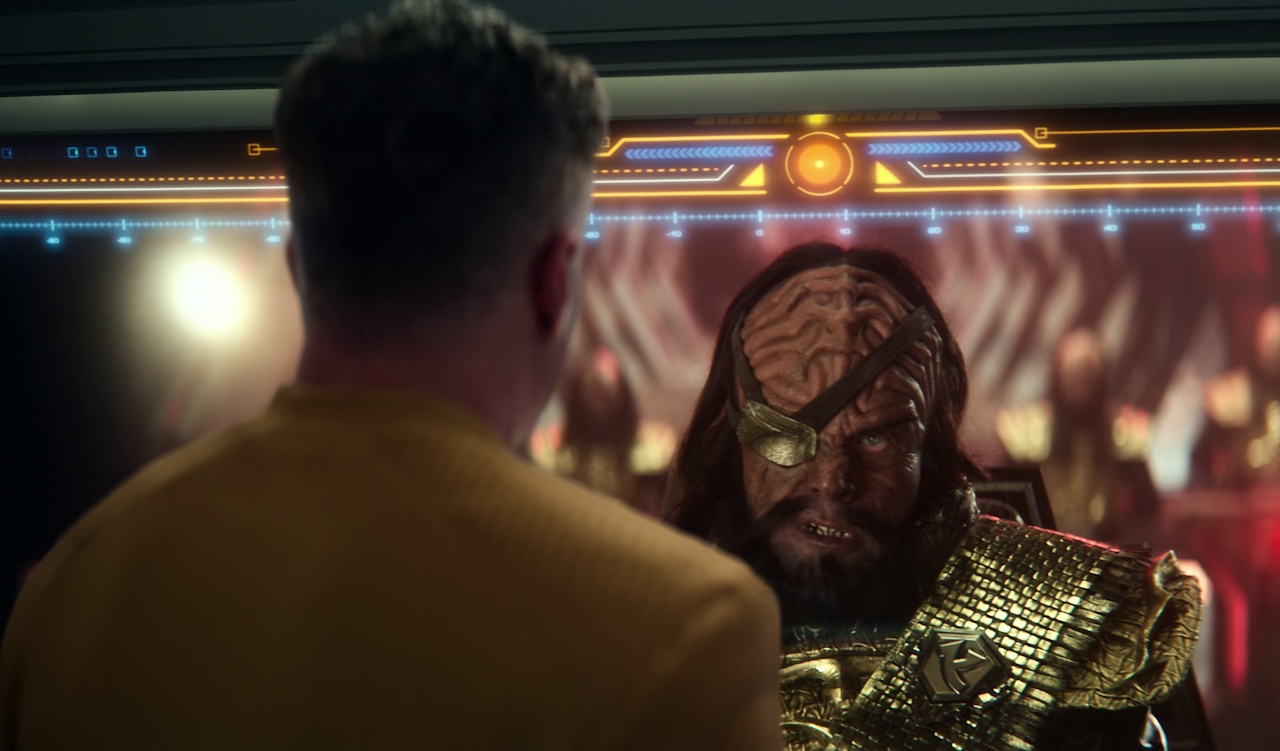
Still frame from Star Trek: Strange New Worlds showing Pike and a Klingon captain.
Pike with a Klingon in Strange New Worlds.

When discussing the Ferengi above, I said that there are surely ways to tell new stories featuring them, especially after such a long absence. That’s gotta be true of the Klingons, too… right? The more I think about it, the less sure I am, to be honest. Thanks to Worf and B’Elanna, and Discovery’s focus on the Klingons in Seasons 1 and 2 with the war and characters like Tyler and L’Rell, we’ve seen *a lot* of the Klingons over the years. And when many Klingon characters can feel a bit flat and lacking in depth, maybe it actually is time to give the faction a rest.

Klingons are inseparable from Star Trek, that’s true. But after almost six decades of exploring the Klingons, their Empire, and many individual Klingon characters… do we need more? Recent attempts to reimagine the Klingons – both in the Kelvin films and Discovery – proved controversial or just outright unpopular with Trekkies, and recent productions seem to have “reset” the Klingons to their TNG-era visual style, at least. Given that changes seem to be off the table, do we really need more of the same from the Klingons, after they’ve featured in a big way in literally hundreds of stories already?

My Verdict: Vaporise It With A Disruptor!

Cliché #15:
“Glorified Redshirts” (i.e. minor characters who get one or two scenes’ worth of “development” before being killed off)

Promo photo for Star Trek: Discovery Season 2 showing Airiam holding a padd.
Airiam in Discovery’s second season.

In TOS, if Captain Kirk picked Spock, Scotty, and Ensign Timmy for an away mission, you’d know right away who wasn’t coming back! Recent Star Trek projects have tried, at least, to make some minor character deaths a bit more impactful… but the way this has been handled has, all too often, not worked. Giving a minor character a scene or two of attempted development, in order to foster more of an emotional connection with us as the audience, is not a bad idea in theory. But modern Star Trek writers haven’t been great at this, leaving these moments feeling as nakedly obvious as when the doomed Ensign Timmy stepped onto the transporter pad.

Airiam, in Discovery, and Gamble, in Strange New Worlds, stand out as examples of this trend. Gamble was handled at least somewhat better, but even so, as I noted in my review, his death seemed immediately obvious when he was given the “glorified redshirt” treatment shortly before being killed off on an away mission. Is this approach better than the original treatment of redshirts? You could make that argument. But I still think it needs to be handled more carefully – and in a show with shorter, better-planned seasons, why not sprinkle that development across multiple episodes instead of cramming it all in in a couple of sequences before the minor character is killed off? Same amount of screen time, but a significantly better result.

My Verdict: Vaporise It With A Disruptor!

Cliché #16:
Bringing Back Legacy Characters In Main Roles

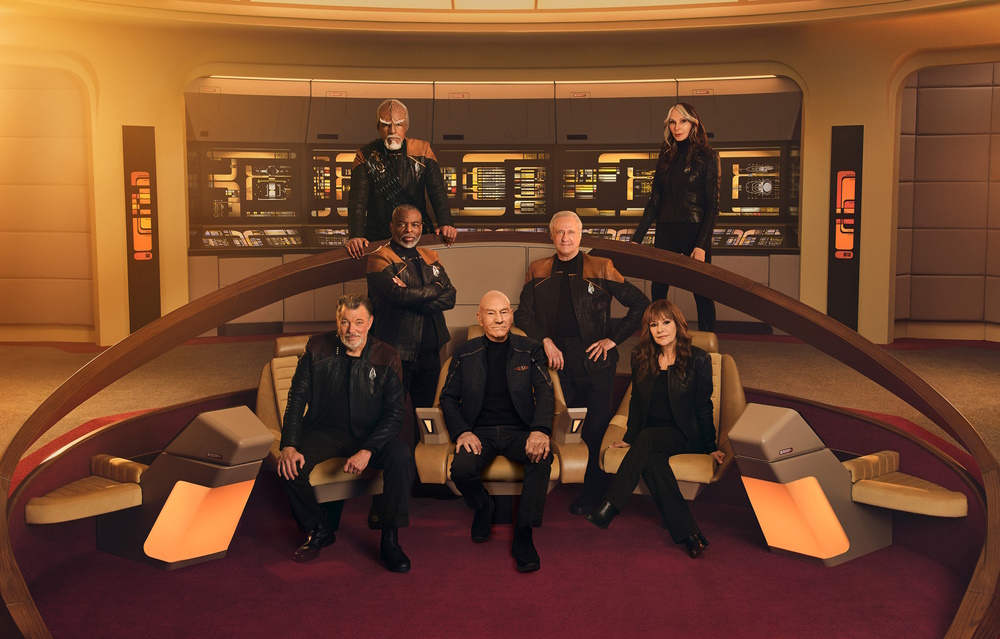
Promo poster for Star Trek: Picard Season 3 showing the main cast.
The main characters of Picard Season 3.

Spock in Discovery’s second season. Voyager’s Doctor in Starfleet Academy. Worf in Deep Space Nine. And Picard’s entire new cast – sans one character – being dumped to make way for the return of the whole TNG crew in Season 3. Does Star Trek need to do this so often? Or can we give new shows, new crews, and new characters the space to stand on their own two feet? Look at Star Wars, which has failed, for almost half a century, to break away from the same handful of original characters and one single story. Is that what fans want? Is that kind of approach the one Star Trek should take?

I get it: nostalgia is a big deal, fans want to see more from some of their favourite characters, and – at least in some cases – there are new stories to be told, or epilogues to add to existing stories. I’d be thrilled, for instance, to see a DS9 sequel involving Captain Sisko’s return from the realm of the Prophets. But to me, this over-emphasis on legacy characters makes Star Trek feel… small. And if Star Trek had behaved this way in the ’80s and ’90s, we’d never have gotten to meet wonderful new characters who carried the franchise forward. There’s room to balance things out more, with new *and* legacy characters sharing the limelight. But, as we’ve started to see in Strange New Worlds, and as we definitely saw in Picard’s third season, legacy characters can easily overwhelm a project as writers and fans want to see more from them and less from the newbies. That risks leaving Star Trek with nowhere to go creatively in the future.

My Verdict: Vaporise It With A Disruptor!

So that’s it!

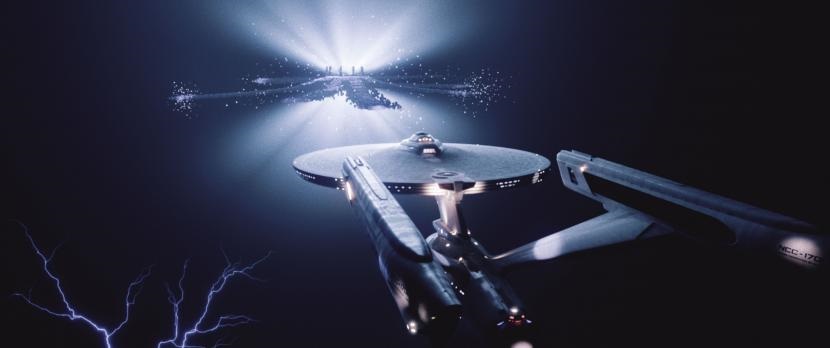
Still frame from Star Trek II: The Wrath of Khan showing the Enterprise firing phasers.
The Enterprise firing phasers.

This poll was really interesting to dissect, and not every point went the way I’d have necessarily expected if I’d just seen the poll, clicked on it, and moved on. Actually taking the time to think about these answers yielded some results that were – as Mr Spock might say – fascinating!

The results of the original poll make for interesting reading, too, after more than 2,000 people voted. The top clichés Trekkies want to get rid of are, in reverse order: the Mirror Universe with 8.2% of the vote, time travel (especially to modern-day Earth) with 11%, new Soong relatives at 22.2%, and finally, Section 31 with 24.7% – almost a quarter of those who responded to the poll.

I think I could’ve predicted some of those, but new Soong relatives being so thoroughly despised is one that caught me off-guard, I must admit!

Still frame from Star Trek: Section 31 showing the final shot of the movie.
Apparently, Section 31 is the cliché most Trekkies would like to see removed.

I hope my own additions of some Star Trek “clichés” fit the tone of the poll, too. I spent a little while thinking about some of the tropes and arguably overdone story concepts that Star Trek could do with fewer of! Though truth be told, very few of these are really all that problematic for me, as I think Star Trek – even after recycling some of these ideas time and again – can still churn out some great storylines.

So I hope this has been a bit of fun, and an interesting way to dissect this poll. My thanks to Tumblr user “quasi-normalcy” for the original idea – and if you want to see the poll and its results, as well as their Tumblr page, you can find it by clicking or tapping here. And thanks to the Star Trek fan page on Facebook for bringing it into my feed!

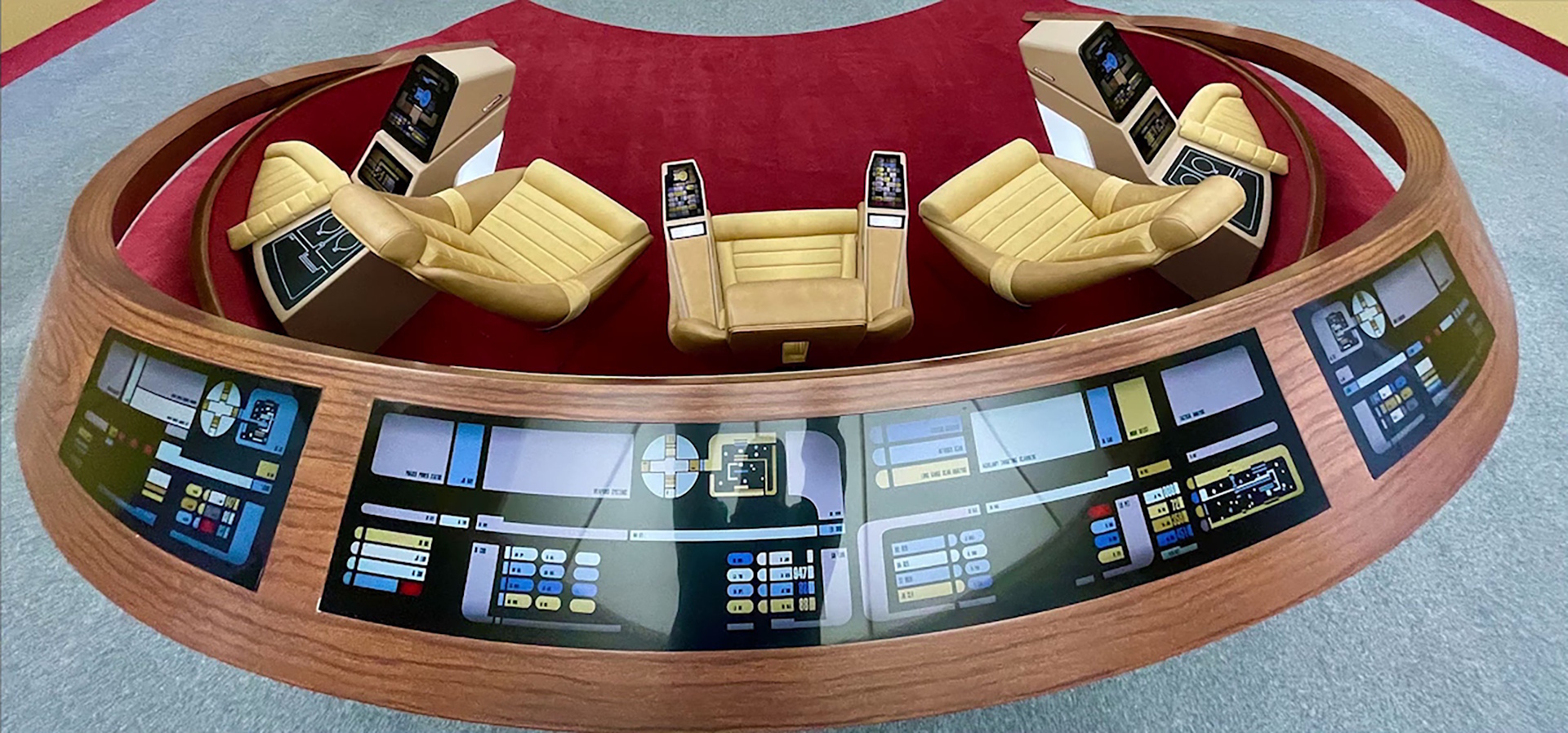
Behind-the-scenes photo from Star Trek: Picard S3 showing the centre console and tactical station of the Enterprise-D.
The view from Worf’s console.

Now that Halloween is out of the way (and I’m closer to getting back to normal at home), there’s more Star Trek content to come here on the website. I’d like to get caught up with the Khan audio drama before too long, there may be more previews for Starfleet Academy coming up now that we know the series will debut in January, and I still have a couple of episode re-watches that I want to write up involving actors I met at a recent Star Trek convention.

I hope you’ll join me in the days and weeks ahead for some of those pieces. Until then… Live Long and Prosper, friends!


Most of the Star Trek franchise – including films and television series discussed above – is available to stream on Paramount+ in countries and territories where the platform is available, and is also available on DVD and/or Blu-ray. The Star Trek franchise – including all properties discussed above – is the copyright of Skydance/Paramount. This article contains the thoughts and opinions of one person only and is not intended to cause any offence.
Star Trek: The Borg Teasing Theory

Spoiler Warning: Beware of spoilers for the following Star Trek productions: The Next Generation Seasons 1-3, Voyager Seasons 4-7, First Contact, Enterprise Season 2, Prodigy Season 1, and Picard Seasons 1-3.

Let’s talk about everyone’s favourite Star Trek villain: the Borg Collective!

Okay, maybe that’s a tiny bit of an exaggeration! But the Borg are certainly up there as one of the Star Trek franchise’s most iconic and frightening villainous factions, and there’s no shortage of theories and speculation in the Star Trek fan community about how the Borg operate and what their methods and overall goals are. I thought we could touch on one aspect of that today.

I briefly outlined what I’m calling the “Borg Teasing Theory” in a post here on the website a couple of days ago. That piece was all about some of my personal head canon explanations of unseen, unexplained, contradictory, or vague things from across the Star Trek franchise – but I thought this particular theory warranted its own full article! Click or tap here to check out the rest of my head canon, if you’re interested in my take on the likes of warp factors and cloaking devices.

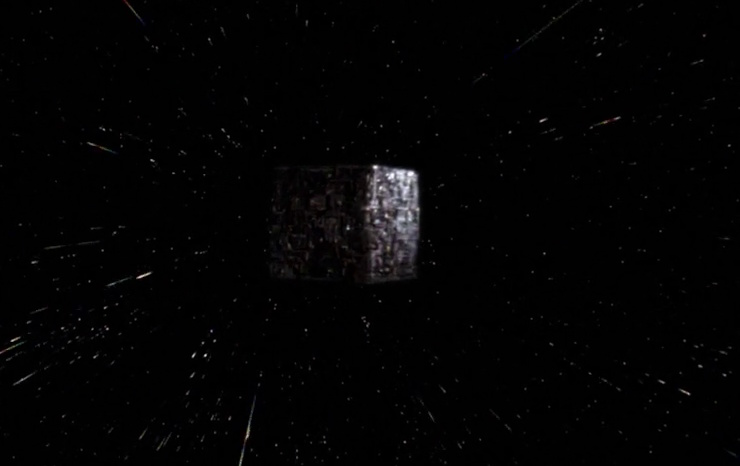
The Borg are coming!

So what’s the tl;dr of this theory? In brief: the two major Borg attacks on Earth during The Next Generation era – as depicted in The Best of Both Worlds and First Contact – weren’t 100% serious attempts to assimilate the entire planet or the Federation. They were, in a word, teases. The Borg Collective hoped to push Starfleet and humanity to develop new weapons, shields, scanners, and medical technology in the years after their incursions – which they would then be able to assimilate when they launched a full-scale invasion at some point in the future. In short: the attacks were not attempts at total conquest and were not intended to fully succeed at assimilating Earth.

We’ll get into detail in just a second, but before we go any further, I have a couple of important caveats. Firstly, all of this is the entirely subjective take of just one old Trekkie. If you hate this theory, think I’ve got it completely wrong, or feel I’ve misunderstood some key part of Star Trek that would invalidate it… that’s okay. None of this is canon or likely to ever be confirmed on screen anyway! Secondly, I’m not claiming to be the sole inventor of this theory. Other Trekkies may very well have come up with similar ideas independently, and I’m not taking credit for anyone else’s work or theories.

A Borg drone.

Finally, a word about fan theories. I like writing and I like Star Trek, so writing about Star Trek is a fun way for me to spend a little more time in this world. But no fan theory – not even one that seems totally plausible – is worth getting upset or worked up over. As I said a moment ago, none of this is canon and may very well be totally debunked in the future. Given the status of the Borg Collective after Picard Season 3 (and Paramount’s shaky finances), we may never get another Borg story anyway. But this is supposed to be a fun exploration of a theory I’ve had kicking around in my mind for decades, not something to take too seriously.

Phew, that was a lot! But with the caveats out of the way, it’s time to jump into the theory!

Let’s start by explaining what this “tease” is. As I outlined briefly above, I believe that the Borg were not fully serious or committed in their two attacks on Earth. My evidence for this is simple: on both occasions, the Borg sent only one single ship to Earth. A Borg cube can contain, depending on which episode we use as a source, up to 100,000 drones. Given the size of Starfleet, the number of ships at the Federation’s disposal, and even just the population of Earth itself (which could be somewhere in the region of 9-10 billion in the 24th Century) one ship and 100,000 drones doesn’t seem like a large enough invasion force.

A Borg cube hovering over Earth…

Assuming the Borg cube from either Wolf-359 or the Battle of Sector 001 managed to defeat Starfleet’s armada and Earth’s planetary defences, and was able to successfully transport down all of its drones, the logistics of assimilating such a large population don’t track. If Earth’s population is 10 billion and there are 100,000 Borg, that’s a ratio of 100,000-to-one – meaning each Borg drone would need to have a hand in the assimilation of 100,000 humans. With only a single ship, any ground invasion would be vulnerable to Starfleet regrouping and returning; the destruction of the cube would cut off Borg forces on the ground.

Despite jokes I’ve made before about Earth being undefended, it’s still the headquarters of the Federation, with Starfleet Academy and Starfleet HQ on the planet, too. There are going to be thousands of armed Starfleet security personnel, Federation HQ guards, Section 31 operatives, and others on the planet. Even if resistance was scattered at first, and the Borg were able to shut down Starfleet communications, resistance on Earth would be ferocious. To jump over to a different franchise for a point of comparison: look at the Reaper war in the Mass Effect series. The Reaper invasion of Earth was hampered at every turn by resistance fighters from all walks of life, led by the remnants of the Alliance military. There’s no reason to think a Borg attack on Earth wouldn’t lead to a similar resistance movement springing up, with armed civilians led by Starfleet personnel.

Even under extreme pressure, Starfleet tactical personnel would mount a significant resistance to any Borg invasion of Earth.

With the Borg preoccupied with a war of attrition on the ground, their sole vessel in space would be vulnerable. The cube might’ve been able to beat off Starfleet’s initial armada, but that was a hastily thrown together gaggle of whatever ships were on hand when the Federation realised what was coming. Ships were brought out of mothballs and unqualified officers were tapped to take command. With Starfleet being better-prepared and having time to regroup – while also calling on allies like the Klingons – round two against the cube would go a lot better!

So even if the initial attack was successful and the Borg managed to defeat a defence force and land drones on Earth, it would be a matter of time – days or perhaps a couple of weeks – before Starfleet would be back with a much larger fleet. The Borg cube may have beaten the Federation’s hastily-arranged defence ships, but the full might of Starfleet, combined with Klingons and other allies and backed up by tactical data gained from the earlier battle, would – in my opinion – have a strong chance of destroying the Borg’s only vessel in the system. After that, it’s just a case of landing as many troops with modulated phasers (and Klingon bat’leths) and mopping up the remaining drones.

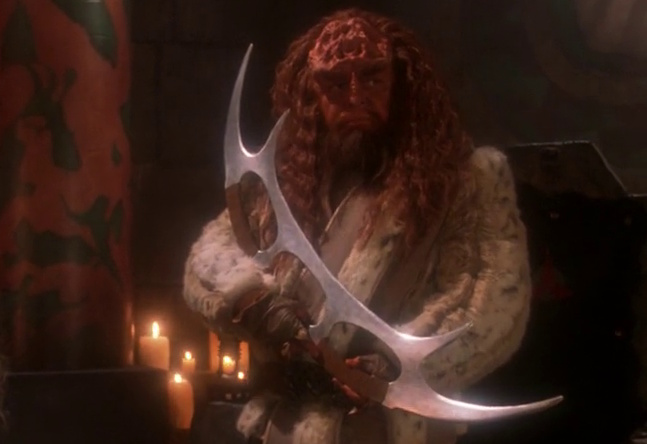
Klingons wielding bat’leths could cut through a Borg army!

To me, this is the most likely outcome for both the Battle of Wolf-359 and the Battle of Sector 001. And the Borg, having studied humanity and the Alpha Quadrant, are undoubtedly aware of this. One ship, even maxed out with as many drones as possible, simply can’t assimilate Earth on its own – let alone expand the fight to the rest of the Federation and its allies.

But why do I think the Borg Collective has the resources to launch a bigger attack? Simple: take a look at the Collective in its Delta Quadrant home in Voyager. The Borg’s Unicomplex alone contained more than a trillion drones, with the entire Collective perhaps comprising quadrillions of Borg. There may be tens or hundreds of thousands of Borg cubes – not to mention other Borg outposts, space structures, and assimilated planets. The sheer scale of the Borg Collective is what makes it so powerful, so frightening, and such a dangerous opponent. So why would the Borg choose to attack Earth in such a small-scale way?

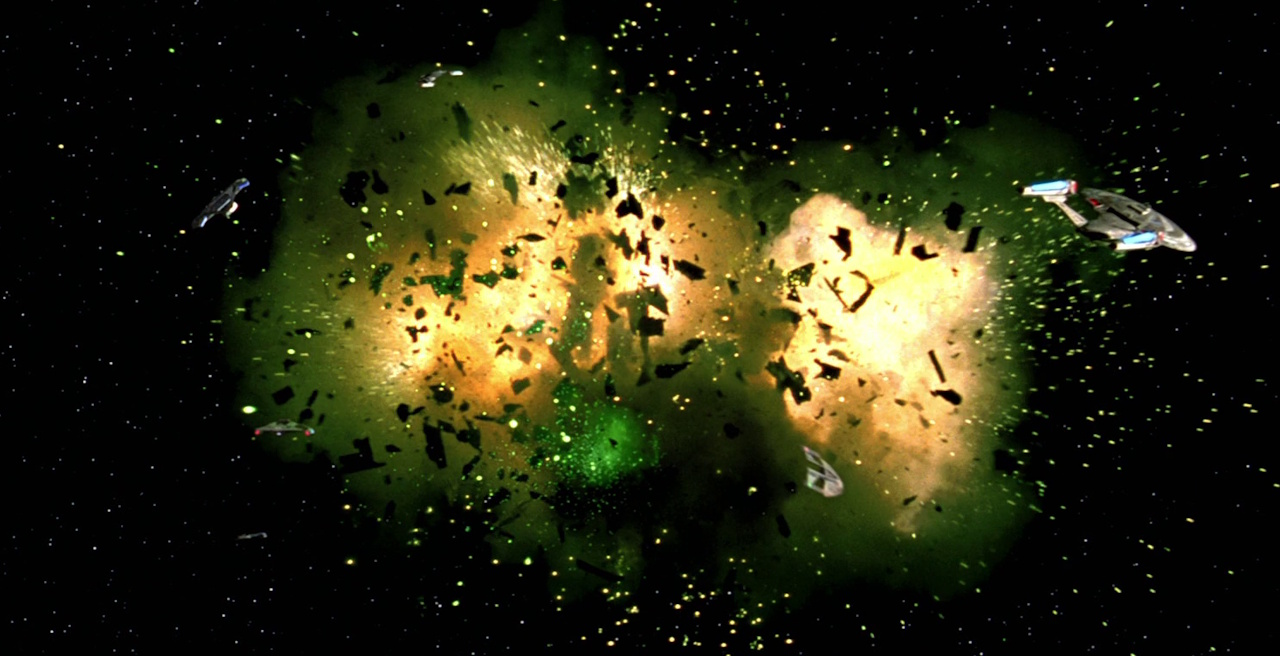
The destruction of the Borg cube in First Contact. Did the Borg plan for this outcome?

Given how powerful a single cube could be, a fleet of perhaps a dozen would make light work of anything Starfleet and its allies could muster. And with two million drones instead of just 100,000, the Borg’s ground offensive would be much quicker and would be more easily able to overcome any resistance. The assimilation of Earth could proceed much more smoothly – with only a minimal amount of extra investment from the Collective. For a faction with 10,000 ships, using twelve on this one task is barely a drop in the ocean. We’ve seen the Borg assimilate other Delta Quadrant races, like Arturis’ species from the episode Hope and Fear, using “overwhelming force.” One single cube is not, I would argue, the kind of overwhelming force needed to conquer Earth and the Federation.

So to be clear: this part of the theory states that the Borg have the means to easily overpower and outgun the Federation and its allies and achieve the task of assimilating Earth. They have no reason not to go all-in and fully commit to this invasion; they aren’t worried about loss of life, there’s no Borg economy to be damaged by building extra ships, and if their target is to fully conquer Earth and the Federation, they could do so with ease. But they don’t do that. Instead, on two separate occasions they’ve sent a single cube. Why?

The Enterprise-D battling a Borg vessel.

To answer that, we first have to consider what the Borg are and how they operate. The Borg are a hive mind, operating as one. They have assimilated – according to their own sources – at least 10,000 species across the thousands of centuries that they’ve existed. But because they’re one hive mind, they lack creativity. They lack inventiveness – and with that, we can infer that they don’t have the ability to create brand-new technologies any more.

The hive mind is adaptable, and having been introduced to something – say, a particular phaser modulation – the Borg can adapt. Adaptations are rolled out at transwarp speeds across the entire Collective, meaning that any Borg encountering that specific phaser modulation in future will be protected. But adapting to something isn’t the same as inventing – and this lack of creativity and inventiveness could be a problem for the Collective.

After being exposed to a new technology or weapon, the Borg can adapt.

So how does the Collective acquire new technology, then? If they don’t develop things themselves they must get them from somewhere, right? I mean, the Borg are more technologically advanced than the Federation and that didn’t happen by accident! The answer is simple: the Borg acquire everything from information to technology through assimilation.

This was their weakness when confronted with Species 8472. They couldn’t assimilate a single member of the species or one of their ships, so they were left blind and helpless. And this, I would posit, is the fundamental reason why they “tease” certain species – like humanity. We probably aren’t a unique case; I believe this is a tactic that the Borg will have deployed on countless other occasions against similarly creative and adaptable species. But it’s a tactic that the Collective knows can work to its advantage.

The Borg were unable to assimilate any member of Species 8472 or their technology – rendering them blind and ineffective against their attacks.

The objective is simple: by making a relatively small demonstration of their power, the Borg incite fear in their targets. This fear leads to huge investments in weapons, shields, starships, and the like… all of which the Borg want. On one hand, the Borg want to see if their target can find a weakness in the Collective and its technology so they can prevent anyone else from exploiting it in the future – basically rolling out a Collective-wide “patch” to fix any weaknesses or vulnerabilities that the target species may have identified. And on the other hand, the Borg want any species they target to have achieved their full potential – giving the Collective the best, newest technologies that the target could create. This is how the Borg – at least in my opinion – are able to acquire new technologies.

And this is what they’re doing to Earth, humanity, and the Federation at large. By launching these attacks, the Borg are pushing the Federation and Starfleet to develop new technologies, whether that’s weapons, ships, medical supplies, transporters, shields… the list goes on. Perhaps the second incursion was intended to see how far Starfleet’s new inventions had come, or maybe it was just a second “tease” to force Starfleet to keep working and keep inventing. Either way… it worked.

A Borg drone being killed by a phaser blast.

Why would the Borg target Earth, though? It’s not like they need Earth specifically for its location or resources, and Earth isn’t even close to the Borg’s native territory. The Borg are mostly in the far-off Delta Quadrant, though they may have colonies or outposts somewhat nearer to the Federation, such as on the El-Aurian homeworld. So the question remains: why Earth? When there are so many other planets and species in between the Borg’s home territory and the Federation, why jump halfway across the galaxy for an invasion?

We already know that the Borg don’t assimilate everyone they come across. In fact, the Borg can be downright picky – opting to ignore the Kazon, for instance, as they were deemed “unworthy” of being assimilated as they’d somehow detract from the Borg concept of perfection. It stands to reason that some species may be of more interest to the Borg – even those in a faraway part of the galaxy. I think the El-Aurians are a prime example: their homeworld, while nowhere near Earth, seems not to have been on the very borders of Borg space, either. Yet the El-Aurians were targeted – perhaps for their telepathic powers, or perhaps because the Borg considered them a threat. This is a species, lest we forget, that has tangled with the Q Continuum and forced them to the negotiating table. The same basic reasoning may apply to humanity.

The Borg deliberately targeted the El-Aurians (Guinan’s people), even though they may not have been anywhere near Borg space.

Humanity has to be one of the most resilient and creative species that the Borg have ever encountered. Humans were able to track a Borg vessel and develop technologies to keep themselves hidden from the Collective while studying them – this is what Seven of Nine’s parents, the Hansens, did in the 2340s. This may have been the Borg’s first encounter with a human… and their curiosity was piqued!

Then, not long after the assimilation of the Hansens, the Borg received a strange message. Originating two centuries ago in a far-flung part of the galaxy, it told the tale of a time-traveling sphere, a planet of spacefaring people, and a climactic battle. The Borg who survived the Battle of Sector 001 had crash-landed on Earth in the past, only to be awakened by humanity in the 22nd Century. Captain Archer and his crew were able to stop them – but not before they sent a message to the Collective in the Delta Quadrant. Between the message from the past and the assimilation of the Hansens, the Borg must’ve realised how significant Earth and humanity could be for the Collective.

A small group of Borg were able to signal the Collective in the 22nd Century.

After receiving this “blast from the past” transmission, assimilating the Hansens, or both, the Borg had humanity and Earth in their sights. But rather than launch a full-scale invasion in 2350 – years before the Enterprise-D’s encounter with a cube – the Borg took a more subtle approach. Firstly, they may not have been entirely certain of Earth’s location, instead sending ships to scout the Alpha and Beta Quadrants for signs of humanity and the Federation. Then, rather than attack straight away, the Collective bided its time, launching small-scale attacks on outlying colonies along the Neutral Zone to see what would happen.

By attacking both Federation and Romulan outposts (as seen in the Season 1 finale of The Next Generation), the Borg may have hoped to trigger a conflict between the two powers – before swooping in later to attack both of them. Or, perhaps more likely, this was the Borg’s first attempt to assimilate humans en masse to see if they were worth bothering with – and picking outlying colonies makes a lot more sense than rushing to Earth straight away. The Romulans may have been collateral damage, in that case.

The Borg destroyed multiple human colonies before attacking Earth.

In any case, the Borg determined that humanity was a worthwhile target – something that was only further confirmed by their encounter with the Enterprise-D a few months later. As an aside: Q may very well have saved humanity by his intervention in Q Who! I have a longer piece on this subject – which you can find by clicking or tapping here – but here’s the short version: the Borg knew about humanity and Earth years before Starfleet knew about them. By hurling the Enterprise-D into the path of a Borg vessel, Q gave Picard and the Federation valuable insight into the Collective, forewarning them of the attacks to come.

With the Borg determined to assimilate humanity, decisions had to be made about how to do so. The hive mind, operating as one, makes such decisions at light-speed, and after confirming humanity was a suitable target for assimilation, the Borg decided to “tease” the Federation, pushing them to design new weapons, shields, starships, medical devices, and so on… all so that the Collective could assimilate it later, adding to their perfection. This is how the Borg operate, and it’s why they chose to launch small-scale attacks against Earth instead of simply arriving en masse with overwhelming force.

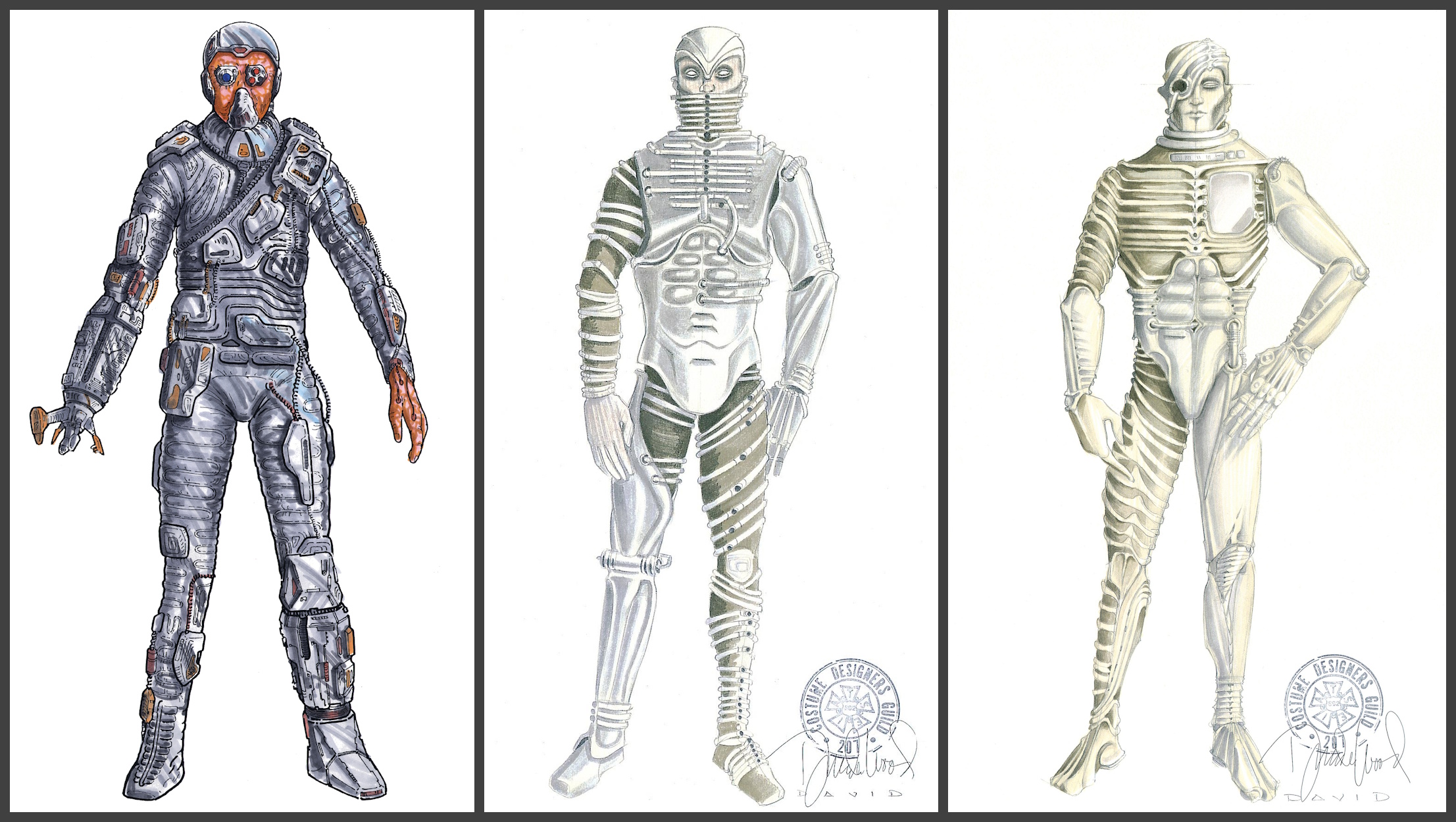
Original concept art of the Borg.
Image Credit: Frogland Archive/Forgotten Trek

From the Borg’s perspective, this approach is a win-win. Either their attack succeeds in full, with humanity and Earth being assimilated over a period of weeks or months, giving the Borg control of the planet and a staging-post for a larger-scale invasion of the Federation. Or it “fails” to achieve that objective, but in doing so provides the Collective with incredibly valuable tactical data on Starfleet, Earth’s defences, and so on, while also pushing the Federation to develop new technologies. The Borg want these technologies – either to “patch” vulnerabilities and weaknesses they may not be aware of or to add to their perfection.

There are real-world parallels. The Second World War led to the creation of modern-day computer technology, rocketry, and atomic power. The First World War led to huge advancements in flight, artillery, and motor vehicles. These are just a couple of examples from our own history of how war and devastation can lead to technological change. The Borg, I would argue, seek to artificially inflate the pace of technological advancement by baring their teeth and showing their target a tiny fraction of their power. In desperation, Starfleet and the Federation began working at pace to develop everything from phasers to starships – all ripe for assimilation by the Collective.

The first Borg drone ever seen in Star Trek.

So that’s the theory.

The Borg were not fully invested in assimilating Earth either in 2367 or 2373 – their only two direct attacks on Earth. These incursions had a different goal: pushing humanity and the Federation to develop new technologies that the Borg could assimilate later, when the time was right. By revealing themselves and showing Starfleet a glimpse of their power, the Borg believed their new target would, in effect, work for them, designing and building new weapons, ships, and other devices that the Collective no longer had the creativity to invent for itself.

To me, this theory made sense even as far back as when I watched First Contact in the cinema in 1996! Developments in Voyager, Enterprise, and more recently in Picard, too, have only added to this theory, expanding it and deepening my belief that the Borg really weren’t serious about conquering Earth. To them, the attacks served a different purpose. It took almost everything Starfleet had to beat the Borg, but given the sheer size and scale of the Collective, we know they had the resources to commit more ships and more drones to an attempted invasion of Earth. There has to be some reason why they didn’t send two or three cubes instead of just one – and to me at least, this idea makes the most sense and squares that circle.

Romulans and Borg as seen in the Lower Decks opening titles.

I hope this has been interesting! I doubt that this theory will ever be confirmed – and it may even be actively debunked one day, if we ever get another Borg story. Some of you might think that the Borg’s time travel in First Contact (or some other plot point from a Borg episode) already negates or invalidates this theory… and that’s okay! As I said at the beginning, this is just a fan theory or head canon, and it’s all subjective at the end of the day. I share this theory with the Star Trek fan community in that spirit.

Speaking of Borg stories… will we see another one in Star Trek anytime soon? After Picard did three separate Borg or Borg-adjacent stories in its three seasons, and with the Collective having appeared in Prodigy and Lower Decks in recent years… I think it might be a while before the Collective makes another appearance. I certainly think it should be a while; I can’t be the only one who feels a little burned out on the faction, especially after their omnipresence in Picard. If and when the Borg return, I hope it’s in a big way. I’ve been kicking around the idea of a “Borg invasion” series for a while – and that could be a really interesting way for Star Trek to go one day in the future. If a fourth Kelvin timeline film ever gets off the ground, I don’t think it’s impossible to think we could see the Borg there, too.

But unless and until any of that happens… this is my theory! I hope you enjoyed this write-up and found it interesting.


The Star Trek franchise – including most episodes and films cited above – can be streamed now on Paramount+ in countries and territories where the service is available. The Star Trek franchise is the copyright of Paramount Global. Header font/text courtesy of textstudio.com. This article contains the thoughts and opinions of one person only and is not intended to cause any offence.
Star Trek: Head Canon

A spoiler warning graphic.

Spoiler Warning: There are spoilers ahead for the following Star Trek productions: The Original Series Season 1, Deep Space Nine Season 6, Voyager Seasons 1, 5, and 6, First Contact, Discovery Seasons 1-3, Strange New Worlds Season 1, and pre-release information for Starfleet Academy.

Star Trek has a wonderfully rich and engaging setting – a fictional universe that operates by established rules that have been built up over decades. This “canon” is part of what makes Star Trek feel like Star Trek… and while I’m not a stickler for the tiniest minutiae of canon, the fundamental building blocks of the Star Trek franchise need to remain consistent for stories to work.

There are some places where Star Trek’s writers have been deliberately vague and ambiguous, and others where an apparent “plot hole” has been created, either by a new story seemingly overwriting an old one or by one of the prequel shows making an apparent change to what had been previously established. These things can pass by inoffensively enough, but as Trekkies, I think we have a natural curiosity about this setting – and a need to ensure that things make sense in the context of Star Trek’s long-established universe!

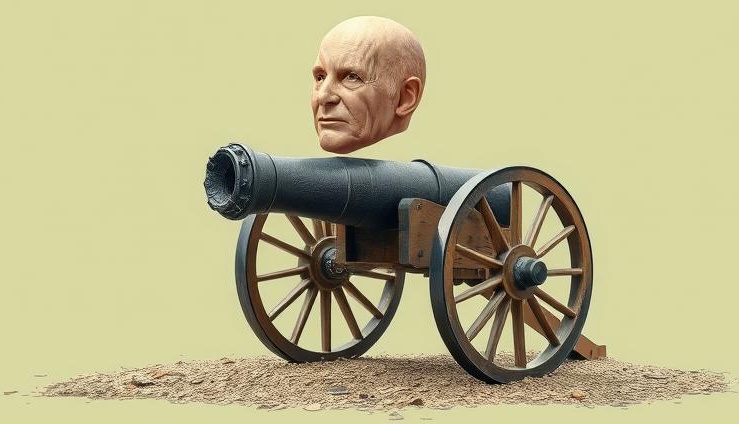
An AI-generated image of a head floating above a cannon.
It’s… head cannon.

So that’s where head canon comes in. If you’re unfamiliar with the term, head canon (or headcanon, if you prefer; I like to write it as two separate words) is basically just a fan-made explanation for something that doesn’t appear on screen. A famous example from the Star Trek fan community is the belief some fans hold that Kirk and Spock were engaged in a romantic relationship. That’s something never shown on screen (nor even explicitly hinted at), but nevertheless has become popular in some quarters of the fan community.

There are also head canon explanations for apparent plot holes and head canon expansions that go beyond what we see on screen. Over the years, I’ve come up with several of my own – and it’s these that I want to share with you today.

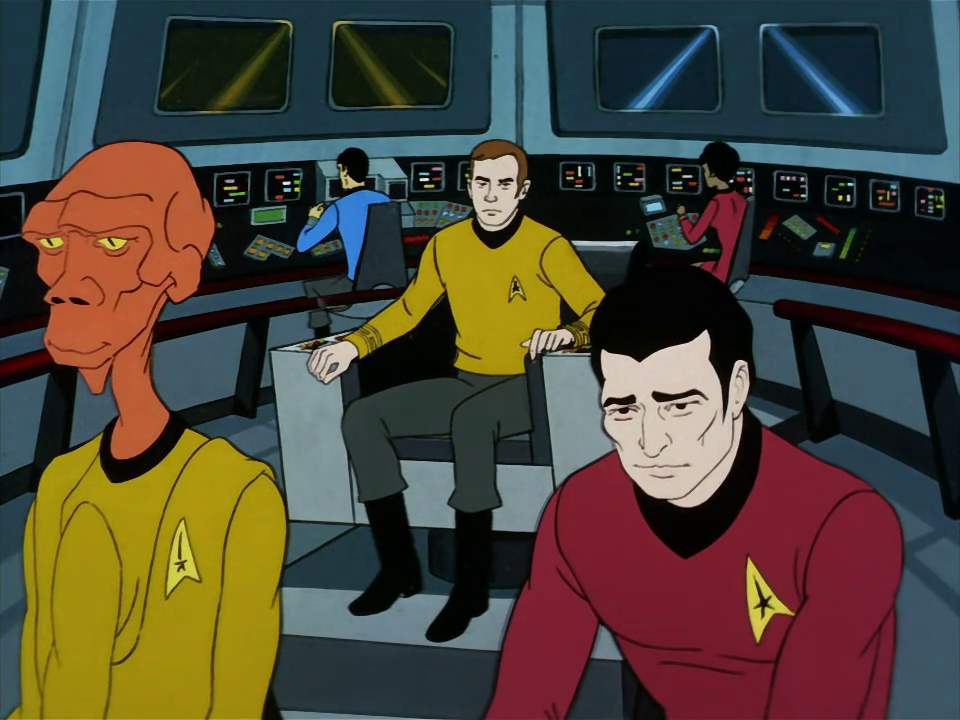
Still frame from How Sharper Than A Serpent's Tooth showing Kirk and the crew on the bridge of the Enterprise.
Arex, Kirk, and Walking Bear on the bridge of the Enterprise.

Before we get started, a couple of important caveats! Firstly, this is head canon. None of this is official, none of it has ever been seen on screen, and it’s likely that none of it will ever be confirmed. I’m not saying that I’m right and that’s that – other fans can and will disagree, and that’s okay. I’m not claiming to be the only originator of some of these ideas. It’s very likely that other Trekkies have independently come up with similar head canon explanations for some of the story beats we’re gonna talk about today – so please don’t think I’m trying to take sole credit!

This is also the entirely subjective opinion of one old Trekkie. If you hate all of my ideas, if I miss something that seems obvious to you, or if my head canon explanations don’t make sense to you… that’s totally okay, too. There’s enough room in the Star Trek fan community for polite discussion and disagreement – and there’s no need to get into a fight about totally hypothetical things that will almost certainly never be confirmed on screen!

With all of that out of the way, let’s look at some head canon!

Head Canon #1:
There are different types of cloaking device.

Still frame from Minefield showing the NX-01 Enterprise and two de-cloaking Romulan vessels.
22nd Century Romulan vessels de-cloaking.

Prior to Enterprise, it was pretty well-established that Starfleet’s first encounter with a cloaking device came when the USS Enterprise, under Kirk’s command, engaged a Romulan warbird that was attacking Earth Outposts along the Neutral Zone. Cloaks continued to be used by the Romulans, Kligons, and others into the 24th Century – but Starfleet only used a cloaking device on a couple of occasions.

Enterprise changed all of that, firstly with the Suliban’s cloaking technology – which, admittedly, was never explicitly called a “cloaking device” on screen – and later when the Romulans were introduced. Since then, both Discovery and Strange New Worlds have set the precedent that cloaking devices were known to Starfleet years before Kirk’s encounter with the Romulans. So how can we square this circle?

Still frame from Into The Forest I Go showing a simulation on the USS Discovery's viewscreen (cropped).
A Starfleet simulation of a Klingon cloaking device.

My answer is that there must simply be different types of cloaking devices. Not only that, but Starfleet Intelligence is working around the clock to figure out how to detect cloaked vessels. Similar to how the code-breakers of World War II worked to break enemy encryptions and read messages, Starfleet is locked in a constant battle to un-cloak cloaked ships.

Perhaps in the aftermath of Discovery’s Klingon War, Starfleet thought they’d finally broken the cloaking encryption – and that’s why Kirk was so surprised to see the Romulan warbird disappear from his sensors. Every time the Romulans or Klingons invent a new type of cloak, Starfleet gets to work figuring out how to recalibrate sensors to break through. This “arms race” could have been going on for decades – or even centuries.

Head Canon #2:
The USS Enterprise had a refit after Pike left the captain’s chair.

Still frame from A Quality of Mercy showing Pike and Ortegas on the Enterprise's bridge.
Strange New Worlds’ take on the bridge of the Enterprise.

Aesthetic changes from one Star Trek production to another usually don’t bother me very much – and I happen to really like the design of the USS Enterprise as it’s depicted in Strange New Worlds. The ship looks great inside and out, and some of the sets feel larger and more expansive than they did in past iterations of Star Trek, which allows for different types of shots, more characters on screen at once, and so on. But there’s no denying that the redesign hasn’t been wildly popular with every Trekkie!

So my suggestion here is simple: after Pike stepped down as captain of the Enterprise, the ship underwent a refit. Kirk would assume command of the refitted vessel in time for the five-year mission that we’re familiar with from The Original Series. This allows both versions of the Enterprise to exist in the same timeline without treading on anyone’s toes!

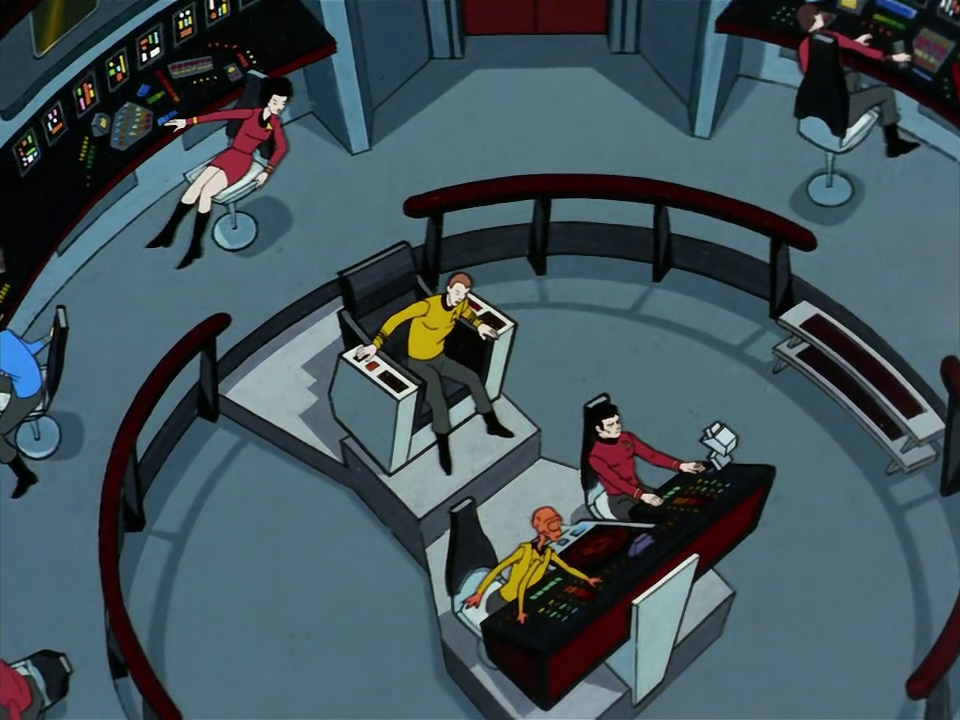
Still frame from How Sharper Than A Serpent's Tooth showing a top-down view of the bridge of the Enterprise.
The Enterprise bridge in The Animated Series.

There is precedent for ships being refitted and completely transformed. The Enterprise itself famously underwent a refit a few years after the events of The Original Series – we see the final stages of that refit in The Motion Picture, where changes made to the ship became a significant plot point early in the film. So not only does Starfleet regularly refit its ships, but the Enterprise itself has been refitted at least once.

It really isn’t much of a stretch to think that a ship that’s at least a decade old by the time of The Original Series (something confirmed in The Animated Series more than fifty years ago) would have had at least some modifications and changes made to it. And given what we see on screen, the ship has changed!

Head Canon #3:
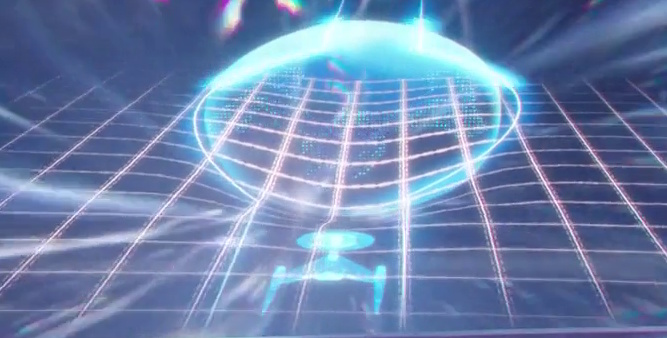
Warp factors are re-designated as newer and faster engines are designed.

Still frame from Subspace Rhapsody showing the familiar flash of light effect after the USS Cayuga went to warp.
A flash of light left by a ship jumping to warp.

Warp speed has always been pretty ambiguous in Star Trek – and that’s a genuinely good decision! Pinning down exact speeds and distances risks constraining future stories, so leaving things vague and open-ended gives writers maximum manoeuvrability. But there are some instances where speed seems to vary a little too much!

Just to give one example, at the beginning of First Contact, the Enterprise-E was stationed near the Neutral Zone. But Captain Picard was able to get the ship back to Earth in record time when the Borg attacked; Starfleet had already begun to battle the Cube while the Enterprise-E was light-years away, yet the ship made it back in time.

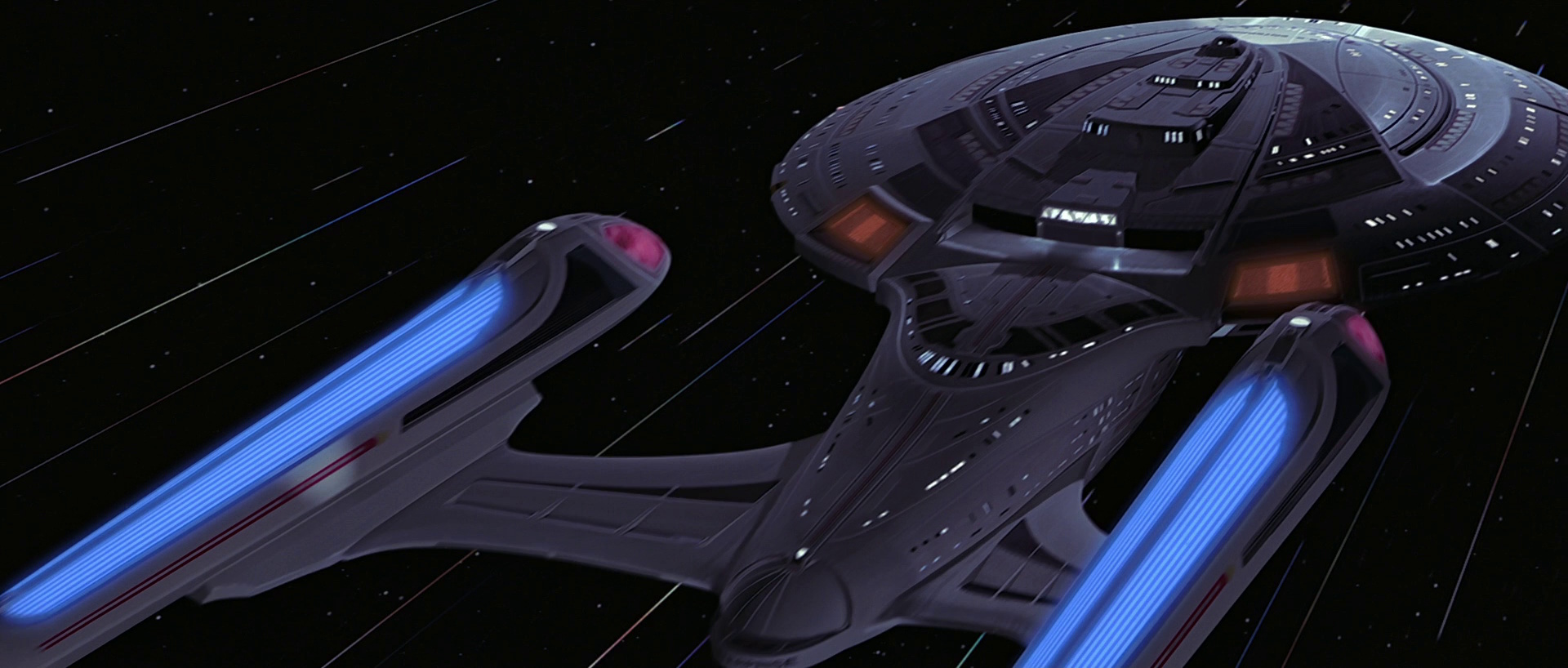
Still frame from Nemesis showing the Enterprise-E at warp.
The Enterprise-E at warp.

So here’s my head canon: warp five in Enterprise is not the same as warp five in The Next Generation. As new engines are designed and built, warp factors change. Instead of having to keep adding new decimals to warp 9.99999, Starfleet would simply revise how warp factors are calculated and referred to – accounting for discrepancies in speed and travel time.

There are still some holes in this idea, like what Starfleet’s “transwarp” experiment was and how it can take 75+ years to traverse the galaxy at warp 9.975 while warp 10 is supposed to be instantaneous travel everywhere. But I think the idea of Starfleet changing the way warp factors are calculated and referred to makes some degree of sense – and it could explain why some travel times appear to vary wildly.

Head Canon #4:
Voyager didn’t run out of torpedoes and shuttles because the crew built replacements.

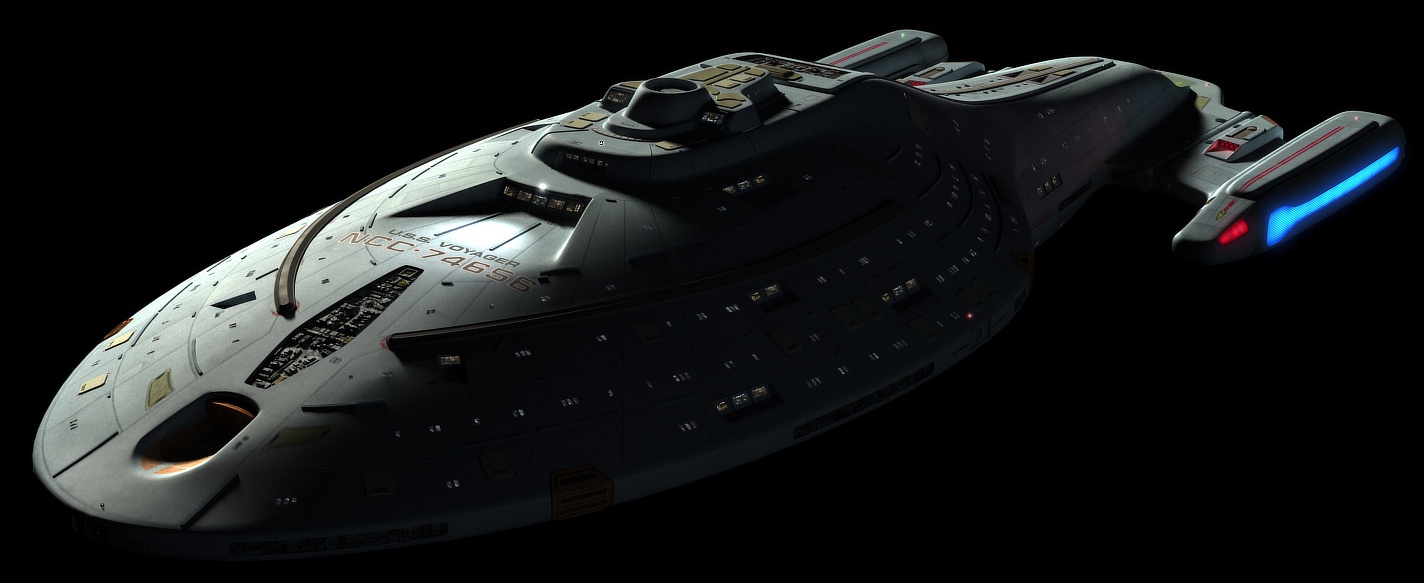
High-definition digital render of the USS Voyager (credit: TrekCore/Robert Bonchune).
The USS Voyager.
Image Credit: Robert Bonchune/TrekCore

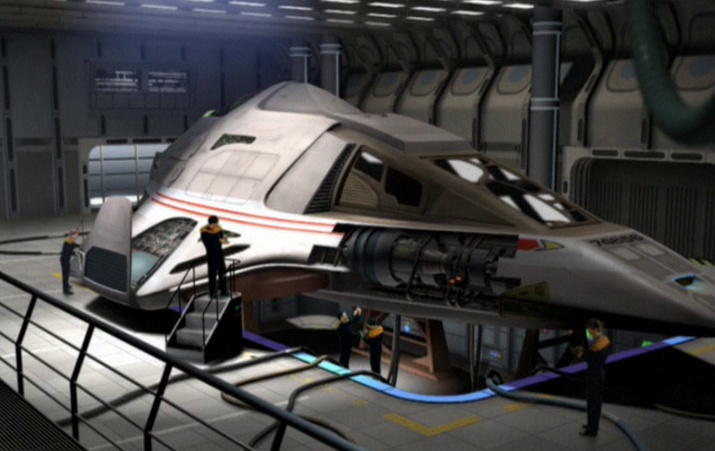
I’ve actually tackled this idea before in a longer article – click or tap here to check it out! In short, some Trekkies have argued that the USS Voyager should have run out of torpedoes and shuttlecraft during its time in the Delta Quadrant – picking on a line from Season 1 in which Janeway said that there was “no way” to replenish the ship’s supplies. But I disagree with the idea that this is a plot hole and I can explain why in two words: Delta Flyer.

We see the crew of Voyager build not one but two Delta Flyers after getting stranded in the Delta Quadrant, using the ship’s industrial-sized replicator to do so. Though this may have been a drain on resources, it wasn’t fatal to the ship and crew by any stretch – so much so that they were able to build a like-for-like replacement when the first Delta Flyer was lost.

Still frame from Extreme Risk showing the Delta Flyer under construction.
The Delta Flyer’s construction.

Furthermore, we saw Voyager trade with numerous planets, ships, and stations during its journey home – potentially acquiring resources like antimatter that may be needed for torpedoes, engine parts for shuttles, and so on. Maybe some things can’t be replicated, but through trade, Voyager could have been able to acquire these resources.

In short, I’ve never bought into the idea that Voyager firing “too many torpedoes” is a problem, and I think it’s easily explained through a combination of a resourceful crew, powerful replicators, and bartering.

Head Canon #5:
Fashion trends, hairstyles, uniform designs, etc. change over time – just like they do in the real world.

The main cast of The Original Series Season 2 in a promo photograph.
The cast of The Original Series.

Take a look at photos from the 1970s, 1980s, and 1990s. It’s really easy to see how fashion sense and style changed in a relatively short span of time out here in the real world. Now look at the arguments some Trekkies were making about uniforms or hair styles being “wrong” in certain new Star Trek productions. It seems silly… doesn’t it?

Discovery was set ten years before The Original Series. It’s not a stretch to think that hairstyles and designs for things like uniforms might’ve changed in that time. When Discovery debuted with its all-blue uniforms, I liked the idea of that style and colour existing in between Enterprise’s submarine-style boiler suits and the more familiar Starfleet uniforms of the later 23rd Century.

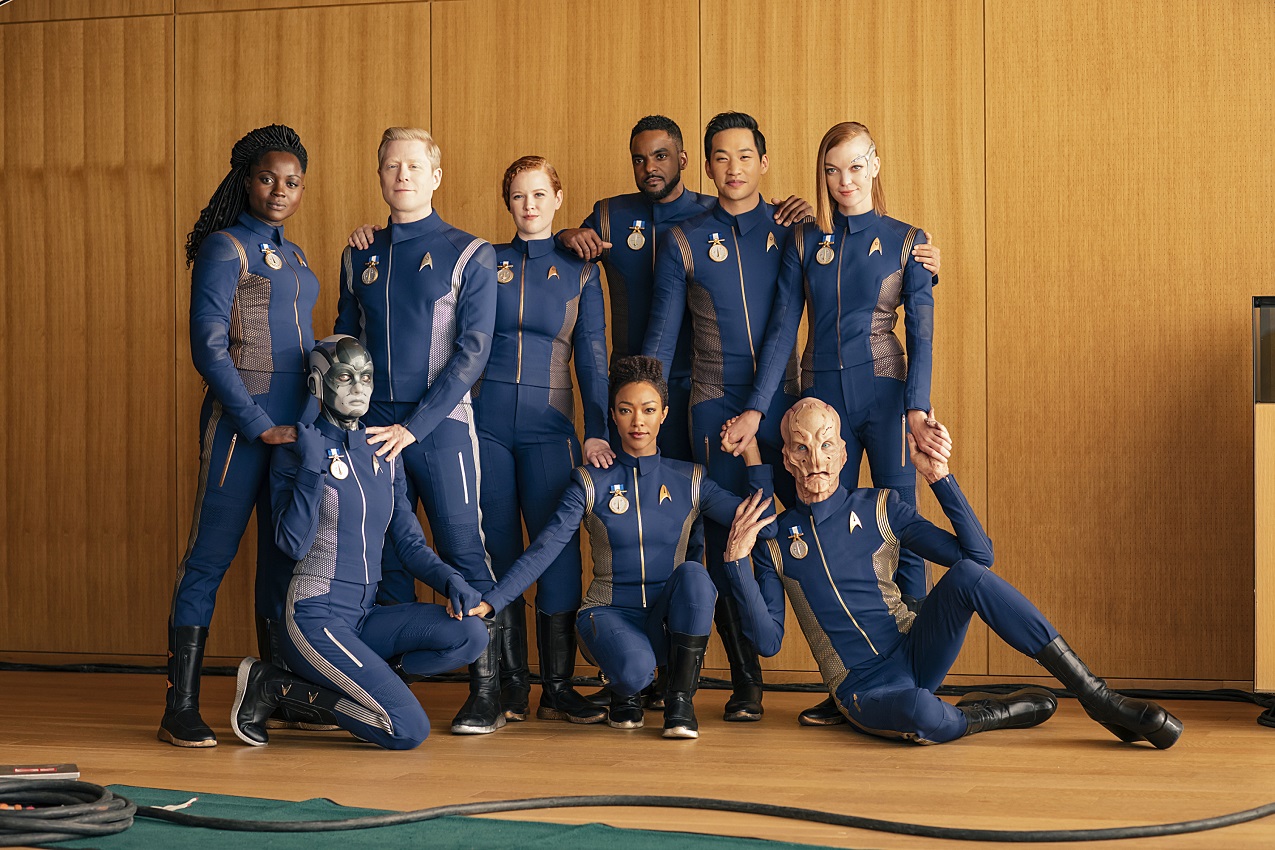
The main cast of Discovery Season 1 in a promotional photograph.
Some fans weren’t keen on Discovery’s uniforms.

The same principle can apply to alien races and other factions. Why were bald Klingons a problem in Discovery, for example? It didn’t bother me – and a simple head canon explanation could be that the Klingon Empire went through a phase of preferring shaved heads in times of war. Maybe it was a revival of ancient Klingon culture, maybe other Klingons did it in honour of their leaders.

There are some oddities with Starfleet’s uniform choices that have been introduced by different Star Trek productions. The Next Generation and Deep Space Nine seemed, for a time, to establish that space stations and starships had the same combadges but different uniforms, for instance – until that went out the window! But I don’t buy into the arguments that some Trekkies have put forward about these design and aesthetic choices. It really isn’t much of a stretch to think that the 23rd and 24th Centuries go through different fashion trends.

Head Canon #6:
The “Borg Teasing Theory.”

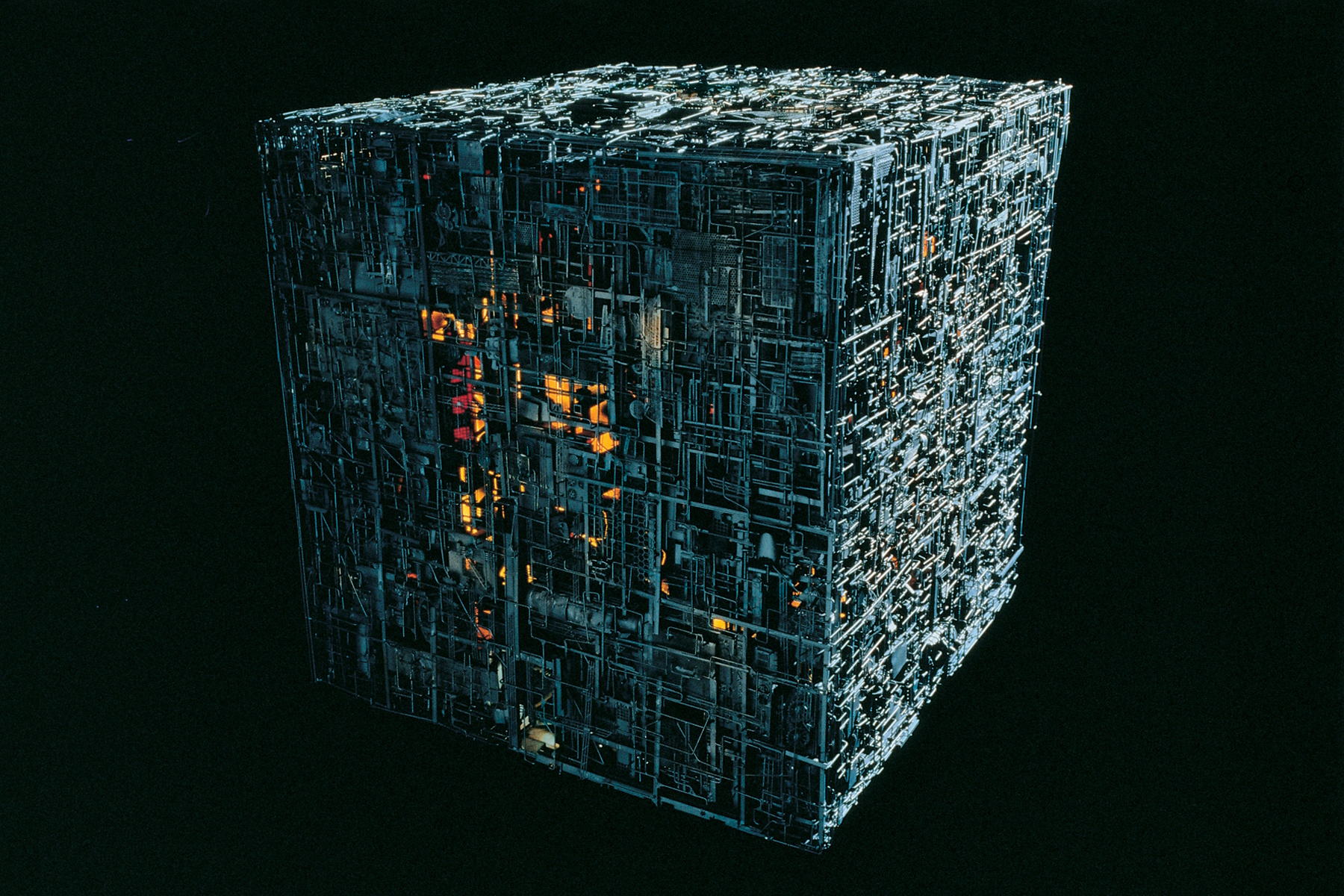
Behind-the-scenes photo from The Next Generation showing the original model of the Borg cube.
The filming model of the original Borg cube.

I find it interesting that the Borg Collective – with its massively superior technology, huge fleet of near-unstoppable ships, and untold legions of drones – never really made a serious effort to conquer the Federation. On both occasions where the Borg directly attacked Earth, they sent a single ship and – at most – a few tens of thousands of drones. Why?

I’ve had a theory for a long time (that I really must write up in full one day!) that the Borg Collective has been “teasing” the Federation. Not for fun – but to push Starfleet to develop newer and better technologies for them to assimilate. It’s not unfair to suggest that humanity is one of the most resilient, creative, and versatile species that the Borg had encountered as of the mid-24th Century, but even so, conquering the Federation shouldn’t pose a challenge based on what we saw of the scale of the Collective in Voyager.

Still frame from First Contact showing the Borg Queen.
First Contact introduced the Borg Queen.

We know that the Borg seek “perfection,” and that they even ignore whole species if they think they have nothing to offer. Humanity clearly has plenty to offer the Borg… but in their push for even greater perfection, might the Borg be trying to see how far they can push the Federation?

The Borg attacks on outlying colonies, and later their attacks on Earth, prompted Starfleet to develop new and better weapons, shields, and medical technology. The Borg may have been hoping to assimilate these technologies later on – partly to add to their arsenal, but also partly to prevent them being used against them in a future conflict. By “teasing” the Federation with these smaller – but still pretty devastating – incursions, it’s basically a win-win for the Borg. Either their sole cube succeeds and assimilates Earth, then the rest of the Federation, or in its failure it not only gathers a ton of data, but also pushes Starfleet to develop newer and better things to assimilate in the future.

Head Canon #7:
Discovery Season 2 was originally going to be an “origin story” for the Borg.

Still frame from Discovery Season 2 showing the pseudo-assimilation of Captain Leland.
The “assimilation” of Captain Leland.

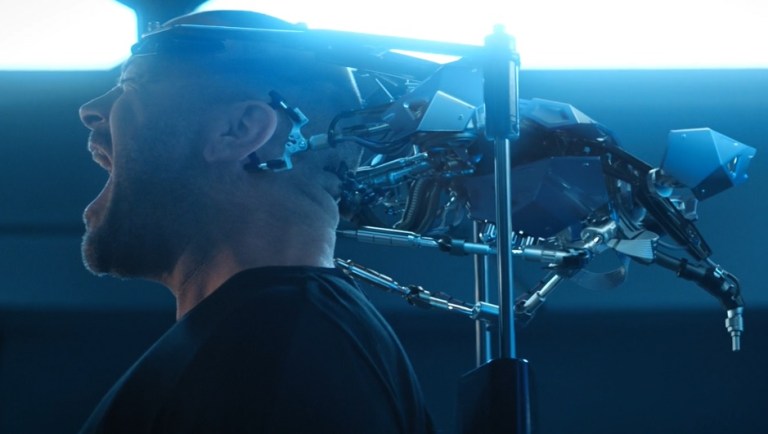
Is there such a thing as “production-side head canon?” I’m adding this one to the list either way! In short, no one is gonna be able to convince me that Discovery’s Control AI and time travel story in its second season was originally created/pitched as anything other than a Borg Collective origin story.

The way the Control AI was able to “assimilate” Captain Leland and others, using nano-technology, is just too eerily similar to the way the Borg operate to be a coincidence. When you add into the mix Burnham’s time travel suit… the stage was set for Control to become the progenitor of the Borg.

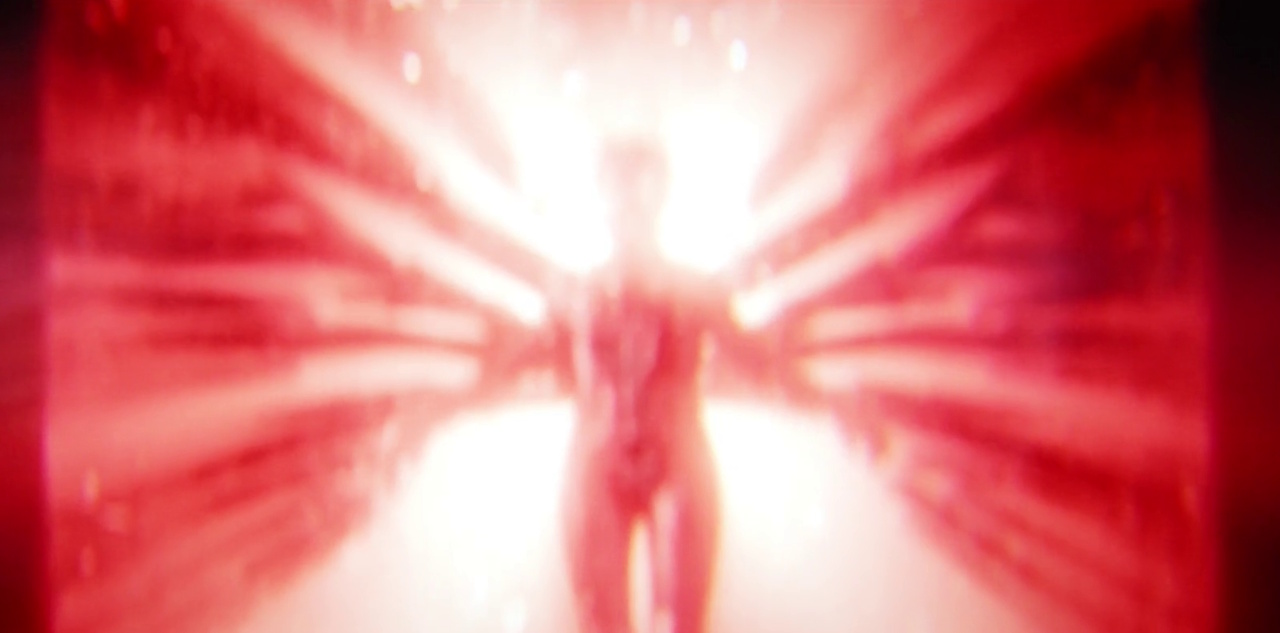
Still frame from Such Sweet Sorrow showing the Red Angel just out of focus.
The Red Angel suit could travel through time.

With relatively few tweaks to the final act of Season 2, Control could’ve seized Burnham’s Red Angel suit and, perhaps staring down the barrel of a Starfleet armada, escaped into the past. Crash-landing on a remote Delta Quadrant planet, Control could use its remaining nanites to conquer the native humanoid population… setting the stage for the Borg Collective to be a Federation creation.

Now, I’m not saying this would’ve been a good story. And I’m definitely not saying that Discovery’s writing team could’ve pulled it off successfully. Those are moot points now, anyway. But unless someone comes forward with concrete, definitive proof that Season 2’s Control/time travel story was never intended as a Borg story… well, let’s just say that would be a tough thing to convince me of! I have a longer article about this theory, by the way, and you can find it by clicking or tapping here.

Head Canon #8:
The Romulans eventually discovered Sisko’s underhanded tactics.

Still frame from In The Pale Moonlight showing Senator Vreenak's famous "it's a fake" line.
“It’s a faaaaaaake!”

One of my fantasy Star Trek stories is a follow-up to the outstanding Deep Space Nine Season 6 episode In The Pale Moonlight. But unless and until that happens, I’ll have to make do with my personal head canon! In short, I struggle to believe that Sisko’s actions in that episode – where he lied, schemed, and murdered his way to an alliance with the Romulans – would never come to light.

Whether this would set the stage for a full-scale conflict or not isn’t certain, and with the Romulan Empire in a much-weakened state in the early 25th Century, perhaps they wouldn’t be spoiling for a fight. Romulan leaders might even want to keep the revelation a secret, not only because it shows them in a bad light, but in order to avoid jeopardising an alliance that they relied upon in the aftermath of the loss of Romulus and Remus.

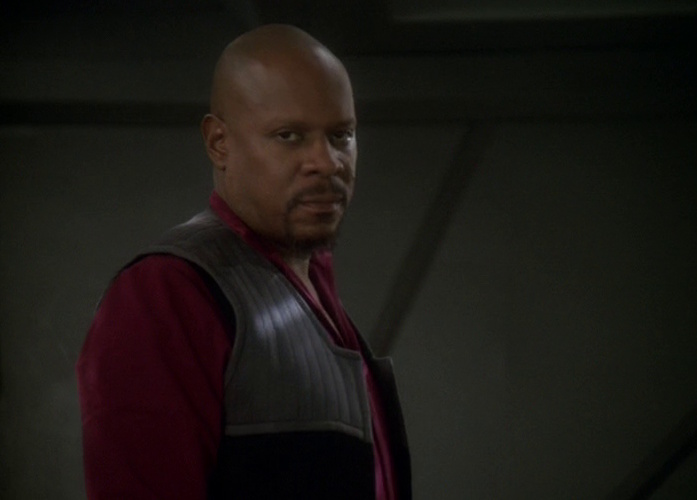
Still frame from In The Pale Moonlight showing Sisko looking directly at the camera.
I think the Romulans will eventually uncover the truth…

So how could it happen? The only people involved were Garak and Sisko, and neither would be likely to spill the beans. Garak, though, might’ve boasted about his achievements in private, if not to Dr Bashir then to someone else back on Cardassia. It’s one of his biggest achievements if you think about it, and it could become a legend within the re-established Cardassian intelligence agency.

More likely, though, would be the Romulans re-examining the fake “evidence” of the Dominion plot to invade. Garak believed that any imperfections in the recording would be written off as damage from the shuttle explosion, but I’m not so sure. Under proper forensic examination, would the fake recording really hold up? Or could Senator Vreenak have sent a message warning about the forgery before his assassination? There are multiple ways this could go – and serious consequences for Starfleet if and when the truth comes out!

Head Canon #9:
Starfleet will find a way to prevent the Burn – pushing Discovery’s far future into an alternate timeline.

Still frame from Su'Kal showing a flashback to the Burn.
The Burn.

If you’re a regular reader, you might remember that – only a few weeks ago – I pushed back hard against the idea that some or all of Discovery has been “rendered non-canon” by one brief clip in Lower Decks. And to be clear: I stand by what I said then! Discovery, at time of writing, remains fully canon, and its far-future setting is the ultimate destination for the prime timeline.

But the Burn is particularly depressing, and knowing that the Federation will suffer such a horribly devastating blow – even if not for centuries – potentially changes how we react to stories set in the 23rd, 24th, and 25th Centuries. So my current head canon is this: at some point in the future, perhaps after Discovery’s new spin-off, Starfleet Academy, has finished its run, the far future setting will be quietly dropped. If there’s more Star Trek being made at that point, or at some point in the future, it will either totally ignore those events or perhaps even find a way to imply that they didn’t happen.

Still frame from That Hope Is You II showing a simulation/recording of the origin of the Burn.
The Burn originated on a wrecked ship in a toxic nebula.

We’ll need to discuss this in more detail on another occasion, but I don’t think that Discovery’s “post-apocalyptic Star Trek” idea worked. I don’t think the concept was a good one in and of itself, but I also feel that the execution was poor. Aside from a few moments in Season 3, Discovery never really did a lot with the idea of rebuilding the Federation, and the things we did see were smaller moments that were blitzed past to get to other, generally less interesting stories.

So I think there’s a case to be made to quietly push Discovery and Starfleet Academy into their own timeline at some future point. In my head, it works better that way – allowing Discovery to continue to exist and for Starfleet Academy to hopefully build on the foundations it laid, but also not constraining future stories that may be set in the 24th or 25th Centuries.

Head Canon #10:
Section 31 regularly uses cloaking devices.

Still frame from Section 31 showing a Section 31 ship.
A Section 31 vessel of the late 23rd/early 24th Century.

Maybe I’m forgetting or overlooking an episode, but I can’t remember seeing Section 31 using cloaked ships. It seems logical to me, though, that the Federation’s black ops/off-the-books security organisation would take advantage of cloaking technology whenever possible. Starfleet may be bound by the Treaty of Algeron not to use cloaking devices… but does anyone really think that Section 31 – an organisation which has attempted genocide and overthrown governments – would abide by the law?

Section 31’s use of cloaked ships could also explain things like their abduction of Dr Bashir in Inquisition – the faction’s first appearance in Star Trek. That episode left it deliberately unclear how Section 31 was able to infiltrate DS9 to capture Bashir, but if you imagine them using a ship with a cloaking device, things start to fall into place.

Still frame from Inquisition showing a close-up of Sloan.
Deputy Director Sloan.

Starfleet (and presumably the Federation government, too) refuse to officially acknowledge Section 31’s existence – at least in the mid/late 24th Century. So that makes it easy for them and their ambassadors to deny that any officially-sanctioned Starfleet or Federation ship is using a cloak in violation of the treaty with the Romulans. The Federation would, presumably, deny the existence of any such vessel and would abandon any captured Section 31 operative to their fate.

An organisation that likes to exist in the shadows would, surely, want to take advantage of every possible way to hide. Cloaks in Star Trek are imperfect – but they’re still very useful pieces of kit. For spies and assassins, a cloaked ship could be the difference between reaching a target and failing the mission. Section 31 would obviously use this technology – even if we’ve never seen it!

So that’s it… for now.

Still frame from The Undiscovered Country showing General Chang looking at the Enterprise.
The Enterprise-A on a Klingon viewscreen.

I have a few other ideas that I didn’t have time for on this occasion – so stay tuned, because I might revisit this subject in the future. It was a bit of fun for me, and pretty cathartic to talk about some of these ideas. Several of these head canon explanations are things I came up with years or even decades ago, so it’s definitely fun to air them for the first time!

As I said at the start, this is just for fun and isn’t something to argue about or get upset over. Head canon is a great way for fans to plug holes or expand stories – but it isn’t worth taking too seriously; none of this will ever be seen or confirmed on screen. In fact, it’s quite likely that some of what we talked about today will be actively debunked in future!

I hope you’ll stick around here on the website, as there’s more Star Trek content to come! I finally finished reviewing Strange New Worlds’ fantastic second season a few days ago, and earlier in the year I took a look at the Section 31 TV movie, too. I hope you’ve found some of these head canon ideas interesting, in any case.


Most Star Trek shows and films discussed above can be streamed on Paramount+ in countries and territories where the service is available. Most of the Star Trek franchise is also available on DVD and Blu-ray. The Star Trek franchise – including all films, shows, and properties discussed above – is the copyright of Paramount Global. This article contains the thoughts and opinions of one person only and is not intended to cause any offence.
Star Trek’s Scariest Alien Monsters!

A spoiler warning graphic.

Spoiler Warning: There are spoilers ahead for the following Star Trek productions: The Original Series Season 1, The Voyage Home, The Next Generation Season 1, Deep Space Nine, Voyager, Picard Season 3, and Strange New Worlds Season 1.

It’s Spooktober – the spookiest month of the year! So I thought we could have a bit of fun and talk about some of the scariest aliens and villains that the Star Trek franchise has brought to screen.

Star Trek isn’t a franchise that’s well-known for being all that frightening. I don’t think that’s a controversial statement at all – in fact, I’d wager that most TV viewers would consider it pretty tame, especially when thinking about the horror genre and alien monsters! But that doesn’t mean Star Trek is never scary. There are some wonderfully atmospheric episodes and stories scattered throughout the franchise’s fifty-eight-year history that have some of those more frightening elements.

Still frame from Star Trek: Picard Season 3 (2023) showing a Borg cube.

Today, rather than talking about individual stories or episodes, what I’d like to do is pick out some of the franchise’s scariest aliens, monsters, and villains – and talk about why they work so well, why they’re so intimidating, and perhaps even just the potential they have to be frightening or scary in future stories.

My usual caveat applies: everything we’re going to talk about is the entirely subjective opinion of one person only. If I miss something you think is blindingly obvious or if I include a “scary” alien that you think isn’t frightening in the least… that’s okay! There’s plenty of room in the Star Trek fan community for disagreement and differences of opinion.

With that out of the way, let’s talk about some of Star Trek’s scariest aliens and villains!

Number 1:
Q and the Q Continuum

Still frame from Star Trek: Picard Season 2 (2022) showing Q.

The Q are on the list less for their out-and-out fear factor and more for their potential. I don’t think there have been many terrifying or bone-chilling Q appearances – though I will entertain the argument that Q’s penchant for randomness can have an unsettling or unnerving quality. Things like conjuring up aliens in Napoleonic uniforms or a post-atomic courtroom would be incredibly frightening in real life, even if they’re portrayed more as chaotic and wacky when we see them unfold on screen.

The Q Continuum’s real fear factor comes from their apparently unlimited power. No other alien race in Star Trek is as powerful as the Q, and they could quite literally wipe out humanity, the Federation, or even the entire galaxy with a wave of the hand. Although we always see Q as humanoid, their true form is a mystery, and their power seems to be without limit – and without a reliance on technology. No war against the Q seems possible, and if they ever chose to move against the Federation (which they could do for reasons beyond our comprehension, or to prevent some kind of conflict in the far future that we have no inkling of right now) they could be far more destructive than even the Borg.

Number 2:
The Gorn
(As they appear in Strange New Worlds)

Still frame from Star Trek: Strange New Worlds Season 1 (2022) showing a juvenile Gorn.

The Gorn are one of Star Trek’s oldest alien races, appearing in the first season of The Original Series. But after that initial appearance and a few scattered mentions through The Next Generation era, they didn’t show up on screen again until Enterprise. That depiction wasn’t great, in my view – it relied too heavily on CGI that didn’t look great at the time and hasn’t aged well. But the return of the Gorn in Strange New Worlds has been a triumph.

After several episodes built up the terror of Gorn raids on the Federation, it was the episode All Those Who Wander that really showed us what this new depiction of the Gorn can do. Strange New Worlds’ writers unleashed the Gorn in an episode that, more than any other in the franchise, leans into the horror genre. The Gorn are depicted almost like the Xenomorphs from the Alien film series, possessing strength and stealth abilities that left the away team cornered.

Number 3:
The Founders/Changelings

Still frame from Star Trek: Deep Space Nine showing a changeling in their gelatinous state.

Maybe this one is a little controversial, but after the way Changelings were depicted in Picard’s third season I think we have a pretty good case to include them as a frightening bunch! The idea that shape-shifters could infiltrate Starfleet and the Federation was addressed in a fantastic Deep Space Nine two-parter: Homefront and Paradise Lost. These episodes took more of a political thriller/drama approach to the topic, but the core idea is a deeply unsettling one.

With the Dominion playing a growing role in Deep Space Nine, the idea of Changeling infiltrators was scaled back and only used sparingly – probably because it’s not an easy story to write or pull off successfully. But Picard Season 3 brought the idea back in a creative way, showing how deadly Changelings could be and how a Changeling plot could be an existential threat to the Federation.

Number 4:
The M-113 Creature
(a.k.a. The Salt Vampire)

Still frame from Star Trek: The Original Series Season 1 (1966) showing the M-113 Creature.

The first ever alien to appear on The Original Series remains one of the franchise’s most frightening! The episode The Man Trap kick-started the Star Trek franchise back in 1966, and the Salt Vampire was the first alien that audiences saw Kirk and the crew wrangling with. As discussed above with the Changelings, the alien’s ability to change shape and blend in added to its fear factor – but moreover, its true appearance is pretty unsettling even today. There’s something to be said for those old rubber suits, eh?

The Salt Vampire is a sci-fi take on ancient legends and creatures from folklore, and that gives it a uniquely frightening feel. Preying on some of these old primordial fears lends the creature a genuinely intimidating vibe, and its grotesque appearance just adds to that. The Salt Vampire is, however, a tragic figure, as it appears to be the last of its kind; more akin to an animal acting out of instinct than a truly nefarious villain.

Number 5:
The Borg

Still frame from Star Trek: First Contact (1996) showing a Borg drone.

In my essay The Borg: Space Zombies, I go into a lot more detail on this topic, but the condensed version is this: the Borg fill a similar role to zombies in horror fiction, while also picking up on both Cold War-era fears of brainwashing and concerns about technology getting out of control. The idea of assimilation is incredibly clever, as it turns every ally the heroes lose into a new enemy to fight, making the Borg grow in strength at the exact same rate as Starfleet weakens.

The idea of being assimilated and losing one’s mind and identity is arguably a fate worse than death – and we’ve got several examples in Star Trek of ex-Borg wrangling with the consequences of what the Collective forced them to do. I would note that the Borg’s fear factor has declined over the years, particularly during the latter part of Voyager’s run. Seeing Starfleet triumph over the same adversary again and again – no matter how intimidating it may be on paper – does start to take the shine off things.

Number 6:
Armus

Still frame from Star Trek: The Next Generation Season 1 showing Armus.

Armus has the distinction of being the first alien monster to kill a main character on a Star Trek TV series. There were many ways The Next Generation’s writers could have written out Tasha Yar when Denise Crosby opted to quit the show, but killing her off was a bold move. And doing so in such a brutal way, with Armus not even batting an eye at her death… it was quite something to see.

If you have the DVD or Blu-ray of The Next Generation it’s worth watching the actors and producers talk about working on the episode Skin of Evil, because creating Armus and performing around the inky-black oil slick was incredibly difficult for everyone involved to say the least! Jonathan Frakes in particular had a very tough time with Riker’s scene when he was pulled under the surface. Armus is a scary-looking villain, and also one that had a profound, long-lasting impact on The Next Generation.

Number 7:
The “Whale Probe”

Still frame from Star Trek IV: The Voyage Home (1986) showing the Whale Probe.

Although the tone of The Voyage Home is pretty light-hearted and comedic, the so-called “whale probe” that kicks off the plot is an incredibly terrifying adversary, when you think about it. The probe disables Starfleet vessels with incredible ease, and is resistant to weapons and all attempts at communication. The people of Earth have no idea what it wants, what its purpose is, or how to reason with it.

This monolith simply arrives unannounced, doesn’t declare its intentions, and seems to wreak havoc on Earth and Starfleet. That’s a pretty scary concept, in my view, as it could’ve gone pretty badly for everyone involved if Kirk and the crew hadn’t intervened!

Number 8:
The Pah-Wraiths

Still frame from Star Trek: Deep Space Nine Season 6 showing Jake Sisko possessed by a Pah-Wraith.

As with Armus, there’s something distinctly “evil” about the non-corporeal Pah-Wraiths. The way they’re presented in multiple Deep Space Nine episodes, where they’re deeply entwined with Bajoran religion, makes them out to be akin to demons or dark spirits – and we even see them “possess” several different characters. Their banishment to Bajor’s fire caves also ties into this demonic analogy.

In later seasons, Gul Dukat gets involved with the Pah-Wraiths, leading a cult on Empok Nor that’s genuinely unsettling in its depiction. The Pah-Wraiths have magical books, the power to turn people blind, and the desire to conquer the Prophets’ domain in the Wormhole; a truly frightening group!

Number 9:
The Conspiracy Parasite-Aliens

Still frame from Star Trek: The Next Generation Season 1 showing a parasite-alien.

The end of The Next Generation’s first season introduced a race of parasitic aliens that infiltrated Starfleet. Allegedly, the parasite-aliens were supposed to be connected to the Borg in some way, but this angle was later dropped. Still, they’re more than frightening enough on their own terms, and the idea that Picard and the crew wouldn’t be able to tell who was infected and who to trust made for an entertaining story.

Here in the UK, one scene toward the end of Conspiracy was cut from the original broadcast because of how gruesome it was! You know the one: where the “mother” parasite is killed and violently explodes. There’s something just unsettling about earwig-like alien parasites… just like the Ceti Alpha eel from The Wrath of Khan. Star Trek hasn’t revisited the parasite idea for a long time – maybe it could make for a fun and horrifying future episode?

Number 10:
The Krenim

Still frame from Star Trek: Voyager Season 4 showing Annorax.

The Krenim appeared in the Voyager two-parter Year of Hell, using their time-manipulation technology as a weapon. Repeated Krenim attacks against the USS Voyager left the ship in ruins, running on fumes, and many members of the crew dead or maimed. The captain of the Krenim time-ship, Annorax, was Khan-like in his single-minded obsession with restoring the Krenim colony that housed his wife and family, making him a frightening adversary.

Year of Hell is a pretty shocking episode, particularly in its second half. Seeing Voyager badly damaged, with whole parts of the ship uninhabitable, really hammers home how dangerous the Krenim and Annorax are as villains, and for a time their technology really does seem to be more than a match for Janeway and the crew.

So that’s it!

Still frame from Star Trek: The Original Series (1966) showing a Gorn.

We’ve picked out what I consider to be a selection of Star Trek’s most frightening aliens, monsters, and villains to celebrate the spooky season.

There are plenty of others that we could’ve included – either for their fully-blown fear factor or for their potential to do serious harm to our Starfleet heroes. And there are quite a few Star Trek episodes – a surprising number, really – that either lean fully into the horror genre or that have jump-scares or other frightening or unsettling moments. Last year, I put together a list of a few of them, which you can check out by clicking or tapping here if you’re interested!

So I hope this has been a bit of fun! I hope you’re having a fun and spooky October – and stay tuned, because I have a couple of other Halloween-themed ideas that may (or may not, time depending) make their way onto the website before the 31st. Don’t have nightmares!


Most of the films and episodes discussed above are available to stream on Paramount+ in countries and territories where the platform is available. They’re also available for purchase on DVD, Blu-ray, and video-on-demand. The Star Trek franchise – including all films, episodes, and other properties discussed above – is the copyright of Paramount Global. This article contains the thoughts and opinions of one person only and is not intended to cause any offence.

Building the “ultimate” Star Trek crew!

Spoiler Warning: There are spoilers ahead for the entire Star Trek franchise, including the most recent seasons of Discovery, Picard, Lower Decks, Prodigy, and Strange New Worlds.

I’ve seen a lot of posts on social media where fans try to construct their “ultimate” Star Trek crews with characters from across the franchise, including one that popped up a few weeks ago. For whatever reason, this latest one – which was put out by the official Star Trek Twitter account – captured my imagination. So today I thought it could be fun to show off the characters that I’d pick to be in my “ultimate” Star Trek crew!

Let’s start by laying down some ground rules…

The social media post which inspired this article.
  • First of all, I don’t want to pick more than a couple of characters from a single series. If you’re just going to pick the entire crew of the Enterprise-D, what’s the point? We might as well just go and watch The Next Generation!
  • Secondly, the fact that characters come from different eras or timelines is entirely irrelevant. This is pure fantasy – though who knows, maybe one day Star Trek will do some kind of massive crossover event featuring characters from all over the place!
  • Third, characters have to occupy a role that we saw them fill on screen; i.e. Captain Picard can’t be a tactical officer, nor could Michael Burnham be assigned as the ship’s Chief Medical Officer!
  • Fourth, I want to include all of the major roles that we’ve seen main characters occupy on Star Trek – something that the Twitter post that inspired this piece didn’t do!
  • Finally (and most importantly), I want this to be taken light-heartedly and in the spirit of fun!

So let’s get started building the USS Trekking with Dennis!

Starship Class:
Excelsior

The USS Excelsior in The Search for Spock.

One thing that a lot of these lists miss is the ship that the crew will be serving aboard. As many Trekkies have pointed out over the years, a starship is akin to a member of the crew; not merely a setting but a living, breathing entity in its own right. Many starship designs have become iconic parts not just of the Star Trek franchise, but of sci-fi and popular culture in general, and many Star Trek starships are instantly recognisable even to folks who aren’t fans.

The Excelsior-class has been one of my favourites ever since I first saw it. It’s a beautiful design that took the classic look of the Constitution-class and updated it, becoming an iconic piece of ’80s sci-fi in the process. It’s clearly a Starfleet ship – the design retains the saucer, neck, body, and nacelles on pylons that continue to define Federation starships, but it mixed things up for a new era. Excelsior-class ships became workhorses for Starfleet, remaining in use for decades. Picard Season 2 recently debuted an updated design, showing that the ships were still being used at the dawn of the 25th Century!

Admiral/Mission Commander:
Jean-Luc Picard

Admiral Picard.

In overall control of our mission at Starfleet Command is Admiral Picard! He’s level-headed, diplomatic, and willing to try to negotiate even with the fiercest adversaries. He’s also a skilled tactician in his own right, and someone who I’d trust to plan operations that involve entire fleets of starships.

Admiral Picard was initially chosen by Starfleet to spearhead the Federation’s efforts to evacuate the Romulan homeworld. While that plan ultimately fell apart due to events beyond his control, the fact that he was the right man to take charge of such a massive assignment shouldn’t be in dispute. Admiral Picard – with support from his team – will be co-ordinating our mission back at headquarters!

Captain:
Benjamin Sisko

Sisko in Deep Space Nine Season 7.

Although the question of “absolute favourite captain” is an incredibly difficult one, if I were placed under duress Benjamin Sisko is probably the individual I’d name! A battle-hardened commander who transformed a minor, obscure posting into one of the most significant strategic locations in the entire Alpha Quadrant, Captain Sisko led the charge against the Dominion during one of the Federation’s darkest hours.

As a commanding officer, Sisko inspired his crew to follow him, but he was also well-versed in dealing with alien cultures and could be both a diplomat and a deal-maker. I also feel that Captain Sisko would work well with Admiral Picard; he would command the ship while Picard was in control of the overall mission, but could also offer advice and input as we saw him do for Admiral Ross during the Dominion War.

First Officer:
Jack Ransom

Commander Jack Ransom.

At the top we have two very serious people – so we need someone like Commander Ransom to balance things out! Although he can be laid-back and make jokes, when the chips are down we’ve seen Commander Ransom absolutely excel, putting the needs of his shipmates first and stepping up to tackle whatever the cosmos throws at him.

The role of a first officer in Star Trek has varied from show to show, with some taking on more away missions and others serving as advisors and confidantes. The best first officers are a mix of both, and Jack Ransom seems like someone his commanding officer can rely on to give honest, sound advice – and then lead a dangerous mission independently.

Helm:
Tom Paris

Promo photo of Tom Paris.

The role of helm officer has been part of Star Trek since The Original Series. But it wasn’t until Tom Paris took over at the helm of the USS Voyager that I felt there was someone in the driving seat who was a bona fide pilot. Paris truly loves piloting Voyager – and any other ship or shuttle that he can get his hands on, too. That’s an impression that I never really got from Sulu, Wesley Crusher, or really anyone else who had sat in the chair before him; they seemed to see the role as a job or duty, where Paris revels in his work.

Not only does Tom Paris enjoy what he does, but he guided the USS Voyager safely home across an impossible distance. Whether it was wormholes, slipstream drives, spatial catapults, the Borg transwarp network, or a warp 10 shuttle that accidentally mutated him into a salamander, Paris navigated them all – and found redemption for his past misdeeds in the process.

Chief Engineer:
Hemmer

It’s Hemmer Time!

As the first Aenar to be a major character, Hemmer had a lot of potential. The no-nonsense attitude he had stands in stark contrast to some other engineers we could think of, but when he was off-duty he was personable and friendly with his shipmates – and a guiding light to young cadets who found themselves under his wing. Hemmer’s love of science was cute, too, and he was able to take in his stride all kinds of different events that befell the USS Enterprise.

As Hemmer once told Uhura, he believed that his purpose was to fix what is broken – and he did that in more ways than one while serving as the Enterprise’s chief engineer. Hemmer helped the Enterprise survive major damage during battles against dangerous enemies, and he’s the person I’d want to rely on to keep my starship flying!

Chief Medical Officer:
Dr T’Ana

Dr T’Ana.

Dr T’Ana is unapologetically my favourite Lower Decks character. Her gruff and grumpy bedside manner conceals genuine medical skill, and we’ve seen her treat patients with all kinds of horrible sci-fi ailments without so much as batting an eyelid. Despite her acerbic attitude, though, Dr T’Ana manages to strike up friendships with her shipmates – and has proven herself to be someone they can rely on.

We’ve also seen how Dr T’Ana is unflappable and doesn’t crack when put under pressure – something that could be important depending on how badly our mission goes! She may not be the politest doctor in the fleet, but no matter what was wrong – disease, injury, or random sci-fi shenanigans – I’d trust Dr T’Ana to patch me up. Plus she’s a Caitian, something that I appreciate as a cat-fanatic!

Nurse/Sickbay Assistant:
Kes

Promo photo of Kes.

While Dr T’Ana can be grumpy and even abrasive, Kes has a wonderful bedside manner that has a way of putting patients at ease. Although she didn’t have much by way of formal medical training when she joined the crew of the USS Voyager, she soon grew into her role as the Doctor’s assistant in sickbay. I still think it’s a shame that Kes had to leave Voyager after the show’s third season, just as she was hitting her stride and learning more about her telepathic abilities.

Kes provides a sharp contrast to Dr T’Ana, and for that reason I think the dynamic in sickbay would be a lot of fun. But Kes has also demonstrated a willingness to learn and a keen medical intuition of her own, so if Dr T’Ana (and the rest of the medical staff) were busy or indisposed, Kes is more than capable of treating patients on her own.

Counsellor:
Dr Hugh Culber

Dr Culber in Discovery Season 4.

Although Dr Culber is the USS Discovery’s chief medical officer, in recent seasons we’ve also seen him take on the role of ship’s counsellor to a greater degree. Not all doctors would make for good counsellors, but Dr Culber has grown into the role, taking on the extra burden of caring for his shipmates’ mental health in addition to his duties in sickbay.

In The Next Generation, Counsellor Troi had a pretty big advantage when it came to reading her patients and understanding them! Dr Culber doesn’t have that same empathic ability, meaning he has to do things the old-fashioned way! But his advice has proven invaluable to Captain Burnham, Saru, and even Book. Dr Culber throws himself into his work, prioritising his patients ahead of himself on occasion.

Tactical:
Tuvok

Tuvok in Voyager’s first season.

Tactical has often overlapped with security on Star Trek, but if you think about it, they’re really two distinct roles that require different approaches. As fun as it might be to see Worf getting angry as the Enterprise races into battle, if my back’s against the wall and I’m facing defeat, I want the cool-headed, logical Tuvok aiming the phasers and firing the photon torpedoes.

Tuvok’s temperament makes him incredibly well-suited to a position at tactical – and not only in the heat of battle, either. As a strategist who has mastered the difficult Vulcan game of kal-toh – a strategy game he’s been playing for well over a century – Tuvok is also someone I’d trust to draw up plans for everything from small away missions to large battles.

Security Chief:
Odo

Constable Odo.

As above, we’re separating the roles of tactical officer and security chief. For the latter, there’s no one I can think of who’s better-suited to the role than Odo! Odo is Star Trek’s first real “policeman;” a dedicated officer of the law who was trusted by the Cardassians, Bajorans, and the Federation to be impartial when it comes to justice.

That impartiality – ensuring that no one is above the law – is exactly what our crew needs. Odo will maintain order, but he’ll do so fairly. He’ll also be able to strike up friendships with the crew while retaining that impartiality. Everyone aboard our ship – Starfleet, non-Starfleet, guests, diplomats, or anyone else we meet along the way – will know that Odo will treat them fairly. And I gotta be honest about this last point: having a changeling on the crew could come in handy in a lot of situations!

Communications:
Hoshi Sato

Ensign Hoshi Sato.

Hoshi Sato had not only mastered forty languages – including some very alien ones – in the days before universal translators existed, but she contributed in a major way to making the universal translator itself work in the way we’ve come to expect in Star Trek. Real-time, instant translation of previously-unheard alien languages wouldn’t have been possible without Hoshi’s work.

Hoshi Sato also showed an incredible aptitude for picking up languages very quickly – notably translating languages like Romulan and both Xindi-Insectoid and Xindi-Aquatic. If there was ever a problem with the universal translator – or our mission encountered an alien race whose language and form of communication was difficult to understand – Hoshi Sato is the linguist I’d want on our crew to handle things!

Science Officer:
Spock

Spock at his post in The Original Series Season 1.

Could it really be anyone else in this role? Although Spock would go on to be a captain, an ambassador, and a diplomat, it’s his role as the Enterprise’s science officer where he’s best-remembered and most iconic. Spock has a genuine interest in uncovering the secrets of space and the universe, and his raised eyebrow and proclamation that something is “fascinating” have become legendary parts of the Star Trek franchise!

Spock’s logical analysis of sensor readings helped out – and saved – the Enterprise on multiple occasions. Taking his time to analyse unknown phenomena, Spock would present his findings based on the available evidence, and was instrumental in missions as diverse as discovering new forms of life and shutting down ancient super-weapons. On a mission of exploration – or any mission that needs good, solid scanning and sensor work, I want Spock manning that post!

Operations:
Data

Data in Tin Man.

Although the role of operations or ops officer isn’t always well-defined in Star Trek, the role can involve things like power management, sensor control, deflector control, and oversight of the internal workings of the ship. We’ve seen senior officers like Data and junior officers like Harry Kim and Nog assigned to operations roles, and I’m choosing to bring Data along on this mission.

Data is an android, and he has super-human abilities and reflexes as a result. When it comes to things like systems maintenance and keeping the ship in good working order, someone like Data is ideally-suited to the role, and he’s also proven himself to be more than capable of overseeing departments and even entire crews. Data can also provide valuable insight into unfolding situations almost entirely free from bias, making him incredibly useful to have on the bridge as an advisor.

Transporter Chief:
Montgomery Scott

Scotty shortly before his first retirement.

Although Scotty is best-remembered as the Enterprise’s chief engineer, I’m assigning him the role of transporter chief this time. One of the most iconic (and misquoted) lines from The Original Series is “beam me up, Scotty,” so I think we’re on safe ground here! Scotty is nothing short of an engineering genius, and when things go wrong – as they often do with Starfleet transporters – he’s the man I’d want to fix things and keep them running smoothly.

Transporter chief is a role that can be overlooked, especially considering that transporting is a fairly quick process when everything runs smoothly. But everything doesn’t always run smoothly, and the right transporter chief with the right technical know-how can mean the difference between beaming up and having your molecules scattered across half a sector of space. Or worse!

Cadet:
Rok-Tahk

Rok-Tahk.

It’s not unusual for a starship to have several cadets assigned as they complete their courses at Starfleet Academy, so I’m picking Prodigy’s Rok-Tahk for that role (even though she isn’t formally a Starfleet cadet!) Across the first ten episodes of Prodigy, I felt we got to see some genuine character growth from Rok-Tahk that I hadn’t really expected, and I think she’ll continue to develop into a truly excellent Starfleet officer one day.

We’ve seen cadets like Uhura in Strange New Worlds and Tilly in Discovery moving between departments to try their hand at basically everything aboard a starship. Perhaps Rok-Tahk will do something similar during the course of our mission, giving her a range of new experiences, and potentially bringing a different point of view to all of the departments aboard our ship.

Bartender:
Guinan

Guinan in Picard Season 2.

Although Quark is a worthy contender to bring along, I think it’s not unfair to say he’s a bit of a troublemaker! Guinan can be relied upon to create a welcoming environment in her bar for when our crew need some time to relax, but she’s also far less likely to cause problems during our mission!

Guinan can draw upon the experiences of her centuries-long life to offer advice and support to all members of the crew, and we’ve seen moments where her words to Captain Picard ended up completely transforming the outcome of a story. As someone who not only tends the bar but also listens and occasionally has something of value to add, Guinan is the perfect complement to any Starfleet crew.

Non-Starfleet Crewmate:
Garak

In The Pale Moonlight was one of Garak’s best episodes.

Since The Next Generation premiered, most Star Trek crews have included at least one non-Starfleet or non-Federation crewmate. When I think back over these characters, few stand out more than Deep Space Nine’s Garak. Garak also brings a lot to the table for our crew! His previous life as a spy saw him develop a completely unique set of skills ranging from technical to combat and beyond – and in a pinch, he could be very useful.

However, Garak will need to be carefully monitored during our mission, as he can be rather slippery and self-serving. Although his service toward the end of the Dominion War saw him firmly allied with the crew of DS9 and the Federation, Garak has gone off-script on a number of occasions. He doesn’t always willingly share everything that he knows, so having someone else on board who knows how to handle him and how to get the best out of him could be important! But when a crisis looms, I think Garak can be counted on to find unconventional – and often un-Starfleet – ways to solve problems.

Villain:
The Borg

The first Borg drone seen in Star Trek.

There have been some wonderfully iconic villains in Star Trek, like Khan or Gul Dukat, and it can be hard to pick an absolute favourite. Purely in terms of the scale of the threat they pose, though, few Star Trek adversaries can compare to the Borg Collective. A vast army of billions or perhaps trillions of assimilated drones, a fleet of thousands of identical cube-shaped ships… the Borg are a faction that could wipe out the Federation in a matter of days without seriously overtaxing themselves.

We’ve seen Starfleet ingenuity and individuality overcome the Borg on a handful of occasions, but I’ve always wondered what it would look like if the Borg ever tried to invade en masse. Would a one-sided rout be inevitable… or will our cobbled-together crew find a way to save the day?

So that’s it!

Star Trek’s first crew.

Those are the characters that I’m choosing for my “ultimate” Star Trek crew.

There are no right answers to the question of which characters make for the “best” crew, and in addition to individual characteristics it’s worth considering how different characters would interact with one another and how well they’d work together. For my two cents, practically every Star Trek show has managed to get a good balance of characters and deployed them successfully. There are a handful of characters who didn’t really get enough time in the spotlight to truly shine, but even so, the franchise as a whole has done a fantastic job – and there are plenty of wonderful characters to choose from when making a list like this one!

I hope this was a bit of fun – and not something to take too seriously or get upset over! I was inspired a few weeks ago by that post from the official Star Trek social media team, and this is my (lengthy) response. It took a while to put this list together and really think about which characters I’d want to include – and which I’d have to exclude. For practically every position on the list above, there was at least one and often two other characters that I strongly considered including. I hope that the final list feels balanced between different shows and different eras, and was, if nothing else, a bit of fun to read!

Until next time!

The Star Trek franchise – including all characters, television series, and films mentioned above – is the copyright of Paramount Global. This article contains the thoughts and opinions of one person only and is not intended to cause any offence.
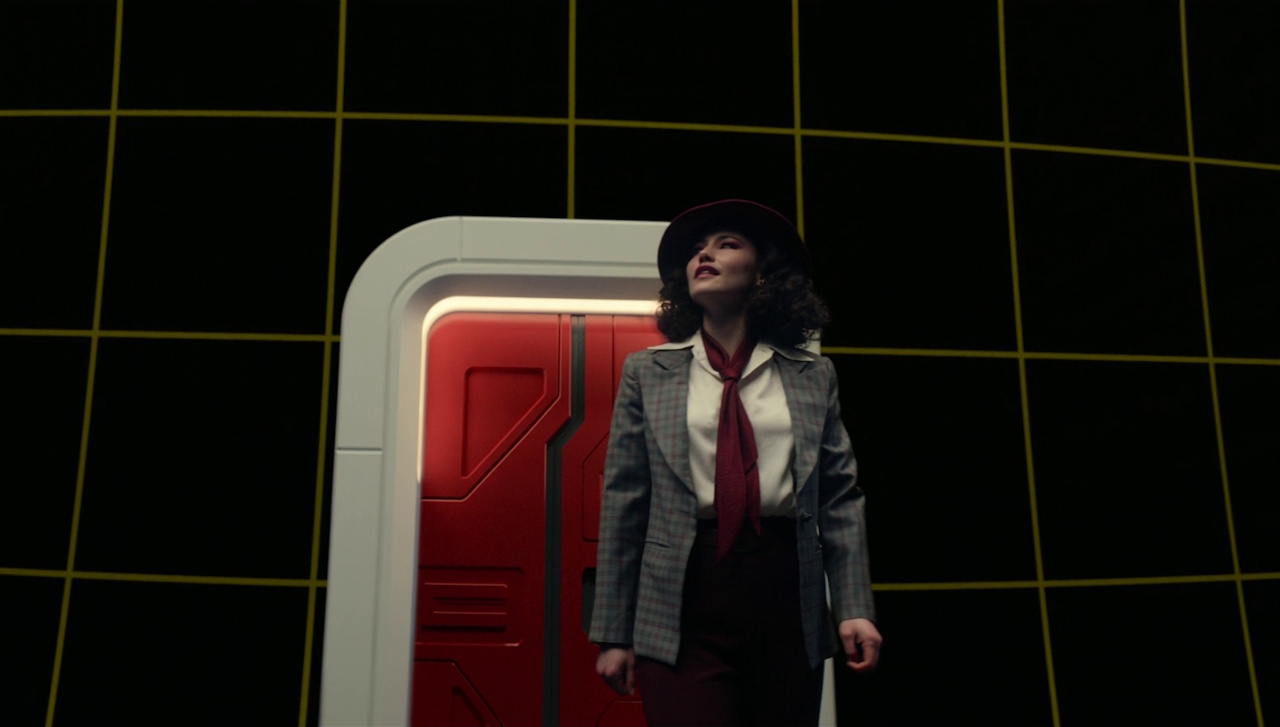
Twelve Star Trek episodes to watch before Picard Season 2 arrives!

Spoiler Warning: There are spoilers ahead for Star Trek: Picard Season 1 and the trailers and teasers for Season 2. Spoilers are also present for the following Star Trek productions: The Original Series Season 1, The Next Generation, Deep Space Nine Season 3, Voyager Seasons 2, 3, and 7, and First Contact.

It seems an age ago that we were eagerly anticipating Season 1 of Star Trek: Picard. In those sunlit, rosy days before the pandemic hit, this website was brand-new, and I spent a lot of time in December 2019 and January 2020 looking ahead and wondering what we’d see when the Star Trek franchise finally returned to the 24th Century – after an eighteen-year wait!

With Season 2 of Picard now only days away, I thought it could be fun to revisit a concept from the early days of the website: a list of episodes that I think could make for interesting background viewing, potentially informing story points and characterisations in the new season of Picard. In the run-up to Season 1 I focused on episodes of The Next Generation that strongly featured Captain Picard himself, as well as a few stories about the Romulans, and a few more stories which could’ve potentially led to big changes in the two decades following the events of Endgame and Nemesis.

We’ll soon be on another adventure with Jean-Luc Picard!

This time, we have a little bit more information to go on! Season 2 will tell a story that involves (to a greater or lesser degree) the following elements: the Borg Queen, Guinan, Q, time travel, and, of course, Admiral Picard himself. On this occasion, then, I thought it could be fun to pull out twelve stories from Star Trek’s past that might just be useful background viewing for Season 2 of Picard. It goes without saying that Season 1 is mandatory viewing, so I’m not putting any of those episodes on this list! You should really watch, or re-watch, all ten before the season kicks off!

My usual caveats apply, as they always do! Firstly, everything listed below is entirely subjective. If I miss out an episode that you think is incredibly important, or you hate all of my picks, that’s okay! We all have different opinions about Star Trek, and there’s no need to fight about it. Secondly, I don’t claim to have any “insider information.” I’m basing my theories and guesses about Season 2 on publicly released material, such as trailers and interviews. And finally, the episodes are not ranked; they’re merely listed below in the order in which they were originally broadcast.

With all of that out of the way, let’s jump into the list!

Number 1:
Tomorrow is Yesterday
The Original Series Season 1 (1967)

I’m pretty sure this violates the Temporal Prime Directive…

Though The City on the Edge of Forever is perhaps the best-known of The Original Series’ time travel stories, Tomorrow is Yesterday preceded it by several months. It was the first episode of the Star Trek franchise where time travel played a major role in the story, and it was also the first in which the crew paid a visit to the modern day. Tomorrow is Yesterday established what went on to become a mainstay in terms of the franchise’s time travel story tropes: being sent back in time by accident!

Aside from being a fun episode in its own right and well worth a watch, Tomorrow is Yesterday is also the episode which introduced the Star Trek franchise to something that appears to be making a return in Picard Season 2: the slingshot method of travelling through time, referred to in this episode as the “light-speed breakaway factor.”

The USS Enterprise using the “light-speed breakaway factor” to travel through time.

Almost every Star Trek series has included the occasional time travel story, and we can look to episodes like Tomorrow is Yesterday for creating that premise. Visiting the modern world would go on to be significant later in The Original Series, in Star Trek IV, and on several other significant occasions in the franchise. For me, some of these stories can feel rather dated, but I think Tomorrow is Yesterday largely avoids that trap!

As we get ready for Picard Season 2 and the franchise’s latest foray into time travel, stepping back to see where it all began during the first season of The Original Series is no bad thing. Tomorrow is Yesterday has a fairly straightforward premise that should be easy enough to follow even for fans who aren’t as familiar with The Original Series, and is well worth a watch on its own merits.

Number 2:
Encounter at Farpoint
The Next Generation Season 1 (1987)

Judge Q.

In the first teaser trailer for Picard Season 2, we heard Q’s voice proclaiming that “the trial never ends.” Encounter at Farpoint is the episode in which Captain Picard first encountered Q, and the episode in which the referenced “trial” began. Q accused humanity (and by extension, the Federation) of being a “dangerous, savage, child-race” who are unfit to travel the stars. Picard and his crew defended themselves against the accusation.

The task Q set for Picard was to unravel the mystery of Farpoint Station, which he and the crew of the Enterprise-D were en route to. However, figuring out the puzzle wasn’t the end of the trial, and even after bringing the Farpoint saga to a successful conclusion, Q departed in ambiguous fashion, hinting that he would return. He did, of course, on a number of occasions!

Worf, Picard, and La Forge on the bridge of the Enterprise-D.

Encounter at Farpoint was the premiere of The Next Generation and established the characters of Picard and Q (as well as many other familiar faces). As we approach Picard Season 2, it’s worth going back to see where it all began. This was the first big puzzle that Q tasked Picard with solving, and seeing how Q operates and what the point of it all is, from his perspective, is well worth taking into consideration.

This is also the beginning of “the trial.” We don’t know to what extent the idea of Picard – and humanity – being on trial will feature in Picard Season 2, but if Q has returned to set up a new mystery there could be a connection – and there could be consequences if Picard and the crew of La Sirena can’t figure it out. Q has toyed with Picard on a number of occasions; Encounter at Farpoint was the first.

Number 3:
Q Who
The Next Generation Season 2 (1989)

Q threw Picard and the Enterprise-D into danger.

Q Who is the episode that introduced us to the Borg – and it’s a pretty scary one by Star Trek’s standards! Captain Picard and the crew of the Enterprise-D have never faced a villain like this, and the Borg represent an existential threat. Q made good on his promise to show Picard that there are dangers in the galaxy that he couldn’t even imagine… and eighteen members of the Enterprise-D’s crew paid the ultimate price.

In a way, Q Who shows Q at his most aggressive, devious, and villainous. By throwing the Enterprise-D into the path of the Borg, he proved his point to Picard about the Federation’s unpreparedness in the most painful way possible. But I don’t believe that’s all there is to the story.

The first Borg seen in Star Trek.

I have a theory about Q Who that you can find by clicking or tapping here. To briefly summarise: Star Trek has made a mess of the history of Borg-Federation contact, and it seems likely that the Borg were already aware of humanity and Earth long before the events of this episode. They may have already been preparing for an attack or assimilation attempt, and Q hoped to prevent that by giving the Federation advance warning.

My theory goes into much more detail! But suffice to say the complicated history of contact between humanity and the Borg makes it seem plausible, at least to me, and shows off an aspect to Q’s character that I think could come into play in Picard Season 2. Q Who also establishes the existence of history between Q and Guinan – something that may come up in Picard Season 2 given that both characters are returning.

Number 4:
Yesterday’s Enterprise
The Next Generation Season 3 (1990)

The Enterprise-C.

Though it’s a fantastic episode in its own right, Yesterday’s Enterprise is on this list for one reason: Guinan. When a rift in the space-time continuum sends the Enterprise-C forward through time, decades’ worth of history are changed, leaving the Federation in a very bleak timeline in which it’s fighting a losing war against the Klingons.

Aboard the warship Enterprise-D, Captain Picard and the rest of the crew are completely oblivious to the change; this version of the characters have only ever known the war timeline. But Guinan alone realises that something has gone wrong, and argues with Captain Picard about how to set things right.

Guinan presents her case to Captain Picard.

Despite a recent controversy, Whoopi Goldberg will be reprising the role of Guinan in Picard Season 2, bringing the character back for the first time since Generations in 1994. Given that we know Season 2 also features a radically changed timeline, not dissimilar to the one seen in Yesterday’s Enterprise, perhaps Guinan will be aware of the change.

Guinan could be the one to talk to Picard about the possible point of divergence, as we know she’d visited Earth in the 19th Century. She may also be one of the only people other than the crew of La Sirena to be aware that something has changed. Guinan also has a history with Q, as we saw in the episode Q Who – so that could also come into play!

Number 5:
Time’s Arrow Parts I-II
The Next Generation Seasons 5-6 (1992)

R.I.P. Data…

Guinan also plays a key role in the two-part episode Time’s Arrow. Thanks to time travel, this is the episode where she and Captain Picard actually have their first meeting, and although the nature of their relationship is still shrouded in mystery, we get a little bit more information about how they came to meet in the first place.

Guinan’s fascination with Earth appears to date back to at least the 19th Century, as she visited undercover during that time period. We know from the most recent Picard Season 2 trailer that Guinan appears to be running a bar on Earth at the dawn of the 25th Century, giving her an association with Earth and humanity that stretches back over five hundred years.

Guinan and Picard in the 19th Century.

Time’s Arrow is an interesting story that mostly focuses on Data, who was of course a huge part of the story of Picard Season 1. It seems as though Brent Spiner will be playing a new role in Season 2 – perhaps another ancestor of the Soong family – so getting a bit of extra data on Data could be worthwhile, too!

One thing I’m personally curious about in Picard Season 2 is if we’ll get any further backstory on the Picard-Guinan relationship. Although Time’s Arrow depicts their first meeting from Guinan’s perspective, we’ve still never learned how they came to meet in the 24th Century from Picard’s point of view. All we know is that it likely happened prior to his assuming command of the Enterprise-D. I don’t know if Picard Season 2 will expand on that in any way… but it would be interesting!

Number 6:
Tapestry
The Next Generation Season 6 (1993)

Q and Picard.

Tapestry is a really interesting episode that deals with the dynamic between Q and Picard, and specifically looks at the nuances present in their relationship. Picard has always viewed Q as an adversary, but I’ve argued in the past that Q doesn’t see himself that way. He views Picard as a friend, and himself as a guide or even an ally – and the way Tapestry unfolds kind of shows why that is.

When Picard is injured on an away mission, he finds himself close to death. At that moment, he encounters Q – who claims he’s already dead. Q gives Picard a chance to avert his death by changing a key event in his past – getting stabbed shortly after graduating from Starfleet Academy – but doing so sets Picard’s life and career on a completely different path.

Lieutenant Picard in an alternate 24th Century.

The important thing here is how Q views the whole affair. We can entertain debates on whether or not Q actually sent Picard back in time or whether it was all an elaborate illusion, but that’s entirely beside the point. Q genuinely believed that he was helping – that by showing Picard an alternate life, he gave him an appreciation for the life he had actually led, even if that meant it was about to end.

I firmly believe that there’s more going on with Q in Season 2 than meets the eye. It’s possible that he didn’t change the timeline at all, and is merely responsible for shielding Picard and the crew of La Sirena from it. It’s also possible that he did change it as part of an elaborate puzzle, one which he hopes and expects that Picard will be able to solve. Speaking of which…

Number 7:
All Good Things…
The Next Generation Season 7 (1994)

Q and Picard in the distant past.

All Good Things is the best example of this aspect of the dynamic between Picard and Q, and could – in theory – be a template for the events of Picard Season 2. In All Good Things, the Q Continuum sets a puzzle for Picard – an eruption of “anti-time.” Thanks to the time-travelling interventions of Q, Picard is able to hop between three different periods of his own past to solve the mystery.

The solution to the anti-time eruption required Picard to challenge his own way of thinking, specifically his linear perception of cause-and-effect. Being able to recognise that events in the future had a causal link to events in the past greatly impressed Q, who seemed to suggest that it was the first step on a path that could one day see humanity evolve into beings comparable to the Q themselves.

Q in his judge’s robes.

All Good Things was also Picard’s last dalliance with Q prior to the events of Picard Season 2. As far as we know at this stage, Q hasn’t been to see Picard in the approximately twenty-five years since the events of All Good Things – but that could change as we get into the new season. It’s possible, at least in my opinion, that Q might’ve been interested to see Picard at his lowest ebb, possibly showing up to see if he could provoke him into action. But we’ll save a detailed explanation of that for my next theory post!

It’s possible that the trailers and teasers for Season 2 have already revealed the nature of Q’s involvement in the story: that he is directly responsible for changing the timeline, he did so on purpose, and he will be the main villain of the season. But I would argue that the “villain” monicker does not fit with Q’s past characterisation, and thus I suspect that there’s much more going on than meets the eye. All Good Things is both a piece of evidence in favour of that argument, as well as a potential blueprint for how a time travel puzzle set by Q could unfold.

Number 8:
Past Tense, Parts I-II
Deep Space Nine Season 3 (1995)

Dr Bashir and Commander Sisko.

We know, thanks to a voiceover in the most recent trailer, that at least some of the events of Picard Season 2 take place in the year 2024. But Picard Season 2 isn’t the first Star Trek production to visit that specific year! In Deep Space Nine’s third season, Commander Sisko and the crew of the USS Defiant found themselves accidentally sent back in time to the exact same year.

Past Tense is an interesting story, as it will mark the first time that any episode of Star Trek set in “the future” at the time it was broadcast will be reached, and I’m sure I won’t be alone in doing a full write-up of its story when we hit the end of August 2024! We could talk for hours about how its depressing presentation of the 2020s seemed a long way from reality once upon a time, but with the growth of homelessness and other economic issues, today’s society feels far too close for comfort to the world of the Bell Riots.

The USS Defiant in orbit over Earth.

I’m not sure how much of Deep Space Nine’s presentation of a fictionalised 2024 will make it into Picard Season 2. It’s possible that the new series will entirely ignore this two-part episode… but I think we should keep an eye open for references or callbacks to some of the characters, events, or even things like brands and products.

Regardless, this will be the first time that two very different Star Trek productions have travelled back in time to the same year, and it might be interesting and informative to take a look at Past Tense to see how Deep Space Nine told us that the year would unfold. It seems as though Picard Season 2 will be set, in part, in California – which is also where Past Tense was set, so that’s another point of connection. I’m not expecting a huge crossover with this one single Deep Space Nine story, but there could easily be references made to it.

Number 9:
Death Wish
Voyager Season 2 (1996)

Two Qs?!

Captain Picard wasn’t the only Starfleet officer to tangle with Q. After making a sole appearance in Deep Space Nine, Q hopped over to the Delta Quadrant, where he had several run-ins with Captain Janeway during Voyager’s journey home. Q presented a bit of a puzzle for Voyager; his abilities mean that he could have sent the ship and crew back to Earth with a snap of his fingers. But if we can look beyond that narrative hurdle, Q’s appearances in Voyager added a lot to his characterisation.

In Death Wish, we got our best look to date at the Q Continuum itself. Depicted in a manner that humans could comprehend, the Continuum resembled a rather dilapidated roadside house in the middle of the desert. For the first time, we got to see more members of the Q Continuum as well, and got a glimpse of how Q himself is a bit of a radical by the standards of his people.

Captain Janeway and Tuvok visit the Q Continuum.

The idea that the Q Continuum is not an entirely stable, homogeneous place is an interesting one, and was explored in more detail in the episode The Q and the Grey. But Death Wish also presented a very complex moral question – in the longstanding tradition of Star Trek! This episode can be a difficult watch for some folks because of its discussion of suicide, and it’s absolutely fine to skip it if that subject hits too close to home. If the debate around suicide and end-of-life care is something you’re interested in, though, this is a uniquely “Star Trek” attempt to tackle it.

Q emerges from this story as a reformer – or even a radical – by the standards of his people. We also know, thanks to a line in All Good Things, that he was responsible for assisting Picard when the Continuum set the anti-time puzzle. It’s stories like this that make me think that there’s a goodness in Q; that he isn’t just a trickster or a pure villain.

Number 10:
Future’s End, Parts I-II
Voyager Season 3 (1996)

Chakotay, Janeway, Tuvok, and Paris on Earth.

The two-part time travel story Future’s End sees Captain Janeway and the crew of the USS Voyager sent back in time to Earth, circa 1996. It’s another story set in the California area, and I think it’s an interesting episode – albeit one that I feel has become very dated by Star Trek standards!

If Picard Season 2 sticks with things like the Borg and the slingshot method, it seems that the kind of time travel depicted in Future’s End won’t be a factor. But there are still interesting points to consider, such as the Temporal Prime Directive and how Starfleet in the future would come to police the timeline, watching out for changes.

It’s Los Angeles – where Picard and the crew of La Sirena appear to be headed!

There aren’t a great many Star Trek episodes that visit the modern day, and as I’ve already explained I feel that a modern setting can make such stories feel very out-of-date very quickly. Future’s End definitely falls into this trap; its depiction of Southern California has a very ’90s flavour. But it’s a bit of fun, and dare I say almost a guilty pleasure!

I’m including Future’s End here for its modern day time travel story and its focus on California, both of which are elements that we know will be part of Picard Season 2. As with Past Tense, I don’t expect to see a huge tie-in between the new season and the events of this episode, but there may be smaller callbacks and references to some of the characters and events it depicted.

Number 11:
Star Trek: First Contact
Film (1996)

The Borg Queen.

First Contact introduced us to the Borg Queen for the first time, and went into a lot more detail about Picard’s assimilation experience. The Borg Queen was presented as the embodiment of the Borg rather than their leader, and she became a fearsome adversary for Picard and Data over the course of the story.

Season 1 of Picard saw the retired Admiral face his lingering Borg assimilation trauma when he beamed aboard the Artifact in the episode The Impossible Box, but Season 2 will see him come face to face with a Borg Queen for the first time in twenty-five years. For someone who’s clearly suffering from some form of post-traumatic stress, we don’t know what effect that could have.

Data and Picard lead the battle against the Borg.

Picard was violently anti-Borg in First Contact, and we saw hints of that in Picard Season 1 as well. His conversation with Dr Jurati and Elnor in The Impossible Box, as well as the way he responded to some of the xB’s in later episodes, was in line with his attitude to the Borg in First Contact – and I wonder how encountering a Borg Queen will make him feel!

Many Trekkies hold up First Contact as one of the absolute best Star Trek films, and it’s hard to disagree. As an action-packed work of sci-fi with some truly scary elements thanks to the way the Borg are depicted, it’s an exciting ride from start to finish. It also goes into a little more detail about World War III – an event in the history of the Star Trek timeline that could play a role in Picard Season 2. Check out my full World War III theory by clicking or tapping here!

Number 12:
Endgame
Voyager Season 7 (2001)

Some of Voyager’s crew in an alternate 25th Century future.

Almost five years after First Contact depicted the Borg’s biggest attack on Earth to date, Endgame brought back the Borg Queen in a significant way. The interventions of a time-travelling Admiral Janeway from the future saw the USS Voyager make it home to Earth, and in the process dealt a significant blow to the Borg Collective.

Even though it’s been more than twenty years since Endgame, we don’t actually know what became of the Borg in the aftermath of Admiral Janeway’s attack. I’ve always assumed that the Borg Collective was large enough, clever enough, and adaptable enough to survive the neurolytic pathogen that she introduced into the Borg Queen… but because the Star Trek franchise has yet to return to the Borg post-Endgame, we can’t be certain of that.

Admiral Janeway and the Borg Queen.

Even Season 1 of Picard, which depicted the disabled Borg Cube known as the Artifact, didn’t settle the issue. So it’s an open question at this juncture whether the Collective survived, whether it was significantly damaged by Admiral Janeway’s pathogen, or whether it was able to easily shake off the attack. It seems as though no major Borg activity occurred in Federation space in the twenty-plus years after Endgame, though.

Endgame makes this list because of the Borg Queen’s role in Picard Season 2, and I think it could be very useful background viewing, possibly even setting up a story about the Queen herself or the state of the Borg Collective at the dawn of the 25th Century. On a vaguely related note, I took a deeper look at Admiral Janway’s actions in Endgame, and you can find that article by clicking or tapping here.

So that’s it!

Admiral Picard is coming back in just a few days’ time!

Those are twelve episodes (alright, eleven episodes and a film) that I think might make for useful or interesting viewing prior to Picard Season 2! I think we’ve hit most of the key subjects – at least, those that we’re aware of at this early stage – and got a good mix of stories focusing on Captain Picard, Q, Guinan, time travel, and the Borg Queen.

At the end of the day, though, Star Trek’s past didn’t prove all that important to unravelling the events of Picard Season 1 – nor to recent storylines in Discovery, either. So it’s quite likely, in my view, that Picard Season 2 will bring plenty of brand-new characters and story elements into play. That doesn’t mean it isn’t worth going back to these stories and others, but my suspicion at this stage is that the new story won’t rely excessively on what came before.

When Picard Season 2 arrives at the end of next week, I hope you’ll stay tuned for individual episode reviews, theories, and more. Despite the somewhat underwhelming end to Season 1, Picard Season 2 has been one of my most-anticipated shows for almost two years, and I can’t wait to jump in and have another adventure with Jean-Luc Picard and the crew of La Sirena.

Star Trek: Picard Season 2 will premiere on Paramount+ in the United States on the 3rd of March 2022, and on Amazon Prime Video in the United Kingdom and elsewhere 24 hours later. The Star Trek franchise – including Picard and all other properties mentioned above – is the copyright of Paramount Global. This article contains the thoughts and opinions of one person only and is not intended to cause any offence.
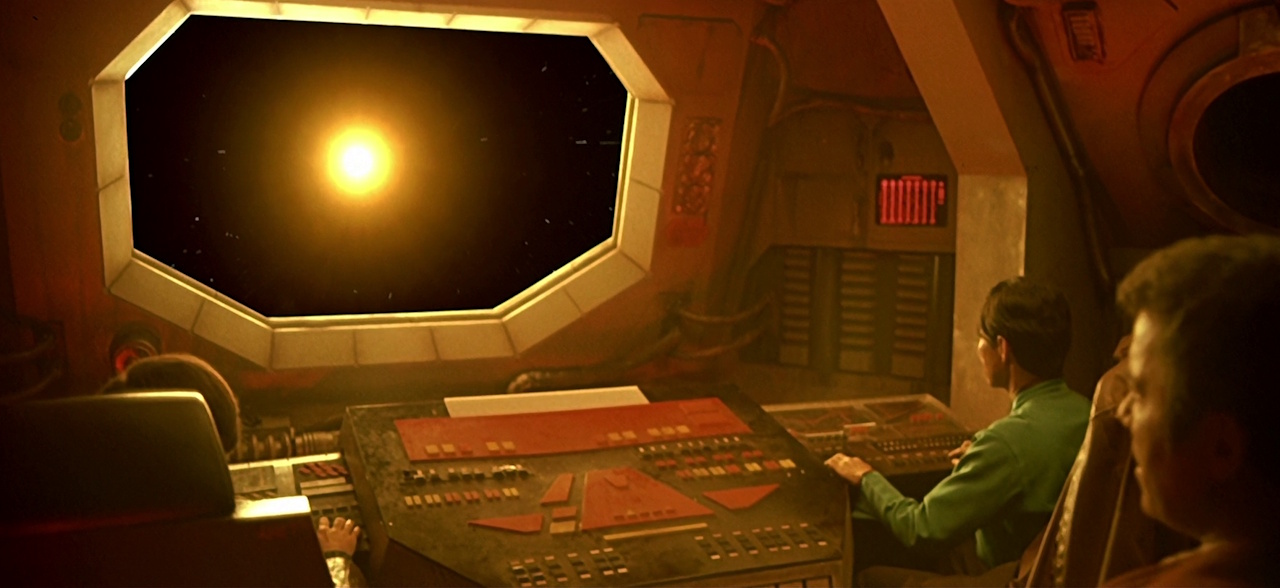
Star Trek: Discovery theories – week 5

Spoiler Warning: There are spoilers ahead for Star Trek: Discovery Seasons 1-4, Star Trek: Picard Season 1, Short Treks, and for other iterations of the Star Trek franchise.

After a couple of weeks where Discovery took character-focused detours, The Examples brought the story right back to the DMA – the dark matter anomaly that’s wreaking havoc across the galaxy. We learned something incredibly significant this week that will most likely have a huge impact on the season’s main storyline… but is everything as it seems?

The biggest question I have right now is about Unknown Species 10-C. Who could they be? And are they a faction we’ve encountered in a past iteration of Star Trek? My heart wants to say they’re someone familiar; that all of the callbacks and references we’ve had in Season 4 so far are building to some kind of big reveal. But my head says “no” – Unknown Species 10-C will turn out to be someone new and unpredictable.

But enough about that for now! We have several theories that were advanced by The Examples this week, as well as one that was debunked and one that was at least partially confirmed. So let’s take a look at those and then get into the main list!

Debunked theory:
Dr Culber will tell Stamets that he needs to slow down.

Stamets and Culber in The Examples.

This one surprised me by being a complete inversion of what I was expecting! After Stamets had seemingly gotten lost in his work, overworking himself desperately trying to figure out the DMA, I felt sure that Dr Culber would have something to say. In Choose To Live, Stamets missed out on Gray’s incorporation, and wasn’t there to support Adira. In All Is Possible, he missed out on talking with Tilly before she left the ship.

I felt that Stamets perhaps needed someone – particularly the man he loves – to intervene and warn him about the dangers of overworking and the family moments he’s been missing. Instead it was Stamets who helped Dr Culber: Discovery’s doctor has been throwing himself into his work, too, neglecting his own mental health for the sake of his patients. It was a neat reversal of a storyline I was expecting – and I think we’ll see more in this vein from Stamets and Culber before the end of the season.

Confirmed theory:
The DMA is a super-weapon.

The moment at which the DMA’s artificial nature was confirmed.

Though it was arguably a conclusion that was arrived at too quickly near the beginning of The Examples, Stamets and Captain Burnham confirmed – thanks to some help from Zora – that the DMA is not a natural phenomenon. Though a natural disaster would have been an interesting story in itself, this always felt like the direction of travel for Discovery, so I wasn’t exactly stunned to learn this!

At present, Captain Burnham and Starfleet are working on the assumption that the DMA is a super-weapon – something I’d been predicting ever since we first heard that some kind of anomaly was going to be a major part of Season 4. Right now, that seems like a logical assumption – and it may very well be true. But as we’ll discuss in a moment, even though the assumption right now is that the DMA is a super-weapon, that may not actually prove to be the case. I can think of several ways in which the DMA could be artificial yet not a weapon! But for now, since Captain Burnham, Admiral Vance, and everyone else on the show are content to assume it’s a super-weapon of some kind, I’m calling this theory confirmed!

So those theories were debunked and confirmed.

Now we’ll get into the main list, beginning with the theories that are either brand-new or which saw significant movement in The Examples.

Theory #1:
The story will connect with the Short Treks episode Calypso.

The USS Discovery in Calypso.

This week we got a few lines from Zora – the USS Discovery’s shipboard AI that we first met in Calypso. Zora was involved in confirming the DMA’s artificial nature, but later in the episode we got something far more significant thanks to a short conversation with Captain Burnham: Zora has begun to experience emotions.

In Calypso, Zora was definitely an emotional life-form, so this evolution in their (her?) personality is a significant step toward Calypso – and one that I hadn’t really considered until after it had happened. Until now, the Zora aboard the USS Discovery had been different from the Zora we’d met in Calypso, but after this week’s episode we’re a big step closer to reconciling the two presentations of the character.

There are still significant hurdles to overcome if the story of Calypso is to be wrapped up in Season 4, though. Obviously we have the timeframe issue: will the USS Discovery be sent back in time, be abandoned, or is Calypso taking place centuries in the future? Then we have the USS Discovery itself – it’s been retrofitted since arriving in the 32nd Century, and now looks very different to how it did in Calypso. Despite all that, however, a connection is one step closer today than it was last week.

Theory #2:
Zora will go rogue.

Zora.

Sticking with Zora, their newfound emotions are a very interesting – and somewhat alarming – addition to the season’s storyline. When Data first installed his emotion chip in Generations, he found the new emotions overwhelming and impossible to cope with at first – could something similar be about to happen to Zora? Will they fail the crew at a key moment? Even worse, might Zora go rogue and become a villain?

The dangerous nature of artificial intelligence has been a theme Star Trek has returned to time and again since The Original Series episode The Ultimate Computer all the way back in 1968. But recent iterations of Star Trek in particular have used narratives involving evil or out-of-control AIs and synthetic life several times: there were the rogue synths and the super-synths in Star Trek: Picard’s first season, and in Discovery’s second season we had the Control AI.

Zora told Captain Burnham of a “recent development” in The Examples.

Captain Burnham seemed concerned at Zora’s newfound emotions, but had other things on her mind so didn’t have time to deal with it then and there. What might be even more concerning, though, is the fact that Zora chose to conceal that fact for a time, choosing not to share their most recent evolution.

Perhaps a storyline like this would feel repetitive coming after Season 2 had to deal with Control. But I think it could be made to work, and it could even be made to fit in with Calypso with a bit of creative writing! Whether this theory comes to pass or not, though, I think we’re going to see something significant from Zora before the end of Season 4.

Theory #3:
The DMA isn’t a super-weapon.

The DMA as seen in Anomaly.

Okay, I know! I just said that the DMA is a super-weapon and patted myself on the back for successfully predicting that story beat months ago! But here’s the thing… the DMA being artificial in nature doesn’t mean that it’s a weapon, despite the assumptions made by Captain Burnham, Admiral Vance, and others.

The DMA could be an out-of-control experiment, perhaps something designed to allow faster-than-light travel without the need for dilithium. Stamets and Ruon Tarka suspect that it possesses the technology to create a synthetic wormhole, something that could be very useful for travelling in a dilithium-poor galaxy.

An accident or an experiment gone wrong would set up a very different kind of story to a super-weapon, one that would replace a villainous adversary with a puzzle of a scientific nature. That could be a fun and interesting way for the season to go – not to mention that it would be subversive and challenging to the audience’s expectations.

Theory #4:
The DMA is a life-form.

The USS Enterprise and V’Ger in The Motion Picture.

The DMA could also turn out to be a life-form in its own right, perhaps a synthetic one or something akin to The Motion Picture’s V’Ger. If that were the case it may not be attacking anyone, but simply exploring or trying to make contact. After all, “they were only trying to communicate” has become a Star Trek trope at this point!

Star Trek has shown us many different forms of synthetic life over the years, and while the DMA would certainly be one of the most unusual, it wouldn’t be entirely without precedent. Seeking out new life is at the very core of Starfleet’s mission, and finding a way to communicate with the DMA and figure out what it wants or needs could be a very interesting story – one about understanding and bridging the chasm between different cultures and societies that Star Trek has always done so well.

Theory #5:
Unknown Species 10-C is a faction from a past iteration of Star Trek.

Could the Borg have built the DMA?

Regardless of the intention behind the DMA, it does indeed appear to be an artificial construct. Whoever created it had a reason for doing so, even if that reason isn’t clear right now! But who could be responsible?

I recently put together a list of suspects, and I strongly encourage you to check out the full list by clicking or tapping here.

If you don’t have time for that, here’s the condensed version: the Borg, the Sphere-Builders from Enterprise, the super-synths from Picard Season 1, the Kelvan Empire, Section 31, and Species 8472 are just some of the possible culprits. For a more detailed version, check out the full list linked above.

Theory #6:
President Rillak knows what the DMA is and may be responsible for its creation.

President Rillak in Kobayashi Maru.

We didn’t see President Rillak this week, though she was briefly mentioned by Admiral Vance. But when I think about the possible suspects for creating the DMA, the Federation – and by extension, President Rillak – are unquestionably on that list.

President Rillak is a cunning, almost Machiavellian politician, willing to do anything to advance what she considers to be the best interests of the Federation. I believe Captain Burnham needs to be very careful with President Rillak. During the events of All Is Possible, working with Captain Burnham was advantageous to the Federation’s president – but I have no doubt that she’d throw Burnham and the USS Discovery under the bus without so much as blinking if she believed it would be to her advantage. Which brings us to the DMA.

President Rillak might know more about the DMA than she’s currently letting on. If the Federation had created a weapon like this, or if it was an experiment gone wrong, covering it up might be her objective even if she wasn’t necessarily the one who ordered the DMA’s creation. Also, with the goal of reuniting the Federation foremost in her mind, President Rillak may prove to be the sort of uncompromising politician who’d willingly unleash destruction upon the galaxy if she believed that doing so would serve a greater purpose.

Theory #7:
Dr Kovich is an agent (or the head) of Section 31.

Dr Kovich in The Examples.

I freely admit that this theory is barely clinging on right now, but I don’t believe it’s been completely disproven just yet! The questions of who Dr Kovich is and what exactly his role is within Starfleet and/or the Federation have no clear answer right now. He’s clearly someone with power and influence, as we’ve seen him working with Admiral Vance and seemingly being able to appoint anyone he chooses to be an instructor at Starfleet Academy. Yet he also seems to have some medical training, serving as a psychologist or counsellor – and it’s in this capacity that we saw him this week.

Because of the unclear nature of his role and the mysterious, stoic presentation from David Cronenberg, Dr Kovich is still an enigma. He’s also the kind of man who could potentially be an agent of Section 31. If it turns out that the Federation, President Rillak, and/or Section 31 are involved with the DMA, perhaps we’ll learn that Dr Kovich is as well. Or perhaps such a storyline will finally put this theory to bed once and for all!

Theory #8:
Captain Burnham and/or the Red Angel suits from Season 2 are connected to the DMA.

Captain Burnham in Anomaly.

Now that we know the DMA is artificial in nature, the question shifts to who built it and why. We’ve covered the idea of it being a weapon or an out-of-control experiment, as well as being a life-form in its own right. It could also be the responsibility of Section 31 or the Federation. But because this is Star Trek: Discovery, a show which likes to put Captain Burnham at the centre of its stories, perhaps there’s a connection to her that we’re missing.

The Red Angel time travel suits from Season 2 were phenomenally powerful machines, capable of generating time-wormholes large enough to transport an entire starship 930 years into the future. We already know that the DMA potentially contains a synthetic wormhole, so it wouldn’t be a huge leap to connect the two. We also don’t know for certain what became of Captain Burnham’s Red Angel suit after the Season 3 premiere. There’s also the faint possibility of a parallel universe Burnham or time travelling Burnham being responsible.

Theory #9:
Stamets and Ruon Tarka will create the DMA.

Stamets, Tarka, and Saru with the DMA model.

I included Stamets and Tarka on my list of suspects a couple of days ago, but they warrant a full entry on the theory list too! In short, we saw Stamets and Ruon Tarka creating a scale model of the DMA in The Examples, and according to Reno their experiment came very close to destroying the entire ship. They were able to perfectly recreate the device at the centre of the DMA, albeit on a smaller scale – so what’s to prevent them from building a full-scale replica?

This theory suggests that they will – somehow – and that doing so will set into motion a chain of events that leads to the creation of the DMA in a kind of time-loop storyline. The DMA’s wormhole-generating technology may give it the ability to travel backwards through time as well as across vast distances, so it seems technologically plausible at the very least.

Tarka and Stamets working on their model.

Ruon Tarka was shown as impatient in The Examples, and in his single-minded pursuit of the DMA he may be willing to take risks – perhaps risks which ultimately lead to the creation of the very anomaly he’s been investigating. How such a story would conclude is up in the air, but I don’t think we can rule it out as a possibility right now.

Personally, I find time-loop paradox storylines to be frustrating – and they can be very difficult to pull off successfully. There’s no beginning point to such a story: the DMA exists because the DMA was created because the DMA exists because the DMA was created… it’s an infinite loop. But we’ve seen Discovery tackle time travel stories like this before – and the pieces seem to be in play right now for this story.

So those theories are new or saw movement this week.

As always, I like to keep all of my theories in one place. So up next we’ll recap all of the other Season 4 theories that are currently in play. I find it helpful to keep the full list going like this – it makes it easier to keep track of all of the theories as they get confirmed or debunked.

Theory #10:
We haven’t seen the last of the Abronians.

I currently have four ideas for different ways that the Abronians – the non-humanoid race that Captain Burnham, Tilly, and the Qowat Milat helped save from cryo-sleep in the episode Choose To Live – could play a further role in Season 4.

Theory #10a:
The Abronians’ homeworld was destroyed by the DMA.

Captain Burnham believes this image depicts a “supernova.”

After arriving at the Abronians’ cryo-ship, Captain Burnham found a stone carving that seemed to depict the destruction of the Abronians’ homeworld. This carving was only shown on screen briefly, but it seemed to show the planet being damaged or destroyed in a large explosion. Burnham credited the planet’s destruction to a “supernova,” and the story then raced ahead.

Considering that the main thrust of the season so far has been about the DMA, perhaps Burnham was incorrect: the Abronian homeworld was destroyed by the anomaly, not a supernova.

Theory #10b:
The Abronians’ homeworld was on the “other side” of the DMA.

Abronian stasis pods.

One clip in the second Season 4 trailer appeared to show Captain Burnham leading the USS Discovery inside the DMA. We don’t yet know what that means, nor to what extent words like “inside” the anomaly or “the other side” of the anomaly are even coherent concepts. But many times in past iterations of Star Trek we’ve seen things like wormholes and gateways to parallel universes. Perhaps the anomaly is something similar – and passing through it leads to a different dimension, parallel reality, or just a faraway region of space.

One thing struck me as odd about the Abronians: the Federation was entirely unaware of them, despite the Abronian cryo-ship being relatively close to Federation space – such that Captain Burnham could reach it using Book’s ship in a short span of time. It’s possible that the Abronians had been asleep for millennia, unnoticed by the Federation and the wider galaxy for all that time. But it’s also at least possible that their cryo-ship is a newcomer to the area. If so, perhaps it arrived here via the DMA.

Theory #10c:
The Abronians will return to help the Federation later in the season.

A deceased Abronian.

One of the themes of Discovery since Season 3 has been connection, including building connections between the Federation and other races and organisations. The Abronians were awoken from cryo-sleep thanks to the interventions of Captain Burnham and Tilly – at least in part – and they may seek to repay the Federation, or Captain Burnham personally, for that help.

We saw this play out last season with Ni’Var; in the season finale Ni’Var ships raced to the Federation’s aid as the Emerald Chain attacked. Perhaps the Abronians will likewise step up to help when the Federation needs allies.

Theory #10d:
The Abronians’ moon-ship may be useful in a later story.

“That’s no moon…”

At this stage I can’t envision precisely what use Captain Burnham and the crew might have for a moon-sized starship… but that doesn’t mean such a need won’t arise! The Abronians’ cryo-ship is huge, and at least superficially seems to have the mass of a moon or small planetoid. If Captain Burnham and the crew needed something that large for some purpose, perhaps they’ll return and either take it or negotiate for it.

As we saw in Choose To Live, the moon-ship was in full working order. All it needed was some extra dilithium to power up and it was perfectly capable of moving under its own power, and its computer systems were still functional. The only system that seemed to have failed was the wake-up timer! So if – for reasons yet unknown – the crew need a huge starship, perhaps we won’t have seen the last of the moon-ship.

Theory #11:
Book will find Kyheem and Leto inside the DMA.

Book and Kyheem in Season 3.

In Star Trek: Generations, Captain Picard encountered Captain Kirk inside the Nexus – despite Kirk being declared “dead” after the Enterprise-B encountered the energy ribbon almost eighty years earlier. We don’t know what the DMA is yet; one of my very early pre-season theories involved the Nexus, but that seems to be debunked already! However, the anomaly’s mysterious nature raises the faint possibility that at least some of those it appears to have “killed” may not be as dead as they first appear.

This theory is, I freely admit, a bit of a long-shot. And it hinges on a fundamental question underlying the story of the season: is there more to the DMA than meets the eye? If the anomaly is just an extreme example of space weather, flitting through Federation space destroying anything unfortunate enough to be in its way, then probably everyone on Kwejian is dead. But if the anomaly harbours some kind of gateway, wormhole, portal, time vortex, or any of the other Star Trek-y technobabble phenomena that we’ve seen across the franchise’s history, then it’s possible that at least some of the folks on Kwejian found themselves transported to whatever realm lies inside of the anomaly.

Theory #12:
Saru will be given the captaincy of the USS Voyager-J.

The USS Voyager-J.

Saru’s future was briefly discussed before he offered to serve as Captain Burnham’s first officer in the episode Anomaly. He has already been offered a command of his own, so Starfleet clearly values his command abilities and experience. President Rillak was seen to be assessing Captain Burnham’s suitability for the captaincy of the USS Voyager-J in Kobayashi Maru… and she mentioned having a shortlist of candidates. Could Saru be on her list?

Several of the qualities that President Rillak said she was looking for in a potential captain seem to apply to Saru. He’s more level-headed, less likely to put himself in a dangerous situation, and more inclined to think of the big picture. He has a weakness when it comes to Kaminar, as we saw toward the end of Season 3, but generally speaking he isn’t someone who lets his emotions get the better of him. His wisdom and calm demeanour could be valuable in the captain’s chair of the Federation flagship. This could also set the stage for his departure from the show, or possibly even for a new show following his adventures aboard his new ship.

Theory #13:
A major character will be killed.

A Starfleet coffin seen in Deep Space Nine.

Season 3 saw a couple of major departures: Mirror Georgiou entered the Guardian of Forever’s portal, and Nhan remained behind aboard the USS Tikhov. Yet despite the dangers the crew faced as they navigated the 32nd Century, battled the Emerald Chain, and figured out the mysteries of the Burn and the Verubin Nebula, only one ally – Ryn – lost their life.

Killing off a character can be an excellent way to communicate the stakes involved if it happens at a relatively early stage. It can also be a storyline that brings a lot of emotion, as we have to say goodbye to a beloved member of the crew.

Spock’s funeral in The Wrath of Khan.

In short, I think there are plenty of reasons on the production side why killing off a major character could make sense in Season 4. Though we’ve already had one departure this season – that of Lieutenant Tilly – I still believe that Discovery could very easily go down this road, especially considering how dangerous the DMA currently is.

For a breakdown of which characters I thought might be in danger before the season premiered, check out my list of “death predictions” by clicking or tapping here.

Theory #14:
There will be a character crossover from a past iteration of Star Trek.

Soji could potentially still be alive in the 32nd Century.

This theory returns from Season 3, where I doggedly clung to it for the entire season!

Discovery’s 32nd Century setting has shot Captain Burnham and the crew far beyond anything in Star Trek’s established canon, and that should mean that practically everyone we remember from other Star Trek shows won’t be around any longer. But this is Star Trek – with some creatively-written technobabble, practically any major character could have survived all the way through to the 32nd Century!

There were several great crossovers during The Next Generation era.

It’s also possible for Captain Burnham to discover the logs of a long-dead officer; someone we as the audience would be familiar with. While this would be less of a “crossover” than if a character from the past could be physically present, it would still be a lot of fun to see!

There are a handful of characters who could have survived to the 32nd Century based on what we know about them from past iterations of the franchise. Included in this category would be people like Soji, Voyager’s Doctor, and a few others. But as we’ve seen in episodes like Relics and even the film Generations, all it would take to make a big crossover happen is some kind of temporal anomaly, stasis field, or other technobabble!

Theory #15:
Michael Burnham won’t remain captain of Discovery.

Burnham in the captain’s chair.

This is a controversial one, so let me just say up front that I’m neither in favour of this theory nor opposed to it – I just think it’s a possibility. As things stand, Discovery has had four different captains across its four seasons. One of the show’s unique points of interest within Star Trek’s broader canon are the very different ways in which these individual captains commanded the ship and crew.

It’s got to be considered at least a possibility, then, that the show will continue this trend. This doesn’t mean Captain Burnham will be killed off; I’d actually argue she’s pretty safe. But there are many different routes to her potentially leaving the ship, such as a desire for freedom that we saw in Season 3, or even perhaps taking up a new, more senior role within Starfleet.

Captain Burnham in The Examples.

If this theory were to come to pass, it would be something I’d expect to see at the very end of the season. Even if Burnham seems 100% committed to her new role as captain, I don’t think it’s a theory we can definitively rule out.

It’s worth mentioning that at time of writing Discovery hasn’t been officially renewed for a fifth season – so all this talk of who’ll be in the captain’s chair by then could be moot! And of course this theory has a very strong counter-argument: that Discovery’s main story arc across its first three seasons can be read as Burnham’s ascent to the captain’s chair.

Theory #16:
The ban on time travel will be explained in more detail.

HMS Bounty was able to travel back in time.

This one is a hope as much as a theory right now! In short, the ban on time travel was introduced early in Season 3 primarily as a way for the writers and producers to avoid questions about why the 32nd Century was so different from how the far future had been depicted in earlier Star Trek productions, as well as to explain things like how the Burn was able to catch the Federation off-guard and why Georgiou couldn’t simply be sent back in time when she needed to.

But the ban itself raises some issues – the biggest one being the lack of detail on how it works and how something like this could possibly be enforced. As I said several times last season, it isn’t possible to just un-invent a technology so useful and powerful as time travel. Even just a few lines of dialogue going into a little more detail on the mechanisms involved in the ban would be really useful.

Theory #17:
The Federation has flouted the ban on time travel.

President Rillak may have tried to circumvent the ban if she felt doing so would be in the Federation’s interest.

Sticking with the time travel ban, another theory I had last season was that the Federation – and Section 31 in particular – might have deliberately flouted the ban and failed to abide by the rules. Someone as straight-laced and committed to Starfleet ideals as Admiral Vance is highly unlikely to have sanctioned such a move, but someone like the shadowy Kovich might have. President Rillak could also be involved.

Obviously the bulk of the season’s story will deal with the DMA. But there’s scope to either talk about the time travel ban in a standalone episode or even tie the two stories together – perhaps the anomaly has been unleashed as a result of unsanctioned time travel.

Theory #18:
The crew will have to defend the Verubin Nebula.

The dilithium planet is vital to the Federation.

The Federation is still in a weakened state, nowhere near as powerful as it once was. The Verubin Nebula is thus a very tempting target for anyone looking to gain an edge in a galaxy where dilithium is still in short supply. As the only known significant dilithium supply, whoever controls the Verubin Nebula will have a massive tactical advantage.

We can compare the Verubin Nebula to Deep Space Nine’s Bajoran wormhole in that respect – it’s a resource of huge strategic importance. Season 3 didn’t show us much about the makeup of the galaxy’s factions outside of the rump Federation and the Emerald Chain, but it’s got to be possible that factions like the Dominion, Klingon Empire, or even the Borg still exist and would want to seize the Verubin Nebula for themselves.

Another view of the planet in the Verubin Nebula.

Season 4 has presented Captain Burnham and the crew with a scientific puzzle: the DMA. But that doesn’t mean there won’t be villains in play, and Discovery has introduced us to several compelling and interesting villains over its first three seasons.

To make a long theory short, it would begin to stretch credulity to think that everyone in the known galaxy would see the Federation rebuilding and having access to dilithium and not want to find out for themselves what’s going on. Once the Verubin Nebula’s existence becomes known, even if the Federation promises to share its bounty with all comers, it seems very likely that someone would want to take control of the dilithium supply for themselves.

Theory #19:
Captain Burnham and the crew will encounter the Klingons.

General Martok, a 24th Century Klingon leader.

By the late 24th Century the Federation and Klingons were firm friends, having been allied for a century and after fighting side-by-side against the Dominion. We don’t know if that alliance endured to the 32nd Century, but it’s certainly plausible to think that it did. The Klingons might even have joined the Federation at some point, and their violent warrior culture may have been significantly pacified.

One thing that could be very interesting to see is how the crew of the USS Discovery – almost all of whom are veterans of the Federation-Klingon war – would respond to that. They’ve worked alongside Klingons like L’Rell before, but many of them still see the Klingons as an old enemy. The story of overcoming that prejudice could mirror episodes like The Wounded from The Next Generation, and would be very interesting to see.

Theory #20:
Some areas of the galaxy – such as the Delta Quadrant – avoided the worst effects of the Burn.

Stamets with a holographic galaxy map in The Examples.

Season 4 touched briefly on the Burn with Su’Kal and Saru in Kobayashi Maru, and may now seek to put last season’s story to bed so it can wrangle with the DMA instead. But one thing I’d be curious to see is the true extent of the disaster – did it reach all four quadrants of the galaxy equally, or did its effects fade out after a certain point? Michael Burnham discovered that the Burn had a point of origin, and that it radiated out from that point like ripples on the surface of water. Ripples eventually diminish, fading away the further they travel, and perhaps that’s true of the Burn as well. There could be whole areas of the galaxy that didn’t even notice the Burn – and maybe the ship and crew will visit one such region.

If the Delta Quadrant was left largely unscathed, for example, what might that mean for the likes of the Borg? It’s possible they aren’t even still around in the 32nd Century, but it’s also possible that they’ve had more than a century to expand and build up their forces while the Federation suffered. To see a full write-up of this theory, click or tap here.

Theory #21:
The Guardian of Forever will be back.

The Guardian of Forever first appeared in The Original Series.

Having reintroduced the Guardian of Forever in Season 3, I wouldn’t be at all surprised to see Discovery return to the Guardian’s planet in Season 4. The DMA is something new and threatening, so it’s possible Captain Burnham might want to ask the Guardian for help or information.

The Guardian of Forever is also the only way we know of at present to travel through time – something that might be necessary if Season 4 makes an attempt to link up with Calypso in a big way. There are many reasons why Captain Burnham might want to revisit the Guardian, and it would be great to bring back actor Paul Guilfoyle, who played the Guardian’s humanoid avatar in Season 3.

So that’s the main theory list.

We also have two production-side theories in play, and I’ll recap those now.

Production-side theory #1:
Tilly’s departure will be permanent.

Tilly’s departure feels permanent.

Mary Wiseman confirmed in an interview with Wil Wheaton on The Ready Room (Discovery’s social media aftershow) that Tilly will be seen again before the end of Season 4. But that doesn’t mean she will be a main character on the show going forward, and her departure feels permanent. Despite that, I’ve seen quite a lot of folks online who don’t believe that Tilly is actually leaving the series – so I wanted to put it out there officially and say that, in my opinion anyway, she is.

Maybe those people know something that I don’t! As I always say, I don’t have any “insider information;” all of this is just speculation on my part. However, I feel that the manner of Tilly’s departure, the fact that she got that emotional sequence with Captain Burnham, a montage showing her leaving the ship, Adira seeming to take over several of her roles, and her departure feeling like the culmination of her arc going back to the latter part of Season 3 all come together to strongly indicate that she won’t be back as a major character. She may yet have a significant role to play in a future Season 4 episode, as has been suggested, but unless Discovery’s writers are really playing with our emotions I believe we’ve seen Tilly’s end as a main character on the show. She may come back in a future Starfleet Academy series, though… so watch this space!

Production-side theory #2:
Star Trek: Discovery isn’t going to be renewed for Season 5.

Is a fifth season going to happen?

Since Discovery debuted in 2017, we’ve known by this point in the season that the show has been renewed. This isn’t one of those “I hate new Star Trek” things that we’ve seen doing the rounds online for years; I adore Discovery and genuinely want to see it continue. But it’s profoundly odd to be nearing the halfway point of Season 4 and to still have had no announcement about Season 5. For comparison, Star Trek: Picard has been renewed for Season 3 even though Season 2 won’t air until next year!

I’m hopeful that this is just a blip; a temporary delay for reasons unknown, and that the show has been renewed for Season 5 already behind-the-scenes. However, when we look back at Star Trek productions in recent years, it was often apparent that production work was quietly ongoing even if there hadn’t been any official word from ViacomCBS. As far as we know at this stage, there’s been no pre-production work on Season 5, let alone any filming taking place in the Toronto area.

Once again this is a “watch this space” kind of theory. I hope I’m wrong… but the lack of any news or even any significant rumours about the show’s future is beginning to have me worried.

So that’s it.

What adventure awaits the crew later this week?

Those are all of the theories that are currently in play as we await Stormy Weather – the sixth episode of Season 4. We’re accumulating quite a few theories, some of which completely contradict one another! So far, Discovery’s fourth season has been an interesting journey. We’ve has some slower character moments, some semi-episodic stories (that may yet come back into play), and some interesting developments in regards to the DMA. As we near the halfway point of the season, there are still many different ways that the story could go.

Stormy Weather looks like it’ll bring back Grudge – I hope the cute little ball of fluff will be okay! A dark matter anomaly is no place for a puss!

Before we go, one final point. I write up these theories because I like Star Trek and I like writing. But for some folks, fan theories can hamper their enjoyment of a film or television show. It’s worth keeping in mind that most of these theories probably won’t pan out, and we have to be prepared for the fact that even the most well-constructed fan theory, no matter how fun and plausible it seems, simply won’t turn out to be true. If you find that speculating and reading theories is beginning to detract from your enjoyment of Star Trek: Discovery – or any other television show or film – it might be a good idea to take a break for a while.

Star Trek: Discovery Season 4 is available to stream now on Paramount+ in the United States, Scandinavia, Latin America, and Australia. The show is on Pluto TV in the UK, France, Germany, Italy, and other parts of Western Europe at 9pm on Fridays and Saturdays. Individual episodes or the full season can be purchased on iTunes, Amazon Video, and possibly other platforms in the UK, parts of Europe, and select other countries. The Star Trek franchise – including Discovery and all other properties mentioned above – is the copyright of ViacomCBS. This article contains the thoughts and opinions of one person only and is not intended to cause any offence.
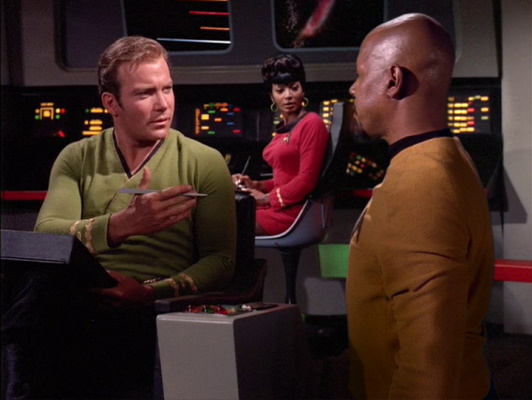
Star Trek: Discovery Season 2 theory: The abandoned Borg origin story

Spoiler Warning: There are spoilers ahead for Star Trek: Discovery Seasons 1-3. Spoilers are also present for the following Star Trek productions: Picard Season 1, Lower Decks Season 2, First Contact, and The Next Generation.

While Star Trek: Discovery’s second season was running I wasn’t writing about the show; it wasn’t until November 2019 that I founded this website. Because of that I have a number of theories and ideas kicking around from the first two seasons of Discovery that I haven’t found time to talk about yet! On this occasion we’re going to look into one idea I had during Season 2 that has both in-universe and production-side elements to it – the “Borg origin story.”

I know for a fact that I’m not alone in having speculated that Discovery Season 2 was setting up an origin story for the Borg. Shortly after the season ended a friend of mine from way back was in the area for a visit, and we got talking about precisely this subject – yes, we’re both huge geeks! I’m also well aware that other fans have posited some variant or other of this theory online both during and after the season’s run, so please don’t interpret this article as me claiming to have independently and uniquely come up with this idea!

We’re revisiting Season 2 on this occasion!

Here’s the theory in brief: the Control AI, which was the main adversary during the story of Season 2, was originally intended to be the progenitor of the Borg. Its use of nano-technology, its ability to “assimilate” organic beings, and its murderous quest for true sentience that, if left unchecked, would have wiped out all sentient life in the galaxy are all indicators of this. In addition, the inclusion of time travel and the Red Angel suits in the story could have teed up a situation where Control was able to travel backwards through time and far across the galaxy in order to become the originator of the Borg Collective.

Because of Control’s similarities to the Borg in terms of its use of nanites, its single-mindedness, and its lack of care for the survival of organic individuals, this felt like a very real prospect right up until the final moments of the season finale. I really do wonder whether a Borg origin story was included in the original draft of Season 2, perhaps being modified later on once production had already commenced. What we saw on screen would thus contain the residual elements of that story, but with a different ending written – one which sent Burnham and the USS Discovery into the far future.

Captain Leland being “assimilated” by Control.

It’s this decision which I believe would be responsible for changing the story – if indeed such a change were mandated. Discovery had received criticism in Season 1 for its real or perceived “violations” of Star Trek’s internal canon, and it’s this reaction which surely contributed to sending the ship and crew far into the future. It could be that Season 2 was hastily re-written to include the time travel ending, dropping the Borg origin story in the process.

As a narrative concept, the idea that it was the Federation, through out-of-control technological and AI research, who inadvertently created the biggest threat to themselves and to the wider galaxy would be an incredibly impactful one, and something ripe for exploration in detail. The cyclical nature of such a story, with the Federation creating the Borg, then the Borg one day coming for the Federation, could be absolutely phenomenal if done well, and would highlight the morally questionable actions of senior Federation leaders and Starfleet admirals.

Admiral Patar – one of the senior figures involved in the Control AI project.

It would also be profoundly ironic that the Borg – almost universally acknowledged as the Federation’s biggest adversary – were ultimately a Federation creation. This revelation would have a huge impact on the Federation as a whole – and on our crew of Starfleet heroes when they discovered it – and could form the basis for a new Borg story that would surpass even the likes of The Best of Both Worlds and First Contact in its scope.

Had Discovery gone down this road in Season 2, it may not have fallen to Michael Burnham and the crew to be the ones to learn of the consequences of their battle to defeat Control. Picard Season 1 could have picked up this storyline, with information stored aboard the Artifact (the abandoned Borg Cube) finally revealing the Borg’s origins to the Federation more than a century later. This would have tied the two shows together in a very real and significant way – something I’ve argued on a number of occasions that Star Trek needs to be more adept at doing.

The Artifact in Picard Season 1.

In canon, we don’t know much about the Borg’s early history. The Control AI could have been slotted into the bits and pieces that we do know in a way that didn’t overwrite anything we’ve seen or been told on screen, with every past Borg story being allowed to unfold exactly as we know they did.

In-universe, the Borg originated in the Delta Quadrant “thousands of centuries” before the 24th Century. There was an original Borg race – a race of purely organic beings – but they began using nanotechnology and augmenting themselves, and eventually hooked up every facet of themselves to the Hive Mind. As of the late 15th Century, the Borg had assimilated a number of neighbouring star systems, but weren’t anywhere near as large as they would come to be in the 24th Century. Nothing in the early history of the Borg precludes the involvement of an outside force – the Control AI. It could have been the Control AI’s arrival on the world populated by the Borg’s organic ancestors that led them down a path of assimilation and augmentation.

Borg assimilation in the 24th Century.

The Red Angel suits and time crystals present in Season 2 would have provided Control with a method of travelling backwards through time. And as Dr Gabrielle Burnham found to her cost, the Red Angel suits are imperfect and prone to malfunctioning. Based on these pieces of evidence, it would’ve been possible for Control to have seized a Red Angel suit with the intention of travelling either backwards or forwards in time to defeat Captain Pike and Discovery, only for something to go wrong – emerging on the far side of the galaxy millennia in the past.

We are now firmly in the realm of speculation! But had such a scenario come to pass, Control may have found itself alone in the vicinity of a planet populated by humanoids: the Borg’s organic ancestors. Control may have begun the process of assimilating them, injecting its nanotechnology into more and more individuals and bending them to its will.

Control used nanites to “assimilate” Captain Leland.

Control had a forceful personality, but we don’t know what effect mass assimilations of individuals would have had on it. Would it have retained its own personality in the face of potentially thousands or millions of new “drones” – or would its own personality have begun to change, impacted by the personalities and desires of those it assimilated? Perhaps this is where the Borg’s quest for perfection comes from.

This could also explain why the Borg seemed not to recognise humanity or the Federation upon re-encountering them millennia later: Control had simply forgotten its origins, or whatever remained of Control within the Borg Collective was so small and insignificant that the knowledge of its creators had been lost. As the Borg continued to evolve and assimilated more and more beings, perhaps Control’s personality didn’t survive intact.

Perhaps the Borg had forgotten their origins by the time they encountered the Enterprise-D.

Alternatively, we could have learned that the Borg did retain all of Control’s memories and knowledge – but simply chose not to make the Federation aware of the connection during their encounters. This could be the Borg’s equivalent of “forbidden knowledge,” something kept secret and known only to the Borg Queen – who may be an embodiment of the evolved Control AI.

It would make sense from the Borg’s point of view not to allow Starfleet to find out about the connection to Control – perhaps out of fear that the Federation could use that information to find a weakness in the Borg’s core synthetic programming. It would only be when Starfleet had access to a derelict but intact Borg vessel – like the Artifact from Picard Season 1 – that they’d be able to hack into the Borg’s systems deeply enough to learn the truth.

The Borg Queen could be a new avatar for the evolved Control AI.

So that’s the theory, along with a couple of different ways it could have panned out.

I wouldn’t say I was “100% convinced” that this was going to happen as Season 2 rolled on, but it certainly felt like a distinct possibility. When I later saw the Artifact featured in the trailers for Picard Season 1 I wondered if the reason this story didn’t come to pass was because Picard actually had a Borg origin story of its own in the works!

Had this theory made it to screen I think we could’ve seen one of the most interesting connections between Discovery and the wider Star Trek franchise. Borg stories could be seen through a wholly new lens, and the themes of rogue artificial intelligence that both Discovery and Picard examined in their respective storylines could have been elevated by this “creation wants to destroy its creator” angle. That isn’t something original in science fiction, but it would have been a uniquely “Star Trek” take on the concept.

Borg drones from First Contact.

Whether a Borg origin story was actually present in the original Season 2 pitch or not is something we may never know. However, the team behind Season 2 must have been aware of the similarities between the way Control operated and the way the Borg have always been depicted, and I can’t believe that it was a coincidence. Someone involved in the production of Season 2 must have at least raised the point that the story was going down a very Borg-esque road!
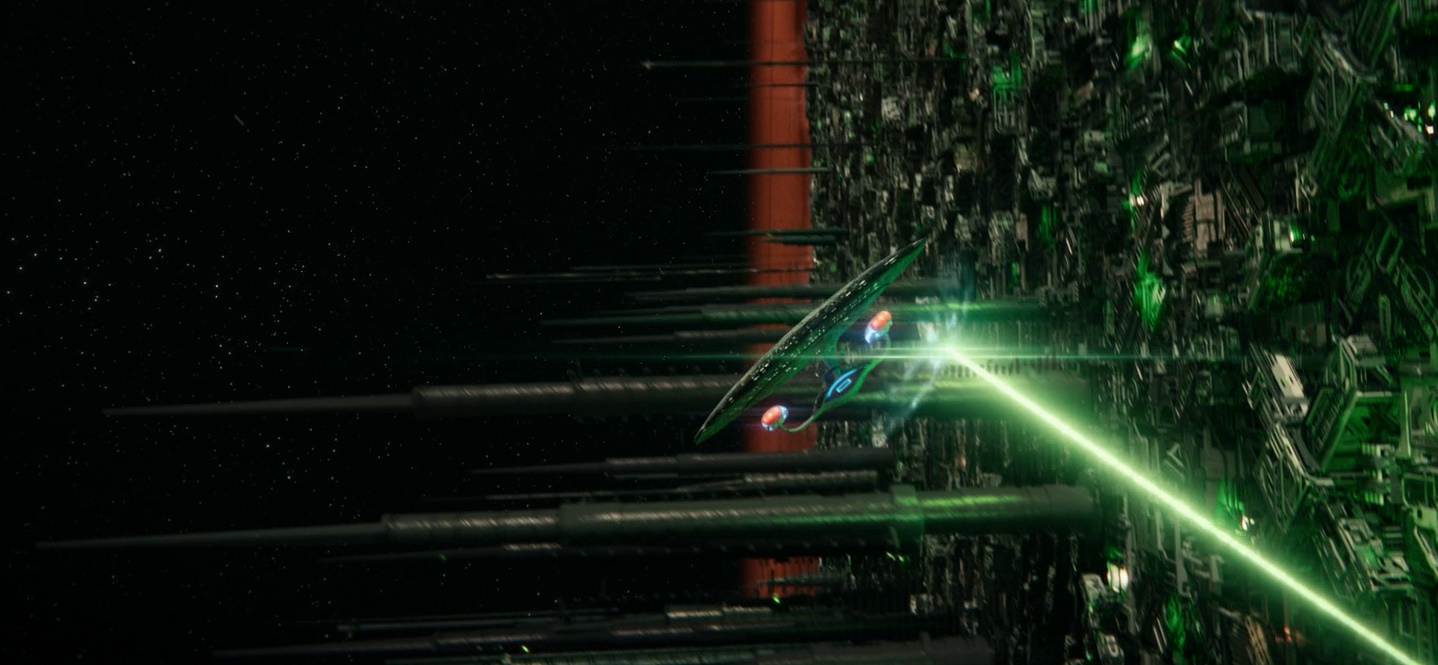
To me it feels like any attempt to tell a story of this nature was superseded by the decision to take Discovery out of the 23rd Century altogether. If there was only room for one time travel ending to the season, the one that was chosen was to send the ship and crew into the far future. Control was left behind in the 23rd Century and seemingly defeated by Captain Pike, so any chance of it having a role in the creation of the Borg now seems to be entirely off the table.
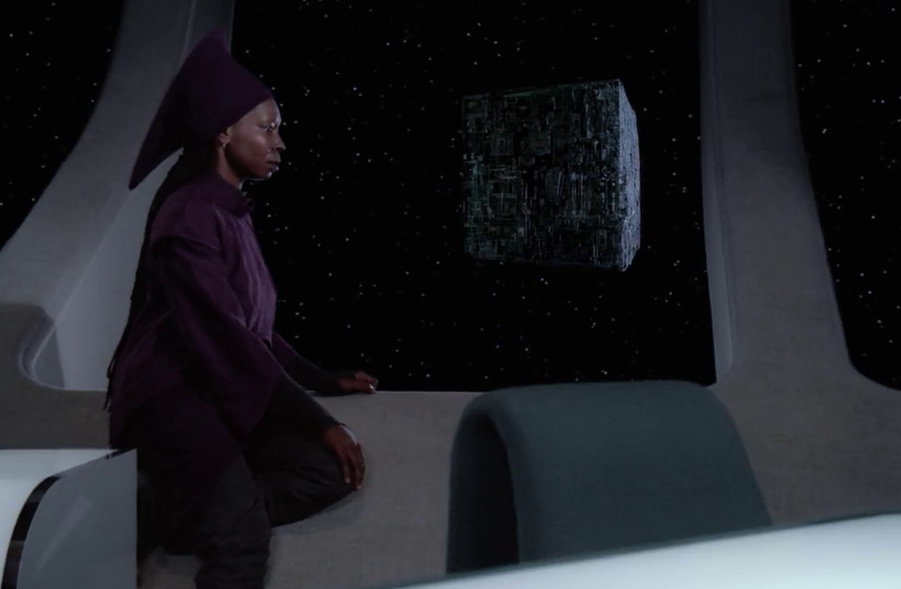
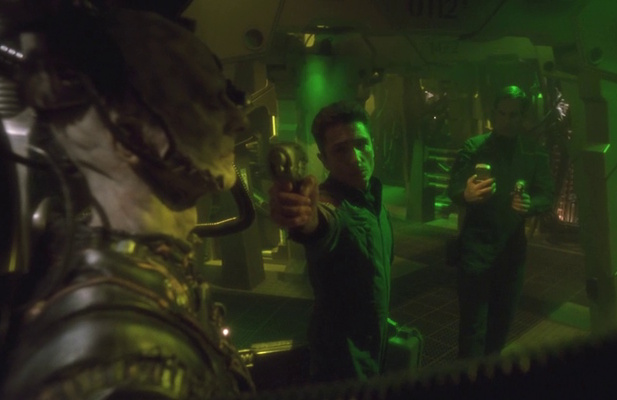
Perhaps all of this was simply misdirection; the writers and producers of the season putting out deliberate red herrings so that fans wouldn’t figure out the ultimate direction of the story! If that’s the case, they definitely got me! Even if that’s what happened, though, as a concept the idea that the Federation accidentally created the Borg is one that could have led to some absolutely fascinating stories. Perhaps we’ll see something like it one day!

Star Trek: Discovery Seasons 1-3 are available to stream now on Paramount+ in the United States and on Netflix in the United Kingdom and internationally. The Star Trek franchise – including Discovery and all other properties mentioned above – is the copyright of ViacomCBS. This article contains the thoughts and opinions of one person only and is not intended to cause any offence.