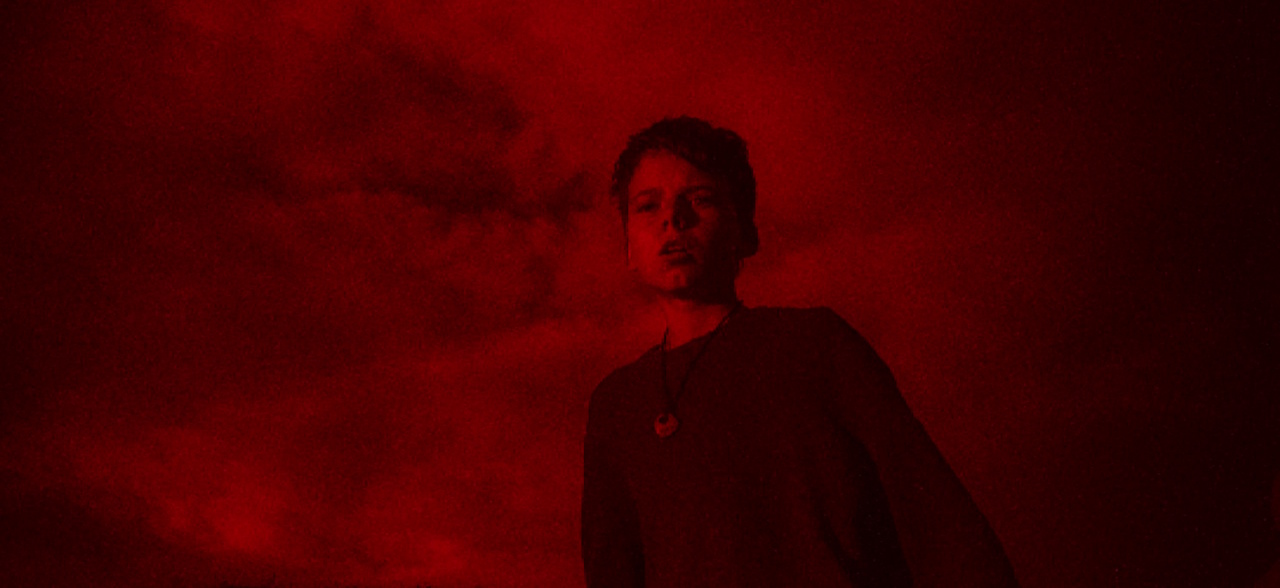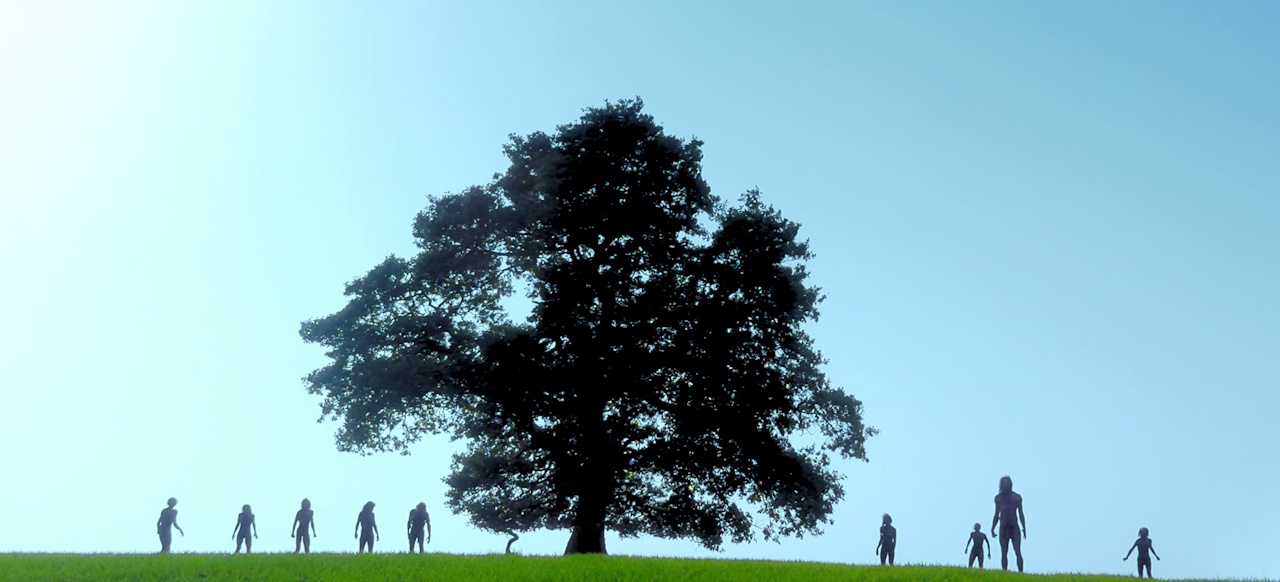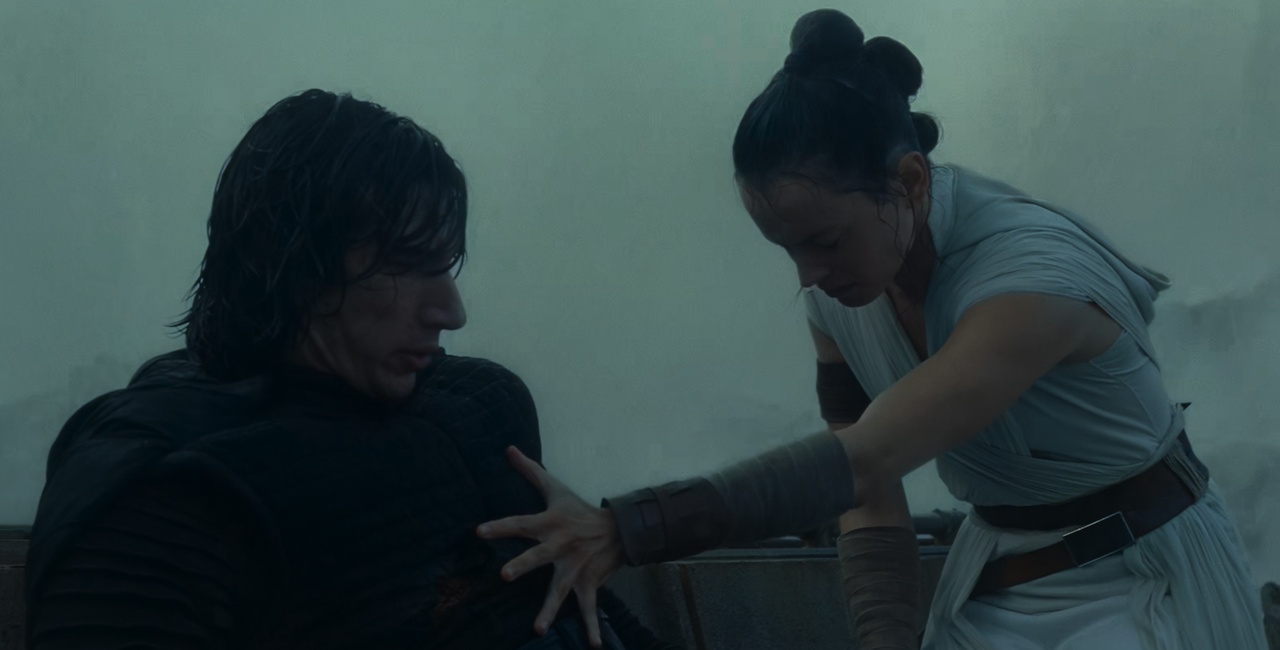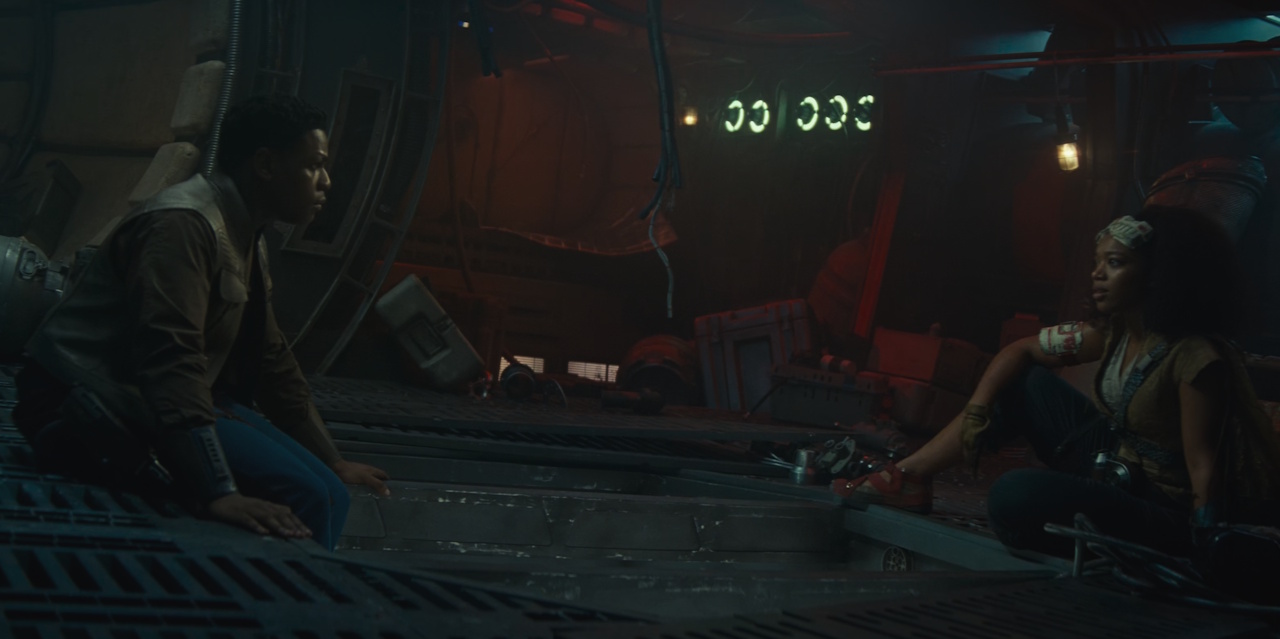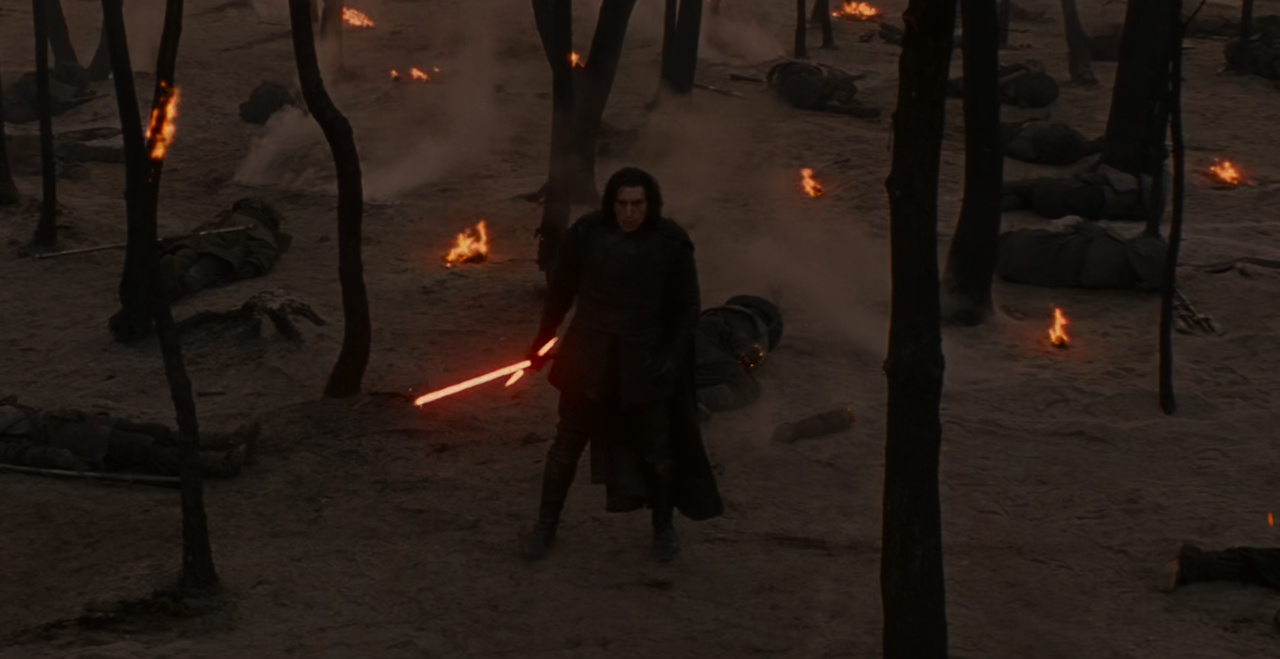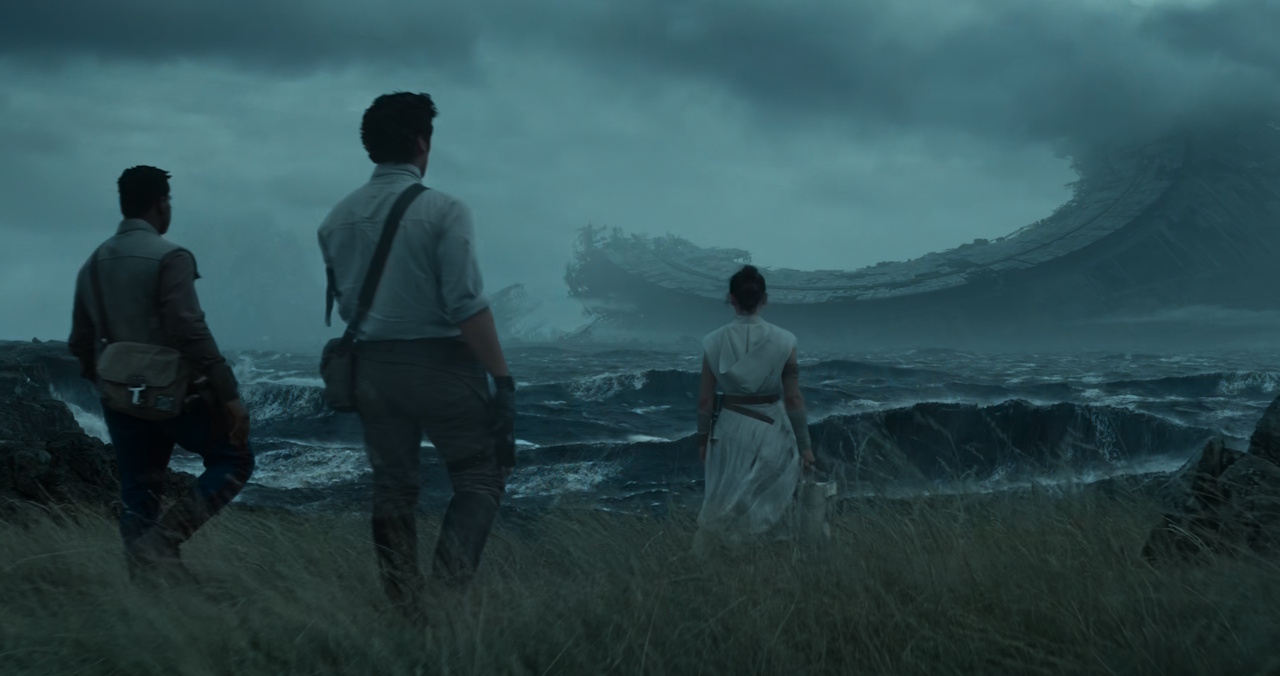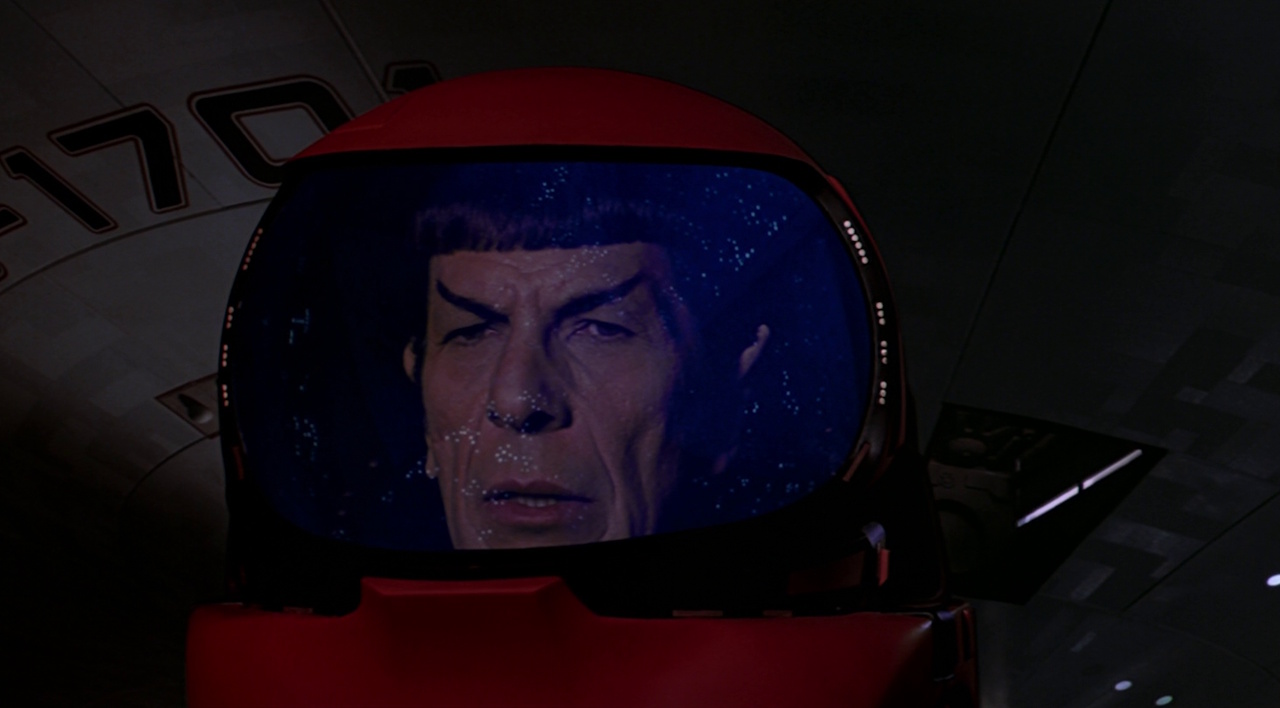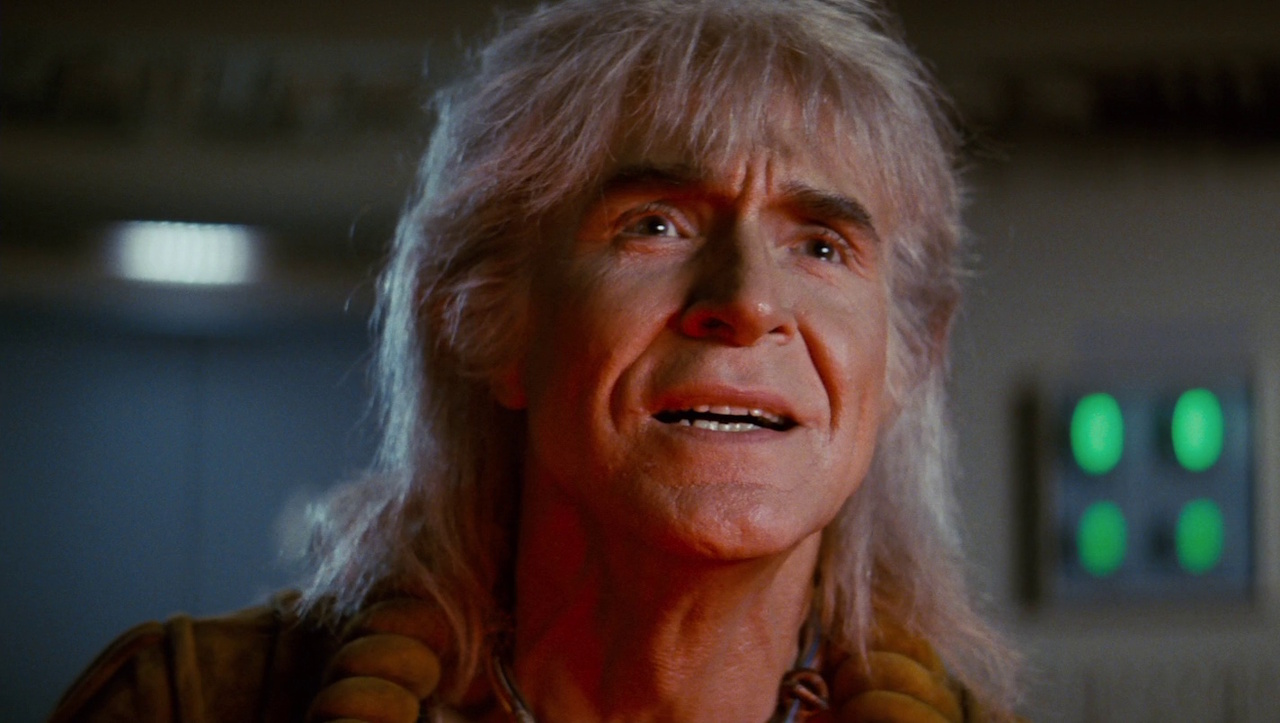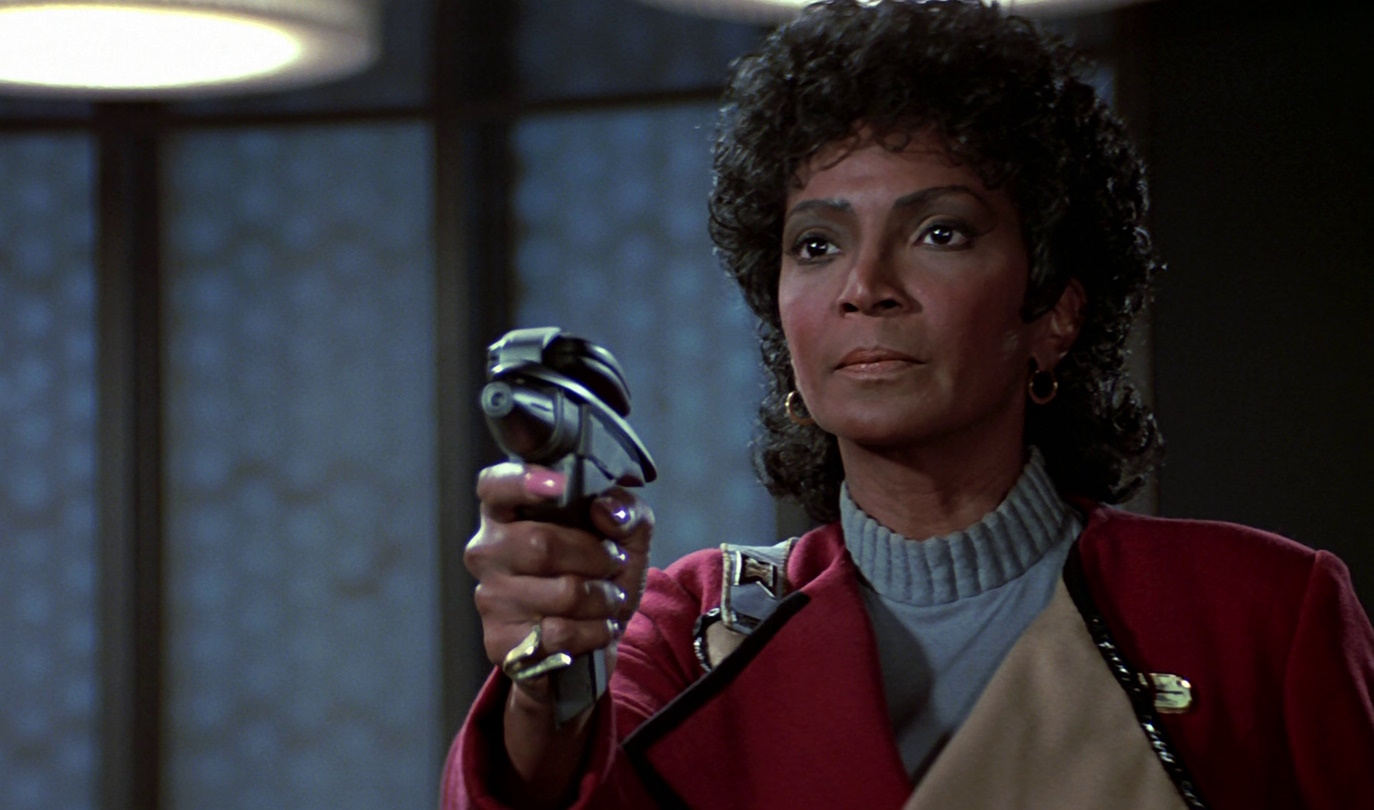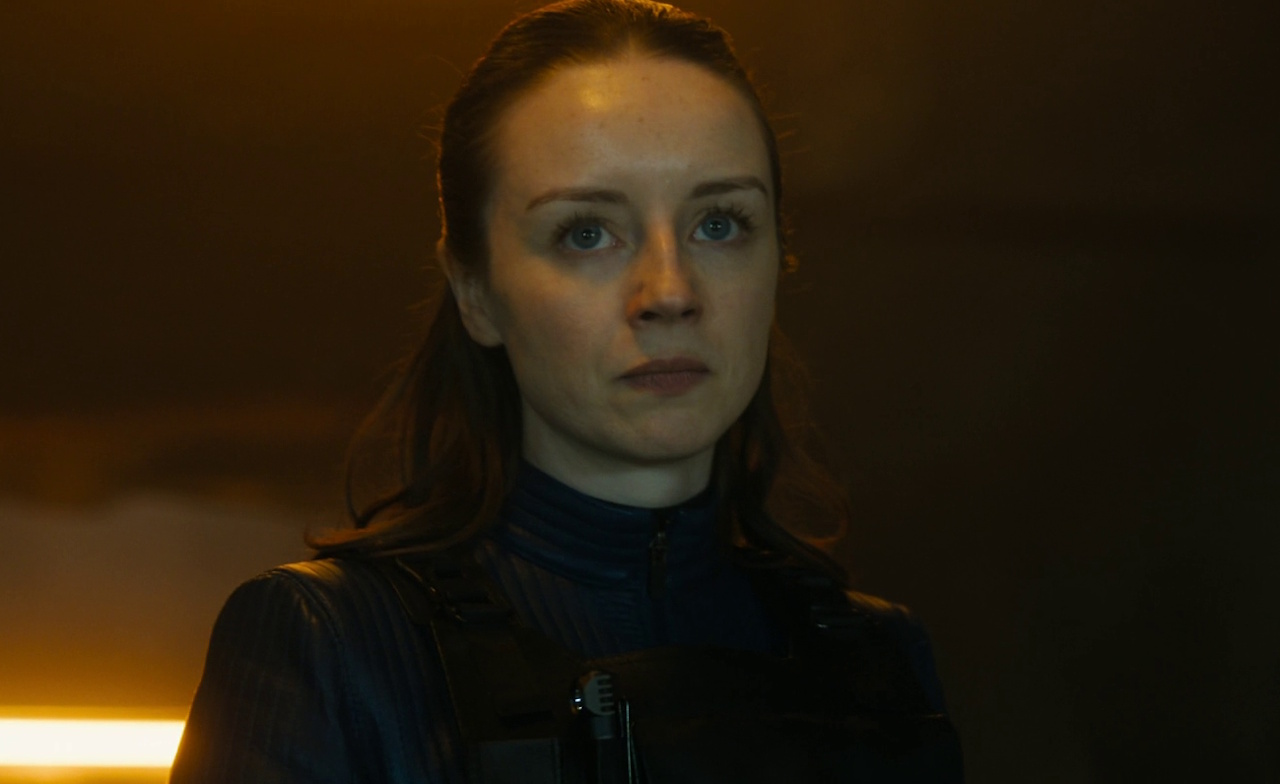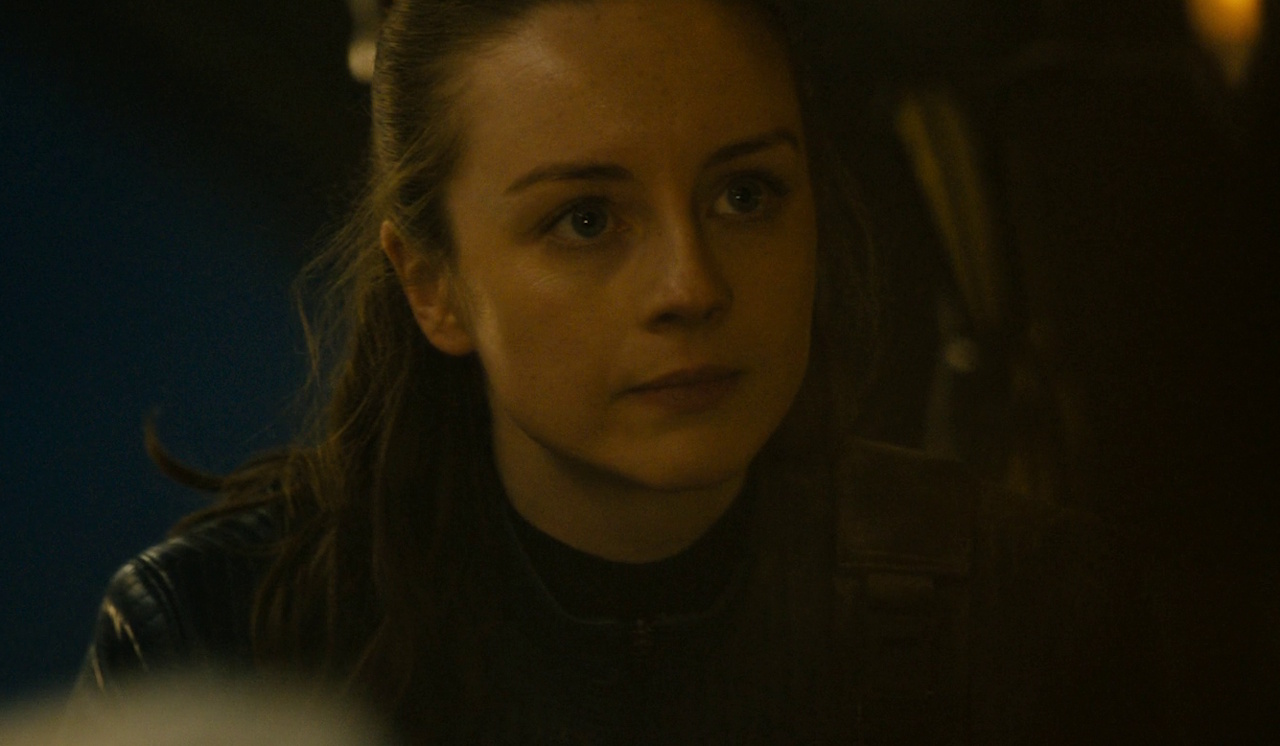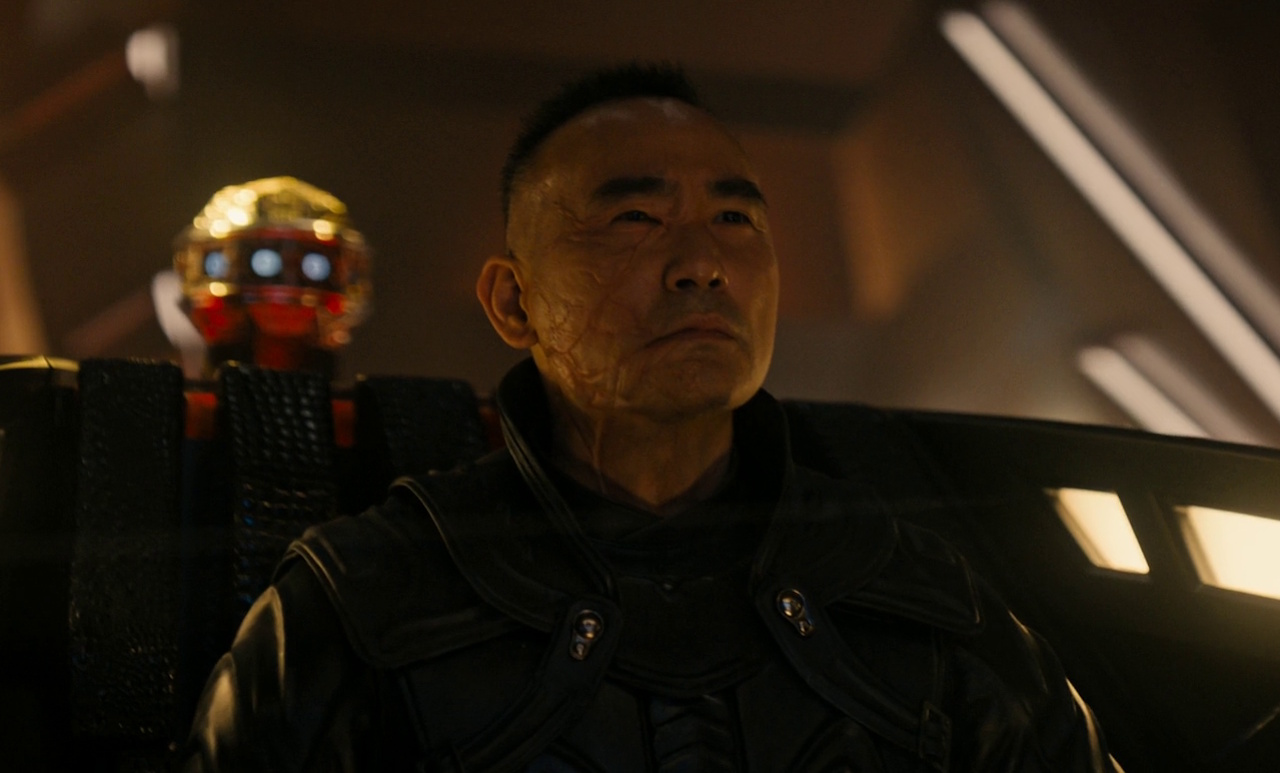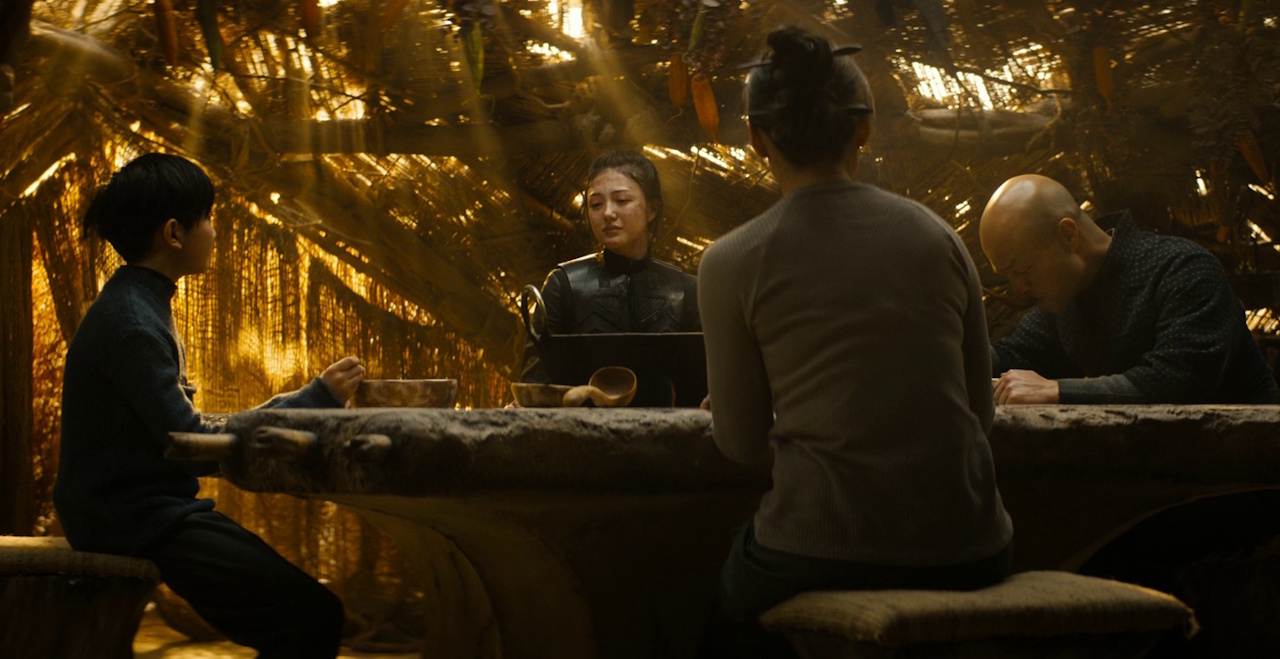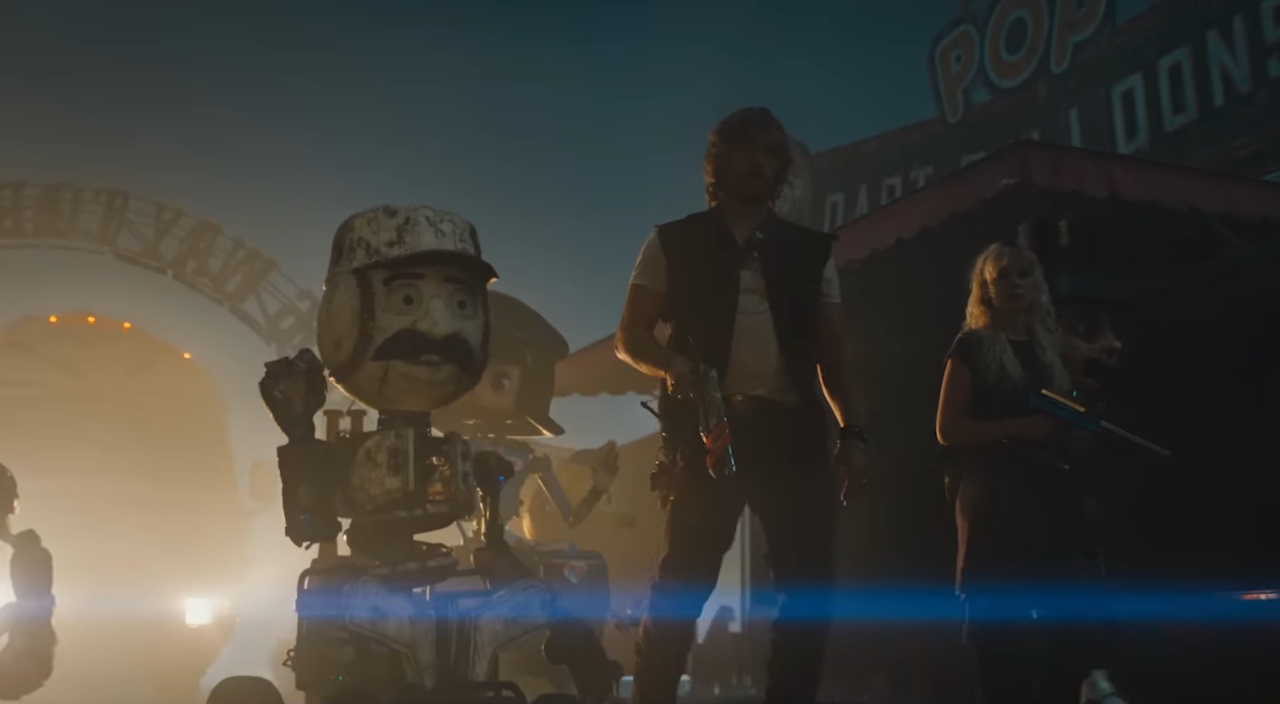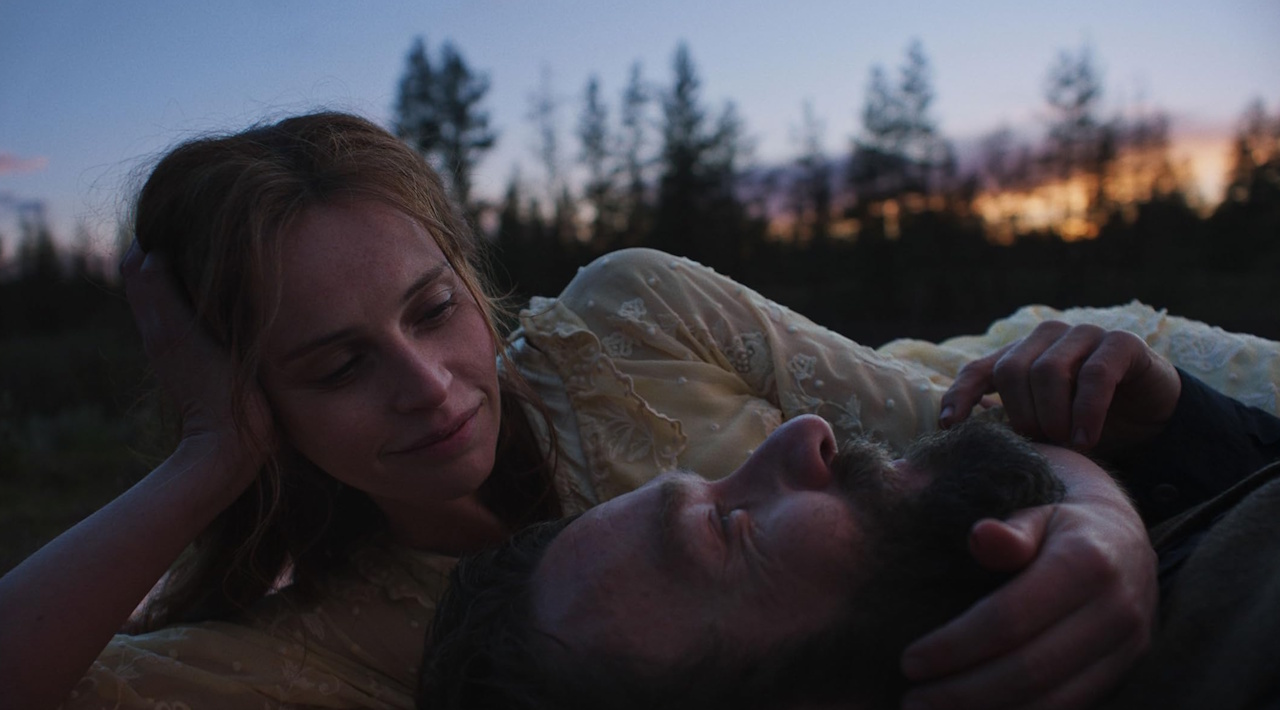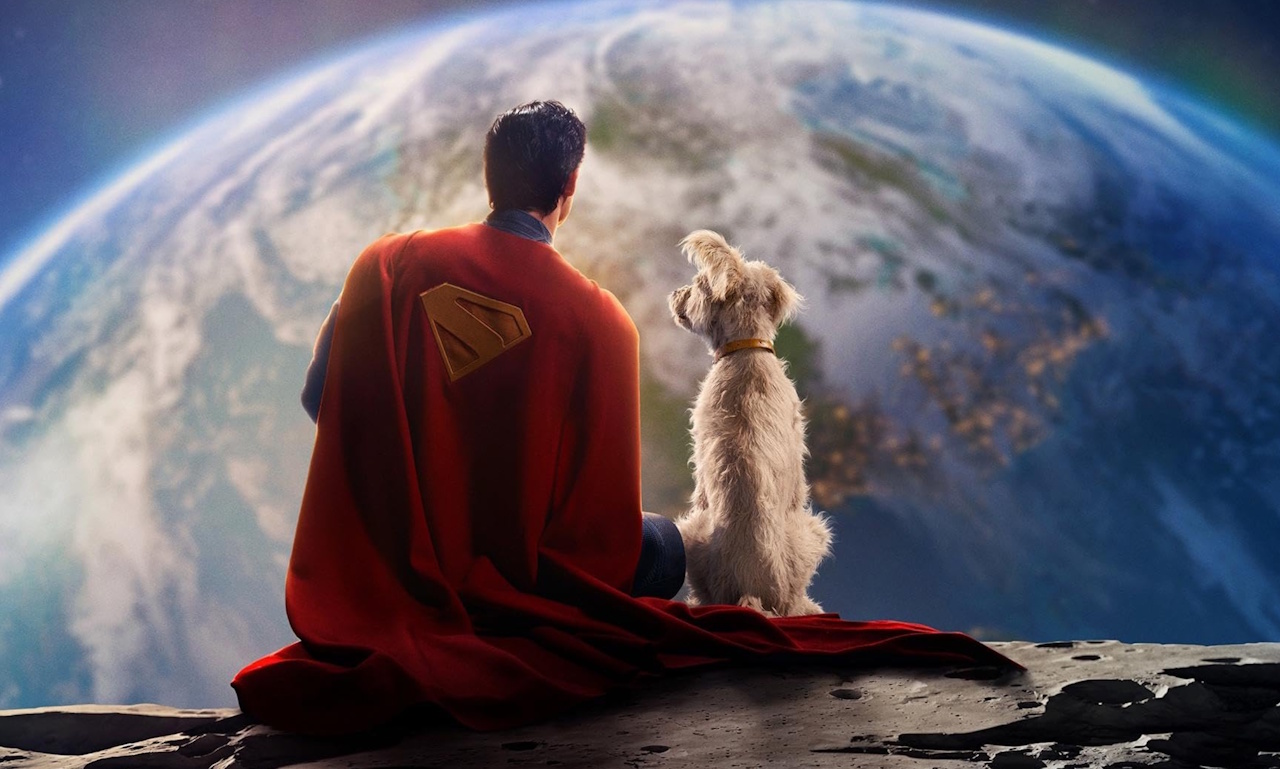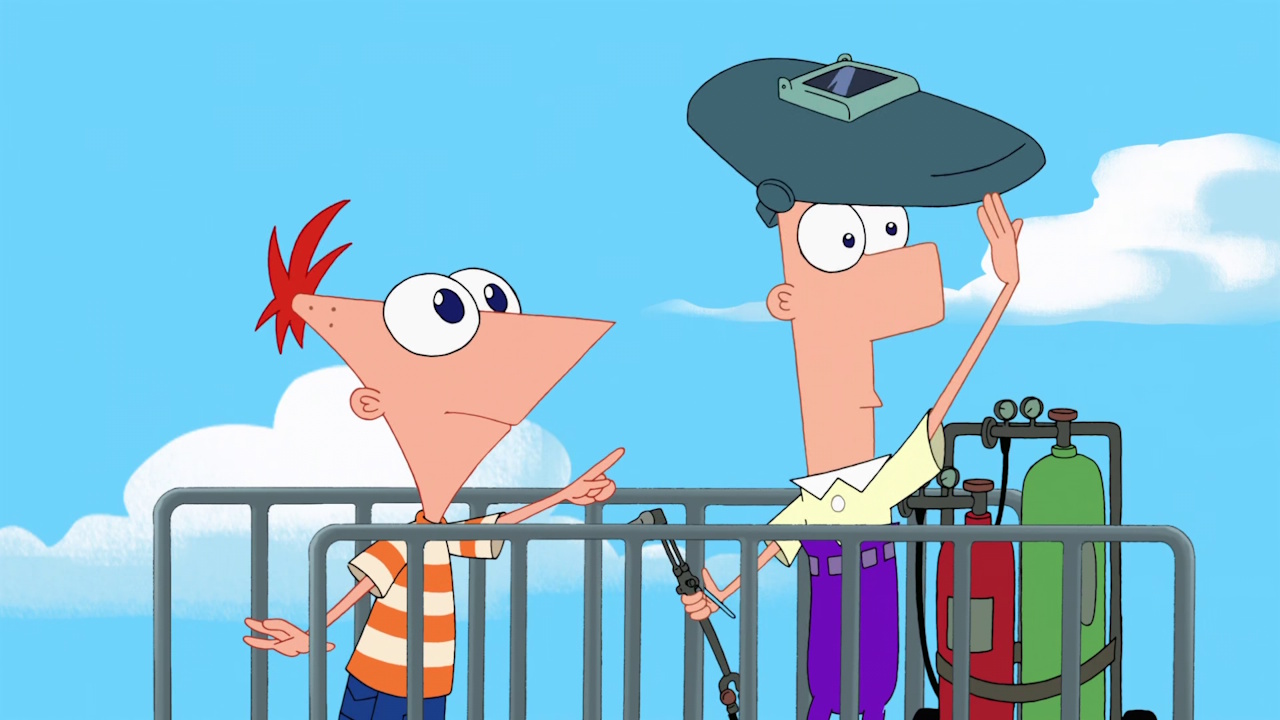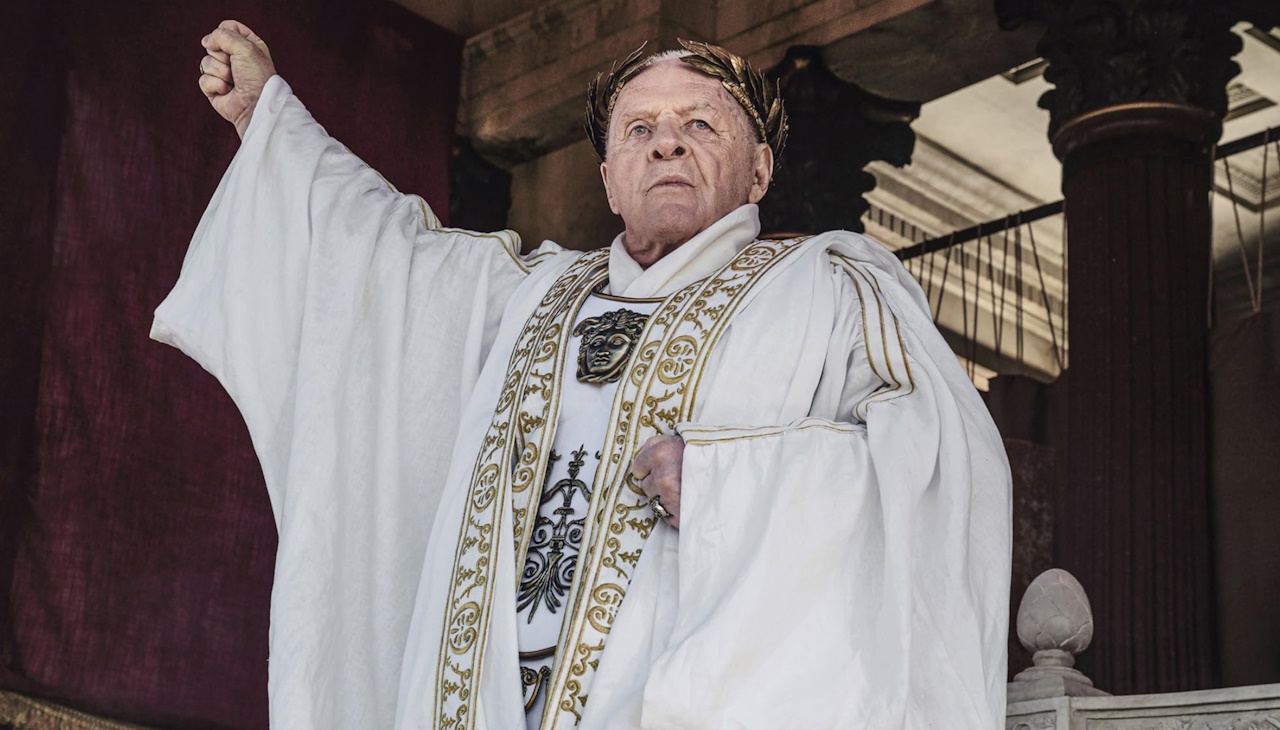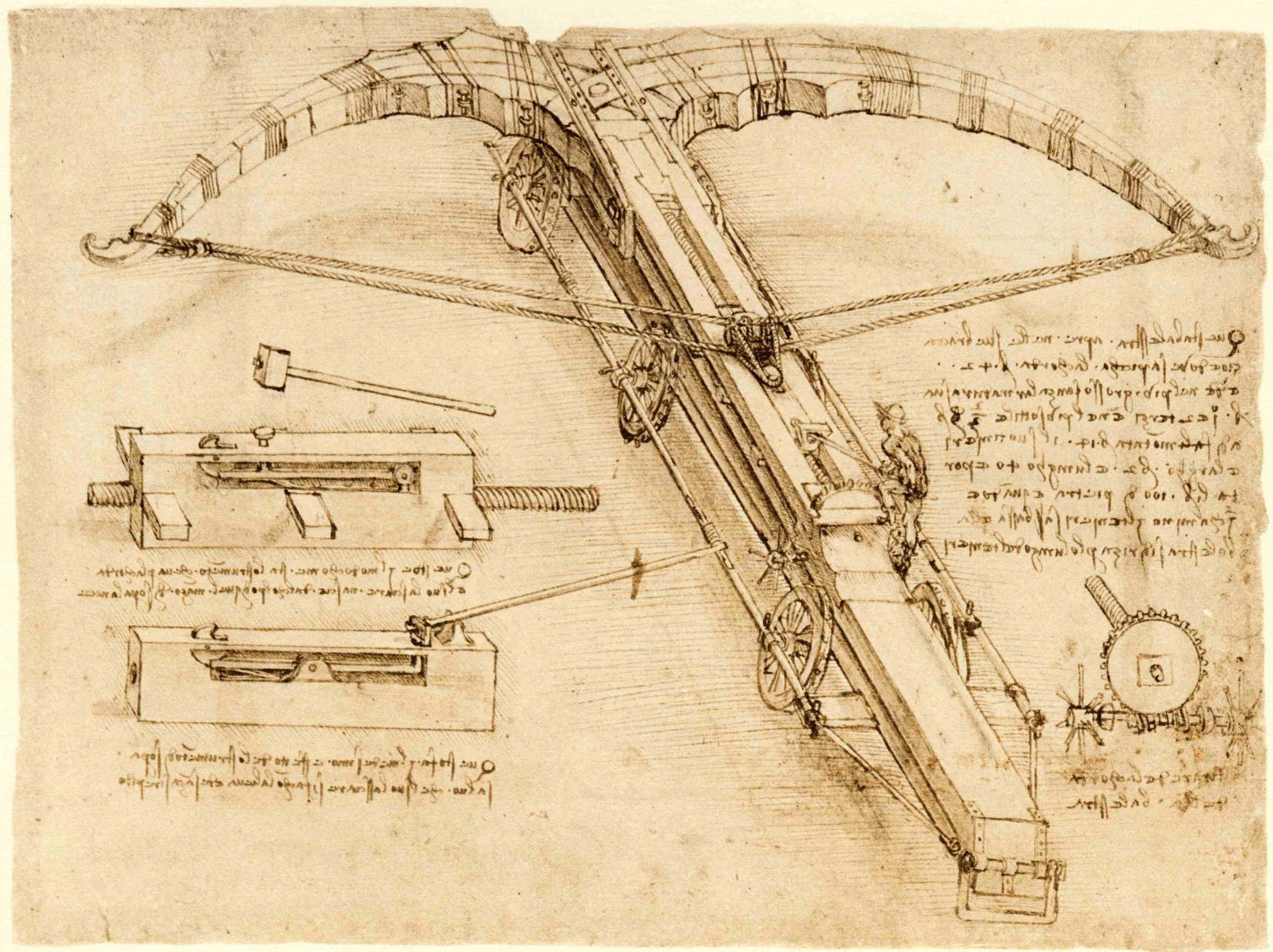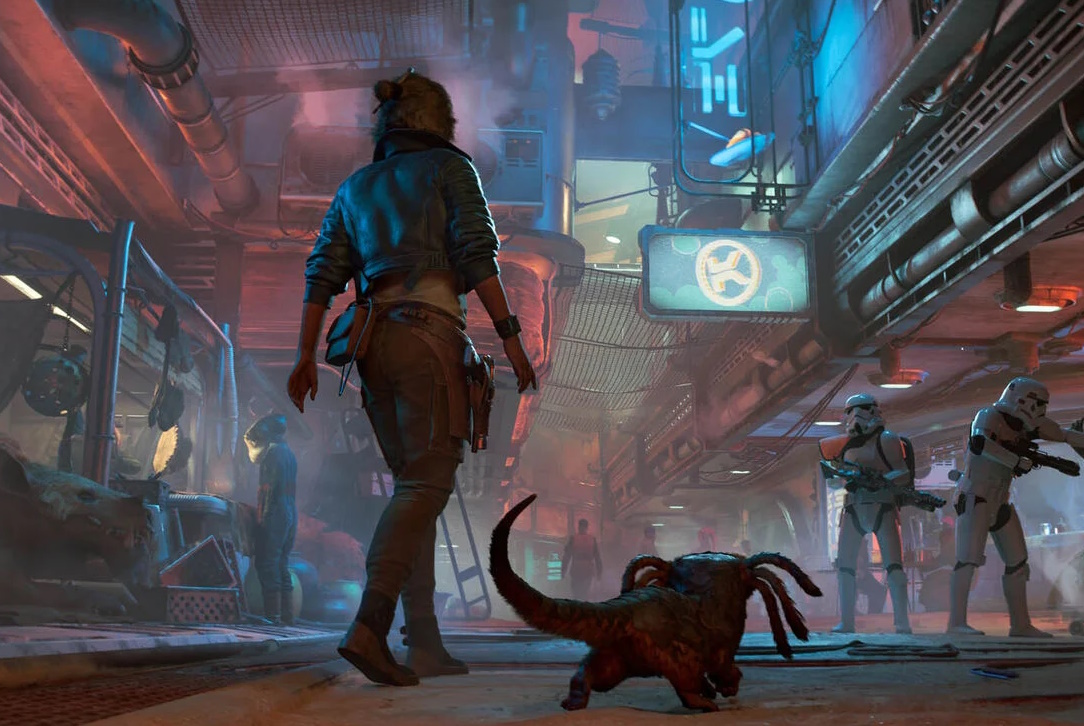
The Force Awakened… A Decade Ago

A Star Wars-themed spoiler warning.

Spoiler Warning: There are spoilers ahead for the Star Wars sequel trilogy.

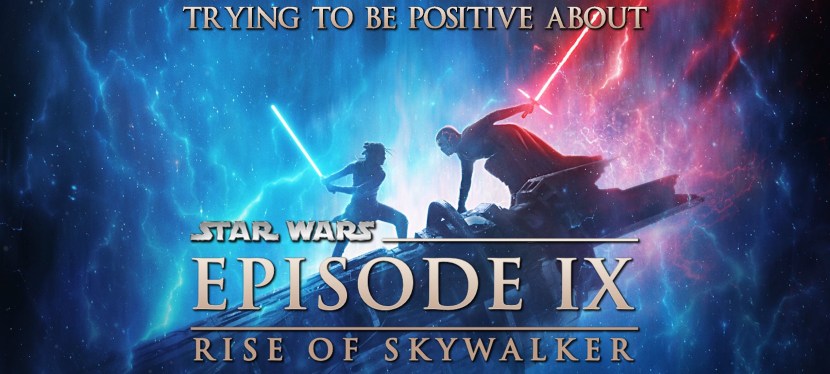
Today (the 17th of December 2025) marks the tenth anniversary of the release of Star Wars Episode VII: The Force Awakens here in the UK. With it came a brand-new era for the franchise. I thought the occasion would be a great opportunity to talk about the film, its legacy, what it got right… and where it went wrong. So that’s what we’re gonna do today!

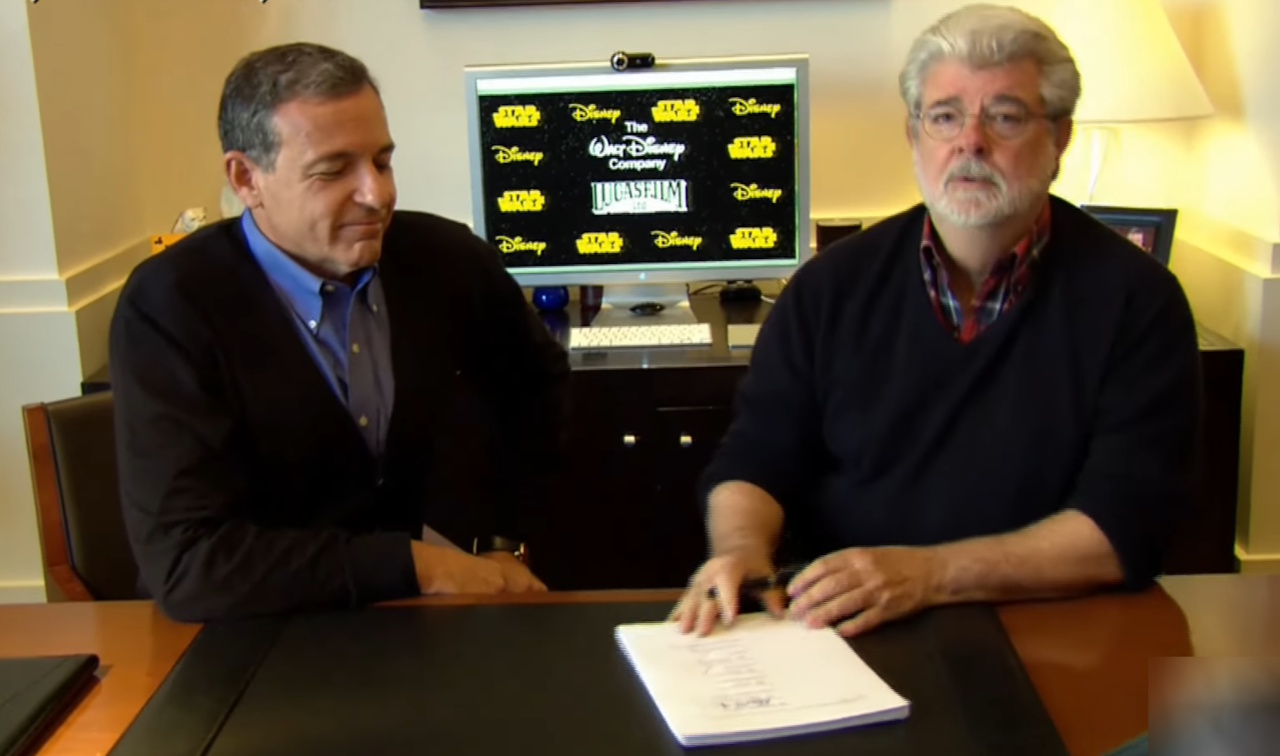
Three years earlier, the Walt Disney Company had purchased Lucasfilm, and with it, the rights to the Star Wars franchise. Ever since that moment in 2012, fans had been wondering what might lie in store – and when it was confirmed that 1983’s Return of the Jedi would be getting a sequel… I think it’s fair to say that the fan community was *beyond* excited! As Star Wars prepared to turn the page on its controversial prequels, and with a new creative team in charge, there was plenty of room for positivity in the months leading up to the release of The Force Awakens.

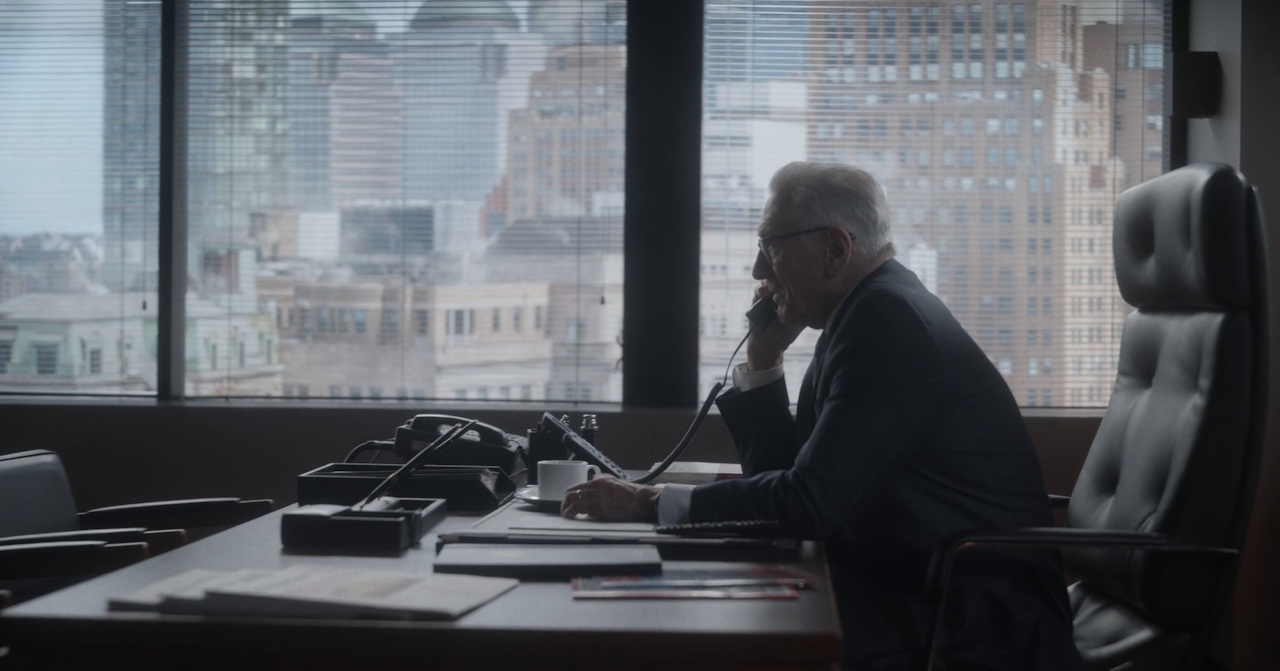
Still frame of Disney's Bob Iger and Lucasfilm's George Lucas at the offical sale of Lucasfilm in 2012.
Bob Iger and George Lucas signing the documents to confirm the sale of Lucasfilm in 2012.

I think I’ll start by talking briefly about my personal history with the Star Wars franchise, and how I found my way to the fan community – or, at least, to its periphery! In the early ’90s, at the insistence of a schoolfriend, I watched the original trilogy on VHS. By this point, I was already a huge Trekkie, and I remember being a bit underwhelmed on that first viewing. Perhaps I was comparing Star Wars to “my” fandom, and getting a bit tribal with it… I dunno! But I soon came to appreciate the original trilogy and the story it told, and quickly branched out to play the Super Star Wars games on the SNES, TIE Fighter on PC, and later, games like Shadows of the Empire and Rogue Squadron on the N64.

The prequel trilogy was another story, however, and I was left decidedly underwhelmed by both The Phantom Menace and Attack of the Clones. In this era, it was really only Knights of the Old Republic that kept me engaged with my Star Wars fandom. Revenge of the Sith was better, in some ways, but the prequel trilogy as a whole was a disappointment. If you’d asked me about Star Wars in 2012, that’s what I’d have told you. I was sceptical of a new film at first, but I was also encouraged when George Lucas stepped away and passed the torch to a new generation of filmmakers. When Disney promised to expunge the old Expanded Universe – much of which, from what I’ve seen, reads like low-quality fan fiction – I felt that was the right call. Disney was setting up a totally fresh setting for their new trilogy that wasn’t going to be constrained by decades’ worth of other stories, nor by being a prequel that had to tie in with what’s already been established. That was a hugely positive thing for me.

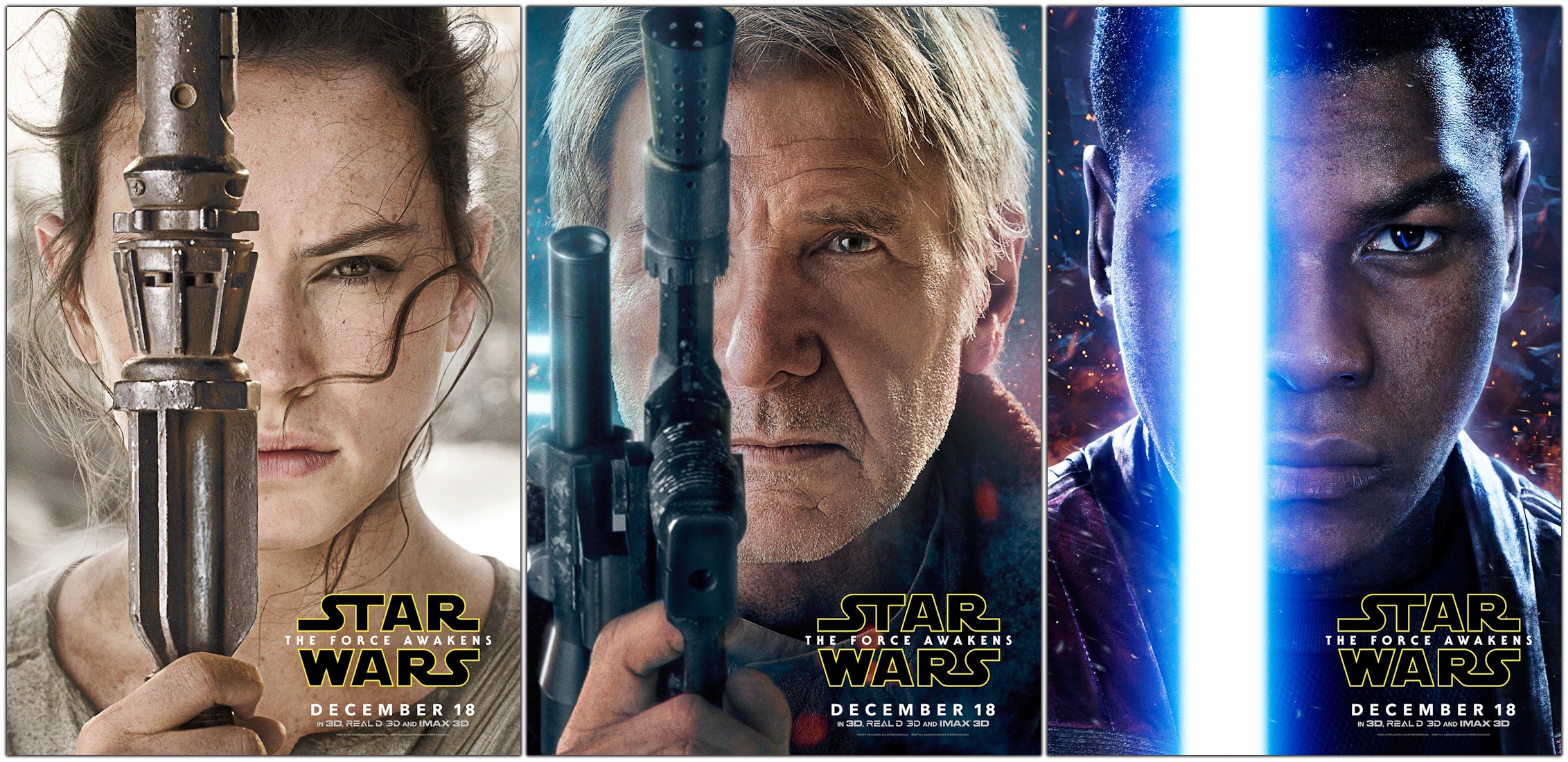
Three promo posters for The Force Awakens (2015)
A trio of posters.

By the time details of the film were being announced, I was cautiously optimistic! I remember feeling a little conflicted about J.J. Abrams’ involvement; he’d done such a great job rebooting the Star Trek franchise at the cinema that seeing him “jump ship” to Star Wars felt like a bit of a blow. Remember, this was before CBS had announced that Star Trek would be returning to the small screen, and with the franchise’s fiftieth anniversary approaching… I wasn’t thrilled to lose a filmmaker of Abrams’ calibre. But Star Trek’s loss seemed to be Star Wars’ gain, with Abrams being able to take the same approach and “reboot,” for want of a better word, the franchise for a new generation.

Above all, I hoped that The Force Awakens could put the disappointment of the prequel trilogy behind us, and tell a more interesting and engaging story than those films ever had.

So… did it do those things?

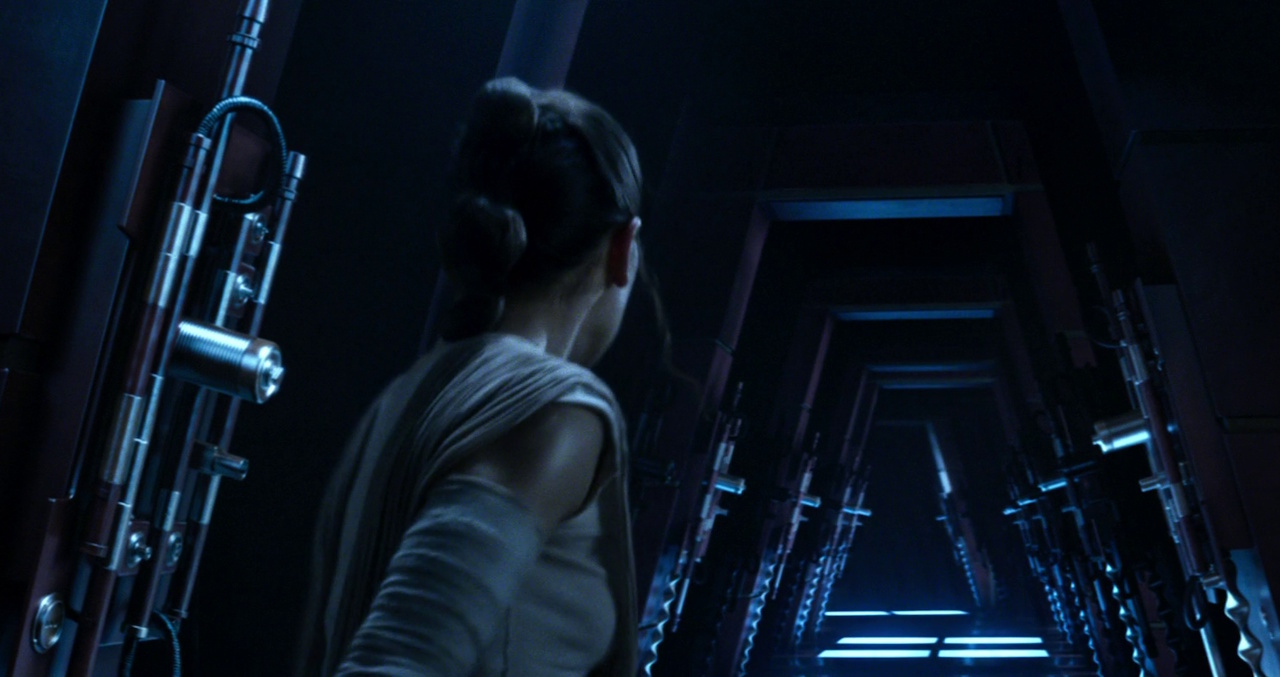
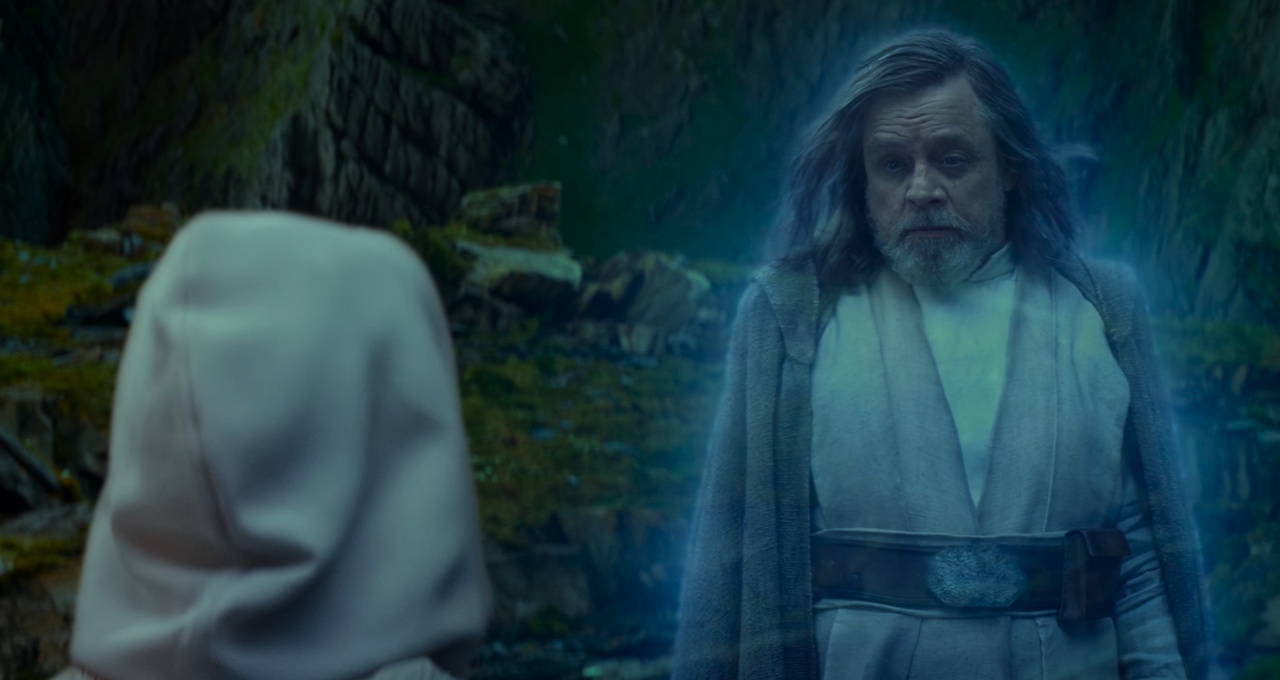
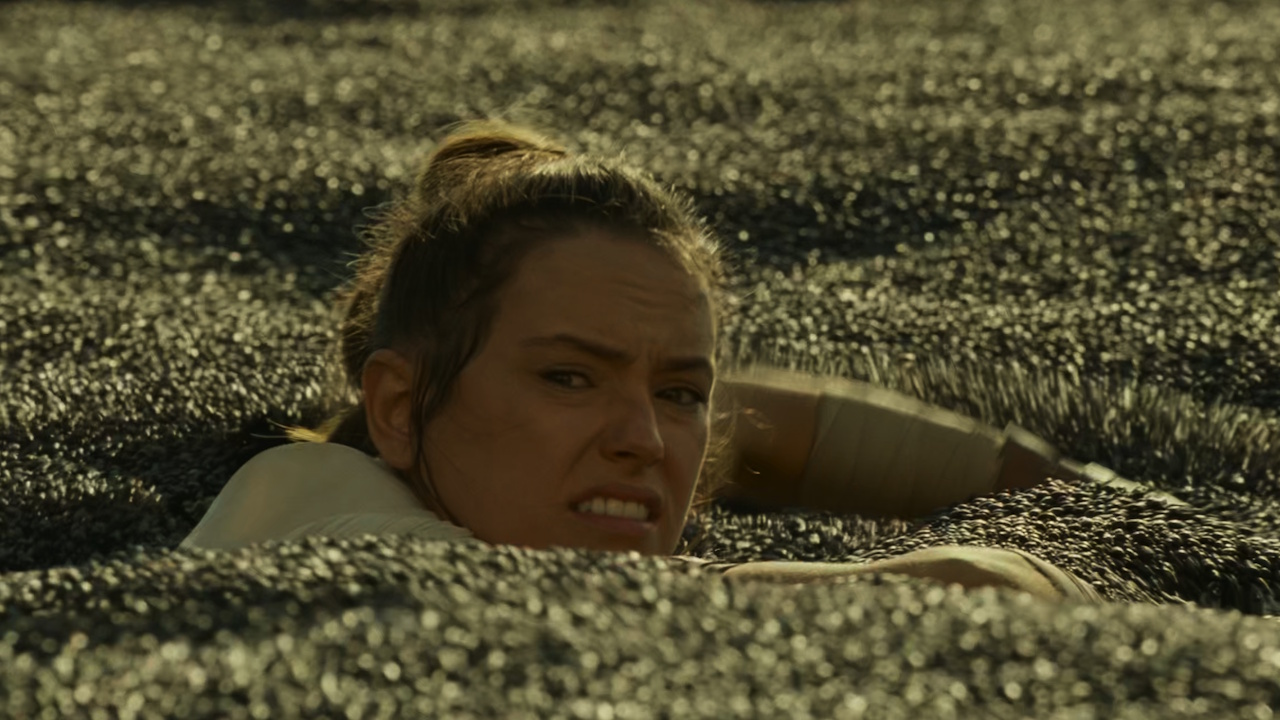
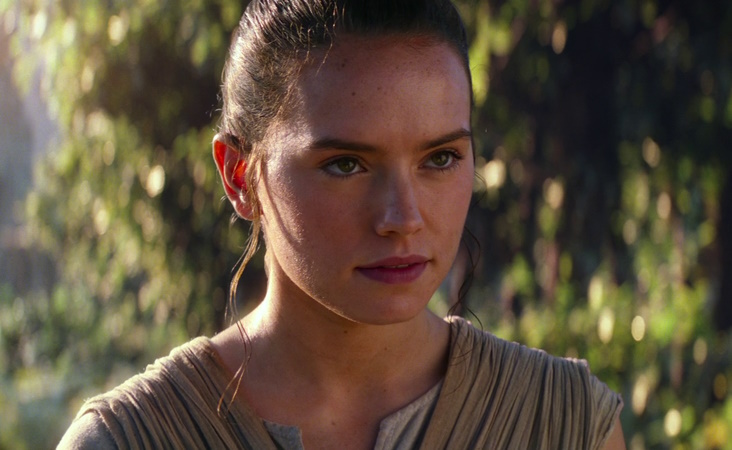
Still frame from Star Wars VII: The Force Awakens (2015) showing Rey having a vision.
What’s the legacy of The Force Awakens ten years later?

The Force Awakens is a film that we absolutely cannot judge fairly without placing it in context. As a result of that context – i.e. the last ten years’ worth of Star Wars projects since it premiered – The Force Awakens is probably the only film I can think of where my opinion has shifted so dramatically since that first viewing in December 2015.

Because I’ll be honest: I walked out of the cinema ten years ago with a great big smile on my face! After the disappointment of the prequel trilogy, a film that re-played Star Wars’ “greatest hits” felt like just what the doctor ordered, and I remember feeling that, while the film obviously *was* derivative and harkened back to 1977’s Star Wars in a huge way… that didn’t seem like a terrible idea. Re-establishing the core of what Star Wars is, and showing that to a new audience as well as to returning fans, is what a reboot is supposed to do. And The Force Awakens felt like a solid foundation for Disney to build a new era of Star Wars on.

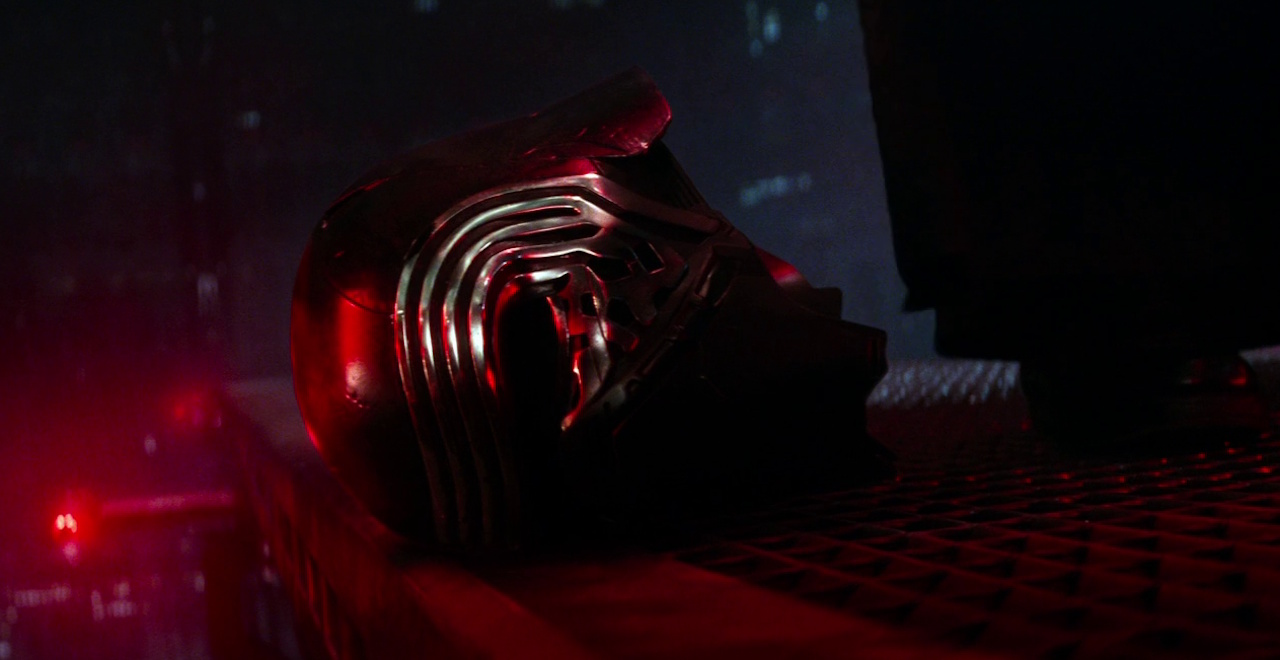
Still frame from Star Wars VII: The Force Awakens (2015) showing Kylo's helmet.
Kylo Ren’s helmet.

There were stormtroopers. There was an “evil empire” ruled by an enigmatic, scarred leader. There was a helmet-wearing Dark Side user who was the scion of a powerful family. The Jedi were nowhere to be found. There was an orphan from a desert planet who got swept up in a rebellion. There was a “trench run” against a planet-killing superweapon. Han Solo and Chewie were back in the Millennium Falcon. And Princess Leia was still leading the rebellion. Everything that Star Wars had been in its original form was here, reimagined and repainted, ready for that new generation of fans to fall in love with.

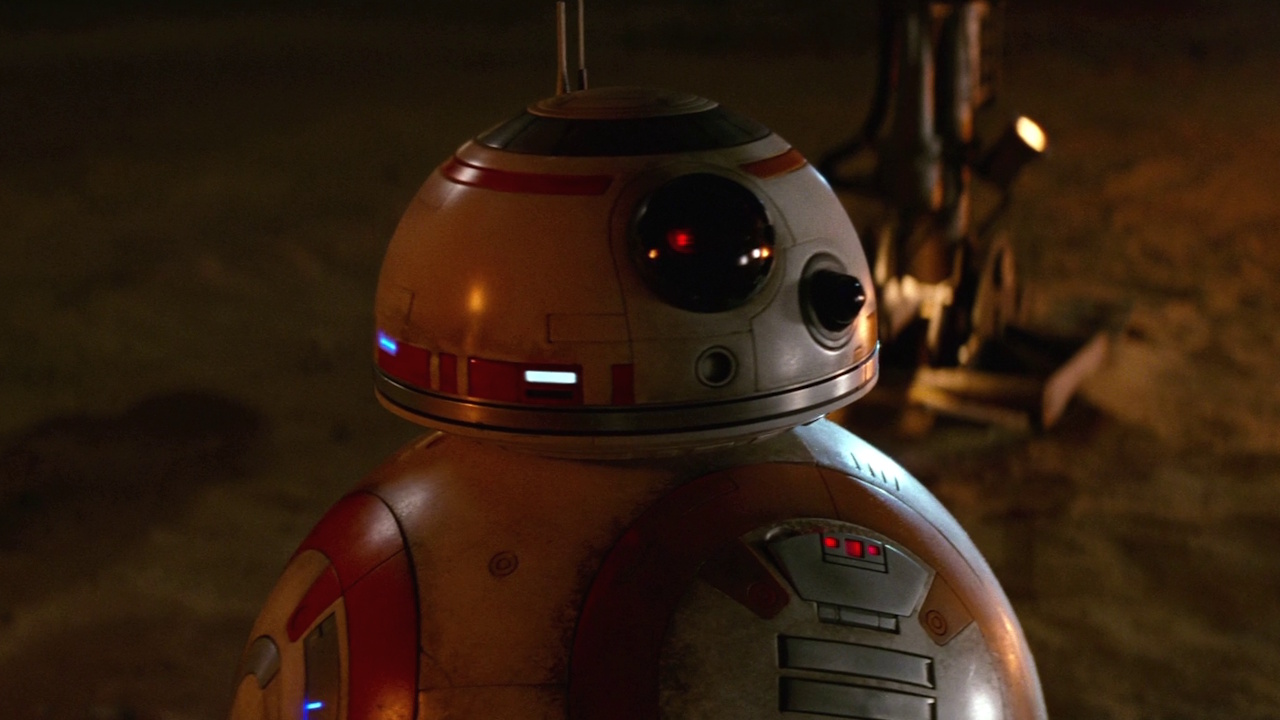
What’s more, The Force Awakens’ director and producers seemed to be going out of their way to recapture the way Star Wars looked prior to the prequels and George Lucas’ awful “special editions.” Gone was the janky, not-ready-for-prime-time early 2000s CGI. And to replace it, Disney had commissioned physical props, puppets, and even robots. BB-8, the cute little spherical droid, *actually works!* That’s an actual, physical droid, not a video-gamey CGI monstrosity. As a child of the ’80s, who grew up on films like The Neverending Story and Flight of the Navigator, which had excellent puppets, props, and prosthetics… I absolutely *adored* the way The Force Awakens looked, and I still have a huge respect for J.J. Abrams, Kathleen Kennedy, and the rest of the folks at Disney and Lucasfilm for leaning much more heavily on physical creations over CGI.

Still frame from Star Wars VII: The Force Awakens (2015) showing BB-8.
BB-8 was a physical prop.

If The Force Awakens had been a one-and-done film, that’s where this essay would end. The film recaptured the magic of Star Wars in a way that the prequels had failed to do, the new owners of Star Wars had successfully killed off the fan-fiction-y Expanded Universe, and put to bed the idea that *everything* with the Star Wars name attached should be considered canonical, and the original look and feel of the franchise, from its ’70s and ’80s heyday, had been successfully recreated. Add into the mix some fun new characters – a rebelling Stormtrooper, whose humanity wouldn’t let him take part in atrocities, a young, clearly powerful Force-wielder, a phenomenal pilot, and the son of Han Solo and Leia, now fallen to the Dark Side – and you had all of the pieces in place for an entertaining story.

Unfortunately for The Force Awakens and its legacy, though, this isn’t where things end.

J.J. Abrams, who penned and directed the film, is a big believer in the “mystery box” style of storytelling: set up an intriguing mystery, then let it unfold. But while Abrams is great at *starting* these kinds of stories… he doesn’t usually seem to have an ending in mind. And because of the way Disney and Lucasfilm set about making the Star Wars sequel trilogy, Abrams and his “mystery box” were simply the wrong choice for the first part of the story. And even as I stepped out of the cinema wearing that silly grin ten years ago, the cracks in the foundation of this story were already beginning to grow – cracks that would eventually lead to the complete and utter ruination of Disney’s sequel trilogy. The Force Awakens was a fundamentally flawed story – but the damage those flaws would do wouldn’t become obvious for a few more years.

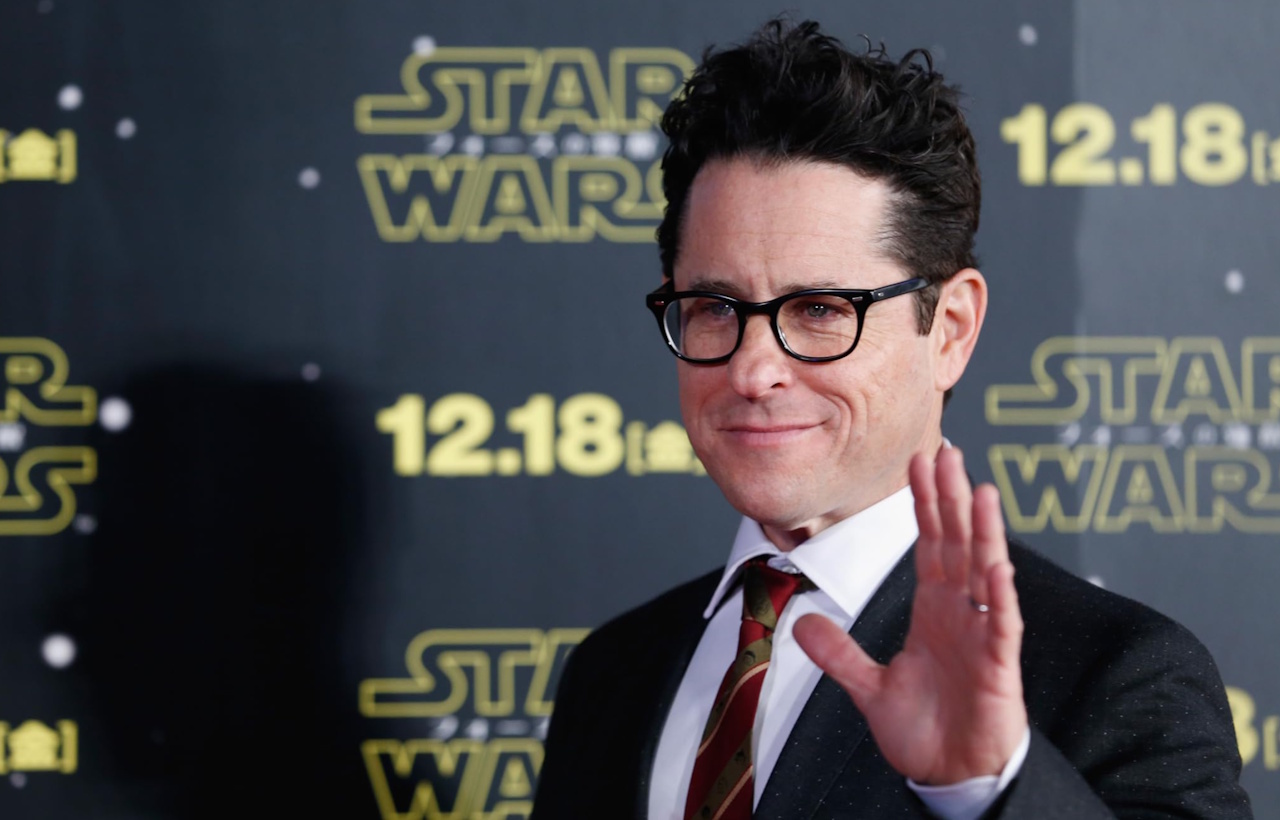
Photograph of filmmaker JJ Abrams at the premiere of Star Wars VII: The Force Awakens (2015).
J.J. Abrams at the film’s premiere.

J.J. Abrams had written questions into his script that he did not have answers for. In fact, not only had he not written a solution to his “mystery box,” but there really wasn’t a way for this story to unfold – when the baton was inevitably passed to Rian Johnson and Colin Trevorrow – that even made sense. Abrams screwed over Johnson and Trevorrow (who would later leave the project that became The Rise of Skywalker) by writing the beginning of a story that had no plan, no middle, no ending, and that was, in a word, inept. It is the “original sin” of the sequel trilogy, and while fans may dislike The Last Jedi or The Rise of Skywalker far more than The Force Awakens, it was here, in 2015, that the sequels’ undoing had already been set in stone.

“Luke Skywalker is missing!” announced the film’s opening crawl. But without establishing *why* Luke had disappeared – nor even really explaining the extent of his legend and legacy in the galaxy at large – The Force Awakens set up a mystery that had no explanation. And by leaving the choice for why Luke had squirrelled himself away on a hidden planet to the next film and the next writer/director, Abrams abdicated the tremendous responsibility that Disney, Lucasfilm, and generations of Star Wars fans had placed on his shoulders.

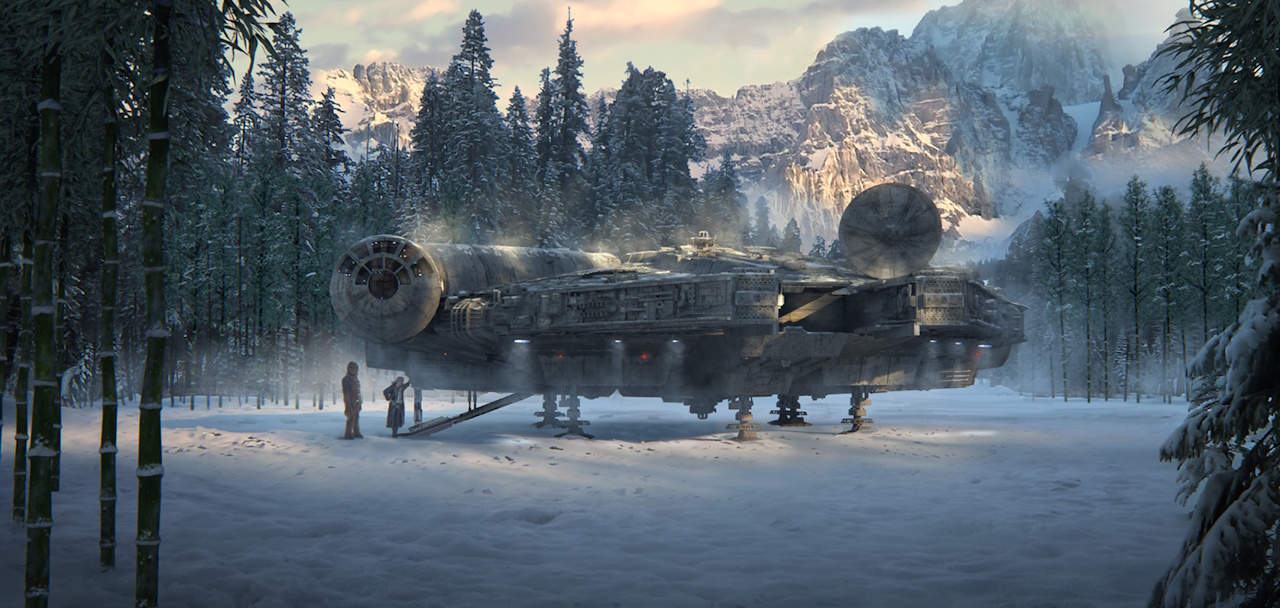
Concept art for Star Wars VII: The Force Awakens (2015) showing the Millennium Falcon.
Concept art of the Millennium Falcon.

I wrote several years ago that it boggles my mind how an accomplished group of filmmakers – people who created and worked on titles like the Indiana Jones trilogy, Lost, Jurassic Park, E.T., and many more – could have made such a genuinely bone-headed, idiotic, stupid decision when approaching the sequel trilogy. The Force Awakens was never envisioned as a standalone film, it was always meant to be the first instalment of a trilogy. And a trilogy that plans to tell a single story *needs* someone in overall creative control. J.J. Abrams, with his penchant for starting stories he has no intention of finishing and doesn’t know how to finish, was the wrong choice for that role. But Kathleen Kennedy, president of Lucasfilm, and Disney CEO Bob Iger should have known better – and should have taken a more structured, planned approach.

The decision to split up the writing and directing of the three sequel films was taken before work got underway on The Force Awakens – and even at that early stage, the damage was done. Splitting up the trilogy in this way was *always* going to be the wrong decision, and the predictable result is a trio of films that jump around in terms of tone, story, and even characterisation, as each of the subsequent instalments tries to undo something from its predecessor. And I do not exempt The Force Awakens from that criticism – it is the foundation upon which the trilogy should have been built, but because it was so weak and derivative, and because the decision was taken to split up the filmmaking process, it would be firmly tarred with the same brush even if it had been a perfect standalone title.

Which it wasn’t.

Trio of promotional posters for Star Wars VII: The Force Awakens (2015)
Poe, Leia, and Kylo on promo posters for the film.

What I felt had been the film’s biggest strength on that first viewing a decade ago now, in retrospect, feels like one of its most egregious faults and its most significant weakness. By choosing to replay, almost beat-for-beat, 1977’s Star Wars, the film fails to do what any sequel can and should aim to do. Questions that fans had all the way back in 1983 about what the galaxy would look like after the Empire’s defeat not only didn’t get answered, they were totally ignored; sidelined, as Abrams and co. tried to re-tell the same story as before, just with a different coat of paint.

Think about where Return of the Jedi had ended: the Emperor and Vader were dead, theoretically ending the Sith once and for all. The Death Star had been destroyed, and the Rebellion had won the Battle of Endor… but the Empire still existed in much of the rest of the galaxy, and there was no guarantee that the Emperor’s death would mean there could be a return to democracy. And with the deaths of Obi-Wan and Yoda, only Luke could carry on the legacy of the Jedi Order.

Still frame from Star Wars VII: The Force Awakens (2015) showing Kylo with Snoke.
Kylo Ren with Snoke.

The Force Awakens basically ignored all of that. In the aftermath of the Emperor’s death, the remaining Imperial factions basically gave up, and the New Republic took control of much of the galaxy. But then, in secret, some Imperial survivors founded the First Order – ruled over by Snoke, a mysterious Dark Sider. Snoke’s apprentice was the helmet-wearing Kylo Ren, the grandson of Vader. And Luke’s Jedi were nowhere to be seen, with his first attempt to train students ending in disaster. This set up a remarkably familiar story about a Dark Side power on the march, a rag-tag group of rebels (sorry, “the resistance”) trying to stop them, a planet-killing superweapon, and a youngster from a desert planet who gets swept up in all of it thanks to a droid carrying an important document.

Is that all Star Wars is? And… is that all Star Wars ever can be? J.J. Abrams and Kathleen Kennedy seemed to think so a decade ago.

And their attitude remains in the franchise to this day. The Book of Boba Fett, Obi-Wan Kenobi, Ahsoka, Rogue One, Solo, Andor and The Bad Batch, all of which have been created since 2015, rely on increasingly minor characters and smaller and smaller pieces of the *only* real story that the Star Wars franchise has ever told: the so-called “Skywalker Saga,” which should really be called the “Palpatine Saga,” since he’s the only character who seems to have acted of his own volition and who had any control over events. That’s the legacy of The Force Awakens ten years later: a franchise that has doubled- and tripled-down so hard on nostalgia plays and copying what came before that it’s become narratively exhausted and just plain *boring*.

Concept art for Star Wars VII: The Force Awakens (2015) showing TIE Fighters and a castle with a lava moat.
TIE Fighters and a castle in concept art created for The Force Awakens.

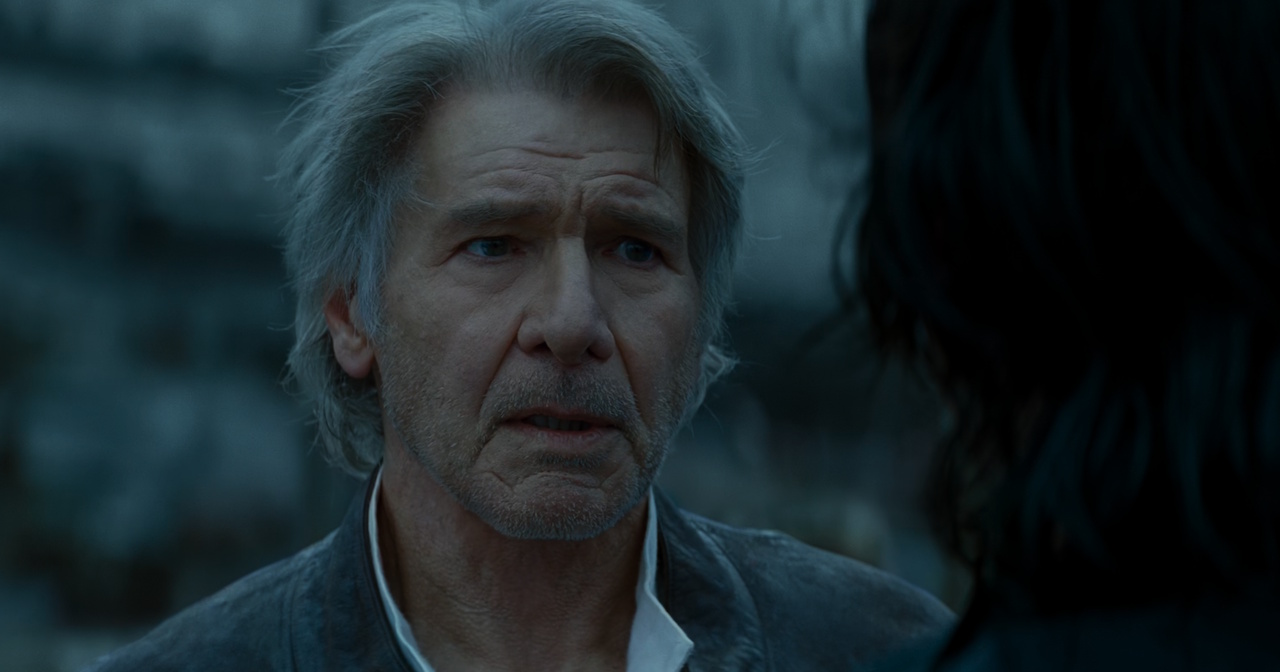
Thanks to the decision to have Kylo kill Han Solo at the climax of the story – a genuinely shocking moment at the cinema – The Force Awakens robbed Star Wars fans of the opportunity to get *any* on-screen interaction between the three heroes of the original trilogy: Luke, Han, and Leia. Han and Leia got some scenes together, and Luke and Leia had a moment in The Last Jedi. But we never got to see Han and Luke together, nor the trio reunited. And that’s really quite sad, if you think about it.

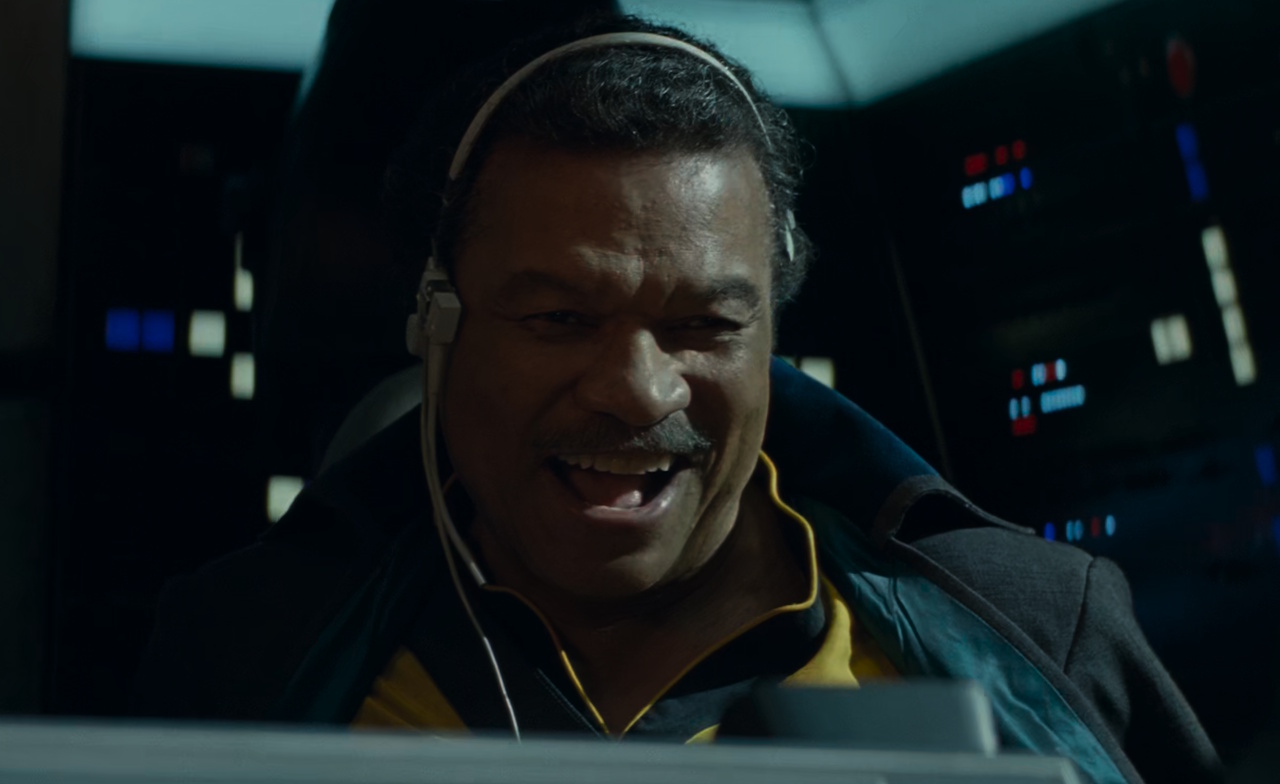
Obviously no one could’ve known, when The Force Awakens entered production, that Carrie Fisher would pass away before the sequel trilogy was complete. But it seems to me that Abrams, Kennedy, and the rest… didn’t really think about how the new trilogy could or should use its legacy characters. There was no Lando Calrissian until The Rise of Skywalker, nor any acknowledgement of his existence. And while The Force Awakens made it clear that Leia and the Resistance believed Luke Skywalker needed to be brought back into the fold… we never really got a good explanation as to *why*.

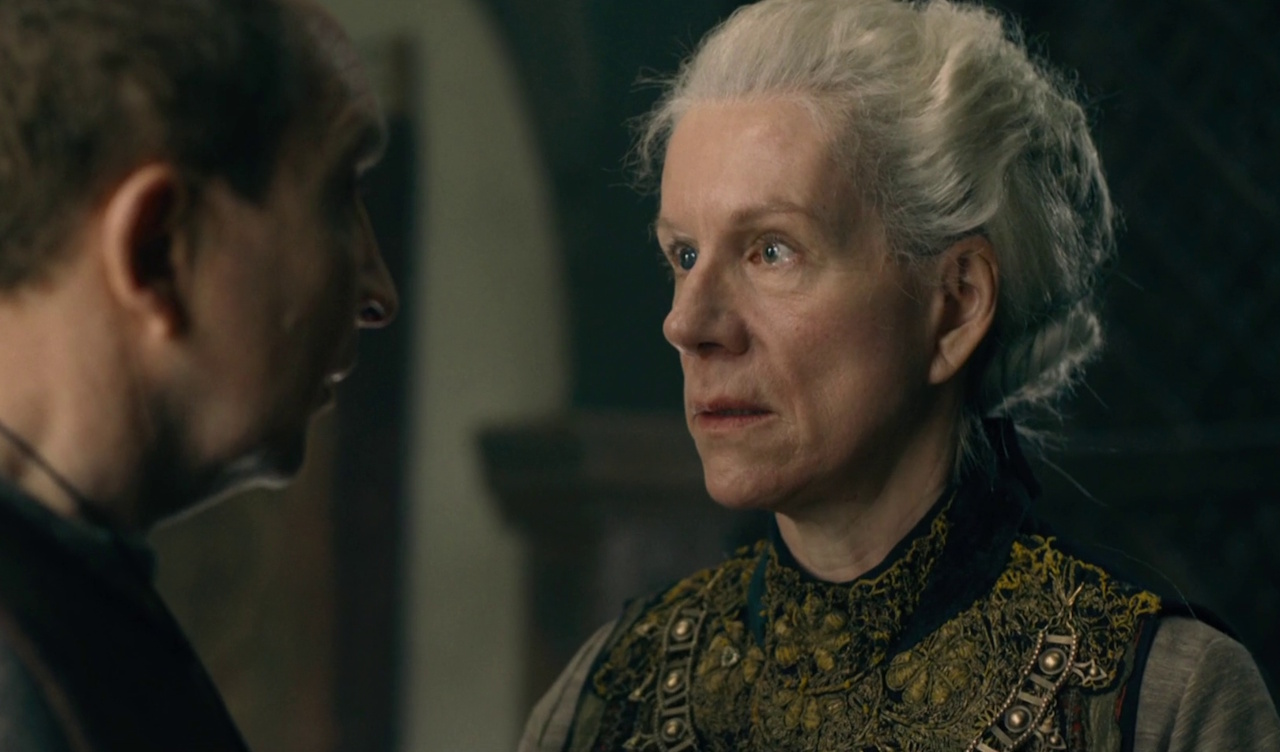
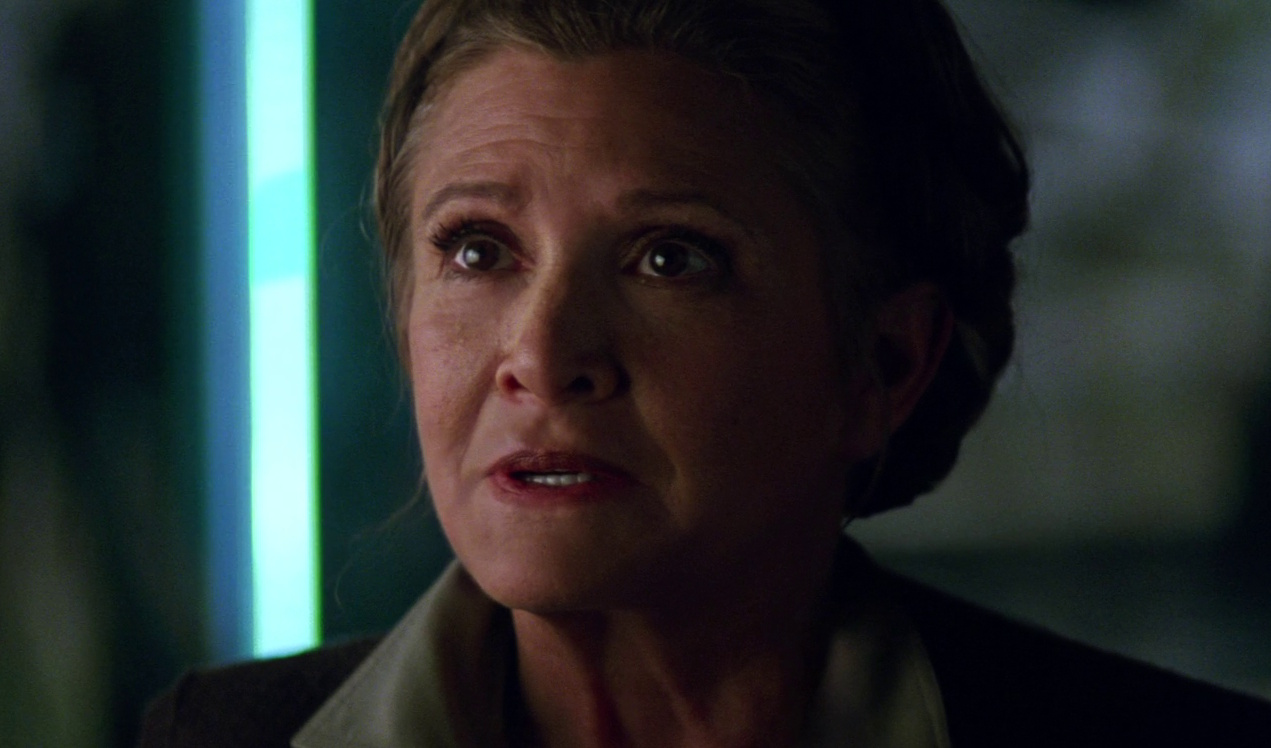
Still frame from Star Wars VII: The Force Awakens (2015) showing Leia.
General Leia of the Resistance.

So as we mark the film’s tenth anniversary… I don’t think there’s all that much to celebrate, to be blunt about it.

The story that The Force Awakens began was supposed to expunge what Star Wars had got wrong, and lay the foundations for a better future. But if you look at the state of the fan community today, the sequel trilogy is disliked, on the whole, *at least* as much as the prequels had been a decade ago, if not more. By playing it too safe, copying too much of what had come before, and failing to really answer any of the questions that a sequel should have been able to, The Force Awakens ended up being a poor film, a weak start, and a major contributing factor to Star Wars’ undeniable decline in the 2010s and 2020s.

We’re at a point now where practically no new Star Wars projects elicit the kind of excitement as The Force Awakens had done a decade ago. Oversaturation is part of that, sure – I haven’t even watched all of the various Disney+ Star Wars shows, because there’s just too many of them at this point. But a big part of it is also that this franchise feels rudderless. By doubling- and tripling-down on repetition, The Force Awakens set the tone for Star Wars’ current direction, and after the controversy of projects like The Last Jedi and The Acolyte, the temptation must be for Disney and Lucasfilm to do more of the same – which feels wrong for a franchise with such a well-constructed and interesting setting.

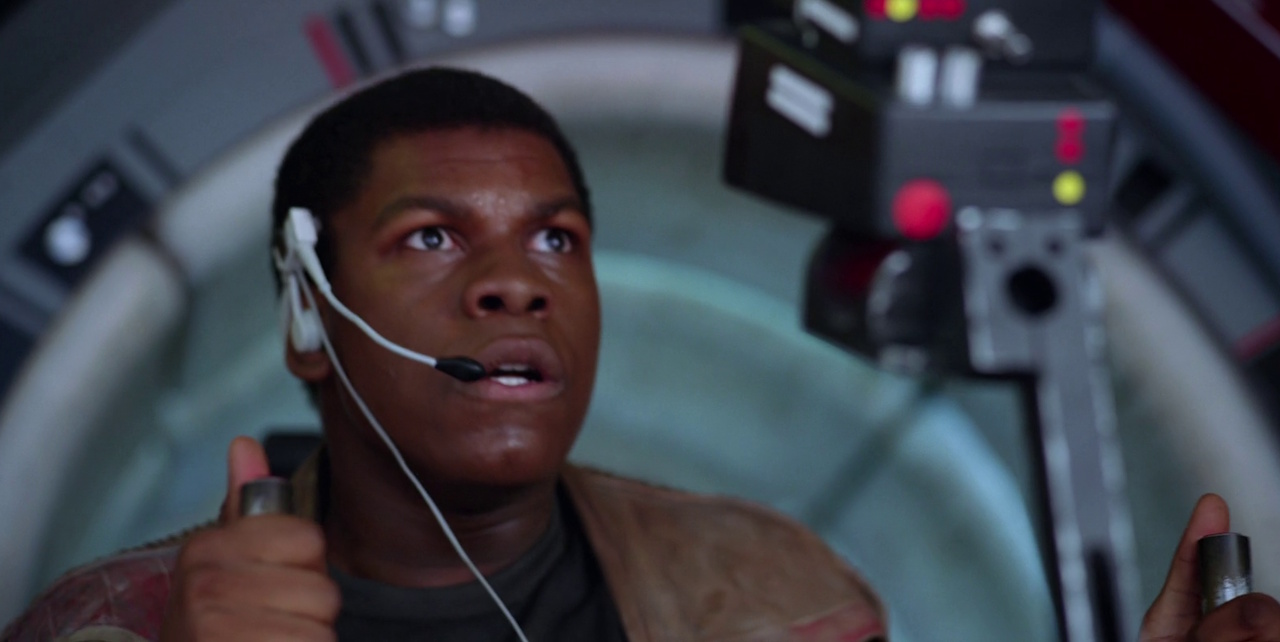
Still frame from Star Wars VII: The Force Awakens (2015) showing Finn aboard the Millennium Falcon.
Finn.

“Fundamentally flawed.” That’s my two-word summary of The Force Awakens a decade later. It was, I do not deny, a well-intentioned film, and there was merit in the idea of “resetting” some of Star Wars after the prequel trilogy. But by playing things *so* safe, and by basically copying many of the plot points from the original trilogy and A New Hope in particular, Star Wars was left with nowhere to go.

Most stories… end. And they should be allowed to end. In-universe, obviously there was work to do for Luke, Han, Lando, and Leia after the Battle of Endor. But given everything we’ve seen since – both the fan-fiction mess of the Expanded Universe, depicting a flawless, all-conquering hero in Luke Skywalker, and now the sequel trilogy with its repetition of the original story – I’m increasingly of the opinion that there shouldn’t have been a Star Wars sequel. Return of the Jedi wasn’t a perfect film, but it killed off Palpatine and Vader, gave the Rebellion a huge win, and saw Luke embrace the legacy of the Jedi. That’s where the story needed to end.

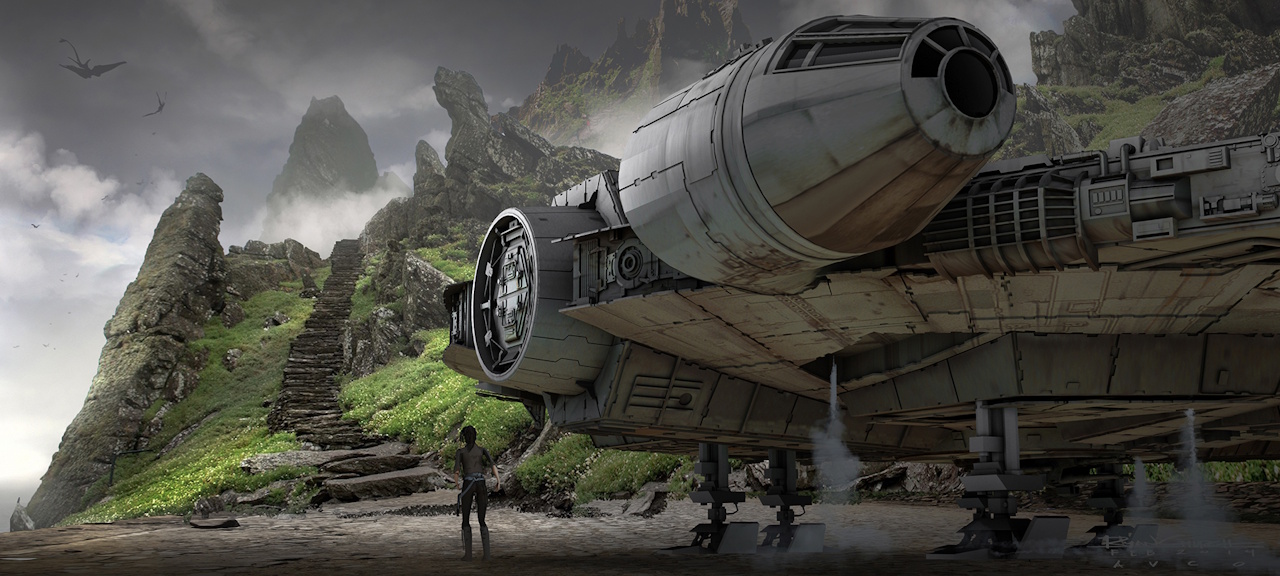
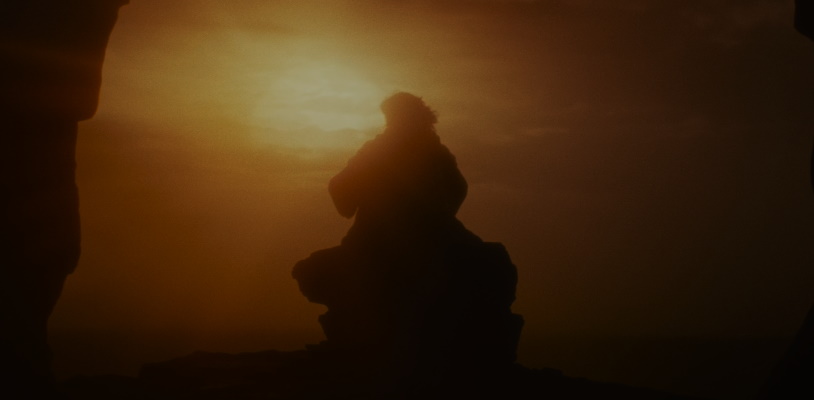
Concept Art for Star Wars VII: The Force Awakens showing Rey's arrival at Ahch-To.
Concept art of Rey arriving at Ahch-To at the end of the film.

In the 21st Century, though, it seems as if no story is allowed to come to a dignified end. And that kind of explains why The Force Awakens came to be in the first place. Rather than create something new, Disney wanted to buy something successful – something that, they believed, would print them endless amounts of cash. It worked with Marvel, so why not Star Wars, too? We’re seeing the limitations of that approach now, and The Force Awakens is really just the first chapter in a sad decline – not only for Star Wars, but for Marvel, Disney’s animated films, and more. Disney’s attitude at the moment is one of franchises, sequels, and remakes. Originality has left the building. And that isn’t *all* the fault of The Force Awakens by any stretch. But the film is symbolic of a moment in time, a moment where things began to change – and not for the better.

So, yeah: ten years ago, I had a great time with this film. Rey, Finn, and Poe were all fun characters that I felt we were just beginning to get to know, and I was curious to see where this story would go and how the First Order would be defeated. But the flaws in that story were already on display, and now that we know how badly off the rails the sequels went, and how poorly-planned the entire project was… it adds a lot of context to The Force Awakens. And it makes it pretty hard to go back and watch the film at all, in all honesty.

I continue to hope for better things from the Star Wars franchise. And there have been some projects over the last decade that worked: Rogue One, for example. But as we mark the tenth anniversary of this landmark film… I can’t help but feel there are way more negatives than positives. Star Wars will continue, of course – there are new projects on the horizon in 2026 and beyond. But are you as excited about *any* of them as you were ten years ago for The Force Awakens? I’m not. And that’s part of this film’s legacy.


Star Wars: Episode VII – The Force Awakens is available to stream now on Disney+. The film is also available on DVD and Blu-ray. The Star Wars franchise – including The Force Awakens and all other properties discussed above – is the copyright of Lucasfilm and The Walt Disney Company. This article contains the thoughts and opinions of one person only and is not intended to cause any offence.

Let’s Have A 21st Century Christmas!

A festive spoiler warning graphic.

Spoiler Warning: There are minor spoilers for several of the titles discussed below.

Have you ever noticed that *most* of the films and TV specials that we like to watch at this time of year are… kinda old? Even if you don’t go for a real old-school classic like It’s A Wonderful Life or Miracle on 34th Street, most of the festive entertainment that I see being talked about – at least among my peers and folks of a similar age to me – originated before the turn of the millennium.

Think about it: Die Hard came out in 1988. Home Alone is from 1990. A Christmas Story was 1983. The Santa Clause was released in 1994. The Nightmare Before Christmas? That was 1993. The Muppet Christmas Carol came out in 1992.

So where’s the 21st Century in our holiday traditions? That’s a wrong we’re going to right today!

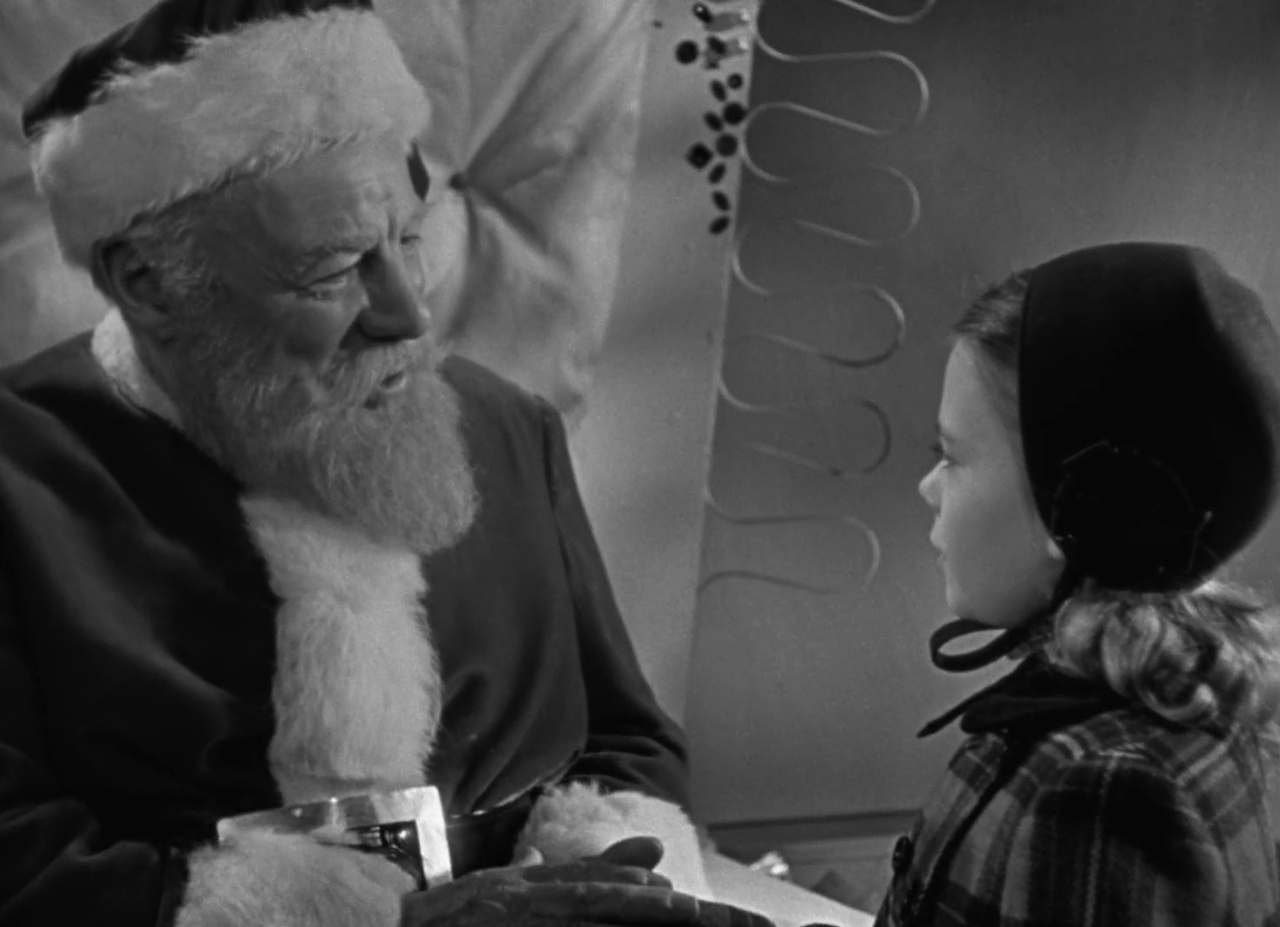
Still frame from Miracle on 34th Street (1947) showing Santa Claus.
Many of our “Christmas classics” are from the 20th Century, like Miracle on 34th Street.

I have really fond memories of this time of year, including watching the likes of 1982’s The Snowman, Mickey’s Christmas Carol from 1983, and the 1996 so-bad-it’s-good classic Jingle All The Way! But there are some wonderful films and TV specials which premiered in the first quarter of the 21st Century that I think some of us can occasionally overlook. And look, I get it: some of these still feel brand-new, even if they’re approaching their 20th or even 25th anniversaries! But Christmas, while a time of tradition and returning to things we’ve enjoyed in the past, still has room for newer and more modern touches.

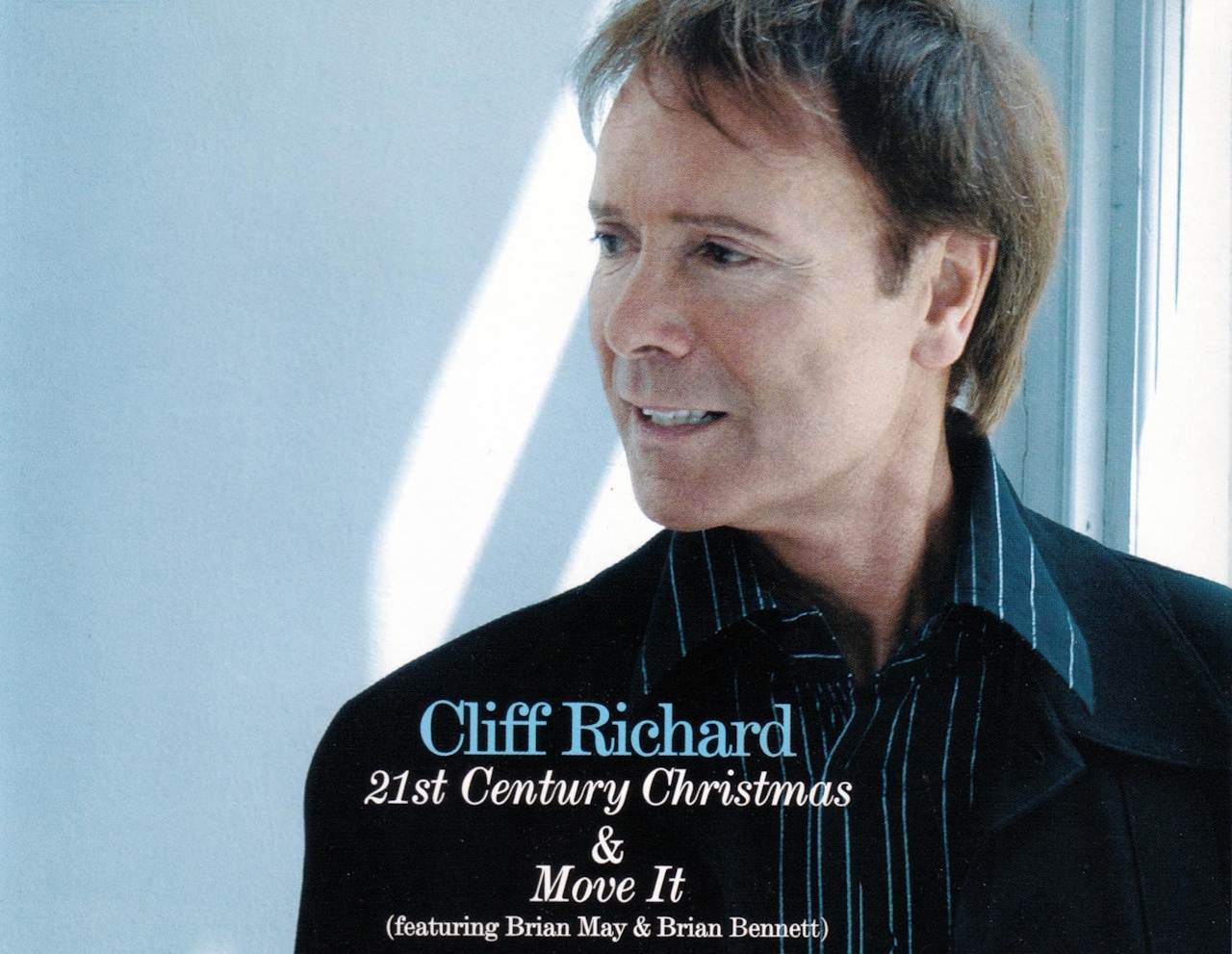
If you’re British (or if you remember an earlier edition of my annual festive playlist), you might associate the term “21st Century Christmas” with the song of the same name by Cliff Richard! That’s where I got the title of this piece from. And the song itself is well worth a listen, even if Cliff’s idea of “the 21st Century” seems dated already, with lyrics talking of DVDs and faxes! But I think we’ve drifted off-topic…

The cover of Cliff Richard's 2006 CD single "21st Century Christmas".
In the immortal words of Cliff Richard, let’s have a 21st Century Christmas!

What I’ve done today is put together a short list of five films and TV specials from the 21st Century that I think are well worth checking out at this time of year. If you missed them when they were new, or haven’t seen them since they premiered… maybe check them out in 2025. We’re almost a quarter of the way through the century, if you can believe that. And I’m still trying to adjust to writing dates where the year begins with a “2!”

My usual caveats apply: everything we’re going to talk about is the entirely subjective, not objective, opinion of one person only. If I highlight something you hate or miss out something you thought would be a shoo-in for a list like this… *that’s okay!* There are loads of fun Christmas specials and films, and I’ve only picked out a handful this time. They’re listed below in the order they were originally released, and I included any Christmassy or Christmas-adjacent film or TV special released after the 1st of January 2001 on my long list of titles under consideration!

With all of that out of the way… let’s have a 21st Century Christmas!

Number One:
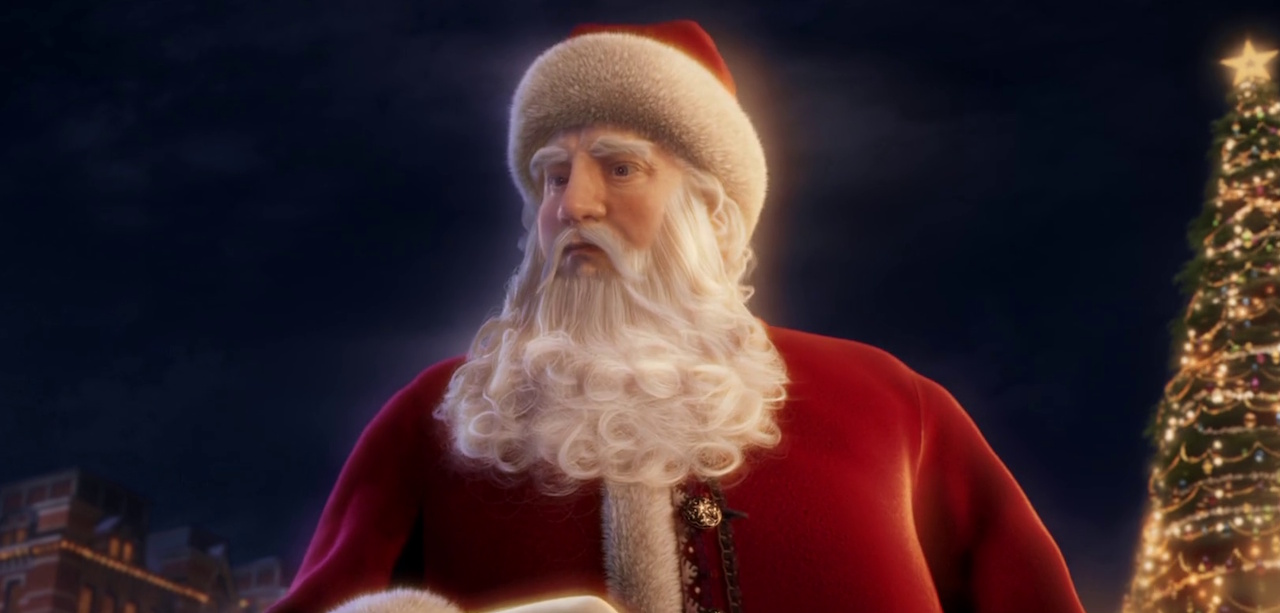
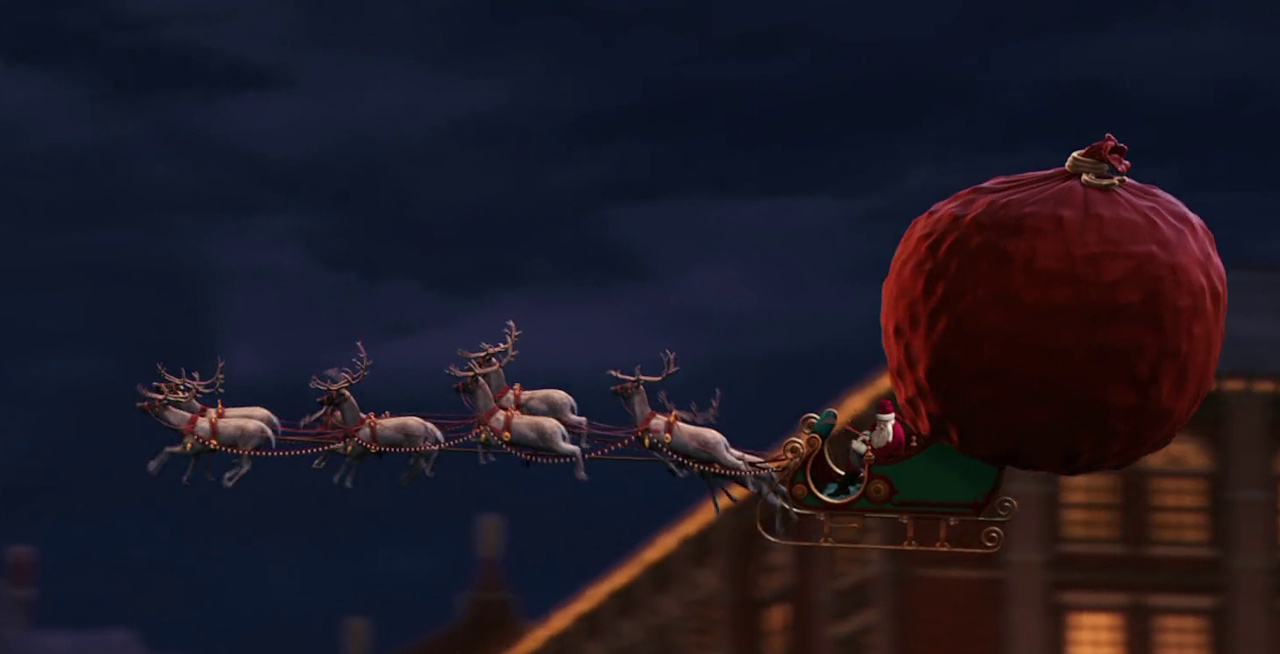
The Polar Express
(2004)

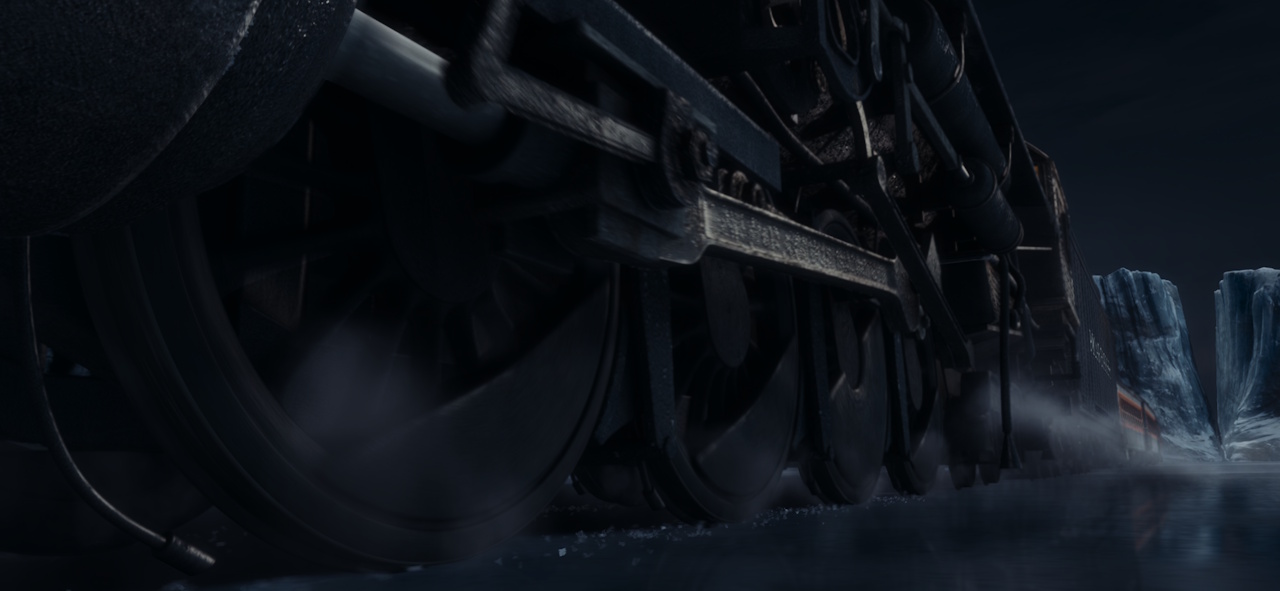
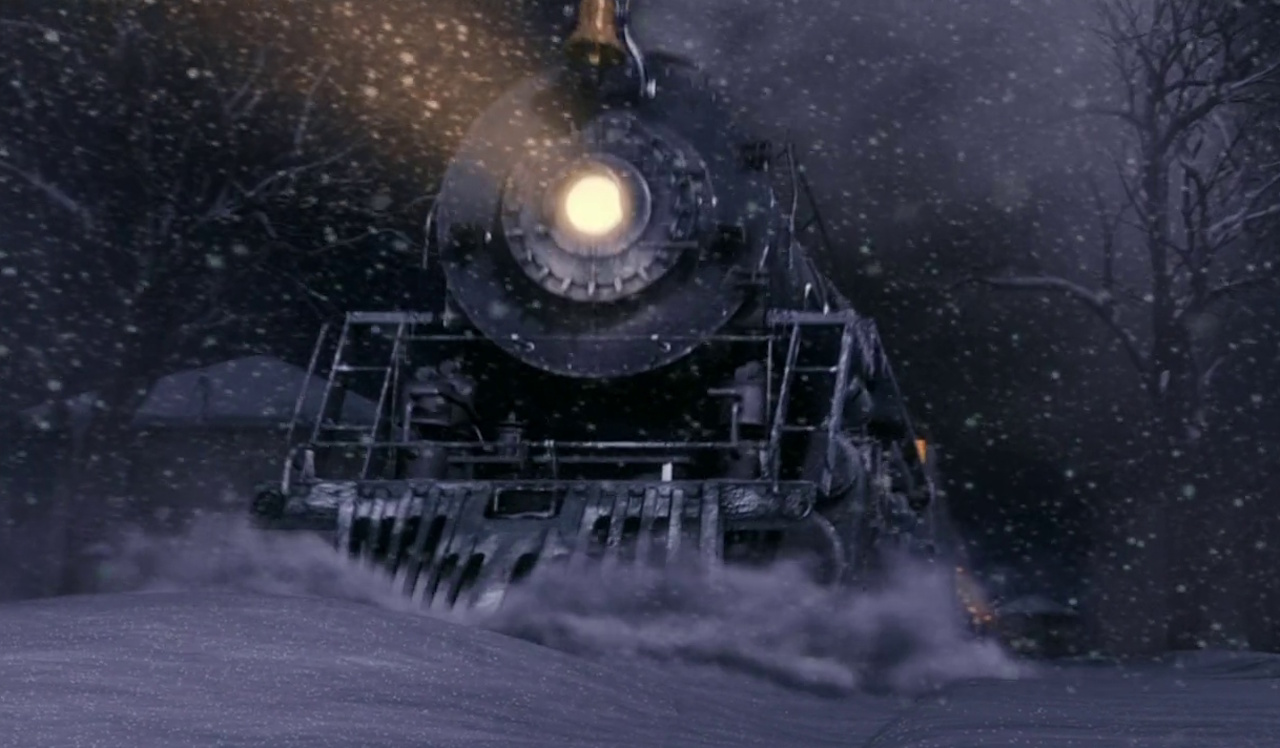
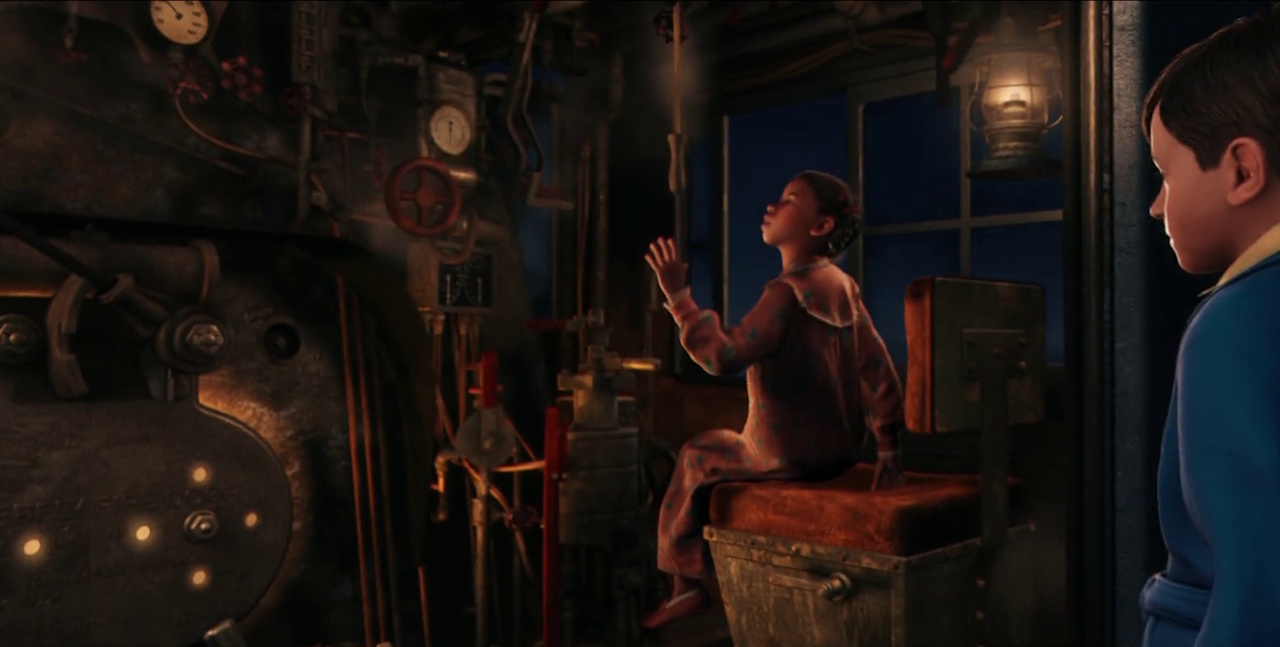
Still frame from The Polar Express (2004) showing the titular train on an icy lake.
The titular Polar Express.

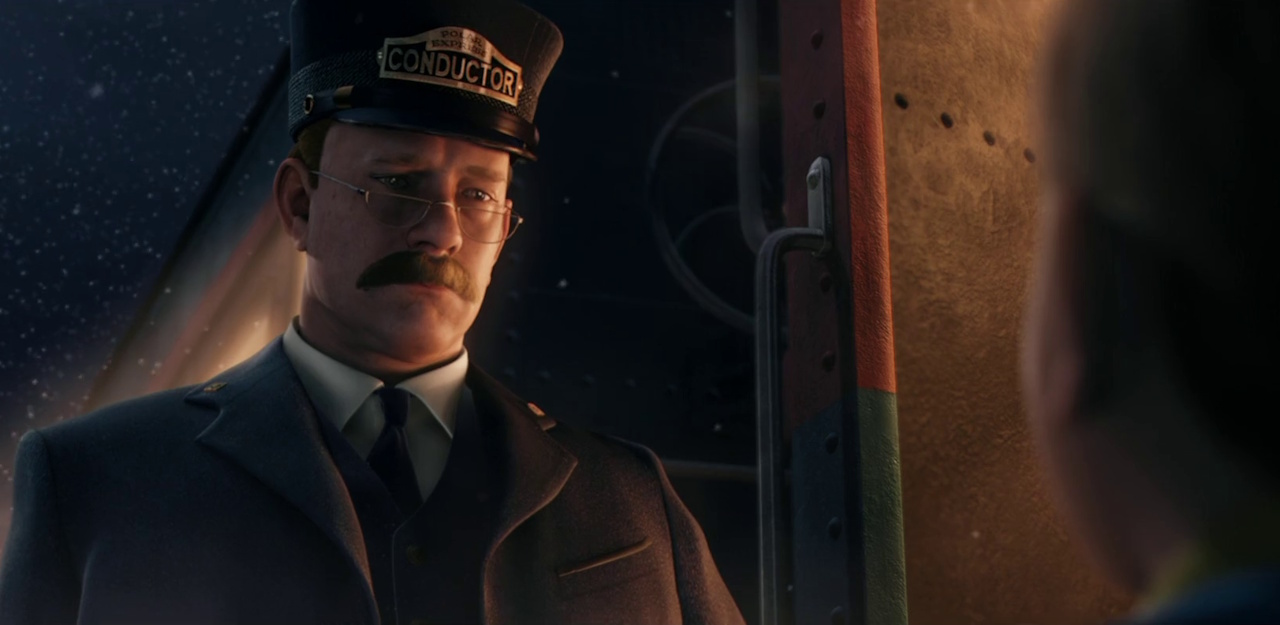
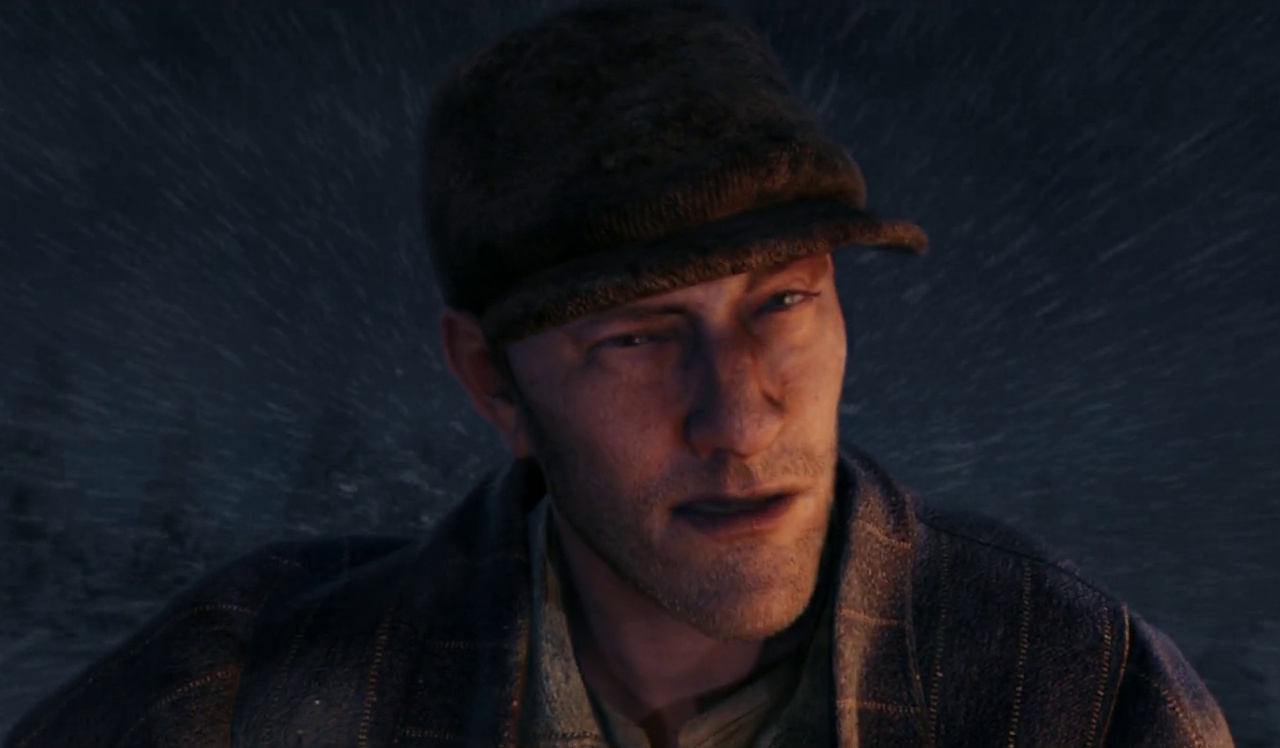
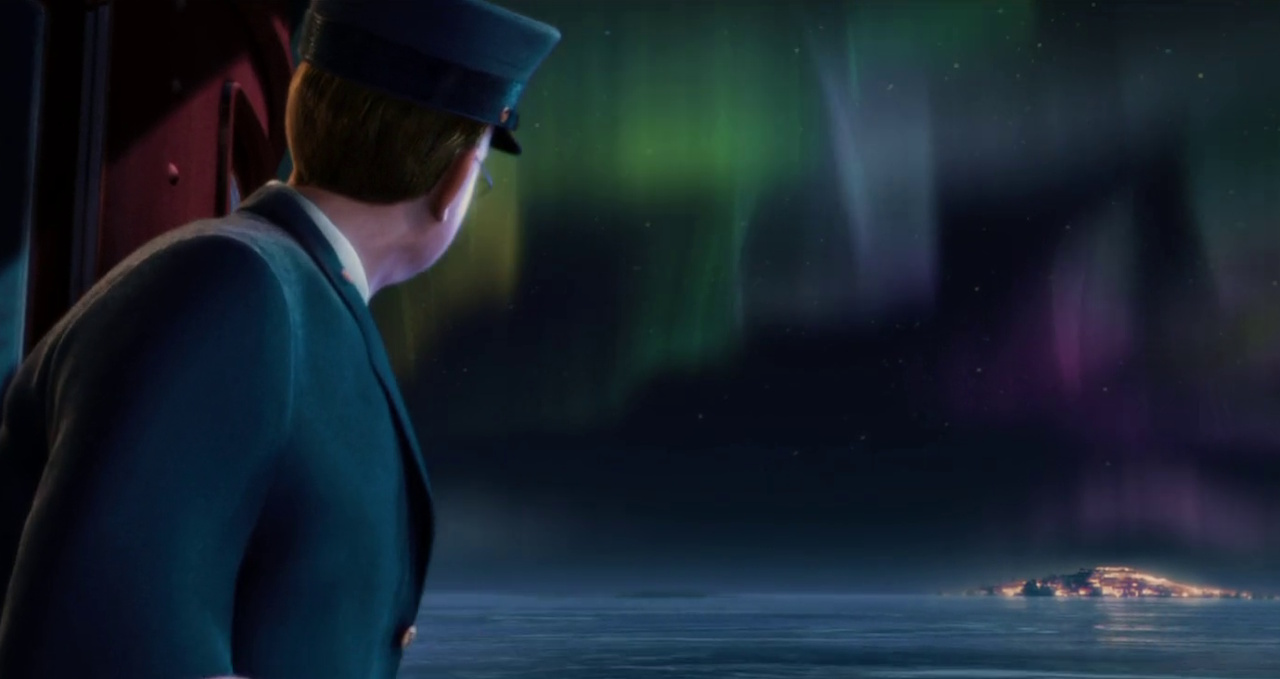
Can you believe that The Polar Express is more than 20 years old already? The film has – in my view – aged remarkably well, shaking off a somewhat controversial start to become a true festive classic. When The Polar Express was released, I can clearly remember a colleague of mine telling me that their young children were frightened of the film and its “creepy” CGI. But as we’ve gotten more used to computer animation in the two decades since, I think that particular criticism of The Polar Express has well and truly fallen away.

This is a fun twist on the classic “does Santa really exist” dilemma that many kids face. And it’s a bold choice for a Christmas film to tackle that question head-on, not simply hand-waving away the young boy’s doubts. Instead, The Polar Express leans into this idea of doubt to tell a really engaging and just plain *fun* narrative that I’m sure continues to resonate really strongly with kids today.

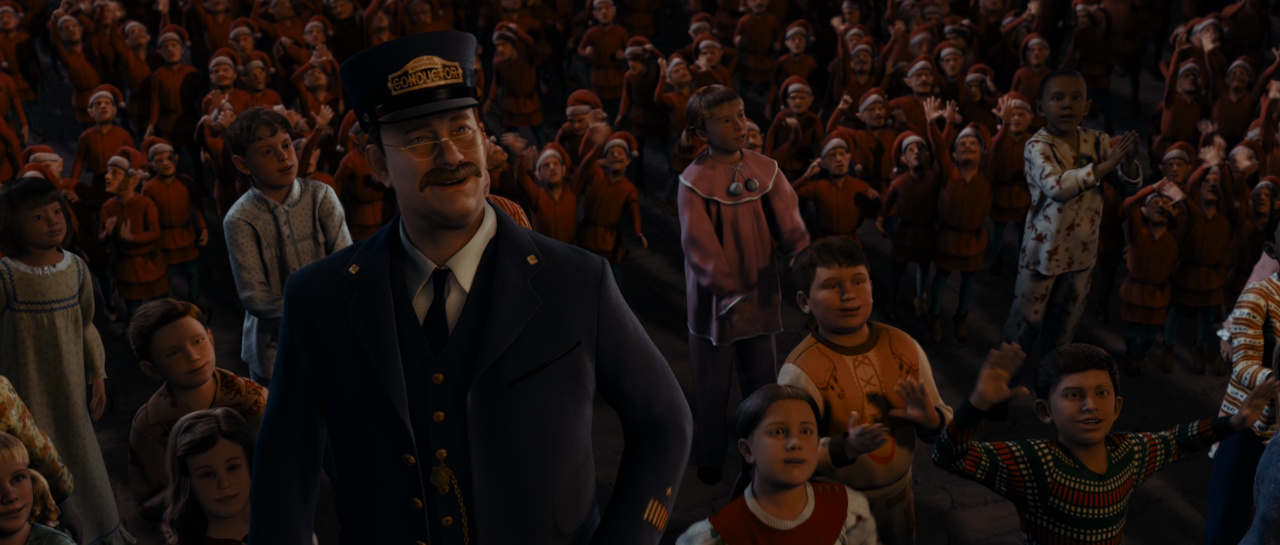
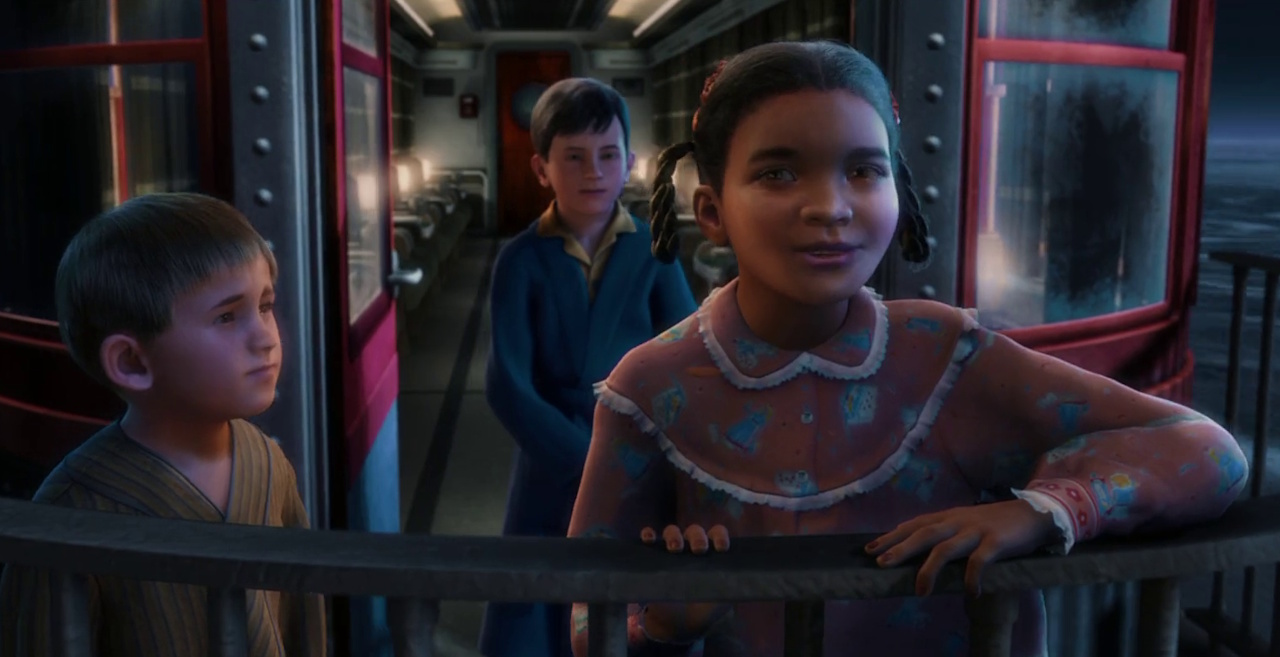
Still frame from The Polar Express (2004) showing the conductor, the kids, and a crowd of elves at the North Pole.
The conductor with some of the kids.

I love a good steam train, and The Polar Express brought a wonderful engine to life with its CGI. Trains are kind of related to Christmas – especially toy trains – so that’s on theme. And there’s a wonderful musical sequence as well as a great score. The theme from The Polar Express has become a classic Christmas track in its own right!

I wrote up a longer piece on The Polar Express last year to mark the film’s twentieth anniversary, and you can find it by clicking or tapping here. I’d be really curious to know what kids who’ve grown up since 2004 – and thus remember The Polar Express as just another old Christmas film – make of it nowadays!

Number Two:
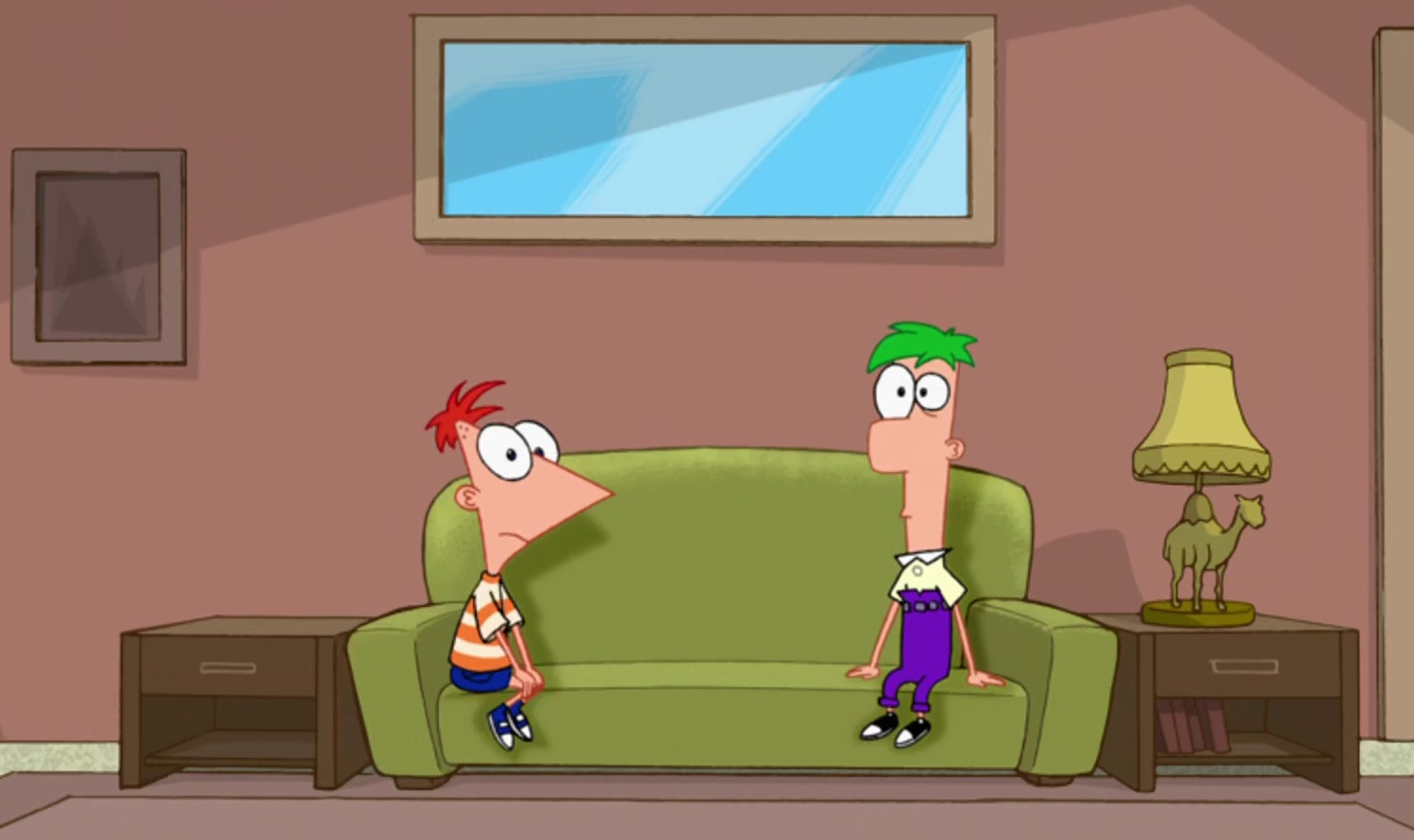
Phineas and Ferb: Christmas Vacation
(2009)

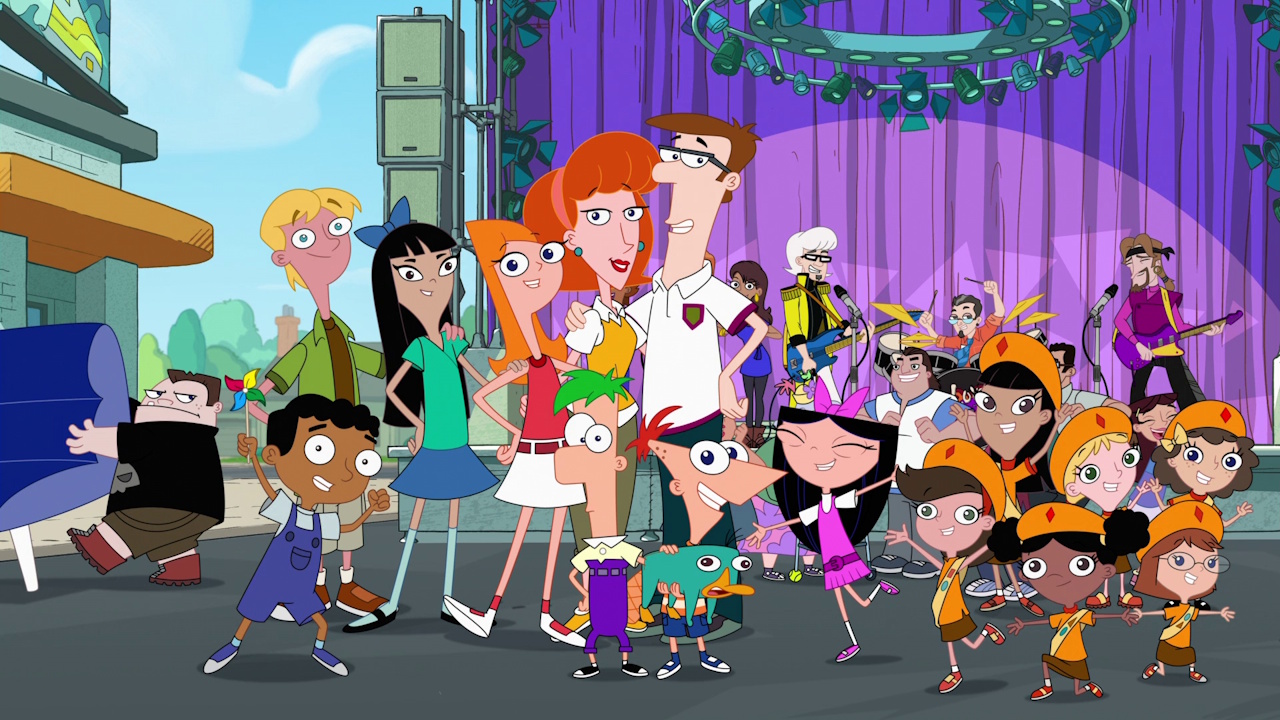
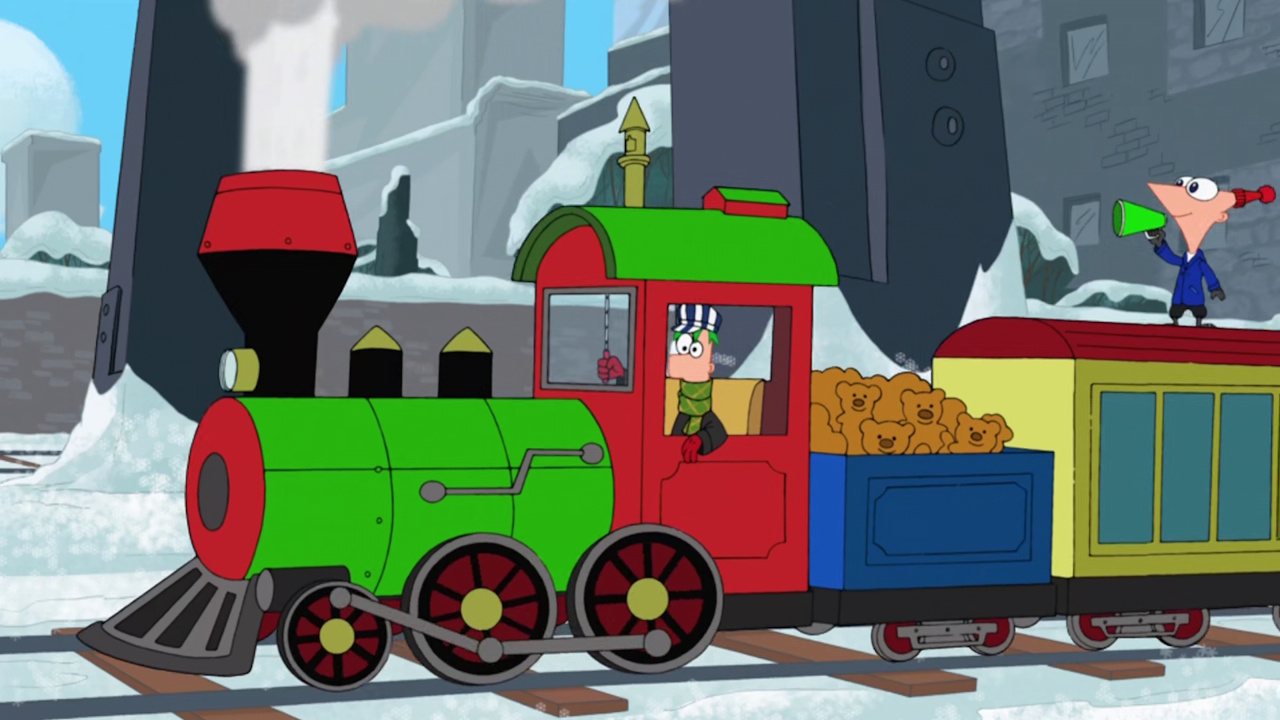
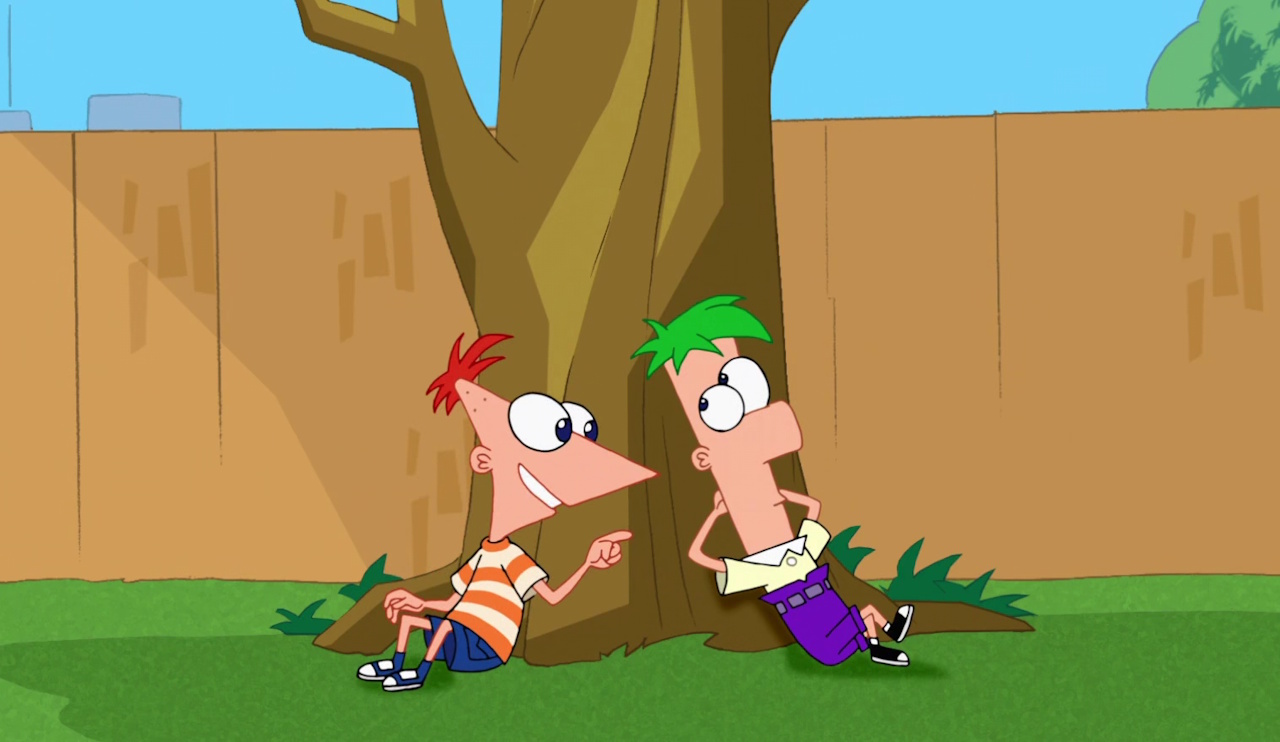
Still frame from Phineas and Ferb: Christmas Vacation showing Phineas and Ferb aboard a Christmassy steam train.
The boys on a train.

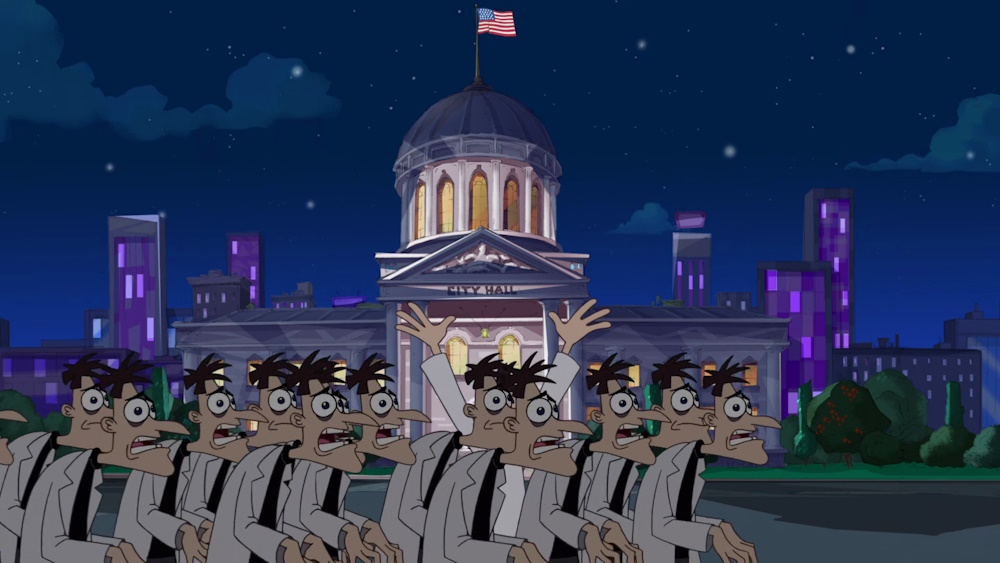
I’m a big fan of Phineas and Ferb, so I was pleased to see the series resurrected this year for a fifth season! The show’s big Christmas special, from back in 2009, is one of the absolute best episodes for me, and it puts a distinctively “Phineas and Ferb” spin on a classic holiday premise. When Christmas is endangered (by the nefarious Dr Doofenshmirtz, naturally), someone has to step up and save the day – and that task falls to Phineas, Ferb, Candace, and their friends.

Christmas Vacation also has an incredible soundtrack. Phineas and Ferb is well-known for its songs and musical numbers, but Christmas Vacation packed several great festive tracks into its runtime. Big Bad Voodoo Daddy’s song Christmas is Starting Now, which plays at the climax of the story, might be the pick of the pops, but really, all of the songs are just fantastic. Several of them are on my festive playlist!

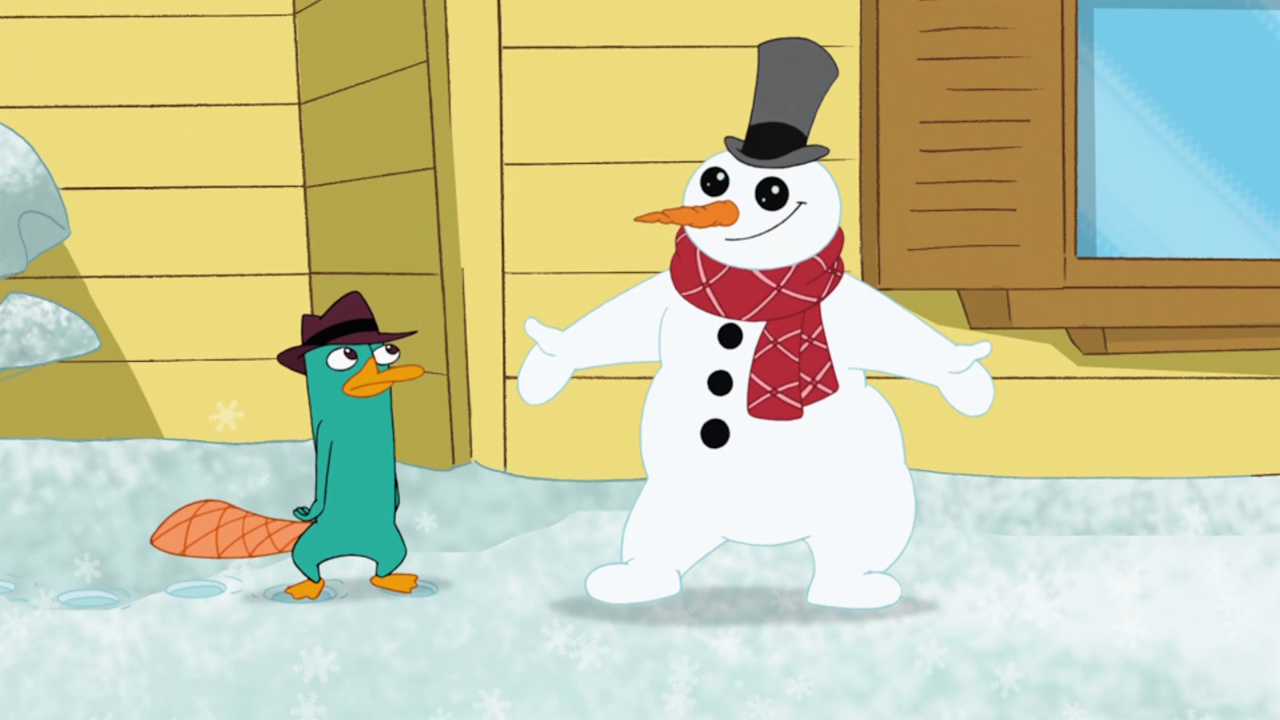
Still frame from Phineas and Ferb: Christmas Vacation showing Perry the Platypus and a magic, sentient snowman.
Perry and a magic snowman.

I’m an absolute sucker for the whole “Christmas is in danger, so someone has to fix it” story trope, and Phineas and Ferb executes it so well. We get some fantastic buildup, with the kids excitedly decorating the entire town as part of their “thank-you letter” to Santa Claus, Doofenshmirtz gets a cute conflicted backstory about his ambivalence towards the holidays, and it all culminates on Christmas Eve with the kids having to do what they do best… with a little help from the North Pole.

Phineas and Ferb: Christmas Vacation is the only Christmas special or movie that I watch, without fail, at least once every festive season. I have done since I first saw it, I think, and it’s become a tradition that I plan to continue for as many Christmases as I’ve got left! Last year, to mark the special’s fifteenth anniversary, I wrote a longer piece about it, which you can find by clicking or tapping here.

Number Three:
Family Guy: Road to the North Pole
(2010)

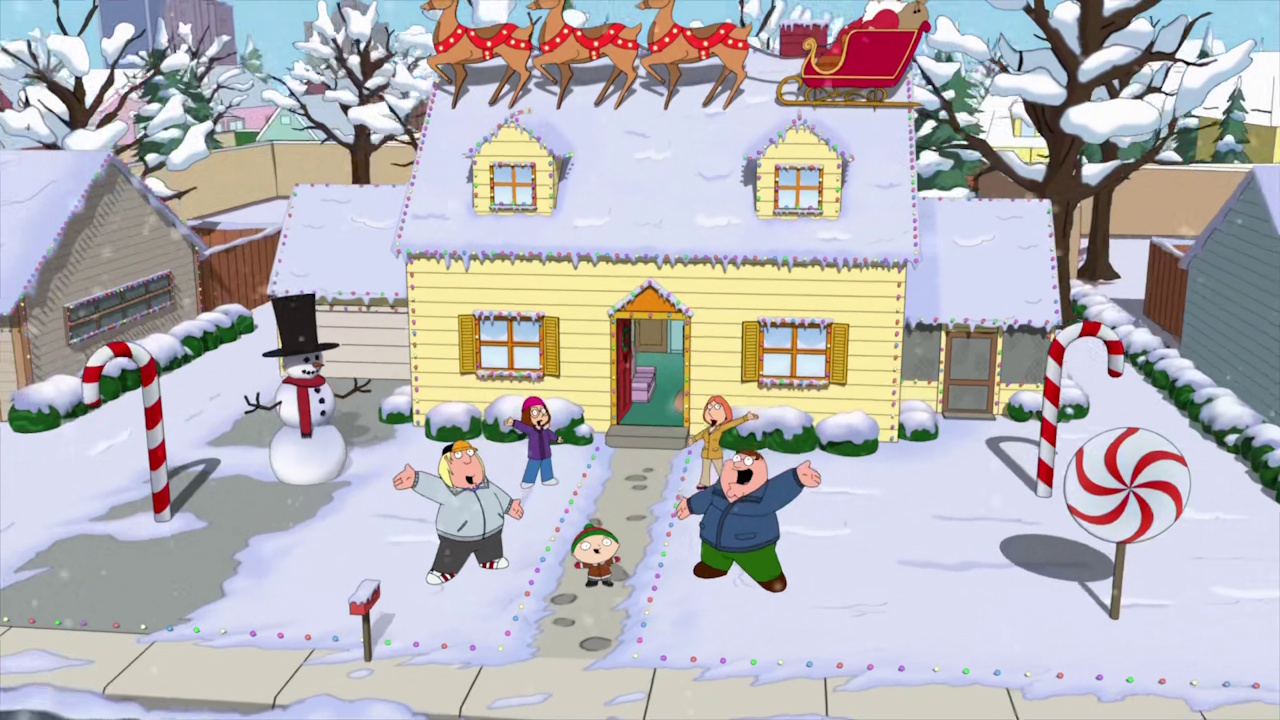
Still frame from Family Guy: Road to the North Pole showing the Griffin family and their house.
The song at the beginning of the special.

Family Guy had a good thing going for a few years with its “Road To…” special episodes, and the format was perfect for this Christmas special. Stewie and Brian take off on a wild adventure to find Santa after a run-in with a fake Santa at the local shopping mall. This kicks off a ridiculous quest that takes several dark turns… but one that has a surprisingly poignant message about consumerism and overconsumption.

Road to the North Pole kicks off with one of Family Guy’s best-ever songs, too: All I Really Want For Christmas, which sees most of the show’s main and secondary characters sharing their silly Christmas wants and wishes. The musical number is fantastic, well-animated, and pretty darn funny, too. I don’t think it’s a stretch to say that Family Guy – like The Simpsons before it – has declined in quality over the years, so maybe Road to the North Pole is one of the last truly good stories.

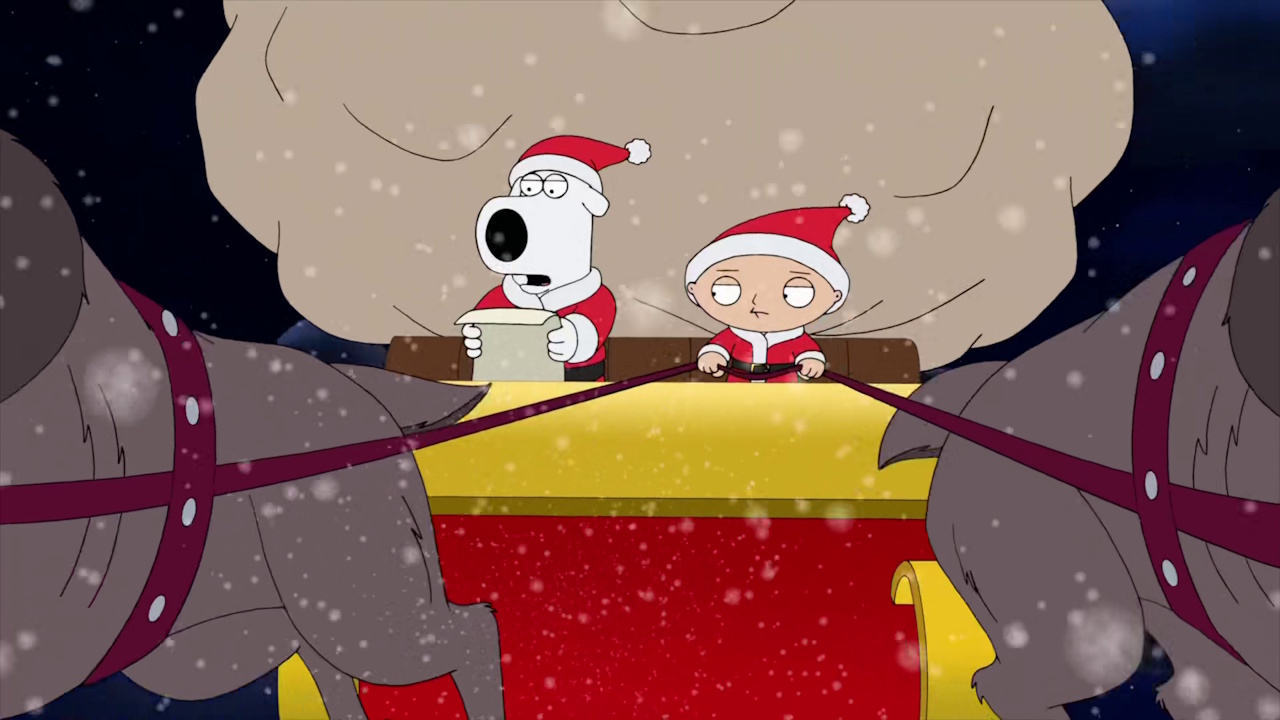
Still frame from Family Guy: Road to the North Pole showing Brian and Stewie piloting the sleigh.
Brian and Stewie on Santa’s sleigh.

Aside from the song – which is hilarious – I think what people remember the most about Road to the North Pole is its depiction of a weak Santa Claus, wasting away, beaten down by the incessant demands of consumerism. And that’s the core message of the special: that people are asking for (or demanding) too much at Christmas instead of being satisfied with smaller gifts, spending time with family, or just what they already have. Though presented in a weird, grotesque, and typically “Family Guy” way, that message is a good one – and a timeless one, too.

What I enjoy most, though, about Road to the North Pole is the road trip itself. Starting at their New England home, Brian and Stewie trek through the United States and Canada, under the Northern Lights, before making it to Santa’s workshop. Though not the biggest part of the special, there’s something about this kind of adventure that’s always captured my imagination.

Number Four:
Doctor Who: The Time of the Doctor
(2013)

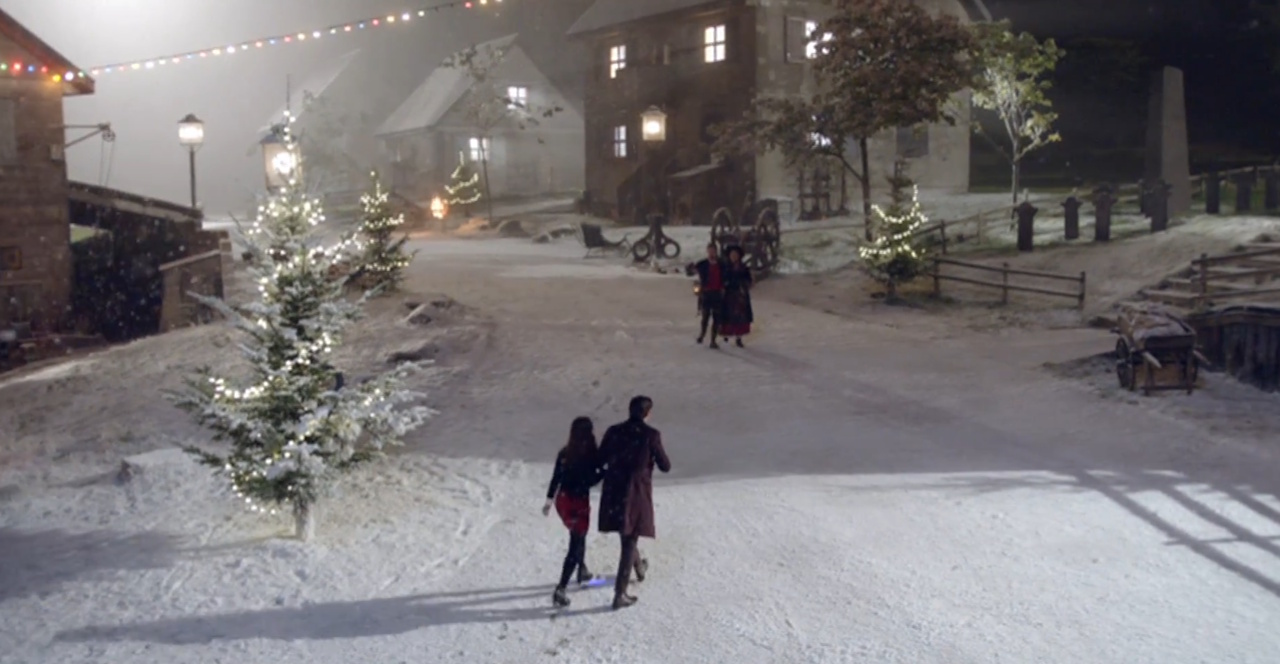
Still frame from Doctor Who showing the planet Trenzalore.
The village of Christmas.


Speaking as we were of a show’s “last hurrah” before descending into mediocrity… here’s Doctor Who! Joking aside, The Time of the Doctor, which came along just after the show’s wonderful fiftieth anniversary special earlier in 2013, is probably the final genuinely good episode of the revival. As much as I adore Peter Capaldi and his take on the ancient time-traveller, his tenure in the Tardis marked a decline in quality from which the show has simply not recovered.

But that’s not what we’re here to talk about!

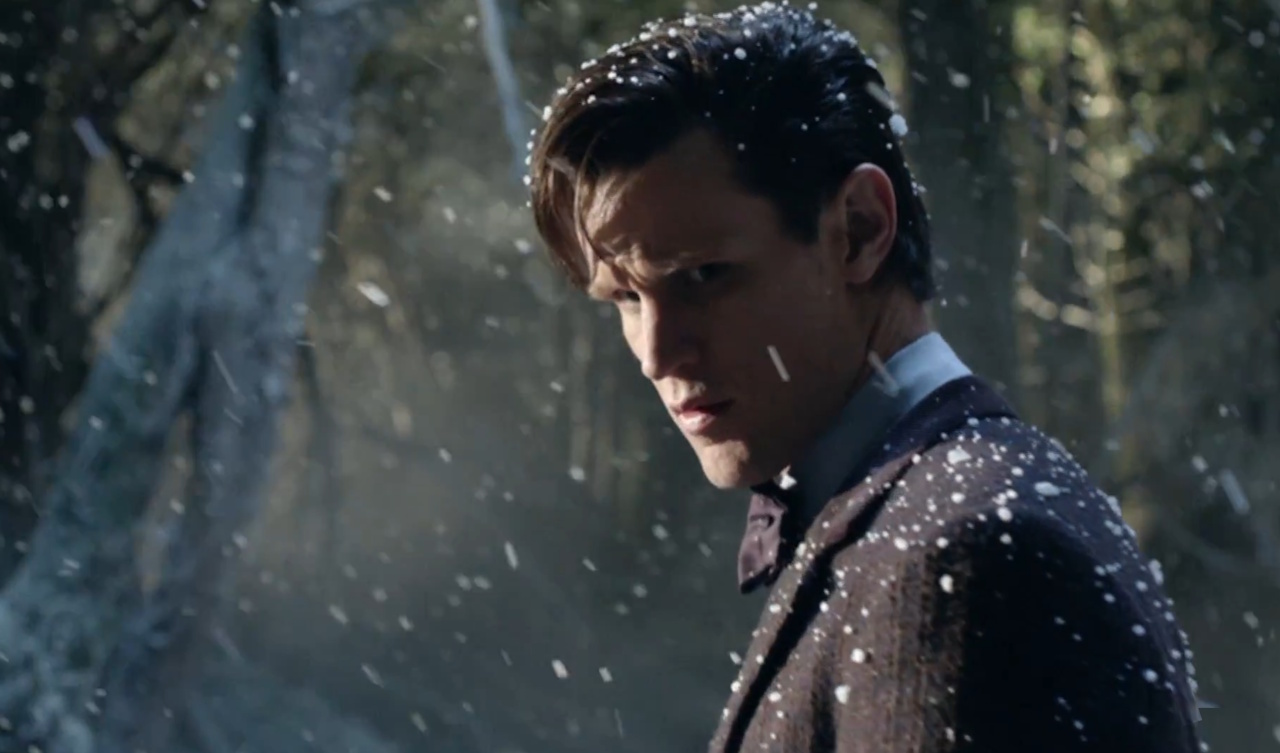
The Time of the Doctor sees Matt Smith’s Eleventh Doctor battling alone, for decades, against the Daleks and a variety of other enemies, all in defence of a town named Christmas. There’s some snow, some cute Christmas imagery, and a pretty fun and emotional story as this incarnation of the Doctor reaches the end of his life.

Still frame from Doctor Who showing the 11th Doctor in the snow.
Matt Smith as the Eleventh Doctor.

Doctor Who has done a number of Christmas specials since its revival – and not all of them feel as “Christmassy” as The Time of the Doctor. While it’s still very much the culmination of a multi-story arc, and some of that context *does* add a lot to the final act in particular, I still think it’s something that can be watched and enjoyed on its own merit. I haven’t seen Season 7 of the revived Doctor Who since it was on the air back in 2012/13, but The Time of the Doctor is still fun to return to.

I’ve always found stories about doomed last stands to be intense and emotional, and I think that’s a big part of what makes The Time of the Doctor work so well. It’s a tale of a man caught between two impossible extremes – and his only friend trying to reach him. The stakes are high… but also very personal. It’s a great special – and maybe, in hindsight, it should’ve brought the revived series to an end.

Number Five:
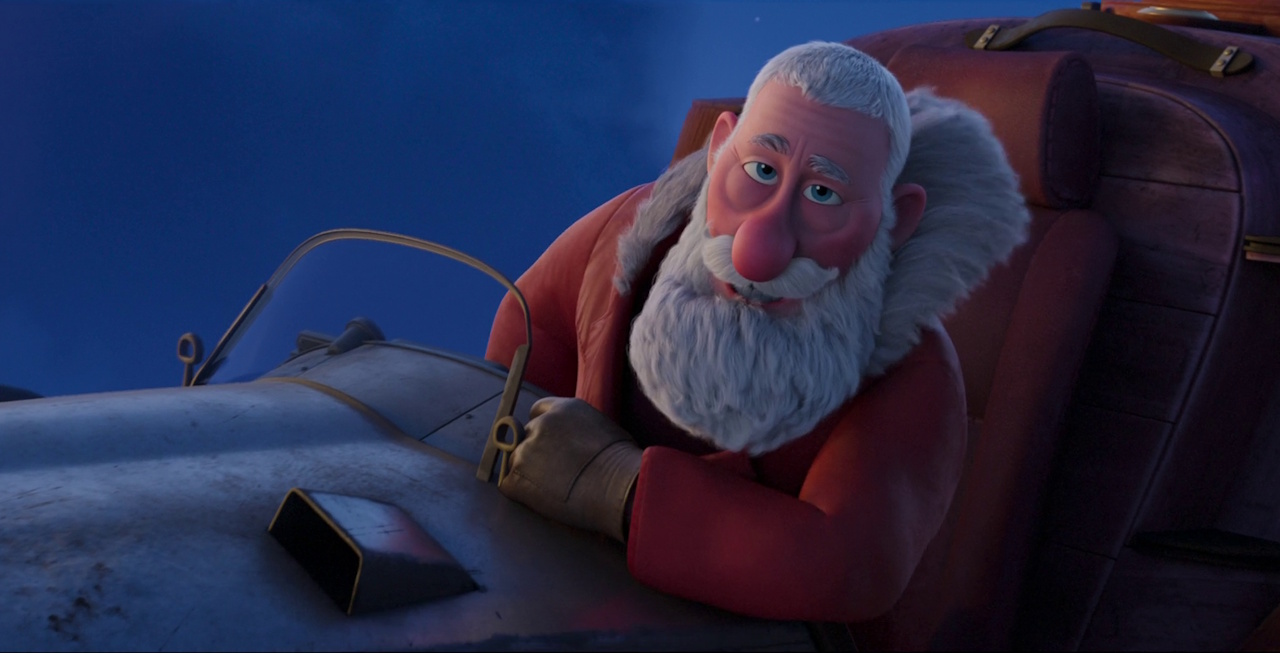
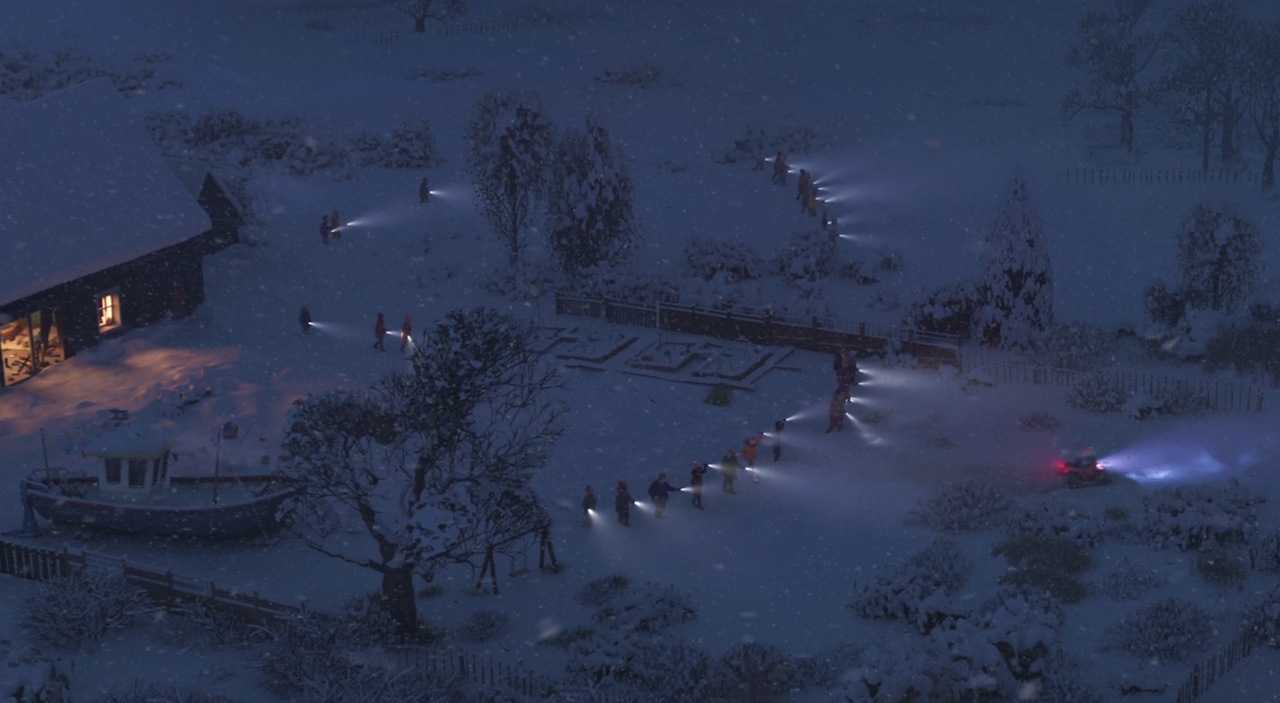
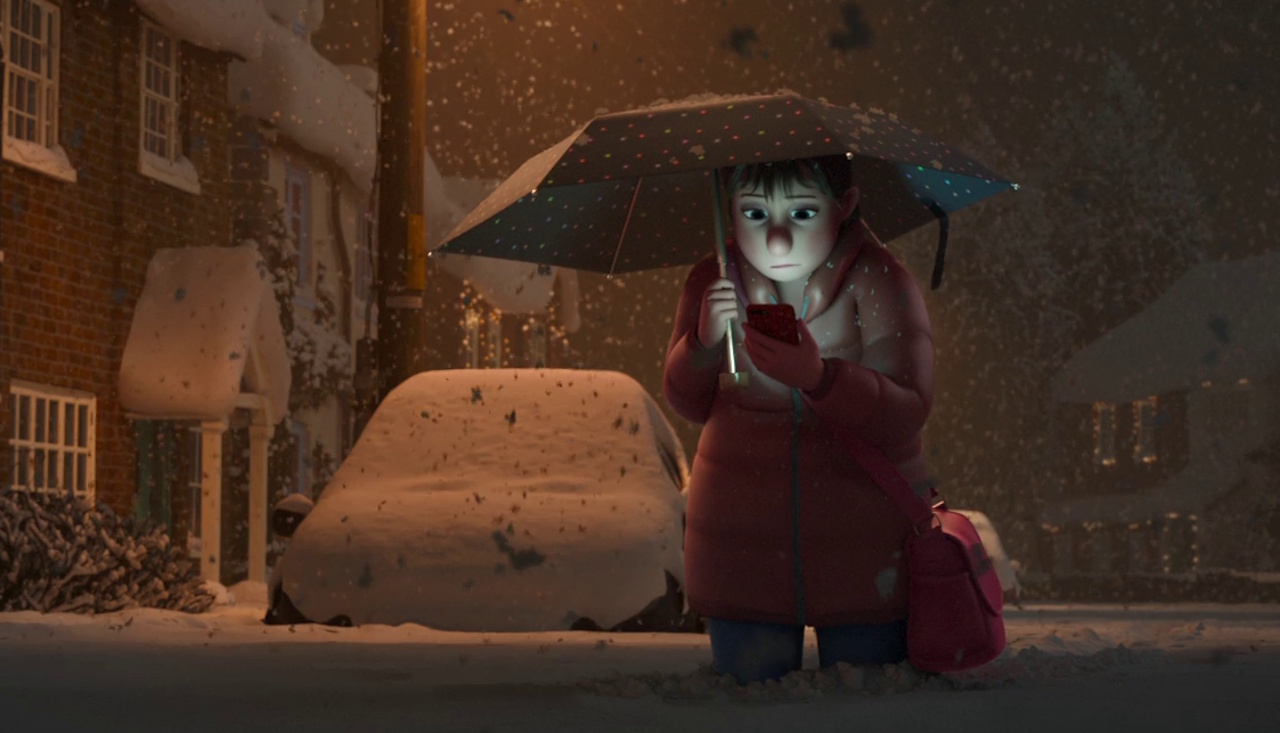
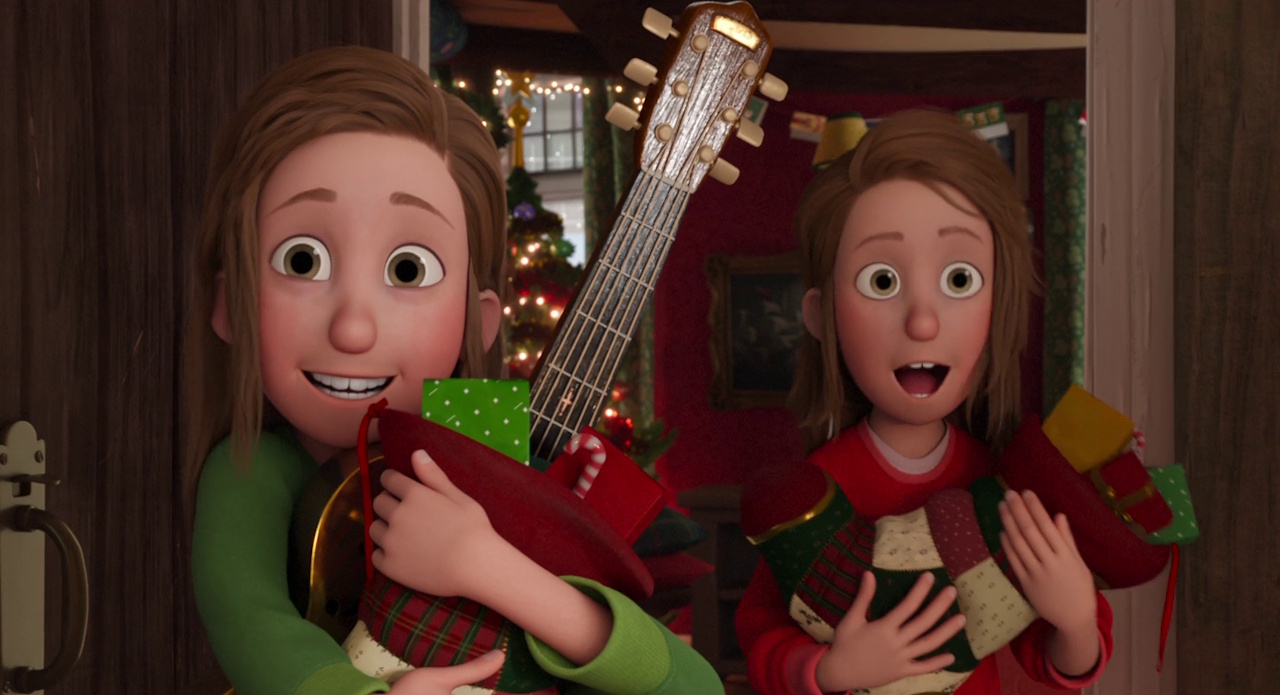
That Christmas
(2024)

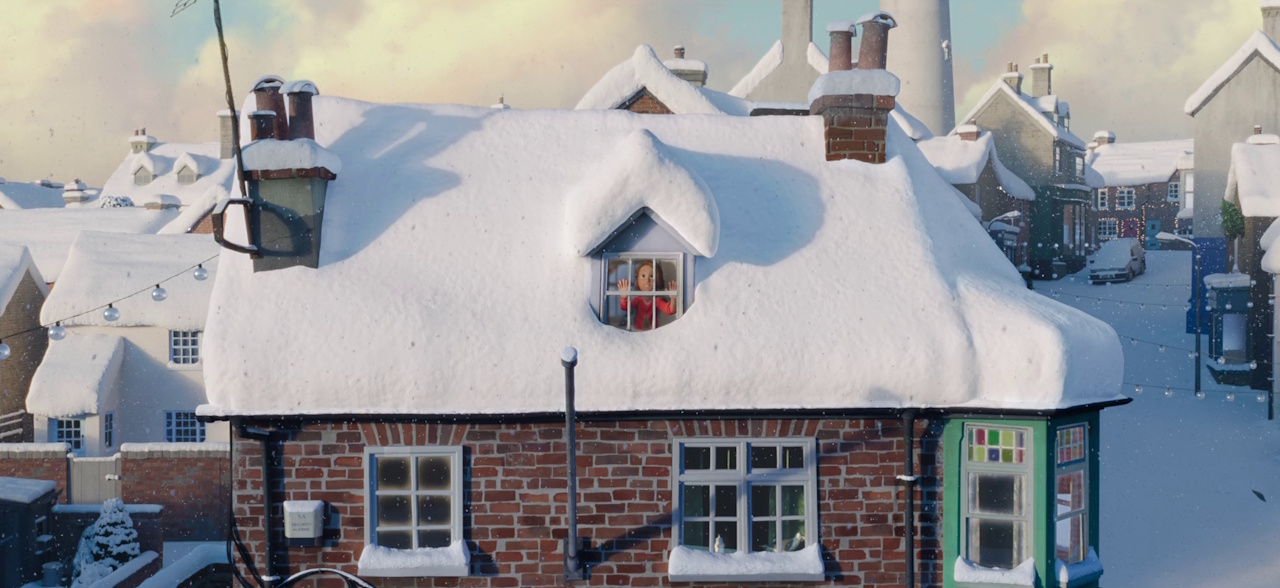
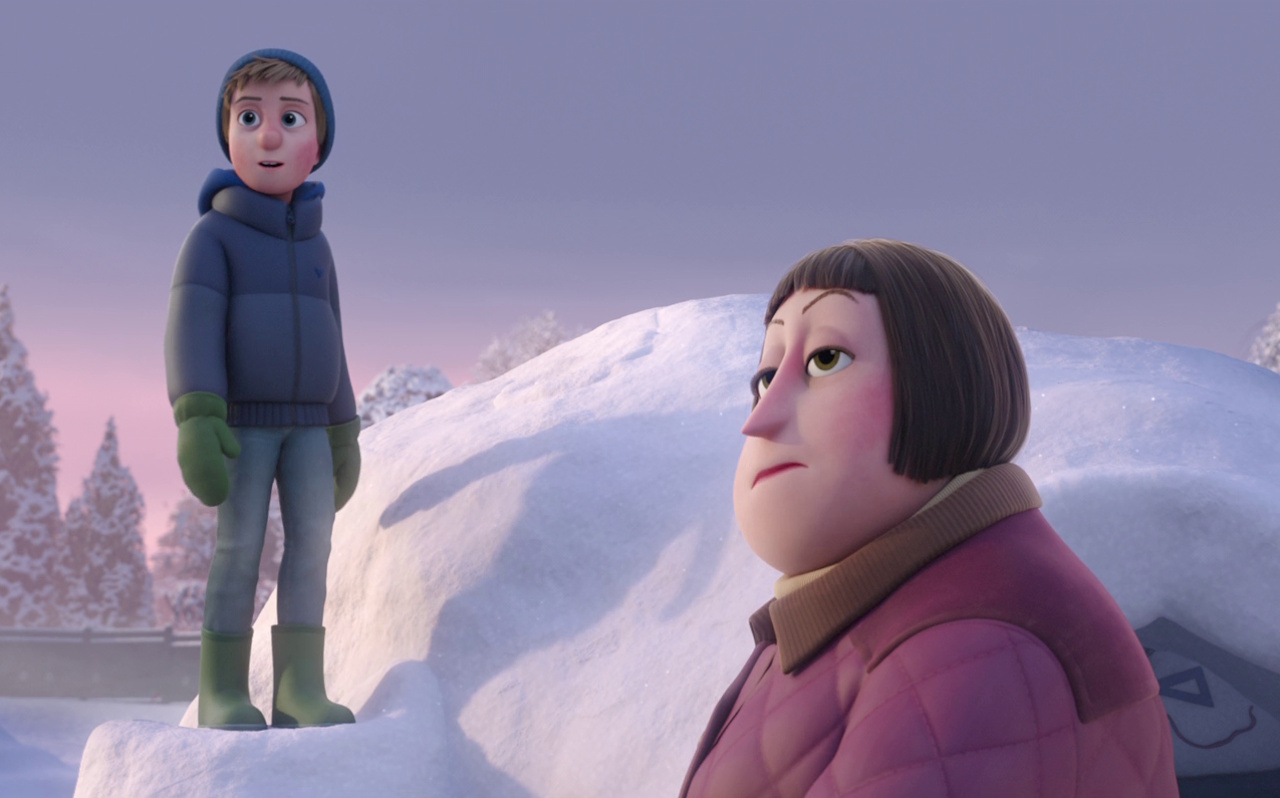
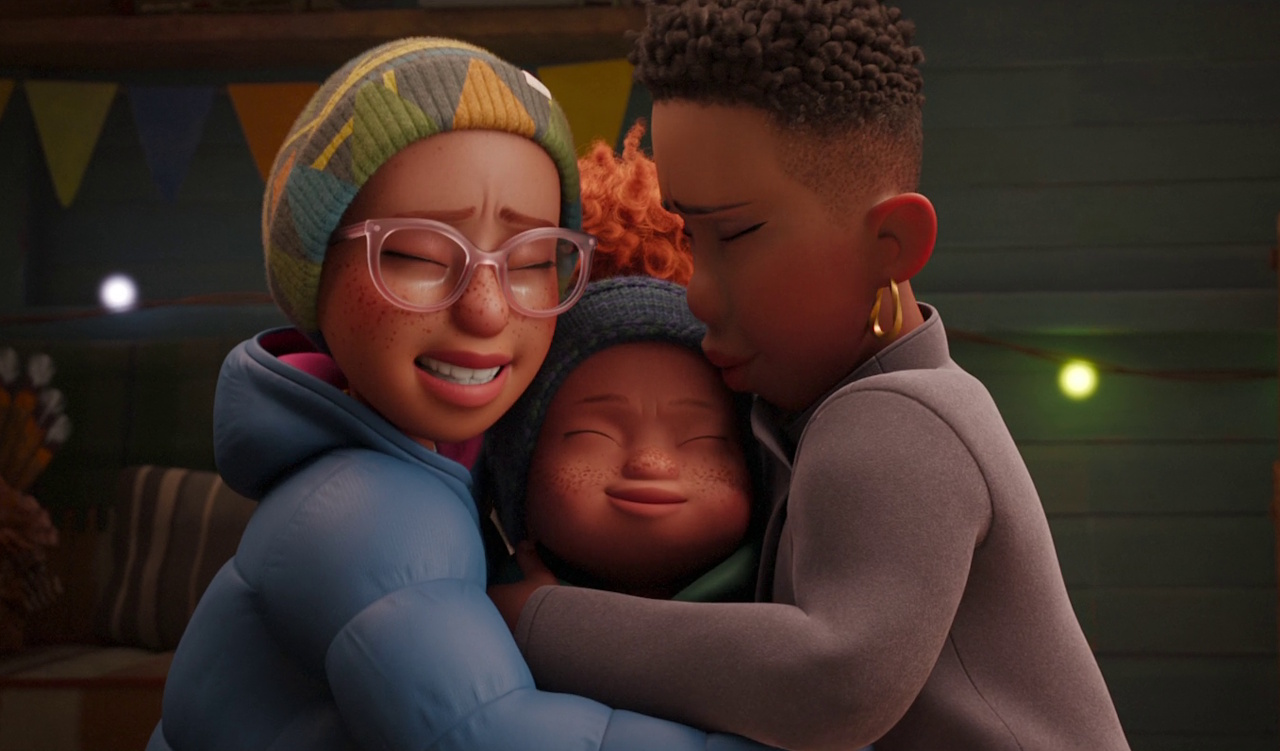
Still frame from That Christmas showing the Beccles' house.
Waking up to a snowy Christmas.

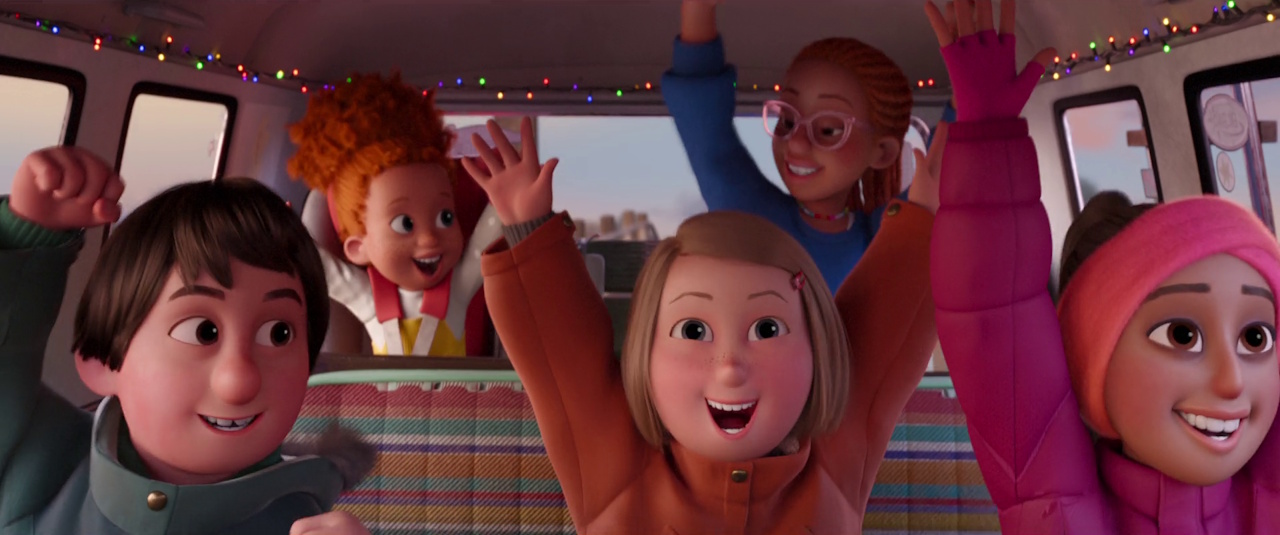
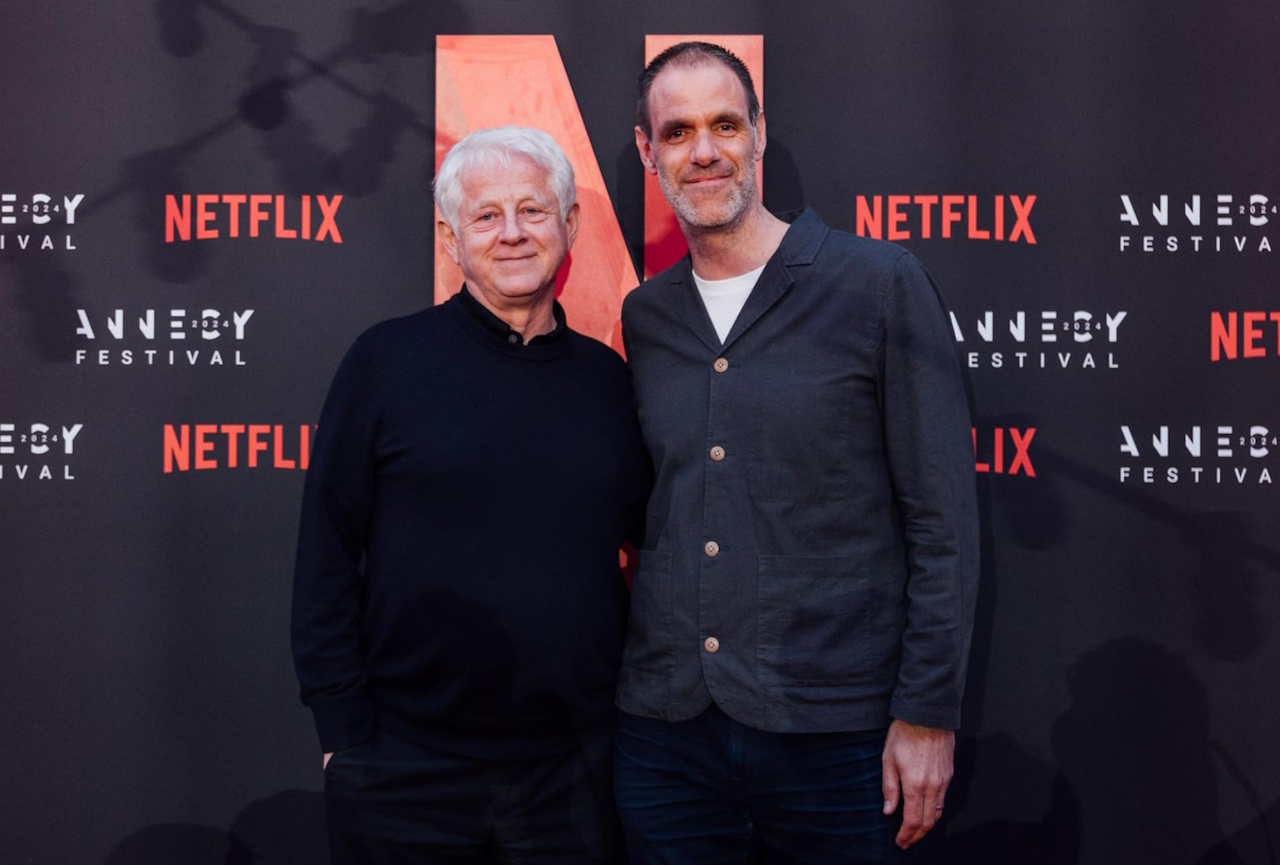
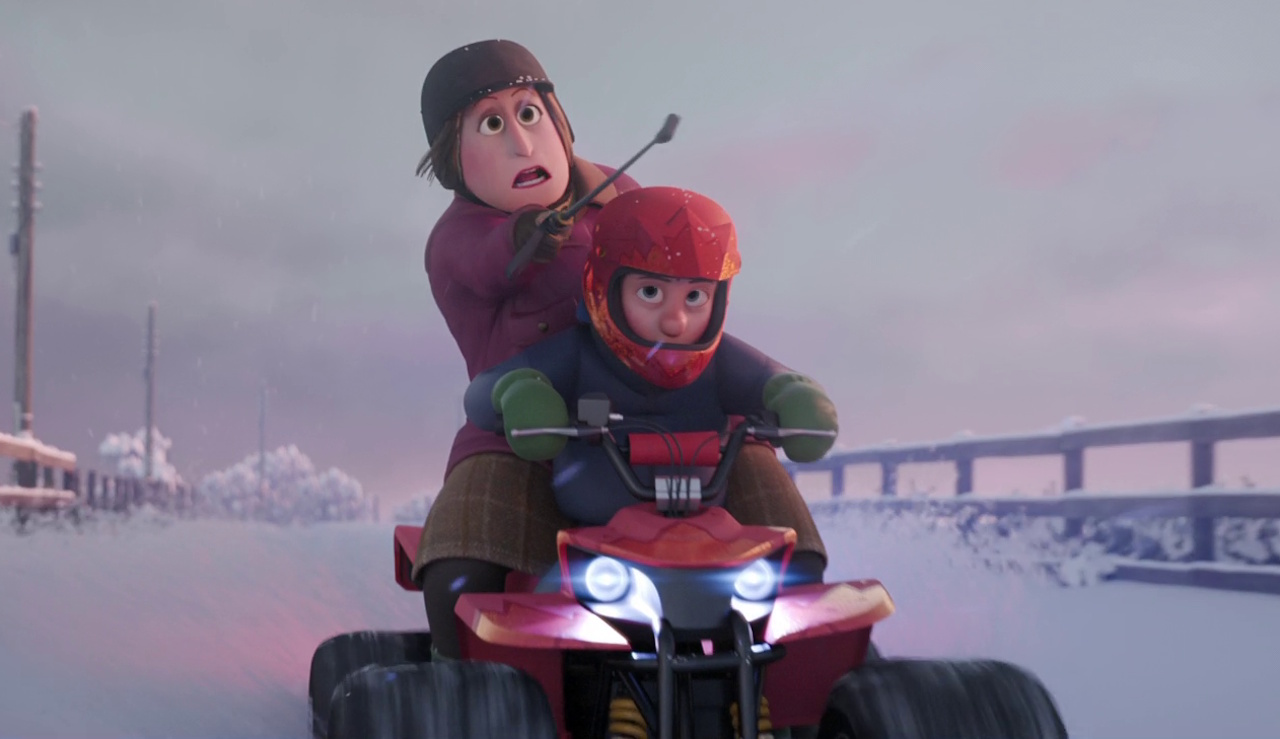
Richard Curtis, who also penned the festive favourite Love Actually, wrote this charming and distinctly British animated Christmas flick for Netflix just last year. And you know what? It’s fantastic. There are definitely echoes of Love Actually, with the film’s cast of characters spread out into different groups, whose stories are all connected in some way. And there’s plenty of the awe and wonder that Christmas time inspires thanks to Santa Claus, a blizzard, and the magic of Christmas Eve.

When you’ve got so many characters, it can be difficult to find enough time to give all of them personalities and motivations, but That Christmas never feels like it has that issue. With the caveat that a few of the adults seem particularly incompetent, everyone involved feels well-rounded and real, and given that the film’s only got a nintey-minute runtime, that’s pretty special.

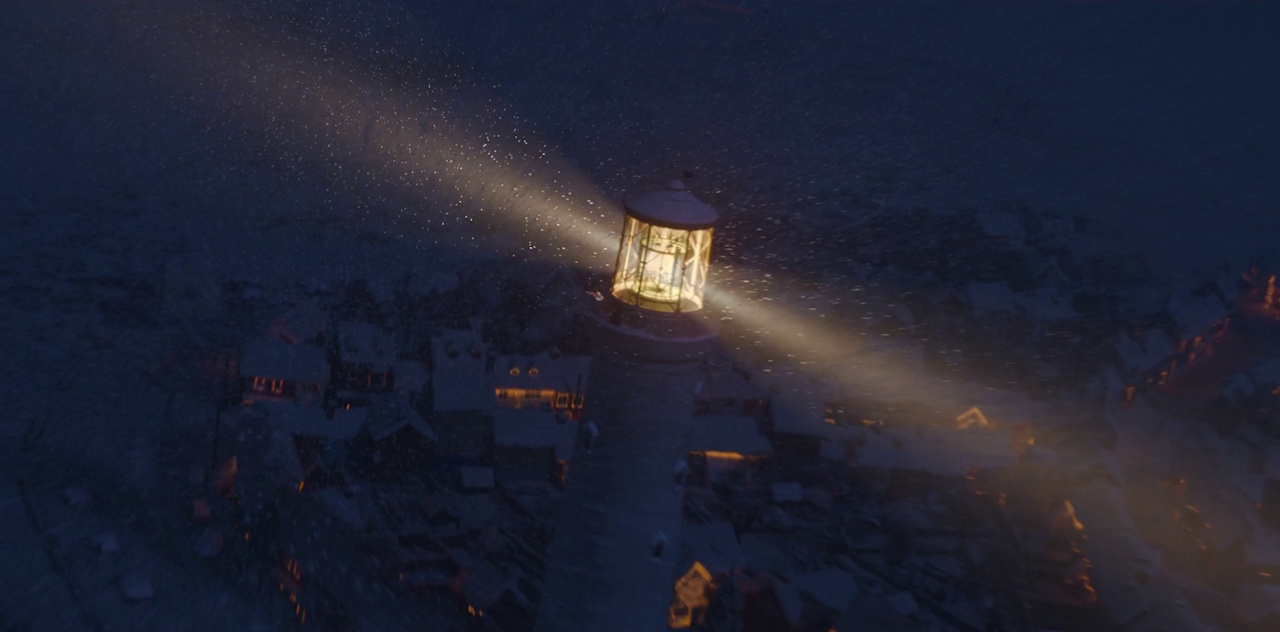
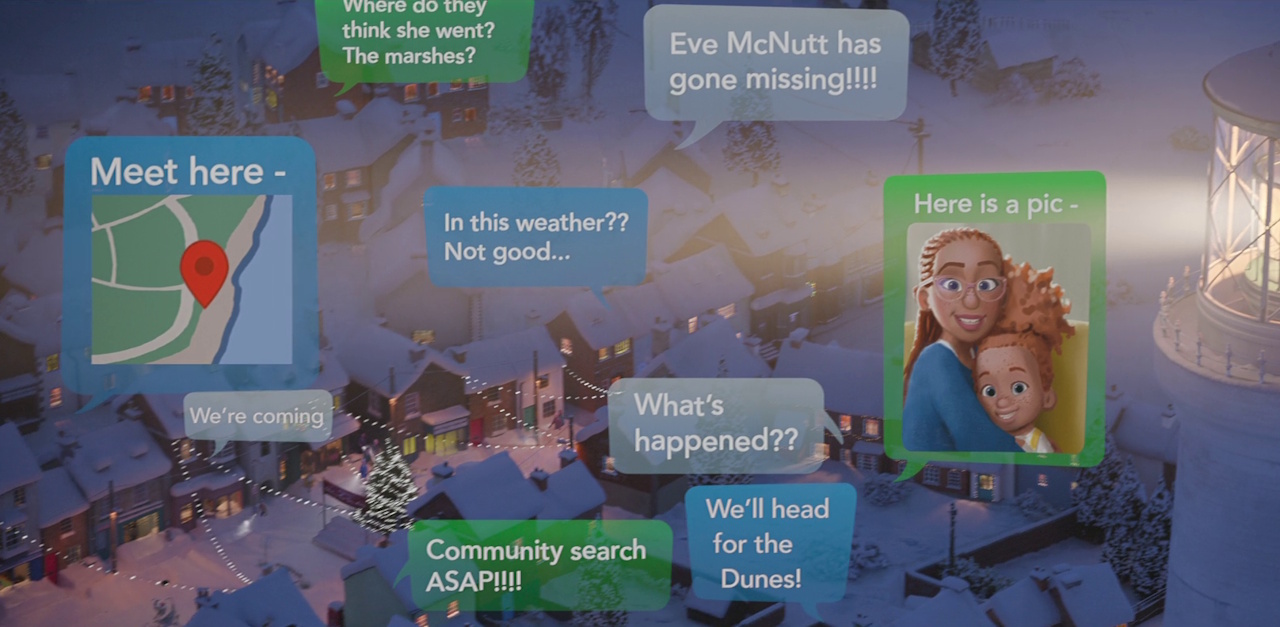
Still frame from That Christmas (2024) showing the lighthouse.
The town’s lighthouse on Christmas Eve.

The main song from That Christmas – Ed Sheeran’s Under The Tree – wasn’t my favourite at first, but the slow, almost haunting track has grown on me a lot since I first heard it, and it’s now a mainstay on my festive playlist. It’s the perfect melancholic track for one part of the film – but don’t worry, there’s bound to be a happy ending! After all, it’s Christmas.

That Christmas hadn’t been on my radar last year, but I’m really glad I checked it out. If you liked Love Actually, I think there’s a lot to love here, as the same kind of style is on show. Maybe it’s a bit early to hail That Christmas as a “classic,” but having seen it just last year, it’s already on my “watch again” list. If you missed it in 2024, definitely check it out. And if you want to read my full review, which I wrote last December, you can find it by clicking or tapping here.

So that’s it… for now!

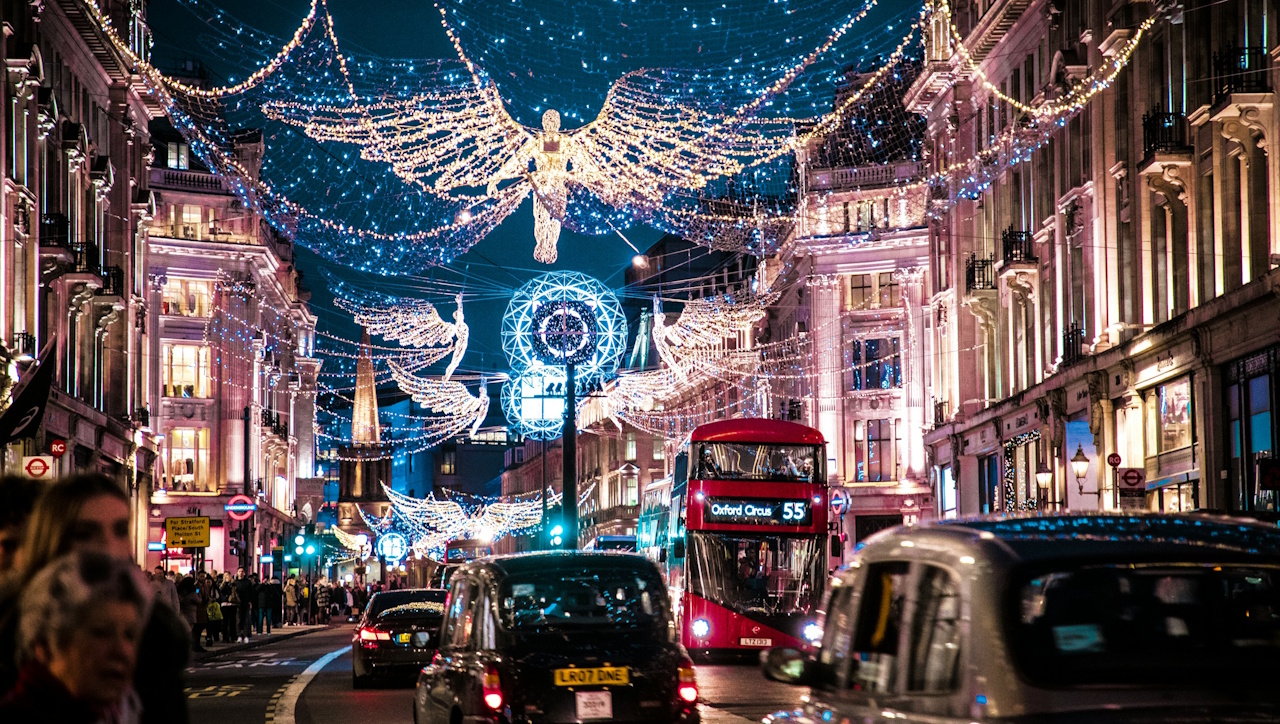
A stock photo of a London street with Christmas lights, a Routemaster bus, and a black cab.
London’s Christmas lights.

I’ve already thought of *at least* five more 21st Century Christmas films and TV specials, so maybe this is an idea I’ll revisit next December. I don’t wanna play all of my cards at once, after all! But I hope this has been a bit of fun, and maybe I’ve highlighted a modern Christmas film or special that you missed or haven’t seen since it was new. If I’ve helped even one person find one thing to watch this festive season, I reckon I’ve done a good job!

A few days ago, I updated my annual festive playlist with twelve Christmassy songs – click or tap here to check that out, if you haven’t already! And between now and the big day, I have a few other pieces in my writing pile that I hope to get to. And coming up at the end of the month will be my End-of-Year Awards, so I hope you’ll join me as I hand out some imaginary trophies and statuettes to some of my favourite productions of 2025.

Until then… I hope you’re having a fantastic December!


All titles discussed above are the copyright of their respective studio, publisher, broadcaster, distributor, etc. This article contains the thoughts and opinions of one person only and is not intended to cause any offence.

A New Star Trek Film Has Been Announced (Again!)

A Star Trek-themed spoiler warning.

Spoiler Warning: There are spoilers ahead for the following Star Trek productions: The Wrath of Khan, The Next Generation, First Contact, Into Darkness, Beyond, Discovery, Picard, Lower Decks, Prodigy, and Section 31.

Just the other day, we covered a rumour/leak from Skydance that the next Star Trek film would “move on” from the Kelvin timeline, and I shared my thoughts on that. Following on from that news is the announcement from Skydance/Paramount that the film they hinted at is officially going ahead. I thought we could get into the details today, as well as talk about what this announcement might mean for the Star Trek franchise overall.

If you want to check out my piece on the apparent end of the Kelvin timeline, you can find it by clicking or tapping here.

So first of all, this is not the first time in recent years that Star Trek’s corporate overlords have announced a new film. It’s not the first time that a writer/director has been attached to a new film, either. There was a film supposedly on the schedule for 2023 penned by Short Treks and Discovery writer Kalinda Vazquez. There was Noah Hawley’s film. There was an absolute mess surrounding the Beyond sequel, which had to be rapidly un-announced after it became clear that Paramount didn’t have everything in place. There was an “origin story” which may have been connected to the Kelvin timeline. There have been other rumours and pitches, too, including from famed director Quentin Tarantino. Sir Patrick Stewart even teased that a Picard movie could be in the offing after that show wrapped up.

Still frame from Star Trek: The Motion Picture showing Kirk addressing the crew of the Enterprise.
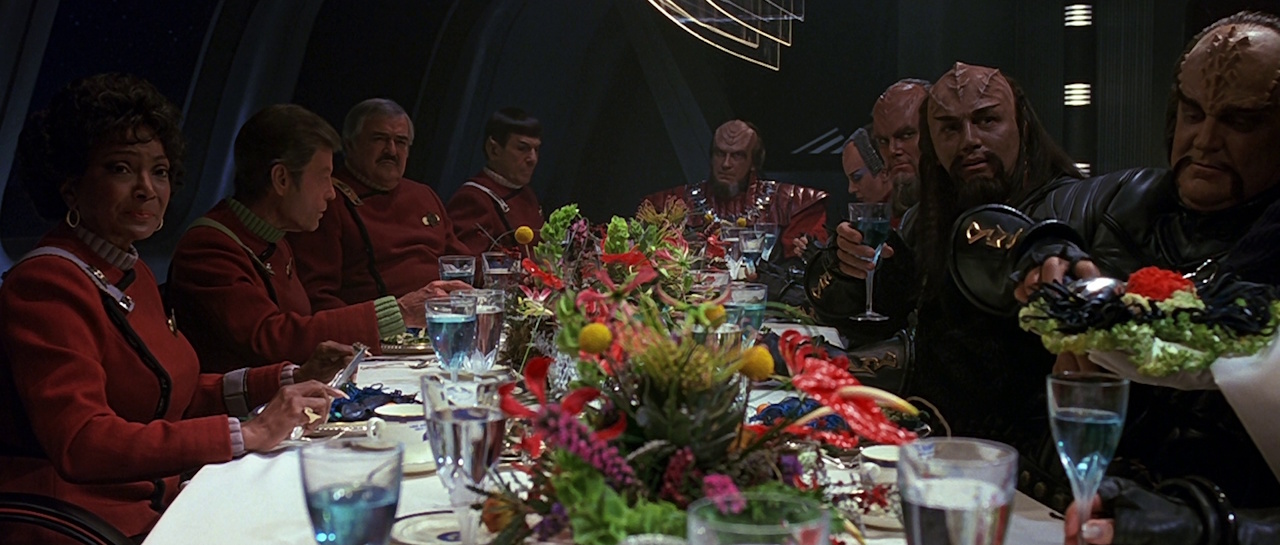
Look, it’s everyone who’s officially announced a Star Trek movie over the last few years.

I mention all of these for one simple reason: for almost a decade now, Viacom, Paramount, and the re-forged Paramount Global tried and *repeatedly* failed to get a new Star Trek film out of development hell for all manner of reasons. And just because new owners Skydance have announced this project and attached the filmmaking duo of Jonathan Goldstein and John Francis Daley to it… that doesn’t mean we’ll ever even hear about it again, let alone see the finished product in cinemas in the years ahead. Maybe you’ll say it’s unfair now that the Star Trek brand is under new management, but Skydance/Paramount have a lot to do to convince me that they have even the most basic filmmaking competence, at this point!

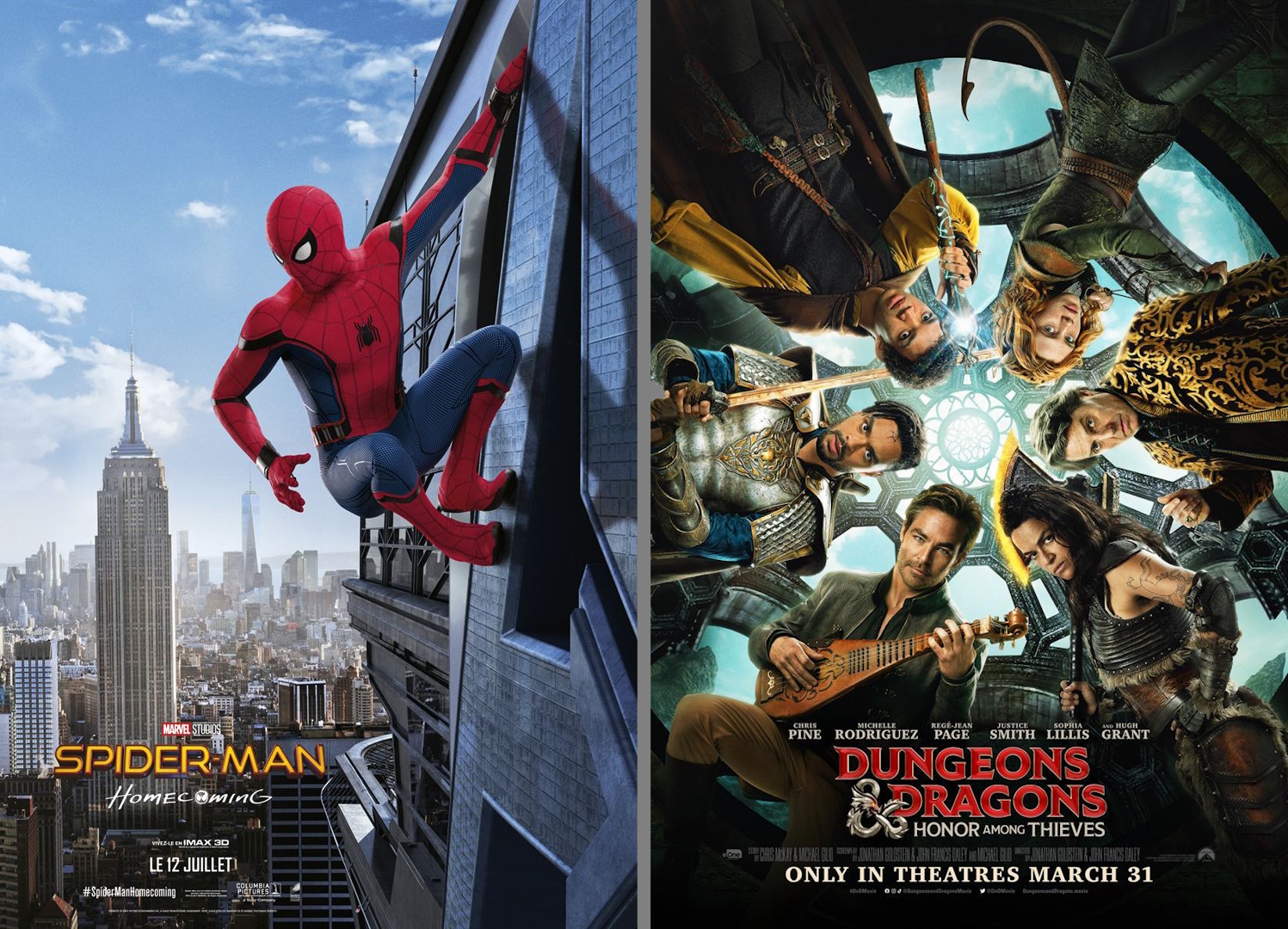
If you know me, you’ll know Marvel and comic book films aren’t really my thing, so I’m not familiar with Daley and Goldstein’s work on Spider-Man: Homecoming. I also haven’t seen their Dungeons and Dragons film, though I think it’s worth noting that both pictures got solid reviews, even if Honor Among Thieves was considered a bit of a disappointment in terms of the money it made at the box office. As far as I can tell, neither Daley nor Goldstein has worked with the Star Trek franchise before – which isn’t necessarily a bad thing, but it’s worth being aware of.

Posters for Spider-Man Homecoming (left) and Dungeons and Dragons: Honor Among Thieves (right).
Daley and Goldstein previously worked on Spider-Man: Homecoming and Dungeons and Dragons: Honor Among Thieves.

As we discussed when the Skydance merger had gone through, this announcement seems to embody Skydance CEO David Ellison’s preference for film over TV. With a swath of cancellation announcements for every Star Trek series save Starfleet Academy, and now this new film getting an official announcement, I think we’re catching the first glimpse at what a new era for Star Trek is going to look like. Star Trek is being reimagined as a cinematic franchise first, and while I haven’t given up on the prospect of Star Trek remaining on the small screen… that looks less likely in the medium term, once the current crop of shows come to the end of their runs.

And I have to be honest: I’m pretty disappointed about that.

Look, I’ll be the first to concede that not every modern Star Trek project has gone well. Picard’s awful second season, Discovery’s increasingly repetitive storytelling, Prodigy struggling to find an audience… there have been many mistakes made by the former Paramount corporation and the folks in charge of creating new Star Trek stories. But for me, Star Trek’s home is and always will be on television, not at the cinema. That’s where Star Trek has the freedom to dip its toes into different genres and storytelling ideas, and it’s really the only way it can “seek out new life and new civilisations.” Being constrained to the cinema in the years ahead restricts the kinds of stories Star Trek will be able to tell.

The new Skydance/Paramount logo (white on a navy blue background).
The new film will be the first original Star Trek project for the new Skydance/Paramount corporate entity.

Additionally, it means we’re going to be seeing a lot less Star Trek! Now, I’ve taken Paramount to task in recent years for oversaturating the brand and for allowing the dreaded franchise fatigue to set in. But there’s a balance somewhere between broadcasting more than fifty new episodes in a single calendar year and releasing one film every few years. Even if we just had one Star Trek series at a time, running for truncated ten-episode seasons, that would be preferable – in my opinion – to Star Trek doing what it did in the Kelvin timeline era.

It makes sense to me, as I wrote last time, for Star Trek to move on from the Kelvin timeline, though, and I think that’s a net positive as we look at this announcement. The Kelvin films were fun for what they were, and the 2009 reboot in particular was arguably just what the franchise needed at that moment to avoid slipping away altogether. But almost a decade on from Beyond, and with so much else having been on our screens in that time, I think a new approach is warranted – and I’m happy to see Skydance going in a different direction.

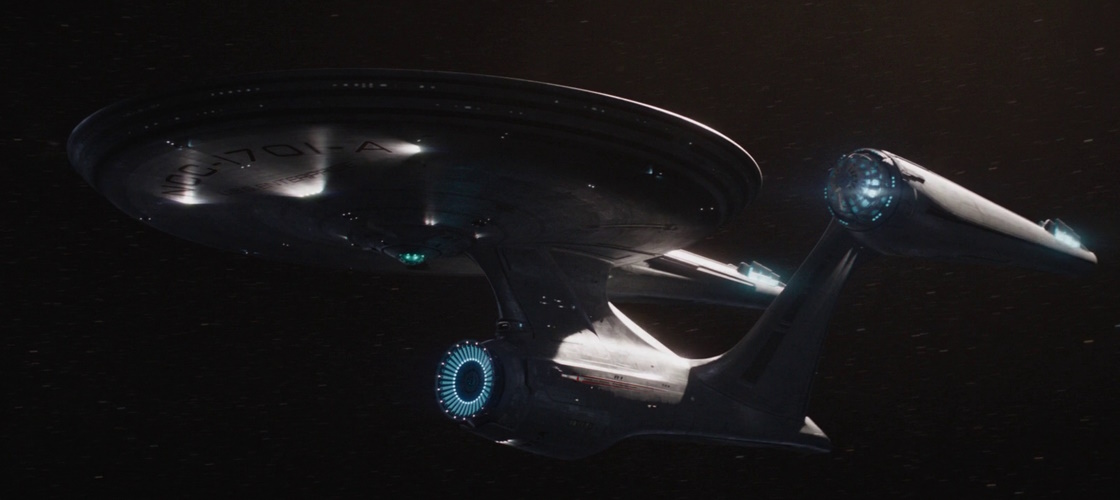
Still frame from the final moments of Star Trek: Beyond showing the new Enterprise-A.
The Enterprise-A at the end of Beyond.

It also makes a lot of sense from the new corporation’s perspective. Why go back to something that someone else made when you could tell your own story? The Star Trek universe is vast, and there are so many different time periods, alien factions, and planets to explore… being restricted to the same handful of re-cast characters over and over again begins to feel small and repetitive after a while. As we look ahead and try to be optimistic about Star Trek’s future prospects, building a new foundation instead of trying to revive one from almost twenty years ago is the smart move.

I just hope it pays off… because after what has been a clearly underwhelming performance (in financial terms) on streaming over the past few years, and with an ageing fan community that hasn’t significantly expanded in a long time, Star Trek doesn’t feel like it’s in a great place, to be honest with you. Not when considering the future, at any rate. If this film doesn’t impress Skydance’s leadership and investors… I could absolutely see Star Trek as a whole going on hiatus, if not being permanently brought to an end.

So no pressure, eh?

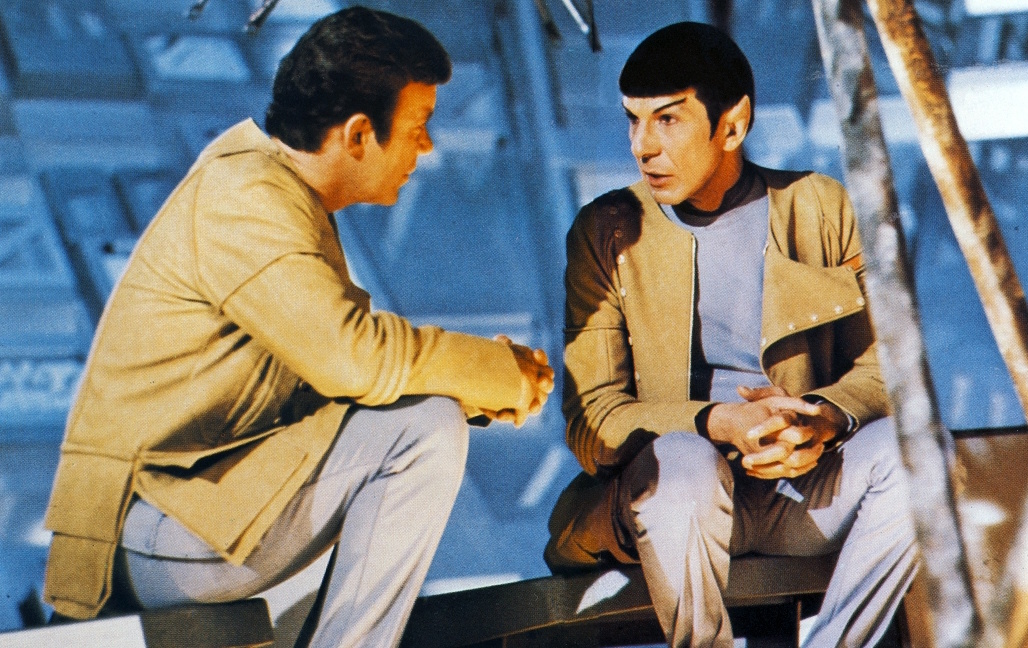
Behind-the-scenes photo from the set of Star Trek: The Motion Picture showing William Shatner (Kirk) and Leonary Nimoy (Spock) having a chat on set.
William Shatner and Leonard Nimoy during the production of The Motion Picture.

Next, I’d like to briefly talk about what I think this new film might look like… as well as what I’d *like* it to look like if I were in charge!

Firstly, if you’re hoping for some kind of in-depth TOS-style “morality play,” or something a bit more esoteric and weird, you’re going to be bang out of luck. We’re almost certainly going to get a picture which lands a lot closer to the “action” side of “action/sci-fi.” But that doesn’t have to be a bad thing. Ask most Trekkies – and a general audience – which Star Trek films are the best, and you’re almost certain to hear The Wrath of Khan and First Contact ahead of the likes of The Motion Picture or Insurrection. But just based on the writers/directors attached to the project, and their previous works, I’m almost certain this new Star Trek film will be going down that route.

Secondly, it sounds as if we’re going to get an all-new cast of characters this time, which could also mean we’re going to get a new setting and even a new time period. Unless the new film does something silly like trying to re-cast Picard and the TNG characters, it really sounds like it’ll be going in a totally new and fresh direction, which I think is a hugely positive thing. Think about it: basically everything we’ve gotten in this era of streaming Trek is either a direct prequel or sequel, and many characters have either been re-cast or simply brought back to the franchise. Getting something genuinely *new* is going to feel like a treat after so much recycling!

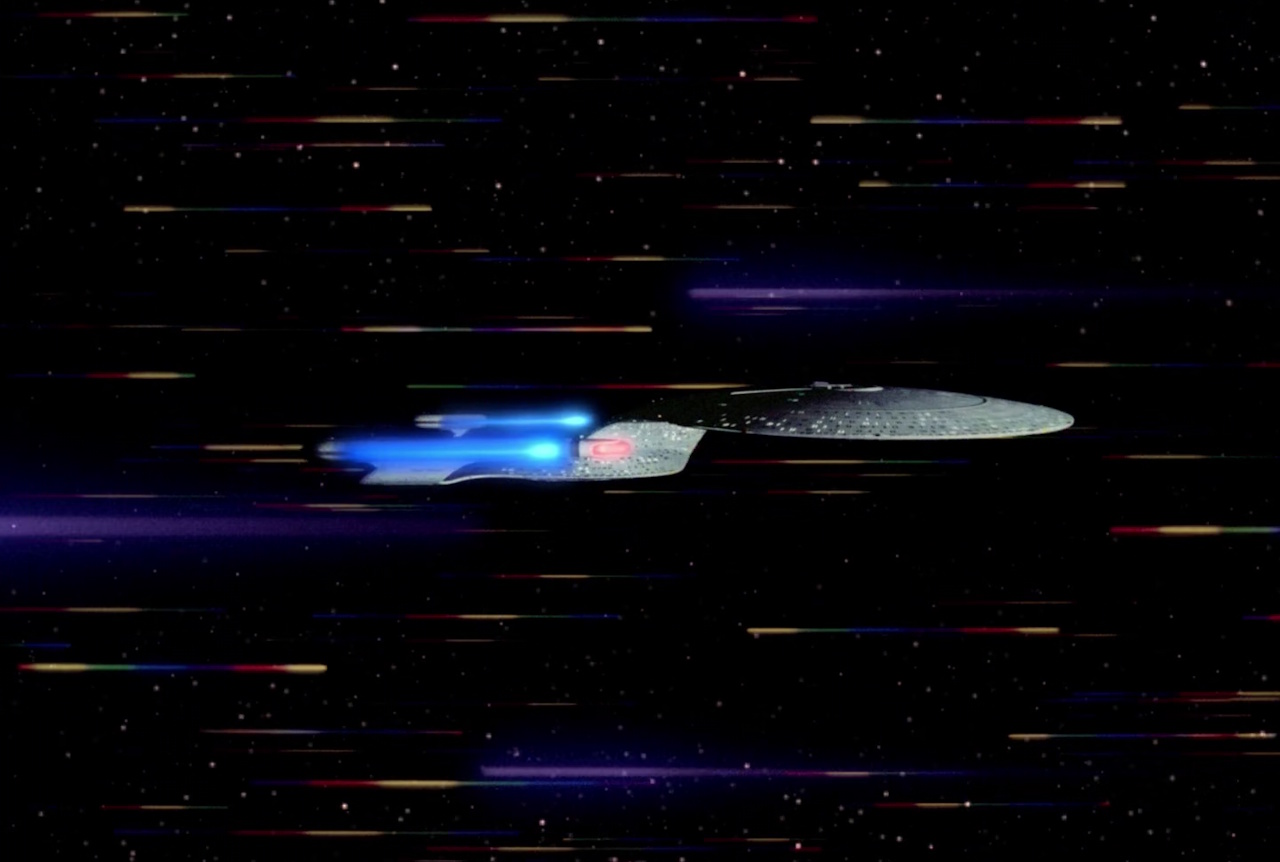
Still frame from Star Trek: The Next Generation Season 1 showing the Enterprise-D at warp.
The Enterprise-D.

Finally, I expect this project will be somewhat comparable in terms of tone and audience appeal to Star Trek ’09. After a decade on streaming, this is Skydance brushing all of that aside and saying: “here’s a reboot.” Perhaps it won’t be as blatant as Star Trek ’09’s “alternate reality,” but make no mistake about it: this is another attempt to streamline and simplify Star Trek, and to reach out to a much wider audience. As a Trekkie, that might feel somewhat alarming; after all, don’t we all want Star Trek to be “made for the fans?” But I’m kind of taking the same approach as I did in the late 2000s, seeing this film – and any potential sequels – as a stepping-stone to something bigger and better. As I said in the run-up to Section 31′s launch at the start of the year: it doesn’t matter if the film isn’t for me if it succeeds in its objectives of expanding the fan community and shoring up the brand.

To me, that’s what this new film should be attempting to do. It needs to reach out to folks who may have watched First Contact and Into Darkness, but who haven’t subscribed to Paramount+, don’t know who Captain Pike is, and prefer to watch things like Spider-Man. And it needs to convince them that this weird, convoluted, nerdy franchise is something worth getting invested in. Section 31 was meant to do that, too, by the way, but I think the verdict there is that it failed.

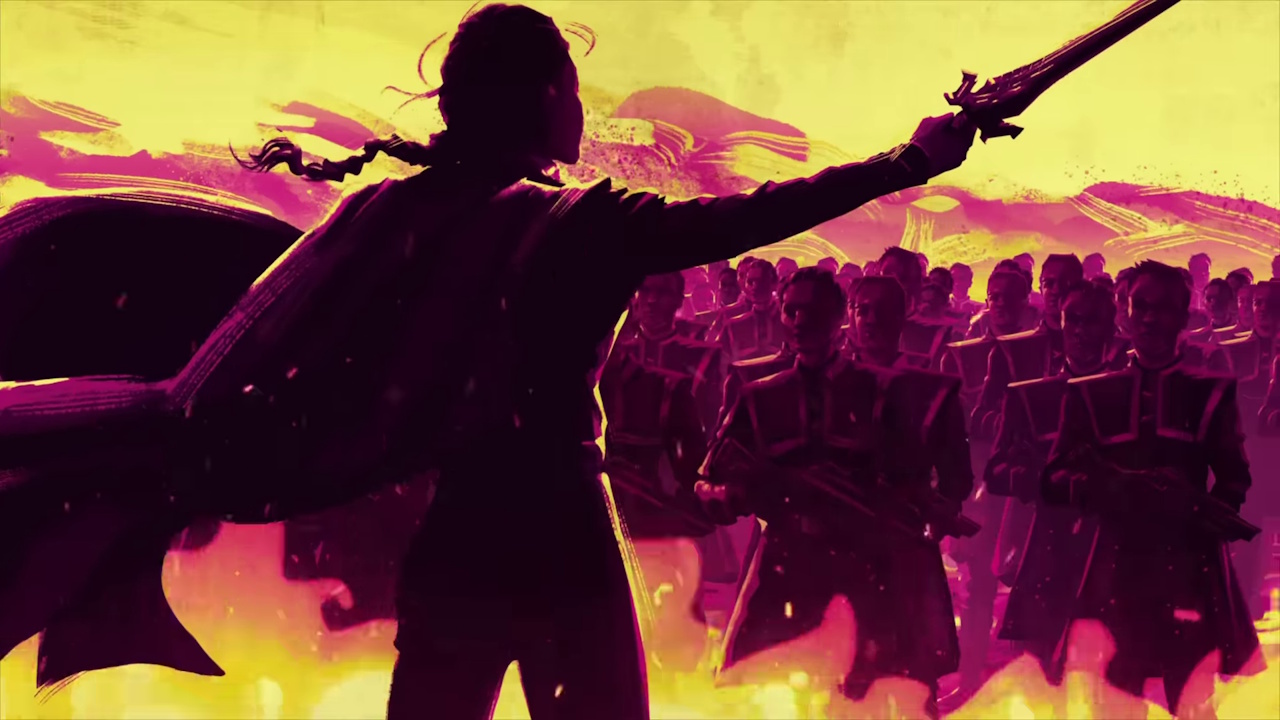
Promo image for Star Trek: Section 31 showing Empress Georgiou holding a sword.
This new film needs to succeed where Section 31 failed.

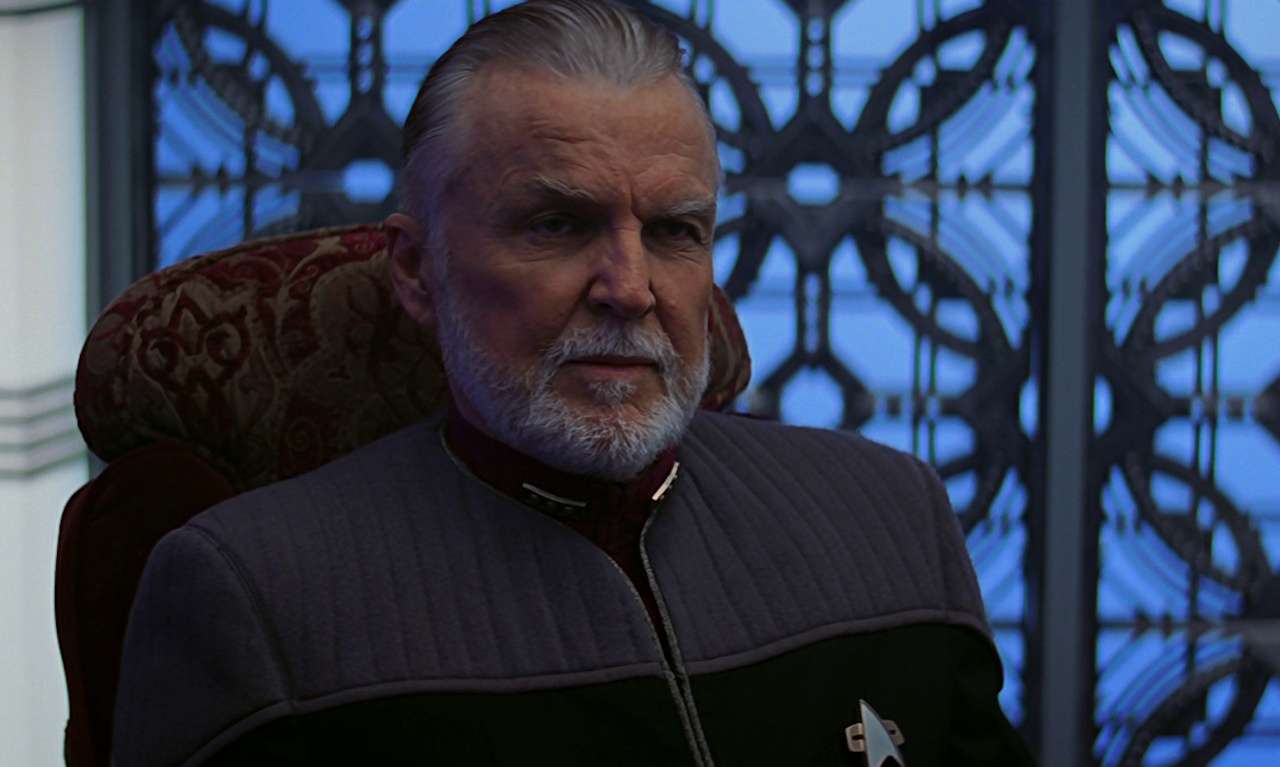
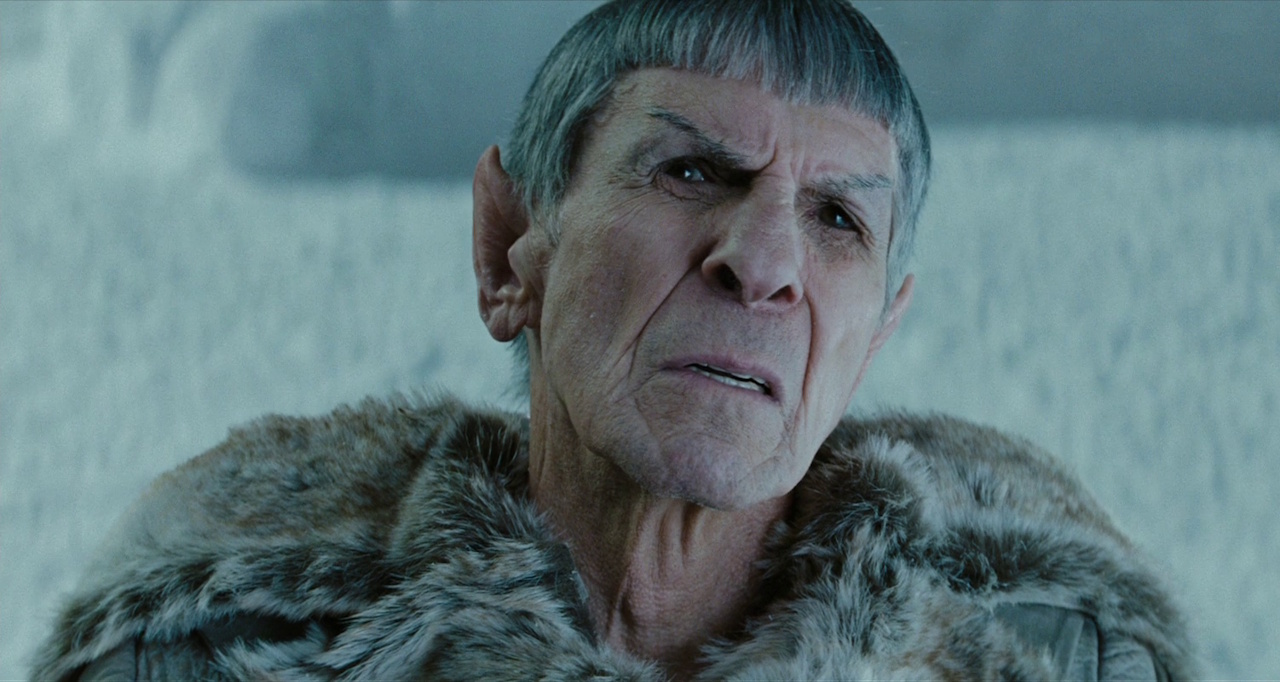
If I were in charge, I think I’d want a film set sometime after the Picard era – in a new, fresh, unexplored time period, but still within the prime timeline. There’d be scope, perhaps, for one familiar character to have a cameo, something akin to Leonard Nimoy’s role in Into Darkness, perhaps, just to tie things together but without overwhelming the story. And then? I’d set the new characters a challenge that might be connected to previous iterations of Star Trek, but which doesn’t depend on any pre-existing knowledge.

The Borg arguably fit the bill!

We want the new film to have a distinctly “Star Trek” identity, meaning it can be a gateway for new fans that isn’t totally disconnected from everything else that the franchise has done. But it mustn’t be *too* closely tied up with what came before, because that risks putting off the very casual audience that we’re trying to attract. It needs to be explosive and exciting while still being true to Star Trek. And I really can’t think of a better fit than the Borg, to be honest with you.

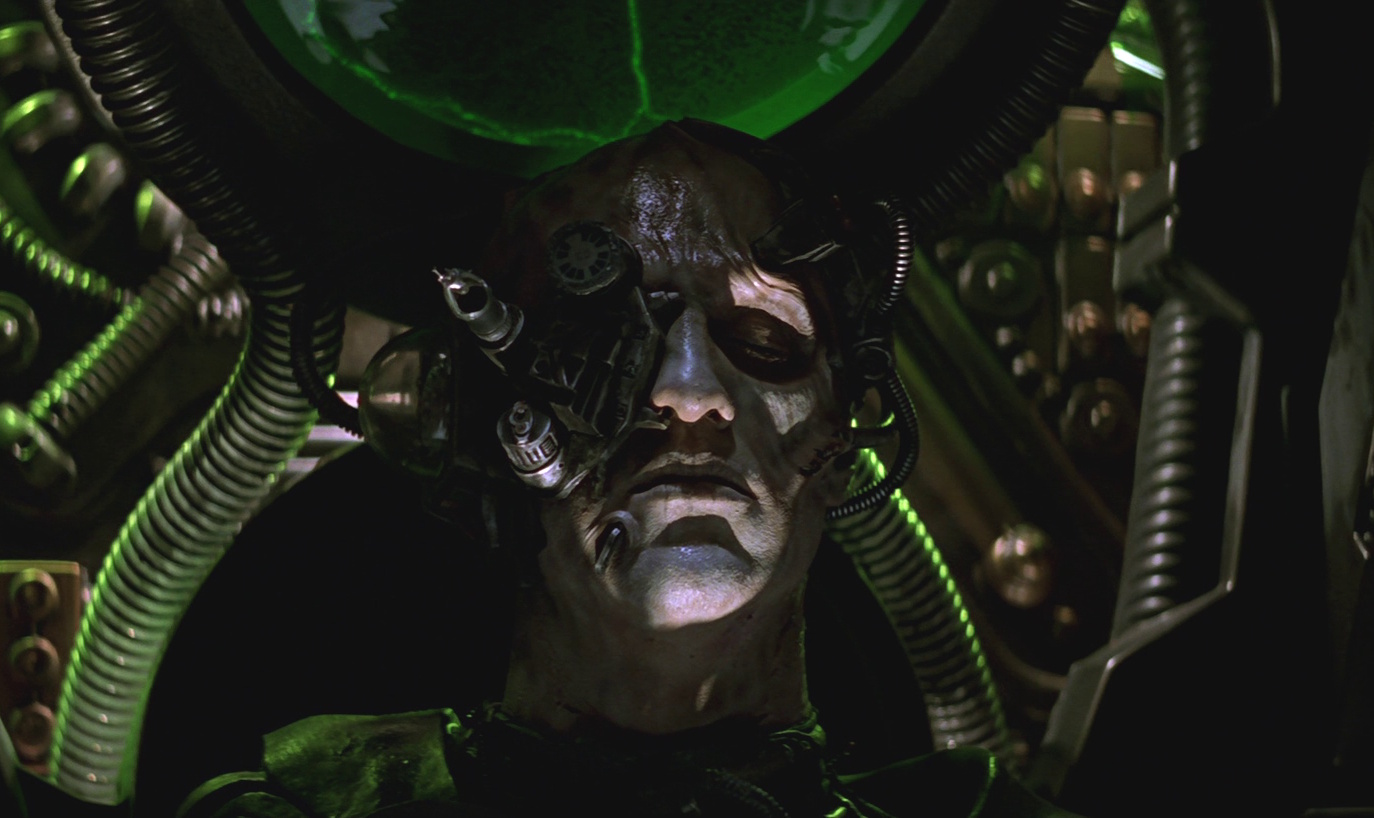
Still frame from Star Trek: First Contact showing a Borg drone in their alcove.
Should this new film feature the Borg as a major antagonist?

I know the Borg have been back a little too often in modern Star Trek, appearing in all three seasons of Picard as well as in Prodigy and Lower Decks. But the last time the Borg were seen *at the cinema* was in 1996 – and that came in what is still, to this day, one of the best-remembered and highest-rated Star Trek films. So… why not bring back the Borg for another round? Have a new cast of characters facing off against a familiar foe, but one that’s easy for non-fans to understand? You don’t need a lot of background about the Borg to realise they’re a horrible danger!

Furthermore, despite what I said about this new film not being a “morality play” type of story, we’re right in the middle of a potential A.I.-led transformation of at least some parts of society. What could be more timely than a film about the Borg: cybernetic beings, all hooked up to one hive mind? The Borg, since their inception, have been a warning of a reliance on technology gone awry, and I think there’s even more potential in that idea in 2025 than there was thirty-five years ago when the Borg debuted.

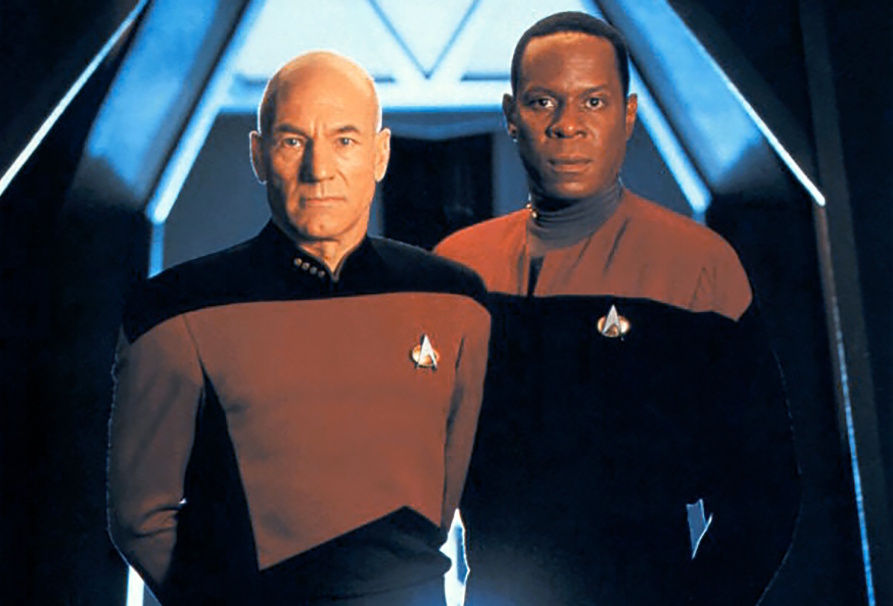
Promo photo for Star Trek: Deep Space Nine showing Sisko with Picard.
Picard and Sisko.

So that’s what I’d argue for if I were in the room!

But in any case, a new Star Trek film has been announced and seems to be going ahead. Skydance is now in full control, and it’s my hope that the new leadership team will be more competent than the previous crop of executive idiots who’ve mismanaged Star Trek over the past few years. Though I’m still disappointed to lose Strange New Worlds – and to see Star Trek potentially disappearing from the small screen in the years ahead – it does at least give me some room for optimism that Skydance has faith in the franchise. A new film wouldn’t have been my choice; I’d have commissioned a new TV show if I had the opportunity. But it’s better than nothing, and I will do my very best to support it as it develops.

If and when we get more news on this film, like story details, casting announcements, or a trailer, I hope you’ll join me as I daresay I’ll have plenty to add! And when it’s finally ready for release – perhaps in 2028, 2029, or 2030 – I’ll definitely check it out and write a review! Until then, though, there are still two more seasons of Strange New Worlds to come, as well as Starfleet Academy, and more. I’ll be talking about all of that in the weeks and months ahead, but until then… Live Long and Prosper!


The Star Trek franchise – including all films, TV programmes, and other properties discussed above – is the copyright of Skydance/Paramount. Most of the Star Trek franchise is available to stream now on Paramount+ in countries and territories where the platform is available, and is also available on DVD, Blu-ray, and video-on-demand platforms. This article contains the thoughts and opinions of one person only and is not intended to cause any offence.

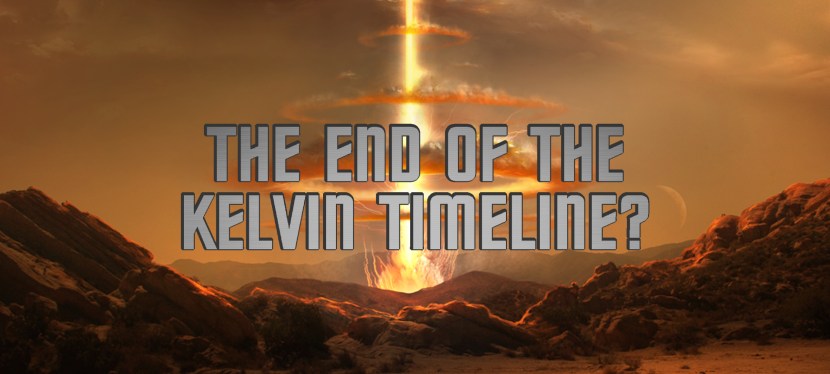
The End of the Kelvin Timeline?

A Star Trek-themed spoiler warning.

Spoiler Warning: Beware of minor spoilers for the Kelvine timeline films and Strange New Worlds.

In a little over six months from now, it’ll be ten years – an entire decade – since Star Trek Beyond hit cinemas. Beyond is the most recent film in the Kelvin timeline – the Star Trek spin-off films set in an alternate reality. There have been multiple attempts in the nine-plus years since its release to get a sequel off the ground, including a couple of years ago when Paramount announced – and then had to rapidly un-announce – a film that wasn’t ready. That was a clusterfuck, eh?

Every so often, if you follow some of the big Star Trek fansites and social media pages, an interview will pop up with a member of the Kelvin cast, and they always make the right noises, sounding positive and hopeful about one day returning and making another film. But if recent reports are to be believed, the newly-merged Skydance/Paramount corporation is ready to “move on” from the Kelvin timeline. While a new Star Trek film is supposedly being planned, it won’t involve the Kelvin timeline or the cast of the rebooted series. I thought we could discuss that today.

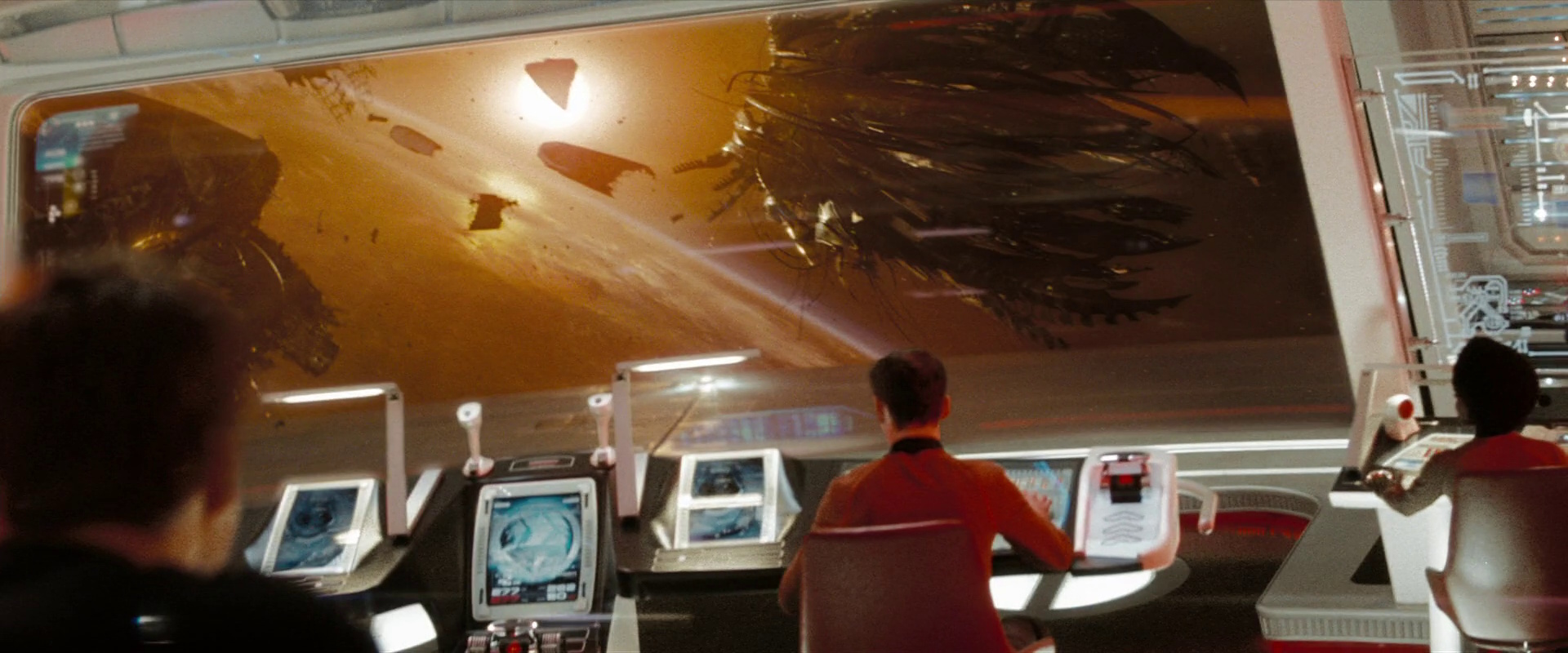
Still frame from Star Trek 2009 showing the main viewscreen on the bridge.
The bridge in Star Trek ’09.

I know the Kelvin films weren’t every Trekkie’s favourite part of the franchise – to put it mildly! Heck, I *still* know people who refuse to even watch them because of how upset they were at both the recasting of classic characters and the more action-heavy storytelling. But we should all be able to acknowledge what the films – and the 2009 reboot in particular – did for Star Trek at a time when the franchise had been cancelled after more than fifteen years on the small screen.

We wouldn’t have seen Discovery, Picard, Lower Decks, Strange New Worlds or really any of the Star Trek productions we’ve enjoyed over the last decade were it not for the success of the Kelvin timeline films. Star Trek ’09 demonstrated to investors that, despite declining viewership on TV in the 2000s, there was still life in the Star Trek franchise, and still new stories to be told. These films carried the torch for Star Trek during what could’ve been its darkest hour, and they set the stage for the franchise’s revival.

Behind-the-scenes photo from the set of Star Trek Into Darkness showing director JJ Abrams.
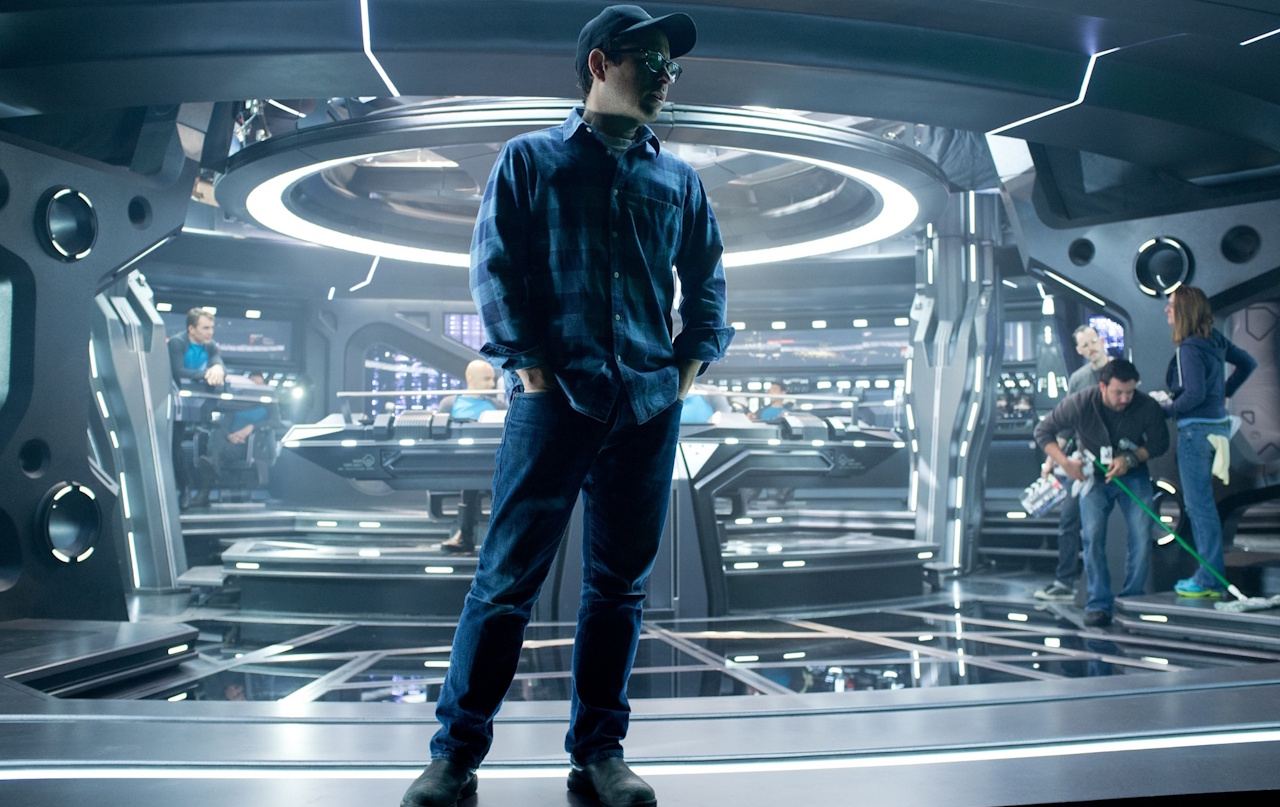
Director J.J. Abrams on the set of Star Trek Into Darkness.

With all that being said, regular readers will undoubtedly remember me saying that I don’t believe there’s a place for a new Kelvin timeline film. I wrote about this in 2020 and 2021, and while my original reasons for saying that have now shifted in light of the spate of cancellations this year… I stand by the original point. I know Beyond seemed to tease a sequel in its closing moments, and there will always be a part of me that wants to see reboot Kirk’s adventures aboard the Enterprise-A. But given the changes not just to Star Trek over the past ten years, but the entertainment landscape as a whole… I’m not sure a 2009-style film is the right fit any more. After almost a decade, audiences have moved on and expectations have changed.

Then there’s Strange New Worlds. What was the original idea behind Star Trek ’09? It was to show “young Kirk” and “young Spock” at Starfleet Academy, then undertaking their first missions together. Well… we’ve seen that. And thanks to Strange New Worlds, we’ve also seen the prime timeline version of that, too. Strange New Worlds has introduced several other legacy characters, and thanks to being able to develop those characters a lot more because of the extended runtime a television show permits, I’d argue it’s done a lot more with some of those characters than the entire Kelvin trilogy did.

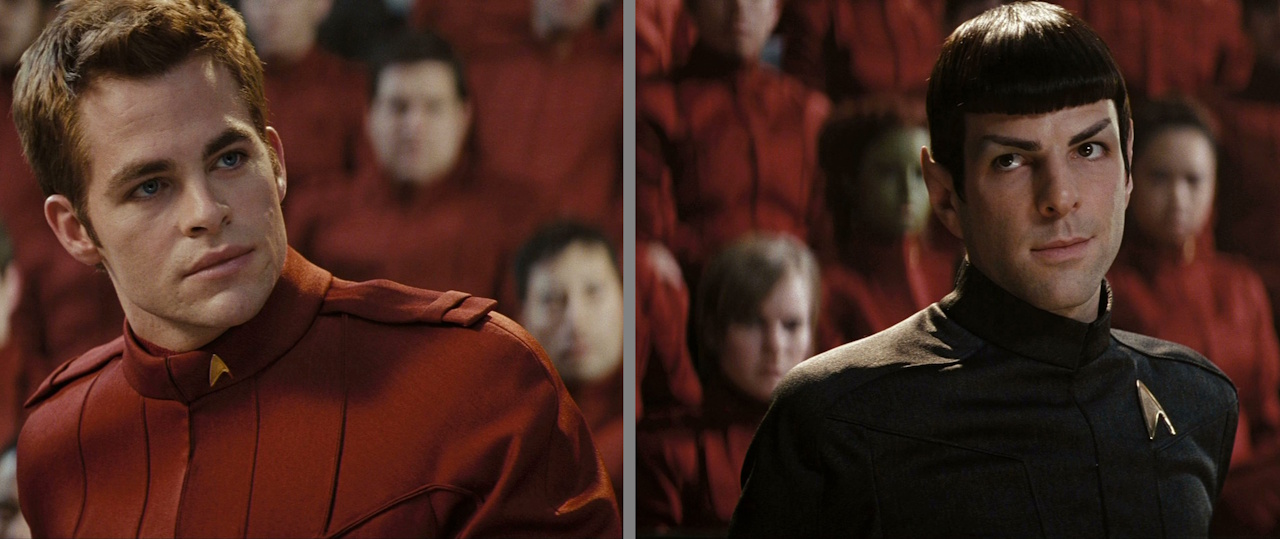
Two still frames from Star Trek 2009 stitched together, with Cadet Kirk on the left and Commander Spock on the right.
Kirk and Spock at the Academy in Star Trek ’09.

At this point, if we returned to the Kelvin timeline a decade after Beyond, we wouldn’t be seeing “young Kirk” and “young Spock” on one of their first missions. We’d be seeing Kirk and Spock on their five-year mission – or perhaps even *after* that, in the latter part of the 23rd Century. There are things that the Kelvin timeline could do with that idea, sure… but we’ve already seen plenty of Kirk and Spock at this point, haven’t we? Between TOS, the Kelvin films, Strange New Worlds, and the rest of Star Trek, we’ve spent a lot of time with these characters already. So… what could a new Kelvin film do that we haven’t already seen?

This leads me to my most fundamental point: Star Trek needs to move on. Not just from the Kelvin timeline, but from the 23rd and 24th Centuries in general. Since the turn of the millennium, we’ve had Enterprise, Discovery, Strange New Worlds, and the Kelvin timeline – all of which were prequels. Then we had Prodigy and Picard, which were direct sequels to Voyager and The Next Generation. The closest Star Trek came to originality was Lower Decks, ironically enough! And that show called back to The Next Generation era over and over again, and brought in numerous guest-stars.

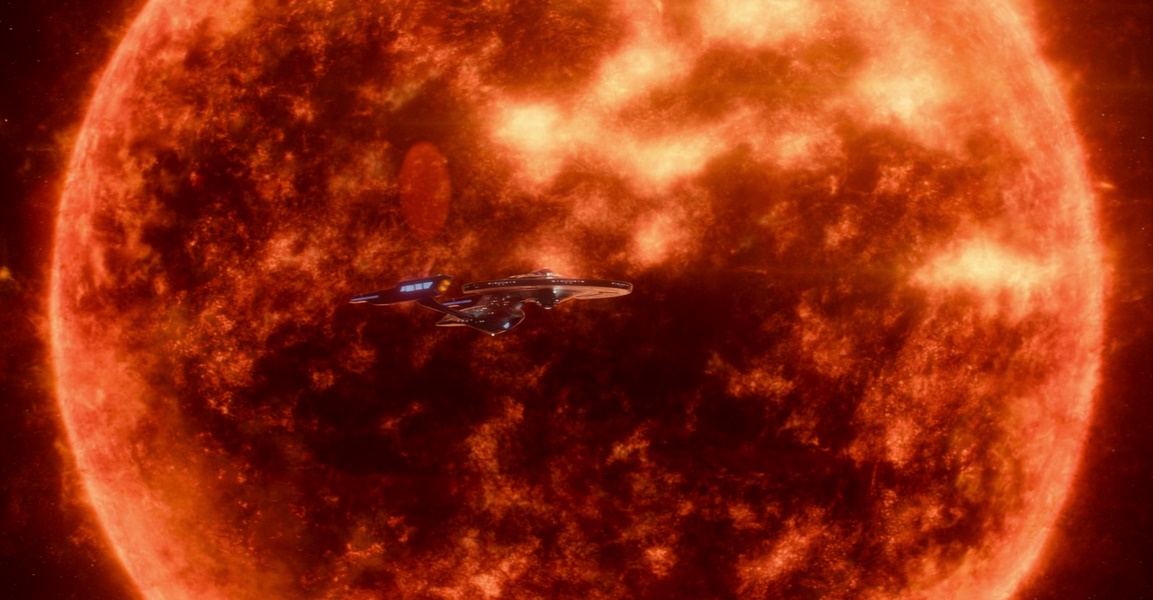
Still frame from Star Trek: Picard Season 3 showing the Titan/Enterprise-G in orbit of a star.
What *new* adventures might lie ahead for the Star Trek franchise?

A new film at this point should have the freedom to go in a totally different direction, and shouldn’t be too tied up with what came before. That doesn’t mean it can go breaking all of the rules of canon, of course, but after so many sequels, prequels, and spin-offs, it’ll be nice to get something truly original for once. Won’t it?

If Star Trek continues to look backwards at its own history, and keeps trying to bring back characters from the past, that limits the franchise’s potential to grow and expand. I became a Trekkie in the early 1990s not because of Kirk, Spock, and Dr McCoy, but because of Picard, Riker, and Data. If Star Trek, in the ’80s, had doubled-down on The Original Series and those classic characters, we’d have missed out on so much – not only The Next Generation, but Deep Space Nine, Voyager, and more. After such a long time, and with so much having happened since Beyond was in cinemas… a new film taking a new approach just feels like the best option.

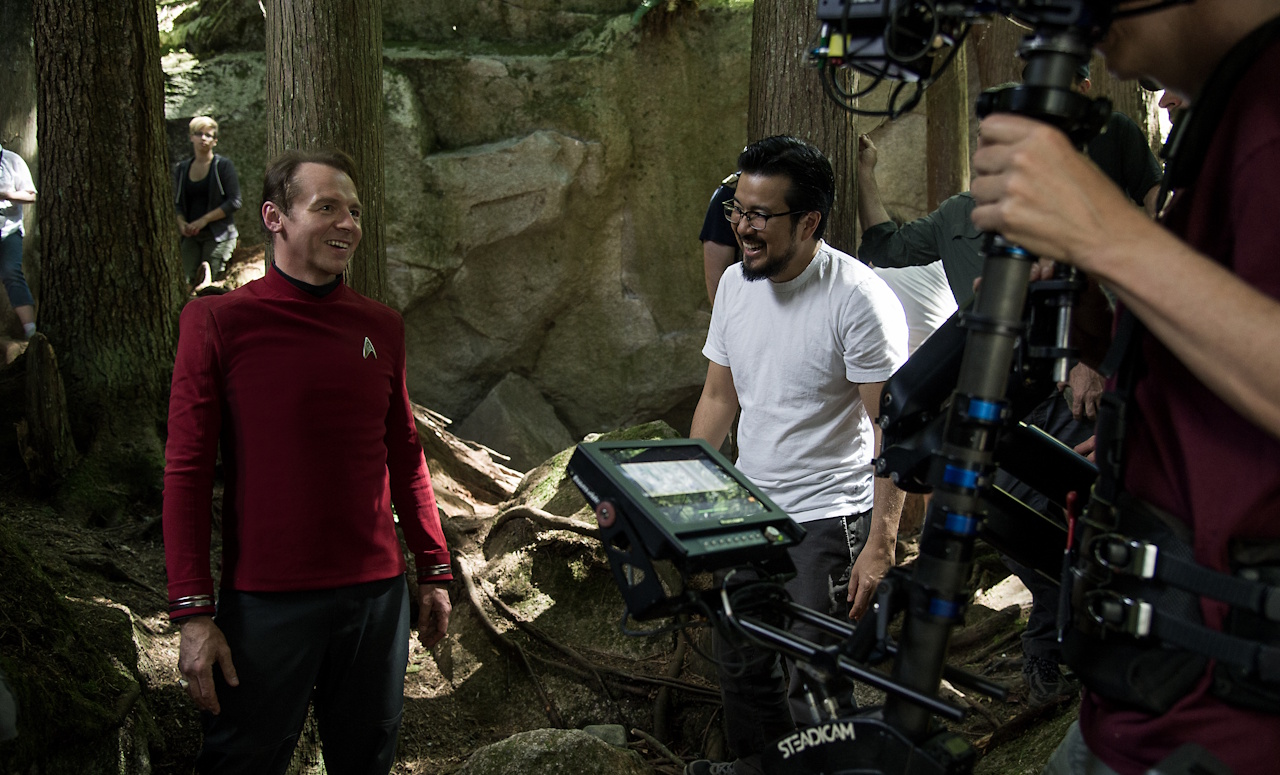
Behind-the-scenes photo from Star Trek Beyond showing Simon Pegg, Justin Lin, and others.
Simon Pegg (Scotty) and director Justin Lin on the set of Star Trek Beyond.

There are risks, of course. Into Darkness remains the cinematic Star Trek franchise’s high-water mark in terms of financial success, and all three of the Kelvin films turned a profit. Creating something brand-new, with a new director and a new cast of characters, might not achieve the same level of success as a Beyond sequel. Figuring out how to attract audiences who turned out for Into Darkness – but who may have skipped *everything* Star Trek has done since – will be the biggest challenge Skydance faces when it comes to pitching the new film.

And there’s kind of limited room for manoeuvre here. In 2009, a lot of people who hadn’t watched the likes of DS9 and Enterprise showed up specifically because Star Trek was billed as a reboot. The universe was going to be reset, you didn’t have to have followed any of the increasingly convoluted storylines from the previous fifteen-plus years… this film was its own thing. But can you re-reboot a franchise and achieve the same level of success a couple of decades later? Does the name “Star Trek” carry the same weight it did in 2009, after not really managing to reach out to a big new audience on streaming? I think those are valid questions as this new film may be getting underway.

Cropped promo image for Star Trek 2009 showing the USS Enterprise in sillhouette.
A silhouette of the Enterprise was one of the first teaser images released for Star Trek ’09.

I don’t lament the demise of the Kelvin timeline. It laid the groundwork for Star Trek’s return to its small screen home in 2017, which I truly appreciate, but then it kind of lost its place – at least for me as a Trekkie. By the time Pike and Spock joined Discovery a couple of years later, and we were getting news of new projects featuring Picard, Section 31, and a new animated series, it really seemed like Star Trek was back. Strange New Worlds, with its focus on many of the same characters as those in the Kelvin films, occupies a very similar space, and I’m just struggling to see what a new Kelvin film could really have to say after five seasons of Strange New Worlds and everything else Star Trek has done over the past nine-plus years.

At the same time, there’s a sense that Star Trek’s executives never took *full* advantage of the alternate reality that the Kelvin films presented. We could’ve seen, just as one example, Captain Kirk taking on the Borg – something that would be impossible to do in the prime timeline. Or we could’ve done more with the idea of a crossover from the prime timeline, bringing in William Shatner and George Takei alongside Leonard Nimoy. That can’t happen now.

Cropped promo poster for Star Trek Into Darkness showing the USS Enterprise crashing into the atmosphere of a planet.
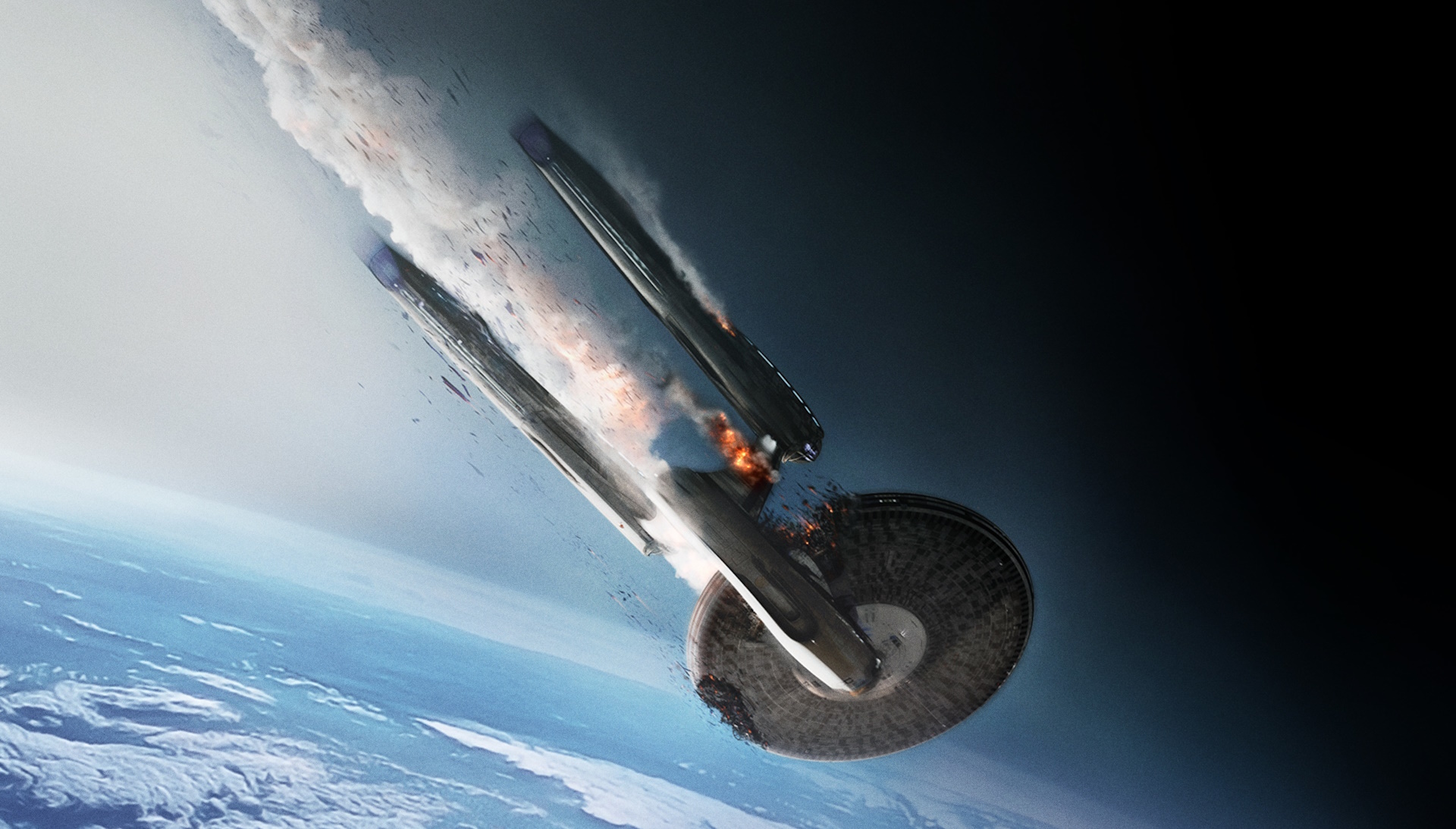
The Enterprise.

But the Kelvin films – or perhaps we should start saying “the Kelvin trilogy” – have a place in the history of Star Trek. They carried a torch for the franchise at a time when total cancellation and annihilation seemed not only likely, but were actively happening, and they set the stage for several great streaming shows that expanded the franchise in new ways. That isn’t a bad legacy by any means.

And as we look to the future? Star Trek seems set to enter a fallow period as the 2020s come to a close. After Strange New Worlds finishes its run, all we know for sure is that Starfleet Academy is getting a second season – and then there’s this potential new film. Star Trek XV – or whatever we’re going to end up calling it – has a lot to live up to in some ways, as it may have to pick up the mantle from the Kelvin timeline and keep Star Trek alive at a time when there might not be anything else going on. But this new film, thanks to being its own thing, has almost limitless storytelling possibilities, and won’t be constrained by what came before. That worked well in 2009, and it set the stage for bigger and better things. I’m going to keep my fingers crossed that this new film, in whatever form it ultimately takes, will be much more like Star Trek ’09 and less like the unfortunate Section 31.

So I hope this has been interesting. Part of me wonders if, in another ten or fifteen years, we may yet get a belated Kelvin timeline revival. Who knows! But nostalgia can be a big deal in entertainment, and if there are enough Kelvin fans clamouring for it… never say never, right? I will keep my ear to the ground and if there’s any news about a new Star Trek film in the weeks and months ahead, I daresay I’ll have more to add, so be sure to check back from time to time. And if you want to see what else I’ve had to say about the Kelvin timeline over the years, you can check out my dedicated Kelvin timeline page by clicking or tapping here. Until next time, friends!


Star Trek ’09, Star Trek Into Darkness, and Star Trek Beyond are available to stream now on Paramount+ in countries and territories where the platform is available. All three films are also available on DVD and Blu-ray. The Star Trek franchise – including all films and other properties discussed above – is the copyright of Skydance/Paramount. This article contains the thoughts and opinions of one person only and is not intended to cause any offence.

Horror Hypothetical: Where Would You Try To Survive?

A Star Trek-themed spoiler warning.

Spoiler Warning: Beware of spoilers for the films, games, and TV shows discussed below.

With Halloween rapidly approaching, I thought we could have a bit of fun by playing one of those “hypothetical question” games that you often see doing the rounds on social media. I’m going to choose one with a seasonally-appropriate horror theme, and try to go through a few possible answers, weighing up the pros and cons of each.

So what is this horror hypothetical, you rightly ask?

If you had to spend 72 hours (that’s three days) in one fictional universe from a horror property, which one would you choose? And, perhaps more pertinently: which horror franchise/universe presents the highest chance of survival?

Stock photo of two Jack-o-lanterns.
Happy Halloween!

Let’s lay down some ground rules – because rules are always fun, right?

In this scenario, I’ll have to spend 72 hours in one fictional universe of choice – and it has to come from a recognised horror film, TV series, or video game. Scary episodes or levels of non-horror properties don’t count – so there’s no trying to wriggle out of it by picking something like Star Trek: Deep Space Nine’s Empok Nor. We’re talking full-blown horror only!

Most stories take place in a larger fictional world – but it wouldn’t be *any* fun at all to pick, say, The Texas Chain Saw Massacre and say that I’d avoid it by catching the first bus out of town, or to say that I’d survive in the Alien universe by just never going into outer space. So we’re assuming, for the purposes of the hypothetical, that I’m dropped in the middle of the danger zone. Running away is possible – but only using the equipment and technology that we’ve seen depicted on screen, *and* that I’m reasonably confident I’d be able to use. So… no hijacking a nuclear bomb or anything like that!

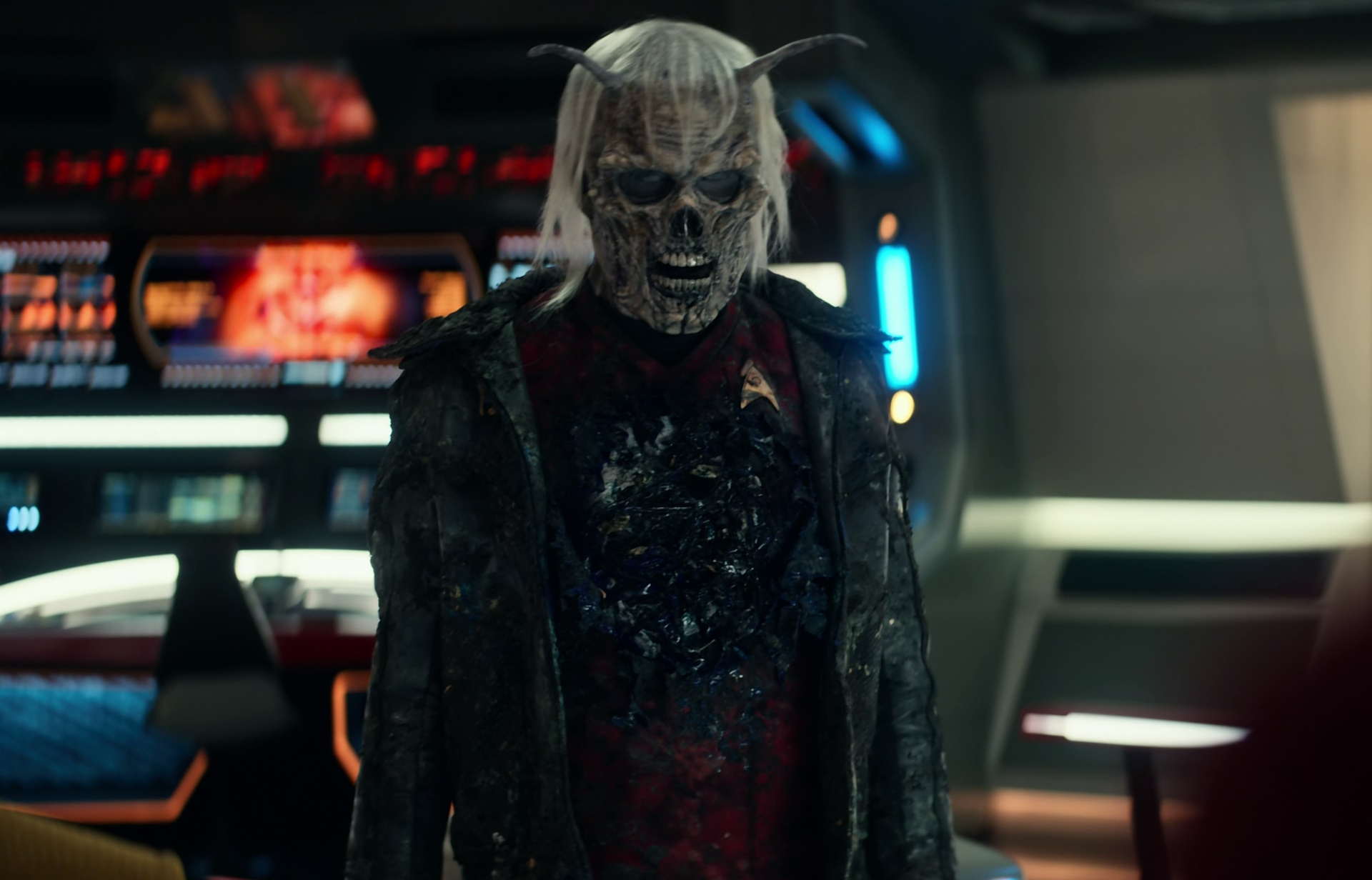
Still frame from Star Trek: Strange New Worlds showing Hemmer as a zombie.
Argh!

I’m also going to assume that I’m in reasonably good health in these hypotheticals – which is categorically *not* the case in real life, unfortunately! But, again, it doesn’t seem like it’d be a lot of fun to have to take into account my limited mobility in every scenario. So, if you’ll indulge me, I’m going to assume I’m in better health than I actually am!

Finally, as I always like to say, everything we’re going to talk about is subjective, not objective. If you hate the horror franchises I’ve chosen, think I’ve totally messed up my survival, or just feel I’ve got the wrong end of the stick somehow… that’s okay! All of this is just a bit of Halloween-themed fun, at the end of the day. And since neither of us are ever going to be actually dropped into a horror franchise (well, fingers crossed), none of this really matters! It’s just for fun – and I share it with the interweb in that spirit.

I’ll talk a little bit about each scenario, then give it a survival chance at the end using a simple 1-10 scale, with one being the lowest chance of survival, and ten being the highest.

So with all of that out of the way, let’s get started.

Option #1:
28 Days Later

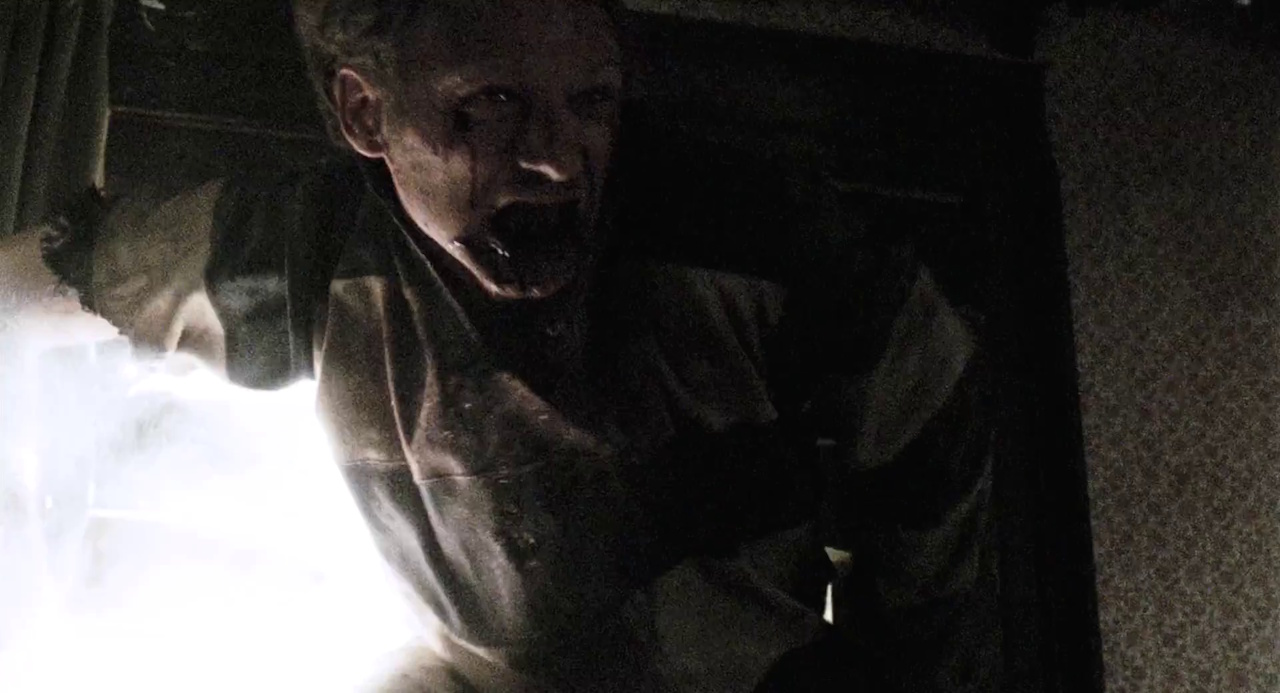
Still frame from 28 Weeks Later showing a zombie breaking in through a window.
A zombie.

28 Days Later redefined the zombie genre, and it was genuinely one of the most terrifying depictions of zombies I’d ever seen. Fast “sprinters,” able to infect people with a single drop of blood, and blinded by rage… this is gonna be a tough one!

For the purposes of our 72-hour survival challenge, the best thing to do would be to shelter in place, using whatever resources are available in the immediate surroundings. Venturing outside, especially in a large city the size of London, seems like it would be immediately fatal, so as long as I have some kind of shelter and hopefully some water or something else to drink, I’d try to hunker down, keep quiet, and stay away from any windows!

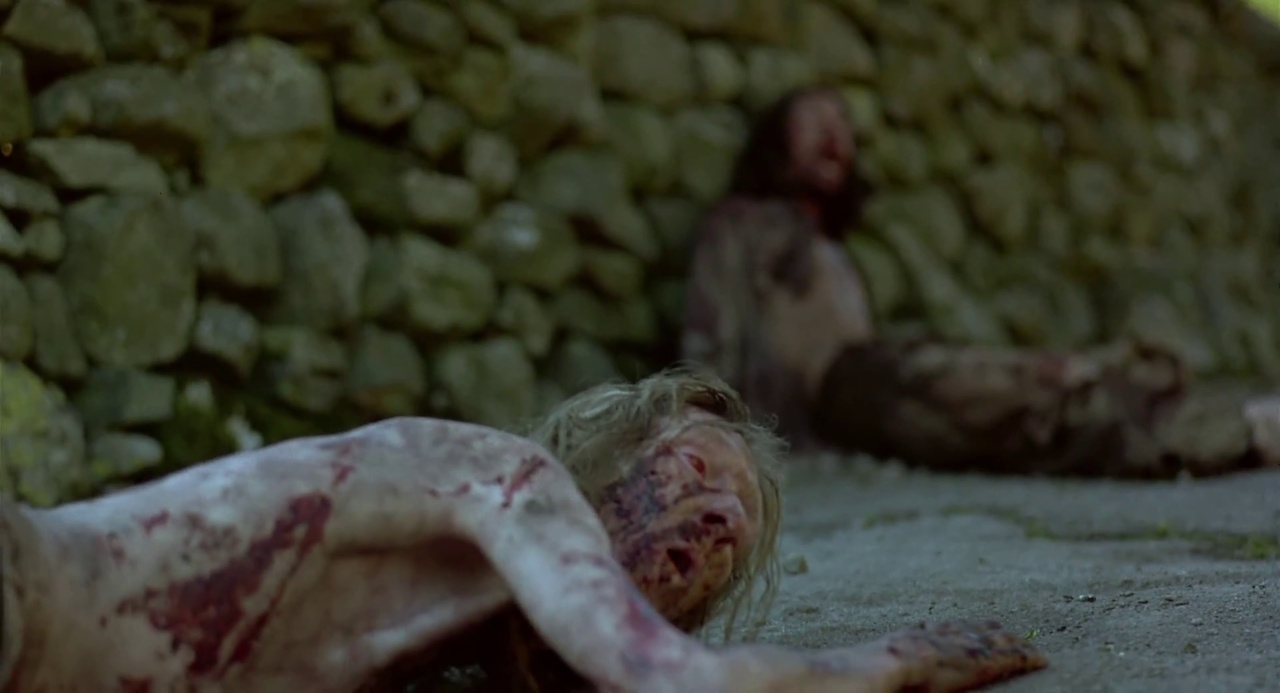
Still frame from 28 Days Later showing two zombies dying.
Dying zombies.

That being said, we’ve seen how aggressive 28 Days Later’s zombies can be, and how a small flicker of light or a seemingly innocuous sound can attract an entire horde. Assuming we’re in London or a similarly-sized urban area, and all we have for defence is the contents of the average house… I don’t think this is going to end well, to be blunt about it. One loud snore, one step too close to a window, or one candle at night would be all it’d take to send the zombies crashing through the windows and doors.

I deliberately chose 28 Days Later ahead of something like The Walking Dead because of how much more intense and powerful its zombies appear. But that could be what screws us over! If we get lucky and the hordes pass us by, I think sheltering in place for 72 hours is plausible. But if we run out of water and have to venture out, if our base is compromised, or if we make one small mistake… that’s all it’d take.

Survival Chance: 3/10

Option #2:
A Nightmare on Elm Street

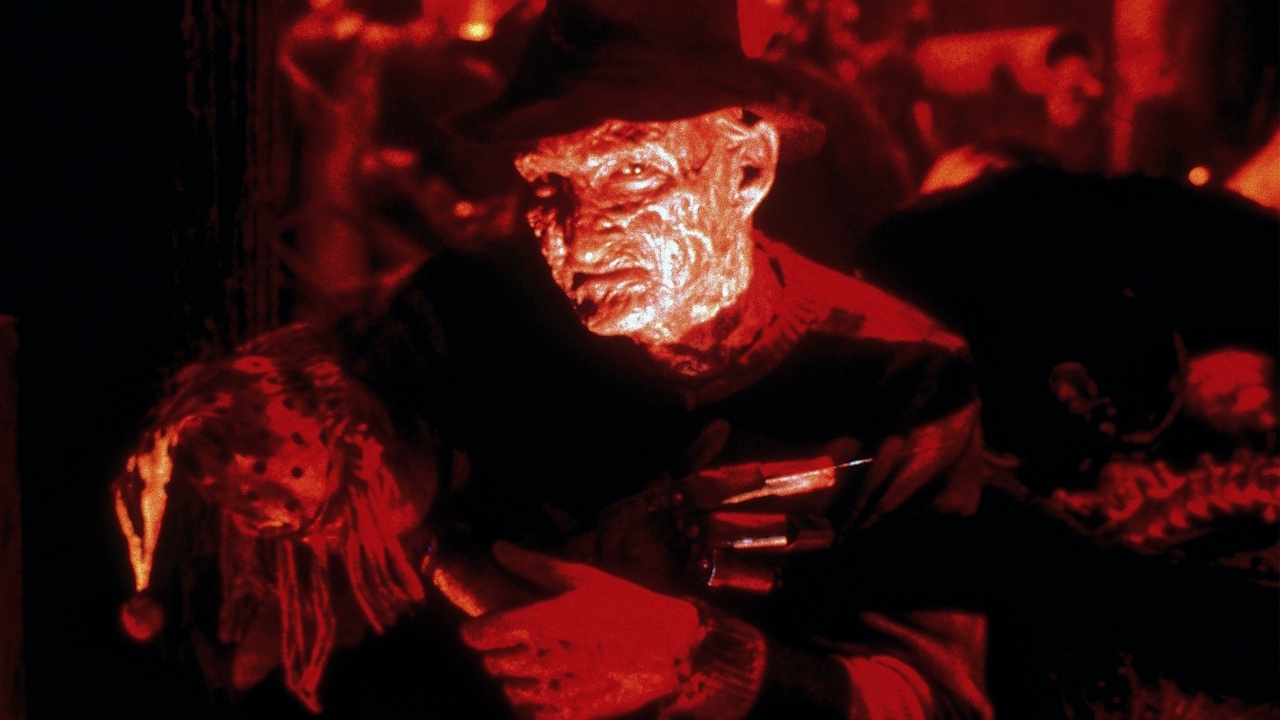
Promo photo for A Nightmare On Elm Street showing Freddy Krueger.
Freddy Krueger.

Freddy Krueger has one major weakness: he can only hurt me in my dreams. If this was a “survive indefinitely” challenge, that would be a problem! But if I have to make it 72 hours… I reckon I could manage to stay awake. A combination of caffeine pills, energy drinks, and coffee should keep the spooky lil’ guy at bay!

But okay, that’s getting dangerously close to cheating territory, I suppose. There have been more Nightmare on Elm Street films and spin-offs than I thought, and it seems as if Krueger’s backstory and the source of his powers have changed since the original. But if we assume that Krueger is fuelled by his victims’ fear, as the first film depicted, then trying to stay calm will be the biggest obstacle. And all that caffeine we just chugged? That probably won’t help with keeping calm!

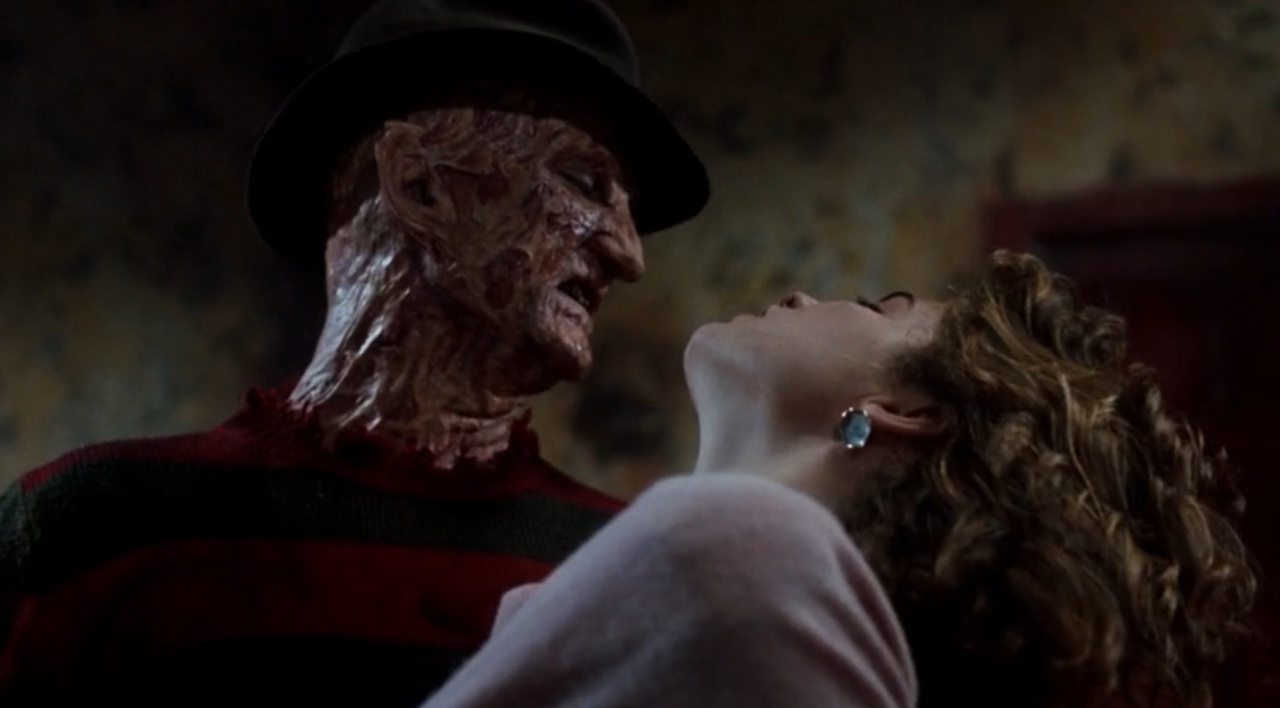
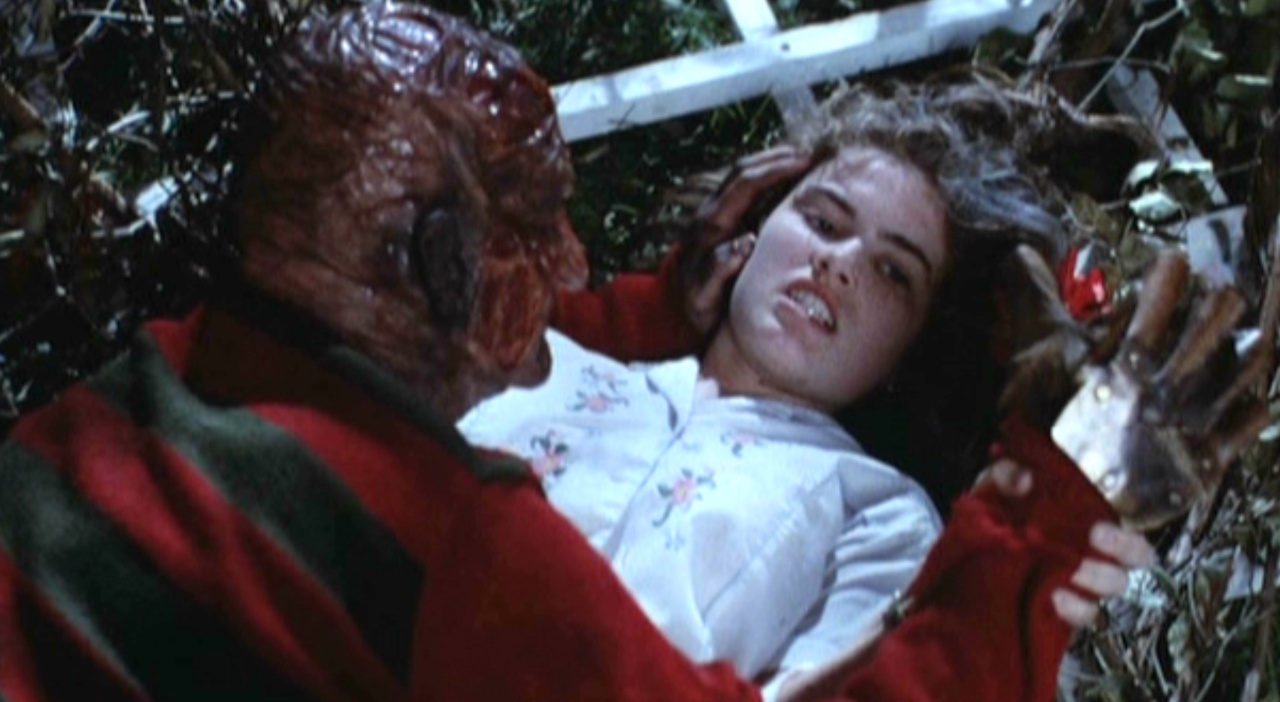
Still frame from A Nightmare On Elm Street 3 showing Freddy and Nancy.
Krueger and Nancy in one of the sequels.

I don’t think I’d be able to figure out all of the other stuff depicted in the sequels: things like purifying Freddy’s bones or staging a group hypnotherapy session in order to enter his world and take the fight to him! So my plan, to be honest, would really be to try to stay awake for as long as possible. 72 hours seems like a stretch – that’s three full days – but if the alternative is a violent and painful death… well, that’s a pretty good motivator.

If possible, I’d try to meet up with anyone else who might be one of Freddy’s targets. Perhaps by working together, we could develop a more solid strategy!

Survival Chance: 6/10

Option #3:
The Last Of Us
(Video game version)

Promo screenshot for The Last Of Us showing Joel fighting a clicker.
Fighting a clicker.

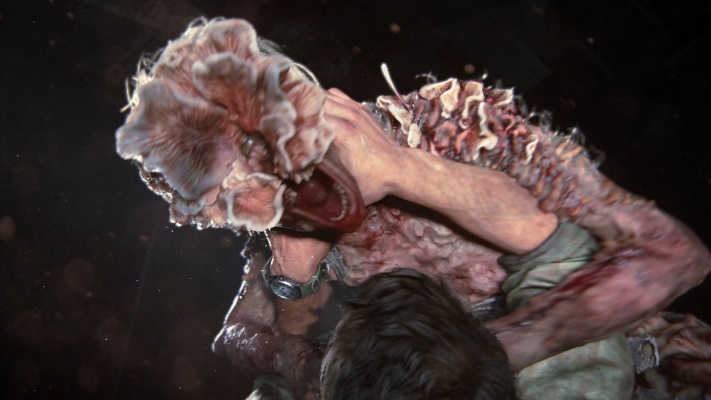
In this scenario, we survived the main event (or we were born after it) and we’re now a couple of decades into the post-apocalypse, as depicted in the main part of the story. For a 72-hour survival challenge, I’m torn between seeking out a safe zone, like Boston, where the first game starts, or simply finding an abandoned property and taking shelter.

In either case, I don’t want to spend much time on the road or travelling, as that seems like the time for the mushroom-zombies to strike! Finding a truly safe space outside of one of the established settlements or safe zones seems like it would be challenging, but trying to enter one of these places would also have its drawbacks. Some guards seem especially trigger-happy, so one wrong move (or sarcastic quip) could lead to a premature demise!

Promo screenshot for The Last Of Us showing a clicker on a red background.
We don’t want to run into any of these…

The video game version of The Last Of Us also showed how deadly fungal spores could be. Without proper protection, spores would quickly infect me and bring my run to an end – and I can’t rely on having access to a proper hazmat suit or gas mask! And knowing me, I’d struggle to get the damn things on in time even if I was lucky enough to have them. This side of things makes venturing anywhere pretty dangerous, not least derelict buildings which could hold clouds of cordyceps spores.

Perhaps the least-bad option would be to just… pitch a tent in a field somewhere and hope that you’re far enough away from the zombies to survive for three days? There are also scavengers and gangs to worry about, though. Being alone in this post-apocalyptic world wouldn’t be a lot of fun, that’s for sure.

Survival Chance: 4/10

Option #4:
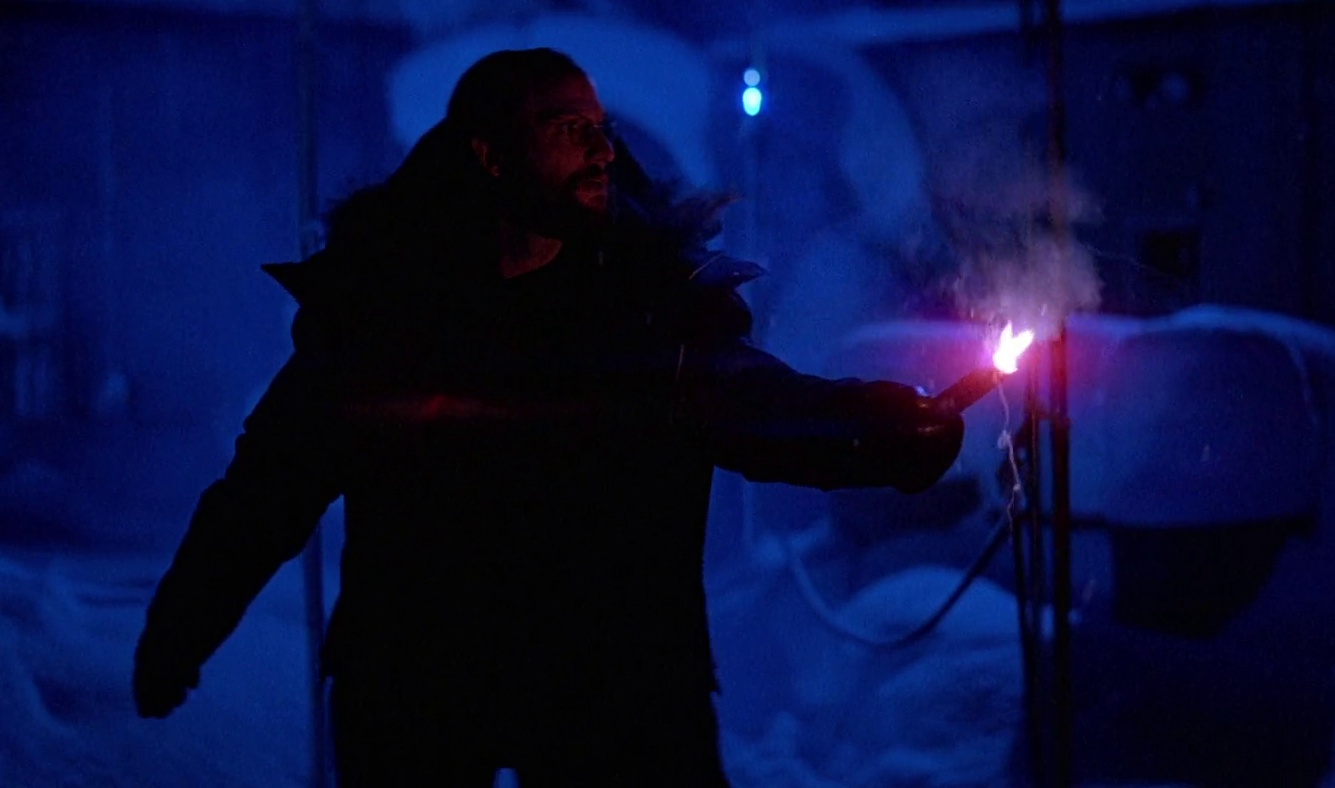
The Thing

Still frame from The Thing showing a character holding a lit flare.
The Thing.

In The Thing, you’re trapped at an isolated outpost, unable to tell your friends from the creature, and… I think it’s gonna be a bad time! Unlike in other scenarios, going off alone and trying to hunker down won’t work; the Antarctic base is relatively small, and the creature seems to have a pretty good method of navigating it. Leaving the base, even if well-equipped, means facing Antarctica in the dark in the middle of winter… so I’m not making it 72 hours that way!

If possible, I’d try to organise the survivors into one group, occupying a “safe” room with resources, like the cafeteria. Taking shifts, so at least two or three people are awake at a time, I’d try to keep the creature at bay for as long as possible. But I have no doubt that the shape-shifting abilities would be a waking nightmare; not feeling 100% confident in trusting anyone would take a toll.

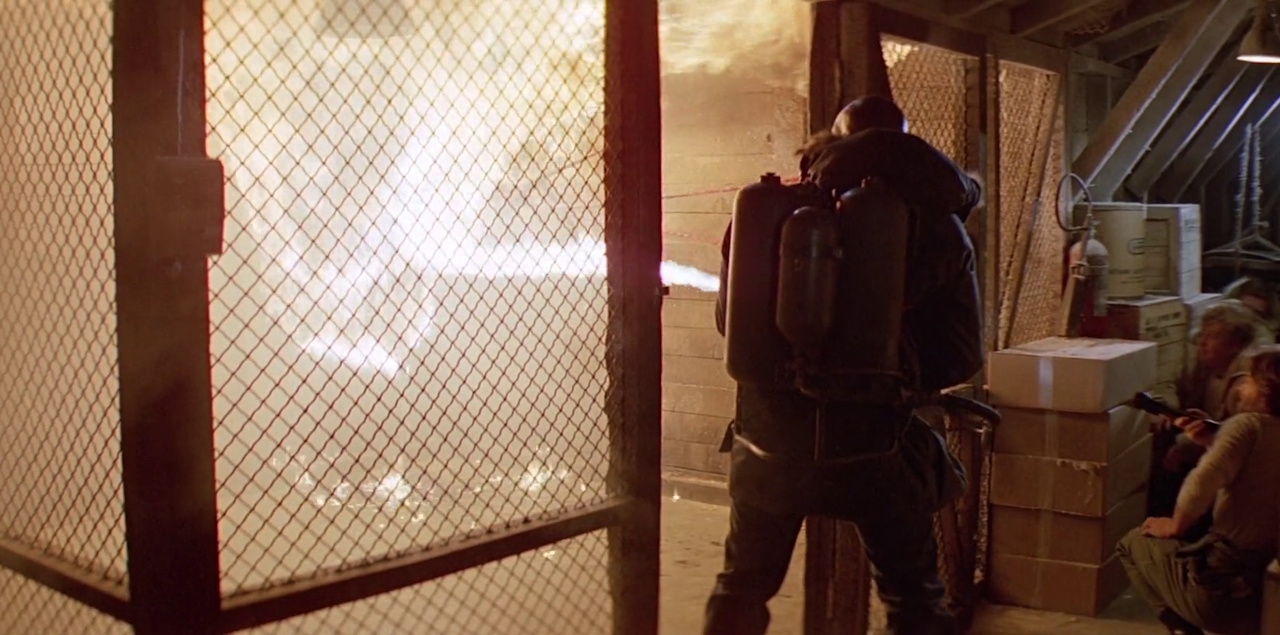
Still frame from The Thing showing a character using a flamethrower.
Kill it with fire!

With nowhere to run, the best way to survive 72 hours in this world would seem to be by befriending everyone at the facility and trying to stick together in one group. That means if there’s something to attend to outside of our safe room, the whole group goes. No one uses the bathroom alone, sleeps alone, or does anything alone. For someone who struggles with human interaction… that might not be the most fun I’ve ever had! But, as above, the fear of a violent death is a pretty good way to keep me motivated!

With all that being said, facing off against an intelligent and efficient predator like this, one with such a perfect ability to mimic animals and people… I don’t think the odds are especially high!

Survival Chance: 2/10

Option #5:
Alien

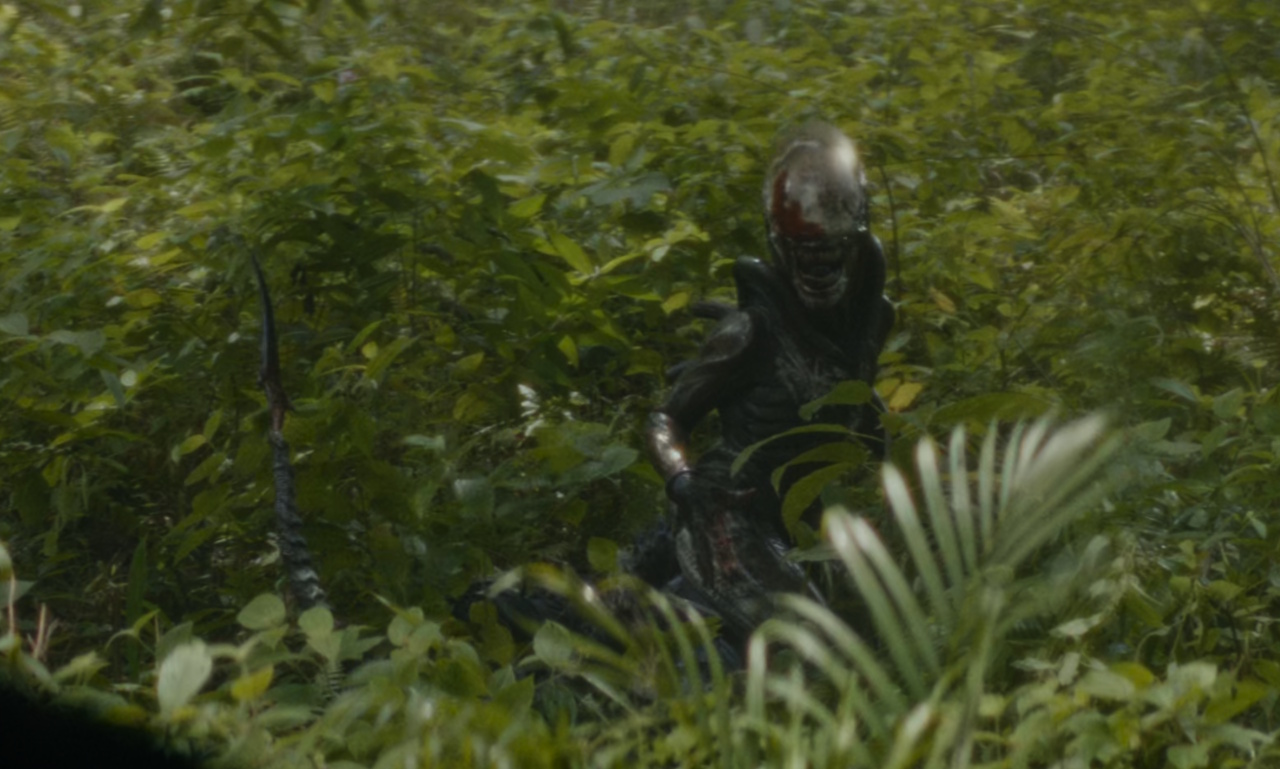
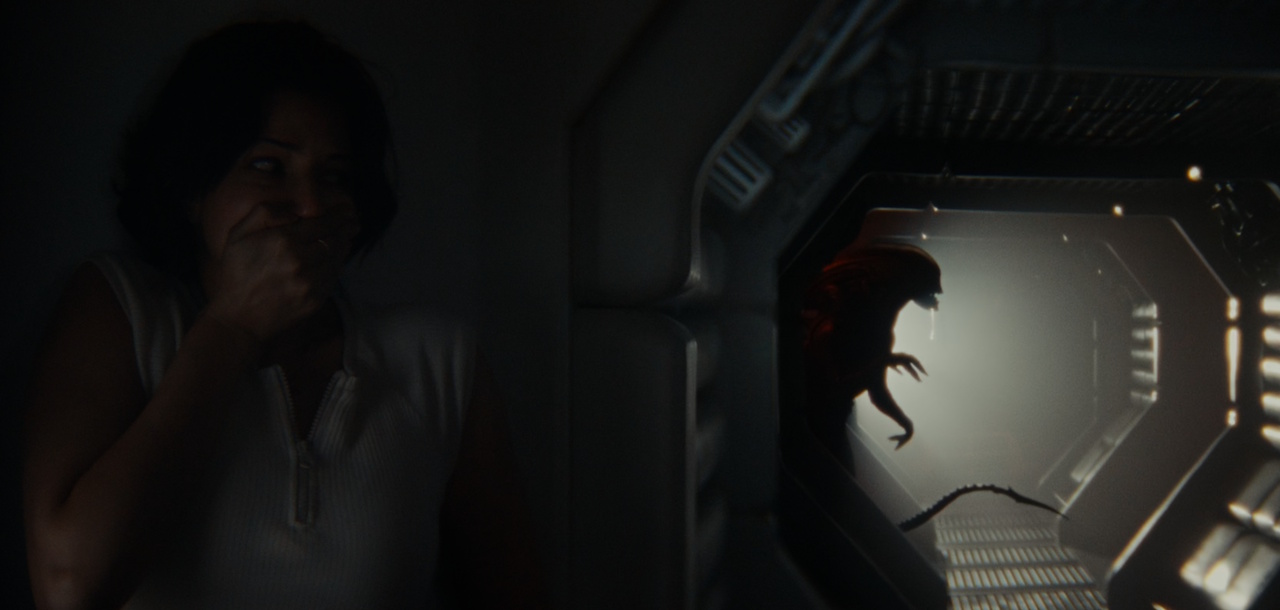
Still frame from Alien: Earth showing someone trying to hide from a Xenomorph.
Hiding from a Xenomorph.

In space, no one can hear you scream… so let’s *try* not to have to scream! I think our survival chances in the world of Alien improve significantly if we’re on the ground – a colony or settlement – rather than aboard a spaceship or space station. But either way, the Xenomorph is coming for us, driven by little more than a desire to feed and breed.

If we have enough room, I’d try to put as much distance between us and the infection site as possible. We could try to commandeer a vehicle – like one of the ground transports seen in Aliens. Or, if trapped aboard a ship, sneakily trying to use an escape pod might be a viable option. Remember, we just have to survive for 72 hours – so getting as far away from the Xenomorph as possible should be top priority!

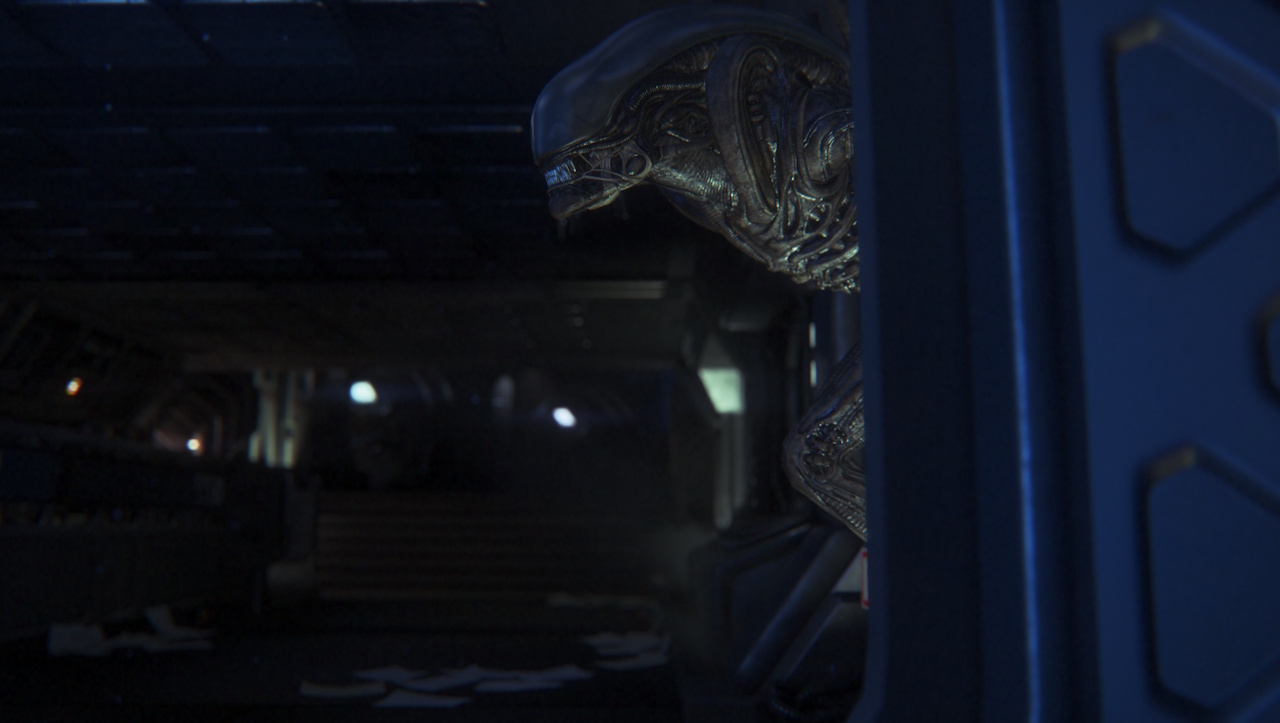
Promo screenshot for Alien: Isolation showing the Xenomorph.
Alien: Isolation.

If escape isn’t an option, though, and we’re in a worst-case scenario aboard a cramped slow-moving spaceship, then I think – as the films and series have repeatedly shown – we’re pretty much screwed! If we catch the infection really early, and can kill the facehugger or infant Xenomorph, maybe things would look a lot brighter. But by the time we’ve passed the chest-burster stage and the little bugger has disappeared, our best bet is honestly to run to the escape pods.

I’ve recently been playing Alien: Isolation, and it’s genuinely one of the scariest games I’ve ever played – and perhaps second only to the original Alien film in terms of how terrifying the Xenomorph feels. Playing it was part of the inspiration behind this piece, as I honestly struggle to survive in the world of Alien – so it made me wonder which other horror properties might be equally as unforgiving!

Survival Chance: 2/10

Option #6:
Buffy the Vampire Slayer

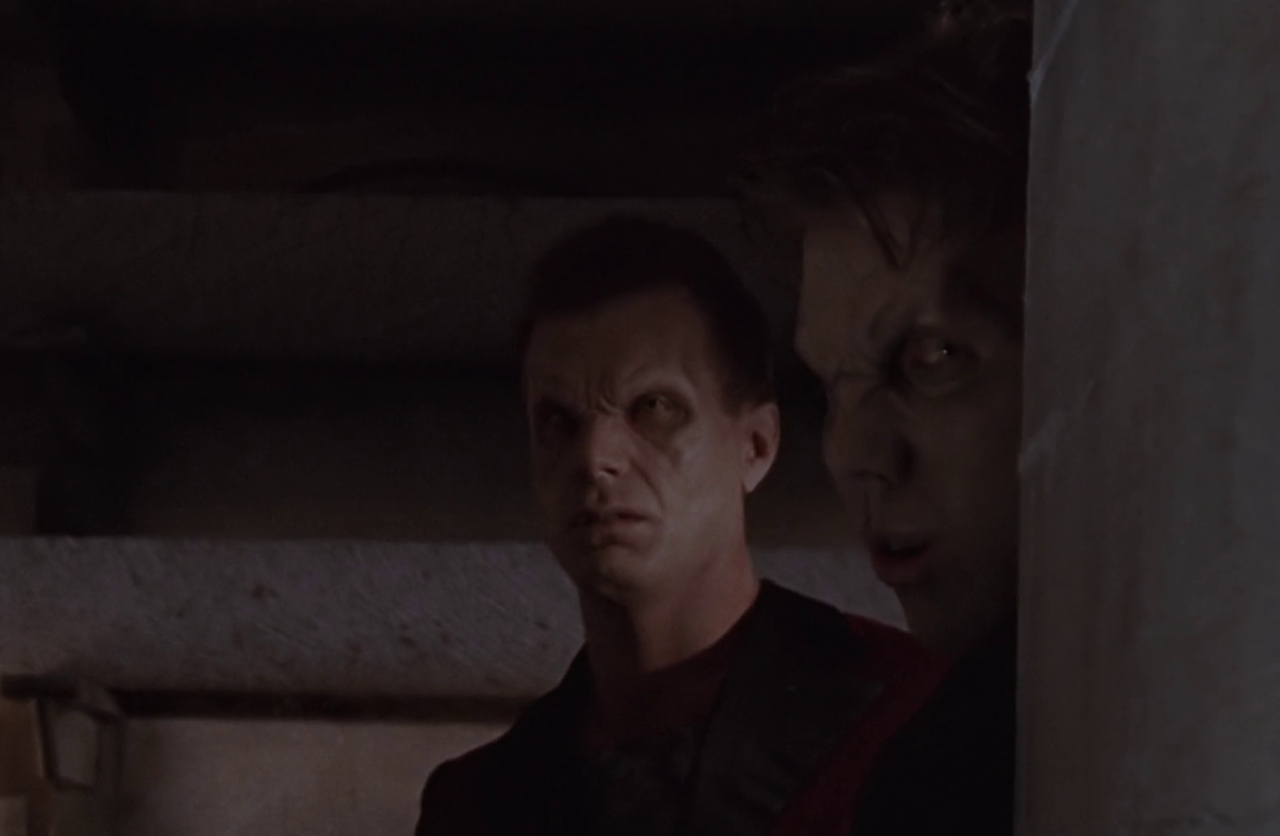
Still frame from Buffy the Vampire Slayer showing two Season 1 vampires.
Vamps!

Gosh, where do we start with this one? There’s a lot more to Buffy than just vampires – so you can expect to be contending with werewolves, witches, ancient demons, and many other supernatural baddies! Honestly, just holding your own against vampires for 72 hours would be a stretch, but if other entities also join the hunt? This could be a very short challenge!

The flip side to all of that is, unlike in every other scenario we’ve examined so far, there’s a gang of people dedicated to hunting down and stopping the vampires and other creatures of the night. We wouldn’t even need to meet or befriend Buffy, Giles, Willow, or anyone else – if supernatural shenanigans are going down in Sunnydale, they’re probably already on the case. It might be too late for us if we’re the first victim of a new monster, but what are the odds of that happening in the first 72 hours?

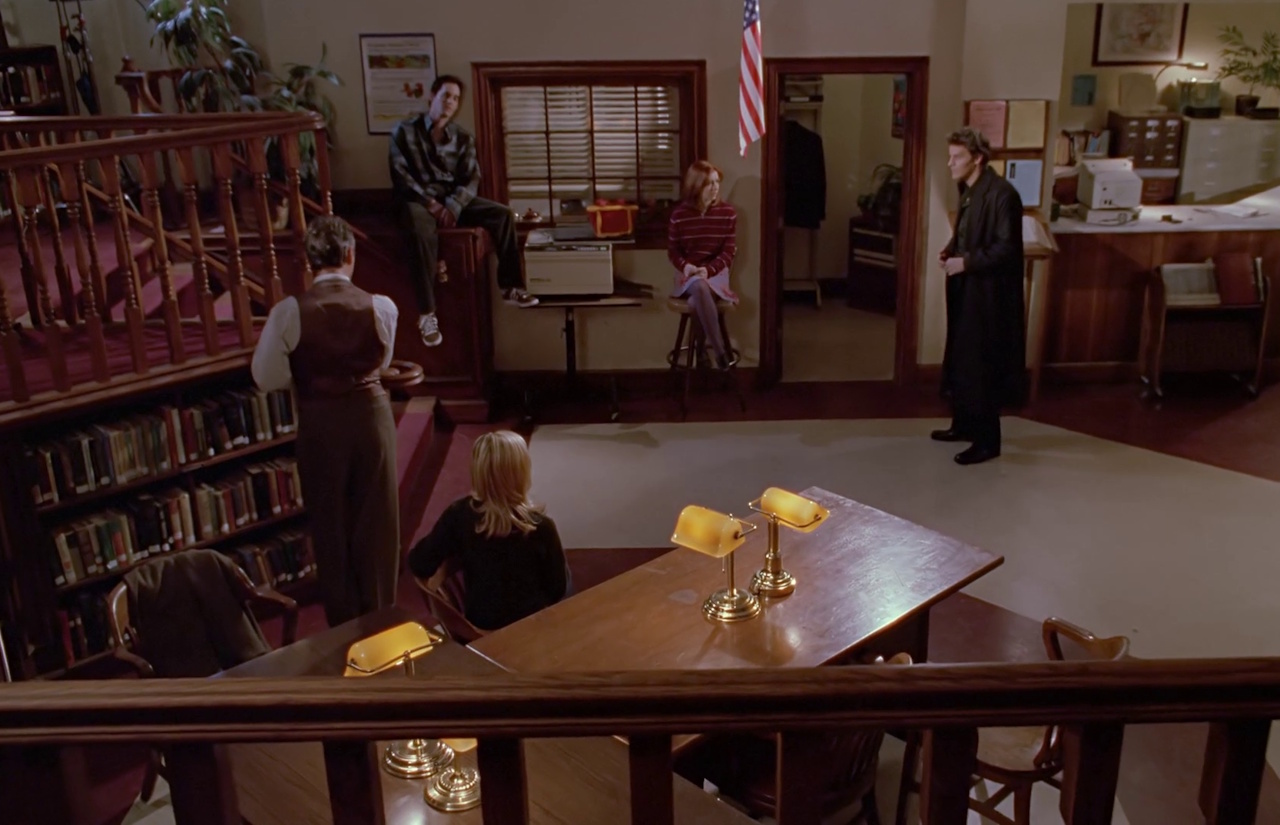
Still frame from Buffy the Vampire Slayer showing the gang in the library.
The Scooby Gang.

Okay, you’re right – I guess seeking shelter at The Magic Box might not be a terrible idea! If we could make it there in the daylight, and explain we’re in danger… all we gotta do is hang out with the gang and wait! But if there’s no slayer, no Magic Box, and just a plethora of vampires and monsters terrorising Sunnydale… I think we’re in a lot of trouble. Stay inside, lock the door, and maybe try to get some kind of really strong UV lamp!

Because Buffy ran for seven seasons, the show sank its teeth into all kinds of monsters, vampires, and ghouls. Sunnydale is a very dangerous place, it would seem. If Buffy and the gang are there and willing to help, this could be a cakewalk. But if we’re unlucky and Buffy’s gone on vacation, we might’ve accidentally stepped into one of the most dangerous, monster-infested settings out there!

Survival Chance: 4/10
(8/10 with Buffy and co., 2/10 without)

So that’s it… for now!

Stock photo of Halloween-themed food.
Halloween snacks!

I hope this has been a bit of Halloween-y fun! I actually really like this “hypothetical question” idea, and it’s one I’d love to revisit in the future – both in horror and non-horror contexts. I’m already brainstorming more questions and scenarios to write about, so if you enjoyed this idea… watch this space!

But I suppose we should pick one of the six options, shouldn’t we, as the answer to the hypothetical posed at the beginning?

I think I’m still leaning towards A Nightmare on Elm Street. I’m confident that I could go 72 hours without sleep, even if it was 1984 and there were no energy drinks or caffeine pills, and all I had was coffee. I know it’s a bit of a sneaky answer, but the objective was to survive 72 hours in a horror setting – not defeat every demon and monster that inhabits it!

Still frame from A Nightmare on Elm Street showing Freddy and Nancy.
I’m choosing A Nightmare On Elm Street for this hypothetical!

So that’s gonna be my pick. Buffy the Vampire Slayer was tempting, but I think it’s only really survivable if you’re able to team up with the Scooby Gang as soon as you arrive. If you get to nightfall in Sunnydale without support – and without a place to hide – you’re toast. So A Nightmare on Elm Street it is.

As I think I said last time, this year, October has turned out to be a stupidly busy month, so I haven’t had time to write all of the horror and Halloween articles and columns that I’d originally planned. Such is life, I suppose! Some will undoubtedly have to go on the back burner until next Halloween. By the way, is that the first time you’ve heard someone talk about Halloween 2026?

Still frame from The Rise of Skywalker showing Rey and ghost Luke.
A spooky ghost!

As I said above, this piece was partly inspired by the video game Alien: Isolation, which I’ve been slowly working my way through. Trying to survive in that world is genuinely tense and terrifying, and it got me thinking about other horror settings and how long I might last! I think the basic ground rules made for a fun thought experiment, at any rate.

So if I don’t catch you again before the 31st, I hope you have a fun and appropriately spooky Halloween! If you missed it, I wrote up a list of five seasonally-appropriate TV shows that you might want to check out before Spooktober comes to an end – you can find that piece by clicking or tapping here. And if you want a more personal look back at some of my Halloween memories, I wrote about that a couple of years ago – you can find it by clicking or tapping here.

Happy Halloween, everyone!


All films, TV shows, and video games discussed above are the copyrights of their respective studio, broadcaster, distributor, developer, publisher, etc. This article contains the thoughts and opinions of one person only and is not intended to cause any offence.

KPop Demon Hunters: Film Review

A spoiler warning graphic.

Spoiler Warning: There are spoilers ahead for KPop Demon Hunters.

I know absolutely nothing about K-pop. The last (and probably only) K-pop song I listened to was Psy’s Gangnam Style when that was all over the airwaves – which is more than a decade ago at this point! Gosh, I’m old. In fact, is Gangnam Style even K-pop? I think we’re off-topic already! The point is: I know nothing about this style of music, I don’t follow K-pop, I don’t listen to it, and while I’ve been dimly aware of Korean music’s popularity in the west… it’s just never been something I felt the need to look into.

So… why watch KPop Demon Hunters, then? It’s a film that uses the world of K-pop as its foundation, blending that in with Korean legends and some of the trappings of anime – another entertainment genre I have absolutely no experience with! It’s simple, really: I love a good animated film, and Netflix has been a fantastic destination for animation in recent years. KPop Demon Hunters has quickly acquired a great reputation, so I thought I’d give it a watch during one of the months where I’m paying for Netflix. And you know what? I had a whale of a time.

Concept art for KPop Demon Hunters; Huntr/x on the left, demons on the right.
Concept art of Huntr/x (left) and a selection of demons.

KPop Demon Hunters took what could’ve been a basic black-and-white, good-versus-evil story and shook it up, weaving a much more complex and nuanced tale than similar kids’ films. The unexpected connection between the main protagonist and the demon world, and the complex relationship she built with one of the primary antagonists, were a big part of what made the story work. There was genuine depth to these two characters, and that kept what could’ve otherwise been a silly and outlandish film feeling genuinely grounded. It wasn’t perfect, and there were some weaknesses with the way the other characters were set up, but when the film found its feet, it did a fantastic job getting me invested in its world.

The story was epic in scope, but also small and personal – and it’s the latter side that really made the film so enjoyable to watch. Anyone can write a story about the end of the world, but if there’s no one in that world to care about… it kind of doesn’t matter. KPop Demon Hunters gave me characters to feel for when they were in danger, when their secrets were about to be exposed, and that really elevated the film to be something a lot more special.

Still frame from KPop Demon Hunters (2025) showing Jinu and Rumi.
Jinu and Rumi.

The story also had important messages, at least some of which I hope will resonate with its younger intended audience. Not judging people because of where they come from, and not falling back on hatred, are timeless – but unfortunately also very timely – things that we all need to be reminded of, sometimes. It can be fun to go on the attack and to try to tear someone down, but at the same time, that isn’t always the right answer.

Then there’s the idea of shame and covering up some part of oneself. We got this through the visual effect of Rumi’s demonic skin patterns, which I think you can read as an analogy for scars, skin conditions, and so on, but also in a more metaphorical sense for the concept of shame in general. Shame leads people to make poor choices, lying to loved ones, and retreating inwards… those are just part of what the film wanted to say.

Still frame from KPop Demon Hunters (2025) showing Rumi with her demonic patterns.
Rumi with her patterns.

I felt KPop Demon Hunters had some wonderful animation and creative designs. The demons – which I assume are inspired by depictions of demonic entities in Korean culture – looked great; obviously otherworldly and spooky without being out-and-out frightening for the film’s younger viewers. And the designs of the characters in the two bands were great, too, drawing on both real-world K-pop bands and anime for inspiration. Some of the overly exaggerated anime-inspired facial expressions weren’t exactly “my thing,” but in the context of the film I think they worked well enough.

I loved the cute tiger and bird pair. Their designs were weird in one way, and certainly not of this world, but at the same time, I felt they were adorable! The multi-eyed bird with its cute little hat, and the chubby blue tiger just made for such a fun duo. The scene of Rumi riding the tiger was sweet, too. Again, I assume these entities are inspired by Korean folklore, and I think they were a lot of fun. If there’s not merchandise of both already, well… Netflix better get on top of that!

Still frame from KPop Demon Hunters (2025) showing Rumi riding on the tiger.
I need a tiger teddy!

I spent a little while looking into this, because I would’ve sworn that KPop Demon Hunters was deliberately using a “stop-motion” effect with its animation. But it seems as if that wasn’t a deliberate choice; rather the film is animated at a relatively slow 12 frames-per-second, resulting in what felt like a bit of a choppy effect – at least on my screen. I didn’t hate it; I actually quite like stop-motion films, and it gave KPop Demon Hunters its own kind of charm. But some of the ultra-fast dance and fight sequences definitely had that choppy look as a result. I’ve seen people online claim this was a “stylistic choice,” but there’s nothing official on that as far as I can tell. I haven’t seen Sony’s SpiderMan: Into The Spider-Verse, but apparently the same kind of visual style is on display in that film, too.

The film makes wonderful use of colour. Gold and blue were framed as the positive, earthly, or “good” colours, where pink – in various shades – seemed to be more connected with Gwi-Ma and the demons. The climax of the story showed many characters bathed in a deep pink glow, and it was genuinely unsettling. At various stages in KPop Demon Hunters, colours really popped, and the film has an overall bright and fun look.

Still frame from KPop Demon Hunters (2025) showing the demonic boyband.
The colour pink was used for the demonic entities.

If the central pair of Rumi and Jinu felt well-developed and real, some of the other main characters… didn’t quite reach the same level. Both Mira and Zoey got a few seconds’ of “backstory,” which was explained incredibly quickly by random characters right at the start of the film. At first I felt sure that this would be fine, but when their personal histories and issues actually mattered at the climax of the story… I felt we could’ve got a bit more than just a couple of hand-wavy lines of dialogue and half a line each in song form to explain who they were, why they might’ve felt they way they did, and where their exploitable vulnerabilities came from.

The same was true of the band’s leader, Celine – though we did get a bit more from her later on in the film. And the rest of the demons, aside from Jinu, didn’t really get much screen time. The demons’ king – Gwi-Ma – got plenty of time on screen, but his plan seemed to be “I’m evil and I want to eat everyone’s souls, mwahahaha,” without really much else going on. There’s absolutely a role in fiction for pure baddies, and Gwi-Ma made for a fine antagonist here. But I would’ve liked to have seen more from some of the other demons; was Jinu really the only one with a history?

Still frame from KPop Demon Hunters (2025) showing a crowd of demons in the underworld.
A gaggle of demons. Was Jinu really the only one who’d been manipulated?

Jinu’s story at least implies that some other demons in Gwi-Ma’s domain are similarly victims of exploitation, doesn’t it? Maybe his fellow demon boy-band popstars were 100% committed to the evil team… but were all of the other demons? Some of them, in their brief moments on screen in Gwi-Ma’s realm, felt almost human-like with their emotions and reactions to what was going on… and if there was some way to free them from their suffering instead of trapping them with it forever… well, wasn’t that part of what Rumi learned over the course of her interactions with Jinu?

I guess that raises implications for the film’s final act! If the story wanted to say something like “some of these demons are victims of Gwi-Ma’s manipulation, which you’ve just seen first-hand,” then is trapping all of them in the underworld the right thing to do? Jinu’s soul may have been saved by his interactions with Rumi, but what about the rest of them? I’m not trying to come across as “pro-demon” here, and I could be getting the wrong end of the stick. But it felt to me as if the film kind of tripped over the corner of its own story just a little.

Still frame from KPop Demon Hunters (2025) showing Huntr/x floating in the air.
Huntr/x at the climax of the film.

Let’s talk songs!

I really enjoyed Golden; that track has been playing on repeat since I watched KPop Demon Hunters. Soda Pop was a perfectly catchy pop song that worked really well given its prominent role in the story. Takedown came with an important message about judgement – but it’s also a badass song in its own right. How It’s Done was also a fantastically upbeat track. And I liked Your Idol, too. Does that mean I’m a K-pop fan now? Well… who can say! But I know that KPop Demon Hunters had a really fun, up-tempo, and enjoyable soundtrack, perfect for this kind of musical.

It was inevitable that a film about battling bands was gonna have some good songs, but I admit I was surprised at just how powerful and emotional tracks like Free and Golden actually were. There’s some great songwriting and composition on display here.

Still frame from KPop Demon Hunters (2025) showing Rumi singing.
I’ve been listening to Golden on repeat!

So I think that about wraps things up. KPop Demon Hunters hadn’t been on my radar at all, but it was a surprisingly fun film that will absolutely be in contention for my “animated film of the year” award come December! Netflix scooped the prize last year with Spellbound, so it’s definitely possible that KPop Demon Hunters can keep the streak going! Netflix is definitely becoming a go-to place for animated films like this, which is wonderful to see.

I thoroughly recommend KPop Demon Hunters. It was a fun introduction to the world of K-pop, a world I’m totally unfamiliar with. It had a strong story centred around two engaging characters, plenty of laugh-out-loud moments, and a fantastic soundtrack to boot. It’s also a bit of a change in tone from the last film I reviewed (28 Years Later)! There’s talk of a sequel, and while I wouldn’t necessarily say it’s a story that’s desperately asking for a follow-up, in 2025 almost every successful film ends up being spun off into a franchise, so I wouldn’t be surprised if there’s more to come from Zoey, Mira, and Rumi. Watch this space, I guess!


KPop Demon Hunters is available to stream now on Netflix. KPop Demon Hunters is the copyright of Netflix and/or Sony Pictures Animation. This review contains the thoughts and opinions of one person only and is not intended to cause any offence.
28 Years Later: Film Review

The first part of this review is free from major story spoilers. The end of the spoiler-free section is clearly marked.

I know what you’re thinking: Trekking with Dennis reviewing a horror film?! And it isn’t even October! What’s going on?

Well, I’ll let you in on a secret: 28 Days Later is one of my favourite horror films of all-time, and I enjoyed 28 Weeks Later, too. So when Danny Boyle announced there’d finally be a sequel to this genre-redefining zombie story a few years ago, I was immediately interested. Horror may not be my thing a lot of the time, but every now and then I don’t mind a good scare.

This is also my second zombie story in the span of a week! A few days ago, I watched Star Trek: Strange New Worlds’ zombie episode, so after this I think I’m gonna need a bit of a break from zombies for a while.

Three promo posters for 28 Years Later.
A trio of posters for the film.

28 Years Later was… interesting. But I’ll be honest: it wasn’t really what I expected. Less a horror film than a coming-of-age family drama with a zombie backdrop, 28 Years Later leaned on its post-apocalyptic setting to tell a story focused on a handful of characters. Spike, the main protagonist, got most of the film’s attention, and that was certainly an interesting – and potentially controversial – choice.

There was some fantastically creative cinematography in 28 Years Later. The film cut sequences from its post-apocalyptic present-day with imagery from war films and historical re-enactments, drawing parallels between those situations. The “Boots” refrain, heard in the trailer, surprised me by being an integral part of the film, not just a marketing stunt, and it was suitably haunting to hear that recitation atop imagery of zombies going feral. 28 Years Later was also creative with its use of colour; blood-red scenes were used for emphasis at key points in the story.

Still frame from 28 Years Later (2025) showing Spike.
An example of a blood-red sequence.

If you know me, you’ll know I’m a scaredy-cat. And 28 Days Later is up there as one of the most frightening films I’ve seen; its depiction of sprinting infected redefined what zombies could be and made them genuinely terrifying. For me, 28 Years Later just… wasn’t all that scary. It was gruesome when it wanted to be, sure; blood, guts, and other viscera are almost omnipresent in its world. But its jump-scares felt rather predictable – I could sense that something was coming, even when the film wasn’t trying to signal it. And while these sprinting zombies retain some of their fear factor, I suspect that two-plus decades of other horror films – many of which were inspired, directly or indirectly, by Danny Boyle’s work – have kind of… lessened that, a little.

I put off watching 28 Years Later until I felt I was in a good frame of mind for horror… but I really didn’t need to. There were tense moments, without a doubt. And the film is not bereft of new ideas; special categories of infected, who are bigger and stronger than your “standard” sprinting zombies added a new danger. But when I think back to that first viewing of 28 Days Later, and how I could scarcely bring myself to walk into the kitchen the next morning when it was still dark… nothing in this film really came close to recapturing that level of horror.

Behind-the-scenes photo from the set of 28 Years Later.
Director Danny Boyle (right) with Edvin Ryding and Alfie Williams on the set of 28 Years Later.
Photo Credit: IMDB

I don’t mind that, by the way. In fact, after the intervening years have not been too kind to my own mental health, I think I prefer a film like this! But I do think it’s worth noting that the belated follow-up to one of the most horrifying depictions of zombies ever brought to screen – and a film that had a massive impact on the zombie genre – wasn’t actually as scary as I expected. And if a big old scaredy-cat like me can make it all the way to the end without wetting their pants, then maybe some folks with a greater appetite for horror than I might even find 28 Years Later to be… tame.

All that being said, this is still a film I’d happily recommend. If you enjoyed 28 Days Later and want to know what happened next, or if you just enjoy a good zombie flick, there’s a lot to appreciate and enjoy. Some of it is a bit more artsy and a bit less gory than some of the more mindless films in the zombie genre, but whether that’s offputting or something to celebrate just boils down to personal taste! Speaking for myself, I think 28 Years Later was about right. It struck a good balance without leaning too much into gory horror, and even though some of its character moments could feel a bit clichéd, I still rooted for young Spike and wanted to see him succeed on his adventure.

Still frame from 28 Years Later (2025) showing the infected on a hill beside a tree.
The infected are coming!

It was also interesting to catch a glimpse of post-apocalyptic life many years into the rage virus outbreak. Seeing how new communities formed, how people have to find new roles, and how some people just… seem to lose themselves. That was all interesting stuff.

So even if 28 Years Later wasn’t the scare-fest I’d been expecting, I generally enjoyed it for what it was. Up next, we’ll get into the narrative in a bit more detail – so if you don’t want to see spoilers for the film’s plot, this is your opportunity to jump ship! But I hope you’ll come back after you’ve seen 28 Years Later to get my take on the film’s story.

A spoiler warning graphic (from SpongeBob)

This is the end of the spoiler-free section. There are story spoilers for 28 Years Later (as well as 28 Days Later and 28 Weeks Later) from here on out.

I really did not expect 28 Years Later to be a coming-of-age story mixed in with family drama. Spike’s quest to help his mother was relatable and sweet, and all credit to young Alfie Williams, who took on a challenging role and rose to the occasion.

What I’d say, though, is that there were some pretty big clichés on this side of the story. Spike catching his dad cheating on his mum, and their subsequent confrontation… it played out like something from a low-budget soap, not the highly-anticipated sequel to a film that redefined a genre. It wasn’t poor, but it wasn’t great… and I don’t even think it was wholly necessary to jump-start Spike’s quest. His mother’s illness, and the knowledge of a doctor on the mainland, was enough.

Still frame from 28 Years Later (2025) showing the confrontation between Spike and Jamie.
There was a fair amount of personal drama on this side of the story.

I also struggled to buy Spike’s rapid acceptance of his mother’s death. We got a bit of protest as Dr Kelson explained that her condition was terminal, but the film went pretty quickly from that moment to Kelson giving Isla her coup de grace, and Spike just kind of… went with it. Yes, he was drugged in the beginning, but after she died – at Dr Kelson’s hand – he didn’t really react. He placed her bleached skull atop the pile and that was that. On to the next quest – to bring the baby back to the village.

This had been Spike’s driving force for basically the entire film – his mum’s ill, he wants to help. He undertakes a very dangerous and deadly quest to help her, and when she can’t be helped he goes from grief and devastation to acceptance in basically an afternoon. Maybe you could read into that, something about the harsh realities of post-apocalyptic life making people more hardy… but it didn’t come across that way for me. It just felt either rushed or underdeveloped.

Still frame from 28 Years Later (2025) showing Spike and Isla with Dr Kelson.
Isla’s death was handled pretty quickly, especially for Spike.

Many great horror films use their supernatural settings to take their characters on this kind of journey of growth, and I don’t think 28 Years Later was wrong to want to tell that kind of story. The apocalypse – zombie-related or otherwise – can make a great backdrop for character arcs, personal conflicts, and drama of all kinds. Spike had an understandable motivation, and Dr Kelson also felt like a real person – someone who’s been living in this world, figuring out how to survive for such a long time that he seems “crazy” to outsiders.

But that’s where the real characterisation seemed to stop. Erik, Jamie, the other villagers, and even Isla all felt pretty flat; less fleshed-out people than archetypes or caricatures, serving a narrative function, yes, but often in a shallow or obvious way. If you know me, you’ll know I’m always an advocate for stories that delve into themes of mental health, and Isla’s story in 28 Years Later definitely touched on that. But how she presented during her “episodes” was pretty tropey, and the way she’d snap out of it when the story demanded it – showing lucidity at key moments to have conversations or advance storylines – was pretty basic.

Still frame from 28 Years Later (2025) showing Isla.
Isla.

Can we nitpick? I like to nitpick. How did Dr Kelson – some 28 years after the collapse of civilisation in the UK – manage to maintain a stockpile of medications like morphine and iodine? I mean, he was practically bathing in the stuff, and he’d need to re-apply his iodine defence any time he ventured beyond his skull island home, so… how much iodine must that be after almost thirty years? I think Kelson was probably the film’s second-most-interesting character after Spike… but as I say, I like to nitpick!

Those questions aside, I really liked 28 Years Later’s take on a post-apocalyptic world. The abandoned train was probably one of my favourite settings – not least because I’m a bit of a train fanatic! But catching glimpses of overgrown towns, the gas-filled petrol station, and decaying buildings and infrastructure was all interesting stuff. It really felt like a world that had been left to decay and collapse for 28 years.

Still frame from 28 Years Later (2025) showing the abandoned train.
The train.

28 Years Later raised several questions that I hope next year’s sequel, The Bone Temple, can answer. How are the infected – which the first two films depicted as dying off en masse after a month or so – still alive in such great numbers this long after the virus broke out? The first two films made it pretty clear that the infected didn’t eat and would just die out, but 28 Years Later establishes that tribes of infected roam around, feeding on wildlife, and apparently breeding with one another, too. It’s a big change from the depiction of the infected in those first films, and it warrants an explanation.

There were echoes of I Am Legend in this presentation of “alpha” infected. The idea that some infected could display greater intelligence, assuming some kind of leadership role in their group, reminded me of that film. It also reminded me of the Resident Evil video games, and how there could be “special” categories of zombies – usually serving as bosses! In that sense, I didn’t feel that the alpha was a particularly original creation, but still – it’s something that should be explained. Assuming, of course, that an explanation has been written.

Still frame from 28 Years Later (2025) showing "Samson," one of the alphas.
“Samson,” one of the alpha infected.

What do we make of the “Jimmy Savile” gang? I can’t help but feel that was done purely for shock value; Jimmy Savile being such a thoroughly vile person whose high-profile crimes shocked the entire country. In the film’s universe I guess it makes sense: Savile’s crimes weren’t uncovered until 2011, whereas in the universe of 28 Years Later, society collapsed in 2002. I remember watching Jim’ll Fix It as a kid in the ’80s, and the scale of what went on at the BBC with Savile is… even all these years later, words fail me.

But in the context of 28 Years Later, I hope – truly hope – that there’ll be more to this than just a cheap stunt to end this half of the story. Jimmy – the child from the beginning of the film – seems to have grown up to lead this gang of Savile impersonators… but why? Is it some attempt to cling to part of the world that they lost? Is it just a cult? Whatever it is, I hope there’s more to it than just an attempt to shock and offend, because otherwise it’s in pretty poor taste. I will reserve judgement, though, until I’ve seen The Bone Temple.

Still frame from 28 Years Later (2025) showing the character Jimmy.
Jimmy.

So I think I’m all zombie-ed out for a while!

I hope this has been interesting. I can’t shake the feeling that a film I’d waited more than twenty years to see wasn’t as impactful as I’d expected, even though it was solid and entertaining in its own way. But I don’t dislike 28 Years Later, and I’d certainly recommend it to fans of the original films, horror fans, and even to folks like myself who aren’t horror aficionados but just want to check out some of 2025’s big releases.

I will await The Bone Temple and the continuation of this story with some trepidation. A good ending could reframe parts of 28 Years Later, making them feel better in hindsight. But equally, a poor ending or a lack of a suitable explanation for some of the film’s narrative beats could make both pictures feel… underwhelming. I guess we’ll see next year.


28 Years Later is available to stream now on Amazon Prime Video, and will be released on DVD, Blu-Ray, and other streaming platforms in the months ahead. 28 Years Later is the copyright of Columbia Pictures and/or Sony Pictures. This review contains the thoughts and opinions of one person only and is not intended to cause any offence.
We’re Halfway Through 2025!

A Shenmue-themed spoiler warning.

Spoiler Warning: Beware minor spoilers for some of the entries on this list.

You’ve made it to the halfway point! That’s right: by my reckoning, the end of June marks the halfway point of the year, which I think makes it a great moment to look ahead and think about some of the entertainment experiences that await us. This piece isn’t for dishing out made-up awards and trophies; that’ll come at the end of December! No, what we’re gonna do today is take a look at five films, five games, and five TV programmes that are scheduled to arrive between now and New Year’s Eve.

Has the first half of this year gone by quickly? I think it’s a bit of a cliché to complain about the passage of time, but it really doesn’t seem like it’s been six months since I was taking down the Christmas tree! And yes, we’ll be thinking about Christmas again before you know it.

Stock photo of Santa Claus' hand holding a cookie in front of Christmas decorations.
I’m already thinking about it…

But until then, we’ve got a summer and an autumn to get through – with plenty of interesting-looking entertainment experiences lying ahead. As I said, I’ve picked five films, five games, and five TV shows that I think could be fun as the second half of 2025 gets underway.

As always, I have a couple of caveats. Firstly, this list is just one person’s subjective opinion, so if I recommend a production you don’t care for or miss something that you think should’ve been obvious… that’s okay! There are plenty of things to be excited for this year, and we won’t always agree on which ones look best! Secondly, all titles below are on the schedule for 2025 at time of writing, but with everything going on in the world, some or even all of them might miss their intended release dates. Finally, I’ve grouped the list into three categories, but the individual productions are listed randomly, not ranked in order of what I’m most keen on!

With all of that out of the way, let’s dive into the list.

Film #1:
Springsteen: Deliver Me From Nowhere

Promo still for Springsteen: Deliver Me From Nowhere showing the title character.

Biopics of musicians have been all the rage in recent years. After Bob Dylan, Elton John, Elvis Presley, and other performers have had their lives dramatised… in 2025 it’s the turn of Bruce Springsteen. I’m a pretty big Springsteen fan; his folk album We Shall Overcome (The Seeger Sessions) is one of my absolute favourite albums, though of course he’s better-known for his rock stuff!

Deliver Me From Nowhere is set during the creation of Springsteen’s 1982 album Nebraska – the album that spawned Atlantic City. I think it has the potential to be an interesting re-telling of an important chapter in the singer’s life, as well as an entertaining film to boot. If nothing else, it’s gonna have a great soundtrack!

Film #2:
I Know What You Did Last Summer

Promo photo/behind-the-scenes photo from the set of I Know What You Did Last Summer (2025 version) showing the famous hook and a clapper board.

Do we call this a sequel? A remake? A squemake? Whatever it is, I’m cautiously interested! The original I Know What You Did Last Summer, which was released in 1997, is one of those not-so-great films that had an impact on me because of when I watched it! I went to the cinema with some friends, with no plans for what we were gonna watch, and we picked this horror/slasher film at the last minute, not really sure what to expect. I found I Know What You Did Last Summer to be riveting stuff as a teenager, and even though I don’t think it makes such a good impression these days, it has a place in my heart for that reason.

Whether this adaptation/sequel will recapture the magic remains to be seen – but I think there are some reasons to be hopeful. Returning characters from the original, combined with a new story, could make for an interesting film… but we’ll see.

Film #3:
Brick

Promo still for Brick showing two characters and the titular bricks.

I really don’t know what to expect from this German-language mystery-thriller – but the premise alone has me intrigued. Some people awaken to find their apartment building surrounded by an apparently impermeable wall, with no way in or out. The trailer showed several different characters in various apartments, some of whom may know something about what’s going on and why.

The film definitely feels “Netflixy,” if you get my meaning. But I think there’s enough of an interesting premise to carry the story, and it could end up being something of a sleeper hit. Maybe I’m wrong about that – but I’m eager to find out.

Film #4:
Zootopia 2

Promo still for Zootopia/Zootropolis 2 showing Nick, Judy, and another character.

Disney is still really into its sequels, eh? A follow-up to 2016’s smash hit, Zootopia 2 will see Judy and Nick back in action – this time both as members of Zootopia’s police force. The story will involve a renegade snake… and that’s about all we know so far! The original Zootopia was fun, though I admit I haven’t seen the Disney+ miniseries from a couple of years ago. Still, a return to this world could be entertaining, especially for the little ones.

In 2016, Zootopia and Moana seemed to clash, but this time Disney has managed to keep their sequels a year or so apart – which is good! Whether either of those films really needed sequels, though… well, I guess we’re about to find out.

Film #5:
In Your Dreams

Promo still for In Your Dreams showing two characters (and a teddy) riding on a bed through the clouds.


Another animated film now. In Your Dreams has a creative premise: two kids entering the dream world, looking to find the Sandman. I’m getting kind of a Spellbound vibe here, insofar as both films deal with kids trying to help their parents. The trailer was cute, and Netflix has done well with some of its animated pictures in recent years – so there’s definitely reason to be hopeful!

I just think the film looks great, and with Disney – as mentioned – focused on sequels, spin-offs, and remakes, there’s plenty of room for a studio like Netflix to muscle in and stake a claim in the animated realm. Last year’s Spellbound was one of my favourite films of the year, so In Your Dreams has the potential to build on that success.

Video Game #1:
Donkey Kong Bananza

Promo image for Donkey Kong Bananza showing DK punching the ground.

I don’t have a Switch 2, so chances are I won’t play Donkey Kong Bananza this year! And there are reasons to be sceptical of the game; I’m getting “double-A,” kind of mid-tier vibes from everything I’ve seen so far. However… as a big fan of DK’s last 3D adventure – Donkey Kong 64, which was more than a quarter of a century ago! – I’d be lying if I said I wasn’t intrigued. A recent trailer showing off Pauline – who appeared in the original arcade game and has recently become a mainline Super Mario character – has also piqued my curiosity.

As I said when discussing the launch of the Nintendo Switch 2: this isn’t the game you buy an expensive console for. But if I eventually get my hands on a Switch 2, I can absolutely see myself picking up Donkey Kong Bananza if for no other reason than to have another 3D adventure and maybe get some of those nostalgic Donkey Kong 64 feels!

Video Game #2:
Mafia: The Old Country

Promo still for Mafia: The Old Country showing the interior of an Italian villa.

I remember the original Mafia on the Xbox – I expected it to just be a ’30s Grand Theft Auto III clone! The game was a lot of fun in its own right, though, with a strong, engaging story populated by fun characters, not just film noir caricatures. Mafia: The Old Country is going to step back in time and hop across the Atlantic to Sicily, focusing on the growth of the Cosa Nostra at the turn of the last century. I really like this idea; not only the time period but the Sicilian location seem like they could be a ton of fun – and something a bit different.

The Mafia trilogy was remade from the ground up a few years ago, and the remakes are also well worth playing for any fan of third-person action-adventure games. It’s my hope that The Old Country will be in the same vein, and will tell an exciting and compelling crime story. I don’t want to fully board the hype train for any unreleased title… but I have high hopes for this one!

Video Game #3:
Crimson Desert

Promo screenshot of Crimson Desert showing a mounted character overlooking a lake or ocean.

At time of writing, Crimson Desert is still on the schedule for later this year. However, it’s been a while since we heard much about the game, though some journalists got to see it at one of the recent games industry events. In short… I’m not sure if we should expect a delay! But the game looks fantastic; a large fantasy open world that promises plenty to do and different ways to play.

Developers Pearl Abyss are well known for Black Desert Online, which is now over a decade old but still has a dedicated community. I think there are plenty of reasons to look at Crimson Desert with optimism… though, as mentioned, I wouldn’t be shocked if a delay pushes it back into 2026. Of all the games we’ve talked about today, this feels like the most likely one to miss its release window.

Video Game #4:
Terminator 2D: No Fate

Promo screenshot for Terminator 2D: No Fate showing a character being punched.

Playing through the events of Terminator 2: Judgement Day in a game that looks like it was made for the SNES? Sign me up, that sounds perfect! Everything I’ve seen of Terminator 2D: No Fate just gives me the nostalgic feels; like I’m a kid again, playing my SNES after school with some licensed side-scrolling game like Alien 3 or Super Star Wars. The graphics look perfect, the gameplay looks like a lot of fun, and it’s an officially licensed game based on a solid film. What could go wrong?

Alright, fine – maybe I’m getting over-excited! But it’s been a while since I saw a project quite like this one, and something about the visuals and the style of gameplay just really struck a nostalgic chord for me, even just from looking at the trailer. I really can’t wait to try it for myself.

Video Game #5:
Copa City

Promo screenshot of Copa City, showing a top-down view of a fan zone.

Copa City fills a niche I didn’t realise existed! It’s a football game where the objective isn’t to score goals as a player or take charge of the team as a manager, but where you set up the infrastructure around the matches. It sounds like a “tycoon game” where you’re managing different aspects of the football event: things like transportation, setting up fan zones, and the like.

I think it’s a really creative concept – and there are already a handful of officially-licensed teams and stadia on board. Whether Copa City can make good on a neat core idea remains to be seen, but I like what’s been shown off so far, and I’m curious to try it for myself. I don’t see it eclipsing the likes of EA FC and Football Manager, but it could easily find its own niche as a football game with a twist.

TV Series #1:
Fallout Season 2

Render from the credits sequence of Fallout Season 1 showing the New Vegas skyline.

The first season of Fallout was creative and fun – even if it wasn’t the best thing I’ve ever watched. The cliffhanger ending was compelling enough for me to want to see the next chapter, though, for Lucy, the Ghoul, and… everyone else. You know… those characters whose names I can’t call to mind right now! Bringing the world of the Fallout video game series into live-action was a good idea, and I can see why the series has been generally well-received.

It seems as if Fallout Season 2 is heading to the city of New Vegas – so fans of the game which was set there can expect plenty of callbacks and references to those events. Maybe I should finally and belatedly play New Vegas before the new season arrives in December? Don’t hold me to it, but I might give it a go if I can find the time.

TV Series #2:
King of the Hill

Still frame from the King of the Hill revival trailer, showing an older Peggy, Bobby, and Hank.

King of the Hill was one of those shows that I used to watch occasionally, when it was on. It was never a favourite, but I usually cracked a smile or two at the antics of Hank, Bobby, Peggy, and the rest of the characters. I can’t say I’m surprised to see King of the Hill being revisited; revivals and reboots are all the rage right now, so why not step back to the show and see if it can connect with a new audience?

I’m not sure what to expect, really. As with the recent Phineas and Ferb revival, King of the Hill is stepping forwards in time – by quite a ways, judging by Bobby’s age in the recent teaser! That could open up new storytelling ideas… but it could also take something away from the show and what made it so appealing to fans in the first place. Will it be soulless corporate slop… or was there a genuinely good idea for a revival? Let’s find out!

TV Series #3:
A Knight of the Seven Kingdoms

Promo still for A Knight of the Seven Kingdoms showing a character wielding a sword.

Call me overdramatic if you like, but A Knight of the Seven Kingdoms is basically Westeros’ last chance to win me over! I enjoyed Game of Thrones… until it went off the rails toward the end. But I wasn’t especially keen on House of the Dragon, and I kind of drifted away from that show after a handful of episodes. With a focus on a different group of characters in a new era and setting, though… could A Knight of the Seven Kingdoms be the series that drags me back into the world of Westeros?

Maybe? I mean, why not, right? I’m not sure Game of Thrones really needs all of these spin-offs, but given how popular the original show was in its prime, I can’t exactly blame HBO for trying to recapture some of that magic. Will it work, though? And will this series succeed where Game of Thrones and House of the Dragon didn’t? I guess we’ll find out later in the year.

TV Series #4:
Alien: Earth

Cropped promo poster for Alien: Earth showing a Xenomorph wrapped around planet Earth.

I’m not at all caught up on all of the recent movies in the Alien universe, so I hope this TV series won’t lean too heavily on those for its main narrative arcs! A story like Alien seems well-suited to a big-budget TV show instead of just a film, so I’m certainly interested to see what kind of stories and characters we’ll see in a new format. The series taking place on Earth is an interesting idea, too, as exploring this future version of Earth is something none of the films have done.

I’m not sure I’d have chosen to make Alien: Earth as a prequel, though. My other concern is this: are the Xenomorphs still scary, and will they be scary enough to carry this new television format? Some recent Alien projects have, I would argue, degraded the Xenomorphs’ fear factor somewhat. Still, I’m curious and perhaps even hopeful that Alien: Earth can do something creative and a little different with this sci-fi property.

TV Series #5:
King and Conqueror

Promo still from King and Conqueror showing William the Conqueror, a rowing boat, and the sea.

I thought we were going to see King and Conqueror earlier in the year; filming wrapped ages ago and it seemed primed for a spring broadcast. Never mind! The series, set during the Norman Conquest of England, is set to be broadcast sometime before the end of the year. Starring Game of Thrones’ Nikolaj Coster-Waldau as William the Conqueror, the series looks like it has a lot of potential to be a fun, interesting, and entertaining re-telling of an important chapter in history.

Every British schoolkid learns about the Normans in history class – but I can’t remember a big-budget adaptation of these events like this. In that sense, I think it’s going to be really interesting to see the Norman Conquest brought to life. I hope it isn’t over-dramatised, with love interests and soap opera-style personal drama getting in the way of things! But I have confidence in the BBC and American collaborator CBS to bring the story to life in a fun and engaging way.

Bonus: Star Trek!

Promo poster for Star Trek: Strange New Worlds Season 3 showing the main characters walking across an alien landscape.
Captain Pike and the crew are returning soon!

It wouldn’t be a Trekking with Dennis list without some Star Trek, eh? We have Strange New Worlds’ third season coming up very soon, and I’m really looking forward to another set of adventures with Captain Pike and the crew. Some folks have suggested that Starfleet Academy could also be broadcast before the end of the year; personally, I don’t think that’s especially likely… but you never know, I guess!

For me, Strange New Worlds has been the absolute highlight of modern Star Trek; a largely episodic series focused on exploration and adventure that brought the franchise back to its roots. Starfleet Academy, with its focus on teenage and young adult characters, could be a way into the Star Trek fan community for new, younger viewers – exactly the kinds of people the franchise needs to attract in order to shore things up. With the 60th anniversary next year, I’m hoping Paramount is holding something back to celebrate – but until then, we’ve at least got ten Strange New Worlds episodes to be sinking our teeth into!

So that’s it!

Stock photo of a little girl playing a video game.
Are you excited to play a particular game later this year?

We’ve taken a look at a few of the entertainment experiences that lay ahead of us over the next six months. I think there are plenty of fun ones and things to get excited about – and I’m sure there are others that will seem to come out of nowhere and catch me off-guard! That always seems to happen.

So we’re already at the midpoint of the year… and I’m still catching up on some of the things I missed in 2022, let alone 2023, 2024, and the first half of 2025! I’m getting old… which probably explains why I have my own website instead of a TikTok page, or something! In any case, I hope this has been a bit of fun and an interesting look ahead to some of the things we might enjoy between now and New Year’s Eve. Speaking of which… I’d better make sure I’ve got all of my Halloween, Christmas, and New Year’s decorations ready. If the first half of the year is any indication, the holidays are going to sneak up on me with lightning speed!

Have fun out there!


All titles mentioned above are the copyright of their respective studio, publisher, distributor, broadcaster, etc. Some photos and promotional art courtesy of IMDB. This article contains the thoughts and opinions of one person only and is not intended to cause any offence.
A Minecraft Movie: Film Review

A spoiler warning graphic.

Spoiler Warning: There are spoilers ahead for A Minecraft Movie.

In mid-2011, I was dating a partner who loved watching YouTube “Let’s Play” videos. One of their favourite games to watch was the as-yet-unreleased Minecraft, and they insisted I download it and give it a try. So while I can brag that I played Minecraft while it was still in beta… I’m sorry to say that I was unimpressed at first! I remember thinking that the game was a scruffy-looking thing all about building mud huts and digging holes in the dirt, but I played it with my partner for their sake more than mine. I eventually got the hang of it, and I remember building a few fun things like a castle with a lava moat and a pyramid made of red bricks that took forever to craft!

If you’d told me then that Minecraft would remain at the top of the charts for the next fifteen years, be worth billions of dollars, and be the subject of a big-budget Hollywood film, I’d have called you out on your bullshit – because there was no way any of that would be possible. Shows what I know, eh? A Minecraft Movie is the latest adaptation or addition to a growing franchise, one which now comprises multiple spin-off games, toys, merchandise, and even books. Minecraft has become a well-established brand in its own right; a household name that even elderly relatives and non-gamers are familiar with!

Cropped promo poster for A Minecraft Movie (2025) showing the main characters.
The main characters.

Even having seen Minecraft’s phenomenal growth and success, I still wouldn’t have thought it was a good choice to adapt for a narrative feature film. The main game is all about creativity and making your own fun – something that I felt wouldn’t translate well to a linear narrative on the big screen. But Warner Bros. teamed up with Mojang and owner Microsoft to do just that, bringing in established names like Jack Black and Jason Momoa to lead a star-studded cast. And you know what? I actually really liked A Minecraft Movie.

A Minecraft Movie was an incredibly fun watch. I sat there the whole time with a smile on my face as its fast-paced but easy-to-follow story raced past, and there were plenty of laugh-out-loud moments along the way. I felt the film was self-aware, not taking itself too seriously while staying true to what I remember of its source material. There was nothing ground-breaking here in terms of narrative or filmmaking, but that’s just fine. A Minecraft Movie’s writers, producers, actors, and director knew what kind of film they wanted to make and went all-in. The result was a surprisingly fun time. In fact, A Minecraft Movie is the best thing I’ve seen so far this year. Does that mean I have the emotional intelligence of a twelve-year-old? Let’s talk about that!

Promo art for Minecraft or the Minecraft franchise showing characters and animals at sunset.
Minecraft has gotten its own feature film adaptation.

I chose those words carefully, and I don’t mean it as any kind of insult. A Minecraft Movie is a kids’ film first and foremost, but I’ve always said that the best films made for children have something to offer to adults, too – and A Minecraft Movie is firmly in that camp. While watching it, I felt echoes of being a kid all over again, as if it was a Saturday afternoon and this was the film my friends and I had chosen to watch at our local cinema. I got swept along in the simple good-and-evil story, the emphasis on creativity, and a typical yet incredibly fun and high-energy Jack Black performance… and I genuinely had a whale of a time.

The story that the team created was a good fit. It took elements from Minecraft’s surprisingly deep lore and used them to tell a pretty basic “stop the evil villain from conquering the world” story, one which found time to include most of its main characters and even had a sub-plot about a man missing his dog! I was concerned going into A Minecraft Movie that the story would be too basic; too much of a cookie-cutter storyline. But there was enough of a setup, enough characterisation, and enough of a journey for Henry and Steve in particular to make it absolutely stick the landing.

Behind-the-scenes photo from the set of A Minecraft Movie showing a marketplace.
A behind-the-scenes look at one of the sets constructed for the village.
Photo Credit: Minecraft Wiki

Jack Black is one of those performers who’s instantly recognisable in basically every major role he’s ever played. He brings a ton of energy to his performances – and I think that worked incredibly well here, even though I admit I was sceptical at first! In Minecraft (the main game, at least; I’m less familiar with the spin-offs), Steve is a blank slate for the player to inhabit. A film needs characters with understandable motivations and recognisable personality traits, and there were more than enough of both in this depiction of Steve. In one sense, Steve represents the ultimate escapist fantasy – he quit his mundane and boring life to chase his dreams, and found a whole new world in the process.

The high-octane energy that Jack Black brought to the role was pitch-perfect for the kind of film A Minecraft Movie wanted to be and for the kind of young audience it sought out. It was also a ton of fun to watch, as Jack Black’s performances usually are! Steve’s desire to reunite with his pet dog Dennis (a name I appreciated for obvious reasons!) kept him grounded, and it was a perfectly understandable reason for him to team up with the rest of the main characters.

Still frame from A Minecraft Movie showing Steve in the Overworld.
Steve.

Henry felt like the film’s point-of-view character, at least at the beginning, and I think he worked well in that role. He was the “player character” insofar as he was figuring out the rules of the world before the gang encountered Steve, and I think anyone who’s played Minecraft, especially in the early days, can relate to figuring out how to knock down trees and craft basic structures! As an outcast, someone with few friends, and someone who struggled to fit in, Henry was also someone that I think a lot of the film’s younger audience will be able to relate to – as well as older folks like myself who remember being in a similar position once upon a time.

Continuing the idea of A Minecraft Movie as an escapist fantasy, Henry is kind of in the same category as Steve – looking to get away from a troubled life plagued by bullies in a new school. He’s introduced to a world where his creativity and imagination – two things kids have in droves – are incredibly important, and where he can put his unique skills and talents to use.

Still frame from A Minecraft Movie showing Henry in the principal's office.
Henry escaped to a fantasy world.

Henry’s sister, Natalie, was less keen on hopping over to a new world – but she rose to the occasion! Natalie had struggled with taking care of her brother, but her adventures in the world of Minecraft helped her discover her inner strength and build a stronger bond with him. Though she was in focus less of the time, she still got a satisfying arc.

Teaming up with Natalie for parts of the film was Dawn, and though I wouldn’t say she got as much of an “arc” insofar as she began and ended the story in a similar place, her love for animals shone through – and became important as the story reached its climax. She was a fun character, and made a great foil for Garrett and teammate to Natalie throughout the adventure.

Still frame from A Minecraft Movie showing Natalie and Dawn.
Natalie and Dawn.

Garrett was an interesting character. Maybe this is just me, but I felt echoes of a real-life gamer personality called Billy Mitchell in the conceptualisation of Garrett. Mitchell, if you’re unaware, was world champion of the original Donkey Kong arcade game and achieved the highest possible score on Pac-Man, and was the subject of the 2007 documentary The King of Kong.

If Henry and Steve represent the escapist fantasy, Garrett was actually the character who felt closest to reality. His financial struggles were relatable, and the facade he put up while dealing with the potential collapse of his business – and his own loneliness and self-esteem issues – is something that hit close to home. In terms of his personality, Garrett was obviously a bit of a clown and someone we aren’t meant to really root for. Someone who presents as arrogant, cocky, and just rude isn’t going to be the easiest character to support. But A Minecraft Movie was surprisingly delicate in its handling of this character, and what we glimpsed beneath the surface was a deeply lonely, sad, and self-pitying man – one who (eventually) stepped up to help his newfound friends.

Still frame from A Minecraft Movie showing Garrett.
Garrett had an interesting arc across the film.

A Minecraft Movie felt, in places, like a kids’ film from the ’80s or early ’90s, and perhaps that’s part of why I liked it so much. Seeing Henry struggle as the new kid at school with bullies before running away to a fantasy world… it’s giving me The NeverEnding Story vibes, which is one of my favourite films from when I was a kid! The two are different in tone, style, pacing, effects, and so on… but there are also some similarities in terms of characterisation and story that I think were important for me personally in relating to A Minecraft Movie.

Visual effects in A Minecraft Movie took a bit of getting used to, to be honest. The game’s pixellated art style was completely changed for the film, with semi-realistic textures applied over Minecraft’s trademark cubes and blocks. When it came to things like trees and stones, I was fine with it. When it came to faces and animals… that’s where it took me a minute to adjust! I can see this being a possible point of contention; some game fans might not like the realistic direction, and some folks who are less familiar with the games might struggle with the blockiness of characters and animals in particular. But once I got used to the way the film looked, I didn’t have a problem with it. Some of the landscapes and vistas were genuinely impressive, and the way the film blended CGI with real actors and props was seamless and impressive.

Behind-the-scenes photo from the set of A Minecraft Movie showing several of the villagers in their costumes.
Behind-the-scenes with some of the villagers!
Photo Credit: Minecraft Wiki

The soundtrack was fantastic, too. An up-tempo score and high-energy pop and heavy metal songs were pitch-perfect for the film and its fast pace. Battling the bad guys – particularly toward the end of the film – was elevated by the use of music, and the entire soundtrack just made the film so much better. I’d also be remiss not to mention Steve’s Lava Chicken – the song reached number 9 on the UK music charts (and also charted in the United States and elsewhere) becoming the shortest-ever song to crack the top 20 at a mere 34 seconds long!

So that was A Minecraft Movie. It was fun. Simple, child-friendly fun.

I had a way better time with A Minecraft Movie than I could’ve anticipated, to be honest with you. This picture could’ve gone either way – it might’ve been utterly awful; the kind of kids’ film that might make the little ones smile but does absolutely nothing for me. Or it could’ve been “so bad it’s good;” the kind of film that’s worth watching ironically because of how poor the quality is across the board. But instead, A Minecraft Movie was genuinely enjoyable – a fast-paced, modern kids’ film that feels like a throwback to the ’80s and ’90s in the best possible way.

Still frame from A Minecraft Movie showing Henry, Steve, and Garrett in a runaway mine cart.
A Minecraft Movie was a fun ride.

A Minecraft Movie is an easy recommendation now that it’s available to watch at home. Whether you have little ones or not, and whether you’re familiar with the video game or not, I think it’s a ton of fun and easy to get stuck into. Having some basic knowledge of Minecraft might help elevate some plot points here or there, but the film is a soft landing for folks who don’t have that background, and I don’t think you’re going to miss much if you’ve never played the game or any of its spin-offs.

I doubt I’ll say that A Minecraft Movie is my favourite film of 2025. There’s still more than half of the year to go and some big blockbusters on the way. But in terms of pure entertainment and laugh-out-loud fun? I had a blast switching off and going on a whirlwind adventure in this strange blocky world! Definitely check out A Minecraft Movie if you haven’t already.


A Minecraft Movie is available to buy or rent now via Amazon Prime, Google Play, and other video-on-demand platforms. A Minecraft Movie will be released on DVD and Blu-ray in June 2025. A Minecraft Movie is the copyright of Warner Bros., Legendary Pictures, Mojang Studios, Vertigo Entertainment, and/or Microsoft. This review contains the thoughts and opinions of one person only and is not intended to cause any offence.
Trying To Be Positive About The Rise of Skywalker

A Star Wars-themed spoiler warning graphic.

Spoiler Warning: There are spoilers ahead for the Star Wars sequel trilogy.

Y’know, the more I think about it, the more convinced I become that this particular article would’ve been a better fit for April Fool’s Day rather than Star Wars Day. But I’m committed now… so here we go!

Happy Star Wars Day, friends! May the Fourth be with you… and all that. This year, I thought it could be a bit of fun to mark the occasion by revisiting one of my least-favourite Star Wars films – and probably one of the worst films I’ve ever seen – 2019’s The Rise of Skywalker.

Cropped promo poster for the IMAX version of Star Wars: The Rise of Skywalker (2019) featuring rebel and imperial spaceships.
X-Wings and Star Destroyers on a promotional poster.

It was in late 2019 that I embarked on the project that eventually became this website, and for a sometime Star Wars fan, that was a bit of a strange period. The Last Jedi had proven to be massively controversial within the fan community, and the discourse around that film had become incredibly toxic. Solo: A Star Wars Story had flopped, I really wasn’t keen on the first season of The Mandalorian, and it seemed as if the only bright spark in the franchise was Jedi: Fallen Order. I desperately hoped that The Rise of Skywalker could do the impossible by bringing the fan community back together and ending the sequel trilogy on a high.

It did not do those things, and that’s putting it mildly.

Though I consider the Obi-Wan Kenobi miniseries to be the worst piece of Star Wars media that I’ve seen, The Rise of Skywalker isn’t far behind. It was an atrocious film, one that I’d seriously consider putting on a list of “the worst films I’ve ever seen.” But re-hashing what I didn’t enjoy about the film isn’t the purpose of today’s exercise!

Still frame from Star Wars: The Rise of Skywalker (2019) showing Rey sinking in quicksand.
Surely this can’t be a visual metaphor…

Because it’s Star Wars Day, and in the spirit of positivity, I want to talk about some of the things The Rise of Skywalker got right – or at least got less wrong. Despite my overall feelings about the film, its story, the thought process that went into creating it, and more… there are some highlights worth mentioning. You might remember some of these if you read my two separate articles about the film in 2020 and 2021, but I’ve also added a couple of points that I didn’t mention in those earlier pieces.

In my essay titled In Defence of Luke Skywalker, I talked about how the depiction of Luke’s depression in The Last Jedi was generally well-written and conveyed an important message. It may not have been what fans wanted or expected from Luke Skywalker – particularly folks who’d bought into the old Expanded Universe stories, which depicted him as a flawless all-conquering superhero – but it was powerful and it resonated with me. The idea that anyone, even someone heroic, can fall victim to the “black dog” of depression is an important message, and it was well-told in The Last Jedi.

Still frame from Star Wars: The Last Jedi (2017) showing Luke's final moments.
Luke’s depiction and death were controversial aspects of The Last Jedi.

The Rise of Skywalker undid most of that, unfortunately. But it couldn’t entirely erase what had come before. If you take Luke’s story across the sequel trilogy, you can read it as recovering from depression – and that is a positive, hopeful, and uplifting message. The Force Awakens and The Last Jedi show Luke at his lowest: suffering a catastrophic defeat, almost giving in to a dark impulse, grieving the loss of his students, failing at his life’s mission to restore the Jedi Order, and succumbing to depression. He retreated to Ahch-To to die.

But after the events of The Last Jedi, Luke found a reason to believe again. And The Rise of Skywalker takes that concept and expands upon it, showing us Luke – in ghostly form – happier, more connected to the Force, and more willing to lend a hand when the galaxy needed him. To drag out the depression metaphor from The Last Jedi, this is the recovery phase. Not everyone who suffers with depression gets to that point, but seeing it depicted on screen like this can give hope and inspiration to people in that situation.

Still frame from Star Wars: The Rise of Skywalker (2019) showing Luke Skywalker's Force ghost.
Rey with Luke’s ghost.

Sticking with deceased characters, Han Solo got more of a send-off in The Rise of Skywalker than he did in The Force Awakens. Han’s death was shocking in that film, but its suddenness was immediately followed up by action set-pieces and the “trench run” over Starkiller Base – meaning we didn’t get to sit with the impact of it for very long. Bringing Han back – albeit for a role that was clearly intended for Leia – was somewhat cathartic, and getting to spend a little more time with him was a net positive for the film.

Because this sequence was told from Kylo’s perspective, we got to experience some of the feelings of grief, loss, and regret that he felt at killing his father. We can debate whether such an action is ever forgivable or redeemable, but The Rise of Skywalker wanted to give Kylo a redemption arc akin to that of Darth Vader in Return of the Jedi. Seeing this vision of Han Solo helped with that, or at least didn’t detract from it. And Adam Driver put in a stellar performance in these sequences – as he did across the entire film, really.

Still frame from Star Wars: The Rise of Skywalker (2019) showing a close-up of Han Solo.
The Rise of Skywalker gave us a bit more closure on Han’s death.

I know we’re trying to be positive about The Rise of Skywalker and this next point is very much a backhanded compliment (at best), but it’s my article so I’m gonna include it! The line “somehow Palpatine returned” has become one of those “so bad it’s good” moments for me. It wasn’t when I first watched the film, but the more I’ve sat with that line the funnier I find it to be. I still think everyone involved with writing, approving, and directing this line should be blacklisted from the entertainment industry for life… but on days when I don’t want to take Star Wars too seriously, or where I’m so depressed I need a good laugh, “somehow Palpatine returned” is there for me.

The line has also become one of my go-to examples of poorly-written dialogue, as well as an example of Star Wars’ overreliance on other works of media to set up important narrative beats in mainline films. Not only that, I think there’s something encouraging and even inspirational about this line. “Somehow Palpatine returned” reminds me that I’d have to do an exceptionally poor job to write something worse, and that there’s apparently a very low bar for pitching scripts for big-budget films. So maybe my Hollywood dreams haven’t entirely evaporated, eh? Jokes aside, this line is awful, and it’s become emblematic of the failures of The Rise of Skywalker and the sequel trilogy as a whole. But it’s also unintentionally hilarious as the film’s writers and Disney’s executives tell on themselves; no one could be bothered to write an explanation for Palpatine’s stupid resurrection, and this storyline was set up as part of a merchandising tie-in deal with the video game Fortnite. For all those reasons and more, it’s an excellent example of what not to do in filmmaking.

Still frame from Star Wars: The Rise of Skywalker (2019) showing Poe at the rebel base.
“Somehow Palpatine returned.”

To get back to something a bit more genuinely positive and inspiring, I’d like to highlight Lando Calrissian’s role in The Rise of Skywalker. I don’t know why Lando was absent in The Force Awakens and The Last Jedi, but Billy Dee Williams made the most of his return to the role in the third instalment of the sequel trilogy! In fact, I could’ve happily spent a lot more time with Lando; watching him heading out across the galaxy, rallying the citizens to the cause would’ve been quite something to see.

Lando’s last-second arrival at the head of a massive fleet was pretty much the only moment in The Rise of Skywalker where I felt a twinge of emotion. I’m a sucker for a “desperate last stand” kind of story, and seeing the ordinary citizens of the galaxy rising up in unison against Palpatine and the Sith felt good in the moment. As Poe, Finn, and the rest of the Resistance seemed to be on the cusp of defeat, Lando raced in to save the day, leading the galaxy in a unified last stand against autocracy and fascism. The scene where he and his fleet dropped out of hyperspace was powerful, and was probably one of the best individual moments in The Rise of Skywalker.

Still frame from Star Wars: The Rise of Skywalker (2019) showing Lando grinning aboard the Millennium Falcon.
Lando arrives to save the day!

Although I wish the sequel trilogy as a whole had done more with the idea of a Force dyad, some of the moments between Rey and Kylo were at least interesting. There was also some creative cinematography employed as Rey and Kylo had visions of one another despite being far apart. The scene where Rey was in Kylo’s room was one such moment, and I think the way the film transitioned between two different locations was creative.

I would’ve liked to have gotten more of an explanation of the Force dyad; how it came to be and what else Rey and Kylo could’ve done with it would have been fun to see. The idea of two characters with totally opposing points of view and objectives having this unintended bond – one they couldn’t rid themselves of – was also an interesting concept in theory, and I think we saw at least some of that potential in The Rise of Skywalker.

Still frame from Star Wars: The Rise of Skywalker (2019) showing Rey attempting to heal Kylo.
Kylo and Rey formed a rare Force dyad.

Finn’s story was not great in The Rise of Skywalker – or really across the sequel trilogy as a whole. But as a concept, the idea of a rogue stormtrooper breaking free of his indoctrination was interesting. And The Rise of Skywalker made at least a bit of an effort to expand upon that with the new character of Jannah – another defector that Finn encountered during the mission to Endor.

If Luke Skywalker’s story was an analogy for depression and mental health, Finn and Jannah’s can be seen as deprogramming from a cult or escaping an autocratic society. There are real-world parallels that are interesting – and open to interpretation. I don’t think The Rise of Skywalker was perfect in its execution of this idea, but I will give the film credit for trying, and for expanding our knowledge of ex-stormtroopers and the reasons why some might defect or abandon their posts.

Still frame from Star Wars: The Rise of Skywalker (2019) showing Finn and Jannah. Brightness adjusted.
Finn with fellow ex-stormtrooper Jannah.

Sticking with Finn, his “bromance” with Poe was certainly an enjoyable part of his story and characterisation, and one which was in focus in The Rise of Skywalker more than it had been in The Last Jedi. The two worked well together, and although I felt Oscar Isaac was rather phoning it in with his performance, the same can’t be said of John Boyega. Boyega did his best to carry this character relationship, and I could’ve happily spent longer with Finn and Poe.

There are a few other acting performances that stand out to me. I think being able to separate one’s thoughts about a performance from how we might feel about the script or narrative decisions is important – so it’s worth crediting actors and actresses who give it their all, even when they’re part of a train wreck! I mentioned Adam Driver above, and he’s literally never been anything less than outstanding in any film I’ve seen him in. One day he’s going to win one of the big awards – mark my words.

Still frame from Star Wars: The Rise of Skywalker (2019) showing Kylo holding his lightsaber, surrounded by trees and corpses.
Kylo on the battlefield.

Though the sequel trilogy was never meant to be Palpatine’s story, Ian McDiarmid clearly relished reprising his role, and threw himself into it. Palpatine dripped with malice every time he appeared on screen. I may loathe what the film did with General Hux, but I’d be remiss not to include Domhnall Gleeson’s performance as being praise-worthy. Hux’s pure hatred for Kylo really came through thanks to Gleeson’s work, and even though the storyline was a tough sell, he clearly gave it his all. Kelly Marie Tran, though only on screen for a couple of minutes, did well with the material she had, and I think it’s a shame we didn’t get to spend more time with Rose.

So I think that’s about it.

I wish I could tell you that it was fun to revisit The Rise of Skywalker. But at the very least, I think we managed to find a few notes of optimism amidst the wreckage; small things here and there that achieved some measure of success, struck the right emotional or narrative chord, or just didn’t fail as comprehensively as the film around them. Maybe you enjoyed The Rise of Skywalker more than I did – and that’s great. The Star Wars franchise should be big and diverse, and there’s plenty of room for differences of opinion when it comes to the best and worst parts. Nothing about this is “objective,” at the end of the day!

Still frame from Star Wars: The Rise of Skywalker (2019) showing Finn, Poe, and Rey with the wreck of the Death Star.
Looking at a wreck. Seems fitting, eh?

There’s more Star Wars to come – which is genuinely good news! Andor’s second season is currently airing, a second season of Ahsoka is planned, and there are several upcoming films on the schedule, too. Upcoming films include pictures based on Rey and Lando, a spin-off from The Mandalorian, a new trilogy, and the intriguing-sounding Star Wars: Starfighter. So despite the controversial reception the film got, The Rise of Skywalker didn’t doom Star Wars’ future prospects!

I hope this has been a bit of fun to mark Star Wars Day – or at least something a little different. I wanted to try to take one of the worst films in the franchise and talk about some of its better aspects, partly as a challenge to myself and partly because it’s Star Wars Day. Thanks for reading, and May The Force Be With You!


Star Wars Episode IX: The Rise of Skywalker is available to stream now on Disney+ and is also available on DVD and Blu-ray. The Star Wars franchise – including The Rise of Skywalker and all other films and properties discussed above – is the copyright of Lucasfilm and The Walt Disney Company. This article contains the thoughts and opinions of one person only and is not intended to cause any offence.
Let’s Watch Conclave (For Obvious Reasons…)

A spoiler warning graphic.

Spoiler Warning: There are spoilers ahead for Conclave.

The Catholic Church elicits a huge amount of curiosity from the faithful and non-faithful alike. Just look at the rumours of what might be contained in the secretive Vatican Archives – everything from Jesus’ hidden love child to proof of UFOs, depending on who you ask! Any organisation that has sustained itself for close to two millennia would, naturally, evoke such feelings, and the recent death of Pope Francis has shone a spotlight on the church and its peculiar processes. It’s with this mindset that we come to last year’s film Conclave.

According to CNN, streams of Conclave have skyrocketed by over 3000% since the Pope’s death – with viewers eager to catch a glimpse of what goes on inside the walls of the Sistene Chapel. I would caution anyone that Conclave is surely an exaggerated and dramatised take on these events; the real meeting to choose Francis’ successor is highly unlikely to involve conspiracies to buy votes, breaking and entering into the Pope’s private chambers, or a nun who conceived a secret child! But the church’s secrecy – and its difficult history – quite frankly lend themselves to this kind of dramatic presentation. In some respects, Conclave is arguably less bonkers with some of its storylines than the real history of the papacy!

Still frame from Conclave (2024) showing Cardinal Lawrence praying over the body of the dead pope.
Cardinal Lawrence with the deceased pope.

Conclave had been on my radar since it premiered last year, and I daresay I’d have gotten around to checking it out eventually. But like thousands of other viewers, it was real-world events which prompted me to fire up the film at this particular moment. I’m not a Catholic – nor even a Christian at all – but the timely nature of the film made it seem like an interesting thing to watch in April 2025. I was dimly aware that Conclave was based on a novel by British author Robert Harris – who also wrote Munich, which was the basis for another film I reviewed a few years ago – but that was the extent of my knowledge of the film before I sat down to watch it.

I particularly enjoyed Conclave’s cinematography. I’d like to highlight the way scenes and characters were framed, directing our focus to specific cardinals and other characters at key moments. The use of focus was also particularly clever; certain documents or screens were deliberately left out of focus to heighten the tension. The camera work could feel claustrophobic at points, successfully conveying the feeling of being isolated from the world outside the walls of the sequestered meeting. At others, wide, expansive shots gave a sense that characters were trying to remain secretive, keeping important conversations private.

Behind-the-scenes photo from the set of Conclave (2024) showing the director, Edward Berger, and star Ralph Fiennes.
Director Edward Berger with Ralph Fiennes on the set of Conclave.

The film’s score was also excellent. Several big, dramatic musical stings punctuated key moments in the story, underlining how characters were feeling or what had just happened to them. The use of silence, too, came into play, and had a similarly dramatic effect. As the conclave descended into bitter in-fighting, the score did an excellent job of conveying how serious things were and how characters were reacting.

Let’s talk about that in-fighting a bit more, because it’s basically the main focus of Conclave’s story for much of the film. Officially, cardinals are supposed to elect the best and most qualified person to the papacy – with the guidance of God and prayer, naturally. But in the real world, I daresay it’s never quite worked out that way! Politicking in the Vatican – and amongst the cardinals specifically – is not as overt as it is in most legislatures around the world, but it’s present nonetheless, with all the same factionalism and pettiness as you’d see anywhere else. In some ways, Conclave made the college of cardinals feel like an office or a group project – complete with spitefulness, attempts to sabotage competitors, backhanded compliments, and more. Anyone who’s ever sat on a committee, taken part in a meeting, or been forced to work on a project as part of a group would recognise some of these things in Conclave’s depiction of the cardinals! And I would imagine that side of the film isn’t particularly inaccurate.

Still frame from Conclave (2024) showing Cardinal Tremblay being confronted by the other cardinals.
The cardinals bickered and fought.

Conclave’s designers did a great job recreating the look and feel of the Vatican. The Sistene Chapel, where a good portion of the action takes place, is a very famous location and was obviously the most important to get right, but I felt all of the locations and sets were appropriate. The cardinals’ private rooms felt almost like a prison, adding to that sense of isolation that we talked about earlier, and that was a creative choice which worked well. There was also a kind of gentle decay to some of the buildings, reflecting both Rome’s ancient origins and, perhaps, the church’s age and vulnerabilities. Having spent time in Italy myself, the sets and buildings all felt like they could be real – even those which weren’t directly copied from real life.

One of the things Vatican-watchers often say is that a papal conclave is unpredictable. Pope Francis’ election in 2013 is just one example of an “unexpected” candidate winning the election – though I doubt his election was as dramatic as the one depicted in the film! But it just goes to show how a papal conclave can take unexpected turns; in the film’s case, a terrorist attack takes place partway through the election, unnerving the cardinals and setting the stage for an unexpected character to take centre-stage.

Still frame from Conclave (2024) showing Cardinal Benitez after his election to the papacy.
The new Pope Innocent.

But was Cardinal Bentiez genuinely an unexpected candidate? His surprise arrival toward the beginning of the film – cloaked in typical Vatican secrecy – seemed to be setting him up to play an important role, even while the film appeared to linger on other characters. In that sense, I wouldn’t say I was stunned by this “big shocking twist,” but it was interesting nevertheless. With the film being told largely from the perspective of Cardianal Lawrence, I would’ve liked to have seen a bit more of his reaction to Benitez’s election – after a slow buildup, he seemed to be readying himself to accept that he was best-placed to take the reins of the church, only to lose out in dramatic fashion thanks to the bombing. Having spent so much time with him prior to that moment, and with the big revelation about Cardinal Benitez, the film then ended quite abruptly.

Perhaps Robert Harris’ novel, on which Conclave was based, spends more time with Cardinal Lawrence – not just at the end, but really throughout the story. There were places in the film where Lawrence was in focus, but with no dialogue to go on, it was left to Ralph Fiennes’ facial expressions to convey what he may have been thinking. There may be a degree of interpretation as a result.

Still frame from Conclave (2024) showing Cardinal Lawrence delivering his homily.
Cardinal Lawrence was the film’s point-of-view character.

Conclave was told primarily from Lawrence’s perspective, though it wasn’t always immediately clear why certain cardinals were favoured or opposed. Cardinal Tremblay, for instance, was depicted as a rival to Lawrence and someone whose papacy he wouldn’t favour, yet they didn’t seem to be particularly ideologically opposed. Before the revelations about Tremblay were shown, all we as the audience had to go on was suspicion – Lawrence’s suspicion. Perhaps that says something about the way cardinals operate during a conclave, and how rumour or even “bad vibes” can influence the way a cardinal may be inclined to vote.

The same is true of the revelations about Cardinal Adeyemi; only Lawrence discovered the full truth, and refused to reveal it to the rest of the conclave. The other cardinals, fearful of scandal, abandoned his candidacy amidst rumour and speculation that wasn’t even seen on screen. It makes you wonder, perhaps, how easily one might derail a cardinal’s potential path to the papacy!

Still frame from Conclave (2024) showing Cardinal Lawrence and Monsignor O'Malley in conversation.
Scheming and digging into cardinals’ backgrounds was a big part of Conclave.

Given current events, Conclave was an interesting watch. And it really is impossible for me, at the current moment, to separate the film from what’s happening in the real world. There have only been two papal conclaves in my lifetime – in 2005 and 2013 – and given the secrecy and relative rarity of these events, it’s natural to be curious and to want to peek behind the curtain! Conclave felt like a somewhat realistic depiction, even though some elements of its story strayed into exaggeration and even fantasy.

So that was Conclave. It was an interesting watch, particularly at the current moment, and I’d happily recommend the film to anyone with even a passing interest in the church and/or what’s currently going on. The real-world conclave is scheduled to start in just over a week (at time of writing) and who knows? It could be just as dramatic and interesting as the one depicted in the film. We’ll never know!


Conclave is available to stream now on-demand on platforms like Amazon Video. The film is also available on DVD and Blu-ray. Conclave is the copyright of FilmNation, Indian Paintbrush, Focus Features, and/or Black Bear UK. This review contains the thoughts and opinions of one person only and is not intended to cause any offence.
Megalopolis: Film Review

A spoiler warning graphic.

Spoiler Warning: Beware of minor spoilers ahead for Megalopolis.

One of the first films I ever owned on VHS was Apocalypse Now, which was directed by Francis Ford Coppola. It’s still one of my favourite films; a clever, chaotic, and occasionally subversive cinematic masterpiece that set an almost impossibly high bar for other epics and war films. Coppola is also famed for writing and directing The Conversation, the Godfather trilogy, and Bram Stoker’s Dracula, among others in a career spanning over sixty years.

Megalopolis was supposed to land somewhere among those greats – perhaps, in Francis Ford Coppola’s imagination, even eclipsing the best of them to be regarded as his magnum opus. The film spent decades in development hell, with Coppola originally beginning work on the idea during production on Apocalypse Now in the late 1970s. By 1983, the idea to transpose the Catilinarian conspiracy to modern-day New York – using the analogy of Ancient Rome to comment on the rise and potential fall of democracy in the United States – was fully-formed… but for some reason, no studio would agree to bankroll the picture. I wonder why?

Behind-the-scenes photo from the set of Megalopolis (2024) showing director Francis Ford Coppola and actor Adam Driver.
Director Francis Ford Coppola and star Adam Driver during production on Megalopolis.

Because no one in Hollywood would give Francis Ford Coppola the money to make Megalopolis, he funded the project entirely by himself. He had full control over the film; without a studio to kowtow to, the decision-making process about everything from the script to the cinematography to the marketing campaign ultimately fell to him. There’s no escape from the fact that this is Francis Ford Coppola’s vision – this is the film he wanted to make and waited decades to make.

So that begs the obvious question: is Megalopolis any good?

I am – to use some Ancient Roman-inspired language – a pleb. That word, if you’re unfamiliar, is derived from the Latin “plebian,” which was used in Ancient Rome to refer to all of the non-aristocratic classes. Commoners, if you will. And my cinematic tastes are definitely common! So for me, parts of Megalopolis went completely over my head and others were so bad they were quite literally laugh-out-loud funny. But maybe, just maybe, I also caught a tiny glimpse of the genius that Francis Ford Coppola has brought to several of his other films.

Still frame from Megalopolis (2024) showing Cesar on the roof.
One of the first shots of the film.

Parts of Megalopolis were so experimental that they almost felt mad. Some scenes were akin to watching a fever dream, with imagery, language, and ideas all rolling around together in incredibly complex ways. It’s also the only film I’ve seen in years that felt like a stage play, with incredibly intense dialogue that mirrored its historical setting – and often quoted from it. I had to sit with Megalopolis for a while after I’d watched it to get my thoughts in order and let the film kind of drip through me… it was a strange experience.

And perhaps that word – “experience” – is how I’d best describe Megalopolis. I wasn’t just watching the film: I was experiencing it. It took me on a wild and sometimes incomprehensible ride through a re-imagined New York – or a twisted modern Roman Empire. It shook me up in more ways than one with its intensity… but then it also made me laugh because of how wooden and feeble other parts of it could be. It felt like I was watching two films at the same time: a stupidly over-the-top family melodrama and an experimental film about philosophy and politics.

Still frame from Megalopolis (2024) showing two characters in Roman-inspired costumes.
Clodio and Crassus.

I want to focus on the film’s subtitle for a moment. Although marketed as Megalopolis or Francis Ford Coppola’s Megalopolis, the title card shows us a subtitle that I think perfectly encapsulates why the film is the way it is: A Fable. Megalopolis isn’t intended to be a strictly realistic depiction of fully fleshed-out characters living their lives – it’s meant to be a fable. Cinema has moved in the direction of realism over the course of decades, such that a film like Megalopolis feels weird and even unpleasant to an audience no longer used to its style. But I think it reflects a conscious choice on the part of the director – as well as several of its key performers – to deliberately lean into this kind of storytelling.

Before we can judge Megalopolis, I think we need to understand what it is – or at least what it aims to be. And to me, the subtitle is the best evidence of that. In a cinematic landscape dominated by films that use realism in everything from scriptwriting and dialogue to set designs and visual effects, Megalopolis stands out. It deliberately doesn’t do that – and for me, that was pretty jarring at first. If I’d been watching a comparable production on the stage, I’d have factored it all in ahead of time. But going into the film basically blind, not really knowing what to expect, this kind of experimental, almost “art film” presentation completely threw me.

Still frame from Megalopolis (2024) showing figures projected onto skyscrapers.
I didn’t know what I was getting myself into…

And that’s what made Megalopolis so difficult to wrap my head around. I was watching some pretty heavy, stilted, and just plain unrealistic dialogue and thinking to myself “what the heck is this?” Characters mostly had names inspired by figures from Ancient Rome, and Roman themes and aesthetics permeated all aspects of the film. Some sets looked incredibly artificial – like something you’d have seen in a film from the 1950s, with hand-painted backdrops, cheap plastic props, or incredibly basic green-screen effects. Maybe I’m reaching and maybe Megalopolis’ philosophical tone is getting to me… but I feel like the artificiality is part of the point. Megalopolis wants its audience to be aware that it’s a film – that it’s artificial.

More than once, I’ve said that a film needs more than just a message or a point. You can make the best or most obvious point in the world – but if you wrap it up in a crap story, it won’t connect with its audience. Megalopolis has messages and points to make – it has them in spades. Coppola wants to use the challenges Roman democracy faced to highlight what he clearly sees as comparable challenges to democracy in the United States today. Megalopolis also has things to say about the role of art in our lives, the importance of family, human progress, rabble-rousing and demagoguery, the goals of civilisation itself… and more. But does it communicate any of these in clear and effective ways?

Erm… no. No, it does not.

Still frame from Megalopolis (2024) showing Julia on the roof and Cesar sitting on a girder.
Julia and Cesar high above New Rome.

Megalopolis’ experimental, arty tone – with long sequences where the camera spins and Coppola applies every kaleidoscopic filter and effect he can find – can be hard to watch. Further, a script which is already dense and heavy is delivered, in places, with laughably stilted and wooden performances. I wrote the following in my notes about halfway through the film: “how on earth does a fantastic director get these dire performances out of such an excellent group of actors?” Even keeping in mind what I was saying about the film’s deliberately unusual style, its desire to come across as unreal, and its intent to be a modern-day fable, most of the performances are shocking.

The standout performer is, as you might expect, Adam Driver. Driver hasn’t ever been bad in anything I’ve seen; his performance in Marriage Story was Oscar-worthy, in my view, and he was one of the highlights of the Star Wars sequels, too. But the rest?

Nathalie Emmanuel’s accent was inconsistent, varying from passable generic North American to atrocious New Yorker. That aside, she was solid but unconvincing. Giancarlo Esposito seemed to have no clue what was going on or what he was reading, and I got the sense that he was as lost making the film as I was watching it. Jon Voight (fun fact: I met his brother once) was just plain terrible, and again seemed to have no idea what was going on. Aubrey Plaza was totally miscast and inadequate for the role she was tasked with playing. And Laurence Fishburne – a regular collaborator with Francis Ford Coppola – read almost all of his lines in what I’d call an “I don’t give a shit” monotone. He was supposed to be the film’s narrator, introducing the various chapters and reading aloud various quotations.

Still frame from Megalopolis (2024) showing Fundi.
Laurence Fishburne was not at his best in Megalopolis.

It takes a twisted kind of skill as a writer, director, producer, and cinematographer to get this group of actors – who have all been outstanding in other productions – to churn out such atrocious performances. According to Coppola, he encouraged improvisation on set, and even re-wrote lines and whole scenes while Megalopolis was in production. And yeah… I think we noticed. It must be difficult for performers to stay in character and engaged when everything’s in flux or when co-stars ad lib and completely change a scene they’d been preparing for. With other reported challenges on set, I’m sure Megalopolis was a difficult environment for some of the folks involved both on camera and behind the scenes. That could account for some of the sub-par performances, perhaps.

I’m not joking when I say that I literally laughed out loud at how bad some scenes in Megalopolis were. Stilted, wooden, hammy performances of a script written to be deliberately meandering and convoluted, shot on obviously fake, plastic sets with weird lighting… yeah. That’s not doing it for me. Quite a few scenes also ended very abruptly, as if midway through a conversation. The intention seemed to be a “mic drop;” the character said what the director thought should be an explosive or thought-provoking statement, so the scene could end. But more often than not, it just felt like a poor editing choice rather than anything even halfway profound.

Still frame from Megalopolis (2024) showing Cesar and Julia looking out of the window of their office.
One of the least-convincing windows I’ve seen in a film in a long time…

I was not the intended audience for Megalopolis, I guess. But I’ve said that before about other films or television shows that I genuinely enjoyed, that surprised me, or that I at least found redeeming qualities in. Maybe Francis Ford Coppola is content to ignore the opinion of such a common plebian and will insist that this film is art. Maybe he’s right – maybe it is art. But it’s also weird, hard to follow, unnecessarily dense, and populated by a cast of cardboard cut-outs rather than characters. There was a point to be made about the vulnerabilities of the American political system and how it could be hijacked by a charismatic snake-oil salesman – something which is arguably a more timely message now than it was when Coppola came up with the idea some forty years ago. But all of that was lost thanks to a wordy, philosophical script and offputting cinematography. Megalopolis is a film that just… thinks too much of itself. It’s snooty and stuck up.

At least, that’s how it feels to me.

What I can admire about Megalopolis is its experimentation – even when the result didn’t really stick the landing for me. At a time when far too many films play it safe, leading to a pretty stagnant environment in which cinema doesn’t seem to be pushing the boundaries and innovating any more, Megalopolis wasn’t afraid to genuinely try different things. Many of those things aren’t actually brand-new – they’re throwbacks to an earlier era of filmmaking and storytelling. But at the same time, there’s clearly a reason why studio after studio and distributor upon distributor passed on Megalopolis. It’s too “out there” for most audiences, and they recognised that when Coppola couldn’t. I don’t usually give entertainment industry executives any praise whatsoever, but the people who looked at Megalopolis and said “no thanks” got it right.

Still frame from Megalopolis (2024) showing two characters looking at a document with a flashlight.
This is how I imagine most people reacted when Francis Ford Coppola showed them the script for Megalopolis

Weirdly, I’m glad to have watched Megalopolis. Cinema should be challenging, sometimes, and I think it’s worth taking a detour to a film like this from time to time. It’s not one of those “so bad it’s good” films, and I honestly don’t know whether I’d want to watch it again. But it feels like a film that’s worth watching once, if that makes sense. Maybe because it’s so different to most of what’s streaming or in theatres, or maybe because it’s a legendary director’s passion project… I don’t know. And this shouldn’t be taken as a recommendation! I couldn’t realistically say that you should watch Megalopolis; I think it’s confusing, poorly-acted, and disappointing in more ways than one. But I also can’t shake the feeling that, for a very specific type of film buff or deep thinker, it could be the best thing they’ve ever seen.

So that was Megalopolis. I’m glad I watched it, and if nothing else, it’s prompted me to learn more about the Catilinarian conspiracy! But I’m thinking I need a palate-cleanser before I watch anything else… something like an episode of Tom and Jerry or SpongeBob SquarePants just to switch gears and turn my brain off. All this philosophy and Ancient Roman history is giving me a headache.


Megalopolis is available to stream now on several video-on-demand platforms and is also out on DVD and Blu-ray. Megalopolis is the copyright of American Zoetrope, Caesar Film LLC, and/or Lionsgate Films. This review contains the thoughts and opinions of one person only and is not intended to cause any offence.
The Electric State: Film Review

The first part of this review is free from story spoilers. The end of the spoiler-free section is clearly marked.

Well this is a bit of a rarity for yours truly: reviewing a film while it’s actually new and still relevant! I recently sat down to watch Netflix’s The Electric State, a film that had been on my radar for a little while. If you know me, you’ll know that I always like to give new sci-fi and fantasy adaptations a chance… and while The Electric State was imperfect and took a while to find its feet, the film managed to hit at least some of the right notes for me.

Let’s start with what I didn’t like. We’ll get into a bit more detail if you stick around for the spoilery portion of the review, but in brief… the two main acting performances weren’t spectacular. Chris Pratt seems to have become omnipresent in what’s occasionally termed “genre” cinema, and the best thing I could really say about him in The Electric State is that his performance was workmanlike. He turned up, churned out a passable performance, cashed his cheque, and that was it. I didn’t see much passion from him, or really any indication that he cared much about the role or the story. It was fine. But for the benefit of Netflix and other studios: you guys know other actors exist, right? Try someone else sometime… they might do a better job.

Still frame from The Electric State (2025) showing Chris Pratt's character, Keats.
Chris Pratt in The Electric State.

I don’t like to pick on younger performers too much, so I’ll say this: Millie Bobby Brown was the lesser of The Electric State’s two leads. There were moments in her performance that captured some of the feelings and emotions that the Russo brothers wanted the film to convey… but there weren’t as many of them as the role really needed. Some of Michelle’s biggest scenes – moments where I should’ve been on the edge of my seat or bawling my eyes out – just didn’t stick the landing, and unfortunately that’s due more to the performer than the writing or direction. I don’t doubt that Brown was genuinely invested in the role, but I think it took her to the edge of her capabilities… at least for now. She’s definitely got room to grow in the years ahead, and I hope The Electric State will be a film to look back on in a few years’ time to see how far she’s come.

The Electric State was juggling quite a few characters, meaning there was no shortage of storylines to cram in – along with some of the film’s loftier concepts and ideas that we’ll talk about later. As a result, I felt several critically-important moments were rushed, with not enough development given to key characters nor enough time for events to unfold naturally. It takes time for people – humans and robots – to warm up to one another, to share ideas, and to commit to working together… but The Electric State, on too many occasions, didn’t have enough time to do the work. This left some scenes feeling blitzed through, while in others, characters seemed to act out of turn or without detectable motivations.

Behind-the-scenes photo from the set of The Electric State (2025) showing the Russo brothers and Millie Bobby Brown.
Directors the Russo brothers with star Millie Bobby Brown.

I’ve said this more than once in other reviews, but perhaps for a younger audience – raised on short-form videos – that kind of hectic pacing might work. You’ll have to check out other reviews from younger folks to see if that’s the case! But for this old critic, I’m afraid that I needed to spend a little more time with some of the characters at those moments; going from “we’ve just met” to “let’s team up and save the world” needs more than just lip-service if I’m going to really buy into it.

On a more positive note, the film’s core story was great – and if the worst thing I can say about the main narrative is that I wish I could’ve seen it play out at a more reasonable pace, that isn’t the worst thing in the world. It just means that, for me, some scenes and characters needed a bit more work. The bare bones of the story were there – and it was a strong, solid, and potentially quite emotional narrative. I could feel, hiding just beneath the surface, some of those character moments and narrative threads… and it’s a tad frustrating, more than anything else, that they didn’t get the deeper, fuller exploration that they deserved.

Promo photo from The Electric State (2025) showing Michelle, Keats, and Dr Amherst.
A trio of characters in a promotional still.

And perhaps that’s The Electric State in a nutshell – if Mr Peanut will excuse the pun. It was a film that had a genuinely good story… but it fell short of being great for the reasons outlined above. That doesn’t make it a bad film by any stretch, and I could see myself watching it again one day. But it’s a little disappointing that some of these ideas, characters, and storylines were held back or cut short. Perhaps The Electric State would’ve worked better as a miniseries – say, five or six hour-ish episodes – instead of a two-hour film.

The film’s soundtrack was fantastic, and I enjoyed some classic hits like Judas Priest’s Breakin’ The Law and Gloria Gaynor’s I Will Survive, as well as reinterpretations of Don’t Stop Believin’ by Journey and Wonderwall by Oasis. There were some truly great songs in the mix, and they were paired well with different moments in the film. The score was also fantastic – composer Alan Silvestri, who has also worked on titles like The Polar Express and Ready Player One – did a great job.

Promo photo from The Electric State (2025) showing Michelle and Keats.
Michelle and Keats.

I don’t like to put a number on my reviews. One person’s idea of a seven out of ten might not be the same as another’s, and I think too many people skip over the actual review and just want to see numbers! But if you want to know if The Electric State is right for you, here’s what I’ll say: if you already have a Netflix subscription and you want to check out a different sci-fi title, you’ve got nothing to lose by firing it up. I would caution that it took me a while to fully get invested in The Electric State due to some of the issues outlined above, but once the film found its footing I was content to watch until the end. Would I be happy if I’d bought an entire month of Netflix purely to watch The Electric State, though? I think that’s a harder sell, to be honest with you.

Up next we’re going to talk about the plot in a little more detail. If you want to go into The Electric State un-spoiled, this is your warning to jump ship! If you’re still reading, let’s jump headfirst into the spoiler section of the review!

Promo poster/banner for The Electric State (2025).
The film’s poster.

A spoiler warning graphic.

This is the end of the spoiler-free section. There will be story spoilers for The Electric State from here on out.

There are a couple of interesting real-world analogies that The Electric State was playing with – but I don’t think the pace of the film really managed to do justice to either. As I said above, a miniseries might’ve been a better fit for this story, because some of these potentially-interesting ideas about technological dependence, escapism, and abusive corporations deserved more time in the spotlight. In a stronger film, these ideas could’ve been key parts of the story; in The Electric State, they were basically just a backdrop for the adventure to play out in front of.

The neurocasters are a perfect metaphor for today’s smartphones, and the depiction of neurocaster addicts in The Electric State felt, in a couple of places at least, hauntingly accurate. How often do we hear about so-called “smartphone zombies” walking off bridges or into traffic, or even just bumping into people while lost in their own little worlds? The film’s message about putting down our devices, connecting with one another in real life, or even just – to borrow a Gen Z term – going outside to touch grass had potency. Unfortunately, this aspect wasn’t in focus for long enough to be as impactful as it should’ve been, and other storylines quickly overtook it.

Still frame from The Electric State (2025) showing two people using neurocasters.
The neurocasters could’ve been a timely metaphor.

And it’s a shame, because the time is right for a metaphor like this. There is value in a story that touches on themes of technological dependence and escapism – and I know from my own life that I spend too much time staring at a screen. The Electric State wanted to hold up a mirror to today’s society and say “look!” But it didn’t have enough time to really make this idea stick.

The same was true of the film’s corporate angle. Maybe I’m allowing current events to colour my reading of Sentre and Ethan Skate… but there was something in the presentation of this corporation and its shady leader that felt timely. A “big tech” company doing unethical things while putting on a friendly face in public… I mean, that hits close to home, right? Stanley Tucci was pitch-perfect in the role of Skate, by the way; he really made my skin crawl. And in this case, I mean that as a compliment!

Still frame from The Electric State (2025) showing Skate.
Stanley Tucci played the villain exceptionally well.

I mentioned pacing earlier, and there were too many scenes in The Electric State that felt cut down or that I would’ve wanted to see expanded. Michelle’s encounter with the Cosmo robot, their first meeting with Keats and Herm, Mr Peanut’s colony of robots… all of these seemed to race by, and unfortunately, there was a lot left on the table (or the cutting-room floor). As a result, too many characters seemed to act unnaturally, being willing to team up when two seconds ago they’d been adversarial, or leaving their motivations unexplained. There was no clear explanation for why the Butcher’s drone – which had been crushed in a cave-in – could somehow be remotely re-activated without any kind of mechanical maintenance, no real explanation for why Keats didn’t abandon Michelle after he cost her his entire business, and so on.

Some characters felt less like real people than bare archetypes. Michelle’s foster father seemed to be “evil for no reason,” in line with some depictions of step-parents in old children’s stories. The doctor – the one who aided in Chris’ escape – also didn’t really have a lot of personality, though at least his motivation of wanting to do something to help a child in danger was understandable. I know I keep coming back to this idea, but a miniseries (or even just two films instead of one) could’ve lingered on some of these characters a bit longer, fleshing them out – and by extension, giving some more depth to what could feel like a pretty shallow world.

Still frame from The Electric State (2025) showing Dr Amherst on a monitor.
We needed to spend a bit more time with characters like Dr Amherst.

The idea of an artificial intelligence going rogue isn’t new, and we’ve seen it countless times in sci-fi. But because of The Electric State’s depiction of brightly-coloured robots based, at least in part, on fictional characters we’re familiar with, there was a bit more to it. The film also released at a moment where AI has been in the spotlight, with more and more folks using and becoming dependent on AI tools to do everything from homework to the business of government! Fears of rogue AI are nothing new, but The Electric State had at least a visually different – and occasionally striking – take on this idea.

Something we don’t always get in stories about robots turning against humanity is a peaceful outcome – and The Electric State offered a glimpse of what that could look like. Both sides started to see that there could be good in the other; that there might be a way to work together to achieve a lasting peace. Again, in the context of our troubled world, that isn’t a bad story to tell. However, this storyline also wasn’t all it needed to be to really bring that message home.

Still frame from The Electric State (2025) showing Mr Peanut.
Is peace between humans and sentient robots possible?

At the core of the story were two character pairs: Keats and Herm and Michelle and Chris. Keats and Herm’s story of being on opposing sides of the war, only to end up together was a cute idea – but one I wish we could’ve seen more of. The Electric State wasn’t shy with its flashbacks, so why not flash back to the battlefield and show us, rather than just tell us, what happened to the two of them? Seeing it rather than just hearing about it would’ve been more impactful.

As for Michelle and Chris, there was a sweetness to a sister doing everything she could to help her brother. With this storyline being the film’s core – both narratively and emotionally – it was the most important one for The Electric State to get right. As above, I don’t think Millie Bobby Brown was outstanding in the role of Michelle; her best scene was probably the one at the mall where she, Cosmo, and several other robots were wordlessly watching the old cartoon. The young performers did their best, I have no doubt, and criticising the on-screen chemistry between them would feel a bit harsh. What I’ll say instead is that there were some good moments and some less-good moments on this side of the story. At times, it could feel like heavy lifting to remain fully invested in Michelle’s story.

Still frame from The Electric State (2025) showing a flashback of Chris and Michelle.
Chris and Michelle in a flashback.

I touched on this above, but the designs of some of the robots were really interesting and made for a fun visual presentation. Inspired in part by the animatronics at Disney World and other theme parks, there were some genuinely neat designs in the mix. Cosmo – the robot inhabited by Chris – was perhaps the most important one to get right, and I think the animators and designers did a good job. A lot of the robots also looked dirty and decaying after years without maintenance, and that definitely came across.

One important point that I think The Electric State would’ve benefitted from explaining is why Cosmo couldn’t talk but every other robot we met could. I guess there was supposed to be some limitation – that Cosmo only had a handful of pre-programmed phrases – but this wasn’t really explained, and when we met a whole community of robots who could all talk much more freely… it felt a bit odd. The idea was interesting, and limiting Chris’ ability to communicate with Michelle served a purpose. But… it also meant that this pairing relied even more on Michelle to talk and emote, which wasn’t always the film’s strongest suit as we’ve already covered.

Still frame from The Electric State (2025) showing Cosmo/Chris.
Chris seems to have had the bad luck of possessing the only robot in this world without the power of speech.

The Elecrtic State is supposedly set in 1994, and I guess Netflix was hoping that there’d be a lot of nineties nostalgia floating around to entice viewers. As someone who grew up in the ’90s… I didn’t really get much of a nostalgia blast from the film. There were some moments, sure: Sentre’s video presentation with ’90s-inspired graphics, some of the cars and vehicles on the road, the mall setting that would likely be half-closed today, and old PCs sporting CRT monitors and Windows 3.1 all spring to mind. But for a film that seemed to be pitching itself on its ’90s setting… I really didn’t feel all that much of it in the finished product.

Oh, and speaking of the nineties: that clip at the beginning of Bill Clinton? The voice was fine, but the ex-president’s face seemed to be very amateurishly pasted into the scene, and it didn’t look great. Visuals in The Electric State were generally good, but that moment wasn’t!

Still frame from The Electric State (2025) showing a neurocaster commercial.
I liked this retro presentation of the neurocaster from the beginning of the film.

So that was The Electric State. It’s unlikely to win any awards, but it was okay for what it was. There’s plenty of room for new adaptations in a sci-fi genre that’s drowning in established franchises, reboots, and sequels, and I’m genuinely happy that Netflix gave the green light to a project like this. For my money, I’d be content to re-watch The Electric State in the future. I don’t think the film hit all of the high notes its directors were hoping for, and there are some limitations to the story and a couple of the key performances. But The Electric State wasn’t a terrible film.

I’ll be curious to take a look at the visual novel that the film is based on and see how different it is and how many changes were made. I stand by what I said earlier: this story, the one presented in the film, would’ve worked better if it had longer to play out. Netflix is well-known for its big-budget series… and perhaps expanding this story to five or six episodes instead of a single film would’ve been to The Electric State’s benefit.

Oh well!


The Electric State is available to stream now on Netflix. The Electric State is the copyright of Netflix and/or AGBO and Skybound Entertainment. This review contains the thoughts and opinions of one person only and is not intended to cause any offence.
Star Trek Films: My Tier List

A spoiler warning graphic.

Spoiler Warning: There are spoilers ahead for all fourteen Star Trek films, including Section 31.

Almost five years ago, I put all of the Star Trek films into a ranked list. I talked about what I liked and didn’t like about each, and tried to justify my choices! But since I wrote that list, a couple of things have happened. Firstly, I’ve gotten better at using images here on the website – that old piece looks pretty janky in comparison to some of my more recent articles. But secondly – and way more importantly – there’s been a new Star Trek film since then!

I think Trekkies are still a little divided on whether the made-for-streaming Section 31 should count as a Star Trek “film,” and I get that. But for me, Section 31 has the runtime of an (admittedly rather short) film, it’s not a series, miniseries, or anything like that, it has mostly original characters, and it was afforded a higher budget than any individual Star Trek episode would’ve been. For all intents and purposes, Section 31 counts as the newest Star Trek film – the fourteenth since 1979… and hopefully not the last!

Promo photo of Star Trek: Section 31 showing Quasi.
Section 31 is the most recent Star Trek film, and it’s on this list!

So today, I’m going to revisit the Star Trek films, this time using the internet-friendly tier list format that you might’ve seen on a couple of other occasions here on the website! I think most folks have a vague idea about tier lists at this point – but if you don’t, I’ll happily explain how it works.

Instead of giving each film a number from 1-14, which would be hard, we’re going to assign each film one of five tiers: D, C, B, A, and S. D-tier films are the least-enjoyable with noticeable flaws, C-tier titles are average or “just okay,” B-tier films are a step up, being above average, A-tier titles are getting really good, and S-tier is reserved for the absolute cream of the crop! Why is S-tier the top instead of A or something like A-plus? The truth is… I don’t know! But that’s the way everyone else does it, so I’m sticking with it! Some tier lists also include an F-tier for absolute disasters, but since I don’t consider any of the fourteen Star Trek films to be that bad, I’ve opted not to include it on this occasion.

A tier list with ranks S through D and fourteen question marks where the entries would be.
Let’s fill out this blank tier list together!

Now that the explanation of the format is out of the way, a handful of important caveats!

Firstly, all of this is subjective, not objective. There is no “objectively best” Star Trek film, and even within the fan community opinions vary wildly on which titles are better and what makes for a good Star Trek story. So if I rank a title you hate highly or speak ill of your favourite… that’s okay! There ought to be enough room in the fan community for civil conversations and polite disagreement.

Secondly, this piece supersedes my old film ranking list, and I have made a couple of changes to where films were ranked five years ago. I’ll be leaving the old piece as it is, though – it’s a part of the website and it would be silly to delete it! But going forward, this is the official Trekking with Dennis Star Trek films tier list!

Still frame from Star Trek: The Motion Picture showing the assembled crew.
Admiral Kirk addressing his crew in The Motion Picture.

Third, I’ll rank each production in order of release, beginning with The Motion Picture and finishing with Section 31. Then I’ll show you the final tier list at the end. I’ll do my best to explain what I liked and/or didn’t like about each title to justify my ranking – but please feel free to vehemently disagree if you like!

Finally, all of this is just for fun! I like writing, I like Star Trek, and finding an excuse to talk about some of the Star Trek films that I love – or that I haven’t seen in a while – is supposed to be a bit of escapism. Nothing about this should be taken too seriously, because the point of Star Trek for me has always been entertainment and escaping to a fun vision of the future.

With all of that out of the way, let’s begin.

Film #1:
The Motion Picture (1979)
Tier: S

Still frame from Star Trek: The Motion Picture showing Spock in a space suit.

The Motion Picture had a complicated production history! It was originally envisioned as a television series, bringing Star Trek back as Phase II in the late 1970s after re-runs of The Original Series had been growing in popularity. Actors had been cast, sets were being designed, and scripts were written… but then, in 1977, another sci-fi film’s wild success led to Phase II being reimagined as a feature film. Star Trek as a cinematic franchise was born!

In my experience, Trekkies tend to underrate and underappreciate The Motion Picture. In a very literal sense, much of the visual language of Star Trek was born here, not in 1966: metal Starfleet badges, the warp core as an upright glowing tube, angled corridors, Starfleet Headquarters, the re-designed Klingons… and so much more. Sets built for The Motion Picture would remain in continuous use all the way through Enterprise’s cancellation in 2005, defining what makes Star Trek look like Star Trek for millions of viewers.

Still frame from Star Trek: The Motion Picture showing Admiral Kirk in a hallway.

The Motion Picture also has one of what I consider to be the best starship introductions in the franchise – something that set the bar for other shows! Kirk and Scotty’s shuttlepod flight to the refit Enterprise – complete with Jerry Goldsmith’s Academy Award-nominated score – is beautiful, and I get teary-eyed every time I watch it. It’s one of the best moments in Star Trek for me, and everything about it is pitch-perfect.

I get that The Motion Picture’s main story isn’t for everyone. It was also a bit of a mess, with re-writes continuing even during filming, and that probably didn’t help. But for me, The Motion Picture plays out like an extended episode of The Original Series. It’s ethereal, thought-provoking, and not overladen with fast-paced action set-pieces. I think that’s to the film’s credit, even if many don’t agree.

I have a longer piece about The Motion Picture, written in 2019 to mark the film’s 40th anniversary. You can find it by clicking or tapping here.

Film #2:
The Wrath of Khan (1982)
Tier: S

Still frame from Star Trek II: The Wrath of Khan showing a close-up of Khan.

For many folks, The Wrath of Khan is still the Star Trek franchise’s high-water mark; a film that no other in the franchise has even come close to. I wouldn’t go that far personally – I think there are a couple of other equally brilliant films, as we’ll talk about in a moment – but The Wrath of Khan is definitely up there! The mix of sci-fi with high-octane action proved to be a perfect blend for Kirk and the crew, with a vengeance-obsessed Khan becoming one of the best villains not only in Star Trek, but in all of cinema.

The Wrath of Khan has one of the best and most intense starship battles in the franchise. Drawing inspiration from submarine and naval battles in World War II films, the fight between the badly-damaged Enterprise and Khan’s USS Reliant is incredible. The sequence builds up tension masterfully – by showing the extent of the damage to the Enterprise, by robbing Kirk and Khan of their sensors in the nebula, and with Spock cleverly explaining Khan’s “two-dimensional thinking” as a way to convey the tactics of starship battles in a three-dimensional space.

Still frame from Star Trek II: The Wrath of Khan showing the USS Reliant on the Enterprise's viewscreen.

Toward the end of The Wrath of Khan, we also get one of the most poignant and emotional moments in any film in the franchise… or really anywhere in the entirety of Star Trek, come to that. Spock’s death – sacrificing himself to save the Enterprise and his friends – really hits hard. Even though on my first viewing of The Wrath of Khan I already knew that Spock would be resurrected, there’s still a real emotional weight to this moment. Star Trek has attempted to do similar things with other characters (we’ll look at a couple further down the list) but none came close to matching this moment.

Ultimately, The Wrath of Khan was the first film to wrest control of Star Trek away from its creator, Gene Roddenberry, and to try new and different things with this cast of characters. It’s very different in tone and style from The Original Series, but that turned out to be a net positive for many fans – and many new fans, too. The Wrath of Khan firmly established Star Trek as a cinematic franchise.

Film #3:
The Search for Spock (1984)
Tier: A

Still frame from Star Trek III: The Search for Spock showing the surface of the Genesis Planet.

Sandwiched in between the ever-popular Wrath of Khan and the light-hearted Voyage Home, I think some folks can overlook The Search for Spock. As the middle part of a trilogy, the film has the difficult task of moving the story along but without being able to draw all of its story threads to a firm conclusion. For my money, though, it’s a great film – and it manages a complicated sci-fi story exceptionally well.

The Search for Spock gave us an extended look at the re-designed Klingons from The Motion Picture, and also introduced the Klingon Bird-of-Prey, arguably the faction’s most iconic spaceship. It’s the film which re-introduced the Klingons in a big way, expanded the Klingon language, and introduced starship and uniform designs that have become inseparable from the faction. The Klingon Empire as we know it would not be the same – and might not be a big part of Star Trek at all – without The Search for Spock and its main villain, Kruge.

Still frame from Star Trek III: The Search for Spock showing Uhura wielding a phaser pistol.

I’ve always appreciated the design of the Genesis Planet. The story of its creation is a bit “out there,” even by Star Trek standards, but the practical sets, props, and puppets created to represent the Genesis Planet all feel like ’80s sci-fi at its best. And yes, as a child of the ’80s I’m acutely aware of my biases here! But when I compare the way that The Search for Spock looks to modern Star Trek, with its CGI and AR wall… I can’t help it. I know what I like!

As the film that destroyed the original USS Enterprise, The Search for Spock was always going to court controversy. But I don’t agree with the take that “all of the odd-numbered Star Trek films are bad,” lumping The Search for Spock in with The Final Frontier. There are some wonderful moments of characterisation for David Marcus, Kirk, Dr McCoy, and others. And thanks to the insistence of director Leonard Nimoy, all of the main cast members got moments in the spotlight.

I have a longer piece about The Search for Spock – which was the first Star Trek film I watched – and you can find it by clicking or tapping here.

Film #4:
The Voyage Home (1986)
Tier: B

Still frame from Star Trek IV: The Voyage Home showing Kirk and Spock on a bus.

Maybe this is a “hot take,” but I’ve never been wild about The Voyage Home. As with similar Star Trek stories involving time travel to the modern day, its ’80s setting has left the film feeling so much more dated than any other in the cinematic franchise, and while I enjoy a good ’80s comedy as much as anyone else… it’s not necessarily what I want from a Star Trek film.

That being said, I don’t hate The Voyage Home by any stretch. It has some incredibly funny moments as Kirk and the crew attempt to navigate a time period that’s completely alien to them. Moments like Kirk asking if $100 is “a lot” of money, or Scotty trying to use a mouse to talk to a computer spring to mind as laugh-out-loud moments, and Spock having to cover his Vulcan ears to pass as a human is a fun look. Kirk and Spock’s confrontation with a punk on a city bus was also a hilarious moment.

Still frame from Star Trek IV: The Voyage Home showing HMS Bounty approaching the sun.

On the sci-fi side of things, I really like the design and power of the “whale probe.” I think it’s unintentionally one of the franchise’s most unnerving alien creations, too. Its design harkens back to The Doomsday Machine’s planet-killer, but its power is used completely differently. The idea that this machine could simply disable all of Starfleet – and Earth – without breaking a sweat is already frightening, but when it can’t be reasoned with or even communicated with… that’s outright terrifying. Sometimes the Star Trek franchise can lean too heavily on “nose and forehead” aliens, but the likes of the “whale probe” remind us that the galaxy is a dangerous and sometimes incomprehensible place.

The Voyage Home did something Star Trek has often done: used a sci-fi lens to examine real-world issues. In this case, the loss of biodiversity and humanity’s impact on the environment were in the spotlight. The message was simple: we can’t predict the consequences of even a single species going extinct, and we should do everything we can to preserve biodiversity on Earth. That’s a good message, and it’s presented in a fun, creative story.

Film #5:
The Final Frontier (1989)
Tier: D

Still frame from Star Trek V: The Final Frontier showing Kirk, Spock, and Dr McCoy camping.

I said at the beginning that I wasn’t giving any F-tier rankings, and The Final Frontier is kind of the reason why. I get why folks don’t like it, and I think it has some obvious narrative weaknesses, as well as a smattering of sub-par special effects that make it less visually impressive than other titles in the franchise. But it isn’t a complete cinematic failure on par with something like Baz Luhrmann’s Australia or The Rise of Skywalker, so I think we can safely say that even the least-impressive Star Trek films avoid that ignominious fate!

Star Trek has delved into religion and religious-adjacent subjects before, so the idea of an alien claiming to be the god figure from various cultures isn’t totally out of left-field. But the execution of this storyline leaves something to be desired, and I just don’t think The Final Frontier really knew what it wanted to say or where it wanted to take this heavy idea.

Still frame from Star Trek V: The Final Frontier showing Scotty laying unconsious on the floor.

The film also suffers from a little too much interference from William Shatner, who exercised his contractual right to helm a Star Trek film after Leonard Nimoy had his turn in the director’s chair. Shatner wanted to tell a story that put Kirk – and Kirk alone – centre-stage, as the sole character who could stand up to Spock’s villainous half-brother. Changes were made to the first draft of that story, when Nimoy objected to Spock’s characterisation, but Shatner’s determination to put Kirk front-and-centre still comes across.

I don’t believe that The Final Frontier is irredeemably bad. There are some wonderful moments, too, like the campfire sequence with Kirk, Spock, and McCoy, Scotty’s line “I know this ship like the back of my hand,” and the away mission to Nimbus III. McCoy’s incredibly painful backstory is also one that hits close to home, and has to be one of DeForest Kelley’s best and most emotional scenes with the character. Kirk’s line to Sybok about “needing” his painful and traumatic moments – that they define who he is – is a powerful idea, too. I just feel that, taken as a whole, The Final Frontier misses the mark with some of its storylines and loftier concepts.

Film #6:
The Undiscovered Country (1991)
Tier: A

Still frame from Star Trek VI: The Undiscovered Country showing Starfleet officers and Klingons at a diplomatic dinner.

After the disappointment of The Final Frontier, it took some persuading for another Star Trek film to be greenlit. In 1991, with The Next Generation well underway and work progressing on spin-off ideas, there were some at Paramount Pictures who argued that Star Trek had moved on from The Original Series and its characters. A proposal to reboot Star Trek with a Starfleet Academy film was seriously considered, but ultimately Gene Roddenberry and others were able to convince the studio to allow the cast one final film to end on. The Undiscovered Country was thus given the green light.

The story here is great, and incredibly timely! The script uses the Federation and Klingons as a metaphor for the end of the Cold War; communists had been swept from power in 1989, and the Soviet Union was itself dissolved just days after the film’s premiere. The story of old rivals finding a path to peace, and old warriors with grudges finding a way to bury the hatchet, was an exceptionally powerful one – even if Gene Roddenberry hated the depictions of Kirk and Starfleet when he was shown an advance copy of the film.

Still frame from Star Trek VI: The Undiscovered Country showing the attack on Kronos One.

We get to see an exploration of the Klingon Empire, including one of its brutal prison colonies, and how the Klingons of the 23rd Century came to be neighbours and rivals rather than enemies by the time of The Next Generation’s 24th Century. There was even a role for TNG’s Michael Dorn, who played an ancestor of Worf. The Undiscovered Country did a lot to bring Star Trek’s two eras together, and as one crew departed the stage, work on the next expansion of the franchise began. Deep Space Nine would premiere just over a year after The Undiscovered Country had been in cinemas.

The “Praxis effect” – a two-dimensional circular shockwave created by a planet exploding – was named for the destruction of the Klingon moon seen in The Undiscovered Country! In a very real sense, the film’s legacy goes far beyond the Star Trek franchise, with similar visual effects still being used in sci-fi and fantasy to this day. Special effects were great across the board, and The Undiscovered Country also has a fantastic ship battle between the Enterprise, Sulu’s Excelsior, and a cloaked Bird-of-Prey.

Film #7:
Generations (1994)
Tier: S

Still frame from Star Trek: Generations showing Picard and Data in the stellar cartography room.

Is it controversial to say Generations is a good film? Because I honestly think it’s one of the franchise’s best. Bringing Kirk and Picard together was an absolute joy to watch, and I think it came at just the right moment, too – the film represents a handing of the torch from one crew to another. It didn’t come too soon, as this kind of story would’ve overshadowed The Next Generation’s characters before they’d found their feet. But by 1994, I really think the time was right for this kind of epic crossover.

I find Dr Tolian Soran to be an incredible villain, too. His motivations were easily understood, and while he absolutely needed to be stopped… part of me sympathises with him. The presentation of the Nexus as this heaven-like paradise realm, where time has no meaning and your heart’s desires can be made manifest, is the perfect motivation for someone like Soran – whose quest takes on a quasi-religious tone as a result.

Still frame from Star Trek: Generations showing the Nexus approaching Soran, who has his arms raised.

Generations killed off Captain Kirk, drawing a line under Star Trek’s original incarnation. Kirk would, of course, remain important to Star Trek, and it wouldn’t be the final time we’d see a member of his crew on screen. But in that moment it did feel very final – and Kirk’s act of sacrifice to save Picard’s crew and the population of a planet he didn’t even know… it was an intensely emotional sequence.

Generations does a lot to explore the connection between Picard and Guinan, which would go on to be important in Star Trek: Picard, too. It was also a great film for Geordi and Data – the latter receiving his emotion chip and really expanding his programming beyond what he’d been capable of before. All of the main characters got a turn in the spotlight, and there were moments of mystery, emotion, and action throughout this wonderful film.

I wrote a longer piece about this film’s villain, Dr Soran, and you can find it by clicking or tapping here.

Film #8:
First Contact (1996)
Tier: A

Still frame from Star Trek: First Contact showing the Enterprise-E and other Federation vessels firing their weapons.

First Contact is a fantastic film. But I’m docking a couple of points because of one element it introduces that I feel complicates – and crucially, detracts from – one of the franchise’s best, most iconic, and most frightening villainous factions. I’ll have to elaborate on this one day in a standalone piece, because there’s too much to fit into a few sentences right now, but in short: the Borg Queen kind of ruins the Borg for me. Worse, her presence takes away a lot of the Collective’s fear factor – especially when we get to her later appearances. I get it: First Contact is a feature film and it needed to have a single villain for Picard and Data in particular to face off against. But on the whole, I’d say the Borg Queen was not a net positive for the Collective or Star Trek.

But enough about that for now! First Contact re-introduced the Borg in style, depicting a deadly battle in space, and a slow-paced assimilation of the brand-new Enterprise-E. The scenes aboard the Enterprise’s lower decks in particular are incredibly tense; the Borg are far more frightening here than they had been in any of their earlier appearances. And although I have gripes with the Borg Queen as a concept, her scenes with Data and Picard – and the latter’s trauma stemming from his earlier assimilation experience – are all played exceptionally well.

Still frame from Star Trek: First Contact showing Captain Picard on the bridge.

First Contact also did a lot to set the stage for Enterprise – though that wasn’t necessarily the intention at the time! Enterprise does, though, build on what First Contact did with its depiction of Earth and humanity’s first efforts to build a faster-than-light engine. James Cromwell, who played Zephram Cochrane, would even have a cameo in Enterprise’s premiere.

Picard is the real star of the show this time, as he lets his emotions overwhelm him when faced with the Borg’s return. After the episode Family, we didn’t really get much exploration of Picard’s mental state and how he was coping with having been assimilated by the Borg, but First Contact took that as a starting point to tell a story touching on things like post-traumatic stress. It was genuinely interesting – and also left a lot for Star Trek: Picard to build on a quarter of a century later.

Film #9:
Insurrection (1998)
Tier: B

Still frame from Star Trek: Insurrection showing Data wielding a phaser pistol.

Insurrection gets an unfairly bad rap, in my opinion. I like some of the connections in the film to the wider world of Star Trek – nowhere else will you hear Troi and Riker mention the Dominion War, for instance! The Briar Patch is a fun idea both narratively and visually, leading to the crew being cut off from Starfleet HQ. It also sets up a particularly creative starship battle, which as always is something I appreciate!

Star Trek has, on several occasions, had a “badmiral” (a portmanteau of ‘bad’ and ‘admiral’) as a villain, and the concept of a rogue or renegade senior officer is an interesting one. The best villains have some degree of nuance, and Anthony Zerbe does an excellent job conveying this with the character of Admiral Dougherty. Dougherty genuinely believed that he was doing something great for the Federation… even though, with the story being told from the perspective of the Enterprise crew and the Ba’ku, he was the villain.

Still frame from Star Trek: Insurrection showing a close-up of Admiral Dougherty.

The Son’a were an interesting addition to Star Trek, and I’d love to explore a bit more of their culture one day – it’s a shame they’ve never returned. I would posit that the film’s twist – that the Son’a and Ba’ku are the same race – was imperfectly executed, but it was an interesting idea that achieved most of what it was aiming for. It’s also an idea that felt very “Star Trek,” harkening back to The Original Series episodes that had messages about war, race, and so on.

Insurrection has another great villain in Ru’afo, who doesn’t have that same nuance we were talking about, but was delicious to watch nevertheless thanks to an excellent performance from F Murray Abraham. It’s also a great film for Riker – who gets a turn in the captain’s chair during a tense battle, and also sees a starship manoeuvre named after him – and Data, whose “injury” and ethical reset kicks off the entire story. A story about a renegade crew who have to operate outside of the law to do the right thing? That’s something I love – and while I get there are criticisms of the main cast apparently acting “out-of-character,” that’s explained well enough in Insurrection itself.

Film #10:
Nemesis (2002)
Tier: D

Still frame from Star Trek: Nemesis showing Picard and Data, illuminated by a green light.

Walking out of the cinema after the credits rolled, I remember feeling okay about Nemesis. But looking back, particularly after seeing Data being laid to rest in Star Trek: Picard’s first season, the deficiencies of the film are much more apparent. I would argue, with Brent Spiner ageing out of the role by 2002, that killing off Data made some degree of sense as a narrative point. But it wasn’t handled well in Nemesis, with the film rushing past Data’s death, pushing his friends to a “let’s all move on” type of ending that was just weirdly out-of-place and had completely the wrong tone.

Sci-fi tropes and character archetypes will land differently for different folks, and what I’d say about Nemesis’ main villain – played by Tom Hardy in one of his first big-screen roles – is that the idea of a clone of Picard isn’t as silly as it sounds! There’s genuine lore and story here, expanding our understanding of the Romulans and the way they operate, and I really did enjoy that side of the story. Shinzon also makes for a complex character; a human raised by Reman slaves, who has Picard’s DNA but none of his humanity.

Still frame from Star Trek: Nemesis showing the damage to the Enterprise-E's bridge.

Shinzon quite quickly turns to “I’m evil for no reason and I love it” with his characterisation, though, despite some early promise, and by the time the film moves to his plot to attack Earth and the Federation, the plot kind of goes off the rails. Much has been made of director Stuart Baird’s lack of experience and knowledge of Star Trek at the time of the film’s production (he hadn’t so much as watched a single episode of The Next Generation) and I think that comes across in the way the film treats most of the main characters, too.

After Insurrection hadn’t been particularly well-received, and with Enterprise struggling to find an audience, Nemesis didn’t do the Star Trek franchise any favours in 2002. It also seemed – for close to twenty years, anyway – to be a weak and unimpressive ending for The Next Generation characters and Star Trek’s 24th Century setting. As in any Star Trek project, pretty much, there are moments in Nemesis that work, but not enough of them to make the film a success.

Film #11:
Star Trek (2009)
Tier: C

Still frame from Star Trek (2009) showing the Narada on the Enterprise's viewscreen.

I have some conflicting thoughts about 2009’s Star Trek. On the one hand, I was absolutely thrilled to learn of the film’s existence after Enterprise’s cancellation seemed to signal the demise of the entire Star Trek franchise. I did my best from 2006 to support the film while it was in production, and raced to the cinema to see it on the first day it was available. And I would make the case to anyone that Star Trek ’09 is a solid action/sci-fi film, a great introduction to Star Trek for newbies, and a successful title that proved the franchise could still bring in audiences and money at the box office.

But on the other hand, the film’s action-heavy storyline, re-cast classic characters, and fairly basic villain just aren’t what I come to Star Trek for. The new actors were given an exceptionally difficult job and were brave to take it on; I know some Trekkies who, to this day, have refused to watch any of the Kelvin timeline films because of the decision to re-cast Kirk and the crew. Some of the new actors got a lot of criticism before the film had even premiered due to that. Personally, I generally feel they all did a solid job… but there’s always gonna be a sense that they aren’t the “real” Kirk, Spock, Uhura, and so on. Some decisions – like pitting Kirk and Spock against one another, even coming to blows at one stage – really hammers home how different these versions of the characters feel.

Still frame from Star Trek (2009) showing Spock Prime.

Star Trek ’09 is unashamedly a reboot, and if you meet it where it is and you’re able to accept that, I think there’s a good time to be had with at least parts of it. But as someone who’d been a Trekkie for close to twenty years when the film premiered, who’d been immersed in the world of The Next Generation era in particular… I wasn’t really interested in a reboot. After Enterprise, I wanted to see Star Trek move its timeline forward again, not stepping back to re-cast classic characters for a pretty basic action story.

All that being said, I appreciate what Star Trek ’09 did for the franchise. If this film hadn’t found an audience and proved to studio executives that there was still life in Star Trek and still stories to tell here, that would’ve almost certainly been the end of the franchise, and I doubt we’d have seen Lower Decks, Strange New Worlds, and the rest of modern Star Trek. Keeping the flag flying for the franchise after it had burned out on the small screen is the real legacy of Star Trek ’09 – at least for me.

Film #12:
Into Darkness (2013)
Tier: B

Cropped promotional poster for Star Trek Into Darkness.

I would argue that Into Darkness is the high-water mark of the Kelvin timeline. There are still issues with the characters, some contrivances with the story, and so on… but the film’s script is generally much stronger than either of the other Kelvin films. Not only that, but this particular story – featuring notorious villain Khan and a “badmiral” scheming from within Starfleet itself – lends itself much more to the kind of action-packed film that JJ Abrams wanted to make.

Captain Pike’s death in Into Darkness genuinely hit me – it was unexpected in the moment, and Kirk’s reaction to the loss of someone he viewed as a surrogate father figure was truly heartbreaking. It’s definitely one of the most powerful moments for this version of the character, and the way it spurs on the plot was good, too. I also liked the callback to Star Trek ’09 with the “transwarp beaming” idea returning, this time as a problem to be overcome.

Still frame from Star Trek Into Darkness showing Khan and Kirk.

If you were online and involved in Star Trek discussion groups and forums circa 2011-2013, you would’ve almost certainly had Into Darkness’ big reveal spoiled for you ahead of time. Unfortunately, fans correctly guessed that Benedict Cumberbatch would be playing the legendary Khan – and going into the film with that expectation certainly put a downer on the scene where Kirk learns the truth. I always prefer to see films un-spoiled, but this rumour was everywhere at the time, so it was unavoidable.

For a variety of reasons, this story just feels stronger and, most importantly, better-suited to these characters and this style of film. Into Darkness is a better film as a result, with a consistent tone, understandable character motivations, and a pair of solidly entertaining villains. There are some contrived moments – and I don’t think Kirk’s sacrifice and “death” works anywhere near as well as Spock’s did in The Wrath of Khan, which Into Darkness tries to emulate in more ways than one – but on the whole, it’s not a bad film by any stretch.

Film #13:
Beyond (2016)
Tier: C

Still frame from Star Trek Beyond showing Kirk with a seatbelt on.

Penned by Scotty actor Simon Pegg, Beyond was a genuine, well-intentioned attempt to bring the Kelvin timeline films slightly closer to “classic Star Trek” in terms of tone and themes, and I really do admire the effort. There are moments that link up with Star Trek’s past – most notably Enterprise – and parts of the film, particularly its opening scenes, succeed at recreating at least some of that “mission of exploration” feeling that the other Kelvin timeline films didn’t spend even a second on.

But there are some flaws and weaknesses, though. The destruction of the Enterprise is by far the weakest loss of a ship in the franchise, as we just don’t have anywhere near as much attachment to it as we did to the original Enterprise, the Enterprise-D, and other ships that have been destroyed. The sequence was tense, particularly as the crew rushed to their escape pods, but the emotional weight of the moment didn’t ring true for me.

Still frame from Star Trek Beyond showing a Federation security team aboard the Enterprise.

I felt that an actor of Idris Elba’s calibre was also squandered on a pretty basic “I’m mean and I hate everyone” type of villain. Krall had potential – the “lost” captain who felt abandoned by Starfleet and the Federation, and whose xenophobic and war-like traits were a century or more out of date. But the film didn’t do enough with Krall, and the big reveal that this alien-looking alien was, in fact, a human didn’t really stick the landing. Again, it was interesting in theory but kind of wasted by the time it came to the screen.

I might be alone in this, but I detest the name “Jaylah” for the film’s new character. A homonym of “J-Law” – the tabloid nickname given to American actress Jennifer Lawrence, who was a big star at the time thanks to her role in The Hunger Games – this reference just felt cringeworthy and unnecessary. I’m happy for Star Trek to take inspiration from a wide range of other films, including the likes of The Hunger Games, but don’t stoop to this level when it comes to character naming. It’s just… well, it’s pretty pathetic, to be honest.

I couldn’t end this section without also noting that Beyond was rather overshadowed by the deaths of Leonard Nimoy and Anton Yelchin in the months leading up to its premiere.

Film #14:
Section 31 (2025)
Tier: C

Still frame from Star Trek: Section 31 showing a trio of main characters.

You have to try to meet Section 31 where it is. It’s a B-movie; the Star Trek equivalent of The Fast and the Furious or Transformers, complete with a cookie-cutter plot, some pretty mindless action, and plenty of tropes of both action flicks and spy movies. Once I realised that that’s what I was watching… I just kind of went with it. On those terms, I found Section 31 to be just fine.

Where my disappointment comes in is in the wasted potential. There was scope for Section 31 to be the kind of film that brings new eyes to Star Trek for the first time, genuinely expanding the fan community by making what can feel like a nerdy and overcomplicated franchise approachable. I don’t believe Section 31 came close to achieving that goal, unfortunately. And from my perspective, that felt like the biggest point in its favour and a key reason for making it.

Still frame from Star Trek: Section 31 showing Sahar and Fuzz fighting.

I would also argue that Georgiou’s arc in Section 31 was pretty repetitive, dragging up her Mirror Universe origin and forcing her through a story that we’d already seen a lot of in Discovery. Dragging her back from the more complex character we’d started to see so she could re-start that arc wasn’t great. And that’s before we get into the weeds on whether a redemption story for someone at least as evil and despotic as Star Wars’ Emperor Palpatine was even possible, let alone successfully executed in Section 31.

There are also gripes with how disconnected this film feels from the rest of Star Trek, with the barest of references and none of the franchise’s visual language present. If, however, you can set most of that aside… there are fun moments hiding under the surface. And as I said a moment ago, if you can meet Section 31 where it is, on its own terms, I think it’s a perfectly adequate B-movie.

I have a two-part review of Section 31. You can find the non-spoiler part by clicking or tapping here and the part containing story spoilers by clicking or tapping here.

So that’s it!

We’ve put all fourteen Star Trek films into a tier list. So let’s take a look and see how we did:

The finished tier list with all fourteen Star Trek films.

Well, I hope that was worth it! As you can see, we have more films in the upper tiers than the lower ones, and even the “worst” Star Trek films still have redeeming qualities – at least in my opinion.

I wanted to put this list together after Section 31 had premiered, updating my older list to include the new film. This piece almost certainly concludes my Section 31 coverage for the foreseeable future, as I really don’t have much more to say about the made-for-streaming movie at this point. If you’ve been following my coverage of Section 31, thank you! I hope you’ve found my take to be interesting.

Still frame from Star Trek: The Motion Picture showing the Enterprise at warp.
The USS Enterprise at warp.

At time of writing, there are supposedly two Star Trek films in pre-production or at least being worked on in some capacity. The first is a Beyond sequel, bringing back the Kelvin timeline cast for another outing. And the second is supposedly set in between Enterprise and Star Trek ’09, perhaps serving as a kind of Kelvin timeline prequel. You can read my thoughts on that idea by clicking or tapping here.

There have been other film proposals pitched over the years. Sir Patrick Stewart teased fans in early 2024 with news of a Picard movie idea, but I don’t think anything came of that. For my money, I’d like to see Paramount do more with the TV movie format, using it to tell one-off stories that wouldn’t necessarily fit anywhere else in the franchise. With new sets having been constructed, and the AR wall too, there are almost no limits on the kinds of stories that could be told as one-off specials – and the budget for such a production would be lower than a feature film, too! With Section 31 proving to be a disappointment, though, I’m not sure whether that’ll ever happen.

Still frame from Star Trek VI: The Undiscovered Country showing two starships, a planet, and a star.
The Enterprise and the Excelsior in orbit over Khitomer.

So I hope this has been a bit of fun! Beginning with Generations, I watched every Star Trek film at the cinema. Unfortunately, due to my health, I won’t be able to do that in future – which is why I enjoyed having Section 31 as a TV movie! But if there ever is another full-length Star Trek film, I’ll do my best to support it here on the website.

Until next time… Live Long and Prosper!


Most of the Star Trek films are available to stream on Paramount+ in countries and territories where the platform is available. The first thirteen films are also available on Blu-ray and DVD, and a Blu-ray release of Section 31 is planned. The Star Trek franchise – including all films and properties discussed above – is the copyright of Paramount Global. This article contains the thoughts and opinions of one person only and is not intended to cause any offence.
Star Trek: Section 31 – Film Review

A spoiler warning graphic.

Spoiler Warning: There are spoilers ahead for Star Trek: Section 31 and the following Star Trek productions: The Next Generation Season 3, Discovery Seasons 1-3, and Prodigy Season 2.

You can find my spoiler-free thoughts on Section 31 by clicking or tapping here.

A brand-new Star Trek film is always going to be an exciting occasion! It’s been almost a decade since Beyond was in cinemas, and in that time it’s fair to say that a lot has happened for the franchise. But at the same time, there are similarities between Star Trek’s most recent trip to the cinema and this made-for-TV movie – not least in terms of how I’d rate the quality of both films!

We are going to be talking about plot spoilers for Star Trek: Section 31 this time, so if you haven’t seen the film yet this is your final opportunity to jump ship. I’d encourage you to check out my spoiler-free review of Section 31 – you can find it by clicking or tapping here.

Still frame from Star Trek: Section 31 (2025) showing the film's title card.
The film’s title card.

If you’ve already read my spoiler-free review, you’ll know that I thought Section 31 was okay for what it was. It’s a fairly average action/sci-fi film which has little to do with the rest of the franchise. I don’t think it achieves its objective of being a good “first contact” for new, younger viewers… but I didn’t dislike Section 31 on the whole. I’m considering writing up an updated version of my Star Trek films ranked list – and I guess if I had to give Section 31 a grade, it would get a C. Not great, not terrible; a film I don’t need to think too hard about that doesn’t demand much from me. Background viewing that I can dip in and out of with ease.

Those words may sound negative or even harsh, but I really don’t intend them to be. Taken on its own merits, Section 31 is a perfectly entertaining action film with some sci-fi trappings. It isn’t hard to separate it from the rest of Star Trek, as it has so few connections to anything else in the franchise outside of a few name-drops, so I don’t think Section 31 is in any way bad for Star Trek or the fan community. I don’t think it achieved its objective of expanding the fan community and bringing a new audience on board – which is definitely a mark against it.

Still frame from Star Trek: Section 31 (2025) showing the main characters aboard their spaceship.
Will Section 31 bring new eyes to Star Trek?

Alright, summary over! It’s time to get into the plot.

When is Section 31 set? Because I still genuinely don’t know. At the beginning of the film we see “Stardate 1292.4” prominently displayed – and if we assume lower-value stardates are earlier than higher-value ones, it would tentatively place Section 31 in between Discovery’s departure from the 23rd Century (approximately Stardate 1201.7) and The Original Series (the earliest Stardate given, in Where No Man Has Gone Before, was 1312.4). But is that correct? It seems to conflict with at least one other piece of information we have.

Rachel Garrett – who is a Lieutenant during the events of Section 31, and therefore isn’t a fresh-faced Academy graduate – is someone we’re familiar with from The Next Generation episode Yesterday’s Enterprise. In that episode, Garrett is in command of the Enterprise-C in the 2340s… but if Section 31 takes place in between Discovery and The Original Series and Garrett is already in her late twenties or early thirties, that would mean she’d have to be over 100 years old by the time we see her again in Yesterday’s Enterprise. The Federation has great medical and life-extension technology, but is that a good enough explanation? Or have we found our first issue with Section 31 already?

Still frame from Star Trek: Section 31 (2025) showing Rachel Garrett.
When is Section 31 supposed to be set?

I get it: this is a nitpick. But as I’ve said before: as Trekkies, we want the world of Star Trek to make sense and feel consistent, and that means that new projects have to at least try to fit in with what’s come before. There were two exceptionally easy fixes to this issue: firstly, the film could’ve been more obviously set later in time. It’s possible that this was the writers’ intention – but with no frame of reference (familiar uniform designs, starships, etc) it’s hard to tell. Secondly, the Rachel Garrett character could’ve been renamed either to another legacy character more suited to the era or to someone brand-new.

I genuinely enjoyed Kacey Rohl’s take on Rachel Garrett. But this character was pretty much a blank slate; if you haven’t seen Yesterday’s Enterprise in a while, could you even tell me much about Captain Garrett? It’s not like she had a particularly memorable catch-phrase or a unique design. She was an upstanding Starfleet officer, sure, but so are dozens of other single-appearance characters. Given the confusion this inclusion adds to the timeline, maybe other choices could’ve been made.

Still frame from Star Trek: Section 31 (2025) showing Rachel Garrett.
We’ll see Rachel Garrett again…

One final point on the timeline: if Section 31 is meant to be set after the events of The Original Series – as Rachel Garrett’s inclusion arguably hints at – then… isn’t the Terran Empire meant to be in decline or even defeated in this era? After the events of Mirror, Mirror, Spock ascended to a high rank in the Empire and attempted to reform it. Those reforms weakened the Empire, leading to its defeat by the early or mid-24th Century. So if we’re going to say Section 31 takes place in the late 23rd Century, that would coincide with a period of decline – which doesn’t line up with the film’s plot of stopping the Terran Empire breaking through the portal between universes and invading.

San’s survival also means that Section 31 can’t be set too long after the events of Discovery – he’s roughly the same age as Georgiou, and there didn’t seem to be a noticeable difference between them when they reunited.

Okay, okay. Enough timeline nitpicking for now!

Still frame from Star Trek: Section 31 (2025) showing San in the captain's chair of his ship.
San aboard his ship.

Let’s talk about the Terran Empire.

The Original Series wasn’t explicit about the Emperor or how one might ascend to that position – though it was certainly clear that advancement in the Imperial military was by assassination. However, Enterprise’s excellent Mirror Universe episode – In A Mirror, Darkly – strongly implied that the path to becoming Emperor was similar to how it is in many dictatorships and authoritarian powers: whoever has the most guns and can kill their rivals wins the “game of thrones.” That Emperor will hold power only until they can’t – I mean, this was basically Captain Lorca’s plan in Discovery’s first season. He wanted to overthrow and kill Empress Georgiou so he could rule the Terran Empire instead.

Having established the Terran Empire as being ruled by the strongest, most brutal dictators… does it really make sense that the Terrans would stage a Squid Game-style contest to decide who should be their next ruler? Technically nothing we saw of the Terran Empire in Section 31 explicitly contradicts what we know of the Empire from past iterations of Star Trek… but it doesn’t make a lot of sense to me that the Empire’s leader would be decided in this fashion. Most real-world monarchies are hereditary, and in most dictatorships, power is held by whomever can wield the most military force. This idea of a contest to anoint a new Emperor doesn’t sit right with me.

Still frame from Star Trek: Section 31 (2025) showing young Georgiou and her family in the Mirror Universe.
Young Georgiou with her family.

Then there were the depictions of San, Georgiou’s family, and Georgiou herself. Don’t get me wrong: I’m glad, in some ways, that Star Trek is moving away from incredibly one-dimensional Terrans who only care about murder, torture, and power. That’s great… but it’s also a pretty big reversal from the way Terrans are usually depicted. Showing Georgiou and San so emotional and loving made both characters feel distinctly un-Terran… which kind of got in the way of the Mirror Universe plot.

I wish I understood why modern Star Trek writers love the Mirror Universe so fucking much. Between Section 31, Discovery’s first and third seasons, Picard’s second season with its “Confederation of Earth,” and a recent episode of Prodigy, the Mirror Universe is everywhere in the franchise’s recent stories. It could be a fun setting to dip into for a single episode back when Star Trek was a wholly episodic franchise, but basing entire story arcs around Terrans and the Mirror Universe has been to the franchise’s detriment in recent years. I hope that Section 31 will be the final appearance of the Mirror Universe for a good long while.

Still frame from Star Trek: Section 31 (2025) showing Georgiou in her throne room in the Terran Empire.
I am thoroughly burned out on Mirror Universe stories for the foreseeable future.

I felt that seeing a young Georgiou with her family and San in the Mirror Universe also muddled her character arc – particularly the growth we saw in Discovery’s third season. Part of what made that story work for Georgiou was that she was discovering a new way of seeing the world. But we’ve just learned that she had a family, she cared about people, and she was even capable of falling in love… decades before Burnham and the crew of the USS Discovery helped her to discover that side of herself. I guess we could frame Georgiou’s softening as a “rediscovery” of those feelings… but it does seem to undermine her growth somewhat, finding out that she came from a caring family and had already known love.

While we’re talking about San, it seemed pretty obvious to me from the moment Georgiou betrayed and wounded him in the film’s prologue that he was going to survive and turn out to be one of the villains. His survival wasn’t the “shocking twist” that Section 31 wanted it to be, and while I guess that’s not necessarily a huge problem, I think it’s worth saying that this narrative element was pretty basic and the twist didn’t land for me. Georgiou’s reaction to it – wonderfully emoted by Michelle Yeoh – definitely gave San’s return some emotional weight. But I felt it was a pretty obvious outcome from almost the first moment.

Still frame from Star Trek: Section 31 (2025) showing San and Georgiou.
San and Georgiou, reunited.

I could buy San and Georgiou’s emotional connection – both Michelle Yeoh and James Hiroyuki Liao sold me on that pretty well. But what I struggled with was San’s apparently convoluted and dumb “evil scheme.” He hated Georgiou for her betrayal and how she changed to become nasty and dictatorial after she beat him in Takeshi’s Castle or whatever that Terran competition was. So… to get back at her, he: stole a genocidal super-weapon, found a way to cross over to the prime timeline – where he had no idea Georgiou resided – and planned to detonate it, then return to the Terran Empire, tell them he’d found them a new galaxy to conquer, and… what? He’d be some kind of hero? Even though the weapon was so over-powered that Georgiou said whoever survived it would only have “ashes” left to rule over? Have I missed something? It just seems… I dunno. Overkill in one sense, convoluted and stupid in another.

And while we’re talking about convoluted and dumb schemes: why would Section 31 infiltrate Georgiou’s space station in such a stupid way? All they needed to do was distract Georgiou long enough to beam Dada Noe to their ship – but they had a massively complicated plot involving all of the Section 31 characters… that instantly failed anyway. There were some interesting ideas here – and I actually enjoyed the fantasy/flash-forward sequence, typical of heist/spy films, in which the plan succeeded. That was creative and cool. But as core narrative threads that we’re meant to take at least somewhat seriously, both Section 31’s plan and San’s evil scheme don’t really work for me.

Still frame from Star Trek: Section 31 (2025) showing a singer at Georgiou's bar.
The Section 31 team planned to infiltrate Georgiou’s nightclub in a particularly stupid and convoluted way.

Then we come to the sheer randomness of Georgiou’s role in the story. It was presented as pure coincidence that the one mission Section 31 chose to recruit Georgiou for – after apparently knowing about her return to the 23rd/24th Century for some time – just happened, by accident, to involve her ex-lover, her own super-weapon, and the Empire that she formerly led. There wasn’t even a last-second twist saying that Control or Section 31 knew it all along, this was just totally by accident.

There was an obvious route to making this part of the story feel less random and disconnected. The briefing from Control – which I generally liked, it was a creative framing device and it did actually feel pretty immersive – could’ve had a little bit more detail on Dada Noe’s weapon. If Control knew that this weapon originated in the Mirror Universe, that could’ve been a smooth narrative reason for Section 31 to turn to Georgiou. It wouldn’t have blown any big surprises further along the story, and Georgiou would’ve had a better, more solid, and more believable reason for joining Sahar’s team than “c’mon, man.”

Still frame from Star Trek: Section 31 (2025) showing Control's briefing on the super-weapon.
If Section 31 had known the true origin of the macguffin, it could’ve made for an easier way to recruit Georgiou for the mission.

I was a little surprised to see that the Section 31 of this era uses something named “Control” to dish out information and orders, in light of the events of Discovery’s second season. Again, the lack of a definitive moment in time for the film’s setting could arguably cover this, but if we assume that Section 31 takes place after the events of Discovery Season 2 then the Control AI should’ve been defeated and shut down.

So how do you interpret the holographic “Control” figure that we saw at the end of the film? Is she a real person, an AI, or do her cybernetic implants perhaps imply she’s a mix of both? This scene already felt a bit weird; “Control’s” appearance was treated by the director as if it was some huge revelation… but actress Jamie Lee Curtis is brand-new to Star Trek, and doesn’t seem to be playing a familiar character or even a member of a species we’ve seen before. I guess the point of this big reveal was that Curtis is a big star, and she’d also worked with Michelle Yeoh on Everything Everywhere All At Once. But it didn’t really work for me in the moment, and showing off this version of “Control” leaves me with far more questions than answers. Perhaps a head-canon explanation will have to be that “Control” is simply a designation or title that Section 31 of the 23rd Century uses for its leaders?

Still frame from Star Trek: Section 31 (2025) showing Control.
After the events of Discovery Season 2… what exactly is this “Control”?

In my spoiler-free review I talked about the visual language of Star Trek – and how Section 31 basically ignores all of it. Rachel Garrett doesn’t wear a typical Starfleet uniform; the closest comparison to what she’s wearing would be Discovery’s away team armour that we saw in the first couple of seasons. There wasn’t a single character using a combadge or communicator, and the familiar Starfleet delta only showed up as a graphic during Control’s briefing. None of the starships – even those only briefly glimpsed in orbit of Georgiou’s space station – conformed to familiar Star Trek designs, either.

For me, this was a little disappointing. There has to have been a way for at least one starship to have had the familiar saucer section and nacelles design, or for a single character to use a Starfleet combadge or wear a familiar uniform – even if only for just one scene. Part of the point of Section 31 was to draw in new fans… but the lack of obvious visual connections to anything else in Star Trek makes the film feel especially disconnected.

Still frame from Star Trek: Section 31 (2025) showing Georgiou's space station.
Georgiou’s space station surrounded by a bunch of generic-looking spaceships.

Then we come to sets and props. I can’t be certain, but I felt that parts of both the Section 31 starship and San’s ship looked familiar – maybe recycling parts of the sets made for Picard’s La Sirena or Discovery’s 32nd Century vessel. This wasn’t necessarily a problem, but I thought it was worth pointing out. Generally, the sets used for the planet where most of the action took place, Georgiou’s station, and the garbage scow were pretty good – I liked how the planet and the scow gave off an “abandoned ruin” kind of vibe.

Props, though, left something to be desired in Section 31. The phaser pistols were mostly okay, though they didn’t look exceptional and didn’t seem to draw inspiration from phasers seen elsewhere in Star Trek. But the tricorder? I mean, you couldn’t have made it more obvious that it was a fucking iPhone if you tried. It was a pathetic visual effect that looked incredibly cheap; akin to something I’d expect to see in a low-budget fan film, not the Star Trek franchise’s flagship streaming project. How much extra work would it really have been to make a basic tricorder prop? You can literally buy prop replicas from the official Star Trek shop that would’ve done a better job than an iPhone in a chunky case.

Still frame from Star Trek: Section 31 (2025) showing a close-up of the tricorder prop.
It’s an iCorder… or a Triphone.

Here’s a philosophical question for you: are some people – and, by extension, some fictional characters – so far gone that they’re irredeemable? Because parts of Georgiou’s story in Section 31 (and Discovery’s third season, too) are effectively a redemption arc. Georgiou has to confront what she did to San, and also stop the super-weapon that she had commissioned – these two represent her past, and she has to demonstrate how far she’s come as she tries to defeat San.

Some Trekkies have taken to derisively using the term “space Hitler” to describe Georgiou. I don’t particularly care for that expression, so let’s pick another point of comparison from the world of fiction. Georgiou is comparable to Star Wars’ Emperor Palpatine in terms of how she ruled her Empire with an iron fist, and there are even echoes of Palpatine’s scorched-earth approach to his death – glimpsed briefly in canon – in Georgiou’s super-weapon. But would a Star Wars film shot from Palpatine’s point of view, in which he is “redeemed” and teams up with a rag-tag gang of rebels to stop a villain, work as intended? Or are characters like that too far gone to be turned into protagonists?

Still frame from Star Trek: Section 31 (2025) showing young Georgiou branding San in the Mirror Universe.
Georgiou was a murderous tyrant in the Mirror Universe.

As far as Section 31 itself is concerned, we don’t see many crimes or atrocities committed by Georgiou on screen. There’s the murder of her family during the Jim Davidson’s Generation Game part of the prologue, and the way she deliberately scars San with a red hot sword. But we don’t get much context outside of Control’s briefing for her more massive crimes: slavery, genocide, and the like.

But viewers of Discovery – particularly the show’s first season – have seen at least some of those things. In one particularly gruesome sequence, Georgiou ate Kelpien meat – Kelpiens are sentient humanoids in Star Trek’s galaxy. We also learned of how she defeated the Klingons of the Mirror Universe – by destroying their planet and committing genocide against them. Georgiou kept slaves, tortured people for fun, and we saw more than just glimpses of the extent of her tyranny. So… is a character like that possibly redeemable? Can we ignore that context and go on a fun, silly romp with Georgiou and her new crew?

Still frame from Star Trek: Discovery Season 1 (2017) showing Empress Georgiou eating Kelpien meat.
Having seen Georgiou in the Mirror Universe, and the atrocities she committed, can we really support her in this new story?

This was always a hurdle that Section 31 had to find a way to surmount, but perhaps condensing the story – and Georgiou’s arc in particular – into a single film instead of playing out over the span of a dozen or more episodes kind of highlights it for me. If we take this version of Georgiou out of context, then yeah, as I said at the beginning: Section 31 is a big, dumb action film that makes for entertaining enough popcorn fare. But knowing what we know of Georgiou and having seen her at her worst… it raises the question of whether redemption for this character is something we should even want, let alone whether it’s possible.

And I don’t really know what the answer to that question is, to be honest with you. I can separate Section 31 from the rest of Star Trek pretty easily, and taken on its own, I think Georgiou’s story works well enough. She’s anchored more to San than to the crimes and genocides of the Terran Empire – which, while mentioned more than once, feel relatively distant. And her arc brings her back to San as she confronts the super-weapon she commissioned during her reign. But the more I think about it, and the more I reflect on Georgiou’s time as Emperor that we saw parts of in Discovery… the more uncomfortable I feel, and the less confident I am that a spin-off focusing on this character was the right call. It’s the Palpatine problem: could a Palpatine redemption movie, padded out with wacky side-characters, work in Star Wars? Or would fans feel his redemption was a bridge too far?

Still frame from Star Trek: Section 31 (2025) showing Georgiou near the climax of the film.
Was a redemption arc for Georgiou even a good idea for a story?

Speaking of wacky side-characters… I have some thoughts on Section 31′s roster!

Obviously we have to keep in mind that Section 31 was originally pitched as a TV series – one that could, in theory, have run for multiple seasons. Several of these characters had potential in that kind of format… potential that was, unfortunately, squandered in a single film. Melle stands out as perhaps the most obvious of these, though given modern Star Trek’s tendency to “Flanderise” characters and whole alien races, I wasn’t particularly wild about seeing what the writers might’ve done with the famously hyper-sexual Deltans. We caught a glimpse of that before Melle was unceremoniously killed off, and that was more than enough for me.

Zeph also feels like wasted potential, though at least he stuck around a little longer and found time to deliver a couple of funny lines. Robert Kazinsky, who played the role, did a great job, and in the pre-release interviews on the publicity circuit for the film he seemed to be genuine and passionate about Star Trek. Obviously Zeph won’t be returning, but I’d like to think Kazinsky could one day.

Still frame from Star Trek: Section 31 (2025) showing Zeph in his mechanical suit.
Zeph’s mechanical suit was interesting.

I would’ve liked to have learned a bit more about Zeph’s mechanical suit. The suit was really there to serve a narrative function: it enabled Fuzz to remain undetected as the “mole” for a little longer. But given that this kind of armour or tool is rare in Star Trek, learning a bit more about how it works and why someone would choose to use it would’ve been fun. Again, this is the kind of thing I’d expect a longer series to have found time for – but obviously there wasn’t that possibility in a single film.

Although I wasn’t expecting it, I held out a dim hope that we might’ve learned a little more about Quasi’s people – the Chameloids. Aside from a single appearance in The Undiscovered Country, this race of shape-shifters is completely unexplored. I liked the visual effect used when Quasi switched between forms, as well as the line about no one knowing a Chameloid’s true appearance. That differentiates the Chameloids from the likes of the Founders, whose liquid form has been seen many times across Deep Space Nine’s run.

Still frame from Star Trek: Section 31 (2025) showing Quasi midway through changing shape.
The animation work for Quasi’s shape-shifting was neat.

Quasi himself, though, was a bit of a non-entity for me. Sam Richardson put in a stellar performance with the material he had to work with, but I just didn’t really feel much of anything for the character. Quasi’s scientific prowess was mentioned a few times, but never really came to the fore in a big way – that role ultimately fell to Garrett at the film’s climax. Quasi was just sort of… there. A presence, but not an especially memorable one.

One thing Star Trek hasn’t always been great at is depicting very “alien-feeling” alien races. Most Star Trek aliens are in the “forehead or nose” brigade; humanoids with prosthetic noses or foreheads to represent different races. With that in mind, the Nanokins – Fuzz’s race – felt like something new and genuinely unique. Sure, the Nanokins aren’t the first non-humanoid race we’ve ever seen, nor even the first microscopic race, either, but it was a fun and unexpected direction for the film to take.

Still frame from Star Trek: Section 31 (2025) showing Fuzz's true microscopic form.
Fuzz’s true form.

On the flip side, Fuzz’s small stature combined with his eccentric personality made him stand out – and, unfortunately, I don’t really mean that as a positive. Rather than coming across as wacky and funny, almost from the first moment he just felt… odd. When the group decided (a little too quickly and without considering any other options) that there was a traitor in their midst, Fuzz was the obvious candidate. In fact, he was pretty much the only candidate.

Think about it: the mole obviously isn’t Georgiou, and it wasn’t going to be Sahar, the team leader. Zeph is an adorable idiot, but he clearly didn’t have the intellect or the motivation to betray the group. It wouldn’t be Starfleet officer Garrett, either – if for no other reason than we know her career would continue for decades after this moment. That only left Quasi, the shapeshifter, and Fuzz. Quasi was a character that we hadn’t really gotten to know at this point in the story, outside of a barebones introduction, and what we had seen of him showed him to be passionate about his work and friendly. So there really was only one serious contender for the mole – or at least it seemed that way to me!

Still frame from Star Trek: Section 31 (2025) showing Fuzz.
Fuzz turned out to be the mole in the team.

Section 31 already had a pretty basic story: rag-tag team of misfits have to stop the villain from using the magical macguffin or it’s going to destroy the galaxy. Not only is that the plot of countless sci-fi movies, it’s also pretty similar to the Star Trek franchise’s recent output – see Picard, Prodigy, and Discovery for that. So when the few opportunities for a plot twist or a subversive moment come along… they really ought to be handled a bit better and not telegraphed so far in advance. Fuzz’s villainous turn, as well as San’s survival and reappearance, were both treated in the story as if they were massive shocking twists… but they weren’t.

As above with San, part of what makes moments like this impactful is how the characters respond. And even though a plot point may seem obvious, a strong emotional reaction can make even the most impotent narrative beat feel better. We got some of that with San and Georgiou, but arguably less of it with Fuzz and Sahar.

Still frame from Star Trek: Section 31 (2025) showing Sahar and Fuzz brawling.
Part of the fight between Sahar and Fuzz.

Again, I feel the ramifications of a full season or multi-episode arc being condensed and cut down. Had we met Fuzz earlier, or had a flashback to his first meeting with Sahar – like we got in the prologue with San and Georgiou – maybe there’d have been more of a foundation to build on, making the revelation of his betrayal feel more impactful. Without some of that context, and not having spent very much time with Sahar, Fuzz, or really any of the others, the betrayal didn’t feel as powerful as the film’s writers wanted it to. It’s simply one more slightly chaotic element in an already chaotic, fast-paced film. It wasn’t bad per se, it just didn’t have much weight to it.

The same is true of Melle’s death – though I’d argue this was at least a genuine shock in the moment. Melle had been introduced to us moments earlier and seemed like she was going to be a big part of the team… but she died relatively early in the film, having delivered only a couple of lines and without contributing to the story in any way. Perhaps this is because I’d been paying attention to the film’s marketing campaign – in which Melle’s actress, Humberly González, was featured – but I expected her to be a bigger part of the story. In that sense, her early death was certainly a shock.

Still frame from Star Trek: Section 31 (2025) showing Melle's death.
Melle’s death early in Section 31 came as a surprise.

It’s worth noting, by the way, that this is the second film in which a Deltan has been a main character. It’s also the second film in which the Deltan character has been killed off at an early stage – and the second time where a television series pitch being condensed down to fit the runtime of a single film is the reason why! If you’re familiar with the early production history of The Motion Picture, you’ll know it was originally pitched as Phase II – a new Star Trek television series. Ilia, the first Deltan seen in Star Trek, was originally intended to be a main character on the show, but when the series was adapted into a feature film, Ilia was killed off.

Okay, random trivia over – let’s get back to the review!

Sahar was perhaps the most fleshed-out of the Section 31 characters. We got to learn a little of his backstory – he’s a veteran of the Eugenics Wars, and survived to the 23rd Century in stasis. This story obviously harkened back to Khan’s in Space Seed, and I’m a little surprised that Khan wasn’t name-dropped at this point. That’s not to say it would’ve improved the story – but given how little time we spent talking about Sahar’s past and his Augment tormentor, it wouldn’t have really changed much, either.

Still frame from Star Trek: Section 31 (2025) showing a close-up of Sahar.
Sahar was an augmented human from the 20th Century.

Sahar is, yet again, a character who’s suffering as a result of Section 31 being crushed down from a full TV show to a film. I have to imagine that, if the original TV series had gone ahead, this revelation about his history would’ve come further into the story, and probably would’ve been the subject of a secondary storyline if not an entire episode. I found what we got to be interesting – enough to pique my curiosity and to give Sahar more than just a generic background. But at the same time, Section 31 didn’t really do a lot with the revelation of his augmentations or his 20th Century origin. With a sequel almost certainly not happening, I doubt Sahar will be revisited, leaving this interesting background feeling rather underdeveloped.

Having nitpicked Section 31 seemingly to the brink of death – from its confusing place in the timeline to the status of the Terran Empire, and whether Georgiou’s redemption arc was repetitive, possible, or neither – how can I sit here and say that I didn’t dislike it? That’s a fair question, right? Because the truth is that, for what it is, Section 31 is fine. It’s not gonna win any awards, and I can see some Trekkies absolutely despising it (particularly folks who didn’t like Discovery and the Kelvin films), but speaking for myself… I can’t say I didn’t enjoy Section 31 on its own terms as a standalone film.

Promotional photo/headshot of actress Humberly González.
Humberly González played Melle in Section 31.
Photo Credit: IMDB

If the intention was to create a competitor to The Wrath of Khan or First Contact for the title of “best Star Trek film,” then obviously Section 31 doesn’t succeed. It’s narratively, structurally, and even visually weaker than those illustrious titles. And as a “first contact” – a new and easy way for viewers to get started with a complicated franchise – well, I don’t think it achieves that objective either.

But there is a place in entertainment – and, I would argue, in the Star Trek franchise, too – for the kind of action-heavy story that you don’t need to think too hard about. And that’s how I see the film, at the end of the day. It’s basically a B-movie, putting together a bog-standard story centred around a single familiar character, cropping out a lot of the visual and narrative hallmarks of Star Trek. I don’t think it’s really a Star Trek film in that sense; it’s an action film trying to dress itself up in a Star Trek outfit. But I don’t hate that, and with such a cookie-cutter plot and some over-the-top characters, it’s hard to really complain about Section 31 once you open your eyes to what it is.

Still frame from Star Trek: Section 31 (2025) showing Empress Georgiou.
It’s Empress Georgiou again!

That doesn’t mean that I don’t think Paramount can and should do more with Star Trek. There’s a version of Section 31 floating around out there, somewhere, that’s significantly better, has a stronger plot, and genuinely succeeds at bringing in new fans. This version is a cynical attempt to cash in on Michelle Yeoh’s name while she’s still a box office draw. It’s also a cheap way to recycle some of the work that had already been done on the original Section 31 TV series – which officially entered pre-production almost six years ago. Recouping some of that initial investment seems to have been a priority for Paramount, otherwise I have to believe that a story and a cast of characters better-suited to a single one-off film could have been written.

But I don’t hate action-heavy B-movies, and as soon as I realised that’s what I was watching, I just kind of… went with it. The film genuinely seemed to fly by, which is something that doesn’t happen for me if I’m not having at least somewhat of a nice time! I was actually quite surprised when I glanced down at the time and realised I was already halfway through. Section 31 kept my interest, kept me entertained, and as the credits rolled I can honestly say that I wasn’t disappointed in the film or the story I’d seen unfold. I didn’t love it, and I’m not in a mad rush to re-watch it. But there’s definitely a place for a project like this in an expanded Star Trek franchise.

Still frame from Star Trek: Section 31 (2025) showing a close-up of San.
San in the Mirror Universe.

There absolutely were weaknesses in the story that prevent Section 31 from being a top-tier film. And if I spend too long thinking about Georgiou, her pretty regressive and repetitive character arc, the film’s confusing time period, the status of the Terran Empire, and more… yeah. I can understand why a Trekkie would feel disappointed with some of those things. But Section 31 feels, to me, like the kind of film that you really shouldn’t spend too long thinking about. It’s Star Trek’s version of, say, Transformers or The Fast and Furious insofar as it has a basic plot, plenty of mindless action, some quirky characters, and a smattering of amusing dialogue. I don’t know about you, but I’m okay with a film like that.

The flip side, of course, is that Paramount spent a decent amount of money on Section 31 – so to churn out a film so “mid” after working on this project since 2018… that’s not great. And for the Star Trek franchise, a film that ultimately underwhelms and will probably not do great numbers for Paramount+ could ultimately prove damaging. There may be some in the Paramount or Skydance boardrooms who look at the reception to Section 31, and the numbers of subscribers it pulls in, and feel disappointed. That could prove detrimental to Star Trek’s future prospects, whether we’re talking about a new feature film, another made-for-TV movie, or a brand-new series. That isn’t what I hoped for heading into Section 31.

Cropped promotional poster for Star Trek: Section 31 (2025).
The official Section 31 poster.

As I said last time, it’s hard not to recommend the film to fans of Star Trek: Discovery and existing subscribers to Paramount+ in particular. But I don’t think it’s going to win the Star Trek franchise a lot of new fans, nor will it convert haters of “nu-Trek.” I’m also concerned that, if it does ultimately prove a disappointment for Paramount in financial and subscriber terms, there might be less willingness to commit to more one-off stories, made-for-TV movies, and streaming projects in the future.

But for my part, despite its issues and narrative flaws, I enjoyed Section 31 for what it was. Taken on its own terms, and trying not to think too hard about some of the broader implications of its story for the Star Trek universe… it’s fine. It’s an action film with the loosest of ties to Star Trek, existing off to one side in its own little box. There’s definitely a place for projects like that in the franchise, and I’m sure I’ll revisit Section 31 in the future.

Still frame from Star Trek: Section 31 (2025) showing the surviving characters at the end of the film.
The final shot of the film.

Stay tuned, because I have a couple of other pieces in the pipeline connected to Section 31! I’m planning to write up a few suggestions for potential new fans who are just getting started with Star Trek, offering some suggestions for episodes and films to turn to next. And I’m also planning to re-do my Star Trek films ranked list to add Section 31. I might even do it using the internet-friendly tier list format! So I hope you’ll join me for that – and plenty more coverage of the Star Trek franchise. I’ve still got a couple of episodes of Strange New Worlds to watch before Season 3 premieres!

Until then, I hope this has been interesting. I’m going to check out some other reviews of the film from professional critics and Star Trek fans to see if my impressions of Section 31 are shared more widely!

Live Long and Prosper!


Star Trek: Section 31 is available to stream now on Paramount+ in countries and territories where the platform is available. The Star Trek franchise – including Section 31, Discovery, and all other properties discussed above – is the copyright of Paramount Global. This article contains the thoughts and opinions of one person only and is not intended to cause any offence.
Looking Ahead To 2025

A spoiler warning graphic (featuring Sauruman).

Spoiler Warning: Beware of minor spoilers for some of the titles below.

Happy New Year!

I hope you had a wonderful time last night ringing in 2025 – and that you’ve recovered by now! As the year begins, it’s the perfect time to look ahead to some of the entertainment experiences we’ll hopefully be enjoying between now and next New Year’s Eve!

So today, I’ve picked out seven films, television programmes, and video games that are on my radar in 2025. I’ll share my thoughts on each of them – including what I’m most interested in or excited about. I like to do this every year; it’s a fun way to start things off, and it also gives me something to look forward to! I hope you can take a break from packing away the Christmas decorations and join me!

A stock photo of tangled Christmas lights.
The holidays are over for another year…

As always, a couple of caveats. This list is the subjective opinion of just one person – so if I don’t mention your favourite upcoming title, or I get excited about something that sounds like shit to you… that’s okay! There should be enough room for polite disagreements and differences of opinion. It’s also possible that some of these titles will be delayed and may not be available in 2025.

I think 2025 looks like a solid year. There are plenty of entertainment experiences on the horizon that have, at the very least, piqued my interest. So without any further ado, let’s jump into the list and talk about them!

Film #1:
28 Years Later

Still frame from the 28 Years Later trailer showing a man with a bow and arrow.

Horror really isn’t my thing – and after the 2010s were dominated by zombies and post-apocalyptic media in general, there are reasons to feel burned out on 28 Years Later’s premise! But I really loved 28 Days Later when it was released back in 2002; it’s a genre-redefining zombie film that genuinely frightened me. The “infected” zombies that debuted in 28 Days Later are terrifying – and it’s no coincidence that many of the best zombie films and games of the past twenty-plus years have drawn inspiration from the way Danny Boyle presented them.

28 Years Later recently premiered a fantastically haunting trailer, and I can really feel myself getting hyped up. The new film looks like it’s retained what made the original so special, while potentially expanding on the story to see what became of the UK and the rest of the world in the aftermath of 28 Weeks Later and the revelation that the rage virus may have escaped the confines of Great Britain. There’s one annoying thing for a pedant like me, though: it’s only been 23 years since the first film was released!

Film #2:
Lilo & Stitch

Logo for the Lilo and Stitch remake.

I wouldn’t say I’m “excited” about this live-action adaptation. It’s more a case of morbid curiosity – I’m interested to see whether Disney will be able to recreate even 1% of the charm of the original Lilo & Stitch when it moves to live-action. For me, Disney’s recent live-action adaptations have been more hit than miss, but even the best of them haven’t been as impactful (or as good) as the original animated films they were based on.

I can kind of understand the desire to remake a film like Snow White or Cinderella – both of which are decades old. But Lilo & Stitch was only released in 2002, making it the most recent Disney film to get the live-action treatment so far. I’m not convinced that it needed a remake, nor that the remake will be particularly good… but I’m going to tune in anyway to find out!

Film #3:
Star Trek: Section 31

Still frame from the Section 31 trailer showing a spaceship landed on an orange-tinted planet.

Do we count Section 31 as a “film?” I mean, it’s really a TV movie… but it’s my list, so I’m sticking it in this category! As you may know if you’ve read my article about the Section 31 trailers, the film doesn’t feel like it’ll be “my thing.” I’d love to be proven wrong, and I always give the Star Trek franchise a chance to impress me… but something about the “Star Trek does Suicide Squad” presentation from the trailers, and the potential for disappointing backsliding from the film’s main character have definitely left me feeling underwhelmed.

That being said, Section 31 has the potential to bring new eyes to Star Trek in a way that no other project has done since the 2009 reboot. Starring Oscar-winner Michelle Yeoh and with a tone and presentation clearly inspired by popular superhero flicks, I feel optimistic about Section 31′s prospects. I still don’t think I’m gonna love it… but we’ll know for sure in about three weeks’ time!

Film #4:
A Minecraft Movie

Still frame from the Minecraft Movie trailer showing Jack Black's character and a glowing portal.

I can’t tell whether A Minecraft Movie is going to be good, or whether it’s gonna end up being one of those “so bad it’s ironically good” films… but I’m keen to find out! Popular video game Minecraft wouldn’t have been my choice to adapt for the big screen, simply because it isn’t really a narrative adventure. Certainly my experiences of playing Minecraft – including back in 2011 while it was still in beta – were about creativity and “making your own fun” rather than following any kind of story.

I’m not convinced that Minecraft’s gameplay lends itself to a narrative adaptation. But I’ve been wrong before, and the tongue-in-cheek, silly fun vibe that I got from the trailer left a positive impression. There have been other expansions to the world of Minecraft that I haven’t played, so there’s definitely lore for the film to build upon. And any film featuring Jack Black will have, at the very least, one solid and entertaining performance to make me smile!

Film #5:
The Electric State

Still frame from the trailer for The Electric State showing several characters and robots.

The Electric State looks… interesting. A film set in a world where rebellious robots have been defeated and consigned to their own patch of land has, at the very least, a unique premise. I’m definitely getting a “more than meets the eye” feel from the trailer, and I expect the film to unravel the reason behind the aforementioned robot revolt – while the protagonists search the robots’ territory for a missing boy.

In a cinematic landscape dominated by sequels, franchises, and spin-offs, hopefully The Electric State can be something a little different. Chris Pratt and Stranger Things’ Millie Bobby Brown are in the lead roles, and the film will also star Woody Harrelson, Stanley Tucci, and Brian Cox, among others.

Film #6:
Train Dreams

Promo photo for Train Dreams showing two of the main characters laying down.

Based on a book from 2002, Train Dreams is going to be a particularly bleak drama film. Starring William H Macy, Felicity Jones, and Joel Edgerton, the story takes place in the first years of the 20th Century and focuses on a man who works on building the railroad across the western United States. The book won several awards in 2002/03, and this film adaptation seems genuinely interesting.

I’m not familiar with director Clint Bentley, but the main performers in Train Dreams all have pedigree. I think this picture has potential, and I’ll be interested to see how it’s received by audiences when it premieres.

Film #7:
Superman

Promo photo for Superman (2025) showing Superman and his pet dog.

I’m not the biggest fan of comic book/superhero movies. And Superman in particular can feel overpowered! But there have been some good Superman adaptations over the years, and this latest one, from director James Gunn, at least has potential. Superman is supposed to kick off a rebooted “Universe” of DC Comics films, which will also include a film based on Supergirl, among others.

DC has struggled to keep up with rival Marvel, whose MCU has been a driving force in cinema for fifteen years at this point. With Marvel seemingly faltering, however, perhaps the time is right for DC to strike – and with Superman, the company is at least trying to put its best foot forward. Whether this version of the character, and this film, can live up to fan expectations… we’ll have to wait and see!

TV Show #1:
Phineas and Ferb

Still frame from Phineas and Ferb Season 4 showing Phineas pointing and Ferb wearing a welding mask.

2025 is set to be the year that Phineas and Ferb returns to our screens! It’s been almost five years since Candace Against the Universe, and a full decade since the series finale, but I really can’t wait to go on some new adventures with the brothers and their friends. There are always concerns when a beloved property is brought back after such a long absence, but Candace Against the Universe demonstrated that co-creators Dan Povenmire and Jeff “Swampy” Marsh haven’t run out of ideas.

Phineas and Ferb has become one of my “comfort shows;” something I drift back to when I’m feeling low and need a pick-me-up. I’m optimistic about its revival, which has brought back most of the original voice actors, and I will be eagerly tuning in for every new episode.

TV Show #2:
King and Conqueror

Promo photo for King and Conqueror showing William on a battlefield holding a large shield.

Co-produced by the BBC here in the UK and American broadcaster CBS, King and Conqueror will tell the story of William the Conqueror and his fight to become King of England in 1066. Having cast Game of Thrones’ Nikolaj Coster-Waldau in the role of William, and with several other well-known names amidst the cast, I have pretty high expectations for this one!

There have been some great historical dramas over the years – but this is the first that I can recall that will look at the conflict between Harold and William in 1066. I first studied the Battle of Hastings years ago at school, and it’s one of those seminal moments in history that, at least in England, we give a lot of importance to. I’m quite eager to see a big-budget recreation of those events.

TV Show #3:
Star Trek: Strange New Worlds

Still frame from Star Trek: Strange New Worlds Season 2 showing the USS Enterprise in space.

I still have to catch up on a couple of episodes from Season 2, but Strange New Worlds’ third season is on the schedule for this year. For me, Strange New Worlds has become the high-water mark of modern Star Trek; an excellent mix of episodic and serialised storytelling that I wish other parts of the franchise would try to emulate. Anson Mount is perfectly cast as Captain Christopher Pike, and I look forward to seeing what adventures the crew of the Enterprise will get caught up in this time!

There are several new secondary characters who will join the series this time, and perhaps we’ll begin to see Strange New Worlds bridging the gap between the Discovery era and The Original Series a bit more. I don’t want the show to go overboard with TOS characters and storylines, though! If Section 31 is what I’m kind of expecting it to be, then Strange New Worlds will undoubtedly be the highlight of the year for this old Trekkie!

TV Show #4:
The Rig

Promo poster for The Rig showing several main characters. Cropped.

I enjoyed the first season of The Rig a couple of years ago, and it ended on a cliffhanger! It seemed for a moment as if Amazon wouldn’t greenlight a second season – but they belatedly did, and Season 2 will premiere literally tomorrow! So I guess we won’t have to wait long to see if The Rig’s second season will be as good as its first.

I noted elements of films like The Thing and The Abyss in the show’s first season, and I’m genuinely curious to see the next part of its sci-fi/fantasy storyline unfold. Some parts of The Rig could be a little heavy-handed with its environmentalist messaging – which is ironic, as the show is produced by Amazon, one of the biggest emitters on the planet! – so I hope that can be toned down a little this time. Still, I’m pleased that a second season has been made, and I shall be tuning in tomorrow!

TV Show #5:
Spider-Noir

Promo artwork of Spider-Noir (the comic book version of the character).

Nicolas Cage starring as Spider-Man in a film noir-inspired story? That sounds great… doesn’t it? Spider-Noir is set in an alternate timeline, one in which Spider-Man is semi-retired and down on his luck. It’s set in the 1930s, and I think we can expect a lot of references to old detective movies and black-and-white crime dramas!

I like Nicolas Cage’s work, and to be honest I think he’s well-cast here. Spider-Noir also sounds like something a bit different in a superhero genre that can be repetitive and stale, which is something I definitely appreciate. At time of writing I don’t think filming has wrapped, so Spider-Noir most likely won’t premiere until later in the year. Still, one to keep an eye on!

TV Show #6:
Zero Day

Promo photo for Zero Day showing two characters in the Oval Office.

Zero Day has an interesting premise: a devastating cyber-attack takes place. The series is billed as a “political thriller” looking at the aftermath of this attack, the conspiracy around it, and the government’s response to it. I feel echoes of British thriller Cobra, from a few years ago, which looked at the UK government and Prime Minister in the aftermath of a natural disaster.

Starring Robert de Niro, Joan Allen, and Angela Bassett, and with Eric Newman of Narcos serving as showrunner, I think there’s a huge amount of potential in Zero Day. I love a good political thriller, and Zero Day could be a timely and modern examination of the government at a moment of crisis.

TV Show #7:
The Terror: Devil in Silver

Promo graphic for The Terror: Devil in Silver showing the season's logo.

The Terror has had two wonderful seasons under its belt – but with lower viewership for Season 2, it seemed for a time as if AMC had killed off the nascent anthology series. But The Terror is back in 2025, this time based on the novel The Devil in Silver, and set at a suitably creepy asylum!

The novel (which I admit I haven’t read) sees a man committed to an asylum, where he discovers that one of the other patients may be demonic – or even the devil. Stories about demons and supernatural things usually scare me, so I think The Terror: Devil in Silver might be perfect Halloween viewing later this year!

Video Game #1:
Civilization VII

Promo screenshot of Civilization VII showing tanks and planes in the game world.

Civilization VI is my most-played game of the last few years. I picked it up in 2016 and I’ve sunk hundreds of hours into it since then. So the next entry in this long-running series is definitely on my radar! I admit that I’m not fully sold on the game’s “change civilisation and leader” mechanic – not yet, anyway. It feels like a bit of a rip-off from 2021’s Humankind rather than something that the Civilization series developed on its own. But I’d love to be proven wrong about that!

There will be other changes and improvements, and it will probably take a while for me to adjust! Civilization VII might be the kind of game that’s best picked up a year or more after its launch, as there will have been time for rebalancing and fixing problems… but I daresay I’ll be ready to jump in on day one!

Video Game #2:
Tokyo Xtreme Racer

Promo screenshot for Tokyo Xtreme Racer (2025) showing an empty highway.

I did not have a revival of the Dreamcast-era racing game Tokyo Xtreme Racer on my bingo card… but here we are! Apparently Tokyo Xtreme Racer will be returning, and I’m not sure what to expect, to be honest! This feels like a game that could go either way; I was excited for Test Drive Unlimited’s return in 2024 but it turned out to be a bust… so this is definitely a “wait and see” rather than a “buy on day one” kind of game.

That being said, if Tokyo Xtreme Racer is the kind of old-school throwback that its name suggests, it could be a really fun experience – and something a little different. I’ll be following its progress and hopefully checking it out for myself later in the year.

Video Game #3:
Locomoto

Promo screenshot for Locomoto showing a train.

A game that brings together the kind of cozy gameplay that I’ve come to love with… a train? That sounds perfect! Locomoto bills itself as a “cozy life-sim adventure set on a train,” and I’m intrigued by the idea. Customising and decking out my very own train, meeting the passengers, and setting off on a journey just sounds whimsical and magical!

The art style and use of animal characters is giving Locomoto an Animal Crossing kind of vibe, and I’m definitely okay with that! I love the idea of having that kind of gameplay set on a moving train, and I’m hopeful that Locomoto will be a gentle but fun adventure.

Video Game #4:
Atomfall

Promo screenshot of Atomfall showing a bearded man with a gun, a cast iron signpost, and a house.

Atomfall is “British Fallout,” or at least that’s the idea! An open nuclear-ravaged wasteland to explore with post-apocalyptic monsters to battle… but this time it’s set in England’s Lake District! I love the idea, and while I think the Fallout comparison may end up setting expectations a little too high for some folks, I’m still hopeful that Atomfall will be able to deliver an engaging adventure.

Being able to explore a virtual world based on places I remember actually visiting will be a lot of fun; there aren’t that many games set in the UK, when you think about it, so Atomfall will stand out from the pack in that sense. The first trailer for the game looked solid, and there’s plenty of time to give Atomfall some polish if needed.

Video Game #5:
Winter Burrow

Promo screenshot of Winter Burrow showing the craft/cooking menu.

Another self-described “cozy game,” Winter Burrow sees players take on the role of a mouse restoring their family’s burrow. The game promises baking, knitting, decorating, and all of the things you’d expect – while also having some “survival” elements. I really love the animated art style that I’ve seen in promotional material – it reminds me of cartoons like The Animals of Farthing Wood.

Combining a hand-drawn style with some potentially complex crafting, and hopefully with a lot of aesthetic and decorative options… I really think that Winter Burrow could be a ton of fun this year. I’m trying not to get overly excited… but this really does look like it’s gonna be a time-sink for me!

Video Game #6:
Avowed

Promo image for Avowed showing a large glowing mushroom.

Avowed is an action RPG in a fantasy setting, crafted by Obsidian Entertainment. Aside from the excellent Knights of the Old Republic II, Obsidian has also made The Outer Worlds and Fallout: New Vegas, both of which got rave reviews. Avowed will be set in the same universe as the Pillars of Eternity series, so there’s established lore to work with.

I gotta say that all things considered, Avowed looks like it’s shaping up to be a fun time. There’s a studio with pedigree behind it, and the teasers and trailers have looked fantastic. A lot of players have been comparing the way the game looks to Bethesda’s Elder Scrolls series – but hopefully Avowed will bring some improvements to the table!

Video Game #7:
Crimson Desert

Promo screenshot for Crimson Desert showing a character on horseback overlooking a lake or bay.

I feel a little sceptical about any game that seems to be promising the moon… so time will tell whether Crimson Desert can really live up to the hype it’s already beginning to generate. I’m also not entirely sure that a game that has already been delayed by over a year will actually launch in “late 2025” as currently planned, but again time will tell!

According to a lot of players, Black Desert Online – the game upon which Crimson Desert was originally based – has one of the best character creators ever, so I’d love to see that in Crimson Desert, too. The scale of the game’s open world has also been talked up, and as long as there’s enough content relative to the size of the map, that’s a mark in its favour. I’ll definitely take a look at the reviews before I jump in… but there are reasons to be hopeful!

So that’s it!

Stock photo of a woman holding a television remote while eating popcorn.
We’ll look like this in 2025!

We’ve picked seven games, seven TV shows, and seven films that I think will be worth checking out between now and Christmas. Some are arriving this month, others not until later in the year.

Usually I’d say my most-anticipated film or show would be anything Star Trek – and Strange New Worlds’ new season should be great, for sure. I’m less sold on Section 31, though, and I think there are some other upcoming projects that look great. If I had to pick just one – which is nigh-on impossible – I guess I’d say Phineas and Ferb’s revival is at the top of my list.

Still frame from Phineas and Ferb Season 4 showing the brothers under a tree in their back yard.
Phineas and Ferb is coming back this year.

Once again, let me wish you a happy new year! I hope that 2025 has some fun entertainment experiences in store for all of us, and moreover that it’ll be a great year. Whatever your goal might be for the year or your new year’s resolution, I hope you achieve it. And I hope that this list has given you something to think about and maybe even look forward to!

As for me, I’ve got some tidying up to do! And I’ve got to finish taking down the Christmas lights and pack them away for another year. January can feel like a bare month, sometimes, with empty spaces left over when all the decorations come down. But at least we have some films, games, and TV shows to look forward to, eh?

I hope you have a great start to 2025, and please join me as the year rolls on for more reviews, commentary, and geeking out!


All titles mentioned above are the copyright of their respective studio, publisher, distributor, broadcaster, etc. Some photos and promotional art courtesy of IMDB. This article contains the thoughts and opinions of one person only and is not intended to cause any offence.
End-of-Year Awards 2024

A spoiler warning graphic.

Spoiler Warning: Beware of minor spoilers for some of the titles below.

Another year has gone by in the blink of an eye, it seems! It feels like just a couple of days ago that I was writing about my favourite entertainment experiences of 2023… and then 2024 just sprinted past. With only a few hours left to go until 2025, it seems like the perfect moment to take stock of what was a fun year, entertainment-wise.

As always, a couple of important caveats. Firstly, I’m just one person, and I don’t have every hour of the day to dedicate to entertainment. There are several big titles from 2024 that seem to have entirely passed me by for one reason or another, even though I may have originally intended to watch or play them! As a result, they can’t be entered into consideration for an award.

19th Century photo showing six men standing and sitting next to several trophies.
Who will win this year’s top awards?

Secondly, all of this is the entirely subjective opinion of one individual critic. If I give a made-up award to a title you despise or disregard one of your favourites… that’s okay. There should be enough room for respectful disagreement – and while I’ll try to make the case for why I think a title is worthy of a coveted Trekking with Dennis award, I know not everyone will agree. That’s totally okay, and there’s no need to get upset about pretend trophies and imaginary statuettes!

These awards are divided into categories and sub-categories. Where possible, I’ve selected a runner-up and a winner (second and first place, if you prefer), but for some there’s just a winner and no second place. I’ll try to explain what I liked (or didn’t like) about all of them.

With all of that out of the way, let’s hand out the End-of-Year Awards for 2024!

🏆Winner🏆
Michael Palin in Nigeria

Promo banner for Michael Palin in Nigeria with artwork/AI of Palin.

I was a huge fan of Michael Palin’s travel documentaries when he worked for the BBC. Around the World in Eighty Days, Pole to Pole, Sahara, and my top pick – Himalaya – are among my favourite TV programmes… ever. Full-stop. So it’s a little embarrassing to admit that I thought the ex-Monty Python star had hung up his boots years ago. I was wrong, and Palin has continued to produce travelogues for Channel 5, visiting North Korea, Iraq, and in 2024, Nigeria.

Nigeria is one of the world’s fastest-growing countries, and as its influence in Africa and beyond continues to grow, it’s natural to take an interest! I knew very little about Nigeria beyond the basics before Michael Palin took me on a whirlwind tour of the country, and as usual, his documentary was informative, creative, humorous, and exceptionally well-presented. Despite being 81 years old, Palin hasn’t lost a step and remains a wonderful and often funny guide to different parts of the world.

🥈Runner-Up🥈
Oceanliner Designs

Promo photo for Oceanliner Designs showing a man in a suit next to a painting of the RMS Titanic.

Oceanliner Designs is a brilliant and informative YouTube series all about ships and shipping. The RMS Titanic often features on the channel, but so do other, lesser-known ships and shipwrecks. As a fan of history, machinery, and ships, Oceanliner Designs is right up my alley! But even if you only have a passing interest in all things nautical, I still think the channel is worth checking out.

Mike, the presenter, has a gentle way of speaking, and scripts his videos incredibly well. Following the narrative of a doomed ship from the moment it left port – or even earlier, sometimes – is riveting and often harrowing stuff, but the tone of the videos keeps things grounded. I’ve learned a lot about ships and shipwrecks thanks to this channel – and I even discovered the wonderful Project 401 interactive Titanic experience via Oceanliner Designs.

🏆Winner🏆
Adventures in Aardia
(Roll for Sandwich)

Title card for the YouTube version of Roll for Sandwich ep. 337.

This is the first time I’ve picked a TikTok series for my Best Web Series award, which I think also reflects the growth of that platform over the past few years… as well as how much more time I’ve been spending with it! Roll for Sandwich is a whimsical yet simple concept: each component of a sandwich is determined by a roll of the dice in a Dungeons and Dragons-inspired way. It’s a really creative idea, and one that’s been so much fun that it’s spawned its own little sub-genre of foodie shows on TikTok: I’ve seen people making their own versions for barbeque food, hot chocolate, and even breakfast cereal.

Across 2024, I don’t think I’ve missed an episode of Roll for Sandwich. The short episodes are a ton of fun, even when the dice lead to some truly unfortunate or unpleasant combinations of ingredients! The addition of cantrips and spells for things like toasting the bread or swapping out an ingredient has been fun, too, and continues the Dungeons and Dragons theme. An all-around brilliant idea – and one that I’m so pleased has taken off!

🏆Winner🏆
Liz Truss loses her seat

Still frame from Sky News showing Liz Truss losing her seat on election night.

Depending on your political persuasion, you might not think it’s been a great year for election results. And I get that – believe me! But one result in particular was thoroughly deserved as well as being incredibly funny and cathartic. Disastrous former Prime Minister Liz Truss lost her seat in Parliament in the early hours of the 5th of July… and it was a truly delicious thing to watch.

Usually I don’t take much delight in the misery of a real human being… but after the damage Truss’ brief premiership inflicted on the UK and our economy, seeing her kicked out by her own party and her own constituents was schadenfreude of the best possible kind. I don’t agree with the talking heads and political journalists who say that this was a “Portillo moment,” either. Michael Portillo lost his seat in 1997 because he was a Conservative; Liz Truss lost her seat because she was Liz Truss. And I am so very glad that I stayed up all night watching the results – it was worth it for this moment alone.

🏆Winner🏆
That Christmas

Still frame from That Christmas showing two characters building an igloo.

It’s been a few years since a brand-new Christmas film won me over – but That Christmas really was fantastic. Writer Richard Curtis weaved together a set of connected stories in a way that reminded me of his earlier film, Love Actually, and there was Christmas magic galore in the small English town of Wellington-on-Sea.

The holidays are coming to an end now, but if you missed That Christmas in 2024, make sure it’s on your watch list for next year! I really don’t think you’ll regret it. Oh, and is that the first time you’ve seen someone mention Christmas 2025?

🏆Winner🏆
Spellbound

Still frame from Spellbound showing Princess Ellian.

At the start of 2024, I really thought that Disney’s Wish would swoop in and take this award. And while I didn’t hate or even particularly dislike Wish, I didn’t feel it was anywhere near as good as Spellbound – from Netflix and Skydance Animation. The film was creative, funny, and clever, and had an interesting premise that I’m sure will have kept younger viewers hooked. Add in a couple of solid songs and you’ve got a film that can absolutely go toe-to-toe with Disney.

Rachel Zegler excels in Spellbound’s lead role, and the film is really sweet and touching in places, as well as having a creative main story. Some great animation work brings all of the characters to life, making Spellbound a must-watch for kids and adults alike.

🏆“Winner”🏆
Rebel Moon
(Parts One and Two)

Still frame from Rebel Moon Part One showing a shirtless man riding a large bird.

Zack Snyder, you’ve done it again! For the second time, a film directed by Zack Snyder takes this award. After the boring slog that was his cut of Justice League a few years ago, Snyder’s Rebel Moon takes the “award” for worst film of 2024. Rebel Moon – which was released in two parts and was supposed to be the beginning of a Star Wars-inspired sci-fi universe – was derivative, poorly-written, bland, and ultimately forgettable.

I actually had to go back to Rebel Moon just to remind myself of some of the names of characters and factions – even though I’d only seen it a few months ago. Nothing about Rebel Moon feels memorable, interesting, or worth revisiting, and while I commend Zack Snyder, Netflix, and the other studios and investors that bankrolled the project for stepping out of the shadow of existing sci-fi franchises to try and create something new… this wasn’t the way to do it.

🥈Runner-Up🥈
Twisters

Still frame from Twisters showing a character in a car wearing sunglasses.

I wasn’t at all convinced that the 1996 classic disaster film Twister needed a semi-sequel. And to be fair, Twisters is less a sequel and more a cynical attempt to cash in on a familiar name! But you know what? I enjoy a good disaster film, and taken on its own merit, there’s nothing wrong with Twisters at all. It kept me entertained for a couple of hours while I munched on some popcorn – and that’s basically all I needed it to do.

Twisters is never gonna be anyone’s idea of high art, but that’s okay. Sometimes we all need to switch off for a couple of hours and watch some action, some adventure, and some unfolding disasters!

🏆Winner🏆
Civil War

Still frame from Civil War showing abandoned vehicles.

I thought Civil War was a very creative film. Going into it, based on the trailers, I was expecting a deeply political film… but it really wasn’t. Instead, it was more of a thoughtful examination of how people might react under challenging circumstances; a road trip movie with individual characters at its heart. The titular civil war was really the background for this story to play out in front of.

There were some well-composed scenes and sequences, creative use of sound and silence, and some pretty brutal depictions of conflict and death. With the story being told from the perspective of unarmed journalists, there was tension and a sense of danger all the way through – and some of the deaths were truly harrowing to watch. All in all, a very clever and thought-provoking picture that I’m happy to say was my favourite of 2024.

🏆Winner🏆
Star Trek: Lower Decks
Season 5

Promo image for Star Trek: Lower Decks Season 5.

In 2025, I simply must get caught up with Lower Decks. But I couldn’t let the show’s final season pass unnoticed in my year-end awards; it’s been a great run, and I’m sad to see Lower Decks being wound down. The show’s light-heartedness, episodic nature, and fun characters have been fine additions to the Star Trek franchise, and I hope its cancellation won’t be Star Trek’s last adventure in the animated realm.

After I kind of burned out on Star Trek back in 2023, I’m still slowly working my way back. I watched Discovery’s fifth and final season this year, and I’ve been working through the episodes of Strange New Worlds that I missed, too. I’ll get around to Lower Decks sooner or later – but until then, I wanted to acknowledge the show and what it’s done for Star Trek.

🏆“Winner”🏆
Star Trek: Discovery
Season 5

Cropped promo poster for Star Trek: Discovery Season 5.

From one Star Trek project to another… and while I don’t like to pick on the Star Trek franchise too much, I’m afraid I have to say that Discovery’s fifth season was the most disappointing thing I watched in 2024. If you read my review earlier in the year you’ll know why, but the long and short of it is that the season was incredibly repetitive. Its main plot was another re-use of “the whole galaxy is in danger and only Michael Burnham, the Chosen One, can save it!!!” And major side-stories involved Burnham’s rocky relationship with Book, a pair of villains with a connection to a main character, and so on.

After four seasons that had used and re-used those same story outlines, I felt hopeful that Season 5 might try something different. Trailers and marketing material hinted at a kind of adventure quest, which could’ve seen Burnham and the crew setting off on a very different kind of mission. But unfortunately Discovery’s writers and producers lacked the boldness and/or the skill to do something genuinely different with the show and its characters. With that being the case, I stand by what I said in my review: it was the right time for Discovery to end.

🥈Runner-Up🥈
The Lord of the Rings: The Rings of Power
Season 2

Still frame from The Rings of Power showing Estrid and Isildur on horseback.

The Rings of Power is – a little too slowly for some folks, perhaps – setting the stage for an engaging fantasy series. I thought that Season 2 was basically more of the same, so fans of Season 1 will have been pleased… but there was perhaps less on offer for people who didn’t feel Season 1 lived up to their expectations. I particularly enjoyed the arcs of Adar and Celebrimbor this time around, but the show’s connected storylines all had fun and interesting moments.

Durin and the dwarves continue to be a ton of fun – though I admit, I missed the bromance between Durin and Elrond this season. It can be hard to properly judge the middle seasons of a fully-serialised TV show; how we feel about what happened this time may ultimately change depending on how storylines and characters land in the future. But for now, suffice to say that The Rings of Power – with its big budget, intertwined storylines, and high fantasy setting – was one of the highlights of the year.

🏆Winner🏆
3 Body Problem
Season 1

Still frame from 3 Body Problem Season 1 showing Ye Wenjie.

Netflix’s adaptation of a Chinese novel series, helmed by David Benioff and DB Weiss, is my pick for the best TV show of the year. 3 Body Problem was fantastic; grown-up science-fiction of the very best kind. There’s so much going on here, with a story about unseen aliens, humanity’s first contact with extraterrestrials, a cultish plot to cover it all up, and finally a warlike response from humanity to the threat posed by the San-Ti.

I was on the edge of my seat – not just because of the show itself, but because it seemed for a while as if Netflix wasn’t going to greenlight a continuation. We have belatedly learned that two more seasons are coming – and I genuinely cannot wait! There were moments of mystery, history, action, and adventure – so if you somehow missed 3 Body Problem, go back and check it out. I really don’t think you’ll be disappointed.

🏆Winner🏆
EA Sports PGA Tour

Screenshot of EA Sports PGA Tour showing a custom character swinging their club.

PGA Tour wasn’t released this year (it came out in 2023) but it’s my most-played game of the year by quite a long way. I would be remiss to let the year end without acknowledging that, because I’ve really had a lot of relaxing fun playing this unexpectedly enjoyable title. PGA Tour took me back to playing the likes of Actua Golf 2 in the late 1990s, bringing back nostalgic memories while also serving up a detailed and graphically impressive golf experience.

I don’t give a shit about golf in real life – and if you asked me who the current world champion is or even what the difference is between a wood and an iron, I wouldn’t know. There’s a lot of your typical EA monetisation nonsense in PGA Tour – and that’s offputting, especially as I only want to play in single-player mode. But despite all of that, I had a lot of fun on the golf course in 2024.

🏆“Winner”🏆
South Park: Snow Day

Promo screenshot of South Park: Snow Day including the game's logo.

The creators of South Park had already perfected the video game formula: The Stick of Truth and its sequel, The Fractured But Whole, were fantastic. Those two games genuinely felt like playing through an extended episode of the TV show – and the visual style was just perfect. Both games nailed the look, sound, and feel of South Park.

So why – why?! – was this absolute abomination created? There was a way to make a multiplayer South Park game using the same engine or at least the same visual style as the previous titles, but this boring battle royale/multiplayer game looks at least two generations out of date and just… shit. If The Stick of Truth had never existed, I still don’t think Snow Day would’ve been anyone’s pick for game of the year. But having seen what a proper South Park game could look like… the disappointment was off the charts.

🏆Winner🏆
Palworld

Promo screenshot of Palworld.

After years of ripping off its players, stagnating, and failing to improve in any meaningful way, the Pokémon series encountered something brand-new in 2024: a genuine, bona-fide competitor. And Palworld has clearly shaken the cowardly executives at Nintendo to their core, as the little bed-wetters have resorted to trying to sue the game and its developer out of existence. That is shameful.

Palworld took the Pokémon formula and, by all accounts, improved on it in many different ways, creating a game that even die-hard Poké-fans admit is just plain fun. After years of having the monster-battling sub-genre to itself, Nintendo has stagnated and now doesn’t know how to respond. Palworld was the kick up the backside that Pokémon needed – and a solid game in its own right.

🏆“Winner”🏆
Red Dead Redemption
PC Version

Promo screenshot of Red Dead Redemption with added dollar bills.

Rockstar… does your shameless greed know no bounds? A basic port of a fourteen-year-old game with no graphical upgrades or gameplay improvements should not be on sale for £40. Don’t get me wrong, I’m glad that Red Dead Redemption is finally and belatedly available for PC players, and I’d love to give it a try one day. But £40 is way too high a price for a bog-standard port. There are brand-new games on the market for less than that; this version of Red Dead Redemption isn’t worth it.

For a company that started out by making PC games, Rockstar has a weirdly antagonistic relationship with PC gaming nowadays. We already know that Grand Theft Auto VI isn’t going to get a simultaneous PC release – because Rockstar, despite the billions of dollars coming in from Grand Theft Auto V’s online mode, has cheaped out on development. Red Dead Redemption II was also late with its PC release. But I really can’t understand this move – pricing Red Dead Redemption at, say, £15-20 would’ve been fair and would’ve generated some positive buzz around the port. Every review I’ve seen of the port has talked about its price in a negative light, and there was just no need for it. It’s greed, plain and simple.

🥈Runner-Up🥈
War Hospital

Promo screenshot of War Hospital.

A big caveat here: War Hospital launched back in January with some noticeable bugs and issues. However, there have been updates since then that have improved the experience, and it’s now in a state where I feel it’s earned its award. War Hospital has a unique premise – running a hospital during the First World War, managing resources, and caring for patients. Think Theme Hospital, but grittier and more depressing!

I felt that War Hospital had a genuinely creative idea at its heart, and that’s what drew me to the title. The gameplay was solid, making good on the original premise. I’d love to see the game expanded upon somehow – or perhaps a sequel created that allows for a bit more freedom, as I found War Hospital to be a little more linear than I’d expected. Regardless, it was an interesting experience – and something a little different in the strategy/tycoon genre.

🏆Winner🏆
Manor Lords

Promo screenshot of Manor Lords showing a village.

Manor Lords reminds me of one of my favourite city-builders: Banished. But the game goes far beyond what Banished had to offer, with more buildings, unit types, professions, and a much more in-depth and complex management system. It’s a game that I want to spend more time with in 2025, as I feel I’ve only just scratched the surface.

Being able to walk around the town I’d built in third-person was really a lot of fun. It added so much to the experience to be able to jump in and roam the streets (alright, mud tracks), meeting the villagers who call the place home. There’s more to come from Manor Lords, as the game is still technically in “early access,” so watch this space. I expect to see improvements and new features in 2025 and beyond.

🏆Winner🏆
Tiny Glade

Screenshot of Tiny Glade showing a house in a forest.

I thought I was mastering Tiny Glade – a cute little “diorama-builder.” But that was before I hopped online and saw the incredible creations that other players have made! They put my poxy little huts and towers to shame! But that’s okay… I had a blast playing Tiny Glade this year and putting my artistic hat on.

Tiny Glade is all about crafting a scene. Using some pretty simple tools, it’s easy to add everything from trees to ponds, but buildings are the real stars of the show. I love the idea of creating a cozy cottage in the middle of a forest – or an intimidating tower overlooking a bridge. There’s a lot of fun to be had here, but it’s the kind of gentle fun that doesn’t require a lot of fast button-mashing!

🥈Runner-Up🥈
The Plucky Squire

Promo screenshot of The Plucky Squire.

The Plucky Squire wasn’t on my radar at all in 2024, but it came out of nowhere to genuinely impress me. Developers All Possible Futures crammed so many different and creative gameplay ideas into this one single title that it’s hard to know where to begin! There’s also a cute story at the game’s core, pushing you forward.

The transition from 2D to 3D gameplay works so well in The Plucky Squire, and feels a cut above the way it worked in Super Mario Odyssey. The game is fundamentally a platformer, but it has so much else going on across a relatively short eight- or nine-hour runtime. If you missed The Plucky Squire – as I very nearly did – please give it a look. I really don’t think you’ll be disappointed.

🏆Winner🏆
Little Kitty, Big City

Screenshot of Little Kitty, Big City showing the feline protagonist on a rooftop.

Little Kitty, Big City is absolutely adorable. An adventure game in which you get to play as a cute black cat feels like something tailor-made for me, and I was really excited to jump in. What I found was nothing short of beautiful – a game with a fantastically old-school art style, but one that genuinely made me feel like I was a cat. The scale of the world, the verticality of some of the buildings, and the jumping and pouncing animations… it was all pitch-perfect.

There are even hats to collect to dress up your adorable kitty cat – and plenty of other animals and critters to meet on your journey back home. This really was an incredibly sweet and cute game, the most enjoyable I’ve played all year. So, little kitty, come and collect your well-deserved award! Or, y’know… push it off the counter onto the floor.

Photo from the 2024 Golden Globes showing two award-winners.
We’ve handed out this year’s imaginary statuettes!
Photo Credit: Getty/BBC News

Did any of your favourites win a Trekking with Dennis award? Or did I surprise you with my choices this year? In any case, I hope it’s been a bit of fun to stroll through 2024 with me, picking out some of my favourites – and a couple of less-favourite entertainment experiences, too!

There’s more to come in 2025, and the website isn’t going anywhere. In the next few days, I’ll take a look ahead to some of the films, TV shows, and video games that I’m most looking forward to in the new year – and I hope you’ll join me for that. But before that, we’ve got New Year’s Eve to prepare for!

Still frame from 2000 Today showing Millennium Eve in London, Fireworks, and Big Ben.
The fireworks display in London on Millennium Eve.

Whatever your plans are for tonight, I hope you have a wonderful time ringing in the new year. 2025 will be the beginning of the second half of the 2020s, if you can believe that! The halfway point of the decade seems to have come around very quickly – and 2024 also seems to have raced past.

Here’s hoping that 2025 will be a safe, healthy, and enjoyable year for us all! I hope you have fun tonight – and I hope my silly little End-of-Year Awards were interesting and/or entertaining, too.

See you next year!


All titles listed above are the copyright of their respective studio, publisher, broadcaster, distributor, etc. This article contains the thoughts and opinions of one person only and is not intended to cause any offence.
A Festive Review: That Christmas

The first part of this review is free from major plot spoilers. The end of the spoiler-free section is clearly indicated.

With Christmas approaching, I like to enjoy a festive film or two! And after That Christmas had been recommended to be by a family member, I thought it would be worth re-subscribing to Netflix for a month or two in order to check it out. And you know what? I’m glad I did – That Christmas is one of the sweetest and most fun Christmas films that I’ve seen in years!

That Christmas is a film with heart, populated by a really great cast of characters. A story that brings different groups of characters together for one big Christmas mission always hits me right in the feels – and that’s what That Christmas delivers. It’s a film for kids, sure – but there’s a lot for adults to enjoy, too.

Still frame from That Christmas showing Santa dangling upside down from a rooftop.
Santa Claus in That Christmas.

There’s some fantastic animation work present in That Christmas. I’ve talked before about how snow can be difficult to get right in animation, but That Christmas really nails the look and feel of both snowfall and deep snow lying on the ground. Christmas wouldn’t be Christmas without snow – and as both a playground for some of the younger characters and an obstacle for the adults, the snow serves both a narrative function and manages to look fantastic, setting the tone of the film.

Voice acting is stellar across the board – even for younger characters. That Christmas features some well-known names – Doctor Who’s Jodie Whittaker, Brian Cox, and Bill Nighy all play big roles. But there are also some newer performers and younger voice actors with whom I wasn’t familiar, and they all did a fantastic job of bringing their characters to life.

Still frame from That Christmas showing kids in a mini-bus.
Several of the film’s younger characters.

That Christmas also has a great soundtrack. There are a couple of familiar festive hits in there, and one brand-new song: Under The Tree by Ed Sheeran. Earlier in the year, Under The Tree was being talked up as a potential Christmas number one; it didn’t get there, peaking at a lowly number 92 in the charts a couple of weeks ago. But for my money it’s a sweet song – and it plays at a particularly emotional moment in the film. To land a songwriter of Ed Sheeran’s calibre is a coup for That Christmas, even if the song didn’t storm the charts on its own!

That Christmas was based on a book: That Christmas and Other Stories by Richard Curtis, which released earlier in 2024. Curtis is a great writer and scriptwriter, being known for co-writing the likes of Mr Bean, Blackadder, and perennial festive favourite Love Actually. I actually felt echoes of the latter in That Christmas, particularly in the way the film started off with different character pairs and groups, but gradually weaved their stories together. That Christmas is much more overtly about the holiday than Love Actually, though!

Photo of Richard Curtis and Simon Otto at an animation festival in front of a Netflix-branded banner.
Writer Richard Curtis (left) with director Simon Otto at an animation festival earlier in 2024.
Photo Credit: Netflix

So I think I’ve said as much as I can without getting into story spoilers. If you just want to know whether or not I recommend That Christmas, the answer is an emphatic “yes!” It’s a fantastic holiday film, one that will almost certainly be hailed in the years to come as a classic. I know that I’ll be returning to it next Christmas – and every Christmas thereafter for as long as I’m still alive and kicking!

Now we’re going to talk in a bit more detail about a few of the storylines. Nothing in That Christmas is earth-shattering, but if you want to watch the film completely un-spoiled, this is your opportunity to jump ship. If you want to come back after you’ve seen it to get my full thoughts, that would be great, too!

Still frame from That Christmas showing Santa on his sleigh at the end of the film.

A spoiler warning graphic (featuring Santa Claus, of course!)

This is the end of the spoiler-free section of the review. Expect story spoilers for That Christmas from here on out!

I absolutely love a story about Santa Claus. I’ve talked about this before, but for me, Christmas wouldn’t be Christmas without Santa and that mysterious magical quality that he brings. In That Christmas, Santa’s role is really interesting, as he gives other characters in the story a bit of a push in the right direction – through the medium of gift-giving.

Santa’s defining trait in every story are the presents he delivers on Christmas Eve. But in That Christmas, these presents become integral to the plot, with all of the children receiving gifts that help some other part of the story. Using Santa Claus in this way – instead of just delivering generic toys to the good children – was really creative and fun. It presents Santa as being a kind of omniscient observer, and someone who wants to do good, but who doesn’t get actively involved. We don’t see Santa join in the search for the missing Evie at the climax of the story, but the gifts he provided to some of the kids gave them the boost they needed to aid in the search on their own terms.

Still frame from That Christmas showing the search party from above.
The search party setting out to look for Evie.

I also liked the visual presentation of Santa, Dasher, and particularly the sack full of presents! Something that can be hard to depict in Christmas stories is Santa’s sack – how could he possibly fit presents for all of the world’s children in one sack? Some films simply show an incredibly large sack on an oversized sleigh, but That Christmas kept things smaller and much more in line with visual depictions of Santa in popular culture. The answer to this apparent contradiction was simple: a blue-tinted magical glow inside Santa’s sack.

We didn’t ever get to see inside the sack, but it was implied through this neat little visual effect that there’s bona fide Christmas magic at work – and that’s how Santa is able to carry the sack and deliver all of the gifts. I really liked this idea, and I think it added to the magical feel of the character.

Still frame from That Christmas showing Santa Claus reaching into his sack.
Santa’s magical sack.

As to the reindeer, though… I suspect the reason only one reindeer was included was to make the sequences easier to animate, as well as perhaps to limit the number of speaking roles. I’m not sure I would’ve chosen Dasher as the only reindeer – Rudolph is surely much more associated with Christmas! But I really liked Dasher’s personality, which was brought to life thanks to a wonderful vocal performance from Guz Khan.

That Christmas found many ways to tug at the heartstrings, but no more so than with the aloof, strict, and apparently very lonely school teacher Ms Trapper. I think many of us can remember having a teacher that we found to be unpleasant or overly strict; it’s an almost universal childhood memory! Ms Trapper reminded me, at first, of Miss Trunchbull – from Roald Dahl’s Matilda. I certainly felt echoes of that character in Fiona Shaw’s performance. But it soon turned out that Ms Trapper – while being strict – was an ultimately caring character with a tragic side.

Still frame from That Christmas showing Danny and Ms Trapper building an igloo.
Danny with Ms Trapper.

Pairing her up with the young Danny Williams made for one of That Christmas’s most emotional and sweet stories. The lonely teacher and the boy feeling abandoned made great foils for one another, both during the town’s snow day and later, as they teamed up to make Danny’s mum’s Christmas special and then setting out to aid in the rescue of the stranded adults in the mini-bus. There were some adorable moments between the two as Danny came to appreciate his teacher and Ms Trapper’s strict facade started to show some cracks.

Also on the Williams side of the story was a relatable conversation about healthcare – and Britain’s overworked NHS in particular. Mrs Williams was a nurse, and was called into action repeatedly at Christmas time, sacrificing time with her family in order to be there for her patients. During the pandemic, we celebrated NHS workers. But with the service under increasing pressure, it’s worth drawing our attention to the real heroes who continue to work there and continue to provide care for people who need it the most.

Still frame from That Christmas showing Mrs Williams looking at her phone in the snow.
There was a surprisingly realistic portrayal of life as an NHS nurse.

I’m always gonna love a sweet story about a “bad” but ultimately reformable character – and we got that with the Beccles twins. After realising her misbehaviour had caught up to her, Charlie made the ultimate sacrifice to give the Christmas presents back to her sister after Santa – deliberately, surely! – put them on her side of the room. This led to the revelation that Charlie’s actions were all intended to make Sam smile, further adding to the adorableness of this storyline!

The twins were great characters, and their contrasting personalities made for entertaining viewing. Unlike in some stories, I always got the sense that the sisters really enjoyed each other’s company – even though they had wildly different perspectives on practically everything. This set up Charlie’s big act of kindness and the later revelation perfectly; it would have been harder to pull off if we’d seen the twins fighting or arguing with one another.

Still frame from That Christmas showing the Beccles twins with their gifts.
The twins on Christmas morning.

The blended family – The McNutts, Forrests, and Muljis – were an interesting bunch. I felt the adults here were a little too incompetent, perhaps… getting stranded very easily and being unable to get themselves out of the situation by, y’know, walking a few metres. But that can be a trope of kids’ fiction, and it kept the adults out of the way so that the kids could have their version of a “perfect Christmas,” free from the oppressive traditions forced upon them by their parents. As the setup for a fun story, I think it worked well enough.

The standout character here was Bernadette – the eldest of the children and the designated babysitter for her siblings and cousins. There was a duality to her characterisation: she both took a lead role in caring for the kids and giving them a wonderful and memorable Christmas – all the while keeping them distracted while their parents were missing – and then later realised her own limitations when Evie went missing. There’s a story here about growing up too fast, and how even the most mature kids are still just kids, at the end of the day.

Still frame from That Christmas showing Bernadette, Evie, and their mother.
Bernadette with Evie and her mother.

The climactic search effort to save Evie was fantastic. It brought everyone together and gave the kids a starring role, while still including all of the adult characters, too. A toddler lost in the snow was a plotline that had genuine stakes – and seemed to put into context all of the other conflicts, arguments, and problems that the characters had been facing. The threat to little Evie, as she wandered off into the cold night, led everyone to put their issues aside and step up to help. It was brilliantly done, well-written, and a wonderfully engaging storyline.

Evie’s disappearance had a huge impact on Bernadette, as she blamed herself for what happened. But no-one else blamed her – even her parents – and the way everyone in the community came together to help was fantastic. I also really liked the visual effect of text messages being sent across Wellington-on-Sea, represented by little text boxes above everyone’s homes. It was a very creative way to show the community spreading the word and leaping into action.

Still frame from That Christmas showing text messages about Evie going missing.
This was a very creative and powerful visual effect.

With every story in That Christmas being connected and serving a purpose, the escaped turkeys ultimately led to Evie being found – and the planning that went into every aspect of the film’s narrative was on full display. As the characters came together to celebrate finding the lost girl, I really felt how well-scripted and well-planned the entire story had been. Even aspects that seemed less interesting at first – like the over-the-top presentation of the unpleasant farmer – had all been in service of a cleverly-woven narrative, and it really was fantastic to see it all come together.

So if you’ve watched your usual festive favourites too many times this December, and you need something new… give That Christmas a chance. I really think it’s one of the best, most creative, and just plain fun Christmas films that I’ve seen in a while! And if I’m still here next Christmas – which, touch wood, I will be – I’ll definitely be firing it up again.

Still frame from That Christmas showing Danny and Ms Trapper on a quad bike.
Merry Christmas!

I really had a great time with That Christmas. It’s clever, funny, and dramatic in different places, with a great cast of young and older characters who all feel real and whose motivations seem genuine. It’s also distinctly British in its tone and setting, reminding me in more ways than one of Christmases when I was younger, as well as harkening back to perennial festive favourites like 1991’s Father Chrismas as well as Richard Curtis’ own Love Actually. If you enjoyed either of those, I daresay you’ll find a lot to love in That Christmas, too.

I’m glad this was recommended to me – and now, in turn, I pass the recommendation on to you and yours this Christmas! With a couple of days left to go before the big day, there’s still time to jump in and give That Christmas a watch. With so little on TV this Christmas, it could even be your big Christmas Day film; I think That Christmas would be fantastic in that role.

Until next time – and Merry Christmas!


That Christmas is available to stream now on Netflix. That Christmas is the copyright of Netflix and/or Locksmith Animation. This review contains the thoughts and opinions of one person only and is not intended to cause any offence.
The Polar Express: Twenty Years Later

A Christmassy spoiler warning graphic.

Spoiler Warning: Beware of spoilers for The Polar Express and the book upon which it’s based.

It’s astonishing to me that the “brand-new” film The Polar Express – which I feel I’ve only just begun to incorporate into my Christmas celebrations – is turning twenty years old this year! To mark this milestone anniversary, I thought it could be fun to re-watch the film and talk about its successes and its legacy.

I’ll start by telling you up-front that I’m a fan of The Polar Express and I have been since it premiered in 2004. So this isn’t going to be a tear-down of the film; it’s become one of my festive favourites and I’ve returned to it many times during the holiday season. I’d even go so far as to call it a Christmas classic; a film that has understandably become one of the most-replayed at this time of year.

Still frame from The Polar Express showing the conductor and the Hero Boy.
All aboard!

But it didn’t always seem that way. In fact, in 2004 you would’ve found many people who didn’t like The Polar Express. Film critics, fans of animation, parents… it seemed for a time as if The Polar Express was catching flak from several angles. And despite its reputation today as one of the best Christmas animated films… ever, there was a time when I felt it was going to be maligned and forgotten.

Most criticisms of The Polar Express in 2004 centred around the art and animation style. The semi-realistic CGI – particularly characters’ faces – was described as being “creepy,” and I distinctly remember a colleague of mine at the time telling me their young children were in tears and refused to watch the “frightening” film. I don’t remember the term “uncanny valley” being in use at the time, but that’s basically what critics were talking about. Faces used for human characters in the film felt not quite real enough… leading to people calling the whole aesthetic “creepy” or “weird-looking.”

Still frame from The Polar Express showing the hobo.
CGI in The Polar Express was criticised in 2004.

That’s one area where I think the passage of time has been kind to The Polar Express! We’ve gotten more used to 3D computer animation both in films and on TV over the last twenty years, and if the film had been released today I daresay no one would bat an eye at the way its characters and their faces look. In 2004, The Polar Express was the first film to pioneer facial capture technology, but this has become commonplace in animation in the years since.

There’s also something a little charming about the look of the world of The Polar Express. There are some undeniably beautiful shots of things like the northern lights or the central square at the North Pole. But twenty years’ worth of hindsight and improvements in animation also show, on a return to the film, where 2004’s CGI wasn’t quite realistic enough. To me at least, these things just add to the personality and unique aesthetic on display.

Still frame from The Polar Express showing the conductor, the northern lights, and the north pole.
The northern lights over the North Pole.

To pick on one example: for a film made twenty years ago, the snow that coats the train and the whole world around it looks fantastic! But when you compare scenes in deep snow to a title like Disney’s Frozen, you can see The Polar Express coming up short. Far from being a problem, though, I find these little weaknesses to be charming. The Polar Express wouldn’t be the same if its animation was “perfect,” after all!

It may have taken a while for some folks in 2004 to get over the film’s art style, but hiding under the surface is an incredibly sweet tale of a young boy re-discovering his belief in Santa Claus and Christmas. The Polar Express is based on a 1985 children’s book of the same name (I had no idea that was the case until researching this article; oops) but it expands on that original story to add more dimension to some of its characters and give them a bit of an extended and exciting adventure. The book is still in print, by the way, and could make a cute Christmas present for a young child (or an adult fan of the film!)

Scan of the original illustration of the sleigh bell from The Polar Express book.
The all-important sleigh bell as it appeared in the original book.

Since we’re talking about other media, it’s worth briefly commenting on the video game adaptation of The Polar Express. This phenomenon has mostly died out in the 2020s, but in 2004 it was pretty common for a big-budget film to get a video game adaptation, and The Polar Express was no exception. The game was released for GameCube, PC, and PlayStation 2 in November 2004, with a GameBoy Advance version also arriving that same month.

I confess that I haven’t played any of these games – I didn’t in 2004 and I haven’t since. But having checked out some gameplay online, I think the console and PC versions look more or less like what you’d expect. 3D adventure games with some platforming and puzzles – not uncommon for 2004. The GameBoy Advance, being a much less powerful system, naturally got the worst version of the game, which is something reflected in reviews at the time. There’s less of a focus on the core story in the game adaptations, which is a bit of a shame in some ways. But I’m sure a lot of kids enjoyed receiving a copy from Santa Claus in 2004!

Screenshot of The Polar Express video game showing the main character on the train roof.
There’s a video game adaptation of The Polar Express from 2004.

When I was a kid, there may have been one or two Christmases when I was very young where I believed in Santa Claus. But my family didn’t do the whole “all of your gifts come from Santa” thing, so I guess in that sense I don’t have the same memory of learning about Santa and coming to terms with that revelation – not in the same way as it’s presented in The Polar Express, in any case. As an aside, one of my earliest Christmas-adjacent memories is being forced by my parents to write thank-you letters to family members for the gifts I’d received!

But this idea of questioning one’s belief in Santa Claus is at the core of The Polar Express, and while it’s a little outside of my own personal experience, I daresay it’s something many people can relate to. For the film’s intended audience, its core theme may resonate particularly strongly.

Still frame from The Polar Express showing Santa Claus.
Belief in Santa Claus was a central part of the film’s narrative.

Though The Polar Express isn’t the only festive story or film to deal with this theme of doubt, it’s one of the only big blockbusters aimed at kids to really call into question Santa’s existence. For children of a certain age, where they’re having their own doubts about Santa Claus and what Christmas is really all about, I daresay there’s something relatable. And for adults, doubting one’s beliefs – albeit not a belief in Santa Claus specifically – is also something that many people have experience with. I know I do!

Lots of Christmas films – especially those aimed at younger children – present Santa Claus as a totally real person, with no acknowledgement made of the questions or doubts that kids can have. And that’s a good thing; I think there’s a real sense of “magic” present in the holiday season that would be lost if the legend of Santa Claus were to disappear. But for kids who have their doubts and who feel uncertain, a story like the one told in The Polar Express can be cathartic.

Still frame from The Polar Express showing Santa on his sleigh.
Santa on his sleigh toward the end of the film.

If we take belief in Santa Claus as a marker of childhood, part of the film’s message is about choosing to hang on to one’s youth – or at least to aspects of it. The Polar Express, being told from the perspective of young children, has a sense of mystery and wonder; the protagonist and his friends don’t really know how everything works. And it successfully conveys that sensation even to an adult audience – which isn’t the easiest thing to do! Making me as a viewer see things from a child’s point of view is a real challenge, but it’s one that The Polar Express tackles with ease.

Christmas is a holiday for the little ones first and foremost, so a message or metaphor about retaining at least some part of one’s youth and childhood is incredibly relevant at this time of year. And for older kids who may be wavering in their belief… I guess the film’s final act could go a long way to reinforcing the legend of Santa Claus, at least for one more Christmas!

Still frame from The Polar Express showing the train in the snow.
The titular train.

I have a similar story to share, and perhaps that’s why I feel this side of The Polar Express hitting so strongly. When I was in my late teens, I was dating a girl who had a younger sibling. Their sibling was either ten or eleven years old – precisely the age when one’s belief in Santa Claus might start to wane. As Christmas time approached, I was excitedly talking to them about Santa, but I could tell it wasn’t really getting through. So I told them about how Norad (which I explained was the US government and air force) tracks Santa’s flight every Christmas Eve.

Norad’s Santa Tracker had just got its own website, and showing them “proof” of Santa from an official source seemed to delight them and reinforce their belief. I’m sure it only lasted for that Christmas; my girlfriend and I had broken up by the next year, so I never got to see if that had become a part of their family’s festive traditions. But I still remember how it felt a quarter of a century later to bring just a tiny fraction of that Christmas magic to someone… and that’s how The Polar Express makes me feel, too.

Screen grab of the Norad Tracks Santa website from 2000.
The Norad Tracks Santa website as it appeared in the year 2000.

Sorry for the diversion, but I hope you can see why it’s related!

To get back on topic, The Polar Express isn’t just about one kid and their feelings about Santa Claus. It’s also a film that shows how Christmas can be different for different families, and how the magic of Christmas can mean so much to someone who has missed out on it. The character of Billy – the only named child in the whole film – represents the poorer, less well-off kids who, at this time of year, can feel especially left out.

It’s heartbreaking to hear a young child saying that Christmas “never works out” for them, but it’s also incredibly sweet to see how their friends come together to help them have a great Christmas… most likely the first really enjoyable Christmas they’ve ever had. There’s some really heartwarming stuff on this side of the story – tales of friendship between the “hero” characters and Billy intertwine with the more heavy themes of belief and the action-packed adventurous sequences set aboard the train.

Still frame from The Polar Express showing the three kids singing the song Believe.
Billy with the two unnamed kids.

Speaking of trains, I do so love a good old-fashioned steam locomotive! The one depicted in The Polar Express is actually based on a real engine from the 1920s; one of which still survives as a museum piece. Steam trains have long had an association with Christmas time, so the choice of vehicle doesn’t come out of nowhere! But the titular train is another place where I feel the CGI really works and makes things come alive.

The detail on the train – the locomotive in particular – is fantastic, and if you’ve ever had the good fortune to step up onto the footplate of a steam locomotive, I daresay you’d recognise many of the components. The brake, the throttle, the furnace… all of it’s there and rendered in incredible detail. There was a lot of love put into animating the train, the way its wheels move, and the action taking place at the front. It’s wonderful to see as an old train fanatic!

Still frame from The Polar Express showing the kids in the locomotive cab.
The cab of the locomotive was brought to life in detail.

The soundtrack to The Polar Express is fantastic, and the film’s main theme has become a recognisable piece of Christmas music in its own right. I’ve even seen other arrangements of it cropping up on set-lists around this time of year. The film also brings a couple of solid songs to the table, including the Grammy Award-winning Believe. I also quite enjoy the Hot Chocolate song – though that’s more the overall sequence with dancing and spinning seats rather than just the song on its own.

It’s also worth talking about The Polar Express in terms of the performance of one actor in particular: Tom Hanks. There are some great vocal and mo-cap performances from others, of course. Daryl Sabara (of Spy Kids fame) voiced Hero Boy, and Nona Gaye voiced Hero Girl, and both were exceptional. But The Polar Express is a Tom Hanks project first and foremost; the veteran performer plays six different roles, and manages to make each one feel distinct.

Behind-the-scenes still frame from The Polar Express showing Tom Hanks in motion-capture.
Tom Hanks performing motion-capture for The Polar Express.
Image Credit: IMDB

So that’s all for now, I think. All that’s left to say is this: Happy Anniversary to The Polar Express! I don’t know if I have another twenty Christmases in me, but if I do I’ll be watching this film every time. It’s a sweet, heartwarming, and adventurous tale of a trip to the North Pole. There are messages for kids about keeping the Christmas magic alive and making friends, some fun action-packed scenes aboard an old steam train, and plenty of Christmas spirit! And, of course, some animation that, in my view anyway, has aged exceptionally well.

I always enjoy firing up The Polar Express at this time of year. And I thought it was particularly appropriate this year, on the occasion of its twentieth anniversary, to celebrate the film, its art style, and its place in the top tier of Christmas films.


The Polar Express is out now on DVD, Blu-Ray, and on-demand streaming platforms. The Polar Express is the copyright of Warner Bros. Entertainment, Playtone, Shangri-La Entertainment, and/or Castle Rock entertainment. This article contains the thoughts and opinions of one person only and is not intended to cause any offence.
Five Years, Five Recommendations

A spoiler warning graphic.

Spoiler Warning: Minor spoilers may be present for some of the titles on this list.

This month (November 2024) marks the fifth anniversary of Trekking with Dennis! That’s right, I’ve been online talking about Star Trek and the wide world of geekdom for almost five years – and what better way to celebrate or mark the occasion than by making five recommendations to you based on the films, games, and TV shows that I’ve enjoyed in that time? This isn’t my “end-of-year awards” piece for 2024; that’s still on the schedule for late December. Instead, what I’m going to do today is highlight five films, five games, and five TV shows from late 2019 through late 2024 that I think could be worth a look.

We’ll get into more personal reflections and a bit of a retrospective look back at the website’s progress later this month, but for now suffice to say that I’m satisfied with things. I don’t write as often as I did when I was getting started, and I have certainly experienced periods of writer’s block and burnout. But by and large I’m still enjoying what I do here; this little side-project gives the old brain cells a bit of a workout!

A stock photo of a person typing on a laptop.

As always, I have a couple of caveats before we jump into the list. First of all, I’m picking titles that were released between November 2019 – the month Trekking with Dennis first came online – and November 2024. Older titles won’t be included. Secondly, this isn’t meant to be a “top five” or my “all-time favourites;” these are just titles I’ve enjoyed that I’m happy to recommend. And finally, as I always say: all of this is just the subjective opinion of one person. If I include something you hate or miss out something you love… that’s okay! We all have different opinions when it comes to media and entertainment.

Phew! With all of that out of the way, let’s take a look at a few films, games, and TV programmes from the last five years.

Film #1:
Raya and the Last Dragon

Still frame from Raya and the Last Dragon showing Sisu wearing a hat.

Raya and the Last Dragon was unfortunate to be released while many cinemas were either still closed or limited in the amount of seats they could sell, and the film wound up on Disney+ shortly after its release – for an additional charge, naturally. As a result, I don’t think it picked up as much attention as it otherwise might’ve done, and that’s a shame because it’s a genuinely enjoyable film with a strong story.

Titular heroine Raya must travel across the broken land of Kumandra – a fictional realm based loosely on South-East Asia. In her quest to bring back the dragons and defeat the deadly Druun, she encounters a host of fun characters, visits diverse locations, and is swept up in a thrilling adventure. I had a blast with this film – though it was a little odd that there were no musical numbers in a Disney animated picture!

Film #2:
The Super Mario Bros. Movie

Still frame from The Super Mario Bros. Movie.

Alright, I admit it: the 1993 live-action Super Mario Bros. is a “guilty pleasure” favourite of mine! But there’s no denying that the animated film from last year blows it out of the water in every possible way. Nintendo was understandably cautious with its top-tier franchise after the reaction to the live-action version in the ’90s, but the corporation was eventually persuaded to give Mario another chance at the box office. What resulted was my favourite film of 2023 by far.

The Super Mario Bros. Movie puts an updated twist on the tired “save the princess” trope by putting Luigi in danger and having Mario team up with Peach to rescue him from Bowser. Practically all of the Mushroom Kingdom gang join the fun, and there’s even a fun sequence based on the Mario Kart games. Visually, the film was an absolute treat, with the Mushroom Kingdom being brought to life and looking better than ever. A great soundtrack was the icing on the cake for a truly delightful film.

Film #3:
Civil War

Still frame from Civil War showing abandoned vehicles.

Earlier this year I watched Civil War, a fascinating film about a near-future America that was at war with itself. The film didn’t have the political angle that I’d been expecting based on its marketing material, with the titular conflict being more of a backdrop for a road trip the main characters took through different parts of a war-ravaged nation. There were some incredibly brutal depictions of violence, showing how the breakdown of social order can turn average, everyday people into killers.

The main characters were all interesting, and a focus on journalists lent the film something a little different in a war genre that can sometimes get repetitive. The final sequence involving the storming of the White House and the killing of an apparently very unpopular president has parallels that are genuinely disturbing and thought-provoking, too.

Film #4:
Dune (Parts One and Two)

Still frame from Dune: Part Two.

I was very worried that Denis Villeneuve might not get the opportunity to complete his two-part adaptation of Dune – but I’m so glad to have been proven wrong about that! The book has proven notoriously difficult to adapt thanks to a dense story, and realistically we could have a multi-season TV series based on just the first entry in the series. But this two-part film adaptation (which will shortly be joined by a prequel TV show set in the same universe) was absolutely fantastic.

What’s great about Dune and Dune: Part Two is how both films brought in a much bigger audience than you’d expect for a sci-fi property. Expanding the genre to new fans is a great thing, and it’s something to celebrate. In terms of cinematography, sound design, acting performances, and basically everything across the board, this two-part adaptation of Dune was beautiful science-fiction perfection.

Film #5:
The Matrix Resurrections

Still frame from The Matrix Resurrections showing Neo in the Matrix.

Maybe it’s a “hot take” to say this was a brilliant film… but it genuinely resonated with me in a way that very few titles ever have. I respect director Lana Wachowski for returning to the world of The Matrix almost twenty years later, and bringing back a deeply metaphorical style of storytelling.

I described The Matrix Resurrections as brutal and raw, and it could even be an uncomfortable watch in places. Some viewers these days have an understandable bias against franchises being brought back or revisited – because all too often, the reason corporations do so is purely to profit off of a successful name. But Resurrections (despite its name) is different, and it finds a story worth telling and an analogy worth paying attention to. I’d encourage anyone who missed it to at least give it a chance.

Video Game #1:
Star Wars Jedi: Fallen Order

Concept art for Jedi: Fallen Order showing Cal, BD-1, and a landscape.

Jedi: Fallen Order isn’t just a great game, it’s one of the best pieces of Star Wars media of the last five years, period. The game follows Cal Kestis – a young Jedi who barely survived the events of Order 66 (as depicted in Revenge of the Sith) as he goes on a galaxy-spanning adventure and rediscovers his connection with the Force. It’s an intense and, at times, emotional journey, and there are some great moments of characterisation as Cal develops friendships with some of the people he meets along the way.

Mechanically, Jedi: Fallen Order is a “souls-like” third-person adventure game, but from my point of view it has an easier mode so that’s great! There were a couple of things I didn’t like as much – like having to re-play whole chunks of the same level – but by and large it was a blast. It’s a shame its sequel came with a much weaker story!

Video Game #2:
Cyberpunk 2077 (plus the Phantom Liberty DLC)

Screenshot of Cyberpunk 2077 showing a combat encounter.

I genuinely did not expect to ever be in a position where I could recommend Cyberpunk 2077 in good conscience. The game launched in an appalling state back in 2020, a fact made worse by the lies its developer, CD Projekt Red, told about the condition it was in. It took several years of continued development just to patch out the bugs, and even then the game was held back by outdated mechanics and systems.

But last year’s massive 2.0 update and the launch of Phantom Liberty completely changed the Cyberpunk 2077 experience, and now the game really is a must-play for fans of role-playing games, action games, or even just great single-player stories. The narrative was always strong enough to keep me playing, even when I was underwhelmed by other aspects of the gameplay. But with many of my original complaints having been completely fixed… this could be one of the best games of the decade.

Video Game #3:
Kena: Bridge of Spirits

Screenshot of Kena: Bridge of Spirits showing the game world.

My pick for “game of the year” in 2021 was this delightfully old-school adventure game with 3D platforming elements. Kena: Bridge of Spirits was the first-ever game by a new indie studio, and the developers took their experience from working on CGI in the film and TV space to create one of the best games of the past few years. Collecting cute critters isn’t just a fun side-activity, it’s an integral part of how you progress through the game. The enchanted forest and village are wonderfully interactive environments. And the game is perfectly paced; neither outstaying its welcome nor ending too soon.

I also felt that Kena: Bridge of Spirits wasn’t a game that held my hand. It gave me all of the pieces I needed to solve a puzzle or navigate an obstacle, but it didn’t point out everything with a map marker or giant arrow. I could infer from the skills Kena had recently learned what I was supposed to do, and I really appreciated that. The graphics are also absolutely stunning, with the game looking like an interactive Disney or Dreamworks movie.

Video Game #4:
Fall Guys

Promo image for Fall Guys.

I haven’t played Fall Guys in a while, but I was obsessed with this adorable battle royale when it launched back in 2020. The game has since gone free-to-play, but its monetisation didn’t feel aggressive or in-your-face the last time I jumped in. Fall Guys is, in brief, a game about running obstacle courses and taking part in multiplayer challenges. Sixty players start each round, but only one will progress through to become the ultimate champion!

There are some wonderfully creative rounds in Fall Guys, from standard obstacle courses to team games, and some have different themes like sci-fi or the holiday season. There’s no story to speak of, and while I’d usually never be interested in an online competitive multiplayer game… Fall Guys really did succeed at pulling me in. I spent hours playing it in 2020 and 2021, and I really should revisit it one day.

Video Game #5:
EA Sports PGA Tour

Screenshot of PGA Tour showing a golfer putting the ball.

I know this seems like a strange pick, but I’ve lost count of the hours I’ve spent playing PGA Tour this year. The game relaxes me in a way few titles do, and reminds me of playing the likes of Actua Golf 2 on my PC in the late ’90s or Wii Sports with friends a few years later. For a game about golf – a sport I have absolutely no interest in and never watch – it sure does succeed at giving me nostalgic, cozy feelings!

There are plenty of things to criticise. This is an EA Sports title, which means it’s pumped full of microtransactions and ways to part with your money. Some of the graphics and animation work for characters feels outdated. And I’d be happy if more lines of commentary were added! But I’m going to end 2024 with PGA Tour as my most-played game by far, and it’s a title I go back to when I need to de-stress, take a break, and play something that’s challenging but not too physically demanding on my arthritic hands.

TV Show #1:
Star Trek: Strange New Worlds

Still frame from Strange New Worlds Season 2 showing the USS Enterprise.

Strange New Worlds is, for me, the absolute highlight of modern Star Trek. Technically a spin-off from Discovery, the show returns the franchise to its episodic roots while retaining modern trappings like character development and season-long arcs that rumble in the background. In just two seasons the series has dipped its toes in genres from musical to horror, and there’s plenty more to come with two upcoming seasons still waiting to be broadcast.

Returning to the USS Enterprise to see Captain Pike in command has proven to be an unexpected masterstroke for the Star Trek franchise, and stepping back to a more episodic style of storytelling after Discovery and Picard were both much more serialised has been incredibly cathartic for this old Trekkie. I would challenge anyone who didn’t enjoy those other live-action Star Trek shows to give Strange New Worlds a chance – I really don’t think you’ll regret it! It’s my hope that this will become the franchise’s new “flagship” series, carrying Star Trek forward through its sixtieth anniversary and beyond.

TV Show #2:
Silo

Still frame from Silo showing Juliette Nichols at her desk.

A different kind of post-apocalyptic drama, Silo was one of the highlights of 2023 for me. Taking place in an underground bunker (the titular “silo”), the show follows an intriguing murder mystery which threatens to unravel the carefully-constructed subterranean world. Rebecca Ferguson leads a star-studded cast, and her character Juliette Nichols makes for a wonderful protagonist.

Apple TV+ invested heavily in Silo, and I think the result of that investment speaks for itself. The show is incredibly well put-together, with everything from sound design and special effects to set design and costumes all building up a creative post-apocalyptic setting. Season 2 is scheduled to premiere in just a few days’ time – and I can’t wait!

TV Show #3:
3 Body Problem

Promo poster (cropped) for 3 Body Problem.

I’m so glad that Netflix belatedly renewed 3 Body Problem, as it’s probably my favourite show of 2024. A really creative work of sci-fi based on a Chinese novel series, 3 Body Problem depicts humanity’s first encounter with an extraterrestrial race – and the incredibly “alien” nature of the San-Ti can be both shocking and frightening. The first season feels like a really solid start for building up a great story, and with the book series already complete, there’s less danger for co-creators David Benioff and DB Weiss than there was with Game of Thrones!

A modern-day setting served 3 Body Problem well, and I loved seeing its seemingly-disconnected storylines and characters slowly come together over the course of several episodes. There were elements of mystery, drama, and horror to go along with a sci-fi premise that could feel quite weighty… and I cannot wait for Season 2 to pick up this story and tell the next part of the tale.

TV Show #4:
The Lord of the Rings: The Rings of Power

Still frame from The Rings of Power showing Galadriel and her ring.

After two seasons, I think The Rings of Power has laid the groundwork for a successful fantasy series. There are things to criticise, and I’m not sure that enough has been done – yet – to fully justify the price tag of one of the most expensive TV shows of all time… but there are plenty of positives to take away from this return to Middle-earth. Interconnected stories, elements of mystery, and some great character moments all give me reasons to keep watching.

I’ve been in love with Tolkien’s world since I first read The Hobbit as a geeky little kid, and getting to see another story like this unfold on the small screen has been fantastic. I just hope that future seasons can be ready a bit faster; waits of two-plus years in between truncated eight-episode seasons puts a bit of a downer on things! But overall I’ve had a good time with The Rings of Power and look forward to its continuation.

TV Show #5:
Five Days at Memorial

Still frame from Five Days At Memorial showing the flooded hospital.

This miniseries had the difficult task of dramatising a recent real-world event: Hurricane Katrina and the effect it had on Memorial Hospital in New Orleans. For my money, everyone involved did a fantastic job. Five Days at Memorial could easily have come across as sensationalist or overplaying its hand, but it manages to be restrained in its criticism of the real people involved while remaining a gripping and occasionally harrowing watch.

The miniseries is also very well-balanced, refusing to condemn or totally exonerate the people involved, choosing instead to show the decisions they made in the context of an incredibly difficult situation. I remember the news reports about Memorial Hospital in the wake of Hurricane Katrina, but seeing the story like this, from the point of view of those involved, was really intense stuff. The sense of abandonment that the staff felt echoes how many people – particularly African Americans who lived in New Orleans – felt and continue to feel to this day. The scars of Hurricane Katrina still haven’t fully healed.

The Best of the Rest

In this category I’m going to make five other recommendations that don’t fit in any of the categories above. These are all entertainment and media-related, but I felt they either deserved their own spotlight or didn’t easily slot into any of the categories above.

Social Media Platform:
TikTok

TikTok's logo on a white background.

I’ve found myself spending a bit more time with TikTok over the past couple of years. At first I was pretty dismissive of the platform; short-form videos in a vertical format didn’t really hold much appeal! But there are some incredible creators on TikTok who use the platform in interesting ways, and you can find everything from cookery to political commentary and travelogues to media criticism.

TikTok’s “For You Page” format also works well, and the app’s algorithm seems to be creepily clever in the way it chooses videos to recommend! I swear that I’ll have been thinking about something, only to see a video about it pop up a few moments later during my next TikTok scrolling session. YouTube is belatedly trying to catch up with Shorts, but TikTok is well on its way to becoming the dominant video app for the younger generation in particular.

Web Series:
Food Wishes

Title card for Food Wishes.

What I like to watch on YouTube can vary a lot, but I’ve always loved a good cookery show. Food Wishes has been running since 2007, and what’s remarkable is how little it’s changed in that time. Host Chef John doesn’t usually appear on camera, making the food he’s preparing the real star of the show. At time of writing there are well over 1,000 videos on the channel, and more are added almost every week.

Chef John teaches us how to cook everything from sandwiches to a full thanksgiving dinner, and often prepares dishes from cuisines and cultures that I would have never thought of! I’ve tried a few recipes for myself, and even though I’m far from the best cook, Chef John’s instructions make things feel simple. Food Wishes is easily one of my favourite web shows of all-time.

Documentary:
We Need To Talk About A.I.

Still frame from We Need To Talk About A.I. showing a digital brain.

Though arguably a little alarmist, We Need To Talk About A.I. was an interesting watch – and is made even more relevant by developments in the few short years since its original broadcast. Keir Dullea, famous for his role in 2001: A Space Odyssey, is the documentary’s presenter and narrator, and he brings a much-needed weight to the role.

The film interviewed several interesting people, including director James Cameron and several A.I. researchers, as it charted humanity’s potential path to creating general artificial intelligence; a sentient machine. A lot of people have been ringing alarm bells about what a hyper-intelligent, sentient machine might be able to do if it were ever created, and this documentary examines some of the worst-case scenarios! With advances in A.I. seemingly happening all the time, perhaps we’re closer to that future than we might think right now.

Browser Game:
Wordle

Screenshot of the browser game Wordle.

Yes, I still play Wordle! I lost for the first time in ages a few weeks ago and it really pissed me off! But that aside, this fun little browser game has become a part of my daily routine – and I don’t know where I’d be without it! I was never one to play anagrams, word searches, or sudoku, but something about the elegant simplicity of Wordle has kept me playing for over two years at this point.

And as long as Wordle remains online, I daresay I’ll keep playing. The hype around the game seems to have died down – it seemed for a while that you couldn’t move on social media without seeing people sharing their Wordle scores – but it obviously retains a sizeable player base.

Subscription:
Xbox/PC Game Pass

Promo graphic for Xbox Game Pass.

I’ve said it before and I’ll say it again: Game Pass feels like a really good deal. If I were asked what the most cost-effective route into current-gen gaming is, I’d say without hesitation that an Xbox Series S with a Game Pass subscription is far and away the best option for players on a budget. Game Pass opens up a huge library of titles for a single monthly fee, and I remain surprised at how much pushback it continues to receive in some quarters!

I’ve been a subscriber to Game Pass on PC for a couple of years, and I’ve tried brand-new games I’d never have been able to afford, experimented with some very different titles I’d almost certainly never have even heard of, and jumped head-first into some big blockbusters all thanks to the service. Sure, there are drawbacks to Game Pass… but subscriptions feel like the way media in general is going, and I’m pretty confident that Microsoft will be able to iron out the bugs and inconsistencies to make Game Pass even better than it already is.

The Best Is Yet To Come…

Before we wrap things up, I want to highlight five announcements that have been made over the past few years. These are all projects that I’m really looking forward to in the months and years ahead.

Announcement #1:
Wicked

Promo poster for Wicked (2024).

The (long-overdue) cinematic adaptation of Wicked is now just a few weeks away, and I really am looking forward to seeing this fantastic story on the big screen for the first time. Years ago I had the privilege of seeing Wicked on the stage in London, and I fell in love with its story, characters, and songs. I’m not usually someone who loves musicals, but Wicked has a truly outstanding soundtrack that I can’t wait to see recreated.

The decision to split Wicked into two parts is interesting, but hopefully will be more of a positive than a negative. Everything I’ve seen so far has just increased my excitement, so I really hope Wicked doesn’t let me down when I’m finally able to sit down and watch it!

Announcement #2:
Future Star Trek projects

Announcement graphic for a new live-action Star Trek series.

At time of writing there are at least two brand-new TV shows in development for the Star Trek franchise, as well as two new seasons of Strange New Worlds. This will keep Star Trek on the air well past its sixtieth anniversary in 2026, which is fantastic news. The likes of Section 31 and Starfleet Academy have the potential to reach out beyond Star Trek’s usual niche to whole new audiences – something the franchise needs to do in order to survive and remain relevant – and that’s positive, too.

I’ve been a huge Trekkie since I first got into The Next Generation in the early 1990s, and to think that there’s still more Star Trek to come in the years ahead is great news. It’s true that I’ve gone through a bit of burnout with Star Trek, and that not every recent project has been fantastic, but there’s still a lot to love in my favourite franchise – and a lot to be excited about as Star Trek continues.

Announcement #3:
Phineas and Ferb Seasons 5 and 6

Still frame from Phineas and Ferb Season 1.

I really was pleased to see Phineas and Ferb get the green light for a full-blown revival. The cartoon has become one of my “comfort shows;” something I drift back to on days when my mental health isn’t great and I’m not feeling my best. The bright colours, wacky storylines, and fun characters just feel comfortable and safe. There’s a lot to love in Phineas and Ferb for an adult audience, too, as the show has plenty of jokes and storylines that aren’t just for kids.

Bringing back a beloved series after a long time away is a risk, but I’m hopeful that creators Dan Povenmire and Jeff “Swampy” Marsh have new ideas for where to take Phineas, Ferb, Perry, Dr Doofenshmirtz, and the rest of the gang. New adventures and inators await!

Announcement #4:
Grand Theft Auto VI

Still frame from the GTA 6 trailer.

One of the first subjects I wrote about here on the website back in 2019 was Grand Theft Auto VI… and the game still isn’t out! I’m pretty annoyed with Rockstar for continuing to milk Grand Theft Auto V at the expense of everything else, and I’m even more disappointed that its sequel isn’t going to get a simultaneous PC release. For a company like Rockstar to cheap out on development given the growth of PC gaming over the last few years is pretty stupid to say the least.

However… I will eventually get my hands on this game, and from what I’ve seen and heard so far, it looks like it’s gonna be a fun time. Maybe it won’t hit the heights of Red Dead Redemption II, but then again, could any game manage that? I’m trying to keep my expectations in check, but there’s no denying that I’m very keen to play Grand Theft Auto VI after such a long wait.

Announcement #5:
Nintendo’s next console

Nintendo's logo on a red background.

Earlier this year we heard from Nintendo that the company’s still-untitled new console is well underway. I’m expecting to see a release sometime between April 2025 and March 2026, so we might be pretty close! I’m already excited at the prospect of a new 3D Mario game, a new Animal Crossing title, a new Mario Kart game… and so on! I had fun with my Nintendo Switch, but I agree – it’s time for a new console.

There are reasons to be sceptical about Nintendo – their attempt to sue a competitor to the Pokemon series out of existence being just one of the shitty things the company has done of late. But as someone who’s been a Nintendo fan since I bought my first ever home console, I’d be lying if I said I wasn’t really excited to see what Nintendo is going to do next. The smart money is on another hybrid console; a more powerful Switch. But I wouldn’t be surprised if Nintendo has a new gimmick in store to help the new machine stand out.

So that’s it!

A stock photo of a smart TV with streaming apps.

Five years, five recommendations in a bunch of different categories. I hope this has been a bit of fun!

I certainly enjoyed returning to these titles! In some ways, it feels like no time at all since I was first beginning to put together the pieces of what would eventually become Trekking with Dennis. But in other ways, a lot has happened over the past five years – both personally and in a more general sense. The world of entertainment feels less stable, in some ways at least, than it did back then.

I hope you’ll join me at the end of November for a more individual perspective on the last five years. This website is, rather embarrassingly, the longest-running project I’ve ever had. It’s outlasted any job I’ve ever had, any other hobby or side-gig, and even though I spend less time writing here than I did when I first started, I still enjoy having my own little slice of the interweb where I can share my thoughts on some of my favourite (and least-favourite) titles. I hope to see you again soon!


All titles discussed above are the copyright of their respective publisher, broadcaster, distributor, corporation, etc. This article contains the thoughts and opinions of one person only and is not intended to cause any offence.
Five Spooky Films To Get Spooky With This Spooktober!

A spoiler warning image.

Spoiler Warning: Minor spoilers may be present for some of the titles on this list.

Happy Spooktober!

It’s officially the spookiest, scariest, most horrifying month of the year, and that can only mean one thing: it’s time to watch some horror films! Horror is not my favourite genre most of the time, but when October rolls around I’m happy to dip my toes in the dark waters of the scary side of cinema.

There have been some exceptional horror films made over the years, and the genre is currently in vogue. Some of the biggest films of the last decade have been in the horror genre; titles like Stephen King’s It, A Quiet Place, and The Conjuring all come to mind. These blockbusters broke out of the horror niche to attract huge audiences – and that’s great!

Still frame from It (2017) showing Pennywise.
Pennywise the clown from Stephen King’s It.

When I was a kid, I moved in nerdy friendship groups where watching horror films was almost a rite of passage. Being able to brag that you’d watched a particularly scary film at the cinema (or rented it on VHS from the shop) was a big deal – though I’m sure most of us were just putting on a brave face in those days! As mentioned, though, I’m not the world’s biggest horror fan these days, and when I do choose something spooky for Halloween, it tends to be a lighter, more kid-friendly title! I guess I’m just a big old scaredy-cat.

So to mark the arrival of Spooky Season, let’s pick five horror films that I think are worth watching. I’ve had fun with all of these films over the years, and I recommend each of them.

Artwork of three trick-or-treaters at Halloween.
Ready to go trick-or-treating?

As always, my usual caveats apply: this is by no means an exhaustive list! There are literally thousands of horror films out there, and I’m only picking a few on this occasion. And all of this is simply the subjective opinion of one person – a person who isn’t a big horror fan! So if I pick a film you loathe or skip a film you think should be included… that’s okay! There’s plenty of room for differences of opinion when talking about cinema.

With all of that out of the way, let’s jump into the spookiest list I’ve ever put together!

Film #1:
Nosferatu: A Symphony of Horror
1922

Still frame from Nosferatu (1922) showing Orlok's shadow.

Let’s step back in time to the earliest days of cinema and watch a bona fide classic! I watched Nosferatu for the very first time this year, and while silent films are usually not my thing at all… I have to say that I found a surprisingly coherent film. The story behind Nosferatu is almost as compelling as the film itself: it was produced in Germany just after the end of the First World War, and ended up being sued by the estate of author Bram Stoker as a shameless rip-off of his Dracula novel. The film’s producers lost the case and were ordered to destroy all copies and prints of Nosferatu – but thankfully some survived!

You know the classic vampire story by now: Count Orlok (no, his name isn’t Nosferatu!) lives in a castle in Transylvania, feeding on the blood of innocent humans. He moves to Germany to continue his reign of terror, after enlisting a man to buy a house for him there. But can he be stopped in time? One of the all-time classics of cinema, and a film that did more than most to establish the foundations of the horror genre, Nosferatu is worth a watch for any horror fan. With the film being out of copyright, you can find high-quality copies online with ease.

Film #2:
The Hole
2001

Still frame from The Hole (2001) showing a character entering the bunker.

This film really creeped me out when I first watched it! The Hole recounts the story of a group of teenagers who become trapped in an underground bunker having sneaked inside to throw a party. As the situation becomes increasingly desperate, some of them are killed in pretty gruesome ways. The film documents the descent into madness of its main characters, and touches on some pretty dark themes along the way.

The Hole was an early project for Keira Knightley, who later went on to star in films like Pirates of the Caribbean and 2005’s Pride & Prejudice. Thora Birch takes the lead role, and The Hole tells a really disturbing tale of teenage love gone horribly wrong. There are twists and turns along the way, and I was on the edge of my seat most of the time.

Film #3:
Annihilation
2018

Still frame from Annihilation (2018) showing characters examining a mutated corpse.

Annihilation seems to be overlooked, but it’s a surprisingly strong sci-fi/horror title that’s well worth your time. There are some genuinely shocking “mutated” animals, and moments of body horror as the mysterious Shimmer begins to affect the humans sent to find out what’s happening inside it. There are relatively few out-and-out jump-scares, which is something I appreciated, but there are plenty of moments in the film that linger long after the credits have rolled.

There’s some technobabble about how the alien Shimmer is distorting the DNA of the plants and creatures within its boundary, and the scientific focus of the expedition is something relatively uncommon in the horror field. Alex Garland, who directed Annihilation, also directed 2024’s Civil War – a review of which you can find by clicking or tapping here, if you’re interested.

Film #4:
Pan’s Labyrinth (El Laberinto del Fauno)
2006

Still frame from Pan's Labyrinth (2006) showing Ofelia in bed and the Faun.

I think there are enough disturbing and scary moments in Guillermo del Toro’s Pan’s Labyrinth to earn it a place on a list like this one! It’s actually been a while since I watched it, but some scenes and moments are still etched in my mind eighteen years later. Young Ofelia is tasked with completing three trials to prove her worth as the reincarnation of a princess from a fairy-tale realm.

Some of the puppets and prosthetics created for Pan’s Labyrinth are truly outstanding – and grotesque. And the film’s twin storylines set in the dark underworld and Francoist Spain are both deeply engaging. The young performer who took on the incredibly challenging role of Ofelia really excelled, and del Toro’s direction is fantastic as well. A disturbing film in many ways… and well worth a watch.

Film #5:
Hotel Transylvania
2012

Still frame from Hotel Transylvania (2012) showing Dracula face-palming.

Despite its themes of death and horror, Halloween is still a holiday for the little ones! So I’ve chosen to include a kid-friendly entry on the list, and this year it’s the turn of Hotel Transylvania. The original film was a blast, as an unexpected human guest shows up at Dracula’s hotel – which is supposed to be a refuge for monsters, vampires, ghouls, and other horror movie staples.

What ensues is a classic comedy with a romantic sub-plot, one set against the backdrop of a haunted hotel/castle populated by Dracula and his clan. There’s a ton of fun to be had here, especially at Halloween, and Adam Sandler puts in what might just be my favourite performance of his as this version of Count Dracula. Hotel Transylvania has since been spun into a franchise – because of course it has – but for me, the first film is still the best of the bunch.

Bonus TV Series:
The Terror Season 1
(2018)

Still frame from The Terror Season 1 (2018) showing a sailing ship at sea.

In addition to the films listed above, I thought it could be fun to highlight one of my favourite horror TV shows of the last few years. The Terror takes Franklin’s lost expedition to the Arctic as its starting point, and weaves a tale of explorers trapped on the ice while being hunted by a soul-eating monster. The crew of the expedition grow increasingly desperate as they’re snowbound and trapped in ice, leading to a desperate bid to reach civilisation.

The monster in The Terror is largely unseen (in the style of films like Jaws), and I think it works incredibly well. There are excellent performances from Jared Harris, Tobias Menzies, and Adam Nagaitis, among others, and the world of The Terror’s first season really grabbed me and pulled me into the world of the mid-19th Century. At time of writing, a third season of this anthology series has just been greenlit, so maybe we’ll watch that together next Halloween. Is that the first time you’ve seen someone mention Halloween 2025?

So that’s it!

Stock photo of two jack-o-lanterns.
Happy Spooktober!

We’ve picked five spooky films – and one bonus spooky TV programme – to watch this October.

I hope this has been a bit of fun. I like to branch out and explore some horror films at this time of year – even though I wouldn’t usually devote much time to the genre. There are a couple of films and series on the horizon that I’d like to take a look at this month, too, and I have a couple of other Halloweeny ideas that may (or may not) make their way onto the website before the 31st. So I hope you’ll stay tuned here on Trekking with Dead-nnis… if you dare!

All that’s left is for me to wish you a happy and spooky October. This really is my favourite time of year!


All films and TV shows discussed above are the copyright of their respective studio, broadcaster, distributor, or company. Some stock images courtesy of Unsplash and Pixabay. This article contains the thoughts and opinions of one person only and is not intended to cause any offence.
Civil War: Film Review

The first part of this review is free from major story spoilers. The end of the spoiler-free section is clearly marked.

Civil War is a film I’d been looking forward to in 2024. It seemed like a picture that had the potential to be serious and timely – and perhaps the kind of film that could’ve ended up as a dark horse when awards season rolls around! While I’m not sure that Alex Garland’s tale of a fractured America quite reached that level, it was an interesting watch nevertheless.

War films can often be brutal in their depictions of violence, as can post-apocalyptic fiction. Civil War leaned into both of these genres at different times, using established tropes of both – while occasionally putting its own spin on some of them. By presenting the violent nature of a dystopian world and the harsh realities of war through the lenses of unarmed journalists, Civil War could feel tense, frightening, and dark. Its four principal characters could often feel vulnerable; caught in an environment where survival was the most important thing – but without any kind of weapon save their press badges.

Promotional poster for Civil War (2024).
A cropped poster for Civil War.

Civil War was also a film that didn’t have the political edge that I was expecting. Given the events of the past few years in the United States – deepening political polarisation, the January 6th insurrection, and so on – I was worried that Civil War might come across as preachy; arguing in favour of one party or candidate over another. Instead, the film basically ignored the president, the causes of the war, and even the soldiers fighting in it for the most part, keeping a tight focus on its journalist protagonists. I can see both sides of this argument, and when we get into spoilers we’ll talk a bit more about politics and possible analogies to current events. But for now, suffice to say that the film was far more interested in the journeys of individual characters rather than taking a wider look at societal divisions and the potential causes of a civil war in the United States.

In fact, one character in particular was front-and-centre, even when the story wasn’t being told from her perspective. Golden Globe-nominated actress Cailee Spaeny took on the role of Jessie, a young photographer who tags along with the more experienced journalists in the group. And to me, Civil War feels like her story – a tale of a young person experiencing the brutal realities of a world torn apart by war, losing her naivety or innocence as she journeys deeper into the warzone. The concept of a character’s growth and changes being reflected in a real-world journey from one place to another is something war films like Apocalypse Now have used to great effect. Civil War does something similar as Jessie’s transformation from fresh-faced wannabe to battle-hardened veteran journalist plays out.

Still frame from Civil War (2024) showing the character of Jessie.
Civil War is really Jessie’s story.

Civil War feels like a modern film thanks in part to its soundtrack. Silence is used to great effect at a couple of key moments, but the juxtaposition of upbeat pop tracks with some of the imagery of war – or the eeriness of locales unaffected by the conflict – is something we’ve seen other modern titles do. There’s something unsettling about hearing some of these tracks playing as the film is rolling on – and that was exactly the director’s intention.

So I think that’s all I can say for now without getting into story spoilers. If you haven’t seen the film and don’t want to know what happens – including at the very end – then this is your chance to jump ship! If you’re ready to get into narrative spoilers, though, stick with me and we’ll dissect Civil War in more depth.

A spoiler warning graphic.

This is the end of the spoiler-free section of the review. There are story spoilers from here on out!

First of all, I’m surprised at how little attention Civil War paid to the conflict at its core. Perhaps this is a result of the film’s marketing emphasising the secession of certain states and the fictional backdrop to the war, but I really expected to get a lot more about the different factions involved, some indication of the root cause or causes of these apparently separate breakaway states, and what led to all-out war being declared. There was very little about this in the film itself, yet that side of it was definitely hyped up in pre-release marketing material.

Such a storyline could easily descend into arguments about modern politics, and from that point of view I can see why writer and director Alex Garland may have chosen to side-step the issue. Civil War is ambiguous enough that both sides of the aisle in American politics could project themselves onto the rebels and their opponents onto the seemingly corrupt and unpopular president – and that may have been the intention. However, it also opens up the film to a different kind of criticism – that it isn’t political enough. If there’s a message about the danger of corrupt politicians, or a politician attempting to usurp democracy for their own ends, why not be bold and call them out – if not by name then with a more obvious analogy?

Photo from the premiere of Civil War (2024) showing star Kirsten Dunst and director Alex Garland.
Kirsten Dunst and director Alex Garland at the film’s premiere.
Image Credit: IMDB

That being said, I personally read Civil War’s president as being based on or inspired by Donald Trump. The brief mention of the president having sought a third term, the way in which he was made up to look – for want of a better term – more orange and with more fake tan, the way he spoke in such exaggerated terms at the beginning of the film, and actor Nick Offerman’s mannerisms all led me to that conclusion. The president was not a major figure in the film, appearing briefly at the beginning and the end only, but he was an important character and seemingly the main cause or at least a major contributor to what had gone wrong in America.

Despite the president’s death at the end of the film not being presented as a particularly heroic moment – from our protagonists’ perspective, at any rate – I can’t help but wonder if there’s a degree of fantasising or wish-casting in the way those final moments unfolded. Some politicians – Trump in particular – evoke incredibly strong feelings, and I daresay that Alex Garland wouldn’t be the first person to fantasise about storming the White House and having him killed.

Still frame from Civil War (2024) showing the deposed President of the United States.
Civil War’s unnamed president at the end of the film.

Let’s stick with this idea of the film as a “fantasy,” because I think the backstory of Civil War speaks to a curiously American kind of narrative. The idea of a “rag-tag” group of rebels being able to take on and defeat the incumbent government is a trope of American filmmaking and American storytelling in general. And it’s easy to see why: the United States was founded in such circumstances, when a group of colonists fought against the biggest and most powerful empire of their time to win their independence. Ever since, this notion of the virtuous rebel fighting against the corrupt establishment has been a core foundation of storytelling in America.

We see this theme in cinema – from the earliest films like 1916’s The Crisis through Star Wars’ Rebel Alliance and beyond, continuing into the present day. The conflict in the background of Civil War is very much in this American tradition of rebellion, and underdogs taking the fight to the powers that be. In the 18th Century that might’ve worked… but it’s a total fantasy in today’s world, where UAVs can drop bombs on even the most well-organised militia at a second’s notice. Civil War tried to sidestep what is a pretty glaring narrative flaw for any story that wishes to appear realistic. It does so by ignoring the buildup to the conflict and its early days, showing only the final, climactic battle as rebel forces storm Washington DC. Does that work? Does that contrivance overcome the inherent impossibility of the film’s premise? I’m not convinced – but I’m also not convinced that it matters all that much in a story that’s primarily about a handful of characters and their response to the war. The war itself is the catalyst, not the focus – if it were, this premise would trip up the story a whole lot more.

Behind-the-scenes photo from Civil War (2024) showing director Alex Garland and star Kirsten Dunst.
Director Alex Garland with Kirsten Dunst in a behind-the-scenes photo.

We talked about Jessie’s journey in the spoiler-free section, and how she changed over the course of the film. Even though Civil War wasn’t always shot from her point of view, I see it as really being her story. The other journalists in the group were more or less fixed characters – they saw horrible things, including the death of their friends – but they didn’t undergo the same transformation as Jessie did. In that sense, Civil War is her story more than anyone else’s.

The character of Lee was interesting – but I would argue that Civil War didn’t give her the in-depth look that it really needed to. Lee’s story seemed to be one of post-traumatic stress, and how a character that everyone thought was emotionless and detached was actually suffering on the inside, but struggling to tell anyone. Her interactions with Jessie came closest to hinting at that, but no one else really picked up on what was going on inside Lee’s mind. As the audience, we got to see it – literally, through the use of some creative camera work and sound design that pulled Lee out of the action at a few key moments, and that used stretched-out colours to symbolise the damage that trauma was doing to her. But the film didn’t really expand upon this; we saw it, but Lee’s travelling companions never did. Right up to the moment of her death, Lee was left alone with her struggle.

Still frame from Civil War (2024) showing the character of Lee during a flashback.
The topic of Lee’s mental health was raised but never really addressed by other characters in the film.

And perhaps that’s part of the point: Lee represents the kind of person Jessie is becoming. Through her, we catch a glimpse of Jessie’s future – one of trauma and silent struggle. She wanted to be a war photographer no matter what, and Lee shows us what Jessie will become at the end of that road.

One thing I didn’t like, speaking of photography, was how Jessie used an old film camera. Film might be the preference of a few hipsters and artists, but in a fast-paced medium like journalism, it really doesn’t have much of a place any more. As Lee remarks to Jessie at one point in Civil War, only one photo out of every few dozen is a keeper – and when a roll of film might let Jessie take 32 photographs… that’s one usable picture per roll. There’s also the process of developing the negatives and so on… and it just felt like an unrealistic and unnecessary inclusion. Civil War itself was shot on digital cameras, which I think is worth noting. If the director had a preference for film or wanted to make a point about film being somehow “better” than digital… well, it starts to look a bit silly. It doesn’t make a lot of sense in-universe for a character intent on becoming a war photographer to rely on film in a world where digital cameras exist, and the story didn’t have much to say about it, either. It’s not like the film-versus-digital debate even really came up, nor served as a metaphor for something else.

Still frame from Civil War (2024) showing Jessie developing photographs.
Jessie used a film camera for seemingly no real reason.

Parts of Civil War felt like a road trip – and indeed the film’s working title was “Road Trip” when it first entered production. We caught little glimpses of the film’s post-apocalyptic-inspired world as our characters drove from place to place, with things like random fires, furniture dragged outdoors, and abandoned vehicles on the highway all having become tropes of post-apocalyptic fiction. Civil War leaned into this with some of its secondary characters – the group at the gas station and the racist soldiers in particular. There was a lawlessness to the world that these characters successfully embodied, and the occasional moments of light-heartedness that Civil War gave to its main characters were ripped away in brutal fashion as the reality of the world they now inhabited hit them.

Even when there were moments of joy, playfulness, or a visit to a town that the war seemed to have passed by, there was still a distinct eerie sensation in the air that things weren’t right and our characters were in danger. Civil War used this quite well, meaning that even when the main characters let their hair down or found themselves relaxed, the feeling of danger was never very far away. Even the moments where nothing bad happened – such as at the refugee encampment or in the quaint little town – that sensation was always present. In a way, parts of Civil War almost developed a psychological horror tone, where the sense of danger never fully let up. Any background character, shopkeeper, driver, soldier, or whoever felt like they could be a potential risk.

Still frame from Civil War (2024) showing a suburban house.
Visiting this town, untouched by the conflict, still felt tense and even a little creepy.

It’s relatively unusual for a film to make photographers and journalists into its protagonists. All four main characters expressed different degrees of detachment from the conflict they were documenting, as if they had no real political leanings or views on the war. There was some initial criticism of the president – particularly from Sammy at the beginning of the film – but the others mostly avoided sharing their thoughts or opinions. We tend to see journalists in this way, as being impartial observers – even though many of them aren’t! But it made for an interesting viewpoint for a war film to take – particularly for a film that, as mentioned above, didn’t really go into much detail about what had happened or why this conflict was raging.

Civil War had some creative cinematography and camera work that leaned into quite an artistic style. Shots would linger over things like a sprinkler spraying water or an empty road, as well as use exaggerated or faded-out colours to depict Lee’s mental state. The camera would also fade to a grainy black-and-white at times, representing the way Jessie’s photographs would look. I liked most of these, and they felt tasteful and creative without being overused. The long shot of Jessie falling into the mass grave was also particularly well done.

Still frame from Civil War (2024) showing abandoned cars on a road.
Abandoned vehicles on the highway.

So that was Civil War. It was an intense, brutal film – but one that didn’t have the political edge I’d been expecting. That made it more interesting in some ways as a work of characterisation and a road trip movie through an interesting series of war-torn environments, but it rendered much of the potential social commentary rather impotent. However, by leaving the causes of its war ambiguous, Civil War allows its audience to reflect on the consequences of such a conflict regardless of who may have been “right,” which is arguably a more important message given the political polarisation that has been present for years in the United States.

For my part, I enjoyed Civil War. It’s rare these days for a film to stick in my mind for hours and days after I’ve watched it, but I found a few of Civil War’s most intense sequences playing in my head on repeat after only watching it a single time.

There were some great acting performances from the entire main cast, special effects that hit the mark and didn’t get in the way, creative cinematography and sound design, and all in all, an interesting narrative that hooked me in and kept me engaged throughout. Definitely one to watch if you haven’t seen it already!


Civil War is available now on video-on-demand on Apple TV and Amazon Prime. Civil War will be available for streaming on Max in September 2024 and may also be released on DVD/Blu-ray at a later date. This review contains the thoughts and opinions of one person only and is not intended to cause any offence.
We’re Halfway Through 2024!

A Spoiler Warning graphic.

Spoiler Warning: Beware minor spoilers for some of the titles below.

Although I can scarcely believe I’m writing these words… 2024 is officially halfway over! The summer solstice has passed, the nights are getting longer, and before you know it the leaves will be falling from the trees and we’ll be thinking about getting the Christmas decorations out of storage! Maybe that’s a depressing thought for some of you, but I gotta be honest: I love the autumn and winter seasons!

The last day of June marks the halfway point of the year, and I think that makes it a good opportunity not to look behind, but ahead. In late December I’ll dish out my annual End-of-Year Awards, but today is about looking forward to some of the entertainment experiences we might enjoy between now and Christmas. I’ve picked six films, six video games, and six television shows that I think could be fun to watch or play in the second half of 2024.

Still frame from the BBC's New Year's Eve coverage showing Big Ben and the London Eye.
Have you started making plans for New Year’s Eve yet?

As always, a couple of caveats! This list is just one person’s subjective opinion, so if I highlight a production that looks just awful to you, or if I miss something that you think is super obvious… that’s okay! There are loads of things to get excited about and I can’t cover all of them. Secondly, with strikes, pandemics, and other possible issues, it’s possible that some or all of these titles will miss their intended release dates or even slip back into 2025. Everything listed below is scheduled for 2024 at time of writing, but things can change!

With all of that out of the way, let’s look ahead to some of the entertainment experiences we might be enjoying between now and New Year’s Eve.

Films:

Stock photo of a popcorn bucket.
Shall we go to the movies?

I have to be honest: I haven’t seen any brand-new films so far this year! There are a couple on my radar from the first six months of 2024: Civil War, for instance, and the two-part Rebel Moon, but I just haven’t made time for any of them yet. Hopefully that’ll change… I’d love to get a review or two written in the weeks ahead!

Film #1:
The Lord of the Rings: War of the Rohirrim

Promo image for War of the Rohirrim showing a girl wielding a sword.
Promo image for War of the Rohirrim.

2024 is shaping up to be an interesting year for Tolkien fans. The Rings of Power is returning for its second season, but we’re also getting the first of several brand-new projects: War of the Rohirrim. Set a hundred years before the events of The Hobbit and The Lord of the Rings, War of the Rohirrim will focus on the “Riders of Rohan” and the King of Rohan Helm Hammerhand. Helm and his men will defend their kingdom… and presumably establish the legendary fortress of Helm’s Deep.

One interesting thing about this film is that it’s animated rather than live-action, and its success could pave the way for more animated Middle-earth projects, perhaps. Director Kenji Kamiyama is well-known in Japan for his work on anime titles like Ghost in the Shell and Eden of the East. As someone who doesn’t know the first thing about anime… I’ll be very curious to see what comes of this fusion of Tolkien’s world with a uniquely Japanese filmmaking style.

Film #2:
Megalopolis

Title card for Megalopolis.

Francis Ford Coppola’s epic film has been decades in the making, and the legendary director has poured a lot of his time, effort, and talent into creating it – and no small amount of his own money, too. I genuinely don’t know what the result will be; are we going to get a picture comparable to the likes of Coppola’s own Apocalypse Now… or a truly spectacular flop? Some folks seem to have already decided that Megalopolis will be the latter, but until I’ve seen it for myself I don’t want to pass judgement!

The film is set against the backdrop of a New York-inspired city having been destroyed, and the attempts to rebuild it being hampered by a corrupt elite. There could be an interesting message there, perhaps, given events out here in the real world. Either way, I’ll be curious to see what this long-awaited film actually looks like when the dust settles.

Film #3:
Horizon: An American Saga
Parts 1 & 2

Cropped poster for Horizon: An American Saga showing Kevin Costner's character.
Kevin Costner wrote, produced, directed, and stars in Horizon: An American Saga.

Some folks will tell you that the western died a long time ago… but I don’t think that’s really true! There have been fewer westerns produced in recent years than there were at the genre’s peak, but new titles are still making their way to the big screen. Kevin Costner’s Horizon: An American Saga is one of them – and the first two of a purported four-part series are slated to be released this year. I love a good western, and some recent titles in the space have done very different things, from gritty realism to flipping traditional narrative archetypes on their head.

Horizon: An American Saga is set before and after the American Civil War, and all we really know at this stage is that it will depict different characters and families as they settle the western portion of the United States. There are some good actors in the ensemble cast, including Kevin Costner himself, Avatar’s Sam Worthington, Will Patton, and Michael Rooker from The Walking Dead.

Film #4:
Moana 2

Promo artwork for Moana 2.
Maui and Moana (and a bioluminescent whale) in a promo image for Moana 2.

I felt it was a tad unfortunate that the original Moana was released the same year as Zootopia, as the latter film seemed – for a time, anyway – to have really captured the attention of a younger audience! Over time, however, I think Moana has done very well for Disney, and is arguably one of the corporation’s last animated feature films to have been a major success in its own right. Disney has since pivoted to sequels and live-action remakes… which is why we’re getting not only Moana 2 but a new adaptation of the original film!

Disney’s sequels have always struggled with one problem: what comes after “happily ever after?” For most of the company’s animated films, the answer has been “not much,” with the resultant pictures going straight-to-video or being worked into Disney Channel series! But Frozen II showed that Disney can do high-quality sequels on the big screen… so there’s hope for Moana 2, at least.

Film #5:
Red One

Promo photo for Red One showing Santa's sleigh and reindeer.
Ho ho ho…

Santa Claus gets kidnapped? And his chief of security, The Rock, has to rescue him? That sounds like the setup for a film that could be absolutely awful… or maybe brilliant! Truth be told, I love a good Christmas story, and Red One seems to be putting an action-comedy spin on the whole “Christmas is in danger” concept that’s become a timeless holiday staple.

Red One features a stellar cast, including Chris Evans, J.K. Simmons, and Lucy Liu alongside Dwayne Johnson. A couple of years ago I was hearing talk of the film being the first part of a kind of “expanded universe” of holiday-related films. Not sure if that’s still going ahead, but Red One could be a fun title regardless. Whether it’ll be the kind of classic that we’ll want to return to at Christmas time every year… I’m not sure! But you never know.

Film #6:
Wallace and Gromit: Vengeance Most Fowl

Promo image for Wallace and Gromit: Vengeance Most Fowl showing Feathers McGraw's mug shot.
Guess who’s back?

The most evil penguin in the world – and one of cinema’s great villains – is finally returning this Christmas! Vengeance Most Fowl will see the long-awaited return of Feathers McGraw, and he seems set on getting his revenge on those who wronged him all those years ago! I’m genuinely looking forward to this one – the Wallace and Gromit pictures have all been a ton of fun, and stop-motion with plasticine figures is something genuinely different in an animation landscape overrun by CGI.

As to the plot… I confess that I’m not entirely convinced that returning to a storyline from a previous adventure is the right move. I could certainly have entertained the idea of telling an entirely new story. But I’m definitely going to be checking out Wallace and Gromit’s latest adventure no matter what!

Television:

A dusty CRT television set.
What’s on the haunted fishtank this year?

The first half of 2024 has seen some interesting TV shows. My current favourite has to be Netflix’s 3 Body Problem, which has belatedly been renewed for two further seasons. I have a review you can find by clicking or tapping here if you’re interested! But there’s more to come, and the next six months promise some new and exciting programmes to enjoy.

TV Show #1:
Lego Star Wars: Rebuild the Galaxy

Promo image from Lego Star Wars: Rebuild The Galaxy showing Jar Jar Binks holding a lightsaber.
Did Disney just confirm the “Darth Jar Jar” theory?!

Here at Trekking with Dennis, we love and support the Lego Star Wars specials on Disney+! There have been three so far: one Christmas-themed, one Halloween-themed, and one set in the summertime. All have been fantastic, light-hearted takes on Star Wars… and given the bitterness and division in the Star Wars fan community, that can be just what we all need to see sometimes!

Rebuild the Galaxy sounds like it will be a time-travelling tale of undoing mistakes and restoring the correct timeline… with a few fun alternative ideas about Star Wars in the mix, too. Darth Jar Jar, anyone? Hopefully it’ll be a ton of fun, with Mark Hamill and Ahmed Best joining in to voice their iconic characters.

TV Show #2:
The Lord of the Rings: The Rings of Power
Season 2

Still frame from The Rings of Power Season 2 trailer showing a tower and a desolate landscape.
Sauron’s tower rises…

As I said when I took a look at The Rings of Power’s upcoming second season a few weeks ago, there are reasons to be positive as the series returns after a two-year hiatus. But I also don’t see any kind of reboot or resetting of a series that, in some quarters, has proven to be controversial, which could mean that this incredibly expensive production will continue to struggle to win over both longstanding fans of Middle-earth and a wider audience.

For what it’s worth, I enjoyed what The Rings of Power did. Particularly when the series stepped away from big questions about Sauron’s reign and the shape of the world and told smaller, more character-oriented stories, I felt there were sparks of genius. And I will never not be interested in a high-budget production that expands our understanding of one of the original, foundational fantasy worlds. Maybe The Rings of Power is imperfect, and maybe Season 2 won’t be the soft reboot that it arguably needed… but I’m still looking forward to it!

TV Show #3:
Phineas and Ferb
Season 5

Still frame from Phineas and Ferb showing Candace looking at the boys on a TV screen.
Phineas and Ferb will be back on our screens before too long!

This one is tentative, but Phineas and Ferb’s return is supposedly still on the schedule for 2024. We don’t have anything official on that, and we haven’t seen any trailers, but it would be great to see Phineas and Ferb back on our screens this autumn or winter. I felt that the TV film Candace Against the Universe was fantastic, and if the writers have found new and exciting storylines for the kids and Dr Doofenshmirtz, we should be in for a fun time!

Phineas and Ferb has become one of my “comfort shows,” and I often drift back to it on days when I’m struggling with my mental health. From my perspective, I’m really happy at the prospect of getting some new adventures with Phineas, Ferb, Perry the Platypus, and the rest of the gang. The challenge for any revived or renewed series is finding a way to recapture the magic of those earlier seasons… and finding a better justification for a return than “because money.” I’m crossing my fingers… but I’m more than happy to wait until 2025 or even 2026 if it means better episodes and stories.

TV Show #4:
Those About To Die

Promo photo for Those About To Die showing the Roman Emperor.
Anthony Hopkins in Those About To Die.

Those About To Die is a series focusing on gladiators in the Roman Empire. It will star Anthony Hopkins as the Roman Emperor… and that’s about all I know at this stage! The trailer left me with echoes of Game of Thrones (and not just because of the presence of actor Iwan Rheon) with themes of politicking, backstabbing, and control of the Empire all seemingly in play.

There hasn’t been a big-budget production set in ancient Rome for quite some time, so I’ll be curious to see what director Roland Emmerich can do with this unique setting. Hopefully we’ll get some action and excitement at the very least!

TV Show #5:
Star Trek: Lower Decks
Season 5

Still frame from Star Trek: Lower Decks Season 2 showing the four main characters at at table.
The four ensigns in Season 2.

I really need to climb out of my Star Trek doldrums and watch Season 4 of Lower Decks before I can get too excited about Season 5! Unfortunately, this is set to be the final outing for Mariner, Boimler, and the rest of the crew of the Cerritos, as Paramount cancelled the series earlier this year. Hopefully we’ll get a fitting send-off for an enjoyable series and cast of characters.

Lower Decks has been an interesting experiment for the Star Trek franchise – one that would probably have worked better were it not drowned out, at times, by too many other Star Trek productions on our screens all at once. But I hope this won’t be the end for the franchise’s flirtation with animation – it’s a format that has worked well. Lower Decks also took Star Trek back to an older, more episodic style of storytelling, which is something I continue to appreciate.

TV Show #6:
Leonardo da Vinci

A page from Leonardo da Vinci's sketchbook.
One of da Vinci’s designs.

I’ve been a big fan of Ken Burns’ work for a long time, and Leonardo da Vinci will be the acclaimed filmmaker’s first documentary about a non-American subject. Da Vinci led a fascinating life, and I have no doubt that we’ll all learn a lot about the legendary scientist and artist through this new two-part miniseries.

Ken Burns has a unique style that makes his documentaries for PBS really stand out, so I’m looking forward to seeing what his take will be on one of the greatest polymaths of the Renaissance era.

Video Games:

Photo of a young child playing a racing video game.
There are some fun games on the horizon.

Don’t tell anyone, but I think I already know what my “game of the year” will be when I hand out some imaginary statuettes in December! Little Kitty, Big City is an adorable and incredibly fun title, but I’ve also had fun in the first half of 2024 playing EA Sports PGA Toura golf game. There’s a lot more to come before Christmas rolls around, though!

Video Game #1:
Star Wars: Outlaws

Promo image for Star Wars: Outlaws showing the main character.
Protagonist Kay Vess and her pet… lizard-axolotl-thing.

One of the things I’ve argued that Star Wars needs to do is step away from the Jedi, Sith, and the Force and show us more about how the regular citizens of the galaxy live. Outlaws seems poised to do just that, focusing on the criminal underworld that we’ve caught glimpses of in other productions. This is, however, a Ubisoft open-world title – and Ubisoft’s particular formula for making games like that is arguably played out at this point. Not to mention there are about a dozen different “editions” of the game, all of which offer some kind of exclusive content and cost a lot more money!

I wouldn’t say that I have sky-high expectations for Outlaws, and having come away from last year’s Jedi: Survivor feeling pretty disappointed, this is a game I admit that I have reservations about. If it all comes together, though, I think we could finally get that personal Han Solo-inspired adventure that many Star Wars fans – myself included – have been interested in for a long time. Just please… don’t make protagonist Kay Vess another “secret Jedi in disguise!”

Video Game #2:
Life By You

Title card of the cancelled Life By You.
What a disappointment.

I was all ready to tell you about how genuinely excited I was at the prospect of a proper competitor to The Sims… only to belatedly learn that publisher Paradox cancelled Life By You just months before it was scheduled to be released. That’s disappointing – not only for those of us who might’ve wanted to play it, but for the developers who’d been working on it for over five years at this point.

The Sims has had this genre almost all to itself for a long time, and the result has been a game drowning in expensive add-ons and “content packs.” Life By You could, perhaps, have shaken up a stale genre and done things differently. We’ll never know what might have been.

Video Game #3:
Star Trucker

Promo image for Star Trucker.
Ready to get behind the wheel… or control stick?

Euro Truck Simulator meets science fiction! If that sounds like fun to you, maybe you’ll like Star Trucker. As the name suggests, it’s a game about piloting – or should that be driving? – cargo ships in a sci-fi setting. It looks like a ton of fun; the kind of “cozy game” that I can find myself losing hours of my life playing!

Star Trucker hadn’t been on my radar at all until I saw it at Xbox’s Summer Showcase event a few weeks ago, but now I’m definitely curious to give it a go. I’ve played a fair amount of games like Euro Truck Simulator and Train Simulator, and taking that kind of gameplay to a weirder outer space setting seems like it could be a blast.

Video Game #4:
Indiana Jones and the Great Circle

Promo image for Indiana Jones and the Great Circle showing first-person gameplay.
Let’s punch some Nazis!

I have to be honest with you: I’m not sure about this one. Something about the marketing material for Indiana Jones and the Great Circle is just rubbing me the wrong way, and the game’s visuals feel decidedly underwhelming, too. Still, as a child of the ’80s I feel a strong connection with the Indiana Jones series… and after recent films have failed to impress, surely Indy is overdue for a hit?

The likes of Tomb Raider and Uncharted have shown that video games can do incredibly well with these kinds of historical mystery-adventures, so it could be great to give the granddaddy of the genre one more chance in the video game realm. Maybe, just maybe, I’m wrong about this one and Indiana Jones and the Great Circle will be the kind of rip-roaring adventure I’m looking for. Fingers crossed, eh?

Video Game #5:
Super Mario Party Jamboree

Promo image for Super Mario Bros Jamboree.
Promo image for Super Mario Party Jamboree.

I’ve had a soft spot for the Mario Party series since I played the first entry on the Nintendo 64 way back when! It’s great to see that Nintendo is keeping this fun, family-friendly party series around, and even more so to see that a couple of game boards from those early N64 titles are being recreated this time around. It looks like there will be plenty of fun to be had for Mario and the gang!

As the Nintendo Switch begins to wind down and rumors of a new console have even been confirmed by Nintendo, Super Mario Party Jamboree could end up being one of the last big first-party titles created for the machine. With more than 100 mini-games, seven game boards, and a robust online mode, it seems like it’ll be a great send-off for the Switch.

Video Game #6:
Tales of the Shire

Promo image for Tales of the Shire (2024).
Hobbit-holes!

Tales of the Shire feels like it could be The Hobbit meets Animal Crossing! Pitched as a life sim set in the world of Tolkien’s Middle-earth, it looks like there will be a lot of customisation for both player characters and their Hobbit-holes, and a lot of fun, cozy gameplay to get stuck into.

There’s a lot of Middle-earth content on the way, including several new films that were announced earlier in 2024. There’s definitely space for a title like Tales of the Shire… let’s just hope it fares better than Gollum did last year!

So that’s it!

Two coconut beverages with straws on a pier overlooking the sea.
What are your plans for the summer?

We’ve taken a look at a handful of films, TV series, and video games that I think are worth keeping an eye on as the second half of 2024 gets underway. Though it scarcely seems like any time has passed since we were taking down the last of the Christmas ornaments (and I still have an uneaten Christmas pudding in my cupboard), time’s marching on, and the autumn and winter seasons will be upon us before too long!

I hope I’ve given you an idea or two, at any rate. There are plenty of interesting-sounding titles that didn’t make the list this time around, and as I noted just last year, some of my favourite entertainment experiences came out of nowhere and completely surprised me! So I hope there will be some unexpected titles in the mix in the second half of 2024, too.

As the summer season gets underway, I wish you all the best.


All titles discussed above are the copyright of their respective owner, distributor, studio, broadcaster, publisher, etc. Some images and promotional artwork courtesy of IMDB and IGDB. This article contains the thoughts and opinions of one person only and is not intended to cause any offence.
Star Trek III: The Search For Spock – Forty Years Later

Spoiler Warning: There are spoilers ahead for the following Star Trek productions: The Original Series, The Motion Picture, The Wrath of Khan, The Search for Spock, and The Voyage Home. Minor spoilers are also present for other parts of the Star Trek franchise.

We’re celebrating an anniversary today! Forty years ago to the day, on the 1st of June 1984, Star Trek III: The Search for Spock was released in cinemas in the United States. I thought it could be fun to look back at the film, highlight some of its successes, and assess its place in the Star Trek franchise.

The Search for Spock is a film I have kind of a weird personal history with! My “first contact” with the Star Trek franchise was The Next Generation. I’ve talked about this before here on the website, but the earliest episode I can solidly recall watching is Season 2’s The Royale, which was broadcast on terrestrial TV here in the UK in 1991. I think I’d seen episodes – or at least parts of episodes – before that, but I date my entry into the Star Trek fan community to mid-1991.

Promotional photo for Star Trek III: The Search for Spock showing the Enterprise at Spacedock.
The USS Enterprise returns to Spacedock.

As I continued to watch The Next Generation over the next few months and years, including returning to Season 1 and watching all of Seasons 2 and 3, I was only dimly aware of The Original Series. My parents weren’t interested in Star Trek, and in the small rural community where I grew up, there weren’t any other Trekkies that I knew of. Growing up in the ’80s, I don’t remember watching The Original Series on TV, and I never encountered any of its films at the cinema, either. But at some point after 1991, The Search for Spock came onto terrestrial TV here in the UK – probably for the first time. And it ended up being the first Star Trek film I watched!

By that point I had actually seen a handful of episodes of The Original Series when they’d been shown on TV, but I hadn’t seen The Motion Picture or The Wrath of Khan. Still, the chance to watch more Star Trek was obviously incredibly appealing, and even though I didn’t have the full picture having missed the first part of the story, I still enjoyed what The Search for Spock had to offer. Perhaps those early memories of watching the film unexpectedly have led me to over-value it in some respects… but I still consider The Search for Spock to be a great addition to the Star Trek franchise.

Still frame from Star Trek III: The Search for Spock (1984) showing the film's opening title.
The film’s opening title.

One thing I miss in films and TV shows nowadays are practical special effects – and in particular, puppets and animatronics. The Search for Spock, in my view, has some fantastic puppets that represent the rapidly evolving microbes of the Genesis Planet. Though I know the world of film and TV has moved on in leaps and bounds since then, as a child of the ’80s I feel a real nostalgia for those practical effects, physical creations, and puppets – with the accompanying cinematography that brought them to life. The Search for Spock is a great example of how well these techniques work, drawing on the likes of the Star Wars series or The Dark Crystal for inspiration.

Speaking of other films, The Search for Spock was released against some stiff competition! On its opening weekend it had to compete against some incredible titles that are rightly hailed to this day as all-time classics: Indiana Jones and the Temple of Doom, Ghostbusters, and Gremlins were all in theatres at the same time – so it’s a wonder that The Search for Spock pulled in any money at all at the box office! The film was, in fact, a financial success, bringing in more than $85 million against a budget of just $16 million, with very little extra being spent on marketing. Despite a significant decline in viewership between its opening weekend and its second, The Search for Spock proved to be a successful film for the Star Trek franchise and for Paramount Pictures.

Behind-the-scenes photo from Star Trek III: The Search for Spock showing Leonard Nimoy and a Panavision camera.
Director Leonard Nimoy during production.

It can be difficult to assess the middle part of a trilogy entirely on its own merits. The Search for Spock is sandwiched in between the serious and rather dark The Wrath of Khan and the almost pure comedy of The Voyage Home – both of which tend to be held in high regard by Trekkies. As a result, The Search for Spock can sometimes get lost; overlooked by some, disregarded by others. Some Trekkies contend that “all the even-numbered Star Trek films are bad,” lumping The Search for Spock in with The Final Frontier and The Motion Picture as being an unimpressive addition to the franchise. I disagree with that wholeheartedly: the film, while not as epic as The Wrath of Khan or as light-hearted and fun as The Voyage Home, is a thoroughly enjoyable picture, with moments of tension, drama, and action that can absolutely go toe-to-toe with the best the Star Trek franchise has to offer.

The Search for Spock is unapologetically a science-fiction story. That might seem like an odd observation; Star Trek *is* sci-fi, after all. But compared with both The Wrath of Khan – an epic action film with a superb villain – and The Voyage Home – a comedy with some sci-fi elements – it stands apart. The film has both light-hearted and very heavy moments, but keeping it all together is a decidedly sci-fi premise about a planet ageing too quickly, a dead man being reborn through scientific magic, and two interstellar empires wrangling over the fallout. As with The Motion Picture’s story of an impossibly unknowable life-form… I think it’s easy to see why some folks who long for either more straightforward action or something less serious would take a look at The Search for Spock and come away disappointed or even confused!

Still frame from Star Trek III: The Search for Spock (1984) showing Scotty, Kirk, Dr McCoy, and Sulu.
Scotty, Kirk, Dr McCoy, and Sulu on the bridge of the Enterprise.

The Search for Spock is, I will admit, a bit of a narrative oddity. Spock’s death in The Wrath of Khan was arguably the most powerful and emotional moment in an already epic film, and I’ve been critical in the past of storylines that involve resurrecting a dead character. It’s something that has to be handled carefully, and while The Search for Spock may get a pass as the originator of this idea – at least in the Star Trek franchise – it can still feel odd to make a big deal of a character’s death, look at the impact it has on their friends and other characters, and then undo it all in the very next instalment. I don’t think that’s one of the main reasons why this film can be unpopular in some Trekkie circles, but it’s worth acknowledging that its entire main story basically undoes one of the most powerful moments from its immediate predecessor.

Though not as transformational for the Star Trek franchise as I’d argue The Motion Picture was – as that film’s design philosophy and aesthetic choices would carry through The Next Generation era and beyond – The Search for Spock did introduce a couple of really important elements that have gone on to be a big part of the Star Trek franchise. The Search for Spock marks the debut of both the Federation’s Excelsior-class starship and the Klingon Bird-of-Prey. Both of these ships have become iconic emblems of Star Trek, and made many appearances over the years.

Behind-the-scenes photo from Star Trek III: The Search for Spock showing the filming model of the USS Excelsior.
The USS Excelsior model being prepared for filming.
Image Credit: Excelsior – The Great Experiment

The Klingon Bird-of-Prey was a unique ship at this point in Star Trek’s history. Its movable weapon pylons – which could drop down for firing its disruptors and swoop up for flight – were unique in Star Trek, and added to the fear factor of the ship. We now consider the Bird-of-Prey to be an icon of the Star Trek franchise, and it’s even appeared in recent Star Trek projects in just the last few years.

The Search for Spock also expanded upon the Klingon language that had been created for The Motion Picture, and went a long way to defining the overall aesthetic and feel of the Klingons. Sets built to represent the interior of the Bird-of-Prey would be in continuous use for two decades after the film’s release, and along with those set designs, uniform styles that first appeared here would also be featured in a big way in Star Trek projects of The Next Generation era. The Motion Picture may have started the process of modernising the Klingons from their original presentation in the 1960s, but it was The Search for Spock that really settled on many of the designs that are now totally inseparable from Star Trek’s warrior race. Some fans even got upset when the Kelvin films and Discovery used different designs and styles for the Klingons, simply because those that debuted in The Search for Spock had become so iconic.

Behind-the-scenes photo from Star Trek III: The Search for Spock showing Christopher Lloyd and Leonard Nimoy.
Director Leonard Nimoy with Christopher Lloyd (as Klingon Commander Kruge) in a behind-the-scenes photo.

In addition to how the film expanded upon and settled several key designs for the Klingons, The Search for Spock also did a lot for the Vulcan race. We come away from it with an expanded knowledge of Vulcans, their telepathic abilities, and their culture. The film visited the planet Vulcan for only the fourth time – and gave us what is arguably our first major look at the planet since Yesteryear in The Animated Series and the classic episode Amok Time from The Original Series. Some of what The Search for Spock introduced for the Vulcans – such as the idea of katras, preserving the memory or even personality of individuals – have gone on to make multiple appearances in the Star Trek franchise. The development of the Vulcans would be seen in The Next Generation, through the character of Tuvok in Voyager, and revisited greatly in Enterprise. Many of the Vulcan stories in those shows – and in Discovery, too – have their roots in The Search for Spock and the elements of Vulcan culture and the Vulcan species that were first seen here.

Although she had been fully redesigned for The Motion Picture five years earlier, the USS Enterprise had been an absolutely essential part of Star Trek going back to 1966. Many fans have said that, in Star Trek shows, the starship is basically another character; inseparable from the rest of the crew. And as the film that “killed” the original USS Enterprise, I suspect The Search for Spock was always going to court controversy!

Still frame from Star Trek III: The Search for Spock (1984) showing the wreck of the Enterprise.
The Search for Spock was the film that blew up the Enterprise!

Unlike Spock’s death – which this film was dedicated to undoing – there could be no resurrection for the Enterprise after its self-destruction over the Genesis Planet. This ship had, in some form, been an integral part of Star Trek since the very first episode of The Original Series, and fans had no less of a connection to the ship as to her crew. Losing the ship became an intensely emotional moment in the film – arguably more so than the death of Kirk’s own son, David. It was a bold decision by Harve Bennett and Leonard Nimoy to go there… but it’s also proven to be a controversial one!

For me, the destruction of the Enterprise is one of those singular moments in cinema – something that can be imitated but never truly recreated. Like Darth Vader’s iconic “no, I am your father” moment in another great mid-trilogy film, it’s a feeling that simply can’t be recaptured. Star Trek has, on other occasions, destroyed hero ships – the Enterprise-D in Generations, the first USS Defiant in Deep Space Nine, the Kelvin timeline Enterprise in Beyond – but none of those moments, intense though they could be, felt the same way. This was Star Trek’s first Enterprise – *the* USS Enterprise – and there it was, a burning wreck streaking its way across the sky.

Still frame from Star Trek III: The Search for Spock (1984) showing the Enterprise in the sky above the Genesis Planet.
The wreck of the Enterprise in the sky above the Genesis Planet.

The Wrath of Khan’s starship battle is one of the best in the franchise – and one of the most tense and exciting space combat sequences in all of cinema. It drew on submarine films of the World War II era and aftermath for inspiration, and combined with an excellent and wonderfully-portrayed villain in Khan, it made for one of the most memorable battles not just in Star Trek, but in all of sci-fi. The Search for Spock had the frankly impossible task of living up to that – and while I’d absolutely agree that both the Klingon attack on the USS Grissom and the confrontation between the damaged Enterprise and the Bird-of-Prey aren’t on the same level… there are points where they aren’t a million miles away.

The USS Grissom is another well-designed ship. Although it doesn’t follow the typical Starfleet design that we’ve seen with the Enterprise, the Reliant, and others, it’s clearly a Starfleet vessel. Its diminutive size makes it feel vulnerable, and dialogue confirming that it’s a science vessel adds to that feeling. The Search for Spock went a long way to expanding our knowledge and understanding of Starfleet as an organisation – far from having a few identical Constitution-class ships, as seen in The Original Series, Starfleet had a broad and varied lineup of vessels, with different specialised craft designed for different purposes. We see a range in just this one film: the Enterprise as a kind of mid-tier, slightly outdated ship, Excelsior as the brand-new top-of-the-line model, and the Grissom as one of Starfleet’s smaller, arguably less important ships.

Still frame from Star Trek III: The Search for Spock (1984) showing the USS Grissom.
The Oberth-class USS Grissom.

As an aside, I’d happily watch an entire series set aboard a ship like that! It’s one of the ideas that the Star Trek franchise had never been bold enough to try – at least, not until Lower Decks came along. Though the Grissom’s mission is an important one in The Search for Spock, the design of the ship and the way her crew talk about her really leaves us with the impression of a relatively minor vessel in Starfleet. It wouldn’t be until Lower Decks premiered more than thirty-five years later that we’d get an extended look at the officers and crew of a ship that wasn’t on the front lines of exploration!

Kruge, played by Christopher Lloyd of Back to the Future fame, makes for a compelling villain. Again, I fear that comparisons with Khan are inevitable (and perhaps unfavourable), but bringing back the Klingons for a major antagonistic role for the first time in almost two decades was a positive thing and should be a mark in The Search for Spock’s favour. We’ve seen many Klingon stories from The Next Generation era through to the present, but at the time of the film’s premiere, the Klingons had only made one relatively minor appearance (in The Motion Picture) since The Animated Series went off the air.

Still frame from Star Trek III: The Search for Spock (1984) showing Kruge.
The Search for Spock brought back the Klingons as major antagonists.

Kruge’s motivation is similar to Khan’s – at least insofar as control over the Genesis technology is concerned – but he’s also a very different kind of villain. We learn more about the Klingon warrior code through Kruge, as well as the organisation of the Klingon Empire and the precarious position of commanders aboard Klingon vessels. The way in which the interior of the Klingon ship was designed also ties in perfectly with this expanding Klingon philosophy that writers were creating for Star Trek. The spartan, industrial feel of the ship, with low lighting, and a bridge where the commander’s chair loomed over the other stations all match how the Klingons were portrayed on screen – and how they’d evolved from their earlier appearances.

Perhaps another reason why Kruge can feel like an overlooked Star Trek villain is that a similar idea would be used for General Chang in The Undiscovered Country. Both were commanders of a Bird-of-Prey, both had a one-on-one conflict with Kirk, and both were portrayed in a rather over-the-top, almost flamboyant style! Kruge did it first, and that should count for something… but I really do feel that he’s an interesting character in his own right, and more complex than some critics of the film give him credit for. Though Kruge would pioneer some of the features of Klingon commanders that we’ve come to see as typical, and the DNA of the likes of Martok, Gowron, and Duras is clearly present, he’s also a distinct character: his violent methods always seems to serve a purpose, rather than being present “just because.” The way he met his end – after an epic hand-to-hand fight with Kirk, also said a lot about Kirk’s character; he offered his opponent a life-saving hand before Kruge tried in vain, one last time, to drag them both to a fiery grave.

Still frame from Star Trek III: The Search for Spock (1984) showing Kruge's final moments.
Kruge tries to drag Kirk over the ledge with him.

In terms of the main characters, there’s some apt criticism of The Motion Picture and The Wrath of Khan that not everyone was given very much to do. The Search for Spock would be the first of The Original Series films to really try and rectify this, at least in my opinion, and you’d see a trend of each of the main characters getting at least one moment in the spotlight across the remaining films. I’m thinking in particular of Uhura’s role in helping to steal the Enterprise, as well as Scotty sneaking aboard the Excelsior. Moments like that were absent from the previous couple of films, yet included here.

And I think that speaks to Leonard Nimoy’s direction. The Search for Spock was the first of two films that Nimoy directed, along with The Voyage Home, and he also contributed to the story of both pictures – receiving a writing credit for the latter. Nimoy is a Star Trek legend – but some fans can focus exclusively on his role as an actor and overlook his writing and directing. Nimoy proved himself a solid director in The Search for Spock, paving the way for other Star Trek stars – such as Jonathan Frakes, Robert Duncan McNeill, Roxann Dawson, and Alexander Siddig – to also have turns in the director’s chair.

Still frame from Star Trek III: The Search for Spock (1984) showing Uhura.
The Search for Spock found prominent roles for Uhura and the rest of the main cast.

Saavik, who had been introduced in The Wrath of Khan, made a welcome return in The Search for Spock. Her connection with the reborn Spock, particularly as he underwent the rapid ageing and pon farr inflicted upon him by the Genesis Planet, went a long way to giving this side of the film – somewhat ironically, considering we’re dealing with Vulcans – an emotional core. Being lost and alone in a strange, harsh environment would be hard enough on anyone – let alone a young person – but to be in that situation with no knowledge of how he got there must’ve been terrifying for Spock. Saavik was able to step in and save his life.

Paramount Pictures had failed to sign Saavik’s original actor – the late Kirstie Alley – to a contract that left open the possibility of sequels, and with her star rising in Hollywood, it became apparent quite early on in the film’s production that the role would have to be recast. For my money, I think Robin Curtis actually does a fantastic job with what can be a challenging role; stoic, unemotional Vulcans aren’t always the easiest characters to portray. Both actors played Saavik well, and I don’t think the recasting harms the story. On re-watches of the entire three-film story, I don’t even think it’s especially noticeable!

Still frame from Star Trek III: The Search for Spock (1984) showing Saavik.
Robin Curtis took over the role of Saavik from Kirstie Alley.

We should also talk about one more Vulcan: Spock himself! Leonard Nimoy would only don the iconic Vulcan ears for a few moments at the end of the film, but we also got to see a younger version of the character. Spock is an iconic emblem of the franchise, and his subsequent roles in The Next Generation and the Kelvin films really went a long way to tying disparate parts of Star Trek together. His resurrection here laid the groundwork for those future roles – and while that obviously wasn’t the intention at the time, I think it’s worth acknowledging how spectacular a decision it was to ensure that Spock remained in play!

Spock’s role in this film is relatively minor; he’s the driving force behind the story rather than an active participant in it. We’d seen across The Original Series the friendship and connection between Kirk and Spock, but The Search for Spock did a lot to frame those earlier stories and really hammer home just how deep their bond was. Spock’s “frenemy” relationship with Dr McCoy was kind of played for laughs at points, but with McCoy carrying Spock’s katra, there were other moments that could be sweet, intense, and even heavy in places.

Still frame from Star Trek III: The Search for Spock (1984) showing Spock.
Spock at the end of the film.

Although Spock is the film’s title character, Kirk is at the centre of the story. His friendship with Spock, his desire to cheat death and avoid the “no-win scenario,” and his attempt to correct what Sarek told him was a mistake are what kick off the plot – and we’d see the other main characters join in and contribute in their own ways. Stealing the Enterprise after being denied the opportunity to return to the Genesis Planet was the culmination of this, and the way the film reaches that point is incredibly entertaining.

In fact, the whole sequence where Kirk and the crew steal the Enterprise out from under Starfleet’s nose at Spacedock is tense, exciting, and just plain *fun*! Sulu punching a security guard, Uhura luring an officer away from his post, and Scotty sabotaging Starfleet’s “great experiment” are all really exciting, cute, and fun ideas that the film executes well. And as the Enterprise is making her escape with the space doors still closed… it’s a moment of tension that gets me every time!

Still frame from Star Trek III: The Search for Spock (1984) showing the Enterprise escaping Spacedock.
This is one of my favourite moments in the film!

Although we’d only met David Marcus in The Wrath of Khan, his death is another emotional moment in The Search for Spock. As Kirk’s son, we experience this loss first and foremost through Kirk – Saavik, as a Vulcan, shows little emotion as he’s killed. And I think it’s worth acknowledging just how much of a brutal moment this was, at least by Star Trek’s standards. David wasn’t a “redshirt;” a disposable minor character. He was literally the son of Captain Kirk, and his death at the hands of the Klingons – while saving Spock and Saavik – was incredibly impactful.

The Search for Spock didn’t have enough time to really dig into the implications of David’s death, but its impact on Kirk would be revisited in The Undiscovered Country a few years later – with a log entry in which Kirk references what happened to David becoming a key plot point. I’m glad that this epilogue was added; it makes David as a character feel more important. His role in The Search for Spock was great, though, and he was brought to life beautifully by Merritt Butrick.

Still frame from Star Trek III: The Search for Spock (1984) showing David Marcus.
David with his tricorder on the Genesis Planet.

We should also talk about the unique place that The Search for Spock occupies in the Star Trek franchise. This was the final project to enter production before thoughts began to turn more seriously toward The Next Generation. By the time The Voyage Home began filming in early 1986, The Next Generation was also being worked on. As a result, we can kind of look at The Search for Spock as either a stepping stone or the beginning of the end for Star Trek’s first chapter. The Original Series and the films it spawned – The Wrath of Khan in particular – led to demands for the franchise to expand beyond its original characters, ultimately leading to Star Trek as we know it today. The Search for Spock, while the middle part of a trilogy and only the third film of six starring the original cast, was the final project to be produced while Star Trek existed in its original, singular form.

By the 1980s, Star Trek was approaching its twentieth anniversary, and with no disrespect intended, it was becoming clear that if the franchise were to continue, new actors would eventually need to be cast. I’m grateful for two things: firstly, that Gene Roddenberry and Paramount Television grasped the nettle and started working on a spin-off as early as they did. And secondly, that they didn’t abandon The Original Series and its cast in the rush to get a new series up and running. Working on two Star Trek projects at the same time – on the small screen and the big screen – must’ve been a challenge, but the franchise emerged stronger for it in the long run. All of that is incidental to The Search for Spock, of course! But the position it occupies in the history of the Star Trek franchise is an important one.

Still frame from Star Trek III: The Search for Spock (1984) showing the Genesis Planet.
The surface of the Genesis Planet.

Star Trek has always been – and continues to be – a franchise that can tell weirder, more esoteric sci-fi stories. Though The Search for Spock is more grounded than The Motion Picture had been a few years earlier, it’s in that same camp as a film that feels like an extended episode of The Original Series. For fans who loved what The Wrath of Khan had done with a tone and theme closer to an epic space opera or action/sci-fi, I can understand why returning to a less action-heavy premise might’ve been underwhelming. And for folks who’ve only ever seen the Star Trek films as a complete box set on DVD or streaming, I guess I can appreciate why The Search for Spock is a title they’d skip or only begrudgingly watch as a bridge between The Wrath of Khan and The Voyage Home. It isn’t a film that’s as intense as the former or as fun and light-hearted as the latter.

But for me, relegating The Search for Spock to that kind of position is unfair. Its emotional moments pack a punch, its action sequences and battles are intense, it has some wonderful moments of characterisation that make full use of its main cast, and it introduces us to several design, aesthetic, and thematic elements that have proven to be so popular and successful that they’re now totally inseparable from Star Trek. The Search for Spock refined the look and feel of the Klingon Empire – and the way the Klingons were presented here would carry right through The Next Generation era and beyond.

Still frame from Star Trek III: The Search for Spock (1984) showing a Klingon Bird-of-Prey.
The Klingon Bird-of-Prey debuted in The Search for Spock.

The Search for Spock didn’t single-handedly set the stage for Star Trek’s future – that would be an exaggeration. At the time it was produced a sequel was all but guaranteed, and having lost creative control of the Star Trek cinematic franchise, Gene Roddenberry’s thoughts were beginning to turn toward spin-off projects. But The Search for Spock kept things on track and didn’t derail Star Trek, proving to be enough of a financial success for Paramount Pictures – and later Paramount Television – to continue to work on expanding the franchise. At a key moment, when Star Trek needed a win, The Search for Spock may not have hit it out of the park, but it delivered enough success – both critically and commercially – to shore up the franchise going into the mid-1980s.

To me, that’s a big part of the film’s legacy – but it isn’t the only thing we should think about. The story that Harve Bennett and Leonard Nimoy crafted is a fun and enjoyable one in its own right, showing the lengths friends are willing to go to when one member of the group is in peril. It’s a film that showed, arguably more than any other single story, the extent to which Captain Kirk and his crew were closer than family – and how, for that family, the needs of the one can sometimes outweigh the needs of the many. That’s an inspiring message, at least to me, and it’s what I’ve always taken away from The Search for Spock.

Promo photo of the cast of Star Trek III: The Search for Spock (1984).
Most of the main cast in a promo photo.

So that’s my take as we celebrate The Search for Spock’s milestone anniversary. I went back to re-watch the film for the first time in several years, and I was reminded of just how enjoyable and entertaining it is. Star Trek has grown exponentially since The Search for Spock premiered in 1984, but even in the most recent seasons of Picard, Lower Decks, Prodigy, and Strange New Worlds, there are thematic and visual elements that made their debut here. The film’s legacy lives on!

I hope this has been a fun look back. I know that The Search for Spock isn’t everyone’s favourite Star Trek film, but when the mood takes me I’m happy to go on an adventure to the Genesis Planet with Kirk and the crew all over again. Raise a glass with me and toast the anniversary of Star Trek’s third trip to the movies!


Star Trek III: The Search for Spock is available to stream now on Paramount+ in countries and territories where the platform is available. The film is also available for purchase on DVD and Blu-ray. The Star Trek franchise – including Star Trek III: The Search for Spock and all other titles and properties discussed above – is the copyright of Paramount Global. This article contains the thoughts and opinions of one person only and is not intended to cause any offence.
Answering Ten of the Biggest Geeky Questions!

A spoiler warning graphic.

Spoiler Warning: Spoilers may be present for some of the franchises/properties discussed below.

There are a handful of “big questions” that define one’s place in geekdom – and today it’s my turn to answer some of them!

I thought it could be a bit of fun to consider some of the biggest questions that geeks like us have to wrangle with. Which fictional character is stronger? Which gaming platform is the best? These questions are contentious, especially here on the interweb – but I hope you’ll engage with this piece in the spirit of light-hearted fun! That’s how I’m choosing to present my answers, in any case.

As I always like to say, nothing we’re going to talk about today is in any way “objective!” These are my wholly subjective takes on questions that are intended to evoke strong reactions, so I hope you’ll keep that in mind! Although I’ve said that these are ten of the “biggest” geeky questions, I’m sure you can think of others – so this is by no means a definitive list.

A stock photo of a contemplative man surrounded by question marks.
Let’s contemplate some big questions together!

I’ve considered myself a geek – and been considered a geek by others – for basically my whole life. As a kid and a teenager, I moved in nerdy circles and friend groups where the likes of fantasy, sci-fi, horror, and video games were frequent topics of conversation. And in the ’80s and ’90s, those things were far less “mainstream” than they are nowadays! It’s actually been really cool to see the likes of The Lord of the Rings, Star Wars, and Marvel become some of the biggest entertainment properties on the planet – as well as the explosion in popularity of video games. When I was at school, and even into my young adulthood, admitting to being interested in those kinds of things could lead to mockery and even bullying!

For these questions today, I’ve set myself the rule of providing an actual answer – no cop-out, fence-sitting, “I like both equally” answers here! As I’ve already said, all of this is just one person’s opinion – and at the end of the day, this is supposed to just be for fun. So please try not to take it too seriously; none of this is worth getting into an argument over!

With the introduction out of the way, let’s answer some tough geeky questions!

Question #1:
Who’s the best Doctor?
Doctor Who

A promo image for Doctor Who showing all of the various incarnations of the titular character.
All of the Doctors – so far!

I don’t really remember watching much Doctor Who as a kid. The original incarnation of the long-running BBC sci-fi series was coming to an end when I was younger, and by the time I was getting interested in the genre, it was Star Trek: The Next Generation that really captured my imagination. As a result, I’m going to exclude all of the pre-2005 Doctors from consideration; I simply haven’t seen enough of any of them to really have a favourite.

Of the Doctors that have been part of the revived series, the Twelfth – played by Peter Capaldi – is my favourite… but with a big caveat! Capaldi gave the best individual performance as the Doctor in the role – hands down. No disrespect meant to any of the others… but I don’t think it’s even close. He’s a performer with exactly the right style, look, and gravitas – and in my view, he played the role absolutely perfectly. That’s why I didn’t hesitate when it came to naming him as my favourite!

Still frame from Doctor Who (2005) showing Pearl Mackie and Peter Capaldi.
Peter Capaldi’s Twelfth Doctor is my personal favourite.

But there’s a catch, as I said. Capaldi’s seasons as the Doctor – Seasons 8 through 10 of the post-2005 series – were almost universally terrible. There was one decent companion (Bill, played by Pearl Mackie) but her character was treated almost as an afterthought and she met a stupid and unsatisfying end. There were hardly any decent villains or antagonists, no truly standout episodes, and really very few memorable moments at all. In fact, Capaldi’s tenure as the Doctor marked a significant decline in Doctor Who’s quality… and the series doesn’t seem to have recovered.

In terms of the best seasons of the revived Doctor Who, I’d have to give the award – somewhat begrudgingly – to Seasons 2 through 4, which starred David Tennant in the title role. The quality of the stories produced at that time was so much higher, with some truly outstanding adventures in the mix. If only there was some way to go back in time and combine Capaldi’s performance with Tennant’s storylines. Where’s a Tardis when you need one, eh?

Question #2:
Who would win in a fight: Batman or Superman?
DC Comics

Cropped poster for Batman vs Superman (2016) featuring the title characters.
Wasn’t there a mediocre film dedicated to answering this question?

Uh, this one should be obvious. It’s Superman, right? It has to be – if you gave any other answer then I don’t think you’ve been paying attention! Who would win in a fight between an overpowered demigod and a billionaire with some expensive gadgets? Yeah… the demigod is gonna win this one. He could launch Batman into the sun, punch him so hard that every bone in his body would shatter, use his heat-vision on him from half a mile away… the list of ways in which Superman could not just defeat but murder and utterly annihilate Batman is nearly endless!

Superman is, I would argue, increasingly difficult to depict in film because of how blatantly overpowered he is. If you read my review of Zack Snyder’s Justice League a couple of years ago, you might remember me saying that the film flopped around, desperately trying to find a way to include the rest of its cast of superheroes… but to no avail. There was no getting away from the simple fact that Superman could do it all single-handedly without even breaking a sweat.

Cropped cover of Action Comics #19 showing Superman.
Superman on the cover of Action Comics #19 in 1939.

At the time the character of Superman was first created, all the way back in 1938, it wasn’t a problem. In fact, creating an “all-round, all-American hero” for comic books aimed at children was exactly the point. Superman is textbook escapism – he’s the perfect hero archetype that can do it all. In context, Superman works, and when all you want is a “good guy” to save the day and stop the evil villains, he’s perfect for the part.

But any story that puts Superman in genuine danger has to come up with a reason why. The man’s basically invincible, save for the mysterious crystal known as kryptonite, and I think at least some of Superman’s big-screen and small-screen adventures suffer as a result of that. But to get back on topic: Superman would win in a fight, and he’d win incredibly quickly and incredibly easily!

Question #3:
Console or PC?

A Super Nintendo console on a red background.
A Super Nintendo – or SNES.

In the early ’90s, the first home console I ever owned was a Super Nintendo. From then on, all the way through to the middle of the last decade, console was my preference. I liked the pick-up-and-play nature of consoles, with no need to check system requirements or fiddle with settings to just get a game running. The underpowered PCs that I had in the ’90s weren’t much good for gaming, so I think that’s part of it, too. But you have to also remember that, for a long time, consoles were just better in terms of performance – and especially in terms of value – than PC.

But nowadays I’m firmly on Team PC! I built my own PC for the first time a couple of years ago, and prior to that I had a moderately-priced “gaming” PC. Since about the middle of the 2010s, PC has been my platform of choice for practically everything. I will consider picking up Nintendo’s next machine when it’s ready, but my Nintendo Switch has been gathering dust since I stopped playing Animal Crossing and Mario Kart 8… so I’m not sure how great of an investment that’ll really be!

Stock photo of a gaming PC.
A very pretty gaming PC setup.

PC offers the best of both worlds. Wanna play an in-depth strategy game or city-builder with loads of options and menus that really need a mouse and keyboard to navigate? PC can do that. Wanna plug in a modern control pad to play a third-person adventure title? PC can do that too. Wanna install a virtual machine and play games from the Windows 95 era? PC can do that! Wanna emulate every console from the Atari 2600 to the Dreamcast and play games that are out-of-print everywhere? PC can do that too!

With Game Pass bringing a lot of new titles to PC on launch day, and with Sony even porting over some of its previously-exclusive titles too, PC really feels like the place to be. It’s a lot more expensive to get started with – and that’s still a massive point in favour of consoles for players on a budget. But once that initial expense is out of the way, the abundance of sales on platforms like Steam means that a lot of titles – even newer ones – can be picked up at a discount. I’m really happy with my PC as my main gaming platform, and I doubt I’ll be picking up an Xbox or PlayStation this generation.

Question #4:
What would be the best fictional world to live in?

There are plenty of fictional worlds to choose from!

There are loads of absolutely awful answers that people give to this question! Who’d want to live in Star Wars’ fascist-corporate dystopia, for example, which seems absolutely terrible for anyone not blessed with space magic? Or any fantasy setting with a medieval level of technology? Sure, you might have a magic elf as your buddy… but if there’s no central heating, antibiotics, or flushing toilets… you’re gonna have a bad time!

My pick is simple: Star Trek’s 24th Century. There are things to worry about, sure: the Borg, the Cardassians, and the Klingons to name but a few threats! But there are so many wonderful inventions and technologies that would make life so much better. For me, as someone with disabilities, the idea of some or all of my health issues being cured is perhaps the biggest – but there are plenty of others, too.

The USS Enterprise orbiting Earth.

Star Trek does not depict, as some have tried to claim, a “communist utopia.” As we see on multiple occasions throughout the franchise, private property still exists, and people have a great deal of freedom and autonomy. Star Trek’s future could be more accurately described as a post-scarcity society – one in which technological improvements have brought unlimited power generation, food, and other resources to the people.

There are some dark spots in Star Trek’s future – but these tend to be places outside of or separate from the Federation. Assuming I could live somewhere in the Federation, and have access to replicators, warp drive, weather-controlling satellites, and Starfleet for defence… I think it would be bliss! And so much better than anywhere else I can think of.

Question #5:
Martin or Tolkien?

Who’s the superior author?

I don’t need to think too long about this one! JRR Tolkien is, for me, one of the greatest authors of all-time. George RR Martin, in contrast, can’t even finish his own story, and seems far too easily distracted by other projects – including writing TV episodes and working on video games. And c’mon… he literally copied the “RR” part of Tolkien’s name for his own pen name!

Jokes aside, I think both writers are pretty great. Tolkien could be, in places, a little too black-and-white with his protagonists and antagonists, with the goodies being pure and virtuous and the villains being corrupt and evil. Martin’s work deliberately upends many of those notions, and he places imperfect and even selfish characters at the heart of his stories. Some of George RR Martin’s characters feel more nuanced – and dare I say more human – than Tolkien’s.

The Fellowship of the Ring at Rivendell from the 2001 film adaptation.

But Tolkien was a pioneer, writing the first modern fantasy epic. Martin, and countless other writers, are simply following in his footsteps. While Martin’s work is hardly derivative, some of the choices he makes in his writing are a reaction to the way Tolkien’s worlds and characters were set up. It’s impossible to critique A Song of Ice and Fire without making multiple references to Tolkien – whereas Tolkien’s work has always stood on its own two feet.

I would love it if George RR Martin would finish his magnum opus, but as time passes I feel less and less sure that he’s even interested in doing so. Now that Game of Thrones has finished its run on television, and Martin has seen the overwhelmingly negative reaction to its ending – which will have contained at least some elements that he planned to include in the remaining books – I just don’t get the impression that his heart is in it in the same way it was a few years ago. Tolkien’s work, in contrast, is complete and has been for decades – and people are still interested in new adaptations.

Question #6:
Who’s the best Star Trek captain?

Promo banner for Star Trek Day showing multiple characters.
Multiple captains on a promo banner for “Star Trek Day.”

I’ve always struggled with this question. But I’ve gone on record several times here on the website as saying that if you put a gun to my head and forced me to choose – as this question is metaphorically doing – I’d pick Deep Space Nine’s Captain Benjamin Sisko. So that’s gonna be my answer!

There’s a lot to be said for Captain Kirk – Star Trek’s first captain. He paved the way for all of the others, and without him, Star Trek would not be the same today – if it even existed at all. And Captain Picard was my personal first captain; it was through The Next Generation that I became a Trekkie in the early ’90s. Without him and the crew he led, there’s a chance I would never have fallen in love with Star Trek in the way that I did. And all of the other captains from Janeway and Burnham to Archer and Pike all have wonderful qualities that make Star Trek into the franchise it is today.

Still frame from the documentary What We Left Behind showing Avery Brooks as Captain Sisko in a remastered clip.
Captain Benjamin Sisko.

But Captain Sisko has always stuck out to me. In the first few seasons of Deep Space Nine he only held the rank of Commander, so we got to see his rise to the rank of captain as the story of that show unfolded. He was also a man with a deeply traumatic past, having to come to terms with the death of his wife while raising his son alone. He was a fantastic leader – not just of a crew, but of a community. Sisko could reach out across the cultural divide to Ferengi, Klingons, changelings, Bajorans, and more. He turned DS9 from a military outpost into a friendly place to visit and a bustling port.

Although words like “scientist” and “explorer” might not be the first ones that spring to mind when we think of Captain Sisko, he had those traditional Starfleet qualities, too. We’d see him as a pioneer of exploring the Gamma Quadrant and the wormhole, as well as interacting with the non-corporeal Prophets – the very definition of seeking out new life! Sisko could also be a soldier and a diplomat when he needed to be – and to me, he embodies the very best of Starfleet in the 24th Century.

Question #7:
Marvel or DC?

The logos of both Marvel and DC.

I don’t read comic books – and I never did, even as a kid. So my limited knowledge of both of these brands comes from their cinematic outings, not the original source material! I wanted to get that caveat out of the way before we got into the weeds with this one.

If you were to ask 100 people on the street to name a superhero, I think Superman and Batman would probably be the two names you’d hear most often. So DC, at least in my opinion, has produced the two most memorable and noteworthy superheroes. But Marvel, at least on the big screen, has a bigger and stronger ensemble – as we saw when Avengers Endgame briefly became the highest-grossing film of all time.

Still frame from Batman & Robin (1997).
Batman & Robin (1997).

Although I want to say that I’ve gotten roughly equal enjoyment from DC and Marvel over the years, I promised you no fence-sitting and no cop-outs! Based on the strength of characters like Batman, who have starred in some really great films over the years, I think I have to give the win to DC. Marvel’s output is becoming increasingly convoluted, and just keeping up with the franchise to know who’s who and what happened last time can feel like a full-time job! At least DC still produces some standalone or semi-standalone films and TV shows that I can dip in and out of.

Aside from Batman and Superman, though, DC hasn’t really been able to successfully capitalise on its other superheroes – let alone turn them into household names. Wonder Woman, Aquaman, the Flash, and Green Arrow have all had limited success in a single film or TV series, but others have struggled. Batman may drag DC over the finish line this time… but there’s still room for improvement!

Question #8:
Star Wars or Star Trek?

Still frame from Star Wars (1977) showing the Death Star.
The Death Star at Yavin IV in Star Wars.

If you’ve read the name of this website, I’m sure you can guess which way this one’s going to go! Thankfully the whole “Star Wars versus Star Trek” rivalry that was a big deal a few years ago has more or less died out, and fans no longer feel quite so tribal about which is the best. There’s been a lot more crossover in recent years, with Trekkies and Star Wars fans happy to enjoy both franchises.

I consider myself a Trekkie first and foremost – so I’ll answer this question by saying that I prefer Star Trek over Star Wars. But that doesn’t mean I hate or dislike Star Wars by any stretch. In fact, some of my favourite entertainment experiences of all-time have come courtesy of the Star Wars franchise: games like Knights of the Old Republic and films like Rogue One are genuinely fantastic.

Promo photo of the main cast of Star Trek: The Next Generation Season 2 (1988).
The cast of Star Trek: The Next Generation Season 2.

What I like about Star Trek is that many of its stories aren’t about fighting a villain or defeating an adversary – but about exploration, science, engineering, and just what it might be like to live in space in the future. Star Wars, by its very nature, is more violent, with more of a focus on conflict. That’s fine when I’m in more of an action mood – but there are times when a story about seeking out new life or learning to communicate is what I’m looking for.

It’s also worth pointing out that there’s a heck of a lot more Star Trek than Star Wars! At the time I first encountered the franchises, it wouldn’t be totally unfair to say that there were two good Star Wars films and one okay-ish one – at least in the opinion of a lot of folks! Star Trek already had more than 100 episodes of TV and five films under its belt, so there was plenty to get stuck into as a viewer in the early ’90s! Quantity over quality is never a good argument, of course… but if I’m enjoying something I’m always going to be happy to get more of it! Star Wars is slowly catching up to Star Trek now that Disney has commissioned several made-for-streaming series, but there’s still a long way to go to reach Star Trek’s 900+ episodes!

Question #9:
Sci-Fi or Fantasy?

The NeverEnding Story (1984) was one of my favourite films as a kid.

This may come as a surprise, but fantasy was my first love long before I got interested in sci-fi, space, and the “final frontier!” Among my earliest memories is reading The Hobbit – a book that was originally intended for children, lest we forget. I can even remember pointing out to my parents that there was a typo on one page; the word “wolves” had been misprinted as “wolevs.” Aside from Tolkien’s legendary novel, I read other children’s stories including Enid Blyton’s The Faraway Tree, and watched films like The Neverending Story.

But it’s not unfair to say that sci-fi became a much bigger deal for me by the time I was reaching adolescence. Inspired by Star Trek: The Next Generation I immersed myself in science fiction, reading as many books about space and the future as I could get my hands on, and watching films like Alien and the Star Wars trilogy. TV shows like Quantum Leap, Space Precinct, and Buck Rogers in the 25th Century graced my screens in the ’90s, as did more kid-friendly offerings like Captain Scarlet.

Star Trek: The Next Generation turned me into a sci-fi fan!

So while I can happily say that I enjoy both genres for what they offer, sci-fi has been my preference going back more than thirty years at this point! Star Trek opened my eyes to science fiction and remains one of my biggest fandoms to this day! But there are many other sci-fi films, shows, books, and video games that I’ve enjoyed – everything from Mass Effect and Foundation to Battlestar Galactica and Halo. Sci-fi is great escapism, and I love the feeling of being whisked away to another world or another moment in time.

Though I haven’t forgotten my roots as a fan of fantasy, and still enjoy many fantasy titles across all forms of media, if I had to choose I’d definitely say that I’m a fan of sci-fi first and foremost. Sci-fi feels broader and more varied in some respects – there are radically different presentations of humanity’s future, the kinds of aliens we might engage with, and so on. Modern fantasy tends to stick to a medieval level of technology and use the same kinds of magical spells and the same handful of races – Elves, Dwarves, Orcs, and so on – in different combinations depending on the story.

Question #10:
What’s your favourite anime/cartoon series?

Still frame from Shenmue: The Animation showing Ryo and Fangmei.
There’s an anime adaptation of Shenmue.

I have to confess something at this point: I’ve never seen any anime. I don’t know why exactly – I’ve never really been in friendship groups where anime was a topic of conversation, and when I was a kid, there wasn’t any anime on TV or in the cinema that I can recall. I’ve yet to encounter an anime series that felt like a must-watch – with the only exception being the adaptation of Shenmue that I really ought to get around to watching one of these days! But until I do… no anime for me.

I had to think about this question for a while, though. There are some great adult animation programmes: Lower Decks, Futurama, Rick and Morty, South Park, and The Simpsons all come to mind. The Simpsons in particular was a pioneer of adult animation, and a series I remember with fondness from its ’90s heyday here in the UK! The fact that my parents – and many others of their generation – absolutely loathed The Simpsons was a huge mark in its favour for a renegade adolescent!

Still frame from the Phineas and Ferb Season 3 episode What A Croc showing the kids on jet skis.
Phineas and Ferb.

But on this occasion, I’m giving the award to Phineas and Ferb. Regular readers might remember me talking about this series as one of my “comfort shows;” a programme I often return to when I need a pick-me-up. I recall watching a promo for the series circa 2007-08, and although kids’ cartoons on the Disney Channel should’ve held no appeal… something about Phineas and Ferb called out to me. I tuned in and I was hooked from almost the first moment.

Phineas and Ferb’s two-and-a-half story structure – with the kids making an invention, their sister trying to bust them for it, and special agent Perry the Platypus on a mission to fight evil – felt incredibly fun and innovative, and more often than not the storylines would intersect in creative and unexpected ways. There are also some fantastic moments of characterisation in Phineas and Ferb, particularly with the breakout character of Dr Doofenshmirtz. I was thrilled to learn that the series will be returning for two new seasons and a whopping forty new episodes, and I really hope it will be as good as it was the first time around.

So that’s it!

The famous "that's all folks" card shown at the end of Looney Tunes cartoons.
That’s all for now!

I hope this has been a bit of fun – and maybe bolstered my geeky credentials just a little. As I said at the beginning, I don’t think any of these subjects are worth fighting about or losing friends over, but I’ve had fun sharing my thoughts and nailing my colours to a few different masts!

The great thing about sci-fi, fantasy, gaming, and the wide world of geekdom is just how much of it there is nowadays. There are so many high-budget productions on the big screen, the small screen, and in the gaming realm that we’re really spoilt for choice. As much fun as it is to play favourites and pick one series or franchise over another… more than anything else I’m just glad to be living through a moment where geekdom is having its turn in the spotlight! That may not last forever – a return to action movies, westerns, or whatever else might be on the cards one day. So we should all make the most of it and enjoy it while it lasts!

It’s been interesting to consider some of these questions, and I hope reading my answers has been entertaining for you, too!


All properties discussed above are the copyright of their respective owner, company, distributor, broadcaster, publisher, etc. Some stock photos courtesy of Unsplash. This article contains the thoughts and opinions of one person only and is not intended to cause any offence.
Star Trek Needs Sequels, Not Prequels

A spoiler warning graphic.

Spoiler Warning: There are spoilers present for Star Trek: Discovery and Star Trek: Picard.

Alright, let’s talk about some troubling Star Trek news, I guess.

First of all, I want to say that more Star Trek on our screens is a good thing. I always like to give that caveat before I say anything even remotely negative about announcements and rumours because I know I can be misinterpreted. Given Paramount’s dire financial situation, recent Star Trek cancellations on the small screen, and the repeated failures of big-screen Star Trek projects in recent years, the fact that we’re getting announcements about new Star Trek content at all is a positive development. The franchise isn’t dead and doesn’t seem to be going away in the immediate term – and that is good news.

But – and you knew there had to be a “but” after all of that – recent Star Trek film announcements are not only not what I’d hoped to see, but I think they really represent how out-of-touch Paramount is and how far removed its executives have become from the Star Trek fan community. The kinds of projects Paramount wants to greenlight seem to be poised to repeat recent and not-so-recent mistakes, and also appear to be based on a total misread of where Trekkies – and a more casual wider audience – are right now.

Paramount Global's logo.
Paramount Global is the corporation that owns and manages Star Trek.

Earlier in the year we talked about the announcement of a Kelvin timeline prequel film, as well as the prospects of a sequel to 2016’s Beyond. It’s recently been reported that the so-called “origin story” is moving ahead, with talks ongoing to sign Simon Kinberg – who previously worked on films like Deadpool, The Martian, and the X-Men series – as a producer. Kinberg may also have a role in guiding or producing future Star Trek films after that.

This prequel is not the kind of project I’d choose to make if I were in charge of the franchise over at Paramount – and it seems to me that Paramount is repeating and doubling-down on the same mistake that the Star Trek franchise has been making for almost a quarter of a century. Going all the way back to the announcement of Enterprise around the turn of the millennium, prequels are just not what most fans have wanted to see. You can see that from Enterprise’s lacklustre viewing figures during its original run, leading to its premature cancellation.

Promo photo for Star Trek: Enterprise (2001) showing several main cast members.
Enterprise – Star Trek’s first prequel – struggled with viewership throughout its four-season run.

Moreover, Discovery had the same problem when it was announced in 2016 – and that show’s place in the Star Trek timeline caused it a plethora of issues. As I said when I took a longer look at Discovery’s creation and its status as a prequel – which you can read for yourself by clicking or tapping here – the show’s writers taking Burnham and the crew out of the 23rd Century in the Season 2 finale seems to be a tacit admission of the fact that it should never have been set in that time period to begin with.

Most of Paramount’s executives and key investors are old. They’re of the baby boomer generation, and while I doubt whether any of them are or ever were Star Trek fans, when they think of the franchise their thoughts naturally turn to The Original Series – to Kirk, Spock, and Dr McCoy, and the adventures of the original Enterprise. When they consider pitches for new Star Trek projects and think about where to spend their money, that unconscious bias is present – and I would argue that it’s leading to them pushing the Star Trek franchise in very much the wrong direction.

Black-and-white promo photo for Star Trek (1966) showing Captain Kirk wielding a phaser rifle.
Too many senior people at Paramount Global still think of this when they hear the name “Star Trek.”

Discovery would have always been a controversial production, I suspect, but one of the biggest problems fans had with the show was its place in the timeline. Very little about Discovery in its first two seasons would’ve needed to change if the series had been set a decade after Nemesis instead of ten years before Kirk’s voyages aboard the Enterprise. Some character details would need to be different, but the fundamentals of the show would have worked the same – and it wouldn’t have picked up the controversy and bad feelings that came with being a prequel.

The biggest request from Star Trek fans over the past year-and-a-bit has been a Picard spin-off. Originally pitched by Terry Matalas, Picard’s showrunner during its second and third seasons, the series tentatively titled Star Trek: Legacy has proven incredibly enticing to Trekkies. However, with Matalas recently being tapped by Marvel and Disney to work on new projects for them, Legacy as originally envisioned seems not to be going ahead. That was always a possibility – and for all we know, the original pitch might’ve been crap. But the point remains: if Paramount was listening to Star Trek fans, a sequel, not a prequel, would surely be the next Star Trek project.

Still frame from Star Trek: Picard Season 3 (2023) showing a character at the helm of a shuttlecraft.
A sequel to Star Trek: Picard would be very popular with the Star Trek fan community.

Let’s assume that this “origin story” film goes ahead. A dangerous assumption given Paramount’s breathtaking incompetence, perhaps, but for the sake of argument we’ll entertain it for a moment. What would a film like that realistically do for Star Trek? It could connect with the Kelvin films, perhaps, and call back to Enterprise in some capacity. It could perhaps harken back to First Contact, which continues to be a pretty popular film, or maybe even scrape the barrel by making reference to some of the events in Picard’s awful second season. But beyond that? What could a film in this era explore that we don’t already know or can’t reasonably infer from other Star Trek projects?

There are events in Star Trek that we’ve never seen on screen but that shows or films have made reference to. Some of these might actually be interesting to explore in more detail one day – but not as a flagship big-screen project. These are the kinds of incidental stories that might work as one-off episodes in longer seasons, or perhaps as standalone episodes of Short Treks. Committing movie-level money to a prequel set in between Star Trek’s least successful series and most controversial series… it just feels idiotic. It’s indicative of a corporation and group of executives who are too far removed from the fan community.

Behind-the-scenes photo from Star Trek: Discovery Season 1 (2017) showing characters being filmed on location in a forest.
Behind-the-scenes during production on Season 1 of Discovery.

I can just about see the case for a Beyond sequel – a fourth Kelvin timeline film. I still don’t agree that it would be the best way for Paramount to spend money on Star Trek, but given the relative financial success of the Kelvin films and the alternate reality setting that’s a step away from the prime timeline, I can at least understand why a return to that cast and series would be appealing. But that doesn’t apply to a different prequel, one set before the events of 2009’s Star Trek and basically everything else in the franchise.

Since its inception in the ’60s – and even more so since The Next Generation premiered – Star Trek has been a franchise that looked forward and moved forward. The core of Star Trek is about the future, and representing a positive, optimistic vision of the 23rd and 24th Centuries that can be inspiring to people today. Creating a prequel that looks back at Star Trek’s own fictional history felt wrong when Enterprise did it, re-telling the stories of Kirk and co. felt strange when the Kelvin films did it, and creating yet another prequel didn’t go to plan when Discovery did it, either. Star Trek is not a franchise well-suited to prequels and it never has been. If there is to be more Star Trek in the months and years ahead – and I hope that there will be – it should continue to move the timeline forward.

Promo image for Star Trek: Discovery Season 1 (2017) showing the captain's chair.
One of the first promotional images revealed for Discovery in 2016.

I don’t know what might be in the script for this supposed “origin film” that sparked all of this discussion. But based on everything I’ve seen as a viewer from Enterprise through the Kelvin films to Discovery, Strange New Worlds, and beyond, I can’t imagine that it could only ever work as a prequel. With some tweaks and adaptations, I would bet the farm that this new story would work just as well – perhaps even better – if it was set in the Picard era or beyond. Making it a sequel, not a prequel, would not only give Trekkies what we’ve been asking for more of for a long time, but it would probably make for a better, more solid standalone film – and perhaps even create something that could serve as a launchpad for new films and TV shows.

If Paramount wants to set a Star Trek project in an era with few direct connections to the rest of the franchise, that option exists as well. Shooting beyond Discovery’s 32nd Century could be a possibility, but I would also advocate for a film or show set in the 26th or 27th Centuries – far removed from the events of The Next Generation era. If new characters aboard a new ship are going to have a new, disconnected adventure, why not go down that route? There would be far fewer pitfalls as there’d be basically no need to worry about the integrity of “canon” or having to avoid using certain storylines or factions.

Concept art of the Enterprise-J that was created for Star Trek: Enterprise Season 3 (2003) and included in the Star Trek: Evolutions mini-documentary.
We know practically nothing about Star Trek’s 26th Century.
Pictured: The USS Enterprise-J.

I really hope that Paramount’s executives will listen to feedback. I’m sure I won’t be the only one sighing dejectedly at the announcement of another prequel and trying to make the case for more Star Trek set further along the timeline instead. I’m not asking for everything to be a direct sequel to everything else – look at the problems that approach is causing for Marvel and, to a lesser extent, Star Wars. Not everything in Star Trek has to be connected. But if you gave me a choice between a film set fifty years before The Original Series or fifty years after Picard, I wouldn’t even hesitate. And I would argue that a plurality of the fan community, if not an outright majority, is also longing to see the next Star Trek project set somewhere in the 25th Century or beyond.

Now that I’ve had my say, I’ll return to something I mentioned at the beginning. More Star Trek is always a good thing, and if it’s a choice between cancellation and this “origin story” film, well… I’ll take the origin story. I won’t support it wholeheartedly – I simply can’t do that right now. But if this film does end up going ahead in its currently-envisioned form, I will watch it, review it, and do my best to be supportive of it as the next part of Star Trek. There’s precedent here, in a sense: while I wasn’t a big fan of Enterprise during its original run and wasn’t the biggest supporter of the Kelvin films, they all had standout moments. Perhaps more importantly, Enterprise, the Kelvin films, and Discovery all carried the flag for the Star Trek franchise and eventually led to the expansion that we’ve seen in the first half of the 2020s. Better things came out of all of those projects, and without their existence Star Trek would be in a very different place today.

Still frame from A Quality of Mercy (SNW Season 1) showing Pike and several of the crew on the bridge of the Enterprise.
Although I wasn’t wild about some of the Star Trek prequels, they did eventually lead to better things.
Pictured: Strange New Worlds Season 1.

Paramount continues to surprise me with some of these moves. I’m not sure that there’s much oversight or management of the Star Trek franchise at the moment, and there’s certainly no readily apparent picture of longer-term goals or ambitions emerging. Cinema and streaming projects remain totally disconnected from one another – despite Paramount’s reunification several years ago bringing them back together. I will keep my ear to the ground about this “origin story” idea, the Beyond sequel, and any other Star Trek projects… but I don’t have high hopes for any of them right now, and I remain disappointed that Legacy doesn’t seem to have been seriously considered.

Regardless, if there’s news, further announcements, or anything else about an upcoming Star Trek film, I’ll do my best to cover it and share my thoughts with you here on the website! And if any of these films ever actually enter production and end up being released – which I have my doubts about – I’ll certainly be previewing them and reviewing them as well. I hope this has been interesting – and not too depressing – as we look ahead to one possible vision of Star Trek’s future.


The Star Trek franchise – including all films, shows, and properties discussed above – is the copyright of Paramount Global. No release dates have been set for the sequel to Star Trek Beyond, the “origin story” film, or any other Star Trek film. This article contains the thoughts and opinions of one person only and is not intended to cause any offence.
The Canon Conundrum

Spoiler Warning: There are spoilers ahead for Star Trek: The Next Generation, Star Trek: Discovery, Star Trek Beyond, The Empire Strikes Back, and The Rise of Skywalker.

Where do you stand on questions of “canon” in works of fiction? That’s the thorny issue we’re going to grapple with today!

The term “canon” as it’s applied to franchises and fictional universes today comes from the realm of theology, surprisingly enough. The first “canon” referred to the Bible, specifically to which books of the Bible were considered sacred and authentic. It has its roots in Latin, and is etymologically distinct from “cannon” – the large gunpowder weapons that we often associate with pirate ships.

A stock photo of a cannon.
No, not that kind of cannon!

In the context of fictional universes and modern entertainment franchises, the word “canon” has kind of taken on two meanings. Firstly, we have the authoritative list of which stories are the accepted ones in a particular series. And secondly, we have the meaning that we’re looking at in more detail today: how the word “canon” has been applied to individual story threads, narrative elements, and the minutiae of a fictional setting.

As more and more films and television shows have grown and been turned into ongoing franchises by their corporate overlords, the question of canon in its secondary meaning has come to the fore in fan communities. It’s worth noting that some fandoms have been wrangling with questions of canon for longer than others: Star Trek fans, for example, have been caught up in these kinds of debates for literally decades, as have fans of some comic books. Other franchises and fictional settings are new to the debate, prompted by new additions to their series, or in some cases, by corporate decisions that overwrite what had been previously established.

A still frame of Encounter at Farpoint, the premiere episode of Star Trek: The Next Generation, showing Captain Picard and Worf on the bridge.
The Star Trek fan community has been caught up in these debates for decades!

Very few people would dispute that a film or television episode produced officially as part of a franchise is “canon.” That’s not really what we’re looking at today – though there are certain exceptions, such as how Star Trek: The Animated Series was “officially” considered to be non-canon for several years. Debates instead tend to focus on smaller story elements – the background of a character, how a fictional technology works, or whether Event A clashes in an irreconcilable way with Event B.

Some television shows – particularly comedy, but not exclusively comedy – tend to play very fast and loose with matters of canon. If a good joke requires a character to act completely differently, or even for an entire setting to be transformed, then these kinds of shows will do it. Why waste a good joke, after all? But other shows and films like to take themselves seriously, presenting their fictional worlds as big, persistent alternate realities in which audiences are invited to lose themselves. It can be jarring for some viewers when a new film or episode comes along that seems to challenge or even “violate” some aspect of what had been accepted as canon.

Still frame from Season 31 of The Simpsons featuring Moe and Homer at Moe's Tavern.
Questions of canon and consistency matter far less in a comedy series.

In fan communities – or at least, in those of which I’m aware – folks tend to fall into one of two rather rigid and well-defined camps.

On the one side are the “purists.” These people insist that the tiniest minutiae must be respected at all costs, and any perceived violations of canon must be given a satisfactory explanation. Overwriting or undoing an element of a story that had been previously established doesn’t usually sit well with canon purists.

Opposing the purists are the “don’t cares.” As the name suggests, these folks are completely uninterested in whether a story fits with the rules and backstories that have been established; as long as the story itself is entertaining, they’re happy to ignore such criticisms and concerns.

Still frame of Star Wars: The Force Awakens featuring the character of Rey.
Some characters and storylines attract more criticism than others…

Canon purists will often argue that a story falls apart if the newest chapter doesn’t “respect” or fall in line with everything that has been previously established. On the other side of the debate, the don’t cares will argue that none of that matters and that they’re happy for the writers of a new chapter to take them on a different and unpredictable journey.

So where do *I* sit? What’s my answer to the canon conundrum?

The answer, as you’ve probably guessed, is that it’s a bit more complicated! I don’t buy into the black-or-white nature of this argument, and my position tends to be a bit more nuanced.

A cartoon depicting people fighting in front of an abstract background.
There’s no need to get into a fight…

Let’s define one more term: internal consistency. In the context of works of fiction, internal consistency has a fairly literal meaning: within the confines of a setting or fictional universe, basic rules are established that don’t change, in a fundamental or transformative way, from chapter to chapter or story to story.

Internal consistency is, for me, one of the essential pathways to suspension of disbelief. To give a couple of examples: if a fantasy universe establishes that magic works because magic users are born with innate magical power, the writers can’t arbitrarily change that later on to say that magic is actually something that anyone can learn from spellbooks. In a sci-fi setting, if we establish that a machine can travel backwards in time because it uses black hole technology, that also mustn’t be changed later to say that the time machine works by fusing together time-mushrooms in its engine.

Still frame from Context is for Kings, Star Trek: Discovery 1x03, showing a CGI rendering of a mushroom garden.
The cultivation bay aboard the USS Discovery.

In short, canon matters because basic internal consistency matters. The fundamental building blocks of any fictional setting or world must remain consistent from one story to the next, and can’t be changed at the whim of the writers simply to force a particular story beat to fit. If that story beat can’t fit with what’s already been established because it clashes in an irreconcilable way with one or more of those building blocks, I believe it should be changed or even abandoned outright.

But that isn’t all there is to say.

When it comes to smaller things, like designs and aesthetics, I’m much more forgiving. If characters in a fictional organisation used to wear blue jackets, but in a new story they’re wearing red jackets… that’s not a “violation” of canon in my book. And that extends to smaller story beats, too. If a couple of lines of dialogue two seasons ago established that an event happened “200 years ago,” but a brand-new flashback shows the event happening 100 years ago – and it fits better with the story – then I’m content to let it slide. There are many, many cases where stories have technically “overwritten” something that had been hinted at or even explicitly stated, but the outcome ends up being positive.

Still frame from Star Trek Beyond showing the USS Enterprise-A.
Things like redesigns and visual overhauls don’t phase me.

These debates can often be incredibly subjective. Fans can be willing to overlook a change or disruption to canon if they like the outcome or if it takes place in a story they enjoy, even if they’d otherwise consider themselves to be sticklers for internal consistency. Likewise, fans who might otherwise have a more relaxed approach to canon might find themselves calling out inconsistencies or retcons if the story is unenjoyable to them for some other reason.

And it’s worth acknowledging that some changes to canon or retcons have just… worked. Although some Star Wars fans didn’t like it at the time, you’d struggle to find many folks in 2024 who are adamant that Darth Vader being retconned to be Luke Skywalker’s father is a bad thing that “ruined” The Empire Strikes Back. Or Trekkies who’d argue that the way the Borg changed in between their first and second appearances was to The Next Generation’s detriment.

Still frame from Lego Star Wars: Terrifying Tales featuring Luke and Darth Vader.
Darth Vader’s revelation in The Empire Strikes Back is an example of a popular and well-received retcon.

Time is also a great healer. I wasn’t wild about Enterprise when it premiered, and some episodes in that show tripped over what had been established in Star Trek episodes set further along the timeline. Many Star Wars fans in the late ’90s and early 2000s felt that the prequel films messed up the franchise’s internal consistency… but those arguments have fallen by the wayside in the intervening years. Don’t get me wrong, you can still find fans who are bitter about these things, but the passage of time has paved the way for many folks to accept the changes that were made.

Speaking of the passage of time, it isn’t just modern entertainment franchises that have had to deal with this issue! Going all the way back to the end of the 19th Century, some readers of Arthur Conan Doyle’s Sherlock Holmes stories were mortified when the character was resurrected after his supposed “death” at the Reichenbach Falls. If these arguments have been raging for more than a century, what hope have we of resolving them now?

Illustration of Sherlock Holmes and Moriarty's fight at the Reichenbach Falls, published in 1893 by Sidney Paget.
Sherlock Holmes’ survival proved controversial with fans in the 1890s…

At the end of the day, I’m happy to admit that I fall somewhere in between the “purists” and the “don’t cares.” Canon is important because a fictional setting needs to be basically consistent from one story to the next. Too many overwrites and retcons erode the fundamental building blocks of a world – bringing the whole story crashing down. I also don’t believe that new writers coming in to a long-established setting can or should have totally free rein to do whatever they want; they are, whether they wish to be or not, constrained to an extent by what has already been set up. If they can’t create a story within reasonable limitations… then they aren’t a good fit for that franchise, and their story should probably be discarded.

Having said all of that, though… I’m also not someone who’s a stickler for the minutiae of canon. If a new writer comes in with new ideas for a fictional world, I’m happy to give them the chance to tell their story and add to our understanding of that setting and its lore. Just because a particular character or event hasn’t been mentioned before… that doesn’t mean it didn’t exist, and there are ways to interpret many stories that can include new additions without feeling like something has been entirely cancelled or overwritten. Retcons and changes can also work incredibly well, representing an improvement on the original story or idea in many cases. We don’t have to look far to find great examples of that.

Still frame of Star Trek: Strange New Worlds featuring the character of Una Chin-Riley.
The Star Trek franchise has some great examples of how changing canon can work.

At the end of the day, I want to be entertained. I return to a familiar fictional setting in part because I’ve enjoyed what writers and creatives have built and want to see more of it – so it can be jarring if a new story changes too many things too quickly, or seems to overwrite something I particularly enjoyed. But at the same time, a strong script, fun ideas, and high production values can win me over before too long. A new story that strikes out in an unexpected direction can keep me on my toes, challenge my expectations, and prove incredibly fun and engaging.

There is a time and a place for canon. Basic building blocks that are key to the functionality of a fictional world, or well-established origin stories for major characters are the kind of things that I feel either shouldn’t be challenged or that have a very high bar to overcome. But smaller things involving secondary characters, or the likes of designs and aesthetics, are absolutely fair game in my book.

A stock photo of a bricklayer using cement to construct a wall.
Canon represents the “building blocks” of a fictional universe.

I hope this has been an interesting look at “canon.” This is a subject that I’ve touched on in other reviews, articles, and essays over the past few years, and it’s one that I’ve been meaning to delve into more deeply for some time. In fact, it’s been in my writing pile since I first set up my website more than four years ago. I’m glad to have finally been able to get around to it and try to explain where I stand!

Hopefully I’ve been able to get my point across as clearly as possible. This is a big topic, one that could easily be a whole series of articles with dozens of examples and anecdotes! I’ve tried to keep such things to a minimum this time, instead taking a “big picture” look at canon as a whole. But there may be time in the weeks and months ahead to dig a little deeper using some specific stories from across the world of entertainment.

Still frame from Star Trek V: The Final Frontier showing the character Sybok.
And there’s no shortage of examples!

It’s been fun for me to finally put (metaphorical) pen to paper and tackle this question. Canon is a big deal for a lot of folks in fan communities, and I get that. There have been times over the years where I’ve felt that a story could’ve benefitted from staying true to canon a little more… and other times where I’ve felt that a story played it too safe, or that a retcon wouldn’t have gone amiss!

But I confess that I get a little tired of this black-and-white argument, with “purists” and “don’t cares” caught in a seemingly endless back-and-forth argument that never makes progress. We won’t always agree on what makes a good story – nor even on what the basic needs of a story are. That’s okay, and I share this piece with the world in that spirit. This is my subjective opinion on questions of canon – and nothing more. A lot of folks can and will disagree, and I’m totally fine with that. It’s up to all of us as individuals to decide what’s important and how we wish to approach entertainment franchises and fictional worlds.

All properties discussed above are the copyright of their respective company, broadcaster, distributor, or studio. This article contains the thoughts and opinions of one person only and is not intended to cause any offence.
Another Star Trek Film Announcement?

Paramount has tried and failed multiple times to get a sequel to 2016’s Star Trek Beyond into production… so it was a surprise to learn that the corporation has tapped yet another writer and director to work on a script. I’m beginning to lose count, but if we don’t include the Section 31 TV movie and disregard – for now – Sir Patrick Stewart’s Picard movie concept/pitch that I talked about the other day… is this the fifth time Paramount has announced a new Star Trek film in just the last couple of years? Or is it the sixth?

At this point, I’m a die-hard sceptic, unfortunately. There have been so many false starts, premature announcements, and just straight-up failures with this project that even when I’m halfway through watching the film I’ll still be doubting its existence! Paramount’s commitment to making a new Star Trek film may be rock solid, but the corporation’s basic competence is in serious question. So I guess what I’ll say is this: I’ll believe it when I see it!

A behind-the-scenes photo from Star Trek Into Darkness showing an explosion.
An explosive moment during filming on Star Trek Into Darkness.

It feels odd to be covering two separate Star Trek films just days apart. I’m loathe to call Sir Patrick Stewart’s comments about a hypothetical Picard film an “announcement,” because the more I’ve watched his interview, the less convinced I am that the script he was hyping up is anything more than a speculative pitch. But even so, 2024 has been kick-started with some interesting Star Trek news!

One thing that seems clear from Paramount is that neither of the two Star Trek films currently in development are connected to Picard. One is the repeatedly-failed Beyond sequel, and the latest announcement sounds like it could be a prequel – or perhaps a film set in between Enterprise and 2009’s Star Trek whose place in the timeline will undoubtedly prove controversial! But are either of those concepts worth pursuing? And with Paramount’s dire financial situation and a potential takeover of the company happening later this year… will any of these hypothetical films ever make it to screen?

Director JJ Abrams and actor Chris Pine in a behind-the-scenes photo from Star Trek (2009).
Director JJ Abrams and Kirk actor Chris Pine during work on 2009’s Star Trek.

The last time we talked about a potential Beyond sequel, I had this to say:

“I don’t think we still need the Kelvin timeline. And if I were in the room, I’d argue that there are better ways for Paramount to spend money on Star Trek than greenlighting a new film starring this cast…”

That was almost a year ago… and honestly, I don’t think much has changed since then – at least not in terms of my attitude to a new Kelvin timeline film, be it a sequel or prequel.

Concept art of the USS Enterprise from production on Star Trek (2009).
Concept art of the Kelvin timeline’s USS Enterprise.

Midway through 2023 I began to feel burned out on Star Trek. Part of the reason for that is the complicated, downright convoluted nature of the franchise, with different shows all being set in different periods along the timeline. There has been a lot of Star Trek over the past couple of years, and franchise fatigue is definitely in danger of setting in. Given all of that, there’s even less space for another new film with new characters – or different variants of current characters – than there was before.

What Star Trek needs more than anything else is space to cool off. The past few years have been frenzied, with Paramount seemingly greenlighting any idea that came along with little regard for how oversaturated the franchise has gotten, nor for how well the different shows work together. If Star Trek is to survive much longer, then producing fewer shows and films – perhaps with a tighter focus on a single setting and time period – is what’s needed. This scattershot approach of different parallel realities and eras just adds to the confusion of Star Trek as a whole and makes it difficult – if not impossible – to bring new fans on board. And as I’ve said countless times before: that’s vital to the franchise’s future prospects.

The logo of the Paramount corporation.
Paramount has arguably mishandled Star Trek over the past few years.

The Kelvin timeline served a purpose in the late 2000s and early 2010s. Star Trek and Into Darkness proved definitively that audiences hadn’t entirely fallen out of love with Star Trek – and that the franchise could still do new things even after decades in production. Without the Kelvin timeline films it’s hard to see how Discovery and the rest of modern Star Trek would have been possible. So I don’t want to diminish or disregard the Kelvin films and their place in the history of Star Trek.

However, that’s not the question before us right now. Instead, we need to seriously evaluate whether or not there’s a place for a new Kelvin film in 2024. When considering everything that Star Trek has done since 2016 – which is almost 200 episodes of television across five-and-a-half different shows, lest we forget – what role could a new Kelvin film play? I’m not sure there’s a place for one film in that timeline, let alone two.

Cropped still frame from Star Trek (2009) highlighting the name of the USS Kelvin.
The Kelvin timeline is named for the USS Kelvin.

The Kelvin timeline’s big selling point – from a corporate point of view, at least – is its profitability. Although Beyond was considered a disappointment, it still brought in money at the box office, and Into Darkness is the Star Trek franchise’s highest-grossing film. If Paramount is worried about Star Trek paying its way, I can see the appeal a new Kelvin film might have to a faceless suit in a boardroom.

As well-received as Strange New Worlds and Picard have been, they haven’t been able to drag Paramount Plus across the line and into profitable territory. A lot of Trekkies and viewers liked what they saw, but that hasn’t translated into Paramount Plus becoming a must-have subscription. If a new film were to prove successful and bring in millions at the box office, it could shore up Paramount’s finances in the short-term… as well as the corporation’s commitment to Star Trek. That might be the single biggest point in its favour from my point of view!

Promo photo of Anson Mount as Captain Pike in Star Trek: Strange New Worlds.
Strange New Worlds has been well-received by many Star Trek fans.

But when I think about what I’d like to see most of all from Star Trek, a new Kelvin film doesn’t even break into the top ten… or top twenty. There have been some interesting pitches and ideas over the past few years, from Discovery spin-offs to animated shorts. Right now, I’m more interested to see Star Trek explore more of the Picard era – the early 25th Century. That feels like something that has huge potential and could really drive the franchise forward – comparable, in some respects, to what The Next Generation and the other Star Trek shows of the ’90s did.

With the fan campaign for Legacy still doing the rounds and still being talked about almost a year after Picard ended, that’s where I’d choose to focus my energy if I had a foot in the door of the Paramount boardroom! But even if Legacy couldn’t go ahead as currently envisioned, the Picard era is still ripe for further exploration and feels like the right setting for future Star Trek projects.

Still frame from Star Trek: Picard showing the USS Titan.
A new series or TV movie set in the Picard era is very appealing.

So I guess that’s where I’m at. In a perfect world – one where the Star Trek franchise had limitless budgets and creative freedom – I’d say go for it. But when budgets are constrained and there isn’t the time or money to do everything, priorities have to be set – and speaking for myself, as a Trekkie, the Kelvin timeline just doesn’t feel necessary. There’s no compelling reason to return there, and with several prominent characters also taking part in Strange New Worlds – a series that I sincerely hope will continue beyond its third season for several more years – there’s also a narrative risk. Competing versions of the same character could trip over one another, or come across as repetitive and having nothing new to say.

On the practical side of things, after so many false starts and cock-ups I have absolutely no faith in Paramount any more. The corporation has screwed up these announcements multiple times, including in 2022 when a humiliating un-announcement had to be made just days after one of the aborted Beyond sequel ideas had been officially put on the schedule. I’m not convinced at this stage that either of the two films allegedly in development will see a release – or even start filming.

Fool me once, shame on you. Fool me six times in a row with the same announcement? I’m not even sure there’s an expression for that!

Zachary Quinto (Spock) and Chris Pine (Kirk) in a promo photo for Star Trek (2009).
Spock and Kirk in a promo photo for 2009’s Star Trek.

If you want to get excited and hyped at the idea of Star Trek returning to the big screen after the longest-ever gap in between films, I feel ya. I’d love to be able to jump on board the hype train and ride it all the way to Starfleet Headquarters! But Paramount has sapped my faith over the past couple of years, and I’m at a point where I don’t have any confidence in the corporation or any announcements it makes. I genuinely don’t know whether this latest Star Trek film will even come close to entering production.

Despite my reservations about both Paramount as a whole and a Beyond sequel or prequel as narrative concepts, I will do my best to talk about them here on the website. If there’s big news, casting details, or a trailer, I hope you’ll join me for my thoughts and analysis. Just because a new film set in the Kelvin timeline wouldn’t be my first choice doesn’t mean I won’t treat it fairly and give it a chance to impress me.

Still crossing my fingers for that Legacy announcement, though!

The Star Trek films should be available to stream on Paramount+ in countries and territories where the service is available, and are also available on DVD and Blu-ray. The Star Trek franchise – including all films and properties discussed above – is the copyright of Paramount Global. This article contains the thoughts and opinions of one person only and is not intended to cause any offence.

Looking Ahead To 2024

A "Spoiler Warning" image.

Spoiler Warning: Minor spoilers may be present for some of the titles on this list.

Happy New Year! I hope you had a wonderful time on New Year’s Eve ringing in 2024. As we pack away the last of the Christmas ornaments and begin to figure out what day of the week it is, it’s also time to look ahead! As I do every year, I’ve picked out a handful of films, television shows, and video games that I think are worth keeping an eye on over the next twelve months.

And you never know, one of these might make a great Christmas present when December rolls around. Is that the first time you’ve heard someone talk about Christmas 2024? I certainly hope so!

A family decorating a Christmas tree.
Christmas will be here again before you know it!

2023 was a decent year… at least in terms of entertainment. There were some solid television shows, excellent video games, and exciting films that kept us entertained. Here’s hoping that 2024 can continue the trend!

As always, a couple of caveats before we get started. All of this is the entirely subjective opinion of just one person. There are going to be tons of entertainment experiences to get stuck into in 2024 – so if your favourite doesn’t make the list this time around, or if I include something that sounds atrocious to you, that’s okay! This is far from an exhaustive list, and all I’ve done is pick a handful of titles that appealed to me.

A movie theatre/cinema.
What are you most excited to watch or play in 2024?

It’s also possible that some or all of these titles will be delayed. Between strikes, the pandemic, and other issues, the creative process is more complicated than ever – so no release date can be considered safe or set in stone. Any of the titles we’re going to talk about today could miss their intended release/broadcast date – and some could even slip into 2025 or beyond.

With all of that out of the way, let’s get started! I’ve picked six films, six television series, and six video games that I’m looking forward to in 2024, and I’ll briefly talk about each of them.

Films

I didn’t watch that many films in 2023. As my health has declined, I’ve found it impossible to get to the cinema, so I’m stuck waiting for films to release on DVD or a streaming platform! That being said, I had a blast with last year’s Super Mario Bros. Movie… so I’m hopeful that there’ll be a solid film or two in 2024.

Film #1:
Wicked: Part One

Cynthia Erivo in Wicked: Part One.

I’ve been following the production of Wicked for a while – and the film is due to be released in November, all being well. I was incredibly lucky to see the stage production in London, and I fell in love with the story and its wonderful songs. The musical seemed to be crying out for a proper big screen adaptation, and I’m so glad that it’s finally getting one! The inclusion of Tony- and Grammy-award winner Cynthia Erivo is sure to be fantastic, and I look forward to seeing what Ariana Grande might do with the role of Glinda, too.

At some point in its production, Wicked was cleaved in two. The theatre production is close to three hours long, so splitting it into two films could make sense – depending on how much new content has been added. As long as Wicked hasn’t been over-stretched, I think it should be a net positive, at any rate!

Film #2:
Twisters

Cropped promo poster for Twisters (2024).

The 1996 film Twister has long been a favourite of mine. Disaster films are kind of a guilty pleasure for me, and Twister was definitely one of the better additions to the genre from the ’90s. So this reboot/reimagining has piqued my curiosity – though whether I can truly say I’m “excited” about it is an open question! Not every film can be given a sequel, and not every intellectual property can sustain being spun off into a franchise… and for me, Twister is firmly a one-off type of film.

So it remains to be seen whether Twisters can recapture the magic of the original film, or tell a story that will be as enjoyable. But I’m content to give it a chance to impress me, and at the very least I expect to see high-quality visual effects that should make the titular tornado (or might that be tornadoes, plural?) better than ever.

Film #3:
Despicable Me 4

Cropped promo poster for Despicable Me 4.

Gru and the Minions are coming back for another outing – and I’m quite looking forward to that! I enjoyed Minions: The Rise of Gru a couple of years ago, and while I’m not any kind of super-fan, the Despicable Me series and spin-offs have usually been good for an evening’s entertainment.

Despicable Me 4 will hopefully be more of the same; another wacky adventure with Gru, the Minions, and the rest of the family. I don’t know much about the plot, but it seems like most of the voice cast are reprising their roles. Fingers crossed for a bit of fun!

Film #4:
Civil War

Promo photo of Kirsten Dunst in Civil War (2024).

Civil War comes along at an interesting time – with political tensions on the rise in the United States. I fear that some of its social commentary may be a little heavy-handed, but I’m willing to give the film a chance. Hopefully it can build up an engrossing narrative either way! Director Alex Garland may not be a well-known name, but he was nominated for an Academy Award for 2014’s Ex Machina, and I also enjoyed his 2018 picture Annihilation. So there’s reason enough to be optimistic!

The film will star Kirsten Dunst, playing a journalist reporting on the “rapidly escalating” conflict. I wouldn’t say I have sky-high hopes… but I’m definitely going to tune in when Civil War makes its way to a streaming platform later in the year.

Film #5:
Dune: Part Two

Promo photo of Stellan Skarsgård in Dune: Part Two (2024).

If you’ve been a regular reader for a while, you might remember that back in 2020 or 2021 I said that I was worried about Dune: Part Two! The novel Dune has been notoriously difficult to adapt, and I feared that a lacklustre reception to the first film might’ve meant Part Two would be canned. Thankfully, Dune was one of the best films of 2021 – meaning that its sequel has leapt to the top of my must-watch list!

Picking up where 2021’s Dune left off, Part Two will bring the story to a conclusion. The principal cast from the first picture are all returning, and Dune: Part Two looks set to be one of the year’s biggest sci-fi blockbusters.

Film #6:
Alien: Romulus

Promo photo for Alien: Romulus (2024) featuring a juvenile alien.

The Alien series… well, let’s just say it probably has more flops than hits at this point. But I’m still willing to give Alien: Romulus a chance! The film is picking up the baton for the long-running sci-fi/horror series, and its main selling-point right now is that it’s set in between the first two films in the series. There’s scope, perhaps, for an exciting story set in the same universe.

I’m not familiar with any of the cast or crew… but that can be a good thing sometimes! If I’m being realistic, I don’t expect Alien: Romulus to blow me away, but if it’s good enough it might just lay the groundwork for the success of the upcoming Alien TV series or other projects.

Television Shows

Most of the TV shows coming up in 2024 are new seasons of ongoing productions, but there are a few new titles in the mix that sound potentially interesting. 2023 felt like a good year for TV (and streaming series), so hopefully there’ll be more successes this year, too.

TV Show #1:
Star Trek: Discovery
Season 5

Promo photo for Star Trek: Discovery Season 5 featuring the main cast.

Let’s get the obvious one out of the way first! Although I found myself burning out on Star Trek partway through 2023, Discovery’s fifth and final outing could just be the project that pulls me back in. After four seasons of “the whole galaxy is in danger and only Burnham can save it!!!” Discovery seems ready to finally try out a different premise. It’s unfortunate that the change came too late to save the show – and if Season 5 turns out to be a cut above the rest, we might be lamenting that Discovery’s writers and producers didn’t do this sooner.

I have a specific concern about the series finale – i.e. that it was never written to be a finale, and that worry bleeds over into the rest of the season. This is going to be the crew’s final outing, but if the story wasn’t written that way in the first place… can it be satisfying enough? I guess we’ll have to wait and see!

TV Show #2:
Election Night(s)

A still-frame from CNN's 2020 election coverage.

This one’s a bit “out there,” so bear with me! 2024 is going to be a big political year, with elections taking place in the United States and almost certainly here in the UK, too. Election night programming is incredibly interesting to me, and watching the results come in – often in the middle of the night – can feel quite tense and even exciting.

I find much of the passion and enthusiasm behind individual candidates or political factions to be a younger person’s game; as you see more and more elections play out, the claim of any of them being the “most important in our lifetimes” starts to wear thin! But that doesn’t mean election night programming can’t be fun, and in the United States in particular, there’s a lot on the line. Big questions persist over both the Republican and Democratic parties and their presumptive candidates of choice… so it could be a fascinating night in November.

TV Show #3:
The Lord of the Rings: The Rings of Power
Season 2

Robert Aramayo as Elrond in The Lord of the Rings: The Rings of Power Season 1.

Season 2 of The Rings of Power was also on my list of things to look forward to in 2023, so it’s fair to say that production is taking a while! After Season 1 had been filmed in New Zealand, production switched to the UK due to pandemic regulations, necessitating some major changes. That partially explains why it’s taking so long… but after a break of potentially two full years, it will be a challenge for the show to pick up where it left off.

Not everyone liked The Rings of Power… and I get that. But I named it my favourite series of 2022 for a reason, and there were some fantastic character-driven stories in the mix – some of which I’d love to see more of this time. With a new production location and several re-cast characters, Season 2 could also be the kind of “soft reboot” that wins over some of the show’s critics.

TV Show #4:
Fallout

Still frame from the Fallout TV series trailer featuring a desolate beach.

There are quite a few video game worlds and settings that feel ripe for a big screen or streaming adaptation – and this time it’s Fallout getting the small-screen treatment. The first Fallout games were CRPGs in the late 1990s, but the series was later acquired by Bethesda, who’ve now made or published four 3D action-RPG titles. Fallout is set in a post-apocalyptic future, one in which a major nuclear war has devastated much of the world. But notably, it has a lot of ’50s Americana aesthetic and musical trappings – which have created a unique world ripe for further exploration.

I would expect the first season of an adaptation like this to play things fairly safe – i.e. not to stray too far from the source material. So I think we can expect to see vault-dwellers in blue boiler suits, irradiated mutants, ’50s-inspired designs, and a lot of post-apocalyptic ruins! As to the show’s story, though… we’ll have to tune in to find out!

TV Show #5:
Manhunt

Promo photo of Patton Oswalt in Manhunt (2024).

Not to be confused with a film or several other TV series of the same name, 2024’s Manhunt focuses on the aftermath of the assassination of Abraham Lincoln and the search for his killer, John Wilkes Booth. American history – and the Civil War in particular – has been an interest of mine for some time, so Manhunt is exactly my kind of show!

The story of John Wilkes Booth’s attempted escape from justice is an interesting one; he broke his ankle immediately after firing the shot that killed Lincoln, struggled to escape the Washington area by boat, and was eventually cornered in a barn. The miniseries will focus on the chase – and how federal officials were able to track down the most wanted man in the country. It should be a fascinating retelling of the story.

TV Show #6:
Star Wars: The Acolyte

Logo for Star Wars: The Acolyte (2024).

Could Star Wars finally be stepping away from the time period and characters that we’re most familiar with? It seems so, because The Acolyte is purportedly set a full century before The Phantom Menace, tying into Disney’s “High Republic era” that has been featured in a few novels and comics. That alone has piqued my curiosity, as I’ve argued for a long time that what Star Wars needs to do is explore different settings and new characters.

I haven’t been overly impressed with Star Wars on Disney+ so far. The exception was The Book of Boba Fett, which I genuinely did not expect to enjoy as much as I did! But there’s potential in The Acolyte… and I shall be tuning in with my fingers crossed!

Video Games

2023 will undoubtedly be remembered as a good year for gaming as a medium! There were some fantastic titles released over the last twelve months… so how will 2024 compare? My pick for “game of the year” ended up being a title that wasn’t even on my radar… so there could be some surprises in the mix, too!

Video Game #1:
Expeditions: A MudRunner Game

Promo screenshot of Expeditions: A MudRunner game featuring an off-road vehicle.

MudRunner and SnowRunner are unique titles, carving out their own very particular driving simulation niche. Expeditions looks set to build on the off-road driving gameplay of those earlier titles, while adding a few new features into the mix, too. Off-road driving can be difficult to get right – even in racing titles – and the way it’s been handled in this series so far has been fantastic.

The addition of a scientific element to Expeditions could help it stand out from its predecessors, as will things like piloting a drone. But at its core, driving a variety of off-road trucks and vehicles through incredibly challenging environments is going to remain Expeditions’ bread-and-butter. And I think it’s going to be a blast! These titles have always been fun, challenging, and something a little different – so there’s a lot to look forward to as the series continues.

Video Game #2:
Little Kitty, Big City

Banner for the upcoming video game Little Kitty, Big City,

If you aren’t excited to play Little Kitty, Big City… do you even have a heart? Jokes aside, the game looks adorable! Players will take on the role of a black cat who’s trying to get home after getting stranded in a city, and developers Double Dagger Studio have promised that we can make friends with other animals, wear cute hats, and cause chaos! What’s not to like?

After Stray took the “playing as a cat” idea in a somewhat serious direction a couple of years ago, Little Kitty, Big City looks to be a more lighthearted affair. A bright and cartoony art style feels pitch-perfect for this game, and I’m crossing my fingers and hoping for some cute and adorable kitty cat fun!

Video Game #3:
Star Wars: Dark Forces
(Remaster)

Still frame from the trailer for Star Wars: Dark Forces Remaster featuring a Stormtrooper.

I’m quite interested to see what Nightdive Studios can do with one of the Star Wars franchise’s best-remembered titles of the ’90s! Dark Forces was a “Doom clone” first-person shooter, one that had a fairly strong story set in between Star Wars and The Empire Strikes Back. This remaster won’t transform the game, but will make it playable on modern machines and offer things like widescreen support and higher frame-rates.

It’ll be a blast to replay Dark Forces for the first time in… well, a long time! Some recent Star Wars games (and films) haven’t lived up to expectations, so stepping back in time to one that did feels like it should be a sure thing. As long as Dark Forces can avoid being released in a broken state, this feels like a guaranteed hit.

Video Game #4:
Open Roads

Promo screenshot for Open Roads (2024) featuring an animated landscape and building.

Open Roads sounds like a title that could offer quite a different experience. Billed as an “interactive movie,” and sporting an art style that looks almost hand-drawn, the game will feature a mother-and-daughter duo on a road trip… with elements of exploration and mystery. Publisher Annapurna Interactive – who are responsible for titles like Donut County and Kentucky Route Zero – promise that the game will feature a “unique and engaging interactive dialogue system,” which sounds pretty fancy!

The clips and images that I’ve seen of Open Roads so far have definitely piqued my curiosity, and I’ll be interested to see what the “interactive movie” feels like to play when it’s released.

Video Game #5:
Banishers: Ghosts of New Eden

Promo image for Banishers: Ghosts of New Eden featuring a human and a skeleton.

Hunting ghosts seems to be the name of the game in Banishers: Ghosts of New Eden. The game promises to be emotional and atmospheric, with dual protagonists and a story where player decisions can lead to “dramatic consequences.” I’m always up for a bit of ghost-busting… and as a new property, Banishers might just be a title that stands out in a gaming landscape littered with franchises and sequels.

Developers Don’t Nod have pedigree, having created acclaimed titles like Life is Strange and Vampyr. At least in terms of graphical fidelity, Banishers: Ghosts of New Eden looks set to be the developers’ most impressive – and challenging – title yet.

Video Game #6:
Microsoft Flight Simulator 2024

Promo image of Microsoft Flight Simulator 2024 featuring an aircraft.

Flight Simulator 2024 is already controversial in some circles, coming so soon after the most recent entry in the series. The current Flight Simulator was supposed to be supported for longer, but it seems as if development switched pretty quickly to a new title instead. Hopefully, though, Flight Simulator 2024 will be able to push through all of that and represent an improvement over an already visually stunning title.

I’m not a hard-core simulator enthusiast, and what I appreciated about Flight Simulator (the 2020 version; names are confusing) was its level of accessibility to the layperson. For professional pilots the realism can be cranked way up… for those of us looking for more of an arcadey experience, it can be dialed back. Hopefully Flight Simulator 2024 will be equally as accessible!

So that’s it!

Still frame from the BBC's New Year broadcast in 2012 featuring Big Ben and the London Eye.
How did you ring in the new year?

We’ve taken a look at six films, six television shows, and six video games that I’m looking forward to this year. As the dust settles on 2023 and things start to get back to normal after the disruption of the holiday season, there are already some highlights to look forward to. January can feel like a depressing month, sometimes… but there are definitely things to feel positive about as a new year gets underway!

I hope you had a fantastic New Year’s Eve, and let me once again wish you and yours a Happy New Year!

Trekking with Dennis isn’t going anywhere, and across 2024 I hope to talk in more detail about some of the titles discussed above – as well as anything else that comes along and captures my interest! See you out there!

All titles listed above are the copyright of their respective studio, publisher, broadcaster, distributor, etc. This article contains the thoughts and opinions of one person only and is not intended to cause any offence.
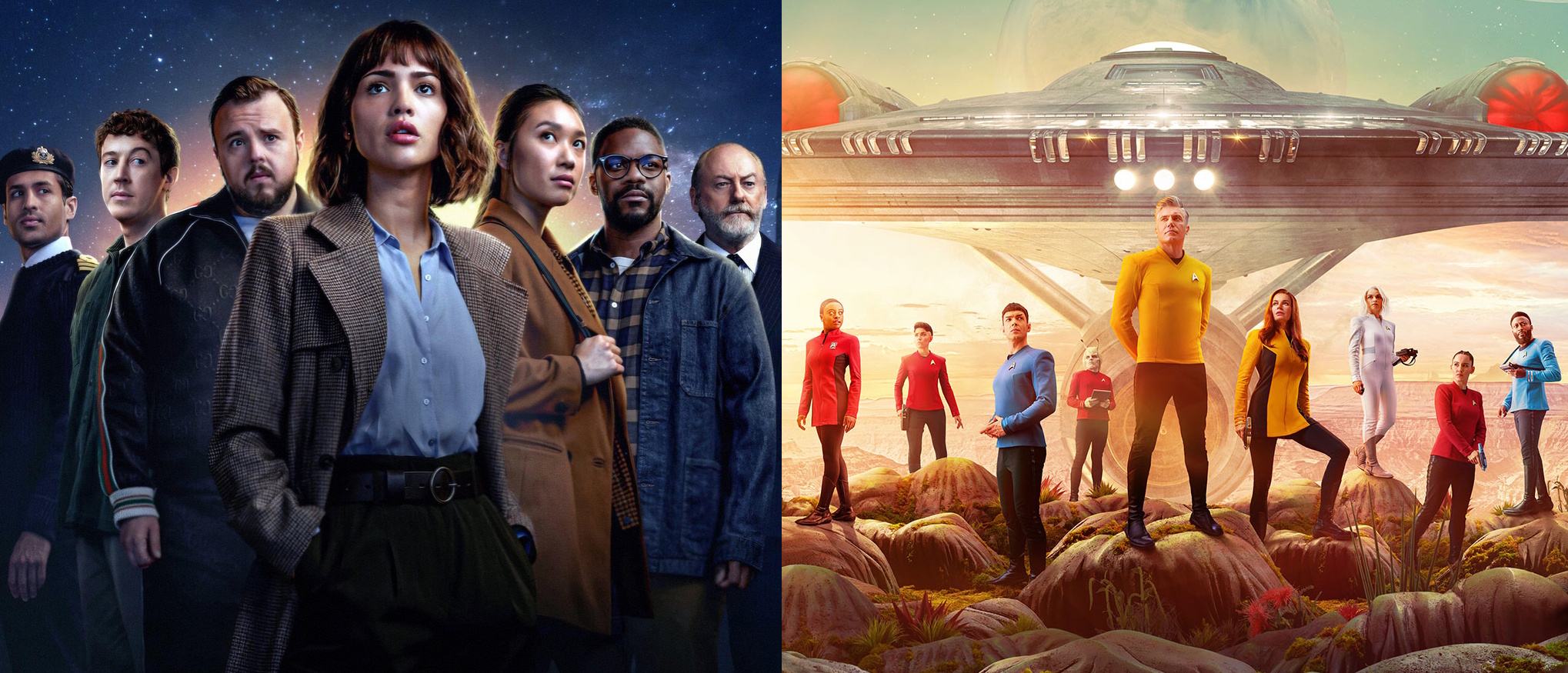
End-of-Year Awards 2023

Spoiler Warning: Beware of minor spoilers for some of the titles below.

Where has all the time gone? We’re just hours away from the end of yet another year – and that can only mean one thing: it’s time for my annual End-of-Year Awards! Today I’ll be handing out some imaginary statuettes to some of the best (and worst) entertainment experiences of the year. I hope it’ll be a bit of fun – and not something to get too worked up over!

As always, I have a couple of important caveats. The first is that I’m just one person – and as such, I didn’t watch every film or play every game that came out this year. Titles have to clear two hurdles to win an award, and the first one is arguably the biggest: they had to convince me to try them out in the first place! I don’t have every hour of the day to dedicate to entertainment, and there are a lot of films, TV shows, and games that were released this year that won’t get a look-in because I didn’t watch or play them. They might be fantastic… but they can’t be included this time for reasons that I hope are obvious!

It’s time to dish out some awards!

Secondly, all of this is my entirely subjective opinion! I’m not trying to claim that these are somehow “objectively” the best entertainment experiences of the year and the only ones deserving of an award! That would be silly – this is just my opinion, and you are free to disagree vehemently with some or all of my choices. I share these made-up awards with the world in that spirit.

I’ve broken down my picks into a few categories and sub-categories, some of which have both a winner and runner-up and some of which just have a winner. I’ll briefly explain what it was that I liked (or didn’t like) about each.

So let’s get started, shall we?

🏆Winner🏆
Now and Then – The Last Beatles Song

Published on YouTube at the beginning of November, this twelve-minute short documentary provided a fascinating look at the complicated production of Now and Then – a song featuring performances by all four members of The Beatles. Billed as “the last Beatles song,” Now and Then reached the number one spot on the charts here in the UK, and learning a bit more about how it came together was genuinely interesting.

Now and Then was a demo recorded by John Lennon at his home some time in the 1970s, but the recording was relatively low-quality and wasn’t deemed suitable for release. In the ’90s, the three surviving Beatles got together, and Now and Then was one of the tracks that they worked on – but again it wasn’t able to be salvaged. It’s only in the last couple of years, with the advent of AI and the ability to isolate and separate various instruments and vocals, that the song was finally ready to be worked on. Performances by John Lennon, George Harrison, Ringo Starr, and Paul McCartney were brought together – and the song was finally released.

🏆Winner🏆
The American Buffalo

I have a review about this in the works – but it’s gotten buried in the pile! Ken Burns is one of my favourite documentary filmmakers, so any new production of his is going to be on my must-watch list! This year, Burns turned his attention to the Bison – or the titular “American Buffalo” – and looked at the history of the species and its near-miraculous survival from the brink of extinction.

Ken Burns and the team at PBS Studios put together a truly engrossing two-part documentary that goes into incredible depth about the history of the species and how humans have interacted with it. It’s a riveting documentary, perfect for anyone interested in the history of the United States, Native American peoples, the “Wild West,” or the titular “buffaloes” themselves.

🥈Runner-Up🥈
Imperial War Museums

It’s been a long time since I was able to visit the Imperial War Museum in London. Despite its offputting name, it’s worth checking out if you’re in the area – as are the Imperial War Museums’ videos on YouTube. I’m a bit of a history buff, and although some of the channel’s content is simplified for an audience who might not be familiar with the subject matter, I still found that there was a lot to learn and plenty of interesting facts in the mix.

Imperial War Museums’ videos are well-presented and explained, and in particular I’d highlight some of the channel’s short documentaries about the First World War from earlier in the year. I didn’t know that the Imperial War Museums had a YouTube channel, but I’m glad I found it. There are some genuinely interesting videos here that are well worth a watch.

🏆Winner🏆
Food Wishes

I honestly can’t believe that in more than four years of writing here on the website I’ve never mentioned Food Wishes! This is one of my favourite YouTube cooking channels – and one of the longest-running series on the entire platform. Chef John began uploading videos to the platform all the way back in January 2007, which is almost seventeen years ago! And perhaps the most astonishing thing about Food Wishes is how little things have changed in all that time.

This year, Chef John has continued making recipe videos. The format is relatively simple, but there’s plenty of humour and fun alongside the instructional recipes. With well over 1,000 videos on the channel, you’d worry that there might be fewer interesting or appealing recipes… but somehow that isn’t the case! There have been some incredibly mouthwatering creations this year, and I look forward to seeing what 2024 has in store for Food Wishes, too.

🏆Winner🏆
Worldwide Privacy Tour
South Park

South Park is one of the entertainment industry’s great equalisers. Its creators poke fun at pretty much everyone, from politicians and celebrities to whole industries and nations. In Worldwide Privacy Tour, Harry and Meghan – better known as the Duke and Duchess of Sussex – were firmly in the crosshairs. And the episode was absolutely hilarious, lampooning the hapless, talentless duo for simultaneously crying about “privacy” while jetting off to California to live as celebrities.

I’m no monarchist. In fact, I’m a small-R republican, which in a British context means that I’m someone who wants to see the outdated and corrupt monarchy abolished. But even I find Harry and Meghan to be grating, at times – even while I’m pleased that some of their statements and escapades are eroding support for an institution I’d like to see the back of. The pair are among the most privileged people on the planet, but they’re also useless hypocrites. Whether it’s lecturing people about climate change before hopping on a private jet, complaining about being bullied while being a serial harasser of servants and staff, or whining about “privacy” while sitting down for an extensive interview and writing a tell-all book, Harry and Meghan deserved everything they got from South Park… and then some.

🏆Winner🏆
The Fall of the House of Usher

It’s relatively rare – in this age of franchises, sequels, and spin-offs – for a big budget to be afforded to a one-off miniseries. Netflix’s The Fall of the House of Usher, which is based on the works of American gothic horror author Edgar Allan Poe, is one of the year’s best examples. I don’t usually go for horror, but with Halloween approaching I decided to give The Fall of the House of Usher a shot – and I’m glad that I did!

The miniseries keeps the tense and disturbing atmosphere of Poe’s stories, but changes many of the characters and plotlines, as well as setting things firmly in the modern day. You might think that there’d end up being a clash, but the production pulls out a surprisingly coherent and entertaining story. There are moments of gore and a handful of jump-scares, but nothing too offputting for someone who isn’t the world’s biggest horror fan.

🥈Runner-Up🥈
Star Trek: Picard
Season 3

For the past few years, Star Trek episodes have been afforded their own category when I’ve dished out my End-of-Year Awards, but as I kind of burned out on the franchise midway through 2023, there are a lot of episodes that I just haven’t seen. Picard’s third season was imperfect, containing a villain who was built up only to be discarded, yet another return of an over-used faction, and a story that felt a bit stretched and occasionally muddled. But it also had some incredibly well-executed emotional moments, and I can’t deny that I enjoyed seeing the crew of the Enterprise-D reunited for another adventure.

In the new year – or at some point in the future, at any rate – I’ll talk about what worked and didn’t work in Season 3 in a bit more detail. Because I have thoughts, don’t you know! But for now, suffice to say that Picard’s third season was one of the highlights of 2023… even if it wasn’t perfect. I’m still holding out hope that there’ll be a new Star Trek series taking place in the time period that Picard established.

🏆Winner🏆
Silo
Season 1

Silo was an impressive sci-fi series with a distinct air of mystery. I particularly enjoyed its subterranean setting, and the idea that the people in the titular silo didn’t know what had happened on the surface, nor why they were forced to live underground. Playing out against that backdrop was an engaging murder mystery, a struggle for power within the confines of a sealed community, and much more besides.

There were several familiar faces in Silo, including Tim Robbins and Will Patton, both of whom excelled. I greatly enjoyed Rebecca Ferguson’s performance in the lead role, too. A second season of Silo is already in production, and I will be eagerly awaiting its arrival in 2024.

🏆Winner🏆
Ladybug and Cat Noir: The Movie

With the major caveat that I haven’t watched Disney’s Wish yet, I want to highlight Ladybug and Cat Noir: The Movie. I don’t think it turned a lot of heads when it was released, but it’s a creditable adaptation of a fairly long-running animated series that offers a new look at its titular heroes. The film could be a great introduction point for someone new to the world of Miraculous, serving less as a reboot than a reimagining of the show and its characters.

The story was easy to follow for younger eyes, but still strong and engaging, and the film had an uplifting message at its core that’s sure to resonate with its intended audience. The idea that anyone can become a hero is always going to be appealing, and the idea of people doing bad things with good – albeit selfish – intentions is likewise important. All in all, a solid film that I enjoyed – and one that I’m sure many kids will, too.

🥈Runner-Up🥈
Barbie

I really wasn’t sure what to expect from Barbie. Director Greta Gerwig had pedigree, with titles like Lady Bird earning her nominations for the top awards. But I really didn’t know what she’d do with the world-famous Barbie name and brand. I’m surprised that Mattel, the makers of Barbie dolls, greenlit a film like this – because Barbie really isn’t a film for kids, despite its name and source material. But I’m glad that the film was able to go ahead, because it was funny and clever; a really unique picture.

I daresay Barbie isn’t for everyone; the film can feel quite subversive, challenging the expectations of its audience in places. But it has an important message – and considering that it’s basically a corporate cash-in on a famous brand, that’s actually pretty great. Margot Robbie is, of course, the film’s star – but I’d also say that Will Ferrell was particularly well-cast as the chief executive of Mattel.

🏆Winner🏆
The Super Mario Bros. Movie

I adored The Super Mario Bros. Movie, and although it might seem like a bit of a silly pick, I’m happy to crown it my favourite film of 2023. The film did such a good job of adapting the familiar world of Nintendo’s Mushroom Kingdom for the big screen, while at the same time putting a nice twist on the tired “save the princess” trope. There were cameos and callbacks to many different things from the video games, and a few new ideas that I’m astonished to see Nintendo has failed to take advantage of!

As a film aimed at kids, the main story here isn’t anything groundbreaking. But what there is is just so much fun and is presented in such a bright, vibrant style that I found it impossible not to smile. The Super Mario Bros. Movie is going to become a textbook example of how to successfully adapt a story for the cinema – so other studios should be taking notes!

🥈Runner-Up🥈
The Lord of the Rings: Gollum

Maybe you were never sold on the idea of playing as the contemptible Gollum, but I’d been following the development of this title for years and felt that it could’ve offered something a bit different. You know the story by now, though: Gollum was released in an unfinished, practically unplayable state, and was shredded by professional critics and players alike. I maintain that the game could have found an audience had it been marketed correctly – and, y’know, finished – but unfortunately it wasn’t to be.

As the video games industry seems to be consolidating around relatively few genres and ongoing franchises, what appealed to me about a title like Gollum was that it seemed to be something different. In terms of narrative and gameplay, its developers had a vision for what they wanted to create, and it seemed like something that could have been fun. Unfortunately, for what seems likely to be a multitude of reasons, Daedalic Entertainment lacked the skill, resources, or money to pull it off.

🏆“Winner”🏆
Star Wars Jedi: Survivor

As with Gollum above, Jedi: Survivor was released in a broken, bug-riddled state. The fact that I struggled to play the game even after waiting for several months and after seeing several major patches roll out is shocking, and the blame lies at the door of publisher Electronic Arts. However… there’s more to the Jedi: Survivor story than just bugs. What I found underneath the buggy veneer was a game that was narratively weak and that failed to live up to its illustrious predecessor.

I won’t say too much lest I spoil Jedi: Survivor’s story for you, but suffice to say a major plot point in the game’s narrative felt ridiculously obvious and seemed to be telegraphed from almost the first moment. The return of a major character from the first game was handled poorly, and while I liked some of the customisation options for protagonist Cal Kestis, the amount of these and the way they were unlocked felt ridiculously unbalanced. An open-world setting did not suit Jedi: Survivor, and the game was notably worse for trying to go down this route.

🏆“Winner”🏆
Hogwarts Legacy

I was surprised at the number of people who outed themselves as being what I shall generously call “fairweather allies” to the LGBT+ community over Hogwarts Legacy. The game is, by all accounts, a bog-standard open-world affair with a fairly uninspired main story, boring side missions, and a map outside of the main Hogwarts castle that just screams “generic.” The fact that the game is nowhere on anyone’s “game of the year” lists speaks volumes; Hogwarts Legacy turned out to be forgettable fluff.

Which makes it all the more sad and upsetting that people ended friendships and got into massive online arguments over this game. Hogwarts Legacy was not worth the hassle, the hurt, or the destruction that it caused. I don’t agree with the “hot take” that says that anyone who played or bought the game is automatically a transphobe – even though the Harry Potter series’ creator has said, on the record, that she considers sales of the game and all other merchandise as being acceptance and agreement with her transphobic views. But for the folks who chose to die on this hill earlier in the year, and who prioritised such a mediocre game over allyship and friendships… I hope it was worth it.

🏆Winner🏆
Civilization VI

I’ve played quite a bit of Civilization VI this year – thanks in part to the game’s ongoing support and the addition of new leaders. It’s been fun to jump back into the game and find several new factions and leaders to both play as and play against, as well as other updates. Although I’ve played Civilization VI on and off since its launch back in 2016, the game can still surprise me – and there are still plenty of Steam achievements that I’m yet to unlock! I finally managed to win a religious victory this year, though, so I can cross that one off my list!

In addition to new leaders, some of Civilization VI’s updates have introduced climate change mechanics and rising sea levels, as well as imaginary near-future technologies and government types. These are a blast, and stomping a city with a Giant Death Robot that I’ve named “The Danger Roomba” will never not be fun! Civilization VI can be expensive to pick up, and I’m always wary about recommending a game with £100+ of DLC and expansion packs. But for the amount of enjoyment it’s given me this year, I couldn’t leave Civilization VI out.

🏆Winner🏆
Cyberpunk 2077

A little over a year ago, in early December 2022, I said that Cyberpunk 2077 was a fairly average, unremarkable game that was elevated slightly by a solid story. I felt that the game’s bug-riddled launch actually distracted from its real mechanical flaws – and in a perverse way, that probably helped CD Projekt Red. But a year later, it’s stunning to me just how many of my complaints have been fixed! To coincide with Phantom Liberty, the game’s first and only expansion pack, a major update was released that completely reworked entire gameplay mechanics and systems, improving the game dramatically.

A review of Phantom Liberty is still a ways off, but I hope you’ll stay tuned for my full thoughts sometime in the new year. For now, suffice to say that Cyberpunk 2077 is much closer to that original vision, and a far, far better game than it was a mere twelve months ago. The transformation may seem subtle at first, but when you start levelling up your character and getting into combat encounters, you’ll see a huge difference.

🏆Winner🏆
Baldur’s Gate 3

If you’re a regular reader, you’ll have seen this coming from a mile away! Baldur’s Gate 3 is an absolutely fantastic game, one of the best I’ve played in years. And to think I only bought it because I was looking for something to play while waiting for Starfield! I had no idea what I was getting into, because I’ve never played Dungeons and Dragons, but I ended up having a whale of a time. The game has an incredibly strong story with some great characters – and fantastic voice acting – but it’s a mechanical masterpiece, too. There are weapons and spells galore, and so many choices to make that really do make each playthrough feel unique.

I’m about to kick off a second run through the game – after delaying it for a while – and I’m really looking forward to creating a completely different character and trying new things. There are two large chunks of the map that I didn’t explore last time around, characters and companions that I didn’t get to meet, and so much to get stuck into that it’ll feel almost like a brand-new game all over again. A thoroughly deserved win for one of the best games of the last few years.

Did your favourite win a trophy?

I sincerely hope that you’ll join me for more reviews and commentary in the new year – because I’m sure there’ll be plenty of fun things to talk about in 2024!

2023 has been a solid year, entertainment-wise. The disruption of the pandemic seems to be settling down, and we got some decent films, decent games, and decent TV shows to get stuck into. I didn’t get around to seeing or playing all of them… but there’s always next year, right?

What does next year have in store?

Hopefully these awards have been a bit of fun. I enjoy putting these together once a year, and I think it’s important to show off some of the best and most enjoyable titles of the year. We won’t always agree on which ones should win an award… but that’s okay. There should be plenty of room for polite discussion and disagreement – and it’s in that spirit that I share my choices.

Whatever you’re doing for New Year’s Eve, I hope you have a fun (and safe) time ringing in 2024. I’ve bought myself a suitably silly New Year-themed hat that I shall be donning… as I hang out with the cats and possibly watch some of the fireworks on TV! To those of you who’ve been regular readers all year long, thank you for sticking with me! And I look forward to sharing my thoughts with all of you once more in 2024.

Happy New Year!

All titles listed above are the copyright of their respective studio, publisher, broadcaster, distributor, etc. This article contains the thoughts and opinions of one person only and is not intended to cause any offence.
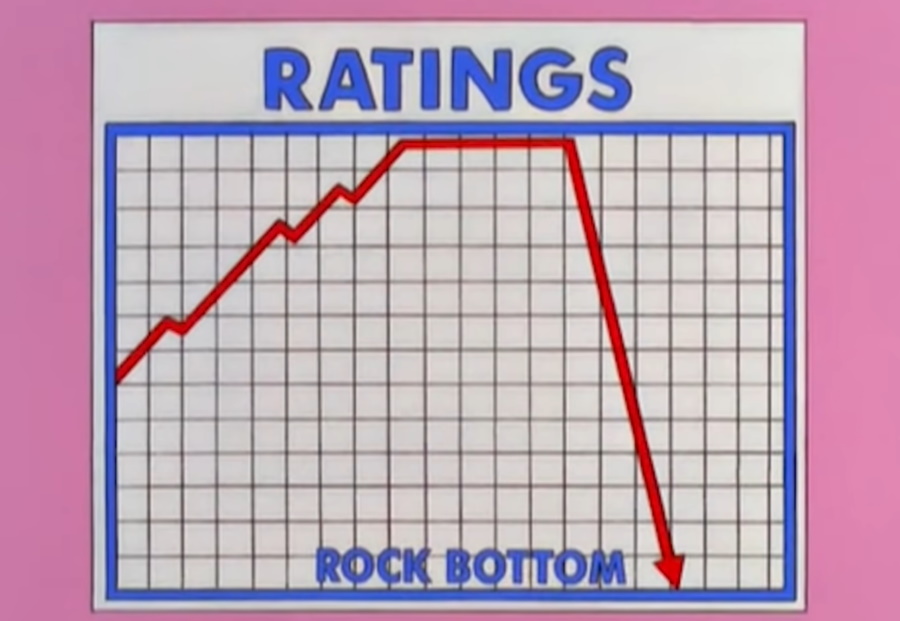
Five “Christmas” Films To Watch In December… Or Any Time Of Year, Really

Spoiler Warning: Beware of minor spoilers for some of the films on this list.

I love Christmas – it’s the most wonderful time of the year, don’t you know! And there are some absolutely phenomenal Christmas films that are on everyone’s must-watch list every single year. You know the ones: films that we’ve watched at this time of year for almost as long as we can remember; films that have come to define every aspect of the word “Christmas.”

And I thought it could be fun to take a look at five of them and explain why they’re not really Christmas films!

That’s right, it’s time for a little bit of festive controversy as I pick out five “Christmas” films that aren’t really Christmas films! Instead, I would argue that these films are in other genres entirely, or are only tangentially related to Christmas either by being set at that time of year or even just by association.

Father Christmas is indisputably a Christmas film – which is why it won’t be on the list below!

Before we get into the list, an important caveat: this is just for fun! I don’t think the debate around what is or isn’t a “Christmas” film is something that needs to be taken seriously at all, and I’m making this list with tongue firmly embedded in cheek. It’s also one person’s entirely subjective opinion – so please try not to get too upset if I call out your favourite Christmas film!

I enjoy all of the films on this list, and regularly watch them at this time of year. But for reasons I’ll try my best to explain, I don’t necessarily consider them to be true “Christmas” films in every sense of the phrase. Definitions of what constitutes a Christmas film may vary – and it might be enough to say that a film set at Christmas, released at Christmas, or that has developed an association with Christmas over the years counts. But I’m going to argue that those reasons are not enough – for a film to truly be a Christmas film its plot has to be directly tied up with Christmas!

So let’s jump into the list, shall we?

Film #1:
The Nightmare Before Christmas (1993)

Jack Skellington.

Wait, this film literally has the word “Christmas” in its name! Not only that, but it sees protagonist Jack Skellington take the reins of Santa’s sleigh on Christmas Eve… so how can it possibly not be a Christmas film? Well, that’s simple: it’s a Halloween film best enjoyed in the autumn.

Most of the action in The Nightmare Before Christmas takes place in Halloween Town, and practically all of the principal characters are Halloween Town residents who are inspired by the monsters and ghouls of horror fiction and folklore. Although the plot touches on Christmas and sees characters visit Christmas Town, those scenes and sequences are told from the point of view of the denizens of Halloween Town – and their take on Christmas is very much a spooky one!

The film is largely told from the perspective of Halloween Town residents.

For that reason, The Nightmare Before Christmas is a great film to watch in between Halloween and Christmas – say, in the middle of November! But as Christmas gets closer, we should really be leaving Halloween behind to focus on what lies ahead. For me, The Nightmare Before Christmas is too strongly rooted in Halloween, and decked out with the trappings of that holiday, to truly be considered a Christmas film.

That being said, I love how the film shows Halloween Town characters discovering Christmas for the first time, and how they work to save Christmas – after putting it in danger! There are some fun moments amidst the frights and scares… but it’s still very much a film that’s best enjoyed before Christmas time fully arrives!

Film #2:
Love Actually (2003)

Lost in translation lovebirds!

This is simple: Love Actually is a film set at Christmas, not a Christmas film. Are we clear on that? Good! Wait, what do you mean I have to fill three-and-a-half more paragraphs? D’oh!

As stated, Love Actually may be set at Christmas, but setting alone does not – in my view – make for a Christmas film! Many of this romantic comedy’s storylines have nothing whatsoever to do with Christmas, and the simple fact that they play out in front of an occasionally festive backdrop doesn’t magically make the entire film a Christmas film!

It’s the Prime Minister!

Because of Love Actually’s narrative structure, some of its storylines and characters arguably have more to do with Christmas than others. Billy Mack, for instance, is desperately chasing the Christmas number one single, and the kids are taking part in a school’s nativity play. But other characters really don’t do anything Christmassy at all during their time on screen, with their stories taking them in different directions.

I enjoyed Love Actually when it was released – and to think it’s celebrating its twentieth anniversary this year makes me feel old! But I must confess that I was surprised to see it hailed as a “Christmas” film in the years after its release. To me, it has much more in common with writer Richard Curtis’ other rom-coms like Four Weddings and a Funeral and Notting Hill than it does with bona fide Christmas films.

Film #3:
Frozen (2013)

Let It Go!

Frozen just isn’t a Christmas film, okay? It’s set in the middle of summer! And the princesses of the magical kingdom of Arendelle may not even celebrate Christmas for all we know; the holiday isn’t mentioned once!

A lot of people seem to associate Frozen with Christmas for two reasons: it was originally released shortly before Christmas, and it’s full of ice and snow thanks to Elsa’s magical powers. But there’s more to a Christmas film than a magical blizzard – and while Frozen may have a cute winter aesthetic going for it, as well as some well-animated snow, that’s not enough to make me believe it’s truly a Christmas film. And I say that with sincere apologies to everyone under the age of ten!

Snow and ice do not automatically make a film Christmassy.

The story of Frozen is set in the summer time; it’s only Elsa’s magic that causes Arendelle to freeze over. And the snow and ice is presented as a genuine danger to the kingdom’s inhabitants – hardly the carefree presentation of a white Christmas that we’d expect to see in a proper Christmas film! Many films use ice, snow, and blizzards to great effect – but we don’t call all of them “Christmas” films, and with good reason!

As more of the kids who grew up watching Frozen come of age, I expect its status as a “Christmas” film will only be further cemented. We’ve already seen songs like Do You Want To Build A Snowman showing up on Christmas compilation albums and playlists… so this idea of Frozen as a Christmas film clearly isn’t going away any time soon.

Film #4:
Die Hard (1988)

John McClane is fed up with this debate!

Uh oh, now we’re really getting into some controversial territory! Look, here’s the way I see it: I don’t dispute that Die Hard is set at Christmas and has some of the visual and musical trappings of the holiday season. That’s indisputable. But Die Hard is an action film set at Christmas time – not a Christmas film.

A couple of years ago, I saw somewhere online a homemade Christmas ornament featuring protagonist John McClane crawling through the ventilation ducts at Nakatomi Plaza. That was creative and cute – but the action movie trope of sneaking around in a crawlspace isn’t exactly something that screams “Christmas” to me!

Alan Rickman as terrorist leader Hans Gruber.

One of the best tests of whether something can truly be considered a Christmas film is this: can you comfortably watch it outside of the Christmas season? I’d have no issue watching Die Hard in the middle of summer – because its plot doesn’t hinge on Christmas, its characters aren’t interested in Christmas, and fundamentally, nothing about the film would change if its office Christmas party was instead a birthday party or a Fourth of July celebration.

And that’s the key to understanding Die Hard’s place on this list. It’s an action film with a few incidental Christmas trappings, and it’s been hyped up by fans as a “Christmas” film on the internet in recent years – but it isn’t. Being set at Christmas does not automatically make for a Christmas film!

Film #5:
Trading Places (1983)

An ’80s Christmas classic – but rightly so?

I’ve only seen the comedy film Trading Places a couple of times; I think it’s more popular in the United States than it is over here. But it’s a film that’s often discussed in a Christmas context – and seems to be on many people’s list of Christmas favourites!

As with Die Hard above, though, Trading Places is definitely a film set at Christmas time… but that doesn’t necessarily make it a true Christmas film. It’s a comedy, it’s a wacky adventure, and it’s a film that calls out and criticises racism as well as the weird excesses of wealth and capitalism. And those are all good things; Trading Places is funny! But again, that doesn’t make it a Christmas film.

A happy ending!

The Christmas setting and the film’s annual airings on television in December have combined to make it a film that a lot of folks associate with the holidays. If you grew up watching Trading Places every year, there’s no doubt it’s become a part of your household’s festive tradition! We all have our own little Christmas traditions that we stick to – and that’s totally okay.

But for me, Trading Places is another film that can really be watched and enjoyed at any time of year. Nothing in its story is exclusive to the festive period – and that’s actually a good thing! It means Trading Places is a film that can be enjoyed on its own merit year-round.

So that’s it!

A festive cat!

We’ve picked out five not-really-Christmas films! But I can already think of several more… so come back next December to see which other so-called “Christmas” films are going to be targeted!

As I said at the beginning, I hope you’ve taken this list in the spirit of festive fun. It’s meant to be a bit of silliness as the big day approaches – and while I will make the case for all five of these films not really being 100% Christmassy, I’m not about to die on that hill – or get into a massive argument about it!

So I hope this has brought you a bit of light-hearted festive cheer as Christmas draws nearer. The big day will be upon us before we realise it! I have a couple of other festive ideas that may (or may not) make their way onto the website before then, so please stay tuned! And Merry Christmas!

All of the films discussed above are the copyright of their respective studio, distributor, company, etc. This article contains the thoughts and opinions of one person only and is not intended to cause any offence.
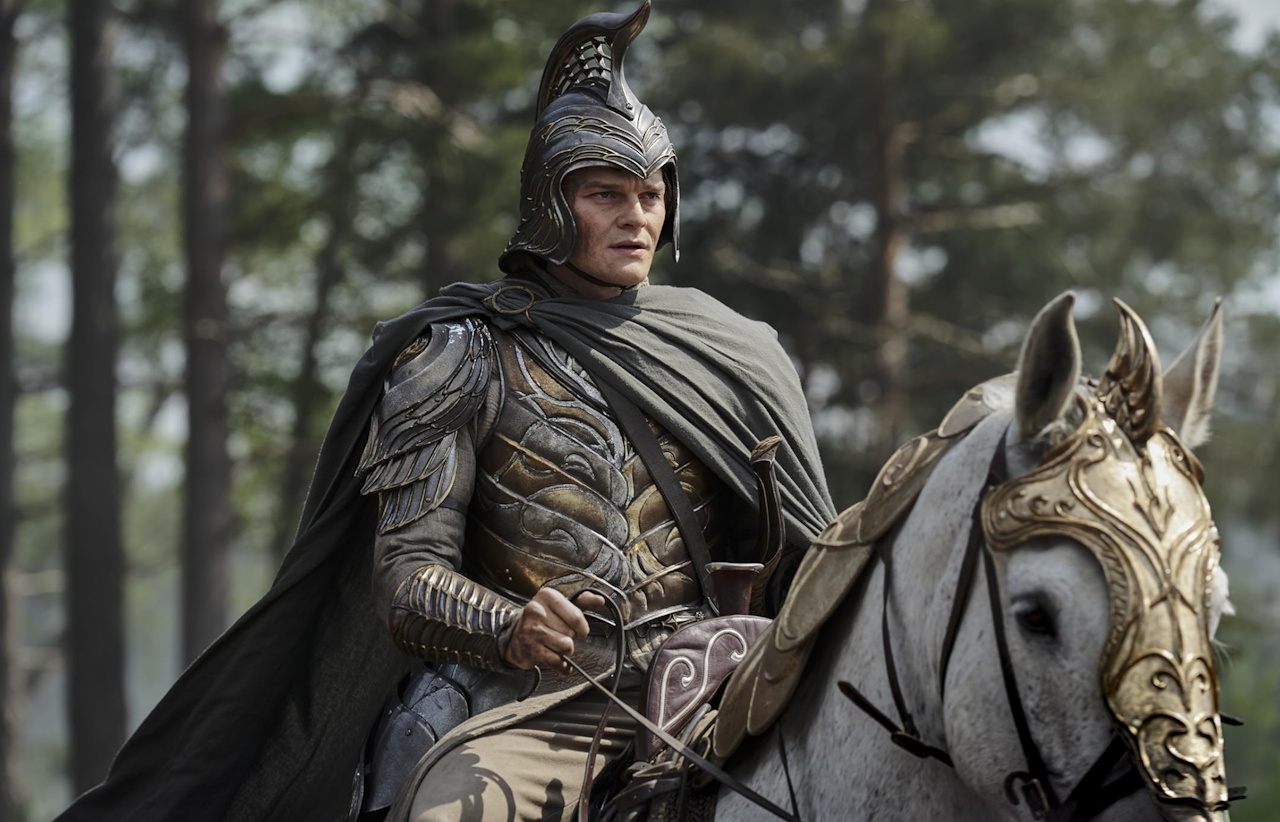
Oops, I forgot that Avatar 2 existed…

So, uh… yeah. Avatar 2. Or to give it its proper title Avatar: The Way of Water. It’s a film. It was released almost a year ago. I was planning to write a review of it. And I completely forgot that it existed until a couple of days ago.

The growing Avatar series – which will soon include a big-budget video game adaptation along with two films – has all of the elements of what should be a successful multimedia franchise. The original film was a Best Picture nominee at the Academy Awards, director James Cameron has incredible pedigree as a filmmaker, the world of Avatar is visually gorgeous, a lot of effort has gone into constructing things like a full-blown Na’vi language, and it’s backed up by the almost limitless budget of the Walt Disney Company. So… why is Avatar still so incredibly forgettable?

A promotional poster for Avatar: The Way of Water showing the film's main characters.
I forgot all about Avatar until now…

I didn’t hate or even dislike The Way of Water. For the three-plus hours that it lasted, I had a decent time with the film. It was a swashbuckling sci-fi adventure; a blockbuster worthy of the title that transported me to a faraway planet and a sci-fi future that was entertaining to see. But as the credits rolled I just… switched off. The Way of Water, like its predecessor before it, didn’t leave a lasting impression.

And for a series backed up by Disney’s money, turning a massive profit at the box office, with a new video game adaptation and an expensive theme park attraction… I just don’t get it. Why is Avatar – to use some Gen Z lingo – so “mid?” Why do I find myself caring so little about The Way of Water that I literally forgot it existed? And why isn’t the series making an impact on our collective cultural conversation?

A section of the themed Avatar land at Walt Disney World.
Image Credit: Avatar/Walt Disney World

Although I’m not the most active person online or on social media, I follow a bunch of websites, blogs, and channels that talk about the same kind of things I enjoy discussing here on my website: sci-fi, pop culture, cinema, and geeky entertainment topics. But since The Way of Water was in cinemas, none of them have so much as mentioned the series. If anyone had been talking about it, perhaps I wouldn’t have completely forgotten about Avatar this year.

For a film that made so much money – The Way of Water is currently the third-highest-grossing film of all time, behind only the first Avatar and Avengers Endgame – it’s so strange to be talking about it in this way. A huge audience clearly turned up for The Way of Water… but within weeks it was all but forgotten. I don’t expect to see it winning any of the big awards, which isn’t a slight against it; there’s a lot of competition. But for a film that aims to really kick-start a wider connected universe, I’m just not sure how successful The Way of Water can have been when it’s dropped off the face of the earth so readily.

Director James Cameron with the stars of Avatar: The Way of Water at the film's premiere.
Director James Cameron with the stars of Avatar: The Way of Water at the film’s premiere.

There is absolutely room for a new sci-fi franchise, especially under the Disney umbrella. Marvel and Star Wars are both seeming to stumble and falter, and the MCU is perhaps coming to the end of its life in its current iteration. There’s definitely space for another multimedia “shared universe” to come along. Avatar should be in prime position to occupy that kind of slot… but if it can’t offer something memorable, something for fans and audiences to retain and keep in mind after the credits have rolled, then it won’t even come close. Realistically, Avatar should be challenging Star Wars, Star Trek, DC Comics, and even Marvel in the upper tiers of sci-fi cinema. But right now, it doesn’t feel anywhere close.

Although we can lay part of the blame for this, in theory, on the long gap between the original Avatar and this new sequel – twelve years is a long time to wait, after all – I don’t think that’s a fair explanation. The original Avatar, as I’ve noted in the past, was not an especially memorable film either, and the universe that it attempted to create felt limited to the characters and story that unfolded on screen. I’ve never really gotten the sense from Avatar that there was more to the world of Pandora or to this futuristic depiction of Earth and humanity that I needed to see explored. In fact, I could’ve lived a happy life without ever seeing a single sequel to Avatar – let alone four.

A Na'vi and human character sharing a boat in a still frame from Avatar: The Way of Water.
Boating across Pandora…

So is The Way of Water “unnecessary,” then? That seems a bit harsh! The ending of the first film left the door open to a sequel or spin-off, and it’s worth acknowledging that. But the story was also one that we could’ve considered complete; I never felt that Avatar was crying out for either a direct sequel or for more stories set in this world. “Unnecessary” might be overstating it… but I’d certainly say that I wasn’t champing at the bit for The Way of Water.

All of that could’ve been irrelevant if The Way of Water had been more memorable. I may not have been desperate to see a sequel, but I’m always up for watching a good film, so the “necessity” or otherwise of The Way of Water wouldn’t have mattered if the film itself had something to say. For all of the money invested in it, though, and for all of the technical achievements that James Cameron and his team brought to the table in terms of the way it was created, The Way of Water just didn’t leave a lasting impression. In fact, I don’t feel that the Avatar series or franchise has really made much progress with this instalment – at least in terms of cultural relevance and its potential place in the upper echelons of sci-fi.

A futuristic "rotorwing" helicopter as seen in Avatar: The Way of Water.
A rotorwing aircraft.

And because of that, The Way of Water can feel… forced. If there was no organic groundswell of public opinion craving a sequel – no letter-writing campaign like there had been for Star Trek, no “expanded universe” of comics and novels like Star Wars created, and no real Avatar fan community in general – why was it even made? The very existence of the film – and the upcoming video game adaptation, too – feels very “corporate,” as if a group of executives have decreed that “Avatar is to be the next big thing,” without really understanding what makes a series popular and beloved to begin with – let alone failing to acknowledge that such things can never be manufactured.

For me, The Way of Water sits somewhere alongside films like the original Pirates of the Caribbean or the Indiana Jones trilogy. It was perfectly entertaining popcorn blockbuster fare… but nothing more than that. Unlike with Star Trek, Star Wars, or other top-tier franchises, I don’t have a desire to see more, to explore the universe that the film created, or to really spend much more time in its world. And if that was the ambition behind the Avatar series – to create a succession of one-and-done popcorn action flicks – then I’d say it was doing just fine. But when there’s clearly a corporate aim to push Avatar to something greater… I can’t help but feel that it isn’t meeting its goals, at least not in its current form.

Promotional artwork for Avatar: The Way of Water showing three Na'vi flying over the ocean.
Promo art for The Way of Water.
Image Credit: Avatar on Facebook

Part of the problem is originality. The world of Avatar doesn’t really have anything unique to help it stand out. The blue-skinned Na’vi are the closest it gets, but even then, the CGI-heavy aliens easily blend into a lineup of other humanoid races from other sci-fi properties. The rest of the aesthetic of Avatar is pretty generic, with spaceships, weapons, costumes, and technology that doesn’t really stand out when compared to more successful sci-fi properties.

A lot of Avatar just gets lost in the sci-fi milieu, leaving the franchise unable to differentiate itself from films, TV shows, and even video games in an expanding genre. The time should be right for a new sci-fi series to make a serious push to break into the upper echelons of the genre, thanks to a combination of a renewed interest from big corporations and the fact that some of the biggest names in sci-fi seem to be foundering – if not stalling outright. But the bland, forgettable Avatar isn’t able to make that leap.

A Na'vi character from Avatar: The Way of Water.
The blue-skinned Na’vi are the Avatar series’ most unique creation.

The original Avatar was criticised in 2009 for telling a story that was unoriginal at best, and the sequel falls into the same narrative traps. Themes of environmentalism and colonialism are presented – but these have been examined before, and examined better, in other pictures and other series that have had more to say. Unoriginality doesn’t have to mean “bad,” not by any means. But if the aesthetic, setting, and narrative premise are all things that audiences have seen before, there’s got to be something more to help it stand out or communicate a message. The Way of Water just doesn’t succeed on that front.

When I first sat down to watch The Way of Water, I expected the film to really make the case for Avatar as a series. I expected a strong narrative, compelling characters, and plenty of adventure… but more than that, I needed to see the film take the world-building from its predecessor and expand upon it, creating something that I’d want to lose myself in. With three more Avatar films and a big-budget video game in production, I needed The Way of Water to not only give me a reason to keep them on my list, but to want to get my hands on them. This film was an opportunity not only to remind me that Avatar exists, but to do what the original wasn’t able to and set the stage for something greater.

Kate Winslet and Sigourney Weaver in a pool during filming on Avatar: The Way of Water.
The Way of Water pioneered underwater motion capture.

Star Wars still has fans turning up for its films and streaming shows even though – let’s be realistic – it hasn’t done anything truly outstanding since 1980. But because Star Wars had that strong beginning, and created an alternate reality that fans wanted to experience more of, audiences still show up forty-five years later. They still go to conventions, dress up like Darth Vader, and pay their subs to Disney+ to watch the latest offerings. For all the money that’s being pumped into it, Avatar still doesn’t feel like a series or a franchise that can attract anything like that kind of support.

So that’s it, I guess. I didn’t dislike The Way of Water; it was a competent film with some clever behind-the-scenes technologies and filmmaking techniques that ended up being a perfectly watchable popcorn adventure flick. But I just can’t reconcile the fact that this franchise has now produced two of the three highest-grossing films of all-time… yet it’s still so utterly forgettable that I literally forgot it even existed for months. And even after returning to The Way of Water to take notes and grab some still frames… nothing about it jumps out at me, nothing about it sticks in my mind, and I genuinely don’t see how Avatar as a series will ever break into the top tier of sci-fi franchises if it keeps this up.

Avatar: The Way of Water is available to stream now on Disney+ and is also available on DVD/Blu-ray. The Avatar series is the copyright of 20th Century Studios and/or the Walt Disney Company. This article contains the thoughts and opinions of one person only and is not intended to cause any offence.
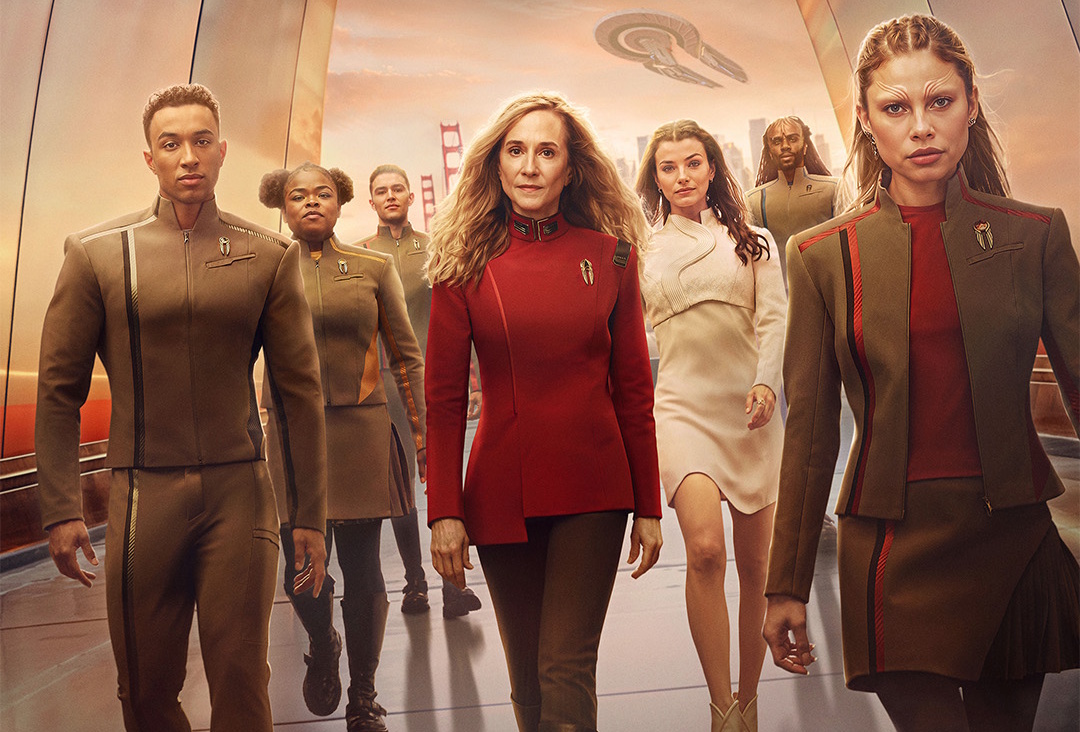
Five spooky films to spook you out in Spooktober!

Spoiler Warning: There are minor spoilers ahead for the titles on this list.

Happy Spooktober!

To celebrate the arrival of the spookiest, scariest, most terrifying month of the year, I thought it could be fun to pick out five films from the horror genre to take a look at!

When I was a kid, the nerdy friendship groups that I moved in seemed to see horror films as a kind of rite of passage – and being able to boast about having seen a particularly frightening one would score you major bragging rights! In those days we were limited to what was on sale on Betamax and VHS, as well as the meagre horror selection at the local video rental place. How times change, eh?

I’ll have to talk more about this on another occasion, but I have some very pleasant memories of Halloween as a youngster. When I was growing up in the ’80s and ’90s, the “Americanised” version of Halloween was just starting to take root here in the UK, and a local kids’ club that I attended threw a kind of Halloween-themed disco at that time of year. I remember it being great fun, getting dressed up in a silly costume and wearing a mask made either of horrible sharp plastic that would scratch your face when it cracked or a paper one that would tear and get soggy! I’m sure I’m over-romanticising those memories, but even as someone who isn’t a big fan of horror and scary things, Halloween has always had a positive association for me.

The kind of Halloween discos I remember as a kid had snacks like this!

So yes, you read that right: I’m not the world’s biggest fan of horror. In fact, at any other time of year I’d almost never choose a horror title for movie night at home! I scare easily, and jump-scares in particular almost always manage to get me – even when I know they’re coming! I’ve heard folks talk about the adrenaline rush that horror films give them being a major factor in why they like them, but that’s just not my jam! I’m more of a “cowering behind the sofa with my eyes shut” type of horror viewer!

That being said, I’ve watched a lot of horror films over the years, and there have been some great ones. Even if I wouldn’t necessarily watch them eleven months out of the year… well, it’s Spooktober!

So let’s jump into the list and take a look at the films I’ve chosen this year.

Film #1:
Dog Soldiers (2002)

A British cult classic!

I have fond memories of watching Dog Soldiers with a friend who was absolutely obsessed with the film! He bought it on video as soon as it was available and insisted I watch it right away. While I wasn’t as taken with it as he was, I found its premise interesting and its execution surprisingly solid. The film follows a squad of British soldiers who come under attack by werewolves!

Of all the classic monsters that made their way from folklore to popular culture, werewolves feel under-represented! Compared with vampires, zombies, witches, or even mummies, there are relatively few films in which werewolves are the main focus, and perhaps that’s part of why Dog Soldiers stands out; it’s something a little different in a genre that often returns to the same places.

There are some moments of absolutely gut-wrenching gore that hold up well, but on returning to the film twenty years later, I’m not so sure that all of the practical special effects – particularly those used for the werewolves themselves – have stood the test of time.

Film #2:
Jaws (1975)

On the hunt for a monster…

Jaws is an absolute classic; a groundbreaking work of cinema that should be on everyone’s must-see list! It’s also a masterclass in how to build tension, with the monstrous shark being scarcely glimpsed for much of the film’s two-hour runtime. Jaws is also a surprisingly relatable human story – of people who ignore warnings and prioritise money and politicking over safety. Some things never change, eh?

Jaws also did a lot to unfairly demonise sharks, the great white in particular. Sharks are nowhere near as deadly as the film suggests, and many species actually need our protection to keep them safe from over-fishing and habitat destruction. One of Jaws’ most unfortunate legacies is the way in which many people came to fear and hate sharks.

I’ve heard some younger folks call Jaws “tame,” and I guess it might be by today’s standards. But it’s a transformative, groundbreaking film – and one I firmly believe everyone should watch at least once!

Film #3:
1408 (2007)

Something’s not right at this hotel…

Based on a Stephen King story, 1408 is about a haunted hotel room. It’s a bit of a twist on the typical “haunted house” concept, but where 1408 really shines is in the characterisation of its protagonist. Actor John Cusack really gives a great performance here, bringing the character to life in a relatable and understandable way.

I didn’t realise this until doing a bit of research, but 1408 actually has several different endings – so if you have the film on DVD or Blu-ray you might be able to have a completely different experience of its final act. Deleted scenes aren’t uncommon, of course, but 1408 actually has very different endings depending on whether you watch the director’s cut or the original theatrical version. As a rule of thumb: always go for the director’s cut of any film!

For me, 1408 hits the kind of supernatural horror that I find most frightening – but it does it remarkably well.

Film #4:
Phineas and Ferb: Night of the Living Pharmacists (2014)

They’re horrible!

There’s got to be room for one kid-friendly entry on any Halloween list, and this time I’m picking the Phineas and Ferb special episode Night of the Living Pharmacists. The extended episode is a fun, gentle parody of zombie films like Night of the Living Dead, and even features legendary director George A. Romero in a cameo role.

I love Phineas and Ferb, and the show has several other Halloween-themed episodes that are well worth checking out. Night of the Living Pharmacists is silly in places – but that’s part of the fun. The story shakes up the typical formula of the show by pairing up the titular kids with antagonist Dr Doofenshmirtz as one of his experiments gets out of control.

Halloween is, at the end of the day, a holiday for the little ones. Night of the Living Pharmacists is spooky and atmospheric – perfect for any Halloween party or sleepover!

Film #5:
The Silence of the Lambs (1991)

An iconic portrayal.

This adaptation of Thomas Harris’ novel has become a modern classic. There are relatively few out-and-out “scary” moments in The Silence of the Lambs, as the film doesn’t rely on jump-scares and the like. But there’s a real sense of horror in the air as junior FBI agent Clarice Starling races against time to catch a serial killer.

The Silence of the Lambs features Anthony Hopkins’ iconic portrayal of Dr Hannibal Lecter, one of the most infamous villains in modern cinematic history. Lecter is so cold, calculated, and ruthless that he has a totally unique fear factor; he’s a single human being, not a demon or monster, and yet he’s capable of such gratuitous acts of violence. Hiding under a polite facade, pulling the strings, Dr Lecter has rightly become one of the big screen’s most terrifying serial killers.

Though The Silence of the Lambs is arguably as much thriller as horror, I still think it’s worth including here.

So that’s it!

Looks like fun…

We’ve picked out five spooky films to start Spooktober and the spooky season with a bang! I hope this has been a bit of fun at least, and maybe that you’ve got some inspiration for what to watch as Halloween gets closer.

Although I’m much more a fan of Christmas than Halloween, I unapologetically love this time of year. Autumn is almost certainly my favourite season, and as Halloween approaches I love seeing the wonderful and creative decorations, crafts, and costumes that people make to celebrate the spooky season! Some people really go all-out to make Halloween a massive celebration, and even though I’m not the biggest fan of horror or of being frightened, I’m absolutely there for the holiday!

There may be more spookiness to come before the 31st, so stay tuned here on Trekking with Dennis. If you dare…

All titles listed above are the copyright of their respective studio, broadcaster, distributor, and/or corporation. This article contains the thoughts and opinions of one person only and is not intended to cause any offence.
We’re halfway through 2023!

Spoiler Warning: Minor spoilers may be present for some of the titles on this list.

It’s the last day of June, and by my reckoning that makes it the halfway point of the year! As we bid farewell to the first half of 2023, it’s a good excuse to take a look ahead to some of the entertainment experiences that we’ll hopefully enjoy between now and Christmas! Is it too early to think about Christmas yet?

The first half of 2023 has been blighted by buggy games and crappy PC ports, but there have been some fun experiences along the way, too. When the year’s over I’ll be sure to pick out some of the highlights in my annual “end-of-year awards,” so check back for that if you want to see me handing out some imaginary trophies and statuettes! But for now, I promised you a look ahead!

I’ve picked five films, five television shows, and five games that I’m looking forward to in the second half of 2023. Maybe I’ll inspire you to find something to watch or play – or maybe you’ll hate all of my suggestions! Either way, I hope it will be a bit of fun to take a brief look ahead.

Film #1:
Ladybug and Cat Noir: The Movie
3rd August

If you aren’t familiar with Miraculous: Tales of Ladybug and Cat Noir… what have you been doing? The kids’ show is a blast, and has a lot to offer to an older audience, too, as superheroes Ladybug and Cat Noir battle to save the city of Paris! Miraculous is making its first appearance on the big screen this summer with a film adaptation that might just take the series back to its roots. I’m looking forward to seeing what the bigger budget of a cinematic adaptation could do for what is already a well-written and entertaining story.

Film #2:
Red One
November/December 2023

Red One is an action-adventure film set at Christmas – and features a star-studded cast. JK Simmons takes on the role of Santa Claus, with Dwayne Johnson, Chris Evans, and Lucy Liu also headlining. Details of the story are thin on the ground, but Amazon Studios apparently intends for Red One to be the first part of an expanded cinematic franchise. Christmas films can become classics – but they can also be naff, overly-sentimental fluff. I’m hoping for some excitement and entertainment from Red One.

Film #3:
The Last Voyage of the Demeter
11th August

Based on a single chapter of the original Dracula novel, The Last Voyage of the Demeter will focus on the crew of a doomed ship who are being stalked by the infamous vampire. The horror film could be a fun one to watch around Halloween! Horror usually isn’t my cup of tea, but a combination of the nautical setting and the connection to a classic work of literature has piqued my curiosity. As the horror genre swarms with zombies, ghosts, demons, and monsters, vampire flicks are relatively few and far between – which is another point in the film’s favour.

Film #4:
Wish
24th November

Wish looks fantastic! The film has been created especially for Disney’s centenary, and aims to be a celebration of everything the studio stands for. Focusing on the magical star that many characters have made their wishes upon, the film looks set to be another modern-day Disney classic. The animation style used for Wish is a blend of hand-drawn and digital, and the film will star Academy Award-winner Ariana DeBose. The trailer looked fantastic, with an amazing song to boot, and I can’t wait to see Wish for myself!

Film #5:
Rebel Moon
23rd December

There’s always room for more sci-fi, and Rebel Moon could be the kind of epic that spawns a brand-new franchise! Though I haven’t always been impressed with director Zack Snyder’s films, Rebel Moon seems to have a lot of potential. The film will star Star Trek Beyond’s Sofia Boutella, and looks to pitch a group of heroes against a corrupt imperial government. One to watch, for sure!

Video Game #1:
Star Trek Infinite
TBC 2023

Although I’m still not entirely sure what Star Trek Infinite will be like to play, the game is bringing the Star Trek franchise back to the strategy genre on PC (and Mac) for the first time in a long time – and I’m definitely on board with that idea! Publisher Paradox Interactive has a good reputation, and Star Trek Infinite is being constructed atop a streamlined version of the popular sci-fi strategy title Stellaris. There’s potential here, and I shall be checking out the game when it’s ready.

Video Game #2:
Cyberpunk 2077: Phantom Liberty
26th September

Although I’ve argued that we need to be careful about Phantom Liberty given what happened when Cyberpunk 2077 was released, I’d be lying if I said I wasn’t at least curious about the expansion pack. Described as a “spy thriller,” Phantom Liberty will add a new storyline to Cyberpunk 2077, a new area of the map, and also promises to connect with the base game’s main story, too. There will also be new weapons, new vehicles, and several new characters to engage with. Definitely one to put in the “wait for the reviews” category… but if it launches in good condition, Phantom Liberty could be a blast.

Video Game #3:
Avatar: Frontiers of Pandora
7th December

Frontiers of Pandora is an open-world action game set in the world of Avatar. It will tell a story independent of the main Avatar films, focusing on a Na’vi character who was trained by humans. This premise sounds genuinely interesting, and could elevate Frontiers of Pandora to something a bit more interesting than just a typical tie-in game. Gameplay was recently shown off as part of Ubisoft’s summer presentation, and the game looks to be in good shape.

Video Game #4:
Mario Kart 8 Deluxe – Booster Course Pass Waves 5 & 6
Summer/Holiday 2023

Last week’s Nintendo Direct broadcast showed off two new characters and one new racetrack that will be coming in Wave 5 of the Booster Course Pass this summer. After that there’s only one more wave to come – which will probably be toward the end of the year. The Booster Course Pass has reignited my interest in Mario Kart 8 Deluxe, and having new racetracks to jump into has given the game a shot in the arm. I’m hoping that Nintendo will put a lot of effort into the final two additions to the game.

Video Game #5:
Starfield
6th September

Given Bethesda’s reputation and the appalling condition of Fallout 76 in 2018, Starfield is another game that must remain in the “wait for the reviews” column! But if you’re a regular reader here on the website, you’ll know it’s my most-anticipated game right now. I cannot wait to get stuck into this open-galaxy sci-fi role-playing game, customising my character, my spaceship, and my colony, and getting lost in the world that Bethesda has created. I’m just crossing my fingers and hoping that Starfield will launch in a polished state – and that it can live up to the sky-high expectations that Bethesda and Microsoft have set.

Television Series #1:
Futurama
24th July

Futurama is coming back… again! Although the series came to a pretty definitive end in 2013 – following two cancellations and resurrections – Disney and Hulu have opted to bring it back once more. I’m on board with that idea – and I’ll be curious to see what a revived Futurama can bring to the table in 2023. The show was great fun in its earlier iterations, with an intriguing blend of sci-fi wackiness and topical humour, and I have high hopes for more of the same when Fry and the Planet Express crew return.

Television Series #2:
The American Buffalo
16th October

This two-part miniseries by Ken Burns will tell the remarkable tale of the near-extinction and resurrection of the American bison, looking at the history of hunting, what the species meant to native peoples, and how it was saved from extinction in the 20th Century. Ken Burns is one of the world’s leading documentary filmmakers, and I’ve long enjoyed his work.

Television Series #3:
Star Wars: Skeleton Crew
Late 2023

The premise of Skeleton Crew is giving me Star Trek: Prodigy vibes, as a group of youngsters will find themselves lost in a galaxy far, far away. Jude Law is taking on the lead role of a Jedi, and may serve as a kind of mentor to the group. Story details are still thin on the ground, but there’s enough to think that Skeleton Crew might be something a bit different from a franchise that has struggled to break away from its illustrious past. The series may also connect in some way with The Mandalorian, as it’s set in the same time period.

Television Series #4:
Good Omens Season 2
28th July

Although it’s been a while since the first season of this adaptation of Neil Gaiman’s story, Season 2 is finally upon us! David Tennant and Michael Sheen are returning as the demon Crowley and the angel Aziraphale respectively, and the continuation looks set to be a ton of fun. After Crowley and Aziraphale managed to prevent the end of the world last time around… what will they get up to this time?

Television Series #5:
Foundation Season 2
14th July

The first season of Foundation was outstanding, successfully adapting a very dense work of hard sci-fi in an understandable way. I’m very interested to see what Season 2 might have to offer, and how it might bring together some of the different story threads that the series has in play. Apple has done a great job so far, but Foundation has room to grow. Its complex premise and large cast of characters doesn’t make it the easiest show to follow, but it’s absolutely worth sticking with Foundation.

So that’s it!

We’ve taken a look at a handful of films, video games, and television shows that I hope will be enjoyable between now and the end of the year. In late December I’ll be dishing out some of my annual end-of-year awards to the best of the best, so check back then to see which of the entertainment experiences above made the cut!

What am I most excited about right now? It’s hard to pick just one thing, but I’m very curious to see if Starfield truly lives up to the high expectations that have been set. I’m also really looking forward to Futurama’s return, as well as seeing if Rebel Moon will be “the next big thing” in sci-fi!

I’ll be here throughout the summer, reviewing episodes of Strange New Worlds, sharing my thoughts on new and upcoming projects, and much more! I don’t promise reviews of everything listed above, but I’ll try to share my thoughts and impressions on at least some of these titles. I hope the first half of 2023 has gone well for you, and that you’re looking forward to some fun and exciting entertainment experiences as we pass the halfway point of the year.

All properties discussed above are the copyright of their respective owner(s). Some images used above courtesy of IGDB and IMDB. This article contains the thoughts and opinions of one person only and is not intended to cause any offence.
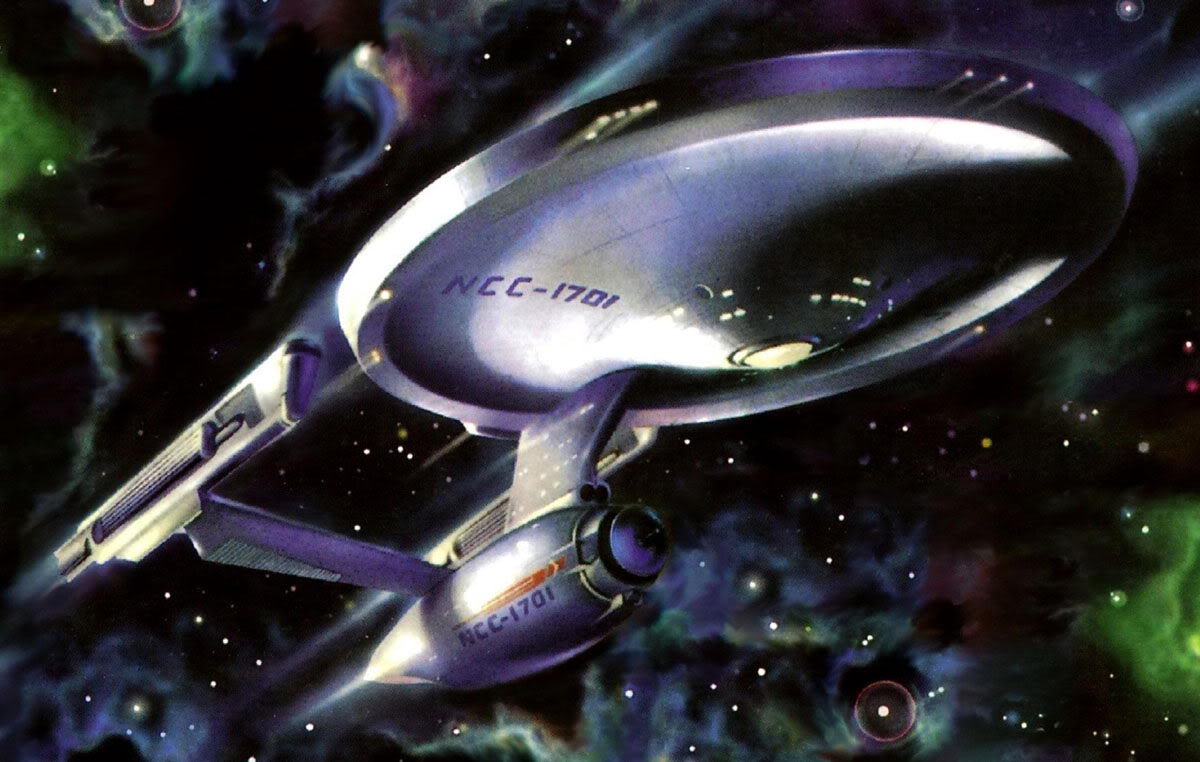
Film review: The Super Mario Bros. Movie

The first part of this review is free from major spoilers. The end of the spoiler-free section is clearly marked.

Let’s-a go!

It’s time to review The Super Mario Bros. Movie, which has finally made its way to on-demand streaming after wrapping up its exclusive theatrical run. And straight away I can tell you this: I had an absolute blast with Mario, Peach, Luigi, and the rest of the Nintendo gang! The Super Mario Bros. Movie is definitely one of the best non-Disney animated films that I’ve seen in a long time, and it absolutely has to be a contender for the title of best animated picture of the year.

The film puts a twist on the typical story of the Super Mario series, but brings all of the familiar faces that fans of Nintendo’s games would expect. There are so many references, callbacks, and cameos that it’s impossible to count, and speaking as someone who’s followed Nintendo’s games for more than thirty years, I appreciated every single one of them!

I’ve followed Mario for quite some time…

But this isn’t just fan service that only the hardest of hardcore Nintendo lovers can enjoy. The film is accessible to newcomers, too, with a pretty barebones, easy-to-follow story that doesn’t get bogged down. In fact, the story progresses from chapter to chapter with a real light-footedness, with no scene or sequence lingering too long. For kids, and especially for a generation raised on short-form videos and TikToks, I suspect the timing and pacing of the film will be pitch-perfect!

For me… well, I could’ve entertained a story that was at least slightly denser, one that didn’t hop so readily from point to point. There were some moments that felt unearned, perhaps, as Mario seemed to very easily and readily accept his fate in the Mushroom Kingdom, and friendships that appeared to form very quickly. But this is a film for kids – and with a story with such strength and heart, picking on any of these things feels gratuitous and unnecessary.

Mario and Luigi.

The Super Mario Bros. Movie accomplished the difficult task of taking elements from the games and making them into something truly worthy of a place on the big screen. The music of the Mario series was reimagined in a style I can only describe as “epic,” with the familiar tunes from the video game series transformed into an heroic score. Visually, the film leaned heavily into the aesthetic of the games – but used its budget to make Mario, Peach, and the Mushroom Kingdom look better than ever.

There had been some criticism of the decision to cast Chris Pratt as Mario, but I felt he did a perfectly creditable job in the role. Mario has never needed to be voiced this extensively before, so bringing in an experienced actor – while not necessarily everyone’s first choice – was the right call. The rest of the voice cast likewise put in excellent performances, and their characters came to life as a result.

Mario was voiced by Chris Pratt – pictured here at the film’s premiere.
Image Credit: IMDB

There were a couple of sequences in the first few minutes of the film that I felt might be too scary for very young children – and it’s worth being aware of this if you have very young kids or children who are especially sensitive. These sequences didn’t linger for very long nor have much of an impact on the story overall, but I suspect they may have gone a little too far for at least some children in the audience.

Overall, The Super Mario Bros. Movie is an absolute blast, and one I highly recommend. If you don’t mind spoilers for the admittedly rather formulaic and predictable story, stick around, because we’re going to talk about a few story details up next.

This is the end of the spoiler-free portion of the review! Expect spoilers for The Super Mario Bros. Movie from here on out!

Up first, let’s talk about how The Super Mario Bros. Movie puts a twist on the typical “save the princess” trope. Peach is presented as someone familiar with the world of the Mushroom Kingdom, and thus she has the upper hand over Mario, the newcomer. Through a pretty quick montage, Mario is the one who has to learn the ropes; Peach already knows how the power-ups work and how battles in this universe are fought.

But that means Mario needs someone to save; a reason to set out on this adventure and face off against Bowser. Luigi, who’s the easily-frightened younger brother, is perfect for this role. Mario sets out on a quest not to save a random princess – but to save his brother. It’s a perfectly-executed twist on what is a pretty tired and outdated formula, and it works perfectly.

Princess Peach is so much more than just a damsel in distress this time!

The karting sequence was perhaps my favourite in the entire film! I’ve been a Mario fan for years, sure, but Mario Kart is definitely one of my all-time favourite series. The way it was incorporated into the film was hilarious, and it was a surprisingly tense sequence as Bowser’s troops dropped in uninvited. Many of the items from the Mario Kart games were present – banana skins, shells, bullet bills, and even the dreaded blue shell! It was a fantastic sequence, and Rainbow Road has never looked better or more beautiful!

Although the designs of many of the vehicles were based on the Mario Kart games, there’s potential for a future Mario Kart release to take advantage of some of the new designs created for the film. In fact, the time to cash in on that is now, so Nintendo really ought to consider updating Mario Kart 8 Deluxe with things like Toad’s off-road kart and the Koopas’ combat vehicles. It would even be possible to include one or two of the prominently-featured characters from the film as new characters for the game.

The kart sequence was fantastic!

The world of the Mushroom Kingdom was brought to life through some excellent animation work, and Illumination is to be commended. The cartoony aesthetic of the Mario games was familiar on the big screen – but it looked better than ever. Peach’s castle, first seen in the iconic Super Mario 64, looked fantastic, and the bright, happily-lit Mushroom Kingdom stood in stark contrast to the “dark lands” and Bowser’s castle.

It’s also fair to say that these classic Nintendo characters have literally never looked better, too! There was previously-unseen detail not only in the main characters, but in every minor background character, too. Whether we were looking at Dry Bones, Shy Guys, Toads, Koopa Troopas, Kongs, or anyone else, the animation was fabulous and consistent. There wasn’t a single moment where I felt that the animation work was sub-par or out-of-place.

It’s Dry Bones!

To return to the film’s story, one thing I admired was a willingness on the part of Nintendo – a company that hasn’t always shown itself to have a sense of humour about its properties – to recognise the inherent silliness in Bowser’s scheme. Bowser wanted to force Peach to marry him, yet the specifics of how he possibly expected that to work had never been elaborated upon until now. Of course it makes sense that Peach would reject him – and the way in which this was played, with a nod and wink to the audience, was great.

I don’t think it had ever been canonically established where Mario and Luigi hailed from, nor how Peach and the others came to exist in the Mushroom Kingdom. So The Super Mario Bros. Movie had free rein to decide on its characters’ origin stories. Now, I could be wrong about this, as I’m no expert on the minutiae of Nintendo lore, but I’ve always assumed that Mario was Italian – not Italian-American. The decision to give him an Italian-American origin, and in the New York borough of Brooklyn, no less, feels like an oblique homage to 1993’s Super Mario Bros. – the live-action film that did so much to dissuade Nintendo from ever again taking its brands and franchises to the cinema!

The main characters at the end of the film.

So let’s wrap things up. Who is this film for? While I’d say that Nintendo fans and players will absolutely get more out of The Super Mario Bros. Movie than those unfamiliar with its source material, the easy-to-follow story and fairly basic characters should make it accessible to almost anyone – including the youngest kids. There’s a lot to enjoy here!

That being said, there are a handful of faults that keep The Super Mario Bros. Movie from being the greatest kids’ film I’ve ever seen. Some of its plot points – like the friendship between Mario and Toad, or Peach’s plan to defeat Bowser – were raced past incredibly quickly in a film that didn’t spend more than a couple of minutes on any scene or sequence. I could have happily spent a bit longer watching some of these things play out.

All in all, though, The Super Mario Bros. Movie is one of the better animated releases of recent years. It was a treat to see Mario and the gang taking part in a new kind of adventure, and while I have to hold up my hands and say that 1993’s Super Mario Bros. is one of those “so bad it’s good” films that I consider somewhat of a guilty pleasure, this new animated outing surpasses it in practically every way. If you’re looking for a fun way to spend an hour-and-a-half, and especially if you’ve spent some time with Nintendo and Mario already, it’s very easy to recommend The Super Mario Bros. Movie.

The Super Mario Bros. Movie is available to stream now and will be released on DVD and Blu-ray later in the year. The Super Mario Bros. Movie is the copyright of Nintendo and Illumination. This review contains the thoughts and opinions of one person only and is not intended to cause any offence.
Do we still need the Kelvin timeline?

Spoiler Warning: There are spoilers ahead for the Kelvin timeline films: Star Trek, Star Trek Into Darkness, and Star Trek Beyond. Spoilers are also present for Star Trek: Strange New Worlds.

One of the worst things to happen to the Star Trek franchise last year was the disastrous announcement and rapid un-announcement of a sequel to 2016’s Star Trek Beyond. The film quickly fell apart as it became clear that Paramount had done nothing to secure the main cast, director, or even schedule filming dates and plan location shoots.

But it wasn’t bad for the Star Trek franchise because I desperately wanted to see a new Kelvin timeline film. In fact, I don’t know of any Trekkies in my immediate circle who would say that they’re desperate to get back to the Kelvin timeline! The reason why it was such a disaster is how damaging a mess like this is for Star Trek as a brand.

Promo art for 2009’s Star Trek.

From the point of view of fans and the franchise’s broader audience, this kind of situation might not seem like a big deal, and I get that. But for folks who work in the entertainment industry, seeing how poorly Paramount handled this is going to have longer-term implications.

A sequel to Star Trek Beyond has failed to get off the ground for basically seven years at this point. More than one script that would have brought back the Kelvin crew has been considered, and pre-production has begun at least twice, yet the film hasn’t materialised. The chaos last year, with the film being pulled from schedules just a few weeks after its announcement, is just the latest in a long line of blunders from Paramount – and anyone working in Hollywood, whether they’re a lowly production assistant or a talented, well-known director, is now going to be thinking twice about attaching themselves to a disorganised corporation that’s repeatedly failed to make this film.

Paramount really screwed this up.

Matt Shakman, who had previously worked on WandaVision for Marvel and has also directed episodes of Game of Thrones, had been tapped by Paramount to sit in the director’s chair, but he exited the project when things fell apart last year. Recent comments that Shakman made have seemed to suggest that a Star Trek Beyond sequel may still be in the works, and several outlets have seized upon this news to begin speculating about what may or may not be happening behind the scenes.

But as you might’ve guessed from the title of this article, I’m not convinced that there’s a place for the Kelvin timeline any more. Maybe it’s time to leave it behind, and put the considerable money that would’ve been thrown its way into other projects.

Is it time to bid farewell to these versions of the characters?

More Star Trek is always a good thing, and that’s the caveat I will always give whenever we have discussions like this! If there is to be a new Kelvin film, I’ll definitely tune in when it comes to streaming or Blu-ray (my health prevents me from taking trips to the cinema any more, regrettably). It’s also worth noting that when Star Trek goes to the cinema it tends to pick up a much bigger audience than it does on television or streaming – and reaching out beyond the existing fandom and viewer base has to be considered a priority for Paramount in the months and years ahead.

With those points in mind, though, if I were in charge of the franchise for Paramount, a fourth Kelvin timeline film is categorically not the project I would choose to give the green light to.

Sorry, captain.

Since Beyond premiered in 2016, we’ve had 144 episodes of Star Trek across six different productions – if you count Short Treks, that is. The Star Trek universe has massively expanded to include a huge variety of new shows set in different eras, appealing to diverse audiences, and with varying styles. I’m just not sure where the Kelvin timeline fits in with everything else Star Trek is currently doing – and in addition, adding an alternate timeline into the mix when the franchise is already playing in so many different time periods risks making Star Trek look even more complicated and convoluted than it already does.

Strange New Worlds has picked up several characters who are also present in the Kelvin timeline, and there’s a real risk that these two projects would trip over one another – or at least tread on each other’s toes. If I had to choose only one set of these recast or reimagined characters to stick with, I’d definitely choose the Strange New Worlds versions; Season 1 was absolutely outstanding, and seeing where Captain Pike and the crew will go next is one of my most-anticipated entertainment experiences of the year.

Strange New Worlds is a fantastic series; the high-water mark of modern Star Trek.

The Kelvin timeline served a purpose in 2009 when its first instalment premiered. It rebooted things, reimagined Star Trek for a new century, and stripped away some of the more niche and convoluted aspects of a more than forty-year-old franchise to ensure it would appeal to the widest possible audience. And it succeeded in that regard, with all three films turning a healthy profit and proving definitively that there was still life in a franchise that many had written off.

Without the Kelvin timeline, it’s hard to see how we’d have gotten Discovery, Picard, and the modern Star Trek productions that we’re continuing to enjoy, so we absolutely owe it a debt of gratitude for what it accomplished. But its original purpose has long since evaporated, with the idea of seeing “young” Kirk and Spock in their Academy days having been replaced by taking a look at their five-year mission. With Strange New Worlds also including Spock, Uhura, and even Kirk himself in some capacity, I just don’t see where their Kelvin counterparts fit any more.

Seeing Kirk and co. at the Academy was one of the original concepts present in the Kelvin timeline.

As we can infer from Paramount’s failure to negotiate contracts with the Kelvin stars, several of them are probably beyond the reach of the corporation’s current budget. Zoë Saldaña has found fame in Avatar and the Marvel Cinematic Universe, Chris Pine has been in Wonder Woman for DC, among other roles, and Karl Urban has received praise for his role in The Boys on Amazon Prime Video. While these people weren’t “unknowns” in 2009 by any means, their star power has risen, and with it, the money they’d expect to receive for a film like this has also increased.

A new Kelvin timeline film would be an expensive undertaking – far more expensive even than Into Darkness, which holds the franchise record with an approximate $190 million budget.

The Kelvin cast with JJ Abrams at the Star Trek Beyond premiere in 2016.
Image Credit: StarTrek.com

As a comparison, Season 3 of Picard is estimated to have cost Paramount somewhere in the region of $9 million per episode, and Discovery is also somewhere in the $8-9 million per episode range. Some quick maths tells us that, even if the new Kelvin timeline film were to cost the same as Into Darkness and not a penny more, it would still be more expensive than producing two ten-episode seasons of modern Star Trek shows.

Paramount does not have unlimited funds! And even when compared to the likes of Disney, Amazon, and Netflix, Paramount has to be a lot more careful with where it spends its money. I’d very much rather have two seasons of modern Star Trek than one new Kelvin timeline film – especially if those seasons are going to be anywhere near as good as Strange New Worlds Season 1 was!

Paramount doesn’t have money to burn…

It feels like the abandoned film helmed by Matt Shakman was the Kelvin timeline’s last realistic chance at a revival. Its collapse has caused all sorts of problems for the Star Trek franchise, especially with ambitions to return to the cinema still being held by Paramount, and those issues shouldn’t be overlooked. But it may be for the best in the long run.

It’s true that Beyond teased a sequel in its final moments, with Kirk and his crew looking out as the Enterprise-A was being constructed. There will be some fans who truly wanted to see where those versions of the characters might go next. But with Star Trek seemingly finding its feet again on the small screen, and having firmly returned to the prime timeline, I just don’t think there’s a place for it any more.

Beyond definitely teased a continuation of the Kelvin story.

When the Beyond sequel was announced last year, it didn’t exactly light up the board, even within the Star Trek fan community. There was chatter and interest, of course, but there wasn’t the kind of hype bubble that there was in 2007-08, for example, when the first film was in production. Partly that’s because Star Trek as a whole is right on the cusp of oversaturation and franchise fatigue, with 51 episodes being broadcast in 2022 alone. But partly, it must be said, it’s because there was just never a whole lot of excitement for the Kelvin timeline to begin with.

I’d watch a new Kelvin timeline film… but I wouldn’t be wildly excited about in the way I am for Strange New Worlds Season 2, for example. And even if the film managed to pull in a decent audience at the box office, these versions of the characters are tried and tested by now. The chances of Star Trek 4 bringing in scores of new viewers to the franchise for the first time is slim.

What kind of audience numbers would a new Kelvin film bring in?

The Kelvin timeline served a purpose in the 2000s and 2010s. The trilogy did a lot of good, and paved the way for the success Star Trek is currently enjoying. But it’s also difficult to see how to integrate it into the franchise as it currently exists – it’s off to one side in its own little narrative box. And because several of its characters are now part of Strange New Worlds, there’s even a danger that it could feel repetitive to bring back the likes of Spock and Uhura.

So to answer the question I posed at the beginning: no. I don’t think we still need the Kelvin timeline. And if I were in the room, I’d argue that there are better ways for Paramount to spend money on Star Trek than greenlighting a new film starring this cast – whether that means new seasons of television or alternative pitches for feature films.

The crew in Beyond.

The damage done to Star Trek as a whole by the film’s collapse last year can’t be overstated, and may take time to fully appear. Paramount needs to get a grip, because mistakes like that can’t afford to happen again. But maybe it will be for the best. The money that could have been spent on a sequel to Beyond can be reallocated… and with no new live-action Star Trek projects currently announced, that could mean that the likes of Discovery and Strange New Worlds will be able to continue for an extra season apiece.

There are reportedly other feature film pitches that Paramount is working on, and the Beyond sequel was one of two that were supposedly announced over the last couple of years. Whether the other film, written by Discovery and Short Treks writer and producer Kalinda Vazquez, is still going ahead… who can say? Paramount’s disorganisation and chaos is boundless, it seems!

Regardless, if there’s news about a Beyond sequel or any other Star Trek feature films in the months ahead, I’ll be sure to take a look at it here on the website. So I hope you’ll stay tuned!

The Star Trek films should be available to stream on Paramount+ in countries and territories where the service is available, and are also available on DVD and Blu-ray. The Star Trek franchise – including all films and properties discussed above – is the copyright of Paramount Global. This article contains the thoughts and opinions of one person only and is not intended to cause any offence.
Looking ahead to 2023

Spoiler Warning: Minor spoilers may be present for some of the titles on this list.

As a new year gets underway, it’s a good opportunity to look ahead. There are some exciting-sounding films, television series, and video games that are currently on the schedule for 2023, and on this occasion I thought it could be fun to pick out a few that I find particularly interesting and preview them! I’ll share some of my preliminary, pre-release thoughts on ten of each.

On balance, I don’t think 2022 will be held in particularly high esteem in future in terms of its entertainment experiences. There were some good ones, but there were also plenty of delays and projects that just underwhelmed for one reason or another. Will 2023 fare any better? That’s still an open question… but there are certainly some big releases on the horizon that could potentially excel.

What does 2023 have in store?

It’s time for a couple of caveats! First of all, delays can happen at any time in the creative process, especially in a war-torn, pandemic-disrupted world. As a result, any or even all of the films, shows, and games that we’re going to talk about today could miss their intended release dates or release windows – and there really isn’t anything we can do about that! I’m firmly in the camp that says delays are almost always a net positive; while never fun, I’d rather creatives spent longer working on a project to finish getting it ready rather than launching it too soon. We don’t need to look far for examples of how wrong that goes!

Finally, these projects seem interesting or exciting to me personally for one reason or another… in my subjective opinion! I’m not trying to say that these are or will be “objectively the best” releases of 2023, nor should the exclusion from the lists below be interpreted as any kind of snub. I’ve just picked out a few projects that I find to be of interest, and if you hate all of my picks or I’ve excluded some of your favourites, please just keep in mind that this is only the opinion of one person!

With all of that out of the way, let’s get started!

Films:

I confess that I didn’t see a lot of films in 2022. I can’t go to the cinema any more due to my declining health, and while practically every major title made its way to a streaming platform last year, there were some I just wasn’t interested in or found that I didn’t have the right mindset or headspace for. That’s just the way it goes sometimes! That being said, there are some interesting films on the schedule for this year, and I shall be keeping an eye out for these ten in particular!

Film #1:
The Super Mario Bros. Movie

I’ve been pleasantly surprised by the two trailers we’ve seen so far for The Super Mario Bros. Movie. The film looks like it’s going out of its way to stay as true as possible to its source material, while at the same time putting a twist on Mario’s adventures in the Mushroom Kingdom. The “hero who has to save a princess” trope has been rather overdone – and feels pretty outdated in 2023 in more ways than one – so seeing Luigi being held captive by the villainous Bowser and Mario working with Peach feels like it should be a great change of pace.

The inclusion of an all-star Hollywood cast has proven controversial in some quarters, but from what I’ve seen of the film so far, I will be surprised if most folks aren’t won over by the time the credits roll. There will be some die-hard haters – as there always are in any franchise any time something is changed – but overall, I have high hopes for this one. This film could easily be the best animated film of the year – and one of the best non-Disney animated films of the decade!

Film #2:
Dune: Part Two

The first part of Dune was a surprisingly strong adaptation of a book that has proven to be notoriously difficult to adapt. I had a fantastic time with it when it was released at the end of 2021, and I’ve been meaning to go back and re-watch it for some time now. I was concerned that this sequel might not see the light of day if Warner Bros. didn’t feel the first part did as well as they’d hoped – but fortunately there was no denying the critical and commercial success of Dune in 2021!

The cast from the first film are all reprising their roles, and director Denis Villeneuve is returning to the big chair. Filming officially wrapped a couple of months ago, and Dune: Part Two is well into post-production at this stage. A November release is on the cards, and I’m really excited to see the story continue.

Film #3:
Knock at the Cabin

Director M. Night Shyamalan has an inconsistent track record, and I suspect his career has been more harmed than helped by acquiring an early reputation as the “master of twists.” But regardless, he’s back with Knock at the Cabin in 2023, a psychological horror film about a family who are confronted by four people who claim to be trying to prevent the apocalypse.

The film’s premise sounds interesting to me, and a cast that features Jonathan Groff and Rupert Grint feels like it has potential. I wouldn’t say my expectations for Knock at the Cabin are sky-high, but we could certainly be in for one of the more interesting titles in the horror genre this year.

Film #4:
The Little Mermaid

To be blunt, I wasn’t blown away by the visuals in the teaser trailer for The Little Mermaid. The CGI looks fantastic, but the fully live-action moments didn’t feel convincingly “underwater,” and actually looked pretty amateurish. Assuming that Disney can figure out a way to pull off those underwater sequences convincingly, though, The Little Mermaid should be a creditable adaptation of the 1989 animated film.

Visual criticisms aside, I feel hopeful that this new version of The Little Mermaid will introduce the story to a new generation. While the animated film is still perfectly watchable in its own right, there’s nothing wrong with updating things and recreating the film for a younger audience, and Disney has a pretty good track record at doing so by now.

Film #5:
Indiana Jones and the Dial of Destiny

Is it a great idea to bring back Indiana Jones for another adventure? As a child of the ’80s, I’d be lying if I said I don’t enjoy the Indiana Jones films… but Kingdom of the Crystal Skull was already a let-down. Dial of Destiny could redeem the series, ending Harrison Ford’s turn with the famous hat and whip on a high note – or it could double down on the disappointment!

This film is definitely one I’m placing in the “interested in” rather than “excited about” category. I don’t really have high hopes, but I’d love to be proven wrong. At the very least, I hope Dial of Destiny will be a passable popcorn adventure flick. Whether it will truly live up to its illustrious forebears… well, I’m less hopeful of that. If it succeeds at bringing in a wad of cash, though, I think we can expect to see reboots, prequels, and spin-offs in the years ahead!

Film #6:
Asteroid City

There isn’t a lot to go on with this film, billed as a “romantic comedy-drama.” But the director, Wes Anderson, has pedigree, and has put together a diverse ensemble cast that rivals his previous pictures, such as The Grand Budapest Hotel. The full cast list is far too long to include, but some of the standout performers for me that I’m interested to see include Bryan Cranston, Tom Hanks, Willem Dafoe, Tilda Swinton, and Scarlett Johansson.

Though I’m not entirely sure what to expect from this one, it could be a lot of fun! The setting is the mid-1950s somewhere in the American Southwest, and some kind of “stargazer convention” will be part of the plot, too.

Film #7:
Wish

To mark the company’s centenary, Disney is going to release Wish – a film all about the “wishing star;” the star upon which characters in other Disney films have made their wishes. The star itself is going to be a character of sorts, but the film will also introduce a new cast of characters, including Asha, voiced by Ariana DeBose of West Side Story fame.

Wish will also bring back a hand-drawn animation style, something Disney hasn’t used since The Princess and the Frog more than a decade ago. While we haven’t seen just how the film will look, some concept art has been released that looks absolutely beautiful. Disney’s big animated releases are almost always fantastic, and I have high hopes for Wish.

Film #8:
The Haunted Mansion

The third Disney entry on this list, The Haunted Mansion is the company’s latest attempt to turn a theme park ride into a film! No one would deny that Pirates of the Caribbean set a high bar for that concept a few years ago, but other attempts haven’t always worked! An adaptation of The Haunted Mansion twenty years ago (that I’m fairly sure I’ve seen but can’t really remember much about) starred Eddie Murphy, but even he couldn’t salvage what critics regarded as a picture that was average at best.

Jungle Cruise may not have been 2021’s film of the year, but I enjoyed it for what it was, so there’s definitely room for another theme park adaptation. The Haunted Mansion could be great to watch around Halloween; a kind of lighter, child-friendly horror title that will be spooky… but not too spooky!

Film #9:
65

65 has an unusual premise – an astronaut accidentally travels back in time to the era of the dinosaurs, and must figure out a way to survive. Adam Driver will take the lead in this sci-fi action-adventure, and his presence alone should make it worth checking out. Driver’s performances as Kylo Ren in the Star Wars sequel trilogy were outstanding, and his turn as a divorcee in Marriage Story was Oscar-worthy in my opinion.

That being said, I can’t help but feel that 65 could go either way! Its premise could make for a different kind of sci-fi title in a genre overrun by sequels and comic book adaptations… or it could turn out to be an overblown B-movie that didn’t deserve a leading man of such quality! Time will tell… but I’m definitely interested to see how it shakes out.

Film #10:
Napoleon

Ridley Scott will direct this historical epic that focuses on the rise to power of Napoleon Bonaparte. Scott has a great track record, with films like Alien and Thelma & Louise under his belt, but an earlier attempt at an historical epic – 1492: Conquest of Paradise – was not particularly well-received! Could this be a chance for redemption for the director in the genre?

The title role has gone to Joaquin Phoenix, and that feels like it could be an inspired choice. Backed up by a cast that features Ben Miles and Vanessa Kirby, I’ll be curious to see what Napoleon has to offer when it releases. The film will be an Apple TV+ exclusive, which is also a point of note.

Television Series:

2023 looks set to be another year where franchises, spin-offs, and continuations of ongoing stories dominate the television landscape. There are several big shows whose new seasons I’m eagerly anticipating, but it feels like there are fewer wholly original projects to look forward to. That being said, there were some great new stories in 2022 – so hopefully this year will bring along some surprises, too!

Television Series #1:
Star Trek: Strange New Worlds
Season 2

Strange New Worlds was truly outstanding in its first season, blending old-school episodic storytelling with modern serialised elements. As much as I like what Discovery and Picard have done with season-long story arcs, the approach used by Strange New Worlds should, in my view at least, serve as a model for the entire Star Trek franchise going forward.

The show’s second season wrapped months ago – and I will be positively stunned if we don’t get an announcement that a third season is being worked on sometime before Season 2 premieres this spring. I absolutely cannot wait to spend more time with Captain Pike, Spock, and the rest of the crew of the Enterprise!

Television Series #2:
Hailey’s On It!

Hailey’s On It! is a Disney Channel animated series that will feature Moana’s Auli’i Cravalho in its leading role. The premise sounds interesting – a young woman must step outside of her comfort zone and confront her fears in order to “save the world.” And with Cravalho leading the charge, I think there’s the potential for the show to be something a little more than just a distraction that parents can use to get a few minutes’ peace!

The animation style shown off in concept art looks fantastic, and while I wouldn’t normally say that I’m excited for a new Disney Channel cartoon, I feel hopeful, at least, that Hailey’s On It! could be the kind of kids’ show that has something to offer to a grown-up audience as well.

Television Series #3:
Star Trek: Picard
Season 3

After a decidedly lacklustre second season, my disappointment was compounded by the announcement that all but one of the new characters introduced in Picard will not be returning for the show’s final outing. Season 3 has a lot of work to do, then, to pull out a satisfying ending to what has been a troubled production. If the trailers and teasers are anything to go by, it just might be up to the task after all!

The return of main characters from The Next Generation feels bittersweet because of who had to be unceremoniously kicked off stage to make room for them. This season could be a roaring return to form, or it could drown in failed attempts to play the nostalgia card. I’m absolutely hoping for the former… but trying to prepare myself for the latter.

Television Series #4:
The Lord of the Rings: The Rings of Power
Season 2

It isn’t entirely clear when The Rings of Power’s second season might be ready. Filming only started in October, and a series with such extensive post-production work may take a while. That’s not to mention that Season 2 is being filmed in new locations, and may even serve as somewhat of a soft reboot of a series that proved controversial in some quarters.

Despite that, however, I called The Rings of Power my favourite television series of 2022, so I’m incredibly excited to see what happens next. The first season ended with several massive cliffhangers for both individual characters and for the story as a whole, so it’ll be great to see the next chapter of this fantasy epic unfold.

Television Series #5:
Star Trek: Discovery
Season 5

Discovery’s fourth season ended on a high, with what is almost certainly one of the best episodes that the show has ever produced. I was concerned that the show would attempt yet another recycling of the old “the entire galaxy is in danger and only Burnham and the crew can save it!!!” narrative framework that has been used four times now… but thankfully, based on the first trailer and comments from the show’s producers, it seems as though Discovery will finally be bold enough to try something different!

As a result, my excitement for Season 5 grew immensely! Although Season 4 dragged in parts, on the whole I think it marks a turning point in the show’s run, and the addition of some wonderful secondary characters to the cast has given new life to a series that is rapidly approaching its sixth anniversary and sixty-fifth episode. Season 5 could build on what Season 4 did, taking these well-rounded characters to new thematic and storytelling places.

Television Series #6:
Masters of the Air

Produced by the same team that created Band of Brothers and The Pacific, this new World War II drama will follow the stories of members of the United States Army Air Forces – the precursor to the Air Force. The miniseries seems to be following a similar format to its popular predecessors, with an expansive cast of characters, almost all of whom are based on real people. Masters of the Air is based on a biography of the unit that was published in 2007.

I’m expecting a tightly-focused story with plenty of character. CGI and visual effects have improved since Band of Brothers premiered, so I’d hope that the show will look fantastic and really succeed at bringing World War II to life on the small screen.

Television Series #7:
Shōgun

The second adaptation of James Clavell’s 1975 novel has a lot to live up to! An earlier adaptation, made in 1980, was one of the most popular shows of the year, and with a troubled production that saw scripts scrapped and rewritten, new showrunners brought on board, and a shoot that overran by two months… let’s just say that Shōgun has work to do.

But the story, set in 17th Century Japan, is an interesting one, and there’s potential in this new adaptation to see it introduced to legions of new fans. A shipwreck sets up the story of a “fish-out-of-water” hero in an unfamiliar land, and the palace intrigue at the castle of the titular Shōgun could rival the very best drama series of the year.

Television Series #8:
The Last Of Us

Video game adaptations are notoriously difficult, but The Last Of Us has an all-star cast, a sky-high budget, and crucially, it seems to have won over many fans of the video game. The Last Of Us is one of the best video game narratives that I’ve ever experienced, and it feels like a natural fit for a serialised drama series; the story would certainly be far too long to condense into a film. So I’m hopeful that – finally – a video game adaptation will get the accolades it deserves!

Moreover, I’m really excited to be able to show this fascinating and unique horror-drama story to friends and family members who have no interest in gaming. The story of The Last Of Us is fabulous and absolutely deserves to find a bigger audience. There’s reason to hope that this adaptation will be up to the task.

Television Series #9:
Halo
Season 2

I enjoyed what the Halo series did in its first season, all things considered. It succeeded at bringing the long-running video game franchise to the small screen, adapting its story to fit the new format and making a few changes along the way. Some of those changes proved controversial – as such things always do – and I can certainly entertain the argument that there was less action than fans were hoping for.

But Halo will press on, potentially taking on board some of those criticisms, and it’s my hope that Season 2 will build on the accomplishments of Season 1 to progress the story in an enjoyable way. The first season had some great performances, clever cinematography that incorporated a first-person perspective during key sequences, and a mysterious story that will have kept even fans of the games guessing. I’m interested, and dare I say even excited, to see more.

Television Series #10:
Faraway Downs

I am joking. This is a joke. Nobody should ever be tortured into watching Faraway Downs. I can honestly think of nothing less appealing than watching an extended, reworked version of Baz Luhrmann’s Australia – quite possibly the worst film that I have ever had the misfortune to see. When I heard that Luhrmann was planning to use cut footage to expand Australia into a six-part miniseries I was flabbergasted. Who on earth would possibly want to see this? Was anyone asking for it to be made?

I’d rather trek to the bottom of the garden, heave the lid off the septic tank, and spend six hours staring unblinkingly at the festering sewage within.

Television Series #10:
The Three-Body Problem

China can often feel like a world unto itself; western productions struggle to cross over, and Chinese productions seldom attract mainstream attention over here. The Three-Body Problem is an adaptation of a Chinese sci-fi novel (or rather, the first part of a trio of novels) and is helmed by Game of Thrones’ showrunners David Benioff and DB Weiss.

I haven’t read The Three-Body Problem, but the premise sounds absolutely fascinating to me. Benioff and Weiss have proven themselves capable when it comes to adapting novels for the small screen – at least, completed novels – so there’s reason to hope that The Three-Body Problem will be interesting and entertaining in equal measure. This one could easily go toe-to-toe with the likes of Foundation in the sci-fi genre.

Video Games:

There are some massive releases on the schedule for 2023 – several of which were originally promised for last year! If even one of these big titles succeeds, 2023 will already be a great year for gaming. Single-player games are definitely holding the line in an industry where online multiplayer continues to bring in the big bucks, so there are plenty of reasons to think that 2023 could actually turn out to be a fantastic year for the medium.

Video Game #1:
Tchia

I’ve been tracking the progress of this amazing-looking indie game for more than a year, and it looks like 2023 could be Tchia’s moment. Based on legends from the developers’ New Caledonia home, Tchia will see players take on the role of a young girl on a quest to rescue her father. In addition to platforming and action-adventure gameplay in an open-world archipelago based on the island of New Caledonia, the ambitious game promises to unleash players’ creativity – and even includes a playable ukulele!

There have been some fantastic debut games by indie studios in recent years. My game of the year in 2021 was Kena: Bridge of Spirits – and without wanting to raise expectations too high, at least part of me is hoping that Tchia might just reach that same high bar.

Video Game #2:
Mario Kart 8 Deluxe
DLC: Booster Course Pass Waves 4, 5, and 6

You might think it a cheat to include a piece of downloadable content on this list, but it’s my list so that’s just tough! Although I was disappointed not to see a wholly new Mario Kart title in 2022, the Booster Course Pass for Mario Kart 8 Deluxe has been a surprising amount of fun. Not only have racetracks from past games in the series been updated and made welcome returns, but wholly new tracks have been created, too.

The Booster Course Pass is only half-finished, and three more waves are planned for 2023. Specific dates aren’t known, nor is it certain which racetracks will be appearing, but I’m nevertheless excited to have more Mario Kart to get stuck into!

Video Game #3:
Star Trek: Resurgence

A narrative adventure game with a branching storyline sounds like a perfect fit for the Star Trek franchise. After years in which no new Star Trek games had been licensed for PC or home consoles, two have come along within a few months of each other; Resurgence is hot on the heels of last year’s Star Trek: Prodigy – Supernova, which I really must get around to playing!

The game is being developed by folks who used to work for studio Telltale Games, a developer whose games were often praised for their narratives. I’m hopeful that, after a drought of games for Trekkies who aren’t interested in the online multiplayer scene, Resurgence will be a welcome return to the video game realm for the Star Trek franchise.

Video Game #4:
Disney Speedstorm

Developers Gameloft worked with Disney and created my favourite gaming experience of 2022: Disney Dreamlight Valley. Having taken Nintendo’s Animal Crossing formula and massively improved upon it… could they be about to do the same thing by creating a Disney-based rival to the Mario Kart series? Maybe that’s expecting too much… but Disney Speedstorm looks like a ton of fun!

I like casual, arcade-style racing games, and I’m a pretty big Disney fan, too. Bring those two things together and I hope it’ll be a fun time.

Video Game #5:
Starfield

One of the year’s biggest releases has to be Bethesda’s Starfield – the company’s first foray into a wholly new world in a quarter of a century. An epic sci-fi adventure has been promised, with all of the hallmarks of past Bethesda titles: joinable factions, a huge mix of varied side-quests, diverse non-player characters to interact with, customisation of every facet of your character, and much more besides.

Starfield will also give players the opportunity to design and upgrade their very own spaceship, before setting off to journey to one of a thousand different planets across dozens of star systems. Starfield is ambitious, and while there are certainly things that give me pause – such as Bethesda’s insistence on reusing its outdated game engine – I can already feel myself getting swept along by a growing hype train!

Video Game #6:
The Lord of the Rings: Return to Moria

I confess that I’m not entirely sure what to expect from this one. The game promises base-building and adventures in the Dwarven realm of Moria, set years after The Lord of the Rings as the Dwarves seek to reclaim their abandoned halls. It sounds as if the game will be set up for multiplayer – though the official blurb promises that it can be played solo, too.

There’s something about an underground setting that harkens back to the days of dungeon-crawler games, and the subterranean setting combined with the lore of Tolkien’s Middle-earth could make for a genuinely exciting title. I’m curious and perhaps a little hopeful of having some fun adventures deep underground!

Video Game #7:
Star Wars Jedi: Survivor

The much-anticipated sequel to Jedi: Fallen Order is almost ready! The game – which I played through back in 2020 – is one of the best Star Wars experiences I’ve had in recent years, and it was left open-ended by the time the credits rolled. Finding out what happens next for Cal Kestis, the former Jedi padawan, is something I’m really interested in!

Jedi: Survivor seems to have taken the gameplay of Fallen Order and expanded upon it, giving Cal new weapons and abilities – and at least one new companion, too. I recently played through it for a second time, which seems to be perfect timing with the sequel coming up! I really can’t wait to join Cal and the crew of the Stinger Mantis for another adventure in a galaxy far, far away.

Video Game #8:
Forspoken

Unlike many action-adventure titles, it seems as though Forspoken will focus much more on magic and spell-casting – something that could be absolutely fascinating. Set in an open-world, the game will follow the story of Frey, a young woman from our world who finds herself transported into a mysterious realm where magic exists and must find her way home.

Forspoken hadn’t really been on my radar until recently, but I’m now genuinely looking forward to it.

Video Game #9:
Perfect Dark

Though unconfirmed at this stage, Xbox’s Perfect Dark remake/reimagining would be well-timed if it should be ready this year – because the original game on the Nintendo 64 was set in 2023! Perfect Dark was originally created by Rare, hot on the heels of their success with Goldeneye 007 on the same platform, and it was a ton of fun when it released in the year 2000.

I’m genuinely curious to see what a recreated Perfect Dark might look like. Could it kick off another first-person shooter series for Xbox… and, perhaps more importantly, for Microsoft’s Game Pass service? I think that’s a possibility – but my main hope is that the single-player campaign will be fun to play through!

Video Game #10:
EA Sports FC

Bear with me on this one, okay? I know football (soccer) isn’t everyone’s favourite thing, and I know that sports games – and especially Electronic Arts’ sports games – have been particularly scummy with their in-game gambling and monetisation. But for the first time since EA published FIFA International Soccer in 1993, the corporation won’t have the official license or naming rights from world football’s governing body. That could mean we’re about to witness a sea change in the series… or it could lead to nothing of consequence at all!

Nevertheless, I’m curious to see what changes – if any – will come about as a result of EA and FIFA going their separate ways. Will EA Sports FC be noticeably different from recent entries in the FIFA series? We’ll find out later this year!

So that’s it!

We’ve picked out ten films, ten television shows, and ten video games to watch out for as 2023 gets underway. There will be many surprises along the way, I have no doubt, and it’s possible that some of the entertainment experiences that I’m excited in right now will either end up being disappointments or won’t even make it out of the door this year. But I’m hopeful that we’ll get some exciting, dramatic, and just plain fun stories to enjoy between now and Christmas!

There are definitely things to look forward to. I’ll try to cover at least some of these titles with reviews, first impressions, and general commentary here on the website over the next twelve months. I hope that you found this interesting, and that it was a fun, positive look ahead to some of what I hope will be the entertainment highlights of 2023.

Until next time!

All titles discussed above are the copyrights of their respective studio, developer, publisher, distributor, broadcaster, etc. This article contains the thoughts and opinions of one person only and is not intended to cause any offence.

End-of-Year Awards 2022

Spoiler Warning: Minor spoilers may be present for some of these titles.

As we enter the final hours of 2022, it’s time to look back at the entertainment experiences that we’ve enjoyed – as well as a few that we didn’t enjoy all that much! I’ve cobbled together a few categories from the world of television, film, and video games, and today I’m going to hand out some highly-coveted Trekking with Dennis Awards to some of my favourites!

You’ll find a couple of titles from the tail end of 2021 on this list; I reckon anything released in December is fair game as those titles often get the short end of the stick when it comes to lists like these. Some outlets put together their “best of” lists way back at the start of December, which is far too early in my opinion! But we’re drifting off-topic already!

It’s time to hand out my End-of-Year Awards!

There are plenty of titles that, for one reason or another, I didn’t get around to this year – so for reasons that I hope are obvious they can’t be included. I’m only one person and I don’t have every minute of the day to devote to these pursuits, so the exclusion from this list of certain big titles shouldn’t be interpreted as any kind of deliberate snub!

And as always, a caveat before we begin: all of this is the subjective opinion of one person. I may give an award to a production you vehemently hate, or talk negatively about something you enjoyed, but at the end of the day this is supposed to be a bit of fun. Feel free to disagree with any or all of my picks – but there’s no need to take any of it too seriously!

With all of that out of the way, let’s get started!

Best Television Miniseries/Limited Series:

🥈 Runner-Up🥈 
Five Days At Memorial

Five Days At Memorial had the challenging task of dramatising a real-world event – and a gruelling one at that. I remember the harrowing news reports in 2005 showing the aftermath of Hurricane Katrina, and I could absolutely understand why some folks might feel it’s too soon to make a programme like this. But for my money, Five Days At Memorial did a good job at adapting the events at Memorial Hospital as delicately as possible, staying true to what happened while still making the story engrossing and understandable for viewers.

The fact that Five Days At Memorial shows what happened at Memorial Hospital from two very different angles felt a bit strange at first, but by doing so the series lends the events the challenging ambiguity that they continue to have. By refusing to come down on one side or another – to condemn as guilty or exonerate Dr Pou – Five Days At Memorial strikes the right balance. There was some choppy editing in some sequences that meant the miniseries didn’t feel as smooth as it could’ve, but other than that it was a very interesting look at a very difficult moment in the recent past.

🏆 Winner 🏆
1899

Netflix original 1899 is taking the crown in this category this year. The show goes on a wild and unpredictable ride, blending themes of mental health that resonated strongly with me with mystery and psychological horror. The multilingual series is, in my view, best enjoyed without being dubbed, as the different characters and the language barriers between them are key elements in the story at several crucial junctures.

I was first attracted to 1899 because of its setting – both in time, at the end of the 19th Century, and on a boat making a transatlantic voyage. But what I found when I got started was one of the most unique and different television productions that I’ve seen in a long time. 1899 may not be to everyone’s taste, but I found it absolutely riveting all the way through.

Worst Television Series:

🏆 “Winner” 🏆
Obi-Wan Kenobi

After I’d enjoyed what The Book of Boba Fett brought to the table, I felt a pang of hope that Obi-Wan Kenobi might at least be passable. But it wasn’t to be, and the series was a horrible slog through the absolute worst kind of tacked-on story that used increasingly desperate nostalgia plays to try to recreate some of the magic that, frankly, Star Wars hasn’t had since the ’80s.

Say it with me, folks: it’s time for Star Wars to move on! The vast sandbox that is the Star Wars galaxy has trillions of inhabitants, millions of star systems, thousands of planets, and hundreds of factions and organisations – and tens of thousands of years of history that could explore any of them. For more than forty years, Star Wars has been laser-focused on the same handful of characters and the same tiny sliver of this wonderful setting, but it’s over. If Star Wars is to survive, something’s gotta change. Obi-Wan Kenobi proved that.

Best Television Series:

🥈 Runner-Up🥈 
Halo

Halo wasn’t spectacular, but as the first real attempt to bring the long-running video game franchise into a new medium, it got a lot right. The story it told was a riff on the familiar story that fans will remember from the games, but there were important differences which not only kept the mystery going, but also gave genuine characterisation to the Master Chief.

In terms of cinematography, I liked the way that Halo incorporated some first-person sequences into its action-heavy moments. This could have easily felt like a gimmick, but the way it was done – and crucially, not overdone – made it feel like a throwback to the series’ source material while also mixing things up in the television space. Halo used a fairly standard format that would be familiar to anyone who’s seen a made-for-streaming television show in the past few years, with a slowly unfolding mystery, multiple storylines, and characters who grow and change over the course of the series. It wasn’t anything groundbreaking, and I certainly get the argument that it wasn’t as action-packed as some fans might’ve wanted. But it was, all in all, a decent bit of sci-fi.

🏆 Winner 🏆
The Lord of the Rings: The Rings of Power

The Rings of Power had a lot of work to do to impress me. It had to live up to the legacy of the trilogy of films from a few years ago. It had to show that it could go toe-to-toe with the likes of Game of Thrones, The Witcher, and other big-budget productions in the fantasy space. And, to be blunt, it had to justify its billion-dollar price tag.

Whether The Rings of Power managed to accomplish all of those goals in its first season is still arguably an open question. But it certainly laid the groundwork for what should be a television spectacular, and it was, on balance, probably the best show I’ve seen this year. When I was at a low ebb in the autumn and didn’t have the energy or headspace for watching many new things, The Rings of Power was the one show that I made time for. Sure, there were big battles and other CGI spectaculars, but there were also some genuinely wonderful performances that brought to life some incredible character-focused storytelling. I can’t wait for Season 2!

Best Web Series:

🥈 Runner-Up🥈 
How To Cake It

After a hiatus of more than a year, YouTube show How To Cake It made a welcome return this year. This time, there’s less of a focus on the kind of attention-grabbing, visually spectacular cakes that look like rocket ships or Princess Elsa or a completely different food, and I think that’s actually been a positive thing! Host Yolanda Gampp has branched out, doing much more of a variety when it comes to baking. Some highlights include flavoured cookies, baklava, and even popcorn.

As often happens when a web series takes an extended break, recent episodes of How To Cake It haven’t been doing the same numbers as the series used to get. But I hope that, as time goes by, it will pick up some of those wayward viewers – and perhaps bring on board a whole host of new ones, too. This new version of How To Cake It seems to be making more down-to-earth recipes that you or I might feel brave enough to attempt, rather than showing off impressive designs that only a master baker could create. For me at least, that’s a great thing, and I hope to see much more from Yolanda and the team in the new year.

🏆 Winner 🏆
Anti-Chef

If How To Cake It shows a master at work, Anti-Chef – as the name suggests – is the complete opposite! The show is a lot of fun, and Jamie, the host, isn’t shy about sharing his failures in the kitchen as he works his way through some very complicated recipes. Though he’s not a total newbie any more, many of the techniques in the recipes he challenges himself to try are very advanced, and the personal, relatable style makes me feel like I’m right there in the kitchen.

I love a good cooking show, and as much fun as it can be to see an experienced chef at work, it can be even more entertaining to see an inexperienced home cook tackling some of these recipes. Anti-Chef has given me a lot of laughs this year – but also some cooking tips and inspiration, too.

The Worst of Star Trek:

🏆 “Winner” 🏆
Most of Picard Season 2

I thought long and hard about whether I wanted to call out Picard Season 2, but I think it’s earned a place on this list. The first episode of Season 2 was absolutely fantastic, and if the rest of the season had been anywhere close to that level, we’d be talking about Picard as the best show of the year. But unfortunately things took a pretty sharp nose-dive after the second episode of the season, with Picard and his crew wandering aimlessly for much of the season in a present-day setting that didn’t feel inspiring or enjoyable in the least.

By the time the action returned to the 25th Century in the second half of the season finale, the damage had been done, and despite Farewell pulling out a decent ending, this disconnected, disjointed, overly-long story has to go down as one of Star Trek’s big misses – perhaps even one of the biggest missteps in the franchise’s history. There were individual elements in most episodes that I can honestly say that I enjoyed… but Picard Season 2 overall feels like a massive disappointment.

Star Trek’s Biggest Surprises:

🥈 Runner-Up🥈 
Kobayashi
Star Trek: Prodigy

We ought to talk more about Prodigy here on the website – and I hope we will next year! But for now, the episode Kobayashi came out of nowhere in January to be one of the biggest surprises in the show’s first season. The Kobayashi Maru training programme famously tests would-be captains in a “no-win scenario,” and you wouldn’t think that premise would lead to such a genuinely heartwarming and wholesome episode – but as a longstanding fan, I really appreciated what Kobayashi brought to the table.

Without giving too much away, the Kobayashi Maru scenario plays out on the holodeck, and a cast of fan-favourite Star Trek characters all join in on the action. It’s a nostalgic treat – but it doesn’t overplay its hand, keeping a tight focus on the new characters introduced in Prodigy.

🏆 Winner 🏆
All Those Who Wander
Star Trek: Strange New Worlds

Strange New Worlds had an incredible first season, showing off a varied, episodic approach in which it wasn’t shy about trying out many different genres. All Those Who Wander draws inspiration from the likes of The Thing and Alien to create a tense, claustrophobic sense of horror aboard a crashed starship.

It’s hard to say too much more without getting into spoiler territory – and of all the episodes in Season 1, All Those Who Wander has to be the most important to go into un-spoiled! Suffice to say that the episode takes the horror angle right up to the edge of my personal comfort zone, but never crosses that line. It’s an intense experience, and one that shows just how incredible Star Trek can be when it throws itself into another genre.

The Best of Star Trek:

🥈 Runner-Up🥈 
Coming Home
Star Trek: Discovery

Discovery’s fourth season plodded along, in places, and definitely teased us with mysterious factions and characters that ultimately turned out to be brand-new. But by the time the season finale rolled around, most of that was already settled. What we got was an incredibly emotional episode that saw Captain Burnham and the crew racing against time to reach an unknown, uncontacted alien race.

There were resolutions to disagreements between characters, several incredibly dramatic moments, and a storyline involving Admiral Vance at Federation HQ that showed off Starfleet and the Federation at their very best. Coming Home is, without a doubt, one of Discovery’s very best episodes.

🏆 Winner 🏆
A Quality of Mercy
Star Trek: Strange New Worlds

Captain Pike gets a visit from “the Ghost of Christmas Yet To Come” in A Quality of Mercy – and the episode is incredible. In Discovery Season 2, when it became apparent that Captain Pike knew in advance that he was going to suffer a debilitating accident, an obvious question would be “why didn’t he try to prevent it?” And A Quality of Mercy takes that idea and runs with it.

In addition to a very emotional story involving Captain Pike – one that I, as a disabled person, found incredibly relatable – there’s also a wonderful callback to an episode of The Original Series, and moments for all of the main characters to get a chance to shine. Ethan Peck puts in a spectacular performance as Spock, and there was even time at the very end of the episode for one final twist as the curtain fell on one of the best seasons of Star Trek ever put to screen.

Best Animated Film:

🥈 Runner-Up🥈 
Minions: The Rise of Gru

The Despicable Me franchise is usually good for some fun escapism, and so it proved again with The Rise of Gru. There isn’t anything completely groundbreaking here; you know how the titular Minions behave by now. But stepping back in time to a ’70s setting allowed for some fun jokes, and the over-the-top villains that Gru encountered were a ton of fun.

There was still heart and emotion in The Rise of Gru thanks to Gru’s relationship with the villainous Wild Knuckles, and that did enough to ground what was otherwise a pretty wacky adventure. There were plenty of references and callbacks to other franchises for nerds like us to enjoy, and on the whole, I had a good time with the film. I’m not in a desperate rush to re-watch it, but it was good fun for what it was.

🏆 Winner 🏆
Encanto

After several years in which Disney has focused on live-action adaptations and sequels, Encanto came along like a breath of fresh air! It’s one of the best Disney films of the current era without a doubt, with a deeply engrossing and frequently emotional story that has an uplifting message. And thanks to a wonderful soundtrack by the phenomenally talented Lin-Manuel Miranda, there are some incredible songs too!

A setting inspired by Colombia was also something different for a major Disney production, and the company has done well at diversifying the peoples and places it depicts in its major releases. But that would have been meaningless had Encanto not been such a wonderful, well-told story – and I’m so very pleased that it was.

Best Live-Action Film:

🥈 Runner-Up🥈 
The Unbearable Weight of Massive Talent

With the caveat that I didn’t see that many films this year, The Unbearable Weight of Massive Talent is definitely up there as one of the better ones! I genuinely couldn’t believe that this film existed when I first heard of its premise – Nicolas Cage playing a fictionalised version of himself and going on a wacky adventure. But you know what? I’m very glad that it does!

The Unbearable Weight of Massive Talent could have ended up as a bargain-bin B-movie – or worse, it could’ve tried to take itself far too seriously. But instead it leans into a kind of self-deprecating humour as well as tropes of the action genre, coming across as light-hearted and just plain fun. Nicolas Cage is a good sport for taking part, and The Unbearable Weight of Massive Talent is definitely worth a watch if you haven’t seen it already.

🏆 Winner 🏆
All Quiet on the Western Front

Netflix’s reimagining of this classic German war film is absolutely brutal. If any film has ever come close to accurately depicting the true horrors of the First World War, this is it. The story follows a young conscript from Germany as he joins the army and is dispatched to the front line, and then jumps ahead to the closing days of the war.

Every version of All Quiet on the Western Front – and there have now been three adaptations of the original novel – have shown just how senseless and meaningless war can be, taking a very individualist, human look at warfare. This version hammers that home, and can be uncomfortable viewing. But it’s an incredibly powerful film – one that absolutely deserves to be in contention for some of the top awards.

The “I-didn’t-play-this-game-but-you-probably-should” Award:

🏆 Winner 🏆
Elden Ring

I wish I could say I was interested in Elden Ring… but I’m just not. The “difficult for the sake of it” style of gameplay that has come to be known as the “Souls-like” genre just isn’t my cup of tea, but by all accounts Elden Ring is one of the best examples of this type of game, and one of the best games of the year – if not the generation.

Taking the Dark Souls format into an expansive open-world setting, Elden Ring has won almost universal acclaim from critics and players alike, becoming one of the most talked-about releases of the year. For a single-player title in a gaming landscape increasingly dominated by the online multiplayer scene, I think that’s a fantastic thing, and even though Elden Ring isn’t for me, I still think it’s worth noting it as one of the most important releases of the year.

Best Browser Game:

🏆 Winner 🏆
Wordle

I wouldn’t usually dedicate much time to browser games on a list like this, but since I first played Wordle back in February or March, I don’t think I’ve missed a single day. The format is fun, with a single word each day to guess and only six chances to get it right. Wordle was snapped up by the New York Times and has since spawned dozens or perhaps even hundreds of clones – including variants that have multiple words to guess, and variants based on specific topics or franchises. There’s even a Star Trek-themed one!

Wordle blew up to become an internet phenomenon in 2022, and for a while it seemed like you couldn’t move for people showing off their Wordle results on social media. It’s become part of my daily routine – and my current streak is 77 wins in a row, going all the way back to the middle of October!

The “buggy piece of crap” Award:

🏆 “Winner” 🏆
Uncharted: Legacy of Thieves Collection (PC version)

The PC port of Uncharted: Legacy of Thieves Collection is the worst I’ve come across in recent years. I’d thought that the days of amateurish PC ports were finally over, but PlayStation Studios, Naughty Dog, and Iron Galaxy Studios showed me that I was wrong about that. In short, Uncharted is incredibly poorly-optimised for PC, with a piss-poor frame rate and weird visual and texture bugs that were incredibly offputting. The screenshot above shows off one such glitch.

It’s such a shame because the Uncharted series has always been a blast. The Indiana Jones-inspired games still feel like something different in the action-adventure space, even with the likes of Tomb Raider being reimagined for a new generation. The stories present here are great – but if I have to spend as much time battling bugs as I do enemies, I’m going to have a bad time. Other PlayStation titles – like Spider-Man and God of War – don’t have these issues, so I don’t understand how Uncharted: Legacy of Thieves Collection managed to launch on PC in such a bad state.

Best Expansion Pack/DLC:

🏆 Winner 🏆
Mario Kart 8 Deluxe – Booster Course Pass

The Booster Course Pass has given Mario Kart 8 Deluxe a new lease on life – even if it’s not as transformative as a new entry in the series would’ve been. I was disappointed as the year went by and it became clear that there would be no Mario Kart 9, but the Booster Course Pass has definitely convinced me to dust off my Nintendo Switch and pick up Mario Kart 8 Deluxe again.

The “wave” approach to the DLC has been fun, too, keeping the game feeling fresher for longer when compared to dumping all 48 new racetracks at once. Don’t get me wrong, the longevity of Mario Kart 8 Deluxe is still an issue, and I now have the additional concern that there will be fewer racetracks left to adapt whenever Mario Kart 9 eventually comes along. But in the short-term, the Booster Course Pass is proving to be great fun.

Game of the Year:

🥈 Runner-Up🥈 
Stray

Stray is absolutely adorable: a game in which you get to play as a kitty cat! I was sold on that premise alone, but what I found when I got stuck in was a genuinely enjoyable, well-paced, well-structured indie title. Stray has great graphics, with the movement of the main cat character in particular being incredibly realistic. There’s some wonderful art design in both the environments and the robotic non-player characters, too.

Stray is further proof that there’s plenty of life in the narrative, linear, single-player space, and that not every game needs to be forced into the open-world mould. But at the same time, it’s something very different. Not only is the idea of playing as an animal unique, but the game’s slow pace and focus on peaceful interaction with the environment instead of combat and quick-time events all make for a relaxing, yet deeply engrossing experience.

🏆 Winner 🏆
Disney Dreamlight Valley

If you’d told me a few months ago that my favourite game of 2022 would be an early access Disney title, I wouldn’t have believed it! But I’ve sunk well over 150 hours into Disney Dreamlight Valley since its launch at the end of August, and I’ve been having an incredible time. The game basically took all of my criticisms of Animal Crossing: New Horizons and fixed them, then threw in dozens of new features I didn’t even know I wanted – and some fun Disney-centric stories with a diverse cast of characters for good measure.

Disney Dreamlight Valley is so much fun and has so much to offer, even in this early access form, that it’s hard to know where to begin. There’s an interesting main quest, dozens of character-focused missions, the kind of home-building and design gameplay that players loved about titles like The Sims, and all of the fun of living another life in a fantasy land as you’d expect from an Animal Crossing game. There’s so much to love about Disney Dreamlight Valley, and I’m happy to crown it my favourite game of the year.

So that’s it!

At the first Academy Awards in 1929, Joseph Farnham receives his award from Douglas Fairbanks.
Image Credit: oscars.org

We’ve dished out awards to some of my favourite entertainment experiences of the year. The countdown is on to 2023 – there are just hours left until the sun will rise on a whole new year! Stay tuned in the days ahead because I plan to take a look at some of the things I’m most looking forward to between now and Christmas. Is that the earliest you’ve seen someone mention Christmas 2023?

I hope that this was a bit of fun. There were plenty of enjoyable films, television shows, and video games this year – despite the delays that still hang over the entertainment industry. Though I wouldn’t say that 2022 is likely to go down in history as one of the best-ever years for entertainment, I think we still got a wide variety of experiences, many of which were enjoyable.

So I suppose all that’s left to say is this: Happy New Year! Whatever you plan to do, I hope you have a wonderful time!

See you next year!

All titles listed above are the copyright of their respective owner, company, studio, broadcaster, developer, distributor, publisher, etc. This article contains the thoughts and opinions of one person only and is not intended to cause any offence.

Check out reviews or articles featuring some of the films, games, and TV shows mentioned on this list by clicking or tapping the links below:

The Halo TV Series

Lord of the Rings: The Rings of Power

Strange New Worlds Season 1

Star Trek: Discovery 4×13: Coming Home

Mario Kart 8 Deluxe – Booster Course Pass

Disney Dreamlight Valley

Star Trek 2023: what’s going on?

Spoiler Warning: Minor spoilers are present for Star Trek 2009, Star Trek Into Darkness, Star Trek Beyond, and Star Trek: Strange New Worlds.

It’s been a while since we last talked about the currently-untitled Star Trek 2023. The most recent official news we got came back in February of this year, when it was announced that the film would involve a return to the Kelvin timeline that had been established by 2009’s J.J. Abrams-directed Star Trek reboot. Since then there’s been very little official news from Paramount – and some of the unofficial news and soundings from some of the actors supposedly involved with the title have been very strange indeed for a film that’s supposedly been greenlit.

Several members of the Kelvin timeline cast – including Karl Urban, who plays Dr McCoy, and Chris Pine, who plays Captain Kirk – have given cryptic, non-commital statements when asked about the film, and it seems as if Paramount may have jumped the gun and announced Star Trek 2023 before everything was officially in place and ready. That’s certainly the impression I’ve been getting.

Spock, Kirk, and Dr McCoy in Star Trek Beyond.

Making a film is complicated, and I think it’s imporant to stress that. It takes a lot of effort to get contracts in place, to agree the division of profits, to line up the schedules of actors and directors, and to cover all of the legal, contractual, and economic bases – and that’s before anyone can begin rehearsing and learning their lines, let alone be on set ready to get started. There’s a reason why so many people are named in the end credits of a film; many of those jobs begin years before production gets underway.

One thing that we can say for near-certain is that, as of August 2022, Paramount doesn’t have all of the main Kelvin timeline actors signed on to Star Trek 2023. For a film with a preliminary premiere date of December 2023, that’s not good – and it almost certainly means, at a bare minimum, that we shouldn’t expect the new film to make that deadline. Perhaps we’d better start calling it Star Trek 2024… or more realistically, Star Trek 2025.

When can we expect to see Star Trek 2023?

Then there’s the question of a script. Last year we got two announcements about a new Star Trek film being written: one by Discovery and Short Treks writer/producer Kalinda Vazquez, and another by Geneva Robertson-Dworet (who co-wrote the scripts for Captain Marvel and 2018’s Tomb Raider) and Lindsey Beer. It wasn’t clear, following the second announcement, whether that meant the Vazquez project is not progressing, whether two Star Trek films may be in early production, or what exactly is going on.

It isn’t unusual for a big film studio to commission scripts, change their minds, and go in a different direction. The film industry can be brutal like that, so we can’t really infer much from the fact that two different scripts appear to have been commissioned – nor that their announcements came within weeks of one another. But the script situation certainly doesn’t help clear things up!

One of the earliest promotional images/posters for 2009’s Star Trek.

At this point, though, we should be seeing some progress on whichever project ultimately became Star Trek 2023. We’re less than eighteen months away from the film’s currently-scheduled premiere – at which point all three previous Kelvin timeline films were already shooting. 2009’s Star Trek took 141 days of filming (not including reshoots and pick-up shots) between November 2007 and March 2008, and the film wasn’t ready until May 2009.

While I could entertain the notion that Star Trek 2023 is working to a tighter schedule – not unlike some past entries in the cinematic franchise, such as Generations in 1994 – even then we’d expect to have heard a lot more positive noises about the film’s pre-production. At the very least I’d have expected all of the principal cast members to have confirmed that they’re signed on to the project, even if other aspects of production are still up in the air.

Star Trek: Generations had a relatively short production schedule.

As recently as last month (July 2022), Kirk actor Chris Pine said the following about reprising his role: “If it happens, I think all of us would come back.” That doesn’t exactly sound like someone who’s signed a contract – or is even getting ready to sign one. That sounds speculative, hypothetical, and it’s not the only comment from a Kelvin timeline star that raises concerns.

“As soon as they can figure out our moment we can we could all be together, I’m sure we’ll do it.” So said Scotty actor Simon Pegg in June of this year, and a month earlier in May, Dr McCoy actor Karl Urban said “I have heard that it is happening, but I’ve been hearing that for the last three years… All I know is they are developing it, they’re writing a script…” From these comments, it sounds like neither has signed on to the project officially.

Montgomery Scott actor and Star Trek Beyond writer Simon Pegg.
Photo Credit: Sean Reynolds from Liverpool, United Kingdom, CC BY 2.0 https://creativecommons.org/licenses/by/2.0, via Wikimedia Commons

While none of the actors have ruled out working on Star Trek 2023, it’s significant at this stage that none of them have committed to it, either. According to some reports, earlier attempts to get the film made in the immediate aftermath of Star Trek Beyond in 2016 were hampered by financial issues, and actors and their agents have a history of using public statements as part of salary negotiations. Perhaps that could account for some of what’s been said – but again, that means the film is clearly at a very early stage with no guarantees of going ahead.

If we were to see Star Trek 2023 arrive on time in December next year, realistically the film should be on the verge of beginning principal photography. That would mean not only would the script be finished but sets would have been built, outdoor filming locations secured, costumes sewn, and all of the actors would need to have cleared their schedules and be ready to go. The fact that we’re still hearing comments from members of the cast that seem to confirm that they haven’t made any significant commitments or made space in their schedules tells me that the film is nowhere near that stage – and that means that its December 2023 release date feels completely unrealistic.

A scene being shot for 2009’s Star Trek.

I have to be honest: if I’d been in charge of the Star Trek franchise for Paramount, I wouldn’t have greenlit this project. Don’t get me wrong, I wish it well and I hope it succeeds both as a fun Star Trek story and as a film that turns a tidy profit and brings new audiences to the franchise. But with so much other Star Trek on our screens from Prodigy to Strange New Worlds and beyond… I can’t help but feel that the money thrown at this project could be better-spent.

The Kelvin films were undoubtedly what Star Trek needed in 2009, not only rebooting the franchise but showing that there was still life in it. We would never have got Discovery, Picard, Strange New Worlds, and the rest of modern Trek without the Kelvin films’ success on the big screen. So in that sense I thank them for carrying the torch and paving the way for the current renaissance that Star Trek is enjoying.

With Strange New Worlds doing phenomenally well, it feels like there’s less of a place for the Kelvin timeline.

But as I’ve argued before on more than one occasion, there are drawbacks to a new Kelvin timeline project. A new film set in the alternate reality risks overcomplicating what can be an already convoluted franchise, with different projects occupying different time periods and timelines. The unique premise of the films also no longer exists, taking a look at “young” Kirk and Spock in their Academy days and youth. And with Strange New Worlds coming online – and blowing up to become the most-watched Star Trek show on Paramount+ in the United States – there’s a real risk that a new Kelvin film would retread too much ground with many of the same characters also appearing in that series.

So if Star Trek 2023 is faltering, could it be for the best? Aside from the fact that Star Trek Beyond seemed to tease a sequel, is there really a pressing need to revisit this alternate timeline right now? With so much else happening in the Star Trek franchise, I think I’m inclined to say “no.”

The end of Beyond definitely teased a sequel.

I will always support Star Trek as best I can, and I always feel that more Star Trek is good news! If Star Trek 2023 manages to get off the ground, I’ll wish it all the best and do what I can on my small corner of the internet to get hyped up for it. But at the same time, I wouldn’t be devastated to learn that it isn’t going to happen. With so much other Star Trek on our screens, I just don’t feel that another Kelvin film is a necessary addition to the franchise’s current and upcoming lineup. And with Strange New Worlds in particular including characters like Spock, Uhura, and even Captain Kirk, there’s a danger that it could feel underwhelming, as if the two projects are stumbling over one another without offering anything new to say about these characters.

There’s definitely room in the Star Trek franchise for a new film or two – whether they get a full cinematic release or end up going straight to Paramount+. But maybe it would be better if Paramount redirected its efforts into new projects, or perhaps a film based on Discovery, rather than pressing ahead with this new Kelvin timeline project. If things seemed to be going smoothly I guess I wouldn’t be thinking that way, but if the film is already struggling and looks set not to make its intended release date, maybe that’s a sign that it isn’t meant to be.

Regardless, I’ll keep my ear to the ground! If there’s more news about Star Trek 2023 in the weeks and months ahead, I’ll do my best to cover it here on the website.

Star Trek 2023 is currently scheduled to premiere on the 22nd of December 2023. The Star Trek franchise – including all films and series discussed above – is the copyright of Paramount Global. This article contains the thoughts and opinions of one person only and is not intended to cause any offence.

What on earth happened to Batgirl?

This story is a very strange one, so buckle up! If you haven’t heard the news, Warner Bros. and DC Films recently announced the cancellation of Batgirl, with news reports suggesting that the film was considered “irredeemable” by the studio after disastrous test screenings. What’s so strange about this, though, is how far along in its production Batgirl was at the time of its cancellation.

Films get cancelled all the time, but almost never this late in the game. With principal photography complete, enough post-production work done to get the film ready for test screenings, and a partnership with streaming platform HBO Max to distribute the film, practically all of Batgirl’s reported $90 million budget has been spent. Canning it at this stage is incomprehensible… no matter how subjectively “bad” test audiences may have found the film to be.

Did test audiences really hate Batgirl that much?

But is that all there is to say? The film was “so bad” that Warner Bros. and DC Films pulled the plug, and that’s it? Many industry watchers don’t think so, and there’s a rumour flitting around – unsubstantiated at this stage, it must be said – that Warner Bros. and its corporate ownership may have taken this decision in order to offset debts and losses elsewhere in the company.

Warner Bros-Discovery – the parent company of both Warner Bros. films and DC Comics – is tens of billions of dollars in debt, and by cancelling Batgirl the corporation may have been able to write off the loss against its substantial debts, perhaps saving or even earning money in the process. That would be on top of the money saved on the film’s marketing and theatrical release.

Warner Bros-Discovery is the corporation responsible for this mess.

Whether that was the intention or not, it does seem as though Warner Bros-Discovery will indeed benefit financially from the film’s cancellation, and that leads us to some very challenging questions about the state of corporate entertainment in a broader sense. This situation is basically unprecedented in modern times; for a film to be cancelled while being functionally complete, potentially locked away in a vault or destroyed, never to be shown in public, it’s something that just hasn’t happened in a very long time.

Other corporations will be watching, looking to see what kind of backlash Warner Bros-Discovery may face, and what kind of consequences – if any – there may be. If the prevailing consensus in a few weeks’ time is that they got away with it and made a tidy saving in the process, perhaps we’ll see this happen again at other corporations in future. You know what corporations are like – once they see an opening, and the waters are tested to confirm it’s safe, they all start jumping in.

Is this whole situation to do with writing off debt?

I don’t know whether Batgirl would’ve been any good. I felt that The Batman, released earlier this year, was okay for what it was, but as someone who isn’t the biggest fan of comic books and their cinematic adaptations, perhaps it was never really going to be “my thing.” But that’s basically irrelevant at this point, because there clearly was an audience for Batgirl, and as we’ve seen by the reaction on social media, fans of comic books and even cinema in general have turned up to condemn this move from Warner Bros-Discovery.

There have been some well-received comic book adaptations in recent years – Avengers Endgame and Joker spring to mind as just a couple of examples. But even if Batgirl was never going to hit those high notes, did it not still deserve a chance? Even if it was going to end up being critically panned alongside Morbius or Inhumans, shouldn’t it have been left to audiences to find that out for ourselves?

The only official promo photo released for Batgirl.

With the cost of releasing a film digitally relatively low – Warner Bros-Discovery owns HBO Max, at the end of the day – it doesn’t seem worth it to spend all of this money on Batgirl only to cancel it at such a late stage. Even if test audience reactions were so negative that a theatrical release was taken off the table, sticking the film on a streaming platform has almost no downsides. Nothing Batgirl could’ve done would’ve damaged the reputations of Warner Bros. or DC Comics in a significant way, so if the film flopped then so what? That happens all the time, and studios dust themselves off and move on. All that would’ve happened if Batgirl had been poorly-received is that it wouldn’t have gotten a sequel and would’ve been quietly forgotten, not being incorporated into any version of the foundering DC Extended Universe.

So that’s where this “debt write-off” conspiracy theory has come from. We may never know the true story of what happened to Batgirl, but I think its cancellation is a shame. Having heard some details about the film, I can honestly say that it sounded like a film with potential. JK Simmons was to take on the role of Commissioner Gordon, Michael Keaton was to return as Batman for the first time since 1992’s Batman Returns, and Brendan Fraser was to star as villain Firefly. I like all of those performers, and seeing Brendan Fraser take on a role like this would’ve been absolutely delicious; I could see his performance being a highlight even if the story of the film and some of its other elements weren’t especially strong.

Brendan Fraser was set to star as the film’s villain.
Photo Credit: New York Post.

Moreover, Batgirl would’ve starred Leslie Grace, best known for her role in In The Heights. She seemed ready to take on the role of Batgirl, and her take on the character would’ve been an interesting one. In a superhero genre overloaded with male superheroes and ensembles, almost any picture with a female lead is going to feel different, interesting, and exciting.

All of these performers, as well as the film’s directors and other members of the creative team, have been insulted by this move. If it’s true that Warner Bros-Discovery is doing this to take advantage of a loophole and pay down its mountain of debt, then it’s even worse. Allowing Batgirl to take the fall – and be heinously attacked in the process, with worlds like “irredeemable” being thrown around – is just awful, rotten treatment by the studio and its corporate overlords.

So I think it’s disappointing that Batgirl was cancelled. The circumstances are incredibly bizarre, and I can quite understand why speculation has turned into conspiracy theory pretty quickly. The reaction online has been overwhelmingly negative, and if Warner Bros-Discovery stick to their guns and don’t release the film, I wouldn’t be at all surprised to see bootleg copies popping up on pirate websites in the weeks ahead. Ironically, Batgirl may have just become one of the hottest and most sought-after films of the year. I know I for one would be very interested to see what all the fuss has been about.

Batgirl is the copyright of Warner Bros. and DC Films. No release is currently scheduled. This article contains the thoughts and opinions of one person only and is not intended to cause any offence.
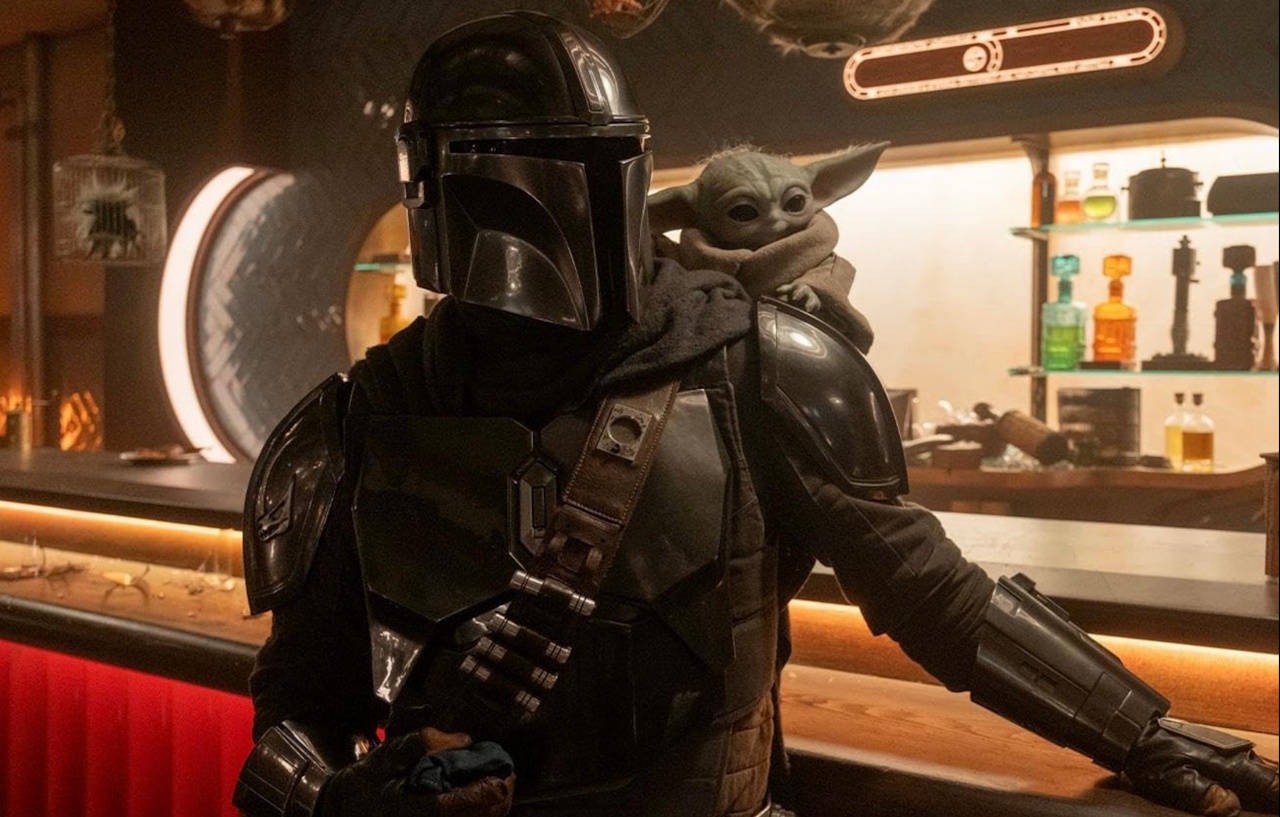
We’re halfway through 2022!

Spoiler Warning: There may be minor spoilers for some of the entries on the list below.

The end of June marks the halfway point of the year, and I think that makes it a great time to take a step back. There are a lot of entertainment experiences that lie ahead over the next few months, and with the nights already starting to get longer it’ll be autumn and then Christmas before we know it! There’s a lot coming our way before we must bid farewell to 2022, though, so today we’re going to take a look at a few of the projects on my radar.

Since the vaccine rollout peaked last year we’ve seen an easing of pandemic restrictions, including in the entertainment industry. That bodes well for at least some of the projects that have been in development! While there are still regulations and guidelines being enforced on film and TV sets, it’s much easier for many productions to work than it has been for the past couple of years. There may be disruptions to come thanks to lockdowns in China and the war in Ukraine, though… so watch this space!

I’ve broken down my choices into three categories – films, television shows, and video games – and I’ve picked six titles in each category that I’m hoping to pick up and enjoy before the sun sets on New Year’s Eve!

Film #1:
Avatar: The Way of Water

I took a look at Avatar: The Way of Water when we got a brief teaser trailer earlier in the year, but suffice to say I’m curiously interested to see what writer-director James Cameron has to offer this time around. I never felt that the original Avatar was the genre-defining epic that its creators hoped it would be, and over the course of the past decade I don’t think it’s unfair to say that the world of Avatar has largely dropped out of the cultural conversation.

The Way of Water has a lot to do, then, to reintroduce viewers to a fictional universe that many haven’t revisited since 2009 or 2010. It also has the task of expanding the world of Avatar beyond the events of the first film, showing us more about the world of Pandora, the Na’vi, and this future version of Earth and humankind. There have been some clever technical feats that have gone into the production of this sequel – including gruelling underwater motion-capture shoots – so I’ll be interested to see if it all comes together when the film releases in December.

Film #2:
Jurassic World: Dominion

Technically Jurassic World: Dominion has already been released – but as my health prevents me from doing things like taking trips to the cinema these days, I’m waiting for it to become available to stream! The teaser trailer for the film, which was released back in December, looked great, and the prospect of a reunion of the main cast members from the first film – Sam Neill as Dr Alan Grant, Laura Dern as Dr Ellie Sattler, and of course Jeff Goldblum as Dr Ian Malcolm – is a pretty significant draw.

There is always going to be the question of whether the premise of the original Jurassic Park – which was based on a novel by Michael Crichton – can really sustain a multi-film franchise. The first film was brilliant in both premise and execution, but was it a one-trick pony? I’m curious to see what director Colin Trevorrow can do to make dinosaurs both fun and intimidating once more! I’ve been trying to avoid reading reviews and spoilers for this one, and when it’s available to stream I hope to get a review written here on the website – so stay tuned for that!

Film #3:
Minions: The Rise of Gru

Despicable Me was a fun film that managed to be surprisingly heartwarming, and the franchise it spawned has gone on to become one of the biggest animated properties of all-time. The last Minions film was released back in 2015, and this sequel will reintroduce Gru – the antihero/evil villain from Despicable Me – as he teams up with his Minions for the first time.

There’s potential for a lot of fun, kid-friendly hijinks in The Rise of Gru, and I’m genuinely looking forward to another outing with the Minions. Steve Carell has been on top form in previous entries in the franchise, and the film will also feature Star Trek: Discovery’s Michelle Yeoh as part of a star-studded cast.

Film #4:
Glass Onion: A Knives Out Mystery

I had a good time with Rian Johnson’s “whodunnit” Knives Out a couple of years ago, so this follow-up definitely holds appeal. Without wanting to give away any spoilers for the first film, suffice to say that I’m excited for one character in particular to make a return!

From what I can gather, Glass Onion isn’t so much a direct sequel as it is a follow-up; a film set in the same world and that will bring back at least one familiar face, but that will also introduce an ensemble cast of new characters and perhaps a new setting as well. Hopefully what results will be just as fun and dramatic as the original!

Film #5:
Hocus Pocus 2

I missed the original Hocus Pocus when it was released in 1993, and it wasn’t until years later that I finally sat down to watch it at the insistence of a friend. What I eventually found was a fun, even somewhat clever film; a light-hearted take on Halloween that’s just right for someone who isn’t a big fan of horror!

The sequel aims to bring back Sarah Jessica Parker, Bette Midler, and Kathy Najimy as the three witches from the original for a new adventure that sounds like it will be a riff on the original concept. Keep an eye out for Star Trek: Discovery’s Doug Jones, who will also be reprising his role from the original film. Hocus Pocus 2 might be just right for Halloween 2022!

Film #6:
Beast

Could Beast be “Jaws but with a lion?” Because the marketing material released by the studio makes it sound like that! I quite like a good thriller or monster flick, so maybe Beast will be a bit of fun. I don’t have especially high expectations; it’s unlikely to be a cinematic masterpiece. But it might just be entertaining enough to waste a little time.

Idris Elba is always fun to watch regardless of what he’s doing – see last year’s The Suicide Squad as a case in point! So at least on that front there’s a solid star in the leading role, and the film’s South African setting appeals to me as I used to live there. I’m curiously interested to see what Beast will have to offer when it’s released in August.

Television Show #1:
Lego Star Wars: Summer Vacation

Lego Star Wars: Summer Vacation will be the third Lego Star Wars special released on Disney+, and the first two were fantastic! 2020’s Holiday Special was a barrel of laughs, and last year we enjoyed Terrifying Tales in October, a lightly spooky Halloween special featuring Poe Dameron. The trailer for Summer Vacation had me in stitches, so if the special itself lives up to its marketing then we’re in for a wonderful time!

Expect to see some cheeky marketing for Disney’s “Galactic Starcruiser” themed hotel (which hasn’t been doing particularly well) in a special that will star “Weird Al” Yankovic and will bring back Finn, Poe, Rey, Rose, and other Star Wars characters.

Television Show #2:
Star Trek: Lower Decks Season 3

At time of writing we don’t have a confirmed premiere date for Season 3 of Lower Decks, but if it follows the same pattern as it did in 2020 and 2021 we might see it in late summer, perhaps mid-to-late August. Season 2 actually ended on a cliffhanger – which I won’t spoil – and I still have a few theories and ideas kicking around that I’ll try to get written up before the new season arrives!

Lower Decks took a couple of episodes to fully get going, but it’s been an absolute blast across its first couple of seasons. Consistently high quality has left the series with only a couple of boring or unenjoyable episodes, and there’s a surprising amount of emotion at the heart of the Lower Decks crew. It’s a Star Trek show through-and-through, and one I find myself getting surprisingly invested in. I’m hopeful for more of the same when Lower Decks returns.

Television Show #3:
The Lord of the Rings: The Rings of Power

Although The Rings of Power is already (and prematurely, in my view) proving to be controversial in some quarters, I have high hopes for what will be the most expensive television show ever produced! A return to Tolkien’s world is, of course, hugely enticing, but The Rings of Power is aiming to be a spiritual successor to Game of Thrones, telling a multi-season serialised story set in the realm of high fantasy. With a massive budget to back it up, I couldn’t be more excited about that concept!

However, with a high budget and high expectations come dangers. The Rings of Power has a long way to fall if it fails to live up to expectations, and no matter what the producers and creative team try to do, the Peter Jackson Lord of the Rings trilogy will be the yardstick by which this new series is measured. I hope it can compare favourably!

Television Show #4:
House of the Dragon

Take everything I said in the entry above, copy-and-paste it, and that’s how I feel about House of the Dragon as well! This Game of Thrones prequel is one of several projects currently in production, but as far as I can see the biggest hurdle it has to surmount is not its predecessor’s reputation as one of the best television shows of all time, but the deep disappointment practically all Game of Thrones fans felt at its finale.

Just convincing people to show up for House of the Dragon in light of Game of Thrones Season 8 feels like a big ask… but if the show learns from those mistakes and makes changes, we could be in for something genuinely exciting. The first five-plus seasons of Game of Thrones were some of the most tense, atmospheric, and exciting ever brought to the small screen, so a return to Westeros – and to the writings of George R R Martin – could be fantastic. Could be.

Television Show #5:
Star Wars: Andor

A prequel to a prequel (or should that be a spin-off from a spin-off?), Andor will follow Rogue One’s Cassian Andor in the years before the events of the film. We might get to see more detail about the early days of the Rebel Alliance prior to the Battle of Scarif, which would be interesting in itself, but more than that I’m curious to see what Star Wars can do with a genuinely different premise. In this case, we’re talking about a spy thriller.

Is there room in the Star Wars galaxy for stories that aren’t just about Jedi Knights, the Force, and lightsaber duels? The Mandalorian and The Book of Boba Fett could’ve begun to show us what the Star Wars galaxy looks like away from those familiar elements, but chose not to do so. So it falls to Andor to potentially become the first Star Wars series to really broaden the franchise’s horizons and show us what’s possible. Is that too much to hope for? Maybe… I guess we’ll have to see!

Television Show #6:
Five Days At Memorial

When done well, a miniseries can be a great format for storytelling. Five Days At Memorial aims to adapt the true story of doctors and nurses working at Memorial Medical Center in New Orleans in the immediate aftermath of Hurricane Katrina. Based on a book from 2013, the miniseries will take a look at some of the events that transpired – including how patients were triaged when the hospital’s systems failed and supplies ran low.

Most controversially, some patients were euthanised by doctors at the hospital – leading to a legal case against them in the months and years afterwards. Hopefully the miniseries will be faithful in its adaptation and won’t try to over-sensationalise these difficult events. I’m really curious to see how it turns out.

Video Game #1:
Star Trek: Prodigy – Supernova

You wait years for a Star Trek video game and then two come along at once! This year should see the release of Star Trek: Resurgence – a narrative adventure game – as well as Star Trek: Prodigy – Supernova, a kid-friendly adventure title based on the new animated series. With new episodes of Prodigy’s first season set to air later this year, the time is right for a tie-in.

I was disappointed (and a little concerned) that Prodigy kicked off its first season with no toys or tie-in products, but that is slowly being addressed. Supernova looks a little last-gen in terms of its graphics, and I’m not going to pretend it doesn’t, but I’m still hopeful for a fun game that ties in with the show, and one that can appeal to the younger audience that the show has been targetting.

Video Game #2:
Stray

Stray has been on my radar for a while, and it’s finally due for release in July! Getting to play as a cat is already a huge part of the appeal, but it sounds as if Stray will have a genuinely interesting mystery at its core: what happened to all of the humans in its world? Players will assume the role of a stray cat in a cyberpunk-inspired city, and solving that mystery will be top priority.

I’m really looking forward to what I hope will be a different experience with Stray. Many games do mystery, third-person exploration, and create atmospheric worlds, but Stray feels like it could offer something that I haven’t experienced before.

Video Game #3:
Grounded

If a game has been in early access for more than two years, should its “release” even count on a list like this? Regardless, I haven’t played Grounded yet – because I largely avoid early access titles – so I’m looking forward to seeing what the full release will have to offer. I loved Honey, I Shrunk The Kids, and even visited the attraction at Disney World… could Grounded let me live out a long-held childhood fantasy?

There are survival aspects to Grounded that could either work exceptionally well… or feel annoying, depending on how good the rest of the game is and how much fun I’m having! But I’ve heard good things from players who’ve enjoyed the early access version, so I’m going to give Grounded a shot when it officially releases in September.

Video Game #4:
Return to Monkey Island

Despite loving the first three games in the series, I seem to have fallen behind on my Monkey Island adventures! The fourth and fifth games in the series ended up on my “pile” of unplayed games, and despite meaning to get around to them I still haven’t! Perhaps I should rectify that before Return to Monkey Island – the sixth game in the series – arrives.

Updated versions of the first three Monkey Island games proved that point-and-click adventure titles could still find an audience when they were released a few years ago, and there’s still an appetite for this kind of comedy-adventure. I’m hopeful that Return to Monkey Island will deliver more of the same humour and excitement as the series did in its early days.

Video Game #5:
The Lord of the Rings: Gollum

After being on my radar for a while, The Lord of the Rings: Gollum has finally set a release window. All being well we’ll see the weird-sounding game in September. I honestly don’t know what to expect from this one, as Gollum would never be the kind of character I’d have expected to build a game and a story around. However, there’s clearly more to his story than we saw in the films – or even the books – so this could be an interesting adventure!

With a renewed focus on the world of Tolkien and high fantasy thanks to the Amazon show and other fantasy films and TV shows, The Lord of the Rings: Gollum could be a surprise hit. I don’t want to go overboard with the hype, but I’m definitely interested to see what the developers have come up with.

Video Game #6:
Saints Row

It does the Saints Row series a grave disservice to call it simply a “Grand Theft Auto clone,” even if that’s where it might’ve begun. This soft reboot of the series aims to take it back to its roots, setting aside at least some of the over-the-top hijinks of the third and fourth games in favour of a return to the gangland roots of the original Saints Row from 2006.

With no Grand Theft Auto VI on the horizon any time soon, Saints Row might just scratch that open-world crime itch for players who are getting tired of Grand Theft Auto V – but hopefully Saints Row can continue to carve its own niche and stand on its own two feet.

So that’s it!

Those are just some of the projects that we can look forward to in the weeks and months ahead. There are plenty more, of course, and I’m sure there’ll be some surprises along the way, too! Although 2022 has been much better than the past couple of years, there’s still the potential for disruption and delays, so keep in mind that any of the shows, films, and games listed above may not make their currently-scheduled launches. Such things happen, unfortuately!

I hope that this was a bit of fun and a glimpse at what lies ahead. It’s always interesting (to me, at least) to research different upcoming projects to see what piques my curiosity, and as someone who takes an interest in the world of entertainment I’m always keeping my ear to the ground to see what might be coming up! I hope you’ll stay tuned here on the website for reviews, impressions, and write-ups of at least some of the projects we’ve talked about today.

Until next time!

All films, television shows, and video games listed above are the copyright of their respective owner, company, distributor, broadcaster, publisher, etc. This article contains the thoughts and opinions of one person only and is not intended to cause any offence.
Film review: Morbius

Spoiler Warning: There are spoilers ahead for Morbius.

It’s Morbin’ time! While working my way through my lunch (a plate of egg and chips – yum) I was in need of something to watch… so I fired up Morbius. This film has acquired a reputation since its release that has not eluded me, and despite the fact that I generally like to watch things free from critical opinions, the general dislike for Morbius – the film sits at 17% from critics on Rotten Tomatoes – has been unavoidable.

But when I looked ahead to cinematic points of interest at the start of the year, Morbius had actually ended up on my list. From my perspective as someone who isn’t into comics and doesn’t care too much about their cinematic adaptations, it’s somewhat of a rarity to take even a passing interest in a project like this. But because Morbius is produced by Sony and not affiliated with the wider Marvel Cinematic Universe, I felt there was the potential, at least, for a decent one-off film.

The titular Dr Michael Morbius.

The premise of Morbius is interesting, and as someone who hasn’t read any of the source material I was curious to see what the film would do with its “doctor-becomes-a-vampire” concept. As someone who is disabled, the idea of looking for a cure or a medical solution, no matter the cost, is a relatable and understandable one, and while Morbius certainly put a fantasy spin on that concept, the bare bones of the project felt like it had a good starting point.

There were some sequences during the film’s opening act that successfully communicated at least some of that feeling. Jared Leto gave his character’s disability a relatable spin, if not always a completely believable one, and as the foundation for the story I felt that the way it was handled was okay. There are certainly more realistic and sympathetic presentations of disability in cinema, but I daresay that most viewers aren’t coming to a film like Morbius to see the day-to-day life of a disabled person. The life-limiting condition afflicting Dr Morbius and his friend wasn’t even named; I inferred that it was a fictional ailment, and given that the story didn’t have a lot of time to spend on the minutia, that was probably the right call.

There was potential in the “desperate to find a cure” angle that the film could’ve made more of.

The sequence toward the beginning of the film showing younger versions of the central characters was surprisingly raw, and I didn’t expect to see such a brutal depiction of bullying when I sat down to watch Morbius. Though it was hardly anything that hasn’t been seen before in other films and television series, the way in which young Lucian/Milo was taunted and then beaten by a gang of youths was powerful stuff – all the more so because of his nameless health condition. In fact, that sequence was probably the closest that Morbius got to being uncomfortable in terms of its violence; much of the rest of the fighting and gore was pure fantasy.

Jared Harris excels in every role I’ve ever seen him perform, and although there’s one specific moment that we’ll come to with his character that didn’t work, for my money Morbius was a better film for his inclusion as Dr Nicholas. He approached the character with the same seriousness as his roles in projects like Lincoln and Chernobyl, lending Dr Nicholas an outsized gravitas that grounded the character and every scene he appeared in. Even when dealing with some fantastical and silly storylines, Harris gave a wonderful performance.

The bullying sequence toward the beginning of the film.

There was, however, an odd moment as Dr Nicholas was killed off. As he spoke his final words to Morbius, there appeared to be some very clumsy audio work. A different take on the line – or perhaps a new line – had clearly been recorded later and very poorly spliced into the scene, and the result was that Dr Nicholas’ mouth didn’t move in sync with the words he spoke. If it hadn’t been a close-up shot focused on his face perhaps it would’ve passed by unnoticed, but it didn’t – and a combination of poor editing decisions led to what should’ve been one of the film’s more powerful moments falling flat.

Speaking of falling flat, I had a hard time following the motivations of the film’s villain. Milo – a.k.a. Lucian, former friend of Dr Morbius – seems to be a fairly bland “evil for the sake of it” villain, with no real motivation other than “I can kill people now, so I will.” I didn’t find that aspect of his character interesting in the slightest, and it gave the film a very uninspired and uninteresting feel from the moment it became obvious who was going to be the villain of the piece.

Matt Smith’s character.

I’ve only ever seen Matt Smith in a couple of other roles outside of Dr Who, so I was curious to see how he’d get on when tackling a villain. There was a fun Dr Who reference, as Smith emphasised the word “eleven” at one point early in the film (his was the Eleventh Doctor). However, I found his performance to be somewhat over-the-top, especially once his character had undergone the transformation into his vampiric form. There was the potential for a more nuanced approach leading to a more sympathetic villain, and while we got glimpses of that through Milo’s initial desperation for a cure at any price and later as he died, in between was pure pantomime. Smith’s performance did nothing to damp down that aspect of what was admittedly a poor script.

In fact, those past couple of sentences could encapsulate Morbius in general. What started out as a film with an interesting premise and characters – including the title character – who behaved understandably in light of life-limiting illnesses quickly devolved into an incredibly basic “good guy versus bad guy” CGI-heavy action flick. Nuance and character development went out the window as the film raced through a series of increasingly silly – and increasingly unexplained – action sequences.

One of several CGI-heavy fight sequences.

At first we seemed to be on course to see Dr Morbius discover and hone different abilities. Following his initial transition aboard the ship, he began noting down different feelings and sensations, developing and refining his echolocation, speed, agility, and strength. Learning to “fly” or glide was perhaps a step too far, but it might’ve worked had there been more of a buildup to it. But what I couldn’t understand was how Dr Morbius had the ability – seemingly from nowhere – to summon bats. And more than that, where did all those bats come from? There weren’t that many in his lab when we saw them earlier in the film, yet he seemed to summon thousands out of mid-air at the film’s climax.

There were attempts in Morbius to use light, shadow, and fog in clever ways, concealing parts of what was happening on screen or allowing things to be seen through a haze. These perhaps didn’t work as perfectly as they could have, but I will credit director Daniel Espinosa with making an attempt to use the camera in different ways rather than relying wholly on CGI.

Dr Morbius in his prison jumpsuit.

CGI animation work in Morbius is rather divided. On the one hand, wider shots generally looked quite good, and the “smokey” effect used for Dr Morbius and Milo’s fast-paced vampire moves was a neat one that I hadn’t seen used in that way before. On the other, the CGI faces used for Dr Morbius and in particular Matt Smith’s Milo were poor, despite what I’m sure was a high budget and the best efforts of some talented animators.

The vampire faces seemed to take those used in the likes of Buffy the Vampire Slayer as a starting point, perhaps trying to blend in more bat-like features such as flattened noses. As concepts, there was nothing particularly wrong with the way they looked – but the animation work used to bring them to the screen wasn’t up to par, and the faces ended up feeling artificial and video game-y, particularly when the characters “roared” or made other oversized movements.

Though the designs were neat, I was unimpressed with the execution of Morbius’ CGI faces.

One sequence in particular bugged me, and I’ll try to explain why. This isn’t something unique to Morbius by any means, and I’ve spoken before about how the choice of filming location can impact a production. In this case, a particular sequence in which Milo and Dr Morbius argued and battled was supposedly set in a New York City subway station – but it was painfully obvious that it was, in fact, shot at a London Underground station. This completely snapped me out of the film, and I just don’t really understand why so many productions like this use inappropriate or just plain bad filming locations.

The London Underground and the New York City subway are pretty different from one another, with completely different architectural and design aesthetics, so why choose a London Underground station for a shoot like this? If filming was taking place away from New York, couldn’t a small section be recreated on a sound stage? Why go to all the trouble of a location shoot only to pick a location that’s completely obviously wrong? I just don’t get it. Maybe I’m nitpicking… but I think a lot of viewers – or at least viewers in the UK – will have picked up on the fact that that sequence was not filmed in New York!

The London Underground has such a distinctive look that I don’t understand why it was chosen to stand in for the New York subway.

So that’s about all I have to say, I guess. Morbius is not entirely without redeeming features. Jared Leto, Jared Harris, and Adria Arjona all put in great performances with the material they had available, and there were some clever concepts and ideas in the film’s opening act that, had they been in focus for longer and explored in more detail, could have led to a more interesting film overall.

As it is, Morbius descended quite quickly into being a fantasy-action film with a bog-standard “goodies versus baddies” premise. I didn’t find any of its fantasy elements to be frightening or horrifying – and coming from someone who can be quite sensitive to jump-scares and the horror genre, I think that says something. Morbius is far from being the worst film I’ve ever seen, nor even the worst comic book superhero film I’ve seen, but it’s hardly anything spectacular or worth devoting a lot of time to.

I don’t think that Morbius deserves the 0/10 that some folks seem to insist on awarding it; it has enough of a saving grace thanks to some solid performances and a decent opening act to avoid that fate. But it’s not a film I’m in any hurry to revisit.

Morbius is out now and can be streamed for a fee on Amazon Prime Video, Google Play, iTunes, and more. DVD and Blu-ray versions will follow later this year. Morbius is the copyright of Sony Pictures Entertainment and is based on Morbius, the Living Vampire from Marvel Comics. This review contains the thoughts and opinions of one person only and is not intended to cause any offence.

To recast or not to recast?

Spoiler Warning: There are spoilers ahead for The Book of Boba Fett. Minor spoilers are also present for Solo: A Star Wars Story and Star Trek: Strange New Worlds.

President of Lucasfilm Kathleen Kennedy recently made a statement that has drawn a lot of attention. In an interview with magazine Vanity Fair, Kennedy stated that one of the lessons that the Disney-owned studio learned from the lukewarm response to Solo: A Star Wars Story in 2018 was that recasting classic characters isn’t possible. In her words, “it does seem so abundantly clear that we can’t do that.”

This has kicked off a discussion online, not least among fans of the Star Wars franchise and Solo in particular. Today I want to add my two cents to the conversation and use the debate around Kennedy and Solo to talk about recasting characters in a general sense, as well as touch on some alternatives that studios have turned to in recent years.

Lucasfilm President Kathleen Kennedy.

First of all, I encourage you to read the full piece in Vanity Fair so you’re aware of what was said and its context. Online debate often centres around a single phrase, soundbite, or fragment of a sentence, and it isn’t always clear how someone’s words were intended. In this case, for example, Kennedy seems to have been talking about the need for Star Wars to move on – something I’ve talked about at length here on the website – and expand beyond the confines of the “Skywalker Saga” and the handful of familiar characters who made up those stories.

I absolutely agree with that sentiment! The Star Wars galaxy is such a vast and exciting setting, one with thousands of years of history, an uncertain future, thousands of planets, trillions of inhabitants, and so much potential! So far, the Star Wars franchise has doubled-down on showing us the same handful of characters and the same tiny sliver of that setting over and over again, and I for one am starting to get sick of it! Star Wars can be more than Luke Skywalker – if it’s willing to put in the effort.

Canto Bight, one of many interesting locales in the Star Wars galaxy.

So in that sense, I agree with Kathleen Kennedy! But taken as a starting point for a discussion about recasting characters, I couldn’t disagree more.

It’s profoundly ironic that Kennedy made this statement during the build-up to the broadcast of Obi-Wan Kenobi… a series that centres around a character who was recast from the original Star Wars films! The Star Wars prequel trilogy recast a number of characters – and recast characters were even ham-fistedly edited into the so-called “special editions” of the original films, with the original voice of Boba Fett being re-dubbed, the original Emperor Palpatine being overwritten in The Empire Strikes Back, and most notoriously, the Force ghost of Anakin Skywalker being changed in Return of the Jedi.

Disney and Lucasfilm panicked in the late 2010s. The divisive reaction to The Last Jedi and underwhelming numbers for Solo: A Star Wars Story saw the Star Wars franchise refocused to bring back a lot more of what corporate leadership hopes will pass for nostalgia. This accounts for the existence of shows like The Book of Boba Fett and Obi-Wan Kenobi, as well as certain narrative decisions in The Rise of Skywalker. It isn’t the first time that corporate cowardice has got in the way of entertainment, and it likely won’t be the last.

The Book of Boba Fett is an example of Star Wars recycling characters.

I’d argue that the wrong lesson has been learned from Solo if Disney and Lucasfilm believe that the biggest takeaway is that they should never try to recast characters. Alden Ehrenreich’s performance was far from the worst thing about that film, and if audiences and Star Wars fans felt that he “didn’t feel” like Han Solo, the blame needs to be placed with the way the script was written and the way the story was told. Solo was a fairly clumsy overplaying of the nostalgia card in my view; a film with an interesting premise that was hampered by shoehorning in characters from the original trilogy and that made the same mistake with Han Solo as the prequel trilogy had with Anakin Skywalker: overexplaining his backstory.

But all of that is incidental. Even if we accept the premise that Solo was a failure and that the performance of its lead was a significant factor – neither of which I’m fully on board with, but I’ll grant for the sake of argument – is the right response really to say that no classic characters should ever be recast again? That seems like a horrible overreaction!

Alden Ehrenreich in Solo: A Star Wars Story.

The Star Wars franchise has done some very interesting things with digital de-ageing and CGI character creation. The way Luke Skywalker was brought to screen in The Book of Boba Fett as an entirely CGI character was technologically stunning, and at first I thought I was watching a lookalike. The technology needed to create CGI characters and perfectly replicate the face – and even voice – of real actors is already here, and while Disney may be a pioneer of the technology, they’re far from the only ones to be using it. We’ve recently seen digital de-ageing make an appearance over in the Star Trek franchise, for example.

I’ve had an article in the pipeline for well over a year that I really ought to get around to finishing one of these days! It’s all about CGI characters in film and television, because I’m convinced that we’re not far away from a film or TV series bringing back to life a dead actor to play a leading role. I can already picture a snooty director who insists that the lead role in their film could only ever belong to someone like Lawrence Olivier or Orson Welles and decides to digitally recreate them rather than cast someone else!

A CGI recreation of Mark Hamill was used to bring Luke Skywalker into The Book of Boba Fett.

That’s connected, in a way, to what we’re talking about here. Some actors and performers are so iconic that I can absolutely see a time – perhaps very soon – when a film or TV series will use a CGI lead mingling with real actors. A digital creation with a fake face and fake voice that are indistinguishable from the real thing. And as that technology improves and becomes more accessible, it may even become possible for amateurs to do something similar. Imagine a Star Trek fan-film where a fully-realistic CGI Captain Picard is the lead. We’re edging closer to that kind of reality!

But is Sir Patrick Stewart inseparable from Captain Picard? Is Mark Hamill the only possible Luke Skywalker? Or are these roles – and many others across the realm of entertainment – more than just one actor? Look at Shakespeare as an example: how many actors have taken on the role of Hamlet, Prospero, or Richard III? And even in cinema, how many different performances have there been of characters like Count Dracula or Ebenezer Scrooge?

Is Christopher Lee the only possible Dracula in all of cinema?

If the argument is that certain characters can only ever be portrayed by one person, doesn’t that limit them and restrict them to a single possible interpretation? There have been very different takes on iconic characters over the years, and while audiences may have a preference for one or another, that doesn’t mean that only one interpretation is valid. Taking a character and giving them to a new actor expands the potential of that character.

In the Star Trek franchise we’ve seen the main characters from The Original Series recast for the Kelvin films, and while I know of some Trekkies who absolutely hated that idea, as time has passed since the 2009 reboot, more of those folks have come around. 2009’s Star Trek did a lot of things right as a reboot of the franchise, and a big part of its success was down to the way those classic characters were reinterpreted.

Star Trek hasn’t been shy about recasting characters!

Some Star Trek characters have been recast multiple times – by my count, Strange New Worlds features the fourth actor to play Captain Pike and the third to play Spock. Early reactions to Strange New Worlds have been incredibly positive – and the series has even drawn praise from some fans who hadn’t enjoyed anything else that modern Star Trek has had to offer. Recasting Pike, Spock, and other classic characters has clearly not harmed Strange New Worlds.

And the same could be true for Star Wars. Maybe Solo wasn’t the best film the franchise has put out, but that shouldn’t mean that experimenting with different takes on classic characters should be entirely shut down. There’s scope for new actors to take on the roles of Luke, Leia, and others – just as there was for Ewan McGregor to become Obi-Wan Kenobi or Alden Ehrenreich to become Han Solo. Arbitrarily deciding that recasting can never work off the back of a single underwhelming film is an unnecessary overreaction – especially considering that recasting has already worked in Star Wars, with an upcoming series standing as testament to that fact.

Obi-Wan Kenobi was recast in 1999 – and the recast character was so popular that he’s about to get his own spin-off series.

At the same time, there’s a place for digital character creation, recreated characters, and CGI characters, and I fully expect to see a lot more of that type of thing in the years ahead. For my two cents, digital de-ageing and CGI characters probably work best as side-characters rather than main protagonists – and I think Star Wars has got away with using them in that context so far. It will be a new challenge to see a film or TV series where the leading role is taken over by a CGI character.

So in conclusion, I’m glad that Kathleen Kennedy is finally willing to consider expanding the Star Wars franchise beyond the tiny fragment of its wonderful and vast setting that we’ve seen so far. That part is the good news! However, I don’t agree that there’s no place for recasting characters in a general sense. New actors have the potential to bring a new interpretation to the role, and if you look across at other films, franchises, and TV shows, it’s abundantly clear that recasting can and does work.

All properties and franchises discussed above are the copyright of their respective studio, distributor, corporation, etc. This article contains the thoughts and opinions of one person only and is not intended to cause any offence.
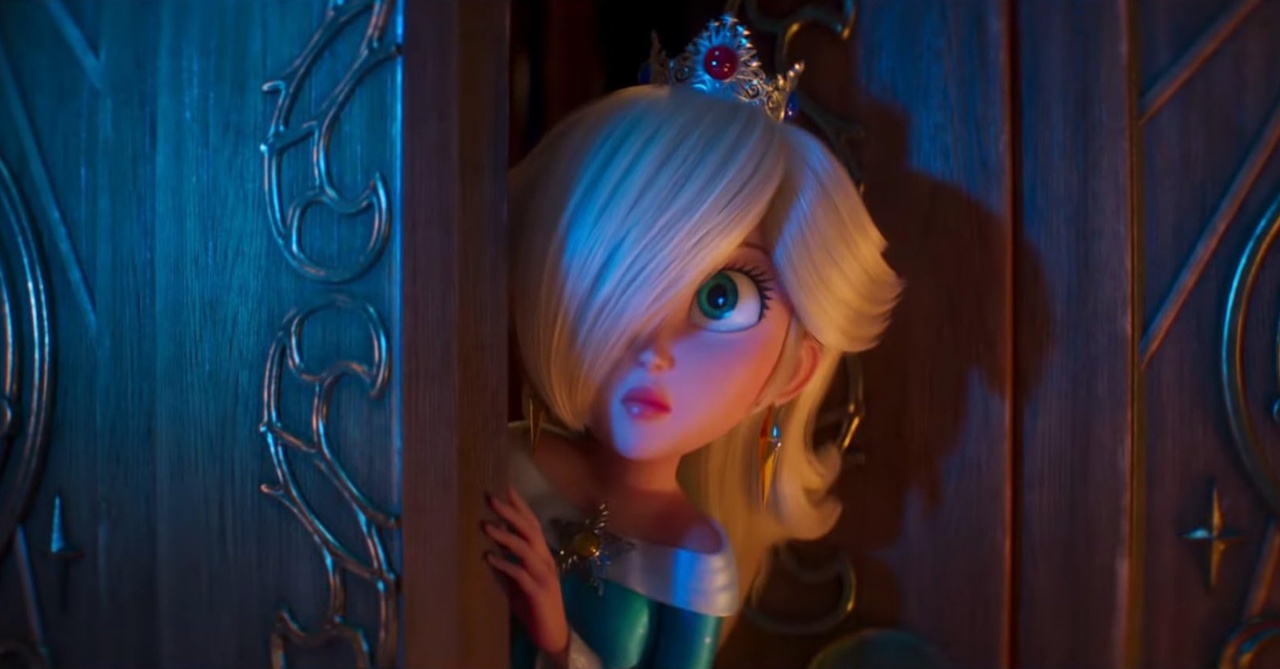
Looking ahead to Avatar: The Way of Water

It’s been a while since we talked about Avatar. Actually, scratch that. It’s been a while since anybody talked about Avatar and its upcoming sequels, with the sci-fi blockbuster having largely dropped out of our collective cultural conversation in the decade since its release. But with the first of four planned sequels due for release in just a few months’ time, James Cameron’s sci-fi series is kicking off its marketing campaign.

In addition to the film’s official title being revealed, we also got the first teaser trailer. Having caught a glimpse of Pandora and the Na’vi, I thought it could be interesting to look ahead and preview what the film may be when it finally hits cinemas later this year.

James Cameron, director of Avatar: The Way of Water.

I’m not the world’s biggest fan of Avatar. I didn’t hate it or even particularly dislike it, but it was the kind of blockbuster that I just haven’t felt a desperately pressing need to revisit. While its story and characters weren’t bad by any means, nothing Avatar did managed to succeed at creating a world that I can’t get enough of. Avatar was fine – but unlike something like Star Trek or Star Wars, the first film didn’t inspire a huge fan community nor create the sense of scale or the feeling that there’s a great deal more to its world that we desperately need to see.

I re-watched Avatar about eighteen months ago, and I’ve probably seen the film four or five times over the past decade. But could I tell you its plot in any detail or recite some of my favourite lines? How about picking my favourite character(s)… or even remembering the names of the main ones? Aside from the moon of Pandora, is there anywhere else in Avatar’s fictional universe that I’d want to explore? The answer to all of the above is “no,” as you may have guessed.

Official logo for Avatar: The Way of Water.

So that’s the position I’m in as we look ahead to Avatar: The Way of Water (which my brain keeps calling The Shape of Water like that other film from a couple of years ago). But although I might be cruel enough to call some aspects of Avatar “forgettable,” there are reasons for positivity. For one, the science fiction realm always has space for new and expanding franchises, and while I doubt any will ever topple Star Wars or Star Trek, there’s definitely scope to add the likes of Avatar into the mix.

Like its predecessor, Avatar: The Way of Water has a colossal budget, and we will undoubtedly be in for a film whose design, aesthetic, and visual style will be beautiful and immersive. With CGI and other special effects having improved dramatically over the past decade, some of the “video gamey” feel of the first film – with its slightly too smooth and shiny textures – should have been mitigated. While The Way of Water will still be so heavily reliant on CGI as to be basically fully-animated for long sequences, CGI animation in 2022 can look a heck of a lot better than it did in 2009.

A Na’vi taking a swim.

To my surprise, I must admit, the teaser trailer for The Way of Water racked up well over ten million views on YouTube in the 48 hours after it was published there, with several million additional views across other social media platforms. For a time, the teaser trailer was the #1 trending video on YouTube, so there’s clearly still interest in Avatar from the general public – even if most folks haven’t rewatched the first film in a long time!

The teaser trailer itself was a stylised affair, heavy on the soundtrack, that showed off a few interesting-looking locations but that revealed practically nothing by way of narrative or plot. At this stage that could be okay; it’s a tease to renew interest in a franchise that has been dormant for more than a decade. But I wonder if there was enough substance in the 90-second teaser to really kick off a marketing campaign that will need to rebuild interest in the world of Avatar between now and the holiday season.

Sully.

There were a few moments in the teaser trailer that looked genuinely interesting. At one point we saw what appeared to be Na’vi and humans working together, or at the very least Na’vi being shown around a human facility that seemed to be under construction. Whether that means that humanity’s presence on Pandora is growing is not clear. We also saw Na’vi carrying human weapons and wearing what appeared to be body armour; again this could suggest some kind of team-up between at least one human faction and Sully’s Na’vi tribe.

We also got our first look at the much-vaunted underwater motion capture technology, something that has apparently been developed by James Cameron and his team for the new film. The technology wasn’t ready a decade ago, but having worked on it over the past few years, The Way of Water is now leaning on it as a selling-point.

Are humans and Na’vi cooperating?

There have been great underwater sequences in films before, and the very brief clip shown off in the teaser trailer isn’t a lot to go on. I think we’ll have to reserve judgement on how well the underwater motion capture stuff works – as well as how “groundbreaking” or original it makes the finished picture look – until we’ve seen a lot more footage. I don’t want to jump the gun and say it was underwhelming based on a few seconds’ worth of video that was compressed for YouTube!

It’s no bad thing to experiment and try new techniques; that’s the only way that cinema – or any medium, come to that – can ever grow and develop. Whether the gruelling process of underwater motion capture will catch on and become something we see other titles pick up in future is anyone’s guess at this stage. I would say, though, that behind-the-scenes photos and interviews seem to suggest that this particular filmmaking process is hard work!

Underwater motion capture for Avatar: The Way of Water.

James Cameron put a lot of energy into Avatar. A whole Na’vi language was constructed by linguistics experts, and while that isn’t something entirely unique for a sci-fi property (hello, Klingon) it does show how seriously Cameron and others took the project. Seeing Avatar expand beyond its original film and begin to take advantage of some of that hard work is something I’d like to see happen, and there’s always going to be room for more high-quality sci-fi.

Expanding on the story of Avatar – which was left somewhat open-ended back in 2009 – could be fun, and I hope that the story will go in a different and perhaps unexpected direction. The original film took flak for its perceived unoriginality, so this first sequel could be an opportunity to break away from that.

Though I’m not going to rush out and be the first in line for Avatar: The Way of Water on release day, I’m hopeful that it’ll be a decent sci-fi title when it’s ready. As the first of four sequels to the original film, this could be a franchise that we’ll discuss a lot in the years ahead.

Avatar: The Way of Water is scheduled to be released on the 16th of December 2022. The Avatar series – including The Way of Water – is the copyright of 20th Century Studios and/or The Walt Disney Company. This article contains the thoughts and opinions of one person only and is not intended to cause any offence.

Ten great things about Star Wars: Episode VIII – The Last Jedi

Spoiler Warning: There are spoilers ahead for the entire Star Wars franchise, including the prequels, original trilogy, and sequels.

Happy Star Wars Day! Today is the 4th of May – or as they say in America, May the 4th. So May the 4th be with you! Today is a day for positivity in the Star Wars fan community, so I thought it could be fun to take a look at a few of my favourite things from The Last Jedi. It goes without saying that The Last Jedi was a divisive film among Star Wars fans. However, it was one I generally enjoyed. It wasn’t “perfect,” and I don’t think it hit all of the high notes that it was aiming for, but I found it to be enjoyable.

This article isn’t an attack on anyone else’s position or opinion! If you don’t like The Last Jedi or some of the things we’re going to discuss, that’s totally okay. Practically everything in cinema is subjective, not objective, and there’s a range of opinions on practically every film. Because today is about celebrating Star Wars, I wanted to pick out some of the things that I liked from the film and talk about why they worked well for me. If you want to see how critical I can be of Star Wars… check out my reviews of The Rise of Skywalker or The Mandalorian Season 2!

Yoda in The Last Jedi.

With all of that out of the way, a brief introduction is in order, I think! Star Wars Episode VIII: The Last Jedi was released theatrically in the UK on the 14th of December 2017 – but I didn’t see it until a few months later in the Spring of 2018. My health is poor, and things like trips to the cinema are no longer practical for me, unfortunately. By the time I got around to seeing the film I’d already heard the outcry from some in the Star Wars fandom, and I set my expectations pretty low for what seemed to be a divisive film. Suffice to say that I was pleasantly surprised to find a film that I enjoyed a lot more than I’d been expecting.

After The Force Awakens had played it very safe two years earlier, The Last Jedi attempted to take Star Wars in a very different direction. Rather than repeating what the original trilogy had done, the film took its characters to completely different thematic places, introduced new sub-plots, and potentially set up the sequel trilogy for a radically different ending. The Rise of Skywalker tried to undo some of the most significant points from The Last Jedi, which was a real shame, but taken on their own merit many of these points succeed. For me, The Last Jedi is the high-water mark of the sequel trilogy, and it’s a film that I firmly believe will be considered much more favourably in years to come. Just look at how a new generation of fans has come to celebrate the once-panned prequel trilogy; The Last Jedi’s best days may lie ahead.

So let’s get started on my list! I’ve picked ten things that I admire about The Last Jedi or feel that the film did well. They’re listed below in no particular order.

Number 1:
A subtle and unexpected Rogue One connection.

Jyn Erso in Rogue One.

How was the First Order able to track the Resistance’s fleet while they were in hyperspace? This was a story point that some fans who weren’t paying very close attention didn’t like – but it was actually something that had been set up a year earlier. Rogue One, which was released in 2016, saw Jyn Erso and a rag-tag crew steal the plans to the Death Star in the days immediately prior to A New Hope. Part of their mission saw them travel to the planet of Scarif, where the plans were kept at an Imperial facility.

While looking for the Death Star plans in amongst other Imperial data tapes, Jyn found a record of the Empire’s research into hyperspace tracking. The scene was very brief, with the data tape quickly being discarded in the rush to secure the Death Star plans – but it was a great moment of connection between two disparate parts of the Star Wars franchise!

Jyn and Cassian with the Death Star plans.

Considering that Rogue One and The Last Jedi were set decades apart, these moments of connection are incredibly helpful to bind modern Star Wars together. Far from being just a throwaway line, the scene in Rogue One established that hyperspace tracking technology was something being actively researched by the Empire – while the destruction of the Imperial facility on Scarif provides a convenient narrative excuse for why it wasn’t successfully rolled out during the era of the original films.

It can be an incredibly difficult task to thread the needle like this; to insert a story element in between the pieces of the story that we already know. But Rogue One and The Last Jedi did this perfectly. If only other story beats in the sequel trilogy had this much forethought and this much setup!

Number 2:
Rey is related to nobody.

Rey learned a harsh truth.

For two years leading up to The Last Jedi, speculation was rife in the Star Wars fan community about who Rey was. Many fans concocted elaborate theories suggesting that she was the daughter or granddaughter of Luke Skywalker, Obi-Wan Kenobi, Emperor Palpatine, and other Force-wielding characters. But when it was revealed in The Last Jedi that none of those things were true, it was a perfectly-executed twist.

Rey being “no one” isn’t just great because it’s a subversion or because it ignores some pretty mediocre fan theories – it works because it has something important to say. The Force can manifest in anyone, and just because that person comes from a humble background it doesn’t mean that they can’t be important. This is the story that the original Star Wars film tried to tell: Luke was the farm boy from an unimportant backwater world who went on to save the galaxy. That story was muddied by the decision to create a connection to Darth Vader in The Empire Strikes Back, and completely erased by the time talk of prophecy and “chosen ones” entered the equation.

Kylo explained to Rey that her parents were “no one.”

In that sense, Rey’s parents being no one important and no one familiar took Star Wars back to a narrative space that it hadn’t occupied since 1977. It established that its hero truly could be anybody, that destiny and ancestry don’t matter half as much as we might’ve thought. I found that message to be incredibly uplifting and inspiring, and the idea that anyone could be a hero or do great things without needing to be related to someone important is a message that resonated. In a franchise that has been so thoroughly dominated by a handful of individuals and a single family, it was a narrative worth including.

It also presented Rey in stark contrast to Kylo Ren. Both characters were defined by their family, but in different ways. Rey waited for her parents believing they’d come back for her, only to learn that they didn’t care about her at all – they sold her at the first opportunity. Kylo was both proud of his relationship to Darth Vader and ashamed of the role that his parents played in the Rebellion. Kylo came from Rebel royalty as the son of Han and Leia, but had succumbed to the temptation of the Dark Side and wanted to dominate the galaxy. In contrast, Rey came from nowhere and wanted to save it.

Rey using the Force at the film’s climax.

Rey’s struggle wasn’t to live up to some legacy from Luke or Obi-Wan, nor to rebel against a darker ancestor like Palpatine, but to chart her own path – a new path for herself, for the Resistance, for the Jedi, and for the Star Wars franchise. Rey represented the new against the old, the people against the aristocratic elite, and an unexpected journey for the protagonist of the latest chapter of the long-running saga.

I adored this about Rey. It took her on an unpredictable and open-ended journey, threw out of the window outdated notions of legacy and destiny, but at the same time it returned Star Wars to a familiar place; a place it hadn’t been since Darth Vader and Luke were retconned to be father and son. Had this aspect of Rey’s character been retained, I think the sequel trilogy as a whole could’ve been far more interesting.

Number 3:
Hyperspace ramming.

The aftermath of hyperspace ramming.

In the very first Star Wars film, Han Solo gave us a decent explanation for why travelling through hyperspace was so dangerous. “Without precise calculations,” he told Luke, “we could fly right through a star or bounce too close to a supernova.” Hyperspace, at least according to Han Solo, did not somehow transport ships to another dimension; they could still interact with the rest of the galaxy – with potentially deadly consequences!

This was elaborated on by the old Expanded Universe which explained that charting new hyperspace routes was incredibly dangerous for precisely the same reason: it’s very easy to crash into a star, a planet, or even another starship. So hyperspace ramming has always been possible in Star Wars – even if no one thought of it before Admiral Holdo!

Admiral Holdo.

Hyperspace ramming is the kind of desperate, last-ditch manoeuvre that no one would dare to try unless there weren’t any other options. Here in the real world, aircraft had been around for decades before anyone thought of inventing the kamikaze suicide attack, so I can absolutely believe that hyperspace ramming was either totally new in the Star Wars universe or hadn’t been attempted in hundreds or thousands of years. Nothing about it “broke” continuity, and as stated it was perfectly in line with what Han Solo had told us about travelling through hyperspace all the way back at the beginning of the franchise!

The criticisms of hyperspace ramming felt very nitpicky to me, and I think it’s something that came about because of how other aspects of the film landed for some fans. If hyperspace ramming had made its debut in The Mandalorian, for example, where most fans seem to have been having a good time, I think it would’ve generated a lot less anger!

Holdo accelerates her ship to hyperspeed.

I’m always a sucker for the “doomed last stand” concept in fiction, and the entire hyperspace ramming sequence was executed incredibly well. Admiral Holdo managed to be stoic and brave in the face of death, making the ultimate sacrifice to allow her friends to escape and to give the Resistance a fighting chance.

The cinematography and visual effects used to bring it to life were outstanding, too, and the hyperspace ramming sequence has to be one of the absolute best in all of Star Wars for me. The use of silence at the moment of impact was so incredibly poignant – in part because silence is used so sparingly across the franchise. The CGI animation used to bring to life the crash and its aftermath was likewise fantastic.

Number 4:
Kylo Ren seizes power.

Kylo Ren at the moment of his coup.

The Force Awakens seemed to be setting up Kylo Ren as the “new Darth Vader” – an evil but ultimately redeemable villain. The Last Jedi chose to avoid recycling that character trope and set Kylo on his own path, a path that would lead him to become the Supreme Leader of the First Order. By embracing the darkness within him and extinguishing the pull to the light that he’d been feeling, Kylo Ren cemented his position as the primary antagonist of the sequel trilogy.

After being bullied and belittled by Supreme Leader Snoke, Kylo’s hatred for his master had been building. Blamed unfairly for the loss of Starkiller Base and Rey’s escape, Kylo nursed a grudge against Snoke for practically the whole film, culminating in him killing him in one of the film’s most shocking sequences.

The death of Snoke.

Kylo killing Snoke was not an empty subversion, designed for shock value and nothing else. It was a masterstroke of writing, one that sought to take Star Wars and the film’s main characters to entirely different thematic places than either the prequels or original trilogy had. In the span of a few minutes it seemed that Rey had been able to get through to Kylo, convincing him to betray the First Order… but then that idea was pulled away as Kylo saw his chance to seize power.

Turning the idea of “reaching out” on its head, it was Kylo who asked Rey to join him, to rule the galaxy at his side. Rather than returning to the light, Kylo had taken a massive leap further into the dark – going so far, surely, as to never be able to come back. With Snoke out of the picture, only Kylo and Hux would remain as major antagonists going into the final act of the trilogy, so it seemed like the idea of “Darth Vader 2.0” was well and truly gone.

Rey and Kylo prepare to battle Snoke’s guards.

Again, this was a moment with a message. Part of that message was epitomised by Luke’s line: “this is not going to go the way you think!” and that’s kind of built into the film’s entire philosophy. But beyond that, the concept that someone like Kylo Ren could be irredeemable has merit. There are some people – some fascist leaders, which is what Kylo Ren is at this point – who go “full Dark Side.” There’s no way back for some people, and we shouldn’t want to see a redemption arc for people who have done unspeakably evil things.

It’s also connected to the point above about destiny and ancestry. Kylo came from Rebel royalty as the son of Han Solo and Leia, but instead of using that legacy and power in a positive way he became corrupted, trying to rule the galaxy instead of fighting for freedom. The lure of power can corrupt even the most well-meaning of individuals, and Kylo’s arrogance, elitism, and belief in his own special place led him down a dark path.

Number 5:
The presentation of Luke Skywalker.

Luke with the famous blue milk.

This is a point I’ve tackled before in a standalone essay, but I found what The Last Jedi did with Luke to be absolutely incredible. It was a powerful and relatable mental health story, one that showed how anyone – even heroes – can fall into melancholy and depression. Maybe that story isn’t what some viewers wanted, but I firmly believe it’s a story that was needed – and worth telling.

Not only that, but Luke’s story was a sympathetic and realistic portrayal of mental health; one of the better depictions of depression that I’ve seen in fiction in recent years. Having tried to rebuild the Jedi Order, Luke ultimately failed – and failed in such a catastrophic way that he got people killed. He allowed that failure to fester and turn into depression, ultimately secluding himself and merely waiting around to die, totally uninterested in the galaxy around him.

Luke’s failure and depression was a major focus of the story.

Anyone who’s suffered from depression – regardless of whether there was a cause – can relate to that. The idea of cutting oneself off from everything and everyone, of being unable to face the world outside a small bubble of safety – these are things that people suffering from mental health issues can recognise. And the fact that it happened to someone as powerful, virtuous, and heroic as Luke Skywalker has an incredibly powerful point to make: this is something that can happen to anyone.

As mental health issues – particularly in men – continue to be ignored and stigmatised, this is something that people need to see and hear. The depiction of one of the main protagonists in one of the biggest cinematic franchises around suffering from depression in a realistic and relatable way has done so much to raise awareness of the problem. To me, this is sci-fi at its best: using a fantasy setting to consider real-world issues.

Luke’s death at the end of the film.

As always in these kinds of stories, how Luke was feeling at the beginning is not as important as where he ended up, and the arc he goes through in The Last Jedi provides a genuine feeling of hope. Thanks to Rey’s intervention, Luke found a way to believe in a cause again, and found a way to become a symbol of hope for the entire galaxy. Luke being depressed at the beginning was incredibly important for people to see, but what was just as important is how he found a pathway out of it.

Depression isn’t something easily cured. Luke couldn’t just “snap out of it,” but he came to realise that, despite his failings, despite his flaws, and despite the way he’d been feeling, there was still something he could do to contribute. He could still be a Jedi – and thanks to his intervention, not the titular Last Jedi!

Number 6:
Recognising the massive failings of the old Jedi Order.

The Jedi Temple during the prequel era.

The prequel trilogy touched on the idea that the Jedi Order had grown arrogant and complacent over centuries of peace and after being unchallenged by the Sith and the Dark Side in a major way. But at the same time, characters like Obi-Wan Kenobi, Yoda, Qui-Gon Jinn, and Mace Windu were presented as the heroes – the paragons of virtue who we were rooting for. The Last Jedi takes a much more critical lens to its examination of the Jedi Order, particularly in the prequel era.

Luke explained to Rey that the hubris of the Jedi is what allowed Palpatine to rise to power in the first place, and that the Jedi Order failed not only at keeping the peace but at preserving the Republic itself. Though this wasn’t something that the film spent a huge amount of time on, I think it was an important acknowledgement to recognise that the Jedi Order – by the time of the prequel films, at least – was not the irreproachable organisation that some considered it to be.

Luke explained how the Jedi Order failed.

This is also something that could inform Star Wars’ future. We don’t know what will become of the Jedi in the aftermath of the sequel trilogy, but it seems to me that one of the lessons Rey learned from Luke is that simply trying to reconstruct the Jedi Order exactly as it was before the Empire is not only impossible, but undesirable as well. What comes next for the Light Side of the Force has to be different – it has to be better.

This potentially opens up the future of Star Wars to go in some very different storytelling directions. Rather than simply a return to the pre-Empire status quo, in which the era of the Galactic Civil War may end up looking like little more than a blip in the grand scale of galactic history, what happened to Luke and Rey could be a turning point for the Light Side of the Force, with a new organisation bound by different rules rising in the Jedi’s stead. Perhaps the name “Jedi” will survive (it’s an integral part of Star Wars, after all), but maybe what comes next will be significantly different from the prequel-era Jedi Order, setting the stage for some genuinely different and unpredictable stories in the years ahead.

Number 7:
Timely social commentary.

The casino on Canto Bight.

How often have we felt that, no matter what we do, the rich always manage to get richer while we stay poor? The Last Jedi took Finn and Rose to one of the meeting places of the galactic elite, showing us how the mega-rich of the galaxy gamble and play both sides in the conflict. To them, who wins the war isn’t important – because they know that either way, they’re going to come out on top.

This isn’t just about the arms dealers who were selling weapons to both sides – although that was a very in-your-face analogy – but really the entire gaggle of the super-rich that Finn and Rose encountered on Canto Bight. Just like the 1% here in the real world, the problems of the galaxy don’t affect them at all. It was, in a sense, a glimpse behind a curtain that we rarely get to see – and the fact that the people of Canto Bight were laughing, joking, gambling, and greedily stuffing their faces seemed to spit in the face of our heroes and their war effort.

Outside the casino.

This was a side of the Star Wars galaxy that we’d never really seen. We’d been introduced to bounty hunters in shady cantinas before, as well as seeing the corrupt decadence of Coruscant’s politicians in the prequels, but it makes sense that a society as complex as the Star Wars galaxy would have these kinds of places inhabited by these kinds of people. They’re the Wall Street gamblers, the bankers, the financiers who survived the Republic, the Empire, the New Republic, and the First Order all by owning and controlling the vast majority of the galaxy’s money.

One of the themes that I took from this side-story is that, in a sense, it doesn’t matter who wins or loses in the struggle for power. Either a new Republic or the First Order will eventually have to cut deals with these people; they’re the real powerbrokers in the galaxy. Their money can shift the tide of the war – it can literally see states rise or fall.

Rose and Finn at Canto Bight.

Perhaps Canto Bight hit too close to home for some folks, or perhaps this look behind the curtain was a little too bleak! But there was something powerful about it nonetheless, particularly in the aftermath of some turbulent political times here in the western world. As above, when sci-fi turns a spotlight on real-world issues, what results can be powerful storytelling if it’s done right.

From an in-universe point of view, Star Wars stories have generally focused on underdogs – scrappy groups of rebels fighting against the powers that be. Even the prequels didn’t explore much of this side of the galaxy – so it was something new, something interesting, and something that could be ripe for further exploration one day.

Number 8:
Porgs!

A small group of porgs.

The Last Jedi introduced us to porgs – beakless bird-like critters that inhabited Luke’s island on the isolated Jedi planet of Ahch-To. Porgs are adorable and they made an excellent addition to the Star Wars galaxy. Was their pretty sizeable appearance in the film purely a merchandising ploy that did nothing whatsoever to service the plot? Well, probably. But Star Wars has always been about the merch!

I had the porg variant of the film’s poster on display for a long time and I also bought a porg plushie, so I guess I’m a sucker for cute merchandise. Paul the porg is now a permanent fixture in my living room, and I have The Last Jedi to thank for that!

Number 9:
General Leia’s leadership.

General Leia speaking with Poe.

The film’s release was bittersweet due to the death of Carrie Fisher a year earlier, making her posthumous role in The Last Jedi all the more poignant. Having had limited screen time in The Force Awakens, which focused more on Han Solo, The Last Jedi became a strong film for Leia’s character, showing her leadership skills and expanding on her role in the aftermath of the events of the original films.

There was a clash between the “hot-headed” Poe Dameron and the cooler, calmer Leia and Holdo at the head of the Resistance. Unfortunately Leia was sidelined for part of that, but her return just in time to stop Poe from sabotaging a carefully-laid out plan was one of the film’s strongest moments – and one that showed Leia’s no-nonsense attitude!

Luke with Leia near the end of the film.

Leia also got a sweet moment with Luke shortly before his last stand against the First Order’s forces, and considering that the sequel trilogy didn’t have many moments where it put the original characters back together, this was all the more significant. Fans needed to see Luke and Leia back together one final time – it was certainly one of the things I wanted from the sequels.

Even in the original trilogy, Leia was no “damsel in distress.” She helped Luke and Han escape from the Death Star, saved Luke’s life on Cloud City, killed Jabba the Hutt, and led the mission to take down the second Death Star’s shield! Seeing her continuing the fight against evil – even when it meant standing against her own son – was incredibly powerful.

Number 10:
Taking Star Wars to new thematic places.

Kylo Ren in his mask.

I talked about this above when discussing Kylo and Rey in particular, but The Last Jedi did more than any film in the franchise before or since to try to take Star Wars to different thematic and narrative places. That’s incredibly important, because without changing with the times and adapting, Star Wars as a whole will remain stuck in place.

Star Wars hasn’t yet been able to successfully move on from the one story that has been told. Palpatine, Anakin, Luke, Leia, Kylo, Rey, and the other main characters have come to utterly dominate Star Wars in every cinematic and television adaptation so far, even appearing in the likes of The Mandalorian and The Book of Boba Fett. The Last Jedi, as a sequel, obviously had to include many of those same characters, but the way it framed them was as close as Star Wars has got so far to going to different places.

Rey on Ahch-To.

If the franchise is to survive long-term, it will have to find a way to leave Luke, Leia, Anakin, and the others behind; to branch out into different eras with wholly different casts of characters to whom names like “Skywalker” or “Palpatine” mean nothing. There’s a limit to how many different ways the same few characters can save the galaxy over the span of a few short years, and by making massive decisions such as killing off Luke Skywalker, The Last Jedi tried to guide the franchise to a new destination.

The board at the Walt Disney Company is now pushing back hard against that, and we’ve seen the results not only in The Rise of Skywalker, but also through decisions to include characters like Luke Skywalker in The Mandalorian or to bring back Obi-Wan Kenobi for his own miniseries. Partly that’s corporate cowardice – Disney wants to retreat to what it sees as safe, comfortable ground. But that ground is getting overtrodden, and there’s a danger that Star Wars could get bogged down. The Last Jedi, for whatever faults you may think it has, tried to do something genuinely different – and trying new things is how a franchise grows and comes to learn what works.

“Broom boy” at the end of the film.

As the dust settles and the film’s divisiveness abates, I think we’ll start to see a reevaluation of this aspect of The Last Jedi in particular. It may not have succeeded at taking the sequel trilogy to a very different end point, but it stands as a piece of the franchise’s cinematic canon that wasn’t afraid to try different things with its characters and storylines. Perhaps, in time, fans will come to appreciate that – particularly if Star Wars continues to double-down on recycling characters and shining spotlights on increasingly irrelevant chapters of its only real story.

Killing off its main villain early in the story, setting his apprentice on a dark path instead of the path to redemption, tearing down the arrogance of the old Jedi Order, reflecting real-world issues like mental health and the gilded indifference of the super-rich… these are all things that Star Wars had never even considered. The Last Jedi tried them for the first time. Did it all work perfectly? Probably not. But in a franchise that is in serious danger of becoming stale and fixated on its own past, trying new things, exploring new themes, dealing with new character types, and making an effort to stay grounded and relatable are all deserving of praise in my view.

So that’s it!

Luke Skywalker standing against the First Order.

Those are ten things that I think are pretty great about The Last Jedi. Despite the controversy the film generated, there are signs that the Star Wars fan community is coming back together. Shows like The Mandalorian have gone a long way to bringing back into the fold fans who’d been ready to give up on modern Star Wars. And just like the prequels – which are being revisited by a new generation of fans who were kids when they were released – in a few years’ time I think we’ll see a similar reappraisal of The Last Jedi by newer and younger fans who first came to Star Wars during the sequel era.

Although The Rise of Skywalker did what it could to overwrite or ignore some of what I consider to be The Last Jedi’s highlights, I still find it an enjoyable experience to go back and re-watch it. In a way, it’s a time capsule of where the franchise was in 2017 – or a window into an alternate timeline where Star Wars continued on this trajectory instead of panicking and trying to course-correct.

As we celebrate Star Wars day, don’t forget The Last Jedi.

Star Wars: Episode VIII – The Last Jedi is available to stream now on Disney+ and is also available on DVD and Blu-ray. The Star Wars franchise – including The Last Jedi and all other properties mentioned above – is the copyright of The Walt Disney Company and Lucasfilm. This article contains the thoughts and opinions of one person only and is not intended to cause any offence.
Film review: Moonfall

This review is in two parts: a spoiler-free section and a section containing spoilers for the story. The end of the spoiler-free section is clearly marked.

Disaster movies are something of a guilty pleasure of mine, so I’d been looking forward to Moonfall since it was announced. I was hoping for some big, dumb blockbuster fun – and Moonfall delivered. This isn’t a film that’s going to win any of the big awards – at least, it doesn’t deserve to! But as an entertaining way to spend a couple of hours, I’d recommend it to fans of science-fiction, disaster films, and brainless summer blockbusters.

Director Roland Emmerich has an established track record in the disaster movie genre, having directed The Day After Tomorrow and 2012, both of which were big hits in the 2000s. Many of Emmerich’s hallmarks are present in Moonfall, including some very familiar character and story tropes. If you were turned off by the “flawed protagonist who loves his family” action-hero character that Emmerich seems to use in all of his films, maybe Moonfall won’t be right for you! But for my money, the film delivered what I wanted it to – and managed to pack an emotional punch even while suffering major contrivances, an utterly ridiculous plot, and dialogue that could be incredibly hammy.

Moonfall is the latest film from director Roland Emmerich.

All of the actors in Moonfall gave it their all, despite the film’s ridiculously over-the-top disaster storyline, and I’d single out the performances of Halle Berry, Eme Ikwuakor, and Charlie Plummer as being especially praiseworthy. I’d never seen John Bradley in anything outside of Game of Thrones (where he played Samwell Tarly), so I wasn’t sure at first how suitable I’d find him for a role in a title like Moonfall. But to my pleasant surprise I enjoyed Bradley’s performance a great deal, and I found him believable as conspiracy theorist KC Houseman.

There were some definite CGI misses in Moonfall, but none were terribly egregious. Water can be a difficult thing for CGI animators to do well, and given that the film had a lot of other CGI sequences that worked, I can excuse those that were wide of the mark. There wasn’t anything catastrophic; rather some sequences that depicted large volumes of water felt outdated – akin to something we might’ve expected to see ten years ago rather than from a blockbuster in 2022.

John Bradley in a promotional photo for Moonfall.

I had a good time with Moonfall, all things considered. It had a plot that was less science-fiction than pure fantasy, and that required any understanding of actual science and physics to go out of the window! But there’s room in the wide world of geeky entertainment for titles like this one, and not every story has to rely on real-world understandings of gravity and physics to tell a fun, exciting, and occasionally emotional story.

If you’ve never liked disaster films, Moonfall probably isn’t the picture to change your mind. And if you like your sci-fi heavier on the sci than the fi, Moonfall will probably be a frustrating experience. Heck, we could nitpick it to death if we wanted to! But if you can suspend your disbelief for a couple of hours – and if you want a film that doesn’t ask too much of you either intellectually or in terms of effort and engagement – Moonfall might just be a fun ride. I know it was for me!

Up next we’re going to talk about some of the story elements in more detail.

Spoiler Warning: This is the end of the spoiler-free section! Expect spoilers for Moonfall from here on out.

So let’s get something straight: Moonfall has a ridiculous plot. Even by the standards of other disaster films – like Volcano’s lava eruption in Los Angeles or the Mayan end of the world in 2012 – what Moonfall brings to the table with its “the moon is an ancient spaceship constructed by humans from another part of the galaxy” story… it’s just plain bonkers. A rogue AI comprised of millions of nano-machines sending the moon crashing into the Earth is likewise utterly silly, and Moonfall asks a lot to get its audience to suspend our disbelief!

But that doesn’t mean it’s one of those “so bad it’s good” films. There’s a lot to love about Moonfall in its own right, including a different take on some familiar concepts. The idea of rogue AI could’ve been explored in more detail if there’d been more time, but it’s a surprisingly timely narrative inclusion given that we may be on the cusp of unlocking that kind of technology right here in the real world. As documentaries such as the brilliant We Need To Talk About A.I. from a couple of years ago have shown, there are legitimate concerns surrounding artificial intelligence, concerns that Moonfall takes to an extreme – but not entirely unfathomable – conclusion.

Astronaut Brian Harper encountered an evil ancient AI.

Many story tropes and character archetypes that Roland Emmerich has used before are included in Moonfall, right down to the “new spouse of the hero’s ex who dies in the disaster.” For folks who’ve seen the likes of The Day After Tomorrow and 2012, characters like protagonist Brian Harper will feel very familiar – perhaps even a little samey. But Emmerich does a good enough job at establishing the stakes for the characters through their connections to their families and friends, adding an emotional imperative to the story that it would otherwise lack.

There are more than just echoes of past Emmerich films through some of these characters. The washed-up hero, the scientist everyone ignored, the gung-ho military leaders, the children of the main protagonists who are trying to get to safety… we’ve seen these people before in different incarnations in other titles. But to me, that was fine. The actors who brought these characters to life did a good job, and I can’t really fault any of the performances. Given that the story was silly – and I’m sure everyone involved could recognise that – there’s a level of professionalism and dedication that deserves to be respected.

Halle Berry as Jocinda Fowler in Moonfall.

As mentioned, some of the CGI sequences – those dealing with the flooding caused by the moon’s activities in particular – weren’t spectacular. It feels as though Moonfall’s creators poured the vast majority of its CGI budget into the “swarm” – the AI nanobots that were the cause of all the trouble. The swarm looked spectacular, giving me a hint of things like the Borg Collective from the Star Trek franchise without being too derivative.

The white dwarf star at the moon’s core was also an impressive CGI feat. Stars in sci-fi can be difficult to get right, and we’ve seen massive improvements in the way they’ve been depicted in the wake of titles like Interstellar. Moonfall managed to get this aspect right, and while the star wasn’t on screen for a huge amount of time, when it was it managed to look exceptional.

Some of the flooding sequences didn’t look great, despite outstanding CGI work elsewhere.

There were some unintentionally funny moments in Moonfall courtesy of some incredibly hammy dialogue, and especially in the first forty or fifty minutes or so of the film I found myself chuckling away at these. When you have legitimately good actors saying, with a straight face, lines like “I’ve uncovered what might be the most important discovery in human history!” or “everything we thought we knew about the nature of the universe has just gone out the window!” it’s hard not to crack a smile.

The forced conflict between NASA, the military, and the film’s protagonists is another Emmerich hallmark, with the authorities refusing to believe the truth, seemingly trying to cover it up, and then launching an overly-aggressive military response at the last minute. Pitting Halle Berry’s character of Jocinda Fowler against the head honchos of NASA and the military was certainly a cliché, especially when there were characters who openly told us that “just following orders” meant that they have blood on their hands, or that they “lied to the American people.” But I can let such things slide in a film that I don’t need to take too seriously.

The protagonists’ kids had to escape the disaster too.

I didn’t come to Moonfall looking for a nuanced or sympathetic presentation of dementia. But even so, the way that the film handled the character of KC Houseman’s mother was pretty poor. It fell into some really unnecessary stereotyping of dementia, showing Mrs Houseman going from lucid to amnesiac in a split-second. As I find myself saying sometimes: if there isn’t time in a film with other priorities to create a more realistic and nuanced presentation of an illness or health condition, it can be better to just skip it altogether. We didn’t gain anything by learning about Mrs Houseman’s failing health, nor did it do much to inform the character of KC. So overall, a bit of a disappointment that a blockbuster would lean so heavily on a pretty clichéd presentation of what is a complex and debilitating illness.

There was quite a bit of product placement in Moonfall – another clear sign of an Emmerich blockbuster. When compared with the likes of 2012, though, the product placement felt a lot more subtle. There were logos and car brands that were clearly being shown off, but for the most part it passed by inoffensively enough. I tend not to get too worked up over product placement if it isn’t too in-your-face.

Houseman, Harper, and Fowler inside the moon.

So that was Moonfall, really. A dumb, stupid blockbuster with a ridiculously silly plot, recycled character tropes, hammy dialogue, and naff special effects… that I thoroughly enjoyed for what it was. Moonfall was never going to be Oscar bait, and I think everyone involved with its production recognised from the start the kind of film they were creating. This was sci-fi that was heavy on the fi, and very light on the sci!

But Moonfall did what it set out to, and it was perfectly entertaining popcorn fare. It’s a film that doesn’t want you to think too deeply about the physics involved, nor the implications for the world left behind for the survivors. Moonfall exists for the two hours that you watch it, and then it’s over. Its characters got to their “happily ever after” moment, and that’s all it has to say. There’s no epilogue, no post-credits scene to tee up a sequel. It’s purely a one-and-done disaster film with sci-fi trappings.

I set my expectations appropriately and ended up having a good time with Moonfall. And I think that’s about all there is to say!

Moonfall is out now to stream for a fee on Amazon Video, Google Play, YouTube, Apple TV, and other streaming platforms. Moonfall will be released on DVD and Blu-ray on the 9th of May 2022. Moonfall is the copyright of Lionsgate Films and ACG International. This review contains the thoughts and opinions of one person only and is not intended to cause any offence.
Film review: The Batman

Spoiler Warning: There are spoilers ahead for The Batman.

When The Batman was announced a couple of years ago, I was distinctly underwhelmed. After more than fifteen years of samey presentations of the titular caped crusader going back to 2005’s Batman Begins, I felt uninterested in another “dark and gritty” take on a character whose darkness and grittiness had been done to death.

In addition, as I’ve said on a number of occasions here on the website, I’m not the world’s biggest fan of comic books or their cinematic adaptations. Some are decent enough, but usually the highest praise I can muster for anything in the superhero genre is to call it moderately entertaining; the kind of mindless popcorn action flick that can inoffensively kill a couple of hours.

Batman and Detective Gordon.

That was the mindset I had as I sat down to watch The Batman. Was I about to be blown away and have my mind changed on both of those subjects, convincing me that the world can’t ever have enough dark and gritty Batman movies, and that there’s more to the world of comics than mindless entertainment?

Well, no. But at the same time, I didn’t hate or even really dislike The Batman. It did what its creators wanted it to do, and while I have a few gripes with a story that felt somewhat bloated and muddled in places, as well as a few visual effects that were wide of the mark, overall it was engaging enough to keep my attention. From the point of view of someone who isn’t any kind of Batman or DC Comics superfan, The Batman was good enough. It won’t be my pick for “film of the year,” but it’s unlikely to end up as the worst movie I’ll see in 2022 either.

Batman made his first appearance in 1939.

One point in The Batman’s favour is that it exists in a standalone space and isn’t trying to connect itself to the wider DC Comics “extended universe” – DC’s failed attempt to match the Marvel Cinematic Universe. This allows it to do its own thing without feeling obligated to tie into a dozen or more other titles, and without feeling confusing or offputting for newbies and casual audiences in the way that Marvel films and projects are starting to.

Having seen other Batman films and productions over the years, I felt familiar enough with its world that some of the characters’ names were familiar – Carmine Falcone, Salvatore Maroni, Selina Kyle, etc. – but also I felt that that familiarity wasn’t necessary for anything that The Batman wanted to do. These characters, though they may have familiar names, are new and distinct versions, and their histories, personalities, and connections to one another were suitably explained by The Batman itself. No in-depth knowledge required!

The Batman didn’t insist on a lot of background reading.

From the first moments of the film, The Batman captured the look and feel of Gotham City. From the 19th Century opulent gothic-style architecture to the urban decay inspired by the likes of Chicago, Detroit, and older depictions of New York, I genuinely felt that the version of Gotham City brought to screen in The Batman was real and lived-in; a well-constructed backdrop for the events of the film to unfold in front of.

There was some clever cinematography in The Batman, with well-composed camera shots that felt immersive and highlighted something that would go on to be important later. The film also used light and shadow to great effect, hiding the titular Batman in darkened areas and illuminating scenes in very evocative ways.

The effective use of light and focus was a hallmark of The Batman.

Focus was also part of The Batman’s cinematography, with rain-smeared windows partially obscuring characters and events. The clever camera work would show just enough to build up the tension, as characters could be seen just outside of the camera’s focal area. The sense of movement from these slightly blurry, out-of-focus areas conveyed a sense of mystery that tied in with the theme of a film where the Riddler was one of the key antagonists.

It wasn’t all perfect from a visual standpoint, though. There were moments where the use of green-screens was incredibly obvious, such as a sequence which saw Batman using a wing-suit to escape a tricky situation, when he was dangling from a precarious platform, and later at the end of the film when he was riding a motorcyle. What’s interesting is that this is also something I noted last year in my reviews of two other DC projects: The Suicide Squad and Zack Snyder’s Justice League. This recurring green-screen situation is clearly an ongoing problem that Warner Bros. and DC Films need to work on going forward. These moments looked out-of-place and outdated in The Batman, as if the green-screen sequences had been created twenty years ago without the benefits of modern-day techniques and technologies.

Holy ridiculously obvious green-screen, Batman!

There were some neat musical choices on The Batman’s soundtrack. The score for the film was well-produced, evoking the right feelings at the right moments. Occasionally this could feel a little heavy-handed, as if the music was trying to force a certain emotion onto a sequence rather than letting me experience it for myself, but generally speaking it worked as intended.

I also enjoyed the use of the Nirvana song Something In The Way, which came at the beginning and end of the film, kind of bookending the main events. Apparently director Matt Reeves based parts of the film’s presentation of Bruce Wayne on Nirvana singer Kurt Cobain, who was known for being a recluse.

This presentation of Bruce Wayne was partly based on Kurt Cobain.

Much had been made of the casting choice of Robert Pattinson – a British actor best known for his roles in the Twilight and Harry Potter franchises – in The Batman’s leading role. I felt that Pattinson did a decent job and was convincing as this version of Bruce Wayne; his American accent was fantastic, too.

Zoë Kravitz reprised the role of Selina Kyle/Catwoman from The Lego Batman Movie, though her role in that film was smaller than it was in The Batman. Kravitz likewise did well with this new version of the classic Batman character, and I found her to be convincing in all of her scenes. Indeed the whole cast put in great performances, and I can’t really single out anyone for criticism in that regard.

Catwoman.

If films like The Dark Knight and TV shows like Gotham had never been made, perhaps The Batman would feel like the new yardstick against which other adaptations could be measured. But because it comes on the back of other adaptations of the same source material that exist in an incredibly similar thematic and visual space, it doesn’t feel groundbreaking or original in the way it might. It feels if not downright repetitive then just a riff on the same idea, and with a story that wasn’t groundbreaking either, I guess I just wasn’t bowled over by anything that The Batman did.

The Batman’s messaging was also quite muddled. On the one hand, Batman himself is presented as the hero; the caped crusader who wants to prevent crime and terrorism. Yet the so-called villains of the piece are also vigilantes who are targeting the same corruption and systemic inequality that has plagued the city since before Bruce Wayne was born.

It wasn’t always clear who The Batman expected us to root for.

Themes of white privilege and wealth privilege were bubbling just below the surface in The Batman, but the film wasn’t always clear which side of the fence it came down on, nor how it wanted its audience to interpret these themes. Should we root for Batman, even though his family’s past hid crimes, including murder and involvement with the mafia? Does Batman’s role as an avatar of “vengeance” for Gotham City counteract the misdeeds of his family, including, presumably, how they were able to acquire such fantastic wealth for themselves in the first place?

When the Riddler revealed to Batman that he viewed him as an inspiration in exposing the corruption of Gotham City’s police force, politicians, and other community leaders, Batman had no comeback or recourse. Are we supposed to say that Batman’s insistence on not killing his foes, which wasn’t exactly front-and-centre in this presentation of the character, makes him different enough from the Riddler that we can venerate one while condemning the other?

The Batman.

Frankly, the film posed questions through these narrative threads that it didn’t provide satisfactory answers to. Bruce Wayne comes from a position of immense privilege, but the film doesn’t always know how it wants to handle that. Some scenes glorify Bruce’s unlimited resources as Batman, showing off a range of gadgets and high-tech gizmos. Others openly criticise the Wayne family and Bruce in particular for the privilege he enjoys and how he’s perceived.

This gave The Batman a strange kind of moral ambiguity that came close to equating the goals and methods of its heroes and villains. Can we say that Gotham City would’ve been better off not knowing about the web of corruption that the Riddler exposed? If Batman had his way, he’d have prevented that information from coming to light by stopping the Riddler much sooner. It’s only in the film’s final act, when the Riddler revealed his plan to destroy Gotham City’s coastal defences, flooding part of the city, that there was any sense of a “good guy-versus-bad guy” dynamic – and by that point the story was practically over.

An explosion sends seawater flooding into Gotham City.

The Batman’s main storyline is also unusual for this kind of film in the sense that it ends with defeat. Batman was effectively outsmarted by the Riddler, whose plan was at least partially successful. The action stays focused mainly on Batman and a group of wealthy and privileged city-dwellers, so we don’t even get to see how the flooding devastated lower-income communities. With no advanced warning, it stands to reason that a lot of people would have been injured or killed – but the film glossed over all of that to show us Batman, Catwoman, and Jim Gordon battling the Riddler’s minions to save the new mayor and other members of Gotham’s elite… the same elite that the film had spent the preceding two hours explaining were all complicit in varying ways in the city’s corruption.

The ending of this story felt unearned. Batman spent much of the film claiming to be “vengeance” personified, taking out criminals, gangsters, and stoking fear amongst Gotham City’s criminal underclass – many of whom were the same underprivileged folks (often from minority backgrounds) that other aspects of the film’s storyline seemed to be trying to advocate for. The film’s closing minutes showed Batman as a kind of rallying symbol for the city; the embodiment of hope, perhaps. But this transition seemed to come out of the blue, and I didn’t feel that we’d seen much of anything from Batman himself, or the few friends and allies he had, to inform this change in the city’s attitude toward him.

Batman with an injured Gotham City civilian in the film’s closing act.

I wasn’t wild about one aspect of the presentation of the Riddler. We’ve seen depictions of the Riddler before, in productions like the television series Gotham, in which he was implied to be neurodivergent, and those depictions didn’t always succeed at conveying that in a sympathetic way. This is a problem Batman has had across all forms of media going back to its inception, where people with “mental illnesses” are portrayed as being violent criminals, murderers, scheming masterminds, and so on. The entire concept of the Arkham Insane Asylum – which was also featured in The Batman – is part of that, and the Riddler’s depiction leaned into stereotypes of autism and the neurodivergent that are, at best, unhelpful.

I’m a big advocate for better representations and depictions of mental health in media, and this kind of rather crude stereotype of the obsessive autistic loner who becomes criminally violent is not the kind of positive portrayal that we need to see more of. At its best, I’d say it was right in line with what DC Comics has done with the villains of Gotham City going back to the 1940s. At worst, I might say this depiction of a neurodivergent individual as the film’s primary antagonist is problematic.

I was not a fan of the way the Riddler came across.

On this side of the story, though, I will credit The Batman for trying to make a social point. There are subcultures in secluded corners of the internet where individuals gather to discuss their violent fantasies and conspiracy theories, and this side of the Riddler’s presentation felt timely and realistic. I can buy into the idea that someone like that would gain a following – because we can see it happening in real life with the likes of the QAnon conspiracy theory and incel subculture, to name just two examples.

This presentation stuck the landing, even while the Riddler’s felt a little uncomfortable, and in a film that clearly had the ambition of parachuting a superhero into a “realistic” setting, presenting the villain’s henchmen or followers in this way was a clever inclusion. It’s one element that adds to the immersion of the setting.

A group of the Riddler’s followers.

So that was The Batman. I didn’t hate it, but I stand by what I said at the beginning: it didn’t really bring anything new to the table. It felt like an iteration on not only what Batman films have been doing since at least 2005, but also on what DC Films and Warner Bros. have been doing with all of their recent comic book adaptations. We got a dark, gritty attempt to bring superheroes into the real world – a world rife with criminals, drugs, and other problems. There was nothing fun or light-hearted about that… and I think that’s where DC continues to miss the boat.

Comic books and the worlds they created are aimed at kids, and they bring with them comedic moments, light-heartedness, and positivity. A muddled story that couldn’t quite decide who to root for and how in a setting that was as dark and gritty as they come didn’t provide any of that, so when I compare The Batman to even the least-enjoyable Marvel outing, something was missing.

A sequel already seems to be on the cards, with the film even closing with a tease as to who Batman could be facing off against next time. Perhaps when it’s ready I’ll be convinced to take a look!

The Batman is the copyright of Warner Bros. Pictures, DC Films, and DC Comics, Inc. The Batman is available to stream now on HBO Max in the United States, and on Amazon Video, Google Play, the Microsoft Store, iTunes, and other video-on-demand platforms around the world for a fee. This article contains the thoughts and opinions of one person only and is not intended to cause any offence.

Tarantino Trek: A missed opportunity?

Spoiler Warning: There are minor spoilers ahead for the Star Trek franchise.

Quite a lot of very famous, very successful people are fans of Star Trek. The franchise has an incredible reach, and has inspired the likes of scientists, engineers, politicians – and many people in the world of entertainment, too. One such Star Trek fan is famed director Quentin Tarantino, who directed such films as Reservoir Dogs, Pulp Fiction, and Kill Bill. A few years ago it was reported that Tarantino had pitched his own Star Trek film, with the aim of it becoming his next project after work on Once Upon a Time in Hollywood wrapped.

That film is now not going ahead, with the cinematic Star Trek franchise seemingly planning a return to the Kelvin timeline – although that announcement, it seems, may have been premature, as some of the 2009 cast were said to have been taken by surprise. But that’s a conversation for another time! On this occasion I wanted to consider Tarantino’s pitch for a Star Trek film, what it might have been, and what it could have meant for the franchise. Will we come to lament the cancellation of this project? Will we look back and say it was a missed opportunity? Or is it better for both Star Trek and Quentin Tarantino to stay in their lanes?

Is it better for Star Trek to return to the relative safety of the Kelvin timeline?

Quentin Tarantino can be a controversial individual, and not just for the violence depicted in his films. He’s been accused of pushing actors to do stunts that they didn’t feel able to do, of gratuitously using certain racial slurs, and of making controversial statements on sex abusers such as Roman Polanski and Harvey Weinstein. Some actors have claimed Tarantino is difficult to work with, and there’s certainly an argument to be made that any long-running franchise might want to think twice about an association with someone like that.

Tarantino also has very limited experience working within the framework of a larger franchise. With the exceptions of a single episode each of ER and CSI: Crime Scene Investigation that he directed, all of Tarantino’s projects have been standalone works, usually that he’s both written and directed, taking charge of every aspect of the story and production. With his most recent directing credit outside of his own projects being more than fifteen years ago, there are definitely questions as to how well Tarantino’s story would fit in with the broader Star Trek franchise, and how well he would be able to work with the creative team at Paramount Global who are in overall control.

Quentin Tarantino directed a single episode of ER’s first season. I bet you didn’t know that!

I confess that I rarely seek out Tarantino’s films, speaking for myself. His violent style and, in some cases, deliberate decisions to ignore real history can make them uncomfortable and difficult to watch, and at the end of the day I guess that kind of film just isn’t usually “my thing.” We all have different tastes and preferences, and having seen most of his films by now I feel comfortable enough to make that kind of subjective judgement.

Given everything I just said, you might assume that I’m happily celebrating the news that Quentin Tarantino’s Star Trek project isn’t going ahead – something that many Trekkies I’ve spoken with or seen on social media seem to be doing. But I’m not – and I really do wonder if we’re going to look back on this decision in the future as being a mistake, perhaps even one that did untold damage to the Star Trek franchise as a whole.

Could cancelling this project be a mistake?

Right now, Star Trek’s short-term future seems assured. There will be new seasons of all the shows currently in production taking us to at least the early part of 2024, at least one and possibly two films in early production, and perhaps as many as three upcoming series (and/or miniseries) that are also being worked on behind-the-scenes. Official announcements for some of these projects may be coming as early as this year.

So Star Trek is busier than ever, which is great news! But things aren’t perfect by any means, and there are problems just below the surface that could prove damaging to the franchise’s longer-term success. The constipated international rollout of Paramount+ continues to be a huge weight around the neck of the franchise, cutting off millions of Trekkies from shows like Prodigy. Paramount Global’s “America First” attitude means that even fans outside the United States who are lucky enough to get Paramount+ still can’t watch all of the latest episodes at the same time as American viewers. Star Trek’s social media, merchandising, and marketing is all ridiculously sub-par, and while there are signs of improvement, there’s still a long way to go.

Star Trek’s social media marketing just plain sucks.

There are relatively few directors with the name recognition of Quentin Tarantino. He directs one film every few years, they usually receive critical acclaim and become wildly successful at the box office, and anything he creates draws a lot of attention and huge audiences. If someone of that stature were to be involved with Star Trek and direct a Star Trek film, we’d quite likely see audience numbers that eclipse even Star Trek Into Darkness – the franchise’s current high-water mark at the box office.

We’d also get huge numbers of people checking out the Star Trek franchise for the first time, and as always happens with every new Star Trek project, some of those people would go on to join the fan community and become huge Trekkies. There are millions of people who are only vaguely aware of Star Trek or who have dismissed it out of hand; someone like Tarantino has the rare ability to reach out to those people and convince them to give it a try. That’s not to say everyone who sat down to watch Tarantino’s Trek would immediately be transformed into Trekkies – but some of them would, and the fanbase could grow much larger off the back of one single film than it’s been able to in years.

Quentin Tarantino directed the critically-acclaimed Pulp Fiction.

That’s the real reason why a project of this nature is worth investing in. It won’t be every day that Paramount Global gets a pitch from someone as undeniably talented and well-known as Quentin Tarantino, so even if he doesn’t seem like a natural fit for the current direction of the franchise, any project with his name attached should be worth considering very seriously. The benefits of bringing fresh eyes to Star Trek and reaching audiences that no other Star Trek film could even contemplate could pay dividends for the franchise in the medium-to-long term. Aside from making a single successful film – which any Tarantino work almost certainly would be – and turning a profit, a Tarantino Star Trek film could potentially expand the Star Trek fanbase in a huge way.

In order for Star Trek to remain successful, there has to be a near-continuous level of growth in audience numbers and in terms of the money it brings in for parent company Paramount Global. If the franchise stagnates and starts to decline, we’ll be back in the position we were in in 2005, with cancellation looming and the franchise potentially disappearing altogether. Projects like Lower Decks and Prodigy have already demonstrated that Star Trek can reach out beyond its usual niche and appeal to new demographics – although the decision to withhold both shows from international broadcast hurt them immeasurably.

Lower Decks is a Star Trek project that hasn’t been afraid to try new things.

So Paramount Global is willing to try new things, which is great. And right now, Star Trek is more diverse than it has ever been – and I don’t just mean in terms of its on-screen faces. Different series are reaching out to completely different target audiences, whether it’s younger kids, comedy fans, or fans of serialised drama. Not every project will hold an appeal to every existing fan, but I think most Trekkies are still willing to give them a try.

That diversity could have been a point in favour of Tarantino’s Star Trek film. If I were in charge of greenlighting these things for Paramount Global, I wouldn’t have necessarily chosen Tarantino Trek instead of other projects. But if I knew the Star Trek franchise was already doing a number of very different things already, I think I’d have taken that risk and found a place for it. Worst case scenario, you get a mediocre film that almost certainly still turns a profit. But in the best case, the Star Trek fanbase grows significantly, and with the renewed attention such a project would bring, more people would be inclined to try out other recent offerings. Combine the release of Tarantino Trek with a decent marketing campaign highlighting Paramount+ as the home of Picard, Lower Decks, Strange New Worlds, and so on, and I think all of the pieces are there for the film to be a launchpad for unprecedented subscriber growth and more new eyes on the franchise than we’ve seen in a long time.

The film could have provided Paramount+ with a nice boost.

This is the same fundamental reason why I supported the Kelvin films when they kicked off in 2009. I have friends who still to this day refuse to watch the Kelvin films because they hated the decision to re-cast The Original Series characters, they didn’t like the aesthetic of the films, and they felt they would be too action-oriented, taking Star Trek away from its roots. I obviously don’t agree with those criticisms, though I can understand where they came from to a degree. But even though the Kelvin films weren’t my all-time favourites in the franchise, they succeeded at rebooting Star Trek.

Star Trek 2009 could be a textbook case study in rebooting a franchise. It got so many things right – and it was rewarded for that with what was, at the time, the highest audience numbers and best box office returns for any film in the entire franchise. It shot past The Wrath of Khan and First Contact, easily overtaking both even when accounting for inflation. And for the casual audience that the Star Trek franchise had been losing by the millions from the late 1990s through to the early 2000s, the 2009 reboot demonstrated that there was still life in the franchise. New fans joined the fan community having seen the Kelvin films, and have since gone back to watch and enjoy older series and films. Tarantino’s film had the potential to do what Star Trek 2009 did – but at a completely different order of magnitude because of the huge name attached to it.

Love it or hate it, Star Trek 2009 reinvigorated the franchise.

I might not have enjoyed Tarantino’s film. But I recognise that he’s a talented filmmaker, storyteller, and director – and someone with undeniable talents in those fields should be the kind of person that Paramount Global seeks to attract to the Star Trek franchise. This isn’t to put down or belittle anyone currently or recently involved with Star Trek – there are some fantastic creative people who’ve told some wonderful stories that deserve more praise than they get, sometimes. Comparing and saying “who’s better” is always going to be a subjective thing with no real answer, but for my money, if the option to have both is on the table – Tarantino and the current crop of Star Trek creatives – then I’d happily find a way to include him.

I confess that I was a little surprised by the reaction to the news that this film isn’t going ahead. There were quite a lot of Trekkies who seemed to be celebrating its demise – and while I can understand some folks may find Tarantino an unlikeable person or might disagree with some of the things he’s said and done, I can’t help but feel that this schadenfreude may be misplaced. In time, we may look back at this project’s cancellation and wonder what might have been if it had gone ahead.

Quentin Tarantino.
Photo credit: Georges Biard via Wikimedia Commons.

For all the time that we’ve spent discussing the potential in Tarantino’s film, we haven’t actually talked about what the film itself was supposed to be! All of this has to be taken with a grain of salt, based on interviews and gossip, but it seems as though Tarantino was interested in taking another look at The Original Series classic episode A Piece of the Action. That episode was set on a planet whose inhabitants revered the mob lifestyle of Chicago in the 1920s, and saw Captain Kirk and Spock become “gangsters” – of a sort.

I’ve always found A Piece of the Action to have a campy charm as it mimics, in its own way, the gangster movies of a generation earlier; Hollywood films of the 1930s. The original Scarface, The Roaring Twenties, and G Men are all the kind of titles that A Piece of the Action drew its inspiration from, and while those films are less well-known in 2022, when A Piece of the Action premiered, they were only between 30-35 years old – akin to a viewer today recalling a film from the late 1980s or early 1990s.

Spock and Dr McCoy in A Piece of the Action.

Gangster films have done well in recent years, too. Films like The Irishman, The Highwaymen, and TV shows like Peaky Blinders have all put their own spins on the genre since 2010, showing that there’s plenty of interest even today in this kind of period gangster flick. Tarantino’s film could have easily been on par with any of those, blending humour, drama, and action together while appealing to a segment of the audience that past Star Trek films have failed to reach.

A Piece of the Action might not be my choice to return to, but again that’s thinking about it in isolation. I can happily agree with anyone who says that A Piece of the Action isn’t the best part of Star Trek and isn’t the one thing they want to see more of! But in the context of an expanding, broader franchise, with different projects going in wildly different directions, I think I could find a place for it.

Captain Kirk in A Piece of the Action.

And that basically encapsulates how I feel. On its own, if there was no room for other Star Trek to be made, or if greenlighting Tarantino’s film would mean cancelling something like Discovery or Prodigy, then I’d shoot it down in flames. But as one part of a franchise that has a lot of different projects on the go and that hopes to target different audiences? I really do believe that it could have been made to work. Maybe not every Trekkie would have liked it. But again, if it were a one-off project with a new cast of characters, that’s almost incidental. What would matter far more, in my view, are the new fans it could create, the new eyes it would bring to Star Trek for the very first time, and the potential it could have to repeat and even eclipse the success of the Kelvin films at growing the fanbase. This would, in turn, have the effect of shoring up support for the franchise at a time when the “streaming wars” and the missteps made by Paramount+ have placed Star Trek’s longer-term future in doubt.

There are a number of Star Trek films that never got off the ground for one reason or another, just as there are series concepts and episodes that were likewise never made. Perhaps in future, Tarantino’s project will be just one of many such entries on a list, and it won’t matter that it didn’t happen. If shows like Prodigy and Strange New Worlds succeed at keeping the franchise feeling fresh, I think we stand a good chance of reaching the sixtieth anniversary in 2026 with new films and shows still on the air. But beyond that… it gets harder to predict. I’d hate to be looking back a few years from now, with Star Trek off the air once more, wondering what could have been if Tarantino’s film had gone ahead.

The Star Trek franchise – including all episodes and films mentioned above – is the copyright of Paramount Global. This article contains the thoughts and opinions of one person only and is not intended to cause any offence.

Star Trek 2023: Back to the Kelvin Timeline

Spoiler Warning: There are minor spoilers ahead for the Kelvin timeline films, Star Trek: Discovery Season 3, and Star Trek: Picard Season 1.

Though the news got lost due to yet more corporate nonsense from ViacomCBS/Paramount dominating the conversation online, one of the more interesting announcements from yesterday’s investor event was the news that Star Trek 2023 is going to involve a return to the Kelvin timeline. Details are still sparse, with some outlets suggesting that “most” of the main cast will return, but it’s definitely an interesting move for the franchise at this time.

The Kelvin films were what Star Trek needed in the late 2000s and early 2010s. After close to two decades of continuous production, the Star Trek franchise had been losing viewers and fans, something that finally came to a head with the cancellation of Enterprise in 2005. The Kelvin films came along a few years later, and for all of the criticism some levelled at them, they succeeded at completely rebooting – and in some ways reinventing – Star Trek for a whole new audience. Some of the folks whose first contact with the franchise came at the cinema with one of these films have since gone on to become huge Trekkies, and the films’ influence continues today in some respects.

The USS Enterprise as it appeared in the Kelvin timeline films.

Without the Kelvin films, it’s unlikely that Star Trek would’ve been revived on the small screen in 2017. I regard their legacy as being a bridge between the faltering years of the early 2000s and the new beginning that Discovery gave the franchise, one which ultimately led to Picard, Lower Decks, Prodigy, Strange New Worlds, and everything else that we’ve got coming our way over the next few years. Without the Kelvin films carrying a torch for Star Trek and bringing fresh eyes to the franchise for the first time, it seems likely that Star Trek would’ve stayed dead after 2005.

Practically every Star Trek production has built on the successes of the iterations that came before, and Discovery in particular adopted noticeable visual elements from the Kelvin films. Picard Season 1 expanded on one part of the plot from 2009’s Star Trek, too, giving us much more information about what happened to the Romulans. The Kelvin films’ cinematography was streets ahead of anything Star Trek had done before on the big or small screens, and Into Darkness became the franchise’s highest-grossing film by a country mile. In fact, all three Kelvin films were profitable and made decent money for Paramount Pictures, albeit with the caveat that Beyond was somewhat less successful than its predecessor had been.

Star Trek: Picard Season 1 greatly expanded the Romulus storyline from 2009’s Star Trek.

We’re lucky that, right now, we’re living through a renaissance for Star Trek. There are different shows catering to wildly different audiences, occupying very different genres and telling very different stories. For the first time, it feels like Star Trek has something to offer to almost everyone, whether they want a tense serialised drama or light-hearted animated comedy. There is a place in that diverse array of content for a new Kelvin film, and hopefully it will succeed in the same way as the first three.

If fans discover Star Trek for the first time thanks to this new film – and some surely will – they will find a much richer, deeper, and more interesting franchise today than they would’ve in 2009. With a plethora of new shows being produced, and Star Trek’s future feeling (fairly) secure, at least in the short-term, there will be plenty of new episodes and series for newbies to jump head-first into.

The titular USS Kelvin.

New fans are the lifeblood of any fan community, and we should welcome the opportunities that a new blockbuster film presents to the Star Trek franchise. With Star Trek continuing to be a major pillar of Paramount+ as the “streaming wars” rumble on, the new film could be important, bringing in new viewers in big numbers for the first time in several years. Shoring up the Star Trek franchise and giving it solid ground going forward are all good reasons to support a project like this one.

That isn’t to say that there aren’t things to criticise with the Kelvin timeline films, of course. I know some Trekkies who have ardently refused to watch any of them for more than a decade now, having been so upset at the decision to re-cast the crew of The Original Series. When I started having these conversations in 2008-09, I tried to put myself in the shoes of a big fan of The Original Series, and ask how I would’ve felt if it were The Next Generation that was being re-cast… ultimately I think I’d be fine with it, but I know not everyone feels the same way!

Kirk and Spock in Star Trek Into Darkness.

With the two former companies that came together to form ViacomCBS now working together, presumably there’s one big money pot from which films, television shows, and everything else are bankrolled. I know entertainment finance is way more complex than that, but at a basic level that’s how these big entertainment corporations work. With that in mind, my most significant complaint is that the budget of a feature film could have easily been spent instead on a season or two of television – perhaps even a brand-new show or a couple of miniseries.

Star Trek’s home, for me, will always be the small screen. And with the technological leaps that have been made in recent years, television shows can be just as good – better, in some cases – as anything the world of cinema could ever produce. The undoubtedly vast sum of money being spent on Star Trek 2023 could have been put to better use elsewhere in the franchise, and if it were up to me I’d definitely be arguing for a focus on television shows over films.

Spock, Kirk, and Dr McCoy (with Uhura in the background).

There are also some issues with the Kelvin timeline itself, and I looked at some of these in my “pros and cons” list a few months ago. For me, I think the biggest drawback – or potential drawback, at least – to making a new Kelvin timeline film is that it overcomplicates an already convoluted franchise that can be difficult for newbies to get to grips with.

Try to put yourself in the shoes of someone brand-new to Star Trek. Just of the shows currently in production, we have five different time periods on the go. Strange New Worlds is a spin-off to Discovery, but Discovery’s massive time-jump means they no longer share a setting. Picard is a sequel to The Next Generation, which was set almost 100 years after Discovery – or 800 years before where Discovery is now. And Prodigy and Lower Decks are both set in the late 24th Century too… but not at the same time as Picard. Throw an alternate reality into the mix and the timeline situation becomes so convoluted that it’s borderline offputting.

The Star Trek franchise is complicated, especially for newcomers.

Then there’s the fact that the basic premise underlying the Kelvin films, which was a big part of the original appeal in 2009, no longer exists. A new Kelvin film, arriving fourteen years after the first one, is no longer going to be looking at “young” Kirk and Spock in their early years at Starfleet Academy. With Strange New Worlds following the adventures of the USS Enterprise on its mission of exploration, there’s a risk that a new Kelvin timeline film will seem repetitive or just unnecessary.

Discovery and Strange New Worlds have successfully brought back characters like Spock and Captain Pike, and between now and 2023 we’ll also spend time with the likes of Uhura, too. Different versions of these characters are present in the Kelvin timeline; this adds to both the problem of repetitiveness, with the new film potentially overtreading the same ground in terms of character stories, and also the issue of an unnecessarily complicated franchise. Having to try to explain to a newbie that Kelvin Spock is different from Discovery Spock, who’s also a young version of old Spock who crossed over to the Kelvin timeline… well, let’s just say it isn’t the easiest story to follow!

How many Spocks is too many?

There’s also a hole in the Kelvin timeline’s cast. The tragic death of Anton Yelchin in 2016, and the promise that the character of Chekov won’t be recast, is a sensitive topic, but from a storytelling point of view it’s absolutely fair to point out that Chekov brought a different perspective and a dash of humour to the three films he appeared in. Of course it’s going to be possible to create a new character to fill that role, but it won’t be the same and his absence will be felt.

There are some advantages to a new Kelvin timeline film, though! For me, the biggest one is the creative freedom that the setting provides, and the opportunity to put Captain Kirk and his crew in very different situations. For example, if fans want to see Captain Kirk versus the Borg, the Kelvin timeline is the place to do it! Free from the constraints of fifty years of canon (well, except for Enterprise) the Kelvin timeline is an open-ended setting. The more it diverges from the prime timeline, the greater the opportunities become to tell radically different stories.

Could Captain Kirk soon take on the Borg? Maybe!

That’s by far the biggest and most significant ace in the hole that the Kelvin timeline has. Its unburdened creative freedom allows it to go in very different directions without treading on the toes of any of the ongoing shows and other projects. In that sense, it’s a self-contained setting perfect for telling one-off stories. My “what if” scenario of Captain Kirk versus the Borg is just one of countless examples that fans have concocted over the years!

So that’s where things sit right now. Star Trek 2023 is planning to bring back the Kelvin timeline for a new adventure, a sequel to 2016’s Beyond. And although it wouldn’t have been my first choice if I was in charge of making the investment in the next Star Trek project, it has merit and it has a lot of potential. I’ll certainly be happy to check it out when it releases in December next year… or rather, a couple of months later when it arrives on a streaming platform! My health, sadly, precludes things like trips to the cinema these days.

Star Trek Beyond clearly teased fans with a sequel in 2016, as the film drew to a close in a very open-ended fashion! It felt for a long time as though we would never get that sequel; that Star Trek had moved on to other projects that were taking the franchise in a different direction. The expanded Star Trek franchise in 2022 feels like it has space for a new Kelvin film, though, so I’ll end by saying that I wish it the best of luck!

The Star Trek franchise – including all films and series mentioned above – is the copyright of ViacomCBS/Paramount. This article contains the thoughts and opinions of one person only and is not intended to cause any offence.
Munich: The Edge of War – film review

Spoiler Warning: There are spoilers ahead for Munich: The Edge of War and the novel upon which it is based.

Munich: The Edge of War had been on my list of things to watch since last year. It was initially expected to come to Netflix in 2021, but that was pushed back to January 2022. The film made its debut on Netflix a few days ago, and as a history buff I was genuinely interested to see what its take would be on one of the most significant events leading to the outbreak of World War II.

Like many Brits of my generation, I have a family connection to the war. My grandfather served in the British army, having volunteered shortly after the official declaration of war in September 1939. He spent almost four years in a prisoner of war camp after being captured, and my grandmother spent most of the war by herself in London – with bombs raining down! So aside from my general interest in all things historical, I really do feel a family tie to the events of this era.

My grandparents would have been familiar with street scenes like this.

Munich: The Edge of War was not what I was expecting. All I really knew about the film before I sat down to watch it was that it intended to depict the events surrounding the 1938 Munich Agreement, with Jeremy Irons playing the role of now-infamous British Prime Minister Neville Chamberlain. But the film used those events as a backdrop rather than the main event, and instead told a fictional story of two junior civil servants, setting up an unexpectedly tense spy thriller with some heavy moments of characterisation and drama.

I’m always a little uncomfortable about fictionalising real-world events. Inserting fictional characters alongside real people – especially people who may still be alive or who may have living relatives – can feel a bit perverse, as if writers and filmmakers are trivialising the stories of actual people, or instilling false narratives for the sake of entertainment. There are many examples of how this can go wrong, and how fictionalised versions of real people can be completely different from how they were in real life.

Academy Award-winner Jeremy Irons took on the role of Neville Chamberlain.

In the case of Munich: The Edge of War, I think the film generally avoided that pitfall. It did so, however, by having a completely different focus than I was expecting – one in which very few real-life individuals played significant roles. Even Chamberlain himself, the portrayal of whom had been a big part of the film’s pre-release marketing, was relegated to a supporting role. Chamberlain only really had one big fictionalised moment; the rest of the time he was playing the role we might’ve been expecting.

I’ve always rated Jeremy Irons highly as an actor. His portrayals in films as diverse as The Lion King and The French Lieutenant’s Woman have been fantastic, and of course he’s an Academy Award winner. He definitely brought a much needed gravitas to the role of Neville Chamberlain, and despite the plot of the film focusing primarily on events elsewhere, Munich: The Edge of War was definitely the better for Irons’ portrayal of one of history’s most interesting and, still, disliked figures.

Prime Minister Chamberlain gives a famous radio address.

Neville Chamberlain and the Munich Agreement depicted in Munich: The Edge of War long ago became bywords for appeasement and foreign policy failures. Contemporary political figures of all stripes are wary of comparisons to Chamberlain, and his name is invoked on both sides of the Atlantic when politicians and leaders try to deal with difficult foreign policy situations.

Some of that criticism is earned, of course. But as with any historical figure, there’s more to Neville Chamberlain than one half-baked narrative, and this is something that, to its credit, Munich: The Edge of War touches on. There hasn’t really been an historical reappraisal of Chamberlain and the overall policy of appeasement, and the film is too short and has too many other balls to juggle to really add much to that conversation anyway. But in its presentation of Chamberlain, we at least catch a glimpse of how the situation might’ve appeared from his perspective.

We all know the history surrounding this moment, but the film showed it in a slightly different light.

Neville Chamberlain became Prime Minister in 1937, more than a year after the event that historians widely agree was the “last best chance” to stop Hitler’s aggressive policies and delay or prevent a war. This was, of course, the reoccupation of the Rheinland by German forces, and it came during the tenure of Prime Minister Stanley Baldwin, who had set the tone of appeasement during much of the preceding couple of years.

Chamberlain’s remark in Munich: The Edge of War about “playing the cards [he] was dealt” can be seen through this lens. In that sense, the film takes more of a pro-Chamberlain view than many others dealing with the same subject matter would; the Munich Agreement is supposed to be the embodiment of the failures of both appeasement in general and Chamberlain personally, yet director Christian Schwochow – and Robert Harris, the author of the novel upon which the film was based – present both sympathetically.

Chamberlain had to play the hand of cards that he had been dealt – that’s one of the messages the film wants to convey.

Munich: The Edge of War chooses to portray the Munich Agreement not as the pinnacle of failure, but as a temporary reprieve, one which was cleverly employed by Chamberlain to stall for time. Chamberlain comes across not as the bumbling idiot of history who couldn’t see Hitler and the Nazis for what they were, but instead as someone with limited options who did the best he could to avoid an immediate conflict that he felt certain would’ve doomed Britain to defeat.

Whether this portrayal is fair or not is left up to the viewer, naturally, but this is the take that the film offers. It’s still possible to sit through the tense moments in the run-up to the treaty being offered while acknowledging the ultimate futility of it all, but doing so requires us to step out of Munich: The Edge of War and consider where the film sits in the history of the real world. Taken solely on its own merits, these moments of tension and drama work – even though some could feel a little forced.

George MacKay as Hugh Legat.

The role of Adolf Hitler is always going to be a challenging one to cast and to play, and it was here that I felt Munich: The Edge of War hit a stumbling block. Ulrich Matthes felt miscast in the role, and while he did his best to play up the sense of Hitler as a menace, the portrayal never quite landed for me. 1938 should see Adolf Hitler at the absolute zenith of his power, yet in Munich: The Edge of War he somehow felt small; the presence he should’ve had came more from the script than the screen presence.

Hitler was also the only character in the film whose costumes seemed ill-fitting. Ulrich Matthes is not especially short, but he does have a rather slender frame, and several of the costumes he wore as Hitler seemed rather too large for him, giving one of history’s worst dictators the appearance of a schoolboy whose parents had bought him a suit he was expected to “grow into.” Combined with a less-than-stellar performance, this robbed the character of much of the gravitas needed to make the moments where he was centre-stage feel like they mattered. Though Hitler got comparatively little screen time, his actions were the driving force behind both halves of the plot, and we as the audience needed to be able to take him seriously enough to make the rest of the film work. As it is, the best I can say is that this key character didn’t quite fall to the level of damaging the rest of the film – but the way he came across on screen did nothing to elevate it.

Ulrich Matthes as Adolf Hitler.

So we come to the junior civil servants, the fictional people upon whose shoulders the real story of Munich: The Edge of War was carried. I really liked the contrast between the two men – Paul von Hartmann, played by Jannis Niewöhner, and Hugh Legat, played by George MacKay. They came from similar worlds, as the scenes showing them together at Oxford University showed, but they ended up on very different philosophical and political paths, largely (but not entirely) due to circumstances beyond their control.

In a sense, the stories of von Hartmann and Legat stand to represent hundreds of thousands of bureaucrats and minor functionaries on both sides of the war – and by extension the millions of enlisted and conscripted men who ultimately fought in the conflict. People from all social classes, all backgrounds, and all walks of life were ripped out of their surroundings and pitted against one another by great powers and by forces beyond their control. Legat and von Hartmann were swept along by circumstances in their home countries, driven apart by fanatical politics, but ultimately came back together to try to do the right thing. Though their stories were fictional, they represent millions of untold stories of real people in similar situations.

The fictional stories of Legat and von Hartmann can be seen as representing millions of real people throughout the war.

Both of the actors put in exceptional performances. I truly bought into von Hartmann’s enthusiastic and impassioned defence of Hitler when he and Legat argued in a flashback sequence. Jannis Niewöhner brought that moment to life, showing the burning passion that many politically active young people have. It was misguided, of course, as von Hartmann would later come to realise, but as a believable performance of a young man in Germany in that time period I thought it was absolutely outstanding.

George MacKay is someone I’m familiar with from the film 1917, and he put in just as complex a performance in Munich: The Edge of War as he had in the title which had won him critical acclaim a couple of years ago. It isn’t fair to compare two different characters, but in this case I definitely felt echoes of William Schofield (his 1917 character) in Hugh Legat. Both men find themselves thrust into difficult and dangerous circumstances for which they are ill-prepared, and both do their best to rise to meet the challenges in front of them.

George MacKay put in a solid performance as a man who finds himself facing an unexpected and difficult task.

Legat and von Hartmann were both granted love interests by Munich: The Edge of War, and here is perhaps where we ran into a fairly typical issue when condensing the story of a novel into the runtime of a single film. Neither Legat’s wife nor the character of Lena, whose injury seems to have been a driving force behind von Hartmann turning against Hitler, felt well-developed. I’d go so far as to call both extraneous to the plot; the minor roles they played didn’t feel necessary to inform either Legat or von Hartmann, and didn’t really serve to accomplish much of anything.

I’d argue that, in a film about Adolf Hitler and the outbreak of World War II, practically no fictional character needs more motivation to stop Hitler than “because it’s Hitler,” and with the revelation of Lena’s attack and disability not coming until the film was practically over and the bulk of the spy thriller plot had concluded, it didn’t really achieve what it intended anyway. It was, at best, background – and there’s nothing wrong with fleshing out characters and giving them family connections or love interests in a general sense. But in Munich: The Edge of War it was, perhaps, an unnecessary inclusion.

Jannis Niewöhner as Paul von Hartmann.

With the exception of the aforementioned costuming problem, I felt that the visual side of Munich: The Edge of War was handled very well. The few uses of visual effects (such as for a steam train) worked as intended, and the exterior and interior sets all succeeded at transporting me to the 1930s. I particularly felt that the main set used for the Munich conference captured the spirit of Nazi architecture well, and felt sufficiently imposing.

Munich: The Edge of War was definitely the better for the inclusion of German alongside English as its spoken languages. Seeing German characters speaking to one another in German adds a sense of realism that’s important to a piece like this, and switching back and forth between the two languages worked well. Having both principal characters being fluent in both languages allowed for them to mix it up, speaking German in some circumstances and English in others.

The arrival of the delegations at the conference venue.

To wrap things up, Munich: The Edge of War isn’t going to have the cut-through of a film like 2004’s Downfall. In order to appreciate what it has to offer, I think you really need to have at least a passing interest in the Second World War and the events the film aims to depict. Some historical dramas and thrillers can cross over and find mainstream appeal; I believe that Munich: The Edge of War simply isn’t that kind of film. That isn’t to say it’s bad by any means – I had an enjoyable time with it. It just isn’t quite on the same level as films like Downfall.

I arrived expecting to find a film that focused more on Chamberlain himself, but found instead a perfectly entertaining spy thriller that managed to have a few novelties to offer fans of the genre as a whole. The newness of both spies, the real historical backdrop, and the dual nature of its protagonists makes Munich: The Edge of War stand out somewhat in a genre that can feel repetitive and samey. Those elements carried the film far enough to make it an enjoyable experience.

I’d have liked to have seen more of Jeremy Irons’ portrayal of Chamberlain, as I felt he was somewhat limited in the screen time he had in a film that had another story to tell. Other than that, Munich: The Edge of War was entertaining. It was tense enough and dramatic enough in the right places, told a unique story, and gave us a small but different look at an historical figure that we’ve been told for more than eighty years we should vehemently disapprove of.

Munich: The Edge of War is available to stream now on Netflix. Munich: The Edge of War is the copyright of Netflix and/or Turbine Studios. This article contains the thoughts and opinions of one person only and is not intended to cause any offence.

The pros and cons of filming back-to-back

Spoiler Warning: There are spoilers ahead for Star Trek: Picard Season 1.

After a short pandemic-enforced break, Star Trek: Picard Season 3 resumed filming a few days ago. Production on the show’s third season has been underway for a while, and was officially announced back in September during the franchise’s Star Trek Day digital event. The interesting thing about Picard Season 3 being so far along in its production is, of course, that Season 2 has yet to be broadcast. This got me thinking about some of the benefits and potential pitfalls of filming back-to-back in this fashion, and that’s what we’re going to talk about today.

There are some great examples of productions that were filmed back-to-back. The Lord of the Rings trilogy of films has to be one of the best examples of this: all three films were shot together in New Zealand, though post-production work and editing continued after the first and second films had premiered. The Lord of the Rings is held in very high esteem even twenty years after it premiered, and is rightly credited with bringing the high fantasy genre to mainstream audiences, paving the way for titles like Game of Thrones.

The Lord of the Rings trilogy was hugely successful in the high fantasy genre.

Being shot back-to-back worked well for The Lord of the Rings then, clearly! The Return of the King – the third and final part of the trilogy – swept the board at the Academy Awards in 2004, picking up a record-equalling eleven Oscars.

In the case of The Lord of the Rings, the practicalities of production meant that shooting all three films together made sense. New Line Cinema had greenlit the entire trilogy and was expecting it to be a success, and the difficulties of setting up production in New Zealand – as well as having the actors travel there – all came together to make filming the entire project at once a practical and sensible approach to production. From the earliest days of pre-production, New Line Cinema intended to do things this way.

Whether in cinema or on television, there are advantages to filming back-to-back. There’s far less of a chance that characters will look noticeably different from one part of the story to the next, for example, as everything from costuming to makeup and even haircuts or simply ageing will not be factors that impact production. Keeping the same behind-the-camera crew will also allow for a consistent production that keeps the same cinematographic style. It makes it easier to go back and re-work parts of the story, if necessary – for example, if a writer or director felt the need to add a scene foreshadowing the ending, or even to change the entire end of the story to better fit what had come before.

There are advantages to back-to-back production.

But there can be drawbacks to this approach, pitfalls that can be very difficult to avoid even with good preparation and the best of intentions. And there’s one reason in particular why Star Trek: Picard kicked off this discussion for me.

Star Trek: Picard started with an episode that’s probably the best series premiere in the history of the franchise, surpassing even Deep Space Nine’s Emissary – the previous high-water mark. Over the course of the next few episodes, its story unfolded slowly and seemed to be building up to an exciting climax. Unfortunately, though, the season stumbled as it approached the finish line, with the first half of its two-part finale in particular being a real disappointment. The way the season eventually ended left several storylines unresolved and at least one gaping plot hole. To be blunt, the finale was weak – and it’s important that the writers and producers receive that feedback and take it on board.

I’m not the only person to have criticised the way that Star Trek: Picard Season 1 ended; the two parts of the season finale are the worst-rated episodes of the show according to review aggregator Rotten Tomatoes.

The Season 1 finale of Star Trek: Picard was by far the weakest part of the story.

So what’s the point of bringing this up? Well, it’s simple: filming back-to-back, as is now happening with Seasons 2 and 3 of Picard, means that the show’s writers and producers will have far less of a margin for error; they’re much more constrained and less able to make changes based on critiques and audience reactions.

Set aside any thoughts you might have about “artistic integrity” or the “vision” of a production’s writers, producers, and directors. In the real world, with very few exceptions films and television shows are adapted – and in some cases changed entirely – based on the way audiences respond to them. This is why practically every film and television series is shown to test audiences before they premiere. Doing so can give production companies the chance to make last-minute adjustments, make cuts, or even rework entire sequences.

ViacomCBS will not have ignored the reviews and discussion surrounding Picard Season 1 and its finale. Those criticisms will have been absorbed by the corporation, and I wouldn’t be surprised if they mandated changes to the story of Season 2 as a result, even if such changes may be relatively minor. Just to pick on one example, the story of main character Narek, which was dropped without a resolution part-way through the finale, might be something that the team in charge of the show insist that Season 2 clarifies.

Narek’s story was just one of several major elements that the season finale failed to pay off.

But if there are issues with Season 2 – whether they’re to do with story, art style, visual effects, etc. – it will be much harder, and much more expensive, to make any changes to Season 3. In all likelihood, Season 3 will wrap up its main phase of production before Season 2 even premieres, and while post-production work and pick-up shoots offer some opportunities to make changes, those opportunities are limited. If a film or series has been ready to go for a year or more, going back to film extra scenes can be tricky; it can be very easy to tell which scenes and shots were filmed and added in later, even in productions with high budgets.

In short, because Picard Season 1 had some very particular and noteworthy issues with its finale, I’m at least a little concerned about the direction of the series heading into Seasons 2 and 3, and the fact that the seasons are being shot back-to-back heightens that. Had Season 1 ended with a stronger finale, perhaps I’d be less concerned. But unfortunately it didn’t – and that leaves the show in a strange place for me. I’m genuinely excited to spend more time with Admiral Picard and the crew of La Sirena, but I’m at least a little anxious about the way the show’s production is being handled.

Where will the admiral and his crew go next?

In a way, this is something we may have to get used to as the pandemic rumbles on. Had it not been for covid and its associated lockdowns in California, it would’ve been possible for production on Picard Season 2 to get underway far sooner, potentially meaning that there’d have been no need to film the second and third seasons back-to-back. But the pandemic continues to be a disruptive force across the world, so productions may have to get used to working when they can and taking breaks when they must – at least in the short-to-medium term.

In some cases it won’t matter. In others, filming back-to-back can provide significant advantages. But there are potential drawbacks to this way of approaching a major production, not least the difficulty in going back and making changes based on audience and critical feedback. It’s the latter point that concerns me when it comes to Star Trek: Picard, and that’s due to the weak ending to an otherwise excellent first season. Perhaps in the days ahead we should go back to the two parts of Et in Arcadia Ego and re-examine what went wrong – as well as looking at what the season finale got right. If I forget, remind me! For now, you can check out the reviews of both episodes on my dedicated Star Trek: Picard page.

The Lord of the Rings trilogy is the copyright of New Line Cinema and/or Warner Bros. The Star Trek franchise – including Star Trek: Picard – is the copyright of ViacomCBS. This article contains the thoughts and opinions of one person only and is not intended to cause any offence.

Looking ahead to 2022

Happy New Year! As we mark the first day of 2022 (and recover from the last night of 2021) I thought it could be fun to look ahead to some of the entertainment experiences that lie before us this year. There are a plethora of films, games, and television shows on the horizon, and there are sure to be plenty of surprises and new announcements to come as well. On this occasion I’ve picked out ten films, video games, and television shows that I’m personally looking forward to in 2022.

The ongoing pandemic has caused a number of delays, and while most of these titles feel like a safe bet, it’s still possible that additional disruption will mean that we won’t see them all before the end of the year. The further out we get, the more likely such changes are – so titles which are currently aiming for a November or December release could end up slipping back to 2023.

Let’s jump into the list!

Film #1:
Morbius

Up first we have somewhat of a rarity: a Marvel film that I’m actually slightly interested in! Morbius will star Jared Leto as a mad scientist who inadvertently turns himself into a vampire. The film isn’t actually part of the main Marvel Cinematic Universe, as it’s being produced by Colombia and Sony – the latter company having the license to Spider-Man.

From my point of view, the fact that the film isn’t part of the MCU is no bad thing. Keeping up with every Marvel project increasingly feels like a full-time job considering the shared nature of the universe and the frequency of crossovers. So perhaps Morbius will be able to be enjoyed as more or less a standalone piece. I know nothing about the character or comic book source material – but I’m hoping it’ll be a fun, action-packed, slightly spooky adventure.

Film #2:
Lightyear

I was surprised by the trailer for Lightyear – the film looks so much more fun and interesting than its premise alone would have suggested! An “origin story” for Buzz Lightyear, the film purports to show us why Buzz Lightyear figures were so popular in the world of Toy Story! I noted many different visual and thematic elements from mid-century, retro sci-fi; kind of similar to the theme of the Tomorrowland park at Disneyland.

Chris Evans is set to take on the title role, and I’m genuinely looking forward to Lightyear. The film seems to have an element of mystery to it, and from the trailer it looks set to be an exciting adventure with a fun visual style. Check out my full thoughts on the trailer by clicking or tapping here.

Film #3:
The Unbearable Weight of Massive Talent

Nicolas Cage is going to play an exaggerated, fictionalised version of himself in a film that looks set to be hilarious – and full of meme potential! I honestly thought this was a joke when I first heard about it, but the trailer already had me laughing out loud. Cage has developed a self-awareness, leaning into his reputation for making B-movies, and I think the result can only be hilarity.

In short, The Unbearable Weight of Massive Talent is either going to be great… or it’s going to be one of those “so bad it’s good” films. There’s simply no in-between! Oh, and The Mandalorian star Pedro Pascal is also in it alongside Cage.

Film #4:
Moonfall

Disaster films are somewhat of a guilty pleasure of mine. They’re usually so far-fetched and over-the-top, but they can also be dramatic and exciting; perfect popcorn fare and a fun way to kill a couple of hours. Roland Emmerich has directed some fun ones: 2012 and The Day After Tomorrow spring to mind first and foremost. So I’m very curious to see what his latest sci-fi/disaster flick will be all about!

The premise sounds bonkers: the moon gets knocked out of orbit and is on a collision course with Earth. The film promises that the moon “is not what we think it is” … so let’s find out what the moon really is, I guess!

Film #5:
Avatar 2

The first of four planned sequels to 2009’s Avatar is scheduled for release in December this year. After more than thirteen years, James Cameron has quite a task on his hands to get people re-engaged with the fictional universe that he created, but if anyone can pull it off it’s him. Despite being an enjoyable film in its own right, Avatar never quite succeeded to the extent Cameron (and 20th Century Fox) hoped, failing to really break into the top tier of sci-fi franchises.

Avatar 2 is the first of four opportunities to change the narrative. There’s always room, in my opinion, for new sci-fi, and Avatar had some successes with its world-building. There are open questions left over from the first film – and although I’m by no means an Avatar superfan, I’m curious to see where the story will go next.

Film #6:
Untitled Super Mario Movie

The Super Mario Bros. film that was a shock announcement at a recent Nintendo Direct broadcast still doesn’t have an official title, but it’s targetting a release around the holiday season (I know we’re still processing Christmas 2021, but still!) Featuring an all-star cast including Chris Pratt, Anya Taylor-Joy, and Jack Black as Bowser, this has the potential to succeed where the 1993 version… didn’t.

Nintendo seems to have invested a decent amount of money into the project, and with a story and animation style that will hopefully be closer to the video game series than the 1993 attempt, this could be the unexpected hit of Christmas 2022!

Film #7:
Uncharted

The adaptation of the Uncharted video game series will star Spider-Man’s Tom Holland as adventurer (and discount Indiana Jones) Nathan Drake – and if you’ve been a regular around here for a while, you might recall that it made my list of films to watch in 2021 last January! But after being delayed, Uncharted looks all but certain to get a release this year (one way or another).

I had fun with the Uncharted video games on PlayStation 3 and PlayStation 4. I’m cautiously interested to see how well the adaptation will work – condensing the story of even one video game into the runtime of a single film can be tricky. But I think there’s the potential for a solid action flick if all goes according to plan.

Film #8:
Jurassic World: Dominion

The legacy of Jurassic Park continues with the third entry in the reboot Jurassic World series, with Chris Pratt and Bryce Dallas Howard reprising their roles. Details of the plot are sparse at this stage, with director Colin Trevorrow keeping a lid on things, but if the story picks up in the aftermath of Jurassic World: Fallen Kingdom then we can expect to see dinosaurs roaming free – and not just in their island park!

A lot of fans are excited for the return of the original trio of characters: Sam Neill as Dr Alan Grant, Laura Dern as Ellie Sattler, and Jeff Goldblum as Ian Malcolm will all be making appearances in the film. An extended trailer (called the prologue) was recently released, and it’s well worth a watch!

Film #9:
Everything Everywhere All At Once

Michelle Yeoh (Star Trek: Discovery’s Philippa Georgiou) stars in this very weird-looking film about a woman who can cross over to infinite parallel universes. Evelyn seems to be tasked with saving the entire multiverse from an unknown threat, travelling to different realities and exploring different versions of herself and her own life.

The trailer was chaotic, and the plot may be tricky to follow, but Everything Everywhere All At Once looks like a wild, bonkers ride. It could be a ton of fun, so it’s one I shall watch with interest!

Film #10:
Sonic the Hedgehog 2

2020’s Sonic the Hedgehog exceeded my (admittedly rather low) expectations, and in a pandemic-disrupted year was actually one of the few cinematic highlights. Following its success will be no easy task for this sequel, but there’s definitely potential in this return to the universe of Sega’s cute mascot.

The stars of the first film (including Jim Carrey) will be returning, and the addition of other characters from the Sonic franchise looks set to expand the fun.

Video Game #1:
Six Days In Fallujah

Six Days In Fallujah is a controversial game. It intends to depict, in as realistic a manner as modern games engines will allow, the Second Battle of Fallujah, which took place in 2004. I was surprised to see the extent of the backlash that the game’s announcement received last year, not just from the expected sources like right-wing politicians, but from some games commentators and gaming outlets too.

In short, I think that it’s important to create art, particularly when the subject matter it tackles is difficult or controversial. It’s possible that Six Days In Fallujah will add nothing to the conversation around the Iraq War, but it’s equally possible that we’ll get something more than just mindless shooting. Video games can be art, and art can and should tackle difficult and complex topics. To see my full thoughts on Six Days In Fallujah, click or tap here.

Video Game #2:
Avatar: Frontiers of Pandora

Avatar: Frontiers of Pandora was a surprise announcement at last year’s E3, but with the Avatar sequels kicking off this year it makes a lot of sense to have a video game tie-in of some kind as well. Frontiers of Pandora doesn’t seem like it will be a direct adaptation of either the first or second films in the series, but rather a standalone title.

The world of Avatar seems well-suited to a video game adaptation, and with Ubisoft’s resources at its back there’s potential in this title. Taking on the role of a Na’vi warrior sounds like fun, and I’m definitely going to check out Frontiers of Pandora when it’s ready.

Video Game #3:
Mario Kart 9

At this stage there’s been no announcement of a new game in the long-running Mario Kart series. But Mario Kart 8 was released almost eight years ago, and with 2022 being the series’ 30th anniversary, the timing feels right for a new game. Nintendo loves to celebrate anniversaries with big releases, after all!

Mario Kart 8 has been one of the Switch’s big sellers since the console’s launch. But the game has a limited roster of tracks and playable characters, and after such a long wait in between titles, a growing number of players are looking for something new. 2022 would be a great time to launch Mario Kart 9 – so watch this space.

Video Game #4:
Stray

Stray is a game that lets you play as a cat. Do I need to say more? Publisher Annapurna Interactive has a great track record, having released wonderful and emotional narrative journeys like What Remains of Edith Finch and Gone Home. Indie developer Blue Twelve Studio has been working on the game for a while, and its unique premise and beautiful setting have already piqued my interest!

The game entices players to unravel an ancient mystery and figure a way to escape a decaying cyberpunk city populated by robots. The stray cat at the centre of the game will have their own robot companion, too. This game looks adorable – but it also has an unsettling, otherworldly feel that could make for a fascinating and unique adventure.

Video Game #5:
Star Trek: Resurgence

I’d been desperately hoping for a new single-player Star Trek game for years; it’s been almost a decade since the last one failed miserably. With Star Trek being back on our screens in a big way, I’m glad that ViacomCBS is finally licensing video games again. Resurgence is the single-player story-driven game I’d been hoping for – and the trailer looked great!

New developer Dramatic Labs has pedigree – many of its employees used to work for Telltale Games, whose narrative adventures were highly-praised. Telltale worked on a number of adaptations, including Batman and Game of Thrones, so Dramatic Labs seems perfectly positioned to bring a brand new Star Trek game to life. I’m really rooting for Resurgence to be a success.

Video Game #6:
Starfield

Starfield has been in development for almost a decade. Bethesda had ideas for space-themed games going all the way back to the 1990s, and even pitched a Star Trek game at one point, so in a sense Starfield has been a very long time coming! At 2021’s E3, the company was finally able to announce a release date, and while details about the game are still sparse, we have begun to learn a little more about some of the factions and locales.

Bethesda chief Todd Howard has literally promised players “Skyrim in space,” so Starfield has big shoes to fill! After Bethesda has stumbled in recent years with the likes of Fallout 76, the game also has a lot of work to do to rehabilitate the company’s image. Anything less than an exceptional game could leave the Microsoft-owned studio in trouble. I want to be excited for Starfield… but I’m trying to avoid boarding the hype train.

Video Game #7:
Saints Row

I initially wrote off the Saints Row games as being “Grand Theft Auto knock-offs,” but the truth is that they’re so much more than that. The setup is unquestionably similar – players take on the role of a criminal in an open-world city – but developers Volition brought a distinctly comedic style that made the original Saints Row and its sequels stand out.

Saints Row is a reboot, one which will supposedly bring the game back to its roots. Given that Rockstar seemingly still has no plans to release Grand Theft Auto 6 any time soon, Saints Row could be the game that scratches that open-world itch.

Video Game #8:
Test Drive Unlimited: Solar Crown

It’s been almost a decade since the last Test Drive game was released, so Solar Crown is coming late to the party! But following on from the success of other open-world racing games (like Forza Horizon 5, for example) it could be well-placed to take the racing crown this year.

Solar Crown is set in Hong Kong, and developers KT Racing have promised a 1:1 full-scale recreation of the entirety of Hong Kong island. That sounds incredibly ambitious, but I’m hopeful that they can pull it off. The result could be one of the best racing games in a long time.

Video Game #9:
Pharaoh: A New Era

I adored Pharaoh in the early 2000s. An Ancient Egyptian-themed city building game, it had all of the micromanagement you’d expect from a game of that type, but with additional features derived from its setting. For example, the Nile river could flood – so making use of flood plains became an essential gameplay element.

Pharaoh: A New Era aims to bring the game into the modern day, updating its graphical fidelity but retaining the original game’s trademark visual style and gameplay. I think it has a lot of potential to be a wonderful nostalgia trip for me – and if you missed the original twenty years ago, it could be brand-new fun for you!

Video Game #10:
Star Wars Jedi: Fallen Order II

At this stage we don’t know whether Jedi: Fallen Order II is even in development – though it’s heavily rumoured to be well underway. It’s a possibility for 2022, though, so I’ll be keeping my fingers crossed waiting for an official announcement. After the disappointment of Battlefront II and The Rise of Skywalker, Jedi: Fallen Order did a lot for the Star Wars franchise. It was an engaging story with some great characters – most of whom should be returning.

I’m really interested to see where Cal Kestis and his friends will go next. What adventures lie in store for them? And will we find out their ultimate fate – perhaps explaining why Cal and the others played no part in the Rebellion or the events of the Star Wars films? So many questions… but I’ll settle for another fun Star Wars adventure, even if it doesn’t answer all of them!

TV Series #1:
House of the Dragon

Despite being underwhelmed by the first trailer (and bitterly disappointed by the final season of Game of Thrones) I’m nevertheless curious to see what House of the Dragon will bring to the table. The new series has the not insignificant challenge of proving that Game of Thrones wasn’t a one-hit wonder, and that Westeros truly can be expanded into an ongoing franchise.

Honestly? The jury is still out. The television landscape has changed immeasurably since Game of Thrones’ 2010 debut, and in the big-budget high fantasy genre, House of the Dragon will face some serious competition. There’s potential in the series… but right now, I can muster curious interest rather than outright excitement.

TV Series #2:
Star Trek: Picard Season 2

After a longer-than-planned pandemic-enforced break, Picard will finally be back on our screens before too long. It isn’t clear yet whether Discovery’s unexpected mid-season break will delay Picard Season 2 from its planned February premiere, but that seems likely. Regardless, time travel and old adversaries are on the agenda for Jean-Luc Picard and the crew of La Sirena.

I confess that time travel stories aren’t always my favourites in Star Trek, so I’m perhaps less excited for Picard Season 2 than I hoped I might be. But a chance to spend more time with Picard himself, especially after the wonderfully complex presentation of the character in Season 1, is something that I’m truly looking forward to.

TV Series #3:
Star Wars: Obi-Wan Kenobi

There’s a lot of Star Wars content to come this year! Obi-Wan Kenobi is taking place in between the prequel and original trilogies, and will see Ewan McGregor reprise his role as the famed ex-Jedi. What adventures will he be able to have during his exile on the planet of Tatooine? And will those adventures feel natural or tacked-on? I guess we’re about to find out!

McGregor’s portrayal of Obi-Wan Kenobi was definitely one of the better elements of the prequel films. I’m not sure I’d have chosen to make this series if I were making the big decisions for Disney and Lucasfilm, but I hope to get a fun action or drama series that respects the boundaries of the original 1977 film and doesn’t tread on its toes.

TV Series #4:
Amazon’s Lord of the Rings

This series made my list last year, as I had originally expected to see it in 2021. Amazon has found some success with its adaptation of The Wheel of Time, but in a sense that show feels like an appetiser before the main course! Few other properties have such potential to bring in audiences as Tolkien’s Middle-earth, and there’s going to be a huge amount of interest in what is going to be the most expensive television series ever made.

With so little information about the characters or plot, it’s hard to know what to expect. The series isn’t going to be a new adaptation of any of the familiar books, instead drawing on a period in Middle-earth’s Second Age, millennia before the events of The Hobbit and The Lord of the Rings. Amazon appears to be greatly influenced by Game of Thrones in the way the show’s casting and production have been handled; hopefully that’s a good thing!

TV Series #5:
Star Wars: Andor

A prequel to a prequel, Andor will focus on the character of Cassian Andor who was first introduced in 2016’s Rogue One. A Star Wars story that steps away from the Jedi and the Force is something I’ve been hoping the franchise would do more of for some time, and I feel that Andor could be a good vehicle to show us more about the Star Wars galaxy away from space magic.

The series may also show us a bit more about the early days of the Rebel Alliance, something we glimpsed in Rogue One. As a standalone piece it could be an interesting and dramatic spy thriller – and I’m hopeful that it’ll be entertaining at the very least.

TV Series #6:
Foundation Season 2

Season 1 of Foundation may not have been perfect, but it broadly succeeded at adapting a fairly dense work of sci-fi, bringing it to the small screen in an understandable way. Jared Harris put in a wonderful performance, and this complex story with some pretty deep themes ended up as a thoroughly enjoyable season of television.

We already knew that Apple TV+ had greenlit a second season of the show, and production has already begun. If Foundation can do more of the same, it’ll be a fine addition to this year’s television lineup.

TV Series #7:
The Last Of Us

The Last Of Us is one of the finest video game stories I’ve ever played through. It’s a vivid, dramatic, and occasionally harrowing story of a road trip across a hauntingly beautiful post-apocalyptic United States. Its central conceit of mushroom zombies may sound silly, but the cordyceps infection serves as the backdrop to set up an amazing character-focused story. And now it’s being adapted for television.

A TV show will suit the long and complex narrative far better than a film ever could, so in that sense I think the right decision has been made. I don’t know whether the story will be broken down into seasons or whether The Last Of Us will try to tell the entire story of the game this year – I guess we’ll have to wait and see.

TV Series #8:
Tokyo Vice

I’ve been greatly looking forward to this adaptation of a true story. Journalist Jake Adelstein spent part of his career in Japan working on crime stories in Tokyo, and his book told the true story of working for a large Japanese newspaper and the various cases and investigations he was part of.

HBO has a great track record when it comes to these short-format miniseries, and I think that Tokyo Vice has the potential to be 2022’s answer to the likes of Chernobyl – a true story adapted in a dramatic and exciting way.

TV Series #9:
The Wheel of Time Season 2

Amazon’s second high fantasy series on this list already has a full season under its belt. I enjoyed The Wheel of Time’s debut season, even though the story was quite cluttered and may have been hard to follow for some viewers. With more than a dozen books in the series left to adapt, Season 2 has its work cut out to keep up the pace.

The Wheel of Time had some great moments of characterisation and some well-crafted visual effects. Combined with a strong story I feel that the series is off to a good start – even if not every critic agrees. With Amazon’s own Lord of the Rings adaptation coming this year, Season 2 will be drawing comparisons to that show whether it wants to or not. Time to step up!

TV Series #10:
Star Trek: Strange New Worlds

More than three years after Ethan Peck and Anson Mount won the hearts of Star Trek fans during Discovery’s second season, the highly-requested “Captain Pike show” is finally going to be broadcast! Strange New Worlds has promised Trekkies a return to a more episodic format, and the show could be the one to finally hook in the remaining holdouts who have been unimpressed with the franchise’s recent output.

This isn’t a ranked list, but Strange New Worlds is probably the show I’m most looking forward to this year – assuming it will be available to watch here in the UK. ViacomCBS doesn’t have a good track record when it comes to making its shows available outside of North America! But if that hurdle can be surmounted, I have high hopes indeed for Strange New Worlds.

So that’s it!

As we look ahead to some of the entertainment experiences of 2022, there’s a lot to be hopeful for. As a Trekkie, 2022 is arguably one of the biggest and most important years for the franchise in a very long time. Not only are there new and ongoing shows, but a brand-new video game and an increase in merchandise too. All of these things will hopefully cement Star Trek as ViacomCBS’ main franchise, securing its future in the longer term. I’ll be doing my best to support Star Trek this year – as long as ViacomCBS does its part too.

I hope you had an enjoyable New Year’s Eve! Now that the holiday season is more or less over, things can start to settle down and get back to normal. I adore the Christmas season, but it’s also nice to be able to unwind after what can be a stressful time of year.

All titles listed above are the copyright of their respective owner, company, studio, broadcaster, developer, distributor, publisher, etc. This article contains the thoughts and opinions of one person only and is not intended to cause any offence.
End-of-Year Awards 2021

Spoiler Warning: Minor spoilers may be present for some of the entries on this list.

It’s the end of 2021, so it’s time to look back on a few of the entertainment highs (and lows) of the year! Like I did last year, I’ve picked out a few of my favourite entertainment experiences from the worlds of cinema, gaming, and television, and I’ll be giving each a totally official Trekking with Dennis award!

Most categories have a winner and a runner-up; some just have one title and in those cases they’re the winners by default. I’ve put Star Trek episodes into their own category, otherwise I’d just be saying that every TV show that I liked this year was Star Trek!

Caveat time! Obviously I haven’t watched or played anywhere close to everything that was published or released this year! The exclusion from these awards of titles such as The Last Duel or For All Mankind doesn’t mean they aren’t good; I just have no experience with them so I can’t comment. It goes without saying that everything here is entirely subjective! This is just one person’s opinion – so feel free to disagree vehemently with some or all of my choices!

With that out of the way, let’s get started!

Best Documentary:

🏆 Winner 🏆
Half-Life Histories series; Kyle Hill

There have been some interesting documentaries this year, but I wanted to highlight a semi-professional series that has been quietly ticking up views on YouTube. Kyle Hill has crafted a series of absolutely fascinating documentaries about nuclear power, nuclear weapons, and nuclear accidents – some of which were familiar to me, but several of which actually weren’t.

Nuclear weapons are an incredibly controversial topic, of course, but nuclear power is something I firmly believe that we as a species need to embrace. At least in the short-to-medium term, nuclear power offers a reliable way for humanity to meet our growing power needs while phasing out fossil fuels.

Kyle Hill’s documentaries show how early nuclear experiments could and did go wrong, but they aren’t alarmist. Hill has a gentle, almost understated style that tells these serious (and occasionally fatal) stories with due dignity and gravitas, but without sensationalising the events in question. For anyone interested in the likes of the Chernobyl disaster or the early history of nuclear weapons and nuclear power, the entire series is well worth a watch.

Best Web Series:

🥈 Runner-Up 🥈
The Jimquisition; Jim Sterling

I’d like to highlight a fellow non-binary creator here. Jim Sterling – also known as James Stephanie Sterling – is a video games critic on YouTube. Their main weekly series, The Jimquisition, often highlights bad practices in the games industry and draws attention to misbehaving corporations. The Jimquisition was one of the first shows to criticise the practice of lootboxes a few years ago, for example, and this year Sterling has worked relentlessly to call out the likes of Ubisoft and Activision Blizzard.

Too many publications – even blogs and social media channels – now work hand-in-glove with big corporations in the video games industry, leading many so-called independent publications to, at the very least, be cautious in what they say about both their corporate friends and the games they review so as to maintain their level of access. The Jimquisition has always been different because it’s self-funded, leaving Sterling free to criticise as they see fit.

On a personal note, seeing Jim Sterling come out as non-binary was one factor among many as I made my own decision earlier this year to discuss my gender identity in public for the first time, and I want to thank them for their brave decision.

🏆 Winner 🏆
Tasting History with Max Miller

There really isn’t anything quite like Tasting History. There are a plethora of cooking shows and channels online – many of which are fantastic! And there are some great history shows as well, everything from mini-documentaries to living history re-enactments. Tasting History blends these two things together, as host Max Miller cooks a variety of different historical dishes, and uses those as an entry point to talk about some of the historical events and personalities associated with the food.

I love history and I love cookery shows, so Tasting History is absolutely the kind of thing that was going to appeal to me! But a fun premise alone wouldn’t be enough, and Tasting History has a well-spoken host who makes both sides of the show entertaining as well as interesting. I’ve learned a lot about different dishes and historical cultures this year, things I never would have found out about if not for Tasting History.

Best TV Special:

🥈 Runner-Up 🥈
Lego Star Wars: Terrifying Tales

After 2020’s Lego Star Wars Holiday Special had been a ton of fun, I was pleasantly surprised to see Disney+ bringing back Lego Star Wars for another outing this year. Terrifying Tales was a fun Halloween special, one which drew on many classics of the thriller and horror genres for inspiration while maintaining a child-friendly atmosphere. I’m not a huge fan of horror, so this lighter tone was just perfect for me!

Focusing on Poe Dameron, Terrifying Tales used a frame narrative to tell three different spooky stories set in all three of the Star Wars franchise’s main eras. The first short, which focused on Kylo Ren, contained more backstory for the character than the entire sequel trilogy – and I would argue that it was actually better than the minuscule character development that Kylo/Ben Solo got in the films!

Palpatine was hilarious in the vignette that featured him, and I adored the way that Terrifying Tales used the character. The third and final vignette was a parody of a Twilight Zone episode and featured Luke Skywalker, and that was pretty fun to see as well. Overall, Terrifying Tales was a cute, funny, and lightly spooky way to get ready for Halloween!

🏆 Winner 🏆
The Grand Tour: Lochdown

As we approach the pandemic’s second anniversary, we need things like Lochdown to poke fun at what’s been going on in the world. In a unique way that only Hammond, Clarkson, and May can really pull off, The Grand Tour’s special episode made a trip to Scotland one of the funniest and most entertaining bits of television I enjoyed all year.

The trio have found great success at Amazon, and free from the constraints of the BBC (both financially and in terms of content), I’d argue that The Grand Tour is leaps and bounds ahead of Top Gear. As the show has switched its focus to these kinds of special episodes, there’s been a lot of fun to be had!

I’m not really a car person. Cars have always been a means to an end for me; a mode of transportation. But the enthusiasm of the three hosts for their vehicles is infectious, and the fun they have on their wacky adventures always manages to succeed at pulling me in and making me feel like I’m right there with them.

Worst TV Series:

🏆 “Winner” 🏆
Rick and Morty Season 5

After four pretty strong and funny seasons, Rick and Morty stumbled this year. It felt to me like the writers had become a little too aware of the show’s success and place in pop culture – and didn’t really know how to handle that. Season 5 was bland and forgettable, with several episodes that didn’t even win a smile, let alone a laugh.

Rick and Morty crossed over from being a fun series with a cult following and really hit the mainstream somewhere around its third season, and clearly that’s been a double-edged sword. Too many of the attempted jokes this year came across as either desperate or else simply as gross-outs or edginess for the sake of it.

Though the show had a few successful moments, such as the scenes between Rick and Birdperson toward the end of the season, Season 5 has to be considered a failure.

Best TV series:

🥈 Runner-Up 🥈
Foundation

The first season of Foundation was imperfect but nevertheless good. The novels upon which Foundation is based are incredibly dense works that can, at points, feel more like philosophy than sci-fi, so bringing something like that to the small screen was no small challenge – but Apple TV+ stepped up.

Jared Harris put in a wonderful performance as Hari Seldon, and was joined by several actors with whom I was less familiar – but who all did an outstanding job. Foundation is also a visually beautiful series, one which makes great use of Apple’s high CGI budget. A second season has already been confirmed – so that’s something to look forward to in 2022!

🏆 Winner 🏆
The Wheel of Time

The Wheel of Time was the first of Amazon’s two big-budget fantasy shows to make it to screen. We’ll have to wait until next year for the corporation’s Lord of the Rings prequel/adaptation, but The Wheel of Time is definitely a show worth watching in its own right. It has struggled, at times, to break out from the shadows of both Game of Thrones and the aforementioned Tolkien adaptation, but I’m so glad that I gave it a chance to impress me on its own merits.

Outside of the Star Trek franchise, The Wheel of Time is unquestionably the best television show I’ve seen all year. Amazon managed to adapt the first part of a long and complex story in a way that was understandable and easy to follow, bringing a new high fantasy world to the screen for the first time. There are some fantastic performances from Rosamund Pike and Madeleine Madden in particular, making The Wheel of Time a series to get lost in.

The first season concluded recently, and a second is already on the way! I can hardly wait.

Worst Video Game:

🏆 “Winner” 🏆
Mass Effect: Legendary Edition

This is a difficult one. There were plenty of bad games this year – games with horribly intrusive monetisation, overladen with bugs, or that just plain sucked. But for me, the year’s most egregious video game failure is a so-called “remaster” that was lazy, that didn’t feel like much of an upgrade, and that left me incredibly disappointed when I consider what might have been.

Mass Effect: Legendary Edition contains a number of bugs that were present in the original versions of its three constituent games; bugs that BioWare failed to fix. Its visual upgrade, coming less than ten years after the third game in the series, was already going to be a hard sell, but there seem to be many textures that BioWare either didn’t touch at all or else did the absolute bare minimum to.

And that’s Mass Effect: Legendary Edition in a nutshell: it’s a “remaster” that tried to get away with doing the absolute bare minimum. The sad thing is that I adore the Mass Effect games – but this version was so much less than it should’ve been.

Best Video Game:

🥈 Runner-Up 🥈
Road 96

Road 96 is quite unlike anything else I’ve played all year – and probably for quite a long time before that too! The game focuses on characters, introducing players to dozens of completely unique NPCs during a branching quest to escape a totalitarian state. It’s a road trip game… but that definition scarcely does it justice.

Road 96 has a beautiful art style, too, one that really brings to life its characters and American Southwest-inspired locales. There’s a wonderful soundtrack that accompanies the game, one with a definite ’80s inspiration – which I’m totally there for! It’s hard to go into too much detail without spoiling Road 96, and it’s an experience I really think you should try for yourself in as unspoiled a manner as possible.

🏆 Winner 🏆
Kena: Bridge of Spirits

When I was thinking about my pick for “game of the year,” there was never any doubt in my mind that Kena: Bridge of Spirits would take the trophy. It’s one of the most visually beautiful games that I’ve ever played, bringing an almost Disney-esque art style to life in the most fantastic way possible.

Kena: Bridge of Spirits is a modern-looking game with a distinctly old-school feel to it. The game combines elements of puzzle-solving and 3D platforming with some tight, focused combat, and the addition of the Rot – little critters that accompany Kena – is both adorable and incredibly useful. Collecting things in video games can feel like busywork, but because Kena’s power grows with every Rot she picks up, even this aspect of the game manages to feel worthwhile.

Kena: Bridge of Spirits had been one of my most-anticipated games of the year. It didn’t just meet my expectations – it surpassed them by a country mile.

Worst Film:

🏆 “Winner” 🏆
Zack Snyder’s Justice League

Zack Snyder’s Justice League is a film that tried to be dark and edgy and in doing so ended up robbing its source material of any of the fun and entertainment value it could’ve had. DC Comics has struggled to compete with Marvel, failing to recognise that it’s Marvel’s blend of humour and action that makes those films so appealing to many viewers. Zack Snyder’s Justice League is a case in point – and a great example, in my opinion, of a film that completely misses the mark.

Perhaps to distinguish it from the likes of The Avengers, Zack Snyder’s Justice League was packed with gimmicks, too. An incredibly dark and boring colour palette drowned the film in grey, black, and brown tones, and some scenes were so poorly-lit that following the action became difficult. It was also shot in a weird 4:3 aspect ratio – again, seemingly for the sake of a gimmick.

I’m genuinely happy for fans of DC who worked hard to secure the so-called “Snyder Cut” after a long campaign. But the end result was, for me, the worst film I’ve seen all year. And this was a year where I watched Space Jam: A New Legacy.

Best Film:

🥈 Runner-Up 🥈
Raya and the Last Dragon

I paid a lot of money (by my standards, at least) to watch Raya and the Last Dragon on Disney+! Maybe I should’ve waited the extra couple of months, but I was genuinely interested to see the latest big Disney animated picture. The one surprise was the lack of any musical numbers, but despite that I had a good time with Raya and the Last Dragon.

Kelly Marie Tran put in an outstanding performance as the titular Raya, a young woman on a quest to restore the life of a dragon and reunite a fractured land loosely based on Southeast Asia. The film was dramatic and exciting, with a fun cast of characters. It’s also noteworthy that all of the main characters – heroes and villains – were women.

Now that it’s on Disney+ (and out on DVD and Blu-Ray) it’s definitely worth a watch.

🏆 Winner 🏆
Dune

I was worried that Dune would once again prove to be too difficult to adapt, but I was thrilled to see that I was wrong! Dune is a sci-fi masterpiece, and if its second instalment comes anywhere close to living up to this first part, I think we’ll be talking about the duology alongside the likes of The Lord of the Rings in years to come as being an absolute classic.

Dune is a long and occasionally dense book, so condensing it down and keeping a cinematic adaptation with a large cast of characters easy to follow was no mean feat. Director Denis Villeneuve did an outstanding job, and every aspect of the film, from its dialogue to its visual effects, are pitch-perfect.

I’ve had a review of this one in the pipeline for a while, so stay tuned in the new year – I might finally get around to finishing it!

Most Exciting Announcement:

🥈 Runner-Up 🥈
Wicked

Picture Credit: Wicked the Musical London.

I was very lucky to have seen Wicked on the stage in London early in its run, and the soundtrack has to be up there as one of the best modern musicals. The announcement of a film adaptation came as a truly welcome surprise this year, and I will follow its progress with anticipation!

A spin-off from The Wizard of Oz, Wicked purports to tell the story from “the other side” – i.e. the Wicked Witch’s point of view. Disney in particular has shown in recent years that this concept can work exceptionally well, and Wicked pulls it off. The musical and the book that inspired it are very different, but both are enjoyable in their own ways – and I hope the film will be as well!

🏆 Winner 🏆
Star Wars: Knights of the Old Republic Remake

Early in 2021 there were rumours of a Knights of the Old Republic game being in development, but it wasn’t until September that its existence was finally confirmed. A full-scale remake of the first game in the series is being worked on, and the idea of being able to go back and replay one of my favourite Star Wars games of all time is a truly exciting one!

So far all we’ve seen has been a CGI teaser, so the game is probably a couple of years away. But it’s still good to have something like this to look forward to! After several years of very limited success under Electronic Arts, Star Wars games are now being tackled by more developers and publishers – meaning we should see more from the franchise in the years ahead. I’m keeping my fingers crossed for a remake of Knights of the Old Republic II after this one!

Best Star Trek Episode:

🥈 Runner-Up 🥈
There Is A Tide…
Discovery Season 3

There Is A Tide is basically “Star Trek does Die Hard!” If that sounds like fun to you, then we are definitely on the same page! Featuring a desperate plan to re-take the USS Discovery following its capture by a villainous faction, Michael Burnham, Tilly, and several members of the bridge crew all get their chances to be action heroes.

It isn’t an entirely self-contained episode, as it brings to a head Starfleet’s conflict with the aforementioned villainous faction that had been running for much of the season, as well as containing other ongoing story threads. But it works well as a single episode, too, with an explosive and action-packed story that feels like it was lifted right out of an action blockbuster!

There Is A Tide is a great episode for Michael Burnham, but it’s also good for Admiral Vance as well. He truly seems to embody the values that Starfleet and the Federation have always held, and anyone who feels that Discovery has placed less of an emphasis on that should pay attention to Vance’s scenes in particular.

🏆 Winner 🏆
First First Contact
Lower Decks Season 2

First First Contact is an incredibly well-done episode of Lower Decks. The series’ trademark sense of humour is still present, but we see the entire crew of the USS Cerritos working hard to overcome an incredibly difficult challenge and save not only an ailing Starfleet ship but also an entire planet. The crew rise to the occasion as we always knew they could, and First First Contact hits all of the emotional highs you could ever want from an episode of Star Trek.

It’s also an episode that truly embraces the spirit of the franchise. The Cerritos’ crew aren’t faced with some horrible monster or alien to defeat, instead the puzzle that lies before them is scientific – and the solution to it has to be as well. All of the main and secondary characters get moments in the spotlight, and First First Contact even found time to further advance the relationship between Ensign Mariner and Captain Freeman.

Finally, there was an incredible moment of symmetry toward the end of the episode, as the Cerritos saved the day in a very similar fashion to how it had to be saved in the Season 1 finale. That moment was pitch-perfect – and I won’t lie… I teared up!

So that’s it!

We’ve dished out a handful of awards to some of the best – and worst – entertainment experiences of the year. 2021 is a difficult one to summarise. The ongoing disruption caused by the pandemic has been noticeable, with delays and even some cancellations getting in the way and spoiling the fun. But there were some fantastic projects across cinema, television, and video games too – including some brand-new titles that I feel have the potential to lead to ongoing franchises, or to be talked about a lot in future as classics of their various genres.

As 2022 approaches, I hope you’ll stay tuned for a lot more to come from Trekking with Dennis! In the days ahead I plan to look forward to some of the films, games, and television shows that we could enjoy throughout the coming year, so definitely stay tuned for that! And I have a number of reviews and other articles in the pipeline.

So the only thing left to do is to wish you a very Happy New Year! Whatever you have planned for tonight, I hope you have an amazing time. See you next year!

All titles listed above are the copyright of their respective owner, company, studio, broadcaster, developer, distributor, publisher, etc. This article contains the thoughts and opinions of one person only and is not intended to cause any offence.

Check out reviews or articles featuring some of the films, games, and TV shows mentioned on this list by clicking or tapping the links below:

Lego Star Wars: Terrifying Tales

Rick and Morty Season 5

The Wheel of Time

Mass Effect: Legendary Edition

Kena: Bridge of Spirits

Zack Snyder’s Justice League

Raya and the Last Dragon

Wicked

Knights of the Old Republic Remake

Discovery 3×12 There Is A Tide…

Lower Decks 2×10 First First Contact

The Matrix Resurrections – film review

Spoiler Warning: There are spoilers ahead for all four films in The Matrix series.

It had been a while since I watched The Matrix and its sequels. The 1999 original has become somewhat of a sci-fi classic, with several themes and rhetorical devices entering popular culture and our shared lexicon – albeit not always in the ways the filmmakers intended! Phrases like “a glitch in the Matrix” to refer to déjà vu (or anything else that looks or feels odd), and of course the famous blue and red pills as metaphors for comfortable ignorance versus unpleasant truths have taken on lives of their own far beyond The Matrix and its sequels.

Coming almost two decades after The Matrix Reloaded and The Matrix Revolutions, there were questions facing The Matrix Resurrections. Could it live up to its predecessors? Could it recapture the magic of “bullet time” and the blend of metaphor and philosophical themes with sci-fi action? With the story seemingly concluded and several main characters dead, what else was there to explore in this fictional universe? From my point of view as someone who’s been exploring my own gender identity and identifying with The Matrix’s core concept of living a false life, I was very interested to see what the film would have to say about trans and non-binary issues as well.

Are you ready to re-enter the Matrix?

From the points of view of visual effects and cinematography, The Matrix Resurrections delivered pretty much everything I could have wanted or expected – but it didn’t really go beyond that. The original film was groundbreaking in 1999 with its incredibly dense yet beautifully-choreographed action sequences and, of course, the pioneering use of the aforementioned “bullet time.” Resurrections brought those same elements back to the table, and I thoroughly enjoyed them all over again. It didn’t feel pioneering or new any more, and perhaps in that sense some of the magic of the original film was missing. But asking every film to do something completely brand-new – especially the fourth film in a series – is probably too much.

Many films – probably most – don’t pioneer brand-new ways of filmmaking or never-before-seen visual styles, and we still enjoy them! So I don’t want to be too harsh on The Matrix Resurrections: it does its action sequences, its “bullet time,” and the rest of its visuals and special effects exceptionally well, far better than many titles released over the past two decades. Lana Wachowski has lost none of her edge as a filmmaker and director, and the way she frames some of the densely-packed action set-pieces, combined with the series’ use of its signature “bullet time” works just as well in Resurrections as it ever did.

Visual effects were great in The Matrix Resurrections.

I don’t know what the reasons are behind the re-casting of characters Agent Smith and Morpheus, so I don’t want to speak out of turn or criticise individual actors, the director, or anyone else involved in the casting. Looking at the way these characters are used in Resurrections itself, though, I can’t shake the feeling that bringing back the original actors would have had far more of an impact. One big part of what makes Resurrections work so well is the on-screen chemistry between Keanu Reeves’ Neo and Carrie-Ann Moss’ Trinity. Morpheus and Agent Smith were big parts of that story too, and the recasting is, at the very least, noticeable. At worst, it feels out-of-place and even detracts, at points, from our big return to this fictional universe.

This isn’t a criticism of either Yahya Abdul-Mateen II, who has taken over the role of Morpheus, nor of Jonathan Groff, who took over as Agent Smith. Both characters are different iterations of the characters we met in the original films, and both actors do a wonderful job. It just feels that, in a story that’s partly about the past, breaking away from the past, and how past events in one’s life can cast a shadow, recasting these two key characters took away something valuable.

The re-casting of key characters was noticeable.

Setting aside the story for a moment, let’s talk about The Matrix Resurrections in terms of theme, metaphor, and the film’s philosophy. It was only on re-watching the original films having heard other people talking about its transgender allegory that I really came to understand how well it works. The conclusion of The Matrix Revolutions saw Neo (as The One) bring the Matrix itself to a screeching halt, shattering the false world and liberating himself and those around him. To continue the transgender metaphor, this can be argued to represent a closeted trans person breaking out of either their self-imposed or societally-imposed shell, liberating their true self and being able to live openly as the person they are – and always needed to be.

Resurrections, if it were to continue that allegory, had to find a way around what is a fairly typical issue that many sequels face. I’ve called this the “Disney problem” on more than one occasion, as many Disney films struggle to find a way to make a successful sequel, and it’s summarised thus: what comes after “happily ever after,” and how do you tell that story without tearing down the successes and emotional high points of the original work? The Matrix Revolutions didn’t really leave an opening for a sequel, at least not one featuring Neo and Trinity, so Resurrections had to find a way around this. Both narratively and thematically, the film absolutely nailed it.

Figuring out why Neo was back in the Matrix, and how he’d survived, were hurdles that Resurrections easily overcame.

Yes, there’s sci-fi fun going on. The Machines quite literally resurrected Neo and Trinity, putting them back in their shells and using them to power an new and improved version of the Matrix, one which was better and more efficient at keeping people trapped. But beyond that, there’s also the continuation of this important and inspirational trans journey.

And some people, judging by some incredibly offensive and provocative comments online, have reacted very poorly to that. The usual arguments about “wokeness” have emerged – seemingly directed at the fact that the film has a trans director, even though the film itself contains practically no overt mentions or depictions of any LGBT+ characters. What’s present is there at a thematic level, partly because companies like Warner Bros. want to make stripped-down films that they can sell in markets where homophobia and transphobia are rife. In fact, that was one of the things that I was surprised and perhaps a tad disappointed about with The Matrix Resurrections: although it’s a film with a transgender director and two gay main cast members, there was practically no open mention of LGBT+ issues nor any significant depictions of LGBT+ characters. Despite that, some so-called “critics” seem to only have this to say about The Matrix Resurrections when attacking it online:

(Yes, that’s an actual line from Family Guy…)

The Matrix Resurrections is, if you look at it on the surface, somewhat regressive. It takes Neo back to his closeted status, undoing three films’ worth of progress and a “coming out” analogy that many trans people found to be powerful. But as a standalone piece, the depiction of Neo’s life inside the Matrix at the beginning of Resurrections is so much more powerful and meaningful than it was in any of the original films – or indeed in all three combined.

I can barely find words to express how much the depiction of Neo at the beginning of the film resonated with me. Both from the point of view of mental health and as someone who has only recently began to make cracks in my own “shell” as a non-binary person, the way Neo was written and the way he comes across is so much more impactful in Resurrections. His struggles, his dependence on medication, his therapy sessions and questioning who he is and where he fits in this world are all incredibly powerful moments. At several points I had to pause Resurrections to catch my breath or wipe away tears. Seeing Neo in this way felt real – it felt like seeing a reflection of myself through Keanu Reeves’ incredible performance and Lana Wachowski’s beautiful writing and directing.

The blue pills are a returning rhetorical device.

The Matrix in 1999 either didn’t intend to depict this aspect of living a lie in such detail, or else brushed it under the carpet to get to the action. But Resurrections builds up to the action slowly, deliberately spending more time with a trapped Neo, someone who realises something is wrong but who seems desperate to push those feelings down – taking inordinate amounts of blue pills as medication to help with that. One of the early sequences with Neo and his therapist – played in a wonderfully nuanced performance by Neil Patrick Harris – truly embodied the struggle that many gender-nonconforming people go through. Seeing such a powerful depiction of something that I can relate to – because I’ve felt that way too – has been an incredible experience.

I didn’t come to The Matrix Resurrections for mindless action. In one of its more meta, self-aware sequences, the film itself pointed out that mind-numbing action isn’t “on brand” for the series. I’d argue that any adult who’s shown up for Resurrections expecting nothing but sci-fi and action has kind of missed the point: The Matrix as a series has always had a strong philosophical bent to it, one that can be interpreted in as many different ways as there are viewers. For transgender and non-binary people, these aspects of the story come to the fore. For other viewers, though, the film’s messages can be read through a lens of mental health, of escaping an unsatisfying or boring life, of finding a second life through online interaction, anti-capitalism, and many more besides.

I found the film’s depiction of Neo to be very relatable.

An unexpected inclusion in Resurrections was the coming together of liberated humans and machines – now known as synthients. The idea that the conflict between humans and machines wasn’t totally black-and-white, and that some machines could become friends and allies to humans was an interesting one – but one that Resurrections perhaps didn’t take as far as it could’ve. There’s a great kernel of an idea, but in a film that had a lot of other narratives to cram into its two-and-a-half-hour runtime, this rebel machine angle didn’t go as deep as some of the others. The reasons why some machines rebelled, and why those rebels sought out humans as allies, were never fully addressed. Perhaps that’s something a future sequel could pick up, as I feel there’s potential in a storyline about overcoming conflict and learning to let go of hate.

Speaking of sequels and The Matrix as a franchise, the film had some incredibly meta moments of self-reflection. Some of these were played almost for laughs, but others had a distinctly unsettling feel, as if the film was getting inside my head and blurring the lines between reality and fiction – itself a theme present in the film’s opening act. I wasn’t expecting this meta commentary on the nature of sequels, franchises, and the state of the entertainment landscape in 2021 – nor was I expecting a self-referential comment about Warner Bros., the company behind the film. Maybe this is a comparison that no one else will get, but I felt it was the second time this year that I’ve seen this kind of self-referential meta commentary from a Warner Bros. picture; the company did something similar in, of all titles, Space Jam: A New Legacy.

There was a lot of meta commentary about filmmaking and sequels.

One really interesting visual metaphor that the film made use of was the mirror. Mirrors cropped up many times, serving as portals within the Matrix. Again, speaking as someone who is non-binary, I haven’t always liked the reflection in the mirror. The clever use of visual effects to show Neo in particular looking in the mirror and not recognising himself, or seeing flashes of someone else that he didn’t recognise, is something that spoke to me in a way I was not expecting.

When I’ve looked in the mirror, the person looking back hasn’t been the person I want to be; it isn’t a reflection of my true self, the version of me that I want to be. Many people can relate to that in various ways, I have no doubt about that; we all have features or imperfections we’d like to change if we could. Just like with many other themes present in Resurrections and the entire Matrix series, this can be read differently by different viewers. Trans and non-binary viewers, I would suggest from my own experience, will relate very strongly to the way mirrors are used, though. A mirror is supposed to be a totally accurate reflection of oneself – but speaking from experience, a mirror can also be something to be avoided; a harsh reflection of someone we don’t identify with or wish was fundamentally different.

Mirrors became an important visual metaphor throughout the film’s opening act.

Let’s conclude by talking about the film’s actual narrative and story. The reason for Neo and Trinity being back in the Matrix – and the Matrix itself being bigger and more powerful – was kind of technobabbley, but I didn’t hate it. It was a gateway to something significant, and without it the film itself wouldn’t have been possible. I think as a narrative point it does work, but the film was definitely better for not spending too much time trying to over-explain how Neo and Trinity came to be trapped again and what the Analyst’s plans were.

The new character of Bugs was fun; a clever riff on a character concept from previous entries in the series who felt distinct, yet familiar. There was a bit of forced drama in the conflict between Bugs and Niobe – the latter now in command of the new human-synthient settlement of Io. That particular story beat didn’t really go anywhere; Niobe was concerned about the safety of the settlement, yet it never really felt as though it were under threat nor in any danger, despite the plan Bugs, Neo, and Morpheus came up with to rescue Trinity.

I didn’t feel this conflict was the film’s strongest narrative choice.

I liked seeing Agent Smith as a character outside of his usual role. He was definitely still an antagonist, but the addition of the Analyst as the program in control of the Matrix had untethered Smith. His desire to remain free from outside control was understandable at first – but was subsequently traded away for a redux of the Neo-versus-Smith battles from earlier films. It was still neat to see an unexpected team-up, however brief, between Neo and Smith – though I come back to what I said earlier: this would’ve worked a lot better if the original actor had been able to reprise the role.

The Analyst was a wonderfully nuanced character, and Neil Patrick Harris put in a great performance. The Analyst had taken over the Matrix, rebuilding it around Neo and Trinity and using their emotional connection to manipulate people and thus make the Matrix even more efficient. This gave the story the necessary explanation to function, and served as a decent motivation for the Analyst’s character.

The Analyst made for a great antagonist.

The synthient Sati – played by Priyanka Chopra Jonas – gave us a lot more information about the synthients, and was the best and most interesting machine portrayal in the film. She also had a connection to the original films, having briefly met Neo years earlier. Her motivation to rebel and to seek to see the Matrix shut down was easily understood: having seen her parents killed, she essentially wanted revenge.

None of these characters – or the other secondary characters – felt flat or uninteresting; I was genuinely curious to learn more about them and the places they occupied in this dystopian world. Each felt distinct, each had a purpose, and they were all written sympathetically. The story was complicated in places, and I think casual viewers or those not up to speed on the events of the original films will struggle in places to follow some of the denser moments which rely on lore and backstory to make sense. But The Matrix Resurrections is a sequel – part four in a series. Even though it’s coming almost two decades later, you can’t expect it to spend all of its runtime re-explaining events from the past!

The film relies on earlier entries in the series to make sense of its storylines.

Resurrections included a fair amount of footage from the original Matrix films, some of which were very brief clips that were only on screen for a second or two. This abrupt editing was a risky choice – it could have felt cheap or even lazy; a direct appeal to fans of the original films. However, I don’t believe this is how it comes across. It continues that feeling of being unsettled, of feeling that there’s another life that one could or should be living. In Neo and Trinity’s cases, these came in the form of memory and flashback – which is where the very literal use of clips from the original films come in. In the case of trans and non-binary people, to continue that theme, these clips could represent the true self that exists outside of the shell, bubble, or closet in which one is trapped.

I found The Matrix Resurrections to be a deeply emotional experience – and a film I’m incredibly grateful to have been able to see. As I continue my own gender identity journey as a non-binary person, films like Resurrections are important and helpful. Seeing moments that I could relate to depicted as visual metaphors in a film laced with analogy and allegory was powerful, but also absolutely fascinating.

Fans of the original films will find something to like – if they’re prepared to give Resurrections a fair shake on its own merits and not get bogged down in arguments about “wokeness” and the like. Though there were things I felt missed the mark, overall I have to say that Resurrections is one of the most complex, raw, and brutally honest films I’ve seen all year. It retains all of the signature elements from the original films, and for people who aren’t interested in a metaphorical or philosophical reading it’s possible to enjoy Resurrections as a work of action-sci-fi. For me, though, the powerful themes resonated with me, and made The Matrix Resurrections a film that was both an entertaining watch and, at times, a deeply emotional and cathartic experience.

The Matrix Resurrections is out now in cinemas and is available to stream on HBO Max. The Matrix Resurrections is the copyright of Village Roadshow Pictures and/or Warner Bros. Pictures. This article contains the thoughts and opinions of one person only and is not intended to cause any offence.

A handful of older films, games, and TV shows that I enjoyed in 2021

Spoiler Warning: Minor spoilers may be present for some of the entries on this list.

At this time of year, practically every outlet – from dying newspapers to new social media channels – churns out list upon list of the best entertainment products of the year. The top threes, top fives, top tens and more of 2021 abound! I have something similar in the pipeline, but today I wanted to take a look back at a handful of films, games, and TV shows from previous years that I found myself enjoying in 2021.

I have long and seemingly ever-growing lists of films, games, and TV shows that I keep meaning to get around to! I still haven’t seen Breaking Bad, for example, nor played The Witcher 3, despite the critical and commercial acclaim they’ve enjoyed! I also have a huge number of entertainment properties that I keep meaning to re-visit, some of which I haven’t seen since we wrote years beginning with “1.” In 2021 I got around to checking out a few titles from both of these categories, and since there are some that I haven’t discussed I thought the festive season would be a great opportunity for a bit of positivity and to share some of my personal favourite entertainment experiences of 2021… even though they weren’t brand-new!

Film #1:
The Lord of the Rings trilogy (2001-03)

We’ve recently marked the 20th anniversary of The Fellowship of the Ring, the first part of Peter Jackson’s epic adaptation of J. R. R. Tolkien’s magnum opus. The passage of time has done nothing to detract from these amazing films, and this year a 4K Blu-Ray release has them looking better than ever before.

The early 2000s had some serious pitfalls for film and television. CGI was becoming more mainstream and many filmmakers sought to take advantage of it, but just look to the Star Wars prequels and how outdated the CGI in those titles is; it hasn’t held up well at all. The majority of the special effects in The Lord of the Rings were practical, and combined with clever cinematography even incredibly dense and complex battle sequences still look fantastic two decades on.

Though I don’t re-watch The Lord of the Rings every single year without fail, I’m happy to return to the trilogy time and again – and I almost certainly will be for the rest of my days! The Hobbit and Tolkien’s Middle-earth was one of the first fantasy worlds I encountered as a young child; I can vaguely remember the book being read to me when I was very small. The conventional wisdom for years was that The Lord of the Rings was unfilmable – but Peter Jackson proved that wrong in some style!

Film #2:
Despicable Me (2010)

I spotted this while browsing Netflix one evening, and despite having seen at least one film with the Minions, I hadn’t actually seen the title that started it all. I have to confess that I didn’t have particularly high expectations, thinking I was in for a bog-standard animated comedy. But Despicable Me has heart, and there were some genuinely emotional moments hidden inside.

The Minions got most of the attention in the aftermath of Despicable Me, and can now be found on everything from memes to greetings cards! The critters are cute, but they’re also somewhat limited – and I think it’s for that reason that I didn’t really expect too much from Despicable Me except for maybe a few laughs and a way to kill an empty evening. I was pleasantly surprised to find a much more substantial film than I’d been expecting.

There were still plenty of laughs and a ton of cartoon silliness to enjoy and to keep the tone light-hearted. But there was a surprisingly emotional story between the villainous Gru and the three children he adopts – especially Margo, the eldest. I can finally understand why the film has spawned four sequels, fifteen shorts, and a whole range of merchandise!

Film #3:
Star Trek V: The Final Frontier (1989)

The Final Frontier has a number of issues that I’m sure most of you will be aware of. It arguably suffered from a little too much involvement from William Shatner, who sought to put Captain Kirk at the centre of the story at the expense of others. But The Final Frontier has some truly great character moments, including one of the final times that Kirk, Spock, and Dr McCoy would be together before The Undiscovered Country brought an end to Star Trek’s original era.

The film has some truly funny moments, too: the scene where Uhura catches Chekov and Sulu pretending to be caught in a storm being one, and Scotty’s moment of slapstick being another that never fails to win a chuckle. The Undiscovered Country was a great send-off for Star Trek’s original crew, but it was quite a heavy film with a lot of tense moments and high-octane action. The Final Frontier brings more light-hearted moments to the table, and that’s something I can appreciate when I’m in the right mood.

There are some exciting sequences too, though. The shuttle crash is a very tense and dramatic moment, and the final confrontation with the entity at the centre of the galaxy, while silly in some respects, does succeed at hitting at least some of those same dramatic highs. Though I wouldn’t suggest that The Final Frontier is anywhere near the best that Star Trek has to offer, it’s well worth a watch from time to time.

Game #1:
Control (2019)

Though hardly an “old” game, I missed Control when it was released in 2019. It had been on my list for a couple of years, and I was pleased to finally get around to playing it this year. The game had a far creepier atmosphere than I’d been expecting, with protagonist Jesse having to battle an unseen enemy called the Hiss.

One thing I really admire about Control is the way it made incredibly creative use of some fairly plain environments. The entire game takes place in what’s essentially a glorified office building, and rows of cubicles or the janitor’s workspace could, in other games, come across as feeling bland and uninspired. But Control leans into this, using the environments as a strength, juxtaposing them with incredibly weird goings-on at the Bureau of Control.

I also liked that, for the first time in years, we got full-motion video sequences in a game! FMV was a fad in gaming in the early/mid-1990s I guess, primarily on PC, and titles like Command and Conquer and Star Trek: Starfleet Academy made use of it. It had been years since I played a game with FMV elements, and it worked exceptionally well in Control – as well as being a completely unexpected blast of nostalgia!

Game #2:
Super Mario 64 (1996)

Despite the serious limitations of Super Mario 3D All-Stars on the Nintendo Switch, which I picked up last year, I can’t deny that it’s been fun to return to Super Mario 64. One of the first fully 3D games I ever played, Super Mario 64 felt like the future in the late ’90s, and even some titles released this year, such as Kena: Bridge of Spirits, owe parts of their 3D platforming to the pioneering work that Nintendo did with this game.

Super Mario 64 is and always has been good, solid fun. There doesn’t need to be an in-depth, complex story driving Mario forward to collect stars, because the game’s levels and bosses are all so incredibly cleverly-designed. Jumping in and out of different painting worlds is relatively quick and feels great, and the sheer diversity of environments is still noteworthy in 2021. Mario goes on a journey that takes him through snowy mountains, a sunken shipwreck, sunlit plains, cities, clouds, and more.

I can’t in good conscience recommend Super Mario 3D All-Stars. The way these games have been adapted for Nintendo Switch isn’t worth the asking price. But even so, going back to Super Mario 64 has been one of my favourite parts of 2021, a chance to reconnect with a game I played and loved on the Nintendo 64. If you’ve never played it, track down a copy and give it a go. You won’t regret it.
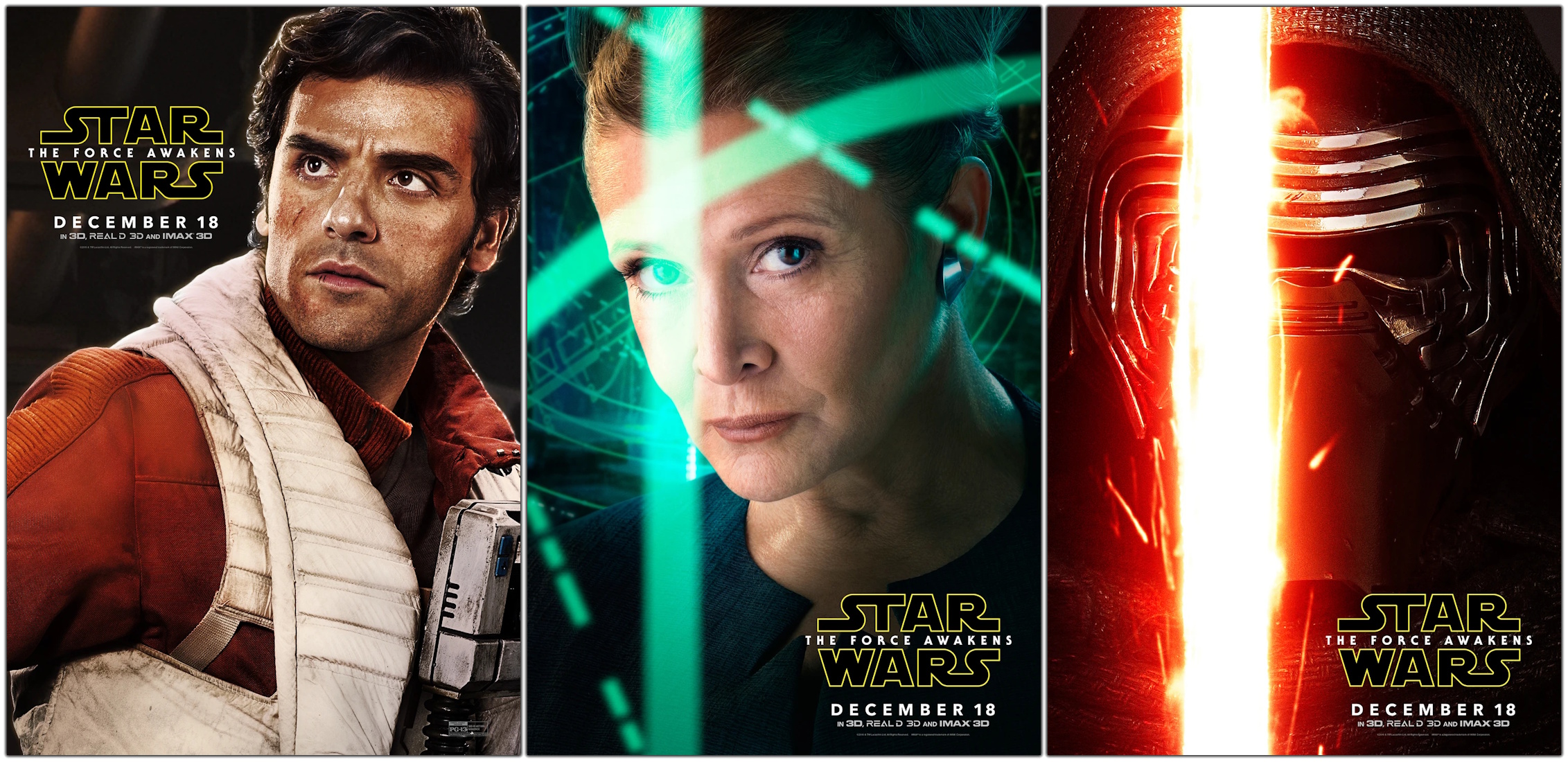
Game #3:
Red Dead Redemption II (2018)

I’d been meaning to get around to Red Dead Redemption II for three years – but I’d always found a reason not to pick it up (usually it was too expensive!) It took forever to download on my painfully slow internet connection, but it was well worth the wait. I’ve had a fascination with America in the 19th Century for as long as I can remember – I guess partly inspired by playground games of “the wild west” that were fairly common when I was young. I even had a cowboy hat, toy gun, and “Davy Crockett” hat when I was a kid!

Red Dead Redemption II transported me to that world in a way that I genuinely did not think was possible. Films and TV shows can do a great job at pulling you in and getting you lost in a fictional world, but the interactive element of video games can add to that immersion – something that was absolutely the case with Red Dead Redemption II. The amount of detail in the game’s characters and open-world environments is staggering, and having finally experienced it for myself I can absolutely understand why people hail this game as a “masterpiece.”
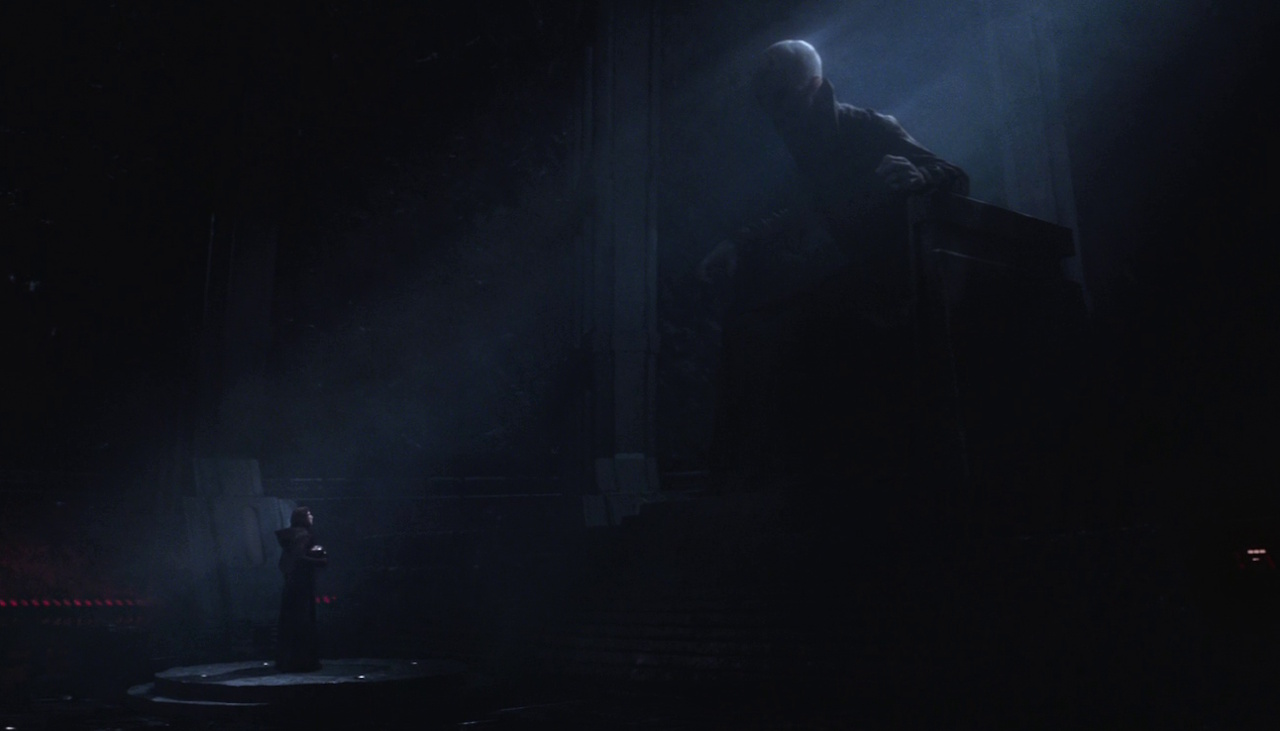
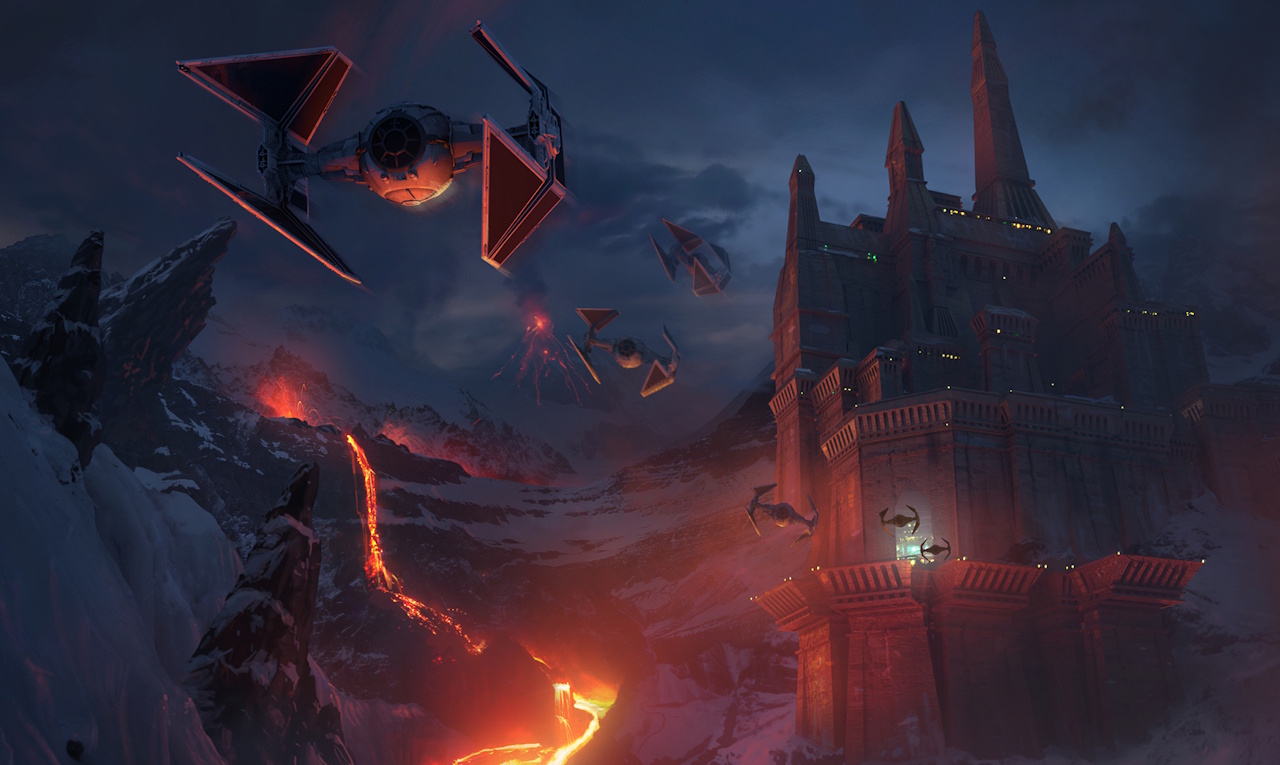
I wasn’t prepared for the many emotional gut-punches that Red Dead Redemption II had in store. In many ways the game tells a bleak and even depressing story, one with betrayal, death, and many examples of the absolute worst of humanity. But every once in a while there are some incredibly beautiful moments too, where characters sit together, sing, play, and revel in their bonds of friendship. Red Dead Redemption II gave me the wild west outlaw fantasy that my younger self could have only dreamed of!

TV series #1:
Star Trek: The Original Series (1966-69)

I’ve re-watched quite a lot of The Original Series this year, probably more episodes than I’d seen in the past few years. Because of its episodic nature, it’s easy to dip in and out of The Original Series, firing up an episode or two to spend an hour with Captain Kirk and the crew without feeling the need to commit to an entire season of television.

The Original Series started it all for Trekkies, and I’m always so pleased to see that modern Star Trek hasn’t lost sight of that. In this year’s episodes of Lower Decks and Discovery we’ve gotten many references and callbacks to Star Trek’s first series, keeping the show alive and relevant as we celebrated its fifty-fifth anniversary – and the centenary of its creator, Gene Roddenberry.

Though dated in some ways, many of the themes and metaphors present in The Original Series are still relevant today. Society has changed since the 1960s, but in some areas we’re still fighting the same or similar fights for acceptance, for equality, and so on. The Star Trek franchise has always had a lot to say about that, being in some ways a mirror of society and in others depicting a vision of a more enlightened, optimistic future.

TV series #2:
Fortitude (2015-18)

I went back to re-watch Fortitude this year, for the first time since its original run. The series starts very slowly, seeming at first to be little more than a murder-mystery in a different setting. But it builds up over the course of its first season into something truly unexpected, crossing over into moments of political thriller, action, and even horror.

There are some truly shocking and gruesome moments in Fortitude, and it can be a harrowing watch in places. But it’s riveting at the same time, and I managed to get hooked all over again by the complex characters, the mysteries and conspiracies, and the bleak but beautiful arctic environment.

Fortitude featured some star names among its cast, including Michael Gambon, Stanley Tucci, and Dennis Quaid – the second-most-famous Dennis to be featured on this website! Although it was fun to watch it weekly during its original run, Fortitude is definitely a show that can be enjoyed on a binge!

TV series #3:
Family Guy (1999-Present)

Family Guy’s sense of humour sometimes runs aground for me, dragging out jokes too long or failing to pay off neat setups with decent punchlines. But with the full series (up to midway through Season 20 at time of writing) available on Disney+, I’ve found myself putting it on in the background a lot this year. The short runtime of episodes, the lightheartedness, and the way many of the jokes are often disconnected from whatever nonsense plot the episodes have going on all come together to make it something I can dip in and out of while doing other things.

There are some insensitive jokes, and some entire storylines in earlier episodes have aged rather poorly. But Family Guy seldom strikes me as a show punching down; it satirises and pokes fun at many different groups. In that sense it’s kind of halfway between The Simpsons and South Park; the former being more sanitised and family-friendly, the latter being edgier and meaner.

I rarely sit down and think “gosh, I must watch the latest Family Guy episode.” But if I’m in need of background noise or something to fill up twenty minutes, I find I’ll happily log into Disney+ and put on an episode or two.

So that’s it.

There have been some great films, games, and television shows that were released in 2021. But there were also plenty of entertainment experiences from years past that, in different ways, brightened my year. As we gear up for New Year and for everyone’s end-of-year top-ten lists, I wanted to take a moment to acknowledge that.

I hope you had a Merry Christmas, a Happy Holiday, or just a relaxing day yesterday! I did consider writing something to mark the day, but I found that I had remarkably little to say that was different from the piece I wrote last year. 2021 has been “2020 II” in so many respects, unfortunately. However, unlike last Christmas I will be able to visit with some family members – I’ll be seeing my sister and brother-in-law later this week, which will be a nice treat! So here’s to 2021’s entertainment experiences – and as we enter the new year, it’s worth keeping in mind that we don’t only have to watch and play the latest and newest ones!

All titles on the list above are the copyright of their respective broadcaster, distributor, developer, network, publisher, studio, etc. This article contains the thoughts and opinions of one person only and is not intended to cause any offence.