Spoiler Warning: Beware spoilers for King & Conqueror.
King & Conqueror was one of my most highly-anticipated TV shows of the year. I think every British schoolkid learns about 1066 and the Battle of Hastings in school; I certainly have vivid memories of sitting in a drafty history classroom, surrounded by bored kids passing notes, while a teacher tried to whip up some enthusiasm for the battle between William and Harold! And, as Brits, I think we have an appreciation for the losing side in (some) historical settings – Richard III, Bonnie Prince Charlie, and, of course, Harold Godwinson – whose defeat at the Battle of Hastings marked the end of Anglo-Saxon rule in England, and the beginning of the Norman period.
These events have never – to my knowledge, anyway – been dramatised like this. King & Conqueror was a joint production between the BBC here in the UK, CBS Studios from the United States, and Iceland’s RVK. I can’t find an exact per-episode figure floating around, but it’s by far the most money anyone has ever spent to dramatise the events leading to the Norman Conquest.
So it’s a shame, then, that I really didn’t like King & Conqueror.
The Archbishop at Edward’s coronation.
Any time real history is adapted – be that as a novel, a film, or for television, as in this case – some liberties are taken. King & Conqueror is not a documentary; it’s a fictionalised account of events. And, to be fair to the production team, records from this era are not great, so there’s a lot of ambiguity and plenty of wiggle-room for getting creative. We don’t know how Godwin of Wessex spoke to Harold and his brothers, nor what Edward the Confessor may have thought about the succession to the throne in his final years of life. There’s plenty of room in those gaps to tell an engaging story.
King & Conqueror suffers, in my view, from two major issues. The first is that it changes established historical events without good reason, to the point where the story it ultimately tells is too far-removed from what we know actually happened. And the second is that it’s drawing too heavily from the likes of Game of Thrones for some of its dramatic storylines.
This sequence is a case in point.
It’s this “Game of Thrones-ification” that, for me, really ruined King & Conqueror. In order to ramp up the drama to levels akin to these kinds of big-budget shows, King & Conqueror’s writers had to completely invent scenes and storylines that have absolutely no basis in historical fact. In another series, maybe they’d have worked. But if you have to change the story you’re trying to tell so extensively that it no longer resembles the truth… why not do what George R R Martin did and make up something new? Because that’s what King & Conqueror is, at the end of the day: it’s not a “re-telling” of the events leading up to the Norman Conquest. It’s fiction wrapped up in a threadbare cloak of history.
It’s hard to pick the most egregiously wrong moment in King & Conqueror that would best embody this “Thrones-ification” of history. Several examples come to mind, and we’ll go through them in turn.
Firstly, Tostig – Harold’s younger brother – was not a weakling nor a child, but a capable military commander in his own right who’d won battles in wars against Wales. His wife didn’t die in childbirth; Judith of Flanders lived for almost thirty years after Tostig’s death in 1066, remarried the Duke of Bavaria, and left England. Tostig’s conflict with Harold didn’t come about from personal hatred surrounding his wife’s demise, but rather because Harold conceded to rebel demands after the Northumbrians rose up against his rule. Harold and King Edward exiled Tostig, who eventually formed an alliance with Harald Hardraada in Norway.
Tostig’s entire story was complete fiction.
Then there’s the whole presentation of Edward the Confessor. What’s the one thing every schoolkid knows about Edward? He had a long white beard! But more importantly, Edward was not a weak-willed “mummy’s boy,” dominated by his mother. And he certainly didn’t beat her to death with his crown. Edward’s contemporaries described him as dignified and pious, hence his moniker. Of all the characters in King & Conqueror, Edward felt the least like the historical figure I remember learning about.
Edward’s coronation wasn’t just wrong, it was the total opposite of what we know actually happened. Edward’s wife was, as King & Conqueror depicts, the daughter of Earl Godwin. But, in a move that was rare for the 11th Century, she was actually crowned as queen in her own right. Why King & Conqueror would try to make a plot point out of the polar opposite is beyond me. Not to mention that William and Harold weren’t present – and the Godwin family didn’t cause a scene.
Edward’s coronation.
Most significantly, we have the relationship between William and Harold. Which, to the best of my knowledge, King & Conqueror completely invented. There’s no evidence William and Harold ever met before 1065 – a year before the Battle of Hastings. And William certainly wasn’t informed of his place in the line of succession by Harold, in a storyline so contrived and so artificial that it felt like it came from a cheap soap opera.
Harold never saved William’s life, they never wrestled half-naked in the mud, and while both of them were clearly scheming to get their hands on the crown of England… it didn’t remotely happen like King & Conqueror depicts. As I said above, there’s enough gaps in what we know about these events for some creative inventions. But for me, the series went too far into fictional territory, crossing a line that I didn’t even know I had when it comes to depictions of the past.
Half-naked mud wrestling.
Sticking with Harold and William, while I respect and admire King & Conqueror’s attempt to present both sides of its story, the way it was handled made both of its central characters feel pretty samey. “A landowner who loves his wife, is concerned for the survival of his people, can be ruthless when necessary, and has a family connection to Edward the Confessor, is scheming to make himself king.” Who am I describing? Both men are, in the context of the series, functionally the same character archetype… and that’s just not very interesting. Not when there were so many different ways to depict them.
Let’s talk about a few things that I did like, because despite my overall feelings and sense of disappointment… it wasn’t all bad.
Juliet Stevenson was fantastic as Emma, the King’s mother. Even though I didn’t like the way Edward and Emma were written, you could hardly have got a better performance of the kind of scheming, manoeuvring, power-driven woman. When she was on screen, Stevenson put in an exceptional performance that transcended the sketchy writing and poor revisionism to really excel.
Edward and Emma.
King & Conqueror, thanks to its high budget, had some great sets, props, and costumes. I’m not sure how accurate all of it was to the 11th Century, but the Godwin family’s great hall (or whatever it was called; the main building in Wessex) really felt like an Anglo-Saxon lord’s hall to me. Shields looked great, weapons looked fantastic, and I liked that there were spears and axes alongside the usual swords and bows. Axes in particular were used by Harold’s housecarls at the Battle of Hastings, and they were also used by the Vikings and their descendants, particularly in the north of England. A lot of historical stories romanticise knights with swords and shields, and while these were important, spears and axes in this era were probably used even more.
Costumes were likewise solid. Again, there might be some clothing historians who could nitpick, but for me, the costumes succeeded at capturing the feel of the 11th Century, and particularly of the upper classes in that time period. I would say it was a bit of a shame that William and Harold didn’t have more distinctive attire, particularly by the time of the battle; some way to tell their forces apart at a glance, perhaps. But overall, I’d say sets, props, costumes, and really all of the practical effects used to bring the world of the 11th Century to life were great.
Sets, props, and special effects were great across the series.
Although I criticised the series for its “Game of Thrones-ification,” there were some parts of that which worked better than others. I particularly liked Count Baldwin, and how he seemed determined to play all sides of the conflict in an attempt to benefit himself and his family. The performance, by German actor Oliver Masucci, was masterful, too. Perhaps there’s something about the actor, but I was reminded of Mads Mikkelsen’s take on Dr Lecter in the series Hannibal in this “outwardly-friendly-but-watch-your-back” presentation of the Count of Flanders.
Both James Norton as Harold and Nikolaj Coster-Waldau as William did well, too, and while I didn’t like that Harold and William were becoming friends in the years before 1066, the performances both actors put in did get me invested in their “bromance.” This side of the series seemed to reach its climax quite quickly, with William and Harold going from their first meeting to friends to frenemies to rivals to fighting in a relatively short span of time. We’ll talk more about pacing in a moment, but suffice to say I have mixed feelings about this side of the story overall.
William.
Some parts of the Harold-William relationship are undeniably silly. I mean, wrestling in the mud? Really? I get what the storyline was going for, and I genuinely did feel the chemistry between Coster-Waldau and Norton; they played off each other exceptionally well. But because both characters felt samey, and because we know basically none of that actually happened… even the best moments of the bromance were knocked down a peg. And while I could’ve accepted, I think, seeing Harold and William fighting bandits together in Brittany or meeting in London when visiting the King, some of the more outlandish escapades – the mud-wrestling, saving each other’s lives, and so on – felt gratuitous and forced, even when it was being portrayed exceptionally well.
Harold seemed, from the outset, determined to make a name for himself. In that context, his desire to become king makes sense. He was ruthless in dealing with his brother, cutting deals left and right, and basically doing anything he could to advance his position – justified, to himself perhaps, in the name of family. William, however, seemed completely uninterested in the crown of England, and I wasn’t really sold on his desire to become king – it seemed to come from nowhere. William was concerned first and foremost with Normandy and with his wife and son, then later with the conflict against Henry of France (who the real William didn’t murder while out hunting, but who’s keeping score of these changes any more?)
Harold’s quest for power and the crown felt more natural than William’s.
Harold’s transformation took him from being the overlooked second son to the Earl of Wessex, and then saw him craving the crown. It seemed to flow naturally and made sense for his character based on how King & Conqueror depicted him. William’s desire to make himself king, in contrast, didn’t have that same organic nature, and in that sense it felt more forced. Again, credit to Nikolaj Coster-Waldau for his performance, but the way William was written left his motivation kind of up in the air for me. I mean, on the one hand I get it: you’re offered this incredible gift of power… who wouldn’t want it? But on the other, based on the way William was written and what we knew about him from the show… it left me feeling like he changed his mind on the question of the throne basically out of nowhere.
This is all a consequence of the “Thrones-ification” of the 1066 story. In order for the writers and producers to get the kind of drama they wanted, they needed to set up Harold and William as friends first, then rivals, then enemies. And because the series also wanted to take a relatively neutral stance between the two sides, both men had to have similar claims to the throne, similar reasons for wanting it, and had to proceed in a similar way. It’s a kind of deliberate ambiguity, perhaps, on the part of the writers. But for me, again this just didn’t work very well. Partly I’m put out by the story making so many changes to established history, and partly it just feels a bit… weak. Two men who used to be friends, both competing for something important in a zero-sum game, sounds great on paper – but you have to nail the execution. For me, King & Conqueror didn’t.
William and Harold duel at Hastings.
I didn’t like the way King & Conqueror was paced. Each of the first four or five episodes seemed to start with a confusing time-jump, leaving me to think I’d missed something or even that I was somehow watching the series out of order. There was, confusingly, no effort made to de-age or age up actors to represent the passage of time, even though there were 24 years between Edward’s coronation and the Battle of Hastings. There weren’t even any costume changes or anything to signify the passage of time, and that could feel confusing. Even if we accept the show is playing fast and loose with its timeline, condensing the events of Edward’s reign, there still should’ve been more done to indicate how much time had passed.
Pacing also hurt some episodes and even individual scenes. One thing the early seasons of Game of Thrones did incredibly well was show how long it could take, using medieval technology, to travel from place to place. Harold and William, in contrast, seem to zip across the English Channel at will, as well as race from Wessex to Northumbria and back not at a reasonable pace, but to cater to the needs of the story. Even something as simple as showing Tostig leaving Wessex in the winter and arriving in Northumbria in spring would’ve communicated this a whole lot better.
William’s fleet.
The dangers of crossing the English Channel were also not acknowledged… until it became convenient for the story to do so. In the 11th Century, sea voyages of any kind were incredibly difficult and challenging, and while I didn’t expect to see a ton of that in King & Conqueror (despite William’s fleet being a massive undertaking) it seemed for most of the series as if characters could just nip across the Channel for an afternoon then be back home in time for supper. The pacing of this, combined with the lack of acknowledgement of how challenging it could be, came together to make for a pretty weak and muddled presentation. The English Channel was a huge barrier for anyone in those days to overcome, but it didn’t seem to matter most of the time.
So that’s it, really. I’d been very excited to see this re-telling of the 1066 story… and I came away pretty disappointed.
King & Conqueror would have been a reasonably entertaining story were it not supposed to be adapting real historical events. I still think some of its issues with pacing and characterisation would’ve been stumbling blocks, but if it had been a totally fictitious account of two characters trying to lay claim to a make-believe throne… I think I might’ve actually liked it more. For me, there were too many revisions to real history, some of which were utterly silly and done to lean into the Game of Thrones-style presentation that the producers were clearly aiming for. Maybe I’m being too much of a stickler… but is it wrong to say that a production which is based on a true story should try, at every turn, to remain true to that story? How you answer that question will, perhaps, dictate how much you enjoy King & Conqueror.
The outcome.
I can’t help but feel let down, though. As a Brit, I always want to see big-budget productions from the UK succeed, and there really was a pathway for King & Conqueror to have been an excellent series. There were fantastic performances. Great sets, costumes, and props. A high budget. Some solid battle scenes. And above all, it’s based on a genuinely fascinating story – one of the inflection points on which the history of England turned. I just wish the series’ producers, writers, and creative team had leaned into the real story more, and resisted the urge to embellish and change so many things.
It should go without saying, but this review is the entirely subjective, not objective, opinion of just one critic. There are bound to be a range of views on King & Conqueror, so I encourage you to seek out other reviews – and, of course, to check out the series for yourself. I don’t think it’s worth spending a lot of money on, either as a subscription or when it becomes available on Blu-ray, but if you’re already signed up for Amazon, or if you can get it on iPlayer in the UK, you’ve got nothing to lose by checking out the first couple of episodes. Maybe you’ll have a better time with King & Conqueror than I did.
King & Conqueror is available to stream now on Amazon Prime Video in most of the world, and on iPlayer in the UK. King & Conqueror is the copyright of the BBC and/or CBS Television Studios. This review contains the thoughts and opinions of one person only and is not intended to cause any offence.
Spoiler Warning: There are spoilers ahead for The Rig Seasons 1 and 2.
Two years ago, I reviewed Season 1 of The Rig – and I had a pretty good time with the series. I wrote at the time that I was disappointed that Amazon hadn’t greenlit a second season, and that I was hopeful that we would eventually get to see a continuation of the fun sci-fi/mystery drama. Well, Season 2 of The Rig has landed on Amazon Prime Video, so I thought I’d check it out and pick up the story!
Truth be told, The Rig fell victim to a problem that a lot of made-for-streaming shows have nowadays: curtailed seasons with long breaks in between. The two-year wait from the six-episode first season meant that I was basically going into Season 2 blind; even with a recap of the events of Season 1, it still took me a while to remember who was who and what exactly happened last time. I’ve talked about this topic before, and I’d really like to see streaming companies make more of an effort to cut down these long waits in between seasons.
It’s been two years since Season 1 of The Rig.
That being said, I had fun with The Rig Season 2. It was a great way to start the year, kicking off 2025 with a solid science-fiction series that had a good mix of character-focused storytelling, mysteries, drama, and more. As a continuation of the story from a couple of years ago, I think The Rig took its core idea and moved it along in a way that felt natural – there were no abrupt turns or subversions that risked derailing what has been a solid and enjoyable story.
In Season 1, I criticised The Rig for having some CGI and visual effects that weren’t at the level I’d hoped to see – and, unfortunately, that same issue was present this time around. As the one single element that I’d have wanted Amazon to have worked on, it was disappointing to still see too many “uncanny valley” moments, particularly in establishing shots of the titular Arctic base. When looking at the Ancestor (The Rig’s bioluminescent entity) up close, the animation work was pretty good, as were many of the underwater effects for scenes set beneath the ice. But some of those wider shots left a lot to be desired and felt pretty out-of-date.
The Stac – the setting for Season 2.
Because of the destruction of Kinloch Bravo at the end of Season 1, The Rig’s writers had to find a way to keep most of the crew together – as well as find them a new base to work from. The way this was handled felt like it was hand-waved away a little too quickly for my taste; it was awfully convenient that Pictor, the show’s fictional oil company, was content to basically hand over a large portion of the operation of its most delicate, sensitive, and top-secret base to Magnus and Rose. But in the confines of a six-episode series that needed to move the story along, I can at least understand why that happened!
If you linger too long on that idea, it’s kind of like the “Armageddon problem:” it should be easier to train astronauts to drill than to train drillers as astronauts; or in this case, oil rig workers to become scientists, explorers, and deep-sea diving technicians! The first season of the show put these characters at the heart of a sci-fi mystery because that mystery was unfolding at their place of work – this time, they had to be relocated, and while I think I can give it a pass, it’s definitely one of those “don’t think about it too hard” scenarios.
A company with the financial resources of Pictor wouldn’t need to hire the crew of an oil rig to lead its top-secret base… right?
For me, there’s still a pretty big disconnect between The Rig’s pro-environmentalist, anti-corporatist message – which was generally well-presented – and the inescapable fact that the series is commissioned by Amazon. Amazon remains one of the world’s largest corporations and largest contributors to climate change, which does rather blunt the show’s admirable attempt to make a point on either of those fronts. Again, “try not to think about it” is the message of the day, I guess.
Iain Glen’s character of Magnus was one of my favourites last time around; there was a raw, emotional side to him that helped define the character and make him a better leader. In Season 2, we didn’t get anywhere near as much of that, with Magnus seeming to take a half-step toward becoming a kind of action hero; sneaking around with a gun trying to stop the baddies. There were still some wonderful moments as Magnus drew on his leadership experience to offer advice and support to others, but perhaps less of what made the character so engaging in Season 1.
Magnus the action hero!
The addition of Alice Krige to the cast was an inspired choice; she was outstanding as the conflicted CEO of Pictor, Morgan Lennox. As a Trekkie, I’m most familiar with Krige as Star Trek: First Contact’s villain, the Borg Queen, but she took on a much more complex and nuanced role in The Rig. Lennox had to navigate the cut-throat world of corporate politics without completely losing her humanity – and Krige’s performance conveyed that exceptionally well.
I’d also like to highlight the performance of Molly Vevers as Heather. Vevers played the character with charm, intelligence, and a little vulnerability – making her a fun secondary character to get behind as this chapter of the mystery was unfolding. Her scenes with Askel, played by Norweigan actor Johannes Roaldsen Fürst, were particularly enjoyable. The two have great chemistry together.
Askel and Heather with one of their samples.
In Season 1, I criticised The Rig’s writing for going overboard with the show’s environmental message. Punching viewers in the face with lines about oil companies ruining the planet was a bit much for me – so I was pleased to see Season 2 tone this down somewhat. The show still retains a strong environmental message, but this time around the writers were content to let the metaphor of the Ancestor stand on its own, as well as tying it in to the corporation’s exploration and exploitation of natural resources in the Arctic.
This is a real-world issue – and as technology improves, we will have to confront the idea, sooner or later, of companies wanting to open up unspoiled wilderness areas for mining and drilling. It’s already happening in some regions, and several countries are keen to press their claims to the Arctic and its untapped resources. I’m not sure that The Rig added a lot to this conversation, but even the act of drawing attention to it can be a positive thing. There are still conflicts with the show’s environmentalist message and its corporate funding, but as a general point, speaking out about the potential dangers of letting corporations loose in one of the last truly unspoiled parts of the world is worth trying.
The Rig came with a message about corporations exploiting the Arctic.
I would’ve liked to have seen a bit more of the impact of the North Sea tsunami. We got scenes with Hutton, Cat, and Lennox at a triage centre/emergency hospital, but given the severity of the disaster, seeing some of the devastation first-hand would’ve been interesting. The show portrayed this event as being at least as severe as the Boxing Day tsunami in 2004, impacting multiple countries including the UK. With a focus on the rig workers and Pictor, we just didn’t have enough time to really examine what the consequences of something like that could be in the world where the series is set.
I know the tsunami and its aftermath weren’t supposed to be The Rig’s focus, and that’s okay. We caught glimpses of it through Cat’s story at the hospital – the difficulty in getting antibiotics for her wife being the biggest example. But an event on this scale would have wide-ranging consequences, and this is definitely something I’d like to see more of if and when The Rig makes a return.
I’d like to see more about the tsunami and its aftermath next time.
Cat and Hutton made for a fun pair this time around, having not spent that much time together in Season 1. The story took the gruff, unlikable Hutton and gave him a genuine arc, something I wouldn’t have expected – but it worked exceptionally well. Hutton, despite his persona, is clearly on the same side as the rest of our heroes in their struggle against Pictor’s leadership, and that was a great way to take his character.
On Cat’s side of the story, her quest to track down and eventually treat her wife, Kacey, after the devastation of the tsunami was heart-wrenching. Stellar performances from Rochenda Sandall, Neshla Caplan, and Owen Teale gave this storyline the weight that it needed. The scene at the mortuary in particular was riveting stuff.
Hutton and Cat by the mortuary tent.
In Season 1, I noted the influence of the 1989 film The Abyss in parts of The Rig – and this is a trend that continued in Season 2. The concept of an under-sea base, the use of a rover and diving suits, and the otherworldly, mysterious, and even alien way in which the Ancestor was brought to life all reinforced that comparison for me. As a fan of The Abyss, this is a positive thing! The design of the wet dock and the under-sea base also reminded me, at least a little, of the film Deep Blue Sea.
Seeing a bully get taken down a peg is always something I love in fiction, and the ultimate fate of the villainous Coake was shocking when it happened – but it felt thoroughly deserved. At that point in the story, it wasn’t entirely clear who was on whose side, and whether Cameron – who seemed slow to warm up to the main characters from Season 1 – had another agenda. That element of uncertainty could’ve come across as confusing; it’s to The Rig’s credit that it didn’t! Excellent performances and a well-structured script kept things on track.
Seeing Coake taken down was cathartic.
There were a couple of mysteries – or teases, really – that The Rig seemed to set up that ultimately didn’t get much of a narrative payoff this time around. Perhaps the writers are saving that for Season 3, so we’ll have to wait and see on that, I suppose! The first of these was the relationship between Lennox and Rose. I felt, for basically the entire season, that we were going to learn that Lennox is Rose’s mother… but that didn’t happen. They know each other and they clearly have a relationship that existed for years before the beginning of the story. But teases about the extent of this relationship didn’t go as far as I expected.
The second tease that The Rig started but didn’t finish was the injury to Magnus’ hand. Magnus hurt his hand when he had to plunge it into sub-zero water to rescue Bremner, and the injury seemed to plague him for the rest of the season. It didn’t stop him from swinging into action, but the frequent callbacks to it – and the way the injury was obvious from that point on any time his hand was in frame – meant I really expected it to serve more of a narrative function than it ultimately did.
The cast of The Rig at the Season 1 premiere in 2023.
With the exception of some of the wider CGI shots, which I felt weren’t up to scratch, everything else in The Rig Season 2 worked well. I was gripped the entire time, and binge-watched the season in just a couple of nights. Coming from me, that’s a ringing endorsement – and I had a great time with The Rig. There’s still a long way to go until we’re even thinking about dishing out some awards for the best television shows of 2025… but for me, The Rig will certainly be a contender.
At time of writing, Amazon has yet to greenlight a third season. I hope that will happen; there’s certainly scope to build upon the events of the first couple of seasons, expanding the story while also telling a new chapter. But at the same time, there wasn’t as brutal of a cliffhanger as there had been at the end of Season 1 – so if this is the end, I’ll be more willing to tolerate it than I would’ve been a couple of years ago! It’s my hope, at any rate, that the writers will have some ideas about where to take the story of the crew of Kinloch Bravo in a potential third season.
What’s next for The Rig?
So I hope this has been interesting! I’m glad that The Rig got a second season, and I’d been looking forward to picking up this story for a while. It’s a fun, engaging sci-fi mystery, and one I’ll happily recommend to fans of the genre, fans of The Abyss, and really just to anyone looking for a modern, entertaining television series. I’d love to see a third season.
Rejoining the crew of Kinloch Bravo was a fun way to kick off 2025! I hope you’ll join me as the year rolls along for more reviews, commentary, and analysis of other streaming shows, as well as films, video games, and the Star Trek franchise.
Until next time!
The Rig Seasons 1 and 2 are available to stream now on Amazon Prime Video. The Rig is the copyright of Amazon Studios and/or Wild Mercury Productions. This review contains the thoughts and opinions of one person only and is not intended to cause any offence.
Spoiler Warning: Beware of spoilers for the Mass Effect trilogy.
I think it was back in 2020 or 2021 when I first covered the news that Amazon’s television studio had picked up the rights to Mass Effect. Since then we’ve heard next to nothing about the project, even as the triolgy’s Legendary Edition came and went, and I kind of assumed that it was either stuck in development hell or that Amazon’s executives had passed on whatever had been pitched. Not so, it seems!
Although details are still pretty sparse, we’ve recently heard from Amazon and game developer BioWare that the Mass Effect TV series is still happening, so today I wanted to talk a little about it and consider what the show might eventually look like. We’re going to talk spoilers for all three mainline Mass Effect games, so if you haven’t played the trilogy and want to go into it un-spoiled, this is your last chance to jump ship!
Jumping ship… get it?
A couple of caveats before we get started. Firstly, I have no “insider information” from BioWare, Amazon, or any of the other studios that may or may not be attached to this project. I’m speculating based on publicly available information and sharing my own thoughts and opinions on the potential series – which may never even see the light of day given how early in its pre-production it seems to be!
Secondly, this is just the subjective opinion of one Mass Effect fan. If you don’t agree with my take on where the TV series could or might go, or if I ignore some aspect of the games that seems important to you… that’s okay! There ought to be enough room in the Mass Effect fan community for differences of opinion and polite discussion. Nothing we’re going to talk about today is in any way official or confirmed in any case.
With all of that out of the way, let’s talk about what a Mass Effect television series could look like.
Concept art of the main characters from Mass Effect 1.
The first thing to say is this: Amazon has a crap ton of money! And as we’ve seen from the corporation’s investment in titles like The Expanse, Fallout, The Boys, and The Rings of Power… Amazon doesn’t mind splashing the cash when it comes to making scripted TV shows. On the surface, this bodes well for a Mass Effect series, as Amazon has the resources to give the show a decently high budget.
This matters because creating a sci-fi galaxy from scratch is going to be expensive. Sets will have to be built for spaceships, location shoots will be necessary to capture the look and feel of visiting wildly different planets, and the combination of practical and digital effects necessary to create some of Mass Effect’s non-humanoid aliens will take a lot of time and money.
Part of the Citadel – the capital of the Mass Effect galaxy.
On that last point, one of the things I like about the Mass Effect games is how they introduce several very “alien-feeling” alien races. The likes of the Krogan, Hanar, and Volus all feel much less human and much more extraterrestrial than many races from comparable sci-fi stories. BioWare was initially able to create these non-humanoid aliens because the world of Mass Effect was created for a video game; there were no constraints in terms of prosthetics or make-up that have forced the likes of Star Trek and Star Wars to rely primarily on humanoid life-forms.
Transitioning some of these races to the small screen will be a challenge, but it’s one that should be surmountable. I’d love to see a combination of practical special effects and prosthetic makeup with CGI, instead of relying entirely on animation to breathe life into the likes of the Krogan and Turians. In recent years we’ve seen this from other sci-fi franchises like Star Trek, so I really think it’s achievable to use a combination of puppets, prosthetics, and practical special effects alongside CGI.
Bringing non-humanoid races like the Hanar to the small screen may prove challenging!
I don’t want to get into the minutia of things like filming locations or casting; there’s plenty of time to think about who should play some of the franchise’s iconic roles! It would be great if the likes of Jennifer Hale and Mark Meer could be involved in some way – the duo voiced the female and male versions of Commander Shepard respectively, and could at the very least be offered cameo roles in the show.
But that leads into my next point: is this (and should this be) a direct adaptation of the story of the Mass Effect games?
Concept art for Mass Effect 1.
My inclination at this stage is that re-telling the Mass Effect story in a new format is a great idea, so I’d be happy to see the trilogy’s story adapted as a TV show. I think it’s a strong story with a great cast of characters, and while it would be an adjustment to get used to some different portrayals in those key roles… I think the story of the Mass Effect trilogy offers the show the best chance of success when compared to trying to tell a brand-new story set in the same world.
We have a couple of examples to point to. The TV adaptation of The Last of Us was a more or less straight adaptation of the video game it was based on. The Halo TV series took the barest bones of the Halo story but made significant changes. One was critically and commercially successful, the other was recently cancelled after just two seasons. There are counter-examples: Amazon’s own Fallout adaptation is a new story set in the same world, for example. But for my money, the story of the Mass Effect trilogy was so strong, so powerful, and such a singular event in its setting that trying to re-make it from the ground up or stepping away from it to do something completely different just doesn’t seem like a good idea. Why go to all the trouble of licensing a successful story if you aren’t going to adapt that story, after all?
The Fall of Reach played out very differently in the Halo TV series compared to the games.
Is it possible that a Mass Effect TV show will start somewhere else, like humanity’s first encounter with a Mass Relay or the war between humans and Turians? Sure. It’s possible. But would that be the strongest foundation to take this rich and wonderful sci-fi universe to a new audience and a new medium? I’m not convinced – and I think the struggles of the likes of not only the Halo series but also Amazon’s The Rings of Power (which has diverged from its source material in a way that has upset some fans of Tolkien’s Middle-earth) show the pitfalls in that approach.
Every writer and producer wants to put their own unique stamp on the projects they work on – and I get that. But when you’re taking a successful, much-loved story and adapting it, fans have certain expectations for what they want to see. I’m sure there are some Mass Effect fans who’d love to see a story about humanity’s first forays into space or how humans came to be accepted by the other Citadel races. But I’m not sure that such a story would be strong enough to carry Mass Effect to a wider audience – and when there’s a fantastic, deep, and emotional story populated by a stellar cast of characters just sitting there, it almost seems like malpractice to ignore it or make radical changes to it.
Commander Shepard with Javik in Mass Effect 3.
If we assume, then, that the Mass Effect TV series will be a straight adaptation of the original Mass Effect trilogy, that raises some questions of its own! Firstly, a big part of the Mass Effect games – the first two, anyway – was that players had a lot of freedom to make narrative-altering choices. In the first game, for example, whole companions could be ignored and never recruited, and in Mass Effect 2 practically everyone on Shepard’s squad could die in the game’s climactic final act. Mass Effect 3 arguably failed to do enough to give many of these choices the impact they should’ve had, but even in that game there were hugely consequential choices that players could make.
So if the Mass Effect TV show is going to adapt the story of the Mass Effect trilogy, here’s my question: which story, exactly? There are dozens of inflection points in the games, places where the story can branch in different directions. Helping one character could lead to conflict with another, main characters can die, new characters can appear to take over their roles, and even Shepard can be a radically different person depending on the choices players make. No TV show could reasonably take into account all of these choices – producers would have to pick one route through the story and follow it to its conclusion.
All three games have moments where players have to make decisions.
It seems pretty obvious to me that for the TV series to be entertaining, Shepard will have to mostly fall on the paragon side of things. Nuanced and complex characters are great, and there’s still scope for a paragon Shepard to make renegade-leaning decisions from time to time. But setting up the character to be quick to anger, rude, and excessively violent… it would make Shepard into a difficult protagonist to root for. So a paragon Shepard who occasionally makes renegade decisions seems like the least-bad option here.
But would Commander Shepard be a man or woman? When writing about Mass Effect I usually use “they/them” when referring to Shepard; the character can be male or female depending on the player’s choice. Given that a Mass Effect TV series would only have room for one Commander Shepard, a decision will have to be taken as to which option to go with. And no, I don’t think a non-binary or genderfluid Shepard is on the cards… as much as some people might want that!
Should the Mass Effect TV show cast a male or female performer as Commander Shepard?
I genuinely don’t know which way the show’s writers and producers would go. There are pros and cons whichever way you look at it, and I can see the casting choice for Commander Shepard being controversial no matter how it’s handled. I don’t think it would really be possible to split the role in two, either – having twin Shepards (like the Ryder twins from Andromeda) or even giving Shepard a second-in-command. A huge part of what made Mass Effect work was Commander Shepard, so if the TV show adapts this story, getting the right performer in the lead role will be incredibly important.
Unfortunately, I see this as a likely point of contention. If Commander Shepard is cast as a woman or person of colour, I can see the “anti-woke” crowd attacking the series and trying to get it cancelled before a single episode has aired. Look at the reaction to “black dwarves” in The Rings of Power or the triggering power the mere presence of a non-binary character had in Dragon Age: The Veilguard. It’s a shame that discussion of media and entertainment online so quickly descends into these dark places… but it’s something that the producers of the Mass Effect TV show will have to contend with one way or another. The original games featured a pretty diverse cast, but cries of race- or gender-bending will be hurled at the series if any of these characters’ fundamentals are altered.
Commander Shepard on the bridge of her ship.
I think most fans would accept a female Commander Shepard. Female-led shows and films from Alien and Star Trek: Voyager to Fallout and Everything Everywhere All At Once have been well-received, and with “femShep” having been a part of Mass Effect since the beginning, critics would really have very little to complain about. Adding a new female-led sci-fi show to the lineup would, in my view, be a positive thing. The casting needs to be right first and foremost, and I’m not saying Mass Effect needs a woman in its lead role. But why not? It could be great to see a female Commander Shepard taking the fight to the Reapers!
Let’s try to set that aside for now! I hope that whoever is cast in the lead role will do a great job, and will end up making any criticisms from the “anti-woke” crowd seem even sillier than usual.
A male Commander Shepard taking cover.
I’d like to talk next about the potential structure of a Mass Effect television series – because there really are interesting ways to adapt the games’ side-missions and secondary storylines.
One thing I love about television compared to film is how much more time there is to spend with characters, and how much richer and deeper their stories can be as a result. The same is true of video games, and the Mass Effect trilogy is a fantastic example of interactive storytelling. Characters grow and change over the course of their adventures, and the bonds between them strengthen as they get to know and trust each other. There are themes of bridging racial and social divides that could be incredibly relevant, and character arcs and pairings that are just beautiful to watch unfold. All of these things could – and should – be part of a Mass Effect TV series, as its the characters that make the story into something special.
Most of the main companions from Mass Effect 2.
As someone who loved shows like Star Trek: The Next Generation, Space Precinct, and Buffy the Vampire Slayer in the ’90s, believe me when I say that I love episodic storytelling. Any Mass Effect TV series would be a wholly serialised affair, in the mold of recent hits like Game of Thrones. But that doesn’t mean there isn’t room for some degree of episodic storytelling – and that’s where the aforementioned side-missions and quests come in.
Again, for the purposes of this argument we’re assuming that the TV show will be based on the original Mass Effect trilogy. Those games all had side-quests, lower-priority missions, and storylines focusing on individual companion characters. It would be tempting for a serialised show to skip all of that and focus on Shepard and the Reapers… but I think that would be a mistake. Not only do these missions have some of the best storytelling and most emotional moments in the entire series, but they add so much to the world of Mass Effect and to Shepard as a leader.
The Normandy.
There are ways to mix episodic storytelling with multi-season narrative arcs. Look at Star Trek: Strange New Worlds as a great example of this; the show follows its characters as they take part in a wide range of missions and stories, but they retain their growth and development from one episode to the next, even when those episodes are completely different in story, structure, and tone. There are season-long storylines running in the background, too, even when the focus of one episode is mostly elsewhere.
In short, a Mass Effect TV show wouldn’t need to skip over the likes of the Rogue VI mission from Mass Effect 1, or the character loyalty missions from Mass Effect 2 – these could be integral parts of the show, while also breaking up the main plot to take Shepard and their companions to different places. Some of the side-missions cement Shepard’s relationships with characters who will be among their closest friends for the entire story, and without including missions like “Find Dr Saleon” or “Family Armor” from Mass Effect 1 Shepard’s relationships with Garrus and Wrex might feel… less impactful.
Garrus Vakarian: Shepard’s BFF.
I’m not saying that the Mass Effect TV show should recreate every single side-mission. But there’s something to be said for a series that doesn’t always do the same thing, and changes in style, tone, and which characters are in focus can break things up and make for a more interesting presentation. Not only that, but some of the missions that are nominally optional in the games can have a big impact on other storylines.
Take the “Rogue VI” mission from Mass Effect 1 as an example. I hated playing through this; it’s a boring slog of a mission which involves using the Mako (barf) to visit four identical outposts at which Shepard and co. have to fight through generic enemies and push a button to shut down an advanced computer that’s gotten out of control. But you later learn, in Mass Effect 3, that the out-of-control VI was the source of EDI’s programming and personality – completely reframing the mission and tying it into one of the game’s main characters. It was a great bit of storytelling that made re-playing an otherwise bland side-mission feel a lot better on repeat playthroughs.
The “Rogue VI” mission.
There are also some great moments of characterisation in the Mass Effect 2 loyalty missions. Jack uncovers the truth behind her shocking childhood at the facility she escaped from. Jacob reunites with his estranged father – but in the worst possible way. And Shepard ends up in serious danger while helping Samara track down her daugher… who’s a serial killer. These missions vary in terms of location, but they also vary wildly in tone, with some being light-hearted and even fun while others are intense and violent. There’s a lot to be said for finding ways to include as many as possible.
According to the website HowLongToBeat, playthroughs of the Mass Effect trilogy can take anywhere from 60-140 hours. This varies a lot depending on things like the difficulty setting and how much of the side-content players engage with. My own estimate would be somewhere around 90 hours; that’s how long my most recent playthrough of the trilogy took. So this is a long story – and one that’s going to take multiple seasons of television in order to tell.
The Citadel Council.
There are things from the games that can be cut out. Some levels are deliberately padded out with generic enemies to stomp just to give the player something to do; a mission that might’ve taken an hour to play doesn’t necessarily need to be an entire episode of TV on its own. But we’re still talking about a show that would need to be at least five seasons – assuming eight to ten episodes per season, as is common nowadays. I don’t think three seasons (one per game) would be enough to really get to grips with how deep the world of Mass Effect really is, especially when you consider that a new audience is going to need an introduction to this brand-new universe.
In 2012, Mass Effect 3 came in for a lot of criticism, particularly of its ending. I wasn’t wild about the “pick a colour” ending, but I felt that wasn’t actually the worst part. Where I felt most let down by the game was how different choices – or combinations of multiple choices across the trilogy – just didn’t seem to matter and weren’t even mentioned as the story reached its crescendo. The example I’ve given before is this: through careful choices across all three games, it’s possible at a crucial moment in Mass Effect 3 to save the Quarians and Geth when it looks like it should only be possible to save one. This is not easy to pull off… but after the mission is over, there’s basically no impact at all apart from a few static images in the war assets menu.
The final third of Mass Effect 3 needed work.
Long story short, I think a Mass Effect television series could do more with some of these storylines than the games did – and by choosing a single outcome to include in the series, there’d be more freedom to tailor the story to fit. If the TV show kills off Wrex, for instance, there’d be no need to have Urdnot Wreav behave quite the same as he does in the games where he’s basically a stand-in for the missing Wrex; he could be his own character. And much more could be made of the Quarians and Geth coming together to achieve peace. By cutting out different narrative outcomes, we could get a much more detailed look at some of the choices that I felt weren’t properly acknowledged in the original games.
Finally, there’s the elephant in the room: Mass Effect 4… or whatever we’re calling the next game in the series. At time of writing, BioWare is working on a new Mass Effect game, and based on the very brief tease that was shown off a couple of years ago, it will feature at least one main character from the original trilogy. Would BioWare, EA, and Amazon want to create a TV show that’s based on or directly connected to the new game? Given how early in development both projects are, could there be an attempt to get them to release at more or less the same time?
Will the TV show tie in with Mass Effect 4 in some way?
If so, does that mean that a re-telling of the original trilogy is off the cards? While I can understand the temptation of making a game and TV show that are connected, I wonder if that’s the right approach. If Mass Effect 4 is going to be a direct sequel to the original trilogy, not a spin-off or prequel, having the TV show re-tell that story could actually work really well. It could give fans who might be turned off by playing older games an easy route into the story just in time to pick up the newest entry in the series.
Of course, that might not be the route BioWare and Amazon want to go down. And there are points in favour of setting the TV series in the same timeline as the new game. Doing so could draw a line under the original Mass Effect story, setting the stage for something brand-new. The concern I’ll have, if that’s the way things go, is whether the new story will be as good as the original one, or whether this iteration of Mass Effect can live up to what came before.
Hacking a locked door.
So I think that’s everything I had in my notes. It goes without saying that the Mass Effect television series is several years away at least – and that it could be delayed again or even cancelled outright. The show seems to be in a very early stage of development, and while I welcome Amazon’s re-commitment to it, until we get more concrete information, part of me will remain sceptical about whether I’ll ever get to see it! I’m not getting any younger (or healthier) after all!
The Mass Effect games built up a rich, detailed, lived-in world that feels ripe for exploration in a different way. As much fun as it was to play through those games, I’m genuinely thrilled at the prospect of being able to enjoy the story all over again in a different way. It won’t be the same – and it will be an adjustment getting used to different performers in key roles and perhaps slightly different designs and aesthetic choices. But I don’t think it’s an exaggeration to call Mass Effect one of my favourite sci-fi stories… ever. If and when it makes it to the small screen, I’m really hopeful that it will be an exciting and enjoyable ride.
Here’s hoping we’ll get an excellent adaptaion!
I hope this has been interesting. I know we got into wildly speculative territory, but there was a surprising amount to say about a TV series that’s still in early production! I could be wrong about re-telling the story of the original games, and I’ll try not to be too disappointed if the show ultimately tells a story that ties in with Mass Effect 4 or shoots off to the Andromeda galaxy!
I haven’t played Mass Effect in a while, so maybe it’s time to re-install Legendary Edition and go round again!
The Mass Effect video games – including Legendary Edition – are the copyright of BioWare and Electronic Arts. The Mass Effect television series (currently untitled) may be the copyright of Amazon Studios, Amazon Prime Video, and/or Electronic Arts. This article contains the thoughts and opinions of one person only and is not intended to cause any offence.
Spoiler Alert: There are spoilers ahead for The Lord of the Rings: The Rings of Power Seasons 1 and 2. Spoilers are also present for The Lord of the Rings novels/film trilogy and other works by J.R.R. Tolkien.
In 2022, I was one of the people who generally enjoyed The Rings of Power’s first season. I didn’t think it was perfect, and I wrote at the time that the series still had work to do to justify its ridiculously high budget. But a return to the world of Middle-earth – a fantasy realm I’ve adored since I first read The Hobbit as a geeky little kid back in the ’80s – was incredibly welcome. While there were some stumbling blocks in Season 1, there were enough positives for me to be excited to see where Season 2 might go.
Let’s clear something up: despite what you may have read in some online tabloid rags, The Rings of Power isn’t going to be cancelled. Amazon is committed to a five-season run – I believe that was actually one of the stipulations the corporation agreed to when dealing with the Tolkien Estate – and even though there has been some criticism of Season 2 (as there was with Season 1), The Rings of Power isn’t going away any time soon. I don’t believe that the argument “trust me, it gets good later on” is particularly convincing… but there are still, in my view, reasons to be positive as the series continues its run and its various storylines unfurl.
Behind-the-scenes during production on Season 2.
I’d like to start this review by talking about some of the dialogue in The Rings of Power’s second season. There seems to be an effort on the part of the show’s writers to use a deliberately archaic style of language – presumably as an attempt to emulate Tolkien’s writing style. Some of the choices of words, the order of words in sentences, and the length of some lines of dialogue all feel like they’re from the first half of the 20th Century… and that gives The Rings of Power an almost anachronistic feel at points. Surrounded by modern CGI and in full 4K, characters are speaking like they’re in a film or play from the 1920s or 1930s. Maybe there’s a bit of a disconnect there, and perhaps if I were to be critical I’d say that some of the writers may be leaning into this style a bit too much – at least for my taste.
Particularly with Elvish characters – Gil-Galad, Elrond, Galadriel, Celebrimbor, and others – there are a lot of rolled R sounds and other “accent” attempts, and again I feel this may have been overdone. I don’t remember these “Elvish accents” getting in the way so much in Season 1, but it’s possible I just overlooked it last time or it wasn’t as present. This time around, though, it was a bit too much; it felt rather like when you hear a native English speaker randomly use the Spanish or French pronunciation of a word in the middle of a sentence. It was distracting and offputting, and once I noticed it I found that I kept noticing it every time these characters would speak.
Galadriel with her ring, Nenya.
The Rings of Power is telling a complex set of intertwined stories focusing on different groups of characters. Care has to be taken to ensure that these stories don’t feel constructed and artificial… and for me, parts of Season 2 missed the mark. Several characters – Galadriel, Adar, and Sauron most notably – seemed to zip around the story at the behest of a team of TV writers rather than in ways that felt natural, and especially by the latter part of the season, this sense of an artifically-constructed narrative had begun to set in.
Partly this is because the abilities and motivations of these characters weren’t always made clear ahead of time. Sometimes it seemed as if a character was doing something “just because,” or had discovered a new ability, power, or desire out of thin air. The titular rings had an effect on a few characters, changing their motivations and actions (again to suit the plot), but that isn’t really what I mean. Those changes for Gil-Galad, Galadriel, and King Durin are built into the story; Adar’s decision to take his army north – and his ability to do so apparently unseen – didn’t really track, at least not for me.
Adar with his Uruk army.
That being said, Adar may be my favourite character in Season 2. His core desire to keep his people safe and free was understandable, even if the way in which he went about achieving that objective was questionable and seemed to move along at a far too rapid and convenient pace. Adar – whose actor was replaced in between Seasons 1 and 2 – isn’t played like a typical villain, and in a world where most of the heroes are paragons of virtue and the villains wicked and corrupt, those nuances made him – at least for me – one of the most interesting characters in the story.
Here’s something that confused me in Season 2. Maybe I’ve missed something, because lest we forget it’s been two full years since the first season of this show, but… don’t Orcs hate sunlight? Wasn’t a huge part of the plot of Season 1 that Adar and the Orcs wanted to trigger the eruption of Mount Doom so the sunlight would be blocked out and they could live happily? Isn’t that why they lived in tunnels and moved by moonlight?
Are Orcs okay with sunlight now?
The Rings of Power seems to have discarded this idea to fit the plot, with Orcs marching happily in the sun, fighting battles in the daylight, and making camp out in the open. Yet this was not only a fundamental building-block of the Orcs from Tolkien’s original work, but also a key part of what happened just a few episodes ago in Season 1. To make such an arbitrary change with no explanation and no apparent on-screen acknowledgement, even… I don’t know. I didn’t like it.
Although the show is a prequel, parts of The Rings of Power feel much more like the middle chapter of a story. Many characters reference unseen events, like the reign of Morgoth and an earlier conflict against Sauron, with some of these things becoming key narrative elements or character motivations. Celebrimbor, for instance, being driven to create a legacy that could rival the creations of Fëanor, is a huge part of how Sauron was able to manipulate him. But with so few flashbacks and so little background provided within the show itself, there were moments across all eight episodes where I felt I was watching a sequel without having seen the original. Many other stories play out this way, with the events we follow in the main narrative being influenced by things in the past, or with characters who have motivations linked to their backstories. But… to be blunt, a lot of those do a better job of explaining their backgrounds and characters. We didn’t need a full flashback episode to the First Age with young Sauron, young Celebrimbor, Morgoth, and so on. But we did need to get more context for some of these storylines as they unfolded, with more background provided to better explain what was going on. This was an element of the season that was lacking.
What is the Crown of Morgoth… and who is Morgoth, come to that?
Sauron’s plan this season was difficult to follow, convoluted, and seemingly counter-productive to his own goals in places. He simultaneously wanted to craft the Rings of Power in Eregion, skilfully manipulating Celebrimbor to this end. But he also wanted to seize control of Adar’s legions of Orcs – and the way in which he went about the latter threw the former into jeopardy from his perspective. I will caveat this by noting that Sauron did say, toward the end of the season, that he doesn’t know everything and can’t predict all outcomes… but even so. Both the ring-crafting and the siege of Eregion were by his design, and yet they worked almost completely at cross-purposes.
I have to be honest about this next point, and it is admittedly not the biggest because it concerns a single line of dialogue… but I hated hearing Celebrimbor call Sauron “Lord of the Rings.” It was just so on-the-nose and kitschy, and while I get the intention behind it and the twisted interpretation of those words, it really didn’t work for me and made me roll my eyes. It’s such a shame, too, as it came at the end of Celebrimbor’s otherwise excellent redemption arc.
Celebrimbor.
Sauron seemed to manipulate Celebrimbor with ease in the first part of the season, and I wasn’t wild about that. A bit more resistance from Celebrimbor, perhaps, or a more serious demonstration of Sauron’s power earlier might’ve eased that. But his storyline after regaining his senses went a long way to redeeming that side of the story, and I enjoyed seeing him reclaiming his position and trying to get the rings he had made as far away from Sauron as possible. I’m a sucker for a good redemption arc and a tale of sacrifice, and Celebrimbor’s delivered in the final couple of episodes of the season.
Let’s talk about a pet theory of mine that Season 2 demolished. We’d been following “the Stranger” and his proto-Hobbit friends, and although there were plenty of hints that this character was Gandalf, I wasn’t entirely convinced of that. It seemedalmost too obvious, and I wondered whether The Rings of Power might’ve tried to pull off a bit of a twist by making this character another wizard: Radagast, perhaps, but more likely Saruman. Knowing what we know of Saruman’s future, I felt that could be interesting.
The Stranger’s identity was in question across Seasons 1 and 2.
Instead, The Rings of Power was incredibly pedestrian, dropping obvious hints that led to an obvious conclusion. I’m not disappointed that my personal Saruman theory didn’t pan out, but I am a bit disappointed that the writing on this side of the show continues to be so… basic. Why bother “covering up” the identity of a character if everything they say and do makes it obvious who they are? And come to that… why bother going through this “amnesia” storyline at all? Why couldn’t Gandalf have emerged knowing his name but needing to discover his purpose? It just fell a bit flat for me.
I was excited to see Tom Bombadil in live-action for the first time, and the performance was spot-on. Rory Kinnear put in a spectacular performance to bring this enigmatic character to life, and everything from the costume to the accent to the design of his home was perfect. This version of Tom Bombadil is exactly how I pictured the character in my mind all those years ago.
Old Tom Bombadil is a merry fellow! Bright blue his jacket is, and his boots are yellow!
But – and you knew there was a “but” coming after all of that – what on Middle-earth is Tom Bombadil doing getting so involved in the plot? The whole point of the character, at least from what I recall of reading The Lord of the Rings a long time ago, was that he was ancient and powerful – but completely indifferent to the Ring, the quest against Sauron, and so on. Gandalf and Elrond felt that he’d just forget about the One Ring if it was left in his care, and that if Sauron were to win and conquer Middle-earth, Tom Bombadil wouldn’t come to their aid, nor even understand the nature of their quest.
It was pretty jarring, then, to see Tom Bombadil so engaged in the world and so helpful to both Gandalf and the Dark Wizard. Characters like this have to be used carefully because of the extent of their powers, and while I’ll entertain the idea that “TV show Tom” and “book Tom” are different characters who may have different origins and abilities… this was one area where I felt the decision to diverge so extensively from the source material was particularly notable and perhaps ill-advised. Tom Bombadil is a character who could easily be written into a corner, I fear.
Gandalf with Tom Bombadil.
With The Rings of Power being, as we discussed, so pedestrian and boring with its character identities, I have to assume that the Dark Wizard we met is Saruman. I hope not, though, because much of the power in the reveal of Saruman’s betrayal in The Lord of the Rings comes from his status as the leader of the wizards and the head of the White Council. Gandalf doesn’t realise the extent to which Saruman has fallen under the corruption of the power of the One Ring until it’s too late – the whole point of his character is that he’s a good wizard gone bad.
We simply shouldn’t be seeing Saruman talking about “taking over” Middle-earth after Sauron’s defeat in this era. There was always an arrogance or smugness to Saruman; a flaw in his character that Sauron could later exploit. But it shouldn’t be so readily apparent so early on, and working on the assumption that the Dark Wizard and Saruman are one and the same, I didn’t like his presentation for that reason. If, however, The Rings of Power is willing to switch things up and offer a different explanation for this character’s background and identity, I think some of that criticism can be rescinded.
Is this Saruman? I mean, it is, right?
Visually, The Rings of Power continues to be an impressive series. Because of my crappy internet connection, I struggled to watch every episode in 4K on Amazon, but when I could get full 4K working, there’s no denying that everything from physical props and makeup to animation and CGI all looked fantastic. The series is deliberately leaning into the aesthetic of Peter Jackson’s films, and I noted that in particular with the likes of the Adar’s troll and the Ents – the designs of both wouldn’t have seemed out-of-place in The Lord of the Rings and The Hobbit.
There was one oddity in set design, and it happened in Eregion. In short, the area just outside of Celebrimbor’s tower, when viewed from the side facing away from the tower, had the feel of an enclosed stage – something you might see in a theatre. When characters would enter and exit from one side or the other, I got the feel of watching a stage play rather than that I was looking at a real physical space. Galadriel, for instance, seemed to enter from “off-stage” at one particularly important moment in the penultimate episode, and that feeling rather took the shine off things.
Galadriel at Eregion.
Speaking of oddities with Galadriel: in the season finale, after she had been captured by Orcs and taken to Adar, there was an especially strange moment. This ties into what I was talking about before with The Rings of Power not really explaining enough about some of its characters or their abilities, because after Sauron arrived, Galadriel seemed to just… stand there. She was standing in the background as Adar and Sauron had their confrontation, as if she was just waiting for her cue to rejoin the scene. It was really quite weird to see her just standing idly in the background as Sauron revealed his sway over the Orcs, and the strangeness of the moment detracted from what should’ve been Adar’s emotional and impactful death scene.
We know that Sauron has powers over Elves, Orcs, and others, as he demonstrated when he forced Celebrimbor’s guards to all stab one another. But it wasn’t clear in that scene whether he was “commanding” Galadriel to be held in place or if she was supposed to be stunned or in shock. At several points in the sequence, Galadriel was visible over Sauron’s shoulder or in the background… but rather than feeling like Sauron had her trapped or that she was in shock, it just felt like a poorly-constructed scene, one in which she was waiting for her cue so she could rejoin the action. Having those sequences staged that way was a strange decision.
See how Galadriel is just sort of… standing there?
Morfydd Clark, who plays Galadriel, did as well as she could, I suspect, with the material she had. But Galadriel remains a difficult protagonist to root for, sometimes. The establishing episode of the series a couple of years ago portrayed her as single-minded and arrogant, and when we know how dangerous the titular Rings of Power are, her insistence on using and wearing her ring in Season 2 took on an uncomfortable dimension. Elrond came across as the voice of reason in those moments, especially in the first couple of episodes, and again I was reminded of those moments in Season 1 where Galadriel came across as being unreasonable.
I’m also not feeling Galadriel’s on-screen chemistry with either Elrond or Sauron. These are her two most significant partners, and both feel pretty flat. With Sauron, her anger and hatred should be coming to the fore much more, especially upon coming face-to-face with him. And with Elrond, I just don’t feel much of their friendship (or former friendship) from either of them through their performances or the script. Elrond is being played quite stoically, almost like a Star Trek Vulcan, and I guess that makes it harder to build up a warm relationship in some ways. But when I see Elrond with Durin, the difference is night and day. I adore Elrond and Durin as a pair, and their bromance was one of the absolute highlights of Season 1. But with Galadriel… they feel more like work colleagues than anything else.
Galadriel is played by Morfydd Clark.
I wish we’d got more of Durin and Elrond this season. Hopefully the stage has been set for more between them next time, particularly with Durin rising to assume the throne and resolving the internal ring-related conflict in the Dwarven kingdom. But with only a couple of short moments between them across this entire season… it was an absence that I definitely felt, particularly as less-impressive character pairs and groups came to the fore.
That being said, Durin’s story in Khazad-dûm was still enjoyable. We got more “politicking” this time, with Durin and Disa having to negotiate the king’s court after falling out of favour, as well as stirring up an army to aid the Elves later in the season. Spending more time in Khazad-dûm and getting to know some of these secondary characters a bit more was genuinely fun, and the Dwarves never cease to be entertaining.
Prince Durin.
King Durin – not to be confused with Prince Durin – was an interesting character, and his final act of sacrifice managed to hit the right emotional moments after he’d fallen under the ring’s spell for much of the season. I’m not sure what to make of the Balrog beneath Khazad-dûm, though. I mean, it doesn’t seem like it would be difficult for it to escape now that the Dwarves have opened up a pathway to its chamber, even if part of the tunnel has caved in.
We talked earlier about Sauron’s various schemes seeming to work against one another, and his delivery of Rings of Power to the Dwarf-Lords is another good example. Exacerbating the Dwarves’ natural greed and desire for resources very quickly poisoned the mind of King Durin, but this in turn sabotaged Sauron’s ring-making as the Dwarves refused to send more of the magical mineral mithril to Eregion. Again, Sauron’s line of “not knowing everything” is relevant… but if he created the rings with this goal in mind, shouldn’t it have been predictable? Or if the point of the rings is to give him power over the minds of the wearers, shouldn’t he have been able to force Durin to give him the mithril? Maybe I’m nitpicking and overthinking, but it feels like a bit of a contrivance to get to Sauron putting his own blood or essence into the ring-making process.
King Durin with his ring.
The same could also be said of Celebrimbor’s sudden inability to make more rings. Having worked on the three Elven rings, Celebrimbor quite quickly moved on to make rings for Dwarves under the tutelage of “Annatar,” but when the plot needed him to slow down, he suddenly lost confidence and found his abilities diminished. Was this Sauron’s influence? If so… again, it seems counterproductive to Sauron’s goals. And if it wasn’t due to Sauron poisoning his mind, why did Celebrimbor suddenly find the process difficult when it had been so easy days or weeks earlier?
The political intrigue in Númenor was interesting at first, but I’m afraid it became a bit repetitive as the season wore on. The following pattern seemed to repeat several times: Elendil would be in trouble, Queen or ex-Queen Miriel would order him to abandon her, and then he’d defy her orders. He’d get in trouble, she’d be brought in, and the cycle repeated.
Behind-the-scenes with Elendil in Númenor.
I liked the idea of the Númenoreans being angry with their ruler after the disastrous expedition to Middle-earth, and that there might be scheming politicians working behind her back to seize power and dethrone Miriel. That concept sounds much better on paper, however, than it came across in the show. Ar-Pharazôn and his son are leaning into the “evil for the sake of it” presentation that just doesn’t come across as all that interesting, and having been upstaged and humiliated by Elendil and Miriel several times… well, it’s obvious he won’t last very long.
The arrival of an Eagle at the Númenorean coronation was neat, though, and I liked the inclusion of this enigmatic race. Pharazôn and his supporters jumping on the idea of the Eagle’s arrival as signifying support for him instead of Miriel was also well done in that scene, and parts of this story hit at least some of the right notes. It just feels like something that needs a bit more time dedicated to it, as Ar-Pharazôn’s ascent to the throne played out pretty quickly across a few scenes. When you compare his scheming to someone like Littlefinger or Varys in Game of Thrones… well, you can see why it’s an unfavourable comparison for The Rings of Power.
Ar-Pharazôn schemed his way to the throne.
In terms of music, I enjoyed what was on offer in The Rings of Power. My first rule for any film or TV show’s soundtrack is that it should “do no harm;” i.e. not get in the way of or detract from the action on screen. That may be a low bar in some ways, but you’d be surprised how often even big-budget productions trip over it! Composer Bear McCreary did a great job with the score and soundtrack to The Rings of Power, and this might be one of the show’s strongest and best individual elements. Regardless of one’s opinion of the show overall, there’s no doubt in my mind that its soundtrack is fantastic.
Sticking with the music, there was one thing that I didn’t like – and it’s nothing to do with composition, it’s about story. One of the best parts of Season 1 was the song This Wandering Day, a hauntingly beautiful, folk-style, acapella composition. In Season 2, part of the plot saw Nori, Poppy, and the Stranger dissecting its lyrics, finding that they had a literal meaning that helped them navigate the way to Rûhn. I just wasn’t wild about this idea, as taking a beautiful song and hacking it apart, breaking down its lyrics to find, of all things, directions… it took away from the original sequence in which the song was featured. It didn’t feel necessary, as their getting lost was a pretty minor bump in the road compared to what was to come. I could’ve happily skipped this idea and those extra couple of minutes with the Stoors or learning a bit more about the Dark Wizard.
Composer Bear McCreary at the premiere for The Rings of Power Season 2.
More could’ve been done with the Southlanders as they made their escape from Mordor, eventually settling in an abandoned Númenorean outpost. I feel like we didn’t really get to spend enough time with Theo and his villagers, especially given the prominence of the Southlands in Season 1. Theo’s story was okay, and he got an arc of sorts as he wrangled with his feelings toward Arondir, as well as befriending Isildur. But I could’ve spent a bit more time with some of these characters, several of whose names I can’t even recall.
Arondir had some great moments this season, particularly as he dealt with the Ents and saved Isildur from some kind of worm-monster that could’ve come straight out of Dune! His scenes with Theo also packed a punch; the two have good chemistry together, and I hope we haven’t seen the last of either Theo as a new village healer or his relationship with Arondir.
Arondir with his bow.
However, Arondir seemed to die while fighting Adar, being hit multiple times and falling to the ground. At the very least, he seemed to suffer serious injury – but this was forgotten the next time he appeared on screen, and he was back to his usual self. I don’t know what happened here, exactly – and I’m pleased Arondir lives to fight another day, don’t get me wrong – but having built up to his conflict with Adar across several episodes, the way it was immediately ignored didn’t feel great. Maybe two different writers had different ideas for where to take the character?
I’m a romantic – or I can be, under the right circumstances! So I don’t begrudge the writers giving young Isildur a romantic interest in the form of the Southlander Estrid. However, the way this unfolded wasn’t really to my taste, with Estrid betraying Isildur, reconciling, revealing she has a partner already, potentially abandoning him for Isildur, and then being blocked at the last minute. It was just a bit too much soap opera drama for me, and while I liked other parts of both Estrid and Isildur’s individual story arcs, their romantic side fell wide of the mark.
Estrid and Isildur.
One of my favourite parts of the season was Isildur’s horse Berek being let loose to track him down. I adore stories about animals and when Berek was in danger in the spiders’ cavern it was one of the few moments in the entire season where I was genuinely on the edge of my seat! Whoever trained the horse did an excellent job, and the music and cinematography in this sequence kept it tense and emotional all the way through. When Berek was later captured, I was champing at the bit for Isildur and Estrid to rescue him, and Ar-Pharazôn’s son threatening him was the icing on the cake of that character’s evil-ness!
From one powerful and emotional horse story to one that fell flat. I’m a sucker for animals in fiction as we just discussed – I even cried about a digital horse when playing Red Dead Redemption II. So the scene where Elrond’s horse was killed should have hit me… but it really didn’t. Unlike with Berek and Isildur, I felt no real bond between Elrond and his nameless horse, and even a brief scene with Elrond apparently saying goodbye didn’t really make up for that. Isildur and Berek had love for one another; Elrond seemed, for much of the show up to that point, to see his horse as a tool, a vehicle to get from one place to another. And that made what should’ve been a powerful moment for his character fail to stick the landing.
Berek the horse.
So I think that’s everything I have from my notes.
It can be hard to judge middle seasons of a television show. How we feel about The Rings of Power Season 2 will be coloured not only by our opinions of Season 1, but also in time, whether Seasons 3, 4, and beyond successfully build to a satisfying narrative climax. I think this season moved things along in that regard, unfolding more of its storylines – though some were a bit too obvious and pedestrian, unfortunately. It also feels like a series doubling-down – for viewers who hated Season 1 and most of what it tried to do, I don’t see Season 2 “redeeming” The Rings of Power or responding in a concerted way to the criticisms hurled at it a couple of years ago.
For me, though, I generally had a good time. There were moments that missed the mark, storylines I was less interested in, and a couple of character pairs or groups that seem to be lacking in chemistry, but I can’t deny that I enjoyed much of what transpired on screen. The Rings of Power was exciting, tense, dramatic, and where it wanted to be, occasionally brutal and comedic. Taken on its own merit, I think it’s a decent fantasy show and I’m happy to see it continue.
One of the final shots from the season finale.
Whether The Rings of Power lives up to the film adaptation of The Lord of the Rings or stands as a true successor to a series like Game of Thrones, though… I think the jury is out on that. It takes time for any series with an expansive cast of characters and intertwined, serialised storylines to find its feet, but The Rings of Power should now be in that position. It will fall to Seasons 3, 4, and 5 to do something great with the foundations that have been established here. Does that mean the series has finally justified its sky-high budget? Again, I think we have to wait and see.
Speaking of waiting and seeing: I can’t wait two full years for another eight episodes of television. Long wait times in between short seasons is a problem streaming shows on various platforms are suffering from, and I hope that now Amazon has gotten two seasons’ worth of experience with The Rings of Power, production on Season 3 can ramp up quickly. If the series really will go to five seasons and it’s gonna be a two-year wait for each one, we won’t be seeing the finale until at least 2030. I might not live that long – though, touch wood, I certainly hope I will(!) – so Amazon really needs to pull out all the stops to get future seasons into production much more quickly. I felt my enjoyment of Season 2 was hampered, in places, by forgetting who a character was or what happened to them two years ago. A recap certainly helped, but getting the next season ready faster will help a lot more.
So I hope this has been interesting! I’ll always be happy to spend more time in Tolkien’s Middle-earth, and while The Rings of Power may have some flaws and some storylines that I find less interesting, I’m still happy to go back to it and I enjoyed much of what was on offer in Season 2. Roll on Season 3 – and the next phase of Sauron’s plot!
The Lord of the Rings: The Rings of Power is available to stream now on Amazon Prime Video in the United Kingdom and around the world. Season 1 is also available on DVD and Blu-ray. The Lord of the Rings: The Rings of Power is the copyright of Amazon MGM Studios, New Line Cinema, and/or the Tolkien Estate. This review contains the thoughts and opinions of one person only and is not intended to cause any offence.
Spoiler Warning: Spoilers are present for The Rings of Power Season 1 and the trailer for Season 2.
I was one of the folks back in 2022 who generally enjoyed The Lord of the Rings: The Rings of Power. I think I even named it my favourite series of the year – despite there being plenty of competition for that award! But I also noted some weaknesses, both narratively and on the production side of things, and at the end of the day, I felt there was still work to do for the series to justify its frankly insane billion-dollar price tag.
That’s where I start as I look ahead to The Rings of Power’s upcoming second season. But there are a few other considerations before we dive head-first into the meat of the recent teaser trailer and begin to wonder about storylines and set-piece battles! In this piece today, I want to consider The Rings of Power Season 2 not only as a standalone work, but also as one piece of an expanding “Tolkien-verse,” which will soon include an animated film, a new film based around Gollum, and another currently-untitled film.
What will The Rings of Power Season 2 look like?
The Rings of Power was not well-received in its first season, and Season 2 has the difficult tasks of winning back viewers who were left disappointed, convincing those who drifted away to give it a second chance, and also bringing on board new viewers who either missed out last time or weren’t even convinced to press play. None of that will be easy, and while behind-the-scenes changes could’ve provided The Rings of Power with a soft reboot of sorts… none of that was readily apparent to me in the recent teaser trailer. If viewers want simply “more of The Rings of Power,” then that’s good news. But if the show, as has been reported, lost two-thirds of its audience over the course of a truncated first season… I don’t see how “more of the same” will be of any help.
I’ve discussed this before – thanks to another Amazon Prime Video series, by coincidence – but the huge gap of two years in between such short seasons of television is something that The Rings of Power could’ve done without. I was a fan of Season 1, as previously stated, but even I’m having a hard time recalling the details of what happened last time, as well as the names of characters, where everyone ended up, and just the overall state of Middle-earth as the credits rolled. This isn’t a problem unique to Amazon by any means, as it’s something many streaming productions have struggled with. But it simply must be a priority to ensure that Season 3 is produced much more quickly. Were there problems beyond Amazon’s control this time? Sure: pandemic restrictions in New Zealand and a strike by writers and actors surely had parts to play. But waiting two full years for eight episodes of television is unacceptable – and it will cause actual harm to The Rings of Power as it tries to pick up where it left off.
A glimpse behind-the-scenes…
Let’s talk briefly about where The Rings of Power might fit in an expanding streaming television marketplace. When the series was commissioned, Game of Thrones was approaching the end of its run, and Amazon may have expected – wrongly – that its series would have the high-budget high fantasy space all to itself, at least on the small screen. That hasn’t happened, with Netflix’s The Witcher, HBO’s spin-off House of the Dragon, and several others offering something similar. And now, following the passing of Christopher Tolkien – who had guarded his father’s estate quite vociferously – there are even other competing works being produced out of JRR Tolkien’s stories.
The Lord of the Rings: The War of the Rohirrim is an animated film that’s currently set to premiere later this year, and just last week we got the announcement from Warner Bros. of two new live-action films: one focusing on Gollum, to be directed by Andy Serkis, and another untitled film. Both will be produced by Peter Jackson, who directed The Lord of the Rings and The Hobbit trilogies.
The Rings of Power isn’t the only production based on Tolkien’s Middle-earth that will premiere this year…
Not only does The Rings of Power not have the high fantasy space to itself, but it’s also in direct competition with other works set in Middle-earth thanks to these new films. If Season 3 is slow to enter production and targets a 2026 release date, it could come up against Serkis and Jackson’s Gollum film. While I’m somewhat sceptical of a film focusing so heavily on Gollum – particularly in light of the disappointment of the Gollum video game last year – bringing back Peter Jackson and Andy Serkis is sure to pique the curiosity of fans of The Lord of the Rings trilogy. It’s certainly got me interested!
None of this is to say that The Rings of Power can’t peacefully co-exist with all of these productions – in Middle-earth and beyond. There’s a market for fantasy on television, and most of the projects we’ve been talking about have their own weaknesses, too. But what it does do is muddy the waters, meaning it’s going to be tough for The Rings of Power to truly stand out.
Is this going to be Sauron’s fortress?
When Amazon was negotiating with the Tolkien estate prior to The Rings of Power being commissioned, I can’t help but feel that the wrong decisions were taken. Although this may be controversial, in my view it would’ve been better to re-tell the story of The Lord of the Rings instead of trying to create a prequel from the book’s appendices. Re-making such a popular story less than twenty years after the films had been produced would have drawn a lot of criticism – but The Rings of Power caught that anyway, and at least if the series had been re-telling The Lord of the Rings, the story itself would’ve been built on firmer foundations.
That’s all for the birds now, of course, but as new Middle-earth films are being created, set in and around the time of The Lord of the Rings, I don’t think that the comparison they present is a favourable one for The Rings of Power. Ask 100 Lord of the Rings fans whether they’re more excited for the next season of this series or War of the Rohirrim and the Gollum film… and I think you and I both have a good idea about which way that survey would go!
Princess Disa in the Season 2 trailer.
I’ve had a little time to sit with the trailer for The Rings of Power Season 2, and I’ve given it a couple of re-watches to see if I missed anything interesting. We’ll set aside concerns about the long wait, other fantasy shows, and Amazon’s management of the project and take a look at the trailer now. As always, I encourage you to watch the trailer for yourself if you can – it’s available on YouTube at time of writing, and I assume it’ll be somewhere on Amazon Prime Video, too. I’ll drop a link to the trailer at the bottom of this article.
My two biggest takeaways from the trailer are as follows: first, “more of the same.” In terms of costumes, characters, and visual effects, The Rings of Power Season 2 looks remarkably similar to Season 1 – or at least to my two-year-old recollections of Season 1! As discussed above, I think that in itself could be a serious hurdle for a series whose first season was not especially well-received. This trailer is going to be most folks’ first look at The Rings of Power in close to two years, and if that’s the main impression most people get… I’m not sure that bodes well for bringing back wayward viewers.
Galadriel and the elves appear to be caught in an ambush.
Secondly, I was struck by the absence of several key characters from Season 1 – characters that we know to be returning in some capacity this time around. Their absences could be hiding spoilers, they could be held in reserve for a future trailer, or the post-production work on those scenes and sequences could be unfinished. But I also wonder whether the proto-Hobbit Harfoots and the humans of the Southlands may be taking on less of a prominent role this time around.
We did get a very brief glimpse of the Stranger – the wizard character whom many are assuming to be Gandalf – seemingly performing some kind of magical spell. I’ve had a theory for a while that the Stranger may, in fact, turn out to be another wizard like Saruman; this would be a different outcome to what many viewers seem to be expecting! But the Stranger was barely glimpsed in this trailer, which could also suggest that his role is going to be less significant this time around. I’m not always in favour of writers and artists making big changes to their work based on complaints, but the Harfoot-Stranger storyline was probably not the most well-received in Season 1, so scaling it back could make sense… if indeed that’s what’s happened.
I almost missed this clip in my first viewing of the trailer!
The Dwarves and Elves both seem to be aware of Sauron’s rise, and we saw several clips that could all be from the same battle – or that could be from different fights spread across multiple episodes. One clip appeared to show siege weapons being deployed against a city. Battles in Middle-earth have usually been fun to see on screen – though the titular Battle of the Five Armies in the final part of The Hobbit trilogy was, I would argue, over-stretched and a bit of a mess in terms of some of its CGI. But after Season 1 had ended without a full “battle episode,” it could be fun to have something like that this time around.
We saw most of the main characters, but one character pairing that was missing from the trailer was that of Elrond and the Dwarf prince Durin. These two characters were great together in Season 1, and their dynamic did a lot to bring some of the otherwise heavy stories down to earth. While it’ll be great to see different character groupings in Season 2, and to give the likes of Elrond and Galadriel more screen time together, I hope that doesn’t come at the expense of the wonderful “bromance” between Elrond and Durin that was built up in Season 1.
The relationship between Durin and Elrond was one of the best parts of Season 1.
Season 1 hinted at the fate of Numenor and its people – destruction by a massive tidal wave/flood. Whether that will actually happen in Season 2 wasn’t clear, but with the action potentially returning to the island after Numenor’s excursion to the mainland, I think it has to be a possibility! I didn’t see a lot of Numenor in the trailer, but there did seem to be one interesting clip involving a character I didn’t recognise disembarking from a large Eagle. Does that mean that Tolkien’s somewhat notorious Eagles will be in play in Season 2? That could certainly shake things up!
I can’t help but wonder whether the scene showing what we assume to be Sauron meeting the ring-maker Celebrimbor is actually a flashback. In Tolkien’s original works – which The Rings of Power has diverged from already, I should note – it was Sauron who taught the Elves how to make magical rings, so showing this as a flashback could work. I wouldn’t say I’m 100% convinced of that, but it’s certainly an interesting possibility, and a way to bring the series more in line with The Silmarillion and Tolkien’s own stories.
“Seven for the Dwarf-Lords in their halls of stone…”
There were two creatures/monsters that I didn’t recognise: one that seemed to be comprised of wriggling worms or tentacles and another that resides under the sea. Both of these could be great fun as threats/antagonists, and I look forward to seeing what the series will do with them. In terms of visuals, both looked great – and while they’re CGI creations, they were well-integrated with the sets and characters around them. When looking at video that has been compressed for YouTube, it isn’t always easy to tell how good or bad a CGI moment might look – but these seem to be on the right track, at least.
Although we couldn’t see what caused it, some disaster appears to befall the Dwarves at their underground home, with damage raining down on a Dwarven bridge. The theme of this season could be the tearing down of the existing power structures in Middle-earth, with our main characters needing to leap into action to save what they can and prepare to rebuild what’s going to be lost.
Charge!
The soundtrack to the trailer seemed to be solid. Music in Season 1 was generally pretty good – and the song This Wandering Day in particular was exceptional. With composer Bear McCreary returning to compose the soundtrack this time, I think we can expect more decent music. Visually, as noted I didn’t really feel that any of the CGI/VFX were sub-par. Nothing really leapt out at me as being visually stunning or groundbreaking – but again, a short trailer made for YouTube won’t necessarily give you that!
So that’s my look ahead to The Rings of Power Season 2, which will be on our screens at the end of August. Although it feels like spring has only just sprung, August and September will be upon us before we know it – so there really isn’t that long to wait! I’m debating whether or not to re-watch Season 1 before Season 2 gets here just so I’m caught up and ready to go. When the season arrives, I’ll do my best to share my thoughts and opinions here on the website, so I hope you’ll join me for that.
Despite some issues, I’ll end by saying that I’m generally looking forward to the return of The Rings of Power, and I’m crossing my fingers that the series can build upon the genuine successes of its first season. There should be opportunities to learn from what worked and what didn’t last time around, and perhaps to hone and refine things a little. That’s not really the impression I got from the way the trailer was cut… but here’s hoping!
The Lord of the Rings: The Rings of Power Season 2 will premiere on the 29th of August 2024 on Amazon Prime Video. Season 1 is available to stream now and is also available on DVD. The Lord of the Rings: The Rings of Power is the copyright of Amazon Prime Video/Amazon Studios and New Line Cinema. This article contains the thoughts and opinions of one person only and is not intended to cause any offence.
Spoiler Warning: There are spoilers ahead for the Fallout TV series and minor spoilers for several of the Fallout video games.
I’ve just finished my binge-watch of the Fallout television adaptation, so it’s time for a review! Having played a couple of the games, I’m no stranger to the world of Fallout – but I’m not exactly a super-fan of the franchise, either. I came to the TV show with enough background about the setting not to be a complete newbie, but with no real expectations about where things would go narratively. I generally enjoyed my time with the two Fallout games I played, but there have always been some elements of the games, both in terms of story and gameplay, that didn’t work as well for me. So I guess what I’m trying to say is that I didn’t have sky-high expectations for Fallout, but I was cautiously optimistic.
Any series backed up by Amazon should be afforded a decent budget, and that was another reason to approach Fallout with some degree of anticipation. The show’s writing team had also been working with Bethesda Game Studios – developers of the more recent Fallout titles – and again that seemed like something positive as this unique setting was adapted for a brand-new medium.
The main characters on a promo poster.
I came away from Fallout feeling moderately impressed – but by no means blown away. There were some interesting mysteries and truly surprising twists in the story… and some story beats that were either too rapid or that didn’t seem to make a lot of sense. There were some great characters… and one so cringeworthy that I literally fast-forwarded through several of their scenes. There were some great visual effects… and some that weren’t quite as high-quality as I’d have expected from a flagship streaming series of this type.
For every genuine success Fallout found with the pacing of one of its storylines, the development of one of its characters, or the way in which its world was constructed and brought to screen, there was another of these elements that didn’t hit the mark. The overall result was a series that I enjoyed parts of… then ended up rolling my eyes when something didn’t work as well as it should’ve. There were several places where I felt an extra scene or two wouldn’t have gone amiss – so maybe going for nine or ten episodes instead of a curtailed eight-episode season might’ve been better. I also think it was a mistake to dump the entire season at once instead of releasing episodes week-by-week as Amazon Prime Video usually does.
Why did Amazon and Bethesda feel the need to release the entire series at once?
Fallout, for me, was a show that needed room to breathe. I needed to let the events of each episode settle before racing ahead to the next – and with social media awash with spoilers within literally hours of the show’s arrival on Amazon Prime Video, I felt a strange kind of pressure to binge more episodes than I wanted to. The decision to drop the entire season in one hit is an odd one, because it’s not something that Amazon usually does with its original programming. I’d love to know why Amazon and Bethesda chose to do it this way – as not only does it harm the individual episodes by smooshing them all together, but it also means that Fallout’s moment of relevance is a heck of a lot shorter than it could’ve been. If Fallout released its episodes weekly, the show would’ve been part of our collective cultural conversation for a couple of months. As it is, Fallout was already beginning to disappear just days after its premiere.
One day we’ll have to talk in more depth about binge-watch culture and the pros and cons of releasing brand-new television shows this way. But for now, I think I’ve made my point about how Fallout was harmed by this strange and unexpected decision.
Director Jonathan Nolan and producer/showrunner Geneva Robertson-Dworet during production on Fallout. Image Credit: IMDB/Amazon Prime
When adapting a video game for a new medium, one of the big challenges that writers and designers face is how to include some of the game’s interactive elements. In the case of Fallout, we have things like the Pip-Boy device, which is worn on the wrist and serves as an in-game menu for inventory management, navigating the game world, and so on. Fallout went out of its way to include the Pip-Boy in a way that made sense, and I think fans of the games will have appreciated things like seeing Lucy place a map marker, or her Pip-Boy warning her of radioactivity.
But in a series that often had no time to waste, as its main storylines needed attention, in retrospect I’d say there were probably a few too many of these moments. A nod and wink to fans is great – but when more important story beats were cut short, or when characters seemed to switch from one state of mind to another too quickly, I’d either be looking for ways to extend the series… or for less-important things to cut out. Once the Pip-Boy had been established and its basic abilities made known, there really wasn’t a lot of need to keep going back to it.
Lucy’s Pip-Boy.
One thing that has been alluded to many times in the Fallout video games, but never directly shown, was the state of the world prior to the nuclear war. The television adaptation picked up on some of these story threads, and it was genuinely interesting to see more of the pre-war world than we’ve ever seen before. Aside from the opening moments of Fallout 4, which was little more than a character creation menu and basic tutorial, this was the most time we’ve ever been able to spend in Fallout’s ’50s-inspired world. And it was genuinely interesting.
Seeing this world through the eyes of Cooper Howard – later known as “the Ghoul” – went a long way to humanising Fallout’s villain-come-antihero, which was important for his characterisation particularly as we got toward the end of this season’s story. But more than that, it was fascinating to see little glimpses of the world that was destroyed and forever changed by the bombs. Obviously we only got to see one side of that – the upper-class, well-off side. But even that was more than we’d ever really seen before, and it went some way to informing Fallout’s attempted critique of capitalism and mega-corporations.
We got a good look at Fallout’s pre-war world through the eyes of Cooper Howard.
For my money, the way Vault-Tec and the other companies behaved in Fallout was pretty shallow and stupid, and it was the weakest aspect of this pre-war storyline. Vault-Tec went from “company with a unique and potentially life-saving product” to “evil masterminds of the end of the world” in a heartbeat… and I’m still not really sold on the reasoning. This issue isn’t really the fault of the television adaptation, though; Vault-Tec’s presentation is similar in the video games that I’m aware of.
But it does somewhat undermine this anti-corporatist message when, in order to make the corporations into villains, they have to behave so irrationally. Think about it: Vault-Tec is worried because a peace conference could de-escalate the nuclear standoff that America is in, and because the development of fusion power could prevent future conflicts over resources. The company has a fiduciary duty to its shareholders, needing to maximise their investments and earning potential. And its solution is to… turn over control of some of its vaults to other mega-corporations, letting them run wildly unethical experiments on the people inside, and to literally cause the nuclear war that will destroy, among other things, the entire global economy and kill a significant number of the shareholders and investors that it wants to satisfy. Hmm.
A shady deal being made in a smoke-filled room is a bit of a cliché…
Look, I get it. This isn’t something we should look too hard at and nitpick, and as a foundational part of the setting that we didn’t really spend too much time looking at, it works well enough. But Fallout also built its climactic plot twists atop this foundation – that Vault-Tec sought to control the post-nuclear wasteland and rebuild society on its specifications and parameters. And this is the part that I felt didn’t stick the landing quite as well.
In the games, Vault-Tec’s experiments and underhandedness were played off as part of that pre-war setting, and the challenges facing the characters we met involved surviving the aftermath and rebuilding. There have always been parts of Fallout’s world that I felt didn’t make a ton of sense in that context; people living in shacks, for instance, or unburied bodies just lying in the dirt right next to where people had supposedly been living for decades! But at least the main storylines of the games I played involved characters and factions trying to make the best of the post-war wasteland in which they found themselves. Bringing Vault-Tec back as a major antagonist in the show’s present day… I’m not sure. I’m not convinced yet that it’s working as well as it should.
Vault-Tec’s headquarters in Los Angeles before the war.
As a final point on Vault-Tec: I’d be remiss if I didn’t mention how a critique of mega-corporations and how unethical they are is beyond ironic coming from the likes of Amazon! One of the biggest multinationals on the planet putting out this kind of over-the-top depiction of the worst kind of shady corporatism is truly hilarious, and the irony of that wasn’t lost on me.
In typical streaming TV style, Fallout’s character groupings were modelled on the likes of Game of Thrones: different sets of characters start out in different places, but come together as the story progresses. This format can work well… but it’s also something we’ve seen before time and again over the past decade or so, and doesn’t feel as original or ground-breaking as it once did. Still, the way in which it was implemented generally worked well in Fallout, and the action being split between Vault 33, Lucy’s adventures, Maximus’ Brotherhood of Steel platoon, and Cooper/the Ghoul’s travels and pre-war history was well-balanced.
Maximus.
The only character and setting I’d have liked to have seen more of was Dr Wilzig, the scientist who defected from the Enclave. At first, it seemed to be implied that he was defecting to save his secret pet dog, but it was later revealed that he was smuggling a cold fusion device to the remnant of the New California Republic at Shady Sands. Why he was doing any of that, and what his faction, the Enclave, was doing in the first place were all questions that were left unanswered as Fallout ended its first season – and I’m totally okay with leaving story threads behind to be picked up next time. But for such an important character, I’d have liked to have spent a bit more time with Dr Wilzig before his untimely demise.
The attack on Vault 33, which kicked off the events of the series, was also a bit ambiguous. It seems as if the residents of Vault 32 rebelled against their overseer after learning the truth of who governed them. But how, exactly, that led to all of their deaths… that wasn’t explained. Nor was it explained why, if Moldaver and her followers knew the location of Vaults 31, 32, and 33, it took them years to attack. And if they had a Pip-Boy that could access the vaults, why did they not simply stage a direct attack on Vault 33? Or why not break into Vault 31 – something that didn’t seem to be especially difficult? If they needed a Vault-Tec employee, they had a better chance of getting someone cooperative out of Vault 31 than Vault 33! It was also unclear at first to what extent the residents of Vault 33 knew about the world above; Lucy seemed to have some familiarity with “raiders” in the first episode just prior to the attack.
Lucy figured out that her “new husband” was a surface-dweller… and didn’t seem shocked to learn that human life still existed beyond the confines of the vault.
There was also a pretty big disconnect between the behaviour of the “raiders” who attacked Vault 33 and what we saw of the residents of the Observatory. The attack on Vault 33 was supposedly orchestrated by the survivors of the attack on the New California Republic/Shady Sands, but the raiders behaved like out-of-control animals whereas the rest of the people at the Observatory seemed much more civilised. This feels like a “because plot” type of explanation, and that’s never very satisfying.
I keep having to remind myself that this is only the beginning. Fallout has been renewed for a second season, which means it’s quite plausible that some of the unexplained or poorly-explained moments will be fleshed out more in future episodes. I certainly hope that will be the case!
Lucy arrives at the Observatory.
Lucy made for a pretty good point-of-view character, introducing us to both the philosophy of life in a vault as well as to the challenges of surviving in the wasteland. The contrast between her idyllic vault life and the chaos and pain of the irradiated world above was stark, but in both cases, seeing things through her eyes elevated them. Ella Purnell, who had previously voiced the character of Gwyn in Star Trek: Prodigy, brought a lot to the role, and her performance is to be commended.
While we’re talking about great acting performances, Moisés Arias, who played Lucy’s brother Norm, was fantastic. A truly stellar performance as the younger, more easily-frightened brother really elevated the story taking place in the vault, and I was really impressed with the way Arias brought the character to life. Norm seems to be someone that the residents of Vault 31 underestimated, and the way in which he slowly came to investigate the truth behind the vaults was riveting stuff.
Norm, Lucy’s younger brother.
Maximus was, unfortunately, a character who was given several incredibly cringeworthy moments, especially in the first couple of episodes. As I indicated at the beginning, I actually fast-forwarded through several of Maximus’ scenes as a result; the kind of cringe humour usually seen on sitcoms like Friends has never been my cup of tea, and I was not interested in the slightest in sitting through it here. Aside from those scenes, though – which thankfully evaporated as the story progressed – I felt that Maximus was an interesting character and a good foil for Lucy.
Although Maximus seemed to be acting as Lucy’s guide to the wasteland, he was himself somewhat of a fish-out-of-water. Having spent presumably years living as a Brotherhood of Steel apprentice, Maximus could feel just as out-of-place in strange settlements and parts of the wasteland as Lucy – and of course, when he encountered the residents of Vault 4, we got that dialled up to eleven. There were some cute moments as Maximus came to enjoy the treats that vault life had to offer!
Maximus in Vault 4.
Speaking of Vault 4: this was another place where I felt Fallout needed to spend a bit more time. Lucy and Maximus went from falling into the vault – literally – to sneaking around and being expelled within a matter of minutes, and more so than any other part of the story, this felt like an unnecessary “side-quest.” For a series with video game origins, maybe a side-quest doesn’t seem like a bad thing. But when much of it – from the characters to the experiments to what their ultimate plans might’ve been for Lucy and Maximus – felt so half-baked… it needed more screen time, in my view.
The residents of Vault 4 felt pretty one-note; seemingly there for no other reason than to be physical examples of Vault-Tec’s evil machinations. And that’s okay – some stories need characters like that, and by showing the various deformities that some of the vault-dwellers were living with, Fallout was able to quickly convey just how far beyond the pale Vault-Tec had gone with some of its experiments. But that doesn’t help any of these characters feel like well-rounded people, and the whole Vault 4 storyline seemed rushed. If the season had been longer, I think more attention could’ve been paid to at least one or two of these characters, negating that feeling.
Most of the characters that Lucy and Maximus met in Vault 4 felt pretty flat and uninteresting.
But this was a bit of a trend with Fallout, to be honest. Several characters seemed to have incredibly rushed moments that took them from one place to another in a heartbeat. Lucy, for instance, went from “naïve and afraid vault-dweller” to “badass wasteland wanderer” in twenty seconds midway through the season – after being traded by the Ghoul and almost butchered. There’s something to be said for someone discovering their “fight or flight” instinct at a moment like that – but the way it came across was rushed and underdeveloped.
We also saw this at the season’s climax with Hank, Lucy’s father. Though absent for much of the season, finding Hank had been Lucy’s objective in the wasteland – but there was a twist to come. The twist – that Hank was a pre-war Vault-Tec employee who’d been in hibernation for 200 years – was clever enough, but almost immediately after the truth was spilled, Hank went from being the loving, caring father to stealing a suit of power armour and abandoning Lucy altogether.
Hank’s escape.
Again, this is the kind of character shift that could work. The story wanted to say something like this: Hank was always a duplicitous, uncaring narcissist who didn’t really give a damn about his family or anyone outside of Vault-Tec. But the abruptness of the moment absolutely ruined it, and Hank’s transformation from good all-round leader to damsel in distress to hardline evil villain just ended up falling flat for me. I’m hopeful, however, that future episodes and a second look at Hank in Season 2 could salvage the character and this storyline.
Fallout didn’t have time to explain everything as it went along, and as a result there’s still a lot we don’t know. Again, I’m not demanding immediate answers to mysteries that the series plans to explore in future instalments, but there are a couple of storylines that seem to have run their course that I was surprised not to learn more about – such as Moldaver, for instance. How exactly she survived not only the two centuries since the bombs fell, but also the destruction of Shady Sands was not explained. With her apparent death it seems like we won’t get to learn much more about her or how she was able to live so long (though I wouldn’t be altogether shocked to learn, in Season 2, that she isn’t as dead as she appears to be!)
Moldaver in disguise as a vault-dweller.
There was potential in some of the secondary Brotherhood of Steel characters, but we didn’t spend enough time with them to really allow any of them to shine. Dane, played by Xelia Mendes-Jones, had a genuinely interesting idea at his core: the soldier who doesn’t want to be a soldier, and tries to get out of it. But this revelation came very late in the story, after Dane had been basically absent since his first appearance, and not much was made of it. Maximus wasn’t in a position to really blame Dane for anything that happened – so this idea, while great in concept, didn’t really pan out.
Thaddeus, the bully who beat up Maximus, seemed to be getting some genuine character development at one point – but his run-in with a wasteland doctor and apparent transformation into a proto-ghoul was incredibly abrupt. There was no time to elaborate on what this could mean for Thaddeus, no time for him to confront Maximus for his betrayal, for his role in wounding him and thus putting him in that position… no time for anything as his part in the story was brushed aside so that the main characters could get to their endgames. In the cases of Dane and Thaddeus, though, there’s at least hope for more screen time in Season 2 that could flesh out these storylines a little.
Will Thaddeus become a Ghoul? Will we see more of him in Season 2?
There were a couple of places where main characters seemed to receive some pretty heavy plot armour, or where Fallout seemed unwilling to commit to endangering its protagonists. Lucy lost her finger, for instance, in a pretty brutal and agonising sequence – but this was almost immediately undone by medical magic in the very next scene. Both Maximus and the Ghoul likewise seemed to survive situations that seemed to be incredibly dangerous – and the risk with saving characters from bad situations too often is that they begin to feel invulnerable. One of the reasons why folks enjoyed shows like The Walking Dead or Game of Thrones was because of how everyone felt in danger pretty much all the time; being a main character was no guarantee of safety. Fallout, for me, skirted the line this time.
The nature of Fallout’s technology has always been a bit ambiguous; the Pip-Boy is clearly an advanced device, but people are still using black-and-white film cameras, for instance. It was a bit odd, then, when the listening device Cooper received seemed to pair with his wife’s Pip-Boy prototype like a modern Bluetooth headset. Something about the ease with which that was done didn’t quite sit right.
Cooper was able to use his wife’s Pip-Boy to eavesdrop.
This next point is less of an internal inconsistency and more a change from what I recall from the Fallout games. Ghouls seem to escape “going feral” by way of some kind of medication – but I don’t remember seeing this in either of the mainline games that I played. New additions that expand our understanding of a setting are great, and taking the show as a standalone work I don’t think it’s a problem at all. In fact, it makes a certain kind of sense in-universe. But it seems to not line up with the source material – and I wonder why it was introduced. Aside from causing a little tension for Cooper/the Ghoul at the midpoint of the story, it wasn’t really explained or expanded upon, and didn’t serve much of a narrative function.
At the end of the day, Fallout kept my attention well enough. I can be pretty brutal about switching off a series if I’m not enjoying it or if it isn’t holding my interest, and despite some issues, Fallout told a story that I was content to follow to its conclusion. I’m pleased to hear that the series has already been renewed for a second season, and I hope that production can re-start quickly so that it can be broadcast within twelve months or so. Waiting too long in between short seasons – especially for a show that dropped all of its episodes at once – can cause issues!
Maximus and Lucy at the ruins of Shady Sands.
I doubt that I’ll be calling Fallout one of the best shows of the year, but it was interesting enough for what it was. There were some great acting performances, high production values, and a connected story that was generally fun enough and worth following. As some of Fallout’s mysteries were unravelled I was genuinely surprised, and the series was kept on track by several grounded and enjoyable characters.
There were a couple of places where visual effects or physical props fell short, but nothing especially egregious leapt out to ruin my sense of immersion in Fallout’s post-nuclear world. There were moments of intrigue, action, and excitement that propelled the story forward, and if my biggest complaint is “I would’ve liked to see a couple more episodes,” because some of the fun storylines and interesting characters needed a bit more time on screen… well, that’s not the worst thing in the world, is it?
I didn’t need to pick up a new subscription for Fallout as I’m already signed up to Amazon Prime. I’m not sure it would be worth signing up for on its own merit – unless you’re a super-fan of the Fallout series or post-apocalyptic stories in general – but considering I got it as part of a subscription that I already have, I guess I can’t complain too much! Fallout was imperfect, but it was a solid start for what could be a multi-season story that should only grow and improve from here.
Fallout is available to stream now on Amazon Prime Video. Fallout is the copyright of Amazon MGM Studios and Bethesda Game Studios. This review contains the thoughts and opinions of one person only and is not intended to cause any offence.
Spoiler Warning: Minor spoilers may be present for the Fallout TV series and games.
We’ve now seen two trailers for the upcoming Fallout television adaptation, so I thought I’d share my two cents on one of 2024’s most interesting TV shows! Let’s start by acknowledging something important: video games have been notoriously awkward to adapt and bring to the big and small screens alike, and there are many examples that underwhelmed or just outright failed. Recent years have seen better efforts, though: I’d point to Paramount+’s Halo series and last year’s Super Mario Bros. Movie as being great exemplars of what’s possible nowadays.
So there’s hope for the Fallout series, then!
I like to say that I’ve played “two-and-a-bit” Fallout games. I played Fallout 3 and Fallout 4, and I took a look at Fallout 76 before quickly realising it wasn’t my type of game. I haven’t played the original CRPGs nor Fallout: New Vegas – which folks seem to say is the best one! So that’s my background with Fallout, and I have to say that while I generally enjoyed my time with the games that I played… I’m not the franchise’s biggest fan by any means, and I can see some potential issues that may arise as the world of the games is transplanted into a made-for-streaming TV series.
Fallout 3 was set in Washington, D.C. and the surrounding area.
The Fallout series has a very particular aesthetic, and it’s one that works well in the simulated worlds of video games. But there are some cartoonish trappings of the games’ post-apocalyptic setting that I’m not convinced will work in live-action, especially if the series goes down a serious, almost deadpan route with its characters and storytelling. Blending things like power armour, flying robots, and brightly-coloured Vault-Tec jumpsuits with a post-nuclear setting replete with dirt and grime… it works in the games, but I felt from looking at the two trailers that there were some visual clashes.
Modern TV programmes and films have sometimes struggled with high-resolution cameras and screens that show everything down to the last detail – and what I mean by that is that if the details aren’t perfect, or don’t look believable enough, they end up sticking out like a sore thumb. Some of the pieces of metal for things like robots and power armour didn’t quite look “metallic enough” in the trailer, looking too flat, too matte, and too much like the foam-rubber that they’re probably made from! I’ve noted similar issues in films like The Rise of Skywalker, so clearly this is something that some film and TV studios have yet to fully get to grips with.
Power armour as seen in the second trailer.
Then there were the Vault-Tec jumpsuits that several characters were seen to be wearing. For me, these came across looking too bright, and when I went back to the games to compare, I feel like they didn’t have the same issue. The jumpsuits in the Fallout games always seemed to me to be made of denim or some similar fabric; the ones made for the television series seem to have an almost shiny appearance in some sequences. I understand that there’s meant to be a contrast between the “clean” vault and the “chaotic” wasteland – but maybe dialling this back a notch or two would’ve looked better. For me, the way the jumpsuits look felt almost cartoonish.
I’m by no means opposed to bright primary colours – I’m a Star Trek fan, and Star Trek’s uniforms are almost all in similarly bright tones. I think jumpsuits like the ones seen in the trailer could work… if the rest of the aesthetic was similarly toned up to match. But it felt like most of the wasteland was a fairly drab post-apocalyptic brown and khaki, making the bright blue jumpsuits stick out. Maybe that was the intention – but there are other ways to accomplish the same task without making characters look like they’re heading out to a fancy dress party.
Vault residents in their jumpsuits.
But maybe I’m nitpicking and being too harsh! There were definitely highlights from the trailers; things that looked exciting or mysterious. I’m glad that – so far, at least – Fallout hasn’t fallen into the trap of exposing too much of its story. Some modern trailers overdo it, leaving very little for viewers to discover when they get to watch the full film or series. There’s a line to walk between generating interest and over-sharing, and I think Amazon and Bethesda did a good job in that regard.
I was quite surprised to see that all eight episodes of the series will be arriving at once. Fallout could absolutely be a blast to binge-watch… but I tend to prefer watching week-to-week rather than feeling I need to watch the whole series over a couple of days to avoid picking up too many spoilers. As Netflix has discovered to its cost, releasing an entire series all at once isn’t always the best approach, and we’ve seen many modern made-for-streaming series fall back on the “old-fashioned” approach of releasing episodes weekly. Amazon doesn’t typically broadcast its shows this way, so I’d be interested to find out why Fallout is being released all at once.
Unlike with other Amazon original series, all Fallout episodes will premiere on the same day.
Actor Walton Goggins – who plays a character known only as “the Ghoul,” and who also narrated the second trailer – is someone I recognised from the trailers, though I couldn’t pinpoint exactly where from! Interestingly, as a Trekkie at least, Fallout’s writer (credited as the “creator” of the series) is Geneva Robertson-Dworet, who Paramount had announced was writing/producing one of the Star Trek Beyond sequel efforts a couple of years ago. That project may or may not still be going ahead – watch this space!
And speaking of Star Trek connections: Ella Purnell, who plays Lucy in Fallout and has been featured prominently in the show’s marketing material, was the voice of Gwyn in Star Trek: Prodigy. Gwyn was a great character in that series, and there may be echoes of that kind of “fish-out-of-water” character in Lucy the vault-dweller as she makes her way through the wasteland for the first time. At least we know that Ella Purnell can play that kind of role convincingly!
Ella Purnell plays Lucy.
The original Fallout was set on the West Coast, and some elements from that game – such as the New California Republic faction – also appeared in Fallout: New Vegas. Because the games I’m more familiar with take place on the East Coast – in D.C. and Boston respectively – I have less of a familiarity with the “lore” of Fallout as it pertains to the California area. Having said that, there are a couple of factions and locations that seem to be lifted directly from the games: the aforementioned NCR being one, as well as the Brotherhood of Steel, and the settlement of Shady Sands, which was a base for one of the first game’s factions.
The series is set more than a century after the events of the first Fallout, a few years after the main events of Fallout 4 – and almost 200 years after Fallout 76! Its place in the timeline gives it scope to change things, or at least do things differently when compared to the games. I’m not a huge stickler for “canon” – especially in a fictional setting that I have, at best, experienced only a portion of. But at the same time, I hope the series doesn’t overwrite or retcon too many things from the games – especially as it’s set in the same part of the world as the first game. After all, if writers are just going to ignore everything that had been established to tell their own story… why not make a brand-new setting?
Three of the show’s main cast members – along with a suit of power armour – at The Game Awards in December.
The two trailers both contained moments of mystery and excitement. Walton Goggins’ Ghoul appears to be an antagonist, and Lucy seems to be our point-of-view character as she emerges from the vault into this strange, new world. Beyond that, I caught glimpses of references and “Easter eggs” from the games, such as a dog that resembles Dogmeat – a canine companion present in all of the main games. There was also the famous “please stand by” screen in the vault, bottles of Nuka-Cola, power armour, and more.
Although I’ve found a few things to pick on from the trailers, most of that is aesthetic! A strong story can make me forget even the silliest visual quirks, and it’s also worth pointing out that a short trailer that had to be compressed for social media isn’t always going to be totally reflective of the finished product. There was enough in both of the trailers to keep me interested, and when Fallout arrives next month I’ll be sure to tune in!
The wasteland in the vicinity of Shady Sands Public Library.
Although Fallout has never been one of my all-time favourite gaming franchises, I’ve enjoyed it enough to sink dozens of hours into two of its titles, and I generally had a good time. There’s more to the unique world than can be portrayed in a couple of video games, though, and I think Fallout could make a good television adaptation. Whether this particular story and script will live up to that potential… I’m not sure. We won’t know until we’ve watched the series, I guess! But there are positive notes to take away from the two trailers, and reason enough to think that Fallout could be a fun watch this spring.
When Fallout has premiered, I hope you’ll circle back for a review and my impressions of the series. With all of the episodes arriving at once, it might take me a little while to get through the full series, but I’ll endeavour to write up a review before too long.
See you out in the wasteland!
Fallout will premiere on Amazon Prime Video on the 11th of April 2024. Fallout is the copyright of Amazon MGM Studios, Bethesda Softworks, and/or Kilter Films. This article contains the thoughts and opinions of one person only and is not intended to cause any offence.
Back in 2021, I watched and generally enjoyed Amazon Prime Video’s The Wheel of Time adaptation. I’d read the first couple of books in the series, and although it was a long time ago and I couldn’t remember many of the details of the story, I was still interested to see what a studio with Amazon’s means could bring to the fantasy realm. In the aftermath of the success of Game of Thrones, many studios were scrounging around for fantasy properties to adapt! I was pleased with the result in 2021.
The Wheel of Time has just returned to our screens after a break of almost two years – and it’s this scheduling that I want to talk a bit about today. The Wheel of Time’s first season ran to a scant eight episodes, which isn’t out of the norm for streaming shows these days, but is still a lot shorter than a typical television show from years gone by. But a short run of episodes combined with a very long break in between seasons has meant that I’ve basically forgotten all of what happened last time – and I almost missed The Wheel of Time’s return entirely. It was only when I saw an advertising banner splashed across Amazon’s homepage that I even remembered the series existed.
Promo poster for The Wheel of Time Season 2.
This is far from an isolated example. Amazon’s Lord of the Rings: The Rings of Power also ran for eight episodes in its first season – and also looks set to take a break of at least eighteen months before its second season will be ready. The same is true of shows like The Witcher and Stranger Things on Netflix or Paramount+’s Halo adaptation. These long breaks, when combined with short seasons, are actually doing a lot of harm to these shows – and I’m surprised that none of the big streaming companies have caught on yet.
The pandemic was a major disruptive force across the entertainment industry, shutting down or prolonging many productions. And I get that – I really do. The knock-on effects of that disruption are still being felt, and while that partially explains some of these long breaks, that’s not the whole story. Made-for-streaming shows like The Wheel of Time just aren’t interested in deadlines and schedules any more, and I think that’s to their detriment.
Still waiting on that second season of Halo…
Most viewers of any series are not hard-core fans. The vast majority of a show’s audience are casual viewers, folks who tune in while the show is running but don’t spend too much time thinking about it after the credits have rolled on the season finale. Those people basically pay for a production and determine whether or not it will be a success, so keeping them engaged is vitally important. It’s great when a show can be “made for the fans,” but the reality is that most viewers will never be in that hard-core category.
When a series disappears for almost two years, the way The Wheel of Time did, it makes it so much harder to retain the kind of casual audience that it relies on. I would generally consider myself to be someone who likes fantasy, and I ranked The Wheel of Time as being one of my favourite shows of 2021… but even I’m struggling to remember who’s who and what happened last time. It’s just been so long, and I’ve had other things to watch since. Sure, my ageing, addled brain isn’t as switched-on as some people’s might be… but that’s beside the point!
Who’s this again?
With shorter seasons of ten, eight, or even six episodes becoming increasingly common, it’s more important than ever for shows to not wait too long in between seasons. It’s also worthwhile, in my opinion, for streaming platforms to release shows at roughly the same time of year – at least the same season. There’s no need for rigid schedules on a streaming platform in the way there used to be on broadcast television, but if people get used to watching a particular show in the spring or the autumn, sticking with that for future seasons makes a lot of sense to me.
This must sound like a very long-winded way of saying “oops, I forgot that The Wheel of Time was a thing!” But this phenomenon goes beyond one single series or even one single streaming platform. There are perfectly understandable reasons for productions to be disrupted – whether we’re talking about the pandemic, the recent writers’ and actors’ strikes, or something else – and I’m not trying to single out Amazon or The Wheel of Time unfairly. I just really feel that these long breaks are to the detriment of practically every series and make it much harder to retain viewers.
SAG-AFTRA and WGA members on strike in 2023.
One of the benefits of the “streaming wars” over the past few years has been a glut of high-quality, big-budget entertainment on the small screen. Now I’ll be the first to tell you that not all of these shows were enjoyable, but some have been outstanding. With advancements in technology meeting a corporate need to drive and retain subscribers, the past few years have seen some of the best-looking television shows ever made. And that’s fantastic.
But when these shows disappear for years at a time – after only running to a handful of episodes – it becomes increasingly difficult to keep up. There’s a lot of choice of what to watch right now, even in genres that used to be considered small niches like fantasy. Studios like Amazon have to do better at keeping production and post-production schedules tight so that these kinds of long breaks can be avoided, especially if they only want to produce eight episodes in a season.
The Wheel of Time is produced by Amazon Studios.
So The Wheel of Time is back – and it’s already been renewed for a third season, so I guess we shouldn’t worry about the series being abandoned! But I hope Season 3 will be able to premiere in 2024, not 2025 or 2026. I’m only just beginning to figure out who’s who and what’s what all over again, and the last thing I need is for the series to disappear for nigh-on two years again!
As the streaming wars continue to rage, the studios that manage to get a grip on this situation will do well. Rigid schedules may no longer be necessary, and the flexibility that streaming allows for is, I would argue, a net positive for television production overall. But scheduling still matters, and taking two years to produce a single eight-episode season feels excessive. Worse than that, I fear it will prove harmful to any show’s prospects. Streaming services don’t only need to be concerned with signing up new subscribers, they need to worry about retaining current subscribers – and making sure that the shows people are watching don’t vanish for long periods of time is going to be part of that.
This was a bit of a whine; I’m sorry about that! And The Wheel of Time isn’t the only offender, it just happened to be the best recent example of this phenomenon. I do enjoy the series… I just hope I won’t have to wait so long for the next season. Time’s marching on, after all!
The Wheel of Time is available to stream now on Amazon Prime Video. Season 1 is also available for purchase on DVD/Blu-ray. The Wheel of Time is the copyright of Amazon Studios and Amazon Prime Video. This article contains the thoughts and opinions of one person only and is not intended to cause any offence.
Spoiler Warning: There are spoilers ahead for Star Trek: Picard Seasons 1-2 and the trailers and teasers for Season 3.
This essay touches on the subjects of mental health and suicide and may be uncomfortable for some readers.
It’s taken me a long time to get around to dissecting Season 2 of Star Trek: Picard. This was something I’d initially planned to do last year, shortly after the season wrapped up, but the truth is that every time I started writing, going back to re-watch what was a thoroughly disappointing season of Star Trek just felt incredibly unappealing. It’s only now, with the imminent debut of Season 3 spurring me on, that I’ve finally been able to put metaphorical pen to paper.
There are many words we could use to describe Picard Season 2, but if you stuck with my episode reviews last year as the season rolled on, you might remember me using this one: “catfished.” By midway through the season, I genuinely felt catfished by Picard, because an absolutely wonderful premiere episode had quickly given way to a confused, poorly-paced, convoluted story.
An exciting premiere gave way to a mediocre season.
This might be controversial, but my suspicion is that Picard Season 2 suffered at least in part due to the involvement of Sir Patrick Stewart in the creative process. Not unlike what happened with William Shatner and The Final Frontier, some of Stewart’s ideas simply didn’t work well on screen, or ended up contradicted or overwritten by other story beats as the season unfolded. Perhaps the most obvious example of this would be Jean-Luc Picard’s trauma and how that storyline was in focus for such a long time, but we could also point to Chris Rios’ character arc – in which he had to simultaneously hate the 21st Century and fall in love with it.
Sir Patrick Stewart is a fantastic actor, don’t get me wrong, and he’s inhabited the role of Jean-Luc Picard on and off for more than thirty-five years, becoming almost inseparable from his most famous role. But not every actor is a great writer or creator, even those who truly put their all into their roles and feel that they know their characters inside and out. We were told from the moment of Star Trek: Picard’s announcement that Sir Patrick Stewart was working closely with the writers and contributing his ideas… but after two muddled, meandering seasons of television, that may not have been to the series’ advantage.
Sir Patrick Stewart in the writers’ room for Star Trek: Picard Season 1 c. 2018.
Despite a pandemic-enforced delay giving Paramount and the creative team behind Star Trek: Picard plenty of time to process the reaction to Season 1, it’s disappointing to see that some of the same issues reoccured. My biggest criticism of Season 1 was that the story ran out of time and ran out of road; the season plodded along at too slow a pace and left the finale with too much work to do. Although there are other criticisms this time around, the same problem of a glacial pace in early episodes leading to a rushed, overburdened finale was present once again.
It remains to be seen whether Season 3 – which, lest we forget, was filmed back-to-back with Season 2 – will pick up any of these wayward story threads… but my suspicion is that, sadly, it will not. If Season 3 does continue some of these storylines, the mysterious anomaly most notably, then perhaps we can look on this side of things a little more kindly in retrospect. But that will have to be a conversation for another day.
It seems as though Season 3 will set out to tell a new story.
The reason why I fear Season 3 will simply ignore things like the new Borg faction and the mysterious anomaly is, of course, because Season 2 ignored all of the storylines that had been left on the table as Season 1 stumbled across the finish line. Especially given the deliberately slow pace of most of the episodes, you’d think it would have been possible to at least acknowledge, even if in the most barebones of ways, what happened to Narek, the ex-Borg, the settlement on Coppelius, and what Starfleet may have planned to do about the Zhat Vash and Aia.
Even just picking one or two of these points and throwing in a line of exposition-heavy dialogue would have been something, and while I can understand some fans who may not have enjoyed the first season’s story saying it’s better to just move on, for me, I’d have liked to have seen some kind of attempt to bring closure to some of the biggest points that Season 1 ran out of time for.
I guess we’ll never know what became of Narek…
In terms of main stories, side stories, main characters, secondary characters, complicated themes, and even the settings used for the majority of its episodes, Picard Season 2 came up short and failed to deliver. There were lofty ambitions here, and the most disappointing thing isn’t that all of these ideas were bad – though some were, I’m sorry to say – but that the season couldn’t find a way to make them work.
Season 2 manages to feel simultaneously overburdened with too many ideas and half-finished stories and also as if its main narrative was an overstretched two-parter; a story that could have worked a lot better in a shorter format without so much extraneous fluff and padding. And that kind of sums up other parts of the season, too: it’s an incredibly contradictory affair, feeling as if two very different teams of writers were actively working against one another, overwriting or undermining story beats from one episode to the next.
A behind-the-scenes photo from Season 2.
A big part of the story of Season 2 – at its core in more ways than one – were themes of mental health involving multiple characters. Mental health can be difficult to depict in fiction, and unfortunately in Star Trek: Picard we have yet another example of how things can go wrong.
Yvette Picard’s condition was left unnamed, and the way her suicide came across on screen felt that it was being played more for shock value than anything else. Exploring mental health is absolutely worth doing in works of fiction, and dissecting how characters both respond to and live with trauma is likewise a noble idea – in Picard’s case, he was living with trauma that extended all the way back to his childhood. But the inclusion of these elements has to be handled sensitively, and just as importantly, it should serve some kind of narrative purpose. Star Trek: Picard may just scrape a passing grade on that latter point – though even then it comes with the caveat that this was an incredibly convoluted and muddled story – but on the former, the way in which this mental health story unfolded on screen was shockingly poor.
Yvette Picard’s suicide.
I’ve said this before both as a criticism of the Star Trek franchise and of other properties, but here we go again: if there isn’t enough time to properly explain and sensitively depict a mental health condition in a work of fiction, I’d honestly rather it was skipped altogether. A stereotyped, trope-laden, over-acted presentation of an unnamed “mental illness” added nothing to a story that had its focus and attention elsewhere. While there seemed to be the kernel of a good idea in Yvette’s story, the way it came to screen leaned into decades-old stereotypes. It did nothing whatsoever for the cause of mental health, and these shoddy depictions in the Star Trek franchise have to stop. I’ve commented on this in Picard’s first season and in Discovery, too, and while I respect the creators and writers for wanting to include these themes, if there isn’t time to do justice to them, it’s better, in my view at least, to cut them out and do something else.
While Yvette’s story served a narrative function, it stands alongside the presentation of Su’Kal in Discovery’s third season and the really awful stereotypical presentation of ex-Borg in Picard Season 1 as being an unacceptable throwback; something I might have expected to see on television forty or fifty years ago. Better understanding of mental health has led to some truly wonderful and inspired representations across all forms of media in recent years, and it’s disappointing to see the Star Trek franchise continually failing to get this right.
Picard had lifelong trauma resulting from his mother’s suicide.
Speaking as someone with diagnosed mental and physical health conditions, one of the things I’ve always found most appealing about Star Trek’s optimistic take on the future is the notion that, one day, many of the illnesses and conditions facing people in the 20th and 21st Centuries can be cured or overcome. The Star Trek franchise has depicted people suffering from mental health issues in a variety of ways going all the way back to The Original Series, but even in episodes with problematic elements, like Whom Gods Destroy, this theme of hope for a cure was present.
In Picard Season 2, the way Yvette’s illness was handled felt incredibly “20th Century.” While again that served a narrative function, it was hardly something that we’d want or expect to see in the Star Trek franchise, and the idea of locking away someone who was clearly suffering from a very complex condition is already an outdated one today – let alone three centuries from now. To then see Jean-Luc Picard not only come to accept the way his father behaved, but to forgive him for it and even respect it, perhaps feeling he’d have acted the same way, was deeply disappointing and felt incredibly out-of-character.
Maurice and Jean-Luc Picard.
There were also issues with the way Renée’s story worked from a mental health point of view. Picard’s ancestor was struggling with anxiety and, I guess, a kind of “imposter syndrome,” not feeling up to the task of taking a leading role on the Europa Mission. But at key points in the story, it felt as if, once again, this mental health angle was little more than tokenistic. The season brought this up when it served the narrative, only to drop it moments later when the focus of the story switched. We didn’t get anything close to a realistic portrayal of anxiety as a result.
The most obvious example of this came in the episode Two of One, where Renée had been given a pep talk by Picard. Almost being hit by a car – and seeing someone who had just spoken so kindly and reassuringly to her moments earlier being badly injured saving her – is something that you’d think would have had some kind of effect on Renée… but the story just dumped her as it raced to do a weird coma-dream sequence populated by amateur-looking B-movie monsters in the next episode.
The old “knocked unconscious by a car” cliché…
Renée, despite her importance to the plot, feels insignificant and one-dimensional; less a real person than a plot device that the story could use when it was necessary and ignore the rest of the time. Despite the Federation’s very existence supposedly hinging on her presence aboard the Europa Mission, and Q’s entire scheme being based on stopping her, we spent remarkably little time with Renée. After being introduced, she was absent for several episodes before showing up again – briefly – in the season finale.
A character who’s so important to the plot shouldn’t be treated this way. And unfortunately, it feels as if Picard Season 2 almost took advantage of anxiety and anxiety disorders, using this very real and debilitating illness as a mere plot device. Renée’s story certainly had very little to say about mental health that was in any way positive.
Renée Picard.
The truth is that I’d almost forgotten about Renée. She’s far from the worst thing about the season, but the fact that such an important character, and someone on whose actions the entire plot turned ended up being so thoroughly forgettable should certainly stand as a comment on the way this character was both conceived and brought to screen.
Star Trek needs to aim higher when it comes to mental health stories, and I think that’s one of the biggest takeaways for me personally from Picard Season 2. Both Yvette and Renée ended up feeling tokenistic and outdated in the way they came across on screen.
Renée with Tallinn in the season finale.
On this side of the story we also got an amateur Freudian analysis of Picard himself and his mental health. As I said, there was the kernel of an interesting idea in looking at Picard and how he may have carried some hidden trauma for a long time – but it didn’t really succeed on screen. A story like this needs to explain in some fundamental way an aspect of a character or their personality… and I just didn’t get that at all. We certainly know more about Jean-Luc Picard, in a strictly factual sense, than we did before the story began, but none of what we learned informs us about him in any meaningful way. There was no “aha!” moment, where some aspect of Picard’s personality, behaviour, or characterisation suddenly felt better-understood.
Picard had romantic entanglements during The Next Generation era, and references were made to past romantic liaisons in several episodes, too. The fact that Picard had never settled into a long-term relationship wasn’t something that I ever felt was crying out to be addressed or explained, so this entire story was built on very weak foundations.
Picard had romantic entanglements on more than one occasion during The Next Generation era.
Picard’s close relationship with Dr Crusher in The Next Generation also stands in contrast to this. Yes, there was something stopping Picard and Crusher from “crossing that line,” but it was always suggested that what stopped them was Picard’s friendship with Jack Crusher. And of course, in at least one future timeline, he and Dr Crusher actually did take their relationship further. His relationship with Nella Daren, in the episode Lessons, likewise wasn’t hampered by some kind of innate fear of relationships, but rather that he struggled with the idea of being involved with someone under his command, for whose life he was responsible, and whom he might have to place in danger.
Then there’s the fact that, to be blunt, not everyone wants a relationship… and that’s totally okay! Plenty of folks are asexual and/or aromantic, neither seeking nor desiring a relationship beyond friendship. I’m not saying that Picard was ever written that way, and the relationships and romantic entanglements he had across The Next Generation would seem to rule it out. But, speaking as someone who is asexual myself, this idea that “everyone” should want to have a relationship, and that anyone who doesn’t want to be in a relationship must offer some kind of justification – such as childhood trauma – to explain or justify themselves is an outdated and regressive concept.
A young Jean-Luc Picard.
Season 2 told a story that put this aspect of Picard’s character at its core, but it was such a weak premise that it was ultimately unsatisfying. Add into the mix the fact that practically every theme of mental health that the season attempted to discuss failed for one reason or another – Raffi’s came the closest to success before being horribly undermined right at the end – and the entire thing feels like one massive misfire.
To be blunt, there are far better mental health stories out there. The themes that Picard Season 2 included touched on grief, childhood trauma, self- confidence, anxiety, one’s sense of identity, and even apathy and a lack of faith in humanity. But the story did justice to none of these, and fell back on overused and outdated tropes on too many occasions. It’s possible to include themes of mental health in ways that are relevant to a story like this, but the way in which they came across in Picard was poor across the board.
Picard firing a 20th Century pistol.
In terms of the other main characters, I think we have to view most of their arcs in Season 2 through the lens of their departures from the show. This news, which was hinted at midway through the season when we learned that the main cast of The Next Generation would be coming back, was finally confirmed shortly after the season finale, and it’s something I was very disappointed to learn. Of the new characters introduced in Season 1, only Raffi will be coming back in Season 3, so we need to consider this fact when we assess the rest of their arcs.
The only character who got a conclusive goodbye was Rios. And regrettably, Rios’ story was the worst and most confused in the whole season. There were clearly two very different, contradictory notions being used here: the first was that it had been determined that Rios was to be written out of the show ahead of Season 3, necessitating some kind of exit for the character, and the second was that at least some of the show’s writers and creatives wanted to use his story (and the fact that he’s Hispanic) to shine a light on the problems and abuses within America’s immigration system.
We bade “farewell” to Rios in the season finale.
Because of the way in which Rios was written out of Star Trek: Picard, these two stories grated against one another for the entire season, and conflicted at a fundamental level. It’s impossible to watch Rios’ arc across the season and not be left with the distinct impression that two very different groups of writers with irreconcilable ideas for where to take the character simply could not agree on what he should do – leading him to both love and hate his time in the 21st Century.
Rios’ story undermined itself as the season wore on. What could have been a powerful message about the way the United States treats immigrants and refugees was completely lost, essentially overwritten by an abrupt turnaround in Rios’ characterisation as the need to jettison his character from the series became apparent.
Rios in the captain’s chair of the USS Stargazer.
And all of this came against the backdrop of Rios having completely regressed in his characterisation. I wrote in my review of the season premiere that a spin-off set aboard the Stargazer with Rios in the captain’s chair felt like a legitimate possibility… but having seen how he’d recovered, rejoined Starfleet, and was living his best life, Picard Season 2 dragged Rios backwards to the person he was at the beginning of Season 1: the roguish, “Star Trek does Han Solo but worse” type.
As captain of the Stargazer, the people under his command should have been Rios’ priority… but he didn’t once mention his ship or crew after the first episode of the season. After leaving them on the brink of assimilation and death, Rios seemed to forget that his crew even existed, and to me that’s an unforgivable storytelling mistake. Again, this is a consequence of Rios being written out of the series; it would have felt odd if his decision to remain in the 21st Century and not get home to his crew had come after he’d continually expressed his dedication to them. But all that does is reaffirm to me that this side of Rios’ story was completely wrong. There were ways to get him out of the show, if that’s what was needed, without dragging him through this utterly regressive arc.
Part of Rios’ story looked at the way migrants are treated in the United States.
Sticking with character failures, we have Elnor. As disappointed as I was to see Elnor killed off, as the season wore on, this character death began to feel right – or at least like a bold move that had positive repercussions for at least one other character on the show. This culminated in a powerful and deeply emotional sequence in the penultimate episode of the season in which Raffi’s season-long arc of coming to terms with loss and grief came to a head.
But for some inexplicable reason, Elnor didn’t stay dead. His death defined Raffi’s arc, and by extension Seven of Nine’s, too, but it was completely and utterly undermined by the decision to resurrect him with a few minutes to spare in the finale. Elnor got two very short scenes – clips, basically – after his resurrection, one in which he looked confused on a viewscreen and another at Guinan’s bar, where his disgust at a drink became the butt of a joke.
Was it really worth undoing an entire season-long storyline for this moment?
Given that actor Evan Evagora has confirmed that he won’t be reprising his role in Season 3, this resurrection is completely indefensible. It renders that deeply emotional sequence in the preceding episode impotent and meaningless, and ruins not only Elnor’s story, but Raffi’s too. Why bother spending eight episodes with Raffi going through the stages of grief only to rip it away for the sake of a gag that’s been done before countless times?
I like Elnor, and he was one of the new characters that I felt had a lot of potential when his inclusion in the series was first announced. But having decided to write him out of the show ahead of Season 3, the best option here was to leave him dead. His death, while not exactly fun, was something meaningful. It mattered, and while we can and should criticise the show’s writers for failing to really show the impact his loss had on Picard and the rest of the crew, it was at least the driving force for Raffi’s entire storyline. To undo that for no reason only to see Elnor disappear again at the beginning of Season 3? I just can’t get over how stupid a decision this was.
Elnor defined Raffi’s character arc.
Another part of Raffi and Seven’s story bugged me in Season 2, and it wasn’t because of something the show did include. Rather, it was what felt like a glaringly obvious omission! In Season 1, we saw Seven of Nine having to cope with the loss of Icheb, someone she had come to view as a surrogate son. Icheb’s death had a massive impact on her life, leaving her with feelings of guilt in addition to the grief and loss.
In Season 2, we see a very similar situation play out with Raffi. She’d taken Elnor under her wing as he enrolled in Starfleet Academy, perhaps viewing him as a surrogate son as well. But neither Seven nor Raffi acknowledged this as their story unfolded. You’d have thought that Seven might have been able to draw on her own experience of dealing with Icheb’s death to empathise with Raffi or to at least have told her that she was in a better position than most to understand what that kind of loss feels like. It’s mind-boggling to me that the show’s writers could put these two women into such similar situations just one season apart, pair them up for almost the entirety of the story – and as a romantic couple, no less – but completely ignore this blindingly obvious and potentially incredibly useful point of comparison.
How could the writers ignore such an obvious point of comparison?
Imagine a scene or two like this: Seven tells Raffi that she understands what she’s going through because she had lost Icheb in comparable circumstances. Raffi lashes out, saying words to the effect of “no one could understand” and that Elnor’s death was Picard’s fault where Seven was responsible for Icheb’s death. This argument shakes up their relationship, leaving them both feeling hurt and angry. An episode or two later, Raffi apologises for what she said, and after a conversation, they share their memories of Icheb and Elnor, leading to their relationship growing and strengthening under the most awful of conditions.
How many minutes or lines of dialogue would need to be dedicated to something like that? In the context of a ten-episode season, hardly any time at all. And in the context of the plodding, muddled Picard Season 2… it would have been a great improvement.
Seven and Raffi.
So we come, inevitably, to Q and his plan to help Picard. In principle, I like the idea of Q wanting to help, and I like the idea of Q using the last of his “life force” in an act of kindness. But even by the standards of other Q stories in Star Trek, his plan this time was incredibly convoluted and hard to follow. Such a plan was already on pretty thin ice, but because of the way the season was structured, there wasn’t sufficient time dedicated to its explanation – and no explanation was even given for why Q might have been coming to the end of his life in the first place.
Even in episodes with complex and heavy themes, Q’s plots and schemes almost always served a purpose, and there was a clear line from action to explanation. In Picard Season 2… well, let’s try to explain it in words.
Q’s plan was… not great.
Q wanted to help Picard embrace the person he is, overcome his childhood trauma, and learn to fall in love. Aww. And he decided that the best way to accomplish this objective was by travelling back in time to the 21st Century, giving an ancestor of Data’s creator technology that could cure genetic diseases and mitigate climate change, and prevent a spaceflight involving one of Picard’s ancestors. This in turn led to the creation of a totally different timeline in the Star Trek universe, one in which humanity developed into a xenophobic, fascist state called the Confederation of Earth. Q then transported Picard – and several of his friends – into this alternate timeline shortly before their starship was set to self-destruct. Q knew that Picard would then have to travel back to the 21st Century to stop him, leading to his ship crash-landing at his family home in France, forcing him to re-live and confront those traumatic memories, finally overcoming them and learning how to fall in love with Laris, his Romulan friend. Who won’t be returning in Season 3 anyway.
Did I miss a step?
Picard and Q in the season finale.
There’s nothing wrong, in theory, with a plan that’s complex or that requires multiple steps to get from beginning to end. And as a super-being with knowledge and foresight far beyond a human’s, we can give Q a bit of a pass in that regard if we’re feeling generous. But even then, Q’s plan was difficult to follow and feels more convoluted than complex. As the story meandered along, it wasn’t always clear what was Q’s fault and what wasn’t, and which characters were involved and why.
The biggest example of this is the team-up between Q’s 21st Century ally Adam Soong and the partially-assimilated Dr Jurati. These two characters had entirely opposite objectives: the Borg Queen wanted to prevent the Confederation from destroying the Borg in the 25th Century, and Soong wanted to make sure that the Confederation was established so he’d go down in history. Their aims may have aligned for a moment insofar as they both wanted to stop Picard… but there was no reason for them to remain allied, and after Adam Soong had served his purpose and given the Borg Queen an army of pseudo-drones, it made no sense for them to continue to work together.
The continued alliance between Adam Soong and the Borg Queen fails as a logical story beat.
Sticking with Adam Soong, his character arc is kind of Season 2 in microcosm: it started great, but quickly fell apart. In his first appearance, there was genuine nuance in Soong’s characterisation. His apparent desire to help his daughter could have led to a sympathetic, complex presentation of a man who was so desperate that he was willing to do anything – even something nefarious – to help his family. But that feeling lasted barely a single episode, and Soong quickly fell into the trap of being a bland, one-dimensional villain.
Some stories work well with that kind of out-and-out “baddie” who needs to be stopped at all costs – but this one didn’t. When there was the opportunity to present Adam Soong more sympathetically or at least understandably, perhaps as someone who didn’t realise that what he was doing would have ramifications beyond his own lifetime, it’s really quite disappointing that the writers would so quickly drag him back to that same overplayed trope. Brent Spiner can play villains incredibly well, and there’s nothing to fault in the performance. But the characterisation of Adam Soong left a lot to be desired.
Adam Soong.
To return to Q’s plan, it was something that needed a lot more screen time. By the time we arrived at the finale, there was – for the second season in a row – too much to do and not enough time left to do it. As a result, Q’s explanation for his actions, his death, and crucially, Picard’s reaction to all of it, was blitzed through in a matter of moments. Realistically, given the convoluted nature of Q’s scheme and the fact that he was dying, we needed more or less a full episode on just this topic – or Q needed to have a simpler, more easily-understood objective.
The way in which Picard responded to Q really bugged me. Not only did he accept, in an instant, that all of this death, destruction, assimilation, and drama was all being done for his sake, but he didn’t ask Q to undo any of it. When Q announced that he was dying, Picard didn’t even ask the most basic of questions: why?
Why was Q dying? We never found out.
In Star Trek, the Q as a race are essentially god-like: functionally immortal and with powers and abilities far beyond any humanoid race or any other race ever encountered by the Federation. Figuring out what could cause a seemingly immortal being like Q to die seems like something Picard should have at least been curious about. And on a personal level as well, Picard seemed finally ready to accept the friendship that Q was offering – so wouldn’t he have wanted to find out why his friend was dying?
The most-read piece that I published here on the website in 2022 was all about Q’s death, and I put together a handful of different theories about what could have caused it. The fact that so many Trekkies and viewers of Picard needed to seek out something like that speaks volumes: this should have been explained in the show itself, but it wasn’t.
Q’s final snap.
Unlike some other storylines that seemed to run out of road or just hit the wall, this one was deliberately left unexplained. No explanation was written nor even conceived for Q’s death – and yet this point is a massive one in the overall continuity of Star Trek. As fans, and even for casual viewers, getting some kind of explanation for this, even if it would ultimately be little more than technobabble, would have been worthwhile, and would have made this side of the story feel closer to complete.
Although Q’s motivation for this entire convoluted plot was to help Picard, it was also his impending death that spurred him on, as he confessed to Guinan. Such an important part of what drove him for basically the entire story needed more explanation than “just because,” but the writers didn’t have one.
Guinan with Q.
The decision to spend eight-and-a-half episodes out of a truncated ten-episode season in the 21st Century was a mistake. It was an experiment, an idea that someone at Paramount had – perhaps to save money – that had never been tried before in the franchise to such an extent… but there’s clearly a reason for that. What makes Star Trek, well, “Star Trek” is its optimistic look at the future. There’s always been scope to step back in time to see parts of how that future came about, or to “save the future” from some cataclysm or villain, but stories that involve travelling to the modern day have to serve a purpose. When the story was so contradictory, muddled, and just plain difficult, any sense of purpose that Picard Season 2 had got lost in the already underwhelming setting.
There seemed to be a desire, or perhaps a studio-mandated requirement, to end each of the ten episodes on some kind of cliffhanger – but this didn’t always work well, and caused issues of its own. Breaking up the story in this artificial manner was intended to keep fans hanging on, waiting for next week’s outing to see the resolution to the cliffhanger. But when the whole season operated like this, it soon wore out. Worse, it meant that several storylines that should have been one-and-done affairs ended up stretched out over more than one episode, adding to the pacing and timing problems that eventually contributed to the rushed finale.
Why did every episode need to end on a cliffhanger?
The end of the episode Penance was an unnecessary cliffhanger, one that the next episode resolved within literally a couple of minutes. But those minutes took time away from travelling to the 21st Century, and this chain of cliffhanger upon cliffhanger as the season rolled on ended up wasting time. One or two of these instances could be forgiven, perhaps – and in a better story or one without such pacing issues, they surely would have been. But in Picard Season 2, circumstances conspired to make these cliffhanger endings more than just annoyances – they actively contributed to storylines running out of road.
There were key storylines and sections of the plot that relied on some pretty awkward contrivances, and as I wrote at the time, when one small push is enough to send the whole thing crashing down, that makes for a very unsatisfying feeling. To give perhaps the most egregious example: 90% of the plot of Watcher could have been skipped if the Borg Queen simply shared what she knew about the Watcher and where to find her.
We could’ve skipped 90% of the plot of Watcher.
At that point in the story, the objectives of the Borg Queen and Picard’s crew were in complete alignment: both needed to prevent the creation of the Confederation timeline by stopping Q. Yet for seemingly no reason whatsoever, the Borg Queen suddenly became evasive and uncooperative after arriving in the 21st Century, leading to one of the season’s slowest, least-interesting episodes as Picard had to slowly track down the Watcher. If this story beat accomplished something, and if the rest of the season had been stronger and better-paced, it would still be an annoyance. But considering other story failures and the rushed finale in particular, the fact that basically this entire episode ended up being little more than padding is utterly ridiculous.
Likewise, Seven of Nine and Raffi spent a significant amount of time on an overblown side-quest as they tried to track down Rios following his arrest and incarceration. That storyline got so little payoff before Rios had to make his abrupt switch that spending more than a few minutes on it – let alone dragging it out across several episodes – felt incredibly wasteful, and even more so in retrospect. Time wasted on these insignificant and overwritten narrative threads could have been reallocated to get Picard and the crew back to the 25th Century sooner, allowing for more time with the Borg and the mysterious anomaly.
Raffi and Seven of Nine in a stolen car…
Kore Soong was a non-entity in the season, a character who seems to have been created basically to throw a bone to actress Isa Briones when Soji had been cut – or a role for her couldn’t be found. Although Kore seemed to serve a purpose at first – to give motivation to Adam Soong – this quickly fell away when, as mentioned, Adam’s characterisation was switched to be a typical “mad scientist” trope. We’ve seen that kind of character so many times before in Star Trek that it fell flat.
But Kore’s story also felt incredibly repetitive, especially in the episode Two of One midway through the season. In Season 1, a huge part of Soji’s arc across multiple episodes was uncovering and then coming to terms with her synthetic nature and the fact that parts of her life and memories were a lie. Kore goes through a nigh-on identical storyline, learning that she’s a clone, a genetic construct, and the fact that the same actress played both parts just one season apart really hammered home its recycled nature.
Promo photo of Isa Briones as Kore Soong.
All of the main characters (and most of the secondary characters too, come to that) were split up, disconnected from one another for most of the season. After getting together in the premiere and briefly reuniting in the Confederation timeline, the main characters were basically all in their own little boxes the rest of the time. There didn’t seem to be much communication between these characters or pairs of characters, with seemingly massive decisions being taken by one or two that affected the entire group – and this would happen with seemingly no consultation whatsoever.
Although there are dozens of examples of this, perhaps the biggest one came in the penultimate episode of the season: Seven of Nine and Raffi handed over control of La Sirena to the Dr Jurati-Borg Queen hybrid. Without so much as a word to Picard, they agreed to give her the ship – despite the fact that defending the ship was basically the whole team’s objective prior to that moment.
La Sirena blasts off from 21st Century Earth.
These disconnected character groups seemed to all be doing their own thing, with Rios transporting Teresa and Ricardo to La Sirena seemingly without telling anyone, Raffi and Seven of Nine taking off to chase after Dr Jurati without telling Rios and Picard, and earlier in the season, Dr Jurati being left to fend for herself with the Borg Queen.
Splitting up the characters meant that we hardly got any on-screen interactions between some of them, and that had an impact at points, too. For example, I never really felt that Rios and Picard were especially close. They were “work friends,” but not real friends, if that makes sense. So when Rios said that he’d come to view Picard as a kind of father figure, that bolt from the blue felt unearned. “Show, don’t tell” is a piece of advice often given to new writers or students taking their first creative writing class… and that seems to apply here.
Rios told Teresa how he felt about Picard.
So let’s start to wrap things up.
In Season 1, an enjoyable enough story was ruined by a poor ending. In Season 2, things started incredibly well before taking a nose-dive, and by the halfway point I found myself watching Picard more out of a sense of obligation than for any enjoyment. There were still highlights, moments within practically every episode that worked well, achieved an objective, or got me to crack a smile for a minute or two. But taken as a whole, for all sorts of reasons the season fell apart.
Whether we’re looking at the surface narrative or deeper themes, and for both main and secondary characters, Picard Season 2 had some interesting ideas – but couldn’t make them work. The season was muddled, confused, and seemed to work against itself. Its deliberately slow, almost glacial pace led to the mistakes of Season 1 being repeated, with a rushed conclusion to a story that, to put it bluntly, didn’t have enough actual narrative content to warrant something like that happening.
Concept art of Admiral Picard’s uniform.
There were some outdated depictions of mental health, which was disappointing enough in itself, but what bugged me even more was that a character I respect and admire in Jean-Luc Picard came to accept the mistreatment of his mother’s condition at the hands of his father. Only Raffi’s story of coming to terms with grief was handled delicately and seemed to be working – until the last-second resurrection of Elnor massively and catastrophically undermined practically all of it.
Because it had been determined that, for production-side reasons, almost all of the main cast were to be dumped, several characters ended up going down disappointing paths. Rios’ presentation was the worst in the season, taking him from such a strong starting point that I genuinely felt he could carry his own spin-off through a total regression to a disappointing end. But he wasn’t the only character to suffer, and there were issues with practically all of the main and secondary characters that either took them to the wrong place or didn’t give them enough to do.
The main cast of Star Trek: Picard c. 2019.
Picard Season 2 teased us with a tantalising mystery: the return of the Borg and a mysterious anomaly. This presentation of the Borg was genuinely terrifying, and seemed to update one of the Star Trek franchise’s most iconic villains, readying them for perhaps one final encounter. But this tease went nowhere, with the Borg Queen ultimately revealed to be an assimilated Dr Jurati, and the mysterious anomaly got so little screen time that it ultimately didn’t matter to a story that firmly fixed its gaze elsewhere – on elements and characters that were far and away less interesting and engaging.
Star Trek is a franchise that has never been afraid to experiment, and this season was a bold experiment in more ways than one. That’s something praiseworthy, and it’s great that Paramount is accommodating to the idea of telling new, different, and experimental stories in the Star Trek universe. But Season 2 is ultimately an experiment that didn’t work, and I sincerely hope that lessons will be learned so that these mistakes can be avoided in future.
The season teased a potentially incredible story of a strange anomaly and an alliance with the Borg… then ignored it for nine-and-a-half episodes.
Star Trek: Picard is going to end after its third season. With that in mind, the fact that Season 1 is a difficult watch because of how poorly it ended and the fact that Season 2 was a meandering, muddled mess… it leaves me feeling truly dejected. Seeing Star Trek return to the late 24th Century and pick up the stories of characters from that era was something I’d wanted to see for close to twenty years – but Picard hasn’t been able to do justice to that wonderful concept. A season that spent most of its runtime either in an alternate timeline or the 21st Century offered scarcely any opportunities to tell the kinds of stories that I want and expect from Star Trek… and perhaps that’s why I disliked it so much. Picard Season 2 just didn’t feel like Star Trek for the most part.
Having re-watched the season partly for the purpose of writing this and partly because Season 3 is right around the corner, I have no plans to ever go back to it. There are practically no other stories in all of Star Trek that elicit that kind of a reaction, and even episodes and films that I don’t enjoy every aspect of I still find worthy of taking a look at from time to time. Unless something major comes along in Season 3 that could retrospectively change how Season 2 is perceived, this could well be the last time I’ll ever watch it. I didn’t want or expect to be in that position, especially with only three seasons of Picard being offered. To have to write off one-third of the show as essentially being unwatchable garbage is really disappointing to an old Trekkie who wanted desperately to have a good time with it.
Jean-Luc Picard.
Star Trek’s future feels less certain than ever right now, with Paramount+ seriously struggling in a very competitive market and under difficult economic conditions. While there are two more animated seasons to come that will look at the late 24th Century, when Picard’s third season comes to an end in just a couple of months’ time, there won’t be any more live-action stories in this time period. Picard Season 2 was ultimately a waste – a navel-gazing story that spent far too much time away from practically everything that makes Star Trek what it is. There were interesting concepts, but they got buried under a slow, confused, contradictory narrative that failed to make them work. And the unhelpful mental health tropes that dominated key storylines just adds to the disappointment.
Despite a poor ending to Season 1, I still felt hopeful that Season 2 could pick up the pieces and tell an interesting and engaging story. For the most part, it was neither of those things, and it wasn’t particularly fun or entertaining, either. The aspects of the story that could have provided points of interest or entertainment value were sidelined or ignored, and the season as a whole feels bitterly disappointing.
What a disappointment.
Can Season 3 save the day? Can a creditable ending be salvaged from amidst the wreckage? On the one hand, it feels like a tall order – and even if Season 3 is fantastic, the disappointment of Season 2 won’t be entirely expunged. But on the other hand, Season 3 actually has a pretty low bar to clear. Even if it’s not that great, it will still be hard for it to be as disappointing as Season 2.
And perhaps that’s the best thing we can say about Picard Season 2. For future Star Trek projects, it can teach lessons by serving as the clearest example of what not to do, while also providing an easy win. After all, it will be difficult indeed for any future Star Trek series or film to fail as comprehensively and catastrophically as Picard Season 2.
Star Trek: Picard Season 3 will premiere on Paramount+ in the United States on the 16th of February 2023, and on Amazon Prime Video in the United Kingdom and around the world on the 17th of February 2023. Seasons 1 and 2 are already available to stream or buy on DVD/Blu-ray. The Star Trek franchise – including Picard and all other properties discussed above – is the copyright of Paramount Global. This article contains the thoughts and opinions of one person only and is not intended to cause any offence.
Spoiler Warning: There are spoilers ahead for Star Trek: Picard Seasons 1 and 2 as well as trailers, teasers, and announcements for Season 3. Spoilers are also present for The Next Generation, Nemesis, and Discovery.
With Star Trek: Picard’s upcoming third season now barely a month away, it seems like a good time to look ahead. Thanks to trailers, teasers, and interviews with the cast and crew, we know a little about how the season is shaping up, and from my point of view, it wouldn’t be unfair to say that Picard Season 3 has a lot of work to do to salvage a troubled, muddled production that hasn’t hit the high notes that I’ve been hoping for.
Let’s take a step back. My “first contact” with the Star Trek franchise came in the early 1990s. The first episode I can solidly remember watching was The Royale, from The Next Generation’s second season – though I’m fairly sure I’d seen others, or at least parts of others, prior to that. The Royale aired here in the UK in June 1991, so I’ve been a Trekkie for more than thirty years at this point! Moreover, I have an incredible fondness for The Next Generation in particular, as it was Captain Picard and the crew of the Enterprise-D that first made me into a Star Trek fan.
The cast of The Next Generation Season 1.
In short, I’m about as close as it’s possible to get to the ideal target audience for Picard Season 3; a season of television that promises to bring back the main cast of The Next Generation. But before so much as a single frame has aired, I find myself having mixed feelings. I genuinely want to see Picard Season 3 succeed – and if I dare to hope, maybe even find a way to tie up loose ends and unresolved narrative threads that were left on the table as Seasons 1 and 2 faltered. But at the same time, I have concerns.
Seasons 1 and 2 both had some incredible highlights: episodes and moments within episodes that were as good as Star Trek has ever been, that hit all of the right notes, and that left me on the edge of my seat or jumping for joy. But step back and look at the bigger picture, and I’m afraid that both seasons also had some pretty major issues that hampered my enjoyment. Both seasons told long, serialised stories… and both plodded along in places, stumbled in others, and failed to resolve key storylines and character arcs by the time it was over.
Do you think we’ll find out more about this mysterious anomaly?
One of my biggest pre-season questions is this: will Picard simply ignore what came before as it races to tell a new story? Or might there be time to step back, even if just for a moment through a line or two of exposition-laden dialogue, and try to tie up some of these loose ends? If – as I suspect will be the case – Season 3 is going to tell a new story unrelated to the events of Seasons 1 and 2, there could still be time to acknowledge, in the most barebones of ways, what became of the Coppelius synths, the Zhat Vash, Narek, the new Borg faction, the mysterious anomaly, and other unexplained or unresolved story points.
In fact, that would be my single biggest request!
There are ways in which Picard Season 3 could tie everything together, transforming the disjointed series into something more closely resembling a single, ongoing story – and I have a theory as to how that could pan out that involves the faction of super-synths from Season 1. But even if none of that comes to pass, it would still be worthwhile, in my view, to find some way to acknowledge the events of the past twenty episodes and do something to try to tie up those loose ends. If Season 3 is to be Picard’s last, as we’ve been repeatedly told, and no other early 25th Century projects are coming up in the short term at least, this will be the last opportunity to do so for several years – possibly ever.
The storyline involving the super-synths in Season 1 is just one of several that remain incomplete.
I think it’s worth reiterating just how disappointing it is that all but one of the new characters introduced in Picard have been dumped. Although a couple of them got what we could generously call “narrative arcs” in Season 2 that felt somewhat conclusive, I still felt that, twenty episodes in, we hadn’t really had much of a chance to get to know most of them. Soji and Elnor, who were both sidelined for practically all of Season 2, had a lot of potential as young, new characters – but that potential was squandered by a production that didn’t seem to know what to do with either of them, and then completely wasted by the decision to cut them both from Season 3.
As I said at the time, if Star Trek is to survive long-term, it will be new characters, not old ones, who will have to pick up the baton and drive the franchise forward. Just as Jean-Luc Picard and the crew of the Enterprise-D did when The Next Generation premiered, it will fall to new characters in the years ahead to keep Star Trek fresh and relevant. By removing almost all of them from the show in favour of what could turn out to be nothing more than a desperate attempt to play the nostalgia card, I truly fear that Picard’s producers have done serious harm to the Star Trek franchise’s longer-term prospects.
The cast of Picard Season 1.
Before Picard Season 1 had premiered back in 2020, I said here on the website that it was my genuine hope that legions of new, younger Star Trek fans would be just as excited in another thirty years’ time to see Star Trek: Elnor or The Dr Jurati Show as I was to see Jean-Luc Picard’s return. That moment felt like it had the potential to be on par with the premiere of The Next Generation – a handing of the torch from one generation of characters to another. But it hasn’t happened, and I feel we’re seeing the Star Trek franchise as a whole struggling with its identity, not really knowing how to move beyond its legacy characters.
There’s no way in which I can fully get on board with Picard Season 3 and the return of The Next Generation characters because of this. Although I’m interested and perhaps even a little optimistic as this new adventure approaches, their return feels tainted because of who had to be unceremoniously kicked off stage in order to make it happen. I think I’d still feel that way even if all of the departing characters had been given enjoyable arcs that felt complete, but when at least two (Soji and Elnor) didn’t even get the barest of goodbyes, and Dr Jurati got more of a “see you later” rather than a definitive ending to her story, this disappointment feels all the more egregious.
Isa Briones and Evan Evagora at a Star Trek: Picard panel in 2020. Image Credit: Fandom Spotlite via YouTube
That would be bad enough in isolation, but unfortunately it isn’t the first time that Picard has lost a character without giving them a proper send-off – or even a conclusion of any kind to their storyline. Narek simply vanished at the end of Season 1, midway through the second half of the finale, and was never seen nor heard from again. Despite having plenty of time to process the reaction to Season 1 and plan for ways to avoid making the same mistakes, it feels as if the producers and creative team didn’t learn any of the lessons from the rushed and disappointing Season 1 finale.
Narek’s disappearance is a big part of why I don’t have much confidence that Season 3 will do anything at all to tackle some of these unresolved narrative threads. How difficult would it have been for someone in Season 2 to comment on Narek, confirming that he had been incarcerated? It would’ve taken a line or two of dialogue at most – and in a plodding story that really slowed down and dragged in places, it’s not like there wasn’t time to fit it in!
So… what happened to Narek?
But all of that is looking backwards when we should really be looking ahead. Despite feeling disappointed in cast departures, reminiscing about “what might have been,” and worrying about what it could all mean in the future, I’d be lying if I said that the return of the Enterprise-D’s crew isn’t something that I feel has huge potential to be entertaining and enjoyable. Seeing what these characters could do in a modern television environment that wouldn’t have been possible thirty-five years ago is genuinely appealing, and getting what should feel like a “ten-hour movie” with all of the visual effects and other trappings of a thoroughly modern production is a prospect that I daresay many fans of The Next Generation will be thrilled about.
Star Trek: Picard has already taken us back to some of these characters and showed us how much we’d missed them. I noted in Season 1 that seeing Picard give Data a proper goodbye and laying him to rest was something that I didn’t even know I wanted, but in retrospect I can see how it was a glaring omission from Nemesis. And for all the talk of characters being left in the lurch with incomplete stories and arcs, Nemesis didn’t really provide a conclusive or definitive endpoint for anyone – so this season will be an opportunity to do that; the first such opportunity that these characters have gotten.
Captain Riker and Admiral Picard in a promo photo for Season 3.
When all of this talk about “endings” started coming out, and when executive producer and showrunner Terry Matalas talked about Picard Season 3 as giving the characters the “send-off” that they never got in 2002, I can’t be the only one who started to think about character deaths, can I? We just talked about Picard bringing the crew of The Next Generation into a modern, serialised television framework – and if there’s one thing more than any other that has defined television over the past decade or so it’s main characters being killed, often at shocking moments or in particularly gory ways.
Picard has done this too. Season 1 saw three Star Trek legacy characters killed off: Dr Bruce Maddox, Hugh the Borg, and Icheb. And although Data was already “dead,” that season also saw the last parts of his consciousness shut down as well. Season 2 then saw Q meet his final end… so I don’t think any of the characters feel safe at all as we go into this new story!
Some of the main cast and crew at a recent panel. Image Credit: StarTrek.com
And that could be okay. A character death, if handled well, can set up the stakes for a story, or it can even feel right for the character if they’ve gone through a satisfying arc or come to the end of their place in the story. After thirty-five years, 176 episodes of The Next Generation, four films, and further involvement with Star Trek for at least some of these characters, though, it would be a pretty bold decision to kill off even one of them! But it absolutely could be the right thing to do if it fits with the story, accomplishes a narrative goal, and/or brings someone’s decades-long arc to a satisfying end.
There was speculation when Picard premiered in 2020 that the show would end with his death – but having already seen Picard die once (only to be immediately brought back to life thanks to technobabble) he actually feels pretty safe – or at least safer than the others. It would be a strange series indeed that ran to only thirty episodes in total and killed off the same character on two separate occasions!
Picard has died once in this show already…
I’ve criticised Discovery for providing its main and even its secondary characters with some borderline-ridiculous plot armour in certain episodes and sequences, and it’s been to that show’s detriment in some respects that we haven’t seen any main character deaths for two whole seasons at this point. Picard has already demonstrated a willingness to swing the proverbial axe – though the question of who may end up on the executioner’s block is still an open one. It could be no one, of course, but I can’t help but feel that the “end” to these characters’ stories that has been discussed may prove fatal and permanent for at least one of them.
The main villain of the season, Captain Vadic, feels like an interesting new element for the series. In her brief appearance in the trailer, she gives me a “Khan” kind of vibe; the obsessive, maniacal, revenge-obsessed villain archetype that Ricardo Montalbán brought to screen so perfectly in The Wrath of Khan. I don’t want to pin my hopes too much on Vadic being “the new Khan” or anything like that, because that kind of character could easily stray into a one-dimensional villain caricature, but from what we’ve seen so far, there’s potential.
The villainous Captain Vadic.
I talked about this back in November, but I’d really love to see some kind of connection to the events of The Next Generation through Vadic. Bringing back the old crew for a wholly new adventure could still be fun, don’t get me wrong, but if it tied into a past Star Trek story in some way, that could be absolutely fantastic. I’ve already come up with a few ideas about how Vadic could be connected to The Next Generation, and who she could bring along for the ride if she puts together a “rogues’ gallery” of Star Trek baddies – and at this stage, none of that seems to have been ruled out!
Given that Picard has introduced new narrative elements for its main storylines so far, I stand by what I said last time we looked at Captain Vadic: if I had to place a bet right now, I’d still have to put my money on her being someone new. That would mean her driving force, the reason for her revenge obsession, is also likely to be new and unconnected to Star Trek’s past, too.
The Shrike, Captain Vadic’s warship.
If we assume that Captain Vadic is someone new and her reason for hating Picard and/or the Federation is also new, that leaves open the question of why Picard would choose to reunite his old crew to take her on. Although Captain Rios is gone, he could still have called on Soji, Elnor, Laris, and the Borg-Jurati hybrid to help if he needed it – and I wonder how (and whether) the absences of these characters will be addressed. Could they even have been killed off-screen to both explain away their absences and to give motivation to Picard, Seven, and Raffi?
Away from narrative decisions, on the technical side of things I expect Picard Season 3 to be polished and to look great. The teasers and trailers that we’ve seen so far had no shortage of beautiful starships, vessels which continue the design philosophy of The Next Generation era but move it along into the early 25th Century. We already saw this – a little too briefly, unfortunately – with the USS Stargazer in Season 2, but with a big return to space supposedly on the agenda this time around, there’s scope to finally spend some more time with Starfleet.
The USS Titan at warp.
Picard Season 1 was probably the low point for modern Star Trek in terms of visual effects. We’ve talked before about the copy-and-paste fleets seen in the season finale, but there was also a CGI sequence copied from Discovery’s second season, a pretty obvious redress of Discovery’s bridge, and more besides. Although none of these moments were atrocious, they didn’t hit the highs that Star Trek can reach in its modern incarnation – and when compared to what the Star Wars franchise and others have been doing, they were downright poor.
But all of that has changed! Not only did Season 2 build whole new sets for the USS Stargazer, including a bridge, ready-room, and hallway, it also showed off a beautiful and diverse Starfleet armada that more than made up for the lacklustre one we saw in Season 1! Just from what we’ve seen so far in the trailers and teasers, I have high hopes for the visual effects that we’ll be able to enjoy in Season 3.
The Enterprise-F, based on a design from Star Trek Online.
Picard has struggled to get enough diversity in its filming locations, something that was incredibly obvious as Season 1 wore on and took us to places on Earth, including Japan and France, and then half a dozen planets – all of which were filmed in the “thirty-mile zone” around Los Angeles. Season 2, because it stepped back in time to a particular time and place, largely avoided that feeling, but I’m not sure how Season 3 will fare. If more time is going to be spent in space on starships, that’s probably a net positive for the series in more ways than one. Because Picard is filmed in California, the show doesn’t have easy access to Paramount’s AR wall in Toronto, so the choice the producers have is to either build sets on sound stages or film on location in the all-too-familiar California area. I hope they’ve chosen the former!
Nostalgia is a big deal in today’s entertainment landscape, and when done right, a show that harkens back to the past and successfully plucks the right chords can be wonderful. I’m not opposed to any and all forms of nostalgia in entertainment, and despite my disappointment in the casting situation that we discussed above, there’s a big part of me that wants to see the crew of the Enterprise-D back in action. But nostalgia is something that needs to be handled with care. Crucially, it mustn’t be overdone or overplayed.
The cast of The Next Generation in the 1990s. Image Credit: StarTrek.com
It’s all too easy for a production to assume that digging up fan-favourite characters or returning to familiar settings will cover up all manner of storytelling sins – but there are dozens or perhaps even hundreds of examples by now that prove that isn’t the case. And there are productions that go completely overboard with attempts to play the nostalgia card, something that can come across as just plain desperate. The Star Wars franchise has fallen victim to this in more ways than one in recent years, and it’s a trap that I truly hope Picard Season 3 can avoid.
A story that goes all-in on nostalgia can end up feeling gratuitous or tacked-on; an unnecessary epilogue for characters whose stories were, for better or worse, already over. While it’s true that Nemesis didn’t exactly end in conclusive fashion, that doesn’t absolve Picard Season 3 of responsibility to these characters. Just because their stories didn’t end definitively twenty years ago, that doesn’t give the new season free rein to do anything. What comes now – especially if it’s being designed from the ground up to be a send-off or finale – has to be decent in its own right, not simply “more.”
A promotional photo for Season 3 showing Riker and Picard at a bar.
Unlike in 2020 when Season 1 was approaching, I feel less out-and-out excitement for Star Trek: Picard and more a sense of restricted optimism. I have hope that the new season will look great, that it will be fun to welcome back fan-favourite characters after a twenty-year absence, and that we’ll get at least some enjoyable moments and perhaps a dash of that elusive sense of “Star Trek” that hasn’t always been front-and-centre in the franchise’s modern era. But I also have reservations about a season that may very well race past or just outright ignore key story points that were left on the table last time around.
Maybe I should give up hope of seeing much of anything from Season 1; those stories had the chance to be addressed in some way in Season 2, but it didn’t happen. But things like Season 2’s mysterious anomaly – that felt like an attack on the Federation or Alpha Quadrant – just being ignored as the story rushes to bring back legacy characters and set up a new mystery… I will be disappointed, I fear, if the season ends without so much as mentioning what happened last time.
Gates McFadden at a recent Star Trek: Picard panel. Image Credit: StarTrek.com
I’m trying to reconcile my disappointment in the way the new cast was handled with my interest and excitement in seeing old favourites coming back for another adventure, and I’m keenly aware that I need to at least try to judge Season 3 on its own merit – for the story it aims to tell – rather than wondering what might have been or being upset at a situation that I can’t change. That’s a challenge that I will have to face – and if you stick around, you can judge for yourself how well I do when you read my episode reviews!
After two mismanaged, difficult seasons that had some great episodes and moments but ultimately failed to deliver, this is Picard’s last chance. As someone who’s a huge fan of The Next Generation and the other Star Trek shows of that era, it also feels like a last chance for the Star Trek franchise as a whole to demonstrate that there’s potential in this 25th Century setting, and that telling stories that at least tangentially connect with the themes, settings, and characters of Star Trek’s “golden age” is a concept worth pursuing. It’s definitely noteworthy to me that, at time of writing, no new Star Trek projects have been announced, despite several concepts supposedly being worked on behind the scenes. Is Picard Season 3 an opportunity not only for these characters but for this setting and this time period? Will Paramount be watching to see whether there’s still potential here? I can’t help but wonder.
The briefing room of the USS Stargazer in Season 2.
I see genuine potential in the new season’s villain, Captain Vadic. A character who feels as though she’s drawing inspiration from Khan, one of the best villains not only in Star Trek but in all of cinema, could be absolutely delicious to watch, and Amanda Plummer is an actress who has the ability to pull it off. While the story remains shrouded in mystery, the teases and glimpses we’ve seen have been genuinely fascinating to this old Trekkie, and have inspired me to craft a few of my patented (and usually totally wrong) Star Trek theories!
At the end of the day, all any of us really want is for Picard to be entertaining. It doesn’t have to be high art, it doesn’t have to be the best thing Star Trek has ever done… but it does have to keep my attention and interest, not annoy me, and be basically consistent with what the show and the franchise have done before. Everything else is just fluff, and I can overlook nitpicks, retcons, character absences, and everything else as long as the show is basically fun.
And hey, if it doesn’t go well, there’s always Strange New Worlds Season 2 to look forward to!
Star Trek: Picard Season 3 will premiere on Paramount+ in the United States on the 16th of February 2023, and in the United Kingdom and around the world on the 17th of February 2023. Seasons 1 and 2 are already available to stream or buy on DVD/Blu-ray. The Star Trek franchise – including Picard and all other properties discussed above – is the copyright of Paramount Global. Some images used above courtesy of StarTrek.com. This article contains the thoughts and opinions of one person only and is not intended to cause any offence.
Spoiler Warning: Though there are no major plot spoilers, minor spoilers are still present for The Rig.
The title of this piece was originally going to be “Miniseries review: The Rig,” because all of the marketing that I’d seen for this six-episode Amazon production led me to believe that it would be a one-and-done miniseries or limited series. In fact, I probably wouldn’t have tuned in if I’d have known it would end on a pretty substantial cliffhanger – especially when a continuation of the story hasn’t yet been greenlit. Even going into The Rig’s final moments, I was still anticipating a climax and resolution to its ethereal enviro-mystery. When the series ended I actually wondered if I’d missed an episode, or if there was more to come – but at time of writing, the six episodes currently available on Amazon Prime Video are all there is.
I hope that The Rig will get a second season or at least some kind of conclusion, because there was promise in its story and characters that I’d certainly be happy to pick up and see resolved. But for now, I guess the biggest takeaway from The Rig for me is this: do just a little bit more research before committing to watching something!
Title card for The Rig.
I’d seen advertisements for The Rig on Amazon’s homepage and plastered across social media, so at least here in the UK, it seems as though the show has had a decent marketing budget attached to it. The main splash banner on Amazon’s homepage has previously been reserved for Star Trek: Picard (in its first season, at least) and Amazon’s big productions like The Wheel of Time and The Rings of Power, so it certainly felt that the company was pushing its latest endeavour with all it could muster.
If only a few dollars from that marketing budget had been redirected to The Rig’s CGI and visual effects, though, because there were some pretty serious misfires in those departments, especially for a series that seems to be trying to compete at such a high level. Some of the CGI felt decidedly “last-gen,” as if it were something we’d have seen circa 2008. This was noticeable from literally the first second, as The Rig’s opening sequence was entirely animated, and not animated to anywhere near the high standards I’d expect from a corporation with the resources of Amazon.
The Rig’s opening CGI sequence was poor.
The opening CGI sequence left a poor first impression, and across the first couple of episodes especially, The Rig was having to work hard to overcome some low-budget visual effects. This extended beyond CGI into the physical space, too. The show’s signature “fog” effect looked decent enough when animated – nothing spectacular, but a step up from some of the other animation work, especially in those first couple of episodes. But when real actors were supposedly walking through the “fog,” I’m afraid the effect looked rather similar to what you’d get from those cheap smoke machines that became popular in discos a few years back. It looked poor – and for such an important part of the series, getting this wrong was, again, something that gave a poor impression.
However, while some CGI sequences remained poor across the entire six episodes, the animation work for the “spore” phenomenon that the crew encountered fared a lot better, and as this element was of particular importance to the story, getting it to look right was important.
An example of how the “spores” look.
The “spores” reminded me more than a little of The Expanse’s protomolecule, if you’re familiar with that sci-fi series (and if you aren’t, you should really check it out as its fantastic!) And this ties into a broader point about The Rig – the series brought to the table a number of elements that we’ve seen in other sci-fi films and franchises. There wasn’t too much originality in the production – which isn’t to say that it was bad by any means, but as the show progressed I definitely found myself noting more and more of these inclusions.
James Cameron’s The Abyss, released in 1989, was definitely a film that I felt The Rig was drawing inspiration from, not only thematically but visually, too. There was also the introduction of a corporate officer who knows more about the phenomenon than he lets on that felt like it had been lifted straight from Alien. And the “it was only trying to communicate” trope that clearly took inspiration from Star Trek. We also have the aforementioned visual effect that was similar to The Expanse… the list goes on! The way in which The Rig pieced these elements together was decent, and the fact that a story, visuals, or other elements of a production aren’t wholly original isn’t to say it’s awful – but it is worth noting how many narrative and design choices echoed other productions in the same mystery/sci-fi/thriller space.
Some of The Rig’s story beats and visuals felt familiar.
Despite being commissioned by Amazon and made by Amazon Studios for Amazon Prime Video, The Rig felt remarkably similar to dozens or perhaps even hundreds of British television shows that I’ve seen over the years. The cinematography, acting (and some actors, too), the musical score, the aforementioned low-budget VFX… all of it came together to feel very familiar. If I hadn’t known that I was watching The Rig on Amazon Prime Video you could’ve told me this was a show made by the BBC, Sky, or ITV and I’d have believed it, no question!
Part of The Rig’s marketing stated that it’s the first Amazon show to be wholly produced in Scotland – and I guess that explains why it feels so familiar to a British viewer! The director/executive producer, John Strickland, has worked on episodes of popular British shows like Poirot and Line of Duty, and I swear I’ve seen at least half of the cast before – in bit-part roles on shows like Holby City or Doctor Who.
The main cast and crew of The Rig at the show’s premiere in Scotland. Image Credit: IMDB
Speaking of the cast, everyone involved did a good job at selling what was an increasingly sci-fi story. The characters all felt grounded and real, and even moments of exposition were delivered in ways that felt natural, informing us about certain characters’ histories and backstories without being too obtrusive. There’s some excellent scriptwriting and characterisation there, and the cast all did well to bring it to screen convincingly. I wouldn’t single out anyone for giving a disappointing performance; everyone on The Rig did a standout job.
There were some great moments involving practical makeup – particularly in one gory moment after a character suffered a fall. The way bruises, broken bones, and gaping wounds were constructed felt visceral and realistic, and at a moment where the story was only just beginning to take off, the shock value these simple practical effects had shouldn’t be overlooked.
Some great makeup was used to create wounds and injuries.
The Rig didn’t take long to get going – and in a series that only has six episodes, I guess that’s fair enough. My only point of criticism on this side of things would be that it felt as if at least some of the characters went from normal life to “panic mode” in a heartbeat – instead of a degradation in the crew’s mood from happy to irritable to angry and depressed taking a slower course. It felt as if The Rig got started, introduced us to its big storyline, and then the members of the crew who were going to get angry just snapped immediately, largely remaining in that state for the rest of the series. There was scope, I felt, to show how the effect of a disaster and being isolated with no field of vision or communications could slowly wear people down – and while The Rig tried to pay lip service to that at a couple of points, it didn’t really work convincingly.
That being said, there were some great character moments in all of the episodes that really showed off the tension and stresses that the worsening situation was putting people under. While I would have liked this to have been built up a bit more slowly, at the same time it’s worth saying that this wasn’t really what The Rig was all about, and considering the main thrust of the narrative was elsewhere, I guess it’s fair to say that this side of things was handled about as well as it could’ve been within the show’s time constraints.
Different character conflicts came to the fore in The Rig.
The Rig had a clear environmentalist message – one about climate change, the dangers of unchecked oil exploration, and the responsibility humankind has en masse for the damage to the atmosphere and natural world. But rather than allowing its sci-fi, rather ethereal story about ancient microorganisms to stand on its own as a metaphor, someone involved in The Rig’s production clearly insisted on inserting some rather clumsy dialogue to make this environmental message incredibly obvious and in-your-face.
For me, as someone who’s a huge fan of the Star Trek franchise, I think sci-fi like this works best when subtlety is the order of the day; when the analogy is given space to speak for itself without the script punching viewers in the face with the same message over and over. The Rig comes across, in these moments, as a show that doesn’t trust the intelligence of its own audience; its producers and writers want to make their environmentalist message clear, so they keep repeating it. Rather than trusting what was a well-constructed metaphor to make that point, The Rig drops these clumsy, awkward exchanges of dialogue in a desperate attempt to make things obvious. And I just found that to be unnecessary and a little disappointing.
One of the moments where a conversation about climate and environmental issues was very obvious.
Don’t get me wrong: I love a series with a moral and a message, and The Rig clearly has one. Climate change and the environment are causes that we definitely need to care about, pay attention to, and find solutions to out here in the real world, and although The Rig was never going to be high-brow “art” or a series that would change opinions and sway huge numbers of folks to its cause, it had a point to make and its metaphor about “the earth fighting back” against humanity’s destructiveness was a good one. Not a wholly original point, perhaps, but a decent one nevertheless.
But what the series didn’t need to do was constantly hammer that message home by other means – the metaphor at its heart was strong enough on its own to get that message across. We didn’t need half the cast to spout anti-oil, anti-fossil fuels, or pro-climate lines – especially pretty clunky, hammy ones – in order to get the message. The Rig had a point – but the way in which it went overboard ended up rather detracting from it.
Someone really wanted to make sure that The Rig’s environmental message came through!
One thing I admired about The Rig’s story is the way in which it blended some very ancient-feeling legends of the sea with modern science and technology to create its core mystery. For as long as humans have been sailing, there have been legends of strange phenomena out at sea, and The Rig seemed to take some of these as a starting point, combined with our lack of knowledge of the ocean floor in general, and weave them into its sci-fi mystery. The way in which it was done was clever, and it came to screen well.
There was a strong anti-corporate message in The Rig, particularly one that went after big oil corporations. Though Pictor, the corporation in the show, is fictional, it’s clearly based on real-world corporations like Shell, BP, and others, and The Rig doesn’t hold back when it comes to criticising the way in which these massive corporations are managed and their impact on the environment. As we got into the final couple of episodes, the inclusion of a secretive character from “head office,” the fact that they were unwilling to share what they knew – and how long they’d known about some of the problems affecting the Kinloch Bravo rig – really leant into this “corporate dystopia” angle, and I think that worked pretty well.
So let’s wrap things up and I’ll share my thoughts on The Rig as a whole.
The titular rig in the fog.
Overall, I felt that The Rig was an interesting series. Its core mystery certainly captured and held my attention, and even as its story descended from something semi-plausible into outright sci-fi, I was content to go along for the ride. I wouldn’t have climbed on board, however, if I’d realised that it was going to end on such an abrupt cliffhanger – and with no second season having been greenlit at time of writing, I fear the ending to this interesting story may never be told. All we can do is watch this space and hope that Amazon decides to go ahead with the next chapter!
On the technical side of things, though, I felt The Rig was let down by some pretty poor visual effects, both animated and practical, especially in its first couple of episodes. For a series that relies heavily on these things to set up its mysteries and narratives, the way in which some of them came across on screen wasn’t spectacular, and I’ve come to expect better from Amazon Prime Video in that respect.
So that was The Rig. An interesting series that I hope gets a continuation. If a second season, a film, or some other conclusion is in the offing, I daresay I’ll check it out. The Rig hadn’t been on my radar at all until I saw advertising for it on social media and Amazon’s homepage, but I was pleasantly surprised to find an enjoyable enough six-hour series with a good cast.
The Rig is available to stream now on Amazon Prime Video. The Rig is the copyright of Amazon Studios and Amazon Prime Video. This article contains the thoughts and opinions of one person only and is not intended to cause any offence.
Spoiler Warning: There are spoilers ahead for Star Trek: Picard Seasons 1-2 and the trailers, teasers, and announcements for Season 3. Spoilers are also present for Star Trek: The Next Generation, Star Trek: Deep Space Nine, and Star Trek: Voyager.
At New York Comic-Con back in September, Paramount showed off a new trailer for the upcoming third season of Star Trek: Picard, and I’m finally getting around to taking a look at it! This time, I’m going to give my thoughts and analysis of what was shown off in the trailer, as well as speculate a little about what the plot of Picard’s final season might end up looking like.
The first thing to say is that Season 3 appears to be another standalone story, one that doesn’t follow on directly from the events of Season 2. Does that mean that we’ll never know who or what caused the anomaly that was so central to kicking off (and resolving) last season’s main story? And does it mean that the dangling story threads from Season 1 will also be left unresolved when Picard comes to an end? I hope not – but I have to say that, based on what we know of Season 3 at this stage, my hopes of the unresolved storylines from Seasons 1 and 2 being addressed are fading fast.
Will Season 3 provide a conclusion to unresolved stories from Seasons 1 and 2?
And before we go any further, I want to address that. Picard, despite having a lot of promise when it was announced and when it premiered, has been hit-and-miss so far; a rather disconnected series that has boldly tried some new and potentially-interesting ideas, but that hasn’t always managed to pull them off successfully. I still haven’t written up my full thoughts on Season 2 as a whole, but suffice to say that there were some pretty significant problems that seriously hampered my enjoyment. If Season 3 is, as I suspect, leaving all of that behind to rush off into another new story, for me that’s a double-edged sword. On the one hand, spending too much time looking back at the underwhelming elements of Season 2 isn’t what I’d want to see… but on the other, Season 3 represents Star Trek’s last chance – at least in this iteration – to make more of some of those unresolved storylines. Season 2 could end up looking better in retrospect if it turns out to be one piece of a greater whole… but if Season 3 drops those stories to do its own thing, it will remain a disappointment.
I’ve already shared my thoughts on the way the casting situation has been handled, but as we’re diving back into Picard Season 3, I think it’s worth pointing out again that the return of The Next Generation’s main characters – all of whom got some screen time in the new trailer – has come at the expense of several genuinely interesting characters from Seasons 1 and 2 of Picard that we were only just beginning to get to know. As it seems unlikely that most of them will be seen in the franchise again – at least, not for a long time – I think it’s worth reiterating just how much potential has been squandered.
The cast of Star Trek: Picard Season 1 – most of whom are not returning this time around.
If the Star Trek franchise is to survive long-term, it can’t simply coast on nostalgia. Trying new things, innovating, and introducing new characters has been what the franchise has done since the 1980s, but the current crop of Star Trek shows all seem to be falling back on nostalgic crutches in a way that they really shouldn’t. Picard Season 3 may be the epitome of this backwards-looking take on the franchise, but it’s certainly not the only example.
But that’s enough about that for now! We’re here to look at the trailer rather than talk about Picard or the franchise in a general sense, and the New York Comic-Con trailer definitely raised a lot of interesting (or potentially-interesting) points!
The USS Titan at warp.
First of all, the season’s main villain, played by veteran actress Amanda Plummer, will be called Captain Vadic. Vadic was seen briefly in the trailer, and seems to have an almost Khan-like obsession with getting revenge on Picard and his former Enterprise-D crewmates. Exactly what her beef is with the retired admiral is unclear… but given who else is involved, surely there has to be a connection to The Next Generation, right?
Well, not so fast! In both Seasons 1 and 2, key storylines were ultimately not connected in a major way to Picard’s past… or at least, not to elements of his past that we were already familiar with. Speculation abounded regarding the Coppelius synths, the mysterious super-synths, the Borg Queen, the anomaly, and Q, but ultimately in both seasons the writers chose to go in a different and new direction. Captain Vadic could be connected to Picard either because she’s a returning character utilising a nom de guerre or because she’s related to or otherwise connected to a classic character. And don’t worry, I have plenty of ideas in that vein that we’ll talk about on another occasion! But I think we have to consider the very real possibility that this character, as well as whatever may have caused her to hate Picard and his crew, will be something entirely new to us as the audience.
The mysterious Captain Vadic.
I liked what I saw of Amanda Plummer’s performance in the trailer. She brought a ferocity to Captain Vadic that straddled the line between dedication and obsession, and had an almost animalistic or beastly quality that echoed not only Khan, but other great Star Trek villains too. Vadic has been described as an “alien,” though what species she could be if not human wasn’t clear. Could her scars suggest some kind of ex-Borg origin, perhaps?
Vadic’s ship, the Shrike, seemed to draw inspiration from Nemo’s Narada that we saw in 2009’s Star Trek reboot film, as well as perhaps from the Romulan vessels seen in Nemesis, which could all hint at a Romulan (or Reman) origin or connection. The sweeping, blade-like lines of the Shrike give the vessel a genuinely threatening appearance, and if what we saw from Picard and Riker in the trailer depicts them and their vessel in combat against the Shrike, Vadic’s ship seems to have the weapons to back up its intimidating look!
The Shrike, Captain Vadic’s ship.
Speaking of starships, we got a closer look at the USS Titan in the new trailer – and it looks absolutely fantastic! One of the criticisms some fans have had of Picard – especially with last season’s 21st Century story – has been the lack of starships, and in addition to the Titan we also caught a glimpse of Star Trek Online’s Enterprise-F. Though I dabbled briefly in Star Trek Online, MMO games aren’t really “my thing,” but I’m nevertheless happy to see the creative team take inspiration from the game on this occasion. Fans of Star Trek Online will be thrilled, undoubtedly!
La Sirena was also present, and may be being used by Raffi and/or Seven of Nine. I like the design of La Sirena and I hope the story will find a way to include the smaller vessel alongside bigger ships like the Titan and Enterprise-F. Rounding out the “starship porn” in the trailer was a beautiful shot of Earth Spacedock – bringing back memories of both The Next Generation and some of the Star Trek films in which the massive station was featured. Could a Search for Spock-inspired starship heist be on the cards? I guess we’ll have to wait and see!
The Enterprise-F, with a design borrowed from Star Trek Online.
Although the producers are keeping a pretty tight lid on the season’s story, the trailer did actually give us quite a lot to go on. Captain Vadic seems to be chasing Dr Crusher – perhaps to get to Picard or get his attention – and her reason for doing so seems to be connected to her hatred of Picard and his Enterprise-D crewmates. As I said, we’ll speculate more about her possible reasons in the days ahead.
As part of her anti-Picard vendetta, Captain Vadic appears to have put together what I’d describe as something of a “rogues’ gallery” of The Next Generation’s villains. We saw Professor Moriarty – the sentient hologram created in the Season 2 episode Elementary, Dear Data – as well as Lore, Data’s “evil twin.” Could there be more villains from The Next Generation era who’ll be brought on board? I think that’s a distinct possibility!
Professor Moriarty joins a “rogues’ gallery” for an anti-Picard vendetta.
Captain Vadic was seen speaking to a group of characters – most of whom had their faces covered or obscured – promising “vengeance,” so I think it’s at least possible that we haven’t seen the last big or surprising announcement of a returning villain! Several of the characters with Vadic seemed to be aliens, and I can think of no shortage of alien adversaries that Picard and the crew of the Enterprise-D tackled during their adventures. Could the promise of revenge combined with Captain Vadic’s powerful personality have convinced them all to work together?
Any time a television show brings back a number of past characters all at once, there’s a risk of some of them being overshadowed. If, as I suspect, Captain Vadic is someone wholly new connected to a hitherto-unseen event in Picard’s past, her dominant role as the leader of the rogues’ gallery could end up relegating the likes of Lore and Professor Moriarty to smaller cameos. Depending on how it’s handled that could be fine – or it could be a little underwhelming. Paramount is promising big things from this “explosive” final season of Picard… so I hope the series can deliver!
Lore makes a return!
We saw quite a lot of Riker in the new trailer, more than almost anyone else aside from Picard himself. The relationship between Riker and Picard was, in my view anyway, beautifully restored in the Season 1 episode Nepenthe, which saw the two men reuniting for the first time in almost twenty years (at least on screen). After seeing Riker out of uniform enjoying his family life and retirement, it’ll be great to see him back in action once more.
I feel that Worf’s appearance has the most potential to cause controversy out of all of the returning cast members. His statement in the trailer that he “prefers pacifism” and has abandoned the way of violence was played for laughs at first, but it represents a major departure from the character we knew through seven seasons of The Next Generation and four of Deep Space Nine. It’s definitely something that could feel like a natural progression if it’s suitably well-explained – some older Klingon characters, like Kor, for instance, seemed to mellow with age and become less quick to anger – but it’s definitely a move that could be controversial in some quarters. Could this be the producers and creators potentially setting up a calmer, more level-headed Worf for a leading role in his own series or film?
Worf in the trailer.
We didn’t see too much of either Dr Crusher or Deanna Troi, though the former seems to be a major driving force in kicking off the storyline. I expect we’ll hear of her distress signal in the season premiere, and that could be the moment where an off-duty Picard was approached by two Starfleet officers (was that scene in Guinan’s bar? I couldn’t tell!) As for Troi, she seems to be along for the ride with Riker, and her Betazoid senses were put to use describing the mood on what could be the Shrike as an “all-consuming darkness.” This ties into the themes of obsession and revenge that I touched on earlier.
Seeing Dr Crusher in some form of stasis pod was interesting; could her distress signal have been the lure to get Picard (and the others) back out into space? If Dr Crusher was the only one of the Enterprise-D crew who was on a deep space assignment, she would seem to be the logical target – as bait in a trap!
Dr Crusher seems to kick off the story.
Raffi also seems to be being hunted – can we assume it’s by the same adversary? If so, Captain Vadic may be doing more than simply targeting the crew of the Enterprise-D – she may be trying to get to Picard by attacking anyone he’s worked closely with in the past. As his former aide-de-camp from his time as an Admiral, Raffi certainly fits the profile!
But there could be more to it than that. We’re getting into some seriously speculative territory, but if the story of the new season involves a villain (and/or a rogues’ gallery of villains) trying to hurt Picard by targeting those close to him, we could potentially learn of the deaths of some friendly faces. Elnor and Soji spring to mind as possible victims – both worked closely with Picard and neither are scheduled to make a major appearance this time around. Could one or both of their deaths have sent Raffi into hiding? Or put her on the revenge trail?
Who is Raffi hiding from?
Finally we have Geordi La Forge. In the trailer his main moment came when he seemed to criticise Picard for dragging Worf and Riker into whatever crisis is going on… but it doesn’t end there. We know from casting – and briefly from an appearance at the Titan’s helm in the trailer – that Geordi will be joined by two of his children. One of his daughters will be played by LeVar Burton’s real-life daughter Mica, which is neat. Mica Burton hosted Star Trek Day 2021 alongside Wil Wheaton, and has been a fixture in the expanded Star Trek community ever since the franchise returned to the small screen.
Having covered the main characters – and speculated a little about some of them – we still have a few disjointed clips and images to assess from the trailer before we wrap things up! Starfleet Academy or Starfleet HQ appears to be attacked and destroyed at one point, but for some reason my gut instinct is to say that that may not happen in the real world. We could be looking at a simulation, dream, or plan rather than an actual attack. I don’t know exactly why I feel that way… but I do!
Is this moment real, or does it take place in a dream or fantasy sequence?
Amongst some wreckage in space we caught a glimpse of a derelict or abandoned starship. Could this be Dr Crusher’s ship – the one from which she sent the distress signal to Admiral Picard? The name and registry number was hard to make out from the trailer, and the design seemed similar to the USS Titan. The field of debris in which the ship was drifting seems too large to all have come from one (largely intact) vessel, so could this be the aftermath of a larger battle in which other ships were destroyed?
As mentioned, I can’t quite tell if the trailer’s opening shot sees Picard at Guinan’s bar on Earth (“Ten” on Forward Avenue in Los Angeles’ historic district that was featured in Season 2), but it certainly could be. Starting Season 3 in a location that was central to the story of Season 2 would go some way to tying the stories together if there isn’t a bigger connection between what seems to be two separate stories.
Is Picard dining at Guinan’s bar in this scene?
Some of the shots of the Shrike and Titan chasing one another and battling seem to be reminiscent of the Briar Patch from the film Insurrection, so could that be a clue? Starship battles that take place in nebulae have been a part of the franchise from The Wrath of Khan all the way through to Discovery’s most recent outing, so it’s by no means a cast-iron statement. But the colour and appearance of the clouds in the nebula certainly brought back memories of Insurrection for me.
The Shrike having the power to outgun the Titan could mean that the ship is incredibly powerful – like Nero’s Narada or Shinzon’s Scimitar, for example – but it could also speak to the Titan potentially being an older vessel, perhaps one that has been recently taken out of mothballs and potentially with only a skeleton crew aboard. While the Shrike definitely has the appearance of a warship or a hunter, it could be worth keeping in mind the Titan’s potential condition!
The Shrike engages the Titan.
After being given a field commission last season and assuming command of the USS Stargazer, Seven of Nine appears to wear the rank pips of a commander rather than a captain, though she does still seem to be on the command track. It wouldn’t be the first time that an officer below the rank of captain has been given a command, though, so Seven may yet prove to be in command of a vessel. Geordi, meanwhile, appears to hold the rank of either a commodore or perhaps a one-star admiral based on the single pip seen on his uniform collar.
I find it interesting, too, that Seven has chosen to remain in Starfleet while Raffi appears to have taken La Sirena on a mission of her own. Is this something that we’ll see her do during the season, or is this where her story will begin? If so, what could have caused her to abandon Seven, Elnor, and her role in Starfleet? And could this connect with my theory above about Captain Vadic potentially having attacked, kidnapped, or killed the likes of Elnor and Soji?
Seven of Nine wielding a phaser pistol.
By far my biggest question at this stage is this: who else, besides Moriarty and Lore, might be joining Captain Vadic’s rogues’ gallery? I feel all but certain that we’re going to see other villains of The Next Generation era coming on board if this is a quest for vengeance against Picard and the crew of the Enterprise-D. From the Duras family and Sela to DaiMon Bok and even the Maquis, Picard and his crew thwarted the nefarious schemes of many villains during their adventures – and if Captain Vadic is indeed putting together a crew of her own to seek revenge, there must be no shortage of applicants!
If Picard and the crew are going to go out with a bang, as we’ve been promised, facing off against a team of their most powerful and feared adversaries could absolutely make for an exciting, tense, and explosive season of Star Trek. After the slower pace of Season 2 and its focus on Picard’s innermost thoughts and his personal family history, something a bit more action-oriented this time around could be just what the doctor ordered. Although I’m still upset about the decision to ditch most of the main cast members from Seasons 1 and 2 in favour of this return to The Next Generation’s characters, I’m hopeful that what we’ll get will be a fun ride and a great way to say goodbye.
Season 3 is purportedly the final voyage for Picard and the crew.
The trailer shown off at New York Comic-Con looked action-packed and exciting, so hopefully that’s representative of the new season. Although Picard has its problems and I have some gripes, the trailer itself has raised my hopes, and I’m now definitely looking forward to the new season.
So that’s it for now! Although this summer and autumn has seen me writing less and making fewer posts here on the website, when Picard Season 3 kicks off in February I still plan to review each episode in turn, as well as crafting a few theories and giving my thoughts on how the season as a whole shapes up. So I hope you’ll stay tuned and join me for that in the new year!
Star Trek: Picard Season 3 will stream on Paramount+ in the United States and on Amazon Prime Video around the world beginning on the 16th of February 2023. Seasons 1 and 2 are available to stream now and are also available on DVD and Blu-ray. The Star Trek franchise – including Picard and all other properties mentioned above – is the copyright of Paramount Global. This article contains the thoughts and opinions of one person only and is not intended to cause any offence.
Spoiler Warning: There are spoilers ahead for Star Trek: Lower Decks Seasons 1-3.
After a somewhat disappointing season premiere last week, The Least Dangerous Game was an improvement – but it still wasn’t a particularly spectacular episode. Lower Decks’ third season hasn’t yet managed to hit the highs that we know the series can reach, and I think the best thing that I can say about this week’s offering is that it was mostly inoffensive. There were no glaring faults that dragged it down in the way that Grounded’s non sequitur ending did last time, but there was nothing that really elevated the story, either. Even an appearance by J.G. Hertzler as a simulated General Martok didn’t do much for what was a fairly bland and uninspired outing for the Lower Decks ensigns.
After the incredible Season 2 finale and last week’s premiere both followed a single story that brought all of the ensigns together, The Least Dangerous Game returned to the A, B, and C-plot structure that split up the main and secondary characters into groups. Pairing Mariner with Commander Ransom was something that Lower Decks hadn’t done to any great extent since Season 1’s Temporal Edict, and this time the addition of Ransom having final say over Mariner’s continued service in Starfleet added an extra dimension.
Ransom and Mariner were paired up this week.
I’m glad that Lower Decks didn’t drop that angle after it was introduced in the somewhat rushed conclusion to last week’s outing. With Mariner’s parents being a captain and an admiral, there’s been a bit of a question-mark over how her misbehaviour and occasional insubordination gets excused, so assigning her to Ransom’s jurisdiction feels like a way to both circumvent that issue and also potentially shake up the way Mariner has to act, at least when on duty.
As an aside, I promised as far back as Season 1 in 2020 that I’d take a look at how Starfleet seems to fall victim to nepotism and favouritism on occasion, and Ensign Mariner is hardly the first example! We have characters like Wesley Crusher on the Enterprise-D and Nog (at least to an extent) on Deep Space Nine who made full use of their relationships with senior officers as examples of this phenomenon. This is absolutely ripe for a deeper dive (and I’ve had a piece in my writing pile tentatively titled Nepotism and favouritism within Starfleet for the better part of two years now) so we won’t get into too much of it here. But suffice to say that I like the idea that Captain Freeman and Admiral… Mariner(?) seem to recognise that they have a soft spot for their daughter and can’t remain objective. When we think about how some past Starfleet captains went out on a limb to back up their favourites (even when they were in the wrong), this is something new and different.
Mariner’s parents seem to have pulled a lot of strings to keep her in Starfleet.
On the surface, Mariner and Ransom shouldn’t be at loggerheads. Both can be laid-back, and you’d think that Ransom’s less formal attitude would sit well with Mariner – and that he might be inclined to cut her some slack. But there’s a definite personality clash, and Tawny Newsome and Jerry O’Connell really sell it through their performances.
As is sometimes the case with Lower Decks, we have to try to set aside some of the nitpicking. It doesn’t make a lot of sense that an away team wouldn’t assign the engineering task – repairing the orbital lift – to its two engineers, nor that Ransom would be able to get away with essentially jeopardising a mission simply to push Mariner’s buttons. And jeopardise the mission he did – not only in terms of repairs to the elevator but also in terms of the Federation’s relationship with the planet of Dulaine. In this case, the normal structure of a mission like this took a back seat to story concerns, and in a less-serious series like Lower Decks I can forgive it. I would caveat that, though, by saying that the story for which the basic operating procedures of Starfleet were sacrificed was pretty mediocre.
Rutherford and Billups – the engineers on the away mission – weren’t assigned an engineering task.
After Lower Decks took Mariner on a two-season-long journey from being a bratty, angsty “teenager” through to being a more complex character with an evolving and improving relationship with both her mother and Starfleet, there was a bit of a question-mark over what would come next. For my money, I’d have liked to have seen a continuation of Mariner’s progress, coming to terms with her role in Starfleet and perhaps coming to realise that, if she wants to be able to make her own decisions without consulting others, she needs to climb the ranks. Last week’s episode trotted out a “trust the system” story, and that could play well. But this week, with Mariner getting frustrated with Ransom, I felt perhaps the first steps toward a regression that could undo some or all of her progress.
As the story concluded, Mariner worked hard to undo her act of rebellion or insubordination, seeming to realise that it would jeopardise her continued service in Starfleet as Ransom would surely have been given the excuse he needed to discipline her. But the fact that she ended up in that situation in the first place could be indicative of that kind of regression, and while there’s blame to go around – in the sense that it was Ransom who was manipulating the mission to be as annoying to Mariner as possible – that doesn’t excuse her reaction. I guess this cuts to a deeper issue with Mariner’s characterisation, and how the whole “loose cannon” character type doesn’t really fit within an organisation like Starfleet. Regardless, I hope the next episode can begin to put this aspect of Mariner to one side. Lower Decks isn’t at its best when putting Mariner into storylines like this one – and it’s something we’ve seen on multiple occasions already, so it isn’t even new or innovative at this point in the show’s run.
Mariner’s “orbital skydive” was similar to Kirk’s in Star Trek 2009 and B’Elanna Torres’ in Voyager Season 5.
Boimler’s storyline this week was something and nothing. The design of K’ranch was interesting, perhaps one of the most visually distinctive aliens that Lower Decks has created so far, and I liked that. His passion for the hunt was also reminiscent of both Klingons and Voyager’s Hirogen, which was a neat inclusion. But I just never felt that there was any real sense of danger once the hunt had been agreed to and got underway; there just weren’t any stakes. Without feeling that Boimler was genuinely being hunted “to the death,” this whole chapter of the story just felt incredibly flat.
Taking a step back, I like the idea that Lower Decks may be trying to give some of its main characters something different this season. Mariner has to keep herself in check because of being watched over by Ransom (though she didn’t succeed this week), and now Boimler, at least in this episode, is trying to be bolder, more outgoing, and more adventurous. Spurred on by the news that Vendome (a character we met briefly in Season 1) had been promoted to captain, Boimler vowed to say “yes” to everything that came his way – something that I feel was lifted from the plot of some ’80s comedy film… but I can’t remember which one!
Saying “yes” to everything got Boimler into difficulty…
Because Lower Decks is so episodic, it isn’t clear if “bold Boimler” will stick around, but even if not it was at least an interesting concept to try out, and one that could return in later seasons if deemed a success. As I said, I didn’t feel that the hunt that Boimler got involved with was a particularly strong story in and of itself, but the concept underpinning it feels like it has potential. To see Boimler stepping out of his comfort zone and having new experiences is no bad thing for a series that’s racing towards its thirtieth episode.
Tendi and Rutherford drew short straws this week, and neither made a huge impact on the story. It was nice to see all four ensigns together playing their Klingon game – a game based on a real-world video board game from the 1990s – but after that, Tendi and Rutherford didn’t have very much to do. Not every episode can give equal screen time to every character, though, and I’m sure both of them will have turns in the spotlight before Season 3 is over.
J. G. Hertzler reprised his role as Martok from Deep Space Nine for the video board game sequences.
One final point that made me a little uncomfortable was the presentation of Chief Engineer Billups. Season 2’s Where Pleasant Fountains Lie gave Billups a really interesting story – one that felt like a Star Trek analogy for asexuality. Billups was incredibly uncomfortable at the idea of sex and sexuality – perhaps being “sex-repulsed” – and this was a big part of his arc in that story. As I wrote afterwards, Where Pleasant Fountains Lie was one of the best and most understandable depictions of what it’s like to be asexual that I’ve ever seen on the small screen.
However, in The Least Dangerous Game we seemed to see Billups a lot more comfortable with scantily-clad aliens on a kind of “pleasure planet,” and while he ended up getting into difficulty as the mission went off the rails, I would have liked to have seen more from him about his lack of interest in sex and lack of sexual desire. He seemed, at one point, to be very happily enjoying what the planet had to offer, and I guess it just feels like a pretty big difference when compared to where he was in Season 2.
I wasn’t wild about the way Billups was presented this week.
This matters to me because, as someone who is asexual, Billups’ story in Where Pleasant Fountains Lie was actually a big deal. It was a first not only for Star Trek, but one of the very few stories in the world of entertainment at all that felt like a reference to asexuality. Trying to move Billups away from that presentation, especially for the sake of a minor role in an otherwise forgettable episode, is just a bit of a disappointment. While I don’t expect Lower Decks to make a big deal of Billups’ potential asexuality again, I definitely don’t want the series to start undermining that story – and it felt to me that it happened – albeit in a small way – this week.
All in all, I didn’t hate anything about The Least Dangerous Game. But neither of its main storylines were particularly strong, and where there should have been some sense of danger or some degree of high stakes for Boimler, the story setup didn’t really allow for that. It certainly isn’t Lower Decks’ worst-ever episode, but The Least Dangerous Game just feels bland and generic. Nothing consequential really happened, and where there could have been major disruptive events, at least for two of the ensigns, the end of the story seems to have basically reset everything back to normal. Mariner got away with abandoning her post, and Boimler easily survived his “hunt” with K’ranch.
Boimler hiding from K’Ranch.
And finally, the short sequences featuring Billups, as mentioned, made me a little uncomfortable when considering his Season 2 presentation and how powerfully that resonated with me. All of these things came together to make The Least Dangerous Game a bit of an underwhelming episode.
But I’m hopeful that Lower Decks will pick up as Season 3 gets going! There are still eight episodes left to shake things up, and I’m always going to go into every new Star Trek episode hoping to have a good time. Although I’ve found some criticisms of Lower Decks Season 3 so far, I genuinely enjoy the series and what it’s brought to the table. Some of the points of criticism have arisen in light of the successes of past episodes; I just don’t feel that Lower Decks has hit those same high notes yet this season.
My writing schedule is all over the place at the moment, so unlike in Seasons 1 and 2 I may not get these reviews out in a timely fashion. That can’t be helped, unfortunately, and I hope you’ll bear with me. I still intend to review each episode this season, but some of the reviews may be later than usual.
Star Trek: Lower Decks Seasons 1-3 are available to stream now on Paramount+ in the United States and on Amazon Prime Video in the United Kingdom and around the world. The Star Trek franchise – including Lower Decks and all other properties discussed above – is the copyright of Paramount Global. This article contains the thoughts and opinions of one person only and is not intended to cause any offence.
Spoiler Warning: There are spoilers ahead for The Lord of the Rings: The Rings of Power. Spoilers are also present for The Lord of the Rings, The Hobbit, The Silmarillion, and other J.R.R. Tolkien works.
The Rings of Power – or to give it its full, clumsy title: The Lord of the Rings: The Rings of Power – got underway yesterday on Amazon Prime Video. As one of the shows I’d been most interested in all year, I tuned in almost as soon as the opening pair of episodes were available, curious to see what Amazon’s sky-high budget and years of planning could bring to the high fantasy genre.
For me, and doubtless for many other viewers as well, The Rings of Power simply cannot escape three massive sets of expectations. Firstly, the show has a legacy to live up to in the form of The Lord of the Rings film trilogy. Secondly, as the first-ever “billion dollar” television show, The Rings of Power must demonstrate an ability to go above and beyond pretty much anything else present on the small screen. And finally, there are inevitable comparisons with the show that set the bar for multi-season serialised high fantasy television shows: Game of Thrones. I think it isn’t unfair to say that there hasn’t been a television project in a generation that finds itself under so much pressure to deliver.
Galadriel and Gil-Galad on a promotional poster for The Rings of Power.
As we discussed back in February when I previewed the series, some viewers have taken to pre-judging The Rings of Power. Partly there seems to be a bloody-mindedness in hoping that Amazon would fail, and there were definitely racially-motivated criticisms of some of the casting choices – something that’s been incredibly disappointing to see. But there are also some genuine concerns: could the series possibly live up to the legacies of one of the most successful film trilogies and one of the most influential television shows of the past twenty years? How would it fit in with the “established lore” of Tolkien’s Middle-earth? And more fundamentally, is there even a story here that’s worth telling?
Some folks seem to have arrived at their answers to these questions already, deciding that The Rings of Power is going to be irredeemably awful and taking to social media at every opportunity to denounce it to anyone who’d listen. In the past couple of days the show has even been subjected to a degree of review-bombing. But speaking for myself, I wanted to see The Rings of Power before rushing to judgement. While two episodes of an eight-episode season aren’t enough to paint a full picture, I feel like I can at least share my first impressions of the series with you today.
The Rings of Power has finally arrived.
I liked The Rings of Power. The acting performances were solid, the visual effects were competent, its aesthetic style harkened back to The Lord of the Rings films, and when the story got going it held my attention well enough that two episodes passed by in what felt like a matter of moments. As the credits rolled on the second episode, Adrift, I felt myself curiously interested to see what happens next.
The two-part premiere did a decent job at introducing us to what seems to be the primary characters whose stories The Rings of Power intends to follow. One of my criticisms of Game of Thrones back in 2011 was actually how dense its first few episodes felt; had I not binge-watched Season 1 I may actually have stopped watching the series, as keeping track of so many characters and storylines was pretty confusing. In that sense, The Rings of Power did a good job not to overwhelm viewers with too much all at once.
Lenny Henry as Sadoc, one of the Harfoots.
So I felt that The Rings of Power got off to a good start – but perhaps not a spectacular one. After two episodes, the show feels like it’s trying to play it safe; I didn’t note much by way of risk-taking that could take a decent, competent series and elevate it to the kind of phenomenon that The Lord of the Rings films or Game of Thrones became. By sticking relatively close to the visual style established by The Lord of the Rings, for example, The Rings of Power has tried to both find a ready-made identity and pluck at the nostalgic strings that its producers hope will bring in viewers in droves. But by re-using this aesthetic style, The Rings of Power has surrendered its opportunity to construct its own identity.
It’s also worth talking about the story framework that we saw in the premiere. The trope of a hero who finds evidence of an impending threat or disaster, only to be ignored by their superiors, may have been brand-new when Tolkien was writing in the first half of the twentieth century, but it doesn’t exactly make for a groundbreaking or unique story in 2022. Yet this is the outline of both Galadriel’s story with the Elves and, to an extent, Bronwyn’s story in the Southlands. A common trope like this doesn’t necessarily make for the strongest introduction to a new story.
Galadriel found herself opposed by Elrond and other Elves, despite presenting them with evidence of Sauron’s survival.
Though The Rings of Power did a solid job at introducing us to its main characters, there were definitely moments where I felt some background knowledge of Tolkien’s works was something that the series expected from its audience. These mainly concerned elements of backstory – who the villainous Morgoth is, what a Silmaril is, the relationship between factions like the Elves, Men, and Dwarves, and how Sauron fits into the story of a conflict between the peoples of Middle-earth and Morgoth. A very brief sequence at the beginning glossed over some of these points, but not in sufficient depth that a newcomer to the world of Middle-earth would find them easily understandable.
In terms of laying out the world of The Rings of Power, though, I felt that the series did a good job. After two episodes I feel that I understand who lives where, where locations are in relation to one another, and the layout of the world and the primary locations we’ve visited so far. The relatively simple construction of a map, shown on screen for no more than a few seconds at a time, actually ended up being a very effective tool for communicating these things, and I felt it worked well. The seamless transition from the map to the sea at one point was also a neat effect.
The inclusion of a map was a simple but effective visual tool.
Sticking with visual effects, there weren’t many in the first two episodes that I felt were sub-par. There were a few moments where the blending of real actors and sets with CGI backgrounds wasn’t entirely perfect, but those issues can be noticeable even in big-budget productions, and none of those handful of moments really pulled me out of the immersion. I’d particularly call attention to the “falling star” seen in A Shadow of the Past as one of the better CGI creations; it really managed to feel like a meteor of some kind was hurtling toward Middle-earth.
If I were to nitpick, I’d say that perhaps the physical fake snow used in the first part of A Shadow of the Past wasn’t particularly impressive, managing to have the same flat, non-reflective look of similar set dressings that have been in use for decades. The CGI snow used elsewhere in these sequences looked decent, but when Galadriel and her team were seen up close, there was a noticeable difference in texture. Otherwise, physical props and costumes used throughout the first pair of episodes were solid.
A closer look at the fake snow used in the season premiere.
One of the most interesting props is the darkly enchanted sword hilt that Theo uncovered. It’s fascinating from a story point of view, of course, and may well belong to Sauron or one of his most-important minions. But it manages to look fantastic on screen, too – a dark, intimidating design that seems to harken back to the image of Sauron in full armour from The Lord of the Rings films.
Speaking of harkening back to The Lord of the Rings: surely I’m not the only one who noticed that Halbrand actor Charlie Vickers was doing an almost over-the-top impersonation of Viggo Mortensen’s Aragorn as he made his first appearance! The way his hair was styled, the way he held himself, and even the way he opened his mouth all felt like they had been carefully choreographed to mimic that iconic portrayal. Halbrand is not a canonical character from Tolkien’s works, and the aforementioned mimicry could be a deliberate red herring, but part of me thinks we’re going to learn that this character has some kind of connection to Aragorn in the episodes ahead!
Halbrand channelling his inner Aragorn…
Some of the battle and post-battle scenes early in the season premiere carried a very strong First World War influence, and I have to assume that was done deliberately. Tolkien was himself a veteran of that conflict, and its influence can be felt in the massive scale of the wars and battles that he created for The Lord of the Rings in particular. This level of destruction, with battlefields reduced to mud, trees stripped of all of their branches, and huge piles of bodies, also succeeded at communicating the scale of the Elves’ conflict against Morgoth and Sauron in a relatively short sequence that didn’t have time to go into a lot of detail, so as an effect it worked well.
Even a century on from the First World War, the way its battlefields looked is still seared into the minds of many people here in the west, and The Rings of Power took advantage of this to use a familiar visual cue to communicate, in a short sequence, just how destructive and devastating this war was as it set the stage for the story to follow.
Galadriel stands on a battlefield that feels reminiscent of the First World War.
A good television soundtrack is unobtrusive. It subtly tells audiences what emotional state certain characters are in, whether danger is just around the corner, or fills an otherwise-awkward gap during silent moments. While a theme tune can become iconic, the soundtrack of episodes themselves should be a relatively toned-down affair. The Rings of Power didn’t get this right, in my view, bringing an incredibly dominating soundtrack that, at several critically-important moments, seemed to hit levels rarely seen outside of soap operas.
The old-fashioned, heavy soundtrack came booming in during several crucial scenes, drawing attention away from the characters and the action instead of backing it up. This is obviously the opposite of what a good soundtrack should be doing, and there are criticisms of both the composition and the sound mixing in both of the first two episodes that I really shouldn’t be needing to make. When we’re at this level, these are some of the basic competencies that a television production should be pulling off flawlessly without even thinking.
One of the moments between Bronwyn and Arondir had music that was, for me at least, too heavy and intrusive.
I’m not a Tolkien super-fan, so I can’t be sure whether some of the dialogue in The Rings of Power has been lifted directly from works like The Silmarillion. But what I would say is that much of the language used in the first two episodes, particularly in scenes featuring the Elves, was very flowery and old-fashioned, as if it had been written decades ago. That was almost certainly intentional, perhaps to tie in with Tolkien’s own writing style or perhaps to give The Rings of Power a “classiness” or even just to distinguish it from other modern shows. However, the effectiveness of this kind of flowery, old-fashioned language is very much a subjective thing, and how well it will work isn’t exactly clear at this early stage.
Some of the lines of dialogue in the first two episodes felt scripted and clumsy – partly as a result of this choice of language – and while I didn’t feel knocked out of my immersion once I got used to it, it was definitely something that took a little getting used to. In any work of fantasy, actors have to work hard to make strange and unusual words and phrases seem normal, but that really isn’t the issue in this case. I can easily accept conversations about warp cores in Star Trek or dragons in Game of Thrones, but here in The Rings of Power, choices as far back as the scriptwriting stage made otherwise innocuous or basic conversations feel almost stilted, as if the production itself, despite its modern visual style and impressive CGI work, was from a much earlier era. For some fans, that’ll make The Rings of Power feel even better. For others… I think it has the potential to detract from the story.
There were several clunky or unnatural-sounding lines of dialogue in the opening two episodes.
As I said, though, once my ears had acclimatised to this way of speaking I didn’t feel it was horribly awkward – but it’s worth noting that, at least for me, it was something that took some getting used to before I could fully immerse myself in Middle-earth. Perhaps I should’ve re-watched The Lord of the Rings before watching The Rings of Power, because now I can’t really remember whether this issue of flowery, old-fashioned language was present to the same degree. I don’t remember it ever being a problem, and I regard that trilogy as one of the best ever brought to screen. But it would be interesting to take a look and compare!
So let’s talk story. Although I find myself curiously interested to see where The Rings of Power goes next and how it will weave its disparate narrative threads together, I don’t feel absolutely gripped by the story after the first two episodes. I’m not desperately awaiting next Friday in the way I can be for new episodes of Star Trek, or in the way I was for Game of Thrones or even shows like Lost.
The Elves of Lindon.
I think partly this is because of the “prequel problem” that I’ve talked about here on the website on more than one occasion. In short, we know where these characters will go and what the ultimate outcome of this story will be. There’s no real sense that Galadriel will ever be in serious danger – because we know she survives for another four thousand years after the events of The Rings of Power. While the series is doing its own thing to an extent by introducing new characters and telling its own story, it’s also billing itself as being firmly set in the world of The Lord of the Rings – heck, that’s the first part of the show’s title. So given that we know the story of The Lord of the Rings and how characters like Elrond, Galadriel, and Sauron fit into it, it’s difficult for The Rings of Power to really reach out and grab me in the same way as a new story with an unknown outcome could.
When we look at The Silmarillion and other Middle-earth books set millennia before The Lord of the Rings, one of the key points is that the characters involved don’t know who Sauron is, whether he’s still around, whether he can come back, etc. But as the audience watching The Rings of Power, we know how this ends: Sauron returns, raises an army, and it takes an alliance of Men, Elves, and Dwarves to defeat him on the slopes of Mount Doom – as seen in the introduction to the film version of The Fellowship of the Ring. Knowing what’s coming robs a story like this of at least some of the tension and excitement, and while it can still be fun to see how the characters arrive at their ending points, we know the destination.
Sauron’s presence looms large over the story.
Even someone like me – and I’m no super-fan of Tolkien by any stretch – knows the basic outline of the story of Sauron’s rise and fall in this era, and just like other famous prequels have struggled to keep up the tension and excitement, I feel that the same issue is already hampering The Rings of Power – at least to an extent. The fates of characters like Nori, Bronwyn, Arondir, and Halbrand are definitely up in the air and ripe for exploration, and I’m absolutely interested to see what comes next for them. But characters like Galadriel, Elrond, Celebrimbor, Durin, and Gil-Galad have their futures written.
Overall, though, the first pair of episodes did a good job at setting up this idea of a slowly-awakening evil; a gathering storm. We saw the slow build-up to the discovery of Sauron’s survival through Galadriel’s eyes, then saw how the Southlands are slowly being corrupted and attacked by Orcs in the stories of Bronwyn and Arondir. The proto-Hobbit Harfoots also had comments to make on the unusual goings-on in Middle-earth, and of course were present for the “falling star” that brought a character currently known as the Stranger into the story. The idea that the world is on the edge of some drastic changes, and that the ruling Elves are oblivious or perhaps wilfully blind to these problems was well-established and conveyed through these different storylines. The latter part – leaders ignoring or trying to downplay serious problems – feels rather timely at the moment, too!
The “shooting star.”
I definitely felt Galadriel’s frustration at being dismissed by Elrond and Gil-Galad, and I think that’s a testament to some strong performances from Morfydd Clark, Robert Aramayo, and Benjamin Walker. Though I called this setup a trope earlier, there’s no denying that it works in this context. The aloof presentation of the High Elves gives their leaders an arrogance that absolutely succeeded at getting me firmly on Galadriel’s side. While again this isn’t something that can be said to be unique to The Rings of Power (look at how the Vulcans are portrayed in Star Trek: Enterprise, for instance) it was pitch-perfect in the way it was deployed.
The sequences at sea with Galadriel, Halbrand, and (briefly) Halbrand’s companions were among the best in the premiere. I’m not certain how or where this was filmed, but the water was so incredibly realistic, managing to look like deep ocean instead of a shallow sea or pool – and this one visual cue did so much to ramp up the tension as the duo survived an attack by a sea monster. The dark water felt dangerous, not only because of what it was hiding but because deep water like that is usually only seen far from land. Look at how films like The Bounty use this same deep water effect to signal how isolated and far from safety characters are; The Rings of Power really did a great job here.
Galadriel and Halbarad’s raft.
And these scenes with Halbrand and Galadriel also took the story in somewhat of a different direction. Galadriel’s choice to swim back to Middle-earth could have been a simple one, perhaps even one that was resolved off-screen, but putting her in this “shipwrecked” situation was a definite change of pace for a character who had been on a mission.
The Harfoots’ camp recaptured at least some of the idealised, pastoral feel of the Shire in The Hobbit and The Lord of the Rings. Showing how the Harfoots live in a temporary camp, migrating with the seasons, was a neat addition that made it feel even older, somehow – like some depictions of Native Americans prior to European colonisation.
The Harfoots’ encampment.
Within that framework we got the traditionalist Harfoots to contrast with the more adventurous Nori; her story was set up well enough by leading some of the camp’s children to a berry bush, but I didn’t feel that the danger posed by a wolf was properly paid off – though I suppose it’s something that could be revisited in later episodes, the wolf’s presence was very brief and although it did feel like a threat to the diminutive Harfoots, it seemed to be rushed past and quickly forgotten by a story that had other priorities.
Nori’s relationship with the Stranger is still something that The Rings of Power is building up – beautifully, in my view. Her care for this mysterious giant who fell from the sky humanises her and takes her from being a somewhat rebellious child to someone that I’m sure we’ll be able to get behind as the story progresses. Although I’m sure there’s a lot of speculation as to the identity of the Stranger, I felt that the impact crater and fire seemed to resemble an eye – and a flaming eye definitely carries with it memories of a certain Dark Lord!
Am I overreaching, or does this look like “a lidless eye wreathed in flame” to you?
Of all the settings we’ve seen so far in The Rings of Power, none felt quite so familiar as the Dwarves’ mountain home of Khazad-dûm. We’d spent a lot of time with Dwarven mines in The Lord of the Rings and particularly in The Hobbit trilogy, and The Rings of Power seems to borrow heavily from those projects in practically every way. From the design of the Dwarves themselves all the way to the aesthetic of their subterranean kingdom, The Rings of Power really succeeded at recapturing how the Dwarves have been presented in the past.
It was also in Khazad-dûm that I felt The Rings of Power beginning some of its more delicate and character-driven storylines. Stories focusing on Arondir and Galadriel feel epic in scale because of their focus on this growing darkness and the impact it will have on Middle-earth, but the conflict between Elrond and Prince Durin brought The Rings of Power back down to an understandable level. Durin was upset that Elrond, a long-lived Elf, had simply disappeared from his life for such a long time – and it took Elrond a moment to fully grasp that. For me at least, this became one of the best and certainly most-relatable storylines in the opening pair of episodes.
Elrond and Durin’s falling-out went a long way to bringing the story of The Rings of Power down to a relatable level.
The Rings of Power is off to a good start – but not a great one. Visually, the series is well-made. It borrows from The Lord of the Rings in many ways, but it also incorporates new design elements that help it feel distinct; part of the same world, but not a carbon copy of what came before. There were definitely some issues with the soundtrack and sound mixing that shouldn’t be present in a series that aims to compete at this level, and that’s something I hope can be addressed promptly. There have been some wonderful moments of characterisation that really pulled me in… and a handful of others that weren’t quite reaching that same high bar. Overall, I’d say that the series has left a good first impression and I’m happy to return to it next week to pick up the story. But I’m unlikely to be spending much time between now and then speculating, theory-crafting, or even really just thinking about The Rings of Power very much.
Am I nitpicking too much or being too harsh on The Rings of Power? Well, that’s up to you to decide. But what I will say is this: The Rings of Power is the most expensive television series ever created, and that brings with it expectations in terms of quality that basic competence doesn’t cover. Moreover, as much as I want to judge The Rings of Power entirely on its own merits, by very deliberately leaning into The Lord of the Rings films, the show has invited comparisons to that trilogy – and other works in the high fantasy genre.
What’s going to happen next in The Rings of Power?
I’m glad that I gave The Rings of Power a fair shake and didn’t make a snap judgement. Although I can understand a certain amount of schadenfreude at wanting to see a massive corporation like Amazon meet with financial and critical failure, speaking for myself what I really want to see is another success in the high fantasy genre. I don’t want The Rings of Power to be disappointing – I want it to be entertaining! The first episodes, while they had some issues that I’ve tried to elaborate on, broadly speaking managed to entertain me, and I came away from them feeling satisfied with what I’d seen.
I’m hopeful that The Rings of Power now has a foundation upon which to build a successful series. With five seasons having been planned – and potentially somewhat of a soft reboot coming in Season 2 thanks to a change in filming locations – there’s a long story to get stuck into, one that, like Game of Thrones before it, will unfold over the next few years. There’s time for some of the production’s weaker elements to be addressed, even if it doesn’t happen this season. Whether The Rings of Power will still be talked about in the same breath as Game of Thrones and The Lord of the Rings by future audiences… well, that’s still an open question. But it feels as though all of the elements exist for this series to reach those high bars. I genuinely hope that it will.
The Lord of the Rings: The Rings of Power is available to stream now on Amazon Prime Video. The Lord of the Rings: The Rings of Power is the copyright of Amazon Studios, New Line Cinema, and Amazon. The Lord of the Rings, The Silmarillion, and other works mentioned above are the copyright of the Tolkien Estate. This article contains the thoughts and opinions of one person only and is not intended to cause any offence.
Spoiler Warning: There are spoilers ahead for Star Trek: Lower Decks Seasons 1-2 and the following Star Trek productions: The Original Series Season 2, The Next Generation, and Deep Space Nine Season 3.
With Lower Decks’ third season fast approaching, I wanted to write up a theory that I’ve had kicking around since the second episode of Season 2. Lower Decks’ episodic nature hasn’t lent itself to a ton of theory-crafting so far – although I do have at least one more in the pipeline, so stay tuned for that! – but this one feels plausible; it’s the kind of narrative choice that I could see the show’s writers making.
First of all, let’s briefly recap what happened to Ensign Boimler from the end of Season 1 to the beginning of Season 2. After impressing Captain Riker, Boimler took a transfer to the USS Titan at the very end of Season 1, leaving Mariner and the Cerritos behind and being promoted to the rank of lieutenant. Boimler would serve under Captain Riker for a short while, and one of the Titan’s assignments at this time involved following up with the newly-aggressive Pakleds.
Boimler got a transfer at the end of Season 1.
Lieutenant Boimler was assigned to an away mission to the planet Karzill IV as part of this assignment, and after getting caught in a firefight he was able to save the day and allow the rest of the team to make it back to the Titan. However, as this mission drew to a close a transporter accident created a duplicate – or clone – of Boimler, resulting in two identical Lieutenant Boimlers, indistinguishable from one another.
For seemingly arbitrary reasons, Starfleet decided that only one Boimler could remain aboard the Titan, and the other would have to take a demotion back to the rank of ensign and return to the Cerritos. After one Boimler returned to the Cerritos we’ve followed his actions, and the second Boimler hasn’t been mentioned since. But could that be about to change?
Boimler betrayed!
Although we were told that the two Boimlers were indistinguishable from one another – totally identical – the second Boimler, the one who remained aboard the Titan, seemed much more outgoing than the Boimler we’ve gotten to know. Not only that, but he seemed more than a little devious in tricking “our” Boimler to return to the Cerritos so that he could continue on the Titan and advance his career. Could we be looking at the beginnings of an “evil twin” (or “evil clone,” I guess) storyline?
It wouldn’t be the first time that such a story has appeared in Star Trek! Going all the way back to The Original Series we had stories like The Enemy Within that split Captain Kirk into two distinct personalities, one “good” and one “evil.” And of course there’s the classic Mirror, Mirror that showed our heroes’ evil alternate universe counterparts.
Two Captain Kirks!
The Next Generation followed this up by creating Data’s own “evil twin” – Lore. Lore would tangle with the crew of the Enterprise-D on more than one occasion, doing things like allying with the Crystalline Entity and raising an army of abandoned ex-Borg, as well as trying to corrupt Data and sway him to his cause.
Most significantly we have Thomas Riker, the first transporter duplicate in Star Trek and whose character clearly inspired the Boimler storyline in Kayshon, His Eyes Open. Not only was Thomas difficult to work with for William Riker after being rediscovered, but he would go on to rebel against Starfleet, join the Maquis, and even steal the USS Defiant from Deep Space Nine.
Thomas Riker.
Lower Decks has brought back a lot of Star Trek tropes and story beats, and many of them have been used for one-off gags or as cute callbacks to past events. It can be difficult to tell whether there’s some deeper meaning to the whole transporter duplicate story because of that. In the episode Kayshon, His Eyes Open it worked well as a surprising twist, a way to kick Boimler back to the Cerritos, and as a cute wink to fans of The Next Generation, especially considering Riker himself was present. The storyline could end there with Boimler’s twin never being mentioned again.
But at the same time, Lower Decks has used some of these classic Star Trek moments and story beats to set up longer arcs, or returned to them later. There’s a symmetry to some of the show’s episodes and storylines, too. The way the Cerritos saved the USS Archimedes in the Season 2 finale after having to be saved in the Season 1 finale is one of the best examples of this – and we could also point to the Pakled storyline itself as an unfolding multi-episode arc.
Captain Riker and the Boimlers.
I think we’ve laid out how it’s at least possible that there could be something more going on with the transporter clone and looked at previous examples of “evil twin” tropes in Star Trek. So that answers the question of “could it happen?” quite nicely – but that’s really just the beginning.
The matter at the heart of this theory is what direction such a story would take, how it could potentially impact (our) Boimler, and what it could do for the series as a whole.
If we look back to episodes like Datalore or Second Chances, I think it’s not unfair to say that those storylines didn’t go on to have a lasting effect. The creation of twins, clones, and duplicates hasn’t actually come to matter in a significant, ongoing way for any Star Trek character so far. Even when those twins made repeat appearances their stories tended to be confined to a single episode – or perhaps a two-parter.
Lore.
It was never really explained in any detail what impact Thomas’ emergence had on William Riker after the events of Second Chances. Even when Thomas returned in Deep Space Nine’s third season episode Defiant, the story unfolded from his perspective without any input from his doppelgänger.
Data’s conflict with Lore is perhaps the biggest of these storylines, with Lore being mentioned a handful of times outside of his main appearances. But because of Data’s nature, he wasn’t as emotionally impacted by Lore’s behaviour as other characters in a similar situation might’ve been. Data even expressed confusion in Second Chances as to the nature of the dispute between Will and Thomas Riker!
Thomas Riker in Defiant.
Although Lower Decks has been largely episodic, we’ve still seen some impressive character work across its first two seasons. The way Ensign Mariner in particular has grown into her role and come to resolve some of her issues with her mother, her friendships, and her position in Starfleet has been wonderful to see – and it’s this more serialised approach to characterisation (a hallmark of modern television storytelling) that could make an “evil Boimler” storyline different to what we’ve seen before in Star Trek.
Boimler’s issues with his transporter duplicate could have an impact on him that extends beyond a single episode – and that could take his character on a journey. Beginning with the sense of betrayal he surely felt at the duplicate’s duplicity aboard the Titan, Boimler could begin to forgive him, only to discover he’s up to no good. He could find it difficult to convince his friends at first, before showing them irrefutable proof of the clone’s misdeeds. And the whole experience of having to face off against someone who literally knows him inside and out and has shared every experience he ever had could both challenge and change him.
Boimler in Season 2’s We’ll Always Have Tom Paris.
We could see a more confident Boimler emerge from under such a storyline – but someone whose friendships have been pushed and stretched before eventually settling. Or we could see Boimler begin to second-guess himself; if the “evil” clone was Boimler himself, perhaps he’d wonder if being “evil” is part of his own nature, and that could cause him to freeze or find it hard to make decisions.
In short, there are a lot of ways that such a story could go – but almost all of them would be good for Boimler’s characterisation in the long run. We’d get a fun episode with the evil twin that could harken back to the likes of The Enemy Within, Mirror, Mirror, Datalore, and others – but the impact of that episode could reverberate across an entire season, giving Boimler a character arc that could be very satisfying to see unfold.
Are we in for some Boimler-on-Boimler action?
So that’s it for now! The theory is that Boimler’s transporter duplicate will – in classic Star Trek tradition – turn out to be evil!
For the reasons laid out above, I think such a story could be fun and interesting. Moreover, I like the idea of the fallout from Boimler’s conflict with his “evil twin” not being confined to a single episode and potentially setting him on a season-long arc as he processes what happened and what it means for himself and his friends. Going down that road could feel deeply cathartic – with Boimler filling in for other Star Trek characters in similar situations who never got the chance to deal with the longer-term implications of what they went through!
I hope this was a bit of fun. Please keep in mind that I have no “insider information” and I’m not trying to claim that any of this will happen in Lower Decks either imminently or in Season 4. I just think it’s a fun concept, and while all the pieces seem to be in place for such a story, it could be that the transporter duplicate will (in the best tradition of Star Trek) never be mentioned again!
Star Trek: Lower Decks Seasons 1-2 are available to stream now on Paramount+ in the United States and on Amazon Prime Video in the UK and around the world. Season 3 will premiere on the 25th/26th of August 2022. The Star Trek franchise – including Lower Decks and all other properties mentioned above – is the copyright of Paramount Global. This article contains the thoughts and opinions of one person only and is not intended to cause any offence.
Spoiler Warning: There are spoilers ahead for Star Trek: Picard Seasons 1-2 and casting information for Season 3. Spoilers are also present for the following Star Trek productions: Discovery, Enterprise, Voyager, First Contact, and The Next Generation.
After a plodding and occasionally frustrating season, Star Trek: Picard wrapped up this week. Going into the season finale we still had more than twenty theories on the table – though some were definitely beginning to feel unlikely! This week we’re going to conclude my Season 2 theory list and take a look at how some of those remaining theories landed.
Across the season as a whole, I had some theory successes – as well as more than a few misses! But as I always say, all of this is just for fun – so the theories that ended up being completely wrong are totally fine by me! It was enjoyable to spend the extra time thinking about where the story of Picard Season 2 could be headed, and even when I was wide of the mark it was still a great excuse to dive deeply into the Star Trek galaxy.
So without any further ado, let’s start wrapping up the theory list. We’ll begin with the theories that were confirmed, then take a look at the ones that were debunked. There are also a couple of theories that may survive going into Season 3, so stay tuned in the days and weeks ahead for a preliminary Season 3 theory list!
Confirmed theory #1: A character from The Next Generation made an appearance.
Wesley Crusher!
Wesley Crusher’s return was one of the high points of the season finale for me! After a thirty-year absence from the role, Wil Wheaton stepped back into the shoes of Wesley Crusher and showed us a glimpse of his life as a Traveler. The fact that this was kept secret and not spoiled ahead of time made it one of the biggest surprise moments in the finale – and while I had been speculating that at least one character from The Next Generation would appear all season long, I would’ve never guessed that it would be Wesley!
With the rest of The Next Generation crew reuniting next season, it’s incredibly sweet that we got this moment with Wesley before Picard wrapped up. It would’ve been amazing to see him reunite with Picard himself, of course, but just seeing Wesley back in action, knowing that he’s living an amazing life and that he still exists in the Star Trek timeline was absolutely fantastic.
Wesley’s appearance also tied together the Travelers from The Next Generation with the Watchers and Supervisors from The Original Series – and connected in a big way with Tallinn’s role this season. It was an incredibly creative way to bring these storylines together and to connect with over fifty years’ worth of Star Trek’s history. All in all, one of the season finale’s best moments.
Confirmed theory #2: Seven of Nine was given a Starfleet commission.
Captain Seven!
Maybe it would be fairer to call this one “semi-confirmed,” as Seven’s commission from Admiral Picard in Farewell seemed very much like a brevet; a less-than-official or impermanent role that came about as a result of the unique circumstances of working with the Borg. But regardless, I had speculated that Seven would join Starfleet before the end of the season, and technically that happened!
It was a fun moment to see Seven assume command of the USS Stargazer, but moreover I was impressed with the way her season-long arc took her from a place where she hated the Borg (and the Borg side of herself) and was advocating for shooting first and asking questions later all the way to placing her trust in the Borg Queen-Dr Jurati hybrid. Seven’s growth got her to a place where her trust and her actions allowed her to play a definitive role in saving the entire quadrant from the mysterious anomaly.
Confirmed theory #3: The Borg’s request for help from the Federation turned out to be genuine.
This is the disaster that the Borg wanted to prevent.
It was implied in The Star Gazer at the beginning of the season that the Borg’s message may have been a ruse; a deception that was intended to be the pretext for a new Borg invasion of the Federation. However, just because some of our characters believed that to be true didn’t mean it was true, and I wondered whether the story might end up saying that the Borg were genuinely asking for the Federation’s help.
That turned out to be correct – in a roundabout way, of course. The Borg weren’t fleeing from some unknown assailant, as I had speculated, nor were they crippled following the events of Voyager’s finale. Their intention was to help – to join with the Federation and use their technology to prevent the attack on the Alpha Quadrant by whoever sent the mysterious anomaly.
Confirmed theory #4: The masked, hooded Borg was not the “real” Borg Queen.
The Borg Queen, unmasked.
I daresay this one had been increasingly obvious for at least half of the season, and especially after the way Hide and Seek had ended a week earlier, it seemed all but certain that the Borg Queen on the bridge of the Stargazer would turn out to be the Dr Jurati hybrid as opposed to the original Borg Queen. This turned out to be true – although why Farewell attempted to treat this as a big, shocking revelation is something I’m not sure of!
Ever since we first saw the masked Borg Queen at the beginning of the season I felt sure we’d find out who was behind the mask. Along with Dr Jurati, earlier in the season I’d suggested Admiral Janeway, Soji, and Renée Picard as possible candidates.
Confirmed theory #5: Elnor was restored to life in the 25th Century.
Cadet Elnor aboard the USS Excelsior.
I’m afraid that I don’t like the way that Elnor’s story was handled as the season wrapped up. On the one hand, I’m pleased that a character like Elnor – who has a lot of potential as someone young and from a unique background – hasn’t been permanently killed off. However, his survival undermines Raffi’s season-long arc of coming to terms with guilt and grief, as well as renders one of the best and most emotional moments in Hide and Seek entirely impotent.
Regardless of all that, I had been speculating that Elnor would be saved ever since he was killed, and as I said last time, I wasn’t prepared to drop the theory with only one week remaining in the season. I’m glad I didn’t – because it turns out I was right and this is another one I can place in the “win” column for Season 2!
Confirmed theory #6: Rios chose to remain in the 21st Century with Teresa and Ricardo.
Rios chose to stay behind.
This was another disappointing storyline, unfortunately. As I’d been saying all season long, the way Rios regressed as a character from his presentation as a Starfleet captain at the beginning of the season was ridiculously poor, and his choice to stay in the 21st Century really just capped off what has been a truly disappointing season for him.
Rios spent most of his time in Season 2 disconnected from all of the other main characters, spending his time only with Ricardo and Teresa, so even his goodbye with the other characters didn’t hit as hard as it could’ve. As I said last time, I never really felt that Rios and Picard were anything more than acquaintances; work friends, not real friends. Also, I guess Rios must’ve not been paying attention in history classes at Starfleet Academy, because World War III is about to break out, followed by the post-atomic horror. He’s about to live through the worst fifty years in all of human history in the Star Trek timeline. So… good job, idiot.
Confirmed theory #7: Q shielded Picard and the crew from the changes to the timeline.
Oh, Q.
The season finale finally saw us get an explanation from Q as to what he’d done and why. As part of a plan to help Picard overcome trauma and grief from his childhood and his mother’s death, Q set a very elaborate plan into motion, changing the past and ensuring that Picard and the crew of La Sirena were the only ones unaffected.
As we saw in the finale, Q’s powers could be used to send people’s consciousnesses through time or even across the divide between different realities, meaning that must’ve been what he did in the first place to set up this puzzle. It had seemed all but certain that this was the case, but until we heard from Q himself and gave him the chance to explain what had happened I wasn’t ready to call it confirmed.
So those theories were confirmed.
We have one theory that I’m calling “semi-confirmed,” but we won’t be sure about its status until we start to learn more about Season 3.
Semi-confirmed theory: The season will end on a cliffhanger.
The mysterious anomaly.
What’s going on with the anomaly? We didn’t get any kind of explanation for what it was, where it came from, or who might be responsible for attempting to destroy the entire Alpha Quadrant… so I think that this is setting up at least part of next season’s story. If that’s correct, then this theory that I’d been running all season long will, in a roundabout way, turn out to be correct!
However, if the anomaly isn’t revisited next time, we’ll have to call this one debunked. At the moment it feels like we’ll have to come back to the anomaly in some way, just based on its mysterious and unexplained nature, but then again the Season 1 super-synths (and other Season 1 plot threads) didn’t come back into play in any way during Season 2… so I guess we’ll have to wait and see. Regardless, I’m calling it “semi-confirmed” for now.
So that theory was semi-confirmed.
Now we’ll go through the theories that were debunked by Farewell and definitely won’t be returning for Season 3!
Debunked theory #1: Some or all of the main characters from The Next Generation will rescue Picard from 2024.
The main cast of The Next Generation in Season 5.
I had wondered if, with Picard stranded in the 21st Century, some or all of the main characters from The Next Generation would show up to rescue him. Given that Q’s powers seemed to be in decline, and with few other options for getting back to the 25th Century, it seemed like a plausible idea, one that could’ve potentially set the stage for Season 3. It would’ve also tied in thematically with what we saw at the end of Season 1, where Acting Captain Riker arrived at the last minute to save the day.
However, it didn’t happen. Q was able to use the last of his energy to get Picard home, and the only character from The Next Generation to appear was the aforementioned Wesley Crusher.
Debunked theory #2: The “two Renées” comment refers to Picard’s nephew.
René Picard – not to be confused with Renée Picard.
Though it would’ve been somewhat of a bolt from the blue, I was wondering if the Borg Queen’s cryptic comment in Hide and Seek about there being “two Renées” might’ve been referring to Picard’s nephew. In the prime timeline, René Picard was the son of Jean-Luc’s brother Robert. The two were killed in a fire at the vineyard during the events of Star Trek: Generations, and I wondered if the Borg Queen may have been referring to that moment as it was another significant one for Picard and his family.
As it turned out, “two Renées” were required to complete the mission. With Dr Adam Soong on the prowl, Tallinn disguised herself as Renée and allowed Dr Soong to kill her in order for the real Renée to board the Europa Mission spacecraft, setting up her significant discovery and the role she would ultimately play in creating the brighter future that we’ve come to know in Star Trek.
Debunked theory #3: An alternate reality is about to be created.
“An alternate reality?”
With the Dr Jurati-Borg Queen hybrid departing Earth in the 21st Century, and a cryptic message about “two Renées” to consider, I wondered if the end of the season might’ve seen some kind of permanent divergence in the timeline. One timeline may have been the familiar one, but the other could’ve been completely different either because of a very different Borg Collective or even because of the actions of Dr Adam Soong.
That didn’t happen, however, and it seems as though the prime timeline has been restored without the Confederation timeline – or indeed any other alternate reality – coming into existence. That keeps things nice and simple, at least!
Debunked theory #4: The loose ends from Season 1 will be tied up.
What happened to Narek?
I’m disappointed that Picard Season 2 did basically nothing at all to wrap up any of the loose ends from Season 1 – and there were quite a few. A rushed finale last time around left significant chunks of story still on the table, and there were some pretty sizeable unanswered questions remaining. Even just a few lines of dialogue would’ve been something, but we didn’t get that.
It’s possible that Season 3 may bring back a faction like the super-synths, in which case we may learn more about them or see other connections to events from Season 1, so I’m not entirely giving up on this one. But explanations for what happened to Narek, what became of the surviving ex-Borg, the fate of the beacon on Aia, and so on could’ve been addressed this time. It’s a shame that there wasn’t time to do so.
Debunked theory #5: Picard and the crew will “borrow” Renée’s Europa Mission spacecraft to get home.
The Europa Mission launch.
With La Sirena having been surrendered to the Borg Queen, the question of how Picard and the surviving crew might make it home came up. I wondered if part of the reason for making Renée an astronaut with access to a spacecraft might be so that Picard and the others could use it to return to their own time period. Comments earlier in the season about how records of the Europa Mission had been lost could’ve also fed into this theory.
As above, it was ultimately Q who saved the day, sending Picard and the crew home using what remained of his power. I wasn’t especially fond of the Renée and Europa Mission storylines, so this could’ve been a way to make them feel more directly relevant to the plot.
Debunked theory #6: Q is not responsible for changing the timeline.
Q’s final snap.
This is a theory that I put together before the season had even aired a single episode! In short, I felt that making Q the direct antagonist of the season would go against his established characterisation, and that there didn’t seem to be a plausible reason why Q might want to punish Picard in such extreme fashion. It also seemed odd that pre-season marketing had essentially revealed one of the season’s biggest narrative points months in advance, so I wondered if there might be more going on than we had been led to believe.
Whatever we might think of Q’s reasoning, it turned out that he was responsible for changing the timeline after all – something that had been seeming increasingly likely as the season wore on. The resolution to this story was undeniably rushed, and I would question the idea of putting so many lives at risk – as well as getting people killed and transforming the destinies of others – but ultimately this is how Q decided to help Picard learn to let go of his trauma and grief and choose to become the person he has been. In a sense, there were echoes of Tapestry – a Season 6 episode of The Next Generation – in the way this came about, making it feel in line with other Q stories at least to a degree.
In retrospect, clinging on to this theory for as long as I did may have been a mistake, and it could have arguably been debunked at an earlier stage.
Debunked theory #7: Other candidates for changing the timeline.
The super-synths.
Earlier in the season I’d proposed a few other candidates who might’ve been responsible for changing the timeline if, in fact, Q had been innocent! Though there are many factions in Star Trek that could potentially possess time travel technology and might wish to mess with the Federation, based on what we knew about Picard I proposed three candidates: the Zhat Vash, the secretive Romulan sect who were the main antagonists in Season 1, the super-synths from the Season 1 finale, and the Borg. By the time we got to Farewell this week, only the Borg seemed even slightly plausible.
But with the revelation that Q was responsible for changing the timeline and setting everything up, none of that came to pass! It could’ve made for an interesting story in some respects, with Q being less an outright antagonist and more of a helpful force, guiding Picard to the conclusion of the mystery. But that would have been an entirely different story!
Debunked theory #8: The Borg are fighting a war – and they’re losing.
The Borg ship in Farewell.
The Borg’s cry for help at the beginning of the season led to a lot of speculation! Why might the Borg be asking for help, and why from Picard specifically? One possibility seemed to be that the Borg may be on the losing side of a war. We’d seen this story play out in the Voyager episode Scorpion – in which Seven of Nine was first introduced – when the Borg bit off more than they could chew by trying to assimilate Species 8472! It seemed at least possible that something similar could have happened this time around.
As above, we learned that the Borg’s motive was significantly more altruistic. Led by the Dr Jurati hybrid, this version of the Collective aimed to prevent an anomaly from causing a destructive event that would’ve wiped out the Alpha Quadrant.
Debunked theory #9: Kore Soong will team up with Picard and the crew of La Sirena.
Kore Soong.
Although the arrival of Wesley Crusher (one of the finale’s best moments) salvaged an ending for Kore, her storyline this season was one of the absolute worst and most meaningless. Kore was repetitive, and her story felt like a cheap recycling of the Soji and Dahj stories from Season 1. She mainly existed to prop up the otherwise entirely one-dimensional Dr Adam Soong, and while at first it seemed like her existence and mysterious health condition could’ve led to a nuanced and interesting antagonist, that went out the window pretty quickly.
One way to have potentially made something of Kore would’ve been to have her work with Picard and the others to stop her father. It didn’t happen, and that meant that there was literally no on-screen interaction between Isa Briones and the rest of the cast, which was a real shame.
Debunked theory #10: The Q Continuum has been attacked.
Picard and Q.
While not technically “debunked” outright, Q’s apparent death means that revisiting the Q Continuum is incredibly unlikely in the near future. And as we learned in Discovery Season 4, there’s been no Federation-Q Continuum contact for hundreds of years as of the 32nd Century, so again it seems highly unlikely that spending any more time with other members of the Q Continuum is on the cards.
Earlier in the season it seemed plausible that the explanation for Q’s declining powers could be that the entire Q Continuum had come under attack. If something that Picard had done – or hadn’t done – was responsible, that could have explained both Q’s desire to change the timeline and the angrier, more aggressive presentation of the character.
It didn’t happen, though, and although Q himself seems to be gone, as far as we know the rest of the Continuum is okay!
Debunked theory #11: Q is angry with Picard for “giving up.”
Grumpy Q.
This is again connected to the angrier presentation of Q that we saw in episodes like Penance. I wondered if Q’s motivation for putting Picard through a punishment might be because he was angry with the way Picard gave up and recused himself from galactic affairs in the decade leading up to Season 1. Because we know Q considered Picard as a friend and a favourite, seeing him depressed might’ve been something that angered Q.
Q saw potential in Picard in The Next Generation – including the potential for humanity to one day achieve a similar level of understanding as the Q themselves, so seeing Picard’s fall from grace could have been part of why Q was so upset.
Ultimately it didn’t turn out that way – and I think I’m glad that it didn’t. Though there are definitely issues with the story as it was written, this presentation of Q would have been much more antagonistic and vengeful.
Debunked theory #12: The Borg are aware that Picard is now a synth – and his synthetic status is part of the reason why they waited until now to make contact.
Robo-Picard.
In short, I wondered if the reason for the Borg’s re-emergence at the beginning of the season might’ve been connected in some way to Picard becoming a synth at the end of Season 1. Because we know that the Borg seek “perfection” through the merging of organic and synthetic life, Picard’s new synthetic body might’ve been something that they desired to assimilate.
As above, the story of Season 2 was a standalone affair that didn’t connect to Season 1 in a major way. Aside from one mention by Q in the episode Penance and one by Rios in Assimilation, Picard’s synthetic status wasn’t brought up and had no bearing on the plot.
Debunked theory #13: The Borg ship from The Star Gazer crossed over from the Confederation timeline.
The Borg vessel identified as “Legion.”
Because we didn’t know why the Borg were asking for help, I wondered if their vessel might’ve somehow found a way to punch through from the Confederation timeline to the prime timeline. This might’ve been able to happen if an alternate reality had been created, one in which the Confederation became dominant.
We now know the Borg vessel’s true origin: it was the flagship (or possibly the only ship) of the Borg faction led by the Borg Queen-Dr Jurati hybrid, placing it firmly in the prime timeline.
Debunked theory #14: Rios will bring Teresa and Ricardo to the 25th Century.
Teresa and Rios aboard La Sirena.
An inversion of what actually happened with Rios and Teresa, this story would’ve mimicked that of Kirk and Dr Gillian Taylor in Star Trek IV: The Voyage Home. Dr Taylor accompanied Kirk and the others to the 23rd Century at the conclusion of their mission, and I wondered whether Rios might offer Teresa and Ricardo the same opportunity.
As noted above, Rios ultimately chose to stay in the 21st Century. Though we don’t know whether Q even had the power to send two extra people, it seems possible at least. But for whatever reason, Rios chose to remain behind.
Debunked theory #15: Teresa and Ricardo are Rios’ ancestors.
That could’ve been awkward…
One way to potentially resolve the Rios-Teresa romance could’ve been to make Teresa and Ricardo his distant ancestors! This would’ve also tied in thematically with a season in which Picard met one of his own ancestors, and it could’ve provided some entertainment value, similar to comparable storylines in the likes of Back to the Future.
Debunked theory #16: Rios will be killed and Picard will assume command of the new USS Stargazer.
Rios in the captain’s chair of the USS Stargazer.
As Rios’ storyline progressed and his relationship with Teresa deepened, I wondered if he might’ve ended up dead as a way to write him out of the show. Picard hasn’t pulled any punches when it comes to killing off characters, and with a need to free up space in the cast ahead of Season 3, Rios definitely seemed in danger after a story that cut him adrift from the rest of the crew.
Rios would ultimately end up staying in the 21st Century, and the captaincy of the Stargazer has fallen, in the short-term at least, to Seven of Nine. Whether she’ll still be in the chair when Season 3 arrives is anyone’s guess, though!
So those theories were debunked.
We have two theories that Farewell seems to have neither confirmed nor debunked, and those remain possibilities going into Season 3. It depends on what we see in terms of pre-release trailers and the like, but these two might just sneak back in next time. Watch this space!
Returning theory #1: The Borg Collective was badly damaged in the Voyager episode Endgame and has been unable to recover.
Admiral Janeway and the Borg Queen.
It seemed to be suggested by Dr Jurati in the season premiere that the Borg have been in a weakened state, and I wondered if that might be because of the actions of a time-travelling Admiral Janeway in Voyager’s finale. Janeway introduced a virus into the Borg Queen that severely damaged her, her base of operations, and dozens of Borg vessels on the way to helping Voyager make it back to Earth. Those events have never been addressed on screen, and with the return of the Borg it seemed possible that we might be about to learn more.
It didn’t happen in Season 2, but with the Borg back – at least, one faction of Borg – maybe we’ll discover the extent of the damage to the Collective in Season 3. I’ve long assumed that the Borg were adaptable and clever enough to eventually recover from the damage inflicted upon them, but I guess we’ll have to wait and see!
Returning theory #2: There will be a Borg civil war between a faction inspired by the Borg Queen-Dr Jurati hybrid and the rest of the Collective.
The Dr Jurati-Borg Queen hybrid.
We don’t know exactly how the Dr Jurati-led Borg and the rest of the Collective have interacted in the four centuries since she left Earth. At one point it seemed to be implied that this faction would replace the Borg Collective, but doing so would effectively wipe out the entire prime timeline. So I have to assume that the Dr Jurati-led Borg are distinct and separate from the main Collective – but would the rest of the Borg be okay with that?
I had speculated that we might learn that the Jurati-Borg were fleeing from a civil war, one in which the regular Borg had somehow gained the upper hand. That could have accounted for their request for help from the Federation. However, that didn’t happen in Farewell… but I don’t think we can rule out the idea of these factions being at odds just yet.
So those theories may return in time for Season 3!
The USS Excelsior.
That concludes this season’s theory list. In addition to the pair of stragglers directly above, Farewell did actually inspire a couple of other Season 3 theory ideas, so perhaps in the days or weeks ahead I’ll put together a very preliminary Season 3 theory list. Watch this space for that!
Picard Season 2 wasn’t the best that modern Star Trek has had to offer. Its modern-day setting hampered it to a great degree, and while there were occasional flashes of brilliance, overall the story felt quite disjointed, with individuals or pairs of characters seemingly embroiled in their own distinct narratives for the most part, with only occasional link-ups between different storylines.
The USS Stargazer.
That being said, it was fun to speculate and theorise about the season while it was rumbling along. I had some interesting ideas along the way – some of which would’ve made for a radically different story! At the end of the day, this is all just for fun; a chance to spend more time in the Star Trek galaxy. And I had fun coming up with these theories and writing them down while the season was ongoing.
Season 3 already has some issues – and if you want to see me talk about some of my criticisms of the casting in particular, click or tap here for that. However, the return of The Next Generation characters is a tantalising idea, and I’m hopeful that Picard Season 3 – supposedly the show’s swansong – will be exciting, dramatic, and fun.
Over the weeks and months ahead, stay tuned. There’s plenty more Star Trek content to come here on the website, and when we get trailers or news about Season 3 I’ll do my best to take a look at it and give my thoughts. Until next time!
Star Trek: Picard Season 2 is available to stream now on Paramount+ in the United States, Scandinavia, Latin America, and Australia, and on Amazon Prime Video in the United Kingdom and the rest of the world. The Star Trek franchise – including Picard and all other properties mentioned above – is the copyright of Paramount Global. This article contains the thoughts and opinions of one person only and is not intended to cause any offence.
Spoiler Warning: There are spoilers ahead for Star Trek: Picard Seasons 1-2 and casting announcements for Season 3. Spoilers are also present for the following Star Trek productions: The Next Generation, First Contact, and Voyager.
So here we are! Although it seems like only yesterday that we were settling in for The Star Gazer after a two-year wait for Picard Season 2, it’s time to bid “farewell” to Admiral Picard and the (remaining) crew of La Sirena. At least the wait for Season 3 – which has already begun filming – shouldn’t be quite as long!
Season 2 took a meandering and frustrating route to reach this end point, and while Farewell had some real emotional highlights and moments of excitement, I can’t shake the feeling that the lessons of Season 1 weren’t heeded. Just as happened last time around, there were a lot of underdeveloped moments, stories that needed longer in the spotlight, and narrative threads that missed the mark not because they were bad, but because the season wasted time getting here. While I can happily say that I enjoyed Farewell, it wasn’t as good as it might’ve been.
Admiral Picard on the bridge of the USS Stargazer.
Most of the story complaints that I have really aren’t Farewell’s fault on its own. They’re actually the consequence of a slow, muddled season that dedicated too much time in earlier episodes to what ultimately ended up as extraneous fluff. The episode Watcher, for example, spent a huge amount of time tracking down Rios and Tallinn – and those sequences could have been massively shortened to move the story along at a more reasonable pace. That would’ve allowed last week’s episode, Hide and Seek, to have fully wrapped up the Europa Mission and Renée stories – stories that Farewell had to blitz through to get Picard and the crew to meet Q and get back to the 25th Century.
Farewell felt like a busy episode from the first moment, and considering how much story was left to cram in, I think that’s to be expected. I will give credit where it’s due and say that the director and editors did a good job; the best they could with the material they had, I suspect. Although several storylines were undeniably rushed as the season raced toward its end, the cinematography and production values remained high.
The USS Excelsior.
Perhaps you might think this is unfair criticism, but it feels to me as though Picard Season 2 blew most of its budget – in terms of both set-building and CGI – on The Star Gazer and the second half of Farewell. That’s where we got back to the new sets that had been built for the USS Stargazer and that’s where we saw a return of the outstanding animation work seen in the season premiere. The Federation fleet that faced down the Borg – and later the strange anomaly – looked absolutely fantastic, and seeing a big, beautiful Federation fleet in action will be something that I never tire of.
I’m sure that we’ll be seeing the new USS Stargazer back in action in Season 3 (and maybe even a spin-off series one day), so that’s definitely something to look forward to. I talked about this in my review of the premiere, but the design of the Stargazer inside and out felt like the perfect natural evolution of the aesthetic and design philosophy of The Next Generation era shows and films. Seeing more of that ship would be a request of mine – and it’s my hope that Picard will serve as a springboard for more adventures in the early 25th Century.
The Borg vessel and the Federation fleet stop the anomaly.
So let’s start with the shortest and least-interesting of the storylines in Farewell. Kore Soong was a non-entity this season. Her presence served only to provide Dr Adam Soong with some degree of motivation – motivation which at first had me thinking he might be a complex and nuanced character, but that quickly fell away. She didn’t do much of consequence, she was flat and uninteresting, and aside from being a supporting character to prop up the very one-dimensional Adam Soong, her presence seems to have been Picard’s producers throwing a bone to Isa Briones, whose main character of Soji hasn’t been present all season long (and didn’t even show up in the little epilogue when the characters got together in Guinan’s bar).
Kore choosing to hack into and delete her dad’s files was something and nothing. It makes sense – I guess – but it doesn’t feel like it accomplished anything for the story other than finding something for Kore to do after walking out on her home and her life. She doesn’t seem to feel conflicted in any way about that decision, even though she appears to have spent her entire life living with her father in that carefully-shielded house.
Kore’s story also came to an end.
However, I was more than happy to forget all about Kore’s wasted storylines because of the totally unexpected arrival of Wesley Crusher. Tying the Travelers into the same organisation that Tallinn and Gary Seven worked for was a masterstroke; I was totally blindsided by something that I genuinely did not anticipate. Having seen more than 800 Star Trek stories over the span of more than thirty years, the fact that the franchise can still pull off genuinely shocking moments like that – moments that also tie into over fifty-six years’ worth of lore – is amazing. Moments like that are why I love Star Trek, and they can go a long way to redeeming even the most mediocre of stories and flattest of characters.
I had been feeling frustrated that, six episodes on from her introduction, Tallinn appeared to have died without her storyline going into any detail at all about the mysterious organisation she worked for. Going all the way back to Season 2 of The Original Series, there had been questions about this faction and what their objectives might be; I felt disappointed that we weren’t going to get any further explanation. But to my delight, the totally unexpected arrival of Wesley Crusher provided at least a partial answer – and tied together The Original Series, his own role in The Next Generation, and the events of this season in absolutely wonderful fashion.
Wesley Crusher made an unexpected but thoroughly welcome return to Star Trek.
As a moment of pure fan-service, I can totally understand why Farewell didn’t spend more time with Welsey and Kore – as much as I’d have loved it. It would’ve been wonderful to see Wesley reunite with Picard, but in an episode that was very busy I can understand why it didn’t happen. And I don’t interpret this moment as setting up a major new spin-off following Wesley, Kore, and other Travelers and Supervisors – again, as fun as that might be for fans! It was simply a cute cameo; a way to both include a classic character from The Next Generation while also providing closure of a sort to Kore’s story.
There are many questions that I have about what might happen next for Wesley and Kore – as well as why he chose to reach out to her. I assume that the Supervisors and Travelers pick individuals who are both brilliant and somewhat out-of-place – Kore won’t be missed if she vanishes from Earth in 2024 in the way that someone else might, for example. But I guess we should save the speculation for a future theory article!
Wesley and Kore.
Captain Rios’ story has been a disappointment all season long, and the explanation why is simple: we caught a glimpse of him in the season premiere living his best life, but the series stripped that away from him and regressed him back to his Season 1 presentation. If Rios had been not the captain of the USS Stargazer but even just its first officer, at least some of that would’ve abated. But because we’d seen him as a Starfleet captain, the way he seemed to forget about his ship and those under his command had been really grating on me since Penance. The conclusion to his story this time, which saw him written out of the series, just capped off that disappointment.
If it hadn’t been for seeing him in command of the USS Stargazer, I think I could’ve let slide much of what Rios went through – although I would still have some questions. The culmination of his arc this time feels less like a natural decision for either him or Teresa to make and more like one driven by a writers’ room desperate to get rid of main cast members in anticipation of the return of The Next Generation characters in Season 3. Along with Dr Jurati, Rios drew the short straw.
Rios’ story was disappointing this season.
I said in my review of The Star Gazer that I’d be happy to see a spin-off following Captain Rios’ adventures, and had he stuck to the new characterisation that we saw back then, I would’ve absolutely been down for that. Unfortunately Rios’ departure now means that can’t happen – but after seeing the way he regressed as a character this season, I was already less keen on spending more time with him and less confident that he could carry a new series.
As with other narrative threads in Farewell, Rios’ departure was rushed. The episode dedicated less than two minutes of its runtime to Rios saying his goodbyes, and whatever decisions or discussions he’d had with Teresa appear to have happened entirely off-screen. Did Rios, for example, offer to take Teresa and Ricardo to the 25th Century? Did he consider the consequences of staying – both for the timeline and for himself? I mean… World War III is literally right around the corner (in Star Trek, not in the real world… I hope), and the first three-quarters of the 21st Century is arguably one of the worst and most difficult parts of Earth’s entire history in the Star Trek timeline. I know that Rios stayed “because he was in love,” but even so… couldn’t he have thought of something else? Maybe he skipped history class.
Rios chose to stay with Teresa and Ricardo.
As the culmination of a season-long arc, one that took Rios away from much of the rest of the action and that marks his final end as a Star Trek character, the send-off Rios got was poor. So much more could have been made of this moment – but at the same time, with Rios having been so disconnected from almost everyone else all season long, it’s perversely fitting that his goodbye was brief and to the point. Despite what he said in an earlier episode about viewing Picard as a “father figure,” and the words they shared as he prepared to remain behind, I never felt that Rios and Picard were especially close. They were acquaintances; business colleagues. Work friends but not real friends.
One of the things that I wanted from Picard, going all the way back to the show’s initial announcement, was to meet some new characters and spend time with them. Obviously in a series with a clear protagonist there’s going to be a limit on the number of characters that can be included and how much detail their story arcs can receive, but there was so much potential in someone like Rios. It was never mentioned in a big way, but Rios is only one of a handful of Hispanic characters to have appeared in a big way in Star Trek, and the first major Hispanic character to be given the rank of captain and to command a starship. There was so much scope to do more with Captain Rios, and I guess I’m just disappointed that a character with potential – perhaps even spin-off potential – was sidelined, regressed, and kind of wasted in this mad rush to bring back The Next Generation characters in Season 3.
So long, Captain Rios…
Another character who fell victim to this need to trim the main cast was Dr Jurati, but in her case at least she seems to have had more of a substantial arc this season. Although I would be remiss not to point out that in both seasons of the show Dr Jurati ended up causing massive, catastrophic problems for Picard! She didn’t do so on purpose, of course, but it’s interesting to see that the writers chose to follow up her murder of Bruce Maddox by transforming her into the new Borg Queen!
It was obvious, of course, by the time Picard and the crew returned to the bridge of the USS Stargazer that Dr Jurati would be the face behind the mask, and so it proved. I was a little surprised that Farewell seemed to treat this as some kind of big revelation; I can’t imagine that even the most casual and uninterested of viewers wouldn’t have been able to put two and two together long before Picard set up Dr Jurati’s unmasking.
The Borg Queen unmasked.
As above, Dr Jurati was a character with potential. She was also someone who felt closer to Picard in terms of friendship than Captain Rios, and there was certainly scope to see her continue in her un-assimilated role in future stories. Unlike with Rios, though, there’s definitely a substantial season-long arc for Dr Jurati that worked well enough. She felt lonely and isolated, never being able to hold down a relationship or partnership, and through a strange marriage with the Borg Queen ended up with hundreds, thousands, or perhaps even millions of friends. She also got the chance to become partially synthetic – which I have to assume she would approve of based on what we saw of her last time.
Since we’re dealing with the Borg, the reason for their appearance at the beginning of the season was paid off. The sudden appearance of an unexplained anomaly that threatened the quadrant meant that the Borg wished to team up with the Federation to save lives, and generally I liked this angle and I think there’s potential in it. My initial thought was that it could be connected to the Season 1 super-synths, but again that’ll be something to discuss in a future theory article.
What is this strange anomaly? And crucially… will we revisit it next time?
My concern on this side of the story stems from the fact that we know that Alison Pill, who plays Dr Jurati and the new Borg Queen, doesn’t seem to be returning for Season 3. If the Borg chose to remain at the anomaly as a “guardian at the gate,” as Borg-Jurati put it, that seems to imply we won’t have anything to do with her next time around – and thus we may not be revisiting this anomaly. I certainly hope that won’t be the case, because if we don’t get back here it will seriously jeopardise this season’s entire story by making it feel meaningless. Thirty seconds of screen time for a weird anomaly that one character believed could be damaging doesn’t really justify an entire season wandering in the past, nor the loss of two (or three) major characters.
The question of what the Borg wanted loomed large over the entire season, even while Picard and the crew scrambled to save the future from their base in 2024. Now that we have an answer to that question – they wanted help to stop the anomaly from harming the Alpha Quadrant – we need to go deeper. There needs to be some greater story arc that can tie into the closing moments of Season 2, even if it isn’t the main storyline of Season 3.
The Borg vessel and the strange anomaly.
One thing that Farewell didn’t have time to explain was the relationship between the Jurati-led Borg and the Borg Collective that we’ve seen elsewhere in Star Trek. Is the Jurati-Borg faction separate from the Borg or did they somehow replace the rest of the Collective? Are there now two distinct Borg Collectives? It seems like there must be – because everyone involved seems to believe that the prime timeline has been restored, and that couldn’t have happened if the Jurati-Queen took over the entire Borg Collective. Events like the Battle of Wolf 359 and the attempted assimilation of Earth in First Contact wouldn’t have happened – or would have been changed entirely – if the Jurati-Queen was leading the whole Collective. But this is something that should’ve been given more of an explanation – and it’s indicative of the fact that Farewell was overstuffed with story threads.
The season also ended without detailing in any way how the Confederation were able to defeat the Borg using 25th Century technology. While this may not have been important for wrapping up the stories that were in play, it was a pretty big point earlier in the season. There was the potential for something that the Confederation had developed to come into play, even at this late stage, and although I’d pretty much given up on learning anything more about the Confederation several weeks ago, the way the season ended now leaves the entire Confederation timeline feeling like one massive contrivance.
The Borg Queen-Dr Jurati hybrid.
The Confederation timeline existed as a spur for other storylines, and if we had never seen it and only heard about it in passing, maybe that would be fine. But for those of us invested in the Star Trek universe, creating an entirely new setting, populating it with characters, and telling us that those characters did something as monumental as defeating the Borg, only to leave all of the hows and wherefores unexplained is disappointing. With no return to the Confederation timeline on the agenda – and the question of whether it still exists in any form in serious doubt – it feels like it served the story but in an unrealistic way.
Presumably Adam Soong had to survive because with Kore taking off with Wesley and the Travelers, there needs to be some way for his family line to continue in order to reach Data’s creator and the other Soongs we’ve met. Villains don’t need to be killed off in order for their defeats to feel satisfying, and seeing Adam Soong realise that he’d been beaten was a well-done sequence overall. I also appreciated the Khan reference – and the date-stamp.
Is this merely an Easter egg… or could it be a tease of something yet to come?
Star Trek’s internal timeline can feel inconsistent if you go all the way back to The Original Series and watch episodes that reference events in the late 20th or early 21st Centuries. I’ve always assumed that Star Trek and the real world diverged sometime around the 1960s, and the reference to “Project Khan” being in 1996 ties in with what we know from Space Seed and The Wrath of Khan about legendary villain Khan’s origins. I’m glad that Star Trek isn’t trying to overwrite any of this – and it makes me wonder if there may yet be a reprieve for the proposed Ceti Alpha V miniseries! At the very least, Adam Soong looking up “Project Khan” seems to imply that he’ll be returning to his work on genetic engineering – tying in with the appearance of another Dr Soong in Enterprise.
As a character who we’ve only just started getting to know and who has great potential, I’m glad that Elnor survived the season and I look forward to his continued participation in Picard – and hopefully in future Star Trek productions as well. However… his survival renders one of the best and most emotional moments from last week completely impotent, and I’m left wondering why Hide and Seek even bothered to include it.
Elnor’s survival makes one of last week’s biggest emotional moments entirely irrelevant.
One of the things driving Raffi all season has been Elnor’s death – and after speaking with a holographic recreation last week in one of the season’s best and most powerful emotional sequences, she seemed ready to come to terms with it and let go of the guilt she’d been feeling. That was one of the highlights of last week’s episode, and a significant moment that seemed to signal that the shocking decision to kill off Elnor in Assimilation would indeed be permanent.
However, that moment now feels like wasted time, even more so considering that several of the storylines present in Farewell could’ve used a few extra minutes. Had holo-Elnor’s role been cut from Hide and Seek, replaced with literally anyone else to fill the “combat hologram” role, the wasted moment with Raffi and the now-gratuitous sequences that seemed to be bidding goodbye to the character could’ve been reallocated to other, more pressing stories. Seeing how Raffi dealt with Elnor’s death earlier in the season isn’t undermined by his survival – but the scene in which she came to terms with it absolutely is. As deeply emotional as that moment was, it now feels like a total waste.
Raffi was relieved to see Elnor again.
Perhaps this is my dislike of the 21st Century storylines showing, but I never really felt all that invested in Renée and the Europa Mission. For the supposedly-most important event in the show that our characters had to protect, the Europa Mission and Renée herself had been absent for several episodes as the season’s story continued its slow plod to this rushed conclusion. I wasn’t mad that the rocket launch was raced past to allow Farewell to get to other storylines… but it wasn’t exactly a spectacular ending for what has been the driving force in the story of the season since the third episode.
There were some moments of tension as Adam Soong’s drones appeared to be in danger of blowing up Seven, Rios, and Raffi, and again when he’d managed to successfully infiltrate the Europa Mission launch. I stand by what I said a couple of weeks ago, by the way: that Adam Soong having been kicked out of the scientific community should be a pretty serious barrier to his involvement in something like the Europa Mission… but his status and finances are something that, once again, Picard Season 2 didn’t find time to go into any detail on.
How Adam Soong was able to buy his way into Europa Mission HQ wasn’t really explained.
This part of Farewell secured Renée’s mission – one which seems to have been beneficial for Earth itself and set humanity on a path that would eventually lead to first contact and the creation of the Federation. It was also an opportunity to kill off Tallinn – her death being the “price” for Renée’s survival rounds out her arc in a reasonable way.
I didn’t understand why Q believes that Tallinn always dies at this stage in “every” timeline; it seems to me that the only threat to Renée came about because of Q’s interference, and thus had Q not intervened there’d be no reason for Adam Soong or the Borg Queen to go after her or try to prevent the Europa Mission at all. So I guess I don’t get that line – it was included, perhaps, to make Tallinn’s sacrifice feel more justifiable, but it raises as many questions as it answers (if not more!)
Why does Tallinn die in “every” timeline?
This sets up a discussion about the nature of Q’s intervention. Although establishing a Jurati-Borg seems to have prevented some kind of cataclysm in the 25th Century, that isn’t why Q did it – at least, not based on what he told Picard in Farewell. This was all about Picard learning to come to terms with his past and his loss and because Q considered him a friend and a favourite.
But there are some pretty notable problems with this setup – and with Picard’s ultimate reaction to it. People died as a result of Q’s actions, and whether directly or indirectly he’s responsible for that. Q was able to wave away Tallinn’s death and resurrect Elnor – so from the point of view of main characters I guess he gets somewhat of a pass. But what about the dozen or more assimilated semi-Borg who died last week? They were human beings; people whose lives were cut short as a direct result of Q’s intervention. Picard was clearly willing to forgive Q for this extended Tapestry redux – but even if we assume that there are no timeline consequences from the loss of those individuals… they’re still people who died and who won’t be resurrected as a result of what Q did. The morality of it bugs me.
Q’s actions cost lives – and Picard seems okay with it.
So we’ve come to the purpose of the entire story: Q wanted to teach Picard to overcome the traumatic moment in his own past. He wanted Picard to learn to embrace the person that he is; to choose to become that person. That’s a familiar theme that we’ve seen from Q in the past, most notably in the episode Tapestry. In that story, Q gave Picard the opportunity to change mistakes in his past – but he did so in order to demonstrate to him that the mistakes are what made him the person he is. It’s not exactly the same story, because in this instance Picard had to embrace a dark and traumatic event that was beyond his control, and recognise that he can’t always save everybody. But it’s close – and I like that. It means that at least thematically, Q stayed true to his characterisation.
In terms of the wider lore of Star Trek, including the role of the Q Continuum in potential future productions, I wish we’d learned why Q was dying. Although Q wasn’t a main character for most of the season, his impending death spurred him on and served as the main motivation for why he was intervening in Picard’s life at this moment – and for that to end without being explained, and without Picard so much as offering to help, feels a bit hollow.
Q’s final snap.
However, on the flip side there’s something very relatable – and dare I say very human – about not knowing what’s happening and finding no explanation for it. Speaking as someone with health conditions, I can relate to what Q has been going through. Knowing that things will only get worse, losing abilities that you’d once taken for granted, and being acutely aware that – as Picard once put it – “there are fewer days ahead than there are behind,” these are all very understandable feelings, and the idea that Q took inspiration from his own failing health to use his remaining time to help someone who he has always considered to be a friend… there’s something sweet about that.
From an in-universe point of view, Q has always been a wildcard. The schemes and puzzles that he concocts can seem incredibly random, but they usually have a point. Riker was given the powers of the Q as a test, Picard was given just enough information to solve the Farpoint mystery, Q helped Picard move through three different time periods to solve the anti-time eruption, and so on. In this case, the point Q wanted to make was served by the actions that he took… but in a very disconnected way. While we eventually got to Q’s point – that Picard needed to let go of his trauma, embrace who he is, and learn to love – it took a very long time through a very jumbled sequence of events. And unlike in stories such as Tapestry, Q’s actions this time had a significant impact on other people.
Q did it all for Picard.
Whatever we may think of the new Jurati-Borg Queen hybrid, would that have been a destiny that Dr Jurati would have chosen for herself? Was it where she needed to end up, or could she have led a perfectly happy life as a 25th Century human? Q stripped that choice from her, and Picard seems content to roll with it. While Renée did ultimately make it onto her spacecraft, Q screwed with her mental health in a major way, sabotaging her therapy and doing what he could to undermine her. Q’s actions directly led to Tallinn’s death, as well as the deaths of a dozen or more humans that had been partially-assimilated. Q also stranded Rios in the 21st Century – and again, while Rios was happy enough to make that choice, he could have also lived a happy life in the 25th Century had Q not interfered.
In short, other Q stories across Star Trek haven’t been so destructive. If there was a bigger purpose – such as the Jurati-Borg stopping some galactic catastrophe – and that was Q’s main objective, perhaps we could overlook it. The scale would be tipped in such a way that, to quote Spock, “the needs of the many outweigh the needs of the few.” But Q did it all for Picard’s sake – so the needs of the many were, in Q’s view, outweighed by the needs of the one.
Picard with Q.
Maybe that makes sense to Q, but is Picard okay with it? He seems to be fine with learning that Q did all of this, made all of these changes for his sake and his alone – and I’m not sure I buy it. Maybe Q is right – maybe Tallinn always dies in every conceivable timeline. But does Dr Jurati always become a Borg? Does Rios always quit Starfleet to live through World War III? Do all of those paramilitary people die in 2024? Q might be fine with changing people’s lives, but I’m struggling to accept that Picard would be, especially if he knows that Q was doing it all for his sake.
It also raises another question: was there really no other way for Picard to process his trauma? Did it truly require establishing the Confederation timeline, killing all those people, and spending all that time stranded in the 21st Century? Couldn’t Q have just… got Picard into therapy? Or given him those dreams of his mother in the 25th Century?
Picard prepares to embrace Q.
These points may seem nitpicky, but this is the foundation of the story. Everything Picard and the others have been through over the past ten episodes hinges on this explanation. Q set all of this up because Picard couldn’t let go of a trauma he’s been carrying since childhood, and Q felt that trauma was holding him back and preventing him from learning to love and being happy. And because of that, Q decided that the best way to get through to Picard and get him to work through his mental health issues was by changing centuries’ worth of history and forcing Picard to travel back in time.
In a way, it’s a very “Q” thing. But at the same time, where past Q stories have felt at least vaguely connected to the goals he had, this one requires more than a few leaps to get from point A to point B. Maybe you can suspend your disbelief, get lost in this presentation of Q, and happily accept this explanation. For me… I’m struggling a little.
Q’s plot feels quite convoluted this time around.
However, that isn’t to detract from a wonderfully emotional sequence between Q and Picard. Recognising what Q had done and understanding why he did it, Picard found himself willing to embrace the friendship that Q had been offering him for decades. Picard was able to set aside the animosity he had for Q – allowing Q to spend what appear to be his final moments with a friend. As Picard said, he won’t die alone.
Does that make the whole story worthwhile? It was definitely a beautiful sequence, and after clashes, conflicts, and an ongoing “trial,” it was nice to see Picard and Q reconcile as Q reached the end of his life. Themes of love, of letting go, and of acceptance were weaved through these moments, and while we didn’t get an explanation for everything – including why Q is dying and what may have become of other members of his species – it was satisfying enough as we bid what seems to be a final farewell to a character who was first introduced in the very first episode of The Next Generation.
Picard meets with Q for the final time.
Q giving what remained of his life force or energy to send Picard home was likewise a sweet moment; a final act of kindness that, while it arguably doesn’t redeem Q for everything he’s done, went some way to making his final moments positive, and showed that he has perhaps learned a thing or two from Picard along the way. I did enjoy Q’s line that Picard was his “favourite,” along with the implication that, of all the many beings that Q must’ve met over his many years of life, Picard was someone special to him – special enough to spend his final moments with.
I wonder if in a future Star Trek story – perhaps even in Season 3 – we’ll learn what became of Q and why he was dying. As I said above, for the purposes of this story the exact reason (which would likely have been technobabble) doesn’t matter in a narrative sense, but as Trekkies, I think we have a curiosity about the world of Star Trek and a desire to know these things! I would certainly be interested to know why, after seeming to have been alive for billions of years, Q suddenly found himself dying.
An emotional farewell.
That only leaves us with Seven of Nine to talk about – and her field commission as a Starfleet captain that she seemed to receive during the Borg mission. Seven has been one of my favourite characters in both seasons of Picard; the growth and development that she’s received has completely changed my opinion of someone who was once my least-favourite character from Voyager. After seeing how she’d become much more human, how she’d come to terms with the loss of Icheb (something I’m surprised wasn’t mentioned to Raffi as part of the Elnor story, I must say), this season she got to reconcile her history with both the Borg and Starfleet.
Consider where Seven was at the beginning of the season. Like Michael Burnham in Discovery’s premiere episode, Seven wanted to shoot first the moment the Borg emerged. The idea of listening to anything they might have to say was unfathomable to her. Yet by the season finale, after what she went through with Dr Jurati, she was willing not only to listen, but to follow the Borg’s lead. She put her trust in the Borg, overcoming decades’ worth of hostility that she’d been holding onto.
Seven of Nine in the captain’s chair.
Could we see more from Seven in future? The idea of her and Raffi having their own adventures – either within Starfleet or outside of it – is an enticing one, but I guess we’ll have to see what Season 3 has in store for them first. With potentially three departures from the main cast, there’s room for Seven of Nine to stay on board, particularly if the story of Season 3 continues to involve the Borg. At the same time, though, unlike the new characters who won’t be returning, Seven’s arc across both seasons of the show leaves her in a pretty good place. If this is going to be her swansong, she ends the series in a strong position.
Having had a run-in with Q in the Voyager Season 7 episode Q2, it was a shame that Farewell didn’t see Seven and Q say so much as a single word to each other, and again this is the consequence of a season finale that was left with a lot of work to do to wrap everything up. It wasn’t essential, but it would’ve been nice to at least acknowledge that they’d met each other before racing ahead with the rest of the plot.
Seven of Nine and Raffi.
So that was Farewell. It was the best episode since the season premiere, but that’s damning with faint praise. We’ll have to take a broader look at Season 2 as a whole in the days or weeks ahead, because I have to say that, despite an outstanding premiere and a solid final half-episode, this meandering stroll through the 21st Century was far from my favourite season of Star Trek.
Taken on its own merits, though, Farewell tied together as many of the narrative threads as it could. There weren’t huge gaping holes left behind, but a number of story beats weren’t as well-developed as they could’ve been, and the slow, plodding pace of much of the rest of the season meant that we arrived at this point with the season finale having to do a lot of heavy lifting to get across the finish line. Farwell did what it could in the confines of its runtime, but realistically, much of the damage had already been done and there was a limit on how much a single episode could do to redeem an underwhelming season.
The USS Stargazer.
There were some genuinely heartwarming moments along the way. Wesley Crusher’s surprise appearance (which thankfully wasn’t spoiled in advance) may actually be the highlight for me, and I enjoyed seeing Seven of Nine step up to work with the Borg after returning to the 25th Century as well. Picard and Q’s reconciliation feels incredibly sweet – but it isn’t a storyline free from questions. As the season’s main driving force, it ended in a way that left some points feeling unexplained or underdeveloped, and despite the emotional highs, that taints things a little for me.
Where Picard Season 1 was generally a fun ride that was spoiled by an underwhelming ending, Season 2 has been an underwhelming and occasionally frustrating story that somehow managed to pull out a passable ending. Farewell didn’t hit the same high notes as The Star Gazer had ten weeks ago, but by the time Picard and the crew were back home, it came close. If the second half of the episode had been given more time and was stretched out over forty-five minutes instead of twenty-five, perhaps we’d be able to consider it a bit more favourably.
So that’s it for now. I won’t be publishing any reviews or theories for Strange New Worlds over the next few weeks, because unfortunately the series is “officially” unavailable here in the UK. But stay tuned for more Star Trek content here on the website, including the conclusion of my Picard Season 2 theories, some initial thoughts about Season 3, and eventually a proper retrospective-review of Season 2 as a whole. Until next time!
Star Trek: Picard Season 2 is available to stream now on Paramount+ in the United States, Scandinavia, Latin America, and Australia, and on Amazon Prime Video in the United Kingdom and the rest of the world. The Star Trek franchise – including Picard and all other properties mentioned above – is the copyright of Paramount Global. This article contains the thoughts and opinions of one person only and is not intended to cause any offence.
Spoiler Warning: There are spoilers ahead for Star Trek: Picard Seasons 1-2 and casting information for Season 3. Spoilers are also present for the following Star Trek productions: Discovery, Enterprise, Voyager, First Contact, and The Next Generation.
After taking a rather meandering route to get there, Hide and Seek wrapped up one of Picard Season 2’s main storylines – that of Dr Jurati and the Borg Queen in the 21st Century. I’m still fully expecting an epilogue or coda to that story, though, so perhaps it wasn’t quite as conclusive as it appeared to be.
With that in mind, the season finale has a lot of heavy lifting to do if we’re to see all of the main narrative elements from Season 2 brought to a satisfactory conclusion. Even to conclude a simple majority of the remaining storylines and arcs feels like a pretty big ask, and while I’m sure we’ll be in for a feature-length extended episode to round out the season, I’m at least a little anxious as I look ahead. The possibility exists, though, that Season 3 will pick up any loose ends left behind – so there’s hope in that regard.
Pew! Pew!
This week the theory list has been trimmed quite significantly! In addition to one theory that’s been confirmed (or at least “close enough” to count as confirmed), we have one that’s been outright debunked. Then there are six theories that I’m choosing to retire! While not entirely “debunked” by anything that we saw on screen in Hide and Seek, with just one episode remaining the season’s story has clearly gone in a different direction making those theories feel impossible at this juncture.
So let’s get started, shall we? As always, we’ll take a look at the theories leaving the list first of all.
Debunked theory: Q and Picard will team up to stop the Borg Queen.
Q with Picard in Penance.
I have to confess that I rather liked this idea! Though I always caveat all of my theories by warning “don’t get too attached,” I was quite taken by the idea that something Q had started as a test or trial ended up going so far off the rails that he’d have no choice but to work with Picard in order to resolve it. In this case, I wondered whether the Borg Queen being on the loose on Earth in the 21st Century might’ve been so far outside of Q’s plans that, somehow, he and Picard would end up working together.
This theory felt like it could’ve brought together the main story threads: the Borg Queen assimilating Dr Jurati, Picard and the crew needing allies to defend La Sirena, and Q’s declining powers meaning that he couldn’t just snap his fingers and undo it all. There was scope, perhaps, for a more weak and vulnerable presentation of Q; for Picard and Q to need one another’s help equally. There was also the potential to show off Q’s knowledge of the Borg – and maybe even tie in some kind of Borg attack on the Q Continuum into the story to explain what’s happened to Q.
La Sirena’s crash site.
As it turned out, Q was entirely absent from Hide and Seek. Though his influence looms large over the season’s story, we haven’t actually spent that much time with him so far. His biggest role to date came in Penance – and that’s also the last time he had a run-in with Picard. We’ve seen Q deal with Dr Soong and Guinan in subsequent episodes, but I can’t be the only one longing to get Q and Picard back together – even if it isn’t for a team-up!
Of all the theories I’ve concocted about Season 2, this is probably the one I liked best. It seemed to be a genuinely good fit based on what we knew about the story at the end of Mercy, and had the season’s endgame been planned out differently, I think it could’ve worked really well. There’s still time for Q and Picard to reunite, and spend time together in a less-adversarial way… and it’s even possible, I suppose, that we could see Q return in Season 3. I’ve always felt that there’d be something poetic about Q bookending Picard’s story – he appeared in Encounter at Farpoint, so maybe he’ll appear in whichever episode marks Picard’s final end as a Star Trek character.
So that theory was debunked.
Next, we have six theories that I’m choosing to retire from the list. They now seem impossible based on where Hide and Seek ended.
Retired theory #1: The USS Stargazer will make an appearance.
Picard on the bridge of the USS Stargazer in The Next Generation Season 1 episode The Battle.
For a long time – too long, perhaps – I’d been hanging onto the idea that the mission to the 21st Century wouldn’t be all that Season 2 had to offer, and with time travel on the agenda I wondered if we might visit other eras or other moments from Picard’s past. When a brand-new USS Stargazer debuted at the start of the season, that felt like it could’ve been a hint; why bring it up otherwise, right? It also seemed possible, as Picard wrangled with past traumas, that something from his time in command of the Stargazer might’ve come up. As I mentioned in my review of Hide and Seek, the death of Jack Crusher (husband to Beverly and father to Wesley) was one significant event that was mentioned in The Next Generation but never expanded upon. I always inferred that Picard felt responsible for Jack’s death; there was scope, perhaps, to learn why.
With one episode remaining, this now seems impossible – at least in Season 2. If we get back to a ship named Stargazer before the credits roll, it’ll surely be the new vessel that Captain Rios commanded in the season premiere!
Retired theory #2: Seven of Nine will choose to remain in 2024.
Seven of Nine has been re-Borgified.
When Seven of Nine found herself in the Confederation timeline, she caught a glimpse of a life she’d never known and saw what it might’ve been like had she never been assimilated by the Borg. After arriving in 2024, it was clear that she was thoroughly enjoying the sense of freedom that not having any Borg implants gave her. I had speculated that, when faced with the prospect of returning to the prime timeline and her old body, Seven might choose not to.
That concept was shot down by Hide and Seek, as Seven was saved by the Borg Queen in a way that restored her implants. The technobabble side of how this worked and why she ended up looking exactly the same as before is something that the episode could’ve dedicated an extra couple of minutes to, but overall this side of the story worked well enough. Although the metaphor was perhaps buried a little deep, the idea of learning to accept oneself and one’s appearance is a good one. It’s also a story well-suited to the franchise, and one that was told in a very “Star Trek” way.
Retired theory #3: Picard and the crew will have to trigger World War III to save the future.
World War III saw the use of nuclear weapons.
This is one of the longest-running theories on the list! I came up with it months ago, when the concept of time travel to the 21st Century was first teased in one of the pre-season trailers. Even as the Europa Mission and other elements came into play I clung onto it – perhaps for a little too long, in retrospect. There’s been no mention of World War III all season, aside from a couple of very oblique references to the “years leading up to first contact,” so it had felt ever more like a long-shot.
With the Borg Queen having warped away to parts unknown, and World War III not being in any way part of Q’s plan, it now seems certain that triggering the conflict won’t be part of how Picard and the crew restore the timeline.
I stand by what I said when I first posited this theory, though: it would have been one heck of a moral dilemma.
Retired theory #4: Picard and/or the Federation will use information from the Confederation timeline to defeat the Borg.
The Magistrate – a senior Confederation official.
It seems increasingly likely that we’ll never learn how the Confederation was able to beat the Borg, nor what technological tricks or weapons they may have developed during their conquest of the Collective. I feel a pang of disappointment about that; it was perhaps the one thing from the Confederation timeline that I could’ve happily spent an episode exploring.
Now that the Borg Queen has taken La Sirena – complete with all of its Confederation technology and databanks – there’s no way for Picard and the crew to use anything that the Confederation developed to fight the Borg. And if, as Dr Jurati hopes, the Borg will be convinced to take a different path, there may not be a need to go to war with them in the first place. For those reasons I’m retiring this theory – but with the caveat that if the Borg somehow return as major antagonists in Season 3, I may reprise it!
Retired theory #5: Dr Adam Soong will create the Borg.
Dr Adam Soong.
I thought an interesting twist on the Borg side of the story could’ve come either from Q or the Borg Queen working with Dr Adam Soong to create the Borg. Although Dr Soong seems to have assisted the Borg Queen by giving her access to resources and a squad of soldiers, the story ultimately went in a very different direction.
Knowing that one of Data’s ancestors had a role in creating the Borg – one of the biggest threats that the Federation has ever faced – could’ve been a story worth exploring, and had it been handled well there was the potential to inform not only Borg stories, but also the characterisations of Data, Soji, and the whole Soong family.
Retired theory #6: The Federation created the Borg.
The first Borg drone ever seen in Star Trek.
As above, there’d be a delicious irony to learning that the Federation – and perhaps even Picard, inadvertently – had created their own worst nightmare in the Borg Collective. I even wondered if the story taking this route might’ve explained why Discovery Season 2 abruptly abandoned a story with the Control AI that could likewise have been a Borg origin story. However, it didn’t come to pass on this occasion.
The early history of the Borg could absolutely be worth exploring, and despite the fact that the Borg definitely began to feel stale and overused by the latter part of Voyager’s run, the faction still has more to contribute to Star Trek in the future – I’m certain of that. In addition to a story that could explore the Borg’s origins (regardless of whether or not there’s a Federation connection), I’ve also proposed a “Borg Invasion” concept for a Star Trek series, and I think something like that could work exceptionally well as a sci-fi-action-horror hybrid.
On this occasion, though, despite input from Dr Jurati to this incarnation of the Borg Queen, and despite this story taking place in the past, we didn’t get that elusive Borg origin story!
So those theories have been retired.
There was one confirmation this week – or at least a theory that I got “close enough” with that I’m going to call it confirmed. I can do that – it’s my list!
Confirmed theory: The Borg Queen departed aboard La Sirena, leaving Picard and the crew in the past.
The Borg Queen-Dr Jurati hybrid.
So the Borg Queen didn’t ultimately steal La Sirena as I’d proposed in my initial formulation of this theory! But I did correctly predict that the Borg Queen would successfully gain possession of the ship, and that she’d leave Picard and the rest of the crew stranded in 2024. We saw that play out in Hide and Seek thanks to the deal struck between Dr Jurati, the Borg Queen, Raffi, and Seven of Nine.
As I said in my review, I would’ve liked this sequence to have been expanded. I could’ve happily enjoyed an entire episode just on the negotiation, discussing and debating with the Borg Queen how changing her entire philosophy and guiding principles could be the solution she’s been missing. I would’ve also loved to see Picard himself included on this side of the story.
The Borg Queen took La Sirena and left Earth.
Despite those shortcomings, though, what we did get to see was outstanding, and everyone involved deserves a lot of credit for the way they handled this sequence. The concepts here are genuinely interesting, and the idea of a Borg Collective – or a Borg faction – that implements this new guiding principle could be worth exploring. If Picard picks up this story, I hope we get to see it for longer than just a single episode!
The way the Borg Queen departed raises a lot of questions, though. Setting aside the obvious ones like “will she actually keep her word,” we come to more immediate concerns for Picard and the crew. How will they make it home? Can they even make it home? Will someone need to rescue them? Read on, because I have a few ideas on that front…
So that theory was confirmed!
Now we’ll jump into the main theory list, beginning as always with theories that are either new or saw significant movement in Hide and Seek this week. Several of these theories are, I freely admit, looking less and less likely to pan out. But others feel quite plausible as we head into the season finale, and when the story is so unpredictable… who knows what could happen?
Theory #1: There will be a Borg civil war between a faction inspired by the Borg Queen-Dr Jurati hybrid and the rest of the Collective.
Could the Borg be fighting amongst themselves?
How do we connect the events that have just unfolded back to what we saw at the beginning of the season? In The Star Gazer, the Borg sent a message asking for Picard and the Federation to help them. If their message was genuine it suggests that the Borg who sent the message are in danger or under threat. One possibility is that the Borg are fighting a losing war against an external power – and that’s something we’ll consider momentarily. But another possibility, in light of what transpired this week, is that there’s a Borg civil war.
Dr Jurati (and the others) appear to have convinced the Borg Queen to entirely change her philosophy and guiding principles, and this could lead to the creation of a radically different Borg Collective. If the Jurati-Queen hybrid contacts the Borg Collective and tries to get them to join her, there’s a distinct possibility that some or all of them won’t. It might be possible to create a new Borg Collective, but even in the 21st or 22nd Centuries the existing Collective would be difficult to sway. Furthermore, the Borg Collective that already exists may see the Jurati-Queen hybrid as a threat, or may simply want to conquer and assimilate the faction. There are several routes to the same end point: a war between different factions of Borg.
The anomaly encountered in The Star Gazer was said to have some kind of “temporal” signature – so this could be a conflict that took place in the 21st or 22nd Century, almost directly after the Jurati-Queen left Earth.
Theory #2: Some or all of the main characters from The Next Generation will rescue Picard from 2024.
Acting Captain Riker to the rescue?
How will Picard and the crew make it home? That’s one of the biggest questions I have as we go into the season finale! One way to get Picard and the others home safely would be for someone from The Next Generation – or possibly everyone – to show up at the last minute to rescue Picard. Perhaps Picard was able to leave a message or clue hidden somewhere for them to find, so they’d know where and when to pick him up.
With Season 3 bringing back The Next Generation characters, I’m half-expecting to see some or all of them included toward the end of the Season 2 finale to set up the next chapter of the story. This could be a fun and exciting way to do it. It would also be quite a symmetrical ending to the season, as Acting Captain Riker (and his copy-paste fleet) saved the day in the Season 1 finale, too!
Theory #3: The “two Renées” comment refers to Picard’s nephew.
Could the Borg Queen be talking about this chap?
The character above is René Picard – not to be confused with Renée Picard! René was Picard’s nephew, the son of his brother Robert. In Generations, Picard learned that his brother and nephew had died in a fire at the vineyard, leaving him the sole surviving member of his family. Family became more important to Picard thereafter, and it seems like it was Robert and René’s deaths that led Picard to choose his family home for his self-imposed exile after the events of Children of Mars.
My theory is that the cryptic comment that the Jurati-Queen made about there being “two Renées” in Picard’s life actually refers not to Renée the astronaut somehow being cloned or copied or sent to an alternate reality, but simply to the existence of young René, Picard’s nephew, and the influence he had on his life.
Theory #4: Rios will choose to stay with Teresa and Ricardo in 2024.
Rios with Teresa in Hide and Seek.
As Teresa and Rios have progressed their romance, I think that now opens up the very real possibility that Rios might choose to remain behind in 2024 when Picard’s mission is complete. Some people are willing to make big sacrifices for the people that they love, and if Rios truly loves Teresa, maybe he’d be willing to abandon the 25th Century to stay with her – helping to build that future from his position in the past.
In Hide and Seek, Rios seemed to be seconds away from saying “I love you” to Teresa, and for her part she was pushing him to stay with her. I haven’t been enjoying Rios’ story this season for the most part, and the “love story” angle is a bit of a cliché, unfortunately. But in light of the decision to bring back the main cast of The Next Generation in Season 3, we’ve already seen Picard make efforts to slim down its cast and shuffle off main characters like Elnor and Dr Jurati. Rios could be next – and if he survives the season finale, he may choose not to head back to the 25th Century.
Theory #5: An alternate reality is about to be created.
“An alternate reality?”
With the Borg Collective potentially being pacified and a cryptic message about “two Renées,” I wonder if we might be on the cusp of a permanent divergence in the timeline. One path may lead to the Confederation timeline, the other to the prime timeline – and both may be able to coexist in much the same way as the prime timeline coexists with the Kelvin timeline.
As far as we know based on what Q told Picard in Penance, the Confederation timeline replaced the prime timeline. That seems to have come about by the sabotage or failure of the Europa Mission combined with Dr Soong’s inventions that saved the Earth from an ecological collapse – but is it possible that things aren’t what they seem? Could Q have lied, for example, about the Confederation timeline? Or could something that Picard and the crew are about to do end up creating another alternate reality?
If so, I hope it’ll be possible to revisit the Confederation timeline in future. Though it was very similar in many respects to the Mirror Universe, there were some differences. Having only spent a single episode in that setting, and with tantalising details like the Confederation’s defeat of the Borg remaining unexplained, there’s scope to go back and learn more about this very different timeline.
Theory #6: The loose ends from Season 1 will be tied up.
Initiates of the Zhat Vash on the planet Aia.
With only one episode left in which to conclude all of Season 2’s storylines, it feels less and less likely that we’ll get closure on all of the points that Season 1’s rushed finale left on the table. However, there’s still a glimmer of hope that we might get some inclusions, even if just by way of a line or two of dialogue.
Here are the main unresolved points as I see them:
What will become of the synths on Coppelius, and will they have to be relocated for safety?
Did Starfleet attempt to visit Aia and shut down the beacon at the centre of the Zhat Vash’s prophecy? Leaving it out in the open seems dangerous.
Will Starfleet contact the super-synths and attempt to make peace or convince them that they pose no threat?
Why did Bruce Maddox go to Freecloud?
The Artifact’s crash site on Coppelius.
With the Zhat Vash plot exposed, what will become of their crusade against synthetic life?
Did Federation-Romulan relations suffer as a result of the Zhat Vash’s attack on Mars and attempted attack on Coppelius?
What happened to Narek after he was captured by the Coppelius synths?
Who controls the Artifact and what will happen to the surviving ex-Borg?
Theory #7: Elnor will be restored to life when the crew make it back to the 25th Century.
Holo-Elnor in Hide and Seek.
After Raffi got a cathartic goodbye with holo-Elnor in Hide and Seek, I’m no longer convinced that this theory will pan out. If Elnor is alive again in the 25th Century, it would actually rob that emotional moment of much of its power. As above, with The Next Generation’s main characters returning in Season 3, it may turn out that Elnor was just another casualty of the need to make room for them.
However, as I said in my review of Hide and Seek, a big part of me hopes to see Elnor saved. Elnor’s story feels incomplete, and he’s a character that we never really had the chance to get to know all that well. Even in Season 1, his impact on the story was limited compared with other characters, and having just been given a new arc as a Starfleet cadet at the beginning of this season, there’s so much potential for him to develop into a wonderful Star Trek character. If the franchise is to survive in the longer-term it’ll need characters like Elnor to stick around.
Theory #8: The season will end on a cliffhanger.
I first propsed this theory before Season 2 had even premiered based in large part on the fact that Seasons 2 and 3 entered production back-to-back. However, as the season has worn on with many different story threads still in play, it’s seemed even more plausible to think that we won’t see everything neatly tied up by the time the credits roll. That feeling has been amplified by the events of Hide and Seek.
While Hide and Seek concluded the Dr Jurati-Borg Queen story – at least the parts set in the 21st Century – there’s still a heck of a lot left on the table. Even assuming that the season finale will be a feature-length outing, we still have to get through all of the stuff with Q, including finding out why he set Picard this puzzle and what may or may not be killing him, Teresa and Rios’ romance, Picard and Laris’ unresolved romance, the Europa Mission, stopping Dr Soong, explaining the whole “two Renées” thing, tying in recent events to Picard’s past and trauma, and connecting everything to the season premiere.
That might be too much to ask from a single episode – so some or all of it may be left open for Season 3 to pick up next year.
Theory #9: The masked, hooded figure from The Star Gazer is not the real Borg Queen.
The Borg Queen from the season premiere.
We can’t call this one “confirmed” just yet, but the assumption I’m sure a lot of folks have after the events of Mercy and Hide and Seek is that the masked, hooded Borg from the season premiere is, in fact, the Borg Queen-Dr Jurati hybrid. Even if the season ends on a cliffhanger, I would expect that this point will be clarified; it could even be the final scene of the season!
I had previously proposed other “Borg Queen” candidates, but unless there’s going to be some colossal twist in the story’s final act I think we can probably rule them out. Earlier in the season I suggested Admiral Janeway (from the Voyager finale), Renée Picard, and Soji as possibilities for this role – along with Dr Jurati.
So we’ll have to see what comes next. If Picard finds himself back on the bridge of the Stargazer, will the Borg Queen remove her mask?
Theory #10: Picard and the crew will “borrow” Renée’s Europa Mission spacecraft to get home.
Renée Picard.
Now that La Sirena is gone, Picard finds himself stranded – along with Seven, Raffi, and Rios – in 2024. It’s possible that Tallinn or Q could help them get home, but one way that they could do it independently would be to gain control of Renée Picard’s spacecraft. This could tie in with the “two Renées” comment that we’ve already discussed – perhaps with one version of Renée making it home and another being transported to the 25th Century.
Alternatively, this could tie into Picard’s comment earlier in the season that the details of Renée’s mission are lost to history. After making an important discovery, it seems that no one really knows what happened to Renée – so her disappearance from the 21st Century may not impact the history of the prime timeline at all.
If Picard and the crew could find a way to use Renée’s spacecraft to slingshot around the sun, just like they did with La Sirena earlier in the season, it could carry them home.
Theory #11: The Borg’s request for help from the Federation is genuine.
The USS Stargazer’s communications officer first received the garbled transmission.
If the Borg Queen-Dr Jurati hybrid stuck to her commitment and was successful at establishing a new Borg Collective, one with a fundamentally different guiding principle, then maybe that version of the Queen and Collective were genuinely asking for help. Whatever their problem may be, turning to Picard would make sense if the Borg Queen-Dr Jurati hybrid was in control.
This could also explain things like the Borg Queen stunning the Stargazer’s crew rather than killing them; preventing them from interfering but doing so in a non-lethal way. It could also explain what she was trying to accomplish by hacking into the Stargazer’s systems.
The Borg Queen’s mechanical tentacles hacked into the USS Stargazer.
The Borg Queen also seemed to accept what was about to happen in her final moments, playing Non, je ne regrette rien and speaking with familiarity to Picard, telling him to “look up.” If the Borg Queen’s plan was to reach Picard at just the right moment – perhaps to set off this whole time travel saga in the first place – that could explain why.
It does raise the very alarming question of what could possibly have the Borg running scared, though! As mentioned above it could be another Borg faction – the original Collective versus the upstarts. But it could also be someone else… maybe the Season 1 super-synths?
Theory #12: Q is not responsible for changing the timeline.
Q’s powers are failing.
Although Q was absent from Hide and Seek, we’ve seen enough from him earlier in the season to know that his powers are far more limited than we’ve ever seen before. That could mean that Q simply lacks the ability to make such a complete change to the timeline – even though he seems to have been scrambling around trying to do so.
This would certainly be a twist on the way we expect the remainder of the story to unfold! But with no explanation from Q so far as to why he might’ve wanted to change the entire timeline – save for an ambiguous comment to Guinan about “the escape” from traps being what matters – there’s definitely still scope to say that someone else intervened, and that Q was less involved that we’ve been led to believe all season long.
I have a longer article that goes into more detail about this theory that I wrote before the season premiere, and you can find it by clicking or tapping here.
Theory #13: Q shielded Picard and the crew of La Sirena from changes to the timeline.
Q in Mercy.
Regardless of who changed the timeline and why, it seems clear that Q is responsible for ensuring that Picard and the crew of La Sirena were the only ones unaffected by the change. If his goal was to change the timeline to punish Picard that makes sense – but it also leaves open the possibility that Picard will be able to figure out what happened and prevent it. That could be Q’s goal.
I’m not quite ready to call this one “confirmed,” though. I think we need to spend more time with Q to understand what he’s done, what he hopes to achieve by it, and why.
Theory #14: Who is responsible for damaging the timeline, then?
The Borg Queen-Dr Jurati hybrid.
Though I had proposed a number of suspects earlier in the season who could’ve potentially been responsible for setting up this whole time travel saga, at this stage it feels like there’s only one remaining realistic candidate: the Dr Jurati-Borg Queen hybrid. This would set up a kind of temporal paradox, but it could be one that has an escape hatch.
If the timeline splits and an alternate reality is created, perhaps the Borg Queen from that reality could be responsible for the attack on the USS Stargazer and for setting into motion the events of the season. The only thing she’d have to rely on Q to do would be to ensure that Picard, Dr Jurati, and the others would be aware that things had changed.
Theory #15: The Borg are fighting a war – and they’re losing.
Could the Borg be fighting a war against the super-synths?
As posited above, the creation of a Borg Queen-Dr Jurati hybrid, and the plans she had for establishing a new kind of Borg, could’ve led to a conflict with the rest of the Collective. That would be one potential explanation for why the Borg vessel in The Star Gazer was supposedly seeking help. Alternatively, however, the Borg could be fighting a war against someone else.
One way to connect the two seasons of the series would be for the Borg to be fighting against one of the antagonists from Season 1. The Zhat Vash could, perhaps, have taken the Romulans’ anti-synthetic crusade and targetted the Borg. Or the Borg could be facing off against the super-synths from the Season 1 finale. There are other options within Star Trek’s broader canon, of course, but it starts getting pretty speculative at that point!
Theory #16: Seven of Nine will join Starfleet.
Seven of Nine wearing a Starfleet uniform in the Voyager Season 7 episode Human Error.
Hide and Seek gave us some additional information about what happened to Seven of Nine in between Voyager and Picard. Apparently she applied to join Starfleet, but even with the backing of Captain Janeway, her application was denied. Seven believes that her Borg background is why the Federation rejected her, and that could explain some of her remarks in The Star Gazer about feeling uncomfortable and unwanted aboard a Starfleet vessel.
However, Hide and Seek also saw Raffi telling Seven that she would make an excellent Starfleet captain – so could that kind of role be in her future? If Seven survives the season (which it seems like she will after her brush with death this week), then maybe she’ll be permitted to join Starfleet at the second time of asking. She could even be assigned to serve under Admiral Picard’s command – potentially setting her up for a role next season. Or she could be given a ship of her own, perhaps with Raffi as a member of her crew. That could tee up an exciting spin-off series!
Theory #17: The Borg Collective was badly damaged in the Voyager episode Endgame and has been unable to recover.
Admiral Janeway and the Borg Queen.
This theory is certainly looking less and less likely. Aside from a single ambiguous reference to the Borg potentially being in a weakened state all the way back at the start of the season, there hasn’t been any mention of or reference to the events of Endgame all season long. Although Endgame was an important episode, the fact that it hasn’t been brought up could mean that it would feel like a bit of a bolt from the blue if a major revelation connected to this episode were to appear in the season finale. All that being said, this theory has been there in the background all season long and I’m not ready to drop it with just one episode remaining. There’s still time for a connection – even if the connection is smaller than I initially imagined it could be!
Endgame, the final episode of Voyager, depicted a time-travelling Admiral Janeway introducing a neurolytic pathogen – a type of virus – into the Borg Queen, seriously damaging her, her base of operations, and several Borg vessels in the vicinity. Because the Borg hadn’t been seen since – until The Star Gazer, that is – we never got to learn just how deadly Admiral Janeway’s actions were.
Admiral Janeway and Reg Barclay with a holographic Borg drone in Endgame.
I’ve always assumed that the Borg Collective is vast enough, powerful enough, clever enough, and most importantly adaptable enough that Admiral Janeway’s actions weren’t going to strike a fatal blow. Whatever damage she had done seemed like something the Borg could eventually fix – and their existence 25 years later during the events of The Star Gazer seems to prove that. The Borg’s technology and weapons are still streets ahead of anything Starfleet has at its disposal… but even so, it’s still possible that the Borg are on their last legs facing defeat.
If that’s the case, maybe we’ll discover that it was Admiral Janeway who’s responsible – that her actions in Endgame are either wholly or partly to blame for the Borg’s weakened state. Dr Jurati seemed to know that the Borg Collective isn’t as strong as it once was, so that could be another clue pointing to this theory.
So those theories are new or saw movement this week.
There are still several other big theories in play that Hide and Seek didn’t debunk, confirm, or advance in any significant way. To keep the theory list intact and all in one place, we can take a look at those now.
Theory #18: Kore Soong will team up with Picard and the crew of La Sirena.
Kore Soong.
I haven’t been thrilled with the depiction of Kore Soong so far. Her story feels like a bland repeat of Soji and Dahj’s from Season 1, and she appears to exist in Season 2 more for the purpose of informing us about Dr Adam Soong than to do anything meaningful in her own right. I’m hopeful that that will change, however!
Mercy saw Kore Soong take the antidote or cure for her genetic condition, granting her freedom from her father. She left Dr Soong’s house and struck out on her own for what seems to be the first time – and I wonder if she’ll either seek out Picard or if they’ll run into one another. Kore may know something about Dr Soong that could be useful to the crew of La Sirena… so watch this space. Her story may not be done yet.
Theory #19: The Q Continuum has been attacked.
Captain Janeway, Tuvok, Quinn, and Q in the Q Continuum.
Following Guinan’s chat with Q in Mercy, this theory feels a little less plausible. However, as we still don’t know what’s going on with Q, I’m keeping it on the table for now. Earlier in the season I felt increasingly sure that whatever had caused Q to lose his powers was something that wasn’t just affecting him personally, and there’s definitely been evidence to that end across the season so far – and beyond.
In Mercy, Guinan reminded us that members of the Q Continuum can kill one another, and that seemed like a very deliberate line to include. Was it just there to avoid nitpicking Trekkies saying “but what about the Q civil war in Voyager?!” or is there a hint there about something else? I don’t believe that the El-Aurians would be to blame if the Q Continuum has been attacked, but with the Borg in the story, they could certainly be a suspect.
Guinan and Q in Mercy.
In earlier episodes we had talk of a “cold war” between the Q and El-Aurians, a conflict that you’d imagine would be fantastically one-sided unless the El-Aurians know of some kind of weakness that the Q have. Then we had Guinan’s failed attempt to summon a Q – not the Q, but any Q. Q suggested that he basically had to walk from wherever he was to the FBI office because Guinan summoned him – but why didn’t another Q respond to the summons? Picard also suggested, after awakening from his coma, that Q may be weaker and more vulnerable than he had previously considered. And going back to Discovery Season 4, the episode The Examples told us that the Federation hadn’t seen any members of the Q Continuum in over 600 years as of the 32nd Century.
All of the pieces of evidence above could suggest that something is happening to the Q Continuum as a whole rather than just to Q himself. If the El-Aurians discovered a weakness, and then were assimilated by the Borg, perhaps the Borg came into possession of a way to harm the Q – attacking them and wiping them out.
In any case, if something that Picard did or didn’t do is connected to those events, that could explain why Q is so angry and why he felt the need to punish Picard. It could even explain Q’s desire to radically alter the timeline.
Theory #20: Q is angry with Picard for “giving up.”
Grumpy Q.
Over the course of The Next Generation, Q took a particular interest in Picard. More so than anyone else, Q seemed to see potential in Picard as a representative of the human race, someone who potentially showed him what humanity could be… with a little prompting and guidance. Q seemed fascinated by that idea, so seeing Picard’s fall from grace may have shocked him and left him feeling disappointed and bitter.
Picard spent more than a decade away from galactic affairs, retiring to his vineyard and seemingly just waiting around to die. Someone like Q might take that personally; he might feel that Picard was not living up to the potential he had. Perhaps Picard’s absence had some kind of unknown consequence, something that harmed Q or the Q Continuum. In any case, Q’s animosity to Picard seems to be personal – could disappointment at Picard’s attitude in the years prior to Season 1 be the cause?
Theory #21: At least one character from The Next Generation will make an appearance.
Picard with Dr Crusher in The Next Generation.
In a way, this theory was knocked off-course by the announcement a few weeks ago that Season 3 will be featuring the main characters from The Next Generation in a big way. I had wondered if Season 2 might’ve returned to Nepenthe to see Riker and Troi, for example, but for weeks that has felt very unlikely!
However, there are still ways that one or even all of these characters could be included. Above I suggested that they could rescue Picard from 2024, and that’s one possibility. It’s also possible that the final act of the season finale will begin the process of setting up the story of Season 3, in which case the final moments of the episode could see some or all of these characters return. Although time is running out, I’m keeping this one on the list as we head into the finale!
Theory #22: The Borg are aware that Picard is now a synth – and his synthetic status is part of the reason why they waited until now to make contact.
Picard awakened in a new synthetic body in Et in Arcadia Ego, Part 2.
The timing of the new Borg incursion is interesting, especially considering that they asked for Picard by name. Are they aware of his newfound synthetic status? And if so, could Picard’s transition to a new synthetic body be the reason why the Borg chose to launch their attack?
The Borg seek “perfection” through a synthesis of organic and synthetic components, and while Picard’s new synthetic body is a far cry from the Borg drones we’ve seen, the idea of an organic mind in a synthetic body isn’t a million miles away from that same basic idea. Although Picard’s body was said to be comparable in practically every way to his original one, synthetics can have enhanced abilities that allow them to easily overpower humans – and, as we’ve seen with Data on more than one occasion, they can outmatch individual Borg drones as well.
A Borg drone losing a fight against Data.
Perhaps the Borg want to re-assimilate Picard now that he’s synthetic. If the Collective is still reeling from the damage inflicted upon it by Admiral Janeway or if they’re on the losing side of a war, perhaps they hope to use fully-synthetic bodies like Picard’s to replace damaged or destroyed drones, or as cannon fodder on the front lines. There are many reasons why the Borg might be interested in synthetic technology, and that could explain their re-emergence.
Even if the Borg don’t plan to assimilate Picard or the Coppelius synths, the timing of their appearance is certainly interesting and there could be a connection.
Theory #23: The Borg ship from The Star Gazer crossed over from the Confederation timeline.
The Borg vessel identified as “Legion.”
As far as we know at this stage, the Confederation timeline replaced the prime timeline thanks to the past being changed. But timelines and parallel universes often go hand-in-hand in Star Trek, and after we learned about the Borg’s defeat in the Confederation timeline, I wonder if their ship from the season premiere might have found a way to punch through or cross over into the prime timeline.
If the Borg were facing defeat, as their message seemed to suggest, perhaps that could explain why. Also, the anomaly that the ship emerged from was not a typical transwarp conduit; we’d seen transwarp corridors as recently as Season 1. Finally, the Borg Queen of the Confederation timeline was aware of Picard and the history of the prime timeline. If the masked Borg Queen turns out to be the Dr Jurati hybrid, she would have known about the prime timeline and may have considered it her best chance for survival.
Theory #24: Rios will bring Teresa and Ricardo to the 25th Century.
Teresa and Rios at the clinic.
This is an inversion of the theory above about Rios potentially remaining in 2024. Rios has clearly abandoned the idea of making as little impact on the timeline as possible! Just like Kirk did for Dr Gillian Taylor in The Voyage Home, perhaps Rios will seek to bring Teresa and Ricardo forwards in time. Teresa may have her clinic to attend to – although its status is in doubt after it was raided by ICE earlier in the season – but she may want to leave the world of the 21st Century behind to head into a more optimistic future.
If Teresa and Rios continue to pursue a romantic relationship, and Rios begins to offer himself as a father figure to Ricardo, maybe the stage will be set for Teresa heading to the 25th Century. It wouldn’t be the weirdest or wildest possibility, especially not now that Teresa and Ricardo are both aware of Rios’ true identity and the existence of La Sirena.
Theory #25: Teresa and Ricardo are Rios’ ancestors.
Teresa with Rios in Mercy.
This could be a heartbreaking end to Rios and Teresa’s burgeoning romance! In true Back to the Future style, perhaps Rios will learn that Teresa and Ricardo are his distant ancestors, bringing their relationship to a screeching half and preventing either of them from taking things further.
We’ve seen Star Trek deal with time travel on many occasions, including fixed moments in time and people too important to be changed or killed. And in a story in which Picard has already met a distant ancestor of his own – Renée – there could be a kind of poetic symmetry if Rios were to discover a connection to Teresa and Ricardo. If this pans out, I hope Rios and Teresa discover the truth before they… y’know!
Theory #26: Rios will be killed and Picard will assume command of the new USS Stargazer.
Rios in the captain’s chair of the USS Stargazer.
One thing I can’t figure out at the moment is what sort of role the new cast will have in Season 3. If you somehow missed the cack-handed announcement, it’s been revealed that the main cast of The Next Generation (sans Wil Wheaton and Denise Crosby) will be reuniting in Season 3, and that they will have major roles to play. If that’s the case it seems all but certain that the main cast of Picard will be sidelined. We’ve already seen that happen this season with Elnor killed, Dr Jurati assimilated, and Soji missing in action, so that really only leaves Raffi, Seven, and Rios.
If the teases and hints about Season 3 that we’ve heard so far prove to be true, it seems as though Picard and the crew will need a ship… so could that ship be the new USS Stargazer?
New sets were built from scratch for the Stargazer, including a conference room, bridge, turbolift, and corridors, yet those sets were only used in a single episode at the start of the season. Even if the crew make it back to the 25th Century next time, that’s still a massive investment for relatively little screen time! So my theory is that the new sets will be used more extensively in Season 3 when Admiral Picard assumes command of the USS Stargazer. Why would there be a vacancy in the captain’s chair? Because Captain Rios is going to be one of the characters shuffled out of the way to make room for the returning crew of The Next Generation.
So that’s it!
Dr Jurati and the Borg Queen.
As we head into the season finale, a lot of questions remain unanswered. I won’t be upset if none of these theories pan out – but I could find myself saying that the season ended in disappointing fashion if questions about Q, Renée, the Europa Mission, and the Borg aren’t resolved satisfactorily. The only exception to that might be if the season ends on a cliffhanger, clearly establishing that Picard’s next outing will continue these storylines.
So it really is all to play for in the final episode of the season. The more I think about the events leading up to this point, the more convinced I am that some of the extraneous fluff should have been cut from several mid-season episodes. That would’ve allowed us to spend more time on things like the negotiation with the Borg Queen-Dr Jurati hybrid, as well as potentially more time with Q and Picard to explain what Q did, why he did it, and how whatever’s happened to him is related to Picard. It’s possible that the season finale and/or Season 3 will do justice to all of the narrative threads that remain in play – but I’m certainly a little nervous as the season runs out of track.
Los Angeles at night, circa 2024.
Despite that, I’m trying to stay optimistic! The season finale will likely be a feature-length outing, and there are some potentially exciting and explosive storylines that remain in play. Stopping Dr Soong is one of the big ones, and that could certainly be a source of drama and conflict, but there’s more. Seeing Q and Picard back together and getting a proper explanation for what’s been going on with him would be one of my big requests – and I think we’ll get that, even if it means that other story points will have to wait.
I always like to end these theory lists by saying that I do this just for fun. I enjoy writing, I enjoy Star Trek, and spending more time in this world is an escape and an enjoyable distraction. But for some folks, fan theories can be frustrating or unenjoyable, especially if they get very attached to a plausible-sounding theory that ultimately doesn’t pan out. I have no “insider information” and I’m not trying to claim that anything suggested above can, will, or must be part of Picard Season 2. I fully expect many of these theories to be debunked and for the season to go in wildly unpredictable directions!
Star Trek: Picard Season 2 is available to stream now on Paramount+ in the United States, Scandinavia, Latin America, and Australia, and on Amazon Prime Video in the United Kingdom and the rest of the world. The Star Trek franchise – including Picard and all other properties mentioned above – is the copyright of Paramount Global. This article contains the thoughts and opinions of one person only and is not intended to cause any offence.
Spoiler Warning: There are spoilers ahead for Star Trek: Picard Seasons 1-2. Spoilers are also present for the following Star Trek productions: The Next Generation, First Contact, and Voyager.
This review deals with the sensitive topics of mental health and suicide and may be uncomfortable for some readers.
If I’ve done my counting right, then I believe Hide and Seek is Jean-Luc Picard’s 200th Star Trek appearance. It gets a little fuzzy when we look at two-part episodes that are occasionally considered as feature-length outings, but if we go in broadcast order then I’m pretty sure that the character of Jean-Luc Picard has now appeared in 200 Star Trek productions (including four films). So that’s pretty neat!
Hide and Seek was an exciting episode that focused on the Borg side of the story in a big way. But it was also an episode that fell into the trap of some pretty clichéd storytelling, something that definitely detracted from some of the impact that the story had. There were some emotional highlights – including some wonderful performances from Alison Pill, Michelle Hurd, and Jeri Ryan – but overall, I’m left feeling that the season has taken a slow and meandering route to reach this point, and that more time could’ve been spent on some of these interesting storylines and powerful moments had some of the extraneous fluff been cut out from earlier episodes.
It was a dark and stormy night…
For the first time this season, I wasn’t wild about some of the cinematography in Hide and Seek. Parts of the episode were coloured with a dark blue hue – something not uncommon on television to indicate darkness – but I found that it gave those sequences a washed-out look. Though we aren’t anywhere close to the failures of something like The Long Night in Game of Thrones’ eighth season, the colour palette did not flatter the scenes set at Château Picard, and the episode suffered for this creative choice.
Hide and Seek doubled-down on exploring the trauma that Picard faced in his youth, and it was revealed that the memory he’s been repressing was his mother’s suicide and discovering her body. As in Monsters a couple of weeks ago, though, I’m struggling to see how this story connects with what’s happening in the rest of the season, and why the series has decided that this hitherto unknown chapter of Picard’s life warranted so much time dedicated to it.
Hide and Seek delved once again into Picard’s youth.
In a general sense, I’m not averse to the idea of taking an established character and fleshing them out, giving more detail to their background and history. And as stated earlier in the season, I can’t recall anything from Picard’s past Star Trek appearances that would’ve explicitly ruled out something like this happening to him in his youth. However, when dealing with a character who’s made as many appearances as Picard, these kinds of stories have to serve some greater purpose – and right now, this story of Picard’s youth and his mother’s death doesn’t appear to do that.
As I asked in my review of Monsters: what aspect of Picard’s character, personality, temperament, or personal philosophy does this revelation explain? How do we as the audience feel that we understand Picard any better in light of this season spending a significant chunk of its runtime on this story? We know more about Picard’s past in a factual sense – but the facts that have been brought to light don’t inform his characterisation in any way, neither here in Picard nor in The Next Generation. There’s no “aha!” moment where the way Picard has behaved, or his stance on life, suddenly seems to click.
It doesn’t feel like this moment informs Picard’s character in any significant way.
If the story itself had been handled differently, perhaps in a season with fewer other things going on, I think I could forgive it. But during two out of the season’s ten episodes now, a significant amount of time has been taken away from other, more interesting and engaging stories to flesh out an aspect of Picard’s backstory that feels unnecessary.
A character like Picard, who has made so many Star Trek appearances, has unexplored moments in his past that a story like this could’ve told. We could’ve learned, for example, that a similar trauma stems from his time in command of the USS Stargazer – the death of Jack Crusher springs to mind as an unexplained event that would be both traumatic and ripe for a deep dive. But this story shone a light on a part of Picard’s past that none of us could’ve anticipated – and when there are events in his past that feel like they could’ve been more interesting, I guess I’m left wondering what might’ve been.
Other events in Picard’s past could’ve taken us on a similar journey.
Picard’s story also had a very “20th Century” feel to it, and as I’ve said on more than one occasion, that doesn’t feel very Star Trek-y. We know from The Next Generation that Picard had an upbringing on a vineyard and that his family weren’t in favour of him joining Starfleet, so in that sense none of it is contradictory. But from the point of view of someone sitting down to watch Star Trek and not some other contemporary drama series, it’s a tad disappointing when the series spends so much time either in the modern-day or in a setting that feels also very much like the modern-day.
And again we come to the mental health side of the story. I was deeply disappointed with what we saw in Monsters, and while nothing in Hide and Seek sank to that level, Yvette’s mental health condition was again underdeveloped and fell into the trap of stereotyping. Continuing our theme of feeling like a story from contemporary times, not three centuries in the future, we saw no attempt made to use the technology of the early 24th Century to help Yvette. Did her husband do anything to help her? Locking away someone with mental health issues “for their own safety” is the kind of thing that the Victorians did – and although Picard seemed to get to a place in Monsters where he could understand the burden his father carried and forgive him, the way Maurice treated Yvette raises some seriously disturbing questions.
Maurice Picard.
As someone who is disabled and who has diagnosed mental health conditions, one of the things that I’ve always found inspirational about Star Trek’s future is this idea that many of the ailments people today have to live with will one day be curable. Medical technology that’s akin to magic has been present in the Star Trek franchise since the beginning, and while mental health hasn’t often been depicted in a particularly sympathetic way (look at episodes like Whom Gods Destroy or Statistical Probabilities, for example) I’ve always liked the concept Star Trek proposes: that one day, cures for many health issues – including mental health conditions – will be discovered.
Hide and Seek chose to ignore that, and if it had done so for a better reason, I might be able to overlook it, or at least reduce my negative feelings toward it. But because the story of Yvette’s suicide and its impact on Picard feels so disconnected from everything else going on this season, it just hammers home for me that many of the narrative decisions on this side of the story were, at best, odd. At worst I’d call the whole thing pretty poor.
Yvette Picard’s suicide.
One final note on this aspect of Hide and Seek: for the first time, I felt Star Trek: Picard fall into a storytelling trap that has tripped up sister show Discovery on multiple occasions. Picard and Tallinn were on an incredibly dangerous, time-sensitive mission, with half-assimilated Borg shooting at them, yet Picard allowed himself to become distracted by this event in his past. Being thrown into the room where something bad once happened is, of course, a trigger for post-traumatic stress, and I get that. But even with that understanding and that caveat, I found myself wanting to shout at the episode in frustration that there isn’t time for this right now!
This is something that Discovery does far too often – characters bringing their own personal issues to the fore in a way that clearly interferes with the missions at hand. Picard had never had this issue – not even in Monsters when Picard’s trauma was one of the main storylines – but because of the circumstances of the Borg attack on La Sirena this time, it really did feel that Picard didn’t have the time for such indulgent reminiscing. It’s only through sheer luck that he and Tallinn survived.
Picard allowed himself to become distracted in the middle of a very dangerous situation.
Despite being a relatively long episode at almost fifty minutes, there were a few points, especially as Hide and Seek drew to a close, where I felt some important scenes may have been left on the cutting-room floor. For example, how did Rios know exactly where to transport to save Picard and Tallinn? And how did Picard know that Seven and Raffi had let La Sirena escape when he reunited with them? These questions could’ve been answered, and while they may not feel hugely substantial in terms of the way things turned out, the fact that we didn’t see everything as it unfolded left the final part of the episode feeling rather cut-down and perhaps a little contrived.
I’m glad that Dr Jurati was able to not only wrestle some control back from the Borg Queen, but also talk her down from the most extreme version of her plan. This was Hide and Seek’s emotional high point, and Alison Pill put in an outstanding performance. It was nice to welcome back Annie Wersching as the Borg Queen, too.
Dr Jurati and the Borg Queen.
However, I’m left feeling that this sequence was shorter than it could’ve been, and more importantly that key characters were missing. This is the emotional crux of Dr Jurati’s story this season, and the end of the 21st Century side of the Borg’s story, at least. In a series called Star Trek: Picard, shouldn’t Picard himself have been present? He only showed up after this had happened, seemingly already aware of what had transpired even though we never saw him find out on screen.
After what Picard went through with the Borg from The Next Generation through to First Contact and Season 1 of Picard, there was scope for his inclusion here to wrap up his inner conflict with the Borg; to take the argument he expressed in The Star Gazer about wanting to hear out what the Borg had to say and going one step further. Picard could, in this moment, have come to forgive the Borg Queen and arrive at a place where he’d be willing to give her the opportunity to chart a new path and do things differently.
This sequence was undeniably well done. But it feels like Picard should’ve been involved.
In order for that to have happened, though, this episode – and realistically, much of the season leading up to it – would have needed to be structured very differently. This could even have become the “lesson” that Q had been pushing Picard to learn; that forgiving one’s greatest adversaries and giving them a chance to change is worth doing. Is that something Q might want to teach Picard? I don’t know, but it could’ve worked.
Instead it fell to Raffi, Seven of Nine, and Dr Jurati to strike a deal with the Borg Queen – and while this sequence was emotional and well-constructed, as it ended and the deal was honoured, I felt that, if I were in their shoes, I wouldn’t be convinced that the Borg Queen would stick to her commitments. She basically promised, over the span of a few short minutes, that she’d entirely change her philosophy and worldview, and would build a Borg Collective based on an entirely different guiding principle. Because we’ve seen the Borg on a number of previous occasions, I think this moment needed more to be convincing.
Can we feel certain that the Borg Queen will stick to the agreement she made?
Think back to episodes in Voyager such as Scorpion and Dark Frontier. We saw the Borg’s duplicity and deceitfulness on full display in those stories, and we saw how Captain Janeway and others were absolutely correct not to trust the Borg to uphold their end of whatever deal had been struck. Although Dr Jurati felt that she had extracted a solid commitment from the Borg Queen, and I could quite see Raffi being willing to go along with it in exchange for saving Seven’s life, looking in from the outside I have a lot of reservations that Hide and Seek simply didn’t do enough to placate.
The Borg Queen got what she wanted – and everything we know about her from all of her past appearances tells us that she’s the kind of single-minded, domineering character who would say and do whatever was necessary to get the right outcome. Dr Jurati was standing in her way; appearing to concede to her proposal and saving the life of one single individual would be a negligible price to pay – from the Queen’s perspective – if it meant gaining control of La Sirena and the possibility of reuniting with the Borg Collective in the Delta Quadrant.
The Borg Queen ended up getting what she wanted – control of La Sirena.
In short, this concept was an interesting one. The idea of Dr Jurati and the Borg Queen “merging,” rather than Dr Jurati losing her entire personality, is a clever twist on the way the story could’ve gone, and one that had been set up well in Mercy last week. The broader idea of a Dr Jurati-Borg Queen hybrid potentially taking the Borg Collective in a different and perhaps less aggressive direction is likewise a fascinating concept. But neither of these ideas, great as they are, feel complete. It’s true that there’s one more episode of the season remaining – but as the Borg Queen has now warped away in what felt like a pretty conclusive departure, and with a lot of other storylines still in play, it doesn’t seem as though Picard will be able to revisit these ideas right now.
There was potential in the idea of Dr Jurati pacifying the Borg Queen and lending her unique perspective to the Collective. There was potential in the idea of the Borg Queen listening to such a proposal and giving it some degree of consideration. And there was potential in the idea of a negotiated peace (of a sort) at the end of an episode that had these moments of battling and violence. But I don’t feel that Hide and Seek – and Season 2 as a whole – left enough time to really do justice to any of them, at least not as things currently stand.
A powerful moment as Dr Jurati and the Borg Queen discussed the fate of the Borg Collective… but it needed more.
Negotiations with the Borg Queen could’ve been an entire episode in itself – and I’d certainly be up for a story with that kind of diplomatic focus. We’ve seen Star Trek – and Jean-Luc Picard himself – do those kinds of stories exceptionally well, and it could’ve been an interesting coda to the Borg story that has been running this season. Maybe the season finale will bring more of that, but taken on its own, Hide and Seek had some clever concepts and lofty ambitions – but ultimately failed to fully deliver on them.
That isn’t to detract from some wonderfully evocative performances, though. Alison Pill deserves so much credit for the way she inhabited two very different roles in Hide and Seek, and in particular the way she managed to capture the mannerisms, style, and essence of Annie Wersching’s Borg Queen. That kind of acting challenge – playing a different character in someone else’s body – is a Star Trek trope going all the way back to The Original Series, and some actors are better at it than others! Alison Pill really managed to be convincing as the partially-assimilated Borg Queen, and the moment where she donned the iconic outfit was a special effects home run to boot.
The new Borg Queen looks down at her old body.
As mentioned, the idea of a Borg Queen-Jurati hybrid (Borgati? Jurorg?) is an interesting one, and everyone involved did their best to sell it. To me, the fact that this “negotiation” sequence was too short doesn’t negate those wonderful performances. However, the scene immediately afterward, in which Seven of Nine and Raffi agree to honour their deal felt just a little odd. One of Star Trek’s biggest ever villains just kind of… stood around on the bridge of La Sirena, and the way the ship was then turned over to her felt not only rushed, but also rather anticlimactic.
Dr Soong, who had seemed so interesting when we first met him in Fly Me To The Moon, had already lost all pretence of nuance or complexity prior to the events of Hide and Seek. Although the suitably over-the-top performance from Brent Spiner was absolutely delicious to watch – as his villainous performances always have been – I don’t really understand Dr Soong’s inclusion on this side of the story.
Dr Adam Soong.
Q wanted to shut down the Europa Mission to create the Confederation timeline, but to the Borg Queen that outcome isn’t a good one – it’s what she allied herself with Picard and came to the 21st Century to prevent. Despite the fairly weak protestation that the Borg are now “aware” of the danger the Confederation may pose, I don’t buy that she’d remain allied to Dr Soong – especially not after gaining access to several dozen goons that she partially assimilated.
I guess in that sense the Borg Queen acted out-of-character, not by allying herself to Dr Soong but by maintaining her end of the deal even after he’d served his purpose. Perhaps we could argue that it ties in with the merging of Dr Jurati and the Borg Queen; that the Queen’s personality was already showing signs of being altered. But why should the Borg Queen care about Dr Soong? And if Dr Jurati’s influence is present to excuse that contrivance… shouldn’t she be even more inclined to break their deal and stop him?
Dr Soong ultimately escaped to fight another day.
Despite a performance from Brent Spiner that I will unashamedly admit to having thoroughly enjoyed, I don’t find Dr Soong a particularly interesting villain, and when the story has to contort itself into knots to pull out contrived ways to keep him relevant and engaged, it just falls flat for me. Dr Soong may have been an interesting ally for Q, but the way in which he was included this week, and the way in which the Borg Queen stuck to her agreement with him, stretches credulity to breaking-point for me.
Jeri Ryan had some wonderfully emotional and insightful moments as Seven of Nine this week. We got to learn more of Seven’s post-Voyager history, including that she attempted to join Starfleet, but had her application denied. Seven ascribes this to her Borg past, but it raises the interesting question of why Starfleet permitted Icheb to join (as we saw in Season 1), but not her.
We got some interesting information about Seven of Nine’s life during the years in between Voyager and Picard.
Seven’s story this season has now come full-circle, and she’s regained her Borg implants and appearance thanks to the deal Raffi and Dr Jurati struck with the Borg Queen. It’s sad for Seven, who had been enjoying her newfound appearance, to be forced back to the way she had previously been. However, after what she’s been through over the past few episodes, perhaps Seven has reached a place where she can accept herself, despite what she sees as imperfections. There’s a metaphor there, perhaps, albeit one that’s buried quite deeply in the story.
I felt that there was the potential for this new presentation of Seven of Nine to have carried forward, and although it’s perhaps early days to be thinking about spin-offs and future Star Trek projects, one centred around Raffi and Seven of Nine would certainly find supporters! But if Seven of Nine isn’t going to be a huge part of the series in future – and spoiler alert for Season 3 if you missed the announcement, but with the main cast of The Next Generation set to reprise their roles next time around, there may not be as much of a place for her – then her story this season has a cyclical feel to it; she returns to where she began, albeit having been changed somewhat by the experience.
Has Seven’s story come full-circle?
Raffi got two very powerful emotional moments this week, and Michelle Hurd gave her best performance of the season to bring them to screen wonderfully. Dealing with the fatally-wounded Seven of Nine was the latter of the two, and I really felt the pain that she went through in that moment. But the more powerful moment had come a few minutes earlier as Raffi came face-to-face with the “ghost” of Elnor.
It wasn’t exactly made clear how the holographic version of Elnor worked, nor how it came to have the memories of his last moments, and that was something that could’ve been technobabbled a bit better. Again, we’re feeling the constraints of an episode – and a season – that has to make cuts and creative choices in order to fit into a limited timeslot. However, setting that minor gripe aside, the conversation between the two of them was one of the episode’s emotional highlights.
Raffi was able to get closure for Elnor’s death.
Both Michelle Hurd and Evan Evagora excelled as holo-Elnor provided Raffi with the closure and forgiveness that she needed, and the moment was sad but beautiful. Elnor’s death has been one of the things driving Raffi this season, and it felt for a time as if it was something that could be reversed. Raffi now seems ready to accept Elnor’s passing, however, and I think that’s a signal to us as the audience that Elnor’s death is indeed going to be permanent.
On this point – if indeed it comes to pass – I’m not so sure that Picard got it right. Spoiler alert again for Season 3, but as a point of practicality given the return of the main characters from The Next Generation, I can understand why the show is doing everything it can to shuffle its current crop of main characters out of the way. But as I said when that decision was announced, that in itself is something I have mixed feelings about, and Elnor in particular is a character that I feel we never really got the chance to know very well. Aside from his spotlight episode in Season 1 – Absolute Candor – Elnor’s impact on the story of both seasons has been, at best, limited. The decision to enrol him in Starfleet Academy and to give him a new parental figure in Raffi worked well, especially in light of the beautiful scene where Raffi comforted him at the end of Season 1. But there’s so much potential in a young character like Elnor – the first Romulan in Starfleet. If the Star Trek franchise is to survive long-term, characters like him need to stick around.
Is this the end of the road for Elnor?
Despite my great dislike of Rios’ story this season, and the way in which he has regressed as a character from the season premiere, his role in Hide and Seek was largely inoffensive. For the first time I felt that Picard genuinely cared about Rios – he told Tallinn to turn off the transporter to prevent Rios from returning to the battle after he was injured. If I was being cruel I might say that moment felt unearned given the lack of interaction between Rios and Picard for practically the entire season, but we know Picard as a character well enough to know that he does truly care about those under his command.
The Rios-Teresa romance progressed, getting him to a place where he was one transporter beam (or transporter puff) away from saying “I love you” to her. I had wondered, prior to Hide and Seek, if Rios was being groomed for an heroic death. That still could happen in the season finale, but the developing romance with Teresa, combined with Seven’s return to her Borg status, now has me wondering if Rios will choose to stay in 2024 if and when the moment comes to go home. Teresa seemed to be pushing him in that direction this week.
Rios told Teresa he had to go and save the future.
Having talked about everyone present in Hide and Seek, we now turn to one significant absence: Q. Q has been the season’s driving force, seemingly setting up the Confederation timeline and thus also the trip to the 21st Century. But as the story reaches what should be its endgame, Q was once again absent. There’s now just one episode left not only to put a stop to the next phase of Q’s plan, but also to explain what drove him to do all of this in the first place.
As mentioned, it might’ve been possible for Q to be included here – to say that one of his plans or part of his plan was to see how Picard would react to the merging of the Borg Queen with one of his friends. Though a story about mercy, forgiveness, and a willingness to move beyond animosity wouldn’t be as grand in scale as something like learning to perceive time in a non-linear way – as happened in All Good Things at the end of The Next Generation – in another way it’s kind of in line with what Q tried to show Picard in the episode Tapestry. In that story, Q showed Picard an alternate life that he might’ve led, and guided Picard through events in his past that led him to become the person he is. In this story, Q might’ve been showing Picard, in a similar way, that he can grow and learn to let go of the anger, hate, and fear he has toward the Borg and the Borg Queen.
All of this might’ve been part of Q’s grand plan.
But that doesn’t seem to be what this story is trying to say. With Q entirely absent from Hide and Seek, there isn’t much time left to wrap up his story and provide a satisfactory explanation not only for Q’s behaviour, but in a broader sense for the entire story of the season. Why Q did whatever he did, and what his goals and objectives are, are still concealed by the plot – and if they aren’t given a proper moment in the spotlight next week the entire season could fall apart.
As much as I enjoyed a tense story about a battle against modern-day semi-Borg, and as great as those emotional moments were with Raffi, Elnor, Seven, and Dr Jurati, Hide and Seek feels like it has a gaping hole due to the absence of Q. With Q’s henchman Dr Soong still at large and also needing to be stopped, and the Europa Mission still to save, the season finale has been left with a lot of work to do and a lot of story to wrap up – and that’s before we even consider getting Picard, Seven, Rios, and Raffi back to the 25th Century.
The eerie green glow of Borg transporter beams.
Hide and Seek raises a lot of questions – not least of which has to be what will become of the Borg if the new Borg Queen-Dr Jurati hybrid makes good on her promise to effectively restructure the entire Collective and implement a wholly new guiding philosophy. If such a change to the Borg were to happen in the 21st or 22nd Centuries, that could be transformative for the entire prime timeline. Guinan’s people may never have been attacked, Picard may never have been assimilated, the events of The Best of Both Worlds and First Contact may be erased, Captain Janeway’s run-ins with the Borg may have been averted or turned out completely differently, Seven of Nine may never have been assimilated… heck, even Captain Sisko would be affected, with his wife never dying at the Battle of Wolf 359. If Picard and the crew set out to preserve the timeline, then changing more the three centuries’ worth of Borg history means that they very definitely failed!
Setting those implications to one side for now, I think we’ll have to return to Hide and Seek when the season is over and reassess how some of these story points are ultimately borne out. There’s potential for some of them to become better in light of a successful finale – and likewise there’s the potential for some of them to seem disappointing if the season doesn’t wrap up in a neat way.
La Sirena takes flight.
So that was Hide and Seek. A complicated episode, all things considered, with some significant weaknesses and flaws, but one that managed to be exciting and action-packed with a focus on the Borg that I did appreciate.
The Star Trek franchise continues to try some very different ideas, but not all of them stick the landing. The mental health side of storytelling, not just in Hide and Seek, nor even just in Picard Season 2, but in a much broader sense across the franchise, remains an area of concern and disappointment. Star Trek can do mental health stories well, but the producers have to allow enough time to really do justice to big and complex topics. For me at least, Hide and Seek didn’t succeed at that.
I’m anxiously awaiting the season finale. Having seemingly concluded one of its big storylines – at least the part set in the 21st Century – Picard has left itself with two villains to defeat, a mission to save, a cryptic message about “two Renées” to explain, a return to the 25th Century to facilitate, potentially two love stories to bring closure to, and finding a way to connect the events of the past eight episodes to what we saw in the season premiere. There’s a lot of work to do… and I really hope that the season finale will be up to the task.
Star Trek: Picard Season 2 is available to stream now on Paramount+ in the United States, Scandinavia, Latin America, and Australia, and on Amazon Prime Video in the United Kingdom and the rest of the world. The Star Trek franchise – including Picard and all other properties mentioned above – is the copyright of Paramount Global. This article contains the thoughts and opinions of one person only and is not intended to cause any offence.
Spoiler Warning: There are spoilers ahead for Star Trek: Picard Seasons 1-2 and casting information for Season 3. Spoilers are also present for the following Star Trek productions: Discovery, Enterprise, Voyager, First Contact, and The Next Generation.
Mercy was an interesting episode, one that finally spent a bit more time advancing what I personally consider to be the more exciting part of the season’s story. Some of my big theories are rapidly running out of road, and this week three have been debunked outright. We got a couple of confirmations as well, so this week the theory list will shrink!
With only two episodes of the season remaining, there isn’t a lot of time for everything to be neatly wrapped up so that the story can move on in time for Season 3. I know I’m not the only one wondering about a possible cliffhanger ending!
So let’s take a look at the theories that were confirmed and debunked in Mercy, before moving on to the main theory list.
Debunked theory #1: Agent Wells is a Starfleet officer or temporal agent.
Picard being interrogated by Agent Wells.
I wondered if we might learn that Agent Wells, the FBI Agent who apprehended Guinan and Picard, wasn’t who he seemed to be. We’ve seen Starfleet operating as a kind of temporal police in previous iterations of the franchise, and there was also the faction from Enterprise that employed Crewman Daniels.
This theory was given additional energy by the fact that the actor portraying Agent Wells, Jay Karnes, had appeared in the Voyager Season 4 episode Relativity, where he played a 29th Century Starfleet officer.
However, it turned out that that was just a coincidence! Agent Wells was a 21st Century native, albeit one who’d had an encounter with Vulcans in his youth.
Debunked theory #2: Romulans are spying on Earth… and could be time-travelling Zhat Vash.
Young Agent Wells encounters the Vulcans.
When we caught a glimpse of young Agent Wells interacting with Vulcans in one of the pre-season trailers, I wondered if they might actually be Romulans, and possibly members of the secretive Zhat Vash organisation. If the Zhat Vash had a major role to play in the story – which it now seems like they don’t – perhaps that could’ve lined up.
However, with Season 2 seemingly leaving behind practically all of the main story threads from Season 1, that wasn’t the case.
Debunked theory #3: The mission back in time won’t last all season.
Los Angeles, 2024.
This one has been as much a wish as a theory, because time travel episodes that visit the modern-day have never been my favourites in Star Trek. I wondered whether we might see Picard and the crew find a way back to the 25th Century sooner, but with only two episodes remaining it’s now not plausible. Even if the next episode sees them make it home, they’ll still have spent the majority of Season 2 in 2024.
So those theories were debunked!
There’s one two-part theory that I’m choosing to retire at this stage, too. Although it hasn’t been firmly “debunked,” the events of Mercy now seem to have taken the story in a different direction.
Retired theory #1: The Confederation is run by augmented humans.
Dr Soong’s legacy.
The question of why the Confederation seemed to celebrate Dr Adam Soong centuries after his death was an open one… until Mercy. The Borg Queen told Dr Soong that his invention – seemingly a scaled-up version of the drones that protected Kore from sunlight – would save the Earth from ecological collapse in that timeline. That explains his legacy and why he’s so famous in the Confederation.
This seems to rule out another possibility for his fame: that he created human augments. There were two parts to this theory, really. The first came from Dr Soong himself; that his work was focused on genetics. The second came from his family legacy – Dr Arik Soong, presumably a descendant of his, had worked on creating human augments in the 22nd Century.
Although the Borg Queen is hardly what you’d call a “reliable source,” I don’t believe that there’s room now, at this late stage, for there to be the kind of augment connection that I’d been theorising about.
Retired theory #2: There will be a connection between the augments and Strange New Worlds.
La’an Noonien-Singh.
Inextricably tied to the theory above was a possible Strange New Worlds connection. In short, the character of La’an Noonien-Singh seems to be related to iconic villain – and famous augmented human – Khan Noonien Singh. If Picard Season 2 has no connection to genetic engineering and the creation of augments, though, this theory won’t pan out.
So those theories have been retired.
We have a couple of confirmations this week, so we’ll take a look at those next.
Confirmed theory #1: Vulcans are on Earth… as hinted at by Discovery Season 4.
A Vulcan expedition to Earth.
In the Discovery Season 4 episode The Galactic Barrier, a seemingly-innocuous line from the enigmatic Dr Kovich stood out to me. He noted that the Vulcans had been present on Earth for “decades” prior to official first contact taking place in 2063. That line kick-started this theory… though to be fair, the pre-season trailers had already revealed a character who could only really be a Vulcan or Romulan!
As noted above, we finally got to see this flashback sequence for ourselves. Young Agent Wells encountered a Vulcan expedition to Earth sometime in the 1960s or 1970s (based on Wells’ age in Mercy) and that’s that. Though Picard and Discovery really ought to do more to connect with one another, I do like that this line that we heard in an episode a couple of months ago seems to tie in to the events we saw unfold on screen this week.
Confirmed theory #2: Q is dying.
Q in Mercy.
After wondering for weeks what might be going on with Q, he seemed to finally confirm to Guinan that he’s approaching the end of his life. There’s still scope, in my view, for this to be expanded upon – or even changed entirely – but for now it’s safe to say that Q certainly believes that he’s dying.
The language used in Mercy to communicate this was excellent, and gave us an interesting glimpse into how members of Q’s species view time and the universe. Q spoke of a “temporal horizon,” and how it had grown dark and unknowable. Combined with his failing powers, the stage seems to be set for Q’s life coming to an end.
So those theories were confirmed!
Now we’re going to jump into the main theory list, beginning with those theories that are either new or that saw movement in Mercy.
Theory #1: The Borg’s request for help from the Federation is genuine.
Dr Jurati decoded the Borg message.
If Dr Jurati is going to be fully assimilated and potentially incorporated into a new incarnation of the Borg Queen, could her stewardship of the Borg Collective mean that their desire for help from Picard and the Federation – that we saw in The Star Gazer at the beginning of the season – is actually for real? It’s possible, of course, that the Borg’s message was a plain and simple trap, but there are elements from the Borg Queen’s appearance on the Stargazer’s bridge that we still can’t explain.
Setting aside her identity for a moment, regardless of whether there’s Dr Jurati or someone else underneath the mask, the Borg Queen’s actions were not what we’d expect. Why did she stun the Stargazer’s crew instead of killing them – and why did the episode draw attention to that fact and make sure it registered with us as the audience? What were her goals on “assimilating” the ship? She claimed she needed “power” – but to what end?
What did the Borg Queen want?
The Borg Queen also seemed to accept what was about to happen in her final moments, playing Non, je ne regrette rien and speaking with familiarity to Picard, telling him to “look up.” What was that all about?
In short, I’m positing that the Borg’s plea for help was genuine – but that raises a very interesting and alarming question in and of itself. What could be so deadly and so terrifying that it has the Borg Queen running in fear? And what does all of this have to do with Q and Picard?
Theory #2: Kore Soong will team up with Picard and the crew of La Sirena.
Kore Soong.
I haven’t been thrilled with the depiction of Kore Soong so far. Her story feels like a bland repeat of Soji and Dahj’s from Season 1, and she appears to exist in Season 2 more for the purpose of informing us about Dr Adam Soong than to do anything meaningful in her own right. I’m hopeful that that will change, however!
Mercy saw Kore Soong take the antidote or cure for her genetic condition, granting her freedom from her father. She left Dr Soong’s house and struck out on her own for what seems to be the first time – and I wonder if she’ll either seek out Picard or if they’ll run into one another. Kore may know something about Dr Soong that could be useful to the crew of La Sirena… so watch this space. Her story may not be done yet.
Theory #3: The Q Continuum has been attacked.
Captain Janeway, Tuvok, Quinn, and Q in the Q Continuum.
Following Guinan’s chat with Q in Mercy, this theory feels a little less plausible. However, as we still don’t know what’s going on with Q, I’m keeping it on the table for now. Last week I was increasingly sure that whatever had caused Q to lose his powers was something that wasn’t just affecting him personally, but the entire Q Continuum, and there’s definitely been evidence to that end across the season so far – and beyond.
In Mercy, Guinan reminded us that members of the Q Continuum can kill one another, and that seemed like a very deliberate line to include. Was it just there to avoid nitpicking Trekkies saying “but what about the Q civil war in Voyager?!” or is there a hint there about something else? I don’t believe that the El-Aurians would be to blame if the Q Continuum has been attacked, but with the Borg in the story, they could certainly be a suspect.
Guinan and Q.
In earlier episodes we had talk of a “cold war” between the Q and El-Aurians, a conflict that you’d imagine would be fantastically one-sided unless the El-Aurians know of some kind of weakness that the Q have. Then we had Guinan’s failed attempt to summon a Q – not the Q, but any Q. Q suggested that he basically had to walk from wherever he was to the FBI office because Guinan summoned him – but why didn’t another Q respond to the summons? Picard also suggested, after awakening from his coma, that Q may be weaker and more vulnerable than he had previously considered. And going back to Discovery Season 4, the episode The Examples told us that the Federation hadn’t seen any members of the Q Continuum in over 600 years as of the 32nd Century.
All of the pieces of evidence above could suggest that something is happening to the Q Continuum as a whole rather than just to Q himself. If the El-Aurians discovered a weakness, and then were assimilated by the Borg, perhaps the Borg came into possession of a way to harm the Q – attacking them and wiping them out.
In any case, if something that Picard did or didn’t do is connected to those events, that could explain why Q is so angry and why he felt the need to punish Picard. It could even explain Q’s desire to radically alter the timeline.
Theory #4: Q and Picard will have to work together to stop the rogue Borg Queen.
Yummy batteries.
Whatever Q’s plan was for changing the timeline in the 21st Century, unleashing a rogue Borg Queen upon humanity or setting one loose in the Alpha Quadrant was categorically not on the agenda! I think that’s a fairly safe assumption, and while Q has messed around with humanity and the Borg before – such as in the episode Q Who – it’s never been his goal to see humanity assimilated.
With his full powers at his disposal, presumably it would be relatively easy for Q to stop the Borg Queen who’s now in possession of Dr Jurati’s body, but without them, Q may need to work with Picard to ensure that the Borg Queen is stopped. Although the Borg Queen seems to weirdly have the same goal as Q – to stop the Europa Mission – their objectives beyond that don’t align in the slightest.
Could Q team up with Picard?
If the Borg Queen were to interfere in Q’s plans, or if Q were to learn of the threat to Picard, perhaps he will voluntarily involve himself, make a truce with Picard, and work with him to stop the Borg Queen. Alternatively, Picard could realise that his options are limited and try to reach out to Q to ask for help, setting aside his pride and his anger at his old adversary.
Q’s knowledge, even without his powers, could be invaluable to Picard and the crew of La Sirena. He clearly knows a lot more about the Borg than anyone else, and he may know how best to counteract the Borg Queen’s coming attack. If the Borg have attacked the Q Continuum, as theorised above, maybe Q will even have a personal reason to get involved.
Theory #5: The Borg Queen/Dr Jurati will steal La Sirena, stranding Picard in the past.
La Sirena’s crash site in France.
I was tempted to slap this one on my “confirmed” list, because I successfully predicted that stealing La Sirena would be the Borg Queen’s plan going all the way back to Watcher earlier in the season! However, she hasn’t actually enacted her plan yet, so let’s hang fire for now. At least I can say I got the idea right even if the Borg Queen’s plan is defeated!
However, the Borg Queen has a formidable army on her side thanks to Dr Soong’s (highly convenient) military connections. Despite being banned from the scientific establishment, Dr Soong apparently continues to have a lot of sway over the right people, and as a result he’s been able to hire a private military company – one that the Borg Queen promptly began to assimilate.
New Borg drones.
Whether she plans to head to the Delta Quadrant to link up with the Borg Collective in this era or whether she plans to head to the 25th Century, stealing La Sirena is the Queen’s best move. Picard and the crew will struggle to defend the ship, especially considering that the Borg Queen had a lot of time while alone to install rogue code in the computer that both Seven of Nine and Rios have struggled to purge. With only Rios, Teresa, and Ricardo there right now, the ship is also largely undefended.
Even if Picard and the others make it in time, they’ll still be outnumbered and outgunned. The Borg Queen and her forces could easily take possession of the ship and fly away, stranding Picard (and anyone else who survives the confrontation) in the 21st Century.
Theory #6: Picard and the crew of La Sirena will “borrow” Renée’s Europa Mission spacecraft to get back to the 25th Century.
Renée in training for the Europa Mission.
If La Sirena is stolen by the Borg Queen – or otherwise damaged and rendered unusable – Picard and the rest of the crew will need to find another way to get back to the 25th Century. Could they hitch a ride on Renée’s Europa Mission spacecraft?
Earlier in the season, Picard seemed to imply that no one really knows what happened to Renée and the Europa Mission ship after she discovered signs of life in the outer solar system, so does that mean it would be possible for her ship to simply disappear without corrupting the timeline? Perhaps the reason why history has no record of what happened to Renée after the Europa Mission isn’t because of World War III and the loss of that information, but because she and the ship simply disappeared while in space.
There’s nothing that we know of to suggest that the slingshot manoeuvre can’t be performed by a ship like Renée’s, and the fact that she’s an astronaut at all with her own spacecraft could open up a vital doorway for Picard and the crew if they suddenly find themselves in need of a new way home.
Theory #7: The masked, hooded figure from The Star Gazer is not the real Borg Queen.
The Borg Queen?
The Borg Queen – the hooded figure who materialised on the bridge of the Stargazer – was absolutely terrifying, evoking feelings for me that the Star Trek franchise hasn’t hit in decades. The way this character was presented, with her shrouded face, flowing robes, monochromatic aesthetic, and blend of humanoid and decidedly non-humanoid mechanical features was simultaneously riveting and frightening!
This character was presented as the Borg Queen in the episode, and the Borg have no reason that we know of to lie about that. But at the same time, she was very different not only from how we’ve seen the Borg Queen in past iterations of Star Trek, but also from the Borg Queen that Picard and the crew met in the Confederation timeline. Could this character actually be someone else – perhaps someone that the Borg have assimilated?
Since Two of One, the story seems to be setting up Dr Jurati for this role. The Borg Queen has almost completely taken over her body as of the end of Mercy… but some part of her still remains. Could there be another possible candidate?
“Borg Queen” Candidate #1: Dr Jurati.
Dr Jurati and the hallucinatory Borg Queen.
The Borg Queen has well and truly sunk her tentacles into Dr Jurati, taking over her body and creating new nanoprobes. If the Borg Queen’s plan to steal La Sirena succeeds, that could easily set the stage for the events of The Star Gazer to unfold. With no obvious way to un-assimilate her, Dr Jurati has to be the number one Borg Queen candidate right now.
“Borg Queen” Candidate #2: Renée Picard.
Renée at the gala.
Renée could be the Borg Queen if she’s assimilated. Perhaps she will be attacked and assimilated during the course of the Europa Mission, or maybe the Queen will try to get to her to gain possession over the Europa Mission’s spacecraft. If La Sirena is damaged and unusable, the Europa Mission vehicle could be the best option for the Queen to get into space in this time period. Renée being the masked, hooded Borg could explain why the Borg were asking for Picard by name, and why Non, je ne regrette rien played shortly before the Stargazer’s self-destruction.
“Borg Queen” Candidate #3: The time-travelling Admiral Janeway from Endgame.
Admiral Janeway and the Borg Queen.
Admiral Janeway was assimilated by the Borg Queen as part of her plan to introduce a neurolytic pathogen into the Collective, and appeared to have been killed when the Borg Queen’s complex exploded. But is there a way she could have survived?
Her assimilation could have been a turning point for the Borg. She did untold damage to the Collective, but also potentially gifted them knowledge and information about future events and technologies that were decades ahead of their time. Just like the Borg once chose Captain Picard to become Locutus – their “spokesperson” or representative – perhaps they might have chosen Admiral Janeway to fill a similar role during this latest incursion. Admiral Janeway could even have been incorporated as part of the Borg Queen.
“Borg Queen” Candidate #4: Soji.
Soji in The Star Gazer.
The Borg seek “perfection” through the synthesis of organic and synthetic parts; if Coppelius synths like Soji have something that the Borg want, perhaps we’ll learn that they assimilated her to get it. The anomaly from which the Borg vessel emerged was not a standard transwarp corridor, and was specifically noted to emit some kind of temporal radiation. Thus the Borg vessel could be from a future date after Soji has already been assimilated. We could even learn that the super-synths from the Season 1 finale are actually the Borg; that could be how they first became aware of Soji and the Coppelius synths.
Theory #8: Q is not responsible for changing the timeline.
Q’s powers no longer work…
With Q’s powers seemingly all but gone, the question of what happened to the timeline has to be considered. I’ve been running some form of this theory all season long, and with no explanation from Q as to why he wanted to change the timeline being forthcoming, it’s still on the table right now.
Yes, it’s possible that parts of Q’s conversation with Guinan in Mercy could count against this theory, particularly the parts where Q talked about the “escape” from the traps he set being what he’s interested in. But I really do believe that there’s more going on here than meets the eye. Add into the mix Q’s inability to use his powers, and I think the stage could be set for a big surprise before the season wraps up.
I have a longer article that goes into more detail about this theory that I wrote before the season premiere, and you can find it by clicking or tapping here.
Theory #9: Q shielded Picard and the crew of La Sirena from changes to the timeline.
A very young-looking Q!
Regardless of who changed the timeline and why, it seems clear that Q is responsible for ensuring that Picard and the crew of La Sirena were the only ones unaffected by the change. If his goal was to change the timeline to punish Picard that makes sense – but it also leaves open the possibility that Picard will be able to figure out what happened and prevent it. That could be Q’s goal.
I’m not quite ready to call this one “confirmed,” though. I think we need to spend more time with Q to understand what he’s done, what he hopes to achieve by it, and why.
Theory #10: Who is responsible for damaging the timeline, then?
Dr Adam Soong in Mercy.
For much of the season I’ve been proposing a few different candidates who could be responsible for changing the timeline. However, as we’re getting closer to the end of the story I’m actually going to strike most of them from that list.
The Zhat Vash and the Romulans both seemed plausible earlier in the season, partly because we still don’t know what happened after Season 1 to either the Zhat Vash or with relations between the Romulan government and the Federation, but also partly because there was still that unexplained Romulan or Vulcan figure from the trailers. With no Romulan involvement anywhere else in the season, and no mention of the Zhat Vash at all since Season 1, I’m striking those from the list. The Season 1 super-synths are also gone from the list because they likewise haven’t been mentioned all season long.
That only leaves us with the Borg, and with the Borg Queen manipulating Dr Soong into helping her, he could set in motion a chain of events that leads to the failure of the Europa Mission and the creation of the Confederation timeline. That is, unless someone can stop them in time…
Theory #11: Picard and the crew will have to actively trigger World War III to save the future.
World War III soldiers as glimpsed in Discovery Season 2.
This one is now on its last legs! Since well before Season 2 aired, I’d been proposing that one of the points of divergence in the timeline – and thus the event that Picard needs to preserve – could be World War III. In Star Trek’s timeline, World War III began in the late 2020s and ran through to the mid-2050s, with first contact with the Vulcans taking place a few years after it ended. It’s an incredibly important event in the history of humanity, and without it Star Trek’s entire future is in doubt.
It’s still possible that Dr Adam Soong’s story could connect with the outbreak of war, and Picard may have to commit to the war starting by ensuring that Dr Soong – or one of his inventions – is in the right place at the right time. However, with the story having focused on the Europa Mission, Renée Picard, and now this Borg Queen confrontation, there isn’t much time left for a World War III connection.
Theory #12: Picard and/or the Federation will use information from the Confederation timeline to defeat the Borg.
A battle over the planet Vulcan in the Confederation timeline.
If Picard and the crew manage to make a stand aboard La Sirena, information contained within the Confederation starship’s computers could help them defeat the Borg. Somehow the Confederation was able to beat the Borg in their timeline, and if Picard and the others could understand how that happened, perhaps they will be able to form an effective defence against the Borg Queen’s attack.
Alternatively, I originally pitched this theory as a way to explain how the Federation could potentially stop the Borg incursion that began during the events of the season premiere. If Picard and the crew manage to survive and make it back to the 25th Century, they may bring with them crucial tactical information from the Confederation timeline that will help the Federation stop the Borg.
The very first Borg drone seen in Star Trek.
This would be a great way to include what has been one of the season’s most interesting and least-explained narrative elements: how the Confederation, which supposedly had technology comparable to the 25th Century Federation, was able to do something as massive as defeating the entire Borg Collective.
There are a couple of ways that Picard and the crew could potentially use information about the Borg that may be stored in La Sirena’s computer banks, so let’s wait and see if anything comes of it!
Theory #13: Dr Adam Soong will create the Borg.
Dr Adam Soong.
Although Dr Soong’s research seems to be mainly on the genetic side of things, such as the creation of Kore and possible human cloning, his alliance with the Borg Queen could lead to him becoming instrumental in creating the Borg Collective. The Borg already exist as of the 21st Century, but as we seem to be seeing the Borg Queen creating a new Collective on Earth, there are open-ended possibilities for how this story could go.
With time travel on the agenda, it’s possible to imagine a situation in which Dr Soong and the Borg Queen are thrown backwards in time, perhaps emerging millennia in the past. Dr Soong could thus become one of the progenitors of the Borg Collective.
Theory #14: The Federation is responsible for creating the Borg.
A rather incredulous-looking Borg seen in The Next Generation.
This is a total wildcard, but I’m just throwing it out there!
The Borg Queen – and the Borg in general – appear to have a fascination with humanity and with Picard. Could it be that the explanation for that is that the Federation and/or humanity are somehow responsible for their creation? As mentioned above, with time travel on the cards, anything seems possible.
Nanites used by the Control AI.
As above, this could be the end result of the alliance between Dr Soong and the Borg Queen. The Borg could therefore be a human creation, the offspring of one of Data’s ancestors. Could that link be the key to defeating them? Maybe that preserved knowledge and the veneration of Dr Soong is how the Confederation was able to defeat the Borg in their timeline!
Discovery Season 2 ran a story with the Control AI that could have also been a Borg origin story. Was it known as early as 2018-19 that Picard wanted to tell a story like this, and if so, could that explain why the Control storyline ended the way it did? I have a write-up of Discovery’s abandoned Borg origin story that you can find by clicking or tapping here.
Theory #15: The season will end on a cliffhanger.
The announcement a few weeks ago that the cast of The Next Generation will be back in Season 3 seems to suggest that a new story will unfold next time. But there’s still the possibility of a connection between Seasons 2 and 3, or that the final act of Season 2 will set up the story of Season 3.
I originally proposed this theory because Seasons 2 and 3 went into production back-to-back, but now there’s an additional reason to consider this possibility. In short, many of the narrative threads introduced in Season 2 feel a long way from being concluded, and with just two episodes left there may not be time to wrap up everything. A cliffhanger ending may be on the cards after all!
So those theories are new or saw movement this week.
Now, as always, I’ll run through the other theories that are still potentially in play. I find that it helps to keep the entire theory list intact and in one place!
Theory #16: Rios will bring Teresa and Ricardo to the 25th Century.
Teresa and Rios at the clinic.
Rios has clearly abandoned the idea of making as little impact on the timeline as possible! Just like Kirk did for Dr Gillian Taylor in The Voyage Home, perhaps Rios will seek to bring Teresa and Ricardo forwards in time. Teresa may have her clinic to attend to – although its status is in doubt after it was raided by ICE earlier in the season – but she may want to leave the world of the 21st Century behind to head into a more optimistic future.
If Teresa and Rios continue to pursue a romantic relationship, and Rios begins to offer himself as a father figure to Ricardo, maybe the stage will be set for Teresa heading to the 25th Century. It wouldn’t be the weirdest or wildest possibility, especially not now that Teresa and Ricardo are both aware of Rios’ true identity and the existence of La Sirena.
Theory #17: Teresa and Ricardo are Rios’ ancestors.
Teresa with Rios in Mercy.
This could be a heartbreaking end to Rios and Teresa’s burgeoning romance! In true Back to the Future style, perhaps Rios will learn that Teresa and Ricardo are his distant ancestors, bringing their relationship to a screeching half and preventing either of them from taking things further.
We’ve seen Star Trek deal with time travel on many occasions, including fixed moments in time and people too important to be changed or killed. And in a story in which Picard has already met a distant ancestor of his own – Renée – there could be a kind of poetic symmetry if Rios were to discover a connection to Teresa and Ricardo. If this pans out, I hope Rios and Teresa discover the truth before they… y’know!
Theory #18: Rios will be killed and Picard will assume command of the new USS Stargazer.
Rios in the captain’s chair of the USS Stargazer.
One thing I can’t figure out at the moment is what sort of role the new cast will have in Season 3. If you somehow missed the cack-handed announcement, it’s been revealed that the main cast of The Next Generation (sans Wil Wheaton and Denise Crosby) will be reuniting in Season 3, and that they will have major roles to play. If that’s the case it seems all but certain that the main cast of Picard will be sidelined. We’ve already seen that happen this season with Elnor killed and Soji missing in action, so that really only leaves Dr Jurati, Raffi, and Rios.
If the teases and hints about Season 3 that we’ve heard so far prove to be true, it seems as though Picard and the crew will need a ship… so could that ship be the new USS Stargazer?
New sets were built from scratch for the Stargazer, including a conference room, bridge, turbolift, and corridors, yet so far those sets were only used in a single episode. Even if Season 2 sees the crew make it back to the 25th Century in the next episode, that’s still a massive investment for relatively little screen time! So my theory is that the new sets will be used more extensively in Season 3 when Picard assumes command of the USS Stargazer. Why would there be a vacancy in the captain’s chair? Because Captain Rios is going to be one of the characters shuffled out of the way to make room for the returning crew of The Next Generation.
Theory #19: The Borg ship from The Star Gazer crossed over from the Confederation timeline.
The Borg vessel identified as “Legion.”
As far as we know at this stage, the Confederation timeline replaced the prime timeline thanks to the past being changed. But timelines and parallel universes often go hand-in-hand in Star Trek, and after we learned about the Borg’s defeat in the Confederation timeline, I wonder if their ship from the season premiere might have found a way to punch through or cross over into the prime timeline.
If the Borg were facing defeat, as their message seemed to suggest, perhaps that could explain why. Also, the anomaly that the ship emerged from was not a typical transwarp conduit; we’d seen transwarp corridors as recently as Season 1. Finally, the Borg Queen of the Confederation timeline was aware of Picard and the history of the prime timeline – perhaps the Confederation timeline Borg knew of the prime timeline and this was a last-ditch effort to survive.
Theory #20: The Borg are fighting a war – and they’re losing.
The Borg vessel using its transporter-weapon on the USS Stargazer.
Possibly connected to the theory above, one explanation for the Borg’s message and appearance in The Star Gazer is that in the prime timeline the Collective has found itself on the losing side of a war. Penance told us that the Confederation had been able to defeat the Borg using technology that Dr Jurati believed was roughly equivalent to the Federation’s in the prime timeline – so clearly it’s possible to fight and beat the Borg.
Could mentions of Gul Dukat or Martok in Penance be hints at something to come later in the story? Both characters were major players during Deep Space Nine’s Dominion War arc; maybe the Cardassians and/or the Dominion have been aggressively attacking the Borg in the late 24th Century. The other big culprit is the Confederation – assuming that it’s possible for the two timelines to mix!
Theory #21: The Borg are aware that Picard is now a synth – and his synthetic status is part of the reason why they waited until now to make contact.
Picard awakened in a new synthetic body in Et in Arcadia Ego, Part 2.
As mentioned above with Soji, the timing of the new Borg incursion is interesting, especially considering that they asked for Picard by name. Are they aware of his newfound synthetic status? And if so, could Picard’s transition to a new synthetic body be the reason why the Borg chose to launch their attack?
The Borg seek “perfection” through a synthesis of organic and synthetic components, and while Picard’s new synthetic body is a far cry from the Borg drones we’ve seen, the idea of an organic mind in a synthetic body isn’t a million miles away from that same basic idea. Although Picard’s body was said to be comparable in practically every way to his original one, synthetics can have enhanced abilities that allow them to easily overpower humans – and, as we’ve seen with Data on more than one occasion, they can outmatch individual Borg drones as well.
A Borg drone losing a fight against Data.
Perhaps the Borg want to re-assimilate Picard now that he’s synthetic. If the Collective is still reeling from the damage inflicted upon it by Admiral Janeway or if they’re on the losing side of a war, perhaps they hope to use fully-synthetic bodies like Picard’s to replace damaged or destroyed drones, or as cannon fodder on the front lines. There are many reasons why the Borg might be interested in synthetic technology, and that could explain their re-emergence.
Even if the Borg don’t plan to assimilate Picard or the Coppelius synths, the timing of their appearance is certainly interesting and there could be a connection.
Theory #22: Q is angry with Picard for “giving up.”
Grumpy Q.
Over the course of The Next Generation, Q took a particular interest in Picard. More so than anyone else, Q seemed to see potential in Picard as a representative of the human race, someone who potentially showed him what humanity could be… with a little prompting and guidance. Q seemed fascinated by that idea, so seeing Picard’s fall from grace may have shocked him and left him feeling disappointed and bitter.
Picard spent more than a decade away from galactic affairs, retiring to his vineyard and seemingly just waiting around to die. Someone like Q might take that personally; he might feel that Picard was not living up to the potential he had. Perhaps Picard’s absence had some kind of unknown consequence, something that harmed Q or the Q Continuum. In any case, Q’s animosity to Picard seems to be personal – could disappointment at Picard’s attitude in the years prior to Season 1 be the cause?
Theory #23: The USS Stargazer will make an appearance.
The original USS Stargazer.
Okay, technically the USS Stargazer has already appeared, but not in the way I expected! Captain Rios is (or was) in command of a new USS Stargazer, and not only that but he had a model of the original vessel in his conference room! So that’s it. Theory confirmed, everybody can move on to the next one!
Just kidding. The inclusion of a brand-new USS Stargazer brings the ship and its legacy back to the fore. Picard himself commented in The Star Gazer that the original vessel was his first command, and as far back as Season 1 we had a reference to his time in command through the character of Dr Benayoun. All of these things could be leading to some bigger role for the original USS Stargazer – and with a story that seems to include time travel and a strong focus on Picard’s own personal history, a flashback or even a visit to the ship could be on the agenda!
Theory #24: The Borg Collective was badly damaged in the Voyager episode Endgame and has been unable to recover.
The USS Stargazer’s communications officer first encountered the Borg’s message.
In The Star Gazer, it seemed as if the Borg Collective was reaching out, asking the Federation – and Picard specifically – for help. If so, the question is why? Was it just a shallow ploy to launch another attack on Starfleet? Or is there at least a degree of truth to the Borg’s request?
Endgame, the final episode of Voyager, depicted a time-travelling Admiral Janeway introducing a neurolytic pathogen – a type of virus – into the Borg Queen, seriously damaging her, her base of operations, and several Borg vessels in the vicinity. Because the Borg hadn’t been seen since – until The Star Gazer, that is – we never got to learn just how deadly Admiral Janeway’s actions were.
Admiral Janeway in Endgame.
I’ve always assumed that the Borg Collective is vast enough, powerful enough, clever enough, and most importantly adaptable enough that Admiral Janeway’s actions weren’t going to strike a fatal blow. Whatever damage she had done seemed like something the Borg could eventually fix – and their existence 25 years later during the events of The Star Gazer seems to prove that. The Borg’s technology and weapons are still streets ahead of anything Starfleet has at its disposal… but even so, it’s still possible that the Borg are on their last legs facing defeat.
If that’s the case, maybe we’ll discover that it was Admiral Janeway who’s responsible – that her actions in Endgame are either wholly or partly to blame for the Borg’s weakened state. Dr Jurati seemed to know that the Borg Collective isn’t as strong as it once was, so that could be another clue pointing to this theory.
Theory #25: Elnor will be restored to life when the crew returns to the 25th Century.
Raffi and Elnor aboard La Sirena in a flashback.
The decision to kill off Elnor so early in the season certainly succeeded as a shocking story point… but I’m not so sure he’ll stay dead. Is Raffi’s belief that restoring the timeline will save his life something that the series has carefully set up so it can be paid off later? Or was it simply part of her reaction to his death; the bargaining stage of the grieving process? I’m not sure!
Elnor is a character who had potential – the first Romulan to be a main character on a Star Trek series (or the second, after Narek) and the first Romulan to enlist in Starfleet. If the Star Trek franchise were to stick around, I could happily follow his adventures as a Starfleet officer over the course of several years, giving him an arc somewhat comparable to someone like Tilly in Discovery, growing into his new role.
But Elnor is also a character who was underused in Season 1, and the decision to make him a Starfleet cadet at the beginning of Season 2 was only the beginning of a new arc for him. His death didn’t hit as hard as it could’ve because we don’t know Elnor very well – and I wonder if that could be a reason to bring him back later in the season.
Theory #26: Seven of Nine will choose to remain in 2024.
Seven of Nine in Los Angeles.
For the first time in her life, Seven of Nine is feeling a sense of freedom. Not only is she free from her Borg implants, changing the way she looks, but she’s also unencumbered by her Borg past. No one she meets in 2024 will be aware of the Borg, and she’s clearly enjoying the way that makes her feel.
In The Star Gazer, Seven spoke to Picard about feeling judged by the ship’s crew – and in a broader sense, by practically everyone in the 25th Century. Her Borg past is a hurdle for her; she feels the weight of unspoken criticisms and judgements made against her. Her Borg implants are the biggest physical manifestation of this, but the fact that most people she meets in the 25th Century know who she is and where she came from is a burden – one she no longer feels in 2024.
With that in mind, could Seven choose to remain behind when Picard and the crew of La Sirena are ready to leave? Even if she’s ultimately talked out of it (or even forced out of it), I wonder if she’ll try to stay in the past.
Theory #27: At least one character from The Next Generation will make an appearance.
The main cast of The Next Generation Season 2.
As above, this theory has been knocked by the Season 3 announcement. It seems less likely now that we’ll see major roles for any of the characters announced for Season 3. However, the final act of Season 2 could bring back some or all of these characters if it’s going to set up the next phase of the story, and cameos and smaller appearances still feel possible.
Theory #28: The loose ends from Season 1 will be tied up.
The Zhat Vash on Aia.
The Star Gazer already crossed off two things from the list of Season 1 leftovers! Dr Jurati’s legal status was clarified, as was her relationship with Captain Rios. There are still a number of points that I’d like to see addressed before the season ends, though, as Season 1 unfortunately left quite a lot of story on the table thanks to a rushed and underwhelming finale.
Here are the main ones:
What will become of the synths on Coppelius, and will they have to be relocated for safety?
Did Starfleet attempt to visit Aia and shut down the beacon at the centre of the Zhat Vash’s prophecy? Leaving it out in the open seems dangerous.
Will Starfleet contact the super-synths and attempt to make peace or convince them that they pose no threat?
The super-synths in the Season 1 finale.
Why did Bruce Maddox go to Freecloud?
With the Zhat Vash plot exposed, what will become of their crusade against synthetic life?
Did Federation-Romulan relations suffer as a result of the Zhat Vash’s attack on Mars and attempted attack on Coppelius?
What happened to Narek after he was captured by the Coppelius synths?
Who controls the Artifact and what will happen to the surviving ex-Borg?
So that’s it!
La Sirena’s transporter in action!
As we head into the final two episodes of the season we’ve cleared a few theories off the list – one way or another – but there are still a lot that remain in play! After two or three episodes in which Picard Season 2 got bogged down in an unexciting time travel story, Mercy seems to have begun to refocus the story on a much more interesting and exciting conflict. I have high hopes for next week’s outing, which may be titled Hide and Seek.
I always like to end these theory lists by saying that I do this just for fun. I enjoy writing, I enjoy Star Trek, and spending more time in this world is an escape and an enjoyable distraction. But for some folks, fan theories can be frustrating or unenjoyable, especially if they get very attached to a plausible-sounding theory that ultimately doesn’t pan out. I have no “insider information” and I’m not trying to claim that anything suggested above can, will, or must be part of Picard Season 2. I fully expect many of these theories to be debunked and for the season to go in wildly unpredictable directions!
Star Trek: Picard Season 2 is available to stream now on Paramount+ in the United States, Scandinavia, Latin America, and Australia, and on Amazon Prime Video in the United Kingdom and the rest of the world. The Star Trek franchise – including Picard and all other properties mentioned above – is the copyright of Paramount Global. This article contains the thoughts and opinions of one person only and is not intended to cause any offence.
Spoiler Warning: There are spoilers ahead for Star Trek: Picard Seasons 1-2. Spoilers are also present for the following Star Trek productions: The Next Generation, First Contact, and Voyager.
Picard Season 2 certainly has enjoyed its episode-ending mini-cliffhangers! I think we’ve had one in every episode now, and last week’s outing, Monsters, ended with Picard and Guinan being apprehended by the FBI. This led to an episode that felt like the season’s second detour in a row, one which dedicated a lot of its runtime to a new character, his background, and a run-in with Vulcans decades in the past.
Agent Wells may yet have a larger role to play, but with only two episodes remaining in the season, it feels like there’s a heck of a lot of story to get through. Mercy made some progress to that end, but it also got bogged down in places, and I feel like the writers aren’t always aware of the time constraints that a ten-episode season has placed on them. The last thing I want, as the season reaches what should be its climax, is for there to be a repeat of the Season 1 situation. At least in that regard we can say that most of the characters and storylines are now in play… but some feel a long way from being wrapped up.
Picard in Mercy.
I didn’t dislike Mercy, though, all things considered. Unlike in Monsters, where the time spent with a comatose Picard felt padded at best, there was purpose to (most) of the story threads weaved in this week’s outing. And if you’ve been keeping up with my reviews this season, you’ll know that I’ve been saying for several episodes now that I wanted Picard to refocus its energies around the Borg Queen story: well, wish granted! Mercy spent much more time on what I consider to be the season’s more interesting story – and one that feels closer to Star Trek’s high-tech 25th Century.
One question I have that feels unexplained right now is how Dr Adam Soong finds himself with such resources at his disposal. As the episode drew to a close he spoke on the phone with someone identified as a “general,” and was able to hire a private military company to assist in the Borg Queen’s mission to capture La Sirena (something I’d been predicting she’d do for a couple of weeks!) But where has Dr Soong found the ability to do something like that?
Where did Dr Soong get the resources and connections to hire a private military company?
When we met Dr Soong in Fly Me To The Moon, he had been expelled from the scientific community, his licenses had been revoked, and he seemed to have lost everything. He still has a fancy house, so clearly he’s someone of financial means, but that shouldn’t allow him to just call up a general and buy mercenaries, no questions asked. I should’ve posed this question a couple of weeks ago when we encountered Dr Soong at the astronauts’ gala – how had he managed to buy his way onto the board of the Europa Mission when he’d been kicked out of the scientific community for his illegal and unethical research?
I doubt it’s a question that Picard has an answer for, and it’s a contrivance that we’ll probably just have to overlook. Still, given the way Dr Soong appeared during his encounter with the board and the consequences he suffered as a result of his work, it feels odd – and more than a little convenient for the sake of the story – that he’s someone with the resources and connections to be of use to both Q and the Borg Queen.
Dr Adam Soong.
One neat inclusion on this side of the story seems to explain why the people from the Confederation timeline that we saw in Penance venerate and celebrate Dr Soong so long after his death. The planetary shield that was keeping Confederation Earth on “life-support” seems to be one of Dr Soong’s most significant inventions – and we saw a smaller-scale version of this technology a couple of episodes ago. Drones that Dr Soong controlled put up a kind of shield to protect Kore from the sun – and it seems like he upscaled that technology to protect Earth from an “ecological collapse.”
The Borg Queen was able to very effectively manipulate Dr Soong, using his desire to have a legacy to leverage him to work for her. She must have something planned, though, because remember in the Confederation timeline the Borg had been wiped out. Establishing that timeline is categorically not in the Borg Queen’s interest – and indeed preventing it from happening is why she agreed to assist Picard in the first place. So Dr Soong is clearly in a lot of danger!
The Borg Queen continues to assimilate Dr Jurati.
Sticking with the Soongs, I’m really hoping that Kore has some unknown role yet to play, because right now she feels like fluff; an extraneous character who’s just here to give Isa Briones something to do in Soji’s absence. Kore may exist solely to inform aspects of Dr Soong’s character, but spending time with a fairly one-dimensional character like that doesn’t add a great deal to the story of the season overall. Her story this week continued to be incredibly repetitive, paralleling Soji and Dahj’s stories in Season 1. Kore pressed her father about her artificial origins – a genetic experiment, in this case, as opposed to being a synth – in a way that was very reminiscent of Soji learning her own backstory in the Season 1 episode The Impossible Box.
Even if characters like Kore and Agent Wells have roles to play in the next couple of episodes, I’d still argue that we probably spent too much time focusing on them this week. These are brand-new characters (albeit that one is played by a main cast member) and we just don’t have the same investment in their stories as we do in those of Picard, Raffi, Seven, Rios, and Dr Jurati. There was scope, perhaps, to cut down some of these sequences and spend more time with the main characters.
Kore Soong.
Having dedicated a lot of words to the presentation of Rios in my previous couple of reviews, I’ll try to avoid being too repetitive here. Suffice to say that Rios’ regression shows no sign of letting up, and the romantic sub-plot he’s now in with Teresa actually amplifies the sad decline in his characterisation compared with where he was at the beginning of the season. As with Kore being created to give Isa Briones something to do, I feel like the writers have invented these moments for Rios out of nowhere, dragging him backwards in terms of what could’ve been a satisfying character arc while simultaneously leaving him pretty disconnected from the rest of the story.
Think about this: when was the last time Rios said two words to Picard? Aside from a very brief conversation with Raffi when the gang infiltrated the astronauts’ gala, when was the last time he spoke to her, either? Or to anyone other than Teresa, come to that? Rios got one significant moment this week, as he identified a problem with La Sirena’s transporter that has a bearing on the stories involving Raffi, Seven, and the Borg Queen. But that moment wasn’t necessarily a “Rios” moment; it could’ve been anyone who discovered the Borg code in the system.
Rios working on La Sirena’s transporter.
As speculated in my last theory post, I wonder if Rios is being set up for an heroic death sometime before the end of the season. Skip this paragraph if you’re concerned about Season 3 spoilers, but after Paramount announced that the main cast of The Next Generation would be coming on board for Picard Season 3 in a big way, it’s not at all clear what that means for the current crop of characters. With Elnor already gone and Soji sidelined, killing off Rios and perhaps the Borg Queen in Dr Jurati’s body would only leave Seven of Nine and Raffi heading into Season 3, and that feels like it could be a more manageable number of characters for another ten-episode outing.
In short, Rios may be drawing the short straw here. His story of being detained and deported was a timely one that shone a light on America’s problem with immigration and the way migrants are handled, and as a Hispanic man, Rios clearly fit the bill for that story from the writers’ point of view. But when that story ended, Rios felt listless. Cut loose by the series and serving a pretty minor role in terms of the main story, his side-story with Teresa could be an attempt to give emotional weight to Rios’ potential death. By showing us his love for Teresa – and thus presumably her reaction to his death – Picard may be trying to score some added emotional points when the moment finally comes.
Rios with Teresa aboard La Sirena.
We learned some really interesting details about the Borg in an understated way thanks to Seven of Nine and Dr Jurati. Mercy may go on to be an important episode that future Borg stories can call back to, and as a Trekkie I’m always fascinated by the minutia of how things like Borg assimilation actually work! In the case of a normal Borg drone, they’re able to assimilate someone by forcing nanoprobes into their body. The nanoprobes bring with them the metals and materials needed to self-replicate, and it sounds as if this process has been honed by the Borg over a long period of time. The process relies on high-quality materials that the Borg must produce or refine somehow.
Without any nanoprobes of her own, or with a very limited number, the Borg Queen inhabiting Dr Jurati’s body must acquire the raw materials to construct more – and this is where the idea of taking lithium from batteries came into play in one of the series’ most disturbing sequences to date! The striking visual presentation of Dr Jurati with the wrecked cars drew on things like zombie fiction in a really tense and horrifying way.
This was an incredibly shocking way to see Dr Jurati, and it felt like it was inspired by zombie films.
I love everything about this side of the story. The concept that the Borg Queen needs to acquire resources, the way in which she’s going about it, the fact that the 21st Century doesn’t really provide her with what she needs… all of this works so incredibly well. In addition to exploring more about Borg technology and Borg assimilation, which would be fascinating in its own right, the story that’s unfolding is engrossing and exciting.
After several episodes in which this side of the story felt like an afterthought, giving it a proper moment in the spotlight felt cathartic. This is the kind of storytelling I’ve been wanting ever since Season 2 took us on this mission back in time, and while it’s come pretty late in the game and in an episode that had those other less interesting elements, I’m glad we finally got to see more from the Borg Queen.
Newly-created Borg nanoprobes.
Seven of Nine was at her best on this side of the story, showing off an emotional and vulnerable reaction to being face-to-face, once again, with the Borg. Her confrontation with the partially-assimilated Dr Jurati clearly brought back bad memories, and led to a minor conflict with Raffi – understandably so, perhaps, but I’m glad it was resolved and didn’t descend into a major relationship drama!
One of the best things that Picard has done has been to give Seven of Nine some much-needed character development, and seeing her reacting like this – in a very human, emotional way – is further evidence of that wonderful arc. I said when Seven was reintroduced in Season 1 that she’d become one of my least-favourite Voyager characters toward the end of that show’s run, and the reason for that was how boring and repetitive she was (combined, perhaps, with the fact that she was overused by the show’s writers). Seven would learn some lesson in “how to be human” one week, then forget it all by the next episode, leaving her feeling static and undeveloped. Picard has completely reworked her character in a way that feels natural; that she’s made genuine and lasting progress since the events of Voyager, now twenty-five years in her past.
Seven of Nine in Mercy.
This progression of Seven’s arc has been shown in a new light by bringing her back into conflict with the Borg. The decision to remove her Borg implants for Season 2 – including, as she noted this week, internal implants that aren’t seen – has added to this new, more human presentation. Coming face-to-face with the Borg again is already proving to be traumatic for her, bringing up awful memories that she can’t escape.
We saw this in Season 1 with Picard himself, particularly in the episode The Impossible Box when he boarded the Artifact. But rather than feeling like a redux of that story, Seven’s feels unique. The way she reacts, as someone who had been assimilated at a much younger age and who remained a member of the Borg Collective for much longer, is completely different to the very visceral reaction that Picard had. Jeri Ryan and Michelle Hurd played off one another perfectly during these sequences, processing Seven’s trauma while also trying to stay focused on the task at hand.
Raffi and Seven of Nine tracked Dr Jurati to a car park.
Speaking of trauma, Seven isn’t the only one dealing with it. Raffi is also coming to terms with Elnor’s death, and while she had been hoping that restoring the timeline might save his life, I think we got another significant hint here that that isn’t going to happen. In a flashback sequence we saw how Raffi had persuaded Elnor to remain at Starfleet Academy instead of returning to Vashti, “manipulating” him, to use her and Seven’s words. This is making her feel even more responsible for Elnor’s death.
Coming to terms with trauma can require someone to confront unpleasant truths about themselves, and while I wouldn’t say what Raffi did with Elnor was excessive or horribly manipulative, she recoginises that the way she reacted to him – and the way she treats others in her life, including Seven – can come across that way. Her desire to get the right outcome for herself can be overriding, and she knows just what to say to people to get them to do what she wants. I’m not sure what the series plans to do with this revelation, but if Raffi sticks around going into Season 3, perhaps it’ll be something she consciously tries to work on.
Raffi with Elnor in the flashback.
We got confirmation of a theory that emerged as far back as Penance: there’s something wrong with Q. Q believes that he’s dying, as evidenced by his declining powers, and although he seemed somewhat accepting of it at first, he’s clearly rattled and unsure of what’s happening to him. We have no indication right now of what might’ve caused Q’s declining health – nor how far Picard may be involved. After several episodes in which this has been teased, going all the way back to the second episode of the season, I really hope we get a proper and thorough explanation for why Q is dying (or for whatever else might be happening to him) before the story concludes.
One line from Q was particularly interesting: he told Guinan that: “the trap is immaterial; it’s the escape that counts.” To me, that feels like it embodies Q’s entire philosophy, at least insofar as his dealings with Picard are concerned. He sets puzzles not for their own sake, but to see how Picard will react and respond. He judges those reactions, as we saw throughout The Next Generation, but he also possesses a curiosity – he genuinely doesn’t know what Picard will do, and he wants to see it for himself. In that sense, Q is almost, in his own very twisted way, studying Picard and humanity.
Guinan and Q talked in the FBI office.
There were other interesting snippets from Q’s conversation with Guinan. The idea of a “temporal horizon” being part of how members of the Q Continuum perceive the universe is a neat concept, helping to visualise for us as the audience something that’s fundamentally difficult to grasp. Q experiences time in some kind of linear fashion, even though he’s able to travel to different eras at will. His own personal past is still in the past, and he has a future – except that his future is now something he cannot see or perceive. It’s a complex thing to wrap one’s head around, and I’m not entirely sure I’ve fully understood it nor successfully communicated my interpretation of it! But suffice to say that I think we have a better understanding of the Q Continuum after Mercy.
One word that Q used almost passed by unnoticed: “redeem.” Does Q believe that what he’s doing right now is some kind of redemption for himself? If so, is the “penance” he told Picard about earlier in the season part of some kind of punishment he’s inflicting not upon Picard, but upon himself? How would showing Picard a warped, broken timeline redeem Q? And, come to that, what is he seeking redemption from? There are a lot of unanswered questions!
What could Q be seeking redemption from?
As Q showed Guinan the extent of his failing powers, it raised a question that I’d been contemplating since before the season aired (and that has been part of my theory list). Is Q truly responsible for breaking the timeline in the first place? Picard assumed so when Q first reappeared, but as he seems to be losing his powers, it seems plausible to suggest that making such a dramatic change is no longer something that Q is capable of.
In addition to all of that, we have the question of cause-and-effect. When Q emerged at the end of The Star Gazer, the damage to the timeline had already been done. Yet recent episodes have shown us Q running around in the 21st Century seemingly trying to enact the change to the timeline that Picard hopes to prevent. In The Star Gazer and Penance, Q seemed to be in full possession of his powers, even changing his appearance. But if those events happened after what we’re seeing now, from Q’s perspective, does that mean he got better? Or did he somehow break the timeline, travel back in time to continue to observe Picard, and then start to lose his powers? My head hurts!
Are we seeing Q before or after the events of The Star Gazer?
Picard and Guinan’s interrogation by Agent Wells was interesting, but as stated above I think it ran a little too long and took us on a bit of a detour. If Agent Wells comes back and has a significant moment later in the season, maybe that will be excusable; just one part of an evolving and developing story. But if this is to be his sole appearance, it’s certainly an odd choice for the season to have dedicated so much time to his character and backstory. The entire “apprehended by the FBI” story thread could’ve been cut out, with Picard and possibly Guinan joining the hunt for Dr Jurati instead. We’ll have to wait and see what comes next before passing judgement.
One storyline that the FBI interrogation successfully wrapped up was Rios’ missing combadge. This had fallen by the wayside in recent episodes, and after the point of divergence in the timeline was revealed to be the Europa Mission, its potential importance slipped away. It came back this week in an interesting way, but ultimately this was little more than a bluff and a tease – not only from Agent Wells to Picard, but from the show’s writers to us as the audience! The combadge could’ve ended up as a “butterfly,” with its unknown impact rippling along the timeline. As it is, Agent Wells gave it back to Picard and it can once again disappear from the plot.
Agent Wells interrogating Picard.
The Vulcan sub-plot was interesting, and certainly served to give motivation to Agent Wells as he pursued Picard, Guinan, and all things alien. It also led to a moment with Picard that one again highlighted his calm, diplomatic style, and that’s something I’ll never tire of seeing! However, if there was supposed to be a connection with the Enterprise episode Carbon Creek, which saw Vulcans on Earth in the 1950s, it wasn’t particularly well-established by the short flashback sequence that we got.
More could’ve been done to show what the Vulcans were doing on Earth, or even to establish that young Agent Wells was in the town of Carbon Creek, for instance. That would’ve been a fun easter egg to long-time fans. As it is, the connection is more implicit than explicit – which is fine, I guess! But in a story about time travel that hasn’t had many opportunities to connect to the wider franchise (aside from a few references to The Voyage Home and Past Tense) this kind of feels like a missed opportunity to make a solid connection.
A pair of Vulcans on Earth sometime in the 1960s-1970s.
Storylines in which the hero is apprehended by the authorities while on a time-sensitive mission can be irritating for me. I can find myself feeling frustrated and wanting to shout at the show or film to “just get on with it!” But to Mercy’s credit, that didn’t really happen this time around. The episode was entertaining, and even though the FBI interrogation sequences weren’t the highlight, they were well-paced and inoffensive enough. My hope now is that there’ll be some bigger point to all of it – something to tie together Picard, the Borg Queen, Q, and the rest of the characters and storylines currently in play.
So that was Mercy. We got some significant development of key storylines, but those developments have come pretty late in the season – and there’s still a lot of work to do if we’re to see everything neatly wrapped up in just two weeks’ time. I’m hopeful that Picard has an ace up its sleeve – possibly even a season-ending cliffhanger – that will make the detours and side-stories feel worthwhile rather than like fluff.
What I will say in praise of Mercy – and of the show’s writing as a whole – is that the end of the season feels far from formulaic. I can’t tell what’s going to happen next, nor what the ultimate destination of this story is. Several characters feel in imminent danger – Q, Rios, Dr Jurati, Dr Soong, and even Seven of Nine and Raffi. But what will come next for any of them is still up in the air. The only thing we know for certain right now is that the Borg Queen plans to make a move on La Sirena. Rios is aware of that, but with Picard and the others stuck half a world away, will they be able to get there in time? I have no idea… and after more than thirty years as a fan, I love that Star Trek can still take me on a rollercoaster ride that goes in wildly unpredictable directions!
Star Trek: Picard Season 2 is available to stream now on Paramount+ in the United States, Scandinavia, Latin America, and Australia, and on Amazon Prime Video in the United Kingdom and the rest of the world. The Star Trek franchise – including Picard and all other properties mentioned above – is the copyright of Paramount Global. This article contains the thoughts and opinions of one person only and is not intended to cause any offence.
Spoiler Warning: There are spoilers ahead for Star Trek: Picard Seasons 1-2 and casting information for Season 3. Spoilers are also present for the following Star Trek productions: Discovery, Voyager, First Contact, and The Next Generation.
Monsters was not my favourite episode of Star Trek: Picard. It wasn’t irredeemably awful, but it didn’t seem to bring a lot to the table in terms of advancing the main (and most interesting) narrative threads of the season, and its attempt at depicting Yvette Picard’s unnamed mental health condition was poor. Despite that, though, we have a few changes on the theory list this week!
In addition to one confirmed theory and one debunking, we have several theories that saw significant movement – either because of events that unfolded on screen or, in a couple of cases, because of things that we didn’t see!
As always, we’ll start off with the theories that are making their exit from the list this week.
Debunked theory: My various Watcher candidates.
Picard and Tallinn.
I had speculated about the Watcher’s identity before Picard met her at the end of the episode Watcher. After Picard met Tallinn and it was revealed that she worked for the same mysterious faction as Gary Seven had in The Original Series episode Assignment: Earth, several of those possibilities seemed to remain in play.
However, Monsters revealed to us that Tallinn is a Romulan, and unless we get any further information about the organisation she works for, I think that’s as far as her identity goes. She may be an ancestor of Laris, but she isn’t Laris herself – and she clearly isn’t a Q, a Prophet, or anything like that!
Confirmed theory: Teresa learned the truth about Rios.
Teresa after arriving aboard La Sirena.
We can debate Rios’ decision to tell Teresa (and her son Ricardo) the truth about who he is and where/when he’s from. But I successfully predicted that Teresa would find out the truth one way or another – and this week she did!
I enjoyed Rios’ “I just work in outer space” line in Monsters; a riff on the lines spoken by Dr Gillian Taylor and Captain Kirk in Star Trek IV: The Voyage Home. That film ended with Kirk bringing Dr Taylor with him to the 23rd Century… so is it possible that there’s more to come from Rios and Teresa? Read on to find out!
So those theories were debunked and confirmed.
Now let’s jump into the main theory list, beginning with those theories that are either new or that saw movement in Monsters this week.
Theory #1: The Q Continuum has been attacked.
Guinan and Picard attempted to summon a Q.
There are several pieces of evidence that Monsters gave us that can arguably be used in support of this theory. Firstly, Guinan mentioned a “cold war” between her people – the El-Aurians – and the Q Continuum. Given that the El-Aurians appear to be a humanoid race who were conquered by the Borg, the fact that they were able to pose any kind of threat whatsoever to the Q could suggest that the Continuum is not entirely impenetrable.
Secondly, the fact that Guinan’s attempt to summon a Q failed. One interpretation of what Guinan said about the magic bottle/ritual could be that it would’ve summoned Q himself – but a more likely use for that item, at least in my view, is that it would make the entire Q Continuum aware that an El-Aurian wants to speak to them, and they would send a representative. Rather than just Q himself being affected, the fact that no one from the Continuum was able to be summoned could mean that they’re all losing their powers – or that many of them are already dead.
The Q Continuum as it appeared in Star Trek: Voyager.
We also have the conversation between Picard and Tallinn after the former awoke from his coma. Picard suggested that Q had put him in a coma deliberately, hoping to use the traumatic memories he re-lived as some aspect of the “trial.” But Picard turned that concept on its head and suggested that maybe there’s something in his past or his mind that could indicate a weakness or vulnerability in Q – something that Picard had never considered before.
There’s also a line from Discovery’s fourth season that could be relevant: Admiral Vance noted that the Federation hadn’t encountered the Q Continuum in 600 years as of the 32nd Century… could that be because the Q have either gone extinct or recused themselves from galactic affairs as a result of the events currently unfolding in Picard Season 2?
Although from our perspective Q and the Q Continuum appear godlike, it no longer seems impossible that someone – perhaps the Borg – could’ve discovered an exploitable weakness. If so, maybe the entire Q Continuum has come under attack, and if something Picard did or didn’t do is connected to those events, that could explain why Q is so angry and why he felt the need to punish Picard. It could even explain Q’s desire to radically alter the timeline.
Theory #2: The FBI Agent who apprehended Guinan and Picard is a temporal agent or Starfleet officer.
Agent Wells, FBI.
Monsters continued a season-long trend of individual cliffhanger endings when Picard and Guinan were arrested by the FBI. Agent Wells, the man who led the operation to bring them in, had uncovered evidence of Picard using a transporter to beam into Los Angeles, and understandably wants to figure out who Picard is and what’s going on!
But the actor who plays Agent Wells – Jay Karnes – is not a newcomer to Star Trek. In the Voyager episode Relativity, he played Lieutenant Ducane, a 29th Century Starfleet officer aboard the Federation timeship Relativity. Is it possible that Agent Wells and Lieutenant Ducane are the same person, and that Ducane is on a mission of his own to the 21st Century?
If so, perhaps this could line up with Discovery’s temporal war arc, or even connect to Enterprise’s temporal cold war. We’ve seen Starfleet acting as a kind of temporal police before, as well as the organisation that employed Daniels also attempting to police the timeline. Perhaps one of these organisations is aware of Picard’s temporal transgression and they dispatched Agent Wells to figure out what’s happening.
Theory #3: Rios will bring Teresa and Ricardo to the 25th Century.
Teresa and Rios at the clinic.
Rios has clearly abandoned the idea of making as little impact on the timeline as possible! Just like Kirk did for Dr Gillian Taylor in The Voyage Home, perhaps Rios will seek to bring Teresa and Ricardo forwards in time. Teresa may have her clinic to attend to – although its status is in doubt after it was raided by ICE earlier in the season – but she may want to leave the world of the 21st Century behind to head into a more optimistic future.
If Teresa and Rios continue to pursue a romantic relationship, and Rios begins to offer himself as a father figure to Ricardo, maybe the stage will be set for Teresa heading to the 25th Century. It wouldn’t be the weirdest or wildest possibility, especially not now that Teresa and Ricardo are both aware of Rios’ true identity and the existence of La Sirena.
Theory #4: Teresa and Ricardo are Rios’ ancestors.
Teresa with Rios in Monsters.
This could be a heartbreaking end to Rios and Teresa’s burgeoning romance! In true Back to the Future style, perhaps Rios will learn that Teresa and Ricardo are his distant ancestors, bringing their relationship to a screeching half and preventing either of them from taking things further.
We’ve seen Star Trek deal with time travel on many occasions, including fixed moments in time and people too important to be changed or killed. And in a story in which Picard has already met a distant ancestor of his own – Renée – there could be a kind of poetic symmetry if Rios were to discover a connection to Teresa and Ricardo. If this pans out, I hope Rios and Teresa discover the truth before they… y’know!
Theory #5: Rios will be killed and Picard will assume command of the new USS Stargazer.
Rios in the captain’s chair of the USS Stargazer.
One thing I can’t figure out at the moment is what sort of role the new cast will have in Season 3. If you somehow missed the cack-handed announcement, it’s been revealed that the main cast of The Next Generation (sans Wil Wheaton and Denise Crosby) will be reuniting in Season 3, and that they will have major roles to play. If that’s the case it seems all but certain that the main cast of Picard will be sidelined. We’ve already seen that happen this season with Elnor killed and Soji missing in action, so that really only leaves Dr Jurati, Raffi, and Rios.
If the teases and hints about Season 3 that we’ve heard so far prove to be true, it seems as though Picard and the crew will need a ship… so could that ship be the new USS Stargazer?
New sets were built from scratch for the Stargazer, including a conference room, bridge, turbolift, and corridors, yet so far those sets were only used in a single episode. Even if Season 2 sees the crew make it back to the 25th Century relatively soon, that’s still a massive investment for relatively little screen time! So my theory is that the new sets will be used more extensively in Season 3 when Picard assumes command of the USS Stargazer. Why would there be a vacancy in the captain’s chair? Because Captain Rios is going to be one of the characters shuffled out of the way to make room for the returning crew of The Next Generation.
Theory #6: Q is dying.
Q’s powers seem to be failing.
This theory could tie in with the one above about the entire Q Continuum having been attacked – or it could be something that only affects Q himself. Regardless, one possible interpretation for Q’s apparent loss of powers and his comment to Dr Soong about running out of time could be that he’s dying.
Picard had noted as far back as Penance that there’s something different or off about Q, and the generally darker, angrier, and more aggressive presentation of the character could all be indicators that Q is reaching the end of his life.
Q while posing as Renée’s therapist.
This could explain the apparent loss of Q’s powers – or the decreasing control he has over them. If he wanted to prevent Renée Picard’s mission, for example, Q should simply be able to snap his fingers and turn her spaceship into a block of cheese, or make it so that Renée was never born, or change her desire to become an astronaut into a lifelong passion to become a pro YouTuber. Instead, he’s resorted to trying to talk her out of it and trading favours with Dr Soong. Why? Could it be that Q’s declining power is indicative of his declining health?
If one of the defining characteristics of the Q as a race is immortality, what might have caused Q to be approaching death? Is it a punishment inflicted on him by his own people, or the result of some other outside force? Is it natural or artificial in nature? And what does it have to do with Picard?
Theory #7: Q and Picard will have to work together to stop the rogue Borg Queen.
The Borg Queen is in control of Dr Jurati’s body.
I said in my review of Monsters that I felt the episode kind of had the wrong focus. The fact that the Borg Queen is slowly assimilating Dr Jurati’s body, and is now on the loose in 21st Century Los Angeles, feels like a much more exciting story – and one that’s incredibly urgent for Picard and the rest of the crew to deal with!
The Borg Queen could begin assimilating humans in this time period, and that would wreak havoc with the timeline. Whatever Q’s objective was by preventing Renée’s mission and establishing the Confederation timeline, the total assimilation of humanity in the 2020s wasn’t part of his plan – and that could lead to a big twist in the season’s storyline with three episodes remaining.
Q and Picard together in Penance.
Instead of Q being the “big bad” of the season for Picard and the crew to defeat, a weakened, less powerful Q might have to team up with Picard to stop the Borg Queen. This could happen either because the Borg Queen interfered with part of Q’s plan, or Picard could be the one to reach out and ask Q for help.
Without his powers, or with his powers in a weakened and/or unreliable state, Q wouldn’t just be able to snap his fingers and unassimilate Dr Jurati! But his knowledge of the Borg and how they operate could be invaluable to Picard and the crew of La Sirena if the mission parameters change!
Theory #8: The masked, hooded figure from The Star Gazer is not the real Borg Queen.
The Borg Queen?
The Borg Queen – the hooded figure who materialised on the bridge of the Stargazer – was absolutely terrifying, evoking feelings for me that the Star Trek franchise hasn’t hit in decades. The way this character was presented, with her shrouded face, flowing robes, monochromatic aesthetic, and blend of humanoid and decidedly non-humanoid mechanical features was simultaneously riveting and frightening!
This character was presented as the Borg Queen in the episode, and the Borg have no reason that we know of to lie about that. But at the same time, she was very different not only from how we’ve seen the Borg Queen in past iterations of Star Trek, but also from the Borg Queen that Picard and the crew met in the Confederation timeline. Could this character actually be someone else – perhaps someone that the Borg have assimilated?
The events of Two of One and Monsters in particular could be argued to be setting up Dr Jurati for this role – but there are other candidates that we could consider.
“Borg Queen” Candidate #1: Dr Jurati.
Dr Jurati and the hallucinatory Borg Queen.
Dr Jurati’s assimilation has progressed over the past few episodes, and the Borg Queen has really sunk her claws (and tentacles) into her. This new “endorphin rush” angle is an interesting one, and Seven of Nine believes that it could be key to the creation of a new Borg Queen. Putting two and two together would seem to make Dr Jurati the obvious Borg Queen candidate.
“Borg Queen” Candidate #2: Renée Picard.
Renée at the gala.
Renée could be the Borg Queen if she’s assimilated. Perhaps she will be attacked and assimilated during the course of the Europa Mission, or maybe the Queen will try to get to her to gain possession over the Europa Mission’s spacecraft. If La Sirena is damaged and unusable, the Europa Mission vehicle could be the best option for the Queen to get into space in this time period. Renée being the masked, hooded Borg could explain why the Borg were asking for Picard by name, and why Non, je ne regrette rien played shortly before the Stargazer’s self-destruction.
“Borg Queen” Candidate #3: The time-travelling Admiral Janeway from Endgame.
Admiral Janeway and the Borg Queen.
Admiral Janeway was assimilated by the Borg Queen as part of her plan to introduce a neurolytic pathogen into the Collective, and appeared to have been killed when the Borg Queen’s complex exploded. But is there a way she could have survived?
Her assimilation could have been a turning point for the Borg. She did untold damage to the Collective, but also potentially gifted them knowledge and information about future events and technologies that were decades ahead of their time. Just like the Borg once chose Captain Picard to become Locutus – their “spokesperson” or representative – perhaps they might have chosen Admiral Janeway to fill a similar role during this latest incursion. Admiral Janeway could even have been incorporated as part of the Borg Queen.
“Borg Queen” Candidate #4: Soji.
Soji in Season 1.
The Borg seek “perfection” through the synthesis of organic and synthetic parts; if Coppelius synths like Soji have something that the Borg want, perhaps we’ll learn that they assimilated her to get it. The anomaly from which the Borg vessel emerged was not a standard transwarp corridor, and was specifically noted to emit some kind of temporal radiation. Thus the Borg vessel could be from a future date after Soji has already been assimilated. We could even learn that the super-synths from the Season 1 finale are actually the Borg; that could be how they first became aware of Soji and the Coppelius synths.
Theory #9: The Borg Queen/Dr Jurati will steal La Sirena, stranding Picard in the past.
La Sirena on approach to the sun in Assimilation.
The Borg Queen’s next move isn’t clear, although the events of Monsters seem to suggest that she needs to continue to trigger endorphins in Dr Jurati’s body in order to speed up or complete the assimilation process. She may not be fully ready for an armed confrontation with Picard and the crew just yet, so she may need to bide her time and prepare.
But once she is prepared, what next? She certainly could stick around in the 21st Century, assimilating modern-day humans and establishing a new Borg outpost. But she has no way to contact or connect with the Borg Collective in this time period, as they’re thousands of light-years away in the Delta Quadrant. If restoring the Collective is part of the Queen’s plan, then surely she’ll want to get back in touch with the rest of the Borg as soon as possible.
The Borg Queen as she appeared in Assimilation.
One way she could do this would be to steal La Sirena. Borg code has already been planted in the ship’s computer, and it’s possible that the Queen managed to hide even more malicious code that Seven of Nine hasn’t been able to find and purge. Part of the reason for doing that could be in preparation for commandeering the ship!
Whether the Queen plans to head off-world to the Delta Quadrant to link up with the 21st Century Borg Collective or whether she plans to return to the 25th Century, armed with new knowledge about humanity, stealing La Sirena is her best bet – and with most of the crew no longer aboard, it could be relatively easy for her to do so.
Theory #10: Picard and the crew of La Sirena will “borrow” Renée’s Europa Mission spacecraft to get back to the 25th Century.
Renée in training aboard a Europa Mission simulator.
If La Sirena is stolen by the Borg Queen – or otherwise damaged and rendered unusable – Picard and the rest of the crew will need to find another way to get back to the 25th Century. Could they hitch a ride on Renée’s Europa Mission spacecraft?
Earlier in the season, Picard seemed to imply that no one really knows what happened to Renée and the Europa Mission ship after she discovered signs of life in the outer solar system, so does that mean it would be possible for her ship to simply disappear without corrupting the timeline? Perhaps the reason why history has no record of what happened to Renée after the Europa Mission isn’t because of World War III and the loss of that information, but because she and the ship simply disappeared while in space.
There’s nothing that we know of to suggest that the slingshot manoeuvre can’t be performed by a ship like Renée’s, and the fact that she’s an astronaut at all with her own spacecraft could open up a vital doorway for Picard and the crew if they suddenly find themselves in need of a new way home.
So those theories are new or saw movement this week.
Up next, I’ll recap all of the other theories that are still in play. Some of these may seem less and less likely as the season’s storylines evolve, but for now I’m not striking any off the list.
Theory #11: Q is not responsible for changing the timeline.
Q at Château Picard.
Q is clearly trying to affect some kind of change to the timeline by interfering with Renée Picard’s mission. But his declining powers could suggest that he isn’t as directly involved with the change and the creation of the Confederation timeline as he implied. Q may no longer be capable of doing something on this scale – and even if he was, we still have no idea what his motivation for doing so would be.
The Confederation timeline and the 21st Century don’t seem like typical Q puzzles. He described sending Picard to the Confederation timeline as a “penance,” but what exactly he’s punishing Picard for and why is still not clear. In short, we still don’t know why Q would want to do something like this, and as of Fly Me To The Moon, it’s no longer clear that Q has the ability to do so either.
I have a longer article that goes into more detail about this theory that I wrote before the season premiere, and you can find it by clicking or tapping here.
Theory #12: Q shielded Picard and the crew of La Sirena from changes to the timeline.
A very young-looking Q!
Regardless of who changed the timeline and why, it seems more and more clear that Q is responsible for ensuring that Picard and the crew of La Sirena were the only ones unaffected by the change. If his goal was to change the timeline to punish Picard that makes sense – but it also leaves open the possibility that Picard will be able to figure out what happened and prevent it. That could be Q’s goal.
I’m not quite ready to call this one “confirmed,” though. I think we need to spend more time with Q to understand what he’s done, what he hopes to do next, and why.
Theory #13: Who is responsible for damaging the timeline, then?
Did the super-synts do it?
If Q isn’t the one who changed the timeline, the obvious question that raises is “who did it?”
In theory, it could be any one of a number of different Star Trek factions. We’ve seen the Klingons having access to time travel in the early 25th Century, for example, in the Voyager episode Endgame, and various time travel stories and stories depicting powerful alien races could all theoretically yield suspects. But considering what we know about Star Trek: Picard specifically, in my view the main suspects are as follows:
The Borg. The Borg could be one of the season’s main antagonists after their emergence in The Star Gazer, and we’ve seen in past iterations of Star Trek that they can travel through time.
The Zhat Vash. While the Zhat Vash may not have been shown to possess time travel tech, they were the primary antagonist last season, and arguably were not defeated in the Season 1 finale.
How about the Zhat Vash?
The super-synths. The super-synths from the Season 1 finale are a wildcard; we don’t know much about them except that they seem to be technologically powerful. Travelling back in time might be on their agenda – but erasing the prime timeline could result in the erasure of the Coppelius synths.
The Romulan government or the Tal Shiar. With or without the support of the Zhat Vash, the Romulan government could have taken action against the Federation in response to the events of Season 1.
There are undoubtedly other Star Trek factions who could be implicated, and if we had a free choice we could suggest the likes of the Dominion or the Sphere-Builders. But I think those are far less likely when considering the elements Picard has brought on board.
Theory #14: Kore Soong will team up with Picard and the crew of La Sirena.
Kore Soong.
I wasn’t wild about Kore’s storyline in Two of One. It felt repetitive and derivative of the story we saw Isa Briones bring to screen so well as both Dahj and Soji in Season 1, as Kore learned that parts of her life may be a lie and that her “father” – Dr Adam Soong – is a mad scientist who seems to have somehow created her through artificial means.
However, this story could set the stage for Kore to team up with Admiral Picard. If she feels betrayed and realises the extreme lengths that Dr Soong has been going to by teaming up with Q and trying to sabotage the Europa Mission, Kore may start to work against him and his interests. If she somehow became aware of Picard’s presence, she could join up with the crew for the remainder of the mission.
Theory #15: The Confederation is run by augmented humans.
A recording that Kore found of Dr Soong in which he discussed his genetic experimentations.
After an enjoyable and complex presentation when he first appeared, Dr Adam Soong feels like he’s close to slipping into being a “mad scientist” archetype, someone who’s been messing around with forbidden science for years. I feel that’s not a great way for the story or the character to go, but his genetic experiments could be crucial to explaining how the Confederation was so different to the Federation of the prime timeline.
As we saw with augments like Khan, genetic engineering can lead to despotism and a sense of superiority. We saw that first-hand in the leadership of the Confederation, with its xenophobic anti-alien ideology. However, it wasn’t clear how the Confederation managed to conquer so much of the galaxy, defeating races like the Klingons, Cardassians, and even the Borg. Augmentation could be the answer and could explain how humanity in the Confederation timeline was so powerful.
This could be another part of the divergence in time: Q helps Dr Soong perfect augmentation, and augmented humans go on to conquer the galaxy. This would also explain why Dr Soong appears to be a revered figure in the Confederation – being celebrated presumably centuries after his death.
Theory #15-B: There will be a connection between the augments and Strange New Worlds.
La’an Noonien-Singh, a new character in Strange New Worlds.
One of the few things we know about Strange New Worlds at this early stage is that there will be a character named La’an Noonien-Singh. This new character seems to be related in some way to the iconic villain Khan, and if Khan or Khan-inspired augments play some kind of a role in the Confederation’s power structure, perhaps that will set up a connection between Picard Season 2 and Strange New Worlds.
As things stand right now, Strange New Worlds Season 1 will premiere on the same day as the finale of Picard Season 2, at least in the United States. Could a crossover be on the cards?
Theory #16: Dr Adam Soong will create the Borg.
Dr Adam Soong.
Dr Soong’s research seems to be primarily on the genetic side of things, and that could tee up a storyline about human augmentation – as we’ve already discussed. However, now that Q has become involved, we have to question what his motives are and what he might be pushing Dr Soong to do. Could Q give Dr Soong nanotechnology, perhaps, in an attempt to save or prolong his life?
If so, maybe Dr Soong’s experiments will somehow lead to the creation of the Borg Collective.
Theory #17: The Federation is responsible for creating the Borg.
A rather incredulous-looking Borg seen in The Next Generation.
This is a total wildcard, but I’m just throwing it out there!
The Borg Queen – and the Borg in general – appear to have a fascination with humanity and with Picard. Could it be that the explanation for that is that the Federation and/or humanity are somehow responsible for their creation? With time travel on the agenda, it’s not impossible to imagine a scenario in which the progenitor of the Borg – perhaps even the Queen herself – is able to travel back in time, founding the Collective.
Nanites used by the Control AI.
As suggested above, this could be what Q is manipulating Dr Soong into doing in the 21st Century. The Borg could therefore be a human creation, the offspring of one of Data’s ancestors. Could that link be the key to defeating them? Maybe that preserved knowledge and the veneration of Dr Soong is how the Confederation was able to defeat the Borg in their timeline!
Discovery Season 2 ran a story with the Control AI that could have also been a Borg origin story. Was it known as early as 2018-19 that Picard wanted to tell a story like this, and if so, could that explain why the Control storyline ended the way it did? I have a write-up of Discovery’s abandoned Borg origin story that you can find by clicking or tapping here.
Theory #18: The mission back in time won’t last all season.
Los Angeles, 2024.
We’re beginning to run out of time for Picard and the crew to figure out what happened and repair the damage to the timeline, but it’s still possible it’ll happen! Perhaps this one is as much a wish as a theory – time travel stories that visit the modern-day have never been my favourites in Star Trek – but I wonder if there could be something truly unexpected coming up.
As suggested above, it’s possible that the next phase of the season’s story will see Picard and the crew wrangling with the Borg Queen – and if she escapes back to the 25th Century, they’ll have to follow her. There are other ways that the mission back in time could end, though… and with the glimpse of the 25th Century that we saw at the beginning of the season being so tantalising, I hope it happens soon!
Theory #19: The Borg ship from The Star Gazer crossed over from the Confederation timeline.
The Borg vessel identified as “Legion.”
As far as we know at this stage, the Confederation timeline replaced the prime timeline thanks to someone or something changing the past. But timelines and parallel universes often go hand-in-hand in Star Trek, and after we learned about the Borg’s defeat in the Confederation timeline, I wonder if their ship from the season premiere might have found a way to punch through or cross over into the prime timeline.
If the Borg were facing defeat, as their message seemed to suggest, perhaps that could explain why. Also, the anomaly that the ship emerged from was not a typical transwarp conduit; we’d seen transwarp corridors as recently as Season 1. Finally, the Borg Queen of the Confederation timeline was aware of Picard and the history of the prime timeline – perhaps the Confederation timeline Borg knew of the prime timeline and this was a last-ditch effort to survive.
Theory #20: The Borg are fighting a war – and they’re losing.
The Borg vessel using its transporter-weapon on the USS Stargazer.
Possibly connected to the theory above, one explanation for the Borg’s message and appearance in The Star Gazer is that in the prime timeline the Collective has found itself on the losing side of a war. Penance told us that the Confederation had been able to defeat the Borg using technology that Dr Jurati believed was roughly equivalent to the Federation’s in the prime timeline – so clearly it’s possible to fight and beat the Borg.
Could mentions of Gul Dukat or Martok in Penance be hints at something to come later in the story? Both characters were major players during Deep Space Nine’s Dominion War arc; maybe the Cardassians and/or the Dominion have been aggressively attacking the Borg in the late 24th Century. The other big culprit is the Confederation – assuming that it’s possible for the two timelines to mix!
Theory #21: The Borg are aware that Picard is now a synth – and his synthetic status is part of the reason why they waited until now to make contact.
Picard awakened in a new synthetic body in Et in Arcadia Ego, Part 2.
As mentioned above with Soji, the timing of the new Borg incursion is interesting, especially considering that they asked for Picard by name. Are they aware of his newfound synthetic status? And if so, could Picard’s transition to a new synthetic body be the reason why the Borg chose to launch their attack?
The Borg seek “perfection” through a synthesis of organic and synthetic components, and while Picard’s new synthetic body is a far cry from the Borg drones we’ve seen, the idea of an organic mind in a synthetic body isn’t a million miles away from that same basic idea. Although Picard’s body was said to be comparable in practically every way to his original one, synthetics can have enhanced abilities that allow them to easily overpower humans – and, as we’ve seen with Data on more than one occasion, they can outmatch individual Borg drones as well.
A Borg drone losing a fight against Data.
Perhaps the Borg want to re-assimilate Picard now that he’s synthetic. If the Collective is still reeling from the damage inflicted upon it by Admiral Janeway or if they’re on the losing side of a war, perhaps they hope to use fully-synthetic bodies like Picard’s to replace damaged or destroyed drones, or as cannon fodder on the front lines. There are many reasons why the Borg might be interested in synthetic technology, and that could explain their re-emergence.
Even if the Borg don’t plan to assimilate Picard or the Coppelius synths, the timing of their appearance is certainly interesting and there could be a connection.
Theory #22: Q is angry with Picard for “giving up.”
Grumpy Q.
Over the course of The Next Generation, Q took a particular interest in Picard. More so than anyone else, Q seemed to see potential in Picard as a representative of the human race, someone who potentially showed him what humanity could be… with a little prompting and guidance. Q seemed fascinated by that idea, so seeing Picard’s fall from grace may have shocked him and left him feeling disappointed and bitter.
Picard spent more than a decade away from galactic affairs, retiring to his vineyard and seemingly just waiting around to die. Someone like Q might take that personally; he might feel that Picard was not living up to the potential he had. Perhaps Picard’s absence had some kind of unknown consequence, something that harmed Q or the Q Continuum. In any case, Q’s animosity to Picard seems to be personal – could disappointment at Picard’s attitude in the years prior to Season 1 be the cause?
Theory #23: Picard and the crew will have to actively trigger World War III to save the future.
World War III soldiers as glimpsed in Discovery Season 2.
Although the Bell Riots are the main event of 2024 that we know about in Star Trek’s internal timeline, the 21st Century was arguably dominated by another event: World War III. The war may have kicked off as early as 2026 (as suggested in The Original Series) and concluded by the mid-2050s as seen in First Contact. The “post-atomic horror” that followed was the backdrop for Q’s trial in Encounter at Farpoint.
World War III is integral to Star Trek because without it, it’s hard to see how warp drive would’ve developed and how humanity would’ve made peaceful first contact with the Vulcans. Just like the end of the Second World War brought about major technological and societal changes that ultimately made the world a better place, Star Trek’s World War III is integral to the events that led to the founding of the Federation. If it were prevented, the timeline would change dramatically.
We now know that Renée Picard’s mission seems to be the divergence in time. But her mission could be connected, somehow, to the outbreak of hostilities. By sending her on her way and preserving the timeline, Picard and his crew may be committing to the outbreak of war. You can find a full write-up of this theory by clicking or tapping here.
Theory #24: Romulans are spying on Earth in the 21st Century… and could be time-travelling Zhat Vash.
A young boy encounters a Romulan or Vulcan.
In the third pre-season trailer, a young boy wearing what seemed to be 21st Century clothing was seen encountering a Romulan or Vulcan. If the Zhat Vash are involved in the story somehow, perhaps this individual is a Zhat Vash operative. This could confirm that the Zhat Vash were able to travel through time, or send a message back in time to their 21st Century counterparts. The Romulans had achieved interstellar flight centuries earlier, so travelling to Earth to spy or place operatives seems plausible for them.
Theory #25: The Vulcans are on Earth in the early 21st Century… as stated in Discovery Season 4.
A meeting of senior Federation and allied officials in Discovery Season 4.
Another theory about the unnamed Romulan or Vulcan is tied into the Discovery Season 4 episode The Galactic Barrier. This could easily be a complete overreaction to a throwaway line, but at the beginning of the episode, the enigmatic Federation leader Dr Kovich stated that Vulcans were on Earth for decades prior to official first contact taking place.
This one line could be a reference to Carbon Creek, an episode of Enterprise that saw Vulcans crash-land on Earth in the 1950s. But the timing seems odd given the scene mentioned above from the Picard Season 2 pre-season trailers! If the character seen above is a Vulcan, perhaps there will be a connection of some kind between Discovery and Picard.
Theory #26: The USS Stargazer will make an appearance.
The original USS Stargazer.
Okay, technically the USS Stargazer has already appeared, but not in the way I expected! Captain Rios is (or was) in command of a new USS Stargazer, and not only that but he had a model of the original vessel in his conference room! So that’s it. Theory confirmed, everybody can move on to the next one!
Just kidding. The inclusion of a brand-new USS Stargazer brings the ship and its legacy back to the fore. Picard himself commented in The Star Gazer that the original vessel was his first command, and as far back as Season 1 we had a reference to his time in command through the character of Dr Benayoun. All of these things could be leading to some bigger role for the original USS Stargazer – and with a story that seems to include time travel and a strong focus on Picard’s own personal history, a flashback or even a visit to the ship could be on the agenda!
Theory #27: The Borg Collective was badly damaged in the Voyager episode Endgame and has been unable to recover.
Dr Jurati decoded the Borg message in The Star Gazer.
In The Star Gazer, it seemed as if the Borg Collective was reaching out, asking the Federation – and Picard specifically – for help. If so, the question is why? Was it just a shallow ploy to launch another attack on Starfleet? Or is there at least a degree of truth to the Borg’s request?
Endgame, the final episode of Voyager, depicted a time-travelling Admiral Janeway introducing a neurolytic pathogen – a type of virus – into the Borg Queen, seriously damaging her, her base of operations, and several Borg vessels in the vicinity. Because the Borg hadn’t been seen since – until The Star Gazer, that is – we never got to learn just how deadly Admiral Janeway’s actions were.
Admiral Janeway in Endgame.
I’ve always assumed that the Borg Collective is vast enough, powerful enough, clever enough, and most importantly adaptable enough that Admiral Janeway’s actions weren’t going to strike a fatal blow. Whatever damage she had done seemed like something the Borg could eventually fix – and their existence 25 years later during the events of The Star Gazer seems to prove that. The Borg’s technology and weapons are still streets ahead of anything Starfleet has at its disposal… but even so, it’s still possible that the Borg are on their last legs facing defeat.
If that’s the case, maybe we’ll discover that it was Admiral Janeway who’s responsible – that her actions in Endgame are either wholly or partly to blame for the Borg’s weakened state. Dr Jurati seemed to know that the Borg Collective isn’t as strong as it once was, so that could be another clue pointing to this theory.
Theory #28: Elnor will be restored to life when the crew returns to the 25th Century.
A hallucinatory Elnor.
The decision to kill off Elnor so early in the season certainly succeeded as a shocking story point… but I’m not so sure he’ll stay dead. Is Raffi’s belief that restoring the timeline will save his life something that the series has carefully set up so it can be paid off later? Or was it simply part of her reaction to his death; the bargaining stage of the grieving process? I’m not sure!
Elnor is a character who had potential – the first Romulan to be a main character on a Star Trek series (or the second, after Narek) and the first Romulan to enlist in Starfleet. If the Star Trek franchise were to stick around, I could happily follow his adventures as a Starfleet officer over the course of several years, giving him an arc somewhat comparable to someone like Tilly in Discovery, growing into his new role.
But Elnor is also a character who was underused in Season 1, and the decision to make him a Starfleet cadet at the beginning of Season 2 was only the beginning of a new arc for him. His death didn’t hit as hard as it could’ve because we don’t know Elnor very well – and I wonder if that could be a reason to bring him back later in the season.
Theory #29: Seven of Nine will choose to remain in 2024.
Seven of Nine in Los Angeles.
For the first time in her life, Seven of Nine is feeling a sense of freedom. Not only is she free from her Borg implants, changing the way she looks, but she’s also unencumbered by her Borg past. No one she meets in 2024 will be aware of the Borg, and she’s clearly enjoying the way that makes her feel.
In The Star Gazer, Seven spoke to Picard about feeling judged by the ship’s crew – and in a broader sense, by practically everyone in the 25th Century. Her Borg past is a hurdle for her; she feels the weight of unspoken criticisms and judgements made against her. Her Borg implants are the biggest physical manifestation of this, but the fact that most people she meets in the 25th Century know who she is and where she came from is a burden – one she no longer feels in 2024.
With that in mind, could Seven choose to remain behind when Picard and the crew of La Sirena are ready to leave? Even if she’s ultimately talked out of it (or even forced out of it), I wonder if she’ll try to stay in the past.
Theory #30: The season will end on a cliffhanger.
Because Seasons 2 and 3 went into production back-to-back, that made me wonder if they might form one continuous story – or if the final act of Season 2 might set up the story for Season 3. That still seems plausible to me, but the ill-timed announcement about the return of the main cast of The Next Generation in Season 3 may make it less likely.
However, it’s still possible that the two seasons will form one continuous story, or that the final act of Season 2 will lay the groundwork for the story of Season 3. There could also be a minor cliffhanger that is connected to just one character, or that is unrelated to the main story.
Theory #31: At least one character from The Next Generation will make an appearance.
The main cast of The Next Generation Season 2.
As above, this theory has been knocked by the Season 3 announcement. It seems less likely now that we’ll see major roles for any of the characters announced for Season 3. However, the final act of Season 2 could bring back some or all of these characters if it’s going to set up the next phase of the story, and cameos and smaller appearances still feel possible.
Theory #32: The Federation will use information from the Confederation timeline to defeat the Borg.
A battle over the planet Vulcan in the Confederation timeline.
Depending on how the end of the season shapes up, this may be a theory we’ll need to come back to next year! But for now, suffice to say that the Confederation’s defeat of the Borg in their timeline is one of the most intriguing unexplained events in the entire series. How did the Confederation – an organisation with technology comparable to the 25th Century Federation – manage to defeat the Borg Collective?
If a Borg invasion is coming – as we seemed to see in The Star Gazer at the beginning of the season – the Federation will need every advantage at their disposal to fight back. Technology, tactics, and information from the Confederation’s own battle against the Borg could prove invaluable, and if Picard and the crew manage to take La Sirena back to their own time, maybe they’ll bring with them just what they need.
Theory #33: The loose ends from Season 1 will be tied up.
Whatever happened to Narek?
The Star Gazer already crossed off two things from the list of Season 1 leftovers! Dr Jurati’s legal status was clarified, as was her relationship with Captain Rios. There are still a number of points that I’d like to see addressed before the season ends, though, as Season 1 unfortunately left quite a lot of story on the table thanks to a rushed and underwhelming finale.
Here are the main ones:
What will become of the synths on Coppelius, and will they have to be relocated for safety?
Did Starfleet attempt to visit Aia and shut down the beacon at the centre of the Zhat Vash’s prophecy? Leaving it out in the open seems dangerous.
Will Starfleet contact the super-synths and attempt to make peace or convince them that they pose no threat?
Dr Bruce Maddox in Season 1.
Why did Bruce Maddox go to Freecloud?
With the Zhat Vash plot exposed, what will become of their crusade against synthetic life?
Did Federation-Romulan relations suffer as a result of the Zhat Vash’s attack on Mars and attempted attack on Coppelius?
What happened to Narek after he was captured by the Coppelius synths?
Who controls the Artifact and what will happen to the surviving ex-Borg?
So that’s it!
Picard and Guinan in Monsters.
With three episodes remaining, the theory list has grown again! Right now, the story feels like it could go in several different directions, and I’m curious to see whether Q or the Borg Queen will turn out to be the “big bad” of the next phase of the story. The season feels like it took a while to reach this point, and with so much story to potentially resolve and only three episodes left to do it, I’m at least a little concerned that the mistakes of Season 1 will be repeated. Let’s hope not, though!
I always like to end these theory lists by saying that I do this just for fun. I enjoy writing, I enjoy Star Trek, and spending more time in this world is an escape and an enjoyable distraction. But for some folks, fan theories can be frustrating or unenjoyable, especially if they get very attached to a plausible-sounding theory that ultimately doesn’t pan out. I have no “insider information” and I’m not trying to claim that anything suggested above can, will, or must be part of Picard Season 2. I fully expect many of these theories to be debunked and for the season to go in wildly unpredictable directions!
Star Trek: Picard Season 2 is available to stream now on Paramount+ in the United States, Scandinavia, Latin America, and Australia, and on Amazon Prime Video in the United Kingdom and the rest of the world. The Star Trek franchise – including Picard and all other properties mentioned above – is the copyright of Paramount Global. This article contains the thoughts and opinions of one person only and is not intended to cause any offence.
Spoiler Warning: There are spoilers ahead for Star Trek: Picard Seasons 1-2. Spoilers are also present for the following Star Trek productions: The Next Generation, Voyager, First Contact, and Discovery.
I found Monsters to be a frustrating experience – with the odd moment of sheer brilliance. While the story edged along in incremental steps, overall this side-mission inside Picard’s mind seemed to drag just a little too long. That being said, when the amateur Freudian psychoanalysis let up, we got some interesting moments with Seven of Nine and Raffi as they hunted for Dr Jurati, and from Picard and Guinan as the episode drew to a close.
Despite having mixed feelings about the season overall – particularly its time travel story – some of the promotional images released for Monsters looked intriguing, so after a couple of weeks where I’d been uninterested to the point of near-apathy in Picard, this time around I managed to work up some excitement and interest for the latest outing. To summarise, I guess I’d say that Monsters didn’t deliver what I’d hoped for, and the show’s 21st Century setting continues to be a drag, but there were some genuinely insightful and interesting moments, especially as the episode neared its end.
The final few minutes of the episode were the best.
As last week’s episode drew to a close, I felt that there was potential in a story that explored some of Picard’s psyche, and that seemed to be borne out by a couple of the promotional images released before the episode aired. These pictures showed Picard sitting aboard a 24th Century vessel, meeting with a new character who was wearing what looked like a new Starfleet uniform variant. Based on those pictures and that setup, I was hopeful that a season which has been content to stay in the modern-day for the most part might actually show us a little more of Star Trek’s future – the part that I find a thousand times more interesting, exciting, and inspiring.
Unfortunately we didn’t really get any of that – at least, not in the way I had hoped. We returned to the château of Picard’s childhood, and spent a lot of time running around in the dungeons while monsters from low-budget horror films chased after Picard, his mother, and later Tallinn. I think the problem with this story is more fundamental than just its B-movie horror aesthetic, though. If a decision is made to psychoanalyse a character in this fashion, diving deeply into their subconscious mind and buried memories, by the time we reach the end we should feel like we learned something – anything, really – that could inform and educate us about why the character behaves a certain way or has a particular personality trait. We came to the end of this coma-dream with Picard awakening… and I don’t feel like I understand him any better than I did before watching this entire drawn-out storyline.
Tallinn was attacked by one of the B-movie monsters.
We’ve spent a lot of time with Picard over the past thirty-five years, and in that time we’ve seen him go through many significant and traumatic events. There are more things from his past that we’ve only heard about in passing; lines of dialogue in The Next Generation that informed a story or gave us a tidbit of information about the man and his personal history. This episode, and the framework it used, could have explored any of those. Just off the top of my head, we could’ve seen Picard wrangle with the death of Jack Crusher – husband of Beverly Crusher – during his time in command of the Stargazer. We could’ve seen him dealing with the trauma of Tasha Yar’s death, or the loss of his family in a fire at the château that we heard about in Generations.
Instead, Monsters chose to introduce a wholly new backstory element to Picard’s character, giving him a moment in his youth in which he was traumatised by being trapped in the passageways below his family’s château, as well as his mother’s mental health condition. I can deal with the fact that this seems to clash with depictions of Picard’s mother in The Next Generation; the two shows are very different, and while there’s definitely a major difference in tone, there’s nothing that stands out to me as being wholly contradictory. But what I find difficult to get on board with is the fact that this entire sequence feels meaningless to the story overall – we didn’t learn anything significant about Picard, nor did we unlock anything that might be key to understanding the story of the season.
A faded memory from Picard’s youth.
I don’t recall it ever being mentioned prior to Monsters that Picard had a fear of confined spaces. I can recall many occasions in the past where we’d seen him in the Jeffries’ tubes, for example, and that never seemed to bother him. If it had been mentioned even an episode or two ago we could’ve at least said that Season 2 was trying to set it up, but even that didn’t happen, so I find it being brought up here particularly odd. Not only that, but this supposed claustrophobia didn’t even feature in a big way in the story at all – there was no moment where Picard was in a confined space either in reality, in his mind, nor in his memories. The dungeon was certainly a frightening place, but young Picard seemed to be trapped in a pretty large room.
Obviously trauma and the development of phobias is a more complicated thing than that, and I get that. But even so, this attempt to depict Picard’s supposed trauma feels weak. More importantly, though, it doesn’t seem to have accomplished much of anything, certainly not enough to justify producing an entire episode dedicated to it.
Picard and Tallinn inside his subconscious mind.
Star Trek: Picard promised to show us the beloved character in his later years, going on new adventures with a new crew but still fundamentally the same man we remembered from his debut thirty-five years ago. There was scope in a story about memory and digging into someone’s trauma and psyche to draw on something from Star Trek’s past – either something that was underdeveloped during The Next Generation era or something merely referenced – to flesh out some unknown or unseen part of Picard’s character. This episode took that open goal and missed it by a country mile by telling a disconnected and just plain odd story that feels functionally and narratively irrelevant. A ten-episode series can’t afford to waste time – something Picard learned to its cost in Season 1 – so Monsters feels not only like a disappointment, but an episode that could potentially be a weight around the neck of the entire season.
When I deconstructed the failings of Et in Arcadia Ego (the two-part Season 1 finale) a few weeks ago, I concluded by saying that I hoped the lessons of that rushed pair of episodes had been learned. Whole storylines ran out of road, characters disappeared, new factions came and went in the blink of an eye, and narrative threads that could’ve been weaved together had there been more time ended the season just dangling, unresolved. With three episodes remaining in Season 2 to resolve this new story, I feel a sense of anxiety. The past three episodes essentially revolved around the astronauts’ party and its aftermath, without much input from Q or significant progression of the season’s main story arcs. There isn’t a lot of time to get back on track – especially if we get any more short episodes like the half-hour Two of One last week.
We’ve spent a significant chunk of the season’s runtime dealing with Picard’s comatose mind.
To return to the dungeon and the monsters, when this storyline kicked off with young Picard and his mother, it seemed like it had potential. As someone with mental heath issues myself, I briefly felt some of what I’ve experienced being reflected in the depiction of Yvette Picard. There was scope to expand upon this – and perhaps a future episode will tell us more about her nameless condition. Unfortunately, though, what we got in Monsters may have began in a relatable way – so much so that, for a brief moment, it felt uncomfortably close to my own personal experience – but it quickly descended into pantomime and farce.
Mental health conditions are not easy to depict in fiction. It takes time, it needs a nuanced portrayal, and it requires a creative team who all understand the condition in question and what the purpose of its depiction is. Yvette’s condition wasn’t shown for its own sake, and wasn’t even trying to be a sensitive or sympathetic depiction of whatever unnamed condition she suffered from. It existed purely to attempt to inform us as the audience about the trauma Picard himself feels from those events, and that already relegates it to a kind of secondary status that perhaps was always going to prevent a nuanced or at least decent attempt to portray it.
Yvette Picard’s mental health condition was basically a backdrop for other parts of the story.
The Star Trek franchise hasn’t always dealt with mental health particularly well. I noted as recently as Season 1 of Picard how the franchise can lean into unhelpful one-dimensional stereotypes, and Yvette feels barely a step ahead of that. The decision to include hallucinatory elements was potentially an interesting one – but to then turn around and make those hallucinations B-movie horror monsters rendered any impact it could’ve had utterly meaningless.
I’ve tried to be an advocate for better depictions of mental health in fiction, but more than once I’ve found myself exasperatedly saying that if a story can’t get it right – or at least make an effort to do better with the way mental health is depicted – then maybe it’s preferable to leave it alone. If there isn’t time in a series like Picard – which understandably has its focuses elsewhere – to show Yvette’s mental health condition in more detail and more sympathetically, then maybe this angle shouldn’t be included. With a few rewrites, the story could get to the same place while skipping over a pretty uninspired and occasionally problematic one-dimensional depiction of an unnamed but somewhat stereotypical “mental illness.” Otherwise it feels like the series is paying lip service to an important subject; touching on it in the most basic and meaningless of ways.
The nature of Yvette’s condition wasn’t revealed or explained.
So what was this story trying to say? That Picard’s desire to explore strange, new worlds is connected to trauma related to his mother? That seems incredibly clichéd and basic, even by the generally poor standards of mental health stories that we’ve just been talking about. I want to believe that this story has more to give; some twist or turn that will pull out a passable ending to a narrative thread that will otherwise be disappointing in the extreme. I’ve jumped the gun before with these kinds of things and been too quick to criticise, so I guess we need to wait and see what comes next. On its own merits, though, this part of Monsters – the part that took up the majority of the episode’s runtime – was poor.
There was a glimpse of something better (or at least something different) at the close of the episode. Picard visited Guinan’s bar to try to “summon” Q (or another member of the Q Continuum, this wasn’t 100% clear). I liked that we got callbacks to past iterations of Star Trek; Guinan’s “claw” pose that we saw in Q Who made a comeback, for example. And this part of the story filled in a blank from all the way back in The Next Generation’s second season, potentially explaining the animosity between Guinan and Q, or at least the El-Aurians and the Q Continuum.
We learned a little about the relationship between the El-Aurians and the Q Continuum this week.
This is the kind of thing I’d hoped Picard Season 2 would do more of. Season 1 had a fairly narrow focus on the Romulans and synths, and while we got a deeper dive into one aspect of Romulan culture in particular, there was a lot more that the last season could’ve done to connect its narrative threads to Star Trek’s broader canon. Because of how it quickly stepped out of the prime timeline and then shot back in time, Season 2 hasn’t really had much of an opportunity to do this, and when elements from Star Trek’s past have been introduced they haven’t really been explored or fleshed out in a substantial way; take Tallinn and the mysterious organisation she works for as a case in point. So I greatly appreciated the Guinan-Q connection here.
Picard and Guinan being apprehended may yet have a deeper significance to the story – if the “FBI Agent” isn’t who he claims to be, for example. Stay tuned for my theory post for more on that! But if it really is the FBI and 21st Century Earth authorities, I’m actually kind of glad that the story went down this road! Picard and the crew, despite their best intentions, have made a lot of noise since arriving in the 21st Century – so it makes perfect sense that, in the highly-surveilled world of 2024, the authorities would be attempting to track them.
Agent Wells, FBI.
We got several cute moments this week with Seven of Nine and Raffi. Their relationship, which had been teased at the end of Season 1, hadn’t developed as much as I’d hoped or expected this season, and with Seven being sidelined for the entirety of last week’s outing, I’m glad that the show’s writers haven’t entirely forgotten about this angle. We caught snippets of their conversation aboard La Sirena that suggested that their relationship is built on solid foundations, even if they don’t always have time to acknowledge it to each other, and I think in a busy episode with a lot of storylines on the go, I can accept such moments of exposition.
What I would say, though, is that we’re really feeling the impact of modern Star Trek’s shorter seasons, and I noticed that in particular with Seven and Raffi this week. After they returned to La Sirena, tracking down Dr Jurati, figuring out how the Borg code got into the ship’s computers, and coming up with a plan to counteract it and figure out what happened could’ve been an entire episode in itself during The Next Generation and Voyager eras. As it is, we got a couple of lines of dialogue and a cut-down sequence. That isn’t bad, but it’s definitely something that could’ve been expanded upon.
Raffi and Seven of Nine discovered that Dr Jurati has been assimilated.
Rios now officially irks me. His regression from the Starfleet captain we were reintroduced to in The Star Gazer to the Han Solo-inspired rogue that we met at the beginning of Season 1 had been bugging me all season long, but now it feels like there isn’t time to do anything about it. If we hadn’t seen Rios in such a different – and arguably better – state in The Star Gazer, I guess I’d just roll with his storyline. But because we’d got a glimpse of Rios at his best and seen what he can be, this Season 1 presentation feels wrong. The fact that he doesn’t seem to care at all about the ship and crew he left behind (on the brink of self-destruction and death, no less) is the icing on a particularly unpleasant cake.
One of Rios’ lines this week also felt unearned. He referred to Picard as a “father figure” that he had been seeking, but I just don’t feel that from Rios in any way. I can’t actually remember a significant moment that the two characters have shared in either season of the show, aside perhaps from Picard’s remark all the way back in Season 1 that Rios kept his ship to Starfleet standards. They’ve just been on different narrative trajectories, and while they seem quite happy to work together, I’ve never felt that Rios saw Picard that way.
Rios told Teresa how he feels about Picard.
“Show don’t tell” is the advice that creative writing teachers often give their students; show the audience how a character feels, what they’re thinking, etc. through their actions and behaviour, don’t just try to dump clumsy lines of expository dialogue and assume that’s good enough. And that’s basically the Rios situation. I’d seen nothing from him to make me feel he saw Picard as a father figure, so this line of dialogue didn’t land in the way it should’ve.
One of Rios’ lines this week was pitch-perfect, though, and continues a season-long trend of making references to Star Trek IV: The Voyage Home. When Teresa was figuring out the truth about who Rios is, we got a riff on the lines spoken by Dr Gillian Taylor and Captain Kirk in that film when Rios told her that he’s from Chile, but works in outer space. It was an incredibly neat reference, and I genuinely wasn’t expecting to see The Voyage Home called back to in so many different and unexpected ways this season.
Rios probably got the episode’s best line while speaking to Teresa.
Was Rios right to tell Teresa the truth? And then, having done so, was taking her and Ricardo to La Sirena a good idea? Part of me feels that Rios will bring Teresa and Ricardo to the 25th Century with him – as Kirk did with Gillian Taylor – so stay tuned for my theory update for my thoughts on that! Regardless of whether it was a smart idea, the moment where Teresa materialised on La Sirena’s transporter pad was pitch-perfect, and Sol Rodriguez captured that moment wonderfully.
Dr Jurati was only glimpsed this week, but the Borg Queen’s influence is clearly growing. The “endorphin rush” concept is an interesting one, with the Borg Queen needing to trigger endorphins in order to speed up or help the assimilation process. I certainly hope we learn more about how this works, as well as what exactly the Borg Queen is doing. Is this, as Seven seemed to think, the “birth” of a new Borg Queen? If so, that presumably tees up Dr Jurati (or rather, her assimilated body) for being the masked Borg Queen seen in The Star Gazer at the beginning of the season! There’s also the possibility on this side of the story to learn more about the Borg and how Borg Queens work in a general sense.
Will Dr Jurati become the new Borg Queen?
I would’ve liked Monsters to spend more time on this side of the story. With the bulk of the story dealing with the coma-dream that Picard was experiencing, it feels as if the episode had its focus in the wrong place. Whatever’s happening with Q is clearly still important – but the potential for a Borg Queen to be loose in the 21st Century and growing in power should bring everything to a screeching halt. Picard and the crew need to tackle this problem, and they need to do so urgently! But as far as we know based on what we saw on screen this week, Seven of Nine and Raffi haven’t even told Rios or Picard what they’ve learned about Dr Jurati.
As I suggested in my last theory post, there’s all sorts of ways that this story could go. A Q-Picard truce or even a temporary alliance is one possibility, with a weakened Q working with Picard to prevent the assimilation of Earth. But it feels like the season is running out of road to tell all of the stories that have been set up. We didn’t get any advancement this week of Kore or Dr Soong’s stories, for example, and Q himself – despite being mentioned – was also absent. If we’re to see this Borg Queen story play out in anywhere close to as much depth as it deserves, a change in focus is urgently needed.
Picard in Monsters.
So I guess that was Monsters. It was an episode that dragged in places, one that feels like an unnecessary sojourn in a short season that really doesn’t have time for such indulgences. Yes, it’s possible that the story of Picard’s youthful trauma will come back later in the season in a way connected with Q. But even assuming that will be the case, Monsters feels like a gratuitous and self-indulgent look at this part of Picard’s backstory and psyche that simply ran too long.
I’m reminded in a way of Nepenthe and, to a lesser extent, Absolute Candor from Season 1. These two episodes advanced the main story of Season 1 in increments, but given the way the story ran out of road by the time we got to Et in Arcadia Ego, they feel somewhat like wasted time in retrospect. Monsters feels like it could end up the same way – but unlike the two Season 1 outings mentioned, it wasn’t a strong or particularly enjoyable episode in its own right. If we look back on the season later and feel that more time was needed to allow things like the Borg Queen story, Q’s story, or Kore and Dr Soong’s stories to play out, Monsters will feel like the standout example of what should’ve been cut.
There were interesting ideas here, and if the same framework or story concept had been used in a different way, I think we could’ve been looking at the episode in more of a positive light. But the barebones and clichéd depiction of Yvette’s mental health condition, the uninspired “haunted castle” and B-movie monsters, and the more interesting storylines being sidelined makes it one of the season’s most disappointing outings so far.
Star Trek: Picard Season 2 is available to stream now on Paramount+ in the United States, Scandinavia, Latin America, and Australia, and on Amazon Prime Video in the United Kingdom and the rest of the world. The Star Trek franchise – including Picard and all other properties mentioned above – is the copyright of Paramount Global. This article contains the thoughts and opinions of one person only and is not intended to cause any offence.
17.04.22 Additional thought:
It only occurred to me as I was re-reading this review, but one thing to say about Monsters – and the season overall by extension – is that the season’s main characters, as well as important secondary characters all feel disconnected from one another. They don’t seem to be communicating at all, with Rios taking Teresa and Ricardo to La Sirena seemingly without consulting Picard or anyone else, and Raffi and Seven of Nine chasing Dr Jurati also without a word to Picard or Rios. This is in addition to Q doing his own thing away from everyone else, and Kore and Dr Soong off on their own, too. There are occasional bridges between these groups of characters; meetings or pairings in which they get together. But for the most part, everyone feels like they’re in their own little narrative box, taking part in their own story that’s disconnected from everything else. This is a very odd way to structure a season of television in a show like Star Trek: Picard.
Spoiler Warning: There are spoilers ahead for Star Trek: Picard Seasons 1-2. Spoilers are also present for the following Star Trek productions: Discovery, Voyager, First Contact, and The Next Generation.
In my review of Two of One, I said that the episode had some highlights, such as Picard’s speech to Renée and the continuing interplay between the Borg Queen and Dr Jurati, but that it wasn’t the best episode of the series overall. Season 2’s time travel to the modern-day chapter is really beginning to drag, and a story that was set up so perfectly by The Star Gazer at the beginning of the season has become bland and even, in parts, downright unenjoyable.
That being said, Two of One raised some interesting points from a theory-crafting point of view! We have one theory that has been outright debunked, one more that I’m choosing to retire, a couple of new additions, and movement on some of our other theories.
As always, we’ll start with the debunked and retired theories before we jump into the main list.
Debunked theory: Dr Jurati hasn’t been assimilated.
Dr Jurati’s assimilation in Fly Me To The Moon.
I posited this one last time as a kind of twist on the expected direction of the story. Rather than being assimilated by the Borg Queen at the end of Fly Me To The Moon, I suggested that the extremely traumatic events that Dr Jurati has been through could be causing her to hallucinate or otherwise believe that the Borg Queen – whom she had just killed – was still alive and part of her.
What we saw this week seems to debunk that, as the Borg Queen demonstrated abilities that Dr Jurati simply doesn’t possess: extreme feats of strength, sending out an electronic-disrupting pulse, and so on. The end of the episode also saw the Borg Queen assume control of Dr Jurati’s body, potentially taking the story in a very different direction.
Retired theory: The Watcher will be aware of Sisko and the USS Defiant in this time period.
The USS Defiant in orbit of 21st Century Earth in Past Tense.
After we got several overt references to Sanctuary Districts, UHC cards, and the like after the crew arrived in the 21st Century, I wondered if we might get more of an explicit reference to the events of Past Tense – the two-part Deep Space Nine episode that saw Sisko and his crew also visit California in 2024. I didn’t expect to see Sisko or anyone make an appearance in person, of course, but there could’ve been a connection between the Watcher and Sisko.
As it is, the Watcher – a.k.a. Tallinn – hasn’t mentioned anything from Past Tense. Now that we know more about her mission and her focus on Renée, it seems as though we won’t get that kind of reference or connection. Hence I’m striking this one off the list!
So those theories are officially off the list!
Now let’s take a look at the theories currently in play, beginning with those that are new or that saw significant movement in Two of One.
Theory #1: Kore Soong will team up with Picard and the crew of La Sirena.
Kore Soong.
I wasn’t wild about Kore’s storyline in Two of One. It felt repetitive and derivative of the story we saw Isa Briones bring to screen so well as both Dahj and Soji in Season 1, as Kore learned that parts of her life may be a lie and that her “father” – Dr Adam Soong – is a mad scientist who seems to have somehow created her through artificial means.
However, this story could set the stage for Kore to team up with Admiral Picard. If she feels betrayed and realises the extreme lengths that Dr Soong has been going to by teaming up with Q and trying to sabotage the Europa mission, Kore may start to work against him and his interests. If she somehow became aware of Picard’s presence, she could join up with the crew for the remainder of the mission.
Theory #2: Q and Picard will have to work together to stop the Borg Queen.
The Borg Queen is now on the loose!
At the end of the episode, it was revealed that the Borg Queen has been able to take control of Dr Jurati’s body. That means she’s now on the loose in 21st Century Los Angeles, and if she’s able to regenerate some or all of her abilities, there’s basically nothing to stand in her way. She could begin assimilating 21st Century humans in droves, not only radically altering the timeline but potentially wreaking havoc.
Whatever Q has been trying to do in the 21st Century and with the Confederation timeline, it wasn’t this. His plan wasn’t to unleash a rogue Borg Queen upon 21st Century Earth – the consequences that would have for humanity and the wider galaxy are unknowable. If both Q and Picard realise what has happened to Dr Jurati, they may need to make a truce.
Q’s powers seem to be failing him, leaving him in a weaker and more vulnerable state than usual. He may need to enlist Picard’s help to stop the Borg Queen – or Picard could be the one to reach out.
Theory #3: The masked, hooded figure from The Star Gazer is not the real Borg Queen.
The Borg Queen?
The Borg Queen – the hooded figure who materialised on the bridge of the Stargazer – was absolutely terrifying, evoking feelings for me that the Star Trek franchise hasn’t hit in decades. The way this character was presented, with her shrouded face, flowing robes, monochromatic aesthetic, and blend of humanoid and decidedly non-humanoid mechanical features was simultaneously riveting and frightening!
This character was presented as the Borg Queen in the episode, and the Borg have no reason that we know of to lie about that. But at the same time, she was very different not only from how we’ve seen the Borg Queen in past iterations of Star Trek, but also from the Borg Queen that Picard and the crew met in the Confederation timeline. Could this character actually be someone else – perhaps someone that the Borg have assimilated?
The events of Two of One could be argued to be setting up Dr Jurati for this role – but there are other candidates that we could consider.
“Borg Queen” Candidate #1: Dr Jurati.
Dr Jurati and the hallucinatory Borg Queen.
With Dr Jurati having seemingly been assimilated, she would appear to be the top candidate for being the masked Borg Queen! The anomaly from which the Borg vessel emerged was said to be giving off temporal radiation, which could explain how an assimilated Dr Jurati is a Borg Queen while a younger Dr Jurati is present on the bridge of the Stargazer in the same moment.
“Borg Queen” Candidate #2: Renée Picard.
Renée at the gala.
Renée could be the Borg Queen if she’s assimilated. Perhaps she will be attacked and assimilated during the course of the Europa mission, or maybe the Queen will try to get to her to gain possession over the Europa mission’s spacecraft. If La Sirena is damaged and unusable, the Europa mission vehicle could be the best option for the Queen to get into space in this time period. Renée being the masked, hooded Borg could explain why the Borg were asking for Picard by name, and why Non, je ne regrette rien played shortly before the Stargazer’s self-destruction.
“Borg Queen” Candidate #3: The time-travelling Admiral Janeway from Endgame.
Admiral Janeway and the Borg Queen.
Admiral Janeway was assimilated by the Borg Queen as part of her plan to introduce a neurolytic pathogen into the Collective, and appeared to have been killed when the Borg Queen’s complex exploded. But is there a way she could have survived?
Her assimilation could have been a turning point for the Borg. She did untold damage to the Collective, but also potentially gifted them knowledge and information about future events and technologies that were decades ahead of their time. Just like the Borg once chose Captain Picard to become Locutus – their “spokesperson” or representative – perhaps they might have chosen Admiral Janeway to fill a similar role during this latest incursion. Admiral Janeway could even have been incorporated as part of the Borg Queen.
“Borg Queen” Candidate #4: Soji.
Soji in Season 1.
The Borg seek “perfection” through the synthesis of organic and synthetic parts; if Coppelius synths like Soji have something that the Borg want, perhaps we’ll learn that they assimilated her to get it. The anomaly from which the Borg vessel emerged was not a standard transwarp corridor, and was specifically noted to emit some kind of temporal radiation. Thus the Borg vessel could be from a future date after Soji has already been assimilated. We could even learn that the super-synths from the Season 1 finale are actually the Borg; that could be how they first became aware of Soji and the Coppelius synths.
Theory #4: Teresa will discover the truth about Rios (and the crew of La Sirena).
Teresa with Rios in Two of One.
I’m glad that we got to spend a little more time with Teresa in Two of One. I’m not sure a romantic entanglement between her and Rios is something the season needs to have, but as a character I feel that she brings a lot to the story. As a 21st Century native, she could be a valuable ally to the crew as their mission enters its next phase.
Rios came closer to letting Teresa know the truth in Two of One than he had so far. As she tended to Picard at her clinic, his synthetic form caused a defibrillator to short-circuit, so she clearly knows that there’s something going on. There’s also the issue of Rios’ missing combadge – it was last seen at Teresa’s clinic and could be in her possession, or perhaps the possession of her son.
In order for Teresa to help Picard, or in order for her to be of assistance to Rios and the crew as they remain in the 21st Century, she may end up learning the truth about Rios – including where (and when) he is originally from.
Theory #5: The Confederation is run by augmented humans.
A recording that Kore found of Dr Soong in which he discussed his genetic experimentations.
After an enjoyable presentation a week ago, Dr Adam Soong feels like he’s close to slipping into being a “mad scientist” archetype, someone who’s been messing around with forbidden science for years. I feel that’s not a great way for the story or the character to go, but his genetic experiments could be crucial to explaining how the Confederation was so different to the Federation of the prime timeline.
As we saw with augments like Khan, genetic engineering can lead to despotism and a sense of superiority. We saw that first-hand in the leadership of the Confederation, with its xenophobic anti-alien ideology. However, it wasn’t clear how the Confederation managed to conquer so much of the galaxy, defeating races like the Klingons, Cardassians, and even the Borg. Augmentation could be the answer and could explain how humanity in the Confederation timeline was so powerful.
This could be another part of the divergence in time: Q helps Dr Soong perfect augmentation, and augmented humans go on to conquer the galaxy. This would also explain why Dr Soong appears to be a revered figure in the Confederation – being celebrated presumably centuries after his death.
Theory #5-B: There will be a connection between the augments and Strange New Worlds.
La’an Noonien-Singh, a new character in Strange New Worlds.
One of the few things we know about Strange New Worlds at this early stage is that there will be a character named La’an Noonien-Singh. This new character seems to be related in some way to the iconic villain Khan, and if Khan or Khan-inspired augments play some kind of a role in the Confederation’s power structure, perhaps that will set up a connection between Picard Season 2 and Strange New Worlds.
As things stand right now, Strange New Worlds Season 1 will premiere on the same day as the finale of Picard Season 2, at least in the United States. Could a crossover be on the cards?
Theory #6: The Borg Queen/Dr Jurati will steal La Sirena, stranding Picard in the past.
La Sirena on approach to the sun in Assimilation.
What is the Borg Queen’s next move? She’s successfully gained control of Dr Jurati’s body, but can she remain in control? If she can, what would be her best option for returning to her own time and restoring the Borg Collective? All of these questions are open right now!
One option that I think the Borg Queen has is to steal La Sirena. She alone possesses the ability to guide the ship through a slingshot manoeuvre back to the 25th Century, and that would seem to be the easiest and quickest way home for her. The ship is currently empty, as Picard and the rest of the crew are still in Los Angeles at the clinic, so if the Borg Queen were to act fast she could be back aboard the ship and on her way before anyone realised what she’d done.
This would leave Picard and the rest of the crew trapped in the 21st Century… how would they get home?
Theory #7: Who is Tallinn, a.k.a. the Watcher?
Picard with Tallinn shortly before the mission to the gala.
Tallinn works for the same mysterious organisation that Gary Seven did in The Original Series episode Assignment: Earth. But that doesn’t fully explain who she is or what the exact nature of her mission is. It will be disappointing if we get to the end of the story without learning more about her identity and the faction she works for. It feels like we may be getting closer, but Two of One didn’t really make a lot of progress in that regard.
I have several possible Watcher identities still in play, and we’ll look at each of them in turn.
Watcher Candidate #1: A younger version of Laris.
Laris at the beginning of Season 2.
Perhaps the obvious answer really is the right one: the Watcher is simply Laris as she appeared in the 21st Century. That doesn’t solve every question, nor does it rule out all of the other entries on this list. In fact, it arguably raises just as many questions as it answers! But there was one moment in Two of One that could’ve been a hint that Tallinn and Laris are one and the same: Tallinn appeared to speak in the Romulan language at one point, and subtitles even identified what she was saying as being “Romulan.” Could that be an indication that Tallinn and Laris are the same person?
Watcher Candidate #2: A member of the Q Continuum.
There’s more than one Q!
Given Q’s role in the story, one possibility has to be that the Watcher is a member of the Q Continuum. Perhaps they’re aware of the important role that Picard will play in the future and are watching over his family, or perhaps their objective is to meet Picard himself, knowing that he would journey to this moment in the past. If there’s some kind of internal conflict between different Q factions – as we saw in the Voyager episode The Q and the Grey – perhaps the Watcher is another Q who is trying to stop the Q we know from doing too much harm.
There are many different ways for this theory to pan out!
Watcher Candidate #3: A Temporal Agent from the Temporal Wars.
Crewman Daniels was a Temporal Agent.
Is it possible that the Watcher is a Temporal Agent, someone whose intention is to prevent anyone meddling with the timeline? If so, this story could connect with the ban on time travel that was established in Discovery Season 3 but not elaborated on. It still wouldn’t explain why the Watcher looks like Laris – but again, perhaps she has taken a particular interest in Picard or the Picard family for some reason?
Watcher Candidate #4: A Borg (or Borg ally).
A Borg Cube over Earth in The Next Generation.
Considering who it was that told Picard about the Watcher’s existence, some kind of Borg connection cannot be ruled out! Despite having spent a lot of time with the Borg over the past thirty years, there’s still a lot we don’t know about them – for example, do they send scouts to planets they hope to assimilate to watch over them? That could be the Watcher’s purpose, and considering we already know that the Borg are capable of time travel, it seems possible that the Watcher is one of theirs!
So those theories are new or saw movement this week.
Up next I’ll recap all of the other theories that I currently have in play. I find that it helps to keep everything in one place! The rest of these theories saw little or no movement in Two of One, but remain plausible as we head into the remainder of the season.
Theory #8: The Federation will use information from the Confederation timeline to defeat the Borg.
A battle over the planet Vulcan in the Confederation timeline.
Depending on how the end of the season shapes up, this may be a theory we’ll need to come back to next year! But for now, suffice to say that the Confederation’s defeat of the Borg in their timeline is one of the most intriguing unexplained events in the entire series. How did the Confederation – an organisation with technology comparable to the 25th Century Federation – manage to defeat the Borg Collective?
If a Borg invasion is coming – as we seemed to see in The Star Gazer at the beginning of the season – the Federation will need every advantage at their disposal to fight back. Technology, tactics, and information from the Confederation’s own battle against the Borg could prove invaluable, and if Picard and the crew manage to take La Sirena back to their own time, maybe they’ll bring with them just what they need.
Theory #9: Dr Adam Soong will create the Borg.
Dr Adam Soong.
Dr Soong’s research seems to be primarily on the genetic side of things, and that could tee up a storyline about human augmentation – as we’ve already discussed. However, now that Q has become involved, we have to question what his motives are and what he might be pushing Dr Soong to do. Could Q give Dr Soong nanotechnology, perhaps, in an attempt to save or prolong his life?
If so, maybe Dr Soong’s experiments will somehow lead to the creation of the Borg Collective.
Theory #10: Q is dying.
Q in Fly Me To The Moon.
What did Q mean when he said that he didn’t have a lot of time left? One interpretation is that he’s coming to the end of his life. Picard noticed that there was something wrong with Q as far back as Penance, and Q’s attitude in general seems to have shifted to something darker and more overtly antagonistic than we remember. One possible explanation for this is that Q is dying.
This could also explain the apparent loss of Q’s powers – or the decreasing control he has over them. If he wanted to prevent Renée Picard’s mission, for example, Q should simply be able to snap his fingers and turn her spaceship into a block of cheese, or make it so that Renée was never born, or change her desire to become an astronaut into a lifelong passion to become a pro YouTuber. Instead, he’s resorted to trying to talk her out of it. Why? Could it be that Q’s declining power is indicative of his declining health?
If one of the defining characteristics of the Q as a race is immortality, what might have caused Q to be approaching death? Is it a punishment inflicted on him by his own people, or the result of some other outside force? Is it natural or artificial in nature? And what does it have to do with Picard?
Theory #11: The season will end on a cliffhanger.
Because Seasons 2 and 3 went into production back-to-back, that made me wonder if they might form one continuous story – or if the final act of Season 2 might set up the story for Season 3. That still seems plausible to me, but the ill-timed announcement about the return of the main cast of The Next Generation in Season 3 may make it less likely.
However, it’s still possible that the two seasons will form one continuous story, or that the final act of Season 2 will lay the groundwork for the story of Season 3. There could also be a minor cliffhanger that is connected to just one character, or that is unrelated to the main story.
Theory #12: At least one character from The Next Generation will make an appearance.
Most of the main cast of The Next Generation in Season 1.
As above, this theory has been knocked by the Season 3 announcement. It seems less likely now that we’ll see major roles for any of the characters announced for Season 3. However, the final act of Season 2 could bring back some or all of these characters if it’s going to set up the next phase of the story, and cameos and smaller appearances still feel possible.
Theory #13: Q is not responsible for changing the timeline.
Q looking very young!
Q is clearly trying to affect some kind of change to the timeline by interfering with Renée Picard’s mission. But his declining powers could suggest that he isn’t as directly involved with the change and the creation of the Confederation timeline as he implied. Q may no longer be capable of doing something on this scale – and even if he was, we still have no idea what his motivation for doing so would be.
The Confederation timeline and the 21st Century don’t seem like typical Q puzzles. He described sending Picard to the Confederation timeline as a “penance,” but what exactly he’s punishing Picard for and why is still not clear. In short, we still don’t know why Q would want to do something like this, and as of Fly Me To The Moon, it’s no longer clear that Q has the ability to do so either.
I have a longer article that goes into more detail about this theory that I wrote before the season premiere, and you can find it by clicking or tapping here.
Theory #14: Q shielded Picard and the crew of La Sirena from changes to the timeline.
Q and Picard in Penance.
Regardless of who changed the timeline and why, it seems more and more clear that Q is responsible for ensuring that Picard and the crew of La Sirena were the only ones unaffected by the change. If his goal was to change the timeline to punish Picard that makes sense – but it also leaves open the possibility that Picard will be able to figure out what happened and prevent it. That could be Q’s goal.
I’m not quite ready to call this one “confirmed,” though. I think we need to spend more time with Q to understand what he’s done, what he hopes to do next, and why.
Theory #15: Who is responsible for damaging the timeline, then?
Did the Borg do it?
If Q isn’t the one who changed the timeline, the obvious question that raises is “who did it?”
In theory, it could be any one of a number of different Star Trek factions. We’ve seen the Klingons having access to time travel in the early 25th Century, for example, in the Voyager episode Endgame, and various time travel stories and stories depicting powerful alien races could all theoretically yield suspects. But considering what we know about Star Trek: Picard specifically, in my view the main suspects are as follows:
The Borg. The Borg could be one of the season’s main antagonists after their emergence in The Star Gazer, and we’ve seen in past iterations of Star Trek that they can travel through time.
The Zhat Vash. While the Zhat Vash may not have been shown to possess time travel tech, they were the primary antagonist last season, and arguably were not defeated in the Season 1 finale.
How about the Zhat Vash?
The super-synths. The super-synths from the Season 1 finale are a wildcard; we don’t know much about them except that they seem to be technologically powerful. Travelling back in time might be on their agenda – but erasing the prime timeline could result in the erasure of the Coppelius synths.
The Romulan government or the Tal Shiar. With or without the support of the Zhat Vash, the Romulan government could have taken action against the Federation in response to the events of Season 1.
There are undoubtedly other Star Trek factions who could be implicated, and if we had a free choice we could suggest the likes of the Dominion or the Sphere-Builders. But I think those are far less likely when considering the elements Picard has brought on board.
Theory #16: The Federation is responsible for creating the Borg.
A rather incredulous-looking Borg seen in The Next Generation.
This is a total wildcard, but I’m just throwing it out there!
The Borg Queen – and the Borg in general – appear to have a fascination with humanity and with Picard. Could it be that the explanation for that is that the Federation and/or humanity are somehow responsible for their creation? With time travel on the agenda, it’s not impossible to imagine a scenario in which the progenitor of the Borg – perhaps even the Queen herself – is able to travel back in time, founding the Collective.
Nanites used by the Control AI.
As suggested above, this could be what Q is manipulating Dr Soong into doing in the 21st Century. The Borg could therefore be a human creation, the offspring of one of Data’s ancestors. Could that link be the key to defeating them? Maybe that preserved knowledge and the veneration of Dr Soong is how the Confederation was able to defeat the Borg in their timeline!
Discovery Season 2 ran a story with the Control AI that could have also been a Borg origin story. Was it known as early as 2018-19 that Picard wanted to tell a story like this, and if so, could that explain why the Control storyline ended the way it did? I have a write-up of Discovery’s abandoned Borg origin story that you can find by clicking or tapping here.
Theory #17: The loose ends from Season 1 will be tied up.
A Zhat Vash/Romulan armada at warp in Season 1.
The Star Gazer already crossed off two things from the list of Season 1 leftovers! Dr Jurati’s legal status was clarified, as was her relationship with Captain Rios. There are still a number of points that I’d like to see addressed before the season ends, though, as Season 1 unfortunately left quite a lot of story on the table thanks to a rushed and underwhelming finale.
Here are the main ones:
What will become of the synths on Coppelius, and will they have to be relocated for safety?
Did Starfleet attempt to visit Aia and shut down the beacon at the centre of the Zhat Vash’s prophecy? Leaving it out in the open seems dangerous.
Will Starfleet contact the super-synths and attempt to make peace or convince them that they pose no threat?
Dr Bruce Maddox in Season 1.
Why did Bruce Maddox go to Freecloud?
With the Zhat Vash plot exposed, what will become of their crusade against synthetic life?
Did Federation-Romulan relations suffer as a result of the Zhat Vash’s attack on Mars and attempted attack on Coppelius?
What happened to Narek after he was captured by the Coppelius synths?
Who controls the Artifact and what will happen to the surviving ex-Borg?
Theory #18: Seven of Nine will choose to remain in 2024.
Seven of Nine in Los Angeles.
For the first time in her life, Seven of Nine is feeling a sense of freedom. Not only is she free from her Borg implants, changing the way she looks, but she’s also unencumbered by her Borg past. No one she meets in 2024 will be aware of the Borg, and she’s clearly enjoying the way that makes her feel.
In The Star Gazer, Seven spoke to Picard about feeling judged by the ship’s crew – and in a broader sense, by practically everyone in the 25th Century. Her Borg past is a hurdle for her; she feels the weight of unspoken criticisms and judgements made against her. Her Borg implants are the biggest physical manifestation of this, but the fact that most people she meets in the 25th Century know who she is and where she came from is a burden – one she no longer feels in 2024.
With that in mind, could Seven choose to remain behind when Picard and the crew of La Sirena are ready to leave? Even if she’s ultimately talked out of it (or even forced out of it), I wonder if she’ll try to stay in the past.
Theory #19: Elnor will be restored to life when the crew returns to the 25th Century.
A hallucinatory Elnor.
The decision to kill off Elnor so early in the season certainly succeeded as a shocking story point… but I’m not so sure he’ll stay dead. Is Raffi’s belief that restoring the timeline will save his life something that the series has carefully set up so it can be paid off later? Or was it simply part of her reaction to his death; the bargaining stage of the grieving process? I’m not sure!
Elnor is a character who had potential – the first Romulan to be a main character on a Star Trek series (or the second, after Narek) and the first Romulan to enlist in Starfleet. If the Star Trek franchise were to stick around, I could happily follow his adventures as a Starfleet officer over the course of several years, giving him an arc somewhat comparable to someone like Tilly in Discovery, growing into his new role.
But Elnor is also a character who was underused in Season 1, and the decision to make him a Starfleet cadet at the beginning of Season 2 was only the beginning of a new arc for him. His death didn’t hit as hard as it could’ve because we don’t know Elnor very well – and I wonder if that could be a reason to bring him back later in the season.
Theory #20: The Borg Collective was badly damaged in the Voyager episode Endgame and has been unable to recover.
Dr Jurati decoded the Borg message in The Star Gazer.
In The Star Gazer, it seemed as if the Borg Collective was reaching out, asking the Federation – and Picard specifically – for help. If so, the question is why? Was it just a shallow ploy to launch another attack on Starfleet? Or is there at least a degree of truth to the Borg’s request?
Endgame, the final episode of Voyager, depicted a time-travelling Admiral Janeway introducing a neurolytic pathogen – a type of virus – into the Borg Queen, seriously damaging her, her base of operations, and several Borg vessels in the vicinity. Because the Borg hadn’t been seen since – until The Star Gazer, that is – we never got to learn just how deadly Admiral Janeway’s actions were.
Admiral Janeway in Endgame.
I’ve always assumed that the Borg Collective is vast enough, powerful enough, clever enough, and most importantly adaptable enough that Admiral Janeway’s actions weren’t going to strike a fatal blow. Whatever damage she had done seemed like something the Borg could eventually fix – and their existence 25 years later during the events of The Star Gazer seems to prove that. The Borg’s technology and weapons are still streets ahead of anything Starfleet has at its disposal… but even so, it’s still possible that the Borg are on their last legs facing defeat.
If that’s the case, maybe we’ll discover that it was Admiral Janeway who’s responsible – that her actions in Endgame are either wholly or partly to blame for the Borg’s weakened state. Dr Jurati seemed to know that the Borg Collective isn’t as strong as it once was, so that could be another clue pointing to this theory.
Theory #21: The USS Stargazer will make an appearance.
The original USS Stargazer.
Okay, technically the USS Stargazer has already appeared, but not in the way I expected! Captain Rios is (or was) in command of a new USS Stargazer, and not only that but he had a model of the original vessel in his conference room! So that’s it. Theory confirmed, everybody can move on to the next one!
Just kidding. The inclusion of a brand-new USS Stargazer brings the ship and its legacy back to the fore. Picard himself commented in The Star Gazer that the original vessel was his first command, and as far back as Season 1 we had a reference to his time in command through the character of Dr Benayoun. All of these things could be leading to some bigger role for the original USS Stargazer – and with a story that seems to include time travel and a strong focus on Picard’s own personal history, a flashback or even a visit to the ship could be on the agenda!
Theory #22: Romulans are spying on Earth in the 21st Century… and could be time-travelling Zhat Vash.
A young boy encounters a Romulan or Vulcan.
In the third pre-season trailer, a young boy wearing what seemed to be 21st Century clothing was seen encountering a Romulan or Vulcan. If the Zhat Vash are involved in the story somehow, perhaps this individual is a Zhat Vash operative. This could confirm that the Zhat Vash were able to travel through time, or send a message back in time to their 21st Century counterparts. The Romulans had achieved interstellar flight centuries earlier, so travelling to Earth to spy or place operatives seems plausible for them.
Theory #23: The Vulcans are on Earth in the early 21st Century… as stated in Discovery Season 4.
A meeting of senior Federation and allied officials in Discovery Season 4.
Another theory about the unnamed Romulan or Vulcan is tied into the Discovery Season 4 episode The Galactic Barrier. This could easily be a complete overreaction to a throwaway line, but at the beginning of the episode, the enigmatic Federation leader Dr Kovich stated that Vulcans were on Earth for decades prior to official first contact taking place.
This one line could be a reference to Carbon Creek, an episode of Enterprise that saw Vulcans crash-land on Earth in the 1950s. But the timing seems odd given the scene mentioned above from the Picard Season 2 pre-season trailers! If the character seen above is a Vulcan, perhaps there will be a connection of some kind between Discovery and Picard.
Theory #24: Picard and the crew will have to actively trigger World War III to save the future.
World War III soldiers as glimpsed in Discovery Season 2.
Although the Bell Riots are the main event of 2024 that we know about in Star Trek’s internal timeline, the 21st Century was arguably dominated by another event: World War III. The war may have kicked off as early as 2026 (as suggested in The Original Series) and concluded by the mid-2050s as seen in First Contact. The “post-atomic horror” that followed was the backdrop for Q’s trial in Encounter at Farpoint.
World War III is integral to Star Trek because without it, it’s hard to see how warp drive would’ve developed and how humanity would’ve made peaceful first contact with the Vulcans. Just like the end of the Second World War brought about major technological and societal changes that ultimately made the world a better place, Star Trek’s World War III is integral to the events that led to the founding of the Federation. If it were prevented, the timeline would change dramatically.
We now know that Renée Picard’s mission seems to be the divergence in time. But her mission could be connected, somehow, to the outbreak of hostilities. By sending her on her way and preserving the timeline, Picard and his crew may be committing to the outbreak of war. You can find a full write-up of this theory by clicking or tapping here.
Theory #25: The Q Continuum has been attacked.
The Q Continuum, as seen in Voyager.
What’s wrong with Q? That was a question Picard asked that went unanswered in Penance, but there’s clearly something different about Q this time. Though at times he has the same impish charm that we remember from his earlier appearances in the franchise, at other moments he seemed incredibly angry – even hitting Picard at one point.
Perhaps there’s something going on in the Q Continuum – the Continuum could have come under attack, for example, and Q could be one of the few survivors. If something that Picard did or didn’t do is partly to blame, that could explain Q’s antagonistic behaviour.
Though the Q Continuum and the Q species seem god-like from our perspective, it’s not impossible to think that someone found a weakness to exploit. Could it be the Borg, perhaps? Q’s anger could stem from the fact that Picard didn’t do enough to stop them.
Theory #26: Q is angry with Picard for “giving up.”
Grumpy Q.
Over the course of The Next Generation, Q took a particular interest in Picard. More so than anyone else, Q seemed to see potential in Picard as a representative of the human race, someone who potentially showed him what humanity could be… with a little prompting and guidance. Q seemed fascinated by that idea, so seeing Picard’s fall from grace may have shocked him and left him feeling disappointed and bitter.
Picard spent more than a decade away from galactic affairs, retiring to his vineyard and seemingly just waiting around to die. Someone like Q might take that personally; he might feel that Picard was not living up to the potential he had. Perhaps Picard’s absence had some kind of unknown consequence, something that harmed Q or the Q Continuum. In any case, Q’s animosity to Picard seems to be personal – could disappointment at Picard’s attitude in the years prior to Season 1 be the cause?
Theory #27: The Borg are aware that Picard is now a synth – and his synthetic status is part of the reason why they waited until now to make contact.
Picard awakened in a new synthetic body in Et in Arcadia Ego, Part 2.
As mentioned above with Soji, the timing of the new Borg incursion is interesting, especially considering that they asked for Picard by name. Are they aware of his newfound synthetic status? And if so, could Picard’s transition to a new synthetic body be the reason why the Borg chose to launch their attack?
The Borg seek “perfection” through a synthesis of organic and synthetic components, and while Picard’s new synthetic body is a far cry from the Borg drones we’ve seen, the idea of an organic mind in a synthetic body isn’t a million miles away from that same basic idea. Although Picard’s body was said to be comparable in practically every way to his original one, synthetics can have enhanced abilities that allow them to easily overpower humans – and, as we’ve seen with Data on more than one occasion, they can outmatch individual Borg drones as well.
A Borg drone losing a fight against Data.
Perhaps the Borg want to re-assimilate Picard now that he’s synthetic. If the Collective is still reeling from the damage inflicted upon it by Admiral Janeway or if they’re on the losing side of a war, perhaps they hope to use fully-synthetic bodies like Picard’s to replace damaged or destroyed drones, or as cannon fodder on the front lines. There are many reasons why the Borg might be interested in synthetic technology, and that could explain their re-emergence.
Even if the Borg don’t plan to assimilate Picard or the Coppelius synths, the timing of their appearance is certainly interesting and there could be a connection.
Theory #28: The Borg ship from The Star Gazer crossed over from the Confederation timeline.
The Borg vessel identified as “Legion.”
As far as we know at this stage, the Confederation timeline replaced the prime timeline thanks to someone or something changing the past. But timelines and parallel universes often go hand-in-hand in Star Trek, and after we learned about the Borg’s defeat in the Confederation timeline, I wonder if their ship from the season premiere might have found a way to punch through or cross over into the prime timeline.
If the Borg were facing defeat, as their message seemed to suggest, perhaps that could explain why. Also, the anomaly that the ship emerged from was not a typical transwarp conduit; we’d seen transwarp corridors as recently as Season 1. Finally, the Borg Queen of the Confederation timeline was aware of Picard and the history of the prime timeline – perhaps the Confederation timeline Borg knew of the prime timeline and this was a last-ditch effort to survive.
Theory #29: The Borg are fighting a war – and they’re losing.
The Borg vessel using its transporter-weapon on the USS Stargazer.
Possibly connected to the theory above, one explanation for the Borg’s message and appearance in The Star Gazer is that in the prime timeline the Collective has found itself on the losing side of a war. Penance told us that the Confederation had been able to defeat the Borg using technology that Dr Jurati believed was roughly equivalent to the Federation’s in the prime timeline – so clearly it’s possible to fight and beat the Borg.
Could mentions of Gul Dukat or Martok in Penance be hints at something to come later in the story? Both characters were major players during Deep Space Nine’s Dominion War arc; maybe the Cardassians and/or the Dominion have been aggressively attacking the Borg in the late 24th Century. The other big culprit is the Confederation – assuming that it’s possible for the two timelines to mix!
Theory #30: The mission back in time won’t last all season.
Los Angeles, 2024.
There are still four episodes remaining for Picard and the crew to figure out what happened and repair the damage to the timeline. Perhaps this is as much a wish as a theory – time travel stories that visit the modern-day have never been my favourites in Star Trek – but I wonder if there could be something truly unexpected coming after Picard and the crew accomplish their goal.
With Q involved in the story, he could send Picard and the crew to another alternate timeline or parallel universe, for example. Or after the timeline is repaired, we could see Picard and the crew engage in a battle against the Borg – we still don’t know what was going on with the new Borg Queen and the Legion ship from The Star Gazer. In short, there are many different ways that the season could go after a jaunt to the past.
The season already kept a lid on some pretty big surprises – could there be more to come?
So that’s it!
Raffi and Rios in Two of One.
As we approach the seventh episode of the season – which will premiere in the United States in just a few hours’ time – there’s still a lot on the table! Despite my criticisms of the time travel aspect of the story, I’m hopeful that the season will continue to go in unexpected directions, and will bring more of those wonderful moments of characterisation to the table. We didn’t see much from Q or Seven of Nine this week – maybe Monsters will give one or both of them more to do!
I always like to end these theory lists by saying that I do this just for fun. I enjoy writing, I enjoy Star Trek, and spending more time in this world is an escape and an enjoyable distraction. But for some folks, fan theories can be frustrating or unenjoyable, especially if they get very attached to a plausible-sounding theory that ultimately doesn’t pan out. I have no “insider information” and I’m not trying to claim that anything suggested above can, will, or must be part of Picard Season 2. I fully expect many of these theories to be debunked and for the season to go in wildly unpredictable directions!
Star Trek: Picard Season 2 is available to stream now on Paramount+ in the United States, Scandinavia, Latin America, and Australia, and on Amazon Prime Video in the United Kingdom and the rest of the world. The Star Trek franchise – including Picard and all other properties mentioned above – is the copyright of Paramount Global. This article contains the thoughts and opinions of one person only and is not intended to cause any offence.
Spoiler Warning: There are spoilers ahead for Star Trek: Picard Seasons 1-2.
For the second week in a row I found it difficult to get excited about Star Trek: Picard. My weekly appointment with Star Trek has been something I’ve looked forward to going back to Lower Decks’ second season last year, and with only a few breaks in between batches of episodes we’ve had a ton of Trek to enjoy over the last few months. But the truth is that Picard’s time travel to the present-day storyline isn’t one I feel all that excited about, and without that excitement I’ve found that I’m watching the series more out of a sense of obligation than enjoyment.
Without wanting to over-sensationalise things, I kind of feel “catfished” by Picard Season 2. The Star Gazer was so utterly fantastic that I’ve gone back and watched it at least a dozen times at this point. But the season it kicked off has got bogged down in a time travel story that I’m struggling to remain invested in. There have been some wonderful moments of characterisation – as indeed we saw this week with Two of One – but overall… the season is on course to be a disappointment, probably ranking lower on my list than Season 1.
Dr Jurati showed off an unexpected talent this week.
When the first major trailer showed off the time travel aspect of the story I was concerned that this is how I’d feel, but I crossed my fingers and hoped for the best. Star Trek can do time travel exceptionally well, even with a modern-day focus, and I hoped to be pleasantly surprised by a story involving Q, the Borg Queen, Guinan, and so on. And across the season so far there are plenty of mysterious elements, unanswered questions, and more that I find mildly interesting… but I can’t muster much more than that.
I suspect that when I look back at the season as a whole I’ll say it works far better as a binge-watch than it does as a weekly series, and that’s a position I would’ve never expected to be in. Generally speaking, I prefer it when a new TV series releases its episodes weekly like this. I like having time in between each episode to digest what’s happened and get ready for the next outing. But with Picard Season 2, even if the Admiral and his crew make it back to the 25th Century next week, there’ll still be this rather drawn-out chunk of the story in the middle of the season that’s really starting to drag. If it takes them until the season finale to make it home, that feeling will be even stronger.
An establishing shot of modern-day Los Angeles by night.
So once again it took me a few days to even feel up to watching the latest Picard episode. Whereas I’m usually feeling so excited to have new Star Trek that I can’t wait to dive in… for the second week in a row I just found myself feeling apathetic.
The whole “let’s go undercover at a fancy party” setup that had been established last week is also a premise that I’ve never been wild about. And while Two of One pulled it off reasonably well, I feel that it still hampered the plot to a significant degree. There were moments of contrived drama that were so extreme they felt almost toe-curlingly cringeworthy, with Picard and the crew facing off against Adam Soong and a team of party security guards.
Adam Soong and 21st Century party security guards were this week’s antagonists.
The runtime of Two of One was shorter than expected at less than forty minutes (closer to thirty-five excluding credits, opening titles, and a recap of previous events), and this also got in the way of the story. I wouldn’t have wanted to spend more time with Picard and the crew dodging 21st Century party security staff as if they were in some kind of Hitman video game, but there’s no escaping the fact that several of the episode’s major plot points were raced through in pretty quick fashion. At one point, Adam Soong seemed to have rumbled Picard to the event’s security team, but mere moments later this angle was dropped. It was one of several elements that could have been made more of – even if it wasn’t my favourite part of the story, seeing it cut short was odd.
The highlight by far was Picard’s conversation with his ancestor Renée. This moment really captured the feel of “classic” Picard; his uplifting words to her could’ve come from any one of dozens of episodes of The Next Generation, and reminded me why I love this character so much and why I had been so excited in 2018 when it was announced that he was coming back. Picard doesn’t have to be an action hero to be a wonderful and inspiring captain – he uses his words and diplomatic skills to move people. Credit must go to the writers of this episode – Cindy Appel and Jane Maggs – who beautifully and perfectly managed to recapture the magic of Jean-Luc Picard in that moment. The writers demonstrated not only an understanding of Picard’s character, but a real love and respect for him too.
Picard’s conversation with Renée was one of the high points of the episode.
I’ve long been an advocate for better representation of mental health in entertainment, and again Picard’s conversation with Renée serves as an excellent example of that. Though the meeting between the two of them was brief, what Picard had to say was incredibly impactful, and there are several lines from their conversation that have the potential to be remembered as iconic lines from this beloved character.
Picard also seemed to be drawing on his own experiences in Season 1 as he spoke to Renée, which is something I appreciated. There were some viewers who felt that Picard was “too depressed” at the beginning of Season 1, and that they didn’t like that presentation of the character. But as I argued at the time, where Picard began the story was not as important as what happened to him and the journey he undertook. He found his own “light;” his own glimmer of hope back then through his meeting with Dahj, and that set him on a path to recovery. He was trying to offer that same kind of hope to Renée, and there’s a powerful message there. Even when things seem dark and depressing, there is hope. That’s not only a message that people suffering from clinically-diagnosed depression need to hear – everyone needs to hear those words sometimes. That makes the entire sequence something that I think many viewers would be able to relate to. All in all, a powerful moment.
Renée listened to what Picard had to say.
We’ll return to the party in a moment, but there was another major revelation in Two of One that’s worth talking about. One of the episode’s biggest reveals is that Kore – the “daughter” of Dr Adam Soong – is, in fact, some kind of clone or genetic experiment rather than his natural offspring. As always, I’ll caveat what I’m about to say by saying that my thoughts could shift depending on how this storyline unfolds, but for now I confess that this leaves me distinctly unimpressed. There are two main reasons why.
Firstly, one of the most interesting things about Dr Soong in his appearance last week was this idea of desperation. Dr Soong wasn’t necessarily a bad person, but he was someone willing to go to extreme lengths to save someone he loved and cared for – his own daughter. This left him open to unethical behaviour and to manipulation from Q, but at the core there was an understandable, sympathetic, and even somewhat relatable character. Anyone who’s ever loved someone or lost a close friend or family member could feel some kind of empathy with Dr Soong. Maybe what he did crossed a line, but he wasn’t a villain in the usual sense of the word. He found himself in opposition to Picard and Picard’s mission through a mere accident of circumstances, and there was value in a morally complex character like that.
I feel like Adam Soong has lost a significant part of his characterisation.
The revelation that his scheming goes far deeper than we realised, and that his unethical behaviour is nothing new, risks seriously detracting from the character. Gone is any sense of sympathy or empathy, and an entire dimension that Dr Soong had vanished in an instant. He feels smaller this week, less of a well-rounded human being and more of a flat, uninteresting “mad scientist” character trope. Robbed of his sympathetic motivation to save his daughter, we now see him as someone who seems to engage in unethical and forbidden science for the sake of it. That’s something I find rather disappointing at this juncture, as Dr Soong becomes less interesting as he turns into a fairly standard Star Trek character archetype.
The second reason why this particular story beat fell flat for me was the involvement of Kore. I noted last week that it was odd to have so many new characters played by returning actors, and Kore was one of the characters I pointed out, as she’s played by Soji actor Isa Briones. A huge part of Soji’s story in Season 1 was discovering her own synthetic nature, coming to terms with the fact that much of her life had been an elaborately-constructed lie, and finding her own place in the aftermath of that. Kore’s discovery in Two of One would already feel repetitive given the Soong connection and Soji’s story last season, but this repetitiveness was absolutely hammered home with all the subtlety of a brick to the face because of the fact that Isa Briones is playing this role.
Kore’s story feels derivative of Soji’s in Season 1.
There could well be some kind of connection between Soji and Kore that’s yet to be revealed, in which case there may be more to say. But as things sit right now, it feels like this casting choice was a mistake. In a story that already brought back familiar faces in unfamiliar roles, having Isa Briones’ new character going through a remarkably similar storyline to Soji’s last season doesn’t feel like some kind of poetic symmetry… it feels like a recycled story beat. Not even a riff on the same concept, it comes across as a cheap copycat of what came before, bringing remarkably little to the table that we could even call superficially new or different.
This may set the stage for Kore to somehow come to the aid of Renée or to Picard and the crew of La Sirena, so stay tuned for my theory post for more on that! There’s also the distinct possibility of further developments on this side of the story that could re-energise it and improve things. I’ll be keeping my fingers crossed as the season continues to unfold.
Hopefully this story will go somewhere!
The interplay between the Borg Queen and Dr Jurati had been one of my favourite parts of the last few episodes; there’s been something absolutely delicious about the way they talked around one another aboard La Sirena. Following the revelation at the end of last week’s episode that the Borg Queen had done something to Dr Jurati using her assimilation tubules in her dying moments, I was curious to see how this dynamic would evolve.
Fortunately I think it remains one of the season’s stronger storylines, and with Dr Jurati potentially losing control of herself to the Borg Queen, that could set up a whole new direction for the story to go. If a Borg Queen, semi-restored and potentially regenerating her abilities, is now loose in the 21st Century, that could even lead to a cessation of hostilities between Q and Picard; they may need to set their differences aside to prevent the Queen from assimilating more and more humans! Again, stay tuned for my theory post for an expanded look at this idea.
Dr Jurati and the Borg Queen on stage.
Alison Pill played this dual role well, communicating successfully the difference between the moments when Dr Jurati was in control and when the Borg Queen was in control. This can be an acting challenge that isn’t easy to pull off, especially when it has to be somewhat subtle, but a combination of a great performance and some clever direction by Jonathan Frakes meant it stuck the landing.
Seeing Dr Jurati struggle with remaining in control and battling against a “voice in her head” that no one else could see or understand was perhaps the episode’s second mental health allegory – albeit an unintended one, perhaps. It was one I found very relatable, and there were definitely aspects of the conversations Dr Jurati had with the Borg Queen inside her own body that hit close to home as someone with a mental health condition. Both Alison Pill and Annie Wersching deserve a lot of credit for the way they brought this to screen, and it was a powerful part of the episode.
Dr Jurati’s story was a powerful one this week.
We got a blink-and-you’ll-miss-it moment with Raffi this week, as she continues to struggle with the grief she feels in the wake of Elnor’s death. More could’ve been made of this, and while Michelle Hurd did well with the very short scene she had at communicating how Raffi is struggling – and struggling alone – in an episode that already felt cut-down, I felt that more time could be dedicated to this storyline. Right now, it doesn’t seem to be going anywhere; treading water in the background while other stories take centre-stage.
There was a moment between Rios and Raffi that could’ve been expanded upon to further this story. Literally just an extra minute or two of dialogue between them could’ve begun to set the stage for Raffi to reach out and ask for help, or take the story in a different direction. As it is, it felt more like a repetition of the same hallucination she had last week rather than any real progress being made with this storyline. Again, though, there’s value in almost any depiction of mental health on screen, and seeing Raffi experiencing these post-bereavement hallucinations has merit. I just wish the past couple of episodes had made more of it.
Raffi with Rios at the gala.
I spoke last week about how Rios has been a disappointment in recent episodes, not because I didn’t enjoy the immigration storyline, but because of how he seems to have forgotten about his crew and his ship. The fact that he’s gone five episodes without so much as thinking about the USS Stargazer and its crew continues to feel regressive, and overall Rios has taken massive backwards steps since the season premiere. This remains a source of disappointment, and again it’s something that Two of One did nothing to address.
In that same conversation with Raffi, there was the potential for Rios to share his own sense of loss or his worries about the crew of the Stargazer. As things stand, if the timeline is restored in exactly the way it was then the Stargazer will be lost with all hands when the ship self-destructs. Instead we got a tonally weird Rios, self-indulgently revelling in the excesses of 21st Century high society – cigars, rich canapés, even old-fashioned matches. Not only does this continue this unfortunate regression, with Rios no longer feeling like a Starfleet captain, but it also presents an incredibly odd contrast to how Rios was presented just a couple of episodes ago when he found himself detained by the authorities and facing deportation.
Rios seems a little too happy in the 21st Century.
There were some interesting moments in Two of One, and some callbacks to past iterations of the franchise that were little treats for returning fans. Picard and Renée discussing OV-165 – one of the futuristic spacecraft seen in the opening title sequence of Enterprise – was neat, for example. I’m also intrigued by Picard’s new synthetic body shorting out a defibrillator; the exact nature of synths like Picard and Soji has never really been explored – they seem to be human enough to pass basic scans and such, but yet are also inhuman enough to cause damage to equipment like this. As with things like the Confederation’s defeat of the Borg, it would be interesting to learn more about the exact nature of Picard’s synthetic status.
Speaking of Picard on the operating table, I do have a couple of gripes with the way the episode ended. After Picard pushed Renée out of the way of the car, Two of One promptly dropped her side of the story. Considering that Renée was in a very fragile emotional state, being almost run down by a car – and seeing a man who had been so kind to her badly injured – has the potential to have a massive impact on her, yet this is something the episode didn’t even pretend to try and explore. This feels very odd in context, and anyone who’s ever suffered from the anxiety and depression that seems to be afflicting Renée can tell you that even seemingly minor events or bumps in the road can be enough to completely throw you off-course. In short, although Picard’s speech helped Renée and lifted her mood for a time, seeing him badly injured – in an act of self-sacrifice to save her, no less – seems like it would have had an affect on her, and could have even undermined the entire mission.
Picard was run down by a car.
The second point is much more of a nitpick, but I’ve never liked the way that car-versus-pedestrian accidents like this are depicted in fiction. The injuries one can typically expect from being hit by a car are things like broken bones, blunt-force trauma to the legs, arms, ribs, etc. Being knocked out or concussed can be part of that, but these kinds of collisions are often depicted in a very contrived way, and that’s how this one felt. It felt rather like a scene from a soap opera, both in terms of the way it was scripted and the way it was filmed and edited.
However, I often find myself saying that contrived and awkward moments can set up much better things to come, so I’ll put a pin in it for now and wait to see what the next episode brings! An exploration of Picard’s subconscious could be interesting in and of itself, and I daresay there will be plot-relevant points there to help further some of the season’s story arcs too!
Outside of the gala venue.
So that’s it for this week, I guess. A short episode that could’ve been more than it was, hampered by a setting I’m not really invested in, a couple of major story beats that feel repetitive or derivative, and bringing more than one cliché to the table is basically how I’d summarise Two of One. There were some great moments contained within that framework, though – Picard’s speech to Renée probably being the highlight.
I’m still very keen to get back to the 25th Century to see what the heck’s going on with that new Borg ship. For me, the past few episodes have dragged, and I think the time travel aspect of the story could have been cut down by making a handful of different choices. That’s just my personal taste, though, and I get that a lot of folks are totally fine with these kinds of stories. There are still some wonderful moments of characterisation and some clever allegories in Picard Season 2.
Perhaps if the next couple of episodes get things back on track, I’ll look on Two of One more favourably in hindsight.
Star Trek: Picard Season 2 is available to stream now on Paramount+ in the United States, Scandinavia, Latin America, and Australia, and on Amazon Prime Video in the United Kingdom and the rest of the world. The Star Trek franchise – including Picard and all other properties mentioned above – is the copyright of Paramount Global. This article contains the thoughts and opinions of one person only and is not intended to cause any offence.
Spoiler Warning: There are spoilers ahead for Star Trek: Picard Seasons 1-2. Spoilers are also present for the following Star Trek productions: Discovery, Voyager, First Contact, and The Next Generation.
Fly Me To The Moon was a solid mid-season episode that moved key storylines along – not always in predictable ways! There has been a fair amount of movement on the theory list, though. In addition to developments in the episode itself, a poorly-timed announcement about Picard’s third season – which most likely won’t be broadcast for at least a year – has given us new points to consider as well.
I know I’m a little late with this week’s theories. If you’re in the United States, the next episode is probably already available to stream! Here in the UK we’re 24-ish hours behind, so I haven’t yet seen episode 6. There’s no “cheating” on these theory lists!
This week we have two confirmations, three debunkings, and two more theories that I’m choosing to retire. As always, we’ll start with those before we dive into the main list!
Confirmed theory #1: The Borg Queen attacked someone from the 21st Century.
The Borg Queen using her tentacle appendages on a French police officer.
Though we still haven’t seen the figure from a pre-season trailer who I said looked like they might be in the early stages of assimilation, I’m calling this one confirmed after the Borg Queen attacked a French police officer! I still think that one of the pre-season trailers showed us at least one other person undergoing Borg assimilation – so watch this space, I guess!
Confirmed theory #2: Dr Jurati has been assimilated.
Dr Jurati has been assimilated by the Borg Queen.
Currently, Dr Jurati is displaying no outward signs of assimilation. She may not have even realised that the Queen, in her dying moments, managed to assimilate her; it wasn’t clear from what we saw on screen whether Dr Jurati was aware of the assimilation tubules penetrating her skin.
However, the Borg Queen – or at least some part of her – now exists within Dr Jurati. That’s the very essence of Borg assimilation, and while the Queen may be keeping at least part of Dr Jurati’s mind intact for now, the direction of travel seems locked in! Unless Picard and the crew realise what’s happened and are able to reverse the process, Dr Jurati will ultimately end up as one of the Borg.
Debunked theory #1: Dr Jurati will unleash the Borg Queen.
Dr Jurati did not willingly unleash the Borg Queen, and even tried to prevent that from happening.
I had speculated prior to the season premiere that Dr Jurati’s love of all things synthetic might lead to her having a great deal of sympathy for the Borg Queen, particularly if the Queen were a captive. Surprisingly, however, that didn’t really pan out – Dr Jurati was quite content to leave the Borg Queen locked up, to lie to her, steal from her, and ultimately even kill her.
I think if Dr Jurati had willingly gone along with the Borg Queen, or had been far more easily manipulated thanks to her innate synthetic sympathies, the story would’ve been less enjoyable. A big part of the fun over the past three weeks in particular has been watching the evolving dynamic between Dr Jurati and the Queen as it unfolded.
Debunked theory #2: Picard and the crew will have to prevent Donald Trump’s re-election.
The White House.
This was always a semi-serious “theory,” but I thought it was funny! In short, I wondered if the divergence in time – i.e. the event that ruins Star Trek’s optimistic future – could be the election of Donald Trump. The season is set in 2024 – the year of the next U.S. presidential election, an election in which Mr Trump is rumoured to be a candidate. And one part of the Confederation timeline played into this too: the fact that in that timeline, climate change was never fixed in the way it was in the prime timeline.
All in all, this one was a bit of fun! But it was debunked by the divergence in time seeming to centre on Renée Picard.
Debunked theory #3: Rios’ missing combadge is the divergence in time.
Rios’ Confederation timeline combadge.
At this point in the season, it isn’t clear what’s happened to Rios’ combadge. When he was arrested we lost track of it, and it was last seen on a table at Teresa’s clinic. I speculated that the combadge falling into the wrong hands could be the beginnings of the divergence in time – but I also pointed out that this would effectively create a time-loop paradox.
I’m glad that the story didn’t go down this road, all things considered. There’s still scope for Rios to retrieve his badge from Teresa, and I hope that the story manages to tie up this loose end! Leaving the combadge behind in the 21st Century, even if it isn’t the point of divergence, would still be a mistake! Luckily it should be relatively easy to track down the combadge’s location!
Retired theory #1: Soji exists in the Confederation timeline.
Sutra in Season 1.
I’ve been saying for a couple of weeks that this theory was on its last legs, and the introduction of Kore Soong, played by Soji actor Isa Briones, has now prompted me to remove it from the list. In short, I had speculated that Soji may exist in the Confederation timeline – and may even be aboard La Sirena. However, I theorised that, in line with other Confederation timeline synths, she may look very different to how she did in Season 1!
It doesn’t seem like the story of the season will return to the Confederation timeline, at least not based on where we are right now. And that means that it seems unlikely that we’ll learn anything more about Soji – she may have never even been constructed in the Confederation timeline. If the story of the season takes us back there, however, I may bring this theory back!
Retired theory #2: By restoring the timeline, Picard – and everyone aboard the Stargazer – will die.
The USS Stargazer explodes.
As things stand, if Picard and the crew of La Sirena were able to successfully restore the timeline and undo everything that has happened, they’d be returned to the bridge of the USS Stargazer (and the USS Excelsior for Raffi and Elnor) with a couple of seconds to go before the ship self-destructs in the midst of a Borg attack. Surely that would mean they’d all be killed?
It seems logical to me, and if the story we’re currently watching were a two-season arc, the finale could well have ended this way. However, the recent announcement and teaser for Season 3 clearly showed Picard alive and back home, presumably in the aftermath of Season 2’s story. That seems to suggest to me that the main storylines in play right now – the mission back in time, the Borg, and the Confederation timeline – will be wrapped up in time for Season 3. There could still be a season-ending cliffhanger, but I think the main stories look set to be concluded. That would seem to rule out this theory – though I may bring it back in future depending on how the next few episodes unfold!
So those theories are off the list!
Now let’s look at the main theory list, beginning with theories that are new or which saw movement in Fly Me To The Moon.
Theory #1: Who is the Watcher?
Tallinn and Picard.
We learned this week that the Watcher’s name is Tallinn, and that she works for the same mysterious organisation as Gary Seven from The Original Series episode Assignment: Earth. But that doesn’t fully explain who the Watcher is!
I can’t help but wonder if we’re on the verge of learning more about Tallinn, her mission, and the identity of the organisation she works for. Doing so could even provide interesting context to Assignment: Earth. Several of my original Watcher candidates – such as the Vulcans and Romulans – are now off the list, but others remain in play. We’ll briefly consider them in turn.
Watcher Candidate #1: A younger version of Laris.
The Watcher at the end of this week’s episode.
Perhaps the obvious answer really is the right one: the Watcher is simply Laris as she appeared in the 21st Century. That doesn’t solve every question, nor does it rule out all of the other entries on this list. In fact, it arguably raises just as many questions as it answers! How could Laris live so long, was she able to travel through time, and what is her connection to Picard – and those are just three off the top of my head.
Regardless, one possibility is that the Watcher is simply Laris.
Watcher Candidate #2: A member of the Q Continuum.
There’s more than one Q!
Given Q’s role in the story, one possibility has to be that the Watcher is a member of the Q Continuum. Perhaps they’re aware of the important role that Picard will play in the future and are watching over his family, or perhaps their objective is to meet Picard himself, knowing that he would journey to this moment in the past. If there’s some kind of internal conflict between different Q factions – as we saw in the Voyager episode The Q and the Grey – perhaps the Watcher is another Q who is trying to stop the Q we know from doing too much harm.
There are many different ways for this theory to pan out!
Watcher Candidate #3: A Prophet.
The Bajoran Wormhole – home of the Prophets.
The Prophets – noncorporeal aliens who live inside the Bajoran Wormhole – exist outside of linear time. They’ve demonstrated an ability to travel through time, emerging centuries in the past. Given that Sisko also visited the year 2024, could a Prophet have followed him to keep an eye on him? Maybe the Watcher isn’t watching Earth or the timeline, but is instead keeping tabs on Sisko – the Emissary.
Watcher Candidate #4: A Temporal Agent from the Temporal Wars.
Crewman Daniels was a Temporal Agent.
Is it possible that the Watcher is a Temporal Agent, someone whose intention is to prevent anyone meddling with the timeline? If so, this story could connect with the ban on time travel that was established in Discovery Season 3 but not elaborated on. It still wouldn’t explain why the Watcher looks like Laris – but again, perhaps she has taken a particular interest in Picard or the Picard family for some reason?
Watcher Candidate #5: A Borg.
The Borg Queen.
Considering who it was that told Picard about the Watcher’s existence, some kind of Borg connection cannot be ruled out! Despite having spent a lot of time with the Borg over the past thirty years, there’s still a lot we don’t know about them – for example, do they send scouts to planets they hope to assimilate to watch over them? That could be the Watcher’s purpose, and considering we already know that the Borg are capable of time travel, it seems possible that the Watcher is one of theirs!
Theory #2: The Federation will use information from the Confederation timeline to defeat the Borg.
A battle over the planet Vulcan in the Confederation timeline.
Depending on how the season shapes up, this may be a theory we come back to next year! But for now, suffice to say that the Confederation’s defeat of the Borg in their timeline is one of the most intriguing unexplained events in the entire series. How did the Confederation – an organisation with technology comparable to the 25th Century Federation – manage to defeat the Borg Collective?
If a Borg invasion is coming – as we seemed to see in The Star Gazer at the beginning of the season – the Federation will need every advantage at their disposal to fight back. Technology, tactics, and information from the Confederation’s own battle against the Borg could prove invaluable, and if Picard and the crew manage to take La Sirena back to their own time, maybe they’ll bring with them just what they need.
Theory #3: Dr Adam Soong will create the Borg.
Dr Adam Soong.
Dr Soong’s research seems to be primarily on the genetic side of things, and that could tee up a storyline about human augmentation that we’ll look at in a moment. However, now that Q has become involved, we have to question what his motives are and what he might be pushing Dr Soong to do. Could Q give Dr Soong nanotechnology, perhaps, in an attempt to save or prolong his life?
If so, maybe Dr Soong’s experiments will somehow lead to the creation of the Borg Collective.
Theory #4: Q is dying.
Q in Fly Me To The Moon.
What did Q mean when he said that he didn’t have a lot of time left? One interpretation is that he’s coming to the end of his life. Picard noticed that there was something wrong with Q as far back as Penance, and Q’s attitude in general seems to have shifted to something darker and more overtly antagonistic than we remember. One possible explanation for this is that Q is dying.
This could also explain the apparent loss of Q’s powers – or the decreasing control he has over them. If he wanted to prevent Renée Picard’s mission, for example, Q should simply be able to snap his fingers and turn her spaceship into a block of cheese, or make it so that Renée was never born, or change her desire to become an astronaut into a lifelong passion to become a pro YouTuber. Instead, he’s resorted to trying to talk her out of it. Why? Could it be that Q’s declining power is indicative of his declining health?
If one of the defining characteristics of the Q as a race is immortality, what might have caused Q to be approaching death? Is it a punishment inflicted on him by his own people, or the result of some other outside force? Is it natural or artificial in nature? And what does it have to do with Picard?
Theory #5: The masked, hooded figure from The Star Gazer is not the real Borg Queen.
The Borg Queen?
The Borg Queen – the hooded figure who materialised on the bridge of the Stargazer – was absolutely terrifying, evoking feelings for me that the Star Trek franchise hasn’t hit in decades. The way this character was presented, with her shrouded face, flowing robes, monochromatic aesthetic, and blend of humanoid and decidedly non-humanoid mechanical features was simultaneously riveting and frightening!
This character was presented as the Borg Queen in the episode, and the Borg have no reason that we know of to lie about that. But at the same time, she was very different not only from how we’ve seen the Borg Queen in past iterations of Star Trek, but also from the Borg Queen that Picard and the crew met in the Confederation timeline. Could this character actually be someone else – perhaps someone that the Borg have assimilated?
“Borg Queen” Candidate #1: Dr Jurati.
Dr Jurati.
With Dr Jurati having seemingly been assimilated, she would appear to be the top candidate for being the masked Borg Queen! The anomaly from which the Borg vessel emerged was said to be giving off temporal radiation, which could explain how an assimilated Dr Jurati is a Borg Queen while a younger Dr Jurati is present on the bridge of the Stargazer in the same moment.
“Borg Queen” Candidate #2: The time-travelling Admiral Janeway from Endgame.
Admiral Janeway.
Admiral Janeway was assimilated by the Borg Queen as part of her plan to introduce a neurolytic pathogen into the Collective, and appeared to have been killed when the Borg Queen’s complex exploded. But is there a way she could have survived?
Her assimilation could have been a turning point for the Borg. She did untold damage to the Collective, but also potentially gifted them knowledge and information about future events and technologies that were decades ahead of their time. Just like the Borg once chose Captain Picard to become Locutus – their “spokesperson” or representative – perhaps they might have chosen Admiral Janeway to fill a similar role during this latest incursion. Admiral Janeway could even have been incorporated as part of the Borg Queen.
“Borg Queen” Candidate #3: Soji.
Soji in The Star Gazer.
The Borg seek “perfection” through the synthesis of organic and synthetic parts; if Coppelius synths like Soji have something that the Borg want, perhaps we’ll learn that they assimilated her to get it. The anomaly from which the Borg vessel emerged was not a standard transwarp corridor, and was specifically noted to emit some kind of temporal radiation. Thus the Borg vessel could be from a future date after Soji has already been assimilated. We could even learn that the super-synths from the Season 1 finale are actually the Borg; that could be how they first became aware of Soji and the Coppelius synths.
“Borg Queen” Candidate #4: Renée Picard.
Renée in her therapy session.
Renée could be the Borg Queen if she’s assimilated. Perhaps that’s part of Q’s plan, or perhaps Renée will be captured by Dr Jurat/the Borg Queen at the gala (or afterwards). Renée being the masked, hooded Borg could explain why the Borg were asking for Picard by name, and why Non, je ne regrette rien played shortly before the Stargazer’s self-destruction.
Theory #6: Dr Jurati hasn’t been assimilated.
Dr Jurati with the Borg Queen.
Maybe this is a silly idea, but something struck me about the way the Borg Queen’s death was handled in Fly Me To The Moon. Dr Jurati was clearly very traumatised by what had transpired, and this comes atop her prior trauma from the death of Dr Maddox and her brainwashing in Season 1. Could she be experiencing some kind of psychotic episode, merely hallucinating the presence of the Borg Queen?
Hallucinations can seem incredibly real, and while as the audience we might assume that Dr Jurati is seeing and feeling the Borg Queen’s presence because the Borg Queen did something to her, we also have to keep in mind that the Borg Queen seemed incapable of assimilating anyone; her nanites, according to the Confederation, had been destroyed or rendered unusable. So one possibility could be that Dr Jurati is experiencing a lot of trauma, leading her to believe she’s been assimilated and that she can see and hear the Borg Queen.
Theory #7: The season will end on a cliffhanger.
Because Seasons 2 and 3 went into production back-to-back, that made me wonder if they might form one continuous story – or if the final act of Season 2 might set up the story for Season 3. That still seems plausible to me, but the announcement a couple of days ago about the return of the main cast of The Next Generation in Season 3, and the accompanying clip, may make it less likely.
However, it’s still possible that the two seasons will form one continuous story, or that the final act of Season 2 will lay the groundwork for the story of Season 3. There could also be a minor cliffhanger that is connected to just one character, or that is unrelated to the main story.
Theory #8: At least one character from The Next Generation will make an appearance.
The main cast of The Next Generation.
As above, this theory has been knocked by the Season 3 announcement. It seems less likely now that we’ll see major roles for any of the characters announced for Season 3. However, the final act of Season 2 could bring back some or all of these characters if it’s going to set up the next phase of the story, and cameos and smaller appearances still feel possible.
Theory #9: Q is not responsible for changing the timeline.
Q looking very young!
Q is clearly trying to affect some kind of change to the timeline by interfering with Renée Picard’s mission. But his declining powers could suggest that he isn’t as directly involved with the change and the creation of the Confederation timeline as he implied. Q may no longer be capable of doing something on this scale – and even if he was, we still have no idea what his motivation for doing so would be.
The Confederation timeline and the 21st Century don’t seem like typical Q puzzles. He described sending Picard to the Confederation timeline as a “penance,” but what exactly he’s punishing Picard for and why is still not clear. In short, we still don’t know why Q would want to do something like this, and as of Fly Me To The Moon, it’s no longer clear that Q has the ability to do so either.
I have a longer article that goes into more detail about this theory that I wrote before the season premiere, and you can find it by clicking or tapping here.
Theory #10: Q shielded Picard and the crew of La Sirena from changes to the timeline.
Q and Picard in Penance.
Regardless of who changed the timeline and why, it seems more and more clear that Q is responsible for ensuring that Picard and the crew of La Sirena were the only ones unaffected by the change. If his goal was to change the timeline to punish Picard that makes sense – but it also leaves open the possibility that Picard will be able to figure out what happened and prevent it. That could be Q’s goal.
I’m not quite ready to call this one “confirmed,” though. I think we need to spend more time with Q to understand what he’s done, what he hopes to do next, and why.
Theory #11: Who is responsible for damaging the timeline, then?
Did the Borg do it?
If Q isn’t the one who changed the timeline, the obvious question that raises is “who did it?”
In theory, it could be any one of a number of different Star Trek factions. We’ve seen the Klingons having access to time travel in the early 25th Century, for example, in the Voyager episode Endgame, and various time travel stories and stories depicting powerful alien races could all theoretically yield suspects. But considering what we know about Star Trek: Picard specifically, in my view the main suspects are as follows:
The Borg. The Borg could be one of the season’s main antagonists after their emergence in The Star Gazer, and we’ve seen in past iterations of Star Trek that they can travel through time.
The Zhat Vash. While the Zhat Vash may not have been shown to possess time travel tech, they were the primary antagonist last season, and arguably were not defeated in the Season 1 finale.
How about the Zhat Vash?
The super-synths. The super-synths from the Season 1 finale are a wildcard; we don’t know much about them except that they seem to be technologically powerful. Travelling back in time might be on their agenda – but erasing the prime timeline could result in the erasure of the Coppelius synths.
The Romulan government or the Tal Shiar. With or without the support of the Zhat Vash, the Romulan government could have taken action against the Federation in response to the events of Season 1.
There are undoubtedly other Star Trek factions who could be implicated, and if we had a free choice we could suggest the likes of the Dominion or the Sphere-Builders. But I think those are far less likely when considering the elements Picard has brought on board.
Theory #12: The Borg Queen/Dr Jurati will steal La Sirena, stranding Picard in the past.
The crash site of La Sirena in France.
If the Borg Queen has infected Dr Jurati’s mind, she may be able to control her – either through manipulation or through good old-fashioned Borg assimilation! If so, the Queen’s next move could be to steal La Sirena.
The Borg Queen’s alliance with Picard was one of convenience and the realisation that shared interests exist. The divergence in time led to the Confederation destroying the Borg Collective, and the Queen needs to prevent that from happening for her own sake. But once she’s accomplished that goal, all bets are off. There’s no reason for the Queen to stick with Picard and help him get back to the 25th Century; stealing the ship and returning without him could be her next move.
Theory #13: The Confederation is run by augmented humans.
A monument to Adam Soong in the Confederation timeline.
I enjoyed the presentation of Dr Adam Soong. Rather than an out-and-out villain, he comes across as someone willing to go to extreme lengths to save the life of someone he loves. He’s clearly willing to cross moral and ethical lines in the process – and it’s at least possible that something he does could lead to the creation of augmented humans: Khan-like “supermen” who will conquer the world.
The divergence in time caused by Renée Picard’s mission could play into this as well – Renée was said to have found evidence of life during the course of her mission to the outer solar system. Perhaps Dr Soong will use that to develop augmentation, or his alliance with Q will lead to the creation of augments. Maybe that’s the next part of Q’s plan.
If so, human augmentation could be widespread by the time of the Confederation. That could even explain how the Confederation was able to defeat the Borg!
Theory #14: There will be a connection between the augments and Strange New Worlds.
One of the few things we know about Strange New Worlds at this early stage is that there will be a character named La’an Noonien-Singh. This new character seems to be related in some way to the iconic villain Khan, and if Khan or Khan-inspired augments play some kind of a role in the Confederation’s power structure, perhaps that will set up a connection – or even a crossover – between Picard Season 2 and Strange New Worlds.
Theory #15: The Federation is responsible for creating the Borg.
A rather incredulous-looking Borg seen in The Next Generation.
This is a total wildcard, but I’m just throwing it out there!
The Borg Queen – and the Borg in general – appear to have a fascination with humanity and with Picard. Could it be that the explanation for that is that the Federation and/or humanity are somehow responsible for their creation? With time travel on the agenda, it’s not impossible to imagine a scenario in which the progenitor of the Borg – perhaps even the Queen herself – is able to travel back in time, founding the Collective.
Nanites used by the Control AI.
As suggested above, this could be what Q is manipulating Dr Soong into doing in the 21st Century. The Borg could therefore be a human creation, the offspring of one of Data’s ancestors. Could that link be the key to defeating them? Maybe that preserved knowledge and the veneration of Dr Soong is how the Confederation was able to defeat the Borg in their timeline!
Discovery Season 2 ran a story with the Control AI that could have also been a Borg origin story. Was it known as early as 2018-19 that Picard wanted to tell a story like this, and if so, could that explain why the Control storyline ended the way it did? I have a write-up of Discovery’s abandoned Borg origin story that you can find by clicking or tapping here.
So those theories are new or moved this week.
Up next, as always, I’ll recap the remaining theories that I have in play. These didn’t see any significant movement this week, but remain on the table for later in the season – or possibly even for Season 3!
Theory #16: The loose ends from Season 1 will be tied up.
Will we learn more about the super-synths?
The Star Gazer already crossed off two things from the list of Season 1 leftovers! Dr Jurati’s legal status was clarified, as was her relationship with Captain Rios. There are still a number of points that I’d like to see addressed before the season ends, though, as Season 1 unfortunately left quite a lot of story on the table thanks to a rushed and underwhelming finale.
Here are the main ones:
What will become of the synths on Coppelius, and will they have to be relocated for safety?
Did Starfleet attempt to visit Aia and shut down the beacon at the centre of the Zhat Vash’s prophecy? Leaving it out in the open seems dangerous.
Will Starfleet contact the super-synths and attempt to make peace or convince them that they pose no threat?
A crowd of synths on Coppelius.
Why did Bruce Maddox go to Freecloud?
With the Zhat Vash plot exposed, what will become of their crusade against synthetic life?
Did Federation-Romulan relations suffer as a result of the Zhat Vash’s attack on Mars and attempted attack on Coppelius?
What happened to Narek after he was captured by the Coppelius synths?
Who controls the Artifact and what will happen to the surviving ex-Borg?
Theory #17: Teresa will find out the truth about Rios.
Rios and Teresa in Watcher.
We didn’t spend a lot of time with Teresa in Watcher, but it’s possible she’ll come back later in the story. With Rios’ combadge still missing, at the very least I’d expect him to tie up that loose end – even if the lost combadge has no real bearing on the rest of the story. Teresa’s clinic is where it was last seen, and she may know where it is or may be willing to help.
During the course of such a storyline, it seems at least possible that Teresa will learn that Rios is from the future. This would see her stand alongside characters like Voyager’s Rain Robinson and Dr Gillian Taylor from Star Trek IV, and it could be a fun twist for the character. As a native of 21st Century Los Angeles, Teresa could be a valuable asset to the team as they try to stop the timeline from being shattered.
Theory #18: The Watcher will be aware of Sisko and the USS Defiant in this time period.
Captain Sisko in Past Tense.
I’m not expecting to see Sisko or anyone else from Past Tense appear in person! But maybe when Picard and the crew inevitably meet the Watcher, they will make reference to or acknowledge that the USS Defiant has also passed this way. It would be a fun little connection to Past Tense, and just because we’ve seen references to things like UHC cards and Sanctuary Districts, that doesn’t mean there isn’t room for another line or two of dialogue to tie Picard to Deep Space Nine!
Theory #19: Seven of Nine will choose to remain in 2024.
Seven of Nine in Los Angeles.
For the first time in her life, Seven of Nine is feeling a sense of freedom. Not only is she free from her Borg implants, changing the way she looks, but she’s also unencumbered by her Borg past. No one she meets in 2024 will be aware of the Borg, and she’s clearly enjoying the way that makes her feel.
In The Star Gazer, Seven spoke to Picard about feeling judged by the ship’s crew – and in a broader sense, by practically everyone in the 25th Century. Her Borg past is a hurdle for her; she feels the weight of unspoken criticisms and judgements made against her. Her Borg implants are the biggest physical manifestation of this, but the fact that most people she meets in the 25th Century know who she is and where she came from is a burden – one she no longer feels in 2024.
With that in mind, could Seven choose to remain behind when Picard and the crew of La Sirena are ready to leave? Even if she’s ultimately talked out of it (or even forced out of it), I wonder if she’ll try to stay in the past.
Theory #20: Elnor will be restored to life when the crew returns to the 25th Century.
Raffi believes that restoring the timeline could save Elnor.
The decision to kill off Elnor so early in the season certainly succeeded as a shocking story point… but I’m not so sure he’ll stay dead. Is Raffi’s belief that restoring the timeline will save his life something that the series has carefully set up so it can be paid off later? Or was it simply part of her reaction to his death; the bargaining stage of the grieving process? I’m not sure!
Elnor is a character who had potential – the first Romulan to be a main character on a Star Trek series (or the second, after Narek) and the first Romulan to enlist in Starfleet. If the Star Trek franchise were to stick around, I could happily follow his adventures as a Starfleet officer over the course of several years, giving him an arc somewhat comparable to someone like Tilly in Discovery, growing into his new role.
But Elnor is also a character who was underused in Season 1, and the decision to make him a Starfleet cadet at the beginning of Season 2 was only the beginning of a new arc for him. His death didn’t hit as hard as it could’ve because we don’t know Elnor very well – and I wonder if that could be a reason to bring him back later in the season.
Theory #21: The Borg Collective was badly damaged in the Voyager episode Endgame and has been unable to recover.
Dr Jurati decoded the Borg message in The Star Gazer.
In The Star Gazer, it seemed as if the Borg Collective was reaching out, asking the Federation – and Picard specifically – for help. If so, the question is why? Was it just a shallow ploy to launch another attack on Starfleet? Or is there at least a degree of truth to the Borg’s request?
Endgame, the final episode of Voyager, depicted a time-travelling Admiral Janeway introducing a neurolytic pathogen – a type of virus – into the Borg Queen, seriously damaging her, her base of operations, and several Borg vessels in the vicinity. Because the Borg hadn’t been seen since – until The Star Gazer, that is – we never got to learn just how deadly Admiral Janeway’s actions were.
Admiral Janeway in Endgame.
I’ve always assumed that the Borg Collective is vast enough, powerful enough, clever enough, and most importantly adaptable enough that Admiral Janeway’s actions weren’t going to strike a fatal blow. Whatever damage she had done seemed like something the Borg could eventually fix – and their existence 25 years later during the events of The Star Gazer seems to prove that. The Borg’s technology and weapons are still streets ahead of anything Starfleet has at its disposal… but even so, it’s still possible that the Borg are on their last legs facing defeat.
If that’s the case, maybe we’ll discover that it was Admiral Janeway who’s responsible – that her actions in Endgame are either wholly or partly to blame for the Borg’s weakened state. Dr Jurati seemed to know that the Borg Collective isn’t as strong as it once was, so that could be another clue pointing to this theory.
Theory #22: The USS Stargazer will make an appearance.
The original USS Stargazer.
Okay, technically the USS Stargazer has already appeared, but not in the way I expected! Captain Rios is (or was) in command of a new USS Stargazer, and not only that but he had a model of the original vessel in his conference room! So that’s it. Theory confirmed, everybody can move on to the next one!
Just kidding. The inclusion of a brand-new USS Stargazer brings the ship and its legacy back to the fore. Picard himself commented in The Star Gazer that the original vessel was his first command, and as far back as Season 1 we had a reference to his time in command through the character of Dr Benayoun. All of these things could be leading to some bigger role for the original USS Stargazer – and with a story that seems to include time travel and a strong focus on Picard’s own personal history, a flashback or even a visit to the ship could be on the agenda!
Theory #23: Romulans are spying on Earth in the 21st Century… and could be time-travelling Zhat Vash.
A young boy encounters a Romulan or Vulcan.
In the third trailer, a young boy wearing what seemed to be 21st Century clothing was seen encountering a Romulan or Vulcan. If the Zhat Vash are involved in the new season’s story somehow, perhaps this individual is a Zhat Vash operative. This could confirm that the Zhat Vash were able to travel through time, or send a message back in time to their 21st Century counterparts. The Romulans had achieved interstellar flight centuries earlier, so travelling to Earth to spy or place operatives seems plausible for them.
Of all the scenes we’ve glimpsed so far from Season 2, the one with the young boy and the Romulan or Vulcan is the one that I’m least sure about! It doesn’t seem to fit naturally into a story about the Borg, Q, and time travel… but this is one theory that could make sense, and would connect to the theory above about Q not being to blame.
Theory #24: The Vulcans are on Earth in the early 21st Century… as stated in Discovery Season 4.
A meeting of senior Federation and allied officials in Discovery Season 4.
Another theory about the unnamed Romulan or Vulcan is tied into the Discovery Season 4 episode The Galactic Barrier. This could easily be a complete overreaction to a throwaway line, but at the beginning of the episode, the enigmatic Federation leader Dr Kovich stated that Vulcans were on Earth for decades prior to official first contact taking place.
This one line could be a reference to Carbon Creek, an episode of Enterprise that saw Vulcans crash-land on Earth in the 1950s. But the timing seems odd given the scene glimpsed in the Picard Season 2 trailers! If the character seen above is a Vulcan, perhaps there will be a connection of some kind between Discovery and Picard.
Theory #25: Picard and the crew will have to actively trigger World War III to save the future.
World War III soldiers as glimpsed in Discovery Season 2.
Although the Bell Riots are the main event of 2024 that we know about in Star Trek’s internal timeline, the 21st Century was arguably dominated by another event: World War III. The war may have kicked off as early as 2026 (as suggested in The Original Series) and concluded by the mid-2050s as seen in First Contact. The “post-atomic horror” that followed was the backdrop for Q’s trial in Encounter at Farpoint.
World War III is integral to Star Trek because without it, it’s hard to see how warp drive would’ve developed and how humanity would’ve made peaceful first contact with the Vulcans. Just like the end of the Second World War brought about major technological and societal changes that ultimately made the world a better place, Star Trek’s World War III is integral to the events that led to the founding of the Federation. If it were prevented, the timeline would change dramatically.
We now know that Renée Picard’s mission seems to be the divergence in time. But her mission could be connected, somehow, to the outbreak of hostilities. By sending her on her way and preserving the timeline, Picard and his crew may be committing to the outbreak of war. You can find a full write-up of this theory by clicking or tapping here.
Theory #26: The Q Continuum has been attacked.
The Q Continuum, as seen in Voyager.
What’s wrong with Q? That was a question Picard asked that went unanswered in Penance, but there’s clearly something different about Q this time. Though at times he has the same impish charm that we remember from his earlier appearances in the franchise, at other moments he seemed incredibly angry – even hitting Picard at one point.
Perhaps there’s something going on in the Q Continuum – the Continuum could have come under attack, for example, and Q could be one of the few survivors. If something that Picard did or didn’t do is partly to blame, that could explain Q’s antagonistic behaviour.
Though the Q Continuum and the Q species seem god-like from our perspective, it’s not impossible to think that someone found a weakness to exploit. Could it be the Borg, perhaps? Q’s anger could stem from the fact that Picard didn’t do enough to stop them.
Theory #27: Q is angry with Picard for “giving up.”
Grumpy Q.
Over the course of The Next Generation, Q took a particular interest in Picard. More so than anyone else, Q seemed to see potential in Picard as a representative of the human race, someone who potentially showed him what humanity could be… with a little prompting and guidance. Q seemed fascinated by that idea, so seeing Picard’s fall from grace may have shocked him and left him feeling disappointed and bitter.
Picard spent more than a decade away from galactic affairs, retiring to his vineyard and seemingly just waiting around to die. Someone like Q might take that personally; he might feel that Picard was not living up to the potential he had. Perhaps Picard’s absence had some kind of unknown consequence, something that harmed Q or the Q Continuum. In any case, Q’s animosity to Picard seems to be personal – could disappointment at Picard’s attitude in the years prior to Season 1 be the cause?
Theory #28: The Borg are aware that Picard is now a synth – and his synthetic status is part of the reason why they waited until now to make contact.
Picard awakened in a new synthetic body in Et in Arcadia Ego, Part 2.
As mentioned above with Soji, the timing of the new Borg incursion is interesting, especially considering that they asked for Picard by name. Are they aware of his newfound synthetic status? And if so, could Picard’s transition to a new synthetic body be the reason why the Borg chose to launch their attack?
The Borg seek “perfection” through a synthesis of organic and synthetic components, and while Picard’s new synthetic body is a far cry from the Borg drones we’ve seen, the idea of an organic mind in a synthetic body isn’t a million miles away from that same basic idea. Although Picard’s body was said to be comparable in practically every way to his original one, synthetics can have enhanced abilities that allow them to easily overpower humans – and, as we’ve seen with Data on more than one occasion, they can outmatch individual Borg drones as well.
A Borg drone losing a fight against Data.
Perhaps the Borg want to re-assimilate Picard now that he’s synthetic. If the Collective is still reeling from the damage inflicted upon it by Admiral Janeway or if they’re on the losing side of a war, perhaps they hope to use fully-synthetic bodies like Picard’s to replace damaged or destroyed drones, or as cannon fodder on the front lines. There are many reasons why the Borg might be interested in synthetic technology, and that could explain their re-emergence.
Even if the Borg don’t plan to assimilate Picard or the Coppelius synths, the timing of their appearance is certainly interesting and there could be a connection.
Theory #29: The Borg ship from The Star Gazer crossed over from the Confederation timeline.
The Borg vessel identified as “Legion.”
As far as we know at this stage, the Confederation timeline replaced the prime timeline thanks to someone or something changing the past. But timelines and parallel universes often go hand-in-hand in Star Trek, and after we learned about the Borg’s defeat in the Confederation timeline, I wonder if their ship from the season premiere might have found a way to punch through or cross over into the prime timeline.
If the Borg were facing defeat, as their message seemed to suggest, perhaps that could explain why. Also, the anomaly that the ship emerged from was not a typical transwarp conduit; we’d seen transwarp corridors as recently as Season 1. Finally, the Borg Queen of the Confederation timeline was aware of Picard and the history of the prime timeline – perhaps the Confederation timeline Borg knew of the prime timeline and this was a last-ditch effort to survive.
Theory #30: The Borg are fighting a war – and they’re losing.
The Borg vessel using its transporter-weapon on the USS Stargazer.
Possibly connected to the theory above, one explanation for the Borg’s message and appearance in The Star Gazer is that in the prime timeline the Collective has found itself on the losing side of a war. Penance told us that the Confederation had been able to defeat the Borg using technology that Dr Jurati believed was roughly equivalent to the Federation’s in the prime timeline – so clearly it’s possible to fight and beat the Borg.
Could mentions of Gul Dukat or Martok in Penance be hints at something to come later in the story? Both characters were major players during Deep Space Nine’s Dominion War arc; maybe the Cardassians and/or the Dominion have been aggressively attacking the Borg in the late 24th Century. The other big culprit is the Confederation – assuming that it’s possible for the two timelines to mix!
Theory #31: The mission back in time won’t last all season.
Los Angeles, 2024.
There’s still a lot of the season remaining for Picard and the crew to figure out what happened and repair the damage to the timeline. Perhaps this is as much a wish as a theory – time travel stories that visit the modern day have never been my favourites in Star Trek – but I wonder if there could be something truly unexpected coming afterwards.
With Q involved in the story, he could send Picard and the crew to another alternate timeline or parallel universe, for example. Or after the timeline is repaired, we could see Picard and the crew engage in a battle against the Borg – we still don’t know what was going on with the new Borg Queen and the Legion ship from The Star Gazer. In short, there are many different ways that the season could go after a jaunt to the past.
I’d also point out that, aside from a few clips from the 21st Century, the first two episodes of the season seem to have included most of the clips from pre-season trailers and teasers, which could mean that the latter part of the season is hiding something big!
So that’s it!
Picard in the recently released Season 3 teaser.
Those are all of the theories I currently have in play as we head into Two of One – which I’ll be watching in just a few hours’ time! The season continues to find ways to surprise me, even though I have to confess that I’m about ready for Picard and the crew to leave the 21st Century behind and get back to the future. Star Trek, at least for me, is never at its best with these modern day time travel stories.
I always like to end these theory lists by saying that I do this just for fun. I enjoy writing, I enjoy Star Trek, and spending more time in this world is an escape and an enjoyable distraction. But for some folks, fan theories can be frustrating or unenjoyable, especially if they get very attached to a plausible-sounding theory that ultimately doesn’t pan out. I have no “insider information” and I’m not trying to claim that anything suggested above can, will, or must be part of Picard Season 2. I fully expect many of these theories to be debunked and for the season to go in wildly unpredictable directions!
Star Trek: Picard Season 2 is available to stream now on Paramount+ in the United States, Scandinavia, Latin America, and Australia, and on Amazon Prime Video in the United Kingdom and the rest of the world. The Star Trek franchise – including Picard and all other properties mentioned above – is the copyright of Paramount Global. This article contains the thoughts and opinions of one person only and is not intended to cause any offence.
Spoiler Warning: There are spoilers ahead for Star Trek: Picard Seasons 1-2. Spoilers are also present for the following Star Trek productions: The Next Generation, Voyager, First Contact, and Discovery.
Fly Me To The Moon was an interesting episode, one which introduced several new characters and story elements. I didn’t see most of its various twists coming until they landed – and being genuinely surprised by a story is always something I appreciate. Jonathan Frakes returned to Picard to direct for the first time since Season 1, and I noted more than a few similarities to Stardust City Rag – one of two episodes that he directed last time around.
However, Fly Me To The Moon wasn’t an outstanding episode for me personally. It piled a couple of frustrating story tropes on top of one another, compounding a modern-day setting that’s already beginning to stretch my patience with a stealthy infiltration mission that felt rather like something lifted from a video game. These stories weren’t badly-executed by any means, but the foundations upon which they were built just aren’t my favourites, and from a personal point of view I felt that the episode suffered as a result of that.
Dr Jurati undercover.
There had been quite a lot of buildup to the story of Rios being arrested and deported from the United States; a timely examination of a real-world phenomenon that’s happening right now. But three episodes of buildup fizzled out rather quickly in Fly Me To The Moon, with Rios’ rescue and the liberation of a handful of migrants being treated as a relatively minor part of the story. We got a satisfactory conclusion to Rios’ capture after his run-in with Teresa, but it wasn’t a particularly long or engaging one.
It’s always worth saying that we’re nowhere near the end of the season yet, and there’s still time to return to Teresa’s clinic and take another look at this aspect of the story. With Rios’ combadge still missing, I think they’ll have to take action to retrieve it somehow. So I’m trying to avoid passing judgement too quickly. What I’ll say for now is that if we don’t pick up this story thread later, it gets a grade C: a basic pass. If we take another look at the way migrants are being handled – and specifically, what’s so dangerous about a Sanctuary District on the border – then maybe that grade can be bumped up a notch or two.
Rios with Pedro, a fellow deportee.
Sticking with Rios, I’ve had an unsettling feeling about him that’s been building for several episodes. I touched on this last time, but I wanted to dedicate a little more time to it here. In short, Rios has regressed as a character in a pretty significant way. He hasn’t regressed since last season, but since his role in the Season 2 premiere: The Star Gazer.
That episode saw Rios after he returned to Starfleet and accepted a brand-new command. He had a crew to be responsible for, a galaxy to explore, and he seemed to have taken to heart the lessons he learned on his adventure with Admiral Picard in Season 1 – particularly Picard’s act of sacrifice and the words he spoke during the climactic standoff over Coppelius. It was genuinely wonderful to see Rios in that role – and I wouldn’t be surprised at all to see Trekkies asking for a Captain Rios spin-off show in future!
It feels like Captain Rios has regressed somewhat since The Star Gazer.
But after Rios found himself in the Confederation timeline, he seemed to forget all about that. He mentioned his command last week, but only in this weirdly aggressive rant to a prison guard. He doesn’t seem to care – or even remember – his crew, the officers under his command and for whom he is responsible. Instead he seems back in his “Star Trek does Han Solo” mode; the renegade with a heart of gold. That characterisation suited Rios in Season 1 – knowing that there was a good soul inside someone who had a hard time showing it and a hard time processing grief and loss was key to his character back then. But we’ve seen so much change for Rios in just that one episode at the start of the season that the way he’s been acting for the last few episodes feels like a major regression.
And it’s a complicated situation to resolve right now. Clearly the writers are pushing Raffi down the “grief and loss” road this time around, with Seven of Nine in a supporting role. In addition, if Rios were to suddenly start showing an emotional response to the loss of the crew of the Stargazer, not only would it seem a bit late in the game, but it would also feel like a retread of what he went through in Season 1. I feel like Rios has been written into a somewhat of a corner, and I’m not sure I see an easy way out for him as things currently sit. I’m sure he’d be glad to get his ship and crew back, if such a thing is even possible, but he hasn’t done anything to show that to us as the audience. I’m just not feeling much coming from Rios right now.
I’d like to see more from Rios to convince me he’s a Starfleet captain.
If I may make a bold suggestion, it seems to me that Rios has been included in the story in large part because, as a Hispanic man, it really hammers home the point the writers have been trying to make about immigration in the United States. But because Rios had already seen such an amazing turnaround by the time of The Star Gazer, at this point in the season I’m left wondering if maybe we might’ve had a more enjoyable time overall if Elnor had been the one to survive and it was Rios sitting in La Sirena’s morgue.
That’s not because I dislike Rios. I think he can be a fun character, and there’s something about his roguish charm that makes him feel different in Star Trek; a character archetype we don’t often see. But having undergone that development and become a captain, dragging him backwards feels wrong. If there needed to be cuts to the cast of Season 2 for whatever reason, bringing Elnor along could’ve been more interesting. We’d have got a lot more of the “fish-out-of-water” comedy with Elnor, for example, and there’d have been scope to develop his character a lot more. With a little creative writing, the story of loss for Raffi could still have been included.
Raffi briefly thought that she saw Elnor among the migrants.
But enough about the story we aren’t watching!
One thing that felt quite odd in Fly Me To The Moon was the inclusion of three actors playing brand-new characters and not the characters we’re familiar with. Brent Spiner’s role as a new member of the Soong family had been teased in pre-season marketing material and was expected, and of course we’d seen the Watcher (in Laris’ form) last week. Isa Briones also returned this week – but not as Soji.
When a new character played by a familiar actor is introduced, I think most fans just shrug it off and continue with the story. Star Trek has done this so many times going all the way back to weird “body swap” stories in The Original Series, so it’s not like it’s a problem or anything like that. But it was very strange to have three brand-new characters in a single episode all played by familiar faces. One or possibly even two might’ve gotten a pass, but to have three felt gratuitous and ultimately detracted from the way Fly Me To The Moon landed.
Isa Briones was one of three regulars to be playing a different character in Fly Me To The Moon.
I’m glad that Picard’s writers haven’t just forgotten about Soji, considering how she was such a major part of the story of Season 1. And it was nice to welcome back Isa Briones for a much larger role than she had in the premiere. But all things considered, this new character of Kore felt odd in an episode that was already dealing with the return of Brent Spiner as another Dr Soong and Orla Brady as the Watcher/Laris.
That being said, there was something interesting about Kore’s character, and the life-limiting genetic condition that she was suffering from managed to walk a fine line between feeling realistic enough to elicit sympathy but at the same time feeling very “Star Trek.” Particularly after Q’s medicine wore off and she suffered a flare-up, I felt that this unnamed condition had a very sci-fi feel, and I appreciated that.
Kore’s illness had a definite sci-fi feel.
I can relate to Kore. As someone whose poor health means I spend more and more time at home, I can empathise with the way she feels about being trapped and isolated, and like she’s missing out on everything from everyday things like swimming to special events like parties and gatherings. It’s an interesting angle for the series, and I hope we get to spend a little more time with Kore. Seeing what her life is like in isolation is interesting to me – and more than a little timely after the couple of years we’ve all just been through!
People with severe allergies might also find the presentation of Kore and her health condition to be relatable. I’m not in that category, but I’ve known people with allergies so severe that what others might consider to be everyday events – such as eating out at a restaurant – become impossible, and I felt at least some influence there in the way Kore came across on screen.
I found the presentation of Kore to be very relatable.
Although I generally enjoyed this story point, it does feel as though the writers of Picard took Kore’s health condition to somewhat of an extreme, and the real reason for that is to give motivation to the new character of Dr Soong. Brent Spiner did well to put across such a conflicted character in just a single episode – I really felt that Dr Soong was buckling under the weight of an impossibly difficult situation. The only caveat there is that maybe the situation with Kore was overreaching – trying to be an eleven out of ten when a nine would’ve been perfectly sufficient for the sake of the story!
How many Dr Soongs has Brent Spiner played now? I’ve honestly lost count! I think at this point we’ve seen practically all of Data’s ancestors on screen in one way or another! But that’s okay, and tying the events of Season 2 to a familiar face is something that I think many fans will appreciate. While I don’t think there can really be very many blanks left to be filled in for the Soong family at this point, possibilities exist to connect Adam Soong’s story to that of Dr Arik Soong – a character who appeared in Enterprise.
Dr Adam Soong.
Brent Spiner was unexpectedly one of the standouts in Fly Me To The Moon. Coming hot on the heels of his portrayal of Altan Inigo Soong in Season 1, I felt that the hairstyling (including a beard) and makeup used in Season 2 went a long way to making him look at least superficially different, and the performance really succeeded at capturing the notion that Dr Adam Soong is a good person who’s being forced to do increasingly questionable things out of desperation.
If Adam Soong is hailed in the Confederation timeline as some kind of hero, we’re still yet to find out why that is. And it’s possible that whatever he’s trying to do will ultimately lead to something serious, possibly even evil. I noted in Kore’s reaction as her medication wore off a kind of dark greyish tinge to her veins; could we be looking at nanotechnology, perhaps? If so, could Dr Soong have some kind of involvement with the Borg? With Q around, anything is possible – so stay tuned for my updated theories!
A monument to Adam Soong in the Confederation timeline.
Speaking of the Borg, the situation with the Borg Queen aboard La Sirena took a turn that I genuinely wasn’t expecting. The interplay between Dr Jurati and the Borg Queen had been one of the most fascinating parts of the season’s story, and it came to a head in Fly Me To The Moon. If I were to make one criticism I’d say that maybe this was a little premature; I could’ve happily watched Dr Jurati and the Borg Queen continue to talk around each other and build up this antipathy and fascination for a lot longer!
It was an incredibly well-done story, though. After being pushed, prodded, and manipulated by the Borg Queen for the past three episodes, Dr Jurati finally took a stand. When faced with a choice between preserving the timeline and saving her way home, Dr Jurati chose to kill the Borg Queen. Doing so saved the life of a hapless 21st Century police officer (who felt, sorry to say, like a bit of a stereotype), but came at the expense of the Borg Queen’s physical form, at least.
The death of the Borg Queen.
The final moments of the episode showed us one final twist in this tale – the Borg Queen inserted some kind of assimilation tubules into Dr Jurati in her dying moments. Having seemingly recovered her ability to assimilate – at least partially – Dr Jurati is now haunted by an apparition of the Borg Queen that only she can see. We’ll have to save this for my next theory post, but I wonder if there’s a possibility that this is some kind of psychological symptom rather than the actual Borg Queen!
There was some stellar cinematography during the scenes set aboard La Sirena. Though not quite on par with the dramatic arrival of the Borg and the masked Queen in the season premiere, I still got a real creepy, horror movie vibe from Jonathan Frakes’ directing and camera work. The dimly-lit sets, parts of which were tinged with the green light we so often associate with the Borg, amplified this sensation. The entire story, from the Borg Queen’s fake phonecall all the way through to Dr Jurati hunting her with a shotgun was pitch-perfect in that regard.
Dr Jurati versus the Borg Queen!
There was a definite influence from sci-fi-horror films like Alien, The Thing, and others on this side of the story. A darkened La Sirena felt incredibly claustrophobic, particularly in the scenes featuring the hapless police officer. Captain Rios’ ship made a wonderful stand-in for Alien’s Nostromo, something I particularly felt as Dr Jurati came aboard wielding a shotgun!
Unfortunately it felt as if this sequence existed in a separate story. With the exception of a few seconds after Rios, Raffi, and Seven materialised aboard La Sirena, which led to the revelation that the Borg Queen was dead, the characters essentially ignored this huge moment for Dr Jurati as they raced ahead to planning their heist on the astronauts’ gala. Maybe we can argue that this is another way in which Picard and co. are overlooking Dr Jurati or failing to care for her as much as they ought to, but in the context of the episode itself it ended up feeling as if something was missing from the story.
Dr Jurati being assimilated.
Fly Me To The Moon was the shortest episode of the season by far, clocking in at barely forty minutes when you exclude the credits and title sequences, so there was definitely scope to expand on what happened to Dr Jurati in some way. Picard literally did not even acknowledge what had happened to her, and again this can be argued to be part of what the Borg Queen was saying to her about her loneliness, but honestly I don’t feel it landed that way.
Just a couple of episodes ago, in Assimilation, we saw how Picard does genuinely care for Dr Jurati. He was the one who okayed her mission to link up with the Borg Queen, but he also showed real concern at the dangers, and there were incredibly sweet and tender moments between the two of them as Dr Jurati subconsciously shared her feelings for Picard, and later as Picard covered her with a blanket and then positioned himself defensively in between Dr Jurati and the Borg Queen. So in short, I don’t buy that Picard arrived back at La Sirena, saw what had happened, but chose to disregard it entirely. Maybe a scene was scripted and not filmed for some reason, or maybe something was left on the cutting room floor – but one way or another, this felt like a significant omission.
Picard and Tallinn after ariving aboard La Sirena.
Before we get to the gala we have to consider Q’s condition. We’ll get deeper into speculative territory in my theory update, but it definitely seems as though Q may be approaching the end of his life – somehow. It had long been the assumption that members of the Q Continuum are immortal (or so long-lived as to be effectively immortal) and I’d point to the Voyager episode Death Wish in particular as an example of this, as well as The Next Generation first season episode Hide and Q.
So that has changed – or a change has somehow been inflicted upon Q. How or why that is we don’t know – but I suspect it has to be connected in some way to Picard, otherwise why would Q choose to spend what could be akin to his final moments by inflicting one last puzzle upon him? Perhaps something has happened to destabilise the Q Continuum, such as an attack or invasion, and that could be to blame. One way or another, though, it seems like Picard is setting up a story in which Q may not survive.
What could be happening to Q?
John de Lancie and Brent Spiner played off one another expertly, and I got a hint – just a glimpse, at this stage – that Q may be more desperate than he’s letting on. This would connect to the slap a couple of episodes back (no, not the one at the Oscars!) as evidence that Q is losing control, no longer able to fully contain his emotions. He put on a brave face for the sake of manipulating Dr Soong, but I got the sense that if Dr Soong had resisted in any way, Q wouldn’t have known what to do. Without his powers – or with his powers being less reliable – he’s more vulnerable and exposed than we’ve seen him since he was temporarily stripped of them in The Next Generation Season 3 episode Deja Q.
Before we move on from Q, one final “easter egg!” In movies and on TV, most phone numbers use the prefix 555, which is set aside for use in the industry. Q’s “business card” didn’t… so out of curiosity (and not really expecting anything) I called the number. Try it if you can!
We learned a little more about the Watcher this week, including their name. It was interesting to tie the Watcher to the events of The Original Series episode Assignment: Earth, and that’s something I really wasn’t expecting. As an interesting aside, Assignment: Earth was created as a backdoor pilot for a prospective spin-off series that would’ve focused on Gary Seven!
The Watcher – a.k.a. Tallinn.
Though we learned part of the Watcher’s story, there’s still a lot that Fly Me To The Moon didn’t explain that will surely come out later in the season. The most obvious question is how the Watcher relates to Laris, and why the two characters look identical. Is it possible that this Tallinn is actually Laris? If so, what would that mean for Laris and Picard, and why would Tallinn be assigned to watch over Picard in the future? I sense a time-loop paradox coming!
There’s also the question of the organisation that Tallinn and Gary Seven worked for, and what their goals and ambitions are. Assignment: Earth seemed to suggest that these technologically powerful aliens were benevolent – but they seem to be aware of time travel, divergences in time, and other such things. How they could connect to the events of the season is unclear right now, but quite interesting!
Gary Seven in Assignment: Earth.
It’s been a while since I last watched Assignment: Earth, and I confess it’s not a particular favourite of mine. It’s not like I hate it or anything, but I wouldn’t usually pick it out to watch – as evidenced by the fact that it’s been several years since I last saw it! But I think it’ll be worth going back and taking another look, not so much to give context to Fly Me To The Moon, but in case it’s referenced again in a future episode this season.
Orla Brady got to show off a different set of skills as Tallinn compared to her role as Laris, and she did a fine job of convincing me that Tallinn was powerful and had a lot of knowledge of things that both Picard and the audience do not. It’s difficult to fully judge this character without seeing where things go from here; now that the initial shock of her appearance has worn off, we need to be patient while the next phase of the Picard-Tallinn-Laris story unravels.
Picard and Tallinn watch Renée’s therapy session.
Up next, we come to the gala itself. This is also incomplete, as we’re waiting to see what will happen next week, but for now here are my initial thoughts. I don’t like this setup, this kind of “sneaking into a high society party in disguise” trope. It’s been done before in different ways, some more successful than others, but generally speaking it’s a story setup that can fall victim to feeling contrived and forced, and there were definitely unpleasant notes of that for me.
The buildup to the party aboard La Sirena and at the Château was another sequence that could’ve been expanded upon; it felt as though Picard and the crew put together a plan very quickly before rushing into executing it. I could’ve spent another couple of minutes watching them talk about the plan for the gala and how it was supposed to work.
The episode seemed to rush headfirst into this moment.
Finally, the idea that the crew can’t all just beam in made sense and was well thought-out, but this was then immediately undermined by the idea that one of them could sneak in and “hack the mainframe” so that the others could join later. If Tallinn had the ability to add one person to the guest list and create an entire fake ID for them, why couldn’t that be repeated? It’s a nitpick for sure, but these things sometimes bug me in stories like this!
That said, once the action shifted over to the gala itself it wasn’t as bad as I’d feared. Alison Pill did well to convey Dr Jurati’s lack of confidence and how she feels conflicted and perhaps even traumatised by recent events, and this led to a truly unexpected twist to round off the story.
Dr Jurati at the end of the episode.
It seems certain that Picard and the crew will make it to the gala within the first few minutes of the next episode, continuing a strange trend this season of these mini-cliffhangers that don’t get substantial payoffs. The end of Penance, for example, led into a short, underwhelming sequence of the crew of La Sirena easily overpowering the Magistrate and Confederation forces, and just this week we got a fairly short and nondescript ending to the aforementioned Rios storyline. The cliffhanger at the end of The Star Gazer worked well to tease the Confederation timeline – but some of these other ones haven’t blown me away. Maybe next week’s episode will, though!
So that was Fly Me To The Moon. Renée Picard and her mission are intriguing, but we didn’t find out a great deal about her on this occasion. Renée herself was a relatively minor part of an episode that had a lot of pots on the stove, so it won’t be until subsequent episodes that we learn what role she may (or may not) ultimately play in this divergence in time.
Renée at the gala.
For me, no episode so far has come close to recreating the incredible highs offered by The Star Gazer as the season kicked off. Fly Me To The Moon had some interesting elements in the mix, and I’m certainly curious to learn more about the conflicted and anxious Renée Picard, but they came in a framework that didn’t always excite or enthrall me. As I said last week, the limitations of a modern-day setting are definitely beginning to bite, and as interested as I am to see more from Q, to learn more about Dr Soong, and to see the Europa Mission, I’m also quite keen for Picard and the crew to find out exactly what’s happened so they can start thinking about getting back to their own time period!
You’ve probably noticed that I’m a few days late with this week’s review. The truth is that I didn’t even get around to watching Fly Me To The Moon for several days; I’ve been on a bit of a downer in general, made a lot worse (at least insofar as my enjoyment of Star Trek is concerned) by the international broadcast mess engulfing Strange New Worlds. So it took a lot of effort – more than usual – to push through that to get this review done. Sorry for the delay, and I hope things will begin to get back to normal in the days ahead!
Star Trek: Picard Season 2 is available to stream now on Paramount+ in the United States, Scandinavia, Latin America, and Australia, and on Amazon Prime Video in the United Kingdom and the rest of the world. The Star Trek franchise – including Picard and all other properties mentioned above – is the copyright of Paramount Global. This article contains the thoughts and opinions of one person only and is not intended to cause any offence.
Spoiler Warning: There are spoilers ahead for Star Trek: Picard Seasons 1-2. Spoilers are also present for the following Star Trek productions: Discovery, Voyager, First Contact, and The Next Generation.
I had another enjoyable outing with Admiral Picard and the crew of La Sirena this week. Though I feel that the limitations of a 21st Century setting are beginning to bite on one side of the story, there was plenty to enjoy in Watcher – and the episode has gifted us a few new theory ideas to boot!
This week we have two theories that I’m calling “semi-confirmed.” In those cases I got the broad outlines right, but I was quite a long way off in terms of the way they panned out. And we also have one theory that I’m choosing to retire.
Semi-confirmed theory #1: Guinan will be aware of changes to the timeline.
Shifts in time can make some people rather unwell!
I had no idea that we’d be meeting a younger version of Guinan during Picard Season 2. After Picard sat down with Guinan in the season premiere and then she didn’t return, I began to wonder if we’d seen all we were going to see from her – but it seems that her younger self has a role to play!
I had initially speculated that Guinan would be aware of the timeline shifting, as she had demonstrated this ability during the events of The Next Generation Season 3 episode Yesterday’s Enterprise. I wondered if we might meet Guinan in the Confederation timeline, and even whether she might be the instigator of Picard’s journey back to the 21st Century.
As it turned out, Guinan was aware of a change to the timeline, but only after meeting with Picard in the 21st Century. I can’t take full credit for predicting this, but there was enough of a conversation about El-Aurians and the way they understand time for me to feel that it wasn’t a million miles away from my original theory! Hence I’m calling this one “semi-confirmed!”
Semi-confirmed theory #2: Laris will join Picard’s mission back in time.
Laris?
I had predicted – or should that be “hoped” – that we’d see Laris again before the end of the season, and speculated that she could be revived somehow in the Confederation timeline, perhaps thanks to Q’s abilities. I was not expecting Laris – or at least someone using her appearance – to turn out to be the titular Watcher, though!
Perhaps it might be more accurate at this point to suggest that Picard has joined whatever mission Laris is on, rather than the other way around! Guinan seemed to suggest that the name Jean-Luc Picard was familiar to her, and that could mean that Laris knows who Picard is. She may even have been placed in the 21st Century in anticipation of this very meeting.
I guess we’ll have to see what’s going on when we get to the next episode, but for now I’m happy to call this one “semi-confirmed” as well.
Retired theory: There will be a crossover with Star Trek: Discovery.
The USS Discovery at warp in Season 4.
This theory came about thanks to the just plain stupid decision from Paramount Global to have Discovery Season 4 and Picard Season 2 overlap one another by three weeks. I wondered if that might mean some kind of crossover event could be on the agenda – and with time travel being a big part of Picard, it seemed at least plausible.
However, it now seems that the reason for the nonsensical scheduling is nothing more than the random illogical spasms from Paramount Global, a corporation that seems to have no clue how to run a major franchise or a streaming platform. Given that Strange New Worlds now seems certain to be denied to international fans because Paramount+ still isn’t available, the scheduling decision seems infinitely worse in retrospect.
Delaying Picard Season 2 by three or four weeks and Strange New Worlds by an extra couple of weeks on top of that would’ve provided the corporation with more time to get Paramount+ ready for the next phase of its international rollout – and might’ve meant that more Star Trek fans could enjoy Strange New Worlds. But alas, Paramount Global seems to be run by utterly incompetent morons.
So those theories were semi-confirmed and retired.
Next let’s jump into the main theory list, beginning with those theories that are brand-new or saw movement in this week’s episode.
Theory #1: The Borg Queen will assimilate people from the 21st Century.
Who could this be?
As I wrote in my review of Watcher, I’m loving the dynamic between Dr Jurati and the Borg Queen at the moment! We saw in one of the pre-season trailers a couple of people who seemed to be in the early stages of Borg assimilation, and I wonder if those people could be 21st Century humans who stumble upon La Sirena’s crash site. Dr Jurati may even unleash the Borg Queen on them in order to protect the ship and avoid too much damage to the timeline.
This could be tied in with another theory we’ll look at in a moment – that Dr Jurati herself may be on the verge of assimilation following her encounter with the Borg Queen. If Dr Jurati is compromised, the Borg Queen may be able to command her – or even use her to perform the assimilations herself!
Theory #2: Who is the Watcher?
The Watcher and Picard teleporting.
This is an easy one: the Watcher is Laris, right? Well, not necessarily! The Watcher has certainly assumed Laris’ form, but that may be an illusion or something done for Picard’s benefit. We don’t know for certain right now that Laris and the Watcher are 100% the same character – but we will almost certainly learn more in the next episode!
Watcher Candidate #1: A younger version of Laris.
The Watcher at the end of this week’s episode.
Perhaps the obvious answer really is the right one: the Watcher is simply Laris as she appeared in the 21st Century. That doesn’t solve every question, nor does it rule out all of the other entries on this list. In fact, it arguably raises just as many questions as it answers! How could Laris live so long, was she able to travel through time, and what is her connection to Picard – and those are just three off the top of my head.
Regardless, one possibility is that the Watcher is simply Laris.
Watcher Candidate #2: A member of the Q Continuum.
There’s more than one Q!
Given Q’s role in the story, one possibility has to be that the Watcher is a member of the Q Continuum. Perhaps they’re aware of the important role that Picard will play in the future and are watching over his family, or perhaps their objective is to meet Picard himself, knowing that he would journey to this moment in the past. If there’s some kind of internal conflict between different Q factions – as we saw in the Voyager episode The Q and the Grey – perhaps the Watcher is another Q who is trying to stop the Q we know from doing too much harm.
There are many different ways for this theory to pan out!
Watcher Candidate #3: A Prophet.
The Bajoran Wormhole – home of the Prophets.
The Prophets – noncorporeal aliens who live inside the Bajoran Wormhole – exist outside of linear time. They’ve demonstrated an ability to travel through time, emerging centuries in the past. Given that Sisko also visited the year 2024, could a Prophet have followed him to keep an eye on him? Maybe the Watcher isn’t watching Earth or the timeline, but is instead keeping tabs on Sisko – the Emissary.
Watcher Candidate #4: A Temporal Agent from the Temporal Wars.
Crewman Daniels was a Temporal Agent.
Is it possible that the Watcher is a Temporal Agent, someone whose intention is to prevent anyone meddling with the timeline? If so, this story could connect with the ban on time travel that was established in Discovery Season 3 but not elaborated on. It still wouldn’t explain why the Watcher looks like Laris – but again, perhaps she has taken a particular interest in Picard or the Picard family for some reason?
Watcher Candidate #5: A Borg.
The Borg Queen.
Considering who it was that told Picard about the Watcher’s existence, some kind of Borg connection cannot be ruled out! Despite having spent a lot of time with the Borg over the past thirty years, there’s still a lot we don’t know about them – for example, do they send scouts to planets they hope to assimilate to watch over them? That could be the Watcher’s purpose, and considering we already know that the Borg are capable of time travel, it seems possible that the Watcher is one of theirs!
Watcher Candidate #6: A Romulan or Vulcan.
A Romulan or Vulcan seen in a pre-season trailer.
I can’t figure out whether the character shown above is a Romulan – perhaps a Zhat Vash – or a Vulcan. However, if either faction is present on Earth in the 21st Century, perhaps one of their number could be the Watcher. Given that Laris knew about the Zhat Vash from her time as a Tal Shiar operative, could we perhaps learn that a mission to Earth’s past was one of her assignments?
Theory #3: Rios’ lost combadge is the divergence in time.
Rios’ 25th Century Confederation combadge.
Despite visiting the clinic in Watcher, Seven of Nine and Raffi didn’t seem to locate Rios’ combadge, and after speaking briefly with one of the nurses they left empty-handed – and without taking further tricorder scans to locate it. As things stand right now, Rios’ combadge is lost in the 21st Century – and could pollute the timeline if it were to fall into the wrong hands.
This theory, were it to bear out, would set up a kind of temporal paradox. Rios would only have travelled to the past from the Confederation timeline because he’d already been present in the past and lost his combadge – there’s no clear beginning or end point to such a story, and personally I find time-loop paradoxes to be somewhat irksome in science fiction.
Theory #4: Dr Jurati will be assimilated.
Dr Jurati in Watcher.
I really enjoy the dynamic between Dr Jurati and the Borg Queen that has developed so far this season; it’s been one of the most unexpectedly interesting and riveting parts of the story for me. The Borg Queen is both impressed with Dr Jurati and annoyed with her for the way she’s been ignored, and as the two continue to talk over and around each other that unusual relationship has grown.
Dr Jurati plugged herself into the Borg Queen in Assimilation, and any kind of connection like that seems to carry a lot of risk. Furthermore, Dr Jurati is now alone with the Borg Queen following Picard’s departure, leaving her in a vulnerable position. If she were to unshackle the Borg Queen, even with the best of intentions, she could wind up assimilated.
The Borg Queen is plotting – this is an alliance of convenience for her at the very most, and she will seize any opportunity to come out ahead.
Theory #5: Dr Jurati will unleash the Borg Queen.
The Borg Queen.
If Dr Jurati doesn’t wind up assimilated, she could still take action to unshackle the Borg Queen – intentionally or unintentionally. If, for example, someone were to discover the crash site of La Sirena, Dr Jurati may need to enlist the Borg Queen’s help to stop them – potentially leading to people being killed or assimilated.
Once the Borg Queen is on the loose, there’s no guarantee that she’ll willingly go back to her captive status, and she might try to escape. She’s impressed with Dr Jurati – but after the events of Watcher, I’m positive that she doesn’t trust her at all. If the chips are down and Dr Jurati is in trouble, only the Borg Queen is there to help – and unleashing her could lead to even worse problems!
Theory #6: The Borg Queen (possibly assisted by Dr Jurati) will steal La Sirena, stranding Picard in the past.
La Sirena.
From the Borg Queen’s point of view, she isn’t in a good position. Allying herself with Picard and the crew of La Sirena was the only way to save the Collective – undoing the events of the Confederation timeline. But if Picard is successful, she’s still a prisoner, and presumably would be turned over to the Federation upon Picard’s return to be studied. That’s only a small improvement over Confederation captivity!
It stands to reason that the Borg Queen would take any opportunity to escape, and right now, La Sirena is her best bet. She’s already partly integrated with the ship’s systems, and if she’s able to make repairs she might be able to use the ship to escape, heading back to the 25th Century. Doing so would almost certainly mean stranding Picard and everyone else in the past – though if Dr Jurati is on board, willingly or unwillingly, she might be swept along for the ride!
Theory #7: The masked, hooded figure from The Star Gazer is not the real Borg Queen.
The Borg Queen?
The Borg Queen – the hooded figure who materialised on the bridge of the Stargazer – was absolutely terrifying, evoking feelings for me that the Star Trek franchise hasn’t hit in decades. The way this character was presented, with her shrouded face, flowing robes, monochromatic aesthetic, and blend of humanoid and decidedly non-humanoid mechanical features was simultaneously riveting and frightening!
This character was presented as the Borg Queen in the episode, and the Borg have no reason that we know of to lie about that. But at the same time, she was very different not only from how we’ve seen the Borg Queen in past iterations of Star Trek, but also from the Borg Queen that Picard and the crew met in the Confederation timeline. Could this character actually be someone else – perhaps someone that the Borg have assimilated?
“Borg Queen” Candidate #1: Dr Jurati.
Dr Jurati.
As suggested above, Dr Jurati could be about to be assimilated by the Borg Queen. It’s also possible that the Borg Queen will be able to escape her confinement – possibly using Dr Jurati’s body. If any of these theories pan out, they could set the stage for Dr Jurati being the “Borg Queen” figure seen in The Star Gazer.
“Borg Queen” Candidate #2: The time-travelling Admiral Janeway from Endgame.
Admiral Janeway.
Admiral Janeway was assimilated by the Borg Queen as part of her plan to introduce a neurolytic pathogen into the Collective, and appeared to have been killed when the Borg Queen’s complex exploded. But is there a way she could have survived?
Her assimilation could have been a turning point for the Borg. She did untold damage to the Collective, but also potentially gifted them knowledge and information about future events and technologies that were decades ahead of their time. Just like the Borg once chose Captain Picard to become Locutus – their “spokesperson” or representative – perhaps they might have chosen Admiral Janeway to fill a similar role during this latest incursion. Admiral Janeway could even have been incorporated as part of the Borg Queen.
“Borg Queen” Candidate #3: Soji.
Soji in The Star Gazer.
The Borg seek “perfection” through the synthesis of organic and synthetic parts; if Coppelius synths like Soji have something that the Borg want, perhaps we’ll learn that they assimilated her to get it. The anomaly from which the Borg vessel emerged was not a standard transwarp corridor, and was specifically noted to emit some kind of temporal radiation. Thus the Borg vessel could be from a future date after Soji has already been assimilated. We could even learn that the super-synths from the Season 1 finale are actually the Borg; that could be how they first became aware of Soji and the Coppelius synths.
“Borg Queen” Candidate #4: It’s just the Borg Queen!
Is the Borg Queen the Borg Queen?
Instead of some complicated time-loop involving different versions of Dr Jurati, or an unexpected callback to Voyager, maybe the solution to this “puzzle” is staring us right in the face: we’ve already met the Borg Queen. The version of the character introduced in Penance may be behind the mask, and all of this speculation may seem silly when we reach the end of the story!
Theory #8: Teresa will find out the truth about Rios.
Rios and Teresa in Watcher.
We didn’t spend a lot of time with Teresa in Watcher, but it’s possible she’ll come back later in the story. With Rios’ combadge still missing, at the very least I’d expect him to tie up that loose end – even if the lost combadge has no real bearing on the rest of the story. Teresa’s clinic is where it was last seen, and she may know where it is or may be willing to help.
During the course of such a storyline, it seems at least possible that Teresa will learn that Rios is from the future. This would see her stand alongside characters like Voyager’s Rain Robinson and Dr Gillian Taylor from Star Trek IV, and it could be a fun twist for the character. As a native of 21st Century Los Angeles, Teresa could be a valuable asset to the team as they try to stop the timeline from being shattered.
Theory #9: Q is approaching the end of his life.
Q trying to “snap.”
Did Q’s powers fail him at the end of Watcher? If so, could that be another indication that Q is perhaps coming to the end of his life? There’s clearly something different about Q; Picard told us as much in Penance. But why Q has become so seemingly angry, and why he’s choosing to direct that anger toward Picard, remains a mystery.
The assumption has always been that Q is timeless and immortal – but that may not be the case. Whether through natural or unnatural means, perhaps the reason for Q’s belligerence – and his inability to use his powers at key moments – is that he’s dying.
So those theories are new or saw movement this week.
Now, as always, I’ll recap all of the other theories that I currently have in play. None of these saw any significant development this week, but they remain possibilities, at least in my opinion!
Theory #10: The Watcher will be aware of Sisko and the USS Defiant in this time period.
Captain Sisko in Past Tense.
I’m not expecting to see Sisko or anyone else from Past Tense appear in person! But maybe when Picard and the crew inevitably meet the Watcher, they will make reference to or acknowledge that the USS Defiant has also passed this way. It would be a fun little connection to Past Tense, and just because we’ve seen references to things like UHC cards and Sanctuary Districts, that doesn’t mean there isn’t room for another line or two of dialogue to tie Picard to Deep Space Nine!
Theory #11: Seven of Nine will choose to remain in 2024.
Seven of Nine in Los Angeles.
For the first time in her life, Seven of Nine is feeling a sense of freedom. Not only is she free from her Borg implants, changing the way she looks, but she’s also unencumbered by her Borg past. No one she meets in 2024 will be aware of the Borg, and she’s clearly enjoying the way that makes her feel.
In The Star Gazer, Seven spoke to Picard about feeling judged by the ship’s crew – and in a broader sense, by practically everyone in the 25th Century. Her Borg past is a hurdle for her; she feels the weight of unspoken criticisms and judgements made against her. Her Borg implants are the biggest physical manifestation of this, but the fact that most people she meets in the 25th Century know who she is and where she came from is a burden – one she no longer feels in 2024.
With that in mind, could Seven choose to remain behind when Picard and the crew of La Sirena are ready to leave? Even if she’s ultimately talked out of it (or even forced out of it), I wonder if she’ll try to stay in the past.
Theory #12: Elnor will be restored to life when the crew returns to the 25th Century.
Raffi believes that restoring the timeline could save Elnor.
The decision to kill off Elnor so early in the season certainly succeeded as a shocking story point… but I’m not so sure he’ll stay dead. Is Raffi’s belief that restoring the timeline will save his life something that the series has carefully set up so it can be paid off later? Or was it simply part of her reaction to his death; the bargaining stage of the grieving process? I’m not sure!
Elnor is a character who had potential – the first Romulan to be a main character on a Star Trek series (or the second, after Narek) and the first Romulan to enlist in Starfleet. If the Star Trek franchise were to stick around, I could happily follow his adventures as a Starfleet officer over the course of several years, giving him an arc somewhat comparable to someone like Tilly in Discovery, growing into his new role.
But Elnor is also a character who was underused in Season 1, and the decision to make him a Starfleet cadet at the beginning of Season 2 was only the beginning of a new arc for him. His death didn’t hit as hard as it could’ve because we don’t know Elnor very well – and I wonder if that could be a reason to bring him back later in the season.
Theory #13: Soji exists in the Confederation timeline – but she’ll look very different.
Could Confederation timeline Soji resemble Sutra?
This is the other theory that’s officially on its last legs! If we don’t get back to the Confederation timeline, we’ll have to remove this from the list. However, I think it’s possible that, if Soji existed in the Confederation timeline, she wouldn’t look the same as she does in the prime timeline. That’s based on how synths like Harvey appeared, as well as the generally different aesthetic present in that setting.
Unless someone stashed a deactivated or disassembled Soji aboard La Sirena, though, it seems like we’re not going to find out any time soon. Soji has been absent for two episodes now, and I’m really not sure what’s going on there. The season premiere set her up in a role that took her far away from Picard and the rest of the crew; it’s possible that she may not reappear until they return to the 25th Century, and even then, she may not have a huge role to play.
Theory #14: The loose ends from Season 1 will be tied up.
Will we learn more about the super-synths?
The Star Gazer already crossed off two things from the list of Season 1 leftovers! Dr Jurati’s legal status was clarified, as was her relationship with Captain Rios. There are still a number of points that I’d like to see addressed before the season ends, though, as Season 1 unfortunately left quite a lot of story on the table thanks to a rushed and underwhelming finale.
Here are the main ones:
What will become of the synths on Coppelius, and will they have to be relocated for safety?
Did Starfleet attempt to visit Aia and shut down the beacon at the centre of the Zhat Vash’s prophecy? Leaving it out in the open seems dangerous.
Will Starfleet contact the super-synths and attempt to make peace or convince them that they pose no threat?
A crowd of synths on Coppelius.
Why did Bruce Maddox go to Freecloud?
With the Zhat Vash plot exposed, what will become of their crusade against synthetic life?
Did Federation-Romulan relations suffer as a result of the Zhat Vash’s attack on Mars and attempted attack on Coppelius?
What happened to Narek after he was captured by the Coppelius synths?
Who controls the Artifact and what will happen to the surviving ex-Borg?
Theory #15: The Borg Collective was badly damaged in the Voyager episode Endgame and has been unable to recover.
Dr Jurati decoded the Borg message in The Star Gazer.
In The Star Gazer, it seemed as if the Borg Collective was reaching out, asking the Federation – and Picard specifically – for help. If so, the question is why? Was it just a shallow ploy to launch another attack on Starfleet? Or is there at least a degree of truth to the Borg’s request?
Endgame, the final episode of Voyager, depicted a time-travelling Admiral Janeway introducing a neurolytic pathogen – a type of virus – into the Borg Queen, seriously damaging her, her base of operations, and several Borg vessels in the vicinity. Because the Borg hadn’t been seen since – until The Star Gazer, that is – we never got to learn just how deadly Admiral Janeway’s actions were.
Admiral Janeway in Endgame.
I’ve always assumed that the Borg Collective is vast enough, powerful enough, clever enough, and most importantly adaptable enough that Admiral Janeway’s actions weren’t going to strike a fatal blow. Whatever damage she had done seemed like something the Borg could eventually fix – and their existence 25 years later during the events of The Star Gazer seems to prove that. The Borg’s technology and weapons are still streets ahead of anything Starfleet has at its disposal… but even so, it’s still possible that the Borg are on their last legs facing defeat.
If that’s the case, maybe we’ll discover that it was Admiral Janeway who’s responsible – that her actions in Endgame are either wholly or partly to blame for the Borg’s weakened state. Dr Jurati seemed to know that the Borg Collective isn’t as strong as it once was, so that could be another clue pointing to this theory.
Theory #16: The season will end on a cliffhanger.
Because Seasons 2 and 3 went into production back-to-back, that made me wonder if they might form one continuous story – or if the final act of Season 2 might set up the story for Season 3. Star Trek has a long history of season-ending cliffhangers, such as The Best of Both Worlds in The Next Generation, Equinox in Voyager, and Such Sweet Sorrow in Discovery, to give just three examples.
Something in The Star Gazer could be relevant, though. If the story we’re going to see is all about restoring the correct timeline and undoing whatever damage has been done, then assuming Picard and co. succeed in their objective… won’t that place them back on the bridge of the Stargazer just as it’s about to self-destruct? If that’s the case, maybe it won’t happen this season and will instead be the finale of Season 3, with Season 2 ending on a cliffhanger at the story’s halfway mark.
Theory #17: By restoring the timeline, Picard – and everyone aboard the Stargazer – will die.
The USS Stargazer self-destructs.
As far as we know based on what’s been teased and shown off in various clips and trailers, a big part of the storyline this season will be undoing whatever damage was done in the 21st Century and restoring the true timeline. But if that happens, and the timeline is fully restored, that means that Picard, Captain Rios, Dr Jurati, and Seven of Nine will be on board the USS Stargazer when it self-destructs. Raffi and Elnor will be aboard the USS Excelsior in the same moment – and their ship could be destroyed as well.
If this story turns into a two-season arc, perhaps the final episode of Season 3 – which is going to be the end of the series entirely – will see Picard and the crew restore the timeline, only to spend their final seconds aboard the Stargazer before it’s destroyed. This would be a bittersweet ending – to say the least!
Theory #18: The USS Stargazer will make an appearance.
The original USS Stargazer.
Okay, technically the USS Stargazer has already appeared, but not in the way I expected! Captain Rios is (or was) in command of a new USS Stargazer, and not only that but he had a model of the original vessel in his conference room! So that’s it. Theory confirmed, everybody can move on to the next one!
Just kidding. The inclusion of a brand-new USS Stargazer brings the ship and its legacy back to the fore. Picard himself commented in The Star Gazer that the original vessel was his first command, and as far back as Season 1 we had a reference to his time in command through the character of Dr Benayoun. All of these things could be leading to some bigger role for the original USS Stargazer – and with a story that seems to include time travel and a strong focus on Picard’s own personal history, a flashback or even a visit to the ship could be on the agenda!
Theory #19: The Federation is responsible for creating the Borg.
A rather incredulous-looking Borg seen in The Next Generation.
This is a total wildcard, but I’m just throwing it out there!
The Borg Queen – and the Borg in general – appear to have a fascination with humanity and with Picard. Could it be that the explanation for that is that the Federation and/or humanity are somehow responsible for their creation? With time travel on the agenda, it’s not impossible to imagine a scenario in which the progenitor of the Borg – perhaps even the Queen herself – is able to travel back in time, founding the Collective.
Nanites used by the Control AI.
The idea that the Federation is responsible for creating its own worst nightmare could be an interesting one if executed well, as could the cyclical nature of such a story. It would have to be handled in just the right way to avoid treading on the toes of previous Borg stories, but it feels like a lot of the pieces exist for this theory to seem plausible. The return of the Borg, the inclusion of Q, and even the talk of Picard and humanity needing to pay a “penance” could all be connected.
Discovery Season 2 ran a story with the Control AI that could have also been a Borg origin story. Was it known as early as 2018-19 that Picard wanted to tell a story like this, and if so, could that explain why the Control storyline ended the way it did? I have a write-up of Discovery’s abandoned Borg origin story that you can find by clicking or tapping here.
Theory #20: At least one character from The Next Generation will make an appearance.
The cast of The Next Generation in Season 1.
With the return of Guinan and Q, as well as Voyager’s Seven of Nine, there are already a lot of returning characters in Picard Season 2! But that doesn’t mean that there isn’t room for a well-placed cameo or two, or even an episode like Season 1’s Nepenthe that steps away from the main story to revisit classic characters. We could even have a bit of fun with some alternate timeline versions of them!
There are so many characters from Star Trek’s past that I would love to spend more time with; listing them all here would be impossible! But if Picard is to end with Season 3, as some outlets have been reporting, it would be fantastic if the crew of The Next Generation could reunite one last time.
I have a list of possible character crossovers that I wrote back in 2020, before we got to see any teasers or trailers, and you can find it by clicking or tapping here.
Theory #21: Romulans are spying on Earth in the 21st Century… and could be time-travelling Zhat Vash.
A young boy encounters a Romulan or Vulcan.
In the third trailer, a young boy wearing what seemed to be 21st Century clothing was seen encountering a Romulan or Vulcan. If the Zhat Vash are involved in the new season’s story somehow, perhaps this individual is a Zhat Vash operative. This could confirm that the Zhat Vash were able to travel through time, or send a message back in time to their 21st Century counterparts. The Romulans had achieved interstellar flight centuries earlier, so travelling to Earth to spy or place operatives seems plausible for them.
Of all the scenes we’ve glimpsed so far from Season 2, the one with the young boy and the Romulan or Vulcan is the one that I’m least sure about! It doesn’t seem to fit naturally into a story about the Borg, Q, and time travel… but this is one theory that could make sense, and would connect to the theory above about Q not being to blame.
Theory #22: The Vulcans are on Earth in the early 21st Century… as stated in Discovery Season 4.
A meeting of senior Federation and allied officials in Discovery Season 4.
Another theory about the unnamed Romulan or Vulcan is tied into the Discovery Season 4 episode The Galactic Barrier. This could easily be a complete overreaction to a throwaway line, but at the beginning of the episode, the enigmatic Federation leader Dr Kovich stated that Vulcans were on Earth for decades prior to official first contact taking place.
This one line could be a reference to Carbon Creek, an episode of Enterprise that saw Vulcans crash-land on Earth in the 1950s. But the timing seems odd given the scene glimpsed in the Picard Season 2 trailers! If the character seen above is a Vulcan, perhaps there will be a connection of some kind between Discovery and Picard.
Theory #23: Picard and the crew will have to actively trigger World War III to save the future.
World War III soldiers as glimpsed in Discovery Season 2.
Although the Bell Riots are the main event of 2024 that we know about in Star Trek’s internal timeline, the 21st Century was arguably dominated by another event: World War III. The war may have kicked off as early as 2026 (as suggested in The Original Series) and concluded by the mid-2050s as seen in First Contact. The “post-atomic horror” that followed was the backdrop for Q’s trial in Encounter at Farpoint.
World War III is integral to Star Trek because without it, it’s hard to see how warp drive would’ve developed and how humanity would’ve made peaceful first contact with the Vulcans. Just like the end of the Second World War brought about major technological and societal changes that ultimately made the world a better place, Star Trek’s World War III is integral to the events that led to the founding of the Federation. If it were prevented, the timeline would change dramatically.
So my theory is that the point of divergence is the outbreak of World War III – meaning that it will fall to Picard to trigger one of the worst wars in human history in order to save the future. Talk about a moral dilemma! You can find a full write-up of this theory by clicking or tapping here.
Theory #24: The Confederation is run by augmented humans.
Who is Adam Soong, and could he be responsible for creating genetically engineered humans?
Another theory that may not go anywhere now we’ve left the Confederation timeline, but I wonder if we’ll learn more as Brent Spiner’s new character is introduced. In short, the Soong family had a long association with genetic engineering – so I wonder if one of the points of divergence leading to the creation of the Confederation timeline could be the introduction of genetically augmented humans. “Super-men” like Khan were given enhanced strength and intelligence – but also enhanced ambitions. Khan set out to conquer the planet… could the Confederation timeline be one in which someone like him succeeded?
I’d have expected to see some evidence for this theory in Penance if it were true, but because we’re yet to meet the Watcher, Brent Spiner’s new character, or really learn anything about the divergence in time, I think it remains a possibility.
Theory #25: There will be a connection between the augments and Strange New Worlds.
One of the few things we know about Strange New Worlds at this early stage is that there will be a character named La’an Noonien-Singh. This new character seems to be related in some way to the iconic villain Khan, and if Khan or Khan-inspired augments play some kind of a role in the Confederation’s power structure, perhaps that will set up a connection – or even a crossover – between Picard Season 2 and Strange New Worlds.
Theory #26: Q is not responsible for changing the timeline.
Q hit Picard!
This theory is definitely feeling less and less likely… but as of Assimilation, the role Q has actually played in what happened is still not certain. The events of the past couple of episodes can certainly be interpreted as Q being the one who deliberately and willingly changed the timeline, and that’s certainly the assumption that Picard has made. However, Q himself didn’t admit responsibility, and while he certainly knows a lot about the Confederation timeline, there may be more going on than we’re currently assuming.
Given the more angry, aggressive presentation of Q that we saw in Penance, what would his goal or objective be if he changed the timeline? It doesn’t seem as though he’s setting up a puzzle for Picard to solve, and if he wanted to punish him for some perceived slight or wrongdoing, would this be how he’d do it? I can think of a million-and-one creative ways that a being with Q’s powers could punish or torture someone, and changing the timeline in a way that could be fixed, while also ensuring Picard could find his friends, doesn’t seem like the best option from Q’s point of view.
Q at the vineyard in Penance.
Someone like Q doesn’t make for a good villain from a storytelling perspective, either. Q’s powers would essentially mean that he could undo any victory that Picard could hope to win – he could fling them forwards in time if they approached the 2020s, for example, ensuring they would never be able to undo whatever changes had been made. Or Q could snap his fingers and leave the crew isolated on a desert island with no way to escape. In short, Picard was able to solve Q’s previous puzzles because Q allowed him to – or wanted him to. If Q really wants to change the timeline to punish Picard, there’s less than nothing Picard could do to stop him.
I have a longer article that goes into more detail about this theory that I wrote before the season premiere, and you can find it by clicking or tapping here.
Theory #27: Q shielded Picard and the crew from changes to the timeline.
Q in General Picard’s study.
One way in which Q could be involved would be to have protected Picard – and his new crew – from changes to the timeline. There are many reasons why he might do this, and it could apply regardless of whether Q changed the timeline himself or not. If the entire timeline has been changed going back centuries, there has to be a reason why Picard and the crew of La Sirena are seemingly the only ones unaffected – and one explanation for that could be “Q’s magic.”
This would be in line with how we’ve known Q to operate. Episodes like Tapestry and All Good Things saw him use his powers to place Picard in an alternate life while retaining his original memories, and to move between three different time periods. Such a power is something we know Q can use, and it would explain two key things: how Picard and the crew of La Sirena remained unaffected, and how Q is involved in the story.
Theory #28: Who is responsible for damaging the timeline, then?
Did the Borg do it?
If Q isn’t the one who changed the timeline, the obvious question that raises is “who did it?”
In theory, it could be any one of a number of different Star Trek factions. We’ve seen the Klingons having access to time travel in the early 25th Century, for example, in the Voyager episode Endgame, and various time travel stories and stories depicting powerful alien races could all theoretically yield suspects. But considering what we know about Star Trek: Picard specifically, in my view the main suspects are as follows:
The Borg. The Borg could be one of the season’s main antagonists after their emergence in The Star Gazer, and we’ve seen in past iterations of Star Trek that they can travel through time.
The Zhat Vash. While the Zhat Vash may not have been shown to possess time travel tech, they were the primary antagonist last season, and arguably were not defeated in the Season 1 finale.
How about the Zhat Vash?
The super-synths. The super-synths from the Season 1 finale are a wildcard; we don’t know much about them except that they seem to be technologically powerful. Travelling back in time might be on their agenda – but erasing the prime timeline could result in the erasure of the Coppelius synths.
The Romulan government or the Tal Shiar. With or without the support of the Zhat Vash, the Romulan government could have taken action against the Federation in response to the events of Season 1.
There are undoubtedly other Star Trek factions who could be implicated, and if we had a free choice we could suggest the likes of the Dominion or the Sphere-Builders. But I think those are far less likely when considering the elements Picard has brought on board.
Theory #29: The Q Continuum has been attacked.
The Q Continuum, as seen in Voyager.
What’s wrong with Q? That was a question Picard asked that went unanswered in Penance, but there’s clearly something different about Q this time. Though at times he has the same impish charm that we remember from his earlier appearances in the franchise, at other moments he seemed incredibly angry – even hitting Picard at one point.
Perhaps there’s something going on in the Q Continuum – the Continuum could have come under attack, for example, and Q could be one of the few survivors. If something that Picard did or didn’t do is partly to blame, that could explain Q’s antagonistic behaviour.
Though the Q Continuum and the Q species seem god-like from our perspective, it’s not impossible to think that someone found a weakness to exploit. Could it be the Borg, perhaps? Q’s anger could stem from the fact that Picard didn’t do enough to stop them.
Theory #30: Q is angry with Picard for “giving up.”
Grumpy Q.
Over the course of The Next Generation, Q took a particular interest in Picard. More so than anyone else, Q seemed to see potential in Picard as a representative of the human race, someone who potentially showed him what humanity could be… with a little prompting and guidance. Q seemed fascinated by that idea, so seeing Picard’s fall from grace may have shocked him and left him feeling disappointed and bitter.
Picard spent more than a decade away from galactic affairs, retiring to his vineyard and seemingly just waiting around to die. Someone like Q might take that personally; he might feel that Picard was not living up to the potential he had. Perhaps Picard’s absence had some kind of unknown consequence, something that harmed Q or the Q Continuum. In any case, Q’s animosity to Picard seems to be personal – could disappointment at Picard’s attitude in the years prior to Season 1 be the cause?
Theory #31: The Borg are aware that Picard is now a synth – and his synthetic status is part of the reason why they waited until now to make contact.
Picard awakened in a new synthetic body in Et in Arcadia Ego, Part 2.
As mentioned above with Soji, the timing of the new Borg incursion is interesting, especially considering that they asked for Picard by name. Are they aware of his newfound synthetic status? And if so, could Picard’s transition to a new synthetic body be the reason why the Borg chose to launch their attack?
The Borg seek “perfection” through a synthesis of organic and synthetic components, and while Picard’s new synthetic body is a far cry from the Borg drones we’ve seen, the idea of an organic mind in a synthetic body isn’t a million miles away from that same basic idea. Although Picard’s body was said to be comparable in practically every way to his original one, synthetics can have enhanced abilities that allow them to easily overpower humans – and, as we’ve seen with Data on more than one occasion, they can outmatch individual Borg drones as well.
A Borg drone losing a fight against Data.
Perhaps the Borg want to re-assimilate Picard now that he’s synthetic. If the Collective is still reeling from the damage inflicted upon it by Admiral Janeway or if they’re on the losing side of a war, perhaps they hope to use fully-synthetic bodies like Picard’s to replace damaged or destroyed drones, or as cannon fodder on the front lines. There are many reasons why the Borg might be interested in synthetic technology, and that could explain their re-emergence.
Even if the Borg don’t plan to assimilate Picard or the Coppelius synths, the timing of their appearance is certainly interesting and there could be a connection.
Theory #32: The Borg ship from The Star Gazer crossed over from the Confederation timeline.
The Borg vessel identified as “Legion.”
As far as we know at this stage, the Confederation timeline replaced the prime timeline thanks to someone or something changing the past. But timelines and parallel universes often go hand-in-hand in Star Trek, and after we learned about the Borg’s defeat in the Confederation timeline, I wonder if their ship from the season premiere might have found a way to punch through or cross over into the prime timeline.
If the Borg were facing defeat, as their message seemed to suggest, perhaps that could explain why. Also, the anomaly that the ship emerged from was not a typical transwarp conduit; we’d seen transwarp corridors as recently as Season 1. Finally, the Borg Queen of the Confederation timeline was aware of Picard and the history of the prime timeline – perhaps the Confederation timeline Borg knew of the prime timeline and this was a last-ditch effort to survive.
Theory #33: The Borg are fighting a war – and they’re losing.
The Borg vessel using its transporter-weapon on the USS Stargazer.
Possibly connected to the theory above, one explanation for the Borg’s message and appearance in The Star Gazer is that in the prime timeline the Collective has found itself on the losing side of a war. Penance told us that the Confederation had been able to defeat the Borg using technology that Dr Jurati believed was roughly equivalent to the Federation’s in the prime timeline – so clearly it’s possible to fight and beat the Borg.
Could mentions of Gul Dukat or Martok in Penance be hints at something to come later in the story? Both characters were major players during Deep Space Nine’s Dominion War arc; maybe the Cardassians and/or the Dominion have been aggressively attacking the Borg in the late 24th Century. The other big culprit is the Confederation – assuming that it’s possible for the two timelines to mix!
Theory #34: The mission back in time won’t last all season.
Los Angeles, 2024.
There’s still a lot of the season remaining for Picard and the crew to figure out what happened and repair the damage to the timeline. Perhaps this is as much a wish as a theory – time travel stories that visit the modern day have never been my favourites in Star Trek – but I wonder if there could be something truly unexpected coming afterwards.
With Q involved in the story, he could send Picard and the crew to another alternate timeline or parallel universe, for example. Or after the timeline is repaired, we could see Picard and the crew engage in a battle against the Borg – we still don’t know what was going on with the new Borg Queen and the Legion ship from The Star Gazer. In short, there are many different ways that the season could go after a jaunt to the past.
I’d also point out that, aside from a few clips from the 21st Century, the first two episodes of the season seem to have included most of the clips from pre-season trailers and teasers, which could mean that the latter part of the season is hiding something big!
Theory #35: Picard and the crew will have to prevent Donald Trump’s re-election.
The White House.
So if you’re new here, you’re probably thinking that I’ve officially lost my marbles. I totally have, by the way, but that’s incidental. When I write up my theories, I like to include some real left-field ones if I think of them. It’s fun, and while this theory would certainly be something completely different, Picard as a whole has been a different kind of Star Trek show. So why not court controversy and bring a real-life political figure into the story?
Q explained to Picard that one of the differences in the Confederation timeline is that Earth failed at preventing climate change, instead finding ways to paper over the cracks. Donald Trump’s energy policies were very pro-fossil fuels during his tenure, and he’s a known climate change “sceptic.” Secondly we have the date that Picard and the crew have travelled to: 2024. That’s the date of the next United States presidential election – an election in which Donald Trump is rumoured to be a candidate.
So could it be that the point of divergence that started the Confederation timeline and ruined the entire Star Trek galaxy is… Donald Trump’s election as president?
So that’s it!
The punk on the bus.
Those are the theories that I currently have in play as the season edges closer to the halfway point. I’m enjoying what Picard Season 2 has to offer, but in truth I’m also quite ready for the story to move on from the 21st Century. There seems to be a lot going on in the 25th Century with the Borg, and I’m also quite interested to catch up with Soji, to learn more about the Confederation timeline, and see if there’ll be time to find out what became of Narek and the Coppelius synths! There’s a lot I’d like to see from Picard… but I’m content to go along for the ride.
I always like to end these theory lists by saying that I do this just for fun. I enjoy writing, I enjoy Star Trek, and spending more time in this world is an escape and an enjoyable distraction. But for some folks, fan theories can be frustrating or unenjoyable, especially if they get very attached to a plausible-sounding theory that ultimately doesn’t pan out. I have no “insider information” and I’m not trying to claim that anything suggested above can, will, or must be part of Picard Season 2. I fully expect many of these theories to be debunked and for the season to go in wildly unpredictable directions!
Star Trek: Picard Season 2 is available to stream now on Paramount+ in the United States, Scandinavia, Latin America, and Australia, and on Amazon Prime Video in the United Kingdom and the rest of the world. The Star Trek franchise – including Picard and all other properties mentioned above – is the copyright of Paramount Global. This article contains the thoughts and opinions of one person only and is not intended to cause any offence.
Spoiler Warning: There are spoilers ahead for Star Trek: Picard Seasons 1-2. Spoilers are also present for the following Star Trek productions: The Next Generation, Voyager, First Contact, and Discovery.
For me, Picard Season 2 had been coasting on the incredible high that the season premiere delivered. Now that we’ve hit the fourth episode of the season – almost halfway through – I felt the quality dip ever so slightly, dropping down from an incredibly strong start. That’s not to say I didn’t have an enjoyable time with Watcher it’s week, but rather that Picard Season 2 has begun to settle into its time travel story.
As I said a few months ago when looking at one of the pre-season trailers, stories involving time travel to the modern day have never been my favourites in Star Trek. In addition to the omnipresent problem of crafting a time travel narrative that makes sense and doesn’t rely on paradoxes or other contrivances, I really just feel that a big part of what makes Star Trek so appealing – its optimistic, high-tech future – is missing. Watcher gave us glimpses of that thanks to the scenes set aboard La Sirena, but the bulk of the story took Picard, Raffi, Seven, and Rios to contemporary Los Angeles. It told an interesting story – one that, as a mid-season episode, we’ll have to reserve judgement on aspects of until we know how storylines unfold – but one that was constrained by that setting, at least for me.
An establishing shot of modern-day Los Angeles.
For the first time this season I felt that Picard was in a rush. There were a couple of significant moments early in Watcher that seemed to be raced past in a flash, despite the fact that we’d realistically expect them to take longer. The first was Seven, Raffi, and a nurse from Teresa’s clinic being able to identify Rios from an incredibly vague description, and the second came a few moments later when Picard and Dr Jurati figured out that they only had three days to avert a change to the timeline.
In both cases, a longer episode (or a longer season) could’ve spent just a little more time to help these points unfold naturally. The idea that the nurse would’ve been able to figure out that Seven and Raffi were talking about Rios from the description of a “scruffy” man is ridiculous considering the clinic’s clientele. And when it came to Dr Jurati and Picard, the concept of subconsciously drawing on a particular number was interesting – but the rushed pacing meant it felt poorly-executed and underdeveloped. I certainly had a hard time buying that they’d been able to hit on the solution to that particular puzzle within literally a minute of exploring it. In the days of The Next Generation, when seasons were longer, that could’ve been almost an entire episode!
Seven of Nine and Raffi visited Terea’s clinic… briefly.
There’s another thing I’m struggling to follow on this side of the story, too: why is the Borg Queen suddenly being so evasive and unhelpful? She agreed to help Picard travel back to the 21st Century in order to repair the timeline – a timeline which saw the Borg wiped out in a way that I sincerely hope we find out more details about. She needs the timeline to be repaired as much as they do; their motivations are the same even if this is merely an alliance of convenience. Yet after crash-landing in the 21st Century – and, if Picard and Dr Jurati are correct, with merely three days to spare in order to prevent the divergence in time – the Borg Queen suddenly stopped being helpful and even tried to hide the Watcher’s location and the date of the divergence. Why?
At the moment it seems to be that the answer is “because plot,” and that’s just not very satisfying. If she had told Picard and Dr Jurati where, when, and how to meet the mysterious Watcher, half the plot of Watcher could’ve been skipped. It isn’t that the narrative in question was bad or unenjoyable, it’s just that it feels so very flimsy. A single question about one character’s behaviour or motivation is enough to send the whole house of cards tumbling down – and as someone who’s invested in the story of Picard and the world of Star Trek, I prefer to see stories with rock-solid foundations!
The Borg Queen in Watcher.
Leaving one person alone with the Borg Queen – especially Dr Jurati after her experience last week – seems like a very bad idea! I’m certain that this is setting up something that will be paid off later; their evolving relationship seems to stand as testament to that. In fact, the dynamic between Dr Jurati and the Borg Queen is rapidly becoming one of my favourite parts of the entire season – the way they tease one another, talk around and over each other, and betray each other’s trust is absolutely riveting to watch.
Alison Pill has brought a lot to the character of Dr Jurati, managing to successfully balance a character who has a definite comedic edge and light-heartedness with some incredibly deep and complex storylines. We saw in Season 1 how Dr Jurati was the brainwashed sleeper agent; an embedded spy who used her closeness to Picard to kill her friend and sometime lover Dr Maddox. That almost led her to suicide in one of Season 1’s most painfully raw sequences.
Dr Jurati in Watcher.
This time around, Dr Jurati is staring down one of the biggest villains in all of Star Trek: the Borg Queen. She’s allowing the Borg Queen to get inside her head – literally and figuratively – and while this week we saw that she still has the capacity to lie, hide things from the Borg Queen, and use her skills to her advantage, there’s a very real sense that the mask is slipping. With the two of them alone – potentially for days or longer – the Borg Queen could continue to push Dr Jurati and find an angle to successfully manipulate her.
Perhaps we’ll have to save this for my next theory post, but I wonder if there could be a catalyst for setting off this conflict. So far, in the time that’s passed since La Sirena arrived in the 21st Century, no one from that era has noticed the crash site… but could it be possible that someone is already on the way? We saw in one of the pre-season trailers a pair of characters who seemed to be in the early stages of assimilation; if someone noticed La Sirena’s crash landing, could police or military forces be en route? If so, perhaps Dr Jurati will have to team up with the Borg Queen to keep La Sirena out of their hands.
Who’s this chap that we glimpsed in a pre-season trailer?
Perhaps part of the reason why the scenes set aboard La Sirena felt so fun was because they were the only scenes in which Star Trek’s futuristic technology was centre-stage. As mentioned, time travel to the modern day may be a typical Star Trek story setup going all the way back to the first season of The Original Series… but these kinds of stories seldom end up as my favourites, personally speaking. Taken as a one-off episode or a two-part story, back in the days of longer seasons, I generally found the setup to be inoffensive enough, but as we’re settling into the 21st Century now, with everyone except Dr Jurati now firmly embedded on that side of the story, I’m getting the sense that the limitations of that setting are beginning to bite.
The “fish-out-of-water” side of sending 25th Century characters back in time was on full display as Seven of Nine and Raffi attempted to track down Rios, and that was certainly fun for a while. Their sequences in the stolen police car started off feeling exciting, particularly as Seven had to figure out how to drive a vehicle that she’s inherently unfamiliar with, but overall I felt that it probably ran a little too long. Once the basic concept had been shown off – that Seven of Nine is driving a stolen police car – there wasn’t really much more for that sequence to say; both metaphorically and literally, it didn’t go anywhere.
Grand Theft Auto: Star Trek edition.
For a crew who were warned about “butterflies” and the need to be incredibly careful about preserving the past, they certainly seem to be making a scene in 2024! Beaming Seven and Raffi out of the police car in broad daylight when they could be seen by at least one police officer feels like an incredibly risky move. I guess this side of the story is also considering the impact of Raffi’s grief about Elnor and how that could be impairing her judgement; it felt like we came close to a more detailed look at that concept but didn’t quite get there this week. Maybe it’ll be something that builds up over a few episodes before being talked about more openly and coming to a resolution.
For the first time since Elnor’s death, I got a sense that it could be more permanent than I’d initially thought. Raffi’s single-minded insistence that restoring the timeline will save him, and her unwillingness to even contemplate the possibility that it won’t, feels like a storyline that could end with her having to confront the reality that Elnor is really gone. Star Trek loves using technobabble to save the day – and that could still happen, don’t get me wrong – but if we consider Elnor less as a character in his own right and as more of a motivating factor in Raffi’s arc this season, he could well be permanently dead.
Raffi is convinced that Elnor can be saved.
Speaking of characters who seem to have been written out of the show – at least in the immediate term – where is Soji? I’m genuinely surprised that we’ve now had three episodes (out of a ten-episode season, remember) where she hasn’t appeared, and that comes after a blink-and-you’ll-miss-it role in the season premiere that didn’t actually have a significant impact on the story. Are we going to see Soji at all this season, or will she perhaps cameo in the season finale to bookend things?
Considering Soji’s incredibly central role to the events of Season 1, it seems more than a little odd that Season 2 has gone in this direction. I felt that there was scope to see Soji in the Confederation timeline, and perhaps we will if we ever revisit that setting, but so far her absence has been noticeable. The fact that none of the other characters have so much as mentioned her by name hammers this home, too. Depending on how long the mission to 2024 lasts, there’s still time for Soji to have an impact on the story later on… but that prospect feels like it’s shrinking the longer the season remains in this time period.
We haven’t seen Soji since the season premiere.
But enough about who wasn’t included this week! There was a returning character that I would never have expected to see in a million years: the punk on the bus! This character made an incredibly unexpected yet welcome return from Star Trek IV: The Voyage Home, and actor Kirk Thatcher reprised his role from that film. I honestly couldn’t stop smiling at seeing him again; this nod and wink to longstanding Trekkies was absolutely appreciated!
This is something that Picard has done really well even going back to Season 1. Bringing back characters and including little references and nods to the history of the franchise goes a long way to making the series feel connected to the rest of Star Trek. I would have never expected to see the punk on the bus from Star Trek IV make a return in Picard – and that’s what made it so special. I was grinning from ear to ear after this wonderful and unexpected scene, even more so because he seems to have learned a valuable lesson after his run-in with Kirk and Spock in 1986!
The best character surprise in all of modern Star Trek!
There are some things in Star Trek (and film and TV in a general sense) that I’ve never felt needed explaining. Why do characters look different in different iterations of the franchise, for example? The fact that certain characters have been recast – as Guinan was in Watcher or as the entire cast of The Original Series were for the Kelvin films – has honestly never been something that bothered me, and as a viewer I think a degree of leeway has to be offered when suspending our disbelief in these circumstances. It was possible to digitally de-age John de Lancie for his initial appearance as Q – and that moment was absolutely fantastic. But to digitally re-create a younger Whoopi Goldberg for Watcher would’ve either meant Guinan’s role in the story needed to be cut down, or it would’ve been phenomenally expensive to have a CGI character in all of these scenes.
In light of the way the Star Wars franchise has handled the return of some of its classic characters (too many, if you ask me) I can already anticipate that there will be some Trekkies who want to see Star Trek do the same; to use CGI and digital techniques more gratuitously in some of these circumstances. Personally, I don’t think it’s something that’s necessary – and as long as the newly-cast actor bears a passing resemblance to the original character, I’m more than happy to continue to suspend my disbelief! It’s worth remembering that Star Trek isn’t backed up by Disney-level money; some of the technologies that Star Wars can afford to use are very expensive, and I’d rather see the Star Trek franchise use its money more wisely rather than rely on digital gimmicks.
Guinan’s new look.
Speaking of things that are unnecessary: did we really need Watcher to explain why Picard has a British accent despite being from France? After 35 years and close to 200 appearances, are we not just happy to accept that that’s the way Picard talks? Again, it’s something that honestly never bothered me and I hadn’t even thought about – except in a very tongue-in-cheek way, perhaps.
In this case, it was partially an explanation for why Château Picard is abandoned in the 21st Century, and I appreciate that the writers didn’t just leave that unexplained. I just feel like there was an unnecessary attempt to tie in an aspect of Picard’s past with the way Sir Patrick Stewart speaks, and I’ve just never felt that it was a contradiction in the character of Admiral Picard in the first place, let alone one that needed to be given an in-universe explanation. Characters like Geordi La Forge or Hoshi Sato also don’t speak with the accents we might typically expect to hear in contemporary times from people born where they supposedly were, and again it’s never felt like a contradiction or something that begged an explanation.
Picard and Dr Jurati at the abandoned Château.
On Rios’ side of the story we got perhaps the smallest tease that we haven’t seen the last of Teresa. I inferred from her parting words to Rios that we might see her again. I didn’t really like the way that Rios told his life story to the prison guard; I didn’t see what the point was, other than presumably setting up some kind of contradiction or problem that might be referenced later on. It just felt unnecessary for him to tell the story of the Stargazer, Picard, and the 24th Century in this kind of strangely angry way. I get that Rios was feeling angry after seeing the injustices of 2024, but this doesn’t seem like a natural way for him to react.
I’d like to see something from Rios going forward to at least acknowledge the Stargazer; ever since being transplanted into the Confederation timeline he seems to have basically ignored or forgotten what happened. He’s the captain, and the crew under his command should be one of his top priorities, so to have not even so much as mentioned any of them for several episodes feels a little odd – and it’s beginning to erode Rios’ standing as a Starfleet captain. Even just a line or two of dialogue to say that he hopes restoring the timeline will mean they’ll be okay would do so much to alleviate this.
Rios on a bus.
The way Rios must be feeling about the crew of the Stargazer could also set up a connection between him and Raffi. The two characters have hardly said two words to each other for several episodes, yet the weight of responsibility and the sense of grief and loss that both must be feeling could be a way for them to connect. It seems, though, that Seven of Nine and Raffi are dealing with that particular storyline.
The story about illegal immigration and police brutality that Rios is involved in is a timely one, though, and one absolutely worth telling. There was some incredibly evocative cinematography from director Lea Thompson on this side of the story, with shots of Rios framed through the wires of the cage detaining him that really hit hard. As a non-American I fear some of the nuances of this story are lost on me, but many of the themes it touches on can apply here in the UK as well, unfortunately.
A caged Captain Rios.
It took me a moment to figure out why Guinan wasn’t familiar with Picard when he arrived at her bar. In-universe, Picard remembers the events of the episode Time’s Arrow, in which he met Guinan for the first time in the 19th Century. But because the timeline has been damaged, the 24th Century as we know it didn’t happen, which presumably means that the Confederation timeline version of Picard didn’t travel back to the 19th Century and never met Guinan. Time travel stories can be complicated, huh?
I enjoyed what Ito Aghayere brought to the role of Guinan. She played the character with a kind of world-weariness that I think a lot of us can relate to after a difficult few years. I didn’t expect that Picard Season 2 would spend much more time with Guinan after her short role in the season premiere – but I should’ve known from the fact that they made an entire new set for the bar that we weren’t only going to see it make a single appearance!
Ito Aghayere as Guinan in Watcher.
Having introduced Picard to the Watcher, setting up the next episode and presumably the next phase of the story, I’m not sure how much more time we’ll spend with Guinan. I hope this hasn’t been her sole appearance in this time period, though, as I feel there’s scope to spend more time with her and explore a little more of her past and her relationship with Picard. In Time’s Arrow we saw their first meeting from her point of view (although the shifting timeline has erased that, at least for now), but we’ve still never learned how they came to meet in the 24th Century, nor exactly why they struck up such a close bond. There’s scope to delve into that in more detail – if there’s time!
Because of the rushed ending to Season 1 and how that left a sour note, I’m conscious that the season is limited to just ten episodes – and while there have been interesting elements that I feel could be explored in more detail, overall I’d rather we got to the end of the story in a way that felt conclusive. If that means that some of these points of lesser importance don’t make it to screen, I’m okay with that.
Picard and Guinan.
One question I have about the Guinan story is this: if Time’s Arrow didn’t happen in this timeline, and Picard’s plan is to erase the Confederation timeline by preventing it from ever happening… will Guinan remember any of this? Or when the timeline is reset will she forget this meeting, and perhaps even this version of Earth? El-Aurians have a particular sensitivity to time, something Picard referred to in this episode as Af-Kelt, or time sickness, so maybe she’ll somehow be aware of two distinct encounters? I’m not sure… and it’s the kind of incredibly minor point that only Trekkies like us would get bogged down in!
As happened with Picard himself in Season 1, particularly at the beginning of the story, I can anticipate that some viewers will be put off by the disconnect between the previous presentation of Guinan as someone calm and ethereal with this new presentation of someone ready to give up on humanity. But just like with Picard, the point of this new presentation isn’t about where Guinan starts, but where she ends up. Even within the story of Watcher, Guinan already proved willing to listen to Picard, to help him when she learned who he was, and perhaps as a result we’ve begun to see that spark that we saw in Picard when Dahj helped set him on a new path last time. Even if Guinan makes no further appearances in the story, we’ve still seen in microcosm that narrative of someone who’d lost hope finding a glimmer of it.
Has Picard helped Guinan find a glimmer of hope?
I didn’t anticipate that the Watcher would be someone we knew. In fact I was a little taken aback by some of the online speculation in the days leading up to the episode’s broadcast about possibly Guinan being the Watcher, or maybe Soji, or perhaps someone from The Next Generation. People came up with some clever suggestions, but I felt sure that the Watcher would turn out to be a brand-new character. The fact that it was Laris caught me off-guard… and still leaves a lot of unanswered questions!
Some of these we’ll go into a little more detail on in my upcoming theory post, but in brief here’s what I’m wondering about: is this really Laris? By which I mean, is this character simply a younger version of the character that Picard will come to know as Laris in the late 24th Century? If not, is the Watcher simply assuming a form that Picard is familiar with – perhaps someone he loves? If it is Laris, that still doesn’t answer who she is and what she’s been doing with Picard all this time! Many of the suggestions I made last week – such as the Watcher being a member of the Q Continuum, a Prophet, or some kind of temporal agent – are all still in play based on where the episode ended.
The titular Watcher!
It was lovely to get a genuine surprise to close out a mysterious episode. Even though I’d seen speculation in the days before Watcher premiered, no one (at least that I’d seen, at any rate) had even suggested Laris might be the titular Watcher. Her inclusion at the end of the episode – seemingly in human form, no less – came as quite a surprise! The entire episode built up to this moment in a very clever way, and it was more than enough to feel like it ended on a high note.
So that was Watcher. It was a fine episode, a solid mid-season offering that moved several key storylines along but didn’t resolve any of them. There’s really only one drawback to Picard Season 2 right now, and for me that’s its modern-day setting. I’m sure there were reasons for this choice of setting – one of which, dare I suggest, may have been to keep costs down – but as I’ve tried to explain, such stories aren’t as enjoyable for me when I’m sitting down to watch Star Trek. I find myself wondering how long Picard and the crew are going to spend in 2024, perhaps even hoping that they’ll move on by the end of the next episode so we can get back to the 25th Century.
All that being said, I had a good time this week and I’m curious to see how the story will unfold. I’m about ready to see Rios reunited with Raffi and Seven of Nine, and I’m definitely curious to see more from Guinan and learn who the Watcher is and what they know! That’s not to mention Q… what’s going on with his powers? Stay tuned, because in the days ahead I’ll update my theory list, and I have a few ideas!
Star Trek: Picard Season 2 is available to stream now on Paramount+ in the United States, Scandinavia, Latin America, and Australia, and on Amazon Prime Video in the United Kingdom and the rest of the world. The Star Trek franchise – including Picard and all other properties mentioned above – is the copyright of Paramount Global. This article contains the thoughts and opinions of one person only and is not intended to cause any offence.
Spoiler Warning: There are spoilers ahead for Star Trek: Picard Seasons 1-2. Spoilers are also present for the following Star Trek productions: Discovery, Voyager, First Contact, and The Next Generation.
I had a good time with Assimilation this week, an episode that took Picard and the crew of La Sirena to their third new setting of the season so far. There were some interesting new elements added to the story, and at this relatively early stage it feels very open; I’m not sure where we’re going to end up!
In terms of the theory list we have one confirmation and no debunkings – but there are several theories that feel increasingly unlikely as time goes by! We’ll look at the confirmed theory first before we jump into the main list.
Confirmed theory: There will be a reference to Gabriel Bell or Sanctuary Districts.
A sign showing the regulations for a Sanctuary District in Los Angeles, 2024.
When it was revealed that Picard and the crew of La Sirena were going to end up in the year 2024, I speculated that there might be some kind of connection to the Deep Space Nine episode Past Tense, which was also set in the same year. In Assimilation we got references to Sanctuary Districts and UHC cards, both of which were introduced in Past Tense.
In some ways, the dystopian presentation of Earth in Past Tense feels uncomfortably close to reality. The growth of homelessness – particularly in California, where Season 2 of Picard is set – has created encampments of homeless people that don’t look too far removed from Past Tense’s Sanctuary Districts, and it doesn’t seem implausible to think that a political leader might emerge who has policies of “rounding up” homeless people and pushing them away, out of sight. Picard had to acknowledge this somehow, given the setting, and we may get more references – or even a larger connection – in the episodes ahead.
So that theory was confirmed.
Now let’s jump into the main list, beginning with theories that are brand-new or that saw movement in Assimilation.
Theory #1: Who is the Watcher?
Is this character the Watcher?
I have a few different ideas about who the mysterious “Watcher” could be. Given their connection to the Borg Queen, I think Picard and the crew need to tread very carefully indeed when it comes to this character; they could prove to be dangerous or even a villain.
Watcher Candidate #1: A member of the Q Continuum.
Two Qs.
There are multiple members of the Q Continuum, and not all of them are as belligerent as the Q we’ve come to know and love! Given that this Watcher appears to be someone aware of changes to the timeline, perhaps we’ll learn that they’re a member of the Q Continuum, possibly even someone who is trying to prevent Q from doing… whatever it is that Q may or may not be doing.
Watcher Candidate #2: A Prophet.
The Bajoran Wormhole – home of the Prophets.
The Prophets – noncorporeal aliens who live inside the Bajoran Wormhole – exist outside of linear time. They’ve demonstrated an ability to travel through time, emerging centuries in the past. Given that Sisko also visited the year 2024, could a Prophet have followed him to keep an eye on him? Maybe the Watcher isn’t watching Earth or the timeline, but is instead keeping tabs on Sisko – the Emissary.
Watcher Candidate #3: A Temporal Agent from the Temporal Wars.
Crewman Daniels was a Temporal Agent.
This could potentially set up a tie-in with Discovery or even Enterprise. One of the most likely candidates, perhaps, would be a Temporal Agent from the time of the Temporal Wars. These individuals worked to protect the timeline and prevent anyone from using time travel to make unauthorised or damaging changes.
Watcher Candidate #4: A Borg.
The Borg Queen.
Considering who it was that told Picard about the Watcher’s existence, some kind of Borg connection cannot be ruled out! Despite having spent a lot of time with the Borg over the past thirty years, there’s still a lot we don’t know about them – for example, do they send scouts to planets they hope to assimilate to watch over them? That could be the Watcher’s purpose, and considering we already know that the Borg are capable of time travel, it seems possible that the Watcher is one of theirs!
Watcher Candidate #5: A Romulan or Vulcan.
A Romulan or Vulcan seen in a pre-season trailer.
I can’t figure out whether the character shown above is a Romulan – perhaps a Zhat Vash – or a Vulcan. However, if either faction is present on Earth in the 21st Century, perhaps one of their number could be the Watcher.
Theory #2: The Watcher will be aware of Sisko and the USS Defiant in this time period.
Dr Bashir and Captain Sisko in Past Tense.
I’m not expecting to see Sisko or anyone else from Past Tense appear in person! But maybe when Picard and the crew inevitably meet the Watcher, they will make reference to or acknowledge that the USS Defiant has also passed this way. It would be a fun little connection to Past Tense, and just because we’ve seen references to things like UHC cards and Sanctuary Districts, that doesn’t mean there isn’t room for another line or two of dialogue to tie Picard to Deep Space Nine!
Theory #3: Seven of Nine will choose to remain in 2024.
Seven of Nine in Los Angeles.
For the first time in her life, Seven of Nine is feeling a sense of freedom. Not only is she free from her Borg implants, changing the way she looks, but she’s also unencumbered by her Borg past. No one she meets in 2024 will be aware of the Borg, and she’s clearly enjoying the way that makes her feel.
In The Star Gazer, Seven spoke to Picard about feeling judged by the ship’s crew – and in a broader sense, by practically everyone in the 25th Century. Her Borg past is a hurdle for her; she feels the weight of unspoken criticisms and judgements made against her. Her Borg implants are the biggest physical manifestation of this, but the fact that most people she meets in the 25th Century know who she is and where she came from is a burden – one she no longer feels in 2024.
With that in mind, could Seven choose to remain behind when Picard and the crew of La Sirena are ready to leave? Even if she’s ultimately talked out of it (or even forced out of it), I wonder if she’ll try to stay in the past.
Theory #4: Rios’ lost combadge is the divergence in time.
Rios’ 25th Century Confederation combadge.
This theory, were it to bear out, would set up a kind of temporal paradox. Rios would only have travelled to the past from the Confederation timeline because he’d already been present in the past and lost his combadge – there’s no clear beginning or end point to such a story, and personally I find time-loop paradoxes to be somewhat irksome in science fiction.
But regardless, the possibility exists right now! Rios’ combadge is abandoned at Teresa’s clinic, and what will happen to it next is unclear. If it were to be seized by the authorities, Rios might get lucky and the combadge could be ignored. But if he’s unlucky and people start poking around and figuring out how it works… that could set the stage for a divergence in the timeline.
Theory #5: Elnor will be saved when the crew returns to the 25th Century.
Elnor is dead… for now.
The decision to kill off Elnor so early in the season certainly succeeded as a shocking story point… but I’m not so sure he’ll stay dead. Is Raffi’s belief that restoring the timeline will save his life something that the series has carefully set up so it can be paid off later? Or was it simply part of her reaction to his death; the bargaining stage of the grieving process? I’m not sure!
Elnor is a character who had potential – the first Romulan to be a main character on a Star Trek series (or the second, after Narek) and the first Romulan to enlist in Starfleet. If the Star Trek franchise were to stick around, I could happily follow his adventures as a Starfleet officer over the course of several years, giving him an arc somewhat comparable to someone like Tilly in Discovery, growing into his new role.
But Elnor is also a character who was underused in Season 1, and the decision to make him a Starfleet cadet at the beginning of Season 2 was only the beginning of a new arc for him. His death didn’t hit as hard as it could’ve because we don’t know Elnor very well – and I wonder if that could be a reason to bring him back later in the season.
Theory #6: Dr Jurati will unleash the Borg Queen.
The Borg Queen.
I had theorised before the season began that Dr Jurati would somehow unleash the Borg Queen, based on clips we saw of her in a couple of the pre-season trailers. This week we saw one of the clips of the Borg Queen on the loose, and rather than attack anyone she simply strapped herself in to La Sirena, so a connection in that scene can be ruled out! But there’s more to the relationship between Dr Jurati and the Borg Queen, and we saw a lot of movement in that direction this week.
As we learned in Season 1, Dr Jurati isn’t just a cyberneticist by profession – synthetic life is her passion. For her, the Borg are less frightening than fascinating, and she’d love to learn more about them. That gives her a natural sympathy to synthetic life, and that sympathy could extend to the Borg Queen. If a situation developed where the two of them were alone aboard La Sirena, I could see the Borg Queen talking Dr Jurati into aiding her.
In addition, this week we saw Dr Jurati plug herself into the Borg Queen. This meeting of the minds was not a one-way street, and the Borg Queen has learned a lot from Dr Jurati – including, perhaps, something that she could use to manipulate or even blackmail her into aiding her escape.
Theory #7: Dr Jurati will be assimilated.
Dr Jurati confronted the Borg Queen.
Plugging oneself into not only a Borg but the literal Borg Queen, embodiment and/or leader of the Collective… that seems like an all-around bad idea. Yes, there were mitigating circumstances – the need to acquire the location of the Watcher – but even so, this dangerous assignment feels like it has huge potential to backfire.
As established, the connection allowed the Borg Queen access to Dr Jurati’s body while they were connected, and if even one single Borg nanoprobe survived inside the Queen and was able to enter her body, it seems plausible to think that Dr Jurati could soon find herself in the early stages of assimilation.
Theory #8: Teresa will find out the truth about Rios.
Teresa in Assimilation.
Teresa – the doctor at the clinic who treated Rios – is a fun new character for the series. In the vein of characters from past time travel stories, like Dr Gillian Taylor from Star Trek IV or Rain Robinson from Future’s End, I wonder if she’ll learn the true nature of Rios’ time-travelling origins.
This could be an interesting angle, and it would potentially set up Teresa for being a bigger force in the story, at least in the parts in the 21st Century. As a native of Los Angeles in this era, she could provide a lot of help and support to Picard and the crew as they seek out the Watcher and try to prevent the timeline from being damaged – but she seems like the sort of person who’d want to know the truth before getting involved.
Theory #9: The masked, hooded figure from The Star Gazer is not the real Borg Queen.
The Borg Queen?
The Borg Queen – the hooded figure who materialised on the bridge of the Stargazer – was absolutely terrifying, evoking feelings for me that the Star Trek franchise hasn’t hit in decades. The way this character was presented, with her shrouded face, flowing robes, monochromatic aesthetic, and blend of humanoid and decidedly non-humanoid mechanical features was simultaneously riveting and frightening!
This character was presented as the Borg Queen in the episode, and the Borg have no reason that we know of to lie about that. But at the same time, she was very different not only from how we’ve seen the Borg Queen in past iterations of Star Trek, but also from the Borg Queen that Picard and the crew met in the Confederation timeline. Could this character actually be someone else – perhaps someone that the Borg have assimilated?
“Borg Queen” Candidate #1: Dr Jurati.
Dr Jurati.
As suggested above, it’s possible that Dr Jurati’s connection to the Borg Queen in Assimilation has set the stage for her possible assimilation into the Borg Collective. If so, perhaps the Borg Queen will take over her body as her own is incomplete. This could set the stage for Dr Jurati becoming the Borg Queen who beams aboard the Stargazer.
“Borg Queen” Candidate #2: The time-travelling Admiral Janeway from Endgame.
Admiral Janeway.
Admiral Janeway was assimilated by the Borg Queen as part of her plan to introduce a neurolytic pathogen into the Collective, and appeared to have been killed when the Borg Queen’s complex exploded. But is there a way she could have survived?
Her assimilation could have been a turning point for the Borg. She did untold damage to the Collective, but also potentially gifted them knowledge and information about future events and technologies that were decades ahead of their time. Just like the Borg once chose Captain Picard to become Locutus – their “spokesperson” or representative – perhaps they might have chosen Admiral Janeway to fill a similar role during this latest incursion. Admiral Janeway could even have been incorporated as part of the Borg Queen.
“Borg Queen” Candidate #3: Soji.
Soji in The Star Gazer.
The Borg seek “perfection” through the synthesis of organic and synthetic parts; if Coppelius synths like Soji have something that the Borg want, perhaps we’ll learn that they assimilated her to get it. The anomaly from which the Borg vessel emerged was not a standard transwarp corridor, and was specifically noted to emit some kind of temporal radiation. Thus the Borg vessel could be from a future date after Soji has already been assimilated. We could even learn that the super-synths from the Season 1 finale are actually the Borg; that could be how they first became aware of Soji and the Coppelius synths.
Theory #10: Guinan will be aware of changes to the timeline.
Guinan and Picard.
This theory is on its last legs, and if we don’t get back to the Confederation timeline next week I think I’ll set it aside. But for now, with some kind of return to the Confederation timeline still an outside possibility, I had theorised that Guinan has a unique ability to sense when the timeline has been changed or damaged. We saw this in The Next Generation Season 3 episode Yesterday’s Enterprise, and I had wondered if we might see it again here.
It’s possible that Guinan’s role in the season was always going to be fairly small; she may just have appeared in the premiere, or maybe she’ll return to bookend the season if Picard and the crew make it home. But in a story that has this kind of focus, I really did wonder if what we saw in Yesterday’s Enterprise might’ve come back into play.
Theory #11: Soji will appear in the Confederation timeline – but she’ll look very different.
Could Confederation timeline Soji resemble Sutra?
This is the other theory that’s officially on its last legs! If we don’t get back to the Confederation timeline, we’ll have to remove this from the list. However, I think it’s possible that, if Soji existed in the Confederation timeline, she wouldn’t look the same as she does in the prime timeline. That’s based on how synths like Harvey appeared, as well as the generally different aesthetic present in that setting.
Unless someone stashed a deactivated or disassembled Soji aboard La Sirena, though, it seems like we’re not going to find out any time soon. Soji has been absent for two episodes now, and I’m really not sure what’s going on there. The season premiere set her up in a role that took her far away from Picard and the rest of the crew; it’s possible that she may not reappear until they return to the 25th Century, and even then, she may not have a huge role to play.
Theory #12: Laris will join the mission back in time.
Laris.
Picard and the crew arrived in 2024 without Laris, who was dead in the Confederation timeline. I think it’s possible that Picard could ask Q to bring her back, though, so I’m not totally convinced that we’ve seen the last of Laris just yet.
As above, though, this theory is on thin ice.
So those theories are new or saw movement this week.
Next, I’ll recap all of the other theories that I currently have in play. I find it helps to keep the theory list intact and all in one place, even if this week we didn’t see a lot of movement for many of the extant theories!
Theory #13: The loose ends from Season 1 will be tied up.
Will we learn Narek’s fate?
The Star Gazer already crossed off two things from the list of Season 1 leftovers! Dr Jurati’s legal status was clarified, as was her relationship with Captain Rios. There are still a number of points that I’d like to see addressed before the season ends, though, as Season 1 unfortunately left quite a lot of story on the table thanks to a rushed and underwhelming finale.
Here are the main ones:
What will become of the synths on Coppelius, and will they have to be relocated for safety?
Did Starfleet attempt to visit Aia and shut down the beacon at the centre of the Zhat Vash’s prophecy? Leaving it out in the open seems dangerous.
Will Starfleet contact the super-synths and attempt to make peace or convince them that they pose no threat?
The Artifact’s resting place on Coppelius.
Why did Bruce Maddox go to Freecloud?
With the Zhat Vash plot exposed, what will become of their crusade against synthetic life?
Did Federation-Romulan relations suffer as a result of the Zhat Vash’s attack on Mars and attempted attack on Coppelius?
What happened to Narek after he was captured by the Coppelius synths?
Who controls the Artifact and what will happen to the surviving ex-Borg?
Theory #14: The Borg Collective was badly damaged in the Voyager episode Endgame and has been unable to recover.
Dr Jurati decoded the Borg message.
In The Star Gazer, it seemed as if the Borg Collective was reaching out, asking the Federation – and Picard specifically – for help. If so, the question is why? Was it just a shallow ploy to launch another attack on Starfleet? Or is there at least a degree of truth to the Borg’s request?
Endgame, the final episode of Voyager, depicted a time-travelling Admiral Janeway introducing a neurolytic pathogen – a type of virus – into the Borg Queen, seriously damaging her, her base of operations, and several Borg vessels in the vicinity. Because the Borg hadn’t been seen since – until The Star Gazer, that is – we never got to learn just how deadly Admiral Janeway’s actions were.
Admiral Janeway in Endgame.
I’ve always assumed that the Borg Collective is vast enough, powerful enough, clever enough, and most importantly adaptable enough that Admiral Janeway’s actions weren’t going to strike a fatal blow. Whatever damage she had done seemed like something the Borg could eventually fix – and their existence 25 years later during the events of The Star Gazer seems to prove that. The Borg’s technology and weapons are still streets ahead of anything Starfleet has at its disposal… but even so, it’s still possible that the Borg are on their last legs facing defeat.
If that’s the case, maybe we’ll discover that it was Admiral Janeway who’s responsible – that her actions in Endgame are either wholly or partly to blame for the Borg’s weakened state. Dr Jurati seemed to know that the Borg Collective isn’t as strong as it once was, so that could be another clue pointing to this theory.
Theory #15: The season will end on a cliffhanger.
Because Seasons 2 and 3 went into production back-to-back, that made me wonder if they might form one continuous story – or if the final act of Season 2 might set up the story for Season 3. Star Trek has a long history of season-ending cliffhangers, such as The Best of Both Worlds in The Next Generation, Equinox in Voyager, and Such Sweet Sorrow in Discovery, to give just three examples.
Something in The Star Gazer could be relevant, though. If the story we’re going to see is all about restoring the correct timeline and undoing whatever damage has been done, then assuming Picard and co. succeed in their objective… won’t that place them back on the bridge of the Stargazer just as it’s about to self-destruct? If that’s the case, maybe it won’t happen this season and will instead be the finale of Season 3, with Season 2 ending on a cliffhanger at the story’s halfway mark.
Theory #16: By restoring the timeline, Picard – and everyone aboard the Stargazer – will die.
The USS Stargazer self-destructs.
As far as we know based on what’s been teased and shown off in various clips and trailers, a big part of the storyline this season will be undoing whatever damage was done in the 21st Century and restoring the true timeline. But if that happens, and the timeline is fully restored, that means that Picard, Captain Rios, Dr Jurati, and Seven of Nine will be on board the USS Stargazer when it self-destructs. Raffi and Elnor will be aboard the USS Excelsior in the same moment – and their ship could be destroyed as well.
If this story turns into a two-season arc, perhaps the final episode of Season 3 – which is going to be the end of the series entirely – will see Picard and the crew restore the timeline, only to spend their final seconds aboard the Stargazer before it’s destroyed. This would be a bittersweet ending – to say the least!
Theory #17: The USS Stargazer will make an appearance.
The original USS Stargazer.
Okay, technically the USS Stargazer has already appeared, but not in the way I expected! Captain Rios is (or was) in command of a new USS Stargazer, and not only that but he had a model of the original vessel in his conference room! So that’s it. Theory confirmed, everybody can move on to the next one!
Just kidding. The inclusion of a brand-new USS Stargazer brings the ship and its legacy back to the fore. Picard himself commented in The Star Gazer that the original vessel was his first command, and as far back as Season 1 we had a reference to his time in command through the character of Dr Benayoun. All of these things could be leading to some bigger role for the original USS Stargazer – and with a story that seems to include time travel and a strong focus on Picard’s own personal history, a flashback or even a visit to the ship could be on the agenda!
Theory #18: The Federation is responsible for creating the Borg.
A rather incredulous-looking Borg seen in The Next Generation.
This is a total wildcard, but I’m just throwing it out there!
The Borg Queen – and the Borg in general – appear to have a fascination with humanity and with Picard. Could it be that the explanation for that is that the Federation and/or humanity are somehow responsible for their creation? With time travel on the agenda, it’s not impossible to imagine a scenario in which the progenitor of the Borg – perhaps even the Queen herself – is able to travel back in time, founding the Collective.
Nanites used by the Control AI.
The idea that the Federation is responsible for creating its own worst nightmare could be an interesting one if executed well, as could the cyclical nature of such a story. It would have to be handled in just the right way to avoid treading on the toes of previous Borg stories, but it feels like a lot of the pieces exist for this theory to seem plausible. The return of the Borg, the inclusion of Q, and even the talk of Picard and humanity needing to pay a “penance” could all be connected.
Discovery Season 2 ran a story with the Control AI that could have also been a Borg origin story. Was it known as early as 2018-19 that Picard wanted to tell a story like this, and if so, could that explain why the Control storyline ended the way it did? I have a write-up of Discovery’s abandoned Borg origin story that you can find by clicking or tapping here.
Theory #19: At least one character from The Next Generation will make an appearance.
The cast of The Next Generation in Season 1.
With the return of Guinan and Q, as well as Voyager’s Seven of Nine, there are already a lot of returning characters in Picard Season 2! But that doesn’t mean that there isn’t room for a well-placed cameo or two, or even an episode like Season 1’s Nepenthe that steps away from the main story to revisit classic characters. We could even have a bit of fun with some alternate timeline versions of them!
There are so many characters from Star Trek’s past that I would love to spend more time with; listing them all here would be impossible! But if Picard is to end with Season 3, as some outlets have been reporting, it would be fantastic if the crew of The Next Generation could reunite one last time.
I have a list of possible character crossovers that I wrote back in 2020, before we got to see any teasers or trailers, and you can find it by clicking or tapping here.
Theory #20: Romulans are spying on Earth in the 21st Century… and could be time-travelling Zhat Vash.
A young boy encounters a Romulan or Vulcan.
In the third trailer, a young boy wearing what seemed to be 21st Century clothing was seen encountering a Romulan or Vulcan. If the Zhat Vash are involved in the new season’s story somehow, perhaps this individual is a Zhat Vash operative. This could confirm that the Zhat Vash were able to travel through time, or send a message back in time to their 21st Century counterparts. The Romulans had achieved interstellar flight centuries earlier, so travelling to Earth to spy or place operatives seems plausible for them.
Of all the scenes we’ve glimpsed so far from Season 2, the one with the young boy and the Romulan or Vulcan is the one that I’m least sure about! It doesn’t seem to fit naturally into a story about the Borg, Q, and time travel… but this is one theory that could make sense, and would connect to the theory above about Q not being to blame.
Theory #21: The Vulcans are on Earth in the early 21st Century… as stated in Discovery Season 4.
A meeting of senior Federation and allied officials in Discovery Season 4.
Another theory about the unnamed Romulan or Vulcan is tied into the Discovery Season 4 episode The Galactic Barrier. This could easily be a complete overreaction to a throwaway line, but at the beginning of the episode, the enigmatic Federation leader Dr Kovich stated that Vulcans were on Earth for decades prior to official first contact taking place.
This one line could be a reference to Carbon Creek, an episode of Enterprise that saw Vulcans crash-land on Earth in the 1950s. But the timing seems odd given the scene glimpsed in the Picard Season 2 trailers! If the character seen above is a Vulcan, perhaps there will be a connection of some kind between Discovery and Picard.
Theory #22: Picard and the crew will have to actively trigger World War III to save the future.
World War III soldiers as glimpsed in Discovery Season 2.
Although the Bell Riots are the main event of 2024 that we know about in Star Trek’s internal timeline, the 21st Century was arguably dominated by another event: World War III. The war may have kicked off as early as 2026 (as suggested in The Original Series) and concluded by the mid-2050s as seen in First Contact. The “post-atomic horror” that followed was the backdrop for Q’s trial in Encounter at Farpoint.
World War III is integral to Star Trek because without it, it’s hard to see how warp drive would’ve developed and how humanity would’ve made peaceful first contact with the Vulcans. Just like the end of the Second World War brought about major technological and societal changes that ultimately made the world a better place, Star Trek’s World War III is integral to the events that led to the founding of the Federation. If it were prevented, the timeline would change dramatically.
So my theory is that the point of divergence is the outbreak of World War III – meaning that it will fall to Picard to trigger one of the worst wars in human history in order to save the future. Talk about a moral dilemma! You can find a full write-up of this theory by clicking or tapping here.
Theory #23: There will be some kind of crossover with Star Trek: Discovery.
My original formulation of this theory looked at the very strange scheduling of Discovery Season 4 and Picard Season 2 – the shows overlapped by three weeks. This didn’t make any sense – and still doesn’t – but it now seems that the reason for it was the usual inexplicable nonsense from Paramount Global.
Regardless, it would still be neat to get some kind of crossover or tie-in with Discovery this season. There are already smaller thematic connections, such as the theme of grief, which was a big part of Discovery Season 4 and has now become part of Picard Season 2. But I’m thinking bigger – some kind of character crossover, an explicit use of a piece of technology first introduced in Discovery, or some kind of explanation or development of a plot point from that show.
Modern Star Trek hasn’t been great at tying together the shows that are currently in production, and Picard Season 1 essentially ignored Discovery altogether. Season 2 could make that right.
Theory #24: The Confederation is run by augmented humans.
Who is Adam Soong, and could he be responsible for creating genetically engineered humans?
Another theory that may not go anywhere now we’ve left the Confederation timeline, but I wonder if we’ll learn more as Brent Spiner’s new character is introduced. In short, the Soong family had a long association with genetic engineering – so I wonder if one of the points of divergence leading to the creation of the Confederation timeline could be the introduction of genetically augmented humans. “Super-men” like Khan were given enhanced strength and intelligence – but also enhanced ambitions. Khan set out to conquer the planet… could the Confederation timeline be one in which someone like him succeeded?
I’d have expected to see some evidence for this theory in Penance if it were true, but because we’re yet to meet the Watcher, Brent Spiner’s new character, or really learn anything about the divergence in time, I think it remains a possibility.
Theory #25: There will be a connection between the augments and Strange New Worlds.
One of the few things we know about Strange New Worlds at this early stage is that there will be a character named La’an Noonien-Singh. This new character seems to be related in some way to the iconic villain Khan, and if Khan or Khan-inspired augments play some kind of a role in the Confederation’s power structure, perhaps that will set up a connection – or even a crossover – between Picard Season 2 and Strange New Worlds.
Theory #26: Q is not responsible for changing the timeline.
Q hit Picard!
This theory is definitely feeling less and less likely… but as of Assimilation, the role Q has actually played in what happened is still not certain. The events of the past couple of episodes can certainly be interpreted as Q being the one who deliberately and willingly changed the timeline, and that’s certainly the assumption that Picard has made. However, Q himself didn’t admit responsibility, and while he certainly knows a lot about the Confederation timeline, there may be more going on than we’re currently assuming.
Given the more angry, aggressive presentation of Q that we saw in Penance, what would his goal or objective be if he changed the timeline? It doesn’t seem as though he’s setting up a puzzle for Picard to solve, and if he wanted to punish him for some perceived slight or wrongdoing, would this be how he’d do it? I can think of a million-and-one creative ways that a being with Q’s powers could punish or torture someone, and changing the timeline in a way that could be fixed, while also ensuring Picard could find his friends, doesn’t seem like the best option from Q’s point of view.
Q at the vineyard in Penance.
Someone like Q doesn’t make for a good villain from a storytelling perspective, either. Q’s powers would essentially mean that he could undo any victory that Picard could hope to win – he could fling them forwards in time if they approached the 2020s, for example, ensuring they would never be able to undo whatever changes had been made. Or Q could snap his fingers and leave the crew isolated on a desert island with no way to escape. In short, Picard was able to solve Q’s previous puzzles because Q allowed him to – or wanted him to. If Q really wants to change the timeline to punish Picard, there’s less than nothing Picard could do to stop him.
I have a longer article that goes into more detail about this theory that I wrote before the season premiere, and you can find it by clicking or tapping here.
Theory #27: Q shielded Picard and the crew from changes to the timeline.
Q in General Picard’s study.
One way in which Q could be involved would be to have protected Picard – and his new crew – from changes to the timeline. There are many reasons why he might do this, and it could apply regardless of whether Q changed the timeline himself or not. If the entire timeline has been changed going back centuries, there has to be a reason why Picard and the crew of La Sirena are seemingly the only ones unaffected – and one explanation for that could be “Q’s magic.”
This would be in line with how we’ve known Q to operate. Episodes like Tapestry and All Good Things saw him use his powers to place Picard in an alternate life while retaining his original memories, and to move between three different time periods. Such a power is something we know Q can use, and it would explain two key things: how Picard and the crew of La Sirena remained unaffected, and how Q is involved in the story.
Theory #28: Who is responsible for damaging the timeline, then?
Did the Borg do it?
If Q isn’t the one who changed the timeline, the obvious question that raises is “who did it?”
In theory, it could be any one of a number of different Star Trek factions. We’ve seen the Klingons having access to time travel in the early 25th Century, for example, in the Voyager episode Endgame, and various time travel stories and stories depicting powerful alien races could all theoretically yield suspects. But considering what we know about Star Trek: Picard specifically, in my view the main suspects are as follows:
The Borg. The Borg could be one of the season’s main antagonists after their emergence in The Star Gazer, and we’ve seen in past iterations of Star Trek that they can travel through time.
The Zhat Vash. While the Zhat Vash may not have been shown to possess time travel tech, they were the primary antagonist last season, and arguably were not defeated in the Season 1 finale.
How about the Zhat Vash?
The super-synths. The super-synths from the Season 1 finale are a wildcard; we don’t know much about them except that they seem to be technologically powerful. Travelling back in time might be on their agenda – but erasing the prime timeline could result in the erasure of the Coppelius synths.
The Romulan government or the Tal Shiar. With or without the support of the Zhat Vash, the Romulan government could have taken action against the Federation in response to the events of Season 1.
There are undoubtedly other Star Trek factions who could be implicated, and if we had a free choice we could suggest the likes of the Dominion or the Sphere-Builders. But I think those are far less likely when considering the elements Picard has brought on board.
Theory #29: The Q Continuum has been attacked.
The Q Continuum, as seen in Voyager.
What’s wrong with Q? That was a question Picard asked that went unanswered in Penance, but there’s clearly something different about Q this time. Though at times he has the same impish charm that we remember from his earlier appearances in the franchise, at other moments he seemed incredibly angry – even hitting Picard at one point.
Perhaps there’s something going on in the Q Continuum – the Continuum could have come under attack, for example, and Q could be one of the few survivors. If something that Picard did or didn’t do is partly to blame, that could explain Q’s antagonistic behaviour.
Though the Q Continuum and the Q species seem god-like from our perspective, it’s not impossible to think that someone found a weakness to exploit. Could it be the Borg, perhaps? Q’s anger could stem from the fact that Picard didn’t do enough to stop them.
Theory #30: Q is approaching the end of his life.
Q and Picard.
A simpler explanation could be that Q, like Picard, is coming to the end of his life. From Picard’s perspective it’s been 20+ years since he last saw Q, but Q could have lived thousands or even millions of years before choosing to re-visit his “old friend.” Maybe the Q are not entirely timeless and immortal, and perhaps Q is aware that he’s coming to the end of his life. Or if there’s something wrong with the Q Continuum, Q could be dying as a result.
This would potentially open up the Q-Picard relationship, giving the two a chance to discuss what it means to come to the end of one’s life. Picard could even help Q as he faces this new and unsettling turn of events.
Theory #31: Q is angry with Picard for “giving up.”
Grumpy Q.
Over the course of The Next Generation, Q took a particular interest in Picard. More so than anyone else, Q seemed to see potential in Picard as a representative of the human race, someone who potentially showed him what humanity could be… with a little prompting and guidance. Q seemed fascinated by that idea, so seeing Picard’s fall from grace may have shocked him and left him feeling disappointed and bitter.
Picard spent more than a decade away from galactic affairs, retiring to his vineyard and seemingly just waiting around to die. Someone like Q might take that personally; he might feel that Picard was not living up to the potential he had. Perhaps Picard’s absence had some kind of unknown consequence, something that harmed Q or the Q Continuum. In any case, Q’s animosity to Picard seems to be personal – could disappointment at Picard’s attitude in the years prior to Season 1 be the cause?
Theory #32: The Borg are aware that Picard is now a synth – and his synthetic status is part of the reason why they waited until now to make contact.
Picard awakened in a new synthetic body in Et in Arcadia Ego, Part 2.
As mentioned above with Soji, the timing of the new Borg incursion is interesting, especially considering that they asked for Picard by name. Are they aware of his newfound synthetic status? And if so, could Picard’s transition to a new synthetic body be the reason why the Borg chose to launch their attack?
The Borg seek “perfection” through a synthesis of organic and synthetic components, and while Picard’s new synthetic body is a far cry from the Borg drones we’ve seen, the idea of an organic mind in a synthetic body isn’t a million miles away from that same basic idea. Although Picard’s body was said to be comparable in practically every way to his original one, synthetics can have enhanced abilities that allow them to easily overpower humans – and, as we’ve seen with Data on more than one occasion, they can outmatch individual Borg drones as well.
A Borg drone losing a fight against Data.
Perhaps the Borg want to re-assimilate Picard now that he’s synthetic. If the Collective is still reeling from the damage inflicted upon it by Admiral Janeway or if they’re on the losing side of a war, perhaps they hope to use fully-synthetic bodies like Picard’s to replace damaged or destroyed drones, or as cannon fodder on the front lines. There are many reasons why the Borg might be interested in synthetic technology, and that could explain their re-emergence.
Even if the Borg don’t plan to assimilate Picard or the Coppelius synths, the timing of their appearance is certainly interesting and there could be a connection.
Theory #33: The Borg ship from The Star Gazer crossed over from the Confederation timeline.
The Borg vessel identified as “Legion.”
As far as we know at this stage, the Confederation timeline replaced the prime timeline thanks to someone or something changing the past. But timelines and parallel universes often go hand-in-hand in Star Trek, and after we learned about the Borg’s defeat in the Confederation timeline, I wonder if their ship from the season premiere might have found a way to punch through or cross over into the prime timeline.
If the Borg were facing defeat, as their message seemed to suggest, perhaps that could explain why. Also, the anomaly that the ship emerged from was not a typical transwarp conduit; we’d seen transwarp corridors as recently as Season 1. Finally, the Borg Queen of the Confederation timeline was aware of Picard and the history of the prime timeline – perhaps the Confederation timeline Borg knew of the prime timeline and this was a last-ditch effort to survive.
Theory #34: The Borg are fighting a war – and they’re losing.
The Borg vessel using its transporter-weapon on the USS Stargazer.
Possibly connected to the theory above, one explanation for the Borg’s message and appearance in The Star Gazer is that in the prime timeline the Collective has found itself on the losing side of a war. Penance told us that the Confederation had been able to defeat the Borg using technology that Dr Jurati believed was roughly equivalent to the Federation’s in the prime timeline – so clearly it’s possible to fight and beat the Borg.
Could mentions of Gul Dukat or Martok in Penance be hints at something to come later in the story? Both characters were major players during Deep Space Nine’s Dominion War arc; maybe the Cardassians and/or the Dominion have been aggressively attacking the Borg in the late 24th Century. The other big culprit is the Confederation – assuming that it’s possible for the two timelines to mix!
Theory #35: The mission back in time won’t last all season.
Los Angeles, 2024.
There’s still a lot of the season remaining for Picard and the crew to figure out what happened and repair the damage to the timeline. Perhaps this is as much a wish as a theory – time travel stories that visit the modern day have never been my favourites in Star Trek – but I wonder if there could be something truly unexpected coming afterwards.
With Q involved in the story, he could send Picard and the crew to another alternate timeline or parallel universe, for example. Or after the timeline is repaired, we could see Picard and the crew engage in a battle against the Borg – we still don’t know what was going on with the new Borg Queen and the Legion ship from The Star Gazer. In short, there are many different ways that the season could go after a jaunt to the past.
I’d also point out that, aside from a few clips from the 21st Century, the first two episodes of the season seem to have included most of the clips from pre-season trailers and teasers, which could mean that the latter part of the season is hiding something big!
Theory #36: Picard and the crew will have to prevent Donald Trump’s re-election.
The White House.
So if you’re new here, you’re probably thinking that I’ve officially lost my marbles. I totally have, by the way, but that’s incidental. When I write up my theories, I like to include some real left-field ones if I think of them. It’s fun, and while this theory would certainly be something completely different, Picard as a whole has been a different kind of Star Trek show. So why not court controversy and bring a real-life political figure into the story?
Q explained to Picard that one of the differences in the Confederation timeline is that Earth failed at preventing climate change, instead finding ways to paper over the cracks. Donald Trump’s energy policies were very pro-fossil fuels during his tenure, and he’s a known climate change “sceptic.” Secondly we have the date that Picard and the crew have travelled to: 2024. That’s the date of the next United States presidential election – an election in which Donald Trump is rumoured to be a candidate.
So could it be that the point of divergence that started the Confederation timeline and ruined the entire Star Trek galaxy is… Donald Trump’s election as president?
So that’s it!
Dr Jurati’s tricorder.
That’s the theory list as we head into episode 4. There are a lot of interesting things going on, and a lot of different ways they could play out! I’m hoping that the exciting start to the season will continue, and that the episodes that lie ahead will debunk a lot of my theories – making room on the list for plenty of new ones!
I always like to end these theory lists by saying that I do this just for fun. I enjoy writing, I enjoy Star Trek, and spending more time in this world is an escape and an enjoyable distraction. But for some folks, fan theories can be frustrating or unenjoyable, especially if they get very attached to a plausible-sounding theory that ultimately doesn’t pan out. I have no “insider information” and I’m not trying to claim that anything suggested above can, will, or must be part of Picard Season 2. I fully expect many of these theories to be debunked and for the season to go in wildly unpredictable directions!
Star Trek: Picard Season 2 is available to stream now on Paramount+ in the United States, Scandinavia, Latin America, and Australia, and on Amazon Prime Video in the United Kingdom and the rest of the world. The Star Trek franchise – including Picard and all other properties mentioned above – is the copyright of Paramount Global. This article contains the thoughts and opinions of one person only and is not intended to cause any offence.
Spoiler Warning: There are spoilers ahead for Star Trek: Picard Seasons 1-2. Spoilers are also present for the following Star Trek productions: The Next Generation, Voyager, First Contact, and Discovery.
Assimilation was an episode with a very eerie title! It seemed certain that something big was going to happen – and Assimilation delivered. It was an explosive episode, but one that’s difficult to judge conclusively until we’ve seen more. Will all of the story threads that it teased lead somewhere significant? If so, we have a solid episode in Assimilation that’s set up this next phase of the season.
For the third episode in a row, Picard has introduced us to a different and interesting setting. In The Star Gazer we got reacquainted with Starfleet after spending the entire first season operating outside of it. That was ripped away at the end, and last week Penance introduced us to the Confederation timeline – a fascist dystopia that somehow managed to replace the Federation. Now, in Assimilation, we meet the strange new world of 2024. Three of the main characters had to adapt, while Picard and Dr Jurati remained behind.
Los Angeles, 2024.
In context, it gives the opening trio of episodes kind of an odd feel; a churn of different settings and scenarios, each familiar enough to feel very much like Star Trek, yet different enough to make me curious to see more. In contrast to Season 1, which built up its story slowly over the course of several episodes, Season 2 has jumped to three different and distinct places in the span of just three episodes – and we’ll have to see if this faster pace keeps up for the duration of the season, or whether things will settle now that the crew have arrived in 2024.
The cliffhanger ending to last week’s episode felt like a lot of fun at the time; a tease to keep us on the edge of our seats for a week! But the relatively fast resolution to the Magistrate and his goons having beamed aboard La Sirena left me wanting more from that premise – Picard and the crew had defeated (and vaporised) them within basically three minutes of the episode starting. It just feels like more could’ve been made of this – or, alternatively, it could have been skipped as it didn’t really add much to this week’s story.
The Magistrate meets his end thanks to Raffi.
One big thing that we got from the moment at the end of last week, though, was the injury to Elnor. I have to confess that I didn’t see his death coming, despite the bad way he was in this time last week. Unlike Discovery, Picard hasn’t been afraid of killing off its characters! Season 1 left quite a body count behind, including Dahj, Icheb, Hugh, Dr Maddox, and Rizzo – but for some reason I really didn’t anticipate Elnor’s death. For that reason, perhaps, it hit me quite hard and definitely left me shocked.
Raffi is convinced that restoring the timeline will restore Elnor to life – although it should be noted that she has no proof of that. Cutting down a character in their prime, while they have unfinished business and a lot to live for, is a relatively new phenomenon on prime-time television, lifted from the likes of The Walking Dead and Game of Thrones which had pioneered the concept that I call the “disposable cast.” Some characters in those shows – and others – gave me similar feelings to Elnor: that they were gone too soon, that I would have liked to see them continue to grow and develop. I won’t drop spoilers for the aforementioned shows if you haven’t seen them, but if you have you’ll know the kinds of characters I’m thinking about.
R.I.P. Elnor.
Elnor is slightly different, though, to the likes of some of the main characters from other contemporary shows whose deaths his is trying to emulate. Elnor is young and he clearly had a lot of life in front of him, so some of that sadness lingers now that the initial shock has worn off. But Elnor is, to be blunt, less well-developed as a character at this point in Picard’s run. He joined the crew at basically the halfway point of Season 1, and really only had one episode in which he played a major role last season. He was there for the mission, and he had a wonderfully emotional scene in the season finale that set up the nature of his relationship with Raffi, but his death hits more like Tasha Yar’s in The Next Generation than one of the main characters from a show like Game of Thrones or The Walking Dead. It was a shock, certainly, but despite the devastated reaction from Raffi, I wouldn’t say that Elnor leaves a gaping void in Picard that the show will struggle to fill.
Michelle Hurd put in an outstanding and complex performance this week, showing us a real and raw presentation of abject grief. For all I said about Elnor’s relative irrelevance to the show as a whole, he mattered a great deal to Raffi. His loss hits her like Icheb’s hit Seven in Season 1 – and I wonder if that will be a source of bonding between the two of them later in the season. Both lost surrogate son figures; of all the people that Raffi could turn to for understanding, support, and help, Seven is by far best-placed to offer that.
Michelle Hurd put in a riveting, emotional performance as Raffi this week.
It’s interesting to see Picard showing us this kind of presentation of grief, because that’s something that has been present in Discovery throughout its fourth season, which came to a close in very emotional style this week. Stay tuned for that review, by the way! Discovery took a look at themes of trauma and grief, and while it didn’t always pull it off perfectly or dedicate enough time to some of its characters, it was a significant part of the story of that series. Bringing grief into Picard gives the show a kind of thematic tie to Discovery that I wasn’t expecting, and it will be interesting to see if we get a different take on a similar concept here. Comparing how the two shows approach the subject will be interesting to see in the episodes that lie ahead.
I can’t tell at this stage if Raffi’s belief that Elnor can be resurrected is something that the series will pay off later in the season. Is she right about that? If so, the time-loop storyline will have a very Star Trek and sci-fi vibe to it. If not, will Raffi have to confront her grief and loss again when she returns to the 25th Century? I really can’t tell if this is an elaborate fake-out or if Picard has permanently killed off poor Elnor.
Elnor was introduced in Season 1.
We got a fairly common Star Trek trope to set up the next part of the story: the transporter malfunction! Seven and Raffi were able to successfully transport from wherever La Sirena crashed to Los Angeles, but Rios materialised two storeys up and had a hard (and very gory) landing on the pavement! This led, in turn, to another fairly common Star Trek time travel story: interacting with someone native to this era.
I wonder if Rios being separated from his combadge will be significant to the story. Could we learn, perhaps, that Rios’ badge is the point of divergence; if it fell into the wrong hands, could someone in 2024 use it to manipulate events to their advantage? That would result in the story being a kind of temporal paradox: Rios travelled back in time because Rios lost his combadge in the past – there’s no clear beginning or end point to such a loop. Paradoxes can be hard to get right – and they irk me, usually – so I kind of hope this isn’t the way that the story is going to go.
Rios’ lost combadge.
Still, Rios has a lot of work to do if he’s going to recover his badge! This side of the story felt quite politically charged, focusing on the issues of accessible, affordable healthcare and immigration, both of which are political hot potatoes in the United States. As a non-American, perhaps some of the nuances of that debate are lost on me, but I think the presentation of the clinic and later the police officers worked well; it succeeded at communicating the idea that this version of 2024 is rather dystopian, while simultaneously feeling uncomfortably close to reality. I’ve never seen a real-world immigration raid on a clinic, but I’ve seen enough news reports about police brutality in the United States to find this presentation believable.
The choice of 2024 may have some greater story significance that will be revealed as the season progresses, but in one significant way I think it’s already paying off. 2024 isn’t right now – it’s still two years away. Thus Picard is close enough to the present day that everyday objects look familiar, but it’s also just far enough into the future to say something like: there’s still time to avoid taking things to this extreme. In the case of the immigration raid and the overly-aggressive police, Picard is saying that yes, these things happen today, but we still have time to prevent this kind of thing from happening to a clinic in 2024. It’s simultaneously gritty realism but with that slight Star Trek edge of “things don’t have to turn out this way” that the franchise has always espoused.
The police raid on Teresa’s clinic.
As this side of the story continues, I think we’re going to see the immigration angle looked at in a bit more detail. Technically, Rios is “undocumented,” to use the contemporary term; he doesn’t have a 2024 US passport or work visa, so it seems like he’ll be in a bit of trouble with the authorities. What consequences that might have for the timeline are not clear, but it’s an interesting side-story that I hope Picard will have enough time to do justice to. A big topic like illegal immigration isn’t something that can be looked at for a few minutes in an episode or two; it needs proper development to avoid feeling tokenistic.
I enjoyed the new character of Teresa – the doctor at the clinic Rios visited. It can be difficult to set up a brand-new character if there’s limited screen time, but I felt that Teresa was believable; not overly virtuous as to feel like a one-dimensional paragon trope, and with enough complexity to feel like an authentic inhabitant of this version of Los Angeles. Sol Rodriguez did a great job bringing the character to life, and I hope we see more from Teresa next week.
Teresa with Rios’ combadge.
We also got our first connection to the Deep Space Nine episode Past Tense on this side of the story! The two-parter, which I put on my list of episodes that I thought could make good background viewing for Picard Season 2, also visited the year 2024. In that story, which is more than 25 years old now, Captain Sisko and the crew of the USS Defiant found themselves in California in the same year as Picard and the crew of La Sirena! There were two mentions of Sanctuary Districts that I caught in Assimilation – one on a sign behind Raffi shortly after she arrived in Los Angeles, and another at the clinic with Rios. There was also a mention of “UHC cards” as Rios and Teresa were being arrested.
These oblique references to Past Tense could be all there is; little easter eggs to get Trekkies like us excited! There could be more to come, though, with the inclusion of a character called “the Watcher” who’s seemingly aware of time travel. We don’t know who this character is yet, though I think we’ve glimpsed them in one of the trailers, but it stands to reason that if they’re aware of time travel they might also know about Sisko’s temporal whoopsie! But that’s a theory for next time.
A sign that mentions Sanctuary Districts.
I loved the design of the tricorder that was used in this episode. Dr Jurati, while she was scanning the Borg Queen, used a tricorder that looked like a darker, updated version of the ones seen in The Next Generation, Deep Space Nine, and Voyager, and while it was subtle and not shown off on screen for a huge amount of time, it looked great! The design work this season has really leaned into The Next Generation era aesthetic in a much stronger way than Season 1 did, probably in part in response to some of the criticisms that the first season received.
This is a bit of a tangent, but I think that – based on the first three episodes, at least – if Picard had started with a story like this one, using more of those familiar design elements, the show would have been better-received. There’d still be critics – some anti-Trek social media groups literally make money by hating on Star Trek these days – but for viewers who tuned into the first few episodes and decided that Picard Season 1 “didn’t feel like Star Trek,” I really believe that a lot of that could have been avoided. Season 2 is doing a much better job of balancing the classic look and feel of The Next Generation era with a more modern style of television storytelling, at least in some ways, than Season 1 did.
The Confederation timeline tricorder.
On the Borg Queen side of the story, I’m not sure we saw quite enough in the first part of the episode to really set up the idea that Picard had to make a choice between saving the Queen and saving Elnor. It seemed to be something that the story raced past, and as a whole I’d say that Picard’s response to what happened with Elnor was perhaps a little cold. We’ve seen in dozens of stories in The Next Generation that Picard is pragmatic; he can look beyond the emotions present in a difficult moment and focus on what needs to be done. But here, especially given the way his non-response to the loss of someone close to him contrasts so strongly with how Raffi was feeling, perhaps we should’ve seen something from Picard to indicate how he was feeling.
One thing that might be controversial in Assimilation is the way that Dr Jurati was able to connect herself to the Borg Queen. This isn’t something we’ve seen before, and while the Queen was unconscious during the connection, it feels like an incredibly dangerous thing to do. Plugging oneself into the Borg Queen in any way seems like it opens up the door for her to connect to you – potentially assimilating Dr Jurati.
Dr Jurati plugged herself into the Borg Queen.
If even one single Borg nanoprobe were to make its way down that cable, it could potentially replicate itself inside her body and assimilate her later on – and for all we know, that could be where the story is going to go in the weeks ahead! I didn’t dislike this idea, though. I felt it worked well as a story beat and gave Dr Jurati a dangerous mission of her own while the others went off to Los Angeles.
The interplay between Dr Jurati and the Borg Queen in this episode carried on a theme from last time and is one of the most interesting dynamics in the series at the moment. I hope we get to see more of their sparring, and as a cyberneticist Dr Jurati has a very strong interest in all things Borg. That’s also something that the series could draw on to make this connection between them – now a physical connection – even more deep and interesting.
What will happen next in this evolving relationship?
I had gone into Assimilation expecting the dynamic between Picard and the Borg Queen to be one of the most interesting, but aside from a few lines that they had, the focus on this side of the story was more on Dr Jurati. If we think back to Season 1, Picard had to confront his past with the Borg in a very traumatic way. We saw that in the episode The Impossible Box first and foremost, where he suffered flashbacks and a kind of breakdown after beaming aboard the Artifact, but also in Et in Arcadia Ego, where he confronted xBs after the Artifact had crash-landed. Being called “Locutus” was incredibly disturbing for him then, but he seems to have largely gotten over that as of Assimilation.
Perhaps we’re in a “new season, new story” situation; the series already showed us Picard dealing with his Borg past, so this time around we’re going to look at different characters and get a different angle on things. That’s fine, and I find the relationship between Dr Jurati and the Borg Queen truly an engaging and fascinating one. But it does feel a little odd, especially having recently re-watched Season 1, to see Picard rather unbothered by being face-to-face with the Borg Queen.
The episode didn’t spend a huge amount of time with Picard himself.
The Borg Queen is the embodiment of Picard’s worst nightmares; a reminder of the worst days of his life. She is, depending on how we consider her existence in different physical bodies, literally the person who inflicted the worst torture that he’d ever known. Being face-to-face with her feels like it should have more of an impact on Picard, and while I like the Dr Jurati angle and basically everything else in the story at this point, I can’t shake the feeling that there’s a hole here.
We’ll have to look at this in more detail in my next theory post, but I wonder if the Borg Queen might be up to something in the 21st Century. Dr Jurati told us that she was trying to communicate while unconscious; could she be trying to contact other Borg, either across the galaxy in this time period or in the 25th Century somehow? Could the Borg have been responsible for the change to the timeline in the first place?
The Borg Queen in Assimilation.
I’m not sure yet where Picard is going with the “Seven of Nine likes the way she looks” angle. That might be an oversimplification, but I like that the series isn’t just using her changed no-implant look as a visual hook for the trailers and pre-season marketing material. After a lifetime of being treated differently for her residual implants, as she commented to Picard when they reunited in The Star Gazer, Seven seems to be enjoying a sense of newfound freedom.
The little girl who saw her materialise treated her like a superhero, whereas Seven has perhaps feared being seen as a supervillain, and that moment kind of encapsulated the way she’s enjoying the “normal” reactions from people. Perhaps this could be argued to be a comment from the series about the way Voyager treated Jeri Ryan – putting her in tight “catsuits” to try to capitalise on her physical appearance. It’s subtle, but perhaps this is Star Trek’s way of recognising a mistake from the past.
This little girl made a big impression on Seven of Nine.
Assimilation was a fast-paced episode with some emotional punches and plenty of strong, enjoyable moments. Picard Season 2 is off to a great start! But after three big changes of scene across the first three episodes, we need to start settling in and allowing the story to unfold. In a way I hope we haven’t seen the last of the Confederation timeline, as the setting is ripe for exploration, but we probably saw enough last week that, combined with Elnor’s death, has given Picard and the crew motivation to fix the damage to the timeline.
I’m wondering where Soji is – she’s been absent now for two whole episodes. I’m also wondering just how long Picard and the crew will actually spend in 2024: it doesn’t seem like they could be there for the rest of the season, especially with the unresolved Borg threat in the prime timeline. There are some fun relationship dynamics developing between Dr Jurati and the Borg Queen, between Raffi and Seven, between Rios and Teresa, and the anger Raffi feels toward Picard.
At this relatively early stage we’ve already been treated to three strong episodes that have kick-started the season. I hope Picard Season 2 can keep up this high quality!
Star Trek: Picard Season 2 is available to stream now on Paramount+ in the United States, Scandinavia, Latin America, and Australia, and on Amazon Prime Video in the United Kingdom and the rest of the world. The Star Trek franchise – including Picard and all other properties mentioned above – is the copyright of Paramount Global. This article contains the thoughts and opinions of one person only and is not intended to cause any offence.
Spoiler Warning: There are spoilers ahead for Star Trek: Picard Seasons 1-2. Spoilers are also present for the following Star Trek productions: Discovery, Voyager, First Contact, and The Next Generation.
I had fun with Penance. It didn’t have the same charm that The Star Gazer had a week earlier – which had brought back so many different design elements from The Next Generation era that I was in heaven! – but it was a very interesting episode nevertheless. I admired the ties to Deep Space Nine in particular, as that’s a part of the franchise that we don’t see referenced very often, and I also enjoyed exploring the Confederation timeline – a riff on the Mirror Universe that managed to avoid many of the storytelling traps that such a setting has presented in the past.
In terms of the theory list, this week we have three solid debunkings, one more that feels almost certainly debunked, and one confirmation. There are several other theories that are barely hanging on, but with the story at such an early stage – and many things unexplained or only having the barest bones of an explanation – I’m choosing to keep those on the list at least for now.
As always, we’ll start with the debunkings before we jump into the main theory list.
Debunked theory #1: The captive Borg Queen is the same one from First Contact.
The remains of the Borg Queen.
Jumping over to the Confederation timeline meant that this theory was looking less likely, and so it proved. There are still open questions about the nature of the Borg Queen – such as whether every Borg Queen is essentially the same individual – but in terms of this theory, I consider it to be debunked.
I had originally posited that the Federation may have saved and even reactivated the remains of the Borg Queen that Picard and Data defeated at the climax of First Contact, and that individual could be the same one that Picard and the crew of La Sirena met. But we can now strike it off the list!
Debunked theory #2: In the Confederation timeline, Picard is not a synth.
A recording of the Confederation timeline version of Picard.
It wasn’t clear, as of the end of The Star Gazer, whether Picard would keep his synth body when he hopped over to the Confederation timeline. It seemed reasonable to assume that he might not – the circumstances in which he became a synth were unique, and if Dr Culber was correct in Discovery Season 4, the mind-transfer process was difficult to recreate. Thus I speculated that Picard might be human – and could even be suffering from Irumodic Syndrome.
If Picard lost his synth body, not much would change necessarily – but it could have added an extra dimension to the mission. If Picard knew that he didn’t have long left to live, fixing the timeline could have taken on a very personal angle; a timer that was running out for Picard. As it turned out, Q explained that Picard did in fact acquire a synthetic body in the Confederation timeline thanks to a battle against Gul Dukat.
Debunked theory #3: The Confederation is an isolationist power.
Earth in the Confederation timeline.
When we saw what looked like a shield grid protecting Earth in the pre-season trailers, I wondered if we’d see an isolationist Earth rather than an all-conquering empire. This would be very similar to how Earth has appeared in Discovery’s 32nd Century, and there could have been interesting allegories about certain nativist and isolationist political movements in the real world.
As it turned out, the Confederation has set out to conquer the galaxy – and seems to be doing a pretty good job of it! They’ve managed to beat the Borg – somehow – and subjugate races like the Cardassians and Klingons despite possessing technology comparable to the Federation of the prime timeline. The Confederation is still xenophobic and human-centric, but it isn’t the isolationist Earth that I had speculated about.
Almost certainly debunked theory: Elnor will be assimilated.
Raffi and Elnor in a pre-season trailer.
When we saw in the pre-season trailers an injured Elnor and a very upset Raffi bathed in the eerie green light that we so often associate with the Borg, I put two and two together and speculated that we could see Elnor attacked by the Borg Queen. It seemed plausible to suggest that he was in the early stages of assimilation – but the closing seconds of Penance have changed my mind!
Elnor was shot by one of the Magistrate’s goons when they beamed aboard La Sirena, and I think what we’re about to see is that the clip from the trailers was taken from the next episode with Elnor being treated for that phaser or disruptor injury. I certainly hope he’ll be okay!
So those theories have been debunked (probably)!
We also have one confirmed theory, so let’s briefly look at that before we get into the main list.
Confirmed theory: The Borg Queen will be necessary for time travel.
The Borg Queen in Penance.
Before the season got going I speculated that the Borg Queen could be used as a kind of time machine, and we got confirmation of that in Penance. Dr Jurati believes that the Borg Queen will be able to make the necessary calculations to send La Sirena back to the 21st Century, something that the ship and crew would be unable to do without her, apparently.
I had initially speculated that the Borg Queen may possess some unique technology that allowed her to travel through time, something that could have accounted for her appearance in First Contact, but it seems that the real reason is somewhat simpler! Still, we can count this theory as officially confirmed – our first confirmation of the season!
So that theory was confirmed.
Now let’s get into the main theory list, beginning with theories that are new or saw significant movement in Penance.
Theory #1: Laris will join the mission back in time.
Picard and Laris at the start of the season.
This theory is officially on very thin ice! Laris is dead in the Confederation timeline, killed by General Picard’s forces some years previously. Every other main character (except Soji, who we’ll come to in a moment) awoke in the Confederation timeline in the bodies of their counterparts; if Laris has no Confederation timeline counterpart, presumably she is dead or else can’t exist in this timeline.
It’s certainly possible that Laris will become a driving force for Picard, spurring him on to find a way to restore the timeline. If he reconsiders his position on love, he could want to return to her, or his adventure could give him a new appreciation for her. But Orla Brady, who plays Laris, had been promoted to a main cast member at the beginning of the season, and I’m pretty sure we saw at least one clip of her in one of the pre-season trailers that we didn’t see in The Star Gazer. How could she come back? Well, isn’t it obvious? Q’s magic! Q could bring her back, allowing her to join the mission.
Theory #2: Picard and the crew will have to prevent Donald Trump’s re-election.
The White House.
So if you’re new here, you’re probably thinking that I’ve officially lost my marbles. I totally have, by the way, but that’s incidental. When I write up my theories, I like to include some real left-field ones if I think of them. It’s fun, and while this theory would certainly be something completely different, Picard as a whole has been a different kind of Star Trek show. So why not court controversy and bring a real-life political figure into the story?
Q explained to Picard that one of the differences in the Confederation timeline is that Earth failed at preventing climate change, instead finding ways to paper over the cracks. Donald Trump’s energy policies were very pro-fossil fuels during his tenure, and he’s a known climate change “sceptic.” Secondly we have the date that Picard and the crew will travel to: 2024. That’s the date of the next United States presidential election – an election in which Donald Trump is rumoured to be a candidate.
So could it be that the point of divergence that started the Confederation timeline and ruined the entire Star Trek galaxy is… Donald Trump’s election as president?
Theory #3: Soji will appear in the Confederation timeline – but she’ll look very different.
Could this be how Soji appears in the Confederation timeline?
Where’s Soji? She wasn’t aboard the Stargazer or Excelsior when they confronted the Borg, and she wasn’t seen at all in Penance. But if synth-building techniques are good enough to create a golem for Picard, then the same process could have been used to create the Confederation timeline version of Soji, right?
Synths look a lot more basic in the Confederation timeline, with Harvey appearing to be much closer to the prime timeline’s F8 than even someone like Data, so it’s possible that if Soji does exist, she looks quite different. She could even look similar to Sutra – her “evil twin” from the Season 1 finale. If that’s the case, though, I hope the makeup is done better this time! I don’t think I could take a whole season of the awful gold makeup from Season 1…
Theory #4: The mission back in time won’t last all season.
Los Angeles, 2024.
If Picard and the crew make it back to 2024 in the next episode, that still leaves a lot of the season remaining for them to repair the damage to the timeline. Perhaps this is as much a wish as a theory – time travel stories that visit the modern day have never been my favourites in Star Trek – but I wonder if there could be something truly unexpected coming afterwards.
With Q involved in the story, he could send Picard and the crew to another alternate timeline or parallel universe, for example. Or after the timeline is repaired, we could see Picard and the crew engage in a battle against the Borg – we still don’t know what was going on with the new Borg Queen and the Legion ship from The Star Gazer. In short, there are many different ways that the season could go after a jaunt to the past.
I’d also point out that, aside from a few clips from the 21st Century, the first two episodes of the season seem to have included most of the clips from pre-season trailers and teasers, which could mean that the latter part of the season is hiding something big!
Theory #5: The Q Continuum has been attacked.
The Q Continuum, as seen in Voyager.
What’s wrong with Q? That was a question Picard asked that went unanswered in Penance, but there’s clearly something different about Q this time. Though at times he has the same impish charm that we remember from his earlier appearances in the franchise, at other moments he seemed incredibly angry – even hitting Picard at one point.
Perhaps there’s something going on in the Q Continuum – the Continuum could have come under attack, for example, and Q could be one of the few survivors. If something that Picard did or didn’t do is partly to blame, that could explain Q’s antagonistic behaviour.
Though the Q Continuum and the Q species seem god-like from our perspective, it’s not impossible to think that someone found a weakness to exploit. Could it be the Borg, perhaps? Q’s anger could stem from the fact that Picard didn’t do enough to stop them.
Theory #6: Q is approaching the end of his life.
Q and Picard.
A simpler explanation could be that Q, like Picard, is coming to the end of his life. From Picard’s perspective it’s been 20+ years since he last saw Q, but Q could have lived thousands or even millions of years before choosing to re-visit his “old friend.” Maybe the Q are not entirely timeless and immortal, and perhaps Q is aware that he’s coming to the end of his life. Or if there’s something wrong with the Q Continuum, Q could be dying as a result.
This would potentially open up the Q-Picard relationship, giving the two a chance to discuss what it means to come to the end of one’s life. Picard could even help Q as he faces this new and unsettling turn of events.
Theory #7: Q is angry with Picard for “giving up.”
Grumpy Q.
Over the course of The Next Generation, Q took a particular interest in Picard. More so than anyone else, Q seemed to see potential in Picard as a representative of the human race, someone who potentially showed him what humanity could be… with a little prompting and guidance. Q seemed fascinated by that idea, so seeing Picard’s fall from grace may have shocked him and left him feeling disappointed and bitter.
Picard spent more than a decade away from galactic affairs, retiring to his vineyard and seemingly just waiting around to die. Someone like Q might take that personally; he might feel that Picard was not living up to the potential he had. Perhaps Picard’s absence had some kind of unknown consequence, something that harmed Q or the Q Continuum. In any case, Q’s animosity to Picard seems to be personal – could disappointment at Picard’s attitude in the years prior to Season 1 be the cause?
Theory #8: The Borg ship from The Star Gazer crossed over from the Confederation timeline.
The Borg vessel identified as “Legion.”
As far as we know at this stage, the Confederation timeline replaced the prime timeline thanks to someone or something changing the past. But timelines and parallel universes often go hand-in-hand in Star Trek, and after we learned about the Borg’s defeat in the Confederation timeline, I wonder if their ship from the season premiere might have found a way to punch through or cross over into the prime timeline.
If the Borg were facing defeat, as their message seemed to suggest, perhaps that could explain why. Also, the anomaly that the ship emerged from was not a typical transwarp conduit; we’d seen transwarp corridors as recently as Season 1. Finally, the Borg Queen of the Confederation timeline was aware of Picard and the history of the prime timeline – perhaps the Confederation timeline Borg knew of the prime timeline and this was a last-ditch effort to survive.
Theory #9: The Borg are fighting a war – and they’re losing.
The Borg vessel using its transporter-weapon on the USS Stargazer.
Possibly connected to the theory above, one explanation for the Borg’s message and appearance in The Star Gazer is that in the prime timeline the Collective has found itself on the losing side of a war. Penance told us that the Confederation had been able to defeat the Borg using technology that Dr Jurati believed was roughly equivalent to the Federation’s in the prime timeline – so clearly it’s possible to fight and beat the Borg.
Could mentions of Gul Dukat or Martok in Penance be hints at something to come later in the story? Both characters were major players during Deep Space Nine’s Dominion War arc; maybe the Cardassians and/or the Dominion have been aggressively attacking the Borg in the late 24th Century. The other big culprit is the Confederation – assuming that it’s possible for the two timelines to mix!
Theory #10: The masked, hooded figure from The Star Gazer is not the real Borg Queen.
The Borg Queen?
The Borg Queen – the hooded figure who materialised on the bridge of the Stargazer – was absolutely terrifying, evoking feelings for me that the Star Trek franchise hasn’t hit in decades. The way this character was presented, with her shrouded face, flowing robes, monochromatic aesthetic, and blend of humanoid and decidedly non-humanoid mechanical features was simultaneously riveting and frightening!
This character was presented as the Borg Queen in the episode, and the Borg have no reason that we know of to lie about that. But at the same time, she was very different not only from how we’ve seen the Borg Queen in past iterations of Star Trek, but she also looked very different to clips we’ve seen in trailers and teasers for Season 2. Could it be that this character will be revealed to be somebody else?
Theory #11: The masked, hooded Borg is Admiral Janeway.
A Borgified Janeway as seen in Voyager.
This theory could apply whether the Borg on the Stargazer is the Queen or not! Admiral Janeway was assimilated by the Borg Queen as part of her plan to introduce a neurolytic pathogen into the Collective, and appeared to have been killed when the Borg Queen’s complex exploded. But is there a way she could have survived?
Her assimilation could have been a turning point for the Borg. She did untold damage to the Collective, but also potentially gifted them knowledge and information about future events and technologies that were decades ahead of their time. Just like the Borg once chose Captain Picard to become Locutus – their “spokesperson” or representative – perhaps they might have chosen Admiral Janeway to fill a similar role during this latest incursion. Admiral Janeway could even have been incorporated as part of the Borg Queen.
Theory #12: The masked, hooded Borg is Soji.
Soji in The Star Gazer.
Soji represents a different kind of synthetic life, and may be of interest to the Borg as a result. If the Borg are aware of what transpired in Season 1 on Coppelius, one possible reason for their re-emergence could be to target the synths. The Borg seek “perfection” through the synthesis of organic and synthetic parts; if Coppelius synths like Soji have something that the Borg want, perhaps we’ll learn that they assimilated her to get it.
The anomaly from which the Borg vessel emerged was not a standard transwarp corridor, and was specifically noted to emit some kind of temporal radiation. Thus the Borg vessel could be from a future date after Soji has already been assimilated. We could even learn that the super-synths from the Season 1 finale are actually the Borg; that could be how they first became aware of Soji and the Coppelius synths.
Theory #13: The Borg are aware that Picard is now a synth – and his synthetic status is part of the reason why they waited until now to make contact.
Picard awakened in a new synthetic body in Et in Arcadia Ego, Part 2.
Continuing in the same vein, the timing of the new Borg incursion is interesting, especially considering that they asked for Picard by name. Are they aware of his newfound synthetic status? And if so, could Picard’s transition to a new synthetic body be the reason why the Borg chose to launch their attack?
The Borg seek “perfection” through a synthesis of organic and synthetic components, and while Picard’s new synthetic body is a far cry from the Borg drones we’ve seen, the idea of an organic mind in a synthetic body isn’t a million miles away from that same basic idea. Although Picard’s body was said to be comparable in practically every way to his original one, synthetics can have enhanced abilities that allow them to easily overpower humans – and, as we’ve seen with Data on more than one occasion, they can outmatch individual Borg drones as well.
A Borg drone losing a fight against Data.
Perhaps the Borg want to re-assimilate Picard now that he’s synthetic. If the Collective is still reeling from the damage inflicted upon it by Admiral Janeway or if they’re on the losing side of a war, perhaps they hope to use fully-synthetic bodies like Picard’s to replace damaged or destroyed drones, or as cannon fodder on the front lines. There are many reasons why the Borg might be interested in synthetic technology, and that could explain their re-emergence.
Even if the Borg don’t plan to assimilate Picard or the Coppelius synths, the timing of their appearance is certainly interesting and there could be a connection.
Theory #14: Q is not responsible for changing the timeline.
Q hit Picard!
This theory is definitely feeling less and less likely… but as of Penance, the role Q has actually played in what happened is still not certain. The events of the past couple of episodes can certainly be interpreted as Q being the one who deliberately and willingly changed the timeline, and that’s certainly the assumption that Picard has made. However, Q himself didn’t admit responsibility, and while he certainly knows a lot about the Confederation timeline, there may be more going on than we’re currently assuming.
Given the more angry, aggressive presentation of Q that we saw in Penance, what would his goal or objective be if he changed the timeline? It doesn’t seem as though he’s setting up a puzzle for Picard to solve, and if he wanted to punish him for some perceived slight or wrongdoing, would this be how he’d do it? I can think of a million-and-one creative ways that a being with Q’s powers could punish or torture someone, and changing the timeline in a way that could be fixed, while also ensuring Picard could find his friends, doesn’t seem like the best option from Q’s point of view.
Q at the vineyard in Penance.
Someone like Q doesn’t make for a good villain from a storytelling perspective, either. Q’s powers would essentially mean that he could undo any victory that Picard could hope to win – he could fling them forwards in time if they approached the 2020s, for example, ensuring they would never be able to undo whatever changes had been made. Or Q could snap his fingers and leave the crew isolated on a desert island with no way to escape. In short, Picard was able to solve Q’s previous puzzles because Q allowed him to – or wanted him to. If Q really wants to change the timeline to punish Picard, there’s less than nothing Picard could do to stop him.
I have a longer article that goes into more detail about this theory that I wrote before the season premiere, and you can find it by clicking or tapping here.
Theory #15: Q shielded Picard and the crew from changes to the timeline.
Q in General Picard’s study.
One way in which Q could be involved would be to have protected Picard – and his new crew – from changes to the timeline. There are many reasons why he might do this, and it could apply regardless of whether Q changed the timeline himself or not. If the entire timeline has been changed going back centuries, there has to be a reason why Picard and the crew of La Sirena are seemingly the only ones unaffected – and one explanation for that could be “Q’s magic.”
This would be in line with how we’ve known Q to operate. Episodes like Tapestry and All Good Things saw him use his powers to place Picard in an alternate life while retaining his original memories, and to move between three different time periods. Such a power is something we know Q can use, and it would explain two key things: how Picard and the crew of La Sirena remained unaffected, and how Q is involved in the story.
Theory #16: Who is responsible for damaging the timeline, then?
Did the super-synths do it?
If Q isn’t the one who changed the timeline, the obvious question that raises is “who did it?”
In theory, it could be any one of a number of different Star Trek factions. We’ve seen the Klingons having access to time travel in the early 25th Century, for example, in the Voyager episode Endgame, and various time travel stories and stories depicting powerful alien races could all theoretically yield suspects. But considering what we know about Star Trek: Picard specifically, in my view the main suspects are as follows:
The Borg. The Borg could be one of the season’s main antagonists after their emergence in The Star Gazer, and we’ve seen in past iterations of Star Trek that they can travel through time.
The Zhat Vash. While the Zhat Vash may not have been shown to possess time travel tech, they were the primary antagonist last season, and arguably were not defeated in the Season 1 finale.
How about the Zhat Vash?
The super-synths. The super-synths from the Season 1 finale are a wildcard; we don’t know much about them except that they seem to be technologically powerful. Travelling back in time might be on their agenda – but erasing the prime timeline could result in the erasure of the Coppelius synths.
The Romulan government or the Tal Shiar. With or without the support of the Zhat Vash, the Romulan government could have taken action against the Federation in response to the events of Season 1.
There are undoubtedly other Star Trek factions who could be implicated, and if we had a free choice we could suggest the likes of the Dominion or the Sphere-Builders. But I think those are far less likely when considering the elements Picard has brought on board.
Theory #17: Guinan will be aware of the shifting timelines.
Picard and Guinan in The Star Gazer.
In The Next Generation Season 3 episode Yesterday’s Enterprise, Guinan demonstrated a unique awareness of changes to the timeline. The Borg Queen seemed to have a similar ability in Penance, and I wonder if the Confederation timeline version of Guinan is aware that something is wrong. If so, perhaps she will seek out Picard before he travels back in time.
This was one of my pre-season theories, as it seemed to fit with what we know of Guinan. However, it’s possible that Guinan’s role in the season won’t be particularly big, and what we saw of her conversation with Picard in The Star Gazer could be all there is! If we don’t see her before Picard travels back in time, we can probably strike this theory from the list – but as of the end of Penance, it remains in play.
Theory #18: The Confederation is run by augmented humans.
Who is Adam Soong, and could he be responsible for creating genetically engineered humans?
We didn’t get confirmation of this in Penance, so perhaps this theory should be struck from the list. But it’s possible, at least in my view, that the Confederation timeline represents one in which human genetic engineering was never outlawed. Khan-like “supermen” may have come to dominate the human race, and we could learn that humans of this timeline – like General Picard – were genetically engineered.
The inclusion of a new character played by Brent Spiner – who may or may not be named Adam Soong – could be connected to this, as we know that the Soong family was involved in human augmentation in the prime timeline. Khan is perhaps Star Trek’s best-known augment, and he intended to govern in the kind of militaristic, dictatorial style that the Confederation has adopted.
If this theory were true I think I’d have expected to see more direct evidence of it in Penance… but with Picard and the crew still in the Confederation timeline, perhaps there’s still time to learn that augments are involved in its governance. That could even be the point of divergence that created this alternate timeline.
So those theories are new or saw movement this week.
Next, as always, I like to recap all of the other theories that are still in play. These theories didn’t move at all in Penance, but remain possibilities for later in the season.
Theory #19: There will be a connection between the augments and Strange New Worlds.
One of the few things we know about Strange New Worlds at this early stage is that there will be a character named La’an Noonien-Singh. This new character seems to be related in some way to the iconic villain Khan, and if Khan or Khan-inspired augments play some kind of a role in the Confederation’s power structure, perhaps that will set up a connection – or even a crossover – between Picard Season 2 and Strange New Worlds.
Theory #20: Dr Jurati will unleash the Borg Queen.
The Borg Queen and Dr Jurati.
Sticking with the Borg Queen, we’ve seen several teases and clips that seem to show her on the loose. If this version of the Borg Queen was originally a captive – as the trailers have seemed to suggest – the question of how she was able to break free raises its head. It’s of course possible that she’s smart enough and powerful enough to break out of her confinement on her own, but she might also be able to convince someone to help her.
Dr Jurati is the cyberneticist that we met in Season 1, and she has a real love for all things synthetic. She seems to know a lot about the Borg, including the status of the Collective, and as we saw in Season 1 her fascination and sympathy for synthetic life is a very powerful motivating factor for her – so much so that she was able to break out of her Zhat Vash brainwashing and didn’t harm Soji. Given all of that, perhaps the Borg Queen is going to be able to convince Dr Jurati to let her guard down or even loosen her restraints.
Theory #21: There will be a reference to Gabriel Bell or Sanctuary Districts.
Gabriel Bell.
According to the trailers, Picard Season 2 will be paying a visit to the year 2024… but it isn’t the first Star Trek production to visit that specific year! If Picard Season 2 wanted to visit “the modern day,” why not pick 2022 – or 2021 or 2023? 2024 feels like it could hold some kind of significance, and though there have been a couple of other references to events in the 2020s, the Deep Space Nine third season two-part episode Past Tense has already taken us to 2024.
The biggest event that we know of took place in California – the Bell Riots. I don’t necessarily expect to see the Bell Riots depicted all over again, but we could get some kind of reference to Gabriel Bell – the man who led the riots. There could also be mentions of “Sanctuary Districts,” which were areas built to house homeless people that became overcrowded prisons. Given that Picard Season 2 is going to visit the California area, some kind of reference seems plausible.
Considering the current problem with homelessness in some American cities – including in California – it could be an interesting point of social commentary to revisit some of the themes tackled by Past Tense. That episode’s depiction of the 2020s feels a little too close for comfort to the state of the real world, in some respects!
Theory #22: There will be some kind of crossover with Star Trek: Discovery.
One thing that I find a little odd right now is the scheduling of Picard and Discovery. For three weeks, the two shows will be broadcast on the same day, which doesn’t make a lot of sense when you consider that 1) they’re shows with relatively short seasons, and 2) Paramount+ is a streaming platform. Does that mean there’s a glimmer of hope for some kind of larger-scale crossover than either show has attempted so far?
I suspect I’ll be proven wrong on this one, and that it’s simply due to the inexplicable nonsense that we’ve come to expect from Paramount+ and parent company Paramount Global. Someone has evidently decided that “Thursday is Star Trek day,” and that’s inflexible no matter what. That still doesn’t explain why Picard Season 2 couldn’t be delayed by a measly three weeks, though – especially with the constipated international rollout of Paramount+ potentially meaning that Strange New Worlds will premiere in the USA weeks or months before Paramount+ arrives in Europe. But we’re off topic!
In short, one possible explanation for the odd scheduling could be because the two shows are planning some kind of crossover event; if so, I’d love to see it! And with time travel on the agenda, anything is possible, right? At the very least, I hope that Picard Season 2 will put in more of an effort to connect with Discovery than happened in Season 1.
Theory #23: Picard and the crew will have to actively trigger World War III to save the future.
World War III soldiers as glimpsed in Discovery Season 2.
Although the Bell Riots are the main event of 2024 that we know about in Star Trek’s internal timeline, the 21st Century was arguably dominated by another event: World War III. The war may have kicked off as early as 2026 (as suggested in The Original Series) and concluded by the mid-2050s as seen in First Contact. The “post-atomic horror” that followed was the backdrop for Q’s trial in Encounter at Farpoint.
World War III is integral to Star Trek because without it, it’s hard to see how warp drive would’ve developed and how humanity would’ve made peaceful first contact with the Vulcans. Just like the end of the Second World War brought about major technological and societal changes that ultimately made the world a better place, Star Trek’s World War III is integral to the events that led to the founding of the Federation. If it were prevented, the timeline would change dramatically.
So my theory is that the point of divergence is the outbreak of World War III – meaning that it will fall to Picard to trigger one of the worst wars in human history in order to save the future. Talk about a moral dilemma! You can find a full write-up of this theory by clicking or tapping here.
Theory #24: Romulans are spying on Earth in the 21st Century… and could be time-travelling Zhat Vash.
A young boy encounters a Romulan or Vulcan.
In the third trailer, a young boy wearing what seemed to be 21st Century clothing was seen encountering a Romulan or Vulcan. If the Zhat Vash are involved in the new season’s story somehow, perhaps this individual is a Zhat Vash operative. This could confirm that the Zhat Vash were able to travel through time, or send a message back in time to their 21st Century counterparts. The Romulans had achieved interstellar flight centuries earlier, so travelling to Earth to spy or place operatives seems plausible for them.
Of all the scenes we’ve glimpsed so far from Season 2, the one with the young boy and the Romulan or Vulcan is the one that I’m least sure about! It doesn’t seem to fit naturally into a story about the Borg, Q, and time travel… but this is one theory that could make sense, and would connect to the theory above about Q not being to blame.
Theory #25: The Vulcans are on Earth in the early 21st Century… as stated in Discovery Season 4.
A meeting of senior Federation and allied officials in Discovery Season 4.
Another theory about the unnamed Romulan or Vulcan is tied into the Discovery Season 4 episode The Galactic Barrier. This could easily be a complete overreaction to a throwaway line, but at the beginning of the episode, the enigmatic Federation leader Dr Kovich stated that Vulcans were on Earth for decades prior to official first contact taking place.
This one line could be a reference to Carbon Creek, an episode of Enterprise that saw Vulcans crash-land on Earth in the 1950s. But the timing seems odd given the scene glimpsed in the Picard Season 2 trailers! If the character seen above is a Vulcan, perhaps there will be a connection of some kind between Discovery and Picard.
Theory #26: At least one character from The Next Generation will make an appearance.
The cast of The Next Generation in Season 1.
With the return of Guinan and Q, as well as Voyager’s Seven of Nine, there are already a lot of returning characters in Picard Season 2! But that doesn’t mean that there isn’t room for a well-placed cameo or two, or even an episode like Season 1’s Nepenthe that steps away from the main story to revisit classic characters. We could even have a bit of fun with some alternate timeline versions of them!
There are so many characters from Star Trek’s past that I would love to spend more time with; listing them all here would be impossible! But if Picard is to end with Season 3, as some outlets have been reporting, it would be fantastic if the crew of The Next Generation could reunite one last time.
I have a list of possible character crossovers that I wrote back in 2020, before we got to see any teasers or trailers, and you can find it by clicking or tapping here.
Theory #27: The Federation is responsible for creating the Borg.
A rather incredulous-looking Borg seen in The Next Generation.
This is a total wildcard, but I’m just throwing it out there!
The Borg Queen – and the Borg in general – appear to have a fascination with humanity and with Picard. Could it be that the explanation for that is that the Federation and/or humanity are somehow responsible for their creation? With time travel on the agenda, it’s not impossible to imagine a scenario in which the progenitor of the Borg – perhaps even the Queen herself – is able to travel back in time, founding the Collective.
Nanites used by the Control AI.
The idea that the Federation is responsible for creating its own worst nightmare could be an interesting one if executed well, as could the cyclical nature of such a story. It would have to be handled in just the right way to avoid treading on the toes of previous Borg stories, but it feels like a lot of the pieces exist for this theory to seem plausible. The return of the Borg, the inclusion of Q, and even the talk of Picard and humanity needing to pay a “penance” could all be connected.
Discovery Season 2 ran a story with the Control AI that could have also been a Borg origin story. Was it known as early as 2018-19 that Picard wanted to tell a story like this, and if so, could that explain why the Control storyline ended the way it did? I have a write-up of Discovery’s abandoned Borg origin story that you can find by clicking or tapping here.
Theory #28: The USS Stargazer will make an appearance.
The original USS Stargazer.
Okay, technically the USS Stargazer has already appeared, but not in the way I expected! Captain Rios is (or was) in command of a new USS Stargazer, and not only that but he had a model of the original vessel in his conference room! So that’s it. Theory confirmed, everybody can move on to the next one!
Just kidding. The inclusion of a brand-new USS Stargazer brings the ship and its legacy back to the fore. Picard himself commented in The Star Gazer that the original vessel was his first command, and as far back as Season 1 we had a reference to his time in command through the character of Dr Benayoun. All of these things could be leading to some bigger role for the original USS Stargazer – and with a story that seems to include time travel and a strong focus on Picard’s own personal history, a flashback or even a visit to the ship could be on the agenda!
Theory #29: By restoring the timeline, Picard – and everyone aboard the Stargazer – will die.
The USS Stargazer self-destructs.
As far as we know based on what’s been teased and shown off in various clips and trailers, a big part of the storyline this season will be undoing whatever damage was done in the 21st Century and restoring the true timeline. But if that happens, and the timeline is fully restored, that means that Picard, Captain Rios, Dr Jurati, and Seven of Nine will be on board the USS Stargazer when it self-destructs. Raffi and Elnor will be aboard the USS Excelsior in the same moment – and their ship could be destroyed as well.
If this story turns into a two-season arc, perhaps the final episode of Season 3 – which is rumoured to be the end of the show entirely – will see Picard and the crew restore the timeline, only to spend their final seconds aboard the Stargazer before it’s destroyed. This would be a bittersweet ending – to say the least!
Theory #30: The season will end on a cliffhanger.
Because Seasons 2 and 3 went into production back-to-back, that made me wonder if they might form one continuous story – or if the final act of Season 2 might set up the story for Season 3. Star Trek has a long history of season-ending cliffhangers, such as The Best of Both Worlds in The Next Generation, Equinox in Voyager, and Such Sweet Sorrow in Discovery, to give just three examples.
Something in The Star Gazer could be relevant, though. If the story we’re going to see is all about restoring the correct timeline and undoing whatever damage has been done, then assuming Picard and co. succeed in their objective… won’t that place them back on the bridge of the Stargazer just as it’s about to self-destruct? If that’s the case, maybe it won’t happen this season and will instead be the finale of Season 3, with Season 2 ending on a cliffhanger at the story’s halfway mark.
Theory #31: The Borg Collective was badly damaged in the Voyager episode Endgame and has been unable to recover.
Dr Jurati decoded the Borg message.
In The Star Gazer, it seemed as if the Borg Collective was reaching out, asking the Federation – and Picard specifically – for help. If so, the question is why? Was it just a shallow ploy to launch another attack on Starfleet? Or is there at least a degree of truth to the Borg’s request?
Endgame, the final episode of Voyager, depicted a time-travelling Admiral Janeway introducing a neurolytic pathogen – a type of virus – into the Borg Queen, seriously damaging her, her base of operations, and several Borg vessels in the vicinity. Because the Borg hadn’t been seen since – until The Star Gazer, that is – we never got to learn just how deadly Admiral Janeway’s actions were.
Admiral Janeway in Endgame.
I’ve always assumed that the Borg Collective is vast enough, powerful enough, clever enough, and most importantly adaptable enough that Admiral Janeway’s actions weren’t going to strike a fatal blow. Whatever damage she had done seemed like something the Borg could eventually fix – and their existence 25 years later during the events of The Star Gazer seems to prove that. The Borg’s technology and weapons are still streets ahead of anything Starfleet has at its disposal… but even so, it’s still possible that the Borg are on their last legs facing defeat.
If that’s the case, maybe we’ll discover that it was Admiral Janeway who’s responsible – that her actions in Endgame are either wholly or partly to blame for the Borg’s weakened state. Dr Jurati seemed to know that the Borg Collective isn’t as strong as it once was, so that could be another clue pointing to this theory.
Theory #32: The loose ends from Season 1 will be tied up.
Will we learn Narek’s fate?
The Star Gazer already crossed off two things from the list of Season 1 leftovers! Dr Jurati’s legal status was clarified, as was her relationship with Captain Rios. There are still a number of points that I’d like to see addressed before the season ends, though, as Season 1 unfortunately left quite a lot of story on the table thanks to a rushed and underwhelming finale.
Here are the main ones:
What will become of the synths on Coppelius, and will they have to be relocated for safety?
Did Starfleet attempt to visit Aia and shut down the beacon at the centre of the Zhat Vash’s prophecy? Leaving it out in the open seems dangerous.
Will Starfleet contact the super-synths and attempt to make peace or convince them that they pose no threat?
The Artifact’s resting place on Coppelius.
Why did Bruce Maddox go to Freecloud?
With the Zhat Vash plot exposed, what will become of their crusade against synthetic life?
Did Federation-Romulan relations suffer as a result of the Zhat Vash’s attack on Mars and attempted attack on Coppelius?
What happened to Narek after he was captured by the Coppelius synths?
Who controls the Artifact and what will happen to the surviving ex-Borg?
So that’s it!
Harvey the synth.
We have a lot of theories in play at this early stage, but there’s plenty of time for more to develop over the next few episodes. It seems as though Picard and the crew of La Sirena will soon begin their mission to the year 2024, and we could soon learn more about what exactly happened in that year that set humanity and Earth on a very different, very dark path.
I always like to end these theory lists by saying that I do this just for fun. I enjoy writing, I enjoy Star Trek, and spending more time in this world is an escape and an enjoyable distraction. But for some folks, fan theories can be frustrating or unenjoyable, especially if they get very attached to a plausible-sounding theory that ultimately doesn’t pan out. I have no “insider information” and I’m not trying to claim that anything suggested above can, will, or must be part of Picard Season 2. I fully expect many of these theories to be debunked and for the season to go in wildly unpredictable directions!
Star Trek: Picard Season 2 is available to stream now on Paramount+ in the United States, Scandinavia, Latin America, and Australia, and on Amazon Prime Video in the United Kingdom and the rest of the world. The Star Trek franchise – including Picard and all other properties mentioned above – is the copyright of Paramount Global. This article contains the thoughts and opinions of one person only and is not intended to cause any offence.
Spoiler Warning: There are spoilers ahead for Star Trek: Picard Seasons 1-2. Spoilers are also present for the following Star Trek productions: The Next Generation, First Contact, Nemesis, and Voyager.
After such an incredibly strong start to Season 2 last week, there was almost nowhere left for Penance to go in terms of action and excitement! But the season continues in strong form with another excellent episode, one with a very different tone to its immediate predecessor.
After the explosive end to last week’s episode, Picard and the crew of the Stargazer found themselves transported – as if by magic – to a strange, twisted reality, one in which the human-centric Confederation reigns. But the surprising thing they learned (which had essentially been explained already in the trailers and teasers) is that this isn’t some alternate reality or parallel universe, but rather the prime universe after something or someone had changed the past.
Seven, Elnor, Raffi, and Picard reunited in the Confederation timeline.
The Confederation definitely strayed into Mirror Universe territory with its militaristic aesthetic, demagoguery, and clear love of violence, but I actually found it more interesting to watch as a viewer than practically any story set in the Mirror Universe. There’s one key reason for that, I think: practically all of the characters we spent time with in Penance were from the original timeline, meaning that the actors were playing their familiar, more complex and nuanced roles.
One of my primary complaints about the Mirror Universe in practically all of its appearances, from The Original Series right through to Discovery, is that it feels like hammy, over-the-top pantomime. It’s a setting that’s written in such a way that it tricks even great actors like Sonequa Martin-Green into putting in incredibly poor, one-dimensional performances as their Mirror Universe counterparts, and I think if we’d had to spend a lot of time with Confederation Picard or Confederation Rios, we could’ve been in a similar position in Penance.
Sticking with our established characters – and not their alternate counterparts – was good for Penance.
Luckily that didn’t happen, so what we got is a genuinely interesting setting – it’s the Mirror Universe but also not the Mirror Universe at the same time. Q even used the familiar expression “through a mirror, darkly” (a riff on a similarly-titled Enterprise episode!) to describe the Confederation timeline, and similar themes of presenting our characters with a dark, twisted version of reality are present here, just as they are in the Mirror Universe.
In this case, though, it’s arguable that Picard and the crew might feel worse about how things have turned out. In the Mirror Universe, we’re dealing with similar-looking but very different people; dark counterparts to our familiar characters. But the Confederation timeline aims to say that Picard – our familiar Picard – would have behaved this way if he’d been born and raised here. Picard is confronted not with a doppelgänger, but with an alternate version of himself.
A recording of the Confederation timeline version of Picard.
This isn’t the first time we’ve been here with Picard, if you think about it! In Nemesis, Picard had to deal with a clone of himself, and at one point in the film he came to the realisation that, if he had led the life that Shinzon had, he’d have turned out exactly the same way. Here, in the Confederation timeline, Picard must deal with the fact that this version of himself has been such an all-conquering general, subjugating alien races and bringing a xenophobic, human-centric ideology to the galaxy.
Speaking of “all-conquering,” something I’d be very interested to learn more about is the Confederation’s conquest of the Borg. Dr Jurati specifically stated in Penance that the Confederation’s technology is comparable to the Federation’s in the prime timeline, and we saw just last week how completely overpowering the Borg were when facing the Federation. So how did General Picard beat the Borg? And having destroyed literally the entire Borg Collective, why does the Confederation seem to be having such a problem keeping the planet Vulcan under control?
Rios watches the Battle of Vulcan from La Sirena.
It’s possible that this will be explored in more detail in the episodes ahead, and there could be a connection here between the Borg of the Confederation timeline and the Borg in the prime timeline that we saw in The Star Gazer, perhaps. I’d certainly be interested to see a conversation between the captive Borg Queen and Picard on this subject; if she is the sole survivor of her entire people, she would certainly have a thing or two to say to him!
It’s also possible, of course, that the Confederation’s conquest of the Borg won’t be referenced again – and personally, I think that would be a bit of a disappointment. Maybe Picard’s trip back in time – which seems to be coming in the next episode, despite the cliffhanger ending this week – will wipe out the Confederation timeline, and what we saw of it in Penance will be all we ever see. But as I’ve said before, as Trekkies who feel a connection to the Star Trek galaxy, we always want to dig deeper and learn more about this wonderful setting. To brush aside something as potentially huge as the Borg being defeated would be a shame.
Picard comes face to face with the Borg Queen.
Like The Star Gazer before it, Penance revelled in the lore and history of Star Trek. We got our first major references to Deep Space Nine since live-action Star Trek returned to the small screen thanks to mentions of Gul Dukat (also known in this timeline as “Skull Dukat!”) and General Martok; two of General Picard’s defeated adversaries. There was also a reference to one General Sisko, which was awesome! As a big fan of Deep Space Nine, it’s wonderful to see modern Star Trek make reference to it.
I doubt that we’ll see anyone from Deep Space Nine on screen this season, but the callbacks were definitely appreciated. Aside from Sarek, though, the conquests Q showed to Picard weren’t really characters or villains that I’d have associated very strongly with Picard himself. There was scope to reference someone like Dathon, the Tamarian captain from the episode Darmok, who has a stronger association with Picard than the likes of Gul Dukat or General Martok – characters we never saw him meet on screen. That’s not to be critical, though – I adored the Deep Space Nine references and for something relatively minor that most viewers won’t have thought twice about, it was a great way to include a couple of references to this part of Star Trek!
Confederation Picard was quite the collector of skulls, apparently!
Was it a little bit of a contrivance that the characters were all able to find each other so soon after their arrival in this new timeline? And if we get really nitpicky about it, shouldn’t they have considered the possibility that someone else might’ve found themselves transported there too? Captain Rios didn’t seem to even consider looking for any of his officers or crew from the Stargazer, for example. It didn’t cross my mind during my first time watching Penance, but as I was going through it for a second time it gave me a moment’s pause.
That being said, I liked very much that the characters were all split up after their arrival in the Confederation timeline. Although we can call it somewhat of a contrivance that they were able to contact one another and get back together within a single episode, the fact that they all found themselves in different places, occupying very different roles, was something that Penance pulled off very well considering that it all had to be done in the runtime of a single episode.
Elnor, shortly after his arrival in the Confederation timeline.
Around the 23-minute mark, when Elnor has been cornered by Confederation security forces, there was a very odd visual moment where one brief shot looked very different – and of significantly lower quality – to the others. It hardly ruined the episode, but it was noticeable even on a first viewing that this one shot of Elnor didn’t look right. It seemed as if it was using a green screen and the shot had been spliced into the episode at the last minute.
Other than that, though, the visuals, CGI, and other special effects in Penance were outstanding. The battle Rios found himself engaged in over Vulcan was one of the most fast-paced that the Star Trek franchise has ever shown, and it had almost a Star Wars starfighter feel, as other ships of La Sirena’s class fought against Vulcan ships that drew on designs from Enterprise for their visual inspiration.
La Sirena and other Confederation ships battling Vulcans.
So let’s talk about Q: what could be going on with him? Picard seemed to think that there was something wrong; the implication being that Q, like Picard, is coming to the end of his life, perhaps? I’m not sure if this is the route the story will go, though, and I have a couple of theories that I’ll expand on in my next theory post. It was definitely a change to see a more aggressive, less jovial characterisation of Q, though. For all the puzzles and tricks Q has laid for Picard in the past, he never treated any of them in the same way as he did here. If I didn’t know better, I’d say that Q was angry.
Could the root of this anger be a sense of disappointment that Q feels in Picard? When Season 1 kicked off, Picard had been in self-imposed isolation on his vineyard for more than a decade, having chosen to resign from Starfleet and cease participating in Federation and galactic affairs. As someone Q had taken a very strong personal interest in, could Q have taken that decision personally? Could he have felt that Picard was failing to live up to the potential that Q initially believed him to have? If so, perhaps that might explain Q’s attitude in Penance.
Why is Q so grumpy?
When I put together a list of episodes that I felt could be good background viewing for Picard Season 2, I deliberately included stories like Q Who, Tapestry, and All Good Things. These episodes I feel encapsulate the Q-Picard relationship; the adversarial but not villainous nature of Q, the way Q sees himself as a guide, the way Q has even tried, in his own twisted way, to help Picard. All of these things feel quite far removed from the way Q appeared in Penance, but as we almost certainly haven’t seen the last of him this season, I’m sure we’ll learn more about Q’s role and motivations.
We don’t even know for certain at this stage that it was Q who damaged the timeline. At most, I think we can say with reasonable certainty that Q used his powers to ensure that Picard and the rest of the crew were aware of the change that transpired, but the question of his guilt – or the extent of his complicity in these strange events – is still open.
Q and Picard at Château Picard.
Just like Sir Patrick Stewart makes it feel as if The Next Generation never ended, John de Lancie stepped back into the role of Q seamlessly. Yes, there’s a noticeable change in the way Q was characterised in Penance, but the performance was outstanding and hit all of the right notes for bringing back the Q that we remember. I’m thrilled to have Q back, and right now I’m genuinely curious to see where this new timeline and history-changing event go!
Dr Jurati provided some darkly comedic moments in Penance, and was strangely relatable. We’ve seen her anxious babbling before in Season 1; in a similar vein to characters like Discovery’s Tilly she has a tendency to overshare or not know when to stop talking! Those moments with Seven and the Magistrate were funny, but where I found Dr Jurati at her most relatable were her moments of vulnerability. The Borg Queen rounded on her, sensing how she feels like an outsider no matter what timeline she’s in – and I think that’s something a lot of people can relate to.
Dr Jurati provided both comic and relatable moments this week.
Feeling like an outsider, feeling like your “friends” aren’t really your friends, and so-called imposter syndrome are all things that any of us can feel at different points in our lives, but speaking as someone who is neurodivergent, I think it hits home in a different way. It seems like Penance is setting up a story about manipulation using Dr Jurati’s natural insecurities as a base, and we could see a very interesting allegory play out in future episodes, taking this complex dynamic between Dr Jurati and the Borg Queen to different thematic places.
Notable by her absence was Soji. If this Confederation timeline only has basic F8-type synths (as we saw with Harvey at Picard’s vineyard, for example) then it’s not inconceivable to think that Soji may not exist at all. However, if Q’s statement to Picard about him being given a synthetic body in this timeline is correct – and we have no reason to think he’s lying about that, necessarily – then obviously the synth-creating process had reached the same level, and thus Soji may exist!
Harvey the synth.
With Picard and the crew being prevented from going back in time in the closing seconds of Penance, I wonder if next week we’ll see Soji make an appearance. Otherwise she seems set to miss the entire adventure – and that would be a shame. Soji was a huge part of Season 1, but noticeably didn’t appear in a big way in any of the pre-season trailers and teasers. I wonder if that’s because she’s going to take on a different appearance, or whether there’s something even bigger going on with her that we don’t know at this stage. Time will tell!
Where The Star Gazer had deliberately embraced many different 24th Century Star Trek design elements, Penance was striking out in its own direction, trying something new. There was a definite “Mirror Universe” feel to some of it, but even then the Confederation felt distinct. The scenes with Raffi and Elnor definitely honed in on a very specific kind of dystopia – the police state – that we haven’t really explored in the Mirror Universe before, and it felt shocking and frightening as a result. The way that the sequence with Elnor immediately preceding his arrest was filmed was incredibly claustrophobic, and did an excellent job at communicating just how different this new timeline is.
Elnor and Raffi.
Penance leaned into the “fish out of water” angle with most of its characters, too. Seven’s husband – the Magistrate – seemed to catch on very quickly that something wasn’t right, and kept her and everyone else under suspicion the entire time. Having him watching over her shoulder, and getting too close for comfort to Dr Jurati, Picard, and everyone else was successful at keeping the tension high, and Jon Jon Briones – father of Isa Briones, who plays Soji – put in a riveting performance as a villain. He was perfect for the role, and when he materialised on La Sirena at the end of the episode, it felt like the culmination of a wonderful performance that managed to be menacing and disconcerting but without ever falling into the Mirror Universe trap of hammy over-acting.
As a cat lover, Spot-73 was incredibly cute! Actor and comedian Patton Oswalt brought a lot of life to the cute animated critter, and although we didn’t get a lot of time with Spot-73, those moments were cute, funny, and also set up the apparent loneliness and isolation felt by this timeline’s version of Dr Jurati – something that, as noted, the Borg Queen was able to hone in on.
Tell me I’m not the only one who wants a Spot-73!
Does Laris’ apparent death in this timeline mean she won’t accompany Picard back in time? I had thought we might see more from her this season! It was clearly a moment that affected Picard greatly, and really hammered home just how different – and evil – this timeline’s version of the character is. Laris’ death also gives Picard an added motivation; he now has someone to save, and someone to get back to if he can save the future. Establishing their closeness last week was paid off in a very different and unexpected way here.
Overall, I had a great time with Penance. I don’t think it’s necessarily fair to compare it directly with The Star Gazer; the two episodes are doing entirely different things, and both achieve the feelings and objectives that they were clearly aiming for. Purely subjectively, because of things like the design of the USS Stargazer and the excitement of the Borg’s return, I would probably say I had more fun last week – but Penance was an interesting exploration of a very different timeline, and also managed to include a lot of Star Trek references!
The Magistrate at the end of Penance.
I have so many questions – and the story feels very unpredictable right now. Two episodes in and we’ve seen most of the scenes from the trailers already, with the exception of some of the 21st Century clips. The pre-season marketing did a great job of teasing just enough about the story to get fans interested and excited, but without spoiling big reveals like the Federation fleet, the USS Stargazer, and other key story elements.
There’s a lot to look forward to as Picard Season 2 finds its feet! Will Elnor survive his injury? What will the Magistrate do next? I can hardly wait to find out!
Sorry for the delay in getting to this review! With two episodes of Star Trek premiering within hours of each other (on Fridays in the UK, remember) writing two big reviews is a lot. This weekend I was also building my new computer, something that cut into my writing time quite a bit too. But it’s here now – and stay tuned for my weekly theory updates, too!
Star Trek: Picard Season 2 is available to stream now on Paramount+ in the United States, Scandinavia, Latin America, and Australia, and on Amazon Prime Video in the United Kingdom and the rest of the world. The Star Trek franchise – including Picard and all other properties mentioned above – is the copyright of Paramount Global. This article contains the thoughts and opinions of one person only and is not intended to cause any offence.
Spoiler Warning: There are spoilers ahead for Star Trek: Picard Seasons 1-2. Spoilers are also present for the following Star Trek productions: The Next Generation, Deep Space Nine, First Contact, Voyager, and Discovery.
Wow. What an amazing season-opener The Star Gazer was! Usually I watch each new Star Trek episode once, then once more while working on my review, and then I set it aside for the time being – there are other things to watch, after all! But I’ve seen The Star Gazer five times already; I can’t stop myself going back and watching it over and over again!
Last week I kicked off the Picard Season 2 theory list, bringing together all of my main pre-season theories. I had expected The Star Gazer to debunk some of them right off the bat, but to my surprise I don’t think any of them were. There are certainly some theories that now seem very unlikely, and one that may be debunked in the next episode when we spend more time with Q, but for now, all of them remain in play.
There were a few new theories that The Star Gazer kicked off, too, so they will be added to the list this time.
Theory #1: The Borg Collective was badly damaged in the Voyager episode Endgame and has been unable to recover.
Dr Jurati decoded the Borg message.
In The Star Gazer, it seemed as if the Borg Collective was reaching out, asking the Federation – and Picard specifically – for help. If so, the question is why? Was it just a shallow ploy to launch another attack on Starfleet? Or is there at least a degree of truth to the Borg’s request?
Endgame, the final episode of Voyager, depicted a time-travelling Admiral Janeway introducing a neurolytic pathogen – a type of virus – into the Borg Queen, seriously damaging her, her base of operations, and several Borg vessels in the vicinity. Because the Borg hadn’t been seen since – until The Star Gazer, that is – we never got to learn just how deadly Admiral Janeway’s actions were.
Admiral Janeway in Endgame.
I’ve always assumed that the Borg Collective is vast enough, powerful enough, clever enough, and most importantly adaptable enough that Admiral Janeway’s actions weren’t going to strike a fatal blow. Whatever damage she had done seemed like something the Borg could eventually fix – and their existence 25 years later during the events of The Star Gazer seems to prove that. The Borg’s technology and weapons are still streets ahead of anything Starfleet has at its disposal… but even so, it’s still possible that the Borg are on their last legs facing defeat.
If that’s the case, maybe we’ll discover that it was Admiral Janeway who’s responsible – that her actions in Endgame are either wholly or partly to blame for the Borg’s weakened state. Dr Jurati seemed to know that the Borg Collective isn’t as strong as it once was, so that could be another clue pointing to this theory.
Theory #2: The Borg are fighting a war – and losing.
The Borg vessel identified as “Legion.”
This theory could go hand-in-hand with the one above, but it could also stand on its own. In short, an alternative explanation for why the Borg are in a weakened state at this moment in time is that they’re fighting a war – perhaps against a race like the super-synths from Season 1 – and are being badly beaten. Their request for help could be genuine if they’re facing an existential threat, and the super-synths from Season 1 are one of the very few factions in all of Star Trek that could be more powerful than the Borg.
We’ve seen a similar narrative play out in Voyager with the Borg-Species 8472 war. That conflict served as Seven of Nine’s introduction, and it could be interesting if a similar story were in play here, given Seven’s involvement in the story. If the Borg are being attacked, that would also raise a number of questions for Starfleet: who is attacking the Borg? Why are they doing it? And could they be coming for the Federation next?
Theory #3: The Borg are aware that Picard is now a synth – and his synthetic status is part of the reason why they waited until now to make contact.
Picard awakened in a new synthetic body in Et in Arcadia Ego, Part 2.
The timing of the new Borg incursion is interesting, especially considering that they asked for Picard by name. Are they aware of his newfound synthetic status? And if so, could Picard’s transition to a new synthetic body be the reason why the Borg chose to launch their attack?
The Borg seek “perfection” through a synthesis of organic and synthetic components, and while Picard’s new synthetic body is a far cry from the Borg drones we’ve seen, the idea of an organic mind in a synthetic body isn’t a million miles away from that same basic idea. Although Picard’s body was said to be comparable in practically every way to his original one, synthetics can have enhanced abilities that allow them to easily overpower humans – and, as we’ve seen with Data on more than one occasion, they can outmatch individual Borg drones as well.
A Borg drone losing a fight against Data.
Perhaps the Borg want to re-assimilate Picard now that he’s synthetic. If the Collective is still reeling from the damage inflicted upon it by Admiral Janeway or if they’re on the losing side of a war, perhaps they hope to use fully-synthetic bodies like Picard’s to replace damaged or destroyed drones, or as cannon fodder on the front lines. There are many reasons why the Borg might be interested in synthetic technology, and that could explain their re-emergence.
Even if the Borg don’t plan to assimilate Picard or the Coppelius synths, the timing of their appearance is certainly interesting and there could be a connection.
Theory #4: The masked, hooded figure from The Star Gazer is not the real Borg Queen.
The Borg Queen?
The Borg Queen – the hooded figure who materialised on the bridge of the Stargazer – was absolutely terrifying, evoking feelings for me that the Star Trek franchise hasn’t hit in decades. The way this character was presented, with her shrouded face, flowing robes, monochromatic aesthetic, and blend of humanoid and decidedly non-humanoid mechanical features was simultaneously riveting and frightening!
This character was presented as the Borg Queen in the episode, and the Borg have no reason that we know of to lie about that. But at the same time, she was very different not only from how we’ve seen the Borg Queen in past iterations of Star Trek, but she also looked very different to clips we’ve seen in trailers and teasers for Season 2. Could it be that this character will be revealed to be somebody else?
Theory #5: The masked, hooded Borg is Admiral Janeway.
A Borgified Janeway as seen in Voyager.
This theory could apply whether the Borg on the Stargazer is the Queen or not! Admiral Janeway was assimilated by the Borg Queen as part of her plan to introduce a neurolytic pathogen into the Collective, and appeared to have been killed when the Borg Queen’s complex exploded. But is there a way she could have survived?
Her assimilation could have been a turning point for the Borg. She did untold damage to the Collective, but also potentially gifted them knowledge and information about future events and technologies that were decades ahead of their time. Just like the Borg once chose Captain Picard to become Locutus – their “spokesperson” or representative – perhaps they might have chosen Admiral Janeway to fill a similar role during this latest incursion. Admiral Janeway could even have been incorporated as part of the Borg Queen.
Theory #6: The season will end on a cliffhanger.
Because Seasons 2 and 3 went into production back-to-back, that made me wonder if they might form one continuous story – or if the final act of Season 2 might set up the story for Season 3. Star Trek has a long history of season-ending cliffhangers, such as The Best of Both Worlds in The Next Generation, Equinox in Voyager, and Such Sweet Sorrow in Discovery, to give just three examples.
Something in The Star Gazer could be relevant, though. If the story we’re going to see is all about restoring the correct timeline and undoing whatever damage has been done, then assuming Picard and co. succeed in their objective… won’t that place them back on the bridge of the Stargazer just as it’s about to self-destruct? If that’s the case, maybe it won’t happen this season and will instead be the finale of Season 3, with Season 2 ending on a cliffhanger at the story’s halfway mark.
Theory #7: By restoring the timeline, Picard – and everyone aboard the Stargazer – will die.
The USS Stargazer self-destructs.
As far as we know based on what’s been teased and shown off in various clips and trailers, a big part of the storyline this season will be undoing whatever damage was done in the 21st Century and restoring the true timeline. But if that happens, and the timeline is fully restored, that means that Picard, Captain Rios, Dr Jurati, and Seven of Nine will be on board the USS Stargazer when it self-destructs. Raffi and Elnor will be aboard the USS Excelsior in the same moment – and their ship could be destroyed as well.
If this story turns into a two-season arc, perhaps the final episode of Season 3 – which is rumoured to be the end of the show entirely – will see Picard and the crew restore the timeline, only to spend their final seconds aboard the Stargazer before it’s destroyed. This would be a bittersweet ending – to say the least!
Theory #8: In the changed timeline, Picard is no longer a synth.
Picard in the new timeline.
The circumstances leading to Picard becoming a synth seem like they’re unique to the prime timeline. The mission to Coppelius, the development of synths in secret by a small group of cyberneticists, and the way in which Picard befriended synths from Data to Soji all contributed to his “rebirth” in a new synthetic body at the end of Season 1. It’s not impossible for something similar to have happened in the alternate timeline in which he now finds himself… but I’m not sure how likely it is, either.
This could be an interesting inclusion – Picard was dying due to an unnamed brain condition, and if he isn’t a synth in the new timeline, he may not have very long left before he succumbs. This could add a timer to his new mission – if he can’t figure out a way to restore the proper timeline, it could cost him his life, and if he dies, it may never be possible to “save the future.”
Theory #9: The USS Stargazer will make an appearance.
The original USS Stargazer.
Okay, technically the USS Stargazer has already appeared, but not in the way I expected! Captain Rios is (or was) in command of a new USS Stargazer, and not only that but he had a model of the original vessel in his conference room! So that’s it. Theory confirmed, everybody can move on to the next one!
Just kidding. The inclusion of a brand-new USS Stargazer brings the ship and its legacy back to the fore. Picard himself commented in The Star Gazer that the original vessel was his first command, and as far back as Season 1 we had a reference to his time in command through the character of Dr Benayoun. All of these things could be leading to some bigger role for the original USS Stargazer – and with a story that seems to include time travel and a strong focus on Picard’s own personal history, a flashback or even a visit to the ship could be on the agenda!
Theory #10: Q is not responsible for changing or damaging the timeline.
Q.
Right now, this theory feels like it’s on thin ice! But I don’t believe it’s been debunked just yet, so we’ll keep it on the list for now. As the USS Stargazer self-destructed, Picard awoke back at his vineyard – but in a different timeline, one that seemingly has seen a “totalitarian state” rise on Earth. Q appeared almost immediately, and given his abilities, changing the timeline is something he’s more than capable of doing.
But I’m not convinced – at least, not yet. What would Q’s endgame be if he did change the timeline? Q has often been challenging and even adversarial, but as I’ve argued in the past, the role of an out-and-out villain doesn’t suit him nor describe his past appearances in Star Trek. I feel that there must be more to the story – after all, we can’t have had the entire premise explained before the first episode even aired, can we?
Picard and Q have a complex relationship.
Q has previously seen himself as a friend, guide, and ally to Picard – even though the feeling is clearly not mutual! But even if Q wanted to hurt Picard or get back at him, would he do it in this manner? Would he completely change and even erase centuries’ worth of history for the sake of one person? There are a million ways that Q could mess with Picard without changing literally the entire timeline.
There are also other factions who might want to change the timeline for their own purposes. Last season’s antagonists, the Zhat Vash, are just one possible candidate. In short, I think there could be more to Q’s role than we’ve been led to believe, and that he may not be responsible for whatever change or damage has been done.
I have a longer article that goes into more detail about this theory that I wrote before the season premiere, and you can find it by clicking or tapping here.
Theory #11: Q shielded Picard and the crew from changes to the timeline.
Q with Picard in one of the pre-season trailers.
One way in which Q could be involved would be to have protected Picard – and his new crew – from changes to the timeline. There are many reasons why he might do this, and it could apply regardless of whether Q changed the timeline himself or not. If the entire timeline has been changed going back centuries, there has to be a reason why Picard and the crew of La Sirena are seemingly the only ones unaffected – and one explanation for that could be “Q’s magic.”
This would be in line with how we’ve known Q to operate. Episodes like Tapestry and All Good Things saw him use his powers to place Picard in an alternate life while retaining his original memories, and to move between three different time periods. Such a power is something we know Q can use, and it would explain two key things: how Picard and the crew of La Sirena remained unaffected, and how Q is involved in the story.
Theory #12: Who is responsible for damaging the timeline, then?
Did the Borg do it?
If Q isn’t the one who changed the timeline, the obvious question that raises is “who did it?”
In theory, it could be any one of a number of different Star Trek factions. We’ve seen the Klingons having access to time travel in the early 25th Century, for example, in the Voyager episode Endgame, and various time travel stories and stories depicting powerful alien races could all theoretically yield suspects. But considering what we know about Star Trek: Picard specifically, in my view the main suspects are as follows:
The Borg. The Borg could be one of the season’s main antagonists after their emergence in The Star Gazer, and we’ve seen in past iterations of Star Trek that they can travel through time.
The Zhat Vash. While the Zhat Vash may not have been shown to possess time travel tech, they were the primary antagonist last season, and arguably were not defeated in the Season 1 finale.
How about the Zhat Vash?
The super-synths. The super-synths from the Season 1 finale are a wildcard; we don’t know much about them except that they seem to be technologically powerful. Travelling back in time might be on their agenda – but erasing the prime timeline could result in the erasure of the Coppelius synths.
The Romulan government or the Tal Shiar. With or without the support of the Zhat Vash, the Romulan government could have taken action against the Federation in response to the events of Season 1.
There are undoubtedly other Star Trek factions who could be implicated, and if we had a free choice we could suggest the likes of the Dominion or the Sphere-Builders. But I think those are far less likely when considering the elements Picard has brought on board.
Theory #13: The loose ends from Season 1 will be tied up.
Will we learn Narek’s fate?
The Star Gazer already crossed off two things from the list of Season 1 leftovers! Dr Jurati’s legal status was clarified, as was her relationship with Captain Rios. There are still a number of points that I’d like to see addressed before the season ends, though, as Season 1 unfortunately left quite a lot of story on the table thanks to a rushed and underwhelming finale.
Here are the main ones:
What will become of the synths on Coppelius, and will they have to be relocated for safety?
Did Starfleet attempt to visit Aia and shut down the beacon at the centre of the Zhat Vash’s prophecy? Leaving it out in the open seems dangerous.
Will Starfleet contact the super-synths and attempt to make peace or convince them that they pose no threat?
The Artifact’s resting place on Coppelius.
Why did Bruce Maddox go to Freecloud?
With the Zhat Vash plot exposed, what will become of their crusade against synthetic life?
Did Federation-Romulan relations suffer as a result of the Zhat Vash’s attack on Mars and attempted attack on Coppelius?
What happened to Narek after he was captured by the Coppelius synths?
Who controls the Artifact and what will happen to the surviving ex-Borg?
Theory #14: Laris will join Picard’s mission back in time.
Laris in The Star Gazer.
I feel a bit sorry for Zhaban, who died off-screen in between Seasons 1 and 2. But with Picard and Laris growing closer and having a complicated relationship, I don’t think she’ll just be left behind as she was last time. Orla Brady, who plays the character, is now credited as one of the main cast, so I think we’ll see a lot more from her this season.
Trailers and teasers seem to show that Picard and the crew of La Sirena from Season 1 are unaffected by the changes to the timeline. Perhaps Laris will be similarly unaffected and will be able to reunite with Picard – or maybe Picard will have to ask Q to snap his fingers and bring her back to him. With a mission back in time on the agenda – and possible Zhat Vash or Romulan involvement – Laris could be an important ally to bring along.
Theory #15: The Federation is responsible for creating the Borg.
The Borg vessel using a transporter-weapon on the USS Stargazer.
This is a total wildcard, but I’m just throwing it out there!
The Borg Queen – and the Borg in general – appear to have a fascination with humanity and with Picard. Could it be that the explanation for that is that the Federation and/or humanity are somehow responsible for their creation? With time travel on the agenda, it’s not impossible to imagine a scenario in which the progenitor of the Borg – perhaps even the Queen herself – is able to travel back in time, founding the Collective.
Nanites used by the Control AI.
The idea that the Federation is responsible for creating its own worst nightmare could be an interesting one if executed well, as could the cyclical nature of such a story. It would have to be handled in just the right way to avoid treading on the toes of previous Borg stories, but it feels like a lot of the pieces exist for this theory to seem plausible. The return of the Borg, the inclusion of Q, and even the talk of Picard and humanity needing to pay a “penance” could all be connected.
Discovery Season 2 ran a story with the Control AI that could have also been a Borg origin story. Was it known as early as 2018-19 that Picard wanted to tell a story like this, and if so, could that explain why the Control storyline ended the way it did? I have a write-up of Discovery’s abandoned Borg origin story that you can find by clicking or tapping here.
So those theories are new or saw movement this week.
To keep the theory list easier to manage and update, I’ll recap all of the other theories that are still in play. These theories saw little or no movement in The Star Gazer, but remain possible.
Theory #16: At least one character from The Next Generation will make an appearance.
The cast of The Next Generation in Season 1.
With the return of Guinan and Q, as well as Voyager’s Seven of Nine, there are already a lot of returning characters in Picard Season 2! But that doesn’t mean that there isn’t room for a well-placed cameo or two, or even an episode like Season 1’s Nepenthe that steps away from the main story to revisit classic characters. We could even have a bit of fun with some alternate timeline versions of them!
There are so many characters from Star Trek’s past that I would love to spend more time with; listing them all here would be impossible! But if Picard is to end with Season 3, as some outlets have been reporting, it would be fantastic if the crew of The Next Generation could reunite one last time.
I have a list of possible character crossovers that I wrote back in 2020, before we got to see any teasers or trailers, and you can find it by clicking or tapping here.
Theory #17: Guinan will be aware of the shifting timelines.
Picard and Guinan in The Star Gazer.
The pre-season trailer and clips of Guinan all seemed to be taken from the sequence in The Star Gazer in which she and Picard shared a drink and discussed his love life. That could be Guinan’s sole appearance, but it’s also possible that she could have a role to play later on in the story.
The Next Generation Season 3 episode Yesterday’s Enterprise showed us that Guinan has an ability to perceive changes to the timeline. She can’t always put her finger on exactly what’s changed, but she is more likely than anyone else to be aware that something has changed. Given the similarities between the Yesterday’s Enterprise situation and what seems to be going on this season, perhaps Guinan will be aware of what’s happened and will be able to advise Picard.
Theory #18: Romulans are spying on Earth in the 21st Century… and could be time-travelling Zhat Vash.
A young boy encounters a Romulan or Vulcan.
In the third trailer, a young boy wearing what seemed to be 21st Century clothing was seen encountering a Romulan or Vulcan. If the Zhat Vash are involved in the new season’s story somehow, perhaps this individual is a Zhat Vash operative. This could confirm that the Zhat Vash were able to travel through time, or send a message back in time to their 21st Century counterparts. The Romulans had achieved interstellar flight centuries earlier, so travelling to Earth to spy or place operatives seems plausible for them.
Of all the scenes we’ve glimpsed so far from Season 2, the one with the young boy and the Romulan or Vulcan is the one that I’m least sure about! It doesn’t seem to fit naturally into a story about the Borg, Q, and time travel… but this is one theory that could make sense, and would connect to the theory above about Q not being to blame.
Theory #19: The Vulcans are on Earth in the early 21st Century… as stated in Discovery Season 4.
A meeting of senior Federation and allied officials in Discovery Season 4.
Another theory about the unnamed Romulan or Vulcan is tied into the Discovery Season 4 episode The Galactic Barrier. This could easily be a complete overreaction to a throwaway line, but at the beginning of the episode, the enigmatic Federation leader Dr Kovich stated that Vulcans were on Earth for decades prior to official first contact taking place.
This one line could be a reference to Carbon Creek, an episode of Enterprise that saw Vulcans crash-land on Earth in the 1950s. But the timing seems odd given the scene glimpsed in the Picard Season 2 trailers! If the character seen above is a Vulcan, perhaps there will be a connection of some kind between Discovery and Picard.
Theory #20: Picard and the crew will have to actively trigger World War III to save the future.
World War III soldiers as glimpsed in Discovery Season 2.
Although the Bell Riots are the main event of 2024 that we know about in Star Trek’s internal timeline, the 21st Century was arguably dominated by another event: World War III. The war may have kicked off as early as 2026 (as suggested in The Original Series) and concluded by the mid-2050s as seen in First Contact. The “post-atomic horror” that followed was the backdrop for Q’s trial in Encounter at Farpoint.
World War III is integral to Star Trek because without it, it’s hard to see how warp drive would’ve developed and how humanity would’ve made peaceful first contact with the Vulcans. Just like the end of the Second World War brought about major technological and societal changes that ultimately made the world a better place, Star Trek’s World War III is integral to the events that led to the founding of the Federation. If it were prevented, the timeline would change dramatically.
So my theory is that the point of divergence is the outbreak of World War III – meaning that it will fall to Picard to trigger one of the worst wars in human history in order to save the future. Talk about a moral dilemma! You can find a full write-up of this theory by clicking or tapping here.
Theory #21: The “totalitarian state” will be run by Khan and the augments.
Picard in the alternate timeline.
The alternate timeline that is established in Picard Season 2 will see the Federation replaced by a “totalitarian state.” This faction appears to be superficially similar to the Terran Empire from the Mirror Universe (though I hope not too similar, as I’m not the biggest Mirror Universe fan!) At the very least, this faction is not as genteel as the Federation and may be governed in an autocratic, dictatorial style.
Based on his appearances in The Original Series and The Wrath of Khan, we know that this is how Khan governed – or intended to govern – when he held power. It’s possible, then, that the totalitarian state that we’ve glimpsed in the trailers and teasers is led or inspired by Khan, and may be a society in which augmented humans hold power.
This could be supported by the introduction of a new member of the Soong family – played by Brent Spiner. The Soongs were known to have researched and studied human augmentation prior to the 22nd Century. Augmentation could also explain how Picard’s unnamed brain condition hasn’t killed him yet if he isn’t a synth in this timeline.
Theory #22: There will be a connection between the augments and Strange New Worlds.
One of the few things we know about Strange New Worlds at this early stage is that there will be a character named La’an Noonien-Singh. This new character seems to be related in some way to the iconic villain Khan, and if Khan or Khan-inspired augments play some kind of a role in the “totalitarian state,” perhaps that will set up a connection – or even a crossover – between Picard Season 2 and Strange New Worlds.
Theory #23: The “totalitarian state” is an isolationist power.
A portrait of the alternate timeline version of Picard.
Rather than being one part of a Federation, or the conquering force behind an Empire, it seems possible based on what we’ve seen so far that the “totalitarian state” is only comprised of humans on Earth. This could mirror Discovery’s isolationist Earth in the 32nd Century, and it would be interesting to look at the state of the galaxy if humanity remained isolationist and refused contact with other races. There could also be an allegory about some of our current political movements.
It will be very interesting to learn more about this faction. Who exactly it is, how it rose to power, and what role the alternate timeline version of Picard played in its power structure are all open questions at this stage, and I’m very curious to see how it will all unfold!
Theory #24: There will be some kind of crossover with Star Trek: Discovery.
The USS Discovery in the Season 4 episode Anomaly.
One thing that I find a little odd right now is the scheduling of Picard and Discovery. For three weeks, the two shows will be broadcast on the same day, which doesn’t make a lot of sense when you consider that 1) they’re shows with relatively short seasons, and 2) Paramount+ is a streaming platform. Does that mean there’s a glimmer of hope for some kind of larger-scale crossover than either show has attempted so far?
I suspect I’ll be proven wrong on this one, and that it’s simply due to the inexplicable nonsense that we’ve come to expect from Paramount+ and parent company Paramount Global. Someone has evidently decided that “Thursday is Star Trek day,” and that’s inflexible no matter what. That still doesn’t explain why Picard Season 2 couldn’t be delayed by a measly three weeks, though – especially with the constipated international rollout of Paramount+ potentially meaning that Strange New Worlds will premiere in the USA weeks or months before Paramount+ arrives in Europe. But we’re off topic!
In short, one possible explanation for the odd scheduling could be because the two shows are planning some kind of crossover event; if so, I’d love to see it! And with time travel on the agenda, anything is possible, right? At the very least, I hope that Picard Season 2 will put in more of an effort to connect with Discovery than happened in Season 1.
Theory #25: There will be a reference to Gabriel Bell or Sanctuary Districts.
Gabriel Bell.
According to the trailers, Picard Season 2 will be paying a visit to the year 2024… but it isn’t the first Star Trek production to visit that specific year! If Picard Season 2 wanted to visit “the modern day,” why not pick 2022 – or 2021 or 2023? 2024 feels like it could hold some kind of significance, and though there have been a couple of other references to events in the 2020s, the Deep Space Nine third season two-part episode Past Tense has already taken us to 2024.
The biggest event that we know of took place in California – the Bell Riots. I don’t necessarily expect to see the Bell Riots depicted all over again, but we could get some kind of reference to Gabriel Bell – the man who led the riots. There could also be mentions of “Sanctuary Districts,” which were areas built to house homeless people that became overcrowded prisons. Given that Picard Season 2 is going to visit the California area, some kind of reference seems plausible.
Considering the current problem with homelessness in some American cities – including in California – it could be an interesting point of social commentary to revisit some of the themes tackled by Past Tense. That episode’s depiction of the 2020s feels a little too close for comfort to the state of the real world, in some respects!
Theory #26: The Borg Queen will be necessary for time travel.
The Borg Queen in one of the Season 2 trailers.
The Borg Queen who appeared on the Stargazer’s bridge may not be the same version of the character that Picard and the crew were seen tangling with in pre-season trailers. One theory I have about the Borg Queen is that she’s a time machine: she was physically present during the events of First Contact, and Borg cubes seem to have a special room with advanced technology specifically for the Queen.
My theory is that the Borg Queen has a unique ability to travel through time, and that this is why Picard and the crew of La Sirena will capture and/or use her. In some clips from pre-season trailers, we seem to see the Borg Queen aboard La Sirena, as well as La Sirena potentially using the “slingshot method” of time travel.
Theory #27: Dr Jurati will unleash the Borg Queen.
The Borg Queen and Dr Jurati.
Sticking with the Borg Queen, we’ve seen several teases and clips that seem to show her on the loose. If this version of the Borg Queen was originally a captive – as the trailers have seemed to suggest – the question of how she was able to break free raises its head. It’s of course possible that she’s smart enough and powerful enough to break out of her confinement on her own, but she might also be able to convince someone to help her.
Dr Jurati is the cyberneticist that we met in Season 1, and she has a real love for all things synthetic. She seems to know a lot about the Borg, including the status of the Collective, and as we saw in Season 1 her fascination and sympathy for synthetic life is a very powerful motivating factor for her – so much so that she was able to break out of her Zhat Vash brainwashing and didn’t harm Soji. Given all of that, perhaps the Borg Queen is going to be able to convince Dr Jurati to let her guard down or even loosen her restraints.
Theory #28: The captive Borg Queen is the same one from First Contact.
The Borg Queen in First Contact.
With the jump to a new timeline, it’s quite possible that First Contact didn’t play out as we remember it! But if there was a Borg incursion led by the Borg Queen, it’s possible that she was captured or her remains were reactivated after her death.
At the end of First Contact, the Queen’s organic components were destroyed by plasma coolant in the Enterprise-E’s main engineering, but her synthetic parts – including her skull and part of her spine – remained intact. Picard appeared to break them at the end of the film, signifying the “death” of the Borg Queen.
However, the Borg Queen returned on several occasions, most notably in Voyager, seeming to confirm that there are multiple Borg Queens, or that the Queen is able to move her consciousness into a new body at will. It’s possible, then, that the captive Borg Queen in Picard Season 2 was found elsewhere, such as aboard the Artifact. But it’s also possible that the Queen from First Contact was not totally dead, and has been revived or reactivated in the years following the events of the film.
Theory #29: Elnor will be assimilated.
Raffi and Elnor.
This theory stems entirely from a clip glimpsed in two of the recent trailers! In the image above, Elnor can be seen clearly injured with Raffi by his side. What’s interesting to note, though, is the eerie green light – green is a colour that has a strong association with the Borg. Could it be that Elnor has been attacked by the Borg Queen and is in the early stages of being assimilated?
That was definitely how I interpreted the clip on first viewing! I can’t tell if it’s taking place in La Sirena’s sickbay or somewhere else, though. Regardless… I hope that poor Elnor survives whatever’s happening to him! There are ways of surviving or reversing Borg assimilation, so there’s hope for Elnor even if the worst comes to pass.
So that’s it!
The Borg Queen.
Season 2 got off to an incredible and explosive start, and I have high hopes for an excellent and thoroughly enjoyable sci-fi story over the next nine weeks. The Star Gazer set up plenty of mysterious elements, some of which I have absolutely no idea about right now. Will Picard and Laris get together? Is the Borg Queen somehow Picard’s mum? I doubt it on the latter point (or it would be on the theory list) but you never know!
I always like to end these theory lists by saying that I do this just for fun. I enjoy writing, I enjoy Star Trek, and spending more time in this world is an escape and an enjoyable distraction. But for some folks, fan theories can be frustrating or unenjoyable, especially if they get very attached to a plausible-sounding theory that ultimately doesn’t pan out. I have no “insider information” and I’m not trying to claim that anything suggested above can, will, or must be part of Picard Season 2. I fully expect many of these theories to be debunked and for the season to go in wildly unpredictable directions!
Star Trek: Picard Season 2 is available to stream now on Paramount+ in the United States, Scandinavia, Latin America, and Australia, and on Amazon Prime Video in the United Kingdom and the rest of the world. The Star Trek franchise – including Picard and all other properties mentioned above – is the copyright of Paramount Global. This article contains the thoughts and opinions of one person only and is not intended to cause any offence.
Spoiler Warning: There are spoilers ahead for Star Trek: Picard Seasons 1-2. Spoilers are also present for the following Star Trek productions: The Next Generation, First Contact, and Voyager.
It’s been a long road… getting from there to here. Picard Season 1 wrapped up two years ago this month, but thanks to the pandemic it’s taken until now for the show’s second season to be ready. I said over and over again in late 2019 and early 2020 that Picard was the series I’d been waiting for for eighteen years! As a Trekkie who first fell in love with the franchise thanks to The Next Generation, returning to that era and spending more time with Jean-Luc Picard (and other familiar faces) will always be something that gets me excited!
The Star Gazer was beyond fantastic, and by the time the credits rolled I was sitting there with a big stupid grin plastered across my face. Though there were a couple of slightly clunky lines of expository dialogue, the episode was an incredible ride from start to finish, and I’m so pleased that the season’s pre-release marketing managed to keep such a big secret. I went into The Star Gazer completely unprepared for what I was about to experience – and what I found was one of the best episodes of live-action Star Trek that I’ve seen in a long time.
Picard and Laris relaxing at Château Picard.
Picard Season 1 had received some criticism for stepping away from the familiar 24th Century aesthetic that had defined the fifteen-year span that we call The Next Generation era, and the producers and designers have clearly taken all of that on board when crafting Season 2. The brand-new USS Stargazer recaptured that look, moving it along in subtle, incremental ways rather than throwing it out or trying to radically overhaul it. And both the CGI and practical designs used to bring that 24th Century look to life were absolutely perfect. Whether it was the design of the captain’s chair with its trademark cushion gap, the sleek lines of the helm and operations consoles at the front of the bridge, or the return to physical LCARS-based screens instead of an overreliance on holographic interfaces, this ship absolutely oozed “Star Trek” from every pore.
The fleet that assembled to face down the anomaly was also absolutely perfect. The Starfleet armada seen in the Season 1 finale was a copy-and-paste job, a large fleet but one comprised of only a single starship design. Again, the creators and producers took on board feedback provided by fans all around the world and changed things up, bringing to screen a smaller but far more visually impressive assortment of ships. The new design of the USS Stargazer is going to become iconic, I have no doubt, but there were also callbacks to past iterations of the franchise! I spied a Sovereign-class ship, a variant of the Excelsior-class, and at least one other that may have appeared either in Deep Space Nine’s Dominion War or possibly First Contact – alongside several new starships that I didn’t recognise. These ships all looked beautiful, with outstanding animation work used to bring them to life.
The beautiful and diverse Starfleet armada.
I don’t play Star Trek Online, so I don’t have the same connection that some fans of that game will have to some of the ships that appeared in the new fleet, but I’m so glad that the creatives reached out to the Star Trek Online team – the game even received a credit at the end of The Star Gazer. I’ve seen on social media that Star Trek Online has done a great job at designing ships – they’re one of the big in-game collectables – so it makes a ton of sense to work together on a project like this. The inclusion of Star Trek Online ships will mean a lot to fans of the game, and I’m so happy to see different parts of the Star Trek franchise linking up in this manner.
The biggest narrative beat that pre-release marketing had managed to conceal was the extent of the Borg’s return. Though the Borg vessel that subtitles identified as “Legion” was seen in the opening titles before it appeared on screen, the way in which the story unfolded was truly spectacular. Firstly, the emergence of a green-tinged anomaly set the scene. Green is a colour we’ve associated with the Borg since their early appearances, so this was the first hint that there could be Borg involvement. I also got just a hint – a feeling, maybe – that the anomaly had a vague resemblance to the beacon/portal that the super-synths used last season. Something about the edges of the anomaly, which were green here, looked at least slightly similar to the red portal seen in Et in Arcadia Ego, though that could just be a standard visual/CGI effect.
The USS Stargazer with the anomaly.
Next came the message being transmitted through the anomaly. It fell to Dr Jurati to clean up the message, which was in fact dozens of identical messages being broadcast all at once, but when she managed to isolate part of it, the voice that came through sounded eerily Borg-like. The distorted, mechanical voice had an inhuman quality, and reminded me of when we’ve heard the Borg send hails in past iterations of the franchise. No one acknowledged that in the moment, but it definitely felt like our second hint!
After Picard responded to the message, a large ship emerged. I’m glad it wasn’t a typical Borg cube; the design of this “Legion” vessel was phenomenal. The mechanical arms and insect-like design made it feel immediately threatening, like some kind of nightmarish monster, and its metallic grey exterior bathed in green light meant that we knew it was Borg long before Seven of Nine confirmed it.
The Borg vessel identified in subtitles as “Legion.”
I absolutely adore the design of this “Legion” ship. There were echoes of the Borg Queen’s complex that we saw in episodes like Dark Frontier and Endgame in the latter part of Voyager’s run, and although the design itself was new, it immediately felt “Borg” to me, and I would think that most longstanding Trekkies would have similar reactions. As with many Borg vessels, “Legion” is huge, towering over the entire Federation fleet that had been sent to meet it, employing a sense of scale that we seldom see in Star Trek outside of the Borg.
While we’re talking about designs, let’s also celebrate the brand-new USS Stargazer! The new ship borrowed from the original Constellation-class design which debuted in The Battle, a Season 1 episode of The Next Generation, but evolved it and took it forward. The familiar saucer-plus-four-nacelles design is still present, but the ship incorporates a number of aesthetic elements seen on vessels like the Prometheus- and Sovereign-classes. Not only that, but it shoots forward beyond those to feel like a brand-new design that’s even more highly advanced than those ships, both of which are now 25 years behind the times!
A front view of the new USS Stargazer.
It’s wonderful that the creative team was able to build new sets for the Stargazer instead of relying on redresses of Discovery’s. On re-watching Et in Arcadia Ego, for example, the bridge of the USS Zheng He is noticeable as Discovery’s bridge – the captain’s chair in particular. So to see a brand-new set making full use of 24th Century design elements was absolutely fantastic. As mentioned, I loved the return to LCARS screens in place of holographic interfaces, and the Stargazer’s bridge felt like what I’d expect and want to see from the bridge of a Starfleet ship of this new era.
There were new uniforms to accompany the new ships and other aesthetic changes, but they were similar enough to last season’s design that I didn’t feel the change was too obtrusive. I had placed the Picard Season 1 designs on my list of my favourite Starfleet uniforms, and this new variant keeps most of the aesthetic elements that I found most appealing about them.
Raffi sporting the gold variant of the new uniforms.
When I first saw the new uniforms shown off in a couple of promotional images, I wondered if they might’ve been a dress variant; they seemed to employ a style that didn’t seem out-of-place when compared to The Next Generation’s dress uniforms, and the fact that the couple of promo images that I saw seemed to feature officers at Starfleet Command could’ve meant that they weren’t the usual uniforms! But it seems that this design has been widely adopted by Starfleet as their main uniform as of the year 2400 (or is it 2401?)
Strange as it may sound, I actually get a bit of a Lower Decks vibe from the uniform jackets. I doubt that was intentional, and the idea of a uniform jacket over an undershirt is something we’ve seen going all the way back to The Wrath of Khan’s “monster maroon” uniforms! The mostly-black affair with coloured shoulders to denote division is neat, and it’s perhaps Star Trek’s most commonly-seen uniform design, having been seen in several seasons of Deep Space Nine, all of Voyager, and the film Generations. The Season 1 uniforms updated that basic concept, and the Season 2 uniforms feel like another iterative step from the same starting position.
The blue science variant as worn by the USS Stargazer’s communications officer.
Of course, having dedicated all of this time to talking about the Borg, the Stargazer, and new Starfleet uniforms, we’re not actually going to be spending a lot of time with them – at least as things stand! So let’s take a look at the episode’s story – because I think it’s one of the strongest season-openers in the Star Trek franchise.
Last season, I wrote that Remembrance was almost certainly the strongest premiere episode of any Star Trek show. It probably even eclipsed Emissary – the premiere of Deep Space Nine – which had been the previous high-water mark. Remembrance was a slow-burn episode with some fast-paced moments. It kicked off the story, but it didn’t introduce every character or every narrative thread, and it played its cards close to its chest. The Star Gazer, in contrast, started with a bang! The sequence at the beginning of the episode was explosive and action-packed, and really gave us a taste of what was to come.
The opening shot of the episode.
The action then jumped back by 48 hours, and it was here that we slowed down and got more of those Remembrance vibes. Picard and Laris at the vineyard, a trip to Starfleet Academy, Picard’s dreams or reminiscences about his mother… all of those slower-paced moments felt great, and stood in stark contrast to the thrilling conflict with the Borg that bookended the episode.
I don’t want to compare The Star Gazer and Remembrance and try to say which was better. I don’t think there’s an answer to a question like that – as with other “which was better” questions in Star Trek, the answer to me is that they’re both fantastic in their own ways and both represent different kinds of stories. There’s a time when I want the slower pace of a story like Remembrance, just like there are times when I want other slower episodes or films. Then there are times where I want action and excitement like The Star Gazer delivered, and I don’t think it’s fair to say “this one was better than that one.” Both season openers do what they do exceptionally well, and trying to choose between them is always going to be something subjective. Not only that, but the answer will depend on what I’m in the mood for at a given moment!
Sparks flying and a phaser blast during the action-packed episode.
In terms of The Star Gazer itself, the episode naturally put Picard at its centre, but all of the other main cast members got something to do. The only character who felt somewhat off to one side was Soji, who seemed to be taking part in some kind of diplomatic mission. I couldn’t tell if her Federation emblem combadge – which, by the way, is an awesome concept – means that she’s working for the Federation directly, or whether her mission to the planet Raritan IV was on behalf of the synths from Coppelius.
The callback to the Deltans – a race not seen since The Motion Picture over forty years ago – was a neat one, and it was nice to see them make a return. Like the reference to the Kzinti last season, Picard is drawing on some of the lesser-known parts of Star Trek’s canon. It’s possible that Soji is looking for a permanent home for the synths; she mentioned that “we” – i.e. she and someone else or a group – had been touring the galaxy since the ban ended, and with the unclear status of the Zhat Vash and Romulan attitudes to synths, it’s at least possible, in my opinion, that the synths might’ve had to leave Coppelius in order to keep themselves safe.
Soji and the Deltans.
After their adventures with Admiral Picard, and the discovery of what really happened during the attack on Mars and aboard the USS Ibn Majid, both Raffi and Rios have rejoined Starfleet. Raffi’s last name – Musiker – was heard aloud for what I believe is the first time, which was pretty neat, and I like the way that Starfleet appears to have accepted them both. Both characters had fallen quite far as a result of what happened to them, but being proven right in Raffi’s case and discovering the truth for Rios seems to have settled them both, and set them on a pathway to rejoining the organisation.
In that sense, both characters have had comparable arcs across the series so far – with significant events taking place in the year or so of time that passed off-screen! In both cases, though, seeing them doing well, feeling stable, and having jobs with responsibility that they could take pride in was incredibly sweet; we saw both at such a low ebb, at points, that it feels fantastic to see how the events of Season 1 ultimately led to something positive for both of them.
Captain Rios and Commander Musiker spoke very briefly.
Dr Jurati’s role is a little less clear; she was wearing a similar Federation emblem to Soji and was clearly working with her as part of her synth-adjacent mission, but in what capacity I’m not sure. She doesn’t seem to have continued to work with Dr Soong building new synths, and the question of whether it’s even possible to continue to build synths without Data’s neurons wasn’t addressed – and may not be any time soon.
Dr Jurati probably got the least successful lines of dialogue in The Star Gazer – her scene at the bar with the unnamed Deltan was very heavy on exposition. Such lines are necessary sometimes, though, and we did get a fair amount of information about Dr Jurati and Rios having broken up and how she’s not in legal jeopardy for killing Dr Maddox, both of which were open questions as the new season began. Given the time-jump (and just how long it’s been in between seasons for casual viewers who may not remember everything that happened) I guess some exposition was inevitable, and it was a short enough conversation to be inoffensive.
Dr Jurati at the bar.
When Dr Jurati and Rios were together on the bridge of the Stargazer, I didn’t really feel the whole “never speak to me again” vibe that she and Soji had just been discussing. Santiago Cabrera and Alison Pill have great chemistry together, but in their moments together on the bridge leading up to the Borg or “Legion” message being received I didn’t really buy that they’ve just been through what sounded like an acrimonious split. Of course it’s possible for couples who have broken up to work together and maintain a level of civility and professionalism – but this seemed to be more than just that; they felt rather like friends. Perhaps it’s teeing up something that will be featured later in the season!
Is it a nitpick to ask why Captain Rios asked Dr Jurati to decode the message instead of giving the Stargazer’s literal communications officer time to do her job? I guess it probably is! And I liked the way the scene unfolded, with Dr Jurati clambering across the bridge in a very non-Starfleet way – still feeling the effects of the drinks she’d been having at the diplomatic reception! The way she cleared up the message and was able to pull out an intelligible voice was pure Star Trek, and reminded me of similar scenes with characters like Uhura and Worf in past iterations of the franchise. The only difference was we got to see a fairly detailed look at what she was doing this time, thanks to a holographic display.
Dr Jurati decoding the message from “Legion.”
Elnor joining Starfleet reminds me of the Nog storyline in Deep Space Nine, and I think it has potential. It certainly wasn’t a direction that I was expecting for his character, but it definitely beats returning to Vashti with the nuns – both as a story beat and, I’m sure, from Elnor’s point of view too! Being the first of his race to enlist could pose unique challenges – particularly in light of the difficult relationship between the Federation and the Romulan Empire/Romulan Free State following the attacks on Mars and Coppelius – and it will be interesting to see if we learn much more about his decision to apply to the Academy, what role he sees for himself in Starfleet, and how his studies at the Academy are progressing in the episodes that lie ahead. Nog found Academy life difficult, at first, as a Ferengi; there’s scope for an interesting story about a clash of cultures, perhaps.
Nog’s journey from petty thief to Starfleet officer was one of the best character arcs in Deep Space Nine – and in all of Star Trek, certainly up to that point in the franchise’s history. Elnor doesn’t start from quite such a lowly place, but it still feels like development for his character. Elnor was occasionally comedic in Season 1 – thanks in no small part to his rather sheltered and unique upbringing – but going to Starfleet Academy and learning new skills could set him up for having more to do in Season 2.
Cadet Elnor.
The only character who arguably regressed at the start of Season 2 was Seven of Nine. She hadn’t fallen back to her Voyager characterisation (thank goodness), but she was definitely back in her role as a Fenris Ranger; a vigilante operating outside of Starfleet’s jurisdiction and with much of the same passion – and anger – that we saw in Season 1. After the mission to Coppelius, I might’ve expected her to be working with the ex-Borg; there were still a number of survivors after the Artifact landed on the planet, and without Hugh or Soji they don’t really have an advocate. Seven of Nine seemed to be moving toward that role at times in Season 1, particularly in episodes like Broken Pieces and Et in Arcadia Ego – but if she did spend time with the xBs, that part of her life seems to be over.
With the Borg returning in what seems to be a pretty major way, there’s scope for the story to return to the Artifact and the xBs. The question of what happened to them is an interesting one that I’d be happy to see explored, and we now also have the idea of Starfleet using Borg technology in their new ships. That particular plot point has already proven to be very important, and I wonder whether we’ll go into more detail about that at some point this season.
Seven of Nine watching the Borg ship emerge.
When I first saw First Contact at the cinema in 1996, the Borg Queen was certainly a villain that I found intimidating. But whether it was in First Contact or her appearances in Voyager, I never had quite the same visceral, fearful reaction as I did to her appearance in The Star Gazer. The cloaked, hooded figure, dressed all in black, was absolutely terrifying, and the designers deserve so much credit for bringing a completely new style to this character. After more than thirty years as a Trekkie, I love that the Star Trek franchise can still evoke such reactions from me – even when returning to themes and characters we’ve seen before. There was something of the Grim Reaper in this robed design, and I think it combined with the mechanical elements to create a truly scary presentation.
The Borg work so well as villains because of how oversized, overpowered, and unstoppable they seem – and The Star Gazer punched us in the face with all of those things. The scale of the “Legion” ship, as previously mentioned, and its design were big parts of that, but the way the Borg Queen herself appeared – how her transporter beam could cut through the shields with ease, depositing her on the bridge, and then how she used her mechanical tentacles to seize control of the ship – all of these things ramped up the fear factor, and for the first time really since Enterprise’s second season episode Regeneration I felt that our heroes were in real danger from the Borg.
The Borg Queen.
Mechanical tentacles are new for the Borg Queen, but they make perfect sense. The Borg are organic-machine hybrids, so giving them abilities and tools that humanoids wouldn’t have is perfectly logical – when you think about it, it’s surprising we haven’t seen something like it before! The look of the Queen’s appendages reminded me of oversized assimilation tubes – the kind we’d often see shooting out of Borg drones’ hands or wrists to assimilate unlucky crew members. And that makes sense given what the Queen was doing – she was basically trying to assimilate the ship.
In the days ahead I’ll have to write up some theories about what’s going on with the Borg. It was implied that the Collective has been weakened – perhaps as a result of the actions of Admiral Janeway in the Voyager series finale, but that wasn’t made explicitly clear. It seems as if the Federation has been able to observe or spy on the Borg since the events of Endgame, at least enough to know that they’re in a weakened state, but whether there’s been any further Borg-Federation contact wasn’t clear either. Have we seen the first hints that the Borg might be on their last legs, though? That’s an interesting thought to consider…
The Borg vessel’s transporter beam attack on the USS Stargazer.
There was definitely something amiss with the Borg, and not just their claim to wish to speak with Picard or to join the Federation – a ludicrous idea, surely? I got the sense that this was some kind of desperation play on the Borg’s part, not only because of what their message said, but because of the way the Borg Queen was said to be stunning, rather than killing, the crew of the Stargazer. Whatever she was trying to do, she wanted to stop the security team interfering – but either lacked the will or the strength to kill them. Were they being stunned to be assimilated later? Or were they being stunned, not killed, as some kind of gesture of goodwill?
Even if we are dealing with a vastly weakened Borg Collective, they still possess technology that can outdo anything the Federation has. And we got a payoff, of a sort, to one of the big storylines from last season – the use of Borg “parts” and Borg technology. Apparently it was a bad idea to incorporate Borg tech into Federation ships… who knew?
Seven of Nine explained how the USS Stargazer has Borg-based technology.
There’s actually a very interesting real-world parallel here, and it’s one that harkens back to the original presentation of the Borg. As I wrote in my essay The Borg: Space Zombies a while ago, the Borg draw on many of the same ideas that inspired zombie fiction. The frightening idea at the core of an enemy like the Borg is our innate fear of losing ourselves and suffering a fate worse than death. Metaphorically, the Borg can be argued to represent an extreme form of brainwashing, something that here in the west we always accused the communists in the east of doing to their citizens. The Borg, created in the late 1980s at a time when Cold War jingoism had made a comeback, can be read as an American view of Soviet communists – brainwashed to all think alike, having no volition, no independence, and no freedom.
Here in The Star Gazer, we get to see how the Federation used Borg technology in their ships, and how that led to a “backdoor” for the Borg Queen to exploit. In recent years we’ve heard accusations levelled at companies like Huawei that they’re doing something similar. Popular social media app TikTok was even criticised for this, and there’s been a fear for the last few years of granting Chinese companies “too much” access to communications and technology here in the west. In the UK, for example, Huawei was recently denied the opportunity to construct the nation’s 5G mobile network, and another Chinese company was set to be replaced as an investor in a large nuclear power plant, with similar concerns being cited.
Moments like this draw on past and present socio-cultural phobias and anxieties.
This is Star Trek at its best – using a sci-fi lens to touch on (or at least glance at) real-world issues. The idea of foreign companies or agencies potentially having “backdoor” access to important infrastructure is a very contentious one, as governments try to balance the need for investment with their concerns about hacking and cyber-warfare. In this most recent depiction of the Borg, we got to see a very “Star Trek” take on this concept. The Borg can certainly be seen as a manifestation of western fears about communism, so to include them in this kind of story about hacking, cyber-warfare, and technological “backdoors” based on their technology is one I take an interest in!
The music in The Star Gazer is worthy of a mention! It included a number of familiar musical motifs and melodies from past iterations of the franchise. I heard parts of the familiar theme from The Next Generation as well as figures and stings from The Original Series and First Contact. The episode also made great use of classical music to open Soji’s reception, a funky jazz number to set the scene at Guinan’s bar, and a haunting rendition of the classic French ballad Non, je ne regrette rien in the moments before the Stargazer’s self-destruct sequence was activated.
Picard, moments before the destruction of the USS Stargazer.
Speaking of the self-destruct, was it odd that Captain Rios didn’t order the crew to abandon ship? With a ten-second countdown, maybe most of them wouldn’t have had time – and those on the bridge would have stayed regardless – but perhaps some of those down on the lower decks, if they were lucky enough to be near an escape pod, might’ve been able to escape if they’d heard the order. It’s a very minor point in some respects in the context of the story, but it struck me as odd that the order wasn’t given.
I did like, though, that Picard’s authorisation code was exactly the same as Kirk’s in The Search for Spock. That callback was a really neat one, and one that seems to confirm that all admirals – even newly-reinstated ones – have the authority to set a ship to self-destruct. As the flag officer, the destruction order fell to Picard, even though the Stargazer was under Rios’ command, which is another point of note.
The Borg Queen with her new tentacles.
The discussion in the conference room was a genuinely interesting one, showing different perspectives on the Borg. If we assume that the Borg are in a weakened state because of what happened in Endgame, this meeting could be years in the making. The question I have is one of timing – are the Borg making this move now, singling out Picard by name, because they know he’s now a synth? Perhaps that’s something to save for my next theory post!
Seven of Nine was arguing for attacking the Borg ship outright, whereas Picard and Dr Jurati were seemingly willing to hear what they had to say. For Picard, who had been aggressively anti-Borg during the events of First Contact, and who was still processing his Borg trauma in Season 1, this feels like a pretty big step. Perhaps he’s pushing his feelings down, trying to remain objective and level-headed, willing to give the benefit of the doubt, even for a second, to an old and very personal enemy. I’m not sure. I think it worked well, though, and this felt like the Picard we remember – he wouldn’t sanction exterminating an enemy while they asked for help. He couldn’t support the Federation’s decision to withdraw and stop helping the Romulans, and he wouldn’t consider firing first on the Borg here for the same fundamental reason.
Seven of Nine, Dr Jurati, Captain Rios, and Admiral Picard in the Stargazer’s conference room.
Picard’s other role the story was an interesting one. The setup for The Star Gazer used Picard’s lack of romantic entanglements during The Next Generation as its basis, asking the question: “why?” Why has Picard remained unattached throughout his life? Even going as far back as his time as an ensign, as shown in the episode Tapestry, Picard’s story mostly avoided sex and relationships – though he did strike up relationships with an officer under his command, Nella Daren, in the episode Lessons, with Anij in Insurrection, and of course came close with Dr Crusher.
It seems as though an exploration of Picard himself is going to be part of the story, figuring out why it is that he’s remained single and unattached throughout most of his life. We’ve seen Picard as someone dedicated to his work, but it seems as though The Star Gazer is suggesting there’s more to it than that. It would be very interesting if the answer was that Picard is asexual – perhaps even aromantic or on the aromantic spectrum – but I somehow doubt that’s the direction the story is going! It seems as though his unwillingness to commit to a relationship might be anchored to an event in his past, possibly something to do with his mother.
Picard’s mother, Yvette, seen in a dream.
It was this idea – of embracing a new relationship and learning to love – that Guinan called Picard’s “one final frontier yet to come.” At least part of Picard’s story is going to be tackling whatever this past trauma is and overcoming it. Laris seems to be waiting in the wings for him if he can get to that point, which is certainly an interesting development in and of itself! I’d assumed that Guinan must have been referring to time travel when we heard that line in one of the recent trailers, so it was interesting that The Star Gazer took things in a very different direction.
Guinan also said that this was one of the few things that she and Picard had never discussed. It was great to see her back in this kind of unofficial counsellor role; the shoulder to cry on for Picard as he considered the situation between himself and Laris. We’ve seen Guinan willing to listen and offer advice to many characters – from Wesley Crusher to Data – on subjects like romance, so she felt like a natural fit for this side of the story.
Picard talked with Guinan.
The one thing I’m trying to put out of my mind, speaking as someone who’s asexual, is the idea that Picard is going down a somewhat familiar path. By saying that everyone must want a romantic and presumably sexual relationship, and that if they don’t they must offer some reason or justification – such as past trauma – to explain themselves, some stories in this mould can feel a tad uncomfortable sometimes. It depends how it plays out, and of course I never say that any character must be openly made to be asexual or aromantic! But it’s a trope that some stories can fall into.
As I was struggling with my own asexuality, television shows like The Next Generation and others in the Star Trek franchise held such an appeal for me specifically because the characters didn’t seem to spend all day every day trying to hook up or have sex. The idea that a character like Picard could be “like me” was an appealing one then, and even though he had relationships and near misses over the course of the show’s run, there was a distinction between him and Captain Kirk in that respect, or with other characters like Riker who were much more forward in their romantic liaisons. I’m absolutely interested to see what happened in Picard’s past that might’ve dissuaded him from pursuing a relationship, though, and I think such a story could go far deeper than a potential relationship with somebody like Laris.
Picard with Laris.
As we saw in Season 1, Picard has a tendency to disappear from peoples’ lives. Whether it was Raffi, Elnor, the Romulans on Vashti, Hugh, or even Riker and Troi to an extent, Picard left them to their own devices when he encountered a problem he couldn’t solve; when his diplomatic skills failed him. We also saw as far back as The Next Generation that Picard kept most of his crew at arms’ length, trusting them but not being as close or friendly with them as Captain Kirk had been or as we’d see Captain Janeway be.
These things could be explained by a deeper dive into Picard’s past and his psyche. It could be connected to something in childhood – something to do with his mother. Or it could be something that’s tied to other events in his past, such as his time aboard the original USS Stargazer. We know that Dr Crusher isn’t going to appear in Season 2, so that seems to rule out the most significant event from the Stargazer that we know of – the death of Beverly’s husband Jack Crusher – but it’s certainly very interesting that the new season has brought back the name Stargazer. Is that a coincidence, or will there be some connection to the original ship?
Will Laris be a love interest for Picard going forward?
There’s a lot to unpack, and my amateur hour Freudian analysis won’t do the trick! We’ll have to wait and see how this side of the story plays out – or whether it will be sidelined as Picard has to deal with Q’s shenanigans!
Speaking of Q, his inclusion in The Star Gazer was small, coming right at the end, but it was one of my favourite moments in the entire story. The dynamic between Q and Picard has real nuance and depth that takes it far beyond a simple “good-guy-versus-bad-guy” conflict. Q, despite his attitude and provocations, often seems to act out of curiosity – and even, as I’ve theorised, to be helpful. In his own way, Q sees himself as Picard’s friend and ally – and while we’ve seen hints that that might change, I certainly hope that there’s more to Q than just being a straight villain during Season 2.
When Q was first teased sometime last year, I wrote a piece here on the website saying that his appearance can change at will. In that piece I argued that, although the Star Wars franchise and others were doing fun things with digital de-ageing, I didn’t see a need for it in Star Trek, and that an older Q was fine with me. But when I saw the de-aged face of Q standing behind Picard I almost lost my mind. It looked fantastic, and although Q soon aged himself up to catch up with Picard, those few seconds of digital de-ageing made such a tremendous impact on the episode.
The de-ageing of Q is one of my favourite moments in the whole episode!
As this kind of technology continues to become more accessible, the potential for using CGI characters or de-aged characters becomes practically limitless, as we’ve seen over in the Star Wars franchise with shows like The Book of Boba Fett. Q was absolutely the perfect character to use this technique with, because he can change his appearance in any way he chooses. It fits with his impish sense of humour, too, that he’d want to look older to match with Picard – so to see him appear as we last saw him and then voluntarily age himself up was the perfect way to use this complicated visual effect. I absolutely loved it – it was one of the moments that won the biggest smile from me in The Star Gazer!
There were plenty of smaller references and callbacks to past iterations of Star Trek. The Star Gazer crammed an awful lot into its fifty minutes – and I wonder if that’s because the jump to a different timeline and the mission back in time will mean that fewer such overt references will be possible in the episodes that lie ahead. The display at Starfleet Academy included a number of different familiar ships – and Raffi and Elnor were assigned to the USS Excelsior, which may be a new, refitted, or updated version of the ship first seen in The Search for Spock and later commanded by Captain Sulu.
Picard and Raffi by the starship displays – the USS Excelsior can be seen behind Picard.
The speech that Picard gave at the Academy felt like it was one he could’ve delivered at any time in The Next Generation, and really confirmed that he was back to his old self after a decade away from Starfleet and galactic affairs. I loved seeing his story in Season 1 – a story that shows us how heroes can fall, how depression can strike anyone, and how there is hope to find better days ahead. That story was a powerful one, and one absolutely worth telling. But this speech felt like it was drawing a line under that particular chapter of Picard’s life.
After his “rebirth” in a new synthetic body, Picard seems to have fully regained his passion for Starfleet, and while the whole Laris situation has definitely thrown him – as we saw through his conversation with Guinan – it was wonderful to see him getting back to his old self, enjoying his time with Starfleet again. Taking up a role as Chancellor of Starfleet Academy feels like the perfect next move for Picard in terms of his career, and again I felt this was handled perfectly within the story. Raffi said it was an excuse for Picard to get stuck into his work and ignore working on himself – but we all need things to do, sometimes, to distract ourselves! That doesn’t have to be the wholly negative thing it was presented as.
Back in uniform!
The Borg Queen’s intervention has completely changed things, though. Was it, as Seven of Nine suggested, simply an act of deception on the Borg’s part, using their technology to attempt to assimilate Federation ships in order to get back on their feet? Or is there something more going on? My gut says the latter – that we wouldn’t have heard from people like Dr Jurati, nor seen Picard willing to consider what the Borg had to say, if ultimately the story was going to be one of Borg deception and another attack on the Federation. But those questions are open right now, and the story could go in all manner of different directions from this point.
Though there can be mitigating circumstances, I’m never wild about a character being killed off-screen, which was unfortunately the fate that befell Zhaban. I don’t recall it being stated outright in Season 1 that he and Laris were married; I certainly didn’t get that impression. But if they were, it makes sense that he’d need to be shuffled out of the way to free up Laris and set up this romantic sub-plot and/or this dive into Picard’s past and personality. I would have liked to get a better goodbye with Zhaban, though, as he was an interesting character in his appearances last time.
Laris walking away from Picard.
I think we need to wrap things up – or I’ll never get anything else written! I adored The Star Gazer. It was the return to the world of Star Trek: Picard that I so desperately wanted, washing away the underwhelming end to Season 1 and setting the stage for what I hope will be a new and exciting story. It was dripping with nostalgia – but not so overloaded with it that it drowned out the plot. There’s a balancing act between doing something new and relying on what came before – and The Star Gazer nailed it.
There were so many fun callbacks and references to Star Trek’s past – not only from The Next Generation, but practically the entire franchise! I’m sure I’ve missed many of them, even after re-watching the episode a couple of times.
Picard in a new timeline…
In terms of the look, sound, and feel of The Next Generation-era of Star Trek, I cannot fault The Star Gazer. The diversity of ships, the inclusion of ships from Star Trek Online, the design of the Stargazer’s bridge, the familiar musical motifs, the LCARS screens and panels, even the angled walls to the ship’s hallways – all of it felt absolutely pure Star Trek, and I adored every second I spent with Picard and the crew.
The Star Gazer also set up a story of inner conflict for Picard – one that interests me and has me curious to learn more. What happened to him in the past; what shaped his life to bring him to this point? And is it about to be changed or meddled with somehow – either by Q or someone else? Why did he seem to hear his mother’s voice speaking to him through the Borg Queen moments before the Stargazer blew up? Was it because the Borg had assimilated his mind in the past and were trying to manipulate him… or is there some other connection that will be revealed?
I cannot wait for the next episode – titled Penance. After such a strong start, I hope it can reach the high bar that The Star Gazer has set. If the rest of the season is this good then we’re in for one of the best sci-fi adventures I’ve ever seen.
Star Trek: Picard Season 2 is available to stream now on Paramount+ in the United States, Scandinavia, Latin America, and Australia, and on Amazon Prime Video in the United Kingdom and the rest of the world. The Star Trek franchise – including Picard and all other properties mentioned above – is the copyright of Paramount Global. This article contains the thoughts and opinions of one person only and is not intended to cause any offence.
Spoiler Warning: There are minor spoilers ahead for The Lord of the Rings films and for The Lord of the Rings: The Rings of Power.
It’s been several years since Amazon announced that it had purchased the rights to make a television series based on J.R.R. Tolkien’s work. In that time, the corporation has kept a tight lid on the show’s progress, and very little news has trickled out. However, with the series aiming to premiere later this year, Amazon has kick-started the marketing push! After the show’s actual name was finally revealed a couple of weeks ago, we got a few different poster designs, and then a few images featuring some of the cast, before the first official teaser trailer made its debut a few days ago.
Today I thought it could be interesting to look at what’s been revealed and teased so far, and see what we might be able to gleam about The Lord of the Rings: The Rings of Power. This is going to be the most expensive television series ever created, and was greenlit out of the gate for five seasons. Intended to be Amazon’s answer to Game of Thrones, the show aims to build on the renewed success that the high fantasy genre has been experiencing. Based on Amazon’s financial commitment we should be in for a series with high production values and great visuals – one which can push boundaries and set a new high bar for television in general. That might sound like I’m asking for too much, but with a billion dollars on the line and competitors like Disney doing some incredible things with visual effects on streaming shows like The Book of Boba Fett, anything less would be underwhelming in the extreme.
Morfydd Clark as Galadriel in a promotional image.
First up, let’s talk about the title. I’m sorry, but The Lord of the Rings: The Rings of Power is an incredibly clunky, unwieldy title for a television series. In its short form, I guess we’ll be referring to the series as The Rings of Power, which is better! But the first thing that struck me was that it wasn’t a particularly inspired or original title. It frames the new series entirely around the rings Sauron had made for the Elves, Dwarves, and Men of Middle-earth, and that seems to take the series back to the familiar story that we’ve already seen play out.
Rather than this prequel using Tolkien’s work as a base for building its own story, the title seems to suggest that we’re really going to be seeing earlier chapters in the story we already know. There was scope, when stepping back literally thousands of years, to do something different. Early rumours suggested that the series might look at the rise and fall of Númenor, one of the kingdoms of Middle-earth that was extinct by the time of The Lord of the Rings, and while Númenor’s story may indeed play a role, the title of the series now suggests that we’re really going to be focusing more on Sauron and his rise to power.
Is this Númenor?
Such a focus makes The Rings of Power more of a direct prequel to the events of The Lord of the Rings and less of an expansion of Middle-earth and Tolkien’s work on the small screen. That isn’t to say it will be bad as a result – but The Rings of Power will be confronted by the typical “prequel problem” that many such productions face: namely, we already know how this story ends. We’ve already seen what is arguably the more interesting part… so just convincing people to stick around and see what came before is automatically a challenge for The Rings of Power to surmount, one that wouldn’t have been present if the series had been structured differently.
Over the past few years since Amazon announced this project, I’ve heard a lot of people saying that the corporation shouldn’t be using the placeholder title “The Lord of the Rings on Prime” because the new series isn’t going to be about The Lord of the Rings. But it now seems that it actually is going to be all about the One Ring, Sauron, and his rise and fall. I’m not the only one who had been expecting the series to go in a different direction, and I think that the decision to stick closer to the established, familiar story represents a lack of boldness on Amazon’s part. Having spent all of this money for the rights to Middle-earth, there may have been a fear that steering away from established characters and storylines would be detrimental to the show’s prospects.
The character of Bronwyn – a healer and single mother, played by Nazanin Boniadi – was created for The Rings of Power.
On the flip side, I’ve heard fears from some fans that The Rings of Power will stray too far from Tolkien’s stories, so I guess there’s no way to satisfy everyone! For those folks, though, I would suggest that the title of the series, and the fact that characters like Elrond, Galadriel, and others will play significant roles means that it can’t be diverting too far away from storylines we might be familiar with.
It’s been a long time since I read The Hobbit or The Lord of the Rings, and I don’t claim to be a Tolkien super-fan who knows all of the ins and outs of Middle-earth and the stories set there. So from my point of view, if the show’s central story arcs are engaging and exciting, they can dip in and out of the so-called “established canon” of Tolkien’s world at will. The same applied in some respects to Game of Thrones, a series which moved progressively further away from its source material season by season. If the stories continue to be well-written and entertaining, and the world populated by fun characters, that’s going to go a long way to making up for any deviations from the stories Tolkien wrote.
Charging horses seen in the teaser trailer.
In terms of the look of The Rings of Power, there’s definitely a heavy influence from the Peter Jackson films. I noted in the poster of King Durin in particular that the Dwarves seem to be modelled on those we remember from The Lord of the Rings and The Hobbit trilogies. In other areas, The Rings of Power has seemed to move away and begin to chart its own course, but this will likely be a balancing act that the series will need to keep up for its entire five seasons. New showrunners, designers, and other creatives will always want to stamp their mark on their creation, but if Amazon is banking on fans of The Lord of the Rings films turning up in droves – and nostalgia for those films being a driving force – then it makes sense to expect to see many familiar visual elements.
There will be a marked change after Season 1, though, with production moving from New Zealand to the UK. New Zealand has become practically synonymous with Middle-earth for many folks because of The Lord of the Rings being produced there, and the country has even traded on that, using Middle-earth to bring in tourism. Unfortunately it’s the fault of the pandemic that production had to be moved, but we won’t see the consequences of that – in either a positive or negative sense – until next year. It’s possible, in my view, that if Season 1 is deemed underwhelming the second season could be a soft reboot, changing up the look and feel of the series. Time will tell!
Robert Aramayo as Elrond and Morfydd Clark as Galadriel.
The trailer itself was action-packed and looks exciting. We saw different races (Men, Dwarves, and Elves) featured, as well as a few magical creatures and CGI monsters that I confess I’m not familiar with. But the whole thing was well constructed and cut together, and I think it showed off a diversity of characters and locations without revealing too many spoilers or too much about the potential storylines. It was a tease to get viewers interested, and I think it largely succeeded in that regard.
I noted what could be either a sinking ship or, perhaps, the sinking/destruction of the island of Númenor among the clips in the trailer, something that was also shown off in one of the behind-the-scenes photos. There was also what appeared to be a large battle taking place; this can’t be the climactic battle between Sauron and the Last Alliance, surely, because it was that battle that led to Sauron’s defeat and the loss of the One Ring. So I assume that this battle is taking place somewhere else between different groups of forces.
A battle scene from the teaser trailer.
There is definitely a contingent of people who want to see The Rings of Power fail, either because they dislike Amazon in a general sense, or because they see The Rings of Power as moving too far away from their understanding of Tolkien’s works. Personally, I don’t think it’s fair to pre-judge the series at this stage, with a one-minute-long teaser and a handful of photos being all we’ve seen, and I’d encourage everyone to try to lower the temperature in some of these discussions. There’s definitely a racial edge to some of the attacks I’ve seen thrown at The Rings of Power, with some so-called “fans” decrying the inclusion of non-white performers.
Because of Amazon’s status as one of the biggest companies in the world, I guess I can understand the bloody-mindedness of wanting to see it fail – even though it isn’t a sentiment I share. But to have decided already, months before the premiere, that The Rings of Power is somehow going to be unenjoyable – particularly if one of the primary reasons for thinking that way is because non-white actors are in it – seems utterly ridiculous to me. For some of these so-called “fans” to be actively willing the series to fail because it isn’t as white as they wish it would be is just pathetic.
The Rings of Power is coming soon.
As a fan of fantasy, and as someone who has enjoyed Tolkien’s work since I first read The Hobbit before I was ten years old, I want to enjoy The Rings of Power and for it to be an enjoyable and entertaining ride. Some of Amazon’s past productions in the sci-fi and fantasy genres – like The Expanse and The Wheel of Time – have been great, and while this project is certainly bigger and more ambitious, and thus has farther to fall if it doesn’t work, the potential exists for a fantasy series that could be on par with, or even eclipse, those early seasons of Game of Thrones. Amazon certainly has precedent and knows how to make some excellent television shows.
But I will judge the series on its merits when it’s here, and if I review it either as a whole season or as individual episodes I’ll be sure to give my honest thoughts and opinions at the time. I’m not a cheerleader for Amazon, but I’m certainly not going to go on the attack this early on. In my view, the trailer and photos show promise. Everything from costumes and set design to CGI work looked impressive, and The Rings of Power should be on course to make good use of its high budget in that regard. Whether the show’s writing, pacing, editing, acting performances, and the like are up to scratch… the jury is still out and we won’t know until September! But anyone pre-judging the series this early is, in my view, misguided.
The Lord of the Rings: The Rings of Power will premiere on Amazon Prime Video in September. The Lord of the Rings: The Rings of Power is the copyright of Amazon, and The Lord of the Rings, Middle-earth, and other properties are the copyright of the Tolkien Estate. This article contains the thoughts and opinions of one person only and is not intended to cause any offence.
In 2001 I was bitterly disappointed by the failure of the Dreamcast – a console I’d only owned for about a year and had hoped would carry me through to the next generation of home consoles. For a variety of reasons that essentially boil down to mismanagement, worse-than-expected sales, and some pretty tough competition, Sega found itself on the verge of bankruptcy. The company responded not only by ending development on the Dreamcast, but by closing its hardware division altogether.
At the time, Sega seemed to be at the pinnacle of the games industry. For much of the 1990s, the company had been a dominant force in home video game consoles alongside Nintendo, and as the new millennium approached there were few outward signs of that changing. It was a massive shock to see Sega collapse in such spectacular fashion in 2001, not only to me but to millions of players and games industry watchers around the world.
The Sega Dreamcast failed in 2001.
Thinking about what happened from a business perspective, a demise like this was inevitable in the early 2000s. Both Sony and Microsoft were arriving in the home console market with powerful machines offering features like the ability to play DVDs – something that the Dreamcast couldn’t do – but at a fundamental level the market was simply overcrowded. There just wasn’t room for four competing home consoles. At least one was destined for the chopping block – and unfortunately for Sega, it was their machine that wouldn’t survive.
But the rapid demise of the Dreamcast wasn’t the end of Sega – not by a long shot. The company switched its focus from making hardware to simply making games, and over the next few years re-established itself with a new identity as a developer and publisher. In the twenty years since the Dreamcast failed, Sega has published a number of successful titles, snapped up several successful development studios – such as Creative Assembly, Relic Entertainment, and Amplitude Studios – and has even teamed up with old rival Nintendo on a number of occasions!
The end of the Dreamcast was not the end of Sega.
I can’t properly express how profoundly odd it was to first see Super Mario and Sega’s mascot Sonic the Hedgehog together in the same game! The old rivalry from the ’90s would’ve made something like that impossible – yet it became possible because Sega recognised its limitations and changed its way of doing business. The board abandoned a longstanding business model because it was leading the company to ruin, and even though it does feel strange to see fan-favourite Sega characters crop up on the Nintendo Switch or even in PlayStation games, Sega’s willingness to change quite literally saved the company.
From a creative point of view, Sega’s move away from hardware opened up the company to many new possibilities. The company has been able to broaden its horizons, publishing different games on different systems, no longer bound to a single piece of hardware. Strategy games have been published for PC, party games on the Nintendo Wii and Switch, and a whole range of other titles on Xbox, PlayStation, handheld consoles, and even mobile. The company has been involved in the creation of a far broader range of titles than it ever had been before.
Sega’s mascot Sonic now regularly appears alongside old foe Super Mario.
So how does all of this relate to streaming?
We’re very much in the grip of the “streaming wars” right now. Big platforms like Netflix, Amazon Prime Video, and Disney+ are battling for subscribers’ cash, but there’s a whole second tier of streaming platforms fighting amongst themselves for a chance to break into the upper echelons of the market. The likes of HBO Max, Paramount+, Apple TV+, Peacock, BritBox, and even YouTube Premium are all engaged in this scrap.
But the streaming market in 2021 is very much like the video game console market was in 2001: overcrowded. Not all of these second-tier platforms will survive – indeed, it’s possible that none of them will. Many of the companies who own and manage these lower-level streaming platforms are unwilling to share too many details about them, but we can make some reasonable estimates based on what data is available, and it isn’t good news. Some of these streaming platforms have simply never been profitable, and their owners are being propped up by other sources of income, pumping money into a loss-making streaming platform in the hopes that it’ll become profitable at some nebulous future date.
There are a lot of streaming platforms in 2021.
To continue the analogy, the likes of Paramount+ are modern-day Dreamcasts in a market where Netflix, Amazon, and Disney+ are already the Nintendo, Xbox, and PlayStation. Breaking into the top tier of the streaming market realistically means one of the big three needs to be dethroned, and while that isn’t impossible, it doesn’t seem likely in the short-to-medium term at least.
Why did streaming appeal to viewers in the first place? That question is fundamental to understanding why launching a new platform is so incredibly difficult, and it’s one that too many corporate executives seem not to have considered. They make the incredibly basic mistake of assuming that streaming is a question of convenience; that folks wanted to watch shows on their own schedule rather than at a set time on a set channel. That isn’t what attracted most people to streaming.
Too many corporate leaders fundamentally misunderstand streaming.
Convenience has been available to viewers since the late 1970s. Betamax and VHS allowed folks to record television programmes and watch them later more than forty years ago, as well as to purchase films and even whole seasons of television shows to watch “on demand.” DVD box sets kicked this into a higher gear in the early-mid 2000s. Speaking for myself, I owned a number of episodes of Star Trek: The Next Generation on VHS in the 1990s, and later bought the entire series on DVD. I had more than enough DVDs by the mid-2000s that I’d never need to sign up for any streaming platform ever – I could watch a DVD every day of the year and never run out of different things to watch!
To get back on topic, what attracted people to streaming was the low cost. A cable or satellite subscription is easily four or five times the price of Netflix, so cutting the cord and going digital was a new way for many people to save money in the early 2010s. As more broadcasters and film studios began licensing their content to Netflix, the value of the deal got better and better, and the value of cable or satellite seemed ever worse in comparison.
Streaming isn’t about convenience – that’s been available for decades. (Pictured: a 1975 Sony Betamax cabinet)
But in 2021, in order to watch even just a handful of the most popular television shows, people are once again being forced to spend cable or satellite-scale money. Just sticking to sci-fi and fantasy, three of the biggest shows in recent years have been The Mandalorian, The Expanse, and The Witcher. To watch all three shows, folks would need to sign up for three different streaming platforms – which would cost a total of £25.97 per month in the UK; approximately $36 in the United States.
The overabundance of streaming platforms is actually eroding the streaming platform model, making it unaffordable for far too many people. We have a great recent example of this: the mess last week which embroiled Star Trek: Discovery. When ViacomCBS cancelled their contract with Netflix, Discovery’s fourth season was to be unavailable outside of North America. Star Trek fans revolted, promising to boycott Paramount+ if and when the streaming platform arrived in their region. The damage done by the Discovery Season 4 debacle pushed many viewers back into the waiting arms of the only real competitor and the biggest danger to all streaming platforms: piracy.
Calls to boycott Paramount+ abounded in the wake of the Star Trek: Discovery Season 4 mess.
The streaming market does not exist in a vacuum, with platforms jostling for position solely against one another. It exists in a much bigger digital environment, one which includes piracy. It’s incredibly easy to either stream or download any television episode or any film, even with incredibly limited technological know-how, and that has always represented a major threat to the viability of streaming platforms. Though there are ethical concerns, such as the need for artists and creators to get paid for their creations, that isn’t the issue. You can shout at me until you’re blue in the face that people shouldn’t pirate a film or television show – and in the vast majority of cases I’ll agree wholeheartedly. The issue isn’t that people should or shouldn’t engage in piracy – the issue is that people are engaged in piracy, and there really isn’t a practical or viable method of stopping them – at least, no such method has been invented thus far.
As more and more streaming platforms try to make a go of it in an already-overcrowded market, more and more viewers are drifting back to piracy. 2020 was a bit of an outlier in some respects due to lockdowns, but it was also the biggest year on record for film and television piracy. 2021 may well eclipse 2020’s stats and prove to have been bigger still.
The overcrowded streaming market makes piracy look ever more appealing to many viewers.
Part of the driving force is that people are simply unwilling to sign up to a streaming platform to watch one or two shows. One of the original appeals of a service like Netflix was that there was a huge range of content all in one place – whether you wanted a documentary, an Oscar-winning film, or an obscure television show from the 1980s, Netflix had you covered. Now, more and more companies are pulling their content and trying to build their own platforms around that content – and many viewers either can’t or won’t pay for it.
Some companies are trying to push streaming platforms that aren’t commercially viable and will never be commercially viable. Those companies need to take a look at Sega and the Dreamcast, and instead of trying to chase the Netflix model ten years too late and with far too little original content, follow the Sega model instead. Drop the hardware and focus on the software – or in this case, drop the platform and focus on making shows.
Some streaming platforms will not survive – and their corporate owners would be well-advised to realise that sooner rather than later.
The Star Trek franchise offers an interesting example of how this can work. Star Trek: Discovery was originally available on Netflix outside of the United States. But Star Trek: Picard and Star Trek: Lower Decks went to Amazon Prime Video instead – showing how this model of creating a television show and selling it either to the highest bidder or to whichever platform seems like the best fit for the genre can and does work.
Moves like this feel inevitable for several of these second-tier streaming platforms. There’s a hard ceiling on the amount of money folks are willing to spend, so unless streaming platforms can find a way to cut costs and become more competitively priced, the only possible outcome by the end of the “streaming wars” will be the permanent closure of several of these platforms. Companies running these platforms should consider other options, because blindly chasing the streaming model will lead to financial ruin. Sega had the foresight in 2001 to jump out of an overcrowded market and abandon a failing business model. In the two decades since the company has refocused its efforts and found renewed success. This represents a great model for streaming platforms to follow.
All films, television series, and video games mentioned above are the copyright of their respective owner, studio, developer, broadcaster, publisher, distributor, etc. This article contains the thoughts and opinions of one person only and is not intended to cause any offence.
Spoiler Warning: There are minor spoilers present for the Mass Effect trilogy.
Have you heard the latest rumour? Amazon is apparently very close to securing a deal to make a television series based on the Mass Effect video game franchise. I thought it could be fun to discuss this rumour – given that it seems to be close to being officially confirmed – as well as the merits of big-budget television shows in general.
Many film adaptations of video game properties have proven to be disappointing. There are a number of reasons why that’s the case, and it varies from project to project, but one thing absolutely worth considering is the fundamental, irreconcilable difference between how long the average film lasts and how long the average video game lasts.
1993’s Super Mario Bros. is an… interesting film.
Many video games – especially those with strong stories, like the Mass Effect series has – can require many, many hours of playtime. Despite what I said a moment ago, there really isn’t such a thing as an “average” video game length; it can vary from a couple of hours all the way to dozens or even more than a hundred. But most video games that have seen disappointing film adaptations in recent years have been these kinds of long, story-driven titles – and condensing a whole video game’s worth of story into a two-hour film is difficult to get right.
This is also the problem a lot of novel adaptations face, so much so that “the book was better than the film” has become an overused cliché! Even adaptations that have been widely praised overall – like the Harry Potter series, for instance – had to make significant story cuts to squeeze an entire book’s worth of plot into a standard cinematic runtime. Exceptions exist, of course, and the Lord of the Rings films from a few years ago are an example. But in that case, the extended editions of the films are widely considered to be superior to the shorter theatrical cuts, and the extended edition of the trilogy clocks in at well over eleven hours long.
The Lord of the Rings films are an exception to the rule!
What I’m trying to say is that a story like Mass Effect will be far better served by a television series adaptation than it would’ve been by a film adaptation. If it’s true that this is the route Amazon wants to go down, I’ll be very interested to see what will become of the project in the months and years ahead.
In the aftermath of big serialised shows like Lost and Game of Thrones, audiences have become used to story arcs that run across multiple seasons, something that would be a perfect fit for a long story like the one seen in the Mass Effect games. Even just the original story of Mass Effect 1 could itself be two seasons’ worth of television without feeling padded or bloated, so there’s potential in this project to really bring the Mass Effect galaxy to life.
Saren, the main villain of Mass Effect 1.
Amazon is still a relative newcomer to the television series game, but the company has already got an impressive track record. Shows like The Man in the High Castle and Jack Ryan were great, The Wheel of Time, which debuted just last week, is off to a fabulous start, and the company also picked up The Expanse following its cancellation, putting out two amazing seasons of the show so far. Amazon has also played host to Star Trek: Picard and Star Trek: Lower Decks, giving Prime Video a solid lineup in the sci-fi and fantasy genres. And we haven’t even mentioned the upcoming Lord of the Rings series!
Projects like The Lord of the Rings have demonstrated Amazon’s willingness to spend vast sums of money on their television shows, and if they do pursue a Mass Effect series, I would hope they’d be willing to invest there too. One of the great things about the Mass Effect galaxy is how “alien-feeling” some of its non-human races are. Races like the volus, hanar, and krogan were able to be created for the video game series because the animators weren’t limited by the need to use human actors – and recreating those races for the small screen will be a challenge.
Bringing a hanar to the screen in a live-action series will be a challenge!
I don’t like to speak ill of Star Trek, but in that respect I think Mass Effect actually gives the franchise a run for its money! Many alien races in Star Trek – and other live-action sci-fi shows and films too – are naturally limited by using human actors. There have been some very different-looking aliens, of course, but the majority of the main cast are humanoid, something that’s also true of Star Wars. Mass Effect shook that up with races like the krogan being part of the player’s crew from the very first game, and I’d be curious to see how well that would work in a live-action production.
The story of the Mass Effect trilogy, with Commander Shepard on a quest to save the galaxy from the Reapers, would be absolutely fascinating to see retold as a television show! It would definitely need multiple seasons to do justice to such a long story (my playthrough earlier in the year of Mass Effect: Legendary Edition clocked in at almost 80 hours) but I think it could be done exceptionally well.
I recently replayed the Mass Effect trilogy.
Some fans have expressed concern about retelling the story of the Mass Effect trilogy. Not only would doing so mean recasting characters that fans have come to know and love, but it would also mean setting in stone a number of key decisions which form the core of the games’ role-playing and branching storylines.
On the first point, I think that we’ve seen so many franchises recast key characters over the years that I’m not particularly worried. In Star Trek we’ve had characters like Spock go through three iterations at this point, and while many fans have a favourite portrayal, I don’t think anyone disagrees that all three versions of the character work as intended in their various stories. Just like many actors have played roles like Hamlet or Richard III over the years, there’s room for more than one actor to play Commander Shepard. Heck, the original Mass Effect games already have two Commander Shepards – a male and female version of the character!
There are already different Commander Shepards…
On the second point, the Mass Effect galaxy absolutely feels like a vast setting in which different stories could be told. The story of the Reaper War is exciting and I think would make for engrossing television, but equally a Mass Effect television show could tell an original story in the same setting. Amazon is doing precisely this with its Lord of the Rings adaptation – the new show won’t be a retelling of the books nor a remake of the films, but a prequel set millennia earlier.
There’s huge potential in a Mass Effect television series, and there are many different ways to jump into the setting and tell stories. It wouldn’t have to be a straight adaptation of the video games and Commander Shepard’s story, because there are so many other stories out there in the Mass Effect galaxy. But at the same time, why not? The Reaper War is one of the best sci-fi stories I’ve seen in many years, and even though its rushed and imperfect final act did put a downer on things, that’s something that a television series could actually fix. An adaptation doesn’t have to be a like-for-like copy, so there’s scope to go back into the story and fix things that didn’t go to plan in the original games.
So watch this space! The rumour mill suggests that an announcement may be imminent, and while I don’t have “sources” of my own, I’m picking up this story from a number of different outlets – some of which are more reliable than others! For my two cents, I think a series like Mass Effect would work far better as a television series than a film, so I’m keeping my fingers crossed. If and when we get any major news be sure to check back as I may have more to say.
The Mass Effect series is the copyright of Electronic Arts and BioWare. This article contains the thoughts and opinions of one person only and is not intended to cause any offence.
The fallout from the atrocious and unfair Star Trek: Discovery decision rumbles on. The ViacomCBS share price continues to tumble in the wake of their truly awful decision to piss off most of the fans of their biggest franchise, the rollout of Paramount+ continues at a snail’s pace with no specific launch dates even entering the conversation, and unfortunately we’re now seeing some divisions in the fandom itself, with North American Trekkies pitted against those of us in the rest of the world as arguments break out over the series. What a stinking mess.
At time of writing, both Star Trek: Prodigy and Star Trek: Discovery are “Paramount+ exclusives” all across the world – meaning the shows are locked behind a paywall that fans can’t actually pay for because the incompetently-managed streaming service hasn’t launched in the vast majority of countries and territories. I feel even worse for Trekkies in Australia, Latin America, and Scandinavia in some ways, though, because although Paramount+ has already arrived there, Discovery Season 4 still hasn’t been made available. If you needed any more evidence that ViacomCBS is one of the worst-run corporations in the entire entertainment industry, look no further than that arbitrary nonsense.
The logo of the mediocre streaming service at the heart of all these problems.
But Prodigy and Discovery aren’t the only Star Trek shows in production at the moment. In 2022 Trekkies have been promised Star Trek: Picard Season 2, Strange New Worlds Season 1, and Lower Decks Season 3 at a minimum. In the wake of the truly selfish and awful Discovery decision, however, I can’t help but feel very nervous about each of those shows. Will Trekkies around the world be able to enjoy any new Star Trek in the months ahead? Or will we see repeat after repeat of the Discovery mess?
Strange New Worlds seems all but certain to be denied any kind of international streaming deal. If you’re hoping to see the series hit Netflix or Amazon Prime Video, you might as well forget it – it’ll be a Paramount+ exclusive for sure. What that means in effect is that anywhere in the world without Paramount+ will miss out on Strange New Worlds. That feels like such a sure thing right now that I’d put money on it.
Don’t bet on seeing Captain Pike on your screens next year. At least not through the usual channels…
Currently, Picard Season 2 is scheduled for a February premiere. If the season runs for ten episodes, as Season 1 did in 2020, it’ll conclude sometime in late April or early May, meaning that Strange New Worlds could debut anytime around then – and certainly well before the middle of the year. At present, the UK and parts of Europe are promised Paramount+ in “early 2022” – which could be before the Strange New Worlds premiere, but it could also be long after the show has kicked off in the United States. And unfortunately, many countries and territories in Asia, Africa, and the rest of the world have no planned launch for Paramount+ at all, which means it could be 2023 or later before the service launches there. If it survives that long.
I simply don’t believe the promises ViacomCBS has made of an “early 2022” launch. Paramount+ has been so poorly managed and so incompetently handled by the corporation that a delay to these plans feels inevitable, so I’m not betting on the service launching here before the end of 2022. But even if, by some miracle, ViacomCBS actually manages to launch Paramount+ on time in Europe, that could still mean Strange New Worlds and Picard Season 2 won’t be broadcast simultaneously with North America.
Picard could well be pulled from Amazon Prime Video before Season 2.
As mentioned, Paramount+ has already arrived in Australia, Latin America, and Scandinavia – and it isn’t exactly brand-new, they’ve had it since March. But despite that, Discovery Season 4 isn’t being shown there at the same time as it’s being shown in North America… so even being very generous to ViacomCBS and assuming that the incompetent morons manage to get Paramount+ to the UK and Europe in “early 2022,” that still doesn’t necessarily mean we’ll be able to watch any of the new shows on the damn thing.
As I discussed the other day, ViacomCBS paid Netflix a large sum of money to ensure that Discovery Season 4 wouldn’t be available around the world. If they had done nothing, the show would’ve come to Netflix under existing contracts and licenses – but the corporation chose to intervene, hoping to boost sign-ups to Paramount+ (though the backlash may have actually cost the platform subscribers thanks to a fan-led boycott campaign). What’s to stop ViacomCBS from doing the same thing with Amazon Prime Video, the current home of Lower Decks and Picard?
Will Amazon Prime Video lose its Star Trek shows, just like Netflix?
One of the stupidest and most offensive things about the Discovery decision is that Paramount+ is unavailable across most of the world. If ViacomCBS had pulled Discovery from Netflix because Paramount+ had already launched and they wanted to keep their own shows on their own platform, it would still be frustrating, and the timing would still be awful, but at least there’d be a vague logic to it. But because Paramount+ isn’t even available, the decision has locked the show behind a paywall that no one is able to pay for. Which, as I’ve argued on more than one occasion, means you have the absolute moral justification to pirate the series.
But this kind of decision could well be repeated. I doubt very much that Paramount+ will be available here in the UK by February, in time for Season 2 of Picard. And on current form, there’s nothing to stop ViacomCBS from doing to Amazon Prime Video what they’ve just done to Netflix – pulling the series from broadcast with days to spare. I don’t think it’s safe to assume we’ll be watching Picard Season 2 on Amazon Prime Video… let alone Lower Decks Season 3, which likely won’t be broadcast until later in the year.
Lower Decks Season 3 could also be going exclusively to Paramount+.
Rather than the Discovery mess being a one-time thing, I think as international fans we need to get used to the idea that, at least for the next year or so, watching Star Trek along with our North American friends may not be possible – or at least may not be possible via conventional methods. Picard Season 2 and Strange New Worlds Season 1 feel the most vulnerable, but realistically we’ll soon see the entire franchise disappear behind Paramount+’s paywall – regardless of whether Paramount+ is actually available.
I’d like to be proven wrong, of course, but I fear that this is the direction of travel for Star Trek as we move into 2022. This will not be a move free of long-term consequences for ViacomCBS. The corporation’s share price continues its fall, many Trekkies have pledged never to subscribe to Paramount+, and one of the biggest single pushes toward piracy since the advent of streaming will lead many fans and viewers to realise just how easy it is to pirate the latest episodes – making it even harder for Paramount+ to tempt them back in future.
A decision intended to push fans toward Paramount+ has actually led to piracy – and threats to boycott the platform.
As self-defeating as these plans may be, don’t expect to see ViacomCBS move away from them. And if you’re especially unlucky, living in a region of the world that ViacomCBS has apparently forgotten even exists, it may be the case that Paramount+ never arrives – or if it does it won’t be till 2023, 2024, or beyond. Star Trek has always told stories of people coming together – of a United Earth free from borders and division. But the ViacomCBS board haven’t even watched their own shows, or if they did the message went far over their shrivelled little profiteering heads.
I don’t want to be the bearer of bad news, but as I see it, the Discovery decision is just the first of many. Strange New Worlds, which has never had an international broadcaster announced, will certainly be a Paramount+ exclusive. Picard Season 2 and Lower Decks Season 3 could very easily follow the Discovery model and be pulled from Amazon Prime Video. And the rest of the Star Trek franchise? Currently the older shows are on Netflix, but the films aren’t. However, I wouldn’t bet on being able to watch any Star Trek series next year unless you have the DVD or are prepared to sign up for Paramount+.
The Star Trek franchise is the copyright of ViacomCBS. This article contains the thoughts and opinions of one person only and is not intended to cause any offence.
Spoiler Warning: There are spoilers ahead for The Tomorrow War.
Well this is a rarity for me – reviewing a film while it’s still new! I have to hold my hands up and confess that I was completely unaware of The Tomorrow War’s existence until about a week ago when previews started popping up on the Amazon homepage. But after watching the trailer it seemed like the kind of thing I might like, so almost as soon as it was available to watch I gave it a shot.
Though I like sci-fi in all of its forms, time travel stories have never been my favourites. They’re exceptionally difficult to get right, and when they go awry they can lead to narratives which are confusing or just plain annoying. With a title like The Tomorrow War, there was no way this film was going to be about anything other than time travel – and unfortunately it did contain one of the dumb time-loop story elements that I really don’t find enjoyable or satisfying. However, it managed to avoid many of the other pitfalls that time travel stories can succumb to, so it gets credit in that regard.
Publicity image for The Tomorrow War.
Chris Pratt is not a typical action hero, yet following his role in Guardians of the Galaxy he’s been tapped to take on a broader array of action-heavy roles. And as the film’s lead and main character he puts in a creditable performance. There were fewer moments of humour than in some of his other roles, and as an actor with great comedic timing that was a bit of a shame as one of his strongest suits was not put to use. But as an actor, taking on different roles is all part of the job, and Pratt did a solid job as the film’s protagonist. He was emotional at the right moments, strong and gung-ho at others, and fit the bill as The Tomorrow War’s action hero.
The rest of the cast likewise were competent in their roles and believable. We didn’t really get a broad cast of secondary characters; aside from Dan and Muri, everyone else played a comparatively minor role in the story, limited to a few scenes and generally one or two settings. JK Simmons, Sam Richardson, Edwin Hodge, and Betty Gilpin all played their parts well, with the caveat that their characters were limited by the script to bog-standard supporting roles.
Yvonne Strahovski and Chris Pratt were The Tomorrow War’s leading pair.
Among these characters we have Dan’s father, the conspiracy theorist-veteran-mad scientist, whose seemingly unlimited set of skills allowed Dan and the crew to get to Russia at a key moment later in the film. Other than the personal drama between them, which was performed well, this character was a pretty basic plot device. Dan’s wife, whose name may have been mentioned but I can’t actually remember, was an absolutely run-of-the-mill character type, the spouse of the soldier-hero, and didn’t get much to do beyond tell him she wished he didn’t have to go and greet him when he returned.
Charlie and Dorian were perhaps the most interesting of the film’s secondary characters, and each brought something different to the table. Charlie was comic relief, but his moments of humour were well-used and injected some light-heartedness into a film that definitely needed it. His moment in the stairwell was hilarious, and went a long way to making the first on-screen introduction of the whitespikes – the film’s alien antagonists – much more memorable. Dorian, the other African-American character, was much more serious, and there’s something relatable in the story of a terminally ill man wanting to choose his own time and method of dying.
Sam Richardson’s character of Charlie provided The Tomorrow War with just about the right amount of comic relief.
The very intense, loud musical score feels like typical action movie fare – until it comes to moments of near-silence, which are expertly used to create tension at key moments. The soundtrack made neat use of The Waitresses’ 1982 Christmas hit Christmas Wrapping right at the beginning, and I guess we could argue that The Tomorrow War’s Christmas-themed opening qualifies it – along with Die Hard – as a Christmas film! Speaking of the film’s opening moments, was that supposed to be Scotland playing in the World Cup Final?! Someone’s being incredibly optimistic if that’s the case… sorry, Scotland!
Any story about war is going to come with political themes, and The Tomorrow War is no different. In Dan’s draft, for example, we see criticisms of the way the United States handles its own military draft, and in the technology implanted in his arm we see fears about how technology and our personal data are used and tracked.
The dire warnings about Dan’s arm implant/bracer could be taken as a critique of the way data is used today.
The film had one very strange tonal moment. After returning to the present day from his tour of duty, Dan – and by extension the film – treats what happened as a defeat. Despite the fact that he saved the toxin, which was his objective in his final hours in the future, everything in the minutes afterward is set up to feel as though he was too late, or that it didn’t matter with the jump-link being offline. But anyone who’s ever seen a time travel story can tell you that going back in time opens up new possibilities; even Muri knew this, as among her last words to Dan were to “make sure this war never happens.” The only way he could do that was by producing the toxin and using it in the present day (or else storing it in time for the invasion).
This sequence chips away at the film’s premise and exposes one of the major flaws in time travel narratives in general. I can believe, for the sake of the story, that the future scientists were only able to create one functioning wormhole, tethered to their present and our modern day. But it seems as though there were better ways to use it than recruiting everyday people to be footsoldiers – like giving the people of Earth advance warning so they could do everything in their power to prepare for or even prevent the invasion. This is what Dan and his team scramble to do at the film’s climax, but it really does begin to stretch credulity to think that they’re the first and only people to put the pretty basic pieces of this puzzle together and figure out what happened.
A handful of untrained people manage to figure out how to stop the aliens in less than a day when the rest of the world couldn’t in several years? Hmm.
It takes Dan and his wife all of five minutes to figure out that “they were already here” – a theme present in alien invasion stories going all the way back to The War of the Worlds at the end of the 19th Century. You’d have thought that someone else might’ve come to that realisation sooner! The Tomorrow War gives this old premise a modern twist by involving climate change, and we could entertain the argument that the entire film is thus an analogy for the dangers in unchecked and unsolved anthropogenic climate change. In the film’s story, the aliens were buried in Siberian ice, and the melting ice set them free. Out here in the real world, the consequences of man-made climate change may not be quite so gory and extreme, but are nevertheless dangerous.
We can definitely expect to see more of these kinds of climate change stories in future, I think. A Song of Ice and Fire, upon which the television series Game of Thrones was based, is likewise a climate change analogy according to its author, and these kinds of stories can be powerful. I’ve spoken on a number of occasions about how the Star Trek franchise uses its sci-fi lens to look at real-world issues, and while climate change was not exactly front-and-centre in The Tomorrow War, it was present, and the film was better for the inclusion of this theme.
The team inside a glacier.
There were two twists in the narrative of The Tomorrow War, but both were rather pedestrian and easy enough to figure out ahead of time. The first is that the character who speaks to Dan on the radio immediately upon his arrival in the warzone was Muri, and the film didn’t succeed in any way at concealing that. Perhaps it didn’t want to, but the fact that it seemed obvious for much of the preceding twenty minutes made the ultimate reveal of Muri’s identity at the military base far less impactful; we as the audience knew well before Dan did.
The second twist came along like something out of Star Trek – the aliens never meant to invade Earth, and in fact the whitespikes aren’t even the “real” aliens; they’re animals being transported by whoever owned the spaceship. Their feral, animalistic behaviour and seeming lack of weapons, clothing, or a language, as well as their nesting behaviour all spoke to this, and though there was a moment aboard the wrecked alien ship where the team encountered a dead alien pilot that was well-executed, the twist itself seemed apparent well in advance of the characters making that discovery.
I quite enjoyed the reveal that the alien invaders never meant to come to Earth and were essentially just animals – even if it wasn’t exactly well-hidden earlier in the film.
Some action films can go all-in on the guns-blazing killing, and it was a nice change of pace for The Tomorrow War to step back and present a semi-scientific solution to the characters’ alien invasion problem. To continue the climate change analogy from a moment ago, this is the film’s way of saying that science is the key to finding a solution. For a film largely about war, with the word “war” literally in its title, that’s a surprisingly anti-military message!
There were some solid visual effects in The Tomorrow War, and Paramount, Skydance, and Amazon made good use of the film’s $200 million budget in that regard. Any film involving monsters – or aliens, in this case – will fall flat on its face if the creatures are not sufficiently realistic and threatening, and the whitespikes, while not exactly groundbreakingly original in their design, managed to look fantastic on the screen.
One of the whitespikes – the invading aliens.
So I think that’s about all I have to say about The Tomorrow War. It was solid, perfectly entertaining sci-fi fare. The plot was fairly standard-issue for a time travel film, complete with some of the problems that brings, at least from my point of view. But it was well put-together, featured some good performances by its leading duo of Chris Pratt and Yvonne Strahovski, and kept me entertained for a couple of hours.
Given the film’s unexpected Christmas-themed opening, it might be one I return to at that time of year in future! I didn’t really know what to expect, as The Tomorrow War wasn’t even on my radar until very recently, but I’m glad I gave it a shot. It’s a film with some ideas and themes buried beneath its alien invasion storyline, and those themes elevate it to something a little more than just a basic sci-fi action flick. Not every element works, and I would have liked to see better use of perhaps a slightly smaller secondary cast instead of a collection of underused characters who feel more like plot devices than fleshed-out people. But the pair of leads did well and carried the film, and in particular Dan’s motivation to save the world for his daughter’s sake transcended some of the sci-fi waffle and dragged the film’s worse elements over the finish line.
If you’re an Amazon Prime subscriber, The Tomorrow War is already in your library and you might as well give it a shot. Is it the one film that will overwhelm the hardened resistor and finally convince them that they need to sign up for Amazon Prime Video? No. It’s not worth it on its own merit. But it’s enjoyable enough for what it is, and I respect The Tomorrow War for at least trying to be something more than just a basic action sci-fi title, even if it doesn’t completely succeed.
The Tomorrow War is available to stream now on Amazon Prime Video. The Tomorrow War is the copyright of Amazon Studios and Paramount Pictures. This article contains the thoughts and opinions of one person only and is not intended to cause any offence.


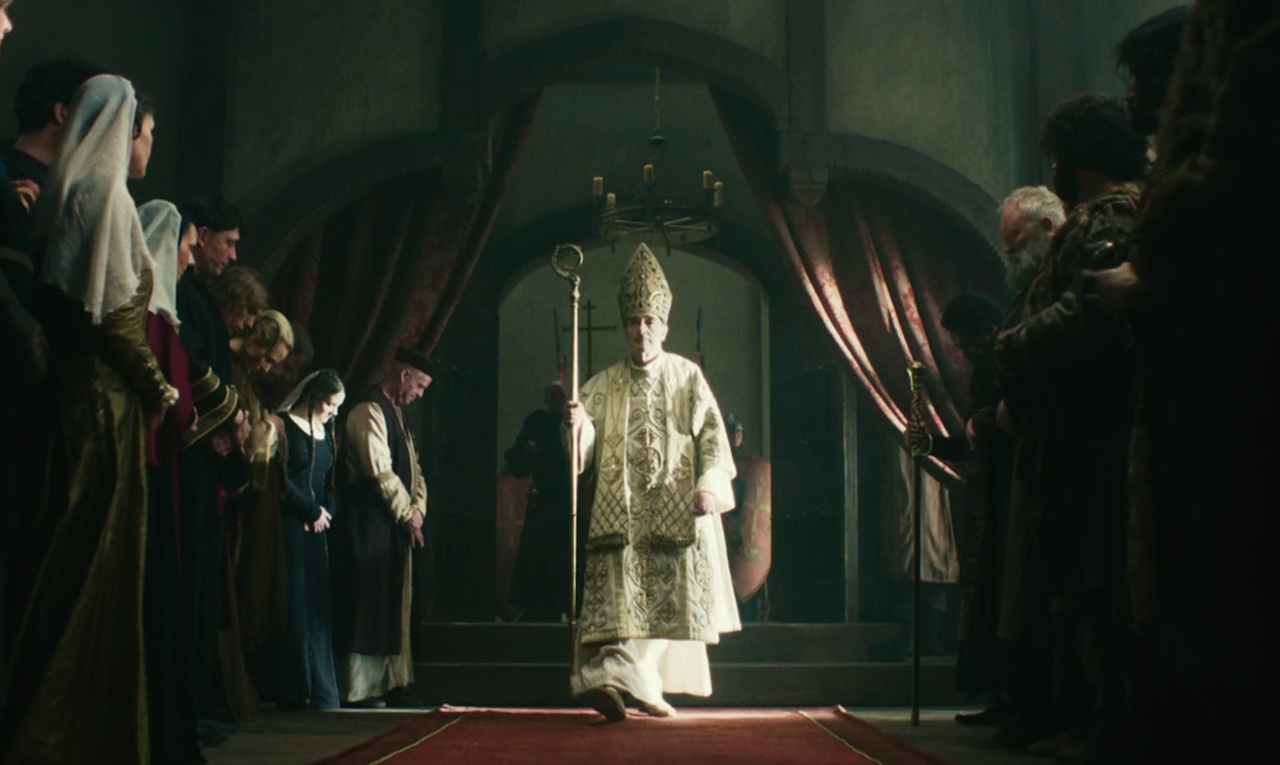


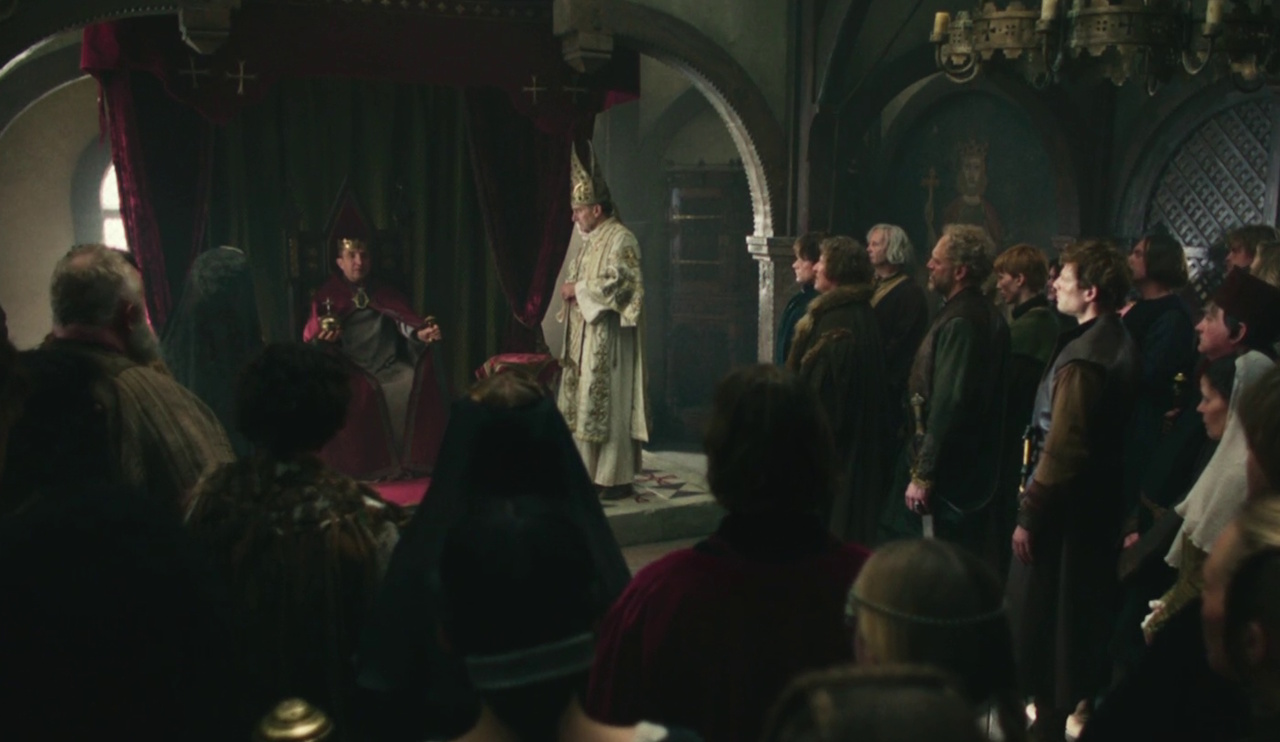
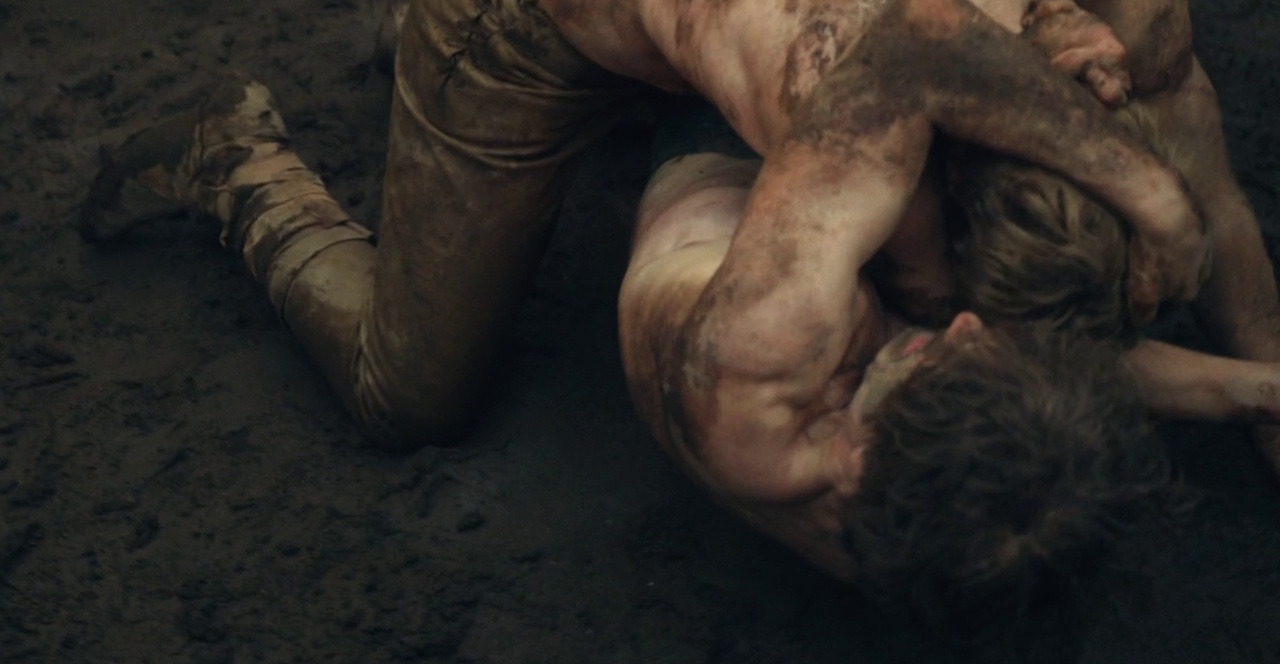
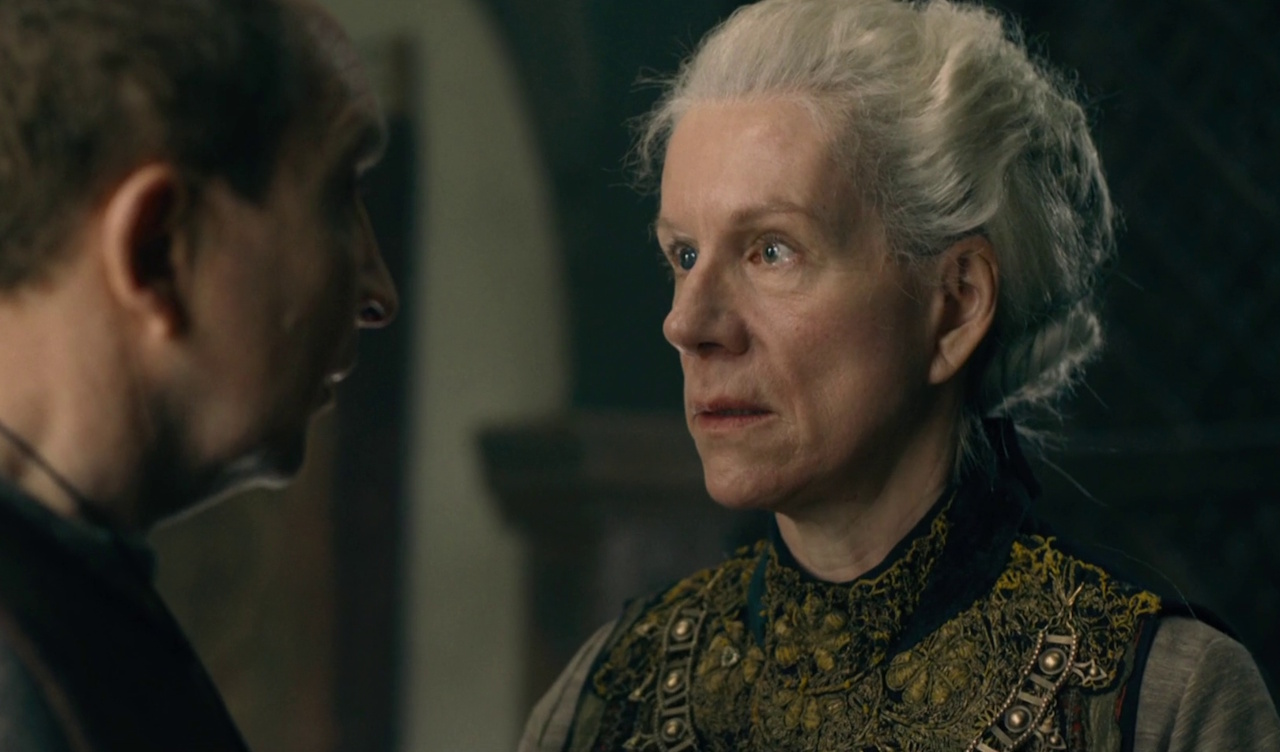
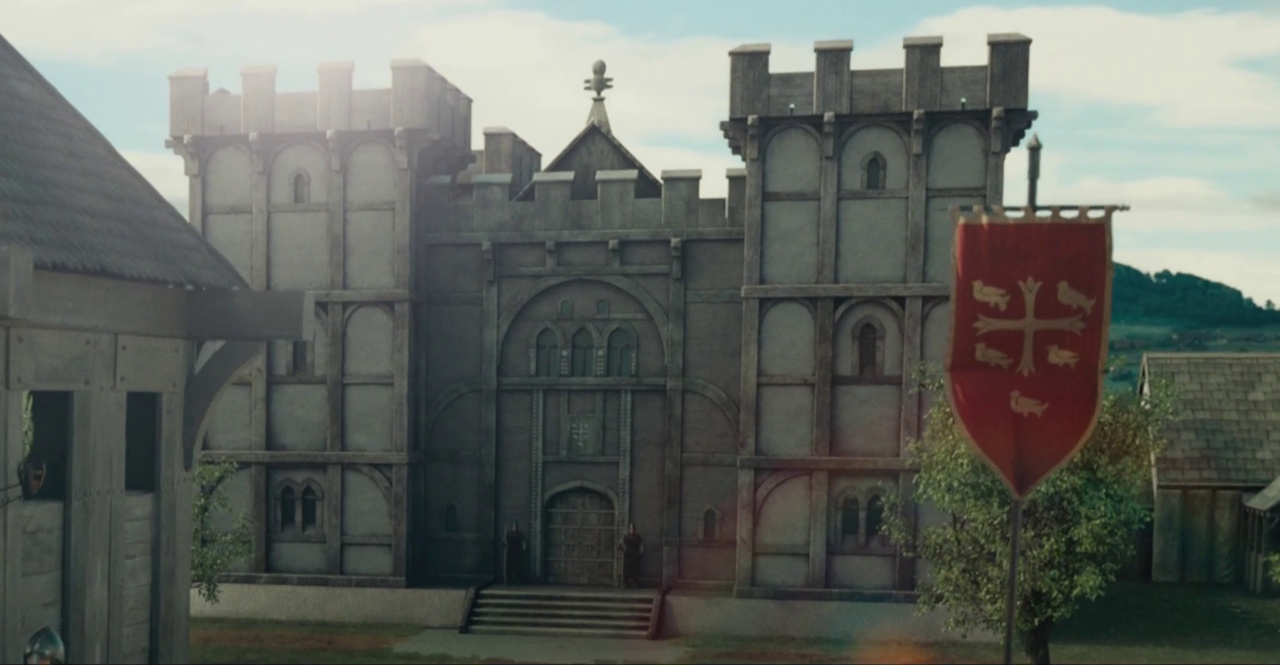
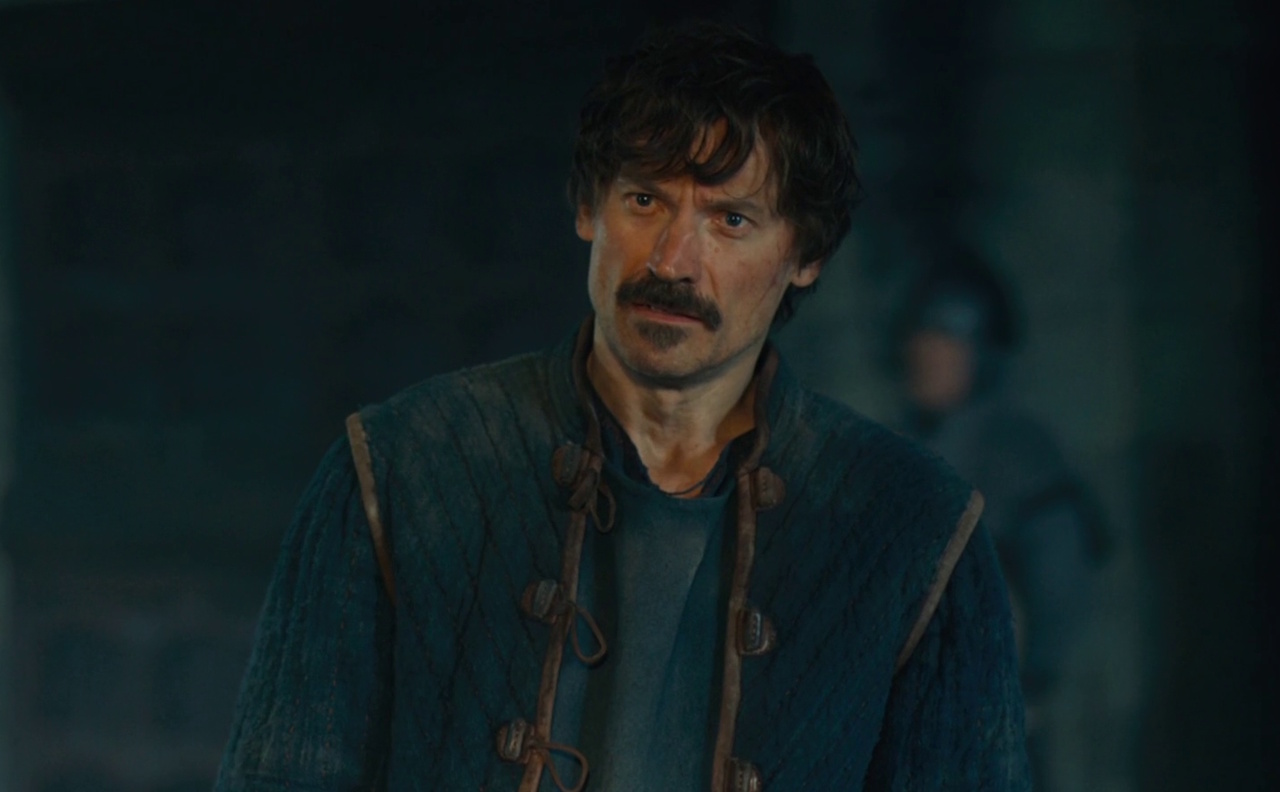

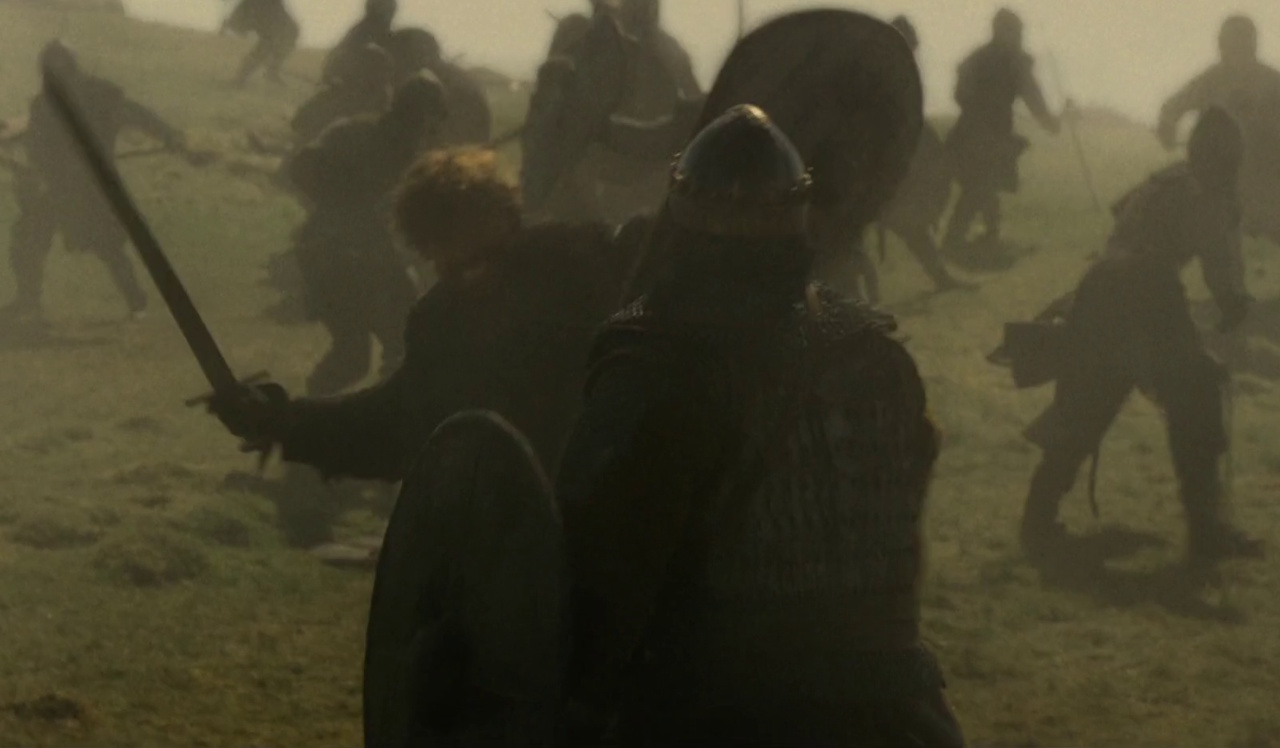

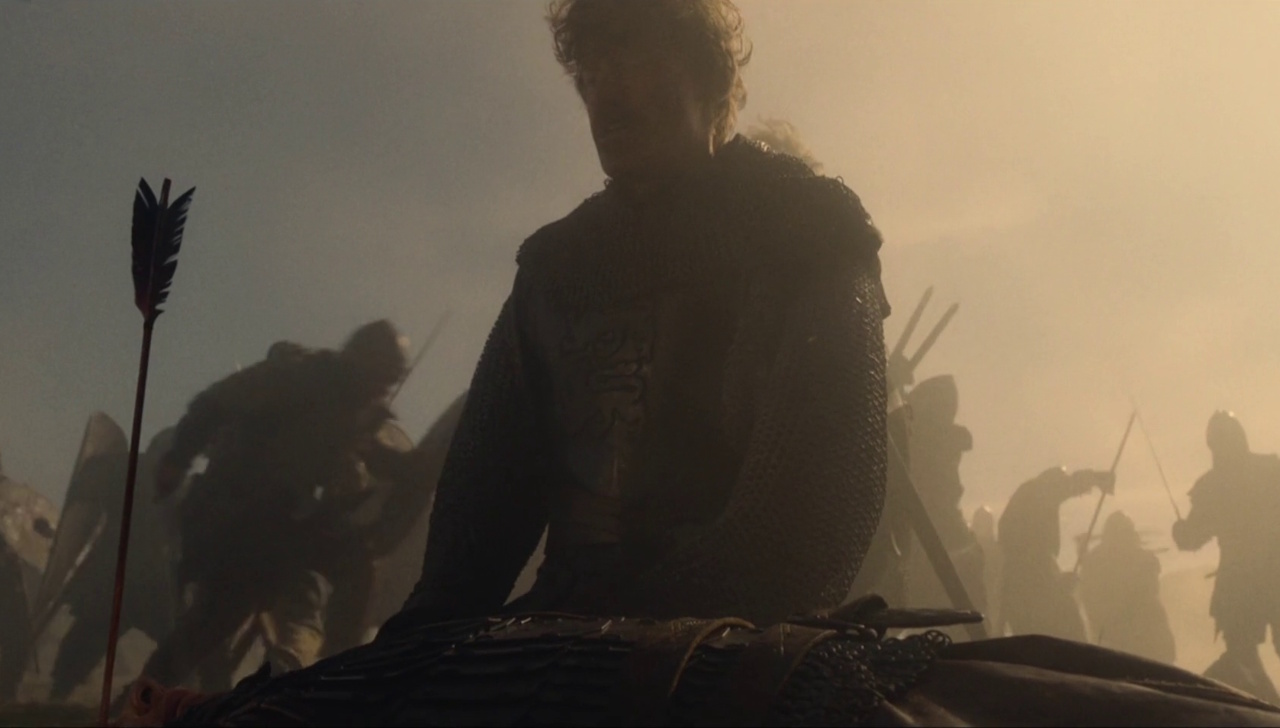
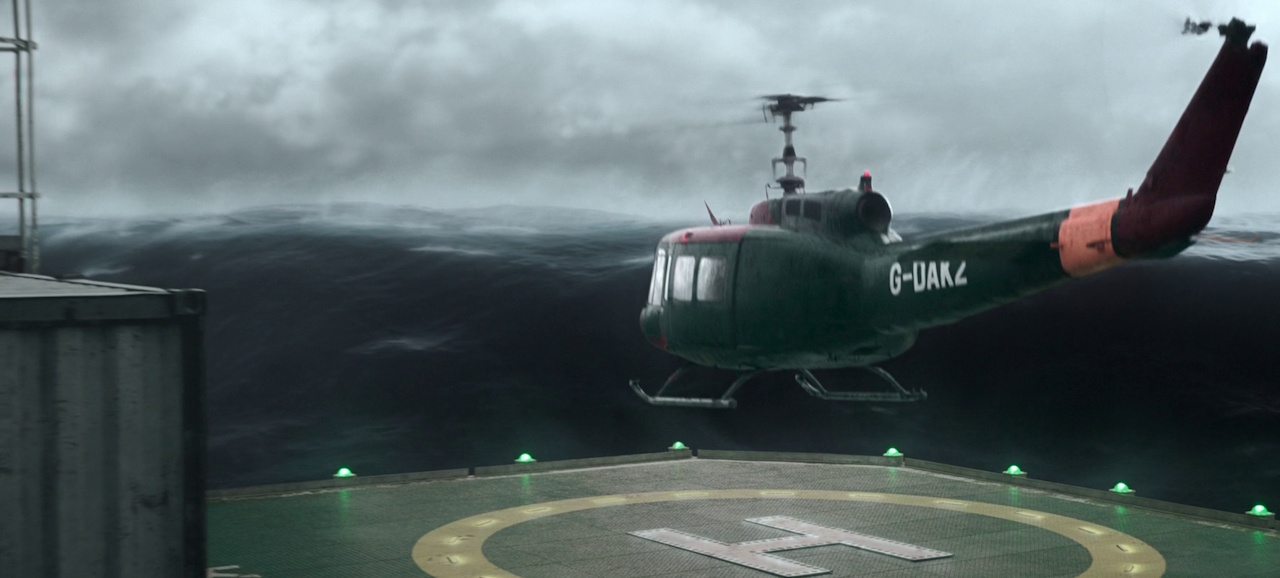
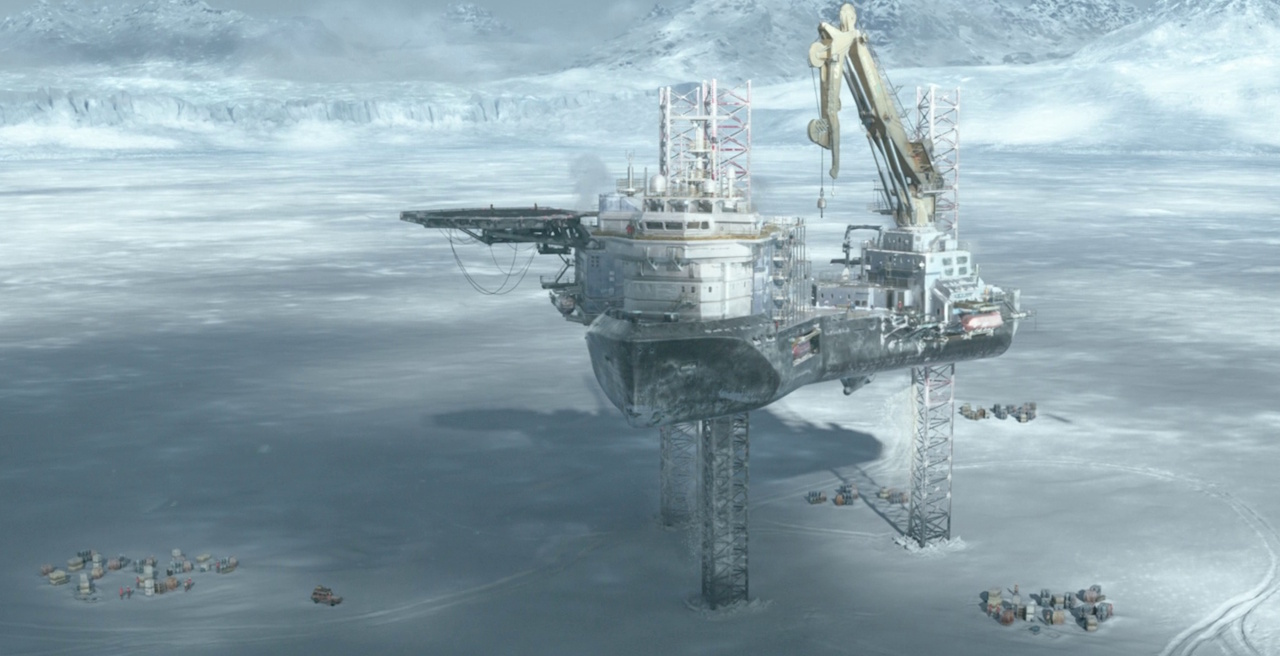
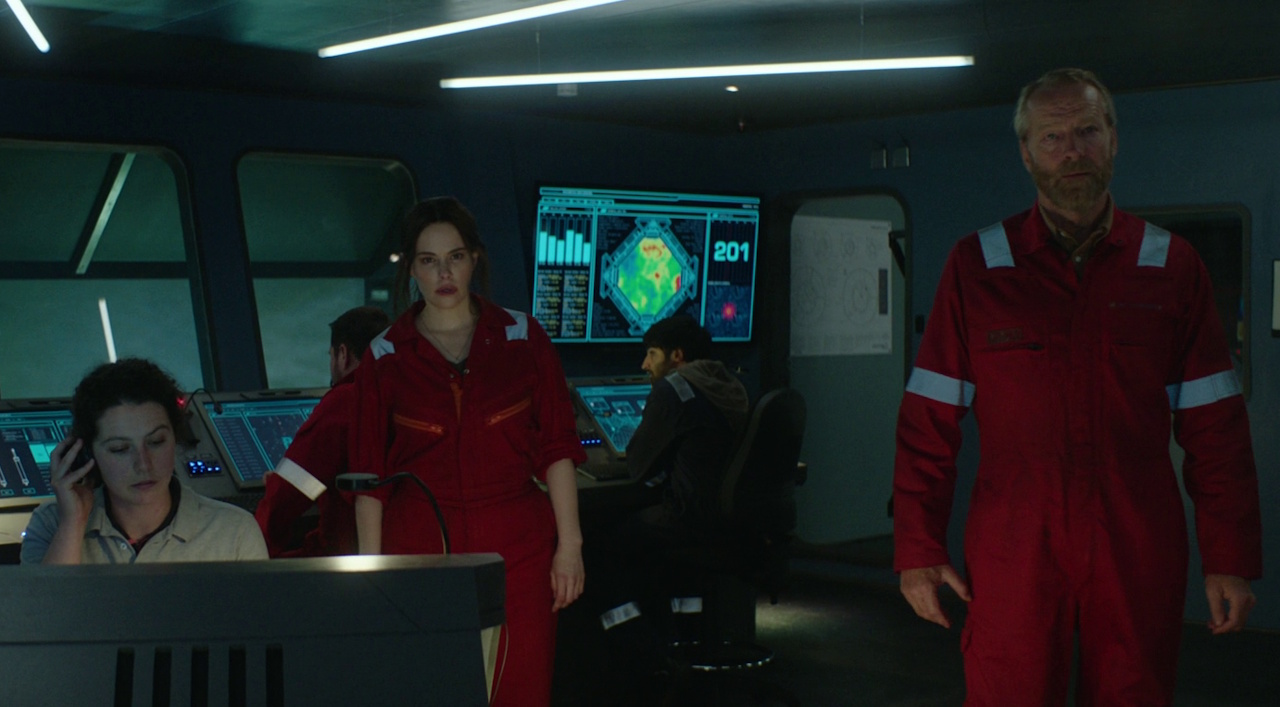
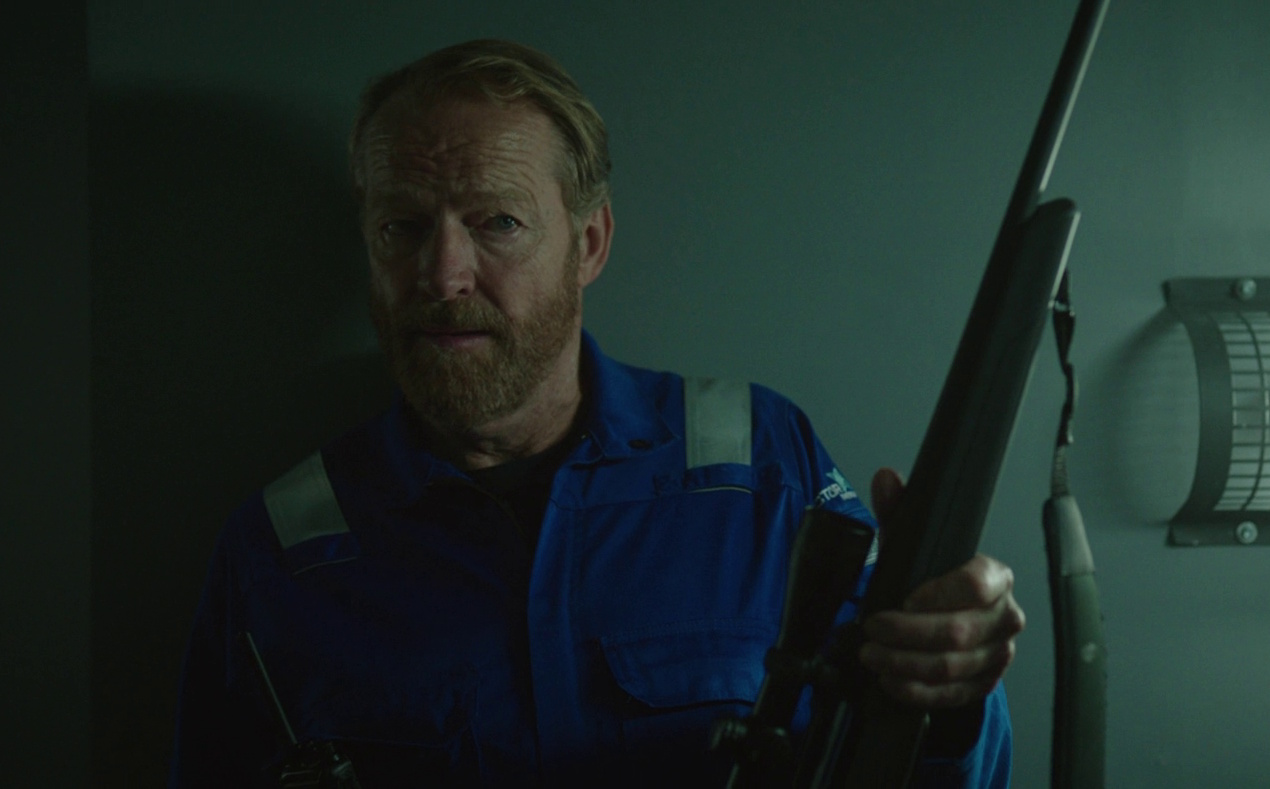
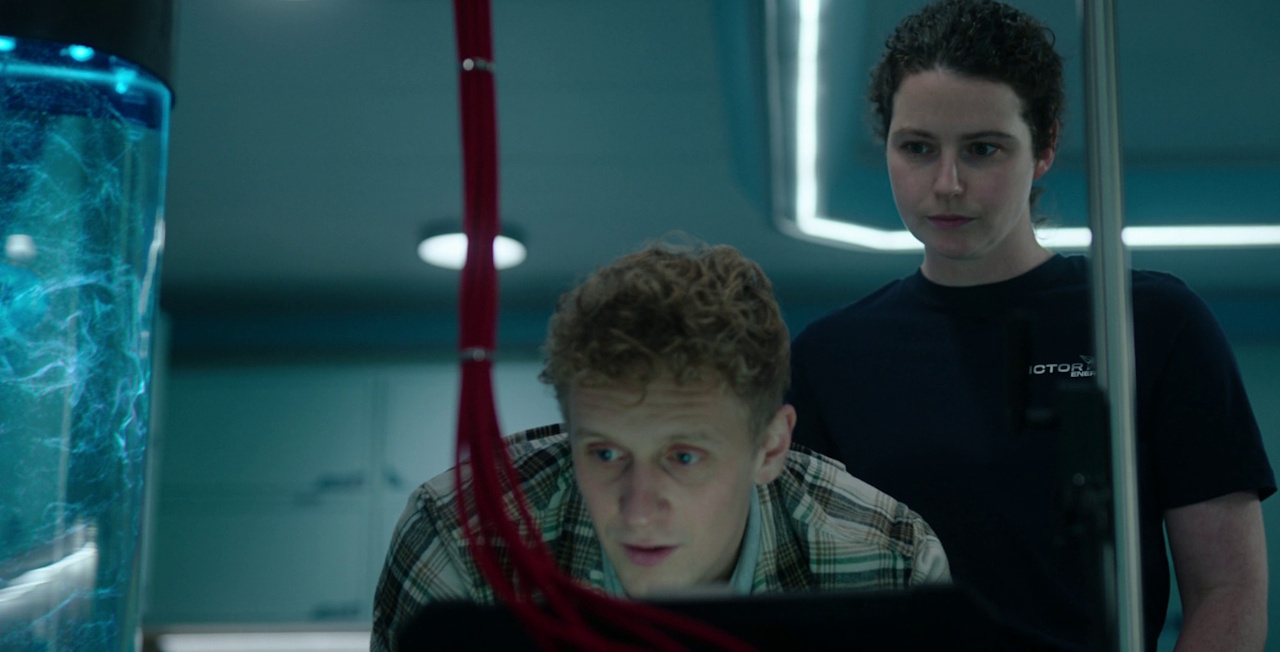
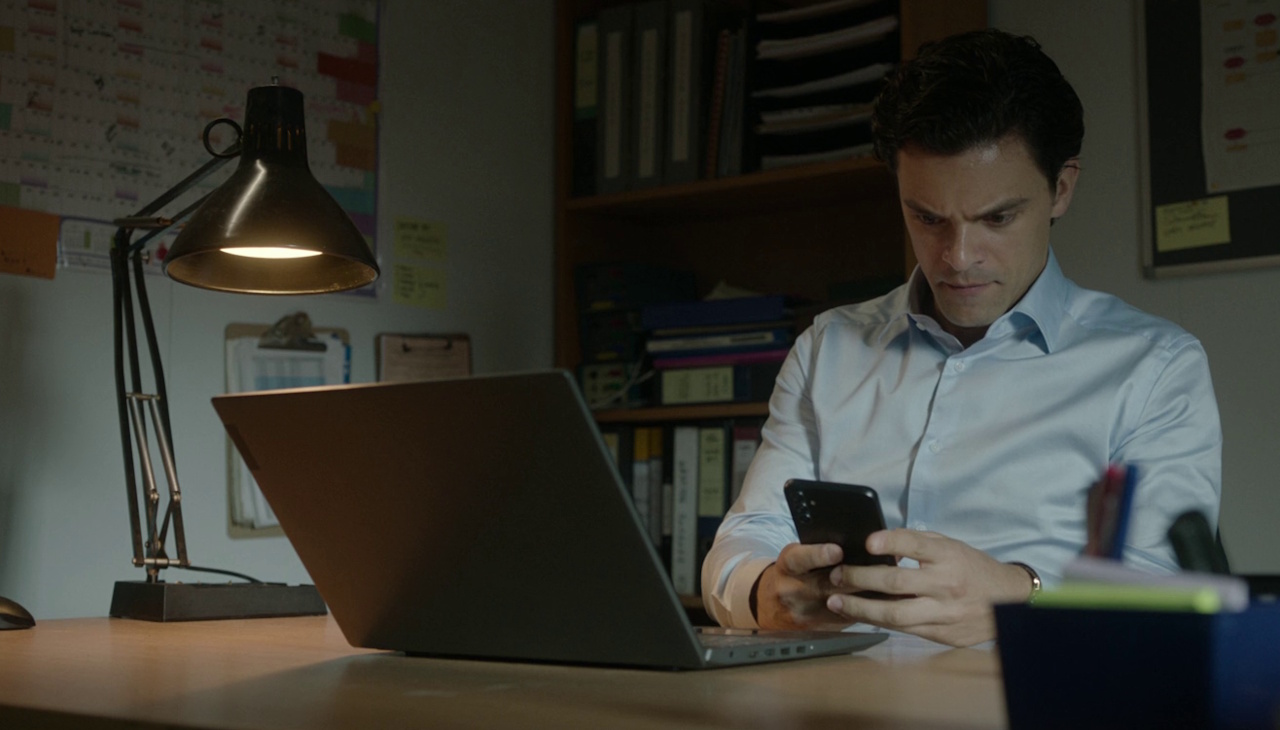
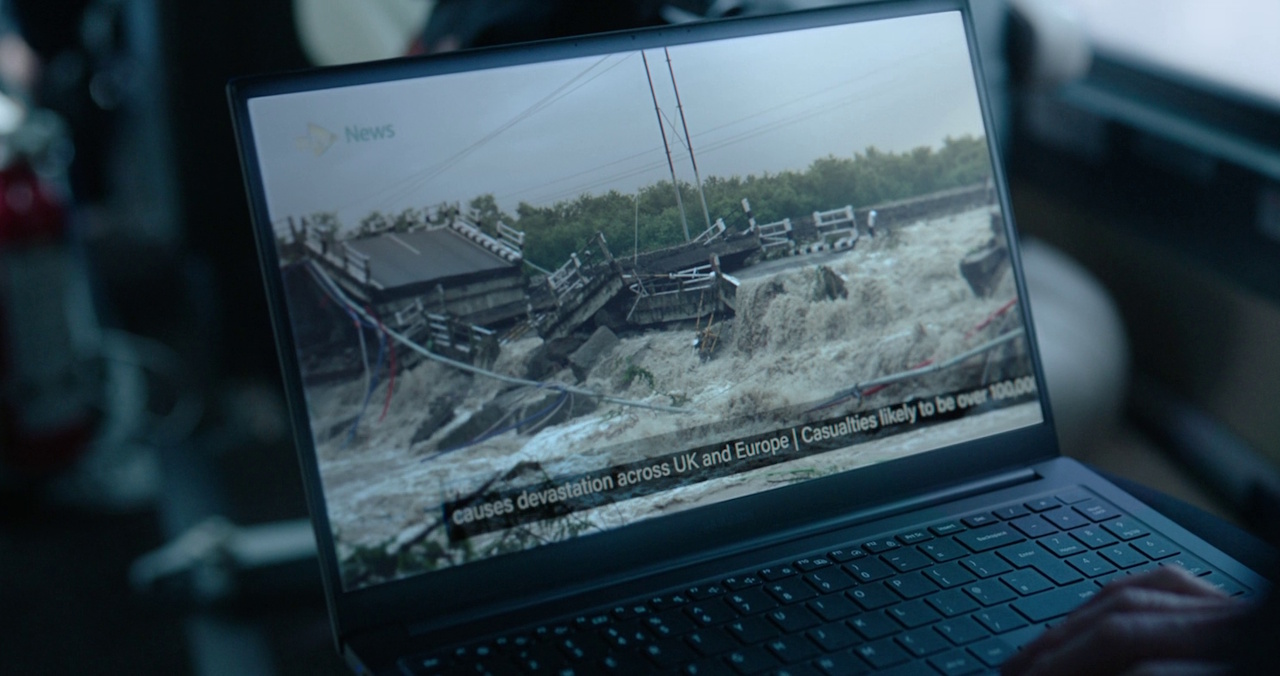
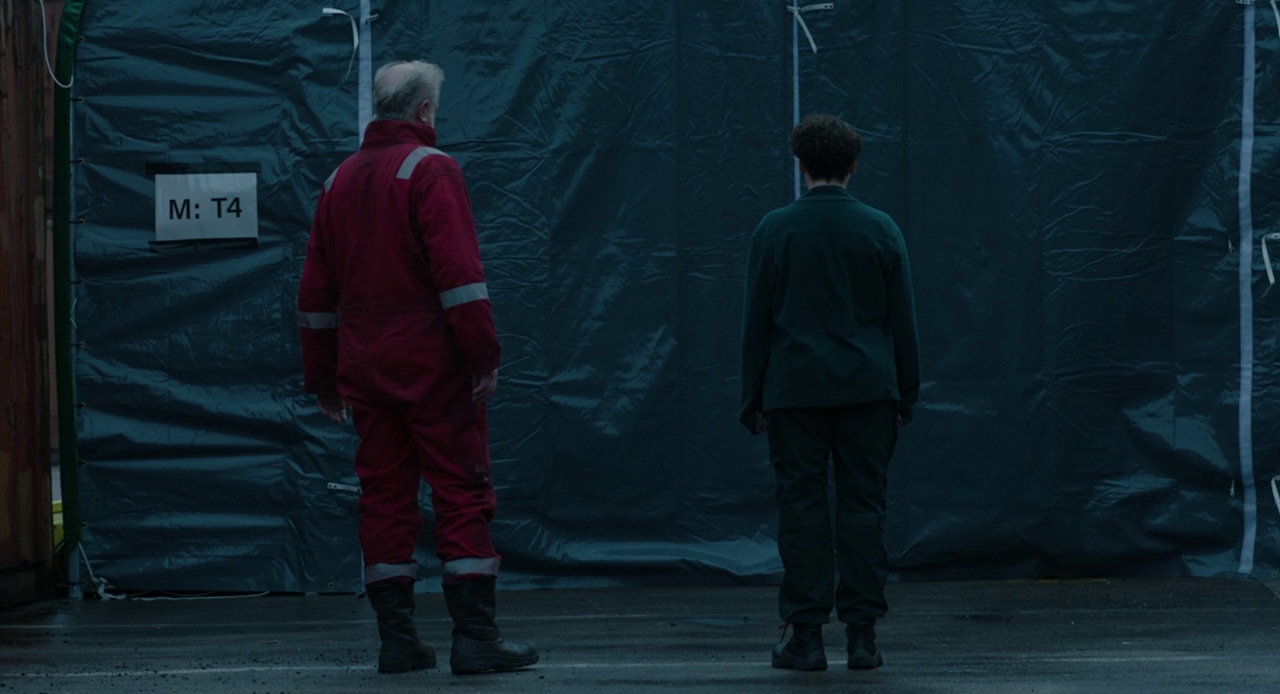
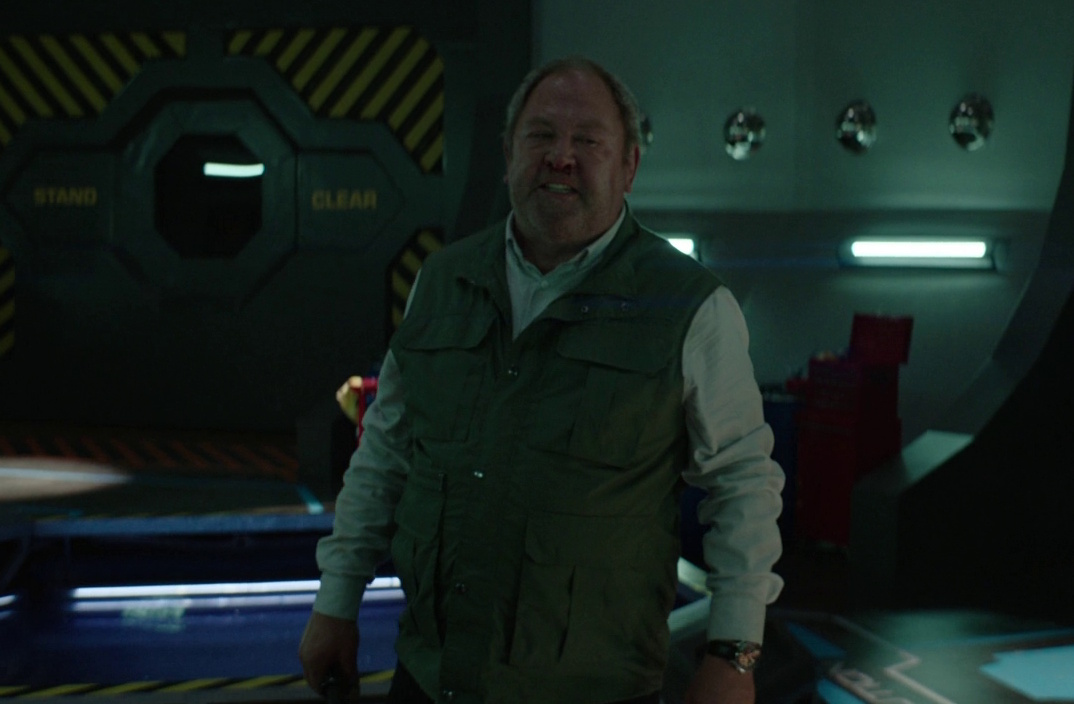
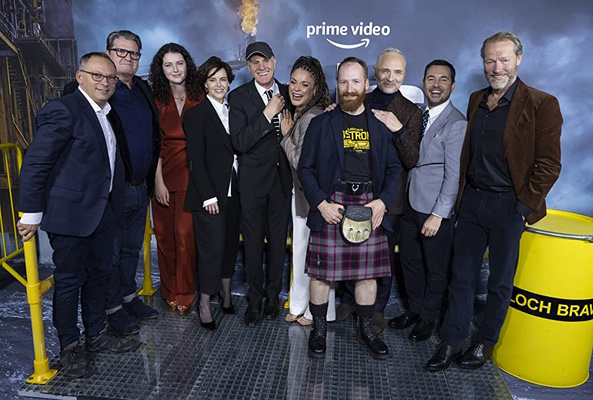
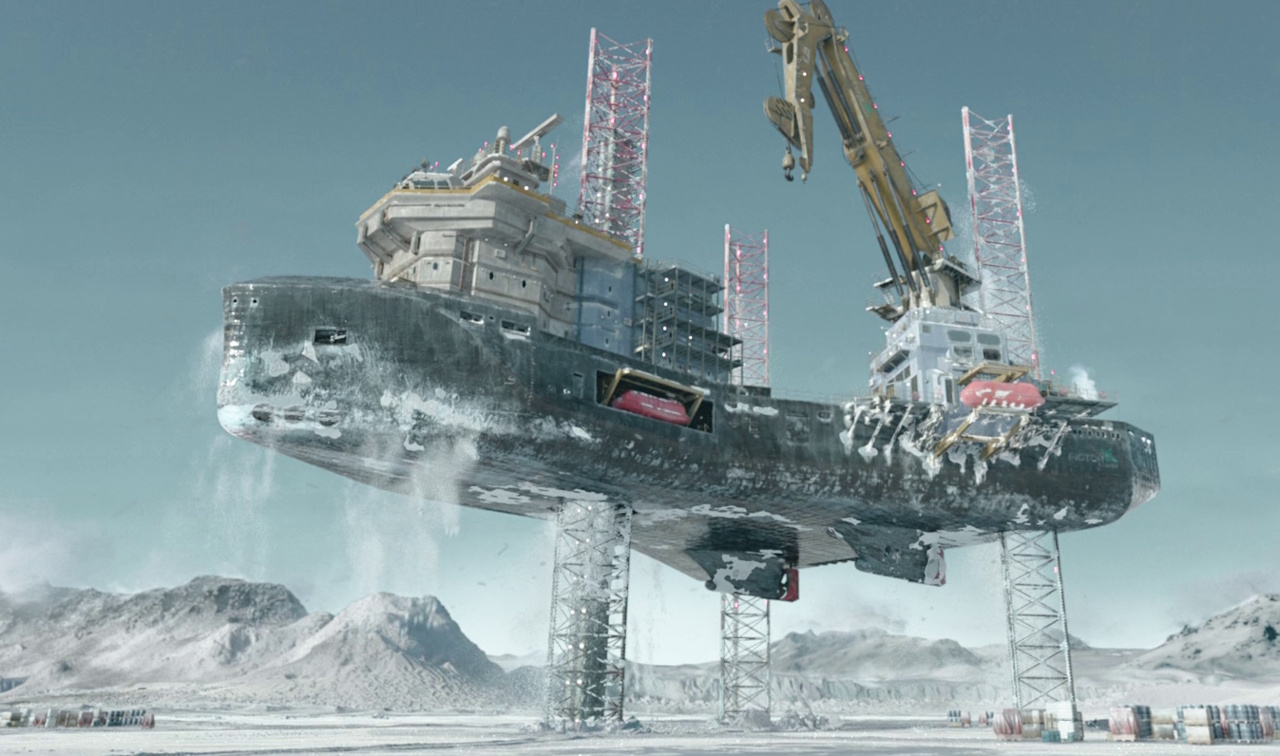
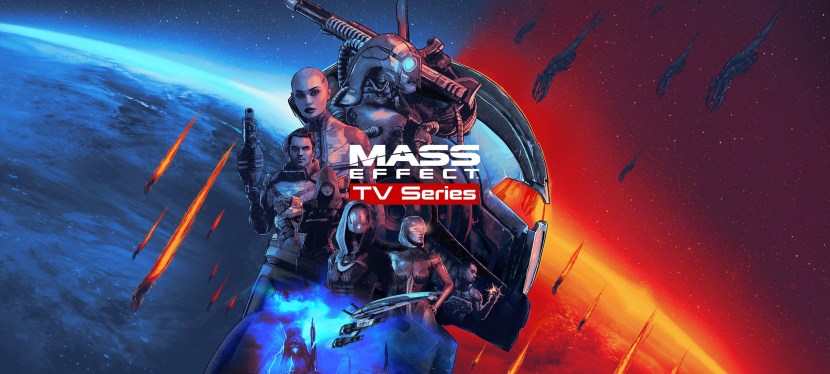

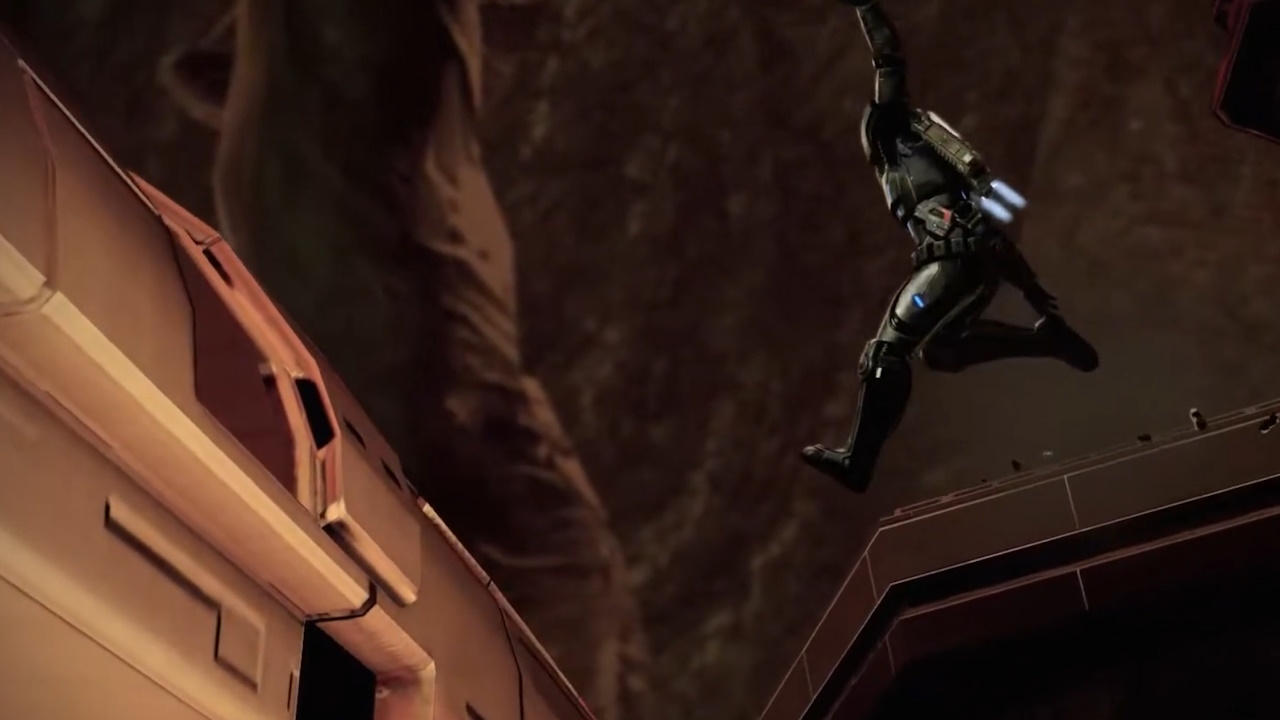
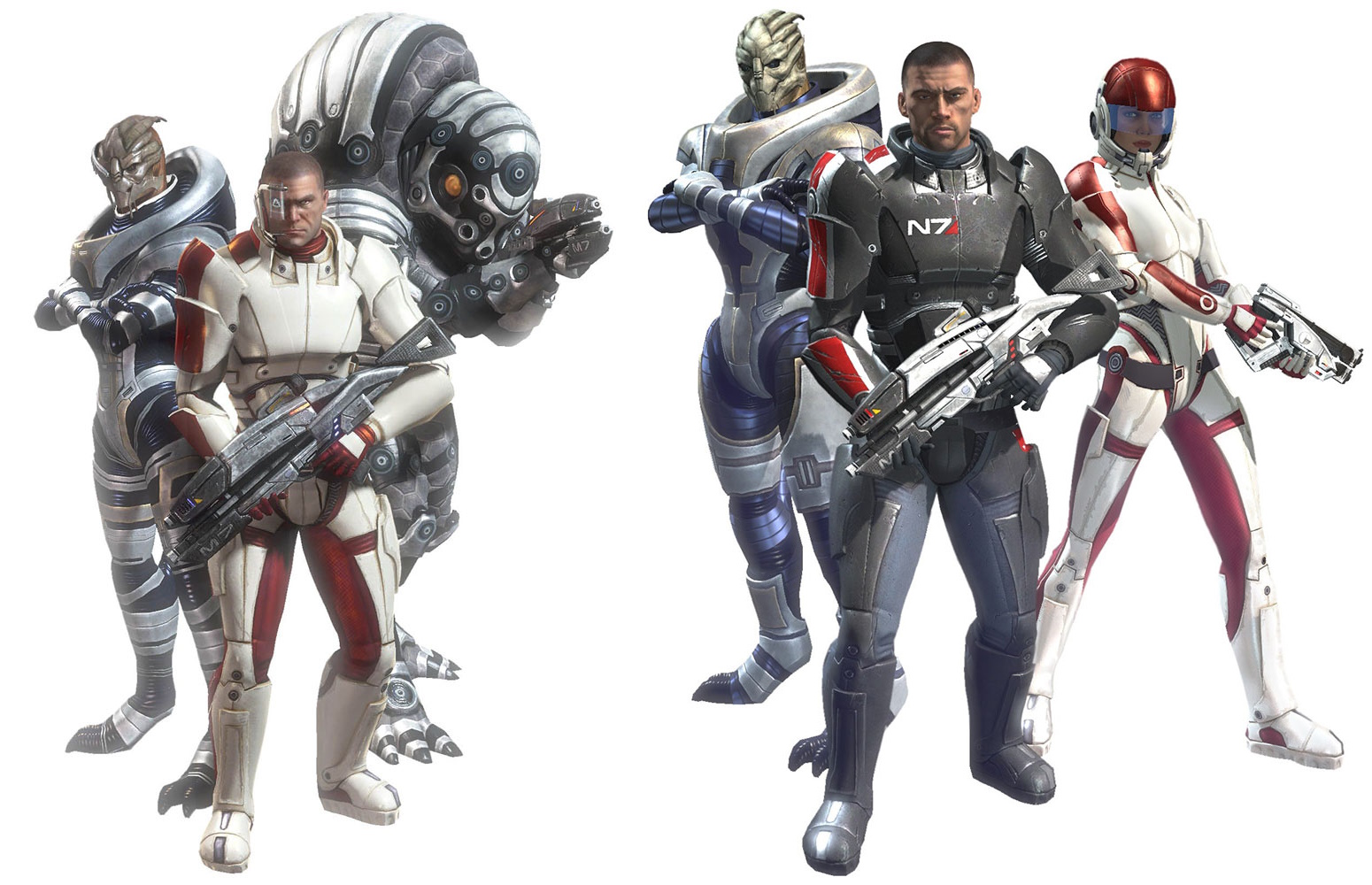
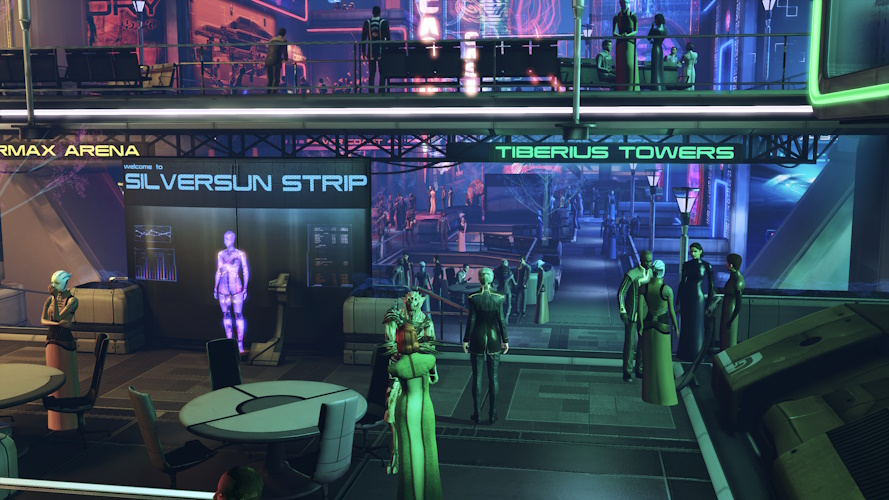
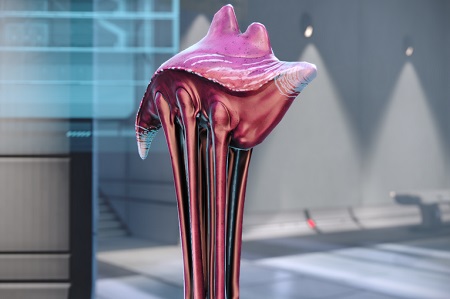
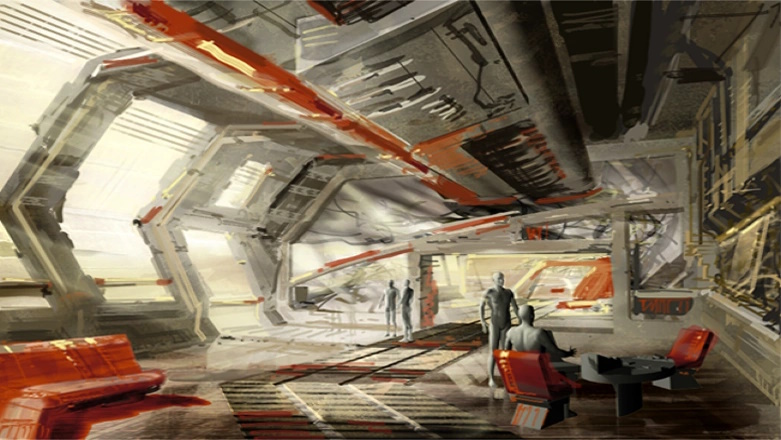
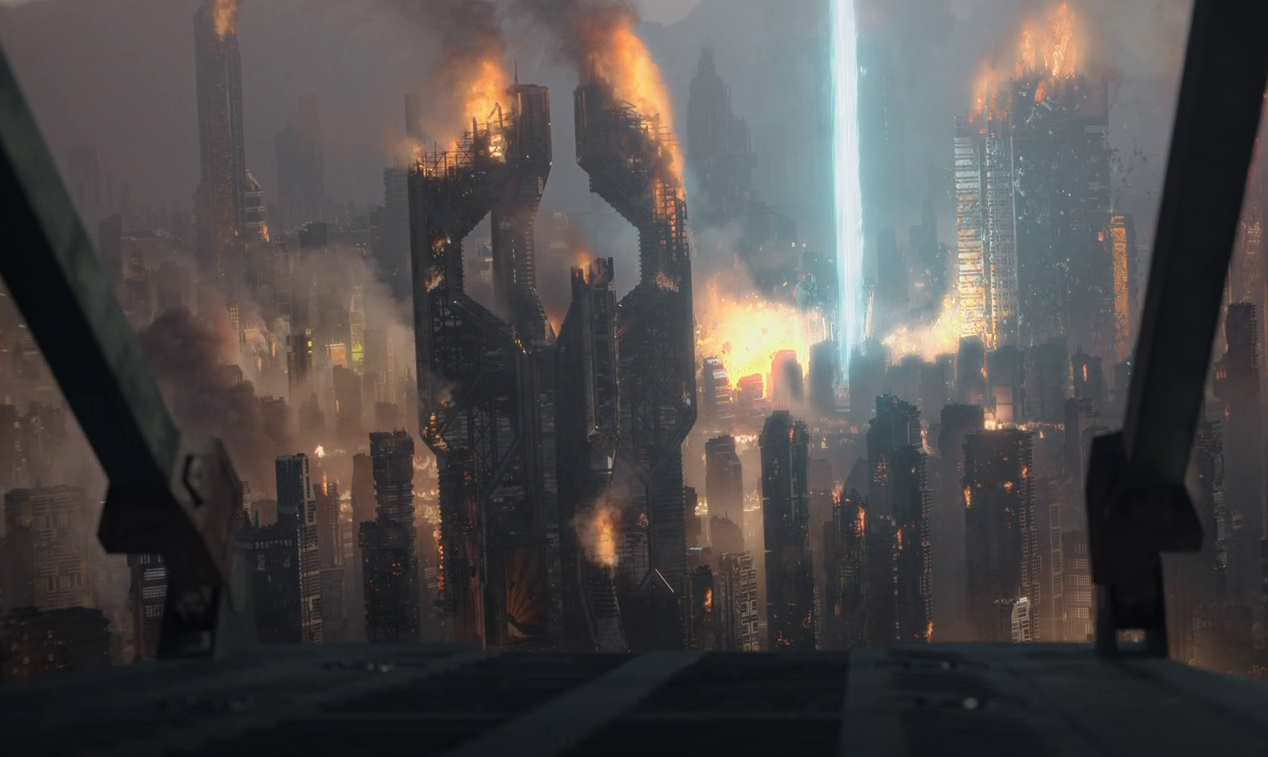
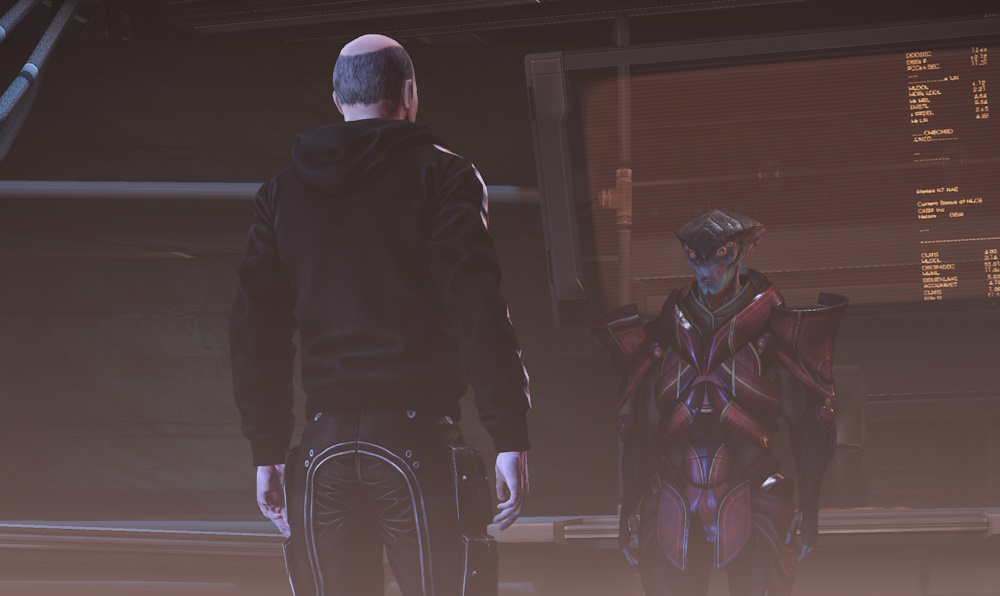
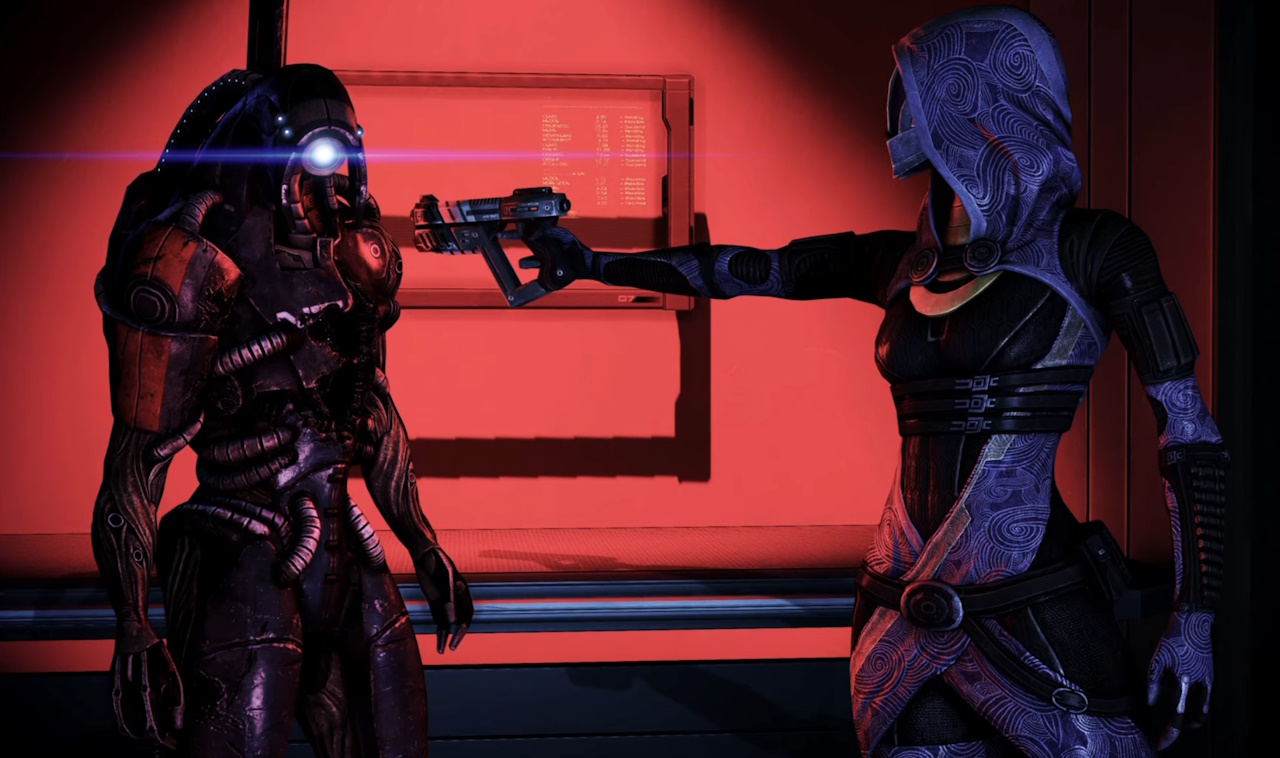
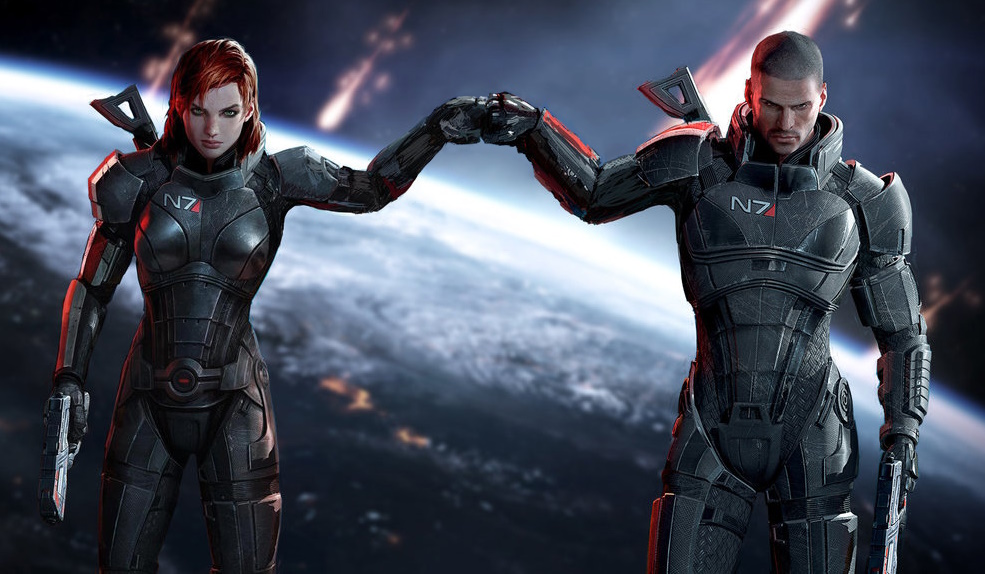
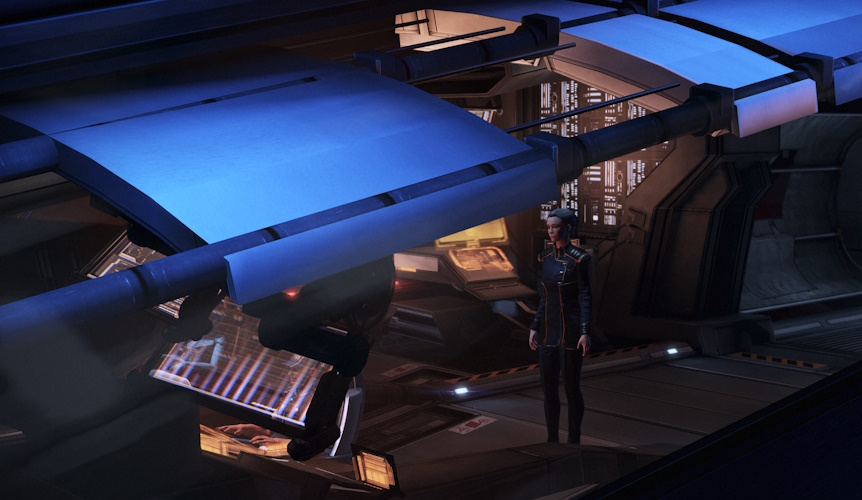
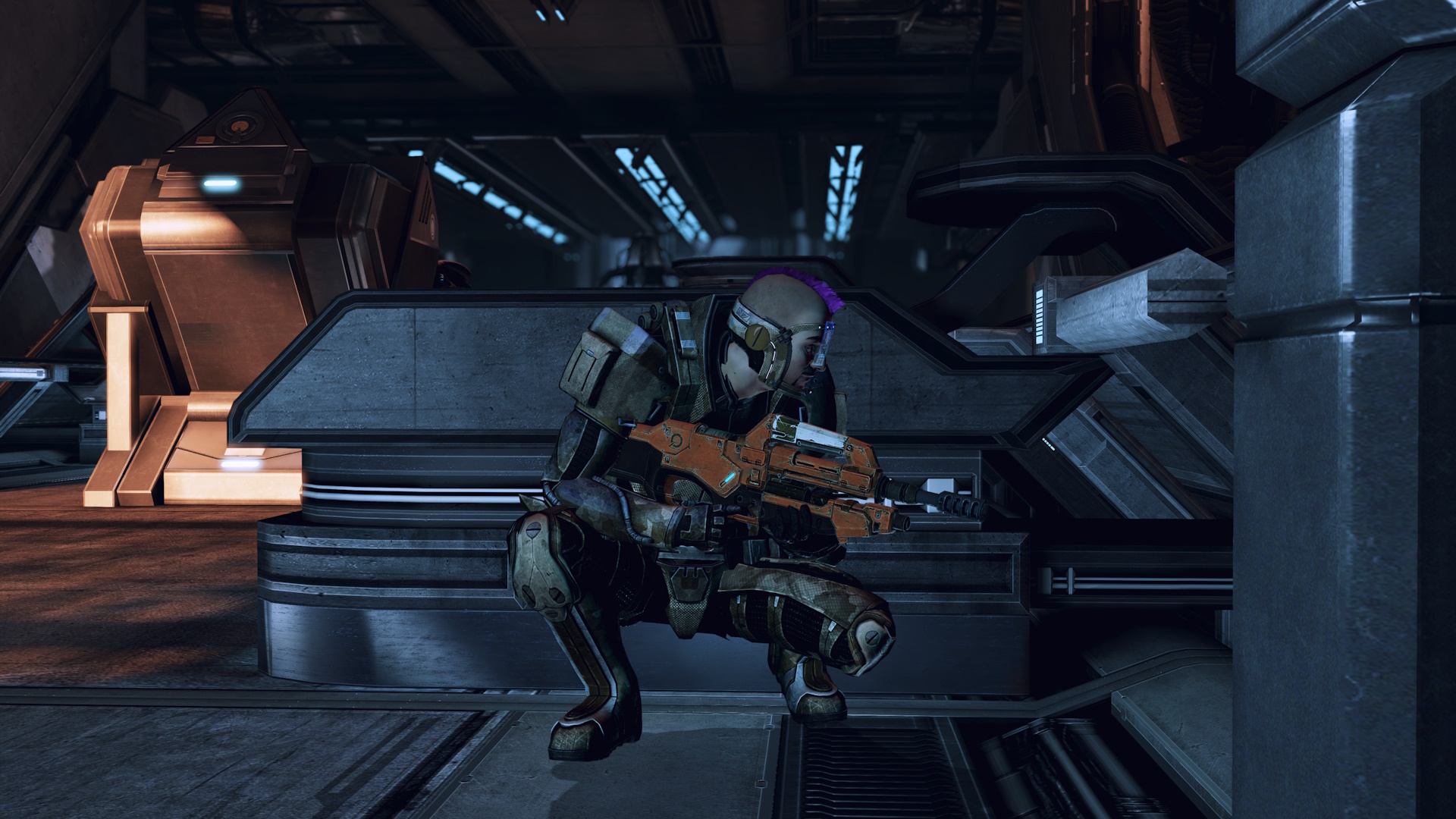
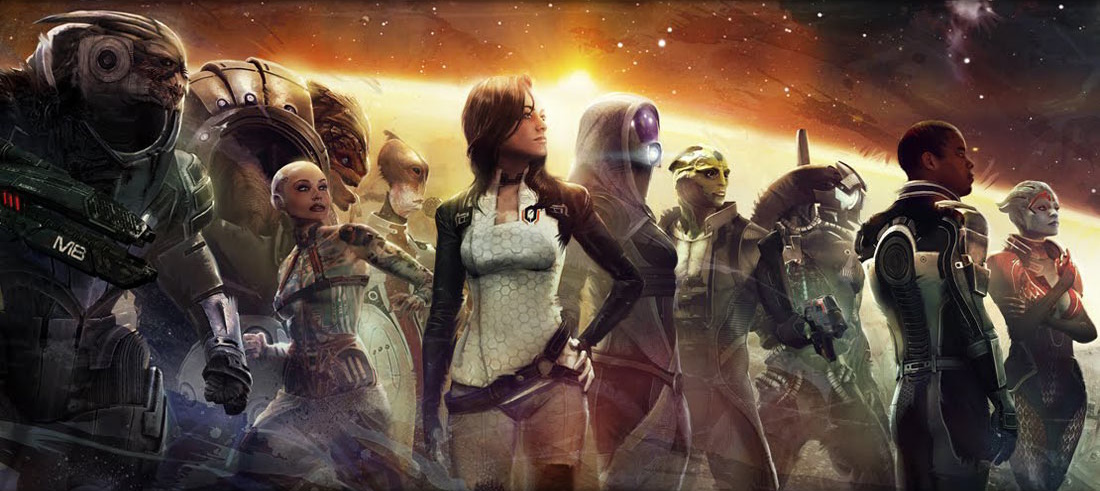
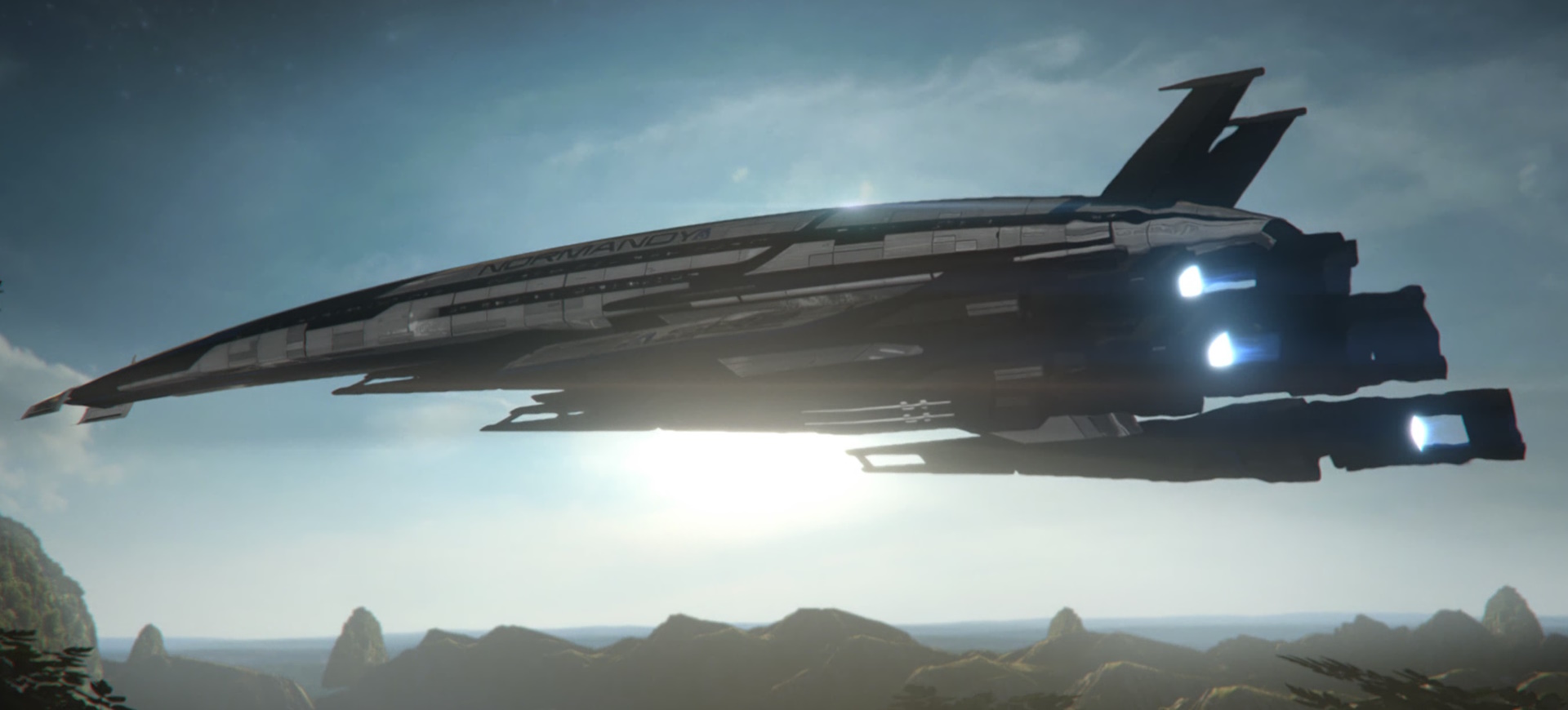
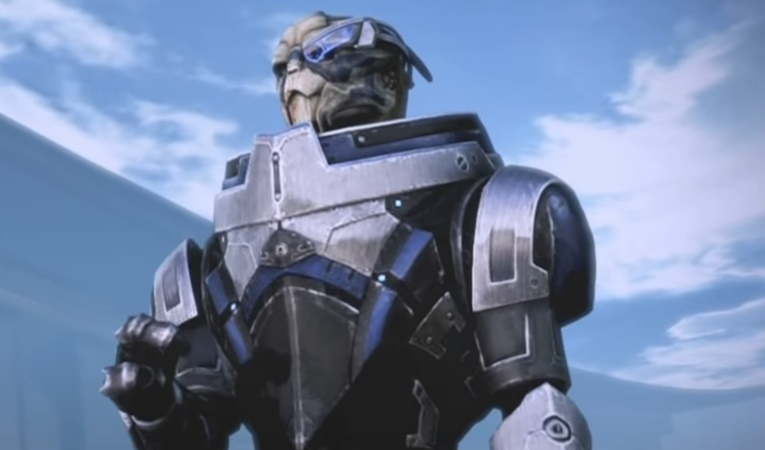
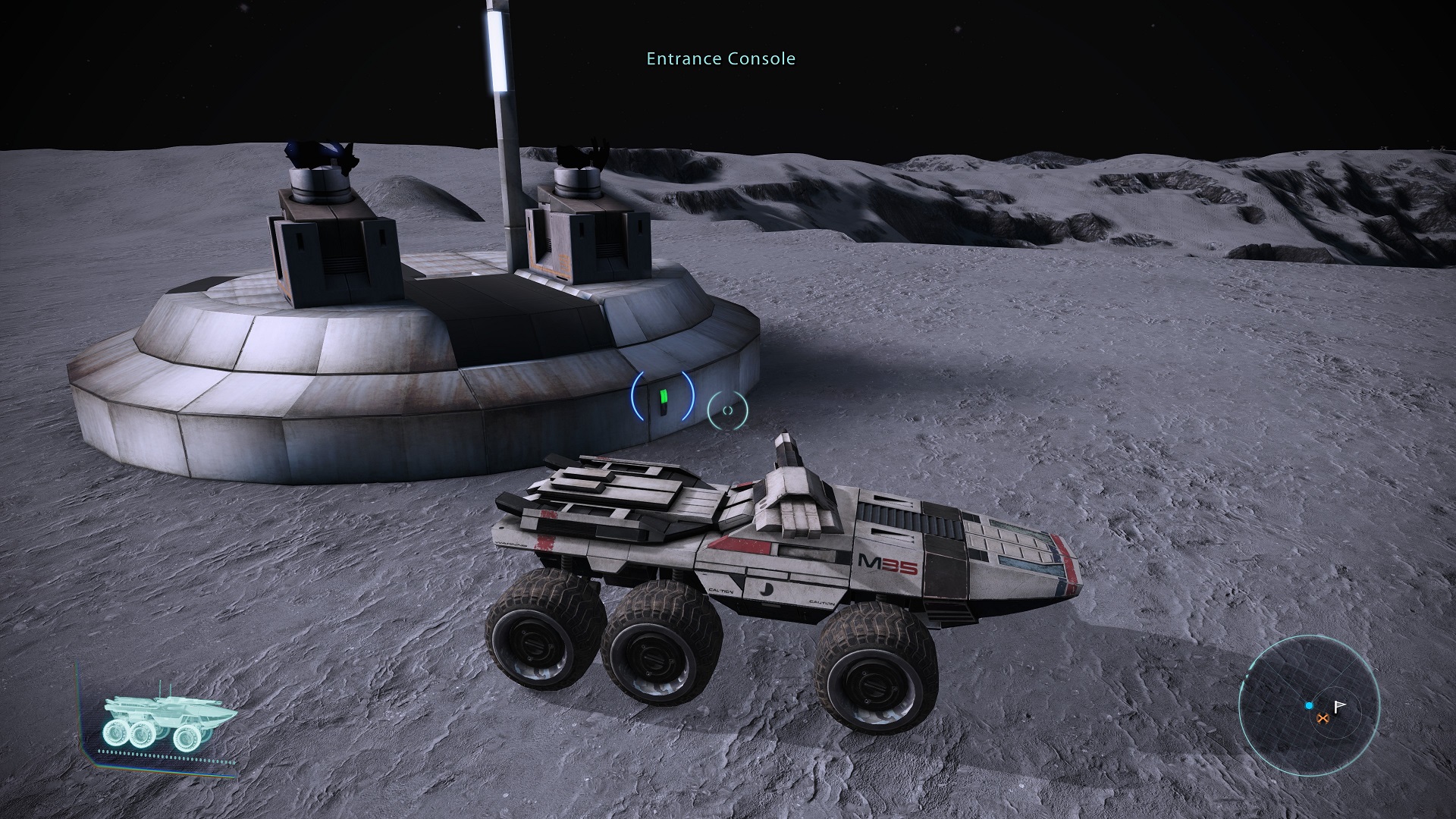
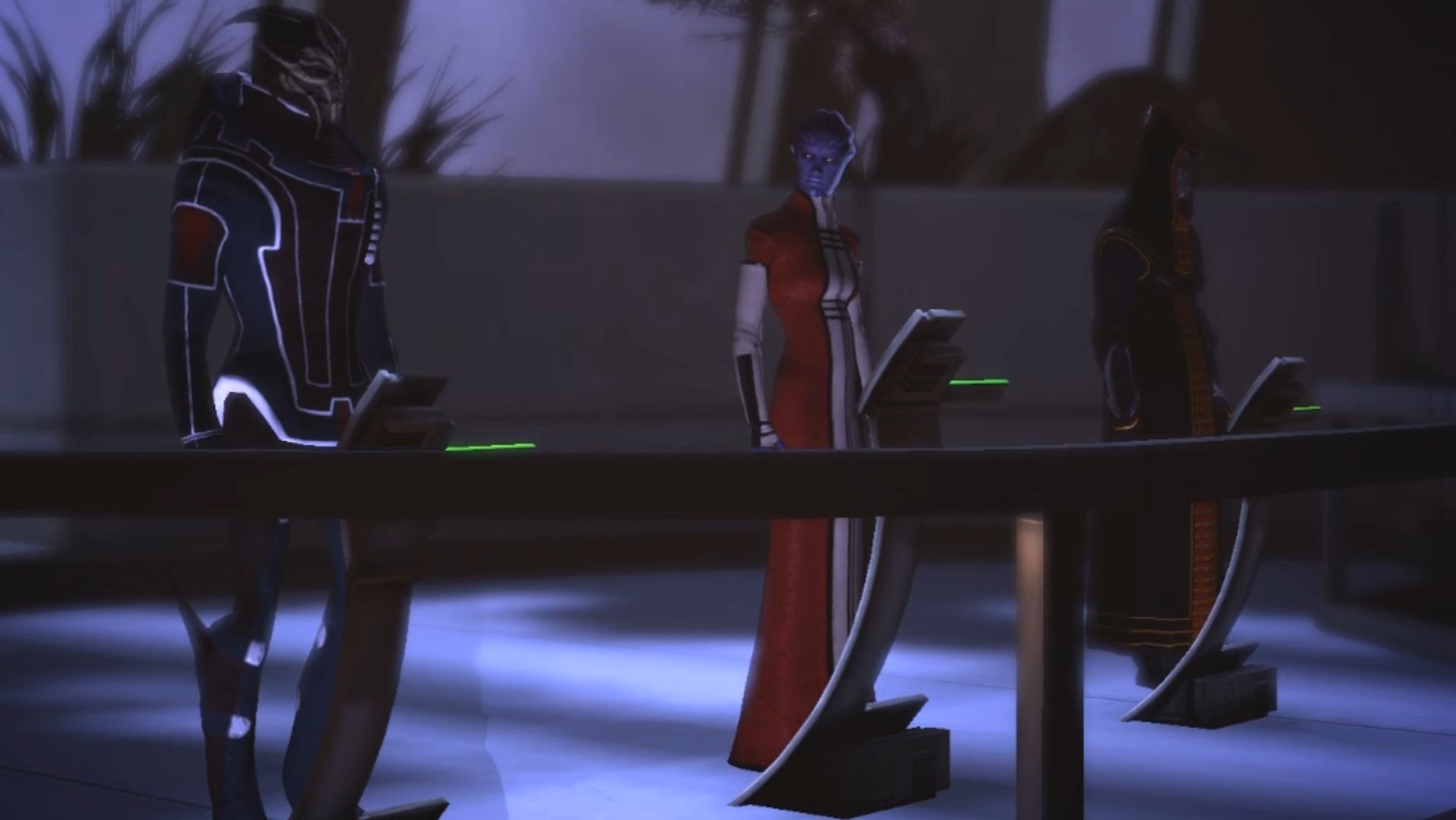
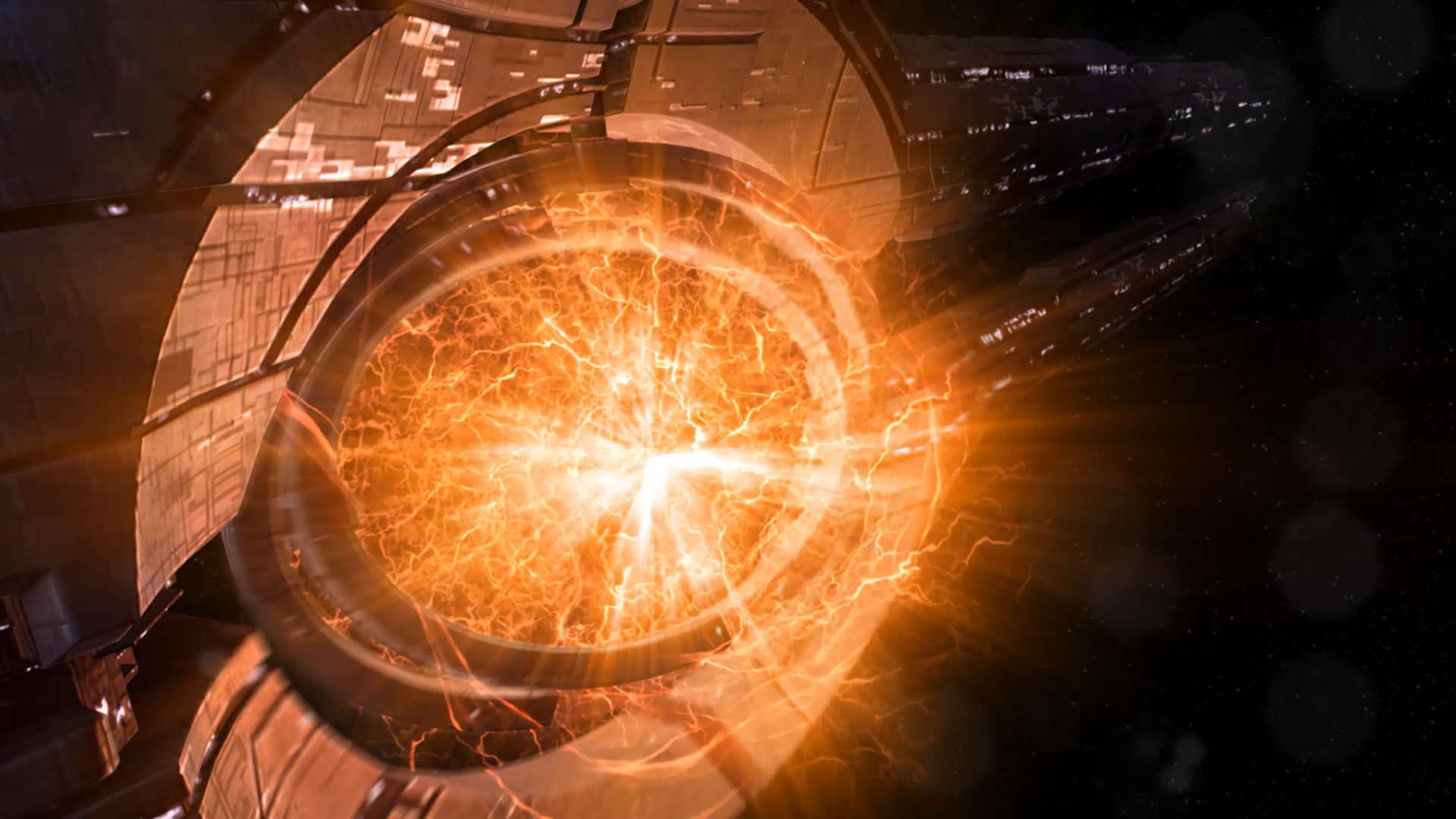
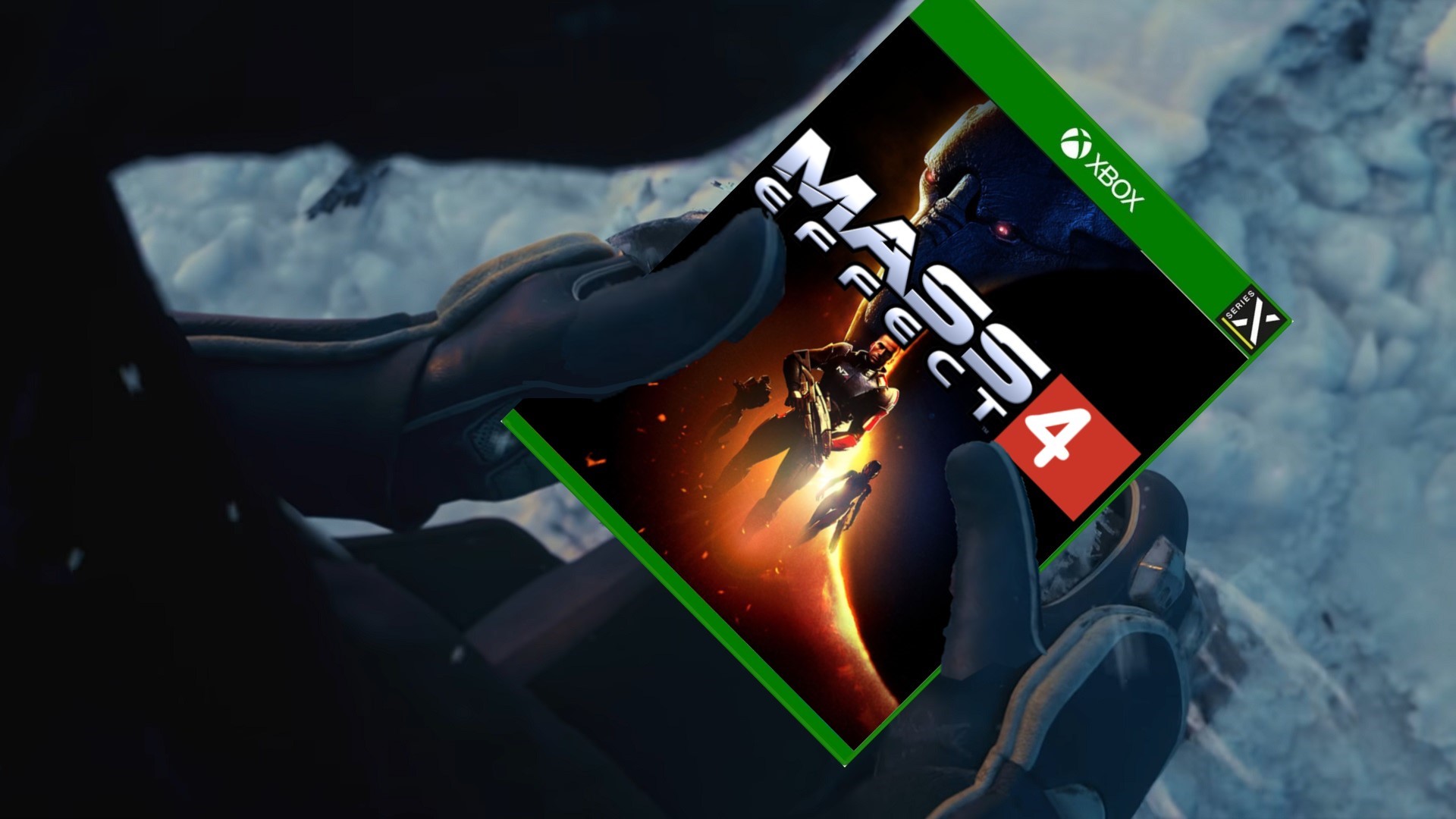
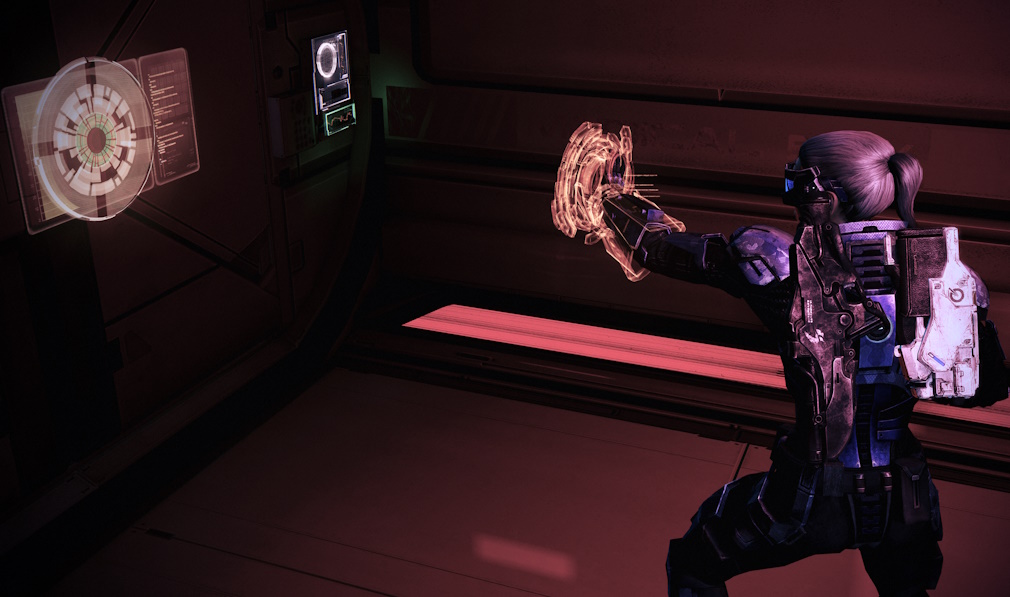
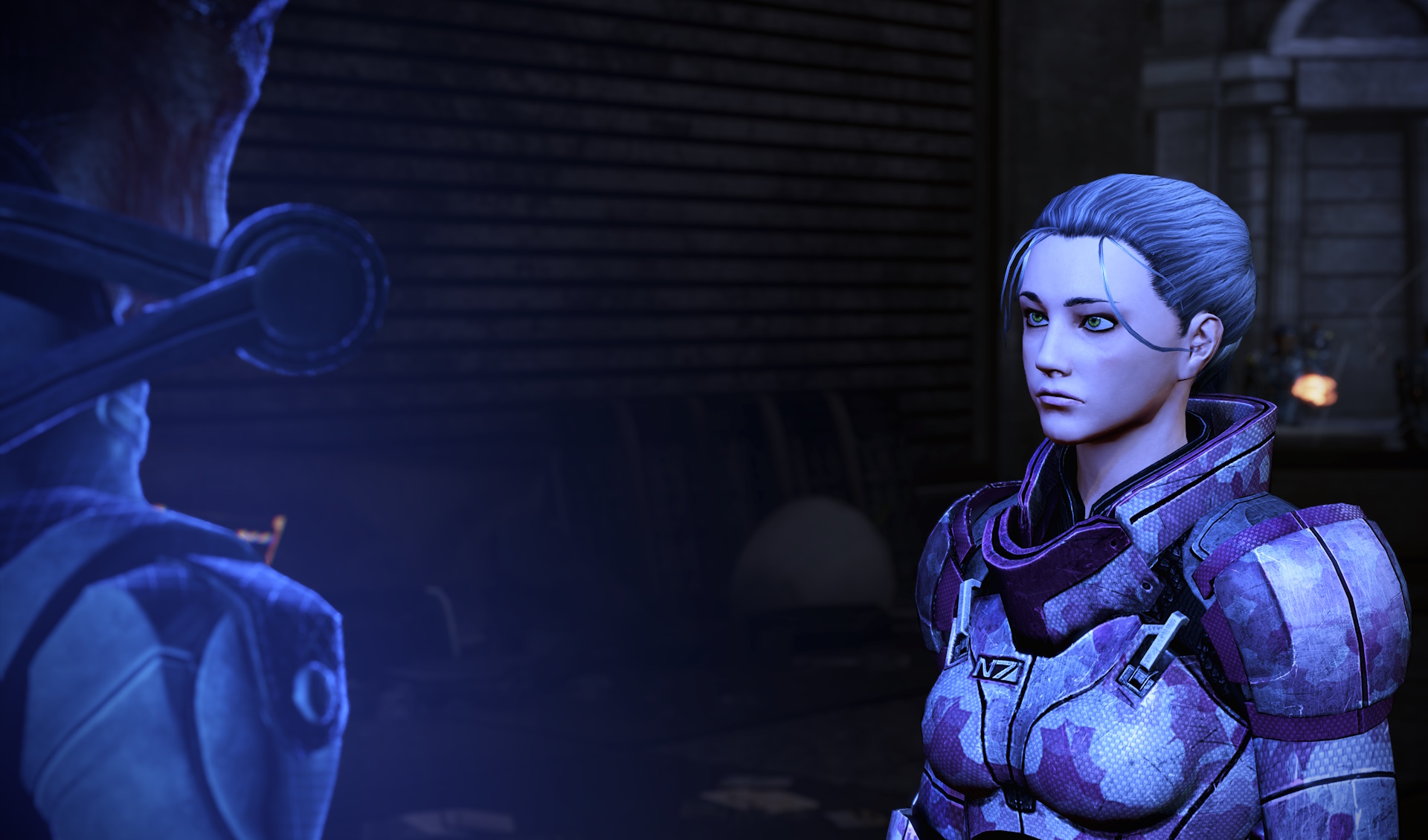
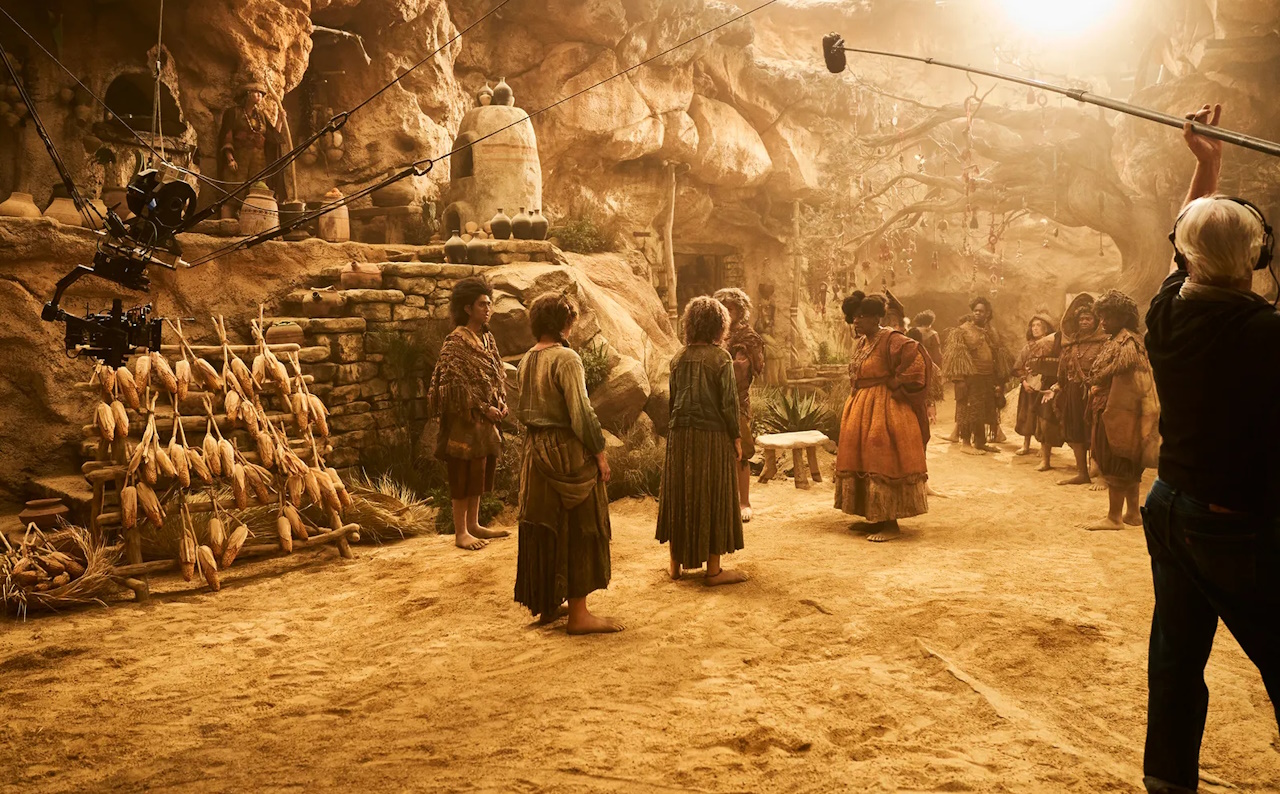
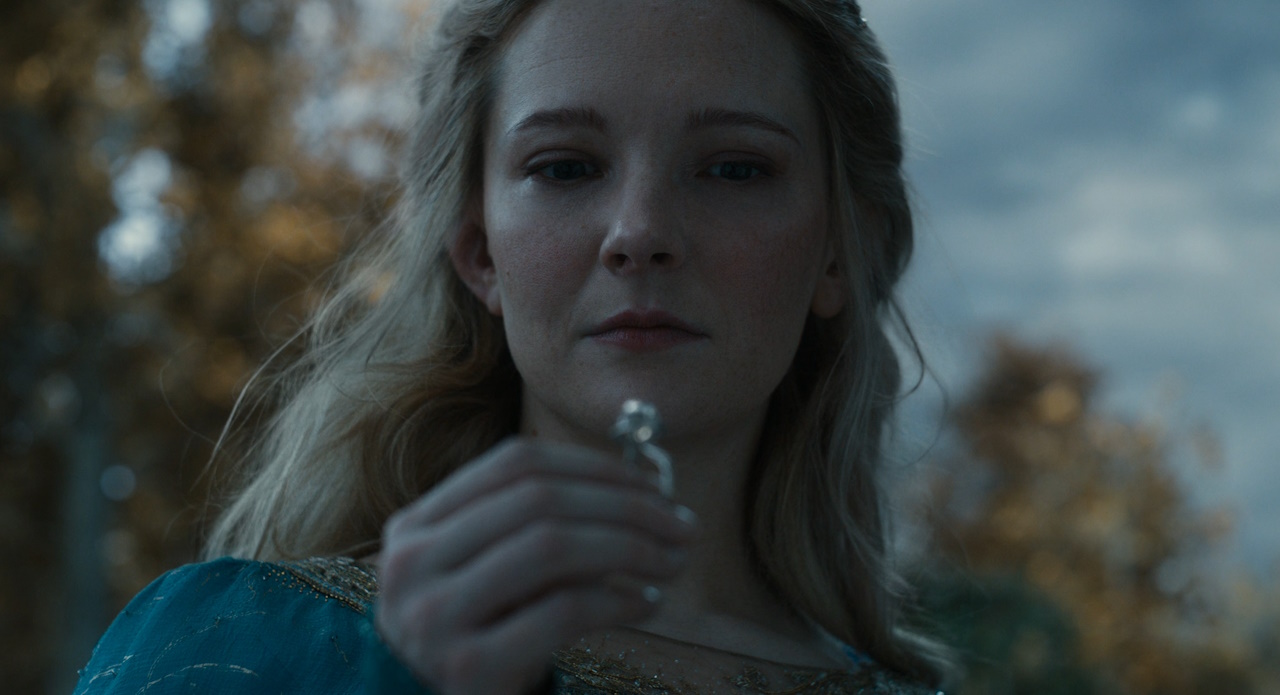
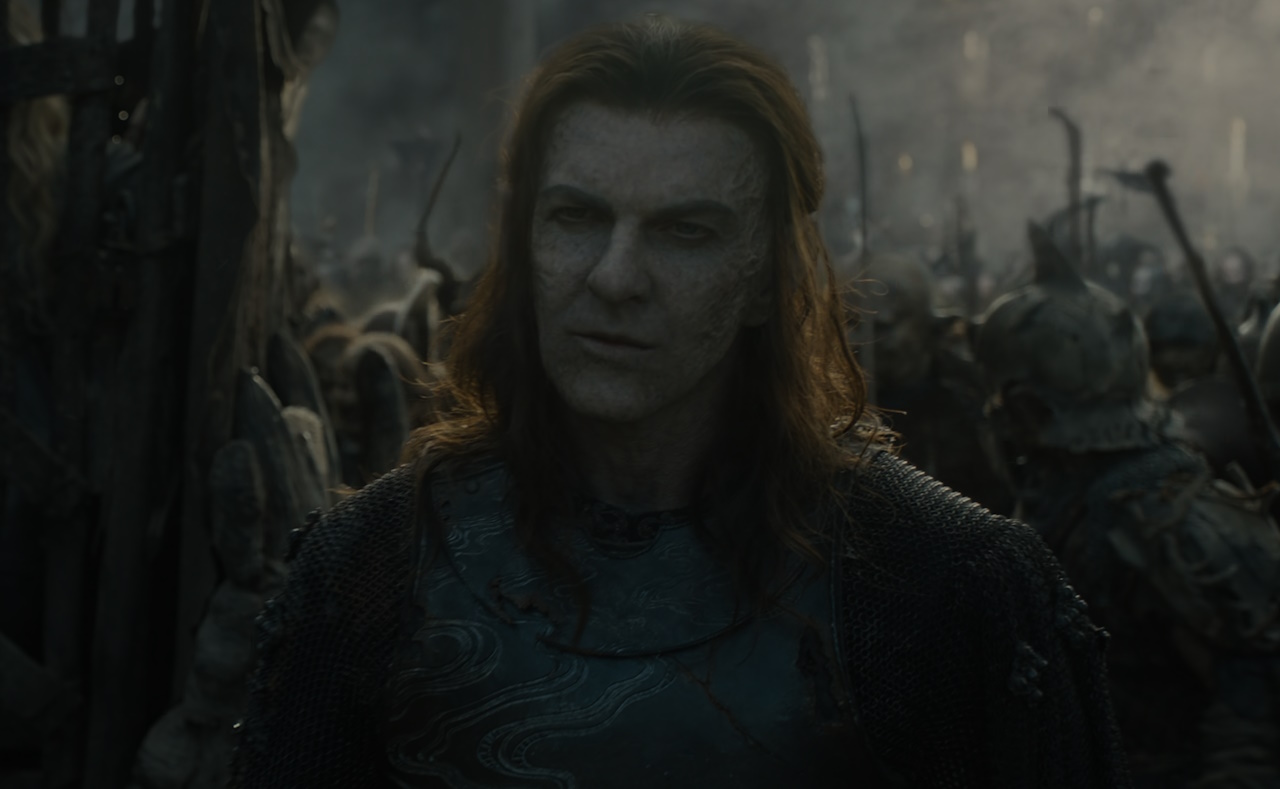
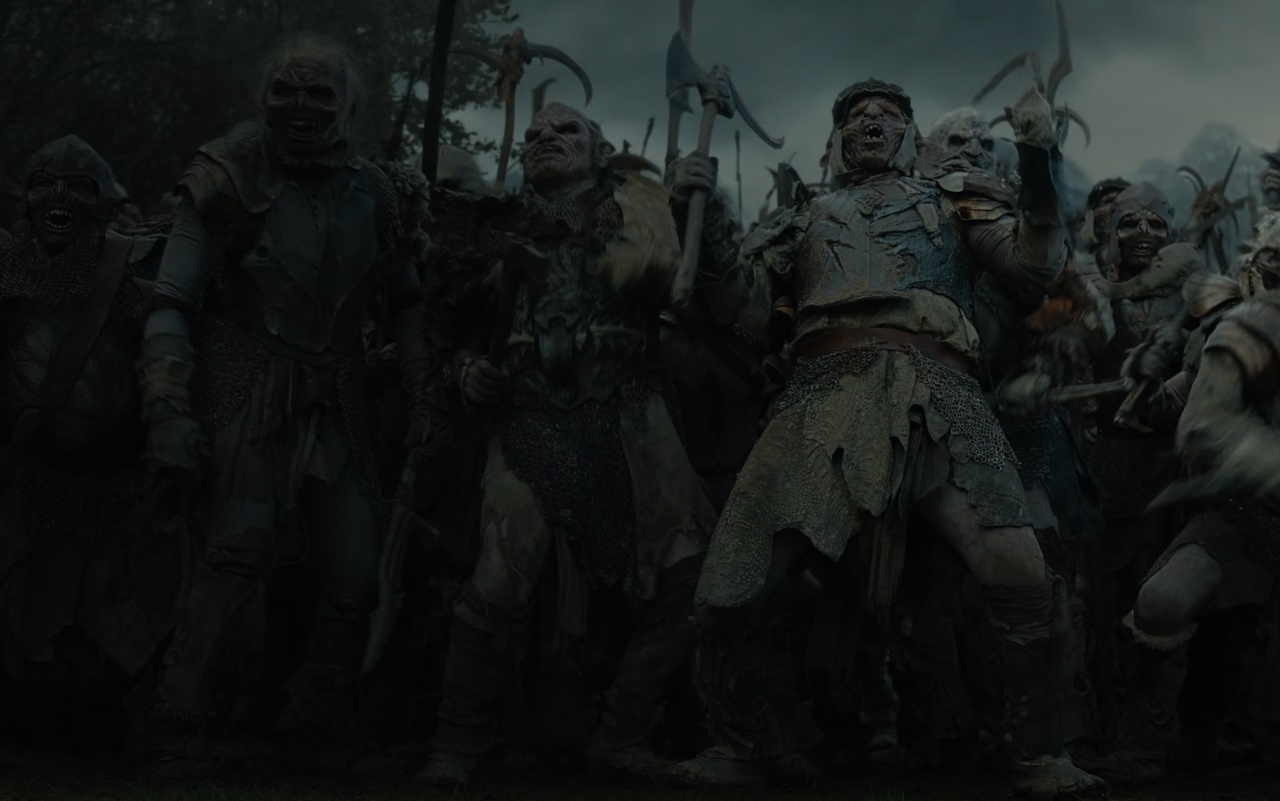

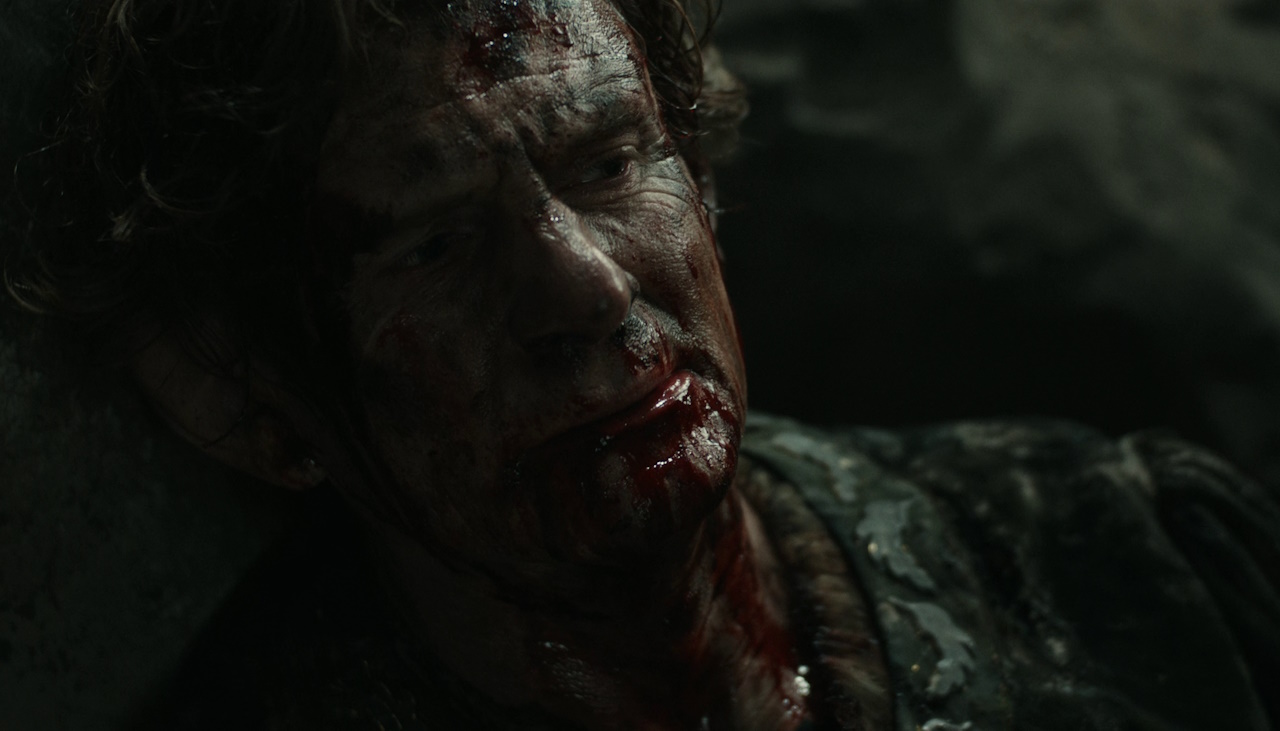
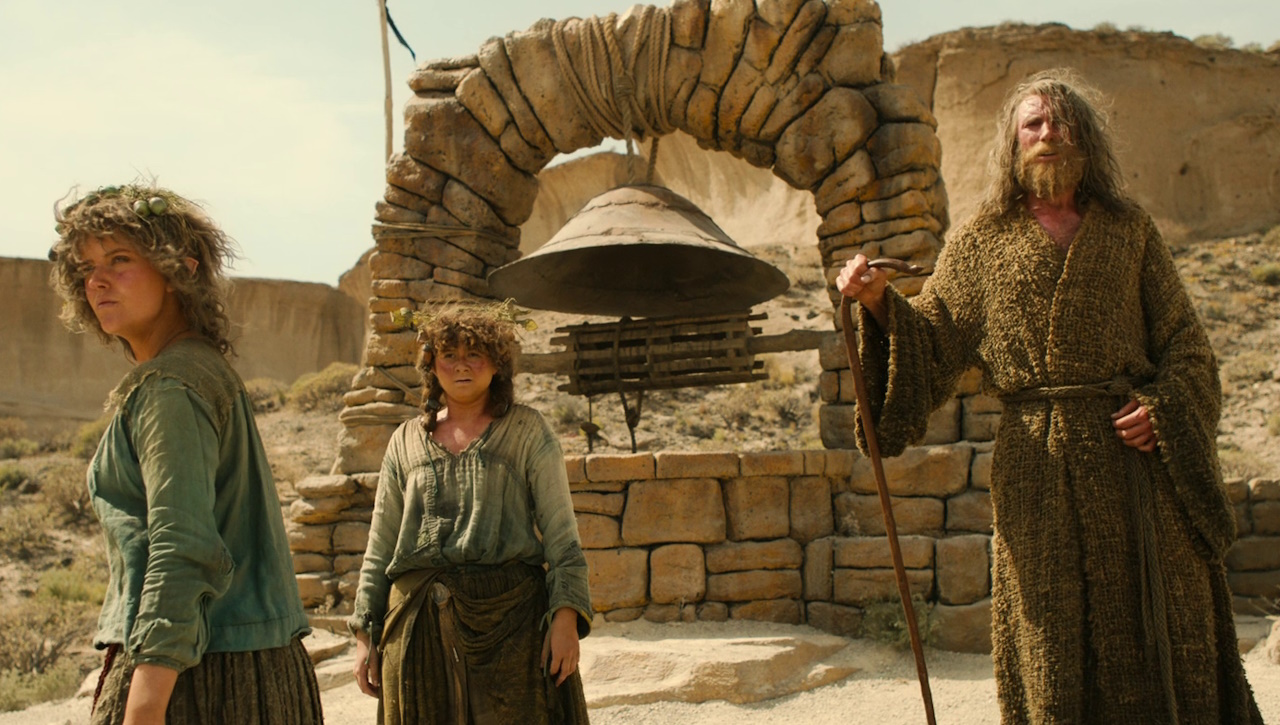
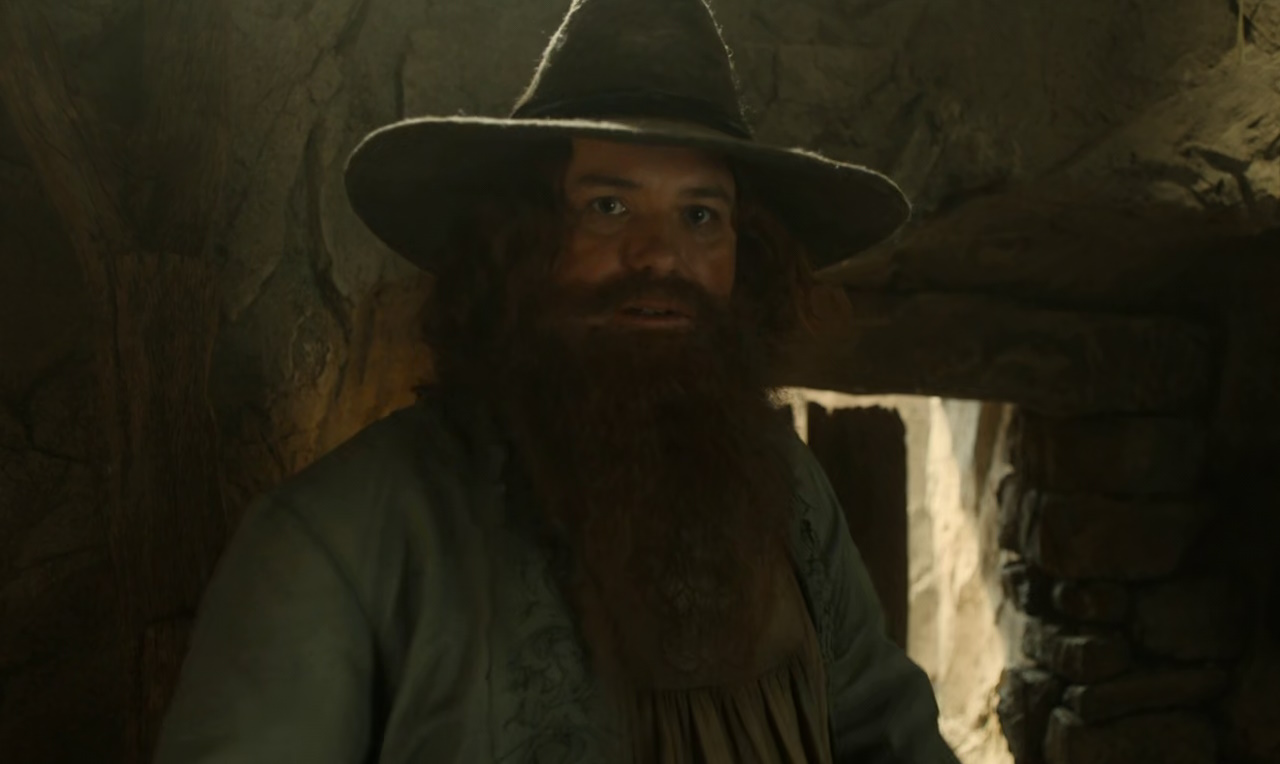
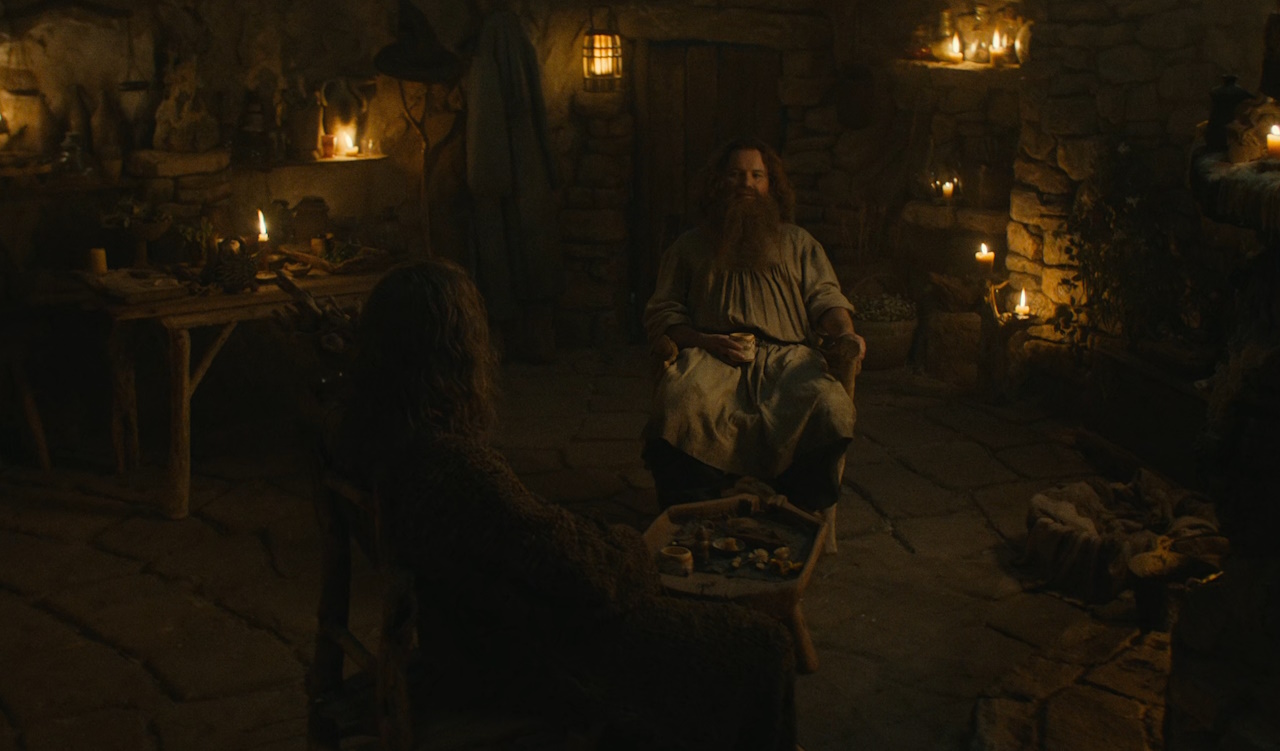
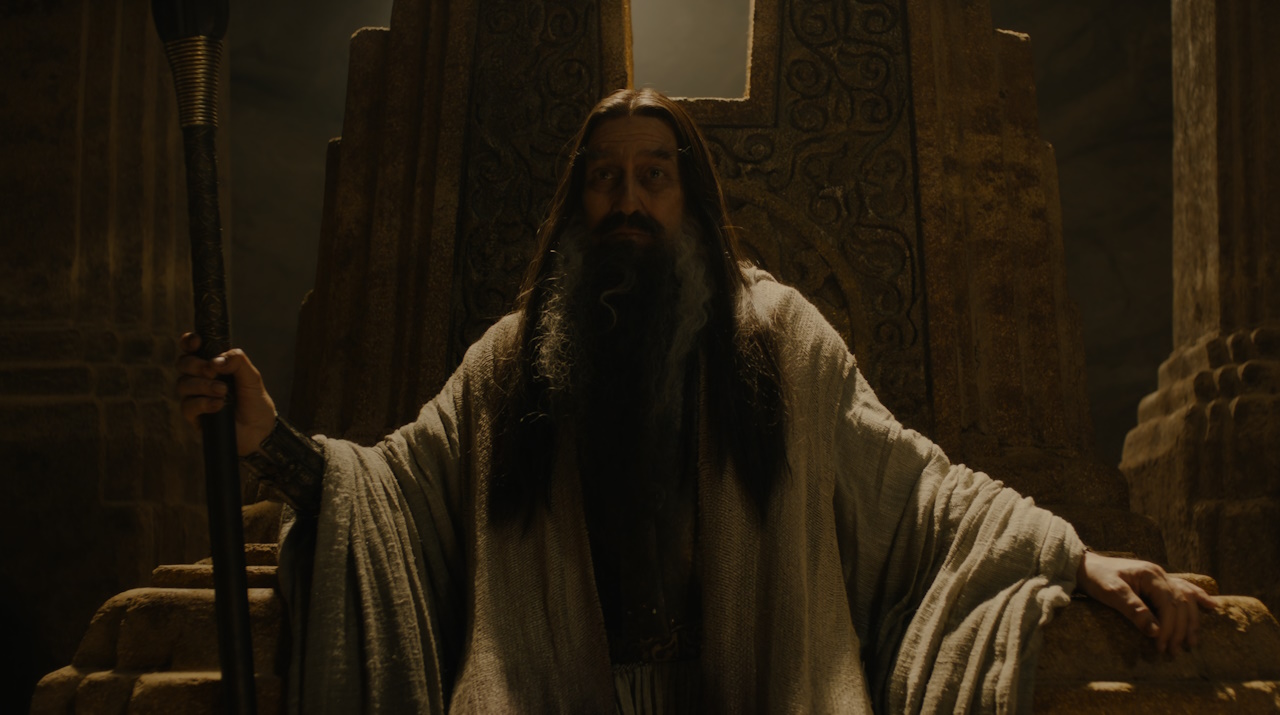
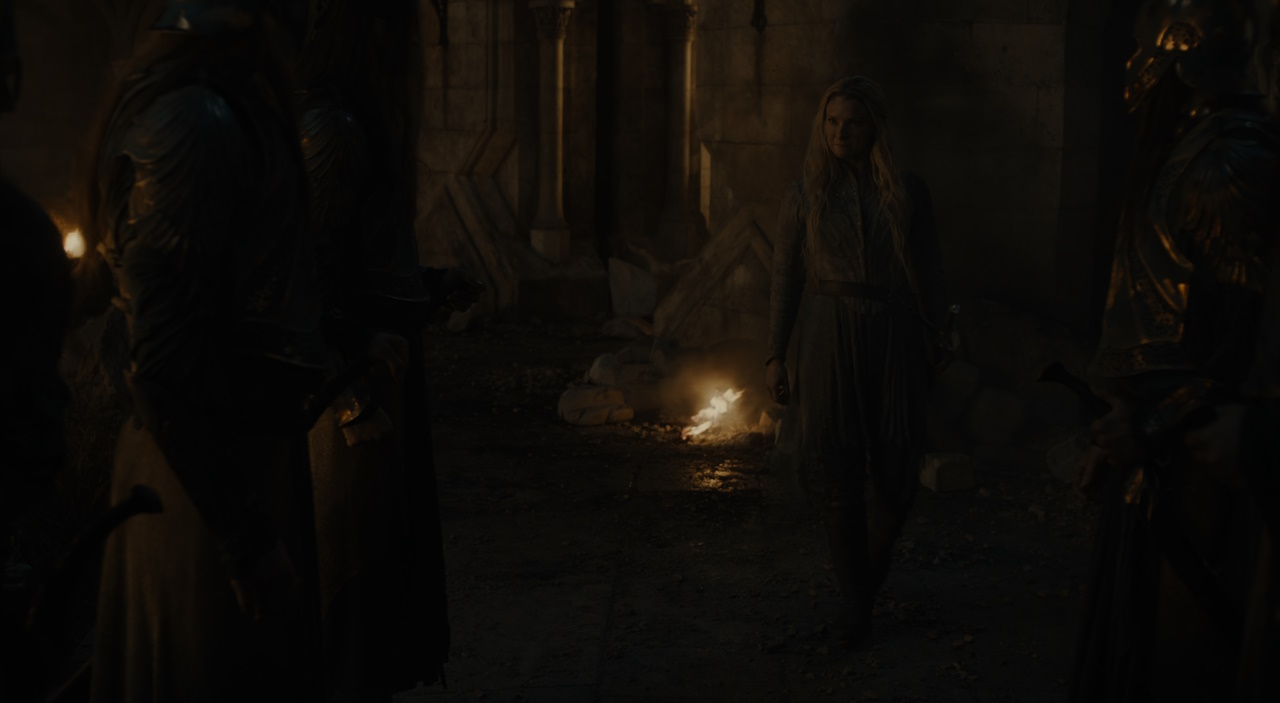
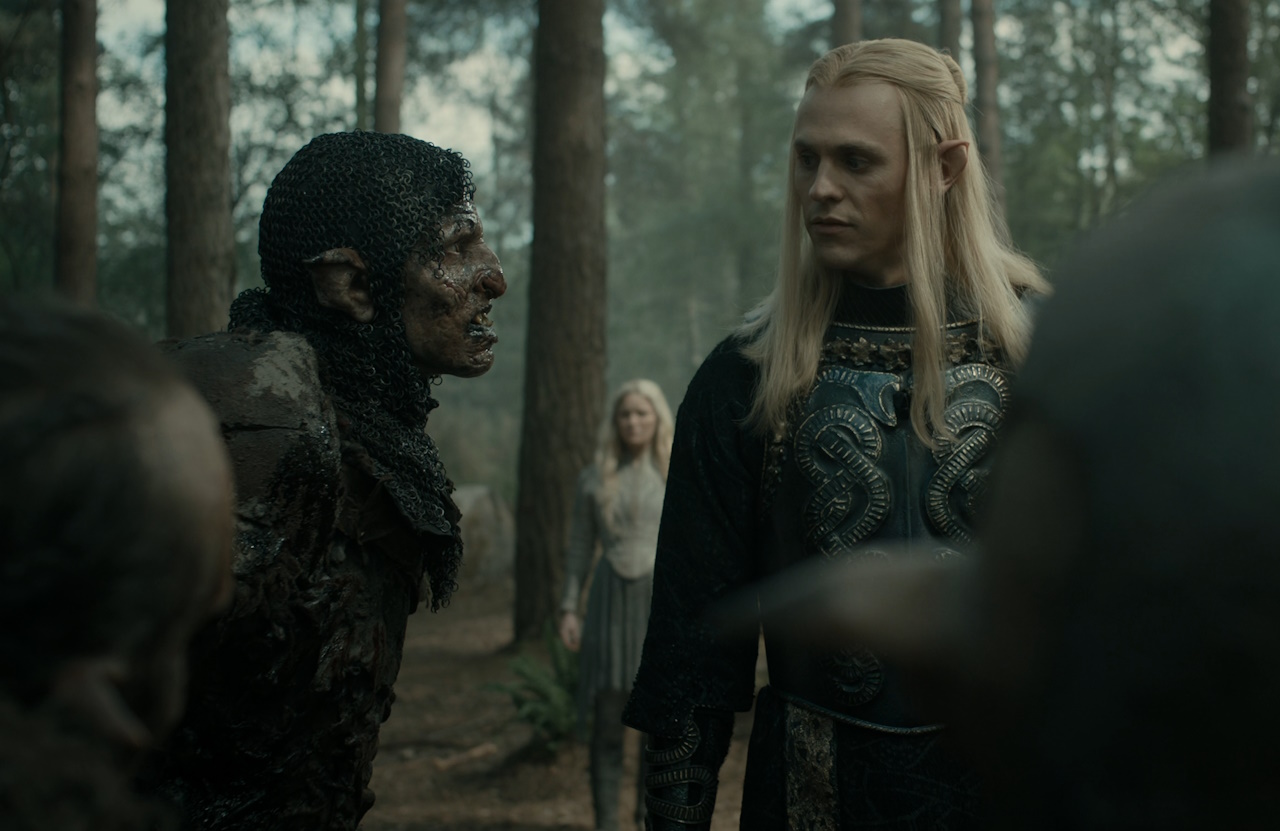
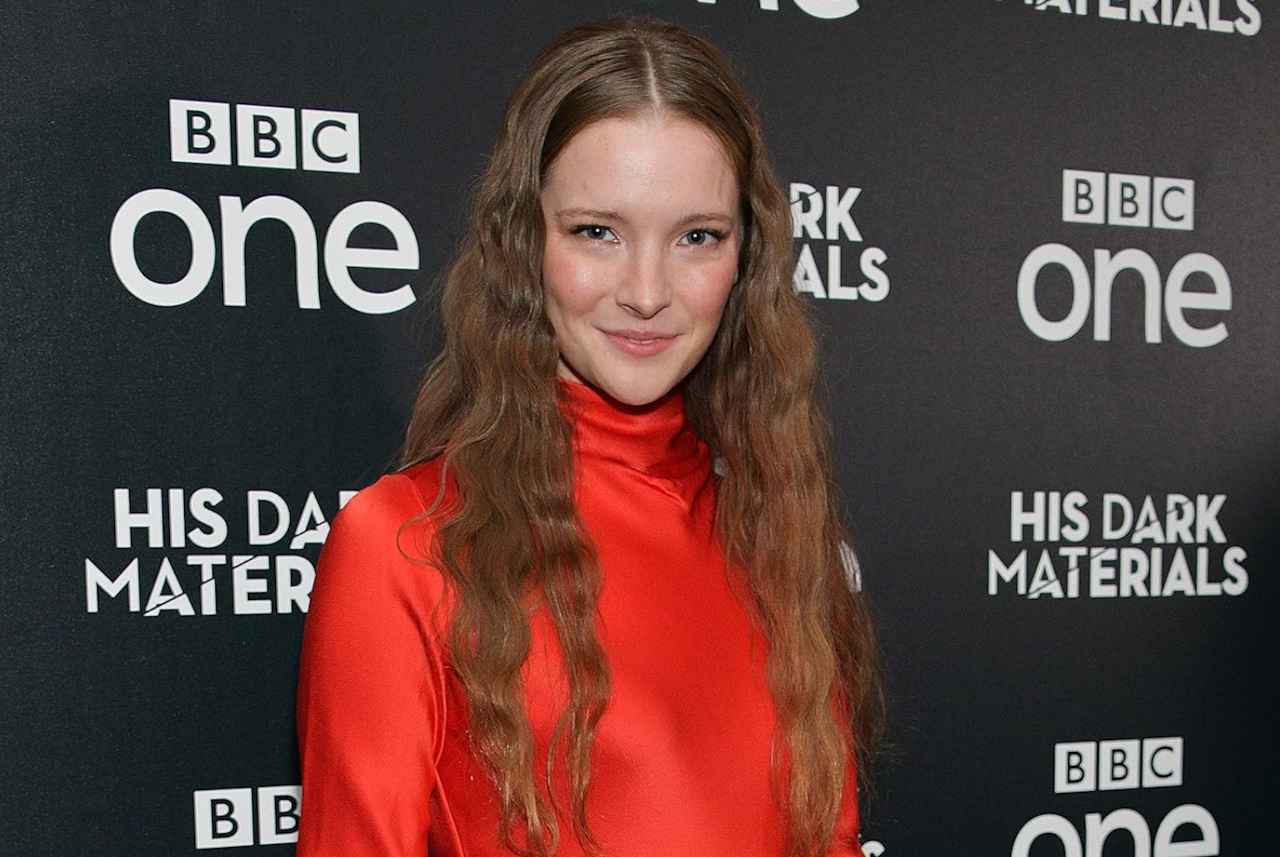
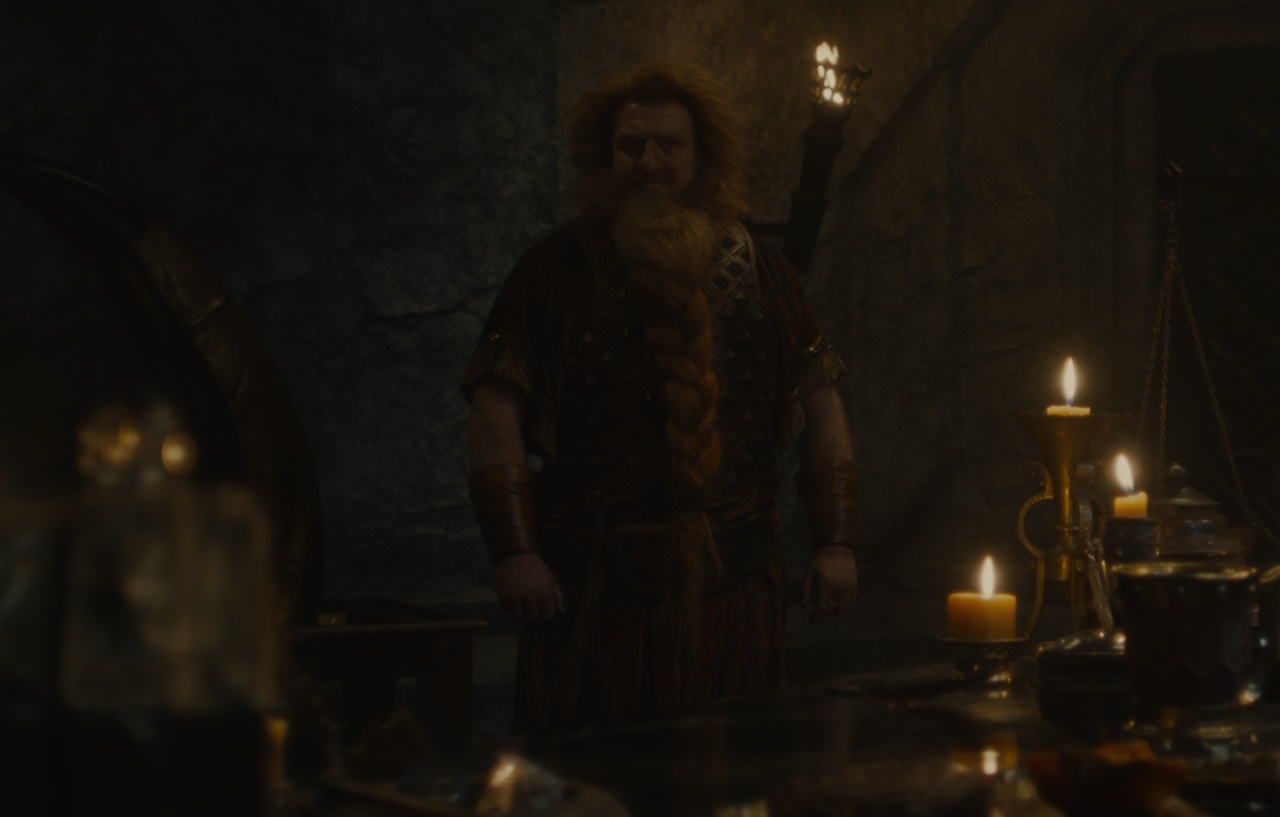
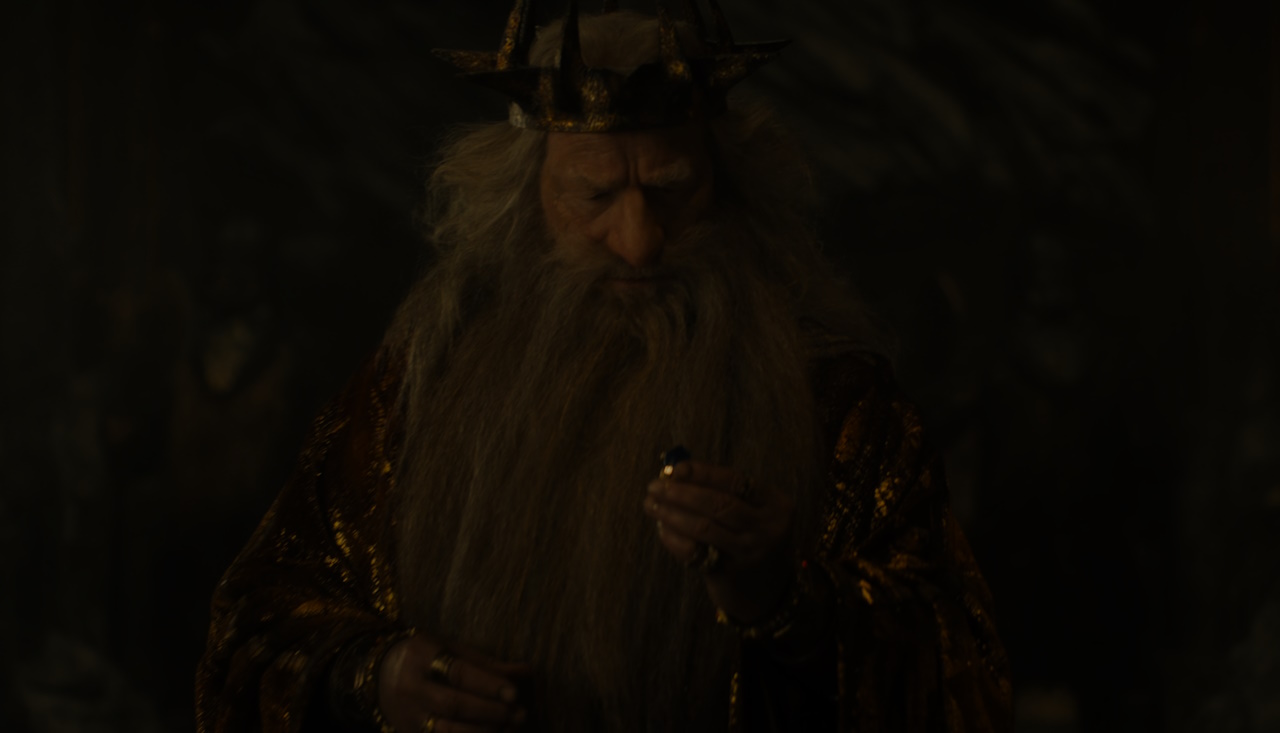
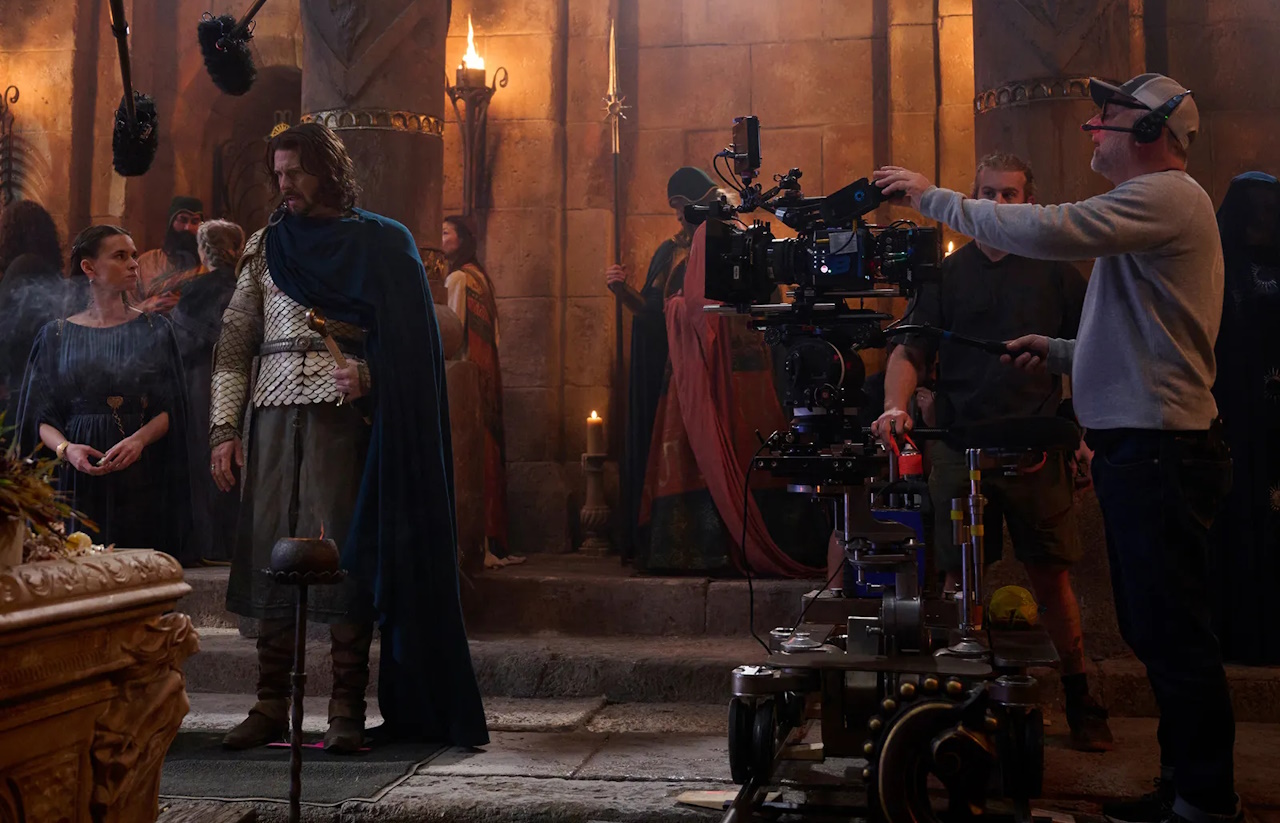
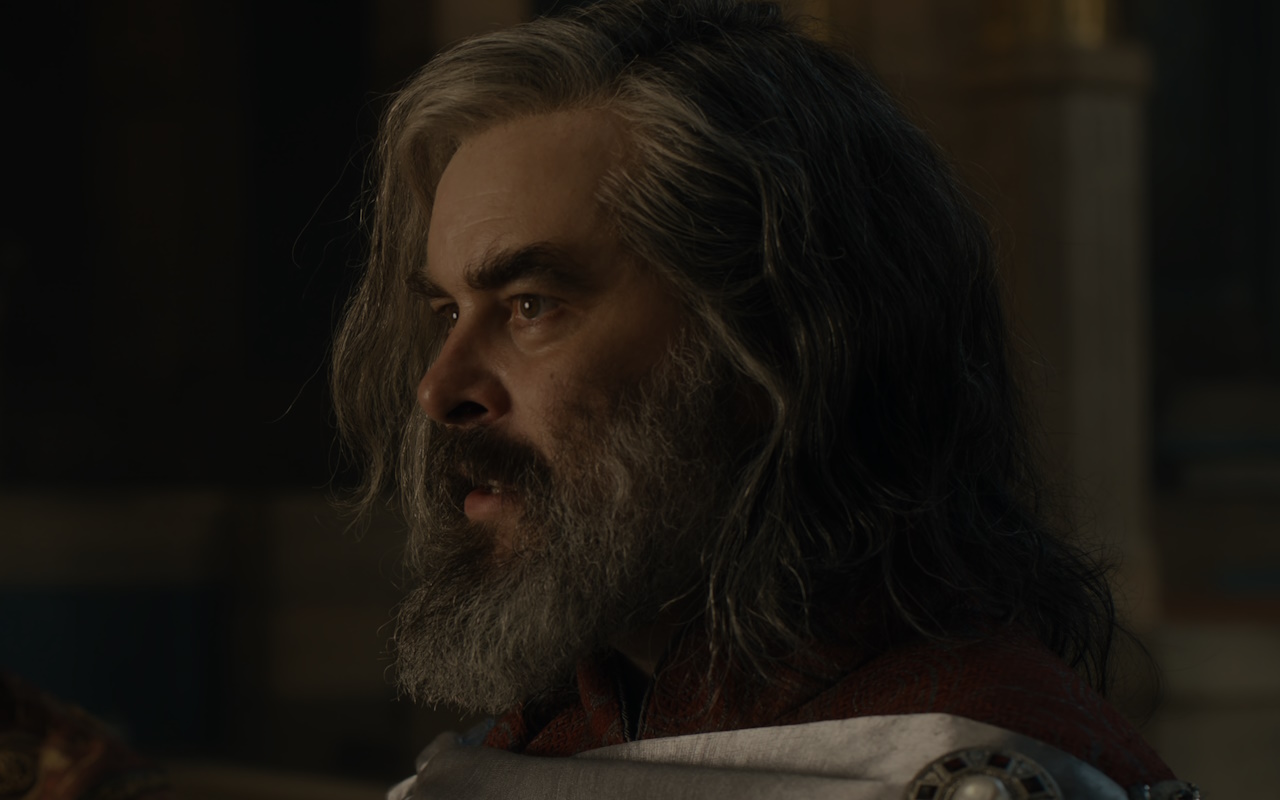
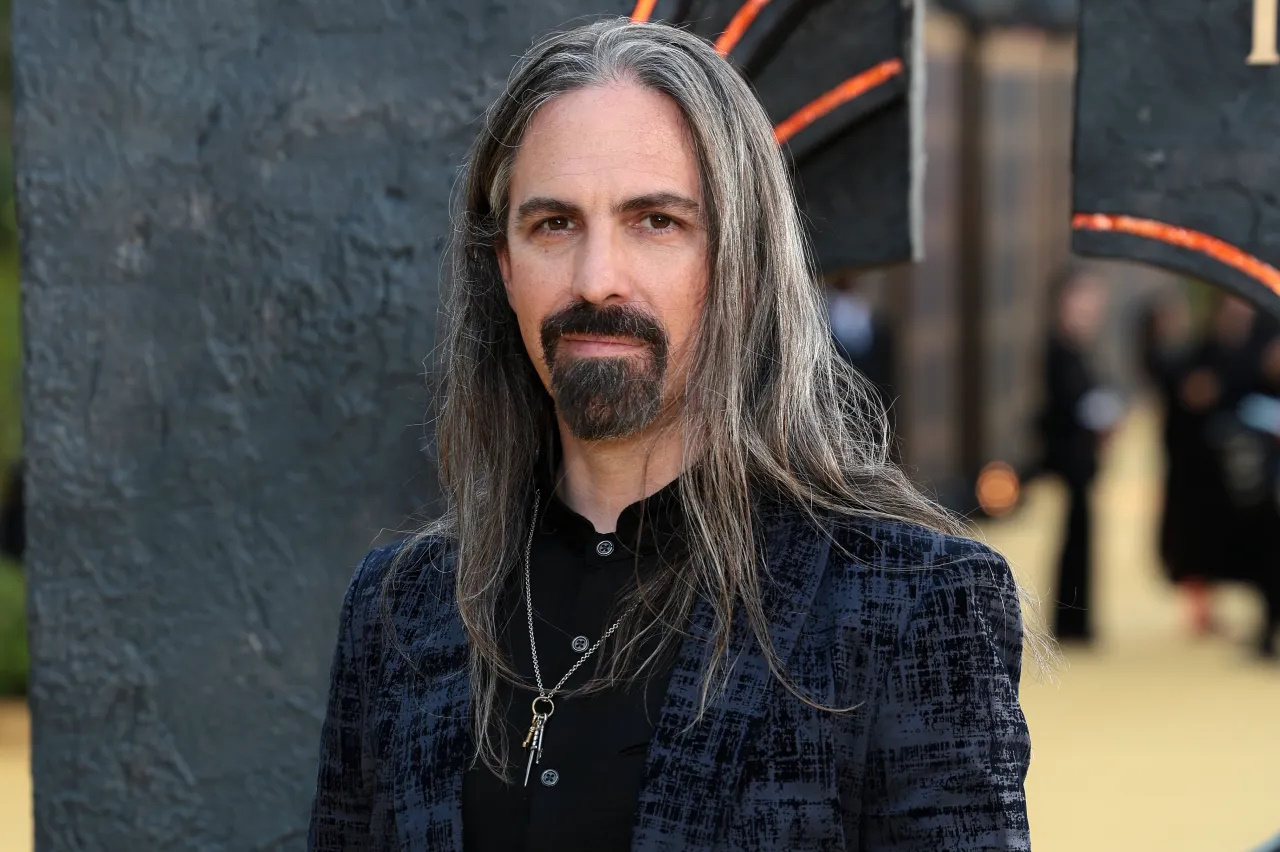
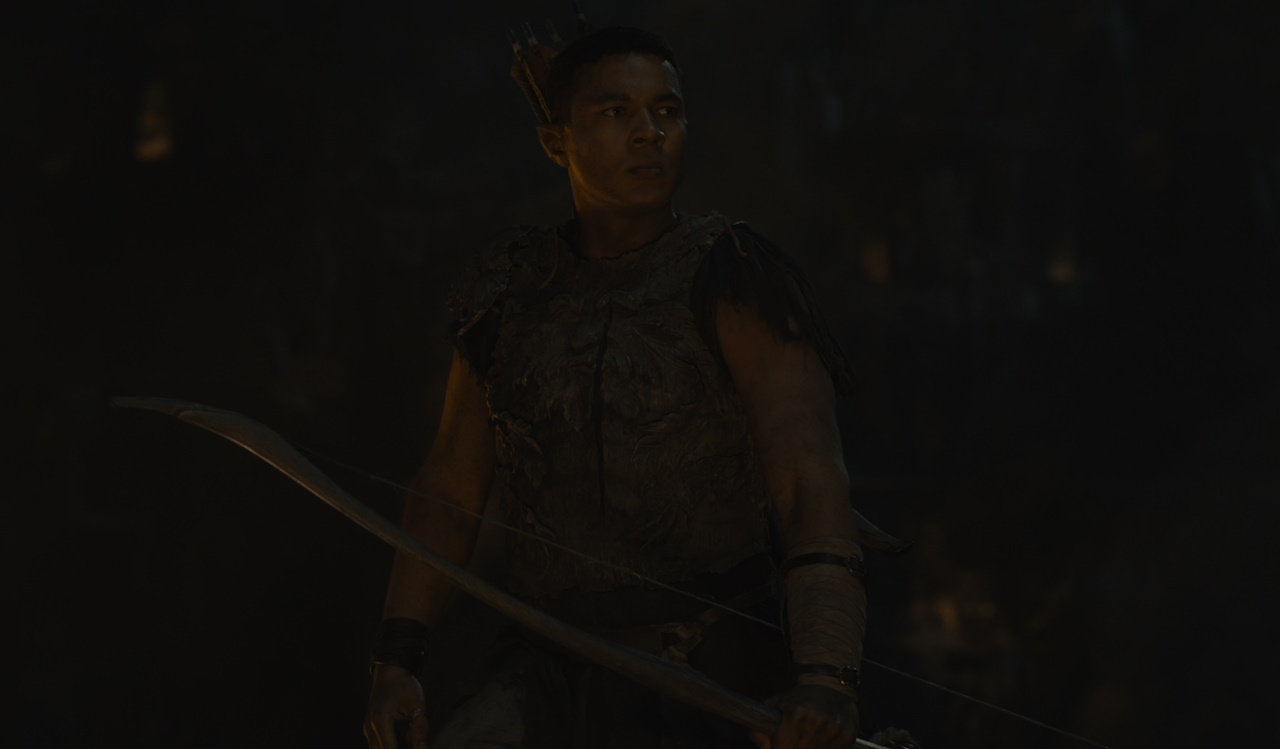

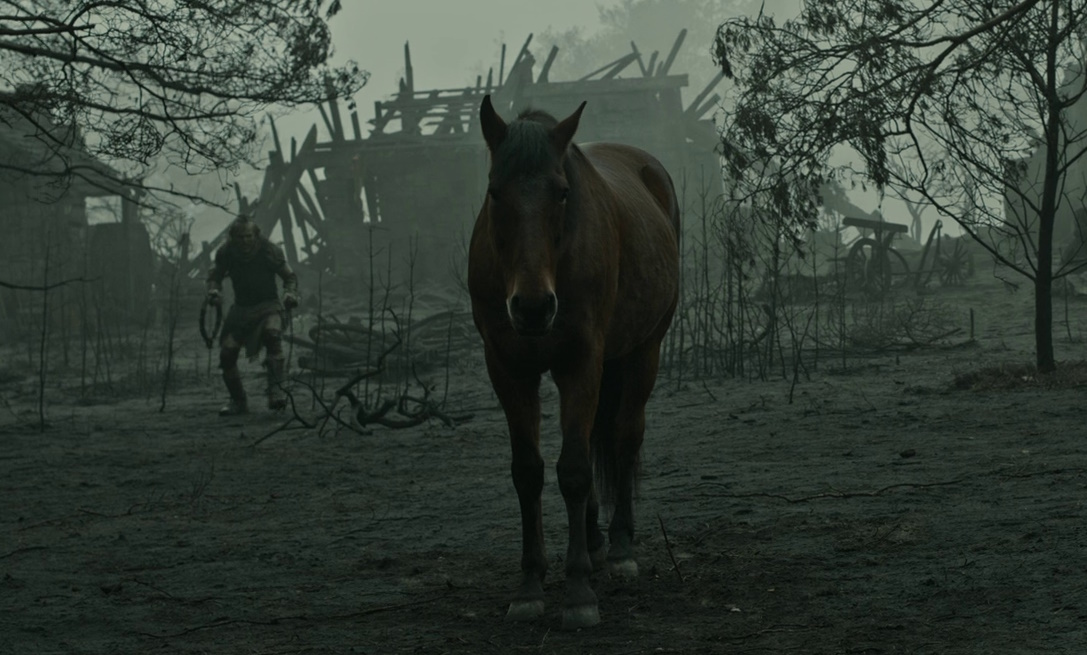
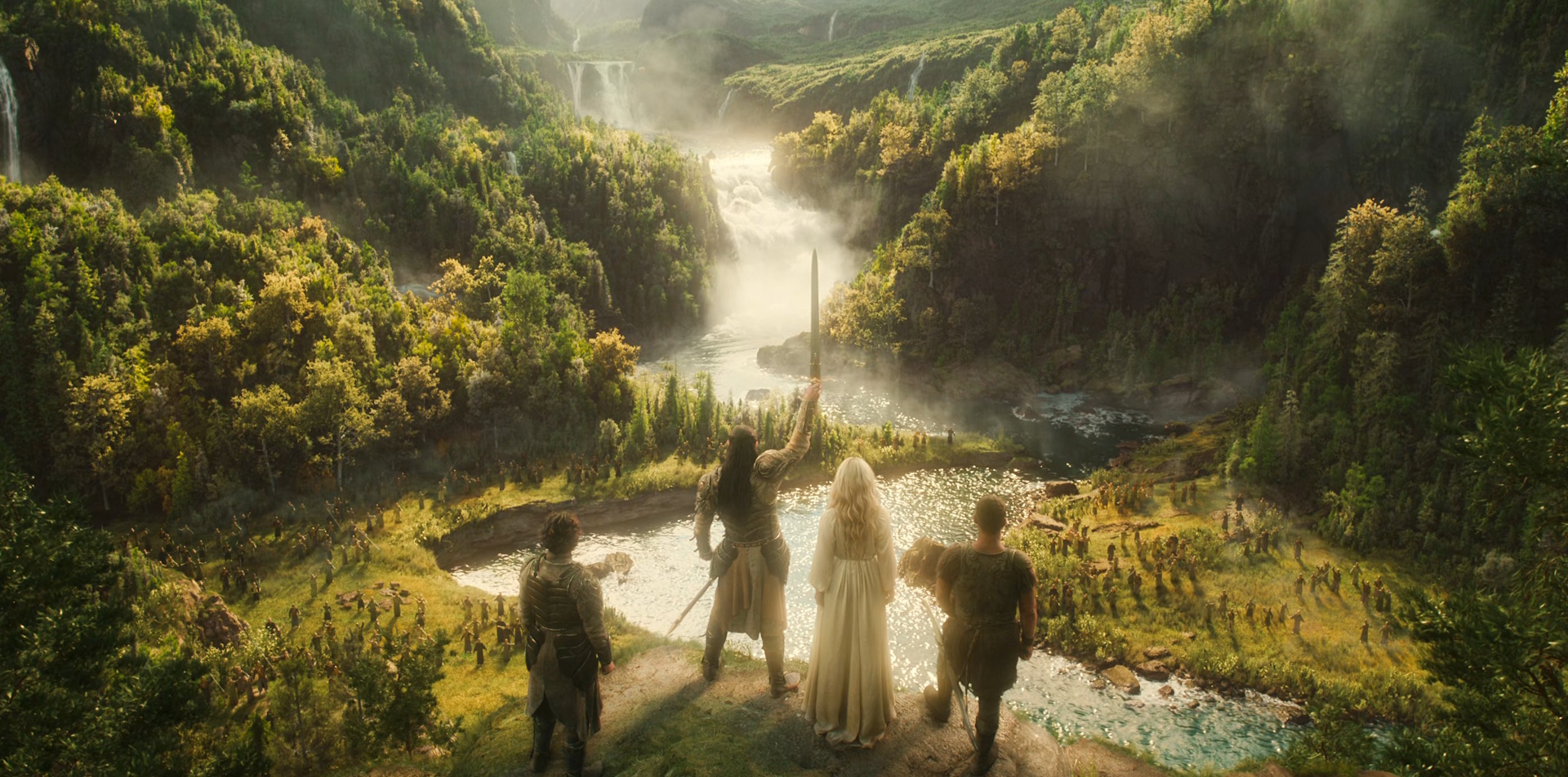
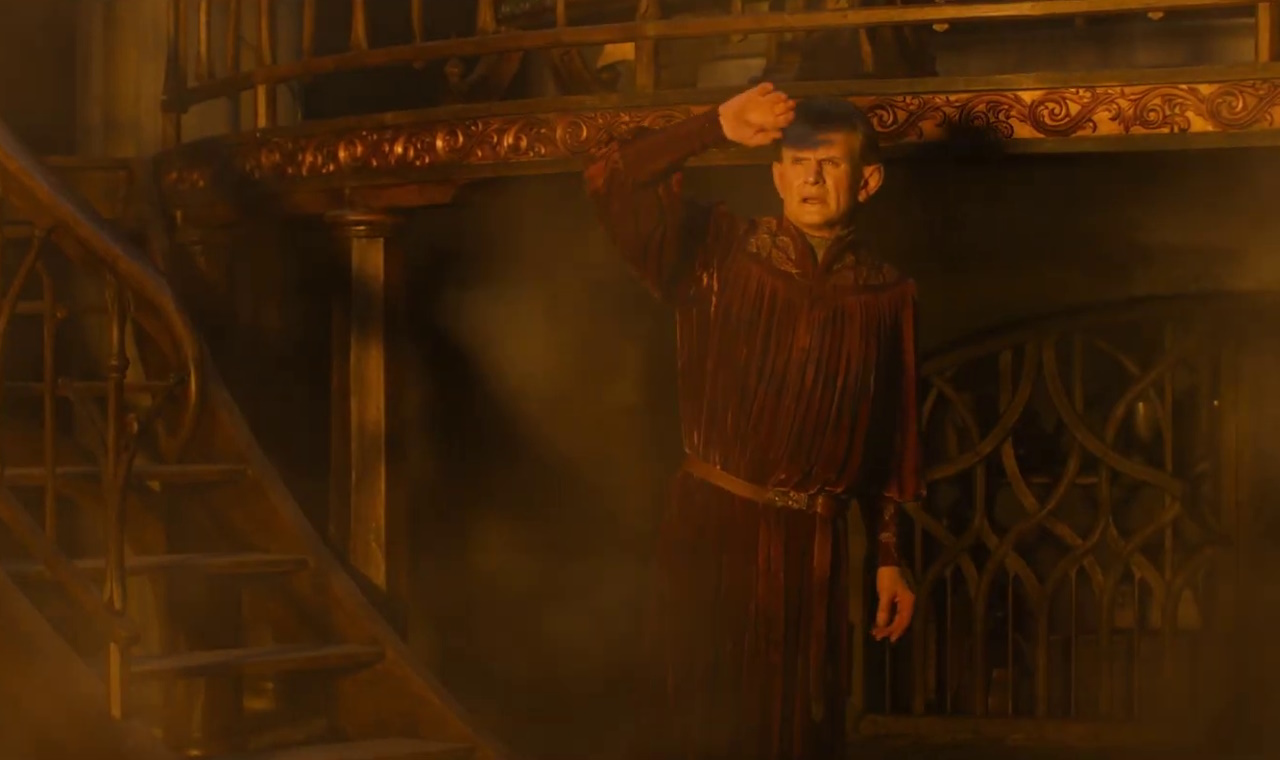
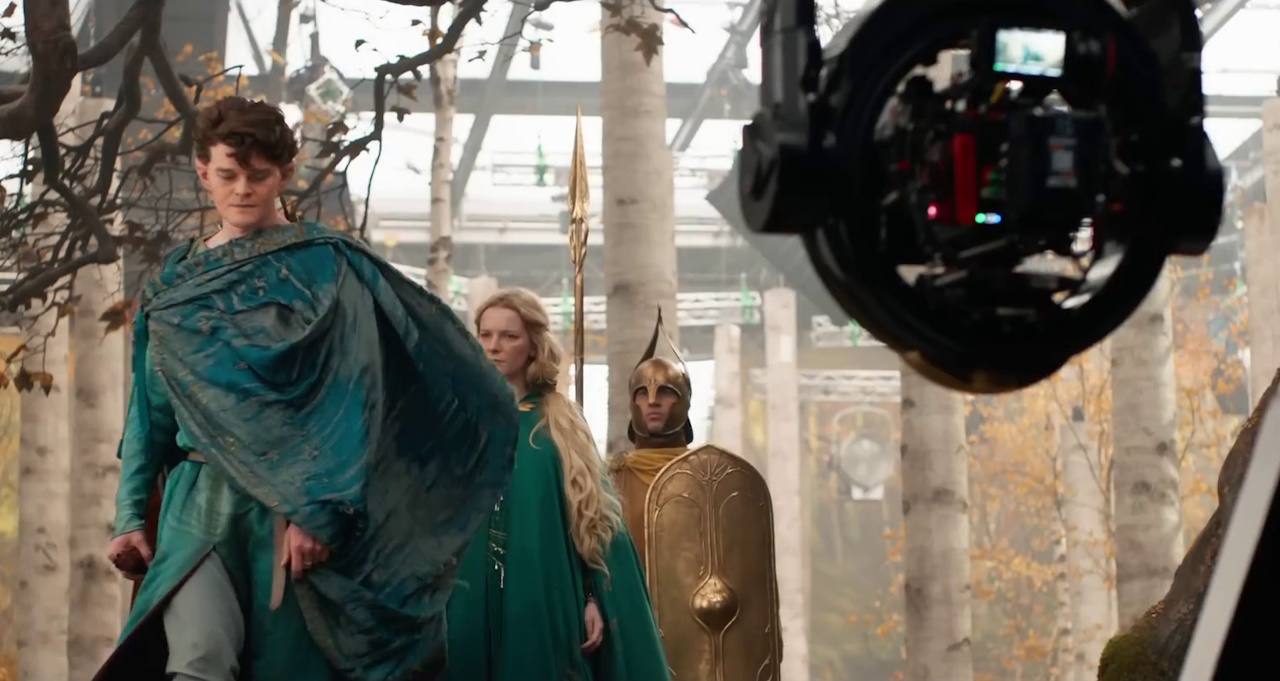
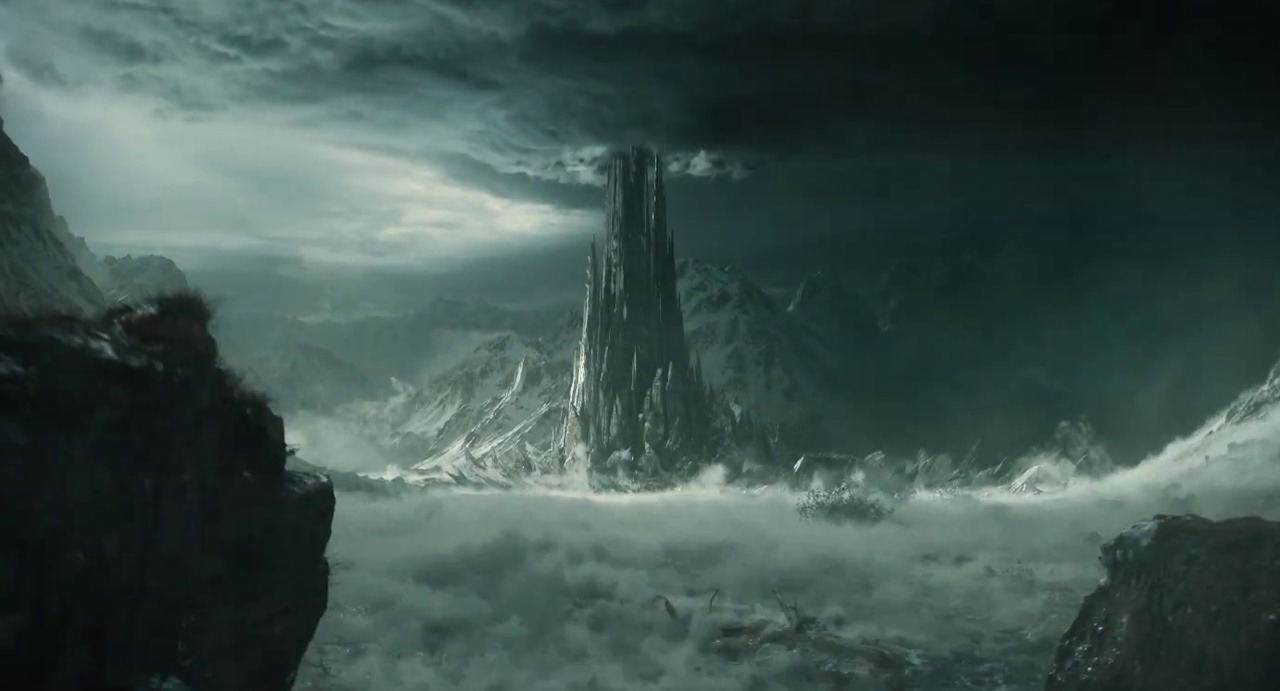
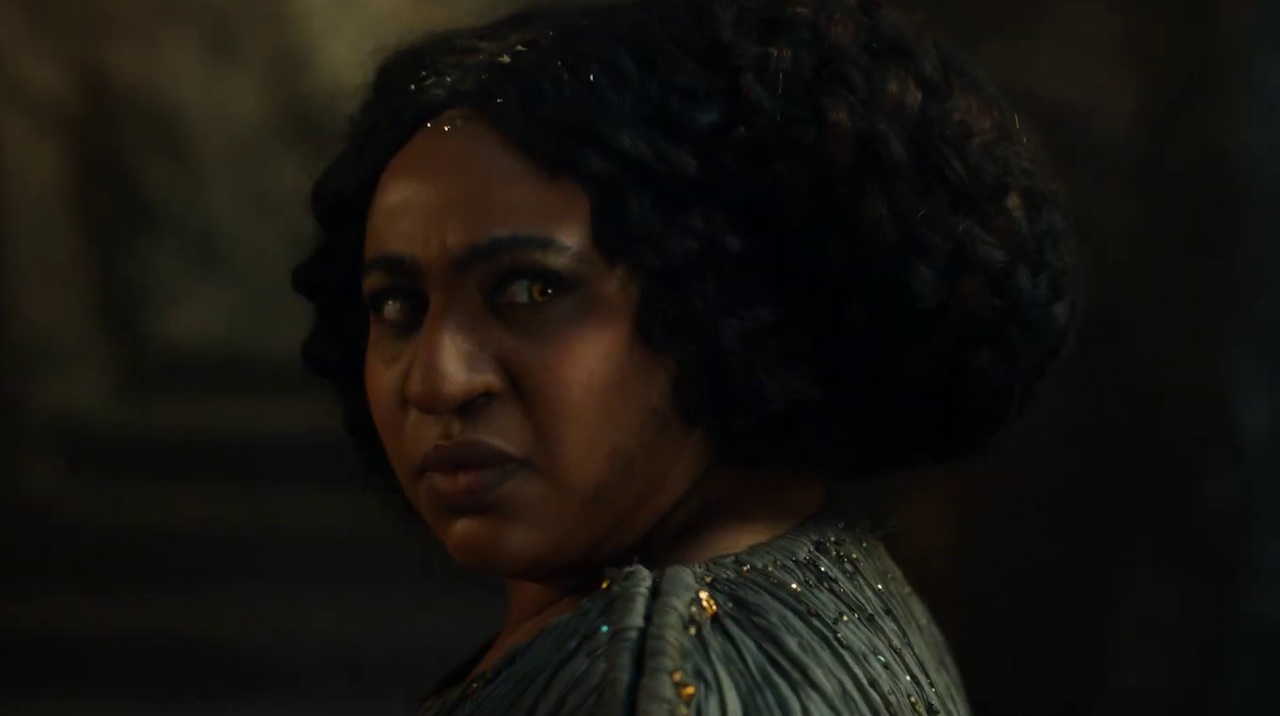
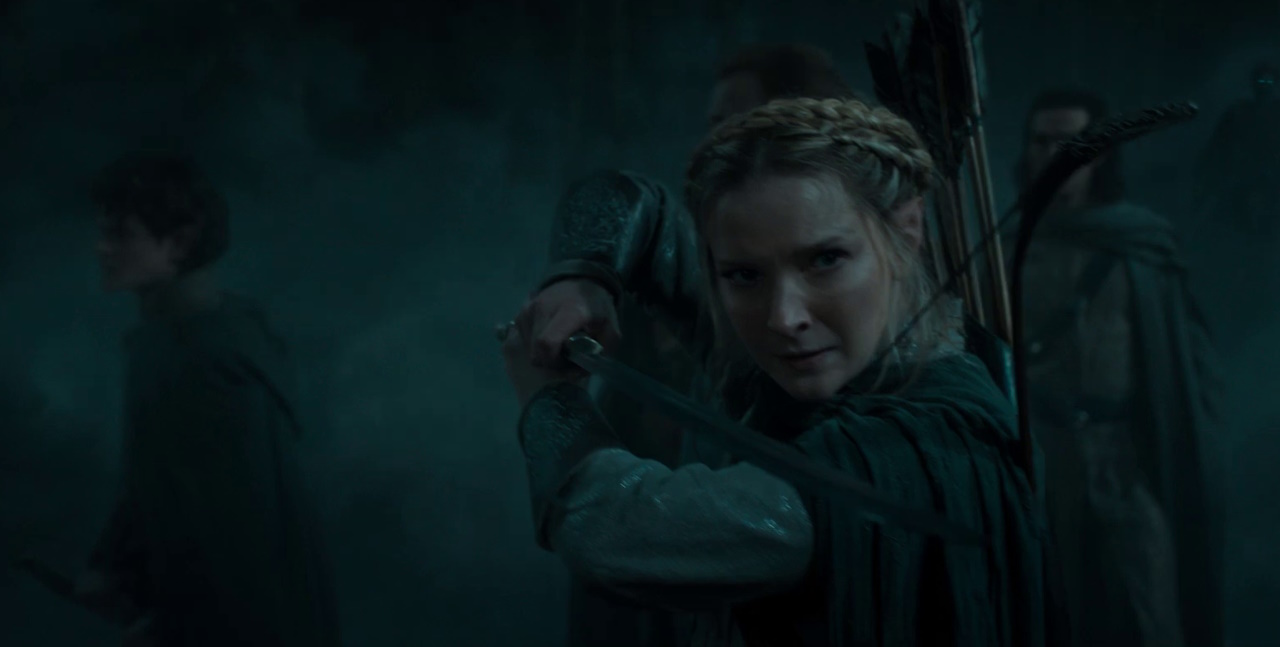
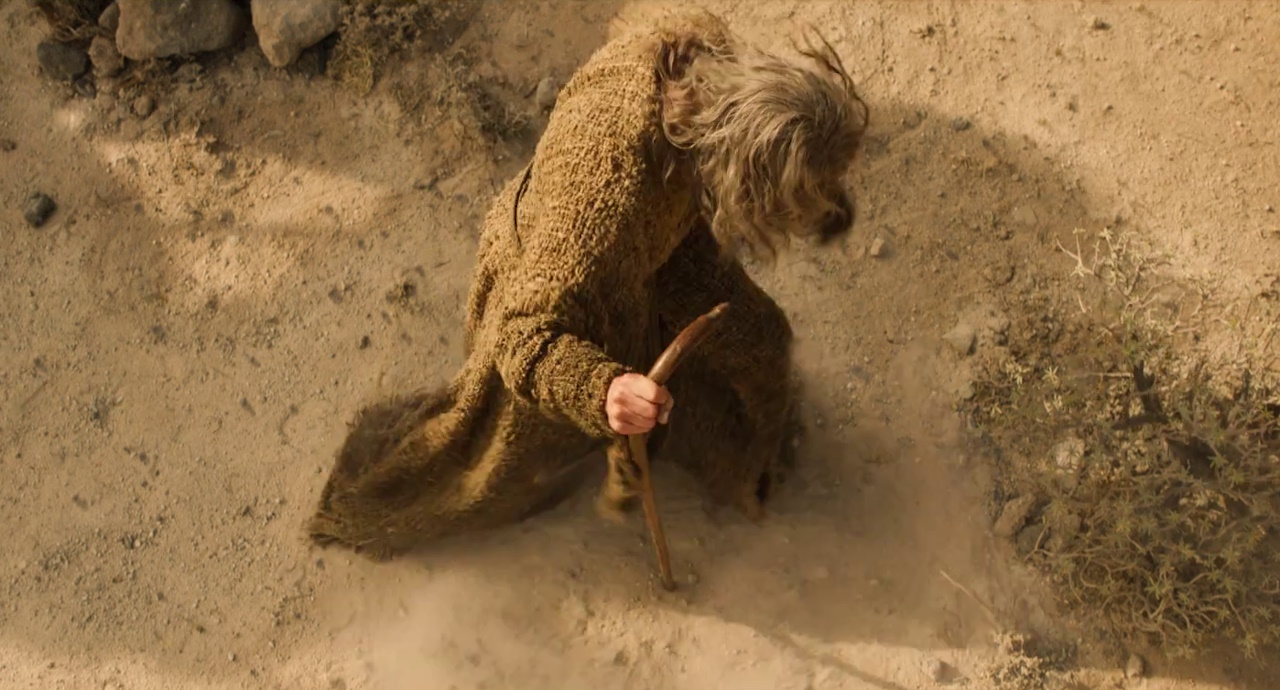
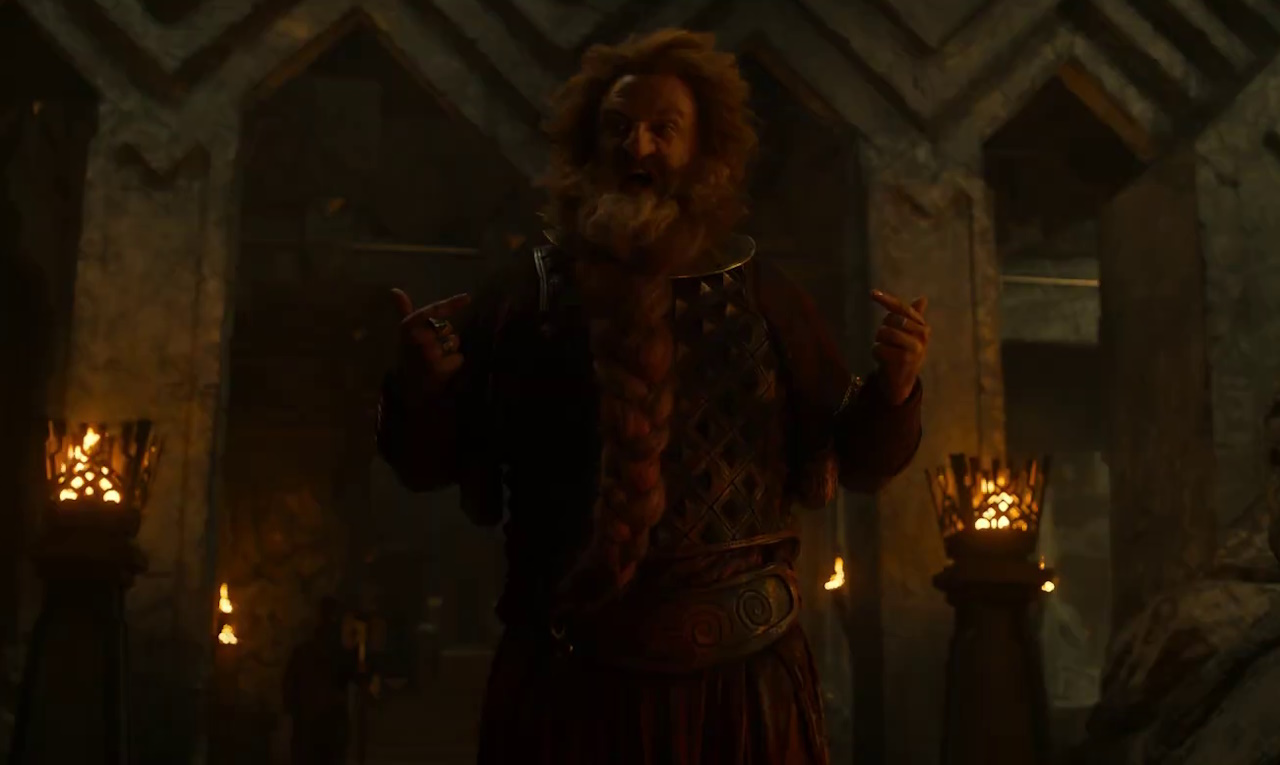
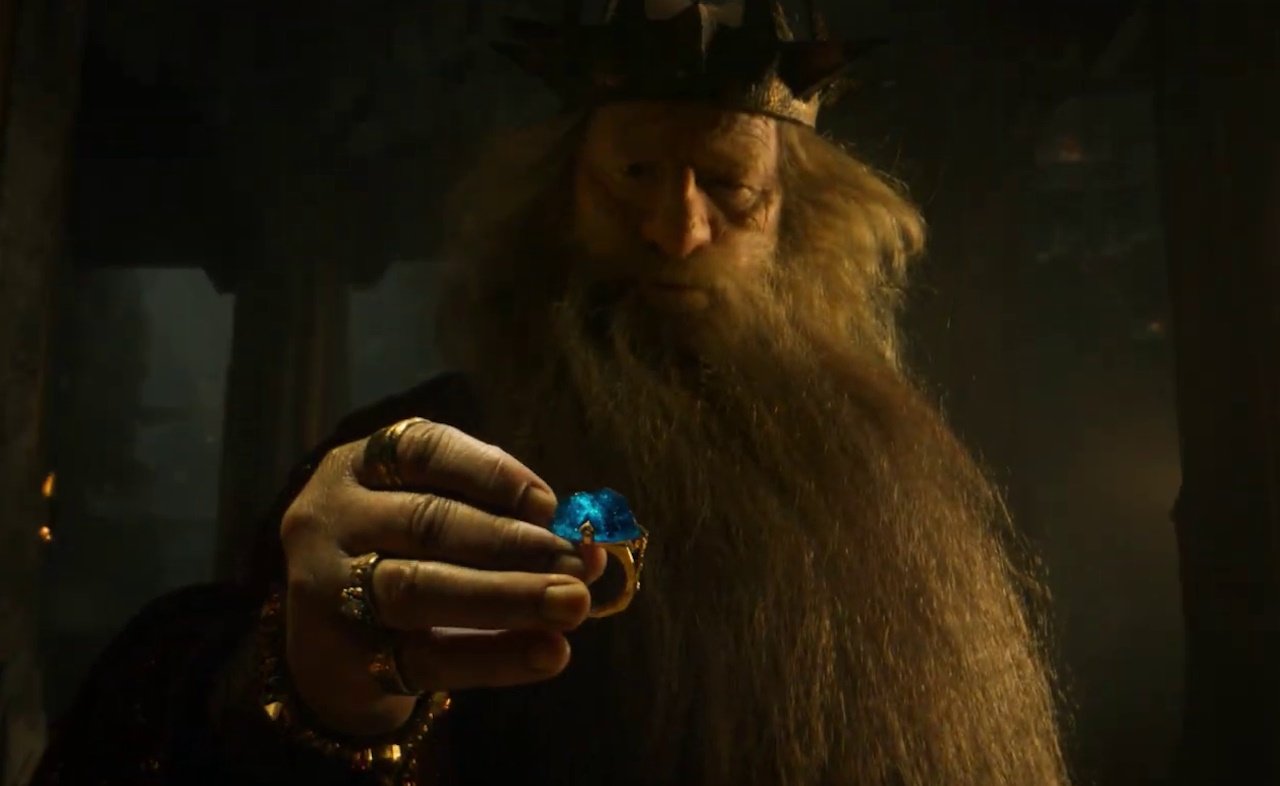



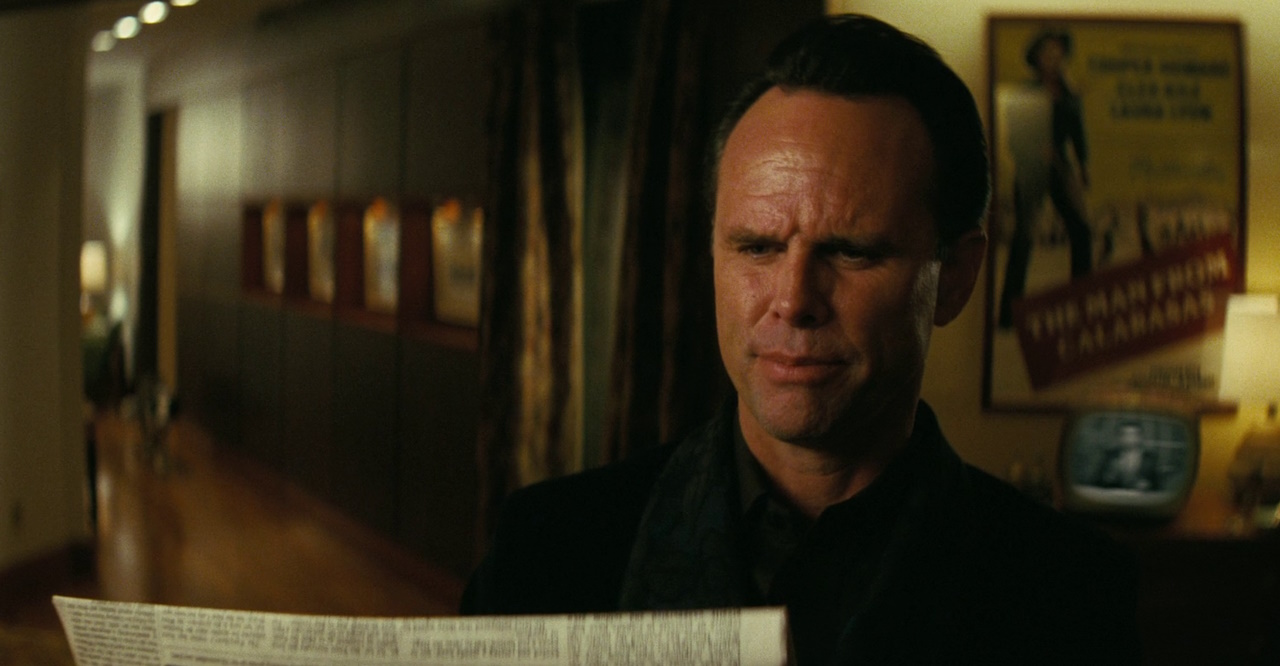
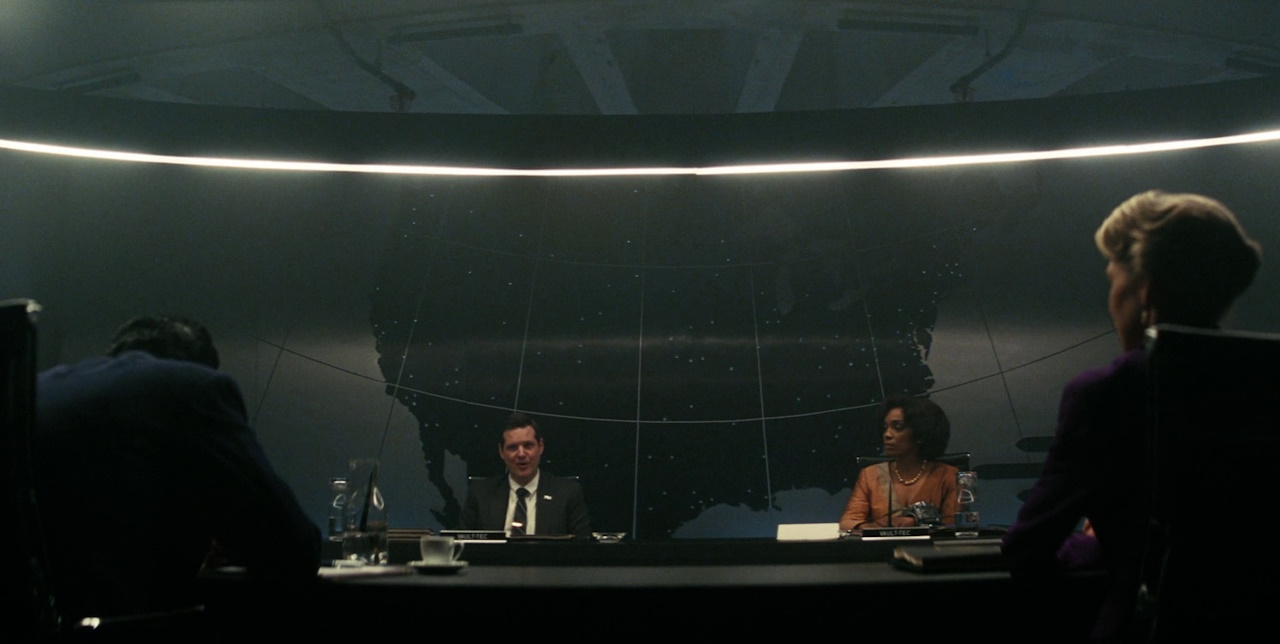

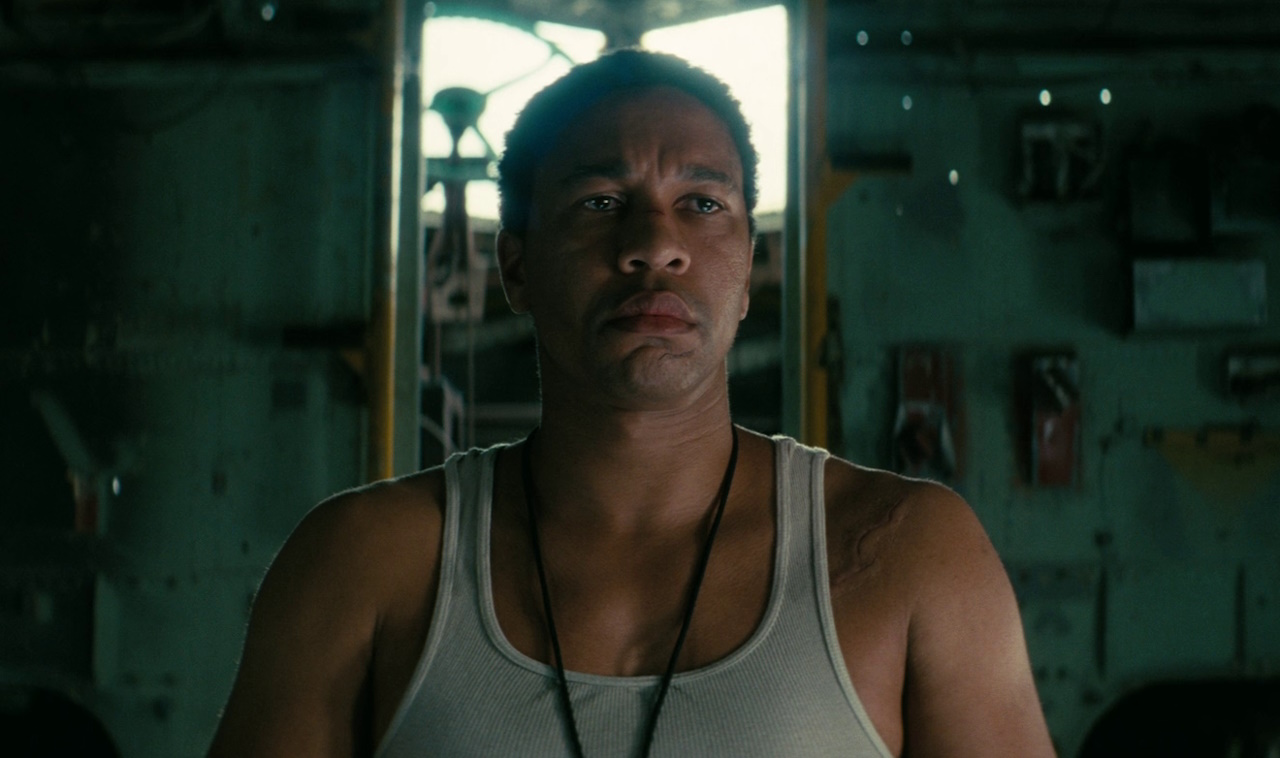
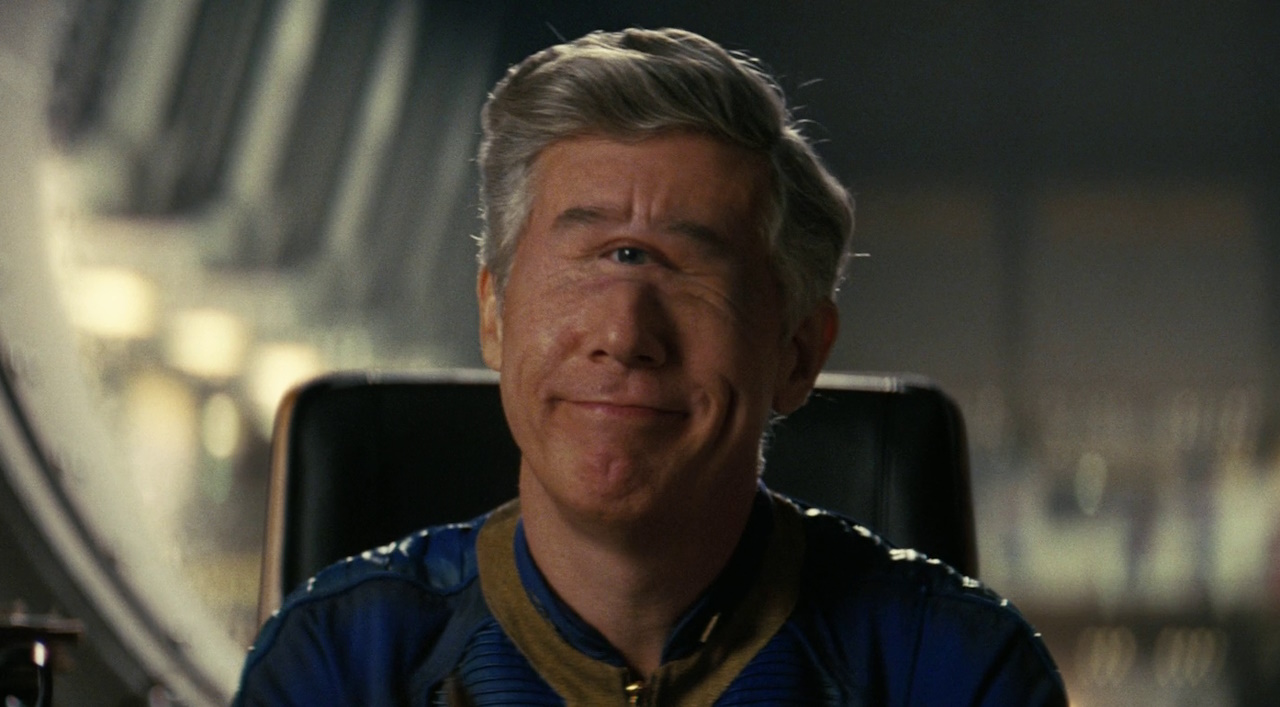
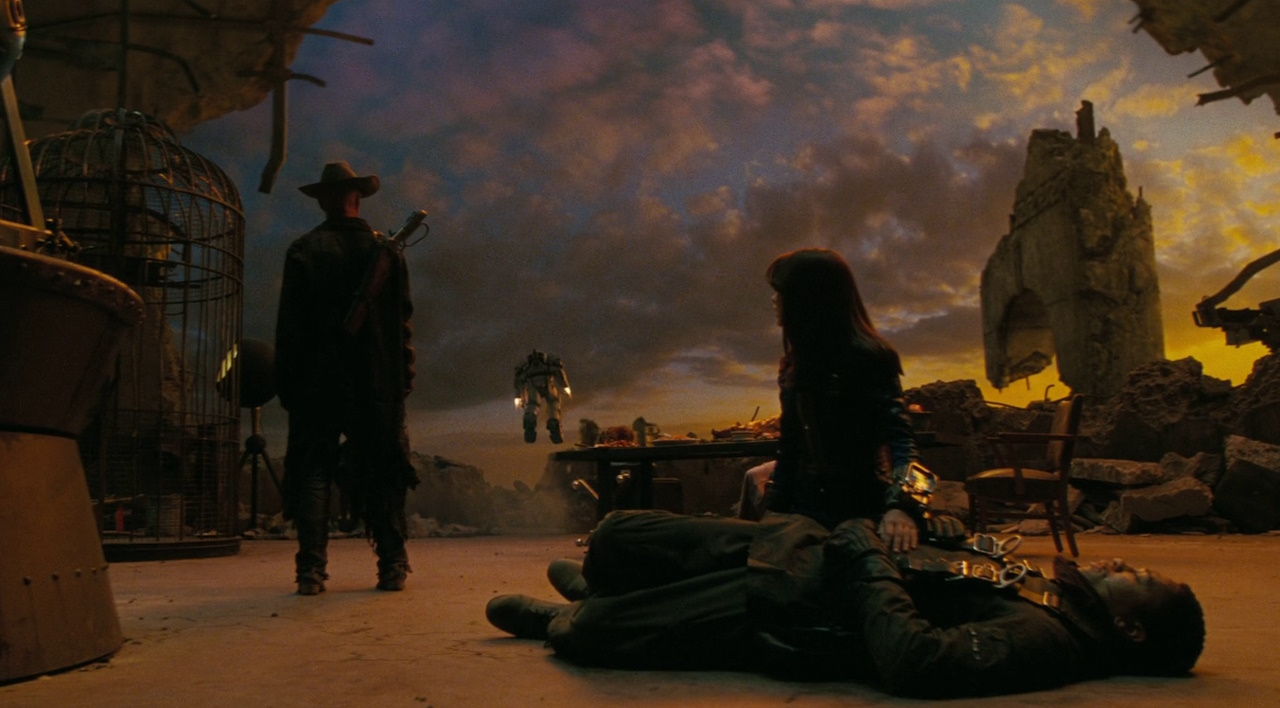
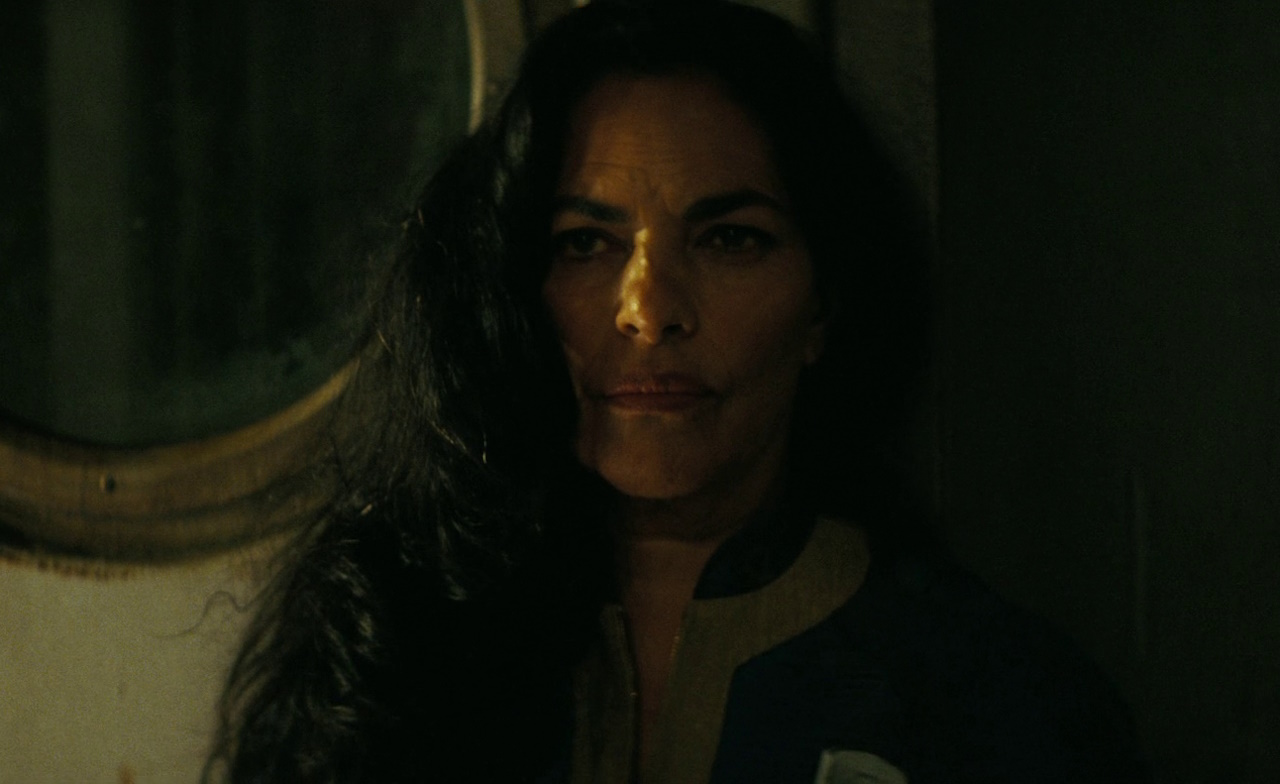

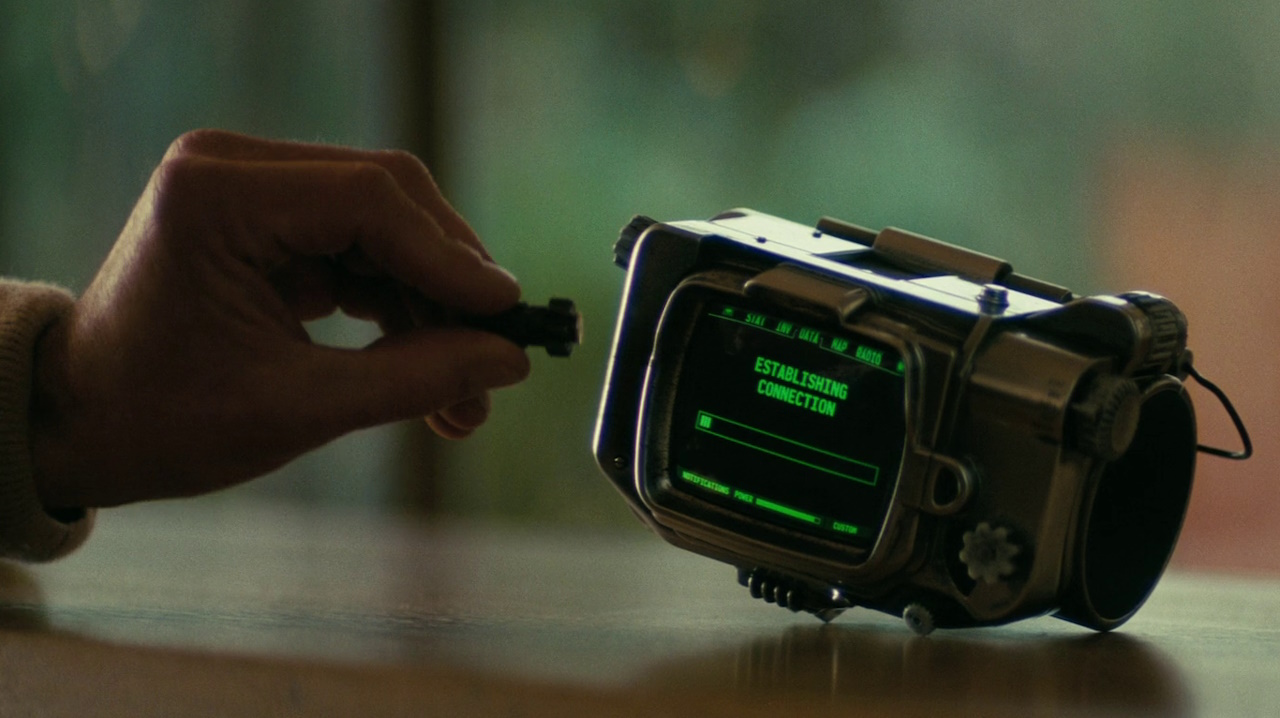


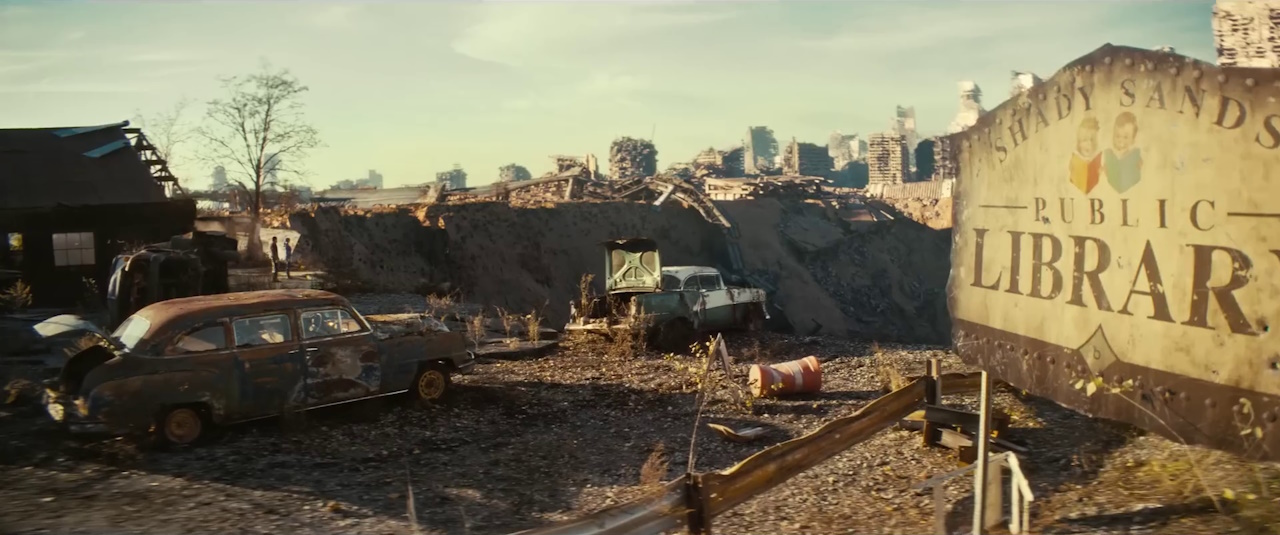
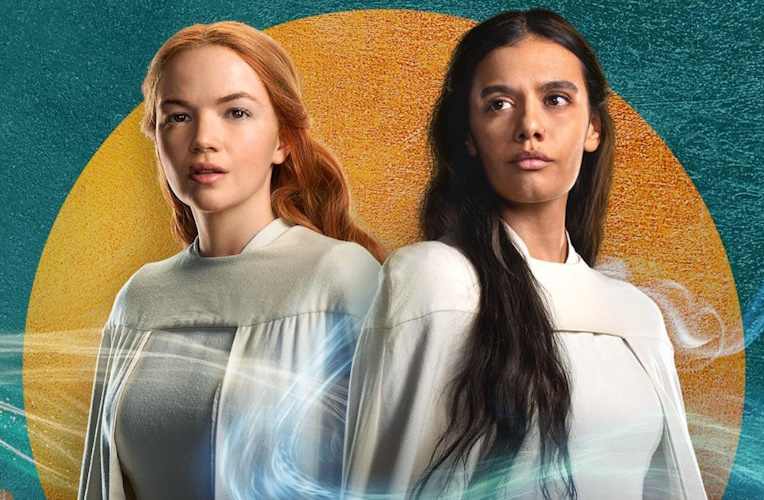
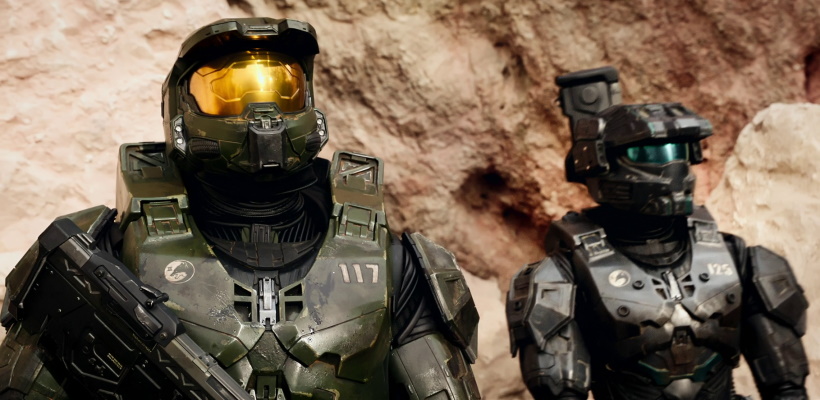
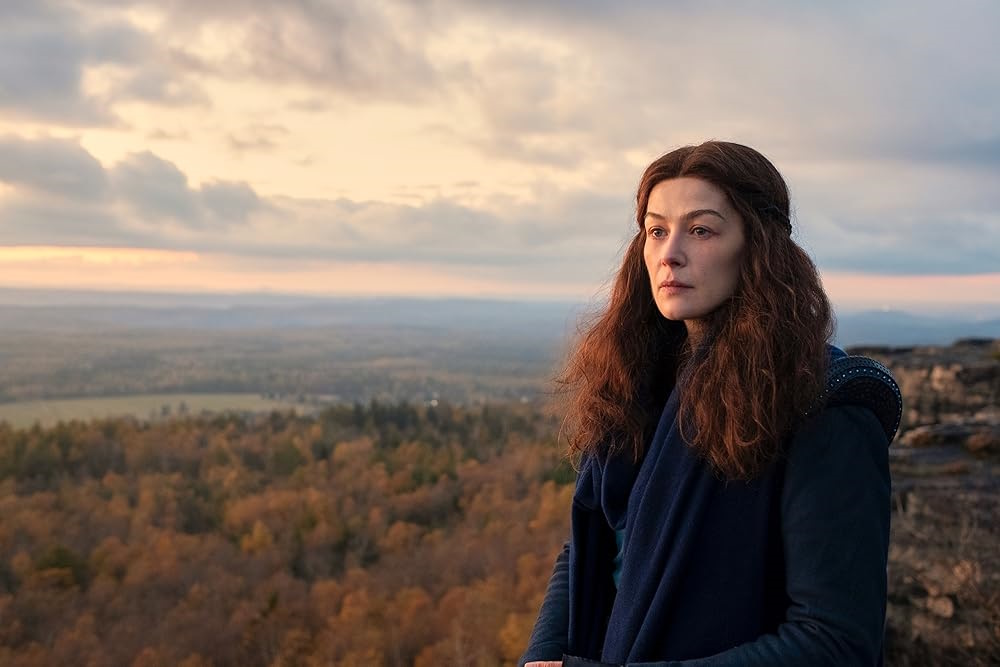




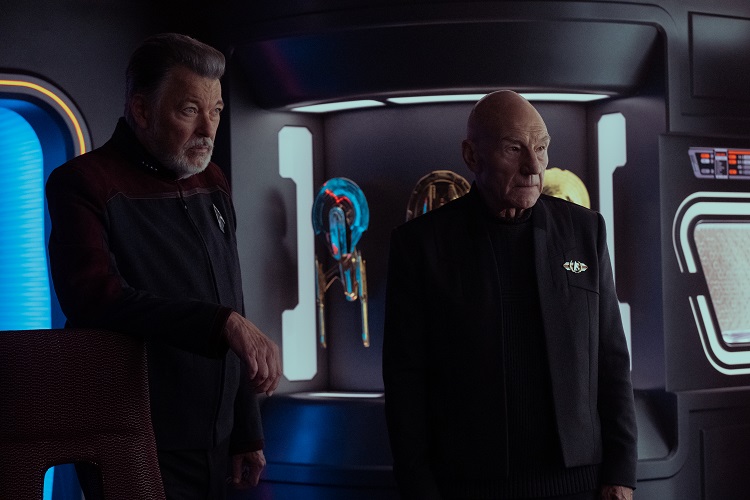
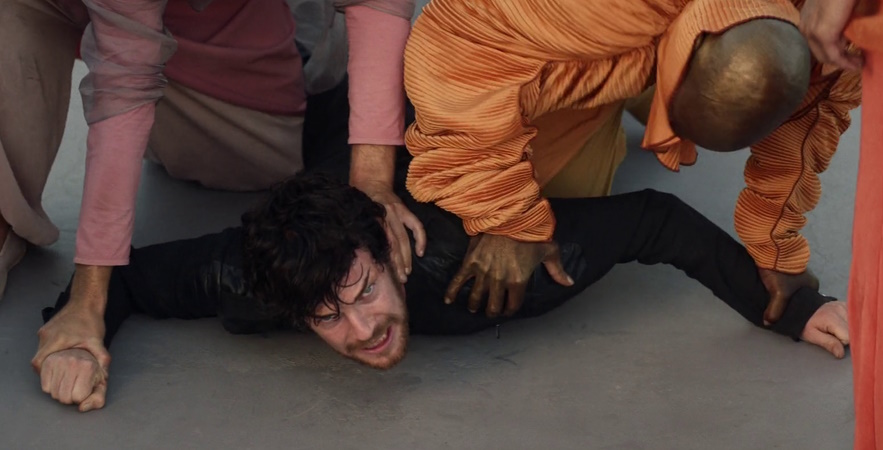
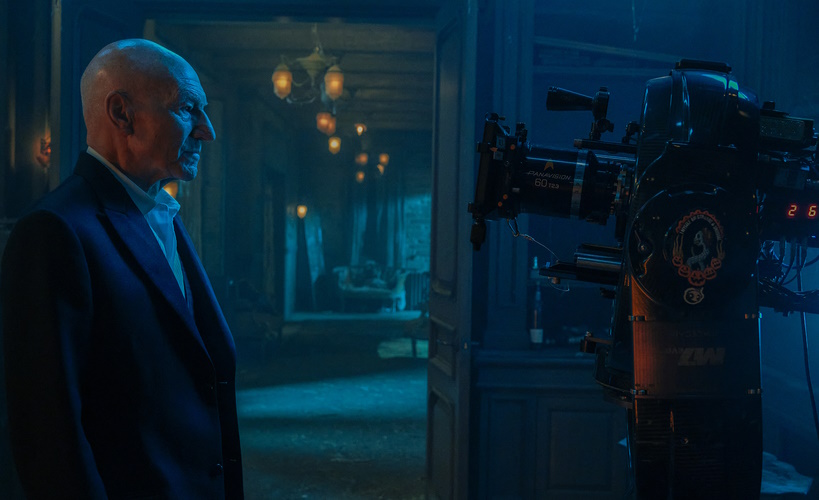

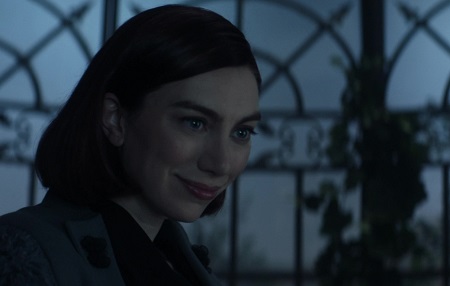
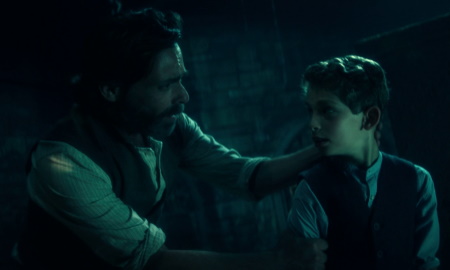
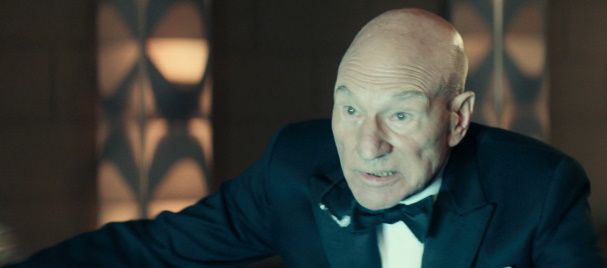

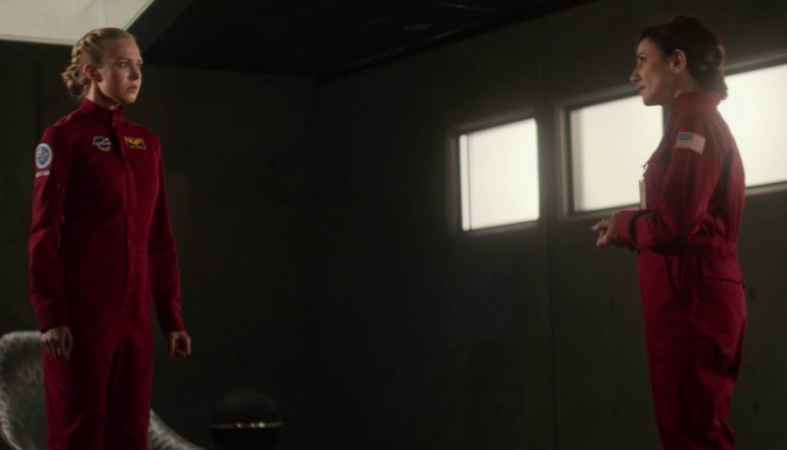
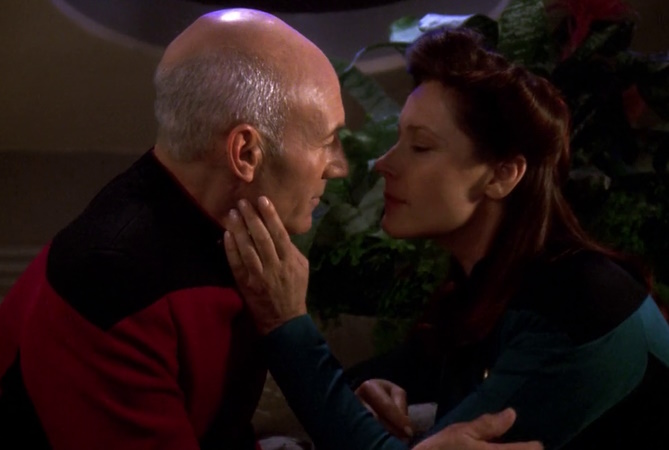
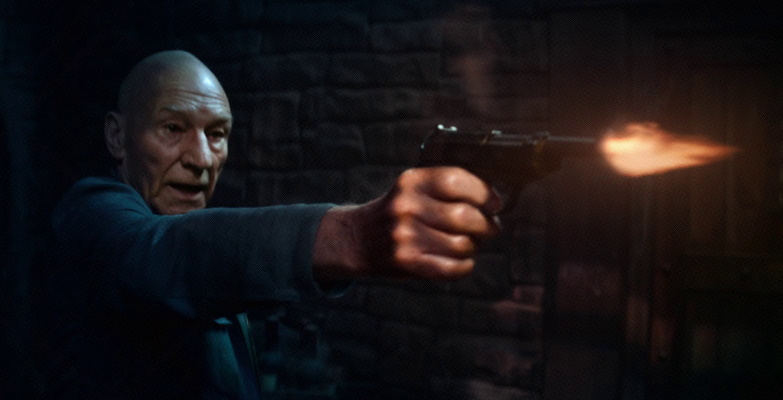
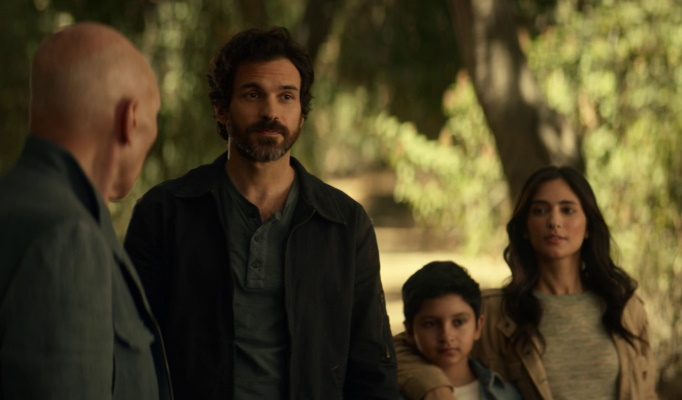


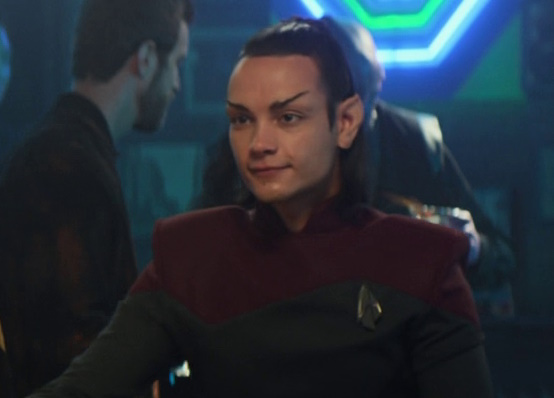
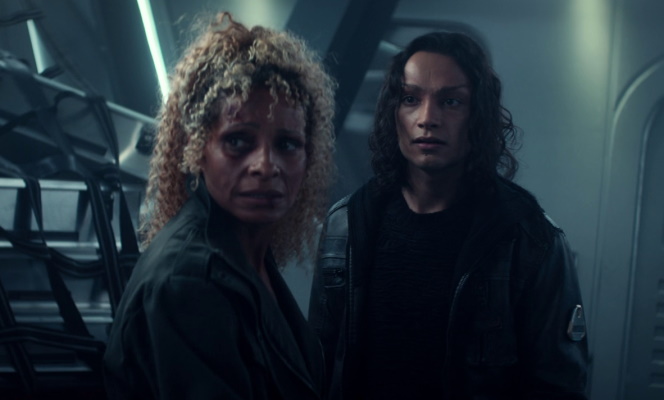
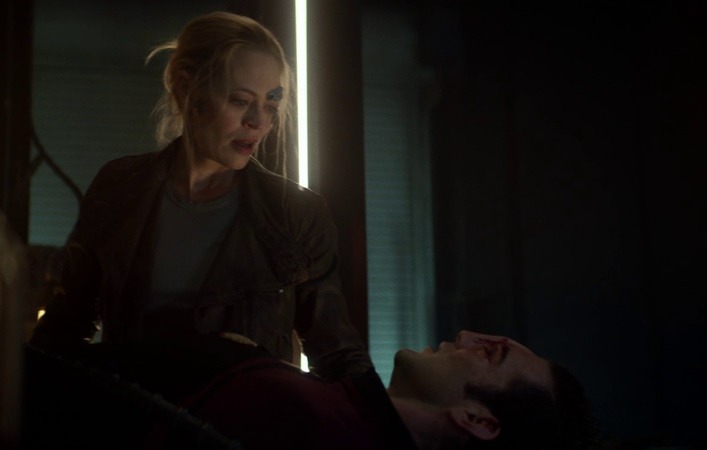


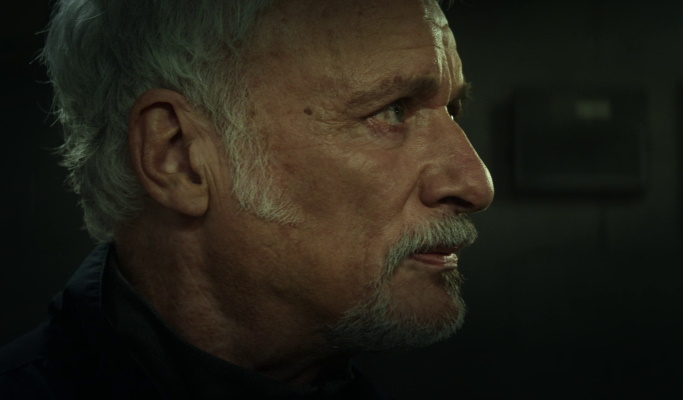
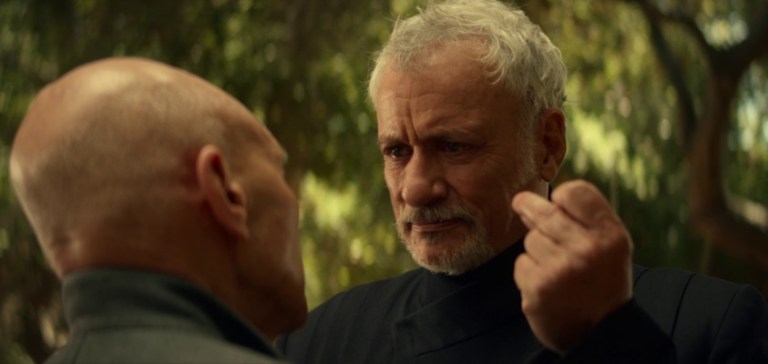




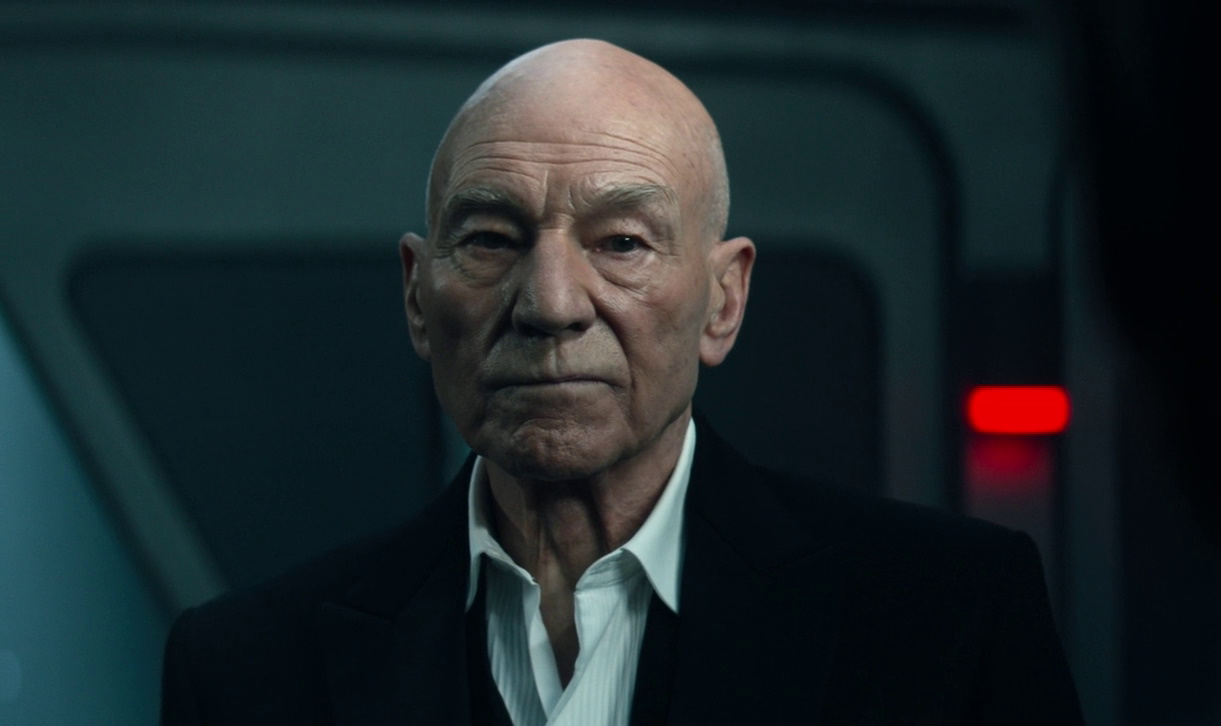


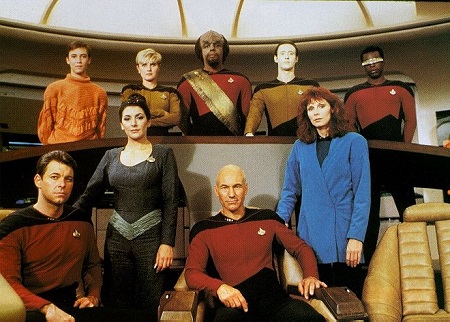

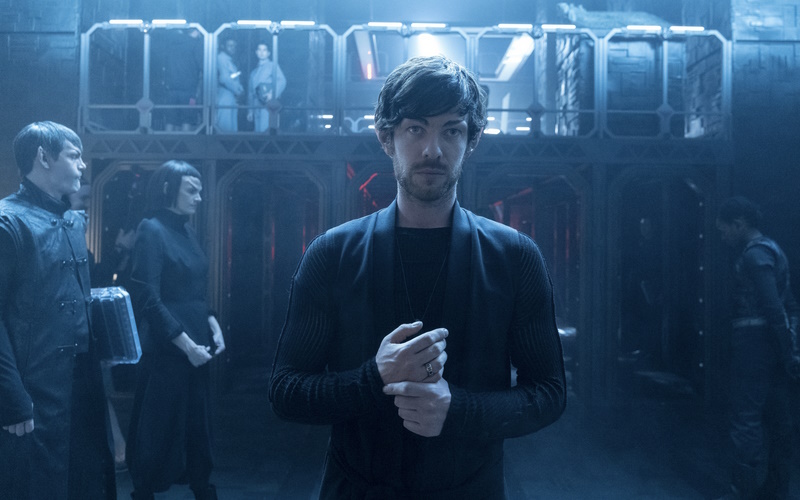
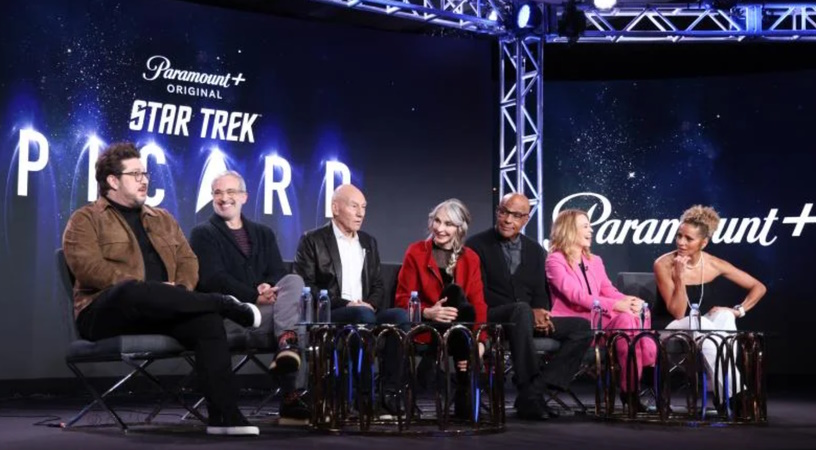
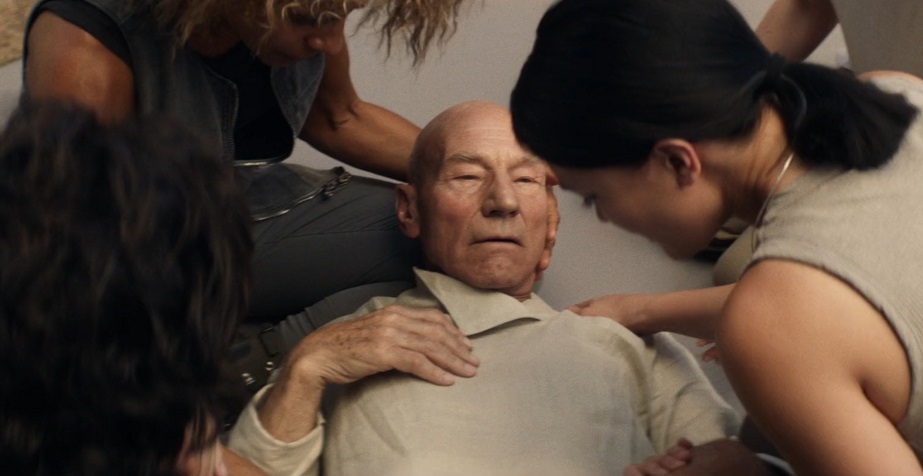
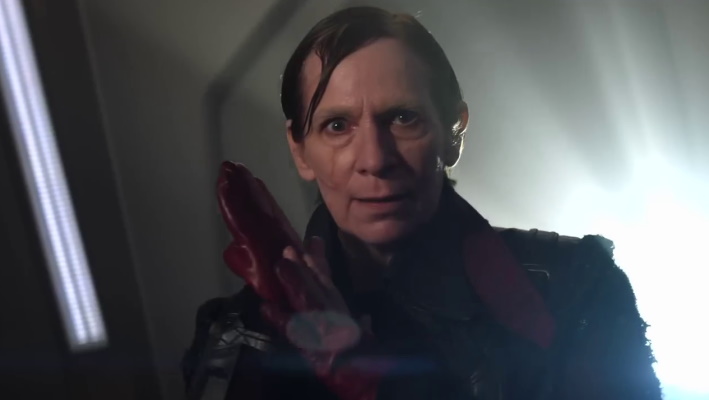
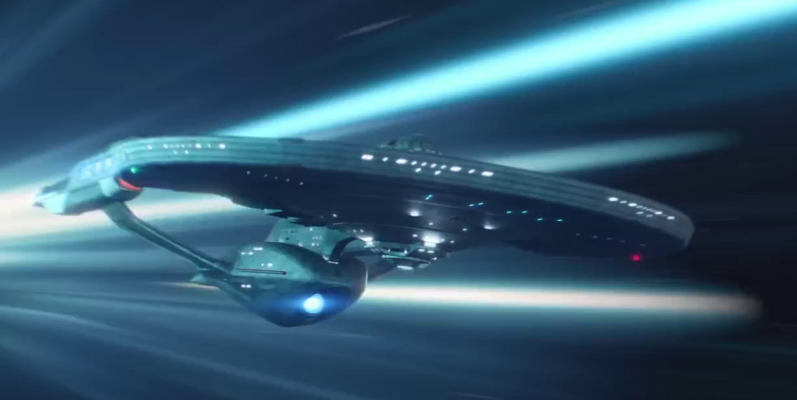
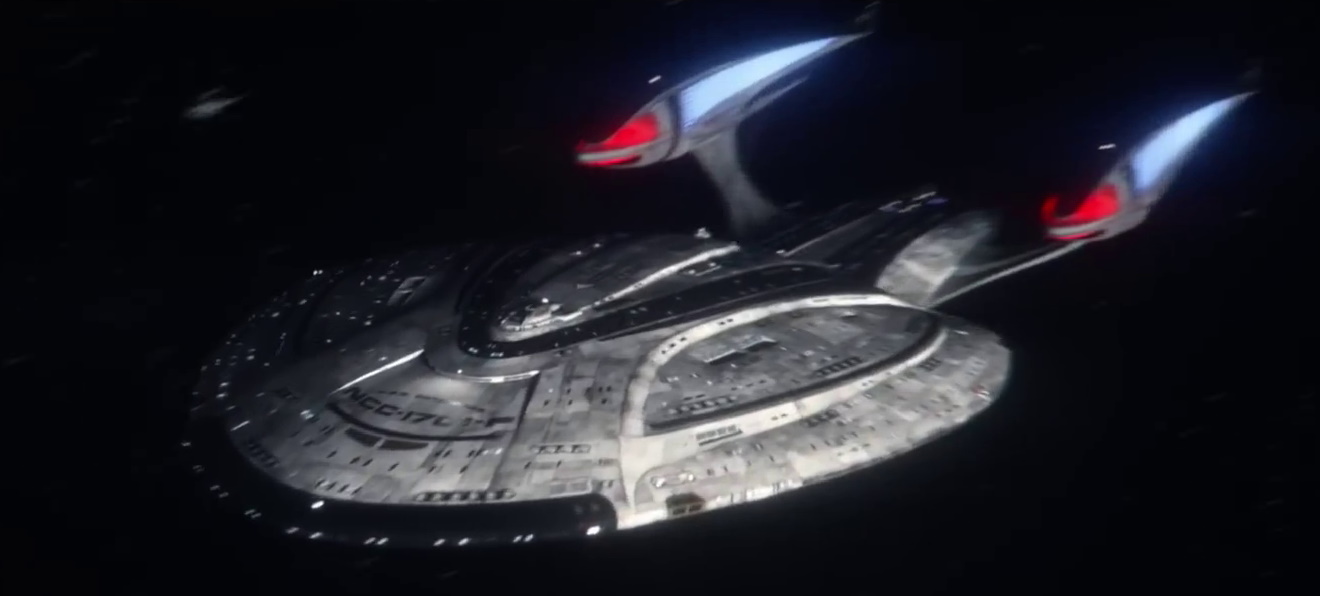
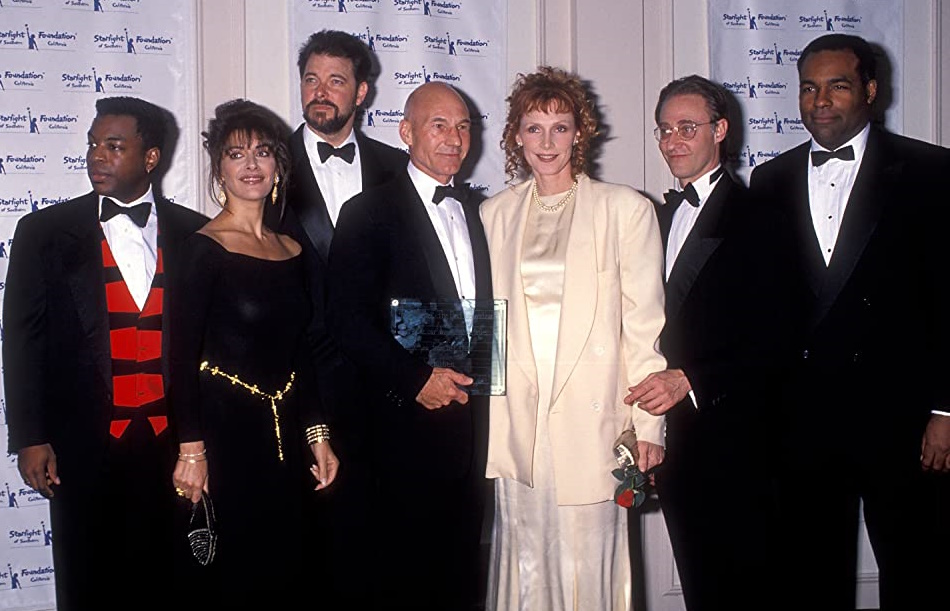
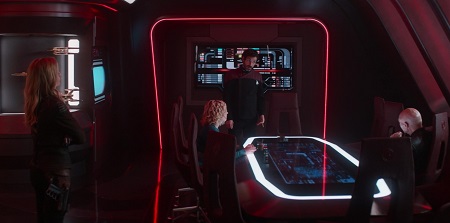

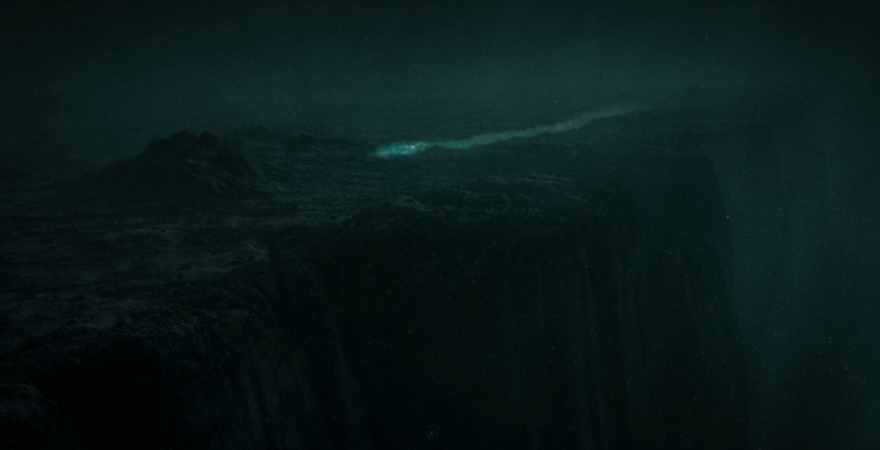
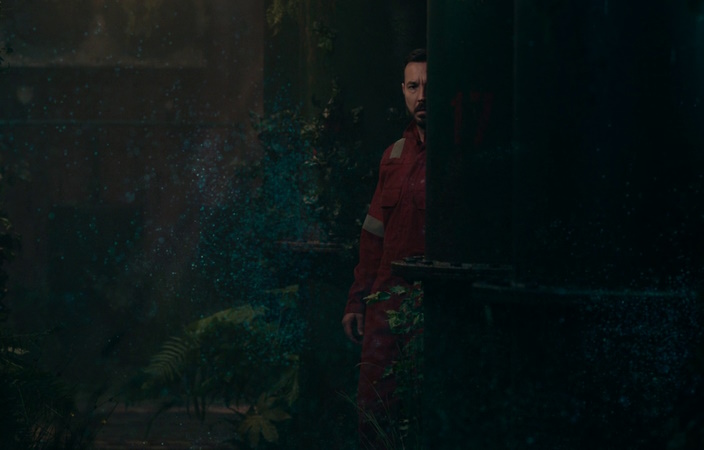
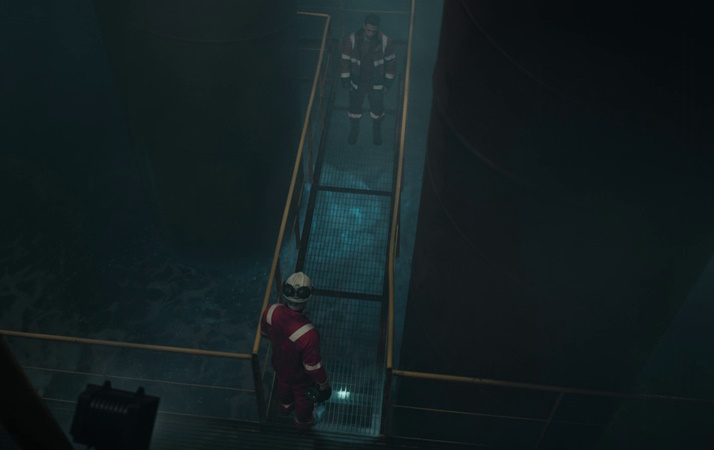
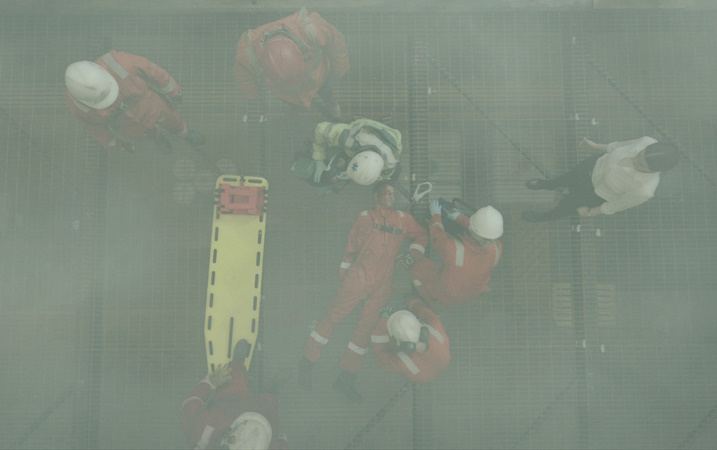

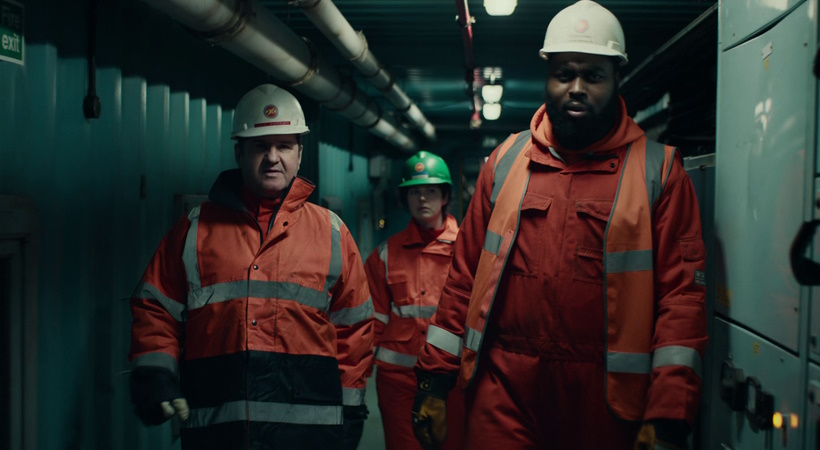
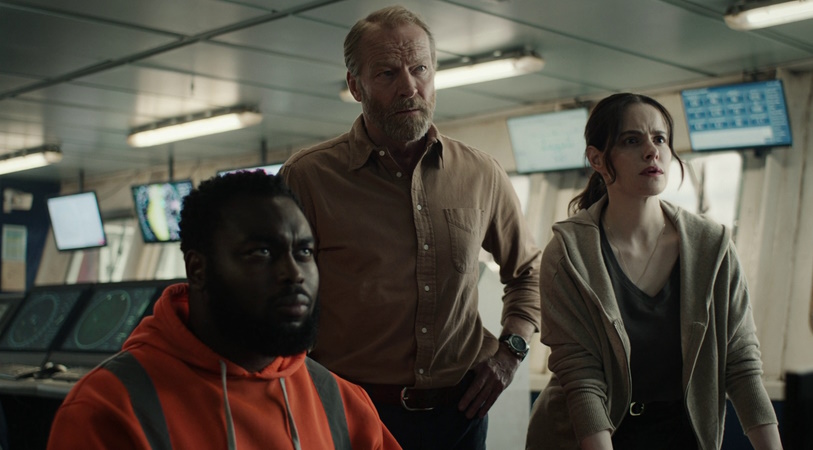
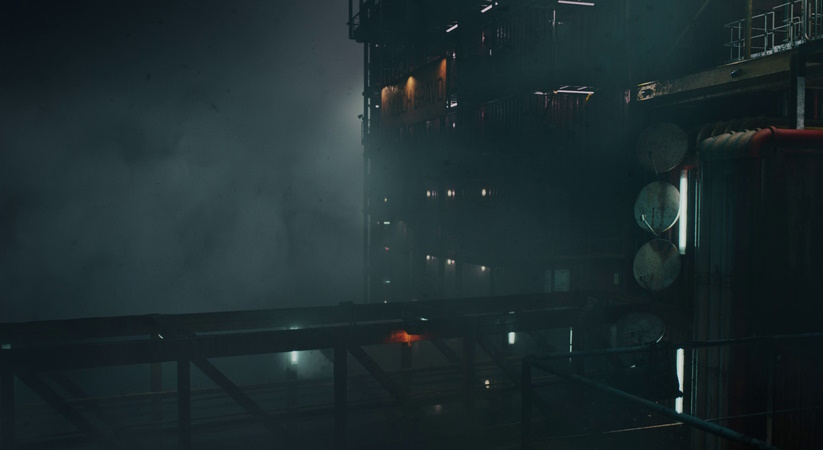




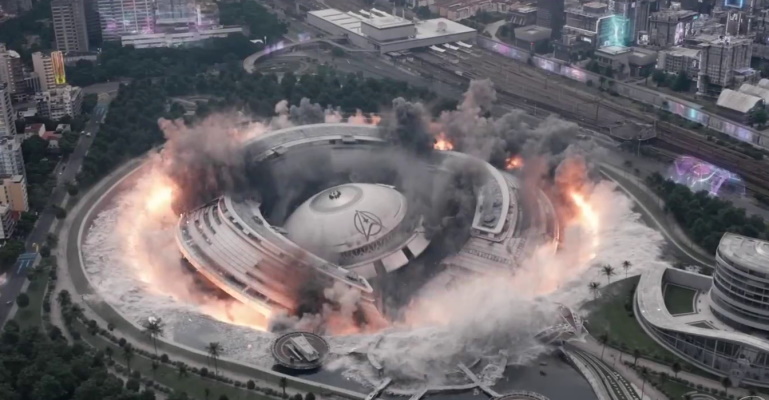

























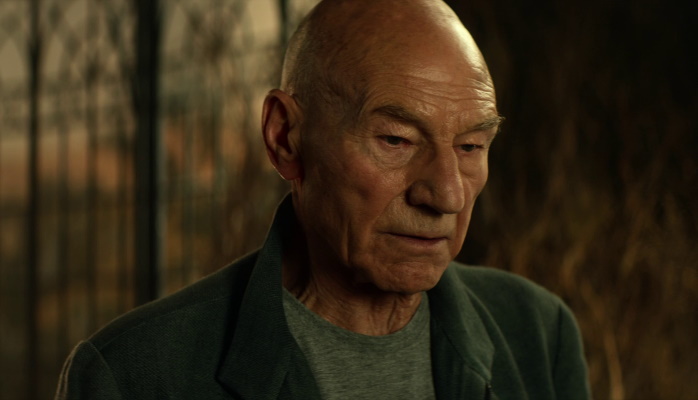
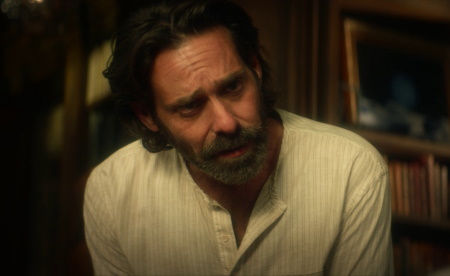

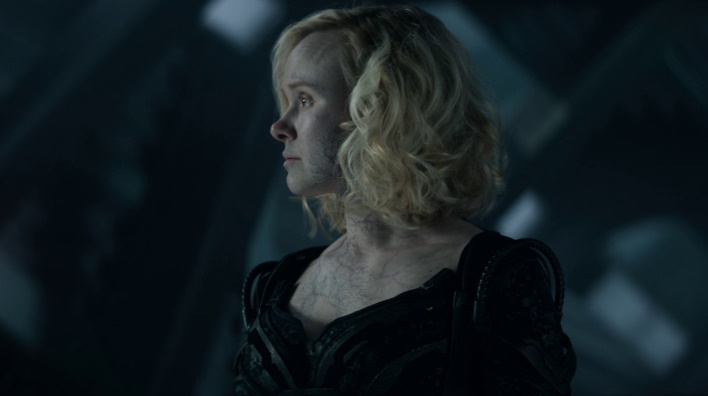
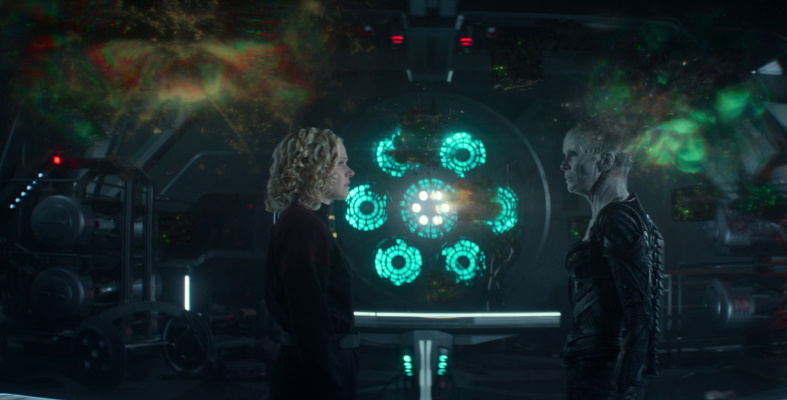




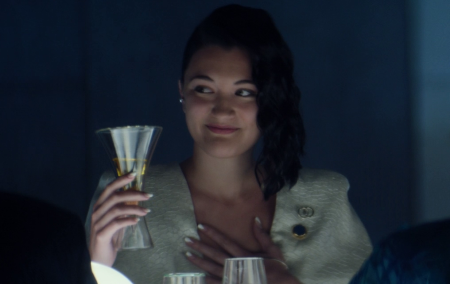

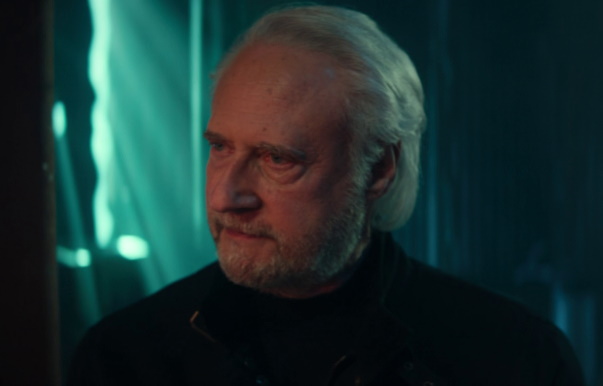


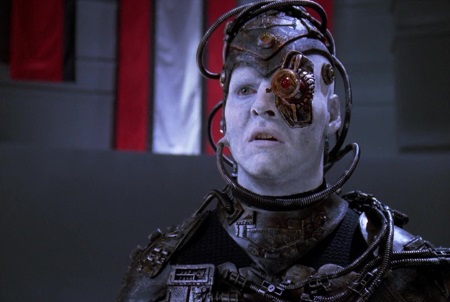



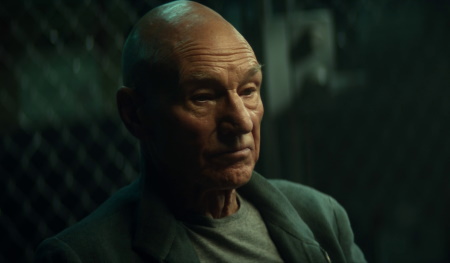
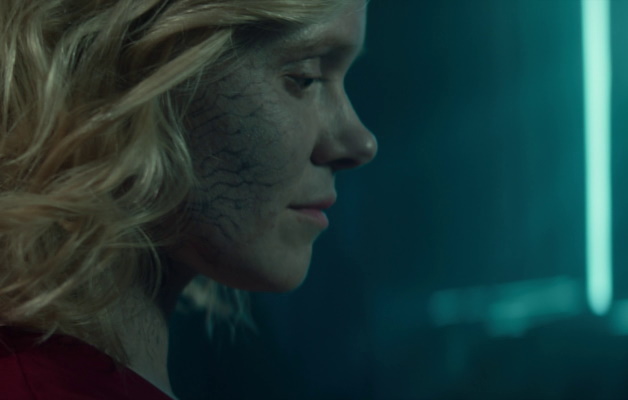
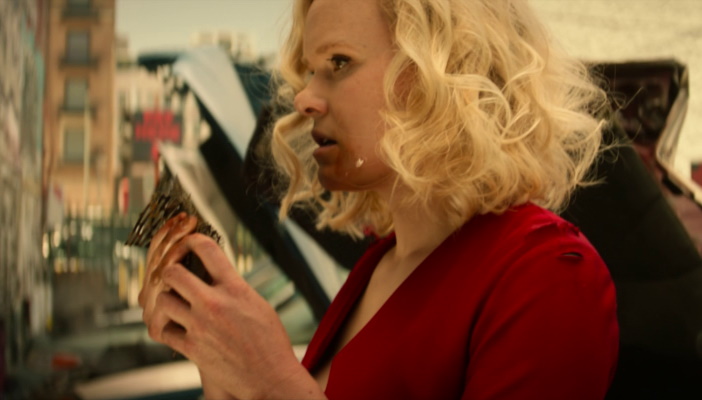
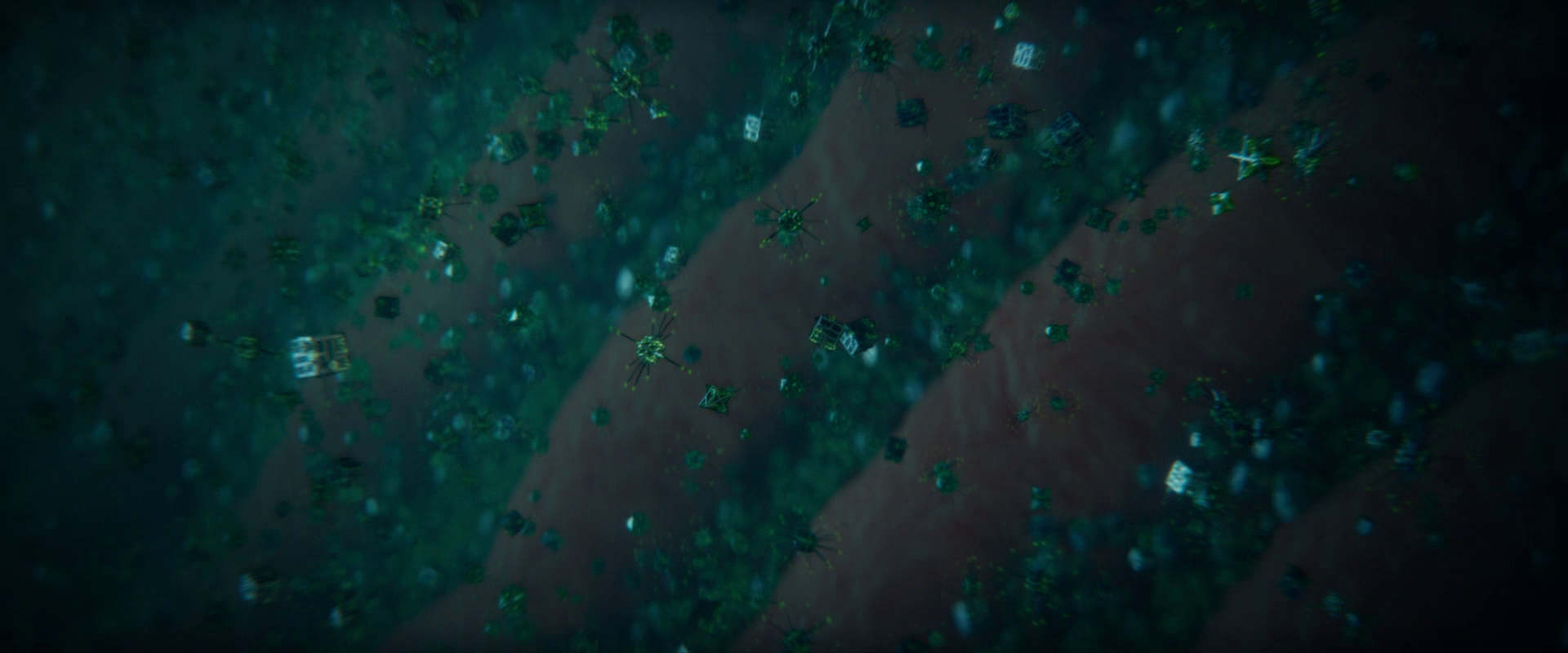
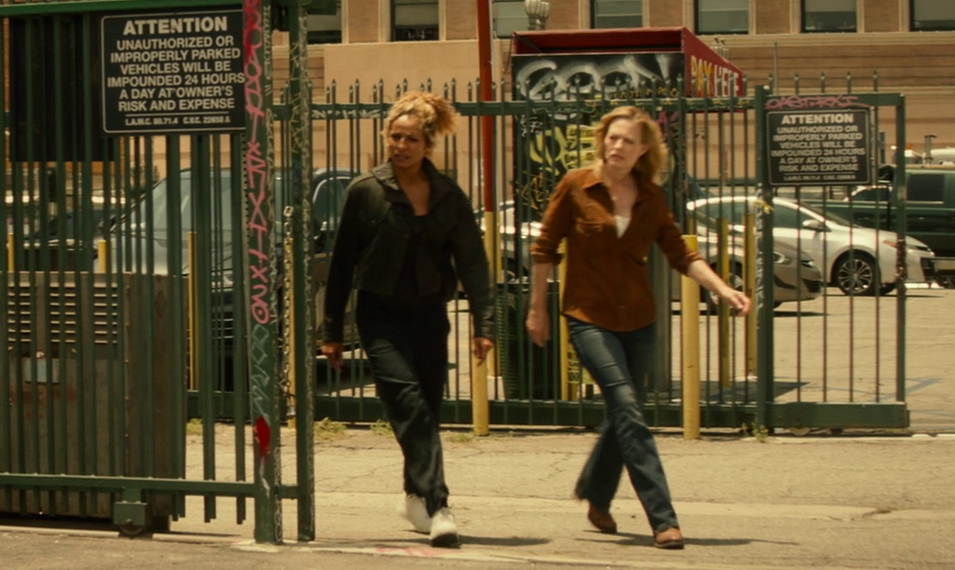
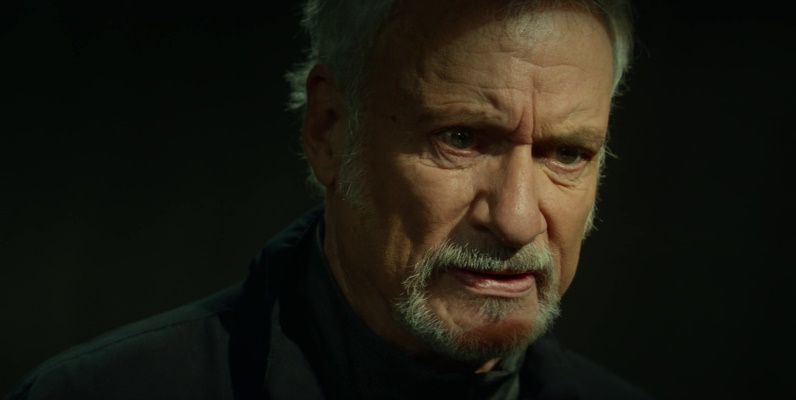
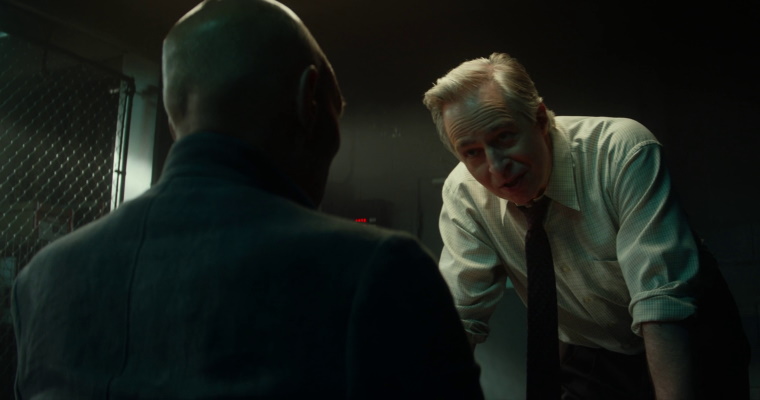









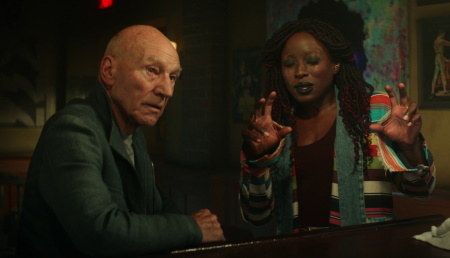


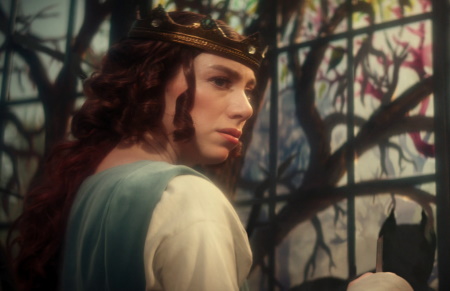


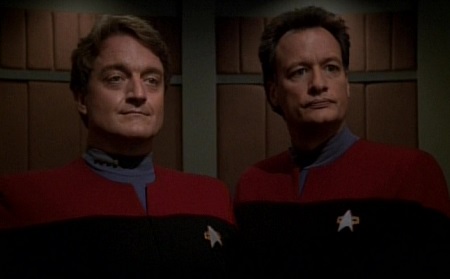

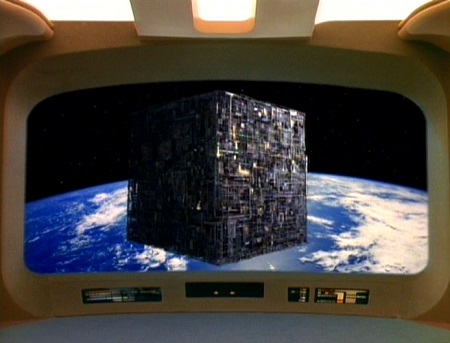


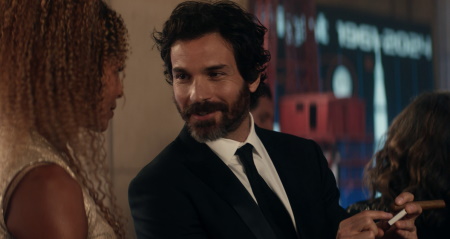

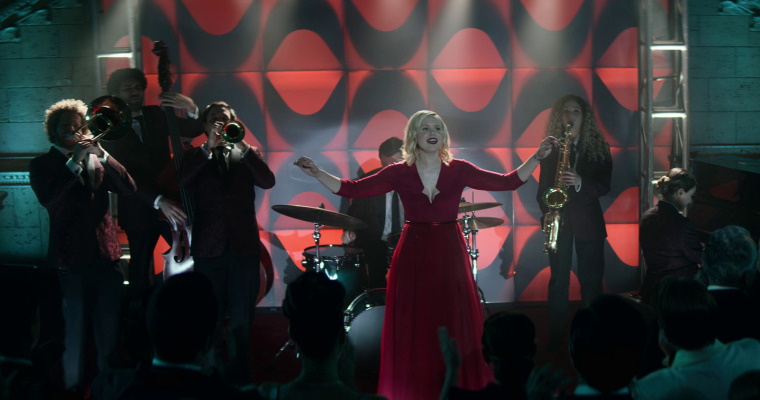
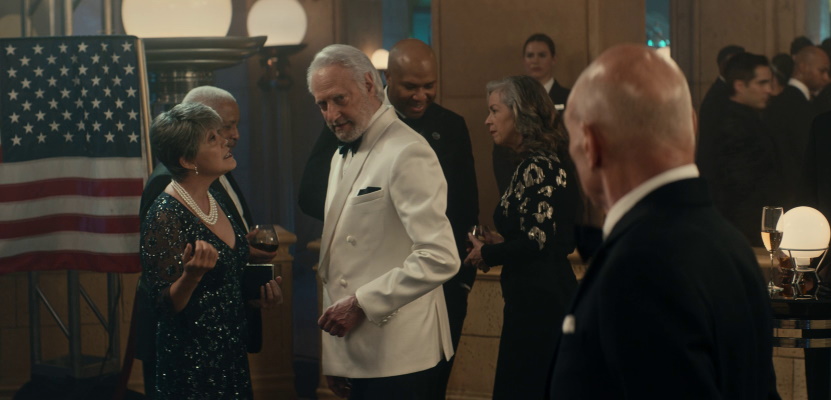
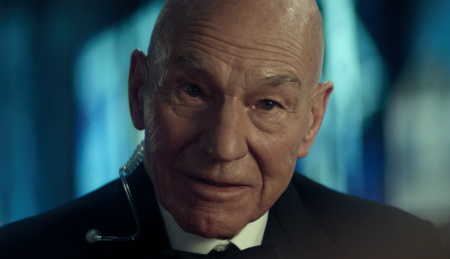
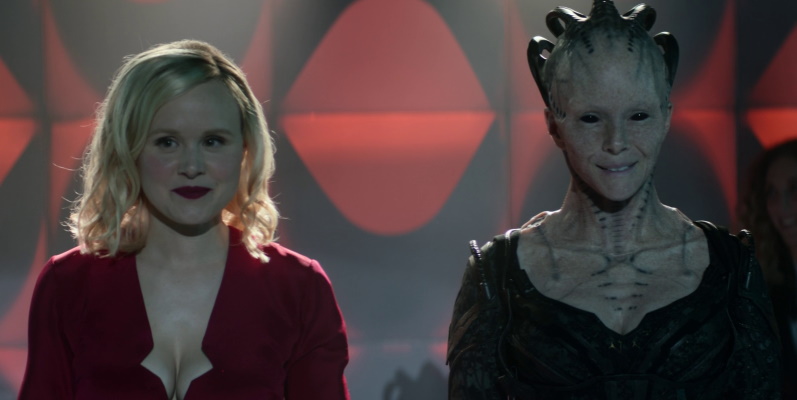

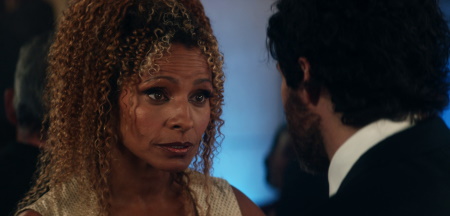


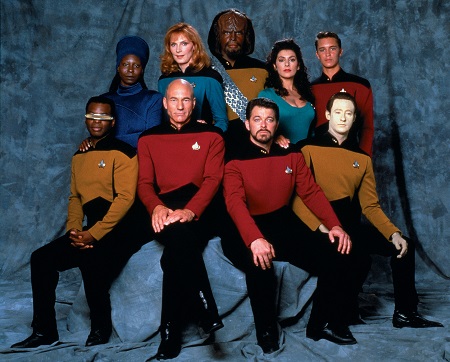



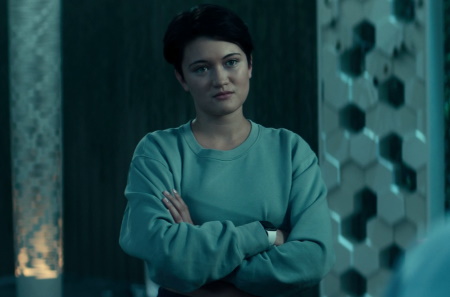
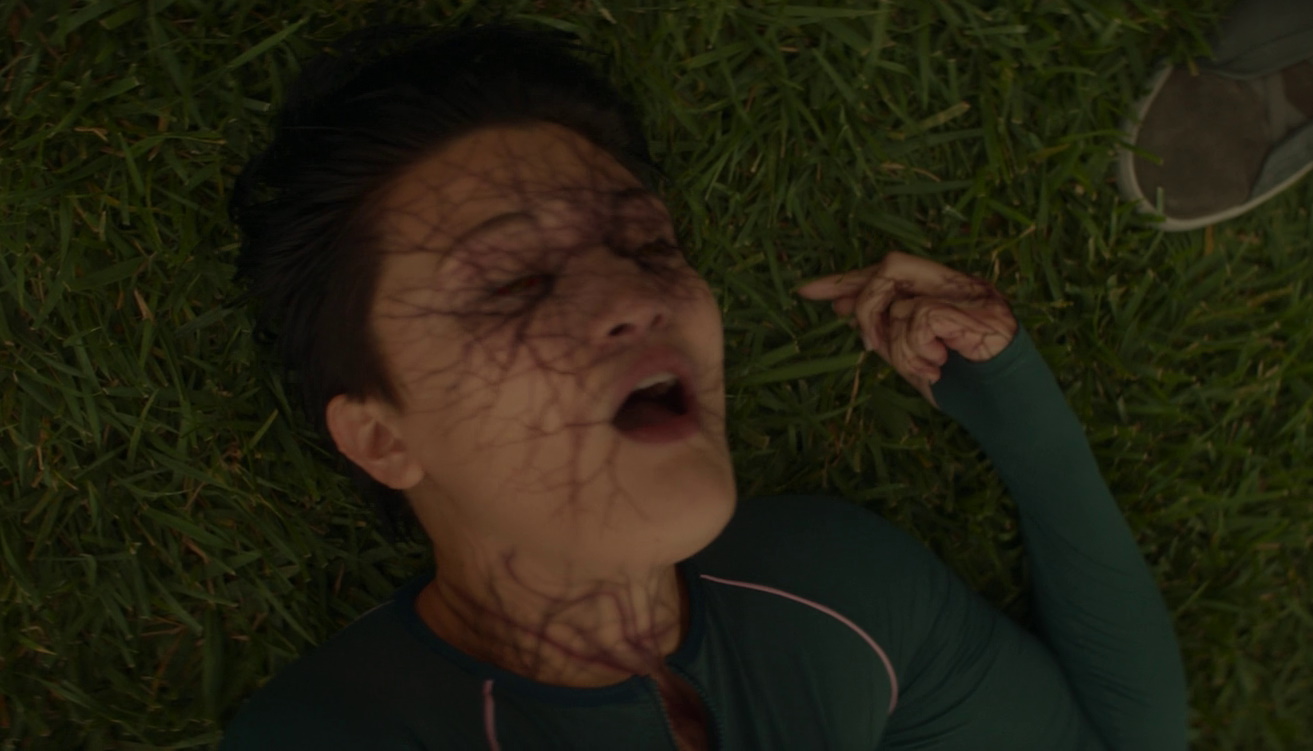
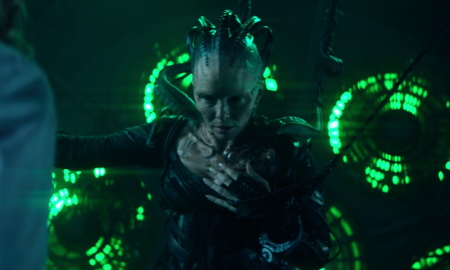
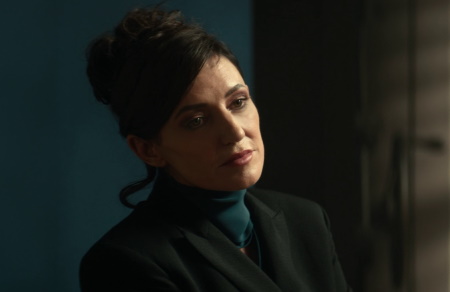
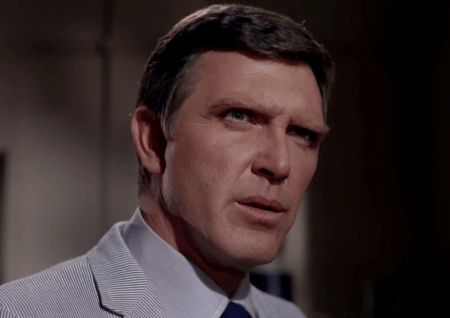
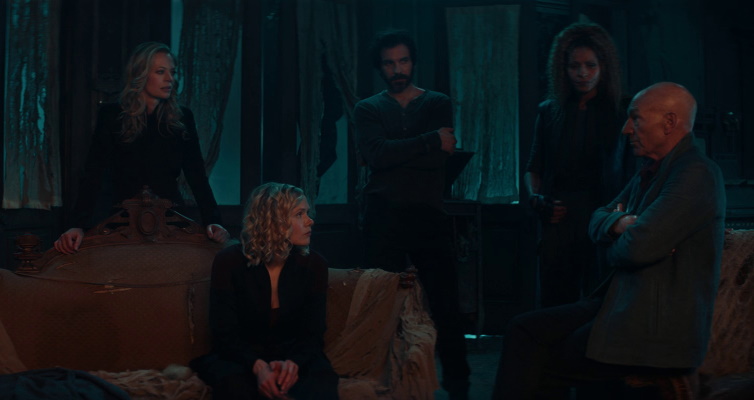
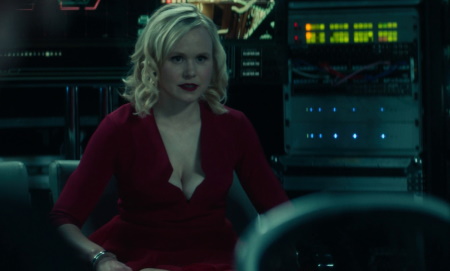
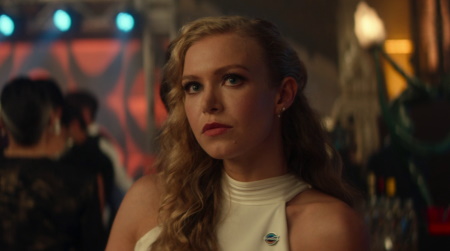




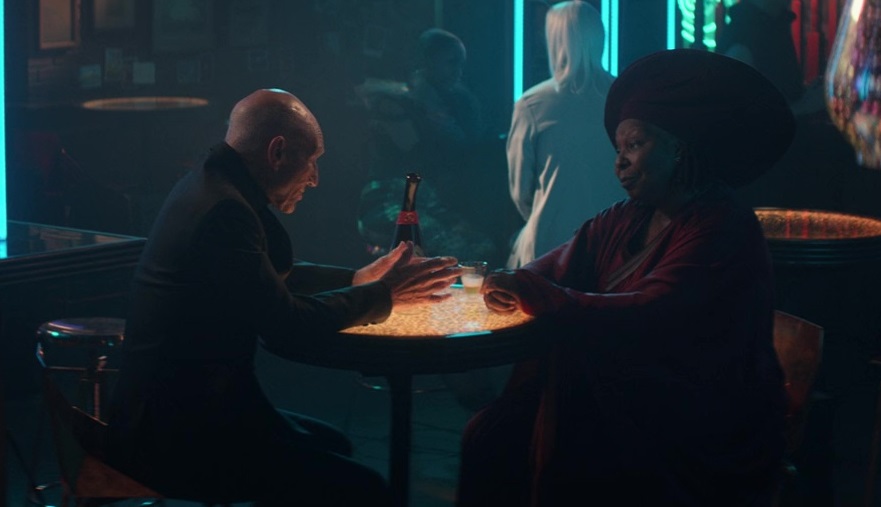




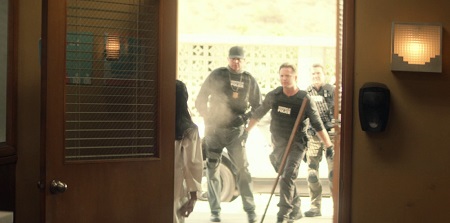
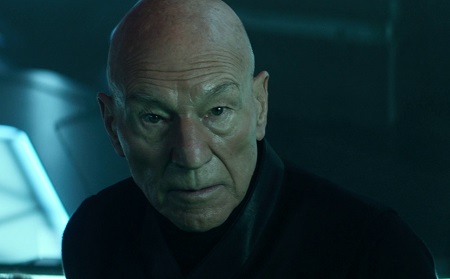



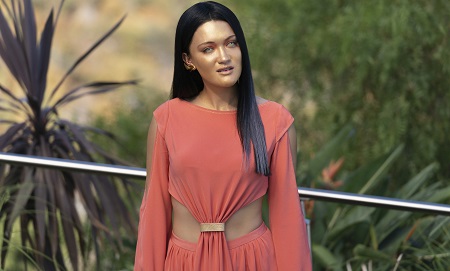


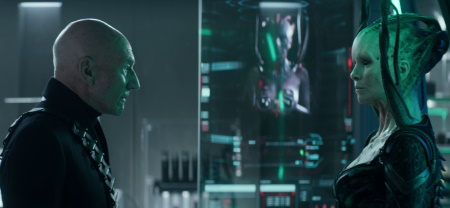
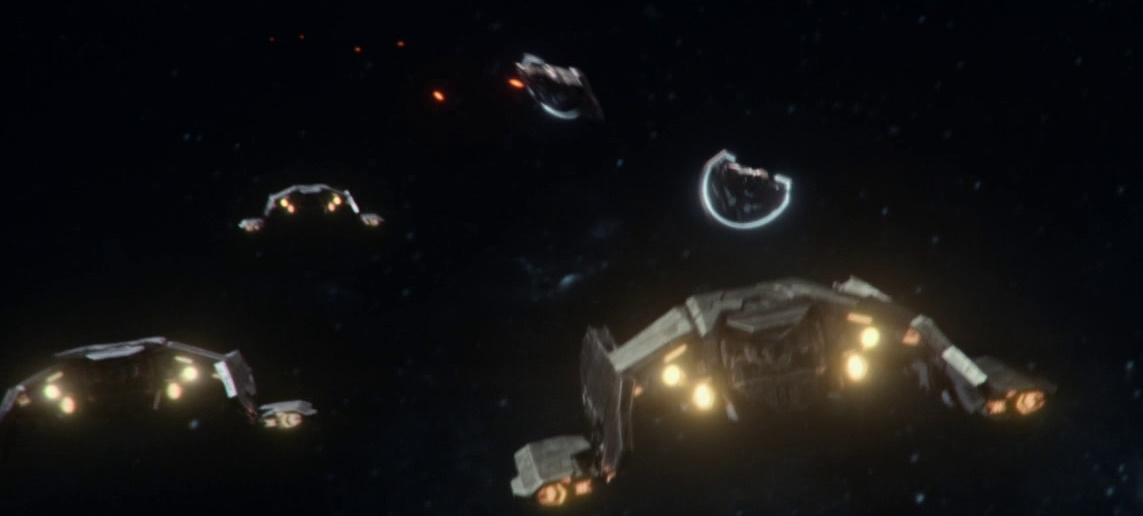
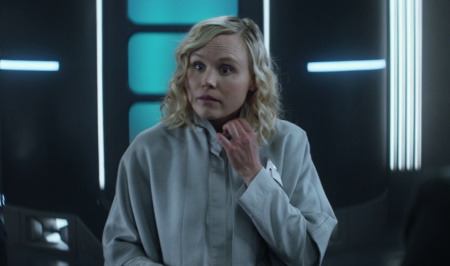
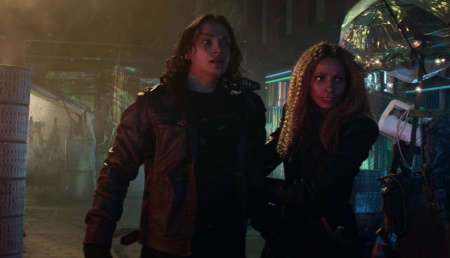



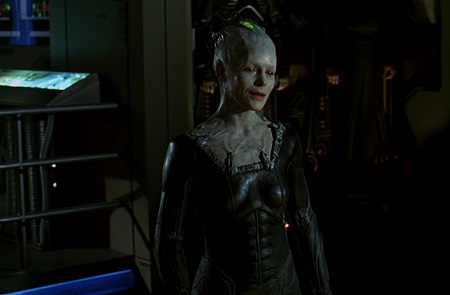




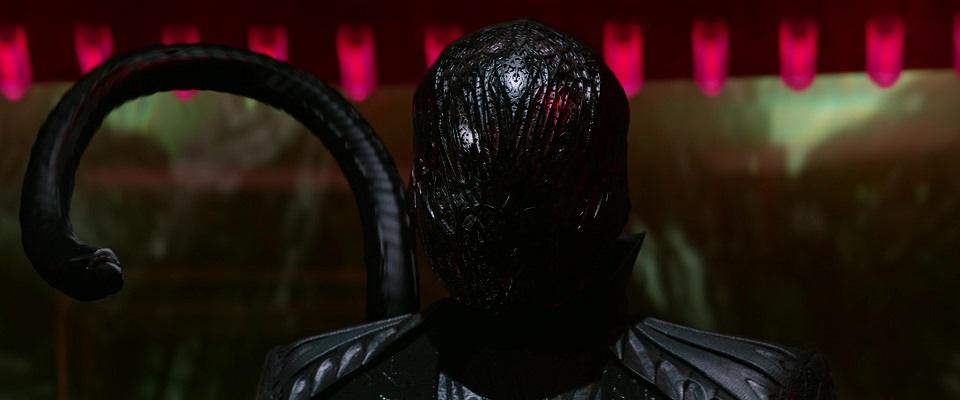

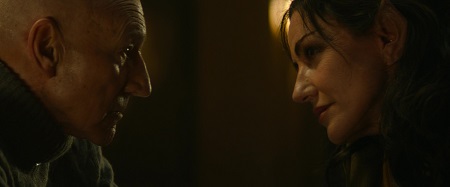
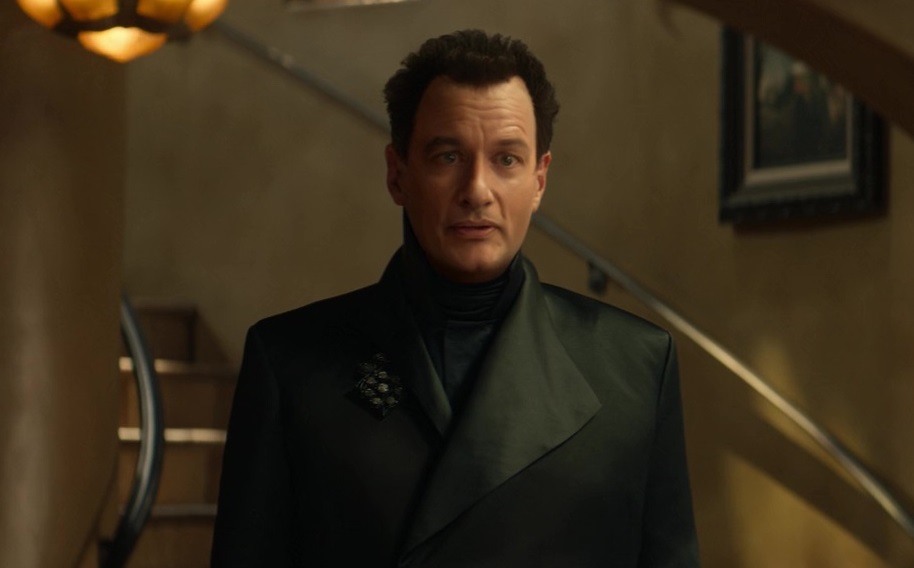
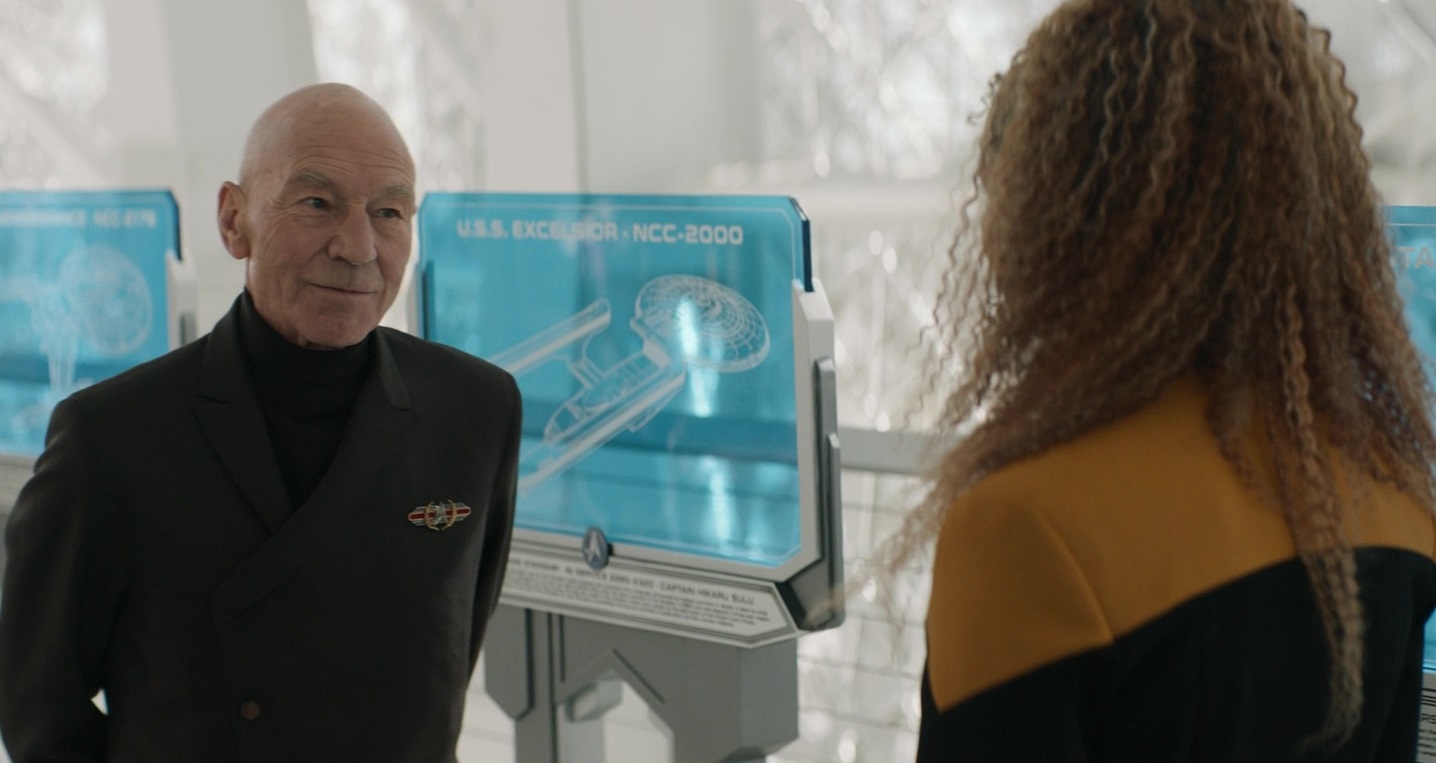
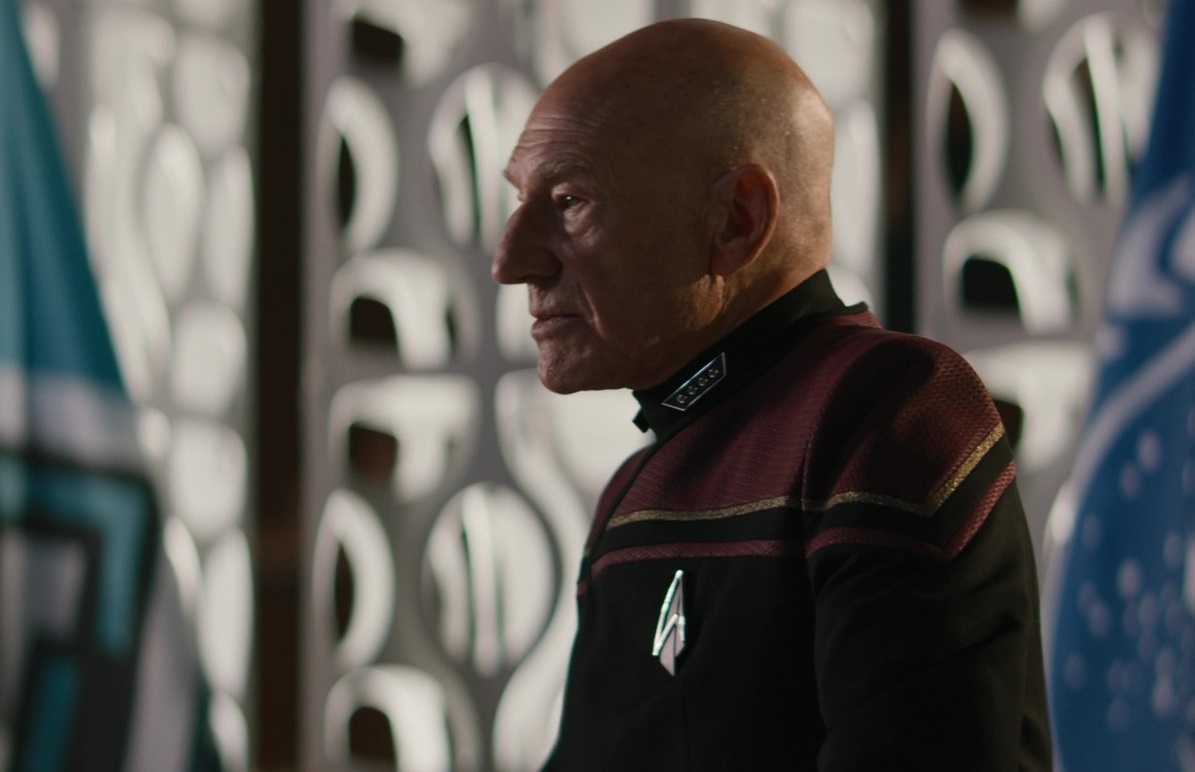
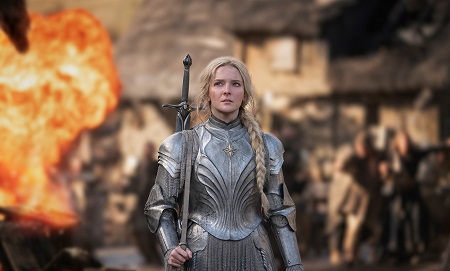
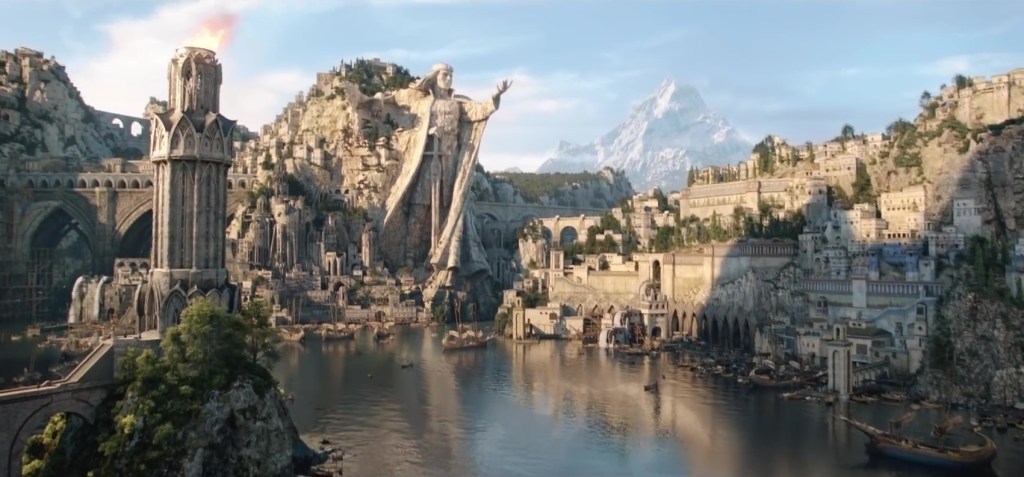
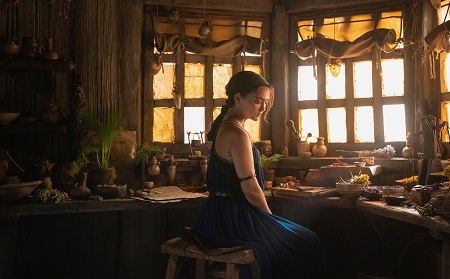
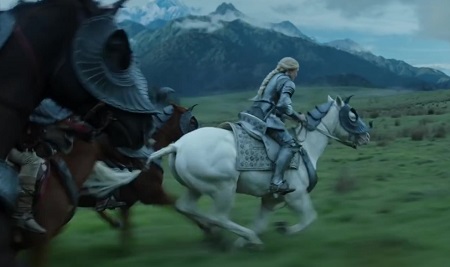
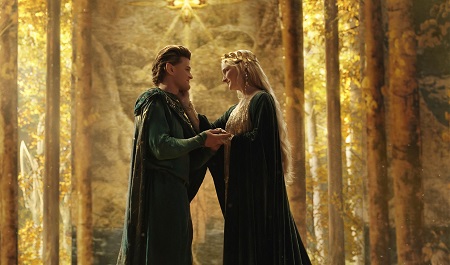
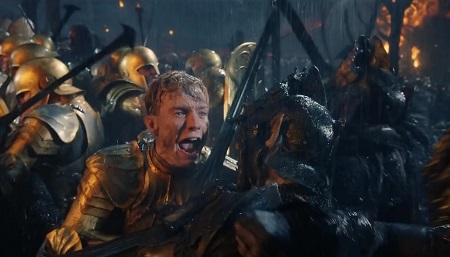







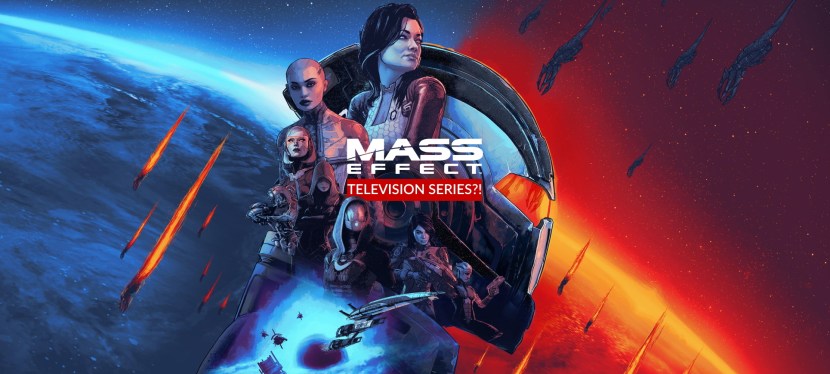
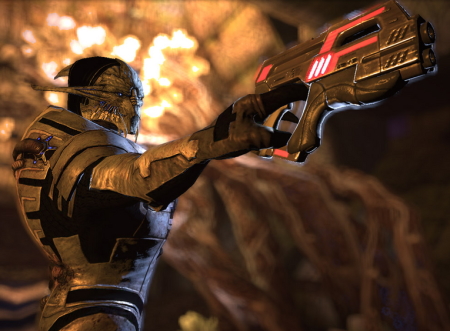
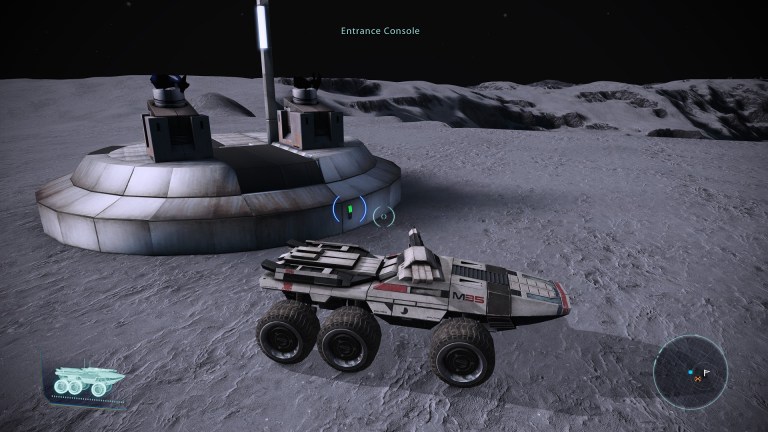
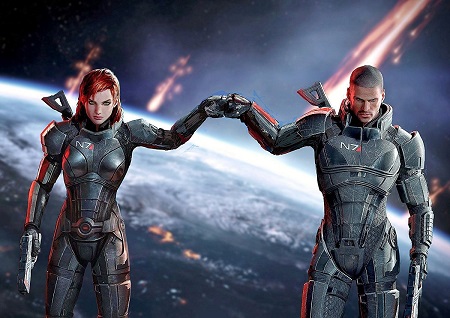




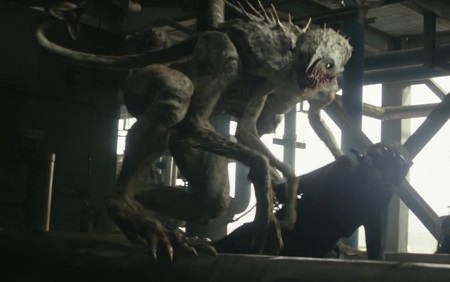
 Trekking with Dennis