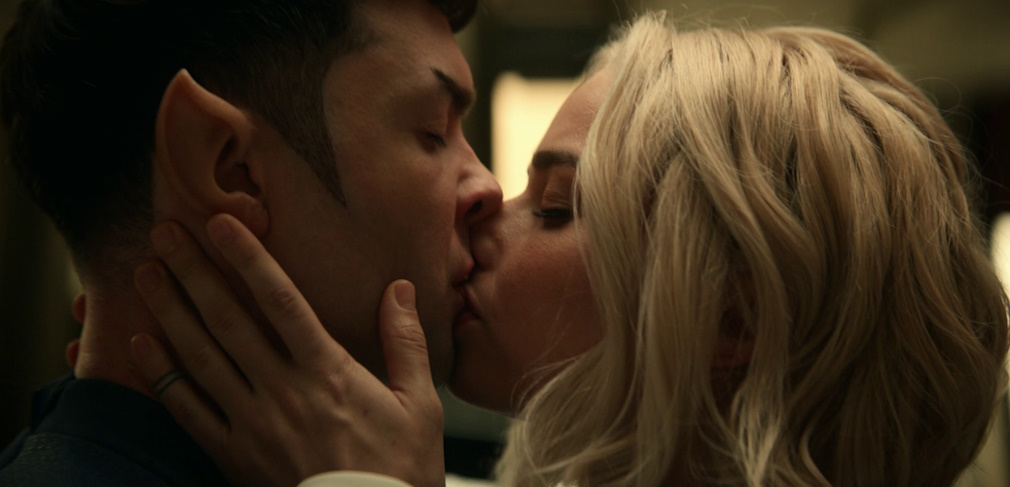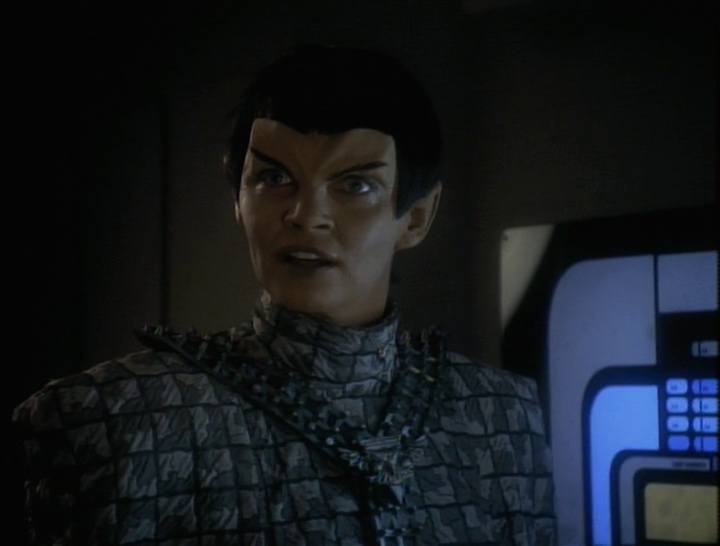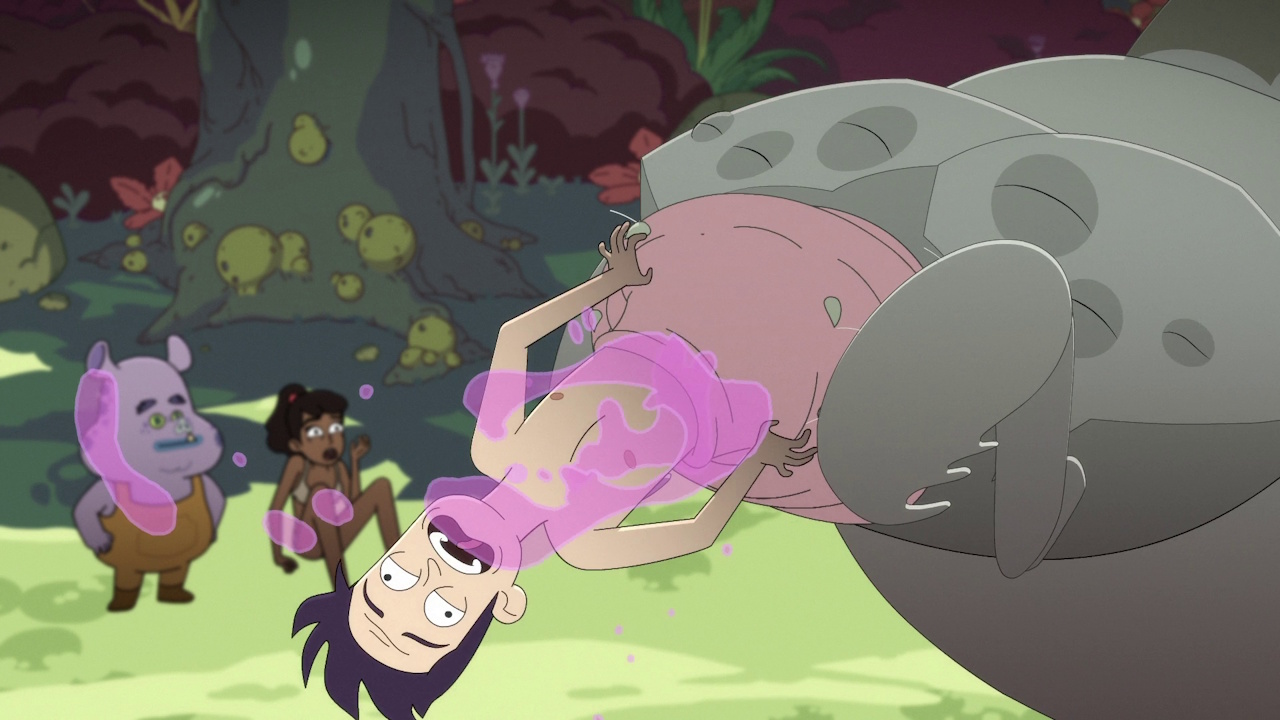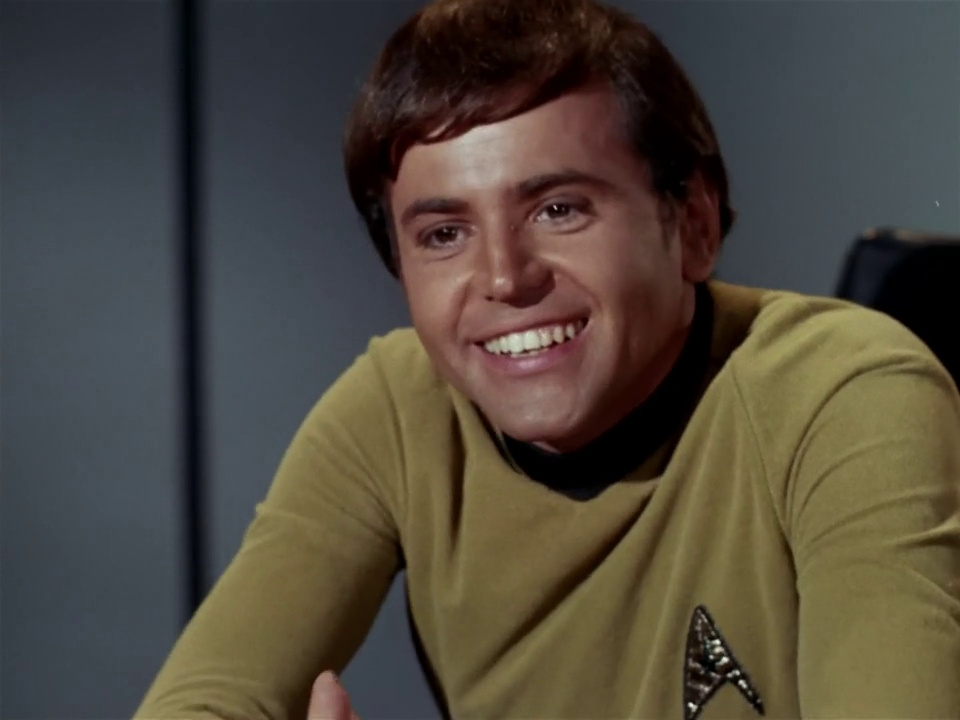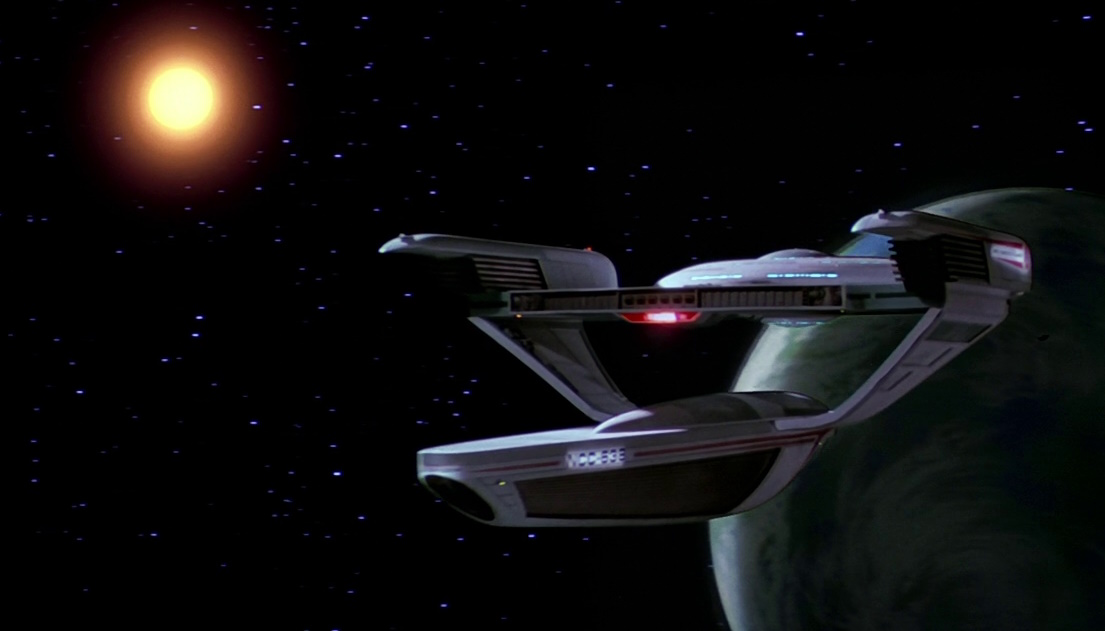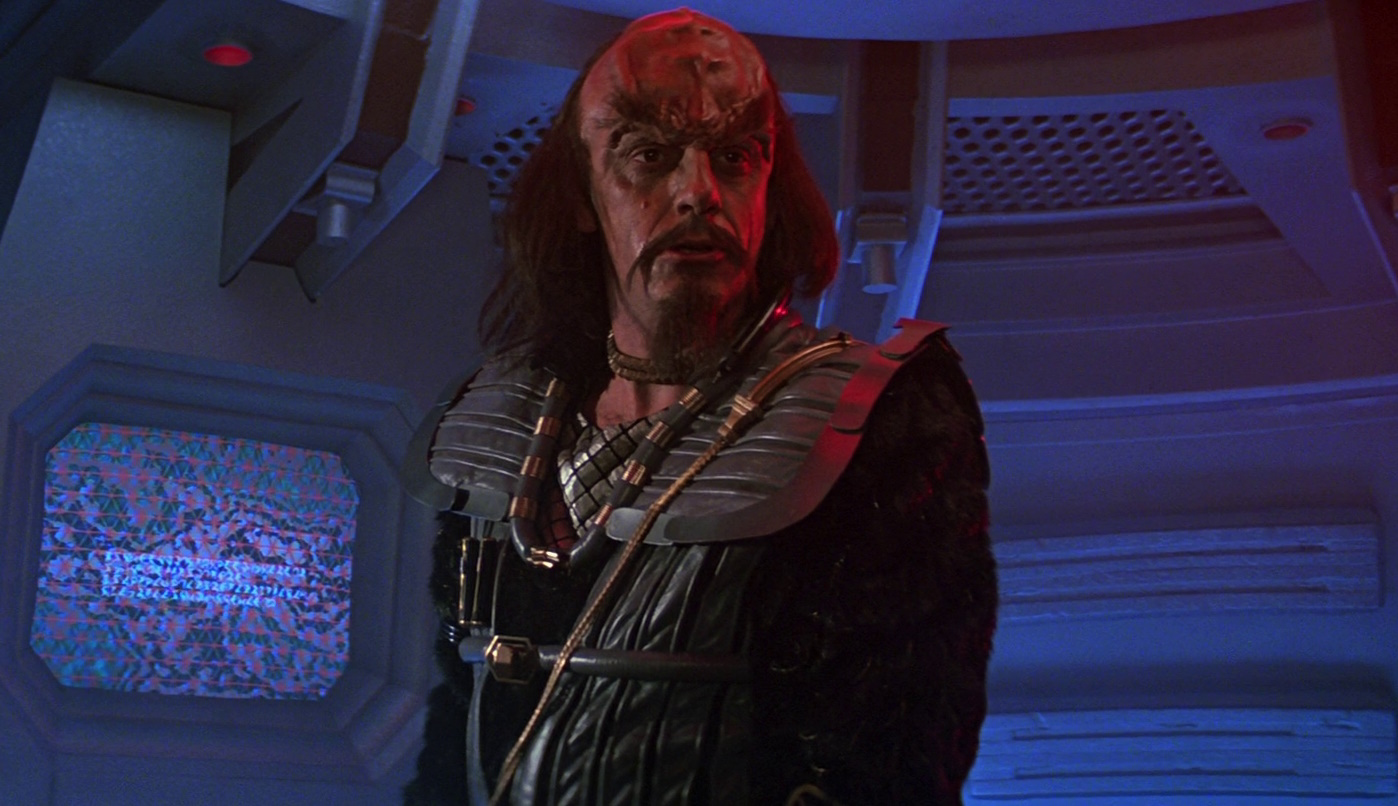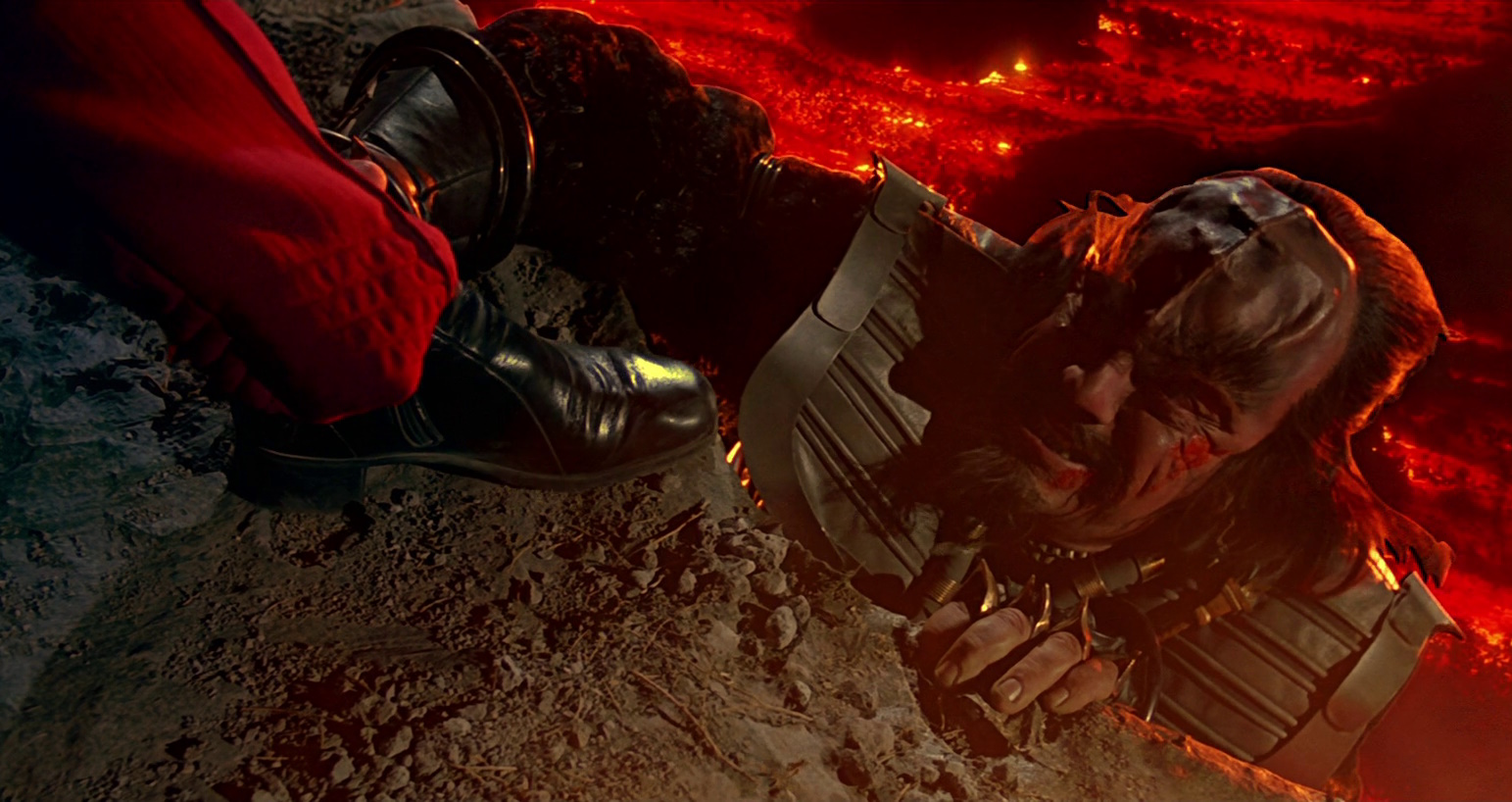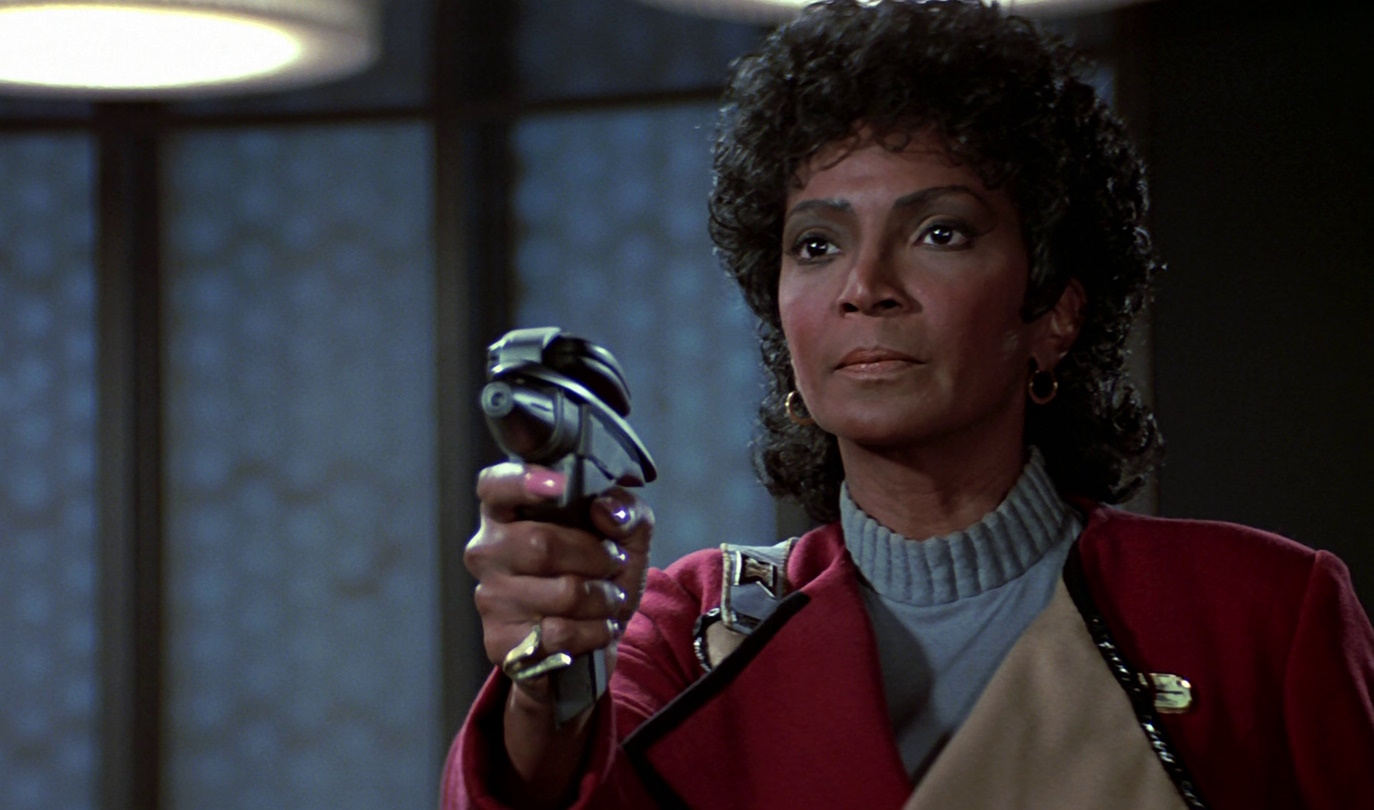
Star Trek “Bottom Fives” – Arguing with IMDB Again!

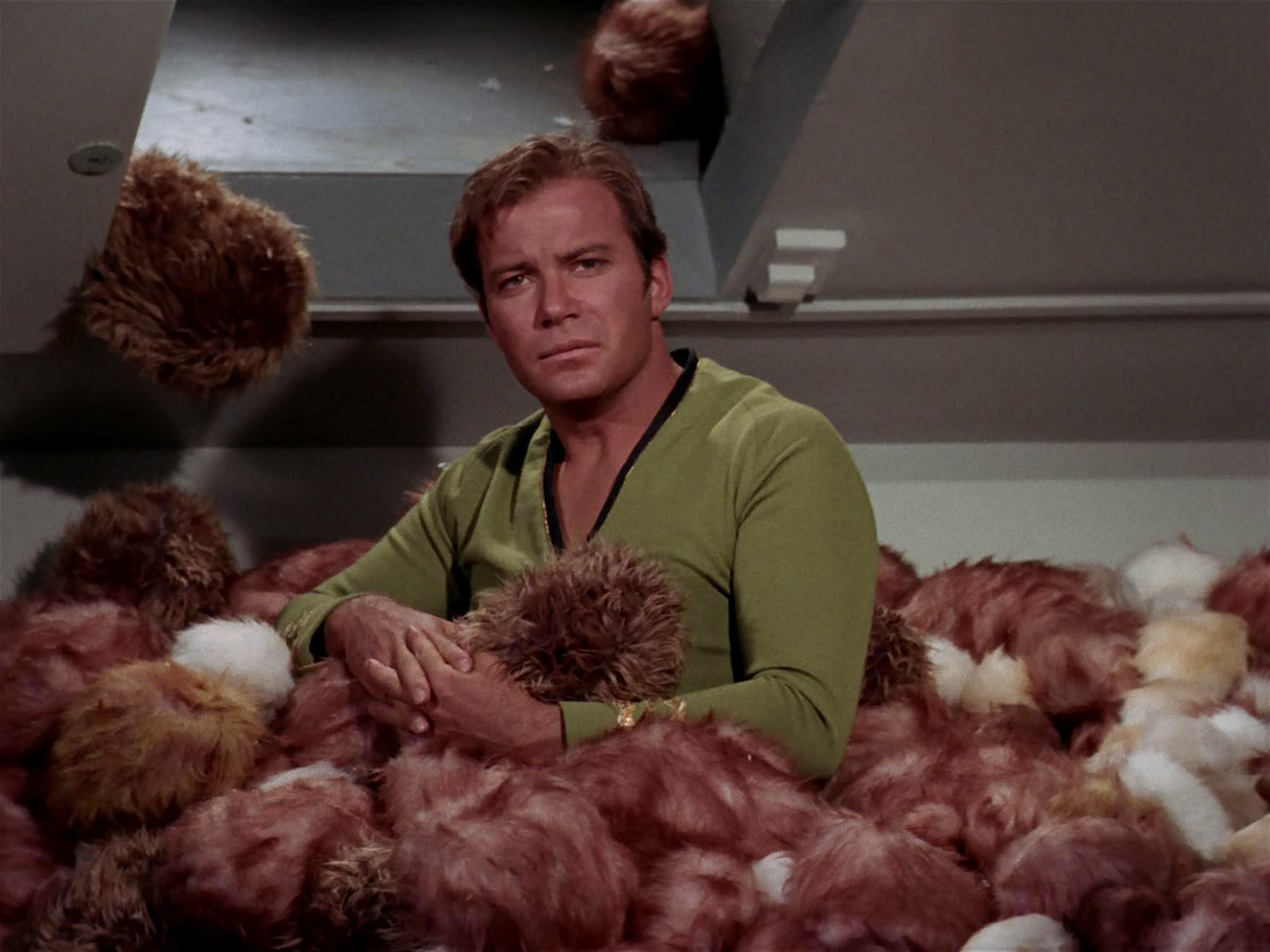
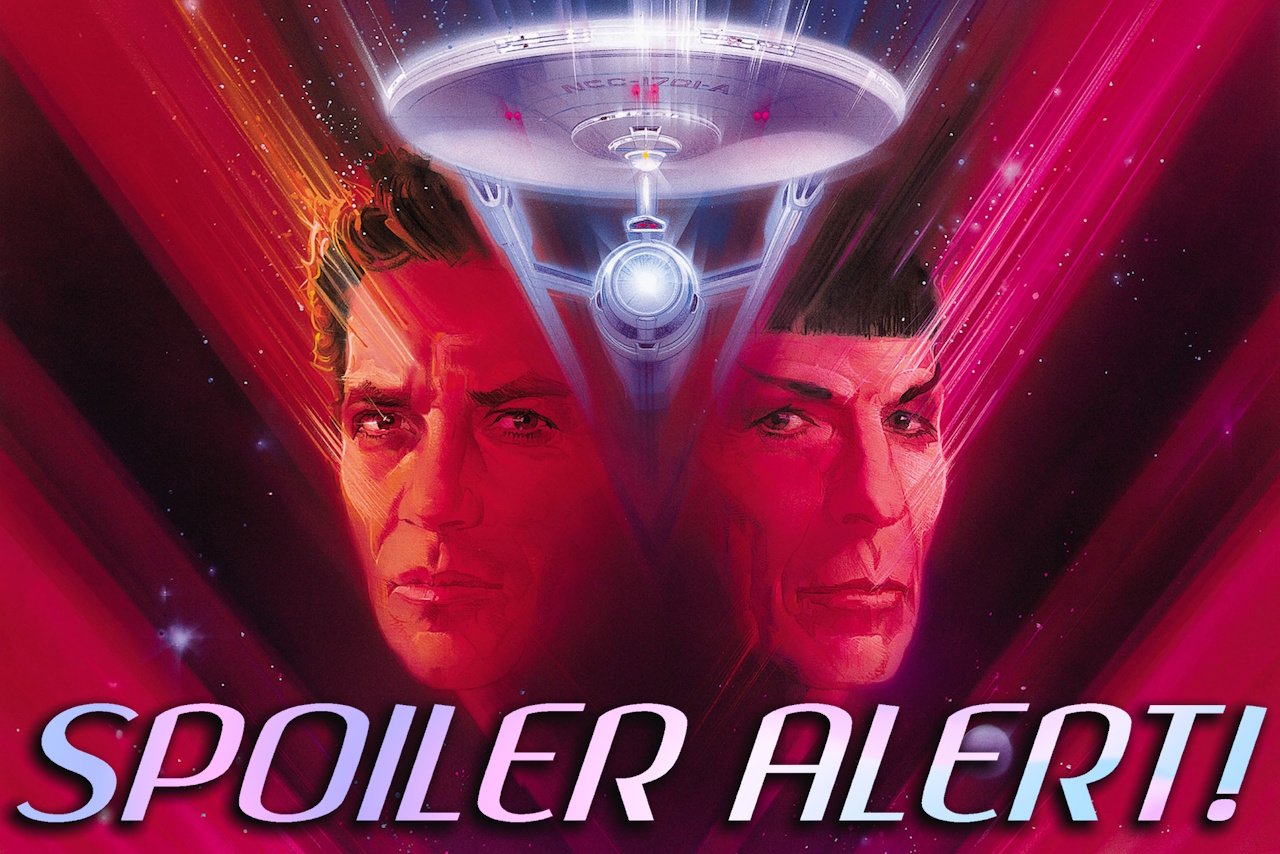
A Star Trek-themed spoiler warning.

Spoiler Warning: Spoilers are present for the following Star Trek productions: The Original Series, The Next Generation, Deep Space Nine, Voyager, and Enterprise.

A couple of months ago, I wrote a piece here on the website in which I looked at the “top five” episodes from each of the first five series… at least, according to the randos who rate episodes over on IMDB! There were some predictable picks… and a few surprises. Seriously, who would’ve expected that Blink of an Eye would be everyone’s favourite Voyager episode? Not me, that’s for sure!

So today, we’re going to do something similar… but with the lowest-rated episodes from those first five Star Trek shows. I think it could be a lot of fun to look at some of the stories that other fans and viewers don’t like, and consider some of the reasons why. I’m bracing myself for a few surprises here, too!

If you missed it, please check out my earlier piece for a look at the “top fives.” You can find it by clicking or tapping here.

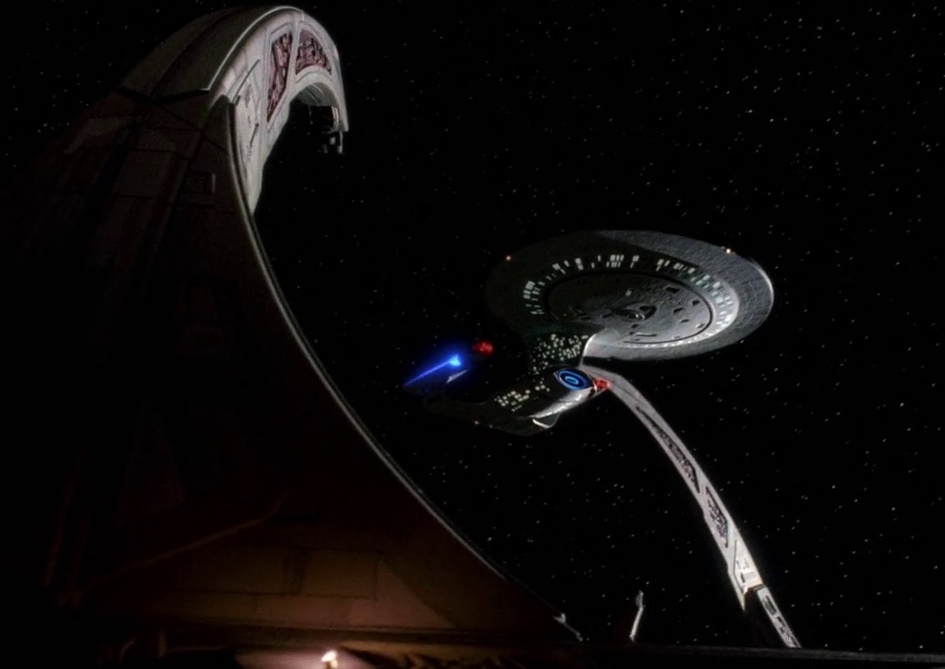
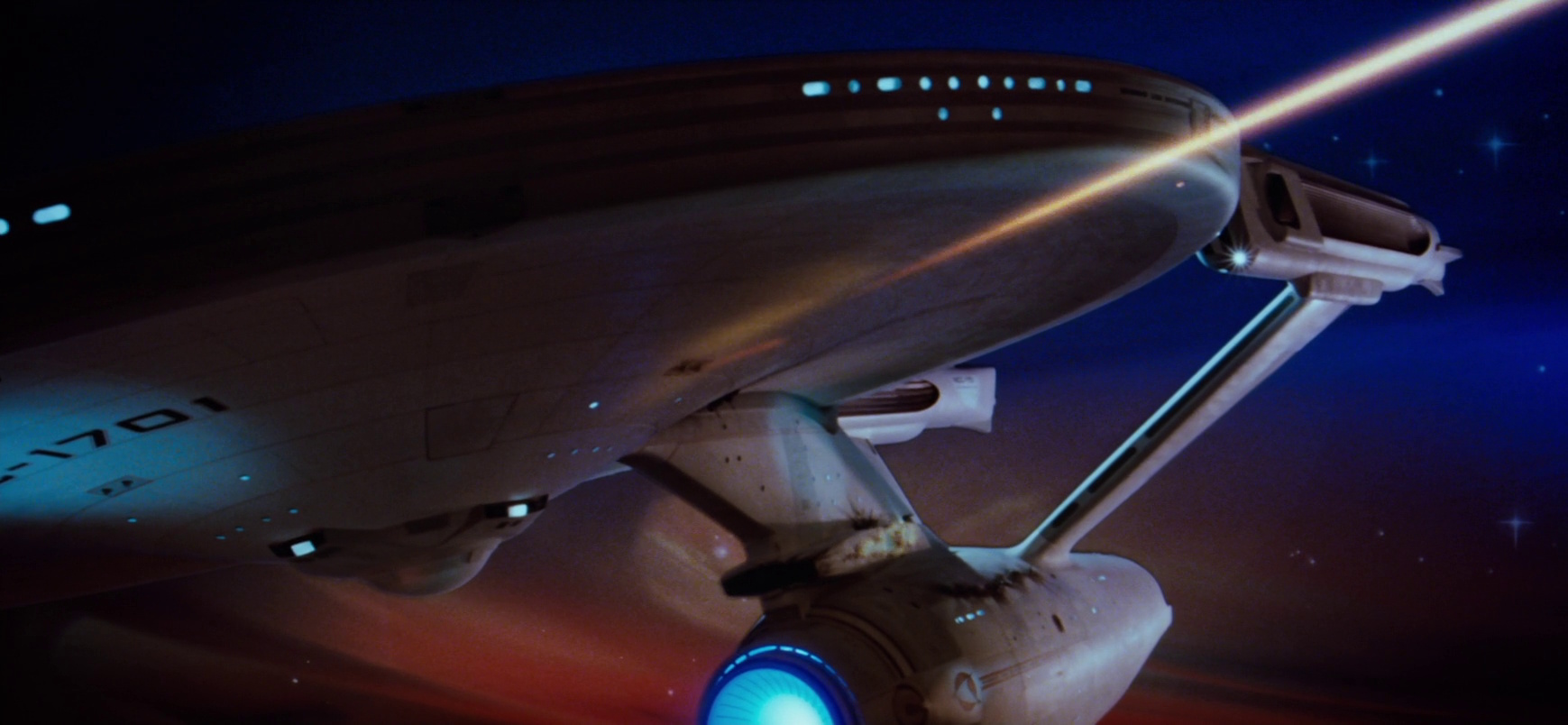
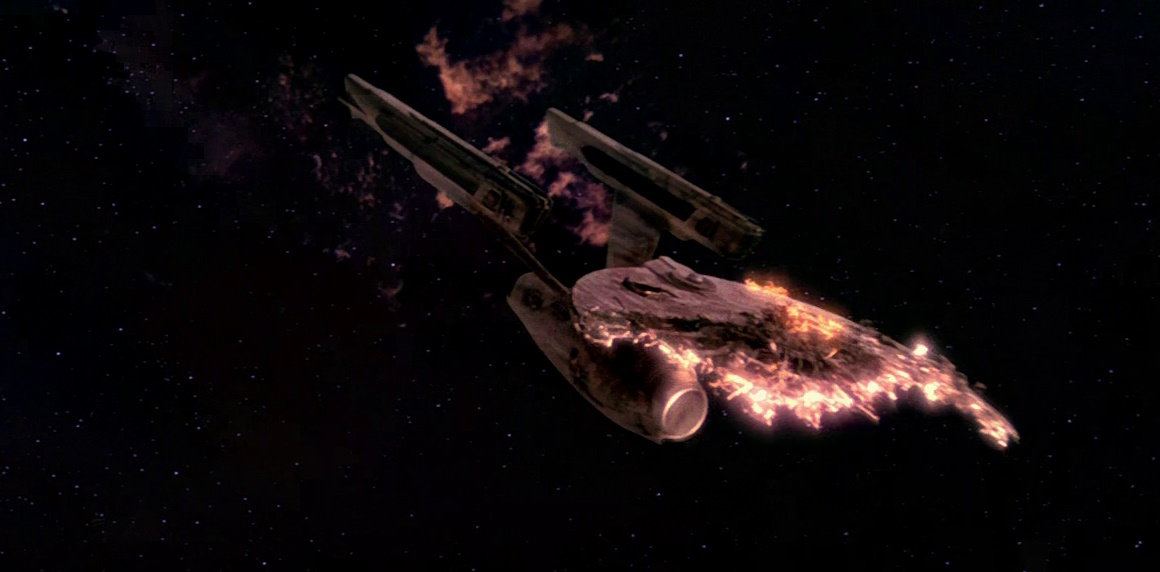
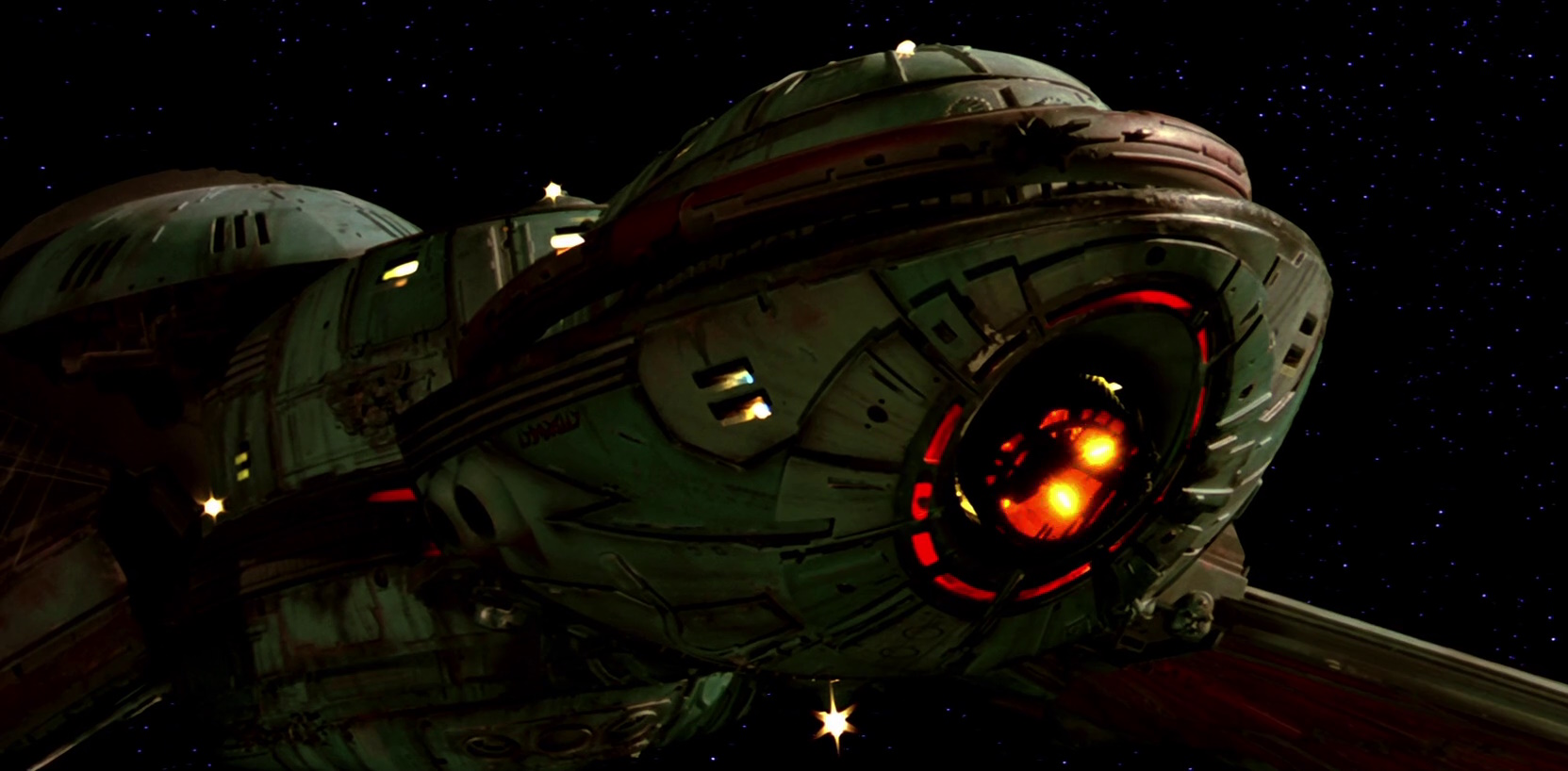
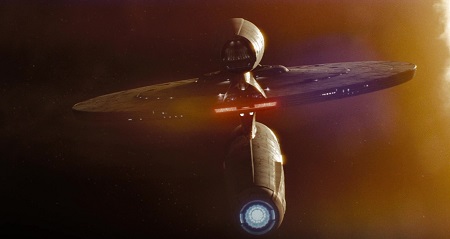
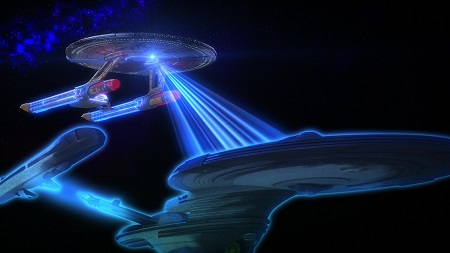
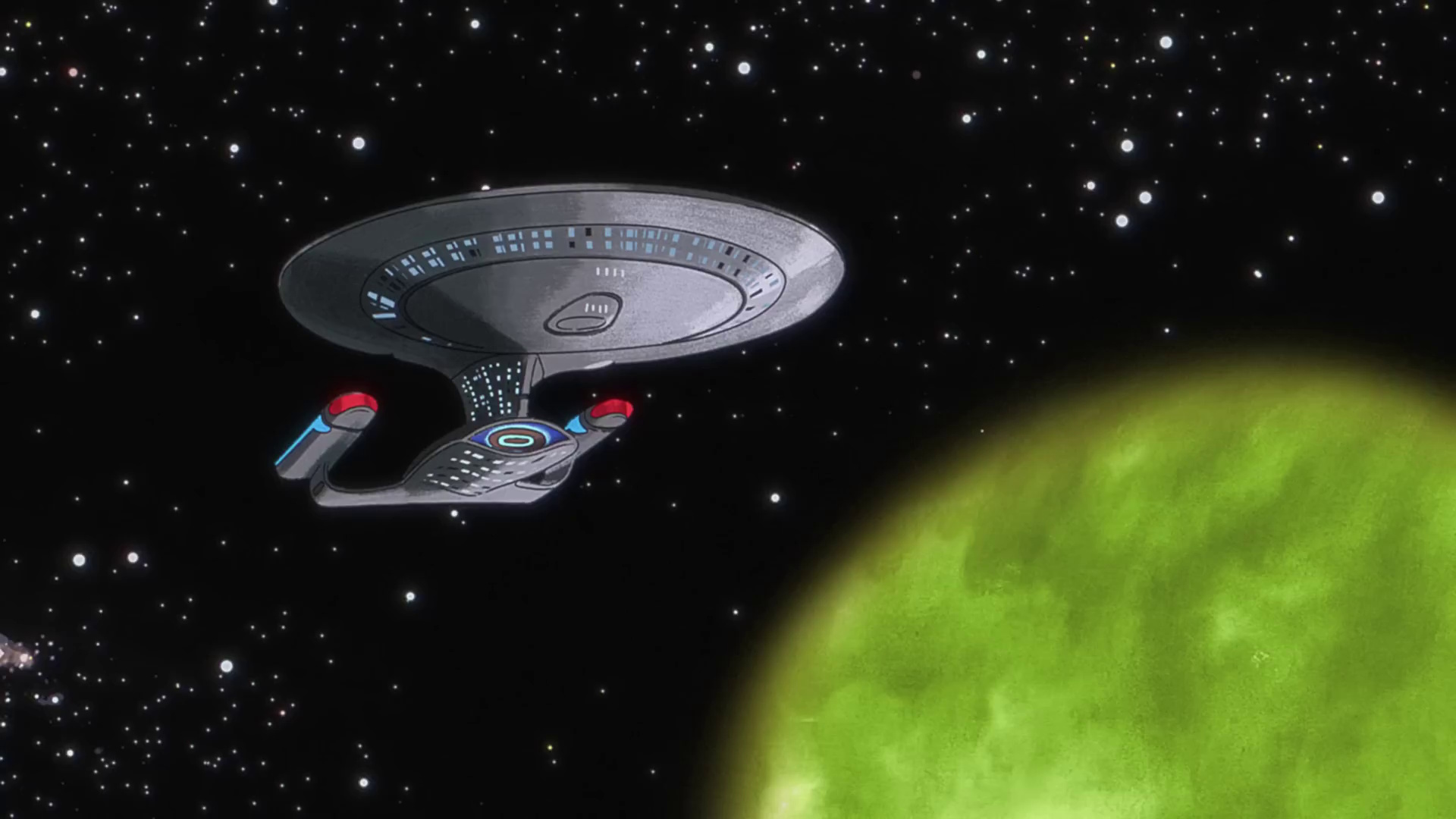
The Enterprise-D.

My usual caveat applies: everything we’re going to talk about is subjective, not objective. If I dump all over one of your favourite episodes, or talk positively about a story you hate… that’s okay! There’s enough room, and enough maturity, in the Trekkie community for differences of opinion and respectful disagreements that don’t descend into toxicity and argument.

This post, like my earlier one, will cover the first five live-action Star Trek shows: The Original Series, The Next Generation, Deep Space Nine, Voyager, and Enterprise. No Animated Series or films are included. I’ll start with TOS and move forward chronologically; the episodes will be ranked according to their IMDB ratings, from highest to lowest – i.e. beginning with the fifth-worst and finishing on the worst-rated episode for each of the five shows. The IMDB ratings are taken as of September 2025 (and might change over time!)

I’ll discuss what I don’t like (or do like) about each episode, and then I’ll answer a simple question: does it deserve the hate? Or, to put it another way: would I personally rate the episode as being among the worst in the franchise?

Now that all of that’s out of the way, let’s jump into the episodes.

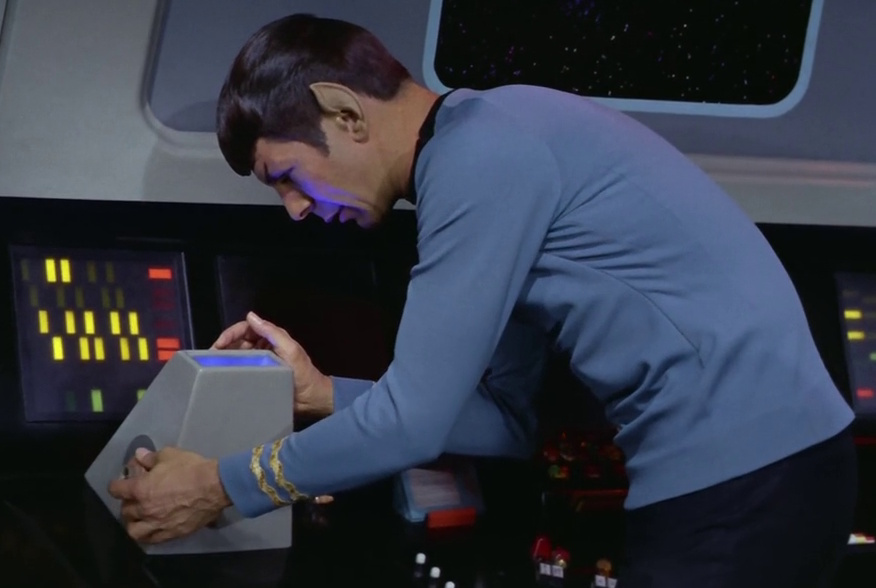
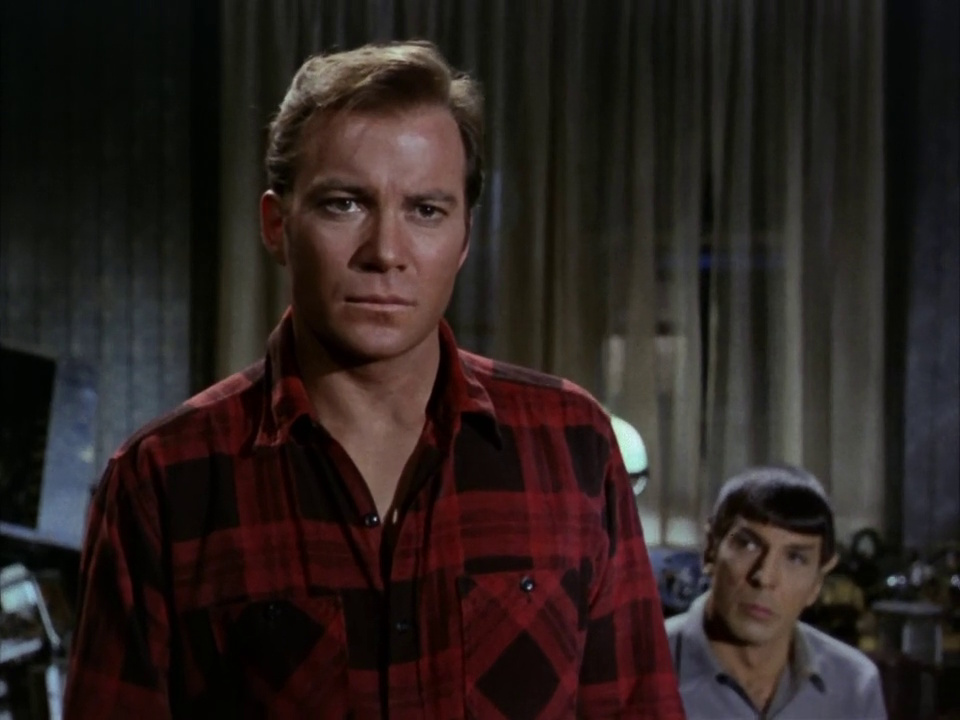
The Original Series Episode #5:
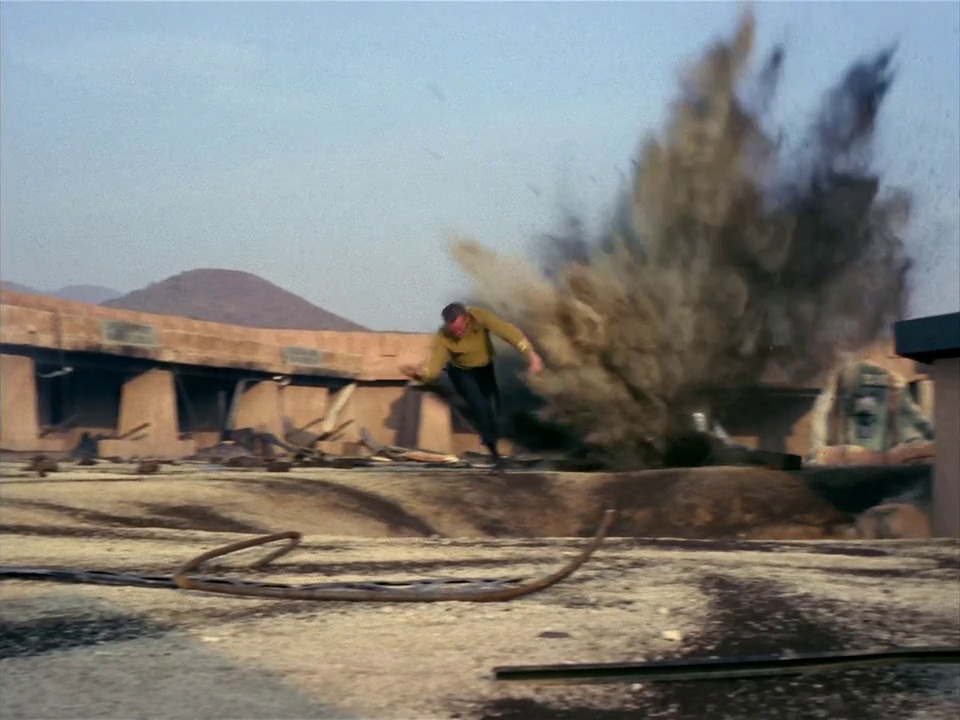
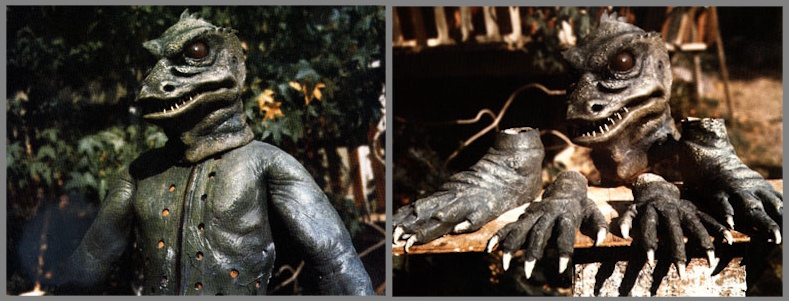
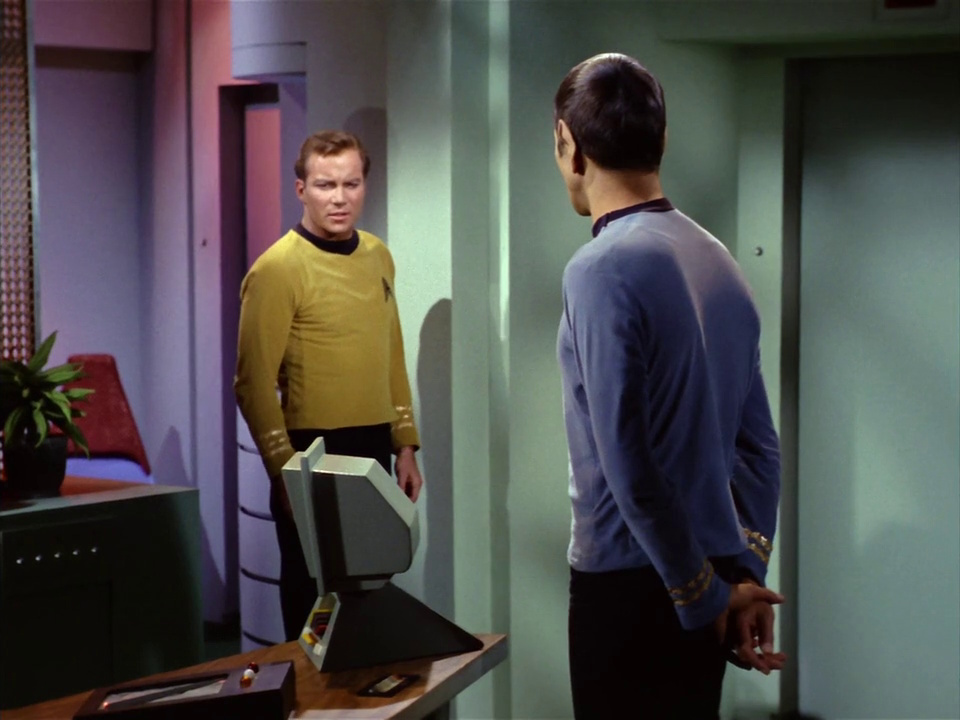
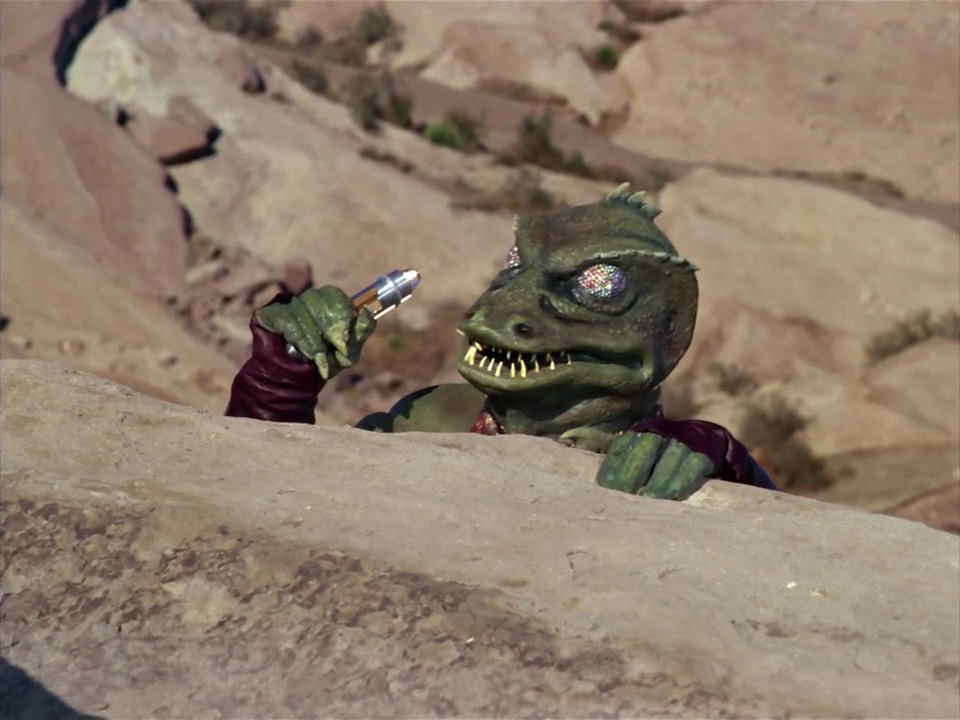
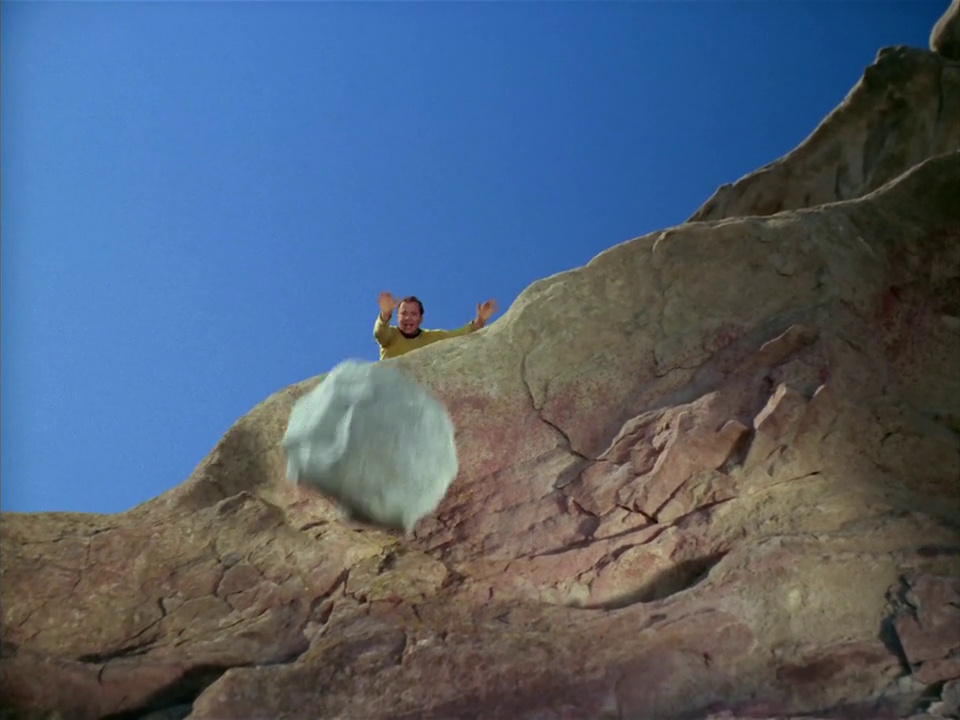
The Omega Glory, Season 2
IMDB Rating: 6.1/10

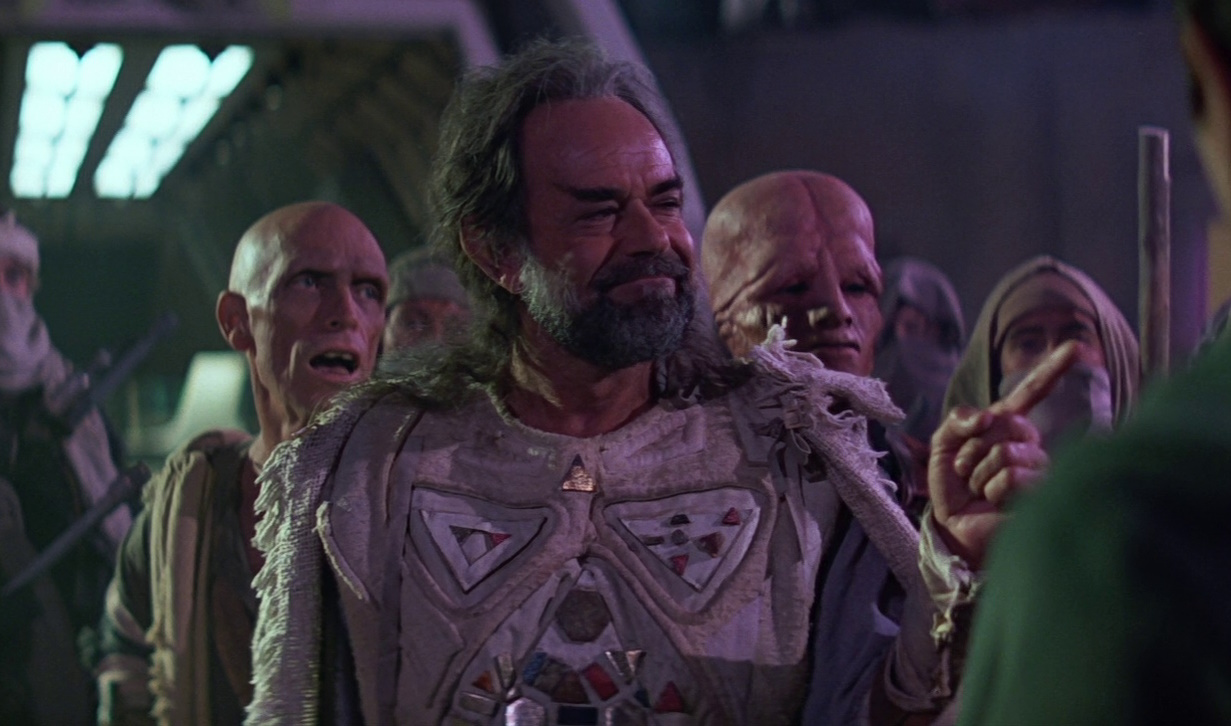
Gene Roddenberry intended to hold up a mirror to society, using Star Trek episodes as “morality plays” to comment on or critique things out here in the real world. Many of these episodes are wonderful. The Omega Glory is arguably too on-the-nose, though, with its very literal depiction of the aftermath of a Cold War turned hot. Roddenberry himself wrote The Omega Glory, so it’s a bit of a shame to see it rated so lowly by viewers and fans.

There’s a lot of competition in TOS’s second season, and compared to stronger offerings like The Doomsday Machine, Journey To Babel, The Trouble With Tribbles, and The Ultimate Computer, I can see why The Omega Glory struggles to keep up. There’s also, by modern standards, somewhat uncomfortable racial stereotyping – which Roddenberry intended to flip on its head with The Omega Glory’s big revelation – but I’m not sure it works as well as he’d hoped.

Does It Deserve The Hate?
​☑️​Yes.​☑️​

The Original Series Episode #4:
Spock’s Brain, Season 3
IMDB Rating: 5.7/10

No list of “the worst Star Trek episodes” would be complete without Spock’s Brain. And this is a trend we’re about to see a lot more of; Season 3 of The Original Series is generally considered to have a number of weaker offerings, in part due to the show’s reduced budget. But I’ll be honest: I’ve always found Spock’s Brain to be weirdly fun… in a “so bad it’s almost good” kinda way.

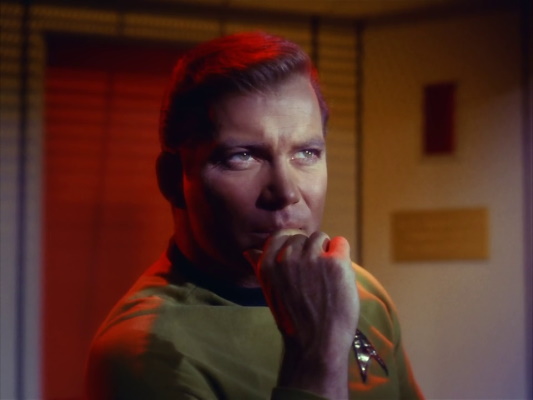
I also think the episode has become iconic, or at least symbolic of a particular moment in the history of Star Trek. This was the first episode of Season 3 – a season that wouldn’t have existed at all without a letter-writing campaign by fans. It’s also a story that showed how far Kirk (and Spock’s other friends) were willing to go to save him when he was in danger. Is it a ridiculously silly premise? Yes. Is it executed perfectly by all involved? No. But do I watch it anyway and smile? Yes!

Does It Deserve The Hate?
⛔No.⛔

The Original Series Episode #3:
The Alternative Factor, Season 1
IMDB Rating: 5.7/10

The Alternative Factor is the episode with Lazarus (and Anti-Lazarus, his counterpart from an alternate universe). To be honest, I’d pretty much forgotten about The Alternative Factor; nothing about it leaps out at me as being particularly memorable. “Forgettable” is not synonymous with “terrible,” but I think it’s at least noteworthy that The Alternative Factor just didn’t leave much of an impression on me. None of the special effects or locations stand out, Lazarus and Anti-Lazarus don’t have any unique makeup or prosthetics, and the whole look of the episode is just a bit bland.

In terms of story, The Alternative Factor is small and kind of silly – with Lazarus in particular being quite over-the top – while simultaneously trying to present its core conflict as a multiverse-ending threat. It’s worth noting that there were production issues with The Alternative Factor, including an extensive re-write to remove a romantic sub-plot and the original actor contracted to play Lazarus failing to show up for work when production had already commenced.

Does It Deserve The Hate?
​☑️​Yes.​☑️​

The Original Series Episode #2:
The Way To Eden, Season 3
IMDB Rating: 5.4/10

I don’t think The Way To Eden is all that bad, to be honest – especially not for a Season 3 episode which was produced with a lower budget. Maybe there are some issues with the way Chekov is written, but on the whole I really don’t dislike this episode at all. It’s very much a product of its time – the followers of Sevrin are clearly based on the American countercultural movement, which was reaching its peak in 1969 – but so are many Star Trek episodes, and I don’t think that alone should count against it.

It’s also not the only Star Trek story to involve a cult-like group who are seeking paradise (or some other prophecy fulfilment). I actually quite like some of the details in the script – one of the members of the group is the son of an ambassador whose people are negotiating with the Federation, which I feel adds a lot to the broader lore of the Star Trek galaxy. Is The Way To Eden the strongest TOS episode, or a great way to introduce new fans to the franchise? Probably not. But I don’t think it’s atrocious, either.

Does It Deserve The Hate?
⛔No.⛔

The Original Series Episode #1:
And The Children Shall Lead, Season 3
IMDB Rating: 5.2/10

As with The Alternative Factor above, this isn’t an especially memorable episode for me. The core premise of an alien entity manipulating a group of children isn’t necessarily bad, but the execution leaves a lot to be desired. The way the story was resolved, too, leaned on a pretty big cliché, and some less-than-spectacular acting performances.

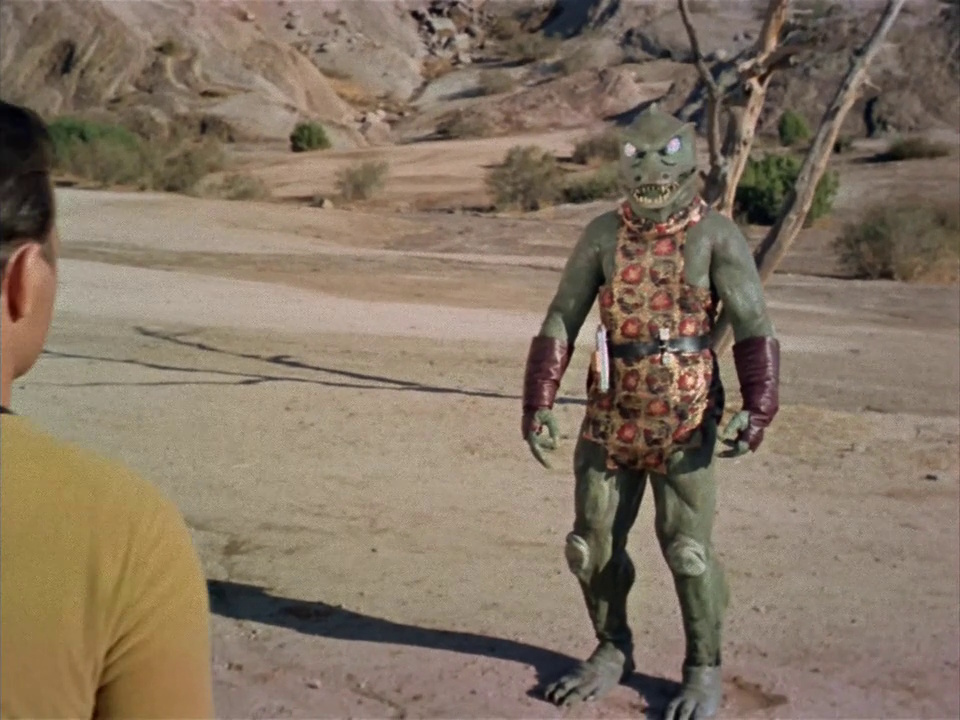
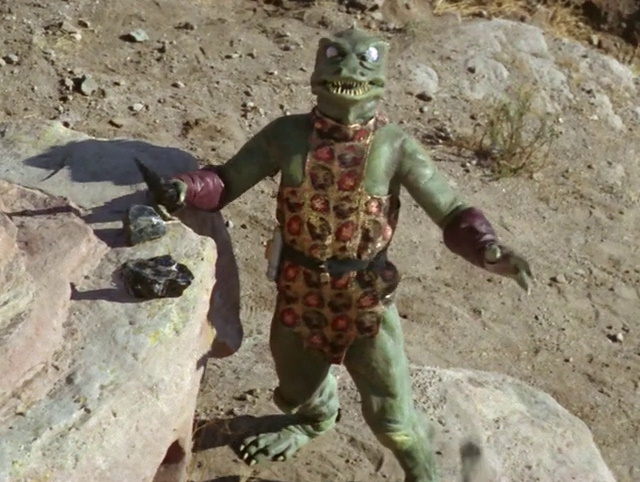
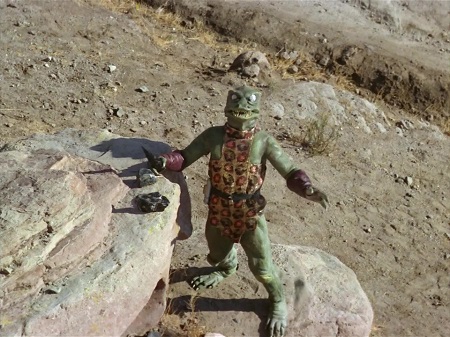
There were interesting ideas in And The Children Shall Lead, like several members of the crew seeing visual manifestations of their fears. Gorgan’s powers, too, could have been tense and even frightening if handled better. There’s also something distinctly eerie about a child or group of children in this kind of story; that’s why films like The Exorcist work so well. But again, the execution rather than the premise is what lets the episode down.

Does It Deserve The Hate?
​☑️​Yes.​☑️​

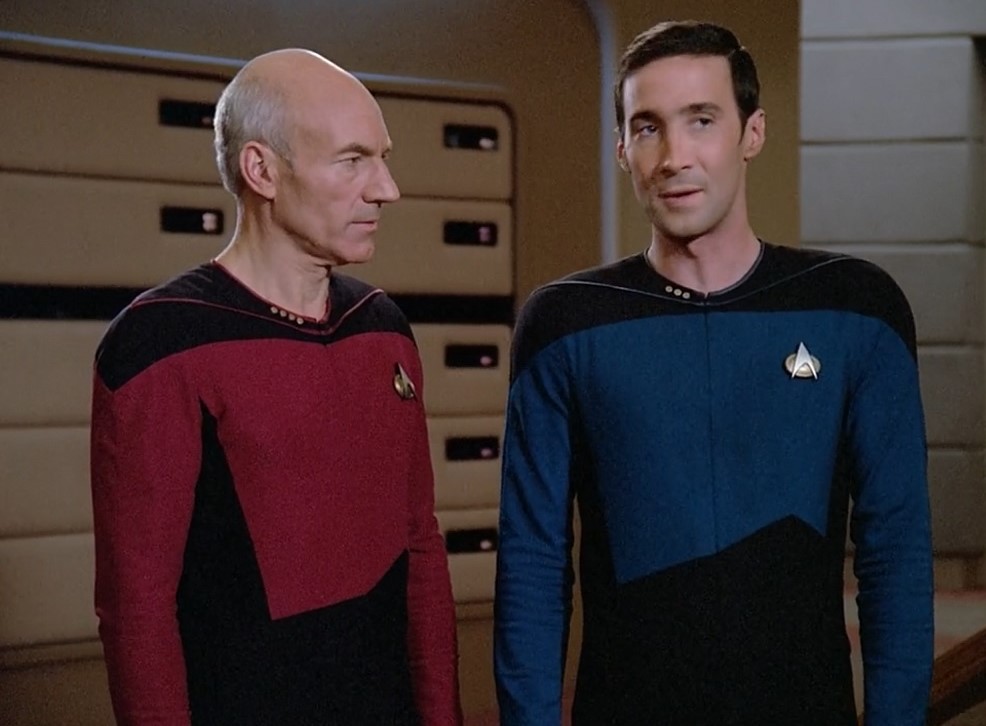
The Next Generation Episode #5:
Angel One, Season 1
IMDB Rating: 5.7/10

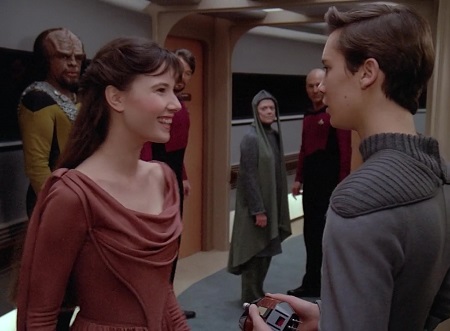
Angel One wanted to be a Roddenberry-style “morality play,” using Star Trek’s sci-fi setting to consider the real-world issues of sexism and a patriarchal society. It did that by turning the tables and depicting a civilisation where women, not men, were the dominant ones. That aim may have been worthwhile or even admirable – but the execution was clumsy, at best. The B-plot, depicting a virus spreading on the Enterprise while the away team was on the planet, wasn’t particularly strong, either – though I enjoy the visual of Data, alone, on the bridge!

Angel One might be best-remembered among Trekkies for some of its costumes! The costumes worn by the male inhabitants of Angel I, as well as by Riker later during the away mission, were typical Season 1 silliness, reminiscent of some of the costumes created twenty years earlier for TOS. And that’s Angel One in a nutshell, really – it’s one of several Season 1 episodes that plays out like an Original Series story.

Does It Deserve The Hate?
⛔No.⛔

The Next Generation Episode #4:
Man of the People, Season 6
IMDB Rating: 5.7/10

I’ve always felt that Man of the People had an interesting premise. And Star Trek stories have often posed deep moral questions to the audience; in this case, we’re considering whether “the greater good” can be served by a man who harms people around him. There’s a metaphor there, buried in the story, about bad people doing good things, and the age-old question of whether the ends can justify the means when significant harm is being caused.

However… Man of the People doesn’t execute its ideas flawlessly, and the focus on Troi “acting out” earlier in the episode is a bit much for me. Apparently, there were issues on the production side – which led to the script being rushed and the story being bumped up the filming schedule. I daresay that’s noticeable in the finished product.

Does It Deserve The Hate?
​☑️​Yes.​☑️​

The Next Generation Episode #3:
Code of Honor, Season 1
IMDB Rating: 5.1/10

I might’ve ranked this one even lower! Code of Honor is a complete misfire; an episode featuring a civilisation of “African stereotypes in space” that’s so utterly awful it’s hard to know where to start. I’ve said before that the fact that this episode was produced for The Next Generation in the 1980s genuinely boggles my mind, and it’s an example of how, despite Star Trek’s lofty ambitions, the franchise hasn’t always gotten it right.

If I were to find any positive notes in this mess, it would be that Tasha Yar gets something to do, and that the episode is an early example of Captain Picard being willing to go out on a limb for a member of his crew. But those points, unfortunately, are completely lost in an episode swarming with awful production decisions. I can barely even re-watch Code of Honor as a result.

Does It Deserve The Hate?
​☑️​Yes.​☑️​

The Next Generation Episode #2:
Sub Rosa, Season 7
IMDB Rating: 4.8/10

I… I’m sorry, everyone. I’m almost ashamed to admit this… but I actually kinda like Sub Rosa. And, if I may defend its honour for a moment, I’d suggest that the memes that the episode spawned are at least partially to blame for its low rating. Yes, Sub Rosa’s “sex with a ghost” storyline is silly. Got it. Message received! But there’s more to the story than that, and the episode treats Ronin as an alien entity, not as a “spirit.” I also really like the sets used for the Caldos Colony – the place feels very different to almost anywhere else in Star Trek, at least up to this point in the franchise.

Star Trek hasn’t always been great at depicting aliens that feel, well… alien. And if there’s one thing to say about Ronin, it’s that the idea of a non-corporeal parasitic entity is, if nothing else, very alien. Caldos Colony is a fun setting, we got to learn more about Dr Crusher’s early life, and there was a bit of silliness in the story, too. Plus, Star Trek got some great memes out of this one! Honestly, what’s not to love?

Does It Deserve The Hate?
⛔No.⛔

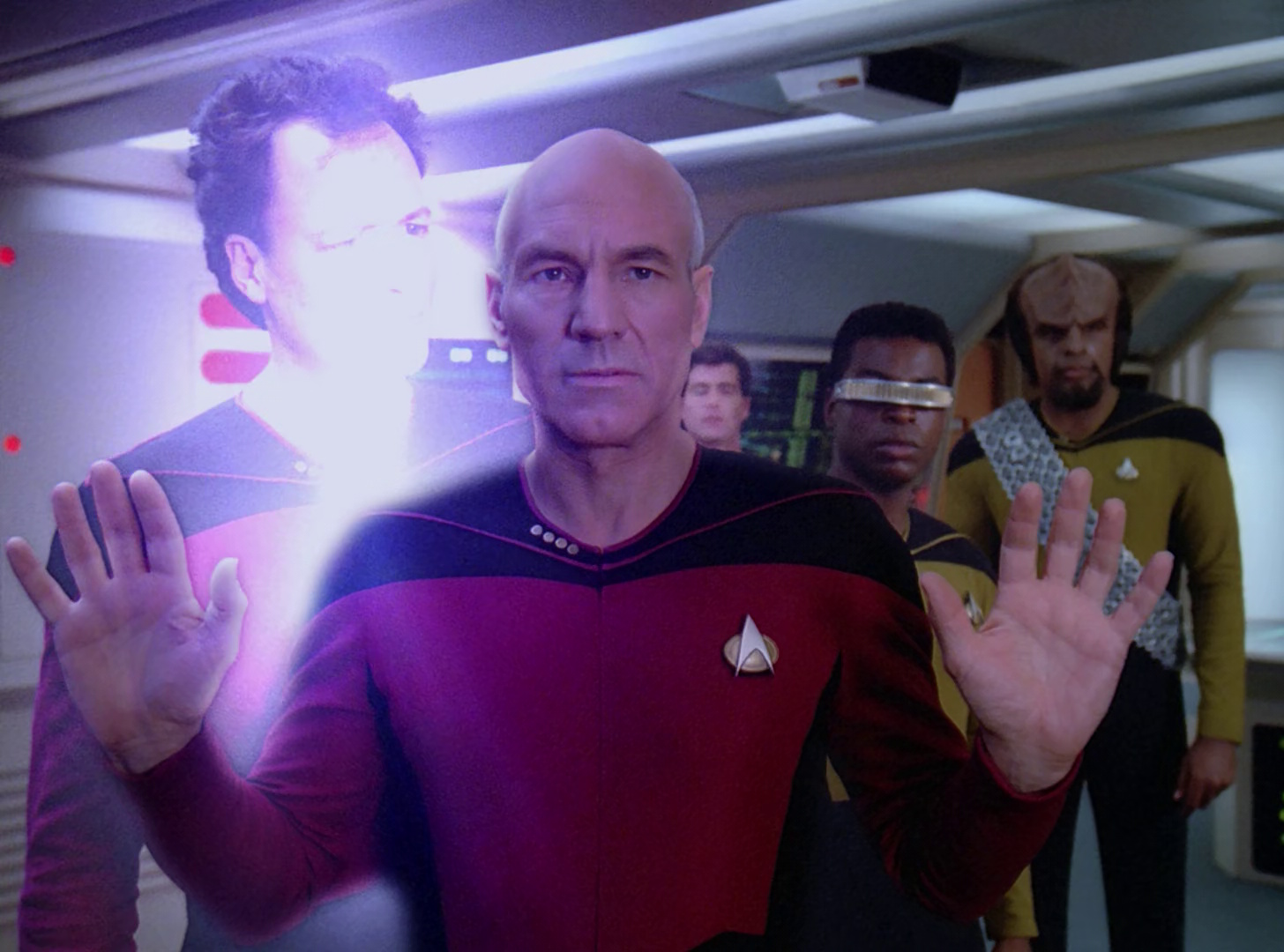
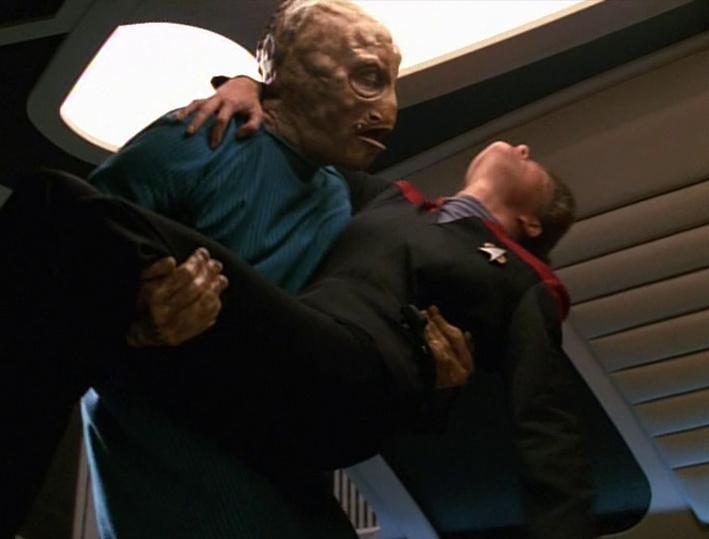
The Next Generation Episode #1:
Shades of Gray, Season 2
IMDB Rating: 3.3/10

I’m astonished to see Shades of Gray receiving any support whatsoever; this is a rare 1/10 or even a 0/10 episode for me – and for most Trekkies I’ve spoken with, too. It absolutely deserves its place as the worst-rated TNG episode… and I suspect the production team knew that when they put it together. If you’ve been a Trekkie for as long as I have, you know the story by now: production on TNG Season 2 overran both its schedule and budget, and a compromise had to be made late into production. Shades of Gray – a clip show – was the result.

Because television production has changed over the years, I doubt we’ll ever get another episode like Shades of Gray in the Star Trek franchise – and that’s for the best. It’s an especially weak episode, and its only original element – the frame narrative depicting Riker’s injury and illness – does nothing to hold its random assortment of clips together. It was a poor way to say goodbye to Dr Pulaski, too, and a serious disappointment as the show’s otherwise fantastic second season came to an end.

Does It Deserve The Hate?
​☑️​Yes.​☑️​

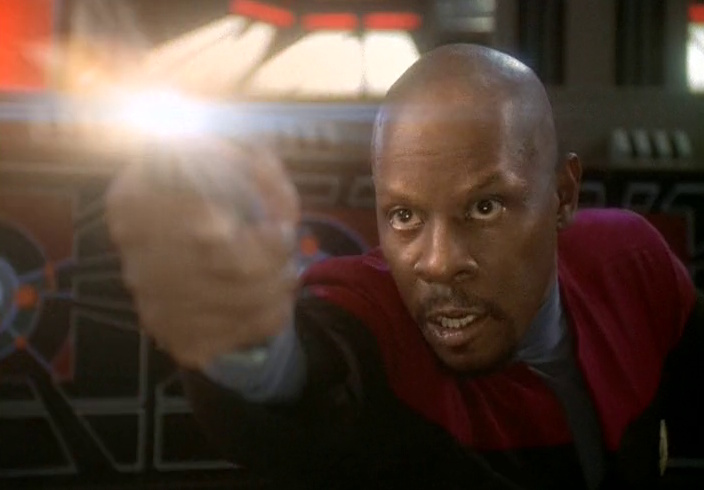
Deep Space Nine Episode #5:
Profit and Lace, Season 6
IMDB Rating: 5.8/10

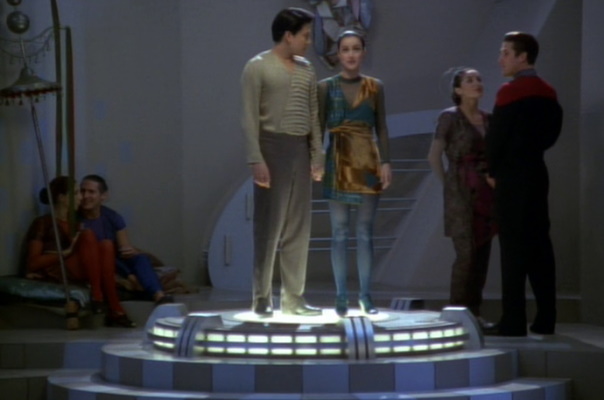
Profit and Lace is DS9′s “trans” episode… kind of. Star Trek has wrangled with questions of gender on many occasions, and even in the ’90s, when the topic of gender and being trans was usually treated just awfully on television, the franchise largely got it right. Quark’s temporary sex change, as it’s presented in this episode, though… I dunno. As an examination of attitudes toward gender, and how females are treated in a society which still sees them as second-class… there were interesting ideas. But the execution of all of it was just flawed.

There’s a tonal clash between the heavier themes, as interpreted by Alexander Siddig (who directed the episode), and the lighter way Profit and Lace was originally written. A different director might’ve taken the episode in much more of a comedic direction – which would’ve suited the way it was written, though it would’ve come at the expense of being just another late ’90s “trans comedy” story. I get what the episode was going for, and I think a more serious approach to the subject matter – both the gender division in Ferengi society and Quark’s “transition” – was the right call. But the script didn’t carry the themes, and what resulted was a bit of a mess.

Does It Deserve The Hate?
​☑️​Yes.​☑️​

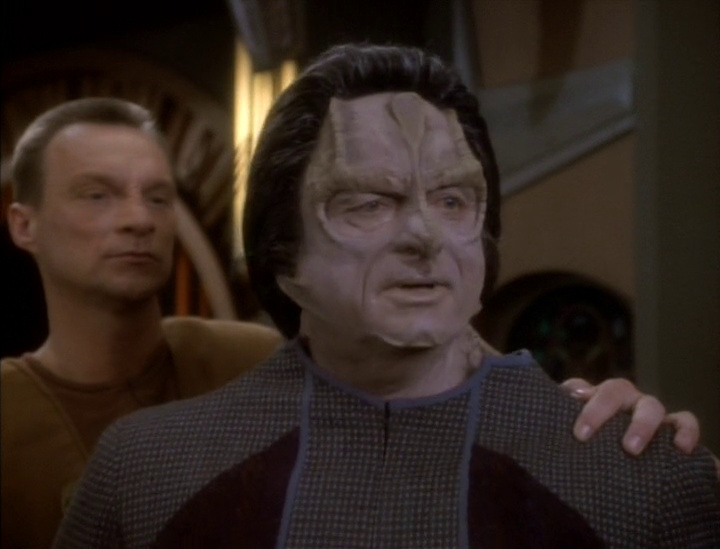
Deep Space Nine Episode #4:
Resurrection, Season 6
IMDB Rating: 5.7/10

Oof, Season 6 is not doing well in these rankings so far! To be honest, though, I get it when it comes to Resurrection. If you know me, you’ll know I’m not really a fan of the Mirror Universe as a setting; it’s one-note, and has a tendency to trick even competent performers into putting out hammy, over-acted, one-dimensional performances – all of which are on display with Mirror Kira and Mirror Bariel, unfortunately. Prime Kira also seems to act out-of-character, falling so easily for Mirror Bariel so long after the original Bariel’s death.

DS9′s executive producer, Ira Steven Behr, has suggested that Resurrection’s place in the season – coming after the intense opening phase of the Dominion War, Starfleet’s recapturing of the station, and then Worf and Dax’s wedding – contributed to fan dissatisfaction, feeling that “nothing” the show had done immediately after those intense stories would’ve been satisfying. I’m not convinced on that, I’m afraid. Season 6 has some of my favourite DS9 episodes. The likes of Who Mourns for Morn, The Magnificent Ferengi, and One Little Ship are all standalone stories that, had they taken this broadcast slot, wouldn’t have been as poorly-received as this uninspired Mirror Universe story.

Does It Deserve The Hate?
​☑️​Yes.​☑️​

Deep Space Nine Episode #3:
The Muse, Season 4
IMDB Rating: 5.6/10

I feel a bit sorry for The Muse! Jake Sisko was too often overlooked in Deep Space Nine, so to rank one of the rare Jake-focused episodes so lowly wouldn’t have been my preference. However, if I may be so bold, it isn’t Jake that’s upset people (mostly). Rather, it’s The Muse’s Lwaxana Troi and Odo B-plot that, I would suggest, is the reason for such a low rating. Lwaxana wasn’t always well-received by Trekkies, despite her illustrious performer, and her relationship with Odo was, to the best of my recollection, never especially popular.

On Jake’s side of the story, I like the idea of a kind of parasitic entity latching onto his creativity. The Muse does a lot to establish Jake’s writing career, and it’s just an interesting idea to see Onaya taking advantage of his talent. There’s a great moment between Jake and Ben toward the end of the episode, something we’d see less and less of as DS9 continued its run. And while this side of the story was imperfect, it was at least a creative idea.

Does It Deserve The Hate?
⛔No.⛔

Deep Space Nine Episode #2:
Meridian, Season 3
IMDB Rating: 5.6/10

It sounds like Meridian – whose story concept was based on a novel set in Scotland – had a bit of a troubled production. An expensive location shoot for the planet Meridian seems to have led to some scenes being rewritten or cut altogether, which may have affected the finished product. The main gripe folks seem to have, though, is the behaviour of Jadzia Dax. As with Kira in Resurrection, which we discussed above, Dax falls head-over-heels for someone she’s just met – and that leads to her wanting to give up her life on DS9, leave her friends behind, and move to this random planet which can’t exist in normal space.

I would suggest that everyone involved – the entire cast, guest stars, and director Jonathan Frakes – did the best they could with that concept, but it was just a fatally flawed premise to begin with. Meridian has some neat ideas, like the disappearing planet, which feels “very Star Trekky;” i.e. something you wouldn’t see in any other sci-fi universe! But the way it handled Dax was poor, and a B-plot about Quark selling perverted holosuite programmes does nothing to help the episode, either.

Does It Deserve The Hate?
​☑️​Yes.​☑️​

Deep Space Nine Episode #1:
Let He Who Is Without Sin…, Season 5
IMDB Rating: 5.5/10

I gotta be honest: I’m surprised to see this as the “most-hated” DS9 episode. I knew Let He Who Is Without Sin wasn’t wildly popular, but I don’t think I expected it to be considered the absolute worst in the series! There are definitely some issues, though. I think it’s universally agreed nowadays that Leeta and Bashir didn’t work as a couple, so that’s part of it. But then there’s how the episode handles Worf – setting him up as the Star Trek equivalent of Mary Whitehouse, crusading against the supposed immorality of the Federation.

I think there was the kernel of an interesting idea here, if Let He Who Is Without Sin had taken it in a different direction. There are folks who live in tourist-focused places who feel the incursion of tourists is detrimental to their communities. And there was also a way to use the New Essentialists to comment on the growing Christian purity movement in the United States, for example. But for a variety of reasons, this isn’t Deep Space Nine’s strongest episode. I don’t think I’d personally say it was the very bottom of the barrel, but I get where much of the dissatisfaction is coming from.

Does It Deserve The Hate?
​☑️​Yes.​☑️​

Voyager Episode #5:
Favorite Son, Season 3
IMDB Rating: 6.0/10

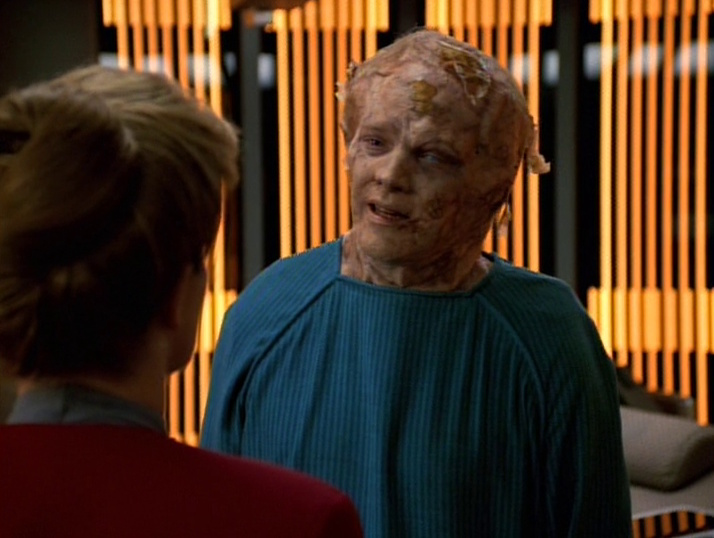
I genuinely had a hard time remembering Favorite Son at first. But it’s the episode where Harry is transformed into a Taresian – a Delta Quadrant species dominated by murderous females. An episode about a female-dominated society ending up as one of the worst-rated in its series? Huh… I’m starting to see a pattern emerging!

I actually quite like both of the core concepts here. An alien race that reproduces by forcibly converting members of other species could make for a genuinely interesting antagonist, and a kind of “praying mantis” alien that murders its mate after intercourse could also be a dangerous threat. Maybe Favorite Son didn’t execute these ideas perfectly, but I’m not sure it warrants a place on this list for that reason alone.

Does It Deserve The Hate?
⛔No.⛔

Voyager Episode #4:
Sacred Ground, Season 3
IMDB Rating: 5.8/10

Sacred Ground does something Star Trek has always done – used a sci-fi lens to examine things out here in the real world. The topic in question this time is faith: can the scientifically-minded Captain Janeway be persuaded to take a “leap of faith” in order to save someone she cares about? I really like that idea, and I think Sacred Ground does interesting things with it. Where it was arguably let down was its focus on the Spirits themselves, perhaps, as well as some of Janeway’s tribulations not being visually spectacular.

However, I think the episode works well. It’s coherent, well-directed, and while we can argue whether or not it’s in character for Janeway or whether a Star Trek story should come down on one side or the other of the “science-versus-faith” question, I didn’t feel the way it was handled in the episode was in any way poor. It’s slow-paced, esoteric, and “weird,” for want of a better word – but so is a lot of Star Trek, and that’s why we like it!

Does It Deserve The Hate?
⛔No.⛔

Voyager Episode #3:
Elogium, Season 2
IMDB Rating: 5.8/10

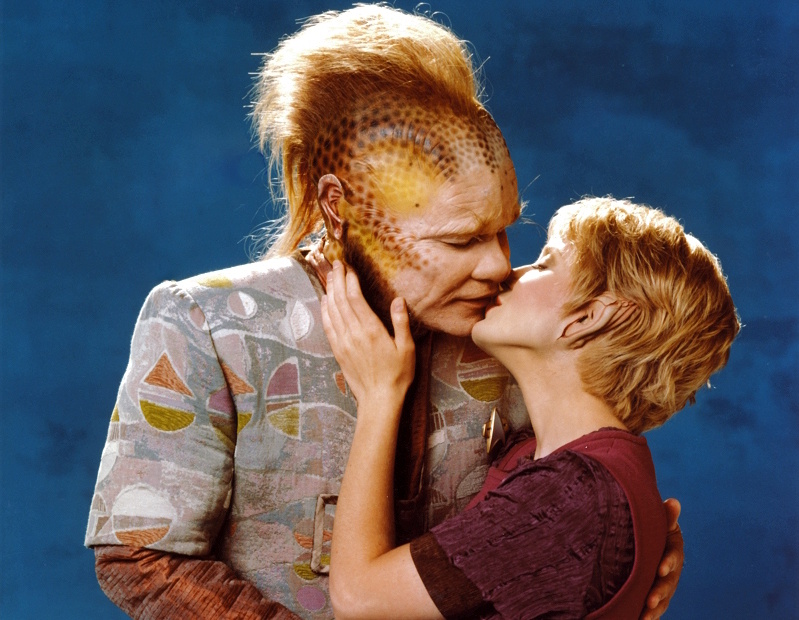
Elogium is a Neelix-Kes relationship story about Kes going through Ocampan “puberty” and deciding whether or not to conceive a child with Neelix. Should I go on, or have I already explained enough about why it absolutely deserves to be ranked so low?! Joking aside, I think I’m not alone in saying that Neelix’s infatuation with Kes was one of the absolute worst elements of Voyager’s first couple of seasons, and if it had been in focus in the way it is in Elogium more often, it would genuinely have ruined his character.

Elogium takes that icky foundation and somehow manages to make it even worse, by suggesting that, prior to this story, Kes wasn’t even fully-developed as an adult! I really struggle to find any redeeming features in this episode – or the wider Neelix and Kes relationship.

Does It Deserve The Hate?
​☑️​Yes.​☑️​

Voyager Episode #2:
Threshold, Season 2
IMDB Rating: 5.3/10

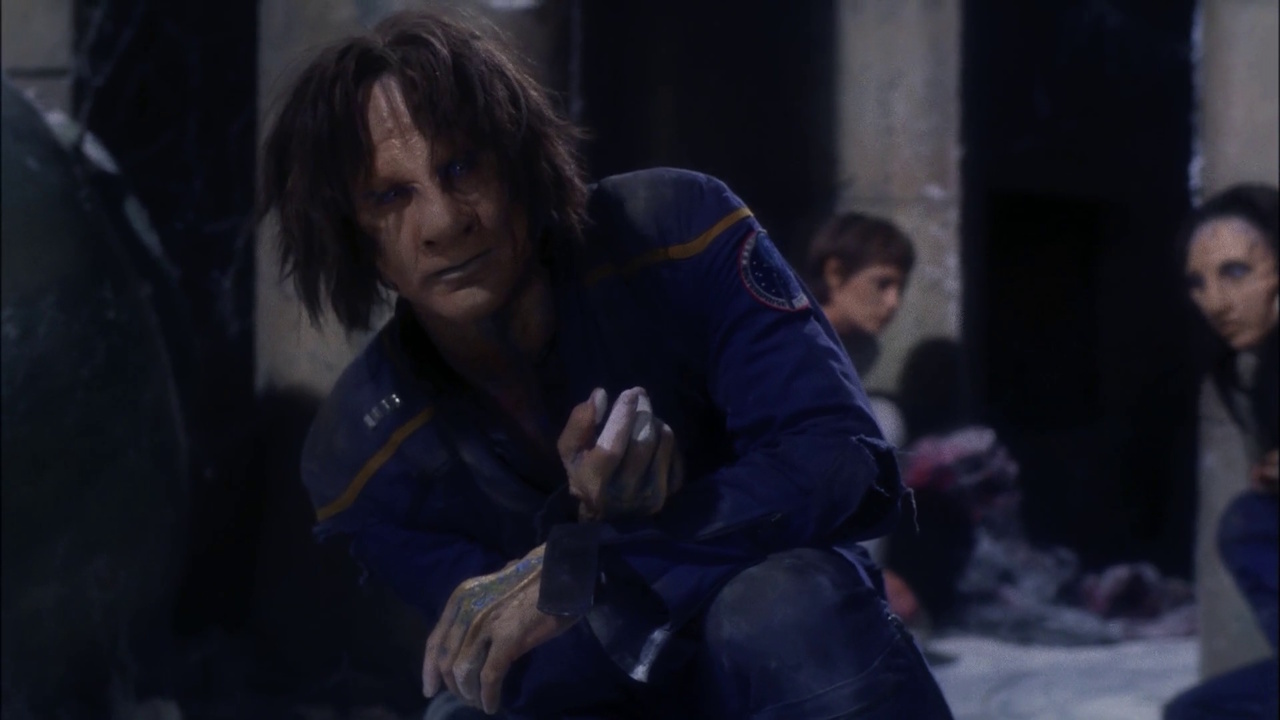
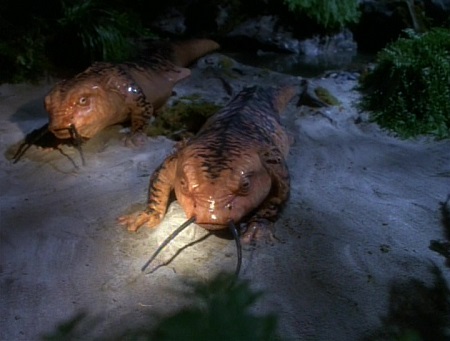
Threshold has basically become a meme in the Star Trek fandom at this point, so I’m not surprised to see it on this list. It’s an undeniably silly idea, even within the confines of Star Trek’s universe – accelerating past Warp 10 causes Paris and Janeway to “hyper-evolve” into a kind of salamander-like lifeform. They then proceed to… mate.

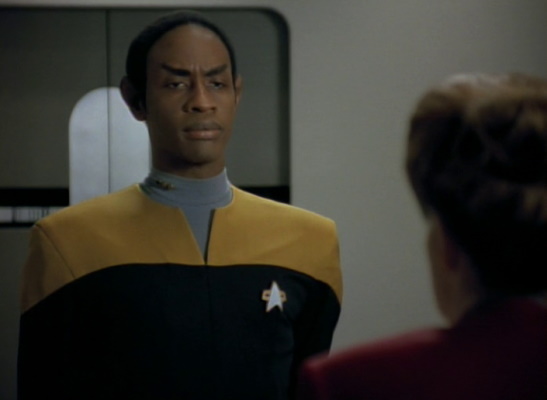
What’s worse, though, and where I’d really take issue with Threshold, is that Chakotay, Tuvok, and the rest of the crew basically infested a random Delta Quadrant planetoid with Paris and Janeway’s mutant offspring. Rather than collecting the salamander babies, they just left them there, presumably contaminating that planet’s entire ecosystem! I don’t like the idea of Warp 10 as this kind of impenetrable barrier, either, and I think Star Trek works best when these things aren’t overexposed in the way warp drive was here.

Does It Deserve The Hate?
​☑️​Yes.​☑️​

Voyager Episode #1:
The Fight, Season 5
IMBD Rating: 5.0/10

Although I’d never try to argue that The Fight is a shining example of the best of Star Trek, I will defend it to a point. It’s weird, esoteric, and probably a little too confusing, feeling like a fever dream in places. But that’s kind of the point; it’s a story that wants to show a very different kind of alien species and their attempts to communicate. As a concept, these aliens – and their “chaotic space” realm – were not inherently bad, and Star Trek has never shied away from seeking out very different forms of life.

I liked Boothby’s return here, and his connection to Chakotay, which had been explored earlier in the season. I get why this episode feels confusing, and I gotta admit, I can feel that way too when watching it! But I’m not sure it deserves to be called Voyager’s worst, either. Not when the likes of Threshold and Elogium exist!

Does It Deserve The Hate?
⛔No.⛔

Enterprise Episode #5:
Fortunate Son, Season 1
IMDB Rating: 6.5/10

I think Fortunate Son introduced some genuinely interesting lore about pre-Starfleet human spaceflight, and I found that side of the episode to be fascinating. Travis Mayweather comes from a family of spacers – spacefaring humans who transport cargo to and from Earth and human colonies in this pre-Federation era – and getting to meet some of these spacers was a ton of fun. I liked the conflict that Ryan and Mayweather had; Mayweather’s decision to leave his ship and join Starfleet being a sore spot for the spacer.

The Nausicaans made for fun antagonists, too. As a relatively unexplored alien race, I think they were much better here than, say, the Klingons might’ve been. The episode presented a moral conundrum for both Archer and Mayweather, too, and ended on what I felt was the right note. It’s the kind of story that Star Trek productions in the 23rd or 24th Centuries would have struggled with – the ECS Fortunate is explicitly shown to be outside Archer and Enterprise’s jurisdiction.

Does It Deserve The Hate?
⛔No.⛔

Enterprise Episode #4:
Precious Cargo, Season 2
IMDB Rating: 6.4/10

I’ll be honest: I’d forgotten all about Precious Cargo! In theory, the idea of an episode with a strong connection to The Next Generation is not a bad idea, and that premise could have been made to work. However, I think it’s pretty well agreed that there were issues with the story, which probably weren’t helped by last-minute re-writes.

There are worse Star Trek episodes, and worse Enterprise episodes, at least in my opinion. But I will concede that Precious Cargo isn’t a particularly strong – or memorable – instalment, as indicated by the fact that I’d forgotten all about it. There are some things I like, like seeing Archer willing to help out a random ship in distress, but overall, I can see why it’s not held in higher regard.

Does It Deserve The Hate?
​☑️​Yes.​☑️​

Enterprise Episode #3:
Daedalus, Season 4
IMDB Rating: 6.2/10

I did not expect to see Daedalus anywhere near this list, to be blunt about it. I genuinely enjoy this episode in its entirety, and I’m honestly struggling to see what it is that folks don’t like. We get to meet the inventor of the transporter, which is one of the really cool things that only a prequel like Enterprise could’ve done, and we get a genuinely interesting character piece that looks at the “burden of genius,” and how an inventor struggled with the idea that he’d peaked too young.

You may have seen me refer to some Star Trek episodes as “the transporter done goofed,” which has become a stock narrative concept in the franchise. But Daedalus takes that idea and really runs with it, digging into the history of the transporter, how it works, how it was originally tested, and how badly wrong it went. The episode has great guest stars, an unnerving “entity” in the form of the corrupted transporter signal, and a fun story for Archer, too. I don’t really get why it’s so disliked.

Does It Deserve The Hate?
⛔No.⛔

Enterprise Episode #2:
Extinction, Season 3
IMDB Rating: 6.0/10

Extinction feels like a cross between TNG’s Genesis and Voyager’s Favorite Son – the latter of which is also on this list! I suspect its biggest problem is its place in the series – coming just three episodes into the season-long “stop the Xindi” storyline. It’s a bit of a diversion, stepping away from that story just as it had begun, really. In that sense, I can understand some of the disappointment fans might’ve had at the time.

Perhaps that sense of repetition from those other Star Trek stories doesn’t help, but I’d argue that Extinction doesn’t really do as well with the core idea as either of those other episodes. There are some creative designs and prosthetics in the story, and it’s fun to see Mayweather taking the captain’s chair. But all in all, it’s just not a very strong or engaging episode.

Does It Deserve The Hate?
​☑️​Yes.​☑️​

Enterprise Episode #1:
These Are The Voyages…, Season 4
IMDB Rating: 5.3/10

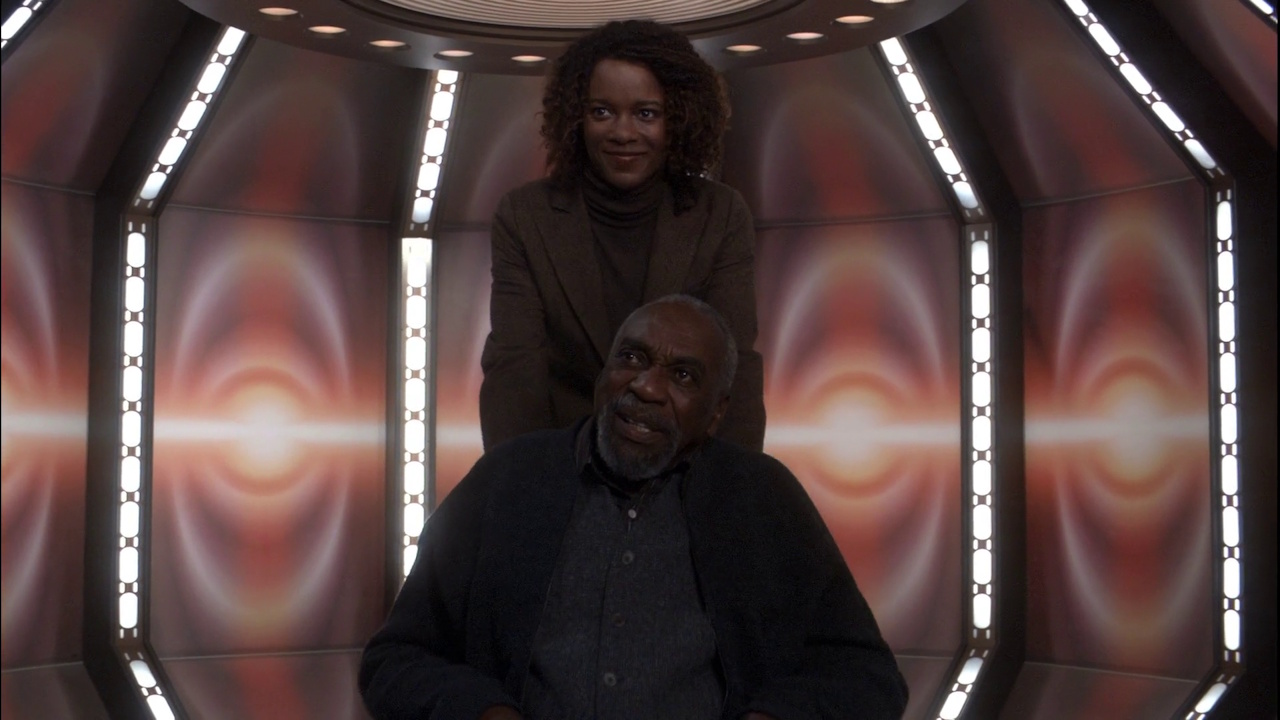
I doubt any of us are surprised to see that These Are The Voyages is considered Enterprise’s worst episode. Originally conceived as a “love letter” to Star Trek fans, the episode just doesn’t work as a series finale, unfortunately. Relegating the entire main cast to the status of holograms aboard the Enterprise-D was such a weak way for fans to part ways with these wonderful characters. Even though the intentions were good… the end result wasn’t.

This episode also caused a lot of controversy for killing off Trip Tucker. There were some interesting elements in the mix: seeing Archer at the founding ceremony of the Federation was creative, and not inherently a bad idea. I like crossovers, and I think a story like These Are The Voyages – putting Enterprise’s crew on the holodeck with this kind of frame narrative – could have worked. Just not as a way to end the entire show – and, for a time, the entire Star Trek franchise.

Does It Deserve The Hate?
​☑️​Yes.​☑️

So that’s it!

The Enterprise-D at Deep Space Nine.

We’ve looked at the top five lowest-rated episodes (or the bottom five, if you prefer) for the first five Star Trek shows. There were a few surprises along the way, but by and large, I think I expected to see most of these episodes rated quite lowly – even if I don’t necessarily agree with all of the criticisms Trekkies have of them!

This piece complements my earlier “top fives” piece, which you can find by clicking or tapping here. I hope you’ll take a look at that one if you missed it earlier in the year; it’s basically the same format, just with the five highest-rated episodes from the first five Star Trek shows.

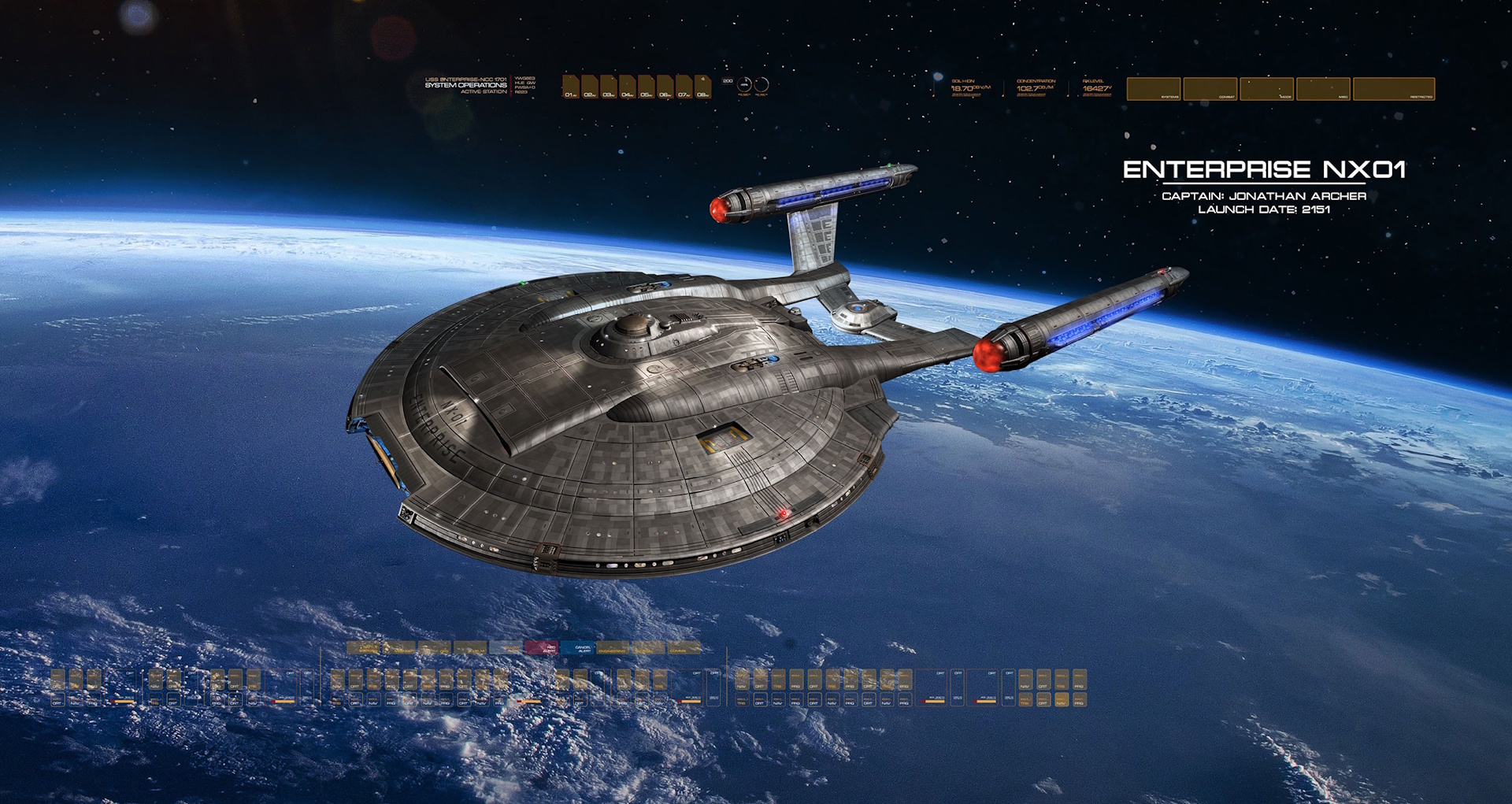
A render of the NX-01 as seen in Strange New Worlds.

I don’t think any of the modern Star Trek shows have enough episodes to really justify doing the same thing, but in the months ahead I might do something like a top and bottom three episodes from some of the recent productions as a kind of follow-up to this. So if that’s the kind of thing you’re interested in… stay tuned, I guess!

I hope this has been a bit of fun, at any rate. I’d genuinely forgotten all about a couple of these episodes, so it was fun to step back into these shows and watch them for what must be the first time in years. And even when Star Trek’s at its worst… I think we can agree that there are still things to enjoy or view in a positive light. That’s my takeaway from this thought experiment, at any rate!

There’s more Star Trek content on the way here on the website, so I hope you’ll join me again sometime soon. Until then… Live Long and Prosper!


All five Star Trek series discussed above can be streamed on Paramount+ in countries and territories where the platform is available. The Star Trek shows are available to purchase on DVD; The Original Series, The Next Generation, and Enterprise are also on Blu-ray. The Star Trek franchise – including all shows, films, and other properties mentioned above – is the copyright of Paramount Global. Credit to IMDB for the episode ratings, which were accurate at time of publication in September 2025. This article contains the thoughts and opinions of one person only and is not intended to cause any offence.
Happy Star Trek Day!

A Star Trek-themed spoiler warning.

Spoiler Warning: Beware of minor spoilers for Strange New Worlds Seasons 2-3.

Happy Star Trek Day, friends!

The 8th of September – i.e. today – was the date in 1966 when the very first episode of Star Trek premiered in the United States, and in recent years, it’s been celebrated within the fan community as “Star Trek Day.” Next year’s going to be the milestone 60th anniversary, but I thought we could take stock of where Star Trek finds itself, reflect on the importance of the franchise, and just geek out a little bit today, since it’s a special occasion.

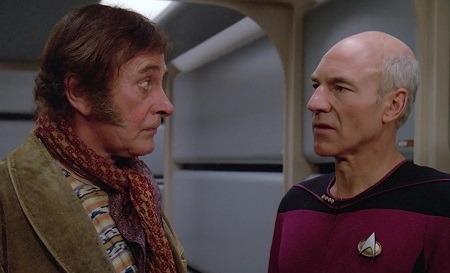
Though it was the first episode to be broadcast, The Man Trap wasn’t the first episode to be produced. After The Cage didn’t make the cut, Gene Roddenberry and co. were given a rare second chance to make a pilot, and they settled on Where No Man Has Gone Before. However, although the network liked this episode more than The Cage, it wasn’t considered as straightforward a story when it came to deciding on the broadcast schedule. Basically, by process of elimination, The Man Trap won out against the few other completed episodes in September 1966. And just the other day, I got to meet Budd Albright – one of the actors who was in The Man Trap. Being able to say I’ve met one of the performers who was in the first ever Star Trek episode is, without a doubt, one of the coolest things I can add to my resume as a Trekkie!

Still frame from Star Trek: The Original Series S01, E01, "The Man Trap," showing Barnhart and the M-113 Creature.
Budd Albright (left) in The Man Trap, which aired 59 years ago today.

When you look back with 59 years of hindsight, having seen how Star Trek attracted a fandom and expanded into a massive franchise, it’s easy to fall into the trap of saying its success was always a sure thing. But if you read up on the early production history of Star Trek, what amazes me is how it could’ve either been completely different… or might never have made it off the ground at all. Even today, if a television pilot gets rejected, being offered a second chance by a broadcaster is something that very rarely happens. In the mid-1960s, with sci-fi still a relatively new and untested genre on television – and an expensive one, thanks to sets, costumes, props, prosthetics, and special effects – it’s genuinely stunning to think that the higher-ups at the network were willing to give Gene Roddenberry that all-important second chance.

There were several key decisions taken early in the production of The Original Series that I genuinely believe took a great concept and turned it into something that became a phenomenon. The first was the avoidance of product placement; Gene Roddenberry was keen to avoid Kirk and Spock turning to the camera, cigarette in hand, and plugging brands like Lucky Strike. The second, and probably most important, was that The Original Series was filmed and broadcast in colour, at a time when colour TV was only just getting started. Doctor Who, one of Star Trek’s contemporaries in the ’60s, didn’t broadcast in colour until 1970, and American shows around the same time – like The Addams Family, The Twilight Zone, and The Fugitive – were all still airing in black-and-white.

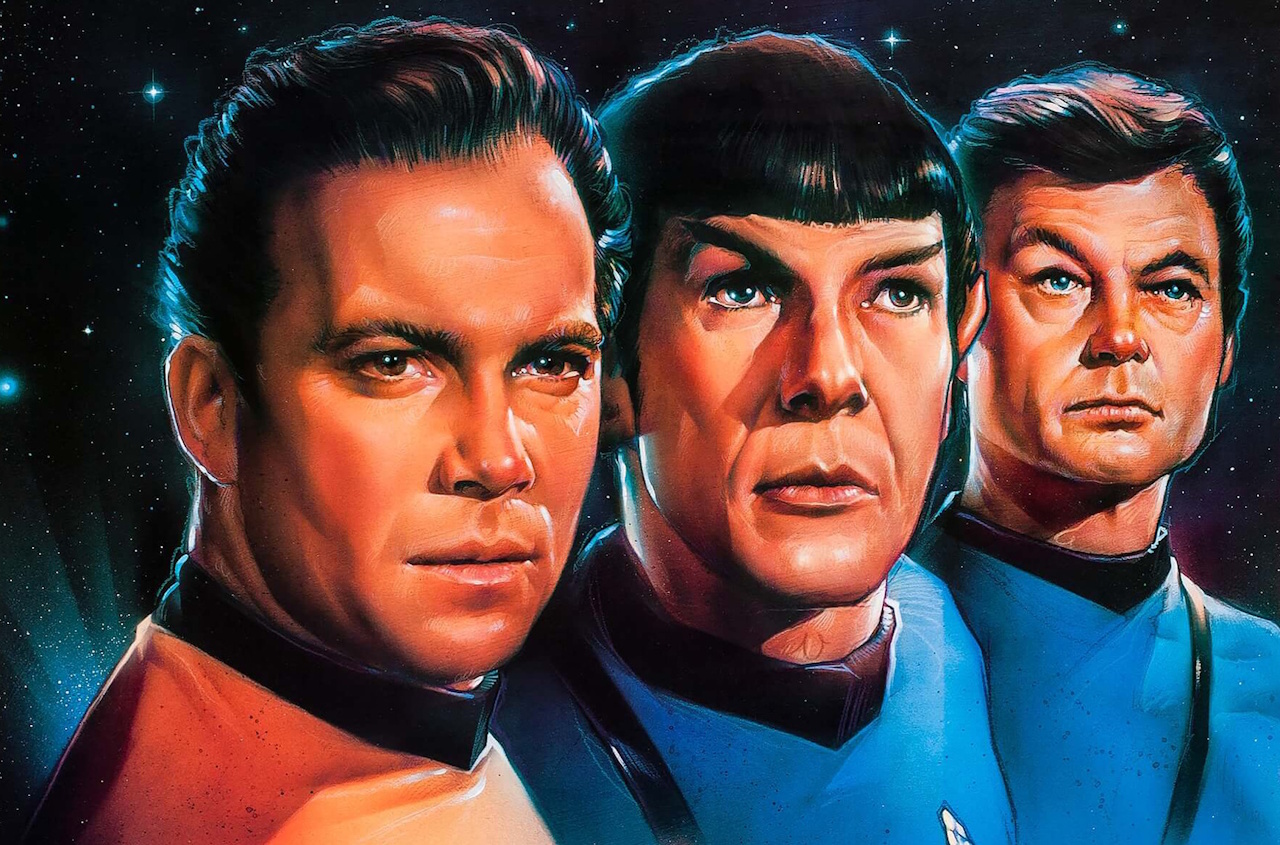
Kirk, Spock, and Dr McCoy from Star Trek on a promo poster for the series' Betamax release c. 1986 (cropped).
Kirk, Spock, and Dr McCoy.

Star Trek was cancelled in 1969 due to low ratings – but those ratings massively improved when the series was rebroadcast in the early 1970s – and I firmly believe that if it had been in black-and-white, not colour, it would’ve been more difficult for Star Trek to have garnered the level of support that led to the creation of The Animated Series and, eventually, The Motion Picture. I don’t know if colour was always the plan, and for a while, I remember reading that the only full cut of The Cage that existed was in black-and-white, though I’m not sure if that was just a pre-internet rumour! In any case, being filmed and broadcast in full colour definitely gave Star Trek a much-needed boost as colour TV was just about to take off.

At the core of Star Trek, though, were great characters and fun stories – often, but not always, with morals and messages that reflected the world in which they were written in different ways. I said a few years ago that The Man Trap is more than just an “alien monster” story; what makes the episode so poignant and powerful are the reflections Kirk, Spock, McCoy and others have when they consider the implications that the Salt Vampire may have been the last of its kind… and they killed it in self-defence. Star Trek has always trusted its audience to think, and encouraged viewers to consider the implications and possibilities of its stories. Star Trek episodes are designed to be dwelt upon after the credits have rolled – which, I think, explains why there’s such a vocal and passionate fan community!

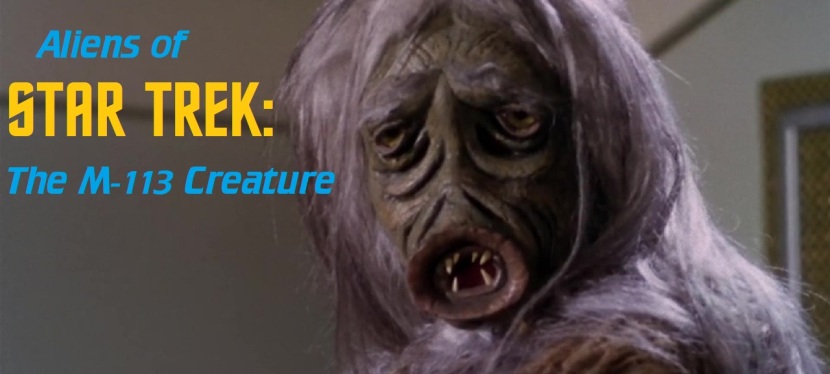
Still frame from Star Trek: The Original Series S01, E01, "The Man Trap," showing the M-113 Creature/Salt Vampire.
The M-113 Creature.

After The Cage was rejected, Gene Roddenberry and the team re-worked most of its characters. “Number One” was originally intended to be the stoic and logical one, but that role was reassigned to the new incarnation of Spock. Captain Pike was out, replaced with Captain Kirk. Dr Boyce became Dr McCoy, but retained a similar role as an older confidant of the captain. Characters like Sulu and Uhura were created, and the stage was set for the show we’re all familiar with.

If you’d told the cast and crew then, in 1966, that new episodes featuring Spock, Scotty, Uhura, and Nurse Chapel would still be airing 59 years later… well, I doubt anyone would have believed you!

But I think it says a lot about those characters, and the way The Original Series was written, that Strange New Worlds came to exist at all – let alone that it’s the best thing Star Trek has done in a long time. Those characters, their personalities, and the way they’d conduct themselves in their roles… it’s a huge part of what made Star Trek into the franchise it would become. We’re still watching episodes starring these same characters, alebit in an updated format, all these years later.

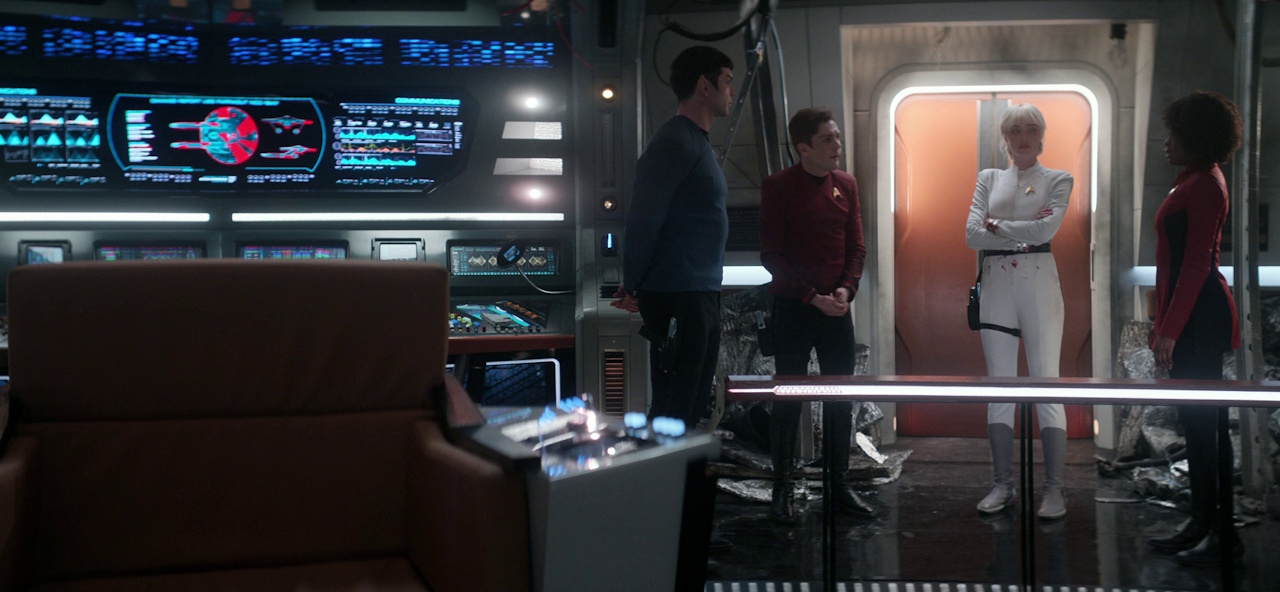
Still frame from Star Trek: Strange New Worlds 3x06 showing Spock, Scotty, Chapel, and Uhura on the bridge of the USS Farragut.
Spock, Scotty, Chapel, and Uhura in a recent Strange New Worlds episode.

I didn’t come to Star Trek via The Original Series. It was The Next Generation that first made me a Trekkie in the early 1990s. I’ve said this before, but Season 2’s The Royale is the first episode I can remember watching all the way through (though I think I’d seen at least parts of episodes before that, as well as having seen some action figures and props that my uncle had at the time.) In any case, I date my entry into the Trekkie community to 1991, when The Royale aired for the first time here in the UK. I went back to watch The Original Series here and there, when it was on TV and when I could afford to rent video tapes!

But as I progressed my journey into the Trekkie community through the 1990s, including attending my first-ever fan meetup and going to visit the Star Trek Exhibition around the time of the 30th anniversary, I came to watch The Original Series episodes and films. I’m afraid I couldn’t tell you what the first TOS episode I watched was; that memory is lost in the recesses of an addled brain! But I soon fell in love with Kirk, Spock, Dr McCoy, and the rest of the crew – just as the first generation of Trekkies had done a quarter of a century earlier. I don’t think I knew that The Man Trap had been the first episode to air until I got online around the turn of the millennium and started talking to other Star Trek fans; there was a debate, for a time, about which episode “technically counts” as the first one – should we go in broadcast order or production order? Broadcast seems to have won that argument, by the way!

Behind-the-scenes photo/still frame from Star Trek: TOS showing the original USS Enterprise model against a blue screen.
The original USS Enterprise filming model.

Some people have gone so far as to suggest that, without Star Trek, there’d be no sci-fi on our screens today. I don’t agree with that assessment, I’m afraid. By 1966, when The Man Trap aired, Kuberick’s 2001: A Space Odyssey was in production. Other sci-fi and sci-fi-adjacent shows, like The Outer Limits, My Favorite Martian, and The Twilight Zone were already airing, and with the space race in full swing, there was a growing amount of attention on the genre. But without Star Trek, the sci-fi landscape would’ve been very different. Even back then, there was a lot of “doomerism” floating around. Star Trek is one of the very few entertainment properties – then or now – to present an optimistic vision of the future, where technology cures problems rather than causes them, where humanity has overcome its violent impulses rather than surrendered to them, and where the future is bright, not dark.

That’s what appealed to a lot of people about Star Trek: the core fundamentals of its setting. Technology could cure diseases. There was still an economy and private property, but humanity had moved to become a “post-scarcity society,” where an abundance of energy and resources meant we could dedicate our time to science, exploration, and other pursuits instead of being tied to a desk or working in a factory. Those elements of escapism appeal just as much today as they did 59 years ago – and they probably always will.

Still frame from Star Trek: The Original Series S01, E01, "The Man Trap," showing Dr McCoy holding his medical tricorder.
Dr McCoy with his medical tricorder in The Man Trap.

As someone who’s had health issues going back decades, I can say with certainty that one of the most appealing things about Star Trek’s vision of the future is the potential to cure diseases, and how it depicts an inclusive, friendly society that’s largely free from discrimination and hate. Technologies like the hypospray and medical tricorder are seen diagnosing and treating all manner of ailments and conditions. Some episodes suggested that limbs could be regenerated, scar tissue covered up, and even the ageing process itself could be reversed (in some stories, at least!) Dr McCoy (and later the likes of Dr Crusher, Dr Pulaski, and Dr Bashir) would be seen treating patients in state-of-the-art medical facilities, with bio-beds, computer monitoring, and research labs to develop brand-new cures.

Star Trek “predicted” technology that we take for granted today. What is the Enterprise’s viewscreen if not an early take on video-calling and FaceTime? Communicators seem an awful lot like mobile phones. Combadges? Bluetooth microphones and speakers. There are laser weapons in use by militaries around the world, and proposals for things like nuclear fusion reactors, ion thrusters, and even a “warp drive” concept of sorts – many of which are at least partly inspired by Star Trek. And there are countless individuals who have cited Star Trek as a reason for their interest in medical, scientific, or engineering fields.

Still frame from Star Trek: The Original Series S01, E01, "The Man Trap," showing the main viewscreen.
The planet M-113 (remastered version) on the Enterprise’s main viewscreen.

So if that’s Star Trek’s legacy and early history… what’s next? What may lie in store for Star Trek as we pass its 59th birthday?

This is where, I’m afraid, things start to look a little less rosy. In my view, Skydance – Star Trek’s new corporate overlords – are not as interested in making new television shows as the previous incarnations of Paramount and CBS had been. I don’t believe it’s a coincidence that Discovery, Lower Decks, Prodigy, and Strange New Worlds were all cancelled after Paramount took the decision to go ahead with the Skydance merger. David Ellison, the CEO of Skydance and, by extension, the man with the final say over new Star Trek productions, does seem interested in some kind of feature film adaptation – and as luck would have it, there are supposedly at least two such projects currently being worked on. But with Paramount+ struggling, and not every recent Star Trek project being particularly well-received… I will not be at all surprised if the final episodes of Strange New Worlds and Starfleet Academy will bring an end to this era of Star Trek on TV.

With that being said, as depressing as it may sound, it isn’t always a bad thing for a franchise to take a break, get shaken up, and come back after some time has passed! It worked for Doctor Who in the mid-2000s, it arguably worked for Star Trek after Enterprise’s cancellation, and it’s at least possible to think that future Star Trek productions may benefit from learning the lessons of this era of streaming TV… as well as from having a bit of a hiatus.

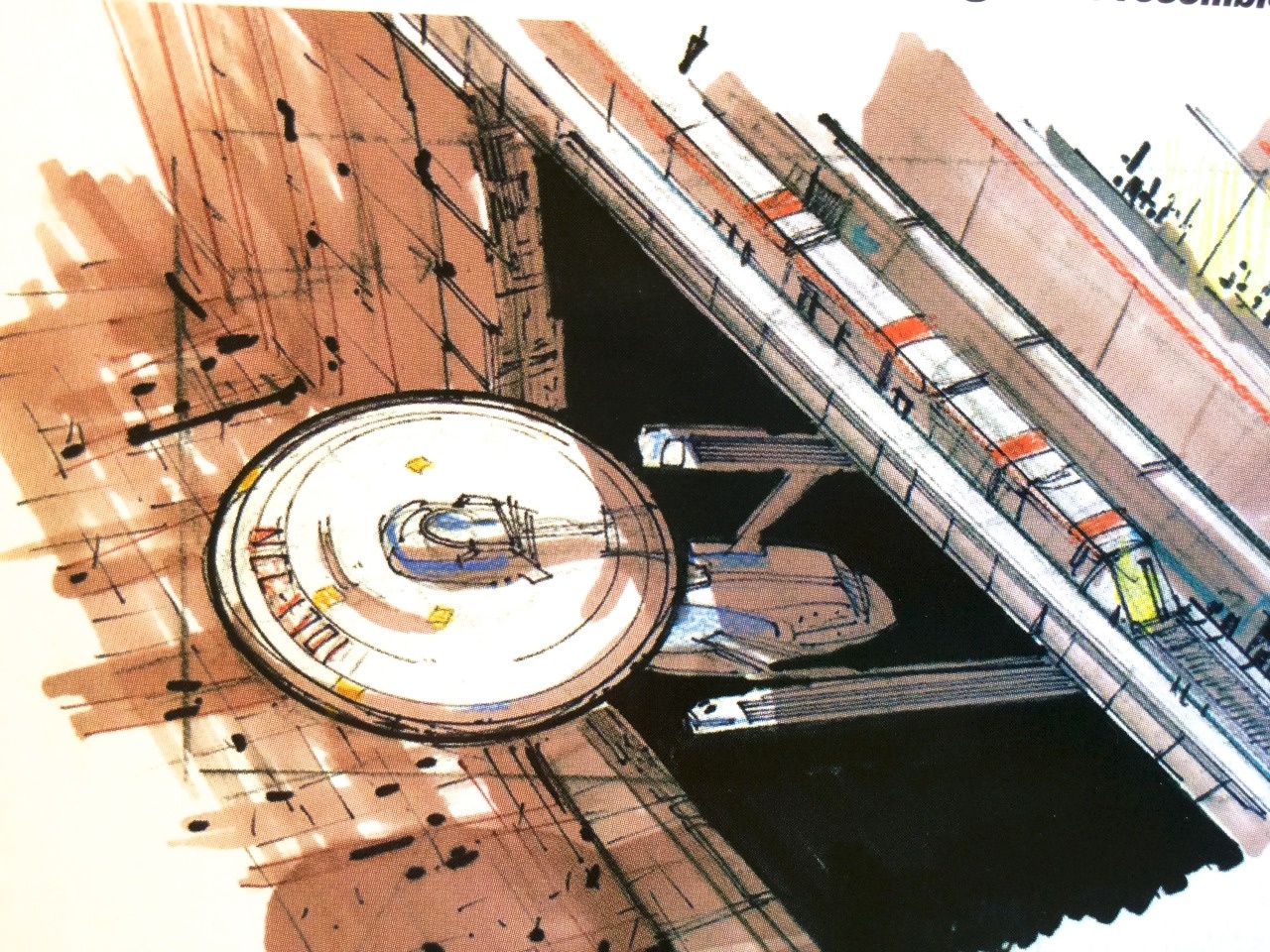
Concept art of the USS Enterprise produced for Phase II/The Motion Picture.

I don’t have any “insider information,” by the way. But based on what’s been said publicly about potentially merging Paramount+ with Peacock (or some other streaming platform), David Ellison’s apparent preference for films over streaming TV, and the cancellation announcement for Strange New Worlds coming before Season 3 had even aired… that’s my gut feeling. No new Star Trek has been greenlit for a while, and one of the shows that had been announced – Tawny Newsome’s “workplace comedy” series – now seems to not be going ahead. So I think we have to contend with the possibility, as we pass the 59th anniversary, that Star Trek may once again be heading for a fallow period.

But there will be time to talk about that in more detail on another occasion!

Today, I want to raise a glass and toast to Star Trek’s success. Not many other entertainment properties from the mid-1960s are still around, still being worked on, and still so beloved as Star Trek. Very few franchises get anywhere near the 1,000-story mark – yet Star Trek, at time of writing, is just about 40 episodes shy of that incredible milestone. If Strange New Worlds and Starfleet Academy proceed as planned, as well as the films which are supposedly being worked on… hitting that 1,000-story mark seems within reach in the next few years.

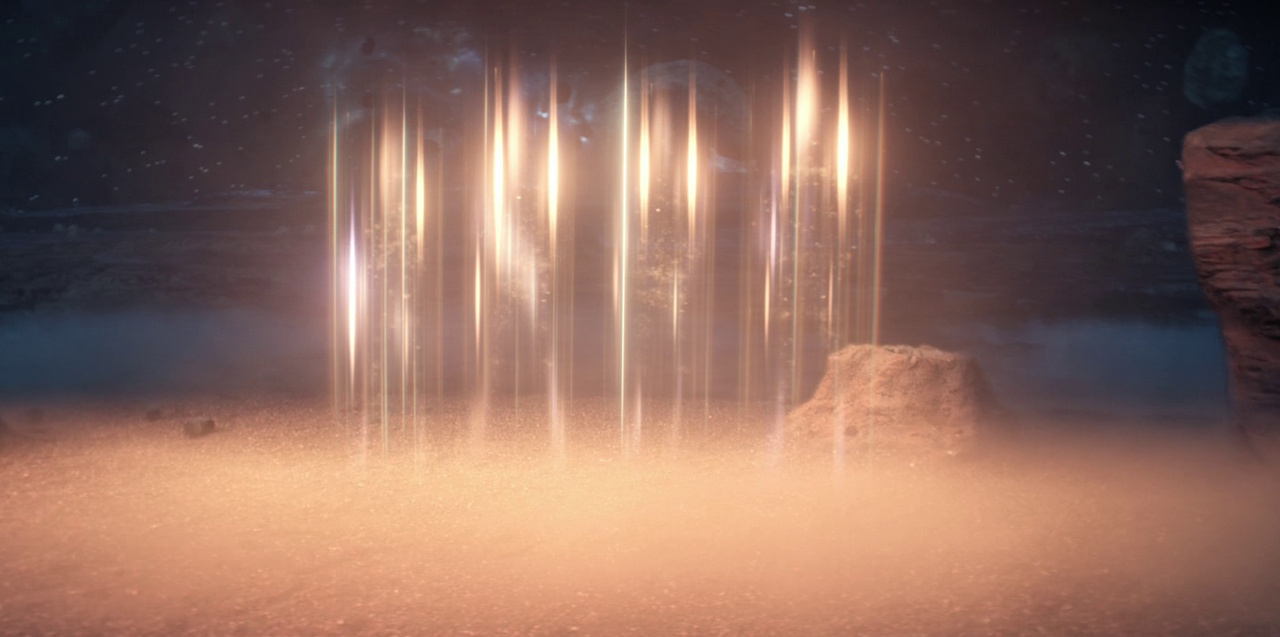
Still frame from Star Trek: Strange New Worlds 3x09 showing transporting.
Beaming down to a moon in the most recent Star Trek episode.

On a personal note, though I’ve dealt with burnout and felt the franchise had been over-saturated in the early 2020s, I’m still a huge Trekkie. I’ve been keeping up with Strange New Worlds this season, and I regularly go back to watch my favourites from The Next Generation era in particular. Being a Trekkie has been part of my identity, in a way, since I was a pre-teen, and now I’m in my forties! Nothing else in the entertainment world compares to Star Trek, for me, and even when I’m not actively watching the latest film or episode, Star Trek is still on my mind, its philosophy and vision of the future are still things I take into account, and my love for this franchise remains. The way I express that may fluctuate, sure, but I am still a Trekkie – and I daresay I always will be.

So happy Star Trek Day! Wherever you are in the world, whatever you’re doing, and regardless of whether you plan to watch The Man Trap (or any other episode) to mark the occasion, thank you for checking in, and I hope you have a wonderful Star Trek Day. This incredible franchise brought us together, today, 59 years on from that first episode – and I think that’s something pretty darn special.

Live Long and Prosper.


The Star Trek franchise – including all episodes and properties discussed above – is the copyright of Skydance/Paramount. Most Star Trek shows and films can be streamed on Paramount+ in countries and territories where the platform is available, or purchased on DVD and Blu-ray. This article contains the thoughts and opinions of one person only and is not intended to cause any offence.
I Went To A Star Trek Convention…

It’s been a long road… gettin’ from there to here. By which I mean: it took me almost four hours on three separate trains and one tram to travel from my home to Destination Star Trek in Blackpool on Saturday. That’s right: Trekking with Dennis made it to a Star Trek convention – my first since 2011. This is, somewhat embarrassingly, a pretty big deal for me – my health has been poor for a long time, and I haven’t felt up to an outing like this in years. Aside from medical appointments and a couple of visits earlier this year to meet my newborn niece, this became my first excursion in over a decade.

I’d looked into last year’s Destination, but I didn’t feel well enough in 2024 so I opted not to go. But this year, bouyed a little by those visits to my sister, brother-in-law, and newborn niece, I was feeling a little stronger, and perhaps a little braver… so I bit the bullet and bought a one-day ticket for Saturday. It was a long day – hours of travel each way, leaving the house at 5:30am and not making it back until after 10pm. But despite being exhausted and in a lot more pain than usual by the time I got home… I had a good time.

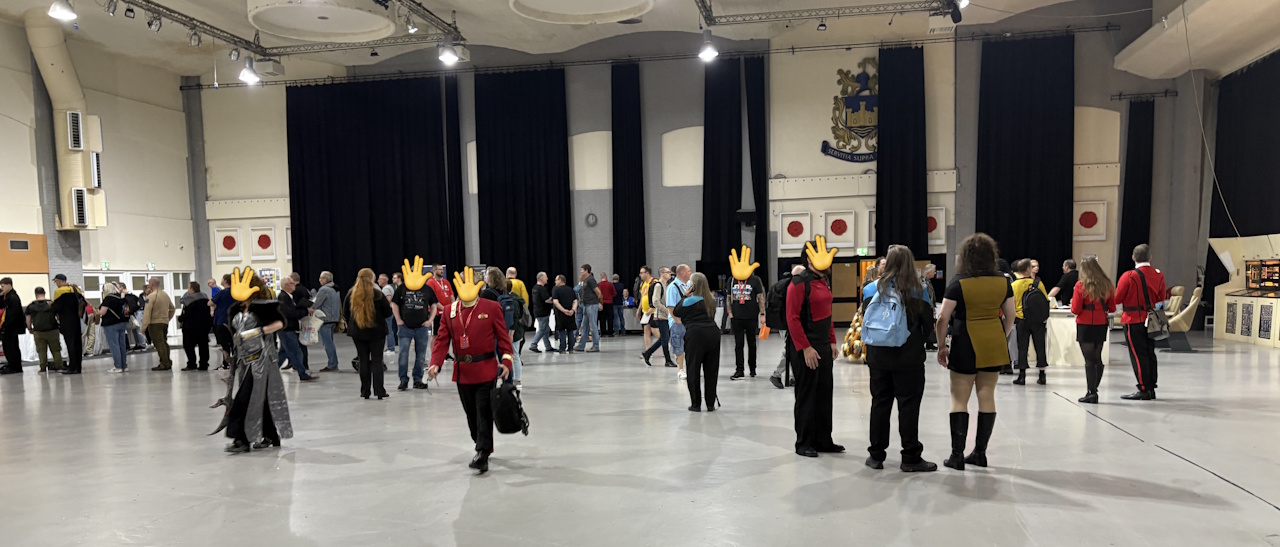
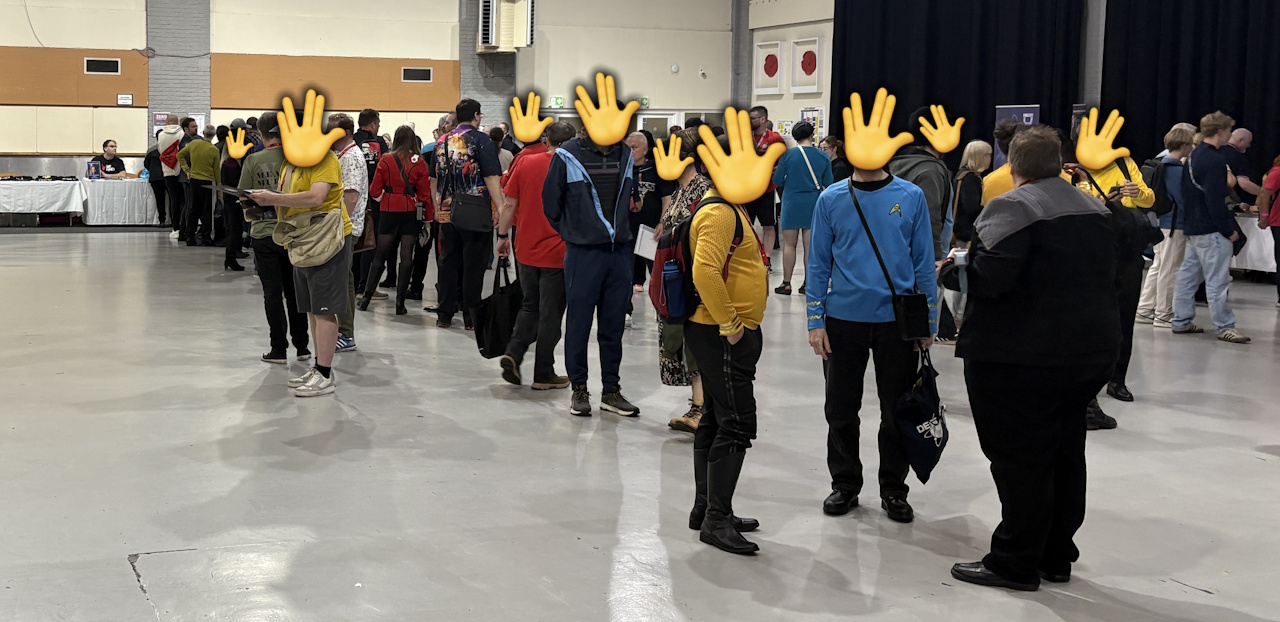
Photograph from Destination Star Trek 2025 showing attendees on the convention floor with their faces censored.
The main convention floor around 10am.
(Faces in all photos have been censored for privacy.)

The Star Trek fan community is just… wonderful. There are so many kind people in the community; Trekkies are patient, respectful, encouraging, enthusiastic, and just a joy to be around. I might be sitting on a seat, catching my breath in between events, walking to the bathroom, or waiting in a queue, and someone would strike up a conversation about something they enjoyed about the event last year, share their experiences of having met the guest speaker, or just compliment me on my Star Trek t-shirt. The atmosphere was incredibly friendly and welcoming… I felt, for the first time in years, like I was among my people!

And I must give special thanks to the staff and organisers. Due to my poor health, I’d filled out a form on Destination’s website to request some extra help. I didn’t really know what this would include, I just hoped there might be somewhere to sit down in between events or while queuing. Upon arriving at the event, I spoke with one of the members of staff who issued me a wristband – and I got to join a special queue for several of the photographs (more on those in a moment) which meant less time spent standing. Members of staff helped me find a seat at several of the talks, and they were all very friendly, chatty, and passionate about Star Trek. I simply wouldn’t have been able to attend Destination without this extra support, and I am beyond grateful to the organisers, the staff, and everyone at the convention who accommodated me, in spite of my limitations.

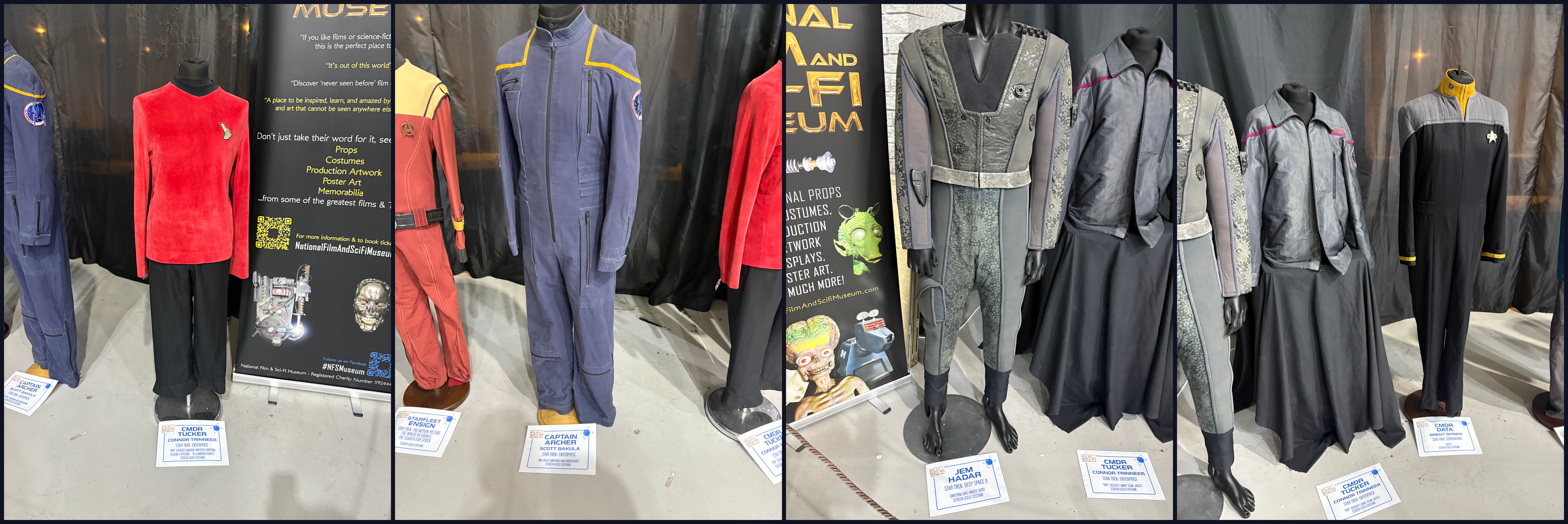
Photograph from Destination Star Trek 2025 showing a selection of screen-worn uniforms.
A selection of uniforms used in various Star Trek productions which were on display.

Let’s talk about why I decided to go to Destination this year. Because… well, let’s just say it didn’t quite go the way I first intended!

I’d been keeping an eye on Destination 2025 for a few months, weighing up whether to buy a ticket or not. But it was only when Anson Mount – Captain Pike himself from Strange New Worlds – was confirmed as a guest that I decided it was something I had to do. As you might’ve heard, though, Mount unfortunately had to pull out of the event at the last minute after contracting covid. I wish him well as he recovers. Again, credit to the organisers and staff, here: refunds were issued automatically for the panel I’d paid for when Anson Mount had to pull out.

Such things are unavoidable. Anson Mount’s last-minute withdrawal from Destination led to a few changes to the schedule… which, in the end, ultimately worked out in my favour. Connor Trinneer – Trip Tucker from Enterprise – was taking part in a talk on Saturday afternoon, and when I was no longer scheduled to meet Anson Mount for a photograph, I that time was freed up to attend the talk. As we’ll discuss, Trinneer’s panel was a lot of fun, and I’m glad I didn’t miss out on it. Oh, and Anson Mount did ultimately call into Destination by video-link, though I didn’t attend that event.

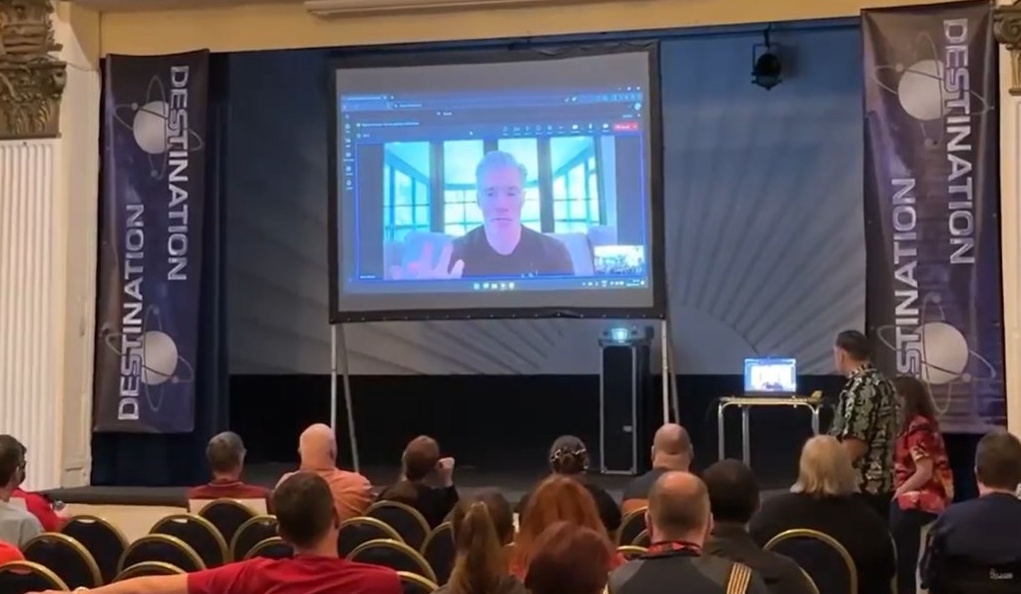
Photograph from Destination Star Trek 2025 showing Anson Mount's video-call.
Anson Mount’s panel had to be done remotely.
Photo: Destination Fan Events via Facebook

I’ve mentioned photos a couple of times now, so let’s talk about that.

Some people love to collect autographs. My mother had Elvis Presley’s autograph, for instance, which was something she loved to tell people about! But I’ve never really been big on autographs, even personalised ones. If I have the opportunity to meet someone famous, or someone important to me… I’d rather take that time to shake their hand. That memory, that moment… it’s always seemed more worthwhile than an autograph, at least to me. No shade to the autograph collectors – this is purely a subjective thing.

So I booked several photographs with Destination’s attendees. I met two guest stars from the first and second seasons of The Original Series, including an actor who appeared in The Man Trap, which was the very first episode of Star Trek to be broadcast. I met Chase Masterson – Leeta from DS9. I met the aforementioned Connor Trinneer, and Martin Quinn – who has taken over the role of Scotty on Strange New Worlds. I made a bit of a tit of myself, blurting out “I love Strange New Worlds it’s great!” as I waddled over to him. Poor man must’ve been traumatised. But I shook their hands, smiled awkwardly for the camera, and I have those photographs as mementoes of the day.

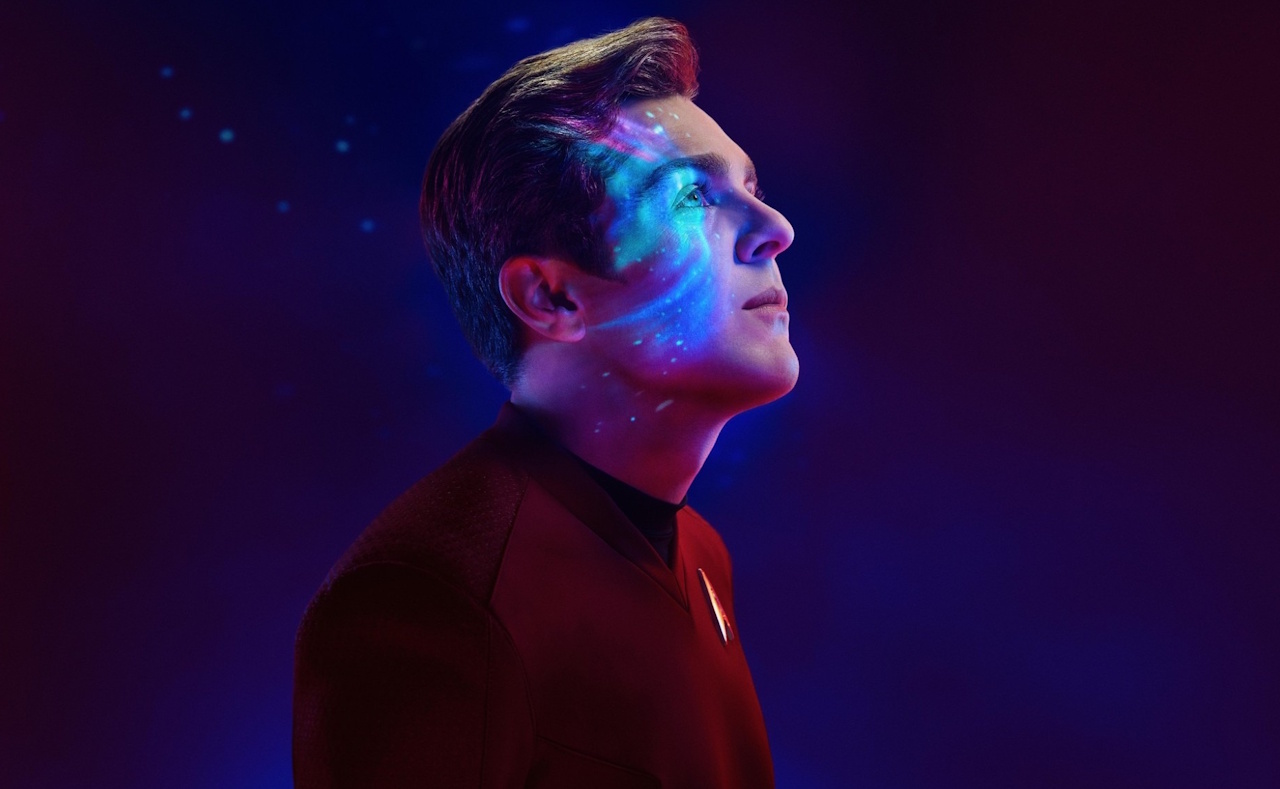
Promo photo for Star Trek: Strange New Worlds showing Scotty.
Martin Quinn as Scotty in a promo image for Strange New Worlds Season 3.

It’s been a while since I went to Blackpool. The seaside resort is a peculiarly British place, though it’s definitely in need of some TLC these days. But I have fond memories of being taken there as a kid, going to the Pleasure Beach funfair, seeing the Illuminations, and eating chips on the pier. This time, I got to take one of Blackpool’s new, modern, ultra-sleek trams – and use an app to buy my ticket! I’m still adjusting to life in the smartphone age, but on the short walk from the railway station to the tram stop, I managed to download the app, buy my ticket, and activate it.

As soon as I disembarked, I started seeing signs of the convention! The tram stop is right outside the Norbreck Castle Hotel, and there were already dozens of people milling about in costume, in Star Trek tops and t-shirts, and wielding phasers and other props. I made it inside, freshened up, and I was on the convention floor in time for the first event I’d been planning to see: a talk all about artificial intelligence.

Photograph from Destination Star Trek 2025 showing the Blackpool seafront.
I snapped this photo while en route!

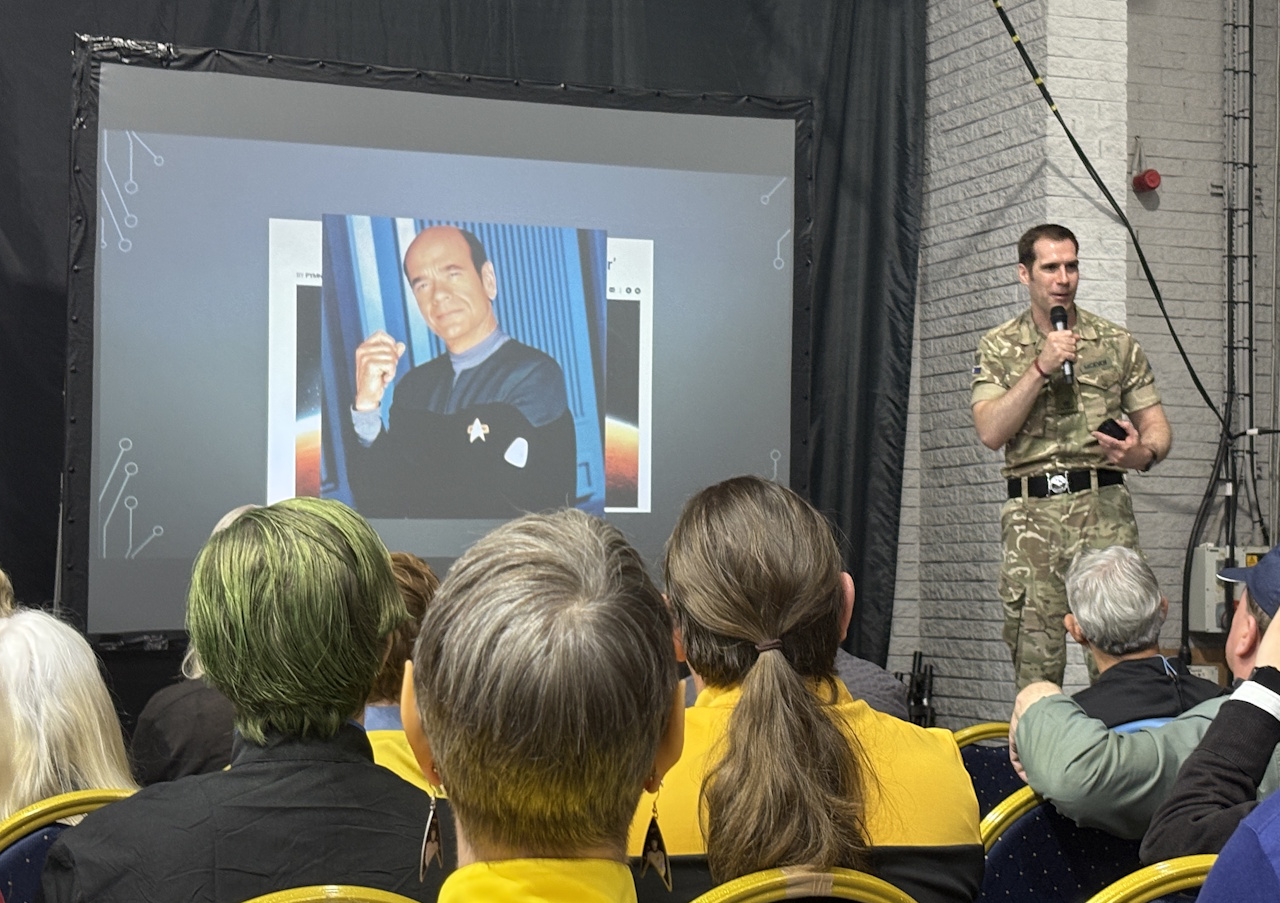
This presentation, by a member of the UK military and Space Command, was genuinely fascinating. I’m not a “doomer” when it comes to A.I., though I certainly believe its practical applications are more limited than some optimistic utopian predictions would suggest! But discourse surrounding A.I. online can often feel overly negative. While the speaker was clear that there can be drawbacks and disadvantages to A.I., and some areas where it may not be useful, he was broadly positive and passionate about its current and future applications.

It was also very interesting to catch the tiniest glimpse of military applications of A.I. from someone directly involved with that side of things. Again, there’s a lot of “doomerism” surrounding killer drones and A.I.-engineered bio-weapons… so to get some perspective and learn a tiny bit about how A.I. systems are currently being used by real-world militaries was absolutely fascinating. Obviously this wasn’t directly related to Star Trek, though the speaker was a Trekkie, but Star Trek has long been a pioneer in predicting A.I. – from The Ultimate Computer to Data, Voyager’s Doctor, Control, and beyond.

Photograph from Destination Star Trek 2025 showing the A.I. talk.
Major Sam McEvoy during the A.I. talk.

I was able to attend two talks (or panels, if you prefer), one in the morning and one later in the day. Chase Masterson’s talk was first, and she was a really engaging speaker. I enjoyed a story she told about being invited to rehearse with her DS9 co-stars at the home of Armin Shimerman (Quark), which sounded like it must’ve been a lot of fun. And she spoke a little about the late Aron Eisenberg, as well as working with Max Grodénchik (Nog and Rom respectively).

Masterson also spoke about some of her other roles, her charity work, and what the audition process was like as she made the move to Hollywood in the 1990s. It must’ve been a big deal for her as Leeta went from having a few lines in a single episode to slowly building up to become a recurring character with some big moments in the show’s later seasons. It also sounds like there was a complicated working environment for anyone not a series regular; Masterson explained how, on DS9, the recurring cast never had a contract, and could theoretically have been let go at any time.

Photograph from Destination Star Trek 2025 showing Chase Masterson and the host during her talk.
Chase Masterson during her panel.

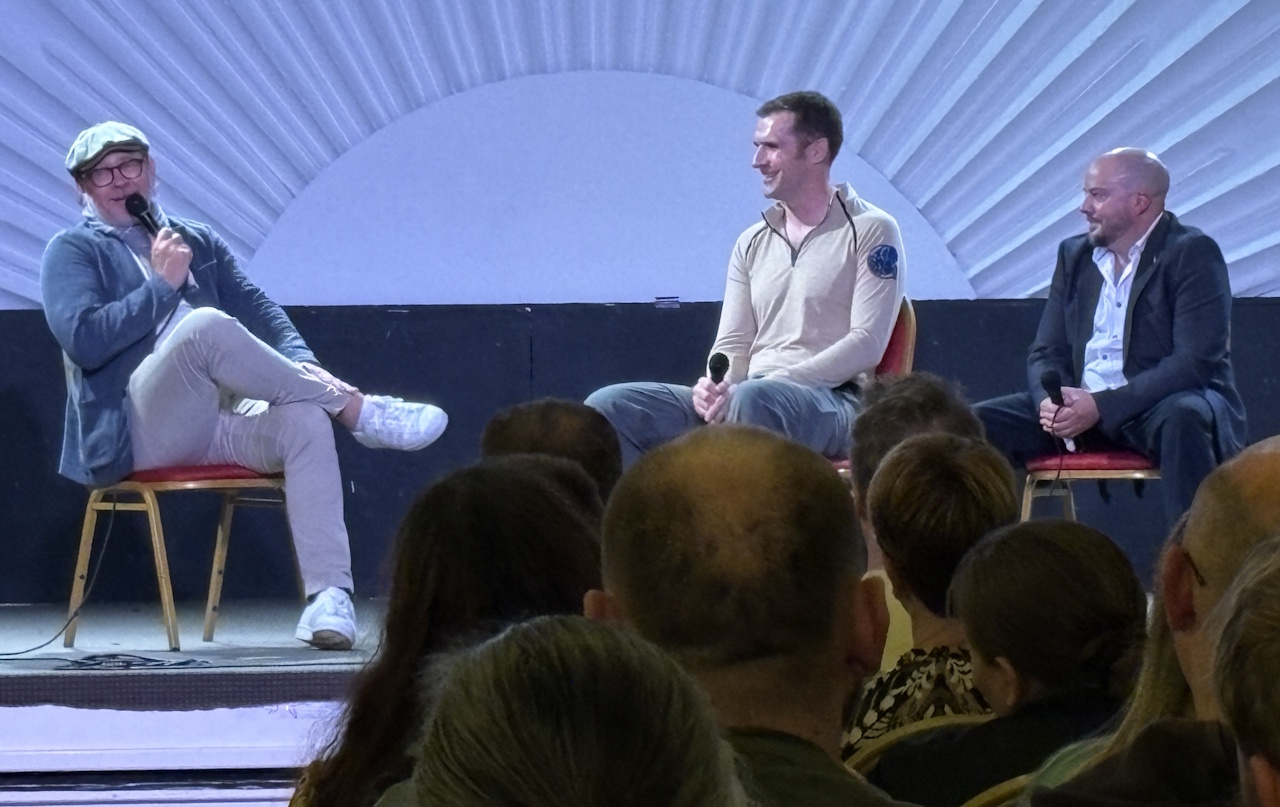
Connor Trinneer also had some fun stories to share at his panel. He talked about the audition process, how he thought he’d completely blown his first audition for Enterprise, and how, after not being called back when he hoped he would be, he thought the role had gone to someone else. I also learned – and maybe you already knew this, but I certainly didn’t – that Trip Tucker almost got a different name. That’s right: he was originally to be called “Spike.” It was only because of Buffy the Vampire Slayer (which was on the air at the same time, and also had a character named Spike) that the name was changed – and that was after production had begun on the pilot.

Trinneer is another wonderfully engaging speaker, recounting his time on the show effortlessly. I think there’s still a twinge of sadness or regret that Enterprise was cancelled when it was; he mentioned the show’s premature ending several times, as well as talked about the possibility of exploring more of Trip and T’Pol’s relationship had a fifth season been greenlit. In a joking reply to a fan asking if he’d be willing to reprise his role, he said “he’s dead!” to much laughter. But he then elaborated: no one is ever really dead in sci-fi, and he’d be fascinated to learn how Trip might’ve survived the events of Enterprise’s finale.

Two really entertaining and interesting talks.

Photograph from Destination Star Trek 2025 showing Connor Trinneer with two convention hosts.
Connor Trinneer (left) at his talk.

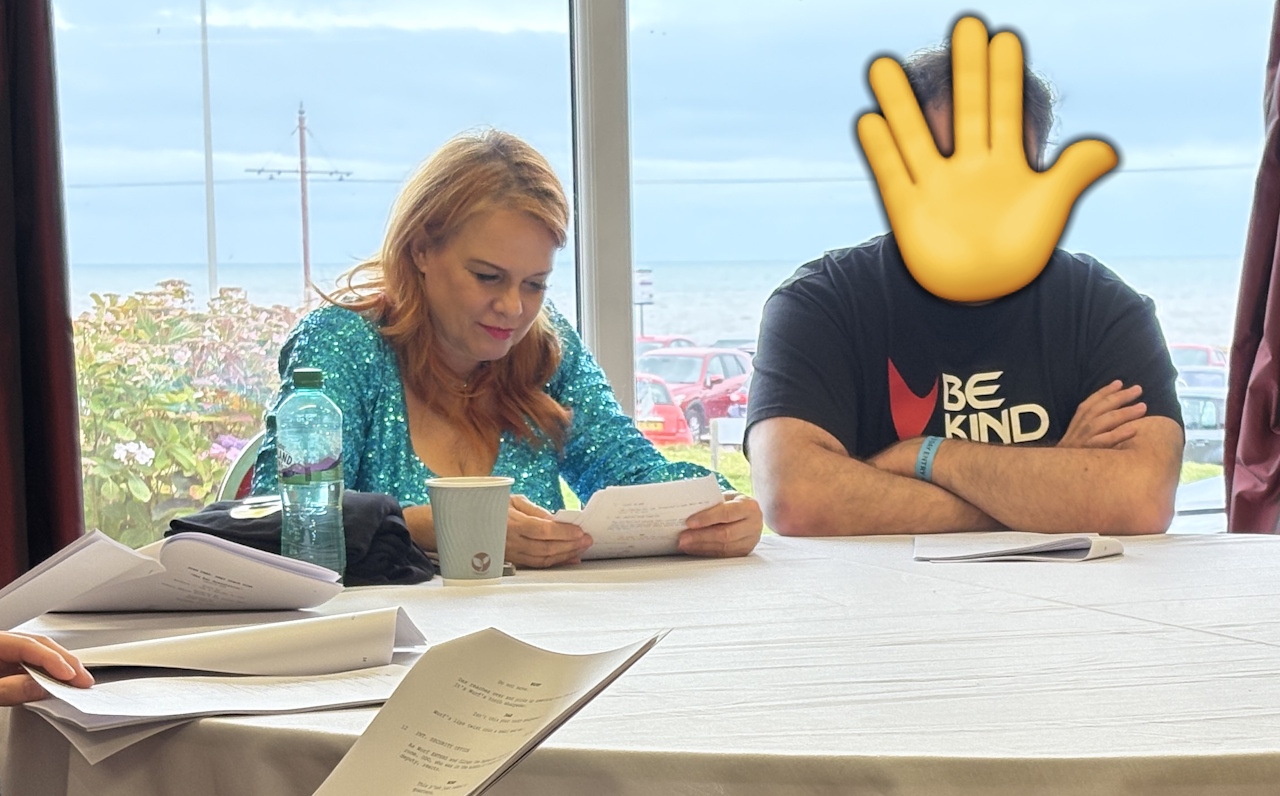
Before we come to the photo sessions, I also got to take part in something really special. Chase Masterson did a script reading from the episode Bar Association – which is a huge episode for her character, Leeta. This was a separate event, in a smaller room away from the main stage. There were only about… I wanna say maybe ten of us, or so, as well as Masterson and a couple of the event’s organisers. It was small-scale, intimate, and just a ton of fun to have been present for. We all remember Bar Association, right – it’s the episode from Season 4 where Rom leads the staff at Quark’s to form a union.

This smaller script-reading session was so much fun, and definitely one of the highlights of the day for me. Chase Masterson is really funny, she hasn’t lost a step when it comes to embodying Leeta, and even though it’s been almost thirty years since Bar Association aired… I felt I was right back there, watching it all over again, just in a completely different way. These are the kinds of experiences you really can’t get anywhere else… and I’m so glad I chose to pay for a ticket to something like this instead of buying another action figure or model ship!

Photograph from Destination Star Trek 2025 showing Chase Masterson reading her script.
Chase Masterson at the Bar Association script reading.

The first photo I took – and therefore the first actor I got to meet – was with Martin Quinn. Quinn has taken over the role of Scotty in Strange New Worlds, showing us a younger and less-experienced take on the character that has just been really well-created and interesting. I noted in my recent reviews of The Sehlat Who Ate Its Tail and Four-and-a-Half Vulcans that Quinn has great on-screen chemistry with Paul Wesley (SNW’s Kirk), and it’s just been a lot of fun to see this younger version of the character and Quinn’s take on Scotty’s younger days. And yes, from now on, you can expect me to say “Martin Quinn (whom I have met)” in every future episode review where Scotty’s featured!

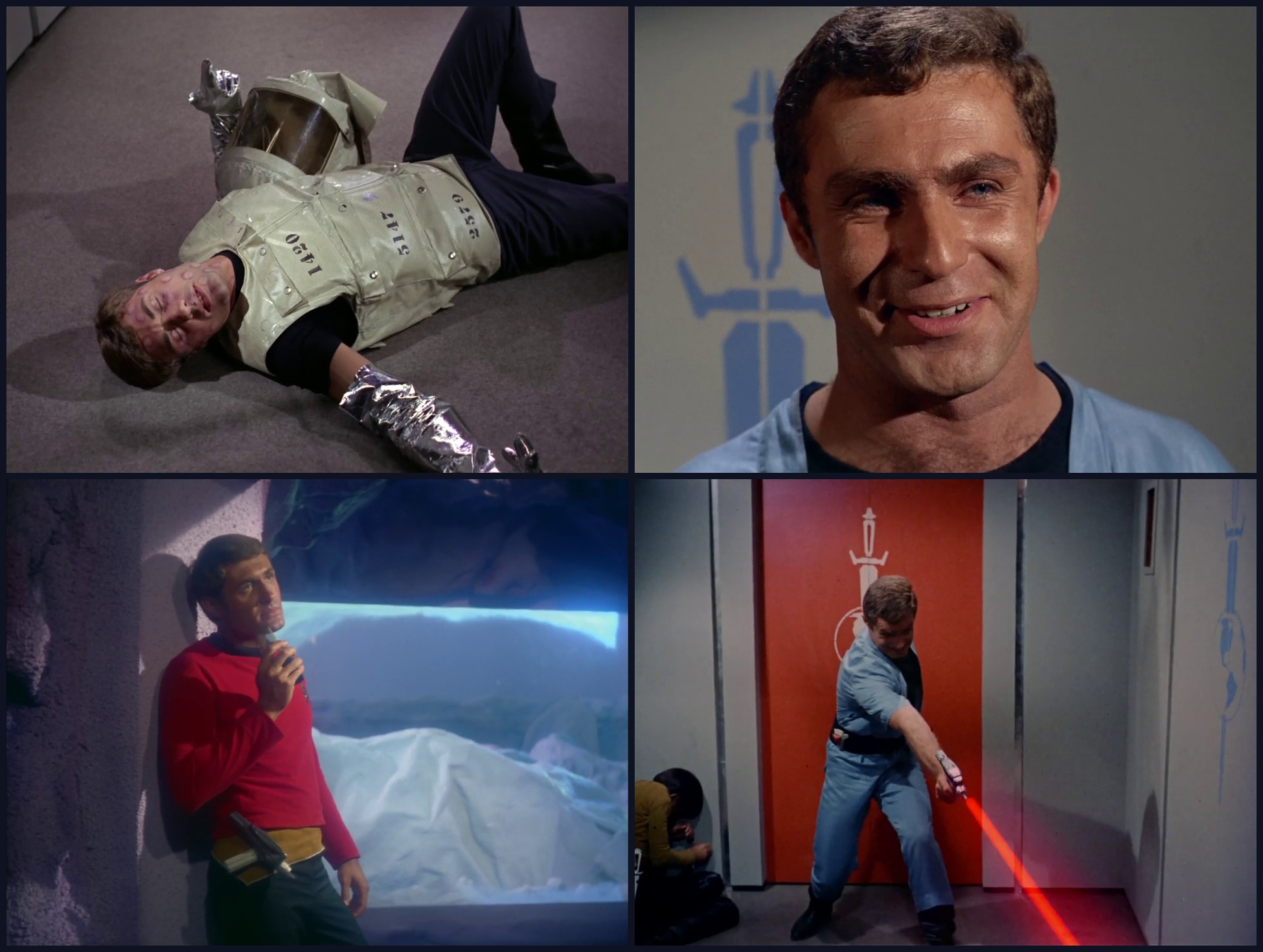
How often, nowadays, can one claim to have met a guest star from The Original Series? Garth Pillsbury appeared in the iconic episode Mirror, Mirror as Wilson – a crewman aboard the ISS Enterprise in the Mirror Universe. He reappeared in Season 3 as a prisoner in the episode The Cloud Minders. Budd Albright appeared in The Man Trap – the very first episode of TOS to be broadcast. His character (Barnhart) was killed by the M-113 Creature, making him one of the first “redshirts” to die in the show! He reappeared in What Are Little Girls Made Of as a different character, Rayburn, who met a similar fate!

Four still frames from Star Trek: The Original Series showing Budd Albright and Garth Pillsbury's characters.
Budd Albright (left) and Garth Pillsbury (right) in their TOS roles.

I then got to meet Chase Masterson (again, after the script-reading session) and pose for a photo with her. And I capped off my photo sessions later in the day with Connor Trinneer. There were pretty long lines for some of these, and I didn’t schedule photos with all of the guests who were there that day. But with the exception of Anson Mount, I got to meet everyone I set out to meet.

Meeting these folks, shaking their hands, and just… being with them for those few seconds… it’s an almost surreal feeling, in a way. Maybe if you’re a regular convention-goer this is all old hat to you, but for me, as someone who hasn’t done anything like it in so long… it was a wonderful experience. Being able to say I’ve met these folks, shaken their hands, told them (awkwardly) how much I enjoyed their shows and their characters… it’s just a really great feeling. It’s a connection between myself and the people who are actually *in* Star Trek that I didn’t have before.

And no, by the way, I’m not gonna publish those photos!

Photograph from Destination Star Trek 2025 showing a queue on the convention floor.
One of the autograph queues.

This might sound silly, but I was surprised to see so many people had gone all-out with their costumes. I felt underdressed in just a Star Trek-themed t-shirt, surrounded by people dressed up in full costumes from every series and every era of the show. It was great to see so many people wearing Picard, Discovery, Lower Decks, and Strange New Worlds uniforms, too – despite what some small groups of fans might want to think, the Trekkie community as a whole embraces, rather than rejects, those newer shows. There will always be some who complain, of course; I overheard one such conversation about “Alex Kurztman should be fired” at the convention. But it was great to see so many people who celebrated modern Star Trek just as much as the older shows.

The counterpoint to that is… well, a bit of an awkward one, to be honest. I’m no spring chicken – I’m in my forties – so this is not an attack on anyone, nor at attempt to be “ageist.” But… to be blunt, there’s not a lot of young blood in the Trekkie community at the moment. It’s rare for me to go somewhere and feel like one of the younger folks! But at Destination? I guess I’d say most people were in their mid-thirties or above. That gels, of course, with Star Trek’s 1990s heyday, and there are other factors such as younger people having less disposable income and perhaps more constraints on their time at this time of year. But it was noticeable, at least, that most of the folks there were in a similar age bracket to myself, despite Paramount’s attempts in recent years to broaden the Star Trek franchise’s appeal.

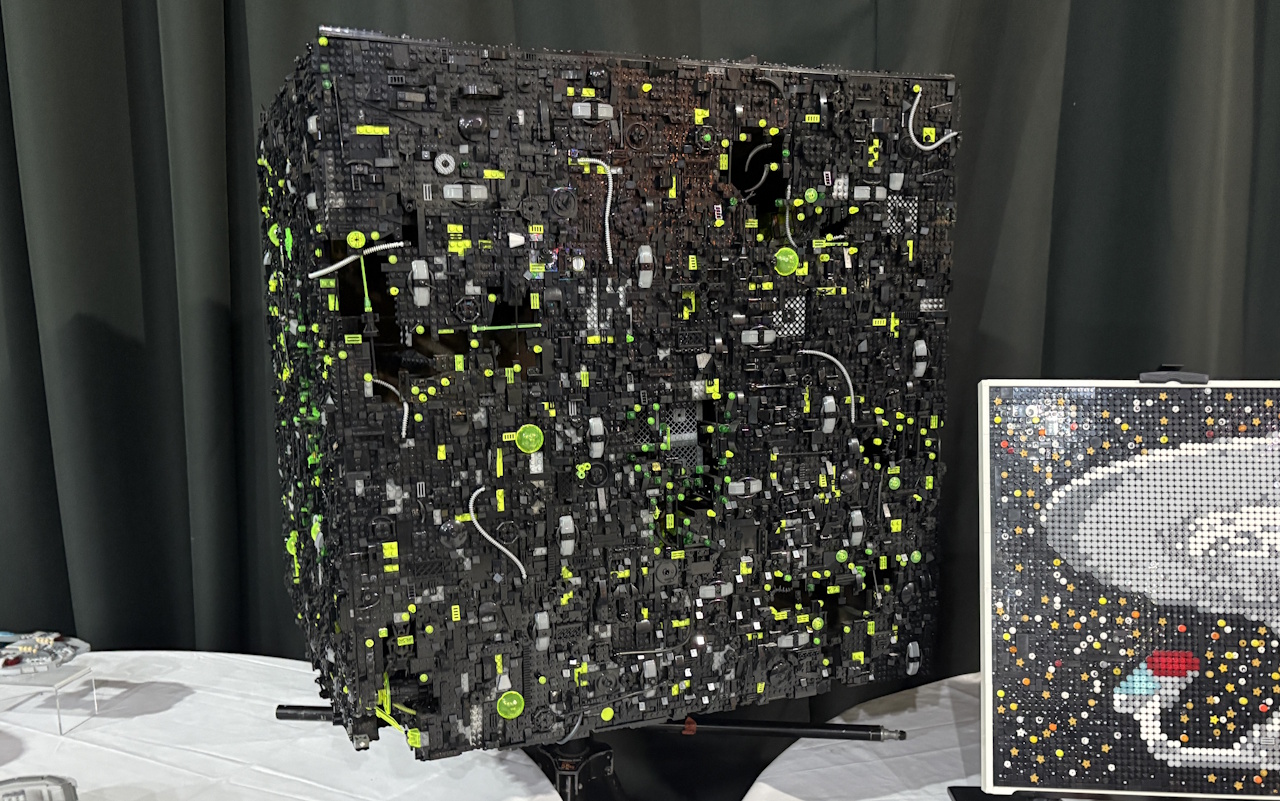
Photograph from Destination Star Trek 2025 showing a Lego Borg cube.
A Lego Borg Cube!

Destination was a lot of fun. It was a long, painful, and tiring day, but it was worth it in the end. The experiences I got to have – reading a script with Chase Masterson, meeting Budd Albright, who appeared in the very first Star Trek episode, and listening to Connor Trinneer talk about his time on Enterprise – just wouldn’t have been possible anywhere else, and I really value the time I spent and the memories I made far more than any of the merchandise I’ve bought over the years!

It also took a lot of effort, and I cannot stress enough how much I appreciate the assistance and help given to me by the folks at Destination. I paid for my tickets, so this is not some kind of sponsorship or ad, but the reality is that, given my health, I would not have been able to attend and do these wonderful things were it not for the extra help the staff and organisers were able to provide to folks with disabilities such as myself. I was exhausted after I got home – and yes, that’s why this week’s Strange New Worlds episode review was late – but I had a fantastic time.

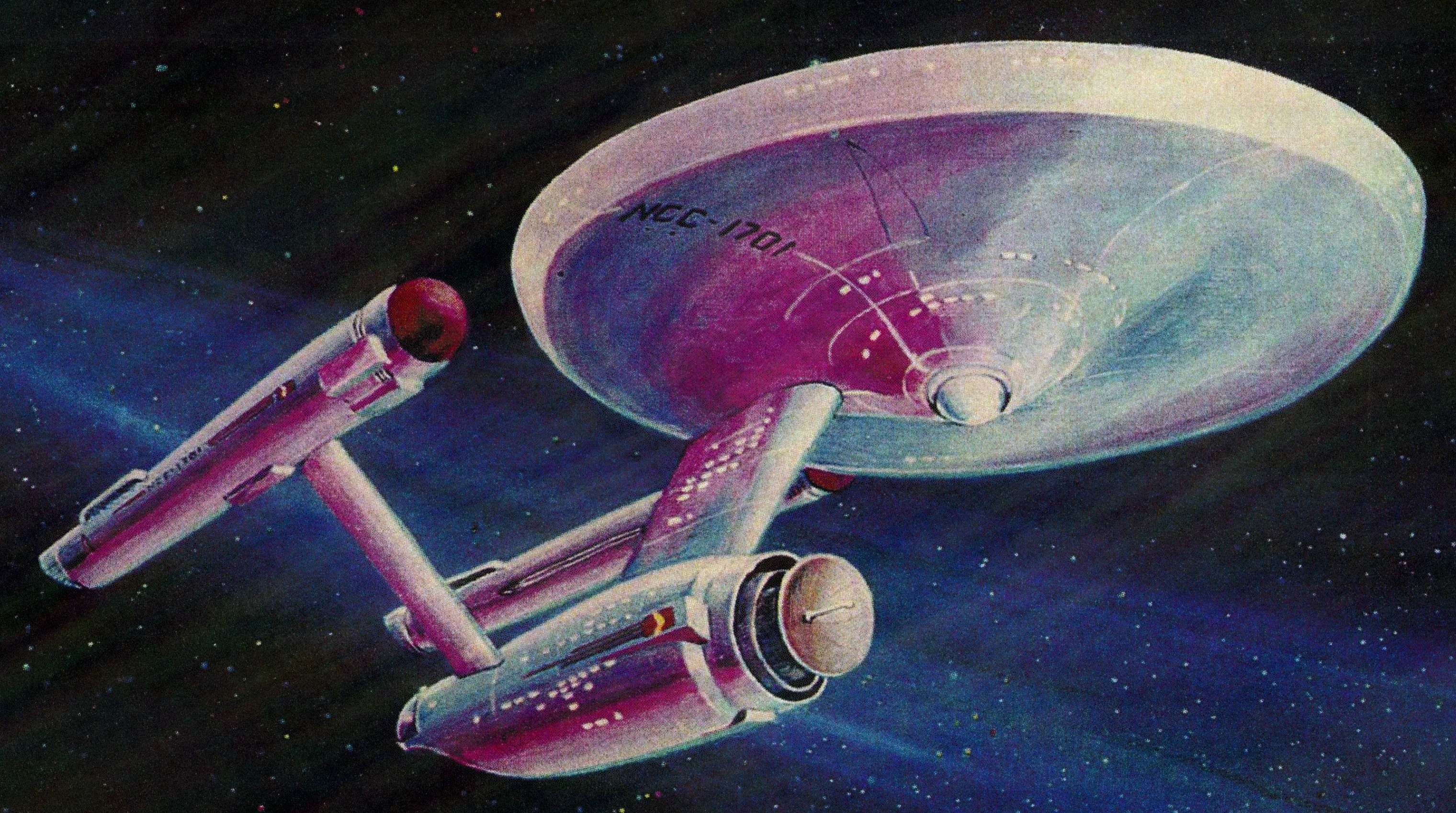
Painting of the USS Enterprise produced while Star Trek: The Original Series was in early production.
2026 will mark Star Trek’s 6oth anniversary.

So… what’s next? I was talking to my sister (who, coincidentally, doesn’t live too far from Blackpool) about the event, and she said words to the effect of “now that you’ve done it, you wouldn’t do something like that again… would you?” And… I had to hesitate. Because yeah, it was a hard day. And yeah, next year’s event will probably be kinda samey, with talks, panels, merchandise booths, autographs, and photo-ops. There may well be some of the same actors and guest stars present.

I also don’t know, given my state of health, whether I’ll be able to do something like this again. It was a major undertaking for me, and it took a lot of planning, a lot of effort, and quite a few painkillers just to get through the day as well as I did! But I’m not going to lie to you: part of me is eyeing that weekend in August 2026, back at the Norbreck Castle Hotel, and thinking… “why not?”

So hey, if you’re going to Destination next year… who knows. Keep an eye out for a fat fella with a walking stick perched awkwardly on a chair or excitedly standing in line to shake the hand of… whoever they manage to book! In the 60th anniversary year, it could be a lot of fun.


Destination is an unofficial Star Trek fan convention held at the Norbreck Castle Hotel in Blackpool, UK. The Star Trek franchise – including all series, films, characters, and other properties discussed above – is the copyright of Skydance/Paramount. All photos taken by Trekking with Dennis unless otherwise stated. You may use them under the “share-alike” principle, providing you include a link back to this article. This article contains the thoughts and opinions of one person only and is not intended to cause any offence.
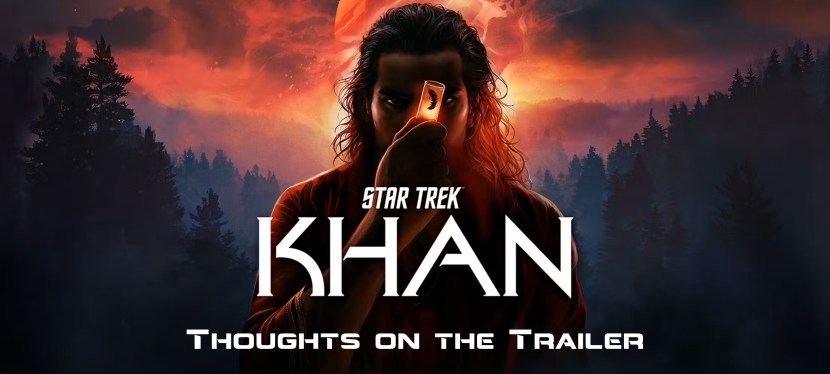
Star Trek: Khan – Thoughts on the Trailer

A Star Trek-themed spoiler warning.

Spoiler Warning: Beware potential spoilers for the upcoming Star Trek: Khan audio drama. Spoilers are also present for Space Seed, The Wrath of Khan, Into Darkness, Lower Decks, and Picard.

For a franchise which could be just a couple of years away from total cancellation, Star Trek had a lot to say at this year’s Comic-Con event! We’ve already covered the big Starfleet Academy news, which included a trailer and introductions to the main cast, as well as Year One – a pitch for a Strange New Worlds successor series. This time, we’re finally getting around to talking about Star Trek: Khan – an audio drama which will be released next month.

This is Star Trek’s first ever official audio drama – billed, for some reason, as a “scripted podcast.” I’m calling it an audio drama (because that’s what seems to be the best fit) but you might also consider it akin to a radio play or even an audiobook. In any case, it’s audio only – which is something new for Star Trek. Obviously there have been Star Trek audiobooks before, and there are fan-made audio dramas, too. But this is the first time Paramount has really pushed a brand-new Star Trek story in this format, and it’s an interesting choice.

Still frame from the Star Trek: Khan trailer showing the audio drama's title.
Khan is coming soon!

Obviously the main factor here is money. Nicholas Meyer – who originally pitched this idea a few years ago – envisioned it as a miniseries, which is also a format Star Trek doesn’t have much experience with. Even if you aren’t sold on Star Trek: Khan as a concept, I still think there’s merit in the miniseries approach, and I’d hope it’s something Skydance/Paramount might consider in the future if and when a suitable story comes along. If Khan is a success, perhaps more audio dramas will be in the offing, too.

It’s been a while since we talked about this project, so let me bring you up to speed. Khan is set on the planet Ceti Alpha V in between the events of Space Seed – in which Khan awoke in the 23rd Century after years in suspended animation – and The Wrath of Khan. When the project was still little more than a rumour, I discussed it here on the website. This was in early 2021, and I said then that I felt this project – which was going by the working title Ceti Alpha V – looked set to tell the least-interesting chapter of Khan’s life. What could we learn from this story that we didn’t already know or couldn’t reasonably infer from Space Seed, The Wrath of Khan, and even Khan’s appearance in Into Darkness?

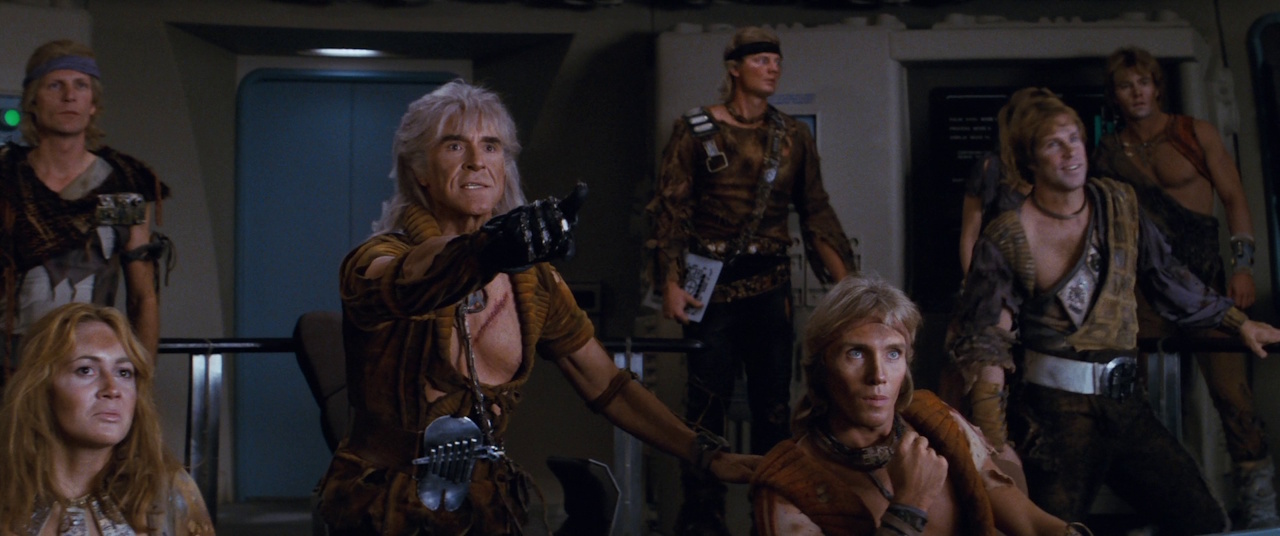
Still frame from Star Trek II: The Wrath of Khan showing Khan and his crew on the bridge of the USS Reliant.
Khan with his crew in The Wrath of Khan.

When Khan switched from being a televised miniseries to an audio drama… I felt that was probably for the best. At Paramount’s “Star Trek Day” event in 2022, Nicholas Meyer took to the stage to announce that his project had been reworked into an audio drama. And I noted at the time that he didn’t exactly seem thrilled about that! Maybe I’m reading too much into this, but I noted in the Khan trailer that Meyer is no longer credited as one of the podcast’s writers, instead simply getting a “based on a story by” credit. Maybe Meyer was disappointed that his Ceti Alpha V idea didn’t proceed on television as he’d hoped. Or maybe changes were made to his original idea – which I doubt would’ve included Sulu and Tuvok!

In any case, Nicholas Meyer’s core idea is going ahead, but not in the format he intended and not with a script he penned. Personally, I think that’s worth being aware of; Meyer is a Star Trek legend. He wrote The Wrath of Khan, The Undiscovered Country, and also worked on The Voyage Home – three of the films fans rate most highly. It’s quite possible that, without Meyer’s work on The Wrath of Khan in particular, Star Trek would have struggled in the 1980s – and the franchise as we know it could very well not exist today. So to know that he had a script written, but his work has been changed substantially enough that he’s no longer credited as a writer… it gives me pause, at least.

Still frame from Paramount's Star Trek Day 2022 broadcast showing Nicholas Meyer announcing Star Trek: Khan.
Nicholas Meyer in 2022.

Let’s be positive, though, and talk about some of the things from the Khan trailer that I actually found interesting!

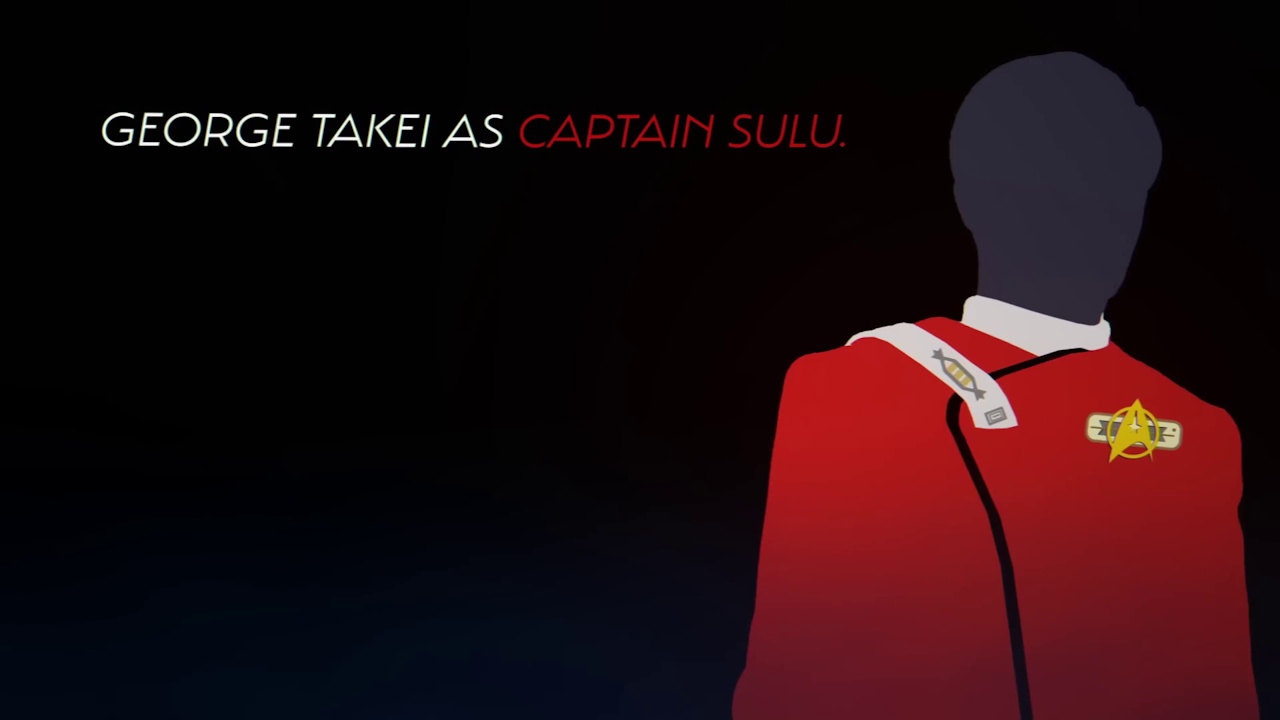
Firstly, the idea of a frame narrative is a fun one – and it’s also something that, because of the characters involved, could really only work in this audio format. Well alright, I guess it would’ve worked in animation, too! But bringing back George Takei to voice Sulu and Tim Russ to play Spock, with the frame narrative presumably set aboard the Excelsior… that’s a really fun idea. Both Takei and Russ have been back in modern Star Trek; Takei reprised his role of Sulu in Lower Decks, and Russ played a significant role in Season 3 of Picard.

I often see fans lamenting that we don’t know much about Star Trek’s “lost era;” i.e. the years in between The Undiscovered Country and The Next Generation. While probably right at the beginning of that time period, it seems as if Khan’s frame narrative will be set in the “lost era,” which is something kind of neat. I doubt we’ll get much of an exploration of the wider state of the galaxy! But it’s still nice to see a project being potentially set after The Undiscovered Country.

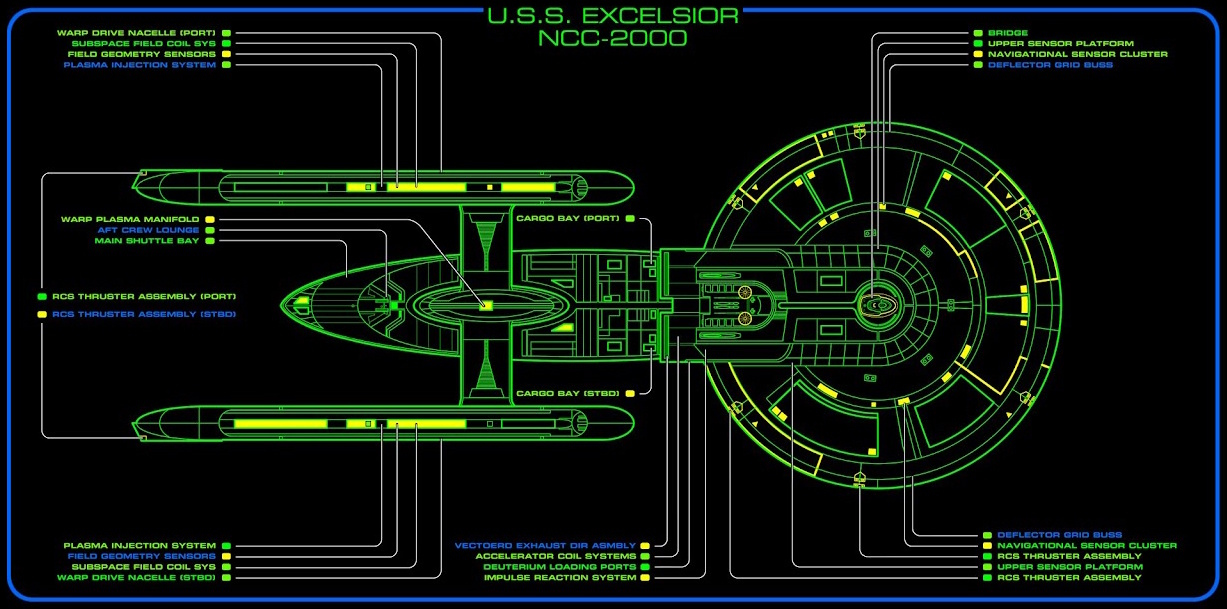
A graphic of the USS Excelsior's MSD.
Parts of Khan will be set aboard the Excelsior during Sulu’s time in the captain’s chair.

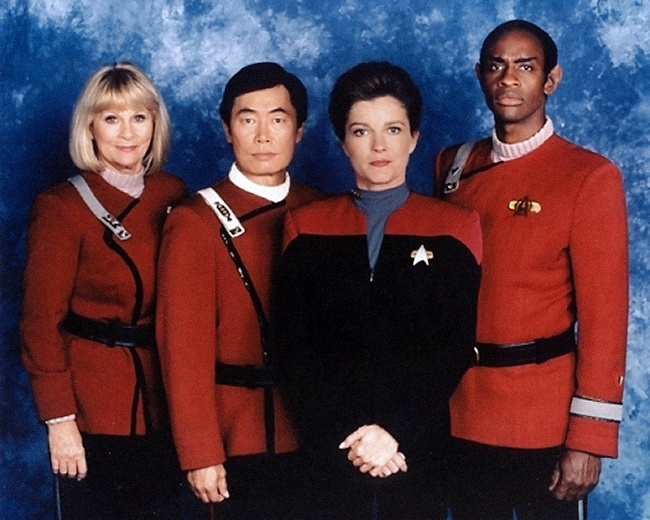
Tuvok’s inclusion is also a pretty deep cut to a single Star Trek episode! In 1996, Flashback was one of two stories created to celebrate Star Trek’s thirtieth anniversary. It delved into Tuvok’s backstory, depicting his time serving under Captain Sulu’s command aboard the USS Excelsior, and it was a pretty fun crossover. We got to see an expanded role for Janice Rand, picking up her story aboard the Excelsior, too, and another character from The Undiscovered Country – Dimitri Valtane. Though its “memory virus” storyline wasn’t the strongest, it’s still a fun episode, and we got to see some interaction between Tuvok and Sulu, as well as a brief moment with Janeway and Sulu, too.

It makes me feel so incredibly old to think that the 30th anniversary celebrations were almost 30 years ago! But I’m glad that Star Trek’s writers and creatives haven’t forgotten about Flashback; it’s a fun way to return to this era, an unexpected pair of legacy characters to include in a story like this one, and it might just give us a bit more information about Sulu’s time in the captain’s chair. I really like this part of Khan, even though it likely won’t be in focus all that much.

Promotional photo for Star Trek: Voyager Season 3, showing Rand, Sulu, Janeway, and Tuvok.
Promo photo released for Flashback in 1996.

Sulu was present, of course, during the events of Space Seed and The Wrath of Khan, which makes his inclusion here a neat little thread of continuity. Takei first played Sulu all the way back in 1966; to think he’s still involved with the character – and the Star Trek franchise – all these years later… it’s fun and also exceptionally sweet. Fans have been asking to see more of Captain Sulu for a long time; I remember on message boards and forums in the 1990s, a “Captain Sulu show” was often brought up as fans discussed fantasy Star Trek projects. Obviously Khan isn’t the same, but it’s not a million miles away, either, thanks to Takei’s involvement.

This is also potentially one of the last Star Trek projects to include a significant role for a performer from The Original Series, and I think we should acknowledge that. We’ve had Walter Koenig’s voice in Picard, archival recordings of a few characters in Short Treks and Prodigy, and Takei in Lower Decks as previously noted. But time moves ever onwards, and these opportunities are becoming scarce. Whether we ultimately like or dislike Khan, I think we can at least appreciate George Takei’s involvement and that we got one more adventure with Hikaru Sulu.

Still frame from the Star Trek: Khan trailer showing Sulu.
We’re getting one more adventure with Captain Sulu.

Naveen Andrews, best-known for his role on the TV series Lost, will take on the role of Khan. And this could be one of the best casting decisions in a long time! Andrews is a fantastic actor, and while we didn’t hear that much from him in the trailer, what little there was sounded fantastic. This feels like a truly inspired casting decision, and whatever the story may ultimately be, I’m certain that Naveen Andrews’ portrayal is going to be one of the highlights.

So there are positives as we look ahead to Khan’s release next month. Revisiting Sulu, entering the “lost era,” Tuvok’s return, and getting a new take on an iconic character by a fantastic actor… those are all points in the production’s favour. I also like the idea of Star Trek leaning into audio dramas and different kinds of projects as a way to potentially keep the franchise alive in the years ahead. If there isn’t the budget to commit to a full TV show or film, a radio play like this could be a great option to preserve Star Trek and ensure new stories are still able to be produced.

Still frame from the Star Trek: Khan trailer showing Khan holding a Ceti eel.
Khan with a Ceti Eel.

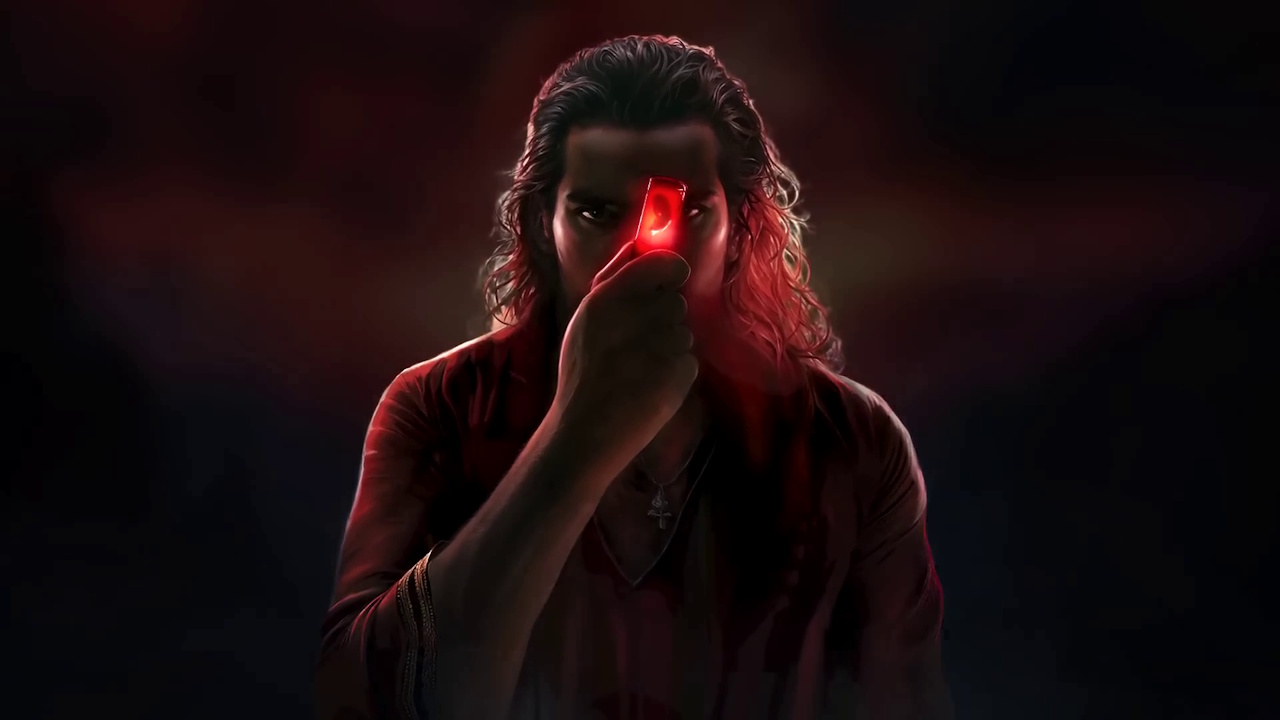
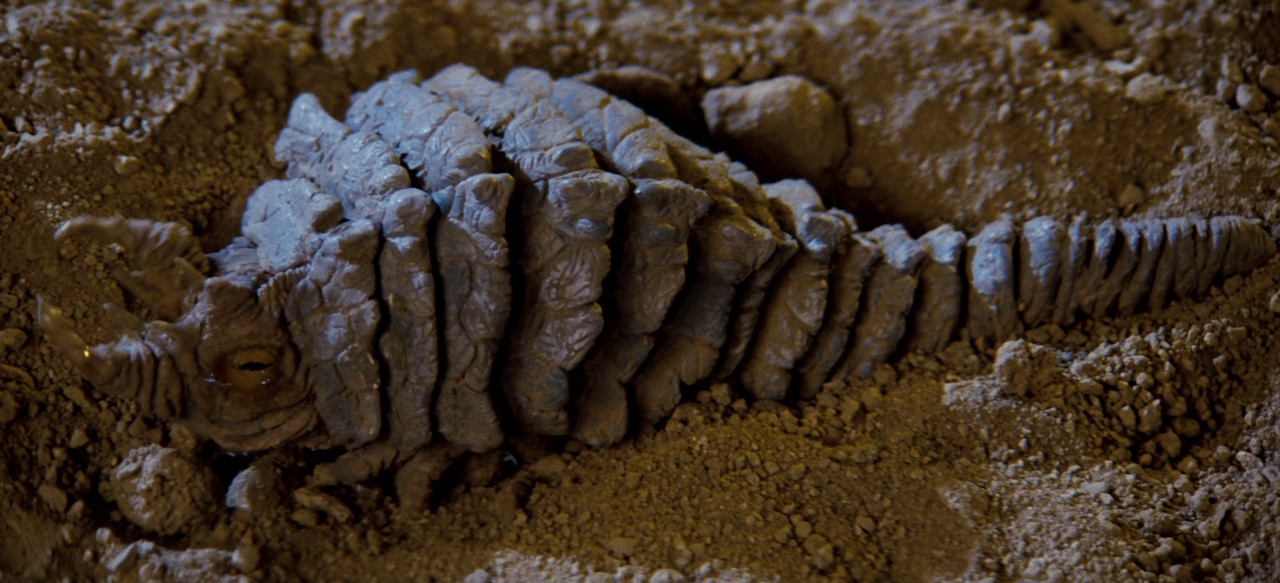
The main image shown off in the trailer – which looks like it could also be the “cover art” for the podcast – shows Khan holding a small vial. Inside that container is what looks like a small Ceti eel – the mind-controlling earwig-like creatures that Khan used on Chekov and Captain Terrell in The Wrath of Khan. The film made it clear that Khan already knew all about these creatures, so perhaps part of the audio drama will depict Khan and his crew studying them.

Not every alien in Star Trek requires a deep dive, and as with Khan himself, I think we know enough about the Ceti eels from the film to understand what they are, how they operate, and why Khan would be so fascinated by them! But I’m always up for an exploration of Star Trek’s alien life, and perhaps there could be a way to connect Khan’s time on Ceti Alpha V and/or the Ceti eels to other parts of Star Trek. Making those kinds of connections could be fun, and just exploring the anatomy of the Ceti eels could also be interesting if it’s handled well.

Still frame from Star Trek II: The Wrath of Khan showing a Ceti eel.
A Ceti eel as seen in The Wrath of Khan.

With all of that being said, nothing in the Khan trailer really convinced me that I was wrong in my earlier assessment: that this audio drama won’t be telling the least-interesting chapter of a story where we’ve already seen the beginning, the end, a prequel, a reimagining, and basically all of the good parts. There’s a real danger that what we’ll get will be akin to the Obi-Wan Kenobi miniseries over in the Star Wars franchise: the absolute worst kind of tacked-on story that feels like cheap fan-fiction. Khan could, perhaps, even prove harmful to Space Seed and The Wrath of Khan if – just as an example – we get some kind of storyline that sees Khan leave the planet, track down Kirk, and battle him in a one-on-one duel.

Furthermore, the trailer added another element which I hadn’t previously considered could be part of a Khan story, and it’s really making me concerned. In the trailer, the new character of Dr Lear says that “the logs I retrieved on Ceti Alpha V only confirm my belief that Khan was much more than a mad tyrant.” But… Khan *is* a mad tyrant; that’s who he is. He’s a narrative warning against eugenics and genetic engineering by showing how badly wrong it could go. And in 2025, when we’re seriously considering the possibilities of artificial intelligence and inventing a sentient life-form that could be intellectually superior to humanity… there’s a message in Khan’s story that’s still incredibly relevant.

Still frame from the Star Trek: Khan trailer showing a quote from Dr Lear.
This statement from Dr Lear has me concerned…

I’m worried that Khan will go out of its way to humanise this villainous character – and in doing so, rob him of what made him so powerful, so intimidating, and such a good character in the first place. We don’t need a story about how Khan was actually a misunderstood “nice guy” who just wanted what’s best for his friends. Maybe that’s how Khan saw himself, in part, but it isn’t how we as the audience need to see him. And we don’t need a story told partly from his perspective to understand who he is, how he thinks, or why he behaved the way he did. All of the necessary pieces to understand Khan were present in Space Seed and The Wrath of Khan, and were added to on somewhat in Into Darkness.

It can be fun, sometimes, to flip the script and look at things from the villain’s point-of-view. And some Star Trek stories are all about that – presenting the Federation as being in the wrong, showing why hostile aliens act the way they do, and so on. That’s been present going all the way back to The Original Series. But some villains are just villains – and trying to soften them, present their side of the story, or show them as being “in the right” ruins not only the character, but the story, too. And I am genuinely worried that this attempt to present Khan as a more complex, nuanced, and dare I suggest human individual won’t actually add much to Star Trek – and risks seriously undermining one of its best stories.

Still frame from Star Trek II: The Wrath of Khan showing the Enterprise during the battle in the nebula.
The Enterprise in The Wrath of Khan.

This was always going to be a potential pitfall – and it’s one of the reasons why I was never keen on the Khan idea when it was first pitched. But hearing this new character in the trailer talking about there being “more to the story,” and how Khan was “so much more” than what we’ve seen… it’s really making me nervous about the direction the audio drama is going to take. If Dr Lear ends up as a kind of villain – perhaps someone who’s fallen for Khan’s posthumous propaganda – then maybe we can look on this narrative thread more kindly. But if the story’s going to try to present Khan sympathetically, and Dr Lear as being right about him all along… where does that leave Tuvok and Sulu?

I doubt a lot of Trekkies would be thrilled if Sulu’s return is turned into some kind of story about how *he’s* the one in the wrong, how he and Tuvok unfairly judged Khan, and how Khan was really just a big misunderstood cuddle-buddy. That… that wouldn’t be great. And while I could be completely wrong, the tone of the trailer – and Dr Lear’s comments in particular – seem to be hinting at a story which could go in that kind of direction.

Still frame from the Star Trek: Khan trailer showing Dr Lear.
Dr Lear is a new character created for Khan.

What I will say on that side of things, though, is that Starfleet does bear some responsibility for what happened to Khan and the Botany Bay survivors. After marooning them on Ceti Alpha V, it seems as if Starfleet just abandoned them to their fate. Worse, Starfleet doesn’t even seem to have kept proper records of the Ceti Alpha system, despite the dangers Khan and his augments were known to pose. How else do we explain the crew of the USS Reliant being totally unaware of the Botany Bay until after beaming down to Ceti Alpha V? In the eighteen years Khan and his people were stranded, not one Starfleet vessel visited to check up on them.

If there’s any room for nuance in Khan’s story, it’s here. Starfleet was either incompetent or downright malicious in its treatment of Khan and his people, stranding them on a hostile planet – uninhabited by sentient life, yes, but with a complete ecological system of its own – and then abandoning them. No one cared enough to check in on them, even though surely the Ceti Alpha system was close enough to Federation space that something as major as the destruction of an entire planet would have been noticed.

(Speaking of which, why could no one aboard the USS Reliant count to six?)

Still frame from Star Trek II: The Wrath of Khan showing two Starfleet officers on the bridge of their ship.
Captain Terrell with the USS Reliant’s science officer.

Then there’s Kirk’s role. The trailer mentioned Kirk by name – though he better not actually appear in the production; god help us if he does – and I guess we’re going to see more of Khan’s revenge obsession in the years before The Wrath of Khan. If we take our criticism of Starfleet and pin it on one person, could this audio drama focus in on Kirk’s role? Maybe Kirk neglected to tell Starfleet about Khan and what happened during Space Seed. Maybe no one except for the Enterprise crew ever knew that the augments were marooned there. If that’s the case, maybe Khan’s desire for revenge takes on a slightly different feel. If Kirk had logged what happened correctly, maybe someone would have swung by the Ceti Alpha system to check on Khan.

That’s just a theory, though I think it shows how difficult it may prove to thread the needle on this kind of “mid-quel” story. Anything we learn about Khan, Kirk, or anyone else has to fit with Space Seed and The Wrath of Khan, and mustn’t tread on their toes. That’s not an easy thing to do… and there are examples from other franchises – and from within Star Trek – showing just how badly things can go wrong when attempting this kind of story.

Still frame from the Star Trek: Khan trailer showing a quote from Khan and a raised fist.
Khan wants revenge on Captain Kirk. Who would’ve guessed?

Returning to Dr Lear, her statement that “monsters are made, not born” is another line I’m concerned about. This ties into what we were talking about; how the story could be an attempt to show Khan’s perspective and how Starfleet and Kirk were the ones in the wrong. Obviously Khan believes that – we knew that during The Wrath of Khan. But do we actually need a full audio drama dedicated to explaining that idea in more detail? And can it be done without detracting from Khan’s characterisation in those earlier stories? I’m afraid I’m still not convinced.

So let’s wrap things up.

Star Trek: Khan will premiere on the 8th of September – Star Trek Day. It’ll run for nine episodes, with the finale airing in early November. I plan to tune in, even though I’m not really sold on the premise, nor on some of what we saw in the trailer. At this stage, I don’t intend to review individual episodes, but I’ll hopefully be able to write up a review of the full audio drama once it’s aired. Check back in November for that!

Still frame from Star Trek: TOS 1x22: Space Seed showing Khan in engineering.
Khan in Space Seed.

I wouldn’t have given the green light to this project, either in this audio form or as its original miniseries pitch. But I’m not writing it off just yet, and there are reasons to be hopeful… or at least a bit less pessimistic! I often say that “no one asked for this” is a terrible argument, and often the best productions are those that “no one” seemed to be interested in at first. It’s with that attitude that I plan to approach Star Trek: Khan, and I’ll do my best to give it a fair shake despite my misgivings.

I hope this has been interesting! I think we’ve finally covered all of the big Comic-Con news, now. If you haven’t checked in for a while, I’m back to writing weekly Strange New Worlds episode reviews – we’re almost halfway through Season 3 already, if you can believe that! And there’s more Star Trek content to come here on the website in the weeks ahead.

See you on Ceti Alpha V!


Star Trek: Khan will premiere as a scripted podcast/audio drama on multiple podcast platforms on the 8th of September 2025, with further episodes to follow weekly. Star Trek: Khan, and all other properties discussed above, are the copyright of CBS Studios, Paramount Global, and/or Skydance. This article contains the thoughts and opinions of one person only and is not intended to cause any offence.
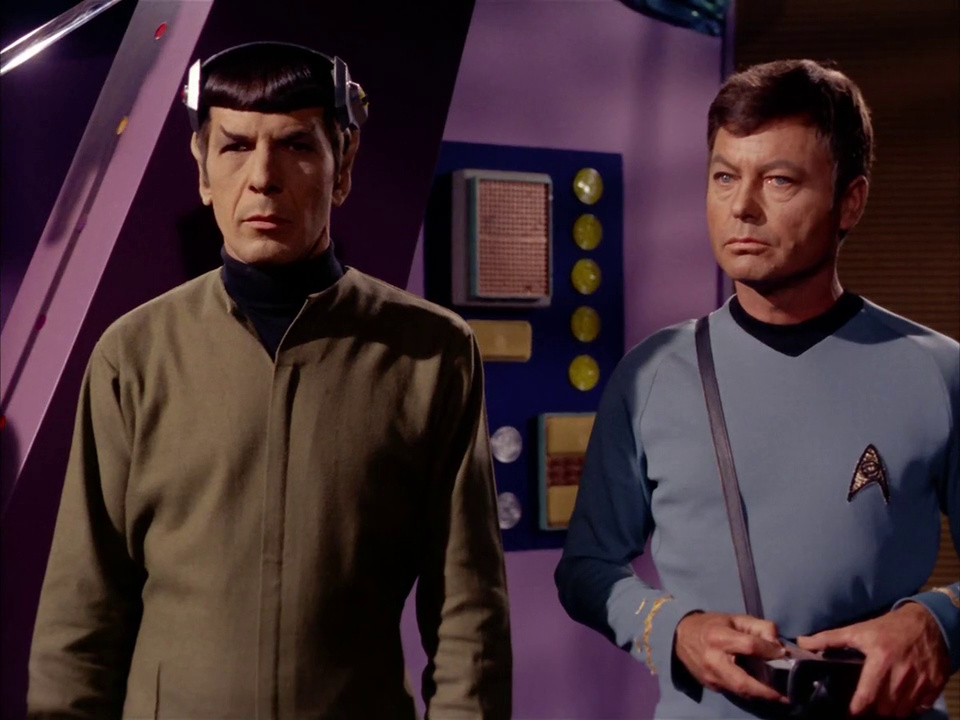
Star Trek: The Original Series Episode Re-Watch: Season 1, Episode 18: Arena

A Star Trek-themed spoiler warning.

Spoiler Warning: There are spoilers ahead for Star Trek: Strange New Worlds Seasons 1, 2, and 3, Star Trek: Enterprise Season 4, and Star Trek: The Original Series Season 1.

It’s been more than five years since I set up this website. In that time, I’ve written hundreds – literally hundreds – of articles, essays, and reviews all about Star Trek. But this’ll be the first time I’ve written up a full re-watch of an episode of The Original Series. I must be the first Trekkie in history to write up a re-watch of an episode of The Animated Series before The Original Series! But this catastrophic failure of Trekkie-dom comes to an end today, as we sit down together to watch the classic first season episode Arena.

I’m going to split this article into two parts. We’ll talk about Arena on its face, including some of the episode’s production history – and the reason why the creator of the iconic Gorn costume went uncredited and unknown for almost a decade after the episode aired – and then we’ll talk about the Gorn themselves in a bit more detail. Spoiler alert if you haven’t watched Strange New Worlds and still plan to, but the Gorn appear prominently in that show. That’s actually part of the reason why I wanted to re-visit Arena ahead of the third season premiere!

Still frame from a TV advert for the Star Trek video game circa 2013 showing William Shatner and someone in a Gorn costume.
The Gorn and Captain Kirk…

Arena is an iconic episode – and the Gorn captain has to be one of The Original Series’ most recognisable villains. In fact, I was a little surprised not to see Arena on the list when I did my recent recap of IMDB’s top-rated Star Trek episodes – according to that site’s users, Arena ranks a measly 19th out of The Original Series’ 79 episodes! I think I’d have put it a fair bit higher than that; it’s gotta be a top ten episode, at the very least! It has a strong story, expanding our understanding of the Federation, while also containing enough of that esoteric sci-fi “weirdness” that makes Star Trek the franchise we know and love.

It’s also best-known, of course, as “the Gorn episode,” introducing the famous reptillian species to the franchise. But Arena is as much about another alien race – the Metrons – as it is about the Gorn. The Metrons feel, with the benefit of decades of hindsight now, almost like a prototype of what would become the Q Continuum – millennia ahead of the Federation, considering themselves to be enlightened, but not above a bit of interference in galactic affairs. The Metrons have never returned to Star Trek, though, and I can kind of understand why: for a “morality play” like Arena, they work well as a somewhat neutral arbiter. But as the franchise has expanded, we’ve seen fewer of these kinds of stories. Modern Star Trek in particular lends itself much more to the inclusion of the Gorn than it does the Metrons!

Still frame from Star Trek: The Original Series Season 1 episode Arena, showing a Metron.
An unnamed Metron from the end of the episode.

Because the battle at Vasquez Rocks is so well-remembered, it can be easy to overlook the first part of Arena – but the away mission to Cestus III is one of the first season’s most tense combat sequences. Drawing on war films for inspiration, with an unseen enemy and whistling noises reminiscent of World War II-era mortars, the entire away mission to the destroyed outpost is – for the time, anyway – really exciting stuff. This is also one of the first away missions to be shot on location – i.e. not on a sound stage or backlot. Following the previous episode, Shore Leave, which was also shot in the Los Angeles area, Arena took the cast and crew to a set near Vasquez Rocks which had been built a few years earlier for a different television series.

I think I’m right in saying that it’s this away mission sequence in Arena, which used several pyrotechnic explosions to create the effect of the Gorn attack, that led to both William Shatner and Leonard Nimoy suffering from tinnitus – a condition that causes ringing in the ears and can be painful. The Original Series used pyrotechics throughout its run, but this battle sequence pushed the performers to act in close proximity to these explosive devices. Knowing the impact the sequence had on the actors, that does taint how we view it. Because as exciting and intense as the Cestus III mission was, no television scene is worth suffering from life-long after-effects.

Still frame from Star Trek: The Original Series Season 1 episode Arena, showing Kirk being flung into the air by an explosion.
One of the explosions on Cestus III.

The first part of Arena, it could be argued, plays out similarly to Balance of Terror, which would’ve premiered just a month or so earlier. The attack on a Federation outpost, pursuing a powerful but unseen enemy… it starts the story in a familiar way. But the episode soon takes a completely different turn with the intervention of the Metrons. What begins with a deadly raid and an attack on the away team seems to be building up to another starship battle – but just as the Enterprise seems to be catching up to the Gorn vessel, the Metrons rebuke both ships and crews for their violent nature.

The Metrons are an interesting addition to the story. Rather than just another enemy encounter or a straightforward action story, their intervention puts a different spin on things. Kirk, who seemed hell-bent on revenge at first, is forced to confront the way he handled the interaction, and this idea of revenge at any cost – mutually assured destruction, perhaps – is thrust into the spotlight in an uncomfortable way.

Still frame from Star Trek: The Original Series Season 1 episode Arena, showing the crew on the bridge.
Spock, Kirk, and the crew on the bridge while the chase unfolded.

That’s part of the context behind Arena, this idea that seeking revenge isn’t healthy and is, in itself, a violent urge. But there’s more to it than that. The revelation that the Gorn considered Cestus III to be one of their planets, and that’s why they attacked the outpost, reframes things for Kirk, Bones, and the rest of the crew. The Federation may not have been aware of the Gorn claim, but either way, they settled an outpost on a planet that someone else considered to be their territory. There’s another analogy here that I think is particularly interesting.

The Original Series draws inspiration from the western genre. The idea of space as a new “frontier” conjures images of the wild west, and in Arena itself, Kirk refers to himself and the Enterprise as the only lawmen in this region of the galaxy. The Gorn, therefore, are this story’s metaphorical Native Americans, having a pre-existing claim to the land and attacking the Federation settlers who’d moved in on their territory. Maybe that wasn’t exactly how the story was written, but I think that reading is there, just beneath the surface. And for the 1960s – when the western genre was still riding high at the box office, with films like El Dorado, Ride in the Whirlwind, and The Good, the Bad, and the Ugly – that’s kind of a progressive idea. To make the point that, in this case, the Federation may have been in the wrong… that’s a pretty neat inversion of the typical western-inspired frontier story.

Still frame from Star Trek: The Original Series Season 1 episode Arena, showing Dr McCoy.
Dr McCoy put it best: “we could be in the wrong.”

Vasquez Rocks has become an iconic location within the Star Trek franchise, and that really began here in Arena. The filming location, which is just inside the famous “thirty-mile zone” around the film studios in Los Angeles, has appeared in The Next Generation, Voyager, Enterprise, Picard, and two of the Kelvin films as well as The Original Series and The Voyage Home. It was a great choice for Kirk’s battle against the Gorn commander, and even though I’ve criticised some modern Star Trek productions for re-using the same filming locations too often, I think Vasquez Rocks is such an iconic spot that it gets a pass!

I absolutely love the original Gorn design, and even though it might not be as “realistic” as the updated variant seen in Strange New Worlds… I think there’s something special about the original costume. I always compared the Gorn to a Tyrannosaurus Rex – but that’s because I first watched Arena after having seen Jurassic Park in the mid 1990s! The design draws inspiration from real-world reptiles like the komodo dragon, using reflective, almost insect-like eyes and needle-sharp teeth to complement the monstrous design.

Still frame from Star Trek: The Original Series Season 1 episode Arena, showing Kirk and the Gorn captain's first encounter.
I just love this costume.

Wah Chang designed the Gorn costume as well as many other iconic Star Trek props. The tricorder, the flip-open communicator, and tribbles were all his creations – but he went uncredited for all of it, and was unknown until members of the Star Trek fan community uncovered his role in the 1970s. Chang seems to have been commissioned by Desilu – Star Trek’s production company – in a weird legal grey area; director and producer Bob Justman wanted to use Chang’s work, but Chang wasn’t a member of the prop-makers union. In a kind of workaround, Desilu would “purchase” items from Chang, but he was never credited on screen for any of his creations.

This is another great example of the early Star Trek fan community pulling together! Chang’s role was eventually uncovered in the 1970s by Trekkies, who were keen to find out more about some of the show’s iconic props and designs. It’s one of those fun little stories that, were it not for the dedication of fans, would’ve simply never come to light. Chang’s contributions to Star Trek – not only the episode Arena, but really across the entire first season – helped to define the look and feel of this vision of the 23rd Century. Who knows where Star Trek would’ve been without him?

Two set photos from Star Trek: The Original Series showing the Gorn costume.
The original Gorn costume.

There are some great moments between Kirk and Spock in Arena, as they wrangle with the aftermath of the Gorn attack on Cestus III and what it could mean. In the context of Arena itself, disregarding any other Gorn stories, we can see both points of view. Kirk argues that the attack – which seems, at first, to be completely unprovoked – could be the precursor to a wider invasion, and as the only ship in the area, it falls to the Enterprise to prevent that. But Spock is also correct – without more information about what happened, who perpetrated the attack, and why… Kirk is kind of jumping to conclusions. His line about seeking revenge hits particularly hard.

We’ll get into this more in a moment when we discuss the Gorn, but this is one area where more recent Star Trek productions – and Strange New Worlds in particular – arguably re-frame this conversation. As a veteran of conflicts against the Gorn while serving under Pike’s command, Spock is acutely aware of how bloodthirsty and vicious the Gorn can be, and how single-minded they are when staking their claims to planets that the Federation already occupies. There is wiggle-room here, and nothing in Strange New Worlds explicitly contradicts Arena (at least as of the end of Season 2). But it does change how we perceive these conversations – which, it shouldn’t need to be said, supposedly take place a decade or so after the events of that show.

Still frame from Star Trek: The Original Series Season 1 episode Arena, showing Kirk and Spock in Kirk's cabin.
The conversation in Kirk’s cabin.

Kirk’s hand-to-hand battle with the Gorn captain is a ton of fun. The lumbering monster reminds me of the titular Creature from the Black Lagoon with its heavy rubber suit and somewhat clumsy movements, and I just really love that kind of old-school style of creature design. The rubber suit may be old-fashioned compared to, say, the new dinosaur-inspired Gorn depiction from Strange New Worlds… but I think it’s light-years ahead of the awful CGI rendition that we got in Enterprise! The very “sixties” fabric used for the Gorn captain’s uniform just adds to the charm.

The fight has its tense and serious moments. Kirk’s two-handed attack, which we’ve seen him use to great effect across the show’s first season, has absolutely no impact on the powerful and muscular Gorn, which was interesting. We also see the Gorn’s own ingenuity as he devises a trap – Kirk ends up injured and seemingly about to be impaled… just in time for the ad break! But the fight also has moments that, almost sixty years later, seem almost cartoonish or campy. The obviously polystyrene rocks – which look even less convincing in HD on a large television set – are part of that.

Still frame from Star Trek: The Original Series Season 1 episode Arena, showing the Gorn captain using a communicator.
The Gorn captain.

Then there’s Kirk’s “Wile E. Coyote” moment! Sneaking up on the Gorn captain from atop Vasquez Rocks, Kirk plans to drop a very large boulder on his opponent. And look, I get it: it’s a smart move given the circumstances. But the way this sequence is framed and shot makes it look like something straight out of the old Road Runner cartoon. It’s a ton of fun, but perhaps less tense or serious to a modern audience than it was intended to be in 1966!

The fight ends with Kirk choosing to show mercy to his defeated and injured opponent, impressing the Metrons and showing that, despite his earlier feelings about the attack on Cestus III, Kirk has learned something from the experience. His final conversation with Spock suggests that Federation diplomats might be able to contact the Gorn and peacefully resolve the Cestus III dispute. This resolution was clearly successful, because according to Deep Space Nine, Cestus III had a Federation colony again in the 24th Century… though we never saw this on screen for ourselves!

Still frame from Star Trek: The Original Series Season 1 episode Arena, showing Kirk and a boulder.
Captain Kirk’s plan was clearly inspired by the great tactician Wile E. Coyote.

With Strange New Worlds’ third season coming up, I want to talk a little bit more about the Gorn, and how Arena still has relevance to Star Trek today.

The Gorn have become Strange New Worlds’ most important villain, filling a role that the Klingons arguably did in The Original Series, the Borg did in The Next Generation, or the Cardassians and Dominion did in Deep Space Nine. Gorn stories have had profound impacts on Pike and the crew, from La’an’s tragic backstory, through Hemmer’s untimely death, and ultimately leading to the attack on Parnassus Beta, the infection of Captain Batel, and the abduction of Ortegas and many surviving colonists.

Strange New Worlds took the barest of outlines of the Gorn – a race who, since Arena, had only made a couple of other appearances in Star Trek – and changed them into a genuinely intimidating and threatening villain. Strange New Worlds’ depiction of the Gorn blends together the likes of Jurassic Park’s velociraptors with Alien’s iconic Xenomorphs. The new series takes the foundation established by Arena – that the Gorn are kind of monstrous reptillians – but pads it out with newer inspirations from the horror and sci-fi genres.

Still frame from Star Trek: Strange New Worlds Season 2 episode Hegemony showing Captain Batel and a Gorn.
An updated depiction of the Gorn from Strange New Worlds.

If you take a straight reading of Star Trek as a whole, from the point of view of a “canon purist,” then I guess I can understand why this change might not work. It *is* a change, at the end of the day, and with Strange New Worlds being a prequel, the fact that a major conflict against the Gorn happened just a few years earlier – involving several of the same characters – arguably gets close to treading on Arena’s toes. I’m not a “canon purist,” though, and I’m perfectly happy to enjoy both of these different depictions of the Gorn on their own terms.

I wish I had the photoshop skills to bring Arena’s Gorn captain into Strange New Worlds! I think that would be a really funny visual, and would make a great little Star Trek meme. Highlighting the differences in these depictions would be fun, and much of that would come from how different they appear to be – even though, I would argue, in terms of how they’re depicted, the Gorn aren’t actually all that inconsistent.

Still frame from the Star Trek: Strange New Worlds Season 3 trailer showing a Gorn.
A Gorn from the Strange New World Season 3 trailer.

Think about it: the attack on Cestus III and the total destruction the Gorn wrought isn’t far off what we see on Parnassus Beta in Strange New Worlds. The Gorn captain still makes the same kinds of horror-inspired “monster” noises, emphasising how different this life-form is to our familiar characters. The differences are really twofold: the limitations of the visual effects of the time compared to a more modern production with a higher budget, and perhaps more importantly, the limitations imposed on broadcast television at the time in terms of how graphic and horrifying visuals could be. For the mid-1960s, the Gorn captain is pure horror – and I think we can forget that because of how much time has elapsed and the kinds of things television shows today can do that they couldn’t do back then.

All that being said, I still adore the original Gorn design. I think it was incredibly creative, and Arena is just a fantastic episode all around, really. I think the parts we tend to overlook – the mission to Cestus III, the spaceship chase, and the involvement of the Metrons – are arguably the story’s most interesting parts, and to reduce Arena to Kirk and the Gorn squabbling in the desert is incredibly reductive and does Arena a huge disservice.

Still frame from Star Trek: The Original Series Season 1 episode Arena, showing Kirk firing his cannon at the Gorn captain.
Captain Kirk fires his makeshift cannon.

So that’s it for now. The Gorn are coming back, though… and soon! Strange New Worlds’ third season is just a couple of weeks away at time of writing, and I’m really looking forward to the resolution of the cliffhanger from Hegemony last season. I’ll do my best to write up reviews of Hegemony, Part II and the rest of the episodes in a more timely fashion this time around!

I hope this has been a bit of fun. I’ve been wanting to do a full write-up of an Original Series episode for ages, but I kept putting it on the back burner for one reason or another. Stay tuned, though, because I’ll definitely return to Star Trek’s roots before too long! I’d love to tackle one of my favourite episodes next: The Doomsday Machine! I have no idea when that’ll be… but one of these days, for sure.

Live Long and Prosper!


Star Trek: The Original Series (a.k.a. Star Trek) is available to stream now on Paramount+ in countries and territories where the platform is available. The series is also available on DVD and Blu-ray. The Star Trek franchise – including The Original Series, Strange New Worlds, and all other properties discussed above – is the copyright of Paramount Global. This article contains the thoughts and opinions of one person only and is not intended to cause any offence.
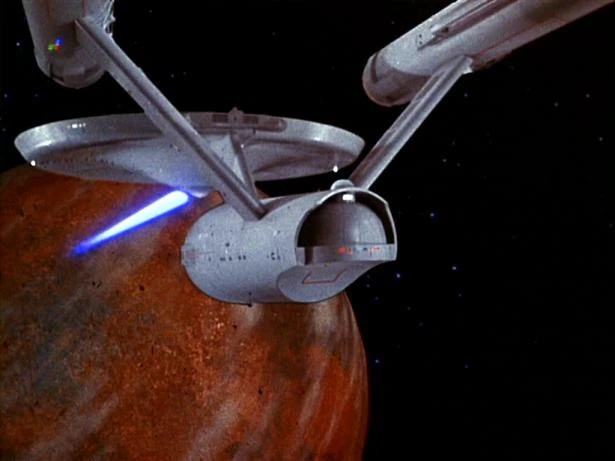
Star Trek “Top Fives” – Arguing With IMDB!

A Star Trek-themed spoiler warning.

Spoiler Warning: There are spoilers ahead for the following Star Trek shows: The Original Series, The Next Generation, Deep Space Nine, Voyager, and Enterprise. Minor spoilers are also present for Discovery, Picard, Section 31, and Starfleet Academy.

Today I thought we could have a bit of fun with the Star Trek franchise! If you didn’t know, IMDB – that’s the Internet Movie Database; a website all about films and TV shows – allows its users to rate episodes on a scale from one to ten. The site then brings all of these ratings together, allowing you to view a ranked list of the most-popular episodes in a television series. This time, I’m gonna pick the top five highest-rated episodes for the first five Star Trek series and talk a little about them. I’ll discuss what I liked – or disliked – about each episode, and then I’ll answer a simple question: would I include this episode among my personal favourites? Would it make the cut?

If that sounds like fun, then buckle up! Some of these are going to be controversial, that’s for sure.

Before we get into the list, I have a few caveats and points of note.

Promo photo for Star Trek: The Original Series showing the main cast circa Seasons 2-3.
Star Trek’s first crew.

Firstly, all of this is subjective, not objective! If I heap praise on a story you despise or criticise one of your favourites… that’s okay. There ought to be enough room – and enough maturity – in the Trekkie community for civil conversations and polite disagreement. This is all just one person’s opinion, at the end of the day. Secondly, I’m a huge Star Trek fan, and I have been since the early ’90s. I don’t adore every single episode, but I still consider myself a Trekkie and a supporter of the franchise, so nothing said below should be taken as “hate.”

Finally, I’m covering the first five Star Trek series – from The Original Series to Enterprise – in this piece, and I’m not counting The Animated Series nor am I including the cinematic franchise. Perhaps a future article can look at the newer Star Trek shows, though they have fewer episodes each and thus picking a top five might be a bit less interesting. For now, though, I’m sticking with the first five shows – so don’t expect any Picard or Lower Decks here. I’ll start with The Original Series and move forward through the shows in chronological order, finishing with Enterprise. Episode rankings are taken from IMDB as of mid-June 2025, and are listed in reverse order – starting with the fifth-highest and finishing with the highest-rated.

Phew! With all the details out of the way, let’s get started.

The Original Series Episode #5:
The Trouble With Tribbles, Season 2
IMDB Rating: 8.7/10

Still frame from Star Trek: The Original Series showing Kirk surrounded by tribbles.

The Trouble With Tribbles is absolutely iconic, and it’s one of the few episodes from The Original Series to have genuinely cut through to the mainstream in a big way. If you asked random non-Trekkies about not only The Original Series, but the Star Trek franchise as a whole, it wouldn’t be long before someone mentioned this episode, the tribbles themselves, or the iconic Kirk meme that was born here.

The Original Series could be funny, and The Trouble With Tribbles uses humour to great effect. The character of Cyrano Jones is a ton of fun, and while the conflict with the Klingons and the infestation of tribbles can be tense at points, the episode is best-remembered for its sense of humour. Kirk dressing-down the officers involved in the fight is also an iconic scene – though one that takes a completely different tone. This episode also spawned Trials and Tribble-Ations… which I suspect we’ll discuss in more detail in a moment.

Would It Make The Cut?
✅ Yes. ✅

The Original Series Episode #4:
Space Seed, Season 1
IMDB Rating: 8.7/10

Still frame from Star Trek: The Original Series showing Kirk and the crew discovering Khan in stasis.

Here’s a “hot take:” I think Space Seed’s status is overinflated because of The Wrath of Khan and how popular that film became. Don’t get me wrong, it’s still a good episode – but because its story is basically the prelude to such an important film for the Star Trek franchise, I think some folks might be over-appreciating it just a little. There are some great moments between Khan and Kirk, including an epic fight sequence, and we get to see Khan’s “superior intellect” firsthand for the first time.

Space Seed deals with genetic engineering, looking at how wrong that could go, while also using it as a critique of racism and the idea of a “master race.” It was also one of the first Star Trek episodes to delve into the history of the future; its vision of mid-1990s Earth and the Eugenics Wars have become integral parts of Star Trek’s canon. It’s an interesting episode in its own right, and not just because it set up The Wrath of Khan. However… there are stronger episodes from the first season of The Original Series, and while Space Seed is good, there are other episodes that I prefer.

Would It Make The Cut?
⛔ No. ⛔

The Original Series Episode #3:
Balance of Terror, Season 1
IMDB Rating: 8.8/10

Behind-the-scenes photo from the set of Star Trek: The Original Series showing a crew member with a clapper board and the Romulan Bird-of-Prey filming model.

Balance of Terror is another absolutely iconic episode. It introduced the Romulans, explored their historical conflict with Earth, and their surprising connection to Spock and the Vulcans. It introduced cloaking technology, the neutral zone, and the Romulan Bird-of-Prey, all of which have become integral parts of the Star Trek franchise, even appearing in recent seasons on Paramount+. This was also Mark Lenard’s first Star Trek role, playing the unnamed Romulan commander. Lenard would go on to play Spock’s father, Sarek.

The episode draws on World War II films – particularly submarine films where tense ship-to-ship combat took place without the enemy being in sight. It was one of the Star Trek franchise’s first battle or war stories, laying the groundwork for future space battles. The interplay between Kirk and the Romulan commander – recognising one another as kindred spirits – was incredibly poignant, and the xenophobic character of Lieutenant Stiles grounded the story and gave it another real-world parallel. Stiles was one of the first human Star Trek characters to express such feelings of hatred. Balance of Terror is, in a word, fantastic.

Would It Make The Cut?
✅ Yes. ✅

The Original Series Episode #2:
Mirror, Mirror, Season 2
IMDB Rating: 9.0/10

Still frame from Star Trek: The Original Series showing Mirror Spock.

If you’re a regular reader, you may have heard me say this before, but here goes: I really don’t like the Mirror Universe. It lends itself to pantomime-style, hammy, over-acted performances, practically no Mirror characters have any nuance, as they seem to care about nothing beyond murder, torture, and torturous murder, and the whole setting just feels incredibly flat, boring, and one-dimensional. Mirror, Mirror, as the first episode to explore this setting, was interesting at first, and I’m happy to cut it a bit of slack as the progenitor of this idea, though.

Furthermore, Mirror Spock might be one of the best Mirror Universe characters, as he’s shown to be willing to listen to our universe’s version of Kirk. Compared to some of the other caricatures we meet in the episode, Mirror Spock is definitely the most interesting and complex. I suspect that, were it not for the Mirror Universe’s over-use in modern Star Trek, or if Mirror, Mirror had been a one-off, I might rate it a bit more highly. I still think its an interesting episode, and certainly one of the better Mirror Universe stories even all these years later, but it’s also not one of my favourites… and I guess it’s kind of tainted by association with some other, far less-enjoyable visits through the looking-glass.

Would It Make The Cut?
⛔ No. ⛔

The Original Series Episode #1:
The City on the Edge of Forever, Season 1
IMDB Rating: 9.2/10

Still frame from Star Trek: The Original Series showing Kirk and Spock in the 20th Century.


I knew The City on the Edge of Forever was a popular episode, but I’ll be honest: I didn’t expect to see it at the top of the list, way ahead of the competition! This is a great story, though, one which really leans into the idea Gene Roddenberry had of making Star Trek episodes akin to fables, with complex themes of morality seen through a futuristic, sci-fi lens. The choice Kirk has to make in The City on the Edge of Forever is truly heartbreaking, and the buildup to it is played exceptionally well.

The first season of The Original Series was basically flying blind, seeing what worked. And clearly, time-travel to Earth in the recent past was something that resonated with audiences in a big way. For me personally, time-travel to 20th (or 21st) Century Earth has never been my favourite story concept in Star Trek, as what interests me the most is the franchise’s look at the future. And I would humbly suggest that the existence of the Guardian of Forever could challenge and completely change Starfleet’s mission of exploration – yet the Guardian was only revisited once, in The Animated Series, before disappearing for nigh-on fifty years! Given its popularity, though, and its apparent cut-through to a wider audience, perhaps The City on the Edge of Forever could be a great starting point for new fans?

Would It Make The Cut?
⛔ No. ⛔

The Next Generation Episode #5:
The Measure of a Man, Season 2
IMDB Rating: 9.1/10

Still frame from Star Trek: The Next Generation showing Picard and Dr Maddox.

Star Trek can do courtroom drama exceptionally well, and The Measure of a Man is a fantastic example of this kind of storytelling. It’s also an episode with a complex message about the nature of life and sentience – ideas which are arguably more important today, thirty-five years later, than they were at the time of its production. Because we’re attached to Data as a character after spending two seasons with him, and we’ve come to see him as a member of the crew, Bruce Maddox comes across as a real antagonist – someone who’s trying to use his position and a legal loophole to, in effect, “kill” Data.

The episode presents a challenge for both Picard and Riker, too. Riker arguably gets the tougher brief, having to argue against his friend’s right to exist and his sentience. But, as Data would tell him at the end of the story, he did what he had to do and played his part; refusal would’ve led to Data being turned over to Dr Maddox. Picard’s speech about the nature of life, and Starfleet’s mission to seek out new forms of life, is incredibly powerful, too. But… is The Measure of a Man one of the absolute best of the bunch from The Next Generation, when there are so many other outstanding episodes and stories? I’m not even sure it’s the show’s best courtroom episode, with The Drumhead being a genuine rival for that title!

Would It Make The Cut?
⛔ No. ⛔

The Next Generation Episode #4:
All Good Things…, Season 7
IMDB Rating: 9.1/10

Still frame from Star Trek: The Next Generation showing Beverly Picard in an alternate future timeline.

I’m pleasantly surprised to see the series finale here. All Good Things is a fantastic episode, and a great way to bring The Next Generation full-circle. Q makes a return, setting one of his best and most complex puzzles yet, challenging Picard to think about time itself in a non-linear way. Having three distinct time periods on the go in a single story was challenging, but it was so creative and clever how Picard instantly moved between them. There was some fantastic cinematography on this side of the story, too, with close-up shots lingering on Picard as he slid between the three different eras.

It was great to welcome back Denise Crosby as Tasha Yar, and to catch a glimpse of our characters’ lives in the future, too. Some of the ideas originally presented here would later become plot points in Star Trek: Picard more than twenty-five years later, keeping a thread of consistency across different iterations of the franchise. All Good Things was a spectacular finale, one that brought together the entire crew in different and creative ways, and its anti-time eruption was a genuine challenge and puzzle for Picard.

Would It Make The Cut?
✅ Yes. ✅

The Next Generation Episode #3:
The Best of Both Worlds, Seasons 3-4
IMDB Rating, Part I: 9.3/10
IMDB Rating, Part II: 9.2/10

Still frame from Star Trek: The Next Generation showing the Borg cube on the Enterprise's viewscreen.

For some bizarre reason, IMDB ranks the two halves of The Best of Both Worlds separately, but I’m amalgamating them for my list. This story brought back the Borg for their first major clash with Starfleet – and what a clash it was! The Battle of Wolf-359, Borg assimilation, Picard’s transformation into Locutus, Riker’s challenging relationship with Commander Shelby, and the Borg’s first major attempt to attack Earth. The tension builds slowly across the first part, culminating in Picard’s abduction and assimilation – a cliffhanger to end Season 3 in just the most shocking and incredible way!

Part II picks up the action, and sets a huge challenge for Riker – and the entire Federation. The crew of the Enterprise-D want to rescue Picard and undo the damage done to him by the Borg, but they’re also Earth’s last line of defence after the Borg Cube made light work of the assembled Federation ships at Wolf-359. The plan to kidnap Locutus, then Picard managing to break through his Borg assimilation just enough to strike the crushing blow… it was all pitch-perfect, fantastic, outstanding television. There’s a reason why The Best of Both Worlds is held in such high esteem.

Would It Make The Cut?
✅ Yes. ✅

The Next Generation Episode #2:
Yesterday’s Enterprise, Season 3
IMDB Rating: 9.2/10

Still frame from Star Trek: The Next Generation showing Picard, Riker, and Yar in an alternate timeline.

Now that I see how highly-ranked Yesterday’s Enterprise is, suddenly the decision to bring back the character of Rachel Garrett in the recent Section 31 movie makes a lot more sense! Joking aside, this really is a fun episode. One question I remember having, as a Trekkie in the early 1990s, was this: what happened to the Enterprise-B and Enterprise-C? Yesterday’s Enterprise introduces the Ambassador-class Enterprise-C and explains its pivotal role in history, maintaining the alliance with the Klingons and preventing a catastrophic war that threatened to wipe out the Federation.

We get an examination of a disturbing alternate reality, one in which the Federation and Klingons have been at war for years. Guinan plays a hugely important role, too, being the only character aware of how different the timeline could be. Tasha Yar makes a return, and this episode also tees up Sela as a future villain. Yesterday’s Enterprise also presents an impossibly tough decision for Picard, Garrett, Yar, and Lieutenant Castillio – returning the Enterprise-C to its own time means certain death for all on board, but staying in this war-ravaged future would likely mean the demise of the entire Federation.

Would It Make The Cut?
✅ Yes. ✅

The Next Generation Episode #1:
The Inner Light, Season 5
IMDB Rating: 9.4/10

Still frame from Star Trek: The Next Generation showing the Ressikan flute.

This wasn’t a huge surprise. The Inner Light is widely praised by fans of The Next Generation as one of the show’s best episodes. But I’ll level with you: I’m just not into it. There’s some emotional storytelling, sure, and the impact of these events would have repercussions for Picard. But I struggled to really connect with most of the long-dead people of Kataan, and this episode’s deliberately slow pace and departure from the Enterprise-D and most of our familiar characters just… well, to be blunt, I find it pretty boring.

I don’t hate The Inner Light, but it’s actually been a while since I even watched it; I tend to skip over it when re-watching The Next Generation as it just doesn’t do much for me. There are some positives, and I appreciate that this episode’s events were referenced more than once going forward; the impact it had on Picard’s character was significant. It also spawned one of the Star Trek franchise’s best and most-recognisable melodies: the Ressikan flute theme. However… it’s not among my favourite episodes, not from The Next Generation as a whole nor even from Season 5, which I generally consider to be the show’s strongest individual season.

Would It Make The Cut?
⛔ No. ⛔

Deep Space Nine Episode #5:
The Way of the Warrior, Season 4
IMDB Rating: 9.0/10

Still frame from Star Trek: Deep Space Nine showing Sisko firing a phaser.

The Way of the Warrior brought the character of Worf to DS9, establishing him as a regular for the second half of the show’s run. At first, I gotta admit that it felt a little odd to see Worf interacting with Sisko, Dax, and the others… but it didn’t take long for him to settle into his new role! The Way of the Warrior also re-established the Klingons as antagonists – at least for the remainder of the season. After the transformation in Federation-Klingon relations that we saw in The Next Generation, this was a change of pace, and it set up several fun episodes across the season.

Gowron and Martok were fun additions to the story, which also progressed the changeling infiltration storyline that was a precursor to the Dominion War. Worf’s inner conflict between his Klingon heritage, his friendship with Gowron, and his ties to Starfleet was on full display, and the way he had to navigate that difficult environment was riveting stuff. Michael Dorn put in one of his best and most complex performances as Worf, and Sisko got a bit of an arc that harkened back to his own considerations about his future in Starfleet from the beginning of Season 1. All in all, a fun, action-packed episode.

Would It Make The Cut?
✅ Yes. ✅

Deep Space Nine Episode #4:
Duet, Season 1
IMDB Rating: 9.0/10

Still frame from Star Trek: Deep Space Nine showing Darheel/Marritza's arrest.

Duet is an episode of twists and turns, double-bluffs and triple-bluffs – and it presents a fascinating story of a man trying to atone for the crimes of his government. Through the character of Marritza, Duet also examines the idea of the complicity of low-ranking personnel in heinous crimes, something we deal with all too often in the real world. Marritza forced Kira – and us as the audience – to see the Cardassians as more than just faceless thugs and murderers, exploring the complex nature of Cardassian morality and using that sci-fi lens to examine real-world conflicts.

Duet is a powerful story for Kira, and Nana Visitor puts in one of her best performances. It’s also a good story for Odo, as we see his steadfast dedication to finding out the truth – no matter what others might’ve wanted to believe or think. Duet builds its twists and turns masterfully, eventually leading to a genuinely heartbreaking conclusion. It’s a powerful episode, one that showed the benefits of Deep Space Nine’s slower pace and focus on a single setting.

Would It Make The Cut?
✅ Yes. ✅

Deep Space Nine Episode #3:
The Visitor, Season 4
IMDB Rating: 9.1/10

Still frame from Star Trek: Deep Space Nine showing Sisko zapped by some kind of electrical energy.

The Visitor has some interesting elements. It’s always fun for me, as a Trekkie, to catch a glimpse of a possible future for some of our beloved characters, and The Visitor shows us that. It’s also a relative rarity insofar as it’s a Jake Sisko episode – Jake only appeared in 71 episodes across Deep Space Nine’s run. Tony Todd, playing the older version of Jake, gives a genuinely emotional performance, which has to be one of the best individual performances by a guest star pretty much anywhere in Star Trek.

So I appreciate what The Visitor does. Its story highlights the importance of Benjamin Sisko and his role in the history of the Federation, it’s a great Jake-Ben story, focusing on their relationship, and its glimpses of the future were fun. However… it’s not one of my absolute favourites in Deep Space Nine, despite all of the positives. There are simply other episodes that I find to be more enjoyable, powerful, emotional, or entertaining, and while I’m not surprised to see The Visitor at or near the top of other fans’ lists… it wouldn’t be there on my own list. There isn’t one overwhelming “issue” or “problem” I can point to, which I guess is a tad frustrating. It’s simply that I could think of at least a dozen episodes I’d rank higher.

Would It Make The Cut?
⛔ No. ⛔

Deep Space Nine Episode #2:
Trials and Tribble-Ations, Season 5
IMDB Rating: 9.3/10

Still frame from Star Trek: Deep Space Nine showing O'Brien and Bashir with Kirk's crew.

Made to celebrate Star Trek’s thirtieth anniversary, Trials and Tribble-Ations was an incredibly creative episode. The filmmaking technology required to blend new actors in with old footage was still relatively new, having been pioneered by the film Forrest Gump, and I’m fairly sure I’m right in saying that this episode was the first time it was used for television. As a celebration of the Star Trek franchise, you could hardly think of anything better than a story connecting the old with the new – in this case, having Sisko and his crew travelling through time, meeting Captain Kirk and visiting the original USS Enterprise.

Such a premise could’ve felt gimmicky and fan-servicey. Worse, it could’ve been poorly-written! But Trials and Tribble-Ations was fantastic, and I can vividly remember watching it when it premiered, absolutely stunned at seeing the DS9 crew in TOS uniforms – and Captains Sisko and Kirk meeting face-to-face. The frame narrative involving the Department of Temporal Investigations was fun, too, and kept the story grounded in the 24th Century. The premise was exceptionally fun, the technology worked perfectly, and the end result was exactly what the writers and producers intended: a genuine “love letter” to Star Trek and the Trekkie community.

Would It Make The Cut?
✅ Yes. ✅

Deep Space Nine Episode #1:
In The Pale Moonlight, Season 6
IMDB Rating: 9.4/10

Still frame from Star Trek: Deep Space Nine showing the iconic "it's a fake" scene with Senator Vreenak.

Yes, yes, yes! In The Pale Moonlight is an absolutely outstanding episode, full of moral grey areas, sneaky schemes, and one of Star Trek’s most recognisable memes to boot! There was a time, shortly after its broadcast, when In The Pale Moonlight seemed incredibly controversial in the Star Trek fan community; I vividly remember conversations online about “betraying Gene’s vision of an enlightened future” and Sisko’s actions being so far beyond the pale that they’re indefensible! I’m both astonished and thrilled to see that the passage of time has been kinder, and that fans now appreciate just how brilliant this episode is.

Sisko and Garak made for a wonderful pair in this episode, scheming together to drag the Romulans into the Dominion War under false pretences. What holds the episode together, though, is the absolutely incredible log entry that Captain Sisko records. This is one of Avery Brooks’ best performances in the entire series, showing off his wonderful range as Sisko runs the gamut of emotions, re-telling the story of how he lied, broke various laws, and was complicit in the murder of a Romulan senator. An absolutely riveting, must-watch episode for any Trekkie.

Would It Make The Cut?
✅ Yes. ✅

Voyager Episode #5:
Message in a Bottle, Season 4
IMDB Rating: 8.7/10

Still frame from Star Trek: Voyager showing three Romulans on the bridge of the Prometheus.

I adore Message in a Bottle. The episode marks the halfway point of Voyager’s run, making it the perfect moment to establish a tentative link between the stranded ship and the Federation back in the Alpha Quadrant. It was also a ton of fun to get a story where the Romulans are the antagonists! Guest star Andy Dick made a perfect foil for Robert Picardo’s Doctor as a newer version of the Emergency Medical Hologram, and the two performers had great on-screen chemistry, leading to some absolutely hilarious interactions.

The USS Prometheus was an incredibly fun concept, too, and we got a really detailed look at the ship both inside and out, which was great. It was such a clever idea to send the Doctor’s programme to the Alpha Quadrant, and what resulted is not only one of Voyager’s funniest episodes, but one that packs a powerful emotional punch right at the end. After more than four years alone, Captain Janeway and the crew finally have one small link to Starfleet, and Starfleet promises to work on ways to get them home.

Would It Make The Cut?
✅ Yes. ✅

Voyager Episode #4:
Living Witness, Season 4
IMDB Rating: 8.7/10

Still frame from Star Trek: Voyager showing the Voyager simulation.

Living Witness has been a topic of discussion for a while here on the website thanks to Discovery’s far future setting! It was an interesting idea for an episode, one that took on the complex idea of the unreliability of history and memory, initially painting the crew of the USS Voyager as villains centuries after the ship passed by a planet. It’s definitely a story with a message, one that’s in keeping with Star Trek’s established formula of looking at real-world issues through a sci-fi lens.

Parts of Living Witness can feel challenging and even uncomfortable, as we’re forced to watch some very inaccurate depictions of the crew of Voyager. The Doctor has a hard time convincing people of his version of events, too, which adds another layer to this. But that’s part of the point and message of the story! All that being said, I think there are better Voyager episodes. Living Witness is creative and clever, and really, nothing about it is bad per se. I can just think of other episodes that I’d rank more highly.

Would It Make The Cut?
⛔ No. ⛔

Voyager Episode #3:
Timeless, Season 5
IMDB Rating: 8.7/10

Still frame from Star Trek: Voyager showing Chakotay, Kim, and the icy wreck of the USS Voyager.

Timeless shows us just how badly wrong Voyager’s journey could’ve ended up! Trying a new method of propulsion to reach the Alpha Quadrant, the ship ends up crash-landing, killing everyone apart from Chakotay and Harry Kim. The older versions of these characters – who’ve had years to sit with the consequences of what happened – travel to the wreck site to right that wrong. The crash sequence and the visual of the wrecked Voyager beneath the ice are both absolutely stunning and incredibly impactful.

I’m not usually wild about episodes where the magical, perfect Seven of Nine is the only one who can save the day! But in Timeless, her involvement works really well, and scenes with the Doctor and the older Chakotay and Kim are intense and emotional, too. It was also great fun to see Geordi La Forge in an episode of Voyager! A very creative premise and great execution.

Would It Make The Cut?
✅ Yes. ✅

Voyager Episode #2:
Scorpion, Seasons 3-4
IMDB Rating, Part I: 8.9/10
IMDB Rating, Part II: 8.8/10

Still frame from Star Trek: Voyager showing three Borg cubes and a large explosion.

IMDB counts the two halves of Scorpion separately, but I’m combining them. To be honest, Scorpion is a story I have mixed feelings about. Voyager over-used both the Borg and Seven of Nine in the second half of its run, and both of those issues kind of began here. On its own merit, Scorpion is great. The Borg and Species 8472 are both powerful and dangerous enemies, and the idea of Janeway teaming up with the Borg when there were no other options was a great twist on the anticipated Borg conflict. Seven of Nine, despite my later feelings about the character, also gets a great introduction.

And I guess the point of this exercise is to try to judge these episodes on their own. Scorpion may have led to too many Borg and Seven stories later on, but it should get a pass as the first of them – and arguably the best, too. It was definitely an explosive cliffhanger to end the show’s third season, and I like how truly different and “alien” Species 8472 feel compared to a lot of other Star Trek races we’ve seen. It’s also an important episode for Voyager, introducing Seven of Nine and setting the stage for Kes’ departure.

Would It Make The Cut?
✅ Yes. ✅

Voyager Episode #1:
Blink of an Eye, Season 6
IMDB Rating: 9.0/10

Still frame from Star Trek: Voyager showing the USS Voyager in orbit.

I’ll level with you: I did not see this coming! The only Voyager episode rated 9/10 by IMDB’s users is… Blink of an Eye? Really? I guess I’m more out-of-touch with the Trekkie community than I thought! Don’t misunderstand me: I don’t particularly dislike this episode. It’s an interesting premise and a fun look at a very “alien” kind of world. But as the best episode in Voyager’s entire run? Did the writer or director start a campaign to get people to upvote it, or something? I just… I genuinely would not have expected to see Blink of an Eye hailed as everyone’s favourite.

There was something in Blink of an Eye that I felt didn’t work particularly well. The Doctor supposedly spent years alone on the planet after a transporter glitch, but after a couple of lines of dialogue the profound impact that had wasn’t really explored or acknowledged. With that exception, though, I think Blink of an Eye makes good on a quite creative core idea. I certainly enjoy the episode and what it has to offer. But as the absolute best of Voyager? I’m afraid I’m still not convinced.

Would It Make The Cut?
⛔ No. ⛔

Enterprise Episode #5:
Zero Hour, Season 3
IMDB Rating: 8.5/10

Still frame from Star Trek: Enterprise showing three Xindi characters.

As the culmination of a season-long arc to stop the Xindi and their super-weapon, Zero Hour is intense. Hoshi is traumatised, Archer seems to make the ultimate sacrifice, and T’Pol commands Enterprise on a mission to destroy the Sphere-Builders’ base. There’s a lot going on, but it builds to an explosive finale… with just enough left at the very end for one final twist, a twist which sets up the beginning of Season 4 and the end of Enterprise’s Temporal Cold War storyline.

I found the conflict with the Xindi to be interesting overall, but there’s no denying that the season dragged its feet reaching this point. The time travel stuff was never my favourite part of Enterprise, so in that sense I’m glad to see Zero Hour as the beginning of the end of that particular ongoing storyline. Where this episode succeeds is with its core characters. Two pairings/interactions stand out: T’Pol with Trip and Archer with Hoshi. However, the story finds time to give everyone a moment in the spotlight, and its bittersweet moment as Archer is apparently killed while succeeding in his mission was, on first viewing, at least, genuinely impactful.

Would It Make The Cut?
⛔ No. ⛔

Enterprise Episode #4:
Azati Prime, Season 3
IMDB Rating: 8.5/10

Still frame from Star Trek: Enterprise showing Archer piloting a submarine.

Another episode from near the end of Season 3’s ongoing conflict with the Xindi and Sphere-Builders, Azati Prime sees Archer and the crew getting closer to their objective. We get to see Archer confront the creator of the Xindi weapon, Degra, and a bit more of an exploration of who the Xindi are and how the Sphere-Builders have been able to manipulate them. Archer’s “suicide mission” attack plan always felt a bit over-the-top, but in the context of the story it works well enough.

This is also the episode where we see the Enterprise-J – a future version of the famous starship. I enjoy the Enterprise-J sequence; I just wish the episode’s budget had allowed us to spend a bit more time in this setting! Though the Temporal Cold War was never my favourite part of the show, this moment with Daniels and Archer was surprisingly fun. As an episode taking place partway through a season-long story arc, it can be hard to know where to place Azati Prime, but I think it does its thing well enough.

Would It Make The Cut?
⛔ No. ⛔

Enterprise Episode #3:
Carbon Creek, Season 2
IMDB Rating: 8.5/10

Still frame from Star Trek: Enterprise showing the Vulcan Mestral.

I usually don’t enjoy Star Trek stories, in any series, which involve time travel to 20th or 21st Century Earth. So Carbon Creek, which is primarily a flashback, not even featuring most of the regular cast, taking place in the 1950s… it shouldn’t be an episode I care for very much. But you know what? It’s a surprising amount of fun, and watching a crew of pre-First Contact Vulcans struggling to exist in human society made for some funny and even emotional moments.

I’m glad there aren’t too many Carbon Creeks in the Star Trek franchise. Any franchise which overcomplicates its own fictional history risks turning viewers away or making future stories less impactful. But as a genuine one-off episode, this ’50s setting, dripping with cute Americana, really does work. The Vulcan characters are all distinct and engaging, T’Pol’s frame narrative as she recounts the tale to Archer and Tucker is fun, too, and yeah. Just an all-around enjoyable affair, and a bit of a change of pace.

Would It Make The Cut?
✅ Yes. ✅

Enterprise Episode #2:
Regeneration, Season 2
IMDB Rating: 8.5/10

Still frame from Star Trek: Enterprise showing Borg drones.

If you read my provocatively-titled piece Ten Star Trek Storylines That Should Be Non-Canon a few weeks ago… you might think you know where I stand on this one! Long story short, the history of Borg-Federation contact is already stupidly overcomplicated thanks to Voyager and First Contact. Throwing in this episode with Archer coming face-to-face with 24th Century Borg drones, and ending with them transmitting a message to the Delta Quadrant? I mean… it’s just another narrative hurdle, in a sense.

However! Regeneration is a ton of fun if you take it on its own merits. No one expected Captain Archer and his 22nd Century crew to encounter the Borg, and given that these Borg are from the future to boot? It made the Collective feel genuinely frightening and dangerous again, something I’ve argued that Voyager had begun to lose toward the end of its run. So yes, this episode complicates things for Star Trek as a whole, and it kind of makes Starfleet look incompetent! But… I really like it. And I’m pleased to see the controversy that swirled around the episode at the time of its broadcast has died down.

Would It Make The Cut?
✅ Yes. ✅

Enterprise Episode #1:
Twilight, Season 3
IMDB Rating: 8.6/10

Still frame from Star Trek: Enterprise showing Captain Archer laying in a medical machine.

I knew Enterprise fans thought quite highly of Twilight, but I don’t think I expected to see it top the list! This episode takes place in an alternate timeline, one in which the Xindi weapon was successful. I liked the subtle callback to The Wrath of Khan’s Ceti Alpha V, and the implication that, even if humanity had been able to remain hidden, another disaster was only a century away. That just added to the tragedy of the situation.

Where Twilight excels, though, is in its character relationships. This version of T’Pol, having lived with Archer for years as his caretaker, is much softer and completely different, and the relationship between them has clearly evolved. Jolene Blalock plays this incredibly well, so it’s no wonder, really, than this episode is held in such high esteem. Phlox, Tucker, and others also get moments in the spotlight as the Xindi finally track down humanity’s last outpost, and while the episode’s conclusion has always felt a little rushed to me, I think overall it’s a pretty solid story. After Season 3’s serialised arcs, this alternate timeline made for a fun change of pace.

Would It Make The Cut?
✅ Yes. ✅

So that’s it.

Photo taken during construction of the USS Enterprise set, circa 1977-78, during production on Star Trek: Phase II/The Motion Picture.
The USS Enterprise engineering set (later used for The Motion Picture and The Next Generation) under construction.
Photo Credit: Forgotten Trek

We’ve looked at the top five highest-rated Star Trek episodes for the first five shows… according to the randos over at IMDB, anyway! There were a few surprises in the mix – both in terms of inclusions and exclusions. Looking down the full episode ranking lists, I was genuinely shocked to see some of my favourites languishing in the lower reaches, and some episodes I generally don’t care for soaring high! But I hope this has been a bit of fun, at any rate.

I’m already formulating another idea – maybe taking a look at a few of the lowest-rated Star Trek episodes and sharing my thoughts on those, or doing the same thing again with the modern shows. If I’m gonna do that, though, I’ll actually have to finish watching Lower Decks and Prodigy! Those are still on my to-do list.

Thanks for joining me this time. And thanks to IMDB for publishing these ratings and lists. It was a lot of fun to revisit these episodes and spend a little more time in the Star Trek galaxy.


All five Star Trek series discussed above can be streamed on Paramount+ in countries and territories where the platform is available. The Star Trek shows are available to purchase on DVD; The Original Series, The Next Generation, and Enterprise are also on Blu-ray. The Star Trek franchise – including all shows, films, and other properties mentioned above – is the copyright of Paramount Global. Credit to IMDB for the episode ratings, which were accurate at time of publication in June 2025. This article contains the thoughts and opinions of one person only and is not intended to cause any offence.
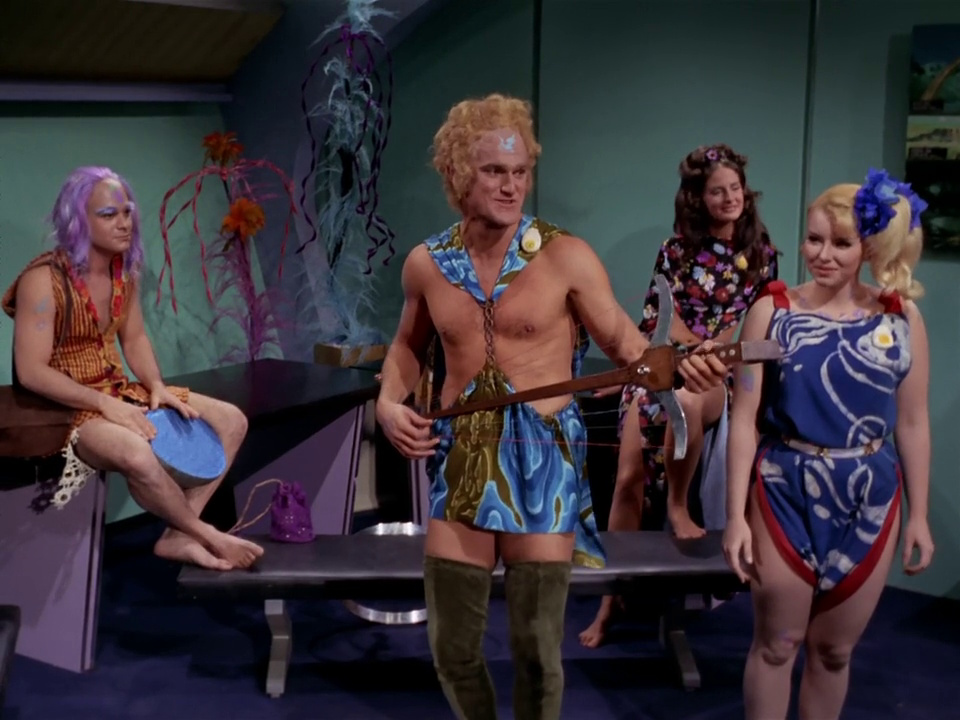
Star Trek III: The Search For Spock – Forty Years Later

Spoiler Warning: There are spoilers ahead for the following Star Trek productions: The Original Series, The Motion Picture, The Wrath of Khan, The Search for Spock, and The Voyage Home. Minor spoilers are also present for other parts of the Star Trek franchise.

We’re celebrating an anniversary today! Forty years ago to the day, on the 1st of June 1984, Star Trek III: The Search for Spock was released in cinemas in the United States. I thought it could be fun to look back at the film, highlight some of its successes, and assess its place in the Star Trek franchise.

The Search for Spock is a film I have kind of a weird personal history with! My “first contact” with the Star Trek franchise was The Next Generation. I’ve talked about this before here on the website, but the earliest episode I can solidly recall watching is Season 2’s The Royale, which was broadcast on terrestrial TV here in the UK in 1991. I think I’d seen episodes – or at least parts of episodes – before that, but I date my entry into the Star Trek fan community to mid-1991.

Promotional photo for Star Trek III: The Search for Spock showing the Enterprise at Spacedock.
The USS Enterprise returns to Spacedock.

As I continued to watch The Next Generation over the next few months and years, including returning to Season 1 and watching all of Seasons 2 and 3, I was only dimly aware of The Original Series. My parents weren’t interested in Star Trek, and in the small rural community where I grew up, there weren’t any other Trekkies that I knew of. Growing up in the ’80s, I don’t remember watching The Original Series on TV, and I never encountered any of its films at the cinema, either. But at some point after 1991, The Search for Spock came onto terrestrial TV here in the UK – probably for the first time. And it ended up being the first Star Trek film I watched!

By that point I had actually seen a handful of episodes of The Original Series when they’d been shown on TV, but I hadn’t seen The Motion Picture or The Wrath of Khan. Still, the chance to watch more Star Trek was obviously incredibly appealing, and even though I didn’t have the full picture having missed the first part of the story, I still enjoyed what The Search for Spock had to offer. Perhaps those early memories of watching the film unexpectedly have led me to over-value it in some respects… but I still consider The Search for Spock to be a great addition to the Star Trek franchise.

Still frame from Star Trek III: The Search for Spock (1984) showing the film's opening title.
The film’s opening title.

One thing I miss in films and TV shows nowadays are practical special effects – and in particular, puppets and animatronics. The Search for Spock, in my view, has some fantastic puppets that represent the rapidly evolving microbes of the Genesis Planet. Though I know the world of film and TV has moved on in leaps and bounds since then, as a child of the ’80s I feel a real nostalgia for those practical effects, physical creations, and puppets – with the accompanying cinematography that brought them to life. The Search for Spock is a great example of how well these techniques work, drawing on the likes of the Star Wars series or The Dark Crystal for inspiration.

Speaking of other films, The Search for Spock was released against some stiff competition! On its opening weekend it had to compete against some incredible titles that are rightly hailed to this day as all-time classics: Indiana Jones and the Temple of Doom, Ghostbusters, and Gremlins were all in theatres at the same time – so it’s a wonder that The Search for Spock pulled in any money at all at the box office! The film was, in fact, a financial success, bringing in more than $85 million against a budget of just $16 million, with very little extra being spent on marketing. Despite a significant decline in viewership between its opening weekend and its second, The Search for Spock proved to be a successful film for the Star Trek franchise and for Paramount Pictures.

Behind-the-scenes photo from Star Trek III: The Search for Spock showing Leonard Nimoy and a Panavision camera.
Director Leonard Nimoy during production.

It can be difficult to assess the middle part of a trilogy entirely on its own merits. The Search for Spock is sandwiched in between the serious and rather dark The Wrath of Khan and the almost pure comedy of The Voyage Home – both of which tend to be held in high regard by Trekkies. As a result, The Search for Spock can sometimes get lost; overlooked by some, disregarded by others. Some Trekkies contend that “all the even-numbered Star Trek films are bad,” lumping The Search for Spock in with The Final Frontier and The Motion Picture as being an unimpressive addition to the franchise. I disagree with that wholeheartedly: the film, while not as epic as The Wrath of Khan or as light-hearted and fun as The Voyage Home, is a thoroughly enjoyable picture, with moments of tension, drama, and action that can absolutely go toe-to-toe with the best the Star Trek franchise has to offer.

The Search for Spock is unapologetically a science-fiction story. That might seem like an odd observation; Star Trek *is* sci-fi, after all. But compared with both The Wrath of Khan – an epic action film with a superb villain – and The Voyage Home – a comedy with some sci-fi elements – it stands apart. The film has both light-hearted and very heavy moments, but keeping it all together is a decidedly sci-fi premise about a planet ageing too quickly, a dead man being reborn through scientific magic, and two interstellar empires wrangling over the fallout. As with The Motion Picture’s story of an impossibly unknowable life-form… I think it’s easy to see why some folks who long for either more straightforward action or something less serious would take a look at The Search for Spock and come away disappointed or even confused!

Still frame from Star Trek III: The Search for Spock (1984) showing Scotty, Kirk, Dr McCoy, and Sulu.
Scotty, Kirk, Dr McCoy, and Sulu on the bridge of the Enterprise.

The Search for Spock is, I will admit, a bit of a narrative oddity. Spock’s death in The Wrath of Khan was arguably the most powerful and emotional moment in an already epic film, and I’ve been critical in the past of storylines that involve resurrecting a dead character. It’s something that has to be handled carefully, and while The Search for Spock may get a pass as the originator of this idea – at least in the Star Trek franchise – it can still feel odd to make a big deal of a character’s death, look at the impact it has on their friends and other characters, and then undo it all in the very next instalment. I don’t think that’s one of the main reasons why this film can be unpopular in some Trekkie circles, but it’s worth acknowledging that its entire main story basically undoes one of the most powerful moments from its immediate predecessor.

Though not as transformational for the Star Trek franchise as I’d argue The Motion Picture was – as that film’s design philosophy and aesthetic choices would carry through The Next Generation era and beyond – The Search for Spock did introduce a couple of really important elements that have gone on to be a big part of the Star Trek franchise. The Search for Spock marks the debut of both the Federation’s Excelsior-class starship and the Klingon Bird-of-Prey. Both of these ships have become iconic emblems of Star Trek, and made many appearances over the years.

Behind-the-scenes photo from Star Trek III: The Search for Spock showing the filming model of the USS Excelsior.
The USS Excelsior model being prepared for filming.
Image Credit: Excelsior – The Great Experiment

The Klingon Bird-of-Prey was a unique ship at this point in Star Trek’s history. Its movable weapon pylons – which could drop down for firing its disruptors and swoop up for flight – were unique in Star Trek, and added to the fear factor of the ship. We now consider the Bird-of-Prey to be an icon of the Star Trek franchise, and it’s even appeared in recent Star Trek projects in just the last few years.

The Search for Spock also expanded upon the Klingon language that had been created for The Motion Picture, and went a long way to defining the overall aesthetic and feel of the Klingons. Sets built to represent the interior of the Bird-of-Prey would be in continuous use for two decades after the film’s release, and along with those set designs, uniform styles that first appeared here would also be featured in a big way in Star Trek projects of The Next Generation era. The Motion Picture may have started the process of modernising the Klingons from their original presentation in the 1960s, but it was The Search for Spock that really settled on many of the designs that are now totally inseparable from Star Trek’s warrior race. Some fans even got upset when the Kelvin films and Discovery used different designs and styles for the Klingons, simply because those that debuted in The Search for Spock had become so iconic.

Behind-the-scenes photo from Star Trek III: The Search for Spock showing Christopher Lloyd and Leonard Nimoy.
Director Leonard Nimoy with Christopher Lloyd (as Klingon Commander Kruge) in a behind-the-scenes photo.

In addition to how the film expanded upon and settled several key designs for the Klingons, The Search for Spock also did a lot for the Vulcan race. We come away from it with an expanded knowledge of Vulcans, their telepathic abilities, and their culture. The film visited the planet Vulcan for only the fourth time – and gave us what is arguably our first major look at the planet since Yesteryear in The Animated Series and the classic episode Amok Time from The Original Series. Some of what The Search for Spock introduced for the Vulcans – such as the idea of katras, preserving the memory or even personality of individuals – have gone on to make multiple appearances in the Star Trek franchise. The development of the Vulcans would be seen in The Next Generation, through the character of Tuvok in Voyager, and revisited greatly in Enterprise. Many of the Vulcan stories in those shows – and in Discovery, too – have their roots in The Search for Spock and the elements of Vulcan culture and the Vulcan species that were first seen here.

Although she had been fully redesigned for The Motion Picture five years earlier, the USS Enterprise had been an absolutely essential part of Star Trek going back to 1966. Many fans have said that, in Star Trek shows, the starship is basically another character; inseparable from the rest of the crew. And as the film that “killed” the original USS Enterprise, I suspect The Search for Spock was always going to court controversy!

Still frame from Star Trek III: The Search for Spock (1984) showing the wreck of the Enterprise.
The Search for Spock was the film that blew up the Enterprise!

Unlike Spock’s death – which this film was dedicated to undoing – there could be no resurrection for the Enterprise after its self-destruction over the Genesis Planet. This ship had, in some form, been an integral part of Star Trek since the very first episode of The Original Series, and fans had no less of a connection to the ship as to her crew. Losing the ship became an intensely emotional moment in the film – arguably more so than the death of Kirk’s own son, David. It was a bold decision by Harve Bennett and Leonard Nimoy to go there… but it’s also proven to be a controversial one!

For me, the destruction of the Enterprise is one of those singular moments in cinema – something that can be imitated but never truly recreated. Like Darth Vader’s iconic “no, I am your father” moment in another great mid-trilogy film, it’s a feeling that simply can’t be recaptured. Star Trek has, on other occasions, destroyed hero ships – the Enterprise-D in Generations, the first USS Defiant in Deep Space Nine, the Kelvin timeline Enterprise in Beyond – but none of those moments, intense though they could be, felt the same way. This was Star Trek’s first Enterprise – *the* USS Enterprise – and there it was, a burning wreck streaking its way across the sky.

Still frame from Star Trek III: The Search for Spock (1984) showing the Enterprise in the sky above the Genesis Planet.
The wreck of the Enterprise in the sky above the Genesis Planet.

The Wrath of Khan’s starship battle is one of the best in the franchise – and one of the most tense and exciting space combat sequences in all of cinema. It drew on submarine films of the World War II era and aftermath for inspiration, and combined with an excellent and wonderfully-portrayed villain in Khan, it made for one of the most memorable battles not just in Star Trek, but in all of sci-fi. The Search for Spock had the frankly impossible task of living up to that – and while I’d absolutely agree that both the Klingon attack on the USS Grissom and the confrontation between the damaged Enterprise and the Bird-of-Prey aren’t on the same level… there are points where they aren’t a million miles away.

The USS Grissom is another well-designed ship. Although it doesn’t follow the typical Starfleet design that we’ve seen with the Enterprise, the Reliant, and others, it’s clearly a Starfleet vessel. Its diminutive size makes it feel vulnerable, and dialogue confirming that it’s a science vessel adds to that feeling. The Search for Spock went a long way to expanding our knowledge and understanding of Starfleet as an organisation – far from having a few identical Constitution-class ships, as seen in The Original Series, Starfleet had a broad and varied lineup of vessels, with different specialised craft designed for different purposes. We see a range in just this one film: the Enterprise as a kind of mid-tier, slightly outdated ship, Excelsior as the brand-new top-of-the-line model, and the Grissom as one of Starfleet’s smaller, arguably less important ships.

Still frame from Star Trek III: The Search for Spock (1984) showing the USS Grissom.
The Oberth-class USS Grissom.

As an aside, I’d happily watch an entire series set aboard a ship like that! It’s one of the ideas that the Star Trek franchise had never been bold enough to try – at least, not until Lower Decks came along. Though the Grissom’s mission is an important one in The Search for Spock, the design of the ship and the way her crew talk about her really leaves us with the impression of a relatively minor vessel in Starfleet. It wouldn’t be until Lower Decks premiered more than thirty-five years later that we’d get an extended look at the officers and crew of a ship that wasn’t on the front lines of exploration!

Kruge, played by Christopher Lloyd of Back to the Future fame, makes for a compelling villain. Again, I fear that comparisons with Khan are inevitable (and perhaps unfavourable), but bringing back the Klingons for a major antagonistic role for the first time in almost two decades was a positive thing and should be a mark in The Search for Spock’s favour. We’ve seen many Klingon stories from The Next Generation era through to the present, but at the time of the film’s premiere, the Klingons had only made one relatively minor appearance (in The Motion Picture) since The Animated Series went off the air.

Still frame from Star Trek III: The Search for Spock (1984) showing Kruge.
The Search for Spock brought back the Klingons as major antagonists.

Kruge’s motivation is similar to Khan’s – at least insofar as control over the Genesis technology is concerned – but he’s also a very different kind of villain. We learn more about the Klingon warrior code through Kruge, as well as the organisation of the Klingon Empire and the precarious position of commanders aboard Klingon vessels. The way in which the interior of the Klingon ship was designed also ties in perfectly with this expanding Klingon philosophy that writers were creating for Star Trek. The spartan, industrial feel of the ship, with low lighting, and a bridge where the commander’s chair loomed over the other stations all match how the Klingons were portrayed on screen – and how they’d evolved from their earlier appearances.

Perhaps another reason why Kruge can feel like an overlooked Star Trek villain is that a similar idea would be used for General Chang in The Undiscovered Country. Both were commanders of a Bird-of-Prey, both had a one-on-one conflict with Kirk, and both were portrayed in a rather over-the-top, almost flamboyant style! Kruge did it first, and that should count for something… but I really do feel that he’s an interesting character in his own right, and more complex than some critics of the film give him credit for. Though Kruge would pioneer some of the features of Klingon commanders that we’ve come to see as typical, and the DNA of the likes of Martok, Gowron, and Duras is clearly present, he’s also a distinct character: his violent methods always seems to serve a purpose, rather than being present “just because.” The way he met his end – after an epic hand-to-hand fight with Kirk, also said a lot about Kirk’s character; he offered his opponent a life-saving hand before Kruge tried in vain, one last time, to drag them both to a fiery grave.

Still frame from Star Trek III: The Search for Spock (1984) showing Kruge's final moments.
Kruge tries to drag Kirk over the ledge with him.

In terms of the main characters, there’s some apt criticism of The Motion Picture and The Wrath of Khan that not everyone was given very much to do. The Search for Spock would be the first of The Original Series films to really try and rectify this, at least in my opinion, and you’d see a trend of each of the main characters getting at least one moment in the spotlight across the remaining films. I’m thinking in particular of Uhura’s role in helping to steal the Enterprise, as well as Scotty sneaking aboard the Excelsior. Moments like that were absent from the previous couple of films, yet included here.

And I think that speaks to Leonard Nimoy’s direction. The Search for Spock was the first of two films that Nimoy directed, along with The Voyage Home, and he also contributed to the story of both pictures – receiving a writing credit for the latter. Nimoy is a Star Trek legend – but some fans can focus exclusively on his role as an actor and overlook his writing and directing. Nimoy proved himself a solid director in The Search for Spock, paving the way for other Star Trek stars – such as Jonathan Frakes, Robert Duncan McNeill, Roxann Dawson, and Alexander Siddig – to also have turns in the director’s chair.

Still frame from Star Trek III: The Search for Spock (1984) showing Uhura.
The Search for Spock found prominent roles for Uhura and the rest of the main cast.

Saavik, who had been introduced in The Wrath of Khan, made a welcome return in The Search for Spock. Her connection with the reborn Spock, particularly as he underwent the rapid ageing and pon farr inflicted upon him by the Genesis Planet, went a long way to giving this side of the film – somewhat ironically, considering we’re dealing with Vulcans – an emotional core. Being lost and alone in a strange, harsh environment would be hard enough on anyone – let alone a young person – but to be in that situation with no knowledge of how he got there must’ve been terrifying for Spock. Saavik was able to step in and save his life.

Paramount Pictures had failed to sign Saavik’s original actor – the late Kirstie Alley – to a contract that left open the possibility of sequels, and with her star rising in Hollywood, it became apparent quite early on in the film’s production that the role would have to be recast. For my money, I think Robin Curtis actually does a fantastic job with what can be a challenging role; stoic, unemotional Vulcans aren’t always the easiest characters to portray. Both actors played Saavik well, and I don’t think the recasting harms the story. On re-watches of the entire three-film story, I don’t even think it’s especially noticeable!

Still frame from Star Trek III: The Search for Spock (1984) showing Saavik.
Robin Curtis took over the role of Saavik from Kirstie Alley.

We should also talk about one more Vulcan: Spock himself! Leonard Nimoy would only don the iconic Vulcan ears for a few moments at the end of the film, but we also got to see a younger version of the character. Spock is an iconic emblem of the franchise, and his subsequent roles in The Next Generation and the Kelvin films really went a long way to tying disparate parts of Star Trek together. His resurrection here laid the groundwork for those future roles – and while that obviously wasn’t the intention at the time, I think it’s worth acknowledging how spectacular a decision it was to ensure that Spock remained in play!

Spock’s role in this film is relatively minor; he’s the driving force behind the story rather than an active participant in it. We’d seen across The Original Series the friendship and connection between Kirk and Spock, but The Search for Spock did a lot to frame those earlier stories and really hammer home just how deep their bond was. Spock’s “frenemy” relationship with Dr McCoy was kind of played for laughs at points, but with McCoy carrying Spock’s katra, there were other moments that could be sweet, intense, and even heavy in places.

Still frame from Star Trek III: The Search for Spock (1984) showing Spock.
Spock at the end of the film.

Although Spock is the film’s title character, Kirk is at the centre of the story. His friendship with Spock, his desire to cheat death and avoid the “no-win scenario,” and his attempt to correct what Sarek told him was a mistake are what kick off the plot – and we’d see the other main characters join in and contribute in their own ways. Stealing the Enterprise after being denied the opportunity to return to the Genesis Planet was the culmination of this, and the way the film reaches that point is incredibly entertaining.

In fact, the whole sequence where Kirk and the crew steal the Enterprise out from under Starfleet’s nose at Spacedock is tense, exciting, and just plain *fun*! Sulu punching a security guard, Uhura luring an officer away from his post, and Scotty sabotaging Starfleet’s “great experiment” are all really exciting, cute, and fun ideas that the film executes well. And as the Enterprise is making her escape with the space doors still closed… it’s a moment of tension that gets me every time!

Still frame from Star Trek III: The Search for Spock (1984) showing the Enterprise escaping Spacedock.
This is one of my favourite moments in the film!

Although we’d only met David Marcus in The Wrath of Khan, his death is another emotional moment in The Search for Spock. As Kirk’s son, we experience this loss first and foremost through Kirk – Saavik, as a Vulcan, shows little emotion as he’s killed. And I think it’s worth acknowledging just how much of a brutal moment this was, at least by Star Trek’s standards. David wasn’t a “redshirt;” a disposable minor character. He was literally the son of Captain Kirk, and his death at the hands of the Klingons – while saving Spock and Saavik – was incredibly impactful.

The Search for Spock didn’t have enough time to really dig into the implications of David’s death, but its impact on Kirk would be revisited in The Undiscovered Country a few years later – with a log entry in which Kirk references what happened to David becoming a key plot point. I’m glad that this epilogue was added; it makes David as a character feel more important. His role in The Search for Spock was great, though, and he was brought to life beautifully by Merritt Butrick.

Still frame from Star Trek III: The Search for Spock (1984) showing David Marcus.
David with his tricorder on the Genesis Planet.

We should also talk about the unique place that The Search for Spock occupies in the Star Trek franchise. This was the final project to enter production before thoughts began to turn more seriously toward The Next Generation. By the time The Voyage Home began filming in early 1986, The Next Generation was also being worked on. As a result, we can kind of look at The Search for Spock as either a stepping stone or the beginning of the end for Star Trek’s first chapter. The Original Series and the films it spawned – The Wrath of Khan in particular – led to demands for the franchise to expand beyond its original characters, ultimately leading to Star Trek as we know it today. The Search for Spock, while the middle part of a trilogy and only the third film of six starring the original cast, was the final project to be produced while Star Trek existed in its original, singular form.

By the 1980s, Star Trek was approaching its twentieth anniversary, and with no disrespect intended, it was becoming clear that if the franchise were to continue, new actors would eventually need to be cast. I’m grateful for two things: firstly, that Gene Roddenberry and Paramount Television grasped the nettle and started working on a spin-off as early as they did. And secondly, that they didn’t abandon The Original Series and its cast in the rush to get a new series up and running. Working on two Star Trek projects at the same time – on the small screen and the big screen – must’ve been a challenge, but the franchise emerged stronger for it in the long run. All of that is incidental to The Search for Spock, of course! But the position it occupies in the history of the Star Trek franchise is an important one.

Still frame from Star Trek III: The Search for Spock (1984) showing the Genesis Planet.
The surface of the Genesis Planet.

Star Trek has always been – and continues to be – a franchise that can tell weirder, more esoteric sci-fi stories. Though The Search for Spock is more grounded than The Motion Picture had been a few years earlier, it’s in that same camp as a film that feels like an extended episode of The Original Series. For fans who loved what The Wrath of Khan had done with a tone and theme closer to an epic space opera or action/sci-fi, I can understand why returning to a less action-heavy premise might’ve been underwhelming. And for folks who’ve only ever seen the Star Trek films as a complete box set on DVD or streaming, I guess I can appreciate why The Search for Spock is a title they’d skip or only begrudgingly watch as a bridge between The Wrath of Khan and The Voyage Home. It isn’t a film that’s as intense as the former or as fun and light-hearted as the latter.

But for me, relegating The Search for Spock to that kind of position is unfair. Its emotional moments pack a punch, its action sequences and battles are intense, it has some wonderful moments of characterisation that make full use of its main cast, and it introduces us to several design, aesthetic, and thematic elements that have proven to be so popular and successful that they’re now totally inseparable from Star Trek. The Search for Spock refined the look and feel of the Klingon Empire – and the way the Klingons were presented here would carry right through The Next Generation era and beyond.

Still frame from Star Trek III: The Search for Spock (1984) showing a Klingon Bird-of-Prey.
The Klingon Bird-of-Prey debuted in The Search for Spock.

The Search for Spock didn’t single-handedly set the stage for Star Trek’s future – that would be an exaggeration. At the time it was produced a sequel was all but guaranteed, and having lost creative control of the Star Trek cinematic franchise, Gene Roddenberry’s thoughts were beginning to turn toward spin-off projects. But The Search for Spock kept things on track and didn’t derail Star Trek, proving to be enough of a financial success for Paramount Pictures – and later Paramount Television – to continue to work on expanding the franchise. At a key moment, when Star Trek needed a win, The Search for Spock may not have hit it out of the park, but it delivered enough success – both critically and commercially – to shore up the franchise going into the mid-1980s.

To me, that’s a big part of the film’s legacy – but it isn’t the only thing we should think about. The story that Harve Bennett and Leonard Nimoy crafted is a fun and enjoyable one in its own right, showing the lengths friends are willing to go to when one member of the group is in peril. It’s a film that showed, arguably more than any other single story, the extent to which Captain Kirk and his crew were closer than family – and how, for that family, the needs of the one can sometimes outweigh the needs of the many. That’s an inspiring message, at least to me, and it’s what I’ve always taken away from The Search for Spock.

Promo photo of the cast of Star Trek III: The Search for Spock (1984).
Most of the main cast in a promo photo.

So that’s my take as we celebrate The Search for Spock’s milestone anniversary. I went back to re-watch the film for the first time in several years, and I was reminded of just how enjoyable and entertaining it is. Star Trek has grown exponentially since The Search for Spock premiered in 1984, but even in the most recent seasons of Picard, Lower Decks, Prodigy, and Strange New Worlds, there are thematic and visual elements that made their debut here. The film’s legacy lives on!

I hope this has been a fun look back. I know that The Search for Spock isn’t everyone’s favourite Star Trek film, but when the mood takes me I’m happy to go on an adventure to the Genesis Planet with Kirk and the crew all over again. Raise a glass with me and toast the anniversary of Star Trek’s third trip to the movies!


Star Trek III: The Search for Spock is available to stream now on Paramount+ in countries and territories where the platform is available. The film is also available for purchase on DVD and Blu-ray. The Star Trek franchise – including Star Trek III: The Search for Spock and all other titles and properties discussed above – is the copyright of Paramount Global. This article contains the thoughts and opinions of one person only and is not intended to cause any offence.
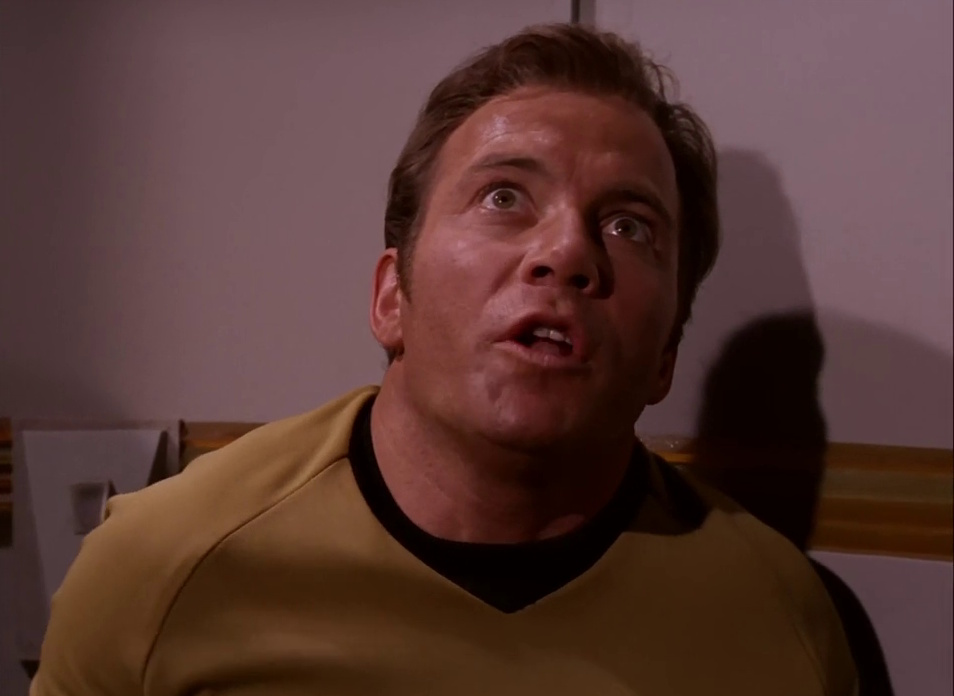
Remembering Nichelle Nichols

What can be said about Nichelle Nichols that hasn’t already been said over the last few days? Her loss is felt profoundly by the entire Star Trek fan community – a rare moment of togetherness in what can be a divided fandom at times. But beyond that, news of her passing has resonated across the world of entertainment and beyond. She was a unique person, someone whose influence and hard work may not have been centre-stage for everybody, but whose tireless commitment to the causes she supported – and to fans of Star Trek – will never be forgotten.

At a time when the United States was still in the process of outlawing racial segregation, Nichelle Nichols became an icon for the civil rights movement. The character of Uhura took her place on the bridge of the USS Enterprise not as a servant or a maid, not as a subordinate, but as an equal member of the crew; an officer with the respect of her shipmates. Such roles were incredibly rare on American television at that time, and the statement made by Uhura’s presence on Star Trek was one of racial equality and hope for the future.

Nichelle Nichols, 1932—2022.

There’s a frequently-cited story that it was Martin Luther King who convinced Nichelle Nichols to remain on Star Trek when she considered leaving to return to the stage after the show’s first season. Star Trek, according to King, was one of the few shows he allowed his children to watch – and Uhura’s role was the reason why.

Star Trek told morality tales and gave commentary on contemporary issues of race and civil rights across its three seasons, and Uhura was a powerful presence in many of those stories. Nichelle Nichols brought the character to life with a quiet, understated charm, and quickly became an irreplaceable part of Star Trek.

Nichelle Nichols as Uhura in The Undiscovered Country, 1991.

While we as Trekkies might remember Nichelle Nichols from her role as Uhura, her legacy extends far, far beyond the Star Trek franchise – and even beyond the realm of entertainment itself. Beginning in the 1970s, she worked with NASA to help drive the recruitment of new, younger astronauts from diverse backgrounds. The first African-American, Asian-American, and Hispanic-Americans to travel into space joined the space programme as part of Nichelle Nichols’ initiative. She quite literally changed the face of NASA and diversified space exploration.

The documentary Woman in Motion goes into detail about Nichols’ work with NASA, and if you haven’t seen it it’s well worth a watch. I love a good documentary, and Woman in Motion presents her story in an understandable way. I have to be honest and say that I didn’t know much about her involvement with NASA prior to watching Woman in Motion, but it’s a story that absolutely should be told – and I’m glad it was able to be told before Nichelle Nichols passed away.

Nichelle Nichols on the Woman in Motion poster.

Over the past few days we’ve seen an outpouring of grief and remembrance from Nichelle Nichols’ Star Trek co-stars, actors and creatives in the Star Trek franchise, many others from the world of entertainment, and countless people who felt inspired by her. Many people have shared their own stories of what it meant to see Uhura on the bridge of the Enterprise, how Nichelle Nichols inspired them to get started in their chosen career, or the words of advice she had from those lucky enough to have met her in person.

For one person to have such an impact and leave such a legacy is phenomenal, and the thousands upon thousands of tributes that we’ve seen are just a small fraction of the lives that Nichelle Nichols touched in one way or another. Those lives were changed not because she played a role on Star Trek, but because of what she did with that role, that fame, and the spotlight that was placed upon her. Other actors could’ve happily taken their pay and done nothing more – and there’s nothing wrong with that at all – but Nichelle Nichols went the extra mile. She recognised what her role meant to millions of people across the United States and around the world, and she did everything that she could to make it matter. That’s why it’s been so hard to know what to say, and why her loss hits so profoundly. She wasn’t just another performer – she was so much more than that to so many people.

Nichelle Nichols with Star Trek: Discovery’s Sonequa Martin-Green.

We’ve been lucky to have Nichelle Nichols with us for as long as she was. It was only in her final couple of years that she began slowing down her activities; she attended her final Star Trek convention less than a year ago. In all of that time she offered to fans and everyone else the kind of boundless, unbridled optimism that defines Star Trek itself: always smiling, always happy to be seen with fans, co-stars, and new actors alike.

I’m going to miss Nichelle Nichols. I’ll miss hearing about her appearances at conventions and the interactions she had with fellow fans and friends of mine within the Star Trek fan community. I’ll miss the stories she could tell about working on the show and its films. And I’ll miss seeing her with the likes of Sonequa Martin-Green, Zoe Saldaña, and Celia Rose Gooding. The comfort I take is that she lived a full life, one in which she put her talents to good use both on-screen and off. She leaves behind a legacy most people could only imagine, and her impact on the worlds of Star Trek, entertainment, and even space exploration itself will outlive her, continuing long into the future.

Some images used above courtesy of Star Trek/Paramount Global. This article contains the thoughts and opinions of one person only and is not intended to cause any offence.
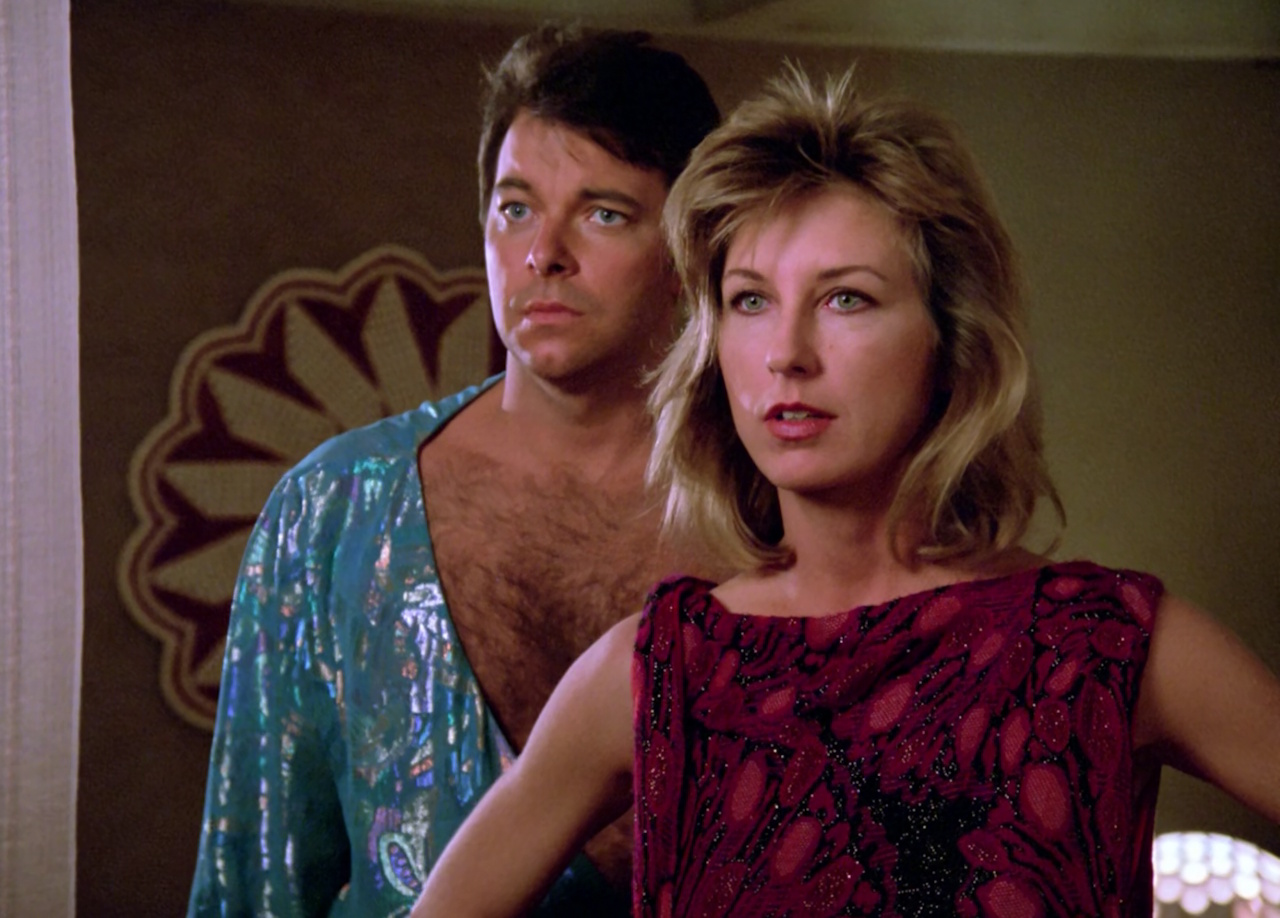
Ten Star Trek episodes to watch before Strange New Worlds Season 1

Spoiler Warning: Although there are no major plot spoilers for Strange New Worlds Season 1, the inclusion of particular episodes on this list may hint at certain themes, characters, storylines, etc. There are also spoilers below for the episodes and stories on this list.

I haven’t been able to talk about Strange New Worlds as much as I would’ve liked thanks to Paramount taking an “America First” approach to the series, the Star Trek franchise, and pretty much everything else on Paramount+. However, with Paramount+ having now arrived here in the UK, I hope to slowly begin to rectify that situation and make up for lost time. On this occasion, I’ve put together a list of ten episodes that I think make great background viewing for Strange New Worlds Season 1.

You can absolutely watch these Star Trek stories before diving into the show’s first season, but if – like me – you’ve already watched Strange New Worlds Season 1, there’s still value in going back to some of them to expand on what the new show’s first season delivered. Ordinarily I’d have written a list like this before the season aired, but having already seen Strange New Worlds that’s allowed me to adapt the list and include a couple of episodes that I would have never considered!

The long-awaited Captain Pike series is finally here!

Strange New Worlds was absolutely fantastic in its first season – and it has me lamenting the truncated ten-episode seasons of modern Star Trek as I could’ve happily enjoyed at least ten more! If you missed it, I’ve already written up my spoiler-free thoughts on the show’s first season, and you can find that piece by clicking or tapping here. At the risk of repeating myself, Strange New Worlds hit ten for ten in its first season – ten outstanding episodes that I thoroughly enjoyed.

I can’t recommend Strange New Worlds highly enough both to fans of Star Trek and to newcomers to the franchise. If you’re new, or if it’s been a while since you last saw some of these episodes, watching them will provide some additional background and backstory heading into Strange New Worlds – or will expand somewhat on some of the stories, factions, and characters if you’ve already watched Season 1. However, nothing below makes for essential or unmissable viewing; Strange New Worlds is a very accessible series that newcomers to Star Trek shouldn’t feel intimidated by!

Who could this be? Watch Strange New Worlds to find out!

As always, please keep in mind that all of this is just the subjective opinion of one person. I’ve chosen episodes that I generally enjoy and that I feel connect in significant ways to Strange New Worlds Season 1. If you don’t like my picks or I miss something you would’ve included, that’s okay! There’s always room in the Star Trek fan community for discussion and polite disagreement.

I’ve tried hard to avoid major plot spoilers for Strange New Worlds Season 1, but the inclusion of certain episodes here may hint at the inclusion of factions, aliens, characters, and storylines. If you don’t want to risk any of that, this is your last chance to nope out!

With all of that out of the way let’s take a look at the episodes I’ve chosen, which are listed below in no particular order.

Episode #1:
The Menagerie, Parts I-II
The Original Series Season 1

Captain Pike as he appeared in The Menagerie.

Technically speaking, The Menagerie was Captain Pike’s first Star Trek appearance. The episode incorporates most of the footage left over from The Original Series’ unsuccessful first pilot, The Cage, but uses a frame narrative to include Captain Kirk and Spock as they look back on the events of Captain Pike’s mission to the planet Talos IV.

After network NBC had spent a significant amount of money on The Cage, one of the conditions attached to The Original Series’ first season was that Gene Roddenberry and his team find a way to use the footage left over from the original pilot. It was either impossible or prohibitively expensive to bring back The Cage star and original Captain Pike actor Jeffrey Hunter for the role, and the recasting of the character is part of the reason for Pike’s severe disfigurement and disability.

What could Spock be doing in engineering?

We could do an entire article on the production history of The Cage and The Menagerie – and maybe one day we should! – but for now, the important thing to keep in mind is that this is Captain Pike’s ultimate destination. The Menagerie exists as a reminder of where Captain Pike’s arc will ultimately lead him, but it’s also an interesting episode in its own right.

The Original Series was beginning to find its feet by this point in its first season, and a two-parter like The Menagerie could’ve blown it off-course. However, the way The Cage was incorporated into the story made for a fascinating and somewhat mysterious presentation, and Spock’s characterisation and his dedication to his former captain in particular are noteworthy. It’s a fascinating episode that managed to be so much more than just a recycling of a failed pitch and that found a unique and innovative way to accomplish what could have been a difficult and annoying task.

Episode #2:
Trials and Tribble-ations
Deep Space Nine Season 5

Can you spot who might be out-of-place?

Trials and Tribble-ations was created for the Star Trek’s thirtieth anniversary in 1996, and it was a fun celebration of the franchise’s roots. The crew of the USS Defiant – led by Captain Sisko – find themselves displaced in time, arriving during the events of The Original Series episode The Trouble With Tribbles.

Sisko and his crew have to preserve the timeline – a nefarious villain is attempting to use a Bajoran Orb to alter the past to his advantage. What results is a genuinely fun romp, and seeing the two crews from two different eras coming together was quite something. I’ve always held Trials and Tribble-ations in high esteem ever since I first watched it!

Two legendary captains meet.

On the technical side of things, Trials and Tribble-ations was incredibly ambitious for its time. Using the same technology that had been used to place Tom Hanks alongside real-world historical figures for the film Forrest Gump – which had been released only a couple of years earlier – the creative team managed to seamlessly blend the Deep Space Nine characters into The Original Series. Some excellent work with costumes and sets – including a recreation of the original USS Enterprise’s bridge – really sold the illusion.

The only character from Trials and Tribble-ations to appear in Strange New Worlds is Spock, with the episode taking place after Pike’s tenure in the captain’s chair. But as a celebration of all things Star Trek, and one of the few stories to bring together the 23rd and 24th Centuries, it’s one you shouldn’t miss! There are also some interesting time travel and timeline-integrity angles to the story’s frame narrative that may just prove interesting to viewers who pay attention.

Episode #3:
Q & A
Short Treks Season 2

Who’s this promising young ensign?

Q & A steps back in time to before the events of Strange New Worlds and Discovery Season 2 to show us Spock’s arrival aboard the USS Enterprise while still an ensign. It’s a cute short story that shows off a younger Spock while also introducing us to Una – a.k.a. Number One. Una had far less screen time than Spock or Pike in Discovery’s second season, so Q & A was one of the first stories to feature her in a big way.

There are some great shots of the internal workings of the USS Enterprise’s turbolifts – something that a geek like me is always going to be interested in! In fact, Q & A must be one of the very few episodes, along with parts of The Next Generation’s fifth season episode Disaster, to make a turbolift its primary setting. That format could feel restrictive, but Q & A makes it shine through some excellent character work and occasionally hilarious writing.

One of the Enterprise’s many turboshafts.

Q & A was one of three episodes of Short Treks to bring back Pike, Spock, and Una – and these short stories began to expand upon their roles and set the stage for Strange New Worlds. They were also experimental; teases to fans that also served to see whether the much-requested “Captain Pike show” was a viable concept. Short Treks did some genuinely interesting things in its second season – which is why I’ve argued that the concept should absolutely be revived!

Captain Pike is less of a presence in Q & A than he would be in Ask Not, but that’s no bad thing. We got to spend more time with Una, and seeing her in her role as first officer – in part through the eyes of a young Spock, fresh out of Starfleet Academy – was fascinating!

Episode #4:
Unification, Parts I-II
The Next Generation Season 5

An older Ambassador Spock in the 24th Century.

We just talked about how interesting it was to see young Spock when he was first assigned to the Enterprise – so now let’s jump forward in time by more than a century to see a much older Spock in a completely different chapter of his life! The two-part episode Unification brought Spock into The Next Generation in a truly interesting story that built upon the Vulcan-Romulan connection that had been introduced in The Original Series.

I adore crossovers, and aside from a brief cameo in the premiere of The Next Generation, this was the first crossover involving main characters that the franchise had attempted. Its success laid the groundwork for the likes of Relics, Flashback, Defiant, Caretaker, These Are The Voyages, and many more.

Spock and Data.

Unification found a way to give Spock genuine development to reflect decades of his life that we hadn’t seen on screen. It was great to see him alongside not only Captain Picard but also Data – the two characters share many characteristics and filled similar roles in their respective series. The mystery at the heart of the episode and subsequent revelations about Spock’s work and the Romulans’ schemes made for a story that was tense, dramatic, and exciting.

Strange New Worlds isn’t all about Spock, but seeing what his life would be like decades after the events of the series is worthwhile. It puts into context not only the stories that unfold around Spock, but his own actions, behaviours, and thoughts. The Spock we meet in Unification is different from the Spock of Strange New Worlds – but not unrecognisable.

Bonus Episode #4½:
Unification III
Discovery Season 3

Cleveland Booker and Michael Burnham watch a recording of Spock.

The two-parter became a three-parter when Discovery added to the legacy of Unification in its third season. Taking Spock’s work with the Romulans as a starting point, Unification III shows us how subsequent generations of Romulans and Vulcans looked to Spock as an inspiration. His legacy is all over this story – and it would carry through into future episodes of Discovery in its third and fourth seasons.

Spock would go on to be an important part of Vulcan history, remembered fondly even centuries after his death for the process that he started. Seeing Michael Burnham react to that was sweet, and knowing that Spock has a legacy within the Star Trek timeline that extends far beyond his own lifespan is something incredibly meaningful.

Episode #5:
Arena
The Original Series Season 1

The Gorn captain.

An absoloute classic of The Original Series, Arena features Captain Kirk’s iconic battle against an unnamed Gorn captain – the first Gorn encountered in Star Trek. I might be in the minority here, but I absolutely adore the way the rubber-suited Gorn looks. There’s something menacing about its tyrannosaurus rex-like head, its silvery, almost insectoid eyes, and its sharp crocodilian teeth. But at the same time, there’s a light-hearted campiness to the way the Gorn comes across on screen thanks in part to the limitations of 1960s special effects – and perhaps also due to the bold pattern on his (or her?) costume!

There’s more to Arena than just the scuffle at Vasquez Rocks, though! There’s a more philosophical side to the story, one that shows how far humanity has come by the 23rd Century – and how far there is still to go to make progress. Despite the conflict, both Spock and Kirk demonstrate a willingness to try diplomacy and show mercy – something that impresses the highly-advanced Metrons.

The Enterprise crew watch helplessly as Captain Kirk battles against the Gorn.

The way in which Captain Kirk was able to outsmart and defeat the Gorn captain shows his ingenuity at its best – and presents a contrast between “brains” and “brawn” that made it clear how even a strong and physically imposing enemy can be defeated. There’s a great metaphor there for dealing with bullies!

Arena is one of those episodes that I believe every Trekkie – even those who aren’t fans of The Original Series – needs to see at least once. Despite the Gorn not becoming a recurring villain in The Original Series or even during The Next Generation era, the original design of these reptilian aliens has become iconic, and as a story that fully encapsulates the Star Trek franchise’s approach to science-fiction, Arena has it all.

Episode #6:
Damage
Enterprise Season 3

Enterprise has seen better days…

Damage comes quite late in the fully-serialised story of Enterprise’s third season, but it’s worth a watch regardless. At this point in the story, Captain Archer and his crew are running out of time to prevent the Xindi from launching a super-weapon against Earth, and Archer’s desperation to do anything to complete his mission forces him down a very dark moral path.

In essence, Captain Archer must choose between failure – which will almost certainly lead to the total annihilation of Earth itself – and his morality, leading to him basically turning to theft and piracy in order to survive in the harsh Delphic Expanse. It’s a fascinating story that features a brand-new alien race, but also one that’s an introspective character piece focusing on Archer’s decisions.

Captain Archer is forced to confront an impossible decision.

There are other story threads in play in Damage, including T’Pol’s exposure to Trellium-D – a compound toxic to Vulcans that caused her to begin to lose control over her emotions. The way in which Vulcans suppress their emotions in favour of logic is something that Enterprise explored in depth, and it’s a fascinating part of Vulcan culture that subsequent Star Trek projects have also touched upon.

Enterprise’s third season was a tense and exciting one overall – and Damage is one of the highlights for its strong character work and examination of how Starfleet’s enlightened morality can end up falling by the wayside when the going gets tough. Captain Archer is pained by the decision he makes – but that doesn’t stop him from making it.

Episode #7:
Through the Valley of Shadows
Discovery Season 2

Visiting the Klingon monastery on Boreth.

Although I’d encourage you to watch Discovery Season 2 in its entirety, I felt that Through the Valley of Shadows was really the only episode that had a significant impact on Strange New Worlds. It’s here where Captain Pike has to make a decision about his fate and his future that sets him on a particular path – one that will culminate in devastating disability.

Although Pike was willing, in the moment, to make the sacrifice in order to obtain the time crystal, the decision he made has a huge impact on him. With only a couple of episodes left in Season 2, Discovery didn’t have a lot of time to address how this would affect him – but Strange New Worlds certainly does, and this is really the starting point for Pike’s season-long arc.

Captain Pike comes face-to-face with his own future.

Discovery’s second season was a big improvement on its first, and I think it’s fair to say that bringing Captain Pike and Spock into the show in a big way was a masterstroke! Through the Valley of Shadows reframes Pike’s accident and disability in an entirely different way, and while there are sci-fi trappings of time-travel macguffins and talk of fate and destiny, what lies just under the surface is a story that I find incredibly relatable.

I’ve been Captain Pike at this moment. Sitting down with a doctor, hearing bad news about my health, knowing that things won’t get better but will get worse, that my ability to do basic things like walking will become increasingly difficult… these are all experiences that I’ve personally had and that I saw reflected in Captain Pike. Whether intentional or not, the decision to have him become aware of his future – and choose to embrace it for the greater good – kicked off a story about disability and declining health that really resonated with me. Its approach to this complex topic was sensitive, understandable, and darkly beautiful.

Episode #8:
Prime Factors
Voyager Season 1

Harry Kim and Eduana using a Sikarian spatial trajector.

Prime Factors flips Starfleet’s Prime Directive on its head. The Prime Directive is Starfleet’s most important standing order, and it states that “no starship may interfere with the normal development of any alien life or society.” We’ve seen the Prime Directive – and the principles upon which it is based – play a huge role in episodes of practically every Star Trek series, with captains having to decide whether to interfere, how to interfere, and what the consequences may be.

Prime Factors takes the opposite approach, and asks how it would feel to our heroes if they were on the other side of this kind of policy. How would Starfleet react to being denied a request for help or trade because it conflicted with an alien society’s principles? The resultant episode was absolutely fascinating.

Tuvok and Captain Janeway.

At this relatively early point in Voyager’s run, the fact that Captain Janeway and her crew really are stranded on the far side of the galaxy with no way to get home is beginning to sink in. Prime Factors is one of several episodes that teased the crew with a potential way to complete part of that journey – before yanking it away again.

The episode is also an interesting one for Harry Kim, who we get to see at his most eager to get home, and for the relationship between Captain Janeway and Tuvok. Although Chakotay would really take over the role of “trusted advisor” as Voyager got settled, initially it was Tuvok who was being established as Captain Janeway’s closest confidante and most reliable friend.

Episode #9:
Balance of Terror
The Original Series Season 1

A Romulan warbird firing its plasma torpedo.

Balance of Terror is the episode that first introduced the iconic Romulans to Star Trek – as well as revealing their connection with the Vulcans that we talked about in Unification above. Inspired by war films – particularly naval war films and those set aboard submarines – from a generation earlier, there’s a really tense, claustrophobic feel to the conflict between the Enterprise and this new, terrifying threat.

Balance of Terror expertly sets up the background of Federation-Romulan relations and uses that to create tension and conflict on the bridge of the Enterprise when a surprising connection between the Romulans and Spock’s own Vulcan people is revealed. The episode also raises the stakes by giving the Romulans not one but two super-weapons: the devastating plasma torpedo and a cloaking device. This was the first on-screen appearance of a cloaking device in Star Trek.

Captain Kirk in Balance of Terror.

Of particular note here is Captain Kirk’s approach to the conflict. After discovering the Romulan vessel and its technology, Kirk decides to pursue it, hoping to intercept it before it can cross back into Romulan space. Was this uncompromising approach the right call?

Balance of Terror is a fascinating episode for its tone, for its approach to bigotry and prejudice in the enlightened future Star Trek presents, and for its introduction of a faction that would go on to play a major role in the Star Trek franchise. It’s another episode of The Original Series that I consider to be a must-watch for all Trekkies.

Episode #10:
Star Trek 2009
Kelvin Timeline film

The USS Kelvin, namesake of the Kelvin Timeline.

Technically a film rather than an episode, 2009’s Star Trek kicked off the Kelvin timeline with a soft reboot of the franchise. It’s a textbook example of how to write a successful reboot, and after the Star Trek franchise had begun to fade and lose viewership toward the latter part of Enterprise’s run, the 2009 reboot came along and definitively proved that there was still plenty of life in it yet! We wouldn’t have Discovery, Strange New Worlds, and the rest of modern Star Trek without this film and its two sequels.

For our purposes today, though, 2009’s Star Trek shows us a different timeline with alternate versions of Captain Pike – who plays a prominent role in the story – as well as Spock and Uhura. Seeing these versions of the characters and noting their differences and similarities to their prime timeline counterparts could be worthwhile going into Strange New Worlds.

Spock, meet Spock!

Star Trek 2009 also chronicles the next chapter of Spock’s life after the events of Unification (which we took a look at above). Spock’s relationship with the Romulans and his plan to help them avert a catastrophe are what led to him being dragged into the alternate reality, and the meeting between the older and younger versions of the character is a powerful moment.

Seeing Kirk, Spock, McCoy, and others in their Starfleet Academy days was a concept that Gene Roddenberry had toyed with even as far back as The Original Series in the 1960s. 2009’s Star Trek took that concept and put a spin on it, updating the franchise for the 21st Century and introducing it to legions of new Trekkies. It’s a good film in its own right, and one whose legacy is the rejuvenated Star Trek franchise that we’re continuing to enjoy today.

So that’s it!

Promotional poster for Strange New Worlds.

Those are my picks for ten episodes to watch before Strange New Worlds to prepare for what the series will bring – or afterwards, if you prefer, to lend some context to some of the character arcs and storylines.

There are at least ten more episodes and films that I could’ve chosen; it wasn’t easy to whittle down the list to the ten picks above. Having already seen Strange New Worlds Season 1, I confess that I picked several different episodes that I might not have chosen otherwise. But that’s the benefit of hindsight!

As I said in my spoiler-free review of the first season, Strange New Worlds is utterly fantastic and well worth a watch for Trekkies and newcomers to the franchise alike. I can’t praise it highly enough – and I can’t wait for Season 2!

Star Trek: Strange New Worlds is available to stream now on Paramount+ in countries and territories where the service is available. New episodes are being released weekly on Paramount+ in the United Kingdom. Further international distribution has not been announced at time of writing. The Star Trek franchise – including Strange New Worlds and all other episodes, films, and shows discussed above – is the copyright of Paramount Global. This article contains the thoughts and opinions of one person only and is not intended to cause any offence.
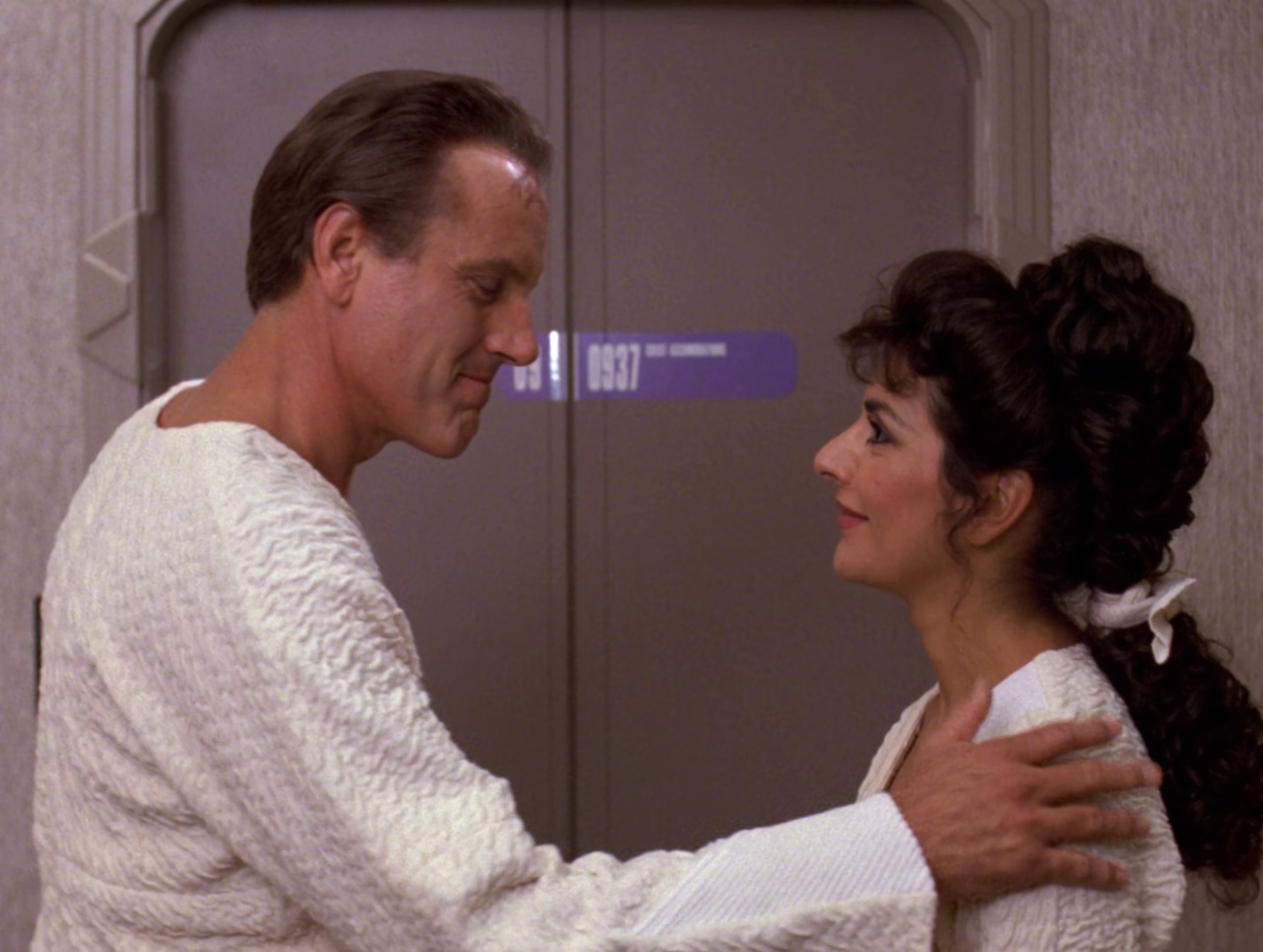
Ten “comfort episodes” of Star Trek for difficult days

Spoiler Warning: There are spoilers ahead for the following Star Trek productions: The Original Series Season 2, The Voyage Home, The Next Generation Season 6, Deep Space Nine Season 6, Voyager Season 4, Enterprise Season 2, Short Treks, Picard Season 1, Lower Decks Season 2, and Prodigy Season 1.
Phew. That was a lot!

The world can be a crappy place, and not just because of wars and pandemics. Sometimes we all need to switch off from current events and seek out some escapism. For me, films and TV shows with very heavy themes, lots of violence, or dark narratives don’t always provide the best escape, and on days when my mental health suffers I find myself reaching for something lighter and comforting. On this occasion, I thought we could pick out a few Star Trek stories that I believe fit that description.

The Star Trek franchise has long been an escape from reality for me. In both its older and modern incarnations, I find that jumping head-first into a future that looks safer and better than anything we could imagine today feels pretty great! Star Trek has always had an underlying setting that feels optimistic and hopeful for a better tomorrow – and that’s something we all need to hear sometimes.

So with that in mind, let’s consider a few Star Trek stories that I believe make for lighter, comforting viewing. As always, this isn’t a ranked list; the episodes are listed below in the order they were first broadcast.

Number 1:
A Piece of the Action
The Original Series Season 2

Captain Kirk as you may not have seen him before!

The Original Series made very creative use of some of the limitations of its time! It wasn’t always possible to visit a brand-new planet every week that looked and felt very “alien,” so The Original Series used sets intended for other films and TV shows in different – and occasionally silly – ways. A Piece of the Action sees Captain Kirk and the crew encounter a planet whose entire population have based their society around the Chicago mob!

When A Piece of the Action was written, the 1920s were only forty years in the past – the equivalent today of the eighties! So perhaps to viewers at the time it was more relevant and less… camp. But I’ve always found A Piece of the Action to have a light, almost comedic flair simply because of its setting; the ’20s-inspired dialogue, the old fashioned suits, and the general tone of a “Golden Age of Hollywood” gangster flick all contribute to that.

Spock and Dr McCoy with Tommy guns.

The notion of going to a faraway planet in space and finding a society based on the Chicago mob is silly, but A Piece of the Action sells it in the best way it can, making the very odd juxtaposition of scenes aboard the Enterprise and scenes on Sigma Iotia II flow surprisingly well. But above all, it’s a fun story that imitates, in a very Star Trek way, classic mobster films from a generation earlier.

Apparently A Piece of the Action was going to be the basis for a Quentin Tarantino-directed Star Trek film that ultimately didn’t enter production. It seems as though I’m in a minority, based on the reactions to this news from Trekkies I’ve spoken with, but I’d have been interested to see what a director as undeniably talented as Tarantino would’ve brought to Star Trek. A new film from such a big name would surely have been a box office draw, at the very least! But maybe that should be the topic of a longer article sometime.

Number 2:
Star Trek IV: The Voyage Home

Dr McCoy and Scotty in 1986.

Also known as “the one with the whales,” The Voyage Home is arguably the most lighthearted and fun of all the Star Trek films to date! After the very heavy stories of loss and death in The Wrath of Khan and The Search for Spock, the third and final act of this trilogy came along like a breath of fresh air. I feel that The Voyage Home is the most dated of the Star Trek films thanks to being set in what was, at the time, the modern day. But that doesn’t detract from it; the kitschy eighties flavour is all part of the appeal!

There are some fantastic moments of pure comedy in The Voyage Home. I won’t spoil them if it’s been a while since you’ve seen it, but suffice to say that bringing a 23rd Century crew to the modern day and forcing them to interact with basic things like cash and computers led to some absolutely hilarious, iconic moments.

HMS Bounty makes it home.

There’s an ecological message at the heart of The Voyage Home, and the threat posed by the alien “whale probe” is definitely serious. But that theme doesn’t present as excessively weighty, and by the time Kirk and the gang are running around San Fransisco in 1986, the focus is more on the fun side of that premise.

With Star Trek: Picard Season 2 fast approaching, it could be fun to go back to The Voyage Home to see the most recent use of the “slingshot method” of travelling through time – something that may be making a return to Star Trek very soon!

Number 3:
Relics
The Next Generation Season 6

Cheers!

I wanted to put at least one crossover episode on this list, and this time it’s Relics that makes the cut! Bringing Scotty into The Next Generation was a lot of fun, and having him overcome his “fish out of water” status to eventually work alongside Geordi La Forge was absolutely fantastic, and made for a wonderful, heartwarming story.

With no evil villain to defeat nor a war to fight, Relics posed a scientific puzzle for Star Trek’s first two engineers to overcome – and in the process they were able to save the Enterprise-D from being trapped inside of a Dyson Sphere! There’s definitely a message in Relics: that older people have a lot to contribute if younger people are willing to take the time to listen.

Star Trek’s first two engineers teamed up for this adventure.

When I first saw Relics back in the ’90s, I wasn’t prepared for Scotty’s arrival. This was before the days of spoilers on social media, so I went into the episode completely unaware of what I was about to see. When Scotty materialised on the transporter pad for the first time I was absolutely blown away! The Next Generation had been my first port of call in the early ’90s, but by the time Relics came around I’d seen all of The Original Series films and quite a few episodes, so I was really excited when it turned out to be a crossover episode.

Relics is, in a lot of ways, a very fan-servicey episode. But it’s also a comforting one, and more than that it feels almost like a slice of pure Star Trek. There’s a scientific mystery that’s both interesting and exciting, there are some wonderful character moments between Scotty and Picard and Scotty and La Forge in particular, there’s more than a dash of humour, and there’s an underlying message that may just strike a chord with some folks in the real world. It’s an all-around Star Trek episode!

Number 4:
The Magnificent Ferengi
Deep Space Nine Season 6

Aren’t they magnificent?

The Magnificent Ferengi takes what should be a dark and upsetting premise but manages to put a lighthearted, comedic spin on it thanks to the inclusion of the titular Ferengi. After a less than spectacular introduction in the first season of The Next Generation, in which they were originally supposed to replace the newly-pacified Klingons and become a major antagonist, the Ferengi carved themselves a new niche in Deep Space Nine thanks in no small part to a wonderful performance by Armin Shimerman as Quark.

We came to see the Ferengi as comic relief on a number of occasions, as in The Magnificent Ferengi, but they were also a people with depth. Issues within Ferengi society surrounding the pursuit of wealth at all costs, the second-class status of women, and so on were topics that Deep Space Nine tackled, and the fact that the Ferengi can be funny didn’t detract from those attempts to use them to examine some more serious subjects. But that’s not why we’re here today!

Quark and Keevan.

At the height of the Dominion War, Quark and Rom’s mother is captured by the Dominion, and Quark leads an all-Ferengi rescue operation. With the exception of Grand Nagus Zek, this episode brings together practically every Deep Space Nine Ferengi character, and musician Iggy Pop has a guest-starring role.

The plot descends into a comedic farce – naturally, given Quark’s leadership – and if you’ve ever seen Weekend at Bernie’s… well, you know what to expect! The Magnificent Ferengi is a ton of fun, and a great episode for showcasing some of Deep Space Nine’s recurring characters.

Number 5:
Message in a Bottle
Voyager Season 4

Two Emergency Medical Holograms!

Once again we have an episode with a potentially dark premise that goes in a very different and fun direction! The Doctor is the star here, as he’s sent to the Alpha Quadrant to attempt to make contact with Starfleet for the first time since Captain Janeway and the crew became stranded 75,000 light-years from home… but he finds himself aboard a ship that has been captured by the Romulans!

Comedian Andy Dick guest-stars as a newer version of the Emergency Medical Hologram, and forms an astonishingly funny pair with the Doctor, who was often used for moments of comic relief during Voyager’s run. Seeing the two holograms working together to outsmart the Romulans in a comic story that could verge into slapstick is absolutely hilarious, and there are some real laugh-out-loud moments.

The Doctor and his fellow EMH.

I also find Message in a Bottle to be a very uplifting episode. It marks the halfway point of Voyager’s seven-season run, and the first moment that the crew are able to contact the Federation. After four years of being alone, the crew finally get to inform Starfleet that they’re okay and working their way home, and there’s something incredible about the episode’s closing moments as a result.

The Prometheus-class ship is a pretty cool inclusion, too – a brand-new class of ship which has features that even the USS Voyager or Enterprise-E couldn’t match. I always wanted to see more from this ship, but aside from a couple of background appearances, we haven’t yet!

Number 6:
Carbon Creek
Enterprise Season 2

Vulcans… in the fifties!

Carbon Creek uses a frame narrative to tell the story of the first time Vulcans came to Earth… and it wasn’t in the mid-21st Century, as Captain Archer (and us as the audience) had been led to believe! Instead, T’Pol tells the tale of her great-grandmother, and how she and a small crew came to be stranded on Earth in the 1950s during a survey mission.

Carbon Creek is fun for its fifties atmosphere, and Enterprise really manages to nail that feel through some wonderful sets, costumes, and dialogue. It’s also an episode that shows off how Vulcans can be unintentionally funny in Star Trek, particularly when confronted with different or unusual situations. In this case, T’Mir and her crew have to blend in with a town of very emotional humans.

Cheers!

There are definitely some lighthearted moments scattered through the entire episode, and the frame of T’Pol recounting the story to a stunned Archer and Tucker adds to that as well. It’s also a great example of how a prequel story doesn’t have to tread on the toes of anything established previously; nothing in Carbon Creek fundamentally changes what we already know about first contact between humans and Vulcans. In many ways it expands it – knowing that Vulcan had humanity under observation decades ahead of official first contact gives them a reason to be surveying the area during the events of First Contact!

All in all, a fun episode that steps away from many of Star Trek’s familiar elements like starships to tell a story with some interesting characters in a fun setting.

Number 7:
Ephraim and DOT
Short Treks Season 2

Ephraim and DOT.

It’s a shame that we haven’t seen more Short Treks lately; the most recent batch of episodes ended with Children of Mars shortly before Picard Season 1 kicked off in early 2020. The idea of telling one-shot short stories in the Star Trek galaxy may have been a fairly blunt and obvious way for CBS All Access (since rebranded as Paramount+) to convince Trekkies to remain subscribed in between seasons of the main Star Trek shows, but several episodes ended up being fantastic in their own right.

Ephraim and DOT was one of two animated Short Treks episodes that were broadcast in December 2019, and it’s something that we hadn’t really seen the Star Trek franchise do before. Thirty-five years after The Animated Series went off the air, this was Star Trek’s first return to animation, and where The Girl Who Made The Stars was more of a conventional story, Ephraim and DOT was framed very differently!

A well-earned hug.

Telling the story of a tardigrade named Ephraim and a DOT-type robot aboard the USS Enterprise, this Disney-inspired tale sees the unlikely duo team up to save Ephraim’s eggs. With an enthusiastic narrator who sounds like they’ve come from a National Geographic documentary, the short story is a lot of fun – and packs a surprisingly emotional punch at its climax!

Ephraim and DOT also shows off a handful of fun clips from The Original Series that have been reimagined for animation, and this “greatest hits” montage was absolutely fantastic; a blast from the past that elevated the episode.

Number 8:
Nepenthe
Picard Season 1

Picard and Riker embrace.

If you don’t have the same connection to the characters from The Next Generation that I do, maybe Nepenthe won’t be one of your “comfort episodes.” But for me, seeing Picard reunited with Riker and Troi was one of the highlights of Picard Season 1 – and Nepenthe is one of the best Star Trek episodes that I’ve seen in a long time!

After several tense and dramatic episodes in which Picard and the crew of La Sirena had to unpick the mystery of Bruce Maddox, the synths, the Zhat Vash plot, and so on, Picard was able to rescue Soji and use a spatial trajector to escape to the planet of Nepenthe – home to Riker, Troi, and their daughter Kestra.

Kestra and Soji.

There are some very sweet moments between Soji and Kestra as they bond, and while the story has some very bittersweet moments as we learn that Riker and Troi’s elder child had passed away, there are some absolutely incredible and heartwarming character moments as well. After more than eighteen years away from the 24th Century, Nepenthe felt like the homecoming I had been waiting for.

Seeing Riker and Troi enjoying a peaceful life away from Starfleet was something that I needed to see, even if I didn’t realise it beforehand! Although there were issues with the Picard Season 1 finale that meant that, realistically, taking an entire episode away from the main plot to slow down and hang out with Picard, Riker, Troi, and Soji was arguably a mistake, I just can’t find it in my heart to fault Nepenthe for the way it comes across on screen. It’s a beautiful, emotional episode, and sitting down to eat pizza with the characters after everything they’ve been through just feels right.

Number 9:
First First Contact
Lower Decks Season 2

Tendi and Dr T’Ana.

First First Contact might be my favourite episode of Lower Decks so far. It isn’t as hilarious as some of the show’s other offerings, but as an uplifting story with a real “Star Trek” feel, I don’t think it can be bettered! The episode sees the crew of the Cerritos teamed up with the fancier and more powerful USS Archimedes – under the command of one Captain Sonya Gomez, no less – to undertake their first ever mission of first contact!

But naturally, things don’t go to plan. The Cerritos is called into action to save the stricken Archimedes, and the entire crew pulls together to perform the very difficult and dangerous task of literally stripping off the ship’s outer hull! Lower Decks ditched its usual two (or three) storylines format here, and put all four ensigns and all of the ship’s senior staff in the same story – and the result was absolutely fantastic.

The USS Cerritos and the USS Archimedes.

Lower Decks goes out of its way to recreate the look of The Next Generation era, and I’ve always appreciated that. But it doesn’t hesitate to bring new things to the table, and we get our first look at Cetacean Ops in this episode – an aquatic department that had been mentioned in background dialogue in The Next Generation but never seen on screen.

All four ensigns have roles to play in the story, and after the Cerritos had to be saved at the climax of the Season 1 finale, the poetic symmetry of being the one to save a disabled Starfleet ship was absolutely beautiful, and a great way to bring the show’s successful second season to a close.

Number 10:
Kobayashi
Prodigy Season 1

Dal and Jankom Pog with a holographic Dr Crusher.

The Kobayashi Maru test seems like an odd choice for a “comfort” pick, doesn’t it? But the way Prodigy pulls it off feels like a love letter to Star Trek, bringing in classic characters from The Original Series, The Next Generation, and Deep Space Nine in holographic form.

There’s more going on in the episode than just the Kobayashi Maru test on the holodeck, and Prodigy’s ongoing story arcs come into play in a big way throughout. But for me, the moments on the holodeck with Dal and the holographic versions of some wonderful characters from Star Trek’s past are what elevates Kobayashi and what makes it so enjoyable.

Uhura!

It’s such a shame that Prodigy remains (officially) unavailable in most of the world, because it’s been one of the most surprisingly fun Star Trek projects, and despite its kid-friendly atmosphere and intended audience, there’s so much to love for Trekkies. I hope that the rollout of Paramount+ internationally will see Prodigy grow in popularity and bring in hordes of new fans – and with episodes as strong as Kobayashi to ease them into the world of Star Trek, there’s a good chance that’ll happen!

The character choices may seem like an odd mix at first – and seeing Odo on the bridge of a Galaxy-class ship definitely felt strange! But each of them is given a moment to showcase their strengths, and what they brought to Star Trek in their original appearances. It makes the entire holodeck sequence feel so very special – and with such an eclectic mix of characters, there really isn’t anything quite like it in Star Trek’s entire official canon!

So that’s it!

The original USS Enterprise.

Those are my picks for ten “comfort episodes” – or rather, nine comfort episodes and a comfort film – from the Star Trek franchise. We don’t need to repeat why the world feels so messed up right now, because we can all see what’s going on. Certain news stories have become omnipresent, completely taking over social media and other apps. If you find yourself doomscrolling, take a break. Do anything other than wallow in the mess of the real world.

The Star Trek franchise has been my comfort place for decades, and I find myself drawn to it when the world feels too much or when my mental health suffers. A future where humanity has succeeded at conquering not only the problems of today but also many of the baser, more primitive aspects of our own nature holds an appeal that can be difficult to put into words, and I find that practically every Star Trek story – even those darker in tone – have a lot to offer.

So I hope this was a bit of fun and maybe gave you some viewing inspiration! I had a great time going back to these episodes to put this list together, and with everything going on in the world I thought it could be a good time to share something like this.

The Star Trek franchise – including all episodes and films discussed above – is the copyright of Paramount Global. This article contains the thoughts and opinions of one person only and is not intended to cause any offence.
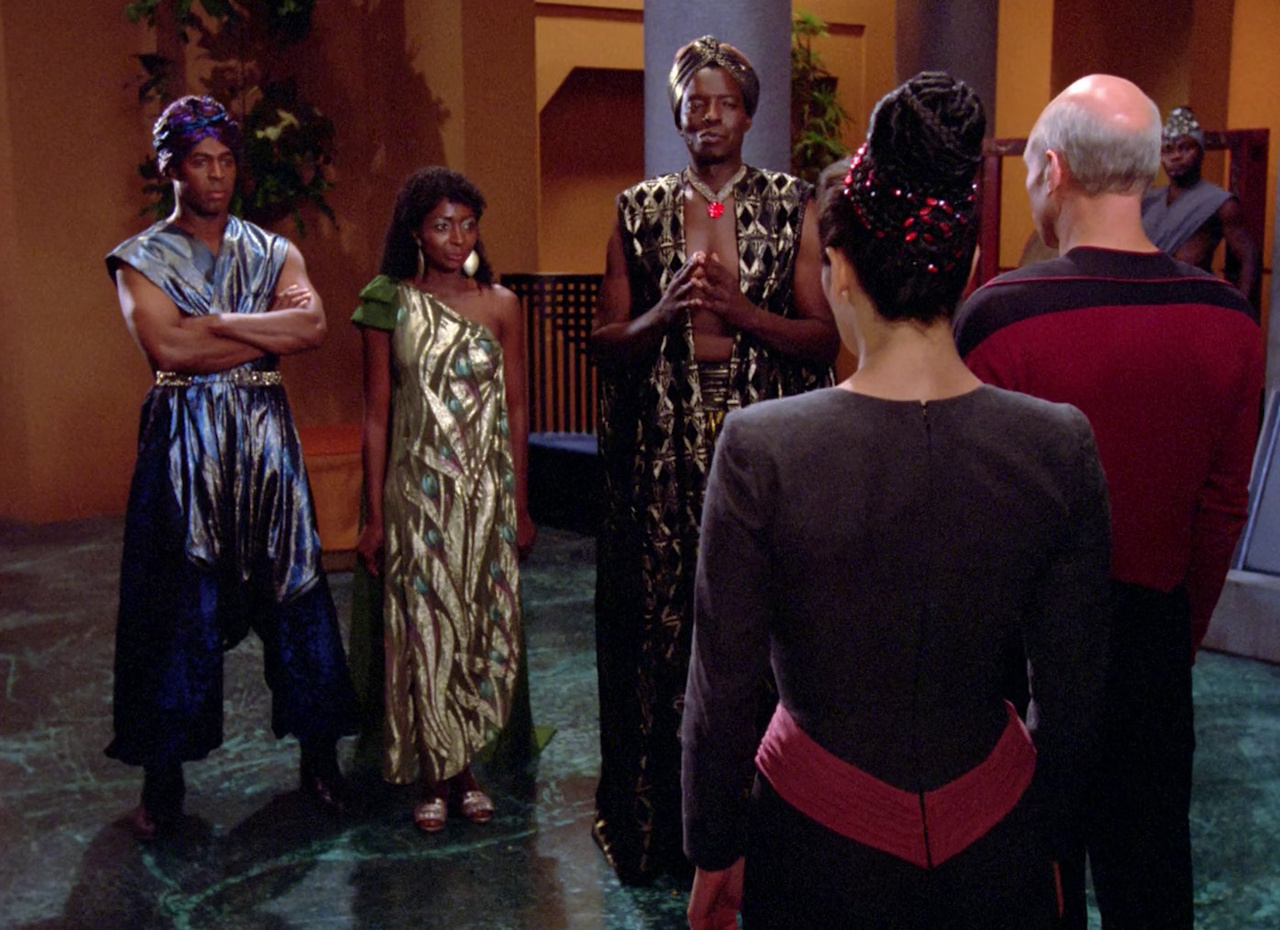
Five planets that Star Trek probably won’t revisit any time soon!

Spoiler Warning: There are spoilers ahead for the following Star Trek productions: The Original Series Season 2, The Animated Series, The Next Generation Season 1, Voyager Season 2, Star Trek 2009, Picard Season 1, Discovery Season 3, and Lower Decks Season 2.

I wouldn’t even like to guess how many different planets (and other planetary bodies) have been visited across all 800+ episodes and films in the Star Trek franchise! It must be a lot… maybe someone has been keeping a tally, but I certainly haven’t! There are some worlds that we’ve visited more than others – Bajor, Qo’noS, and of course Earth all spring to mind. But there are some planets that, for one reason or another, are best left behind in the franchise’s past.

As Star Trek moves on to bigger and better things, some planets – and their inhabitants – seem outdated, or perhaps the concept behind the planet was never a good one to begin with. Today I thought it could be interesting to consider five examples of planets that Star Trek will almost certainly never revisit!

Planet #1:
Ekos

The USS Enterprise in orbit of Ekos (as it originally appeared).

Ekos was created for The Orignal Series Season 2 episode Patterns of Force, but you might know it better as “that Nazi planet.” There’s definitely scope for the Star Trek franchise to tackle authoritarianism, fascism, and even Nazism – and as recently as 2004, Enterprise put its own spin on the “Star Trek-versus-Nazis” concept. But there are a few deeply unsettling things about Ekos, and how its Nazi-inspired government came to power.

First of all we need a brief history lesson! In the 1960s, when Patterns of Force was created, some historians, economists, and other political scientists regarded Nazi Germany as an “efficient” state. Resting all power in a single individual, they argued, made for a powerful government that could be run very efficiently. In Patterns of Force, Federation anthropologist/historian John Gill cites this theory as the reason for introducing Nazism to the Ekosians.

Ekos is also known as “Planet of the Nazis.”

That theory was flat-out wrong, and even by the 1970s and 1980s, the flawed thinking that led to the myth of “Nazi efficiency” had been exposed and thoroughly debunked. In short, Nazi Germany was a very poorly-run government, with a handful of cronies of the führer wielding disproportionate levels of power, and micromanagement in certain departments and industries majorly hampering the state’s industrial output. How this myth ever came to be as widely believed as it was is, in some respects, a bit of a mystery. But suffice to say that the central conceit behind Patterns of Force has been exposed as a falsehood.

John Gill, the academic at the heart of the story, also represents a very distinct kind of betrayal of Federation values, taking things to perhaps the most unpleasant extreme possible. Star Trek has never shied away from showing us flawed human beings and Federation officials, but Gill is a step too far, and Patterns of Force can be an uncomfortable watch for many Trekkies.

John Gill, the Federation historian who became the Führer of Ekos.

Though it might be interesting, in some respects, to revisit Ekos in the 24th, 25th, or 32nd Centuries to see how things had progressed, in many ways it’s a planet – and a story concept – that should probably remain on the sidelines. Modern Star Trek can tell far more subtle stories about authoritarianism, racism, and the like without needing to resort to overt depictions of Federation-sponsored Nazism.

Patterns of Force is based on an outdated concept, and while it was brought to screen quite well by the standards of The Original Series, with some clever visual effects for the time and some surprisingly accurate costumes, it feels like an anachronism overall. This is one best left behind in the 1960s!

Planet #2:
Megas-Tu

The USS Enterprise near Megas-Tu.

The Animated Series had some very wacky sci-fi concepts. Taking Star Trek away from live-action meant that the franchise was no longer confined by the limitations of practical special effects, and thus it was possible to depict things like a 40-foot tall clone of Spock, an entirely underwater civilisation, or, in The Magicks of Megas-Tu, an alternate universe where magic is real and science is not.

I’ve always had a soft spot for The Magicks of Megas-Tu, and I think it’s an episode that every Trekkie should watch at least once. It’s an example of mid-century sci-fi at its wackiest, but it manages to retain a Star Trek tone throughout the very unusual adventure that Captain Kirk and the crew of the Enterprise find themselves on.

A group of Megans departing their homeworld.

With the possible exception of Lower Decks, which has been more willing to explore some of the stranger elements of classic Star Trek, I can’t imagine Megas-Tu ever making another Star Trek appearance. How would it fit in Discovery, for example, or Picard? The tone of modern Star Trek is just too different – and even by the time of The Next Generation, Star Trek had moved away from concepts like this. Megas-Tu feels homeless, in a sense, in a franchise that has moved on.

That isn’t to say that it was a bad concept when it was first developed, but like several ideas from The Original Series and The Animated Series, magic and fantasy just seem to be a step too far for a franchise that has retained its esoteric side and sense of fun, but refocused them into more science-based stories rather than stories that use literal magic and fantasy as core elements.

Cheers!

It’s hard to see how a story about Megas-Tu could fit in with modern Star Trek. Audience expectations have shifted when it comes to science-fiction, and with the Star Trek franchise moving away from stories like The Magicks of Megas-Tu, it seems very unlikely that we’ll see anything like it in the franchise anytime soon.

There’s also the in-universe problem of travelling to the Megans’ universe, and while technobabble can always be created to explain away these things, it seems like a bit of a stretch. It’s possible we’ll get more references to The Animated SeriesPicard Season 1 made reference to the Kzinti, for example. But a full revisit to Megas-Tu is probably off the table!

Planet #3:
Ligon II

Ligon II.

The planet that inspired me to put together this list, Ligon II was visited in Code of Honor, the notorious Season 1 episode of The Next Generation that has been widely criticised for its use of racial stereotypes. The Ligonians encapsulated stereotypes of Africans and African-Americans, and Code of Honor has to be one of the worst episodes of The Next Generation as a result.

Some stories from past iterations of the franchise are open to redemption; to being revisited to right the wrongs of the past. We’ve seen this, to an extent, with certain characters in modern Star Trek who saw much-needed development or expansions of incomplete arcs. We’ve also seen Lower Decks revisit planets like Beta III to comment on Starfleet’s somewhat chaotic approach to first contact.

Code of Honor has been widely criticised for stereotyping.

But Code of Honor and the episode’s depiction of the Ligonians feels so utterly wrong that it’s irredeemable. There are some parts of Star Trek’s past that the franchise brushes under the carpet, choosing to ignore and even overwrite things rather than try to fix the unfixable. Captain Pike’s “woman on the bridge” line in The Cage is such an example – overt sexism from a character that we’re now very excited to see return. Ligon II and Code of Honor are definitely in the “let’s all just pretend that never happened” category… for the good of the franchise!

It’s amazing, when you think about it, that Code of Honor was produced as late as 1987. It would still feel outdated had it been part of The Original Series in the 1960s, but to know that it was produced for The Next Generation – within my own lifetime – is one of those things that boggles the mind.

A ritual combat arena on the surface of Ligon II.

Code of Honor is an episode that I think Trekkies need to watch. It’s worth remembering that, despite its lofty ambitions and attempts to depict a better future, the people who create Star Trek can still make mistakes. This was an episode that Gene Roddenberry had some creative input in and signed off on – he was The Next Generation’s executive producer at the time.

The episode is noteworthy for its complete lack of awareness. The people who created this story, cast it, and put it to screen were so blind to the offensive stereotypes that it depicted that they allowed it to progress and even get broadcast. Star Trek may have made strides, even in its early years, in its attempts to confront and tackle things like segregation and race hate – but it was blind, at times, to subtler, more covert forms of racism and racial stereotyping.

Planet #4:
Uninhabited Delta Quadrant world

A hyper-evolved human on the surface of this unnamed planet.

This planet doesn’t have a name… but I vote we call it “Tom Paris and Captain Janeway’s sex planet.” That’s right, it’s the planet from Threshold! After crossing the Warp 10 barrier and experiencing hyper-evolution, Tom Paris kidnapped Captain Janeway and took her to this remote, uninhabited world somewhere in the Delta Quadrant. By the time Chakotay and the crew of the USS Voyager tracked them down, both Paris and Janeway had mutated into amphibious salamander-like creatures… and mated.

Although the crew of Voyager successfully recovered Paris and Janeway and the Doctor was able to revert them back to their human forms, for some reason they left their offspring behind. That means somewhere in the Delta Quadrant, little human-salamander offspring are polluting a perfectly innocent planet that was just minding its own business. I’m pretty sure that violates the Prime Directive… in the most disgusting way possible.

This planet now belongs to the human-salamander babies.

As much as some fans (myself included) like to joke about Threshold – which is absolutely one of Voyager’s worst stories – I can’t see Star Trek ever doing anything more with this episode, this concept, or the planet visited in the final few minutes. For completely different reasons to those laid out above, this is another part of Star Trek’s past to simply ignore!

Again, the one exception could be Lower Decks, which has an irreverent take on these things. We saw mating mugatoes in the Season 2 episode Mugato, Gumato, so I wouldn’t put it past the Lower Decks team to dream up a reason to bring back the human-salamanders one day! After all, Tom Paris made an appearance in the show!

Tom Paris in Threshold.

To Threshold’s credit, it won an award for its prosthetic makeup, and while the story was undeniably ridiculous to the point of abject failure, it was at least an attempt to go into a little more detail about Warp Drive and the limits to warp speed. It never sat right with me that Warp 9.9999 was as fast as anyone could ever go… but Warp 10 was supposedly fast enough to travel anywhere in an instant.

However, as with many technobabble things in Star Trek, maybe the complexities of Warp Drive work better when they’re left ambiguous! Ambiguity and vaguery allow for the creative teams to take stories in wildly different directions, allowing for maximum storytelling potential without different writers and different shows being constrained or tripping over one another.

Planet #5:
Romulus

Romulus as it appeared in Nemesis.

What? Too soon?

Romulus was destroyed during the events of 2009’s Star Trek, and we got to learn a little more about this event and its aftermath in Star Trek: Picard Season 1. Though the Romulans survived – well, some of them did, anyway – their homeworld, as well as its sister planet of Remus, is gone. The surviving Romulans are living on a number of other worlds in and around the territory of their former Empire.

The destruction of Romulus was shown in 2009’s Star Trek.

Both Star Trek and Picard Season 1 were somewhat ambiguous on this latter point, though. We don’t know how many Romulans survived, where they went next, or even what became of their Empire. We do know that a faction called the Romulan Free State existed as of 2399, but that the Tal Shiar and Zhat Vash still existed in some form too, and were able to launch military operations on Earth, at the heart of the Federation.

Presumably Romulus’ destruction didn’t kill off either organisation, and the fact that they retained the capability to launch such powerful operations suggests that the Romulan government and its espionage operation still exist in some capacity, presumably having relocated to a different world. To what extent the Romulan Empire remains united is unclear, as is the fate of races like the Remans, who had second-class citizen status.

The Romulan capital city as it appeared in Inter Arma Enim Silent Leges.

With Star Trek: Picard Season 2 going in a different direction, I presume we won’t be in a position to learn much more about the Romulans for a while. But if there are future 24th and 25th Century stories in the years ahead, it would be nice to get some kind of closure; to fully learn what happened to the Romulans in the years and decades after the loss of their homeworld.

By the time of Discovery’s 32nd Century, at least some Romulans had relocated to Vulcan as part of a reunification project. The planet was renamed Ni’Var, and while tensions still existed between the Romulans, Vulcans, and Romulo-Vulcans, it seems that the Romulans got a happy ending of sorts – even if it took centuries to get there!

So that’s it.

The USS Enterprise in orbit of Earth.

There have been plenty of fun and interesting worlds that the Star Trek franchise has visited, with many making just one single appearance. Modern Star Trek has contained a number of references in dialogue or on-screen displays to some of these worlds, giving us tantalising teases about what became of them after we last saw them. Those references are always appreciated!

With over fifty-five years of history and more than 800 episodes at time of writing, it’s inevitable that not all of these planets (and the peoples who populated them) worked well or would be worth going back to. Fortunately it’s relatively uncommon for Star Trek to have made truly egregious missteps, but there are certainly some episodes – and the planets and factions they included – that are best left behind. I hope it was a bit of fun (or at least mildly interesting) to consider a few examples today!

The Star Trek franchise – including all films, series, episodes, and other properties mentioned above – is the copyright of ViacomCBS. This article contains the thoughts and opinions of one person only and is not intended to cause any offence.
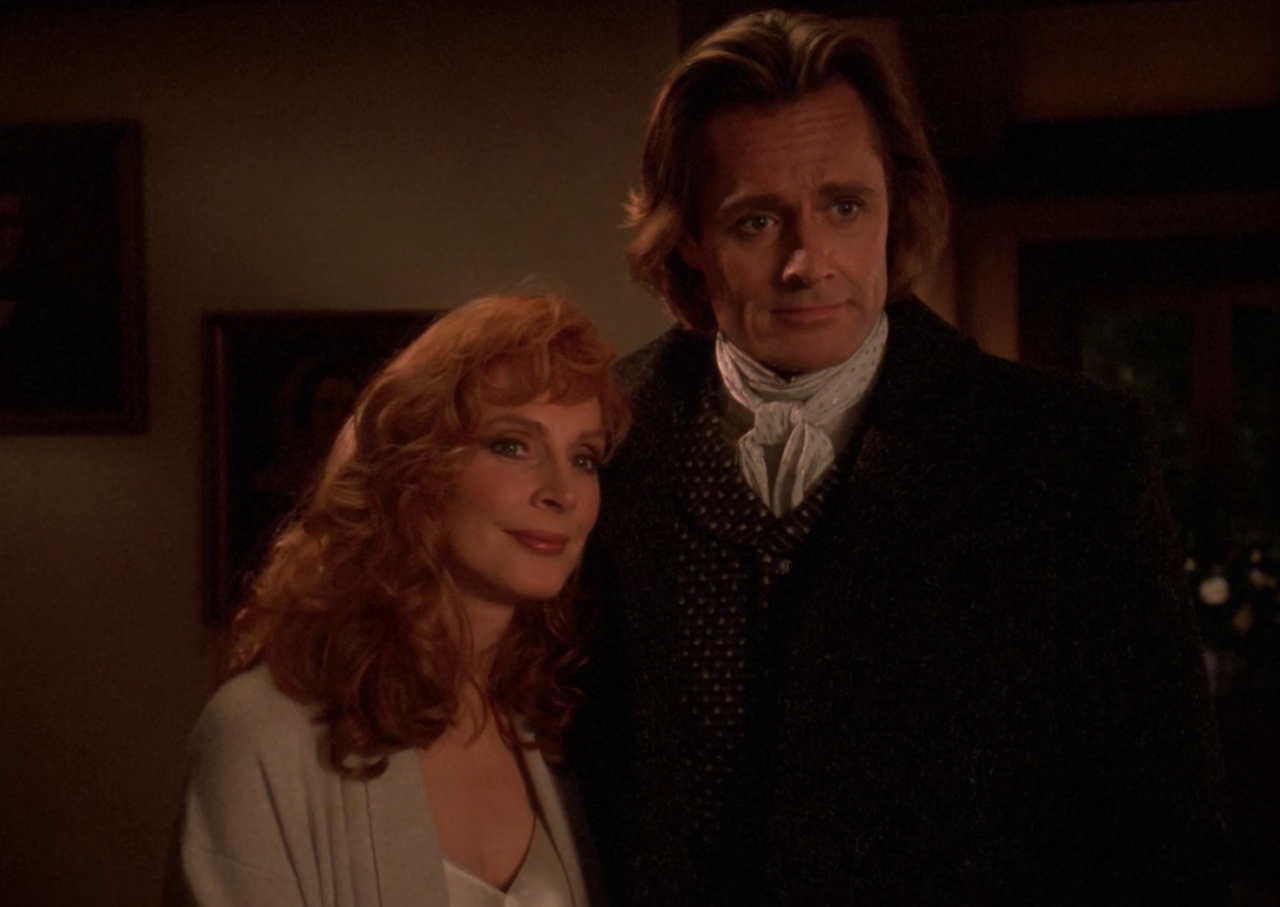
The classic Star Trek dilemma: Kirk or Picard?

Spoiler Warning: There are spoilers ahead for the following Star Trek productions: The Original Series and its films, The Next Generation and its films, and Picard Season 1.

“The only question I ever thought was hard / Was do I like Kirk, or do I like Picard?” So sang “Weird Al” Yankovic on his 2006 parody hit White & Nerdy. In those two lines, the comedy singer encapsulated a debate that has rumbled on in the Trekkie community since The Next Generation premiered in 1987! This is a question I’ve thought about many times, and today I’m finally going to put (metaphorical) pen to paper and lay out my thoughts on this classic Trekkie debate.

Though there have been at least a further six captains or protagonists who’ve joined the Star Trek franchise over the years – or more, depending on how you count things – the classic debate has always surrounded Picard versus Kirk, and I think that’s probably because the contrasts between the two characters and their approaches to leadership are so extreme. Most Star Trek captains who have followed embody elements of both Kirk and Picard’s styles of management and leadership while remaining distinct characters, but when it comes to the franchise’s first two captains, there seems to be a major clash of personalities.

Just like “Weird Al” did, we’re going to consider this difficult question!

My first contact with the Star Trek franchise was The Next Generation in the early 1990s. It was only later that I went back to watch The Original Series and its films, encountering Captain Kirk and his crew for the first time. The Next Generation made me a Star Trek fan, and while I can appreciate what The Original Series did and how entertaining it was, I just don’t have the same connection to it – or to any other Star Trek show, frankly – as I do to The Next Generation. So that’s my own bias stated up front as we go into this discussion!

I’ve always found this debate to be fascinating, but I try not to take it too seriously. Some fans can turn genuine and heartfelt passion into toxic or even aggressive negativity sometimes, attacking others who don’t share their precise views on the nature of Star Trek (or other franchises). Fandoms shouldn’t be a place for division, negativity, or toxicity; they should be a place where we can all come together to share something we love. It’s in that spirit that I enter this discussion – and I encourage everyone to keep in mind that all of this is subjective, and it’s supposed to be light-hearted fun!

So let’s get started, shall we? For reasons both alphabetical and chronological, Captain Kirk gets to go first!

The Case For Kirk

Captain Kirk in his first appearance.

Captain Kirk will forever be Star Trek’s first captain, and thus he should be the yardstick that Trekkies use to judge the successes of any subsequent captain – Picard included. Without Kirk, there would never have even been Picard – because there would quite literally have been no Star Trek. Just look at the failure of The Cage, the first pilot shot for The Original Series, as a case in point: Star Trek only became successful when Captain Kirk was in command.

But Kirk isn’t the best just because he was first. James T. Kirk is a man of action: a tough-talking, villain-punching, decisive commander who stops at nothing to get the job done and protect his ship and crew. He’s not above a bit of rule-breaking, either; when you’re alone on a mission of exploration far beyond Federation space, what’s the point in Starfleet orders or the Prime Directive?

Captain Kirk wasn’t above getting into a proper fight.

On board his ship, Captain Kirk made friends. He didn’t see his crew as mere underlings, but as people he actually liked spending time with. He even developed Star Trek’s first ever cross-species friendship, bridging the gap between emotional humans and stoic, logical Vulcans in the best way possible. His friendship and partnership with Spock became legendary – and frankly, Picard has no friends… or at least, he has no friendships that come anywhere close to matching the closeness between Kirk and Spock. This pair literally created the genre of slash fiction!

It wasn’t until the finale of The Next Generation that Picard was prepared to sit down with Riker and play a round of poker, but Kirk had those friendships from the start. His closeness with Spock has rightly become legendary, but he was also firm friends with Dr McCoy, Sulu, Uhura, Scotty, and even the young Chekov. Kirk’s crew would even risk their Starfleet careers to steal the USS Enterprise and follow him on a dangerous mission to the Genesis Planet in The Search For Spock.

Captain Kirk was loved by his crew… not grudgingly respected.

As Star Trek’s first captain, Kirk made first contact with many different races and factions – including practically all of the franchise’s best-known and most famous aliens. He also introduced us as the audience to races like the Vulcans and the Klingons – two of Star Trek’s most iconic alien races. It’s through Kirk’s eyes that we first came to perceive many of the franchise’s classic factions; he gave us his perspective and allowed us as the audience to meet these aliens through his interactions with them.

Captain Kirk developed rivalries with some of Star Trek’s biggest and most notorious villains. The Romulan commander from Balance of Terror, Garth of Izar, who went on to inspire an entire fan-series, Dr Tolian Soran in Generations, and even “God” himself in The Final Frontier. Most significantly, of course, Kirk found his arch-enemy in one of the greatest villains ever put to screen in the whole of cinema: Khan. Picard’s enemies simply aren’t in the same league.

“Khaaaaaan!”

Captain Kirk recognised the dangers of space travel, and he blazed a trail that Picard and others merely followed. He knew that it wasn’t going to be possible to find a negotiated settlement to every problem, and wasn’t shy about pulling out his phaser – and his fists – to settle disputes. Do you think Captain Kirk would have been bossed around by the Sheliak, or by the Edo and their Mediators? Or would he have punched those alien menaces in the face and told them where to shove it?

In conclusion, Captain Kirk is a bona fide action hero, a man’s man, and the embodiment of the very best of Starfleet in the 23rd Century. He would consider peaceful options where they were available, but wasn’t above punching aliens in the face when he needed to. He would go above and beyond for the sake of his crew, even being reduced in rank by Starfleet for having the audacity to save Spock. He saved Earth on many occasions – and even saved the life of his rival, Captain Picard, and the entire crew of the Enterprise-D in his final act before dying a hero.

The Case For Picard

Captain Picard in Encounter at Farpoint.

Let’s calm down, leave the toxic masculinity in the ’60s where it belongs, and let a grown-up take charge. Captain Picard is the Joe Biden to Captain Kirk’s Donald Trump – he’s level-headed, diplomatic, and professional. Captain Kirk may have been the archetypal action hero of the ’60s, but by the late ’80s, things had moved on. What fans wanted to see from someone in a position of authority was not someone who was quick to pull out their phaser or punch an alien in the face, but someone who could be diplomatic, courteous, and who could resolve situations without needing to resort to such barbarity. Embodying all of those traits was Captain Picard.

A new era of Star Trek not only needed a new face, but a whole new style of leadership, and Captain Picard delivered. If the 23rd Century had been the “wild west,” where anything was allowed and rules were made to be broken, the 24th Century saw Starfleet evolve and move beyond that. Civility could finally replace cowboys like Captain Kirk.

Captain Picard is a more civilised leader perfect for a new era.

Did Captain Kirk ever pilot his own ship? In the episode Booby Trap, we saw for ourselves just how skilled Captain Picard was, and how intimately he knew his ship. Where someone like Kirk would have ordered maximum warp until the power was drained, Picard and his crew came up with a complex solution, then executed it perfectly. Picard made the Enterprise-D dance like a ballerina; Kirk could never have done anything like that.

Where is Star Trek: Kirk? Oh, that’s right: they never made that series. But they did make Star Trek: Picard, such was the overwhelming response from fans to this wonderful character. 176 episodes of The Next Generation and four films weren’t enough – fans were eager for more Captain Picard, and thus he became the first character in Star Trek’s history to get a new show named after him. More than thirty years after we first met Captain Picard, new adventures with the character are still being created, with at least two more seasons of the show in production.

Captain Picard got his own spin-off show because fans love the character so much.

While Kirk may have had fun with some villains like Khan, he never had to stare down the biggest, most devastating threat that the Federation ever faced. Captain Picard beat the Borg… and he did it twice. He even survived being assimilated and was able to push through his Borg programming to give his crew a piece of vital information that ultimately saved Earth. In First Contact, Picard brought the Enterprise-E to the Borg’s second invasion attempt, saving the day in the 24th Century and then again in the past. Forget the Klingons, the Gorn, the Romulans, and the people on that weird planet who all pretended it was Chicago in the ’20s: Captain Picard fought and defeated the most dangerous threat that the Federation has ever encountered.

Captain Picard realised that he can be on good terms with those under his command, but that as the captain he has to put the needs of the ship first. In the episode Lessons, he learned first-hand that having close relationships with subordinates is difficult for any commanding officer, and maintaining a friendly but respectful distance from his crew – even those whose advice he relied upon – was necessary to keep everyone safe and to allow him to be able to make the tough calls.

Captain Picard and the crew of the Enterprise-D.

Captain Kirk got to make many first contacts – but he did so by default because he was first. Captain Picard actually made more first contacts than Kirk did – including with some very different forms of life. Whether it’s the Microbrains, the Exocomps, or the Q Continuum, Captain Picard was prepared to treat everyone he met with courtesy and respect, staying true to Starfleet’s mission of seeking out new life. But it doesn’t end there. Captain Picard introduced us as the audience to alien races like the Bajorans, Cardassians, and of course the Borg – and these would go on to be just as important to the Star Trek franchise overall as any of the aliens we met in The Original Series.

In conclusion, Captain Picard is a calm diplomat, the level-headed manager of a large crew, and the personification of the very best of 24th Century Starfleet. He guided his crew through some incredibly difficult and dangerous missions while maintaining his composure. He learned lessons about loss and grief that Kirk never had to learn. And he saved the lives of at least two of Kirk’s crew: Spock and Scotty. He also saved Earth from the Federation’s greatest threat, and even learned to perceive time in a non-linear fashion thanks to Q.

So Who Wins?

Kirk or Picard?

You’re going to hate me for this – but they both win. Everything I said above is true (in a roundabout, tongue-in-cheek way), but that doesn’t mean that one captain is better than the other! Like all of us, Kirk and Picard have strengths and weaknesses; things they do well and areas where they need to rely on others. There isn’t a definitive answer to a question like this, because the answer will always be “it depends on the circumstances.”

There are times when Captain Kirk’s approach to leadership is needed, and times when the way Picard approached a situation would lead to the best chance of success. As we saw in Generations, there was even a time when the only way to save the day was for both men to team up. The fact that each captain has his own set of skills and his own style of leadership isn’t a weakness – it’s a strength, one which benefits Star Trek as a whole.

Kirk and Picard meeting for the first time.

I mentioned in my introduction that subsequent captains have incorporated elements from both Kirk and Picard, and that’s because both men have so many positive, upstanding qualities that Star Trek’s writers were keen to give to new characters as the franchise has continued to grow. Kirk was always ready for action, but that never came at the expense of being thoughtful and considering non-violent solutions. And Picard’s diplomatic, polite style could give way to ordering his crew to “fire at will” when the situation called for it. Both captains are adaptable, able to rise to meet the needs of all manner of incredibly difficult situations – even if that meant setting aside their usual ways of doing things.

No one can doubt Kirk or Picard were absolutely dedicated to their ships and crews, either. They may have shown that dedication in slightly different ways, and they may have expressed their appreciation and love for their friends and crewmates in different forms as well, but both of them were quite literally willing to lay down their lives and go down with the ship if necessary. Both men ultimately lost their ships – the original USS Enterprise and the Enterprise-D were both destroyed. But they both bounced back to take over new commands and go on to even greater things.

There are times when I’m in the mood for watching Captain Kirk get into a fist-fight with a Gorn or for seeing his epic stand-off against Khan. And there are moments where I want to see Picard use diplomacy to win an argument with the Sheliak or watch him wrangle with one of Q’s puzzles. But there are also times where I want to see Picard grab his phaser rifle and kick some Borg butt, and times where I can think of nothing better than seeing Kirk solve a scientific mystery like that of V’Ger. Both captains have given all of us so much enjoyment and entertainment over the years that I simply can’t crown one of them a winner and leave the other a loser. To me, they’ll always both be winners.

The Star Trek franchise – including The Original Series, The Next Generation, and every episode and film mentioned above – is the copyright of ViacomCBS. This article contains the thoughts and opinions of one person only and is not intended to cause any offence.
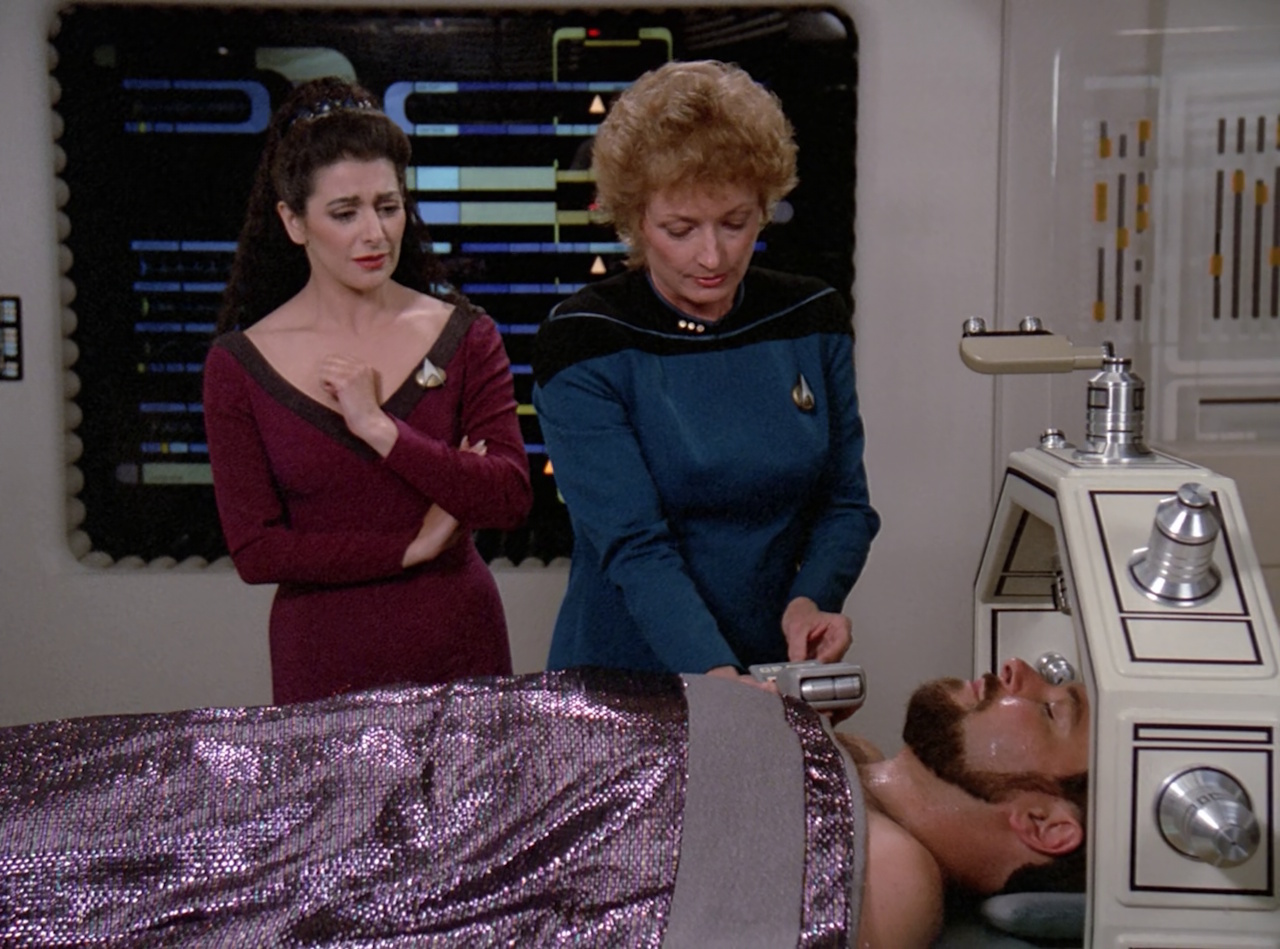
A handful of older films, games, and TV shows that I enjoyed in 2021

Spoiler Warning: Minor spoilers may be present for some of the entries on this list.

At this time of year, practically every outlet – from dying newspapers to new social media channels – churns out list upon list of the best entertainment products of the year. The top threes, top fives, top tens and more of 2021 abound! I have something similar in the pipeline, but today I wanted to take a look back at a handful of films, games, and TV shows from previous years that I found myself enjoying in 2021.

I have long and seemingly ever-growing lists of films, games, and TV shows that I keep meaning to get around to! I still haven’t seen Breaking Bad, for example, nor played The Witcher 3, despite the critical and commercial acclaim they’ve enjoyed! I also have a huge number of entertainment properties that I keep meaning to re-visit, some of which I haven’t seen since we wrote years beginning with “1.” In 2021 I got around to checking out a few titles from both of these categories, and since there are some that I haven’t discussed I thought the festive season would be a great opportunity for a bit of positivity and to share some of my personal favourite entertainment experiences of 2021… even though they weren’t brand-new!

Film #1:
The Lord of the Rings trilogy (2001-03)

We’ve recently marked the 20th anniversary of The Fellowship of the Ring, the first part of Peter Jackson’s epic adaptation of J. R. R. Tolkien’s magnum opus. The passage of time has done nothing to detract from these amazing films, and this year a 4K Blu-Ray release has them looking better than ever before.

The early 2000s had some serious pitfalls for film and television. CGI was becoming more mainstream and many filmmakers sought to take advantage of it, but just look to the Star Wars prequels and how outdated the CGI in those titles is; it hasn’t held up well at all. The majority of the special effects in The Lord of the Rings were practical, and combined with clever cinematography even incredibly dense and complex battle sequences still look fantastic two decades on.

Though I don’t re-watch The Lord of the Rings every single year without fail, I’m happy to return to the trilogy time and again – and I almost certainly will be for the rest of my days! The Hobbit and Tolkien’s Middle-earth was one of the first fantasy worlds I encountered as a young child; I can vaguely remember the book being read to me when I was very small. The conventional wisdom for years was that The Lord of the Rings was unfilmable – but Peter Jackson proved that wrong in some style!

Film #2:
Despicable Me (2010)

I spotted this while browsing Netflix one evening, and despite having seen at least one film with the Minions, I hadn’t actually seen the title that started it all. I have to confess that I didn’t have particularly high expectations, thinking I was in for a bog-standard animated comedy. But Despicable Me has heart, and there were some genuinely emotional moments hidden inside.

The Minions got most of the attention in the aftermath of Despicable Me, and can now be found on everything from memes to greetings cards! The critters are cute, but they’re also somewhat limited – and I think it’s for that reason that I didn’t really expect too much from Despicable Me except for maybe a few laughs and a way to kill an empty evening. I was pleasantly surprised to find a much more substantial film than I’d been expecting.

There were still plenty of laughs and a ton of cartoon silliness to enjoy and to keep the tone light-hearted. But there was a surprisingly emotional story between the villainous Gru and the three children he adopts – especially Margo, the eldest. I can finally understand why the film has spawned four sequels, fifteen shorts, and a whole range of merchandise!

Film #3:
Star Trek V: The Final Frontier (1989)

The Final Frontier has a number of issues that I’m sure most of you will be aware of. It arguably suffered from a little too much involvement from William Shatner, who sought to put Captain Kirk at the centre of the story at the expense of others. But The Final Frontier has some truly great character moments, including one of the final times that Kirk, Spock, and Dr McCoy would be together before The Undiscovered Country brought an end to Star Trek’s original era.

The film has some truly funny moments, too: the scene where Uhura catches Chekov and Sulu pretending to be caught in a storm being one, and Scotty’s moment of slapstick being another that never fails to win a chuckle. The Undiscovered Country was a great send-off for Star Trek’s original crew, but it was quite a heavy film with a lot of tense moments and high-octane action. The Final Frontier brings more light-hearted moments to the table, and that’s something I can appreciate when I’m in the right mood.

There are some exciting sequences too, though. The shuttle crash is a very tense and dramatic moment, and the final confrontation with the entity at the centre of the galaxy, while silly in some respects, does succeed at hitting at least some of those same dramatic highs. Though I wouldn’t suggest that The Final Frontier is anywhere near the best that Star Trek has to offer, it’s well worth a watch from time to time.

Game #1:
Control (2019)

Though hardly an “old” game, I missed Control when it was released in 2019. It had been on my list for a couple of years, and I was pleased to finally get around to playing it this year. The game had a far creepier atmosphere than I’d been expecting, with protagonist Jesse having to battle an unseen enemy called the Hiss.

One thing I really admire about Control is the way it made incredibly creative use of some fairly plain environments. The entire game takes place in what’s essentially a glorified office building, and rows of cubicles or the janitor’s workspace could, in other games, come across as feeling bland and uninspired. But Control leans into this, using the environments as a strength, juxtaposing them with incredibly weird goings-on at the Bureau of Control.

I also liked that, for the first time in years, we got full-motion video sequences in a game! FMV was a fad in gaming in the early/mid-1990s I guess, primarily on PC, and titles like Command and Conquer and Star Trek: Starfleet Academy made use of it. It had been years since I played a game with FMV elements, and it worked exceptionally well in Control – as well as being a completely unexpected blast of nostalgia!

Game #2:
Super Mario 64 (1996)

Despite the serious limitations of Super Mario 3D All-Stars on the Nintendo Switch, which I picked up last year, I can’t deny that it’s been fun to return to Super Mario 64. One of the first fully 3D games I ever played, Super Mario 64 felt like the future in the late ’90s, and even some titles released this year, such as Kena: Bridge of Spirits, owe parts of their 3D platforming to the pioneering work that Nintendo did with this game.

Super Mario 64 is and always has been good, solid fun. There doesn’t need to be an in-depth, complex story driving Mario forward to collect stars, because the game’s levels and bosses are all so incredibly cleverly-designed. Jumping in and out of different painting worlds is relatively quick and feels great, and the sheer diversity of environments is still noteworthy in 2021. Mario goes on a journey that takes him through snowy mountains, a sunken shipwreck, sunlit plains, cities, clouds, and more.

I can’t in good conscience recommend Super Mario 3D All-Stars. The way these games have been adapted for Nintendo Switch isn’t worth the asking price. But even so, going back to Super Mario 64 has been one of my favourite parts of 2021, a chance to reconnect with a game I played and loved on the Nintendo 64. If you’ve never played it, track down a copy and give it a go. You won’t regret it.

Game #3:
Red Dead Redemption II (2018)

I’d been meaning to get around to Red Dead Redemption II for three years – but I’d always found a reason not to pick it up (usually it was too expensive!) It took forever to download on my painfully slow internet connection, but it was well worth the wait. I’ve had a fascination with America in the 19th Century for as long as I can remember – I guess partly inspired by playground games of “the wild west” that were fairly common when I was young. I even had a cowboy hat, toy gun, and “Davy Crockett” hat when I was a kid!

Red Dead Redemption II transported me to that world in a way that I genuinely did not think was possible. Films and TV shows can do a great job at pulling you in and getting you lost in a fictional world, but the interactive element of video games can add to that immersion – something that was absolutely the case with Red Dead Redemption II. The amount of detail in the game’s characters and open-world environments is staggering, and having finally experienced it for myself I can absolutely understand why people hail this game as a “masterpiece.”

I wasn’t prepared for the many emotional gut-punches that Red Dead Redemption II had in store. In many ways the game tells a bleak and even depressing story, one with betrayal, death, and many examples of the absolute worst of humanity. But every once in a while there are some incredibly beautiful moments too, where characters sit together, sing, play, and revel in their bonds of friendship. Red Dead Redemption II gave me the wild west outlaw fantasy that my younger self could have only dreamed of!

TV series #1:
Star Trek: The Original Series (1966-69)

I’ve re-watched quite a lot of The Original Series this year, probably more episodes than I’d seen in the past few years. Because of its episodic nature, it’s easy to dip in and out of The Original Series, firing up an episode or two to spend an hour with Captain Kirk and the crew without feeling the need to commit to an entire season of television.

The Original Series started it all for Trekkies, and I’m always so pleased to see that modern Star Trek hasn’t lost sight of that. In this year’s episodes of Lower Decks and Discovery we’ve gotten many references and callbacks to Star Trek’s first series, keeping the show alive and relevant as we celebrated its fifty-fifth anniversary – and the centenary of its creator, Gene Roddenberry.

Though dated in some ways, many of the themes and metaphors present in The Original Series are still relevant today. Society has changed since the 1960s, but in some areas we’re still fighting the same or similar fights for acceptance, for equality, and so on. The Star Trek franchise has always had a lot to say about that, being in some ways a mirror of society and in others depicting a vision of a more enlightened, optimistic future.

TV series #2:
Fortitude (2015-18)

I went back to re-watch Fortitude this year, for the first time since its original run. The series starts very slowly, seeming at first to be little more than a murder-mystery in a different setting. But it builds up over the course of its first season into something truly unexpected, crossing over into moments of political thriller, action, and even horror.

There are some truly shocking and gruesome moments in Fortitude, and it can be a harrowing watch in places. But it’s riveting at the same time, and I managed to get hooked all over again by the complex characters, the mysteries and conspiracies, and the bleak but beautiful arctic environment.

Fortitude featured some star names among its cast, including Michael Gambon, Stanley Tucci, and Dennis Quaid – the second-most-famous Dennis to be featured on this website! Although it was fun to watch it weekly during its original run, Fortitude is definitely a show that can be enjoyed on a binge!

TV series #3:
Family Guy (1999-Present)

Family Guy’s sense of humour sometimes runs aground for me, dragging out jokes too long or failing to pay off neat setups with decent punchlines. But with the full series (up to midway through Season 20 at time of writing) available on Disney+, I’ve found myself putting it on in the background a lot this year. The short runtime of episodes, the lightheartedness, and the way many of the jokes are often disconnected from whatever nonsense plot the episodes have going on all come together to make it something I can dip in and out of while doing other things.

There are some insensitive jokes, and some entire storylines in earlier episodes have aged rather poorly. But Family Guy seldom strikes me as a show punching down; it satirises and pokes fun at many different groups. In that sense it’s kind of halfway between The Simpsons and South Park; the former being more sanitised and family-friendly, the latter being edgier and meaner.

I rarely sit down and think “gosh, I must watch the latest Family Guy episode.” But if I’m in need of background noise or something to fill up twenty minutes, I find I’ll happily log into Disney+ and put on an episode or two.

So that’s it.

There have been some great films, games, and television shows that were released in 2021. But there were also plenty of entertainment experiences from years past that, in different ways, brightened my year. As we gear up for New Year and for everyone’s end-of-year top-ten lists, I wanted to take a moment to acknowledge that.

I hope you had a Merry Christmas, a Happy Holiday, or just a relaxing day yesterday! I did consider writing something to mark the day, but I found that I had remarkably little to say that was different from the piece I wrote last year. 2021 has been “2020 II” in so many respects, unfortunately. However, unlike last Christmas I will be able to visit with some family members – I’ll be seeing my sister and brother-in-law later this week, which will be a nice treat! So here’s to 2021’s entertainment experiences – and as we enter the new year, it’s worth keeping in mind that we don’t only have to watch and play the latest and newest ones!

All titles on the list above are the copyright of their respective broadcaster, distributor, developer, network, publisher, studio, etc. This article contains the thoughts and opinions of one person only and is not intended to cause any offence.
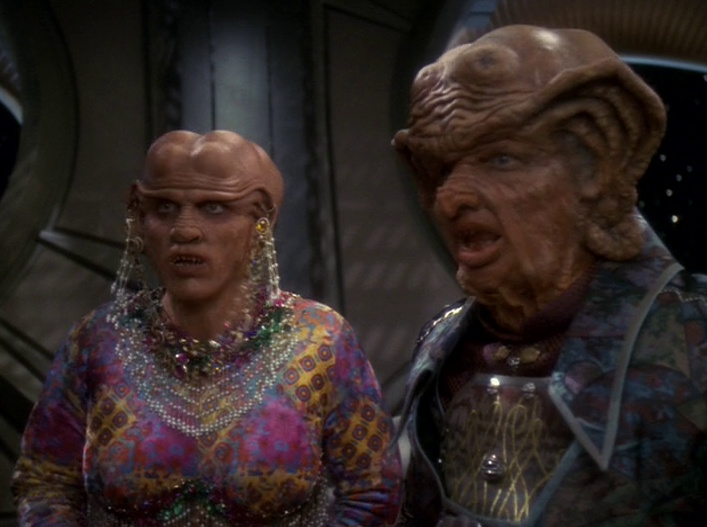
Star Trek: The Original Series + Star Trek: Lower Decks crossover theory: Lost human colonies

Spoiler Warning: There are spoilers ahead for Star Trek: Lower Decks Seasons 1-2 and for the following Star Trek productions: Discovery Season 2, The Original Series, The Next Generation, and Enterprise.

Star Trek: Lower Decks hasn’t lent itself to a lot of theorising thus far! The episodic nature of the show and humorous tone have seen a lot of one-and-done stories, as well as stories that draw on Star Trek’s existing lore and history rather than adding to our understanding of how life in the Star Trek galaxy works. And that’s fine – it’s a great show, one which generally succeeds at capturing the essence of Star Trek while showing a more amusing side to life in Starfleet.

Last week’s episode, Where Pleasant Fountains Lie, has led me to craft a theory, though, and it’s one that connects to events right at the beginning of the Star Trek franchise, back in the days of The Original Series. In short: have you ever wondered why Captain Kirk and his crew seemed to encounter a lot of “aliens” who were indistinguishable from modern humans? It’s possible – at least according to this theory – that Lower Decks might have just provided us with a plausible in-universe explanation!

Has the existence of the Hysperians in Lower Decks solved a fifty-five-year-old mystery?

Before we look at either Lower Decks or The Original Series, we need to take a detour to Season 6 of The Next Generation. The episode The Chase attempted to provide an in-universe explanation for the apparent abundance of similar humanoid races in the Star Trek galaxy: the interference of an extinct race of ancient humanoids, who “seeded” worlds across the Alpha and Beta Quadrants with their genetic material, essentially acting as forerunners or ancestors to Cardassians, Vulcans, Romulans, Klingons, humans, and perhaps many other races.

Just like the Klingon augment virus in Enterprise, or the warp speed limit from Season 7 of The Next Generation, this seemingly huge revelation about the ancient history of the Star Trek galaxy has been entirely ignored since the episode in which it first appeared, not even getting so much as a mention in the hundreds of other stories that have been produced since. That isn’t to say this explanation is wrong or landed poorly in the fandom, but as often happens when an episodic series introduces a major story point, writers who came along later either didn’t know what to do with it or didn’t want to explore it further. Thus the ancient humanoid story is a self-contained one that doesn’t have a great deal of bearing on the wider Star Trek galaxy – though fans can, of course, choose to interpret the presence of humanoids through the lens of The Chase.

Did ancient humanoids “seed” the galaxy with their genetic data? And if so, does that account for the abundance of humanoid races?

But The Chase only provided an explanation for the existence of humanoids – Klingons, Romulans, humans, etc. What it doesn’t really explain in any detail is the existence of species that are anatomically and visually indistinguishable from humans, and The Original Series featured plenty of those! For example, we have the people of the planet Gideon (from The Mark of Gideon), the Betans (from The Return of the Archons and later seen in Lower Decks Season 1), the Iotians (from A Piece of the Action), the people of the planet 892-IV (from Bread and Circuses), and the Earth Two natives (a.k.a. Miri’s species, from the episode Miri). All of these races – and many more – are completely identical to humans.

Most of the aforementioned peoples were treated in their original appearances as being non-humans, natives of whichever planet the Enterprise was visiting that week. But it certainly raises some questions, especially considering that other alien races could be at least superficially different: the Bajorans have distinctive noses, the Vulcans and Romulans have their ears, and so on. How or why did the inhabitants of these worlds come to be indistinguishable from humans – is life in the galaxy somehow predisposed to evolve into this precise form? The Chase offers half of an explanation, but even then it isn’t perfect. Enter last week’s episode of Lower Decks: Where Pleasant Fountains Lie.

A Roman centurion from the planet 892-IV.

Andy Billups, chief engineer of the USS Cerritos, is human. But he isn’t a native of Earth, nor of any Federation member world – his people are the Hysperians, a group of humans from the planet Hysperia who had constructed a society modelled around a medieval-fantasy/renaissance fair lifestyle and aesthetic. The important thing to note is that the Hysperians appear to be independent of the Federation, with their own monarchy, laws, culture, and fleet of starships. Though on friendly terms with Starfleet, the Hysperians appear to exist independently of the Federation.

So Where Pleasant Fountains Lie has confirmed that human colonies existed outside of the jurisdiction of the Federation. We knew that already, having seen worlds like Turkana IV (homeworld of Tasha Yar) in The Next Generation, but Where Pleasant Fountains Lie expanded our understanding of non-Federation humans. It seems as though the Hysperians – or their ancestors, at least – shared a common love for fantasy, magic, and a medieval/renaissance fair lifestyle, and set out to establish their own colony on that basis.

The Hysperians have their own system of government, led by a monarch.

Another episode from The Next Generation is important here: Season 2’s Up The Long Ladder. This episode introduced two colonies of humans – the Bringloidi and the Mariposans. The former were a group of luddites; Irish colonists who disliked the use of technology. The latter were a group of scientists, clones of the original colonists. The important thing to note for the purposes of this theory is that the Federation was unaware of the existence of either colony until the Enterprise-D made contact with them in the mid-24th Century. For more than two centuries, both colonies were completely unknown.

So now we come to the heart of the theory that was inspired by Where Pleasant Fountains Lie. Suppose a colony like Hysperia had been established centuries ago, but contact had been lost. If the Federation were to encounter the Hysperians for the first time, they would seem like an entirely different people at first, as they have their own distinctive culture, system of government, and starship designs. They don’t appear to be at all similar to modern Federation humans as of the late 24th Century, and it’s only because their colony’s origins are known to us as the audience and to Starfleet that we treat them as an offshoot of humanity and not as an entirely distinct people.

Bringloidi leader Danilo Odell with Captain Picard.

Here’s the theory, then, in its condensed form: the peoples Captain Kirk met during The Original Series that are identical to humans are, in fact, lost human colonies. Just like the Bringloidi and Mariposans, their records have been lost or their destinations not recorded, but at some point in the past they left Earth, established new homes for themselves, and developed their own cultures and ways of doing things.

Some of these peoples could even be the descendants of abductees, such as those encountered in the Voyager episode The 37’s or Enterprise’s North Star. The humans saved by the Red Angel and transported across the galaxy that Captain Pike and Michael Burnham encountered in the Discovery Season 2 episode New Eden were developing independently of the Federation in the mid-23rd Century, and Pike even instructed his crew that the Prime Directive applied when dealing with the inhabitants of Terralysium.

Burnham, Owosekun, and Captain Pike on the planet Terralysium. The inhabitants were descended from humans saved by the Red Angel.

Just like the Hysperians chose to build their society around a fantasy/renaissance fair-inspired aesthetic and setting, maybe some of these lost colonies likewise had the intention of building a world based around shared likes and interests. Perhaps the original colonists of 892-IV were big fans of Ancient Rome and deliberately created a Roman-inspired society. Perhaps Miri’s ancestors terraformed their world to make it resemble Earth. Gideon may be an Earth colony that got out of control, similar to Turkana IV. Or, as we see in episodes like North Star and New Eden, perhaps peoples abducted at a point in the past tried to recreate the societies from which they came.

I’ve never been a big fan of the ancient humanoids from The Chase as an explanation for the prevalence of humanoids in the Star Trek galaxy. I don’t think the fact that Klingons, Cardassians, and humans are all two-legged, two-armed, air-breathing beings of similar heights and builds was something that needed this kind of in-universe explanation; it was enough to leave it unsaid that the galaxy is populated by humanoid aliens. Trying to provide an explanation actually led to over-explaining and drawing unnecessary attention to it.

Personally speaking, I never felt that the galaxy being full of humanoid races (like the Klingons) needed a complex in-universe explanation.

But when it comes to aliens that are identical to humans, the explanation from The Chase only goes so far. If we try to argue that the abundance of human-looking aliens is caused by the meddling of ancient humanoids who also caused the evolution of the Klingons, Vulcans, Cardassians, etc. then the obvious question is why are there not dozens of Cardassian-looking aliens, or Klingon-oids?

Instead, what we could say is that these peoples are more likely to be lost Earth colonies. Just like the Bringloidi and the Mariposans, knowledge of their existence was lost in between their departures from Earth and their encounters with Captain Kirk. If we take The Original Series episode Space Seed at face value, humans had been able to launch large spacecraft since at least the late 20th Century, and with World War III taking place in the mid-21st Century, it’s possible that the records of thousands of space launches were lost. Just like Khan and his followers set out from Earth, perhaps the ancestors of some of these peoples did as well. Some may also be the descendants of humans abducted by aliens in the distant past, and this could explain how some humans have existed independently of Earth for centuries or millennia.

Natria, leader of the Fabrini.

So that’s the extent of this theory, really! I think it provides an interesting alternative explanation as to why Captain Kirk encountered so many human-looking “aliens” during The Original Series. We could even potentially extend this theory to include races like the Betazoids.

Obviously the reason why so many aliens in Star Trek, particularly in the franchise’s early days, were identical to humans was because of limitations in budget and special effects. But that doesn’t have to be the end of it! We can craft intricate theories, partly based on things we’ve learned in other iterations of the franchise, to go back and explain these things. To me at least, the idea that races like the Iotians, Fabrini, and Betans are in fact lost offshoots of humanity makes more sense than the idea that they naturally evolved to be indistinguishable from humans.

Star Trek: Lower Decks Season 2 is available to stream now on Paramount+ in the United States, and on Amazon Prime Video in the UK and around the world. The Star Trek franchise – including Lower Decks and all other properties mentioned above – is the copyright of ViacomCBS. This article contains the thoughts and opinions of one person only and is not intended to cause any offence.
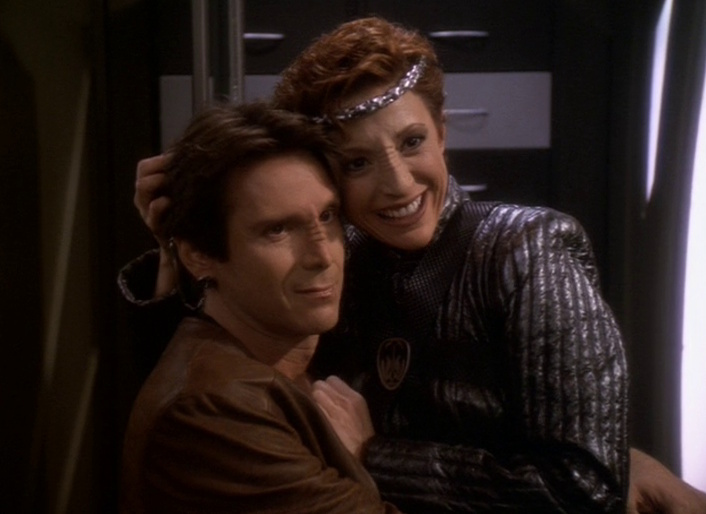
King of Kings (1961) – an Easter film with a Star Trek connection

I’m not a religious person, and thus Easter has never been an especially important time of year for me. As a kid, Easter meant two weeks off school and chocolate eggs. And as an adult, Easter means a long weekend… and chocolate eggs. That’s about all. But as someone who grew up in England and was frog-marched into church with other schoolkids – back in the days when every school was bound to the local church – I gained a passing familiarity with the holiday. Because I don’t enjoy hot weather, late spring and summer are my least-favourite times of year! Easter, as the event which signals the beginning of that time of year, has always felt at least a little unwelcome as a result, even if the abundance of chocolate serves as a suitable bribe.

But enough about my weather preferences! It’s Easter, and aside from chocolate, Easter means one thing: Jesus. Jesus of Nazareth was crucified, of this even non-Christians widely agree. Sometime between AD 30 and AD 40, Jesus was executed by Roman authorities in the province of Judea, and his resurrection three days later is what Christians celebrate at Easter. Jesus’ life and death have been depicted countless times in art and entertainment, and this time I thought it could be interesting to briefly look at a mid-century example: the 1961 film King of Kings.

The film’s opening title.

The title of this article promised you a Star Trek connection – since the Star Trek franchise is one of my biggest fandoms and a subject I write about often here on the website! The lead role in King of Kings is, naturally, the character of Jesus. In this case, Jesus is played by Jeffrey Hunter – better-known to Trekkies as Captain Christopher Pike, the original captain of the USS Enterprise.

Hunter’s life was tragically cut short, and he died aged only 42 following a fall that may have been caused by a stroke. Though he’s well-remembered today for his single Star Trek appearance – even more so since footage of him was incorporated into Season 2 of Star Trek: Discovery – he was a prolific actor in the 1950s and ’60s, appearing in films like Fourteen Hours alongside Grace Kelly, and The Searchers with John Wayne. He also appeared in a number of television roles, including in big ’60s shows like The FBI and Daniel Boone.

Jeffrey Hunter (1926-1969)
Photo Credit: jeffreyhunter.net

If you’re familiar with Star Trek’s early production history, you’ll recall that Hunter declined to reprise his role as Pike for the show’s second pilot, opting to focus on cinema instead. By the time The Menagerie was made – the two-part episode which reused most of the footage from the show’s first pilot – Hunter was unavailable, leading to the character of Pike being recast and creating the iconic disfigured, wheelchair-bound look.

But all of that is incidental! King of Kings was released in 1961, four years before Hunter would meet Gene Roddenberry and agree to work on Star Trek. The film received mediocre reviews, but was considered a box office success for film studio MGM. And having seen it for myself a few years ago, it was certainly an interesting experience!

Jeffrey Hunter as Jesus in King of Kings.

This was my first time seeing Jeffrey Hunter outside of The Cage – at least, that I’m aware of. Though he’s slightly younger and sports both Jesus’ typical long hair and beard he is recognisable in the role, and that was certainly something neat to see.

The film itself is typical mid-century fare. As I think I’ve explained on more than one occasion, the early 1960s is about as far back as I’m willing to go for most films and television shows, simply because the quality of practically every aspect of production declines more and more the further back in time a film or series was made. Early cinema holds an interest from an academic point of view – the way techniques were developed, how different genres came into being, how technologies were first pioneered, and so on – but I find that actual entertainment value, and my ability to get lost in a production really cannot survive the wooden sets – and wooden acting – of early cinema!

A Roman scene in King of Kings.

King of Kings falls into this trap at points, with some sets and backdrops being pretty obviously fake, and the general acting style being in line with other projects of its era. But it’s perfectly watchable despite those shortcomings.

The film aimed to be an “epic,” recreating the magic of earlier Biblical epic films like 1956’s The Ten Commandments, and of course Ben-Hur, which was released in 1959. Even the film’s poster imitates Ben-Hur’s visual style. I don’t know if I’m the right person to compare these films for you; all are roughly equal in terms of being watchable for me, with similar drawbacks that I find with films from this time period. What we can say, though, is that King of Kings is probably less well-remembered than the other two, with Ben-Hur in particular being widely considered a classic.

Hunter as Jesus of Nazareth at the film’s climax.

The story of Jesus’ life and death has been recreated in cinema on a number of occasions. The 1912 film From the Manger to the Cross is the earliest one I could find, and in the century since there have been countless others. One of the best-known in recent years is Mel Gibson’s epic The Passion of the Christ, which is a pretty gory and harrowing watch in parts – deliberately so. And who could forget Monty Python’s Life of Brian, a parody of the Bible story?

King of Kings fits somewhere in the middle, the kind of film I’d never choose to watch but for the combination of its Star Trek connection and the holiday we’re celebrating today. It’s a curiosity rather than something I could recommend for pure enjoyment, but if you’ve seen other, better-known depictions of the life and times of Jesus, King of Kings might’ve slipped under the radar. It’s worth a look if that’s the case!

Even for non-Christians, the basic message Jesus of Nazareth preached is worth listening to. Being kind and treating others with respect is something we can all aspire to, especially in today’s politically divided, pandemic-riddled world. King of Kings, like many Bible films, hammers that message home in what is, at times, a ham-fisted way. But the message itself is still worth paying attention to, and for one day a year, we can take a moment to appreciate that.

King of Kings is out now on DVD and Blu-ray, and may also be available to stream depending on location. King of Kings was directed by Nicholas Ray and may be the copyright of Metro-Goldwin-Mayer and/or MGM Holdings. This article contains the thoughts and opinions of one person only and is not intended to cause any offence.
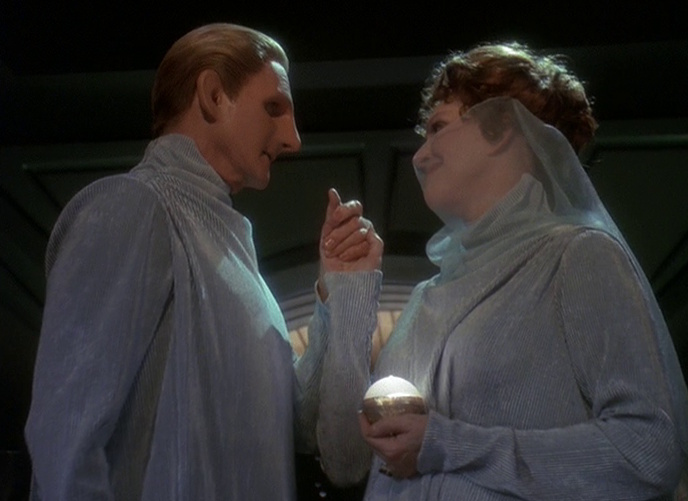
Five main characters from Star Trek’s past that I’d bring back

Spoiler Warning: There are spoilers ahead for Star Trek: Picard Season 1, Star Trek: Discovery Season 3, and for other iterations of the franchise.

This is going to be the first part of a short two-part series in which I look at a few significant characters from past iterations of Star Trek that I would love to see return. Rather than tying these characters to a specific series, film, or ongoing project, this list is more general. I’m not advocating, for example, for any of these characters to necessarily appear in Picard or Strange New Worlds, but rather to return to the franchise at some point, when a suitable story could be written.

The Original Series Season 2 cast (without George Takei).

It goes without saying that practically every major character (at least those who weren’t killed off) could be brought back in some capacity, and with the franchise continuing to expand I think it’s increasingly likely that we’ll get some significant moments where characters reappear. For the sake of this list I’m not counting characters who are starring in shows that are currently in production, so I’ll be limited to characters from The Original Series, The Next Generation, Deep Space Nine, Voyager, Enterprise, and the films.

The Next Generation cast in Season 4 – plus Whoopi Goldberg as Guinan.

By my count there are 42 characters across those five series that we could call “major” – i.e. they regularly had their names listed in the main credits, and weren’t considered guest stars or just recurring secondary characters. This time I’m picking on just five, and my usual caveat applies: I don’t have any “insider information!” This is just a short list of characters that I think could be fun to bring back in some capacity, nothing more.

The Deep Space Nine cast in Season 4.

Of the 42 characters that occupied major starring roles in at least one season of the five aforementioned shows, I’m excluding five: James T Kirk from The Original Series, Data and Tasha Yar from The Next Generation, Jadzia Dax from Deep Space Nine, and Trip Tucker from Enterprise. All the exclusions are for the same reason: those characters have died in-universe. While there could be convoluted ways to bring back alternate versions (such as we saw with Sela, for instance) the original character can’t return after death.

The Season 2 cast of Voyager.

Though it may be controversial, I don’t believe that the death of an actor necessarily excludes a character from returning. The Kelvin films recast the entire main cast of The Original Series, and Star Trek: Picard recently recast a couple of legacy characters as well. So characters whose primary actors have passed away are still in contention.

Now that we’ve laid down the ground rules, let’s take a look at my choices.

Number 1: Chakotay

This one is inspired by the return of Seven of Nine in Season 1 of Picard. I’ve written about this before, but Seven’s return to Star Trek was cathartic for me, because the passage of time allowed her to be a very different, more emotional, and much more human character than she ever was in Voyager. Seven was sometimes annoying and difficult to root for, especially toward the end of Voyager’s run, and basically the reason was that she’d always seem to “reset” after learning what should have been a big and important lesson in how to be human. It made her character bland and repetitive. But we’re not here to talk about Seven of Nine!

Chakotay didn’t have a lot to do in Voyager, despite being the first officer. There were a handful of episodes in which he was given a storyline, but a lot of the time he was just a presence, someone there for other characters to bounce ideas off or to tell Captain Janeway he didn’t recommend she do something we all knew she’d end up doing anyway. In short, bringing back Chakotay is something I would see as a chance for his character to get a Seven of Nine-like “redemption,” with some genuine development and a significant storyline.

One thing Voyager touched on briefly but never really explored was the way Chakotay felt about the deaths of the Maquis. The episode Extreme Risk focused on B’Elanna as she struggled to come to terms with what happened to their former colleagues, but Chakotay never really got a similar moment. As part of a larger story looking at the aftermath of the Dominion War, learning what happened to the Maquis’ colonies in the aftermath of that conflict could include Chakotay, as one of those worlds was his home.

We could also learn that Chakotay was allowed to remain in Starfleet following Voyager’s return to the Alpha Quadrant, and may even have been given his own command. Given that Voyager quite quickly dropped the Maquis angle, I’m not sure this is the route I’d go down because it doesn’t seem like it offers a lot of development or growth potential for his character, but it’s a possibility.

The final few episodes of Voyager’s seventh season saw a burgeoning relationship building between Chakotay and Seven of Nine. With Seven now a recurring character in Picard, and with the possibility of her entering into a relationship with main character Raffi, we could potentially explore what happened between Seven and Chakotay. Voyager’s finale certainly suggested that he had strong feelings for her, even after her death in that timeline.

Unfortunately, for reasons that aren’t especially clear, the producers of Voyager lost interest in – or didn’t know what to do with – the “one ship, two crews” concept that had been part of the show’s inception. Chakotay and the rest of the Maquis were absorbed into the crew by midway through Season 1, and while lip service was paid to Chakotay’s Maquis past at numerous points, I think that’s one aspect of his background that would be ripe for exploration. In any 24th or early 25th Century story that looked at Bajor, Cardassia, and the aftermath of the Dominion War, I’d spend at least an episode or two considering the legacy of the Maquis, and Chakotay could play a major role in such a story.

Number 2: T’Pol

I’ve mentioned T’Pol before in relation to Strange New Worlds, and that series is certainly one where we could see her crop up. Because of Enterprise’s place in the timeline, unless Star Trek plans on returning to the 22nd Century for some other story, there aren’t many characters who could realistically still be active and able to play a major role. The 23rd and 24th Centuries (as well as Discovery’s 32nd Century) are where current Star Trek projects are focused – and I have to say I think that’s the right call. Enterprise was an interesting experiment, but I see no pressing need to return to the 22nd Century at this stage.

The story I’d include T’Pol in would go something like this: she’s a senior Federation ambassador by the mid-23rd Century, and accompanies Captain Pike on a diplomatic mission. The mission would make first contact with a race we met in The Next Generation era, such as the Cardassians. We’d thus tie together all three of Star Trek’s eras in one story! I think an episode like that would be incredibly rewarding for longstanding fans of the franchise; a “love letter” to the fans.

But there are many other roles T’Pol could occupy. Having spent so long with humans during those early days of humanity striking out into space, she could prove an invaluable guide or advisor to a young Spock. Whether Spock is “the first Vulcan in Starfleet” is a point of contention without an obvious answer, but even if he wasn’t it’s clear that the Vulcans continued to operate an independent fleet into the 23rd Century, and thus Vulcans serving in Starfleet seem to have been rare. T’Pol is well-placed to be a kind of mentor to Spock for this reason.

However, both of those story concepts take T’Pol out of her usual scientific role, and perhaps a story could be devised which would be better-suited to her career as a scientist. I’m still thinking of a 23rd Century story, but one which perhaps requires high-ranking Federation scientists to work on a mystery or puzzle.

Number 3: Dr Pulaski

I’ve never met a fan of The Next Generation who likes Dr Pulaski as much as I do. I understand why she wasn’t popular with fans, replacing Dr Crusher after one season and especially because of her early run-ins with Data that amounted to anti-android bigotry. But where Dr Crusher could be fairly bland, Dr Pulaski had a really strong personality that shone through.

On another occasion we’ll talk about Dr Pulaski and how her introduction in Season 2 of The Next Generation was an attempt to shake up the new series and bring in a Dr McCoy-type character. But for now I want to consider how she could return, and what sort of role she could have.

Picard Season 1 missed an opportunity to bring back Dr Pulaski – or another medical officer from The Next Generation like Alyssa Ogawa – in the second episode. Picard receives bad news from a doctor he knew while serving aboard the USS Stargazer, Dr Benayoun. This was a new character created for Picard, and if I’d been writing it I might have chosen to bring back Dr Pulaski at this moment instead. I don’t know if that was ever suggested, because it’s well-known that actress Diana Muldaur didn’t have a great time working on The Next Generation. But it would have been neat to see!

One series that has been doing great with references to less well-known parts of canon is Lower Decks, and perhaps that means Dr Pulaski would be a good fit to return there. I don’t know if Diana Muldaur is still working, nor whether she’d be well enough or willing to reprise the role. But it was at least a little sad that Dr Pulaski was dropped in The Next Generation Season 3 with no explanation. There’s scope, I feel, to learn what came next for her – even if the character has to be recast.

Almost any medical story or story involving characters from The Next Generation Season 2 could see Dr Pulaski return, and of course Star Trek: Picard has to be the prime candidate of the shows currently in production. She could, for example, be one of the chief medical officers assigned to help the surviving ex-Borg now that they’re (presumably) under Federation protection. Or how about this: in a storyline that clearly shows how much she’s changed her attitude to synthetic life, she could be the head of a Federation medical team sent to Coppelius to help the synths. This would cement her “redemption” from her earlier interactions with Data, and would perhaps provide a suitable epilogue to her role in The Next Generation Season 2.

Number 4: Benjamin Sisko

Captain Sisko is probably the character whose return I’ve touted the most! Because of the unique nature of his disappearance in the Deep Space Nine finale – vanishing into the realm of the Bajoran Prophets – he could return literally anywhere, in any time period. The Prophets don’t experience time in the same linear manner as humans, so they could send him to a point in his future, his past, or anywhere along the Star Trek timeline.

This is why I’ve proposed Sisko as a character who could appear in Picard, Strange New Worlds, and Discovery – because he could be sent back by the Prophets at any moment in time. I would argue he would have more to do in a story set in the late 24th or early 25th Centuries than he might in the 23rd or 32nd, but in any story that brought back Bajor, Sisko could play a major role.

He could also be part of a story looking at the aftermath of the Dominion War, at Cardassian relations with the Federation, and of course at Deep Space Nine itself. I think Sisko has the potential to be a useful character too. If he joined the story right at the moment of his return to normal spacetime, he could potentially be a point-of-view character, and an excuse for a film or episode to dump a lot of exposition that could otherwise feel clunky and out-of-place. This would be done under the guise of other characters bringing Sisko up to speed on what he’s missed – and we could catch up on galactic affairs right along with him!

Of all the characters on this list, Sisko is the one whose story feels the most unfinished. There was almost a cliffhanger ending to his role in Deep Space Nine, with a tease that one day he’ll be coming back. Whether we’ll ever see that on screen is another matter, of course, and Avery Brooks has seemed less willing to reprise the role than some other Star Trek actors. But you never know!

Number 5: Montgomery Scott

It would be relatively easy for Scotty to crop up in Strange New Worlds as a junior engineer – or in any other 23rd Century series, for that matter. But that’s not really what I’m proposing this time. That idea has merit, and I think I included Scotty in one of my character ideas lists for Strange New Worlds. However, this time what I’m suggesting is Scotty in the 24th Century.

Relics, the Season 6 episode of The Next Generation, established that Scotty had been kept alive in a form of transporter stasis of his own devising for over eighty years, finally rematerializing when the crew of the Enterprise-D encountered his crashed ship. After working briefly with Geordi La Forge, Captain Picard, and others, Scotty was given a shuttle and set out to explore the new century on his own. We would later learn in 2009’s Star Trek that Scotty had gone back to work, developing a method of “transwarp beaming” that became important to the plot of that film.

After that, however, what became of Scotty is a mystery. He had initially intended to retire, so did his stint with Starfleet continue? Or did he resume his planned retirement in the 24th Century, catching up on the eight decades of galactic history that he’d missed? He reunited with Spock, apparently, and it’s at least possible he would have been able to visit the elderly Dr McCoy as well.

Scotty offers a “coming out of retirement” story, perhaps prompted by some horrible event or disaster that requires an engineering solution. We could learn, for example, that he’d worked alongside Geordi La Forge in preparing the Romulan rescue fleet, or even that he was helping to rebuild the Mars shipyards after the attack by the Zhat Vash. Those are two ideas based on events from Picard Season 1, but of course there are many, many other ways Scotty could have contributed to Starfleet and the Federation in the late 24th Century.

So that’s it… at least for now. The second part of this short series will look at five secondary or recurring characters who I also think could be fun to bring back!

With so many ongoing and upcoming Star Trek projects occupying different places in the timeline, there really is scope to bring back almost any major character, and I hope the creative team don’t feel constrained! As a Trekkie I think I’d be happy with literally any of them making an appearance, though of course it would have to make sense in-universe as well as not be offputting for casual viewers.

The cast of Enterprise during Season 1.

We mentioned the episode Relics, and I think that story manages to walk that line exceptionally well. For fans of The Original Series, Scotty’s return was an amazing treat. But for folks who weren’t familiar with the older series, his inclusion in the episode still managed to make sense. The story was well-written, and while knowing more about who Scotty was and where he’d come from certainly added to it for Trekkies, it didn’t put off casual viewers by demanding a lot of knowledge of Star Trek canon. That’s the kind of model any future episode, film, or story that brings back a character should try to emulate.

We can also point to If Memory Serves, from the second season of Discovery. That episode began with a short recap of the events of The Cage, establishing what happened to Captain Pike on Talos IV, who the Talosians were, who Vina was, and so on. By beginning an episode which features a returning character with a clip or compilation of their past Star Trek exploits, almost any character could be integrated into an ongoing production.

The Discovery Season 1 cast (without Wilson Cruz).

The Star Trek franchise has been running for over five decades, and has a huge roster of wonderful characters. The fact that there are too many to put on the list – or the fact that the list could literally include every single one – is testament to the quality of the franchise and the creative teams who’ve contributed to it over the years.

Stay tuned for the next part in this series, where I’ll look at five secondary or recurring characters who I’d also love to see come back!

The Star Trek franchise – including all series mentioned above – is available to stream now on Paramount+ in the United States and other territories where the service exists, and on Netflix in the United Kingdom and elsewhere. The Star Trek franchise – including all properties mentioned above – is the copyright of ViacomCBS. This article contains the thoughts and opinions of one person only and is not intended to cause any offence.
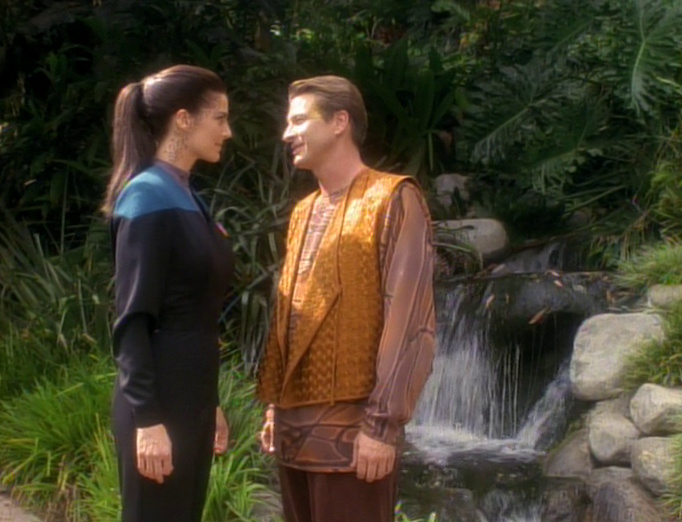
Five Star Trek episodes for Valentine’s Day!

Spoiler Warning: There are minor spoilers ahead for the episodes on this list.

Love is in the air! Happy Valentine’s Day – even though 2021 promises to be the strangest in a long time. If you have a special someone to spend today with, I bet you’re wondering what to watch to put you both in the mood. And if you don’t… perhaps you’re just wondering what to watch. So without further ado, here are a few Star Trek episodes worth watching on the most lovey-dovey day of the year – or at least tangentially related to it! As always, the list is in no particular order.

Number 1:
The Dauphin (Star Trek: The Next Generation)

Wesley’s first love is the story of The Dauphin.

It’s been a while since we talked about The Next Generation’s most controversial major character: Wesley Crusher! He’s the main focus of this episode, falling in love with the ruler of a war-torn planet. In a classic case of “bad timing,” Salia and Wesley’s relationship wasn’t to be. He learned a valuable lesson about love along the way, though, and while the episode has some cute moments and some awkward ones, it manages to be distinctly “Star Trek” all the while.

Number 2:
Choose Your Pain (Star Trek: Discovery)

Dr Culber and Stamets in Choose Your Pain.

I often call the relationship between Stamets and Dr Culber the “emotional core” of Discovery, yet looking back on the show’s 42 episodes, there are relatively few in which they are the main focus. Choose Your Pain has a lot going on, but one of the most significant points is how Hugh and Paul clash over the tardigrade – the space-dwelling lifeform that appears to be the key to making the Spore Drive work as intended. They’re able to resolve things, of course, but only when Stamets does something life-changing to himself in order to save the tardigrade’s life.

Number 3:
Threshold (Star Trek: Voyager)

Ah, Threshold.

When we think about Tom Paris, who’s his romantic partner? B’Elanna Torres, of course. But in Threshold – widely regarded as one of Voyager’s worst episodes – Paris and Janeway get together and even have kids! Had you forgotten about that? After passing the Warp 10 barrier and experiencing “hyper-evolution,” Paris kidnaps Janeway and flees to an uninhabited planet. The two hyper-evolve into lizards and apparently “do the nasty,” resulting in at least three offspring. The crew of Voyager opted to leave the hyper-evolved children behind when they rescued Paris and Janeway, though, and for some reason the events of Threshold were never mentioned again. I wonder why?

Number 4:
Amok Time (Star Trek: The Original Series)

One of the most memorable fights in all of Star Trek.

Amok Time is certainly one of the most iconic Star Trek episodes, having been imitated and parodied many times. It focuses on Spock and introduces us to the concept of pon farr – the Vulcan biological mating need. The Vulcans evidently practice arranged marriage, and when Spock’s betrothed chooses another man, Kirk and Spock must engage in a ritual fight to the “death.” As one of the first episodes to explore the Vulcans in depth, as well as our first visit to the planet Vulcan, Amok Time is incredibly important within the history of Star Trek. And as a love story, well there’s something kind of romantic about T’Pring choosing to escape her arranged marriage to be with someone she cares about… right?

Number 5:
Change of Heart (Star Trek: Deep Space Nine)

Jadzia and Worf in Change of Heart.

Workplace romances are bound to cause problems! After Worf arrived on the station at the beginning of Deep Space Nine’s fourth season, he and Jadzia Dax struck up a relationship. They eventually got married in the episode You Are Cordially Invited, and continued to work closely together. In Change of Heart they’re assigned a dangerous mission to evacuate a Federation spy at the height of the Dominion War. But when Jadzia is injured, Worf is forced to choose whether to save her life or complete the mission.

So that’s it. Five somewhat Valentine’s Day-related Star Trek episodes! Try not to take it too seriously; this was just a bit of fun to mark the occasion!

On a more serious note, Valentine’s Day can be difficult. It can be a day that brings home feelings of loneliness, that we aren’t loved or even that we’re unworthy or undeserving of finding someone special. If you feel that way, listen to me: it’s bullshit. You’re a King, a Queen, or non-binary Royalty and you are amazing. If you haven’t found somebody yet, that’s okay. There’s no pressure or time limit. I know people who found love well into their seventies and eighties, and a few years ago attended the wedding of a neighbour of mine who finally was able to marry his boyfriend – at the age of 85! Just because some people manage to find their special somebody early in life doesn’t mean you have to conform to that too. One thing I wish I’d learned a lot sooner is that it’s better to be single than to be in a bad relationship! So please try not to worry or let Valentine’s Day become an excuse to feel rotten. Your time will come. Until then, I wish you a very happy Valentine’s Day – platonically, of course!

The Star Trek franchise is available to stream now on CBS All Access (soon to be rebranded as Paramount+) in the United States, and on Netflix and/or Amazon Prime Video in the United Kingdom and elsewhere. Star Trek and all episodes and series listed above are the copyright of ViacomCBS. This article contains the thoughts and opinions of one person only and is not intended to cause any offence.
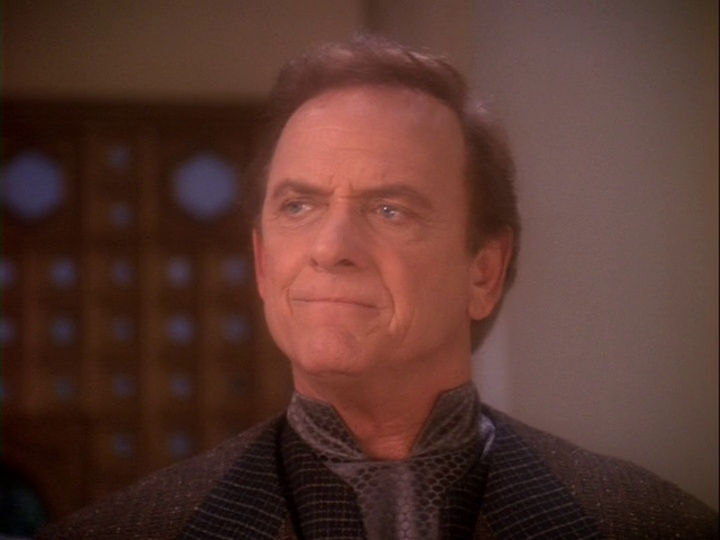
Great Star Trek villains: General Chang

Spoiler Warning: There are spoilers ahead for Star Trek VI: The Undiscovered Country.

The Star Trek franchise sometimes lucks out on getting a wonderful guest star to jump aboard. Some of these guest stars are relative unknowns; actors and actresses who aren’t household names, but nevertheless gave wonderful, memorable performances. On the other hand, there are a handful of actors and actresses who join Star Trek when they’re already very well-known, either because they’re longstanding fans or because they were offered a once-in-a-lifetime role.

Christopher Plummer, who played General Chang in Star Trek VI: The Undiscovered Country, was firmly in the second category; an established, renowned star. Plummer sadly passed away yesterday at the age of 91, and I thought it would be nice to take a look at his single Star Trek role, as well as pay tribute to this legend of stage and screen.

Christopher Plummer (1929-2021)
Picture Credit: 20th Century Fox, Public domain, via Wikimedia Commons

Christopher Plummer had a long career, first appearing on television in his native Canada in 1953. He continued to act well into his 80s, and among his final roles were the 2019 film Knives Out and a Canadian television show called Departure which was broadcast that same year. To Star Trek fans, Plummer is iconic for his role as the eyepatch-wearing Klingon General Chang in 1991’s The Undiscovered Country, where he faced off against fellow Canadian William Shatner’s Captain Kirk.

Plummer’s love of Shakespeare was incorporated into the story of The Undiscovered Country – the title of which is itself a quotation from the Great Bard. Chang would go on to quote Shakespeare numerous times throughout the film, appearing all the more villainous for it! There’s something about Shakespearean language that makes for a menacing antagonist.

General Chang and Captain Kirk share a glass of Romulan Ale aboard the Enterprise-A.

General Chang was one part of a broader conspiracy to prevent the Klingons and Federation achieving peace – a metaphor, in 1991, for the end of the Cold War. The Klingons had been conceived during The Original Series as the “Russians” to the Federation’s “Americans,” so it was certainly fitting to bring them into a storyline like this.

To continue the analogy, Chang represents the hard-liners – Soviet military leaders who could not conceive of the end of their dominance and place in the world. A few months before The Undiscovered Country would hit cinemas, a number of such men attempted a coup in the Soviet Union. This was the final roll of the dice from the old guard to preserve Soviet communism and wrench control away from the reformer Gorbachev; the Soviet Union would be formally dissolved in December of that year.

Chang appears on the Enterprise-A’s main viewscreen shortly after the assassination.

Perhaps it’s because of how timely the story was that General Chang made such an impact on Star Trek. The franchise has often looked at the real world through its sci-fi lens, but few stories managed to be as relevant or as timely as The Undiscovered Country was in 1991. The end of the conflict between the Klingons and the Federation represented the end of the Cold War, the explosion of Praxis and its fallout can be seen as an analogy for the Chernobyl nuclear disaster, and General Chang and Captain Kirk are the respective “old soldiers” from either side who must overcome the way they feel.

Kirk succeeded where Chang could not in that regard, and The Undiscovered Country gave him a meaningful character arc in a way few prior stories had. But Chang’s role is just as interesting, as he represents the many people on both sides of the conflict who were unable to find a way to live in peace. He was a foil for Kirk; a dark reflection of where Kirk’s own biases and mistrust could have led. Chang’s philosophy was that it was better to die in battle than live peacefully with one’s enemies – and he got his comeuppance for it.

Chang during Kirk’s trial on Qo’noS.

But having an interesting real-world message isn’t the only thing that makes Chang’s story so much fun. As I’ve said before, pushing too hard on that front can sometimes lead to a story or character being less entertaining! Instead, Chang was a truly interesting villain for the Star Trek franchise; a Klingon whose motivations were steeped in the concept of honour that his warrior people hold so dear.

Chang’s Klingon Bird-of-Prey could fire its weapons while cloaked, making it a uniquely challenging vessel for Kirk’s Enterprise-A and Sulu’s Excelsior during the climactic final confrontation. This battle, along with the Battle of the Mutara Nebula in The Wrath of Khan, draws on inspiration from war films set aboard submarines, with Kirk and Sulu trying to outmanoeuvre and outthink their unseen opponent.

General Chang’s Bird-of-Prey could fire while cloaked.

During Kirk and McCoy’s trial on Qo’noS, Chang was a powerful advocate for the prosecution, insisting they be convicted for the assassination of Klingon Chancellor Gorkon – an act for which he and his co-conspirators were, in fact, responsible. Star Trek has shown numerous times that it’s a franchise capable of some great moments of courtroom drama, and this was absolutely one of them! Chang shouting at Kirk that he shouldn’t wait for the universal translator was pitch-perfect acting.

A complex villain, whose motives were to continue a conflict that he could simply see no way of bringing to a peaceful end, General Chang is absolutely one of the most interesting and entertaining antagonists in all of Star Trek, and is up there with Khan as one of the best ever faced by Kirk and The Original Series’ crew.

Christopher Plummer had a long and varied career, one which touched many different genres and styles of acting, and endeared him to generations of audiences. His one moment in Star Trek was not his defining role – and is not the headline in most of his obituaries in mainstream news outlets today – but I firmly believe it showed what he was capable of at his best: a classic Shakespearean actor capable of transitioning to a wholly new genre. He will be missed.

Star Trek VI: The Undiscovered Country is available to stream now on CBS All Access (soon to be rebranded as Paramount+) in the United States, and on Netflix in the United Kingdom and elsewhere. The Star Trek franchise – including Star Trek VI: The Undiscovered Country – is the copyright of ViacomCBS. This article contains the thoughts and opinions of one person only and is not intended to cause any offence.
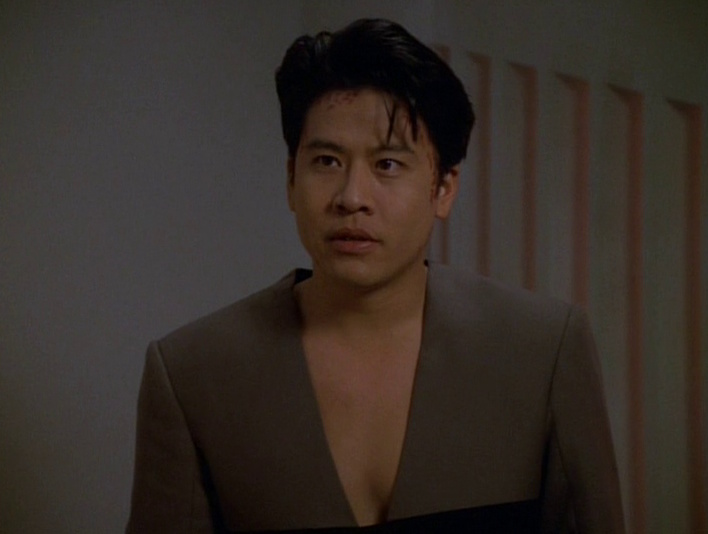
Aliens of Star Trek: The M-113 Creature

Happy Star Trek Day! Today marks fifty-four years since the first episode of The Original Series aired on American television, kicking off a franchise which is still going strong today. The Man Trap featured an alien called the M-113 Creature, but you may know it by its unofficial name: the Salt Vampire!

The early production history of Star Trek is complicated! After The Cage – the show’s original pilot – wasn’t picked up by network NBC, a second pilot was commissioned. This was very unusual, and rumours abound as to what happened. Gene Roddenberry and co. went away to work on a new pilot, and what resulted was Where No Man Has Gone Before. The new pilot dropped most of The Cage’s characters – only Spock would be retained – and reworked the series. It ultimately led to Star Trek being greenlit, and the show was picked up for a full season. Several episodes were filmed, including The Man Trap, and when NBC came to deciding the order in which the stories would air, it was selected as the premiere as its story was considered easier to follow by the executives at the network.

Happy 54th anniversary to The Man Trap… and to Star Trek!

So that’s a potted history of how The Man Trap came to be Star Trek’s first episode, despite the fact it wasn’t filmed first! The episode would see the crew take on a nefarious alien which was the last of its kind: the M-113 Creature.

I’m going to go out on a limb and say that I really like the design of the creature and the special effects used to pull it off. The heavy rubber suits used for some of The Original Series’ aliens and creatures have a distinct aesthetic, but it’s one I think really works. The suits were very cleverly and lovingly designed, and compared to a lot of contemporary special effects have held up remarkably well over the decades. I’d even compare these kind of practical effects very favourably to lots of digital effects and CGI; no one will ever convince me that Enterprise’s CGI Gorn looks better than The Original Series’ rubber suit!

I think this Gorn still looks pretty good in 2020!

Though the M-113 creature was only seen in its true form very briefly, the same kind of special effects brought it to life in a horrifying way, yet with a unique look that is now emblematic of the Star Trek franchise. Many people who are only dimly aware of Star Trek would recognise the M-113 Creature and be able to identify it as a Star Trek alien; in that sense the creature is up there with races like the Borg and Klingons as being iconic.

It’s been great to see a couple of recent references within Star Trek to the M-113 creature. It appeared in Ephraim and Dot – an animated episode of Short Treks that aired back in December. And just last week we caught a glimpse of the M-113 Creature in Cupid’s Errant Arrow, the fifth episode of Star Trek: Lower Decks. These fun little “Easter eggs” to Trekkies were greatly appreciated, and serve as a reminder of Star Trek’s origins all these years later.

The M-113 Creature seen in Ephraim and Dot…
…and again in Cupid’s Errant Arrow.

Though the creature the crew of the Enterprise encountered in The Man Trap was said to be the last of its kind, it’s arguable that may no longer be the case. Being mentioned in Lower Decks could be seen to imply that further M-113 Creatures have been discovered later in the 23rd and 24th Centuries, so we may not have seen the last of this iconic villain.

Nicknamed the “Salt Vampire” because of its ability to extract all of the salt from its victims, the M-113 Creature was a shapeshifter, able to take the form of other species, including humans. It also seems to have been sentient – able to mimic human behaviour and even hold in-depth conversations and form relationships.

The M-113 Creature was able to assume many forms.

Though distinct from later shapeshifting races – most notably the Founders of the Dominion – the M-113 Creature was the first such alien encountered in Star Trek. We’ve since seen a number of others, all of which owe at least a little something to their predecessor from The Man Trap. The concept of a shapeshifter is frightening, and that aspect has been used to great effect in several Star Trek stories.

The M-113 Creature also possessed several other abilities that made it a formidable adversary: it could telepathically sense the minds of sentient life forms – including humans – and use what it found to choose its appearance. This kind of tactic allowed it to get close to its prey and get them to let their guard down. It was also capable of paralysing people in order to get close to them when in its true form, and was incredibly physically strong – far more so than humans and Vulcans.

The M-113 Creature in its true form.

In The Man Trap, the sole surviving M-113 Creature (that we know of) took the form of Nancy Crater, a woman Dr McCoy had known; “that one woman”, as Captain Kirk put it. It lived with Crater’s husband, Robert, on the planet M-113 for a number of years. It was speculated that there had once been a civilisation of M-113 Creatures, but that the majority had gone extinct when the planet’s supply of salt was used up. Robert and Nancy Crater led an archaeological expedition to the world, encountering what could be the last survivor of the race.

Despite possessing some degree of sentience, it wasn’t possible for the crew of the Enterprise to reason with the M-113 Creature that they encountered, and it was killed by Dr McCoy while attempting to feed on Captain Kirk. If it were possible to negotiate with it – or others of its race – Starfleet could have provided the aliens with a supply of salt in exchange for peace. Perhaps such a story could be included in a future episode of Star Trek!

The M-113 Creature after being killed by Dr McCoy.

Despite its monstrous appearance and villainous role in the story, the death of the M-113 Creature in The Man Trap is a sad occasion. Potentially the last of its kind, the entire race and everything they had created now seems lost to history. Starfleet aims not only to seek out new life, but also to find ways – where possible – to peacefully coexist. It’s ironic, considering subsequent Star Trek stories, that the first encounter with an alien ended with its death!

But in a way, the aftermath of the M-113 Creature’s death is what established Star Trek as being more than just typical mid-century B-movie sci-fi fare. It took an emotional toll on Dr McCoy to kill what he thought was his long-lost love, and it took a toll on Kirk and the crew to have killed off the last member of a species. But as the Enterprise prepares to leave orbit, Kirk, Spock, and McCoy gather on the bridge and remember the creature in what was a very poignant moment.

The crew of the Enterprise at the end of The Man Trap.

It’s moments like this, across The Original Series’ early episodes, that set up Star Trek as being something special. There was more to the story of the M-113 Creature than just a horrible monster for our heroes to outsmart. That story was emotional and complex, bringing up issues of morality that other television series and films struggle to get across even today.

Star Trek offered – and continues to offer, fifty-four years later – much more to its audience than just exciting space adventures. This is why the franchise has endured so long, and it all began on the 8th of September 1966 with The Man Trap and the M-113 Creature.

Star Trek: The Original Series is available to stream now on CBS All Access in the United States and on Netflix in the United Kingdom and other countries and territories. The series is also available on DVD and Blu-ray. The Star Trek franchise – including The Original Series and all other properties listed above – is the copyright of ViacomCBS. This article contains the thoughts and opinions of one person only and is not intended to cause any offence.
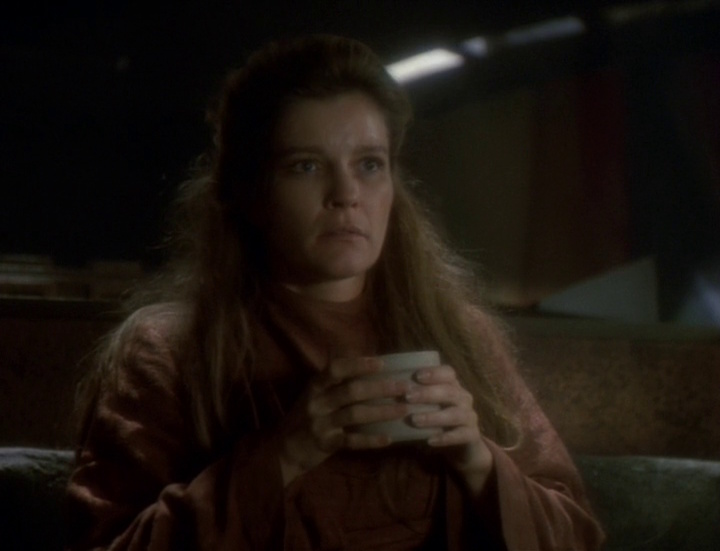
Ten great Star Trek episodes – Part 1: The Original Series

Spoiler Warning: In addition to spoilers for the episodes listed below, there may be minor spoilers for other iterations of the Star Trek franchise, including both Star Trek: Discovery and Star Trek: Picard.

This is the first part of a new series of list-articles in which I’ll look at ten great episodes from each of the Star Trek shows (except for Star Trek: Picard, which only has ten episodes in total at this point!) I didn’t want to call it a “Top Ten List”; that comes with a lot of pressure to both choose my all-time favourites as well as how to rank them! Instead, this is a list of “ten great episodes”, and they’re in order of release.

Star Trek – retroactively titled The Original Series to prevent confusion – premiered on American television in 1966. It ran for two seasons, with a third being granted in 1968 following an extensive letter-writing campaign by fans who feared its perpetually low ratings would lead to cancellation. Its third season would be its last, however. It was only when the series was syndicated and rebroadcast in the 1970s that its fanbase grew, leading to both an animated series in 1973 and finally a feature film in 1979. Star Trek: The Motion Picture was actually the culmination of several years’ worth of attempts to bring the franchise back to the small screen, which seem to have kicked off around 1975.

This is the series that spawned all the others, but as the fanbase has grown over time, many self-proclaimed Trekkies aren’t as familiar with The Original Series as they are with the Star Trek shows of the 1990s. For me, The Next Generation was my first encounter with the franchise, and it wasn’t until some time later that I got to see The Original Series. While it is dated by modern standards almost across the board – acting, set design, effects, and even storytelling – it is still worth watching for anyone who wants to see where the franchise began. Given that you may find yourself with time on your hands at the moment, it could be a great time to check out this classic series.

So let’s dive into the list – and be aware that there may be spoilers. (Do spoilers for a fifty-year-old series still need to be flagged?)

Number 1: The Cage (Pilot)

The bridge of the USS Enterprise at the beginning of The Cage’s very first scene.

Star Trek had two pilot episodes, the second of which – Where No Man Has Gone Before – was successful and got picked up for a full season. But before we got to meet William Shatner’s Capt. Kirk and the rest of the crew, Star Trek’s first pilot was rejected by television network NBC. Practically all of the footage shot for The Cage would end up recycled into a two-part episode in Star Trek’s first season, titled The Menagerie, but the episode would not be seen in full on its own until after The Next Generation premiered over twenty years later. It’s rare in television for a rejected series to get a second chance, and there have been many rumours over the years as to exactly how things went down in 1965 leading to the decision to make a second pilot, including that Lucille Ball – famous for her role in the classic 1950s series I Love Lucy, and co-owner of Star Trek’s production company Desilu – intervened on the show’s behalf.

An actor by the name of Jeffrey Hunter took the lead in The Cage as Capt. Christopher Pike – a character most recently portrayed by Anson Mount in Star Trek: Discovery. The USS Enterprise is lured to the planet Talos IV by a faked distress call, and Pike ends up captured by the Talosians – a race capable of using their minds to create illusions indistinguishable from reality.

Even in its remastered form, The Cage is janky and dated by today’s standards. With the general exception of Jeffrey Hunter, most of the performances are very much of their time – which is to say not particularly convincing. Acting has come a long way since the mid-1960s, and there’s a lot to be said for how much better, in general, the quality of acting performances are today than they were back then. Many aspects of the episode’s visual design are also not what you’d expect from a show made today. The indoor sound stage which was used to represent the surface of Talos IV is obviously artificial, as are the papier-mâché and polystyrene “rocks” and “mountains” which form the landscape of the planet. There are also some outdated references – at one point, Capt. Pike says he can’t get used to the idea of “a woman on the bridge” of his starship. But this was the reality of storytelling at the time, and for all of its flaws by today’s standards, this is where Star Trek began.

I’d argue that very few television series begin with a pilot that ends up being one of the best episodes overall. Shows take time to find their feet, for cast members to get to know each other and develop chemistry, and for writers and production staff to get into a rhythm. The Cage is our first introduction to all of the Enterprise’s crew, and with the exception of Spock, we wouldn’t see any of them return in a meaningful way until the second season of Star Trek: Discovery just last year reintroduced Capt. Pike and Number One. Those recast characters are so far removed from their origins in The Cage that they’re halfway to being new characters altogether, but we’re getting off the subject. The Cage in some ways contradicts or at least undermines some elements that would come later in Star Trek as its first season rolled out. For example, Spock behaves in an altogether different way to his usual cold and logical self. The one consistent character in both The Cage and Star Trek’s first season is actually inconsistent in his characterisation. Seeing Spock showing such emotion and behaving in a manner that is so human can be a jolt – so be prepared!

Number 2: Court Martial (Season 1)

Lawyer Samuel T. Cogley meets with his client, Capt. Kirk, in Court Martial.

Of all the first-season episodes which deal with Kirk, I feel none are quite so influential as Court Martial. By this point in its run, Star Trek was finding its feet. The core trio of Kirk, Spock, and McCoy was developing, and the Enterprise had a handful of adventures under its belt that had set the tone for the show. Kirk had been established as a caring commander, someone who would bend the rules for the sake of his ship and crew, but never for himself. So when we see him accused of negligence, manslaughter, and ultimately murder, and trying to cover his tracks to save his own neck, we know enough about the Enterprise’s captain to know this can’t be true!

The Star Trek franchise has some great episodes featuring courtroom drama. There was The Measure of a Man and The Drumhead from the second and fifth seasons respectively of The Next Generation, Rules of Engagement from Deep Space Nine’s fourth season, Death Wish from Voyager’s second season, and even a sequence at the end of Battle at the Binary Stars, which was the second half of Discovery’s premiere. All of these episodes, and others not mentioned, owe a lot to Court Martial for establishing courtroom drama as one thing that Star Trek can do exceptionally well. As an aside, I recently re-watched The Measure of a Man during Star Trek: Picard’s first season, and you can see the resulting article by clicking or tapping here.

Court Martial also makes good on the original pitch of Star Trek as being a “wagon train to the stars” – i.e. a western-inspired series. Old country lawyer Samuel T. Cogley – based, undoubtedly, on famed American lawyer Clarence Darrow – steps up to defend Kirk in what seems to be an open-and-shut case against him. The roles of Cogley and Dr McCoy in Court Martial would be just as at home in one of the many westerns of the time which Star Trek was influenced by. While the concept of an old country lawyer can hardly be called unique to the Star Trek franchise, Cogley has become somewhat of a cult character, with homage and parody paid to him in shows like Futurama.

Number 3: Space Seed (Season 1)

Space Seed sees the crew of the USS Enterprise tangle with Khan for the first time.

Khan would later become far more famous – and arguably a cultural icon – from his appearance in Star Trek II: The Wrath of Khan in 1982. But Ricardo Montalbán’s character debuted in Space Seed during Star Trek’s first season. One of the great things about The Wrath of Khan as a story is that it doesn’t make this episode essential viewing in order to follow the plot; it was, after all, released years before home video was commonplace. However, if you’re a Wrath of Khan fan who hasn’t seen the episode, or if you simply haven’t seen it in a long time, it does provide great background to the film.

In the far future – by 1960s standards – of the 1990s, a tyrant by the name of Khan would arise on Earth. Precisely how seems to have been lost to history, but Khan and his followers were genetically engineered and considered themselves to be super-human. After a conflict known as the Eugenics Wars, Khan was defeated, but he and some of his followers secretly fled into space, where they remained in stasis… until Capt. Kirk and the Enterprise crew discovered them!

Our understanding of Khan as a villain is largely based on his second appearance in the franchise, which, as already mentioned, can be taken as a standalone story. However, many of the elements that would be developed further in The Wrath of Khan are on display here, and this is where Khan’s rivalry with Kirk began. One element from the film is that Khan had a wife – her death is part of the reason he’s so angry with Kirk. While it has never been confirmed on screen, Enterprise crewman Marla McGivers is a solid candidate for who it could be. She was set to be included in The Wrath of Khan, but sadly actress Madlyn Rhue was ill with multiple sclerosis by 1982 and her character was written out of the film and not recast.

Number 4: The Doomsday Machine (Season 2)

In The Doomsday Machine, Commodore Decker is the sole survivor aboard the USS Constellation.

Season 2 is where Star Trek really hit its stride. At least in my opinion, most of the best episodes come from this season, which improved on Season 1 and came before the reduction in the series’ budget which contributed to a generally lacklustre third season. Though it can be hard to name an “all-time favourite episode”, The Doomsday Machine is definitely a contender for that title.

A thinly-veiled analogy for the issue of nuclear proliferation during the Cold War – which spills over at the end of the episode into in-your-face social commentary – The Doomsday Machine is a fascinating piece of television history, and a great example of how the Star Trek franchise can use its science-fiction setting to draw attention to real-world issues. When the episode premiered in October 1967, it was almost exactly five years to the day since the Cuban Missile Crisis brought the world as close as it arguably ever came to nuclear armageddon. Thus any examination of the episode has to understand its place in time. The Cold War was still rumbling on, with the Vietnam War approaching its apex. Practically everyone watching in 1967 would have vivid memories of the Cuban Missile Crisis, and even younger viewers would be acutely aware of the threat of nuclear war, as civil defence was taught to all schoolchildren in this period. While we may look back at it now as something rather dated, in its time, The Doomsday Machine was relevant social commentary.

But analogy and commentary alone do not make for entertaining television – and can, in some cases, detract from it. So what makes The Doomsday Machine such a standout episode is that floating atop the deeper meaning is an engrossing story. Commodore Decker is introduced as a broken officer, who had commanded the USS Constellation, a sister-ship to the Enterprise, when it encountered a plant-killing superweapon. With the ship damaged, Decker evacuated his crew to a nearby planet, only for the planet-killer to destroy it and kill them all. Devastated and clearly suffering from post-traumatic stress, Decker becomes obsessed with revenge – channelling Capt. Ahab from Moby-Dick – and tries to take down the planet-killer, even if it means putting the Enterprise in danger.

William Windom, who plays Decker, carries large parts of the episode in a way most guest stars don’t, even in more modern shows. His performance was inspired and riveting, and the raw emotion Decker is feeling at the loss of his crew plays exceptionally well against Spock’s cool, logical persona in particular.

Number 5: Journey to Babel (Season 2)

Sarek arrives aboard the Enterprise in Journey to Babel, and is greeted by Kirk, Spock, and Dr McCoy.

Journey to Babel introduced Sarek, who would become a recurring character in the franchise. Meeting Spock’s father, and seeing the cool, logical tension between them is, in a curious way, relatable to many of us in the audience. Mark Lenard, who took on the role, had previously played the unnamed Romulan commander in the first season episode Balance of Terror, which didn’t make this list but is itself well worth a watch as it introduces the Romulans for the first time.

The episode gives some fascinating backstory to the Federation itself, which would be built up much more in Star Trek: Enterprise in particular. We meet the other core races who founded the Federation along with humans and Vulcans: the Tellaraites and Andorians. Both species have cropped up at various points in other iterations of the franchise.

There are two story elements at play – the aforementioned family drama between Spock and his father, and a murder mystery which threatens the peace between the Federation’s races, in which Sarek is a suspect. Both stories are intertwined perfectly, making Journey to Babel tense and dramatic throughout. While father and son don’t exactly resolve their differences, the intervention of Dr McCoy using Spock’s blood to save Sarek’s life does go some way to improving things between them, at least for a time.

Number 6: The Trouble With Tribbles (Season 2)

This scene from The Trouble With Tribbles is arguably one of the most famous in all of Star Trek!

When fans and non-fans alike think about The Original Series – and the Star Trek franchise in general – one of the episodes that often springs to mind is The Trouble With Tribbles. The episode has become synonymous with the series in our broader cultural imagination in some ways, and while many people would struggle to think of any other story from The Original Series, I bet most people could recall The Trouble With Tribbles.

The little furry creatures have themselves become an inseparable part of the franchise – up there, I would absolutely argue, with the Borg and the Klingons as something that people inherently associate with Star Trek. That’s probably helped by their cute appearance and gentle purring noise – they’re like round, faceless cats!

The Star Trek franchise has itself leaned into this cultural trope. For its 30th anniversary in 1996, Star Trek: Deep Space Nine released a groundbreaking episode – Trials and Tribble-ations – using footage from the original episode with the Deep Space Nine cast creatively worked in. This technology was pioneered in the film Forrest Gump a couple of years earlier, but it was the first time it had been used on television, and the budget for Trials and Tribble-ations was sky-high as a result. More recently, Tribbles have featured in the Short Treks episode The Trouble With Edward. If you can find a copy – Short Treks is currently unavailable outside of the United States – it’s absolutely hilarious and well worth a watch.

In The Trouble With Tribbles, Capt. Kirk and his crew visit a space station which is holding a vital shipment of grain destined for a planet that both the Federation and Klingons want to control. In the midst of it all, a rogue trader has arrived at the station with, among other things, Tribbles for sale. Several crew members are immediately taken with the cute critters, but with a mystery to unravel and Klingons to outwit, Kirk has his work cut out for him! This is Star Trek at its best, blending different genres together and with a healthy side of humour to boot. No wonder the episode has become so famous.

Number 7: The Ultimate Computer (Season 2)

Dr Richard Daystrom introduces Dr McCoy, Spock, and Kirk to the M-5 Multitronic Unit in The Ultimate Computer.

The Ultimate Computer was, in many ways, a story ahead of its time. The idea of rogue artificial intelligence has become more common in sci-fi since 1968, and of course is a real-world concern too, being discussed even by the likes of (Star Trek: The Next Generation guest star) Stephen Hawking. The Star Trek franchise has used this concept to great effect with the Borg in particular – you can see my thoughts on the Borg as a story element by clicking or tapping here. It’s also been explored in great detail in Star Trek: Discovery’s second season with the Control AI, and of course in Star Trek: Picard’s first season with the rogue synths.

Star Trek: Discovery came closest to channelling The Ultimate Computer at points in its second season storyline, and the fact that the concept is just as interesting and frightening today as it was in 1968 makes this episode a great watch. Unlike some episodes of The Original Series, which can feel very dated, in that sense it is oddly timeless. Our collective fear as a species of out-of-control AI is one that is still present, arguably even more so today than when The Ultimate Computer premiered.

The episode also features one of Star Trek’s best guest performances by actor William Marshall, who took on the role of computer scientist Dr Richard Daystrom. Marshall’s role is another great example from Season 2 of Star Trek using its futuristic setting to address real-world issues – in this case, the issue of race. While Uhura had been a constant presence on the show since its second pilot, and Star Trek had already been in many ways groundbreaking in the way it dealt with black Americans in particular, Dr Richard Daystrom is yet another middle finger to the newly-desegregated Southern states, showing an incredibly intelligent engineer working in the future – who happened to be black. There was nothing in-your-face about it, no monologues to the camera or wry remarks by Kirk and the crew, simply the presence of a black man in a senior position being treated as normal and commonplace. It absolutely is those things today – or at least it should be – but in the 1960s race relations in parts of America were still very complicated.

Dr Daystrom’s legacy lives on within the Star Trek franchise, as he’s the namesake of the Daystrom Institute. This organisation was first mentioned in The Next Generation, and has recently appeared in Star Trek: Picard.

One thing that many fans don’t realise is that James Doohan was an accomplished voice actor. In The Animated Series he would often be called upon to voice guest characters, and in fact his Scottish accent was not his normal speaking voice; Doohan was Canadian. In The Ultimate Computer, he lends his voice to the M-5 Multitronic Unit.

Number 8: Spock’s Brain (Season 3)

In Spock’s Brain, Dr McCoy must tend to a brainless Spock.

Let’s be frank for a moment – Spoack’s Brain could well be the worst episode of The Original Series. Both in terms of its premise and the way it was executed, the third season’s premiere was poor. But amongst the wreckage of the story are some unintentionally hilarious moments, and the episode is well worth watching for that alone. In that sense, it’s akin to a classic B-movie.

If all of Star Trek had been on the level of Spock’s Brain, it would never have lasted even one season, let alone been renewed for an animated series, films, and spin-offs which now span more than half a century! But despite that, it’s worth coming back to episodes like this to see what The Original Series was beyond the familiar elements like starships and Klingons. Aside from the first couple of seasons of The Next Generation, which followed a similar format to The Original Series in many respects, episodes like Spock’s Brain aren’t made any more, and haven’t been since the dawn of the 1990s.

The episode aims to be a kind of sci-fi concept, looking at both the potential for technological dependence and how advances in medical technology could lead to things like brain transplants. But neither of these story elements landed, and it’s not without reason that the Star Trek franchise has never revisited Sigma Draconis VI.

Number 9: The Tholian Web (Season 3)

Caught between parallel universes in The Tholian Web, the USS Defiant glows an eerie green on the Enterprise’s viewscreen.

Perhaps it’s because we’ve seen The Tholian Web’s USS Defiant crop up in both Star Trek: Enterprise and Star Trek: Discovery, but I feel that The Tholian Web is one of the third season’s high points. Many stories in The Original Series are unique to this show in the sense that they wouldn’t translate well to other iterations of the franchise, but The Tholian Web absolutely would be at home in any other Star Trek show.

The Tholian Web is a space story first and foremost, and it brings to bear some elements from the claustrophobic war films of the 1940s and 1950s, particularly those set at sea and on submarines. The USS Defiant – a sister-ship to the USS Enterprise – is adrift and caught between two parallel universes, and Kirk and the crew are called to investigate. The Tholians – a race who resemble insects – intervene, trying to claim both the USS Defiant and this region of space for themselves.

Despite being inspired by war films, The Tholian Web is pure space-based science fiction in a way that many episodes of Star Trek arguably are not, especially in the third season. The drama and tension come from an extraterrestrial race and the concept of an alternate dimension, both key elements in sci-fi. In that sense, and combined with its ties to more recent iterations of the franchise, The Tholian Web could be a great introduction for someone wholly new to The Original Series but familiar with other Star Trek series. As an episode which makes extensive use of sets normally used for the USS Enterprise, The Tholian Web is one of Star Trek’s famous “bottle shows”.

Number 10: Whom Gods Destroy (Season 3)

Having been locked up in the Elba II asylum, in Whom Gods Destroy Garth of Izar attempts to commandeer the Enterprise.

Depictions of mental health on television have, in some ways, changed over the years. The presentation of mentally ill people as being dangerous and criminal was commonplace in the 1960s and earlier, as our understanding of mental illness was poor. The Star Trek franchise still has issues in the way it presents mental health – look at my thoughts on the Star Trek: Picard episode The End is the Beginning for how stereotypes and tired clichés are still present, or the portrayal of the genetically-engineered characters in the Deep Space Nine duology of episodes Statistical Probabilities and Chrysalis – but overall, audiences today have a better understanding of mental illness and thus, the way it is presented has evolved.

Whom Gods Destroy is, in some ways, a product of its time. However, what it does is introduce hope – hope that in the future, mental illnesses can be cured even in the most extreme cases. This kind of hopeful narrative is exactly what Gene Roddenberry wanted to use Star Trek to explore. His vision of the 23rd Century was one where humanity was working hard to overcome all manner of problems, and Whom Gods Destroy looks at how there may yet be hope for curing severely ill patients, which I feel is a positive message, even if the portrayal of Garth of Izar and the other Elba II inmates is very much dated.

The character of Garth of Izar is interesting, and the episode teases fans with some hints at Starfleet’s history prior to Capt. Kirk’s five-year mission. Kirk himself says that Garth’s exploits were required reading during his time as a cadet. As of 2020, Garth has yet to make another appearance, despite the era of Star Trek: Discovery potentially crossing over with the time he was an active officer in the fleet. However, a fan project titled Star Trek Axanar will take its own look at the character and the decisive Battle of Axanar when it eventually premieres. This project has been controversial in some Star Trek fan circles, but the passion of those behind it is unquestionable, and it will bring back several actors from past iterations of the franchise.

So that’s it. Ten great episodes from The Original Series that are well worth a first or second look. Many of the episodes I’ve chosen are closer to other iterations of the Star Trek franchise, but The Original Series also featured many episodes which looked at settings and concepts that future Star Trek shows would generally not touch, simply because television storytelling and science fiction in general had moved on in the intervening years.

When we consider the incredibly large and broad question of “what is Star Trek?”, for many fans The Original Series is the answer. It’s episodic television, with influences from westerns, World War II films, and other mid-century dramas. It’s also quite different, both in the way it looks and the way it’s presented, from much of what would come later. Whether that’s something you like or dislike is something personal and subjective, of course, and I’m not passing a judgement either way. These aren’t episodes which I’m saying are “objectively the best”, nor even are these my top ten favourites. To reiterate what I said at the beginning, these are simply ten great episodes that, for various reasons, are worth your time.

Stay tuned for more in this series of articles over the next few weeks. I will take a look at The Next Generation, Deep Space Nine, Voyager, and Enterprise, and pick ten great episodes from each of those series as well. Hopefully it won’t be too long before we’ll hear a solid release date for the third season of Discovery, too, and when we do I’ll be taking a look at each of those episodes as they’re released. In short, there’s much more Star Trek content to come here on the blog!

Star Trek: The Original Series is available to stream now on CBS All Access in the United States, and on Netflix in the United Kingdom and other countries and territories. The series is also available on DVD and Blu-ray. The Star Trek franchise – including The Original Series and all other properties mentioned above – is the copyright of ViacomCBS. This article contains the thoughts and opinions of one person only and is not intended to cause any offence.
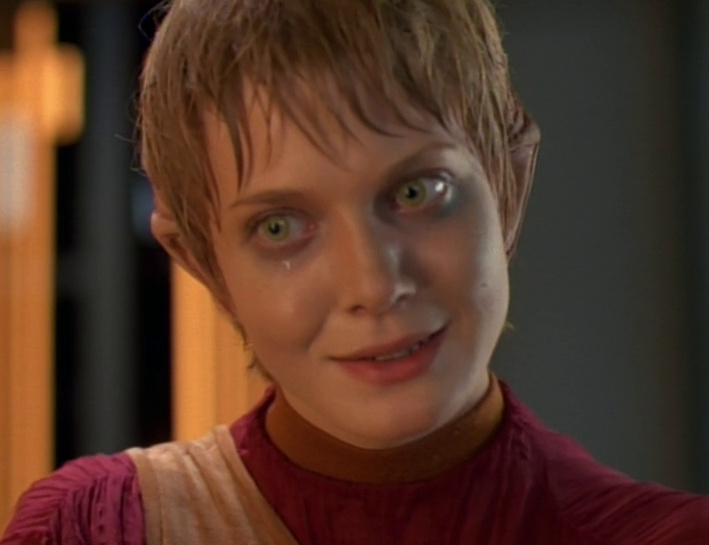
“Old” versus “New” Star Trek

Spoiler Warning: While this essay doesn’t go into many plot details, there may be minor spoilers ahead for the Star Trek franchise, including for Star Trek: Picard and Star Trek: Discovery.

I’ve seen a number articles and videos over the last couple of years, really since Star Trek: Discovery premiered, looking at how the Star Trek fanbase has become divided into fans of “old” Star Trek and “new” Star Trek. However one may feel about the various films and series, it’s undeniable that there are many Trekkies who have jumped ship over the years and do not consider themselves fans of the franchise’s newer iterations – as well as plenty of casual viewers who have seen one series but not others. Given that the franchise is well past its fiftieth anniversary, perhaps that’s fair enough. But I did want to take a look at the phenomenon for myself and give my thoughts on how the franchise is split, some of the possible causes, and what that split could mean for the franchise going forward into the 2020s and beyond.

True hipster Star Trek fans only watched Star Trek when Jeffrey Hunter was in it. William Shatner? Pfft. Newbie.

Firstly, the question often asked in these articles is “how can everyone come back together?” Writers will often set up that question, pretending that they’re going to answer it fairly, only to basically end up saying “everyone will come back together if Star Trek does everything my way and gives me everything I want.” That just isn’t realistic, I’m afraid. And as with many cases of division, the reality is that there may not be a way to bridge the gulf and reunite everyone around one new Star Trek series or film. That may sound depressing, and it is in a way. But we have to be realistic – there are some people now who are literally making money from running anti-Star Trek groups online, and if anyone expects someone in that position to suddenly turn around and say “hey guys, I just saw the latest episode and it was amazing!” well, I’ve got a bridge to sell you. The truth is that some people aren’t interested in fair criticism. They have decided they want to hate, and just like fans of a football team could never support a rival club, no matter what, their hatred for the current and upcoming lineup of Star Trek shows and films will continue. It’s part of the tribal mindset that we as human beings all end up subscribing to in one way or another: “I support X, which is opposed to Y. Therefore, I can never ever like Y, because it would go against how I define myself as a person”. That’s true in sport, it’s true in politics, and it’s true in entertainment as well.

But before we can look at divisions in the fanbase, we need to examine the basic concept: what is “old” Star Trek, and what is “new” Star Trek? It’s a far more complicated question than it seems, and the answer will vary depending on how old a person is, and when they first encountered the franchise.

The bridge of the original USS Enterprise in the episode The Corbomite Maneuver. For many fans, The Original Series and its crew were irreplaceable.

There are several “turning points” in the history of Star Trek where fans jumped ship, and the easiest way to look at them is in chronological order. The first one was in 1987, when The Next Generation premiered. Until this point, Star Trek had been The Original Series with Kirk, Spock, McCoy, and the rest of the 1960s crew, and while there was excitement for Star Trek’s return to television – just as there was in 2017 – that was countered by a vocal number of fans who believed ardently that the original characters were the beating heart of Star Trek – and were irreplaceable. These people may have watched The Original Series and the first four Star Trek films (The Final Frontier and The Undiscovered County were released after The Next Generation premiered) but simply had no interest in a new crew, a new ship, and a new century. Indeed, Sir Patrick Stewart himself has said many times that he believed The Next Generation would not be a success – and would run for perhaps two seasons at most.

The NX-01 Enterprise leaves its dock in Broken Bow – the series premiere of Enterprise.

The second turning point is the one I’m most familiar with – because it’s the point I came very close to jumping ship myself: 2000-2001, when Enterprise was announced and entered production. In the aftermath of the disaster that was Star Wars Episode I: The Phantom Menace in 1999, a prequel was just something that many fans, myself included, had little interest in. Star Trek – as I have often written here on the blog – had always been about pushing forward into the future, and yet here was a show that wanted to look back at its own past. This kind of navel-gazing just didn’t feel like a good idea, and the aesthetic of the show, with its boiler-suit uniforms, clunky starship design, modern (for the time) computer screens, and overreliance on not-quite-good-enough early-2000s CGI was not inspiring. There had been some real stinkers in the Star Trek canon when it came to individual episodes and stories – Spock’s Brain, Angel One, Shades of Grey, Threshold, and Move Along Home to name but a few – but this was the first time that the premise of a series itself seemed unexciting, at least for me. The introduction of Scott Bakula as the captain did go some way toward lifting the show for some fans who had been on the fence, but I confess that during Enterprise’s original run here in the UK I only tuned in sporadically, and it was only when I got the series on DVD a few years after it went off the air that I watched it in its entirety. Nowadays I often cite Enterprise as an example whenever I hear the argument: “nobody asked for this”. Nobody in 2000 was asking for Enterprise, yet it actually told some interesting stories and had a great cast of characters. I’m glad to have seen it, I’m glad it existed, and ultimately I feel its strengths far outweighed its weaknesses. Giving it a second chance was a good decision – even if the only reason I bought the DVDs was to complete my Star Trek collection!

The 2009 redesign of the USS Enterprise – and re-casting of the original crew – was too much for some fans.

Next comes our third turning point: when Enterprise went off the air, a spell was broken. Star Trek had, in some form, been in continuous production for almost two decades, beginning with pre-release work on The Next Generation in 1986 running all the way through to 2005 when the final episodes of Enterprise were produced and released. The cancellation of Enterprise was symbolic – the end of an era. And in that moment it seemed as though Star Trek was dead and not coming back. But it didn’t stay that way for very long at all, and within a year or so of Enterprise’s cancellation, word started going around about a new film – one which would be a reboot, recasting iconic characters like Kirk, Spock, and McCoy. For many long-term fans – including some friends of mine – that was a bridge too far, and they were never interested in what would become 2009’s Star Trek and the “JJverse” or Kelvin timeline that it spawned. For others, Star Trek was too much of a departure from the rest of the franchise, with its visual overhaul and action-heavy story, and some fans who did give it a go were underwhelmed and didn’t come back for more.

The USS Discovery, as seen in the first official teaser trailer in 2016.

So we’ve reached the final turning point. 2017, and the premiere of Star Trek: Discovery is the moment that many of these articles and videos use when dividing “old” Star Trek from “new” Star Trek. Discovery had a somewhat troubled production, with Bryan Fuller departing before the show aired, and controversy surrounding CBS All Access as a platform for the show in the United States. There was also the “prequel problem” that plagued Enterprise, and as more details came out about the series, the visual style being more in line with the JJverse than The Original Series also became a bone of contention. As with each of the three previous turning points, a number of fans decided that Discovery just wasn’t for them and simply opted out.

The point of recounting this history of the Star Trek fanbase and the points at which some fans chose not to continue with new iterations is simple – this is not a new phenomenon. It has happened before in Star Trek, and, if we’re lucky enough for the franchise to continue into the future, it will undoubtedly happen again sooner or later. None of these moments destroyed the franchise or ruined the fanbase, nor drove Star Trek’s creators and promoters out of business for the simple reason that the fans who jumped ship were in the minority. A vocal minority, perhaps, but a minority nevertheless. And it’s the same with those who haven’t watched Discovery and Picard – and of course, those who make a big fuss about not supporting “new” Star Trek in online groups and on YouTube channels: they’re a minority.

“Real” Star Trek fans love The Final Frontier.

Trekkies have always been a minority of Star Trek’s audience. It’s a commercial product; a series designed to have appeal beyond a small niche of convention attendees. If it didn’t appeal to casual viewers it would never have survived or been reborn in the first place, at any of the points mentioned above. So to say that because a small number of Trekkies who liked the TNG-era shows don’t like Discovery there’s somehow a massive problem and that Star Trek today is fundamentally broken is nonsense. A minority of a minority, no matter how vocal they may be with their criticism and hate, don’t matter to ViacomCBS’ bottom line in any material way.
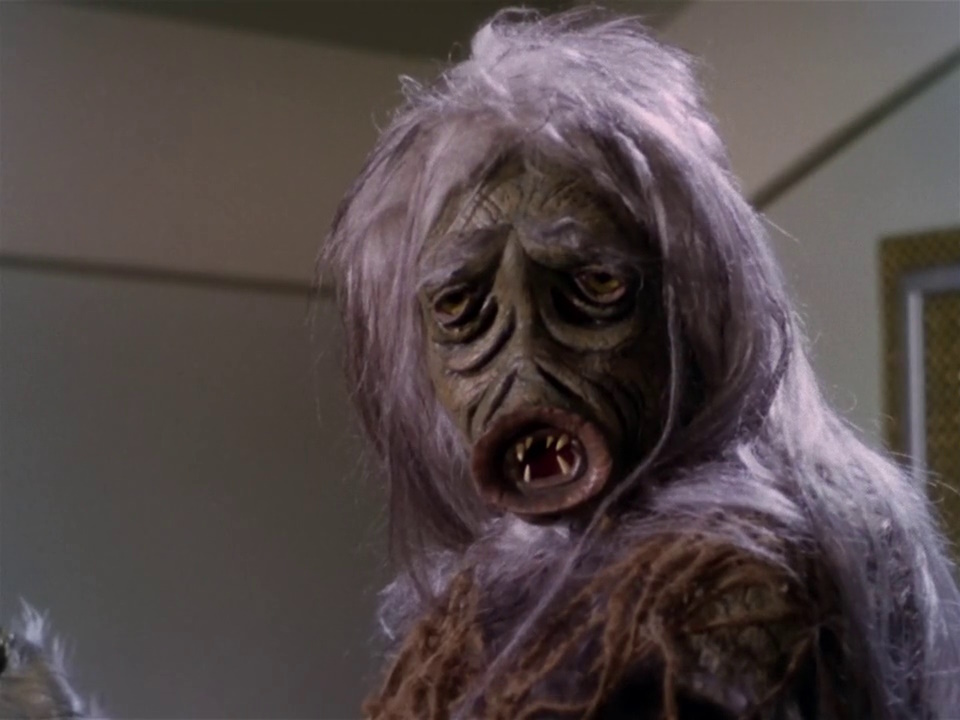
But do they have a point?

It’s a tough one for me to answer, and if you’ve been here before you’ll know why: I’m a big fan of “new” Star Trek, just as I’m a fan of “old” Star Trek too. I can see the point of view that says the newer shows and films are bad, but generally I don’t agree, so from my perspective they don’t have a point. Especially to those people who pre-judged Discovery and Picard based on what they read in anti-Star Trek groups online and never even watched the shows in the first place I’d really say they don’t have a leg to stand on in this argument. How can they possibly sit there and say something is bad when they haven’t given it a try for themselves? The biased “reporting” of some anti-Star Trek YouTuber is not the same as experiencing the film or series for themselves, and I’d really encourage everyone who falls into that category to at least stick with Discovery beyond its opening two episodes, which I fully concede were especially weak.

This actually ties into another point – most Star Trek series, with the exceptions of Deep Space Nine and Picard – opened quite underwhelmingly. And it took more than a few episodes for all of the Star Trek shows to really find their feet. The Next Generation’s first season isn’t anywhere near as good as its third, fourth, or fifth, for example, and Voyager similarly took at least a full season to get up and running. Even the beloved Original Series got off to a rocky start – so giving up on Discovery or Picard after one or two episodes isn’t really giving those shows a fair shake.

Lorca and Saru in Star Trek: Discovery.

Part of this is to do with binge-watching culture. For many Star Trek fans – and I include myself in this category to an extent, especially when it comes to Enterprise – they missed out on seeing most or all of “old” Star Trek when it originally aired. They could pick and choose which episodes to watch from DVDs or on streaming platforms, and watch them anytime they wanted to. Star Trek, to many Trekkies, was a complete product. Seven seasons of The Next Generation, Deep Space Nine, and Voyager, as well as three of The Original Series and four of Enterprise is a lot to wade through, and an individual bad episode is just a blip when you don’t have to wait a week for the next one and can skip ahead to another episode on the disc.

But there are changes in the way Star Trek has told stories over time, and we do have to acknowledge that. There has been a move away from episodic storytelling (aka the “monster-of-the-week” format) in favour of season-long story arcs and a serialised format. I confess I have a preference, in some cases at least, for episodic television. It’s nice to be able to jump into a random episode of a series without needing to know or remember everything that happened leading up to that point. It makes Discovery and Picard season-long commitments, instead of something fans can jump in and out of. And because, as mentioned, a lot of folks are used to Star Trek shows being complete products and in addition are used to binge-watching, having to wait a week between episodes of a partially-complete story can be annoying I suppose.

There has also been a shift away from the more ethereal, philosophical, and thought-provoking storylines that Star Trek used to do. Ironically, many of those stories and episodes are less popular among fans – The Motion Picture is always considered a poor relation to films like First Contact and The Wrath of Khan, which are both much more in the action-sci fi genre, just to give an example. I discussed this in a little more detail in my 40th anniversary look at The Motion Picture if you’re interested to read more. But there’s no doubt that Discovery and especially the JJverse films have gone in a much more action-centric direction, and for people who wanted to see more of the slower paced, thought-provoking stories, action-sci fi maybe doesn’t “feel like Star Trek” in quite the same way.

Kirk and Scotty in The Motion Picture – a less popular film than its sequel with many Trekkies.

Now we come to what is the single biggest point: nostalgia. People like what they grew up with. Heck, the whole reason Star Trek is being made again now, more than fifty years since it was first created, is because nostalgia is incredibly powerful and there’s money to be made from it. But nostalgia is a double-edged sword. Some people don’t want to see an “updated” version of the franchise they loved from childhood or young adulthood. If they want more of it in the first place, they want to see it exactly the same as before. No changes, no iterations, no modernising – a carbon copy of what came before. And that isn’t realistic.

Television storytelling has moved on since the 1960s and the 1990s – which are the two “golden ages” of Star Trek, depending on which fans you ask. Expecting to see The Next Generation Season 8 in 2020 was an unrealistic expectation. The way stories are told, and what television audiences expect from their shows, are just different nowadays. For fans of episodic television that might seem disappointing, but as with Trekkies in general we’re in a minority there. Shows like Lost, Breaking Bad, and of course Game of Thrones had such a huge impact on television that they fundamentally changed the way audiences approach their favourite franchises – and in order to stay competitive, Star Trek has to recognise that and keep up.

There are undeniably a lot of positive feelings attached to a franchise from childhood. The return of Star Trek (and other franchises too, like Star Wars) was designed to play on those positive feelings to sell a product – that’s basically the point of resurrecting franchises in the first place. For a minority of fans who only liked things when done the old way, that hasn’t worked and the updates and changes mean they don’t get the same feelings that they do when re-watching an old episode or film. But for a lot of people, these shows have been a hit. They hit the mark where it mattered and got many fans clamouring for more. And in a few years or a few decades from now, Discovery-era fans will be just as excited for the return of Burnham and Saru as I have been to see Picard and Seven of Nine.
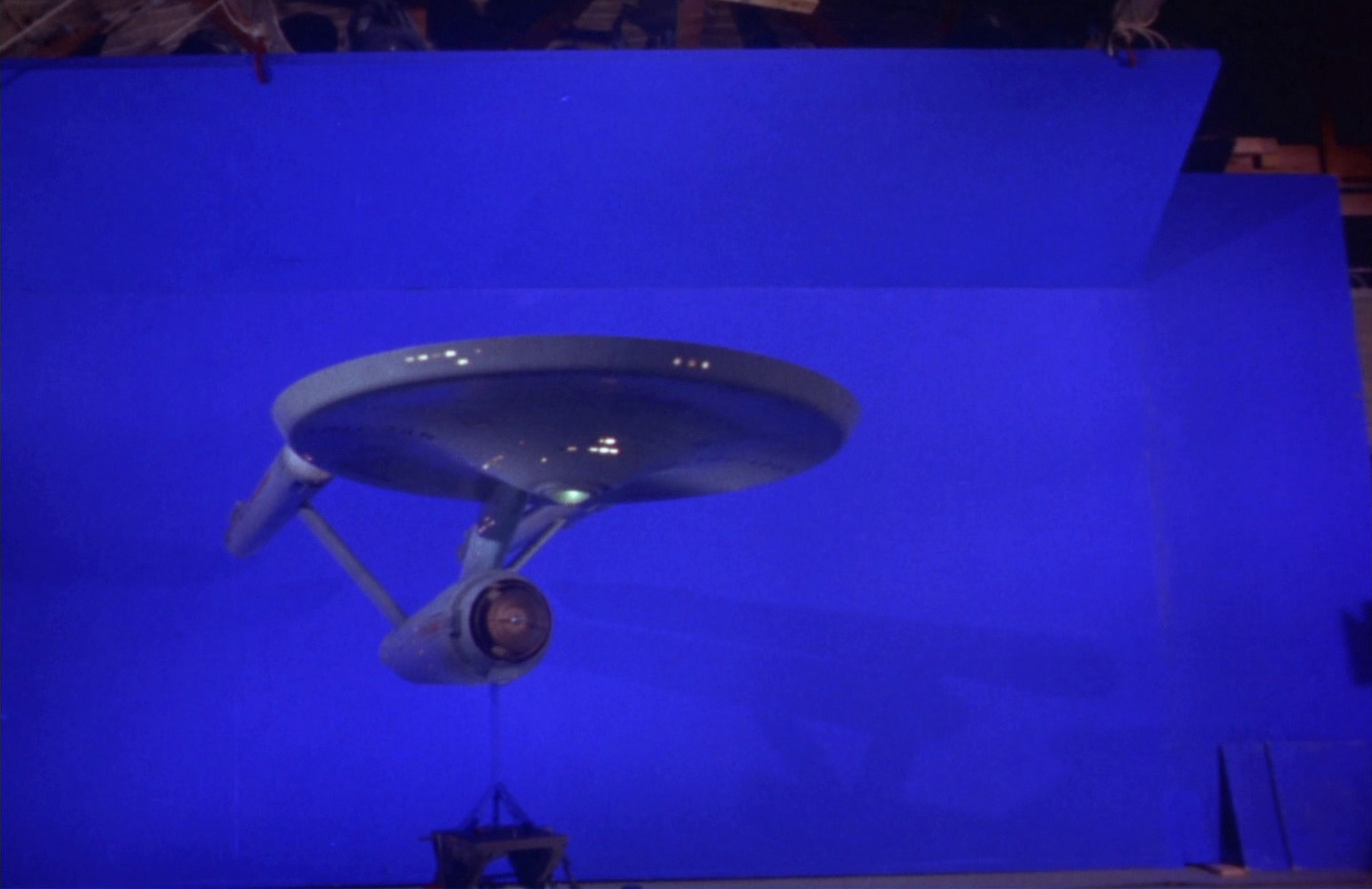
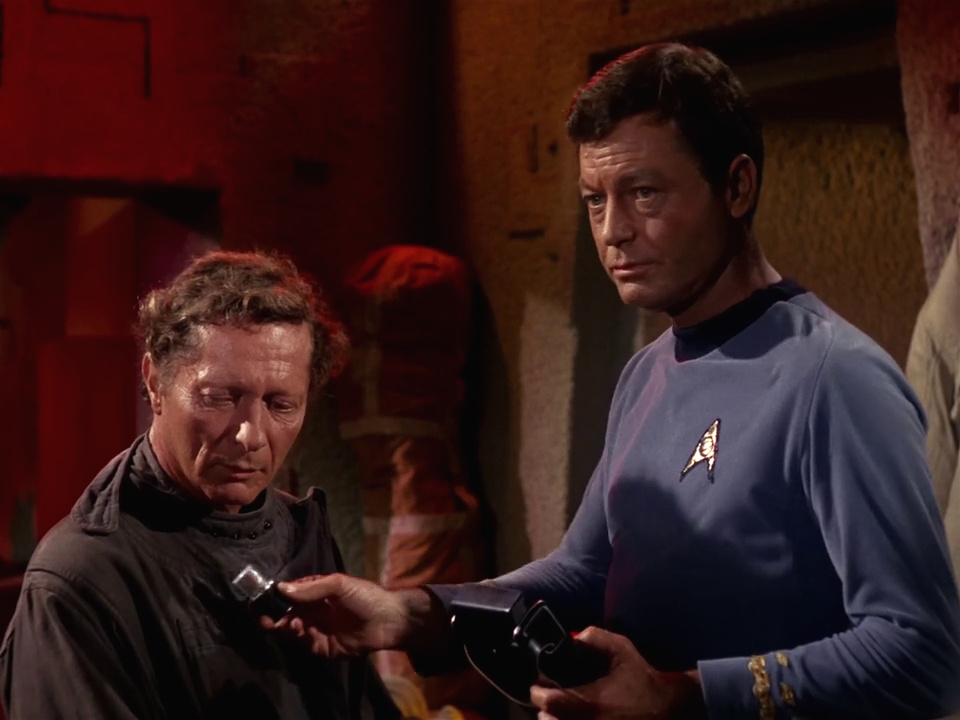
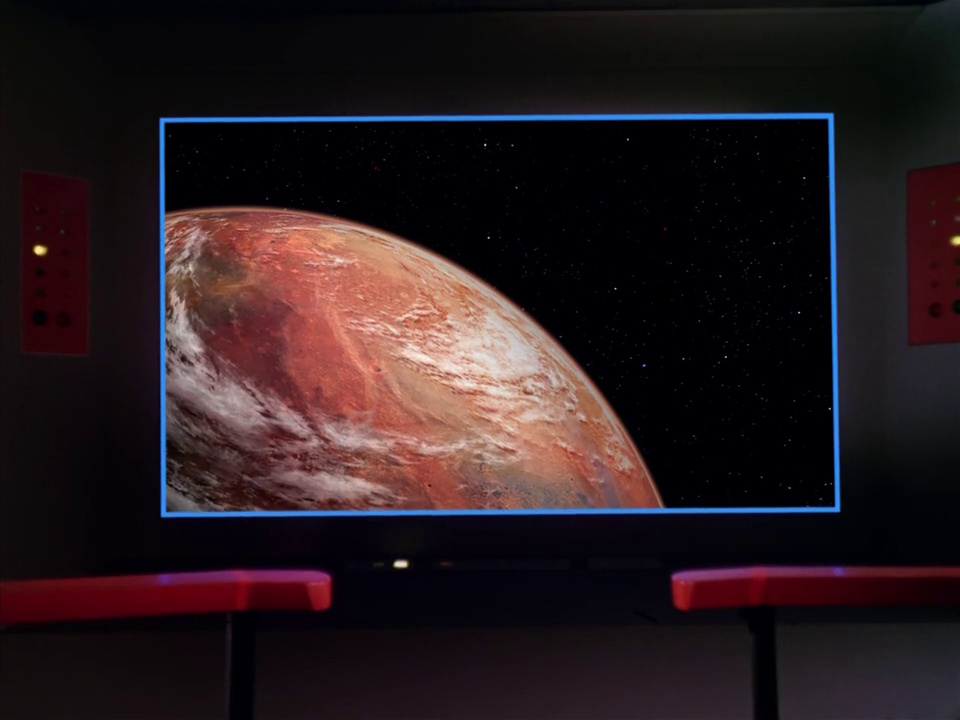
Seven of Nine returned in Star Trek: Picard.

In fact, one of the things I was genuinely concerned about with Star Trek: Picard is that they were going to fall into the Star Wars trap of overplaying the nostalgia card. I didn’t want The Next Generation Season 8, because that show has ended. It’s over. What Picard represented is something practically no other series or franchise will ever get – a new iteration. Picard is the same man, and he’s the core of the show as he was in The Next Generation. But surrounding him are new characters, and I wanted to make sure that they would have the chance to become fan favourites for the next generation (pun absolutely intended) of Star Trek fans.

My introduction to the franchise was The Next Generation. And it wasn’t until a few years later – probably in the mid-1990s – that I got around to watching any of The Original Series. For some people, Picard and Discovery will be their first port of call as Star Trek fans, just as The Next Generation was for me. Those of us who’ve been around Star Trek for twenty-five years or more still have a place in the fandom, but things are changing. With new shows in production, new fans are coming on board who may not be aware of Picard’s top-secret mission to Celtris III, or that Kirk and his crew once visited a parallel universe where magic is real. If we try to be gatekeepers and say “you aren’t a real Star Trek fan because Discovery isn’t as good as the show that I like” then the fandom isn’t just going to be divided, it’s going to become toxic. Instead of being a “big tent”, recognising that the franchise means different things to different people, some folks seem to want to claim the fandom for themselves and exclude anyone who doesn’t share their belief about what Star Trek means.
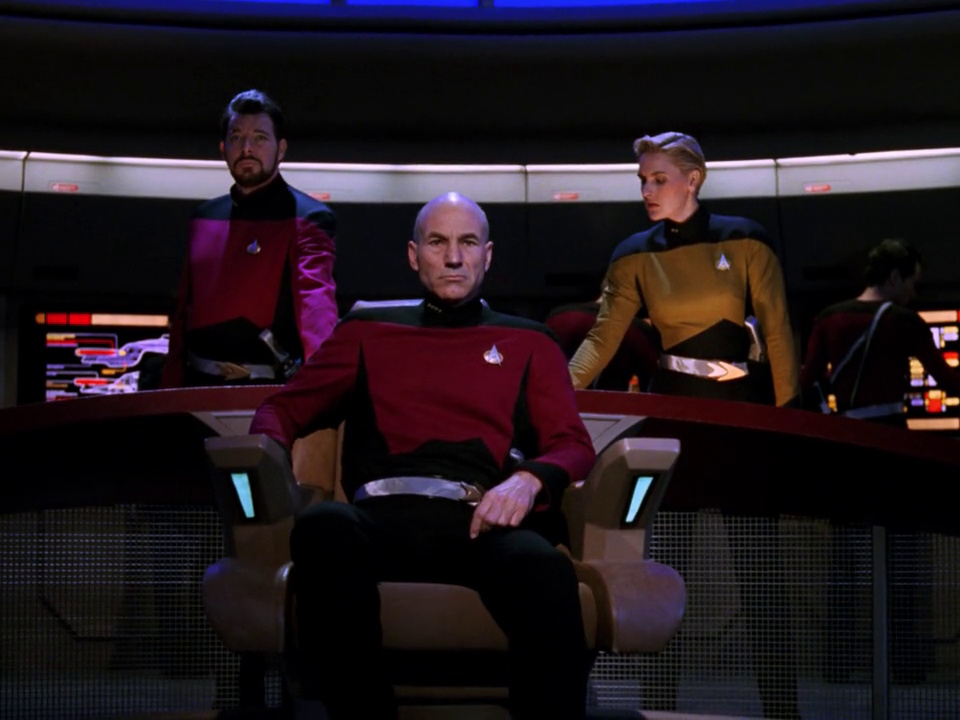
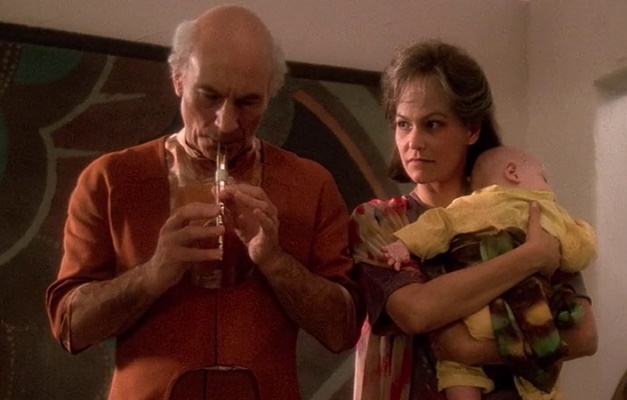
And frankly, that’s just sad.

Star Trek has always tried to use its science fiction setting to tell stories that reflect contemporary issues. There are countless examples, and this could be an essay in itself, but suffice to say many of those stories resonated with fans in the past. The Original Series challenged the Cold War concepts of superweapons and mutually assured destruction in the episode The Doomsday Machine to great effect, and fans will laud that. But when Discovery uses Ash Tyler’s trauma as an analogy for underreported male sexual abuse, those same folks scream about “too much politics”. As I’ve said before, to anyone who says there’s “too much politics” in modern Star Trek I’d ask one simple question – “have you seen Star Trek before?”

Spock and Kirk at the end of The Doomsday Machine from Season 2 of The Original Series. They talked about nuclear weapons – a massive issue in the 1960s.

The problem here is that, when it comes to The Original Series and the shows of The Next Generation’s era, we’re watching them decades on from their original release. Many of the people complaining about politics in modern Star Trek weren’t even born when The Next Generation and its sister shows were first on the air. And very few people now can remember watching The Original Series when it was new. The political themes in many of those episodes are less prickly and less relevant today, and though they would be instantly recognisable to contemporary audiences, watching them today fifty years later or thirty years later, they’re harder to spot. And if someone is watching an episode for the tenth or twentieth time, an episode they first watched at age five or six, it’s even harder to be objective and pull the themes and messaging out of the drama and presentation. Taking a step back and looking at a favourite show or episode objectively is very difficult. I made an attempt to do so when I re-watched The Measure of a Man from The Next Generation’s second season, but it wasn’t easy.

Star Trek has always been a political show, even if as kids we didn’t realise it. And it has always taken a “progressive” political position on contemporary issues. If an individual can’t stand that, and is only content to watch entertainment that is either wholly politically neutral or agrees entirely with their own political biases, then that’s okay. No one is forcing anyone to watch a television show that they don’t like. And if they don’t like something, it’s easier than ever to change the channel. They can pick a new show on Netflix or Amazon Prime or CBS All Access and watch that instead, or go back to a previous Star Trek series that they do enjoy. Modern Star Trek is not mandatory viewing, and from my own point of view I can tell you I’m pretty brutal when it comes to switching off a show that I find boring or that I’m not enjoying for whatever reason.

In 2020 we live in a world where there is an insane amount of entertainment available to watch – and much of it can be found online for free with a basic knowledge of computing. So I don’t really understand why people would want to spend a lot of time watching a show that they don’t enjoy, then jump online to share their dislike with others – not when there are so many other things to watch. A few people who run websites, groups, or YouTube channels, make money by doing this. And I guess that’s fair enough – if people will pay for it, and you can make money at it, that’s okay. But for everyone else, I don’t really see what they gain from it – aside from the feeling of inclusion being part of a “tribe”, or perhaps a feeling of superiority to think they know better than the show’s creators?

Some people have been unhappy with Star Trek: Picard.

To get back on topic, and draw this essay to a conclusion, there are differences between Star Trek today and Star Trek in the era of The Original Series and The Next Generation. For some fans, the difference is too stark and they don’t want to watch whatever they consider to be “bad”. I’m okay with that – we can all have our own opinions about the franchise. I just don’t like the toxicity and gatekeeping that has plagued some – thankfully small – groups within the fandom.

Speaking for myself, I’ve enjoyed Star Trek’s return to television. Star Trek: Picard has been the better of the two offerings so far, but I’m genuinely excited at the prospect of a Capt. Pike series and at Lower Decks’ different take on the franchise. It’s a great time to be a fan right now, simply because there’s so much Star Trek – and sci fi/fantasy content in general – in production. We won’t always be so lucky to have this, and even though I wasn’t a big Enterprise fan during its original run, I was still sad when it went off the air and there was just a big void of nothing. That isn’t a scenario I’m keen to see repeated, and while I admit there have been hits and misses in modern Star Trek, I’d rather see it continue to be made than simply scrapped. By diversifying the kind of stories it tells – Picard and Discovery are very different in tone, for example, and Lower Decks will be something different again – hopefully Star Trek can build on what has been accomplished already and bring in more people. If some people decide not to stick with it because of the changes, that’s okay. But I firmly believe that the core or the heart of Star Trek is the same as it was in the 1960s – and that it has remained that way for its entire run.

Star Trek is a complicated franchise that means different things to different people. But there is room in the fandom for everyone – at least, everyone who wants to participate. If someone dislikes Picard or Discovery but loves The Next Generation, as fans and as people who know how to behave civilly, we can still have a great conversation about Star Trek without treading on each others’ toes. And it’s my hope that there’s more that unites us as fans of this great franchise than divides us – after all, Discovery and The Next Generation have much more in common than The Next Generation does with, say, the latest iteration of some celebrity reality show. At the end of the day, I’m happy to share a franchise and a fandom with some very passionate people – even if we can’t agree on a lot of things.

The Star Trek franchise – including all series and films mentioned above – is the copyright of ViacomCBS. This article contains the thoughts and opinions of one person only and is not intended to cause any offence.