I'm an independent media critic. On my website - trekkingwithdennis.com - I write about Star Trek, Star Wars, the video games industry, and many other geekdom-related topics!
Spoiler Warning: There are spoilers ahead for multiple films and television series in the Marvel Cinematic Universe, including Avengers Endgame and The Falcon and the Winter Soldier.
As I was watching The Falcon and the Winter Soldier recently, I got thinking. The Marvel Cinematic Universe (or “MCU” for short) has been running since Iron Man kicked things off in 2008, meaning it’s been in continuous production for more than thirteen years at time of writing. There have been 23 mainline Marvel films released in that time, as well as more than 380 episodes of television across 13 different shows, totalling several hundred hours of viewing. All of this is complicated, and as I’ve said previously, keeping up with Marvel can feel like a full-time job!
None of that means that a franchise needs to go through a reboot, though. Star Trek is going strong after more than half a century and 800+ episodes of television, and aside from the three films in the Kelvin timeline there hasn’t been a resetting of Star Trek; all of its shows and films coexist happily in one setting. But Marvel is arguably different.
2008’s Iron Man kicked off the Marvel Cinematic Universe.
One of the key elements of the MCU’s setting is that the superheroes and supervillains we meet all inhabit the real world right alongside us. This version of Earth is very similar to our own, but it’s one in which superpowers exist. The early films in the MCU depicted the way in which ordinary people came to terms with this idea, and how government agencies and others sought initially to keep things under wraps.
But now that’s all changed, and Marvel’s superheroes are known figures – almost celebrities – in their world. That change may not seem like a big deal, but what it does is chip away at one of the world’s foundational ideas: that superheroes could be among us right now and we just don’t know it. As Marvel’s world has changed and undergone progressively more massive events – culminating, at least thus far, in Thanos’ snap and the resultant disappearance and reappearance of half the world’s population – its original premise of being “the real world plus superheroes” has disappeared.
Sam Wilson (The Falcon) was recognised by members of the public in The Falcon and the Winter Soldier.
Attempts to recreate that are going to be met with challenges that weren’t present in earlier iterations of the MCU. And to be fair to Marvel, thus far the franchise has set the bar when it comes to creating a persistent, connected world. But that world is as much a constraint at this point as it is a highlight, because every story going forward as the MCU enters “Phase Four” has to be able to fit in with the very different world that was created by the events of Infinity War and Endgame.
We saw this as the underlying premise for the main storyline in The Falcon and the Winter Soldier. And in that series it worked well, building on the idea that the changes that happened were popular with some people and unpopular with others, as well as showing us glimpses at a world trying to figure out how to get back to “normal” – or what “normal” even means after such life-changing events. That concept can be explored in more detail and will undoubtedly be interesting – but it isn’t what attracted so many fans to the franchise to begin with.
The Falcon and the Winter Soldier showed us the first real look at a post-Endgame world.
As the next part of the MCU’s story builds on the events of the last few years, I have two concerns. The first one is that storylines will become convoluted, with any new film or show almost drowning in backstory and lore to the point of being offputting or even incomprehensible for anyone other than a fully up-to-date Marvel superfan.
Secondly, the MCU has to contend with the fact that Avengers Endgame felt like the end of a story. Several principal characters were killed off, and after the events of Infinity War brought the Marvel world to a crushing defeat, Endgame came along and saw the heroes save the day. They made it to their “happily ever after” – and figuring out what comes next is always a major challenge. Following up a monumental story like Endgame risks feeling anticlimactic and small, or worse, repetitive.
Endgame felt like the end of a story.
Having cheered on the Avengers as they saved the universe from Thanos, will fans show up in such numbers for the next supervillain who threatens all life? Endgame was, briefly, the highest-grossing film of all time. Maybe Marvel peaked?
All of this leads me to the crux of this argument: comic books often reset their characters and storylines. After a while, when writers feel they’ve taken the characters and stories as far as they can, or when stories are played out or too convoluted to continue, comic book companies have historically had no problem at all stepping in and just resetting everything. In DC comics – Marvel’s main competitor – the Crisis on Infinite Earths storyline in the mid-1980s effectively erased the backstories and past adventures of many superheroes, streamlining the convoluted DC universe into a much simpler form that continues to this day.
Crisis on Infinite Earths was a DC crossover event that reset the storylines of many DC superheroes.
As the Marvel Cinematic Universe rumbles on, getting more complicated and further away from the real world with each iteration, it makes jumping on board for new fans difficult, and it makes keeping up with every project feel like a full-time job; miss the latest show or a couple of films, and suddenly it’s hard to figure out who’s who and what’s what. That’s combined with the fact that some stories are going to feel small or even anticlimactic when compared to the likes of Infinity War and Endgame.
Not long ago I took a look at a number of television shows that ran too long. Shows like Supernatural, Lost, and The Walking Dead were great at first, but after they peaked they stumbled through a period of decline, failing to live up to past successes. I don’t know if Infinity War and Endgame represent the peak of the Marvel Cinematic Universe – the best may still be to come. But sooner or later the franchise will hit that peak, and when it does, it seems inevitable to me that a comic book-style reset is on the cards.
The Walking Dead, like many other television shows, peaked. It then entered a period of decline.
The MCU wouldn’t necessarily go back to the drawing board and remake past films. The legacy of characters like Iron Man, Captain America, and the Hulk could pass to new iterations of those characters with new actors taking on lead roles in stories inspired by earlier films, but remaining distinct from them. New backstories could be created, perhaps based on different versions of the superheroes from other editions of their comic books. Marvel has decades of history to draw on, and many superheroes have very different origin stories and personalities than the versions we’ve seen on screen in the last few years.
We’re undoubtedly going to be seeing Marvel and some version of the MCU remain a powerhouse for parent company Disney and the Disney+ streaming service for many years to come – perhaps even decades. I’m not suggesting for a moment that Marvel is simply going to pack up and disappear; there’s too much money on the table for Disney to allow that to happen! But as the MCU continues to expand, taking different characters in different directions, sooner or later that sense of it being convoluted is going to begin to bite.
Marvel Studios will continue to churn out new films and television shows.
I find this to be the case with Star Trek, at least to some extent. When talking to a friend or colleague about Star Trek, if they’re unfamiliar with the franchise it can be hard to know where to start. 800+ episodes and more than five decades of history and lore is intimidating to the point of being offputting, and for some people, simply getting started with Star Trek feels impossible without a guide. New and different iterations of the franchise – like Lower Decks as an animated comedy, or the upcoming Prodigy as a kid-friendly show – can be helpful jumping-on points for newbies, but even then I know the sheer size and scale of Star Trek, as well as its reputation, can be enough to put people off.
Marvel isn’t at that point yet, but it’s getting close. When I was talking to my brother-in-law, who’s a huge Marvel fan, about Infinity War, he recommended that I watch several other films first so that I’d “understand what was going on” better. This sentiment, while well-intentioned by someone who genuinely cared about me getting the most out of a film he liked, can actually have the opposite effect. Marvel is already becoming complicated – too complicated for some casual viewers to drop in and out of comfortably.
A trio of secondary characters in Avengers Infinity War.
Perhaps Disney and Marvel executives feel that, given the size of the MCU’s fandom, they can afford to put off casual viewers. If the fanbase is signing up for Disney+ and buying Marvel merchandise in droves right now, what’s the harm in continuing to make every series and film inextricably tied together? That attitude, if indeed it is prevalent over at Disney, is short-sighted in the extreme.
Any franchise taking such an approach will find its growth stunted, and when existing fans slowly but surely drop out, there won’t be many people lined up to replace them. That’s the danger in trading solely on nostalgia, too – eventually your existing fans either switch off or die off, and if there are fewer people jumping on than there are jumping off, the franchise will sputter and eventually fail. Marvel is undoubtedly a long, long way away from that right now, but every twist and turn in the MCU saga, and every would-be new fan dissuaded from getting started with a convoluted and complicated franchise is a problem for the comic powerhouse.
Does Endgame – briefly the highest-grossing film of all time – represent the peak of Marvel’s success?
Different franchises handle expansion in different ways. In Star Trek, for example, while there can be benefit to be gained from wider knowledge of other iterations of the franchise, for the most part, each television and film series is self-contained. It’s quite possible to be a fan of Deep Space Nine without ever seeing an episode of The Original Series, The Next Generation, or Voyager; a viewer in that position has lost practically nothing, understands basically everything going on, and while they’re missing some background about certain factions and some of early Star Trek history, all of that is explained within the show itself. The same applies to modern Star Trek productions – perhaps with the exception of Picard.
Marvel stands in contrast to that. Every film and show connects in a nakedly obvious way to every other film and show. Characters, factions, themes, and whole storylines cross over from one part of the franchise to another, and while it’s perfectly possible right now to sit down and watch just one or two films or one television show, a viewer who does so is clearly missing out. The Falcon and the Winter Soldier tried to mitigate this as best it could, but even so there’s no denying that a fan who’s seen every Marvel project will have got more out of it than someone who hasn’t.
In contrast to the way the MCU works, a Star Trek fan can watch just one series in the franchise without missing out on too much or getting lost with themes and stories that cross over.
The Marvel Cinematic Universe is one big, interconnected world. That is its strength, as we’ve seen Marvel films bring in audience numbers and a level of financial success that are quite literally unprecedented, as well as facilitating the transformation of comic book superheroes from nerdy niche to mainstream blockbusters. But that interconnectedness may yet prove to be a weakness, too, if more and more viewers find that new iterations of the MCU are too dense and require too much prior knowledge to properly enjoy.
Based on all of that, it seems inevitable to me that Disney and Marvel will eventually hit the reset button. Whether it happens in five years or fifteen, I think there will eventually be a resetting of the Marvel Cinematic Universe. How it will work, and whether it will revitalise the franchise and propel it to further success in future are all open questions, and we won’t know for sure until it happens. Watch this space!
All titles mentioned above are the copyright of their respective broadcaster, distributor, production company, etc. The Marvel brand – including the Marvel Cinematic Universe, Avengers Endgame, The Falcon and the Winter Soldier, and all other titles mentioned above – is the copyright of The Walt Disney Company. This article contains the thoughts and opinions of one person only and is not intended to cause any offence.
Spoiler Warning: There are spoilers ahead for Star Trek: Picard Season 1, and both of the trailers for Season 2.
As I logged on to social media yesterday evening, I was surprised to see a new trailer for the upcoming second season of Star Trek: Picard! Season 2 entered production back in February following months of pandemic-enforced delays, and when it came to Star Trek’s big digital event for First Contact Day in April, there wasn’t much to show from the series except for a stylised teaser and a voiceover. Despite that, however, I managed to pull out a handful of theories!
I wasn’t expecting to see anything much from Picard Season 2 for a while. With production rumbling on for the next few months, I had perhaps thought we might get to see something later in the year when either Lower Decks Season 2 or Discovery Season 4 are being broadcast, so it was a nice surprise to get a trailer this early! Season 2 is still probably ten to twelve months away from being broadcast, but this was a nice little tease to get fans in the mood.
In addition to the trailer a new poster was also revealed, and both are interesting and worth talking about. We’ll start with the poster, then move on to the trailer.
The brand-new Season 2 poster. Picture Credit: Star Trek/ViacomCBS
Using a similar basic concept to the first teaser poster for Season 1, the new poster uses the environment to form a Starfleet delta emblem. In this case, as you can see above, several roads or highways cross over to form the familiar logo. The city depicted in the poster appears to be Los Angeles – based on the straight concrete-sided river, the mountains in the background, and the downtown skyscrapers surrounded by a sprawl of shorter buildings. I could be wrong, but I’m going to say it’s Los Angeles.
The obvious thing to say is that there are cars on the roads. Though we have seen wheeled vehicles in Star Trek’s 24th Century – Picard drove a dune buggy in Nemesis, for example – Earth in the 24th Century has never been depicted in this manner. The cars look modern, the city looks modern, and I think everything we can see in the poster connects to themes from both the earlier teaser and the new trailer: time travel and changing the past.
The first teaser a couple of months ago told us that time travel was on the agenda.
The first teaser trailer, the one from First Contact Day, had Picard telling us in a voiceover that “the true final frontier is time.” That trailer had a lot of different imagery connected to Picard’s past, including the USS Stargazer, but one thing I couldn’t quite figure out was the book Paradise Lost. I speculated that the series might be connected in some way to a literal reading of the title – something Picard did or didn’t do in the past caused the future to be worse. That theme seems to be present in the new trailer.
We’re reintroduced to Q in the new trailer, and he uses a very interesting phrase – arguably the most prominent in the whole thing: “welcome to the end of the road not taken.” Combined with what Picard said in the first teaser about wishing to have done things differently in the past, I think we can start to see the building blocks of the Season 2 narrative.
Q has returned!
Q’s arrival seems to happen after whatever event damages the timeline. In the trailer, Picard was already in a different outfit with a different Starfleet badge, and it seems as though Laris is missing – could she be a casualty of shifting timelines? Regardless, it was only at this point that Q appeared, seemingly for the first time, and this ties into comments from both Sir Patrick Stewart and John de Lancie that Q will play a role in the storyline of the season but isn’t the cause of these events.
So this isn’t going to be an All Good Things redux, where Q sets Picard a puzzle. If anything, I interpreted Q’s arrival as a friend or even an ally showing up to help – perhaps we’ll see more of a Q-Picard alliance develop over the course of the season. Q certainly seemed happy to see Picard again – though the feeling was clearly not mutual. So maybe, at the very least, that’s how Q sees himself: a friend, a helper, and an ally.
Does Q see himself as Picard’s ally? If so, perhaps they will work together.
We saw Seven of Nine toward the end of the trailer, and she was featured more prominently than any of the main cast from Season 1. In Seven’s scene, I think we get even more evidence of this shifting or changed timeline, as Seven seems to wake up in an unfamiliar place – without her Borg implant. It’s possible, of course, that her implants had been removed, but as we saw with poor Icheb in Season 1, that’s a painful and often fatal process.
So the logical conclusion for Seven missing her implants is because she was never assimilated by the Borg in this timeline. But why? And what else has been changed? When we talk about alternate history – which is a fascinating genre in itself – almost every story hinges on a so-called “point of divergence.” This is the moment at which the fictional or alternate timeline separated from our own. Star Trek contains examples of this: the Kelvin timeline being the most prominent example, with a point of divergence on the day of Captain Kirk’s birth.
Where’s Seven’s implant?
If all we saw was Seven missing her implants, we could say that the point of divergence might be in the 2350s – either she didn’t travel to the Delta Quadrant aboard the USS Raven with her family, or that whole voyage never happened. But there’s so much imagery in the trailer and poster that seems to hint at something more than that.
The 21st Century vehicles on the poster could suggest that Picard and the crew will visit our time period during the course of the series – which may or may not be a good thing, but that’s a whole other article! But their presence could also suggest that whatever event or series of events changed the timeline began in the modern day, with ripples flitting along the timeline, changing all manner of things in their wake.
Picard at the vineyard in the opening shot of the trailer.
Picard and Raffi were seen in uniform in the trailer, albeit very briefly. Picard appeared to be giving a speech or making a statement to Starfleet Command, and I wonder in what context he was making that address. I initially thought Picard was wearing his Season 1 flashback uniform in that scene – the one we saw prominently at the start of the episode The End Is The Beginning. But on closer inspection, both he and Raffi are in different uniforms – not the flashback ones, nor the 2399 ones that Riker and Commodore Oh wore. Also, Picard was wearing a 2399-style combadge, not the First Contact–Voyager one that he wore with his Admiral’s uniform in Season 1. So the plot thickens!
It’s possible that this scene is taking place at modern Starfleet, and that there has simply been a tweak to the uniforms since the events of Season 1. Starfleet does love arbitrary uniform changes, after all, and what we saw Picard and others wearing wasn’t so radically different that it couldn’t have been a dress variant, for example. But given everything else going on with Q, Seven of Nine, and potential changes or damage to the timeline, I can’t help but think that this is connected to that.
Picard in a new uniform variant. He seemed to be giving a speech at Starfleet Command.
Perhaps what we’re seeing is an alternate timeline in which Picard and Raffi didn’t resign from Starfleet, and thus in which the Coppelius synths were not saved? That would tie in with Season 1. But at the same time, I’m not sure that’s the route the show is going to follow. There are questions about the Starfleet delta – the silver badges we see Picard and Rios wear are oversized and have a cross or sword shaped indent, which reminds me more than a little of the Mirror Universe. I don’t think we’re going to see a Mirror Universe story, but the symbolism is interesting. What does it mean?
In voiceover, we hear Picard speaking – presumably to the crew of La Sirena – telling them that “we can save the future” and promising to get them home safely. Whatever is going on, the crew of La Sirena are seemingly immune to changes in the timeline – we see Rios react with shock upon discovering his new badge, and Seven similarly stunned by her missing implant. Picard’s voiceover could imply that La Sirena and the crew are themselves stuck in the past – otherwise why use the word “future?”
Captain Rios on the bridge of La Sirena. What’s with his new badge? And why is there a Starfleet emblem on the chair?
To me, the big question is this: is Picard the one responsible for disrupting the timeline? If Q isn’t to blame, and Picard and La Sirena appear to be unaffected and right in the middle of this mysterious event, could we learn that Picard is to blame? The first teaser trailer saw him express almost regret at being unable to change the past – desperately wishing that he’d done something differently. Perhaps he found a way to do it, and thus he triggered the changes to the timeline that we see in the new trailer.
That would be an interesting way for the story to go, and it would play on themes we saw early in Season 1 of Picard being a flawed hero; someone who’s only human and who has limits. The return of Q is interesting – perhaps Q will facilitate Picard’s changes to the timeline, but I suspect he’s going to be helpful in fixing things. The use of the phrase “the road not taken” suggests that this is a timeline that could have come to pass had Picard taken different actions at some point in his past. Combined with the previous teaser, I wonder again if this is referring to his time in command of the USS Stargazer?
Are the changes to the timeline connected, somehow, to Picard’s time aboard the USS Stargazer?
Though we didn’t see the rest of the cast prominently in the trailer, some of what we glimpsed was interesting. Soji appeared to be all dressed up in a fancy outfit, and the expression on her face reminded me of Sutra. Perhaps she’s putting on an act or trying to deceive someone – something akin to the “heist” in Season 1’s Stardust City Rag, for example. But it could also indicate a darker direction for Soji’s character – or even the return of Sutra.
Raffi and Elnor were glimpsed briefly, seemingly running away from someone or something. The neon lights in the background of their scene could suggest they’re on the planet Freecloud, but I wouldn’t bank on that. I have no idea what Dr Jurati was doing as we only saw a close-up of her face, but something about her outfit suggested to me that she could be in prison. She did murder Dr Maddox in Season 1, after all! We also got a glimpse of Laris, who appeared to be staring in surprise or alarm at something behind the camera. Given that Picard was looking for her unsuccessfully at the beginning of the trailer, I wonder if she’s been killed off, or perhaps even removed from the timeline.
What is Laris looking at here? I wonder if it’s connected to her being missing, or the changes in the timeline.
The scene at Starfleet Command, where Picard appeared to be giving a speech, featured the flags of several known factions: the Klingons, Vulcans, Bajorans, and Ferengi were the ones I recognised, along with flags representing the Federation, Starfleet Command, and Starfleet Academy. I don’t think we can infer too much from that – the flags may mean these factions are Federation members or allies, but it could simply mean that they’re present at this event, which could be a diplomatic meeting akin to something we’d see at the G7 or United Nations.
I’m unsure about the other voice heard only in voiceover, the feminine voice saying that “time has been broken.” It sounded a little like Commodore Oh, but I don’t think she would be working with Picard in any timeline! The voice sounds familiar, though… but I can’t place it, nor figure out if it’s someone connected with a past iteration of Star Trek or not. It’s likely that this is a new character, in my opinion.
A mysterious-looking Soji.
The absence of Guinan was noteworthy, as we know she will be making an appearance at some point in Season 2. In The Next Generation episode Yesterday’s Enterprise, Guinan showed a unique awareness of changes to the timeline, and considering Season 2 seems to be all about that kind of thing, bringing her back makes a lot of sense. She also has a history with Q that could be explored in more detail given his return.
And with that, I think we’ve come to the end of my analysis and guesswork! It was great fun to see a glimpse of Season 2, which now has a good three months’ worth of filming and production work under its belt. Despite events out here in the real world, production seems to be moving along well, and I have no doubt at the moment that Picard Season 2 will hit its scheduled release next year. I would guesstimate that it will premiere sometime after Discovery’s fourth season and before Strange New Worlds’ first season, so I think within ten to twelve months we’ll be sitting down to watch the first episode of Season 2.
Why are Elnor and Raffi running?
It was wonderful to see John de Lancie back as Q, and to see him tangle with Picard once again. A trailer can only do so much with a runtime of around one minute, but there seemed to be a heavy emphasis on classic characters: Picard obviously, but also Q and Seven of Nine. This came at the expense of the new characters we met in Season 1 who we only got to see very briefly. Hopefully future marketing material can show off those characters a little more.
The mysteries of Season 2 deepen. What’s the connection to the present day? If the city from the poster is Los Angeles, what connection does that have to Picard and Starfleet? As far as I know he’s never been to the city, and no major Starfleet or Federation organisation is based there. The only Star Trek story to have spent any time in Los Angeles was the Voyager two-parter Future’s End, which was before Seven of Nine came aboard the ship. In that episode, the city of Los Angeles was said to have been destroyed by an earthquake in the mid-21st Century.
If time itself has been “broken,” who is responsible? Is it a natural phenomenon? And why are the crew of La Sirena immune? Did Q or Guinan have something to do with the changes to the timeline? And what did Q mean by “the road not taken?” I have a lot of questions… but can only guess as to the answers right now!
Star Trek: Picard Season 2 will be broadcast on Paramount+ in the United States and on Amazon Prime Video internationally in 2022. Season 1 is available to stream now. The Star Trek franchise – including Picard and all other properties mentioned above – is the copyright of ViacomCBS. This article contains the thoughts and opinions of one person only and is not intended to cause any offence.
Spoiler Alert: There are minor spoilers ahead for several of the games shown off at this year’s E3.
E3 2021 is over, and it was an interesting long weekend of games and gaming! I’m sure some people will come away disappointed – a lot of the games that were shown off aren’t being released imminently, with many of the bigger, most-anticipated titles not being launched until 2022. But overall, I had a good time. Because E3 was all-digital this year, the presentations were slicker and smoother, and while there were a couple of cringeworthy moments as presenters and CEOs were clearly talking to an empty room instead of a crowded auditorium, on the whole I think E3 benefits when the public stays away!
I mentioned this last year when Electronic Arts had their big annual presentation, but digital events really feel like the future. Live events have the potential to go wrong – very wrong, in some cases – and also drag on a lot longer. E3 this year was more concise, and several of the big presentations packed a lot of games into their hour or two. Though this is still a pandemic-riddled world, and that’s why E3 has gone digital this time around, I won’t be shocked to learn that future years will keep this kind of format.
With Sony skipping E3, Microsoft dominated proceedings. A number of big Xbox exclusives were shown off, and with the eyes of the world on the games industry in a way that seldom happens, I wonder if Sony will come to see the decision to stand alone as a mistake. There will be a Sony event later in the year – perhaps even this summer – but having missed the party at E3, Microsoft will come away dominating the gaming headlines in the days and weeks ahead.
Pandemic-related delays continue to afflict the industry, and some of the bigger titles shown off won’t hit shelves until next year at the earliest. Despite that, however, there are still big games coming out in the next few months – hopefully enough to tide us over until 2022! Though I didn’t subject myself to every minute of the presentations and chatter, I had fun with this year’s E3. It was generally well done, with plenty of exciting upcoming games to talk about – which is the point, after all.
Let’s take a look at my E3 roundup. I’ve picked out twenty games that I considered to be the most interesting (or the biggest) from this year’s E3. Here they are – in no particular order!
Number 1: Forza Horizon 5
Forza Horizon 4 was the game that tempted me to sign up for Xbox Game Pass last year, so I’m definitely going to take a look at the next game in this fun racing series when it’s ready. Forza Horizon 5 will see the action jump to Mexico, using a similar semi-open world to the previous game, with different types of races, a multitude of cars to choose from, and a focus on a more arcade style of racing over the simulation of the mainline Forza Motorsport titles.
Forza has grown from humble beginnings to become Microsoft’s answer to Gran Turismo, and a fine addition to the Xbox and PC lineup. Mexico is an interesting idea for a setting, and it seems like there will be plenty of dusty deserts and paradise-like tropical beaches to race around. Racing games always manage to look fantastic, and Forza Horizon 5 was definitely one of the prettiest games on show at this year’s E3.
Number 2: Avatar – Frontiers of Pandora
This one was a surprise; I don’t think anyone had it on their radar! Avatar – Frontiers of Pandora was shown off during Ubisoft’s presentation, and was really the highlight of what was otherwise a dull hour populated by updates, expansions, and sequels. The game is due for release next year, which is also when the first of four sequels to 2009’s Avatar is scheduled to hit cinemas. It doesn’t seem like the first-person action game will be a direct adaptation of the film – at least, that’s the impression I got – but the timing can’t be coincidental!
Despite Avatar becoming the highest-grossing film of all time when it was released, more than a decade later it’s not unfair to say that it hasn’t made a huge impact in the cultural landscape, even within the sci-fi genre. Indeed, I’d go so far as to say Avatar has been largely eclipsed by titles released in the decade since, and is almost forgotten at this point. Commissioning what looks to be a big-budget video game of this kind is a bit of a risk under those circumstances, but it seems like it has potential – and the Avatar sequels may succeed at establishing the basis for an ongoing franchise of which this game could be a big part. We’ll have to wait and see! So we can add this one to the pile of games I’m tentatively excited about.
Number 3: Starfield
I was rather surprised to see so little of Starfield – even though its “in engine” trailer was well put-together, and it was certainly our biggest look so far at a game Bethesda chief executive Todd Howard described as both “a new universe” and something set in the future, I had expected to see more actual gameplay. Considering Starfield is still a year and a half away, perhaps the game just wasn’t ready for a more in-depth look.
What we saw was interesting, though. Starfield seems to be doing something superficially similar to television series like The Expanse in the way it handles its spacecraft – a combination of modern military, industrial, and astronaut aesthetics seemed present in the design and layout of the ship we saw in the trailer. I quite like that style, it arguably gives stories a semi-realistic feel when compared to the likes of Star Trek or Star Wars, which both rely on technobabble and fictional technologies. Spaceships in Starfield are said to be fuelled by helium-3 – a real-world substance that can be used for spacecraft fuel.
But, of course, this is the studio that brought us The Elder Scrolls and the modern Fallout games, so it won’t just be a realistic spaceflight simulator! It seems as though there will be exploration involved, as well as encountering alien races!
As I predicted, Starfield will be exclusive to Xbox and PC following Bethesda’s acquisition by Microsoft. This seemed patently obvious to me, but doubtless some PlayStation fans will still be disappointed.
Number 4: Elden Ring
Upcoming hack-and-slash title Elden Ring was one of the first games shown off this year, debuting on Thursday as part of the “Summer Games Fest” presentation. I stated in my preview of E3 that Elden Ring might not be the kind of game I’m interested in, personally speaking… and having seen more of it I can now say that with certainty!
If you’re looking forward to Elden Ring, that’s fantastic. I have no doubt that for fans of certain genres it will be a fun time – but as someone who doesn’t much care for the “extreme difficulty” hack-and-slash gameplay of other FromSoftware titles, this is one I’m going to skip. Nothing in the trailer – from its dark, bland colour palette to its monsters that looked like they’ve been copied and pasted straight from one of the Dark Souls games – appealed to me, and you could’ve told me this was Dark Souls 4 and I’d have believed it.
The involvement of author George R. R. Martin did admittedly pique my curiosity when the game was first announced, and I have no doubt his input will help craft a fantasy setting that is, at the very least, interesting. But that’s about the nicest thing I can say about Elden Ring. It might have an interesting setting with enjoyable lore. Everything else about it makes it look like a game I’ll happily skip.
Number 5: Sea of Thieves crossover with Pirates of the Caribbean
What?! What on Earth did I just see? This crossover between Rare’s multiplayer pirate game Sea of Thieves and Captain Jack Sparrow from Disney’s Pirates of the Caribbean looks utterly bonkers, and was a total surprise. Multiplayer generally isn’t my thing, as you may know, so I haven’t played much of Sea of Thieves. But this crossover looks like a blast, and I’m sure fans of the game will have a lot of fun.
Sea of Thieves underwhelmed when it launched in 2018, with criticism for feeling rather barebones. But in the three years since launch, developers Rare have added a lot of new content, and the general consensus seems to be that the game is in a good place in 2021. This crossover with Pirates of the Caribbean will surely bring in a lot of new players, and it looks set to give Sea of Thieves a significant boost.
Number 6: The Outer Worlds 2
The Outer Worlds 2 wins the award for “funniest trailer!” Other than a very early tease at the fact that the game exists, we don’t know much at all about the sequel to Oblivion’s 2019 role-playing game. The Outer Worlds drew positive comparisons to the Fallout franchise; Oblivion having made Fallout: New Vegas a few years earlier. With Fallout 76 floundering, The Outer Worlds was talked up as a kind of spiritual successor. I think that description sells it short – The Outer Worlds is its own thing. And now a sequel is on the way which will hopefully be just as much fun and expand the world that the first game created.
As with a number of big, hyped-up titles this year, The Outer Worlds 2 isn’t coming any time soon. However, knowledge of its existence might be enough to tide fans over until its eventual release.
Number 7: Battlefield 2042
So many games nowadays are ditching their single-player campaigns to focus entirely on multiplayer, and Battlefield 2042 is the latest to do so. Sometimes it feels as though games companies are deliberately making shorter and less interesting campaigns, so that when fewer people play them they can say “see, no one wants a single-player mode! That’s why we didn’t make one!”
Battlefield 2042 was shown off with a very slick cinematic trailer, before showing off proper gameplay during Microsoft’s presentation a couple of days later. The gameplay looks… fine. If you like the Battlefield series, I daresay you’ll find this game familiar and enjoyable when it releases later in the year. Following on from 2006’s Battlefield 2142, as well as the likes of Call of Duty: Infinite Warfare and even Arma III, Battlefield 2042 is taking a near-future setting that will likely allow for a degree of creativity on the part of developers Dice.
In that regard I have to say I like the diversity of settings on offer from modern shooters. Long gone are the days when everything was either sci-fi or World War II, and after the most recent entries in the series looked at World War I and World War II it makes sense to change things up and give fans a different experience. This won’t be one I dive into, but it looks like a solid shooter for folks into that kind of thing.
Number 8: Age of Empires IV
We’ve known for a while that Age of Empires IV has been in the works, but E3 finally gave us a release date: the 28th of October. I’ve had a great time with the remastered Age of Empires games over the last few years, but the initial teaser for Age of Empires IV a few months ago left me distinctly underwhelmed. The game just looked incredibly outdated, and I was genuinely worried for its prospects.
The E3 trailer, however, looked a heck of a lot better. Though Age of Empires IV will be taking a different approach to past games, and will feature fewer factions at launch, it has potential, and I shall certainly give it a try when it arrives on Game Pass this autumn. The original Age of Empires and its Rise of Rome expansion were two of my most-played games of the late 1990s/early 2000s and cemented my love of the real-time strategy genre. After successful remakes of those classic games, it’ll be great to welcome the Age of Empires series to the modern day!
Number 9: Mario Party Superstars
The Nintendo Direct broadcast began with a far-too-long look at a single new Super Smash Bros. Ultimate character that really dragged. After that weak start, however, there were a couple of interesting announcements. Mario Party Superstars is probably the one that seemed most exciting to me, as it will be bringing back boards and mini-games from the Mario Party games of the Nintendo 64 era. I have fond memories of playing the original Mario Party with friends on the N64, so this new game seems like it has the potential to be a wonderful blast of nostalgia.
There is already a Mario Party game on the Nintendo Switch, of course, and at first it seemed as though Superstars was simply going to be an expansion for that title. However, it’s a standalone game instead, and is going to be retailing for full price (£50 in the UK). That seems a bit steep to me, and it might end up putting people off. But the idea is interesting, and I’ll be curious to see how Mario Party Superstars does.
Number 10: Chivalry II
Chivalry II is already out – it launched last week. But E3 provided developers Torn Banner Studios another opportunity to plug the game, and they seized it! The game is a medieval combat multiplayer title, with players jumping into large-scale battles with dozens of others. There are a variety of different game modes, including sieges, pitched battles, and others, and despite the fact that I’m not much of a multiplayer gamer, I have to say that the fast-paced hacking and slashing looks like fun!
In a multiplayer scene dominated by first-person shooters, Chivalry II is something different. Stepping back in time to the medieval era, and arming players with swords, shields, bows, and battle-axes instead of guns and rocket launchers really does feel like a breath of fresh air. It’s likely going to remain a fairly niche game by multiplayer standards, but that’s okay. It looks like fun, and maybe I’ll be convinced to check it out some time soon.
Number 11: Shredders
I like winter time and winter-themed titles – especially when it’s summer and there’s a heatwave going on! Shredders will be an Xbox/PC exclusive snowboarding game, and it’s due for release in time for Christmas. The game looked stunning, with great visuals and a snow effect that looked incredibly realistic. The trailer was very cinematic, though, so I’ll wait to see how good the finished product looks in comparison!
There have been some great snowboarding and winter sports games over the years, and I remember games like 1080° Snowboarding on the Nintendo 64 and SSX Tricky in the Xbox days with fondness. Shredders looks to be cut from the same cloth as those older titles, so perhaps it’ll be just as much fun when it’s released this winter.
Number 12: The Legend of Zelda: Breath of the Wild II
Regular readers may recall that I haven’t played Breath of the Wild – nor indeed any Zelda game. But fans have been clamouring for a sequel to the 2017 Switch launch title ever since it was released, and Nintendo has been hard at work on Breath of the Wild II (real title unknown!) for some time now. We finally got a look at the game at E3.
It looks like… Breath of the Wild. If you liked the first game, what we saw at E3 should be encouraging because it looks very much like more of the same. Link may have new abilities or new weapons, and of course there’ll be new monsters to fight and a new story. But in terms of visuals and the way the game seems to be played, there’s nothing earth-shattering or radically different from the last game.
Number 13: Redfall
I like Redfall’s visual style. The cartoon-inspired art style takes what could’ve been a horror title, featuring a vampire apocalypse, and turns it into something more fun and casual. Billing itself as a team or co-op shooter, Redfall stars a unique cast of characters tasked with fighting off vampires. It’s a game made by Arkane, the studio best-known for the Dishonored duology, as well as a personal favourite of mine from the Xbox era, Arx Fatalis.
Redfall looks to build on the studio’s work with the Dishonored games, but at the same time will take a different approach. It’s definitely one to watch, and I like the idea of using vampires in this way. Vampires in entertainment often follow the Dracula model: one or two very powerful enemies to outsmart and defeat. Television series The Strain stepped away from that and gave us a vampire apocalypse – and it looks like Redfall will try to do something similar in its own unique way.
Number 14: Super Monkey Ball: Banana Mania
Super Monkey Ball has always been a niche product, even by Nintendo’s cartoony standards! But there’s no denying that the original game was a lot of fun, and with the series hitting its 20th anniversary this year, Nintendo evidently felt that the time was right for a remaster. That’s what Banana Mania is, in case the trailer wasn’t clear – a remaster of the first three Super Monkey Ball games.
I don’t really have a lot more to say about this one. If you like Monkey Ball games, you’ll probably like Banana Mania when it launches on Switch.
Number 15: Bear & Breakfast
One of the few indie games to really shine at E3 this year was Bear & Breakfast. In short, you run a bed and breakfast (i.e. a small-scale hotel) in a forest. But you’re a bear. That’s the gimmick. The art style looks cute, the premise sounds like fun, and I liked the trailer that new developer Gummy Cat put together. I got kind of a Stardew Valley vibe from Bear & Breakfast, which is certainly no bad thing.
All I can really say is that I like this kind of management/tycoon game, and the uniqueness of the premise, combined with the neat visual style, makes Bear & Breakfast appealing to me. There’s currently no release date, but the developer hopes to have the game ready before the end of this year.
Number 16: Grounded
Grounded is currently out in early access (or a “game preview” as Microsoft calls it). For that reason I haven’t checked it out; early access games are hit-and-miss, with far more misses than hits in my experience. But developers Obsidian have been working hard on this Honey, I Shrunk The Kids-inspired title, and a new update to the game looks to add a lot more content.
Though I’m probably still going to wait until Grounded is ready for prime-time, I love the premise of being shrunk down and playing in the grass. There used to be a Disney World attraction based on the 1989 film in which you could walk through an area of the park where grass and everyday items were scaled-up to huge sizes. Grounded reminds me of that!
Number 17: Halo Infinite
We already knew Halo Infinite was in development, but after a disappointing trailer left fans upset last year, the game didn’t launch alongside the Xbox Series X in November. We got to see a little more of the game at E3, and Microsoft dropped the big news that the game’s multiplayer mode will be free-to-play. This is definitely an interesting development, but the only thing I could think was that most Xbox Series X players will already be interested in the Halo series… so I’m not sure that making the multiplayer free will see Halo Infinite pick up a lot more players! But free things are always nice.
The game has definitely been polished since last year’s controversy, and the graphics look decent. The Master Chief’s return after a long absence will definitely be attractive to fans of the series, and with a Halo television show also in production, it seems like the Halo brand is about to undergo a renaissance after a decade in which it arguably underperformed.
Though the Halo series has been a flagship for Xbox, the sheer number of other games on offer as Microsoft snaps up studios and pushes Game Pass hard makes it feel a little less relevant in 2021. Halo Infinite is shaping up to be a good game – but Xbox’s success is no longer as closely-tied to the series as it once was.
Number 18: Dying Light 2: Stay Human
Zombies have been overdone in the last few years, with so many open-world zombie horror games that the industry is more or less burned out on the concept. Dying Light 2, which fans of the original game have been anticipating since 2015, has a mountain to climb, then – but there are positive signs.
There will be no guns in Dying Light 2, with players having to make use of crafted melee weapons in the post-apocalyptic city they find themselves in. There will likewise be no vehicles – the in-universe explanation being that there is no fuel any more, since the zombie virus devastated the world. Both of those semi-realistic concepts feel like they add value to a genre that’s otherwise played out, and Dying Light 2, with its interesting parkour-based movement system carried over from the first game, may have found a niche that will bring players back.
Number 19: Rainbow Six Extraction
I enjoyed Rainbow Six in the early 2000s, and I had the first couple of games in the series on Dreamcast. Rainbow Six Siege was never my thing; a multiplayer live service just held no appeal. And though Extraction brings back characters from Siege, it does so in a very different way. With a focus on cooperative play as opposed to competitive, and with an interesting-sounding premise involving an alien parasite, Extraction has all the elements in place for a fun experience.
Some have criticised the decision to take the previously straight-laced action series in a different direction, but I think there’s a lot of potential in a series like Rainbow Six trying something new. Siege was something new itself when it launched in 2015; the series had previously been a story-centric game with a main campaign, not a multiplayer one. So let’s see what Extraction brings to the table when it launches in September.
Number 20: Slime Rancher 2
One of the most colourful and vibrant games shown off at E3, Slime Rancher 2 is the sequel to 2016’s Slime Rancher, a first-person farming/life simulator. Though we didn’t see much in the way of gameplay – nor even get any significant details – I assume at this stage that the game will take the same premise as the original title and build on it.
Expect to see more of the same, but with new varieties of slimes and perhaps some new crafting or character abilities as well. It looks like fun, and will be released in 2022.
Notable absences:
Before we wrap things up I wanted to mention a few games that were notable by their absence at E3. Though there were plenty of titles we did get to see – the list above is nowhere near comprehensive – there were some titles I was hoping or expecting to hear news of that didn’t appear for one reason or another.
Anything from the Star Wars franchise:
There had been rumours earlier in the year of a Knights of the Old Republic sequel. There’s also Jedi: Fallen Order II (though that’s an EA game, and EA didn’t have a presentation at E3 this year) and Lego Star Wars: The Skywalker Saga, which has been delayed multiple times. With so much new content to come from Star Wars, and with the brand ditching its exclusive arrangement with EA, I’m sure there must be more video games in the works. I genuinely expected to hear something about at least one of them!
Grand Theft Auto 6:
Still radio-silence on this from Rockstar, despite Grand Theft Auto publisher Take-Two Interactive having a slot at this year’s E3. We don’t even know for certain that Grand Theft Auto 6 will be Rockstar’s next big game, and with the recent announcement of a port of Grand Theft Auto V to new consoles, it seems like they’re planning to continue to milk that 2013 title for as long as possible. Disappointing.
Mario Kart 9:
As soon as Nintendo said, in the first minute of their broadcast, that they would be focusing on games releasing this year I was sure we wouldn’t see Mario Kart 9! The series’ 30th anniversary is next year, and in my opinion 2022 remains the most likely release date for the next entry in the Mario Kart series. Despite that, however, before E3 I felt there was the potential for the game to be announced in order to begin to get fans hyped up.
So that’s it.
With Sony and PlayStation being absent, Microsoft and Xbox dominated proceedings. Nintendo showed off a collection of smaller games that will be of note to their existing fans, but their biggest releases – like Breath of the Wild II and the next Metroid Prime title – are still a long way off. There were plenty of interesting games, though – far more than I’ll ever be able to play!
E3 worked well in this stripped-down, audience-free format. I hope they decide to stick with it going forward, even when the pandemic settles and in-person events are okay again. I just found the whole thing much simpler and more enjoyable, with less of a focus on presenters and staging and more of a focus on the thing we all care about: games.
The games I found most interesting are listed above, but there were many more shown off as well. Practically all of the trailers are now online on YouTube and similar websites, so take a look. I’m sure there’s something for everyone!
All titles listed above are the copyright of their respective studio, developer, and/or publisher. Some screenshots and promotional art courtesy of Xbox, IGDB and/or E3. This article contains the thoughts and opinions of one person only and is not intended to cause any offence.
Spoiler Warning: There are spoilers ahead for Star Trek: Prodigy.
A few weeks ago we got to see a first glimpse of upcoming kids show Star Trek: Prodigy, showing off the main cast of characters. Today, ViacomCBS revealed a little more information about who these folks are – as well as the voice actors who will bring them to life! In addition, we got four brand-new teaser images. I thought it would be fun to take a look at what’s been revealed as we start to get excited for Prodigy.
It’s worth saying at this stage that no broadcast date was revealed. In fact, we weren’t given so much as a hint as to when Prodigy might hit our screens. I’d definitely seen 2021 talked about as being likely, but given we’re going to get Lower Decks in less than two months, with Discovery following hot on its heels before the end of the year, I’m beginning to think that Prodigy will arrive next year instead. Stay tuned, because if and when we get a proper release date – or a trailer – I’ll try to cover it here on the website!
Meet the cast!
We’d learned during Star Trek’s First Contact Day digital event a couple of months ago that Prodigy is set in the Delta Quadrant, and that the characters mostly belong to races we haven’t met before. Despite that, however, there are two characters who actually are from familiar races – presumably we’ll learn more about how they came to be in the Delta Quadrant when the show airs!
First up we have a Tellarite named Jankom Pog. The Tellarites were founding members of the Federation – so perhaps we’ll get a different perspective from this character, who may know a little more about Starfleet and the Federation than the others. And secondly we have a Medusan character named Zero. The Medusans were seen in The Original Series Season 3 episode Is There In Truth No Beauty? These aliens are noncorporeal and unable to be looked upon by humans (and presumably others) as the sight of their appearance can drive people insane!
The first of two images featuring Dal.
Modern Star Trek has enjoyed bringing back characters and races from The Original Series era, and this feels like a continuation of that trend in some ways. Both Tellarites and Medusans are known but have never been explored in depth, and making main characters out of each feels like it has the potential to expand our understanding of both races.
I don’t want to pre-empt some of the storylines that Prodigy could explore, but in the Medusan character in particular I wonder if we’re going to see stories about things like overcoming insecurities about one’s physical appearance. There’s also the potential for an analogy about having to hide one’s true self and never feeling able to be truly “seen.” The Medusan character was very pointedly described as “genderless” in the press release, and I wonder if that means we’ll get storylines considering gender identity in a comparable way to how Discovery’s third season introduced the non-binary character Adira.
Dal again – perhaps on the Starfleet vessel the kids encounter?
Let’s look at the remaining characters and see if there’s anything else we can gleam!
The character I felt bore superficial similarities to Jaylah from Star Trek Beyond is called Gwyn, described as a Vau N’Akat – a new race that we haven’t met before – who grew up on a bleak mining world. Sounds interesting, and there’s potential for Gwyn to perhaps be a point-of-view character, allowing for things to be explained to us as the audience because she’s less familiar with the wider galaxy and its inhabitants.
Dal is next, the same age as Gwyn but from an unknown race. A couple of the characters have this description; I don’t know if it means their races will be revealed during the series or if the characters themselves don’t know their own origin and identity. If it’s the latter, perhaps there’s scope for Dal to learn more about his people and his home as the series progresses. Otherwise, this character was described as a “maverick,” but also full of hope.
A new teaser image of Gwyn.
The very large alien that I thought might’ve been a Horta is actually the youngest member of the group. Rok-Tahk is described as shy and an animal-lover. Aside from the unconventional size, this kind of feels like Rok-Tahk has been given generic “little girl” attributes by the creators… but maybe she’ll surprise me and bring something more to the table.
Finally we have Murf, the adorable blob-alien who immediately became a fan-favourite. Murf is the second character whose species is described as being “unknown,” so we’ll have to see what happens there. Otherwise Murf was described as “indestructible,” which certainly seems like an attribute that could come in handy.
Rok-Tahk seems to be hard at work!
There were a couple of known names among the voice cast. Jason Mantzoukas will voice Jankom Pog (the Tellarite character) and is an actor and comedian who’s been in films like The Dictator and The Lego Batman Movie, as well as television shows like Brooklyn Nine-Nine and Big Mouth. Dee Bradley Baker will voice Murf, and you might know his name from his prolific voice acting in television shows like Star Wars Rebels, SpongeBob SquarePants, and as the “voice” of Perry the Platypus in Phineas and Ferb.
So now we have names to go with the faces we first saw a few months ago! Prodigy is definitely taking shape, and the more we learn about the series, the more interesting it seems to get. I know it’s a show primarily aimed at kids, but the best children’s shows have something to offer adults as well. Not to mention that Star Trek has long been a child-friendly franchise.
It was great to get another glimpse at the new series. Prodigy will be the fourth brand-new Star Trek project to premiere since ViacomCBS brought the franchise back to the small screen less than four years ago. It’s an absolutely amazing time to be a fan of Star Trek – as I keep saying! – and I can only hope that the new show is as entertaining and enjoyable as the others. It’s a departure for the franchise to make a deliberately child-oriented show, and to have a cast of characters which primarily consists of teens and kids, but as Lower Decks proved last year – albeit in a very different way – Star Trek is adaptable. The franchise is capable of branching out and going in different directions. For a lot of kids, Prodigy is about to become their first contact with Star Trek, and I hope many of them will explore the franchise, watch its other iterations, and become lifelong fans.
You can find more information about the cast and characters of Star Trek: Prodigyby following this link to the official Star Trek website. Star Trek: Prodigy will premiere on Paramount+ in the United States soon. International distribution has not yet been announced. The Star Trek franchise – including Prodigy and all other properties mentioned above – is the copyright of ViacomCBS. This article contains the thoughts and opinions of one person only and is not intended to cause any offence.
Spoiler Warning: There are spoilers ahead for The Falcon and the Winter Soldier, as well as for other titles in the Marvel Cinematic Universe, including Avengers Endgame.
I’m a little late to the party on this one; The Falcon and the Winter Soldier premiered back in late March. But it’s taken me till now to get around to watching it, so this review is just going to have to be “better late than never!” Superheroes and comics aren’t really my thing, and thus it takes something a little more down-to-earth to really pique my interest in the genre. Some Marvel stuff has been okay – I liked the first couple of seasons of Agents of S.H.I.E.L.D. for example.
2019’s Avengers Endgame had a big impact on the Marvel cinematic universe, killing off major characters and shaking up the superheroes’ world in a significant way. The Falcon and the Winter Soldier was my first point of contact with this post-Endgame environment, and going in I was at least a little curious to see how the miniseries would respond to those major changes.
Sam Wilson – a.k.a. the Falcon.
Having decided to skip the very weird-looking WandaVision earlier in the year, and not being 100% caught up on every Marvel film or television project, I have no doubt that I missed some in-jokes and references that bigger fans would have understood. But a show like The Falcon and the Winter Soldier appealed to me for precisely the reasons something like WandaVision didn’t – it looked to be a fairly straight-laced action series.
So that was my mindset going in, and you know what? It was perfectly entertaining action fare. A little over-the-top at points, but nothing too immersion-breaking. The miniseries format definitely suited The Falcon and the Winter Soldier; six episodes was great, and watchable over the course of a couple of evenings, but I wouldn’t have wanted a full fifteen- or twenty-episode season. That might’ve been too much!
James “Bucky” Barnes – a.k.a. the Winter Soldier.
Though there were plenty of superhero and comic elements in the miniseries, for the most part it stayed true to its action-oriented premise, with leads Sam and Bucky getting into scrapes as they teamed up to take on a group of terrorists. Though there were mentions of some of the wackier elements of the Marvel Cinematic Universe, for the most part the main story of The Falcon and the Winter Soldier could have worked without any of the superhero trappings. Simply swapping out superheroes for generic action heroes wouldn’t have ruined the story – and perhaps it’s for that reason that I enjoyed it!
The interplay between the two leads was one of the main draws of The Falcon and the Winter Soldier. And in that sense it was a risk – both of these characters were very much secondary supporting players in their earlier appearances. Giving them a centre-stage moment could’ve backfired on one or both of them, yet they managed to share the limelight without one overshadowing the other. Both characters bonded over their past relationships with Captain America, but each brought something different to the table as well. The unexpected chemistry between Anthony Mackie’s Sam and Sebastian Stan’s Bucky went a long way to making the show a success.
The interaction between the two main characters was the highlight of the series.
The Falcon and the Winter Soldier attempted to raise the stakes by crossing over into dramatic territory, focusing on the personal and family lives of its principal characters. Though some of this could feel a little forced at times, what it succeeded in doing was showing the post-Endgame world outside of the limited environment of superheroes. Many smaller interactions – from Bucky’s attempt at dating to Sam and his sister’s visit to a bank – were changed and defined by Thanos’ snap and its aftermath.
Since its inception more than a decade ago, the Marvel Cinematic Universe has strived to create a persistent world. The monumental events of one story aren’t forgotten in another, and the setting doesn’t simply reset itself in between iterations. This is a double-edged sword in some ways, as it can feel like keeping up with Marvel is almost a full-time job given how many productions there have been. But The Falcon and the Winter Soldier made a creditable effort to strike the right balance between being part of that broader ongoing story while being understandable to more casual viewers. There were elements from past Marvel outings that played into the story, and fans more familiar with those films than I am almost certainly got more out of it. But the series does try to be self-contained, and many of the character introductions and story elements don’t require background knowledge as The Falcon and the Winter Soldier does its best to tee them up. It’s not perfect, but that’s part and parcel of jumping into a series which is one part of a broader story.
There were plenty of callbacks and references to past Marvel outings.
The introduction of a “new” Captain America was interesting. In the second episode, both Sam and Bucky have to contend with this notion, and the way they both react is genuinely interesting, and the series explored it well given its limited timeframe. Though I have to say I felt Captain America’s burgeoning villainy was obvious even from the moment he was introduced, setting that moment aside, the way Sam and Bucky reacted to someone taking on a role pioneered by their friend was emotional – and at the same time an interesting look at the way mantles like Captain America are passed from individual to individual in comic books.
I’m not much of a comic fan, as already mentioned. But in comic books, especially those which have been running for a long time, it’s not unusual for superhero roles to be passed down to new characters. In Marvel, for example, there are multiple individuals who have been Spider-Man, with these roles occasionally being recast or reworked as new comic books, series, and storylines are developed. To fans who’ve become attached to the original incarnation, sometimes these changes are met with controversy, and though The Falcon and the Winter Soldier doesn’t dive into this kind of fandom critique in depth, elements of the Captain America storyline seemed to give that notion more than a passing glance. Marvel has come in for criticism in recent years from fans unhappy with new or evolving superheroes, and it felt like this was perhaps a nod to that controversy.
Sebastian Stan as Bucky.
Laying atop that layer of subtext, though, were the stories of two very different men who were both emotionally invested in Steve Rogers and Captain America. Seeing someone new step into those shoes was hard for both Sam and Bucky – and laid the groundwork for their unlikely bond, both in terms of the way the narrative played out and in terms of their personal connection.
In the story of Captain America himself – John Walker – we see a man struggling to live up to an inherited legacy. This is something many folks have some experience with – being unjustly compared to someone older, more experienced, or even just a more successful family member. The feeling of a responsibility being overwhelming – and not knowing how to deal with that – as well as a degree of so-called “imposter syndrome” were present in the character as well. Walker embodies the worst aspects of how to respond to such a situation, but the way in which it manifests and slowly builds over a couple of episodes, beginning with smaller insecurities before escalating, is strangely relatable. Credit must go to actor Wyatt Russell, who put in a stellar performance in the role.
Wyatt Russell’s Captain America was a different and interesting take.
Art and entertainment reflect the times in which they were created, and The Falcon and the Winter Soldier had distinct racial themes that mirror events in the United States over the past few years. I’m not the right person to comment on such narrative elements, but I would say that they didn’t overshadow the series. Considering the way race relations in the United States have progressed (or should that be “regressed?”) over the last few years, it’s not surprising to see racial themes making their way into entertainment and popular culture.
Race relations and America’s chequered past wasn’t the only political theme, as The Falcon and the Winter Soldier also looked at issues of immigration and particularly the way refugees are welcomed – or ignored. Indeed, the show as a whole was more politically charged than I expected going in. That doesn’t have to be a bad thing, and the way The Falcon and the Winter Soldier set up its refugee theme was very much fictionalised – these are people who “returned” following the events of Endgame. As I often say when it comes to the Star Trek franchise, using a fictional lens to look at real-world issues can be both powerful and effective, and it was both here. The moral ambiguity in Karli’s fight, and the way even the protagonists could empathise with her goals, was handled impressively.
Falcon actor Anthony Mackie and Sarah Wilson actress Adepero Oduye on set with director Kari Skogland (centre). Photo Credit: Chuck Zlotnick for Marvel Studios
There were certainly some very contrived moments as the narrative rumbled on – the trio’s lives being saved in Madripoor by utter chance being just one example – but not so many that I felt the integrity of the overall story was too badly damaged. Such things are par for the course when dealing with both comics and action flicks, after all!
The moment in the fifth episode where Sam cashes in family favours felt like a storyline lifted almost directly from 1946 Christmas film It’s A Wonderful Life – an homage I never thought I’d find in The Falcon and the Winter Soldier. It was certainly a contrivance, but as above it wasn’t an especially heinous one. Some contrivances are more easily shrugged off than others, but suspension of disbelief is a prerequisite when setting foot in a fictional world. As long as a story isn’t overflowing with such things, I’m content to let them slide.
The Falcon in flight.
Filming locations and sets used in The Falcon and the Winter Soldier were impressively diverse. I was concerned upon seeing the opening mission to “Tunisia” that we were going to see an over-reliance on one or two environments being recycled, but for a series that took its protagonists to different parts of the United States and the world, the series did a solid job with most of its settings; there were genuine differences between the locales visited – the kind of thing one might expect to see from a blockbuster action film. Last year I had criticised Star Trek: Picard for its samey filming locations, so it was great to see what Marvel and Disney can do when they throw their money around!
Erin Kellyman, who took on the challenging role of budding revolutionary Karli, put in a solid performance. I wasn’t especially impressed with her when I’d seen her in Solo: A Star Wars Story a couple of years ago, but when given a broader role, one with greater range, she did a perfectly creditable job. I’m not sure that the whole “the villain is a young girl” revelation still works as a twist or storytelling shock, though – just as it didn’t when Kellyman had a similar moment in Solo. That aside, Karli made for an interesting adversary – someone whose methods may be extreme, but whose overall philosophy is difficult to condemn. Comic books often deal in black-and-white: virtuous superheroes who want to save the world and flat-out evil supervillains who have dastardly ambitions. Karli was, in that sense, a breath of fresh air, even when compared to the likes of Thanos.
Karli was the main adversary for the duo to tackle.
One storyline that I felt didn’t work very well was the decision to bring back the random villain’s henchman from the opening act of the first episode to be a kind of supervillain with a grudge against Sam in the final part of the last episode. This nameless character had no impact on the entire narrative aside from being a goon to outsmart to set up Sam’s character, and his return just didn’t feel like it mattered in any meaningful way – most significantly for Sam, but also for the character himself. Revenge is a motivation of sorts, but as a mercenary who seems to have only been in it for the money, and a one-dimensional mercenary at that, I just didn’t buy it. It was a contrivance, really, and a way to bring in another hurdle and a villain to be dispatched.
So to wrap things up, The Falcon and the Winter Soldier was an enjoyable romp. I’d certainly rank it as one of the better Marvel projects that I’ve seen, and while I won’t be diving into every new film and show that the comic powerhouse churns out, I’m sure I’ll keep an eye out for other similar projects in future – including a second season, which may or may not be coming next year.
The Falcon and the Winter Soldier is available to stream now on Disney+. The Falcon and the Winter Soldier – along with other films, series, and properties mentioned above – is the copyright of Marvel Studios and The Walt Disney Company. This article contains the thoughts and opinions of one person only and is not intended to cause any offence.
Spoiler Warning: There are spoilers ahead for the Mass Effect trilogy, including Mass Effect: Legendary Edition.
After several weeks of working my way through Mass Effect: Legendary Edition following its launch last month, I’m now in a position to put pen to paper and actually deliver a final verdict. This hasn’t been an easy process, because what I want to do is separate my thoughts and feelings about the Mass Effect trilogy from the way the games have been tweaked and presented in Legendary Edition specifically.
I adore the Mass Effect trilogy. I even stuck with Andromeda, despite its issues, and was disappointed in 2017-18 when it seemed as though that game’s failure had led to the franchise as a whole being put on the back burner by Electronic Arts. So I can hold my hands up and say I had a great time with Legendary Edition. Replaying these games that I hadn’t touched in five or six years (when I played through the trilogy several times on the Xbox 360) was a fun time.
But it was nowhere near as fun as it could’ve been. Legendary Edition represents a phenomenal missed opportunity to take these games and do more with them. For its current asking price of £55 ($60) it’s not worth it, not by a country mile. If you already own the Mass Effect games some other way, there’s very little to be gained by purchasing Legendary Edition, and while I could tentatively recommend it if it goes on sale, even that has to come with the caveat that the three games are not all that they could be. BioWare and Electronic Arts took the path of least resistance and churned out a passable but severely underwhelming upgrade.
The reason I’m headlining this review “death by a thousand cuts” is because there isn’t one single overwhelming issue I can point to that encapsulates Legendary Edition’s undoing. Instead, what we have are a collection of smaller issues and faults which work in tandem to drag the experience down and ensure that the trilogy is not all it could have been. Now that we’ve got this introduction out of the way, let’s look at as many of them as we reasonably can.
I’ve divided the individual points of criticism into four sections, then I’ll bring this review to a conclusion at the end.
Graphics/display issues:
When it comes to visuals, even in the run-up to Legendary Edition’s launch I was decidedly unimpressed, as I wrote when we got our first look at the game earlier in the year. Because the Mass Effect trilogy wasn’t made that long ago – only during the Xbox 360 era – I felt it wasn’t always possible to tell which screenshots were supposed to be from which version of the games, especially when dealing with Mass Effect 2 and Mass Effect 3. There just didn’t seem to be a particularly significant upgrade. However, we were promised sharper textures, higher resolutions, and that the games would look better than ever.
Obviously it’s easier to tell the difference when playing the games than it is when looking at compressed jpeg images and YouTube videos, and Mass Effect 1 in particular has seen some moderate upgrades. But even so, the trilogy is in a strange place visually. It feels like a half-step, with Legendary Edition looking sharper than one might expect of a game from 2007, but absolutely failing to feel like a modern game in so many respects. Some visuals look absolutely stunning. Other textures are pathetically low-res and look awful on a 4K display. The nicest thing I could say is that Legendary Edition is a mixed bag from a visual perspective, but considering a visual overhaul is basically the main objective of a remaster of this nature, that in itself is damning. Let’s look at some specific visual issues.
1: There’s a screen tearing issue on PC.
The PC version – at least in my experience – suffered greatly with screen tearing. This happens when the game and the refresh rate of a monitor are not properly synched, but it’s difficult to fix and incredibly annoying. I don’t have an unusual monitor with an obscure resolution or refresh rate; I played Legendary Edition on a 4K, 60Hz decent-quality PC monitor. This issue was also present on a 4K television which I use as an alternative display, so it’s not specific to one monitor. For reference, my PC has an Nvidia Geforce GTX 1660 6GB graphics card, which is a modern mid-range graphics card.
Mass Effect 1 suffered basically no significant screen tearing issues, but Mass Effect 2 and Mass Effect 3 both did, and it was only after wasting a lot of time messing about with display settings that I was able to lessen the issue. I couldn’t get rid of it entirely.
2:Mass Effect 2 and Mass Effect 3 have a graphics bug which reset the screen resolution multiple times.
This may be connected to the issue above, but for some reason both Mass Effect 2 and Mass Effect 3 reset my screen resolution even after I changed it manually – and it was reset to a stupid low resolution that isn’t my PC’s standard nor properly supported by my monitor. Where I had asked the games to display in either 1920×1080 or 3840×2160, several times both games reset to the lowest possible resolution that Legendary Edition supports. This was random and seemed to happen for no reason on booting up the game.
3: Textures which could have been improved further don’t look great, and some that have been improved are in meaningless areas like backgrounds.
Look at Shepard’s hand in the image above. That texture has clearly not been touched from the original version, meaning it looks pretty crappy on a 4K display. Because some textures have been improved, those that haven’t been look even worse by comparison. They stick out like (low-res) sore thumbs.
The biggest visual improvements appear to be in the background – quite literally. While exploring or on a mission, pausing to admire the scenery is actually worth doing as there are some beautiful vistas and backgrounds to see. But then Shepard will continue the mission and encounter a crappy-looking NPC whose visuals and textures haven’t been upgraded or who received only a minor upgrade, and it’ll yank you right out of the immersion.
4: Despite the upgrade, some textures are still remarkably low-res.
As above, there are a number of incredibly obvious low-resolution textures across all three games. Some appear not to have been touched or improved at all from the original versions of the games, which doesn’t make sense to me. The point of Legendary Edition was to make the Mass Effect trilogy look as good as it could; to look comparable to a modern game. If that was its objective, the fact that there are so many individual visual elements that weren’t improved should automatically give it a failing grade.
5: There are major clipping issues, even in cut-scenes.
“Clipping” is where supposedly-solid objects appear to pass through one another. Legendary Edition is quite literally full of low-level clipping issues. Though we’re not talking about anything game-breaking like falling through the floor or getting stuck in a wall, these issues are prevalent through all three games, and it can be very distracting to see Shepard’s hand pass through their gun like it was a ghost, or for a character’s arm to disappear into a solid object.
This even happens in cut-scenes, for heaven’s sake! In the image above, we can see an example of this, as Garrus’ shoulder clips through the armour around his neck. I can kind of understand how, during dynamic gameplay, occasional clipping could happen. It would still be frustrating given that the games are old and the remaster was an opportunity to fix these kinds of issues, but I could forgive it in open gameplay to an extent. But for cut-scenes to be similarly bugged is just plain ridiculous. Most characters have two or three outfits at most – it wouldn’t have been difficult or particularly time-consuming to make sure both (or all three) outfits don’t have these issues.
6: Lip-synching doesn’t work and looks pretty crappy.
As I mentioned in my initial look at Legendary Edition, lip-synching hasn’t been improved from the original games. Characters’ mouths flap open and shut all willy-nilly, with the barest connection to the words they’re supposedly speaking. Though this is something you get used to, when you compare lip-synching in Legendary Edition to modern games like Control or Jedi: Fallen Order, the difference becomes patently obvious. Is it immersion-breaking? Not really, because it’s something I found I got used to, and on alien characters like salarians or krogan it isn’t as obvious as it is on humans. But nevertheless it’s something that could have been worked on when the games were being upgraded.
Differences between the three games:
This next cluster of issues are all to do with consistency between the three games. This is something BioWare said they were working on numerous times in the run-up to the game’s release, yet there are so many examples of petty, stupid inconsistencies that make going from one game to the next an unnecessarily complicated experience. These minor things are precisely the kind of issues that a remaster or tweak of this nature is meant to address – yet BioWare wholly failed to do so.
Here are just a few examples of things working differently between all three games:
1: The pause menu.
Different menus are in different places on the pause wheel, and different buttons do different things – in Mass Effect 3, for example, there’s no “exit game” menu option, with this task being assigned to a button instead. Mass Effect 1 and Mass Effect 2 have a separate codex and journal, yet these two menus are amalgamated in Mass Effect 3. How hard would it have been to standardise the pause menus and which items are where, for heaven’s sake?
2: Some biotic and tech powers behave differently from game to game despite having the same name.
Powers – also known as talents, because Legendary Edition can’t even standardise its naming conventions – don’t always behave the same way in all three games, which is incredibly counterintuitive. Standardising this from a gameplay perspective may have been a more difficult task, but it would have been worthwhile. Notable examples are hacking, damping, and electronics, but we could also add the way weapons in Mass Effect 1 work into this category as well.
3: Hacking, bypassing, and unlocking doors.
I know for a fact this is something BioWare said they were working on! Did I miss something? Is there some hidden menu option to standardise this that I just didn’t see? Mass Effect 1 and Mass Effect 2 have mini-games to pick locks, hack computers, and so on, and Mass Effect 1 has the option to use a generic item called “omni-gel” to perform these tasks. Mass Effect 3 has no such mini-games, with a single button press and an animation accomplishing these tasks. If BioWare hadn’t said this was going to be worked on I would still think the lack of consistency was silly, but having explicitly said it would be addressed I just don’t understand what happened here.
4: Armour.
Mass Effect 1 uses a completely different system of armour for Shepard and their squad compared to Mass Effect 2 and Mass Effect 3, which use a broadly similar system. This was a prime candidate for standardising, yet BioWare ignored it and left the original system in place in Mass Effect 1, even though that system allows far less customisation and is generally worse. How hard would it have been to replace the armour in the first game with the system present in the second two games?
5: Armour at the beginning of Mass Effect 3 specifically.
Mass Effect 3 uses the same basic armour system as Mass Effect 2, as already mentioned. Yet when Shepard picks up their armour at the beginning of the third game, all customisations from Mass Effect 2 are gone and Shepard’s generic black armour is back. Considering that Mass Effect 3 doesn’t allow any customisation until well over two hours and three missions have passed, why couldn’t Mass Effect 3 have retained at least the basic colour scheme present in Shepard’s armour at the end of Mass Effect 2? This may seem petty, but customisation like this is what makes role-playing games feel immersive for many players. “My” Commander Shepard doesn’t feel right in boring black N7 armour – they need colour!
6: Maps and mini-maps.
Mass Effect 1 had a fairly comprehensive map and mini-map. Mass Effect 2 ditched this in favour of a button-press pointing Shepard in one direction using an arrow. Mass Effect 3 uses maps in peaceful areas but no maps in missions. This is a prime candidate for a feature to standardise; doing so would make the three games easier to play and would make Legendary Edition a more consistent and seamless experience.
7: Levelling.
Shepard retains their level at the beginning of Mass Effect 3 from Mass Effect 2 – but this doesn’t work when going from Mass Effect 1 to Mass Effect 2! Either have standardised levelling across Legendary Edition – so that Shepard’s level grows from the first game to the second to the third – or make Shepard start from level 1 again in each game! One or the other – not both. Again, this is something that could have been changed for Legendary Edition, as this is exactly what a remaster is supposed to do. BioWare is selling the trilogy as a single package, yet levelling is not the same across all three games. This is a ridiculous oversight.
8: Difficulty options.
Mass Effect 3 introduces a “narrative” (i.e. ultra-easy) mode that isn’t present in Mass Effect 1 and Mass Effect 2. Again, this makes the three games an inconsistent experience. Either have this ultra-easy mode present in all three games – considering that it’s arguably an accessibility feature it should be present – or don’t have it in Mass Effect 3. A remaster of this nature should aim to make its constituent parts as seamless as possible; inconsistent difficulty settings undermine that.
Bugs and glitches:
In this section we’re going to cover bugs, glitches, and other errors that shouldn’t be present in a released game. While it’s certainly true that Legendary Edition avoided the trap Andromeda fell into when it comes to being overly buggy, the trilogy as presented in June 2021 is not the perfect experience it ought to be.
If we were talking about a brand-new game, perhaps I’d be a little more lenient. But the Mass Effect trilogy is not new, and Legendary Edition is built on top of the existing games – they weren’t remade from scratch from the ground up. So there should be fewer bugs to begin with, and those that came up during the remastering process should have been fixed before release. Some of these are what I’d consider major – bugs which actively hamper the experience and get in the way of gameplay and/or narrative progression. In a game of this nature, that shouldn’t happen.
1: Shepard is often holding the wrong gun in cut-scenes, especially in Mass Effect 3.
This bug was present in the original version of Mass Effect 3. It’s a bug that’s now nine years old, yet BioWare still hasn’t fucking fixed it. That’s beyond pathetic, it’s atrocious and testament to how sloppily and lazily Legendary Edition was put together.
In short, in cut-scenes in Mass Effect 3 Shepard is often seen holding a “default” assault rifle weapon instead of the weapon they were equipped with by the player. This damages immersion, and as with issues above with the “wrong” armour, makes the role-play of stepping into Shepard’s shoes feel less impressive and less immersive.
On its own it would be an annoying issue, but considering it was present in Mass Effect 3 in 2012, I can’t forgive the appalling lack of care to let it slip through once again without being corrected.
2: Another lingering bug from the original Mass Effect 3 deselects all of Shepard’s weapons at the beginning of the mission to Rannoch.
When starting the mission Priority: Rannoch, all of Shepard’s weapons are de-selected, leaving them with only the basic starting pistol. This is easily overlooked, especially if you’re like me and tend to keep the same loadout for multiple missions. This bug was present in Mass Effect 3 when it launched, as I remember it from the Xbox 360 version, and forum comments can be found online from 2012-13 making note of this.
The inability of BioWare to fix pretty basic bugs that were present in the original game when releasing a so-called “remaster” is atrocious and pathetic. In this case you could argue that the bug is not particularly egregious; in my case I had to restart a mission but that’s all. But the principle remains – and the lack of care and lack of attention to detail is the point.
3: Shepard’s ability to use weapon types is still restricted in Mass Effect 2 despite promises to the contrary.
In Mass Effect 2, Shepard can only use certain weapon types depending on their character class. This is despite a promise by BioWare during development of Legendary Edition that this limitation would be removed. It’s been addressed in Mass Effect 1, allowing Shepard to use any weapon regardless of their character class. But it remains in Mass Effect 2, as highlighted in the image above (an Engineer can only use pistols and submachine guns for much of the game). This is not just a bug, but an inconsistency between the different games, something which, as noted above, makes Legendary Edition far from seamless.
4: Some cut-scenes are bugged or don’t play properly at all.
I encountered several bugged cut-scenes, including one during the first mission of the game (on Eden Prime) which sets up the entire storyline of Mass Effect 1. In that case the cut-scene didn’t render at all, with dialogue being heard over the top of a grey fog-like texture. No characters could be seen, nor any backgrounds or actions, but dialogue could still be heard. In other cases, cut-scenes didn’t trigger at the right moment, such as during the mission to Omega in Mass Effect 3. In many cut-scenes there are issues with clipping, as mentioned above, particularly characters’ outfits, armour, or weapons clipping through the environment.
5: A bug in Mass Effect 3 depicts Shepard with their helmet on in some cut-scenes even if the option to have it off is selected.
All three games have Shepard wearing a helmet, with more armour customisation and thus more helmet types present in the second two games. There is an option in all three games for Shepard to be shown in cut-scenes without their helmet on, which is a nice touch that allows players to see the face they worked hard to customise! But in some cut-scenes in Mass Effect 3, including a significant one right at the end of the game as Shepard arrives at Earth for the climactic final battle, Shepard’s helmet is on, obscuring all or part of their face.
As with the weapon bugs above, I believe this was an issue present in the original version of the game that has just not been fixed. I won’t keep repeating myself, or this review will contain far more uses of the word “pathetic” than I intended.
6: Squadmates sometimes wear the wrong outfit in cut-scenes, particularly in Mass Effect 3.
In Mass Effect 3, squadmates have four outfits at most. Is it really that hard to ensure they’re wearing the right one in cut-scenes? Again, this can be immersion-breaking, particularly if you like one outfit more than the others or feel it fits the character best.
7: The launcher is useless and serves no purpose on PC.
When booting up Legendary Edition, at least on PC, before you can play a game you’re hit with a launcher. This launcher, as stated, is useless and serves absolutely no purpose. Each game has independent settings menus for subtitles and graphics options, and literally the only thing the launcher does is get in the way by putting an unnecessary hurdle in between players and the games.
I think the launcher represents a vision of Legendary Edition that was originally broader in scope. The vestigial options menu present in the launcher hints at this – perhaps there was a time early in development where more effort was going to be put into standardising the three games such that only one single set of options would be necessary to configure all three games. I wish we’d seen that version of Legendary Edition.
8: The PC version suffers from occasional hard crashes.
Though this doesn’t happen all the time, and hard crashes don’t always have an easily-identifiable cause, it’s still a pain in the backside when they happen. Legendary Edition crashed to the desktop during my playthrough on about a dozen occasions. That’s not a huge number in 80+ hours of gameplay, but it’s not nothing either. I haven’t heard a lot of complaints about crashing, either on console or PC, but you should be aware that it can and does happen. Saving often is a good habit to develop in any game – especially Legendary Edition.
9: There is a bug where subtitles will appear but no dialogue can be heard.
This one is present in all three games, and usually happens during play rather than during a cut-scene. In short, Shepard will pass by an NPC who should be saying something, including making comments that set up side-missions and quests, but while there are subtitles and sometimes an update to the journal, the dialogue that should be heard doesn’t trigger.
I noticed this on Ilium and Omega in Mass Effect 2 in particular, but it happened on a few other occasions as well.
10: There are a handful of typos in the codex.
The codex is a repository of the lore of Mass Effect, able to be accessed via the pause menu. Some entries, however, contain typos, and in entries where audio is provided, the audio occasionally differs from the written entry. Not a major bug, admittedly, but another example of the lack of care and attention afforded to Legendary Edition during development.
11: A bug shows Legion’s name in their first appearance – before they are given their name aboard the Normandy.
This is a bug from Mass Effect 2 – now over eleven years old – that is still present in Legendary Edition. During the mission to the derelict reaper, in which Legion is encountered for the first time, their name appears in subtitles calling out Shepard’s name. This is before Legion is officially “named” when aboard the Normandy after the mission. Again, not the worst bug in the world, but an example of how little care was taken during the remastering process to fix incredibly basic issues that BioWare has known about for over a decade.
12: A bug prevents interaction with certain mission-critical items forcing a reload.
This is one bug that I noticed during the Leviathan missions in Mass Effect 3 in particular (as shown above) but also appeared randomly throughout all three games. I would estimate it happened 15-20 times in total, which again isn’t a huge amount, but is more than enough to be considered an annoying bug. In short, Shepard would be unable to select or interact with mission-critical items, such as the diving mech in the final Leviathan mission or the asteroid engine controls in the Bring Down The Sky mission in Mass Effect 1. The only way to resolve this was to save, exit, and reload the game.
13: The PC desktop icon is low-res and looks shit on a 4K display.
This isn’t an issue unique to Legendary Edition, and it’s something I find annoying in many different games. In short, some games – like Legendary Edition – use low-res PC desktop icons. It’s 2021 for fuck’s sake, 4K displays are commonplace – and Legendary Edition was explicitly made to run in 4K! It would take no effort at all to make a desktop icon that doesn’t look like a blurry mess, yet the one that appears when the game is installed looks awful.
14: There’s a bug with Origin and EA Desktop that prevents the game from launching.
This bug won’t apply to everyone. As you may know, I’m a subscriber to Xbox Game Pass for PC. I also use Steam as my other main PC gaming platform, which is where I bought Legendary Edition. When trying to boot up Legendary Edition from Steam, the above error message appears if the Xbox app has been opened on my PC.
Because EA Play on Game Pass uses a different launcher, something called EA Desktop, and the Steam version of Legendary Edition uses Origin, the two platforms are incompatible with each other (despite both being made by EA) and if the Xbox app has been opened before trying to launch Legendary Edition, this clash of programmes means the game will fail to launch. The only fix I’ve found for this is to open Task Manager and force-close EA Desktop.
No significant changes made:
In this final section we’re going to cover a number of areas where BioWare changed nothing. In each case there was absolutely a need to shake things up, and Legendary Edition provided the perfect opportunity to do so. Yet for some reason, these things were left unchanged.
I know BioWare stated that they weren’t going to go back to the drawing board, bring voice actors back, and radically change the entire trilogy. This was never going to be a Resident Evil 2-style remake. It could have been, and that decision is in itself a mistake on BioWare’s part, but that’s a different matter. I’m viewing Legendary Edition through that lens – based on the limitations BioWare set for themselves. Even when I do so, however, I find Legendary Edition lacking. There are many areas where minor tweaks and changes – in some cases literally changing static images – would have improved the game massively, yet those changes never happened.
1: Certain missions which were originally DLC are not well-integrated.
Here’s one example from Mass Effect 3: during the Leviathan missions, Shepard and the crew will encounter Banshees – Reaper-corrupted asari. However, it’s possible to play Leviathan before playing the mission to the asari colony – the mission which brings back Samara and introduces Banshees for the first time. Thus Shepard and the crew will react with shock and surprise at seeing their “first ever” Banshee – despite having already fought and defeated a number of Banshees previously.
This is also noticeable with the Citadel DLC in Mass Effect 3, which is designed to be one of the last things played before the endgame missions, as well as the Arrival DLC in Mass Effect 2, which was designed to be played at or near the end of the game. In both cases, the stories make less sense because these DLC missions are poorly-integrated into the games.
2: The final third of Mass Effect 3 was not even tweaked to better reflect players’ choices across the trilogy.
Without making fundamental changes to the ending of Mass Effect 3 – a major point of criticism in 2012 – it would still have been possible for Legendary Edition to make some tweaks that would have shown off players’ unique choices across all three games as the trilogy drew to a close. The example I’ve picked on in the past is this: it’s possible to save both the geth and quarians at a key moment when it looks like it should only be possible to save one. Having both powerful fleets should matter as the war against the Reapers approaches its climax – but it doesn’t.
Despite the path to geth-quarian peace being a difficult one across all three games, the only difference it makes is a tiny scene as the combined galactic fleet arrives at Earth. That’s all. No geth or quarians are ever seen in combat, the final battles in space and on the ground don’t change one iota even if this difficult feat is pulled off. And it’s just one example among literally hundreds. It’s possible, depending on many different narrative decisions across the trilogy, for very different combinations of races and fleets to be present during the final mission to Earth, yet none of that actually transpires in-game.
In a broader sense, across the final third or so of Mass Effect 3, as the war ramps up and afflicts more planets, we should really see the pay-off from numerous decisions across the trilogy. BioWare ignored this aspect in 2012, because Mass Effect 3 was rushed. Legendary Edition presented them the chance to right this wrong – and they didn’t take it.
3: The Mako in Mass Effect 1 is still shit.
Ah, the Mako. What a horrible vehicle, and what a crap element of Mass Effect 1. Given the scope of Legendary Edition, it’s obvious that removing the Mako missions entirely, or changing them to make the vehicle less prominent, wasn’t on the cards. It could have been if Legendary Edition were given a broader scope, but that’s beside the point. Although the Mako received an additional forward booster that wasn’t present in the original version, it’s still a poor element of Mass Effect 1 and a chore to drive.
The Mako doesn’t handle well, twisting and flopping around as if it has no weight to it at all. Though its new forward boost can be helpful in some circumstances, it doesn’t come close to making up for the vehicle’s limitations.
If it wasn’t possible to cut the Mako – or to give players the option to use it far less – surely something else could have been done to make these sessions less of a chore. There’s a reason why, in the real world, a tank-like armoured vehicle has a separate driver and gunner; trying to perform both roles is tricky, especially in timed sections like the race to the Conduit! Having the option to automate the Mako’s driving, with players operating the gun only, or having automated firing with players only having to worry about driving would go some way to lessening the unpleasantness of these sections.
4:Mass Effect 1 side-missions still use copy-and-paste environments.
Mass Effect 1 has some great levels for its main story missions, with clever layouts, distinct visual styles, and generally great world-building making each location feel unique and exciting. The same cannot be said of side-missions.
Practically every side-mission features a base, ship, or facility that uses an identical map – an entryway, a large room, and two side-rooms. These levels use one of a handful of visual styles for all of their textures, meaning the walls, floors, and everything looks the same from one side-mission to the next. They even feature recycled enemies from other side-missions or even story missions, which not only makes no sense but can actively detract from the experience.
At the very least, BioWare could have introduced new visuals for each of these identical maps, meaning that even if the layout was the same, each base or facility would at least look slightly different. The stories which set up some of these side-missions – like an artificial intelligence on the moon going rogue, or geth planning an attack on a major system – seem interesting on the surface, but the boring gameplay, repetitive enemies, and literally copy-and-paste maps and textures make them incredibly dull to play through. In 2007, when limitations like this were just part of gaming, it didn’t feel so bad. But in 2021 this is incredibly noticeable.
5: War assets in Mass Effect 3 re-use the same image multiple times.
This one I just do not get. Mass Effect 3′s war asset system is already pretty poor, with only text to read to explain each aspect of the coalition Shepard builds for the war effort. But many of the entries in this menu use the exact same static image to represent wholly different fleets, units, and even cultures. How hard would it have been to add in another couple of dozen jpeg images to give each war asset its own picture? This is honestly – sorry to keep repeating myself – pathetic.
6: Many NPCs can be seen wearing the same outfit.
Remember how games a few years ago would have like three or four NPC outfits, and every minor NPC would wear one of them? Legendary Edition’s NPCs are in this category, despite the fact that remastering the games presented the opportunity to add new outfits. Even significant characters like Admiral Anderson and Councillor Udina can be seen in a generic NPC costume, and once you’ve seen several dozen supposedly different characters all sporting the same outfit it really wears thin and damages the sense of immersion that games like this should be aiming for.
This doesn’t apply to uniforms in the same way, as obviously uniforms are designed to look the same. But when dealing with civilians, too many of them look like they’ve been copied and pasted. Unless the Mass Effect galaxy’s fashion sense works in a different way, some more variety in costumes is called for.
7: Some supposedly “busy” areas have far fewer NPCs than they should.
Some levels manage to get the right number of NPCs to achieve the goal of feeling like a lived-in world. But others, including levels on worlds that are supposedly densely-packed, just feel too light, as if there aren’t enough people. Look at the “bustling spaceport” of Nos Astra on Illium in the image above as one example. This was, in part, a limitation inflicted by older hardware – older systems couldn’t handle densely-packed environments or large numbers of NPCs. But this is a remaster, and those limitations should be long gone.
Doubling or tripling the number of people in locations like Omega or the Citadel wards would bring Legendary Edition closer to that sci-fi dystopia, futuristic underworld feeling that some of these locations are clearly intended to represent. It wouldn’t have been that difficult to add more NPCs in some of these areas.
Conclusion:
Legendary Edition is a difficult one to review. On the one hand, the Mass Effect trilogy remains one of my favourite experiences in gaming… ever. And this version does update some aspects of it and give it a bit of polish. On the other hand, there are so many missed opportunities to take it one step further and make it significantly better that I simply can’t overlook them.
For someone who’s never played the Mass Effect trilogy, I would recommend Legendary Edition for its simplicity. Instead of having to track down older hardware and get each individual piece of DLC one by one, having it all in one package is by far the easier option. These games are worth playing for anyone who likes sci-fi and role-playing games.
But for someone who’s already played Mass Effect, and particularly someone who still owns all three games in an easily-accessible format, it’s a hard sell. I couldn’t recommend Legendary Edition to someone in that situation, especially not at full price. The few upgrades that are present simply aren’t worth it, and it’s actively frustrating to keep stumbling on more and more aspects of the games that either haven’t been upgraded at all or where the upgrades are so minor as to make no functional difference to the overall experience.
I’d conclude by saying this: the Mass Effect trilogy is great, despite its controversial and somewhat disappointing ending, and well worth playing for any sci-fi fan. But Legendary Edition specifically is poor and misses the mark as a remaster. Too much is left on the table unchanged from more than a decade ago, there are literally bugs which were present in the original versions of these games that haven’t been fixed and have reappeared in Legendary Edition, and the experience as a whole is a long way away from where it could be – and from what I would have expected from a full-price package billed as a “remaster.” Mass Effect may be fantastic, but considering the hype Legendary Edition built up, this version of the trilogy is nothing short of a burning disappointment.
So that’s it. It was great fun to go back and replay the Mass Effect games after a long break, but at every step I couldn’t help feeling that Legendary Edition was so much less than it could – and should – have been. I came away in two minds: happy to have replayed these fun games, but deeply disappointed that this remaster did not improve them in any meaningful way and did not succeed at updating them for 2021. By all means buy this when it’s on sale if you want, but there’s no way it’s worth £55.
Legendary Edition presents three fantastic games in a package that’s mediocre at best, barely deserving of the word “remaster,” and plagued by basic issues that have not been addressed from the original games, including the rushed Mass Effect 3. The reason it fails is not because of one overwhelming issue, nor are the games buggy, unplayable messes. There are simply a lot of small issues which are individually disappointing that add up to making the entire remaster an underwhelming one, particularly from a visual standpoint. It really is death by a thousand cuts.
Mass Effect: Legendary Edition is out now for PC, PlayStation 4, PlayStation 5, Xbox One, and Xbox Series S/X. The Mass Effect series – including Legendary Edition, its three constituent games, and all other properties mentioned above – is the copyright of BioWare and Electronic Arts. This article contains the thoughts and opinions of one person only and is not intended to cause any offence.
A couple of months ago I took a look at some of the trends I hate the most in the modern games industry. But one list wasn’t comprehensive enough, apparently, because I’ve found ten more of the worst things to look at today!
Gaming as a hobby has come a long way since I first owned a Super Nintendo. Games have evolved from being little more than electronic toys to being a legitimate artistic and storytelling medium in their own right, and many of my favourite entertainment experiences of all time are in the gaming realm. Games can equal, and in some cases surpass, film and television.
Mass Effect 2 has to be one of the best stories I’ve ever experienced.
But not everything about gaming is fun! There are annoyances and problems with games today, some of which didn’t exist a few years ago, and others which have dogged the medium since its inception. As always, this list is entirely subjective, so if I criticise something you like, or ignore something you hate, please keep in mind that all of this is just the opinion of one person. If you want to check out my previous list, you can find it by clicking or tapping here.
With all that out of the way, let’s get started!
Number 1: Checkpoints
Cal Kestis at a checkpoint in Star Wars Jedi: Fallen Order.
Is it 1996? No? Then let’s stop using checkpoints and allow players the freedom to save their game whenever and wherever they need to! With relatively few sensible exceptions – like in the middle of a boss fight or during a cut-scene – there’s no reason why modern games can’t incorporate a free save system.
Checkpoints were a limitation of older hardware and software; games and consoles weren’t always able to offer players the ability to save the game anywhere, so designated save zones – or checkpoints – had to be incorporated. This was already a step up from passwords that you had to write down (remember those?) but checkpoints are simply unnecessary and out-of-date in modern games.
Control also uses a checkpoint system.
With gaming having grown in the years since checkpoints were the only way to manage save files, more people from different backgrounds are getting into the hobby – including many more adults, working-age people, and folks with less free time. Having to replay a lengthy section of a game because the game didn’t offer the freedom to save when you needed to is incredibly frustrating, and considering that there is no technical reason for not implementing a proper save system, in my opinion there’s no excuse.
Whine all you want about “vision” and “integrity” and that players should “git gud,” but a lot of folks simply want to play through a fun and entertaining narrative. We also want to play through it once, not multiple times because of the lack of a convenient save function. Checkpoints seemed to have largely disappeared until the likes of Dark Souls brought them back as part of its “extreme difficulty” shtick. But there’s a difference between a challenge and something frustrating; checkpoints are definitely in the latter category.
Number 2: Boring and/or repetitive side-missions
“Another settlement needs our help.”
It’s no good bragging about the number of quests or missions in your game if 80% of them are the same – or equally as bad as each other! Open-world games tend to fall victim to this, but it’s a phenomenon that can plague all manner of different titles.
These kinds of missions follow one of a couple of different formulae: “go to location X and pick up item Y” or “go to location X and kill Y number of enemies.” Then that’s it. Mission over, receive a few experience points or a random, usually-not-worth-it item, and repeat. Such quests are nothing but padding for a game that should’ve been shorter and more focused.
The Mako in Mass Effect: Legendary Edition.
Even otherwise good games can end up going down this route. Mass Effect 1 is a case in point. The main story missions in the game are phenomenal, and while the stories which set up some of the side-missions sound like they could be potentially interesting, each one basically consists of “drive vehicle to location, kill enemies, press button.” Because 90% of the side-missions use basically identical maps and environments, this gets old fast – even if the storyline setting up the mission seems superficially interesting.
If you can’t make a good side-mission, skip it. I’d rather play a game that isn’t as long but doesn’t have this unnecessary fluff padding it out and, frankly, wasting my time.
Number 3: Collect-a-thons
Another feather. Yay.
On a related note, many open-world games have recently begun being padded out with miscellaneous items to collect. Upon picking up a feather, for example, the game will tell you that you’ve discovered 1/100 – only 99 more to go! These items almost always have no impact on the plot or gameplay of a title, and often don’t even give out a reward for finding all of them. At most you might get a trophy or achievement for collecting all of them.
At least boring side-missions usually have some kind of setup. A villager needs you to kill the rats in his basement, an admiral needs you to shut down all four computer cores, etc. Though the missions themselves are junk, a modicum of thought went into their creation. Collect-a-thons have no such redeeming feature. Often the items to be collected are so random that they have no link whatsoever to the plot or character.
Pigeons in Grand Theft Auto IV are another example.
Why does my grizzled war veteran on a mission to save the world need to spend his time hunting down 100 feathers or 50 leaves? If the items did something – anything – like if they could be used for crafting or if they were notes or recordings containing lore and info about the game world, well at least there’d be a point. It wouldn’t necessarily be a good point, but still.
These items are added into games – often in obscure or hard-to-reach places – purely to pad out the game and extend its runtime. They serve no purpose, either narratively or in terms of gameplay, and while I have no doubt that some players find collecting every single in-game item fun, for me I’d rather the effort and attention wasted on features like this was refocused elsewhere. One side-mission, even an average one, would be better than 100 random pieces of shit to collect.
Number 4: Online cheating
An aimbot for popular game Fortnite.
If you have a single-player game and want to turn on god mode or assisted aiming, go for it. Cheats can sometimes be accessibility features, offering a route through a game for players with disabilities, as well as providing a way to skip the grind for players who don’t have much time. But when you go online and play against real people, you damn well better leave the cheats behind!
There are so many examples of cheating players getting caught and banned that it can be kind of funny. Even some professional and wannabe-professional players have been caught out and learned the hard way that the internet never forgets. But no one should be doing this in the first place.
Some losers even cheated at Fall Guys, for heaven’s sake…
Trying to take away the most fundamental tenet of competition – fairness – is so phenomenally selfish that I don’t even know what to say. If there were a financial incentive – like winning the prize money at a big tournament – I could at least recognise that some folks would be tempted to try to take the easy route to payday. But in a game like Fall Guys where it’s supposed to be fun… I just don’t get why someone would feel the need to cheat.
Some games have a bigger problem with cheating than others, and games that don’t get a handle on a cheating problem fast can find themselves in serious jeopardy. It’s unfortunate that the anonymity of the internet means that a lot of players simply get away with it, with some even going so far as to use “disposable” accounts, so that if one gets banned they can just hop to another and keep right on cheating.
Number 5: Overly large, confusing levels
Looks like fun…
We kind of touched on this last time when considering empty open worlds, but some games have poorly-designed levels that are too large and almost maze-like. Getting lost or running in circles – especially if no map is provided – can become frustrating very quickly. These kinds of levels are often repetitive and bland with little going on.
Some games have levels which are simply not well laid-out, making it difficult to find the right path forward. I’ve lost count of the number of times I was trying to explore, thinking I was investigating a side-area, only to find it was the main path forward, and vice versa. Advancements in technology – particularly as far as file sizes go – have meant that levels and worlds can be physically larger. Sometimes that’s a good thing, but sometimes it isn’t!
This also applies to featureless open worlds or maps without landmarks for ease of navigation.
If a game has a map, or if a level is well-signposted (either literally or figuratively) then it shouldn’t matter how large it is. Players will be able to figure out where to explore and where to go to proceed with the story or quest. But too often that isn’t the case, and getting lost, backtracking, or not knowing where to go are all annoyances! Not every level has to be massive. Some work far better when kept concise, especially if the number of things to find or do in the level are limited.
Obviously I don’t include in this category mazes or levels which are deliberately designed to be puzzling. Some games make clever use of deliberately puzzling levels, where exploring and figuring out the right path is all part of the fun. Others just screw up their level design and leave players wandering around, confused.
Number 6: Orphaned franchises/unfinished stories
I’m not even going to say it…
Though the phenomenon of a story being abandoned partway through is hardly new – nor even unique to gaming – the rise of more cinematic, story-driven games since the turn of the millennium has brought this issue to the fore. The first encounter I had with this was in 2001 when Shenmue II dropped off the face of the earth (following abysmal sales in Japan and elsewhere) meaning that the saga was never finished.
But it isn’t just financial failures that don’t land sequels. The lack of a third game in the Half-Life series has become a joke at this point, more than fifteen years after the last mainline entry in the series. Fans have been clamouring for Half-Life 3 for a long time, and the recent success of VR title Half-Life: Alyx proves there’s a market and that the game’s audience is still here.
Will there ever be a Bully 2?
Sometimes a studio gets busy with other projects. There hasn’t been a new Elder Scrolls game, for example, in part because Bethesda has worked on the Fallout franchise and Starfield in the years since Skyrim was released. But there are also plenty of cases where a developer or publisher finds a cash-cow and abandons all pretence at making any new game so they can milk it dry.
Look at Rockstar with Grand Theft Auto V’s online mode, or Valve with its Steam digital shop and the success of online games like Dota 2 and Counter-Strike: Global Offensive. Those studios could make new games or sequels to existing games, but instead choose to focus on older titles. Similarly, studios like Bethesda found success by porting existing games to new and different hardware, as well as releasing new or updated versions of older games.
Number 7: Ultra Special Super Extreme Deluxe Editions
How many different “editions” does a game need?!
I’m not talking about so-called “collector’s editions” of games, which are often simply the game plus a statue or other memorabilia. Those can be fine, because if someone is willing to part with silly money to get a resin statue of an in-game character who am I to judge? What I greatly dislike are games that are sold with multiple “editions” – i.e. a “basic” version with missing features, then several progressively more expensive versions with those missing features added back in.
Some games take this to silly extremes, with a “basic” version retailing for full price (£55/$60) and the most expensive “deluxe” edition being far more expensive for the sake of adding in-game content (extra skins, missions, etc.) that were literally developed alongside the main game then cut out. Some of these ultra extreme special editions can retail for £80, £90, or even £100 in some cases, and that’s just deceptive.
Sports games, like the FIFA series, do this a lot.
This is an evolution of the “day-one DLC” phenomenon that was present a few years ago. In the case of Mass Effect 3, for example, an entire main character, a mission to recruit them, and all of their scenes and dialogue, was literally developed along with the game, perfectly integrated and designed to be part of the game, then cut out and sold as downloadable content literally on the day the game launched.
In multiplayer titles, the extreme special supreme editions can come with in-game advantages, making them literally pay-to-win. In free-to-play games, perhaps a degree of paying for an advantage is to be expected – but some of these games are asking full price, then giving a competitive advantage to players who pay above full price.
Number 8: Unrepresentative trailers/marketing material
Anthem made a fake trailer… and look what happened to the game.
I used to work in video games marketing, and I thought I’d seen every shady trick in the book! But some of the trailers and marketing material that publishers show off in the run-up to the launch of a new game can be downright deceptive. Some games, like notorious failure Anthem, even went so far as to create fake “in-game” footage to be shown off at marketing events, which is incredibly bad form.
Cyberpunk 2077 is another example. That game was developed to run on high-end PCs and next-gen consoles, and the Xbox One/PlayStation 4 version was so poorly-optimised when it launched that many folks considered it to be literally “unplayable.” The trailers and marketing material hid this fact, and developer CD Projekt Red deliberately kept those versions of the game away from reviewers. The result was that no one realised how broken the game was until it was too late.
CD Projekt Red didn’t show things like this in the Cyberpunk 2077 trailer…
Mobile games are notorious for putting out trailers that are entirely unrepresentative of the games they’re selling. Many mobile games are samey, basic tap-a-thons with unimpressive graphics and mediocre gameplay, yet the trailers make them seem like big-budget console-quality games. In a way this isn’t new; 2D games in the 8-bit era were often marketed with cartoons and fancy graphics that made them look far better than they were!
The thing is, unrepresentative marketing always comes back to bite a company. Just ask CD Projekt Red, whose implosion in the aftermath of Cyberpunk 2077′s abysmal launch will enter gaming history.
Number 9: Massive patches and updates
Yikes.
Last time I criticised ridiculously huge file sizes for games, and this time I want to pick on updates and patches in particular. There’s no feeling more disappointing than sitting down to play a game you’ve been looking forward to all day only to find that either the game or the console needs to download a stupidly large update before you can jump in.
Some updates can be dozens of gigabytes, and if you’re on a slow internet connection (like I am) or have limited downloads, it can take forever to update the game – or be outright impossible. Once again, folks with limited time for gaming are in trouble here; even on a reasonably fast connection, a massive update can cut into or erase the time someone set aside for gaming.
After buying a brand-new console, downloading patches and updates can be a time-consuming task.
The stupid thing is that many of these updates appear to change absolutely nothing! I’ve lost track of how many times Steam has updated itself on my PC, for example, only to look exactly the same every time. While it’s good that games companies can roll out bug fixes, patch out glitches, and even fix cheating issues remotely, these things can happen at the most inconvenient times!
In the run-up to Christmas it’s now commonplace, even in mainstream news outlets, to see advice given to update new consoles and games before giving them out as presents. Little Timmy’s Christmas would be ruined if he had to spend all of Christmas Day waiting around for his new PlayStation to update before he could use it!
Number 10: We’re drowning in sequels, remakes, and spin-offs
The Final Fantasy series is up to its fifteenth mainline title…
It’s increasingly rare for a games company to produce a new game that isn’t based on an existing franchise or property. Don’t get me wrong, this isn’t an issue unique to gaming – it’s happening on television and in cinema too. We’re 100% in the era of the franchise.
As great as it is to play a sequel to a much-loved title, it’s also great fun to get stuck into a completely new story with new characters and a new world. Unfortunately, as is the case in television and cinema, companies are increasingly viewing brand-new stories as risky – if fans don’t respond well then their investment will have been wasted!
How many Call of Duty games have there been by now?
Sooner or later, I think this franchise and sequel mania has to break. It can’t go on forever, not least because existing franchises will run out of material and fans will lose interest. But right now it shows absolutely no signs of abating, and some video game franchises have become annual or almost-annual fixtures. The Call of Duty series is a case in point – there’s been a new game every year since 2005.
I appreciate studios willing to stick their necks out and take a risk. Control is a good recent example of a successful new IP, and Starfield will be Bethesda’s first wholly new property in decades when it’s finally ready. But there’s certainly less storytelling innovation than there used to be, and fewer new games in favour of sequels, franchises, and spin-offs.
So that’s it. Ten more things that bug me about modern gaming!
I’m sure I’ll be able to think of more later!
Although we’ve now found twenty annoying trends in modern gaming, the hobby is generally in a good place. Technological improvements mean games look better than ever, and the increase in gaming’s popularity has seen more money enter the industry, as well as quality standards generally rising rather than falling. There are problems, of course, but the industry as a whole isn’t in a terrible place.
At the end of the day, it’s fun to complain and have a bit of a rant! The last list I published seemed to be well-read, so I hope this one has been a bit of fun as well! Now if only someone would make a Star Trek video game… perhaps the lack of one warrants a place on my next list!
All titles mentioned above are the copyright of their studio, developer, and/or publisher. Some screenshots and promotional art courtesy of press kits on IGDB. This article contains the thoughts and opinions of one person only and is not intended to cause any offence.
Even as Grand Theft Auto V enters its ninth year of life, developers Rockstar haven’t so much as hinted at the existence of a sequel. The success of Grand Theft Auto V’s online mode is surely the reason why; it’s become one of the most profitable games of all time largely due to this mode, and as long as the money is still rolling in and folks are content to keep playing an older game, the attitude “why make a new one?” seems to be prevalent.
But surely there will eventually be a sequel. Though Grand Theft Auto V had been a stalwart on the charts since its release, scarcely dropping out of the top ten bestsellers in some countries and territories, recently it does seem to be slipping, and doesn’t feature in the most-sold games for last year or the first few months of this year. Perhaps those are signs that the Grand Theft Auto V juggernaut is slowing down, despite Rockstar’s plan to port it to new consoles.
Grand Theft Auto V has had its day. Time to move on!
Trying to guess when the next entry in the series will be revealed or released is a crapshoot. If you’d told me in 2013, when Grand Theft Auto V was released on the Xbox 360 and PlayStation 3, that we wouldn’t have even heard about a sequel by mid-2021 I’d have thought you were making it up! What I’m saying is that, even with E3 right around the corner, it’s hard to say when we might see the first solid indications that this game is in the works. It’s even possible that Rockstar’s next big project will be something else entirely – the company owns the rights to titles like Bully, L.A. Noire and Max Payne, for example.
Instead of trying to figure out if we’re going to see Grand Theft Auto 6 any time soon, today I want to focus on some possible options for its setting and time period. These are two of the biggest fundamental characteristics of any game in the series, and the new title has a lot to consider to say the least! As always, please remember that I don’t have any “insider information.” I’m approaching the subject as a fan of the series, speculating and considering different possibilities. Nothing more. With that out of the way, let’s get started!
Time Period:
Could stepping back in time be on the agenda?
Vice City, published in 2002, is inseparable from its ’80s time period. Grand Theft Auto V is likewise firmly tied to its early-2010s time period. We’ve seen games in the Grand Theft Auto series set in several different decades, and a time period can become absolutely iconic, either playing on contemporary themes and issues or using nostalgia as a lens.
Although Grand Theft Auto V has seen great success using a (relatively) modern setting, I’m not sure that its sequel should necessarily do the same. After such a long gap between games, Grand Theft Auto 6 has a strong need to differentiate itself from its predecessor, and being too samey could lead to negative reviews and a lack of interest. With Grand Theft Auto V being ported to next-gen consoles, Grand Theft Auto 6′s biggest competitor could be its own predecessor, so it needs to stand out and stand apart.
Is there anything more “seventies” than a disco ball?
So what are the options? Nostalgia for the ’80s and ’90s is a big deal in entertainment at the moment, and with Vice City being almost twenty years old, and San Andreas being over fifteen years old at this point, a return to either of those eras could be on the agenda and wouldn’t feel too derivative. Television shows like Stranger Things and even Chernobyl, as well as games like Call Of Duty: Black Ops Cold War have all succeeded with a nostalgic ’80s vibe, and that would certainly be one way to go!
I’d also suggest that the turn of the millennium – i.e. 1999-2000 – is an era ripe for a deep dive. Such a setting could include elements from the ’90s and early ’00s, and recreate the party atmosphere of Millennium Eve! A pre-9/11 look at the United States would present a contrast to the present day, allowing the game to use that lens to look at modern issues in a way that’s understandable but still detached.
Maybe not quite this far back in time…
This era would also be familiar enough not to feel too out of place. Though technology has changed and things like internet access and mobile phones have become much more commonplace in the years since the millennium, those things all existed in this time period, so the game wouldn’t have to drop aspects like using a mobile phone for communicating with other characters and players, and so on.
Stepping back further in time, the ’70s is an era that the franchise has yet to really explore. There arguably isn’t as much ’70s nostalgia floating around today as there might’ve been ten or fifteen years ago, and such a setting would be riskier insofar as things like mobile phones and computers couldn’t be big features, which might complicate gameplay. But there’s no denying that a ’70s time period would let Grand Theft Auto 6 stand on its own two feet.
Location:
Let’s not re-do New York City!
Location and time period are, to an extent, linked. Vice City’s Miami analogue would lose much of its charm were it not set in the ’80s and able to take advantage of a Miami Vice vibe. Certain areas and cities have distinct and recognisable eras all their own – New York City in the ’90s, for example, was more run-down and with more crime, before cleaning up its act in the years that followed. At least that’s the stereotype present in the cultural mindset!
I’m very firmly in the camp that says that Grand Theft Auto is a distinctly and curiously American phenomenon. Trying to translocate the next game in the series to Europe or South America, as some have suggested, would result in it losing much of what defines the series, as well as restricting the kind of satire that can be explored. Easy access to firearms and the criminal underbelly of America has been what the games have explored – at least in their modern, story-focused incarnations. So in my opinion, the series needs to firmly stay in the United States.
Grand Theft Auto should retain its United States setting.
There can be open-world crime games set in other countries. Sleeping Dogs is a perfect example. But that game took a completely different approach by making the player character a police officer instead of a criminal, something that the Grand Theft Auto series couldn’t get away with and retain its own identity. Though Rockstar North – which develops the games – is based in the UK, Rockstar itself and the Grand Theft Auto series are both fundamentally American institutions, and it’s hard to envision a new game in the series abandoning its roots in this way.
Nor do I subscribe to the idea of a split map, with two cities connected by an airport or something like that – as I’ve heard some people suggest. Though I would like to see the game allow missions outside of its home city, if a convincing reason could be written, splitting the map into two smaller areas with one point of connection would be difficult to get right. Not only that, but in the popular online mode, one of the appealing things folks like best is that everyone on the server is exploring the same map and the same world.
Let’s also steer clear of a return to Vice City… it’s too superficially similar to Los Santos.
Revisiting a past location has been suggested as a possibility. But I have doubts here as well. Liberty City was the setting for Grand Theft Auto IV, the most recent entry in the series prior to the current game, so a return there would feel like Grand Theft Auto was just bouncing between the two settings. Revisiting Liberty City so soon might not be the best idea, then. The two other cities present in San Andreas would arguably be too similar to Grand Theft Auto V’s Los Santos, being set in the same region of the country, and I’d also suggest that revisiting Vice City – another sunlit tropical city by the beach – would have a similar issue. That basically rounds out the major Grand Theft Auto cities that we’re familiar with – so I think a new one has to be on the agenda.
So now that we’ve considered what wouldn’t work, how about thinking about what would?
Chicago was once the setting for Midtown Madness!
A city in the Midwest, perhaps based on Chicago, could be a good option. Chicago, Minneapolis, Detroit, and others in the so-called “rust belt” could make for a very interesting setting, looking at the rise of criminal gangs and gang culture, as well as commenting on the decline of America’s industrial regions and the associated fall in living standards. There are a lot of places in “flyover country” that are increasingly well-known due to their appearances in other media (Chicago, for example, was the setting for popular medical drama ER) and would be ripe for parody and exploration.
I also quite like the idea of a Washington DC analogue. Such a city could be the basis for a storyline looking at political corruption and excess, as well as potentially dive into shady government operations like espionage. There have been references to a “Capital City” in past Grand Theft Auto games, so maybe this will end up being the setting.
Single-player Character:
Or should that be “characters?”
In many ways, the game’s protagonist(s) can’t be crafted until the location and era are known. It would be very difficult to transpose any of the recent Grand Theft Auto protagonists out of their native environment; Franklin wouldn’t have worked in Vice City, nor would Tommy Vercetti in Grand Theft Auto V. They’re characters intrinsically connected to their city and time period.
Despite that, however, I think we can begin to consider the fundamentals of the next protagonist. Or should that be protagonists plural? Unlike some critics of Grand Theft Auto V, I actually like the approach of having multiple protagonists whose stories intersect. Was it executed perfectly? Perhaps not, but it shook up the formula from previous games and allowed Grand Theft Auto V to look at several completely different aspects of American life: Michael’s attempt at upper-middle class family life, Franklin’s experience in a lower income inner city neighbourhood, and Trevor’s rural life far away from both. I don’t expect Grand Theft Auto 6 to retain this approach given the criticism it received, but in principle it’s a good idea that can be made to work.
Claude, the silent protagonist of Grand Theft Auto III.
Unlike in past games, I think a proper character creator – one with plenty of customisation options – would make a fantastic addition to the game. A lot of games, even character-centric ones with a strong focus on story, allow a degree of customisation, and being able to change the protagonist’s face, hair, and so on would be wonderful. If there are multiple protagonists, each could be customisable, and if characters have fixed characteristics like race, gender, and age, there’s still room for customisation within those confines.
Speaking of gender, the Grand Theft Auto series has yet to feature a female protagonist – so now’s the time to do that. Some so-called “fans” will attack a female-led game, as they always do, but most folks will be on board. There are plenty of examples across entertainment of excellent female protagonists, and it’s high time Grand Theft Auto followed suit. Better late than never, right?
So that’s it. A few possibilities for Grand Theft Auto 6… whenever it may come!
Hopefully we won’t be waiting too much longer for the next game in the series.
There are other things we could talk about, like whether gameplay should be first-person or third-person, or whether a top-down view should be included to get that “retro” feel! We could argue about whether the game should be linear or offer a branching story with side-missions, and so on. But until Grand Theft Auto 6 nails the fundamentals – time period, location, and character – discussions of such things are moot!
With E3 coming up, I can’t help but feel we might get a tiny tease or hint at what’s coming next from Rockstar. Even if we do, Grand Theft Auto 6 seems unlikely this year, and perhaps even next year too. It might be a full decade between games, then, if it doesn’t release until 2023. We’ll have to wait and see! I’ll keep my ear to the ground, and if there’s any major news I’ll be sure to cover it here on the website. Now, maybe I should finally play Red Dead Redemption II while I wait?
The Grand Theft Auto series, including all titles mentioned above, is the copyright of Rockstar Games and Take-Two Interactive. This article contains the thoughts and opinions of one person only and is not intended to cause any offence.
This subject is pretty far outside of my usual wheelhouse here on the website, but it’s something that the past year has highlighted and I feel it’s important. For a little background, about ten years ago I got really into survivalism – you know, the whole “doomsday is coming, let’s stockpile and plan” thing that you might be familiar with from television series like Doomsday Preppers. Partly this was because I was pretty unwell at the time, going through some tough mental health issues, and one way I found to deal with my anxieties and other issues was to make intricate plans for all kinds of highly unlikely scenarios… like worldwide pandemics!
The coronavirus pandemic caught many people entirely off-guard and unprepared. Here in the UK, they say that the average household only has enough food, water, medicines, and other basic necessities to last three or four days without running into major problems, and while the pandemic has brought this into focus for a lot of people, particularly in the early days when shortages of things like toilet paper threatened to become a big issue, there are still many folks who haven’t taken any steps to get themselves better prepared to ride out an emergency.
A flood is just one of many emergency scenarios that could happen.
A global pandemic or the zombie apocalypse aren’t the only things to be concerned about, and there are many smaller-scale but far more likely events that make having the kind of basic emergency kit we’re going to look at today a sound and practical investment. Local weather events like windstorms or flooding are relatively common in the UK and around the world, and while the damage they cause is not usually extreme, when a major storm is raging simply going out to the shops – or ordering anything for delivery – can be difficult or impossible. Then there are personal-scale events: something like contracting the flu (or coronavirus) can mean days or a week stuck at home unable to get out or do much, and a basic emergency kit can even come in handy if you experience financial issues or things like identity theft. Such things are manageable and are usually resolved within days, but having no access to money or credit cards can become a major headache in the short term if you don’t have the basics at home to tide you over.
So this time we’re going to work on building a basic two-week emergency kit. Obviously the kit I’m showing you today is based around items that are easily accessible here in the UK and that make sense for the kinds of emergencies that are plausible in this neck of the woods. Your emergency kit should be adapted to the needs of your local area; there’s no point in buying heavy winter clothes, for example, if you live in a tropical area that’s warm year-round!
Though we aren’t necessarily talking about the zombie apocalypse, if that inspires you to get prepared then that’s great!
Though I should caveat this by saying that I’m not an expert and make no guarantees about emergency survival, the items we’re going to talk about have done well for me over the years and I wouldn’t want to be without them. Having even a very small kit designed to last 3-4 days already gives you a significant boost ahead of 90% of the population who have made no such efforts, and considering that many of the items we’re going to look at are relatively inexpensive, to me having something like this makes a lot of sense.
So let’s get started and build up a basic two-week emergency kit.
Number 1: Extra medication
I have to take a cocktail of different medications every day as a result of the various conditions and health issues I suffer from. If you or someone in your household are in the same boat, having extra medication on hand is going to be important. You can have all the food, water, and other supplies you want, but if you need to take daily medication and you don’t have enough, your emergency kit can’t be considered complete.
The most important thing to say is to never skip doses to try to build up a stockpile. Talk to your doctor or pharmacist and explain that you need a little extra; or else try collecting your prescription early so you’re never going down to the wire. Remember that medication, like food, has a shelf life, so you should always be taking medication and not squirreling it away for later.
I have a repeat prescription which I collect every four weeks. What I started doing was picking it up a few days early every time, and by now I’ve never got less than a two-week supply on hand. In the worst case you could always come up with a “little white lie” and tell your pharmacist that you’re going to be out of town and unable to collect your prescription for a couple of weeks so you need extra!
Number 2: Food
If you read a lot of blogs or even books by self-proclaimed “preppers,” you’ll often see things like rice, pasta, and flour talked about as things to keep and store. There is a role for dry foodstuffs like that, and having things like rice on hand is no bad thing. However, one thing that concerns me with the approach of basing one’s food supply around these dry items is that they all use a lot of water to prepare and cook. Rice, if stored correctly, keeps for a very long time, but it also requires twice its volume in water to cook; one cup of rice needs two cups of water.
Some emergency events can damage water pipes, treatment plants, and pumps, meaning the water supply system is not something that can always be relied upon; it takes a lot of effort and maintenance at the best of times to keep clean water coming out of the tap. If someone’s food supply is entirely dependent on dried foods like rice and pasta that need large volumes of water for preparation, that cuts into their supply of water for other basic needs, not least drinking. So while there’s a place for dried foods, especially if you get into “hardcore” prepping and go down that rabbit hole, if we’re looking at a basic emergency kit I’m going to advocate keeping that to a bare minimum.
In this case, tins (cans) and packets are your friend. Look for things like potatoes, pasta in sauce, vegetables, soups, and fruits. These are things which, generally speaking, have a shelf life at room temperature of several years, and crucially, they can be opened and eaten without wasting any water on preparation. Many tinned foods are designed to be heated, but even those are usually pre-prepared or pre-cooked; it’s uncommon to get raw food in a tin that’s inedible without extensive preparation.
So how many tins of food are we talking about? For an adult, you can get away with two tins per day – according to some online sources – but I like to figure that if we’re going to stick to three meals a day, each meal can be approximately one tin. Tins vary in size, and it will depend on the contents and calories, but this is a good general rule.
If we say one adult is going to consume three tins of food per day for fourteen days, we’re talking about 42 tins per adult. Children could perhaps consume two tins per day, so two tins times fourteen days gives us 28 tins per child. These are very rough guidelines, and you should consider it for yourself.
A variety of different foodstuffs is a good idea, not least in case of spoilage! If you buy a job lot of 200 tins of potatoes, they could all spoil at once if you’re unlucky. Or you could get incredibly bored of eating the same thing every day! A mix of different items is the best bet. And whatever you do, don’t forget to have at least one tin opener! All those tins of food are useless if you can’t safely open them. Considering how important your food supply is, I recommend having at least two tin openers so you always have a backup.
While we’re on the subject of food, don’t think that everything you keep in your emergency kit has to be purely nutritious and functional. Emergency situations can be incredibly stressful, and for a lot of people having a treat like a piece of chocolate or candy can be helpful. Your emergency kit shouldn’t only consist of candy bars, of course, but there’s incredible value in such things from a psychological perspective, so my emergency kit contains some milk chocolate, as well as packets of hot chocolate mix, expressly for that reason.
One final note about food: your emergency kit should consist of things you enjoy eating, or at least can put up with. If you hate green beans, for example, why would you keep tins of green beans in your emergency kit? As noted above, psychological factors come into play in emergencies in ways we won’t necessarily expect, and if the only thing to eat is something you hate, that’s going to have an impact on your state of mind. So the best advice when it comes to food is find shelf-stable, long-life versions of things that you know you at least tolerate eating, if not enjoy.
Number 3: A power brick/battery backup
Battery banks, power bricks, or whatever terminology you use can be incredibly useful in a situation where mains electricity is out. The average mobile phone these days might last 24 hours on a full charge; 36 if you’re lucky, and the length of use per charge decreases over time. If the emergency situation you’re in sees power outages that last for days, you’ll need a way to charge your phone.
These backup power supplies can handle several complete phone charges – so long as you remember to keep the battery itself charged! – and are incredibly useful. In an emergency situation, getting information and communicating with loved ones are both going to be vital, and with phones being the primary way folks keep in touch these days, having a way to stay charged even if the power goes out is important. That said, it’s worth having a backup “offline” copy of important telephone numbers – in case you need to contact a loved one and your phone isn’t working. Write these numbers down and keep them with other supplies in your kit.
These backup power supplies can power many USB devices, and while mine is primarily a backup for my phone, having that facility could be useful for all kinds of things. A small LED light can be powered by USB, for example, or a fan.
Number 4: Lighting
Unless you live in a rural area or have lived through a major blackout, I think it’s not unfair to say that a lot of folks don’t really appreciate just how dark it can get when there’s no street lighting or other ambient light outside. If the power goes out in a major way, you can’t rely on any kind of electric lighting, including street lighting, to illuminate your home or the surrounding area after nightfall.
Where I live, in the dead of winter nightfall comes very early – the sun sets around 4pm in mid-December – and for around five months of the year we’re dealing with at least as much darkness as daylight. Autumn and winter are also the seasons where extreme weather is more likely. For all of those reasons and more, having a source of illumination that doesn’t rely on electricity is a worthy investment.
Though torches (flashlights) are useful and a good one is definitely a fine addition to an emergency kit, if we’re talking about building up a kit that can sustain you for two weeks, battery life becomes an issue. Many torches on the market today come with a built-in rechargeable battery, which in my experience tend not to last as long as regular disposable batteries. Under normal circumstances that would be fine, but if the power is out for days on end, that battery is going to run down.
Candles are inexpensive, especially if you buy a bulk pack, and as long as you’re careful with them they provide perfectly adequate illumination, especially if you use several at once. If you do decide to add candles to your emergency kit, remember you’ll also need a way to light them! Safety matches are by far the best option, but you can also get a lighter or something like that if you prefer. It can be a good idea to store matches and other fire-lighters in a waterproof bag or container.
Number 5: Heating and cooling
Depending on where you live, you might need to add a way to keep warm or a way to keep cool to your emergency kit. If your home’s central heating or air conditioning isn’t working, the additional stress of being too hot or too cold can make an already-difficult situation worse, so this isn’t something to overlook.
Anything to do with heating tends to involve fire or burning, so make sure that any fuel you keep around is properly and safely stored! If you have a fireplace with a chimney, you’re probably good to go as long as it’s clean and useable and you have wood or coal to burn. The rest of us will have to make do with things like butane-fuelled heaters. Look for anything called a camping heater or greenhouse warmer; get a good quality one and make sure to read the instructions and get the right fuel. Small kerosene heaters are a good option, and kerosene has a long shelf life.
On a smaller scale, getting a collection of warm blankets, good winter coats, gloves, and other cold-weather gear is going to be helpful as well. You can also invest in a pack of those disposable hand warmers! Emergency foil blankets don’t take up much space and can also help keep you warm in a crisis.
For cooling, you’re basically limited to fans as air conditioning isn’t something that can be easily simulated without power! However, it’s also worth getting spray bottles which can be filled with water; some people find that helpful in keeping cool – though it’s not my favourite method! A battery-powered fan (often sold as a travel fan or camping fan) is a worthwhile investment – just make sure to keep extra batteries on hand.
Number 6: Water
Water is perhaps the most important thing to consider when preparing an emergency kit. Many people can survive even a couple of weeks without food, but with no access to clean drinking water you can become very ill in hours. As above, we have to assume that, in the worst-case scenario, water will either not be coming out of the tap or the water that does won’t be potable.
Bottled water is your friend here – as long as you have the space for it. According to the NHS and other health bodies, men need anywhere from 3-4 litres of water per day, and women need 2-3 litres per day. Here in the UK, bottled water can be bought in 2l bottles, so for me on my own for a fourteen day survival kit I’d want to have 28 2l bottles – two bottles per day times fourteen days. You can do similar maths for your household!
You can get larger drums of water, like the big five-gallon (19l) ones designed for water coolers. They may be more cost-efficient, but you have to consider ease of use. Can you effectively carry such a large container and access the water inside without spilling? In my opinion the 2l bottles are a good middle ground, and as they’re easily accessible and relatively inexpensive that’s my preference.
Water is heavy. When considering storage, you need to keep in mind that weight can be an issue. In my case, if I want to store 28 2l bottles for my fourteen-day kit, those bottles have a combined weight of around 56kg (over 100lbs). If you store your water on shelves, you’ll have to make sure the shelves can take the weight. Likewise if you’re on an upper floor like an apartment or storing your water in an upstairs room or attic. The last thing you need is for your emergency kit to cause damage to your home – or even a flood!
Bottled water has a shelf life. The shelf life is important to keep in mind, because water stored in plastic bottles eventually becomes contaminated with molecules from the plastic which can be harmful. Like with your food, medication, fuel, and everything else in your kit, you can’t just buy up a bunch of water bottles and leave them sitting around forever. Eventually you’ll need to cycle through the bottles and replace them – though bottled water usually has a shelf life of at least a couple of years. But it’s something to always keep in mind.
Some folks advocate having a rainwater collection system, but this is something to only consider if you really know what you’re doing and you know how to get potable water at the end of the process. Making yourself sick because you tried to drink rainwater that had ran through your gutters and drainpipes will make your emergency a lot worse! However, if you don’t have the space for two weeks’ worth of water, something like this could be useful – but you really need to work at it to make sure you know what you’re doing.
Water purification tablets are relatively inexpensive – again, look to camping supply shops for this kind of thing. As always, read the instructions so you know when they can and can’t be used, but having some around won’t take up a lot of space and could be a lifesaver.
Number 7: First aid
You don’t need to go crazy and stockpile enough medical supplies for a small hospital, but a decent first aid kit should be part of your emergency kit. Websites like Amazon sell pre-prepared first aid kits designed to be kept in your car, and larger ones for workplaces. These can be a good place to start, but in my experience they often need to be augmented with a few extras – and better-quality items like tweezers and scissors than these kits typically provide.
A basic first aid kit should have: plasters (a.k.a. elastoplast or band-aids) in a variety of sizes, sterile gauze dressings, eye dressings, at least one roll of cloth/linen bandages, tweezers, scissors, medical tape, a thermometer, safety pins, disposable gloves (in the correct size), cleaning wipes, rash cream, basic painkillers (paracetamol, ibuprofen, and/or aspirin), antihistamines, distilled water (for cleaning injuries), antiseptic wipes and cream, hand sanitiser, face masks, and anti-diarrhoea medicine.
Most importantly you’ll also need a first aid manual or guide book – the items you have aren’t going to be a lot of use if you don’t know how to use them correctly! I have a first aid manual published by a charity called St. John’s Ambulance, and it’s detailed while being easy enough to understand. If you can’t take a proper first aid course, having a good book is the next best thing.
It’s also worth looking up some of the basics ahead of time. For example, do you know how to perform CPR? There are classes you can take in CPR, basic first aid, and the like that will all impart useful skills – and even websites like YouTube offer tutorials that are better than nothing. In an emergency situation, it’s possible that the emergency services will be very busy, overwhelmed, or even unable to access your location for a time. Knowing the basics – and having access to the right supplies – could quite literally save life and limb.
Number 8: Supplies for babies, children, and/or pets
You’ve thought through your own food supply – but what about your furry and feathered friends? If we’re building a two-week emergency kit, you’ll also need two weeks’ worth of food and other pet supplies. Same goes for babies and children: do you have enough nappies (diapers) and changing supplies, as well as baby formula, food, etc?
If your children are growing up fast, make sure you’re regularly updating their part of the emergency kit. Having two weeks’ worth of nappies is useless if the child has outgrown that size, for example. I don’t have kids myself, so I’m not the best person to put together a comprehensive list of everything a child might need. But if you think about the things they go through on a weekly basis, you’ll need to add most to your emergency kit.
If any part of your kit is delinquent, it compromises the entire thing. In an ongoing emergency situation, where access to supplies may be difficult or impossible, the last thing you need is to run out of nappies or dog food because you didn’t include those elements in your plan!
Number 9: Cleaning and hygiene
Keeping clean – or at least as clean as possible – is the best thing you can do to prevent illness and infection during an emergency situation. As such, you’ll need some basic cleaning and personal hygiene supplies.
Soap. A good bar of pure soap lasts a long time, though those augmented with scents, oils, and the like tend to expire sooner. Regardless, a bar of soap is a great basic thing to keep around, and you almost don’t need anything else if you have enough bars of soap for each member of your household. If you only get one item from this section to begin with, make it a good quality bar of pure soap.
Dry shampoo and bodywash. Often sold as camping supplies, these are products for cleaning hair and your body that, as the name suggests, don’t need water.
Hand sanitiser. After the year we’ve all had, I think practically all of us have hand sanitiser lying around! Though I did include this above in the first aid section, having extra for personal hygiene and keeping your hands clean is a good idea too.
Feminine hygiene products – enough for everyone in the household.
Baby wipes and toilet tissue. Even if you don’t have kids, baby wipes are still a good idea to keep in your emergency kit.
Plenty of waterproof bin liners (garbage bags). In the event that the water supply is compromised, you’ll need somewhere to do your “business” – and some way to seal it up and get it away from your living quarters. Toileting in an emergency could be a whole essay in itself, but suffice to say that you’ll need somewhere to put bodily waste, and unless you want to invest in an expensive camping toilet or spend time digging a latrine outside, bin liners are probably the least bad option.
Number 10: Miscellaneous supplies and tools
In this category I’m going to dump everything not already covered! Let’s start with a basic tool kit. At the minimum you’ll want a hammer, a couple of screwdrivers, some nails, screws, tape measure, wire cutters, strong gloves, a spirit level, and a good box cutter/stanley knife. You never know when any of these items might come in handy, and if you don’t have them already it’s worth investing in a basic tool kit just to keep around the house!
You may also want to add a spanner or wrench, particularly if you think you may need to turn off your home’s water supply at the stopcock/stop tap. Contaminated or dirty water can be a source of disease, and in some cases it may be necessary to turn off the water supply entirely to prevent leaks or to stop dirty water entering your home.
This is a controversial one, but keeping at least a small amount of cash may be invaluable if payment systems aren’t working and you can’t get to an ATM. Obviously this is something that needs to be carefully and secretly stored, but it’s worthwhile having some just in case. This can also be useful if you’ve had your credit card or card details stolen and need to wait for the bank or your card issuer to resolve the situation. In short, there are possible scenarios where you’ll need cash – so keep some squirreled away!
A spare pair of glasses or extra contact lenses for everyone in the household who uses them.
A waterproof box or container to store important documents – the deed to your house, insurance policy, passport, birth and marriage certificates, etc. It can be worth investing in a fire-proof box for this purpose, but those are more expensive.
A good fire extinguisher. Before you buy or use one, check! Is it suitable for use on all types of fires or only some? If you get a water-based fire extinguisher, for example, you won’t be able to use it on electrical fires. Fire extinguishers also have a shelf life – typically several years – so you will need to check this and update it when required.
Disposable plates, bowls, cups, and cutlery. I don’t know about you, but I don’t have very many knives, forks, spoons, or plates! If we’re building a two-week emergency kit, having plenty to eat and drink is great – but not if you have no way to eat or drink it safely. Putting your bare hands into an open can could lead to injury, and if your hands aren’t clean you could get sick. Dirty crockery and cutlery can also harbour bacteria, so disposable is the way to go. There are a lot of card and paper-based options, so you don’t have to go with plastic if you’re concerned about the environment.
A wind-up (hand-crank) radio. Even if you have two or three portable battery banks and use your phone sparingly, it may eventually run out of battery power. A wind-up radio may be your best way to hear what’s going on in the outside world – including potentially important information about the emergency and the response from the authorities. I consider this one absolutely vital, something to add as soon as possible to your emergency kit.
A map of your local area – the higher-quality the better. Do you know all of the routes in and out of your local area? If the main road was cut off or unusable and there’s no Google Maps or sat-nav in your car, would you know an alternative? Having a good quality paper map of your local area could be valuable, not only for your own navigation but if you need to guide emergency responders to your location.
Pen and paper (or pencil and paper). Who knows what you might need to write down in an emergency. The time and date of events for insurance purposes, telephone numbers or contact details, or something random that we can’t predict! Having something to write with and something to write on is potentially going to be important. And if you’re artistic (or have artistic kids) having extra supplies for drawing and colouring is no bad thing too!
A good quality all-purpose knife is also a valuable tool to have. It can be used for all manner of things, from preparing food to household repair. Beware of anything that looks too cheap; the last thing you want is a broken knife blade potentially injuring someone.
You might want to invest in heavy-duty plastic sheeting. Not only is this waterproof, but if your emergency situation requires you to seal off part of your house, seal the doors and windows, or even just replace or patch a damaged or broken window, heavy-duty plastic and good strong tape will do a good job in the short term.
Number 11: Activities
Though an emergency situation is hardly a vacation, there’s a high likelihood that you’ll have a certain amount of down time – perhaps more than you’re used to. So many of us live digital lives, with our activities being primarily conducted via electronic devices. You know best what members of your household will like doing, but a library of fiction and non-fiction books is a good place to start, as well as board games like chess, scrabble, and the like.
You’ll want to have access to things that can keep your spirits up, as well as the spirits of others in your household. This will vary depending on the individual, but think ahead and make sure you can keep yourself and others entertained.
So that’s it.
That’s my guide for a basic two-week emergency kit. Two weeks is the longest that 99% of emergency scenarios I can think of could reasonably last. Obviously some exceedingly rare events can last longer, but even then your two week kit will have given you a real head-start.
An adequate water supply is, as you may have gathered, something I consider top priority. Many of the items in your emergency kit are designed to preserve as much of your water supply as possible for drinking – so you should use the bare minimum for things like washing, preparing food, etc. Water is also the bulkiest and heaviest part of your kit, so figuring out how and where to store it safely is important.
As I found when I got into preparedness and survivalism a few years ago, this is a rabbit hole that’s easy to fall down and get lost in. If you start thinking about all manner of unlikely scenarios it’s possible to convince yourself that no emergency kit will ever be complete and that you need ten years’ worth of food, expensive systems for storing and preparing things, and so on. If you have an unlimited budget and want to dig a bunker, go for it I guess. But in 99% of cases, having a two-week emergency kit will get you through whatever life throws at you. That’s what I base my current kit on, at any rate.
So this was a total change from what I usually talk about. But you know, I think it’s important. Not only to share my (admittedly limited) knowledge in this area, but also to shake things up and spend some time considering a different subject. I hope it was interesting and informative, and if you do decide to build an emergency kit for your household – which I fully encourage – I hope you’ll check out other sources as well, as there’s no telling what I might’ve missed!
Some stock photos courtesy of Pixabay and Unsplash. This article contains the thoughts and opinions of one person only and is not intended to cause any offence.
Spoiler Warning: There are minor spoilers present for the following games: Star Wars Jedi: Fallen Order, Knights of the Old Republic I & II, Mass Effect 3, and Mass Effect: Legendary Edition.
After taking a year off in 2020, the Electronic Entertainment Expo – better known as E3 – is returning later this month. In fact, many large games companies have events or announcements scheduled for June, meaning we could be in for practically an entire month of previews, trailers, teasers, and demos for a number of great upcoming titles. This time I thought it could be fun to look ahead to E3 – and other June events – and maybe make a few predictions about what we might see! There might also be a few wishes or fantasies thrown in as well!
From Microsoft and Electronic Arts to Nintendo and Ubisoft, practically all of the big names in the games industry will have something to say over the next few weeks. Much of the attention will be focused on this year’s digital E3 event, which officially takes place from the 12th to the 15th of June, but I think we can expect other big announcements outside of those dates as well.
My usual caveat applies: I have no “insider information.” Today’s list is nothing more than guesswork and speculation, with a fair amount of hoping and fantasising thrown in for good measure! With that out of the way, let’s take a look at some of my predictions (and wishes) for what we might see at this year’s E3!
Number 1: Starfield
Teaser logo for Starfield.
Bethesda’s next game has been common knowledge for years, and even while they’ve been working on Fallout 76 and porting Skyrim to smart fridges, development on this sci-fi role-playing game has continued. Rumour has it that Starfield is now edging closer to being complete, and it’s possible we could even see a release date announced at E3 – maybe even for later this year or the first half of next year.
Other than a sci-fi setting that may include some degree of space travel, actual information about Starfield has been hard to come by. The disappointment of Fallout 76, and Bethesda’s refusal to consider developing or licensing a new game engine to replace the outdated Gamebryo/Creation Engine that they’ve used for more than two decades, leaves me at least a little anxious about Starfield’s prospects, with any hype or excitement I might’ve felt at the latest big Bethesda release replaced by cautious interest. However, there’s potential in Starfield, and I hope that we’ll get a fantastic game.
Microsoft now owns Bethesda and all its current and upcoming games.
If Bethesda hadn’t learned their lesson following the calamitous launch of Fallout 76, December’s Cyberpunk 2077 catastrophe should serve as another reminder that players simply will not tolerate a broken, unfinished, “release now, fix later” mess. So as interested as I am to see Starfield, I’d very much rather that it was delayed if needs be. It would be great to see it at E3 and begin to get excited for its release, but only if it’s ready!
Bethesda has recently been acquired by Microsoft in a multi-billion dollar deal, so Starfield will almost certainly be announced as an Xbox and PC exclusive. Sorry PlayStation fans!
Number 2: Mario Kart 9
Is a new Mario Kart game coming soon?
I’ve talked about the possibility of a new Mario Kart game several times over the past few months here on the website, and the reason is simple: next year will be the Mario Kart series’ 30th anniversary. Nintendo loves to make a big deal of anniversaries, as we saw just a few months ago with the 35th anniversary of Super Mario. Although nothing is confirmed and I should point out that we don’t even know for sure that Mario Kart 9 is in development, putting the pieces together makes this one seem at least plausible!
Mario Kart 8 Deluxe has been the best-selling game on Nintendo Switch since it arrived on the platform, but it’s only a port of a Wii U game from 2014. After more than seven years, this is the longest dry spell the Mario Kart series has ever endured, and it seems like the perfect time to give the Switch its own original Mario Kart title.
2022 will be the series’ 30th anniversary.
As a celebration of all things Mario Kart, it would be great to see racetracks from past iterations return, as well as drivers from across Nintendo titles and even from other games altogether. If Mario Kart 9 is to be released in time for the anniversary next year, announcing it at E3 makes a lot of sense – building up the hype and giving fans plenty of time to get excited!
I’m not sure whether to classify this one as a wish or a prediction, because I feel certain that Nintendo will be doing something to mark the Mario Kart series’ anniversary – but will they announce it this month? We’ll have to see!
Number 3: Anything Star Trek
Could a new Star Trek game be on the horizon?
The Star Trek franchise has not done well in the gaming realm. In recent years, Star Trek Online has been the only game in town – literally – and as someone who isn’t big on massively multiplayer online games, it just isn’t “my thing.” I’d love to see ViacomCBS take advantage of Star Trek’s return to the small screen and commission a video game adaptation. Whether that would be something connected to a classic show or something based on modern Star Trek wouldn’t matter to me – though I could see the advantages of a game based on Discovery or Picard from the company’s perspective.
This is definitely a pure wish, because I’ve heard no rumours nor seen any indication that ViacomCBS has any plans to license out Star Trek in a big way. There are mobile games, the online game, and there was even a browser game earlier this year, but when it comes to putting together the kind of single-player title that I’d really love to see, the Star Trek franchise hasn’t shown any interest since the disastrous 2013 Kelvin timeline game.
2013’s Star Trek was not a good game, unfortunately.
It’s possible that that buggy, poorly-received title has harmed Star Trek’s brand from a gaming point of view, which is such a shame. There should be a pretty big overlap between Trekkies and gamers, but the franchise has consistently failed to capitalise on that, with Star Trek games going all the way back to the ’80s being of little interest to most folks.
If ViacomCBS could contract a big studio to put out the equivalent of a Jedi: Fallen Order or Mass Effect I’d be beyond thrilled. Will it happen at E3 – or ever? I have no idea. Probably not, but there’s always hope!
Number 4: Fall Guys coming to Switch and Xbox
Fall Guys is coming to Switch… eventually.
Though Fall Guys promised earlier in the year that a release on both Switch and Xbox is on the cards, there’s currently no release date on the schedule. Announcing one at E3 would be a big boost for the fun little obstacle course-battle royale game, and as I’ve said on a few occasions now, Nintendo Switch in particular feels like a perfect fit for Fall Guys.
There have been some improvements made to Fall Guys recently, like the addition of cross-platform play, the introduction of new rounds and round variants, and additional challenges that make logging in and playing more frequently feel rewarding. But there’s still a ways to go for Fall Guys if new owners Epic Games hope to break into the upper echelons of multiplayer gaming.
Hopefully Fall Guys will continue to improve – as well as finally be released on other platforms.
Fall Guys had “a moment” in August last year, in the days immediately following its release. But issues with cheating soured a lot of players on the game, and there’s work to do to rebuild both its reputation and playerbase. The announcement of Switch and Xbox versions of the game would bring renewed attention to Fall Guys, perhaps convincing lapsed players to pick it up again.
Though developers Mediatonic have stated that there are no current plans to make Fall Guys free-to-play, the delay in getting the Switch and Xbox versions ready makes me wonder if a bigger overhaul is on the cards. Announcing it at E3, with the eyes of players around the world on the games industry, would make a lot of sense and drum up plenty of hype.
Number 5: Knights of the Old Republic III/Knights of the High Republic
A new Knights of the Old Republic would make a lot of fans very happy indeed!
Rumours swirled earlier in the year of a new entry in the Knights of the Old Republic series of Star Wars role-playing games. Originally developed by BioWare, with a sequel created by Oblivion, the Knights of the Old Republic games are among my favourite games of all-time, and a sequel just sounds fantastic!
The Star Wars franchise is seemingly stepping away from its exclusive deal with Electronic Arts, so perhaps a studio like Oblivion could come back to pick up the mantle. Or we could learn that BioWare is coming back to the series that laid the groundwork for titles like Mass Effect and Dragon Age.
These two games were just fantastic.
It’s been 17 years since Knights of the Old Republic II was released, so that could mean a new entry in the series won’t be a direct sequel and will instead focus on new characters. The so-called “High Republic” era is currently a big deal in Star Wars spin-off media, focusing on a time period about 300 years prior to the film series – and several millennia after Knights of the Old Republic. I can’t help but wonder if a new game could be Knights of the High Republic instead!
However, Knights of the Old Republic II definitely teased a sequel, and the stories of both Revan and the Jedi Exile are arguably incomplete (despite some mentions or appearances in the online multiplayer game The Old Republic). The Star Wars franchise has recently been in the habit of announcing games shortly before their launch – like last year’s Squadrons. If that happens again, maybe we’ll get a new Star Wars game later this year!
Number 6: Jedi: Fallen Order II
Jedi: Fallen Order was amazing.
Sticking with Star Wars, we know that Respawn Entertainment is currently working on a sequel to 2019’s Jedi: Fallen Order. Though development may have only begun in earnest when the success of the first game became apparent, it’s not inconceivable that there’ll be something concrete to show off at this year’s E3, even if the game isn’t coming any time soon.
Cal Kestis’ story could take a different direction in the sequel, as the end of the first game left things open-ended and with no clear destination. Jedi: Fallen Order introduced us to some amazing characters, and it’s going to be wonderful to find out what comes next for all of them. I doubt Jedi: Fallen Order II will be released this year – it may not even be released next year – but a little tease to keep fans interested is no bad thing at an event like this!
It would be great to see Cal and the gang return.
Jedi: Fallen Order definitively proved to companies that have been moving away from single-player titles that there’s still a lot of room for success and profit in the medium. That’s an incredibly positive legacy for any game, and after fans had been vocal about wanting a single-player, story-focused Star Wars game, the fact that it succeeded and sold millions of copies showed Electronic Arts and other big companies that it’s worth investing in this kind of title.
I’m happy to wait for Jedi: Fallen Order II. The original game was released without major bugs or glitches, something which should be expected but which won it a lot of praise in an industry where “release now, fix later” has almost become the norm. Rather than rush the sequel, I hope Respawn and EA take their time to give it the polish it deserves.
Number 7: Mass Effect 4
Promo art for Mass Effect 2.
It would make a lot of sense for BioWare and Electronic Arts to capitalise on the successful release of Mass Effect: Legendary Edition to at least tease or hint at what’s coming next for the franchise. We know, thanks to an earlier announcement, that Mass Effect 4 is in early development, but aside from a cinematic teaser we know nothing about the next entry in the series.
One of the reasons Mass Effect: Andromeda didn’t succeed (aside from its bugs and launch issues) was that it ignored the ending of the third game and tried to do its own thing off to one side. The end of the Reaper War was a significant moment for the Mass Effect galaxy and its races, and piecing together what happens next is something many fans are interested in, despite the disappointment many felt at the three ending options for Mass Effect 3.
With the Reaper War over, where will the drama and action come from in Mass Effect 4?
Mass Effect 4 has a difficult task. It has to follow on from an epic “war to end all wars” type of story in a way that doesn’t feel anticlimactic and small. That’s not going to be easy, and I can understand why BioWare instead chose to tell a side-story in Andromeda instead of trying to confront this challenge head-on. With the game in development, though, I assume they’ve figured something out!
Mass Effect: Legendary Edition can be seen as a test or a dry run for a new game, and judging by the success it’s seen over the last couple of weeks, I have no doubt that a new entry in the series will be highly anticipated by fans.
Number 8: Grand Theft Auto 6
After almost a decade, surely a new Grand Theft Auto game can’t be too far away?
For too long Rockstar have been milking Grand Theft Auto V’s online mode, and it’s time for a change. After the longest gap between games in the history of the franchise, a new title in the open-world crime saga is long overdue, and it would be great to get some kind of news – even just the tiniest tease – at E3.
Rockstar has already committed to porting Grand Theft Auto V to PlayStation 5 and Xbox Series S/X, diverting time, money, and development resources away from making a new game. I’ve said before that Grand Theft Auto V has run its course by now, and the disappointed reaction from fans to news of a port to new consoles backs that up. It’s high time for a new title.
Grand Theft Auto V’s port to new hardware left many players upset.
Will it happen, though? I mean it will eventually happen, of course; there’s too much money in the brand to let it end with Grand Theft Auto V. But despite the fact that some players have been vocal about wanting a new title, Rockstar has thus far shown no signs of working on a sequel. In some ways, perhaps the success of Grand Theft Auto V has become a problem for the franchise; the more time passes, the harder it will be for any sequel to live up to its illustrious predecessor.
Finding a way for Grand Theft Auto 6 to differentiate itself from the current iteration of the series is also a challenge. Another sunlit coastal city in the present day probably won’t cut it – so where should Rockstar take the series? Maybe we’ll see the first indications soon!
Number 9: Civilization VII
Promo screenshot of Civilization VI.
It’s been almost five years since the release of Civilization VI, so it wouldn’t surprise me to learn that a new entry in the series is in development. The most recent expansion pack for Civilization VI – titled the New Frontier pass – may be the game’s last, with no further announcements of DLC coming since last year. Perhaps Firaxis has already begun to shift development to a new game?
I was pleasantly surprised by Civilization VI when I picked it up in 2016. Having not been a big fan of previous turn-based strategy games I was initially sceptical, but I’m glad I took the plunge! I ended up sinking hundreds of hours into Civilization VI as the last decade drew to a close, and there’s a lot to be said for the series.
The Civilization series has come a long way since its inception in the early 1990s!
A new game would shake up the formula without reinventing the wheel, introducing different ways to play or bringing back successful features from past entries in the series. There would also be the potential to introduce brand-new factions and leaders – a subject I took a look at a few weeks ago.
Series like Civilization, which don’t see annual releases, can sometimes cause controversy if a new entry is regarded as being released “too soon” after the previous one. But the Civilization franchise has usually put out a new game roughly every four to five years on average, so the time could be coming for a new entry.
Number 10: Xbox Game Pass
Xbox Game Pass is a great and inexpensive way to get access to a large library of titles.
Game Pass has taken off over the last few months, and is one of the most compelling arguments in favour of buying an Xbox right now, as well as offering a relatively inexpensive way into gaming in general. Microsoft will be making a big appearance at E3, and I can’t help but wonder what news they’ll have regarding Game Pass.
Some have suggested that a deal might be on the table to bring Xbox Game Pass to Nintendo Switch or even PlayStation; I’m not sure that’s practical considering the divide between Microsoft and Sony in particular, but you never know! After Bethesda and EA Play have both brought significant libraries of games to the service in recent months, I’m beginning to wonder what’s left for Microsoft to possibly add!
EA, Bethesda, and more… Game Pass continues to grow!
Regardless, I’m sure that any titles Microsoft show off, including big Bethesda titles like Starfield or even The Elder Scrolls VI, will be coming to Game Pass, so that’s a good start. But using the opportunity of E3 to really push the service and show how it’s continuing to expand would be great from Microsoft’s perspective.
PlayStation 5 and Xbox Series X consoles are still sold out everywhere, but there seem to be more Xbox Series S consoles available at the moment. Game Pass also makes picking up a pre-owned Xbox One a pretty good proposition in the short term, so Microsoft has a lot of scope this month to hook in and convert players to their platform – and Game Pass is the way to do it.
Number 11: Halo Infinite
Halo Infinite was delayed, but it’s still being worked on.
Speaking of Microsoft and Xbox, following a disappointing reveal last year, Halo Infinite was postponed. Originally the game was supposed to be the Xbox Series S/X’s flagship launch title, but as I predicted at the time, its absence ultimately didn’t prove a huge hurdle for the new console’s launch.
Since original developer Bungie abandoned the Halo series to pursue Destiny in 2010, the series has struggled to hit the highs of earlier titles. Halo 4 and Halo 5 were both well-received by some fans but disliked by others, and there’s a sense that the Halo series really needs a win with its next iteration. I fully support developers 343 Industries delaying the project and taking the necessary time to bash it into shape. Maybe we’ll see what they’ve been working on at E3!
Promo art for the Halo series.
With a Halo television series also in the works, it should be a good time to be a fan of the sci-fi shooter series. Hopefully the issues with Infinite have been ironed out, and even if there’s still no definite word on when it’ll be released, there will be something to show off to tide fans over and restore hope in the series’ future.
I enjoyed playing Halo and Halo 2 back on the original Xbox, and I’ve recently had fun with The Master Chief Collection on PC, which included a couple of titles I hadn’t played. I’m interested to see what Infinite will bring to the table.
Number 12: Elden Ring
A figure from the Elden Ring teaser trailer.
I have to be honest: I’m not sure if Elden Ring is going to be “my kind of thing.” Don’t get me wrong, I like George R R Martin – who’s working with developer FromSoftware on the project – but the teaser trailer gave off a kind of horror vibe that just rubbed me the wrong way, I guess.
I’m also not a fan of FromSoftware’s “extreme difficulty for the sake of it” style of gameplay. There’s no indication that Elden Ring will be as horribly difficult as the likes of Dark Souls, but the developer’s reputation precedes them, and their unwillingness to add difficulty options in their games is not something I appreciate. For those reasons and more it may end up being a game I skip!
A rather creepy moment from the teaser trailer.
Despite that, I like the idea of a new dark fantasy role-playing game. The involvement of George R R Martin has a lot of fans understandably excited, as he’s one of the best authors working in the genre today. Other than that, and a short cinematic teaser, we don’t know very much at all about Elden Ring – so this could be the moment for Bandai Namco to finally show off some gameplay!
If I were being hopeful, I guess I’d say that I’d like to see a darker, more polished looking version of The Elder Scrolls, with plenty of side-missions, lots of factions to join or fight against, and a main story that can be played through right away or sidelined in favour of doing other things. Whether Elden Ring will be anything like that, or whether it’ll be closer to Dark Souls is anyone’s guess at the moment!
Number 13: Super Mario 64 remake
Battling Bowser in HD? Yes please!
This is a game that I truly felt was a possibility last year, when Nintendo was marking the 35th anniversary of the Super Mario series. Ultimately the company opted to include a pretty crappy version of Super Mario 64 – with a weird screen resolution that left black bars on all four sides of the screen – as part of the underwhelming Super Mario 3D All-Stars collection.
But maybe the rumours of a reimagining of this classic 3D platformer from 1996 weren’t just made up! Maybe Super Mario 64 is being remade using the engine from Super Mario Odyssey, and maybe it’ll be announced this month! Maybe.
Super Mario 3D All-Stars did not do justice to this game. A full remake would be amazing, though!
There are relatively few games that I’d be really excited to see remade, because in a lot of cases – especially when dealing with relatively recent games – the original versions still hold up pretty well. But after 25 years, there’s definitely scope to remake Super Mario 64, bringing it up-to-date for a new generation of players.
With the game’s 25th anniversary happening this year, perhaps Nintendo’s love of anniversary events will have convinced them it’s worth putting together a remake! Either way, if you can find a copy the original game is well worth playing if you missed it first time around.
Number 14: Lego Star Wars: The Skywalker Saga
Teaser art for Lego Star Wars: The Skywalker Saga.
The third Star Wars title on this list is a fun one! Lego Star Wars: The Skywalker Saga was originally due for release last year, before being delayed. The game will be a follow-up to the very successful 2007 game Lego Star Wars: The Complete Saga, which if you haven’t played I can’t recommend highly enough!
The chance to revisit the Star Wars world with a fun Lego twist – in high definition, this time – has been appealing since The Skywalker Saga was announced a couple of years ago, and this is one game I’m definitely looking forward to. When it was delayed there was mention of a 2021 release, but no date or even release window has yet been elaborated on. Maybe E3 could be the right moment!
Rey and Kylo Ren clash in another promo screenshot for the game.
Though they arguably overdid it and burned out somewhere in the late 2000s or early 2010s, Lego adaptations of popular franchises have been a lot of fun. Lego Star Wars was one of the first to really go mainstream and see big success, but other titles which adapted properties like Indiana Jones and Pirates of the Caribbean were good fun as well.
It would be great to get a solid release date and see a little more of the game. Adapting all nine films in the Star Wars series into a single game is no mean feat, but it’s a challenge that developer Traveller’s Tales has never shied away from. I’m sure that The Skywalker Saga will prove to be a worthy successor to previous Lego Star Wars titles.
So that’s it! A few of my predictions – and wishes – for this month’s E3.
The official E3 2021 logo.
Could you tell which were predictions and which were wishes? I’m not sure I could tell you which were which in every case, so don’t worry! After a rough year, which hasn’t been helped by myriad delays and shortages, it’ll be nice to see players getting genuinely excited about upcoming titles once again. Whatever is ultimately announced or revealed, I’m sure there’ll be something of interest to me, something I can put on my wishlist for later in the year!
Though I’ve never been to E3, I did attend two iterations of GamesCom – Europe’s biggest games fair – in the past when I used to work for a large games company. As I said last year, these digital events are arguably the future of games marketing. Not only are they substantially cheaper than paying to rent a convention centre in California, but it gives the companies greater control over their own messaging. Though the headline this year is “E3 is back!” I would argue that it isn’t – not really. E3 was an in-person event, an overblown trade fair that started allowing members of the public to attend. What we’re going to see this month will be all-digital and quite different.
I hope this was a bit of fun as we look ahead to E3. There are plenty of upcoming games to get excited about, and I shall be watching the various presentations with interest!
All titles mentioned above are the trademark or copyright of their respective studio, developer, and/or publisher. Some screenshots and promotional artwork courtesy of press kits on IGDB. E3 2021 takes place digitally from the 12th to the 15th of June, with additional events taking place throughout the month of June. This article contains the thoughts and opinions of one person only and is not intended to cause any offence.
Spoiler Warning: There are spoilers ahead for Star Trek: The Next Generation. Minor spoilers may also be present for other iterations of the Star Trek franchise.
For reasons that still aren’t crystal clear over thirty years later, Gates McFadden was dropped after Season 1 of Star Trek: The Next Generation. Dr Crusher had been a mainstay of the show’s first season, going a long way to humanising the otherwise stoic Captain Picard, as well as bringing a family dynamic to the series. Her absence in Season 2 was an obstacle for the show to overcome, and to replace her, Gene Roddenberry and the creative team introduced a new character: Dr Katherine Pulaski.
I have to hold up my hands and admit to being a fan of Dr Pulaski. There are certainly elements to her characterisation that worked less well, and we’ll look at those in a moment, but on the whole I felt her inclusion in the series took The Next Generation to different places, places it wouldn’t have been able to reach without her. That’s my own bias coming into play as we delve into her character today.
The intention behind Dr Pulaski’s introduction was to shake up The Next Generation. Across the show’s first season there hadn’t been much interpersonal drama between the main characters – something that was a marked change from The Original Series. In Star Trek’s first incarnation, the “frenemy” relationship between Dr McCoy and Spock in particular was a source of both drama and humour, and it seems clear to me that The Next Generation lacked that in Season 1, and that Dr Pulaski was created to try to bring that element back to Star Trek.
When I think about Dr Crusher, with the possible exception of her role in the two-part episode Descent, I wouldn’t use the terms “strong” or “forceful” to describe her personality. She’s a reasonably quiet, slightly soft-spoken character, clearly very compassionate but also quite agreeable, especially when pressed by Captain Picard. To call her “bland” might be unkind, but she was never meant to be the standout character among the cast of The Next Generation.
Dr Pulaski is the polar opposite. She’s opinionated, outspoken, and occasionally brash. Though she does form firm friendships with other members of the senior staff, she’s much more of a standalone, individualist character. These are all traits that she inherited from The Original Series’ Dr McCoy, and we can see a very definite McCoy influence for practically her entire run on the series.
The role of a doctor in Star Trek is naturally a limited one, and that was especially true when the franchise was primarily interested in episodic storytelling. Dr Pulaski’s scenes are largely limited to Sickbay or dealing with medical-themed stories and events, and this naturally puts constraints on what she – and other doctors in the franchise too – can do. In episodes with a strong medical storyline, I’d argue that Dr Pulaski shines, and aspects of her personality that might otherwise come across as abrasive can instead feel determined and driven. In stories without much going on in Sickbay she’s naturally of less use to the writers, and it shows.
One of the main areas of criticism when Dr Pulaski came aboard was her relationship with Data. Designed to mimic the Spock-McCoy dynamic from The Original Series, some of Dr Pulaski’s early scenes and episodes with Data did not work as intended. She came across as patronising and looking down at Data – and that’s putting the most positive spin possible on it! At worst, Dr Pulaski was actively degrading and dehumanising in the way she spoke to and about Data, and that’s something that many fans found hard to take.
Though we’re more aware in 2021 of the need to be inclusive and attentive to the needs of neurodivergent people, non-binary folks, and other marginalised groups, even in 1988 many fans were uncomfortable at seeing Data dehumanised and talked about in the abstract. Fans had had a whole year to get to know Data, and just like we balked at Dr Bruce Maddox’s treatment of him in the episode The Measure of a Man, so too fans felt Dr Pulaski was treating Data unfairly. This is legitimate criticism, and soured many fans on Dr Pulaski almost from her first moment on the series.
Though I was perhaps a little unkind in my characterisation of Dr Crusher earlier, there were many fans of The Next Generation who liked the character and wanted her back. A letter-writing campaign began almost from the moment Season 2 premiered – supposedly with some involvement from Patrick Stewart – to convince the producers to bring back Gates McFadden and dump Dr Pulaski. Though I daresay this would’ve happened regardless of how well Dr Pulaski’s character had been received, the fact that those early episodes featured a conflict with Data that certainly went too far and crossed a line didn’t help her cause.
Despite all of that, by the time Season 2 was finding its feet, Dr Pulaski had become established as a regular member of the crew of the Enterprise-D, and had settled into her role in Sickbay about as well as she could. The fact that she was a strong and decisive personality may have been divisive among fans, but in my opinion she elevated the role of the ship’s medical officer, taking what had been a secondary position with Dr Crusher in Season 1 and transforming it into a more important role, especially in medical storylines. Even when Dr Crusher returned in Season 3, this aspect of the show continued to an extent; Dr Pulaski’s legacy on the show, despite the character being dropped with little fanfare, may be that Dr Crusher found more prominent storylines.
The comparisons with Dr Crusher are inescapable, and one other aspect that viewers felt was missing after Dr Crusher departed the series was a relationship with Picard. Dr Crusher and Picard had history as well as more than a little romantic tension, whereas Dr Pulaski didn’t have that connection with Picard – or with anyone else. Though there was a storyline in the episode The Icarus Factor involving a past relationship with Commander Riker’s father, this didn’t become a major aspect of her character, and she remained romantically un-attached for the rest of her tenure.
Though the episode Unnatural Selection is perhaps the story where she was given the most to do, where I felt we saw Dr Pulaski at her best was in episodes like Time Squared, where she tended to a second Captain Picard from several hours in the future, Up The Long Ladder, in which she takes part in a traditional Klingon ceremony with Worf, and though there are two sides to her relationship with Data on display in Peak Performance, the way she consoled him after his defeat at Strategema was sweet. In these moments we see different aspects of her character – her medical expertise, her embrace of different cultures, and through her evolving relationship with Data, her ability to overcome her own prejudice.
Perhaps the fact that Dr Pulaski had anti-android prejudice to begin with made her too unpopular with fans to be redeemable. Her occasionally blunt persona didn’t help her in that regard either. But had we met Dr Pulaski in Season 1 not Season 2, I think it’s possible for her evolving relationship with Data to have provided a deeply satisfying character arc.
The problem Dr Pulaski faced was that she joined a series that already had a full season – 25 episodes – under its belt. The characters had grown together and been through some major events in Season 1, particularly the death of their friend and colleague Tasha Yar. Yar’s own deep relationship with Data, which was jump-started by the events of The Naked Now, had gone a long way to humanising him across Season 1, and there was something charming in the “android who longs to be human” story. In Encounter At Farpoint, Riker called Data “Pinocchio,” and across Season 1 that’s how viewers came to know Data. Dropping in Dr Pulaski at the beginning of Season 2 and giving her a very prejudiced way of looking at this character we’d come to know and love was a bridge too far for many viewers, and although the relationship improved dramatically over the course of the season, her early interactions with Data remained a sore spot.
Dr Pulaski was present for all but two episodes of Season 2. However, most episodes didn’t have a major medical focus, and thus she was really a secondary character much of the time. Even so, I’d argue that she brought a lot to the show, and despite the introduction of her character not really succeeding in the way the creative team intended, Dr Pulaski certainly achieved her objective of shaking up the crew. Though she was never a villain, the introduction of Dr Pulaski showed that there can still be disagreements and interpersonal drama among Starfleet officers in the 24th Century, and that not everyone has to agree all the time. The Next Generation could, at times, fall into the trap of being too idealistic in its portrayal of characters in particular, and while there were adversaries and antagonists in Season 1 – including some from the Federation – Dr Pulaski was the first main character on the show to pull in a different direction. In that sense she arguably laid the groundwork for storylines we’d see from Season 4 onwards with characters like Ro Laren, and in particular the non-Starfleet crews we’d meet in Deep Space Nine and Voyager.
The fact that Dr Pulaski was never shy and didn’t pull her punches is something I found charming and appealing about her, particularly when compared to Dr Crusher’s Season 1 persona. She could be opinionated and even pushy at times, but she always did her best to help those in her care and didn’t bat an eyelid at the wacky situations the Enterprise-D would find itself in. Not only that, but she grew as a character across her single season on the show, particularly in terms of her relationship with Data and her understanding of different kinds of life. The Next Generation set out to seek out new life, and while Dr Pulaski’s old fashioned idea of what “life” is may have held her back at first, over time she came to recognise that Data was a valuable colleague and even a friend, even if she didn’t understand everything about him.
Had she been kept around and spent more time on the show, perhaps we would have seen those themes continue to play out. There was scope for her relationship with Worf to develop, not romantically necessarily but certainly putting them in more stories that would have allowed their friendship to grow and for both characters to learn more about the other’s culture. Her relationship with Kyle Riker could have been revisited, allowing for a more complex and nuanced relationship with William Riker on the Enterprise-D. And though she could never replace Dr Crusher in terms of having a close relationship with Captain Picard, the dynamic between the two – particularly the power play between a man who’s used to being the sole commanding officer of his ship and the doctor who’s the unquestioned master of Sickbay – would have been interesting to explore. There was scope for her to occasionally push back against Picard and other main characters, asserting herself more strongly than Dr Crusher usually would.
All of that and more would have been interesting to see, and while Dr Crusher had some great stories from Season 3 onwards, I’ve always felt at least a little sad that we didn’t get more from Dr Pulaski. At the very least it would have been nice to know how she came to depart the Enterprise-D and what her next role was going to be. Did she transfer to a different starship, return to Earth, retire? We don’t know, and I think it’s highly unlikely we will ever get any kind of solid confirmation of Dr Pulaski’s post-Season 2 life.
I found Dr Pulaski an interesting character and a welcome addition to The Next Generation, even though not every aspect of her characterisation succeeded or achieved its intended objectives. She remains an interesting character in Star Trek, particularly within the 24th Century, and I’ve always been fascinated by this single-season character. Season 2 of The Next Generation marked a change and uptick in the show’s quality – whence comes the expression “growing the beard,” a reference to Commander Riker’s facial hair! Though she wasn’t front-and-centre at every moment, Dr Pulaski played a significant role in the evolving series, helping it grow and become better than it had been in its first season. We can’t argue that the introduction of her character is somehow responsible for The Next Generation’s increasing success in that era, but we can’t dismiss it as mere coincidence either.
And perhaps that’s Dr Pulaski’s real legacy. She was a part of The Next Generation at a key moment – its powerful second season. Season 2 provided much more of a blueprint for the show’s future success – and for the successful development of Deep Space Nine and other parts of the franchise – than The Original Series-inspired first season had. Dr Pulaski, though originally intended to be a throwback to Star Trek’s first series, played a role in the franchise’s evolution as a character who wasn’t afraid to shake things up, stand up to her commander, and hold her ground. We can see elements of her personality in a number of Star Trek characters who came later, even continuing to the modern day.
Star Trek: The Next Generation is available to stream now on Paramount+ in the United States and on Netflix in the United Kingdom and elsewhere. The Star Trek franchise – including all characters and properties mentioned above – is the copyright of ViacomCBS. This article contains the thoughts and opinions of one person only and is not intended to cause any offence.
Spoiler Warning: There are spoilers ahead for Star Trek: Discovery Seasons 1-3, Short Treks, Star Trek: Picard, Star Trek: Lower Decks, and for other iterations of the Star Trek franchise.
Though Strange New Worlds Season 1 is still probably a year or more away from being broadcast, it’s never too soon to start thinking about the next live-action Star Trek show! Each Star Trek project brings something new and different to the table, but Strange New Worlds’ purported return to a more exploration-focused, episodic kind of storytelling is something I’m incredibly interested in and excited for. When I think about upcoming television series that I’m most excited about, Strange New Worlds has to be very close to the top of the list!
In addition to the three cast members reprising their roles from Discovery, we learned earlier in the year that five other major roles have been cast – but we didn’t learn anything about the characters, nor about any recurring or returning characters either. Strange New Worlds is currently in production, but was entirely absent from Star Trek’s First Contact Day digital event in April. We haven’t really heard much solid news from the production for a while!
Strange New Worlds is in production, and looks set for a 2022 broadcast.
Despite that, I thought it could be fun to look ahead to Strange New Worlds’ premiere, and this time we’re going to consider some of the factions present in the Star Trek galaxy that Pike and his crew could encounter! This isn’t going to be a comprehensive list of every Star Trek race or species, just those that I personally consider plausible for the new show.
As always, please keep in mind that I don’t have any “insider information.” I’m not stating that any of these factions will definitely appear in Strange New Worlds, all we’re going to do today is look at some factions from past iterations of Star Trek and think about where they could be in the mid-2250s. That’s all!
With that out of the way, let’s jump into the list!
Number 1: The Andorians
Ryn, an Andorian seen in Discovery Season 3.
As a founding member of the Federation, the Andorians are a firm ally in this era. Despite that, however, episodes like Journey to Babel in The Original Series showed that there is still a degree of mistrust particularly between Andorians and Vulcans. Much of what we know about the Andorians actually comes from Enterprise, where they featured far more prominently than in any other Star Trek series to date. After appearing in The Original Series and in the background in a couple of films, the Andorians were absent for practically all of The Next Generation era.
It would be amazing if one of Strange New Worlds’ main or recurring characters were Andorian! Having an Andorian crew member would be a first for any Star Trek show, and that could be a lot of fun. It would also be possible for the series to delve into Federation politics in a similar way to Journey to Babel, looking at how Andorian relations with other Federation members have improved – or not – over the years. Though he would be well over 100 years old by this point, it’s not inconceivable that Shran, the Andorian commander who tangled with Captain Archer in Enterprise, could still be alive in this era, and perhaps he could make an appearance.
Number 2: Arcadians, Ariolos, Arkenites, and others!
One of the only Arcadians ever seen in Star Trek.
Star Trek IV: The Voyage Home – and several other films starring the cast of The Original Series – followed the Star Wars trend of designing cool-looking aliens and then leaving them in the background or in minor supporting roles. The higher budget afforded to the films allowed for more aliens and different-looking aliens, but subsequent Star Trek projects haven’t brought back races like the Arcadians, Ariolos, Arkenites, and more.
However, Discovery Season 3 briefly featured a Betelgeusian character – the Betelgeusians were another race seen in the background of a film before being ignored in subsequent Star Trek projects. So I think there’s the possibility that one or more races only ever seen in films like The Voyage Home could appear in Strange New Worlds. Perhaps Captain Pike and the crew make first contact with one of them!
Number 3: The Bajorans
Major Kira was a 24th Century Bajoran – and a major character in Deep Space Nine.
The Cardassian Empire would not occupy Bajor until the late 23rd or early 24th Century, meaning that in the 2250s Bajor and the Bajorans will be very different to the way we remember them from Deep Space Nine. Pre-occupation Bajor operated a strict caste-based hierarchy, with very little mixing between castes. Bajorans were known to be artistic, creative, and deeply spiritual, as well as pioneers of space exploration.
This is tied to a pet theory I have that Captain Pike will make first contact with a previously-established Star Trek faction! I feel that the Bajorans are absolutely one of the contenders for such a mission of first contact, and it could be absolutely fascinating to learn more about the Bajorans and how they were prior to the Cardassian occupation. The Bajorans have recently been referenced in Discovery Season 3, so the creative team behind Star Trek clearly haven’t forgotten all about them! Perhaps that could be a hint at a more significant role in an upcoming project?
Number 4: The Barzan
Nhan, a Barzan character in Star Trek: Discovery.
By the mid-23rd Century, at least one Barzan – Nhan – served in Starfleet. Nhan served under Pike’s command on the Enterprise, and though Pike and some other members of the crew know her true fate – that she left the 23rd Century behind to head into the far future with the crew of Discovery – officially she was killed in action during the battle against Control.
I wonder whether Pike might visit Barzan II to pay respects to Nhan, or to convey the news of her being lost to her family. That could be an interesting story, as well as a way for Strange New Worlds to keep a thread of continuity going with Discovery. Despite Nhan’s departure from Discovery midway through Season 3 I’m hopeful she could return. The Barzan were not a Federation member by the mid-23rd Century, so there’s the possibility that Nhan’s death could complicate Federation-Barzan relations.
Number 5: The Benzites
Mordock, a 24th Century Benzite.
The Benzites have only appeared on a few occasions, so I think there’s scope to explore more of their culture and perhaps even show how they came to make first contact with the Federation. The first Benzite we met in Star Trek was in The Next Generation Season 1 episode Coming of Age, where Mordock beat Wesley Crusher to a place at Starfleet Academy. A couple of other Benzites were seen later in The Next Generation and in the background in Voyager and Lower Decks.
All we know about the Benzites is that they were not members of the Federation, and that they had maintained relatively limited diplomatic contact prior to the 24th Century. They’re another possible candidate for a mission of first contact, in my opinion!
Number 6: The Betazoids
Deanna Troi – a half-Betazoid – recently returned in Star Trek: Picard Season 1.
Betazed – the Betazoid homeworld – appears to be relatively close to Earth and Vulcan, at least according to dialogue in Deep Space Nine. If that’s the case, it stands to reason that humans and Betazoids may have already been in contact with one another prior to Captain Pike’s mission of exploration. They were also known to be a Federation member by the mid-24th Century. Another possible candidate for a mission of first contact? Maybe!
Betazoids have telepathic and empathic abilities which have been shown to be very useful to Starfleet in other Star Trek shows, so perhaps a Betazoid main or recurring character could fill a Troi-like role aboard the Enterprise. I think this is less likely, but it’s a possibility!
Number 7: The Borg
A Borg drone seen in First Contact.
Star Trek has made a mess of Borg-Federation contact thanks to revelations in Generations, Voyager, and Enterprise that humanity had contact with (or knowledge of) the Collective prior to Captain Picard making “official” first contact with them. I think it would be very difficult for Strange New Worlds to successfully pull off a Borg story without treading on too many toes, but at the same time I think it could be amazing to see Captain Pike face off against the Borg!
Perhaps this would work best as a time travel or even parallel universe story; perhaps Pike and the Enterprise accidentally cross into an alternate reality where the Borg were successful in assimilating Earth in the 21st Century (as seen in First Contact). They would need to find a way to get home, and may not even be aware of the name of their adversary. A long-shot for Season 1, perhaps, but a possibility! In the 23rd Century in the prime timeline, the Borg should be confined to the Delta Quadrant. They may not have transwarp technology by this point, though their technology should still outpace the Federation considerably.
Number 8: The Bynars
A pair of Bynars seen in The Next Generation.
Interestingly, though the Bynars were only ever seen on screen in The Next Generation Season 1, they were mentioned by name in Enterprise. The Federation were thus at least aware of the Bynars’ existence by the mid-23rd Century, and it’s possible that they had attempted to make first contact with the semi-synthetic race.
Given that modern Star Trek has dedicated a fair amount of time to exploring the relationship between organic and synthetic life, and how the possibility exists for that relationship to turn into conflict, bringing back the Bynars – who are a race connected to a “master computer” on their homeworld – could make for an interesting continuation of that theme.
Number 9: The Caitians
Caitians served in Starfleet since at least the mid-23rd Century.
This feline-inspired species initially appeared in The Animated Series, and has recently been seen in Lower Decks, where Dr T’Ana is a Caitian. Their only live-action appearance to date has been in The Voyage Home, but with the Caitians returning to Star Trek in a big way thanks to Lower Decks, perhaps the time is right for them to make a major live-action appearance again.
The Caitians were presumably Federation members – or at least allies – by the time Kirk assumed command of the Enterprise, so it’s at least plausible to think that there could be other Caitian Starfleet officers during Pike’s tenure. It would be an interesting opportunity to learn more about a race that Star Trek has shown off on a few occasions but never really dug into.
Number 10: The Cardassians
A Cardassian seen in The Next Generation.
As with the Bajorans above, the Cardassians are a faction we know very well from their appearances in Deep Space Nine. What we haven’t seen, however, is first contact between the Federation and the Cardassians, which is something Captain Pike and the Enterprise could be responsible for! There was conflict between the Cardassians and Federation in the early or mid-24th Century, but aside from that – and their occupation of Bajor – much of early Cardassian history is unknown.
Cardassia Prime and Bajor are relatively close to one another, so it’s possible Captain Pike could encounter both if the Enterprise finds itself in that region of space. I really like the idea of Strange New Worlds showcasing first contact between the Federation and a race that we got to know in the 24th Century, so I think the Cardassians could be a great inclusion in the new series.
Number 11: Chameloids
A Chameloid taking humanoid form in the late 23rd Century.
Chameloids were shape-shifters, but were not affiliated with the Dominion. The only known Chameloid seen in Star Trek appeared on Rura Penthe in The Undiscovered Country. This individual played a role in Captain Kirk and Dr McCoy’s escape from the Klingon prison colony.
Shape-shifting aliens have been seen on a few different occasions in Star Trek (excluding Odo and the Founders, of course) and make for interesting adversaries. Perhaps Pike and his crew could encounter a Chameloid – they may even be responsible for “Martia” ending up on Rura Penthe!
Number 12: The Deltans
Ilia, a 23rd Century Deltan Starfleet officer.
We’ve only ever met one Deltan in Star Trek: Ilia, a Starfleet officer in The Motion Picture. The Deltans – and Ilia – were originally created for Phase II, the project which would eventually morph into The Motion Picture in the late 1970s. They were intended to be a somewhat ethereal race, older and wiser than humanity and offering a different perspective on the galaxy.
Deltans were also presented as very sensual, both in their sole appearance in The Motion Picture and when they were referenced in Enterprise’s fourth season. Considering that second mention in Enterprise, Deltans and humanity had encountered one another long before the events of Strange New Worlds. Perhaps Pike and the crew could lead a diplomatic delegation, or witness the Deltans joining the Federation?
Number 13: The Denobulans
Dr Phlox, a 22nd Century Denobulan.
The Denobulans are a race only ever seen in Enterprise, and perhaps Strange New Worlds could tell us why that is! Though I wouldn’t want to see any harm come to Dr Phlox’s people, it’s possible that some kind of disaster befell them in the years after Enterprise, accounting for their absence in the 23rd and 24th Centuries.
If that’s not the case, it would be great to learn what became of them! It seems likely that the Denobulan homeworld was relatively near to Earth and Vulcan, and given their friendly relations with Earth in Enterprise, perhaps the Denobulans became a Federation member relatively early on. A Denobulan could even join Pike’s crew as a main or recurring character!
Number 14: The Edosians
An Edosian seen in Lower Decks.
This three-legged, three-armed race were originally seen in The Animated Series, where Lieutenant Arex was an officer under Kirk’s command. Like many elements from that show, the Edosians seemingly vanished – until Lower Decks brought back an Edosian character last year! It was great fun to see another Edosian Starfleet officer then, and it may be the first of many Edosians that we’ll see going forward.
It was prohibitively expensive in the late 1970s and 1980s to bring an Edosian character to life in live-action, but times have changed and I’d argue that it’s more than achievable in 2021! It’s possible that Arex himself could make a return, serving under Pike’s command on the Enterprise, or perhaps Pike and the crew will encounter other Edosians out in space. Whether they’re Federation members or not is unknown, but maybe Strange New Worlds can clear that up!
Number 15: The El-Aurians
Dr Tolian Soran, an El-Aurian who lived in the 23rd/24th Centuries.
At least one El-Aurian – Guinan – visited Earth in the 19th Century, and based on the fact that the Federation came to the aid of El-Aurian refugees in Generations, they must’ve either been relatively near to Federation space or been able to travel there easily. The El-Aurians were assimilated by the Borg in the late 23rd Century, but Strange New Worlds potentially offers the opportunity to see the El-Aurians in their prime, before the Borg decimated their people.
Guinan is going to be making a return in Picard Season 2, so the El-Aurians are clearly still a factor in upcoming Star Trek projects! Having Pike and his crew encounter the El-Aurians could be a way for Strange New Worlds to tie itself to Picard and the 24th Century.
Number 16: The Kalar
A Kalar warrior in The Cage.
Captain Pike has already encountered the Kalar once! During the events of The Cage, Pike recalled an attack by Kalar warriors during a mission to Rigel VII, blaming himself for the deaths of three officers under his command. In Discovery we saw Pike revisit events with the Talosians and Vina, so perhaps it’s possible to bring back the Kalar too!
The Kalar were depicted as an un-advanced race incapable of spaceflight with technology that looked similar to the early medieval period or dark ages on Earth. It seems unlikely they’d have made any significant advancements since Pike’s earlier encounter with them, but it’s not impossible to devise a compelling reason to revisit Rigel VII.
Number 17: The Kelpiens and Ba’ul
Captain Saru was the first Kelpien to serve in Starfleet.
Captain Pike played a huge role in the development of the Kelpiens and Ba’ul in Discovery Season 2, arguably violating the Prime Directive to aid the Kelpiens by putting the entire species through vahar’ai – a biological evolution which transformed the meek, fearful Kelpiens into apex predators.
There will be massive consequences for what Pike did, and while Saru is arguably the best character for close examinations of the Kelpiens, Pike’s monumental role in shaping their future – and that of the Ba’ul, with whom the Kelpiens share a homeworld – could mean that a revisit to Kaminar is on the cards. The Ba’ul may blame Pike and the Federation for upsetting the delicate balance they had worked so hard to establish, seeking revenge. Or Kaminar may have descended into war, with the Kelpiens and Ba’ul at each others’ throats requiring Pike’s intervention.
Number 18: The Klingon Empire
Chancellor L’Rell was the Klingon leader in this era.
Even if it doesn’t happen in Season 1, I feel certain that Strange New Worlds will eventually feature some Klingon stories! Federation-Klingon relations are rocky after the end of the war seen in Discovery’s first season, and it would be interesting to see how Pike, L’Rell, and others try to maintain the peace in the years before Kirk’s five-year mission.
When considering Pike’s personal story, it was on the Klingon world of Boreth where he secured his fate – his impending disability – in exchange for a time crystal. Pike’s own views and relations with the Klingons are thus particularly complex, and as he comes to terms with what he saw in the vision the time crystal gave to him he may seek out advice from Klingons, or he may even try to revisit Boreth.
Number 19: The Lurians
Morn, a 24th Century Lurian.
The best-known Lurian in Star Trek is Deep Space Nine background character Morn. The first trailer for Discovery Season 3 in 2019 seemed to imply we’d see the Lurians return, as a Lurian guard was shown chasing after Booker and Burnham, but it turned out to be just a cameo! The Lurians were not Federation members as of the mid-24th Century, but appeared to maintain reasonably good relations.
Morn became a Star Trek icon during Deep Space Nine’s run, and I can’t decide if that means bringing the Lurians back in a major way would be a good thing or not! Perhaps it would be best to leave them be, a somewhat mysterious, enigmatic people, rather than bring them into the modern day and risk overexplaining them and losing the magic.
Number 20: The Malurians
A Malurian (wearing a disguise) in the 22nd Century.
The Malurians suffered a tragic fate in The Original Series, being wiped out by a self-aware probe. They also appeared in Season 1 of Enterprise, and seemingly conducted morally questionable actions! The Malurians were visited by the Federation shortly before they were rendered extinct, so it’s possible that the Federation in this era had some kind of relationship with them.
We don’t know very much about the Malurians, but their ultimate fate puts them in a rather unique position in this era. Perhaps we’ll learn that Pike and the crew helped the Malurians settle a small colony somewhere, paving the way for their survival!
Number 21: The Miradorn
A pair of Miradorn twins in the 24th Century.
The Miradorn made an appearance in Deep Space Nine, and were shown to be a race of twins – or at least where twins were commonplace. These sets of twins operated as two halves of a single person, with a very deep connection to one another. As of the mid-24th Century they appeared to be an independent power, maintaining relations with both the Federation and the Ferengi.
The Miradorn are another interesting race that I consider to have first contact potential. The twin aspect of their culture makes them different from many other Star Trek races, and they have a neat design that’s different without being excessively complicated.
Number 22: The Nausicaans
A Nausicaan was responsible for injuring a young Ensign Picard in the early 24th Century!
In the late 23rd and 24th Centuries, the Nausicaans were known as a violent people, often seen as pirates or criminals. They operated in an area of space relatively close to Earth and Vulcan, as they had been encountered by humanity in the 22nd Century. In addition to their criminal activities, Nausicaans in the 24th Century were occasionally seen as mercenaries and bodyguards.
The Nausicaans could appear in their typical pirate role in Strange New Worlds, becoming an adversary for Pike and the Enterprise to overcome. Or we could see them step out of that role for a change, with the show exploring more of Nausicaan culture.
Number 23: The Nibirians
A Nibirian in the alternate reality.
The Nibirians were seen in Star Trek Into Darkness – and thus their only appearance is in the alternate reality. However, given how similar the two realities are, it’s a safe bet that the Nibirians exist in the prime timeline. In Into Darkness they were shown to be a stone age people, very early in their development.
Given that the Nibirians were under threat from a volcano in Into Darkness, maybe Pike and the crew will have to come up with a creative way to save them, just as Kirk did in the alternate reality. If a return to the Kelvin timeline is on the agenda – which I doubt, but you never know – this could be a way to connect current Star Trek to the alternate reality.
Number 24: The Orions
In the 32nd Century, Osyraa had become the leader of the Emerald Chain – a major faction.
The Orions have recently featured in Season 3 of Discovery, and of course with Tendi in Lower Decks! In addition, Captain Pike has somewhat of a history with them, having encountered Orion slaves during the events of The Cage. For both of those reasons they seem like a contender to make an appearance in Strange New Worlds!
The Orions were an independent power in the 23rd Century, with at least some Orions involved in criminality, slavery, and the Orion Syndicate – a major organised crime outfit. They seem like they could be villains, then, but an interesting twist could be to make an Orion a crew member on the Enterprise, or an ally of Pike and the crew.
Number 25: The Pahvans
A noncorporeal Pahvan.
Captain Pike wasn’t involved in the USS Discovery’s mission to the planet Pahvo during the Federation-Klingon war, but I feel there’s scope to revisit these noncorporeal, pacifist aliens. Pahvo had a unique “transmitter” which allowed Discovery to detect cloaked Klingon ships, and thus the planet unintentionally played a role in the war.
It’s possible that Pahvo was attacked by the Klingons in retaliation, but the planet was marked on a star chart seen in Picard Season 1, which suggests the Federation may have maintained some kind of diplomatic relations with the Pahvans into the 24th Century. Regardless, there are perhaps leftover story threads from Discovery that Strange New Worlds could potentially pick up with the Pahvans.
Number 26: The Q Continuum
Q in his famous judge outfit.
It seems as though the Federation’s first encounter with the Q was when Picard and the Enterprise-D met Q during the events of Encounter At Farpoint, but we also know that members of the Q Continuum had visited Earth in the past, including during the American Civil War in the 19th Century. It’s thus possible that Pike and the crew could encounter a Q without realising who or what they’re dealing with!
With Q coming back in Picard Season 2, having the Continuum appear in some form in Strange New Worlds would be a way for the two shows to work together. This one is definitely more of a long-shot, but it’s not impossible!
Number 27: The Romulan Star Empire
Narek and Rizzo, two 24th Century Romulan operatives.
Any story involving the Romulans in Strange New Worlds would have to keep their true nature – as descendants of the Vulcans – a secret. Because no Romulan characters could appear on screen alongside Pike and the crew that naturally constrains the kinds of stories that can be told. However, in the episode Minefield, Enterprise managed to pull off an interesting Romulan story without going too far, so it can be done!
The Romulans were a belligerent power in this era, having already fought a major war with Earth less than a century earlier. Though there is peace between the Romulans and Federation, there are no formal diplomatic relations and there seems to be a lot of tension. The Romulans have recently been explored in a major way in Picard Season 1, and to a lesser extent in Discovery Season 3. They’re a major Star Trek faction, up there with the Klingons and Borg, so I can’t help but feel Strange New Worlds might try to find a way to include them – somehow!
Number 28: The Saurians
Linus, a Saurian Starfleet officer.
Linus, a secondary character in Discovery, is a Saurian – a race first seen in the background in The Motion Picture. The Saurians may well be Federation members by this time, and if they’re serving in Starfleet there could be other Saurian officers aboard the Enterprise. Despite Linus having made a number of appearances, we don’t know very much about his people.
The Saurians are a faction we could learn more about in Strange New Worlds. Pike and the crew could even visit the Saurian homeworld, perhaps to convey news about Linus being declared killed in action. It would be interesting to see more Saurians and learn more about their place in the Federation.
Number 29: The Selay
A group of Selay delegates in the transporter room of the Enterprise-D in the 24th Century.
We don’t know very much about the Selay. They appeared once in The Next Generation Season 1, and had a couple of blink-and-you’ll-miss-it background appearances in a couple of other episodes, but that’s it. Their appearance in Tapestry means that they had encountered the Federation by the early 24th Century, so perhaps they could appear in Strange New Worlds.
Modern Star Trek has taken several races that we don’t know much about and expanded on them. The design of the Selay – snake-like and very reptilian – is interesting, and the faction is ripe for an in-depth look!
Number 30: The Skagarans
Draysik, a 22nd Century Skagaran in the Delphic Expanse.
In Enterprise we learned that the Skagarans had visited Earth in the 19th Century, where they had abducted a group of humans to use as slave labour. There’s potential in that kind of storyline to either see Pike and the crew come up against an enemy who uses slaves, or to explore a post-slavery society and look at some of the long-lasting implications of keeping slaves in the past. This would allow Strange New Worlds to do something Star Trek has always done: use science fiction to examine real-world issues.
It would also be neat to bring back a faction from Enterprise in a major way, as this is something that hasn’t yet been done in modern Star Trek.
Number 31: The Suliban
Silik, a 22nd Century Suliban commander.
Speaking of factions from Enterprise that could return, how about the Suliban? Though initially antagonistic toward Earth, this was mostly driven by the interference of time-travellers from the future. Without that undue influence, perhaps Suliban-Federation relations have improved. I wrote once that it was possible that the Suliban had gone into some kind of isolation – which would account for their absence in the 23rd and 24th Centuries – so perhaps we could see that happen in Strange New Worlds.
I’d love to see an expanded role for the Suliban in Star Trek. Perhaps they could even be Federation members by this era, with Suliban officers serving aboard the Enterprise. It would be great to revisit a faction we only encountered in Enterprise, at any rate.
Number 32: The Talosians
Talosians seen in Discovery Season 2.
Discovery Season 2 brought back the Talosians in a big way, and Captain Pike played a major role in that storyline. Considering Pike’s feelings for Vina – a human inhabitant of Talos IV – it’s at least possible that he may keep in contact with the Talosians, even though he’d have to do so in secret for fear of breaching Starfleet regulations.
In this era, Talos IV was off limits to Starfleet due to the Talosians’ attempts to kidnap Pike and their powerful telepathic abilities. Revisiting the planet isn’t entirely impossible, though, as I reckon Pike would head there if the Talosians asked for his help.
Number 33: The Tellarites
Two Tellarite delegates aboard the Enterprise in the 23rd Century.
Along with the Vulcans, Andorians, and humans, the Tellarites were the fourth founding member of the Federation. Despite that, however, they had a complicated relationship with the other races, particularly the Vulcans.
The Tellarites are the one Federation founding member that we know the least about. They’ve only made a few appearances in Star Trek, often in minor or background roles, and aside from a few episodes in Enterprise and their first appearance in The Original Series, we haven’t seen much of them at all. I’m not sure how well a Tellarite main character would work simply because their deliberately unkind aesthetic doesn’t lend itself well to fitting with a character audiences want to root for – but in a way it would be interesting for Star Trek to try to overcome that hurdle!
Number 34: The Tholians
A 23rd Century Tholian captain.
The Short Treks episode Ask Not confirmed that the Tholians and Federation had been in conflict during this era. If Cadet Sidhu appears in Strange New Worlds as a significant character, including the Tholians could be an interesting story for her as she was the sole survivor of a Tholian attack.
The Tholians are one of the more “alien” races that we know of in Star Trek, being insectoid in appearance and coming from a high temperature environment that leaves them unable to tolerate standard environments. They could certainly appear in an adversarial role in Strange New Worlds.
Number 35: The Trill
Michael Burnham and Adira meeting a group of Trill in Discovery Season 3.
The Trill are a conjoined species – one part is humanoid, the other a symbiont. The symbionts are longer-lived than their hosts and can easily live for centuries. Discovery Season 3 recently revisited the Trill homeworld, and it would be neat to see the Trill return in Strange New Worlds as well.
It would even be possible for Dax to make an appearance. The Dax symbiont had a number of hosts before Jadzia and Ezri in Deep Space Nine, and it was certainly alive in the mid-23rd Century. Regardless of whether that happens, we know that the Trill were Federation members by the 24th Century, and Strange New Worlds could depict their early interactions with the Federation.
Number 36: The Vulcans
Spock!
Obviously we know that Spock is going to be a major character in Strange New Worlds! Over the course of Star Trek’s history we’ve already learned a great deal about the Vulcans, their history, and their culture. There’s still scope to expand that, though, and with Spock as a potential way into new Vulcan stories, I wonder if we’ll get to see more.
Spock’s relationship with Sarek could be explored, and it would be a way for James Frain to reprise his role from Discovery. We could also see more Vulcans joining Starfleet and serving in a wider variety of roles than just “science officer!”
Number 37: The Xindi
Degra, a 22nd Century Xindi.
As with the Suliban above, the Xindi have only appeared in Enterprise so far. We know a little more about their future, however, including that they eventually joined the Federation. Though their absence from Star Trek shows set in the 23rd and 24th Centuries suggests that may not have happened for a while, it’s possible that it happened earlier than we think!
Otherwise we could see the Xindi as another race that have isolated themselves and cut off diplomatic ties. Perhaps one of Pike’s missions will be to re-establish relations with the Xindi after decades without contact. The Xindi are five different races sharing a homeworld, and there’s potential to use that setting to explore the way different cultures interact and work together.
So that’s it! Some factions from Star Trek’s past that could appear in Strange New Worlds.
Hopefully it won’t be long before Captain Pike returns!
This has been a long one so I won’t drag things out much longer! Suffice to say that there are many different races, cultures, and factions from past iterations of Star Trek that could appear in some form in the new series. Obviously the show can’t fit all of those on the list above into its first season, but I hope there’ll be some attempts to revisit at least one or two factions we got to know in other Star Trek shows and films.
Hopefully it won’t be too long before we get to hear more news about Strange New Worlds – or even see a trailer! Whenever that happens make sure to check back as I daresay I’ll break things down here on the website. The show is definitely one I’m looking forward to!
Star Trek: Strange New Worlds will be broadcast on Paramount+ in the United States (and other regions where the platform is available) in 2022. Further international distribution has not yet been announced. The Star Trek franchise – including Strange New Worlds and all other properties mentioned above – is the copyright of ViacomCBS. This article contains the thoughts and opinions of one person only and is not intended to cause any offence.
Spoiler Warning: There are spoilers ahead for the entire Star Wars franchise, including The Rise of Skywalker and Knights of the Old Republic.
There’s one very powerful moment in the film most fans agree is the best in Star Wars’ cinematic canon that is both the high point of its success and a weight around its neck. This one moment defines Star Wars’ place in popular culture, and was a twist so unexpected and shocking that it transformed a couple of exciting space fantasy films into a franchise that continues to this day. You know the moment I’m referring to, right?
“No, I am your father!”
But this has been a double-edged sword. After the incredible success of The Empire Strikes Back, the next film in the series – which rounded out the Star Wars trilogy and concluded the series for almost two decades – felt, to some fans at least, like a bit of an anticlimax. It’s difficult to remember now, given all of the other controversies Star Wars has endured from the prequels to the sequels and beyond, but for a long time, Return of the Jedi was considered the weak link in the trilogy.
I vividly remember the first time I watched Star Wars – at the behest of a friend who was a pretty big fan – in the early ’90s. He had all three films on video, and as we sat down to watch them, his father, who was also a Star Wars fan and had introduced the films to his son, insisted to us that the first two films were great, but Return of the Jedi was absolute crap! Part of the reason why some fans felt – or still feel – this way is that Return of the Jedi has nothing that comes close to comparing to the “I am your father!” moment. Nor does any other Star Wars film.
Star Wars has tried – and failed – to come up with something that compares to this moment, even going as far back as Return of the Jedi.
Though the prequel trilogy didn’t try to outright replicate that moment, I think it’s not unfair to say that nothing in those three films compares to the revelation of Vader being Luke’s father – and perhaps that’s because fans already knew the broad strokes of the prequels’ storyline before sitting down to watch any of the films. There were bumps and twists along the way, but we all knew before we sat down to watch The Phantom Menace in 1999 that Anakin would betray the Jedi and become Darth Vader, and that the mild-mannered Palpatine was a Sith in disguise. It’s hard to have a shocking twist under such circumstances!
But the sequel trilogy definitely tried to recapture the magic of the moment between Luke and Vader on Cloud City – not once, but at least three times. In The Force Awakens, Kylo removing his helmet for the first time was an attempt at a shocking surprise. In The Last Jedi we can point to the reveal of Rey’s parents as “nobody,” as well as the death of Snoke, and in The Rise of Skywalker we again have Rey’s parentage but this time Kylo explaining to her that “you are a Palpatine” – one of the worst lines in the trilogy.
This moment between Kylo Ren and Rey was clearly intended to recreate the magic of the scene between Vader and Luke in The Empire Strikes Back.
None of these moments, and many others in Star Wars, have come close to achieving the success of the Darth Vader line in The Empire Strikes Back, and it feels like the franchise doesn’t really know how to respond to the overwhelming power of that one moment. It wouldn’t be fair to say that Star Wars’ entire success is based on one moment in one film, nor that it’s the franchise’s sole accomplishment. But it’s undeniably one of the high points in the whole franchise, so if Star Wars is to see continued success the creative team in charge need to understand what the moment represents, why it worked, and most importantly they need to understand why recent attempts to replicate it have fallen flat.
For me, the closest Star Wars has ever got to recreating the magic of that Darth Vader reveal came not in a film but in a video game. In Knights of the Old Republic, toward the end of the game it’s revealed that the player character is, in fact, one of the game’s principal villains – a Sith Lord named Darth Revan. Revan had their mind erased after being captured by the Jedi, and was re-trained in order to follow the path of the light side. I remember sitting there with the Xbox control pad in my hand with my mouth hanging open, stunned!
The revelation that the player character is Darth Revan in Knights of the Old Republic was shocking, and about as close as Star Wars has ever managed to get to the Luke-Vader moment.
So why don’t I feel that way when Kylo is revealed to be Ben Solo? Or when Rey is revealed to be a descendant of Palpatine? Figuring this out is important, because I’m not the only one who recognises that Star Wars is trying and failing to live up to this moment.
By the time of The Rise of Skywalker, Rey’s parents had been established, and changing that arbitrarily to follow a fan theory just felt wrong – and more than a little stupid. Not to mention that the execution was clumsy and it came in a film with myriad other problems. But the reveal that Kylo Ren is, in fact, Ben Solo – the son of Han and Leia – should have garnered more of a reaction, surely? After all, this is the son of two of Star Wars’ principal characters and biggest heroes, yet he’s the villain having fallen to the dark side.
The buildup to Kylo Ren’s reveal wasn’t as intense, and by the time it’s finally understood who we’re dealing with, perhaps elements of that had already been teased in such a way as they weren’t as big of a shock. Then there’s the fact that The Force Awakens is where we first met Kylo Ren; he didn’t have an entire film to grow on us as his own character – mere minutes after meeting him for the first time we learn his true identity. Darth Vader had almost two entire films as the “big bad” before it became known to us who he really was – and I think that has a bearing on how we perceive these different moments in the two films.
Kylo Ren’s unmasking – and the reveal that he’s Ben Solo – just doesn’t compare to the Luke-Vader moment on Cloud City.
Partly this is a consequence of the way the original trilogy was created. Darth Vader was not Luke’s father in the original film; this is an addition that came later, during the writing of The Empire Strikes Back. There was nothing in the first film to set up or telegraph this moment – because no one, even those involved with the film, knew that the moment was coming. In The Force Awakens or The Rise of Skywalker, the moments which attempt to recreate it were planned, and the films were almost constructed around what the creative team hoped would be the big shocking twist.
Overall, though, I think the fundamental problem is this: The Empire Strikes Back didn’t set out to create a story that all depended on a single moment. The film has many other truly fantastic sequences that would still make it an outstanding film even if the Luke-Vader moment didn’t exist or came in a different film. The creative team behind The Empire Strikes Back weren’t trying to recreate something from a prior story, they were pioneering something new. And while they knew it was going to be a seminal moment in the film, I don’t think anyone involved could have predicted just how important that one moment would turn out to be for the entire Star Wars franchise.
The story of Darth Vader was not known or planned out in the first couple of films – which made the revelation all the more shocking.
But even by the time of Return of the Jedi a couple of years later it was apparent that Star Wars was in danger of feeling like a one-trick pony. A new Death Star had been created to replace the one Luke destroyed in the first film, which is hardly anything original, and after the big twist of the Luke-Vader connection in The Empire Strikes Back, Return of the Jedi made the first attempt to recapture that moment by arbitrarily making Luke and Leia siblings. Neither moment lived up to the comparable moments in previous films, and perhaps that’s a contributing factor to why some fans felt let down. Star Wars had already begun living in its own shadow.
Mimicking or recreating a story or narrative moment almost never results in something better. The most that Star Wars can hope for is to hit the same high notes – but trying to copy something it’s already done won’t ever lead to the franchise exceeding it. The Empire Strikes Back succeeded because it pioneered a storyline that no fan could have expected. Subsequent Star Wars projects – from Return of the Jedi to The Rise of Skywalker – failed to live up to that moment because they didn’t try to create their own unique moments, they tried to copy the successful one from The Empire Strikes Back.
Star Wars won’t ever succeed at recreating this moment – and the sooner the writers and producers realise that, the sooner the franchise can move on!
I’ve spoken on a number of occasions about Star Wars as a franchise being trapped by its own past, unable to move on from the shadow of the original trilogy and tell truly new and different stories. But because the new films rely so heavily on nostalgia for the originals they weren’t allowed to stand on their own two feet – and when The Last Jedi tried in its own way to branch out and do something different, the result was controversy and a divided fanbase. It’s almost unsurprising, in that context, that Star Wars would simply choose to retreat to safer, more comfortable ground – even if that means it won’t ever surpass its original incarnation.
For me the question is this: is that moment in The Empire Strikes Back all Star Wars can ever be? Or will it one day aspire to do something different, maybe even something better? Right now the answer is that Star Wars seems to want to stay firmly in that nostalgic space, chasing the one moment the creative team knows fans adore; the moment on which Star Wars’ modern iterations hang. But for all the films and television shows produced since that moment in 1980, forty-one years ago, the franchise has never succeeded at recreating its magic.
Perhaps it’s time to stop trying to emulate past success, to move on to newer and different things. There are amazing stories in the Star Wars galaxy waiting to be told – but first the creative team in charge of the franchise has to come to terms with the fact that nothing they do will ever match the revelation Darth Vader gives to Luke in The Empire Strikes Back. When they finally realise that, and desist from trying to forcibly make it happen, the franchise can finally start making its own magical moments again.
The Star Wars franchise – including The Empire Strikes Back and all other properties mentioned above – is the copyright of LucasFilm and the Walt Disney Company. This article contains the thoughts and opinions of one person only and is not intended to cause any offence.
Spoiler Warning: There are spoilers ahead for the Mass Effect trilogy – including Mass Effect: Legendary Edition – and its ending.
Like it or hate it (and my god do some people hate it) Mass Effect: Legendary Edition retains the three-and-a-half possible endings present in the Mass Effect 3 Extended Edition DLC from 2012. In this article I’m not going to spend too much time critiquing the ending of the games from a narrative perspective, but rather try to answer a question I haven’t really seen many fans asking: which is the “best” ending? And no, this isn’t a guide as to how to achieve a specific ending or outcome; it’s a consideration of the pros and cons of the various ending options.
Just to recap if it’s been a while since you played Mass Effect 3, Commander Shepard and their crew spend much of the game putting together fleets and forces to defeat the Reapers. The key to victory in the Reaper War seems to be the Crucible – an ancient superweapon that the races of the galaxy come together to build across the game. After an intense battle in space and on Earth, the Crucible docks at the Citadel, ready to be armed and fired, bringing the war to an end.
How should Commander Shepard bring about an end to the Reaper War?
After arriving at the control room for the Crucible, Shepard is able to interact with the Catalyst – an artificial intelligence in control of the Reapers. The Catalyst tells Shepard that the reason for all of this death and destruction is to “preserve” organic life by harvesting it; otherwise organic life would inevitably be exterminated by synthetic life. The Catalyst then presents Shepard with three very different ways to use the Crucible, and it’s these three options we’re going to look at in a bit more detail today.
I’m going to exclude the option to not use the Crucible. Continuing to fight a doomed conventional war when the superweapon was available seems like a bad option, and players who go down this route ultimately learn that the Reapers were successful in their harvest of humanity and everyone else – duh, right? So that option is clearly not a good one in terms of outcome, though I guess you could argue that there’s a certain satisfaction in saying “I choose not to choose” and continuing to fight.
It’s possible to “fight back” against the Catalyst – but doing so dooms every race in the galaxy.
Assuming players have accrued enough war assets and done as much as possible to get ready for the final confrontation, the Catalyst will present Shepard with three options for using the Crucible: destroy the Reapers, control the Reapers, or fuse all organic and synthetic life together by rewriting everyone’s DNA. These options are substantially different from one another, and while many players have a gut reaction as to which is the “right” decision, each has points in its favour as well as major drawbacks.
Let’s begin with the most popular choice by far: using the Crucible to destroy the Reapers. I can’t remember where or when I read this, I think it must’ve been circa 2012-13 when Mass Effect 3 was new, but a survey was conducted asking players which ending they chose, and “destroy” received almost 75% of the votes. That’s what I’m basing my claim that it’s the “most popular” ending on, at any rate!
The “destroy” ending may be the most popular with fans and players.
The biggest point in favour of this ending is that, if you have a high enough war score, it’s at least implied that Shepard might’ve survived. In a very brief scene lasting only a few seconds, amidst the ruins of what could be either the Citadel or London, a figure wearing burnt armour with an N7 dog tag sharply inhales right before the credits roll. Though Shepard’s survival has never been officially confirmed, many players – myself included! – subscribe to the notion that this figure simply must be Shepard. If there is to be a continuation of their story in Mass Effect 4, this is the only way it could happen based on what we see on screen.
Though on some level we all want our hero to survive, in many ways Shepard’s survival could be argued not to fit with the tone of the story. Both with the Citadel DLC (which is now incorporated into Legendary Edition) and with the sequence immediately prior to the assault on the Citadel beam, Shepard said their goodbyes to their friends and crewmates. There was a finality to Shepard’s story; the person who saved the galaxy. Having them survive might feel great, but it doesn’t necessarily make a fitting end to their story. Some narratives are destined to end with the death of the protagonist, and I’d argue that the Mass Effect trilogy probably fits that mould.
This moment appears to show Shepard surviving.
Setting aside their possible survival, the “destroy” ending best represents Shepard achieving what they set out to do. Destroying the Reapers has been Shepard’s mission since they first learned of their existence in the first game, and though there were hints at possibly being able to co-opt or control the Reapers, especially during later missions in Mass Effect 3, Shepard and their allies had argued against this at every opportunity. Destroying the Reapers, or defeating them militarily, appeared to be the only option; Shepard’s only goal.
But the “destroy” ending comes at a price, especially for players who’ve managed to navigate the tricky path across all three games to achieving peace between the geth and quarians or who have befriended EDI. Using the Crucible to destroy the Reapers also results in the destruction of other synthetic life forms, including EDI and the geth. This makes the price paid for destroying the Reapers very high indeed, as it’s possible to befriend the geth and EDI – and of course Legion was a big part of Mass Effect 2 in particular.
The “destroy” ending condemns Legion’s entire race to death.
I really like Legion, both as a squadmate and as a character. Doing the mission Rannoch: Geth Fighter Squadrons also lets Shepard find out a great deal about the geth’s initial war against the quarians, and to say that they were wronged would be an understatement! Destroying EDI could be argued to be a sacrifice worth making; she is, after all, a single individual. But destroying every geth, especially if peace has been achieved and the geth have begun to adopt individual personalities, is tantamount to genocide.
So is exterminating the Reapers. Though in that case it’s arguably “kill or be killed,” the Reapers are nevertheless a sentient race, one far older than any other in the galaxy and with motivations and goals that humanity simply does not understand. The Reapers’ ruthless and relentless war may condemn them to death, especially since diplomacy and negotiation are not options, but the decision to wipe out the entire race, even for the sake of survival, should not be taken lightly. The Catalyst doesn’t give Shepard an option of talking the Reapers down, though.
The Reapers need to be stopped or defeated, but eradicating all of them is ethically problematic!
So Shepard has the option to go ahead with their plan and destroy the Reapers, perhaps on the understanding that the loss of the geth and EDI is a price worth paying for the survival of humans, turians, asari, and all the other galactic races. This is an extreme example of the calculus of war – sacrificing some so that others can survive. But despite Shepard’s initial goal of destroying the Reapers being in sight, the Catalyst offers alternatives – alternatives that Shepard (and us as players) are right to consider.
Throughout Mass Effect 3, a frequently-heard line from many characters is that nobody is sure precisely what the Crucible will do when activated. It’s only Shepard who learns what options are available, and although their intention was to defeat the Reapers, if a better option is available then it makes sense for Shepard to take advantage of that – especially considering the drawbacks of using the Crucible to destroy the Reapers.
Liara is one of many characters who tells Shepard that she isn’t sure what the Crucible will do when activated.
The first of the two other options presented – assuming players have a high enough war score – is to control the Reapers. This was the Illusive Man’s goal, though he was indoctrinated and thus unable to take advantage of the Reapers as he hoped. By choosing the “control” ending, Shepard will replace the Catalyst as the force in command of the Reapers – sacrificing their own body in the process. Shepard is thus able to make the Reapers leave, ending the war without further loss of life.
On the surface that seems like a reasonable option – it would save the lives of EDI and the geth while ending the war. But I have concerns! The Reapers, despite being coordinated by the Catalyst, appear to be sentient beings. Seizing control of them may be possible, but how long would Shepard remain in control? Is their personality forceful enough to permanently overcome the likes of Harbinger? By taking control of the Reapers and directing them to leave the galaxy, the Reapers aren’t defeated or destroyed and will continue to exist – meaning the threat hasn’t gone away.
Shepard has the option to take control of the Reapers, but will that be a good long-term solution?
Even if Shepard were able to remain in control of the Reapers in the short term, we’re potentially talking about an indefinite amount of time, at which point all bets are off. Perhaps Harbinger or other Reapers are able to change Shepard’s mind, convincing them that a new harvest is necessary after all. Perhaps Shepard goes crazy after millennia of isolation from their own people, or loses control of the Reapers. There appear to be too many variables and unknowns to make this feel like a safe and permanent end to the Reaper threat.
So that brings us to option number 3: synthesis. Shepard is given the option to add their energy to the Crucible, forcibly changing all organic and synthetic DNA at a molecular level, creating a galaxy full of organic-synthetic hybrids. All races, whether krogan, salarian, human, or geth would be altered, presumably being augmented with a combination of synthetic and organic components.
Is the “synthesis” ending the right choice, or even a choice Shepard has the right to make?
The Catalyst seems to present this outcome as not only the best option, but as something inevitable; an end goal it has been trying to reach. By fusing organic and synthetic life together, it argues, both will benefit and come to fully understand and appreciate each other. This is obviously a monumental decision for Shepard, with a lot of information – and opinion – being thrown at them mere moments before the decision has to be made.
My issue with the “synthesis” ending is that it shouldn’t be Shepard’s decision alone. A decision of this magnitude, even if it’s “correct” according to some, can’t be made for every sentient being in the galaxy by one individual; doing so is a grotesque over-reach of power, something no leader should ever be able to do. Not only that, but Shepard only hears a single opinion on this subject – the opinion of the Catalyst. Even if the Catalyst has been studying the idea of organic-synthetic synthesis for millions of years, can Shepard really trust it?
Is “synthesis” really the best outcome? The Catalyst argues it is…
We’re dealing with the force behind the Reapers. All of the death and destruction that Shepard has seen, from Sovereign’s rise and the war against the Collectors through to the Reaper invasion itself is all caused by the Catalyst; an artificial intelligence which, according to its creators, the Leviathans, betrayed them and rebelled. Even if the Catalyst is 100% sincere in its belief that synthesis is the best possible outcome for everyone, can Shepard trust its judgement?
This is a being which decided that the best way to “save” organic civilisations is mass murder, co-opting and indoctrinating the few survivors into working for its purposes and goals. Its judgement has to be questionable at best; perhaps it’s simply a very sophisticated computer with a programming error! The fact that the quarian-geth conflict can be peacefully resolved, and that EDI is accepted by members of the Normandy’s crew suggest that peace between organics and synthetics is not as impossible as the Catalyst believes, and rather than simply accepting its judgement and view of the galaxy, surely it’s worth Shepard considering the possibility that the Catalyst is wrong. Machines, even very clever ones, can malfunction, and perhaps the Catalyst is experiencing something like that.
“Synthesis” comes along as an option right at the last moment, and hasn’t really been explained or built up across the trilogy.
If Shepard does accept the Catalyst’s version of events, and accepts that synthesis is the best – and perhaps only – way to prevent future conflict, it means fundamental change for every sentient being in the galaxy. The consequences of this decision are almost unfathomable; it’s very difficult to wrap one’s head around the scale of the change Shepard is being asked to make. The positives – assuming the Catalyst can be trusted – are monumental: an end to conflict and war, unlimited knowledge, and perhaps even immortality are all on the table.
The game seems like it wants to present “synthesis” as the best ending, the one with the most upsides. But even if we take the Catalyst at its word and trust EDI’s epilogue seeming to show the galaxy on course for a new golden age, the question remains: was this Shepard’s decision to make? By changing everyone at a fundamental level, is that not similar to the Reapers’ own goals of harvesting organics and forcing survivors to become synthetic? In the short epilogue scene, everyone involved seems to just go along with what’s happened, perhaps suggesting their ways of thinking and even personalities have been altered. Is this truly a win, then, or just a galaxy-wide case of indoctrination?
“Synthesis” would allow synthetics like EDI to fully understand organics – according to the Catalyst – and prevent future wars.
I’m not sure that there is a “best” ending to the game! Despite the justifiable criticisms of Mass Effect 3′s ending in 2012, the options on the table are varied and nuanced, with each presenting pros and cons. On my first playthrough of Mass Effect 3 I chose the “destroy” ending, because it seemed in keeping with what Shepard had been fighting for. But it comes at a high price, and the options to control the Reapers or go for synthesis both hold appeal, especially because it means saving the geth and EDI.
To answer the question I posed at the beginning: I don’t know. Each ending has points in its favour and each has drawbacks. “Control” seems to offer the greatest potential for something to go wrong, “destroy” means killing friends and allies, as well as condemning two races to extinction, and “synthesis” not only means Shepard deciding something monumental for everyone in the galaxy, but is also questionable at best because of who advocates for it, and the fact that it only appears as an option right at the very end of the game.
Which ending should you choose? I don’t know!
I don’t blame anyone who has a difficult time deciding which option to choose! The fact that there are three complex choices may not be to every player’s taste, especially considering the myriad choices and options available across the trilogy, but the fact that each ending represents a radically different vision of the future of the galaxy is, at the very least, interesting.
One of the great things about a series like Mass Effect is replayability. It’s possible, then, for different versions of Commander Shepard to make different choices, choices which best fit their personality and the way that individual would handle this moment. Shepards who weren’t able to make peace between the geth and quarians might have no qualms about destroying the Reapers and other synthetics, whereas those who were very attached to Legion and his people may desperately look for another option – and that’s just one example. So maybe the true answer to the question I asked at the beginning is: “whichever one you think is best.”
Was that a cop-out? Maybe! But I stand by it. I have a hard time making this choice – it’s by far the most difficult in the entire trio of games, even though the short epilogue that follows is anticlimactic at best. The fact that the writers of the Mass Effect series succeeded at getting players so invested in the world they created that the choices posed at the very end feel like they matter is testament to how amazing these stories are. Because of how different the endings are, though, it does raise an interesting question: which one will BioWare choose as “canon” when they come to make Mass Effect 4?
Mass Effect: Legendary Edition is out now for PC, PlayStation 4, PlayStation 5, Xbox One, and Xbox Series S/X. The Mass Effect series – including all titles and properties mentioned above – is the copyright of Electronic Arts and BioWare. This article contains the thoughts and opinions of one person only and is not intended to cause any offence.
We’ve recently talked about how the pandemic may have a long-term impact on cinema attendance and the box office, with many folks getting used to the convenience and practicality of streaming big blockbusters at home. But it seems cinemas just can’t catch a break, because it was recently announced that Amazon will be buying legendary Hollywood studio MGM.
Make no mistake, this is all about streaming. Amazon Prime Video looks set to benefit greatly from this acquisition, helping the service compete with the likes of Netflix and Paramount+ in terms of films. Though Amazon does have its own film studio, and has had a hand in titles like the Academy Award-winning Manchester By The Sea, most films available to stream via Amazon Prime Video were licensed from other companies. As more and more companies try to launch their own streaming platforms, these licensing deals are increasingly difficult (and expensive) for the likes of Netflix and Amazon, so finding ways to get their own in-house content is hugely important.
Buying MGM will enable Amazon to add a huge library of titles to its Prime Video streaming service.
Netflix has branched out into making more and more of its own original films – for better or worse! But Amazon is one of the world’s largest and most successful companies, having grown massively during the last year, and can throw its money around to buy up studios – and the rights to properties like The Lord of the Rings. We’ve recently seen Microsoft do something similar in the gaming realm, buying up Bethesda and adding that studio’s games to Xbox Game Pass. Amazon is doing the same thing with MGM.
I’ve seen some outlets trying to make the case that this is Amazon further diversifying its business model. What began as an online bookseller in the mid-1990s has grown to sell practically everything and has involvements and holdings in industries as far apart as space technology and baby nappies. But this MGM acquisition is not about diversification. Amazon doesn’t want to break into the film distribution market any more than they’re already involved; they want films, both old and new, to add to Amazon Prime Video for the sole purpose of driving more subscriptions. It’s that simple.
Amazon announced a deal to buy famed American film studio MGM for $8.45 billion.
This is a hammer blow for cinemas and cinema chains already reeling from the pandemic and associated closures and cancellations. We’ve already seen many films that would otherwise have received a theatrical release go direct-to-streaming, and Amazon’s acquisition of MGM comes with the real threat of all future MGM titles following suit. There aren’t many studios the size of MGM, releasing multiple high-budget titles per year, so this is a coup for Amazon.
Upcoming titles like the sequel to Tomb Raider, Legally Blonde III, Soggy Bottom, and House of Gucci would have all been draws at reopened cinemas around the world, but their theatrical releases are now in doubt. And that’s before we even consider one of the biggest upcoming MGM titles (at least from a UK perspective!) No Time To Die, the latest instalment in the James Bond series.
No Time To Die may still manage a theatrical release… or it may not.
It’s not unfair in the slightest to say that British cinemas have been desperately waiting for No Time To Die’s release, as no other upcoming film has quite as much potential to bring audiences back after well over a year of closures, lockdowns, and cancelled titles. Even the mere threat of No Time To Die going direct to streaming is enough to make a lot of people involved in the UK cinema industry very nervous, and I’m not sure we can rely on promises that the film will still meet its planned theatrical release in September – especially if the pandemic causes further disruption in the months ahead.
As I said when Microsoft acquired Bethesda, companies don’t spend these vast sums of money and expect nothing in return. With Amazon making this move to shore up and expand its library of streaming titles, any future MGM release now has the potential to end up on Amazon Prime Video either exclusively or alongside a release in cinemas. Even if imminent titles like No Time To Die meet their theatrical obligations – which will almost certainly be due to pre-existing contracts if it happens – future titles, both announced and unannounced, are almost certain to join Amazon’s streaming line-up. In short, cinemas may get a temporary reprieve from the fallout of this acquisition, but it won’t last much beyond the end of 2021.
Amazon will be expecting a serious return on such an expensive investment – and that’s all focused on streaming.
The way people consume media has been changing for years. The pandemic may have accelerated some of those changes to light-speed, but it isn’t the fundamental cause of a shift in audiences away from cinemas and broadcast television to online on-demand streaming. Just like the pandemic isn’t the root cause of problems with many high street shops, it can’t be blamed for people moving en masse toward an all-digital streaming future. The future of companies like MGM is in the digital space, and unfortunately for cinemas that means fewer films, smaller audiences, and growing irrelevance as bigger titles bypass a theatrical release altogether. Even in the pre-pandemic years, going to the cinema had become, for many folks, an occasional treat rather than a regular outing, and this move is simply a reflection of the changing way in which people choose to watch films.
Amazon’s acquisition of MGM is a big deal, but it’s unlikely to be the last such move as the so-called “streaming wars” look for new battlefields. It isn’t yet clear how many streaming services people are willing to put up with, nor which will ultimately survive, so it seems inevitable that more big studios and distributors will eventually team up with – or be bought out by – other big players in the streaming landscape. None of which is particularly pro-consumer, it has to be said, but then again I’d rather see MGM films go to Amazon Prime Video – a streaming service I already have access to – than wait for MGM to set up their own “MGM Plus” or whatever they would’ve called it!
It’s a serious blow to cinemas in the medium-to-long-term, even if some titles scheduled for this year will still get a full theatrical release. But will audiences really care? As I said last time, the shift away from the cinema had already set in long before the pandemic struck, and with film studios and audiences alike having discovered the many advantages of at-home streaming, it seems like we’ll be seeing a lot more of this type of acquisition or merger in the months and years ahead, with many more films going direct-to-streaming in the very near future. MGM may be one of the biggest so far, but it won’t be the last. Cinema chains and owners are already feeling the effects.
All titles mentioned above are the copyright and/or trademark of their respective owner, studio, company, distributor, etc. This article contains the thoughts and opinions of one person only and is not intended to cause any offence.
Spoiler Warning: There are spoilers ahead for the Mass Effect trilogy – including Mass Effect: Legendary Edition.
I’ve recently been playing through Mass Effect: Legendary Edition, having picked it up on release day. It had been five or six years since I last played through this outstanding sci-fi trilogy, and it’s been great fun getting stuck into the Mass Effect galaxy all over again. The writers of the Mass Effect series put in a lot of effort to build a world that’s easy to get lost in, and having spent so much time over the last week playing through the games, I’ve come up with a theory based on some of the things that Commander Shepard and their crew have learned. This time I thought it could be fun to run through that theory!
Here’s the short version: humans in the Mass Effect trilogy were incredibly unlucky. Humanity discovered mass relay technology only about forty years prior to the events of Mass Effect, joining the galactic community a few years later. By the time of the Reapers’ arrival in the Milky Way galaxy, humanity had only been a major spacefaring race for a few years, whereas the salarians, asari, turians, and others had been established across the galaxy for millennia. If the Reapers had arrived a few decades sooner, or if humanity’s progress toward spaceflight and exploration had been slower, perhaps humans could have avoided the Reaper War altogether, and arrived to find the galaxy devoid of spacefaring races ripe for colonisation. If the Council had left behind detailed records of the Reaper War, perhaps humanity could have had literally millennia to prepare a defence for the next Reaper attack.
Though the Citadel Council were not exactly helpful when Shepard warned about the Reapers, perhaps the Council races would have left clues and information behind that could have helped humanity if they had been wiped out.
That’s a basic overview of the theory. So let’s start by looking at some of the evidence we have that could be argued to support it. We should start at the beginning: Sovereign’s attempt to open the Citadel mass relay and bring the Reapers back. We don’t know exactly when Sovereign awakened, or even whether the ancient machine ever slept; it may have been observing the galaxy for millennia. But we do know that its original plan to open the Citadel mass relay to the Reapers was thwarted by the Prothean survivors from Ilos. These Prothean scientists travelled to the Citadel and ensured that Sovereign’s signal would fail, and it’s for this reason alone that the Reapers did not invade earlier.
Across Mass Effect 1, several characters speculate that Sovereign may have been working to build alliances slowly over the course of several centuries – perhaps even as far back as the Rachni Wars 2,000 years before the events of the games. If we take a timeframe of “centuries” plural, we can make the case that Sovereign originally planned for this cycle’s harvest to begin in the 1700s or 1800s – but its attempts to start the cycle failed due to the actions of the Ilos Protheans millennia earlier.
It may have taken centuries for Sovereign to figure out what went wrong and find allies in Saren and the geth.
Given that the Reapers’ motivations appear to be to “save” organic life from what they consider to be the inevitable betrayal by synthetic life, one event that may have prompted Sovereign’s initial plan to open the Citadel mass relay is the creation of the geth. If Sovereign was alert and scanning the galaxy, it may have concluded that the geth were on a path to becoming sentient and enacted its plan to open the relay. This once again places Sovereign’s first attempt to bring back the Reapers in the 18th or 19th Centuries.
Next we’re going to jump ahead to Mass Effect 3 and latch onto something Liara told Shepard. Based on her calculations, the Reaper harvest would take somewhere in the region of 100 years. Assuming that would still be the case if the Reapers had arrived in the 1700s or 1800s as mentioned above, it seems reasonable to conclude that the Reapers could have arrived in the galaxy, harvested all advanced organic life, and departed back into dark space before humanity was even in a position to realise what had happened, or that there had ever been a galactic community and Citadel Council.
Would the Reapers have chosen to harvest humanity if they had arrived in the 19th Century? I doubt it!
But surely the Reapers would have gone for humanity as well? That would be the counter-argument to this theory in general. And while we can’t be sure, one point I would make against this counter-argument is that the Reapers, at least according to Admiral Hackett in Mass Effect 3, were ignoring the yahg. The only yahg we met in the Mass Effect series was the original Shadow Broker, but his species were a pre-spaceflight civilisation. Crucially, however, they were described as being an industrial civilisation with technology akin to 20th Century Earth.
If the Reapers were ignoring the yahg because their level of technology was not sufficiently advanced to “qualify” them for harvesting – and not because of some other reason, like their aggressive nature – then we can absolutely make the case that a Reaper invasion in the 1700s, 1800s, or even 1900s would have overlooked Earth entirely.
The Reapers did not target the pre-spaceflight yahg during their invasion – which could mean humanity would have been safe if the Reapers had arrived earlier.
In some ways we can argue that the number of humans in the galaxy – and how widespread humanity is – doesn’t seem to gel completely with the idea that Earth only joined the galactic community within the last few decades. But that’s just down to production-side reasons – human characters are easier for us as players to relate to, as well as probably being easier to create and animate! Dr Bryson in Mass Effect 3 tells us that first contact with aliens happened in his lifetime, so even if we disregard everything above regarding Sovereign and Ilos, I still can’t help but feel that if the Reapers had arrived only a few years earlier, humanity might still have been overlooked!
If humanity didn’t have faster-than-light travel, hadn’t discovered the Prothean ruins on Mars, and were unaware of the Charon mass relay, perhaps the Reapers would have focused their efforts on other races even if humans had already achieved limited spaceflight. This is much more speculative, but I would argue that nothing we see of the Reapers’ behaviour in the games rules it out.
The discovery of the Mars archive propelled humanity onto the galactic stage. If it had remained hidden, perhaps the Reapers would have overlooked humans – at least during this cycle.
Assuming that this theory is accurate, and that the Reapers arrived either centuries or decades before humanity would have encountered the galactic community, what happens next? If humans emerged as a spacefaring race within a few years of the Reapers concluding their harvest of the asari, turians, salarians, etc. what would happen? In all three games, the Reapers’ 50,000-year cycle of harvests appears to be a fairly rigid thing, with Liara and others noting that the cycle of extinctions appears to repeat on that basis. But is that set in stone?
I would suggest that the presence of Sovereign could be taken to mean that it isn’t. Sovereign’s purpose, as speculated by several characters in Mass Effect 1, was to scan the galaxy and wait for species to reach the appropriate level of development – perhaps beginning to work on their own AIs – before summoning the Reapers. It may just be coincidence that this happens roughly every 50,000 years – or it may not be!
Liara, an archaeologist, seemed to be sure that Reaper harvests occur roughly every 50,000 years – which might mean they happen on a set timeframe regardless of what’s happening in the galaxy.
But Sovereign wouldn’t summon the Reapers if there was no one to reap, right? If no species had developed to the point where the Reapers would harvest them, they would surely wait instead of just showing up to meet an arbitrary schedule; they seem cleverer and more adaptable than that! So presumably this works in reverse, too – if humanity had emerged in the years after a harvest, discovered the Citadel and began to expand, presumably the Reapers wouldn’t just ignore that for 50,000 years!
The Prothean Empire, though, could be taken as a counterpoint to this argument. The Protheans were more advanced than any of the Citadel Council races, and their Empire appears to have endured for millennia. Not only that, but Liara explained that because the Prothean Empire was so far-reaching – occupying more worlds and systems than the extant races – it took the Reapers several centuries to harvest them fully. The length of time that the Protheans were left alone to develop and build thus suggests that the Reapers don’t necessarily have a set criteria of expansion or size for determining when to strike. I would suggest, based on the possibility that Sovereign became active around the time of the geth rebellion, that the development of AI may be one of the Reapers’ criteria when deciding to begin an invasion.
The Protheans seem to have thrived in the galaxy for millennia before the Reapers came.
So we’re left with two possibilities: either the Reapers would wait out the next 50,000 years as humanity built its own galactic civilisation – perhaps contending with the likes of the yahg – or they’d pounce when they felt humanity was ready to be harvested regardless of how recent the prior harvest was. Both arguments are equally valid, I feel.
Either way, though, it seems clear to me that humanity drew the short straw! The asari, salarians, and turians all enjoyed millennia or centuries as spacefaring races, and in that time were able to expand and explore further than humanity could in a few short decades on the galactic stage. If humanity hadn’t encountered the Mars archive when they did, or if the Ilos scientists hadn’t prevented Sovereign from contacting the Reapers in dark space when it originally intended to, it seems plausible to think that humanity might have been overlooked by the Reapers – at least in this cycle!
Humans may have had very unfortunate timing in joining the galactic community only a few years before a Reaper invasion!
With a 50,000-year head-start to explore the galaxy, investigate the ruins, and so on, there’s no telling what humanity could have accomplished. With the Citadel and mass relays at their disposal, and no other spacefaring races to get in the way, human development could have been unlimited, and given the Mars archives held information about the Reapers and the Crucible, humans would have potentially had millennia to prepare for the next Reaper invasion.
That’s my theory, at any rate! Fans of the Mass Effect games have put together various theories since the first game was released in 2007, including the famous indoctrination theory which proposed that Commander Shepard had become indoctrinated by the Reapers. This is just my small contribution to the discussion! With the recent launch of Mass Effect: Legendary Edition I’ve been playing through the trilogy again, and it reignited this theory which I’d originally considered a few years ago. It was fun to write it up!
As I always say, no fan theory is worth getting upset or worked up over. At the end of the day, this was just an excuse to talk about the Mass Effect series and take a closer look at one aspect of these fun games. I have some further thoughts on Legendary Edition which I hope to write up in the coming days or weeks, but for now I hope you enjoyed this theory. I think it seems plausible!
Mass Effect: Legendary Edition is out now for PC, PlayStation 4, PlayStation 5, Xbox One, and Xbox Series S/X. The Mass Effect series – including Legendary Edition and all properties mentioned above – is the copyright of BioWare and Electronic Arts. This article contains the thoughts and opinions of one person only and is not intended to cause any offence.
Spoiler Warning: There are spoilers ahead for Star Trek: Voyager, Star Trek: Picard, and for other iterations of the franchise.
Twenty years ago today saw the premiere of Endgame, bringing Star Trek: Voyager to an end after seven seasons and 172 episodes. It was a feature-length episode with a complicated story involving time travel and two versions of Janeway! To mark the anniversary, I wanted to look back at the episode – specifically at one of its key storylines. Endgame saw Admiral Janeway travel back in time from the year 2404 to 2378 – and deliberately using her knowledge of the future to radically change events for the crew of Voyager. But did she make the right decision by doing so? And was it even her decision to make?
Those are the questions on my mind on Endgame’s 20th anniversary! It seems like a great opportunity to finally dig into these issues and consider some pretty deep points from an in-universe point of view. I’ve explained on a few occasions already that time travel stories both within Star Trek and outside the franchise aren’t always my favourites, but despite some of my in-universe criticisms of Janeway and her actions (or maybe because the episode is so morally ambiguous) Endgame is an example of a time travel story that I actually like. It was an exciting and explosive way to bring Voyager to an end – and I can hardly believe it’s been twenty years already!
Admiral Janeway in Endgame – which premiered twenty years ago today.
Time travel stories in Star Trek typically don’t proceed like Endgame. If our characters go back in time to undo some event, it’s usually with a view to preserving or repairing the timeline, not deliberately changing it. That’s the crucial difference, and it’s why Admiral Janeway’s actions are, at best, morally ambiguous. At worst I’d argue we should condemn what she did.
It’s worth acknowledging that time travel in Star Trek has not always been clear-cut. The Original Series in particular took a more liberal attitude to travelling back in time, with episodes like Assignment: Earth and the film The Voyage Home showing the crew much more able to freely interact and change things than we’d seen in later stories of The Next Generation era. But Endgame arrived after the establishment of the Temporal Prime Directive, and after several episodes in The Next Generation, Deep Space Nine, and Voyager itself had all established that time travel is regulated and the timeline itself monitored by agencies of the Federation.
Time travel has not always been consistently depicted in Star Trek!
The Federation and Starfleet, through the Temporal Prime Directive and organisations like the Department of Temporal Investigations, was dedicated to maintaining and preserving the timeline, and to ensuring that no one would change or manipulate events for their own purposes. Starfleet in the 29th Century – as we saw in Voyager – spent at least part of its time enforcing these laws.
When Admiral Janeway travelled back in time in Endgame, she didn’t merely change the lives of the surviving crew of the USS Voyager. By bringing the ship home decades earlier than it otherwise would have made it, and by attacking the Borg, she changed and even erased countless lives, both inside the Federation’s borders and outside of it. Films like The Butterfly Effect demonstrate the flaw in this approach – showing how changing one or two things which seem to only affect a handful of people can have massive unintended consequences.
Starfleet set up the Department of Temporal Investigations – and other organisations – dedicated to preserving the timeline and preventing exactly the kind of thing Janeway did.
We can talk specifics in a moment, but first let’s consider, as a moral question, whether Admiral Janeway had any kind of right to meddle in the timeline to this extent. By changing the course of history, and undoing events that happened almost thirty years in the past from her perspective, she radically changed the future for countless people – including, of course, everyone on Voyager’s crew.
Although she had once been their commanding officer and thus bore a degree of responsibility for their lives, this was categorically not Janeway’s choice to make – certainly not decades later, when most of the crew were no longer serving under her command. And the implications of what she did for the wider Federation and for every race and empire in the galaxy cannot be overstated. Time can be weaponised; this is something we know from dozens of other Star Trek stories. So there can be only one term for what Admiral Janeway did in Endgame – it’s a war crime.
Admiral Janeway took it upon herself to radically alter the lives of all of these people – and more – without consulting them. Regardless of her intentions, it was not her choice to make.
Two examples come to mind. First is the Borg attack on Earth in Star Trek: First Contact, in which the Borg attempted to assimilate humanity by travelling to the past. And the second is the Voyager two-part episode Year of Hell from Season 4, in which a time traveller named Annorax attempted to force multiple changes in the timeline to save someone he cared about. In both cases, Starfleet was on the side of preserving the timeline and fighting back against the criminals who attempted to bend the timeline to their will. What Admiral Janeway does in Endgame is the complete opposite.
Not only that, but her motivations seem to be primarily about saving the life of one person – Seven of Nine. Though there was a sub-plot involving Tuvok suffering from an illness that was only curable if he got back to Federation space, saving Seven’s life was Janeway’s main objective. So all of the damage and destruction wrought upon the timeline was for the sake of one person. On an individual level we can understand and even sympathise with Janeway’s desire to save Seven’s life. But when stacked up against countless other lives it pales into insignificance.
Was Seven of Nine’s life worth all the erased lives, changed lives, and other unintended consequences? Are they just collateral damage? Did Janeway have the right to decide that for herself?
The early part of Endgame briefly introduced us to Sabrina, the daughter of Naomi Wildman and an unnamed individual. By travelling back in time, Janeway completely changed Naomi Wildman’s future and thus almost certainly erased Sabrina from existence. Star Trek has never been a franchise that talks up things like fate and destiny, so unless we’re going to try to inject that here and say that Naomi Wildman was always going to meet Sabrina’s father at exactly the right time and place… then I’m sorry, but there’s no doubt that Sabrina was wiped out by Admiral Janeway.
We have another point of comparison: the Deep Space Nine Season 5 episode Children of Time. In that story, the USS Defiant crash-landed on a planet in the Gamma Quadrant and Sisko and co. found themselves stranded in the past. The crew’s descendants were later wiped out of existence by the intervention of Odo – who desired to save the life of Major Kira. Once again, the story encourages us to understand Odo’s motivations on an individual level, but condemn him for what he did – erasing 8,000+ people from existence.
Sabrina and Harry Kim. Janeway’s actions almost certainly erased Sabrina from existence – and changed Harry’s life dramatically.
If the future from which Janeway had originated seemed awful, perhaps we could judge her actions less harshly. Her desire to attack the Borg would be far more understandable if, for example, the Borg had conquered much of the Federation. But there was no indication that there had been any Borg activity in Federation space in the preceding decades, let alone the kind of war or invasion that might conceivably justify this kind of action.
If the whole crew had died it still wouldn’t justify her actions, but it would certainly make them more sympathetic. However, again the episode does not give us this justification. Tom Paris, B’Elanna Torres, the Doctor, Harry Kim, Barclay, and others all seem to be doing well in the early 25th Century, having moved on and put their Voyager days behind them.
B’Elanna survived her experiences aboard Voyager and seemed to be doing great a decade after the ship’s return, as did many other members of the crew.
Admiral Janeway’s justifications are thus wearing thin. Chakotay had died in this era, but there’s no evidence that travelling back in time would have saved his life. The only two lives that would be positively affected that Endgame shows us are Seven of Nine and Tuvok; the entire rationale for her plan hangs on these two individuals. And as I said earlier, when pitted against countless other lives, that can’t possibly be acceptable.
Janeway herself took the opposite view in Year of Hell, fighting back against Annorax’s attempts to use time travel to manipulate events to achieve his desired outcome. And Star Trek has several other great examples of our heroes stepping up to preserve the timeline or using time travel to prevent exactly the kind of thing Janeway tried to do. Going all the way back to The City on the Edge of Forever in the first season of The Original Series, this is how Starfleet has generally viewed time travel. In Enterprise we saw that taken to its logical conclusion, with Crewman Daniels representing a human faction – which may or may not have been associated with the Federation – dedicated to protecting the timeline from exactly this kind of interference.
Captain Kirk intervened to protect the timeline in The Original Series – doing the opposite of what Janeway does in Endgame.
Sticking with the theme of this being akin to a war crime, I would posit that Admiral Janeway used time itself as a weapon. In this case she used it to suit only her own selfish ends, with the potential side-effect of harming the Borg Collective, but as stated above the knock-on effects and consequences are unpredictable. There’s simply no way to know if Janeway’s interference made the galaxy better or worse.
For me, the biggest case in point is her attack on the Borg. There was no evidence that the Borg had attempted another attack or invasion as of 2404, and I’d present Barclay’s class as evidence that there had actually been no major attack or incursion in those years. Barclay showed the class of cadets a hologram that looked very much like a Borg drone encountered by the crew of Voyager or the Enterprise-E, suggesting Starfleet had no major Borg contact since those events. So here’s a hypothetical scenario: what if the Borg had turned their attention away from the Federation after suffering repeated defeats?
Janeway, Barclay, and a holographic Borg drone.
After the Borg were soundly beaten by Species 8472, they appear to have abandoned their attempts to assimilate them and their fluidic space realm, refocusing their efforts on further expansions of their space in the Delta Quadrant. It’s at least possible, then, that the Borg had put their plans to assimilate the Federation and make large-scale incursions into the Alpha Quadrant on hold, perhaps even indefinitely. Until Admiral Janeway came along.
Though we don’t have absolute confirmation of this, the existence of the Artifact (the abandoned Borg cube) in Picard Season 1 very strongly hints at the Borg Collective surviving Admiral Janeway’s attack in Endgame – and if they did, perhaps her attack changed the Borg’s perspective. No longer content to ignore humanity and focus on the Delta Quadrant, they may have spent the next few years plotting a major attack. The consequence of Janeway’s efforts to save Seven of Nine could thus be a full-scale Borg invasion!
Could Janeway’s actions have led the Borg to renew their focus on assimilating the Federation?
That’s pure speculation on my part, of course, but it serves as an example of everything I’ve been saying: altering the timeline in this extreme fashion carries unprecedented levels of risk, and with no way to predict all of the possible outcomes, Janeway was absolutely wrong. She did the wrong thing for the wrong reasons, and may well have made life worse for untold numbers of people across the galaxy, including in the Federation. At the very least we can say she wiped Sabrina from existence; that little girl will be just one among millions whose lives were changed completely – or ended – by the actions Janeway took.
Star Trek is a franchise that encourages its viewers to think. Endgame is, in large part, a fun and action-packed episode – and one I really enjoy – but we can also break down Janeway’s choices and see them for what they are. In a way, Admiral Janeway is a deeply tragic character, scarred by the loss of someone she cares about deeply and willing to do anything to get them back. Mortality is something we all face, or have faced, and anyone who’s lost a loved one can sympathise with her on a personal level. Wanting to bring a loved one back from death is a theme in literature going all the way back to ancient times. Star Trek’s sci-fi setting – like religion and fantasy before it – allows for stories that explore that concept, and whether we’re dealing with Ancient Greek legends of Thanatos or Harry Potter and the Deathly Hallows, one thing stories of all kinds agree on is that resurrecting the dead comes at a terrible price.
Janeway immediately before she went back in time and changed the past.
In Endgame, Janeway pays the price with her own life. But I would argue that is barely the beginning. Her actions changed or erased the lives of countless people, and the real price for Seven of Nine’s “resurrection” – thanks to the timeline being changed – is the erasure of an altogether different timeline, and 26 years’ worth of people’s lives.
So to answer the question I posed at the beginning: Admiral Janeway undoubtedly did the wrong thing by travelling back in time and undoing more than a quarter of a century of history. While we can understand her reasons and even sympathise with her, in my view there’s no doubt that she violated Starfleet principles, committed a truly heinous crime that had the consequence of erasing and changing countless lives, and triggered all manner of consequences that she could not foresee.
Events in Star Trek: Picard, including the attack on Mars and the Zhat Vash’s victory in their crusade to end synthetic life, may be influenced by what Janeway did, and that’s just one example. The big threat that remains unresolved is the Borg – not only have they been given a new reason to target humanity, but she gave them a head-start on assimiliating knowledge and technology that the Federation wouldn’t develop on its own for a quarter of a century. Time travel has unintended consequences, and Janeway’s refusal to accept Seven of Nine’s fate, while understandable and even noble in some respects, led her to commit an action that is unforgivable. As we get ready to welcome Janeway back to Star Trek in the upcoming series Prodigy, let’s keep in mind what she’s capable of.
Endgame, the finale of Star Trek: Voyager, premiered 20 years ago today and is available to stream now on Paramount+ in the United States, and on Netflix in the United Kingdom and elsewhere. The Star Trek franchise – including Voyager and all other properties mentioned above – is the copyright of ViacomCBS. This article contains the thoughts and opinions of one person only and is not intended to cause any offence.
Spoiler Warning: There are spoilers ahead for Star Trek: Discovery Seasons 1-3 and the teaser for Season 4, Star Trek: Lower Decks Season 1 and the teaser for Season 2, and Star Trek: Picard Season 1. Minor spoilers are also present for other iterations of the franchise.
This is going to be a controversial list! Practically every Trekkie I know has their own take on which Starfleet uniforms are the best – and why! Even if we can agree on some of our favourite episodes and films, the aesthetic of Star Trek has always been a world unto itself. Some of the best uniform designs may not feature in the best stories, and likewise some of the best individual episodes and films may not have their casts in the best uniforms, so the two aren’t necessarily connected – though a truly bad costume can, in some cases, detract from an otherwise-decent story.
There have been a wide variety of uniforms used across Star Trek’s 55-year history. Most designs incorporate at least some elements of the original – the costumes designed for The Original Series by William Ware Theiss in the mid-1960s. Gene Roddenberry’s brief for the uniforms was that they were to be “simple, utilitarian, and naval” in style, reflecting his vision of the future and of Starfleet. The very first uniforms, seen in The Cage, Charlie X, and a couple of other early Season 1 episodes, arguably best fit the “naval” aspect of the brief, with toned-down colours and a slightly thicker rolled collar. It was only partway through Season 1 that the typical uniform in its three bright primary colours was rolled out.
Captain Pike in The Cage, sporting the first ever Starfleet uniform.
Colour is a hugely important factor when discussing Starfleet uniforms. Since The Next Generation went off the air, most Star Trek projects have tried to move away from big bold blocks of colour, opting for smaller coloured patches or other ways to express differences in division and rank. Partly this is an attempt to make the uniforms look “modern,” but also I think there’s a feeling among at least some folks that the brightly-coloured shirts and tops of The Original Series in particular, but also The Next Generation, look rather childish or even camp, detracting from the serious messages present in many Star Trek stories.
That said, even the attempts to design sleeker, “cooler” Star Trek uniforms have almost universally resulted in garments that aren’t exactly serious by today’s standards! Recent attempts like the Discovery uniforms are still very sci-fi; hardly the kind of thing you’d see someone wear out on the street – unless they were on their way to a Star Trek convention. I guess what I’m trying to say is that trying to design a “cool Star Trek uniform” may simply be an impossible task!
The cast of Discovery Season 1 in their all-blue uniforms.
So I’m all in favour of embracing the campiness – at least to a degree. Once you get lost in Star Trek, things like uniform colours don’t take you out of it, or at least they don’t for me. I’m not really a fan of attempts to make uniforms that look too much like things that we already have in the real world. There obviously has to be a line between something plausible and something completely outlandish, but in sci-fi that line can be further away than some folks seem to think!
Several generations of Starfleet uniform have become truly iconic; instantly recognisable emblems of the franchise that hardly anyone with even a passing knowledge of popular culture could fail to identify. This has been helped by internet memes, with Captain Picard, Commander Riker, Captain Kirk, Captain Janeway, and even Voyager’s Doctor all re-entering popular culture years after their respective series went off the air.
Captain Picard’s facepalm is a popular meme – and reminds people about The Next Generation and the uniforms the crew wore.
We also need to give some of the new variants time. A uniform – or any aesthetic element of a series or film – doesn’t become an icon overnight, so the 32nd Century uniforms we saw in the Discovery Season 4 teaser, the uniforms in Picard Season 1, and whatever the Strange New Worlds crew end up wearing need time to grow on us! Some Trekkies have already taken to some of the new styles, which is great, but for a lot of folks it takes time to even get used to a whole new look – let alone learn to love it!
As I always say, this whole list is entirely subjective! If you hate all of these uniforms and love others, that’s 100% okay. As with practically every aspect of Star Trek, it’s a big galaxy and there’s room for fans with different tastes and preferences. Now that we’ve got that out of the way, let’s take a look at five of my favourite Starfleet uniforms!
Number 1:The Motion Picture – Admiral’s variant
Kirk wearing his admiral’s uniform – perhaps the only decent one in the whole film!
I can understand why fans were unimpressed with The Motion Picture uniforms on the whole. They represent an attempt – the first real attempt – for Star Trek to try something new and step away from the bold primary colours of The Original Series, but ended up being understated at best, bland and forgettable at worst. The dull colours, t-shirt design, and lack of any distinctive features all meant that these uniforms only ever saw one outing.
But there was an exception! Kirk’s uniform as an Admiral, which he wore for the first part of the film prior to taking command of the Enterprise, is undoubtedly one of my favourites. It’s understated, for sure, but I love the smooth lines between its grey and white sections, the high angled collar, and how the gold Starfleet insignia stands out without being too flashy or over-the-top.
A lot of the criticism of The Motion Picture’s uniforms is absolutely fair. But there’s something about Kirk’s variant that I absolutely adore. I’d suggest that it’s the most “uniform-looking” costume in the whole film, and with its shoulder epaulets and wrist braiding, it’s a unique blend of The Original Series and future, more military-inspired uniforms – some of which we’ll look at further down the list.
Number 2:The Next Generation – Season 3-7 variant
The cast of The Next Generation in Season 4.
I’m not calling today’s list my “all-time” top uniforms, but if I were putting Starfleet uniforms in a ranked list these uniforms would have to be near the top. Excluding variants like the acting ensign uniform Wesley Crusher wore, Troi’s “casual” outfits, and Picard’s jacket, the standard uniforms that were introduced beginning in Season 3 of The Next Generation hit all the right notes for me.
These uniforms have a high collar, which gives them a more “serious” feel than the previous crew-neck style. They retain the large blocks of colour across most of the top, yet the colours are ever so slightly toned down when compared to the bright colours of The Original Series, which I’d argue makes them appear a bit more serious and less camp. With the collars and pants being black, the coloured blocks on the top are striking and draw the most attention, and it’s easy to tell at a bare glance which officer represents which division.
It was a surprise when The Next Generation swapped the red and gold colours over – The Original Series had used gold for command and red for security/engineering. But there’s no denying it works well, and Picard and his crew honestly look fantastic in these uniforms.
Number 3:First Contact and Deep Space Nine Seasons 5-7
Data, Worf, Geordi, Riker, and Picard in Nemesis.
Though reportedly “uncomfortable” for some of the actors, I really like these uniforms. Until Star Trek: Picard premiered last January, they were also the most up-to-date uniforms in Star Trek’s internal timeline – at least if you exclude far future variants! These uniforms shrank the division colours down, retaining only a coloured undershirt poking up through the collar, with the rest being black and grey.
To me, this design says “new Star Trek” – even though the uniforms haven’t been new for almost 25 years! When the franchise was off the air, and even after it returned with prequels, these uniforms still represented the furthest forward Star Trek’s timeline had got, and I guess it’s for that reason I have more of an affinity to them. They’re modern-looking, swapping out big blocks of colour for greys and blacks that are more toned-down, and I guess the intention was to give them a more military style.
First Contact and Insurrection are two of my favourite films, and the latter seasons of Deep Space Nine – where these uniforms were also worn – saw the Dominion War story arc play out, which happens to be my favourite part of that series. I have very positive associations, then, between these uniforms and the narratives they were present in!
Number 4:The Wrath of Khan uniforms – a.k.a. the “monster maroon”
Kirk and Spock showing the “monster maroon” jacket in its open and closed positions in a publicity photo for The Undiscovered Country.
Speaking as we were of uniforms with a very military style, the uniforms which debuted in The Wrath of Khan were a total change from those present in The Motion Picture three years earlier. They incorporated elements of military dress uniforms, with a wide double-breasted jacket, high collar, epaulets, rank insignia, and a belt around the jacket.
In Star Trek’s internal timeline, these are the longest-serving uniforms (that we know of!) having been in service for around 75 years. I don’t personally think that they work well without the high collared undershirt, so my preference is for the Wrath of Khan variant, not those seen in The Next Generation. But the fact that they were in service for a long time is neat – and a way for The Next Generation to connect itself visually to the films of The Original Series era!
If The Original Series uniforms were campy and bright, these military-inspired ones were the complete opposite. Designed to be serious and focused while still retaining some colour, I think they look amazing. Having so many different elements could’ve made for a complicated look, but the simple use of one predominant colour helps settle things down.
Number 5:Star Trek: Picard – 2399 variant
Acting Captain Riker showing off the command variant of the 2399 uniforms.
Star Trek: Picard showed off two new uniform styles – one for flashback scenes and one for Starfleet in 2399. I would have preferred the flashback uniforms were replaced with the First Contact uniforms as they didn’t look great and were ultimately unnecessary, but the 2399 uniforms – which we saw Commodore Oh, Rizzo, and later Acting Captain Riker wear – were fantastic.
What I like most about these uniforms is that, after almost twenty years, colour was back in a big way! Enterprise had blue boiler suits, Discovery mostly showed off an all-blue look, and while neither of those uniforms are bad, I was keen to see something visually different – something more “Star Trek.” Picard delivered.
These uniforms are, in some respects, similar to the Voyager and early Deep Space Nine uniforms in that they’re mostly black with a coloured shoulder area and collar. But the lack of a prominent undershirt and the Starfleet delta detailing on the coloured sections makes them look far superior to those older uniforms! I hope we’ll get to see more characters wearing these uniforms going forward.
So that’s it! Five of my personal favourite Starfleet uniforms.
Boimler and Riker on the bridge of the USS Titan wearing First Contact-era uniforms.
Aesthetic, colour, and costume style are very much subject to personal taste, and I know there can be a range of opinions on all of these things. Despite that, with the exception of Kirk’s uniform from The Motion Picture, I think a lot of Trekkies would put at least one or two of these uniforms on their own lists of favourites!
There really aren’t many Starfleet uniforms that I passionately dislike. Most serve a purpose, and it’s usually at least understandable what the intention behind the design was. Enterprise’s boiler suits, for example, were clearly inspired by modern-day naval, submarine, and astronaut uniforms, and were designed to be a bridge between more typical Starfleet uniforms and 21st Century attire.
I didn’t put the Kelvin uniforms on the list this time. But they are pretty neat!
Voyager and Enterprise kept consistent uniforms during their entire runs, but every other Starfleet crew has had at least one change of uniform. Changing things up keeps the aesthetic of Star Trek interesting, and while I can understand why some folks lament changes of this nature, without radical departures from “normal” uniforms we wouldn’t have got to see some of the best and most visually interesting ones. I like that the Star Trek franchise is bold enough to continue to shake things up.
The teaser trailer for Discovery’s impending fourth season showed off another new uniform – a more colourful variant of the 32nd Century uniform that we saw worn by Admiral Vance and others. Though we really only had a few seconds of footage, I liked what I saw and I think these new ones have the potential to join a future list of this nature!
Regardless of what your favourites might be, and whether or not any of them made this list, I hope it was a bit of fun. I’ll never miss a chance to talk about Star Trek!
The Star Trek franchise – including all titles on the list above – is the copyright of ViacomCBS. All Star Trek shows and films mentioned above may be streamed on Paramount+ in the United States, and on Netflix or Amazon Prime Video in the United Kingdom. Availability may vary by region. This article contains the thoughts and opinions of one person only and is not intended to cause any offence.
Spoiler Warning: There are spoilers ahead for Star Trek: Picard Season 1, Star Trek: Discovery Seasons 1-3, as well as the teaser trailers for Star Trek: Picard Season 2 and Star Trek: Discovery Season 4. Further spoilers may be present for other iterations of the Star Trek franchise.
During Season 1 of Star Trek: Picard last year, I kept holding out hope that the show would make a serious attempt to connect or cross over – somehow – with Discovery, its sister show. Aside from a couple of throwaway lines, however, that didn’t happen. We have since seen Discovery pick up a major faction that had been present in Picard, though, so clearly there’s some intention over at ViacomCBS to link up the two shows. Hopefully this will continue into their next seasons – and that’s what today’s theory is all about!
Discovery Season 4 will premiere months before Picard Season 2, and while I’m hopeful it will be able to include some kind of cameo or crossover like Season 3 did, where I’m going to focus much of my attention this time is on Picard Season 2, so we’ll be shooting past Discovery Season 4 for the most part. In short, there was a line in the Picard Season 2 teaser which stood out to me, and it could be interpreted as setting up some kind of crossover. At the beginning of the short teaser, we hear Picard say in voiceover that “the true final frontier is time.”
Picard Season 2 seems to have a time travel focus.
Beginning with Season 3, Discovery shot forward into the future, with Seasons 3 and 4 taking place almost 800 years after the events of Picard Season 1. That should preclude any major character crossovers… but not if time travel is somehow involved. By the 32nd Century, Admiral Vance and Starfleet believe time travel has been completely outlawed and that no way to travel through time exists. But at the dawn of the 25th Century, the Federation (and other factions) are just beginning to dip their toes in this untapped “final frontier.”
Picard himself has travelled through time on several occasions, both to the future and to the past. And while much of what we saw in the Season 2 teaser suggests that Picard and/or his new crew will travel backwards in time, if time travel is involved, all bets are off. The future and the past blend together in many time travel stories, and it’s possible – at least in my opinion – that Picard and his new crew could find themselves in Discovery’s 32nd Century at some point during their adventures.
Could Picard Season 2 visit the 32nd Century?
Another point we could argue is in favour of this theory is the re-emergence of Q. Because of Q’s nature as a trickster, and an incredibly powerful being, practically anything is possible. In the Voyager Season 2 episode Death Wish, for example, a member of the Q Continuum was able to send the USS Voyager back in time to the moment of the big bang – 13 billion years in the past. The 32nd Century is nothing compared to that!
I’ve spoken before on a number of occasions about the need for Star Trek as a whole to get some threads of consistency going between the shows currently in production. There is a link between Strange New Worlds and Discovery, of course, but Picard and Discovery are almost entirely disconnected right now. Bringing the two crews together – even just for a one-off special episode – would be absolutely fantastic and a great way to celebrate all things Star Trek.
Maybe Admiral Picard will meet Captain Burnham!
If Picard Season 2 is going to focus on travelling backwards through time instead of forwards, perhaps looking to preserve the future by righting wrongs in the past, that still doesn’t necessarily preclude the appearance of Discovery and her crew. Before Burnham, Saru, and the rest of the crew headed into the 32nd Century they were, of course, present in the 23rd, and although we’d be seeing these characters as they were in the past – and thus the storyline could become complicated – it would be possible, at least in theory, for Picard and his new crew to meet up with someone from Discovery if they visited the 23rd Century.
Given the complicated nature of the Control AI storyline in Season 2, anyone from Discovery having been aware of meeting someone from the Picard era could open up a plot hole, so it would have to be handled carefully. Perhaps Picard or someone from La Sirena is able to blend in and disguise themselves as a member of Starfleet in the 23rd Century, for example, allowing them to interact with the likes of Saru or Michael Burnham without the latter being aware of their true origins. That kind of crossover would be a lot of fun, and I think everyone involved would enjoy it!
Visiting the 23rd Century could allow Picard and the crew of La Sirena to meet up with Michael Burnham, Saru, and the crew of Discovery before they headed to the future.
One image that was prevalent in the Picard Season 2 teaser was the USS Stargazer – Picard’s first command. He first sat in the captain’s chair in the 2330s – about 75 years after the events of Discovery Seasons 1-2. That’s quite a long time, but considering the extended lifespans we know are present in Star Trek, it’s not so long that characters from Discovery couldn’t still be alive. Spock, obviously, is still alive in this era. And Dr McCoy was present at the launch of the Enterprise-D, despite being 137 years old. This opens up the possibility to see “aged up” versions of characters from the 23rd Century that we met in Discovery, such as Ash Tyler, L’Rell, or Saru’s sister Siranna.
Even just a short cameo from someone like that would be an amazing way to tie the shows together. Ash Tyler could have risen through the ranks to become a senior officer in Starfleet Intelligence by this era, and he could be someone Picard speaks with upon assuming command of the Stargazer, just as one idea off the top of my head. The introduction of Q and time travel into Picard Season 2 has opened up the possibility of such crossovers in a way that I hadn’t previously considered possible.
Ash Tyler could conceivably still be alive in the early 24th Century.
There is one other possibility, and it’s an inversion of a theory I had in the months before Discovery Season 3 premiered. Back then I theorised that something would go wrong with Burnham and Discovery’s jump into the future, leading them to arrive not in the 32nd Century but at the dawn of the 25th, leading to a crossover with Picard. That didn’t happen, of course, but right now there exists the possibility of this happening in reverse – for Picard and La Sirena to find themselves in the 32nd Century.
Maybe I’m in the minority, and both casual fans and Trekkies love to see the various Star Trek shows and films split up along the timeline – and in parallel universes! But I really do believe that consistency and stability are the hallmarks of a successful franchise, and if Star Trek wants to build on recent successes, picking a single time period to focus on for a majority of its shows and films makes a lot of sense. It makes following the franchise as a whole easier, and it makes it simpler for casual viewers to hop from one series to another without needing to read whole encyclopaedia articles about Star Trek lore to understand who’s where and what’s what. Perhaps bringing Picard into the 32nd Century could be a way to cut down on the franchise’s ongoing time periods.
If La Sirena travels through time, a crossover could be on the cards!
This would be bittersweet, in my opinion. While it would be great for Star Trek to replicate its ’90s heyday by picking an era and sticking with it, taking Picard out of the 25th Century would make future character returns significantly more difficult. It was great fun to see the likes of Data, Riker, Troi, and Seven of Nine again, and I think one thing a lot of Trekkies are hoping for is that Season 2 of Picard will reintroduce more characters from The Next Generation era. Shooting the show forward by more than eight centuries would make that much more difficult.
We’d also miss out on finding out more about the state of the galaxy as the 25th Century dawns. We spent some time with the Romulans in Season 1, but we know next to nothing of the Klingon Empire, the Cardassians, the Bajorans, and so many others. In my opinion, if Star Trek is going to pick one era to be the main focus for upcoming projects, I’d rather it was the 25th Century than the 32nd. Jumping forward in time by a generation instead of centuries is what the Star Wars sequel trilogy tried to do, allowing for the return of classic characters alongside new ones. That’s one reason why I wondered if Discovery was going to end up in this time period too!
In 2019 I wondered if Saru and the crew of Discovery might end up in the 25th Century!
At the end of the day, time travel in Star Trek allows for many different possibilities. Even if Picard just visits the 23rd or 32nd Centuries briefly, during a single episode, the potential for using this technobabble as an excuse for a major crossover exists. If Season 2 is going to have a major focus on time travel, it would almost be a wasted opportunity if the show didn’t include some kind of crossover with Discovery!
The inclusion of Q almost certainly means that some wacky shenanigans are afoot in Picard Season 2. Whether he’s responsible for Picard travelling through time or not, he certainly has the potential to be a disruptive influence, and I could absolutely see Q sending La Sirena spiralling into the path of the USS Discovery – either the refitted 32nd Century version or the older 23rd Century variant! Heck, this could even be how the Short Treks episode Calypso gets resolved… though maybe that’s too much to hope for!
So that’s my theory. A rather disjointed and vague theory, I grant you, but a theory nevertheless. Somehow, the time travel storyline in Picard Season 2 will lead to a crossover with Discovery. Regardless of whether it happens or not, I’m really looking forward to Picard Season 2. It’s been over a year since Season 1 wrapped up, and despite the ending of the first season not quite hitting the highs of its premiere episode, I cannot wait to find out what will come next for Picard and the crew of La Sirena.
Star Trek: Picard Season 1 is available to stream now on Paramount+ in the United States and on Amazon Prime Video in the United Kingdom and elsewhere. Star Trek: Discovery Seasons 1-3 are available to stream now on Paramount+ in the United States and on Netflix in the United Kingdom and elsewhere. Star Trek: Picard Season 2 is currently targeting a 2022 broadcast, and Discovery Season 4 is scheduled to premiere before the end of 2021. The Star Trek franchise – including Picard, Discovery, and all other properties mentioned above – is the copyright of ViacomCBS. This article contains the thoughts and opinions of one person only and is not intended to cause any offence.
With Nintendo planning a digital presentation for next month’s Electronic Entertainment Expo – more commonly known as E3 – rumours abound as to what they could talk about. The Legend of Zelda: Breath of the Wild 2? A new 3D Mario game? A new Donkey Kong title? Those are all contenders, and I would posit that Nintendo would be unlikely to put out a major E3 broadcast unless they had something big to say! But there’s still the prospect of a new Mario Kart game – something I’ve discussed on a couple of occasions already.
Super Mario Kart was released for the SNES in 1992, which means that next year will be the Mario Kart series’ 30th anniversary. In recent years we’ve seen a number of anniversary-themed events from Nintendo, and I can’t help but feel that they’ll do something to acknowledge Mario Kart. E3 would be the ideal time to announce Mario Kart 9, then, in time for the title to be released in the first half of next year!
Super Mario Kart turns 30 next year!
Maybe I’m wrong about that, though – and as I always like to say, I have no “insider information!” But regardless, it’s always fun to talk about the Mario Kart series and the prospects for a new title. Having already talked about a number of older racetracks I’d like to see come back, a roster of Nintendo characters who could be drivers, and even a handful of non-Nintendo characters who could join the fun, this time I want to talk about the possibilities for new racetracks – specifically, what theming Nintendo could use.
Past Mario Kart games had a number of Nintendo-themed tracks – such as Royal Raceway, based around Princess Peach’s castle, DK Mountain, which obviously pays homage to the jungle home of Donkey Kong, and of course the Bowser Castle tracks. But many Mario Kart titles also had more generic or non-Nintendo tracks too – things like Vanilla Lake, Choco Island, Sweet Sweet Canyon, and even Rainbow Road are all based less on specific Nintendo properties than just generic theming. My list will include a mix of both kinds of racetrack!
So let’s take a look, shall we?
Number 1: The museum from Animal Crossing: New Horizons
The upgraded museum as it appears in New Horizons.
A racetrack based around Animal Crossing: New Horizons seems like a given considering how popular the game has been since it launched! But rather than a generic island – or perhaps as well as one – I think a racetrack themed around New Horizons’ museum could be neat. I do still check in with my New Horizons island from time to time, partly because I still haven’t collected every last bug, fish, fossil and work of art! The museum is one of the game’s most interesting locations, and would make a fun setting for a racetrack.
Starting in the lobby, players would race through four areas: the bug room, fossil exhibit, art gallery, and aquarium. The aquarium offers the potential for underwater racing – if that feature is coming back in Mario Kart 9 – so there’d be at least two terrains as well as a variety of scenery! The higher levels of the museum would also offer space for jumps and tricks. But above all, it would be a different take on the expected “Animal Crossing island” track that I think would take a lot of folks by surprise.
Number 2: The Last Resort hotel from Luigi’s Mansion 3
The Last Resort hotel is the setting for Luigi’s Mansion 3.
I know, I know. My playthrough of Luigi’s Mansion 3, which I commenced in the run-up to last Halloween, still needs to be finished. And I will get around to it eventually! But for now, let’s consider how The Last Resort hotel could make for an amazing racetrack! The Mario Kart series has never shied away from spooky, ghostly racetracks, and given the popularity of Luigi’s Mansion 3 on Switch, incorporating it into Mario Kart 9 makes a lot of sense.
Players could start in the basement garage and race to the top in a one-way route broken into three segments. That would put a twist on several of the similar one-way downhill tracks in Mario Kart 8! Ghostly apparitions could make for interesting moving obstacles, and above all, the track would have the potential to be a lot of fun. There could certainly be jumps or aerial sections, though I’m not sure about racing underwater.
Number 3: A track based on the world of Minecraft
Promo screenshot for Minecraft.
This kind of ties into my idea of having Minecraft Steve as a playable racer! Minecraft has been popular on the Nintendo Switch – just as it has been on practically every other console – and considering that Nintendo and Microsoft have happily worked together to bring Minecraft Steve into Super Smash Bros. Ultimate, why not go one step further and have a Minecraft-themed racetrack?
The open worlds of Minecraft have a multitude of biomes and terrains, and there’s scope for anti-gravity racing up cliffs or down deep caverns, underwater sections through seas and rivers, aerial sections jumping off mountains or into the sky – and that’s before we even get to the Nether or the End! There could even be a Minecraft cup with four racetracks based around this game – though maybe that’s a bit much!
Number 4: Bubblaine from Super Mario Odyssey
Remember when the internet went wild for Mario’s nipples? We live in strange times…
There’s bound to be at least one racetrack based on a location from Super Mario Odyssey in the next Mario Kart title, so I’d like to propose Bubblaine! The Mario Kart series has previously featured a number of beach-themed tracks, but this would be the first to be based on an actual level from a mainline game. There’s even the possibility for a track based on Bubblaine – or the other water level from Odyssey, Lake Lamode – to be fully underwater, with no above-water sections at all. That could make for an interesting twist!
I like beach-themed racetracks in Mario Kart. They’re relaxing and often have great music, and though Bubblaine wouldn’t necessarily be unique in the Mario Kart series, it could pick up the baton for beach racetracks.
Number 5: New Donk City from Super Mario Odyssey
New Donk City is home to Mayor Pauline!
New Donk City played a big role in the marketing campaign for Odyssey, and it seems at least possible that Nintendo would want to capitalise on the name and imagery for Mario Kart 9 as well. There have been urban racetracks in the Mario Kart series before but none quite like New Donk City.
Just like how street circuits like Monaco or Singapore are popular in Formula 1, the closed-in nature of New Donk City’s network of roads could make for a fun racetrack. With tall buildings to potentially jump from, and Mayor Pauline’s iconic song forming the basis for the soundtrack, this one has a lot of potential to be a fun – if slightly tricky – racetrack!
Number 6: The Galar Region from Pokémon Sword & Shield
A promo screenshot of a city in the Galar Region.
I’ve never played a Pokémon game. Make of that what you will! But Pokémon Sword & Shield have been successful on the Nintendo Switch – despite the so-called “Dexit” controversy the games generated! Although Pokémon has always been a franchise strongly associated with Nintendo, no Pokémon characters or locales have appeared in the Mario Kart series – at least, not yet.
I don’t know too much about the Galar Region other than it’s based on my native United Kingdom, but that in itself could make for a fun concept for British Nintendo fans! There have been some Pokémon characters included in Super Smash Bros. Ultimate, so it’s not impossible to think that a crossover between two of Nintendo’s biggest exclusive properties is on the cards.
Number 7: The city of Kyoto, Japan
A dark street in the city of Kyoto.
Now we’re leaving the realm of video games behind to look at some racetrack themes from the real world. Kyoto – which was the capital city of Japan for more than 1,000 years before it moved to Tokyo – is where Nintendo is headquartered. Many of the company’s developers live and work in the city, and know it intimately. It could be a lot of fun for them – and for us as players – to bring the city to life as the basis of a racetrack.
A Japanese-themed racetrack is a win-win for any Mario Kart title in many ways. The game’s Japanese audience would be pleased to see a representation of their home, and there are many in the west who love all things Japanese and would be equally thrilled. Kyoto makes a lot of sense because of its connection to Nintendo, and we could see recreations of famous landmarks like the Imperial Palace, To-Ji Temple, Kyoto Tower, and Teramachi Street.
Number 8: A food-themed racetrack
Looks yummy!
Choco Island and Choco Mountain, which appeared in Super Mario Kart and Mario Kart 64 respectively, kicked off a trend of Nintendo including at least one racetrack with a food theme in most mainline Mario Kart games. In addition to chocolate we’ve had the likes of Cheese Land and Sweet Sweet Canyon. It would be great to keep this trend going with another foody track, perhaps one based around Japanese cuisine?
A restaurant could make for a fun setting, and would allow shrunk-down racers to drive through the kitchen, into the dining room, across tabletops, past plates of food, and so on. Mario Kart has always been a series which is happy to set logic aside when it comes to theming, so why not?
Number 9: Ice or a glacier
Ice and snow have appeared a lot in Mario Kart.
There have been plenty of snow- and ice-themed tracks in past Mario Kart games, and I’m sure the next entry in the series will bring at least one to the table. There’s scope for a track set on a glacier to have an environmental theme, especially if the glacier were melting! Perhaps each lap could see more and more of the glacier melt away, until the final lap has players racing through a track that’s more water than ice.
Regardless, snow and ice are tricky surfaces to race on, and can be made to feel extra slippery under the wheels of players’ karts. This alone makes them fun and challenging in equal measure, and I hope there’ll be at least one track with this kind of icy, wintry theme in Mario Kart 9.
Number 10: An alpine or mountain stage
A picture-perfect Alpine village and lake.
The famous cycling races Tour de France and Giro d’Italia both run stages through the Alps, and it’s something along those lines that I’m thinking of here. Mountainous racetracks in Mario Kart tend to either be snowy or have some other theming, but I quite like the idea of racing along past a mountain village, pine trees, and the like, in a track with an alpine setting.
The Alps border several countries, including France, Switzerland, Italy, and Austria, so elements from those cultures could be incorporated into the theming of the track. This could also be a one-way track divided into segments instead of a loop to run laps around.
So that’s it. Ten theme ideas for Mario Kart 9 racetracks!
Still the best version of Rainbow Road… change my mind!
Because Mario Kart 8 Deluxe is just a port of a Wii U game, there hasn’t been an original Mario Kart title released for the Nintendo Switch yet. I know that’s kind of splitting hairs, but it provides a small amount of hope that we’ll see another title in the fun kart racing series before this generation is over. The Switch should still have several years’ of life left, so if we don’t get Mario Kart 9 this generation it could be a while before we see it.
I’m hopeful, then, of a new Mario Kart game sometime soon. Whether it will be announced at E3, or whether it will be connected to the 30th anniversary of the series are just guesses on my part – but I think both are educated guesses. It makes sense to me, at any rate!
Mario Kart 8 Deluxe is out now on Nintendo Switch. All other titles and properties mentioned above are copyright of Nintendo or their respective studio, developer, publisher, and/or owner. Some screenshots and promo artwork courtesy of the Mario Wiki. Some stock images courtesy of Pixabay. This article contains the thoughts and opinions of one person only and is not intended to cause any offence.
One of the consequences of the pandemic has been the long-term closure of many cinemas (movie theaters for my American readers). Aside from a short respite last July and August, most cinemas here in the UK have been shut since March 2020 – for well over a year now. Some, like a local independent cinema near me, have had no choice but to close permanently, even with the end of lockdown seemingly in sight. Even when cinemas are able to reopen, limits on capacity due to social distancing, the general unease among many people about sitting in a room with dozens of strangers with the pandemic still ongoing, and most significantly, the lack of major film releases in the near term will – in my opinion, at least – most likely mean it will be a long time before things are able to get back to normal.
But will things ever get back to normal? That’s the question I want to ask today.
Will empty cinemas be full again one day?
In the early days of the pandemic, most films scheduled for release in spring or summer 2020 were simply postponed; their release dates pushed back by a few months so that they could be released to full crowds when lockdowns were lifted in their key markets. But as the pandemic has dragged on and on, film studios have begun to switch the way they release many big titles – opting to send them to streaming platforms rather than wait.
Without Remorse was originally supposed to get a theatrical release, but premiered on Amazon Prime Video instead. Raya and the Last Dragon went directly to Disney+. Then there are titles like Zack Snyder’s Justice League, Mulan, The Little Things, Godzilla vs. Kong, Bill & Ted Face The Music, News of the World, and Tom & Jerry. Upcoming titles such as Jungle Cruise, Space Jam: A New Legacy, Black Widow, Malignant, and A Quiet Place II are all going to either be released directly on streaming or with a limited theatrical run at the same time as going straight to streaming.
Animated film Raya and the Last Dragon went straight to Disney+ earlier in the year.
Is this a one-time thing, purely caused by the pandemic? And if it is, will audiences be happy to return to cinemas once the pandemic has cleared and they can fully reopen? If you’d asked me in March or April last year, I’d have said yes to both questions without hesitation. But now I’m not so sure.
There are a lot of advantages to streaming compared to going to the cinema, and as more and more people come to see those advantages, the cinema becomes a less-attractive option in contrast. This trend is not new – cinema attendance has declined a lot from where it was a few decades ago, and with the rise of high-quality television series which can rival and even surpass films in many cases, this is a reckoning that cinemas have had coming for a while. The pandemic has accelerated that to light-speed, but the trend has been going in this direction for a while.
Paramount+ is one of many competing streaming platforms that have arguably benefited from the forced closure of cinemas during the pandemic.
So what are the supposed advantages of at-home streaming? The first has to be convenience. Viewers can watch what they want on their own schedule, with the ability to pause a film to take a phone call or go to the bathroom, watching before or after work, or even late at night. It’s possible to watch with subtitles, audio description, director commentaries, and even watch in other languages. Most folks are more comfortable in their own homes than they are in a cinema chair – even the nicest cinema seats aren’t as pleasant as a comfy armchair or couch. There are no distractions from (other people’s) noisy kids, people munching popcorn, or idiots on their phones. You don’t have to sit through half an hour of adverts and trailers to get to the film. If you’re using a phone or tablet it’s possible to watch on the go, or literally anywhere. And some of the things we might’ve considered to be disadvantages a few years ago – such as screen size, resolution, and audio quality – are all easily surmountable even for folks on a limited budget.
Obviously not all of these points apply in every single case, but as a general rule, as screens get bigger and better, the need to watch something in the cinema is dropping. The old adage that a particular film was “better in the cinema” or “made for cinemas” no longer applies in many cases.
Amazon Prime Video have snapped up a number of films that couldn’t get a theatrical release this year – including Without Remorse.
I have a relatively inexpensive 4K television that doesn’t have OLED or HDR or any of those higher-end features, just a bog-standard LED set. But this model, even when I was buying it a few years ago, only started at a 40-inch screen size, with sizes going all the way up to 60″ or 65″. Nowadays, 85″ and 90″ sets are on the market and within reach of many consumers. Sound bars and speakers that put out fantastic quality audio are equally affordable, with prices dropping massively from where they had been when 4K and large screens were new. Even on my cheap and cheerful set, films look great. And if you sit reasonably close, it really does feel akin to being in the cinema – in the comfort of my own home.
It’s difficult, in my opinion, for cinemas to compete on price or quality. Even the more expensive streaming platforms, like Netflix, cost around £10-12 per month. It’s been a while since I was able to go to the cinema – health issues prevent me from doing so – but the last time I was able to go, £10 wouldn’t even stretch to two tickets. For that money you get one month’s worth of access to a massive library of titles – including many brand-new ones and Netflix originals made specially for the platform.
Large, good-quality television screens are increasingly affordable and offer a cinema-like experience at home.
In the late ’40s and ’50s, when my parents were young, going to the cinema was a frequent outing. You’d see an A- and B-movie, as well as perhaps a newsreel or something else, and it would feel like good value. Since the early 20th Century, going to the cinema on at least a weekly basis was a big part of many peoples’ lives – but things have been changing, slowly, for quite a while.
For at least the last couple of decades, going to the cinema is something most folks have viewed as an occasional treat rather than a regular outing. The price and value of a cinema ticket – and the additional extras like drinks and snacks – have shot up in relation to earnings, while at the same time the number of advertisements and trailers have also increased. Though the cinema still has a place in many folks’ lives, that place had been slipping long before the pandemic arrived. In the ’90s and 2000s, the blame for that lay with cable and satellite television channels, including many dedicated film channels. Nowadays, the blame has shifted to streaming.
Netflix has picked up a lot of subscribers in the past year.
Many film studios are keen to play their part in this trend, too. Sharing a big chunk of their profits with cinema chains and operators was never something they were wild about, which is why we’re seeing more and more studios and production companies either partnering with big streaming platforms or else trying to launch their own. Paramount+ exists for this reason, as do Disney+, HBO Max, and many others. These companies don’t care in the slightest about the fate of cinemas – except insofar as they can use them to turn a profit. When the pandemic meant that wasn’t possible, many companies happily jumped ship and released their films digitally instead.
Though I know a lot of people who have told me they’re keen to get back to the cinema as soon as possible, when I probed most of them further and asked how often they would go to the cinema pre-pandemic, or what films they were most excited to see at the cinema next, all of the answers I got back up everything I’ve been saying. Most folks go to the cinema infrequently at best, and while they’ve missed some of the social aspects of the “cinema experience,” they certainly haven’t missed the adverts, loud seat neighbours, and hassle. Streaming, while not as glamorous or exciting in some ways, is a more enjoyable experience in others.
Some people have missed every aspect of being at the cinema… but many haven’t!
I know I have to acknowledge my own bias here. As someone whose disability prevents them going to the cinema, I’d be quite happy if every film I want to watch from now on comes directly to streaming! On a purely selfish level, that’s something I’m fine with. And while I stand by the fact that the trend away from the cinema in a general sense is real and demonstrable, the pandemic probably hasn’t killed the entire concept of the cinema stone-dead. Nor would that be a good thing. Many cinemas offer more than just the latest blockbusters, with classic films, recorded theatre plays and ballet performances, and other such events. In the rural area where I live, the idea of being able to see something like the Royal Ballet is beyond a lot of people due to the distances involved. But local cinemas occasionally show things like ballets, operas, and Shakespeare plays, bringing a different kind of culture and entertainment to the region. Cinemas are also big local employers, and it’s nothing to celebrate when a local business is forced to close.
So most cinemas will eventually re-open. But the question I asked is still pertinent, because I don’t know whether they’ll see pre-pandemic numbers of visitors for a very long time – if at all. The pandemic has forced the hand of film studios and distributors, and the result has been an uptick in the number of subscribers to streaming platforms. Many folks have tried streaming for the first time, and while there will always be holdouts, people who proclaim that it really is “better in the cinema,” I think a lot of people have been surprised at how enjoyable streaming a film at home can be, and how favourably it can compare to the cinema experience.
Many people haven’t missed the “cinema experience” as much as they expected.
A big home theatre setup is no longer necessary. With a relatively inexpensive – but still large – television set and maybe a sound bar or pair of satellite speakers, many people can have a truly cinema-like experience in their own living rooms. And a lot of people who’ve tried it for the first time, prompted by lockdown, may have no plans to return to the cinema any time soon – or if they do, they’ll be making fewer trips.
In my opinion, this is something that has the potential to continue to build over time. As screens continue to improve, and as more people eschew the cinema in favour of staying in, more films will go direct to streaming because companies will see more success and more money in it. Fewer films will end up in cinemas exclusively, so fewer people will go. And the cycle will continue!
Even if I’m wrong on that final point, I do believe that we’ve already seen a slow move away from cinemas in the pre-pandemic years. The pandemic came along and blew the lid off that, and while there will be a return once things settle down, at-home streaming is here to stay. It benefits viewers and companies – the only folks who are going to lose out are the cinema chains themselves. I’m not saying it’s a positive thing necessarily, although it does stand to benefit me in some respects, nor am I advocating for it. But when I look at the way things have been going over the past few years, and add the pandemic’s disruption into the mix, I really do feel that we’re seeing a big move away from the cinema in favour of at-home streaming.
All titles mentioned above are the copyright of their respective studio, distributor, production company, etc. This article contains the thoughts and opinions of one person only and is not intended to cause any offence.
For the second time in less than a year, I’ve spent a whack of money on an updated version of an older trio of games that I enjoyed playing in years gone by. Super Mario 3D All-Stars, which I bought in September, left me seriously underwhelmed, and despite adoring the Mass Effect series, I didn’t see much in the run-up to the launch of Legendary Edition that I felt justified the upgrade. In that sense, picking up the game was a risk, but as I only own the games on the Xbox 360 and haven’t played them in at least five years, it was a risk worth taking. Best case, I get to play a massively enhanced version of all three games and I’ll have a fantastic time. Worst case, I’ll play a disappointing fake “remake” – but still three great games meaning I’ll likely have a decent time.
So which is it? I’m about two hours into Mass Effect 1, and I’ve taken a very brief look at Mass Effect 2 and Mass Effect 3 as well. This isn’t a full review – it’ll take me weeks to fully play through all three games! But I’ve spent enough time to share my first impressions, especially considering that Mass Effect 1 was the title which supposedly received the most attention from BioWare. And I have to say, it’s a mixed bag. In some areas there have been significant improvements, but in others – especially the visuals – I’m underwhelmed.
It’s time to replay the Mass Effect trilogy!
It’s worth mentioning, before we go any further, just how large the game’s file size is. At well over 100GB (and more than 90GB of data to download via Steam) Mass Effect: Legendary Edition is huge. If you’re on fibre broadband or otherwise have a decent internet connection, that’s probably okay. If your data is capped or your connection is slow, however, it’s worth being aware of that. My download speed is dire, so if it wasn’t for Steam allowing me to pre-load the game I’d have been waiting, well…
a long time, as you can see! Thank goodness for Steam allowing pre-loading of certain titles. Large file sizes like this are increasingly common, but as I hope to upgrade my internet connection in the months ahead, hopefully it won’t be too much of a problem for me in future! But we’re off-topic.
Upon booting up Legendary Edition after waiting for it to download, unlock on Steam, and then install, the game’s launcher left me confused and deeply unimpressed. I wanted to look through all of the options and tweak things like graphics, subtitles, and so on, but there were practically no customisation options. I was ready to write a couple of paragraphs complaining about how threadbare this makes Legendary Edition, but after checking the three games individually, the expected graphics, audio, and gameplay options are all present. The three-game launcher – at least on PC – feels like a bit of a waste; why even have a page for options if you’re meant to configure things in each game individually? The launcher also serves as another hurdle in the way of actually playing a game, taking up a few seconds of loading time each time you want to play. So in that sense, my very first impressions were poor!
If each of the three games have individual options, why have this options menu on the launcher at all?
After getting into the actual game, the first thing to do is use the character creator. Many players seem to be happy with the “default” look of Commander Shepard, and if that’s you then power to you, friend. But I love customisation aspects in games, and I’ve been known to spend ages just getting my character to look exactly the way I want them to! The original Mass Effect’s character creator was limited, but BioWare had promised it had been upgraded for Legendary Edition – and that the character creator was now standardised across all three games. So I had reasonably high hopes.
However, the character creator feels scarcely changed from where it was in Mass Effect 3. There are more options than Mass Effect 1 and 2 had, but not many more, and in terms of things like hairstyles, I’m not seeing many that I didn’t see in Mass Effect 3 almost a decade ago. The character creator is thus a bit of a let-down – it’s adequate, and perfectly usable, but also very dated and nothing special. There was scope for BioWare to have added dozens more hairstyles, facial hair styles, tattoos, and the like, as well as giving more options for tweaking and personalising Shepard’s appearance. This opportunity was missed, and Legendary Edition essentially has the character creator from Mass Effect 3. That isn’t awful – as I said it’s adequate. But it was one of the features I heard BioWare talk up in the run-up to the game’s launch, and considering it’s the first step toward playing Legendary Edition, I don’t think it serves as the game’s best feature nor a great advertisement.
The character creator is okay, but it’s basically the same one Mass Effect 3 had in 2012.
Regardless, decisions abound! There are nine possible combinations of options for Shepard’s background, each of which have a minor effect on the game. There are also six classes to choose from. And then, of course, there’s deciding whether to play as male or female Shepard! At this point I want to mention that there are no options for trans or non-binary characters, and things like makeup are exclusive to a female Commander Shepard. An increasing number of games offer some kind of options in this area, and considering the character creator has received some attention, it’s worth noting that it’s lacking these options.
Some options, like makeup, are still gender-specific in the character creator.
So let’s talk visuals. I mentioned at the beginning this is one aspect of Legendary Edition that I don’t feel is as good as it could be, and I want to briefly explain why. Legendary Edition is not a full remake. In order to put the game together, BioWare built on top of the existing games’ assets, adding what they could where they could, and the limitations of this approach are evident in the final game. In cut-scenes, characters mouths flap wildly, with basically no attempt made to make their lips mimic real speech. This was a limitation in 2007 that we don’t have to the same degree in 2021, and the difference between Legendary Edition and a brand-new game (such as Jedi: Fallen Order which I played through last year) is incredibly obvious in this regard – and many others.
Legendary Edition is thus in a strange place from a visual point of view. Despite the fact that the textures look sharper, draw distance is better, framerates have been improved, and so on, the games don’t feel brand-new. Yet because they’re not that old – having been released from 2007 to 2012 – they don’t feel too out-of-date either. Visually, Legendary Edition is a very polished version of those original games… but under a very thin coat of paint the original games are still there. The upgrade, while nice to look at, is not as impressive as it could be.
Despite some visual improvements, the games don’t look significantly different from their original versions.
In the run-up to Legendary Edition’s launch, I stated on more than one occasion that I couldn’t always tell, from the screenshots and videos BioWare put out for the game’s marketing campaign, which were from the original games and which were from the remasters. As expected, that isn’t quite true when playing the actual game versus looking at screenshots – but I stand by what I’ve said in the past: games from the past couple of console generations, like the Mass Effect trilogy, are difficult to improve from a visual point of view with the technology we currently have. In areas where there could have been improvement – like with better lip syncing – the improvements aren’t there. And in areas where it doesn’t matter so much – like backgrounds and random textures – they’re often difficult to spot.
Playing through Mass Effect 1 feels familiar – almost too familiar for a game billed as a remaster. I don’t want a different experience, but BioWare promised a better experience, and when considering the game’s visuals, that improvement is simply not present to any meaningful degree. That doesn’t make Legendary Edition bad – but if you already own all three games in an easily-accessible format, you don’t gain much from a purely visual standpoint by buying them all over again.
Lip-syncing in conversations could have been improved.
However, when it comes to gameplay I do feel that there’s a noticeable improvement, at least as far as Mass Effect 1 is concerned. Gunplay and movement both feel more fluid and energetic, bringing the game’s action closer to what we got from Mass Effect 2 and Mass Effect 3. Those two titles dropped some of the first game’s roleplaying elements in favour of a more streamlined action-shooter approach, and while Legendary Edition doesn’t fully commit to that with its interpretation of Mass Effect 1, what we get is a decent compromise; a halfway house between the original game and the gameplay from Mass Effect 2 and 3.
There are areas where further improvements or changes could’ve been attempted. For example, weapon overheating is back in Mass Effect 1, having been replaced with “thermal clips” (i.e. ammo) in Mass Effect 2 and 3. This can be annoying, and although BioWare claim to have made changes to the way it works, it’s still an issue that could have been switched out.
Weapons in Mass Effect 1 have been improved, but more could’ve been done.
I haven’t encountered any bugs or glitches in my couple of hours with the game so far, which is good. That should be expected, but given the state Mass Effect: Andromeda launched in a few years ago, and even some of the issues players found with Anthem, it’s no longer a given in this era of “release now, fix later” games! However, as far as I can see there are no major bugs, glitches, or graphical issues – at least on PC – and although that should be expected from a product that costs £55, it’s worth paying a compliment to developers and publishers who manage to put out a game in a playable condition!
I was pleased to see that Legendary Edition has a photo mode, which is a nice addition and something I may well take advantage of! It’s always nice to have this feature in modern games, and there seem to be a decent number of options for players who want to capture the perfect screenshots for their collection!
The addition of a photo mode is neat.
Although not every change is substantial, everything in Legendary Edition that I’ve seen so far works well. And at the end of the day, the Mass Effect trilogy is a great series, well worth playing for anyone who hasn’t and well worth replaying for someone like me, who hasn’t touched it in five or six years. Even though I have the nagging feeling that this remaster could have done more, the games themselves are great and I have no doubt it’ll be fun to replay them.
So that’s where things sit, in my opinion, based on a short amount of time with Legendary Edition. In terms of making a recommendation, I guess what I’d say is this: if you’ve never played the Mass Effect trilogy, go for it. This is certainly the easiest way to get started with all three games, rather than messing about with older hardware and DLC. If you haven’t played the games in a while, like I haven’t, but you want to get stuck in all over again, it might be worth it if you have £55 burning a hole in your pocket. However, there are other new games on the horizon, and with Steam’s summer sale coming up, that £55 could go a long way and pick up half a dozen or more other titles to play while you wait for Legendary Edition to drop in price or go on sale next year. If you’ve replayed the games recently, or own the trilogy plus its DLC on a console that you still have easy access to, there’s still some benefit to Legendary Edition – but it’s definitely nothing major. The original games in their original form are still playable, and considering that this is not a full-blown remake, I could absolutely entertain the idea that someone in that position should save their money. There just isn’t enough in Legendary Edition to justify re-buying, at full price, something you already own in a decent, playable state.
Since my Xbox 360 is packed away in a box somewhere, and I haven’t replayed the trilogy in several years, I felt it worth a shot. I’m not disappointed, because I know I’m going to have a fun time with Commander Shepard and the crew all over again. But having spent some time with Legendary Edition today, I have to say that I’m not ecstatic or thrilled with it either.
Update:
After continuing to play Mass Effect 1, I’ve now encountered a handful of bugs and errors. One or two wouldn’t be worth noting, but there have been enough over the first few hours of the game that I thought I would come back and rescind my claim that there are “no” bugs or glitches in Legendary Edition. In the worst case, an entire cut-scene was obscured in a grey fog, making it impossible to see anything going on. There have also been missing weapons, leaving characters looking like they’re holding nothing, as well as clipping, with characters’ feet and limbs passing through supposedly-solid objects. I’ve also seen enemy NPCs “taking cover” in mid-air.
The cut-scene that didn’t play. This one introduced the main villain of the game, so it’s a big problem if this is recurring for everyone!
Wrex holding an air-gun during a cut-scene.
Those are just a couple of examples that I was able to capture screenshots of. These issues have afflicted the PC version, and given the praise that Legendary Edition has received overall, I daresay it hasn’t been a huge problem for everyone. Regardless, it’s worth being aware that there are some bugs and glitches present in the game.
End of update.
Mass Effect: Legendary Edition is out now for PC, PlayStation 4, PlayStation 5, Xbox One, and Xbox Series X. The Mass Effect series – including Legendary Edition and all other properties mentioned above – is the copyright of BioWare and Electronic Arts. This article contains the thoughts and opinions of one person only and is not intended to cause any offence.
Spoiler Warning: There are spoilers ahead for Star Trek: Discovery Seasons 1-3.
Today we’re going to take a look at something that’s been bugging me for a couple of years, ever since the finale of Star Trek: Discovery Season 2 in April 2019. I didn’t start working on this website until November ’19, so I haven’t written up full reviews of Season 2, nor have I spent much time breaking down all of the various story points. This will be my first big foray into that! Rather than just a critique of what could be argued to be a plot hole or “goof,” though, I want to turn this into a theory, particularly one that could have an impact on Star Trek: Strange New Worlds – the upcoming series set on the USS Enterprise with Captain Pike, Spock, and a new cast of characters.
Ever since I watched Such Sweet Sorrow, Part 2, something has stuck in my mind. Immediately before Burnham and the USS Discovery left the 23rd Century behind and headed into the far future we’ve seen depicted in Season 3, they were engaged in a climactic battle alongside Pike and the USS Enterprise against the Control AI. In addition to a fleet of Section 31 starships that were unmanned, Control had also possessed (or assimilated) the body of Section 31 commander Captain Leland. Control used Leland’s body to board the USS Discovery at the battle’s climax to attempt to retrieve the Sphere data – the macguffin that was the cause of the fight in the first place.
The data the Sphere transmitted to Discovery was the reason for Control’s attack.
The relationship between Control and Captain Leland was not sufficiently explained on screen, in my opinion, and this has a bearing on what comes next and why I have an issue with Such Sweet Sorrow, Part 2. But based on what we saw during the episode, it seems as though Control was somehow tied to Captain Leland’s body in a very significant way, such that when his body was crippled by Georgiou inside the USS Discovery’s Spore Cube, it had an impact on the battle raging outside.
This is the moment where I feel there’s an issue. The entire reason for sending Burnham and the USS Discovery on a one-way mission to the far future was to keep the Sphere data safe from Control, but when Georgiou defeated Captain Leland, Control appeared to also be defeated – or at least sufficiently incapacitated as to be unable to continue the battle. This all happened before the USS Discovery entered the time-wormhole.
Was it necessary for Burnham and Discovery to leave the 23rd Century? I would argue that it was not.
So, with that in mind, why did Pike, Saru, or even Burnham not stop? Surely at the very least they could have paused what they were doing to consider their next moves. Aboard the Enterprise, Pike was able to easily destroy the disabled Section 31 ships, removing any immediate danger, and with Captain Leland incapacitated and clearly not going anywhere, the Sphere data was also safe. Before sending the ship and crew to an unknown destination with no way back, did no one realise that the battle may have already been won? Was there no reason to send Burnham and the ship into the future?
This is what I’m terming “the big mistake” for the purposes of this theory.
Although Burnham had already used the Red Angel suit to open the time-wormhole, I would absolutely argue that, based on what we saw on screen, the battle against Control had taken a decisive turn before either she or the USS Discovery actually crossed the threshold, and that there was time for Saru, Pike, Spock, or someone to point that out. They were preoccupied with the jobs that they had to do, but when it became obvious that Control was at least incapacitated – if not outright defeated – I think that warrants pause from everyone concerned. They were in the process of making a life-changing decision for Burnham and the crew of Discovery, yet for some reason no one seemed to realise that it may have ultimately been unnecessary.
Even though Pike, Saru, and others acknowledged Control’s defeat, they didn’t stop what they were doing. Burnham and Discovery still travelled to the far future. Why?
So let’s break it down even more, for the sake of clarity, and follow events step-by-step. I don’t usually do time-stamps, but I think this is important so we’re all on exactly the same page. If we begin at exactly 51 minutes, 30 seconds into Such Sweet Sorrow, Part 2 – at least on the Netflix version (I assume it will be roughly the same on Paramount+ and Blu-ray too) – we see Burnham getting ready to open the time-wormhole. In the shot of her flying through space near the raging battle, we see the Section 31 ships beginning to slow their rate of fire with a consequent drop in the number of explosions. This is the first indication that something was changing.
At 51:54, Saru gives Detmer the order to follow Burnham’s lead. The USS Discovery moves through a field of debris (presumably caused by the battle) and then we get our first look at the time-wormhole a few seconds later at around 52:06. At this point, neither Burnham nor the ship are anywhere close to crossing the event horizon and entering the time-wormhole.
As Burnham flies past the battle, Control’s ships appear to be slowing down and losing momentum.
Just before 52:30 the action cuts to Captain Pike on the Enterprise’s bridge, watching Burnham and Discovery preparing to enter the wormhole. Trailing in Discovery’s wake are Section 31/Control drones, chasing after them. After Saru and Pike exchange goodbyes at 52:40, and Dr Culber tells Stamets that “we’re on our way,” at 52:57 we come to the scene at the heart of my argument – and of this theory. In Discovery’s engineering bay, the possessed Captain Leland is trapped in the Spore Cube by Georgiou.
Seemingly admitting defeat, Control-Leland tells Georgiou – in true clichéd villain style – that “this does not end here!” Georgiou then finishes the job of killing him, using the powerful magnets in the Spore Cube to force the nanites out of Leland’s body. This action cripples Control, and severs the link between it and its fleet.
The defeat of Captain Leland crippled Control – at least temporarily – and allowed Pike and the Enterprise to destroy the remaining ships in its fleet.
53:39 sees Control-Leland hit the deck, dead. The nano-bots spill out of his corpse, and though it’s not clear exactly what will happen to the human Leland, or whether he could be saved, this is a major blow for Control. Less than ten seconds later, at 53:48, the USS Discovery and Burnham can both be seen, still outside the time-wormhole, and Control’s fleet suddenly stops pursuing them.
On the bridge of the Enterprise, Una (Number One) notes this at 53:51, informing Captain Pike that “they’re all dead in the water.” Again, this is before either Burnham or Discovery have entered the time-wormhole. Even if no one on Discovery realised what was happening – which is possible given everything else going on – the crew of the Enterprise certainly had, and there was still time to contact Discovery.
With Burnham and Discovery still not having entered the time-wormhole, Control’s fleet is disabled.
At 54:00, Georgiou contacts Captain Saru, and this is the moment where he could have made a decision too. Georgiou informs him of Leland’s death, but uses a very interesting phrase: “Control is neutralised.” Discovery has not yet entered the wormhole, and on the bridge, Saru is already aware that the reason for doing so no longer exists. Pike is aware that their reason for heading into the future no longer exists. They have already won the battle. By Georgiou’s own admission, the threat Control had posed is unequivocally over.
At 54:16, Burnham and the USS Discovery are seen reflected in the glass of Siranna’s starfighter, still not inside the time-wormhole nor having crossed its event horizon. These are the crucial seconds at the core of the theory, because it’s in these few seconds that the decision to leave the 23rd Century behind could have been called off. With the Enterprise destroying what remained of Control’s fleet, and with Leland dead, there was no immediate way for Control to access the Sphere data – and yet no one on either ship seems to have realised that.
Burnham and Discovery are still outside the time-wormhole, as seen in the reflection of Siranna’s starfighter.
Even if we say that Control was not totally killed off, and that its servers remained active at Section 31 HQ (or elsewhere, if you prefer) and thus that Control was still out there and potentially able to regroup, the fact remains that the immediate threat had passed. The battle had been won, even if there was still more to do to win the overall war.
No one mentioned this in Discovery Season 3. After a brief reference to Georgiou destroying the remains of Leland in the episode Far From Home, and a short conversation about Control with Admiral Vance in the episode Die Trying, their reasoning for going to the future was never discussed nor elaborated on. Burnham, when pressed about it by Book in That Hope Is You, maintained that it was the “only way” to save the galaxy, so she clearly hadn’t realised what was going on behind her – but that makes sense as she was busy operating the Red Angel suit and keeping the time-wormhole stable.
Burnham was too busy piloting the Red Angel suit to realise the battle was over.
Saru and Pike have no such excuse, in my opinion. Both commanders clearly and demonstrably knew that Control and/or its fleet were incapacitated, and I believe that should have led to one or both of them bringing an immediate halt to events to take stock. If Control was disabled, there was no immediate need to head to the future. With Leland dead, the Sphere data was safe, at least temporarily. With the battle won, everyone could have taken a moment to breathe and assess the situation, perhaps planning to go to Section 31 HQ and permanently destroy whatever remained of Control. Instead, everyone simply sat back as Burnham and Discovery raced into an unknown future – a future, I would argue, they did not need to travel to.
There’s a way this could come back in either Discovery Season 4, Strange New Worlds Season 1, or both: if Saru and/or Pike realise that they made a big mistake.
Given what he went through to make the Red Angel suit possible, I would suggest the person this would affect the most would be Captain Pike. In the episode Through the Valley of Shadows, Pike obtained a time crystal from the Klingons, but did so at great personal sacrifice – solidifying for himself a future of permanent disability. How would he feel knowing that it was all for naught; that if he replays the events of the battle in his mind, he could see that Control was already beaten and that there was no need for the time crystal?
Having sacrificed his future for this time crystal, will Pike come to believe – as I do – that sending Burnham and Discovery into the future was unnecessary?
One theme Strange New Worlds is certainly going to pick up on is Pike’s knowledge of his impending disability. As a disabled person myself, this is something I’m really interested in seeing come to life on screen. I can relate to what Captain Pike is going through, because I’ve had the experience of sitting in a room with a doctor and being told things about my health and my future that are unavoidable. I get that sense of inevitability, of knowing things won’t get better but they will get worse. This is something genuinely interesting and that has the potential to be inspirational through Anson Mount’s wonderful portrayal of Pike. But I also wonder if we’ll see him wrestle with feelings of regret or remorse, feeling that his fate and future are his own fault. If he knows (or believes) that the battle was won in Such Sweet Sorrow, Part 2 without the need for time travel – and thus, without the need for the time crystal he sacrificed so much to obtain – will those feelings be worse for Pike?
Though we didn’t see much of this in Discovery Season 3, with Season 4 on the horizon there’s a chance for the circumstances of Discovery’s jump into the future to be revisited. Even if nobody aboard realised it at the time, it’s possible that someone will have subsequently had the revelation that their one-way trip to the future, sacrificing so much and leaving their loved ones behind, may not have been necessary. Perhaps this will become an issue for Captain Burnham or Saru, with a disgruntled crew member taking out their anger on them for forcing them into a post-Burn future that they didn’t have to inhabit.
Pike and Spock watched Burnham and Discovery disappear after Control was already defeated.
So that’s it. My theory, based on what we saw in Such Sweet Sorrow, Part 2 is this: the defeat or disabling of Control toward the end of the battle means that Burnham and Discovery didn’t actually need to go to the far future – at least, not immediately. At the very least, pausing to take stock would have been worthwhile.
It seems possible to me that this could be brought back as a story point – even if it’s just in a relatively minor way, such as with a line or two of dialogue acknowledging it – in either Discovery or Strange New Worlds, as it’s a story which impacts major characters from both shows.
Will Captain Pike realise his mistake in Strange New Worlds, and could this be a major story point for his character?
Having delved deeply into this battle from an in-universe point of view, now let’s step back and acknowledge that this is, in effect, a “plot hole” or production-side issue. The writers and producers of Discovery Season 2 wanted to send the ship and crew into the far future, partly due to negative fan feedback involving so-called canon problems during Season 1. But at the same time, they also wanted to make sure that the Control storyline was 100% wrapped up and concluded before Season 3 kicked off.
Unfortunately, in my opinion at least, the way they chose to accomplish those two goals has opened a plot hole. In the mad rush to wrap up Discovery Season 2 in what was already a feature-length episode, an inconsistency has been created within the plot of the show. If Burnham and Discovery had gone into the future, and in the final few minutes of the episode we saw Pike, Spock, and the crew of the Enterprise finish defeating Control, there would be no problem. But because it was Georgiou, aboard Discovery, who killed Captain Leland, and because this unexplained link between Leland’s body and Control seems to have crippled the entire fleet, we have a problem.
Discovery brought Captain Leland aboard the ship for a climactic fight with Georgiou – but his death at her hands before travelling into the future has opened a plot hole.
Overall, for most viewers who don’t spend as much time thinking about (and nitpicking) Star Trek as much as I do, it probably passed by unnoticed. But even in 2019 I was having conversations with fellow viewers – including some who I would call “casual” viewers as opposed to hardcore Trekkies – who noticed this very issue. The fact that no one – not Pike, Spock, Number One, Georgiou, or Saru – thought to call off the journey to the future, even temporarily to assess the new facts, is a plot hole.
However, it’s a plot hole that could be plugged by incorporating it into future stories. Captain Pike could be affected by it, as previously mentioned. As could Spock or Number One on the Enterprise, as they saw the battle end before Burnham and Discovery entered the time-wormhole. It could also become an issue for anyone aboard the USS Discovery – perhaps with their mood and mental health suffering, they replay the events of the battle in their mind and come to the conclusion that they were forced to travel to the future unnecessarily. That’s my theory, anyway!
Will this cause problems for Burnham in a future season of Discovery?
Whether any of that will come to pass, or whether both shows will proceed ignoring this issue is anyone’s guess right now. I would think that, if Discovery wanted to acknowledge this criticism, Season 3 would’ve been the time to do so, and the fact that it didn’t happen may mean that the writers and producers are keen to move on and put Such Sweet Sorrow, Part 2 behind them. But I’m not 100% convinced of that. I think there’s scope to incorporate what feels like a plot hole into the storylines of either upcoming show in a way that would make sense.
As I said at the beginning, this is something that’s been on my mind since I first saw the episode a couple of years ago! Even on first viewing, it seemed patently obvious to me that someone should have realised what was happening before Burnham and Discovery left, speaking up to put the brakes on. It really does feel that, based on the sequence of events and how they unfolded on screen, Burnham and Discovery could have remained in the 23rd Century.
Despite all of this over-analysing of a few minutes of the episode, I really enjoyed Such Sweet Sorrow, Part 2 – and Discovery Season 2 as a whole. It’s a fantastic season of television well worth a watch, and this theory, despite being something that’s bugged me for a while, is really just a glorified nitpick!
Star Trek: Discovery Seasons 1-3 are available to stream now on Paramount+ in the United States and on Netflix in the United Kingdom and elsewhere. The series is also available on Blu-ray. The Star Trek franchise – including Discovery, Strange New Worlds, and all other properties mentioned above – is the copyright of ViacomCBS. This article contains the thoughts and opinions of one person only and is not intended to cause any offence.
Spoiler Warning: There are spoilers ahead for Star Trek: Discovery Seasons 1-3, Star Trek: Picard Season 1, and for other iterations of the Star Trek franchise.
During Star Trek: Discovery’s third season, I wrote a weekly series of theories, speculating about what may be going on with the show’s various storylines. I had some successes in my theories and predictions, but there were more than a few misses as well! Now that the season is in the rear-view mirror, I thought it could be fun to go back to some of my theories and see how wrong I was!
All of these theories seemed plausible at the time – for one reason or another – yet ultimately proved to be way off base. One thing I appreciate about Discovery – and a lot of other shows and films too, both within the Star Trek franchise and outside of it – is that sense of unpredictability. Nothing in Discovery Season 3 was mundane or felt like it had been blatantly telegraphed ahead of time, and the fact that the narrative took twists and turns that I wasn’t expecting was, on the whole, great! There were a couple of storylines I personally didn’t think were fantastic or handled very well, but on the whole, Discovery’s third season was an enjoyable ride.
Book’s ship at warp in the season premiere.
Some of the theories I had were pure speculation based on nothing more than guesswork and intuition, and others seemed truly reasonable and plausible. While the season was ongoing I tended to just write up any theories I had, no matter how wild or out of left-field they seemed to be! Whether that was good or not… well the jury is out! The theory lists I published were well-read, so I assume at least some folks found something of interest!
I like to caveat these kinds of articles by saying that no fan theory, no matter how plausible or rational it may seem to be, is worth getting too attached to or upset about. The internet has been great for fan communities, allowing us to come together to discuss our favourite franchises and engage in a lot of theory-crafting. But there is a darker side to all of this, and some fans find themselves getting too attached to a particular theory to the point where their enjoyment of the actual narrative is diminished if that theory doesn’t pan out. Please try to keep in mind that I don’t have any “insider information,” and I’ve never tried to claim that a particular theory is somehow guaranteed to come true. I like writing, I like Star Trek, and writing about Star Trek is a fun activity for me – that’s why I do this, and if I ever felt that theorising about Discovery or other shows was harming my enjoyment, I would stop. And I encourage you to take a step back if you find yourself falling into that particular trap.
With that out of the way, let’s take a look at ten of my least successful Star Trek: Discovery Season 3 theories!
Number 1: Cleveland Booker is a Coppelius synth.
Book and his adoptive brother in the episode The Sanctuary.
When we met Book in That Hope Is You at the beginning of the season, it wasn’t at all clear who he was. However, there were inhuman elements to Book, such as his ability to heal, to use a holographic interface seemingly attached to his body, and glowing, almost electronic-looking areas on parts of his skin. With Book’s origin somewhat of a mystery, I wondered if he might turn out to be a synth – and specifically, a synth from the planet Coppelius (or one of their descendants).
We met the Coppelius synths in Star Trek: Picard Season 1, and I was hopeful as Discovery’s third season got underway that there’d be a serious attempt to connect the two shows – as this was something Picard wholly failed to do in its debut season. I’ve said numerous times that Star Trek needs to do more to bind different parts of the franchise together, and after Picard basically ignored Discovery, I was hoping for some kind of connection to manifest in Season 3. Booker being a synth could have been one way to do that.
Book’s telepathic abilities caused glowing areas to appear on his face.
So really, it’s not unfair to say that this theory was concocted more for production-side reasons than anything we saw on screen. Book’s abilities as we saw them in That Hope Is You (and subsequently in episodes like The Sanctuary, There Is A Tide, and That Hope Is You, Part 2) were clearly more organic and telepathic than anything artificial or technological in origin – except for his holographic computer interface. So perhaps this was always a bit of a stretch!
Booker turned out to be a Kwejian native – though what exactly that means is unclear. Given Book’s human appearance, it’s possible that the people of Kwejian are descendants or offshoots of humanity, or perhaps, given their telepathic nature, they’re somehow related to the Betazoids. In the season finale, Book promised Burnham he’d tell her more about his background, and how he came to use the name Cleveland Booker, so perhaps we’ll learn more about Book’s people in Season 4. He was a wonderful addition to the season, even if I was way off base with my theory about his possible origin!
Number 2: The Burn is connected to Michael Burnham – and/or the Red Angel suit.
Michael Burn-ham.
The Burn’s origin was not definitively revealed and confirmed until the season finale, so for practically the entire season I was talking about some form of this theory! There seemed to be a few possible clues that Discovery gave us – which ultimately turned out to be red herrings as the Burn was unconnected to any of them – about the ultimate answer to the Burn, and several of them could have been interpreted to mean that Burnham was, in some way, connected to the event that shares part of her name.
The main reason I considered this theory plausible, though, was because Discovery has always been a series that put Burnham front-and-centre in all of its main storylines. Having a connection to the biggest story of the season thus seemed possible. When the event’s name was revealed, the fact that it shared part of her name seemed to lend credence to that idea – at least it did considering I’d already started down that rabbit hole!
One of two Red Angel suits seen in Season 2.
That Hope Is You saw Burnham arrive in the future immediately following the events of Such Sweet Sorrow, Part 2 – the Season 2 finale. She took off her Red Angel suit and set it to self-destruct, but as we never saw the self-destruction for ourselves on screen, it was a bit of a mystery as to what became of the suit. In a future where time travel technology had been prohibited, the Red Angel suit may have been one of the last extant ways to travel through time, and would be incredibly valuable to factions like the Emerald Chain, so I reasoned that perhaps someone had intercepted the suit, and either intentionally or unintentionally caused the Burn.
I’m glad this one didn’t pan out, because it was nice to give Burnham a break! In the end, Burnham wasn’t strongly involved in the resolution to the Burn’s storyline, with that task being given to Saru, Dr Culber, Adira, and of course Su’Kal. After Burnham had just saved the galaxy by defeating the Control AI, there would have been an interesting ethical and philosophical dilemma for her if she had learned that her actions and/or the Red Angel suit had been responsible for the Burn – but it would’ve been hard to pull off and arguably too similar to the guilt she felt at the outbreak of the Federation-Klingon War in Season 1. So overall, it was an interesting theory well worth considering, but I’m glad it wasn’t true!
Number 3: The USS Discovery could arrive in the future before Burnham.
The USS Discovery had a rough landing in the 32nd Century!
Time travel stories are complicated. Once the link between cause and effect is broken, almost anything becomes possible. Even though Burnham and the Red Angel suit were leading the way into the future, the mechanics of the time wormhole were not explained, and it was at least plausible to think that the USS Discovery might’ve arrived first.
I first posited this theory after the season premiere, and it seemed plausible for practically all of Far From Home too. One thing that could’ve happened, had this theory been correct, would be that Burnham would’ve been out of her element for a lot longer than just one episode. In That Hope Is You, we saw her completely awed by everything she saw, experiencing a completely new world for the first time. And that premise meant that we were seeing Burnham in a whole new way, not in control of the situation and having to rely on others instead of trying to shoulder all of the burden all of the time. Had the USS Discovery found her after the ship and crew had spent a year in the future instead of the other way around, Burnham could’ve been our point-of-view character for learning what was new and different, instead of reverting to type.
We missed a year of Burnham’s exploits in the 32nd Century.
With both Red Angel suits gone, I doubt we’ll see the time-wormholes they could generate ever return either. But it would be interesting to get to know a little more about how that technology worked – would it even have been possible for the USS Discovery to arrive earlier than Burnham? Burnham arrived on the planet Hima, and Discovery arrived near a planet called the Colony, so considering the wormhole had two different exit points it seems possible to me anyway!
Because of the one-year time skip, we didn’t get to see much of Burnham’s exploits with Book in the 32nd Century prior to Discovery’s arrival. It would have been interesting to see either Burnham or the crew trying to learn more about their new home and the origins of the Burn, because in some ways it could be argued that we as the audience arrived with the first part of a story already complete. I kind of want to see that part for myself – and maybe we will in flashbacks in future seasons!
Number 4: Lieutenant Detmer is going to die.
Lieutenant Detmer in People of Earth.
One of my hopes going into Season 3 was that Discovery would finally spend some time with other members of the crew, and I was pleased that it happened. After two full seasons I felt that we hadn’t really got to know anything about people like Owosekun, Rhys, and Detmer, despite their being permanent fixtures on the bridge. Though not all of the less-prominent officers got big storylines this season, one who did was Detmer.
In the episode Far From Home, Detmer was thrown from her seat following the ship’s crash-landing. Concussed, she was sent to sickbay where, after a once-over, she was patched up and returned to work. However, there were hints – at least, what I considered to be hints – that all was not well with Discovery’s helm officer, and I wondered if her first significant storyline might in fact be the setup to her death. There just seemed to be so much foreshadowing!
Detmer eventually survived the season.
Ultimately, however, Detmer’s storyline took a different path. I appreciate what it was trying to be – an examination of post-traumatic stress that ended with a positive and uplifting message showing Detmer “getting over it,” for want of a better expression – but because it wasn’t properly fleshed-out after Far From Home, with Detmer only given a handful of very brief scenes before her big turnaround in The Sanctuary, I just felt it was underdeveloped and didn’t quite hit the notes it wanted to. So despite a potentially interesting premise, the execution let this storyline down somewhat.
Especially after the way she was acting in Far From Home, I can’t have been the only one to predict an untimely end for Detmer! I heard several other theories that I considered to be very “out there,” such as Detmer’s implant being possessed by Control in the same manner as Ariam had been in Season 2, but I firmly believed the setup was foreshadowing her death due to injury rather than something of that nature. It’s probably good that it didn’t happen, as it leaves her a slightly more rounded character if the show wants to do more with her in future. However, there were several officers in the final trio of episodes who could’ve been killed off after the ship was captured by the Emerald Chain, including Detmer, and it feels somewhat like Discovery was playing it safe by not doing so. Aside from Ryn, no major hero characters lost their lives in Season 3, and while character deaths aren’t something I desperately want in a show like this, they can certainly raise the stakes.
Number 5: The Doctor from Star Trek: Voyager (or rather, a backup copy of him) will make an appearance.
The Doctor.
This was my most popular pre-season theory! I stuck with it practically the whole time, and branched out to include a handful of other characters from past iterations of Star Trek who could, in theory, still be alive by the 32nd Century. By the standards of my modest website, an absolutely huge number of you read this theory – and it continues to be popular even today, despite the season having concluded months ago. So I wasn’t the only one half-guessing, half-hoping that the Doctor might be included in Discovery!
The reason why I considered the Doctor to be one of the most plausible characters who could make an appearance is because of an episode from Voyager’s fourth season: Living Witness. In that episode, a backup copy of the Doctor was activated sometime in the 30th or 31st Centuries after being discovered among museum artefacts, and while the story was interesting in its own right and a critique of how things we consider to be “historical facts” can shift over time, what really interested me was its timeframe and its ending.
A picture of the Doctor seen at the end of Living Witness.
At the end of Living Witness, in a scene set even farther into the future, it was revealed that, after living with the Kyrians and Vaskans in the Delta Quadrant for decades, the Doctor eventually took a small ship and set out to try to reach Earth. If he had survived and completed his journey, he could’ve reached Earth in the years prior to the arrival of Burnham and Discovery. The timelines lined up for a possible crossover.
However, it wasn’t to be! Though we did see the return of the Guardian of Forever, which had originally appeared in The Original Series, no major characters from any other Star Trek show made an appearance. Perhaps the producers and writers felt that, with Seven of Nine carrying the torch for Voyager with her appearances in Season 1 of Picard, including a second main character from Voyager in a new show would’ve been too much, or at least that the timing was wrong. Regardless, I think it would’ve been amazing to see, and despite this theory failing to pan out in Season 3, it’s one I may very well bring back in time for Season 4!
Number 6: There will be a resolution to the story of the Short Treks episode Calypso.
Craft, the protagonist of Calypso.
Poor Calypso. I’m beginning to feel that the Short Treks episode is doomed to be a permanent outlier in the Star Trek canon, evidently connected to a version of Season 2 that never made it to screen. Broadcast in the months before Discovery’s second season, Calypso introduced us to Craft, a soldier from the far future fighting a war against the “V’draysh.” We also got to meet Zora, an AI who was the sole inhabitant of a long-abandoned USS Discovery.
Here’s where things get confusing. Season 3 saw some moves toward Calypso, including the apparent creation of Zora from a merger of the Sphere data with Discovery’s computer. The voice actress from Calypso even reprised her role, although the name “Zora” wasn’t mentioned. We also heard the villainous Zareh use the term “V’draysh” to refer to the rump Federation – seemingly confirming that Calypso must be set in roughly this same era.
The unmanned USS Discovery tows Craft’s pod.
However, we also saw some big moves away from Calypso as well. The most significant one is that the USS Discovery has undergone a refit. While this isn’t readily apparent from the ship’s interior – something I really hope changes in Season 4 – it was very apparent from the exterior of the ship. Calypso showed off a pre-refit Discovery, which means that resolving the story of this short episode feels further away than ever.
As I mentioned in the intro, it seems clear that Calypso was originally written with a different version of Season 2 in mind – perhaps even to serve as a kind of epilogue in the event that Season 2 would be Discovery’s last. Even going into Such Sweet Sorrow – the two-part finale of Season 2 – the possibility of hiding the ship in a nebula, as depicted in Calypso, existed, and with a few changes and tweaks to the season finale, Calypso would have been a natural epilogue to that story. That’s what I think happened on the production side of things, anyway. With the storyline of Season 2 up in the air, a somewhat ambiguous short episode was created to serve as a potential epilogue if the show was cancelled. Discovery wasn’t cancelled, though, and now the writers have to find a way to square this particularly tricky circle. Or they might just try to ignore it!
Number 7: The Spore Drive will become Starfleet’s new method of propulsion.
The USS Discovery making a Spore Drive jump.
When it became apparent that warp drive in the 32nd Century was very difficult due to the lack of dilithium and the aftereffects of the Burn, I thought the writers and producers of Discovery had played a masterstroke by finally finding a way for the show’s most controversial piece of technology to play a major role.
The Spore Drive, which was introduced in Season 1, received a mixed reaction from fans. Some insisted that it “violates canon” by allowing a 23rd Century starship to effectively travel anywhere in the galaxy, and others wondered why the technology had never been mentioned in settings where it would have logically been useful – such as to the crew of the USS Voyager, stranded tens of thousands of light-years from home! Though I would suggest that many of the fans who felt this way about the Spore Drive also had other gripes with Discovery, by pushing forward in time there was an opportunity to expand the role of the Spore Drive in a way that wouldn’t undermine anything in Star Trek’s established canon.
Captain Saru orders Black Alert and initiates a Spore Drive jump.
The dilithium shortage the galaxy is experiencing, made a hundred times worse by the Burn, seemed to offer an opportunity to expand the role of the Spore Drive. And at first, Starfleet did seem to be keen on making use of it. However, despite Discovery’s extensive retrofit, the Spore Drive remained aboard the ship and Starfleet seems to have made no attempt to copy it or roll it out to any of their other vessels. The huge planet-sized cache of dilithium in the Verubin Nebula has also solved – at least in the short-term – the galaxy’s fuel problem, so there’s less of a need from Starfleet’s perspective to invest in recreating the Spore Drive, despite its seemingly unlimited potential.
Perhaps this will be picked up in Season 4, especially with Book’s ability to use the Spore Drive getting around the last hurdle in the way of a broader rollout. There was potential, I felt, for the dilithium shortage and Burn storylines to parallel real world climate change and how we’re slowly running out of oil, but the Verubin Nebula’s dilithium planet kind of squashed any real-world analogy! Again, though, this is something that could potentially return in Season 4.
Number 8: Dr Issa is a descendant of Saru’s sister Siranna.
Dr Issa’s holographic message.
The Short Treks episode The Brightest Star was broadcast in between Seasons 1 and 2, and introduced us to Saru’s sister Siranna. She returned in Season 2, in the episodes The Sound of Thunder and Such Sweet Sorrow, Part 2. In Season 3, the same actress who played Siranna also appeared as Dr Issa – the commander of the crashed Kelpien ship in the Verubin Nebula and the mother of Su’Kal.
Because of this production-side coincidence, as well as Saru’s incredibly strong reaction to seeing Dr Issa in holographic form, I speculated that Dr Issa could be a descendant of Siranna, and thus a great-great-niece to Saru. That familial tie could have explained why Saru found himself so emotionally compromised during the final few episodes of the season, and why he risked everything to help Su’Kal.
It seemed that Saru was seeing something more in Dr Issa than just a fellow Kelpien.
However, it seems that this was little more than casting coincidence! Perhaps it was easier for the producers to work with someone who was already familiar with the Kelpiens – and Kelpien prosthetic makeup – instead of casting a new actress for the role. Or perhaps it was deliberate – presenting Saru with someone superficially similar to Siranna to push him emotionally. Regardless, this theory didn’t pan out.
It could have been interesting to see Saru coming face-to-face with a distant relative, and it could’ve added to the Su’Kal storyline. However, in the time allotted to Saru’s exploits in the Verubin Nebula, it would have been difficult to add this additional emotional element and have it properly developed, so perhaps it’s for the best!
Number 9: The holographic “monster” is either Dr Issa or the real Su’Kal.
The holographic “monster.”
The episode Su’Kal pushed hard for a creepy “haunted castle” aesthetic when depicting Su’Kal’s holographic world, and a big part of that was the holographic “monster.” The monster seemed like a very odd inclusion in a holo-programme designed for a young child, and even though an attempt was made to excuse it by saying it was an old Kelpien legend, I wasn’t convinced that there wasn’t something else going on.
Additionally, the monster didn’t behave or appear like any of the other decaying holograms. After decades of continuous use, Su’Kal’s holographic world was falling apart. Many of the holograms were flickering or fading, and they were quite basic in what they could say or do. In contrast, the monster moved with a natural, organic fluidity, and didn’t flicker or appear in any way artificial – even as the holographic world disintegrated around it.
The monster turned out to be just part of the holo-programme.
The Verubin Nebula’s radiation was said to be fatal, but in horror and sci-fi radiation is often seen to cause mutations. Given the monster’s vaguely Kelpien appearance and dishevelled, decrepit, morbid look, I wondered if it was actually the real Su’Kal – or Dr Issa – having mutated and decayed after decades in the hostile nebula. The final piece of evidence I added to this little pile was the strange way that the monster interacted with Burnham in the episode Su’Kal – it seemed curious about her, perceiving her in a way I thought was almost human.
Despite all of that, however, the monster turned out to be exactly what the crew believed it to be: just another part of the holo-programme. This theory was quite “out there,” as it would’ve been a big twist on what we as the audience were expecting. There were hints that I felt could have built up the monster to be something more, but ultimately these turned out to be red herrings!
Number 10: Season 3 is taking place in an alternate timeline or parallel universe.
“An alternate reality?”
Over the course of the first two-thirds or so of Season 3, there seemed to be breadcrumbs that at least hinted at the possibility that Burnham and Discovery had crossed over to a parallel universe or alternate timeline. The biggest one was the initial absence of Dr Gabrielle Burnham, but there was also the strange piece of music that seemed to be connected to the Burn, the fact that the time-wormhole didn’t take Burnham and the ship to their intended destination of Terralysium, and a couple of hints from Voyager (as mentioned above) and Enterprise that could have been interpreted to mean the Burn never happened in the timeline depicted in those older shows.
There was also the possibility that the Burn was caused by the interference of time travellers. The resolution to that storyline could have been for Burnham and Discovery to go back in time and prevent the Burn from ever happening – restoring the “true” timeline and undoing the Burn. Both of these theories seemed plausible for much of the season.
It seemed possible, for a time, that Discovery Season 3 was taking place in a parallel universe.
I’m glad, though, that neither theory came to pass! “It’s a parallel universe” is almost akin to “it was all a dream” in terms of being a pretty lazy excuse for storylines in sci-fi, and the idea of undoing the Burn, while interesting in theory, would have effectively wiped out all of the good deeds Saru, Burnham, and the crew did across Season 3, like helping the peoples of Trill, Earth, Ni’Var, and Kwejian. So it was to the show’s overall benefit to stick firmly to the prime timeline.
Doing so is actually rather bold. Discovery took Star Trek to some very different thematic places in Season 3, largely thanks to the Burn and its lingering effects, and I could understand the temptation to brush all of that aside. We still got some parallel universe action in the two-part episode Terra Firma, which revisited the Mirror Universe. With the Burn now in the rear-view mirror and Discovery moving on to new adventures, perhaps it will be possible for Star Trek to establish the 32nd Century as a major new setting, allowing Discovery Season 3 to be the springboard for a host of new shows and films.
So that’s it. Ten of my worst Discovery Season 3 theories!
I had some pretty significant theory misses last season!
Though we can debate some of the story points across Season 3 – and I still haven’t written my big piece about the Burn yet – overall I think Season 3 did a good job of establishing the show in its new setting. The Burn presented a tantalising mystery to solve, and for the first time in the series, it felt as though more members of the crew had significant roles to play in the season’s main storylines.
With Burnham having ascended to the captain’s chair, and a new threat seemingly having reared its head, Season 4 is going to take Discovery to different places yet again. And if there are theories to be crafted – and I daresay there will be – I’ll be writing them up! Even though a lot of the theories I came up with in Season 3 didn’t pan out, I had a blast thinking them up and writing them down. At the end of the day, it’s an excuse to spend more time thinking and talking about Star Trek.
So I hope this look back was a bit of fun! Stay tuned, because as and when we get news about Season 4 I’ll be taking a look here on the website, and when the season premieres later this year I’ll be reviewing every episode… and probably coming up with a few more theories!
Star Trek: Discovery Season 3 is available to stream now in its entirety on Paramount+ in the United States, and on Netflix in the United Kingdom and elsewhere. The Star Trek franchise – including Discovery and all other properties mentioned above – is the copyright of ViacomCBS. This article contains the thoughts and opinions of one person only and is not intended to cause any offence.
Plans for a television series based on the Halo video game franchise have been kicked around for well over a decade at this point. One incarnation of the project, which languished in development hell for much of that time, even included famed director Steven Spielberg, and appeared to have a decent budget set by franchise owner Microsoft. That version of Halo never made it to screen, and despite some still images and a web miniseries in 2012, Halo remains firmly a video game franchise.
But according to Paramount+ – which is also the home of Star Trek – all that will change in 2022. As part of the advertising campaign for Paramount+ earlier this year, it was announced that the Halo series, which was originally planned to debut on American television network Showtime, will join the streaming service’s lineup. With a lot of sci-fi already on Paramount+ this seems like a good fit – at least in theory. However, after so long in development, and with production clearly suffering from some setbacks, can Halo live up to the hype that fans of the series have? And perhaps more importantly, will Halo be successful at bringing in a wider audience of viewers who are less familiar with the games?
Halo is based on an acclaimed video game series.
On the first point, production on Halo has not gone smoothly. The series was picked up for a ten-episode order, after years in pre-production, over three years ago. Filming began in 2019 in Canada, and while the pandemic has been a disruptive factor, it doesn’t seem to be the only factor in why Halo is still being worked on today. There have been behind-the-scenes changes including major script rewrites and a mid-production switch to a new showrunner, and while neither of those things necessarily spell disaster for Halo, they are hardly encouraging signs.
Sometimes when a series makes these kinds of changes, what results is better than the original version would’ve been. And we have to hope that will be the case with Halo! Still, talk of reshoots, script revisions, and so on doesn’t exactly inspire confidence, and while I’m hopeful that the series will eventually present a fun and exciting story, at least some of the information coming out of the project is ringing alarm bells.
Teaser image for Halo.
As to Halo’s broader appeal, that’s still an open question. The Halo video games are best-sellers on Xbox consoles, but until last year, when Halo: The Master Chief Collection was ported to PC, that was the only place to play the main series. Though the franchise is well-known to gamers even on other platforms, a lot of folks simply don’t have much experience with Halo, and might not be as interested in the series as a result. That being said, having any kind of pre-built following is generally a net positive for any new film or television series, as at least Paramount+ can be sure that some Halo fans will show up to give the series a try!
Sci-fi is doing well at the moment, though, with shows like The Expanse, The Mandalorian, and the reinvigorated Star Trek franchise all bringing in viewers by the millions – so there’s hope that non-fans and those interested in sci-fi in a more general sense might be tempted to check out a new, high-budget sci-fi series. With a decent marketing push, I’m sure there’ll be some interest beyond Halo’s pre-existing audience.
Halo should be able to bring in a wider audience beyond fans of the video game series.
The story of the series remains unknown beyond a simple tease of its premise, and the question of whether it will be a direct adaptation of the first game – or any other title in the series – remains open. The casting of Natascha McElhone as Dr Halsey – the creator of the Spartan project in Halo: Reach – could imply that the show plans to revisit the events of Reach. This could be a prologue, as Reach was a prequel, or it could be a significant adaptation lasting a full season.
Unlike a lot of shooters, which prioritise action and gameplay over story, the Halo games always managed to strike a good mix and had single-player campaigns that were fun, engaging, and suitably long. I’ve always felt that the Halo series – at least, the first couple of games and Reach – were far better as single-player or co-op experiences than multiplayer ones – but then that could just be my general preference for single-player gaming showing through! Regardless, Halo clearly has a lot of story and material from the games that could be adapted, and I would suggest that there are several seasons’ worth of television if the show plans to follow the story of the mainline games.
Will the new series include parts of the storyline of Halo: Reach?
One thing that will be interesting is how Halo deals with the franchise’s two enemy factions – the Covenant and the Flood. Not because the factions will be difficult to adapt from game to screen from any story point of view, but because video games (or animation in general) are able to make use of far more “alien-looking” aliens. None of Halo’s aliens are humans with a forehead or nose prosthetic – like we see often in Star Trek! They’re different shapes and sizes, and practically all of them are very inhuman. Adapting grunts, brutes, hunters, and the Flood for the screen will be a challenge, particularly if the series doesn’t have a wildly-high CGI budget!
Special effects and CGI are improving all the time, and television shows today can easily be more visually impressive than even films from fifteen or twenty years ago, especially on the CGI front. But if we’re talking about animating several major characters, as well as enemy aliens that could be present in practically every episode… well that would eat up a CGI budget pretty quickly!
The Halo games have some very unusual-looking aliens (pictured: a Grunt) Picture Credit: Halo Wiki
Though Halo never quite broke into the top tier of sci-fi franchises along with Star Trek, Star Wars, and the like, it’s still a richly detailed setting for any television show, film, or game to explore. The idea of humanity fighting a major war against a superior alien force has been done before in many different ways on screen – the Borg in Star Trek, the alien invasion in Falling Skies, and even aspects of the Marvel cinematic universe all put different spins on the same basic concept. Though Halo doesn’t do anything radically different, it will still be a chance for the franchise to put its own stamp on the “evil aliens” narrative.
Though I do have some concerns based on what I’ve heard about Halo’s rocky development and production, I’m cautiously optimistic for what the series could bring to the table. There’s a lot of lore and story to adapt, and even if the show doesn’t intend to be a direct adaptation of any of the stories seen in the Halo games, the universe that those games created is a potentially very interesting setting for the new show to play with. Hopefully, when it debuts on Paramount+ next year, we’ll be in for at the very least an interesting, engaging, and action-packed show.
A promotional screenshot for 2004’s Halo 2.
Adaptations of video games have generally been poorly-received, but the late 2010s seemed to see an explosion of video game spin-offs. There’s the Uncharted film, a television series based on The Last Of Us, a show based on the Fallout games, and even Minecraft: The Movie. Hopefully some or all of these will be better than the likes of Doom and Super Mario Bros. – though the latter film is one of those “so bad it’s actually good” titles that’s fun to watch for a laugh!
So Halo is in good company at the moment! I’m looking forward to it, and at the very least it’ll be interesting to see the various factions and settings brought out of the video game realm into wholly new territory. Whether it’ll be as enjoyable to watch Halo as it is to play the games… well that’s an open question. But I’m curious to find out.
Halo will be broadcast on Paramount+ in 2022 in the United States, Australia, and other countries and territories where the platform is available. Further international distribution has not yet been announced. The Halo franchise is the copyright of Microsoft and 343 Industries, and Halo (the series) is further the copyright of Amblin Television, Showtime, and ViacomCBS. Some screenshots used above courtesy of IGDB. This article contains the thoughts and opinions of one person only and is not intended to cause any offence.
Spoiler Warning: There are spoilers ahead for Star Trek: Picard, including the entirety of Season 1 and, most significantly, casting information for Season 2. There are also spoilers for Star Trek: The Next Generation.
Over the course of Star Trek: Picard Season 1, we learned a little about some of Picard’s former crewmates from his time aboard the Enterprise-D. We saw Riker and Troi appear in person in the episode Nepenthe, as well as a version of Data. In the episode Maps and Legends, new character Zhaban – an ally of Picard’s – mentioned La Forge and Worf by name, seemingly confirming that both are still alive… at least as of the early part of Season 1! The only main characters from The Next Generation whose fates were not confirmed, and who were not even mentioned, were Dr Beverly Crusher and her son Wesley.
I don’t necessarily expect to see Wesley Crusher return, though I would suggest that actor Wil Wheaton’s continued involvement with Star Trek means it’s a possibility, at least on the production side. But given the close relationship between Picard and Beverly Crusher, I wasn’t alone in wondering what her absence from Season 1 might mean.
Wesley and Beverly Crusher in Star Trek: Nemesis – their last appearance in canon to date.
The teaser for Picard Season 2, which debuted at last month’s First Contact Day digital event, included a lingering shot over a model of the USS Stargazer – the ship Picard commanded prior to the events of The Next Generation. This, combined with Picard discussing the possibility of time travel in voiceover, seems to hint that the ship may play a role in Season 2. This is significant for the Picard-Crusher conversation, because while Picard was in command of the Stargazer, Dr Crusher’s husband Jack was killed. This event was mentioned a couple of times in The Next Generation, and it was arguably hinted at that Picard felt responsible for Jack’s death.
It may even have been the death of Jack Crusher that stopped Dr Crusher and Picard taking their relationship any further, at least in events we saw on screen. So a return to the USS Stargazer could potentially have brought back memories for Picard of Beverly Crusher, and there was scope for us to learn more about what happened to her after we last saw her in Star Trek: Nemesis.
Picard with Dr Crusher in Remember Me from Season 4 of The Next Generation.
However, recent comments by Gates McFadden – the actress who played Dr Crusher in The Next Generation and four films – seem to rule that out, at least in Season 2. Though no character return should be seen as guaranteed, after Riker and Troi came back in Season 1, and with Season 2 seeming to at least acknowledge areas of Picard’s past that may be connected to his relationship with Dr Crusher, it wasn’t an unreasonable guess to think she might appear, and thus I’m a little surprised to hear Gates McFadden ruling it out with the season still in relatively early production.
Though we should be careful about assigning motivations, McFadden is about to launch her own podcast, and it was in that capacity that she spoke to website TrekMovie. Generating attention drives clicks and brings in listeners, and while I don’t doubt that McFadden was being honest about her non-appearance in Picard Season 2, we also have to consider in context what she’s saying and what she’s trying to do by talking about it so openly.
Gates McFadden is plugging her new podcast!
Ever since Star Trek: Picard was announced, practically every former Star Trek actor under the sun has expressed interest in reprising their role, and some have outright lobbied ViacomCBS and the creative team in charge of the franchise to make it happen. In short, by discussing her non-appearance in Season 2, McFadden may be hoping to generate buzz around a future return to the role in Season 3, or in another potential Star Trek project. And again, as with the launch of the podcast, we have to take into account why she chose this moment to talk about it.
In a way this is a pretty big spoiler, because now we know that Dr Crusher won’t be appearing in Season 2 – at least, not in any form we’d recognise. Given the season’s apparent time travel aspect and possible return to the USS Stargazer, I’m at least a little surprised by that. But perhaps there’s still scope to learn more about Dr Crusher and what became of her after the events of Star Trek: Nemesis, even if she doesn’t appear in person.
Dr Crusher in Nemesis.
During The Next Generation’s second season, Gates McFadden’s absence was explained away by saying that Dr Crusher was working at Starfleet Medical on Earth. It seems plausible that she might’ve returned to that role following the disbanding of the Enterprise-E’s crew. If she continued to work with Picard in the years before the attack on Mars, there’s the possibility that their relationship took a romantic turn. It’s a shame we won’t get to see for ourselves in Season 2, though.
There is, of course, the possibility that Dr Crusher will be mentioned, as La Forge and Worf were in Season 1. If that’s the case, her presence wouldn’t be necessary in order for us to know at least whether she’s still alive in this era – I’m assuming she is until I hear anything to the contrary! And it’s also possible that, if the series is going to indulge in some serious time travel, that the role of a younger Dr Crusher will be recast for the new season. The supporting roles of Bruce Maddox and Icheb were recast in Season 1, and we’ve seen Discovery win a great deal of praise for the recasting of Captain Pike and Spock in Season 2, so the possibility of the role being recast certainly exists. I would think, though, that unless Gates McFadden has somehow talked herself out of returning to the role, if Picard Season 2 wanted Dr Crusher circa 2399-2400, the producers would approach her to reprise the role.
Dr Crusher in the future timeline seen in All Good Things…
So it was a bit of a surprise, as I keep saying! However, with John de Lancie returning as Q and Whoopi Goldberg coming back as Guinan, perhaps the producers decided that the show risked being overwhelmed with too many classic characters, or that there wasn’t enough time to do justice to Dr Crusher’s return. As with Riker and Troi last season, Dr Crusher would really need at least one entire episode in which she and her relationship with Picard could be a major story element. In a ten-episode season that has a lot of other storylines running, perhaps the producers decided that was too much.
And if that’s the case, I have to say I’m pleased – because it means the writers and producers have learned a lesson from Season 1. I’ve mentioned on a few occasions that I felt Season 1 of Picard did not conclude in particularly strong fashion. Too many storylines were abruptly dropped or not given any meaningful conclusion, and while Et in Arcadia Ego, Part 2 in particular was a very emotional episode with some fantastic moments, the finale as a whole left a lot on the table.
Picard with his new crew at the end of Season 1.
Dr Crusher could be essential to the story of a future season of Picard. Or, like Riker and Troi last season, she could simply be incidental. If the latter is true, the season as a whole needs to be structured in such a way that taking an episode off to visit her doesn’t have implications for the remainder of the story. And if it happens to be the case that the story of Season 2 is too full to fit Dr Crusher in, then that’s okay. I’d rather wait and see her return in a truly meaningful way than either have a rushed cameo or feel that the episode in which she featured was detrimental to the main story of the season overall – which, sorry to say because it’s an outstanding episode in its own right, is kind of how I feel about Season 1’s Nepenthe.
As always, I encourage you to check out Gates McFadden’s full comments (which can be seen on TrekMovie and appear in their podcast) for context, and to see for yourself exactly what she had to say. This is just my take on the situation! Given that Dr Crusher was very close to the top of my list of characters I considered plausible for Picard Season 2, and considering how amazing it would be to spend some more time with the dancing doctor, it’s a bit of a surprise – and perhaps even a little disappointing – that she isn’t returning.
Regardless, I hope that Dr Crusher can return to Star Trek in future, when a suitable role can be found for her. Hopefully there will be more seasons of Picard to come, and perhaps even more shows and/or films set in this era. Any such project could bring Dr Crusher back, and she would be very welcome!
Star Trek: Picard Season 1 is available to stream now on Paramount+ in the United States, and on Amazon Prime Video in the United Kingdom and elsewhere. Season 2 is currently filming and is targeting a 2022 broadcast. Gates McFadden was speaking exclusively to the website TrekMovie and the full interview may be found there. This article contains the thoughts and opinions of one person only and is not intended to cause any offence.
Released to mark Star Wars day, Star Wars Biomes is a short film that’s simultaneously something different yet very nostalgic. A silent tour over several locations from the original trilogy, prequel era, sequels, and even The Mandalorian, Star Wars Biomes was not the sort of thing I was expecting from the franchise. It’s “slow TV” – something to watch for relaxation or to have on in the background while doing something else, and it’s unusual for a major franchise to produce something like that.
In other ways – and you probably know what I’m going to say if you’ve read some of my recent critiques of the overall direction of the Star Wars franchise – this was Star Wars once again retreating to largely safe, well-trodden ground. The short film only visited planets we’ve previously seen in other iterations of the franchise, and made no attempt to branch out and look at anywhere new. But you know what? On this occasion, with this unusual short film, I think that’s okay.
The Millennium Falcon departs Ahch-To in Star Wars Biomes.
A work like this is 100% about the visuals. And on that front, Star Wars Biomes largely delivered. The animation and CGI work was streets ahead of many high-budget television shows of recent times, and far beyond anything the prequel trilogy or special edition edits of the original trilogy were capable of. For example, I would say that Star Wars Biomes showed off the single best representation of Tatooine’s twin suns that has ever been put to screen.
There were a couple of moments in the eighteen-minute broadcast where I felt the CGI strayed into looking a little unrealistic and video-gamey, but generally speaking the animators did a good job. The vistas – or I suppose we should really be calling them “biomes!” – looked fantastic, even stunning in places, and that’s exactly what a short film of this nature aimed to deliver.
I don’t think Tatooine’s twin suns have ever looked this good!
When I first heard the name “Star Wars Biomes,” I wondered if we were going to get something akin to a nature documentary, looking at some of the wildlife or flora of the visited locations. But it was clear from the start that that’s not what the objective was! That’s fine, and it’s not the purpose of a review to say “well I wish it had been a totally different kind of film,” so I’m happy with what was put to screen. That being said, a pseudo-documentary looking at galactic flora and fauna would be an interesting project – as I said when I proposed something similar for Star Trek a little while ago!
Of the locations visited in Star Wars Biomes, I would suggest that the salt-crusted surface of Crait was perhaps the boldest choice. There were only six planets that Star Wars Biomes took us to, and considering the incredibly controversial nature of The Last Jedi, picking one that was featured prominently in that film was very daring on the part of whoever was making that decision! I think we even saw the crashed ski-speeders of Finn and Rose, which was a plot point that was not popular with many fans. Perhaps that’s Star Wars sticking up a cheeky middle finger as if to say “The Last Jedi is still canon!” But perhaps I’m reading too much into it. I still think it was a bold choice, regardless of the behind-the-scenes reasoning!
The crashed ski-speeders on Crait.
Hoth looked beautiful in all of its snow-capped glory. I do love wintery, snowy scenes, and Star Wars Biomes rendered the snow on Hoth perfectly. Moving like a helicopter (or drone, I suppose) the camera panned across the snowy landscape, and spotted a probe droid – which made the familiar, slightly menacing whirring noise it made in The Empire Strikes Back. We also saw AT-AT walkers, and I think it was the first time seeing them from so high up or at such an angle. Both the droid and walkers contributed to a sense of nostalgia, but at the same time it felt new.
As Star Wars Biomes wrapped up its time on Hoth, we got the first of several typical Star Wars “wipes” – the transitions from one scene to another that the Star Wars franchise has always done with a particular flair! This was new in the ’70s, but modern films have largely left this style of wipe behind, with the result being that it feels unique to Star Wars – even though you can find similar transitions in other films of the original trilogy era.
AT-AT walkers seen on Hoth.
Tatooine is up next, and as already mentioned, its twin suns look amazing. Rendered to look similar to our own sun, the shot at the end as the camera panned up was really stunning. Sand, like snow, is more or less a single colour and texture, so perhaps the Tatooine section of Star Wars Biomes relies more on other visual elements – droids, skeletons, Jawas, and a landspeeder – in order to retain visual interest. It was a well-done segment, though.
After Tatooine, Star Wars Biomes heads to Sorgan – a planet whose name I had to Google! This is the planet with the rustic village that was visited in The Mandalorian, and we saw the Razor Crest flying in as the camera panned overhead. Sorgan was the first point in Star Wars Biomes where I felt the CGI – in this case used for some of the huts in the village – strayed from being 100% realistic into video game territory, at least toward the end as the camera zoomed in and got closer. It wasn’t bad by any means, but as we got closer to the village it was possible to tell it was CGI.
The village on Sorgan.
Crait, as mentioned, was the boldest choice in my opinion. The camera angle used here was odd, looking down at a 90-degree angle the entire time. I kept waiting for the camera to pan, showing us more of the surface of Crait, but it never did. The way the vehicles depicted left red trails in the salty surface of Crait was neat, though, and very well done – even if a couple of the large walkers depicted looked a tad video gamey!
Mustafar came next, and was probably my favourite segment. The lava fields were rendered beautifully, and Darth Vader’s castle looked suitably menacing, dominating the scene. Mustafar is, of course, the planet from Revenge of the Sith where Vader was badly injured. A shuttle and a couple of TIE fighters were seen during this segment, too, and they were done well.
Darth Vader’s castle on Mustafar.
Finally we came to Ahch-To, the planet Luke travelled to to hide away, as seen in all three sequel films. We saw a couple of porgs in flight – but not up close – and at Luke’s island, the Millennium Falcon taking off which was neat to see. The island looked like it might’ve been a real shot taken from the Ahch-To filming location off the coast of Ireland, but it could just be very well-made CGI – at this point it isn’t always easy to tell! One CGI misfire during this segment came with a sea monster – the way it breached the surface then sank back beneath the waves didn’t make the right movements on the surface of the water. I know that’s a nitpick!
So that was Star Wars Biomes. Whether you sit and watch it intently – as I did – or put it on in the background as a screensaver, I think it’s worth a look. It’s a bit of fun, and a cute and clever way to celebrate Star Wars without going all-out on a movie marathon! Generally I think it was well-made, with just a couple of moments where the CGI was imperfect. It’s the kind of short film you can put on while you relax and unwind, and its short runtime means it doesn’t feel like a huge commitment.
I had fun with Star Wars Biomes, and I daresay I’ll come back to it again at some point to take another look and see if I can spot anything I missed! It’s the kind of thing I can see myself putting on in the background on a loop while I’m doing something, or even if I have people over (once coronavirus is over and done with). If you decide to check it out, I hope you enjoy Star Wars Biomes as much as I did.
Star Wars Biomes is available to stream now on Disney+. The Star Wars franchise – including all properties and titles mentioned above – is the copyright of Lucasfilm and The Walt Disney Company. This article contains the thoughts and opinions of one person only and is not intended to cause any offence.
A love of football has been in my family since my great-grandfather first emigrated to England in the late 1800s! My grandfather attended his first football match shortly after the First World War, and was a lifelong fan of Fulham – a team whose fortunes have bounced around a lot in recent years. The sport has changed immeasurably since then, with the upper echelons of football becoming awash with money and arguably losing touch with the working-class roots someone of my grandfather’s generation would recognise.
The amount of money in football is partly driven by television broadcasting, but also by a change in the way clubs themselves operate. No longer are clubs content to make a small profit; enough to pay the wages, maintain their ground, and keep the lights on. Instead, some of the biggest clubs in the country have become corporations, earning huge profits for shareholders and/or private owners – many of whom are based overseas.
Football has changed a lot since my grandfather’s day!
Football has seen a number of rules added and changed over the years. Extra time and penalty shoot-outs have replaced replays. The offside rule, and adjustments to it, changed the way matches are played. There were “golden goals” for a while! And of course, the recent addition of VAR (video assistant referees) has been controversial in some quarters. These rules affect the game in different ways, and we can argue whether each one has been for better or worse.
Recent events over the last year or so have shone light on the fact that English football is missing two rules that I think are absolutely vital to the future success and integrity of the sport. It’s surprising to me that a professional league like the Premier League never adopted such rules in the first place, or that the EFL, which has been running since 1888, has never considered either rule necessary. Let’s look at each in turn.
The logo of the English Football League.
Firstly we’re considering something that the pandemic brought into sharp focus last year: what to do if a season can’t be completed. For some reason, the Premier League, EFL, and other leagues around the world appear to have no provision for this scenario – yet it’s something that any professional body should be planning for. There was an intense debate last year about what to do in the event that the season couldn’t resume following pandemic-related disruption, and the absolutely stunning thing to me was that there seemed to be nothing in the rulebook to cover this.
Professional football has been disrupted in the past, by both world wars. Even though no such disruption had occurred since the 1940s, it should still have been a possibility for the Football League to consider when drafting and updating its rules, and it’s really a dereliction of duty – or else rank incompetence – that no one knew what was going on last year. Football’s governing bodies appear to have taken the approach of “it probably won’t happen,” and just not bothered to put any kind of rule or guidance in place. That’s not acceptable and has to change.
What should happen if the football season is disrupted again?
The rule needs to be ironclad and simple, so there’s no room for argument or cries of “unfair” based on the performance of individual clubs. I would have it look something like this:
In the event that a season cannot be completed, one of the following will apply: If fewer than one-third of scheduled matches have been completed, the season is declared null and void. All points earned, goals scored, yellow and red cards awarded, and so on are considered entirely expunged. When a new season is able to commence, all teams remain in place, with no promotion or relegation taking place. If more than one-third of matches have been completed, the season will be considered complete. League table positions will be considered final, with promotion and relegation based on current standings. All goals, yellow and red cards, etc. will remain on the books.
An empty football ground.
When the rule has been decided on and incorporated into the laws of the game, no club will be able to cry “unfair!” if a future season is disrupted and needs to end early. It might be difficult to agree on the appropriate cut-off, before which the season is voided and after which the season is declared complete. I’ve suggested one-third of the total number of matches, because usually by that point in the season things are becoming clear as to which clubs are doing well and which aren’t.
If one-third of matches doesn’t seem right, that number could be changed to half, 75%, or whatever clubs agreed on. But the principle remains: there needs to be a cut-off point at which the season is declared complete, and a point at which the season is simply declared void. Every club needs to sign up to this, so that there will never again be the kinds of arguments we saw last year.
New rules need to be written ASAP!
The second new rule pertains to the European Super League, the failure of which is one thing fans of practically every club can agree was fantastic! When the European Super League was proposed, I wrote a piece for the website criticising the project for its patent unfairness. But that’s kind of beside the point. The new rule needs to prohibit any team(s) from joining a breakaway competition without the explicit permission of the Premier League and Football League, and needs to specify strict penalties for any clubs that do so without permission.
As above, this rule needs to be watertight and easily understood, with no loopholes or get-out clauses. It will also need to be specific on the penalties for clubs that violate the rule. I propose something like this:
No team may agree to join or participate in any competition, league, tournament, or match, even in principle, without seeking the prior agreement of the Football League and a majority of member clubs. No “breakaway” competition, league, or tournament may be set up without the permission of the Football League and a majority of member clubs. Penalties for violating this rule will include: an immediate twenty-point deduction for any club involved, the complete prohibition of any player involved in such a league, competition, etc. from playing in any match in the Football League, Premier League, FA Cup, and other football competitions in England, and for clubs that continue to violate this rule over the course of more than one season, expulsion from the Premier League, Football League, and all other English competitions.
The “treacherous six” – the six English clubs that tried to undermine football.
Despite the rapid collapse of the European Super League, some of the wealthiest clubs and individuals involved in English and European football have not given up on the idea altogether. However, they have now tipped their hand, which gives the Football League, Premier League, and other European leagues time to act and bring in these kinds of harsh penalties to discourage it from ever happening again.
English clubs are already threatened with a ten-point deduction for falling into administration (i.e. becoming insolvent) so the principle of points deductions for bad behaviour exists and is acceptable. If a twenty-point deduction were put into place for the six Premier League teams who tried to join the European Super League last month, at least two – possibly three – would have been relegated. Arsenal, Liverpool, and Tottenham would all be in or just above the relegation zone, so this kind of threat will work.
Arsenal would be in serious trouble if there were consequences for their failed attempt to join the European Super League.
In Scotland there are two huge teams: Celtic and Rangers. They’re the two biggest clubs in Scottish football, and between them have dominated the Scottish league and cups for decades. But in 2012, following a series of financial issues, Rangers was relegated from the Scottish Premiership and had to begin all over again from the Scottish Third Division. Rangers is a case in point: no club, no matter how big and powerful they think they are, is above the rules.
Scottish football was dominated by Celtic in Rangers’ absence, and it was only this season – for the first time in a decade – that anyone other than Celtic won the league. English football is not a two-horse race, so the relegation of even clubs like Liverpool or Manchester United would not lead to one team dominating in the way it did in Scotland. It might even be a net positive for English football overall.
I love football. The unpredictability of the sport, especially in cup competitions, is fantastic. But as the game has become a worldwide money-making machine, corruption and greed have followed. The two rule changes I’m suggesting wouldn’t fix everything wrong with football in England. But they’d be a step in the right direction.
All brands and clubs listed above, along with shirts, logos, etc. are the copyright of their respective owners. This article contains the thoughts and opinions of one person only and is not intended to cause any offence.
Spoiler Warning: There are spoilers ahead for the Star Wars prequel trilogy (The Phantom Menace, Attack of the Clones, and Revenge of the Sith). In addition, spoilers are present for the sequel trilogy, including The Rise of Skywalker, and for Knights of the Old Republic.
Happy Star Wars Day! In celebration of today’s event, I thought we could take a look back at the Star Wars prequel trilogy. Though this isn’t my favourite part of the franchise by any means, today is a day for positivity within the Star Wars fandom, and despite my overall feelings, the prequels did get some things right. It’s easy to criticise and complain, but no film is 100% awful. Not even The Rise of Skywalker.
I became a Star Wars fan in the early ’90s, having watched the original trilogy at the prompting of a friend. It was thus a very exciting time when the prequel trilogy was announced, and even though I wasn’t particularly thrilled with the first two films in particular, Revenge of the Sith managed to churn out an adequate end to the trilogy and set up the original films.
Trekking with Dennis talking positively about the Star Wars prequels?! “A surprise, to be sure, but a welcome one!”
For a decade after the prequels concluded, Star Wars was said to be complete. Six films, and that’s it. Of course we now have sequels and spin-offs, with many more in the works, and it looks like the Star Wars franchise will continue to roll on and bring in money for parent company Disney. Though no major plans are afoot to revisit the prequel era right now, the Obi-Wan Kenobi series will bring back at least two prominent characters from the trilogy and serve as a continuation of sorts.
As always, this list is just my personal opinion. The prequel trilogy is going through somewhat of a renaissance in the minds of some Star Wars fans – particularly those who grew up with the films. If you adore the prequels, that’s okay. We all have preferences; things we like and dislike, even within a single fandom. There’s no need for discussions about Star Wars to descend into arguments!
With that out of the way, let’s jump into my list of things the prequels got right.
Number 1: Showing the Jedi Order at full strength.
Anakin Skywalker, Obi-Wan Kenobi, and Qui-Gon Jinn meeting with the Jedi Council in The Phantom Menace.
At the time The Phantom Menace premiered, Star Wars’ cinematic canon had only ever shown five Force users – only one of whom could reasonably be said to still be “a Jedi” when he appeared on screen. Though Luke Skywalker appeared to take on the mantle of Jedi Master by the end of Return of the Jedi, we were still curious to see how the Order appeared in its original form.
All three films spent a decent amount of time with the Jedi Order, showing the organisation if not at its peak then certainly in far better shape than we’d ever seen it before. The Jedi maintained a huge temple as their headquarters and base of operations, and hundreds of Jedi Knights and Jedi Masters were seen on screen, taking on various roles across the three films.
Young Jedi train while Yoda and Obi-Wan Kenobi observe.
Prior to this, all we really had to go on was hearsay. Ben Kenobi and Yoda had told Luke Skywalker a little about the former Jedi Order across the original films, but there’s a big difference between hearing a character explain something and actually seeing it firsthand. The legend of the Jedi Order made it to screen in a big way, and told us a lot about the history of the Star Wars galaxy as well.
We also got to know several key members of the Jedi Order in this era, and see the Jedi take on leadership roles to try to bring about peace and stave off the separatists. We arguably learned more about the minutiae of the Jedi in the prequel trilogy than in the originals, sequels, and spin-offs combined, and while it wasn’t all perfect – the Jedi robes being just one example of that – the prequels undeniably expanded the lore of Star Wars in this regard.
Number 2: Starship designs.
A Republic starship during the Battle over Coruscant.
Many of the starship designs used during the prequel trilogy were cleverly designed with the original trilogy in mind. It’s not an easy task to take an existing design and try to work backwards from it, creating a new design that’s supposed to look like a realistic predecessor to something that was supposedly built later. But the prequel trilogy does a creditable job in this regard, especially insofar as starships are concerned.
There were two issues that the prequels faced: on the production side, technology had changed a lot regarding how special effects were made, meaning some of the original films’ starships looked very much “of their time.” And secondly, the Imperial ships seen in the original trilogy were designed to look villainous and menacing as the Empire was the antagonist faction in those films. Thus the designers had to create something that looked like a reasonable precursor to the Empire without looking too “evil” and also without looking like it came straight from the 1970s!
Obi-Wan Kenobi’s Jedi starfighter has elements of both X-Wings and TIE Fighters in its design.
This is a design challenge unlike many others in cinema, and the prequels got it largely right. The Republic’s ships, both large capital ships and smaller starfighters, retained enough design elements from the original trilogy to look like plausible ancestors of things like TIE Fighters and Star Destroyers, but the brighter colours and softened edges made them look at least a little friendlier.
In any fantasy film, things like design and aesthetic world-building are easy to overlook, but they’re absolutely essential to the sense of immersion that viewers need. The best films work hard to ensure their designs are iconic, and while perhaps very few things in the prequels are as iconic as designs from the original trilogy, the designs blend together well. Nothing was outright copied, and nothing was overwritten.
Number 3: The musical score.
The prequel trilogy had a great soundtrack.
John Williams, who had composed and conducted the music for the original trilogy, returned to Star Wars for the prequels, and his music has to be considered one of the high points of all three films by anyone’s standards. Pieces like Duel of the Fates have become iconic and emblematic of the whole franchise, and it’s impossible to imagine Star Wars without Williams’ compositions.
Considering the budget and creative freedom George Lucas had when making the prequels, he could’ve chosen to approach any composer to create the film’s score. He didn’t have to go back to John Williams if he felt he wanted someone else, but he did. And the films are undeniably better for the inclusion of Williams’ compositions.
Number 4: Palpatine’s scheming.
The story of Palpatine’s rise was interesting.
Though I have argued that seeing the rise and fall of Anakin Skywalker was ultimately unnecessary to explain anything from the original films, one thing that absolutely was interesting was seeing how Palpatine schemed and manipulated events to allow himself to rise to the position of Supreme Chancellor – and ultimately Emperor.
I’m having a hard time, in light of The Rise of Skywalker, truly appreciating this aspect of the prequels, because Palpatine’s clumsy insertion into that film has done a heck of a lot to detract from his characterisation. But if we set that aside as best we can for a moment, one of the prequel trilogy’s themes – and best-executed narrative elements – was Palpatine’s rise. Though he was treated as a secondary character when compared to the likes of Anakin and Obi-Wan, I would suggest that his story was actually handled better than almost everyone else’s.
Palpatine meeting with Count Dooku, the separatist leader. He played both sides during the Clone Wars, having planned everything to allow a smooth rise to power.
Say what you will about George Lucas and his storytelling, but when it came to Palpatine in the prequels, there was a meticulous and detailed plan from day one – and it actually made sense. Taking inspiration from the rise of Julius Caesar, who transformed Rome from a Republic into a dictatorial Empire, Palpatine’s scheme was cleverly written, with just enough shown on screen to leave an air of mystery – that the character knew more than he was letting on.
Considering that the prequels overall, and The Phantom Menace in particular, had a kid-friendly tone and plenty of action going on, this kind of political manipulation is a very adult theme, and in other films or series, the juxtaposition of politicking and scheming with space wizards and magic would have fallen completely flat. It succeeded here, in part due to being set up well and planned from the beginning, and in part thanks to Ian McDiarmid’s stellar performance.
Number 5: The Knights of the Old Republic games.
Promo art for Knights of the Old Republic II.
This one is a bit of a cheat since the games were not related to the films, but they were released around the same time (2003-04) and made use of a number of aesthetic elements and settings that had been established in The Phantom Menace and Attack of the Clones. I’ve said before on a number of occasions that the Knights of the Old Republic games aren’t just among my favourite video games, they’re two of the best stories ever told in the Star Wars universe.
Though distinct from the prequels, it’s hard to imagine either game being made were it not for the renewed interest in Star Wars that the prequel films generated. The use of things like Jedi robes and a Jedi Council were borrowed from the prequel trilogy as well, and Knights of the Old Republic leaned into the notion of the Jedi Order remaining a constant part of the galaxy, barely changing over millennia. This was a big part of the mythos of Star Wars at the time – the idea that the Republic had existed for thousands of years until the Empire overtook it.
The Knights of the Old Republic games were fantastic.
The big twist in the first Knights of the Old Republic was one of the few moments where I was genuinely blown away by a storyline in a video game, and I remember sitting there with the control pad in my hands just in shock! It was a fantastically-executed narrative point, and while it isn’t really taken from the prequels, it mirrors in some respects the idea of Anakin Skywalker being a Jedi, then falling to the dark side, before ultimately being redeemed – which was, of course, a major theme in the prequel trilogy.
A third Knights of the Old Republic title was rumoured to be in production earlier in the year, so perhaps we’ll finally get a sequel! Even if that isn’t the case, or turns out to be unconnected to the original duology, they’re two of the best games I’ve ever played.
Number 6: Better lightsaber fights.
Obi-Wan Kenobi duelling Count Dooku.
The original trilogy had a couple of solid lightsaber duels, both between Luke and Darth Vader. But the prequel trilogy in general has more exciting lightsaber combat. Not only the duels between Sith and Jedi, but also seeing Jedi in combat against non-Jedi opponents was generally done better – in my subjective opinion, at least – in the prequel films.
In terms of specific lightsaber duels, I’d point to the fight between Qui-Gon and Obi-Wan against Darth Maul in The Phantom Menace, and Obi-Wan, Anakin, and Yoda duelling Count Dooku in Attack of the Clones as two of the better ones put to screen in the franchise.
The moment Darth Maul ignited his lightsaber’s second blade was jaw-dropping for many fans in 1999!
The prequels changed the way we imagine lightsaber combat, expanding the idea of duelling to encompass different styles and “forms” of wielding the weapon. This has been picked up in video games, films, and television shows produced in the wake of the prequel trilogy, and has gone on to be a defining part of the way lightsaber combat looks on screen.
We also got to see different designs of lightsaber hilt, and a new purple colour for Mace Windu. All of these things made a difference to the way the franchise as a whole handles its signature weapon, and a good deal of what we know about lightsabers and lightsaber duelling comes from the prequel trilogy.
Number 7: Solid acting performances.
Natalie Portman as Padmé and Hayden Christensen as Anakin in Attack of the Clones.
One area of criticism of the prequel films that I fundamentally do not agree with is that the acting performances were somehow stilted or poor quality. Practically every actor involved did the best with the material they had, and some of the harshest criticism levelled at people like Hayden Christensen (Anakin Skywalker) or Ahmed Best (Jar Jar Binks) should really be aimed at George Lucas for his writing and direction.
Not only would I say that much of the criticism of the acting is unfair and overly harsh on the performers, but there are some genuinely outstanding performances in the prequel films. Ian McDiarmid’s performance as Palpatine, as we noted above, is stellar, but I’d also point to Ewan McGregor’s stint as Obi-Wan Kenobi, in particular the incredibly pained emotional moments he shares with Anakin on Mustafar.
Number 8: A planned story.
The prequel films had a narrative that was planned from day one.
This is one which has come into sharper focus given the complete lack of overall direction afforded to the sequel trilogy. As I’ve said before, the sequel trilogy having its own narrative issues does not magically make the prequels any better, but it is worth acknowledging that the prequels had a planned story from the beginning.
Not only that, but the prequel trilogy does a creditable job of executing that story in an understandable manner. There aren’t many moments where viewers are left thinking “who’s that character?” or “what’s going on?” The narrative runs as smoothly as possible from point to point, and main characters like Anakin, Palpatine, and Obi-Wan had their arcs pre-planned.
The prequel trilogy had a story planned from the ground up to reach this moment.
Partly, it has to be said, this is because the films are prequels – they have a definite end point that they absolutely must reach. But there were many different ways to tell the rise and fall of Anakin Skywalker, Palpatine’s ascent to the Imperial throne, and so on. There is no denying that Lucas and others planned the story, knew where they wanted it to go, and put that to screen about as well as possible.
Whatever you may think of the story itself, this is the way filmmaking – and any storytelling, come to that – is supposed to work. If you’re going to create a trilogy of films with a view to focusing on the adventures of a few characters, planning out where the narrative and character arcs are going to go is essential.
Number 9: Tense and exciting action sequences.
There were some well-executed moments of action in the prequel trilogy.
Though not every action set piece worked perfectly, the Star Wars prequels do have several exciting and tense sequences. The starship crash-landing early in Revenge of the Sith is a great example of a sequence that didn’t drag on too long and kept the excitement going practically the whole time.
Parts of the Battle of Geonosis in Attack of the Clones – though a CGI mess at points – managed to be stirring and exciting too, with the last-minute arrival of a Jedi “Strike Team” to save Anakin, Obi-Wan, and Padmé achieving at least some of the feelings it was going for. Star Wars can do battles and action very well, and the prequels have some sequences that demonstrate that.
Number 10: Reinvigorated Star Wars for a new generation of fans.
A lot of kids who saw the prequels are big Star Wars fans today – and big defenders of those films!
I’m not surprised to see many Star Wars fans in their teens and twenties defending the prequels with such vigour. These films are theirs – perhaps the first Star Wars films they ever saw, and they’re films which, for many younger fans, started a lifelong love of a galaxy far, far away. Without the prequel trilogy, it’s likely Star Wars would be nowhere near as big as it is today. It would be a well-remembered trilogy of films from the late ’70s with a bunch of spin-off fan-fiction.
The prequels proved that there was more to Star Wars than just the original films, even though they relied heavily on those films in large part. From a business point of view, all three films were massively profitable, with the films themselves and, crucially, their merchandise bringing in literally billions of dollars. The Walt Disney Company would never have been interested in Star Wars and Lucasfilm had the prequels not demonstrated beyond any doubt that the Star Wars franchise could be more than its original trilogy.
Moments of humour, comical characters, and fun designs in the prequels all appealed to kids.
Whatever you may think of the films Disney has made over the last few years, there’s more to come from Star Wars. I personally loved Rogue One, and I’m interested to see what some of the upcoming television series have to offer. Without the prequels, we’d never have seen Rogue One, the sequel trilogy, or The Mandalorian – or at least, they’d have taken a very different form.
Any successful franchise builds on the accomplishments of its earlier iterations, and we can see attempts for Star Wars to do so too. Those attempts aren’t always successful, but the legacy of the prequel trilogy is that Star Wars still exists and is expanding to become bigger than anyone expected it could be twenty years ago. The success of current and future projects is, to a greater or lesser extent, built on what the prequel trilogy achieved. Though I may not be wild about these three films on their own merits, the prequels’ biggest achievement may be in rejuvenating Star Wars for a new generation of fans, pushing the franchise forward.
So that’s it.
I wanted to try something positive for Star Wars to mark today, and I thought revisiting the prequel trilogy would be a good place to start.
Anakin Skywalker – a.k.a. Darth Vader.
Star Wars is in a strange place right now, in some ways. The sequel trilogy has wrapped up, but it ended in a pretty ambiguous way, and we’re still not sure exactly what will happen to the galaxy after the “final” defeat of Palpatine. Disney has shifted its focus back to the original trilogy era with most of its upcoming projects, and depending on the success of shows like Obi-Wan Kenobi, perhaps a more serious attempt will be made soon to revisit the prequel era. Time will tell!
Regardless, having watched The Phantom Menace a few days ago I thought I’d also go back and re-watch Attack of the Clones and Revenge of the Sith to complete the set, and that led to this article in celebration of Star Wars day. It’s possible that Disney (or other companies affiliated with Star Wars, like EA) might use today to make announcements of upcoming projects, so if there’s significant news I hope you’ll check back as I daresay I’ll try to break it down.
Now, where’s my review of The Mandalorian Season 2? It’s been six months… better get cracking on that!
The Star Wars franchise – including The Phantom Menace, Attack of the Clones, Revenge of the Sith, and all other titles mentioned above – is the copyright of The Walt Disney Company and Lucasfilm. The prequel trilogy can be streamed now on Disney+ and is also available on DVD and Blu-ray. This article contains the thoughts and opinions of one person only and is not intended to cause any offence.
It’s been a long time since I visited a Disney theme park, but with the re-opening of Disneyland in California recently hitting the headlines, I’ve been thinking about past visits. I’ve been very lucky to have visited three of the six Disney parks in my life, and though California’s Disneyland is the original and thus a classic, for my money you can’t beat Walt Disney World in Florida. There’s just so much more going on and so much more to do!
The last time I visited Walt Disney World was in 2006, and there have been many changes to the resort and its four constituent parks since then. This list won’t reflect those changes, so don’t expect to see me talk about Galaxy’s Edge and Rise of the Resistance. I would love to try that ride for myself one day, but my health prevents me from travelling (even if there weren’t a pandemic going on) so I doubt I’ll ever get to experience it for myself.
Cinderella’s Castle is the centrepiece and icon of Walt Disney World.
Luckily, though, I had several wonderful Disney experiences earlier in my life while I was able, and I’ve visited the parks both with family and with friends. Disney World – and the other parks – are presented as family-oriented attractions, but even as an adult you’ll find plenty going on and lots of things to have fun with.
So let’s celebrate all things Disney by picking out ten of my favourite rides and attractions! For the record, because I know people like to argue: I’m not saying these are objectively the best things to do at Disney World. These are simply ten rides and attractions that I enjoyed at the park on my earlier visits. If you have your own favourites and don’t like these ones, that’s okay! There’s a broad range of things to do at Disney World, with rides and attractions to cater to many different folks and the things they enjoy. We don’t all have to like the same things!
With that out of the way, let’s take a look at my list.
Number 1: The Tomorrowland Transit Authority/PeopleMover
The Tomorrowland Transit Authority/PeopleMover track.
I said at the beginning that this isn’t a top ten list of my absolute favourite rides. But if it were, the Tomorrowland Transit Authority would be my number one! It’s almost certainly my favourite ride at the Magic Kingdom and the whole of Disney World, which might come as a surprise considering it’s very tame. Unlike other slow rides at Disney, the Tomorrowland Transit Authority doesn’t really have its own theme, instead making a loop of Tomorrowland – one part of the Magic Kingdom – from about one storey up.
The Tomorrowland Transit Authority is fun and interesting, passing through several rides in Tomorrowland and a shop, giving you a birds-eye view over much of the future-themed area of the park. It’s gentle, so it’s perfect for young kids and others who don’t enjoy fast-moving rides, and unlike many of Disney’s other slow rides it isn’t in the dark, which again makes it great for kids who might not be so happy in the dark.
There usually isn’t a horribly long queue for the Tomorrowland Transit Authority (or at least, not as far as I remember from past visits) which, combined with its gentle nature, means it’s something relatively easy to do in between “bigger” attractions. Riding the Tomorrowland Transit Authority can nicely punctuate a visit to the Magic Kingdom, providing a way to slow down while still enjoying a ride. But it’s absolutely great fun on its own merit, and well worth a visit. If I ever go back to Walt Disney World, I’m making a beeline for the Tomorrowland Transit Authority as soon as I walk through the gate!
Number 2: El Rio del Tiempo (Mexico Pavilion at Epcot)
The entrance to El Rio del Tiempo. Photo Credit: Disney Wiki
Sadly, El Rio del Tiempo has been re-themed since I last visited the parks, with the dark ride now taking on a theme based loosely on The Three Caballeros, a 1944 film featuring Disney mainstay Donald Duck. I believe the ride layout remains the same, though, despite the re-theming, so I imagine the gentle pace of the attraction has been retained.
Epcot’s World Showcase is an eclectic mix of different countries, with themed areas representing different parts of the world. There are points of interest and lots of places to eat, but what World Showcase doesn’t have in abundance are rides. The Mexico Pavilion contained my favourite, which is/was a dark ride set inside the attraction’s Mayan pyramid. The version of the ride I remember was a gentle boat ride, with no big drops or splashes, and after trailing around World Showcase in the Florida heat, it was great to take a break and sit down in the shade – and air conditioning!
A lot of theme parks (especially here in the UK) go all-in on thrill rides, trying to outdo each other with bigger and faster rollercoasters. Walt Disney World has always been great at having slower, gentler attractions that aren’t just rides for kids, and El Rio del Tiempo was a great example of an adult-oriented dark ride, one which paid homage to Mexico and Mexican history in a respectful way. I haven’t ridden the updated Donald Duck version, but I hope it managed to keep some of what made the original attraction so pleasurable.
Number 3: The Great Movie Ride
A recreation of Hollywood’s famous Chinese Theater served as the building for The Great Movie Ride. Photo Credit: The Walt Disney Company
Another attraction that, sadly, can no longer be ridden, The Great Movie Ride was one of the original rides and showpieces of Disney’s MGM Studios/Hollywood Studios. It closed in 2017, being replaced by Mickey and Minnie’s Runaway Railway. As with El Rio del Tiempo above, this reflects a move on Disney’s part to introduce its own characters and brands into all of the rides at Disney parks.
What I loved most about The Great Movie Ride was that a cast member (i.e. a real person) was present throughout, serving as a guide as the ride took you through clever recreations of scenes from famous films like Casablanca, The Wizard of Oz, Raiders of the Lost Ark, and even Alien. There was an incredible diversity of films on display, and having a live performer along with the wonderful animatronics brought the world of Hollywood to life in a way I’d never really experienced before.
The Great Movie Ride was a love letter not just to the “Golden Age” of Hollywood, but to cinema in general. The queue area contained actual props from more than a dozen films – including the famous ruby slippers from The Wizard of Oz and a dress worn by Kate Winslet in Titanic. While it makes sense in some ways for Disney to want to stick to its own brands, I think something significant was lost with the closure of The Great Movie Ride that took away from Hollywood Studios’ premise as a park.
Galaxy’s Edge was not the first Star Wars-themed attraction at Disney World. Not by a long shot! Star Tours opened in 1989, and is still open today – albeit having been given a makeover! Unlike most attractions at Disney World, Star Tours is a simulator, meaning that it stays in one place and doesn’t follow a track.
I can still remember the thrill of boarding Star Tours in the early 1990s, not too long after having seen the Star Wars trilogy for the first time. Actually boarding a starship, complete with a droid pilot, and going on my own Star Wars adventure was a geeky kid’s absolute dream, and the sense of wonder I had as the doors to the simulator opened that first time is a memory that has stuck with me for decades.
The simulator itself was clever, and the ride managed to really give you the sensation of being a spaceship passenger, lurching from side to side and up and down as the ship tried to escape Imperial attacks! The “story” of the ride was, of course, a bit silly, but the experience of being part of Star Wars – even just for a few minutes – is something I’ve never forgotten. I haven’t been able to ride the updated version of Star Tours, but I’m sure it’s just as much fun, and that there are young Star Wars fans today about to have that same kind of experience!
Number 5: Pirates of the Caribbean
Pirates of the Caribbean exterior (at Disneyland Paris). Photo Credit: Trekking with Dennis
Pirates of the Caribbean was a ride long before anyone conceived of Jack Sparrow or the film franchise! And it’s a fun pirate-themed boat ride perfect for Adventureland. It wasn’t the first ride to be given the feature film treatment – that dubious honour goes to Hollywood Studios’ Tower of Terror, which saw a truly mediocre adaptation in 1997 – but it’s not unfair to say it’s been the most successful to date.
The ride itself – at least the classic version, prior to being updated with characters from the films – didn’t have a strong story, instead comprising little more than a set of pirate-themed scenes loosely bound together. Thus there wasn’t much to “adapt” to bring it to screen, just a theme and a song.
Though the ride has now been updated to reflect the popularity of the films, which makes sense, the original version was plenty of fun. The ride is a step in between something like El Rio del Tiempo and more thrilling, faster-paced rides, containing several short drops and faster sections rather than simply being a slow boat tour in the dark. Pirates of the Caribbean is a Disney classic, and one that nobody should miss when visiting!
Number 6: The Monorail
A Walt Disney World Monorail train.
Though you aren’t technically supposed to… this is the only ride on this list you can ride for free! Because the Monorail runs outside of Disney World itself, connecting the theme parks to several resort hotels and the main entrance, it’s possible to hop aboard even if you don’t have a ticket for the theme park – or at least, it used to be!
The Monorail is a lot of fun to ride, and offers great views of both the Magic Kingdom and Epcot. As a kid, I was seriously impressed with the way the Monorail glides through the inside of the Contemporary Resort – one of the hotels near the Magic Kingdom. The idea of a train going inside of a hotel blew my mind!
It’s designed to be a practical method of transportation, providing guests with an easy connection between their hotels or the car park and the theme parks. But the Monorail is so lovingly designed and well maintained that it’s a fun ride in itself. It also bookends a day at the parks – and even a whole Disney trip – perfectly, by beginning and ending with a ride.
Number 7: Spaceship Earth
Spaceship Earth is symbolic of Epcot.
Epcot’s talisman is a perfect representation of the concept behind the Epcot theme park. It’s a dark ride that goes through a summarised version of history, specifically the history of communication, with great animatronics and excellent narration. Epcot was originally intended as a park with a greater emphasis on imagination and education, showing off a particular vision for a possible future. Spaceship Earth is one of the few remaining elements of that original vision, with others having been closed or Disney-fied.
Spaceship Earth is the first thing you seen upon entering Epcot, and the huge geodesic sphere can be seen from all over the park. Its futuristic design still looks great as the park approaches its fortieth anniversary, and it’s become absolutely iconic. I hope that a planned renovation of the ride, which was due to start last year before the pandemic delayed things, doesn’t take away its educational charm.
Because Spaceship Earth is the first attraction inside the gate, it’s easy to make it your first port of call in Epcot. In my recollection, the queue wasn’t especially long on any of the occasions I wanted to ride, and inside a combination of moving walkways and continuously-moving ride vehicles seem to provide a smooth experience. The final part of the ride, which takes you through a field of stars “into the future” always feels moving and beautiful, and the ride ends on a very optimistic and hopeful note.
Number 8: Kilimanjaro Safaris
The sign welcoming guests to Kilimanjaro Safaris.
In 1998 my family and I were fortunate to be among the first guests ever welcomed into Disney’s Animal Kingdom. The new theme park was fantastic, and coming a few short years after The Lion King had been in cinemas, it was wonderful to see Disney really embracing the animal theme. Kilimanjaro Safaris is, as you might expect from the name, a safari ride.
Growing up, my family visited South Africa on a few occasions to visit an aunt who had moved there, and I lived in South Africa for a time shortly after graduating from university, so I’ve been lucky to have been on a real safari on a number of occasions. And I have to say, Kilimanjaro Safaris compares positively to the real thing! Because the ride is relatively compact, it’s possible to see many different animals – real animals, not animatronics – during the course of your expedition, which is fantastic.
There is a story to the ride, and like The Great Movie Ride above, Kilimanjaro Safaris has a cast member driving the ride vehicle to serve as your guide, adding a whole extra level of immersion. The animals at Animal Kingdom are well cared-for, and while it is still a “zoo” of sorts, knowing that the animals have space to roam and aren’t confined to small cages is nice to know. Getting up close and personal with some of these wild animals might otherwise be impossible, so Kilimanjaro Safaris offers a unique experience that really can’t be found elsewhere.
Number 9: Splash Mountain
Splash Mountain looms large over Frontierland!
After putting so many slower rides on the list, I suppose we need at least one “thrill ride” before we wrap things up! Splash Mountain is a log flume with a slow and tense build-up to a long drop, and it’s very easy to get absolutely soaked while riding! The ride is being re-themed at some point in the near future, following criticism of its present theme, which includes elements from the controversial film Song of the South. The new theme will draw on The Princess and the Frog, and based on concept art looks fantastic.
Splash Mountain slowly builds up a sense of tension. A couple of smaller drops get you riled up for the big one, and the slightly creepy vibe present in some of the animatronic scenes really ramps things up as you… go up the ramp! By the time the big drop is imminent, the ride has done its job of building anticipation!
I’ve always enjoyed Splash Mountain, and though I don’t expect to be able to see the re-themed version any time soon, it sounds like it’s in good hands. It’s one of the main attractions in Frontierland, and one of the “three mountains of the Magic Kingdom” along with Space Mountain and Big Thunder Mountain. Doing all three in a day makes for an amazing and thrilling time!
Number 10: Peter Pan’s Flight
Entry to Peter Pan’s Flight. Photo Credit: Disney Wiki
Peter Pan’s Flight is a dark ride that vaguely follows the story of the 1953 film, taking you on a journey to Neverland with Peter and the Darlings. The gentle ride is great for young kids, and the adventure of following Peter Pan as he flies above London and battles Captain Hook is rendered beautifully with Disney’s animatronics.
Clever use of forced perspective really does give you the sensation of flight – being high above London and Neverland, looking down. It’s a very well-designed ride to get that sense of scale, and I’ve always appreciated that about Peter Pan’s Flight. Most of the characters from the film are present, including Tinker Bell and Captain Hook, and it’s just a cute, fun ride.
Given the recent controversy surrounding the way Native Americans were depicted, and Peter Pan’s restricted access on Disney+ that has resulted, I wouldn’t be surprised if Peter Pan’s Flight is reworked or even closed and entirely re-themed at some point in the near future. So this might be one to ride while you can!
Bonus: Fireworks displays
Fireworks in the Magic Kingdom.
Few places in the world do fireworks displays as well as Walt Disney World. Even though I’m not the world’s biggest fan of fireworks, which I feel can be a tad boring, the displays Disney World puts on at the Magic Kingdom and Epcot in particular are absolutely fantastic, and well worth sticking around for after dark.
Seeing the fireworks pop over Cinderella’s Castle, while also watching performers in costume as Mickey, Minnie, the Princesses, and other Disney favourites is one of the must-do experiences while in Disney World, especially if you’re visiting with kids. Not only is it a quintessential Disney World experience in itself, it’s also one of the best fireworks shows you’re ever likely to see!
Most places around the world are only treated to fireworks once or twice a year, so seeing a live display – especially a professional one on a large scale – does still present a sense of wonder and excitement, even to an old cynic like me! It’s a great way to end a day at the parks.
So that’s it. Ten of my favourite attractions at Walt Disney World.
No Rise of the Resistance for me… yet!
Did your favourite(s) make the list? If not, I hope you’ll stay tuned. This is a subject I’m sure I’ll revisit at some point in future, as there are at least ten more rides and attractions I can think of that didn’t make this first list! Disney World really has something for everyone, in my opinion. Whether you want the thrill of a fast rollercoaster, an immersive story-based ride, something gentle to do with young kids, or a show to sit down and watch, there’s so much going on that kids and adults of all ages should be able to find something to enjoy. I greatly enjoyed my visits to the park, and I’m glad to have been able to attend while I was capable of doing so.
The great thing about Walt Disney World is – as Walt Disney himself said – that the parks are “never finished.” There will always be changes, additions, and updates to keep things fresh and interesting, and while the trend in recent years has been for including more of Disney’s own characters and intellectual properties, that may not always be the case, and we could see more changes in future that bring back ideas like The Great Movie Ride or Epcot’s Innoventions.
Regardless, I hope this list was a bit of fun, and maybe a trip down memory lane for those of you who, like me, haven’t been able to visit the parks in a number of years.
All rides and attractions listed above are the copyright of and owned by Disney Parks and/or The Walt Disney Company. Some images courtesy of the Disney Wiki and Unsplash. This article contains the thoughts and opinions of one person only and is not intended to cause any offence.
Spoiler Warning: All screenshots are taken from the early part of the game, and no major spoilers for the demo’s ending or puzzles are present. However, there are still minor spoilers for Cognition Method: Initiation.
As you may know if you’re a regular around here, I’m a bit of a collector of free games! Whenever I spot an interesting-looking demo or free title I’m happy to download it and take a look. Why not, after all, considering it’s literally free?
My latest acquisition has been puzzle title Cognition Method: Initiation, which is currently available for free on Steam. It’s a demo, comprising the first few levels of what independent developer Team Cognition promise will be a larger game. The main game is still in development, but the demo version is available now. It’s already received plenty of positive feedback on Steam, and its relatively small file size meant it didn’t take too long to download even on my not-so-great connection! I was happy to take a look, and if Team Cognition make the rest of the game as well as they made the levels available in the demo, Cognition Method is going to be fantastic.
The digital banner/box art for Cognition Method: Initiation.
So what is this game? Cognition Method: Initiation bills itself as “a story-driven, first-person puzzle game” and it really does put the story – which the demo does not finish, naturally – front and centre. The basic premise is that Earth is dying, but a strange artefact from space may offer the key to saving the planet. It’s not an entirely original premise within the sci-fi realm, but Cognition Method: Initiation puts its own spin on a setting we’ve seen before.
Going down the route of creating a puzzle game rather than something action-oriented already changes things up, and considering the sci-fi genre is packed full of shooters and action games, this gives Cognition Method: Initiation a hook that other titles don’t really have. However, that comes at the expense of the game being arguably more of a niche product.
Part of the opening cut-scene.
The gameplay itself and the puzzles have a very Portal-esque vibe to them, being physics-based and with a lot of cubes and balls to move around and place on the right switches. Switches open what look like force-fields, allowing the player character to progress through the mysterious artefact. The puzzles do take a degree of figuring out, and in a similar way to Portal, learning how to use the environment is a key part of the game.
Cognition Method: Initiation’s big selling point is gravity and anti-gravity, meaning at points the player character is walking on the ceiling thanks to the use of “gravity wells.” This is something I haven’t seen very often in gaming, and it’s certainly innovative, allowing for different and unique ways to solve puzzles. The game requires a certain amount of outside the box thinking as a result of the way it uses gravity and anti-gravity; not every puzzle can be solved purely on the ground!
An early puzzle featuring two switches on the ground.
The seemingly-deserted artefact has a creepy feel, as if a scary monster (or alien in this case, I suppose) is about to leap out from behind one of the corners. As someone who’s sensitive to that kind of thing, I’m glad it didn’t happen! There was a jump-scare, though, toward the end of my playthrough, so if you’re not a fan of jump-scares (like me) just be aware of that!
The aesthetic of the artefact itself is somewhat modern, with what appear to be concrete panels, contemporary-style benches, floating stairs, and the like. That modern-industrial look can be rather bland in some games, but here, given that everything is clearly not as it appears, I think it works. I’d like to see a bit more environmental diversity in the main game – something the demo provides glimpses of – but I’m alright with the overall style.
The artefact has a modern look – for the most part!
There are some elements taken from psychological thriller and even horror titles, such as a disembodied voice and inexplicable scenes that don’t appear to make sense. The artefact is clearly playing tricks on the player character – and playing through the game can feel eerie and otherworldly. There’s a good mix of darker and well-lit areas, but I would say that there’s not much transition between light and dark; Cognition Method: Initiation offers you either lit or shadowy areas.
And that brings us to graphics. Playing on a 4K display at maximum settings the game looks decent. Not groundbreakingly so by any means, but most visual elements work well and the game is suitably immersive. Partly because of its deliberately unearthly design, some visual elements that I might otherwise look at with a more critical eye get a pass, as they work well in context. That said, there were a couple of moments where the game’s visuals let it down. At one point early into the game the player character is confronted by what appear to be three metal balls with a mirror finish. At a distance these look okay, but up close the mirror finish really doesn’t look all that good, and the reflections offered are pretty basic.
One of the mirrored balls.
There appeared to be a moment right at the beginning where a couple of lines of dialogue heard in voiceover didn’t match the subtitles, but otherwise the voice performances were decent. The player character and the disembodied voice, which are the two voices heard most frequently, are both solid, and there were no problems I could detect with the sound.
Cognition Method: Initiation makes creative use of sound in places, remaining quiet almost to the point of silence at times, then hitting you with a loud noise when standing in an area that might be important for a puzzle. This is pretty clever, and it was generally done well. The use of sound also adds to the tension, and the soundtrack, while understated, complements the gameplay well and contributes to the feeling that Cognition Method: Initiation is clearly going for.
A force-field.
So that’s all, really. My playthrough of the demo only took a few minutes, but it was enough of a tease to get me excited for the game’s future prospects. A full release is planned by indie developer Team Cognition, but no word yet on when that may be. No rush, though! I hope the developers take their time.
There are a couple of elements with the visuals that could be tweaked, I’d love to see proper control pad support added, and it might be worth double-checking the recorded dialogue in the opening cut-scene, but overall Cognition Method: Initiation is a smooth experience that could easily be mistaken for a demo released by a larger, well-established company. I will watch its progress with interest, and plan to pick up the full release whenever it’s ready.
Considering that the demo is 100% free on Steam (at time of writing), if you’re a fan of puzzle games, Portal, or esoteric, slightly weird sci-fi, I heartily recommend you check out Cognition Method: Initiation.
Cognition Method: Initiation is out now for PC via the Steam platform. The game is the copyright of Team Cognition. This article contains the thoughts and opinions of one person only and is not intended to cause any offence.
Spoiler Warning: There are spoilers ahead for Star Trek: Discovery Seasons 1-3 and for other iterations of the Star Trek franchise.
It’s been a while since the still-untitled Star Trek: Discovery spin-off based around Section 31 was announced. In January 2019, prior to Discovery’s second season premiere, ViacomCBS first told us about the spin-off, which would star Michelle Yeoh as Terran Empress Philippa Georgiou and focus on her new career as an agent of shadowy intelligence organisation Section 31. Since then, we haven’t heard much direct news about the planned series, and some of the indirect news we’ve been hearing out of the production side of Star Trek now officially has me worried for the show’s prospects.
It’s not unfair to say that the reaction from Trekkies to the announcement of the Section 31 series was muted at best. There was excitement at the prospect of a new Star Trek series, of course, but with Star Trek: Picard already in production by this point, many fans were less interested in Georgiou and Section 31. There are a couple of reasons why I think this was the case, and before we go any further it’s not a bad idea to look at them in turn.
Michelle Yeoh as Georgiou.
Firstly, Mirror Georgiou herself. Michelle Yeoh is an amazing actress, and in many ways Discovery had been lucky in its first season to land someone of her calibre. If you haven’t seen the sci fi-horror film Sunshine, in which Yeoh plays a supporting role, I highly recommend it, and that’s just one example. But the character she plays in Discovery is a Terran, and when the show was first announced it was before any character movement or development that would come later in Discovery’s run. Mirror Georgiou was about as flat and one-dimensional as Terrans get.
Unlike a number of other Star Trek actors and actresses we could mention, Michelle Yeoh’s performance as Georgiou managed to avoid the pitfalls that Mirror Universe characters can easily fall into – namely hammy, over-the-top, pantomime villain performances. While that is a positive, and a further reflection on Yeoh’s hard work and talent, the character of Mirror Georgiou doesn’t offer much room for manoeuvre, or at least didn’t at the end of Discovery’s first season. She was a typical Terran: quick to violence, petty and demeaning toward others, and unpleasant. There seemed to be little room for Mirror Georgiou to be even an antihero; basing a series around this character as a protagonist felt like a mark against it rather than a point in its favour.
Georgiou was a very flat character in Discovery Season 1.
Secondly there was Star Trek: Picard’s impending arrival, as already mentioned. Picard had been announced about six months earlier, and many Trekkies were incredibly excited for Star Trek’s return to the 24th Century after such a long time, as well as for the return of Captain Picard himself – and possibly other characters from that era too.
These two factors came together to see the series announced to a lukewarm reception even from Star Trek’s biggest fans and supporters. There was a sense that the show might just be unnecessary with the franchise heading back to the 24th Century and in a different direction, and at best there was mild interest, but no real hype or excitement. Discovery had made some significant investments ahead of Season 2 in anticipation of the Section 31 series, such as constructing a full bridge/operations centre set for the Section 31 starship, and it’s likely – in my opinion as an outsider, at least – that the underwhelming reception to the show’s announcement was disappointing to ViacomCBS and the creative team behind Star Trek.
The announcement of Star Trek: Picard a few months earlier arguably worked against the Section 31 series.
Then along came Captain Pike. With the Section 31 series already on the ropes, Discovery Season 2 reintroduced fans to the classic captain from Star Trek’s first pilot episode… and we absolutely loved it! Anson Mount’s excellent portrayal of Pike led to calls for him to get his own spin-off, and even before the season finale wrapped up, Trekkies were signing petitions and doing everything they could to show ViacomCBS that there was a real appetite for more of Captain Pike.
This appeared to catch the production team rather off-guard, and it was more than a year after Discovery Season 2 was over and done with before Strange New Worlds – the highly-requested Pike spin-off – would be announced.
Coming on top of an underwhelming announcement, which was probably done in the run-up to Season 2 to drum up interest and convince more folks to subscribe to CBS All Access, Captain Pike totally stole the Section 31 show’s thunder and pulled the rug out from under whatever plans had been put into place for the new series. If there was room for one Star Trek: Discovery spin-off in ViacomCBS’ plans, it was clear which one fans were clamouring for – and which one they were not.
Anson Mount’s outstanding performance in Discovery Season 2 quite rightly led to calls for a Captain Pike series.
So the combination of a disappointing announcement and the overwhelming popularity of Captain Pike evidently saw the Section 31 series drop down the priority list. Discovery Season 3 was announced and went into production. Picard Season 1 came and went, and a second season was announced. Lower Decks Season 1 was broadcast and Season 2 entered production. Strange New Worlds was announced and entered production. Prodigy was announced and entered production. Even Discovery Season 4 entered production, and we heard nothing in all that time about Section 31.
I assumed that, with so many other Star Trek shows on the books, ViacomCBS had simply taken the sensible route by prioritising Strange New Worlds Season 1, since that’s the show fans were really excited about. The Section 31 series would surely follow, right? After all, we knew as far back as 2019 that the show was in pre-production with its stories written and potentially one full set already built.
Georgiou holding a black Section 31 combadge in Discovery Season 2.
ViacomCBS’ radio silence on the Section 31 series became apparent over the course of 2020, when several big Star Trek events came and went without any mention of the show at all. I began to wonder at that point what was happening behind the scenes, but then we learned that the series was “still being worked on,” with producers and writers collaborating via Zoom due to the pandemic, and that at least some of the scripts were being heavily edited or re-written. That did not sound like good news for a show that had been supposedly ready to go for more than a year.
The next time we heard anything connected to the Section 31 show it came from Alex Kurtzman, who’s in charge of the overall direction of Star Trek at ViacomCBS. Gone was the notion that the Section 31 series was imminent, and instead Kurtzman explained that there were no plans to produce or broadcast any new Star Trek series until at least one of the current ones – Discovery, Picard, Strange New Worlds, Lower Decks, and Prodigy – had concluded. That seemed to mean that Section 31 was officially on the back burner.
Georgiou in Discovery Season 3, after a return to the Mirror Universe.
It got even worse, however, for the Section 31 series, when talk of pre-production was nixed. The show’s co-executive producers recently said that they’re still “having conversations” about the series going ahead, which is a big step down from where the show seemed to be in 2019. Those so-called “conversations” feel like a Hollywood euphemism for a show that’s dying or on life-support, and as we’ve recently seen with at least two Star Trek feature film concepts, until a project is officially greenlit and in production, things can change.
Finally we come to the comment that prompted this article. Michelle Yeoh, who plays Mirror Georgiou and who was supposed to star in the Section 31 series, was recently interviewed on The Pod Directive, which is Star Trek’s official podcast. She made absolutely no mention of the Section 31 series or any plans for appearing in it, and could only speak in pretty vague terms about how there’s potential to come back to the franchise “one day,” and even saying at one point “Who knows?” when discussing Georgiou’s future.
Michelle Yeoh recently spoke on the official Star Trek podcast, but made no mention of the Section 31 series.
Those comments are ambiguous and I encourage you to listen to the full interview for the sake of context. But what was striking to me more than what Yeoh said is what she and the podcast hosts didn’t say. Remember that this is an official Star Trek podcast, so there will be a degree of “toeing the party line,” so to speak. I think it’s not unfair to say that if Yeoh had been interviewed by Trekkies outside of an official setting, the Section 31 series would have come up, especially in the context of discussions about Georgiou’s future. The fact that neither she nor the podcast hosts tried to steer the conversation in that direction is, in my opinion, rather telling.
And that’s why I’m officially worried about the Section 31 show’s future prospects. Will it ever see the light of day? Or will we remember it in years to come alongside Planet of the Titans, Phase II, and that weird Lwaxana Troi sitcom as a Star Trek show that was never produced?
I was initially not sold on Section 31 as a concept, and I’m happy to admit to that. But I’ve since come around to the idea, especially following Georgiou’s arc across the third season of Discovery, and I think she would make for an interesting and more nuanced character to follow now than she would’ve done prior to Season 2 when the show was announced. There’s potential in a darker Star Trek series, something akin to some of the episodes in the latter part of Deep Space Nine’s run, showing off some really difficult situations where there is no such thing as a “no-win scenario.” Bringing a character like Georgiou into a setting that allows for morally ambiguous choices could be an interesting and explosive mix.
Will this be the last we ever see of Georgiou?
It would be a real shame if the Section 31 series were cancelled at this stage. There’s a lot of potential in the series, even if it didn’t seem to have much at first. If Georgiou were to return to the 23rd Century, as seems likely following her departure from the 32nd, there would even be the possibility of linking up with Strange New Worlds for crossover stories, like we saw The Next Generation and Deep Space Nine do on a handful of occasions.
Michelle Yeoh’s recent comments – and lack of comments – about Mirror Georgiou and her future in the Star Trek franchise are the latest that have worried me, but the Section 31 series has felt like it’s been on shaky ground for a while now. The fact that no new information has been officially announced about the series in such a long time is concerning for its survival, as are other comments from people involved with its production. I will continue to keep my fingers crossed, and if we get any significant news about the Section 31 series – or any other Star Trek project – I hope you’ll join me again for more discussion.
The Star Trek franchise – including the untitled Section 31 series, Discovery, and all other properties mentioned above – is the copyright of ViacomCBS. This article contains the thoughts and opinions of one person only and is not intended to cause any offence.
Spoiler Warning: There are spoilers ahead for the Star Trek franchise, including minor spoilers for Star Trek: Discovery Season 3.
The Star Trek franchise has not been particularly well-served in the video game realm, especially in recent years. With the exception of Star Trek Online, which continues to receive updates, there hasn’t been a major release since 2017’s Bridge Crew. Both Online and Bridge Crew are somewhat niche titles, too, with the former being a massively multiplayer online game and the latter being a title designed with virtual reality in mind.
There have been a couple of new smaller games released this year, including free browser game Star Trek: Kobayashi Maru and Star Trek Legends for Apple Arcade, but considering the renewed popularity the franchise is currently enjoying, it feels as though there’s potential for ViacomCBS to do more with Star Trek as a video game franchise.
Star Trek: Kobayashi Maru is a free browser game. And it’s pretty good!
Star Trek Online was originally launched in 2010, and while the game is still being supported at time of writing, surely its lifespan is limited and it will eventually come to an end. The only other significant release really in the last decade has been the awful 2013 Star Trek action/adventure title, which was so badly-received that director JJ Abrams criticised it, fearing it actually harmed Star Trek Into Darkness when it was released that same year.
In this article I’m going to suggest five potential Star Trek video game ideas, and we’re going to consider different ways that the franchise could make a new attempt to score a hit in the gaming realm – something that hasn’t happened in a long time! Two of the biggest and most successful Star Trek video games that I can recall were 2000’s Star Trek: Voyager – Elite Force, which celebrated its twentieth anniversary last year, and the Star Trek: Armada duology of real-time strategy titles which were also released around the turn of the millennium.
As always, caveats apply! I’m not saying that these games will ever be made, and I don’t have any “insider information!” This is just a wishlist from a fan. Nothing more.
Number 1:Star Trek: First Contact
A Borg drone seen in First Contact.
I’ve already proposed a First Contact tie-in once before, but this time I want to hone in on one particular aspect of my suggestion from a few months ago. In short, First Contact – which is celebrating its 25th anniversary this year – would make for an excellent first-person shooter title with horror elements. Think Star Trek’s answer to Doom Eternal and you’re in the right sort of area!
Players would take on the role of a security officer aboard the Enterprise-E during the mission to Earth, and this character could be customisable which would be a nice touch. After arriving in the past, the player character would be one of the security officers tasked with holding the line and retaking the lower decks of the ship from the Borg as they attempt to assimilate the Enterprise-E and prevent first contact from taking place.
An Enterprise-E security officer firing his phaser rifle.
Though the main cast of the film would be present at points, the game wouldn’t necessarily have to follow the entire story directly. This would be a looser adaptation, with a focus on the battle for the lower decks of the Enterprise-E while Picard, Riker, and co. are busy with the main plot of the film. This would allow for maximum storytelling leeway, and I think a fun and engaging story could be written depicting the fight between Starfleet survivors and the Borg, which was something we saw parts of in the film but not the entire thing.
The first mission might take place during the Battle of Sector 001, and the player character could be present for significant moments like the holodeck scene with Picard and Lily, or even the spacewalk to prevent the Borg using the main deflector. In addition, the narrow hallways of the Enterprise-E, as well as jeffries tubes, catwalks, and even areas of the ship we haven’t seen like nacelle tubes would all make for dangerous and scary enclosed spaces to battle the Borg!
Number 2:Star Trek: Discovery
The USS Discovery.
As Discovery approaches its fourth season later this year, it’s not unfair to say the series has well and truly established itself in the franchise! As the series which brought Star Trek back to television after a twelve-year break, Discovery has been flying the flag for Star Trek for almost four years now. Some Discovery characters have been included in Star Trek Online, but it would be wonderful to see the series get its own video game adaptation.
Though there are many different ways a Discovery game could go, I feel like a third-person action/adventure title would be a great fit. Think Star Trek meets Uncharted or Jedi: Fallen Order and you’re on the right track! A game with a strong focus on story and with mysteries and puzzles to solve along the way would suit this game perfectly, and while it could be connected to either the Control story or the Burn, perhaps an altogether new and original storyline would work even better.
Michael Burnham would be the game’s protagonist.
Players would, of course, take on the role of Michael Burnham. However, at points in the game it would be possible to assemble away teams, picking up at least two other characters to join Burnham on her mission. Games like the Mass Effect series worked well with three-person squads, and adapting it to work here would be great.
The game could be set in either of Discovery’s time periods, but the 32nd Century naturally allows for the most storytelling options, as there’s nothing in canon to constrain it. The game could bring back familiar Star Trek races that haven’t been seen since past iterations of the franchise, and all of this could be done without treading on the toes of anything the series wants to do on television. Tying a game into an ongoing series makes a lot of sense, and while it isn’t something we see every television show try to do any more, it would still be a fun idea.
Number 3:Star Trek: Armada III
A sequel to this game would be fantastic!
I mentioned the Star Trek: Armada games earlier, and they were great fun to play around the turn of the millennium. The real-time strategy titles – of which there were two – played similarly to games like Age of Empires, and there were campaigns to get stuck into as well as random matches. Star Trek: Armada II in particular became a LAN party favourite for a couple of friends and I, and we played it regularly!
In addition to starships that could fight, part of Armada II involved base-building and resource collecting, with different kinds of ships and space stations required to research, build, and maintain the fighting ships. There were different factions to choose from as well, which is a must for this kind of title.
A screenshot of Star Trek: Armada II.
Armada III could pick up where the earlier games left off in the early 2000s, with a setting around the 2370s-80s. Or it could be set in the 23rd Century to connect with Strange New Worlds, with factions like the Klingons, Tholians, and Gorn. Alternatively, a 32nd Century setting would be an option, with the rump Federation and factions like the Emerald Chain and Ni’Var.
Regardless, I’d keep the real-time strategy gameplay more or less unchanged, with options for deathmatches and a single-player campaign. There are plenty of real-time strategy titles at the moment, with the genre going strong. There’s no reason why a new Armada title couldn’t be one of them!
Number 4: The Dominion War
A Jem’Hadar attack ship.
If Armada III would be a real-time strategy game, I imagine that the Dominion War could be adapted to make a wonderful grand strategy title. If you can imagine Star Trek mixed with the likes of the Total War series, you’re on the right page.
The Dominion War is perfect for this kind of grand strategy game, and players would have the choice of siding with either the Dominion and Cardassians or the Federation Alliance. The game would depict the entire war from beginning to end, starting with the loss of DS9 and concluding with the Battle of Cardassia… or the Dominion conquest of Earth!
Earth seen in Discovery Season 3. Think you could conquer it if you were in charge of Dominion forces?
Both factions would change as the game wore on, with the Romulans joining the Federation alliance midway, and the Breen throwing in with the Dominion about two-thirds of the way into the campaign. Perhaps, though, these events would not be set in stone, and failing to achieve certain objectives or keep key characters alive would mean the new allies don’t join.
The game would be similar to Total War titles in that there’d be an overall campaign map, but players would also be able to dive in and participate in individual battles. Pre-made battles or randomly created ones could be available to play in multiplayer as well, though the main campaign would be a single-player experience.
Number 5: An open world title
A map of the galaxy seen in Discovery Season 3.
Perhaps the expression “open galaxy” would be more appropriate! It would actually be tricky to create a true open world in a Star Trek game, unless the action was to take place entirely on a single planet. But in the vein of games like the Mass Effect series or Knights of the Old Republic, perhaps a role-playing/adventure game could be created with multiple planets to visit.
Players would have their own starship or runabout to command, along with a variety of potential recruits to join their crew, giving this game a “Mass Effect meets Star Trek” kind of feel. In addition to a main quest, which would see players tasked with defeating some kind of nefarious villain, there would be many smaller missions and side-quests allowing for plenty of opportunities for Star Trek fun.
A Mass Effect-style game in the Star Trek galaxy? Yes please!
I imagine the player character would be a Starfleet officer, given a “covert ops” assignment and sent on their way with minimal interference from Starfleet command, which would account for the large degree of player choice on offer. Though there would be a main story to follow, a big part of the fun of open world titles is exploring the map, discovering fun locations and side-missions, and getting lost in the world.
Star Trek has what I consider to be the best world-building of any franchise, so crafting a game that took advantage of the deep lore that the Star Trek galaxy offers should be something achievable. Giving players a practically blank slate to create a character and take them on their own Star Trek adventure sounds amazing, and I bet a game like this would win the franchise new fans.
So that’s it. Five ideas for future Star Trek video games.
Star Trek: Voyager – Elite Force (2000).
Star Trek video games, unlike comparable titles in the Star Wars franchise, have never really hit the mainstream in a big way. There have been some successes: Voyager – Elite Force had a moment in the year 2000 where it was popular with PC gamers, for example. But I don’t think it’s unfair to say that most Star Trek games have really only appealed to hardcore Trekkies. Finding a way to reach out beyond that is key to the success of any future title.
That doesn’t mean ViacomCBS should jump on some of the gaming industry’s fads or worst trends, but I think it does mean that, if they’re going to go to the expense of developing a video game, it should be one that has more than just niche appeal. I’ve mostly considered single-player games, because those are my personal favourites in most cases, but as Star Trek Online has shown, there is room for multiplayer experiences as well.
Star Trek is currently enjoying a renaissance, and if this continues it’s not implausible to think that future Trekkies might look back on the 2020s as a “golden age” of Star Trek in the same way fans of my generation look back on the ’90s! Video games aren’t essential to Star Trek’s success going forward, but the medium continues to grow and there’s a huge degree of crossover between Trekkies and gamers, so taking advantage of that and producing a high-quality, engaging game that’s fun and easy for new fans to get stuck into seems like a no-brainer to me. I’d dearly love to see a new Star Trek game some time soon – and I’ll be keeping my fingers crossed!
All video games mentioned above are the copyright of their respective studio, developer, publisher, etc. The Star Trek franchise – including all titles mentioned above – is the copyright of ViacomCBS. This article contains the thoughts and opinions of one person only and is not intended to cause any offence.
A few months ago I took a brief look at Amazon’s upcoming Lord of the Rings series, and that show has been getting a lot of attention, both for its Middle-earth setting and due to inescapable comparisons to Game of Thrones. But Amazon has another high fantasy series in the pipeline, and this second series hasn’t been getting quite as much interest – at least, not yet.
The Wheel of Time is a fifteen-novel epic; a magnum opus totalling almost four-and-a-half million words. It was written by Robert Jordan, with the final three novels completed by Brandon Sanderson following Jordan’s death in 2007, and is now complete. There has been a previous attempt to adapt the series for television, with a pilot being filmed in 2014-15, but it was generally regarded as a badly-made piece of TV so the series was not picked up.
Rosamund Pike as Moiraine in a short teaser.
It seems as though Amazon – and former CEO Jeff Bezos in particular – have been chasing their own version of Game of Thrones almost since that show premiered in 2011. Greenlighting two major television projects simultaneously is both a bold, expensive move, as well as one that could spell doom for one of the shows if there’s a clear preference from viewers.
Lord of the Rings on Prime – or whatever its final title will be – was a massively expensive commitment from Amazon, with the rights alone reportedly setting the company back $250 million. That’s before even a single frame had been shot, a single prop created, or an individual actor hired. The rights to The Wheel of Time were positively cheap in comparison!
A blade of some kind seen in a separate teaser.
Game of Thrones proved hands-down that a television show in the high fantasy genre based on a series of books that, let’s face it, most people will never read can be a resounding success, and I would assume that The Wheel of Time is about as well-known today as A Song of Ice and Fire was circa 2010-11. In short, there’s no reason I can see why Amazon’s adaptation of The Wheel of Time should fail to find an audience, particularly if the series is well-marketed.
Amazon Prime Video, which will be the series’ home when it’s ready to be broadcast, exists in an unusual space for a streaming platform. It’s tied to Amazon Prime, which offers a range of other benefits alongside the video streaming platform, notably free next-day or two-day delivery on many items Amazon sells on their main website. Unlike Netflix and Disney+, Amazon’s diverse business model is less reliant on streaming, and thus the success of any individual series is less important than it would be for a traditional broadcaster. At least in theory!
The Wheel of Time will be available to stream via Amazon Prime Video… when it’s ready!
I’ve read the first couple of novels in The Wheel of Time series, but it was at least twenty years ago and I honestly can’t remember much about the specifics of the story. I do recall the disappointment at not being able to afford the next book in the series after finishing the second, though, but for some reason I just never got around to finishing the series even when I subsequently had the means to do so.
In recent years I’ve debated going back to The Wheel of Time, but in some ways a very long series like this feels like a huge commitment, and spending the money on a fifteen-book set is something that, as someone on a low income, I have never been able to justify to myself. I enjoyed the first couple of books when I read them, though, and from my personal perspective, Amazon’s adaptation provides an opportunity to revisit the world of The Wheel of Time.
Fifteen novels comprise The Wheel of Time.
Comparisons to Game of Thrones keep cropping up, and not only is that inevitable given the nature of the project, I think it’s what Amazon really wants audiences to keep in mind. But Game of Thrones had an ending that was, according to most of the show’s fans, disappointing, and as The Wheel of TIme is now in production, I admit to feeling a slight sense of trepidation or caution at the prospect of history repeating itself.
While Game of Thrones’ eighth and final season had a number of issues with its narrative, pacing, and even production goofs, the fundamental problem – in my opinion – was that it was cut short. There was the potential for Seasons 7 and 8 to be spun out into at least twice as many episodes across twice as many seasons, with writer George R R Martin on record saying he was hoping to see the show run until at least its tenth season. And this is where my concern with The Wheel of Time comes into play.
Game of Thrones is a natural comparison for a series like The Wheel of Time.
Fifteen books means there’s a lot of story to adapt, and even if clever cuts are made to characters and whole narrative arcs, the show will still have an awful lot going on – and the potential to run for as many seasons as there are books: fifteen. But will Amazon let the show run that long? At time of writing, only a single season is confirmed, adapting the first novel in the series. If I recall correctly, the first book – The Eye of the World – was by no means conclusive; there will be many storylines unresolved by just the end of Season 1.
As we’ve recently been discussing, some television shows can outstay their welcomes and run too long. Fifteen seasons would mean that Amazon’s adaptation of The Wheel of Time would run longer than 99% of all television shows, catching up to the likes of ER, for example. At one season per year, the series would not conclude until at least 2036 – and I’m just not convinced yet that there’s that much of an appetite for The Wheel of Time.
The Wheel of Time could run for a long time if each book is adapted to one season of television!
So here’s where we are, as I see it: this is an incredibly ambitious project. It’s far more ambitious than Game of Thrones, which only had five books (of a planned six) and some 1.5 million words to adapt, and certainly it’s more ambitious than its sister project, Lord of the Rings on Prime. Amazon’s Lord of the Rings adaptation is based in part on Tolkien’s works – The Silmarillion in particular. But the nature of that book means there’s a lot of leeway for the show’s producers and writers. They could choose to construct a story with a clear beginning, middle, and end, and run it over the (allegedly) planned five seasons in a way that would feel natural.
In contrast, The Wheel of Time either has to run for fifteen seasons, or condense multiple books into a handful of episodes, as Game of Thrones essentially did in its latter seasons. Both of those options have potential drawbacks.
As we’ve also recently talked about, shows that are cancelled before concluding their stories are incredibly disappointing! And I would hate to see The Wheel of Time end up in that situation. The story of the series – at least, based on my recollection – is engaging and entertaining, with the potential for a television adaptation with a sufficient budget to even eclipse Game of Thrones. That’s what I’d dearly love to see – a fantastic piece of fantasy television. I’m optimistic for The Wheel of Time, but still only cautiously so.
The Wheel of Time on Prime (working title) is currently in production and will premiere on Amazon Prime Video in the future. The Wheel of Time on Prime is the copyright of Amazon Studios. This article contains the thoughts and opinions of one person only and is not intended to cause any offence.
Spoiler Warning: There are spoilers ahead for the titles on this list.
A few days ago I put together a list of five television shows that ran too long. This is the counterpoint to that list, because today we’re going to look at five television shows that ended too soon! As I said last time, I’d always rather be in a position of lamenting a show cancelled before its time rather than feeling a series dragged on too long and ran out of fun material. As we’ve recently seen with Game of Thrones, a bad ending can sour audiences on the entire show, and even shows that started off great can be a chore to go back and re-watch if they got worse as time went on.
So speaking for myself, I find it better for a show to end too soon, while it’s still good, rather than run and run until storylines are exhausted and the show becomes a shadow of its former self. But that doesn’t mean seeing a favourite series unceremoniously cancelled is a nice feeling! All of the shows we’re going to look at today had potential to be so much more than they were, if only they’d been able to run for at least one more season apiece.
Game of Thrones didn’t drag on too long, but its disappointing ending means going back to re-watch it isn’t something I’m keen on at the moment.
There can be different reasons why it feels like a show ended before its time. In some cases it’s obvious – a major storyline unresolved, mysteries still unexplained, and a narrative unfinished. Some of the shows on this list fall into exactly this category. But other shows conclude having generally wrapped up most of their narrative elements and after resolving character arcs and points of drama, yet still the feeling of wanting more can persist.
As always, this is just one person’s opinion. If you disagree, or if you think these shows ended at just the right time, that’s great! We’re all entitled to our opinions about entertainment and media, and if my opinion doesn’t align with yours this time, that’s okay! So without further ado, let’s take a look at my picks.
Number 1: Terra Nova (2011)
Promo poster for Terra Nova.
Terra Nova began with a very interesting premise – the discovery of a wormhole-like singularity that allowed humans to travel to the distant past and establish a colony. The 22nd Century, when part of the series is set, was nightmarish and dystopian due to overpopulation and pollution, which is what drove protagonist Jim and his family to make the dangerous journey back in time.
I mentioned Terra Nova last time, and it was only when I thought about the show again – ten years after its cancellation – that I considered putting together this list! As with other entries on the list, lower than expected viewing figures almost certainly explains the show’s premature cancellation. Perhaps we can blame that on the shift in viewing platforms in the early 2010s away from broadcast television toward streaming, but even so perhaps Terra Nova’s premise was just too niche for mainstream audiences.
Stephen Lang as Nathaniel Taylor in Terra Nova.
What I liked about Terra Nova is the creativity in its premise. Not only was there some kind of conspiracy tied to the faction operating the time-wormhole, but events at the colony were unpredictable as well, with a renegade faction battling the established leadership. In addition, Terra Nova introduced new fictional species of dinosaurs to its prehistoric setting, something that the Jurassic Park franchise wouldn’t do for another four years!
Terra Nova ended on a very strange and tantalising cliffhanger, but with its cancellation, that story was never resolved on screen. In a half-hearted effort to reach out to fans of the series, the DVD box set came with a “make your own motion comic” feature, allowing fans to download some artwork to make up their own continuations – but by all accounts, the motion comic was pretty limited in its options. Thus the Terra Nova story ended in disappointing fashion, despite showing promise. It’s worth a watch if you’re interested in sci-fi and dinosaurs, but if you do sit down to watch the only season of the show, just be aware that its story was never finished.
Number 2: Space Precinct (1994-95)
The opening title of Space Precinct.
Gerry Anderson is renowned among a certain subset of sci-fi fans – most of whom are probably British – for creating shows like Space: 1999, as well as “supermarionation” (i.e. filmed with puppets) kids shows Thunderbirds, Stingray, and Captain Scarlet – all of which were mainstays of my childhood television viewing! In the mid-1980s, Anderson began working on the concept that would eventually become Space Precinct – a police procedural show set in space.
Space Precinct is set in the year 2040 – which means, in 2021, that we’re closer to when it was set than when it was made! Just in case you didn’t feel old enough already! Main protagonist Patrick Brogan transfers from the New York City police force to a role in the Demeter City police on the planet Altor – a kind of “space ’90s New York” complete with rampant crime and corruption!
Captain Podly – a Creon. The design of both the aliens and costumes in Space Precinct were unique and fun, and while arguably “of their time” I think they still look pretty good today!
What I appreciated about Space Precinct when I watched it in the mid-1990s was the blend of sci-fi and policing. Almost every episode could have been, with a few tweaks and a few less aliens, part of a modern-day police procedural, and that gave it a unique selling point. The show had some wonderful alien designs, realised with physical prosthetics for the most part, and the way aliens like the Creons and Tarns were created could have become iconic.
Sadly, Space Precinct only got a single season before it was cancelled – allegedly due to poor viewing figures in the United States. Sky and the BBC, who broadcast the show here in the UK, invested a decent amount of money in the project, and I remember collecting a number of action figures based on the main characters – though goodness only knows where they are now! It’s still possible to pick up the series on DVD, and if you can find it it’s well worth a watch, and easily holds up when compared to other early/mid-90s sci-fi fare. Oh, and it has a great theme tune!
Number 3: Firefly (2002)
Promo photo showing the cast of Firefly.
No list of prematurely cancelled shows would be complete without Firefly. A truly bizarre decision on the part of schedulers and executives at American broadcaster Fox saw Firefly’s first few episodes aired out of order. Though the show does have episodic elements, some storylines work far better when viewed in the correct order, and that may be one reason why the show failed to connect with audiences first time around. Rather than give it time or make another attempt, Fox cancelled the series before the first season had even concluded.
Firefly was a fascinating mix of sci-fi and western, with a far greater western emphasis than the likes of Star Trek and Star Wars. It had a fun cast of characters and the excellent writing was backed up by some beautiful world-building, leading to the world of Firefly feeling genuinely real in a way few franchises ever manage to pull off. It was such a shame that it didn’t get a fair shake from its broadcaster and original audience.
Nathan Fillion as Mal in Firefly.
I only encountered the series a couple of years after it went off the air, when a colleague recommended it to me. Like many folks, I discovered Firefly thanks to the DVD box set, and even though I knew going in that the series had no ending, it was still disappointing to reach the final episode and have to leave Mal and his crew with no conclusion.
As you may know, however, a fan campaign succeeded in reviving Firefly for a one-off film. 2005’s Serenity wrapped up the story in a bittersweet way. Considering the original plan was for a seven-season run, one season plus a feature film still leaves me feeling short-changed, even if the film was a solid conclusion to the original characters’ stories. So far, the world of Firefly has never been revisited – but I truly feel there’s scope to do so. A spin-off or a show set in the same universe would make for a wonderful addition to Disney+ – and I believe that The Walt Disney Company will own the rights to the show following their acquisition of large parts of Fox. Will it ever happen? Doubtful, but a fan can dream!
Number 4: Star Trek: Enterprise (2001-05)
The Season 1 cast of Star Trek: Enterprise.
It wouldn’t be one of my lists without at least some Star Trek, right? Unlike other entries on this list, Enterprise managed a decent run at four full seasons and just shy of 100 episodes. And also unlike the other shows we’ve talked about, I actually fully understand the decision to cancel it. By 2005, Star Trek had been in continuous production for almost twenty years – longer, if we trace production back to the films as well as television shows. And there was a sense that audiences were beginning to get burnt out after four television shows and six films.
Enterprise had been threatened with cancellation going back to at least its second season, but had managed to survive two prior cancellation scares. However, its fourth season would turn out to be its last. Because we’ve subsequently learned about potential storylines for the unproduced Season 5, I think Enterprise warrants a place on this list – because it sounds like a season of television I’d have loved to see!
The NX-01 Enterprise.
According to some of the production staff who have been interviewed in the years since Enterprise went off the air, Season 5 would have focused on the Earth-Romulan War, a conflict first mentioned in The Original Series. And if we look at some of the events in Season 4, notably the trio of episodes The Forge, Awakening, and Kir’Shara, we can see what could be argued to be the beginnings of a Romulan storyline in the show.
I’ve explained previously that I wasn’t a huge Enterprise fan during its original run, only tuning in sporadically. But despite that, Enterprise’s cancellation struck a raw nerve in 2005, and it seemed for a time that Star Trek was dead and never coming back. Ultimately, though, Enterprise being cancelled led to a reimagining of the franchise, culminating in Discovery, Picard, and the other shows and films we’re enjoying currently. So while I can say I regret not seeing this unproduced Earth-Romulan War story in Season 5 of Enterprise, things worked out alright for Star Trek in the end!
Number 5: FlashForward (2009-10)
Title card for FlashForward.
FlashForward had a unique premise, one which took sci-fi and time travel concepts but mixed them up in a way I had never really seen before. The basic premise was that practically everyone on Earth lost consciousness at the same moment and experienced the titular “flash forward” – with everyone seeing what appeared to be a vision of their lives around six months in the future. The show follows a team of FBI agents as they try to unravel the mysterious event.
I’d really never seen anything quite like FlashForward, which I watched at the behest of my partner at the time. We got very into the series when it was running, and we were both disappointed to learn it had been cancelled. The first and only season of the show ended on a cliffhanger, with a second “flash forward” event taking place.
Peyton List in FlashForward.
FlashForward had a great cast, including John Cho (Sulu in the Kelvin films) and Peyton List (Rizzo in Picard Season 1). It was a well-financed production with great special effects and set designs to compliment its exciting premise, and felt like a show that was headed for success. At the time, around the turn of the last decade, shows like Fringe and Lost were showing that sci-fi shows with different and unique settings could be a success – but sadly, FlashForward was only given a single season.
Initially a ratings hit for network ABC, FlashForward saw a big drop in viewership as its season rolled on, and its this decline that led to it being axed. Unfortunately the story was already set and the final episodes had already been filmed, meaning there was no way to conclude the story.
So that’s it. Five shows that ended too soon to stand in contrast to the other list of five shows that outstayed their welcome!
Season 33 of The Simpsons is coming up later this year, while most of the shows listed above only managed one season. Life is so unfair sometimes!
Though it’s always better for a series to end on a high note leaving fans clamouring for more, rather than running too long and seeing a decline, the entries on this list were cancelled prematurely. Television executives always seem very quick to pull the plug on an underperforming series, even when there seems to be genuine potential for a revival.
Most television shows take at least a full season to establish themselves. It takes time for actors to get to know their co-stars, for audiences to familiarise themselves with aspects of the story and setting, and thus it’s often not until a show hits its second or even third season before everything falls into place. Some executives don’t allow that to happen, which is a shame. And sadly we’ve begun to see this attitude spill over to streaming services, with Netflix in particular killing off several of its own shows while they were still very popular with fans. Hopefully it’s a trend that will decline as audiences find new ways to access entertainment and media – but I’m not holding my breath!
I enjoyed all of the shows on this list, but sadly that enjoyment is tinged with at least a little disappointment at the stories we never got to see, or the mysteries left unresolved. While I can heartily recommend all five, that recommendation has to come with a caveat as a result of their being cut short.
All titles listed above are the copyright of their respective network, broadcaster, studio, and/or distributor. This article contains the thoughts and opinions of one person only and is not intended to cause any offence.
Spoiler Warning: There are spoilers ahead for Star Trek: Discovery Seasons 1-3, the teaser for Season 4, and for other iterations of the Star Trek franchise.
Did you read my weekly theory posts as Star Trek: Discovery Season 3 was ongoing? If you did, perhaps you’ll remember that, about four episodes in, I began to speculate that Michael Burnham’s new attitude toward Starfleet – which had changed following a year alone in the 32nd Century – would ultimately lead to her leaving the organisation, and perhaps even Star Trek: Discovery altogether.
That didn’t happen, of course, and it was part of Burnham’s arc across the season to get her ready to assume the captaincy at the end of the season finale. Although Burnham had at least one bump in the road where I felt her newfound independence spilled over into selfishness, her storyline and her rise to assume command was generally satisfying, especially across the back half of the season. By the time the credits rolled on That Hope Is You, Part 2, Burnham had truly earned the captaincy.
Michael Burnham assumed command of the USS Discovery in the Season 3 finale.
What I’m about to suggest may seem odd seen in that context, but there are a couple of reasons why I consider it plausible as I’ll try to explain. In short, I’m bringing back the theory that flopped in Season 3: Michael Burnham will, somehow, no longer be in command of the USS Discovery by the end of Season 4.
One of Discovery’s unique features within Star Trek’s broader canon has been the season-long captaincies of three very different individuals. Season 1 brought us Captain Lorca, the hardball who ultimately turned out to be deceptive. Season 2 reintroduced Captain Pike, the classic character who embodied the best of Starfleet’s values. And Season 3 saw Saru sit in the captain’s chair, the first ever alien captain to helm a Star Trek series.
Gabriel Lorca was the USS Discovery’s captain in Season 1.
Each captain brought something new and different to the ship, and thus to the series as well. And Michael Burnham, having assumed command at the end of Season 3, will undoubtedly put her own stamp on things as we enter Season 4. That’s great, and it keeps one of Discovery’s unexpected themes going. But as we look ahead to Discovery’s future, with a fifth season rumoured to be all but confirmed and even the possibility of some kind of feature film involvement, I can’t help but wonder whether she will remain in the captain’s chair.
Unlike Lorca, Pike, and Saru, Burnham has been Discovery’s protagonist since the beginning – even if, at times, her status as our main character didn’t always work as intended! So perhaps that means her rise to the captaincy, rather than the captaincies of the three other characters, is what we should be focused on. And that is a good argument in some ways – the story of Discovery, rather than being about the other captains or even other members of the crew, has primarily been about Michael Burnham.
Even though she wasn’t captain of the ship in Seasons 1-3, Burnham was still Discovery’s protagonist.
Thus we can argue that Seasons 1, 2, and 3 showed off different aspects of her ascent to the captain’s chair – which, it has to be said, is an amazing premise for a Star Trek series. Past shows all introduced us to captains who were already established; even Commander Sisko, who we saw at the beginning of Deep Space Nine assume his post for the first time, was still very clearly in command. We did get some episodes showing us parts of the backstories and pasts of Captains Kirk, Picard, Sisko, Janeway, and Archer, but when we first met them they were already established. We didn’t see their rise through the ranks in the way we’ve seen Burnham’s unfold over the past three seasons.
So that argument is valid, and it may very well prove to be true. But despite Discovery’s tight focus on Burnham much of the time, the show does have a broader cast of characters, some of whom we’re getting to know reasonably well now that we’re three seasons in. The show has never been about Burnham alone, and the different captains have, as I mentioned above, all put a unique spin on things during their tenures.
Captain Pike was in command for practically all of Season 2 – and is now starring in a spin-off: Star Trek: Strange New Worlds.
Discovery feels like it’s in a place where it could go down one of two paths, and which one the producers ultimately choose will depend on all sorts of factors, including future plans for the wider Star Trek franchise. One path is outlined above, keeping the Burnham focus as a key aspect of the series, and allowing Seasons 1-3 to depict her growth and rise. But there is another option.
The second path would be for Burnham to follow Lorca, Pike, and Saru, with her captaincy of the ship lasting a single season. Discovery’s unique selling point as a series would thus change from being all about Burnham to being a show which had a rotating captaincy. Those first three seasons – and probably Season 4 as well – would still have that Burnham focus. But if Discovery manages to keep going into Season 5 and beyond, perhaps we’ll look back on it as “the show with all those different captains!”
Saru had his turn in the captain’s chair during Season 3.
Because of a captain’s role and status, changing things up can really have a significant impact on the ship – and the series. While arguably an extreme example, if we look to Chain of Command, the two-part episode from The Next Generation Season 6, the introduction of Captain Jellico as a replacement for Captain Picard radically changed things up on the Enterprise-D, and if he’d remained in command we’d certainly have seen The Next Generation transformed into a very different series!
It makes for an interesting concept for a Star Trek show – something closer to an anthology series than a “traditional” Star Trek show in the vein of The Original Series and The Next Generation. Not only would the captaincy have changed, but we also have two very different time periods in play which really adds to the sense that Discovery has been, across its three-season run to date, very different season by season. Burnham’s departure could cement that trend.
A determined-looking Michael Burnham in the Season 4 teaser.
To clarify, I’m not saying this should happen, or that it would be great for the series. Because despite some of my critiques of Burnham’s characterisation, particularly early in Season 1, her rise to the captain’s chair worked. Seeing her take her seat at the end of Season 3 felt earned and it felt great; a genuinely emotional moment.
Despite that, however, I can’t help but wonder if the storyline of Season 4 – which seems to involve another “galaxy-threatening” event – will end with Burnham’s departure from the ship and the show.
There are two ways such a departure could happen, at least as far as I can see, so before we wrap things up we’ll briefly look at both.
Burnham on the bridge – and sporting a new uniform – in the Season 4 teaser.
Firstly, the one that seems more obvious given what we saw in the Season 4 teaser, and given what we know of Burnham’s disposition and personality, is some kind of self-sacrifice. Perhaps the only way to save the ship and crew – or more likely, save the whole galaxy – will involve Burnham making a decision to sacrifice herself for the cause. Her death would thus mirror characters like Data and Captain Kirk, both of whom were killed in the line of duty while saving others.
In a show that has been all about Burnham, depicting her at her lowest moments and showing her greatest achievements, there would be something poetic about going out in a “blaze of glory” – but at the same time, her death might seem like the series finale. If there are no plans for a fifth season (or film) to continue Discovery’s story, perhaps the series will conclude with Burnham’s death.
Burnham has been injured in the line of duty previously.
It wouldn’t be impossible for the show to go on without her, though, despite her prominent role. And while her death might feel like Discovery’s conclusive end, that wouldn’t necessarily have to be the case. As I’ve argued in the past, Star Trek shows are typically about more than just one character, and as we’ve spent more time with other members of the crew, I think there’s more than enough interest and potential for the series to stand on its own two feet if Burnham leaves or is killed off.
And that brings us to our second possibility – that Burnham survives, but for other reasons chooses to leave Starfleet.
This is what I felt Season 3 seemed to be hinting at in those early episodes. The shift in Burnham’s attitude toward Starfleet, her willingness to break the rules and disregard orders given by Saru and Admiral Vance, and the fact that she admitted to both Book and Georgiou that she found a sense of freedom outside of Starfleet in her year alone all seemed to be building up to a potential departure. The second half of the season got rid of that, and we saw Burnham’s attitude change such that her rise to the captaincy made sense in-universe. But there’s still the prospect of those feelings returning.
After a year away from Starfleet, Burnham seemed ready to quit the organisation altogether, at least for a time.
Burnham has, ever since the Season 1 premiere, had a bit of a problem with authority and the chain of command. While we should see much less of that with her in command, and thus not answerable to anyone else aboard the ship, the USS Discovery does not exist independently and is still under the command of Admiral Vance and Starfleet. If Burnham feels constrained by the orders she’s given, and repeatedly butts heads with senior Starfleet officers, perhaps the craving for freedom that we saw her express in Season 3 will come back.
I wouldn’t want to see Burnham storm off, throwing down her combadge and just walking away. After three seasons of being with her and seeing her grow, that would feel wrong. That’s why I was so critical of Discovery at one point in Season 3 when I felt this antagonistic attitude and selfishness, putting her own wants ahead of Starfleet’s orders, seemed to be a character regression, dragging Burnham back to where she was in Season 1. Luckily it didn’t pan out that way, and I hope it won’t here.
If Burnham does leave the show, hopefully her departure will be handled well and will treat her character with the respect she has earned.
But there can certainly be a way to get Burnham to walk away from Starfleet, perhaps at the conclusion of a successful, galaxy-saving mission, that would work. If she were to say goodbye and head into the sunset with Book, having saved the galaxy not once but twice, I think we could absolutely say that she earned the right to live her own life away from Starfleet in the manner she chooses. In short, this storyline could work, but it would all hinge on the way Burnham’s characterisation was handled and the manner in which she left.
So that’s it, really. We can call this a pre-season theory, and summarise it thusly: somehow, perhaps toward the end of Season 4, either through an heroic death or satisfying resignation, Michael Burnham will leave the USS Discovery and cease to be a main character on the show.
Will it come true? I have no idea! And with filming on Season 4 currently paused for two weeks due to a small coronavirus outbreak, perhaps we won’t find out for a while.
Burnham in some kind of armour or spacesuit in the Season 4 teaser.
Once again, I’m not arguing in favour of this theory necessarily. I think it could be made to work in a way that felt right, and it would mix up the captaincy of the ship again, potentially keeping things fresh going into Season 5. But at the same time, I’ve grown to like Burnham. Her departure would be a bittersweet moment for the series, and in a way it would be a risk unlike any the show has taken so far.
I hope you’ll swing by later in the year, as I plan to review every Discovery Season 4 episode when they’re broadcast. If Season 4 lends itself to theory-crafting, I daresay my weekly theories posts will be back as well! Between now and then we have Season 2 of Lower Decks to look forward to, which is coming up in less than four months now! So there’ll be a lot to talk about there as well. I hope you enjoyed this theory, but as always, please remember not to get too attached to any one individual fan theory. No theories are worth getting upset or disappointed over.
Star Trek: Discovery Seasons 1-3 are available to stream now on Paramount+ in the United States and on Netflix in the United Kingdom and other countries and territories. Season 4 is due for broadcast in late 2021. The Star Trek franchise – including Discovery and all other properties mentioned above – is the copyright of ViacomCBS. This article contains the thoughts and opinions of one person only and is not intended to cause any offence.
One potential news story that I opted not to cover here on the website was a recent social media post by Worf actor Michael Dorn. In a single Twitter post, Dorn wrote the following: “Just got the news, being summoned back into action. Starfleet calls. #ad”
Well, no sooner had that post hit Twitter than the Star Trek fan community began scrambling to “break” the news of Worf’s return to Star Trek. Websites, blogs, and YouTube shows all jumped on Dorn’s post, using headlines like: “Michael Dorn CONFIRMS Worf’s Return!” As the battle for clicks escalated, Trekkies online began speculating about what form Worf’s return could take, and this too began to grow and spiral out of control.
The Tweet that launched a thousand clickbait articles…
The Captain Worf series that he’s been trying to get off the ground for the better part of a decade seemed to be 100% confirmed, if you believed certain websites and channels. Others were convinced the Twitter post meant Worf would appear in Picard Season 2 or Discovery Season 4. And of course, many outlets reported their wild speculation with minimal caveats as though it were fact.
All of this hype came crashing down within 48 hours, however, when it became clear that Dorn’s Twitter post was nothing more than an advertisement for mobile game Star Trek Legends, an Apple Arcade exclusive title. Legends looks like so many other mobile games released in the last few years, and I have no desire to sign up to Apple Arcade at £5 per month just to play one mediocre-looking title. Even if it does have Worf!
Logo for Star Trek Legends.
Uninspired mobile games aside, I think this whole Michael Dorn saga is yet another example in a very long line of how we have to be incredibly careful how we use social media and how difficult it is to trust even supposedly “reputable” outlets. In this piece I’ll look at the issue as it relates to the Star Trek fan community in particular, but obviously these same broad points can apply to news, politics, and so on.
Michael Dorn’s post was designed to get attention. He may have written it himself, but it’s equally likely – in my opinion as someone who used to work in video games marketing – that it was written by the marketing team behind Star Trek Legends. But whoever wrote the actual words, the post was deliberately ambiguous and designed to get Trekkies talking, playing on fan hopes of the return of a major character who hasn’t been seen on screen since 2002.
Worf made his last canonical appearance in 2002’s Star Trek: Nemesis.
Marketers do this kind of thing all the time; it’s a nostalgia play. It isn’t the first time we’ve seen it in the Star Trek community, either. But because we’re in an age of 24/7 social media use, some of the biggest names in the online Star Trek fandom jumped on Dorn’s comment, seeing an easy way to get clicks – and thus money – for themselves.
Reading the Twitter post, and especially seeing the #ad hashtag, it should’ve been screamingly obvious that this was not connected to a new television show or film. And I have no doubt whatsoever that the social media managers, webmasters, and fan group leaders who began to write clickbaity articles and produce clickbait videos knew that for a fact. But they did so anyway. It was a topic of conversation – and an easy win. Who wouldn’t click on a video or article that screamed “Worf is coming back!” in big bold capital letters? For fans unaware of the original Twitter post, they jumped on such articles and videos hoping to learn that Worf was getting his own show or that he would appear in Picard – the natural implication of such a headline.
Worf having a role in Picard Season 2 was something some fans speculated about at length.
I’m lucky to have my own website, and that means I can cover the topics I want to at my own pace. I did see the Michael Dorn controversy unfold, but two things became apparent very quickly. First was that no one commenting online, no matter how large their website and following, actually knew anything substantial. And second, Dorn’s post had the #ad hashtag, which meant it was clearly connected to a product of some kind. Star Trek Legends turned out to be that product.
As a result, I chose not to cover a “story” that was a bag of nothing. I could easily have penned a short article about the prospects of a Captain Worf series and the potential for Worf to appear in Picard Season 2, Discovery Season 4, or Lower Decks Season 2. Maybe doing so would have driven traffic to the website. But it would’ve felt more than a little dishonest.
Worf in The Next Generation Season 7 episode Lower Decks.
Rumours swirl in the Star Trek fan community all the time – as indeed they do in every online community. But most of these “rumours” are clearly nonsense, based on unverified and often unspecified sources. The truth is that ViacomCBS and the creative team in charge of Star Trek generally do a good job at keeping a lid on leaks. Occasionally a story will leak ahead of an official announcement, but as we’ve seen with some big projects recently, including the new film scheduled for 2023, most of the time that is simply not the case. Yet many social media channels, fan groups, and websites insist on reporting rumour as if it were fact.
When I write speculatively here on the website, you’ll note that I always caveat what I’m saying by explaining that I have no “insider information” nor any “sources.” This is specifically to damp down any theory or speculation that I’m writing about and to clarify that it’s just guesswork on my part. Sometimes it’s educated guesswork, putting together things that seem obvious even if there’s yet to be official confirmation, but even then such a caveat is incredibly important.
Worf is a character in mobile game Star Trek Legends.
It’s easy for a website or social media group to fall into the trap of writing clickbait based on things like Michael Dorn’s Twitter post, but it doesn’t do anything for the Star Trek fan community. In some cases it can be actively harmful – building up hype and expectations that are obviously only going to lead to disappointment. Marketing folks need to be aware of this, as well. As much as Dorn’s post got people talking about Star Trek Legends, they deliberately set up Trekkies for disappointment by allowing Dorn to imply – albeit in a way that should’ve been easy for fans to see through – that Worf was coming back to Star Trek.
But the blame in this case doesn’t lie only with the marketing team at Star Trek Legends, who are, after all, doing their best to market a product. It lies with fan groups, websites, and social media channels who took that obvious piece of marketing and put their own spin on it, building up the hype of Worf’s possible return to Star Trek in order to drive clicks, views, and website traffic.
Worf in a teaser video for Star Trek Legends posted on Twitter.
This is what I mean by the “spiral” of clickbait: a slightly dishonest marketing post on social media appears. Fan websites and social media channels jump on it and take it out of context, in some cases completely disregarding or ignoring the possibility of it being marketing. As the hype bubble starts to build, more outlets and fans jump on the story, talking about it and driving more and more clicks and traffic. What began as a single post advertising a mobile game thus exploded to become a big story online, and it didn’t need to be. From the marketers’ point of view, it’s a rousing success! But for fans, at best it’s a mild disappointment.
It’s becoming increasingly difficult to find reliable, objective sources of information online, and it’s getting to a point where, unless something is confirmed unambiguously by an official outlet, I don’t trust it.
We all need to be careful what we read and watch, and try our best not to give in to clickbait!
Star Trek Legends is out now for iOS devices via Apple Arcade. The Star Trek franchise – including all titles mentioned above – is the copyright of ViacomCBS. This article contains the thoughts and opinions of one person only and is not intended to cause any offence.
A few days ago I had a lot of fun putting together a short list of (mostly) Nintendo characters who I think should appear in Mario Kart 9 – whenever that game may come! As a follow-up, I thought it could be interesting to consider a few characters from outside of Nintendo’s walled garden who could also join the fun. If you’d like to check out the original list, you can find it by clicking or tapping here.
Mario Kart 8 and later Mario Kart 8 Deluxe pushed the boat out as far as the roster of drivers is concerned, including characters from outside of the Super Mario series for the first time, including Link from The Legend of Zelda series, Isabelle from Animal Crossing, and two characters from the Splatoon games. However, it would be a first for the series to include non-Nintendo characters!
Isabelle, from the Animal Crossing series, is a driver in Mario Kart 8 Deluxe.
Although the Mario Kart games haven’t done so yet, Nintendo has proved itself willing to open up to other companies’ franchises and characters in recent years. We’ve seen Minecraft Steve, for example, as well as characters from the Castlevania, Persona, and Dragon Quest series appear in Super Smash Bros. Ultimate on the Switch, so I think that demonstrates a willingness on Nintendo’s part to think outside the box when it comes to characters in popular titles.
Whether it will happen, though, is completely unknown! And to reiterate what I always say: this is pure guesswork and a wishlist from a fan, nothing more. I’m not claiming to know for a fact that any characters listed below will appear in Mario Kart 9 – or even if such a game is currently in development. With the 30th anniversary of the Mario Kart series coming up in 2022 I think it’s possible that we might see a new game, but even that’s just a guess on my part!
With that out of the way, let’s jump into the list!
Number 1: Sonic the Hedgehog (Sega)
Sonic as he appears in Mario and Sonic at the Olympic Games: Tokyo 2020.
Of all the characters on this list, Sonic is arguably the most likely to crop up in Mario Kart 9. Not only is he a character in Super Smash Bros. Ultimate, but there have been a number of Nintendo games over the last decade or more in which he’s been prominently featured. Mario and Sonic at the Olympic Games in 2007 marked his debut alongside Mario, and since then the duo have appeared together in five more Olympic-themed titles.
It would’ve seemed unthinkable in the ’90s for Mario and Sonic to appear together; they were the mascots of competing companies! It was only when Sega retired from manufacturing their own consoles shortly after the millennium that Sonic appearing on Nintendo hardware was even a possibility, but he’s since become a mainstay. He’d make for a fantastic character, and having already featured in his own kart racer, he definitely knows a thing or two about driving!
Number 2: Pac-Man (Bandai Namco)
A 3D rendering of Pac-Man from 1999’s Pac-Man World.
Another character who appeared in Super Smash Bros. Ultimate, Pac-Man is a gaming icon from the medium’s early days. Originally an arcade game created in 1980, Pac-Man spawned a whole host of titles in a series that continues to this day. Though the games have no real story or plot, Pac-Man was arguably one of the first video game characters, and was, for a time, symbolic of the games industry as a whole. His simple design became iconic, and even today Pac-Man is instantly recognisable.
As with Sonic above, even a few years ago the idea of a collaboration between Nintendo and Pac-Man (short of licensing one of the games to their consoles) wouldn’t have seemed possible. But as companies continue to pool their resources and work together, it could make a lot of sense for both Nintendo and Bandai Namco (or should that be Bando Namcai?) to bring Pac-Man to Mario Kart 9.
Number 3: Fall Guy (Epic Games/Mediatonic)
Three Fall Guys seen in a recent Nintendo Direct.
If I’d been in charge of the development of cute obstacle course/battle royale title Fall Guys, I would have prioritised a Nintendo Switch release. Regardless, the title is finally going to be released on Nintendo’s console, months after it’s PC and PlayStation 4 debut. The Fall Guys themselves are adorable little jelly bean characters with a huge variety of costumes, and their cartoon aesthetic would fit perfectly with Nintendo’s long-running kart racing series.
The recent Epic Games buyout may complicate matters, but with Fall Guys coming to Switch I really feel it has a shot at being successful on that platform – especially if Mediatonic can get cross-platform play up and running. If the game is a hit, bringing a Fall Guy to Mario Kart 9 would be fantastic, and something Nintendo could absolutely consider doing. It would arguably benefit Fall Guys more, with the character’s inclusion serving almost as advertising, but that should just be an incentive for Epic Games to allow this crossover to go ahead!
Number 4: Master Chief (Microsoft)
The Master Chief in Halo: The Master Chief Collection concept art.
The inclusion of Minecraft Steve in Super Smash Bros. Ultimate shows that Microsoft is quite happy to work with Nintendo, and a number of their recent moves – like their partnership with EA – have opened up the possibility of further collaborations and crossovers with big games companies. With that in mind, could the Halo series’ iconic protagonist end up as a racer?
Halo games, as first-person shooters, are quite violent, so perhaps Nintendo would opt not to include such characters for the sake of keeping the game family-friendly. But Master Chief’s design isn’t aggressive or scary, and I think he could be made to fit. It would be a fun collaboration between two of modern gaming’s big powerhouses.
Number 5: Doom Guy (Bethesda/Microsoft)
Doom Eternal promotional artwork featuring the character known as Doom Guy.
Though visually similar in some respects to the Master Chief, Doom Guy has a surprising history with Nintendo. Not only was Doom 64 a Nintendo 64 exclusive in 1997, but last year saw a bizarre yet strangely wholesome internet-inspired team-up with Animal Crossing: New Horizons. In short, Doom Eternal shared a release date with New Horizons, and because of the polar opposite nature of the games, fans began ironically pairing up Doom Guy with Animal Crossing characters – notably Isabelle.
Nintendo could take advantage of the memes and jokes by bringing Doom Guy into Mario Kart 9. On the surface, maybe he isn’t a great fit for the series. But there’s nothing offensive about his character design, and if last year’s fan art showed us one thing, it’s that Doom Guy can be made to look adorable and cartoonified!
Number 6: Two Point Hospital Doctor or Nurse (Sega)
Two doctors and a nurse.
Two Point Hospital is a spiritual successor to 1997’s Theme Hospital, a classic of the “tycoon” genre. It was ported to the Nintendo Switch last year after releasing for PC in 2018, and has gone on to be a surprising success on the platform. As with many tycoon games there isn’t really one principal character to pick out, but a generic doctor and/or nurse could be a fun addition to Mario Kart 9.
One of the great things about Two Point Hospital is its cartoon aesthetic; a deliberate choice that mimics the title’s origins in tycoon games of the 1990s. That look just happens to be perfect for the Mario Kart series, which means a Two Point Hospital character would be a natural fit.
Number 7: A Palico (Capcom)
A Palico as seen in the trailer for Monster Hunter Rise.
I’ll let you in on a secret: the Monster Hunter series has never seemed like my thing. The latest title in the series, Monster Hunter Rise, is available for Nintendo Switch, but despite loving the visual style, the core gameplay of hunting and killing so-called “monsters” – which seem to be docile animals living their own lives not troubling anybody – holds absolutely no appeal to me!
Regardless, the latest title is a big hit on Switch, and Palicoes are cute little felines or cat-like characters that accompany the player character during the game. It seems like this kind of cute critter would be a perfect fit for Mario Kart 9 – even if I don’t personally care for the game they originate from!
Number 8: Zagreus (Supergiant Games)
Promotional art for Hades featuring Zagreus.
Hades has to be one of the best indie games I’ve played in recent years, and was recently featured in a Nintendo Direct presentation as the game is getting a full physical release (i.e. on a game cartridge) for Switch. It’s an absolute blast, and if you haven’t tried it I can’t recommend it enough – if you’re okay with a game in which you die over and over again!
Zagreus, son of Hades, is the game’s protagonist, adapted from the character present in Ancient Greek mythology. His anime-inspired style is… well let’s just say I’m not an anime fan. But as a character he’s interesting and fun to root for in Hades, and with some minor adaptations I’m sure he could fit in with the rest of the racers!
Number 9: Ori and Sein (Microsoft/Moon Studios)
Ori and Sein in Ori and the Blind Forest.
I’d almost forgotten that both Ori and the Blind Forest and Ori and the Will of the Wisps had been ported to the Nintendo Switch, but both games were a good fit for Nintendo’s platform and seem to have sold reasonably well. This entry is technically two characters, but they could be rolled into a single racer as Sein’s design might not lend itself to being an independent driver!
The Ori games are surprisingly sweet but also challenging in places, and Ori would certainly fit right in with the Mario Kart series from an aesthetic point of view. It would be great to see the Ori series, which already has a Switch presence, join up with Nintendo for an additional collaboration!
Number 10: Geralt of Rivia (CD Projekt Red)
Geralt as he appears on the box art of The Witcher 3.
Though I still haven’t played The Witcher 3 – or the prior two entries in the series, come to that – it’s held up as one of the best games of the last ten years, and protagonist Geralt of Rivia has since cropped up in a couple of unexpected places! Perhaps his next adventure could be joining Mario and friends for a go-kart race?
The Witcher 3 was one of the most ambitious titles to bring to the Nintendo Switch, considering the size and complexity of the game, but by all accounts it’s a solid port. A lot of folks have been enjoying taking Geralt with them to play on the go, and his recent appearance in Soul Calibur VI shows that CD Projekt Red are clearly amenable to collaborating with other companies. He would be a strange choice, perhaps, but a lot of fun nevertheless!
Bonus: Battle-Cars (Epic Games)
Promotional art for Rocket League showing two Battle-Cars.
One of the most surprising things in Mario Kart 8 was the inclusion of Mercedes-Benz car parts, as part of a deal Nintendo struck with the famous car manufacturer! We could absolutely consider other manufacturers or vehicles that would be cute to see in the next Mario Kart game, but for now I thought it could be fun if Nintendo could team up with one of the other top car games out there – Rocket League!
I’m atrocious at Rocket League and have been since the first time I played, but the game is a lot of fun. A buyout by Epic Games saw the title move to a free-to-play model, which has been good in some ways. There are a number of different vehicle styles, and any could be adapted to make a fun kart in Mario Kart 9. Perhaps three or four different styles would be enough so as not to overwhelm the title!
So that’s it. Ten characters – and one bonus set of vehicles – that Mario Kart 9 should – but most likely won’t – include!
Is a new Mario Kart title in the works?
If I’m right that Nintendo plans to do something next year to mark the series’ 30th anniversary, a new game would be top of the list. And in the spirit of celebration, bringing a whole roster of characters from across gaming to join one big Mario Kart party would be a great thing for Nintendo to do. Some characters that Nintendo has worked with in the past, like Sonic the Hedgehog, seem far more likely than others, but it would benefit practically every company involved in the games industry to allow Nintendo to license one or two of their characters. After all, it’s a fantastic advertisement for the game they’re originally from!
I’ve been a huge Mario Kart fan since I first sat down to play Super Mario Kart in 1993 or 1994, back when I owned a SNES. That title only had eight racers to choose from, and the series has come a long way since then – while managing to retain the fun. As games got better and I played the likes of Shenmue and Knights of the Old Republic I began to favour titles with a strong focus on story; there are few titles I considered fun for their gameplay alone. The Mario Kart series has always been one of them! Whatever happens next year, and whenever Mario Kart 9 may come, I hope Nintendo try to bring in some new and different faces.
Mario Kart 8 Deluxe is out now for Nintendo Switch, and is the copyright of Nintendo. All characters mentioned above are the copyright of their respective studio, developer, and/or publisher. Some screenshots and promo art courtesy of IGDB. This article contains the thoughts and opinions of one person only and is not intended to cause any offence.
Star Wars Episode IX: The Rise of Skywalker premiered in December 2019, but it wasn’t until the spring of 2020 that I was able to see it. As I’ve explained on a few occasions, my health now prevents me from taking trips to the cinema, so I had to wait until it was available to watch digitally. It’s now been a year since I published my review (or should that be tear-down?) of the film, so I thought I’d revisit it and see what, if anything, has changed in that time.
Attitudes can soften with the passage of time, and a film or series that was once considered dire can find a new audience later on. The Star Wars franchise itself contains great examples of this: not only can we point to the growing popularity of the prequel trilogy, especially among fans who first saw those films when they were children, but even Return of the Jedi, which was once considered the weak link in the trilogy, is now held up alongside the original film and The Empire Strikes Back, with most fans not differentiating between any parts of the Original Trilogy.
Remember when everyone hated and derided the Ewoks?
Part of this is to do with age and when fans first encountered Star Wars, of course. And one year isn’t a lot of time to allow passions to settle, so perhaps I’m entering this with too high hopes! But despite that, I hadn’t re-watched The Rise of Skywalker since I first reviewed it until a couple of days ago, and if nothing else I was curious to see if I still found the film to be as bad as I did then.
Here’s my basic summary from last time: The Rise of Skywalker has problems with pacing and editing, with the film rushing from story beat to story beat never allowing the audience to catch a breath and process anything that’s happened. That makes it feel like nothing more than a mindless action film on par with the worst parts of series like Transformers or Sharknado. Then the film went out of its way to overwrite basically everything that happened in The Last Jedi.
Promo art for The Rise of Skywalker.
Whether you like The Last Jedi or not – and I do respect that there are strong feelings on this – you have to accept that, in a three-part trilogy, the third film simply cannot waste time doing this. By trying to overwrite The Last Jedi, The Rise of Skywalker ended up having to condense two films’ worth of story into one title – something which goes some way to explaining the awful pacing issue noted above.
Then there were story beats left unexplained or unseen. Palpatine’s message to the galaxy informing them of his (incredibly dumb) plan. Where was it? Surely we needed to see that on screen for ourselves instead of just seeing the reactions of other characters or reading it in the opening crawl. Oh, that’s right: Palpatine’s incredibly important message that set up the entire story of The Rise of Skywalker was only available to players of battle royale video game Fortnite. You read that right – Palpatine’s message was recorded, but thanks to a marketing tie-in with Fortnite it could only be heard in that game.
You could hear Palpatine’s message – the driving force behind the entire plot of the film – but only if you played Fortnite.
How did Lando Calrissian, making his return to the franchise two films too late, manage to recruit literally the entire galaxy for a mission to attack Palpatine? He just turns up at the end with the biggest fleet the film franchise has ever seen at his back, with no explanation given and not even a single frame dedicated to how he managed to convince everyone to join him. That might be a film worth watching.
The decision to get rid of the backstory established for Rey in The Last Jedi was fan-servicey and dumb. It was as if writer/director JJ Abrams spent twenty minutes looking at fan-fiction online and said “that’ll do,” then ham-fistedly inserted it into the script. Palpatine’s plan to launch a huge fleet of starships from his hidden base might make sense… but announcing it to the galaxy before the ships are in position and while they’re still vulnerable to attack doesn’t survive any degree of scrutiny.
Rey’s backstory was overwritten in The Rise of Skywalker.
I could go on, but this summary is already too long. In short, I considered The Rise of Skywalker to be an irredeemably bad film, the worst film I saw in all of 2020. So have I changed my mind now I’ve seen it again? Spoiler alert: no.
I won’t be all cliché and tell you it was worse this time around, but as I re-watched the film that was supposed to conclude the “Skywalker Saga,” the disappointment I felt a year ago is still there. The passage of time has not magically made bad storytelling good.
To provide some context, I also put myself through the torrid chore of re-watching The Phantom Menace, the film I considered Star Wars’ worst prior to The Rise of Skywalker. It’s been a while since I saw The Phantom Menace, and I likewise wondered if my attitude had shifted any. Both films are unenjoyable, but they fail for fundamentally different reasons. The Phantom Menace has a story that was carefully designed from the ground up. The problem was that story was disappointing and unnecessary fluff. The Rise of Skywalker has no real story, with the plot being made up of a cobbled-together mix of side-quests, failed twists, and fan-fiction.
I re-watched The Phantom Menace as well. It’s been a shit few days for films, to be honest.
Having re-watched both films, the one thing I would say has probably changed since last time is this: as much as I don’t enjoy The Phantom Menace, and indeed the prequel trilogy overall, The Rise of Skywalker is probably worse.
One thing I commented on last time that I definitely want to bring up again is the Sith dagger maguffin. This one prop is arguably the most important in the entire film, being the driving force behind a significant portion of what we’ll generously call the “plot.” But it just looks awful. The blade looks nothing like metal at all, not even old rusted metal. It’s made of some kind of plastic or foam rubber, and that’s incredibly obvious every time it’s shown on screen. In a film which otherwise manages to nail the visual effects, this prop should have been done better. And when it became apparent to the producers how bad it looked, some digital effects could have been added in post-production to smarten it up, at least in frames where it’s clearly visible on screen.
I have a second monitor which is a different make to my primary display, and I tried looking at the dagger there to see if it looked any better; perhaps it looked uniquely bad on my screen for some reason. I also tracked down still images and photos of the dagger to see if the Disney+ version of the film had some kind of weird visual quirk. But having investigated as much as I can (or can be bothered for a film this crap) I have to conclude that the Sith dagger, a maguffin integral to the story of the film, for whatever reason looks bad on screen. Other weapons in Star Wars look fine, and even in The Rise of Skywalker practically all of the other props were inoffensive. But this one, the most important one, manages to look like a cheap child’s toy; something you’d pick up in the bargain bin of a discount supermarket to keep a kid entertained for a few minutes.
For such an important prop, the Sith dagger looked awful.
Finn and Rose were both unceremoniously dumped by The Rise of Skywalker as its focus shifted to trying to mimic Luke and Vader using Rey and Kylo Ren. Both characters had potential in their first appearances, yet nothing ever came of that. Rose was the mechanic who lost her sister to the war and wanted nothing more than to do her bit to fight for freedom, yet she was insultingly given a few seconds’ worth of screen time and chose not to accompany Finn and Rey on their series of side-quests.
Finn was the first Stormtrooper we’ve spent much time with in Star Wars’ main canon. There was scope for his story of overcoming indoctrination and fighting back to turn into something genuinely inspirational, but he was relegated to a minor role that seemed to mostly consist of shouting at Rey – so much so that it became a meme. Finn was one of the “big three” – the three main characters of the trilogy, or so we were told. Yet while Poe and Rey got some attention in The Rise of Skywalker, Finn was essentially sidelined for the entire film. He played third fiddle to Rey and Poe, never really able to come into his own. It was a waste of a character – but that could be said of many characters across the sequel trilogy, really.
“Rey!” shouted Finn, repeatedly. For two-and-a-half hours.
John Boyega, who plays Finn, has been vocal about this, suggesting that Star Wars wasn’t sure what to do with his character. And I sympathise with that, because while Finn had some degree of character development, it all happened in the first few minutes of The Force Awakens, much of it wordlessly, and after that he just felt like a spare part.
The treatment of Rose was frankly just offensive, though, and it’s this decision that deserves the most criticism. Kelly Marie Tran, who plays the character, had been subjected to an absolutely vile torrent of abuse online in the weeks after The Last Jedi premiered, all of which came from complete morons who are incapable of separating their feelings about a fictional character from the actress who plays her. Though director Rian Johnson stuck up for Tran, as did some of her co-stars, Star Wars as a whole was largely silent. The decision to give Rose such a minor role was clearly the franchise pandering to those sexists and racists who went after the actress, and honestly that’s just appalling. Almost everything else wrong with The Rise of Skywalker concerns plot, characterisation, and so on. But this is something that actually affected a real person, and whatever you may think of Rose’s character in The Last Jedi, the decent thing for Star Wars and its producers to do would have been to take a stand in support of their actress. Cutting her from The Rise of Skywalker is nothing more than pandering.
Rose was entirely sidelined.
For some reason, The Rise of Skywalker needed to have a “shocking twist.” And this played out in perhaps the dumbest, most obvious way possible. General Hux was the First Order zealot we met in The Force Awakens. He works alongside new character General Pryde, and the film clumsily sets up that there’s a spy in the First Order. Naturally, the audience are supposed to think it’s Pryde. But no! In a truly stunning turn of events, Hux is the mole, feeding information to the Resistance because of his hatred of Kylo Ren.
Not only was the setup for this poorly handled in a jam-packed film that simply didn’t have enough time to set up a “mystery” of this nature, but the absolute stupidity of Hux being the traitor leaves me at a genuine loss for words. Seriously – ever since I first saw the film I’ve had a piece in my writing pile tentatively titled “General Hux,” with a vague plan to talk about how truly bizarre and stupid this character betrayal was. But every time I start it I genuinely cannot get more than a few lines in. The decision to go down this route is staggeringly dumb in a film that’s already overflowing with ridiculous character and storytelling decisions. I don’t even know where to start or how to unpack this utter nonsense.
Hux’s character betrayal was awful and didn’t even achieve its purpose as a “shocking twist.”
Hux, more than any other character in the Star Wars sequel trilogy, was steadfastly loyal to his cause. Even if we can accept the premise that his personal dispute with Kylo Ren had soured him, surely the arrival on the scene of Palpatine offered a better way out for Hux than betraying the entire First Order. And betraying the organisation to which he had dedicated his life when it was on the brink of victory makes no sense. It’s a “lesser of two evils” situation, from his perspective. Kylo might be someone he viscerally hates, but the First Order is more than just one man, and Hux’s desire to impose “order” on a chaotic galaxy is his driving force.
And so we come, inevitably, to Palpatine.
Even if everything else that was wrong with The Rise of Skywalker went away – and that would be no mean feat considering how much of an abject failure practically every aspect of the story was – Palpatine’s insertion into a story that was clearly never meant to have anything to do with him would ruin whatever remained. There’s no getting away from that.
Palpatine ruined the film.
Palpatine was not part of The Force Awakens or The Last Jedi, and the sole reference to him in the latter film was a throwaway line. JJ Abrams and others involved with the production of The Rise of Skywalker absurdly tried to claim that Palpatine’s return was “always the plan,” but that simply is not true. If it was the case, it was set up so badly across the previous two titles that everyone involved with writing, directing, and managing Star Wars should resign in shame and never try to tell another story again. But it wasn’t true. JJ Abrams arrived on the scene after The Last Jedi, and with Snoke dead and Kylo at the head of the First Order he clearly had no idea what to do or where to take the narrative.
Abrams was obviously in love with the idea of re-telling the basic story of Return of the Jedi, just as he’d re-told A New Hope four years previously. Rey was substituted in for Luke, Kylo Ren for Vader, but there needed to be a “big bad,” another villain at the top to make Kylo’s redemption and return to the light possible. In Abrams’ original vision for the trilogy – if such a vision existed, which is debatable – that villain was Snoke. But with Snoke dead and Kylo having assumed the mantle of Supreme Leader, the sequel trilogy’s story had already gone in a radically different direction. This was not something that could be halted or renegotiated; it had already happened.
Snoke’s death and Kylo’s elevation to the role of Supreme Leader could’ve led to The Rise of Skywalker going in a very different direction.
Instead of trying to tell a new story, or adapting the existing one to make it work with new or existing characters, the disastrous decision was made to bring back Palpatine. I can’t emphasise enough how utterly stupid this is. The one thing any fictional universe needs to have is internal consistency. It’s fine to have the Force, a magical power to move objects, perform mind tricks, etc., but when it’s been established roughly what’s possible, internal consistency kicks in and future stories have to be constrained by what’s already been established. This is a basic tenet of storytelling and of fiction in general.
Palpatine died. At the end of Return of the Jedi he was absolutely 100% dead. Not only that, but his absence in The Force Awakens and The Last Jedi, coupled with the rise of Snoke and the First Order instead of some continuation of the Empire, emphatically and solidly confirmed that Palpatine was dead. Say it with me folks: “Palpatine was dead.”
This moment in Return of the Jedi clearly and unambiguously showed Palpatine’s death.
Not only does The Rise of Skywalker bring him back, his return is not explained. Did he survive the Death Star’s explosion? Was he reborn? Is he a clone? All we got is an ambiguous line that isn’t even new for The Rise of Skywalker – it’s a word-for-word copy of a line spoken by Palpatine in Revenge of the Sith: “the dark side of the Force is a pathway to many abilities some consider to be unnatural.” The Rise of Skywalker can’t even be original with its shitty dialogue.
The worst line in relation to the Palpatine clusterfuck was spoken by Poe: “Somehow, Palpatine returned.” That line encapsulates how The Rise of Skywalker doesn’t care one bit about the detail of its story, and how the film is content to treat its audience like idiots. Rather than lingering over this point, the film skips ahead and then races through the rest of the plot. Perhaps the writers and producers knew that no explanation for Palpatine’s return could ever make even the tiniest modicum of sense, so they just opted not to add one. I would say that’s bold, but actually it just compounds how dumb the original decision was. If even the writers can’t find a way to explain or defend this awful story point, then it’s an awful story point.
“Somehow, Palpatine returned.” A contender for the title of worst-written line of dialogue in the franchise.
As I mentioned earlier, Rey’s backstory had been established in The Last Jedi. It wasn’t to everyone’s liking, perhaps, but considering the other sources of controversy that film generated, I think most fans were at least tolerant of it as the first stage of explaining her power and origin. The idea of the Force trying to balance itself by elevating Rey to match the growing power of Kylo was a theme present in both prior parts of the trilogy, and when Kylo explained Rey’s parents were “nobody” in The Last Jedi, that settled things.
That explanation worked very well, and it meant that Rey was in a unique position in Star Wars. Though we’ve known many Jedi characters, the main ones we met were Anakin and Luke, and the familial relationship between them demonstrated that the Force can be passed down from parent to child. But not every Jedi has to be the offspring of another Jedi, and there was something powerful in “Rey the nobody” that The Rise of Skywalker trampled in its mad rush to fetishise and copy the Original Trilogy.
Kylo Ren delivered the shocking(ly awful) news to Rey – and to us as the audience.
Rey’s background as the daughter of nobody special meant her rise and her skills were her own. She achieved the position she was in – and her status as a Jedi – on merit. By removing this key part of her character, The Rise of Skywalker throws away something incredibly valuable: the message that anyone can be a hero. For young people – and especially young girls – sitting down to watch the film, the idea of Rey as a heroine to aspire to, someone who came from nowhere and saved the galaxy, was stripped away, replaced with the laziest and most clichéd of all fantasy tropes: destiny.
Rey’s inheritance as a descendant of Palpatine explained her power. That was it. The Force in Star Wars’ cinematic canon functions like an aristocracy, with power passed from Anakin to Luke and Leia, then from Leia to Ben Solo, and from Palpatine to Rey. Gone is the concept, embodied in the “broom boy” scene at the end of The Last Jedi, that the Force can be present in even the most lowly individuals. What replaced it was fate, destiny, and the power of bloodlines – an amazing and powerful message cast aside for a cheap fan-fiction theory.
Rey learns her true origin… for the second time.
The climactic battle involving Palpatine’s fleet and Finn and Poe’s Resistance forces is incredibly dumb and makes no sense. Not only was the idea of fighting on the exterior hull of a starship so phenomenally stupid, but the very concept of a fleet that doesn’t “know which way is up” and has such a patently obvious weakness was ridiculously poorly handled.
Star Wars has previously introduced us to forces and machines that seem overwhelming, only to offer a “million-to-one shot” way to destroy them; at this point it’s almost a trope of the franchise, being present in two of the three original films and The Force Awakens. But in all prior cases – even with The Force Awakens’ Starkiller Base, which was a patent rip-off of the Death Star – it was handled so much better and made more sense in-universe.
A moment of brainless action designed for the trailer and pre-release marketing material.
Palpatine’s fleet is the only fleet ever seen in Star Wars to require some kind of external navigation aid; this concept is just plain dumb for a technological civilisation. Not only that, but the idea that without this maguffin the ships will be trapped and unable to move is awful. Really, irredeemably awful.
What this all means is that Palpatine’s fleet looked superficially large and intimidating, especially in the film’s trailer and other marketing material, but was ultimately incredibly easy to defeat; cardboard cut-out opposition for our heroes. What could have been a satisfying victory over seemingly overwhelming odds felt incredibly cheap and hollow as a result.
The Sith fleet was clearly designed to be easily defeated.
As mentioned above, Lando’s last-second arrival with half the ships in the galaxy at his back was designed to be a feel-good moment; “we the people” rising up against tyranny. But because we didn’t get to see any of Lando’s recruitment efforts, nor understand why the galaxy would turn out to help him when they ignored Leia at the end of The Last Jedi, it was nothing but an incredibly hollow moment that felt more like a deus ex machina than a rousing victory.
Given the lukewarm reaction to the sequel trilogy, Disney’s roadmap for upcoming Star Wars projects seems to be putting this era on hold. But if they ever do choose to revisit the sequel era in future, one story I think would be absolutely worth exploring is Lando’s mad rush to bring the galaxy together and lead them to Exegol – of all the things in The Rise of Skywalker, that might be the one story worth digging into.
How did Lando manage to get so many people to back him? Might’ve been worth showing a bit of that on screen, no?
I’ve already written far more than I intended to for what was supposed to be a short revisit to a crap film, so I think we’ll wrap things up. I didn’t even touch on the ridiculous Force healing power that Rey developed, nor how the plot seemed to take our heroes precisely where they needed to go by completely random chance. We also could talk about the dumb limitation imposed on C3PO and how he couldn’t translate the dagger, Palpatine growing Snoke-clones in a tank, and the fake-outs of Chewbacca’s death and C3PO’s memory wipe. There are so many ridiculously poor elements of The Rise of Skywalker that they don’t all fit in a single essay.
In summary, then, the film is still just as bad as it was first time around. Though visually impressive most of the time, especially when compared to the shoddy CGI of the prequel trilogy, and with a couple of successful moments of comedy, the film is a complete and total narrative failure. It was an appalling and disappointing end to the so-called “Skywalker Saga” – which should really be called the “Palpatine Saga,” apparently, since he’s been manipulating everything from behind the scenes and is thus the only character who has been able to act of his own volition.
Despite some adequate performances from its lead actors, The Rise of Skywalker remains a truly dire film and an unenjoyable watch from beginning to end.
In 2017-18, when some Star Wars fans were vocal about their hatred of The Last Jedi, I was pleased that I was still enjoying Star Wars. But The Rise of Skywalker threw a wrench into the whole sequel trilogy, and was so bad in the way some of its storylines unfolded and concluded that it makes both of its predecessors – and to an extent the Original Trilogy as well – significantly worse and less enjoyable to go back and watch.
Even though I’m not a big fan of The Mandalorian, there are some Star Wars projects on the horizon that seem to have potential, despite the fact that the franchise is still very much living in the shadow of its Original Trilogy. I’ve expressed on a number of occasions my wish to see Star Wars break away from that and try something new, and I remain hopeful that it will happen one day. Even though The Rise of Skywalker was a disappointment and a complete narrative failure, there’s still life in Star Wars as a franchise. I recently enjoyed Jedi: Fallen Order, for example, and I’m very much looking forward to its sequel. And at Christmas last year, The Lego Star Wars Holiday Special was good fun on Disney+.
Despite the failure of The Rise of Skywalker and my disappointment in the film, I remain a Star Wars fan. Having returned to the film to give it a second look, I’m now content to put it back on the shelf and concentrate on what comes next for the franchise. There’s no need to revisit this film again, and this will probably be the last time I ever watch it.
Star Wars Episode IX: The Rise of Skywalker is available to stream now on Disney+. The film is also available on Blu-ray and DVD. The Star Wars franchise – including The Rise of Skywalker and all other titles listed above – is the copyright of LucasFilm and The Walt Disney Company. This article contains the thoughts and opinions of one person only and is not intended to cause any offence.
It’s been just over a year since the launch of Animal Crossing: New Horizons for Nintendo Switch, the latest entry in a series that has been running since the GameCube era. And New Horizons has been incredibly popular, rising rapidly to become the Switch’s second best-selling game, behind only Mario Kart 8 Deluxe. Considering Mario Kart 8 Deluxe is a glorified Wii U port (as are many Switch games, but that’s a battle for another day), I’d say that makes New Horizons the best-selling game that was made from the ground up for the new console! Am I splitting hairs? Well, maybe.
I spent a lot of time with New Horizons in the weeks after its launch. With over 120 hours played it became one of my most-played games of 2020, and I gave it the “best casual game” award as the year drew to a close. But shortly after publishing my review of the game – which you can find by clicking or tapping here, by the way – I put it down for almost six months. When I picked it up again, although there were a handful of updates which added different features, I was surprised to see that New Horizons is still missing something incredibly basic, a feature that would make the game infinitely more fun and increase its longevity substantially. I’m talking about mini-games.
New Horizons is missing something important.
New Horizons has a shit multiplayer mode. In fact, its multiplayer mode is so utterly threadbare that it isn’t a stretch to say that there’s literally nothing to do when playing with friends. You can exchange gifts if you have an in-game item your friend desperately wants, and you can check out the designs and scenery on their island, but that’s it. There isn’t anything to do together at all – and especially for players who paid extra for Nintendo’s Switch Online service only to be able to play New Horizons, that’s incredibly disappointing.
I wouldn’t have picked up Switch Online but for New Horizons. I certainly wasn’t going to pay to play Mario Kart 8 Deluxe online after Nintendo gated off what had previously been a free online mode behind their new paywall, and I was content to skip Switch Online altogether. But New Horizons – and a couple of friends of mine who play – convinced me to sign up, and were it not for the fact that I’ve played a couple of other titles online (and will hopefully pick up Fall Guys when it arrives later in the year) I’d feel I 100% wasted my money.
Do not buy a Switch Online subscription just to play New Horizons… it isn’t worth it.
To understand why, and why I’m so sour about this, we need to step back one iteration in the Animal Crossing series, back to 2013’s Animal Crossing: New Leaf. New Leaf introduced a number of new features when it debuted on the Nintendo 3DS, and unlike New Horizons, felt like a game that was actually complete when it launched. One of the most fun features, and the main reason I was still playing New Leaf seven years after its release, was an area outside of the main map called the “tropical island.” This area is absent from New Horizons – as are a number of other Animal Crossing staples, despite the game having a full year’s worth of updates under its belt.
The tropical island in New Leaf was more than just a different area to visit with different fruit trees and bugs to catch. It offered mini-games to play, and these could be played with friends – for free, by the way – via either of the Nintendo 3DS’ two multiplayer options (local or online). These mini-games were so much fun, especially when playing with a friend, and gave New Leaf a whole extra lease of life that, frankly, the main game did not have. New Horizons does not have this, and thus a key component of the Animal Crossing experience is lacking.
An example of a tropical island mini-game.
The mini-games New Leaf offered were incredibly varied. Some would put a timer on everyday Animal Crossing activities – like fishing or popping balloons. Others were entirely new for the tropical island, such as using a soft mallet to hit an out-of-control robot. For me – and practically everyone else I knew who played New Leaf – these mini-games were an incredibly important part of the fun, and a mainstay of multiplayer sessions.
The mini-games aren’t the only feature New Horizons is missing. There are many others we could point to, like the coffee shop, the ability to set town ordinances, additional expansions of the shop, the fortune-tellers, the shoe-shop, the gardening shop, and so on. Holidays were also missing at launch, including Halloween, Thanksgiving, and Christmas. These were patched in later… but that’s no good for players who don’t have their Switch connected to the internet, or for whom data caps apply. Many kids play New Horizons, and I’m sure not all of them are allowed to connect their consoles to the internet.
“Toy Day” – a.k.a. Christmas – should not have been an update, it should’ve been part of the game at launch.
As I said once before, it’s hard to escape the feeling that New Horizons was released in an incomplete state. Although no major bugs or glitches are present, the game itself is missing key features, and can feel rather threadbare. New features, like terraforming, don’t make up for the lack of things like mini-games, not least because terraforming is a single-player-only activity!
I plan to do a full update of my review at some point soon, so I won’t dive too deeply into all of the missing or removed features here. But I would certainly make the case that these “free updates” are a lot less generous than they appear to be on the surface. All Nintendo is really doing is adding into the game features that should have already been present – features that were part of previous Animal Crossing titles that were removed, or not ready, when New Horizons launched.
At least we can still listen to K.K. Slider’s songs…
If I were in charge of the project, getting mini-games back into New Horizons in some form would be a priority. Nintendo spent much of 2020 adding holiday-themed events, including the aforementioned Halloween and Christmas, so perhaps now is the time to switch focus and make a big push to get mini-games back. Even if the tropical island itself doesn’t return as its own entire area of the map, the ability to play mini-games with villagers in single-player and with friends in multiplayer would quite literally transform the game and make it so much more enjoyable.
Right now, New Horizons doesn’t feel worthwhile to play with friends. After collecting all of the five different fruits (previous games even had more types of fruit!) and seeing their island, there’s really nothing to do. You can “make your own fun,” is what some super-fans and defenders of the game will say. But what fun can you make, exactly? Hide-and-seek works fine, I guess, with other players. But there’s no timed events, no special events like popping the most balloons or matching the right fossils; these things used to be part of Animal Crossing, and Nintendo opted to remove them. By doing so, New Horizons’ multiplayer is incredibly weak, and far, far worse than New Leaf offered eight years ago on much less impressive hardware. That shouldn’t have happened, and we shouldn’t let Nintendo get away with it.
2013’s Animal Crossing: New Leaf had a superior multiplayer experience.
I’ve already called out New Horizons for the incredibly poor way it handles save files; only allowing one island per console is a cheap trick to force players – and especially parents – to buy more Switch consoles. But the lack of in-game content, especially for multiplayer, deserves criticism too. Considering the game invites players to pay extra for Switch Online, the very least Nintendo could do is ensure that there was something for us to do.
I held off writing this piece for a long time, hoping that the next update or the next one after that would add in mini-games, the tropical island, or both. But after more than a year, New Horizons’ multiplayer remains in a useless state. There’s very little fun to be had playing with friends, and that situation shouldn’t go unnoticed. I’ll happily recommend New Horizons to players looking for a fun single-player experience – albeit with the caveat that it will probably be better and have more to offer in another year or two’s time. But as a multiplayer game, and especially as a reason to buy a Switch Online subscription? 0/10. Impossible to recommend New Horizons in its current state.
Animal Crossing: New Horizons is out now for Nintendo Switch, and is the copyright of Nintendo. This article contains the thoughts and opinions of one person only and is not intended to cause any offence.
Spoiler Warning: There are minor spoilers ahead for the titles on this list.
When writers and producers sit down to craft a new television series, usually they can’t plan for anything beyond a single season. Most television shows are greenlit for one season at a time, and renewed for one additional season at a time. Forward planning for events that may take place in Season 6 of a show are usually not at the forefront of creators’ minds when sketching out the storyline of Season 1.
And this approach makes a lot of sense. A series like Terra Nova clearly had a multi-season story planned, as Season 1 ended on a cliffhanger, but cancellation meant that the remaining story was never put to screen. That’s frustrating as a viewer – and yes, even though it’s been ten years I’m still sore about Terra Nova!
Terra Nova had the opposite problem to the titles on this list!
But one drawback to this season-by-season approach to writing and storytelling comes when a show is renewed. If writers have managed to successfully wrap up a season-long storyline and character arcs, what comes next? This is something I’ve termed “the Disney sequel problem,” because it’s comparable to a situation many sequels to successful Disney films find themselves in. What comes next after “happily ever after?” Or in this case, what comes next after a finished story?
Some shows just run and run and run, continuing long after they’ve completely exhausted their potential stories and original purpose. These shows tend to morph into something different – even unrecognisable – from their original incarnation. Even though the characters may remain the same, storylines change and often get wilder and more bizarre. Though some shows retain a large following even as they change, in many cases fans of the first couple of seasons realise that the changes have been for the worse.
The Simpsons is now approaching its 33rd Season…
Television, like any entertainment or artistic medium, has its limits. No single story can run and run forever, and no set of characters can endure season upon season of increasingly outlandish storylines. Most television shows, like most stories across other forms of media, have natural lifespans. In some cases that could be a single season, in others it could be ten seasons. It varies a lot and depends on the show. But practically every show eventually hits that wall – and some try to sidestep it and keep going.
Today we’re going to look at five examples of television shows that should’ve ended far sooner than they did. As I always say, this is just the opinion of one person. If you like a show on this list and enjoyed its later seasons, that’s okay. I’m not trying to claim these shows or their latter episodes are somehow objectively bad. Simply put, I feel they outstayed their welcome.
Number 1: The Simpsons (1989-present)
The Simpson family.
Given The Simpsons’ place in popular culture and the show’s enormous influence over satire and comedy, this one is painful to admit. But The Simpsons, which will begin broadcasting its 33rd season later this year, has clearly and demonstrably gone on too long. Its original premise – satirising family-oriented 1980s sitcoms and taking a comedic yet biting look at America as the 1990s dawned – has entirely evaporated, and while there have been creditable attempts in recent seasons to recapture parts of that, the show has largely forgotten its roots.
A few weeks ago I picked out twelve of my favourite episodes – and as I was composing that article I came to realise pretty quickly that all of my favourites were within the first eight or nine seasons. That was when The Simpsons was at its peak, and while the show is still running and clearly has an audience, even Simpsons fans admit that it’s gone downhill.
The Simpsons’ decline set in sometime around the year 2000.
One of the most-cited differences between The Simpsons in its ’90s heyday and the series today is the characterisation of Homer. Originally he was presented as a hard-working everyman, down on his luck and with undeniable flaws, but nevertheless someone viewers could root for. In his first standalone appearance in the Season 1 premiere Simpsons Roasting on an Open Fire, Homer’s financial problem and desire to do right by his family as Christmas approaches elicits genuine sympathy; an oddly timeless story. But by later seasons, spurred on by a desire or need to continue a trend of increasingly outrageous storylines, Homer has been turned into a character that’s half-clown, half-jerk, exaggerating his worst traits and becoming a parody of himself.
Unlike some other entries on this list, The Simpsons is episodic in nature. It didn’t have a single overarching story to tell that was exhausted at some point in its run. Instead it had an underlying premise, and a desire to show Americans a satirical mirror of their society. But since the show itself became part of American popular culture, and inspired not only a whole genre of adult-oriented animation but also a whole style of comedy, its ability to effectively do that waned. And as writers exhausted plausible storylines to put a comedic spin on, all that remained was to take the show to extremes – pushing the boat out ever further to try to keep it funny.
Number 2: Supernatural (2005-2020)
Brothers Sam and Dean Winchester in Season 15 of Supernatural.
Supernatural is the show that originally inspired this article! If you’re a regular around here you might remember it from last year’s awards – where it “won” the award for worst television series of the year. I stand by what I said then: Supernatural had become the king of running too long.
When Supernatural premiered in 2005 it had a wonderfully innovative premise. It was a great blend of episodic, monster-of-the-week television with season-long character arcs and stories that rumbled away in the background, particularly the disappearance of the boys’ father and their quest to hunt the Yellow-Eyed Demon. As Sam and Dean travelled the United States hunting an array of new and old monsters and horror movie villains, there was a lot to love.
Sam and Dean Winchester in the pilot episode.
But Supernatural exhausted its original storylines sometime before 2010, certainly by the fifth season or so. Not only that, but having faced down examples of most horror staples – ghosts, demons, werewolves, and the like – the writers and producers were running out of material. The show moved away from its original semi-episodic format toward a more serialised approach, and while there’s nothing wrong with serialised storytelling, combined with the satisfying conclusion of Supernatural’s original storylines and the exhausting of most monster-of-the-week stereotypes, there was nothing left for the show to explore.
For me, one episode more than any other cements Supernatural’s decline: Season 6’s The French Mistake. It was at this moment that the show lost all semblance of seriousness and descended into the fan-servicey mess that became the hallmark of its latter seasons. The transformation of main characters Sam and Dean from two relatively ordinary guys thrust into a world of demon-hunting into invincible Biblical warriors anointed by God and the angels was catastrophic, but that episode was the icing on the cake.
Number 3: Lost (2004-2010)
Title card for Lost.
Lost is absolutely one of the best shows of the 2000s, and unlike other entries on this list which ran for a decade or longer, its six seasons actually seem rather modest in comparison. But Lost nevertheless exhibits many of the same issues, including exhausting its original premise and storylines, and putting its characters in increasingly weird and wacky situations to try to keep the magic going.
I mentioned at the beginning that many television shows are written season by season, without much thought for how or when they will end. Lost is a case in point. JJ Abrams, who created the show, has become notorious for writing half a story – a beginning without any idea of how it will end. In fact, the so-called “mystery box” has become a hallmark of the way Abrams creates his stories. In the case of Lost – as with the Star Wars sequel trilogy that Abrams also helmed parts of – the weaknesses of this approach become apparent.
Lost started strongly and encouraged fans to theorise and speculate – but the writers and producers hadn’t planned any answers to the questions they set up.
There were mysteries in Season 1 of Lost. What caused the plane to crash? How were they so far off-course? What’s with the weird smoke monster? What’s inside the hatch? Who is Kate, and what did she do? But fundamentally it was a character-driven story with a strong focus on the need for survival. The characters found themselves in a hostile environment with no immediate hope of escape, and much of the drama came from that premise.
Lost had become unrecognisable by Season 6, with a narrative that involved worldwide conspiracies, time travel, an island that could literally move, and so on. For fans who had become engrossed in its world, perhaps some of these answers were satisfying. For many, though, they were not, and what started as a fun and mysterious show lost its way when the creative team found themselves boxed in narratively, unable to find a satisfying way to conclude various story elements.
Number 4: 12 Monkeys (2015-2018)
12 Monkeys protagonist James Cole in Season 1.
As with Lost above, 12 Monkeys doesn’t seem to have enough seasons to fit the bill as a show that outstayed its welcome. But it absolutely did! The series began with a similar premise to the 1995 film of the same name – a man from the future must travel back in time to the modern day in order to prevent the release of a biological weapon that would decimate humankind.
That premise sounds amazing, and more than a little timely given the year we’ve just had! Though time travel stories are seldom my favourite for a number of reasons, 12 Monkeys Season 1 absolutely nailed it. But then they ran out of story, and what was chosen to replace it simply did not work. Things went downhill fast.
12 Monkeys did time travel very well… in its first season.
The plot became overly complicated when the original premise – stopping the release of the virus – was played out. What replaced it was a convoluted and frankly just plain dumb story about an international conspiracy to “stop time itself.” Yeah. I know.
Though the characters remained the same, the lines they were spewing now made no sense, and the show had to create increasingly stupid reasons for both using the time machine – its central piece of tech – and for including characters from the modern day. With the focus having switched to battling this weird army of time-hating people, the entire concept of the series was lost.
Number 5: The Walking Dead (2010-present)
An iconic image from Season 1 of The Walking Dead.
The Walking Dead’s main problem is that the entire show is built around a very simple premise: zombies. When the zombies stop being frightening, and when the show’s original cast has been decimated by season after season of “shocking” deaths, there’s nothing left to do. That should be game over – and The Walking Dead managed about three seasons before that feeling set in.
Unfortunately, despite hitting the wall, The Walking Dead kept going. The zombies stopped being the show’s focus and were relegated to a background role, with the impetus switching to new groups of characters who, for no other reason than “because plot,” would turn out to have a burning hatred of protagonist Rick Grimes and his group.
Sonequa Martin-Green (Star Trek: Discovery’s Michael Burnham) appeared in The Walking Dead.
After the show found success with the Governor as its main human antagonist in Season 3, the writers evidently became desperate to recapture that feeling, throwing villain after villain at Rick. That’s all the Terminus cannibals were, that’s all Negan was, and now this new villain Alpha is in the same mould.
The Walking Dead, along with Game of Thrones which was around at the same time in the early 2010s, helped to pioneer the idea of a “disposable” main cast – where viewers were kept on the edge of their seats not sure if all of their favourites would survive to the end. The problem is that the end should’ve come far sooner. Spin-offs like Fear the Walking Dead and World Beyond can pick up the baton for the franchise, telling new stories with new characters. But the main series should’ve ended a long time ago.
So that’s it. Five shows that ran too long – or are still running too long!
Usually this happens for “business reasons” – namely money. Investing in the creation of a new television series is expensive, and when a show is a hit, executives and producers naturally want to keep going, bringing in more money and making use of existing sets, props, and characters. However, this can come at the expense of artistic integrity and good storytelling, with shows forced to make major changes to compensate for either concluding their original story or simply running out of ideas.
We didn’t even mention The Big Bang Theory…
None of the shows on the list above were bad. I actively enjoyed all five in their early days. But somewhere along the way their original intentions got lost, and the transformed series that resulted became less enjoyable. In some cases this can happen within a season or two, especially if the original creative team tell what is essentially a one-and-done story across one season of television. But other shows have a slower, more gradual decline over the course of several years, with concepts that were interesting and exciting in Season 1 decaying and becoming clichéd tropes by Season 5. There are different ways this decline can manifest, just as there are different lifespans for different shows.
As a fan, in every single case I’d rather be writing an article saying “this show was cancelled too soon!” instead of “this show should’ve been cancelled already.” I’d rather lament what we could’ve seen had a show ran for just one more season than feel it declined because it went on too long. Perhaps that seems paradoxical, but sometimes, as the saying goes, “less is more.”
Regardless of what I may think, this phenomenon isn’t going away any time soon. Television producers will always look to continue successful projects where they can and cancel those that don’t bring in enough viewers and enough money. That’s just the way the industry works!
All titles listed above are the copyright of their respective network, broadcaster, studio, and/or distributor. This article contains the thoughts and opinions of one person only and is not intended to cause any offence.
I don’t talk about football very often here on the website. In fact, I daresay I’ve discussed the FIFA football video games on more occasions than the sport itself! But with all of the discussion flying around online since last night’s bolt from the blue announcement of a possible European Super League, I felt compelled to comment.
The twelve clubs – six of which, I’m sad to see, are from my native England – have drawn a lot of criticism for this plan, and we’ll discuss in a moment the potential ramifications for them. But with so many people piling on with criticism mixed with ideas for “punishments” it feels like a really basic message is in danger of getting lost in the confusion. What it all boils down to is simple: fairness. That one word encapsulates everything wrong with a European Super League.
It’s deeply disappointing to see these six clubs – plus six of their European allies – planning to grab more money and power for themselves at the expense of basic fairness and sportsmanship.
Every sport, whether it’s curling, showjumping, ice hockey, or football, has to be fair and has to be seen to be fair. There will always be bad individual decisions; referees who make a bad call, a goal disallowed or allowed to stand incorrectly, and so on. Those idiosyncrasies will always be part of football, and indeed of any team sport. But the rules underpinning competition have to be seen to be fair – they can’t disproportionately favour one team, country, or club over everyone else. Yet that’s exactly what the European Super League would do. It would play favourites.
A closed league in which most clubs can never be relegated no matter how poorly they perform, and in which those clubs are given vast sums of money from the league’s sponsors is simply not fair. If those clubs are then allowed to participate in other competitions, such as their domestic leagues or cups, they have an additional unfair advantage in those as well. So the European Super League is not just unfair in that it would keep its fifteen “members” there in perpetuity no matter what else was happening in the wider game, it would give each of those clubs a massive boost in whatever other competitions they participated in.
Manchester United are one of the clubs involved in this scheme.
Money has already made the upper echelons of football incredibly difficult to break into. The fairytale of Leicester City winning the Premier League a couple of years ago came after decades of dominance by a handful of very wealthy clubs backed by even wealthier investors and owners. The reason why Leicester’s win was so truly unexpected is because pundits and commentators had felt that it would be impossible for any club without significant financial resources to be able to compete against the so-called “big six.” The European Super League would cement the “big six” at the top of the English game, doling out huge sums of money to them to keep them at the top of the league in perpetuity. There would never be another Leicester or Bolton Wanderers winning the Premier League – and that’s exactly the scenario that the European Super League is designed to create.
That’s bad sportsmanship. It’s antithetical to the nature of free and fair sporting competition. By further eroding a sport already awash with near-incomprehensible amounts of money, the European Super League would effectively kill any real competition at the top. The other 14 clubs of the Premier League will be locked in a perpetual battle for seventh place – and whoever finishes seventh might as well be crowned champions, because the top six places will be effectively beyond the reach of any club without the financial backing of this new institution.
Hopefully this proposal will be shown the red card.
FIFA, UEFA, and the Premier League all bear a degree of responsibility for what’s happening, though. And they are not innocent parties to this clusterfuck. I’m old enough to remember the controversy in 1992 when the Premier League was set up, breaking away from the Football League. The clubs were tempted by money then, just as they are now. For the Premier League to criticise the European Super League for doing something superficially similar is at least slightly hypocritical, and sadly this gives ammunition to proponents of the European Super League.
UEFA and FIFA are both institutionally corrupt, with members quite literally and demonstrably accepting bribes. The only reason next year’s World Cup will be hosted by Qatar (or the 2018 iteration was hosted by Russia) is because of bribes paid to voting members. That’s just one example, and both institutions have been plagued by bribery and corruption going back decades, putting their own interests ahead of the wider game.
FIFA – football’s governing body – is institutionally corrupt and has been for decades.
So there isn’t really a “good guy” to back in this fight. It’s the billionaires versus the billionaires in a battle for power, control, and the right to make as much additional money as possible – on top of the money they already have. It almost doesn’t matter which side wins, because the “big six” English clubs, and their equivalents in other countries, will still dominate the game regardless thanks to their international owners and the vast sums of money in the game. But that doesn’t mean that there isn’t a “lesser of two evils,” nor that the European Super League is somehow okay.
Despite the money sloshing around football, there are still surprises. Leicester’s title-winning season is a recent one, but we can also point to the successes of clubs like Wigan and Portsmouth in the FA Cup, Leeds’ successful return to the Premier League in their first season after promotion, and in Europe the likes of Montpellier’s title win in Ligue 1. Even with all the money at the top of the game, football can still be unpredictable – and that’s why so many fans around the world love it.
Portsmouth’s 2008 win shows that the FA Cup can still create wonderful surprises. Photo Credit: Jon Candy profile, CC BY-SA 2.0 https://creativecommons.org/licenses/by-sa/2.0, via Wikimedia Commons
Taking away the most basic tenet of sportsmanship and competition – fairness – would leave European football in a very dark place. Those fairytale seasons, already eroded by the long dominance of a select few wealthy clubs, would fade into history, with all but a handful of clubs effectively relegated to second-tier status.
This is why there’s so much backlash, even if not everyone commenting on the situation can fully put it into words. A European Super League in which fifteen clubs can compete against one another in perpetuity with no threat of relegation is not only unfair as a concept in itself, but that unfairness would not be contained and would spill over into every other league on the continent. The crux of why fans of all clubs – even those proposing to join the new league – are united in opposition is because everyone recognises the inherent unfairness of the proposal, and how that unfairness would kill sporting competition.
This proposal is all about money and power – and retaining both permanently for the big clubs.
So what measures can domestic leagues, as well as bodies like FIFA and UEFA, take to prevent this from happening, especially given how far advanced the plans seem to be?
Because this is a fight over money – and the television and broadcast rights that give whoever wins the right to make money – simply expelling the teams involved, as some have suggested, doesn’t seem viable. The Premier League would lose out in that scenario, because the broadcast rights would suddenly bring in far less revenue if the likes of Manchester United and Chelsea aren’t involved. This is the game of brinksmanship that the European Super League is playing – effectively throwing down the gauntlet and saying “you can’t make money without us.”
That said, there are measures short of full expulsion that could be taken – but they’d only work if every league in Europe and FIFA can all agree. First of all, there could be automatic points deductions for all participating teams. A deduction of ten points is automatically applied to any English teams that go into administration (i.e. that become financially insolvent), and something similar could be applied in this case. This would mean all European Super League clubs begin their domestic campaigns with -10 or even -15 points, which might go some way to restoring some semblance of fairness at the top, allowing the rest of the league to potentially compete on fairer terms with an effective handicap – giving them back their shots at the championship.
Barcelona (Camp Nou stadium pictured) are one of twelve teams planning to join the European Super League.
Secondly, one proposal UEFA threw out last night was that any individual player who plays in the European Super League would be banned from international competition, including in the World Cup. This sanction would make a lot of players think twice before signing for a European Super League side, even if a lot of money were on the table. Some would still take the money, of course, but any player with dreams of representing their country would think twice.
This proposal in particular is a threat to the European Super League. If it could be expanded, with players who play in the European Super League banned from all other competitions including domestic leagues and cups, the only players who would ever agree to participate would be has-beens. The European Super League, if it were forced to operate under such restrictions, would end up looking like the Chinese league or, at best, Major League Soccer in the United States – where players who used to be good enough to play in the big European leagues essentially go to retire!
Banning players from international competition could be a way to fight back against this proposal.
By pushing restrictions onto the individual players instead of (or as well as) the clubs themselves, and remaining united in doing so, the big European leagues, UEFA, and FIFA could drive a wedge between the clubs and their players, forcing players to choose. Maybe this kind of tactic feels shady and wrong, but if it kills a bad proposal it would be worth it. Though the big clubs do wield a lot of power, they don’t hold all the cards, and if players felt that signing for Manchester United would be bad for their career, you’d see better players moving away from those big clubs, and the already-boring European Super League would look worse and worse.
And that’s another good point. The European Super League will be boring, or at least unexciting. A league where there’s no relegation for the big clubs has no threat, and with no threat comes no drama. There’ll be no reason for players to push themselves in the final minute to score that amazing goal because… what’s the point? Once you’re in the European Super League you’re set for life, apparently. If you lose fifteen matches in a row there’s no consequence, except perhaps for the manager who’ll lose his job! By destroying one of the most basic elements of sporting competition – relegation – the European Super League doesn’t have much to offer anyway.
But whatever you think about these clubs and this announcement, it all comes back to one central point: a European Super League with permanent positions for wealthy clubs is inherently and inescapably unfair. There will be consequences, somehow, for any clubs that go down this road. I just hope that, when the dust settles, football isn’t too badly damaged by this latest self-inflicted wound.
All brands, clubs, etc. mentioned above are the trademark or copyright of their respective owners. Some stock images courtesy of Pixabay. This article contains the thoughts and opinions of one person only and is not intended to cause any offence.
Spoiler Warning: There are spoilers ahead for Star Trek: Discovery Seasons 1-3, Star Trek: Picard Season 1, the Kelvin timeline films, teasers for Star Trek: Discovery Season 4 and Star Trek: Picard Season 2, and for other iterations of the Star Trek franchise.
A few days ago, Paramount Pictures announced that a new Star Trek film is in the early stages of production, with a planned release date of June 2023. Though no further information about the project was given, that didn’t stop me speculating! I’ve already put together a list of a few possible Star Trek 2023 concepts, but I wanted to give this one the full article treatment.
At a few points in Star Trek’s history we’ve seen crossovers between the different shows. Usually this takes the form of a character or two from one series appearing in another. For example, we’ve seen Commander Riker appear in Voyager, Dr Bashir in The Next Generation, and Worf in Deep Space Nine. In Star Trek’s cinematic canon, Janeway made a cameo in Nemesis, Prime Spock appeared in Star Trek and Star Trek Into Darkness, and most significantly, we got to see Captains Kirk and Picard work together in Generations.
Captain Kirk and Captain Picard in 1994’s Star Trek: Generations.
So the Star Trek franchise has a history of main character crossovers going all the way back to Encounter at Farpoint, the moment at which Star Trek debuted its second entry and replaced its original set of characters. In all of these crossovers, though, even the substantial ones that were more than mere cameos, we’ve only ever seen characters from two shows interact. What if Star Trek 2023 plans to offer more than that?
In short, here’s my theory – and if it doesn’t come to pass in 2023 we can consider it a proposal or pitch for the future! As a celebration of all things Star Trek, perhaps the new film will be the ultimate crossover, featuring a cast of characters from across the entire Star Trek franchise. How would this be achieved? Some kind of time travel story, naturally, perhaps involving the extradimensional activities of a faction like the Q.
John de Lancie has recently announced that he’ll be returning as Q in Picard Season 2!
How amazing would it be to see Captain Archer from Enterprise working alongside Riker and Janeway? Saru and Michael Burnham could team up with Geordi La Forge and Miles O’Brien. Soji and Picard meeting Kelvin Kirk. Pike and Spock fighting alongside Worf and Malcolm Reed. The potential for such a story is almost limitless.
Comic books – and the films they’ve inspired over the last decade or so – have routinely done crossovers and team-ups, and fans tend to agree that they’re amazing when done well. Star Trek, as I’ve already mentioned, has had limited crossovers before, but nothing quite on the scale I’m thinking Star Trek 2023 could bring.
This could be Star Trek’s answer to The Avengers.
There have been over 60 main characters in live-action Star Trek to date, including films and television shows, and obviously it wouldn’t be possible for Star Trek 2023 to have an ensemble cast that large! But a handful of characters from different shows representing different time periods and different parts of the franchise could absolutely come together; a perfect mixture of all things Star Trek and a true celebration of the franchise as it approaches its sixtieth anniversary.
With this many different Star Trek projects all in production simultaneously, it makes so much sense to have some kind of “Avengers assemble!” moment to bring them all together. Even if such a story were limited to bringing in characters from current shows instead of Star Trek’s back catalogue, I still think it would be well worth doing. A suitable story would need to be devised, and a villain or problem for the protagonists to overcome would need to be created, but those are the basic tenets of storytelling anyway and aren’t obstacles.
Captain Pike – soon to appear in Strange New Worlds.
I tend to say that time travel stories are not my favourites within Star Trek – or in sci-fi in general. But time travel can work, as we saw in films like Generations and episodes like All Good Things. All it would require is a simplified explanation, perhaps involving some outside power, and if the stakes were high – a threat to the entire galaxy, for example – it would make sense to bring in as many legendary characters as possible to help defeat it.
If you’re a regular reader you’ve probably heard me say on more than one occasion that the Star Trek franchise could – and should – be doing more to tie its different shows and projects together. At present, every extant Star Trek project exists in a different time period wholly separate from everything else. There have been limited prospects for significant crossovers as a result, and while Discovery Season 3 saw perhaps the biggest connection to the rest of the franchise so far, it can still feel that all of the different parts of the franchise are doing their own things independently of one another.
The Discovery Season 3 episode Unification III referenced events from The Next Generation and Picard.
While too many ties and connections can be offputting, especially for casual viewers, not enough references or crossovers means there’s no incentive for the audience to stick with Star Trek and jump into other parts of the franchise. It’s possible to watch Discovery as a standalone show and not even be aware of the existence of Picard, for example – and vice versa. More of these connections between different parts of the franchise could, if done right, encourage viewers of one series to hop over and try out others – and Star Trek 2023 could potentially be the biggest opportunity so far to do that.
Perhaps some looming threat in the 32nd Century forces Michael Burnham to call upon Starfleet’s finest from centuries past, and she travels back in time to pick up a number of officers, scientists, and soldiers to help her defeat whatever it is that’s coming. Or perhaps an outside power like Q forces his friend Picard to work with different people from different eras to tackle some existential crisis. There are a million-and-one ways for Star Trek to introduce the kind of time travel scenario needed to link up some of the franchise’s superstars for one amazing crossover event.
“Let’s fly… to the past!”
So who would I pick to join the crew? I think we have to start with the main shows in production (and one that could be in production by 2023). Admiral Picard, Michael Burnham, Captain Pike, and Section 31 leader Georgiou would head up the cast, and from there we could bring in perhaps one additional member of their respective crews for a more significant role – maybe with smaller roles or cameos on the cards for others. Then I’d dearly like to bring back at least a couple of other characters from Star Trek’s past – someone like Dr Bashir, perhaps, or Tom Paris.
The film would follow these characters as they worked to solve whatever problem they’re facing, with each of the principal characters making use of their unique perspective and skillset to help contribute to the project. There could be teething problems with the team as they get to know one another, but generally I’d stick to having them work well as a team, with emphasis on how people from different backgrounds and with different outlooks can all find ways to contribute. Then there’d have to be some kind of tense final battle or confrontation before everyone – or at least, the survivors – part ways and return to their respective eras.
The Section 31 series could be underway by 2023…
I guess now we’ve crossed over from the realm of reasonable speculation into fan fantasy! And I’m not the first person on the internet to propose an “ultimate crossover” of Star Trek crews; such talk has been around since before Generations in the mid-1990s! While I don’t know whether Star Trek 2023 will go down this road, I do think that a major crossover could and should happen at some point in the future. Not only would it serve a purpose and tie together previously-separate parts of the franchise, but I bet it would be an incredibly fun film for Trekkies – and non-Trekkies too!
So that’s it, really. This half-theory, half-fantasy is that Star Trek 2023 will be the “ultimate crossover” and bring together characters from across the franchise to tell a single, epic story. Even if this film doesn’t do it, I still hope this kind of crossover event will happen one day!
The currently-untitled film Star Trek 2023 is being produced by Paramount Pictures and ViacomCBS. Star Trek 2023 has a tentative release date of the 9th of June 2023. The Star Trek franchise – including all shows, films, characters, etc. mentioned above – is the copyright of ViacomCBS. This article contains the thoughts and opinions of one person only and is not intended to cause any offence.
Nintendo showed off two big projects last year to celebrate the 35th anniversary of the Super Mario franchise: Super Mario 3D All-Stars and Super Mario 3D World + Bowser’s Fury. Perhaps pushed by the awful forced scarcity of Super Mario 3D All-Stars – which was removed from sale arbitrarily last month – but also excited at the prospect of replaying Super Mario 64, that was the game I picked up on release day. And it was an underwhelming experience; £50 not particularly well-spent.
Don’t get me wrong, Super Mario 3D All-Stars is okay, and for someone who’s never played any of the games included I could recommend it under some circumstances. All three games work, and there have been some very minor improvements to the way Super Mario Sunshine and Super Mario Galaxy look. But that’s all you got for £50 – three games, the newest of which is from 2007, slightly tweaked. Super Mario 64, one of my favourite games of all time and the title I was most excited to replay, looks pretty crappy in the 3D All-Stars collection, with a strange frame resolution that leaves black bars around all four sides of the screen. They couldn’t even get it to fit the screen top to bottom! Even an emulator can manage that!
The pretty crappy way Super Mario 64 looks in the 3D All-Stars collection is disappointing and a little offputting.
So I was unimpressed with the Super Mario 3D All-Stars collection, and it’s the one game in the last couple of years that I genuinely regret purchasing. I broke my own rule about day-one purchases, and picked it up without waiting to see any reviews or gameplay assuming that Super Mario 64 alone would make it worthwhile. Given that the version of Super Mario 64 is itself underwhelming, the entire collection felt disappointing and was certainly very overpriced.
The other Mario game announced for the 35th anniversary was Super Mario 3D World + Bowser’s Fury. 3D World had been a Wii U title, so this is a port, but Bowser’s Fury is entirely new. Even though it’s been out for a couple of months now I avoided picking it up. I don’t have an unlimited budget for video games – or anything else, come to that – and after my recent disappointing experience with Super Mario 3D All-Stars I was not overly keen on spending more money on another Mario title. But earlier this week I got a reasonable deal on a second-hand copy and decided to give it a shot.
Cat Mario is just too cute!
Super Mario 3D World + Bowser’s Fury is unquestionably the title I should’ve picked up instead of Super Mario 3D All-Stars. It’s superior in practically every respect. The Wii U gameplay has been perfectly ported to the Switch, and while it perhaps doesn’t look quite as shiny as Super Mario Odyssey, it’s a perfectly acceptable 3D platformer with a cute Mario aesthetic that matches the rest of the franchise. And the cat costumes are just so adorable – I’m a cat owner (I have four) and I love practically anything cat-themed!
Bowser’s Fury is a brand-new mode made for the Switch. To call it a “mode” is a bit uncharitable, as Bowser’s Fury could just as easily be a standalone game in its own right. Perhaps not a full-priced one, as it’s relatively short, but it easily stands up against other Switch titles in terms of how much fun it is to play. The new addition adds a lot to Super Mario 3D World, elevating the experience of the original Wii U title. And it’s fair to say that, without Bowser’s Fury, Super Mario 3D World on its own would be a harder sell – especially for someone like me who’s already played it.
Bowser doesn’t look happy…
Gameplay-wise, Nintendo’s expected high quality is present, with no major bugs, glitches, or crashes getting in the way. And I’m having fun playing Super Mario 3D World + Bowser’s Fury, which I really haven’t been able to say about the Super Mario 3D All-Stars collection.
Nintendo have had some great successes since the Switch launched in 2017. It seems clear to me, though, that the 35th anniversary of the Super Mario franchise was originally supposed to be bigger. Bowser’s Fury is really the only new game that’s been part of the celebration, and while we know that Nintendo suffered a lot of production delays due to the pandemic, that doesn’t account for all of it. Super Mario 3D All-Stars felt rushed; a collection cobbled together at the last minute perhaps because Bowser’s Fury wasn’t ready.
Promo screenshot for Bowser’s Fury.
Unfortunately, talk of a new or updated “Switch Pro” is hanging over Nintendo at the moment. Having ported over the main Mario games present on the Wii U, now could have been the time for the company to build on the successes of Super Mario Odyssey and now Bowser’s Fury, launching new titles in the franchise. With the 30th anniversary of Mario Kart coming next year, perhaps a new title in that series could be in the offing. But this rumour of a potential new console needs to be cleared up as soon as possible – fans need to know what they can expect from Nintendo in the short-to-medium term.
Bowser’s Fury takes advantage of the Switch’s hardware to do things that Super Mario 3D World couldn’t have managed on the Wii U. And that offers a pathway forward; an opportunity to build on its successes and develop new titles in the series for the current console. With the number of units sold rapidly approaching the numbers Nintendo saw with the Wii, shifting focus to new hardware now seems positively stupid. The Switch easily has four or five years’ of life left in it at the very least, and there should be many more games in the vein of Bowser’s Fury to come. I hope this talk of a new console or a variant which will have exclusive titles can be put to bed ASAP so Nintendo fans can focus on enjoying the current system to its fullest.
Cat Peach, Toad, Mario, and Cat Luigi.
For my money, Bowser’s Fury makes Super Mario 3D World worth the buy. If you weren’t one of the nine people besides me who owned a Wii U a few years ago, the base game is also great and will be new to you as well. On its own, Super Mario 3D World isn’t as good as Super Mario Odyssey, but it’s a solid title in its own right. The cat suits which are the game’s big new feature are more than just a visual gimmick, as the power-up they offer does change the way Mario (and the other characters) interact with the game world.
I don’t have any friends to sit down with on the couch and play Super Mario 3D World with. Wait, that sounds sad! What I mean is that the game offers a multiplayer mode for up to four players, and while I haven’t been able to take advantage of that for myself, if you have people to play with, you’ll get a classic-feeling Super Mario experience that can be enjoyed together.
I was left disappointed last year with Super Mario 3D All-Stars and Nintendo’s anniversary of the Super Mario series. But it turns out that I just bought the wrong game. Super Mario 3D World + Bowser’s Fury is an appropriate celebration of Nintendo’s mascot and his 35th birthday, and I’m glad to have picked it up.
Super Mario 3D World + Bowser’s Fury was developed and published by Nintendo and is out now for Nintendo Switch. The Super Mario franchise – including all titles mentioned above – is the copyright of Nintendo. This article contains the thoughts and opinions of one person only and is not intended to cause any offence.
Civilization VI was released for PC in 2016, and was subsequently ported to home consoles. The game quickly became one of my favourite strategy titles, despite not having played many turn-based strategy games beforehand. There have been new games in the Civilization series every five or six years on average, so with the current title approaching its fifth anniversary, now seems like as good a time as any to consider a few historical factions (and their leaders) that the next game in the series could include.
In the 1990s, when the first couple of Civilization games were around, I was more of a fan of real-time strategy offered by the likes of Command and Conquer, Red Alert, and Age of Empires. It wasn’t until 2016 that I gave the series a fair shake and came to realise just what I’d been missing! Civilization VI became my most-played game of the late 2010s, and at this point I’ve sunk hundreds of hours into playing it.
Civilization VI (2016)
Civilization VI has a roster of almost 50 factions, some of whom have two leaders to choose from. These factions come from all over the world and represent a huge span of history, from the distant past to contemporary times. I’ve tried to pick a similar range for my list, including factions from different continents and who flourished at different points in history.
Some strategy games can feel European-centric, partly because of the unconscious bias of their developers, perhaps, but also because European history is generally subject to more detailed study and has more archaeological and documentary evidence preserved. Civilization VI – and the whole franchise, really – has done well to avoid this particular pitfall, and I hope to do the same!
For the sake of clarity: I don’t have any “insider information.” I’m not claiming any of these factions will appear in Civilization VII or any future entry in the series. I don’t even know for sure that such a game is in development! So please keep in mind that this is a wishlist from a fan of the series. Nothing more. With that out of the way, let’s take a look at the list!
Number 1: Faction: Wales Leader: Llywelyn the Great (13th Century)
The flag of Wales.
Starting close to home, the Civilization series has previously featured the English and Scottish, but never the Welsh! Though England and/or the British Empire are mainstays of this series – and of strategy games in general – it would be great to see an independent Wales featured for a change.
Wales still exists today as a constituent country of the United Kingdom, and recent decades have seen a degree of self-government, with powers delegated from the British parliament in London to the Welsh Assembly. But Wales existed as an independent realm for centuries before falling to English conquest in the 13th Century.
Modern statue of Llywelyn the Great.
There are many historical and legendary figures from Welsh history to choose from, but few are as successful as Llywelyn the Great. He came to dominate Wales in the early 13th Century through a series of conflicts, annexations, and wars. He successfully defended Wales against the English, sided with the Barons against King John in 1215, and after starting his reign as a minor noble, came to be recognised as the ruler of practically the entire country.
In terms of a unique tech, unit or building, Wales could have the Millennium Stadium – home to the Welsh football and rugby teams. Wales is a strong sporting nation, with a rugby team that punches above their weight, frequently appearing at the pinnacle of the game despite the country’s small population.
Number 2: Faction: Inuit Leader: Nerkingoak (18th Century)
Territorial flag of Nunavut, Canada, a territory with a large proportion of Inuit peoples.
The Inuit peoples (also known historically as Eskimo) inhabit the northernmost reaches of North America. Related populations also exist in northern Russia, Greenland, and Europe. Though Civilization VI introduced several Native American factions – and Canada – the Inuit were not amongst them, and it would be great to see them included in future.
Bringing indigenous peoples into works of fiction like this can be controversial, but developers Firaxis have managed to work with representatives of different groups during the development of past games and expansions to ensure their perspectives are listened to. In short, the controversy boils down to two things: these games involve war and conquest, something native groups argue their ancestors did not participate in, and the fact that indigenous peoples have to be “westernised” in order to be competitive factions, developing technologies they didn’t historically use. Those are understandable objections.
Mikak, daughter of Nerkingoak. Painting by English artist John Russell c. 1769.
Little is known about the life of Nerkingoak, who was a tribal leader in the mid-18th Century. His daugther, Mikak, visited England in 1768 as part of a plan by the English to broker better trading agreements with Inuit leaders. Because of the harsh environment of the Arctic Circle, many Inuit peoples lived traditional lives with little interference from European powers well into the 19th Century.
The natural fit for the Inuit in a Civilization game would be to give them the ability to live and settle in the coldest parts of the map! Perhaps by ensuring Inuit settlements could thrive on snow and ice tiles they’d get a unique gameplay advantage, being able to settle areas of the map that most other factions would consider to be out-of-bounds.
Number 3: Faction: Madagascar Leader: Queen Ranavalona I (19th Century)
Modern-day flag of Madagascar.
Though Madagascar’s capital city, Antananarivo, appears in Civilization VI as an independent AI-controlled city-state, Madagascar itself – or its Malagasy people – have not been a playable faction. Madagascar’s location as an island off the African coast has led to its society being a blend of African, Asian, Arabic, and European, and while still considered “off the beaten track” in the 21st Century, tourism has become a big part of the Madagascan economy.
Madagascar was one of the last parts of Africa to be colonised by Europeans, spending 63 years as a French colony. The island was invaded during World War II by the Allies to take control away from Vichy France, and would be important later in the war for Allied shipping around Africa.
An engraving of Queen Ranavalona I.
In the early 19th Century, with European powers intent on colonising all of Africa, Queen Ranavalona I stood in opposition, successfully maintaining Madagascar’s independence for her entire reign. At a time when women were not generally in positions of power anywhere in the world, her powerful and successful policy of isolation – while marred by other domestic problems – can certainly be considered a success.
In terms of unique technologies, perhaps Madagascar could take advantage of its incredibly diverse wildlife, with some kind of animal park or national park. Alternatively, Queen Ranavalona I’s policy of strict isolationism could see opponents’ units or religions deteriorate inside Madagascan borders.
Number 4: Faction: Xia China Leader: Yu the Great (2nd millennium BC)
No known flag or banner of the Xia dynasty exists. This jade axe head is believed to date from the period of the Xia dynasty.
Chinese history falls into many distinct dynastic periods, the earliest of which is the Xia dynasty. Though the Xia did not govern all of modern-day China, their influence on successive Chinese rulers was significant, as the Xia established the concept of dynastic rule by Emperors.
As we head this far back in time, history, legend, and myth all blend together, and although there are extant relics and artefacts from the Xia period, little can be reliably known about the Xia period or its leaders; practically everything we know comes from later sources.
Han dynasty depiction of Yu the Great.
Yu the Great was the legendary emperor who was said to have “controlled the waters,” reducing flooding in the Xia heartlands. Rather than damming rivers directly, or building dykes and levees, Yu dug canals and irrigation channels to mitigate the worst floods, keeping Xia farms safe from unpredictable flooding.
Surely one of the unique properties of Xia China would have to be connected to that! Perhaps Yu would be able to build farms further away from water sources due to his irrigation prowess, or if natural disasters are part of the game, Xia China could be immune to flooding.
Number 5: Faction: The Confederate States of America Leader: Jefferson Davis (19th Century)
The flag of the Confederate States of America c. 1864.
A controversial choice, perhaps, but the Confederate States of America (a.k.a. the Confederacy) is seldom depicted outside of titles specifically about the American Civil War, and could be an interesting inclusion in the next Civilization game. The CSA was founded by political leaders from the American Southeast in 1860-61, and it was their intention to break away from the United States of America following the election of Abraham Lincoln, a known abolitionist. On a personal note, the American Civil War has long fascinated me, and is a subject I studied at length while at university.
To this day some neo-Confederates defend the CSA as pushing for “states’ rights,” but there can be no separating the attempted creation of the country from the issue of slavery. The Confederacy would formally exist for a mere four years before defeat in the American Civil War in 1865 saw the USA re-occupy all of its territory. The breakaway states were slowly given full readmission to the Union in the second half of the 1860s, and the country tried to move on – not always successfully.
Jefferson Davis.
Jefferson Davis was the Confederacy’s first and only president, and by his own account didn’t want the job when it was first offered to him. Regardless, he accepted, and though unsuccessful during the war, in the 1870s and 1880s he wrote a significant work detailing the events from his point of view, becoming a leading proponent of the “lost cause” mythology that defined southern thinking for decades.
Perhaps the Confederacy could be given a unique unit – General Robert E. Lee. Historical analysis generally ranks Lee as one of the finest military tacticians of his generation, and his leadership of Confederate forces in the latter part of the war arguably postponed the Confederacy’s defeat.
Number 6: Faction: Knights Hospitaller (a.k.a. Order of St. John) Leader: Jean Parisot de la Valette (16th Century)
Shield of the Knights Hospitaller.
The Knights Hospitaller were a Catholic religious order, created during the crusades. They were initially headquartered in Jerusalem, following the city’s conquest by crusaders, but subsequently lived on Rhodes and finally Malta. The Knights’ defence of Malta is legendary, defeating a massively superior Ottoman force at the height of the Ottoman Empire’s expansion into Christian Europe.
The Sovereign Military Order of Malta still exists today, albeit in a very different form. Finally driven from Malta by Napoleon in 1798, the Order is now headquartered in the Vatican along with other Catholic religious orders. They have recently returned to Malta in a limited capacity, however, leasing Fort St. Angelo – an important fortification during the defence of Malta – from the Maltese government.
Jean Parisot de la Valette was a French nobleman who was Grand Master of the Order during the 1550s and 1560s. He commanded the defence of Malta against Ottoman forces led by Dragut on behalf of Suleiman the Magnificent. The Knights’ victory after a brutal siege was the first reversal the Ottomans suffered, and marked the beginning of the end of Ottoman expansion into Europe. The Maltese capital Valetta is named in his honour. I cannot recommend the book The Great Siege by Ernle Bradford highly enough if you want to learn more about this fascinating event!
The Knights could draw on either their defensive strategy at Malta or their inhabitation of islands for unique techs and bonuses in Civilization VII, perhaps with a unique defensive fortification that could restore a portion of its strength at the end of each round, mimicking how the Knights resupplied Fort St. Elmo during the siege of Malta.
Number 7: Faction: South Sudan Leader: TBD
The flag of South Sudan.
South Sudan has been a country for less than a decade, officially becoming independent from Sudan in July 2011. It’s the world’s newest country! Despite the joy many South Sudanese felt at independence, however, economic issues combined with a bloody civil war have made the country a difficult and dangerous place to live.
African nations and civilisations tend to be under-represented in strategy games – and in western media in general – so South Sudan would be an interesting inclusion in any future game. With other independence movements around the world, South Sudan won’t remain the world’s newest country forever, but the fact that it’s in that position now would make it a first for a game like this!
South Sudan’s location in Africa. Picture Credit: Wikimedia Commons.
Because of the South Sudanese civil war and ongoing problems within the country, it’s difficult to choose a real-life figure for the game. It would feel wrong to encourage players to take on the role of one of South Sudan’s real-life political or military figures given things like restrictions on freedom of the press and accusations of criminal acts during the civil war. Perhaps that rules out a country like South Sudan for a game like this – but there are positives too, including the mere act of representation.
As a new nation born in the 21st Century, South Sudan could have a unique characteristic based on that. Its status as a nation on the upper reaches of the River Nile could also be the source of a unique technology or ability.
Number 8: Faction: Nepal Leader: Prithvi Narayan Shah (18th Century)
Nepal has a unique flag!
Despite being sandwiched between China to the north and British-controlled India to the south, Nepal managed to remain independent. That’s no mean feat considering much of the region came under the control of European powers in the 18th and 19th Centuries, and perhaps Nepal – which was for a long time the world’s only Hindu monarchy – was helped by its location in the Himalayas.
Nepal coalesced in the mid-1700s following a series of annexations and conflicts, and has remained unified ever since. Its terrain helped keep it relatively isolated, and though there were contacts and trading going on with India and China, Nepali society and culture developed separately from its larger neighbours.
A painting of Prithvi Narayan Shah.
Prithvi Narayan Shah is considered the “Father of the Nation.” He was the first King of Nepal, and he was the leader who first unified (and conquered) the smaller kingdoms present in the region, coalescing them into a single nation. The Shah dynasty he founded would rule Nepal until 2008 when the country became a republic.
In a game like Civilization VII, Nepal’s bonuses would surely be derived from mountains. Nepali units could be able to traverse mountains, they could found cities and build other improvements on mountain tiles too. In the late game, perhaps Nepal could see a tourism boost, reflecting the increase in the number of tourists in the 21st Century who flock to the country to visit and climb Mount Everest.
Number 9: Faction: Khoisan Peoples Leader: ǂKá̦gára (mythological)
There is no Khoisan flag that I could find. This piece of Khoisan cave art may be over 20,000 years old.
The Khoisan peoples are not one single homogenous group. They are, in fact, a collection of related peoples who inhabit southern Africa. The Khoisan peoples were South Africa’s first inhabitants, arriving millennia before the Bantu-speaking peoples and white colonists.
Anthropologists consider Khoisan peoples to be the descendants of the first humans to leave the “cradle of humanity” in Africa, and thus they may very well be the longest-established groups of people anywhere on Earth, having inhabited southern Africa for more than 150,000 years. Though they suffered greatly under South Africa’s apartheid regime, many Khoisan peoples retained their traditional hunter-gather nomadic lifestyle well into the 20th Century.
Khoisan people depicted in colonial-era art.
Khoisan languages were never written down, and are still being studied by linguists and anthropologists. There is a mixture of history, legend, and myth in their oral traditions, making it hard to choose a distinct historical figure. ǂKá̦gára, the one I’ve proposed here, is almost certainly mythological, perhaps closer to a demi-god than a human!
The Khoisan peoples in Civilization VII could benefit from staying in their starting region, reflecting the Khoisan peoples’ real-world history of continuous inhabitation of southern Africa. Additional bonuses could be added for each era the Khoisan stay put, granting defensive bonuses or economic ones.
Number 10: Faction: Wessex Leader: Alfred the Great (9th Century AD)
A modern flag of Wessex.
We come full-circle and end where we began: the British Isles! As mentioned, England and Scotland have been included in past Civilization games, but none of their predecessors have been. Wessex was an independent kingdom from the end of Roman rule in Britain until the formation of England itself – which was done under the rule of the royal house of Wessex.
Wessex was initially one of many smaller Anglo-Saxon kingdoms during England’s dark ages. The end of Roman rule left a power vacuum, and sub-Roman Britain collapsed into a number of independent realms, one of which was Wessex in the south-east. After fighting against other Anglo-Saxon kingdoms and against the Vikings, Wessex would eventually succeed at unifying England into a single country.
18th or 19th Century depiction of Alfred the Great.
Alfred the Great is an historical figure with legendary status in England. His rule saw conflict at first, but eventually he was able to make peace with the Vikings, leading to a period of stability for his kingdom. Alfred also paid great attention to education, insisting that schools switch from using scholarly Latin to vernacular English as their language of instruction.
Any bonuses previously assigned to England could in theory be assigned to Wessex in a future Civilization game, but there could also be bonuses based on Alfred’s reputation as a learned man with a passion for education. For example, schools and universities could generate additional science and/or tech points.
So that’s it. Ten factions and leaders who could potentially be part of the next game in the Civilization series… whenever that may come!
The Civilization series has come a long way since its debut in 1991!
I’ve tried very hard to be respectful to the diverse peoples and nations on the list above, and I hope that comes across. There’s always a debate about how to include different civilisations and peoples in games like this. I’m a big advocate of representation in all forms of media, especially for peoples who have been historically under-represented, but I understand the argument that has been made by different peoples and their representatives in the past about their inclusion in games about warfare and conquest, as well as the “westernising” of their cultures. Developers have to walk a delicate line between making a game that’s fun to play and in which factions are balanced while avoiding “whitewashing” or excessive historical revisionism. I hope developers Firaxis and publisher 2K Games can manage to get the balance right.
This could be an entire essay in itself, and perhaps one day I will write on this subject in more detail. For now, suffice to say I’ve tried to pick some different factions and leaders that I haven’t seen depicted in many games or in the Civilization series. Whether any of those above will be included in future is anyone’s guess, but I think it would be neat if they could be.
Though I don’t know for sure whether a new Civilization game is in development, it feels like an inevitability that a new game will eventually be made. The popularity of Civilization VI shows that there is a market for this kind of turn-based strategy or digital board game, and while there are other titles in the genre on the horizon – such as the upcoming Humankind – I’ll be really interested to give Civilization VII a try whenever it’s ready!
Civilization VI is out now for PC, PlayStation 5, Nintendo Switch, and Xbox One. The Civilization series – including all titles mentioned above – is the copyright of Firaxis and 2K Games. Some images courtesy of Wikimedia Commons. This article contains the thoughts and opinions of one person only and is not intended to cause any offence.
Spoiler Warning: There are spoilers ahead for Star Trek: Lower Decks Season 1, the teaser for Season 2, and for Star Trek: The Next Generation.
We recently took a look at the Season 2 teaser for Star Trek: Lower Decks, and made a few guesses about what some of the scenes might entail. Season 2 is due to be broadcast beginning in mid-August, exactly one year after Season 1 made its debut, and though it’s a little way off yet it’s never too early to indulge in some theory-crafting and speculation!
Because of its largely episodic nature, Lower Decks Season 1 didn’t lend itself to the creation of too many theories. For the most part, events took place in a single episode, and the crew warped away to a new adventure the week later. But No Small Parts, the Season 1 finale, brought about some big changes for the series, and creator Mike McMahan promised that these wouldn’t simply be undone, resetting the show off-screen in time for Season 2.
Boimler and Mariner in Season 1.
Aside from the death of poor Lieutenant Shaxs, the two biggest changes came with Ensign Rutherford losing his memory – or at least his memories of what took place in Season 1 – and perhaps most significantly, Ensign Boimler’s promotion and reassignment to the USS Titan. It’s this latter point that we’re going to look at today.
Somehow Boimler has to get back to his friends aboard the USS Cerritos – but how? And when? At least part of the teaser showed us Lieutenant Boimler in his new role as a bridge officer on the USS Titan, so we know whatever it is won’t happen off-screen, as Mike McMahan promised. Were there any clues at all in the teaser that we could point to when it comes to Boimler? After all, he wasn’t shown interacting with the other three main characters at all. Let’s find out, shall we?
As always, it’s worth saying that I have no “insider information.” I’m not claiming that anything listed below will definitely happen, it’s guesswork and speculation from a fan. Nothing more. With that out of the way, let’s consider eight ways Lieutenant Boimler could find himself back aboard the USS Cerritos.
Number 1: Boimler asks for a demotion voluntarily.
This is not the face of a happy officer!
The Season 2 teaser seemed to show us two significant things about Boimler: he doesn’t understand Captain Riker, and he seems to be out of his depth on the USS Titan. Boimler is neurotic and prone to panic, as we saw in Season 1, and neither of those traits make for an officer who’s good in a crisis. The Titan, unlike the Cerritos, is a much more adventurous starship, seeking out new life and getting into all kinds of scrapes. Perhaps, after spending some time there, Boimler realises he’s simply out of his depth.
There’s no shame in admitting a task is too difficult, and rather than struggling on with something he simply can’t do, Boimler may approach Captain Riker and ask to be transferred back to the Cerritos, taking a voluntary demotion.
Boimler on the bridge of the Titan with Captain Riker.
Though we didn’t hear Marina Sirtis’ voice in the teaser, it’s possible she will reprise her role as Counsellor Troi, and if she’s back perhaps Boimler will turn to her for advice about what to do. Troi was always gentle and polite in the way she approached even the most neurotic of officers – like Lieutenant Barclay – but perhaps this could be a moment for Lower Decks to subvert that by having her tell Boimler to jump ship!
Either way, sometime in the first episode (or first couple of episodes, at least) Boimler may approach Captain Riker and ask for a demotion, telling his new commanding officer he doesn’t feel up to serving on the Titan.
Number 2: Rutherford or Tendi accidentally get Boimler demoted.
Rutherford in the Season 2 teaser.
This could play well with the “Rutherford’s lost his memory” storyline, but a subversion of the audience’s expectations that either Boimler does something to get demoted or Mariner deliberately gets him kicked back to the Cerritos would be to make it the inadvertent fault of Tendi or Rutherford.
At this stage it has to be said that most keen fans of Lower Decks are expecting one of those two scenarios to play out. Mariner was the character who seemed most hurt by Boimler’s decision to leave the Cerritos – and to not tell her beforehand – so it stands to reason she might want to interfere and get him back. We’ll consider that in a moment. Boimler’s tendency to mess up and panic could also see him bumped back to the Cerritos, and that’s another fan expectation.
Tendi in Season 1.
But Lower Decks has done well with challenging those kinds of expectations in Season 1, and I hope Season 2 won’t go down any obvious paths. Rutherford is known for his love of technology, but that has landed him in trouble more than once in Season 1. Perhaps one of his inventions gets out of control and harms the Titan, making it seem as though Boimler is responsible?
Tendi, as I’ve mentioned more than once, felt somewhat rudderless last season, and hasn’t really settled into her role as well as the other three main characters. But we saw her ability to screw up in the episode Moist Vessel, where she accidentally ruins an “ascension.” Perhaps she could have some kind of similar accident here, one that causes Boimler to get demoted.
Number 3: Mariner gets Boimler demoted on purpose.
Boimler and Mariner in Season 1.
As mentioned, this has to be one of the firm favourites in the fan community for how Boimler will end up back on the Cerritos in Season 2. Despite that, however, I think it would be an awful choice for the show, undermining Mariner’s character progression across Season 1. I really hope Lower Decks doesn’t go down this route.
Where Lower Decks didn’t do so well in Season 1 – at least in my opinion – was in trying to make Ensign Mariner out to be some kind of “ultimate badass;” Starfleet’s answer to Rick Sanchez from Rick and Morty. That kind of character can succeed in comedy – as Rick himself proves – but in a Starfleet setting, and particularly coming from a junior officer, it fell completely flat every time the show tried it.
Mariner in the captain’s chair in the Season 1 finale.
Mariner had a truly satisfying arc across Season 1. She came to understand more about herself and what she does and doesn’t like about serving in Starfleet, and even put aside her differences with Captain Freeman – her own mother. Reverting back to how she was at the beginning of Season 1 by selfishly putting her own wants ahead of her friends would be worse than just a regression, it would be a betrayal of her character.
Regardless of what I think, the possibility exists that Mariner may try to sabotage Boimler’s promotion, intervening in just the right way to get him demoted and reassigned back to the Cerritos.
Number 4: Boimler gets promoted.
Lieutenant (j.g.) Boimler aboard the USS Titan.
So far we’ve considered possible ways Boimler could get demoted – but what if his return to the Cerritos is prompted by a promotion instead? Boimler was a junior lieutenant at the end of Season 1, and in that role was able to serve on the Titan. But perhaps the Titan doesn’t have space for a full lieutenant and he bounces back to the Cerritos after an especially successful assignment!
A lieutenant is still a relatively junior officer, and Boimler attaining such a rank wouldn’t necessarily undermine the premise of Lower Decks. He could continue to work with the other three principal characters even if he technically outranks them, and that could become a source of humour.
Boimler in Season 1.
I’m not sure how likely this one is given the show’s original intent was to focus only on ensigns doing menial tasks aboard a starship, and while having a lieutenant in their midst would open up different storytelling options – and options for jokes and humour – it does, in some respects, go against what the show intended to be about.
Having Boimler be promoted would be a subversion, though, completely challenging audience expectations for how he returns to the Cerritos! That in itself could make it worth doing – after all, he can always get demoted again later if a storyline requires it!
Number 5: Something connected to an away mission.
Though he isn’t easy to spot, in the upper-right of this image from the teaser you can see Boimler.
The image above is taken from the Season 2 teaser, and seems to show Boimler on an away mission. While three colleagues defend the position, Boimler appears to be working on some kind of computer terminal. It isn’t possible to tell who the three are, but they clearly aren’t familiar characters from the Cerritos; certainly not the three ensigns. So perhaps this away mission takes place while Boimler is assigned to the Titan.
If the away mission goes wrong, or if Boimler’s role in it does, perhaps it’s what leads to his demotion and/or reassignment. Alternatively, this could be the moment Boimler decides for himself to step away from the Titan; perhaps the away mission was too stressful for him. It certainly looks like he’s under pressure!
“Zoom and enhance!”
I can’t tell what it is that Boimler is working on. It could be a power generator, a weapon, some kind of factory, or something else entirely. It’s underground, which suggests it could be something that’s supposed to be a secret. And Boimler and the others aren’t wearing Starfleet uniforms, which could mean they’re undercover. They might even have been captured and this moment is depicting their escape.
Though this could be a holodeck programme or something else, it appears on the surface to show Boimler in a difficult situation. Given how prone he can be to panicking and overreacting, that could mean it’s the moment where he decides – or someone else decides on his behalf – that he needs to take a step back and return to a more junior role.
Number 6: Boimler is demoted by Riker.
Troi and Riker conducting crew evaluations in The Next Generation Season 7 episode Lower Decks.
This could be connected to the away mission above, or it could be something different, but perhaps the best explanation is that Riker, after evaluating Boimler’s performance for himself, simply decides that he isn’t cut out to be a lieutenant or to serve on the Titan. There may not be one single event to point to as the cause; instead we may see a number of smaller mistakes across the course of the first episode or two.
In the Season 2 teaser, Boimler appeared to be serving on the bridge and failed to understand one of Riker’s commands. At the same moment, the USS Titan was drifting toward some kind of anomaly and was under attack by at least one alien ship. Boimler’s failure at a key moment like that – even if it were prompted by Riker’s confusing turn of phrase – could be the cause of his demotion.
Boimler and Riker on the bridge of the USS Titan.
If Boimler is to be demoted back to ensign, having that be caused not by Mariner or the others would probably be the best way to go. It may not paint Riker in the best light, but this “version” of the character is different, and in the context of Lower Decks it would probably be fine even if Riker came across as too harsh. Keeping Mariner out of things would probably be the best way to go, allowing her friendship with Boimler – one of the high points of Season 1 – to remain in place.
We know from the way he conducted himself in Season 1 that Boimler can be anxious and easily overwhelmed, especially when things start to go wrong. Though his role in the episode Temporal Edict showed he can be a competent officer, at numerous other points across the season he panicked and allowed circumstances to get away from him. Riker may simply decide, based on that evaluation, that he isn’t cut out for a role under his command – at least, not yet.
Number 7: Mariner challenges Riker to an anbo-jyutsu match.
Mariner in anbo-jyutsu armour in the Season 2 teaser.
One of the most interesting moments in the Season 2 teaser was Ensign Mariner donning anbo-jyutsu armour. Anbo-jyutsu was a 24th Century martial art seen in The Next Generation Season 2 episode The Icarus Factor, and the only major character we ever saw participate in a match was… Will Riker!
The Season 1 finale confirmed that Riker and Mariner know each other to some extent, though he clearly wasn’t keen enough to offer her a role on his ship! But given that they have some kind of history, and that Riker knows Captain Freeman as well, perhaps Mariner will try to use her connection to Riker to get Boimler back.
Riker in anbo-jyutsu armour in The Next Generation Season 2 episode The Icarus Factor.
In short, here’s this theory: Mariner challenges Riker to an anbo-jyutsu match. The prize? Boimler. Though this would surely be conducted over Boimler’s objections, whoever wins the match – surely Mariner! – would get to keep Boimler. When she wins, he gets transferred back to the Cerritos even if he doesn’t want to or didn’t do anything wrong.
This could be played for laughs far more easily than Mariner mean-spiritedly trying to sabotage Boimler’s career. And if his time on the Titan wasn’t mentioned subsequently, we wouldn’t necessarily have any reason to feel that Boimler holds a grudge for his reassignment to the Cerritos. He may, as mentioned, even get to keep his new rank in such a scenario. This would involve Mariner, the show’s protagonist, and allow her to get her way, but wouldn’t drag her character back quite so far as if she deliberately did something to get Boimler kicked off the Titan.
Number 8: Boimler remains on the USS Titan all season.
The USS Titan in the Season 2 teaser.
With all of these theories for how Boimler could end up demoted and back on the Cerritos we’ve missed something obvious! Instead of any of that happening, Boimler could instead remain aboard the Titan.
There are many ways that the characters could still work together at a distance – and given that the current state of the world has a lot of people working remotely, there could be something rather timely in a series of stories that show Boimler having to video call with his friends instead of being able to spend time with them in person!
Boimler was very excited to see the Titan in Season 1!
The Titan and the Cerritos, at least at the end of Season 1, were both operating in roughly the same region of space. Perhaps Season 2 will see them work in tandem, or as part of a larger fleet. I’m not sure how this would work with the “second contact” mission that the Cerritos had in Season 1, but we didn’t see that many second contacts in Season 1, with the Cerritos also undertaking other assignments.
Perhaps the solution to the “Boimler problem” has been staring us in the face the whole time – he doesn’t need to be reassigned or demoted, and can remain in the role he worked so hard to win last year.
So that’s it. Eight theories for Lieutenant Boimler’s role in Season 2.
Boimler at his post on the Titan’s bridge.
In many ways, Boimler being promoted and reassigned felt like it could have marked the final end of Lower Decks; the series finale. And perhaps that was how it was originally written before the creative team knew that a second season was definitely going ahead. Though Lower Decks has now been renewed for a third season and will hopefully run for several more beyond that, the natural end for a show like this, focusing on characters of lower rank, is to see them promoted and moving on to bigger things. Boimler’s role on the Titan could have been that moment for the series.
We didn’t see any signs in the Season 2 teaser of Boimler back in his old uniform, nor interacting in any way with anyone from the Cerritos. So at this stage we have to say that anything could happen! He could return to his old role right at the beginning of the season, he could stay on the Titan for an episode or two, and so on. How he might end up back on the Cerritos is also entirely unclear, and all I can do at this stage is make a few guesses!
Ensign Mariner in the Season 2 teaser.
For my two cents, I hope that if Boimler is to be kicked back to the Cerritos, it doesn’t come at the expense of Mariner’s character growth. She clearly wants him back, and that’s understandable. But if she were to interfere and sabotage him, even though it’s a comedy and such a moment would be played as a joke, it wouldn’t feel right. Lower Decks worked best by making the everyday goings-on in Starfleet funny. Where it didn’t work were the moments where Mariner’s selfishness and lack of care saw her put her own wants ahead of the crew or Starfleet’s mission.
It’s now officially less than four months until Lower Decks will be back on our screens. Although we’ve already seen a short teaser, I wouldn’t be surprised if there’s a longer trailer as the season approaches. If we do get one, be sure to check back as I’m sure to take a look at it. And beginning in mid-August, I hope you’ll stay tuned for episode reviews as well as discussion of the series.
Star Trek: Lower Decks Season 1 is available to stream now on Paramount+ in the United States and other countries and territories where the service is available. The series is available to stream now on Amazon Prime Video in the United Kingdom and elsewhere. The Star Trek franchise – including Lower Decks and all other properties mentioned above – is the copyright of ViacomCBS. This article contains the thoughts and opinions of one person only and is not intended to cause any offence.
A while ago I took a look at some racetracks from past Mario Kart games that I’d love to see return in Mario Kart 9 – whether that game ends up coming to the Nintendo Switch or whether it’s not made until a new console is out. This time I want to look at some characters from other Nintendo games (and a couple of non-Nintendo games) who would be amazing to add to the roster of drivers in Mario Kart 9. There are so many fun characters that have been created over the years, and with Mario Kart 8 Deluxe expanding the list, why not go all-in and add these ones too?
For the purposes of this list I’m assuming that all of the characters from Mario Kart 8 Deluxe will be returning. After all, why wouldn’t they? So I’m not including anyone on my list who was part of the most recent entry in the series! Instead I want to focus on characters who’ve never been playable in Mario Kart.
Mario Kart 64′s Rainbow Road is one of my all-time favourite tracks!
In 1993 or 1994 I first played Super Mario Kart on the SNES. From almost the first moment I was hooked, and had great fun with the cute, silly kart racer. It even prompted me to try go-karting for myself, which was a fun experience! I’ve been fortunate enough to play every Mario Kart game to date – some more than others – on their original hardware, and while it would be unprecedented for Nintendo to launch a second Mario Kart game on the same console, Mario Kart 8 Deluxe is just a port of the Wii U title. Maybe that means Mario Kart 9 is closer than we think!
Next year will be the 30th anniversary of Super Mario Kart’s 1992 release, and thus the 30th anniversary of the entire Mario Kart series. Given Nintendo’s love (bordering on a fetish, really!) of anniversaries and anniversary events, perhaps some kind of celebration is on the cards. Maybe they’re even working on releasing Mario Kart 9 in time for the 30th anniversary!
Nintendo recently launched the (underwhelming) Super Mario 3D All-Stars for Mario’s 35th anniversary. Might a new game be planned for Mario Kart’s 30th?
Who’s your favourite Mario Kart racer? Ever since their first appearance in Mario Kart Wii, mine has been Dry Bones – the skeleton koopa troopa. He’s just so cute! I even have a figure and a plush toy of him somewhere in my collection! But there are many wonderful characters in the various Mario Kart games, and several different versions of some of the big ones. Mario, for example, has a baby version, a metal version, a gold version, and even a tanooki version! While there are some great characters to play with already, I can still think of more!
My usual caveat applies: I have no “insider information.” I don’t know if or when Mario Kart 9 will be released, whether it will come out on the Switch, or which characters may or may not be included. This is simply a wishlist from a fan of the series – nothing more!
With that out of the way, let’s jump into the list!
Number 1: Tom Nook
Animal Crossing: New Horizons is second only to Mario Kart 8 Deluxe on the all-time bestseller list for the Switch, and with the huge popularity of the game, it makes a lot of sense to include more Animal Crossing critters in Mario Kart 9. Isabelle and a generic Villager are already present, but it would be amazing to see Animal Crossing mainstay – and everyone’s tanooki best friend – Tom Nook join the lineup.
As with all Animal Crossing characters, Tom Nook has a unique, cartoonish look that’s perfect for Mario Kart. No changes would be needed to the way he looks, and it would be possible to have several different outfits for him, including seasonal variants and even holiday-themed ones, based on his different outfits in New Horizons.
Number 2: K.K. Slider
Sticking with Animal Crossing, while there are plenty of characters who could join Tom Nook, few are more emblematic of the series than musician K.K. Slider. A regular visitor to players’ islands in New Horizons, the laid-back dog could take a break from jammin’ and join a kart race! I didn’t know this until recently, because I always felt K.K. Slider’s “songs” were a bit of a joke, but he has a real-world following. People actually enjoy listening to his music. Funny old world, eh?
There’s scope to add other Animal Crossing critters too, but most of the remaining mainstays – Timmy and Tommy, Sable and Mabel, etc. – come as part of a set, and it would be hard to include one but not others.
Number 3: Fox McCloud (a.k.a. Star Fox)
Back in the SNES days I adored Star Fox, Nintendo’s animal-themed space shooter! It was one of the first games I picked up for the console, drawn in simply by the box art as I was a huge fan of anything to do with space and sci-fi. Fox has recently appeared alongside Mario in Super Smash Bros. Ultimate, but has never made an appearance in Mario Kart. As a pilot, surely he’d be a good driver!
The Star Fox franchise has felt underappreciated by Nintendo, with no new entry since 2016’s Star Fox Zero. Bringing back the series’ protagonist in a sure-fire hit like Mario Kart 9 could lead to a resurgence in popularity, with perhaps a new Star Fox game in the offing.
Number 4: A Goomba
The Mario Kart games have included many of Mario’s iconic adversaries as playable characters, going all the way back to the inclusion of Bowser and Koopa Troopa in Super Mario Kart. But Goombas have only ever appeared as obstacles on racetracks, never as a playable character. That wrong needs to be righted, and players should be able to finally give Goombas a break!
With so many other iconic Mario villains having had a turn in the spotlight, it would be really sweet to see a Goomba in the driver’s seat for once.
Number 5: Samus Aran
The only Metroid game I’ve ever played was Super Metroid on the SNES – though I did briefly toy with Metroid Prime on a friend’s GameCube. But there’s no denying that Samus, the series’ protagonist, is an iconic Nintendo character in her own right. Samus was actually one of the first female playable characters in all of gaming, with the reveal at the end of the first Metroid game in 1986 being a truly stunning moment for players!
Samus has been a regular fighter alongside Mario in the Super Smash Bros. games, but has yet to appear in Mario Kart. With characters beaming in from other franchises already, perhaps it’s time to fix that!
Number 6: The Animal Friends
This is a total cheat since it’s really a few separate characters, but I love them all so I couldn’t just choose one! Beginning in 1993’s Donkey Kong Country, DK has been able to call on various animals to aid him in his quest. Among my favourites are Expresso the Ostrich, Enguarde the Swordfish, and of course the iconic Rambi the Rhino!
Obviously the Mario Kart series would have a hard time including all of them, but it would be great to see at least a couple of these fan-favourites join the roster of drivers. Plus I think we’d all like to see how a swordfish could possibly drive a go-kart, and I think it’s worth doing for that reason alone!
Number 7: Chunky Kong
Sticking with the Donkey Kong series, DK’s cousin Chunky was introduced in Donkey Kong 64 but has only made minor cameo appearances since. He would obviously be one of the heavyweight drivers, alongside his cousin and the likes of Bowser, and that could be neat. Despite its lesser status among Nintendo titles, I really enjoyed what Donkey Kong 64 brought to the table, and it would be great to welcome back a character who hasn’t been seen since.
Chunky, despite his stature, had a very timid, almost cowardly personality, and that could be incorporated into his persona in Mario Kart 9 as well.
Number 8: A Thwomp
Another iconic Mario villain that has only appeared in Mario Kart as an obstacle, it would be really fun to see one of these sentient boulders get a turn behind the wheel! Thwomps have been part of Mario Kart going back to the SNES, and they make for difficult obstacles, especially for new players.
In recent years we’ve seen Thwomps included in many Mario titles, and they’ve become emblematic of the kind of opponents Mario faces on his adventures, along with Bowser, Koopas, and Goombas.
Number 9: Professor E. Gadd
Later in the year I hope to get back to writing up my playthrough of Luigi’s Mansion 3 – something I aimed to do last Halloween but never finished! Professor E. Gadd is Luigi’s ally in the Luigi’s Mansion games, setting up players with ghost-busting equipment and helping out as Luigi battles spooky spirits.
Despite the popularity of Luigi’s Mansion 3, we’ve only ever seen a couple of minor cameos outside of the main series. Bringing the professor into Mario Kart 9 would finally give him a major role!
Number 10: Hellen Gravely
Sticking with Luigi’s Mansion 3, bringing in the character who I assume is one of the game’s big bosses would be fantastic as well! Hellen Gravely worked with King Boo to kidnap Mario along with Luigi’s other friends at the start of Luigi’s Mansion 3, and she would make for an interesting racer! There aren’t that many female drivers in the Mario Kart series, and someone like Hellen Gravely would be a contrast to the likes of Princess Peach and Rosalina.
Just don’t tell me how Luigi’s Mansion 3 ends… I still need to finish it!
Number 11: Dorrie (a.k.a. the “Swimming Beast”)
Dorrie first appeared in Super Mario 64 as a friendly “Loch Ness Monster” type of critter, and has recently been seen in Super Mario Odyssey as well. Though Dorrie is far larger than the other racers, perhaps they could be scaled down to fit in a standard kart! Ever since Mario 64 I’ve liked the cute, Nessie-inspired design, and bringing Dorrie into Mario Kart 9 could be a ton of fun.
If racers with no hands like King Boo or Wiggler can drive karts, who says Dorrie can’t?
Number 12: Minecraft Steve
I know, I know. Minecraft isn’t strictly a Nintendo game (it’s owned by Microsoft) but it’s one of the most popular titles on the Switch, and retains a huge playerbase even as it approaches its tenth anniversary. Steve – the game’s silent protagonist – has appeared in Super Smash Bros. Ultimate, so clearly Microsoft are happy to collaborate with Nintendo in these cases!
Bringing an “outsider” like Minecraft Steve into Mario Kart 9 would really expand what the game is all about, and if it’s going to be connected to the 30th anniversary, that kind of celebration vibe could be perfect.
Number 13: Among Us Crewmate
Another non-Nintendo character from a hugely popular title, if Mario Kart 9 pushes the boat out and brings in a lot of drivers from different franchises, taking advantage of the current popularity of Among Us could be worthwhile. An Among Us costume is available in Fall Guys – which is itself coming to Switch this summer – so publisher InnerSloth are clearly willing to collaborate!
Among Us has proven itself to have staying power; it wasn’t just a fad that burned out quickly. If Mario Kart 9 is coming up any time in the next couple of years, it stands to reason Among Us will still be around, so a collaboration could make a lot of sense.
Number 14: Mayor Pauline
In the run-up to the launch of the Switch and Super Mario Odyssey, Pauline’s song Jump Up Superstar! was a huge part of Nintendo’s marketing push. Pauline also appears in the game itself as the mayor of New Donk City, one of the worlds Mario traverses. Pauline is based on the original “damsel in distress” seen in 1981’s Donkey Kong.
Pauline has recently been a playable character in Mario Tennis Aces, so clearly Nintendo have her in mind as a character to use in future. Bringing her into Mario Kart 9 just feels like a natural fit!
Number 15: Cappy
Speaking of Super Mario Odyssey, how could we possibly exclude Cappy? Mario’s ally – and hat – in Odyssey is a perfect character to include in Mario Kart 9! Most Mario Kart titles have drawn on the latest Super Mario games for inspiration, and including Cappy feels like an absolute no-brainer.
Cappy was a new character created for Odyssey, and thus hasn’t had an opportunity to make any major appearances outside of that game… at least, not yet!
So that’s it. Fifteen characters I’d love to see included in Mario Kart 9.
Mario Kart 7 was a huge hit on the Nintendo 3DS.
Even with the 30th anniversary coming up next year, Mario Kart 9 could still be a long way off – we simply don’t know at this stage what Nintendo’s plans are for the next few years. There have been rumours of a wholly new console, despite the Switch being barely four years old at this point, and while I think that would be a mistake, it’s possible Nintendo plans to go down that route.
The Switch has been Nintendo’s roaring comeback after the failure of the Wii U, and that’s been great to see. Even though their paid online model is pretty crappy, and cut off a previously-free online mode for Mario Kart 8 Deluxe, the Switch overall has been a resounding success. Mario Kart 9 would just be the icing on the cake.
The Mario Kart series – including all games mentioned above, as well as all individual racetracks, characters, and other properties – is the copyright of Nintendo. Some screenshots courtesy of the Super Mario Wiki. This article contains the thoughts and opinions of one person only and is not intended to cause any offence.
In 2011 I found myself in London working with a client. It just so happened that, during the month I was in the capital, the wedding of Prince William was set to take place. Royal events like weddings and funerals are broadcast live in the UK and around the world, and doing so is an incredible logistical feat that takes a huge amount of planning. In this current coronavirus moment, with restrictions and limitations in place, the upcoming funeral of Prince Philip, Duke of Edinburgh will be quite different to the royal event I – in a very minor way – attended a decade ago.
Although my health was in decline by 2011, at that point I was still working full-time and was still able to travel in relative comfort, so when a client I’d worked with for several years asked me to spend some time in their office with their marketing team I happily agreed and travelled to London. All expenses paid, I thought, so why not? I stayed in a small room in a shared apartment in King’s Cross, from where my client’s office was a short commute. It was, for someone who grew up in a small rural community, a change of scene! Though I’d lived in cities before, I never really got used to the dense crowds of places like London – but if I thought my commute or my lunch break were busy, that was nothing compared to the royal wedding!
Crowds at the wedding of Prince William and Kate Middleton in 2011.
After several years of dating, Prince William and Kate Middleton – now Kate, Duchess of Cambridge – announced their engagement in November 2010, and planning for the wedding kicked into high gear not only for the royal family, but for media companies as well. Though Prince Charles’ second wedding to Camilla, Duchess of Cornwall in 2005 had attracted a modest television audience of around 7 million in the UK, his first wedding to Diana, Princess of Wales in 1981 picked up an audience of over 28 million in the UK – and some 750 million worldwide. Broadcasters certainly expected William and Kate to manage something similar!
A huge event was planned, and the royal family were accommodating of the media, despite decades of mistrust between them, setting up cameras and microphones to capture every single moment of the day. Screens were set up in public parks in London – where I watched the ceremony – and all around the UK, and people lined the routes waving flags and joining in. After sitting to watch the wedding in Green Park – a stone’s throw from Buckingham Palace – I found myself on the Mall in time for the newlyweds’ appearance on the palace balcony, as well as to see a flyover by the Royal Air Force.
My view of Buckingham Palace from the Mall in 2011.
There were an estimated one million people on the Mall along with me, and scenes of the event were broadcast to an audience of some 30+ million in the UK, and well over 160 million worldwide. It’s always been a source of interest to be able to tell people that “I was there” – even though I’m no royalist and wouldn’t have attended on purpose, it’s certainly something interesting to have participated in while I was able. An event.
Royal funerals, too, tend to draw significant audiences, and in light of the death of Prince Philip, Duke of Edinburgh last week, it’s these events we should really be looking to for points of comparison.
The funerals of both the Queen Mother in 2002 and Princess Diana in 1997 are the largest royal funerals of note in the last few years, and the best comparisons to what we could expect to see on Saturday. The Queen Mother’s 2002 funeral picked up an audience of over 10 million in the UK – but this is barely a third of the 32 million who tuned in to see the funeral of Princess Diana.
The funeral of Diana, Princess of Wales was a massive television event in 1997.
Royal weddings, like the one mentioned above, are meticulously planned months ahead of time, with every detail ironed out. With eight days between the announcement of Prince Philip’s death and the funeral, you’d think that putting together an event like this, with plans to televise it worldwide, would be impossible. But that’s far from the truth.
The reality is that the royal family and broadcasters have been working on funeral plans for Prince Philip and other senior royals for decades. Prince Philip himself is said to have worked on his own funeral arrangements, crafting an event that would cause, in his words, “minimal fuss,” and even designing his own Land Rover-based hearse! Perhaps he would have appreciated the scaled-back nature of this event, caused by the pandemic, which means a maximum of thirty people can be in attendance!
A lot has changed since even the wedding of William and Kate ten years ago in terms of the way audiences consume media, and I will be genuinely interested to see whether the viewing figures for Prince Philip’s funeral come close to matching other comparable royal events. The move away from broadcast television to on-demand streaming has changed the way many people, especially younger people, interact with what they watch.
In a growing number of cases, people are opting not to watch any broadcast television, replacing it with subscriptions to streaming platforms, and even eschewing the traditional television set in favour of smaller, portable screens like phones and tablets. While that wouldn’t be my preference for how to watch, well, anything, I can’t deny that it’s a trend that doesn’t seem to be slowing down. How many of these people will step away from Netflix, YouTube, or Paramount+ to tune into a royal funeral, I wonder, and how many will simply opt to watch highlights later?
How many people will watch the funeral live, and how many will simply stream the highlights afterwards?
Royal events have been huge draws for television audiences going back to at least the coronation of Elizabeth II in 1953. My father can vividly remember crowding around a brand-new television to watch the queen’s coronation, and while in 2021 we shouldn’t be crowding around anything, there is still power in royalty for television broadcasters. One need only look to the success of Netflix’s The Crown as evidence.
So it will be a point of interest to learn how many viewers turn up for Prince Philip on Saturday. Broadcasters will have had a number of plans in place for different events, different crowd sizes, and even different weather conditions. April weather in the UK can be unpredictable – in the last couple of days it snowed, coming after several days of unseasonably warm weather! So you never know what you might be up against, something broadcasters will have to work around.
The Crown on Netflix shows how big of a draw anything involving the royal family can be.
In 2011, to get back to my own experience, while exploring the Mall in the days before the wedding, and on the day itself, I came upon a temporary structure that had been built opposite Buckingham Palace especially to house a number of different domestic and international broadcasters. It was an odd shade of green and appeared to have been built largely from wood and scaffolding! Regardless, it did its job and quite a few broadcasters – including big ones like the BBC – appear to have made use of it.
Whether such a structure will be able to be built in time for the funeral is not clear, nor are whether restrictions in place because of coronavirus would even allow for so many people to work in such close proximity. The pandemic has disrupted so many events and plans, and Prince Philip’s funeral is no exception.
The temporary media structure in 2011.
It’s a huge logistical effort to televise an event of this nature, and given the pandemic and associated restrictions, it will be a herculean task to get everything ready in time so that the funeral and its broadcast go smoothly. But plans have been in place for a long time – just as there are plans for other big funerals and events – so all the broadcasters have to do at this point is put them into place efficiently.
On a personal note, as someone who grew up in the UK with family members who were generally pro-monarchy, the passing of Prince Philip is a noteworthy event. We shouldn’t taint that nor sidestep it with criticisms of the man or the institution; there will be time in future to discuss both monarchy as a concept and the present royal family, but now is not the right moment. Suffice to say it will be a significant event for the country, despite the unusual backdrop of pandemic-related restrictions. And I daresay I will tune in on Saturday to watch at least part of the service.
The funeral of Prince Philip, Duke of Edinburgh (1921-2021) is due to take place on Saturday, the 17th of April 2021. The event will be televised in the UK and around the world. This article contains the thoughts and opinions of one person only and is not intended to cause any offence.
Spoiler Warning: There are spoilers ahead for Star Trek: Discovery Seasons 1-3 and the teaser for Season 4. There are further spoilers for the following: Star Trek: The Original Series, Star Trek: Deep Space Nine, Star Trek: Voyager, Star Trek: Enterprise, Star Trek: Lower Decks, and Star Trek: Picard.
Now that we’ve seen the first teaser for Star Trek: Discovery’s upcoming fourth season, and learned that a release later this year is on the cards, I thought it could be a bit of fun to consider some of the factions from past iterations of Star Trek that may – or may not – still be around in the 32nd Century! We know that at least part of the story of Season 4 will look at some kind of gravitational anomaly, and if you want to check out a few of my theories on that you can do so by clicking or tapping here. Even if the gravitational anomaly is the overarching season-long story, Discovery is likely to still find at least some opportunities to step away and spend a bit more time exploring the 32nd Century.
Season 3 was our first introduction to this time period in all of Star Trek, and as such we as the audience were learning about the state of the galaxy as Burnham, Saru, and the rest of the crew had their adventures. We met a couple of major factions outside of the rump Federation, but many familiar factions and races from past iterations of Star Trek were entirely absent – including some that might prove interesting from a story perspective. So in this article I’m going to take a look at a few of my favourites and speculate about where they might be in the 32nd Century.
The USS Discovery in the Season 4 teaser.
With Burnham and the crew having originated in the 23rd Century, they’ve missed most of what happened in past iterations of Star Trek! Major events like the V’Ger cloud’s arrival at Earth, two Borg incursions, and the Dominion War will all be unfamiliar to them, and there’s storytelling potential in re-introducing a faction from Star Trek’s past to a character or group of characters who are entirely unaware of their existence. Such a story could be interesting and fun, as well as providing new Trekkies – those who haven’t seen much of “classic” Trek – with an easy introduction to an older faction.
My usual caveat applies: I have no “insider information.” I’m not suggesting that any of these factions will definitely show up, or even be mentioned, in Discovery Season 4. This is simply a chance to have a bit of fun and speculate about the future of some of the factions we’re familiar with from past iterations of Star Trek by imagining where they could be by the 32nd Century.
With that out of the way, let’s jump into the list!
Number 1: The Bajorans
Kai Winn, the Bajoran spiritual leader in the 2370s.
We’re going in alphabetical order, so the Bajorans are up first! Even though they weren’t a Federation member, a number of Bajorans were known to have served in Starfleet in the mid-late 24th Century, including Ro Laren, Sito Jaxa, and Lieutenant Shaxs. The Bajorans were in the process of applying to join the Federation when the Dominion War broke out; it has long been assumed by many fans that they would ultimately be successful, perhaps even becoming a fully-fledged member by the time of Picard Season 1.
Bajorans were familiar to the Federation in the 31st Century at least, because Dr Issa programmed a Bajoran physical appearance into the holoprogramme she made for her son, Su’Kal, aboard their crashed ship in the Verubin Nebula. It seems very likely that the Bajorans were a Federation member in the years before the Burn – whether they remained in touch with the rump Federation afterwards is unknown, but if they did they may very well be welcomed back into the fold following the discovery of a huge dilithium cache.
It’s also worth pointing out that Bajor is at a very strategic location – the Bajoran wormhole connects the Alpha and Gamma Quadrants. Whether that will matter quite so much with the advent of new, faster methods of travel is unclear, but Bajor could very well still be an important location.
Number 2: The Borg Collective
A Borg Cube seen in The Best of Both Worlds.
Since their official first contact with the Federation – which came in either the 2350s or 2360s depending on how we consider such things – the Borg have attempted to invade Earth twice. Though a time-travelling Admiral Janeway did some damage to the Collective in the late 2370s, I never felt convinced that the events of Endgame would have led to the complete destruction of the Borg.
With the Federation – or at least humanity – firmly in their sights, would the Borg have simply given up? It stands to reason that they made subsequent attempts to attack the Federation, taking advantage of their superior technology and greater numbers. However, the existence of the Federation in the 32nd Century means that any such attempts were met with failure! Perhaps the Collective is no longer around, having been decisively defeated.
The Burn would have presented an ideal opportunity for a faction like the Borg to attack the shattered Federation – yet they don’t appear to have done so. Could that mean that they have already been defeated, or could they be waiting just beyond Federation sensor range for Burnham and Discovery? Maybe the Spore Drive is something they want to acquire – and they could even be responsible for the gravitational anomaly seen in the Season 4 teaser!
Number 3: The Breen
Thot Gor, a Breen commander.
The Breen were initially thought up as an unseen faction, able to be referenced without ever making an on-screen appearance. That changed toward the end of Deep Space Nine, when they joined the Cardassian-Dominion alliance and came close to turning the tide against the Federation in the Dominion War.
Following the war’s end, we know nothing of the Breen. The peace treaty that they signed after their final defeat over Cardassia may have seen a loss of territory for them, or it may simply have seen them retreat to their own borders. Regardless, the Breen were a major power in the Alpha Quadrant in the mid-late 24th Century, with technology capable of matching and even outpacing the Federation. Their defeat in the Dominion War was a setback, but with their homeworld untouched by the conflict it stands to reason they were able to recover quickly.
Would they have pursued peace with the Federation in the decades and centuries after? Would their technology have continued to keep up? Did the expanding Federation come into conflict with the Breen again? Any and all of these things are possible, but as we didn’t see or hear of the Breen in Season 3, perhaps we will never know.
Number 4: The Cardassian Union
Gul Evek and his aide – two of the first Cardassians ever seen in Star Trek.
Discovery’s first Season 3 trailer tricked us last year! By showing off a Cardassian among a group of what we now know to be Emerald Chain guards, a lot of Trekkies wondered what sort of role the Cardassians might play. The answer, of course, was “none at all!” However, there was a second Cardassian seen in Season 3 – a blink-and-you’ll-miss-it appearance in the episode Scavengers. This is arguably the most interesting post-Deep Space Nine Cardassian appearance to date, as the individual in question was a senior Starfleet officer, perhaps even a captain.
As noted above with the Bajorans, non-Federation members were eligible to join Starfleet under certain circumstances, and the post-Burn Federation was hardly in a position to turn away qualified candidates! But the existence of a Cardassian in what seems to be such a senior capacity suggests that they may have been a Federation member in the years before the Burn.
In a way, despite what happened during Dominion War, this makes a lot of sense. The Federation were in a position to offer help to the Cardassians as they rebuilt following the Dominion occupation of their world, and perhaps that help turned into an alliance over time, culminating in their joining the Federation.
Number 5: The Coppelius synths
A group of Coppelius synths seen in Star Trek: Picard Season 1.
The (relatively) short lifespan of humans and other organics means that, barring time travel shenanigans or being put in stasis, no one we met in the 23rd or 24th Centuries could reasonably have survived to the 32nd Century. However, synths don’t have such limitations, and as such it’s possible that some or all of the Coppelius synths from Picard Season 1 are still alive in this era.
What happened to them after the events of Picard Season 1 is not clear, and it may be something that Discovery’s sister show plans to revisit. If that’s the case we may not see anything of the synths in Season 4. However, if Picard Season 2 is going in a different direction – as its teaser indicated it might – there could be scope to pick up the synths’ story in Discovery.
The Coppelius synths were under Federation protection by the end of Picard Season 1. But with the Romulans hell-bent on exterminating them, they still appeared to be in danger. It would be very depressing to learn that a subsequent Romulan attack wiped them out, especially after Picard and Soji worked so hard to help them. So I hope that the synths are still around – even if they had to relocate to a new homeworld. They could have joined the Federation by this time, too.
Number 6: The Denobulans
Dr Phlox, a 22nd Century Denobulan.
The Denobulans have thus far only appeared in Star Trek: Enterprise, where main character Dr Phlox was a member of the species. Though friendly toward humanity by the mid-22nd Century, the Denobulans were not strictly “allies,” nor were they a founding member of the Federation – which consisted of Andorians, humans, Tellarites, and Vulcans in its original incarnation.
However, the Denobulan homeworld must have been in relatively close proximity to Earth and Vulcan, and with the Federation coalescing and growing it seems at least plausible that they joined up at some point, especially given their friendly history. If Federation HQ relocates back to Earth in Season 4, perhaps we’ll see more of the Denobulans, who might still be in the vicinity.
Number 7: The Dominion
A Jem’Hadar ship.
The Dominion were the dominant power in at least part of the Gamma Quadrant, and according to their own history, had been so for over two millennia as of the mid-24th Century. After a years-long cold war between the Dominion and Federation following first contact, armed conflict broke out in the 2370s. The Dominion War was arguably the most significant event of the latter part of the 24th Century from the Federation’s point of view, proving far more devastating than incursions by the Borg or earlier wars with the Klingons and Romulans.
Following their failed attempt to invade the Alpha Quadrant, the Dominion agreed to return to their own space beyond the Bajoran wormhole. Odo, a Founder who had lived among Bajorans and humans for decades, reunited with his people, hoping to communicate to them that the Federation would not try to wipe them out nor conquer them. If Odo was successful, this could have set the Dominion on the path to peace.
We simply don’t know what became of the Dominion. The Guardian of Forever was seen in Discovery Season 3, and had relocated to a planet near the Gamma Quadrant. Admiral Vance didn’t mention the Dominion when Burnham and Saru planned to travel there, so perhaps we can infer from that that the two powers are at peace. However, the Burn may have disrupted that peace, especially if it resulted in serious damage to the Dominion – might they hold the Federation responsible for that disaster?
Number 8: The Ferengi Alliance
Rom became Grand Nagus of the Ferengi Alliance in 2375.
The Ferengi initially appeared to be antagonistic toward the Federation following (official) first contact in the mid-24th Century, but they soon revealed their true nature: hardcore capitalists for whom war was simply not worth participating in as it was usually unprofitable. Ferengi society was strictly segregated, with men participating in business while women were expected to remain at home and raise their families.
There were seeds of change in the 2370s, with women’s rights issues coming to the fore in Ferengi society. There were also moves away from unregulated capitalism, with some Ferengi even forming unions and advocating for more rights and welfare. Though such changes surely led to pushback from conservative Ferengi, the appointment of Rom as Grand Nagus may have cemented at least some of these reforms.
Though hardly allies of the Federation, at least one Ferengi – Nog – would serve in Starfleet in this era, bringing a different perspective to the organisation and perhaps bringing the factions closer together. The existence of a USS Nog in the 32nd Century – while intended to be a tribute to actor Aron Eisenberg – could also be seen as an indication of continued warm relations in this time period.
Number 9: The Gorn
A 23rd Century Gorn captain.
The Gorn were neighbours of the Federation by the 23rd Century, and may have been involved in border disputes and skirmishes. There was no indication that they ever joined or even considered joining the Federation, and appeared to maintain a closed-border policy well into the 24th Century.
In the Lower Decks episode Veritas, Ensign Rutherford’s arrival at a Gorn wedding led to him coming under immediate attack by the Gorn who were present, and while this was (of course) part of an extended joke, it certainly suggests that the Gorn were not in any way friendly toward the Federation by the 2380s.
In That Hope Is You, the Discovery Season 3 premiere, Book told Michael Burnham that the Gorn had “destroyed subspace” somewhere in the vicinity of Hima. Perhaps that indicates that they were not allied to the Emerald Chain, nor the Federation – retaining their status as an independent power.
Number 10: Holograms
Index, a hologram seen in Star Trek: Picard.
We saw a number of holograms in Discovery’s third season, confirming that the technology is still in use in the 32nd Century. At least one of these holograms appeared to be intelligent, perhaps even sentient, but that was never confirmed.
In the late 24th Century, the Doctor – the USS Voyager’s Chief Medical Officer – was involved in a court case regarding his ownership over a work of fiction he had created. The court case was resolved in his favour in the episode Author, Author, and Captain Janeway suggested that he might have “struck the first blow for the rights of holograms.” There were other sentient holograms in the 24th Century as well, including a holographic version of Sherlock Holmes’ nemesis Professor Moriarty. What became of them is unclear!
As with the Coppelius synths, there’s no reason why holograms from the 24th Century couldn’t have survived this long, and one of my most popular theories here on the website has been that Voyager’s Doctor – or rather, a backup copy of him – will make an appearance in Discovery.
Number 11: The Iconians
An Iconian Gateway – one of the few surviving relics of their civilisation by the 24th Century.
Iconian civilisation flourished more than 200,000 years ago, and by the 24th Century they were believed to be extinct. However, their powerful technology utilised “gateways” to travel vast distances, and it was implied by the extent of the archaeological evidence that they maintained outposts or colonies on many other planets.
The destruction of their homeworld by an alliance of their enemies may have rendered the majority of Iconians extinct, but such a widespread civilisation could have avoided total annihilation, perhaps. The reason the Iconians are on this list is because of their popularity in non-canon works, particularly the video game Star Trek Online. Some elements from non-canon Star Trek publications have ended up crossing over to the main series, so perhaps the intervening centuries saw some kind of re-emergence of the Iconians.
Number 12: The various Kazon sects
Maje Culluh, a Kazon leader in the 2370s.
Discovery Season 3 didn’t establish whether the Federation were able to travel to the Delta Quadrant, nor if they had ever revisited the region since the USS Voyager’s transit in the late 24th Century. Given that warp drive was still the main way of travel, and that maximum warp speeds (as understood in a 24th Century context) meant that the Delta Quadrant would take decades to reach, perhaps they never did.
So we may not find out what became of the Kazon! Similar in some ways to a less technological, less organised Klingons, the Kazon were major antagonists across the first couple of seasons of Voyager. We know that the Borg considered them “unworthy” of assimilation – the only species we know of that the Borg couldn’t be bothered with!
It seems unlikely that the Kazon will have had much impact on the Federation given their distance. However, if they ever succeeded in unifying their disparate sects, perhaps they could have become a regional power in the Delta Quadrant. The USS Discovery’s Spore Drive could take the ship anywhere – even 70,000 light-years away. So maybe if they’re able to travel there, we’ll find out!
Number 13: The Kelvan Empire
Rojan, a 23rd Century Kelvan leader.
The Kelvans are an interesting – and potentially alarming – faction. Extragalactic aliens from the Andromeda galaxy, their technology was far superior to the 23rd Century Federation, and arguably to anything the Federation subsequently developed! They only appeared once, in The Original Series Season 2 episode By Any Other Name, but that shouldn’t stop them making a comeback.
The Kelvan Empire’s home galaxy was facing an extinction event due to rising radiation levels, and they sent out scouting parties to look for new homes. One of these parties encountered the USS Enterprise upon arriving in the Milky Way. Though initially interested in conquest, Kirk was able to convince the Kelvans to consider an alternative proposal, allowing the Federation to help them find new worlds to settle.
If the Federation’s proposal was accepted, perhaps there are millions of Kelvans living somewhere in the Milky Way in this era. Or if it was rejected… perhaps the Kelvan Empire is about to descend upon the Federation en masse!
Number 14: The Klingon Empire
Klingon Chancellor L’Rell.
The Klingons, despite having made so many appearances in Star Trek already, are perhaps the most interesting faction to see return in Discovery. Burnham and the crew are veterans of the Federation-Klingon war, and while I wouldn’t say any of them “hate” Klingons, they certainly would be distrustful of them. How would they react to learning that the Klingons had been allies with the Federation – or even Federation members – for centuries?
I think there’s a lot of potential for conflict, drama, and for Star Trek to do what it’s always done best: use its sci-fi setting to examine real-world issues, in this case, the way we can be guilty of judging groups of people. Characters like Culber, who was “murdered” by Voq, or Stamets, who had to deal with the fallout from that loss, could be front-and-centre in such a story, and it would be absolutely fascinating to see it unfold.
Rather than Discovery making the Klingons antagonists again, like in Season 1, it would be great to learn that the alliance of the 24th Century continued, and that if the Klingons remain an independent power – which they may well be – they’re at least on friendly terms with the Federation.
Number 15: The Maquis
Chakotay, a Maquis commander.
Although Maquis forces were said to have been almost entirely wiped out by the Cardassian-Dominion alliance during the early stages of the Dominion War, at least some Maquis were known to have survived the initial attack. In addition, the USS Voyager returned to the Alpha Quadrant with a contingent of 40-ish Maquis, including Chakotay and B’Elanna Torres.
It’s at least possible that the Maquis, who were breakaway colonists attempting to secede from the Federation, recreated their society in the aftermath of the Dominion War. While their soldiers may have been killed, we saw no confirmation of the fate of other Maquis colonists. If they survived the war, even in captivity, perhaps they attempted to continue their quest for independence afterwards.
If so, the Maquis colonies may have been independent of the Federation for centuries by the 32nd Century. What kind of society they might’ve developed in that time is not known.
Number 16: The Q Continuum
Q, a member of the Q Continuum.
The Q Continuum are returning in Season 2 of Picard – or at least, their most well-known member is. Perhaps that means we won’t see or hear anything about them in Discovery, nor learn what became of them in the far future. But it’s possible!
The Q are as close to immortal as any faction we’ve seen in Star Trek, so they should certainly still be in existence by this time. Their incredible powers are, as a famous quotation puts it, “indistinguishable from magic,” and Q suggested that the Continuum has existed for at least as long as the universe itself.
The Q seemed to view humanity and the Federation with curiosity rather than animosity, with Q even trying to help Captain Picard to solve puzzles that required different ways of thinking. If this kind of intervention continued, and humans continued to develop their reasoning skills, perhaps they might be on friendly terms with the Q by this time. However, if the Q are able to create matter, they would have been very useful friends to have as the Federation began to run out of dilithium! Perhaps the Q have instead stepped back from actively intervening in Federation affairs, content to watch from the outside.
Number 17: The Romulan Star Empire
Romulans, Vulcans, and Romulo-Vulcans in Season 3.
The existence of Romulans on Ni’Var – the planet formerly known as Vulcan – suggests that the Romulan Empire has disbanded following reunification. It was certainly implied heavily in the episode Unification III that reunification involved all Romulans and Vulcans. But it’s possible that a breakaway faction exists in some form; a “New Romulan Empire” claiming the mantle of the disbanded one.
We’ve already seen what was perhaps the biggest possible reveal for Burnham and the crew – learning that the Romulans are an offshoot of the Vulcans. However, with Ni’Var seemingly on the verge of rejoining the Federation, perhaps there is scope to see more from them. The Romulans remained a distinct group on Ni’Var, with full integration with the Vulcans having not occurred, and there are clearly internal tensions between the three main groups. This could be a story thread that Season 4 picks up.
Number 18: The super-synths
The super-synths almost arrived in the Milky Way… but their portal was closed at the last second.
We know practically nothing about this faction, despite them playing a major role in the conclusion to the story of Picard Season 1. They don’t even have a proper name! Claiming to be “an alliance of synthetic life” existing beyond the Milky Way, this faction offered to come to the aid of any synthetics who needed them. It was not clear if this offer was genuine or part of an elaborate trap.
I suggested in the run-up to Season 3 that the super-synths could have been involved with the Burn, but that turned out not to be the case. However, if they became aware of the Federation following the events of Picard Season 1, they could still be planning to travel to the Milky Way – perhaps with conquest on their minds.
The super-synths could thus be responsible for Season 4’s gravitational anomaly – perhaps it’s a weapon; an artillery barrage to soften up the Federation before the troops arrive! It would be fantastic for the creative team in charge of Star Trek to find a major way to tie Picard and Discovery together. Whether this is the right way to do it is certainly up for debate, but in principle I like it.
Number 19: The Talaxians
Neelix, a Talaxian chef.
Although the Talaxians are native to the Delta Quadrant, there was at least one Talaxian colony in or near the Beta Quadrant, significantly closer to Federation space. This seems to increase the likelihood that the Federation would have been able to remain in contact with them at least in the late 24th Century.
The Talaxian homeworld had been conquered sometime in the mid-24th Century by the Haakonian Order. Perhaps the Federation, if they remained on friendly terms with the Talaxians, would have wanted to aid them in liberating their homeworld. If the Federation developed the ability to travel to and from the Delta Quadrant at some point in the future, perhaps the Talaxians even joined the Federation!
Number 20: The Talosians
Talosians in Season 2 of Discovery.
The Talosians were a very dangerous people whose telepathic powers were able to trick humans, Vulcans, and other known races into seeing things that weren’t there. As a result of their attempt to kidnap Captain Pike and other Enterprise officers, Talos IV was declared off-limits to Starfleet personnel and the Federation.
The events of The Menagerie, in which the Talosians welcomed Captain Pike back to their world, as well as their general helpfulness toward Spock and Michael Burnham in Discovery Season 2, however, may suggest that General Order 7 – the section of Starfleet’s rules banning travel to Talos IV – may have been reassessed, although no in-universe evidence for that exists.
The surviving Talosians lived underground after their planet was devastated by war, and lost their ability to control their technology, focusing instead on refining their mental powers. In the 23rd Century, Talosian leaders believed their race was doomed to extinction – but maybe the Federation found a way to aid them? If not, perhaps Talos IV is uninhabited by this time period.
Number 21: The Tholians
A 23rd Century Tholian commander.
The Tholians have only made a couple of appearances in Star Trek – once in The Original Series and once in Enterprise. However, they’ve been mentioned on a number of occasions, and despite being antagonistic in the 23rd Century, some kind of diplomatic relations clearly existed a hundred years later.
As one of the few non-humanoid sentient species, it would be really interesting to see the Tholians make a return. An area of space that they claimed as their own seemed to have some kind of gateway to the Mirror Universe – if Discovery were to revisit that setting, perhaps the Tholians could be included.
As to where they might be or what they might be doing by the 32nd Century, that isn’t clear. In the aftermath of the Burn, they could have expanded to conquer border worlds, or they might’ve been a peaceful neighbour or even ally of the Federation in this era.
Number 22: The Vidiians
A trio of Vidiians form a boarding party in the 24th Century.
Another Delta Quadrant faction whose reappearance will depend on the Federation’s ability to travel, the Vidiians were an antagonist during the USS Voyager’s journey – but only because a disease known as the Phage was afflicting their society.
In the episode Think Tank, a group of “problem-solving” aliens claimed to have cured the Phage, and if this was true – that was left rather ambiguous due to the way the story progressed – perhaps the Vidiians would have been more peaceful and willing to establish a dialogue with the Federation, especially if they were visiting the Delta Quadrant regularly. Or, due to their relative proximity to the Borg, the Vidiians may have been assimilated!
That may seem like a harsh fate, but in the Picard Season 1 episode The Impossible Box the Borg were revealed to have assimilated at least some members of the Sikarian species, making use of their spatial trajector technology. The Sikarians were present in the same region of space as the Vidiians, so perhaps the expansion of the Borg in the late 24th Century was a problem for them.
Number 23: The Xindi
A Xindi-Aquatic in the 22nd Century.
I recently took a look at the possibility of the Xindi returning – along with fellow Enterprise antagonists the Suliban. Neither faction has been seen since Enterprise went off the air, and their absence suggests that, at least in the 23rd and 24th Centuries, they may have pursued a policy of isolationism.
The Xindi had joined the Federation, however, by the 26th Century, with at least one Xindi serving aboard the Enterprise-J. Whether they remained members in the years after the Burn is not known, and with 90% of Federation members either leaving or being out of contact it seems likely that they would have had to fend for themselves for a while.
So that’s it. A few factions from Star Trek’s past that may be around – in some form – in the 32nd Century!
Captain Burnham in the Season 4 teaser.
This was a long list, so credit to you for making it to the end. Truthfully I can think of at least half a dozen more factions that could have made it, but it was already getting far too long! We don’t know at this stage where Discovery Season 4 is going to go, and thus which factions may or may not be included.
What I would say, though, is that Season 3 had some pleasant surprises, bringing back elements from Star Trek’s past that I genuinely would not have expected. With that in mind, I think there’s potential for any of the factions above to play a role – minor or major – in the upcoming season.
If Discovery Season 4 remains on course, we’ll see it before the end of the year. With Lower Decks Season 2 scheduled to arrive in mid-August and run for ten weeks, we might even see Discovery before Halloween, just like we did in 2020. Time will tell, but I hope you’ll stay tuned for more Discovery news and, when the season is ready, reviews of every episode… and perhaps a bit of theory-crafting!
Star Trek: Discovery Season 4 is scheduled to premiere on Paramount+ in the United States (and other territories where the service is available) before the end of 2021. The series will arrive on Netflix in the United Kingdom and elsewhere. The Star Trek franchise – including Discovery and all other properties mentioned above – is the copyright of ViacomCBS. This article contains the thoughts and opinions of one person only and is not intended to cause any offence.
Spoiler Warning: There are spoilers ahead for the entire Star Trek franchise, including the most recent seasons of Discovery and Picard, as well as recently-revealed teasers for upcoming seasons and projects.
The announcement a couple of days ago that a brand-new Star Trek film is in the works was incredibly exciting! There hasn’t been a feature film in the franchise since 2016’s Star Trek Beyond, the third film in the Kelvin (or JJverse) series. Since The Motion Picture made its debut in 1979, the Star Trek franchise has been reasonably consistent in its cinematic output, with the longest gap between films to date coming between Nemesis’ release in 2002 and JJ Abrams’ 2009 Star Trek reboot. Aside from that seven-year gap, we’ve seen Star Trek films every three or four years on average, and there have been thirteen films released since 1979.
I’ve always considered Star Trek to primarily be a television franchise, and its return to the small screen in 2017 felt like a proper homecoming. As interesting as the Kelvin timeline films were, I was far happier to see Star Trek back on television. That’s not because the Kelvin films – or any other Star Trek films – were bad, it’s just that the television format seems to work particularly well and lend itself to the kinds of stories Star Trek does best.
Star Trek will soon be back in cinemas!
As I said when I wrote up a short piece about the film’s announcement, no information was provided by Paramount Pictures or ViacomCBS about the film other than its June 2023 release date. So it would be foolish to speculate, wouldn’t it?
Foolish, perhaps, but also a lot of fun! So this time we’re going to take a look at a handful of possible settings, scenarios, and ideas for Star Trek 2023 and what it might be all about. My usual caveat applies: I don’t have any “insider information,” nor am I suggesting any of these film ideas will turn out to be correct. This is pure guesswork and speculation on my part. That’s all.
With that out of the way, let’s jump into the list!
Number 1: A direct sequel to Star Trek Beyond.
The redesigned USS Enterprise in 2009’s Star Trek.
Attempts have been underway since before the release of Star Trek Beyond to get a fourth Kelvin timeline film off the ground. At one point, rumours swirled of a script that would have brought back Kirk’s father George – who had been played by Thor actor Chris Hemsworth in the opening scenes of 2009’s Star Trek. Pre-production on that project appeared to make headway, but – again, according to widely-reported rumours – the salaries of some of the principal cast members, including Kirk actor Chris Pine, were said to have derailed the project.
Beyond ended with a strong tease at a potential sequel. Kirk and his crew gazed out over the new USS Enterprise-A as construction on the vessel was completed, and there was a sense that the film was setting up a new story. After more than five years it hasn’t happened, and as I said when I considered the pros and cons of a return to the Kelvin timeline, Star Trek’s return to the Prime Universe and the expansion of the franchise to new shows and projects means that, at least in my opinion, the Kelvin timeline doesn’t really feel like a good fit right now.
The Kelvin crew in Star Trek Beyond.
In many ways, it would make more sense for any new feature film to at least have some connection or tie to the shows currently being produced, even if it isn’t a direct spin-off from any of them. The Kelvin timeline was a way to reboot Star Trek in 2009 after three decades of near-continuous production had burnt it out in the minds of many viewers. That doesn’t feel necessary right now. And going back to the Kelvin timeline after years in the Prime Universe risks overcomplicating things for a more casual audience.
So there are mixed feelings on this one! On the one hand, the story of the Kelvin timeline abruptly ends after Beyond, despite teases of a sequel. And the Kelvin timeline films were incredibly successful, bringing in huge audiences and plenty of money! But on the other hand, the reinvigorated Star Trek franchise has gone in a different direction since 2017, and I don’t see where a Beyond sequel fits any more.
Number 2: Captain Worf.
Worf in First Contact.
Michael Dorn, who played Worf in The Next Generation, Deep Space Nine, and four Star Trek films, has often talked about his desire to reprise the role. Since at least the early 2010s, Dorn has talked at every opportunity about his pitch to Paramount and ViacomCBS for a “Captain Worf” series, miniseries, or film. Perhaps, after years of pestering them, he finally got his wish?
At this stage we can’t rule it out! Knowing so little about the upcoming project means, in theory, that practically any Star Trek pitch that we know about could be in contention. Maybe the “Captain Worf” concept was one that the company liked, and a feature film was considered the best possible option for it. One advantage to it, at least in theory, would be that Michael Dorn is well-versed in both Star Trek and the project’s central character, meaning it would be less challenging to get started with when compared to a wholly new concept. Given that the film has just over two years to go from announcement to release, that could be a significant help!
Worf in Season 1 of The Next Generation.
However, I’ve never been sold on the “Captain Worf” idea, personally speaking. Worf is a fun character, but I see two distinct disadvantages if he were to be the central focus of a new story. Firstly, Worf is the character we’ve spent the most time with in all of Star Trek to date – he appeared in 270 episodes and four films across fifteen years. We’ve seen most aspects of his life unfold on screen already, including his role as a father, husband, friend, and Starfleet officer. Do we really need more Worf?
And secondly, Worf is a great secondary character, but the “Captain Worf” concept would put him centre-stage. That’s great for Michael Dorn, of course, but I’m not sure Worf is the most nuanced or interesting character to spend so much time with. Both Worf and Voyager’s B’Elanna Torres have explored the “Starfleet-versus-Klingon” concept on many occasions, which is perhaps Worf’s biggest point of internal conflict and the best reason to do a project like this. It could be interesting, and a chance to return to the 24th or early 25th Century would be great. But I’m not sold on this being the right way to do it.
Number 3: Ceti Alpha V.
My Ceti Alpha V mock-up.
A few weeks ago I looked at a pitch by The Wrath of Khan and The Undiscovered Country director Nicholas Meyer for a miniseries tentatively titled Star Trek: Ceti Alpha V. That project was planned as a three-part miniseries, but it could have been adapted into a feature film, I suppose!
This concept would focus on iconic villain Khan in the years between his exile by Kirk in Space Seed and his return in The Wrath of Khan. He and his followers were marooned on the titular planet Ceti Alpha V, and had to endure disaster following the explosion of nearby Ceti Alpha VI.
Khan in The Wrath of Khan.
As I wrote then, I’m not convinced that we need to see that part of the story! It wouldn’t really explain anything from The Wrath of Khan, as seeing Khan’s descent into madness for ourselves across several hours of television – or an entire film – isn’t necessary in any way to explain his actions or characterisation. Everything we needed to know about Khan is present in Space Seed and The Wrath of Khan.
As a feature film, though, a project like this has merit. It would pull on those nostalgic strings, connect to the franchise’s most well-regarded piece of cinema, and feature an iconic Star Trek character. From Paramount’s point of view, those advantages may make it worthwhile!
Number 4: Borg Invasion.
A Borg Cube over Earth in The Best of Both Worlds, Part 2.
If you’re a regular around here you might remember a Borg Invasion concept being one of my “unsolicited Star Trek pitches” last month! This is a concept that I’ve long felt would be fascinating, and while I envisioned it as a television series, it could perhaps be made to work as a film trilogy instead – potentially making Star Trek 2023 the first part of a short series of films.
But we’re getting ahead of ourselves! The Borg are one of the franchise’s most iconic villains, participating in one of Star Trek’s most highly-regarded episodes – The Best of Both Worlds – and best films – First Contact. The faction itself also hasn’t been seen on screen in any major way since 2003’s Enterprise Season 2 episode Regeneration, perhaps making them due for a comeback!
Borg drones in the Enterprise episode Regeneration – the last time we saw any “active” Borg on screen!
Discovery’s second season told a story which had the potential to be a Borg origin story, and Picard Season 1 also touched on the Borg, in particular Picard’s lingering trauma following his assimilation. But neither series brought back the Borg in a big way, despite the potential existing for either to do so. Could that be because ViacomCBS knew that Paramount Pictures (its subsidiary) was in the early stages of working on a new Borg film? Maybe!
The Borg are terrifying, and such a film would be action-packed and tense in equal measure. It’s been 25 years since Star Trek: First Contact took the Borg to the big screen for their only visit to the cinema so far, so I can’t help but wonder if they’re about to make a reappearance! Whether a Borg story would look to bring back any familiar characters or not is not clear – it wouldn’t have to, but as always in Star Trek, I’d be thrilled to see practically anyone connected to the franchise make a return.
Number 5: The Kelvin timeline version of The Next Generation.
The Season 1 cast of The Next Generation. Is a reboot on the cards?
2009’s Star Trek reboot presented an opportunity to go back to the drawing board and take another look at Kirk, Spock, Dr McCoy, and the rest of the crew of The Original Series. Ever since, (some) fans have been wondering what would happen to The Next Generation in the alternate reality – would the same crew have been assembled, or would its members even exist given the dramatic changes to the timeline?
Perhaps this is something we should explore in more detail another day, but I think that the existence of Chekov in the alternate reality, and the fact that he joined Starfleet, could be taken as evidence of the alternate reality not straying too far from the Prime Universe. Chekov was born after the incursion of Nero’s ship and the destruction of the USS Kelvin, so in theory we could argue that most people we met in past iterations of the franchise should have an alternate reality counterpart – just as they have a Mirror Universe counterpart too.
Did this moment in Discovery Season 3 hint at something to come?
Discovery Season 3 made a small reference to the Kelvin timeline – or at least, an ambiguous reference that felt like a Kelvin connection! In the episode Terra Firma, Part 1, the mysterious Kovich told Dr Culber of a “time soldier” who crossed over from the alternate reality to the Prime Universe. This soldier was wearing a uniform style seen in the first couple of seasons of The Next Generation, so it seems as though there was a comparable era of Starfleet in the alternate reality.
Could Discovery have been dropping a hint at this film? Possibly! Even if that’s just coincidence, it reinforced the existence of the Kelvin timeline – a fact that was known to Starfleet by the 32nd Century. Perhaps it was a subtle reminder to Trekkies that the alternate reality still exists, getting us ready for a new project? The Next Generation is very popular with fans, and rebooting it may seem like a solid idea for Paramount Pictures. Though I know some fans who detest the Kelvin films – or who refused to watch on principle – there’s no denying the reboot was a success, and rebooting The Next Generation could be as well.
Number 6: A Discovery film – if the show ends with Season 4 or Season 5.
Captain Burnham at the end of Season 3.
Speaking as we were of Discovery, its fourth season is due for release later this year. While there is no word yet on Season 5 – at least officially – it seems likely that the show will be renewed for a fifth season, which would presumably be broadcast in 2022. But what will happen next?
Both The Original Series and The Next Generation were followed up by films starring the casts of the shows, and perhaps something similar could be on the cards for Discovery, with Captain Burnham leading her crew onto the big screen. By 2023 we’ll have had at least one – probably two – more seasons of Discovery, so the crew will be almost as familiar to audiences as Kirk and his officers were when The Motion Picture was in production!
The USS Discovery.
If there is to be a fifth season of the show, that would mean production on Season 5 would likely be ongoing at the same time as this film, so maybe this is an indication that there won’t be a Season 5. With a number of other Star Trek television projects in various stages of development – including the untitled Section 31 series which is itself a spin-off from Discovery – perhaps the plan is to end the series after Season 4 and turn it into a feature film franchise instead, with television attention refocused onto other projects.
It would be a big change, but I can see at least one big advantage to a Discovery film: it would firmly establish the 32nd Century in the minds of audiences. I’ve felt for a while that Star Trek needs to try to condense its disparate timelines and time periods as much as possible, and the 32nd Century is by its very nature totally open-ended when it comes to storytelling potential. A Discovery film could be a “soft reboot,” relaunching Star Trek in the 32nd Century and setting the stage for new projects.
Number 7: A Deep Space Nine film – the return of Sisko.
Captain Sisko in Take Me Out To The Holosuite.
I was perhaps overly-critical of a “Captain Worf” idea in the entry above, but one character who I’ve been hoping to see return for over twenty years now is Captain Sisko. The ending of What You Leave Behind – the last episode of Deep Space Nine – more so than any other Star Trek finale left things open. Sisko entered the realm of the Bajoran Prophets, but promised to return in due course.
That return could happen at literally any point in the timeline; the Prophets don’t see time as linear. Sisko could thus appear in the Strange New Worlds, Picard, or Discovery eras – despite the fact that those shows take place centuries apart! But given the importance of his return to Star Trek, perhaps a Sisko feature film is on the cards.
Sisko in Move Along Home.
Sisko would be such a great point-of-view character. His absence from galactic affairs for decades or even centuries would allow the writers of the film to dump a lot of exposition onto the audience without it feeling like it came from nowhere. His return could both set up the plot of a new Star Trek story and provide the audience with a way in; introducing us to new characters, factions, technologies, and the state of the galaxy itself in whatever time period he finds himself.
Such a story could also return to Bajor, looking at whether the Bajorans ever joined the Federation, as well as the aftermath of the Dominion War. The Dominion War arc is one of my favourites in all of Star Trek, and a follow-up of some kind would be absolutely amazing to see. If Sisko returned during the Picard era, he could reunite with people like Major Kira or Dr Bashir, and a mini-reunion of some of the Deep Space Nine crew would be wonderful.
Number 8: A Nemesis sequel.
The Enterprise-E undergoing repairs at the end of Nemesis.
A direct sequel to Nemesis seems unlikely, especially with Picard Season 2 underway and planned for next year. But the official announcement of Star Trek 2023 mentioned a film set after Nemesis as one possibility. That seems incredibly interesting! Would it be set in the Picard era, perhaps with the crew of La Sirena in major roles?
The surviving crew of the Enterprise-D and Enterprise-E have largely gone their separate ways, at least as of Picard Season 1. Riker and Troi live in semi-retirement on the planet Nepenthe. Picard is off with the crew of La Sirena. Worf and Geordi were mentioned by name, but there’s no indication that either are still even in Starfleet at this point! Season 2 of Picard may answer these questions, as well as establish what became of Dr Crusher, and if so that could set the stage for a reunion on the big screen.
Acting Captain Riker in the Picard Season 1 finale.
As above with Discovery, Picard Season 2 is currently filming, meaning that production on Star Trek 2023 would have to wait if it wanted to include Picard himself. But there is another possibility: that a Nemesis sequel would focus on other characters. Perhaps it would look at Riker and Troi in more detail, especially if they returned to Starfleet following the events of Picard Season 1.
Star Trek 2023 may follow Riker’s time in command of the USS Zheng He, and perhaps he reunites with Worf, Dr Crusher, Geordi, or even Wesley! Or we could see the return of characters from Deep Space Nine and/or Voyager, such as Ezri Dax or Tuvok. With Captain Janeway coming back in Prodigy, anything’s possible right now!
Number 9: A Kelvin timeline crossover with either Strange New Worlds or Discovery.
Captain Kirk in Into Darkness.
One of the really enticing possibilities that came up when Strange New Worlds was announced was the possibility of some kind of Pike and Spock crossover story. I would be surprised in some ways to see Strange New Worlds – a highly-requested but completely untested – series hit the big screen, but a Kelvin timeline crossover could be a great way to do it.
Pike and Spock could team up with their alternate reality counterparts, perhaps looking to return to their own universe following some kind of crossover event. The two “young Spocks” would have to logically stand off – Kelvin Spock has already met Prime Spock but he can’t let young Prime Spock know that! It might be confusing, with two different versions of the characters, but it could be a lot of fun too.
Captain Saru in Discovery Season 3.
Alternatively the Kelvin cast could cross over with Discovery’s 32nd Century. Not only have we had the aforementioned reference to the Kelvin timeline during Discovery’s third season, but we know that crossing between the two universes also seems to mean crossing into a different time period. Perhaps someone in the Kelvin timeline accidentally opens a black hole, sending them to Discovery’s 32nd Century.
The reverse would be interesting too, and could draw on themes present in episodes of Voyager like The ’37s. If Captain Burnham and the crew of Discovery found themselves in an alternate 23rd Century, how many of them would struggle with the idea of remaining there, trying to rebuild their lives in a different universe, but perhaps a setting more familiar to them than the 32nd Century? That could be fascinating to explore – as would any crossover between two sets of crews!
Number 10: The Earth-Romulan War.
The NX-01 Enterprise encounters two Romulan ships in the Season 2 episode Minefield.
Picard Season 1 brought back the Romulans in a big way, and they also appeared in Discovery Season 3. The faction is clearly a big part of Star Trek right now, but one aspect of their history has never been explored – despite plans to do so in 2004-05. The unproduced fifth season of Enterprise would – allegedly – have included the Earth-Romulan war, one of humanity’s first major interstellar conflicts.
Fans have long wondered what this would have looked like – even as far back as the Earth-Romulan War’s first mention in The Original Series Season 1 episode Balance of Terror. We saw the first hints of Romulan aggression in Enterprise, as they attempted to disrupt the Earth-Vulcan alliance and start a Vulcan-Andorian War. Captain Archer managed to prevent that from happening, but as we know from Star Trek’s history, conflict with the Romulans broke out regardless.
A Romulan Bird-of-Prey as seen in Lower Decks.
This would be a great opportunity to bring back Captain Archer, T’Pol, or other major characters from Enterprise. It wouldn’t necessarily be an “Enterprise film,” but it could be a film that included at least some of the same characters. A single film might not be able to tell the story of the entire conflict, but it could certainly look at its most decisive battle – and with so little information having been shared on screen, it’s an almost-blank slate for any new writer or producer to play with.
The drawback, really, is that it would be hard to connect such a film to the ongoing Star Trek franchise, which has series set in the 23rd, 25th, and 32nd Centuries. Going back to a time shortly after Enterprise would isolate Star Trek 2023, and while it could be the springboard for more 22nd Century adventures to come, it could also end up feeling disconnected.
So that’s it. Ten possibilities for Star Trek 2023.
It’s quite likely that all of these suggestions are completely wrong; Paramount Pictures and ViacomCBS are just as likely, in my opinion, to want to take the cinematic franchise in a new direction with a new crew than they are to revisit something from Star Trek’s past. But that doesn’t mean it wasn’t a lot of fun putting this list together and considering the possibilities!
Star Trek 2023 probably won’t bring back these uniforms!
Star Trek 2023 is a truly exciting prospect. I desperately hope that it will come to streaming instead of the cinema – as you may know if you’re a regular reader, my poor health means I can’t get to the cinema in person any more. Probably it will be given a theatrical release, though, which will mean months of trying to avoid as many spoilers as possible for me! Time will tell.
For now, though, suffice to say I’m intrigued by the prospect of the first new Star Trek film since Beyond, and potentially the first film to feature a different cast of characters since 2009. Whether or not this is the previously-announced project written by Discovery and Short Treks producer Kalinda Vazquez is also not clear. We know basically nothing about this film right now except its planned release date! Hopefully we’ll learn more soon, so stay tuned. I’ll be sure to take a look at any casting information, behind-the-scenes details, or any other news that comes our way.
The currently-untitled Star Trek film is scheduled for release on the 9th of June 2023. This film is the copyright of Paramount Pictures and ViacomCBS, as is the entire Star Trek franchise. This article contains the thoughts and opinions of one person only and is not intended to cause any offence.
Spoiler Warning: There are spoilers ahead for The Last Of Us and The Last Of Us Part II.
What on earth is going on with these far-too-soon remakes? Not only are we getting the visually disappointing Mass Effect: Legendary Edition later this year, but now the 2013 PlayStation 3 title The Last Of Us is apparently being remade as well. What a stupid idea that is. Evidently Sony, a company celebrated across the PlayStation 4’s lifespan for its great crop of exclusive titles, is creatively bankrupt, running out of ideas and being forced to go back to previously-successful titles desperately looking for games to remake or to produce unnecessary sequels to.
The Last Of Us Part II was released last year, and whatever you may think of its merits there can be no denying it was a controversial title. Rather than expanding the franchise or taking it in a new direction, Sony and developer Naughty Dog opted to revisit the same characters – and tacked on a story that didn’t go down well with many fans. Given the sequel’s controversial reception, I wouldn’t have expected that a return to the world of The Last Of Us would have been on the agenda so soon, but there you go.
The Last Of Us Part II was poorly-received by many fans.
Forget about the sequel. The original The Last Of Us is one of the best narrative games I’ve played in a very long time, such that I was even able to see past its horror elements – a genre I don’t usually enjoy. The characters were wonderful, the story pitch-perfect, and the setting unique. Eight years on from its original release, it’s still a fantastic game.
Visually, the game looks great. Its levels are tense and atmospheric, and I once described the game’s world as “hauntingly beautiful,” a description I stand by. By 2013, Naughty Dog and other developers were truly able to take advantage of the PlayStation 3’s powerful hardware, and they created a game that looks just amazing.
This screenshot hardly does justice to the visual beauty present in The Last Of Us.
So why does it need to be remade?
The answer, of course, is that it doesn’t. As with the Mass Effect trilogy, The Last Of Us is just too recent to see any significant changes or improvements, either visually or in terms of gameplay. Remastering or remaking the game – which has already been done once, shortly after the PlayStation 4 launched – is simply a cheap way for Sony to make money.
Rather than investing time and money in developing a new game, Sony sees a remake of The Last Of Us as a cash cow; a cheap way to reuse and recycle content it already owns into a “new” package that fans will lap up to play on their new consoles. That is, if anyone has been lucky enough to find one of the approximately eight consoles Sony manufactured in time for last year’s launch.
The Last Of Us was remastered in 2014 for the PlayStation 4.
To be totally fair, this applies to Microsoft’s Xbox Series X as well. But the PlayStation 5 launched too soon with not enough stock available, and with no plan in place to keep consoles out of the hands of scalpers and touts. The result has been total unavailability of consoles except to players who are willing to pay double the official price – or more – on sites like eBay. This incredibly anti-consumer move was blamed on the pandemic – as everything is these days – but my response to that is simple: if you didn’t have enough supply to fulfil consumer demand in the run-up to launch, you could have simply delayed the damn launch.
I’m sick to the back teeth of companies across the entertainment industry using the pandemic as an excuse for everything. There’s a worldwide shortage of semiconductors, silicon, and other key components in computer chips and other electronics. This is having an effect on PC components, games consoles, phones, and even cars. The smart, consumer-friendly thing for Sony to have done last year would have been to institute a six-month delay, launching the console later this year when more units had been manufactured. As it is, PlayStation 5s are sold out everywhere, a situation unlikely to change any time soon. But we’ve drifted off-topic.
Good luck finding a PlayStation 5 for its recommended retail price!
With so few games on PlayStation 5 right now, and Microsoft’s Game Pass service seemingly coming from nowhere and catching them off-guard, Sony is scrounging around looking for anything to shove on the new console to make it appear to be a worthwhile purchase for players. PlayStation 5 isn’t close to being worthwhile yet, by the way, so if you haven’t been able to find one, don’t worry. You aren’t missing out on much!
PlayStation 5, like its predecessor console, has serious issues with backwards compatibility. “Most” PlayStation 4 games work on the new system, according to Sony, but older titles don’t. So perhaps they see that as an excuse to give a relatively recent, good-looking game like The Last Of Us a facelift? Except, of course, as I mentioned above there’s already a PlayStation 4 version of the game which should be compatible with the PlayStation 5, so even that excuse – poor though it was, as a lack of proper backwards compatibility is Sony’s own fault – doesn’t hold water.
The Last Of Us created a hauntingly beautiful post-apocalyptic world.
This is a naked attempt to squeeze more money out of a successful project, and to avoid taking the risks associated with creating something new. If it hadn’t already been done, making this the game’s second remake, I guess it would have slipped under the radar. But the absolutely ridiculous, kind of pathetic situation of remaking the same game twice in less than seven years just makes it laughably obvious.
Instead of selling a copy of The Last Of Us on PlayStation 3 or PlayStation 4 for less than £10 (the PlayStation 4 version is £7.99 on the PlayStation Store at time of writing) Sony clearly plans to push this “remake” as a big deal and slap a hefty price tag on it – perhaps they’ll even try to get away with making it a full-price title. But what would fans get for that money? How can you make a decent-looking game from only eight years ago look substantially better? Mass Effect: Legendary Edition is trying to accomplish that same task, and when I look at that game’s own pre-release marketing material, I can’t even tell which screenshot is from which version. They look so similar it’s not even a joke.
Promo art for The Last Of Us. Remember that this game is barely eight years old.
The Last Of Us is in the same boat as the Mass Effect trilogy, and the fact that it had a PlayStation 4 remaster already actually makes it even worse. I thought this was a joke when I first saw the reports, but apparently this is true. Sony actually plans to remake an eight-year-old game for the second time and sell it as new. I’m glad I don’t own a PlayStation 5 if this is what we can expect from the company this generation.
No matter what they decide to officially title it, I hope we can all agree here and now to only ever refer to this abomination as The Last Of Us Remastered Remastered – so as to emphasise what a stupid idea this truly is.
The Last Of Us is out now for PlayStation 3 and PlayStation 4, with the PlayStation 4 version able to be played on PlayStation 5. The Last Of Us and The Last Of Us Part II are the copyright of Naughty Dog and Sony Interactive Entertainment. This article contains the thoughts and opinions of one person only and is not intended to cause any offence.
Spoiler Warning: There are minor spoilers ahead for the Star Trek franchise.
In case you missed the official announcement, a new Star Trek film has been officially greenlit by Paramount Pictures and given a release date: the 9th of June 2023! Better make a note in your calendar!
Unfortunately that’s literally all we know. Even the official Star Trek website didn’t have any more information, with whoever was tasked with writing up the announcement trying to pad out the piece… kind of like I’m doing now.
I would assume at this stage that this film is the project we recently learned was being written by Star Trek: Discovery and Short Treks producer Kalinda Vazquez, because that’s the only one we know of that’s actively in development. Other potential feature film projects – including a fourth Kelvin-timeline film, a Quentin Tarantino film, and a film by Noah Hawley that was described as “ready-to-go,” have all either been shelved or those involved have moved on to other things. But that doesn’t mean it’s necessarily the film written by Vazquez; it could be a previously-unknown film!
This could be another Kelvin film… but even StarTrek.com doesn’t know!
The post on the official Star Trek website mentioned the Kelvin timeline, but it also dropped a tantalising hint that it could be a new film in the Prime Universe set sometime after Nemesis. I’ve already looked at the pros and cons of a potential return to the Kelvin timeline, but there’s definitely scope to revisit the late 24th Century. Perhaps the new film will be set alongside – or even connected to – Star Trek: Picard.
There have been rumours about possible upcoming Star Trek projects for as long as there’s been a Star Trek fan community, and I’m at a stage now where I don’t believe any unless they’re officially announced or confirmed! There are just too many competing rumours out there to know for sure – and too many rumourmongers on the internet who like to spread nonsense. So while it may be fun to speculate – and I’m sure I will at some point soon – let’s not get ahead of ourselves when it comes to this new project. It’s very early days!
June 2023 is just over two years away, which is ample time to kick-start production of a feature film… at least, under normal circumstances! Hopefully the pandemic will not prove too disruptive, or too expensive, to this new project.
Maybe a post-Nemesis film is on the cards?
Personally I’d love to see this film come to Paramount+ (or whatever streaming platform they choose for UK distribution). As you know if you’re a regular here, my health precludes going to the cinema these days, sadly. But I expect, given that it appears to be a “proper” feature film and not a made-for-streaming affair, it will be given a theatrical release.
As and when more information is revealed, be sure to check back here on the website, as I’ll do my best to break down and take a closer look at whatever news we get!
So that’s it. That’s all we know at this stage.
New film. 9th of June 2023. Set a course and engage!
The currently-untitled Star Trek film is scheduled for release on the 9th of June 2023. This film is the copyright of Paramount Pictures and ViacomCBS, as is the entire Star Trek franchise. This article contains the thoughts and opinions of one person only and is not intended to cause any offence.
Spoiler Warning: There are spoilers ahead for Star Trek: Lower Decks Season 1 and the teaser for Season 2. Further spoilers are present for the following: Star Trek: The Next Generation, Star Trek: Nemesis, and Star Trek: Deep Space Nine.
Star Trek’s First Contact Day event took place earlier this week, and in addition to some fun panels with members of the cast and behind-the-scenes teams we got three teaser trailers for upcoming Star Trek shows. I’ve already taken a look at elements from the Discovery Season 4 teaser and the Picard Season 2 teaser, so this time it’s Lower Decks’ turn to go under the microscope! And a microscope seems appropriate considering series creator Mike McMahan called this teaser a “microscopic look” at the upcoming season!
If you missed my write-up of the First Contact Day event, by the way, you can find it by clicking or tapping here.
Lower Decks is not really a show that lends itself to a great deal of theory-crafting. Its episodic format and somewhat random nature mean speculating about specific storylines feels futile! Despite that, however, there are a couple of big questions raised by the teaser, and I’ll do my best to look at them in turn.
Ensigns Tendi, Rutherford, and Mariner in the teaser.
First up, the bridge crew. Aside from Commander Ransom (who appeared to be possessed!) the rest of the bridge crew were absent from the teaser. What could that indicate? After Shaxs was killed off at the end of Season 1, it feels as though the main characters are not as “safe” as we might expect, so perhaps another member of the senior staff won’t survive the season? That could be one explanation! Alternatively, the bridge crew could’ve been kept under wraps to avoid spoiling Shaxs’ replacement, particularly if there’s a new character who’s either visually distinctive or perhaps a returning character from a past iteration of the franchise.
We’ve seen a number of guest-stars across Season 1 who had been involved in Star Trek in the past – such as John de Lancie and JG Hertzler – but it would be potentially really interesting if someone we knew well from a past iteration of the franchise were to have a recurring role. Tuvok could replace Shaxs as head of security, for example, or time-travel shenanigans could see the return of someone like Travis Mayweather from Enterprise. That could be a great twist, and bringing back a character who doesn’t seem to fit anywhere else in the franchise right now seems like a lot of fun!
Ensign Mayweather of the USS Cerritos?
We’ve seen Prodigy go down a similar road with the return of a holographic Captain Janeway, and that series has a lot of potential. Maybe it would risk feeling repetitive coming so soon after Prodigy’s announcement of Janeway’s return, but even so I think it could be fantastic if done well. There must be plenty of ex-Star Trek stars who’d love the chance to come back even in voiceover form!
Next let’s look at Ensign Rutherford. At the end of Season 1, Rutherford’s trademark cybernetic implant was ripped out. This put him in a coma, and when he awoke he was missing all of his memories from Season 1, including meeting Tendi. In the teaser, though, his implant was back (and looking exactly the same as it did last season) and he seemed to be friends with Tendi and Mariner again – so what happened?
Rutherford’s cybernetic implant was ripped out in the Season 1 finale.
We’ve been promised that Season 2 won’t simply “reset” Lower Decks and ignore the events of the Season 1 finale, so somehow Rutherford has gotten a new implant and rebuilt his relationships with Mariner and Tendi. I hope we get to see at least some of that, because there’s potential in a “we used to be friends but you can’t remember” storyline, both from a dramatic and comedic perspective.
The implant was okay, and certainly gives Rutherford a distinctive design. Having had it removed in Season 1, though, there was potential to redesign it or do something different with Rutherford, and changing things up for him could open up new storytelling possibilities for the character. We’ll have to see what – if anything – the show does with all of that.
Rutherford’s implant is back!
That brings us to Boimler! At the end of Season 1, Boimler was promoted and transferred to the USS Titan under Riker’s command. Mike McMahan had already said that Season 2 would begin with him serving there; as mentioned there would be no “reset” to keep him on the Cerritos. And we saw in the teaser the first signs that his posting was not going well!
After cutting to Boimler, the first thing we see is him screaming loudly, panicking and unable to cope with whatever bizarre situation the Titan has got itself into. Up next, with the ship seemingly on course for a nebula, ion storm, or other spatial anomaly, Boimler doesn’t understand one of Riker’s turns of phrase, loudly exclaiming “what does that even mean?!”
Boimler’s new posting doesn’t seem to be going so well…
It seems safe to assume that, somehow, Boimler will find himself back aboard the Cerritos. But how? In one of the teaser’s other scenes, we seemed to see Boimler taking part in some kind of away mission, working on a computer while three other figures – clearly not the three other ensigns – defended him from being attacked. Did this mission happen during his time on the Titan? The absence of the other ensigns hints at that, and not seeing the three of them together at all in the teaser suggests that Boimler could remain aboard the Titan for more than just a few minutes during episode 1!
For a show that bills Mariner as its main character, we didn’t see as much of her in the teaser as I might’ve expected. She was briefly seen wearing anbo-jyutsu armour (first seen in The Next Generation Season 2 episode The Icarus Factor) and again fighting off a group of Cardassians. Neither of those short sequences told us much from a story point of view – except that, at some point in the season, she presumably takes part in an anbo-jyutsu match and battles some Cardassians!
Mariner in her anbo-jyutsu armour.
The Cardassian fight looked like it could potentially be a flashback; on rewatching it I’m not entirely sure why I think that, but it was my initial reaction so I’m sticking with it! We saw a flashback of Mariner in Season 1 when she visited Deep Space Nine, so perhaps this will be something similar. And it’s worth noting that the only anbo-jyutsu match we’ve ever seen in Star Trek featured Riker – who will be making an appearance in the season. Could Mariner face off against Riker? And if so, could the “prize” be getting Boimler back?
Other things I spotted in the teaser were: a Miranda-class ship coming under attack, a mugato (the white ape-like creature with a horn) from The Original Series Season 2 episode A Private Little War, Ransom’s “possession” possibly taking place on either the Klingon or Cardassian homeworld (a guess based on the architecture in the background), Mariner’s Cardassian fight taking place in front of four lights (perhaps an homage to The Next Generation Season 6 episode Chain of Command), and the Titan seemingly coming under attack while on course for the anomaly.
It’s not easy to spot from this angle, but that’s Boimler in the upper-right, working on the computer terminal.
The only character who didn’t have much to do in the teaser was Ensign Tendi. She had one moment with what looked like a snake-alien (or perhaps just a bunch of snakes) and she had the trailer’s only real line, wondering about how Boimler is getting on. In Season 1 Tendi never really found the right fit, with different stories trying out different personalities for her. She spent most of the season in “new and eager” mode, overawed by every small detail she encountered. Attempts to move her away from that had her turning clumsy, like Boimler, or into a super-genius like Rutherford, and I never really felt that Tendi was a settled character. Perhaps her lack of role in the teaser is indicative of that trend continuing – but I hope not. It would be great for her to find a niche and settle in.
For a teaser that barely clocked in at thirty seconds, the Lower Decks team crammed a heck of a lot in! I’m sure I missed things even having rewatched it a dozen times, so be sure to take a look for yourself to see what you can spot!
The USS Cerritos.
The first season of Lower Decks was fantastic, but sadly marred by a stupid decision on the business end from ViacomCBS to split up the show’s broadcast by geography. The resultant damage to Lower Decks from lost hype and interest was a problem during Season 1, and there’s no getting away from that. However, now that an international agreement has been struck to give Lower Decks a home on Amazon Prime Video, its future feels a little more settled.
Speaking of the show’s future, a third season has now been confirmed. With all of the other exciting things going on from First Contact Day I didn’t spot that announcement at first, but it’s now official! Obviously ViacomCBS was pleased with the reaction to the show both in the USA and around the world when it finally made its international debut, and that’s great news. If the creative team can keep up the quality, it would be great to see it run for four seasons, five, or potentially even more.
Lower Decks is the only upcoming Star Trek project to have an official broadcast date: Season 2 will premiere on the 12th of August. Presumably that means the 13th of August for the rest of us! Oh well, that’s only four months away! We can start to get excited already!
Star Trek: Lower Decks Season 1 is available to stream now on Paramount+ in the United States and other countries and territories where the service is available. The series is available to stream now on Amazon Prime Video in the United Kingdom and elsewhere. The Star Trek franchise – including Lower Decks and all other properties mentioned above – is the copyright of ViacomCBS. This article contains the thoughts and opinions of one person only and is not intended to cause any offence.
Spoiler Warning: There are spoilers ahead for Star Trek: Picard Season 1, the teaser for Season 2, and for the following: Star Trek: The Next Generation, Star Trek: Deep Space Nine, and Star Trek: Voyager.
Star Trek’s First Contact Day event a few days ago provided a lot of information and teases for upcoming projects in the franchise! Yesterday I took a look at one element from the Discovery Season 4 teaser, and today it’s Picard’s turn to go under the microscope! I wrote up my thoughts on the entire First Contact Day event, by the way, and if you missed that article you can find it by clicking or tapping here.
Both Discovery Season 4 and Lower Decks Season 2 are well into production – in fact, we now know that Lower Decks will be broadcast beginning on the 12th of August! Both shows were able to compile teaser trailers that incorporated a number of different scenes, probably from multiple episodes, and thus we had quite a lot to pick through for each! Picard Season 2, however, only entered production at the end of February, so naturally there wasn’t much to show.
There was a lot more to see from Discovery’s upcoming fourth season!
Instead what we saw was a stylised teaser, which I assume was deliberately filmed for First Contact Day. It seemed to include a shot of Château Picard – the Picard family vineyard – that was part of Season 1; a recycled shot to set up the rest of the teaser. The rest of the teaser comprised a shot of Picard’s study/office at the vineyard, with the camera lingering over a handful of items in the empty room.
The item most confusing to me at the moment is the book Paradise Lost! It’s an epic poem that I once had to read at school, written in the 1600s. And it’s all about Satan and God. Given what Picard is heard to say in voiceover about travelling through time and not knowing what might have been had different actions been taken, perhaps the meaning of Paradise Lost is less to do with the content of the poem than a literal reading of the title – something Picard did or didn’t do in the past changed the present, making things worse. That could be his “paradise lost.” This is frustrating!
How does Paradise Lost connect to the story of Season 2?
But Paradise Lost is not what we’re talking about today. In the teaser, Picard spoke of time as “the true final frontier,” and combined with the teaser focusing both on clocks and a backwards-running hourglass, time travel seems to be on the agenda! That’s before we get to Q, who is returning to tangle with Picard once more. Q is quite capable of time travel, as we’ve seen numerous times. Sir Patrick Stewart seemed to at least hint that Q isn’t responsible for whatever happens to Picard, but he’s clearly involved to some degree.
In addition to all of the time-related imagery, one thing from the trailer really leapt out at me: a model of the USS Stargazer. It’s the Stargazer that we’re going to talk about today, as the teaser seemed to at least hint at the possibility of revisiting this chapter of Picard’s life – something I predicted Season 2 might do a few weeks ago!
The USS Stargazer model as seen in the Season 2 teaser.
So let’s consider a few possibilities for how the USS Stargazer could be included in Season 2 of Picard. We’ve already heard the ship mentioned in Season 1; Dr Benayoun referenced Picard’s time aboard the ship in the episode Maps and Legends. Perhaps that was a hint at things to come in Season 2, and perhaps Dr Benayoun himself will make a return. We’ll have to wait and see what happens when the season airs next year!
My usual caveat applies: I have no “insider information.” I’m not claiming any of the things on this list will definitely happen in Season 2. This is just speculation and guesswork; a bit of fun and a chance to spend a bit more time talking and theorising about Star Trek. That’s all! So with that out of the way, let’s take a look at my six USS Stargazer theories.
Number 1: Picard’s “death” and a redux of The Next Generation Season 6 episode Tapestry.
Picard was given the option to make changes in his life in the episode Tapestry.
When I think of Q, Picard, and time travel, one of the first episodes that comes to mind is Tapestry. Given that Picard has faced death in Season 1, perhaps the stage is set for some kind of redux of this episode, or at least a story which uses a similar premise. In Tapestry, Picard was given a chance by Q to go back to his past and make changes in his life, choosing to use the wisdom of age to be more cautious and less impulsive. At first it seemed to save his life, but the changes made his life far worse and unliveable.
What wasn’t clear in Tapestry is whether Q and Picard were truly travelling through time or whether it was an elaborate illusion. I choose to think it was the former; Q had the power to do all of those things, after all! So maybe he will give Picard a chance to do so again.
Q in Tapestry.
At this stage we don’t know why Picard wants or needs to travel through time. It may be connected to the Zhat Vash, Coppelius, the super-synths from the season finale, or something else that happened last season. It may be connected to something from The Next Generation. Or it may simply be a new storyline written for the show as happened in Season 1. But if he did want to go back in time to change the past, perhaps he would enlist the help of Q, setting up a story similar to Tapestry.
If Picard were to go back in time to his Stargazer days, there are a lot of things he could potentially do differently, and thus a lot of different ways that the story could go. You’d think that, after what happened in Tapestry, Picard would have learned his lesson about changing the past. But if Q showed him a very different, far better future, perhaps he could be convinced to make such a change.
This might connect to the “paradise lost” concept that I touched on at the beginning. Perhaps Q is able to convince Picard that his best option, or the only option, to get a particular outcome in the future is to change the past?
Number 2: The Cardassian Border Wars.
Picard has had run-ins with the Cardassians before.
Though only mentioned briefly in The Next Generation, Picard was in command of the USS Stargazer during the Cardassian Border Wars. Not to be confused with Deep Space Nine’s Dominion War, this conflict took place in the mid-24th Century, prior to the events of The Next Generation. Picard made reference to one encounter in which a Cardassian ship fired on the Stargazer while the shields were down, causing him to have to flee!
One of the interesting things about choosing the Stargazer for part of Season 2’s setting as opposed to the Enterprise-D is that we know relatively little of Picard’s exploits while in command of the ship. Picard was in command of the Stargazer for around twenty years (from the 2330s to the 2350s) yet we only got brief hints at what he did in all that time. That makes it a relatively blank slate as far as the writers and producers of Season 2 are concerned.
A Cardassian Galor-class ship attacks the Enterprise-D in the episode The Wounded.
We do know, however, that Picard and the Stargazer saw action during the Cardassian Border Wars, and perhaps this could be a way for Star Trek to revisit the faction we got to know so well in Deep Space Nine. As one of the few known events during Picard’s time in command of that vessel, it’s at least possible that we’ll see it mentioned!
The Next Generation Season 4 episode The Wounded saw Picard work with the Cardassians, so it doesn’t seem as though he harbours any lingering feelings toward them; certainly not like the trauma he carries after his experiences with the Borg. So I don’t think that revisiting the Cardassian Border Wars would lead to the kind of powerful moment that we saw when Picard visited the Artifact in Season 1. But there could be something from those days that Picard has to confront, or perhaps he’s been hiding or repressing his feelings about the Cardassians since then?
The advantage to bringing the Cardassian Border Wars into play, at least from my point of view, would be that it would allow the series to revisit some of the events seen in Deep Space Nine and Voyager. Picard may not have much connection to those events, but other characters do. Seven of Nine, for example, served with and was once in a relationship with Chakotay, and his Maquis friends were killed by the Cardassians. Perhaps some kind of story related to Cardassia and the Cardassian Border Wars is on the cards.
Number 3: Assuming command in the 2330s.
Picard served in Starfleet for decades.
One of the things that Picard inadvertently changed during the events of Tapestry was that he never assumed command of the USS Stargazer. All we know of this event is that, following the death of the ship’s captain, Picard boldly assumed command. Doing so was a risk, one that the less cautious young Picard was willing and able to take. Following this event, he was appointed as the ship’s permanent commander and (presumably) promoted to the rank of captain.
The death of a ship’s captain is a significant moment, one that we haven’t seen often within Star Trek. Presumably the Stargazer’s captain was killed violently or during some kind of disaster or emergency; if he’d simply died of natural causes Picard’s tale of assuming command would be far less grand! So whatever happened, I think it’s fair to say it came at a difficult moment for the ship and crew.
Picard hallucinates the Stargazer crew in the episode The Battle.
This event may turn out to have some connection to Q or to something from Season 1 of the show. We could learn, for example, that the Zhat Vash or the super-synths were responsible for the attack on the Stargazer, and thus for Picard’s ascent to the captain’s chair. It may then be the Zhat Vash who want to go back in time to undo something, changing events so that Picard wouldn’t be in a position to help Soji and the Coppelius synths.
Maybe that’s a stretch and a reach, but the idea of undoing a mistake and trying to alter the future seems to be a theme of the season, according to the teaser. Picard himself was heard in voiceover saying that time never offers second chances – so perhaps the person or faction hoping to change the past is not Picard and his new crew, but some other nefarious faction. Picard and the crew of La Sirena may even be travelling back in time to preserve the timeline, not change it.
When it comes to factions we know of within Picard that could be interested in changing the past, the Zhat Vash have to be right up at the top. They’re fanatics, and after their recent defeat both at Coppelius and with the repeal of the ban on synthetic life they may try to travel back in time to exact their revenge. Going back to prevent Picard ever becoming a captain, changing his career and stopping him interfering in their plans, may be what they have in mind. One of the neat things about revisiting this era would potentially be a return of the red Starfleet uniforms!
Number 4: The Battle of Maxia.
The “Picard Manoeuvre” – Picard’s tactic at the Battle of Maxia.
At the opposite end of Picard’s time in command was the Battle of Maxia. At this battle, in which Picard faced a Ferengi ship, he devised the “Picard Manoeuvre” – a tactic that allowed his ship to appear to be in two places at once, and which was later taught at Starfleet Academy. In the aftermath of this battle, however, the Stargazer was lost. Presumed to have been destroyed, the ship was actually salvaged by the Ferengi.
The “Picard Manoeuvre” was referenced in Season 1, during the episode Et in Arcadia Ego, Part 2. As with the earlier reference to the USS Stargazer, perhaps this was setting up something that will become important in Season 2, or at least reminding us of its existence! These little crumbs could form a trail for us to follow, perhaps informing us of planned events in Season 2. Or I could be reading too much into individual lines, as I always seem to be!
Picard on the bridge of the Stargazer.
The Battle, the ninth episode of The Next Generation, explored the Battle of Maxia in more detail. It’s probably the one event involving the USS Stargazer that has been most closely examined on screen. That could mean it’s a good place for Season 2 to go, as it’s something we’re at least a little familiar with. Or it could mean that, as Picard has already confronted his actions at the battle and their consequences, there isn’t much left to explore.
In any case, it remains a possibility. Returning to the Battle of Maxia could see the return of the Ferengi in some capacity, though their involvement was not known at the time. As above, it could be a chance either for Picard to correct a mistake, or for someone nefarious to attempt to change the past – his past – by changing the outcome of the battle.
Number 5: The death of Jack Crusher.
Jack Crusher died while serving on the Stargazer.
Jack Crusher – husband to Beverly and father to Wesley – died while serving under Picard’s command aboard the USS Stargazer. It was at least implied that Picard bears a degree of responsibility for his death, or at least feels responsible for what happened. Perhaps that’s simply because of how he is as a commanding officer – but could there be more to it than that?
Of the main cast of The Next Generation, only Dr Crusher’s fate was left unconfirmed in Season 1. We saw Riker and Troi of course, and Data we know has died. Zhaban also confirmed that Geordi La Forge and Worf are still alive, so that only leaves Dr Crusher. In at least one future timeline, she and Picard had married – we saw no evidence for or against this idea in Season 1, so perhaps it could be explored in Season 2.
Jack Crusher in hologram form.
In the teaser, Picard spoke about how we often wish we’d acted differently during a crisis, and perhaps one thing he wishes he had been able to change was whatever led to Jack Crusher’s death. We could also learn that the Zhat Vash, super-synths, or some other faction or entity from Season 1 is involved in the events that led to him being killed, forming a kind of circular story going back to Picard’s past.
If Dr Crusher were to be involved in Season 2, she would undoubtedly have something to say about the possibility of revisiting the moment of Jack’s death! Maybe she would try to talk Picard out of it, saying that changing an event more than fifty years in the past would have huge ramifications for them both. Or maybe she’d be in favour of going back in time to prevent it from happening if his death set in motion a series of events that led to horrible consequences at the dawn of the 25th Century.
It’s also possible that Jack Crusher’s death may simply be the backdrop for the story – an event connected to something else in the series, but not something Picard hopes to undo.
Number 6: Anti-time and All Good Things…
Q and Picard in All Good Things…
In the finale of The Next Generation, Q set Picard a puzzle to solve that required him to think outside the box. In short, events in the future were – somehow – having a causal effect on events in the past. Figuring that out, and learning for the first time that time is not necessarily linear and moving only in one direction was what Picard learned.
As above with Tapestry, when I think of Q and time travel, I also think of All Good Things. The teaser made reference to “the trial,” and I believe even used a line spoken by Q in All Good Things as it drew to a close. Q told Picard in that episode that his and humanity’s trial in the eyes of the Q was ongoing, so perhaps the return of Q will mean revisiting some of these concepts.
Q in his “judge” guise in All Good Things…
Something that will be potentially interesting to explore are Q’s views on mortality. In the Voyager Season 2 episode Death Wish, Q helped a fellow member of the Q Continuum to die, but has never had to confront mortality himself. In many ways, Q seemed to regard Picard as something akin to a friend, and watching him age and confront death might be something that would interest and bemuse him.
In the panel that immediately followed the teaser, Sir Patrick Stewart appeared to refer to Q appearing in only a single episode, so perhaps his influence over the season won’t be as significant as we’re assuming. It was also implied that Q is not the cause of whatever the main event of the season is. However, if Picard needed to travel back in time for some reason – such as to prevent something catastrophic from happening in the present – he may voluntarily call upon Q. After all, how many other methods of time travel is Picard aware of?
All we can say for sure at this stage is that Q is involved somehow. But given the teaser’s focus on time travel, maybe his involvement will be in sending Picard and his new crew back in time, perhaps to the time he served aboard the Stargazer.
So that’s it. Six theories about Picard Season 2 and the USS Stargazer!
At this stage, with the second season perhaps as much as a year away from being broadcast, we have very little to go on. As mentioned, the teaser didn’t include a single character or completed scene or sequence, so I’m reading an awful lot into a few lines of voiceover and the imagery presented! We don’t even know for sure that the USS Stargazer will be included in any form, let alone visited through time travel!
The USS Stargazer being towed by the Enterprise-D.
Despite that, however, it’s great fun to speculate and theorise about what might be happening. The series is currently in production, with filming ongoing at time of writing, and while we’re unlikely to see another teaser or trailer any time soon, I’ll be keeping an eye out for any tiny tidbits of news that may come our way!
Discovery has shot forward into the 32nd Century; the far future. As such, it’s less easy for that show to bring back characters, themes, and storylines from Star Trek’s past – though that didn’t stop me making a few guesses about what may be going on in Season 4! But Picard is only set twenty years on from the events of the 24th Century Star Trek shows, and as such we could potentially see the inclusion of all manner of characters and other story elements – as indeed we saw happen in Season 1.
Regardless, I’m excited to see where Picard Season 2 takes the story next. The return of Q promises to be great fun, and while the season is a way off yet, I think it’s okay to make a few tentative guesses about what may be going on!
Star Trek: Picard Season 1 is available to stream now on Paramount+ in the United States and other regions where the platform is available. It may be streamed on Amazon Prime Video in the United Kingdom and other countries and territories. Star Trek: Picard Season 2 is scheduled to premiere on Paramount+ and/or Amazon Prime Video next year. The Star Trek franchise – including Picard and all other properties mentioned above – is the copyright of ViacomCBS. This article contains the thoughts and opinions of one person only and is not intended to cause any offence.
Spoiler Warning: There are spoilers ahead for Star Trek: Discovery Seasons 1-3 and the teaser trailer for Season 4. Further spoilers are present for the following: Star Trek: Picard Season 1, Star Trek: The Next Generation, Star Trek: Generations, Star Trek: Voyager, and Star Trek: Enterprise.
Star Trek’s First Contact Day virtual event has given us an awful lot to digest! We got teasers for Picard Season 2, Lower Decks Season 2, Discovery Season 4, and more details about Prodigy. If you missed the event, I wrote up my impressions of everything we saw, and you can find that article by clicking or tapping here.
This time, I want to look at the teaser for Discovery’s impending fourth season in more depth, and in particular start making some guesses about what may be going on! The teaser was barely ninety seconds long, and with the show at least six months away it may be futile to speculate about pretty much anything! But that hasn’t stopped me in the past, so let’s jump in!
Sonequa Martin-Green plays Captain Michael Burnham in Discovery, and introduced the Season 4 teaser during the First Contact Day event.
My usual disclaimer applies: I don’t have any “insider information.” I’m not offering up these suggestions saying any are unequivocally true. This is nothing more than speculation from a fan – and a chance to spend some more time talking about Star Trek, which I absolutely adore.
In the run-up to Season 3 last year, I spent a lot of time speculating about the event that ultimately turned out to be the Burn. When we first heard its name I put together a list theorising a number of possible connections to past iterations of Star Trek – but as you know by now, none came to pass!
Michael Burnham in Season 3, trying to figure out what caused the Burn.
Discovery has had an on-off relationship with Star Trek’s broader canon. Season 1 sidestepped a lot of things, redesigning the Klingons, visiting the Mirror Universe years before Kirk’s first crossing, and fighting a major war. Season 2 tied itself much closer to canon, bringing in Captain Pike, Spock, and revisiting Talos IV. Season 3 shot forward into the future, and told a story that touched on past iterations of the franchise at points, but had an overall narrative that stood on its own two feet.
In short, trying to guess whether Season 4’s main storyline will be related to something we’ve seen in the past or not is a crapshoot. Maybe it will be, maybe it won’t. Regardless, if it’s going to be something brand-new then naturally the details become impossible to predict! So in this list I’m going to look at eight possibilities from Star Trek’s past that could explain what we saw in the teaser.
A determined-looking (and armoured) Burnham in the Season 4 teaser.
First of all, let’s explain what exactly we saw! Stamets described a “gravitational anomaly” that’s at least five light-years in diameter. This anomaly appears to be incredibly destructive, and if Burnham is correct, it’s appearing and disappearing at random. As a result, it could potentially strike any Federation or non-Federation world or starship without warning.
Assuming that this anomaly is the main problem facing Captain Burnham and her crew in Season 4, I’ve got a few ideas for what it could be, or what it may be related to. I quite like the idea of Discovery sticking with the “natural disaster” concept from Season 3. It worked well last time, and presenting the crew with a puzzle, mystery, or challenge that’s more scientific in nature than military could be wonderful to see. As long as such a storyline manages to avoid feeling either repetitive or anticlimactic, I think it works in principle.
Stamets in the Season 4 teaser. He told us about the “gravitational anomaly.”
One final point of note is that, due to disruption caused by the pandemic, Discovery Season 4 began filming back in November, well before Season 3 had finished airing – and crucially, before the creative team had time to process any feedback they were getting about the season’s themes and storylines. As a result of that, it may be the case that Season 4 doesn’t make as many changes from Season 3 as some fans would have wanted to see. But once again, that’s speculation on my part!
So let’s consider this “gravitational anomaly,” then. What could it be? What have we seen in past iterations of Star Trek that could potentially be involved? Will there be any tie-ins to other ongoing series, such as Picard, or will the show set up something we’ll see return in a future project, such as Strange New Worlds? Let’s jump into the list and see if we can make some reasonable guesses!
Number 1: The Nexus
The Nexus approaching the planet Veridian III.
When I first saw the teaser, my mind immediately went to the Nexus, the energy ribbon seen in Star Trek: Generations. The Nexus was large, more than large enough to engulf an entire planet, and while it may not have been light-years in diameter when we saw it in that film, it’s possible it grew… somehow! The Nexus was incredibly destructive, causing the destruction of two transport ships and seriously damaging the Enterprise-B, not unlike some of the damage suffered by the USS Discovery in the teaser.
There are two crucial points which made me think of the Nexus, though. The first is that the energy ribbon was said to contain a “gravimetric field,” which sounds an awful lot like Stamets’ “gravitational anomaly.” Both seem to be connected to gravity, and as we saw in the teaser, the USS Discovery appears to lose its artificial gravity at one point.
The Enterprise-B trying to manoeuvre inside the Nexus.
The second point I consider key to the Nexus being a possibility is that we already know it’s something that recurs. The Nexus returns to the Milky Way galaxy every 39.1 years (according to Data in Generations) and unless something major happened in the intervening centuries, this force of nature should still be present, periodically crossing through the galaxy.
At a couple of points in the teaser we saw members of Discovery’s crew looking dazed and confused, not unlike how Soran and Guinan appeared after being transported out of the Nexus by the crew of the Enterprise-B. Perhaps we can infer from their demeanours that they’re not quite sure where they are or what just happened – maybe that means they’ve just spent time inside the Nexus’ paradise-like realm.
Though the stated size of the anomaly relative to what we saw in Generations may count against it, I like the idea of revisiting the Nexus. Would Discovery bring aboard a Soran-like villain, someone hell-bent on getting to “paradise?” Maybe!
Number 2: The super-synths from Picard Season 1
The super-synths in Picard Season 1.
It’s absolutely true that I also suggested the super-synths could’ve been the cause of last season’s disaster! But that doesn’t mean I’m done suggesting ways for this unnamed faction to reappear in Star Trek, especially considering that the teaser for Picard Season 2 suggested that series is moving away from them.
At the end of Picard Season 1, we learned that there is a race of super-synths that exist somewhere out in deep space – perhaps many thousands of light-years away from the Milky Way galaxy. They offered to come to the aid of any synths that ask for their help, though whether this offer was genuine or not was not clear – as indeed was very little about the faction!
Jean-Luc Picard managed to prevent the arrival of the super-synths, along with Soji.
Soji and Sutra, two of the synths from Coppelius, attempted to make contact with the super-synths, but despite opening a beacon and a portal to their base, Soji was ultimately convinced to shut it down and cut off her attempt to communicate. We thus learned precious little about who the super-synths are or what their objectives may be. They seemed menacing, and may harbour an anti-organic hatred that could make them diametrically opposed to the Federation.
We know that, in principle, this faction can open portals in space to allow for travel far faster than warp drive. Perhaps getting too close to one of their portals causes the kind of damage seen to the USS Discovery, and their portals may appear to be “gravitational anomalies” when detected on sensors. The super-synths clearly have a powerful understanding of gravity, such that they were literally able to move stars and create a stable eight-star octonary system. It’s thus at least possible that they use gravity or gravitational anomalies as some kind of weapon.
One thing that Picard Season 1 left unresolved was the fate of the super-synths. Having been contacted, were they now aware of the Milky Way and the Federation? Might they be hell-bent on attacking the Federation? If their offer of help wasn’t genuine, might they arrive to attack the synths who live in the Milky Way? There are a lot of unknowns, but it’s at least plausible that they could be involved. As I’ve said numerous times, finding a way for Picard and Discovery to work together, using similar themes, factions, or even characters would be fantastic and something truly worth doing. This may not be the way it happens… but it could be!
Number 3: A graviton ellipse
The USS Voyager once encountered a graviton ellipse.
The Voyager Season 6 episode One Small Step introduced the graviton ellipse, a fast-moving anomaly that can travel through subspace, normal space, and even other dimensions. The ellipse was drawn to electromagnetic energy – such as that emitted by spacecraft! One ellipse appeared in the Sol system in 2032, during an early manned mission to Mars, and “swallowed” the Ares IV ship. It later attempted to do the same to the USS Voyager.
The graviton ellipse was smaller than five light-years across, so again we have to contend with size. But there are points in its favour! Firstly, the ellipse was specifically drawn to spacecraft and other future technology. Though we didn’t see it attempt to “eat” anything on a planet’s surface, it stands to reason that similar technologies used in power generation may emit the same kind of electromagnetic radiation that an ellipse would be drawn to.
The Delta Flyer inside a graviton ellipse.
Secondly, the ellipse moved essentially at random, disappearing into subspace to reappear many thousands of light-years away. One single ellipse was known to have visited both the Alpha and Delta Quadrants. This seems to fit with what we know of Discovery’s “gravitational anomaly” – specifically the part Captain Burnham told us about its random, unpredictable appearances.
Finally, the graviton ellipse was known to cause damage to spacecraft, draining their power, as well as gravity-related disturbances in space. An encounter with an ellipse may not have destroyed Ares IV or the Delta Flyer, but they were known to be very difficult to escape from.
The drawbacks of this option are that graviton ellipses were relatively well-understood as early as the 24th Century, and with Discovery Season 4 set over 800 years later, it stands to reason that the Federation would be well-equipped to at least know what they’re up against if an ellipse seemed to be in the vicinity. Secondly, there was no indication that the ellipse would stay in one area, causing widespread damage in the way Discovery’s fourth season teaser suggested. Despite those negative points, however, I think it’s at least a possibility. Perhaps post-Burn technology has drawn an ellipse to Federation space, or it’s even possible that someone has found a way to weaponise one to attack the Federation.
Number 4: The Sphere-Builders from Enterprise
A Delphic Expanse sphere.
Discovery’s third season had a couple of interesting references to Enterprise, specifically the “Temporal Cold War” arc. One faction involved in the Temporal Cold War were the so-called Sphere-Builders: extradimensional beings who were attempting to convert part of the Milky Way galaxy to match their native realm so they could colonise it.
Though the time-travelling agent Daniels told Captain Archer that the Sphere-Builders were definitively defeated in the 26th Century, Daniels was from a time period before Discovery Season 4 is set, so he may not have been aware of any future involvement they had in galactic affairs!
Captain Archer looks at a projection of spheres in the Delphic Expanse.
The Sphere-Builders, as their name implies, built spheres. These moon-sized objects were spread throughout a region of space known as the Delphic Expanse, and emitted huge amounts of gravimetric energy, causing the entire region to become unstable and peppered with anomalies.
The spheres were also able to cloak, concealing them from 22nd Century human and Vulcan ships. The region of space a single sphere could affect was huge, and in the mid-22nd Century there was a large network of them, perhaps consisting of over 75 individual spheres. A hidden anomaly-generating piece of technology with a connection to the Temporal Wars? That sounds like something that could cause the problems afflicting Captain Burnham’s ship as seen in the teaser!
If a rogue sphere were on the loose, if the Sphere-Builders were returning, or if a single sphere had been left in the Milky Way, forgotten about since the 22nd or 26th Centuries, it stands to reason based on what we know of them that it could be the cause of the “gravitational anomaly.” This concept is potentially interesting; a leftover “doomsday weapon” unattended for centuries could make for a fun story. It would also be great to see a tie-in with Enterprise!
Number 5: Tyken’s Rift
Data explains how a Tyken’s Rift works to the crew of the Enterprise-D.
A Tyken’s Rift was mentioned in the Picard Season 1 episode Nepenthe, but before that one had been seen in more detail in The Next Generation fourth season episode Night Terrors. It was described as a rare spatial anomaly, one capable of encompassing entire star systems.
Unlike some of the other entries on this list, size isn’t a problem for a Tyken’s Rift! If a whole binary star system (i.e. a system with two stars) was able to fit inside, it’s more than possible such an anomaly could be five light-years in diameter!
A Tyken’s Rift was mentioned by Kestra Troi-Riker in Picard Season 1 last year.
The Enterprise-D wasn’t badly damaged by its encounter with the rift, but it was trapped inside and unable to escape. The Tyken’s Rift was also said to drain power, trapping ships inside. Perhaps the damage to the USS Discovery was not caused by the anomaly itself, but by pushing the ship past its limits trying to escape?
The drawback to a Tyken’s Rift being the cause of Discovery’s anomaly is twofold. Firstly, aside from a slow but steady power drain it didn’t seem to be harmful, and we saw nothing in Night Terrors to suggest this anomaly could or would cause catastrophic damage to a ship. And secondly, the Tyken’s Rift that the Enterprise-D encountered appeared to be stationary. It was even included on stellar maps, so it would be easily avoided.
I don’t think either of these points totally rule it out, and as one of the relatively few named anomalies in Star Trek that are massive enough, it seems fair to still include a Tyken’s Rift as a possibility.
Number 6: Species 8472 and Fluidic Space
A member of Species 8472.
One of Voyager’s most interesting adversaries was Species 8472, known only by their Borg designation! This powerful extradimensional faction were able to outwit even the Borg, fighting a very successful war against them for a time.
Species 8472 were native to a realm filled with an organic compound. Voyager’s crew named this region “fluidic space,” and it seemed as though Species 8472 based much of their technology on this organic material, including their spacecraft.
The USS Voyager being pulled toward a fluidic space portal.
The Borg became aware of fluidic space some time in the mid-late 24th Century, and attempted to travel there and assimilate it. But Species 8472 proved resistant to assimilation, and waged a war on the Borg, eventually travelling through to normal space to continue the fight. The intervention of the USS Voyager gave the Borg an advantage, but it seemed shortly thereafter as though the war ground to a stalemate.
Species 8472 made one further incursion, but after an agreement with the USS Voyager, agreed to return to their own dimension, content that the Federation proved no threat. However, that was 800 years ago! A lot can change, and perhaps Species 8472 have decided to make a return.
This would change the “natural disaster” concept, making it perhaps a precursor to invasion. Whether that would be good or not depends on how well it was executed – as well as your personal preferences for storylines! Given what we know of Species 8472 and their technology, I think it’s at least possible they could be the cause. Perhaps Stamets’ anomaly is some kind of gateway to fluidic space.
Number 7: The Borg
Borg drones seen in First Contact.
On the other side of the war with Species 8472 were the Borg! I also suggested Star Trek’s iconic cybernetic villains as a possible cause of the Burn last season, and despite seeing some ex-Borg in Picard Season 1, we haven’t really seen the faction proper in Star Trek since Enterprise Season 2 in 2003. Perhaps now is the right time?
Borg technology outpaced the Federation in the 24th Century by a considerable margin, and I’ve seen nothing to suggest that wouldn’t continue to be the case. The anomaly Stamets and Burnham discussed in the teaser may well be a natural phenomenon, but if it turns out to be a weapon, I can think of few other factions capable of creating and wielding one so massively powerful. Other Borg technology, such as their transwarp network, was known to have gravitational effects as well, so perhaps that’s another sliver of evidence.
The Borg were known to possess powerful technology.
This doesn’t really fit with the Borg’s usual modus operandi, and that is certainly a mark against it! But then again, the Borg are very adaptable, and travelling back in time several centuries is not exactly standard procedure for assimilating a planet either, yet that’s what they tried to do in First Contact! The gravitational anomaly could be the opening salvo of an attack; the artillery barrage to soften up the Federation before the Borg drones rush in to assimilate the survivors. The Borg certainly seem capable of doing something like this, and with the Federation having been on the back foot for more than a century as a result of the Burn, the Borg may have been using that time to build up and prepare for a large-scale invasion attempt.
We don’t know for sure if the Borg are still around in the 32nd Century, or if they still hope to one day conquer and assimilate the Federation. After more than 800 years, anything could have happened to them! However, it’s plausible that they still exist in similar form to how we last saw them.
The anomaly seemingly “attacking” both Federation and non-Federation targets could be indicative of an intelligence at work behind it. Space is huge after all, and the chances of it hitting a target as small as a starship, starbase, or planet regularly seems unlikely without some kind of explanation. Is it a force of nature drawn to energy, like the graviton ellipse mentioned above? Or is it a Borg weapon deliberately targeting Starfleet? The latter may seem unlikely, but it’s not impossible!
Number 8: The Burn
The Burn.
I certainly hope that Discovery Season 4 doesn’t just drop the Burn and proceed as though it never happened. After the cataclysm caused huge disruption to the Federation and the wider galaxy for over a century, I think we need to see a lot more of the consequences of that event before we even consider a “reset” of the Federation!
Perhaps what this anomaly will be is some kind of “mini-Burn,” affecting a smaller area. It could be a ripple effect of the original event, or otherwise connected to it in some way. Hopefully it won’t be caused by poor Su’Kal, who’s been through enough over the last 125 years! Though the Burn was presented as a unique event, perhaps it had lingering effects that are only just becoming known.
Su’Kal caused the Burn.
Season 4 needs to walk a line between acknowledging the events of Season 3 without dwelling on them the whole time. I understand that the writers and producers have other stories to tell in the 32nd Century beyond the Burn, but given how catastrophic it was I feel strongly that we need to see at least some of its lingering impact. Connecting the Burn to this new problem would create a degree of separation, allowing the season to go in new directions but without dropping the massive event entirely.
The Burn was a disaster which “caused dilithium to become inert,” and which caused active warp cores to explode. It wasn’t known to have gravitational effects, instead being some kind of shockwave that travelled through subspace. That could certainly count against it!
However, if this event were connected to the Burn in some other way, rather than being a direct result of Su’Kal’s outburst, perhaps it could be explained. I couldn’t even guess how such a connection could be made; it would be some kind of technobabble connecting the anomaly to dilithium and/or subspace. But it could be done, and it could be made to fit!
So that’s it. Eight very early theories about Discovery Season 4 and the mysterious “gravitational anomaly!”
Yes, Season 4 is scheduled to premiere this year!
As mentioned at the beginning, I quite like the idea of the series going down a “natural disaster” route, allowing the crew to solve a puzzle and unravel a mystery, rather than simply pitting them against a Federation-threatening adversary. Perhaps that will be what ultimately happens, but I think it’s at least possible we’re seeing some kind of attack or weapon as well. Time will tell!
The teaser was action-packed, and the new season looks to be in great shape. I think that there are possible downsides to another “huge galactic disaster” storyline so soon after resolving the Burn, in that it risks feeling tacked-on, derivative, or even anticlimactic if it’s an event smaller in scale. But despite that, if this anomaly is going to be one of the main storylines in Season 4, there’s a huge amount of potential.
Star Trek’s past didn’t provide the key to understanding the Burn last season. Will something we’ve seen before come into play in Season 4? Maybe!
Star Trek: Discovery Season 4 will debut on Paramount+ in the United States, and on Netflix in the United Kingdom and elsewhere, sometime later this year. Star Trek: Discovery Seasons 1-3 are available to stream now. The Star Trek franchise – including Discovery and all other properties mentioned above – is the copyright of ViacomCBS. This article contains the thoughts and opinions of one person only and is not intended to cause any offence.


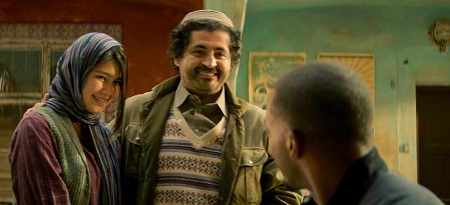

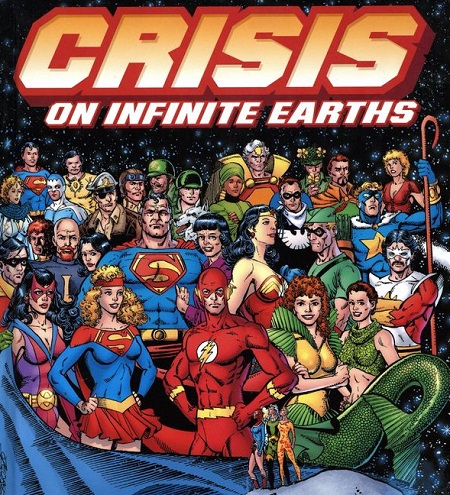


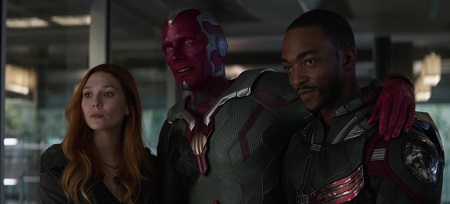





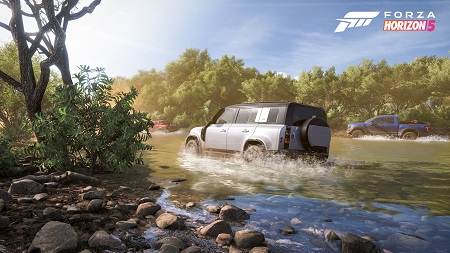
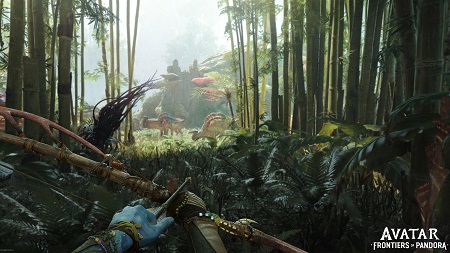
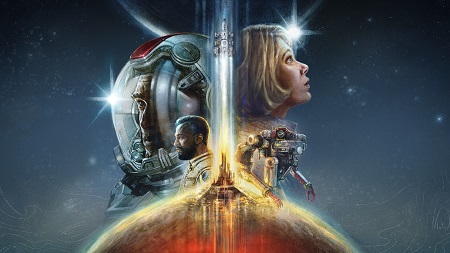
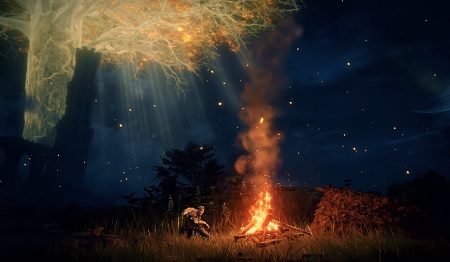
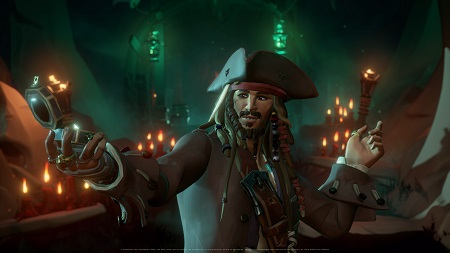
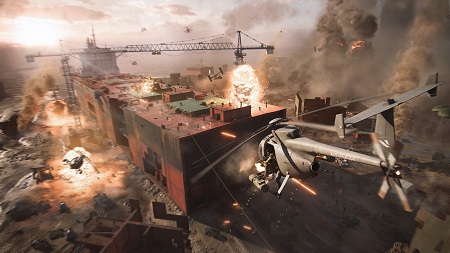
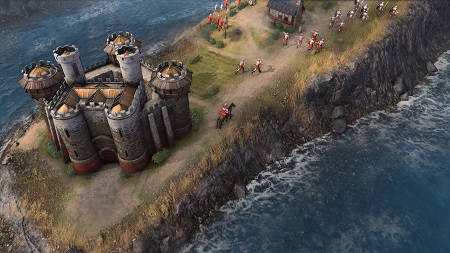
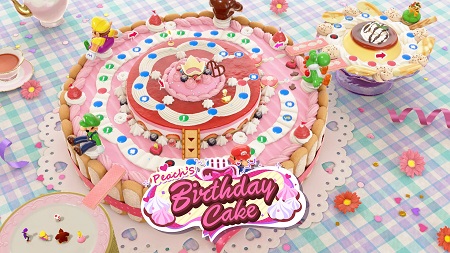
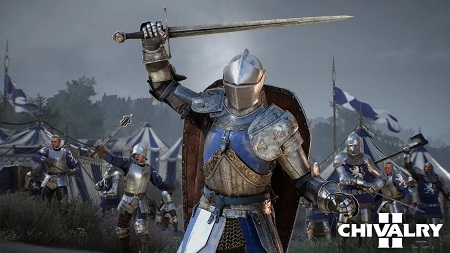
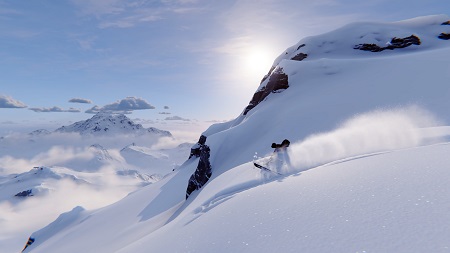
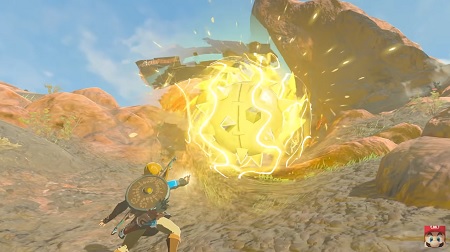
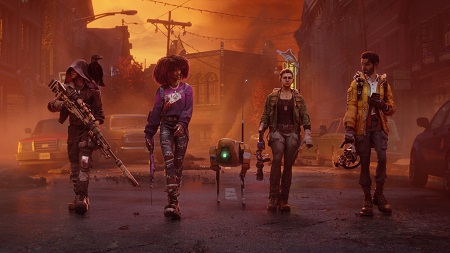
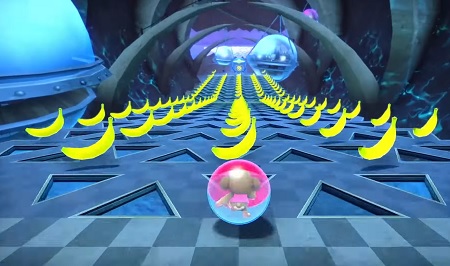
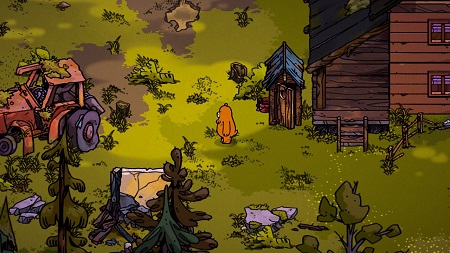
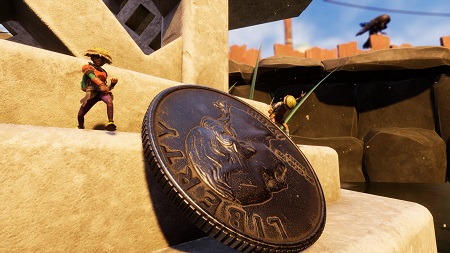
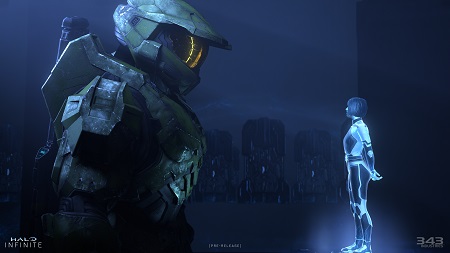
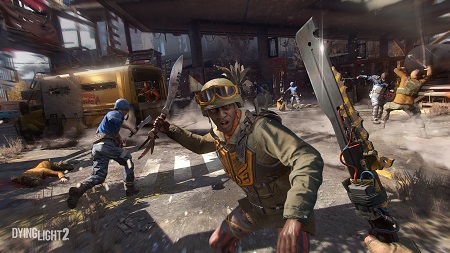
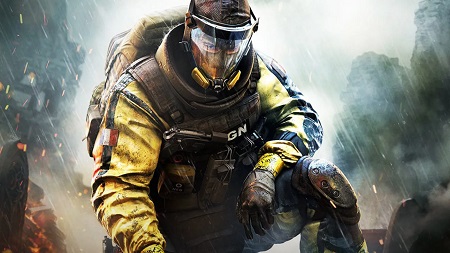
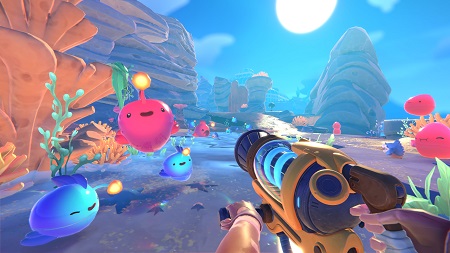
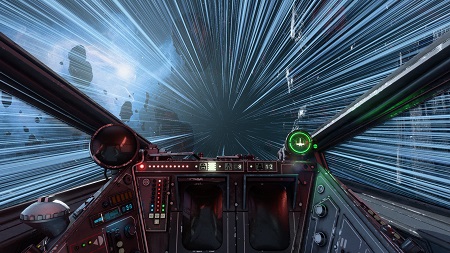
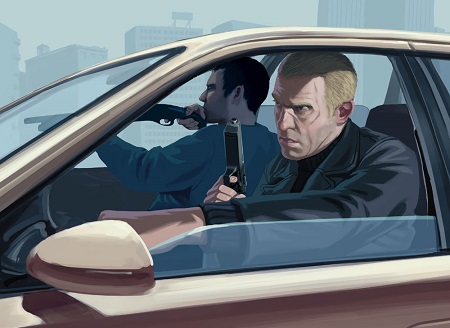
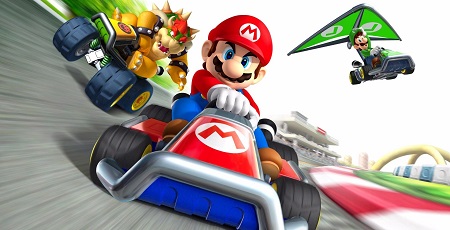




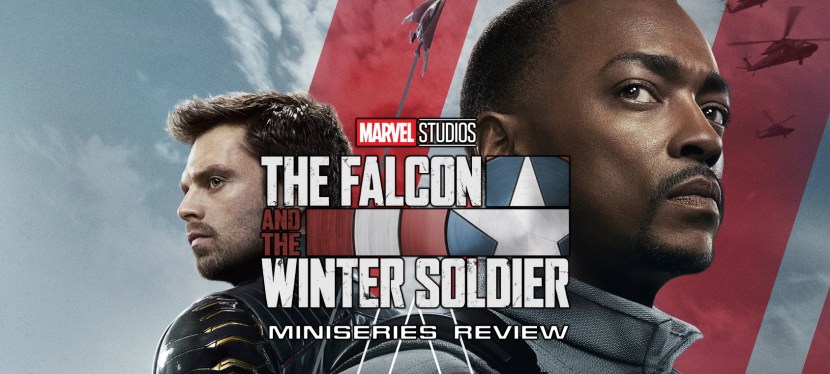
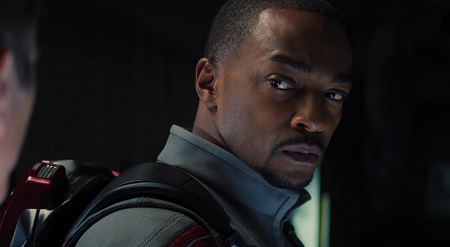
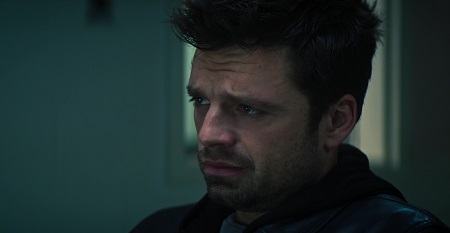
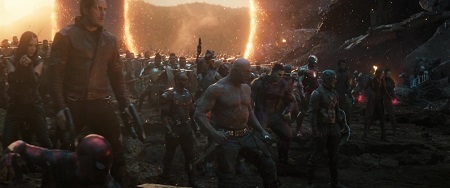
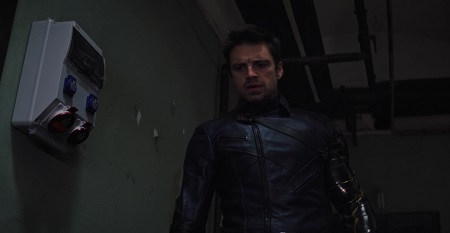
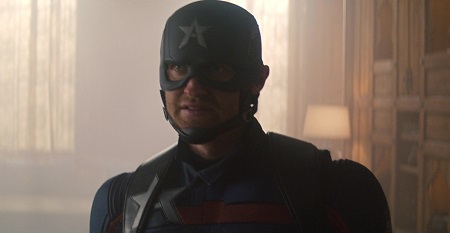



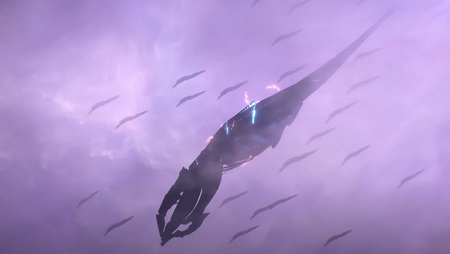
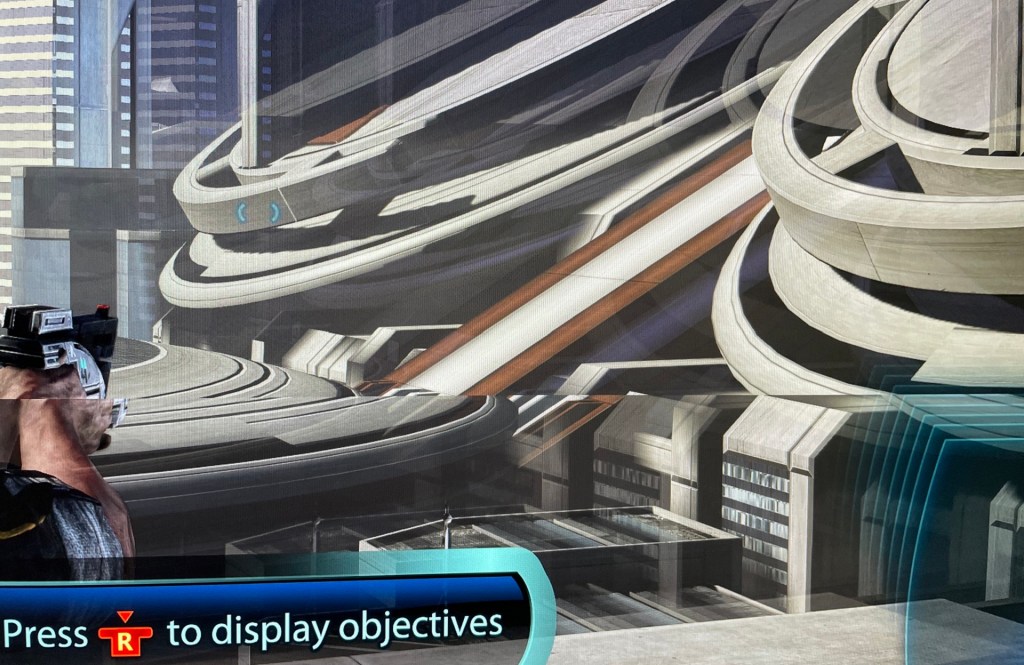
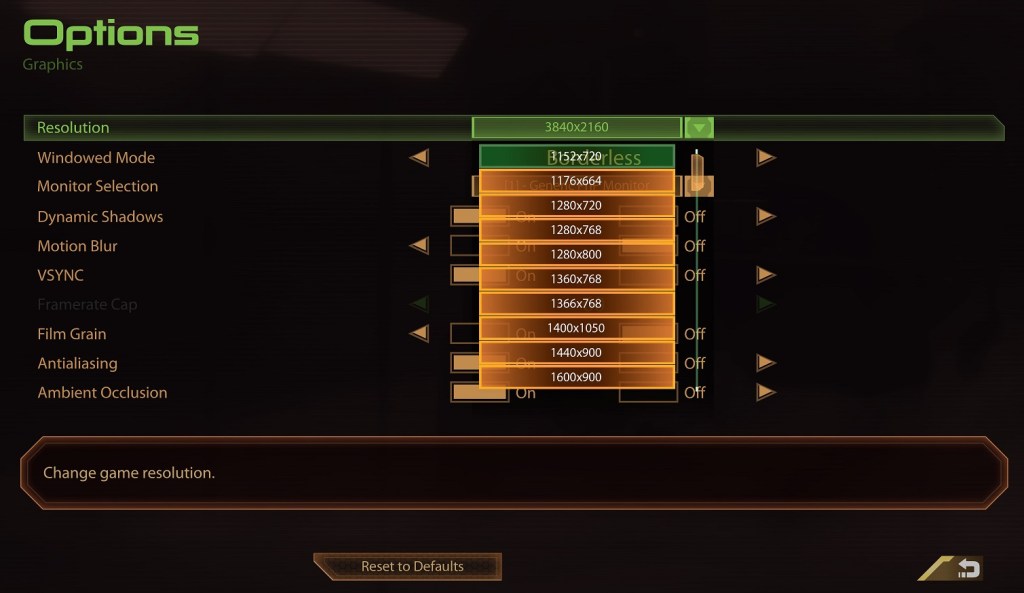
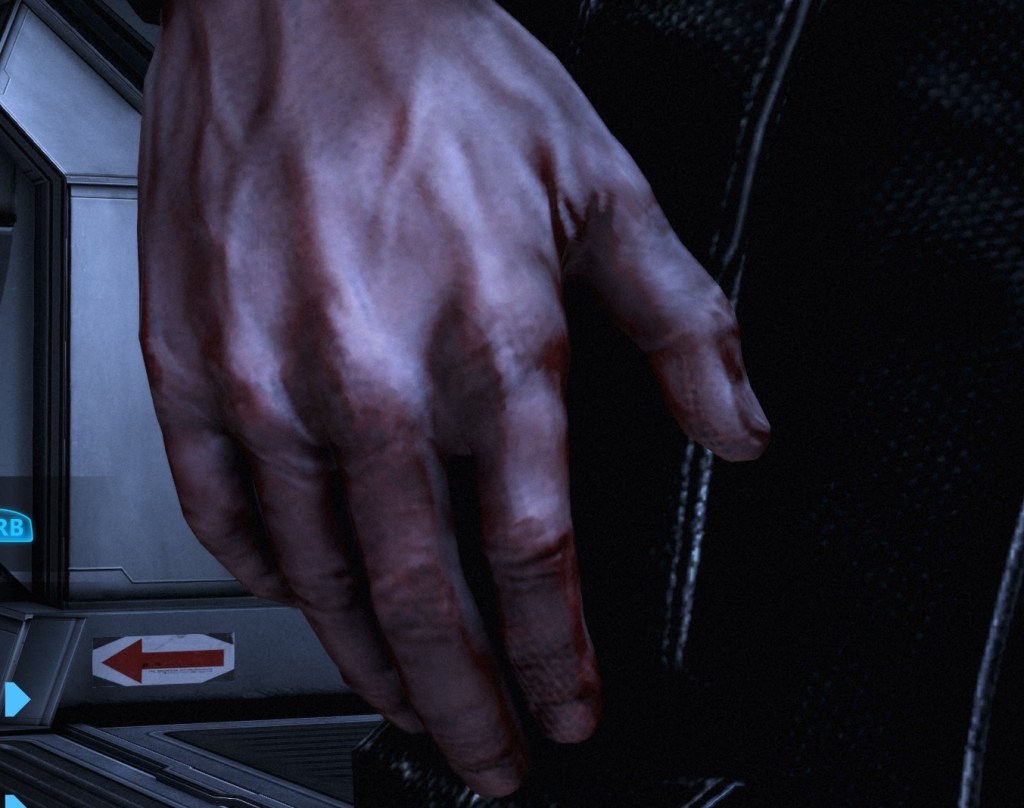
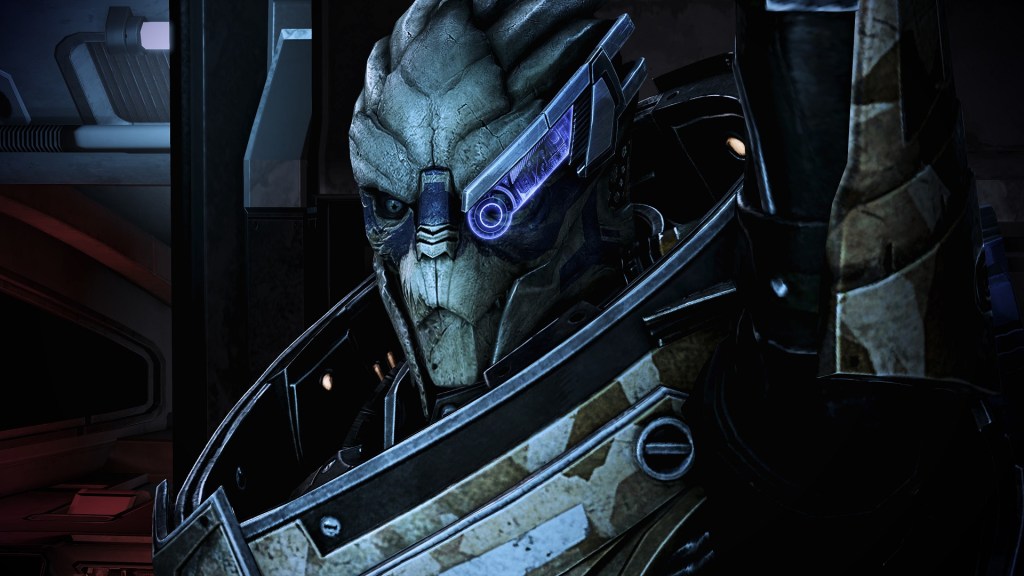
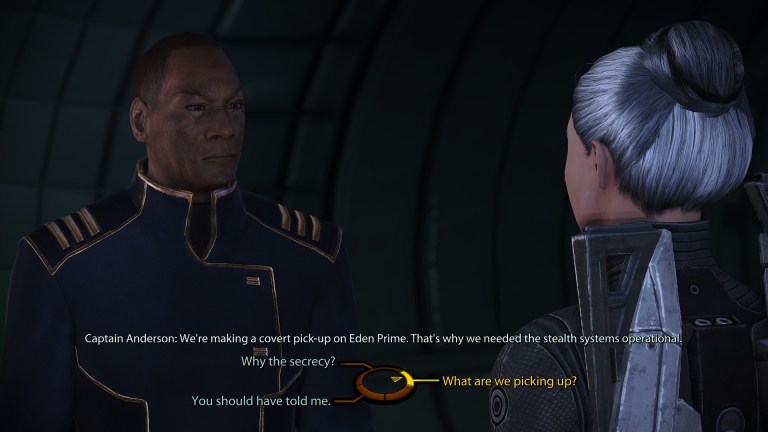
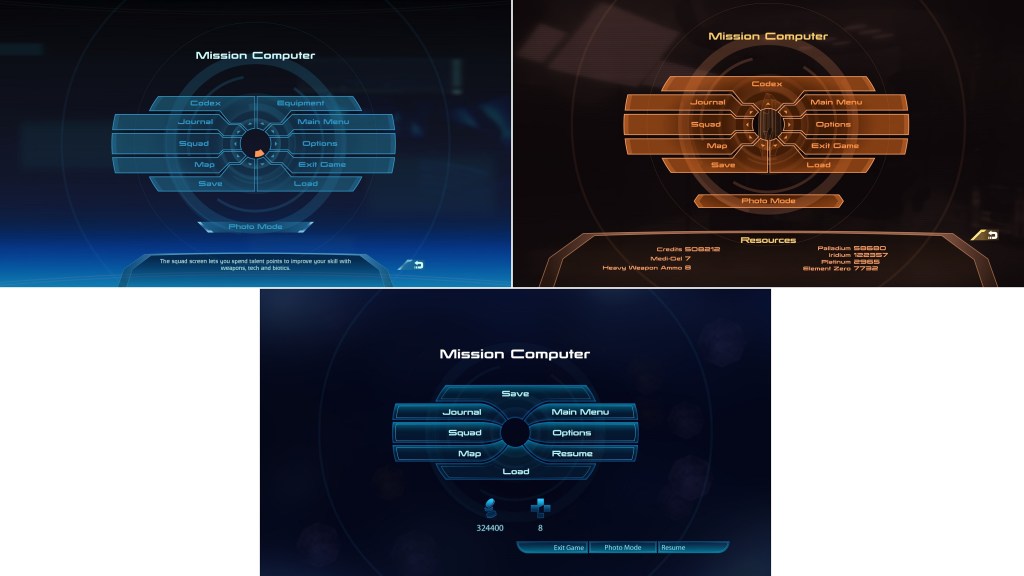
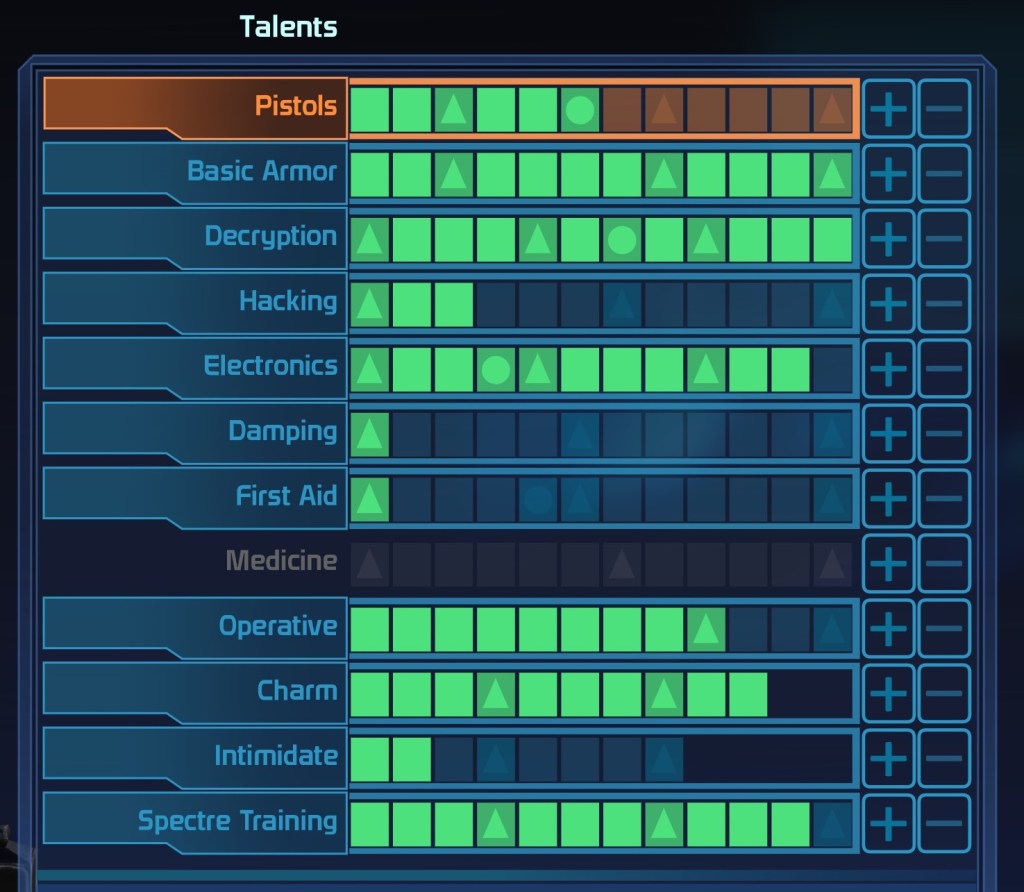
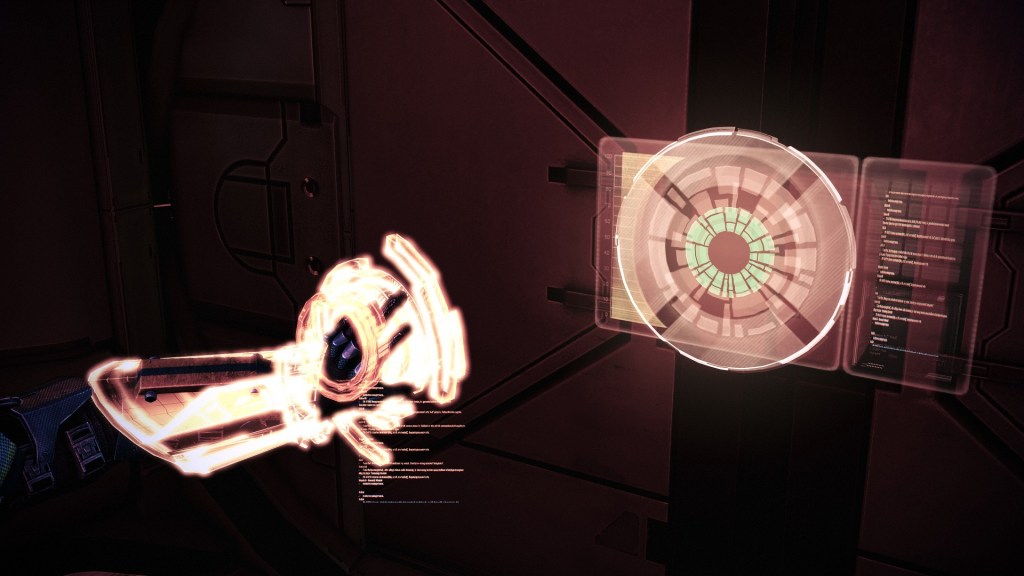
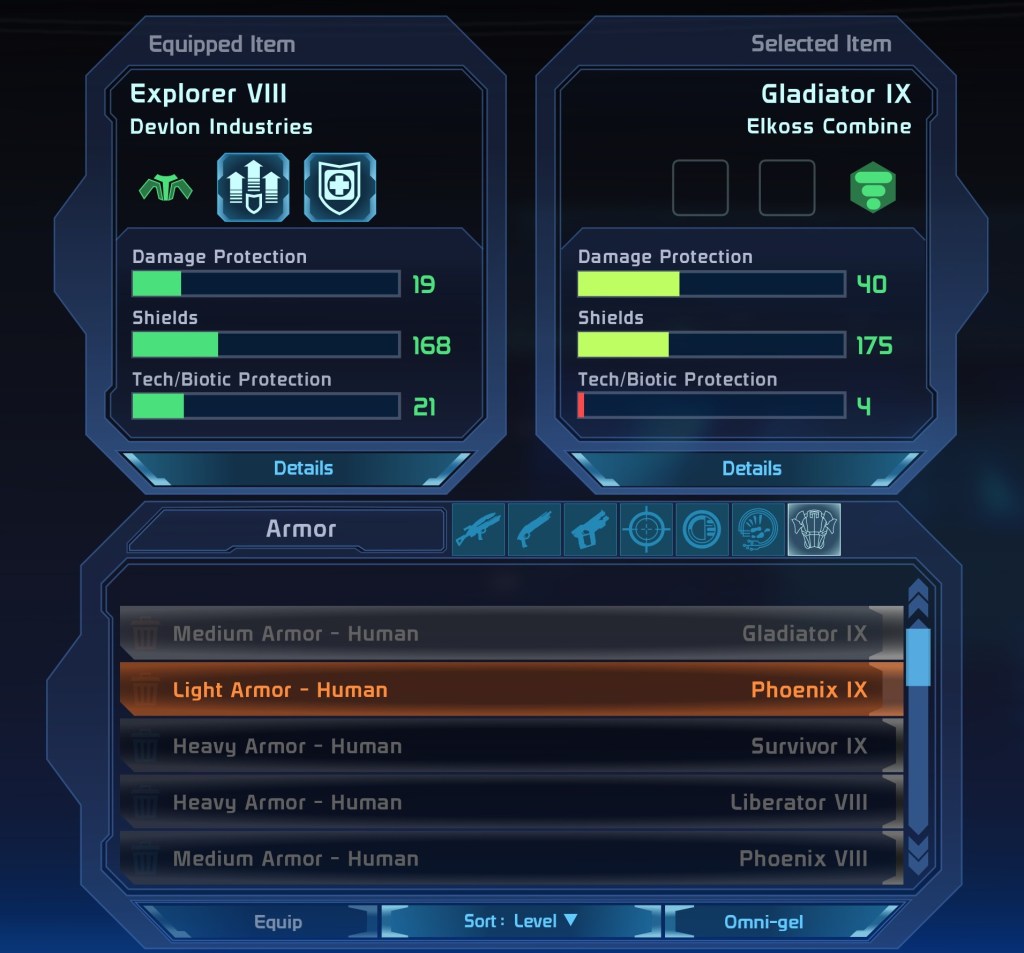
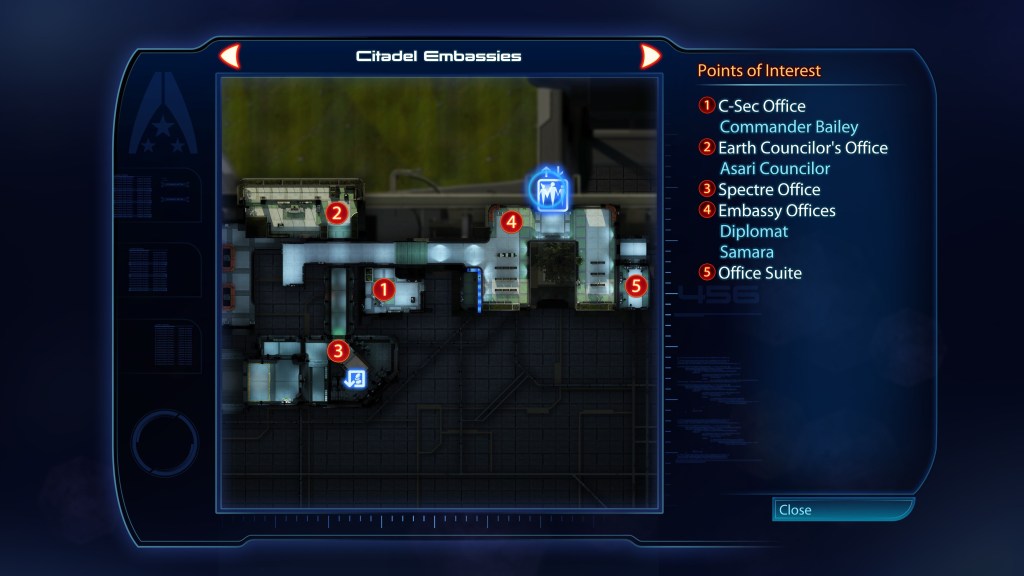
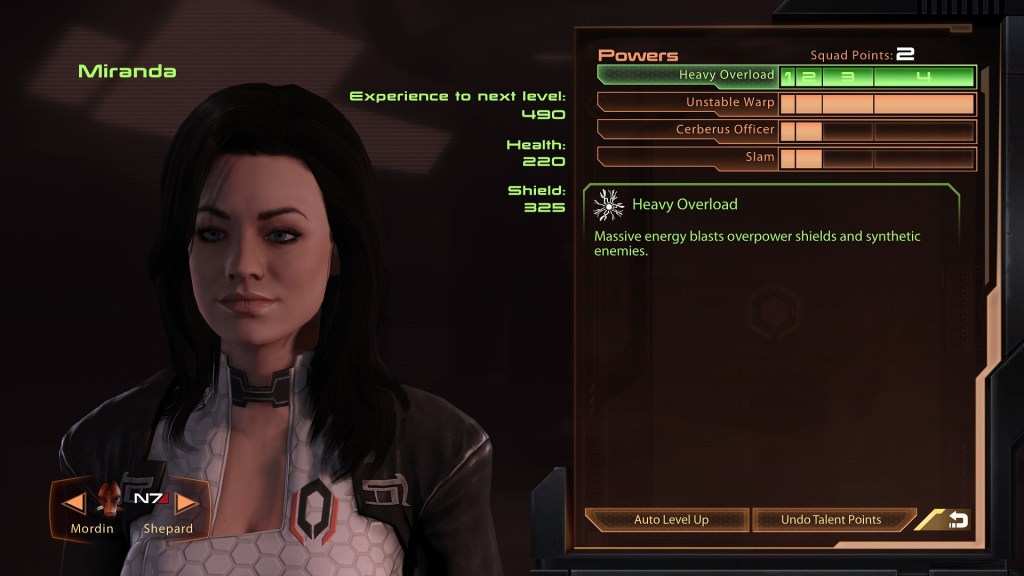

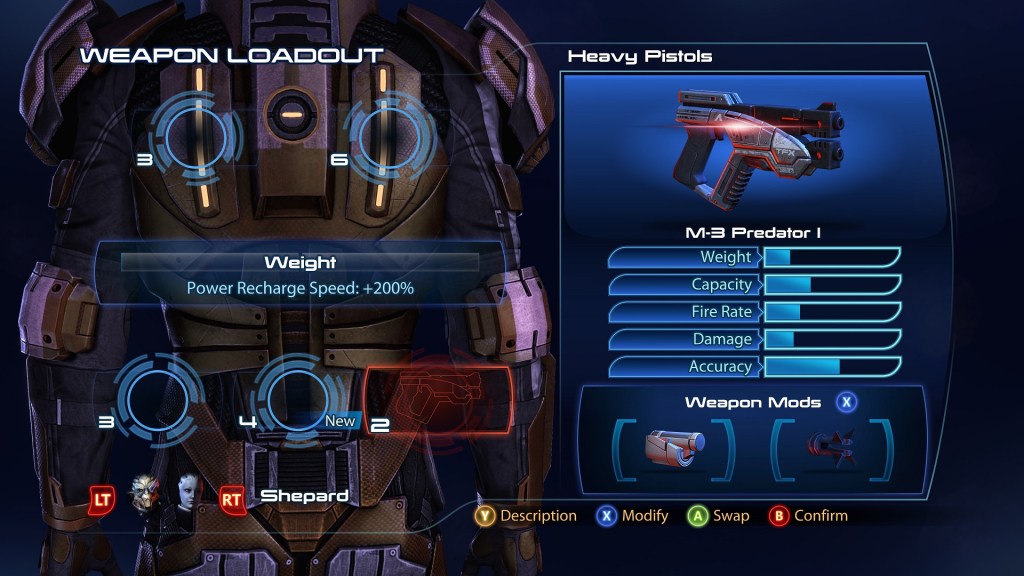
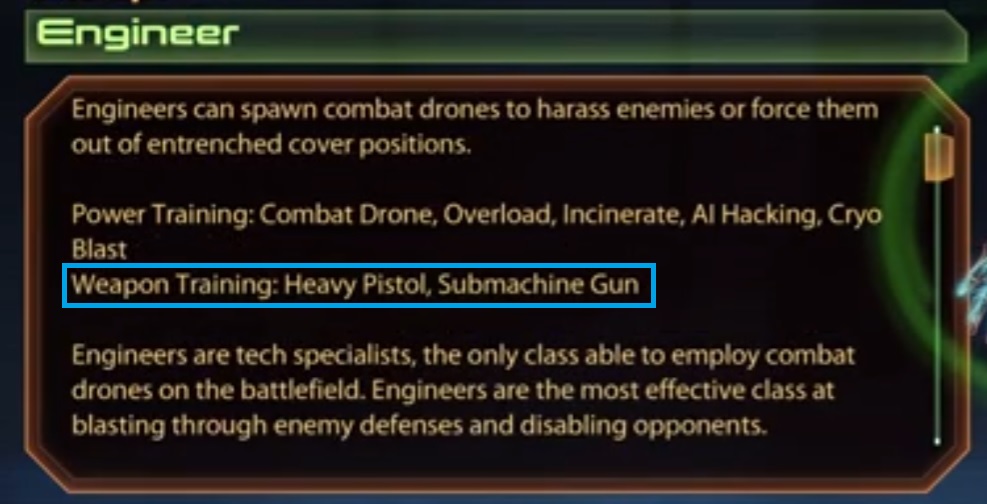


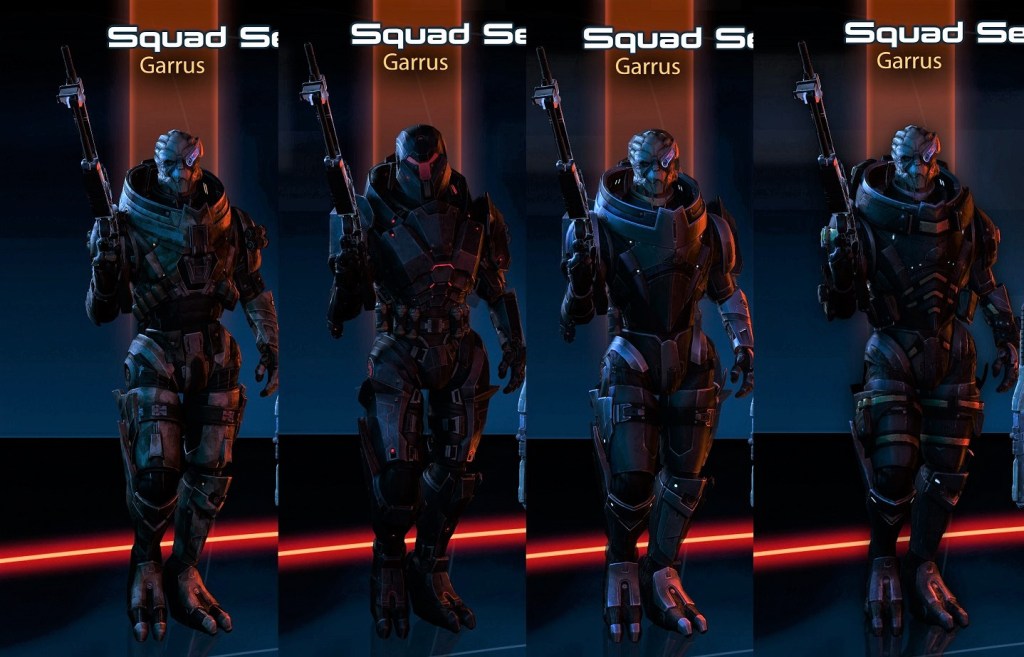
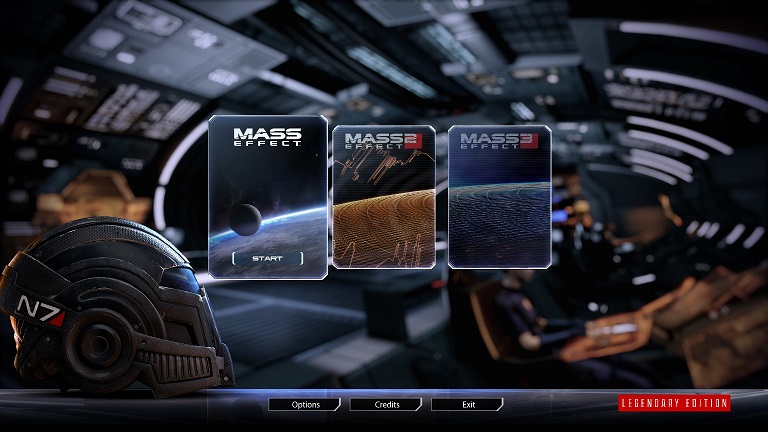
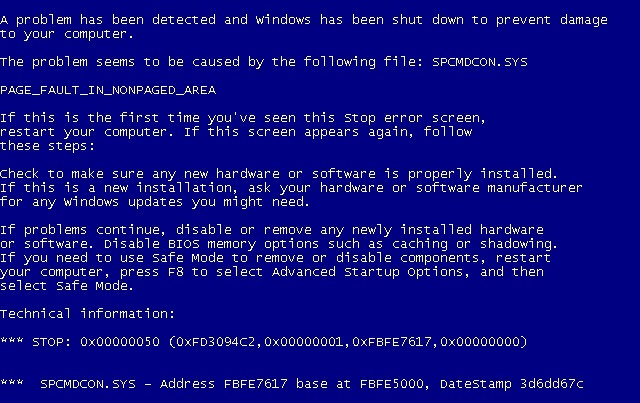
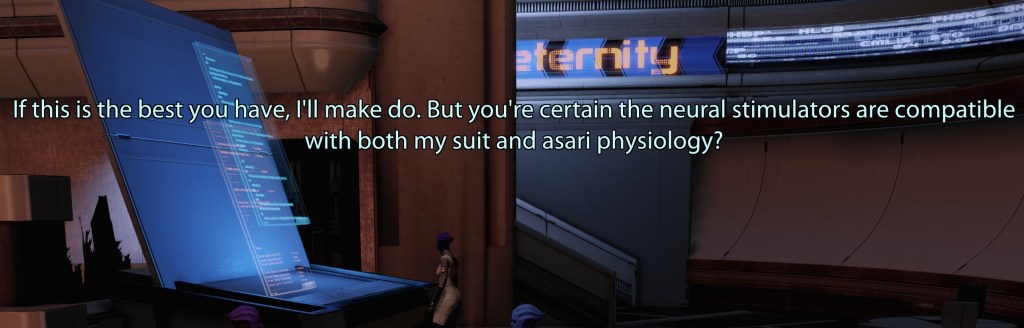
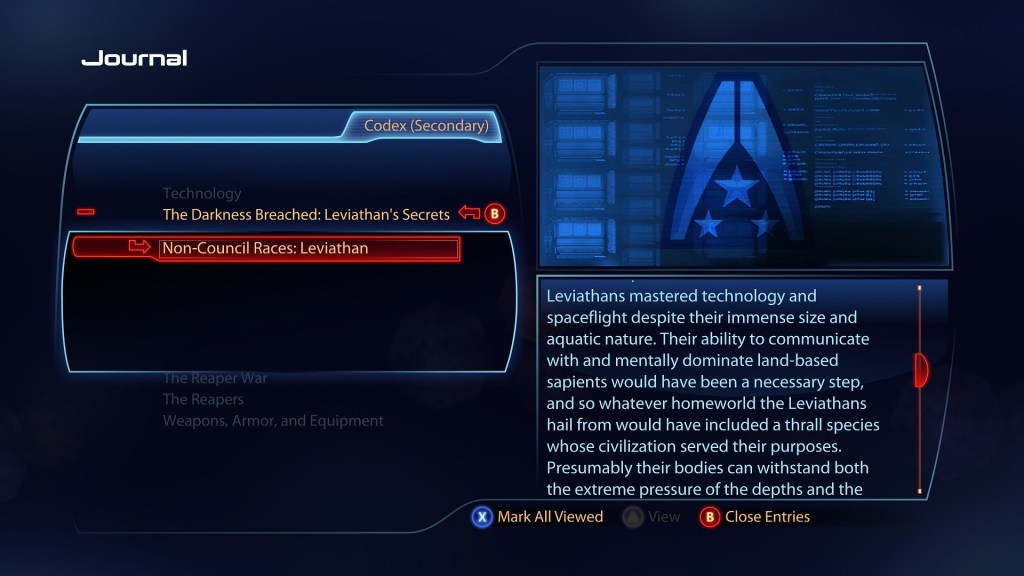
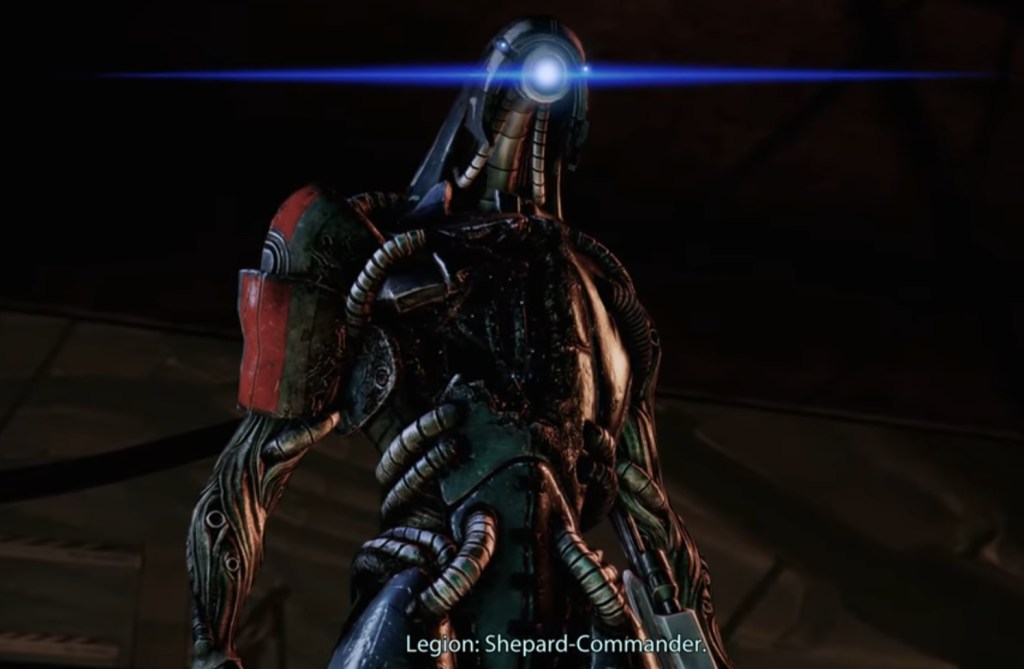
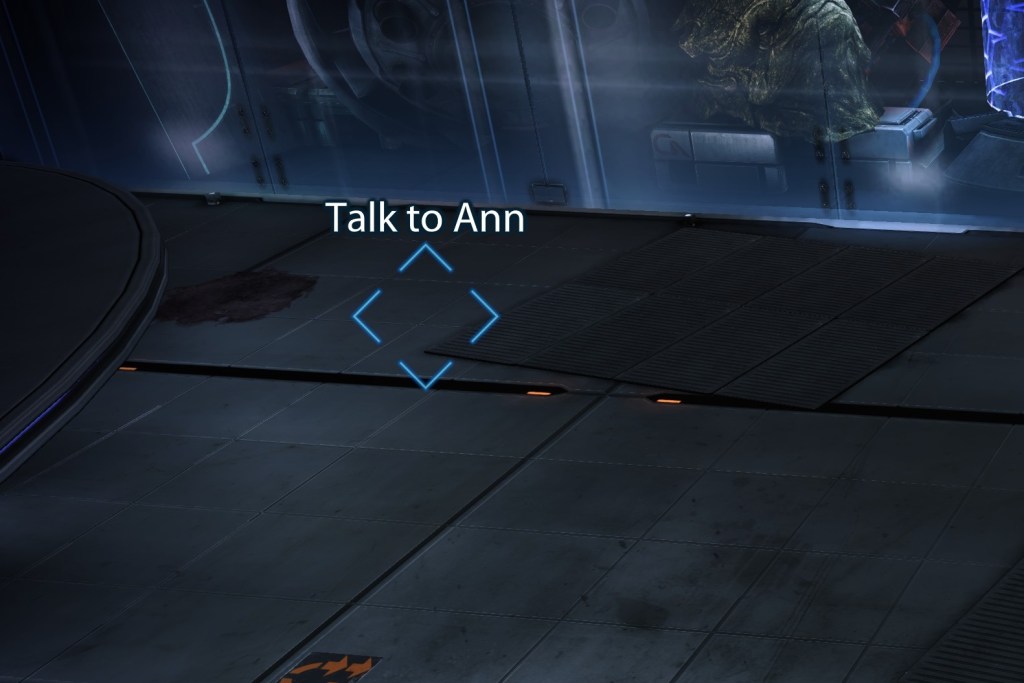
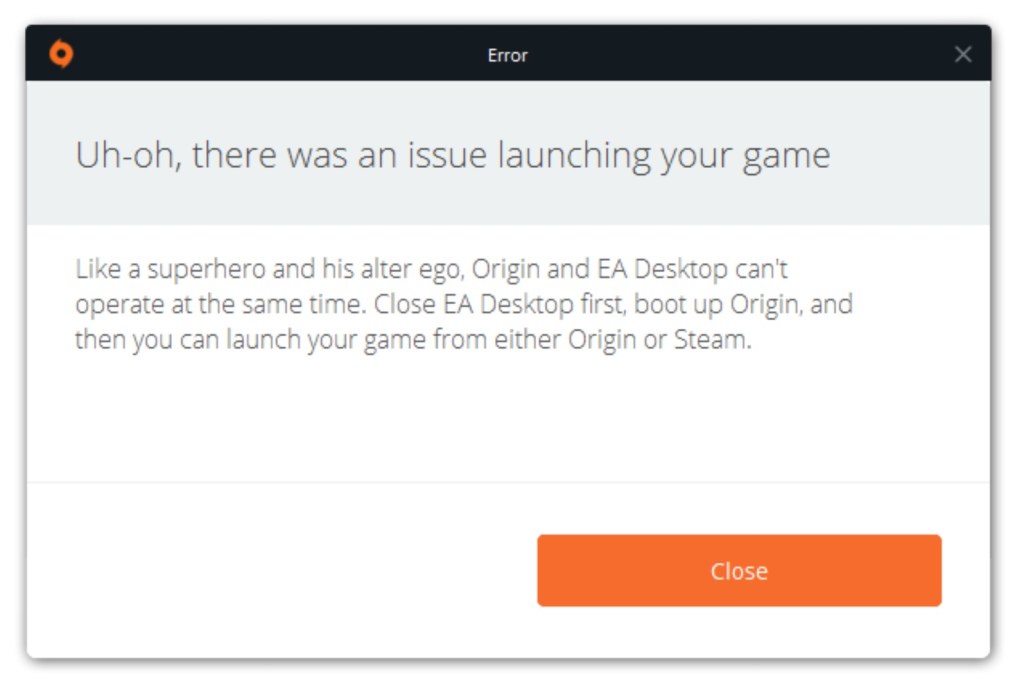
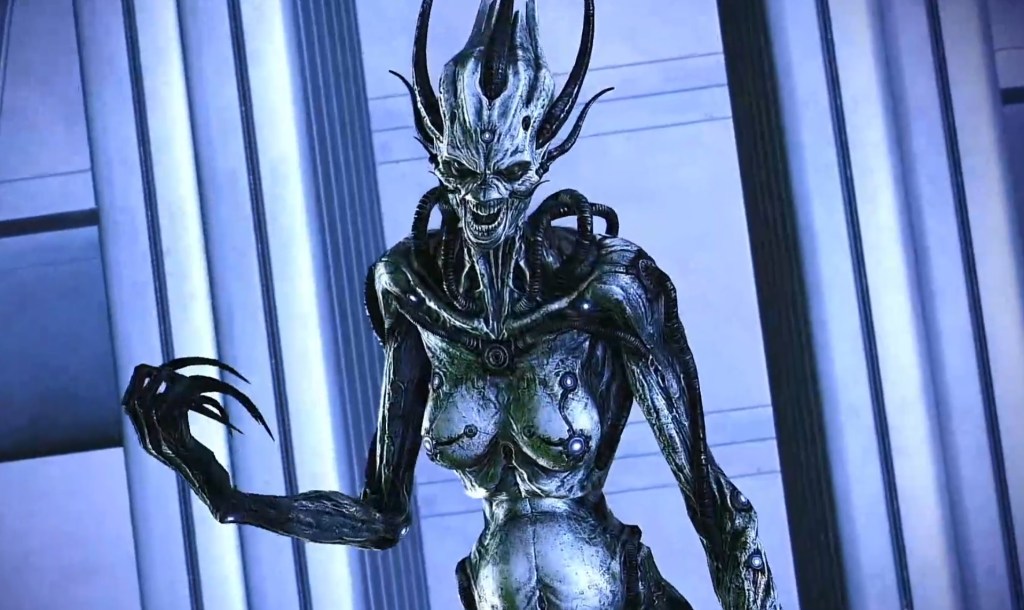
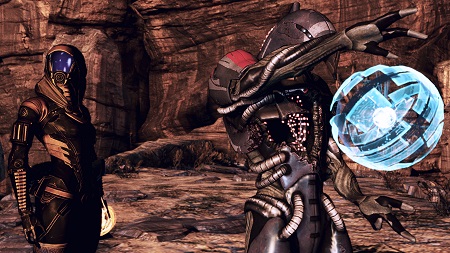
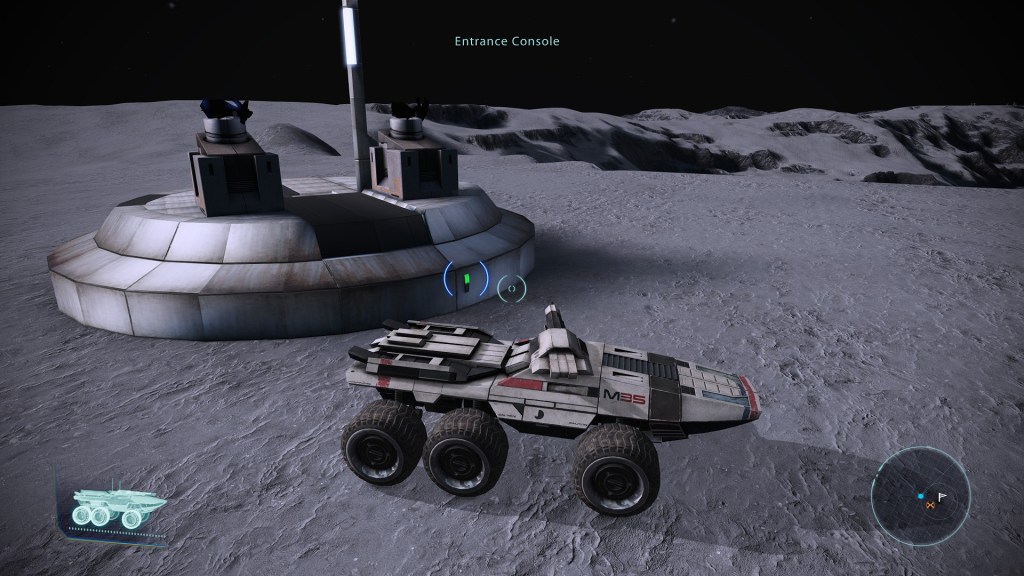
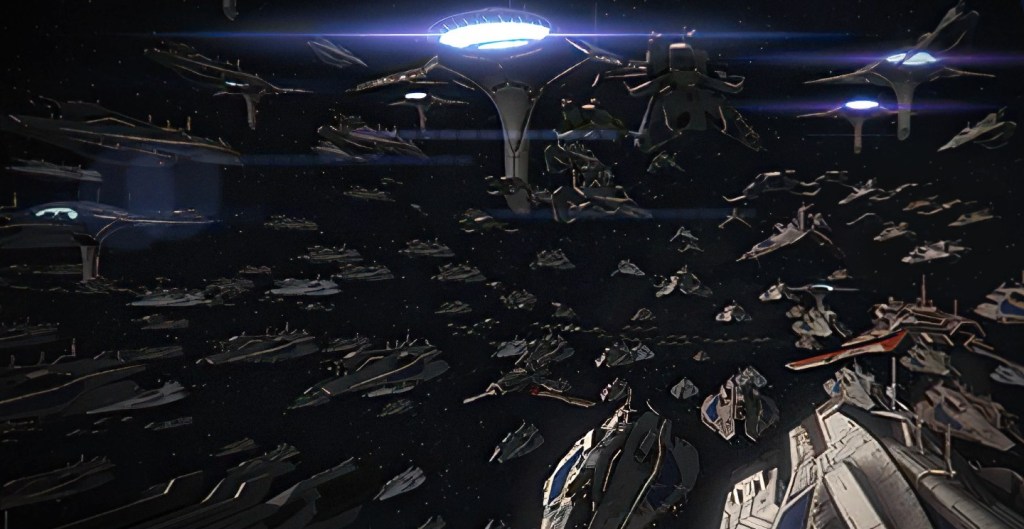
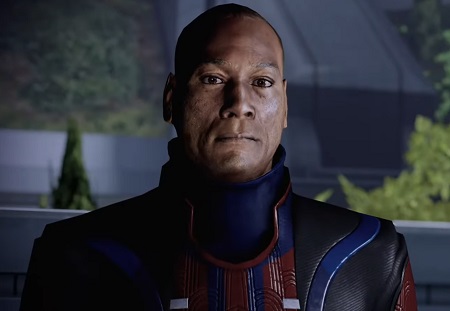
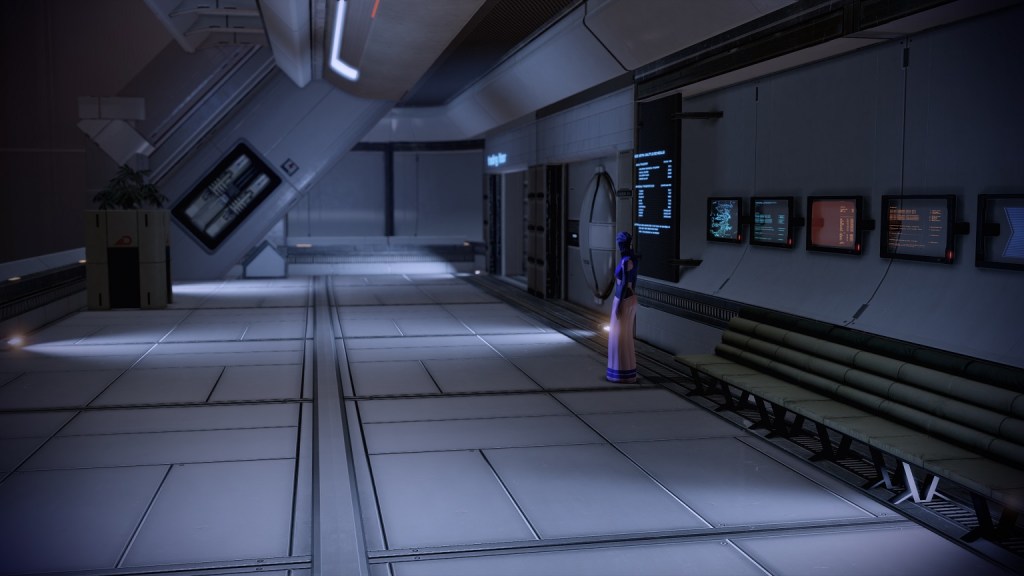










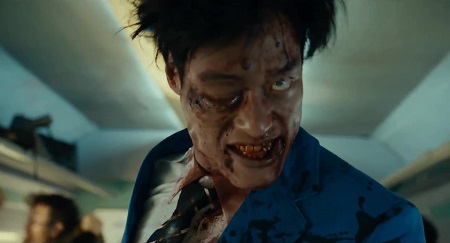













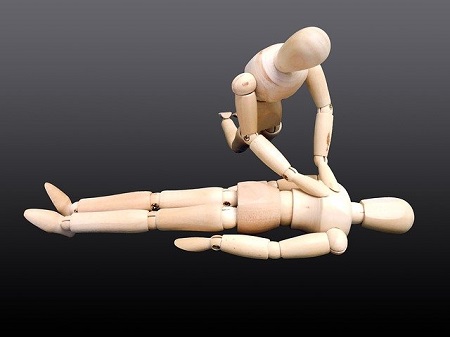














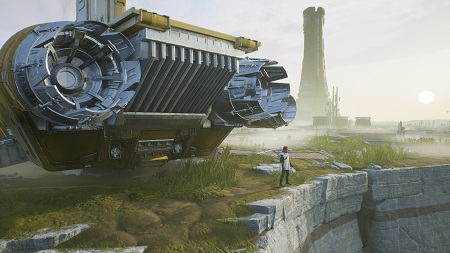


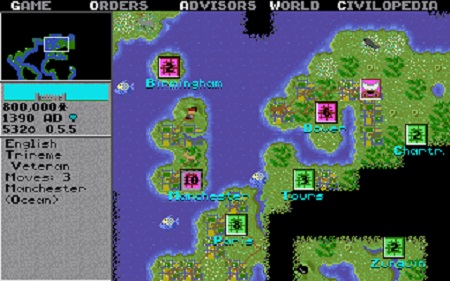
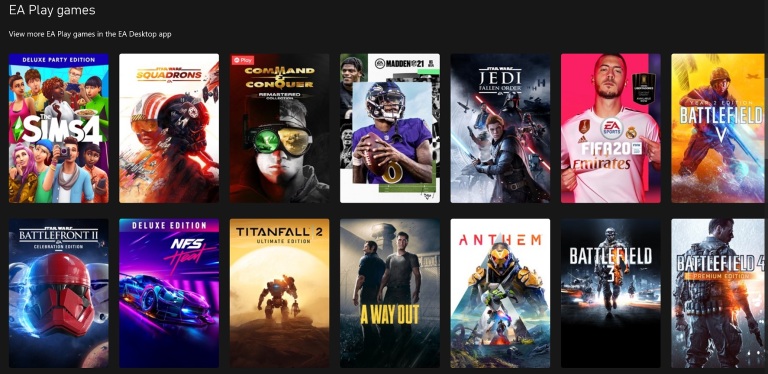
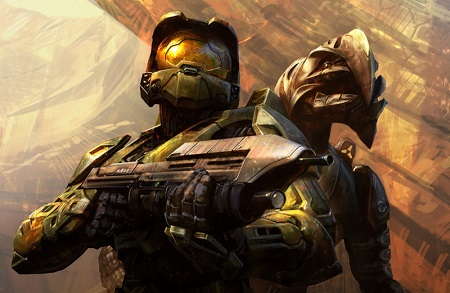


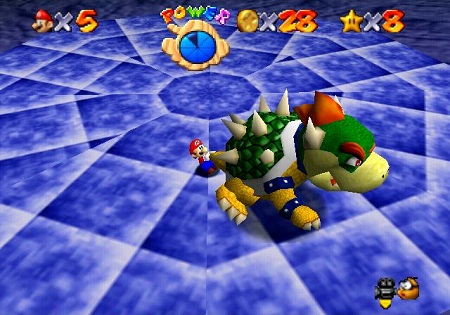
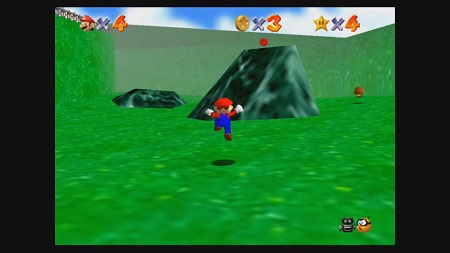






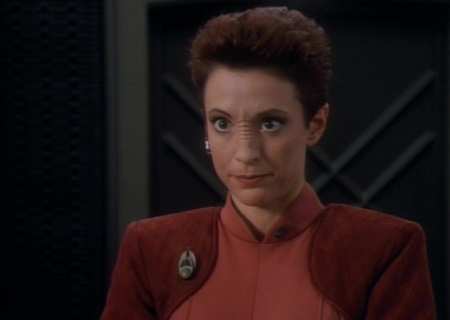

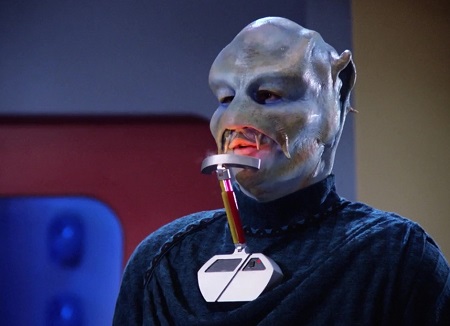
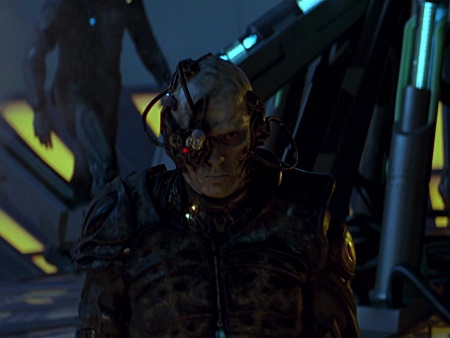
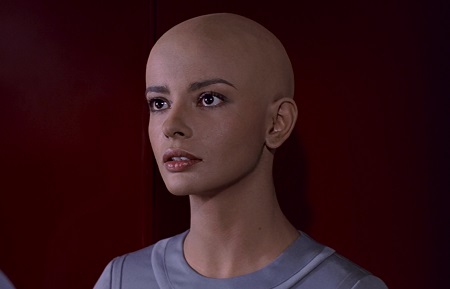
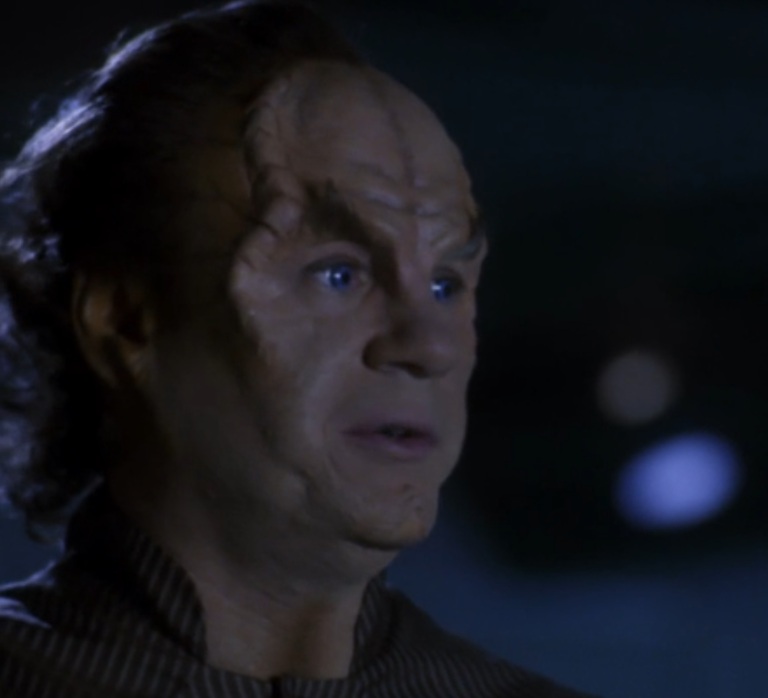
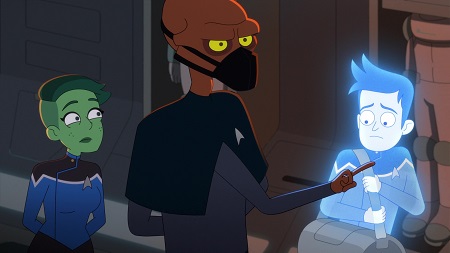
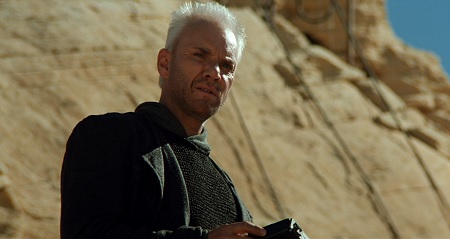

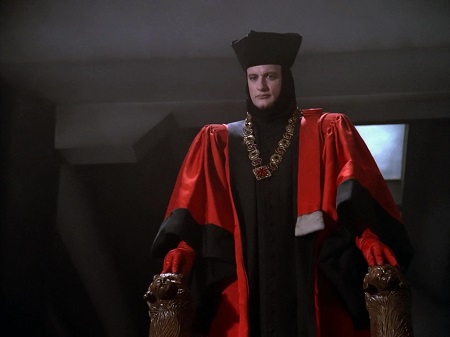
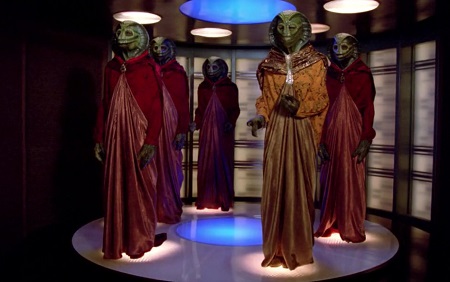
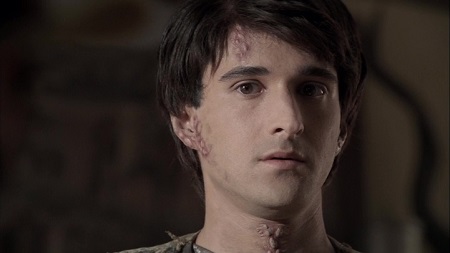
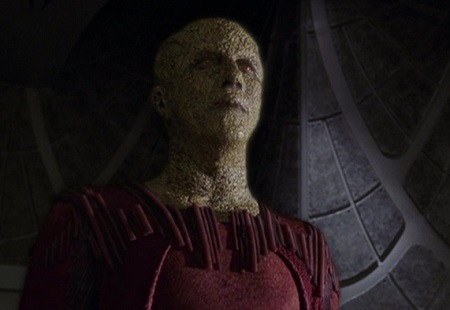
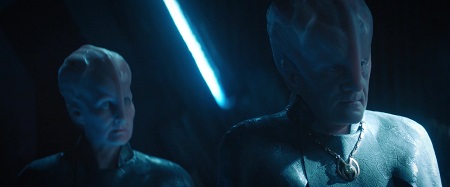
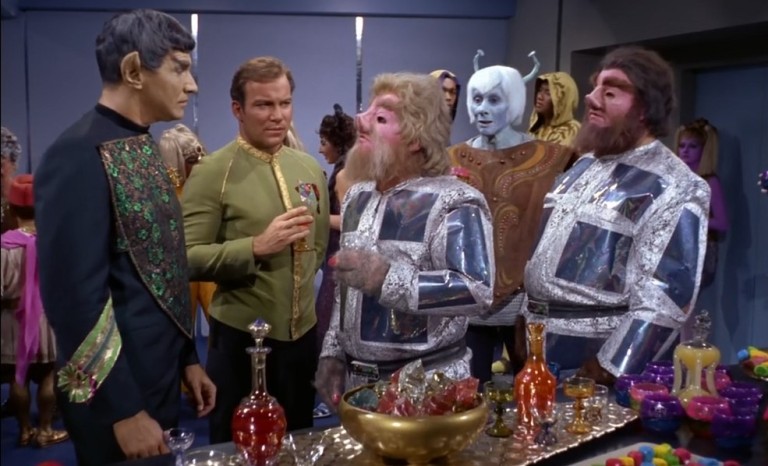

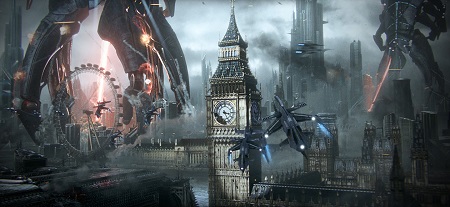
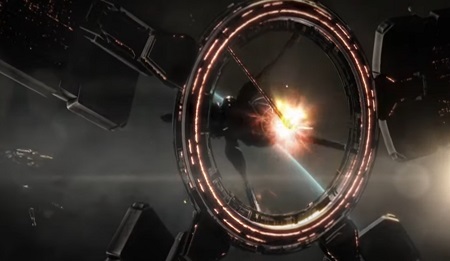
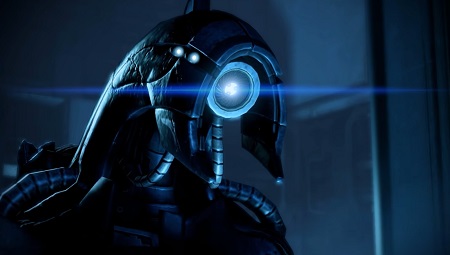
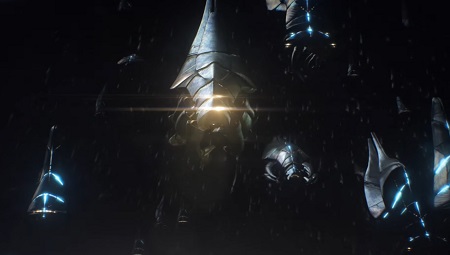
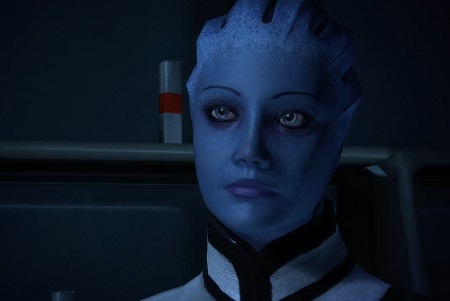
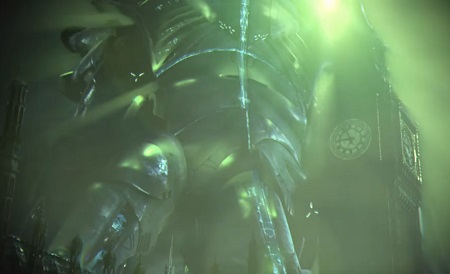
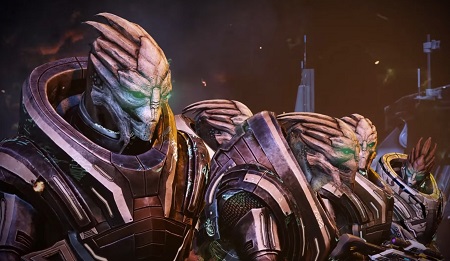
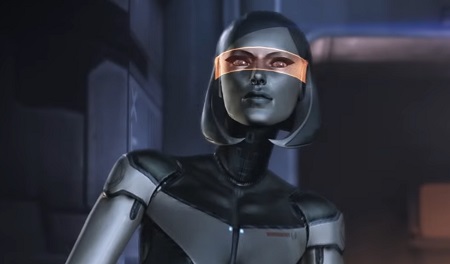
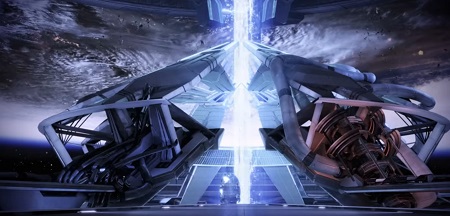


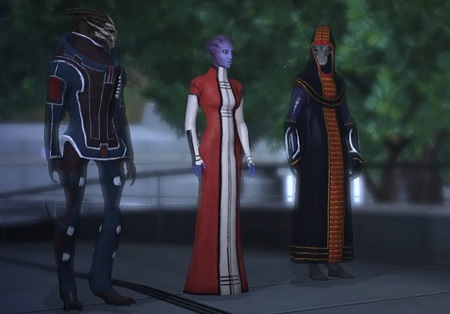

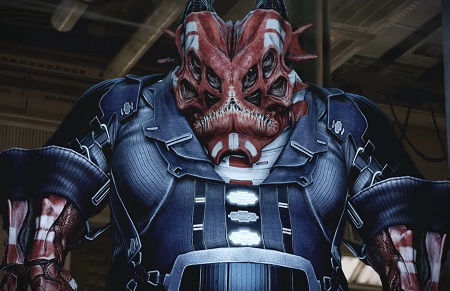
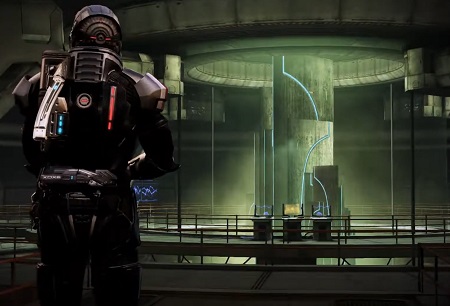
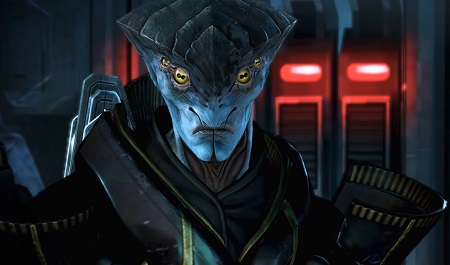


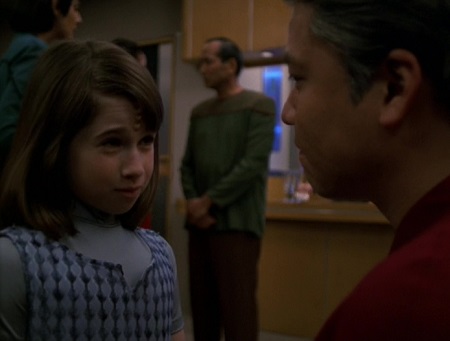
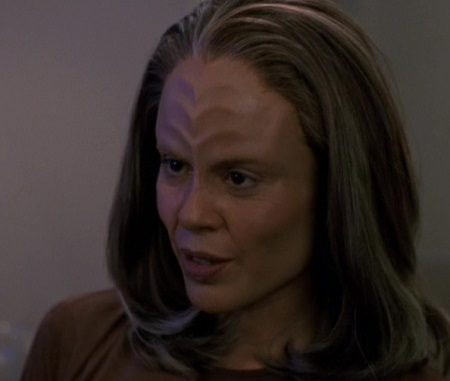

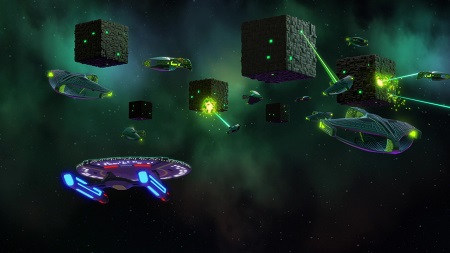


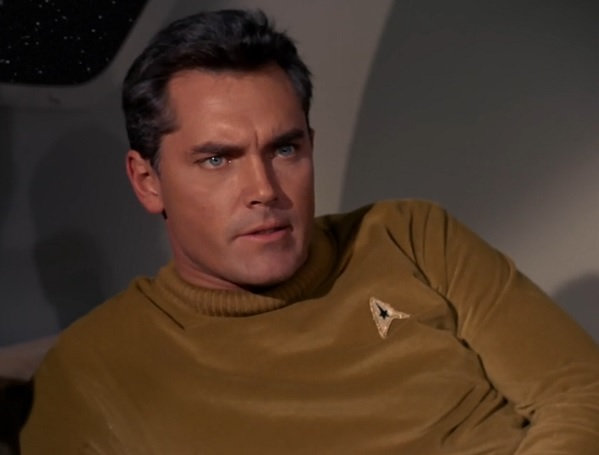


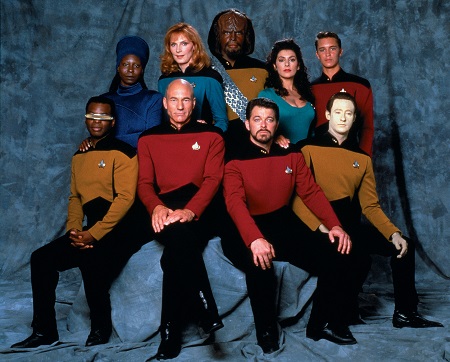


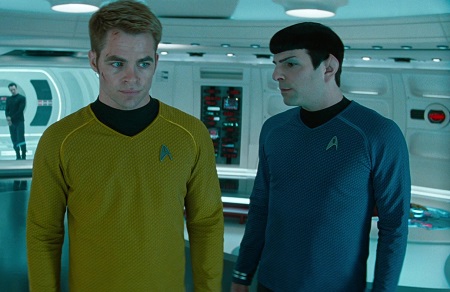




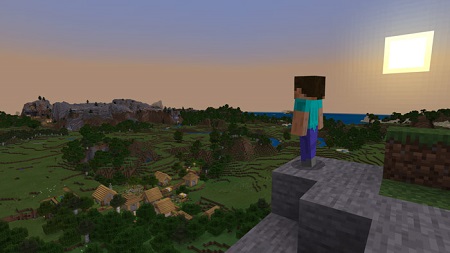




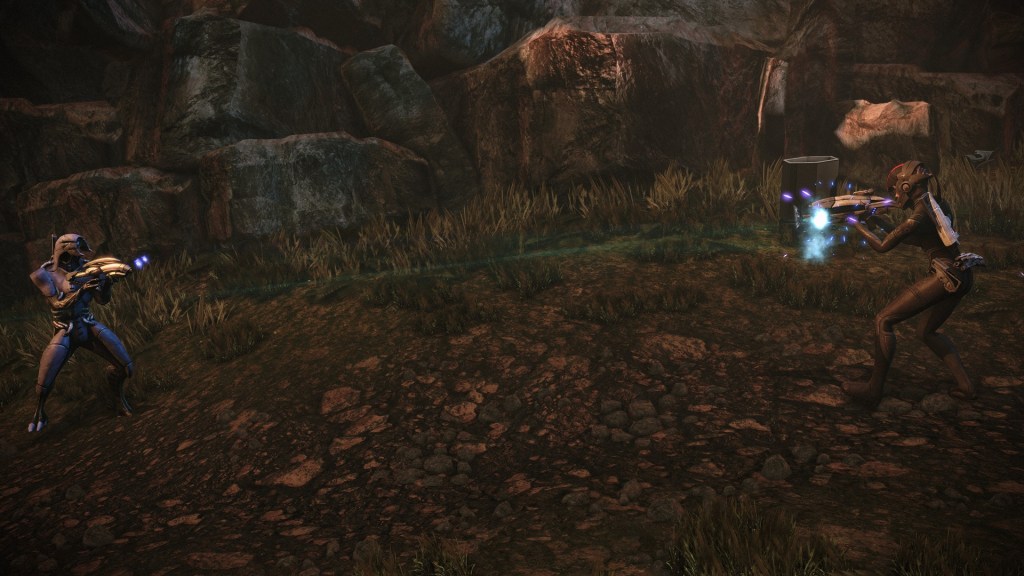
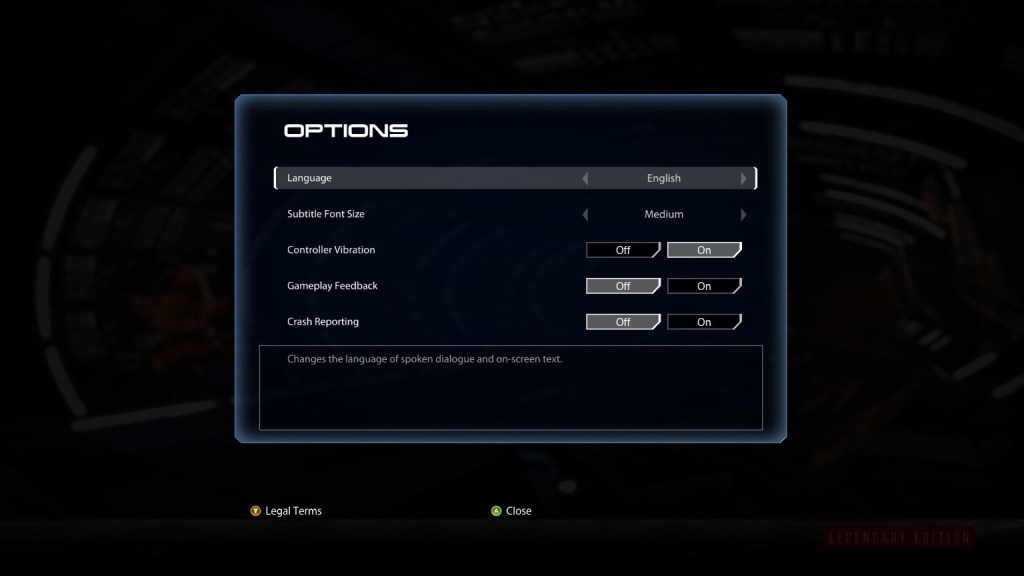
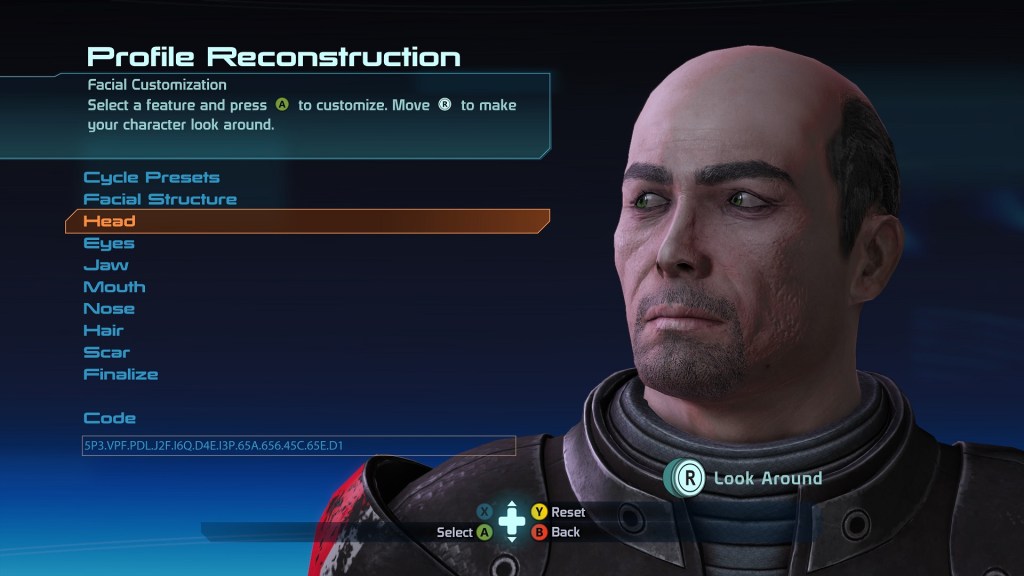
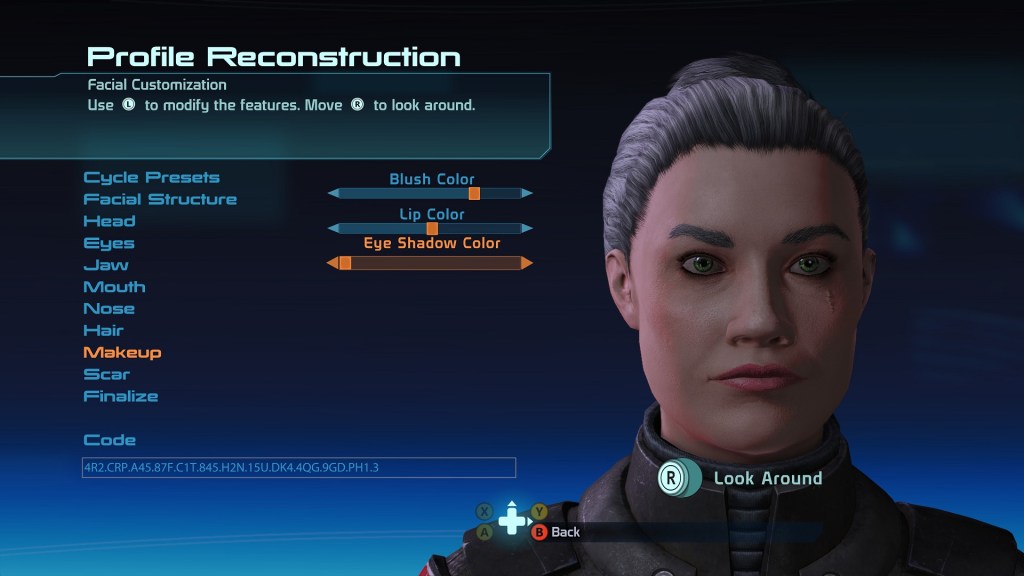
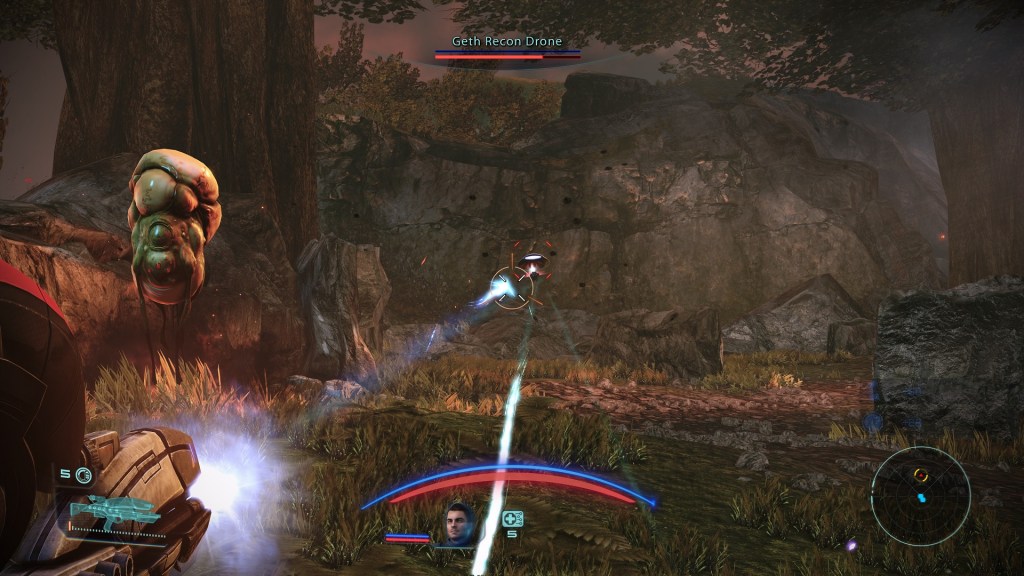
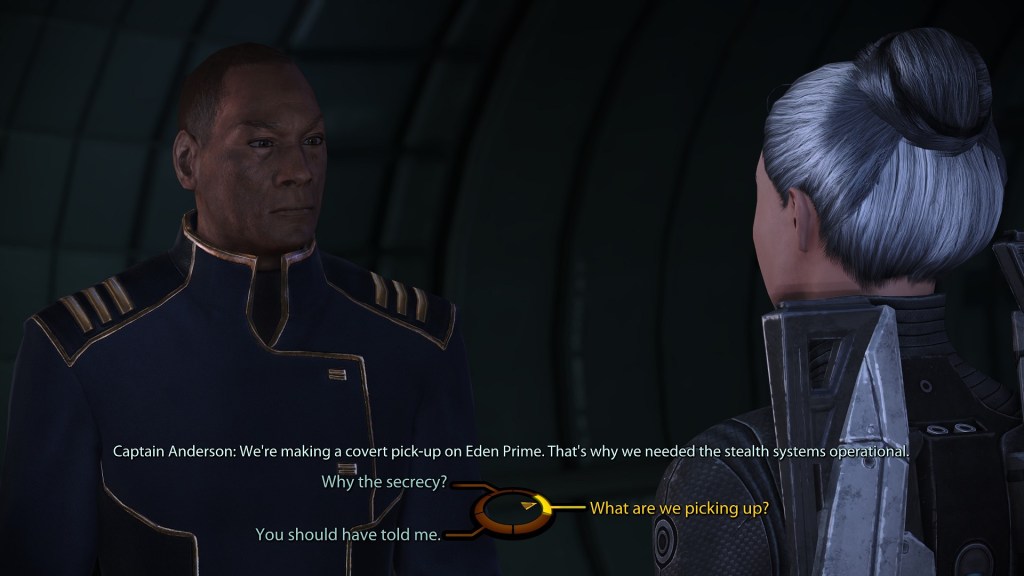
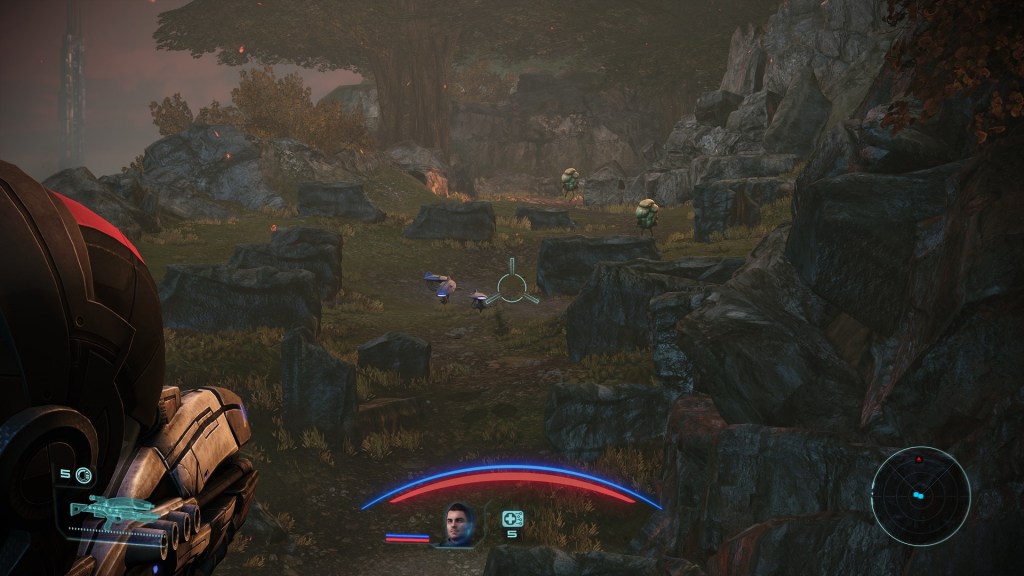
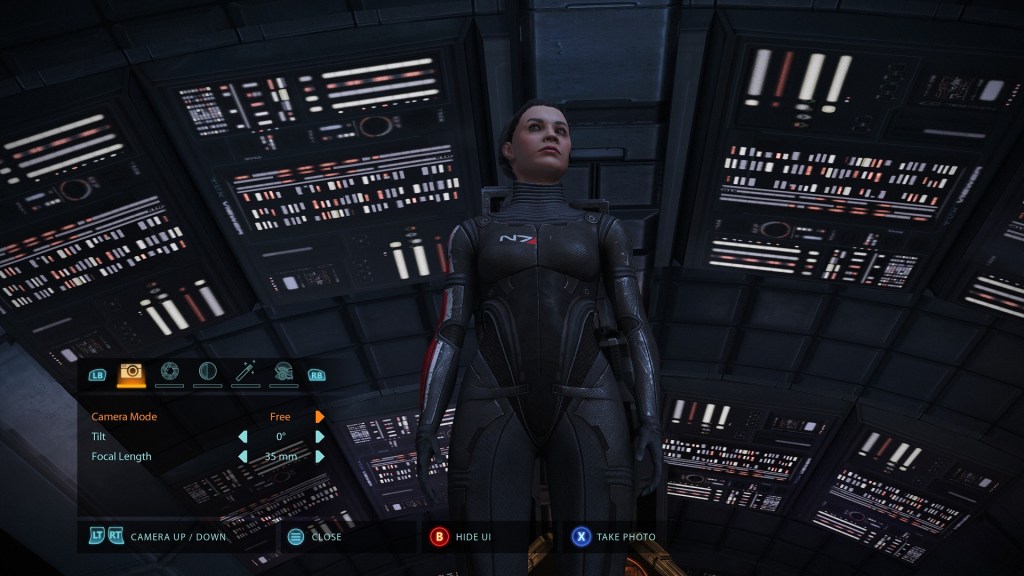

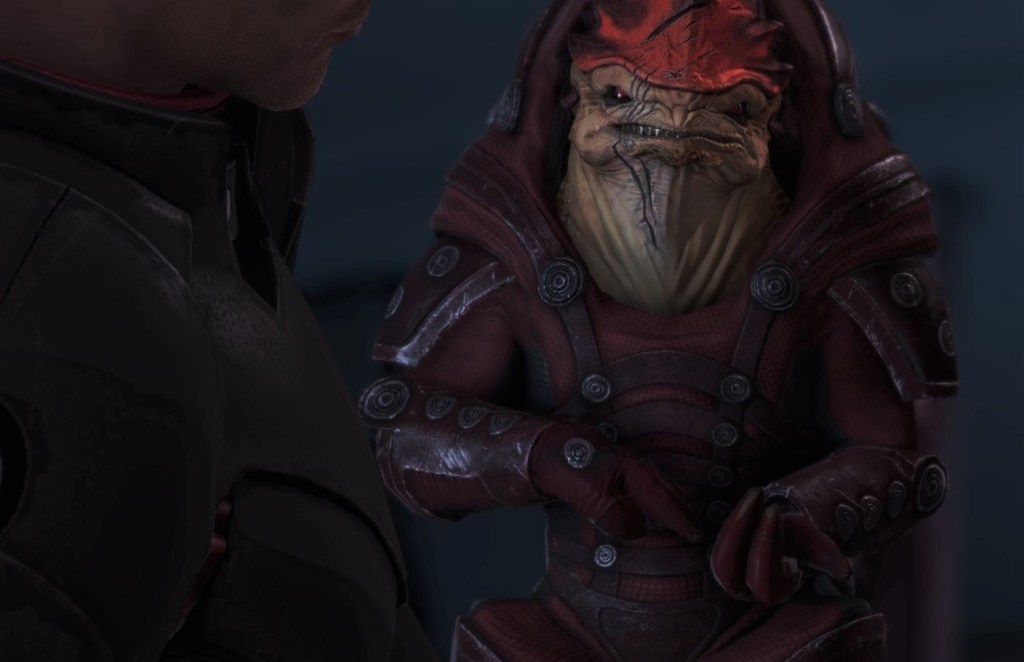
















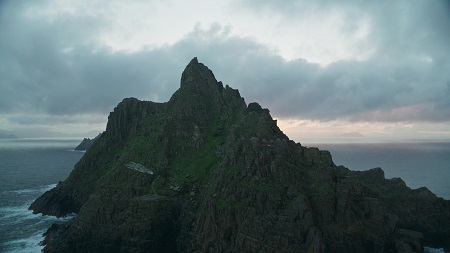



















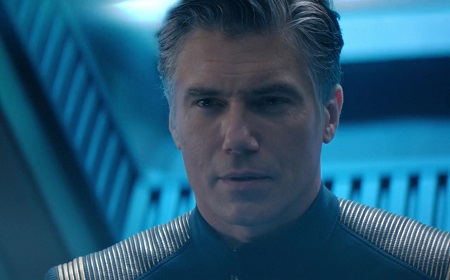
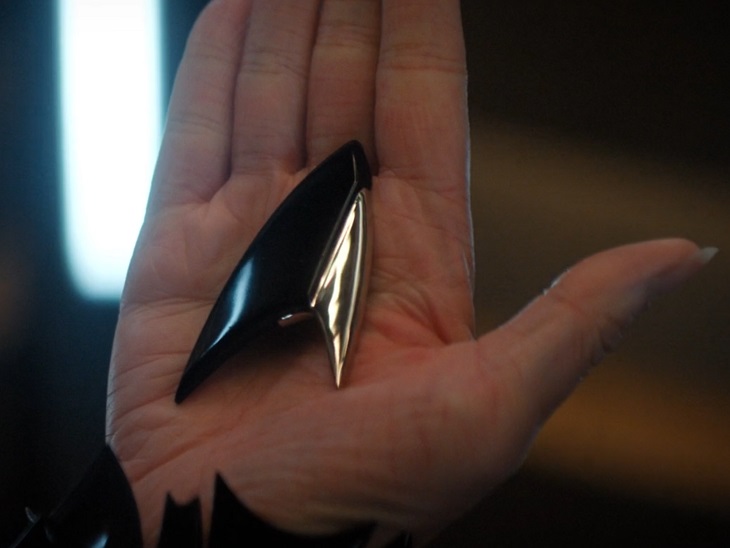





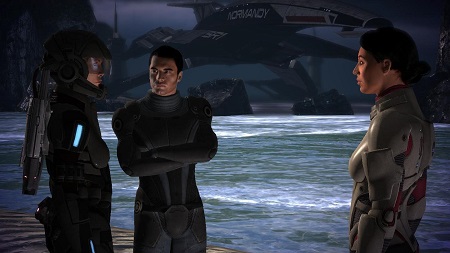







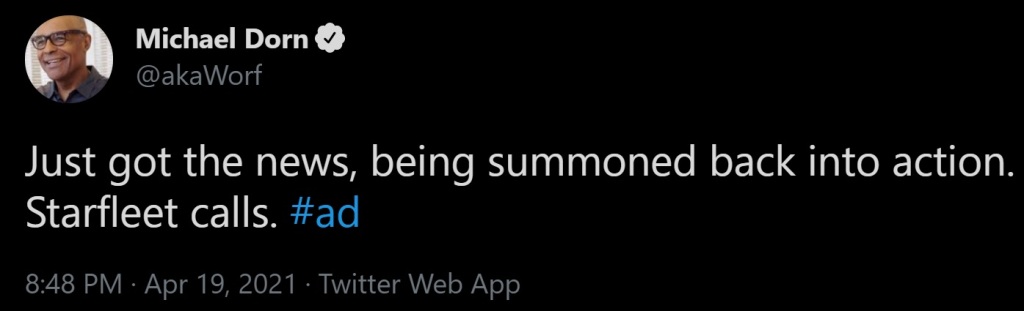

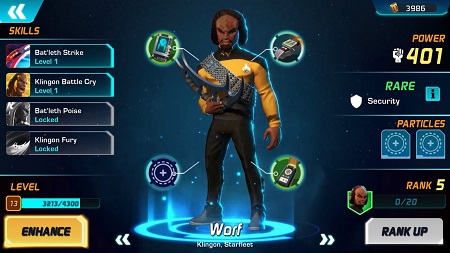
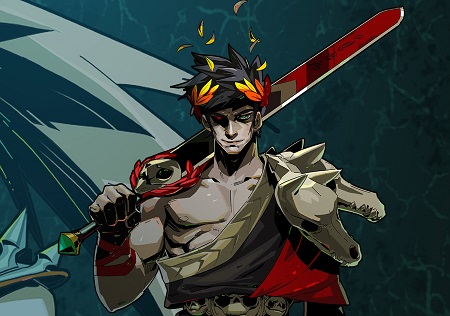
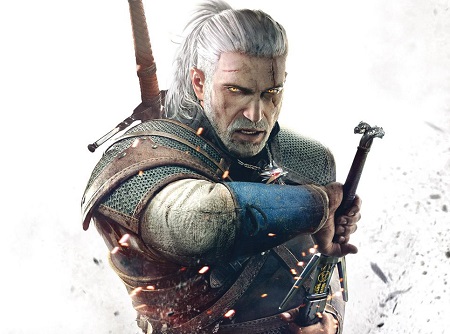
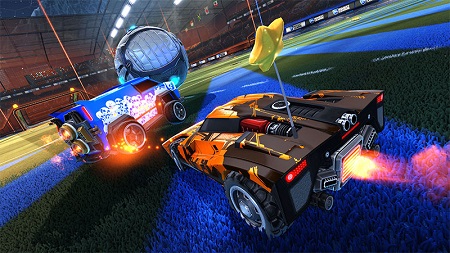









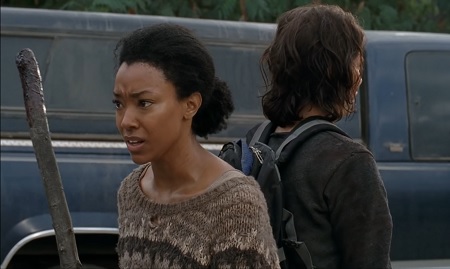

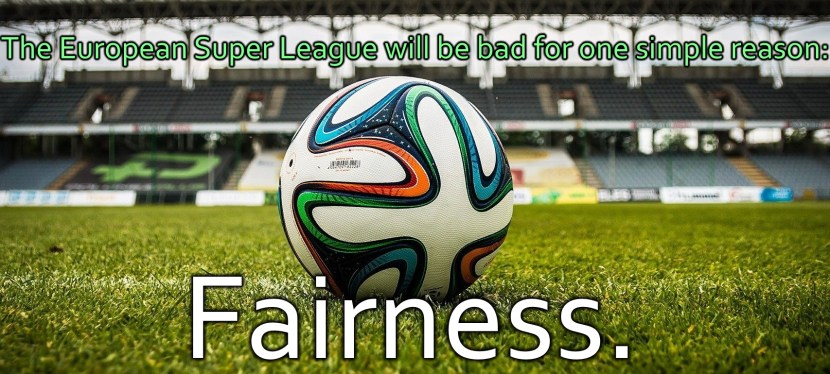
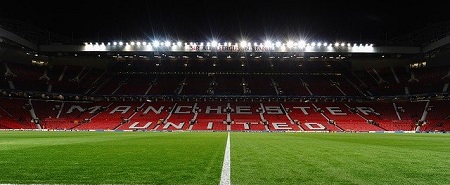




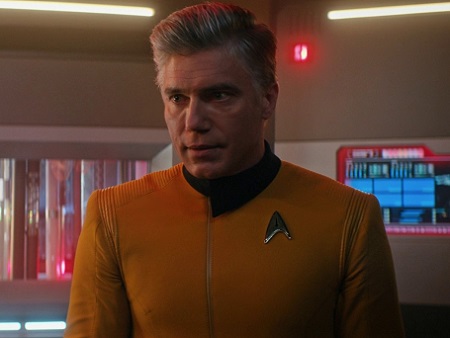

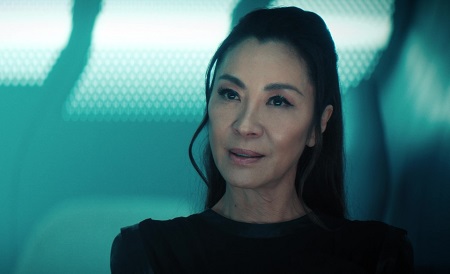





















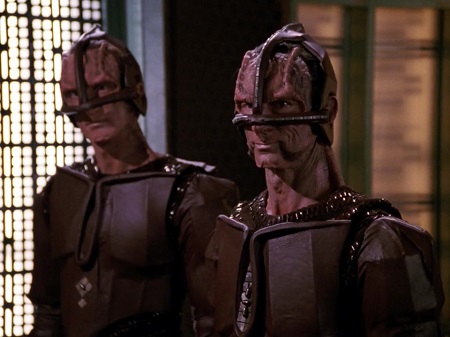
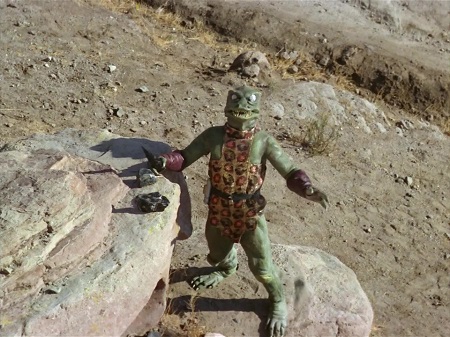
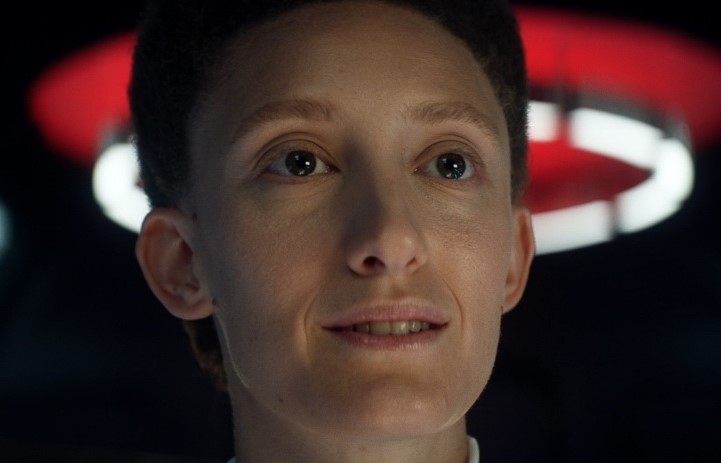
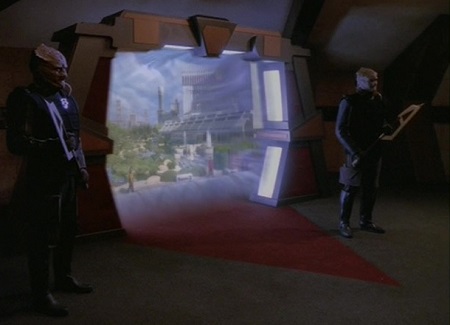
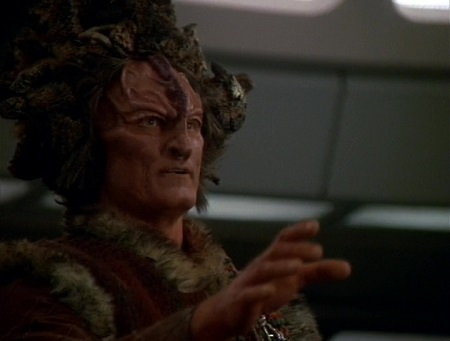

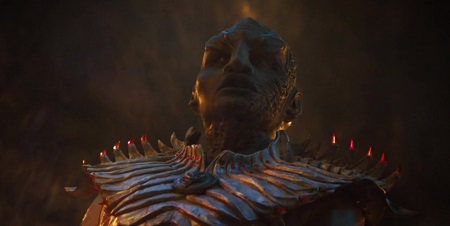
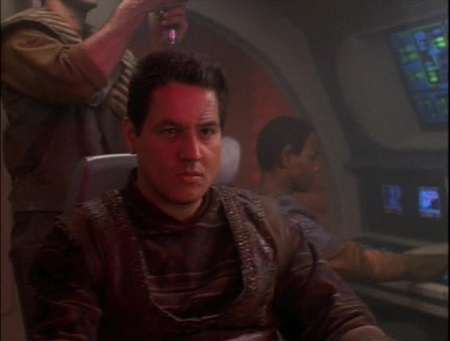
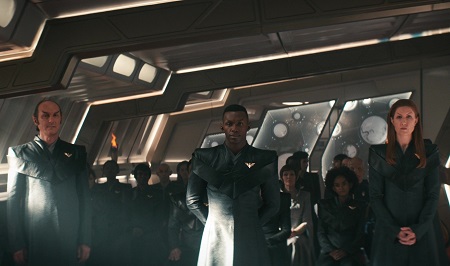
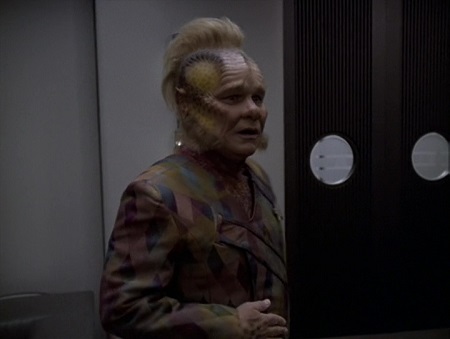
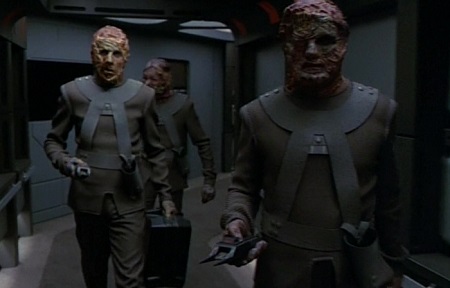

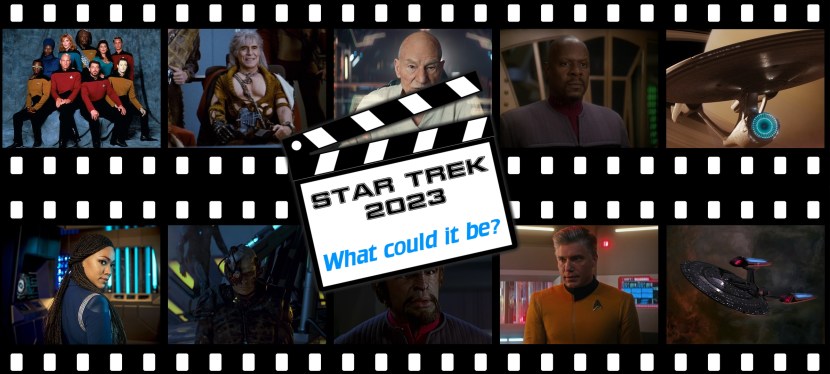


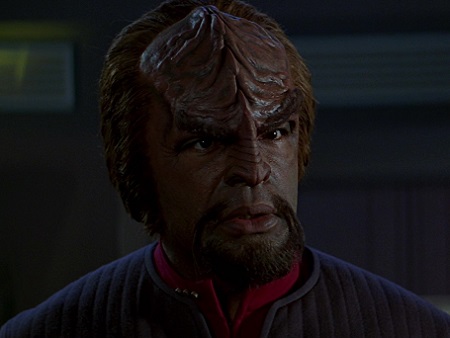






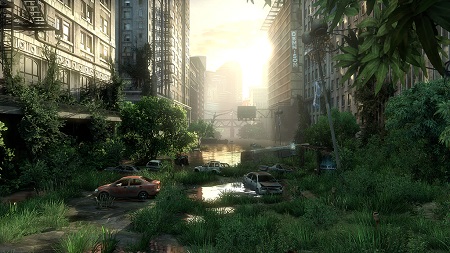
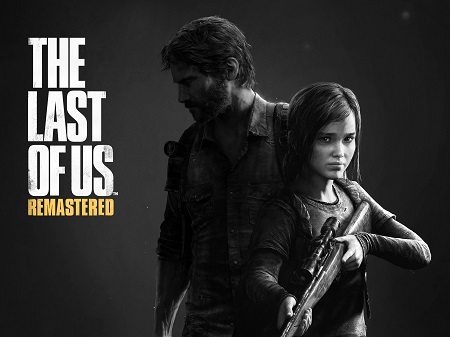
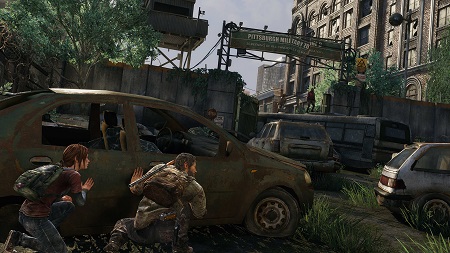


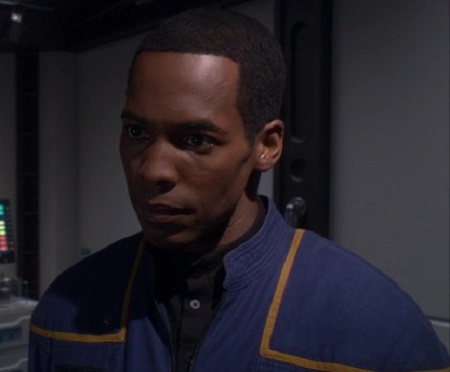


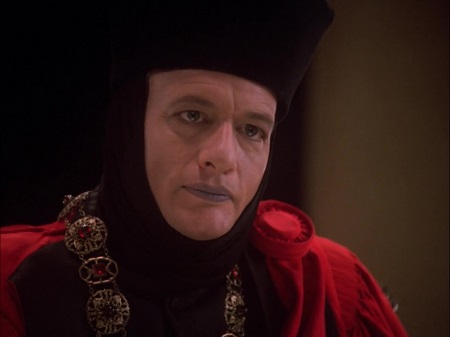


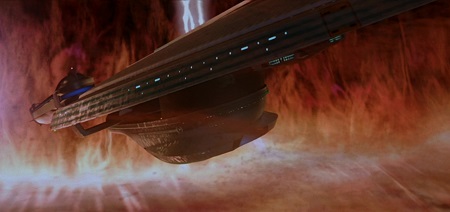
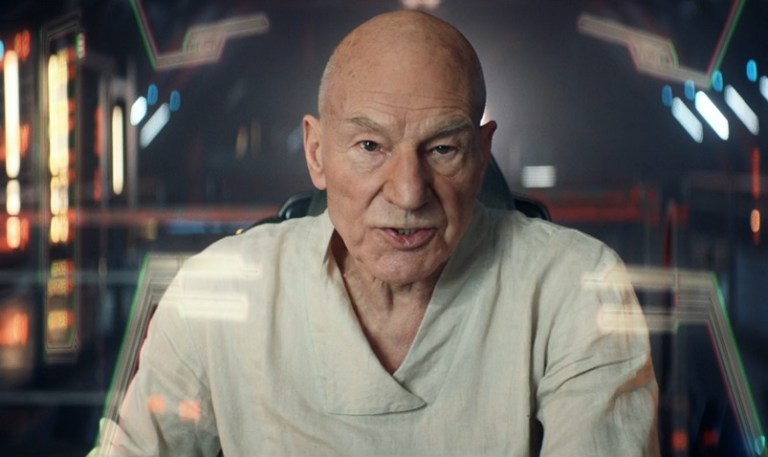
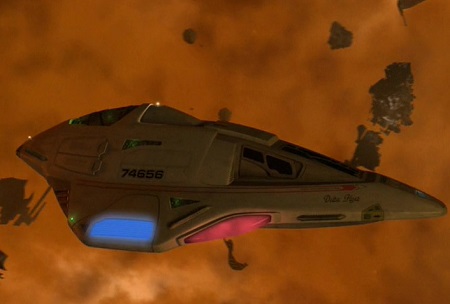



 Trekking with Dennis