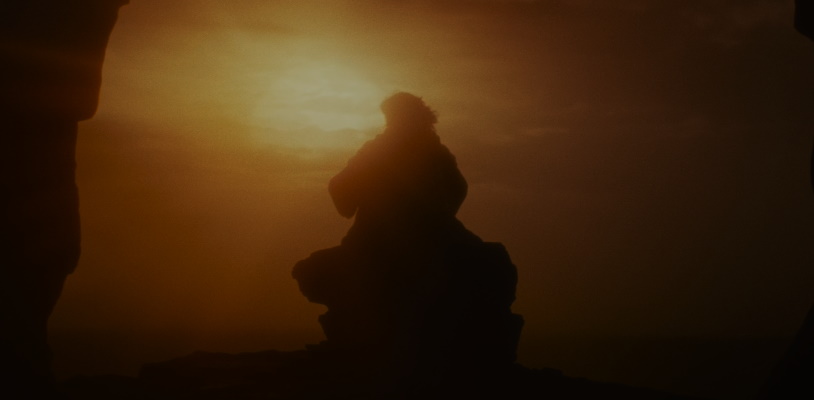
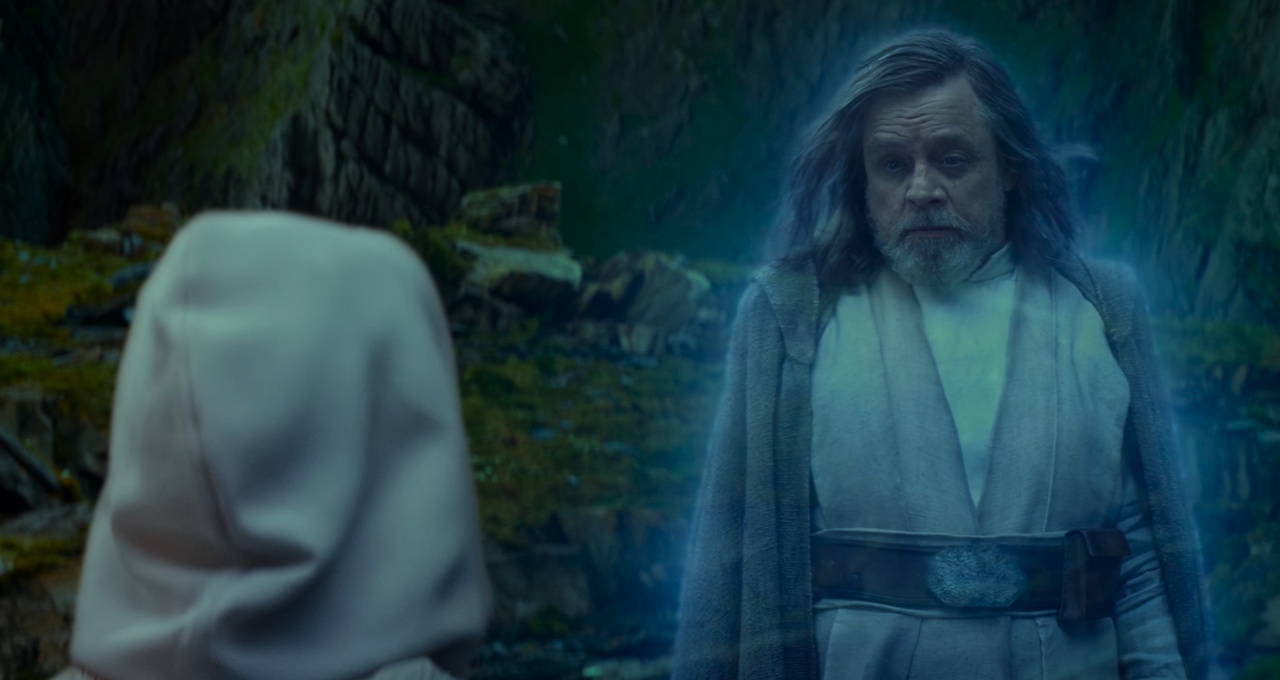
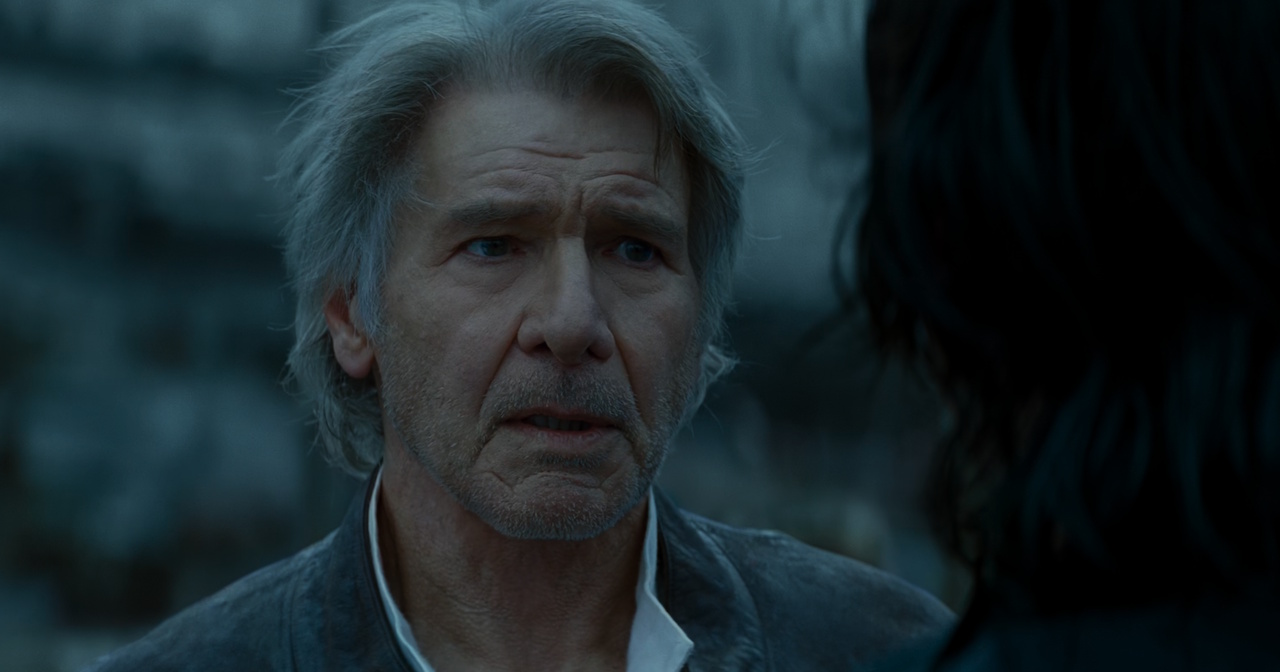
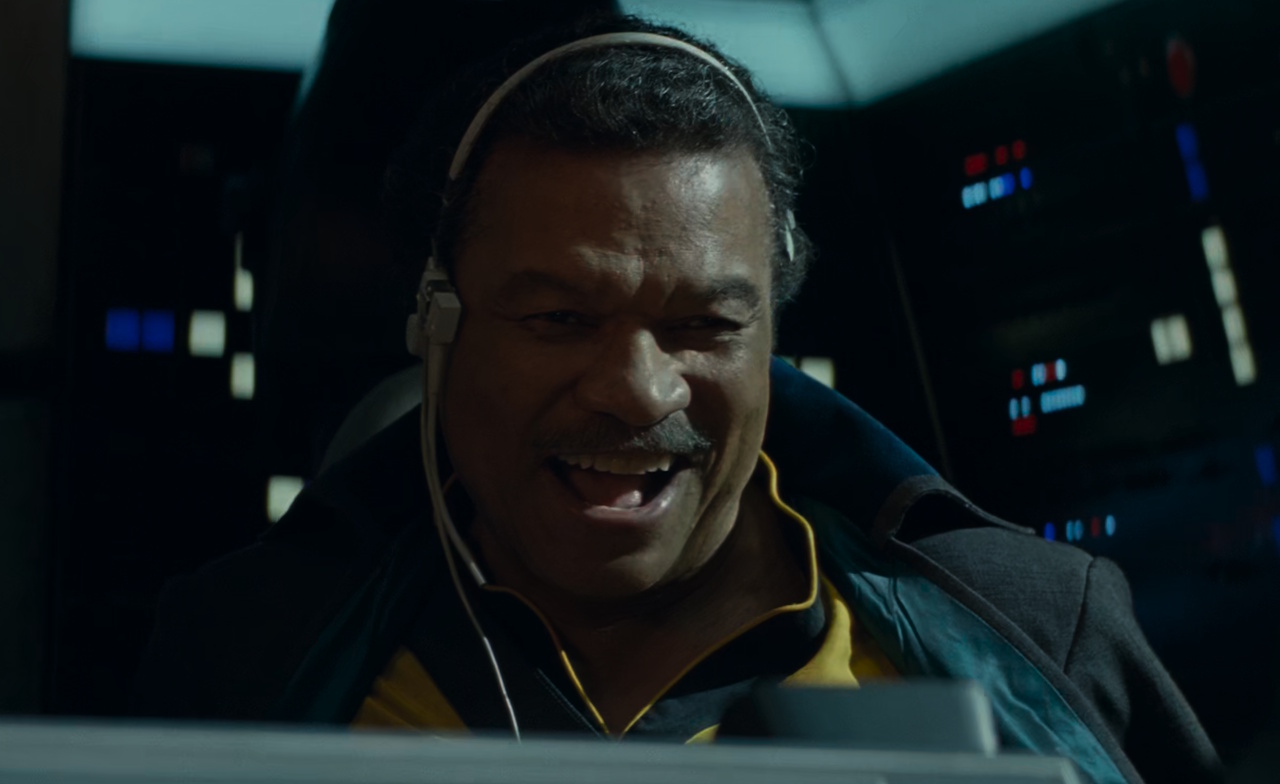
The Force Awakened… A Decade Ago

A Star Wars-themed spoiler warning.

Spoiler Warning: There are spoilers ahead for the Star Wars sequel trilogy.

Today (the 17th of December 2025) marks the tenth anniversary of the release of Star Wars Episode VII: The Force Awakens here in the UK. With it came a brand-new era for the franchise. I thought the occasion would be a great opportunity to talk about the film, its legacy, what it got right… and where it went wrong. So that’s what we’re gonna do today!

Three years earlier, the Walt Disney Company had purchased Lucasfilm, and with it, the rights to the Star Wars franchise. Ever since that moment in 2012, fans had been wondering what might lie in store – and when it was confirmed that 1983’s Return of the Jedi would be getting a sequel… I think it’s fair to say that the fan community was *beyond* excited! As Star Wars prepared to turn the page on its controversial prequels, and with a new creative team in charge, there was plenty of room for positivity in the months leading up to the release of The Force Awakens.

Still frame of Disney's Bob Iger and Lucasfilm's George Lucas at the offical sale of Lucasfilm in 2012.
Bob Iger and George Lucas signing the documents to confirm the sale of Lucasfilm in 2012.

I think I’ll start by talking briefly about my personal history with the Star Wars franchise, and how I found my way to the fan community – or, at least, to its periphery! In the early ’90s, at the insistence of a schoolfriend, I watched the original trilogy on VHS. By this point, I was already a huge Trekkie, and I remember being a bit underwhelmed on that first viewing. Perhaps I was comparing Star Wars to “my” fandom, and getting a bit tribal with it… I dunno! But I soon came to appreciate the original trilogy and the story it told, and quickly branched out to play the Super Star Wars games on the SNES, TIE Fighter on PC, and later, games like Shadows of the Empire and Rogue Squadron on the N64.

The prequel trilogy was another story, however, and I was left decidedly underwhelmed by both The Phantom Menace and Attack of the Clones. In this era, it was really only Knights of the Old Republic that kept me engaged with my Star Wars fandom. Revenge of the Sith was better, in some ways, but the prequel trilogy as a whole was a disappointment. If you’d asked me about Star Wars in 2012, that’s what I’d have told you. I was sceptical of a new film at first, but I was also encouraged when George Lucas stepped away and passed the torch to a new generation of filmmakers. When Disney promised to expunge the old Expanded Universe – much of which, from what I’ve seen, reads like low-quality fan fiction – I felt that was the right call. Disney was setting up a totally fresh setting for their new trilogy that wasn’t going to be constrained by decades’ worth of other stories, nor by being a prequel that had to tie in with what’s already been established. That was a hugely positive thing for me.

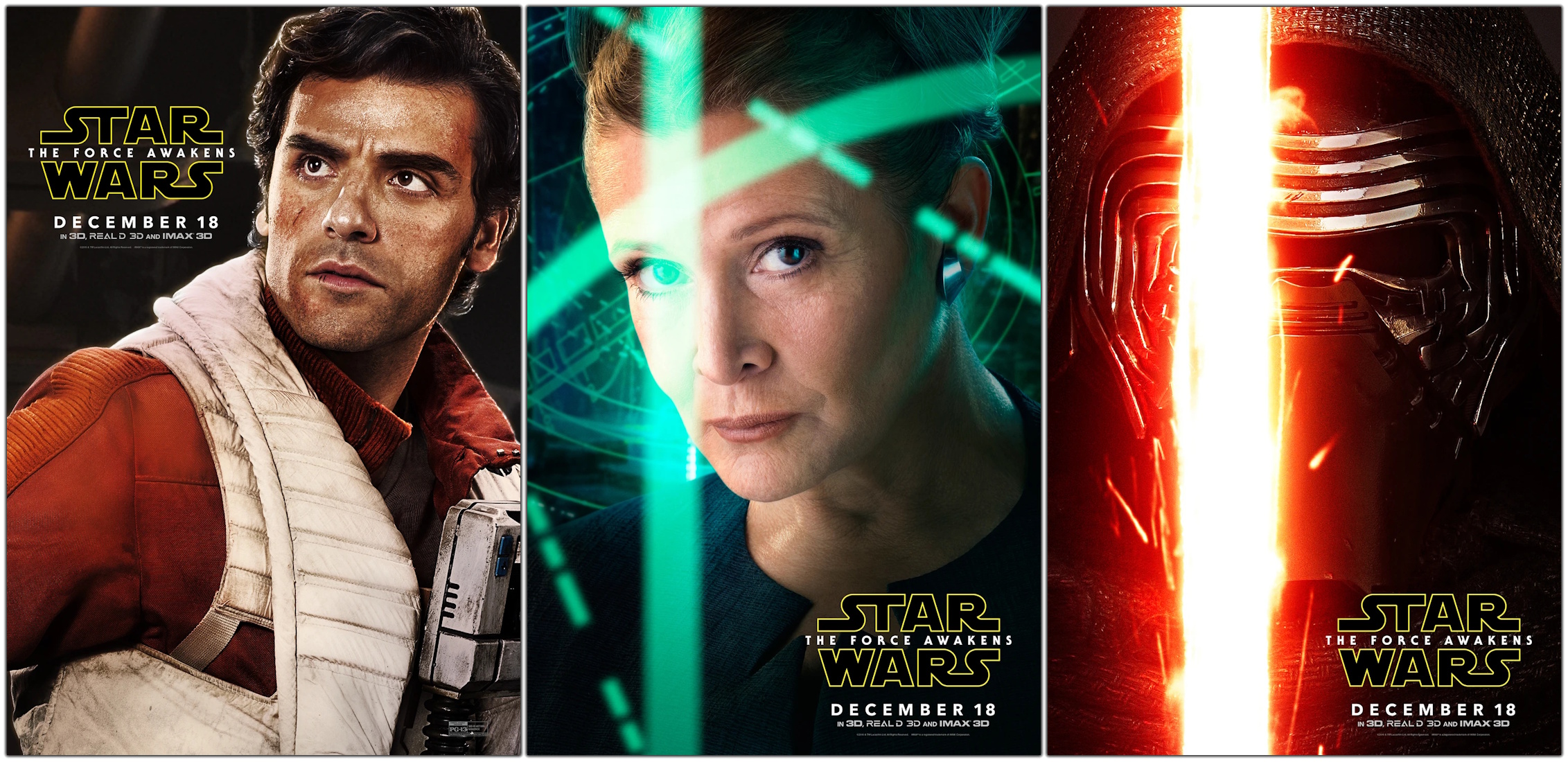
Three promo posters for The Force Awakens (2015)
A trio of posters.

By the time details of the film were being announced, I was cautiously optimistic! I remember feeling a little conflicted about J.J. Abrams’ involvement; he’d done such a great job rebooting the Star Trek franchise at the cinema that seeing him “jump ship” to Star Wars felt like a bit of a blow. Remember, this was before CBS had announced that Star Trek would be returning to the small screen, and with the franchise’s fiftieth anniversary approaching… I wasn’t thrilled to lose a filmmaker of Abrams’ calibre. But Star Trek’s loss seemed to be Star Wars’ gain, with Abrams being able to take the same approach and “reboot,” for want of a better word, the franchise for a new generation.

Above all, I hoped that The Force Awakens could put the disappointment of the prequel trilogy behind us, and tell a more interesting and engaging story than those films ever had.

So… did it do those things?

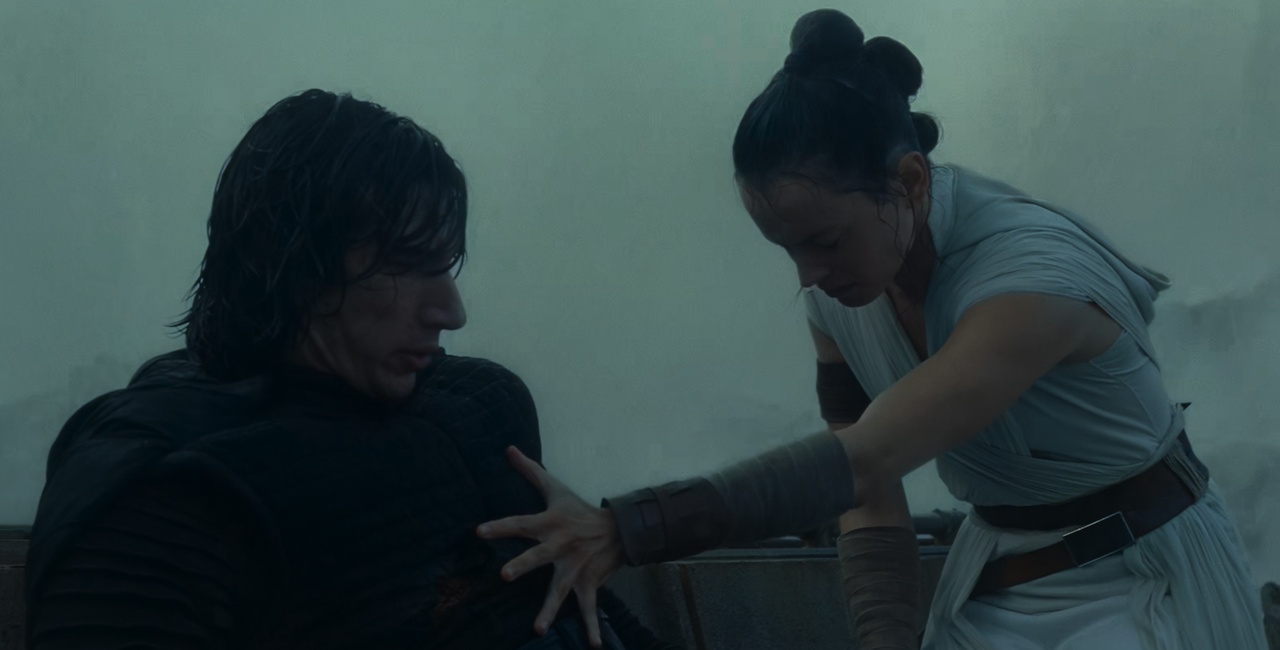
Still frame from Star Wars VII: The Force Awakens (2015) showing Rey having a vision.
What’s the legacy of The Force Awakens ten years later?

The Force Awakens is a film that we absolutely cannot judge fairly without placing it in context. As a result of that context – i.e. the last ten years’ worth of Star Wars projects since it premiered – The Force Awakens is probably the only film I can think of where my opinion has shifted so dramatically since that first viewing in December 2015.

Because I’ll be honest: I walked out of the cinema ten years ago with a great big smile on my face! After the disappointment of the prequel trilogy, a film that re-played Star Wars’ “greatest hits” felt like just what the doctor ordered, and I remember feeling that, while the film obviously *was* derivative and harkened back to 1977’s Star Wars in a huge way… that didn’t seem like a terrible idea. Re-establishing the core of what Star Wars is, and showing that to a new audience as well as to returning fans, is what a reboot is supposed to do. And The Force Awakens felt like a solid foundation for Disney to build a new era of Star Wars on.

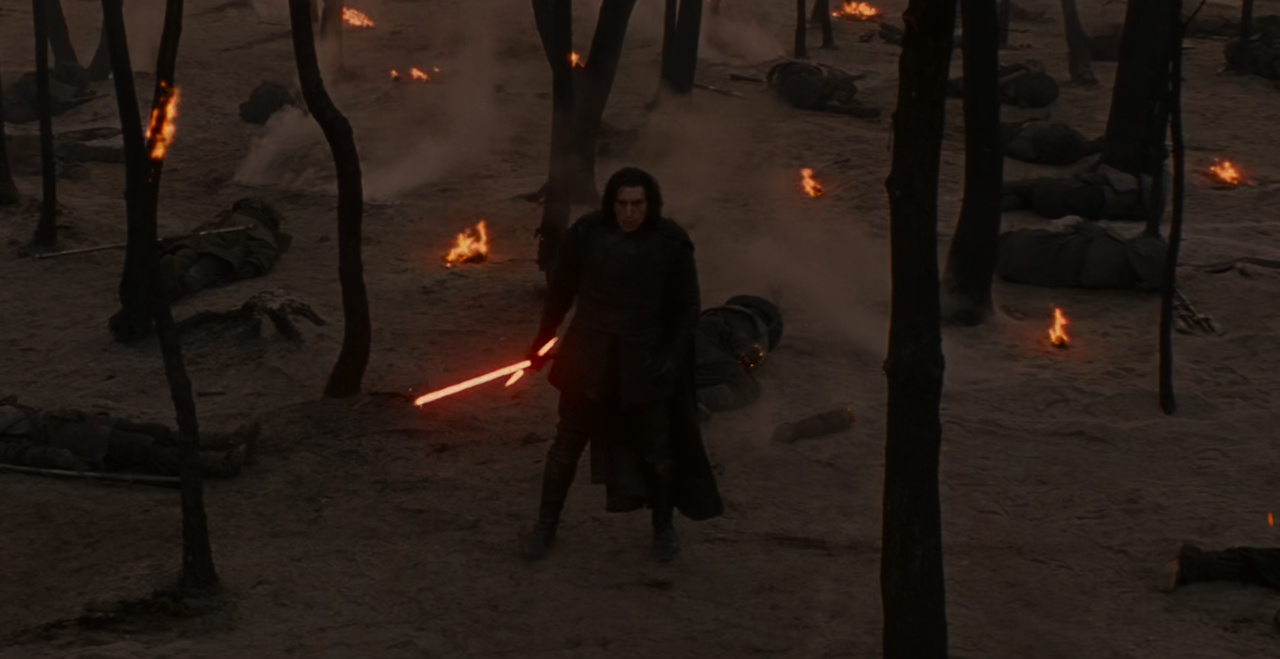
Still frame from Star Wars VII: The Force Awakens (2015) showing Kylo's helmet.
Kylo Ren’s helmet.

There were stormtroopers. There was an “evil empire” ruled by an enigmatic, scarred leader. There was a helmet-wearing Dark Side user who was the scion of a powerful family. The Jedi were nowhere to be found. There was an orphan from a desert planet who got swept up in a rebellion. There was a “trench run” against a planet-killing superweapon. Han Solo and Chewie were back in the Millennium Falcon. And Princess Leia was still leading the rebellion. Everything that Star Wars had been in its original form was here, reimagined and repainted, ready for that new generation of fans to fall in love with.

What’s more, The Force Awakens’ director and producers seemed to be going out of their way to recapture the way Star Wars looked prior to the prequels and George Lucas’ awful “special editions.” Gone was the janky, not-ready-for-prime-time early 2000s CGI. And to replace it, Disney had commissioned physical props, puppets, and even robots. BB-8, the cute little spherical droid, *actually works!* That’s an actual, physical droid, not a video-gamey CGI monstrosity. As a child of the ’80s, who grew up on films like The Neverending Story and Flight of the Navigator, which had excellent puppets, props, and prosthetics… I absolutely *adored* the way The Force Awakens looked, and I still have a huge respect for J.J. Abrams, Kathleen Kennedy, and the rest of the folks at Disney and Lucasfilm for leaning much more heavily on physical creations over CGI.

Still frame from Star Wars VII: The Force Awakens (2015) showing BB-8.
BB-8 was a physical prop.

If The Force Awakens had been a one-and-done film, that’s where this essay would end. The film recaptured the magic of Star Wars in a way that the prequels had failed to do, the new owners of Star Wars had successfully killed off the fan-fiction-y Expanded Universe, and put to bed the idea that *everything* with the Star Wars name attached should be considered canonical, and the original look and feel of the franchise, from its ’70s and ’80s heyday, had been successfully recreated. Add into the mix some fun new characters – a rebelling Stormtrooper, whose humanity wouldn’t let him take part in atrocities, a young, clearly powerful Force-wielder, a phenomenal pilot, and the son of Han Solo and Leia, now fallen to the Dark Side – and you had all of the pieces in place for an entertaining story.

Unfortunately for The Force Awakens and its legacy, though, this isn’t where things end.

J.J. Abrams, who penned and directed the film, is a big believer in the “mystery box” style of storytelling: set up an intriguing mystery, then let it unfold. But while Abrams is great at *starting* these kinds of stories… he doesn’t usually seem to have an ending in mind. And because of the way Disney and Lucasfilm set about making the Star Wars sequel trilogy, Abrams and his “mystery box” were simply the wrong choice for the first part of the story. And even as I stepped out of the cinema wearing that silly grin ten years ago, the cracks in the foundation of this story were already beginning to grow – cracks that would eventually lead to the complete and utter ruination of Disney’s sequel trilogy. The Force Awakens was a fundamentally flawed story – but the damage those flaws would do wouldn’t become obvious for a few more years.

Photograph of filmmaker JJ Abrams at the premiere of Star Wars VII: The Force Awakens (2015).
J.J. Abrams at the film’s premiere.

J.J. Abrams had written questions into his script that he did not have answers for. In fact, not only had he not written a solution to his “mystery box,” but there really wasn’t a way for this story to unfold – when the baton was inevitably passed to Rian Johnson and Colin Trevorrow – that even made sense. Abrams screwed over Johnson and Trevorrow (who would later leave the project that became The Rise of Skywalker) by writing the beginning of a story that had no plan, no middle, no ending, and that was, in a word, inept. It is the “original sin” of the sequel trilogy, and while fans may dislike The Last Jedi or The Rise of Skywalker far more than The Force Awakens, it was here, in 2015, that the sequels’ undoing had already been set in stone.

“Luke Skywalker is missing!” announced the film’s opening crawl. But without establishing *why* Luke had disappeared – nor even really explaining the extent of his legend and legacy in the galaxy at large – The Force Awakens set up a mystery that had no explanation. And by leaving the choice for why Luke had squirrelled himself away on a hidden planet to the next film and the next writer/director, Abrams abdicated the tremendous responsibility that Disney, Lucasfilm, and generations of Star Wars fans had placed on his shoulders.

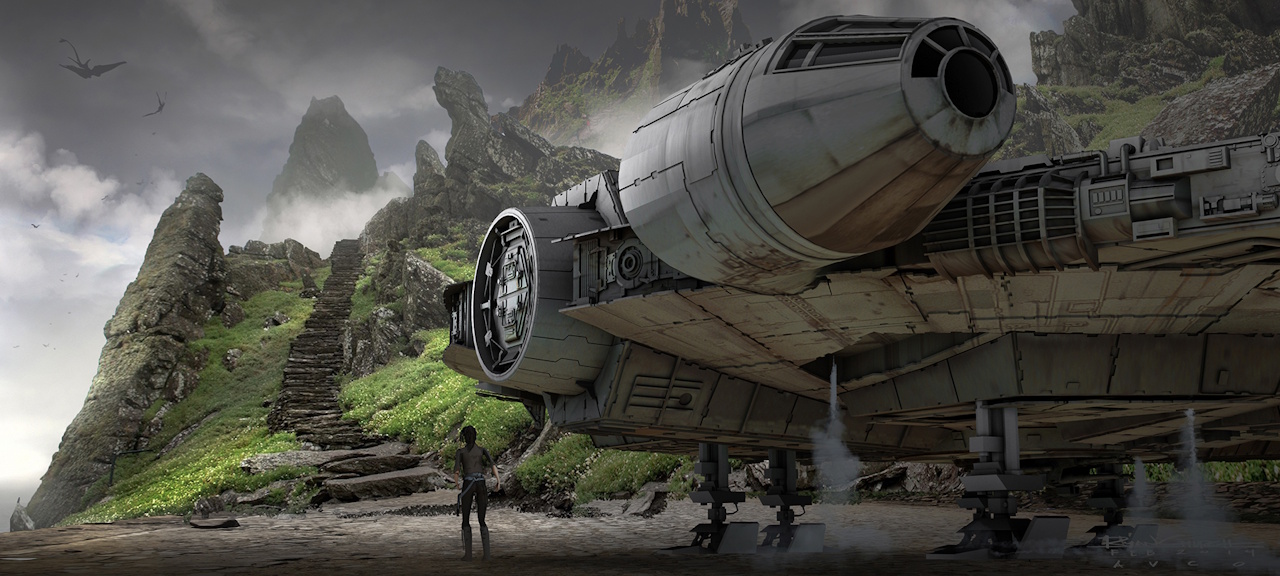
Concept art for Star Wars VII: The Force Awakens (2015) showing the Millennium Falcon.
Concept art of the Millennium Falcon.

I wrote several years ago that it boggles my mind how an accomplished group of filmmakers – people who created and worked on titles like the Indiana Jones trilogy, Lost, Jurassic Park, E.T., and many more – could have made such a genuinely bone-headed, idiotic, stupid decision when approaching the sequel trilogy. The Force Awakens was never envisioned as a standalone film, it was always meant to be the first instalment of a trilogy. And a trilogy that plans to tell a single story *needs* someone in overall creative control. J.J. Abrams, with his penchant for starting stories he has no intention of finishing and doesn’t know how to finish, was the wrong choice for that role. But Kathleen Kennedy, president of Lucasfilm, and Disney CEO Bob Iger should have known better – and should have taken a more structured, planned approach.

The decision to split up the writing and directing of the three sequel films was taken before work got underway on The Force Awakens – and even at that early stage, the damage was done. Splitting up the trilogy in this way was *always* going to be the wrong decision, and the predictable result is a trio of films that jump around in terms of tone, story, and even characterisation, as each of the subsequent instalments tries to undo something from its predecessor. And I do not exempt The Force Awakens from that criticism – it is the foundation upon which the trilogy should have been built, but because it was so weak and derivative, and because the decision was taken to split up the filmmaking process, it would be firmly tarred with the same brush even if it had been a perfect standalone title.

Which it wasn’t.

Trio of promotional posters for Star Wars VII: The Force Awakens (2015)
Poe, Leia, and Kylo on promo posters for the film.

What I felt had been the film’s biggest strength on that first viewing a decade ago now, in retrospect, feels like one of its most egregious faults and its most significant weakness. By choosing to replay, almost beat-for-beat, 1977’s Star Wars, the film fails to do what any sequel can and should aim to do. Questions that fans had all the way back in 1983 about what the galaxy would look like after the Empire’s defeat not only didn’t get answered, they were totally ignored; sidelined, as Abrams and co. tried to re-tell the same story as before, just with a different coat of paint.

Think about where Return of the Jedi had ended: the Emperor and Vader were dead, theoretically ending the Sith once and for all. The Death Star had been destroyed, and the Rebellion had won the Battle of Endor… but the Empire still existed in much of the rest of the galaxy, and there was no guarantee that the Emperor’s death would mean there could be a return to democracy. And with the deaths of Obi-Wan and Yoda, only Luke could carry on the legacy of the Jedi Order.

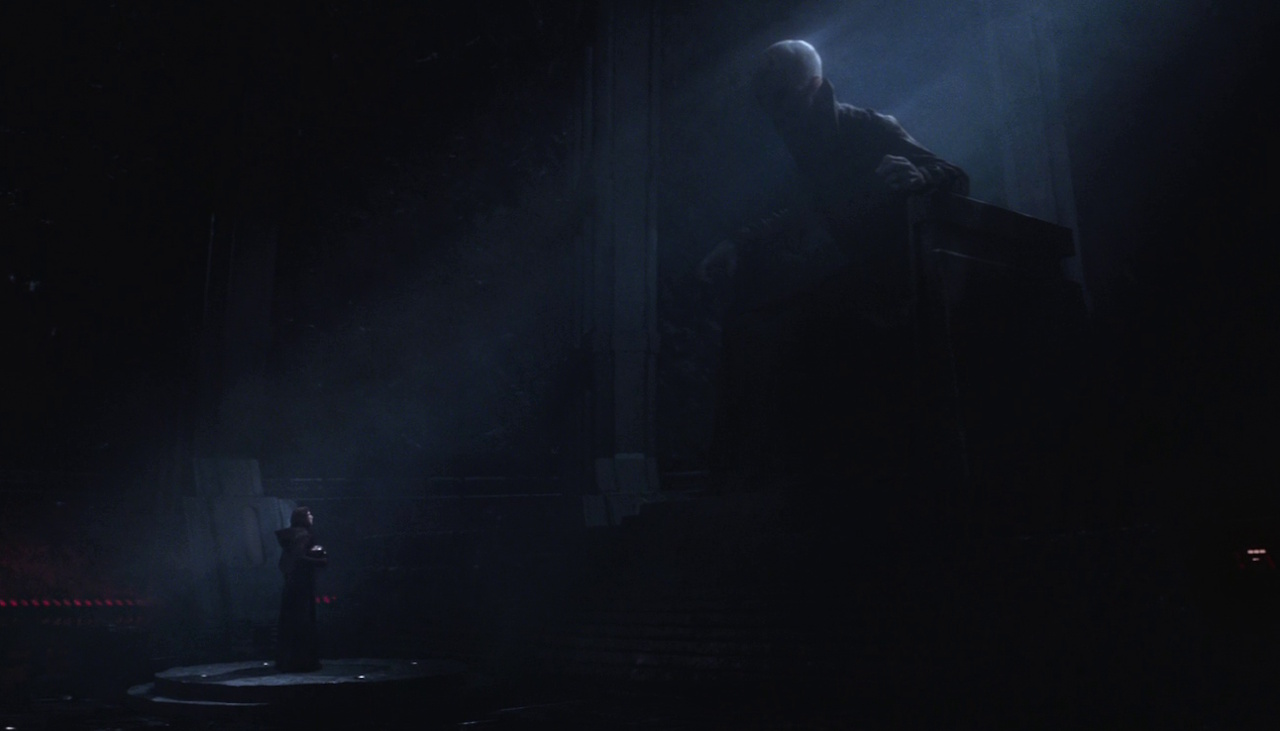
Still frame from Star Wars VII: The Force Awakens (2015) showing Kylo with Snoke.
Kylo Ren with Snoke.

The Force Awakens basically ignored all of that. In the aftermath of the Emperor’s death, the remaining Imperial factions basically gave up, and the New Republic took control of much of the galaxy. But then, in secret, some Imperial survivors founded the First Order – ruled over by Snoke, a mysterious Dark Sider. Snoke’s apprentice was the helmet-wearing Kylo Ren, the grandson of Vader. And Luke’s Jedi were nowhere to be seen, with his first attempt to train students ending in disaster. This set up a remarkably familiar story about a Dark Side power on the march, a rag-tag group of rebels (sorry, “the resistance”) trying to stop them, a planet-killing superweapon, and a youngster from a desert planet who gets swept up in all of it thanks to a droid carrying an important document.

Is that all Star Wars is? And… is that all Star Wars ever can be? J.J. Abrams and Kathleen Kennedy seemed to think so a decade ago.

And their attitude remains in the franchise to this day. The Book of Boba Fett, Obi-Wan Kenobi, Ahsoka, Rogue One, Solo, Andor and The Bad Batch, all of which have been created since 2015, rely on increasingly minor characters and smaller and smaller pieces of the *only* real story that the Star Wars franchise has ever told: the so-called “Skywalker Saga,” which should really be called the “Palpatine Saga,” since he’s the only character who seems to have acted of his own volition and who had any control over events. That’s the legacy of The Force Awakens ten years later: a franchise that has doubled- and tripled-down so hard on nostalgia plays and copying what came before that it’s become narratively exhausted and just plain *boring*.

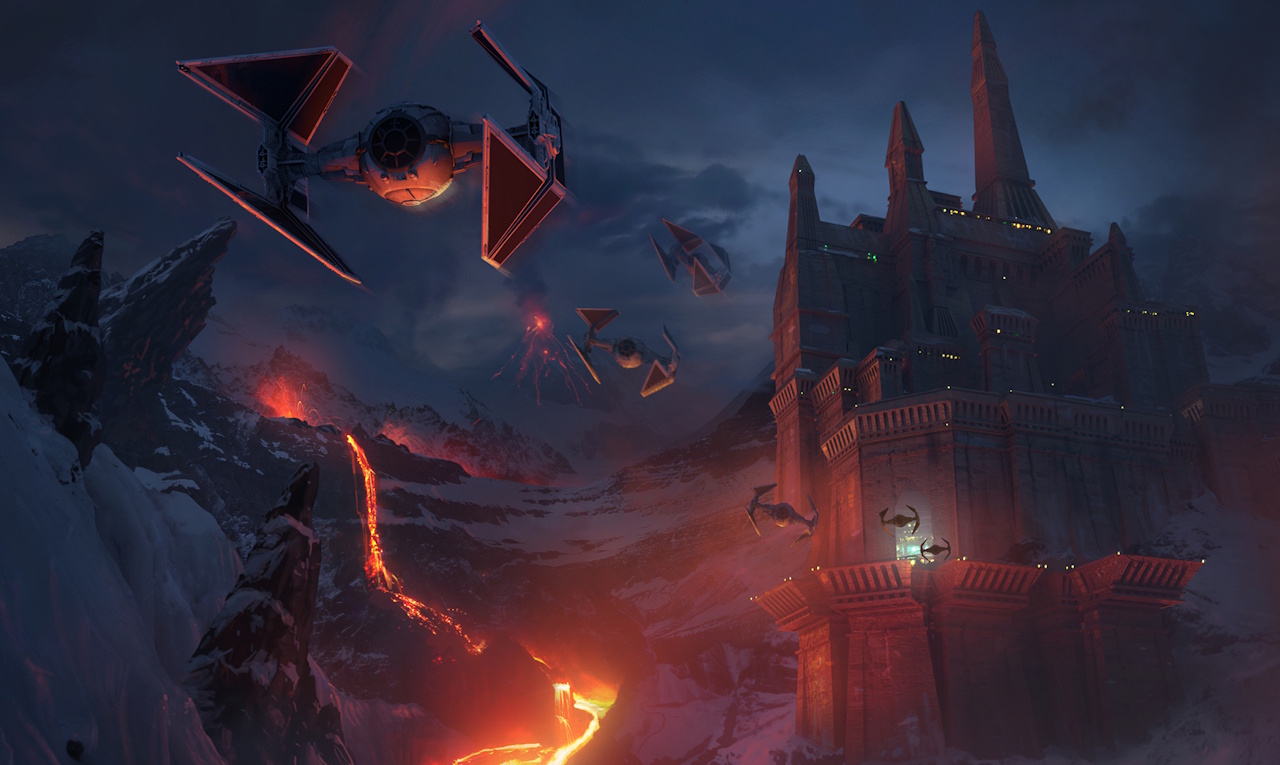
Concept art for Star Wars VII: The Force Awakens (2015) showing TIE Fighters and a castle with a lava moat.
TIE Fighters and a castle in concept art created for The Force Awakens.

Thanks to the decision to have Kylo kill Han Solo at the climax of the story – a genuinely shocking moment at the cinema – The Force Awakens robbed Star Wars fans of the opportunity to get *any* on-screen interaction between the three heroes of the original trilogy: Luke, Han, and Leia. Han and Leia got some scenes together, and Luke and Leia had a moment in The Last Jedi. But we never got to see Han and Luke together, nor the trio reunited. And that’s really quite sad, if you think about it.

Obviously no one could’ve known, when The Force Awakens entered production, that Carrie Fisher would pass away before the sequel trilogy was complete. But it seems to me that Abrams, Kennedy, and the rest… didn’t really think about how the new trilogy could or should use its legacy characters. There was no Lando Calrissian until The Rise of Skywalker, nor any acknowledgement of his existence. And while The Force Awakens made it clear that Leia and the Resistance believed Luke Skywalker needed to be brought back into the fold… we never really got a good explanation as to *why*.

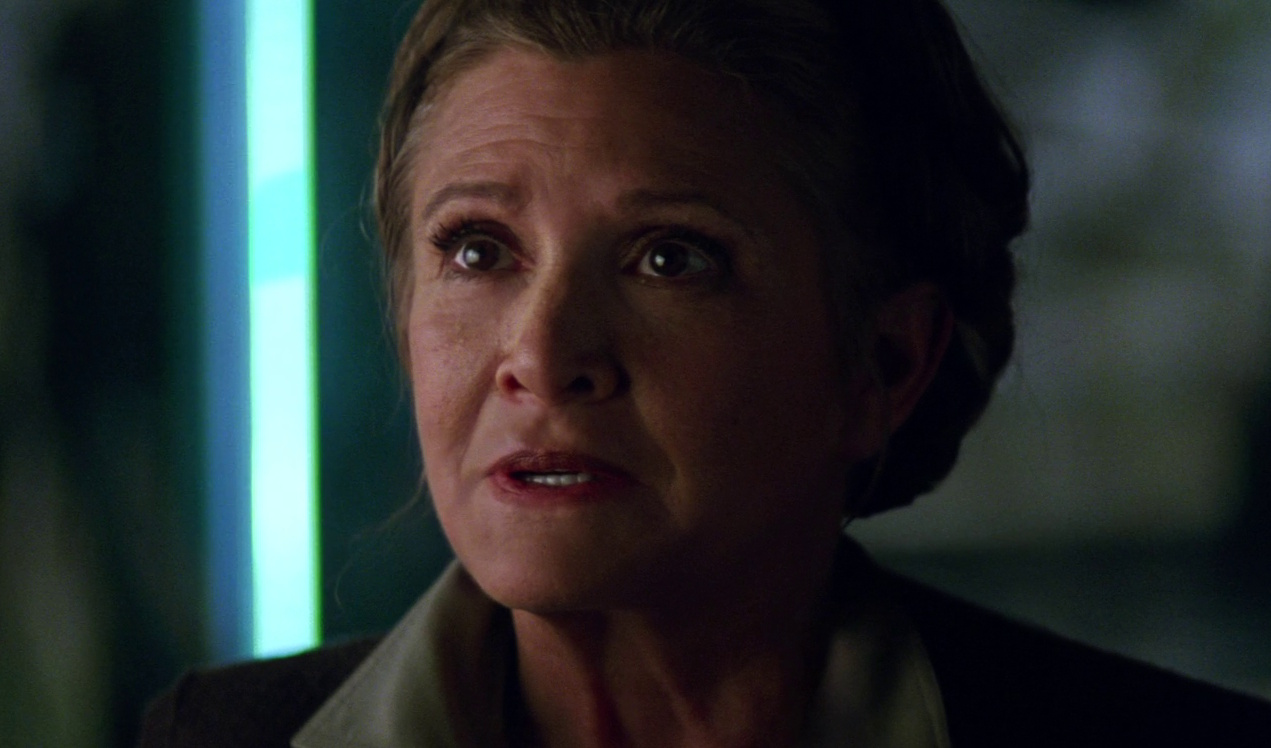
Still frame from Star Wars VII: The Force Awakens (2015) showing Leia.
General Leia of the Resistance.

So as we mark the film’s tenth anniversary… I don’t think there’s all that much to celebrate, to be blunt about it.

The story that The Force Awakens began was supposed to expunge what Star Wars had got wrong, and lay the foundations for a better future. But if you look at the state of the fan community today, the sequel trilogy is disliked, on the whole, *at least* as much as the prequels had been a decade ago, if not more. By playing it too safe, copying too much of what had come before, and failing to really answer any of the questions that a sequel should have been able to, The Force Awakens ended up being a poor film, a weak start, and a major contributing factor to Star Wars’ undeniable decline in the 2010s and 2020s.

We’re at a point now where practically no new Star Wars projects elicit the kind of excitement as The Force Awakens had done a decade ago. Oversaturation is part of that, sure – I haven’t even watched all of the various Disney+ Star Wars shows, because there’s just too many of them at this point. But a big part of it is also that this franchise feels rudderless. By doubling- and tripling-down on repetition, The Force Awakens set the tone for Star Wars’ current direction, and after the controversy of projects like The Last Jedi and The Acolyte, the temptation must be for Disney and Lucasfilm to do more of the same – which feels wrong for a franchise with such a well-constructed and interesting setting.

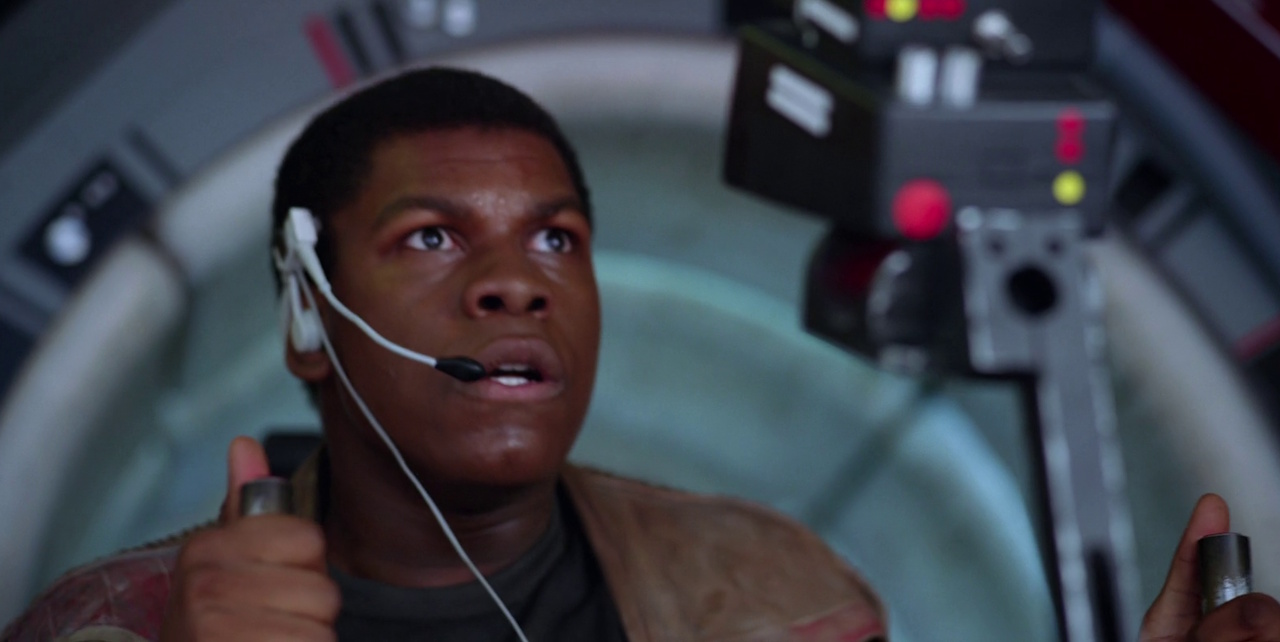
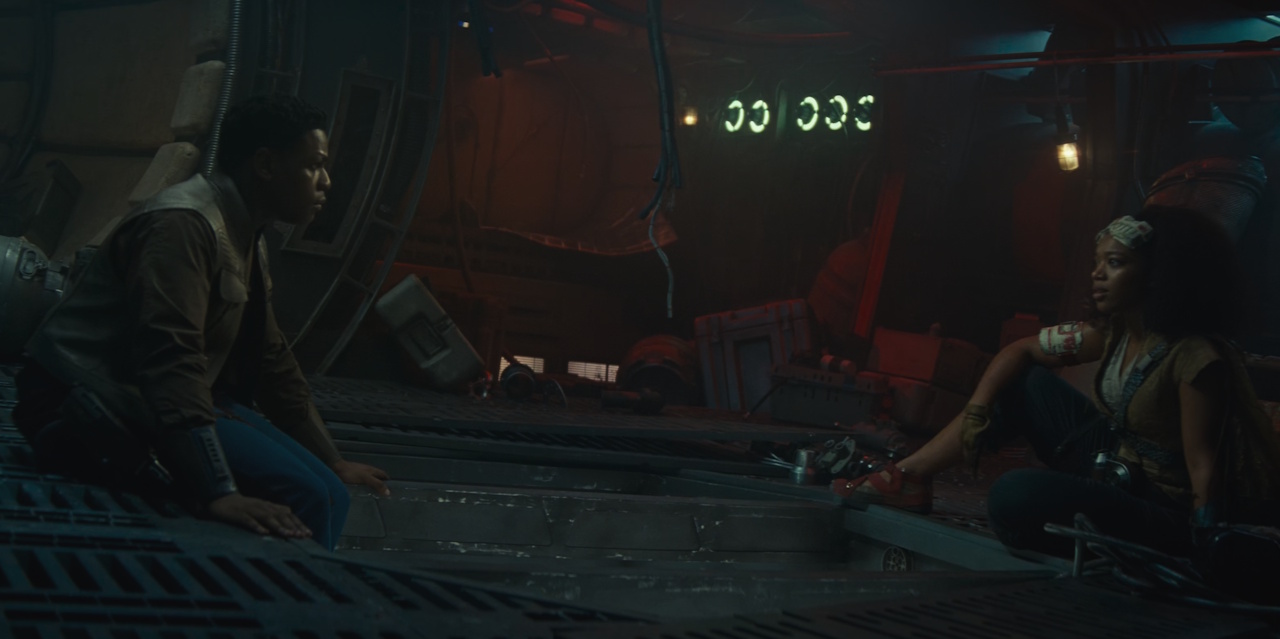
Still frame from Star Wars VII: The Force Awakens (2015) showing Finn aboard the Millennium Falcon.
Finn.

“Fundamentally flawed.” That’s my two-word summary of The Force Awakens a decade later. It was, I do not deny, a well-intentioned film, and there was merit in the idea of “resetting” some of Star Wars after the prequel trilogy. But by playing things *so* safe, and by basically copying many of the plot points from the original trilogy and A New Hope in particular, Star Wars was left with nowhere to go.

Most stories… end. And they should be allowed to end. In-universe, obviously there was work to do for Luke, Han, Lando, and Leia after the Battle of Endor. But given everything we’ve seen since – both the fan-fiction mess of the Expanded Universe, depicting a flawless, all-conquering hero in Luke Skywalker, and now the sequel trilogy with its repetition of the original story – I’m increasingly of the opinion that there shouldn’t have been a Star Wars sequel. Return of the Jedi wasn’t a perfect film, but it killed off Palpatine and Vader, gave the Rebellion a huge win, and saw Luke embrace the legacy of the Jedi. That’s where the story needed to end.

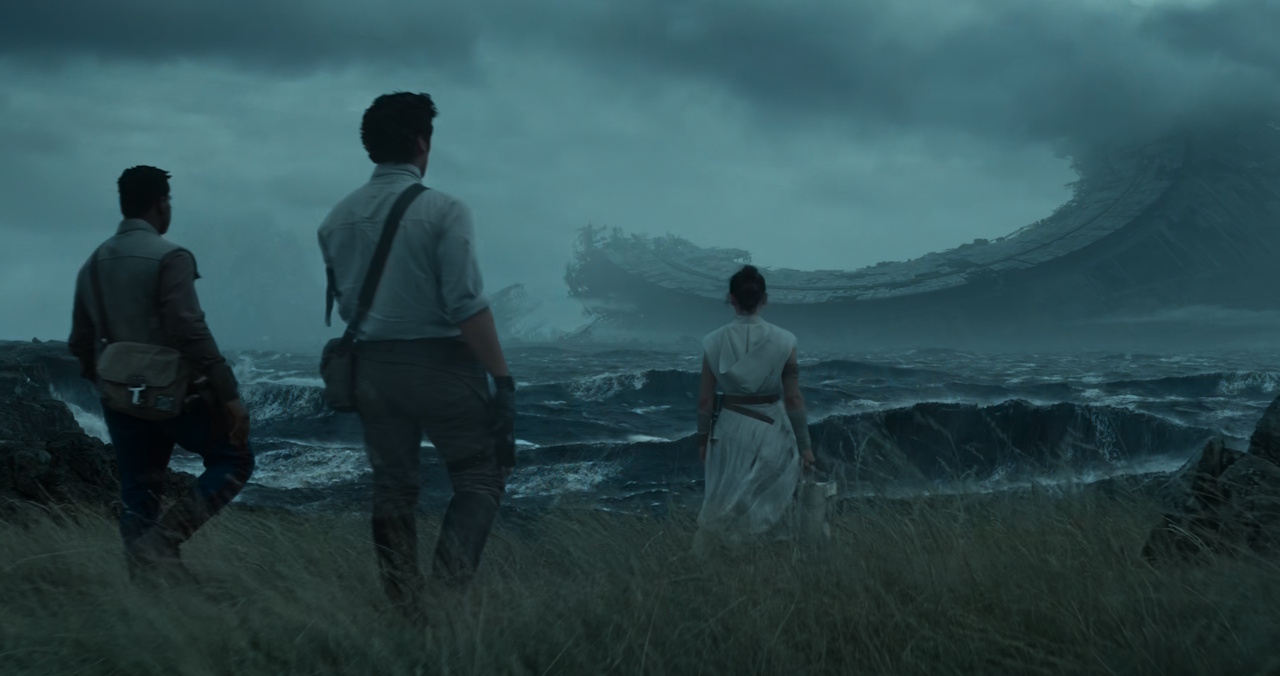
Concept Art for Star Wars VII: The Force Awakens showing Rey's arrival at Ahch-To.
Concept art of Rey arriving at Ahch-To at the end of the film.

In the 21st Century, though, it seems as if no story is allowed to come to a dignified end. And that kind of explains why The Force Awakens came to be in the first place. Rather than create something new, Disney wanted to buy something successful – something that, they believed, would print them endless amounts of cash. It worked with Marvel, so why not Star Wars, too? We’re seeing the limitations of that approach now, and The Force Awakens is really just the first chapter in a sad decline – not only for Star Wars, but for Marvel, Disney’s animated films, and more. Disney’s attitude at the moment is one of franchises, sequels, and remakes. Originality has left the building. And that isn’t *all* the fault of The Force Awakens by any stretch. But the film is symbolic of a moment in time, a moment where things began to change – and not for the better.

So, yeah: ten years ago, I had a great time with this film. Rey, Finn, and Poe were all fun characters that I felt we were just beginning to get to know, and I was curious to see where this story would go and how the First Order would be defeated. But the flaws in that story were already on display, and now that we know how badly off the rails the sequels went, and how poorly-planned the entire project was… it adds a lot of context to The Force Awakens. And it makes it pretty hard to go back and watch the film at all, in all honesty.

I continue to hope for better things from the Star Wars franchise. And there have been some projects over the last decade that worked: Rogue One, for example. But as we mark the tenth anniversary of this landmark film… I can’t help but feel there are way more negatives than positives. Star Wars will continue, of course – there are new projects on the horizon in 2026 and beyond. But are you as excited about *any* of them as you were ten years ago for The Force Awakens? I’m not. And that’s part of this film’s legacy.


Star Wars: Episode VII – The Force Awakens is available to stream now on Disney+. The film is also available on DVD and Blu-ray. The Star Wars franchise – including The Force Awakens and all other properties discussed above – is the copyright of Lucasfilm and The Walt Disney Company. This article contains the thoughts and opinions of one person only and is not intended to cause any offence.

Fate of the Old Republic: Thoughts and Concerns

A Star Wars-themed spoiler warning graphic.

Spoiler Warning: Beware minor spoilers for Star Wars: Knights of the Old Republic and Knights of the Old Republic II.

The so-called Game “Awards” was pretty shit, wasn’t it? I didn’t watch the actual broadcast, because if the organisers don’t actually care about their made-up trophies at this glorified marketing event, why should I? But I did check out the announcements and a few of the trailers after the fact, as I usually do, and there was one that caught my eye. As you probably guessed, it was Star Wars: Fate of the Old Republic.

I was huge Knights of the Old Republic fan during the original Xbox era, and I still consider both that game and its sequel to be among the best RPGs I’ve ever played – as well as two of the best pieces of Star Wars media, too. KotOR II left things open-ended more than twenty years ago, but the story was never continued. More recently, a remake of the first KotOR had been announced, but that project seems to have suffered from a difficult and troubled development process, with a publisher withdrawing, a development studio being kicked off the project, and no official word on it for a long time.

So Fate of the Old Republic’s announcement should be a time of joy! Right?

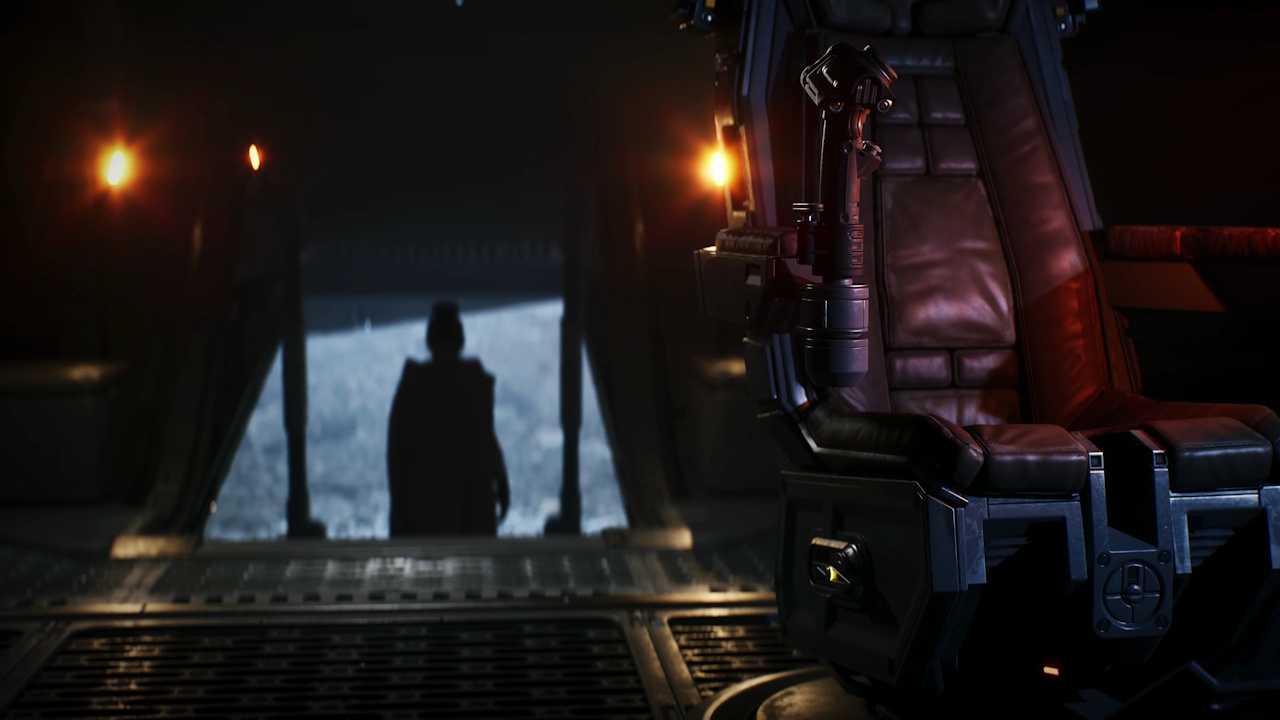
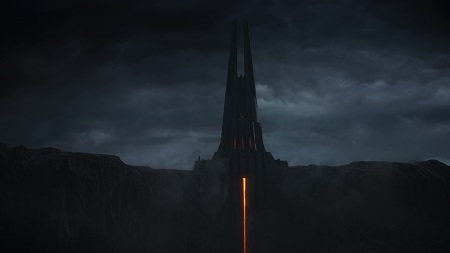
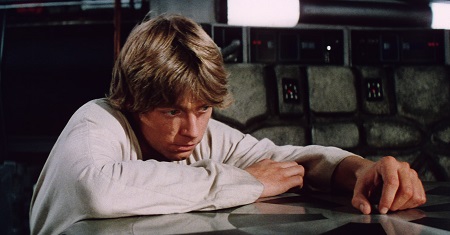
Still frame from the Star Wars: Fate of the Old Republic teaser showing the pilot's seat.
Star Wars: Fate of the Old Republic has been teased.

Well, let’s talk about that.

Truthfully, I’m not exactly blown away by this announcement. We didn’t actually see Fate of the Old Republic with our own eyes at the Game “Awards.” We saw a CGI trailer that told us next to nothing. That’s not unexpected for a game which is clearly at a very early stage in its development, but after being burned once by a cinematic KotOR remake trailer that hasn’t actually gone anywhere… well, there’s less to get excited about the second time around.

But if Fate of the Old Republic is, as has been reported, five-plus years away from its potential release window… I can’t be alone in thinking that its announcement has come too early, can I? Star Wars has been guilty of this before, not just with the aforementioned KotOR remake, but also with Eclipse – another single-player title we haven’t so much as glimpsed in over four years at this point. So… why announce this now? It wasn’t like Fate of the Old Republic was being leaked, and teasing fans with a nothing-burger cinematic clip five years or more ahead of release feels almost mean. I might not still be here (or still able to play games if my arthritis gets worse) come 2030.

Fate of the Old Republic still seems a long way off.

So far, I haven’t been able to find out what Fate of the Old Republic’s existence may or may not mean for the status of the KotOR remake and – potentially – a KotOR II remake that I’d want to see follow it up. Is the KotOR remake still happening? Or does this announcement mean that Disney, Lucasfilm, and their development/publishing partners are now going in a totally different direction? I wouldn’t expect the developers of Fate of the Old Republic to discuss that – but hopefully soon, someone from Disney, Lucasfilm, or Saber Interactive can clear things up.

I want a new KotOR game, don’t get me wrong. But having been excited about the remake – and having deliberately not played KotOR or KotOR II since the remake was announced – I don’t like the idea of losing that game. In an ideal world, I’d like to see both titles release: the KotOR remake first, then hopefully KotOR II, and finally Fate of the Old Republic. But it would be nice to get some clarity from the people involved whether the remake is still happening… because it seems odd to me to announce this new game if the remake is also going ahead. The KotOR remake, with the best will in the world, isn’t launching in 2026. So if that game would be 2027 or later, then it starts to butt up against Fate of the Old Republic if it might make a 2030 release. The timings of all these things leaves me scratching my head.

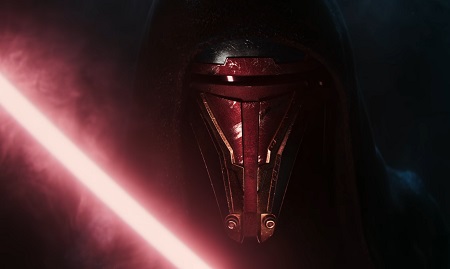
Still frame from the KotOR Remake teaser showing Revan.
What does this mean for the KotOR remake?

Then there’s the typical Star Wars “oversaturation.” Will people pick up the KotOR remake knowing that Fate of the Old Republic might be just a couple of years away? And if the KotOR remake does well, will that risk overshadowing Fate of the Old Republic, given how strong the game’s story is and the incredibly powerful impact of its big twist? It just feels like a totally unnecessary risk.

The ideal way to do this would’ve been to launch the KotOR remake, then get straight into remaking KotOR II using the same team and the same process. Only then would work on a new entry commence. But my biggest concern at this stage, really, is whether the KotOR remake is still happening at all. If I had to choose between a remake and a new game, I’m always gonna pick a new game! But having been teased with the idea of replaying one (or perhaps two) of my favourite RPGs of all-time… I’ll be a little disappointed if the promised remake now isn’t happening.

Still frame from the Star Wars: Fate of the Old Republic teaser showing the protagonist's eyes.
A mysterious character.

Much has been made of KotOR director Casey Hudson’s involvement in this project – and I’m definitely pleased to see him back in the director’s chair. Hudson – who also directed the fantastic Jade Empire and all three games in the original Mass Effect trilogy – is fantastic, so any game he’s involved with, even if it wasn’t Star Wars, would have attracted my attention! But can the same be said for any of his colleagues at the brand-new Arcanaut Studios?

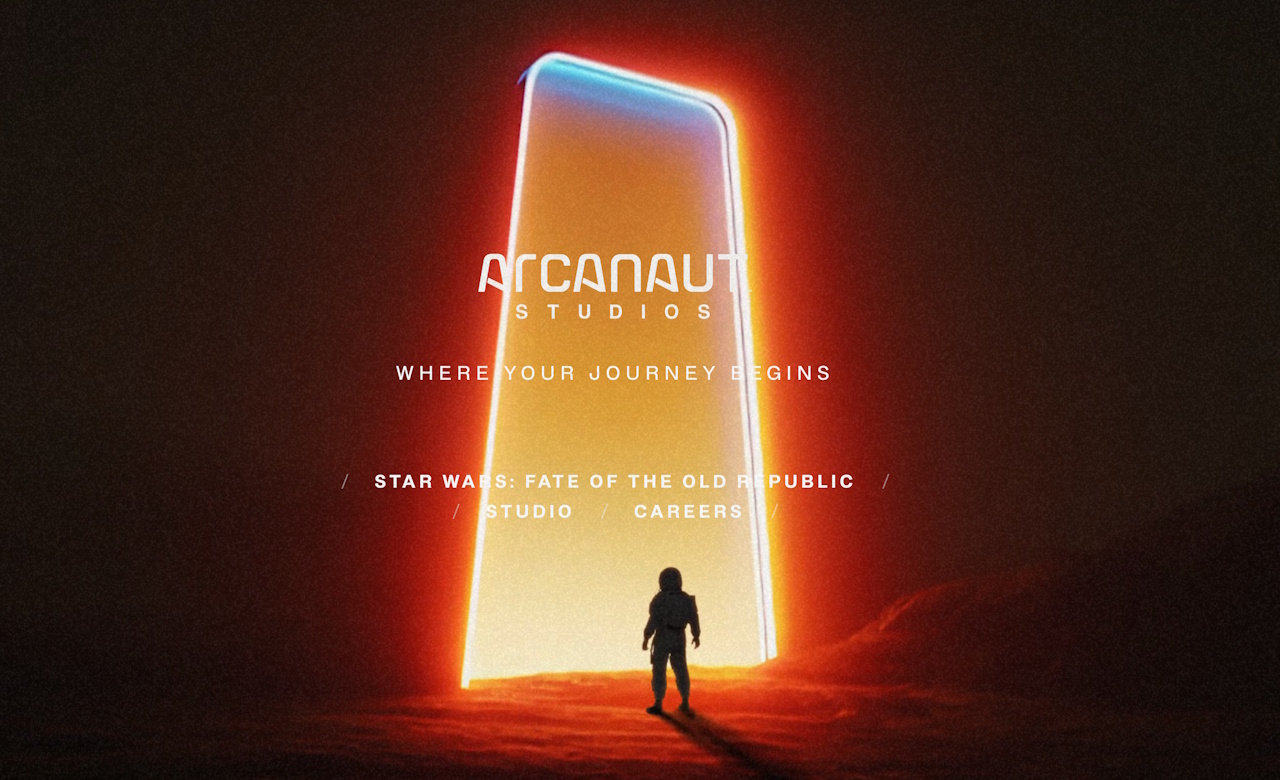
Fate of the Old Republic will be Arcanaut’s first-ever video game. And it isn’t easy to build up a brand-new studio from scratch in the modern games industry. Building a studio around a talismanic figure from the past doesn’t always work – just ask Build A Rocket Boy and their failed game MindsEye. Even in the Star Wars franchise, such things don’t always work out – Amy Hennig’s Star Wars game ended up being cancelled before it even launched, and that was coming from an established studio with a track record. So… there are causes for concern, unfortunately. One big name, no matter how influential they may once have been or what their track record may look like, is not a guarantee of success on its own, and a game like Fate of the Old Republic feels like a massive project for a brand-new studio to be tasked with.

Splash page from the website of Star Wars: Fate of the Old Republic developer Arcanaut showing their logo and a graphic.
This will be Arcanaut Studios’ first game.

Finally, there was one phrase in Fate of the Old Republic’s marketing material that I didn’t like to see. The game is being described as a “spiritual successor” to Knights of the Old Republic. But a “spiritual successor” is not a true sequel, is it? So will this game pick up the stories of Revan and the Jedi Exile? Or will it be a brand-new thing that doesn’t continue their storylines at all? The studio’s website promises “new characters for an all-new story,” which sounds to me like they’re not planning to even touch on what happened to Revan and the Jedi Exile. And I would add that nothing in the Fate of the Old Republic trailer looked familiar – the character, the starship, the planet… none of it.

And that leaves me baffled, to be honest.

Why make a big deal of Casey Hudson’s involvement, name-drop KotOR so often, and even use the “of the Old Republic” branding in the game’s name if it’s gonna be a different thing altogether? It almost feels like it could be a bait-and-switch; using the KotOR name to entice fans of those games to show up for a new, unrelated project.

Still frame from the Star Wars: Fate of the Old Republic teaser showing the character entering a door.
Is this game going to connect back to KotOR in a big way? Or… at all?

I’m still hopeful that Fate of the Old Republic will be a solid and enjoyable game in its own right… when it’s ready in 2030 or beyond. And if I’m still here and still capable of writing and gaming, I’ll do my best to play it and review it right here on the website! But, for all the reasons discussed above, I’m not exactly “hyped” for this new game at this too-early stage, and I’m more concerned, in some ways, for what this announcement could mean for the KotOR remake that I’d been looking forward to.

So I realise this was a dump of negativity, and I apologise for that. But KotOR and KotOR II are still games I’m passionate about, and I’ve longed for a continuation for literally decades at this point. I’m not sure, based on what I’ve seen and read, whether Fate of the Old Republic will be that game. It certainly won’t be KotOR III. However, it could be a fantastic standalone title, and maybe there will be more connections to Revan and the Jedi Exile, even if those characters and their friends don’t end up forming a core part of the new story. In any case, I will check out Fate of the Old Republic when it’s ready, assuming I’m able to.

Stay tuned here on the website, because I’m currently writing up my thoughts on The Force Awakens ahead of its tenth anniversary. And later in the month, I’ll be handing out some of my own made-up statuettes and trophies to some of my favourite entertainment experiences of 2025! I hope you’ll join me for that. Until then… may the Force be with you, friends!


Star Wars: Fate of the Old Republic is in early development and may not launch for several years. Star Wars: Fate of the Old Republic is the copyright of Arcanaut Studios, Lucasfilm Games, and The Walt Disney Company. Star Wars: Knights of the Old Republic is the copyright of BioWare, Electronic Arts, Lucasfilm Games, and The Walt Disney Company. This article contains the thoughts and opinions of one person only and is not intended to cause any offence.

Phineas and Ferb: Season 5 Review (Part Two!)

A Phineas and Ferb-themed spoiler warning.

Spoiler Warning: There are spoilers ahead for Phineas and Ferb, including Season 5.

Back in the summer, I shared my thoughts on what I mistakenly assumed was the entirety of Phineas and Ferb’s fifth season – the show’s first new episodes in a decade. But it turns out that Disney, for some reason, dumped only *half* of the episodes onto Disney+ back then, and a few more episodes have premiered over the summer and into the autumn. So I thought I’d better update my Phineas and Ferb Season 5 review, as some of what I said back then may no longer be accurate!

It’s also worth noting, before we go any further, that there are still a few more Season 5 episodes to come – but those won’t be landing until January. So I hope you’ll swing back in the new year for Part Three of this review, and to get my final thoughts on Season 5 as a whole! I just wanted to be clear about that, since I got a bit muddled up last time.

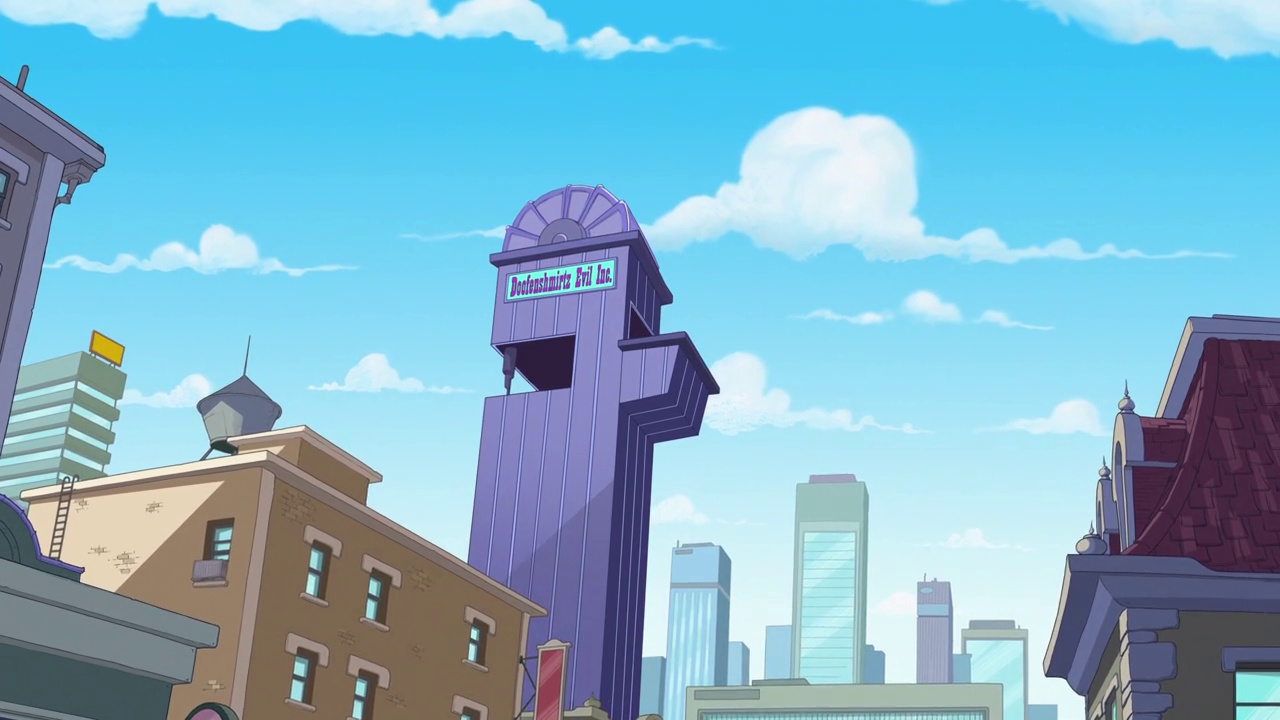
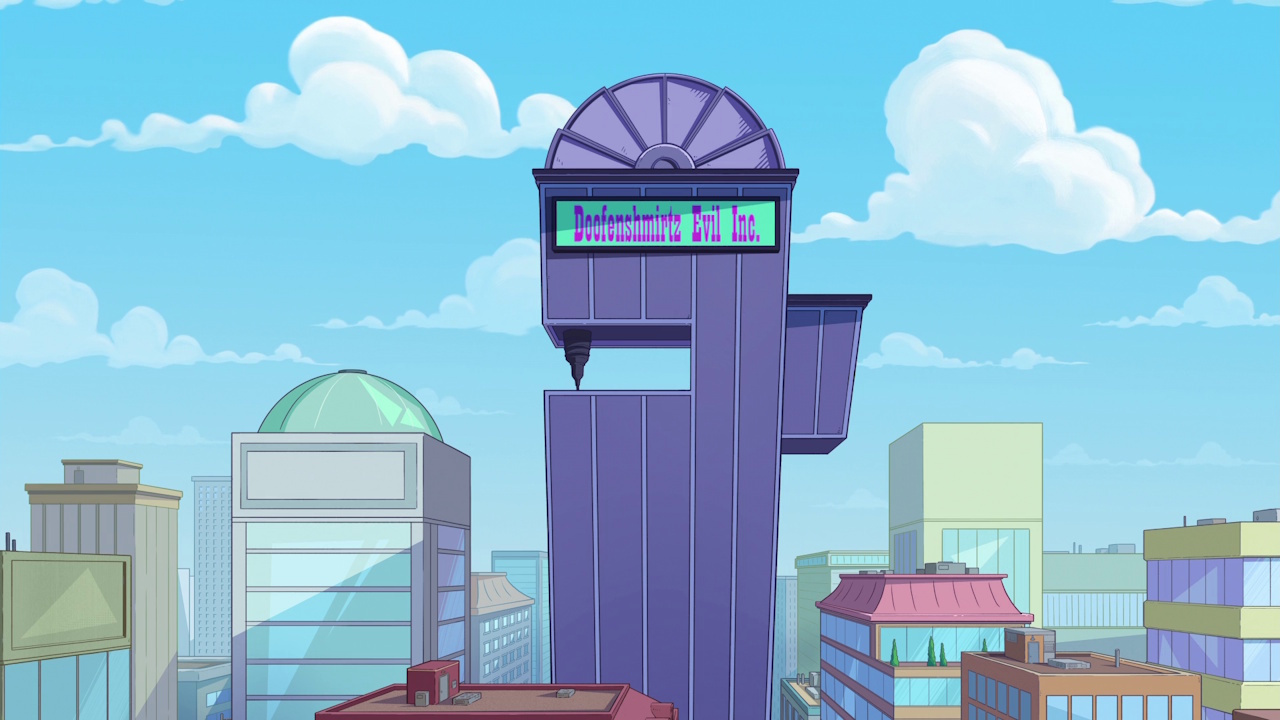
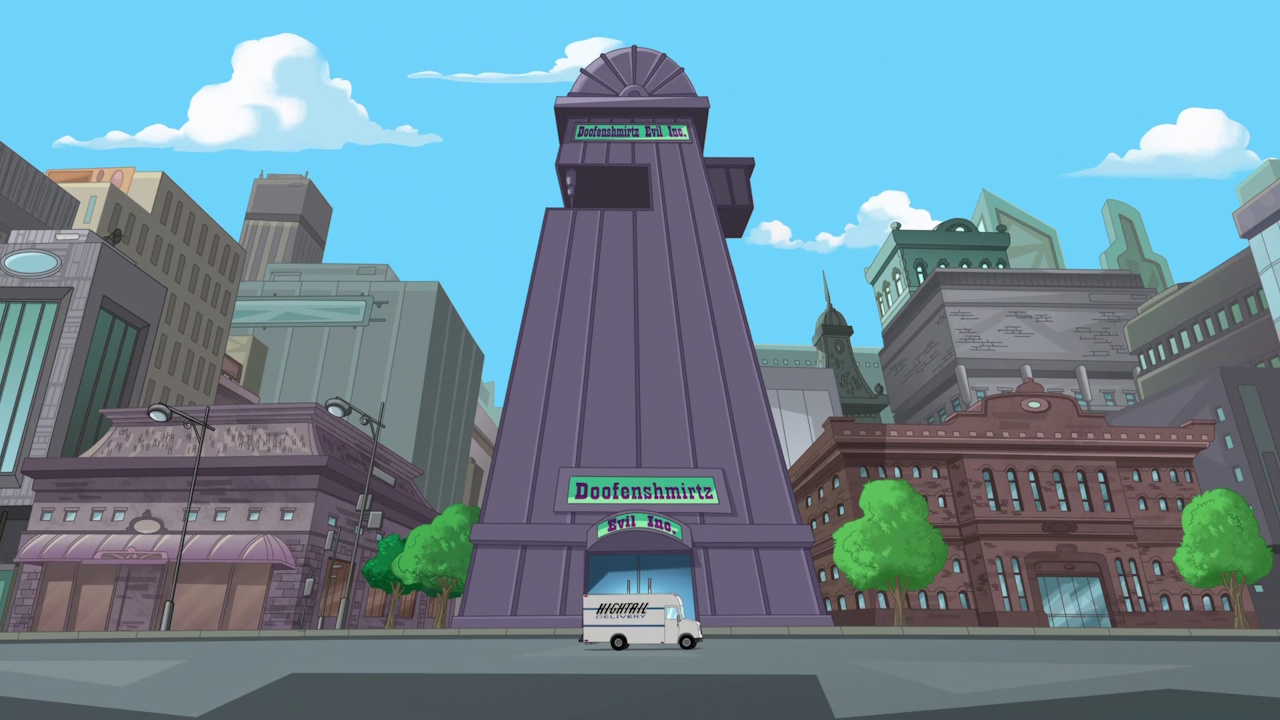
Still frame from Phineas and Ferb Season 5 showing the Doofenshmirtz Evil Incorporated building.
Doofenshmirtz Evil Incorporated!

As always, I’ll give my usual caveat. Everything I’m going to say is the entirely subjective, not objective, opinion of one person only. If you hate my take on Phineas and Ferb, think I’ve gotten it horribly wrong, or we just have different ideas for what makes a fun or successful episode… *that’s okay!* There ought to be enough room in the fan community for differences of opinion and polite discussion, and I share my thoughts with you in that spirit.

What I’d like to do first is talk about the recent batch of episodes in general, then I’ll address a couple of criticisms I made of Season 5 earlier in the year, which I’d now like to change or recind. And finally, after all of that, I’ll go through the newer episodes one by one and share my thoughts on each of them. For the purposes of this review, I’m calling each individual story an “episode,” even though they usually come paired up on TV and streaming. Last time, I covered all of the episodes in Season 5 up to The Ballad of Bubba Doof, meaning this time I’m starting with Attack of the Candace Suit and covering all the episodes up to Dungeons and Dating, which is the most recent story to air at time of writing.

With all of that out of the way, let’s get started!

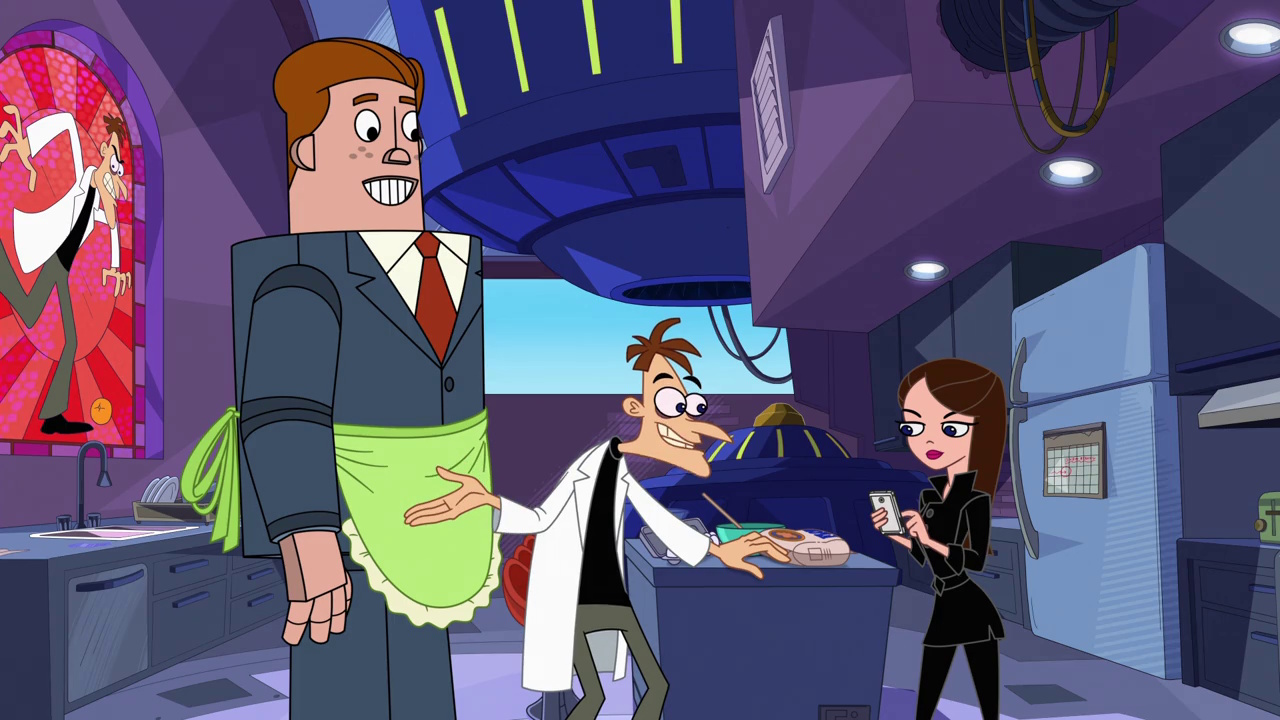
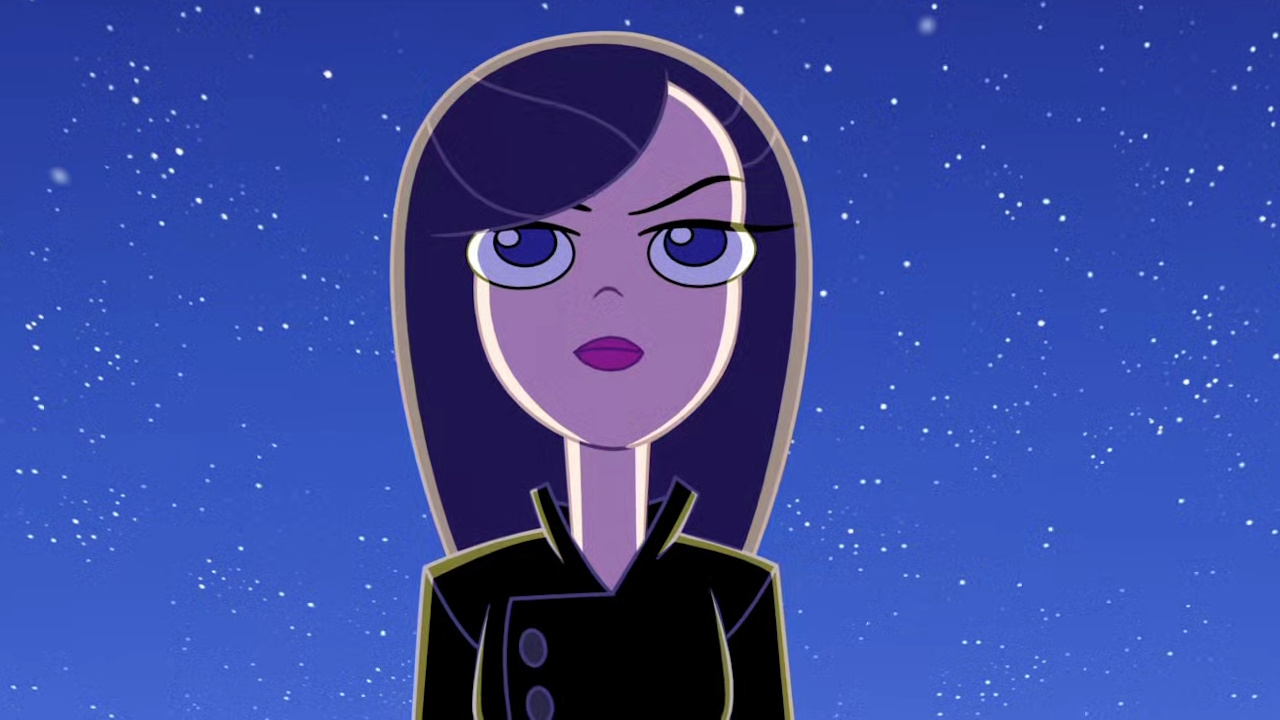
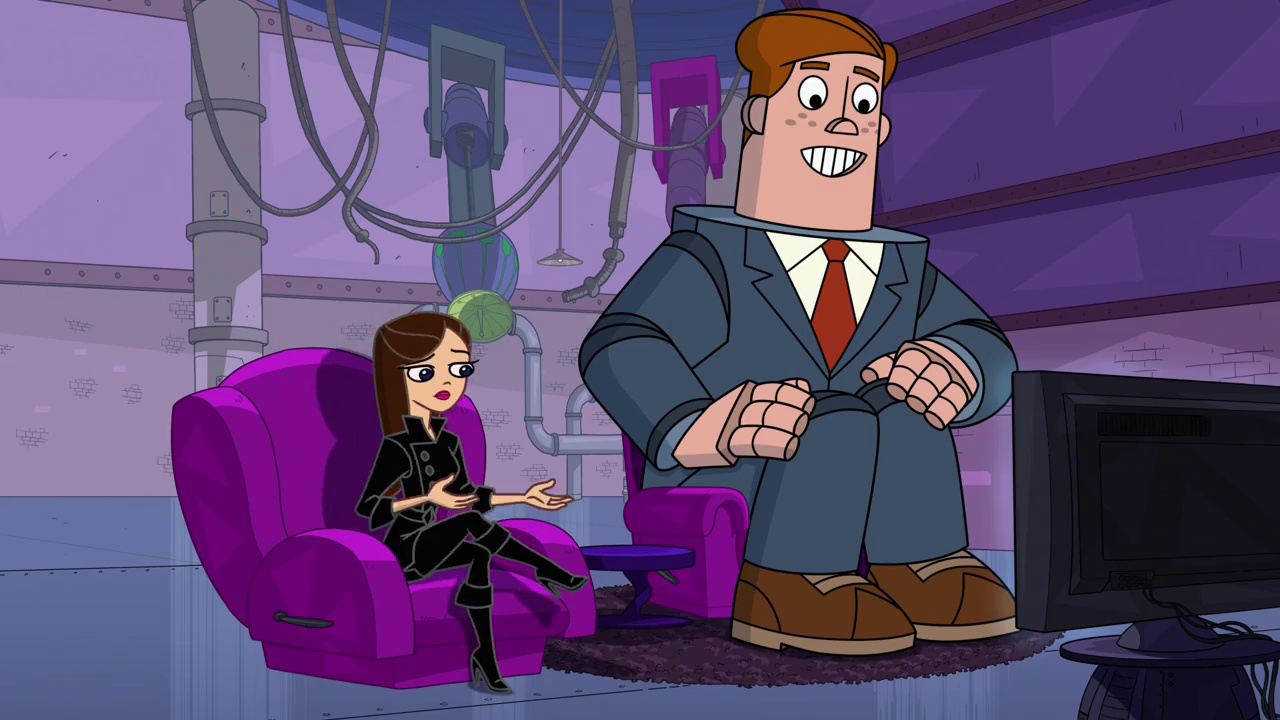
Still frame from Phineas and Ferb Season 5 showing Doof, Vanessa, and Norm.
Norm and Vanessa with Doof.

One thing I wanted to mention last time (it was in my notes, but somehow didn’t make it into the final review) has also cropped up in this second batch of episodes. Someone on the animation team *really* loves their new “low light” filter, don’t they? So many dark scenes now have a kind of “hazy” effect over characters and environments, which is something I don’t remember seeing in any of the first four seasons. It doesn’t look bad, exactly, but when it’s used so often in so many different episodes, it becomes noticeable… at least it did for me! And when there really aren’t a lot of other visual effects or filters being applied, the constant re-use of this one sticks out all the more.

I don’t hate the way this looks, just to be clear. It’s a bit of a change from what you might remember from earlier in the show’s run, but on its own, in one-off situations, I’d never say that it looks *bad*. But when there really aren’t any other comparable visual effects, changing the way the animation looks to represent, for instance, twilight, firelight, or other such things, this “low light” effect being recycled in multiple episodes became pretty noticeable for me.

Still frame from Phineas and Ferb Season 5 showing Vanessa in low light.
The “low-light” filter.

Speaking of new obsessions that the writers seem to have, several episodes this time haven’t *really* ended, with an apparent old-school cliffhanger seeming to tease story continuations that are almost certainly never coming. If it was a one-off gag, I’d be fine with it. In some cases, those kinds of things work well, either as a genuine tease or as a pastiche of the kinds of films and TV shows which do that kind of thing a lot.

But when it’s overdone, and when it’s obvious that these stories are well and truly over, one-and-done things… it gets repetitive. As above with the “low light” effect, it was just something that I started to notice as we got further into the season, and even though it was by no means happening in every episode, I definitely felt it begin to overstay its welcome.

Still frame from Phineas and Ferb Season 5 showing a zombie Ducky Momo.
An example from the end of The Nightmare-Inator.

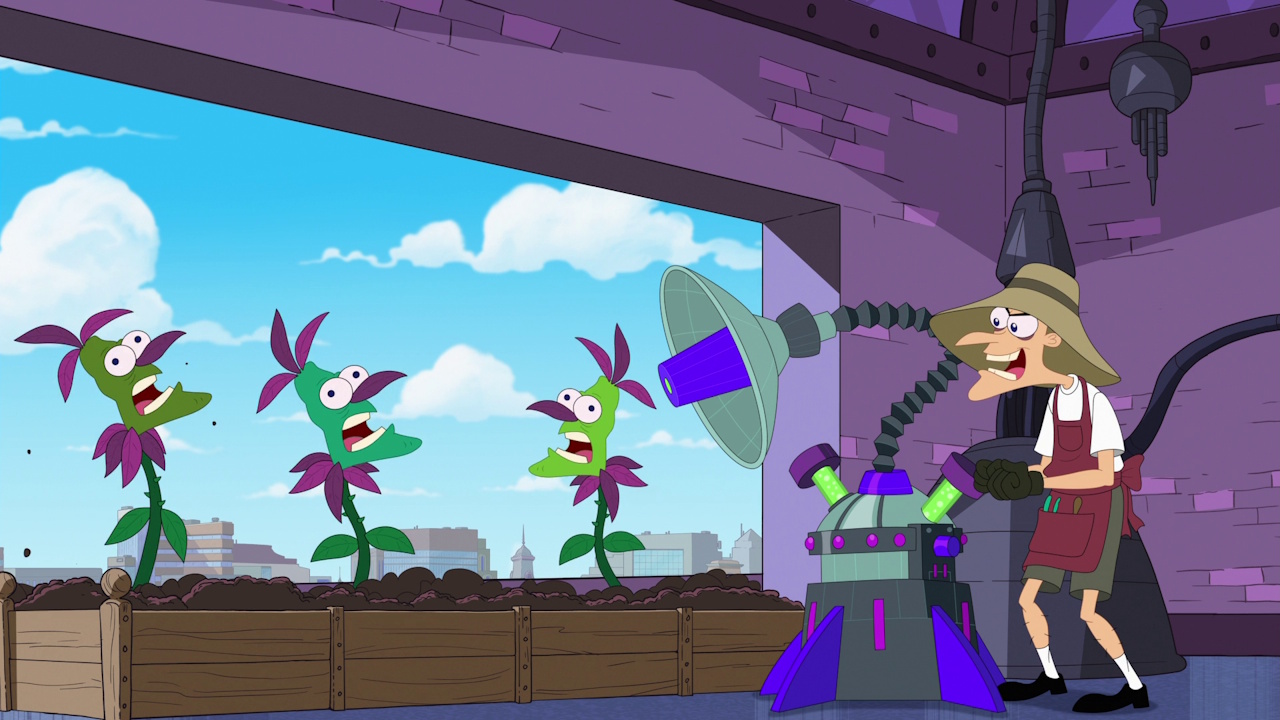
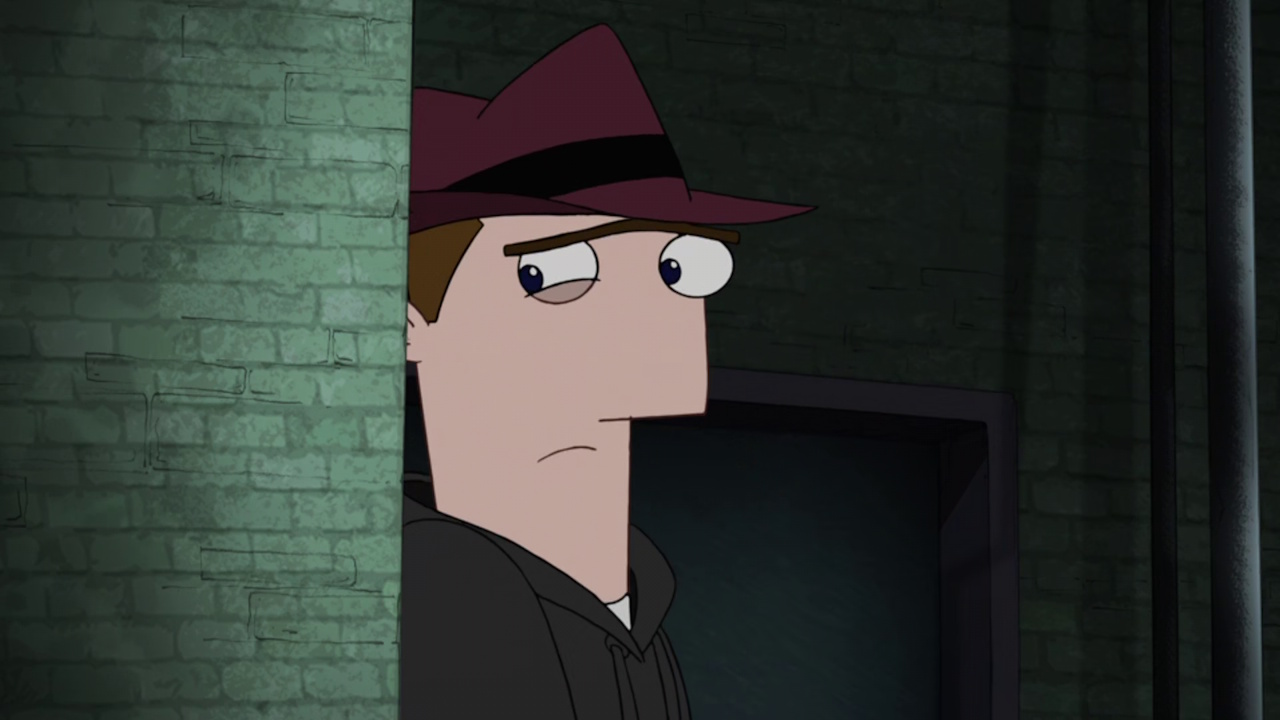
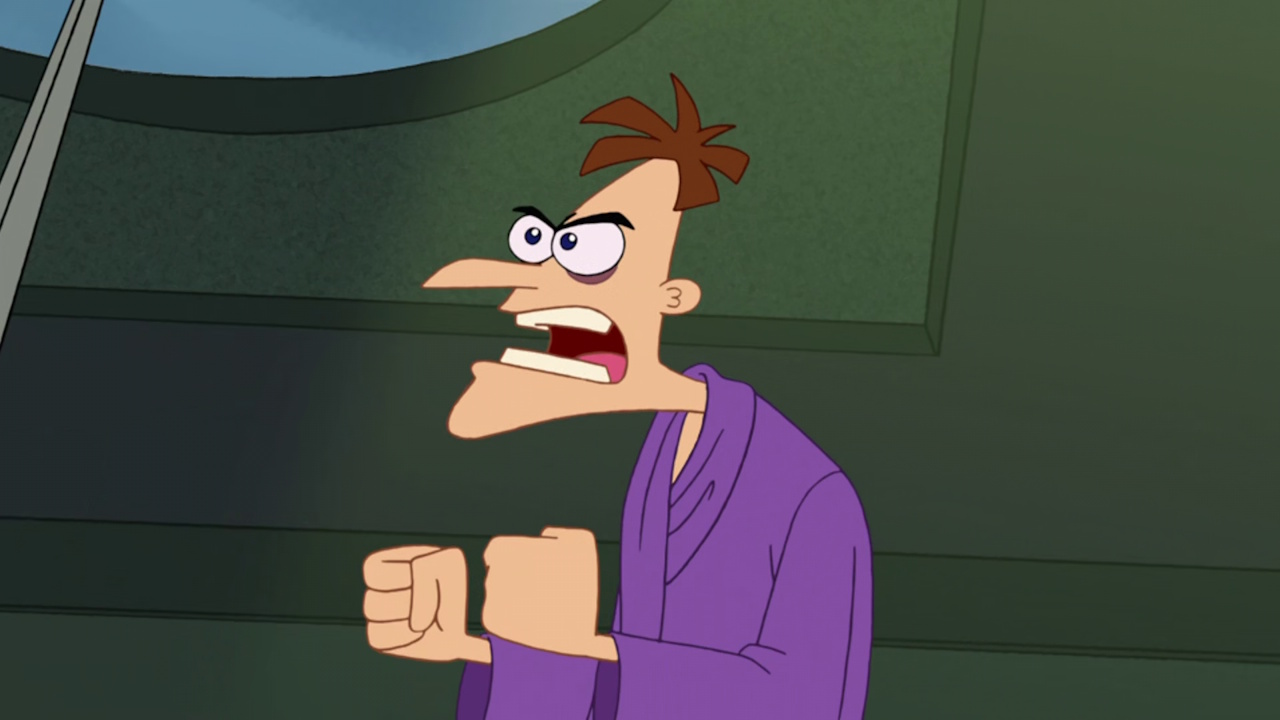
Dr Doofenshmirtz has (arguably) been Phineas and Ferb’s breakout character. But even keeping that in mind, Doof was *all over* this batch of episodes, being featured prominently. Heck, *four* of these episodes have Doof’s name in them, which must be some kind of record! There is still room for other characters, of course, but I think at this point it’s safe to say that Phineas and Ferb’s writing team are acutely aware of Doofenshmirtz’s popularity, meme-ability, and just the general place he’s carved out in pop culture.

I’m not saying it’s a bad thing necessarily, and *most* episodes still manage to feel balanced. But there’s a sense, perhaps, that Doof’s near-omnipresence is beginning to tip the scales just a little, and while the show is still managing to throw him into new situations or give him new experiences, I worry that if this continues, we might actually start to burn out on the character prematurely. There are still, at time of writing, forty-four new stories being produced, and if Doof is front-and-centre in as many of them as he has been in this batch of episodes… it might start to get a bit too much. He’s always been a main character, of course, but I just felt the balance tip a little this time.

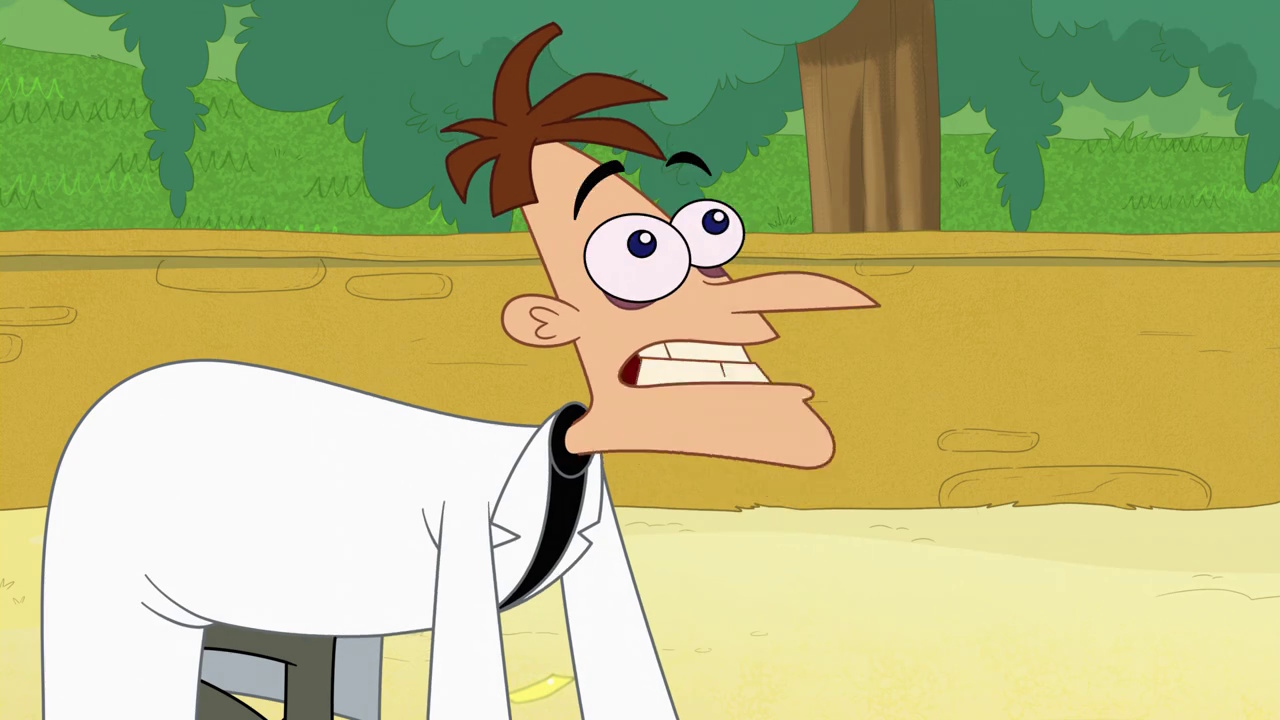
Still frame from Phineas and Ferb Season 5 showing Doof on his hands and knees.
Doof is all over Season 5.

Phineas and Ferb took a break in August and September, before coming back with new episodes in October. I was a little surprised, then, that we didn’t get any kind of Halloween special. Such things are not expected nor demanded, but the show’s previous special episodes have been some of the best, and getting another Halloween or Christmas episode was something I had on my wishlist! Given that we aren’t getting any new episodes now till January, I doubt we’ll see anything festive this year. But I’m still crossing my fingers for 2026 or 2027!

There also aren’t any double-length or two-part episodes in this batch, excluding the second part of the Candace Suit saga. Again, not necessarily a problem, but some of the special feature-length episodes have been among the show’s best. Perhaps we’ll get something like that for the season finale?

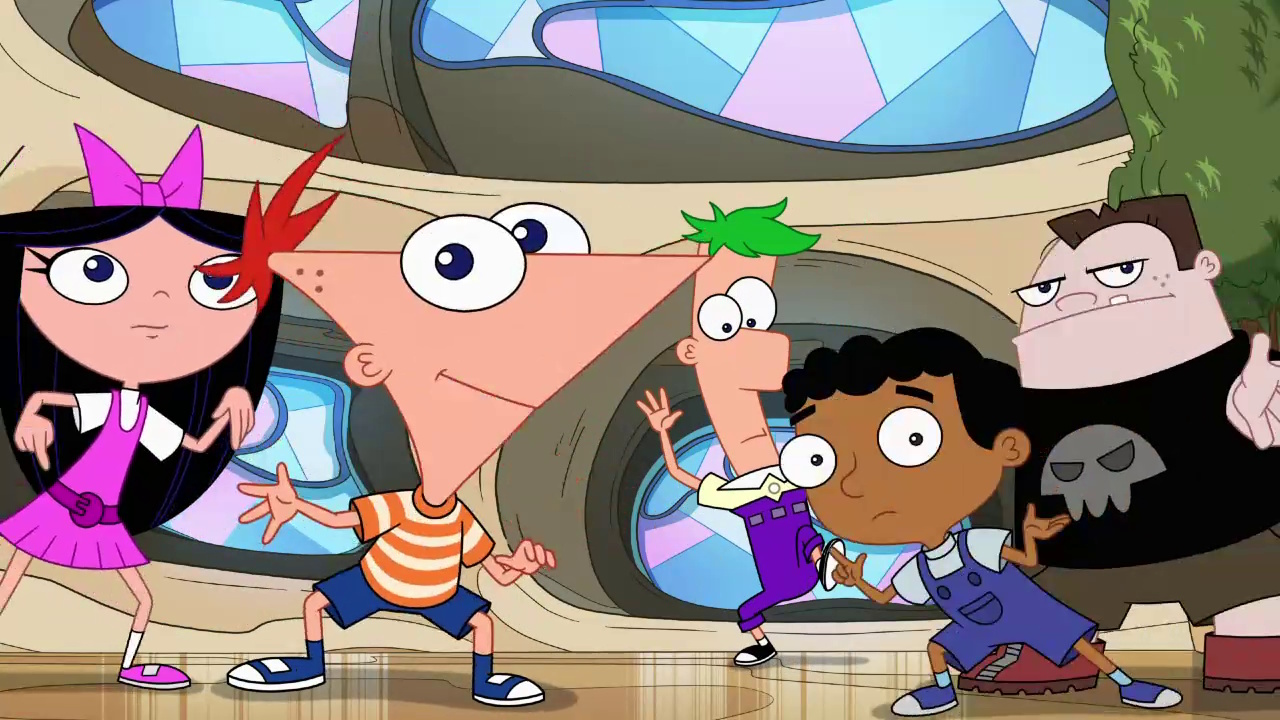
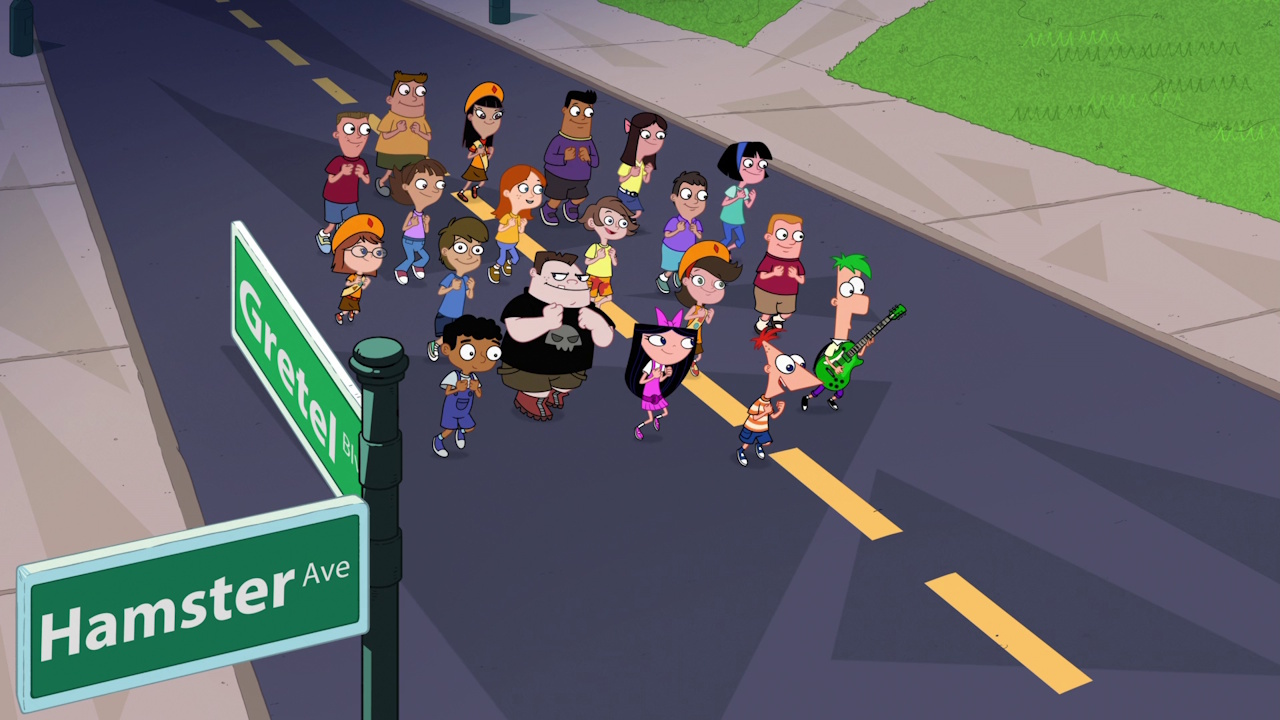
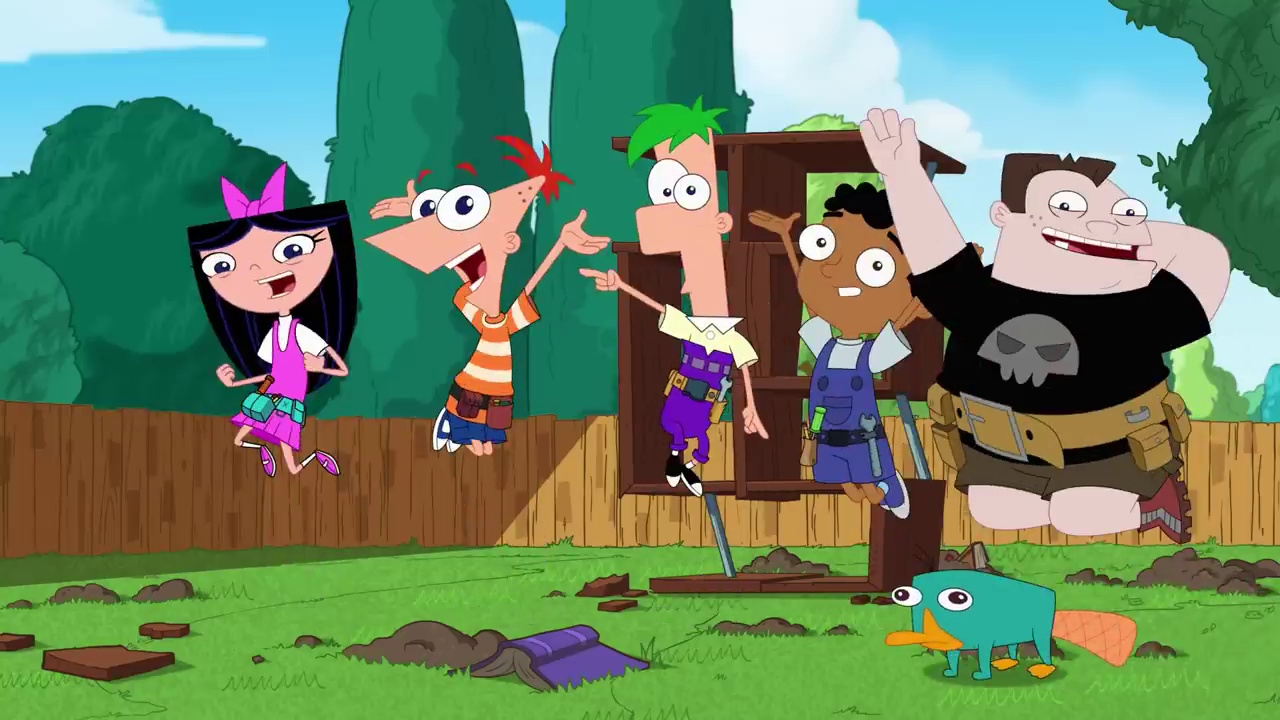
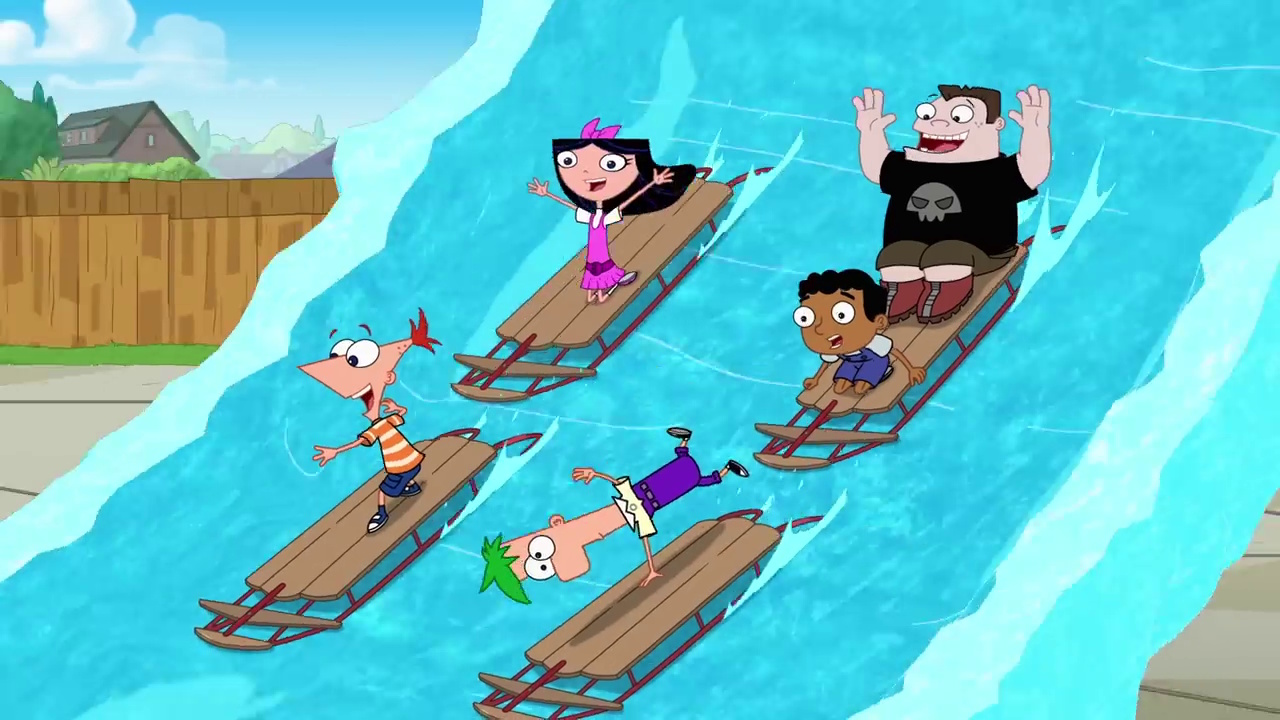
Still frame from Phineas and Ferb Season 5 showing Isabella, Phineas, Ferb, Baljeet, and Buford.
There was no Halloween or Christmas special this time.

On the whole, I think I’d say that this second batch of episodes wasn’t quite at the same level as some of the other episodes we’ve enjoyed in Season 5. There were some standout stories, plenty of callbacks to the show’s original run, and the return of some characters who I felt had gone missing in those first few episodes – all of which I enjoyed and appreciated. But there were also a few duds, a couple of storylines which don’t land as well in the revival as they did in the show’s original run, and the pay-off to a pretty weak joke (that had been running all season) which didn’t really live up to the hype.

So… a mixed bag, then!

In terms of quality, I stand by what I said last time: Season 5 is probably about on par with Season 4, which – prior to the revival – would’ve been what I’d have said was the weakest part of the show. Note that I didn’t say “bad,” because there are some solid and some excellent Season 4 stories – as indeed there are in Season 5, too. But there are perhaps fewer of them, and some of the stories in between are either not especially memorable… or just not as good.

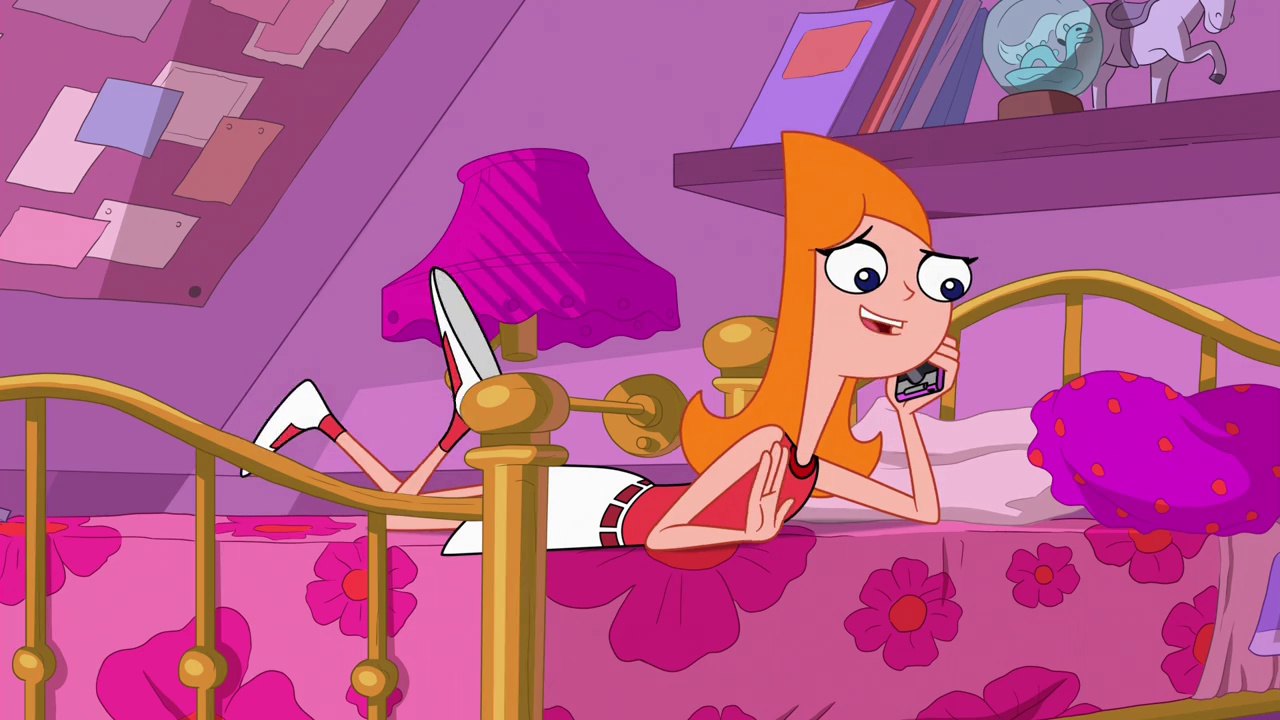
Still frame from Phineas and Ferb Season 5 showing Candace on her bed.
Candace on the phone with Stacy.

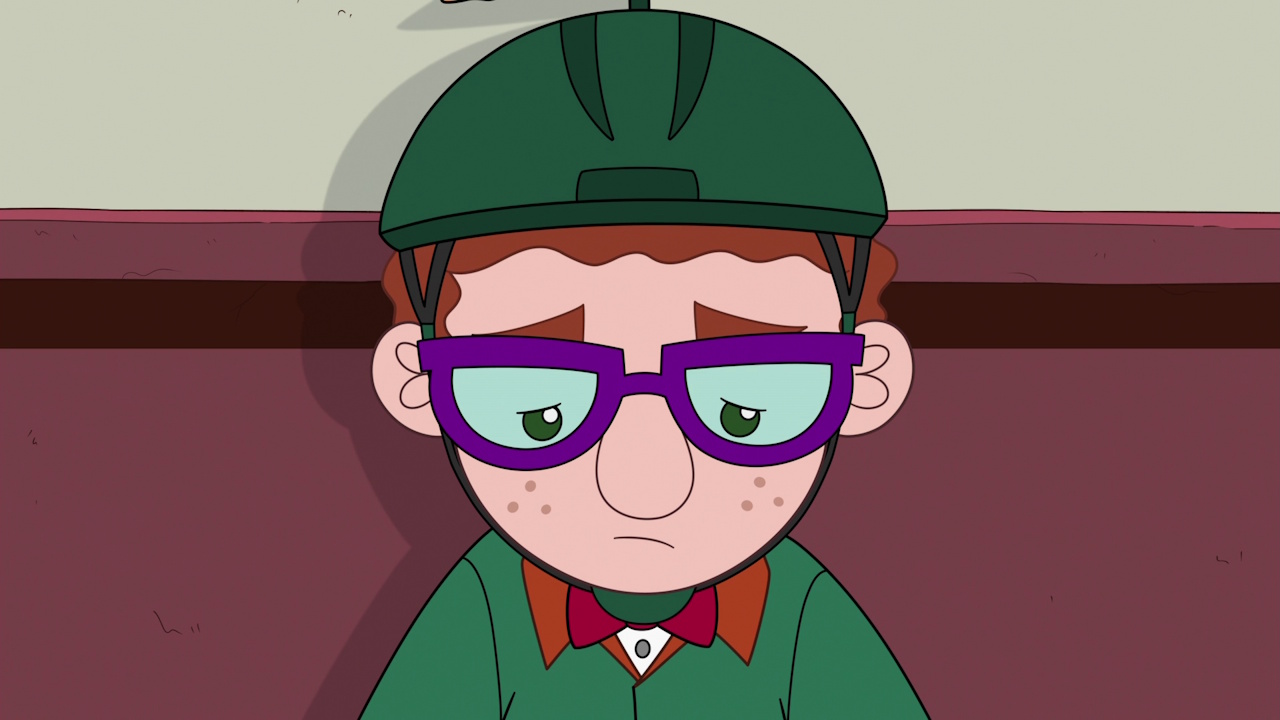
Last time, I said that I was disappointed to see Irving, Norm, Roger, and Jeremy basically go missing – and I’m pleased that each of them got at least *something* to do in the recent batch of episodes. Irving, by the time we reached the end of Season 4, seemed to have climbed out of the secondary character milieu to become an adjacent member of the friend group, so his absence was particularly noteworthy. Though we got a couple of solid roles for Irving further into Season 5, he’s still not as prominent as I might’ve expected, and doesn’t seem to be as close with the core friendship group as he was when the show’s original run was coming to an end. Episodes like Dungeons and Dating could’ve provided a “nerdy” character like Irving with loads to say and do, but he was relegated to a non-speaking cameo.

I’m glad that we got to see a bit more from Norm and Roger. Though neither has been especially prominent in Doof’s stories, they add a lot to his world and to that side of the series, and Norm in particular was great comic relief in some of the recent episodes. I’m glad that both of them had a bit more to say and do this time around.

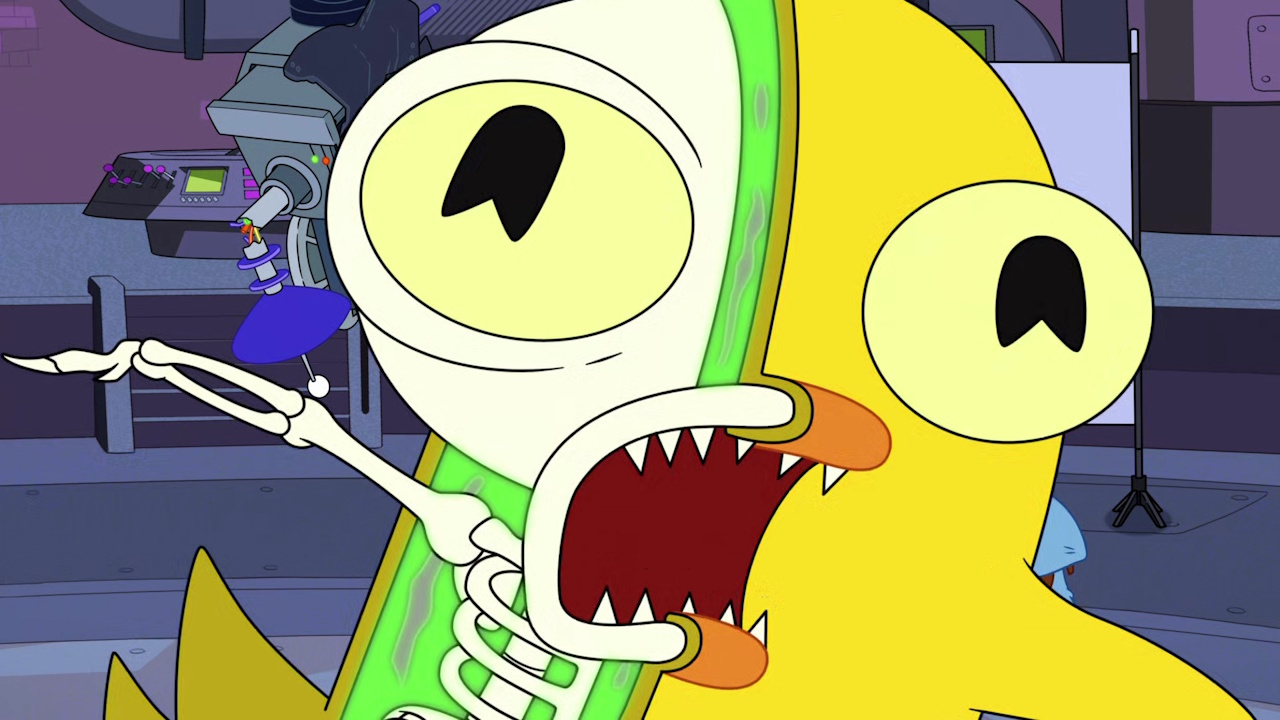
Still frame from Phineas and Ferb Season 5 showing Vanessa and Norm.
Vanessa and Norm.

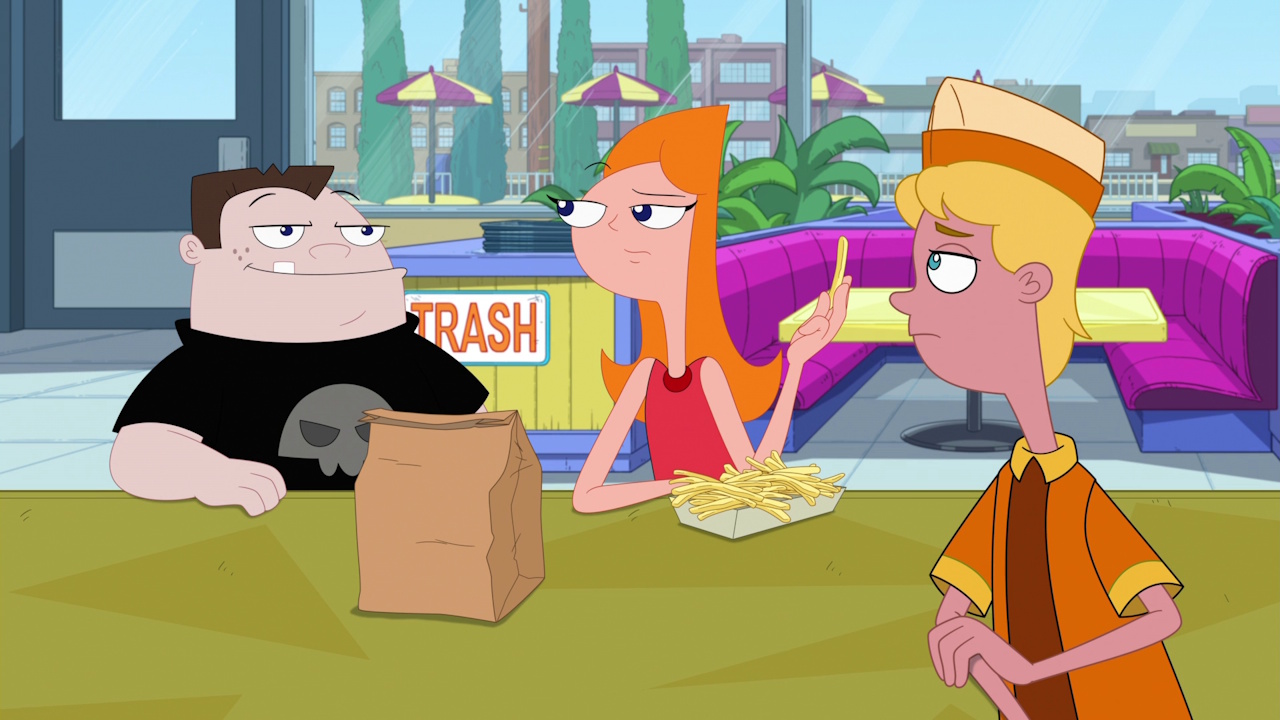
Jeremy is a bit of an odd case. If you didn’t know (and I don’t think I mentioned it last time), Jeremy’s original voice actor didn’t return for Season 5, and I suspect that’s why his role has been reduced this time around. Personally, I think that’s a real shame – after Jeremy and Candace became an official couple, his moments with her really opened up new narrative avenues which the show had begun to take advantage of. Although I think I’m right in saying that we saw more of Jeremy in the second part of Season 5 than we had in the first, he still doesn’t seem to be a particularly major character – not for Candace, nor for the series.

Jeremy works well when his easy-going, laid-back attitude can provide a contrast to Candace’s energetic and chaotic side. Throwing Jeremy into some of the boys’ plans has also worked well in the past, giving Candace either a reason to join in or at least to keep her busting in check for a while. Even in some of Jeremy’s more prominent moments this time, we didn’t get a lot of that. And he still doesn’t seem especially important or prominent on this side of the story. In any individual episode, it’s not something you really notice. But upon reaching the end of this batch of episodes, it’s odd to think that Jeremy – once such a prominent secondary character – has only made seven appearances in thirty-five stories, some of which only gave him a few seconds of screen time and one or two lines.

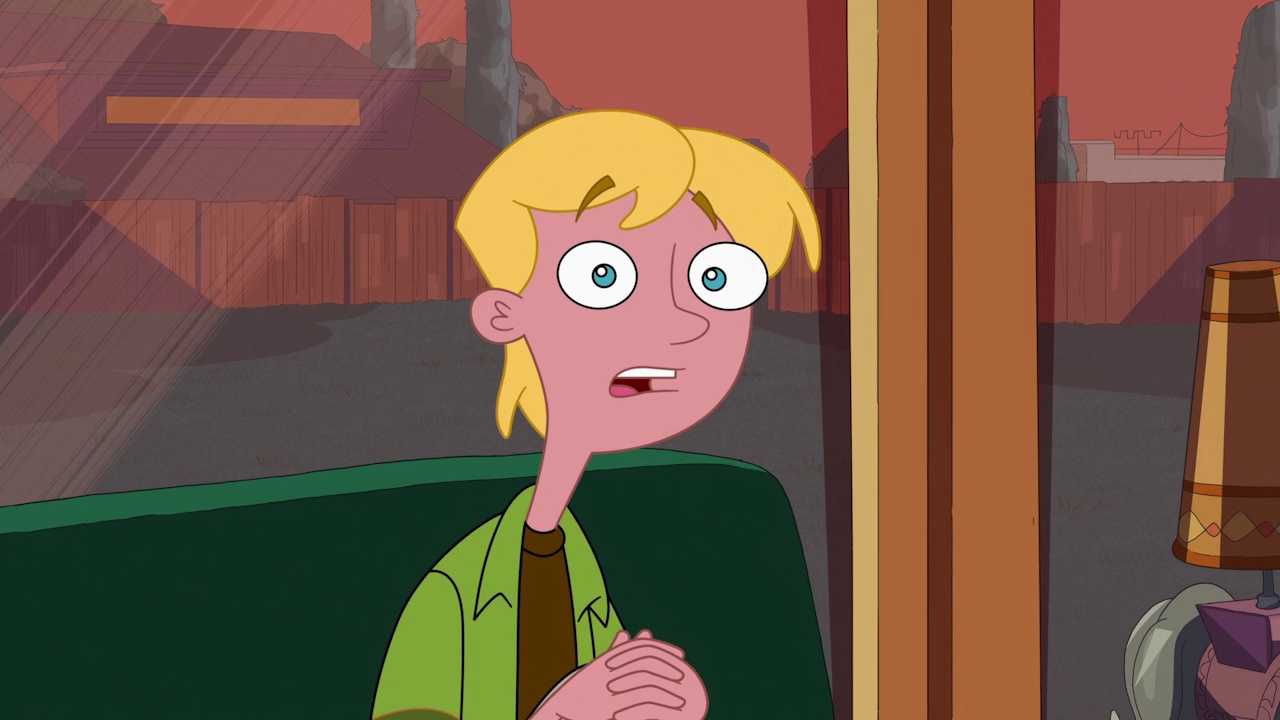
Still frame from Phineas and Ferb Season 5 showing Jeremy.
Jeremy’s role feels smaller in Season 5.

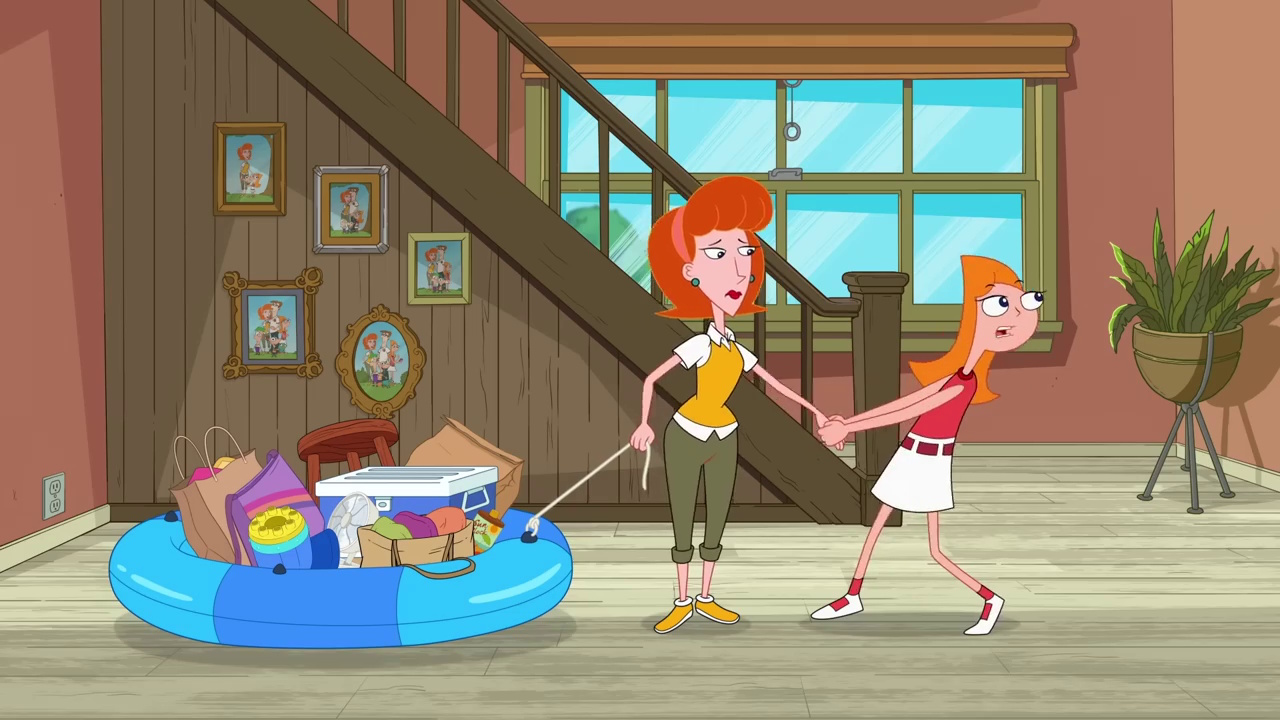
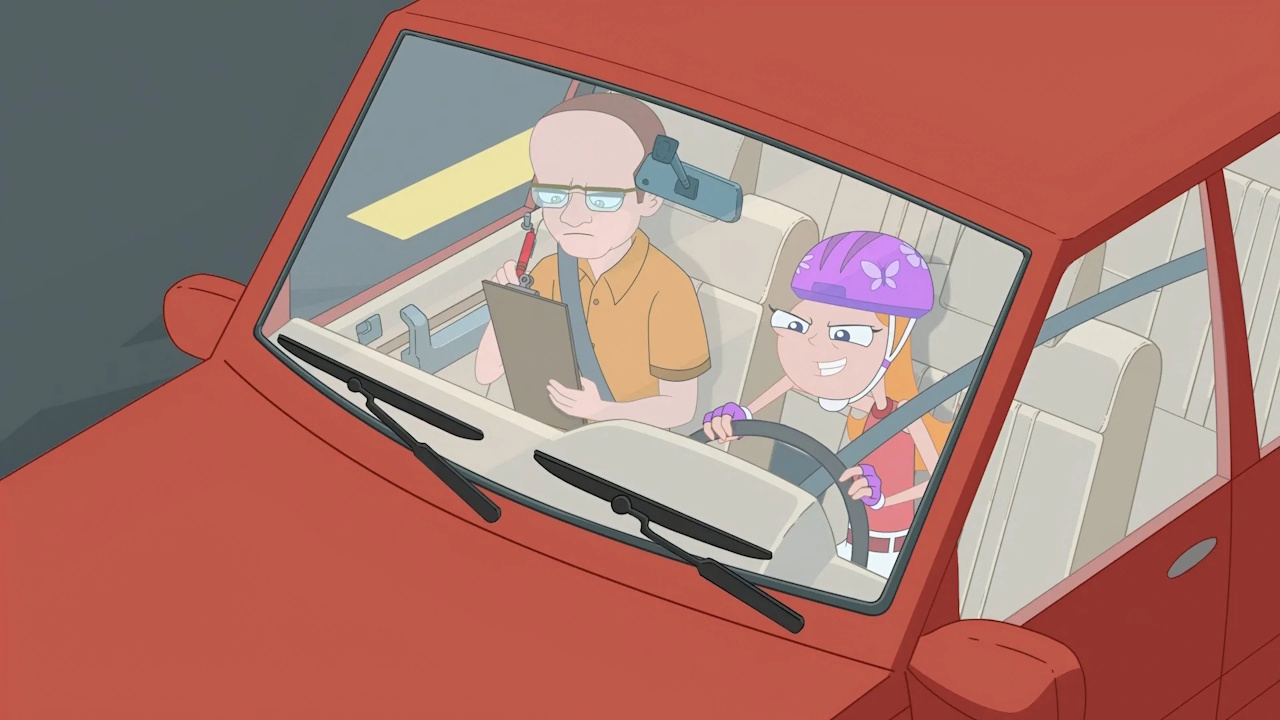
Last time, I said it was weird to see Candace achieving one of her biggest accomplishments – getting her driver’s license – only for it to not be mentioned again. We did finally get to see her drive, though, so we can check that one off the list! I still think the driving thing could be brought up a bit more often, even if it’s not directly related to the plot… because otherwise what was the point of License To Bust? But I’m glad that we got something in that vein this time around.

We’ll get into this a bit more when we cover the episode Bread Bowl Hot Tub, but this non-sequitur, which ran for basically all of Season 5, didn’t really get a strong enough payoff for me. I like how random it was, and it was cute to see Buford getting so excited as his request was belatedly granted. But after so much buildup across practically every preceding episode, this was one story which *really* needed to stick the landing. Unfortunately, despite a great guest star in Diane Morgan, it kinda didn’t.

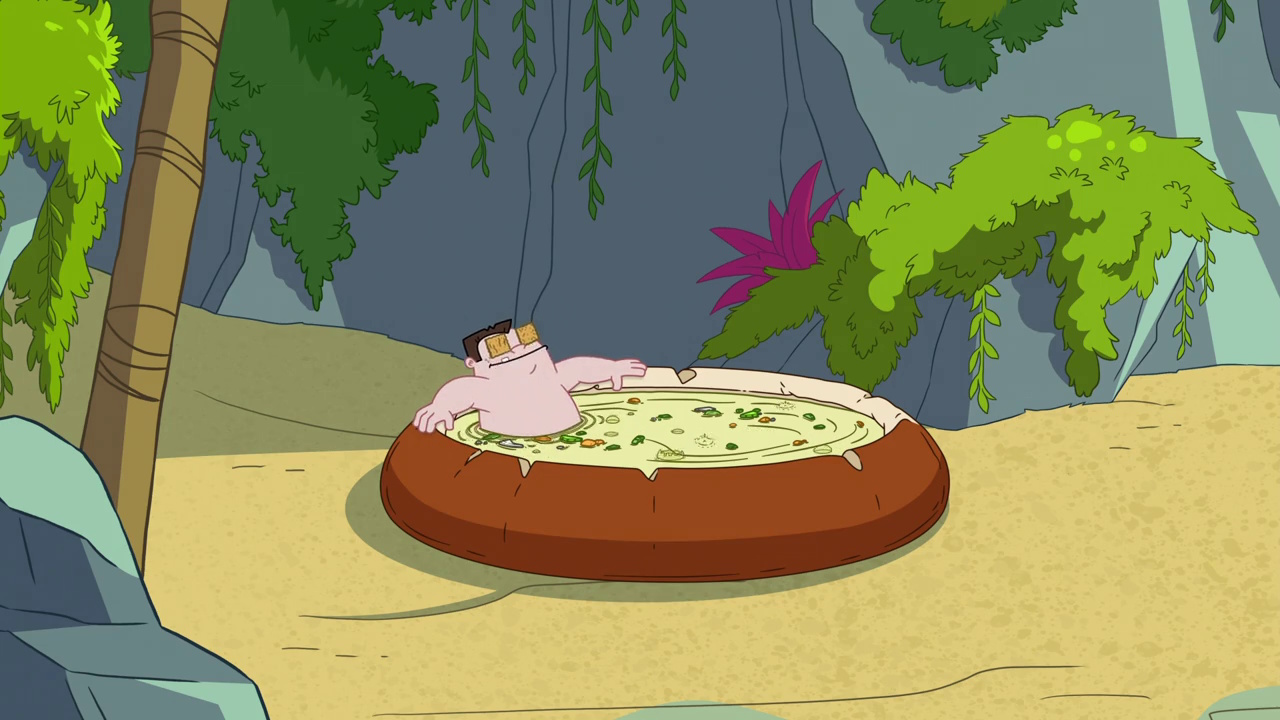
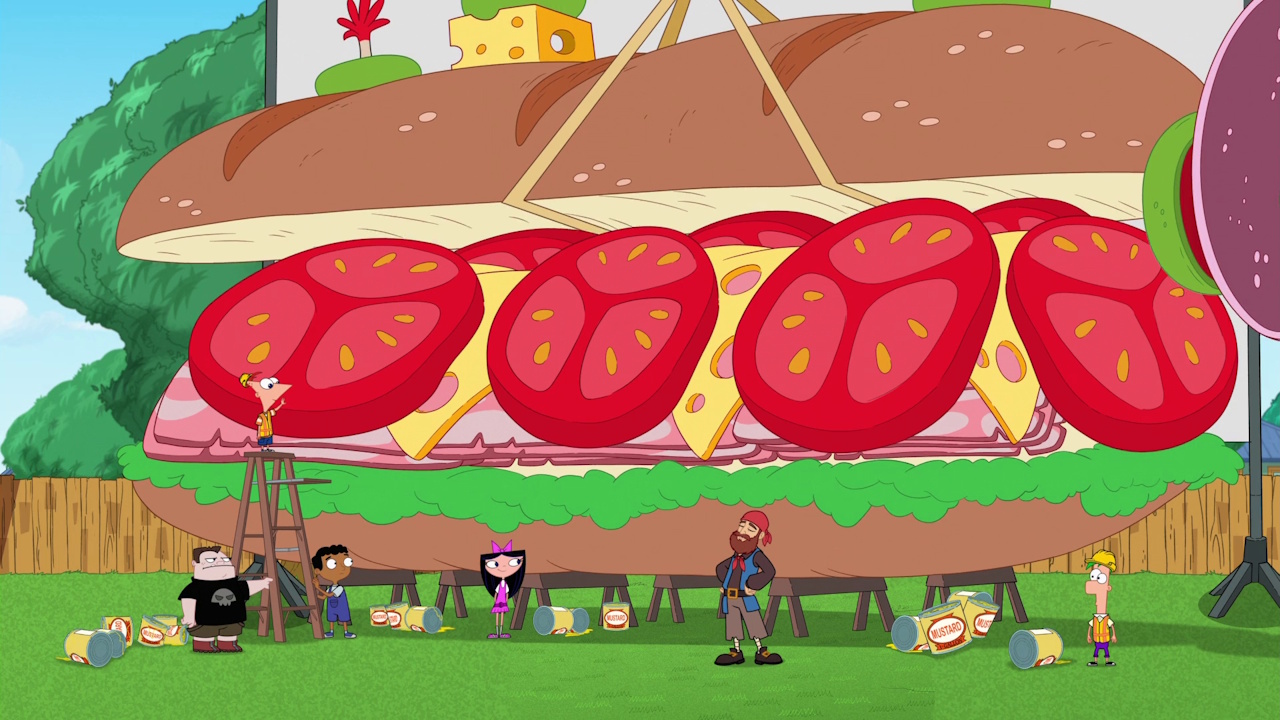
Still frame from Phineas and Ferb Season 5 showing Buford's bread bowl hot tub.
Buford in his bread bowl hot tub.

Phineas and Ferb continues to be pretty meta and self-referential in Season 5, stretching some one-off gags and jokes into full storylines… even when there isn’t really enough material, or a strong enough foundation, to support something like that. I noted it last time with Buford’s life-size moulds – something which, inexplicably in my view, came up again in this crop of stories – but we can also add things like Perry’s lair entrances and the boys’ plans for croquet into that same category.

I’m all for the show reliving some of its glory days and replaying its greatest hits! That’s why a revival like this exists, at the end of the day – to play on the nostalgia viewers have for its original run. But at the same time, there are ways to tell new stories using these characters and familiar narrative frameworks that don’t *only* rely on things that had been set up years earlier. A nod and a wink to returning viewers can be a ton of fun, and I’m on board with in-jokes and meta humour. But when those things are the sole foundation for a story, or when the writers take a one-off gag or throwaway line and try to build it out into a complete story of its own… I think we’re getting far more misses than hits with that approach. So, for clarity: meta humour and being self-referential works well for jokes and small story beats, but hasn’t worked very well when an entire episode has been constructed around it.

Still frame from Phineas and Ferb Season 5 showing Monogram, Carl, and Perry in Perry's lair.
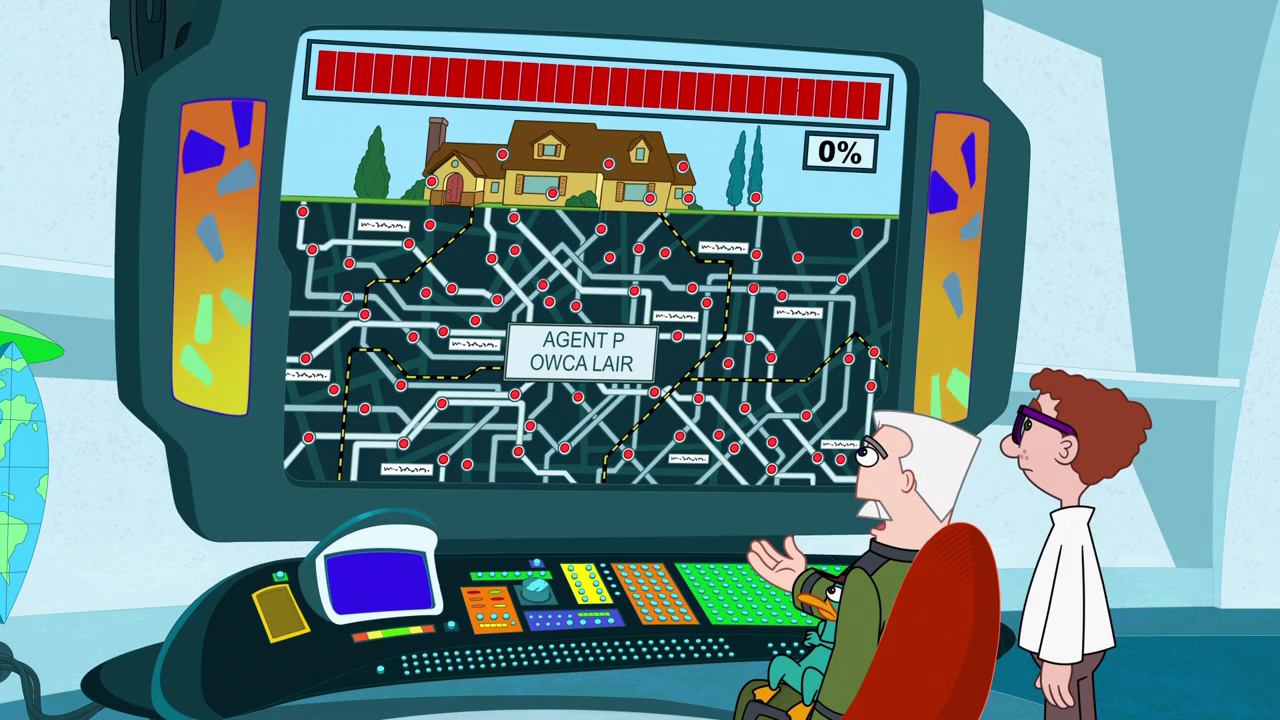
All of the entrances to Perry’s secret lair.

Next, let’s look at each of the episodes in turn, and talk about some of the things I enjoyed, disliked, or just found noteworthy about each of them.

For the sake of clarity, I’ve only watched most of these episodes a couple of times, so I’m not going to be delving deeply and nitpicking every element of them! I’ll cover each episode in broadcast order, and I’m not going to be ranking them, nor rating them out of ten or anything like that. Although these episodes are paired up, I’ll be covering each story individually.

Attack of the Candace Suit:

Still frame from Phineas and Ferb Season 5 showing the titular Candace Suit.
The Candace Suit.

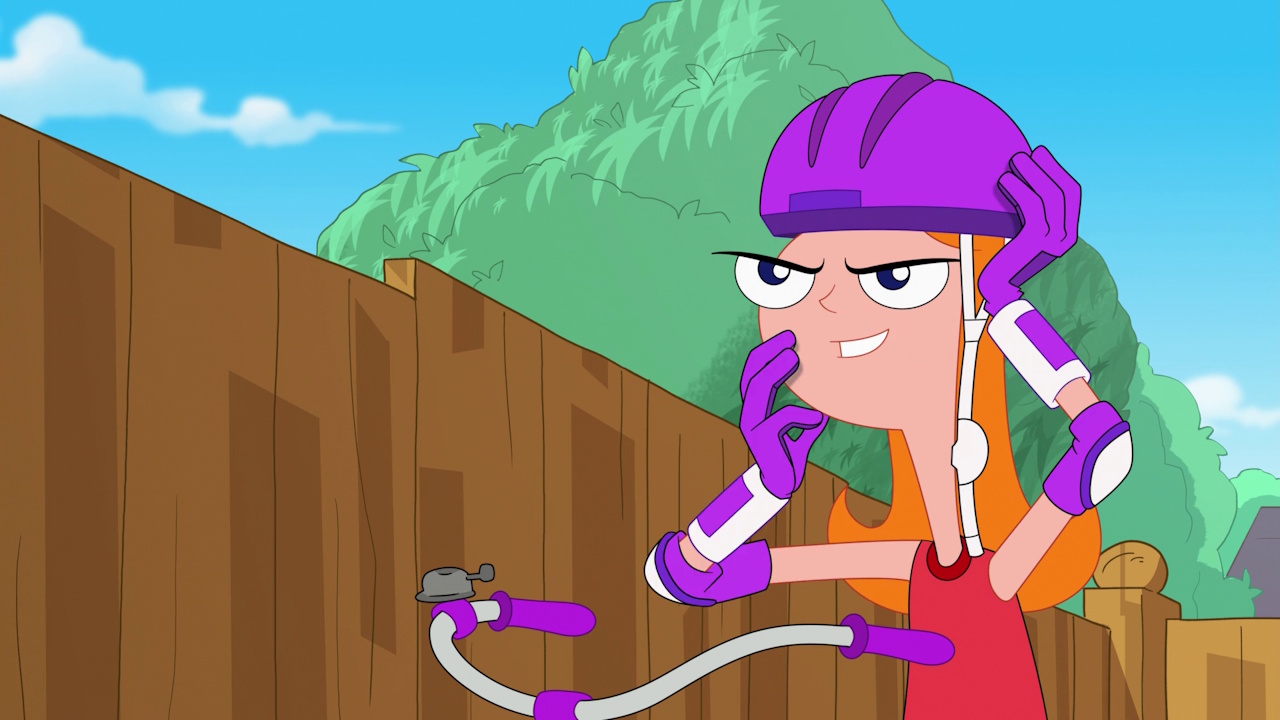
As I said last time, Buford’s “life-size moulds” was a funny one-off gag that worked well in Season 3. But it’s not the kind of thing to build an entire story around, let alone a two-parter. With that being said, I felt Attack of the Candace Suit was the stronger half of this weird little two-part story, being noticeably better and more enjoyable than The Candace Suit had been earlier in Season 5. The now-sentient suit elicited some genuine sympathy, in the same sort of way as Frankenstein’s monster might, as it came to terms with existing as a living creature in this world.

This was also a good episode for Candace and Jeremy – one of the only times in the season where they got to spend much time together. It was also fun to see Candace and the boys on the same team, something that’s not totally uncommon but is still nice to see. The episode also got a happy ending, with the sentient suit being paired up with Klimpaloon, who got a small cameo at the end. I hope this will be the final part of the Candace Suit saga, and that we aren’t gonna get some kind of third episode next time!

Book Flub:

Still frame from Phineas and Ferb Season 5 showing Candace playing with Addyson.
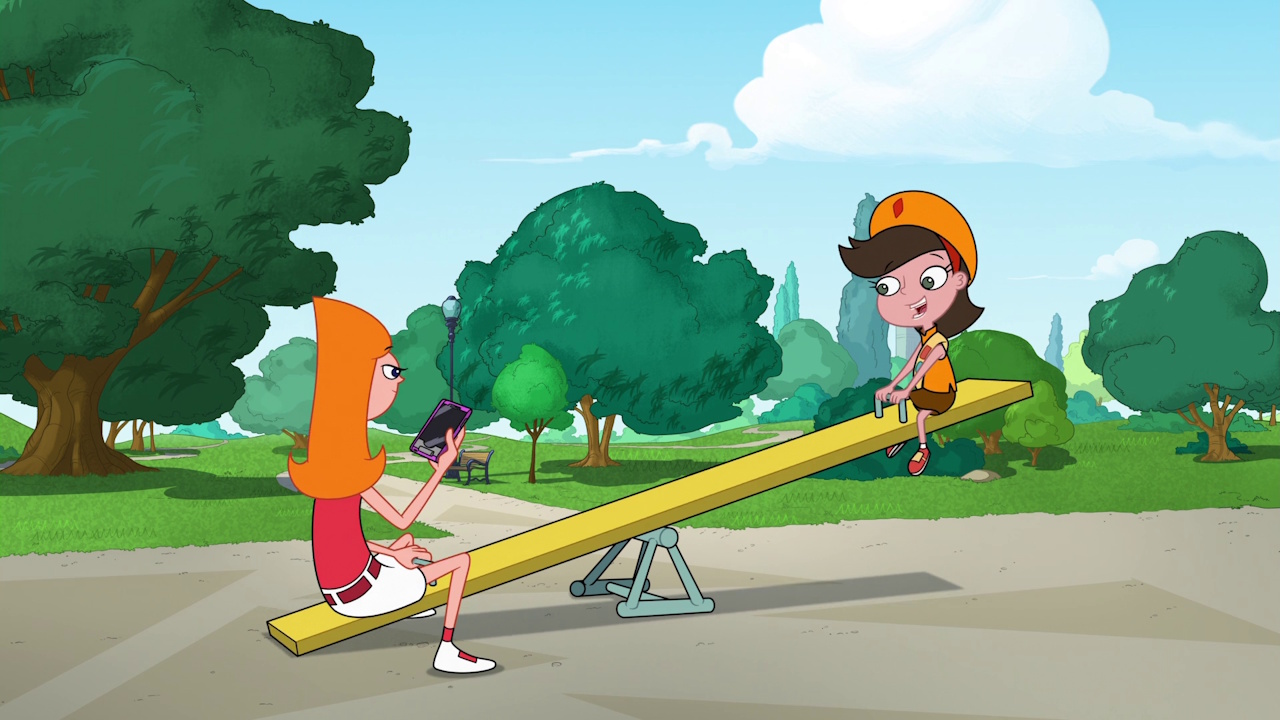
Candace and Addyson on a see-saw.

This one I genuinely liked. We got a Candace-Linda team-up story, with one of Linda’s problems being in focus for a change. It made for a really interesting change of pace, as Linda had to rely on Candace’s unusual skills to resolve her book club issue. The return of Irving, as noted above, was also incredibly welcome, and seeing Irving and Linda working together was odd but cool! It’s nice, after all this time, that Phineas and Ferb can still find new character groupings, and put different spins on its storylines. This kind of originality, quite honestly, is something I wish we’d gotten a bit more of in Season 5.

This is a bit of a rarity insofar as it’s a story without much input from either Perry and Doof or Phineas and Ferb, but I think staying laser-focused on Linda, Candace, and Irving was the right choice. Perry and Doofenshmirtz’s fight on a burrito-plane was fun, and they added a bit of levity to the story as things progressed. All in all, though, this was a great change of pace.

The Bad Old Days:

Still frame from Phineas and Ferb Season 5 showing Doof and Vanessa in the back of a car.
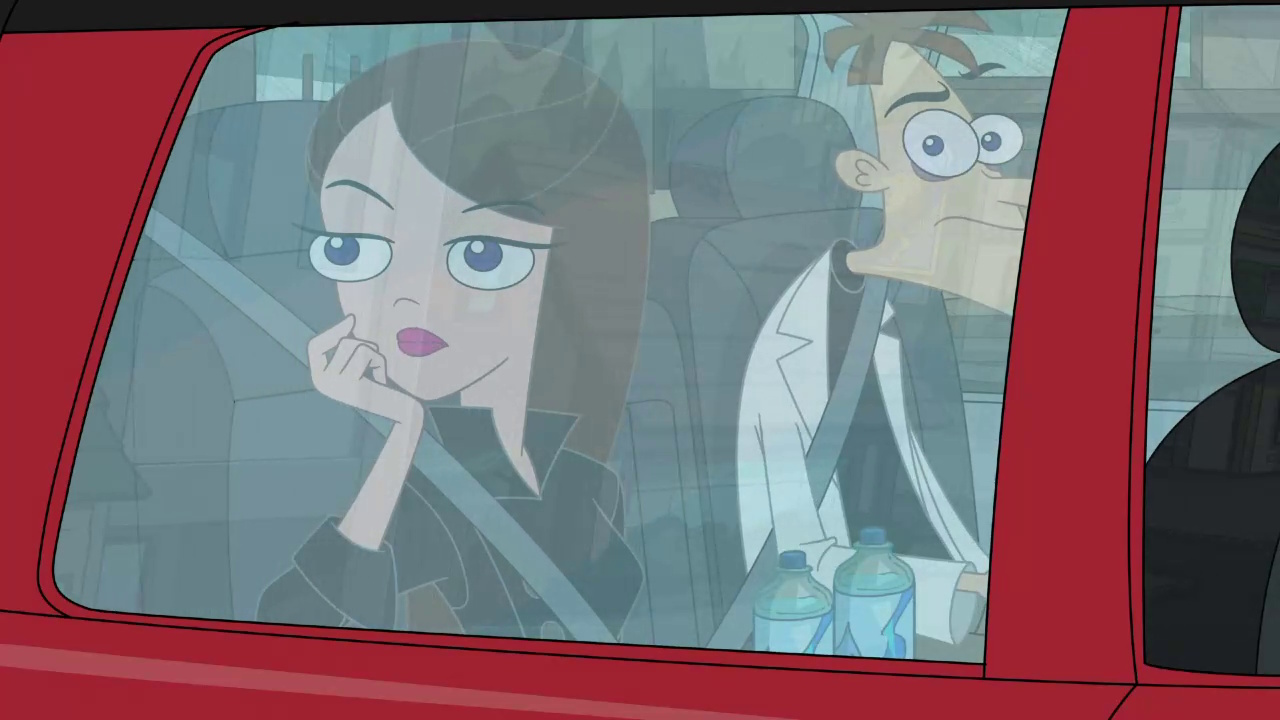
Doof and Vanessa in Drusselstein.

Any chance to visit Drusselstein with Doof is fun, but I especially liked this new take on the old country. Doofenshmirtz is left hurt and confused when he sees how his hometown has been completely redesigned and gentrified, and is no longer the primitive backwater of his tragic backstories! This side of the story also contained some rare moments with Doof and Vanessa, and his excitement at her potentially becoming a citizen showed off his best fatherly tendencies. I wish we got more with these two in Season 5.

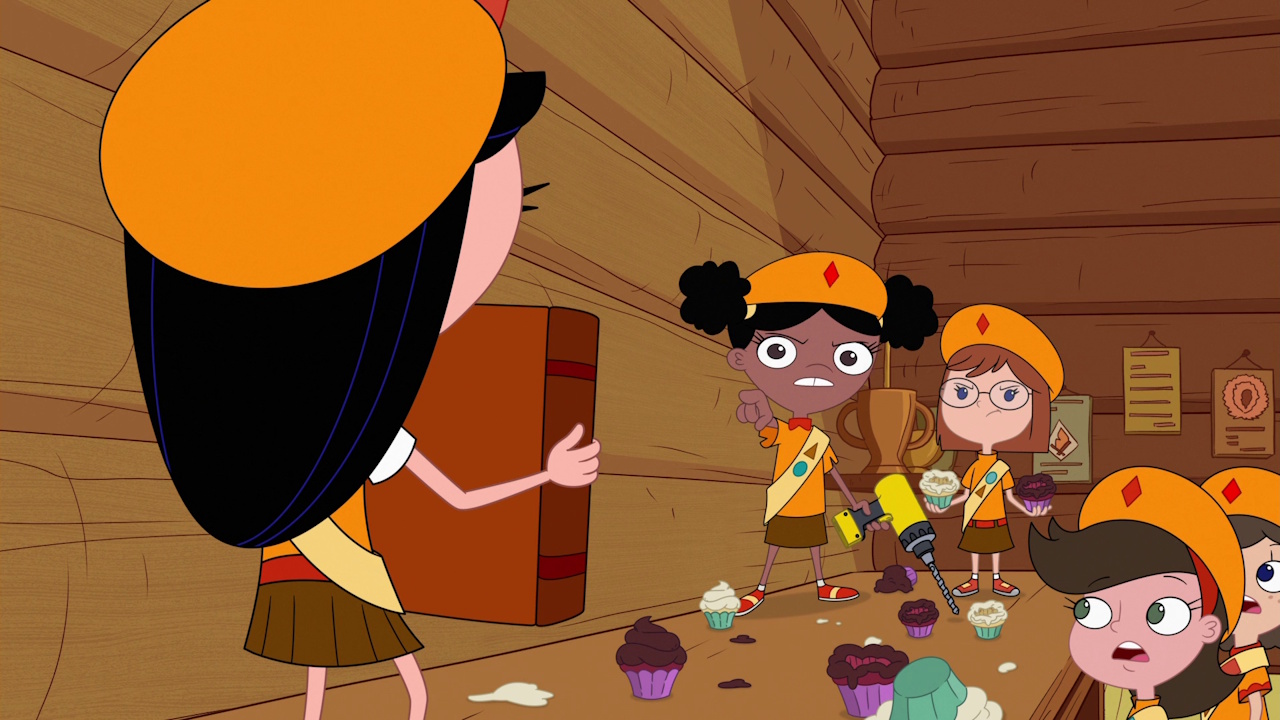
The boys’ side of things felt a little… repetitive. The giant drill was similar to something we saw right at the beginning of Season 1, and searching for either a missing ring or one of their mom’s lost possessions was also kind of samey if you remember similar escapades in Seasons 3 and 4. Nothing about it was *bad*, though, and this was really the episode’s secondary story. A great episode for Doof and a fun visit to Drusselstein, even if goings-on back in Danville weren’t quite as strong.

Mantis Fact:

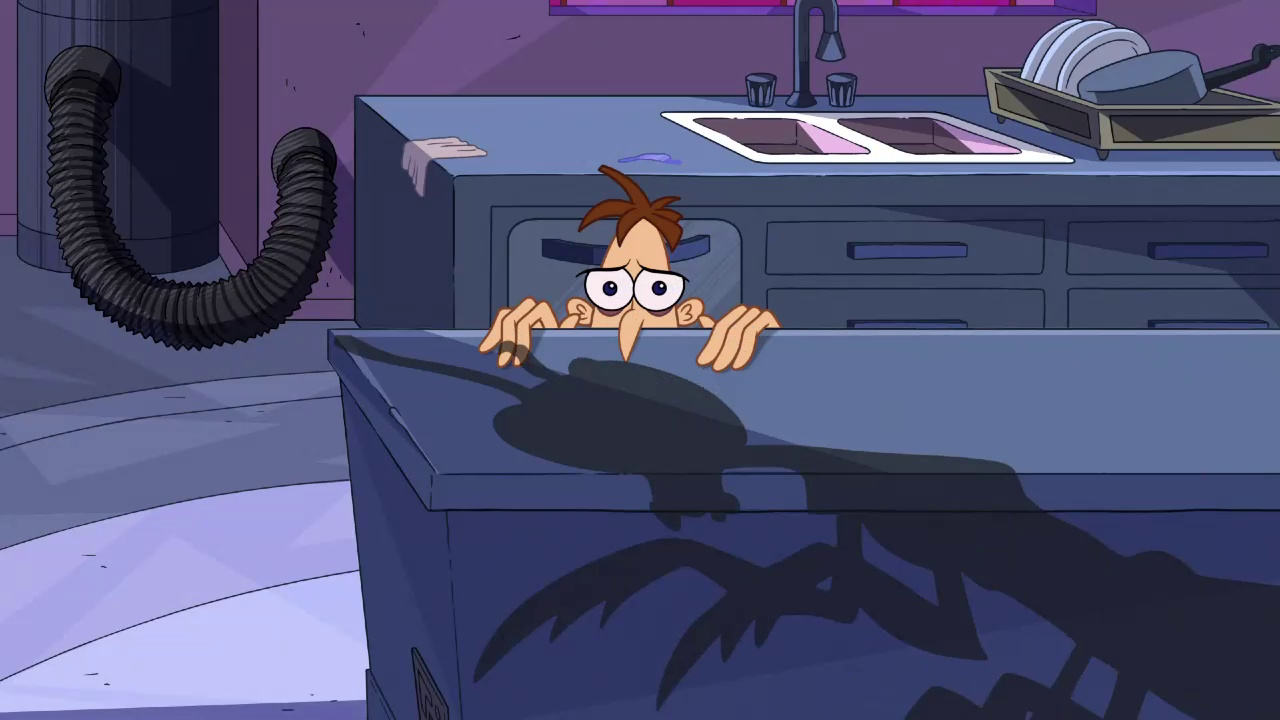
Still frame from Phineas and Ferb Season 5 showing Doof cowering from a giant praying mantis.
Jurassic Park vibes, anyone?

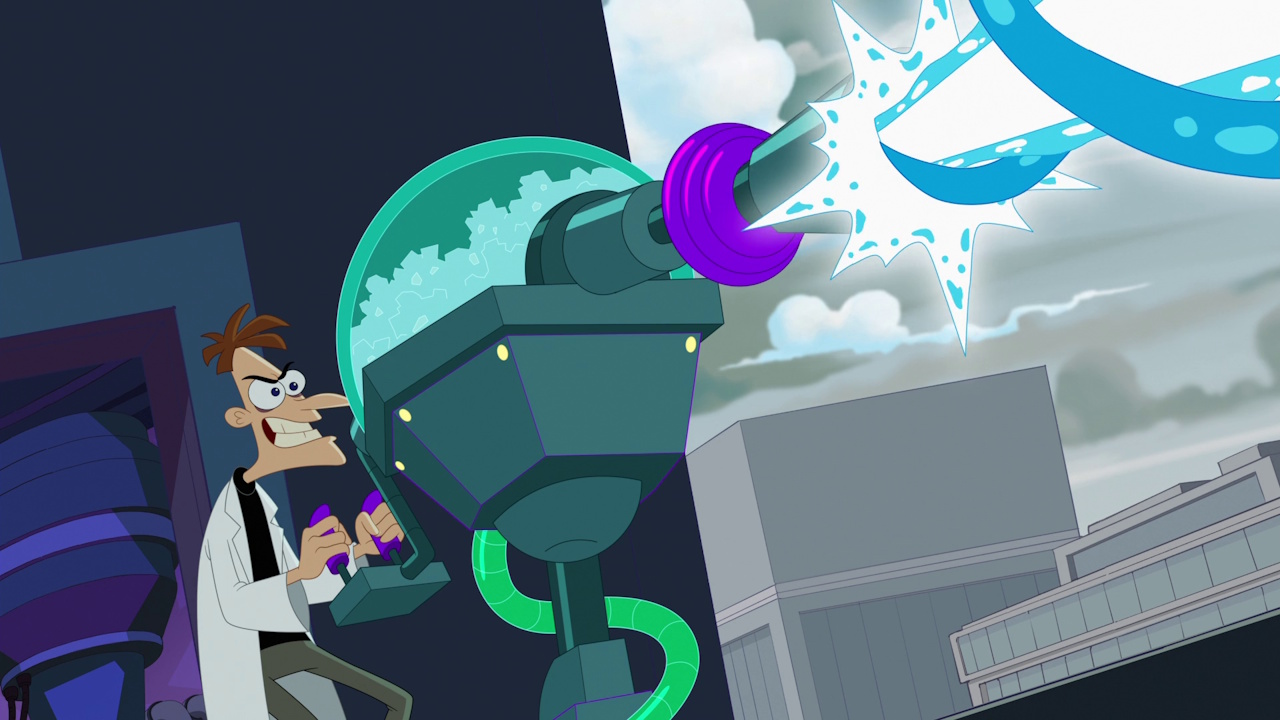
Mantis Fact felt like a classic Phineas and Ferb episode from the show’s original run. Candace wants to bust the boys for their over-the-top creation, while Perry has to investigate what’s going on with Doofenshmirtz’s latest inator. The twist was that Perry and Doof ended up having to work together to shut down his inator, which had created a group of giant, deadly praying mantises. I don’t think the core idea of constantly sharing “mantis facts” added much to the story, though, and the delivery felt a bit grating as the episode wore on.

The camouflaged bird sequence gave me a few good laughs near the end, and I felt Mantis Fact was a solid mid-season offering that harkened back to the show’s earlier seasons. I mean that as a compliment, and it’s an episode I’ll happily return to and re-watch in the future.

The Nightmare-Inator:

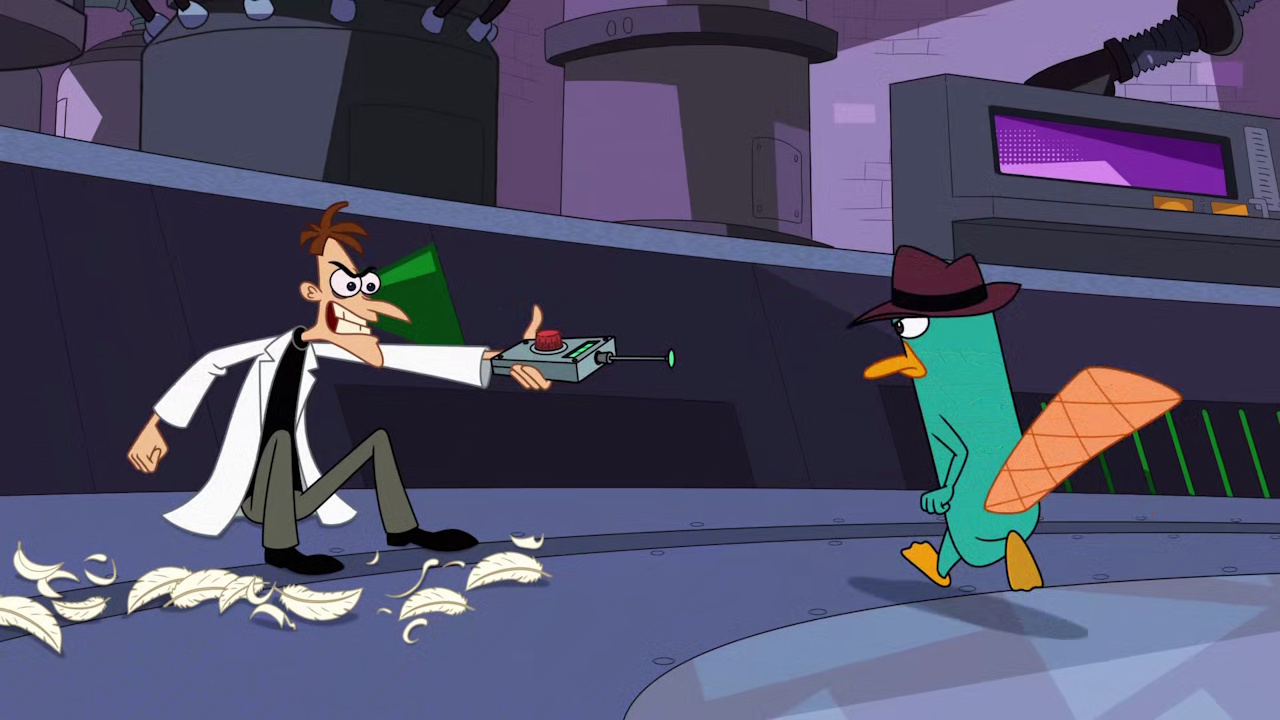
Still frame from Phineas and Ferb Season 5 showing Doof and Perry.
Doof and Perry do battle.

This episode felt like it was harkening back to Season 3 or 4, whichever one had that Halloween special! There were some fun sequences, as Doof’s inator seems to malfunction, causing nightmares to become real. Vanessa got a great up-tempo song in a sequence that drew on the likes of Evil Dead and other horror titles for inspiration. We also got a callback to the haunted/evil Ducky Momo, as well as Vanessa’s relationship with Candace’s favourite kids’ show.

This was another story with only one main storyline, and I think keeping Doof and Perry in focus worked pretty well. It allowed for a greater variety of dream and nightmare sequences, including some pretty random and surreal imagery, which is always fun. I like the running joke of Ferb’s mind being a total enigma, and Doof’s apparent phobia of a giant, out-of-control Perry. Not a totally unique idea, perhaps, but solidly executed overall, and with a great song.

Doof in Retrograde:

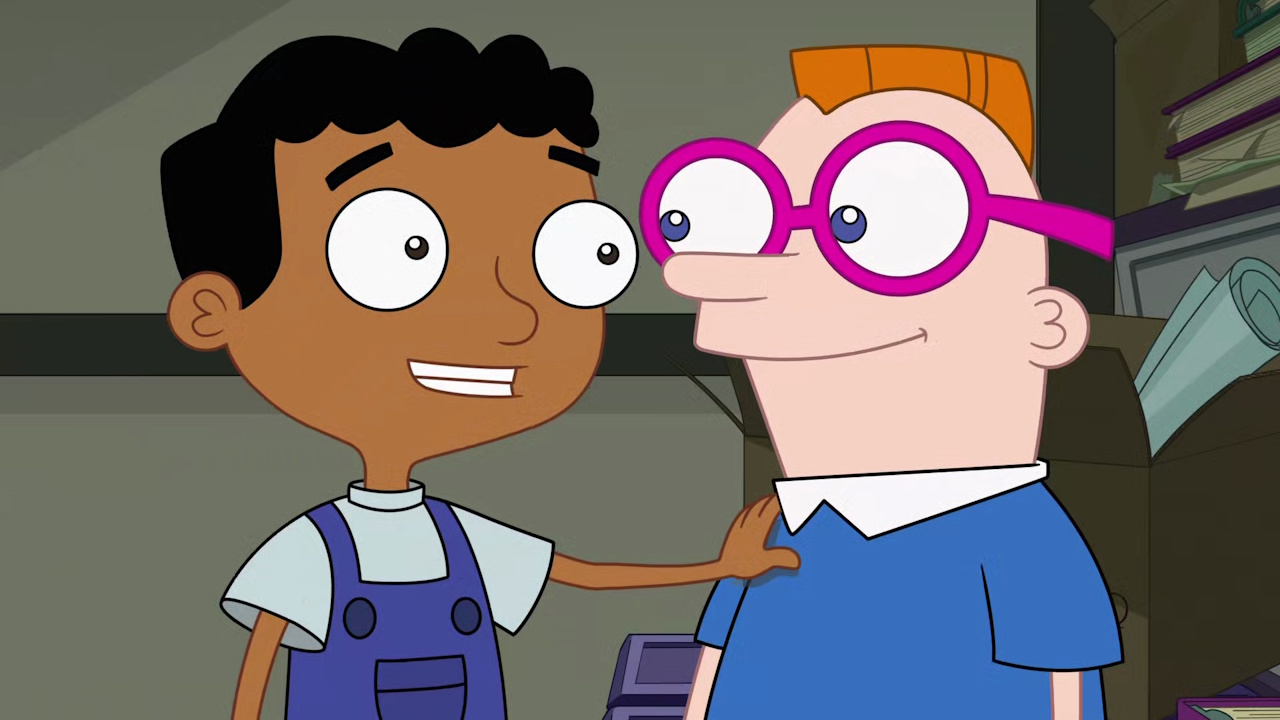
Still frame from Phineas and Ferb Season 5 showing Baljeet and Irving.
Baljeet and Irving: an unlikely duo!

I had to re-watch this one to remember what happened; nothing about the episode left much of an impression. The whole “solar system” thing felt way too samey after the boys made something comparable back in Season 4, and Doof’s motivation for wanting to be the centre of attention didn’t really ring true for me. There were a couple of fun moments, like Carl moving Perry’s chair when he tried to enter his lair, but a lacklustre song kind of capped off a really uninteresting Doof and Perry story for me.

On the flip side, it was fun to get some interaction between Baljeet and Irving, and I liked how this storyline gave Baljeet more of a main role. The two “nerdy” characters worked well together (surprise, surprise!), and it was just a fun change of pace for Baljeet. Irving got a chance to live out his “being like Phineas and Ferb” fantasy, and we got a pretty classic ending to the story with Doof’s inator destroying the kids’ inventions.

Bend It Like Doof:

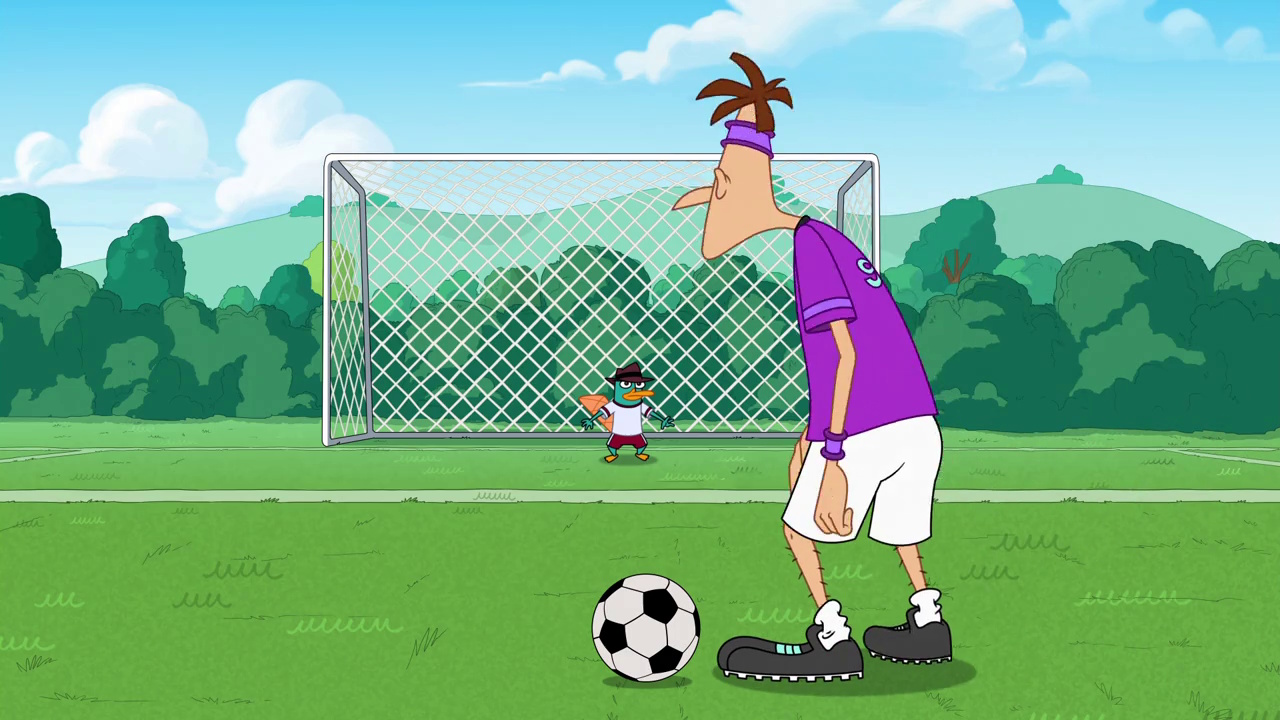
Still frame from Phineas and Ferb Season 5 showing Doofenshmirtz and Perry playing football (soccer).
The match of the century?

Bend It Like Doof had a pretty weak setup, and at first I thought it was just going to be a vehicle for a couple of famous guest-stars. In the end, neither Megan Rapinoe nor Cristo Fernández really got all that many lines, so I’m just not sure what the intention was here! I like football (or soccer, if you prefer) as much as the next person, but Phineas and Ferb already did a pretty solid episode themed around that sport back in Season 3’s My Fair Goalie. This episode wasn’t *bad* per se, but it lacked originality, and the central Doof-Monogram conflict has been done better – and more believably – elsewhere.

It was nice to see most of the members of L.O.V.E.M.U.F.F.I.N again, albeit that most of them didn’t have major roles, and to spend a bit more time than usual with Major Monogram. It was also weird (and kind of funny) to get some continuity with the episode Tropey McTropeface, through the news reporter-turned-prison escapee Dink Winkerson. Not a great episode, but there are some highlights and funny moments.

Dooflicated:

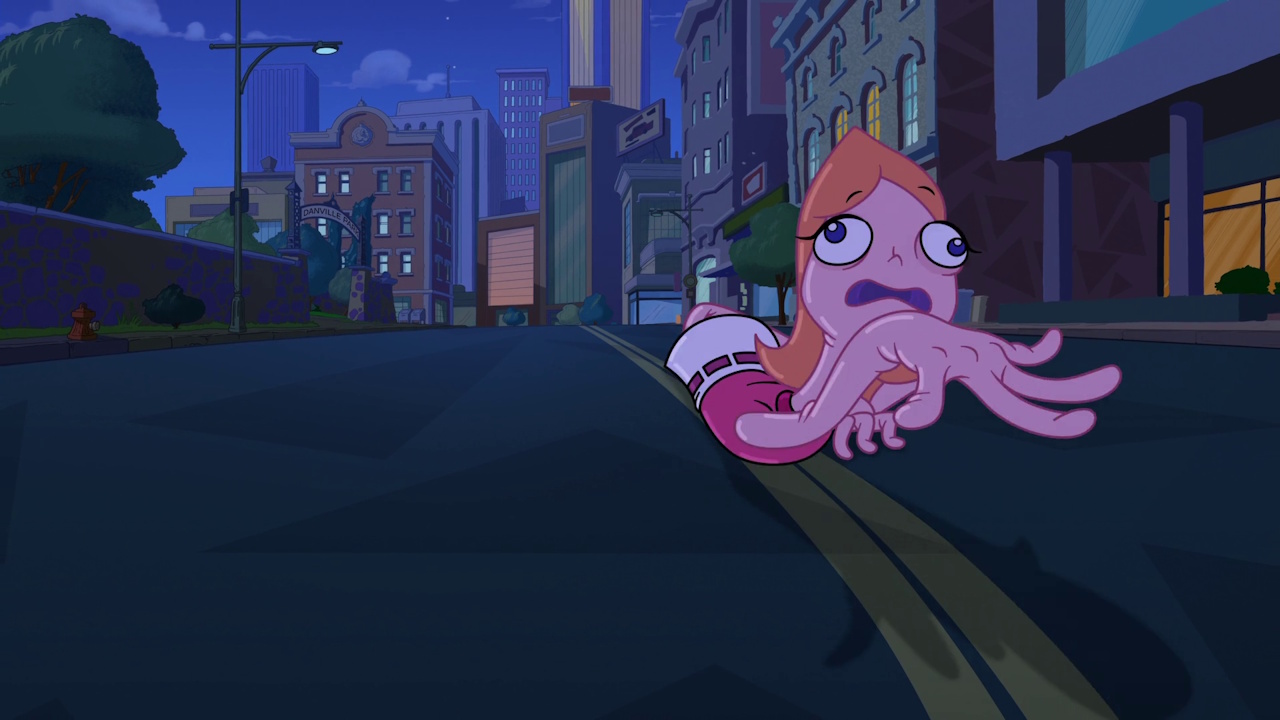
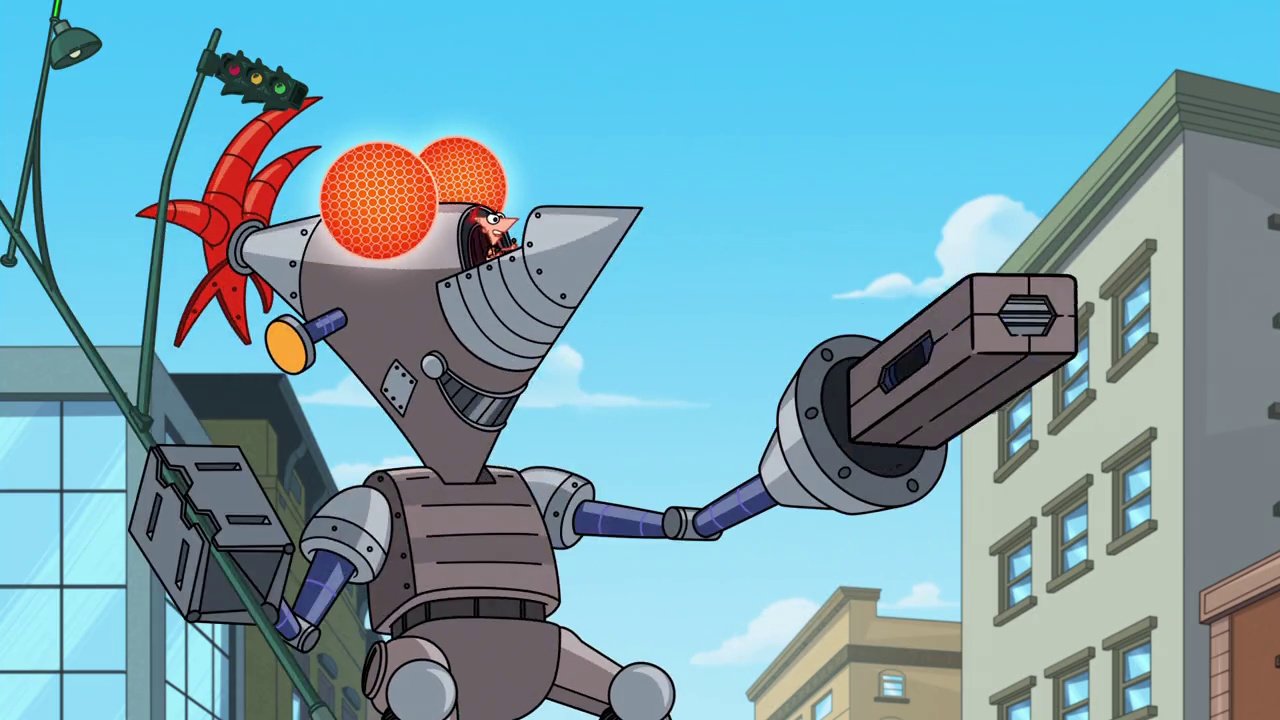
Still frame from Phineas and Ferb Season 5 showing a giant Phineas robot.
A giant Phineas robot.

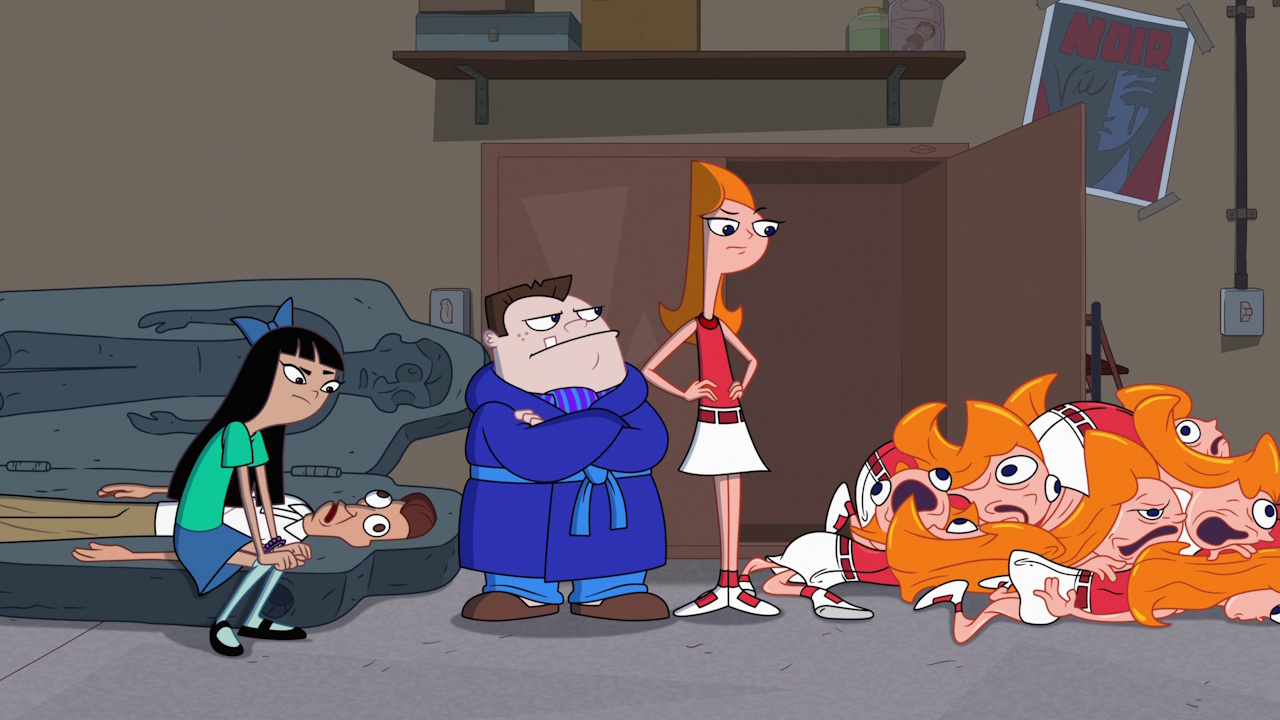
This was a fun idea, and even though it leans a bit too heavily on the “doesn’t Doofenshmirtz have weird mannerisms” trope, I think it was well-executed, too. Seeing the boys take their inventions in an overtly evil direction – albeit in the name of fun – was a blast, and Candace being the protagonist for once, having to stop them when they got out of control, felt like something fun and different.

Dooflicated also gave us one of the rare moments in Season 5 where Doof and Vanessa have a meaningful conversation. I liked Vanessa’s totally blasé attitude to name-dropping a famous relative on her college application; it seems in-keeping for her character while also being a subtle comment on nepotism in the United States. I still miss the idea of Vanessa working for the O.W.C.A. in some capacity, and I think it’s a shame how that idea wasn’t picked up more this time. But a nod to her college applications was a fun way to go, too.

Space Adventure:

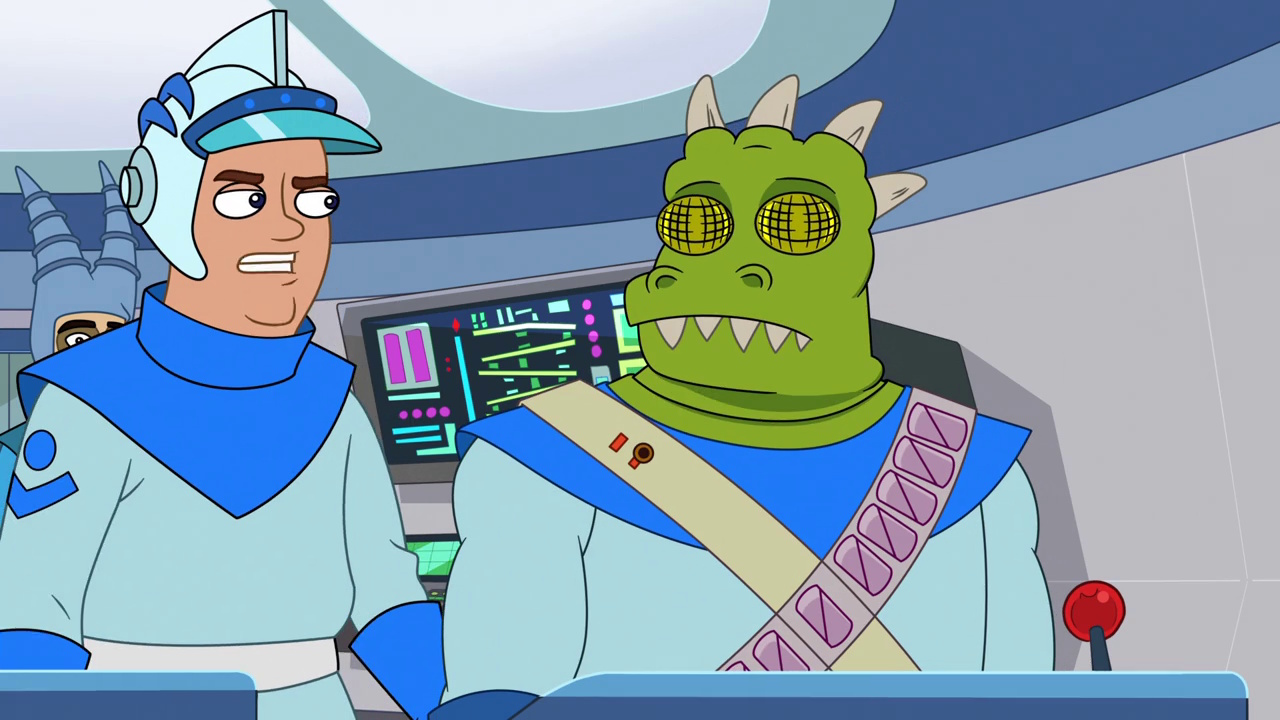
I’m a big Star Trek fan (if you couldn’t tell already), so Space Adventure was almost tailor-made for me! The show-within-a-show doesn’t just parody Star Trek, of course, and there were references or hints at other sci-fi properties, too. Although it was undeniably silly, I really liked the end result, and it’s no exaggeration to say that I think I laughed the most at Space Adventure’s parody than I did at any other episode in the season!

Space Adventure was, unsurprisingly, also a solid episode for Buford and Baljeet. I felt it harkened back to stories like Bully Bromance Breakup, while also reminding me a little of Excali-Ferb – at least in terms of its core premise. It was bold to frame this story around *only* Buford and Baljeet, with Phineas, Ferb, Candace, Doof, and Perry all absent. It was arguably even bolder to then have the bulk of the story just be this Star Trek-themed show-within-a-show! But for me at least, Space Adventure is one of the highlights of the season.

Droogenfest:

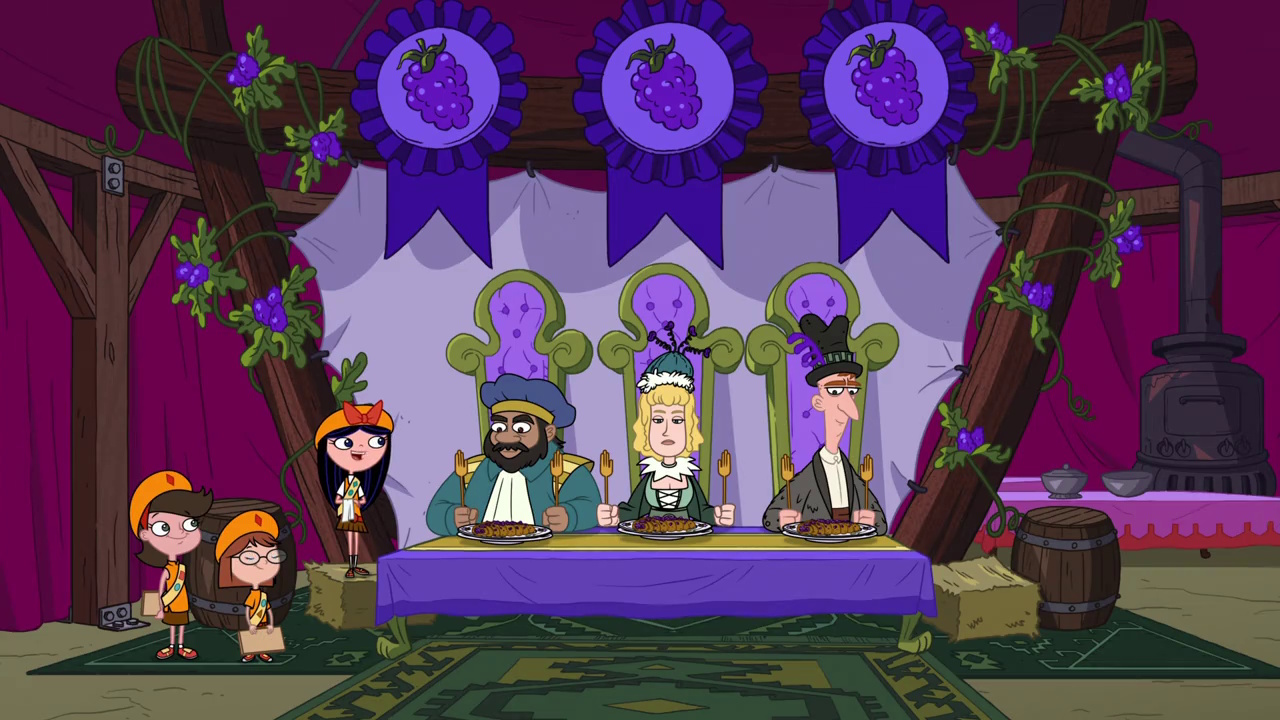
Still frame from Phineas and Ferb Season 5 showing the titular Droogenfest.
The Fireside Girls at the festival.

I like some of the ideas present in Droogenfest, but the core drama of Danville somehow being *desperate* for a trade deal with the Drusselstein delegation didn’t really work, even in light of Gimmelstump’s new-look presentation from earlier in the season! Setting that overblown nitpick aside, though, Droogenfest comes across like another classic story. The kids are participating in a big local event, Doof’s attempt to ruin his brother’s reputation gets in the way, and they end up having to work together to put things right.

The callback to Candace Against The Universe – where Doofenshmirtz and Isabella last interacted with each other – was a fun addition, and a way to keep the film somewhat relevant. Little touches like that – when not overwhelming a story – help the world of Phineas and Ferb feel connected, so I appreciated that. And it was neat to get another little addition to Drusselstinian culture and history. All in all, a pretty solid offering.

Doofercise:

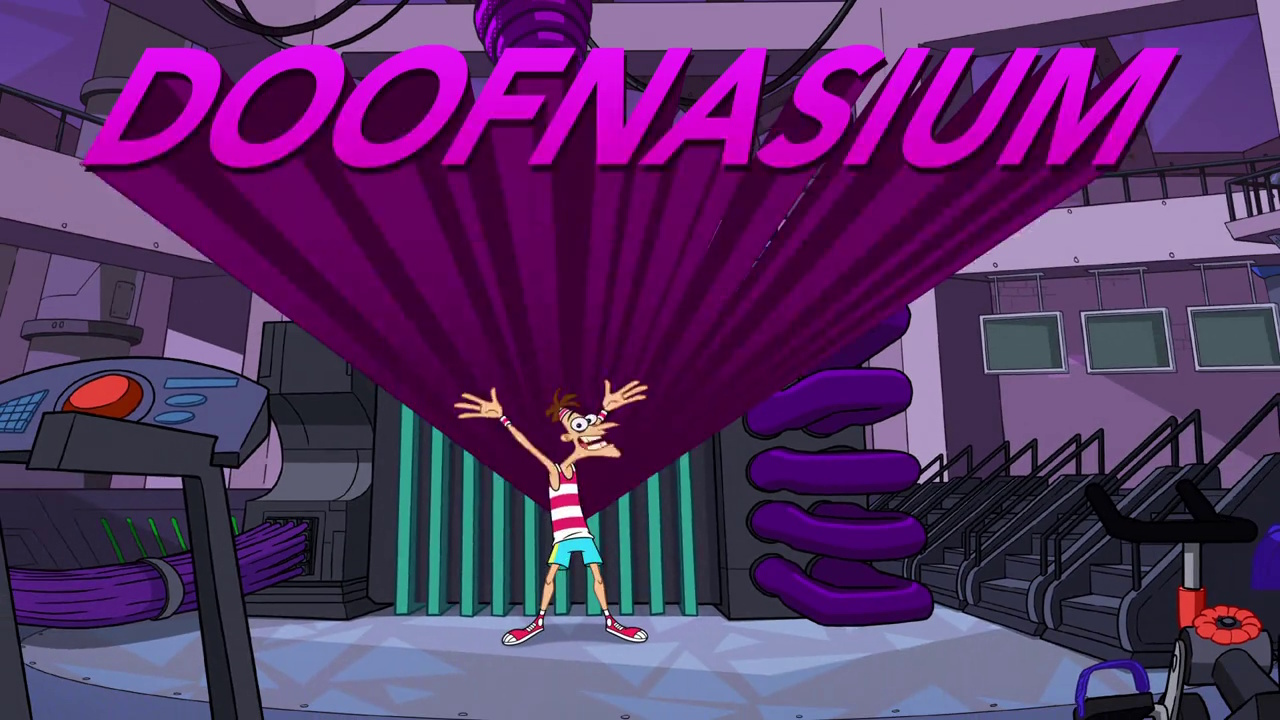
Still frame from Phineas and Ferb Season 5 showing Doof's gym advertisement.
Join the Doofnasium!

Doofenshmirtz gets the idea to turn exercise into power for his inators and opens a free gym. I actually weirdly kinda like this premise, and Doof and Norm make for really fun exercise gurus. The episode starts off slow, but quickly builds up to Doof’s gymnasium idea, with even Vanessa getting roped in when he makes one of those dodgy low-budget local TV commercials! That was a particularly fun sequence. Perry’s idea to overload the inator was a bit obvious, perhaps, but it worked well to bring this side of the story to a conclusion.

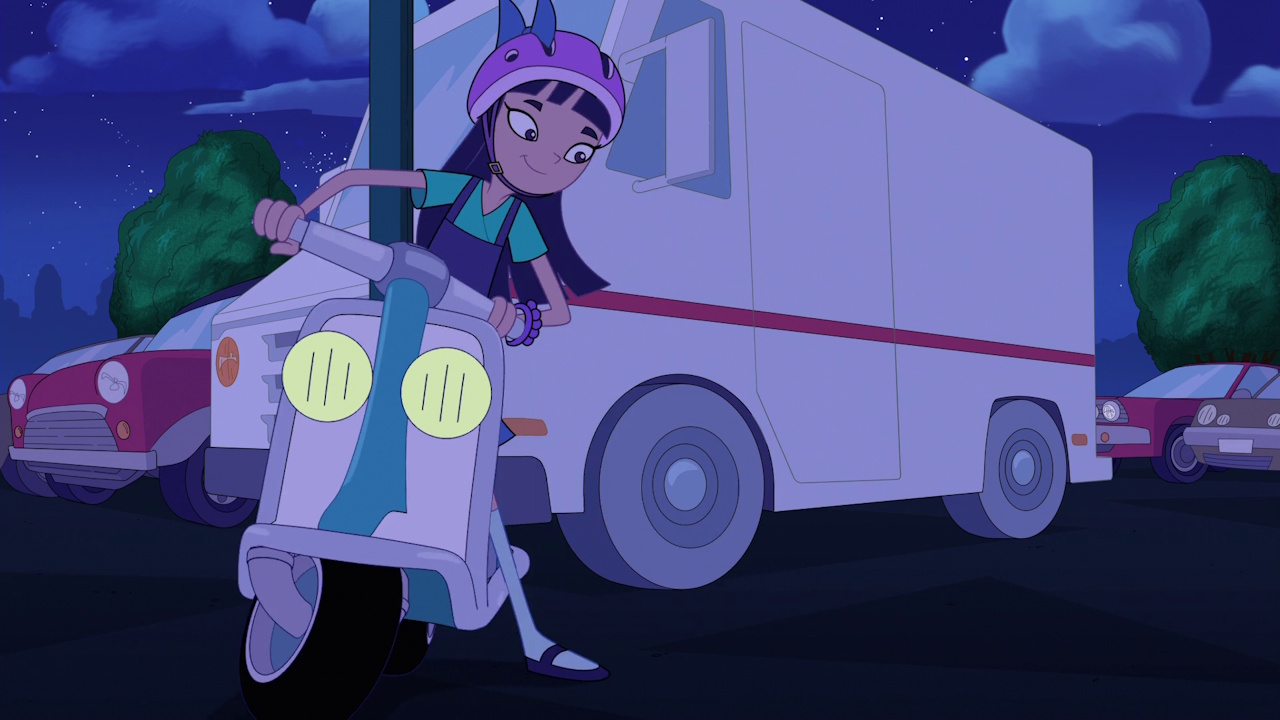
Candace and Jeremy’s date gets interrupted by the boys’ land-boat. The visual of the boat was pretty neat, and I liked the way it looked. As I said above, we didn’t get a ton of Jeremy and Candace together, so this date – before its interruption – was nice to see. The chase through the city was also pretty exciting. Another episode that could’ve been from an earlier season, really – which I mean as a compliment.

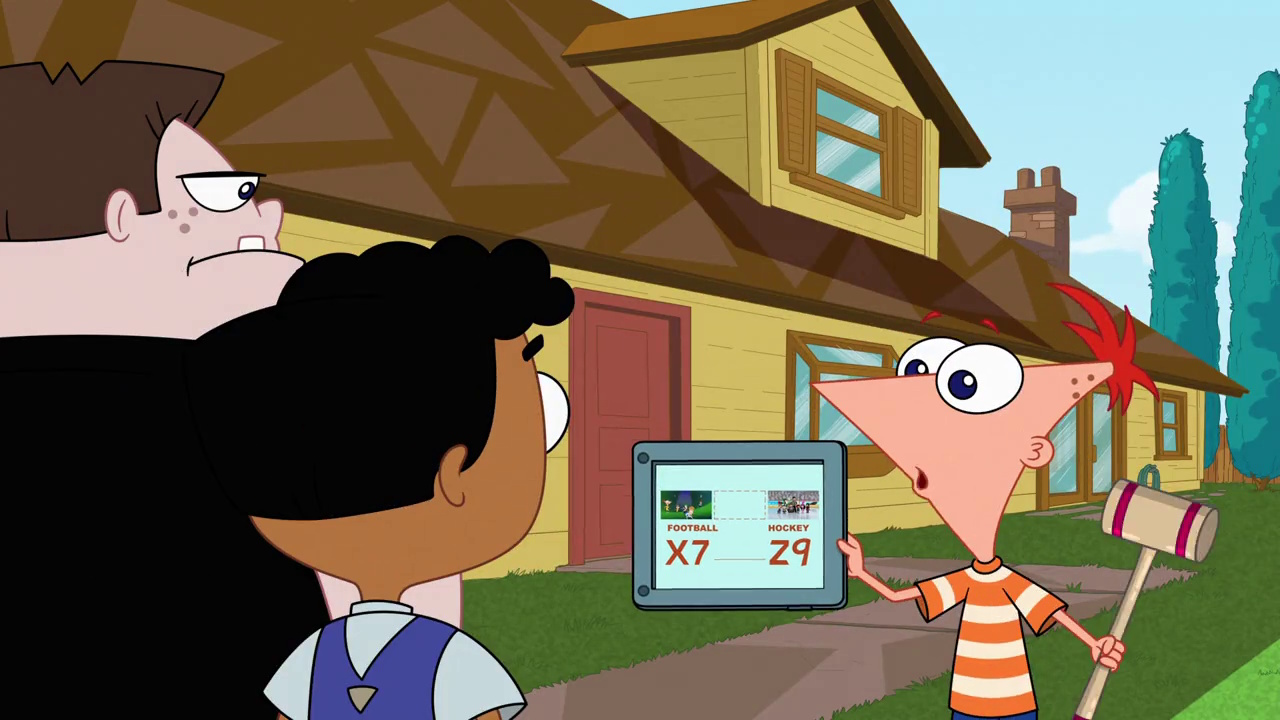
Croquet Y-8:

Still frame from Phineas and Ferb Season 5 showing Phineas explaining his new game.
Oh look, it’s that throwaway line from Season 4… as a full episode. Yay.

Remember in the New Year episode, when Baljeet asked why the boys were going straight from Football X-7 to Hockey Z-9? Yeah. This is another one-liner that, for some reason, has been stretched beyond breaking point to form the core of an entire story. And I’m sorry, but there was just no need. The “we’re saving that for croquet” comment in Season 4 was funny, but it was clearly nothing more than a joke – the humour coming from the fact that croquet is not the kind of sport you could really “soup up”, for want of a better term. The end result even borrowed from the boys’ bowling ball invention back in Season 1, and it just didn’t feel like a particularly strong premise *or* a good execution of the idea.

The dilemma Perry faced, though, added stakes to his and Candace’s side of the story, and it was cute to see Candace and Jeremy following the robotic Perry duplicate around, trying to make the documentary. I didn’t feel Doof’s sheep-related invention was one of his best or most interesting ideas, but the time limit Perry had kept that side of the story largely on the rails.

Dinner Reservations:

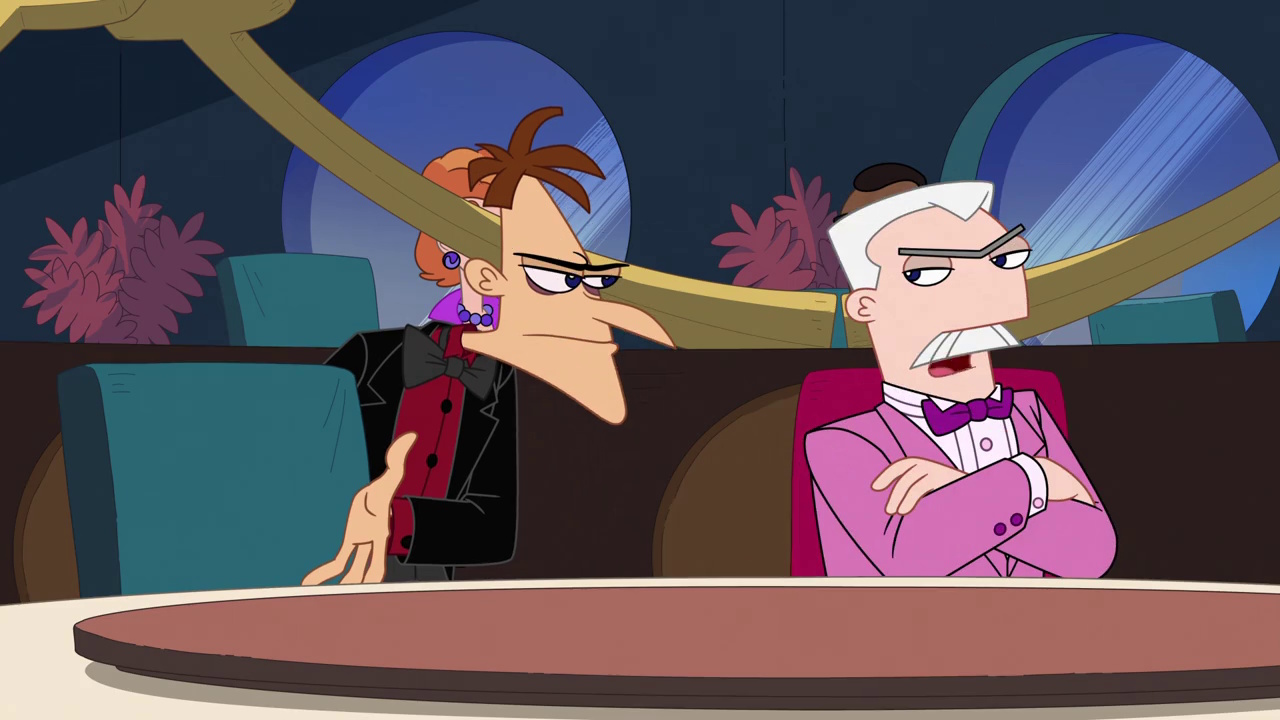
Still frame from Phineas and Ferb Season 5 showing Doof and Monogram at a restaurant.
Ah, the old sitcom cliché…

The boys’ drone light-show idea was fine, if a little underwhelming after their more impressive laser light-show in Season 4! But I liked the way it began, with Buford talking about how his family home was, apparently, just covered in Christmas lights. And the visuals at the end, with the drones making different images, worked pretty well.

However… the other side of the story was not my favourite. I can buy Monogram and Doof’s feud, though I think it fell into the fairly common kids’ show cliché of adults not knowing how to act like adults. But what I didn’t really think worked was Monty and Vanessa’s relationship. In Act Your Age, at the end of Season 4, we saw Ferb and Vanessa together as a couple in the future. And that’s a really great direction for both of them, paying off Ferb’s crush from earlier episodes while also giving Vanessa an unexpected new direction. But with that context, I just can’t get invested in Vanessa’s doomed relationship with Monty. It was great to see Monty again, and we got some pretty okay slapstick comedy out of the whole “enemies having dinner” premise. But… I think I’m over Vanessa and Monty now that the show has confirmed Vanessa’s future with Ferb. I don’t want to see her and Ferb together in the show’s present day… eww. But maybe Vanessa’s relationship with Monty should just quietly be sidelined?

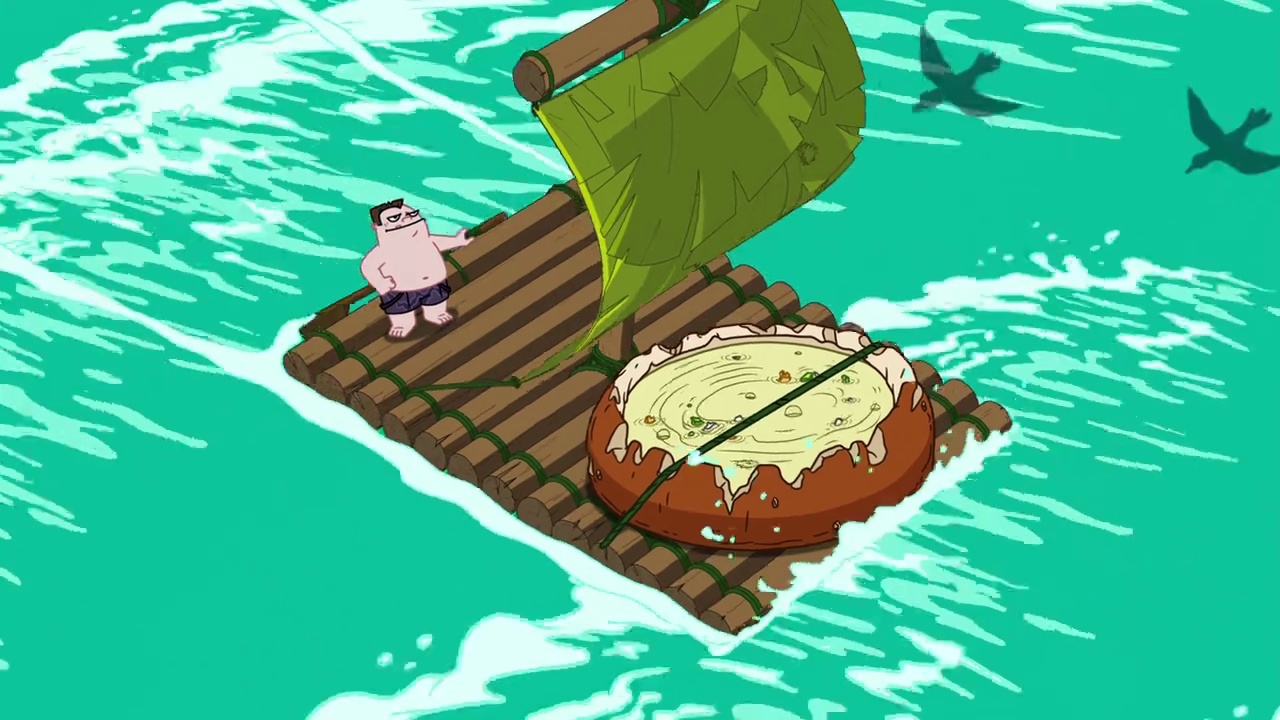
Bread Bowl Hot Tub:

Still frame from Phineas and Ferb Season 5 showing Buford on a raft.
Rafting home.

As I said above, I didn’t feel this episode was good enough to be the payoff to a season-long gag. In fact, even if it hadn’t been running all season, I’d still say this was an especially weak story. I’d actually rather that Buford’s bread bowl hot tub had remained un-made; a non-sequitur type of joke that could be brought up sometimes… just another random idea of Buford’s that the kids are clearly never going to make. Because what we got was just… not very good.

Diane Morgan, who guest-starred as the voice of the titular hot tub, is great, and it’s such a shame she was wasted on such a weird and ultimately underwhelming story. There probably was a way to write a story like this, but maybe it needed to be a feature-length story or maybe it needed other characters involved? Something went wrong, anyway, and while it’s great to see Buford getting his wish, and to get a Buford spotlight episode which picked up on various aspects of his characterisation… this wasn’t the way to do it. And the end result was one of the worst episodes of the season for me.

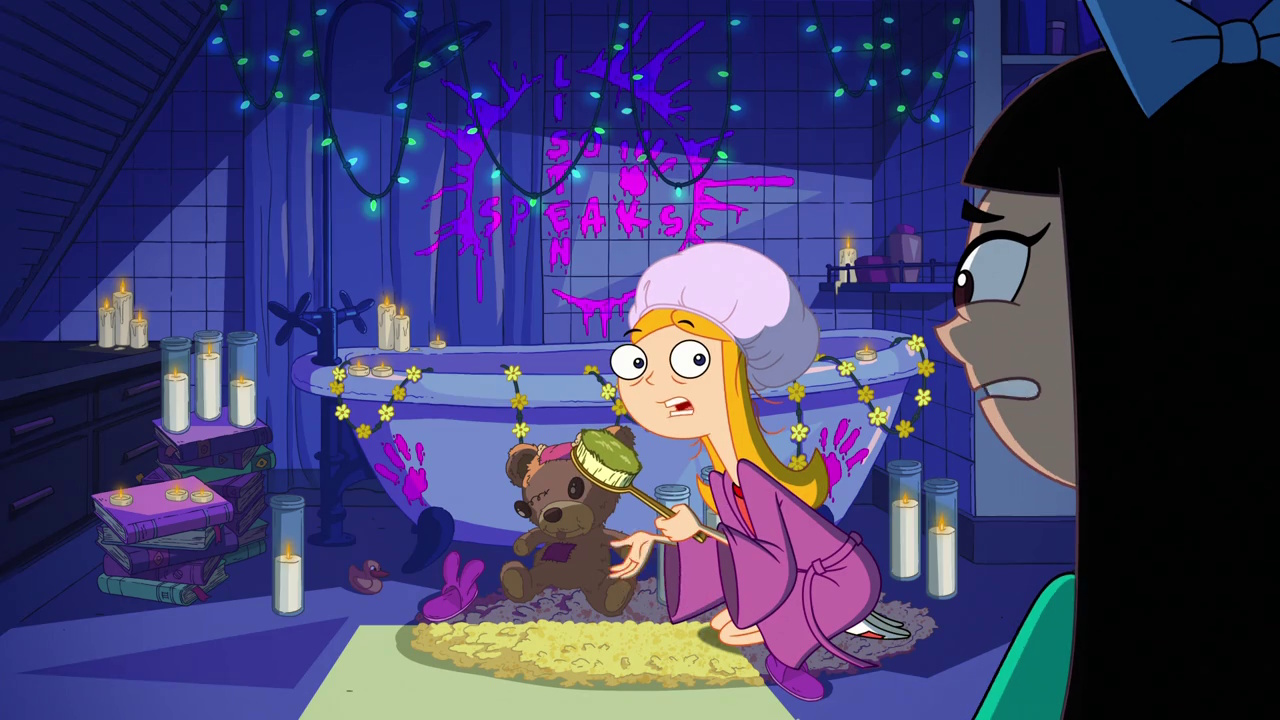
Entrance Exam:

Still frame from Phineas and Ferb Season 5 showing Candace and Stacy trying to speak with the mysterious force.
Communing with the “mysterious force…”

I’m glad that, after Perry’s lair entrances gradually disappeared from Phineas and Ferb as the show’s original run wore on, Season 5 has brought them back. They’re a classic part of the show, and many of them – like couch gags in The Simpsons – have been a ton of fun. But sometimes, when you over-explain or dig too deeply into something like this, it loses much of what makes it fun or impactful. We get it: Perry has lots of ways to access his secret lair. Did we need an entire episode all about that, drawing attention to how much of the Flynn-Fletcher household is taken up by these access points?

Where I will give Entrance Exam its dues is in Candace’s story. Hearing Monogram’s voice from below, she mistakenly believes she’s speaking with the “mysterious force” responsible for making the boys’ inventions disappear – and that typical sitcom mistaken identity cliché actually made for some genuinely funny moments. Particularly when Stacy also got involved, this side of the story was a ton of fun.

Dungeons and Dating:

Still frame from Phineas and Ferb Season 5 showing Evan.
Evan.

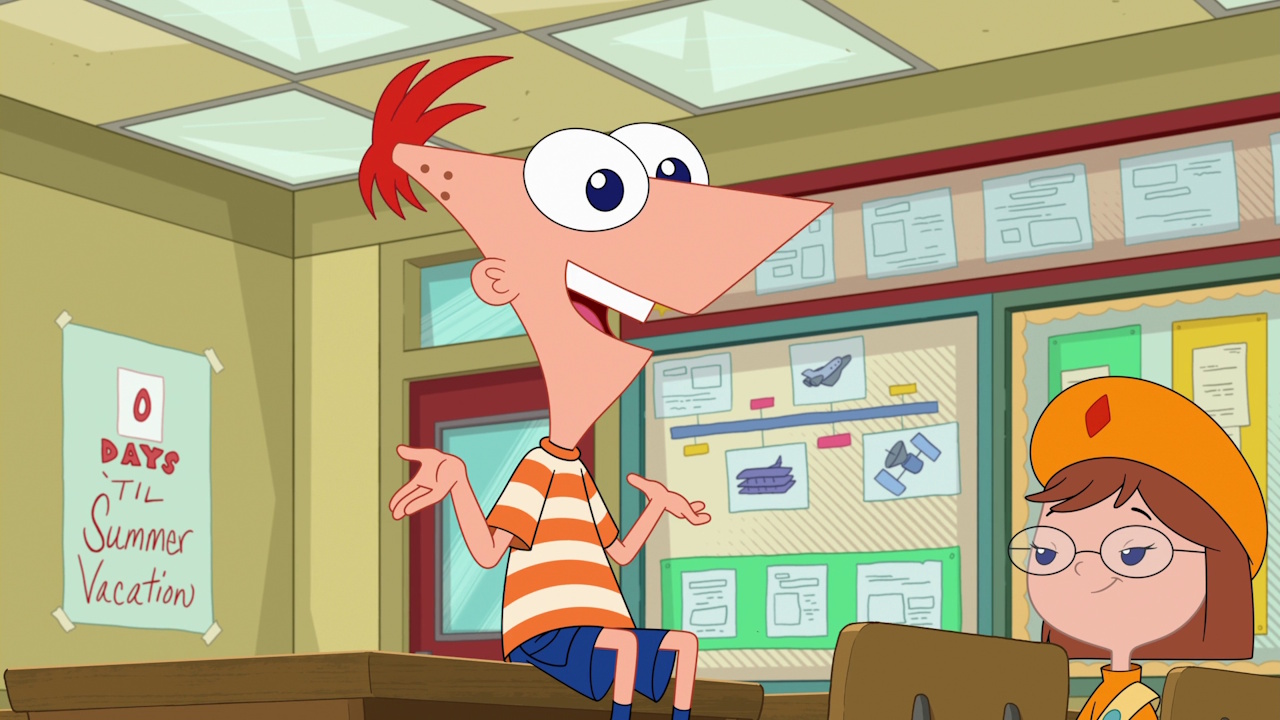
The most recent episode at time of writing. Dungeons and Dating was all about live-action roleplaying, as the boys (and their friends) set out to tell their own version of the ending to their favourite franchise when it was prematurely cancelled. I like the premise, I like the references to D&D, and we got some neat backdrops for the kids as their adventure unfolded. I think this could’ve been a good story to include someone like Irving or Albert, but both were only present in the background, which was a bit of a shame. I liked the callback to Buford being a fan of fantasy, though, and the kids had a fun adventure on this side of the story.

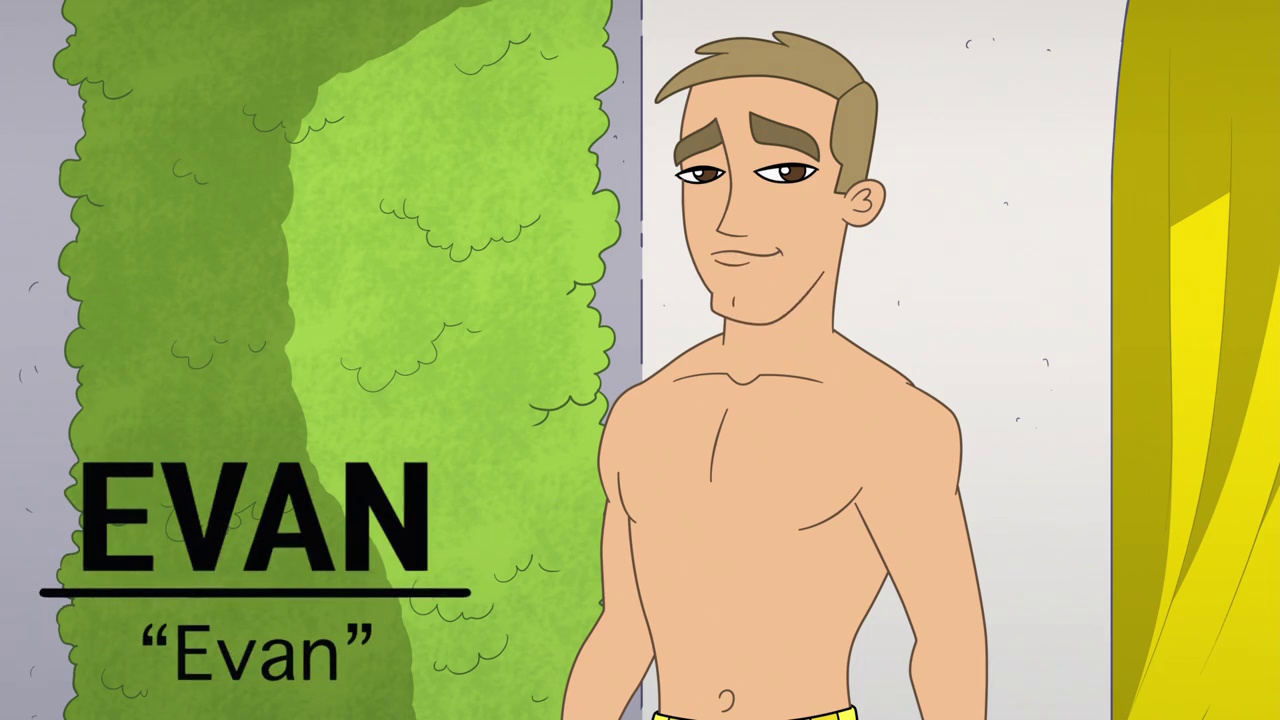
Doof’s reality show dating thing was neat, too. It was clearly a reference to the likes of The Bachelor and Love Island, and the character called Evan, who could seemingly only say his own name, was a hilarious send-up of the kinds of pretty-but-empty-headed folks who all too often appear on programmes like that! Norm and Vanessa’s banter as they watched Doof on TV was also laugh-out-loud funny for me.

So those are all the episodes so far!

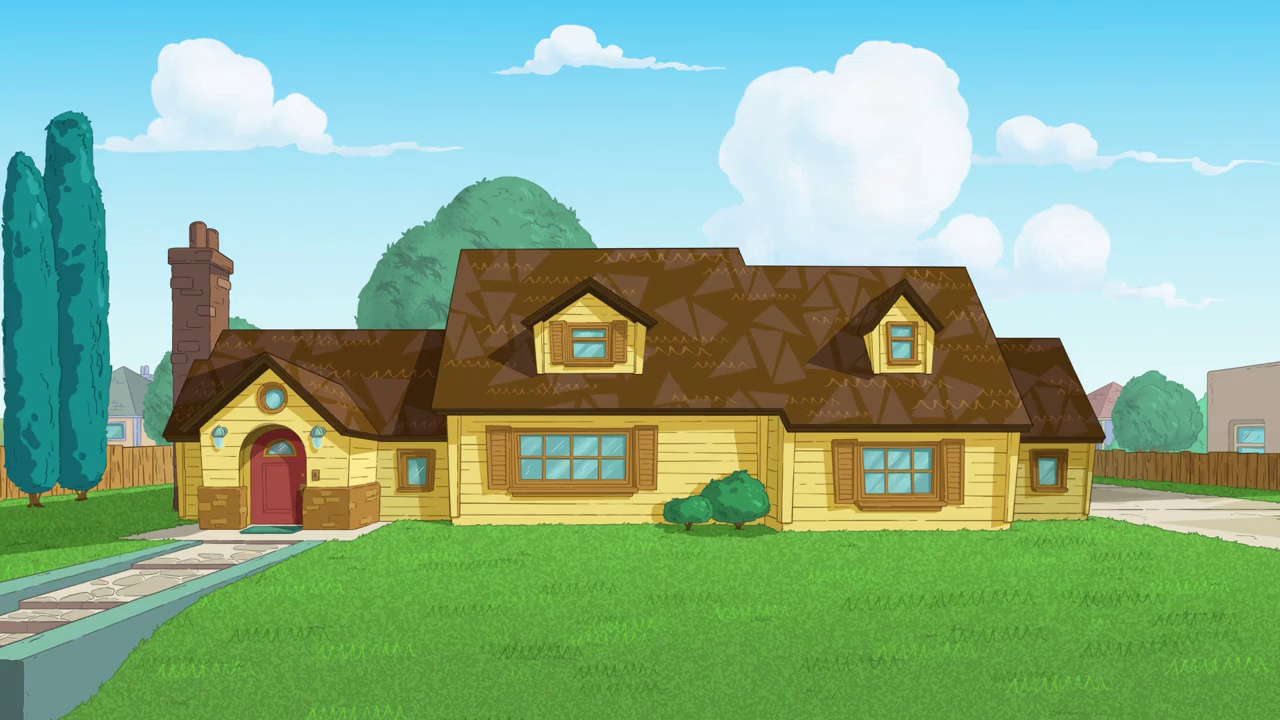
Still frame from Phineas and Ferb Season 5 showing the Flynn-Fletcher house.
The Flynn-Fletcher house.

Closer in quality to Seasons 4 than Seasons 1-3, and perhaps a bit of a dip compared to the first half of the season. But there are still some funny moments in practically every episode, and some novel and interesting story ideas which go a long way to justifying Phineas and Ferb’s resurrection after a decade-long break. I will gladly watch these episodes again (and again), and I’m sure I’ll enjoy them all the more when I’m not taking notes for my review or looking for things to pick on!

There are four episodes left in Season 5, and then we still have Season 6 to come. I’m hoping for some kind of special episode or feature-length outing in January to round out the season – but even if we don’t get that, I’m sure I’ll be satisfied with more adventures in Danville with Phineas, Ferb, Candace, Perry, Doof, and the rest of the gang.

I hope this has been interesting. Please remember that all of this is subjective! And be sure to join me in January or February when I’ll write up my thoughts on those final episodes, as well as perhaps talk a little bit more about the season as a whole. If you missed it earlier in the year, you can check out my review of the first part of Season 5 by clicking or tapping here. That’s all for now, so… Trekking with Dennis is out! Peace!


Phineas and Ferb Season 5 is currently airing on the Disney Channel, with some episodes also streaming on Disney+. Other episodes will join Disney+ in January 2026. Phineas and Ferb is the copyright of Disney Television Animation and The Walt Disney Company. This review contains the thoughts and opinions of one person only and is not intended to cause any offence.

Alien: Earth – Season 1 Review

An Alien-themed spoiler warning graphic.

Spoiler Warning: Beware spoilers for Alien: Earth and other films in the Alien series.

The original Alien film (the one from 1979) is one of my absolute favourite sci-fi/horror titles. The claustrophobic atmosphere, the masterful way director Ridley Scott built up the danger and tension, and of course, the titular alien itself, were all absolutely incredible. The film is a classic of cinema – but that’s kind of where my attachment to Alien as a franchise ended… until now.

I liked Aliens, but not as much as the first film. And subsequent entries in the franchise – in my subjective opinion, of course – got progressively less interesting. None of them were out-and-out bad – at least, none that I’ve seen – but I really started to get the sense that Alien should’ve been a one-off; the Xenomorph just felt like a one-trick pony. And I was content to leave Alien there, revisiting the first film for occasional viewings every once in a while, but without really broadening my exploration of this world. I haven’t seen Prometheus or Alien: Covenant, and while I’m pretty sure I watched Alien Versus Predator, I genuinely can’t remember a thing about it.

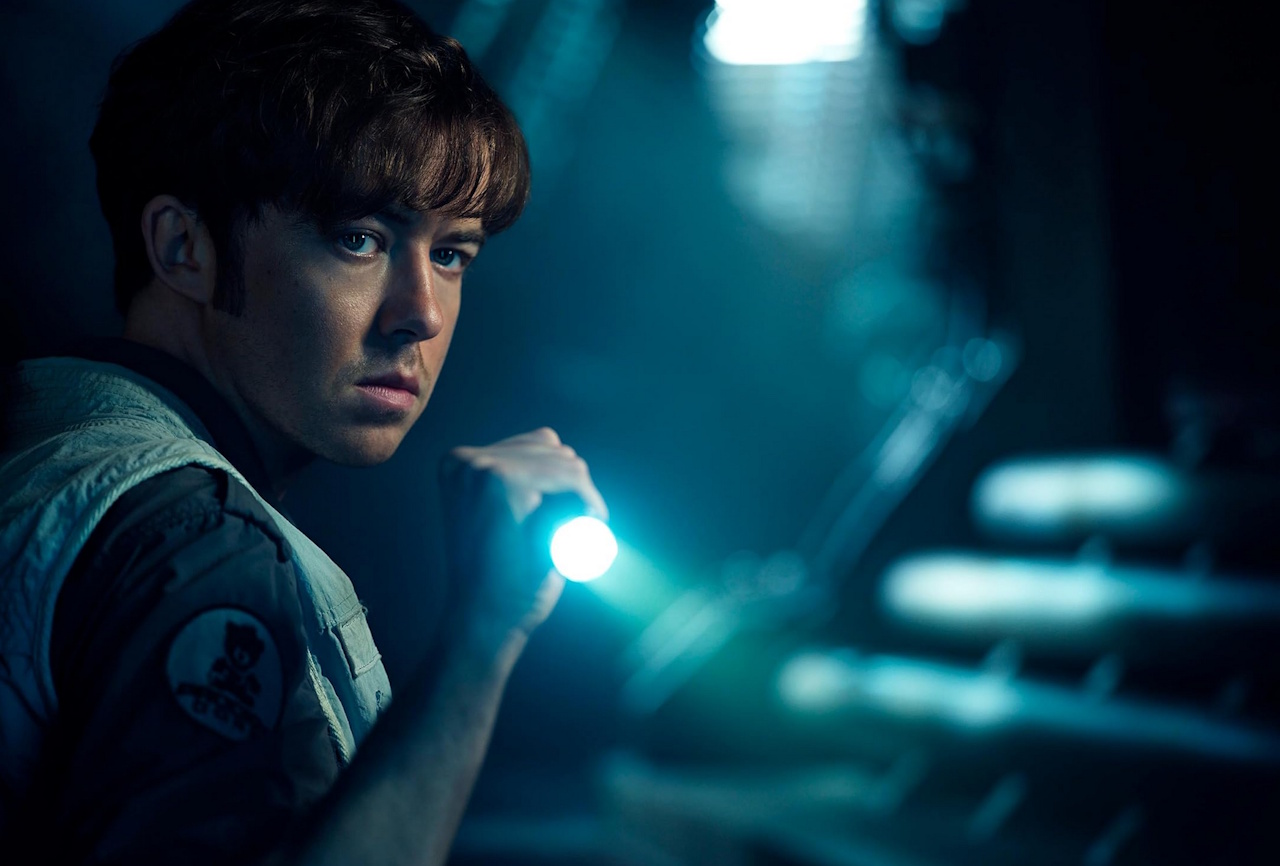
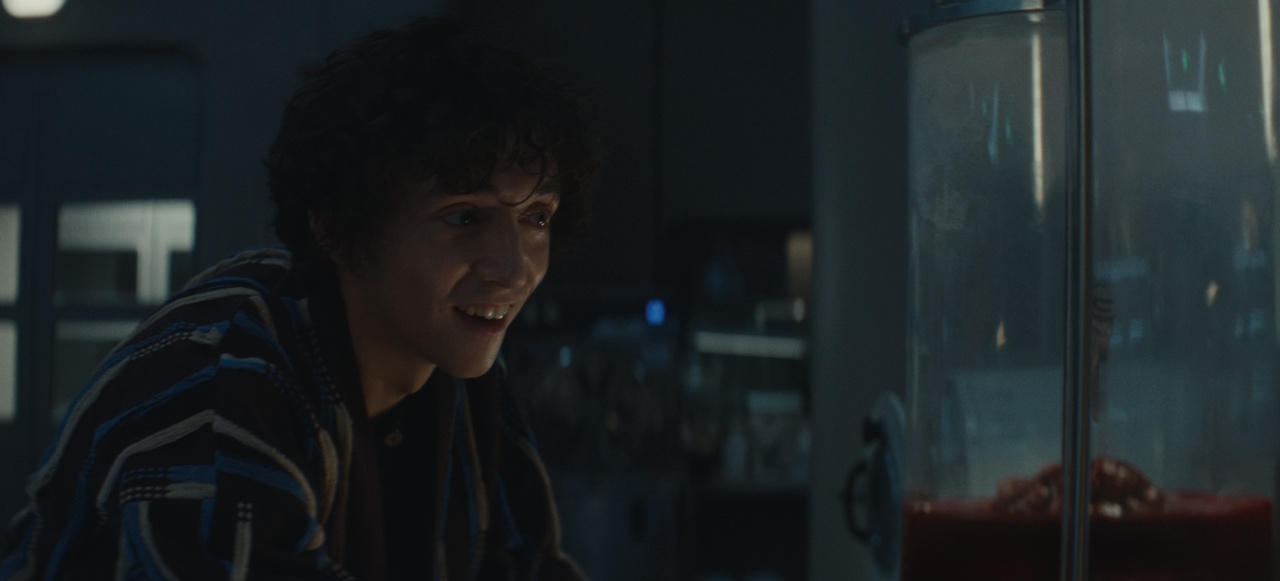
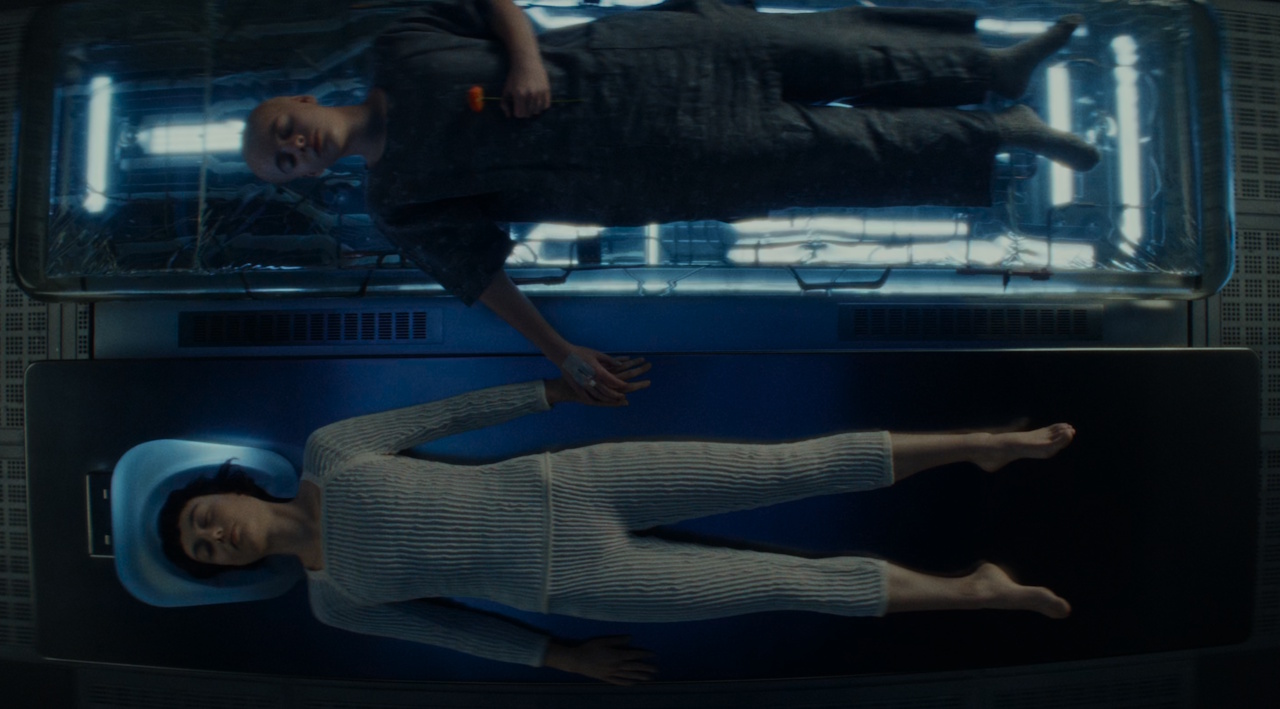
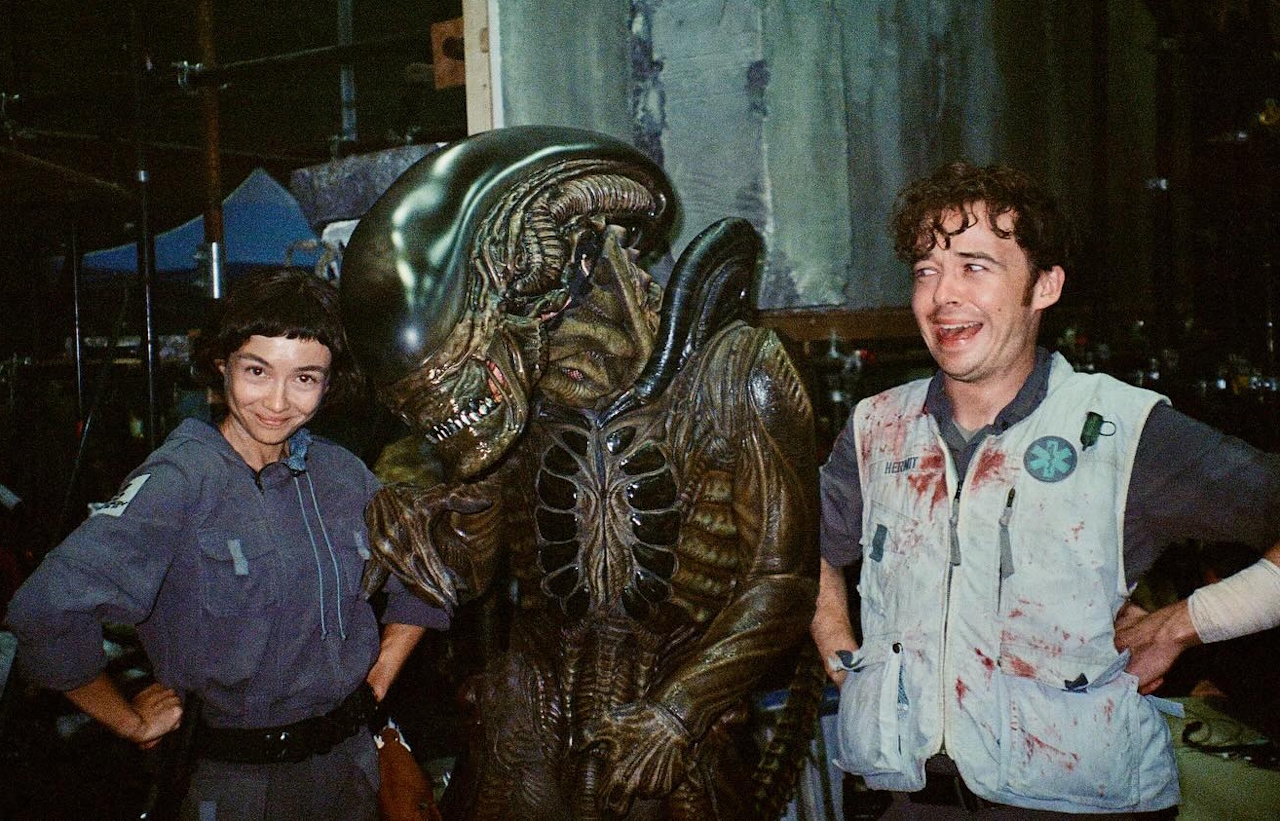
Promo photo for Alien: Earth (2025) showing Joe holding a torch.
Let’s examine Alien: Earth.

So why Alien: Earth, then? And is my take on a series in this franchise even valid? You’ll have to answer that – no hard feelings if a review from an occasional fan isn’t right for you! But I wanted to be up front about my feelings on the Alien franchise as a whole. Alien: Earth appealed to me, to be blunt about it, because it’s a big-budget sci-fi show in a franchise I’m at least partially familiar with. I’m always on the lookout for new and engaging sci-fi to enjoy, and I thought there was a chance, at least, that Alien: Earth might be worth a watch. Here in the UK it’s on Disney Plus, which is a subscription I dip in and out of, and during one of the months I was paying for it I thought I’d check out the series.

Here’s the headline: I thoroughly enjoyed Alien: Earth, and I’d rank it only slightly behind 1979’s Alien if I were to make a “tier list” of everything I’ve seen in the franchise to date. I binged the entire show over a couple of evenings, because I found once I got started I didn’t want to put it down. Alien: Earth managed to thread the needle: growing the world and lore of its franchise while staying true to the original themes and tone. And if I may be so bold… I think it’s set the stage for an expansion of the Alien franchise in a way no entry before it managed to do.

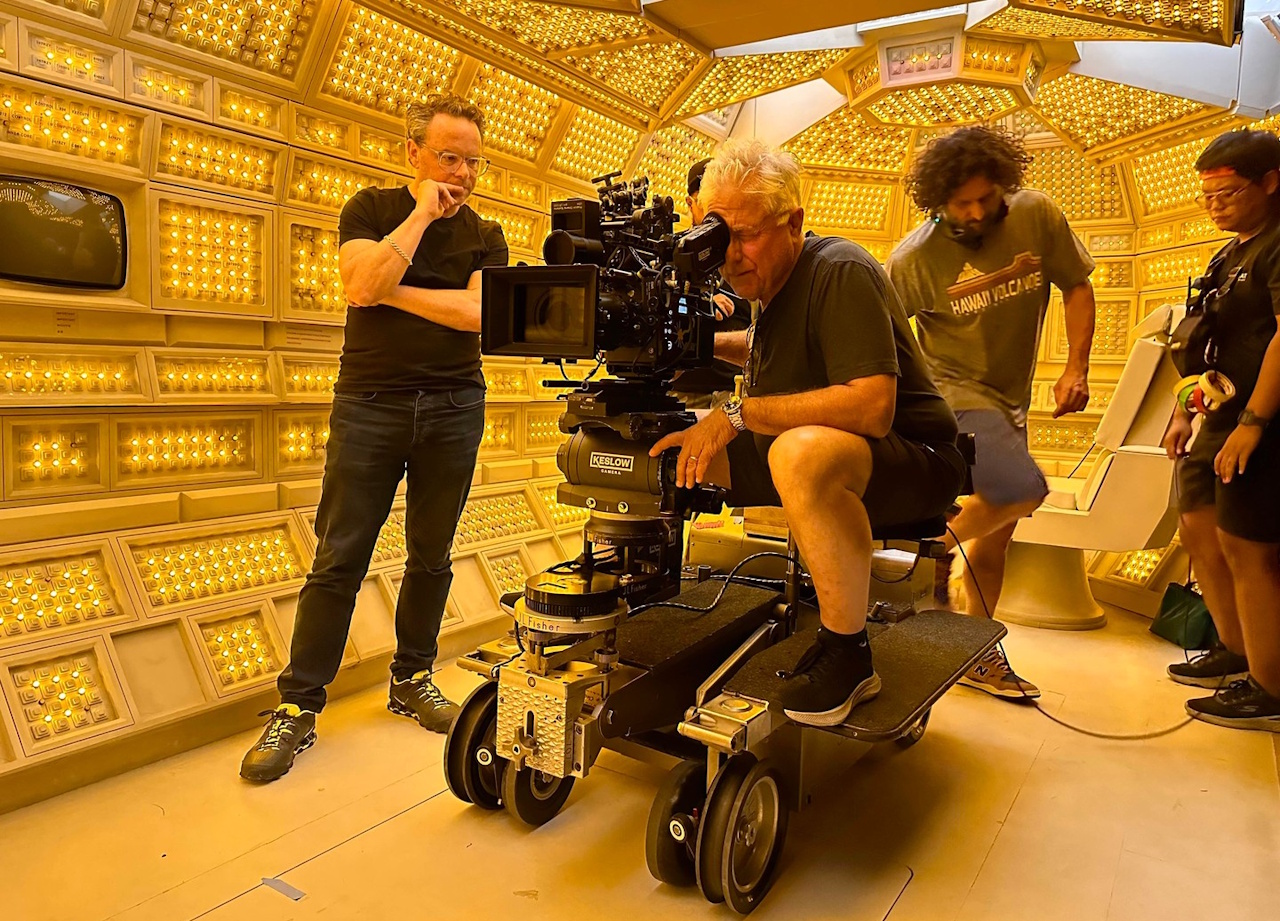
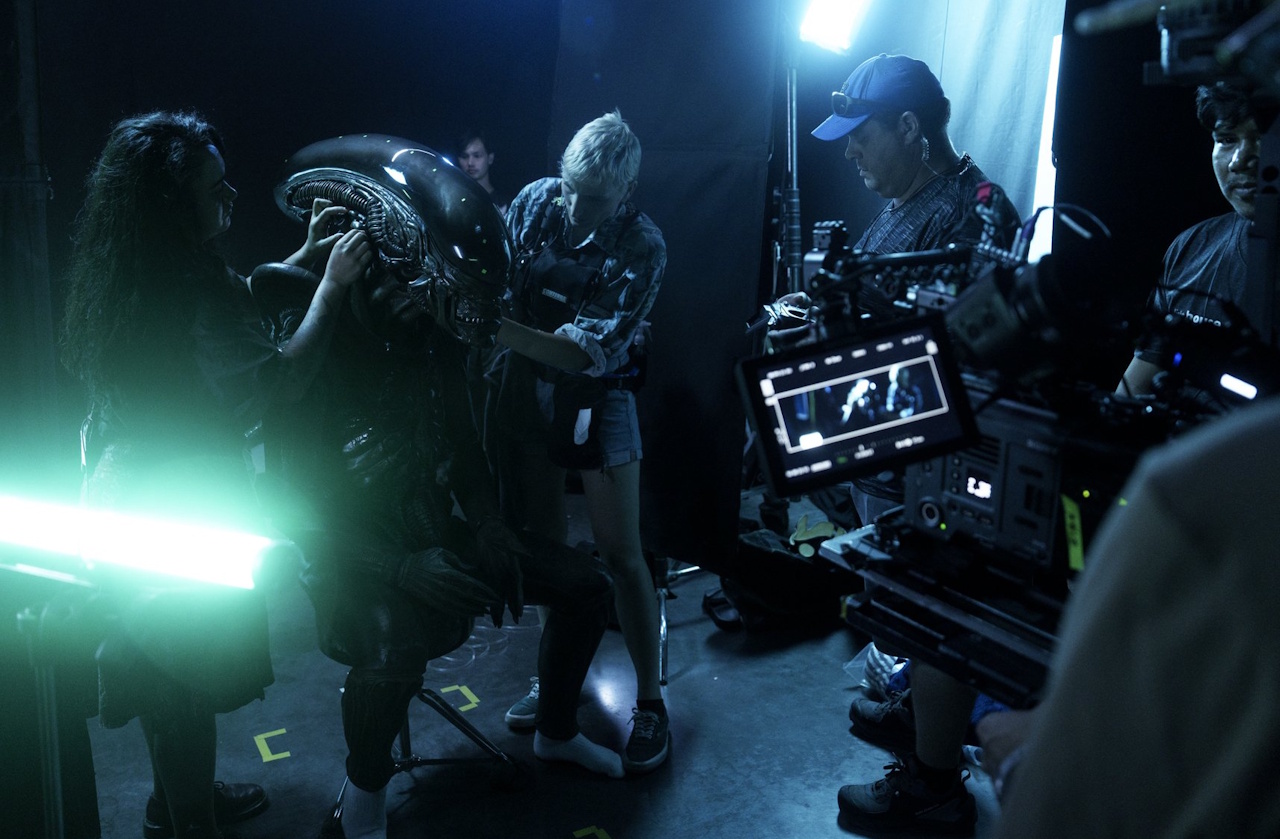
Behind-the-scenes photo from the set of Alien: Earth showing director Noah Hawley on the Maginot set.
Behind the scenes during production.

A couple of years ago, I took a look at the video game Aliens: Fireteam Elite here on the website. And I wrote then that there was “an odd duality” to the Alien franchise, with some films presenting a single Xenomorph as an unstoppable killing machine… while others depicted whole legions of them as being little more than cannon fodder. I wrote then that Alien really only had one alien… and diminishing it too much would risk making future projects feel less frightening and less intense.

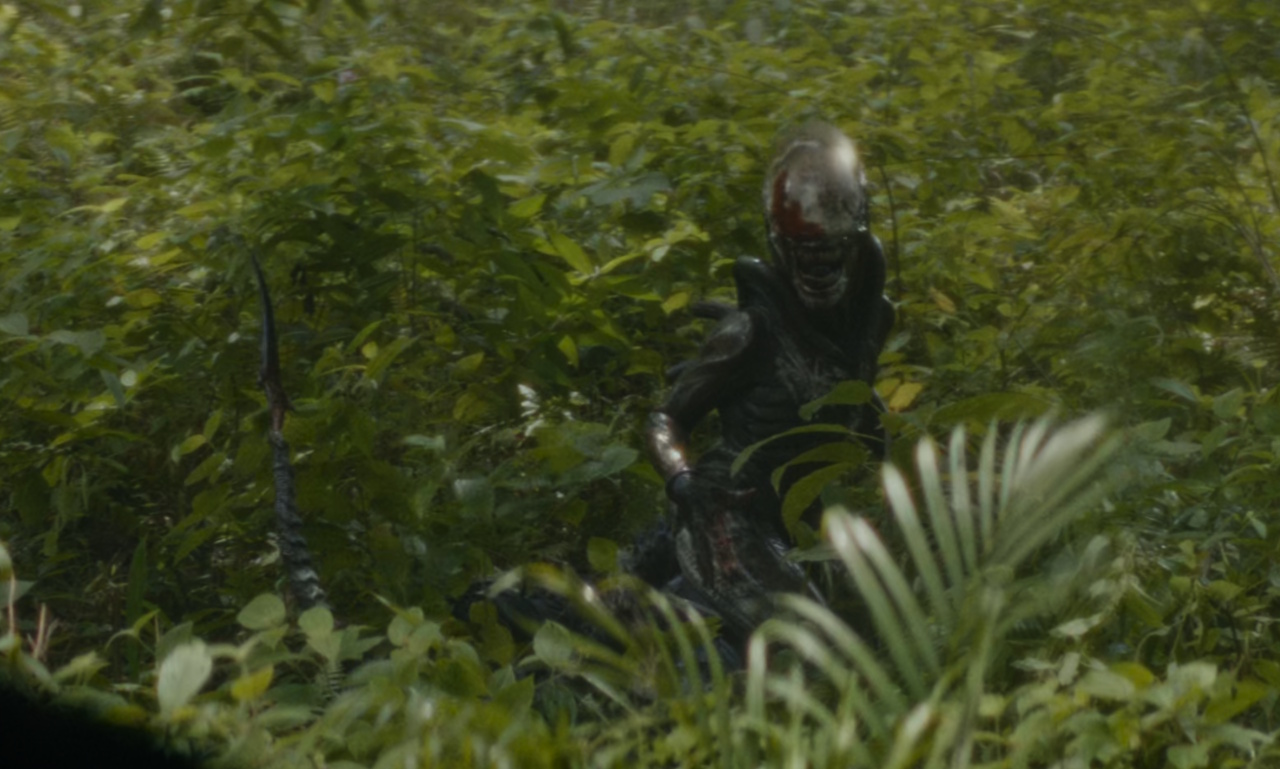
Alien: Earth introduces several new alien species to the franchise – and they’re a genuine breath of fresh air. If there are to be more Alien films or TV shows, the franchise will need to expand beyond just the Xenomorphs and fill out its galaxy with more life-forms to terrorise (and occasionally bond with) our protagonists and antagonists. For me, Alien: Earth took a massive and incredibly important step in that direction, creating brand-new creatures – at least one of which was arguably more frightening than the original Xenomorph. If Alien remains in production, we may come to look back at Alien: Earth as a major turning-point, revitalising the franchise and keeping it fresh.

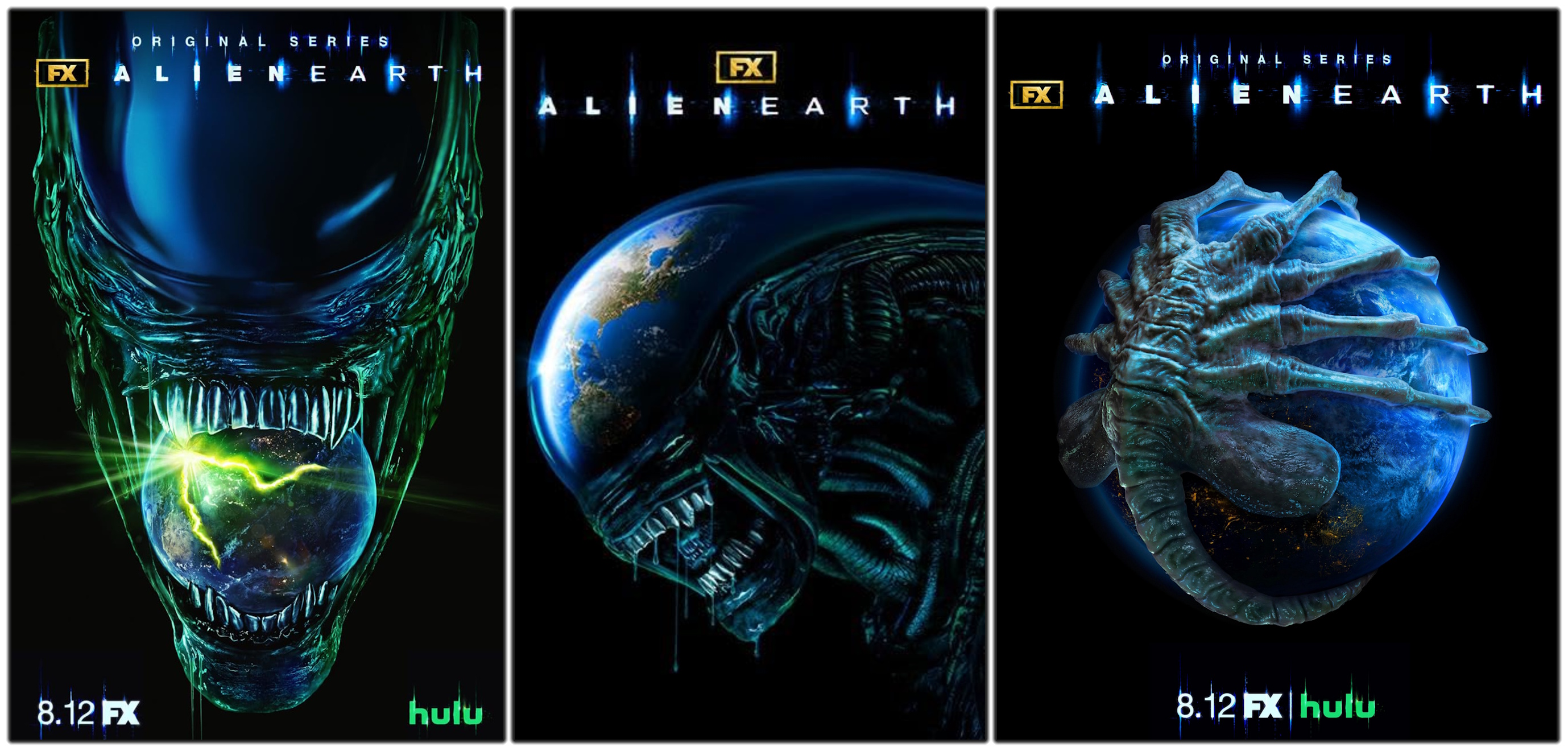
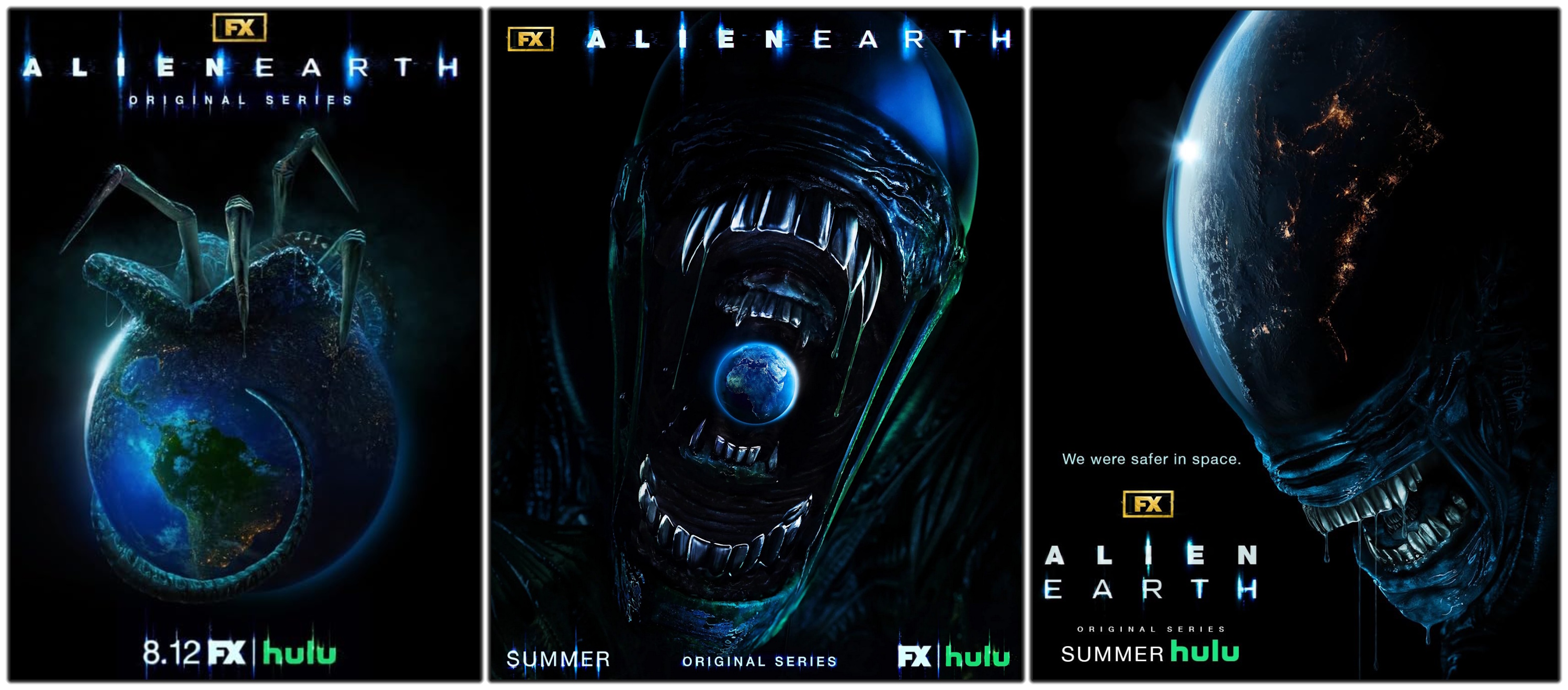
A trio of promotional posters for Alien: Earth.

Alien: Earth depicts a future ruled by corporations. This corporate dystopia has been a theme going all the way back to the original film; Weyland-Yutani’s single-minded desire to capture a Xenomorph was revealed to be the driving force behind that story. Given that Alien: Earth (and the rest of the franchise) is now owned by Disney, one of the biggest corporations on the planet… there’s an irony there which wasn’t lost on me. The anti-corporate tone, criticisms of oligarchy, and the general depictions of both Weyland-Yutani and Prodigy as being horribly corrupt… it doesn’t land quite as hard, perhaps, because of the real-world ownership and money behind it!

However, I found the messaging interesting – once I got past all of that. We spent a lot of time with Prodigy, and its founder, and we got to see more than I think we’ve ever seen before of this vision of humanity’s corporatist future. At one point, Joe explains to the kids how democracy “didn’t work,” so it was overthrown and replaced with the corporatocracy that the series depicts, and the whole thing really was fascinating. Sci-fi is usually as much a commentary on the world today as it is on the future, and there are parallels to the rise of real-world corporations and their power that were intentionally unsettling.

Still frame from Alien: Earth (2025) showing Boy Kavalier.
Boy Kavalier, the owner/founder of Prodigy.

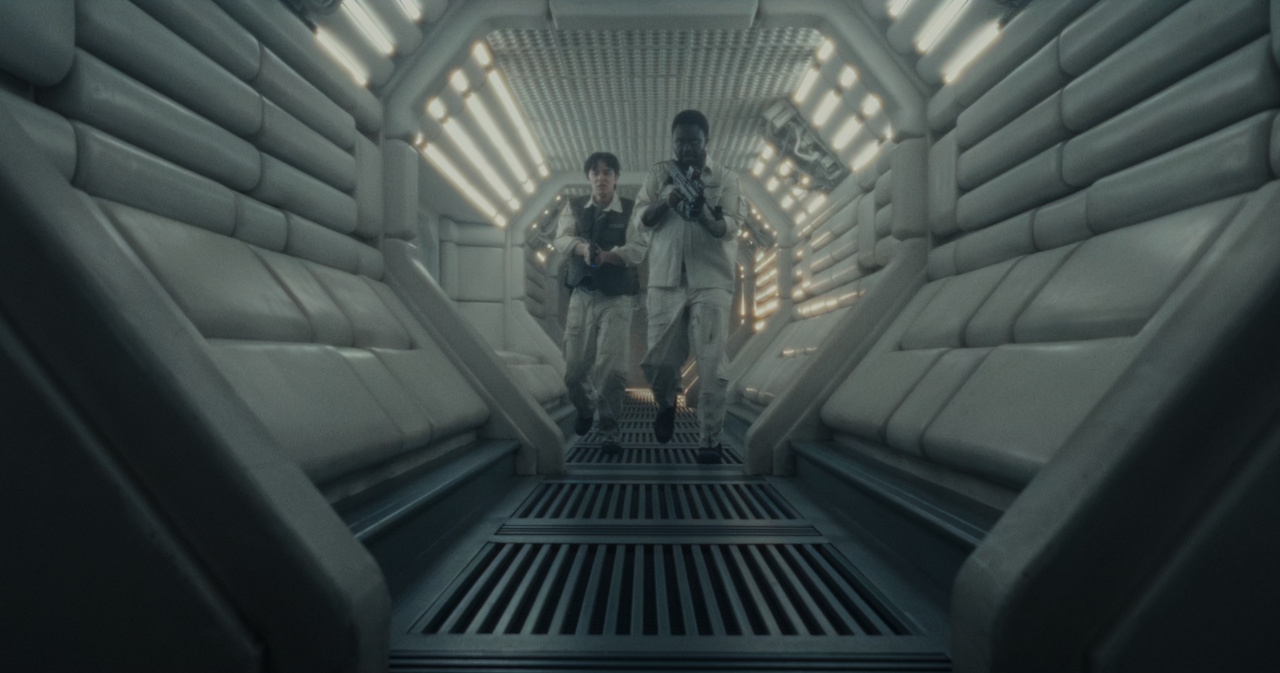
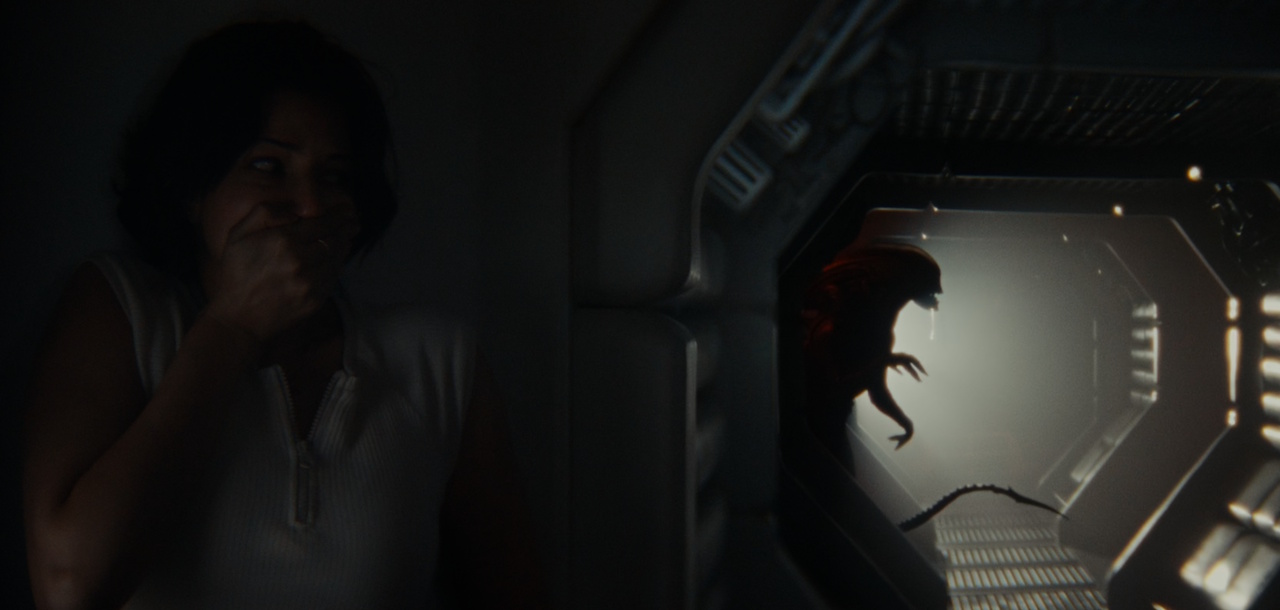
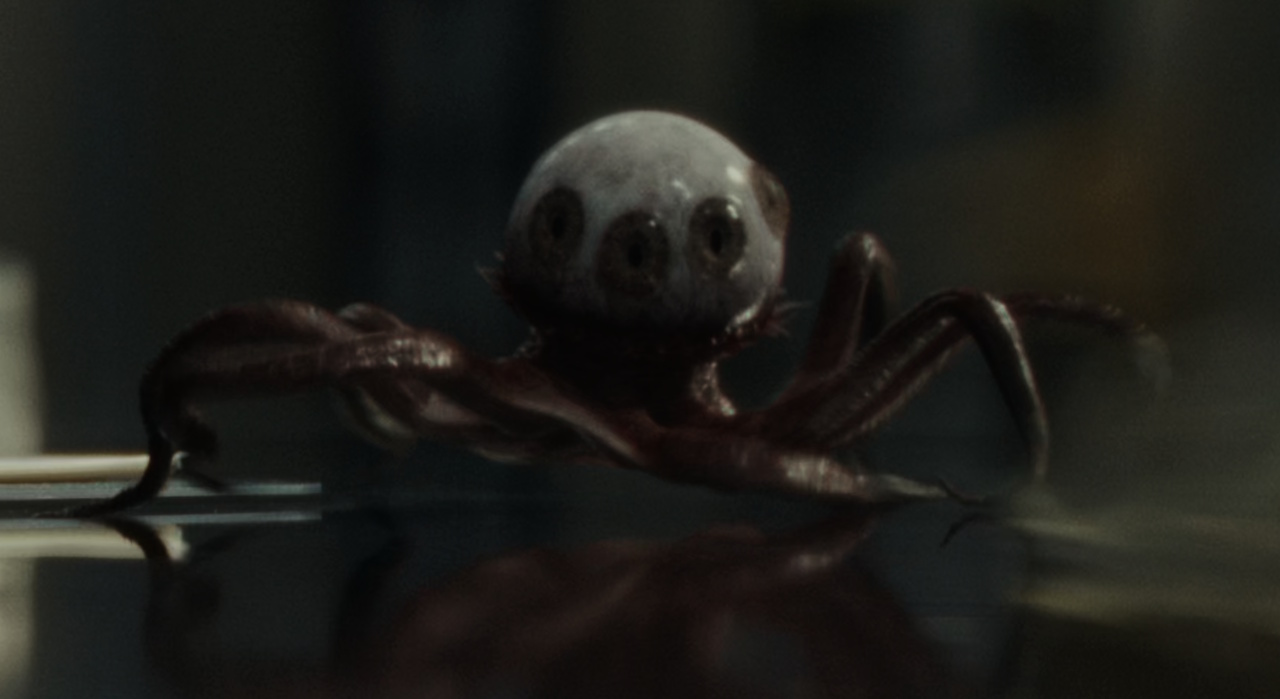
In terms of individual episodes, the fifth episode of the season, In Space, No One… was by far my favourite – and a damn good reimagining of the original 1979 Alien, in my opinion. It was the only episode set entirely in space, aboard the doomed USCSS Maginot, and the story unfolded in such a tense and exciting way. I’m so glad that Alien: Earth introduced new alien life-forms, because along with the Xenomorph, these were all fascinating and frightening in their own ways – and I could see the eyeball alien in particular being an incredibly intense antagonist in a future story.

Everything about this episode just worked. The damage to the ship, the slow reveal of the saboteur, and the sense of impending doom as the crew came to realise they were on a collision course and running out of time. Then, the breaches in the containment labs, with facehuggers, blood-sucking parasites, and the octopus-eyeball… it was just a masterful buildup of horror and tension. As in the original Alien, gore wasn’t the primary focus, and the Xenomorph itself spent most of its time off-screen, leaving the situation and the tension to carry the story. For me, as a fan of the original film, In Space, No One… was far and away the best episode of the season – and a riveting watch in its own right.

Still frame from Alien: Earth (2025) showing Morrow and his assistant aboard the Maginot.
Just a fantastic episode.

I’ve recently been looking into the development of artificial intelligence, and I’ve talked about one A.I. research paper here on the website. Themes connected to the fast-moving world of A.I. were present in Alien: Earth, and I found the show’s approach to be genuinely interesting. Alien: Earth doesn’t launch headfirst into the A.I. apocalypse in the way something like Terminator or Battlestar Galactica have done, but the theme of A.I. outsmarting and outmanoeuvring humans was key to the story. And, as in the 1979 original, the idea of incredibly wealthy and powerful humans programming their A.I. systems to act not in the common good, but to sacrifice lives to achieve objectives… that was here, too.

We saw it in the synthetic characters. We saw it in “Mother,” the A.I. system installed aboard the Maginot. And we saw it with the hybrids, too, and how they changed and developed after they were installed into synthetic bodies. Kavalier, in his quest to develop and launch a revolutionary A.I. product, felt like a stand-in for any number of real-world A.I. evangelists and entrepreneurs, talking up the benefits of his new hybrid model… before getting distracted with the alien specimens he’d commandeered!

Still frame from Alien: Earth (2025) showing Wendy's creation.
Creating the first hybrid.

Because A.I. is such a big topic right now, I found this aspect of Alien: Earth to be genuinely interesting. The show takes a nuanced approach, depicting A.I. itself as kind of neutral – at least at first – with its “morality,” or lack thereof, contingent on the whims of its creators and owners. Some synths appear to be completely loyal to their masters, but others, like Kirsh, seem to have a lot more freedom to operate independently, even if that meant doing things like lying, concealing the truth, or even getting into dangerous situations.

At first, I thought Alien: Earth was going to come down on the side of the hybrids being fully human, but as the series progressed, it became clear that the hybrids – human “minds” transferred to synthetic bodies – were no longer fully human. We’re a long way away from “mind uploading” here in the real world (at least, I think we are!) but again, the question of where to draw the line between a machine and a person – and whether there even *is* a line, or if it’s more of a gradient – was absolutely riveting stuff.

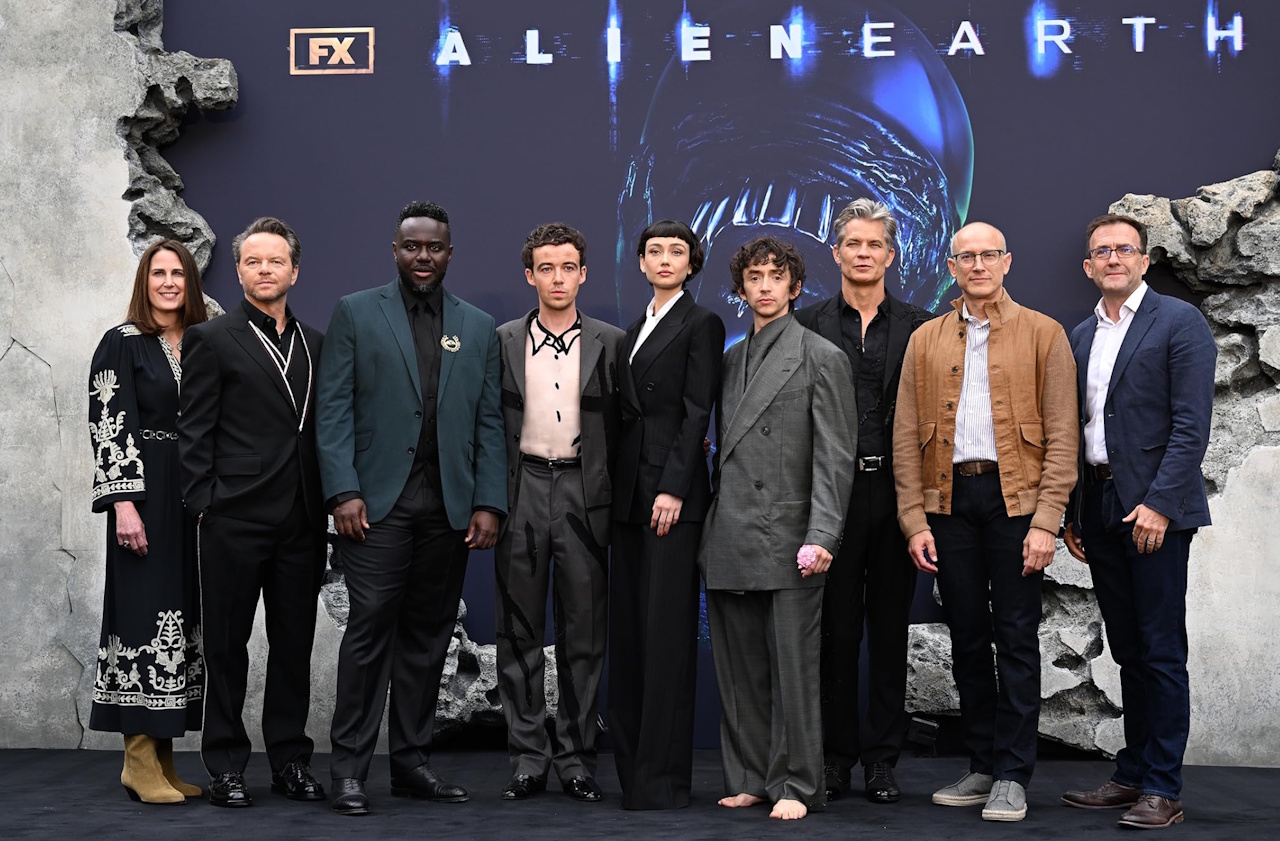
Photo of the Alien: Earth cast at the show's premiere.
Most of the main cast at the Alien: Earth premiere.

Since we’re talking about the hybrids, I thought they were an interesting collection of characters. I’m not sure whether the original intention was for these roles to be taken by actual child actors, which could have been interesting (as well as leaned into the “creepy kids” horror trope), but I found the idea of children in adult bodies to be an interesting one. It was also another commentary on the whole A.I. concept that we were talking about a moment ago. The performances which brought the characters to life were, for me, a bit hit-and-miss – not so much because of the actors, but rather the way some characters were written. Marcy/Wendy, Jane/Curly, and Isaac/Tootles were much less child-like than their peers, at least most of the time, and while that could be okay, it kind of detracted from the idea of these being kids struggling to come to terms with their new minds, bodies, and abilities.

In contrast, Aarush/Slightly, Rose/Nibs, and Christopher/Smee were all very child-like in the way they came across almost all the time – and I think all three performers deserve a ton of credit for bringing that feeling to life. The way they’d stand and sit, swinging their arms, touching leaves or walls, the awkwardness with which they’d move or approach each other… basically the entire range of all three performances really nailed, for me, the feeling that these were still children at heart, even though they were in adult bodies. There was some great directing and acting (and probably some fantastic coaching, too) that brought this feeling to life.

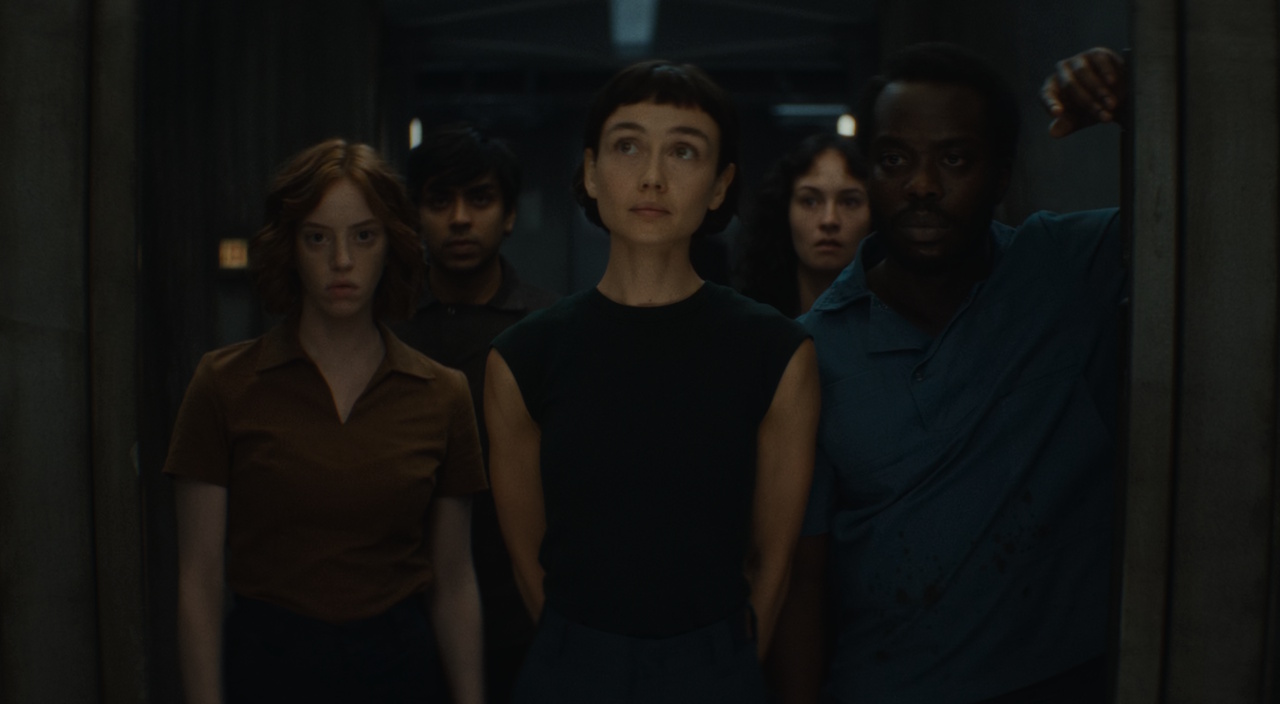
Still frame from Alien: Earth (2025) showing the hybrid kids at the end of the series.
The hybrids.

The others, as mentioned, didn’t lean as much on the child-like side of things, though each of them got some moments of childishness scattered through the story. Jane/Curly had her quest to become Kavalier’s “favourite,” which felt very childish, as did her moment near the end of the season with Dame Sylvia. But then, in between, she’d be a dedicated scientist, as was Isaac/Tootles, and the contrast was kind of obvious. In their cases, the transition from child to adult felt more abrupt, I guess, rather than like a slow burn across the season. That’s not necessarily a criticism, just an observation of the way these characters differed from the other, more child-like hybrids.

As the main protagonist, Marcy/Wendy was in focus much of the time. I think maybe the choice to have her kill an adult Xenomorph came too early in the story; it was at the beginning of the third episode, and showing her raw power and capabilities so early was a risk. However, she was a truly interesting character to get to know, and we saw her coming to terms with her new status as a hybrid in different ways as the story progressed. Her fixation on her brother was observed by the Prodigy team, but they deliberately didn’t interfere, even granting her the wish to chase after him when he was in danger. As a way to communicate that she’d retained her memories and personality after the transfer, I think that worked incredibly well.

Still frame from Alien: Earth (2025) showing Joe and Marcy Hermit.
Joe and Marcy.

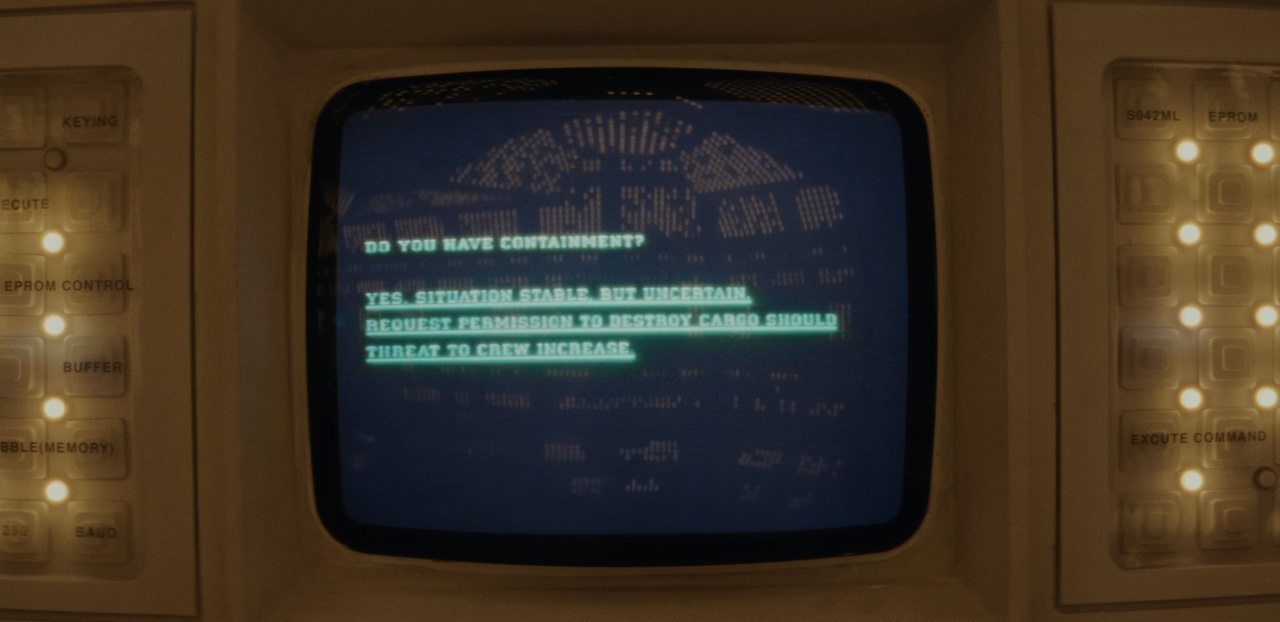
Alien: Earth made a concerted effort to lean into the aesthetic of the original film – a visual style that I’d call “very ’70s.” This is still a very late ’70s vision of the future, with plenty of brown and orange tones to the furniture and bold patterns and prints on some shirts and outfits. Whether you like this or not is very much a subjective thing! Where I was less keen was when it came to retro technology – I just have a hard time buying that this is supposed to be “the future” where A.I. exists and there are sentient robots if all computers look like the BBC Micro that I used in my first-ever I.T. lesson back in school!

CRT screens and monitors, black-and-white cameras, handheld camcorders, computer systems with text-only interfaces and green-on-black screens, cassette tapes… none of it feels like the future, and I think it’s indicative of a trend in some sci-fi franchises where the desire to perfectly recreate everything that came before overwhelms common sense.

Still frame from Alien: Earth (2025) showing the Mother A.I. interface.
A CRT monitor with an out-of-date interface.

Think about it: why did the original Alien depict computers with text interfaces, CRT monitors, and tapes? Because, in 1979, that was what the future of technology looked like. There are ways to modernise the way technology is represented in a franchise like Alien without sacrificing everything about it – updated screens, faster computers, graphical and visual interfaces can (and I would argue should) be able to exist in this world. It wouldn’t be immersion-breaking, and for me, I think it would be more interesting and a more realistic depiction of a far future setting where the kinds of fantastical technologies depicted in the series exist. You’re telling me the world of Alien invented artificial gravity for spaceships… but not flat-screen displays or a graphical interface?

There could’ve also been an opportunity to show the passage of time and the contrast between the world Morrow and his crew left behind and the one he returns to. Alien: Earth seems to depict a world where technology is stagnant – 65 years ago, when Morrow left, his ship was presumably on the cutting edge, yet by the time he returns, technology looks and feels basically the same. If the USCSS Maginot had had the old-school retro stuff, but the research facility and other Earth locales had had more modern technology, it could’ve done more to hammer home just how long Morrow had been away and how much had changed in that time.

Still frame from Alien: Earth (2025) showing Morrow.
Morrow on the phone.

Morrow was an interesting character, and not the pure antagonist that I expected based on his actions in the premiere. In fact, you could make that case for most of the characters, really – Alien: Earth gave pretty much everyone some moral complexity. For Morrow, the revelation about his daughter’s death was heart-wrenching, and learning about how he came to have his cybernetic arm – and that it basically constituted a “life-debt” to Weyland-Yutani – also did a lot to soften, or at least explain, his characterisation. I can’t be the only one who heard “paging Mr Morrow, Mr Tom Morrow” when I first heard his name, though… can I? (If you’re a Disney World fan, you’ll get the reference!)

That leads me into a point about some of the characters’ names. Mr Morrow is already a bit of a weird one, but then we have Boy Kavalier. Really? On the nose much? Dame Sylvia’s also a bit of an odd choice of name, if you think about it, as are Joe and Marcy Hermit. Maybe I’m misremembering… but weren’t most character names in Alien, Aliens, Alien 3, and so on a bit less… weirdly literal? I mean, you had names like Ripley, Burke, Clemens, Dillon, Dallas, Kane, and Brett. I’m not sure why these unusual names were chosen. For synthetic and hybrid characters, it made sense – and for the hybrids in particular, names were a big narrative point. But for someone to be named (or name themselves) Boy Kavalier… it just felt a bit odd, I guess.

Behind-the-scenes photo from the set of Alien: Earth showing the Xenomorph being adjusted/touched up.
A glimpse behind the scenes.

There were definitely echoes of Jurassic Park in Alien: Earth’s top-secret research facility on a jungle island! The main facility itself, with its lab full of glass and metal cages, reminded me a lot of the labs seen in the Jurassic Park/World franchise, too. Later in the season, when Joe, Marcy/Wendy, and Rose/Nibs were trying to escape, I really got hit with that Jurassic Park vibe. Being stalked through the vegetation, first by the Xenomorph and then by various factions of soldiers, really contributed to that feeling. It wasn’t intentional, I’m sure, just a coincidence! But having seen Jurassic Park back in the day, I was surprised to be reminded of it in a completely different franchise some thirty-plus years later.

If I were to make one criticism of the jungle scenes, though, it would be this: I don’t think Alien’s titular Xenomorph benefits from being shown off in bright sunlight. The creepy monster works best, for me, when it’s obscured in shadow, when it has places to hide, and while the vegetation definitely provided hiding places… seeing the creature so well-lit and from all angles was, in my opinion, somewhat diminishing. There was some creative cinematography here, and the incredibly fast motion of the Xenomorph still makes it feel threatening. But over-exposure can, in some cases, be detrimental to a villain or a monster, and I think that’s true here.

Still frame from Alien: Earth (2025) showing the Xenomorph outside the facility, surrounded by green vegetation.
The Xenomorph in the jungle.

I also worry, at least a little, about the effect of creating a “friendly” Xenomorph. It was never explained how or why Marcy/Wendy could communicate in the Xenomorphs’ language, which is something I’d have liked to get a bit more information about. We saw other characters talking about “learning” languages simply by having them uploaded to their new hybrid brains… but Wendy didn’t get that, did she? And as far as I know, no one in the Alien franchise has ever known the Xenomorphs’ language. In fact, until Alien: Earth, wouldn’t you have said the Xenomorphs are more akin to non-sentient animals than sentient life-forms capable of language? They’re apex predators, sure, but so are lions or sharks – and we can’t just download their “languages” and chat to them.

But to get back on topic, Marcy’s “pet” Xenomorph… how do we feel about that? I’m worried that, if the Alien franchise does this kind of thing, it’s going to diminish that all-important fear factor the next time a writer wants to make a story like In Space, No One… or 1979’s original film. As I said above with some of the video games turning the Xenomorphs into cannon-fodder, when there aren’t a lot of other antagonists or monsters, you have to treat the ones you have with care. And while I’m hopeful for a second season of Alien: Earth that will provide a narrative payoff to Marcy befriending the Xenomorph, I feel a little concerned that having a Xenomorph ally could detract from how frightening the monster should be.

Behind-the-scenes photo from the set of Alien: Earth showing Sydney and Alex posing with the Xenomorph.
Sydney Chandler (Wendy) and Alex Lawler (Joe) posing with the Xenomorph during filming.

Alien: Earth had some wonderful practical effects as well as some spectacular CGI. If you know me, you’ll know I adore physical props, costumes, and puppets in my sci-fi, and for my money, the show excelled in that department. Obviously we have the Xenomorph, recreated for Alien: Earth using a performer in costume, but there were so many other wonderful props that really brought the world of Alien to life. The obligatory chest-buster scene was less shocking, perhaps, because we knew what was coming, but I can’t deny that it looked fantastic. As did the gore used to depict dead (and half-dead) victims of the Xenomorph and other entities.

CGI was also incredible. Shots of the Maginot in space stand out to me as looking better than anything we’ve seen in modern Star Trek, for example, and I think you can really see Alien: Earth’s animation budget being put to good use. Several of the other alien creatures – the blood-suckers, tadpoles, and eyeball-octopus – were also CGI creations, and they also looked fantastic. Seeing the blood-suckers drain a person of life in moments was especially gruesome.

Still frame from Alien: Earth (2025) showing Zoya hiding from the Xenomorph.
Hiding from the Xenomorph…

The eyeball creature was, for me, the surprise standout monster in Alien: Earth. Its first appearance – in the eye of a poor kitty cat – was shocking and brutal, and the way it tried to attach itself to Nibs was genuinely frightening, really hammering home how dangerous it could be. But then, as the story progressed, we came to realise that this creature is surprisingly intelligent. As I said above, I could absolutely envision a future film or series in which the eyeball creature serves as a major antagonist.

Because Alien: Earth left things open at the end of the season, with the kids seemingly in control of the facility and the eyeball monster having escaped, possessing the corpse of poor Arthur… maybe that’s what’ll happen next time! I’d certainly be interested to learn more about this creature, its connection to the Xenomorphs, and what – if anything – its objectives or goals might be. The Alien franchise has needed a new creature like this for a long time.

Still frame from Alien: Earth (2025) showing the eyeball alien.
The eyeball creature.

So, after all of that, where do we stand with Alien: Earth?

I had a genuinely wonderful time with this series. It felt closer in tone, most of the time, to 1979’s classic Alien than to any of the lesser spin-offs or sequels that I can remember sitting through, most of the main characters felt complex and compelling, and there were new additions to the franchise which I think have a ton of potential to expand Alien beyond the Xenomorphs – which, for reasons discussed above, is going to be important! My favourite episode was In Space, No One… which was set aboard the claustrophobic USCSS Maginot, and really succeeded at recapturing the feel of Alien for me.

But the rest of the season was interesting and exciting, too. It was fun to get a look at Earth in this vision of the future, and while I’d argue some of the anti-corporate message is blunted when you know who funded production, Alien: Earth’s exploration of a future dominated by mega-corporations felt timely and engrossing.

A trio of promotional posters for Alien: Earth.
Three more promo posters.

I’ve recently started playing Alien: Isolation – the survival/horror game from a few years ago. I’m a big old scaredy-cat, though, so I’m not sure how far into the game I’m gonna get before I have to put it down for a while! So far, it’s been a fun way to continue my exploration of the world of Alien. Stay tuned, because a write-up of that game (or part of it, perhaps) is possible in the weeks ahead.

So that was Alien: Earth. A great show, a fun sci-fi adventure, and a much-needed expansion of the Alien franchise. There were genuinely interesting characters, complex themes touching on prescient real-world issues, and more than a few scares for the horror aficionados out there! I’m happy to recommend Alien: Earth to fans of the original film, sci-fi and horror fans, and really just anyone looking for an engaging and high-tempo adventure.


Alien: Earth is available to stream now on Hulu in the United States and on Disney+ around the world. Alien: Earth will also be released on DVD/Blu-ray in the future. The Alien franchise – including Alien: Earth – is the copyright of 20th Century Studios and the Walt Disney Company. Some promo photos courtesy of IMDB. This review contains the thoughts and opinions of one person only and is not intended to cause any offence.

Phineas and Ferb: Season 5 Review

A spoiler warning graphic.

Spoiler Warning: There are spoilers ahead for Phineas and Ferb, including all of Season 5.

Phineas and Ferb’s fifth season was one of my most-anticipated entertainment experiences of 2025. I’m a pretty big fan of the show, having first encountered it shortly after its original premiere in 2007 or 2008, back when I used to have a satellite TV subscription! When Season 5 premiered on Disney+, I didn’t just binge the entire thing right away; I wanted to take things a bit slower and give each episode a chance to settle. That being said, I still finished the whole season in under a week, so maybe my self-control isn’t as good as I thought!

If you just want the tl;dr, here it comes: Phineas and Ferb Season 5 was wonderful. Some episodes were truly outstanding, reaching the bar set by those earlier stories in the 2000s and 2010s. Others weren’t as spectacular, but even in the ones I found less enjoyable, there were still fun moments, creative storytelling, or jokes that managed to win a chuckle. I think I laughed out loud at least once while watching all eighteen/nineteen episodes (the numbering gets a little bit weird; we’ll cover that as we go), which I think says a lot.

Still frame from Phineas and Ferb Season 5 showing Phineas with a Fireside Girl at school.
Phineas at the beginning of the new season.

I think we should start by getting a handful of negative points out of the way before we talk about all of the good stuff.

First of all, the new season was quite self-referential, calling back to episodes, story beats, jokes, and even internet memes spawned by Phineas and Ferb’s original run. That, in itself, is not a problem, and at least some of these “meta” moments were funny, added something to the story, or just plain worked. But for me, Season 5 came very close to crossing a line that basically no series ever gets right, turning in-jokes and winks to the audience into cringeworthy fan-service. Relying too heavily on the past, even in a revival like this, doesn’t allow new storylines to stand on their own two feet, and while some self-referential “meta” moments in Season 5 were incredibly good fun… others strayed too close to that line for comfort.

Secondly, Season 5 basically ignored Dr Doofenshmirtz’s character arc from the latter part of Phineas and Ferb’s original run. The season premiere saw him – apparently at random – deciding to “turn evil again” after an entire year of being a good guy, and then none of that was ever acknowledged again. Doof was back as we last saw him – which, for me, felt a little hollow. Don’t get me wrong: it was fun to see him back in his element, and to have more wacky adventures with him and Perry. But the way it was handled left something to be desired. I’m not sure how the show could realistically have done a better job here – except, as I mentioned more than once before Season 5 aired, if these new episodes had been set in the same endless summer as before, instead of one year later.

Still frame from Phineas and Ferb Season 5 showing Doofenshmirtz firing one of his inators.
Doof is evil again.

The one year time jump wasn’t mentioned a lot, and didn’t really do much for most of the characters. Though nominally “older,” the only kid character whose age was even mentioned was Candace, and that was just a throwaway line. Everyone just kind of… reverted to type, if that makes sense. And for a show whose main characters are children, I’m not sure that feels right if you step back and think about it. When you’re a kid, one year is a massive amount of time, and none of us were the same at age ten as we were at nine, or at sixteen as we were at fifteen. While I’m not saying I wanted to see whole character arcs for the kids or big personality changes, what I am saying, again, is that the time jump doesn’t seem to have achieved very much. I’m left wondering why it was included at all.

We saw Candace finally achieve one of her biggest goals – something she’d been pushing for going all the way back to the beginning of Season 1: getting her driver’s license. And the episode was funny – we’ll touch on that in a moment when we look at each episode in turn. But… after getting her driver’s license, Candace literally didn’t use it again for the entire rest of the season. In the very next episode, we even see her riding her bike.

Still frame from Phineas and Ferb Season 5 showing Candace on her bicycle.
This was literally the episode after Candace passed her driver’s test.

As with Doofenshmirtz above, this kind of speaks to a bigger issue for me. Candace has grown as a character over the course of an entire year, and finally scored one of her biggest accomplishments – something even her brothers don’t have. This happened early in the season, and there were fifteen more stories in which Candace could’ve driven a car, even just in the background of a scene, not necessarily as a major plot point. But it didn’t happen. I love episodic television, and a big part of Phineas and Ferb is that it’s an episodic show where things “reset” from one episode to the next. But for something so important and meaningful for a character to be completely sidelined… it doesn’t feel right, somehow. And it all adds to that same feeling I was talking about with the time-jump: was it really necessary?

There were eighteen individual stories in Season 5 – the opening pair of episodes form a single story, and the Meap episode was also feature-length. Across those episodes, we spent at least some time with most of what I’d consider to be the show’s recurring characters… but by no means all. There were some noteworthy absences, as well as several characters whose roles were very minor. The likes of Jeremy and Norm got very few lines, Roger Doofenshmirtz was seen but didn’t really interact with the plot in a big way, Love Handel only appeared in the background to sing a song, and Irving – who’d climbed the ranks to become an honourary member of the friend group by Season 4 – was entirely absent aside from a couple of background cameos.

Still frame from Phineas and Ferb Season 5 showing Irving looking sad.
Irving was notably absent in these new episodes.

There were also a few character groups or pairings that didn’t appear in Season 5. The relationship between Dr Doofenshmirtz and Vanessa was barely touched upon, as they hardly spent any time together. The Flynn-Fletcher family didn’t actually do anything all together, either; no family vacation, no road trip, not even sitting down for a meal. With Roger and Norm effectively absent, Doofenshmirtz didn’t have either of them as character foils, and there was no Charlene, either. Major Monogram only had Carl. And Candace spent very little time with Stacy, Jeremy, or any of her other friends.

As above, there wouldn’t have been time for every conceivable duo or group to get an outing, and there’s still Season 6 to come. The first four seasons took time to even introduce some of these characters, let alone build up relationships between them, and I’m not really trying to demand everyone everywhere all at once! But… I felt some of these absences. Doof and Vanessa not getting any time together was particularly noteworthy given how the show’s original run ended and how important Vanessa is to Doof’s arc. Norm’s absence was similarly felt. Then for the kids, Irving disappearing and Jeremy getting basically a single scene all season long kept things focused on the principal characters, sure, but it also limited their potential interactions outside of their core friendship group. None of it is egregiously awful, and if you just watch a single episode, you wouldn’t even notice anything was amiss. But taking the entire season as a whole… it felt odd to reach the end with the absences and lack of interactions we’ve discussed.

Still frame from Phineas and Ferb Season 5 showing Mayor Roger Doofenshmirtz.
Roger didn’t get much screen time – or any scenes with his brother.

I guess the positive spin I could put on all of that would be that this is a revival, and the writers and producers may have wanted to take their time re-establishing the show’s core formulae and character dynamics before adding in too many secondary characters and side characters. That’s a reasonable argument in some ways, as Phineas and Ferb Season 5 is also intended to bring in new viewers alongside returning fans.

Okay, okay. That’s probably enough negativity for now. Phineas and Ferb doesn’t need to be nitpicked to death. So let’s move on and talk about the things I enjoyed. Thankfully, that’s pretty much everything else.

If you read my pre-season “wishlist,” you might remember me saying that what I wanted out of this revival was, in a word, more Phineas and Ferb. And that’s pretty much what I got: the show has returned to its classic formula, with two-and-a-half storylines that intersect, plenty of wacky inventions, fun musical numbers, and a good-natured sense of humour. Not every episode was perfect, but I’d happily watch all of them again… and again. No season of television is going to be filled with five-star episodes, but there were several in Phineas and Ferb Season 5. Even when the new season was at its worst, there were still laugh-out-loud moments, emotional scenes, enjoyable songs, beautiful animation, and other things to enjoy. No episode this time was irredeemably awful, and I’d say that the new season’s overall quality was about where I expected it to be. Perhaps it’s closer in tone and quality to Season 4 of the original run than to Seasons 1-3 – and if you know me you’ll know I felt Season 4 wasn’t quite reaching the bar of those earlier seasons. But it was still good – and so is Season 5.

Still frame from Phineas and Ferb Season 5 showing the Doofenshmirtz Evil Inc. building.
You can just hear this image, right?

When I reviewed Candace Against The Universe a few years ago, I said that one of the best things the film did in its opening moments was re-establish the world and characters of Phineas and Ferb, making it feel like nothing had changed and that everyone we remembered was still there, living their lives in the Tri-State Area. And once we got over the new season’s opening sequence, which was set at the kids’ school, I think the rest of Season 5 nailed that feeling again. Most of the main storylines felt like they could’ve been lifted from the show’s original run, and with the exception of the season premiere and its obvious time-jump, narratively the rest of the episodes blend in with the rest of the show. In a few years’ time – and regardless of whether more Phineas and Ferb is produced after Season 6 – it probably won’t even be noticeable to play some of these episodes in a random order, mixed in with others from the show’s original run.

One of the biggest differences – and where Season 5 might actually be noticeably different from Season 1-4 – is in the animation. Some character outlines felt softer and less blocky, colours tended to be flatter, with less differentiation, and there’s something about a lot of the characters’ eyes – particularly background and secondary characters – that just felt a little… off. I don’t know how else to put it. I will say that, despite some pre-season fears, this was something I got used to. And I think the animation lines up with Season 4 and Candace Against The Universe more than it does with Seasons 1-3. It wasn’t bad per se, but maybe there’s been a change in Disney’s animation software or a different animation studio… and I think it’s worth mentioning, at least.

Still frame from Phineas and Ferb Season 5 showing minor characters in a crowd scene.
A selection of background and secondary characters.

The songs were all top-class, and I enjoyed all of them. I would note that it was a bit strange how not every episode got its own original song this time around; the episodes More Than An Intern and Agent T (For Teen) got versions of songs from the original run of the show rather than their own compositions. They were fine, though.

My favourite songs of the season would have to be When The Tri-State Aurora Comes Around and No Sleepin’ At A Slumber Party, both of which were great fun. The Tri-State aurora sequence – which we’ll talk about more in a moment – was absolutely stunning, and the music elevated it even more. It really was a great sequence. The rest of the songs were good; Submarine Sandwich Submarine and License to Bust felt the most “classic,” like they’d come from the show’s original run. But all were in keeping with the tone of the series, really.

Next, I’ll run through each episode one by one and talk about what I liked (and didn’t like) about each of them. Then at the end, I’ll share my final thoughts on Season 5 as a whole.

Summer Block Buster/Cloudy With A Chance Of Mom:

Still frame from Phineas and Ferb Season 5 showing the main kid characters performing a musical number.
The opening musical number – and a cheeky reference to Hamster and Gretel.

This episode had the difficult task of re-establishing Phineas and Ferb’s world five years after we last saw it. And I think it hit all of the right notes. We got to see the last day of school before summer – and I like the implication that the boys’ “What I Did Last Summer” presentation took the entire year. Doofenshmirtz “turning evil again” was skipped over too quickly, but that says more about the decision to set this new season a year later than anything else. The big musical number at the beginning was a ton of fun, and felt in line with some of the epic songs from special episodes like Summer Belongs To You.

As a season premiere, the second half of the story was kinda risky! It didn’t follow the show’s typical formula; mixing things up by involving Linda directly in the story. But that decision gave real stakes and emotional weight to what the kids had to do, and I think it worked exceptionally well. All in all, a wonderful way to kick off the new series. And yes – I’m counting these two episodes as two halves of one story!

Submarine Sandwich Submarine:

Still frame from Phineas and Ferb Season 5 showing a very large submarine sandwich with several characters.
The sub under construction.

I liked the callback to Candace’s sandcastle-building award from the previous summer – but this was a storyline where I definitely felt the absence of Jeremy. Even if Stacy or one of Candace’s other friends had been there I think her side of the story could’ve worked just a little bit better. The boys’ side of the story was neat, though, and I liked the visual impact the submarine made. The giant fish was kind of random, but weirdly in keeping with other sea monsters the show has introduced!

Doof and Perry had a classic battle in his lair, one that reminded me a little of their famous hot dog/bratwurst duel, thanks to the abundance of food. Doofenshmirtz’s inator did cover up the boys’ invention – literally, covered it with sand – but was also a bit of a twist on what viewers might’ve been expecting. As noted above, this episode also had a very classic song, and the whole thing had the feel of a Season 2 or 3 episode – which I mean as a compliment.

License To Bust:

Still frame from Phineas and Ferb Season 5 showing Candace and her driving instructor.
Candace taking her driver’s test.

The boys’ gecko gear was cool, and reminded me a little of their rubberisation ray from Night of the Living Pharmacists insofar as it allowed the kids to bounce all over town. This invention wasn’t the main focus of the story, though. As mentioned above, I’m a little disappointed that Candace getting her driver’s license – finally, after more than four seasons! – wasn’t so much as mentioned in subsequent stories, and that puts a little bit of a downer on the ending of her storyline here.

That being said, the driving test sequence was a ton of fun, as was the song. And Doofenshmirtz’s inator – while arguably less destructive than some of his creations – interfered in just the right way to bring everything together. If future episodes do more with the idea of Candace being able to drive, I’ll definitely place License To Bust higher in my rankings! For now, it was fine as a one-off story.

Dry Another Day:

Still frame from Phineas and Ferb Season 5 showing the kids on their luge invention.
Luging through town!

Phineas and Ferb has done the “it’s the hottest day of the year, so let’s do something icy” thing more than once, but the infinitely rolling luge wheel definitely made the concept feel fresh! Candace skiing was a fun visual, and the entire sequence with the song was fantastic, too. The concept reminded me a little of Season 4’s “foam town,” probably because both were big rolling wheels, but the luge idea was definitely original.

We got a glimpse at a Doofenshmirtz backstory! Hooray! Doof told us a little about his childhood as he schemed to store his oil at the swimming pool. That was fun, and the water park was actually a surprisingly detailed and interesting location to visit. The hammerhead shark slide was especially creative. Again, this just felt like a classic, fun Phineas and Ferb episode that I’d happily revisit.

Deconstructing Doof:

Still frame from Phineas and Ferb Season 5 showing Candace and Doofenshmirtz's therapist.
The therapist.

This felt like a pretty “meta” story concept at first, but the way it brought together Doofenshmirtz and Candace – who worked so well together in the Season 4 finale in 2015 – was genuinely fantastic. It makes sense, if you think about it, that someone might be able to piece together the unusual goings-on around Danville, figuring out why these wonderful inventions are always gone by the end of the day. Does that take something away from the “magic” of an animated show? Well… maybe. But I think it worked pretty well.

I wasn’t particularly keen on this episode’s main song; it was fine but just not to my taste, I guess. Not every callback in every episode worked or won a smile, but the therapist’s line about a platypus being a metaphor definitely did! The reference to the Season 2 episode Brain Drain was played deadpan and absolutely perfectly, and it was just a ton of fun. I had to pause the episode for fear of laughing so much I’d miss something good!

Tropey McTropeface:

Still frame from Phineas and Ferb Season 5 showing the "mother mugger" being caught.
The arrest of the “mother mugger.”

I didn’t expect much from this episode when I saw the title, I’ll be honest. But the story was, surprisingly, much more coherent and fun than I’d been expecting. The story of Michael Bublé’s involvement is actually sweet: his son had been a huge fan of the show, and they’d watched it together when he was suffering from a serious illness, with Phineas and Ferb becoming something positive for them both at a difficult time.

There was quite a lot going on in Tropey McTropeface aside from the titular zoetrope; a mugger loose on the streets of Danville, Perry and Candace’s bath appointment, Doof’s plan to rotate city hall… it was a busy episode, but still connected everything together. I don’t think it was the highlight of the season, but a better episode than I expected based on the title.

Biblio-Blast:

Still frame from Phineas and Ferb Season 5 showing Doofenshmirtz gardening.
Doofen-plants!

Perry’s lair entrances were one of Phineas and Ferb’s original elements, but as the series dragged on, they became less prominent. Biblio-Blast has one of the best, though: that pinball sequence was incredibly detailed and great fun. Though a bookcase might not seem like the wildest idea at first, it was another part of the episode that felt like it was harkening back to earlier episodes where the boys’ inventions were sometimes a bit more child-like and grounded. The sequence of the bookcase being built – set to the show’s Quirky Worky Song – was also in that classic vein.

Doof’s story with the evil plant monsters reminded me a little of Night of the Living Pharmacists, and it’s certainly one of the worst backfires of any of his inventions! The design of the plants was quite unsettling, too, meaning they worked well as antagonists on this side of the story. The main song was definitely one aimed at kids – but hey, if it encourages anyone to read more or stick with reading, that can only be a good thing! Oh and the plant-themed reprieve was genuinely cool. Buford also had some great lines in this episode.

A Chip To The Vet:

Still frame from Phineas and Ferb Season 5 showing Buford and Cadace at Mr Slushy Dawg with Jeremy.
Buford, Candace, and Jeremy.

I think I’m right in saying that A Chip To The Vet is the only episode in which Jeremy speaks – though with a different voice actor in Season 5. As noted above, I think his absence was felt, and even here, really, he didn’t play a huge role or advance Candace’s story in a big way. The main vet-themed portion of the story was neat, though, and seeing Perry and Doofenshmirtz doing battle in a completely new location was fun. You’d think the OWCA would be equipped to deal with something as common as microchipping – but then again, it is just a cartoon!

Okay, the goat jump-scare? It got me – and it was hilarious. As was Doof listing all the things he could chip before figuring out he could use the chipper on Perry. The kids’ pet wash was fun, too, and as with Doof and Perry it was great to see them do their thing somewhere other than the back yard. We also got a rare “platypuses don’t do much” line right at the end, too!

More Than An Intern:

Still frame from Phineas and Ferb Season 5 showing Carl looking dejected.
Carl.

This story has a message that I think will resonate very strongly with Phineas and Ferb’s returning fans. A lot of folks are working multiple jobs in the “gig economy,” just trying to make ends meet. And while I wouldn’t have expected a critique of this phenomenon from what is nominally still a kids’ show… I think it’s actually a powerful story. Carl – OWCA’s unpaid intern – has to work multiple other jobs just to pay the bills, and even while he loves his work with the agency, he’s forced to take on all of these other jobs. Major Monogram’s obliviousness is also a big part of this story – perhaps a comment on the “boomer” generation and their unawareness of how tough things really are.

As with Candace and her driver’s license above, this is a story that I would’ve wanted to see have genuine repercussions. Even if Carl doesn’t immediately get paid by the agency, having Major Monogram show a little more appreciation in subsequent episodes would’ve been nice. The rest of the episode was fun, don’t get me wrong, and I’m aware we’ve really only commented on the messaging this time. But it really is an important message, and one I was pleasantly surprised to see the series tackle. Carl really was the perfect character for this story, too.

The Aurora Perry-Alis:

Still frame from Phineas and Ferb Season 5 showing the aurora.
The Tri-State Aurora.

This episode was actually pretty mixed for me. I loved the cruise ship setting, the song, and the whole sequence with the aurora. The animation work to bring the aurora to life was genuinely beautiful; among the best parts of a season where environments have all been outstanding. However, I think The Aurora Perry-Alis maybe tried to cram in just one element too many. Between Monogram’s aunt, Vanessa reconnecting with Monty, the kids building their inventions, Candace and Linda at the spa, Perry and Stacy, Doof and Perry getting miniaturised, the disgruntled cruise employee, and Lawrence stuck in a conga line… there wasn’t quite enough time for every character and narrative beat to shine in the way I’d have wanted.

That being said, I really enjoyed the episode when it settled down, particularly near the end. The moment where everyone just stopped to enjoy the aurora was sweet, and it reminded me a little of the calm, relaxed feeling at the end of the New Year’s Eve episode from Season 4. A mixed bag, for sure, but a great song, some stunning animation, and a solid ending manage to hold it together.

Lord of the Firesides:

Still frame from Phineas and Ferb Season 5 showing the Fireside Girls turning against Isabella.
How could a disagreement about cupcakes get so out of hand?!

I’m glad that we got one episode where Isabella was with her Fireside Girls group and separate from the core characters. The conflict between the two groups of girls was pretty basic, and the twist – that it was all caused by one of Doof’s inators – wasn’t exactly concealed! But it was solid enough, and led to plenty of fun moments as the Fireside Girls’ meeting rapidly descended into chaos. The heavy metal-inspired song and red, firey imagery all worked well on this side of the episode.

Doof and Perry’s story – renewing their business licenses – was neat. Having the pair on roughly the same team works well as an occasional change of pace, and a story about bureaucracy is in line with what we saw of Danville in episodes like Season 4’s Where’s Pinky? which was also set at city hall. Definitely a bit of a change from the characters’ usual shenanigans – but one that worked.

The Candace Suit:

Still frame from Phineas and Ferb Season 5 showing Stacy, Buford, and a pile of Candace suits.
So many Candaces…

You know how some episodic shows have a throwaway line, joke, or scene that works in context but just… doesn’t have the legs to be a standalone thing? Yeah. That’s The Candace Suit for me, at least on the side of the story involving Buford and his life-size moulds. When that was brought up in Season 3’s Doofapus, the idea of a random character like Buford making life-size moulds of people was such a non-sequitur that it was funny. For me, The Candace Suit dragged out that idea way too far, killing the joke… but also taking a strangely dark turn that, while arguably in character for someone like Buford, didn’t sit right.

Perhaps because I found the premise stretched too thin, I wasn’t wild about this episode’s song, either. Doofenshmirtz and Perry didn’t have as much time in the spotlight this time – which is fine in theory, but I wish the main storyline had been stronger. I know this all makes it sound like I detested this episode; I really didn’t. I just think it exhausted its core premise pretty quickly, and over-stretched what should’ve been a throwaway one-liner that, in my view, didn’t really have enough in the tank to be a fully-fledged story on its own.

Agent T (For Teen):

Still frame from Phineas and Ferb Season 5 showing Stacy on Perry's moped.
Stacy gets a turn in the spotlight!

If The Candace Suit took a narrative beat from the show’s original run and overdid it, Agent T (For Teen) is an example of how to do things right. Taking Stacy’s knowledge of Perry’s secret identity from Season 4’s Happy Birthday, Isabella, Agent T (For Teen) picks up that storyline and expands upon it. Stacy’s role here was a lot of fun, and it’s great that another secondary character got a spotlight episode like this. Stacy’s interactions with OWCA – first through the funny instructional video and later when speaking to Major Monogram – were fantastic.

The earlier part of the episode, which saw Stacy and Candace working together at a fancy event, was also funny, but where Agent T (For Teen) really excelled was in those moments with Stacy, Perry, Doof, and the returning Dr Diminutive. I’d wondered if anyone from L.O.V.E.M.U.F.F.I.N. might appear in these new episodes; I wouldn’t have chosen Dr Diminutive necessarily, as Rodney is by far the more iconic character, but his role was surprisingly fun. Doof’s evil organisation also seems to have gotten a serious upgrade… will that come into play in a future story, perhaps? Oh, and the reworked “Agent P” song? Cute.

The Haberdasher:

Still frame from Phineas and Ferb Season 5 showing the OWCA haberdasher.
The titular character.

This is another episode that just… didn’t wow me, to be honest. The callback to the “I’d have x number of nickels” meme was fun, sure, and guest star Alan Cumming gave a genuinely great vocal performance. But something about the deep dive into OWCA’s hat-making and the character of the Haberdasher himself just… didn’t do it for me. I realise that’s horribly subjective, by the way!

Doof’s evolution into a weird mothman-hybrid was truly disturbing, though, and I’ll definitely give the episode its dues for that particular design! And seeing Buford, Baljeet, and Isabella interacting and building things without Phineas and Ferb was a fun idea – one I wish we’d seen a bit more of, to be honest.

Out Of Character:

Still frame from Phineas and Ferb Season 5 showing Buford holding a film camera.
Buford Van Stomm: film director.

When an episode takes established character traits, or introduces new ones, as part of a storyline, things can work really well. When an episode – with an ironic name – introduces something that doesn’t seem to fit a character for the sake of artificially manufacturing a storyline… well, you get an episode like Out Of Character. I can’t remember if Baljeet has had to act before, I think he must’ve at least once in an earlier episode, though! But even if he hadn’t, surely someone as smart as he is could grasp the concept of acting. As a result of that, I felt the bulk of the kids’ story was built on a bit of a flimsy premise.

However! That didn’t ruin Out Of Character for me, and I loved the return of the Space Adventure fictional franchise. The retro sci-fi, kind of Star Wars or Star Trek-inspired vibe was beautiful, and seeing the kids getting all invested in their roles was an absolute blast. Doof’s inator – turning people’s faces forgettable – was a creative idea, and led to a fun visual effect, too. I also felt a cute little nod and wink to Act Your Age, with Buford taking on a leading role in the filmmaking process. A fun episode – even if the premise was a bit annoying!

Meap Me In St. Louis:

Still frame from Phineas and Ferb Season 5 showing Meap walking away from an exploding car.
Remember this clip?

I’ll level with you: the two Meap episodes weren’t really my favourites from the original run of Phineas and Ferb. I’m not sure why, exactly; I’m a huge sci-fi fan and both episodes had fun moments, backstory, and character interactions. But they didn’t blow me away, so Meap Me In St. Louis wasn’t exactly at the top of my list when I was looking ahead to Season 5! That being said, there were still plenty of fun moments in this feature-length episode. I felt the “checklist” of moments from the trailer was a bit too on-the-nose, and the core story of Big Mitch seeking out a substance he could use to rule the galaxy was a tad repetitive… but other than that, it was a surprising amount of fun.

Meap Me In St. Louis (which I’m pretty sure is supposed to be pronounced “Saint Lew-iss,” but one battle at a time, eh?) gave most of the main characters plenty to do. Meap teaming up with Candace was fun, Perry and Doof working together again was also cute, and while the song was very silly, I actually kind of liked it. Again, some beautiful animation work to bring the outer space and seasonal changing sequences to life, too.

No Slumber Party:

Still frame from Phineas and Ferb Season 5 showing the "Friends" parody.
I loved this.

I already highlighted this episode’s song, which was just fantastic, and really the entire premise was a blast. Doof’s desire to spread evil by spoiling a TV show (a hilarious Friends parody) was absolutely pitch-perfect for his level of evil-doing, and his stay awake-inator was on theme, too. I’m surprised Disney okayed a Friends parody, given that the show is owned by a competitor, but I’m glad the higher-ups were good with it because it was genuinely hilarious.

The kids’ competing slumber parties were cute, too, and it was nice to get at least some interaction between Vanessa and Candace before the season ended! The boys’ invention looked really cozy – exactly the kind of thing I’d want to hang out in and watch movies! And Candace’s attempt to get Linda to see it was one of the best in the season as she dragged her downstairs, with the awake-inator missing her multiple times. A really fun episode that took place at night for a bit of a twist, and that had a fun song to boot.

The Ballad Of Bubba Doof:

Still frame from Phineas and Ferb Season 5 showing Doofenshmirtz and his cousin in a faded photograph.
Dr Doofenshmirtz with his swamp-dwelling cousin.

I can see a universe in which “Doofenshmirtz has a redneck Cajun cousin” works as a premise. However… I wasn’t wild about this character in this version of the story. Firstly, it felt a bit mean-spirited; too many stories across the world of entertainment look down their noses at rural or small-town America, particularly in the Appalachian and southern regions, and some of the stereotyping just leaned into that in an uncomfortable way. And secondly, I just didn’t find Bubba to be particularly fun or engaging as a character.

There are some positives to this episode, though. I liked Bubba’s inventiveness, and his successful trapping of Perry. Monogram and Carl had some fun scenes together, and it was nice to see them outside of the OWCA headquarters in a completely different environment. The kids’ forced perspective town was fun, leaning into the Western genre in a big way. Not entirely original, perhaps, but still good. All in all, though, I wouldn’t say this was the strongest end to this new season.

In Conclusion…

Still frame from Phineas and Ferb Season 5 showing most of the main characters at the end of episode 2.
Most of the main characters in the season premiere.

So we’ve talked about all of the individual stories. While researching for this article, it seems as if there might be four more episodes to come later this summer… so maybe this isn’t the full Season 5 review, after all. I wonder why Disney did that and didn’t drop those remaining stories at the same time as the rest of the season?

Anyway, setting that aside, I had a great time with Phineas and Ferb’s revival. There were some fun stories with the kids, Candace, Perry, and Dr Doofenshmirtz, and after such a long time away, it felt incredible to be back in the Tri-State Area all over again. Phineas and Ferb’s fifth season, while imperfect, is still the best animated series I’ve seen in 2025, and will absolutely be a contender for “TV show of the year” when I do my annual end-of-year awards in December. Check back after Christmas to see if it makes the cut!

Still frame from Phineas and Ferb Season 5 showing Dr Doofenshmirtz sitting in a chair holding a bowl of popcorn.
I watched (most of) Season 5 with a big grin on my face!

I’ve rambled on for long enough, so it’s time to wrap things up. There were some episodes and storylines that weren’t as strong as others, and there were a few weird quirks with the animation, especially for secondary characters. But despite those glorified nitpicks, I had a wonderful time. I felt genuinely sad when I realised I was coming to the end of the season; I just didn’t want it to be over! For anyone with Disney+ and who enjoyed even one Phineas and Ferb episode in the past, Season 5 is an easy recommendation.

If there are four extra episodes to come in July, be sure to check back because I’ll definitely share my thoughts. And when Season 6 is ready, I hope to be able to review those episodes, too. Until then, if you want to check out ten of my favourite episodes from Seasons 1-4, you can find them by clicking or tapping here. And I wrote a longer piece about the Christmas special back in December to mark its fifteenth anniversary, which you can find by clicking or tapping here. Until next time… and have a wonderful summer!


Phineas and Ferb is available to stream now on Disney+. Season 5 is also being broadcast on the Disney Channel in the United States. Phineas and Ferb – including all episodes mentioned above – is the copyright of Disney Television Animation. This review contains the thoughts and opinions of one person only and is not intended to cause any offence.

Phineas and Ferb Season 5: Hopes, Fears, and Expectations

A spoiler warning graphic

Spoiler Warning: Beware minor spoilers for Phineas and Ferb, including the Season 5 teasers and trailers.

By the time you read this, the season premiere of Phineas and Ferb’s revival might already have aired! I’m working hard to get this piece out before the full season hits Disney+, though!

I’ve talked about Phineas and Ferb on a few occasions here on the website. The show is unironically one of my all-time favourites, and moreover, it’s something I often turn to when I’m not feeling great or struggling with my mental health. To say Phineas and Ferb is one of my “comfort shows” wouldn’t be wide of the mark.

So I have a few thoughts about its imminent revival!

Two promotional posters for Phineas and Ferb Season 5 (2025).
The revival’s promo posters.

It goes without saying that all of this is the entirely subjective opinion of just one viewer, so if you hate my take, think I’ve missed something important, or I’m excited about something that sounds awful to you… that’s okay! There should be enough room in the fan community for polite and civil discussion. I think it’s also worth noting, in a piece like this, that I don’t have any “insider information,” and I’m not trying to pretend that anything we’re about to discuss can, will, or must be included in Season 5.

Phew! Now that that’s out of the way, let’s talk about some of my hopes, fears, and expectations for Phineas and Ferb’s revival.

Original concept art for Phineas and Ferb Season 1.
Early character designs from the show’s original pitch.

This first point is a big one, but it can be kind of difficult to quantify. Too many reboots and revivals feel corporate and forced; soulless, money-grubbing “content” created not with any artistic vision or integrity, but to please shareholders and/or pad out the increasingly meagre lineup of a streaming platform in a fractured marketplace. I remember that, in the mid-2010s, the rumour was that Phineas and Ferb’s creators felt they had ideas for a potential fifth season – so that’s good news. But at the same time, I’m acutely aware that Phineas and Ferb is being revived for business reasons; Disney wants to use the revival to sign up and retain as many Disney+ subscribers as possible.

Corporate executives tend to treat existing brands and IP much more favourably than something new. We can see that in the marketing push Phineas and Ferb’s revival has gotten; comparable recent projects, even from the same creative team, like Milo Murphy’s Law or Hamster and Gretel didn’t get the same love and attention from Disney. And that’s to say nothing of shows like Hailey’s On It, which was cancelled after just one season and seemed to get absolutely no marketing budget whatsoever.

Photograph from the Phineas and Ferb S5 premiere showing Olivia Olson with a Perry the Platypus costumed figure.
Olivia Olson (left) with Perry the Platypus at the Season 5 premiere.
Photo Credit: The Walt Disney Company

In short, will Phineas and Ferb feel… hollow? Will it be noticeably more corporate in its tone, and will that impact the enjoyment of the finished product? Anything Disney is and always has been corporate, but in its original form Phineas and Ferb was at least an original idea. Will this version be noticeably worse for being revived a decade after it went off the air?

Another way to think about this point is like this: are there genuinely good ideas left and new stories to tell with these characters? Or will it be obvious from the first episode that everyone involved just came back to earn a stack of money? There are some reboots and revivals that are so nakedly corporate that they’re painfully unwatchable; think Dexter or Sex and the City, for instance, though those shows are far outside of Phineas and Ferb’s animated comedy genre. I guess I’m just worried that there’s nothing left in the tank; that all of the good episode ideas were made during the show’s original run, and that this revival will not only fail to recapture the magic… but might even taint the original series by being obviously soulless and so much weaker.

Photograph from the Phineas and Ferb S5 premiere showing the co-creators.
Co-creators of Phineas and Ferb Dan Povenmire and Jeff “Swampy” Marsh at the Season 5 premiere.
Photo Credit: The Walt Disney Company

And I think there’s a valid cause for concern in that regard. I don’t believe it’s an especially “hot take” to say that, outside of a few special feature-length episodes, the quality of Phineas and Ferb seemed to dip during its fourth season. It seemed, even then, that some premises had been done and done again, and that certain characters were more or less played out in terms of how far their arcs could take them. There were still some enjoyable episodes in the mix, but they tended to be ones that flipped the script or tried something different.

This ties into my next point. The revived series is going to be set one year later, meaning everyone will be a bit older. What impact will that have on character dynamics? Will Candace be as high-strung at sixteen as she was at fifteen? Will Phineas and the gang still be together on the same terms as before? The character this matters most for is Dr Doofenshmirtz; after an entire year as a “good guy,” and having had multiple adventures in Milo Murphy’s Law, how will he be different and how will that impact his relationships with Vanessa and Perry?

Promotional image for Phineas and Ferb Season 5 showing Dr Doofenshmirtz at a therapist's office.
How will the time-skip (and character regression) affect Doofenshmirtz and his relationships?

I can’t help but feel it was a mistake to move the timeline along. It risks undermining the powerful and emotional ending that the show’s original run got in 2015, and for an episodic series… would anyone really notice if the new episodes were set in that same endless summer? We can argue that some characters didn’t really change a lot over the course of the show, but Doofenshmirtz definitely did – and having him “become evil again” after going through everything and promising to change for Vanessa’s sake just… it doesn’t sit right, somehow.

The opposite problem might also arise. If we’re saying the kids are all a year older, it’ll seem strange if they look, dress, and behave exactly the same way, won’t it? I think it’s unlikely that the time-skip will do anything narratively; there won’t be some big off-screen adventure that happened during the school year that will be called back to. So if the time-skip doesn’t do anything for the story, and doesn’t seem to have affected most of the characters either, based on what we’ve glimpsed from trailers and teasers… why do it? Why not set the new episodes in that original summer, before the events of the series finale?

Still frame from the Phineas and Ferb Season 5 trailer showing the kids mid-jump.
If all the kids look and behave the exact same way, why not set the new episodes during the original summer?

The combination of Doofenshmirtz’s arc being potentially regressed or overwritten and the apparent lack of change to any of the other characters has me concerned that the time-skip will be seen as a mistake. I can see the reasoning behind it, and the temptation to give the kids another 104 days to plan all-new adventures. But there are drawbacks to it, too, and I can’t help but feel that these outweigh any potential benefits.

I mentioned that Phineas and Ferb was, in its original incarnation anyway, an episodic series. And one of my biggest hopes for the revival is that it stays that way! I don’t need Phineas and Ferb to become some kind of weird serialised cartoon, with each episode setting up the next and ending on a cliffhanger. There’s more than enough serialised storytelling out there; one of the most appealing things about Phineas and Ferb has always been that each episode is a self-contained adventure.

Still frame from the Phineas and Ferb Season 5 trailer showing Candace and Linda.
Linda and Candace as they appear in the Season 5 trailer.

Many episodic shows from the past are being brought back in a new, serialised form. Just look at the Star Trek franchise as an example, but I’m sure you can think of plenty of others. Episodic storytelling was the order of the day a few years ago, but in the aftermath of successful shows like Lost and Game of Thrones, every media executive seems to be demanding season-long narrative arcs nowadays. I hope that Phineas and Ferb won’t fall victim to this, and that Disney’s producers have recognised that the show’s episodic style is a core part of its identity and one of the biggest reasons why it worked so well.

Two-part episodes, feature-length specials, and the like are all okay, of course! But I don’t want to log in to Disney+ to find that each episode leads directly into the next; that Season 5 is one long narrative arc. It just wouldn’t be right for Phineas and Ferb, and it would almost certainly make it feel much more corporate, bland, and unexceptional in the ways we were discussing above.

Photograph from the Phineas and Ferb S5 premiere showing the co-creators on stage.
Dan Povenmire and Jeff “Swampy” Marsh on stage at the Season 5 premiere.
Photo Credit: The Walt Disney Company

I have one specific casting concern, and I’m not really sure how best to broach this. Richard O’Brien – who voices Lawrence, the boys’ father – is 83 years old at time of writing. And throughout the revival’s marketing campaign, I haven’t so much as glimpsed him. Is O’Brien part of the revival? He’s tentatively credited on IMDB, but only for one episode of Season 5, which feels like a placeholder. I haven’t heard talk of the role of Lawrence being re-cast, but I haven’t seen or heard anything from Richard O’Brien himself or the show’s production team to confirm his involvement.

Phineas and Ferb is no stranger to re-cast roles, of course. Ferb – literally one of the title characters – was re-cast in 2020 for Candace Against the Universe, and I think that passed by inoffensively enough. But it would be a shame to lose Richard O’Brien, or to see the role of Lawrence diminished if he’s not able to voice the character as often or as freely any more. I guess we won’t know for sure until the new season arrives, but O’Brien’s absence and silence have left me a little concerned about a potentially reduced role for one of the core members of the Flynn-Fletcher family. Lawrence may not have always been the centre of attention in the way Linda is with Candace, but he’s often been an important presence in episodes, setting up key storylines or just butting in with a funny one-liner.

Cropped still frame from Phineas and Ferb Season 3 showing the boys with their dad.
Lawrence with the boys in Season 3.

I’m not an artist or an animator, so please be aware of that caveat as I make this next point. From the clips and still images I’ve seen so far, something feels “off” about some of the background characters. I’m not sure if it’s something in their eyes, something to do with the colour palette used, or how they’re integrated into scenes, but some of these secondary characters feel floaty and lifeless. It’s like they’re not really there; ghostly, almost transparent presences.

Could that be connected to Disney using a different animation studio, or even just different digital animation software? I’m not sure. I hope it’s not something that’s gonna be too noticeable throughout the revival, though! The main characters – at least from what I’ve seen so far – stay true to their original designs and don’t seem to be impacted by whatever animation changes have been made. That’s positive, for sure, and visual/artistic styles are usually something I can get used to (or get over) given enough time. But from what I’ve seen so far, some of these secondary characters have left me feeling unimpressed.

Still frame from the Phineas and Ferb Season 5 Sneak Peek showing multiple characters during a musical sequence.
I’m not wild about how some of these secondary characters looked in the trailer and sneak peek.

So I think that’s everything I had to say on the negative side of things. Let’s try to be a bit more positive now and look ahead to some of the things I’m most looking forward to!

First of all, to counter some of the negative thoughts I had about the show’s time-skip, I think there’s at least some potential in that idea. It gives the writing team – who are a mix of old hands and newbies – a virgin, unspoiled landscape for telling new stories. There’s no need to worry about how certain character beats or narrative moments might impact stories which are supposedly set further along the show’s timeline, and there’s unlimited room for growth for pretty much all of the characters. In an episodic series – which I’m crossing my fingers and hoping Phineas and Ferb will continue to be – there’s perhaps less of a need for consistent character growth, but the potential is still there.

Behind-the-scenes photo from Phineas and Ferb Season 5 showing the production team.
The team during production on Season 5.
Image Credit: Dan Povenmire

With the kids all being one year older, that could potentially open up new storylines, too. The original run of the show saw various characters develop crushes, but only older characters like Candace and Jeremy got to take things further and develop a full-blown relationship. Could someone like Buford or Ferb get a partner this time? That could be an interesting thing to explore.

And on the teen side, with Jeremy potentially leaving for university and Candace old enough to drive, there could be new storytelling potential. How would Candace react to Jeremy leaving, for example? If she’s able to drive, could that mean more adventures for her and her friends, or her and her brothers, without any adult supervision? That could definitely open up new locations further afield for adventures and building projects!

Promo image for Phineas and Ferb Season 5 showing Candace driving a car.
Is Candace gonna get her driver’s license?

One of my favourite episodes of Phineas and Ferb is the Christmas special from Season 2, and even though it’s June and the show’s usually set in summer… I wonder if we could see another holiday-themed episode either this season or sometime further along in the revival. There were a couple of Halloween episodes during the show’s original run, too, and that’s always a fun holiday to visit! It would be fun to see at least one episode – even if it’s not feature-length – set outside of the summer during one of the holiday events.

And speaking of special episodes – how about another vacation or travel story? Phineas and Ferb took characters to Hawaii, Africa, France, Japan, and my native UK… but there’s huge potential to visit locations all across the United States and around the world. The boys could visit Australia, the Amazon rainforest, or even Antarctica as part of one of their adventures, or maybe Dr Doofenshmirtz will visit a country like Spain or South Africa while pursuing an evil scheme. There’s a huge amount of storytelling potential when characters step outside of their usual environment, and the show used this to great effect last time around.

Still frame from Phineas and Ferb Season 1 showing a depiction of famous British landmarks and buildings.
Phineas and Ferb visited England in Season 1.

So far, I’ve only heard one song from the revived series: Summer Is Starting Right Now which is from the season premiere. The songs in Phineas and Ferb have always been one of the best parts of the show, and at least the first song from the revival seems to keep that trend going in the best possible way! The song feels like it’s right out of the original series, in tone, in terms of vocal performances, and everything. Given that I want to feel like Phineas and Ferb basically picked up where it left off, the revival’s first song definitely hits the right notes for me.

And I think that last point pretty much encapsulates what I want to see from this revival. Sure, there are going to be new stories to tell and new ways for characters to interact and for the two-and-a-half storylines to intersect. But for me, the point of doing a revival of this type is to give fans new stories which stay true to the original formula. That isn’t to say there’s no room for experimentation, but fundamentally, what I want out of a Phineas and Ferb revival is quite simply… Phineas and Ferb.

Still frame from the Phineas and Ferb Season 5 trailer showing the kids on toboggans.
I hope Season 5 is going to be a blast.

I want to see Phineas and the gang inventing and building impossibly awesome and fun projects. And I want to see Dr Doofenshmirtz work on an evil scheme to conquer the Tri-State Area. Candace should be on top form trying to get the boys in trouble, and Perry needs to be pushing Doof’s self-destruct buttons. These storylines should come together at the climax of the plot, with Doofenshmirtz’s inator somehow causing the boys’ mom not to see what they’d built. That’s Phineas and Ferb in a nutshell, and it’s what made the show so enjoyable to watch during its original run. I really hope the revival won’t stray too far from that wonderful formula.

Despite some concerns, I’m genuinely excited to welcome Phineas and Ferb back to our screens after such a long absence. You might remember me talking about the show’s Christmas special back in December; it’s something I revisit with fondness every holiday season. Phineas and Ferb is one of my favourite shows, and I really hope this revival will succeed at recapturing the magic.

Check back some time soon for a review… I’ll be sure to let you know if it achieves that objective!


Phineas and Ferb Season 5 will premiere on the 5th of June 2025 on the Disney Channel in the United States, with all ten episodes being available on Disney+ on the 6th of June 2025 in the United States and “select markets.” The rest of the world will follow later in the year. Phineas and Ferb is the copyright of Disney Television Animation and/or The Walt Disney Company. This article contains the thoughts and opinions of one person only and is not intended to cause any offence.

Doctor Who Is Officially Out Of Ideas…

A Simpsons-themed spoiler warning graphic.

Spoiler Warning: There are spoilers ahead for Doctor Who, including the finale of Season 15.

Almost five years ago, I wrote a piece here on the website titled Another New Doctor Won’t Fix Doctor Who. In that article, I argued that the revived series had pretty much run its course. The Doctor’s old adversaries were played out and had lost their fear factor, new villains were bland and forgettable, and the quality of the writing – particularly when it came to companions, but also for villains and even the Doctor – seemed to have taken a nose-dive. So… have the most recent seasons and specials changed my mind about that? I bet you’ve already guessed my answer from the title of this piece!

I’ll hold up my hands and openly admit that I’m no longer a regular Doctor Who viewer. I’m approaching this subject as an ex-fan; a viewer who’d be willing to come back if things changed, but not someone who regularly tunes in any more. If that makes my take somehow less valid to you… that’s totally okay. But I wanted to be up front about where I stand before we go any further. As I like to say, all of this is the subjective, not objective, opinion of just one critic!

A promotional image for Doctor Who showing the first eleven Doctors plus the War Doctor.
I haven’t been a regular Doctor Who viewer for a while.

When it was announced a couple of years ago that David Tennant would be reprising his role – not for a crossover with Jodie Whittaker’s Doctor, nor for a special episode set in an earlier era – I rolled my eyes so far back in my head that I thought I’d gone blind. Nothing screams “desperation” quite like trying to bring back a long-dead character… and for all intents and purposes, regeneration in Doctor Who is akin to “death” for that incarnation of the character. Tennant’s return to the role smacked of a desperate attempt to play the nostalgia card by a showrunner and writers who’d run out of ideas.

Disney recently stepped up to partially fund Doctor Who’s production, with the expectation that new episodes would air on Disney+ around the world. That investment gave the show a significantly higher budget, but it will have come with expectations or even demands from Disney to meet certain viewership milestones. Tennant’s return can certainly be seen through that lens; Doctor Who’s writers recognised that something hadn’t been working really since Matt Smith’s departure all the way back in 2013, and tried to course-correct the only way they knew how. It didn’t work, and that’s putting it mildly.

Still frame from Doctor Who Season 15 (2025) showing the Doctor's regeneration.
The Doctor regenerates.

Billie Piper, who played Rose Tyler in the first couple of seasons of the revived Doctor Who, appeared at the end of the most recent season finale – apparently as a new incarnation of the Doctor. As with Tennant’s return above, this smacks of utter desperation and a flailing attempt to use fan-service to bring back the show’s wayward viewers. As one such wayward viewer, I wanted to share my thoughts on this move… and why I don’t expect it’ll work.

The first and most obvious thing to say is this: stories end. Every story has a natural lifespan, and when character arcs are complete, storylines are played out, and there’s nowhere left to go… that’s it. It’s time for the curtain to fall, the credits to roll, and everyone involved to move on. Given the lack of success and dwindling viewership Doctor Who has been finding of late… the show’s at that point. To be blunt, it’s been there for a while. And while there have been creditable attempts to revive its fortunes, these just haven’t worked and the decline has continued.

Still frame from a behind-the-scenes look at Doctor Who Season 15 (2025).
Behind the scenes during production on a recent episode of Doctor Who.

This is not meant to be an attack on any of the actors involved in recent seasons of Doctor Who, nor of casting decisions, either. On the contrary, I think both Jodie Whittaker and Ncuti Gatwa are fine performers, and from what I saw of them in the title role, they gave it their all. But some actors are too late to the party, arriving too late into a show’s run to have an impact. Peter Capaldi will forever be my case study in that regard; he was, in my view, pretty much the perfect actor to play the ancient time-traveller, but he got absolutely awful, boring, and uninspired stories for pretty much his entire time in the Tardis.

Some fans may be happy with Billie Piper’s return and the idea of some kind of Rose-Doctor hybrid. I don’t really engage much with the “Whoniverse” fandom online, so I’m not really in a position to judge. But her return isn’t just about pleasing hard-core fans; it’s much more cynical than that. It’s an attempt to shine a spotlight on Doctor Who and to convince lapsed viewers to give the series a second (or third) look. But it’s also an admission from the showrunner and writers that there are no more original ideas in that writing room; that the only thing they can think of is to recycle actors and characters over and over again. When Billie Piper’s done in the Tardis, who’s coming back next? Matt Smith? Noel Clarke?

Still frame from Doctor Who Season 1 (2005) showing Mickey and the Ninth Doctor.
Doctor Who is running out of actors and characters to bring back…

I stand by what I said almost five years ago: if there’s no one at the BBC (or Disney) with a genuinely good, original idea any more, then the show should take a break. Time has flown by, but it’s been twenty years – two entire decades – since Doctor Who returned to our screens in 2005, and this incarnation of the show just feels like it’s run its course and has had everything possible thrown at it. With ratings in what seem to be a terminal decline, putting the brakes on before any more harm is done to the brand is arguably the least-bad course of action.

Doctor Who has huge spin-off potential, though, so I don’t believe the end of the main series needs to mean the abandonment of the “Whoniverse.” I wouldn’t like to say what the hard-core fandom might be interested in, but speaking for myself, I’d certainly be interested in a miniseries or film set during the Time War, potentially building on the excellent 50th anniversary special from 2013. There are other spin-off ideas, too, like a series following UNIT or even a revival of Torchwood.

Still frame from the Doctor Who special episode The Five Doctors showing the headquarters of UNIT.
There are other things that the BBC could do with the Doctor Who IP without continuing the main series.

But for the main series? This should really be the end. Billie Piper’s return is the clearest indication yet that the writers have completely run out of ideas, and it’s genuinely sad to see one of the sci-fi genre’s oldest institutions reduced to this bland, uninspired, fan-servicey slop. In theory I get it: you’ve tried new things and they haven’t worked, so retreat to familiar ground and give the fans some “red meat;” something you’re sure will attract attention and get people talking. But it’s just so… empty. So hollow and pathetic, and so very far away from the excellence that was on show in 2005.

Nowadays, it seems as if well-established programmes and franchises aren’t allowed a dignified end. They must be strung out at all costs until every last ounce of value has been extracted from them, no matter the implications for fans and viewers. In the age of streaming, big corporations want well-known names and brands to pad out the lineup on their platforms, and it seems to me that Doctor Who has fallen victim to both of these malicious entertainment industry trends. It isn’t Billie Piper’s fault, by the way, any more than it was Ncuti Gatwa’s, Jodie Whittaker’s, Peter Capaldi’s, or David Tennant’s. She just happens to embody the failure of Doctor Who’s writing, ambition, and overall direction in this moment.

Promotional image for Doctor Who showing fourteen of the fifteen Doctors.
Almost all of the Doctors…

I’m not going to watch Doctor Who for the foreseeable future. And I was a bit of a Billie Piper fan back in the day; I bought her album Honey to the B back in 1998! But her return to this series at this moment feels unnecessary, forced, and like a total desperation play by writers who are out of their depth and out of ideas. Maybe there’s a way for Doctor Who to ride out this current slump and come back stronger – but if there is, it’ll take a total overhaul on the production side, not just a particularly egregious example of stunt casting.

This is usually the point where I’d tell you that I’ve been wrong about these things before and I’ll keep my ear to the ground when Doctor Who returns to see what Billie Piper’s role will be and what her take on the Doctor might look like. But the truth is… I don’t think there’s any realistic chance that the next season of the show will be any better than the last few. Whether Billie Piper is going to be present for a one-off special or a whole season, I don’t think it matters. The series has already lost pretty much everything that made it work, and desperately bringing back a long-gone actor in a way that doesn’t make sense or line up with anything in-universe just… isn’t gonna change that.

Still frame from the end of Doctor Who Season 15 (2025) showing Billie Piper as a new incarnation of the Doctor.
This won’t save Doctor Who.

As a Brit, I want to see British entertainment properties and brands succeed. There’s a weird sense of pride in something like Doctor Who; a series that used to be able to hold its own in a genre dominated by American brands with significantly higher budgets. But I’d rather see the money being thrown at the show invested elsewhere, perhaps giving a new sci-fi or fantasy series a chance. Doctor Who did some great things in both its original incarnation and after its 2005 revival. But in both cases… it ran out of steam. And just as happened in the late ’80s, it’s time to recognise that. It’s time to put the show to bed for a while. Maybe in another fifteen or twenty years, a new generation of writers who grew up on the revival will come in with fresh ideas and the Doctor and the Tardis can make a return. But right now? It’s sad to say, but I think it’s over.

If a new Doctor couldn’t turn things around, if reimagining the Doctor in different ways didn’t help, and if revisiting David Tennant’s popular and successful time in the Tardis also made no difference… what hope does Billie Piper have? I fear that, whatever the writers may have in mind for her, she’s walking into a bear pit. Her exit from the show in 2006 was heartbreaking, but it was also impactful, powerful, and part of an engaging storyline. I fear that her return to the show, in whatever form it may take, will be none of those things. It would be such a shame if one of the show’s most memorable companions ends up being tainted by a totally unnecessary and desperate return.


Doctor Who is out now and may be streamed on Disney+ around the world and on BBC iPlayer in the United Kingdom. Most seasons of the revived series are also available on DVD and Blu-ray. Doctor Who is the copyright of the BBC, BBC Studios, and/or Bad Wolf. This article contains the thoughts and opinions of one person only and is not intended to cause any offence.

Trying To Be Positive About The Rise of Skywalker

A Star Wars-themed spoiler warning graphic.

Spoiler Warning: There are spoilers ahead for the Star Wars sequel trilogy.

Y’know, the more I think about it, the more convinced I become that this particular article would’ve been a better fit for April Fool’s Day rather than Star Wars Day. But I’m committed now… so here we go!

Happy Star Wars Day, friends! May the Fourth be with you… and all that. This year, I thought it could be a bit of fun to mark the occasion by revisiting one of my least-favourite Star Wars films – and probably one of the worst films I’ve ever seen – 2019’s The Rise of Skywalker.

Cropped promo poster for the IMAX version of Star Wars: The Rise of Skywalker (2019) featuring rebel and imperial spaceships.
X-Wings and Star Destroyers on a promotional poster.

It was in late 2019 that I embarked on the project that eventually became this website, and for a sometime Star Wars fan, that was a bit of a strange period. The Last Jedi had proven to be massively controversial within the fan community, and the discourse around that film had become incredibly toxic. Solo: A Star Wars Story had flopped, I really wasn’t keen on the first season of The Mandalorian, and it seemed as if the only bright spark in the franchise was Jedi: Fallen Order. I desperately hoped that The Rise of Skywalker could do the impossible by bringing the fan community back together and ending the sequel trilogy on a high.

It did not do those things, and that’s putting it mildly.

Though I consider the Obi-Wan Kenobi miniseries to be the worst piece of Star Wars media that I’ve seen, The Rise of Skywalker isn’t far behind. It was an atrocious film, one that I’d seriously consider putting on a list of “the worst films I’ve ever seen.” But re-hashing what I didn’t enjoy about the film isn’t the purpose of today’s exercise!

Still frame from Star Wars: The Rise of Skywalker (2019) showing Rey sinking in quicksand.
Surely this can’t be a visual metaphor…

Because it’s Star Wars Day, and in the spirit of positivity, I want to talk about some of the things The Rise of Skywalker got right – or at least got less wrong. Despite my overall feelings about the film, its story, the thought process that went into creating it, and more… there are some highlights worth mentioning. You might remember some of these if you read my two separate articles about the film in 2020 and 2021, but I’ve also added a couple of points that I didn’t mention in those earlier pieces.

In my essay titled In Defence of Luke Skywalker, I talked about how the depiction of Luke’s depression in The Last Jedi was generally well-written and conveyed an important message. It may not have been what fans wanted or expected from Luke Skywalker – particularly folks who’d bought into the old Expanded Universe stories, which depicted him as a flawless all-conquering superhero – but it was powerful and it resonated with me. The idea that anyone, even someone heroic, can fall victim to the “black dog” of depression is an important message, and it was well-told in The Last Jedi.

Still frame from Star Wars: The Last Jedi (2017) showing Luke's final moments.
Luke’s depiction and death were controversial aspects of The Last Jedi.

The Rise of Skywalker undid most of that, unfortunately. But it couldn’t entirely erase what had come before. If you take Luke’s story across the sequel trilogy, you can read it as recovering from depression – and that is a positive, hopeful, and uplifting message. The Force Awakens and The Last Jedi show Luke at his lowest: suffering a catastrophic defeat, almost giving in to a dark impulse, grieving the loss of his students, failing at his life’s mission to restore the Jedi Order, and succumbing to depression. He retreated to Ahch-To to die.

But after the events of The Last Jedi, Luke found a reason to believe again. And The Rise of Skywalker takes that concept and expands upon it, showing us Luke – in ghostly form – happier, more connected to the Force, and more willing to lend a hand when the galaxy needed him. To drag out the depression metaphor from The Last Jedi, this is the recovery phase. Not everyone who suffers with depression gets to that point, but seeing it depicted on screen like this can give hope and inspiration to people in that situation.

Still frame from Star Wars: The Rise of Skywalker (2019) showing Luke Skywalker's Force ghost.
Rey with Luke’s ghost.

Sticking with deceased characters, Han Solo got more of a send-off in The Rise of Skywalker than he did in The Force Awakens. Han’s death was shocking in that film, but its suddenness was immediately followed up by action set-pieces and the “trench run” over Starkiller Base – meaning we didn’t get to sit with the impact of it for very long. Bringing Han back – albeit for a role that was clearly intended for Leia – was somewhat cathartic, and getting to spend a little more time with him was a net positive for the film.

Because this sequence was told from Kylo’s perspective, we got to experience some of the feelings of grief, loss, and regret that he felt at killing his father. We can debate whether such an action is ever forgivable or redeemable, but The Rise of Skywalker wanted to give Kylo a redemption arc akin to that of Darth Vader in Return of the Jedi. Seeing this vision of Han Solo helped with that, or at least didn’t detract from it. And Adam Driver put in a stellar performance in these sequences – as he did across the entire film, really.

Still frame from Star Wars: The Rise of Skywalker (2019) showing a close-up of Han Solo.
The Rise of Skywalker gave us a bit more closure on Han’s death.

I know we’re trying to be positive about The Rise of Skywalker and this next point is very much a backhanded compliment (at best), but it’s my article so I’m gonna include it! The line “somehow Palpatine returned” has become one of those “so bad it’s good” moments for me. It wasn’t when I first watched the film, but the more I’ve sat with that line the funnier I find it to be. I still think everyone involved with writing, approving, and directing this line should be blacklisted from the entertainment industry for life… but on days when I don’t want to take Star Wars too seriously, or where I’m so depressed I need a good laugh, “somehow Palpatine returned” is there for me.

The line has also become one of my go-to examples of poorly-written dialogue, as well as an example of Star Wars’ overreliance on other works of media to set up important narrative beats in mainline films. Not only that, I think there’s something encouraging and even inspirational about this line. “Somehow Palpatine returned” reminds me that I’d have to do an exceptionally poor job to write something worse, and that there’s apparently a very low bar for pitching scripts for big-budget films. So maybe my Hollywood dreams haven’t entirely evaporated, eh? Jokes aside, this line is awful, and it’s become emblematic of the failures of The Rise of Skywalker and the sequel trilogy as a whole. But it’s also unintentionally hilarious as the film’s writers and Disney’s executives tell on themselves; no one could be bothered to write an explanation for Palpatine’s stupid resurrection, and this storyline was set up as part of a merchandising tie-in deal with the video game Fortnite. For all those reasons and more, it’s an excellent example of what not to do in filmmaking.

Still frame from Star Wars: The Rise of Skywalker (2019) showing Poe at the rebel base.
“Somehow Palpatine returned.”

To get back to something a bit more genuinely positive and inspiring, I’d like to highlight Lando Calrissian’s role in The Rise of Skywalker. I don’t know why Lando was absent in The Force Awakens and The Last Jedi, but Billy Dee Williams made the most of his return to the role in the third instalment of the sequel trilogy! In fact, I could’ve happily spent a lot more time with Lando; watching him heading out across the galaxy, rallying the citizens to the cause would’ve been quite something to see.

Lando’s last-second arrival at the head of a massive fleet was pretty much the only moment in The Rise of Skywalker where I felt a twinge of emotion. I’m a sucker for a “desperate last stand” kind of story, and seeing the ordinary citizens of the galaxy rising up in unison against Palpatine and the Sith felt good in the moment. As Poe, Finn, and the rest of the Resistance seemed to be on the cusp of defeat, Lando raced in to save the day, leading the galaxy in a unified last stand against autocracy and fascism. The scene where he and his fleet dropped out of hyperspace was powerful, and was probably one of the best individual moments in The Rise of Skywalker.

Still frame from Star Wars: The Rise of Skywalker (2019) showing Lando grinning aboard the Millennium Falcon.
Lando arrives to save the day!

Although I wish the sequel trilogy as a whole had done more with the idea of a Force dyad, some of the moments between Rey and Kylo were at least interesting. There was also some creative cinematography employed as Rey and Kylo had visions of one another despite being far apart. The scene where Rey was in Kylo’s room was one such moment, and I think the way the film transitioned between two different locations was creative.

I would’ve liked to have gotten more of an explanation of the Force dyad; how it came to be and what else Rey and Kylo could’ve done with it would have been fun to see. The idea of two characters with totally opposing points of view and objectives having this unintended bond – one they couldn’t rid themselves of – was also an interesting concept in theory, and I think we saw at least some of that potential in The Rise of Skywalker.

Still frame from Star Wars: The Rise of Skywalker (2019) showing Rey attempting to heal Kylo.
Kylo and Rey formed a rare Force dyad.

Finn’s story was not great in The Rise of Skywalker – or really across the sequel trilogy as a whole. But as a concept, the idea of a rogue stormtrooper breaking free of his indoctrination was interesting. And The Rise of Skywalker made at least a bit of an effort to expand upon that with the new character of Jannah – another defector that Finn encountered during the mission to Endor.

If Luke Skywalker’s story was an analogy for depression and mental health, Finn and Jannah’s can be seen as deprogramming from a cult or escaping an autocratic society. There are real-world parallels that are interesting – and open to interpretation. I don’t think The Rise of Skywalker was perfect in its execution of this idea, but I will give the film credit for trying, and for expanding our knowledge of ex-stormtroopers and the reasons why some might defect or abandon their posts.

Still frame from Star Wars: The Rise of Skywalker (2019) showing Finn and Jannah. Brightness adjusted.
Finn with fellow ex-stormtrooper Jannah.

Sticking with Finn, his “bromance” with Poe was certainly an enjoyable part of his story and characterisation, and one which was in focus in The Rise of Skywalker more than it had been in The Last Jedi. The two worked well together, and although I felt Oscar Isaac was rather phoning it in with his performance, the same can’t be said of John Boyega. Boyega did his best to carry this character relationship, and I could’ve happily spent longer with Finn and Poe.

There are a few other acting performances that stand out to me. I think being able to separate one’s thoughts about a performance from how we might feel about the script or narrative decisions is important – so it’s worth crediting actors and actresses who give it their all, even when they’re part of a train wreck! I mentioned Adam Driver above, and he’s literally never been anything less than outstanding in any film I’ve seen him in. One day he’s going to win one of the big awards – mark my words.

Still frame from Star Wars: The Rise of Skywalker (2019) showing Kylo holding his lightsaber, surrounded by trees and corpses.
Kylo on the battlefield.

Though the sequel trilogy was never meant to be Palpatine’s story, Ian McDiarmid clearly relished reprising his role, and threw himself into it. Palpatine dripped with malice every time he appeared on screen. I may loathe what the film did with General Hux, but I’d be remiss not to include Domhnall Gleeson’s performance as being praise-worthy. Hux’s pure hatred for Kylo really came through thanks to Gleeson’s work, and even though the storyline was a tough sell, he clearly gave it his all. Kelly Marie Tran, though only on screen for a couple of minutes, did well with the material she had, and I think it’s a shame we didn’t get to spend more time with Rose.

So I think that’s about it.

I wish I could tell you that it was fun to revisit The Rise of Skywalker. But at the very least, I think we managed to find a few notes of optimism amidst the wreckage; small things here and there that achieved some measure of success, struck the right emotional or narrative chord, or just didn’t fail as comprehensively as the film around them. Maybe you enjoyed The Rise of Skywalker more than I did – and that’s great. The Star Wars franchise should be big and diverse, and there’s plenty of room for differences of opinion when it comes to the best and worst parts. Nothing about this is “objective,” at the end of the day!

Still frame from Star Wars: The Rise of Skywalker (2019) showing Finn, Poe, and Rey with the wreck of the Death Star.
Looking at a wreck. Seems fitting, eh?

There’s more Star Wars to come – which is genuinely good news! Andor’s second season is currently airing, a second season of Ahsoka is planned, and there are several upcoming films on the schedule, too. Upcoming films include pictures based on Rey and Lando, a spin-off from The Mandalorian, a new trilogy, and the intriguing-sounding Star Wars: Starfighter. So despite the controversial reception the film got, The Rise of Skywalker didn’t doom Star Wars’ future prospects!

I hope this has been a bit of fun to mark Star Wars Day – or at least something a little different. I wanted to try to take one of the worst films in the franchise and talk about some of its better aspects, partly as a challenge to myself and partly because it’s Star Wars Day. Thanks for reading, and May The Force Be With You!


Star Wars Episode IX: The Rise of Skywalker is available to stream now on Disney+ and is also available on DVD and Blu-ray. The Star Wars franchise – including The Rise of Skywalker and all other films and properties discussed above – is the copyright of Lucasfilm and The Walt Disney Company. This article contains the thoughts and opinions of one person only and is not intended to cause any offence.

Ten of My Favourite Phineas and Ferb Episodes

A spoiler warning graphic.

Spoiler Warning: Beware of minor spoilers ahead for Phineas and Ferb.

In just a couple of months, Phineas and Ferb will be back on our screens for the first time in a decade. Well, for the first time since Candace Against the Universe premiered as a one-off TV movie! So I thought it could be a bit of fun to take a look at ten episodes from the show’s original run that stand out to me.

I’ve talked about this before, but I encountered Phineas and Ferb when I was already an adult. When I used to have a satellite TV subscription back in the 2000s, I came across an ad for the show either just before or just after its premiere. Although I shouldn’t have been interested in a kids’ cartoon airing on the Disney Channel, something about the show’s writing or art style must’ve leapt out at me – so I gave it a watch. And I’m so glad that I did, because Phineas and Ferb has unironically become one of my favourite TV shows… ever.

Still frame from Phineas and Ferb showing Klimpaloon (an old-timey bathing suit with a face).
It’s Klimpaloon!

The best children’s programmes offer something for adult viewers, too – and no, I don’t just mean that they keep the kids busy so we can get on with other things! There can be jokes that adults will find funny, storytelling that transcends the generational divide, or characters who exhibit traits that kids and adults alike can relate to. This explains the enduring popularity of the shows and films which strike the right balance – and for me at least, Phineas and Ferb is up there with the likes of SpongeBob SquarePants, Tom and Jerry, and the best of Disney’s animated films.

The show’s two-and-a-half storyline structure is really what makes it stand out. The boys and their invention are on one side, with their sister Candace trying to get them in trouble, while secret agent Perry the Platypus is on the other as he battles the self-proclaimed evil scientist Dr Doofenshmirtz. But where Phineas and Ferb really excels is by bringing these two halves of the show together – often, but not always, by ensuring Doofenshmirtz’s scheme will cause the boys’ invention to disappear. Particularly in later episodes, the writers would get creative with these intersecting moments, too, successfully subverting audience expectations!

So that’s a bit of background as we head into the list. But before we go any further, I have a couple of important caveats.

Dan Povenmire and Jeff "Swampy" Marsh at an event for Phineas and Ferb circa 2014.
Phineas and Ferb co-creators Dan Povenmire and Jeff “Swampy” Marsh.

Firstly, I’m not “ranking” these episodes. Nor am I saying these are my “all-time top ten favourites!” These are just ten great episodes from Phineas and Ferb’s original run that I happen to really enjoy. Making some kind of tier list of all the show’s episodes or seasons will have to wait for another occasion. I’m listing the episodes in broadcast order, starting with Season 1 and going through to Season 4, and for the purposes of this list, one “episode” is one story. On Disney+ (and often during the show’s original broadcast run) two episodes would be paired up – but that’s not how I’m arranging my list.

Finally, nothing about this is in any way “objective!” Other fans of the show will have different favourite episodes, so if I pick an episode you hate or ignore one that you think should be obvious for a list like this… that’s okay! There ought to be enough room in the fan community for differences of opinion and polite disagreement.

With all of that out of the way, let’s take a look at ten of my favourite Phineas and Ferb episodes.

Episode #1:
Are You My Mummy?
Season 1

Still frame from Phineas and Ferb showing Phineas, Ferb, and Candace (in a mummy outfit).

Of all the early Season 1 episodes to really nail the core concepts of Phineas and Ferb, Are You My Mummy? has to be one of the best. It’s an adventure story inspired by classic mummy and monster movies, but unlike some later stories which see the boys perform completely out-of-this-world feats, there’s something about the cinema setting that keeps things grounded. The boys go on an adventure, sure… but it’s an adventure in the basement of a cinema filled with “fakey promotional lobby junk,” and a misunderstood “mummy.” This kind of story – in which we see the world through a kind of child’s-eye view – wouldn’t always be present in the series, but I think it’s a big part of what makes Are You My Mummy? so charming.

Perry’s side of the story – in which he has to prevent Doofenshmirtz from flooding the city – is a ton of fun, too. The two halves of the episode come together in the basement of the cinema, with Phineas, Ferb, Candace, and Perry going on a water ride inspired by the likes of Disney’s own Splash Mountain.

Episode #2:
Dude, We’re Getting The Band Back Together
Season 1

Still frame from Phineas and Ferb showing Love Handel's concert.

Phineas and Ferb quickly became known for its songs and musical numbers, and Season 1’s Dude, We’re Getting The Band Back Together has several great tracks. An episode all about music – and the importance of music in the lives of the characters – was bound to have some excellent songs, and we get some outstanding additions to the show’s soundtrack here! It’s hard to pick a favourite, but You Snuck Your Way Right Into My Heart is definitely up there, and I’d be remiss not to also mention Ain’t Got Rhythm, which was nominated for an Emmy award.

The boys team-up with Candace is particularly cute, too, as it shakes up the formula of the show somewhat. It also shows Candace’s willingness to join in with her brothers – at least sometimes! – which is a fun change of pace for her character. Doofenshmirtz’s story of hosting Vanessa’s birthday party also sees him working with Perry for a change – and cements his status as one of the best dads in animation!

Episode #3:
I Was A Middle-Aged Robot
Season 2

Still frame from Phineas and Ferb showing Carl, Perry, and their robot.

This episode puts Candace and Perry in the driving seat, after a “mishap” with a memory erasing machine means Lawrence can’t take her to the father-daughter picnic competition. There are some fantastic moments of humour in this episode; I particularly love the sheer randomness of Perry’s robot being programmed in Dutch, and him having to use two Dutch-to-French and French-to-English dictionaries to operate it. Trying to explain it kills the joke, of course!

I Was A Middle-Aged Robot is another great family episode, as we see the boys, their mom, and their friends all get together to cheer on Candace and their dad. The obstacle course means a lot to her, so having everyone get together to support her just… gives me the warm fuzzy feels. Perry abandoning Doofenshmirtz – who seemed to have a whole story of his own lined up and ready to go – was funny, too.

Episode #4:
Christmas Vacation
Season 2

Still frame from Phineas and Ferb showing Santa Claus meeting the kids.

I know it’s the middle of April and we really shouldn’t be thinking about Christmas… but this Christmas special is one of my all-time favourites, and one I return to every single holiday season. I’m a sucker for the whole “Christmas is in danger, someone has to save it!” story cliché, and Christmas Vacation really sells it – with a Phineas and Ferb twist, of course. As you might expect, it’s Doofenshmirtz’s evil scheme that puts Christmas in danger, meaning it’s up to Phineas and the gang to restore Danville’s holiday spirit.

We talked about songs a moment ago, and Christmas Vacation has some truly outstanding musical numbers. Christmas Is Starting Now should be on everyone’s festive playlist, and that’s just one! There are so many good songs, some beautiful animation to bring the winter wonderland to life, and a fun holiday story keeping it all together. I have a longer piece about Christmas Vacation that I wrote last year to mark its fifteenth anniversary, so click or tap here to check it out.

Episode #5:
The Doof Side Of The Moon
Season 2

Still frame from Phineas and Ferb showing Phineas erecting a building.

I’m pretty sure that the skyscraper in The Doof Side Of The Moon is the biggest thing the boys ever built! It’s gotta be one of the biggest, anyway, as it reaches all the way to the moon. The sequence of the skyscraper being constructed really is a ton of fun, with so many wacky and random building methods all thrown in together. Candace, naturally, wants to report on what her brothers are doing, and this time enlists the help of Albert… a character who really gives me the creeps! I think we all knew or at least remember someone like that from our school days – a very cringeworthy individual to say the least.

There isn’t as much going on with Doofenshmirtz and Perry in this episode, and Doof’s plan is silly even by his standards! But I liked his chart comparing his everyday evilness to the other “background evil” in the Tri-State Area. And Doofenshmirtz’s scheme was responsible for the building disappearing from the Flynn-Fletcher back yard!

Episode #6:
The Belly Of The Beast
Season 3

Still frame from Phineas and Ferb showing Candace and Stacy on their boat.

There are multiple references to the classic monster film Jaws in this episode, which is a ton of fun. The boys build a giant mechanical shark for Danville’s Harbour Day celebration, leading Candace and Stacy to hire a ship to chase after them. The ship’s captain is an incredibly funny character (and someone I hope will return in Season 5 or 6!) and there’s just a lot of fun to be had in this nautical setting. It takes most of the characters away from their usual haunts to do something a little different – while also paying homage to the kind of small-town celebrations that are common across the United States. There’s a lot to love on this side of the story.

Doofenshmirtz’s Taffy-Inator isn’t one of his wackiest or worst inventions; it’s basically just a large taffy machine. Why he wants to promote tooth decay, though… I’m still not clear on that! There were plenty of neat moments with Doof and Perry, though, and again it was fun to see them in a different setting for a change.

Episode #7:
Magic Carpet Ride
Season 3

Still frame from Phineas and Ferb showing the gang on their magic carpet.

I’ll be honest: this episode is primarily making the list for its song! Aerial Area Rug is epic and silly in equal measure, perfectly satirising Aladdin’s A Whole New World while retaining the same majestic tone. Songwriter Robert Lopez – who later wrote the songs for Frozen and Frozen II – put it together with help from the show’s writing team, and it’s just one of the absolute best in the series in my opinion.

Song aside, the episode is fun. The boys recreate a flying carpet that their dad saw on TV when he was a kid, and Doofenshmirtz tries to ruin his brother’s day – only to have it blow back on him. I actually feel sorry for Doofenshmirtz in Magic Carpet Ride, and I think it’s a great episode for exploring more of his feud with Roger.

Episode #8:
Delivery Of Destiny
Season 3

Still frame from Phineas and Ferb showing Doof's building from street level.

An episode told mostly from the point-of-view of a random side character? I know it sounds silly, but it really works! Not only that, but it’s a kind of uplifting story of a young man learning to appreciate his job – something I think we can all relate to in some way. There are some fun musical clips thanks to the inclusion of Love Handel, too. Seeing both the boys’ invention and one of Doofenshmirtz’s plots from a totally different perspective was genuinely interesting.

Delivery of Destiny is the kind of episode that wouldn’t have been possible prior to Season 3. It took the series, its characters, its world, and all of its tropes and completely flipped the script, showing us a glimpse of how things look from the perspective of one of the citizens of Danville. It also wrapped everything up in a fun self-contained story, too. Something a bit different – and that’s why I like it!

Episode #9:
My Sweet Ride
Season 4

Still frame from Phineas and Ferb showing Phineas blowing a bugle on top of a car.

This is probably a “hot take” and a bit of a generalisation… but I find that the quality of Phineas and Ferb seemed to dip a bit as Season 4 rolled around. There are some great episodes in the season, but I’d argue there were also a few less-enjoyable offerings, as well. My Sweet Ride is a blast, though! The nostalgic Americana of the Doo-Wop Hop and the classic car festival is a ton of fun, and the episode’s song is a classic retro-inspired number, too.

Phineas and Ferb trick out Candace’s new car – and let their dad take most of the credit! Doofenshmirtz’s crazy contraption is also a lot of fun, and gives us another glimpse of life in Drusselstein, which is neat. Monty and Vanessa continue their relationship and get a cute moment together, and it’s fun to get a story which brings almost all of the main characters from both sides of Phineas and Ferb’s world together in the same place.

Episode #10:
Phineas and Ferb Save Summer
Season 4

Still frame from Phineas and Ferb showing Monty hiding behind a wall.

Season 4 has a bunch of feature-length episodes, and there are several I could’ve chosen to include here! This time, we’re going with Phineas and Ferb Save Summer – an exciting story which sees Doofenshmirtz’s evil scheme succeed, leading to his organisation trying to take over the world by forcing the planet into a new ice age! Although the boys and Doof are kept separate, their stories come together in the best way possible, leading to Phineas and the gang undoing the damage.

I really enjoyed seeing a different side of Doofenshmirtz. After his initial scheme succeeds, he gets swept along by other evil scientists – notably his nemesis, Rodney – and feels increasingly uncomfortable with the things they’re doing. We also see Perry’s animal colleagues at the OWCA captured after Major Monogram gets fired, leaving Carl and Monty in charge. There’s a fun battle sequence between the animal agents and the evil scientists, and Candace gets a sub-plot about achieving her childhood goals and overcoming a phobia. There’s a lot going on – and it’s all great fun!

So that’s it… for now!

Still frame from Phineas and Ferb showing Candace staring at the boys on a TV screen.
Phineas and Ferb will be back on our screens in a couple of months!

There are literally dozens more episodes I wanted to include, so stay tuned – I’d love to revisit this topic in the future and pick out another selection of episodes. If you only have time to watch (or re-watch) a handful of episodes before Season 5 premieres, though, I hope I’ve given you a few ideas for where to start!

I’m cautiously optimistic about Phineas and Ferb’s revival. I really want to see the show succeed, and I hope the writers have found new stories to tell that will really get back to what made Phineas and Ferb so enjoyable during its original run. However… I would be lying if I said I didn’t have some concerns. Setting the new season a year later is good in some ways, as it allows for character growth and could give the characters new experiences and challenges. But it could also undermine the pretty definitive ending that the series got, and I can’t help but feel that setting the new episodes in that original endless summer might’ve been a better call. I’d love to be proven wrong, though!

Behind-the-scenes photo showing the cast and crew of Phineas and Ferb Season 5 standing in front of a projection of the title screen.
The cast and crew of Phineas and Ferb Season 5.
Image Credit: Dan Povenmire on Instagram

Speaking of Season 5: when it premieres later this year I’m planning to review it, so I hope you’ll swing by for that! I’ll talk about all of the episodes and go into detail about what I liked (or didn’t like, if it comes to that). I’m definitely crossing my fingers and hoping for an enjoyable time. Back in 2020, Candace Against The Universe was pretty good, so there are reasons to be hopeful.

Until then, I hope you enjoyed this look at some of my favourite episodes from Phineas and Ferb’s first four seasons. Who knows… if Seasons 5 and 6 are successful, a renewal could be on the cards and there could be many more stories still to tell in the Tri-State Area.


Phineas and Ferb Seasons 1-4 are available to stream now on Disney+. Some episodes and films are also available on DVD and/or Blu-ray. Phineas and Ferb Season 5 is scheduled to premiere on Disney+ and the Disney Channel in the United States in June 2025. Phineas and Ferb is the copyright of Disney Television Animation and The Walt Disney Company. This article contains the thoughts and opinions of one person only and is not intended to cause any offence.

Do We Really Need A Buffy Reboot?

In the ’90s and early 2000s, I was a pretty big fan of Buffy the Vampire Slayer. The show felt fresh and different; taking horror villains and tropes but bringing them into a fun, modern setting. There was a great cast of characters, too, that changed and grew over time, and some well-executed longer arcs mixed in with plenty of episodic storytelling. There’s no doubt in my mind: Buffy was a great show.

I haven’t actually re-visited Buffy the Vampire Slayer since it was on terrestrial TV here in the UK. The final episode would’ve aired in late 2003, I guess, meaning I haven’t seen it in more than twenty years! Can I still call myself a fan of something two decades later? I don’t know… but I still consider myself a fan, at any rate.

The main cast of Buffy the Vampire Slayer Season 2.

So why are we talking about Buffy today? The answer is simple, unfortunately: Buffy the Vampire Slayer is the latest series to be targeted for a resurrection by its corporate overlords. They’re hoping to add more content to Hulu – an unsuccessful streaming platform. A Buffy reboot is in the offing… and honestly, I think it sounds like a terrible idea.

When interviewed about the reboot – which is still at a very early stage – Sarah Michelle Gellar likened the show’s revival to the likes of Dexter and Sex and the City. Y’know… those notoriously successful reboots that everyone just adores. Given that several members of Buffy the Vampire Slayer’s old cast have retired from acting (or couldn’t be part of a reboot for other reasons), I think a more apt comparison would be something like Frasier. That show, which also had its heyday in the ’90s, was revived with only one of its main characters returning. And, as anyone could’ve predicted, it flopped.

Sarah Michelle Gellar (Buffy Summers) in 2024.
Photo Credit: IMDB/Getty

A reboot is not inherently bad in and of itself, but it has to be created for the right reasons. There have to be new stories to tell, something more to say, and a purpose beyond a corporate board and investors looking to make a quick profit. The streaming TV landscape is also oversaturated with attempted revivals of once-popular shows, as well as franchises trying to recapture their glory days. There’s much more limited room for manoeuvre for a Buffy reboot in 2025 than there might’ve been even a few short years ago.

If I recall correctly, Buffy’s seventh and final season came to an explosive end – but left the door ajar for potential future stories. But with many character arcs being complete, and with Buffy herself having literally been to hell and back, what kind of new adventures could she realistically get into? And with several characters dead and other performers no longer available, would fans be interested in half of a reunion? Would brand-new characters – who would need to be added to fill out the lineup – be as interesting or as welcomed by the returning fans that the reboot’s producers hope to entice?

Buffy at the end of the series.

There was a charm to Buffy the Vampire Slayer in its original form. It was something different on TV; soft horror that had a lot of the monsters but without crossing over into anything outright terrifying. It could be light-hearted and funny, but it was also serious enough in the way its characters were handled that moments of drama and tension still worked. The mix of episodic storytelling – a literal “monster of the week” – with ongoing story arcs and character development was also something rare on television at the time.

I don’t know how you replicate that today. With so many other horror shows on the air – from Stranger Things to The Terror and beyond – there’s a risk that Buffy the Vampire Slayer would seem tame or campy in comparison to some of those other offerings. Or, conversely, if Buffy was “updated” to be more violent and terrifying, really leaning into the horror angle, that the show would lose itself. Everything that made it unique would be erased; lost in the slop of big-budget streaming TV.

Buffy the Vampire Slayer didn’t need to rely on cheap jump-scares or gore to be entertaining.

Some films and TV shows work in context – but they’re very much anchored to the time and place of their creation. You couldn’t reboot Cheers in the 2020s – not successfully, anyway. It’s an ’80s show with an ’80s theme and tone, and it wouldn’t work if you tried to transpose it to a brand-new decade. I can think of plenty of others, too – from British classics like Fawlty Towers to big-budget American shows like Seinfeld. Some story premises are genuinely timeless… but others aren’t.

Is Buffy the Vampire Slayer in that category? Is it a show so inherently linked to the turn of the millennium that it couldn’t work in the 2020s? I fear it might be – and while I could entertain, perhaps, the idea of a complete reworking of the concept, with a brand-new cast of characters taking on a horror series with episodic elements, I’m not sure bringing back some of the original cast will work, either. Twenty-five years ago, Buffy and her friends were at high school and university. Now… what will they be doing? They’re all going to be in completely different places in life, and that would also take something important away from the series – part of its core identity.

Is Buffy too much of a late ’90s/early 2000s show to work in the 2020s?

I’ve been wrong about these things before, and if this reboot does go ahead, then I’ll probably at least take a look at the trailers to see whether it seems like it has a chance of being any good. But to me, it feels like the kind of utterly soulless project born in a corporate boardroom, not a genuinely organic creation. To bring back a series that already ran to 144 episodes across seven seasons, you need to find a reason for doing so – and some way to tell new stories that weren’t possible last time. I don’t see what those stories could be, and without key characters who were essential to the original show, as well as the school setting which did so much to keep things grounded and relatable… what’s left?

I look at the failure of many recent reboots – Dexter, Frasier, Roseanne, and even, to some extent, the likes of Star Wars – and wonder what fans of Buffy will make of this idea. Returning to the core concept might have some merit to it, though even then I’d probably argue that a new series, with new characters, would be less restricting and a better way to go. But bringing back a handful of characters, now in their forties or older, to revive this high school drama? I mean… doesn’t it seem like a bit of a stretch?

A Buffy reboot without most of its cast will likely go about as well as the Frasier reboot did under similar circumstances.

Having said all of that, I was pretty excited in 2019 and 2020 for Star Trek: Picard – a series which brought back the fan-favourite character from The Next Generation for a new adventure. So perhaps the Buffy die-hards will be just as thrilled at the prospect of her return as I was for Jean-Luc Picard. And maybe, if the reboot is a success, it’ll be more a case of passing the torch from one generation of vampire slayers to another – and those new characters could go on to expand the franchise.

There is room, I would argue, for more episodic television in 2025, and that’s what Buffy used to be. The biggest horror and horror-adjacent streaming shows today are wholly serialised affairs: From, The Walking Dead, The Last Of Us, etc. And there’s room for a show inspired by the success of Buffy the Vampire Slayer to go back to the format’s episodic roots instead of telling one ongoing story. I don’t know whether this planned reboot even intends to do that… but I think there could be space for a series like that. If there’s a gap in the market anywhere, it’s on the episodic side of things.

Buffy the Vampire Slayer may be back on our screens in the years ahead.

So I guess that’s where I’m at when it comes to this idea. Part of me hopes that it won’t go ahead at all; Buffy was such a unique and singular show that tainting its legacy with an uninspired, corporate reboot – which will probably be squashed into eight-episode serialised seasons that don’t suit the format – would be a disappointment. If it does actually enter production, though, my only hope is that the creative team genuinely understand what made Buffy work in the first place and work on the reboot with that in mind.

Will I watch an all-new Buffy the Vampire Slayer if it gets made? I think, at the very least, morbid curiosity will push me to check out the trailers and see how it looks. But I’m not optimistic about a reboot in the current media environment, and it feels like a project that’s been sharted out by a corporate leader in a suit who’s desperate to find “content.” That doesn’t exactly inspire confidence in the potential quality of the revived series! If it looks good and reviews well, though… who knows? Never say never, I guess.

Honestly, though, I think I’d rather leave Buffy in the early 2000s where it belongs.


Buffy the Vampire Slayer (the HD remaster) is available to stream now on Disney+ in the UK, and Hulu in the United States. The series is also available on DVD. Buffy the Vampire Slayer may be the copyright of the Walt Disney Company, Mutant Enemy Productions, and/or 20th Century Fox Television. This article contains the thoughts and opinions of one person only and is not intended to cause any offence.

Phineas and Ferb: Christmas Vacation – Fifteen Years Later

A spoiler warning graphic (with Doofenshmirtz!)

Spoiler Warning: There are spoilers ahead for Phineas and Ferb.

There aren’t many Christmas TV specials that I watch, without fail, every single festive season. In fact, the only one I can think of in that category is Phineas and Ferb: Christmas Vacation, which premiered fifteen years ago. 2025 looks set to be the year that a revived Phineas and Ferb will be on our screens, so I thought it could be a bit of fun to look back at the special and talk about why I find it to be so… well, special.

For some context, Phineas and Ferb is a series I first encountered in adulthood. I saw a commercial for it on the Disney Channel back when I used to have a satellite TV package, and even though a cartoon aimed at kids should’ve held absolutely no appeal to me… something convinced me that this was a show I needed to take a look at. And I’m so glad that I did! In the years since I watched those first episodes, Phineas and Ferb has become one of my “comfort shows;” a piece of media that I drift back to on days when I’m feeling low, my mental health isn’t great, or I just need to switch off for a few minutes. It’s with that background that we arrive at the Christmas special.

Still frame from Phineas and Ferb: Christmas Vacation showing Phineas, Ferb, and Isabella by a house at night.
One of the clips from the opening titles.

If you’re unfamiliar with Phineas and Ferb, practically every episode in the show takes place in one seemingly endless summer. Christmas Vacation was the first episode to be set outside of that summer break, and that makes it feel pretty special. The warm sunny days of the rest of the show are replaced with cold and snow, and the city of Danville is transformed into a winter wonderland for the kids’ activities to play out in.

I adore Christmas and the winter – and although it can be a pain to navigate, I love the way snow looks. The animators did a great job, in my opinion, at bringing the wintery world of Danville to life. The snow looks fantastic, and there’s one sequence in particular near the end where the town’s Christmas lights break through the clouds that just looks absolutely stunning. Many kids’ cartoons have moved to fully 3D computer animation, but there’s something special about this older 2D style that I think adds to the sense of magic and wonder that Christmas time brings. We’re not quite at the level of the brilliant pastel-drawn Father Christmas (that I talked about last Christmas; click or tap here if you’re interested to read more) but the animation here is fantastic.

Still frame from Phineas and Ferb: Christmas Vacation showing the town of Danville.
There’s some fantastic animation in Christmas Vacation.

Phineas and Ferb is a very musical series. Almost every episode has its own custom song, and there are jingles and other musical interludes as well. The soundtrack to Christmas Vacation is honestly one of the best parts; there are just so many fantastic songs that it’s hard to know where to start! I’ve talked about two of them already on previous editions of my festive playlist (I put together a list of Christmassy songs every December, in case you’ve missed it), and the fact that so many of the songs from Christmas Vacation are worth listening to in their own rights should tell you all you need to know!

I really don’t know if I could pick a favourite song. Christmas Is Starting Now, which plays at the climax of the story, should be on everyone’s festive playlist, because it’s an absolute cracker. Thank You Santa, from the end credits, is gentle and cute, and even Doofenshmirtz’s I Really Don’t Hate Christmas is a ton of fun. Each song has its own style and fits in with what’s going on for the characters on screen. For a thirty-five-minute special to cram in so many songs basically makes it a musical! And what’s great is how enjoyable all of the tracks are. I bought the CD soundtrack (which came with a few other Phineas and Ferb Christmas songs, too) and I love it.

Still frame from Phineas and Ferb: Christmas Vacation showing Doofenshmirtz and some backing dancers.
There are some great songs in Christmas Vacation… no, really!

There’s not really anything particularly ground-breaking about Christmas Vacation’s plot. You’ve seen the whole “Christmas is in danger and someone needs to step up and save it” story outline before in other productions, but the way in which the special uses Phineas and Ferb characters really makes it stand out. Of course Dr Doofenshmirtz – the self-proclaimed “evil” scientist – would be the one to threaten Christmas with another of his outlandish inventions! And of course it would fall to Phineas, Ferb, and their friends to invent something capable of saving Christmas for everyone! But how the special uses the characters and gets to those moments is what makes the story so fantastic.

Doofenshmirtz is – I would argue – Phineas and Ferb’s real breakout character. And his arc in the Christmas special is a microcosm of why people find this character so fun and even relatable. For all of his proclamations about being “evil” and wanting to rule the Tri-State Area with an iron fist, Doofenshmirtz is actually a complex individual – something we see this time through his relationship with Christmas. He feels he has to hate the holiday, as many of his colleagues do, but without any reason to do so, he struggles. The inner conflict between wanting to be “evil” and his generally alright nature (no, I can’t call him “good!”) comes to the fore, and makes this side of the story far more nuanced and interesting than if he was just a moustache-twirling villain.

Still frame from Phineas and Ferb: Christmas Vacation showing Dr Doofenshmirtz.
Doofenshmirtz is conflicted about Christmas.

I am a total sucker for the whole “Christmas is in danger, someone has to save it!” story trope – and I’ll confess that up front! These kinds of stories are (almost) always a blast for me, and seeing people come together or work hard to ensure that everyone gets to have a merry Christmas is a narrative cliché at this time of year, but it’s one I’ll honestly never get tired of. Throwing some peril or jeopardy into a Christmas story gives characters a reason to work together – and Phineas and Ferb executes it brilliantly.

In Christmas Vacation, we have the double rug-pull of Phineas believing that Christmas being cancelled and Santa deeming the whole town to be “naughty” could be his fault, and that gives him added motivation for stepping up to bring Christmas back to everyone. This misunderstanding would be resolved at the end for Phineas – and of course, we knew all along that he didn’t have anything to do with it – but it’s a surprisingly clever moment of characterisation that adds to the stakes for Phineas in particular.

Still frame from Phineas and Ferb: Christmas Vacation showing Phineas holding a letter.
Phineas comes to believe it’s his fault that Christmas has been cancelled.

Phineas and Ferb has always been a series with engineering and technology at its centre. There are plenty of fantastical elements to go along with it (I mean, two kids building a rollercoaster in an afternoon isn’t exactly “realistic”) but within the world of the show itself, these things are depicted as feats of design, engineering, and construction rather than anything magical. And Christmas Vacation continues that trend, even extending it to this version of Santa Claus and his elves. The way the North Pole receives “naughty or nice” information is by satellite, not by some kind of magic process, and while the elves are still, I suppose, magical creatures, the way they’re depicted with handheld scanners and computer equipment is much more down-to-earth than in many comparable productions.

Though Perry the Platypus gets less to do in Christmas Vacation than he does in some other stories, there are some fun moments with him. I particularly liked the OWCA Christmas party at the beginning of the episode, as it’s cute to see Major Monogram, Carl, and some of the other animal agents in a different setting. We very rarely get to see Monogram or really anyone else from the OWCA outside of work, so seeing them let their hair (and fur) down for Christmas was really sweet.

Still frame from Phineas and Ferb: Christmas Vacation showing Major Monogram and Perry at the OWCA party.
Monogram, Perry, and several animal agents at the OWCA Christmas party.

The relationship between Doofenshmirtz and Perry can feel a little one-sided (only one of them can talk, after all), but the end of the episode shows them exchanging Christmas gifts. Perry bought Doofenshmirtz his favourite candy, showing that he knows him quite well and does have some affection for him, even if he can be difficult and stopping some of his schemes can be an annoyance! As an epilogue to their side of the story, the gift-giving scene was particularly cute.

Candace’s storyline intersects with the boys’ after a while, but it starts out with her obsessing over whether she got Jeremy the right present. All of this is in character for her, and when I reviewed Candace Against The Universe a few years ago I talked a bit more about how Candace’s mental health came into focus. While I would never say I dislike this side of the episode, for me it’s perhaps the weakest individual storyline – especially at first. By the time Candace rejoins her brothers on the mission to save Christmas, things definitely improve for her. Sometimes Candace can just feel a little… stuck? Not sure if that’s exactly the right word. But Christmas Vacation does give her a bit of an expanded role, one less focused on “busting,” which is always nice to see.

Candace on the robo-sleigh with Santa’s elves.

Santa Claus himself, though only present right at the end of the story, is revealed to have known about everything all along – and I think that was a great way to handle it! In order to grant everyone their Christmas wish, Santa orchestrated the entire plot of the episode – from Doofenshmirtz’s Naughty-Inator to Phineas getting a chance to be just like him for one Christmas. Tying everything together through the omniscient Santa Claus was a creative way to link up the different storylines in the special, and it worked really well.

I love the sequence of the townspeople all coming together to decorate for Christmas and to say a big “thank you” to Santa Claus. The song that accompanies it is fantastic, too, and the whole thing just has a really special Christmassy vibe. Again, the idea of people coming together to do something nice for others at this time of year just gives me the warm, cozy feels!

Still frame from Phineas and Ferb: Christmas Vacation showing the Christmas lights at night.
The lights on Christmas Eve.

So I guess that’s all I have to say for now. Phineas and Ferb’s co-creators, Dan Povenmire and Jeff “Swampy” Marsh, said at the time of its release that they want people to come to see Christmas Vacation as a holiday classic – and I think, fifteen years on, we can see that process happening already. The special aired partway through the show’s excellent second season, becoming its most-viewed episode at the time of its original broadcast, and with interest in Phineas and Ferb growing as the 2010s dawned, its Christmas special definitely picked up even more attention.

Speaking for myself, there’s a lot to enjoy in Christmas Vacation. It’s a great special that puts a uniquely Phineas and Ferb spin on a fairly typical “save Christmas” story outline, and it does it in a really fun and musical way. There are some incredible songs that I enjoy listening to at this time of year, and the entire special is just a ton of fun. If you haven’t seen it yet, fire up Disney+ and give it a whirl. I really don’t think you’ll be disappointed!

The fifteenth anniversary of Christmas Vacation was really just an excuse for me to talk about one of my favourite shows and favourite TV holiday specials. With a fifth season of Phineas and Ferb in the offing for 2025, it seems like an especially good time to revisit the show! Who knows, maybe another Christmas-themed episode is on the cards? Until then, I’ll be content to revisit Christmas Vacation… as I do every year.


Phineas and Ferb: Christmas Vacation is available to stream now on Disney+ and may also be available on DVD. Phineas and Ferb is the copyright of The Walt Disney Company and/or Disney Television Animation. This article contains the thoughts and opinions of one person only and is not intended to cause any offence.

Paramount+ versus the cost of living

I’m trying to get my thoughts in order with June just around the corner. Here in the UK we’re just over three weeks away from the (alleged) launch date of Paramount+, and despite my criticisms of Paramount Global and the jokes I’ve made on social media, I truly want to be able to sign up for the platform and give my financial backing to the renewed Star Trek franchise. But I’m not sure that I can, at least not at the moment.

As a disabled person on a fixed income, the current inflation and cost of living crisis is hitting me particularly hard. Since the start of this year I’ve cancelled my plans for an upgrade to my slow internet connection and also let go of my Netflix subscription. I’d originally signed up for Netflix in order to be able to watch Star Trek: Discovery in 2017, and although there are still Netflix projects that interest me, the removal of the Star Trek franchise from the platform was a big factor in choosing to cancel that subscription.

I originally signed up for Netflix to be able to watch Star Trek: Discovery.

Right now I have two subscriptions that I pay for: Xbox Game Pass and Disney+. In order to be able to afford Paramount+, realistically I’d have to cancel one or the other. And the problem there is simple: I regularly use and enjoy both. Subscribing to Game Pass has meant that I’ve only had to buy one game since the start of the year (Lego Star Wars: The Skywalker Saga, in case you were wondering). It’s a good service – for now, at least – that offers a decent number of games, and although I don’t spend as much time gaming as I did say a decade ago, Game Pass still has a lot to offer.

Disney+ has a few new shows that I’m interested in, like the current Obi-Wan Kenobi series, but more than that it’s a service that carries a lot of shows that I’ve enjoyed in years past. The likes of Futurama or Scubs make great background viewing; light entertainment that I don’t need to think too deeply about. Kids’ cartoon Phineas and Ferb is one of my comfort shows that I turn to on days when my mental health is poor, and Disney+ even carries shows like Lost and a diverse array of documentaries and films.

I watch quite a lot of things on Disney+ these days.

I feel like the debate I’m currently having internally about streaming kind of encapsulates a broader issue with the oversaturated streaming market, but more significantly for Paramount Global and the Star Trek franchise, it shows how being too late to the party can be incredibly costly. I’m not trying to decide between Paramount+ and Disney+ in a vacuum with both services on an equal footing; I already have Disney+, so in order to be able to afford Paramount+, Paramount needs to convince me to give up what I already have.

Perhaps the cost of living crisis of 2022 has blown the lid off things – it certainly has for me, at least – but these kinds of conflicts were inevitable, and not every streaming service currently on the market can survive. Perhaps current events will accelerate the decline of some of the lesser ones – such as CNN+, which cost parent company Time Warner over $300 million and lasted barely one month – but with the market having become so crowded and so anti-consumer, there simply isn’t room for everyone.

There have been some high-profile streaming failures already.

I’ve argued this point before – in an article that you can find by clicking or tapping here – but I really think it makes a lot of sense for some of the lesser companies to get out of the streaming game and focus instead on making content, not trying to make their own platform. The Star Trek franchise could be a good example of how this could work; Discovery was sold to Netflix, but Picard and Lower Decks were sold to Amazon Prime Video. Other media companies could take a similar approach, selling their shows and films to the highest-bidding streaming platform without making a cast-iron commitment to always work exclusively with a single platform.

That has to be the future, doesn’t it? It isn’t affordable for most households to pay for four, five, or six different streaming subscriptions even at the best of times, so something’s got to give sooner or later. As inflation and the cost of living continue to bite around the world – and with no sign of things improving at least in the short-term – I’d expect similar conversations to be happening in a lot of households. It’s possible that we’ll even start to see the impact of this on the streaming market pretty soon.

It’s increasingly unaffordable for folks to keep adding new streaming subscriptions.

I’ve written about piracy here on the website on more than one occasion. Although it can be hard to explain how I feel in just a few words, I’ll give it a shot: when a series, film, or video game is made available, I’m firmly in the camp that says “pay for it.” If everyone turned to piracy there’d be no future for entertainment; it wouldn’t be possible to keep creating new films, games, or shows if no one was paying for and supporting the creation of those projects. So with Paramount+ slowly stumbling its way towards its UK launch, almost by default I felt sure that I’d be signing up.

As a big Trekkie and someone who loves the Star Trek franchise, I want to be in a position of contributing to its success, even when Paramount Global as a corporation has misbehaved when it comes to international fans. The reason for that is pretty simple: I want Star Trek to be financially successful so that it’ll continue to be produced for many years to come. I don’t want to be a pirate, especially not when it comes to Star Trek. The fact that Paramount forced fans like me into piracy with their decisions over Discovery Season 4, Prodigy, and Strange New Worlds remains a source of disappointment.

I want to see Star Trek succeed.

But now, with the cost of living and inflation biting me in the backside, I’m left wondering whether my best option in the short-term is to rely on my DVDs and Blu-rays for older shows and pirate the final few episodes of Strange New Worlds. By the time Paramount+ lands in the UK there will only be three weeks left in the first season of Strange New Worlds – and even if Prodigy or Lower Decks are going to be hot on its heels, it hardly seems worth signing up for a new subscription to get three episodes of a single series.

Perhaps I’m clutching at straws trying to justify accessing media that I can’t afford. Maybe it’s the curse of those of us on low and fixed incomes that, in a world of dozens of streaming subscriptions, it’s too expensive to be able to afford to watch everything. Do the cost of living crisis and inflation justify piracy? Is piracy, as some like to claim, a form of theft? If I can’t afford Paramount+, shouldn’t I find ways to cut other things out of my budget so that I can – and if I’m unable or unwilling to do that, shouldn’t I then stick to that commitment and stop watching these new Star Trek shows?

Piracy remains a tempting option.

These are some of the questions rolling around in my head at the moment! Maybe I should just shut up, review new episodes of Star Trek and whatever else, and let everyone reading assume that I paid for everything completely legitimately. But this website is my only real outlet for talking about some of these issues, and with the cost of living and inflation being big worries at the moment and weighing on my mind, I wanted to talk about it and not just cover it up and pretend like everything is fine.

This is far from the worst financial crisis I’ve personally had to deal with. Ever been so broke that you had “sleep for dinner?” I’ve been there. I’ve been to the supermarket with only a bunch of coins that I managed to scrounge up from pockets and down the back of the sofa, buying food for a couple of days without knowing when or how I’d be able to afford the next shop. And I’ve been in a position of turning off the heat and wearing a coat, gloves, and three pairs of socks in the living room in order to save money. Compared to that – and compared to what many folks are going through right now, too – having to choose between different streaming services because I can’t afford all of them… well it doesn’t exactly matter, does it?

I’ve been in worse financial positions at other points in my life…

But at the same time, there is a broader point here. Paramount+ is about to launch in an incredibly difficult market, one in which some of the biggest fans of the corporation’s most popular franchises are going to struggle to afford the service. The longer-term prospects of Paramount+, and whether it will ever be able to break into the top tier of streaming platforms alongside Netflix and Disney+, remains very much in question – and with that question comes fears for the longer-term sustainability of Star Trek. As a fan, that concerns me.

Decisions going back a decade or more on the part of big entertainment corporations have led to this point, and while the current jump in inflation and rise in the cost of living may have exposed some of these issues of affordability sooner than expected, it was inevitable that we’d reach this point in such an oversaturated marketplace. As a Star Trek fan I want to support Star Trek and I want the company that owns it and the platform on which it’s available to be financially successful – but I can’t commit to backing Paramount+ with a long-term subscription at the moment. If the cost of living crisis worsens in the months ahead – and with energy bills set to rise significantly in October, just in time for the winter, it very well may – I’ll be needing to cut back even more on the few services I already pay for, and there’ll be absolutely no place for anything new.

It’s a tough market, and Paramount Global’s many mistakes and offensive decisions have not endeared the corporation or its latest venture to the people who should be its biggest supporters. I wish Paramount+ well as a Star Trek fan who wants the franchise to succeed… but I’m unsure whether I’ll be able to make a long-term commitment to it right now.

Paramount+ is available in the United States, Scandinavia, Australia, and parts of Latin America now, with launches in the UK and South Korea in June 2022. Further international launch dates are yet to be announced. Paramount+ and the Star Trek franchise are owned by Paramount Global. Some stock images used above are courtesy of Pixabay. This article contains the thoughts and opinions of one person only and is not intended to cause any offence.

The Obi-Wan Kenobi series: hopes, fears, and expectations

Spoiler Warning: There are spoilers ahead for the Star Wars franchise, including Obi-Wan Kenobi, The Book of Boba Fett, and recent films such as The Rise of Skywalker.

I’ve made no secret through my commentary here on the website that I’m not thrilled by many of the decisions and announcements that have come out of Disney and Lucasfilm lately. The Star Wars franchise as a whole feels stuck; bogged down by nostalgia and led by a team whose creativity is being stifled by a corporate board that is unwilling or unable to move on from successes that are now decades in the past. The divisiveness of the sequel trilogy will eventually abate, but for now the Star Wars franchise is intent on looking backwards.

This is why we have projects like Obi-Wan Kenobi in the first place. The very concept of the series is backwards-looking, and all it really offers, at a fundamental level, are more of the same nostalgia plays that tripped up projects like Solo: A Star Wars Story. As I said last time I took a look at the upcoming series – which is now less than a month away – if I were in charge over at Disney and Lucasfilm, a project like this would’ve never been greenlit!

Obi-Wan in a teaser for the upcoming series.

That isn’t all there is to say, of course. Another recent Star Wars project that I had relatively low expectations for was The Book of Boba Fett. Arbitrarily bringing back from the dead a relatively minor character and dedicating an entire spin-off project to him felt like it should’ve been the epitome of everything I’ve come to dislike about modern Star Wars. But as you’ll know if you read my review of the first season, I actually had a good time with The Book of Boba Fett. It was far from perfect, but it hid its imperfections in a story that was, for the most part anyway, just plain fun.

So as I look ahead to Obi-Wan Kenobi, there are reasons for optimism. Ewan McGregor’s performance as the titular Jedi Knight was one of the prequel trilogy’s highlights, and he did well to bring to life a younger version of the character we’d originally met in 1977. Though I’ve never been wild about the prequels – the first two parts in particular – McGregor inhabited the role of Obi-Wan Kenobi and showed us, at least in part through Kenobi’s eyes, the rise and fall of Anakin Skywalker, as well as the hubris that led to the demise of the Jedi Order itself.

Hello there!

My biggest concern when it comes to Obi-Wan Kenobi is how it will find a story to tell that fits into the existing saga of Star Wars. The series has to be very carefully-crafted to be able to slot neatly into place like the last piece of a jigsaw puzzle. Unlike The Book of Boba Fett, which could’ve gone in all kinds of different directions as an epilogue to Boba’s story, Obi-Wan Kenobi has to show us a chapter of the Jedi Master’s life that falls in between the parts we already know. It has the very difficult task of being interesting, exciting, and dramatic without overwriting anything we already know, nor robbing any of the other stories of their impact.

Between what we saw in the prequels and the original films, we know the story of Obi-Wan’s life. I’d argue that we’ve seen the most interesting parts already: how he rose from being a padawan apprentice to a master in his own right, the role he played in the Clone Wars, and how the Empire rose around him. We’ve seen him take on Luke Skywalker as his apprentice, and then sacrifice his life in a duel with Darth Vader. What can Obi-Wan Kenobi add to this story that we don’t already know or can’t infer from the parts we’ve already seen? How can it give its protagonist an arc that takes him from where we left him at the end of Revenge of the Sith to where we picked up his story in A New Hope? And how can it make that story something worth watching without feeling either incredibly tacked-on or like a bolt from the blue?

“Old Ben” Kenobi in A New Hope.

Those are just some of the narrative challenges that the new series faces, and they’re by no means small ones! Obi-Wan Kenobi has to thread the needle; it can’t stray too far from what we already know, but it also has to find a way to chart its own path despite that limitation. I guess another of my worries is that the story the new series ultimately tries to tell will ignore some or all of those points and blaze a trail that will take Obi-Wan on an adventure that undermines his arc in either the prequels, original films, or both.

For the show’s writers, it must be sorely tempting to pit Obi-Wan and Darth Vader against one another – but doing so would utterly ruin one of the most powerful sequences in A New Hope. As much fun as it might be for the writers and creative team to stage another duel between the former master and apprentice, these classic characters need to be treated more carefully than that. Star Wars is already in a strange place thanks to things like Palpatine’s survival after Return of the Jedi; to throw Obi-Wan and Vader into a conflict against one another a decade before A New Hope would take away one of the few significant moments that remain unaltered from the original trilogy.

Obi-Wan Kenobi mustn’t undermine the meeting between Obi-Wan and Vader in A New Hope.

In their rush to recapture the magic of Star Wars, the franchise’s current executives and producers have actually erased a good deal of what made the original films as meaningful as they were. The story of Anakin’s redemption and return to the light in Return of the Jedi, for example, is hideously twisted and undermined by the subsequent revelations that Palpatine was able to survive, live for another thirty years, start a new Sith Empire, and even corrupt Anakin’s own grandson. Obi-Wan Kenobi simply can’t repeat this kind of mistake. If it does, Star Wars will have very little left.

Part of what made the duel between Obi-Wan and Vader aboard the Death Star so powerful is that it was their first meeting in many years. Even when watching the original film years before the prequels came out, it was obvious that the hate Vader had for Obi-Wan had been building for a long time. Add into the mix the backstory that the prequels gave us and the moment takes on a different and even greater significance. For Vader, this was his opportunity to get revenge on the man who left him badly injured and dependent on his hated suit. It became one of the most powerful sequences in the film – and in the entire saga.

The iconic lightsaber duel.

A few months ago I took a look at a similar project over in the Star Trek franchise: Ceti Alpha V is a proposed miniseries that would revisit iconic villain Khan. Having already seen the two most interesting parts of Khan’s story – his awakening in the 23rd Century and his battle against Kirk in The Wrath of Khan, I argued that such a project is ultimately not necessary. What would we learn about Khan from that miniseries that hasn’t already been explored either by Space Seed or The Wrath of Khan? It’s almost certainly the least-interesting part of his story, one that would not only be kind of a waste of time, but if given too much leeway, one that could undermine one of the high points of the entire Star Trek franchise.

And it’s hard not to look at Obi-Wan Kenobi with a similar degree of scepticism. Since we clearly aren’t just going to watch Obi-Wan sit around in his desert hut for six episodes, the question of what exactly he’s going to do comes to the fore. What makes this chapter of his life worthy of a six-episode miniseries, and how will it balance the need to be exciting and entertaining with the constraints of a very definite beginning and end point?

An Imperial Inquisitor seen in the teaser.

All that being said, Disney+ has a pretty good track record with its original productions. Obi-Wan Kenobi will likely have a per-episode budget that fans of other franchises could only dream of, so on the technical side of things we can almost certainly look forward to a polished production that looks great and makes creative use of CGI and other visual effects. Recent Star Wars projects have brought back more of the puppets and practical effects that defined the franchise’s look in its original incarnation, and that’s something I’ve enjoyed seeing. And in terms of special effects, things like the de-ageing and digital character creation that we’ve seen employed in The Book of Boba Fett and The Mandalorian are nothing short of technological marvels.

Famed composer John Williams is returning to the Star Wars franchise yet again to compose the show’s theme, which is another neat inclusion. Just like The Mandalorian, Obi-Wan Kenobi will make use of an AR wall (similar to the one used in recent Star Trek productions), which should also look fantastic. In addition to Ewan McGregor, Hayden Christensen is reprising his role as Darth Vader, and the inclusion of actors like Rupert Friend rounds out what seems to be an excellent cast. Director Deborah Chow has a good track record, too, with directing credits in series as diverse as Turn: Washington’s Spies, Fear the Walking Dead, and The Man in the High Castle. She also directed two episodes of The Mandalorian, so she’s not a newcomer to the franchise.

A company of Stormtroopers in the teaser.

All of those things give me hope! There’s potential in Obi-Wan Kenobi, and there’s no denying that Disney and Lucasfilm have put together a great team, backed them up with a significant budget, and given the project a shot at success. For me, the biggest potential pitfall remains the premise of the series itself, and the limited storytelling directions it could reasonably take.

I’m trying to rein in both my scepticism and excitement on different sides of the project, and I guess I’ll wrap this up by saying I’m cautiously optimistic. The success of The Book of Boba Fett earlier in the year, which was similarly a series I had reservations about, has perhaps led me to feel a little more hopeful than I otherwise might about Obi-Wan Kenobi’s prospects.

One final note: it’s worth saying that Obi-Wan Kenobi exists, like several other recent and upcoming sci-fi and fantasy projects, largely because fans were asking for it. Fans who grew up with the prequel trilogy, viewing those films as “their” Star Wars, have generally reacted very positively to news about Obi-Wan Kenobi, and I’m happy for them that Disney and Lucasfilm have been listening. I hope they get the series they’ve been looking for – and with any luck it’ll be something that I can enjoy too!

Obi-Wan Kenobi is scheduled to premiere on Disney+ on the 27th of May 2022. The Star Wars franchise – including Obi-Wan Kenobi and all other properties mentioned above – is the copyright of Lucasfilm and The Walt Disney Company. This article contains the thoughts and opinions of one person only and is not intended to cause any offence.

Microsoft buys Activision Blizzard

Well that certainly came out of nowhere! Microsoft has opened its wallet once again, this time buying up massive video games publisher Activision Blizzard for a whopping $69 billion. Nice.

After receiving criticism during the previous console generation for the lack of exclusive games on its Xbox One system, Microsoft has stepped up in a big way in the last few years. Early moves brought on board companies like Obsidian and Rare, and then last year came another shock announcement: the acquisition of ZeniMax – the parent company of Bethesda. All of those laid the groundwork for something big, and Microsoft has now added Activision Blizzard to its lineup, bringing on board hugely popular games and franchises like Call of Duty, Overwatch, World of Warcraft, and even popular mobile game Candy Crush.

Microsoft will soon own Candy Crush!

At almost ten times the price of its Bethesda purchase, Microsoft clearly has big plans for Activision Blizzard and its games. Even by the standards of other corporate takeovers, $69 billion is a lot of money – an almost unfathomable amount. As Microsoft looks to expand its Xbox and PC gaming platforms, though, it makes a lot of sense to bring on board a company like Activision Blizzard.

Keep in mind that Microsoft is currently pushing hard to take gaming as a whole in a new direction, pioneering a subscription model based on the likes of Netflix – indeed, Game Pass was originally pitched as the video game equivalent of Netflix. Though on the surface the company seems to be taking a two-pronged approach, with its Xbox home console family and PC gaming being separate, in many ways that isn’t really the case any more. Microsoft’s goal is to bring these two platforms as close together as possible, offering most games to players regardless of their chosen platform. One need only look to two of the biggest releases of the past year as an example: both Halo Infinite and Forza Horizon 5 came to both Xbox and PC, despite originally being franchises that were exclusive to consoles.

Forza Horizon 5 was a massive title for both Xbox and PC – and came to Game Pass on release day.

Let’s step back for a moment. My initial reaction to this news was disbelief! But after double-checking my sources and confirming that this was, in fact, not some kind of elaborate prank, my next thoughts were of the Activision Blizzard scandal, and how from Microsoft’s point of view this may not have been the best time to announce this acquisition.

There’s no denying that Activision Blizzard is a tainted brand in the eyes of many players, with the severity of the sexual abuse scandal cutting through to make the news in mainstream outlets when it broke last year. Perhaps somewhat counter-intuitively, the scandal is part of the reason why Microsoft may have felt that the timing was right – Activision Blizzard shares had lost basically a third of their value over the last few months (down from almost $100 per share to below $65 prior to the acquisition announcement). Microsoft arguably made a savvy deal in some respects.

Activision Blizzard is a company embroiled in scandal right now.

There also seems to be a sense from at least some quarters of the gaming press and gaming community that Microsoft is “swooping in” to save Activision Blizzard from the scandal, perhaps even preserving the jobs of some employees or protecting games and franchises from cancellation. I didn’t really expect this reaction, and while it’s safe to say there’s been plenty of criticism to balance out some of the positivity, overall the mood of players seems to be more in favour of this acquisition than opposed to it.

We should talk about exclusivity before we go any further. Despite the hopeful – almost desperate – claims being made in some quarters, Microsoft isn’t going to publish Activision Blizzard titles on PlayStation forever. Once the deal has gone through and existing contracts have been fulfilled, expect to see all of Activision Blizzard’s new titles and big franchises become Xbox, PC, and Game Pass exclusives.

Starfield is a highly-anticipated Bethesda title – and it will be an Xbox and PC exclusive following Microsoft’s acquisition of Bethesda.

This is exactly what happened with Bethesda. Some players clung to the argument that Microsoft somehow wouldn’t want to limit the sales of some of these games to Xbox and PC players only, with some even going so far as to claim that we were witnessing the “death of console exclusives.” That hasn’t happened (to put it mildly) and we’re now expecting massive games like Starfield to become Xbox, PC, and Game Pass exclusives.

When Microsoft first jumped into the home console market in 2001 with the original Xbox, a lot of games industry critics and commentators argued that the company would open its wallet and spend, spend, spend in order to compete with the likes of Sega, Nintendo, and Sony. Microsoft certainly made some sound investments in games early on, but it’s really taken almost twenty years for some of those concerns to be borne out – and by now, the gaming landscape has so thoroughly shifted that it doesn’t feel like a bad thing any more.

It’s been more than two decades since Microsoft jumped into the home console market.

When Microsoft announced the acquisitions of the likes of Oblivion, Rare, and even Bethesda, there was still a sense that the games industry was pursuing its longstanding business model: develop games, release them, sell them, turn a profit, repeat. But now I believe we’re actually in the midst of a major realignment in the way the entire games industry operates – a realignment that’s shaping up to be as disruptive as Netflix’s emergence as a streaming powerhouse in the early 2010s.

Microsoft isn’t making all of these big purchases just to make games and sell them individually. That approach will remain for the foreseeable future, of course, but it isn’t the company’s primary objective. In my view, this is all about Game Pass – Microsoft’s subscription service. Microsoft has seen how successful the subscription model has been for the likes of Netflix – but more importantly for the likes of Disney with Disney+.

Disney+ is both an inspiration and a warning for Microsoft and Game Pass.

As streaming has become bigger and bigger in the film and television sphere, more companies have tried to set up their own competing platforms. In doing so, they pulled their titles from Netflix – something we saw very recently with Star Trek: Discovery, for example, which will now be exclusively available on Paramount+. Microsoft is not content to simply license titles from other companies – like Activision Blizzard – because they fear that a day is coming soon when other companies try to become direct competitors with their own platforms – muscling in on what Microsoft sees as its turf. If Sony gets its act together and finally manages to launch a Game Pass competitor on its PlayStation consoles, Microsoft will be in an out-and-out scrap, and pre-empting that fight is what acquisitions like this one are all about.

If Netflix had had the foresight to use a portion of the money it had been making in the early 2010s to buy up film studios or television production companies, it would have lost far fewer titles over the last few years, and wouldn’t have needed to pivot so heavily into creating its own content from scratch. I think that the Activision Blizzard deal is one way for Microsoft to shore up its own subscription service ahead of a potential repeat of the “streaming wars” in the video game realm.

The official announcement image.

So it isn’t just about “more games for Game Pass” – this deal is about Microsoft’s vision for the future of gaming as a medium, and also their concerns about other companies trying to elbow their way in and become serious competitors. Spending $69 billion may be a huge financial hit up front, but if it pays off it will mean that Game Pass will remain competitive and profitable for years – or even decades – to come. That’s the attitude that I see through this move.

And I don’t believe for a moment that Microsoft is done. Activision Blizzard may be the company’s biggest acquisition to date, but it won’t be the last. When the deal is done and has officially gone through – something that most likely won’t happen for at least twelve months – expect to see Microsoft lining up its next big purchase, and it could be yet another games industry heavyweight. There have been rumours in the past that Microsoft had considered making a move for Electronic Arts, for example… so watch this space!

Could another big purchase be on the cards in the next couple of years?

As a player, these are exciting times – but also turbulent times. I increasingly feel that it’s hardly worth purchasing brand-new games, because several massive titles that I’ve spent money on have ended up coming to Game Pass. In the last few days the Hitman trilogy has arrived on the platform, Doom Eternal landed on Game Pass last year, and even Mass Effect: Legendary Edition is now on the platform less than a year after its release. What’s the point in buying any new games any more? Let’s just wait and it seems Microsoft will eventually bring them to Game Pass!

This is, of course, an attitude Microsoft wants to foster. If Game Pass is an appealing prospect, players will stop buying games. Once they’re “locked in” to the Game Pass ecosystem, Microsoft thinks it’s got them for the long haul. This is how Netflix, Disney+, and other streaming platforms view their audiences, too: once someone has been hooked in, they tend to stay hooked in. That’s why they put the majority of their time and energy into recruiting new subscribers rather than ensuring current subscribers stay signed up.

This is all about Game Pass.

So it’s an interesting moment in gaming, and one that has the potential to herald an entirely new chapter in the medium’s history. People who decry the death of buying individual titles increasingly feel like they’re on the losing side; relics of an era that’s rapidly drawing to a close. Subscriptions have basically become the norm in film and television, with sales of DVDs, Blu-rays, and the like in what seems to be terminal decline. Television viewership, along with cable and satellite subscriptions, are likewise declining.

And who really feels that the death of broadcast television is something to mourn? Subscription platforms offered viewers a better deal – so they snapped it up. If Game Pass can do the same for gaming, more and more players will jump on board.

The Call of Duty series will soon join Game Pass.

Speaking for myself, I’ve been a subscriber to the PC version of Game Pass for almost a year-and-a-half. In that time, my subscription has cost me £8 per month ($10 in the US, I think). Call it eighteen months, and that’s £144 – or roughly the same amount of money as three brand-new full-price video games. In that time I’ve played more than three games, meaning Game Pass feels like a pretty good deal. If Microsoft continues to splash its cash on the likes of Activision Blizzard, bringing even more titles to the platform without asking me to pay substantially more for my subscription, then as a consumer I gotta say it’s worth it.

One corporate acquisition on its own does not irreversibly shift the gaming landscape. But we’re on a trajectory now that I believe will see gaming move away from the old way of doing business into a new era where subscriptions will be a dominant force. There will be advantages and disadvantages to this, but I don’t see it slowing down. As the likes of Sony and even Nintendo try to compete with Game Pass, if anything we’re likely to see this trend speed up.

Watch this space – because this certainly won’t be Microsoft’s last big move.

All titles mentioned above are the copyright of their respective studio, developer, and/or publisher. Some promotional screenshots courtesy of IGDB. This article contains the thoughts and opinions of one person only and is not intended to cause any offence.

End-of-Year Awards 2021

Spoiler Warning: Minor spoilers may be present for some of the entries on this list.

It’s the end of 2021, so it’s time to look back on a few of the entertainment highs (and lows) of the year! Like I did last year, I’ve picked out a few of my favourite entertainment experiences from the worlds of cinema, gaming, and television, and I’ll be giving each a totally official Trekking with Dennis award!

Most categories have a winner and a runner-up; some just have one title and in those cases they’re the winners by default. I’ve put Star Trek episodes into their own category, otherwise I’d just be saying that every TV show that I liked this year was Star Trek!

Caveat time! Obviously I haven’t watched or played anywhere close to everything that was published or released this year! The exclusion from these awards of titles such as The Last Duel or For All Mankind doesn’t mean they aren’t good; I just have no experience with them so I can’t comment. It goes without saying that everything here is entirely subjective! This is just one person’s opinion – so feel free to disagree vehemently with some or all of my choices!

With that out of the way, let’s get started!

Best Documentary:

🏆 Winner 🏆
Half-Life Histories series; Kyle Hill

There have been some interesting documentaries this year, but I wanted to highlight a semi-professional series that has been quietly ticking up views on YouTube. Kyle Hill has crafted a series of absolutely fascinating documentaries about nuclear power, nuclear weapons, and nuclear accidents – some of which were familiar to me, but several of which actually weren’t.

Nuclear weapons are an incredibly controversial topic, of course, but nuclear power is something I firmly believe that we as a species need to embrace. At least in the short-to-medium term, nuclear power offers a reliable way for humanity to meet our growing power needs while phasing out fossil fuels.

Kyle Hill’s documentaries show how early nuclear experiments could and did go wrong, but they aren’t alarmist. Hill has a gentle, almost understated style that tells these serious (and occasionally fatal) stories with due dignity and gravitas, but without sensationalising the events in question. For anyone interested in the likes of the Chernobyl disaster or the early history of nuclear weapons and nuclear power, the entire series is well worth a watch.

Best Web Series:

🥈 Runner-Up 🥈
The Jimquisition; Jim Sterling

I’d like to highlight a fellow non-binary creator here. Jim Sterling – also known as James Stephanie Sterling – is a video games critic on YouTube. Their main weekly series, The Jimquisition, often highlights bad practices in the games industry and draws attention to misbehaving corporations. The Jimquisition was one of the first shows to criticise the practice of lootboxes a few years ago, for example, and this year Sterling has worked relentlessly to call out the likes of Ubisoft and Activision Blizzard.

Too many publications – even blogs and social media channels – now work hand-in-glove with big corporations in the video games industry, leading many so-called independent publications to, at the very least, be cautious in what they say about both their corporate friends and the games they review so as to maintain their level of access. The Jimquisition has always been different because it’s self-funded, leaving Sterling free to criticise as they see fit.

On a personal note, seeing Jim Sterling come out as non-binary was one factor among many as I made my own decision earlier this year to discuss my gender identity in public for the first time, and I want to thank them for their brave decision.

🏆 Winner 🏆
Tasting History with Max Miller

There really isn’t anything quite like Tasting History. There are a plethora of cooking shows and channels online – many of which are fantastic! And there are some great history shows as well, everything from mini-documentaries to living history re-enactments. Tasting History blends these two things together, as host Max Miller cooks a variety of different historical dishes, and uses those as an entry point to talk about some of the historical events and personalities associated with the food.

I love history and I love cookery shows, so Tasting History is absolutely the kind of thing that was going to appeal to me! But a fun premise alone wouldn’t be enough, and Tasting History has a well-spoken host who makes both sides of the show entertaining as well as interesting. I’ve learned a lot about different dishes and historical cultures this year, things I never would have found out about if not for Tasting History.

Best TV Special:

🥈 Runner-Up 🥈
Lego Star Wars: Terrifying Tales

After 2020’s Lego Star Wars Holiday Special had been a ton of fun, I was pleasantly surprised to see Disney+ bringing back Lego Star Wars for another outing this year. Terrifying Tales was a fun Halloween special, one which drew on many classics of the thriller and horror genres for inspiration while maintaining a child-friendly atmosphere. I’m not a huge fan of horror, so this lighter tone was just perfect for me!

Focusing on Poe Dameron, Terrifying Tales used a frame narrative to tell three different spooky stories set in all three of the Star Wars franchise’s main eras. The first short, which focused on Kylo Ren, contained more backstory for the character than the entire sequel trilogy – and I would argue that it was actually better than the minuscule character development that Kylo/Ben Solo got in the films!

Palpatine was hilarious in the vignette that featured him, and I adored the way that Terrifying Tales used the character. The third and final vignette was a parody of a Twilight Zone episode and featured Luke Skywalker, and that was pretty fun to see as well. Overall, Terrifying Tales was a cute, funny, and lightly spooky way to get ready for Halloween!

🏆 Winner 🏆
The Grand Tour: Lochdown

As we approach the pandemic’s second anniversary, we need things like Lochdown to poke fun at what’s been going on in the world. In a unique way that only Hammond, Clarkson, and May can really pull off, The Grand Tour’s special episode made a trip to Scotland one of the funniest and most entertaining bits of television I enjoyed all year.

The trio have found great success at Amazon, and free from the constraints of the BBC (both financially and in terms of content), I’d argue that The Grand Tour is leaps and bounds ahead of Top Gear. As the show has switched its focus to these kinds of special episodes, there’s been a lot of fun to be had!

I’m not really a car person. Cars have always been a means to an end for me; a mode of transportation. But the enthusiasm of the three hosts for their vehicles is infectious, and the fun they have on their wacky adventures always manages to succeed at pulling me in and making me feel like I’m right there with them.

Worst TV Series:

🏆 “Winner” 🏆
Rick and Morty Season 5

After four pretty strong and funny seasons, Rick and Morty stumbled this year. It felt to me like the writers had become a little too aware of the show’s success and place in pop culture – and didn’t really know how to handle that. Season 5 was bland and forgettable, with several episodes that didn’t even win a smile, let alone a laugh.

Rick and Morty crossed over from being a fun series with a cult following and really hit the mainstream somewhere around its third season, and clearly that’s been a double-edged sword. Too many of the attempted jokes this year came across as either desperate or else simply as gross-outs or edginess for the sake of it.

Though the show had a few successful moments, such as the scenes between Rick and Birdperson toward the end of the season, Season 5 has to be considered a failure.

Best TV series:

🥈 Runner-Up 🥈
Foundation

The first season of Foundation was imperfect but nevertheless good. The novels upon which Foundation is based are incredibly dense works that can, at points, feel more like philosophy than sci-fi, so bringing something like that to the small screen was no small challenge – but Apple TV+ stepped up.

Jared Harris put in a wonderful performance as Hari Seldon, and was joined by several actors with whom I was less familiar – but who all did an outstanding job. Foundation is also a visually beautiful series, one which makes great use of Apple’s high CGI budget. A second season has already been confirmed – so that’s something to look forward to in 2022!

🏆 Winner 🏆
The Wheel of Time

The Wheel of Time was the first of Amazon’s two big-budget fantasy shows to make it to screen. We’ll have to wait until next year for the corporation’s Lord of the Rings prequel/adaptation, but The Wheel of Time is definitely a show worth watching in its own right. It has struggled, at times, to break out from the shadows of both Game of Thrones and the aforementioned Tolkien adaptation, but I’m so glad that I gave it a chance to impress me on its own merits.

Outside of the Star Trek franchise, The Wheel of Time is unquestionably the best television show I’ve seen all year. Amazon managed to adapt the first part of a long and complex story in a way that was understandable and easy to follow, bringing a new high fantasy world to the screen for the first time. There are some fantastic performances from Rosamund Pike and Madeleine Madden in particular, making The Wheel of Time a series to get lost in.

The first season concluded recently, and a second is already on the way! I can hardly wait.

Worst Video Game:

🏆 “Winner” 🏆
Mass Effect: Legendary Edition

This is a difficult one. There were plenty of bad games this year – games with horribly intrusive monetisation, overladen with bugs, or that just plain sucked. But for me, the year’s most egregious video game failure is a so-called “remaster” that was lazy, that didn’t feel like much of an upgrade, and that left me incredibly disappointed when I consider what might have been.

Mass Effect: Legendary Edition contains a number of bugs that were present in the original versions of its three constituent games; bugs that BioWare failed to fix. Its visual upgrade, coming less than ten years after the third game in the series, was already going to be a hard sell, but there seem to be many textures that BioWare either didn’t touch at all or else did the absolute bare minimum to.

And that’s Mass Effect: Legendary Edition in a nutshell: it’s a “remaster” that tried to get away with doing the absolute bare minimum. The sad thing is that I adore the Mass Effect games – but this version was so much less than it should’ve been.

Best Video Game:

🥈 Runner-Up 🥈
Road 96

Road 96 is quite unlike anything else I’ve played all year – and probably for quite a long time before that too! The game focuses on characters, introducing players to dozens of completely unique NPCs during a branching quest to escape a totalitarian state. It’s a road trip game… but that definition scarcely does it justice.

Road 96 has a beautiful art style, too, one that really brings to life its characters and American Southwest-inspired locales. There’s a wonderful soundtrack that accompanies the game, one with a definite ’80s inspiration – which I’m totally there for! It’s hard to go into too much detail without spoiling Road 96, and it’s an experience I really think you should try for yourself in as unspoiled a manner as possible.

🏆 Winner 🏆
Kena: Bridge of Spirits

When I was thinking about my pick for “game of the year,” there was never any doubt in my mind that Kena: Bridge of Spirits would take the trophy. It’s one of the most visually beautiful games that I’ve ever played, bringing an almost Disney-esque art style to life in the most fantastic way possible.

Kena: Bridge of Spirits is a modern-looking game with a distinctly old-school feel to it. The game combines elements of puzzle-solving and 3D platforming with some tight, focused combat, and the addition of the Rot – little critters that accompany Kena – is both adorable and incredibly useful. Collecting things in video games can feel like busywork, but because Kena’s power grows with every Rot she picks up, even this aspect of the game manages to feel worthwhile.

Kena: Bridge of Spirits had been one of my most-anticipated games of the year. It didn’t just meet my expectations – it surpassed them by a country mile.

Worst Film:

🏆 “Winner” 🏆
Zack Snyder’s Justice League

Zack Snyder’s Justice League is a film that tried to be dark and edgy and in doing so ended up robbing its source material of any of the fun and entertainment value it could’ve had. DC Comics has struggled to compete with Marvel, failing to recognise that it’s Marvel’s blend of humour and action that makes those films so appealing to many viewers. Zack Snyder’s Justice League is a case in point – and a great example, in my opinion, of a film that completely misses the mark.

Perhaps to distinguish it from the likes of The Avengers, Zack Snyder’s Justice League was packed with gimmicks, too. An incredibly dark and boring colour palette drowned the film in grey, black, and brown tones, and some scenes were so poorly-lit that following the action became difficult. It was also shot in a weird 4:3 aspect ratio – again, seemingly for the sake of a gimmick.

I’m genuinely happy for fans of DC who worked hard to secure the so-called “Snyder Cut” after a long campaign. But the end result was, for me, the worst film I’ve seen all year. And this was a year where I watched Space Jam: A New Legacy.

Best Film:

🥈 Runner-Up 🥈
Raya and the Last Dragon

I paid a lot of money (by my standards, at least) to watch Raya and the Last Dragon on Disney+! Maybe I should’ve waited the extra couple of months, but I was genuinely interested to see the latest big Disney animated picture. The one surprise was the lack of any musical numbers, but despite that I had a good time with Raya and the Last Dragon.

Kelly Marie Tran put in an outstanding performance as the titular Raya, a young woman on a quest to restore the life of a dragon and reunite a fractured land loosely based on Southeast Asia. The film was dramatic and exciting, with a fun cast of characters. It’s also noteworthy that all of the main characters – heroes and villains – were women.

Now that it’s on Disney+ (and out on DVD and Blu-Ray) it’s definitely worth a watch.

🏆 Winner 🏆
Dune

I was worried that Dune would once again prove to be too difficult to adapt, but I was thrilled to see that I was wrong! Dune is a sci-fi masterpiece, and if its second instalment comes anywhere close to living up to this first part, I think we’ll be talking about the duology alongside the likes of The Lord of the Rings in years to come as being an absolute classic.

Dune is a long and occasionally dense book, so condensing it down and keeping a cinematic adaptation with a large cast of characters easy to follow was no mean feat. Director Denis Villeneuve did an outstanding job, and every aspect of the film, from its dialogue to its visual effects, are pitch-perfect.

I’ve had a review of this one in the pipeline for a while, so stay tuned in the new year – I might finally get around to finishing it!

Most Exciting Announcement:

🥈 Runner-Up 🥈
Wicked

Picture Credit: Wicked the Musical London.

I was very lucky to have seen Wicked on the stage in London early in its run, and the soundtrack has to be up there as one of the best modern musicals. The announcement of a film adaptation came as a truly welcome surprise this year, and I will follow its progress with anticipation!

A spin-off from The Wizard of Oz, Wicked purports to tell the story from “the other side” – i.e. the Wicked Witch’s point of view. Disney in particular has shown in recent years that this concept can work exceptionally well, and Wicked pulls it off. The musical and the book that inspired it are very different, but both are enjoyable in their own ways – and I hope the film will be as well!

🏆 Winner 🏆
Star Wars: Knights of the Old Republic Remake

Early in 2021 there were rumours of a Knights of the Old Republic game being in development, but it wasn’t until September that its existence was finally confirmed. A full-scale remake of the first game in the series is being worked on, and the idea of being able to go back and replay one of my favourite Star Wars games of all time is a truly exciting one!

So far all we’ve seen has been a CGI teaser, so the game is probably a couple of years away. But it’s still good to have something like this to look forward to! After several years of very limited success under Electronic Arts, Star Wars games are now being tackled by more developers and publishers – meaning we should see more from the franchise in the years ahead. I’m keeping my fingers crossed for a remake of Knights of the Old Republic II after this one!

Best Star Trek Episode:

🥈 Runner-Up 🥈
There Is A Tide…
Discovery Season 3

There Is A Tide is basically “Star Trek does Die Hard!” If that sounds like fun to you, then we are definitely on the same page! Featuring a desperate plan to re-take the USS Discovery following its capture by a villainous faction, Michael Burnham, Tilly, and several members of the bridge crew all get their chances to be action heroes.

It isn’t an entirely self-contained episode, as it brings to a head Starfleet’s conflict with the aforementioned villainous faction that had been running for much of the season, as well as containing other ongoing story threads. But it works well as a single episode, too, with an explosive and action-packed story that feels like it was lifted right out of an action blockbuster!

There Is A Tide is a great episode for Michael Burnham, but it’s also good for Admiral Vance as well. He truly seems to embody the values that Starfleet and the Federation have always held, and anyone who feels that Discovery has placed less of an emphasis on that should pay attention to Vance’s scenes in particular.

🏆 Winner 🏆
First First Contact
Lower Decks Season 2

First First Contact is an incredibly well-done episode of Lower Decks. The series’ trademark sense of humour is still present, but we see the entire crew of the USS Cerritos working hard to overcome an incredibly difficult challenge and save not only an ailing Starfleet ship but also an entire planet. The crew rise to the occasion as we always knew they could, and First First Contact hits all of the emotional highs you could ever want from an episode of Star Trek.

It’s also an episode that truly embraces the spirit of the franchise. The Cerritos’ crew aren’t faced with some horrible monster or alien to defeat, instead the puzzle that lies before them is scientific – and the solution to it has to be as well. All of the main and secondary characters get moments in the spotlight, and First First Contact even found time to further advance the relationship between Ensign Mariner and Captain Freeman.

Finally, there was an incredible moment of symmetry toward the end of the episode, as the Cerritos saved the day in a very similar fashion to how it had to be saved in the Season 1 finale. That moment was pitch-perfect – and I won’t lie… I teared up!

So that’s it!

We’ve dished out a handful of awards to some of the best – and worst – entertainment experiences of the year. 2021 is a difficult one to summarise. The ongoing disruption caused by the pandemic has been noticeable, with delays and even some cancellations getting in the way and spoiling the fun. But there were some fantastic projects across cinema, television, and video games too – including some brand-new titles that I feel have the potential to lead to ongoing franchises, or to be talked about a lot in future as classics of their various genres.

As 2022 approaches, I hope you’ll stay tuned for a lot more to come from Trekking with Dennis! In the days ahead I plan to look forward to some of the films, games, and television shows that we could enjoy throughout the coming year, so definitely stay tuned for that! And I have a number of reviews and other articles in the pipeline.

So the only thing left to do is to wish you a very Happy New Year! Whatever you have planned for tonight, I hope you have an amazing time. See you next year!

All titles listed above are the copyright of their respective owner, company, studio, broadcaster, developer, distributor, publisher, etc. This article contains the thoughts and opinions of one person only and is not intended to cause any offence.


Check out reviews or articles featuring some of the films, games, and TV shows mentioned on this list by clicking or tapping the links below:

Lego Star Wars: Terrifying Tales

Rick and Morty Season 5

The Wheel of Time

Mass Effect: Legendary Edition

Kena: Bridge of Spirits

Zack Snyder’s Justice League

Raya and the Last Dragon

Wicked

Knights of the Old Republic Remake

Discovery 3×12 There Is A Tide…

Lower Decks 2×10 First First Contact

Five films (and TV specials) to watch this Holiday Season!

Christmas is edging closer by the day! The main event itself is now only a couple of weeks away, so we’re well and truly in the wintery grip of the Holiday Season. This time I thought it could be fun to take a look at five films and television specials that make for great festive viewing.

Although I’m not a religious person by any stretch, Christmas has always been an event I look forward to… beginning as early as September! Though not every Christmas was perfect when I was a kid, I have some pretty happy memories of this time of year, and there’s something about the juxtaposition of the cold, dark winter going on outside with the warmth and the twinkling lights of a Christmas tree inside that really makes this time of year feel special, almost magical!

Christmas is coming!

Between the lights, decorations, and festive pop hits, I think it’s fair to say I’m all about the secular, commercial side of Christmas; Santa Claus, not Jesus, stands out to me as the season’s main character! So that’s my mindset as we go into this list.

Please keep in mind, as always, that this list is wholly subjective. If you don’t like any of these Christmas films and television specials, that’s perfectly fine. I’m not trying to pretend that these are the “all-time best ever” Christmas specials, or anything of the sort!

With that caveat out of the way, let’s dive into the list!

Number 1:
The Polar Express (2004)

The titular Polar Express.

When it was released in 2004, The Polar Express received criticism for its “creepy” CGI – but I think it’s safe to say that its semi-realistic animated style has aged pretty well. Tom Hanks stars in this modern animated classic, and takes on several different voice roles across the film. Not providing names for main characters is a risk (not to mention something you’d get a failing grade for in most creative writing classes!) but that doesn’t actually hamper The Polar Express. The nameless protagonists are arguably more relatable as a result, allowing the audience to project themselves onto the characters with ease.

There may have been a couple of Christmases when I was very young where I did, in fact, believe in Santa Claus (or Father Christmas, as we call him here in the UK). But my parents didn’t do the whole “all of your gifts come from Santa” thing, and among my earliest Christmas memories I can remember writing thank-you notes to family members for the gifts they’d given me. These things vary from family to family, though, and while I wouldn’t like to speak outside of my own experience, I think a lot of you probably have some recollection of believing in Santa Claus and subsequently losing that belief. It’s a theme that many different Christmas films have tackled – but The Polar Express gets it right. The protagonist learns, over the course of his adventures, to keep believing – a metaphor, perhaps, for valuing one’s childhood and remaining youthful.

The nameless protagonists.

I’ve always liked trains, and The Polar Express shows us a beautiful CGI rendition of an old-fashioned steam locomotive. Trains – model trains in particular – have somewhat of an association with Christmas, but this method of transporting kids to the North Pole was certainly unique! It gives The Polar Express a sense of adventure that road trip films and other films about long journeys often capture so well, with scenes like running around on the train roof and the train skidding across the ice all playing into that.

The Polar Express is a film with heart, but it’s also something a little different from the typical “let’s go and meet Santa Claus” fare of many other shows and films aimed at children. There’s a sense of scale in the journey we see the protagonists undertake, and because it’s told from a child’s perspective, there’s still some of that mystery and wonder; the sense that the kids don’t really know how everything works on the train. That magic is part of what makes the holidays so special.

Number 2:
The Lego Star Wars Holiday Special (2020)

Promo image for The Lego Star Wars Holiday Special.

I’ve had a review of this one in the pipeline since last year, but for various reasons it got buried under too many other writing projects in the days before Christmas! Stay tuned, though, because I daresay I’ll get around to a full write-up eventually! For now, let’s hit the key points. The Lego Star Wars Holiday Special is hilarious, and I found it to be a great palate-cleanser after The Rise of Skywalker had been such a disappointment.

Unlike this year’s Lego Star Wars Terrifying Tales, which focused solely on Poe Dameron, The Lego Star Wars Holiday Special brings back all of the main characters from the sequel trilogy – then takes a wild ride through all three of Star Wars’ main eras thanks to some well-timed space magic! Star Wars fans should appreciate many, many callbacks to past iterations of the franchise – not least the notorious Holiday Special, which was released in 1978 to critical derision!

Finn, Rey, Poe, Rose, and Chewbacca.

The Lego Star Wars Holiday Special is full to the brim with gentle jokes and parodies that poke fun at the Star Wars franchise without ever coming across as mean-spirited or laughing at fans. Some humourless fans, or those who want to lose themselves in that world, might find that offputting, but I reckon that a majority will be able to enjoy The Lego Star Wars Holiday Special for what it is: non-canon fun.

I was pleased to see that Disney+ is intent on doing more with the Star Wars brand than just serious projects like The Mandalorian, and in some respects I think we can argue that The Lego Star Wars Holiday Special – and other Lego Star Wars titles too – fill a niche similar to Star Trek: Lower Decks over in another wonderful sci-fi franchise. No Star Trek holiday special yet, though… but maybe one day!

Number 3:
I Won’t Be Home For Christmas
The Simpsons Season 26 (2014)

The Simpsons’ house all decorated for the season.

The Simpsons has undeniably lost its edge in recent seasons, and it’s increasingly rare to pluck out a genuinely good episode from the ever-growing pile – something I found out when I put together a list of a few of my favourite episodes earlier this year. But every now and then The Simpsons can still produce an episode somewhat akin to those from its more successful past. I Won’t Be Home For Christmas is, in my view anyway, among them.

Perhaps it’s the holiday theme that elevates what might otherwise be a less-enjoyable episode, but I find that there’s something very relatable about I Won’t Be Home For Christmas. A few years ago, when I was suffering with undiagnosed mental health issues and in the midst of a divorce, I found myself wandering the dark, empty streets on Christmas Eve – trying to clear my head. The sequences in which Homer does something similar in this episode really hit home for me because I’ve been in a similar position myself.

I found this presentation of Homer to be very relatable.

When you’re watching what feels like the whole rest of the world closing their doors and enjoying the holidays without you, life can feel incredibly lonely. Homer meets a number of characters on his own journey, but that sense of loneliness and missing out on what’s supposed to be the most wonderful time of the year is still a prevalent theme that runs through the entire story.

On a more positive note, I Won’t Be Home For Christmas features a couple of genuinely good jokes and laugh-out-loud moments. It also kicks off with a Christmas-themed reworking of the show’s famous opening sequence, so if you’re watching on Disney+ don’t hit the “skip intro” button! You’ll miss something fun if you do. In a lot of ways I feel echoes of Simpsons Roasting on an Open Fire in I Won’t Be Home For Christmas – and not just because of its holiday setting. The episode feels like a throwback to earlier seasons, when The Simpsons as a whole was doing far better at producing stories like this one.

Number 4:
Winnie the Pooh and Christmas Too (1991)

Is that Santa and his reindeer?

My younger sister received a VHS copy of Winnie the Pooh and Christmas Too as a Christmas present (I would guess in 1992) and watched it endlessly! As a result, it’s probably one of the Christmas specials that I’ve seen most often – it was a mainstay in our house in the run-up to Christmas for several years in a row! What’s more, the original Winnie the Pooh books by A. A. Milne were permanent fixtures on my childhood bookshelf, and I’m sure those books were read to me when I was very small. So the entire Winnie the Pooh series is something I have a great fondness for!

Christmas is a time for nostalgic steps back like this, forgetting the modern world and all of its troubles for a while. Winnie the Pooh and Christmas Too is an incredibly sweet Christmas tale set in the Hundred Acre Wood, perfect for a few minutes wrapped up in Christmas-themed cuteness and escapism. Or is that just the nostalgia talking?

Eeyore, Piglet, Tigger, and Pooh.

Because Winnie the Pooh has always been pitched at very young children, the story here is rather basic. There’s a kerfuffle surrounding Christopher Robin’s letter to Santa, and Pooh tries to save the day. Despite those limitations, though, the story is incredibly cute, really sweet, and full to the brim with Christmas fun.

Winnie the Pooh and Christmas Too isn’t something I go back to year upon year; doing so would probably ruin the magic. But every once in a while I treat myself to this blast of very personal ’90s nostalgia and enjoy my memories of Christmases past. As 2021 looks set to be the second Christmas in a row where we may not be able to do everything we’d want, I think finding moments like that might be very important for a lot of folks.

Number 5:
Phineas and Ferb: Christmas Vacation (2009)

The special’s title card.

As a childless adult, Phineas and Ferb is a series that shouldn’t have had much appeal for me! But as I’ve said many times before, the best kids’ shows have something to offer adults as well, and when I sat down to watch Phineas and Ferb for the first time back when I had the Disney Channel, I found a truly engaging and fun little cartoon.

That extends to the Christmas special too, which is one of the high points of the entire series – in my subjective opinion, naturally! I’m a total sap for the “Christmas is in danger, someone needs to save it!” plot cliché, and Phineas and Ferb: Christmas Vacation puts the series’ trademark spin on that familiar premise. It’s a lot of fun!

Perry and Dr Doofenshmirtz.

I never miss an opportunity to talk about Phineas and Ferb. The show finished its run in 2015, but last year returned for a one-off Disney+ original film, which was absolutely fantastic too. Unlike some of the other entries on this list, which I’ll happily rewatch on occasion, I return to Phineas and Ferb: Christmas Vacation every year without fail – something I’ve done for a decade now!

Phineas and Ferb: Christmas Vacation keeps the series’ trademark twin storylines – the boys and the other kids on one side, Perry the Platypus and Dr Doofenshmirtz on the other. Both stories come together in one connected narrative, but the show sticks to its two angles throughout – and what results is a story with moments of excitement, high drama, and emotion as the boys race to save Christmas.

Bonus:
Animal Crossing: New Horizons
Nintendo Switch (2020)

Promo for New Horizons’ Christmas event.

If you’re an Animal Crossing player, Christmas Eve is where it’s at! But throughout December it’s possible to buy special seasonal items, to see your island all decorated for the holidays, and to take note of what some of your island friends might want by way of gifts! The Christmas event is known as Toy Day in the world of Animal Crossing, and while it’s possible to ignore it and get on with your regular island life, it’s a bit of fun to play through these one-off events.

As December dawns on your island – at least if you’re playing on a Northern Hemisphere island – snow will start to fall. You’ll be able to build a snowman every day – and building the perfect one unlocks special ice-themed items. There are snowflakes to catch, which are used as DIY ingredients to craft new seasonal items too.

A wintery New Horizons island!

Later in December, Isabelle will announce that she’s decorated some of the island’s trees – but only the pine trees. When I played last year not every pine was decorated, but those that were looked adorable with their little festive lights! Shaking these trees also provided yet another crafting material which could be used to create holiday-themed items.

I’ve been critical of New Horizons for its longevity in particular, but there are few games that offer this style of gameplay. Last year I played through the Halloween, Thanksgiving, Christmas, and New Year events on my island, and I have to say I had a lot of fun with all of them. The Toy Day event on Christmas Eve (not Christmas Day!) is the kind of sweet Christmassy fun you’d expect from a game in the Animal Crossing series, and if you missed it last year it’s well worth playing through at least once.

So that’s it!

It’ll be the big day before we know it!

I’ve got a few more holiday-themed ideas for the website between now and Christmas – which is getting closer and closer by the day. I hope you like the festive banner and the little Santa hat on the website’s logo, too! I had fun messing around and putting those together.

There are lots of great festive films and holiday specials that I didn’t include on this list, so have a browse through the television listings or your streaming platform of choice. I’ll probably be checking out a mix of old favourites and new entries – there are always plenty of new holiday films every year. I’ve heard good things about 8-Bit Christmas this year, for example! I hope this list has been a bit of festive fun as we continue to get into a holiday groove!

All titles mentioned above are the copyright of their respective studio, distributor, broadcaster, streaming platform, etc. This article contains the thoughts and opinions of one person only and is not intended to cause any offence.
How Sega and the Dreamcast offer a valuable lesson for streaming platforms

In 2001 I was bitterly disappointed by the failure of the Dreamcast – a console I’d only owned for about a year and had hoped would carry me through to the next generation of home consoles. For a variety of reasons that essentially boil down to mismanagement, worse-than-expected sales, and some pretty tough competition, Sega found itself on the verge of bankruptcy. The company responded not only by ending development on the Dreamcast, but by closing its hardware division altogether.

At the time, Sega seemed to be at the pinnacle of the games industry. For much of the 1990s, the company had been a dominant force in home video game consoles alongside Nintendo, and as the new millennium approached there were few outward signs of that changing. It was a massive shock to see Sega collapse in such spectacular fashion in 2001, not only to me but to millions of players and games industry watchers around the world.

The Sega Dreamcast failed in 2001.

Thinking about what happened from a business perspective, a demise like this was inevitable in the early 2000s. Both Sony and Microsoft were arriving in the home console market with powerful machines offering features like the ability to play DVDs – something that the Dreamcast couldn’t do – but at a fundamental level the market was simply overcrowded. There just wasn’t room for four competing home consoles. At least one was destined for the chopping block – and unfortunately for Sega, it was their machine that wouldn’t survive.

But the rapid demise of the Dreamcast wasn’t the end of Sega – not by a long shot. The company switched its focus from making hardware to simply making games, and over the next few years re-established itself with a new identity as a developer and publisher. In the twenty years since the Dreamcast failed, Sega has published a number of successful titles, snapped up several successful development studios – such as Creative Assembly, Relic Entertainment, and Amplitude Studios – and has even teamed up with old rival Nintendo on a number of occasions!

The end of the Dreamcast was not the end of Sega.

I can’t properly express how profoundly odd it was to first see Super Mario and Sega’s mascot Sonic the Hedgehog together in the same game! The old rivalry from the ’90s would’ve made something like that impossible – yet it became possible because Sega recognised its limitations and changed its way of doing business. The board abandoned a longstanding business model because it was leading the company to ruin, and even though it does feel strange to see fan-favourite Sega characters crop up on the Nintendo Switch or even in PlayStation games, Sega’s willingness to change quite literally saved the company.

From a creative point of view, Sega’s move away from hardware opened up the company to many new possibilities. The company has been able to broaden its horizons, publishing different games on different systems, no longer bound to a single piece of hardware. Strategy games have been published for PC, party games on the Nintendo Wii and Switch, and a whole range of other titles on Xbox, PlayStation, handheld consoles, and even mobile. The company has been involved in the creation of a far broader range of titles than it ever had been before.

Sega’s mascot Sonic now regularly appears alongside old foe Super Mario.

So how does all of this relate to streaming?

We’re very much in the grip of the “streaming wars” right now. Big platforms like Netflix, Amazon Prime Video, and Disney+ are battling for subscribers’ cash, but there’s a whole second tier of streaming platforms fighting amongst themselves for a chance to break into the upper echelons of the market. The likes of HBO Max, Paramount+, Apple TV+, Peacock, BritBox, and even YouTube Premium are all engaged in this scrap.

But the streaming market in 2021 is very much like the video game console market was in 2001: overcrowded. Not all of these second-tier platforms will survive – indeed, it’s possible that none of them will. Many of the companies who own and manage these lower-level streaming platforms are unwilling to share too many details about them, but we can make some reasonable estimates based on what data is available, and it isn’t good news. Some of these streaming platforms have simply never been profitable, and their owners are being propped up by other sources of income, pumping money into a loss-making streaming platform in the hopes that it’ll become profitable at some nebulous future date.

There are a lot of streaming platforms in 2021.

To continue the analogy, the likes of Paramount+ are modern-day Dreamcasts in a market where Netflix, Amazon, and Disney+ are already the Nintendo, Xbox, and PlayStation. Breaking into the top tier of the streaming market realistically means one of the big three needs to be dethroned, and while that isn’t impossible, it doesn’t seem likely in the short-to-medium term at least.

Why did streaming appeal to viewers in the first place? That question is fundamental to understanding why launching a new platform is so incredibly difficult, and it’s one that too many corporate executives seem not to have considered. They make the incredibly basic mistake of assuming that streaming is a question of convenience; that folks wanted to watch shows on their own schedule rather than at a set time on a set channel. That isn’t what attracted most people to streaming.

Too many corporate leaders fundamentally misunderstand streaming.

Convenience has been available to viewers since the late 1970s. Betamax and VHS allowed folks to record television programmes and watch them later more than forty years ago, as well as to purchase films and even whole seasons of television shows to watch “on demand.” DVD box sets kicked this into a higher gear in the early-mid 2000s. Speaking for myself, I owned a number of episodes of Star Trek: The Next Generation on VHS in the 1990s, and later bought the entire series on DVD. I had more than enough DVDs by the mid-2000s that I’d never need to sign up for any streaming platform ever – I could watch a DVD every day of the year and never run out of different things to watch!

To get back on topic, what attracted people to streaming was the low cost. A cable or satellite subscription is easily four or five times the price of Netflix, so cutting the cord and going digital was a new way for many people to save money in the early 2010s. As more broadcasters and film studios began licensing their content to Netflix, the value of the deal got better and better, and the value of cable or satellite seemed ever worse in comparison.

Streaming isn’t about convenience – that’s been available for decades.
(Pictured: a 1975 Sony Betamax cabinet)

But in 2021, in order to watch even just a handful of the most popular television shows, people are once again being forced to spend cable or satellite-scale money. Just sticking to sci-fi and fantasy, three of the biggest shows in recent years have been The Mandalorian, The Expanse, and The Witcher. To watch all three shows, folks would need to sign up for three different streaming platforms – which would cost a total of £25.97 per month in the UK; approximately $36 in the United States.

The overabundance of streaming platforms is actually eroding the streaming platform model, making it unaffordable for far too many people. We have a great recent example of this: the mess last week which embroiled Star Trek: Discovery. When ViacomCBS cancelled their contract with Netflix, Discovery’s fourth season was to be unavailable outside of North America. Star Trek fans revolted, promising to boycott Paramount+ if and when the streaming platform arrived in their region. The damage done by the Discovery Season 4 debacle pushed many viewers back into the waiting arms of the only real competitor and the biggest danger to all streaming platforms: piracy.

Calls to boycott Paramount+ abounded in the wake of the Star Trek: Discovery Season 4 mess.

The streaming market does not exist in a vacuum, with platforms jostling for position solely against one another. It exists in a much bigger digital environment, one which includes piracy. It’s incredibly easy to either stream or download any television episode or any film, even with incredibly limited technological know-how, and that has always represented a major threat to the viability of streaming platforms. Though there are ethical concerns, such as the need for artists and creators to get paid for their creations, that isn’t the issue. You can shout at me until you’re blue in the face that people shouldn’t pirate a film or television show – and in the vast majority of cases I’ll agree wholeheartedly. The issue isn’t that people should or shouldn’t engage in piracy – the issue is that people are engaged in piracy, and there really isn’t a practical or viable method of stopping them – at least, no such method has been invented thus far.

As more and more streaming platforms try to make a go of it in an already-overcrowded market, more and more viewers are drifting back to piracy. 2020 was a bit of an outlier in some respects due to lockdowns, but it was also the biggest year on record for film and television piracy. 2021 may well eclipse 2020’s stats and prove to have been bigger still.

The overcrowded streaming market makes piracy look ever more appealing to many viewers.

Part of the driving force is that people are simply unwilling to sign up to a streaming platform to watch one or two shows. One of the original appeals of a service like Netflix was that there was a huge range of content all in one place – whether you wanted a documentary, an Oscar-winning film, or an obscure television show from the 1980s, Netflix had you covered. Now, more and more companies are pulling their content and trying to build their own platforms around that content – and many viewers either can’t or won’t pay for it.

Some companies are trying to push streaming platforms that aren’t commercially viable and will never be commercially viable. Those companies need to take a look at Sega and the Dreamcast, and instead of trying to chase the Netflix model ten years too late and with far too little original content, follow the Sega model instead. Drop the hardware and focus on the software – or in this case, drop the platform and focus on making shows.

Some streaming platforms will not survive – and their corporate owners would be well-advised to realise that sooner rather than later.

The Star Trek franchise offers an interesting example of how this can work. Star Trek: Discovery was originally available on Netflix outside of the United States. But Star Trek: Picard and Star Trek: Lower Decks went to Amazon Prime Video instead – showing how this model of creating a television show and selling it either to the highest bidder or to whichever platform seems like the best fit for the genre can and does work.

Moves like this feel inevitable for several of these second-tier streaming platforms. There’s a hard ceiling on the amount of money folks are willing to spend, so unless streaming platforms can find a way to cut costs and become more competitively priced, the only possible outcome by the end of the “streaming wars” will be the permanent closure of several of these platforms. Companies running these platforms should consider other options, because blindly chasing the streaming model will lead to financial ruin. Sega had the foresight in 2001 to jump out of an overcrowded market and abandon a failing business model. In the two decades since the company has refocused its efforts and found renewed success. This represents a great model for streaming platforms to follow.

All films, television series, and video games mentioned above are the copyright of their respective owner, studio, developer, broadcaster, publisher, distributor, etc. This article contains the thoughts and opinions of one person only and is not intended to cause any offence.
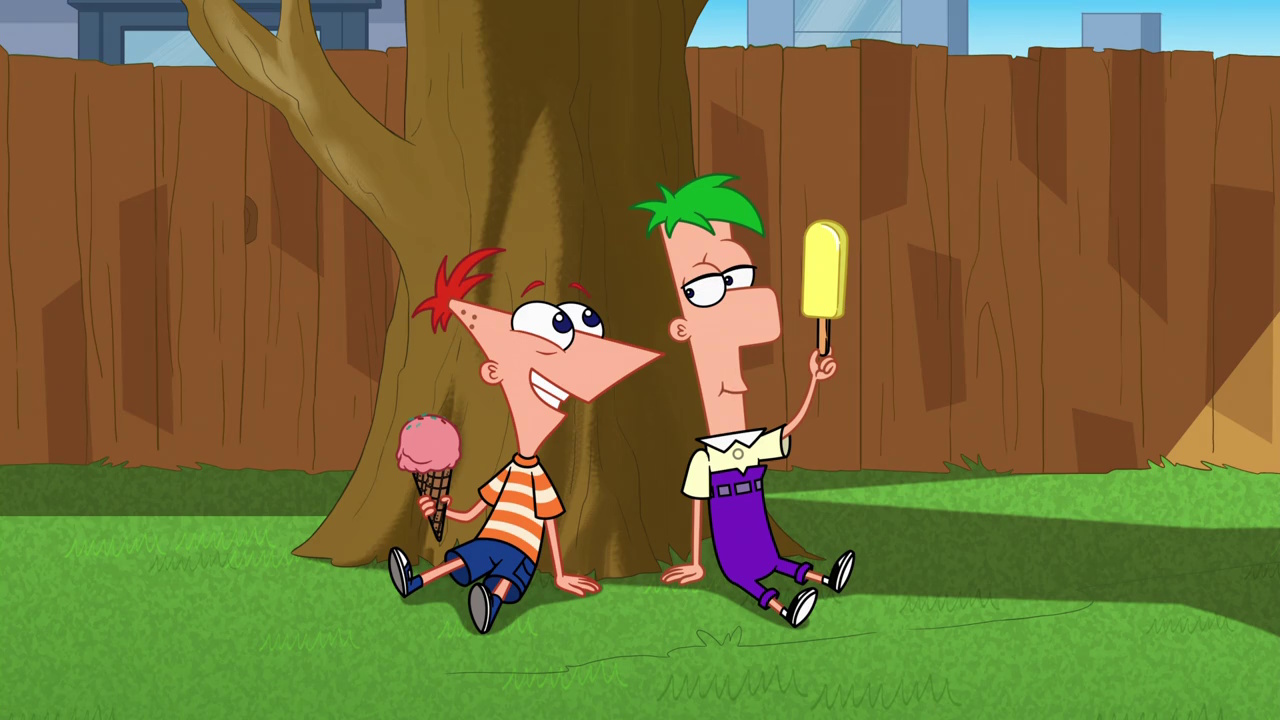
It’s disappointing that Rangers of the New Republic has been axed

Spoiler Warning: There are minor spoilers ahead for The Mandalorian and the Star Wars sequel trilogy.

I’ve made no secret here on the website over the past couple of years that I’m not exactly thrilled with the direction of the Star Wars franchise. In the aftermath of the total narrative failure of The Rise of Skywalker, Lucasfilm has doubled down hard on overplaying the nostalgia card in practically all of its upcoming projects.

There’s some kind of series or miniseries focusing on R2D2 and C-3PO in development. There’s a prequel to Rogue One focusing on Cassian Andor. There’s Obi-Wan Kenobi, which will bring back the classic character to look at his life in between the prequels and the original films. There’s The Book of Boba Fett, in which Boba Fett is inexplicably back from the dead. There’s Ahsoka, a spin-off from The Mandalorian focusing on a character from the animated shows.

Boba Fett is one of several minor characters returning to Star Wars.

All of these projects indicate to me that the higher-ups at Disney and Lucasfilm don’t really know how to handle the Star Wars franchise. They’re intent on looking backwards at Star Wars’ past, seeming to think that what the franchise was is all it can ever be in the future. The result is spin-offs from spin-offs, prequels to prequels, unimportant chapters being thrown under the microscope, and characters of decreasing importance thrust into the spotlight.

Though it was purported to be a spin-off from The Mandalorian, one of the few announced projects that seemed to have any semblance of originality was Rangers of the New Republic. The series was to have looked at the New Republic – the galactic government which was created by the Rebel Alliance following the events of Return of the Jedi – in far more detail than ever before. However, Rangers of the New Republic has now been cancelled.

Logo for Rangers of the New Republic.

The New Republic hasn’t been explored in much detail in Star Wars’ main canon, instead being relegated to a background role in both The Mandalorian and the sequel trilogy. In The Force Awakens, we see Starkiller Base deployed against the New Republic’s capital system, destroying its government institutions and much of its military. By the time of The Last Jedi, the First Order is said to be in control of much of the galaxy, and the New Republic isn’t mentioned thereafter.

The Mandalorian showed us a glimpse of the New Republic, including how it tries to police outlying star systems and enforce its laws – and how it’s relatively ineffective at doing so. There was potential to expand on this depiction, showing both the governmental side of the New Republic, hampered by legislative inefficiencies, as well as the actual Rangers themselves.

A New Republic pilot seen in The Mandalorian.

A lot of Star Wars projects currently in production look at morally ambiguous characters. The Mandalorian focuses on a bounty hunter – someone who primarily operates outside of the law, albeit that he has a heart of gold underneath his armour. The Book of Boba Fett will focus on another Mandalorian bounty hunter, and if it stays true to its premise will show us Star Wars’ seedy underworld in more detail.

Andor will follow Cassian Andor – a character whose moral ambiguity was on full display in Rogue One, and who will do anything to advance the Rebels’ cause. Ahsoka is going to follow the titular Ahsoka Tano, an ex-Jedi who appears to be off doing her own thing rather than helping Luke Skywalker and the Rebels. The only series following an out-and-out hero – or one of the unambiguously “good guys” – is Obi-Wan Kenobi.

Cassian Andor will be the focus of a new Disney+ series.

Rangers of the New Republic had the potential to show us a different side of Star Wars – arguably one closer thematically to the original films, yet still distinct and independent of them. While other shows would look at the underworld of the galaxy, at criminals, or at spies who’ll do anything for their cause, Rangers of the New Republic could’ve been a breath of fresh air. The series could’ve presented an optimistic cast of characters who were genuinely trying to help the new government succeed.

Characters who are too pure and excessively virtuous can be boring, and that would’ve been a pitfall that Rangers of the New Republic would’ve needed to avoid. But had the show managed to walk that line, we might’ve seen something a bit different from Star Wars’ other current and upcoming offerings: a show that would’ve happily looked at the “good guys” as they tried to shore up the New Republic and tackled everything from criminals to ex-Imperial officers.

Emblem of the New Republic.

In part, the decision to cancel Rangers of the New Republic is probably tied to the situation with Cara Dune actress Gina Carano. Though it was never officially stated that the show would star Carano, many fans and commentators assumed that she would have a significant role to play, so following her dismissal from Lucasfilm in the aftermath of some very stupid social media posts, perhaps the show was always living on borrowed time.

We won’t get into the Gina Carano situation here. Suffice to say that anyone with any kind of profile needs to be incredibly careful what they say on social media, and she wasn’t. She upset a lot of people, doubled down on some of her controversial remarks, and that ended up costing her a potential recurring gig with Lucasfilm. She only has herself to blame.

Gina Carano as Cara Dune in The Mandalorian Season 1.

I would argue, though, that Rangers of the New Republic didn’t need to be all about Cara Dune. We met a couple of New Republic characters in The Mandalorian, and they could’ve served as a gateway into the show, keeping it connected to The Mandalorian and potentially building up to a crossover event with one or more of the other shows that were in production at the same time.

There was potential in Rangers of the New Republic. Not only was it a series that could’ve been something different from the likes of The Mandalorian and The Book of Boba Fett by looking at the post-Return of the Jedi government, but it was also a series that could’ve left familiar characters behind to strike out on its own. All of the other Star Wars projects currently in production have this kind of backwards-looking, nostalgia-heavy focus, and Rangers of the New Republic was one of the few offerings that had the potential to be something a little different. As Star Wars continues to double down on nostalgic throwbacks, I fear we’ll come to regret the cancellation of Rangers of the New Republic.

The Star Wars franchise – including all films and series mentioned above – is the copyright of Lucasfilm and The Walt Disney Company. This article contains the thoughts and opinions of one person only and is not intended to cause any offence.
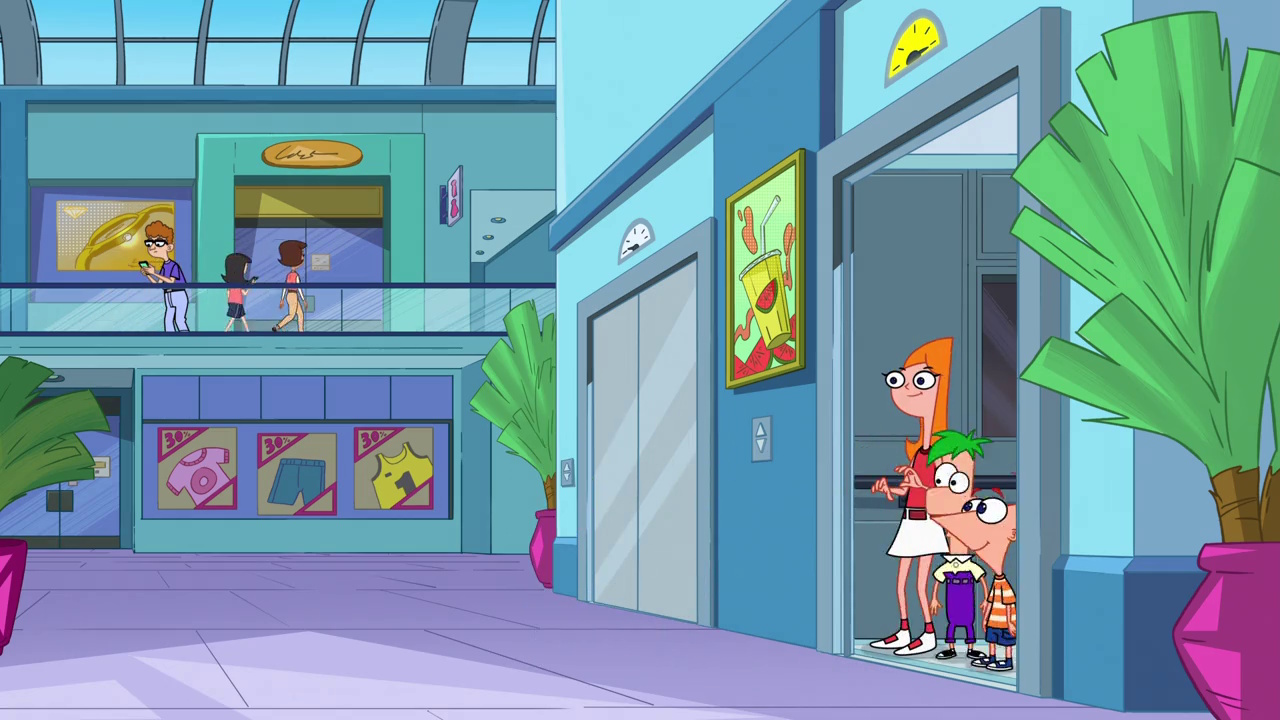
Ten shows to watch instead of Star Trek: Discovery Season 4

Spoiler Warning: There may be minor spoilers for some of the shows on this list.

The person who coined the phrase “there’s no such thing as bad publicity” evidently never met the marketing team at ViacomCBS. The Star Trek: Discovery clusterfuck continues to damage the company, the Star Trek brand, Paramount+, and everything else it touches, with Discovery’s fourth season now being soiled, stinking of shit even for those fans in North America who’ve been able to sit down and watch it.

Whether you’re pirating Discovery Season 4 or not – and honestly, you’re 100% morally justified in doing so if you choose to – I thought that today we should consider some alternatives. Maybe you’ve decided not to pirate the series, or to wait and see how things go. Or maybe you’re still so darn mad at Discovery that watching it wouldn’t feel appropriate right now. So let’s take a brief look at ten television shows that you could watch instead. I’ll try to keep spoilers to a minimum!

Oh, and if you’ve tuned in looking for my weekly Discovery Season 4 reviews or theories, I’ve made the reluctant decision to put those on hold for the time being due to what’s happened.

Number 1: The Wheel of Time

Promotional image for The Wheel of Time.

The Wheel of Time premieres today, so I can’t claim to have watched it for myself at time of writing! But Amazon has invested heavily in this fantasy epic, one which is based on a long-running series of novels by Robert Jordan and Brandon Sanderson. It’s been a long time since I read any of the books (and I didn’t come close to finishing the set) but from what I remember, The Wheel of Time has a complex story full of magic, wonder, and nuanced characters.

Several big-budget fantasy shows were commissioned in the aftermath of the success of Game of Thrones, and initial reviews of The Wheel of Time sound promising. I’ve been looking forward to watching the show all year, and it’s finally here! The first three episodes are being made available at the same time as a kind of extended premiere, with the remainder of Season 1 following on a weekly basis. This could be a great replacement for Discovery between now and Christmas.

Number 2: Foundation

Jared Harris and Lou Llobel star in Foundation.

One of Apple TV+’s first big-budget shows, Foundation has been interesting to follow across its first season. Is it perfect? No, but for an adaptation of a very dense series of books that I would’ve considered borderline unfilmable, I think the series makes a creditable effort to bring the story to screen.

Foundation stars Jared Harris in a key role, and he’s an absolutely fantastic actor who brings a lot to the series. At time of writing there’s one episode left in Season 1, and a second season has already been confirmed for next year.

Number 3: The Expanse

Several of The Expanse’s main cast aboard the Rocinante.

The Expanse is one of the finest science fiction TV shows I’ve ever seen outside of the Star Trek franchise. Its world-building is absolutely fantastic, showing us a look at a near-future where Mars and parts of the asteroid belt have been colonised, but where faster-than-light travel and many other common sci-fi technologies don’t yet exist.

Originally debuting on the SyFy network, The Expanse was later picked up by Amazon following a fan campaign. There are five seasons already, with a sixth and final season scheduled to premiere next month – so you’ve got time to binge the show and get caught up!

Number 4: Firefly (and Serenity)

The main cast of Firefly.

The big caveat with Firefly has to be that the show was never given a chance to live up to its full potential, being cancelled after just one season. But the feature film Serenity brought the cast back and provided the story with closure (of a sort) so it’s absolutely worth watching if you haven’t seen it already.

Firefly brought to screen a uniquely western-themed sci-fi universe that felt truly real and lived-in in a way few franchises manage to do. It’s positively criminal that one season and one film are all we ever got – but what a fantastic season it was!

Number 5: Fortitude

Several members of the Fortitude Season 1 cast.

We’re returning to Earth for this entry on the list! I thought I knew what to expect from Fortitude when I sat down to watch the show. It’s set in a small town in the Norwegian arctic, and I was expecting it to be a fairly standard crime drama. But the show took a series of turns, going from crime to mystery to thriller and even touching on horror and science fiction.

It’s hard to explain Fortitude without spoiling it – and I would say that some of its storylines go a bit wild toward the end. But if you get stuck into it, as I did, you’ll have an amazing time.

Number 6: Star Trek: Picard

Sir Patrick Stewart reprised his famous role last year.

Chances are if you’re reading this you’re a Trekkie and you’ve already seen Picard Season 1. And I would absolutely understand if the Discovery debacle has soured you on Star Trek at the moment. But whether you missed Season 1 or just haven’t seen it since it was broadcast in early 2020, it’s a fine drama series worth going back to.

Remembrance, the season premiere, is one of the finest episodes of Star Trek – and one of the finest episodes of television in general – that I’ve ever seen. The season’s story builds slowly to a conclusion that was, unfortunately, more than a little rushed, but if you can look past the imperfections present at the story’s end, Picard Season 1 is a fun Star Trek adventure.

Number 7: The Mandalorian

Mandy the Mandalorian.

I have to confess that I’m not wild about The Mandalorian. It’s okay – and it contains some great action set-pieces and moments of drama. But my disappointment stems from the fact that the show’s promised “different look” at the Star Wars galaxy kind of fell by the wayside due to the inclusion of too many elements from the films.

Despite that, The Mandalorian has some great moments, and is well worth watching for any Star Wars fan. Two seasons have been put to screen thus far, though I’d argue that their short runtime and serialised story means you only really get one full season’s worth of content. Two spin-offs and a third season are coming next year, so if you’re not caught up on Star Wars yet, now could be a good moment!

Number 8: The Falcon and the Winter Soldier

The titular duo.

I’m not the world’s biggest Marvel fan, but this miniseries on Disney+ was less about superheroes and was more of an action-adventure romp with the titular characters. There were callbacks to a lot of previous entries in the Marvel Cinematic Universe, but even as someone who doesn’t follow the MCU religiously I found the series approachable.

The Falcon and the Winter Soldier tells a largely self-contained story, and it was one that aimed to be uplifting as well as entertaining. I published a review of the miniseries a few months ago, and you can find it by clicking or tapping here – but beware of spoilers!

Number 9: Chernobyl

“Not great, not terrible” would be a bad way to describe 2019’s Chernobyl.

Chernobyl was a sensation when it was first broadcast in 2019, and for good reason. The miniseries, which documents the 1986 Chernobyl nuclear disaster, is one of the finest ever put to screen. This is a story you’re probably at least vaguely familiar with, but Chernobyl goes into detail, looking at the disaster from all angles.

I find it hard to say anything negative about Chernobyl at all; as both a work of drama and a serious historical piece it’s perfect. It even contains a great scene explaining the basics of how a nuclear reactor works!

Number 10: The Center Seat

Logo for The Center Seat.

The History Channel is currently a couple of episodes into its documentary all about the Star Trek franchise. There will be eight more episodes over the coming weeks, documenting the history of Star Trek from the production side going all the way back to Gene Roddenberry’s initial pitch for the series in the early 1960s.

I love a good documentary, and as the Star Trek franchise celebrates its fifty-fifth year, why not take a look back? As Trekkies we should aim to be knowledgeable about the production of the franchise we love, and The Center Seat aims to present its history in an easily understood form.

So that’s it. Ten shows to watch instead of Star Trek: Discovery Season 4.

I think a lot of Trekkies feel the way Book’s feeling right now.

Those are words that I never thought I’d have to write. Discovery’s fourth season had been my most-anticipated television show of 2021, and even now that we’re a couple of days out from the news that we wouldn’t be getting the series, the sense of disappointment and anger with the corporate morons in charge of ViacomCBS remains. But I hope, after a couple of days of outright negativity, this list has been a bit of a break.

Each of the shows above are absolutely fantastic in their own ways, and while it’s true that nothing can fully replace Star Trek: Discovery for a big fan of the series, hopefully you’ve found a few ideas to at least take your mind off things. Social media has been reflecting the outrage directed at ViacomCBS over the past couple of days, and while there’s nothing wrong at all with registering your disgust with the way that the corporation has behaved, please keep in mind that the actors, directors, and other behind-the-camera crew had nothing to do with this decision. In many ways, it harms them too because it’s tainted their hard work and left even North American Trekkies feeling upset and angry. Negativity and division within the Star Trek fandom is never a good thing. It’s such a shame ViacomCBS chose to inflict it upon us on this occasion.

All television series mentioned above are the copyright of their respective owner, network, broadcaster, streaming platform, etc. This article contains the thoughts and opinions of one person only and is not intended to cause any offence.
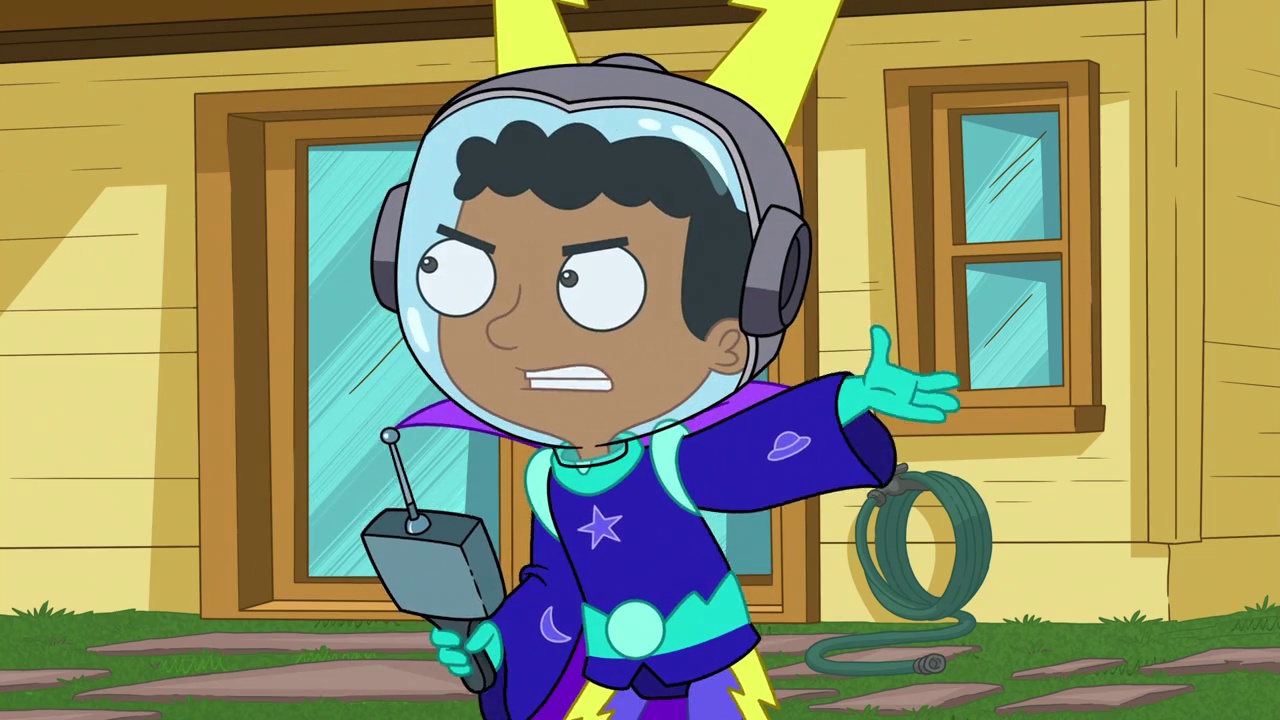
What If…? Star Trek Edition!

Spoiler Warning: There are spoilers ahead for the following Star Trek productions: The Search for Spock, The Next Generation Season 3, Nemesis, Deep Space Nine, Voyager, and Star Trek 2009.

Over on Disney+, Marvel has recently put out a series of animated short films with a very interesting premise. These shorts asked what might’ve happened in the Marvel universe if circumstances had changed, characters had taken different actions, or things had ended differently.

Alternate history has always been a subject that fascinated me! So with that in mind, we’re going to consider a few “what ifs” from the Star Trek franchise – from an in-universe point of view, naturally! There are more than 800 Star Trek stories at time of writing, meaning that there are literally hundreds of potential scenarios where a different decision or different outcome could have radically changed the Star Trek galaxy.

Inspired by Marvel’s What If…? series, we’re going to put a Star Trek spin on this concept!

As always, please keep in mind that all of this is one person’s subjective opinion! I’m indulging in fan-fiction and pure speculation based on my own thoughts about how some of these scenarios might’ve unfolded. If you hate all of my ideas, or something you like wasn’t included, that’s okay! Within the Star Trek fandom there’s enough room for different opinions.

With that out of the way, let’s consider some Star Trek “what ifs!”

Number 1: What if… Captain Picard couldn’t be saved after being assimilated?

Locutus of Borg.

This isn’t going to go the way you might be expecting! In this scenario, the events of The Best of Both Worlds play out as we saw on screen: Picard is captured, the Borg defeat the Federation at Wolf-359, Riker and the Enterprise race to confront them over Earth, and Captain Picard is able to communicate to Data how to defeat them. The Borg cube explodes, and the Federation lives to fight another day! But unfortunately Captain Picard then dies – severing his connection to the Collective and/or removing his Borg implants was too much for his body and mind to take, and he doesn’t survive beyond the end of The Best of Both Worlds, Part II.

As Starfleet and the crew of the Enterprise-D mourn the loss of Captain Picard, Captain Edward Jellico is assigned to the ship as his replacement, and many of the events later in The Next Generation proceed unaltered. As Q would tell Picard in the episode Tapestry, even without him in command the Enterprise-D and Starfleet would be fine.

Captain Edward Jellico.

The Federation, armed with new knowledge of the Borg, developed new ships like the Defiant-class and Sovereign-class, and were even able to defend against a second Borg incursion a few years later – albeit at great cost. But the loss of Captain Picard would have a huge impact later, in the year 2379. A coup on Romulus brings a human clone to power – Shinzon. Shinzon’s plot to destroy the Federation was only stopped because of his personal connection to Picard, a connection that fascinated him and that he hoped could save his life.

Without that obstacle in the way, Shinzon sees no reason to wait or to play nice with the Federation before implementing his plan. He takes his flagship, the Reman warbird Scimitar, and heads straight for Earth before the Federation even has time to respond diplomatically to the change in government on Romulus. Under cloak, the Scimitar deploys its thalaron radiation weapon – massacring all life on planet Earth and crippling the Federation government and Starfleet command.

Without Captain Picard to pose a distraction, Shinzon was able to launch his attack on Earth.

With war now assured between the Romulans and Federation, Romulan commanders who had been sceptical of Shinzon rally to the cause. All-out war breaks out between the Romulan Empire and the residual Federation, but without a government or command structure to provide a coordinated response, and seriously demoralised from the attack on Earth, things don’t go well for Starfleet. The Scimitar proves to be an unstoppable force all on its own, and its thalaron radiation weapon is able to devastate multiple other planets: Betazed, Andoria, Alpha Centauri, Mars, and others. The Federation is forced to sue for peace on very unfavourable terms.

However, Shinzon wouldn’t live to see the Romulan victory. Without the original Picard, there was no way to save his life from the DNA degradation that he was suffering from, and shortly after the Federation’s defeat Shinzon dies. His Reman viceroy would succeed him as the new leader of the Romulan Empire, an empire which now incorporated large swathes of what had once been Federation space. Whether the Romulans could hold all of this territory, and whether their empire would accept a Reman leader, are now open questions…

Number 2: What if… Spock wasn’t resurrected on the Genesis Planet?

Spock’s empty coffin on the Genesis Planet.

This scenario sees the events of The Wrath of Khan unfold exactly as we saw on screen. Khan stages an attack on the Enterprise, steals the Genesis device, and is defeated at the Battle in the Mutara Nebula. Spock sacrifices his life repairing the Enterprise’s warp drive, allowing the ship to outrun the blast of the Genesis device. But in our alternate world, Captain Kirk doesn’t give Spock a Starfleet funeral. Instead Spock’s remains are returned to Vulcan, in line with his and his family’s wishes. There is no chance for a resurrection because Spock never came into contact with the Genesis Planet.

Spock would indeed prove instrumental in several key events later in his life that now can’t happen. But we’re going to focus on the Kelvin timeline today. Spock’s actions in the Kelvin timeline saved Earth from Nero’s attack – but without his presence there’s no one to stop the crazed Romulan commander.

Nero.

Assuming that Nero arrived in the Kelvin timeline thanks to Red Matter (presumably deployed by someone else from the Federation as part of a plan to save Romulus), he has no reason to wait for Spock before enacting his revenge plan. After destroying the USS Kelvin (killing the infant Kirk in the process), Nero races to Vulcan and destroys the planet in the year 2233 – decades earlier than he would during the events of Star Trek 2009. Before the Federation even has time to realise what’s happening, and with Vulcan still collapsing, Nero heads to Earth and deploys his weapon for the second time – destroying the planet.

Nero then moves on quickly, targeting Tellar Prime and other Federation member worlds and colonies. The devastating losses mean it takes Starfleet a while to reorganise, but eventually the remaining fleet comes together to make a last stand over Andoria – the last remaining Federation member world. The battle against Nero’s powerful flagship is long and incredibly difficult, but Starfleet eventually prevails through sheer numerical advantage – despite suffering huge losses.

The Narada and the USS Kelvin.

Nero’s defeat wouldn’t mark the end of the rump Federation’s problems, though. With many planets and colonies destroyed, more than half the fleet lost, and millions of people turned into refugees, the Federation is an easy target. First the Klingons come, seizing planets and systems near their borders. Then the Gorn, the Tholians, and the Romulans also join in, picking off star systems that the Federation could no longer manage to defend. Federation space shrinks to a small area in the vicinity of Andoria.

The Andorians were not happy with the large numbers of refugees who sought them out, though. Plans were put in place to resettle humans, Vulcans, Tellarites, and others on new colony worlds, even though doing so would leave them vulnerable. After being kicked out by the Andorians, the remaining Federation members maintained their alliance more out of fear and necessity than anything else. How long these small populations can survive in a hostile galaxy is unknown…

Number 3: What if… the USS Voyager went the other way?

The USS Voyager.

The events of Voyager’s premiere episode, Caretaker, play out much the same as they did on screen in this scenario. But after that, things take a very different turn – literally! The Maquis raider Val Jean, under Chakotay’s command, is transported to the Delta Quadrant by an entity known as the Caretaker. The USS Voyager is likewise transported by the Caretaker’s Array, and after the death of the Caretaker and a short battle with the Kazon, Captain Janeway orders the destruction of the Array. Voyager must find a way home.

Instead of taking the most direct route to Earth, Captain Janeway and the crew of Voyager consider an alternative idea – heading for the Gamma Quadrant, and the far side of the Bajoran Wormhole. From there it would only be a short journey back to Earth! The crew debate the ideas for a while, and there isn’t a clear consensus. No starship has ever undertaken such a long journey before, so there really aren’t ground rules for route planning when it comes to long-distance interstellar travel.

A non-canon map of the Star Trek galaxy.
Image Credit: Star Trek Star Charts (2002) via Memory Beta

Using the map above (which is non-canon) as a guide, the crew quickly figure out that both a direct route home via the Delta and Beta Quadrants or an indirect route via the Gamma Quadrant and Bajoran Wormhole are roughly the same length and would take roughly the same amount of time.

The two crews can’t agree at first. Chakotay and the Maquis, keen to avoid going anywhere near Cardassian space and fearing being turned over to Cardassian authorities upon their return, firmly advocate for the Delta Quadrant route. Neelix claims to be familiar with space in both directions and along both routes, but ultimately the decision falls to Captain Janeway.

The choice of route ultimately falls to Captain Janeway under the “my ship, my decision” principle.

Somewhat ironically when considering her actions in Endgame, Janeway chooses the Gamma Quadrant route. Why? She’s fearful of the Borg, naturally. Whatever dangers and obstacles may await Voyager in the Gamma Quadrant, she tells her crew, Starfleet has known for years that the Borg’s home territory is the Delta Quadrant. Taking that path seems positively suicidal in comparison, so Voyager will instead head for the Gamma Quadrant terminus of the Bajoran wormhole.

Voyager’s superior technology makes battling the Kazon sects in the area around the Caretaker’s Array relatively easy, but they have to be careful to avoid space claimed by the Haakonian Order – the conquerors of Neelix’s people, the Talaxians. After they leave their starting region, though, the truth is that we simply don’t know very much at all in canon about this area of space. Would Voyager find a faster way home through some technological means or natural phenomenon? Or would the ship and crew have to undertake a slow, decades-long journey to reach the wormhole? Would they even survive at all, or instead fall victim to some villainous faction or dangerous anomaly present in this unexplored region?

Number 4: What if… the USS Discovery didn’t go into the far future?

Michael Burnham and the USS Discovery at the mouth of the time-wormhole.

I already have a theory discussing in detail why I think the USS Discovery didn’t need to go into the far future based on the outcome of the battle in Such Sweet Sorrow, Part 2 – and you can find that one by clicking or tapping here. For the sake of this scenario, though, all we’re going to say is that somehow Captain Pike, Burnham, and Saru figured out a way to defeat the Control AI without sending the USS Discovery into the 32nd Century.

Obviously some changes wouldn’t appear until the 32nd Century. Without the USS Discovery and Michael Burnham, no one is able to discover the source of the Burn or the huge cache of dilithium in the Verubin nebula. Without the USS Discovery and its Spore Drive to fight over, the Emerald Chain doesn’t stage a bold attack on Starfleet HQ. Su’Kal would almost certainly die alone when the KSF Khi’eth is destroyed – whether that event would trigger a second Burn is unclear.

A second Burn could occur.

But more substantial changes could have taken place in the Star Trek galaxy centuries earlier. With the Spore Drive still in existence in the 23rd Century, it stands to reason that Starfleet would have continued to explore the technology – it works, after all, so if a new way of navigating the mycelial network could be discovered, the Spore Drive would be an absolute game-changer for the Federation.

At some point, Starfleet scientists would hit upon the idea of using empaths to connect to the mycelial network in place of augmenting human DNA. After promising test flights using Betazoid and even Vulcan navigators, in the late 23rd Century Starfleet is able to begin a wider rollout of the Spore Drive. At first a handful of ships are kitted out as rapid-response vessels, able to jump across Federation space at a moment’s notice to assist with emergency situations.

Starfleet is able to kit out a whole fleet of Spore Drive-enabled starships.

The Spore Drive would soon attract the attention of other factions, however. Unwilling to allow the Federation a massive tactical advantage, particularly in the aftermath of the Federation-Klingon war, the Klingon Empire begins development on their own Spore Drive programme. The Romulans follow suit, and by the early part of the 24th Century the Spore Drive has become a mainstay of interstellar travel in the Alpha and Beta Quadrants.

No longer limited by geography or travel time, Starfleet is able to jump to interesting-looking phenomena across the galaxy with ease, initiating dozens of first contacts decades ahead of schedule. On one unfortunate occasion, however, a Spore Drive ship jumps to the Delta Quadrant… right into the heart of Borg space. The Borg quickly assimilate the vessel, taking the Spore Drive technology for themselves and putting a target on the Federation’s back. Due to the distances involved, Starfleet remains unaware of what happened, merely recording the USS Discovery-C as “missing in action…”

Number 5: What if… Benjamin Sisko wasn’t the Emissary of the Prophets?

Commander Benjamin Sisko.

Ignore for a moment the revelation from Image in the Sand about Benjamin Sisko’s Prophet-induced conception! For this scenario, we’re considering that there were two occupants of the Runabout which first discovered the Bajoran Wormhole: Sisko and Jadzia Dax. Though the Prophets would choose Sisko as their Emissary, they could just as easily have chosen Dax instead.

Jadzia Dax returns from the wormhole having been anointed by the Prophets as their Emissary, and receives much respect and adoration from the Bajorans. Meanwhile, Sisko makes good on his threat and quits Starfleet, returning to Earth. Jadzia is promoted to the rank of commander and given “temporary” command of DS9, due in no small part to the way the Bajorans feel about her.

Jadzia Dax assumes command of Deep Space Nine.

First contact with the Dominion occurs, and shortly afterwards the Dominion and Cardassians form an alliance – the work of Dukat, formerly the commander of Bajoran occupying forces on Bajor. The Dominion Cold War begins. Behind the scenes, Dukat is researching the Pah-wraiths, the ancient noncorporeal enemies of the Prophets. In disguise he travels to Deep Space Nine with a lone Pah-wraith, and in the course of unleashing the entity into the wormhole, kills Jadzia.

With no Emissary on the outside to come to their aid, the Prophets are fighting a losing battle against the Pah-wraiths while the Dominion War rages. The loss of Dax, though distressing to the crew of DS9 and her husband Worf, doesn’t appear to matter to the Federation war effort… not at first. In fact, the wormhole’s closure appears to provide the Federation alliance a reprieve, as the threat of Dominion reinforcements is reduced.

Jadzia is killed by the Pah-wraiths.

However, without the Orb of the Emissary re-opening the wormhole and expelling the Pah-wraiths, things go badly for the Prophets. When Dukat is able to implement the next phase of his plan and release the rest of the Pah-wraiths from the Fire Caves, there’s no one to stop him. The Pah-wraiths seize control of the wormhole, and as a thank you to Dukat they destroy the Federation minefield, allowing a massive fleet of Dominion reinforcements through the wormhole. The Dominion conquer DS9 and Bajor with ease.

With no way to stop Dominion reinforcements pouring in through the wormhole, the Federation alliance moves into attrition mode, trying to hold the existing front line for as long as possible against repeated Dominion attacks. Though the Pah-wraiths don’t actively take part in the fighting, their involvement allowed Dukat and the Dominion to swing the balance of the war back in their favour. By controlling Deep Space Nine and the wormhole, the Cardassian-Dominion alliance has the Quadrant’s most significant asset. It seems like only a matter of time until the Federation will have to sue for peace, if the Dominion would even accept…

So that’s it! Five Star Trek “what ifs!”

There are many more “what if” scenarios in the Star Trek universe!

I can already think of more, so watch this space. I might return to this concept in future. I hope this was a bit of fun, and a chance to consider some alternative outcomes to some of the events we’ve seen across Star Trek’s history. I tried to pick a few different ideas from different productions – otherwise this could’ve been “five Captain Picard what ifs!”

As always, this was really just an excuse to spend a little more time in the Star Trek galaxy. It’s totally fine if you disagree with any of the storylines I’ve suggested today, or if you think this whole concept was a silly idea! None of this will ever make it to screen, and it was more of a thought experiment and creative writing project than anything else. I had fun putting this together – and I hope you enjoyed reading it.

What If…? and the logo for the series are the copyright of Marvel and The Walt Disney Company. The Star Trek franchise – including all films and series mentioned above – is the copyright of ViacomCBS. This article contains the thoughts and opinions of one person only and is not intended to cause any offence.
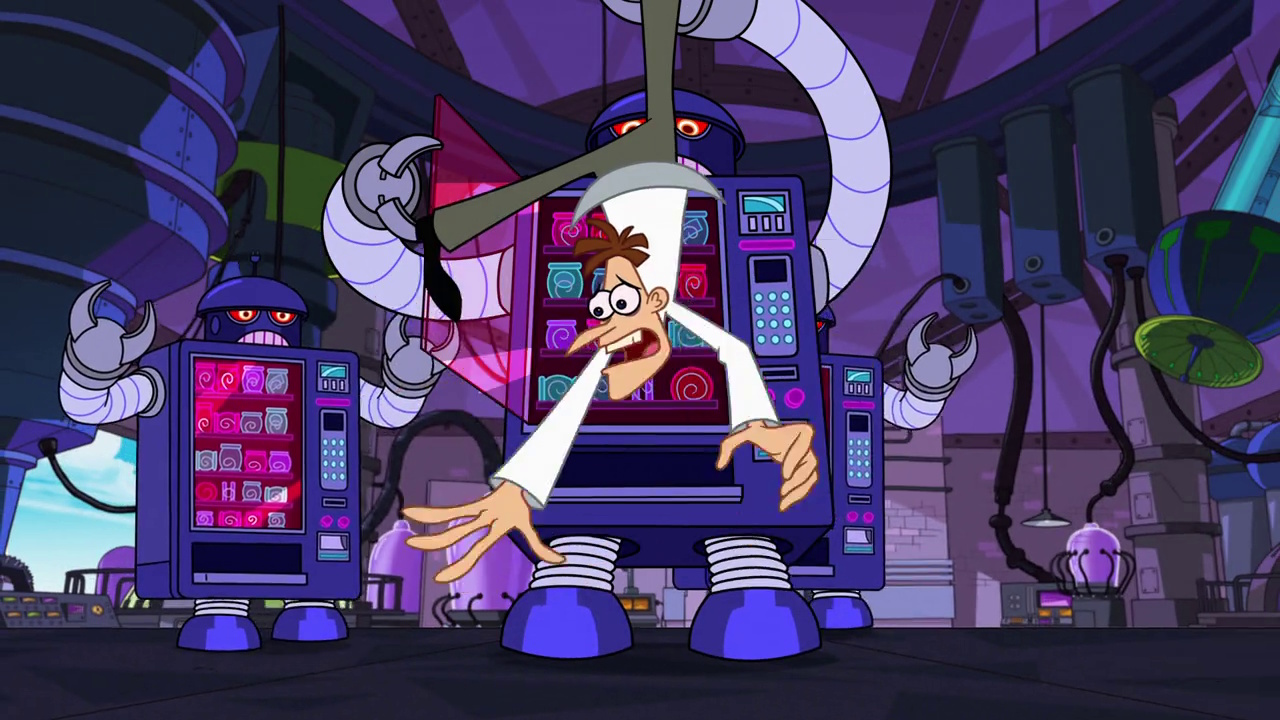
Lego Star Wars Terrifying Tales – a review

Spoiler Warning: There are spoilers ahead for Lego Star Wars Terrifying Tales. Spoilers are also present for other iterations of the Star Wars franchise, including the following films and shows: The Mandalorian Season 2, Solo: A Star Wars Story, and The Rise of Skywalker.

It’s Spooktober – the spookiest month of the year! To celebrate Halloween at the end of the month, Disney and Lucasfilm released Lego Star Wars Terrifying Tales on Disney+, a Star Wars-themed kid-friendly Halloween special. Last year’s The Lego Star Wars Holiday Special – which I didn’t get around to reviewing in time for Christmas – was a ton of fun, so I had high hopes going into Terrifying Tales. Stay tuned for a review of The Lego Star Wars Holiday Special in late November or December, by the way, as I’m adamant that I’ll finally review it this year!

Terrifying Tales was incredibly funny, at least equalling last year’s Lego Star Wars offering. It was the kind of silly, irreverent style of humour that Lego Star Wars is known for, and also drew on a number of different classic horror tropes. I had a wonderful time with the forty-five minute special, and if I had one criticism it would be that I wish we got these Lego Star Wars special episodes more often!

Poe Dameron and BB-8 with new character Dean.

I’m not the world’s biggest fan of horror. Some horror stories can be a mental health trigger for me, so I tend to avoid the genre as a whole unless I’m really sure that I’m in the right frame of mind. But Terrifying Tales was exactly the kind of child-friendly light horror that appeals to me. The animated special made use of a horror-themed aesthetic and horror-based stories, and played up some familiar tropes, but it did so without being frightening. If you’re concerned about younger kids or anyone of an especially sensitive disposition, I didn’t see anything in Terrifying Tales that I feel would be particularly scary or upsetting.

Lego Star Wars has been something I’ve adored since the release of the first video games in the mid/late 2000s; 2007’s Lego Star Wars The Complete Saga is undoubtedly one of the best video games I played during the Xbox 360 era. I’ve also been eagerly awaiting the newest Lego Star Wars video game which is due for release in the spring. Watch this space again, because I hope to review the game when it’s released!

I’m already looking forward to the next Lego Star Wars project!

Last year’s Lego Star Wars Holiday Special managed to get a great balance of prequel era, original era, and sequel era references and stories, and I was incredibly pleased to see Terrifying Tales managed to do the same. At first I was worried that the special was going to lean very heavily on the sequels, with Poe Dameron as its primary character. However, while the frame narrative focused on Poe, there were plenty of references and callbacks even then to past iterations of Star Wars. Overall, Terrifying Tales managed to get the right mix of characters and storylines from the cinematic franchise’s three main eras.

The frame narrative was typical Lego Star Wars silliness, with a Hutt having taken over Darth Vader’s abandoned Mustafar castle. Planning to turn the Sith fortress into a Las Vegas-style hotel, the setting was a great mix of creepy and silly – there was more than enough light-heartedness in the modifications made to the intimidating castle to tone it down and take the edge off the spookiness. At the same time, the castle was a great setting. It had a fairly typical “haunted castle” vibe, complete with darkened hallways and imposing architecture. Even in the lobby, which was brimming with Vegas-inspired (or perhaps Disneyland-inspired) kitsch and souvenir shops, there was still a creepy background note, as though the place wasn’t entirely safe.

Darth Vader’s castle – now with gift shop!

As the characters ventured further into Vader’s castle, however, the setting took on a different feel. It became less of a haunted castle and more akin to an ancient temple – or a pyramid from a classic mummy film. Deep within the bowels of Vader’s abandoned fortress, hidden rooms with unclaimed – yet cursed – treasures and cleverly-operated switches and traps awaited Poe, BB-8, and the rest of the cast. The castle thus served a dual purpose, and to cram both settings into one locale in a way that felt natural and that didn’t feel rushed shows some pretty great writing.

The only thing that the frame narrative perhaps lacked were more recognisable characters. I’ve argued on a number of occasions that the Star Wars franchise is overly-reliant on characters from its past and that I wanted to see more original creations – but Terrifying Tales isn’t really where I expected to meet a whole bunch of newbies! To see Poe without Rey or Finn was just odd, and as much fun as characters like Vaneé and Graballa the Hutt were, the frame narrative could’ve found a way to include more familiar characters. Lego Star Wars is the one place where bringing back classic characters makes sense – and it’s also where logic and internal consistency matter far less, so there’s plenty of ways to do so! It wasn’t a fatal flaw by any means, and I enjoyed Poe’s mentoring of young Dean in particular. But it was certainly noteworthy that this part of the story really only had Poe and BB-8 in terms of familiar faces.

Poe was the main character in Terrifying Tales.

Graballa the Hutt gave me almost a Ferengi vibe with his unchecked capitalistic greed, and though we didn’t get much time for any of these characters to be truly fleshed-out, there was enough of a moral shadiness to him that left me in no doubt the kind of character this was. Graballa’s the kind of money-driven dodgy boss who’ll cut any corner to save a buck and would’ve sold out Poe and Dean and everyone else for his own safety. He made a fun addition to the group as comic relief, but at the same time he was a constant cause for concern – he’d trade everyone’s lives for a shot at his own survival, and in horror stories those kinds of characters can cause a lot of trouble!

Vaneé is a character who first appeared in Rogue One, and whose role was expanded upon in the novelisation of the film. He’s also made appearances in a number of Star Wars comics – none of which I’m familiar with. For all intents and purposes, though, the character we met in Terrifying Tales was a blank slate upon which the animated special could craft a suitably over-the-top villain!

This character from Rogue One, seen bowing to Darth Vader and informing him of Krennic’s arrival, is Vaneé.

Vaneé definitely had a creepiness to him during the story. He set up the three vignettes in a suitably spooky manner, and the voice performance from Tony Hale was an exquisite parody of these kinds of characters from classic horror films and shows like The Twilight Zone. The downtrodden, overlooked butler or apprentice with an evil streak is an archetype of the genre, and Vaneé slotted into that role perfectly in Terrifying Tales.

At the climax of the story, after we’d been treated to the three vignettes, Vaneé made his grab for power via a Sith artefact that looked an awful lot like the wayfinder from The Rise of Skywalker. From that moment on he was no longer a creepy character but a completely over-the-top pantomime villain – and I loved that transformation! In a story like Terrifying Tales, with all of the silliness and light-heartedness of the Lego Star Wars brand, a villain who goes completely hell-for-leather into wanting to rule the galaxy was pitch-perfect.

The villainous Vaneé!

But we’re racing ahead of ourselves! Before we get to Vaneé’s endgame and thus the end of Terrifying Tales we first have to look at… well, the titular terrifying tales themselves!

The first of the three was titled The Lost Boy, and focused on Ben Solo and the Knights of Ren some time prior to The Force Awakens. And it was surprisingly fun! The Knights of Ren were presented as basically a motorcycle gang, wreaking havoc on a village or community somewhere in the vicinity of Luke’s new Jedi Temple. The idea that the Knights of Ren already existed before Ben Solo became Kylo Ren is actually an interesting one, and the cameo from Christian Slater as the leader of the gang was neat as well.

The Lost Boy lasted six minutes, yet managed to contain more backstory for Kylo Ren than the entire sequel trilogy! And no, this isn’t going to turn into another rant about The Rise of Skywalker, but I really felt that the way we saw Ben Solo presented in this short story was far better and more sympathetic than we ever saw in the live-action films. We saw his bad attitude as a student, his arrogance and desire to learn the Force more quickly, and these things informed his fall as the story ran on. Feeling constrained and restricted by his uncle, he was tempted by the Knights of Ren and their charismatic leader, and that set him on a dark path.

The Lost Boy gave us Kylo Ren’s backstory that was missing from the sequel trilogy!

Sadly that isn’t canon! But it was surprisingly cathartic, especially after the way The Rise of Skywalker ended, to get some kind of origin story for Ben Solo that we could see for ourselves and not hear second-hand from other characters.

The dream sequence during this short story was fantastic. It was incredibly well-animated, and had a very trippy presentation that really did feel like we were following Ben Solo into a nightmare. The way Ben was haunted by a face seeming to come out of the ceiling, then was transported into a creepy dream-world was incredibly well-done, and by far the highlight of this part of the story. As the leader of the Knights of Ren appeared to Ben in his dreams I got a Nightmare on Elm Street vibe – as if something deadly was about to happen.

The leader of the Knights of Ren.

Though this was an “alternative” take on Kylo Ren’s creation and Ben Solo’s fall, I really liked it. There were some great moments of humour, particularly Ben commenting on Luke training for “like twenty minutes” on Dagobah – a reference to The Empire Strikes Back and how Jedi training seems to progress very differently for Luke compared to other characters! But it was also a story of teen angst, rebellion, and the fall of a character to the Dark Side. Because we didn’t get to see Ben’s fall in canon, I found it particularly interesting.

The second vignette brought us a battle between General Grievous and Darth Maul. Terrifying Tales called out how patently ridiculous it was for Darth Maul to have been revived – finally! The Star Wars franchise apparently loves to bring back characters who were clearly and unequivocally dead: Palpatine in The Rise of Skywalker, Boba Fett in The Mandalorian, and of course Darth Maul in The Clone Wars television series and Solo. But the fact that such “back from the dead” moments are ridiculous needed to be called out, and it was done so here in incredibly fun fashion!

Darth Maul’s return from being dead was always ridiculous… and Terrifying Tales pointed that out!

Maybe you’ve always wondered who would win in a fight between Grievous and Maul. I hadn’t, but their duel was still action-packed and fun to watch. This was perhaps the least “terrifying” of the three stories, by which I mean it had the least focus on any horror trope or element. The cursed lightsaber was an interesting macguffin, but I didn’t really feel that it had much of an impact on either mechanical monstrosity as they fought over it. If anything, it had a similar effect to the Ring in The Lord of the Rings, giving both characters a Gollum-like craving.

The real standout star of The Duelling Monstrosities, though, was Palpatine. This version of Palpatine as a nonchalant, almost casual manager of his Empire is never not funny! If you’re familiar with the way Palpatine was parodied in the likes of Robot Chicken and the Family Guy Star Wars specials, this depiction is comparable. If not, go and watch the Robot Chicken Star Wars specials at the very least, because they’re hilarious!

Palpatine was hilarious in this vignette.

Palpatine carried this segment and provided much of its comedy. He was hilarious as he pitted Maul and Grievous against one another – accidentally, of course! And then betrayed the victor to claim his prize of the broken cursed lightsaber. We never did find out why he wanted it, but it didn’t matter!

The third vignette was inspired by the 1902 short story The Monkey’s Paw, and there were elements of the 1960 Twilight Zone episode Man in the Bottle too – itself a loose adaptation of that short story. It was by far the creepiest short story in terms of its setup and premise, and Vaneé gave his best Twilight Zone-inspired speech to tee up the tale.

The Twilight Zone-inspired title card for The Wookie’s Paw.

Luke Skywalker and Darth Vader were the stars this time around, with Luke wishing upon a Wookie’s paw to grant wishes for himself. In this alternate version of A New Hope, Luke becomes an Imperial pilot and Darth Vader’s Dark Side protégé. If you’ve ever wondered what might’ve happened had Luke been trained by Vader, The Wookie’s Paw gives us a glimpse into that alternate reality!

In true Monkey’s Paw fashion, though, everything is not what it seems. Luke’s wishes come with a price – and after using the cursed Wookie’s paw to rise through the ranks and become a pilot and Sith apprentice, Luke goes too far. By wishing for fame he actually gets notoriety, accidentally blowing up the Death Star while trying to defend it from a Rebel attack. It was actually pretty funny to see him make such a catastrophic mistake!

Luke Skywalker and Darth Vader.

The interplay between Luke Skywalker and Darth Vader was surprisingly cute in The Wookie’s Paw. Though both remained blissfully unaware of their familial connection, Vader took on a similar mentor/fatherly role to Luke as Obi-Wan had in A New Hope, and seeing Luke go through a Dark Side version of some classic training scenes – from the training droid to carrying Vader on his back – was both sweet and funny at the same time.

If you’ll forgive a short detour, what I liked about this story was that the cursed Wookie’s paw didn’t actually change the outcome of A New Hope. Princess Leia stepped up to lead the assault on the Death Star in Luke’s absence, aided by Obi-Wan Kenobi, who survived in this alternate timeline. Luke still fired the torpedoes that destroyed the battlestation, even if he didn’t mean to. The message, aside from “be careful what you wish for,” is one of fate and destiny. Even if Luke Skywalker were removed from the equation – or fighting for the other side – the Rebellion still prevailed.

Be careful what you wish for, Luke!

So we come to the finale! Once the three vignettes were over and Poe had been led deep into the heart of Darth Vader’s fortress, Vaneé revealed his ultimate plan. Using Dean to open the Sith holocron, he used it to seize the power of the Dark Side. Cloaking himself in armour he resembled a Sith monster, and he used his newfound power to turn an army of zombified battle droids on Poe, Dean, and Graballa.

This was perhaps the most intimidating battle droids have ever felt in Star Wars! From their first appearance in The Phantom Menace all the way through the prequels battle droids were presented as cheap cannon fodder and even comic relief to be laughed at. Turning them into zombies with glowing red eyes, and pitting a small band of heroes against them and their master, was an interesting and surprisingly fun turn. One of the battle droids even got a moment inspired by classic film The Shining, which was absolutely hilarious!

Zombified battle droids!

After a conversation between Poe and the charming Dean about how fear is natural and something everyone experiences, the duo were able to save the day and defeat Vaneé. There was a neat battle between Poe and Vaneé that showed off Lego versions of the AT-ST and AT-AT walkers, before Vaneé was finally thrown into Mustafar’s lava just like his master before him! It was a tense yet fun battle, and giving Dean the opportunity to save the day was perfectly in line with the kind of story that Terrifying Tales aimed to be.

I had fun with Terrifying Tales. It was a cute Lego Star Wars parody that delivered everything I wanted and expected, and even managed to throw in a few neat surprises and things I didn’t even know I needed to see! The animation work was fantastic, a perfect blend between computer-animated Star Wars locales and a distinctive Lego aesthetic for the characters and vehicles. A project like this could’ve come across as an extra-long toy commercial, but I didn’t get that sense at all. It was a fun Star Wars-themed Halloween romp.

Terrifying Tales was a great way to kick off the spookiest season of the year for me! There’s only a little over three weeks left until Halloween, and I have a few more spooky ideas up my sleeve before the month is over, so I hope you’ll come back for some of those! Happy Spooktober!

Lego Star Wars Terrifying Tales is available to stream now on Disney+. The Star Wars franchise – including Lego Star Wars Terrifying Tales and all other properties mentioned above – is the copyright of Lucasfilm and The Walt Disney Company. This article contains the thoughts and opinions of one person only and is not intended to cause any offence.
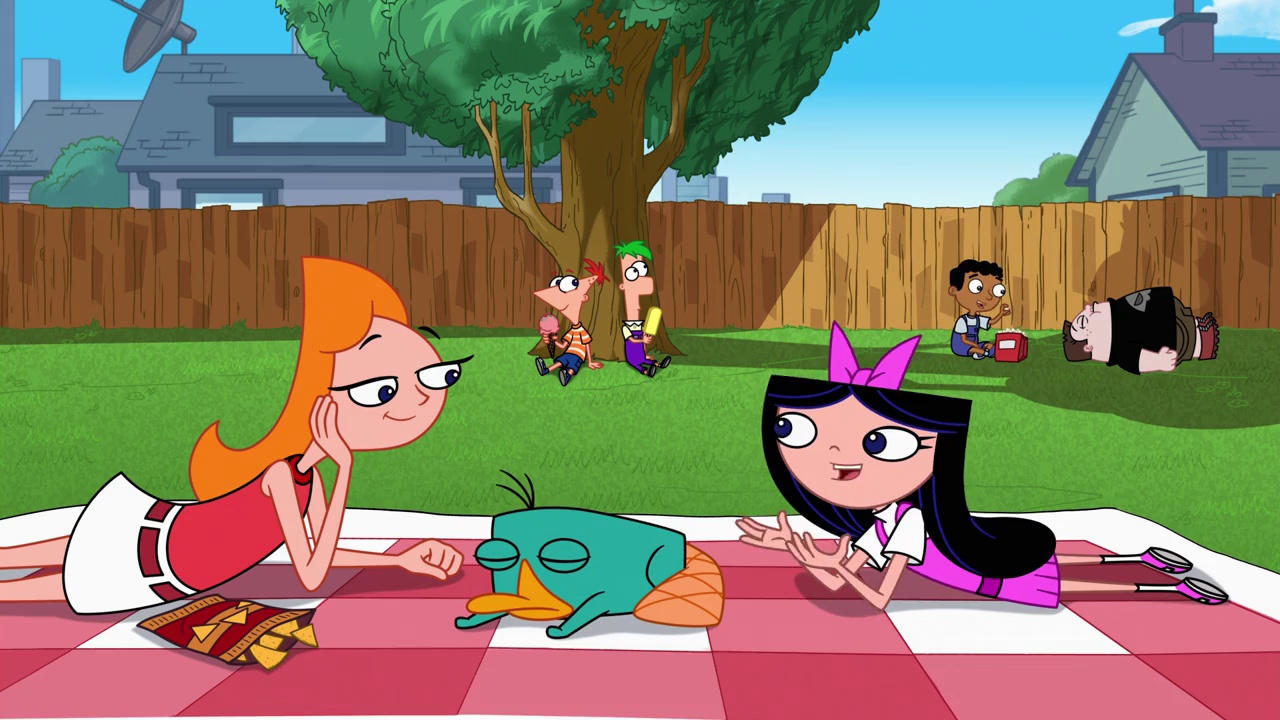
The Book of Boba Fett: Thoughts, hopes, and expectations

Spoiler Warning: There are spoilers ahead for the Star Wars franchise, including The Mandalorian Seasons 1-2 and Return of the Jedi.

“Mixed feelings” might be the best phrase to describe my attitude toward the upcoming Disney+ Star Wars series The Book of Boba Fett. I have no doubt that the series will do a lot of things well, from visual effects to exciting action sequences. But if you recall my criticisms from 2020 when it was first rumoured that Boba Fett might be included in Season 2 of The Mandalorian, the bare premise of the series is enough to leave me underwhelmed.

Let’s be blunt for a moment. Boba Fett was a dull character whose entire popularity in the early 1980s came from his unique-looking armour. This led to sales of action figures, models, and dolls – and an oversized, undue gravitas given to a minor, one-dimensional foil for Han Solo. Boba Fett does have a unique, cool look, I won’t deny that. But his role in The Empire Strikes Back and Return of the Jedi was minor, and his death in the latter film was a fittingly unspectacular end for an unspectacular character.

Boba Fett’s popularity stems from toys and action figures. By the way, does anyone else really dislike Pop Vinyl/Funko Pop? I just can’t get on board with the design of practically any of their figures…

However, Boba Fett’s popularity endured over the years, helped in no small part by his character being fleshed out in a fan-fictiony way by writers of the old Expanded Universe books and comics. So by the time of the prequels, George Lucas and others involved in the production of those films clearly felt an obligation to include backstory for him as well.

I don’t hate Boba Fett, but when I watched the Star Wars trilogy for the first time I just didn’t get the hype. Why was this character so remarkable considering he did one thing – captured Han Solo – then died in a pretty stupid way when his jetpack misfired? And he didn’t even capture Han Solo himself, he had to enlist the help of Darth Vader and a whole legion of Stormtroopers. In short: cool-looking armour, but that’s about as much as I can say about Boba Fett in his original incarnation.

Boba Fett’s first appearance in The Empire Strikes Back.

However, The Book of Boba Fett isn’t following the character as he appeared in the original films. As I noted in my review of Season 2 of The Mandalorian, the character introduced to us as “Boba Fett” feels a long, long way removed from the bounty hunter we met in The Empire Strikes Back. His entire demeanour was so radically different that I said in my review that the two characters feel entirely separate. The plot of The Mandalorian Season 2 wouldn’t have been any different had that character been given a different name and Boba Fett never been mentioned.

One thing I will credit The Mandalorian’s Boba Fett with is that I felt the character got a more nuanced portrayal than he ever did in the films. There was a sense that this man was a weary veteran, ready to hang up the armour and live a quiet life somewhere. He’d fought all the battles he wanted to fight and was ready to try something new – at least until we saw him in the final moments of the season seemingly intent on seizing control of Tatooine’s underworld.

Boba Fett as he initially appeared in The Mandalorian Season 2.

Just like The Rise of Skywalker had done before it with Palpatine, The Mandalorian Season 2 completely ignored what has to be the most important point about Boba Fett: how on earth is he still alive? If the new series can find a way to pull an answer to that question out of its backside that even makes a degree of sense, it’ll have made progress. And I think that’s my biggest single request when it comes to the storyline of The Book of Boba Fett: find some way to give us a plausible explanation for the main character’s survival.

Remember that Boba Fett fell into the gaping mouth of a giant monster in the Tatooine desert. The Sarlaac monster in the Pit of Carkoon was presented as a truly awful torturous death, supposedly taking a long time in its inescapable digestive tract. Jabba the Hutt was said to favour this method of execution, and planned to execute Luke Skywalker and Han Solo there in Return of the Jedi. Boba Fett fell into the monster’s mouth, and that seemed to be a very definitive end for him!

How did Boba Fett survive? Finding a plausible answer is key to the show’s success.

One aspect of the story of The Mandalorian Season 2 has potentially complicated any story of Boba’s escape. The fact that his armour had been lost on Tatooine, recovered by Jawas and later sold to Cobb Vanth clearly indicates that Boba didn’t simply blast his way out of the creature as soon as the battle on Jabba’s barge was over. Because he fell into the pit wearing his armour – and thus carrying at least some of his weapons – the show might’ve been able to argue that he didn’t die and simply shot his way out. But if so, he’d have kept his armour.

So the question of his survival remains, and in the aftermath of just how poorly the awful line “somehow Palpatine returned” went down in The Rise of Skywalker, I can’t imagine that The Book of Boba Fett would try to ignore this point. Even if all we get are a few lines of dialogue saying that he climbed out and was saved by roaming scavengers or Chewbacca’s great-aunt, I think we need some kind of closure before we can take seriously the fact that Boba Fett is back.

Boba Fett, moments before dying like a chump.

Then we come to the premise of the series itself, and this is perhaps what I’m most interested in. One of my biggest disappointments when it came to The Mandalorian was that the show’s basic premise remains unfulfilled despite sounding incredibly promising. I wanted to see “the adventures of a gunslinger away from the reach of the New Republic,” but instead the show brought Baby Yoda, the Force, the Empire, and even Luke Skywalker into play in a story that increasingly felt like Return of the Jedi II as Season 2 wore on.

The Book of Boba Fett promises us the following: “Legendary bounty hunter Boba Fett and mercenary Fennec Shand navigating the galaxy’s underworld when they return to the sands of Tatooine to stake their claim on the territory once ruled by Jabba the Hutt and his crime syndicate.”

Though I stand by my criticisms of the Star Wars franchise making desperate nostalgia plays for characters and settings from the original films, that premise doesn’t sound half bad. Though I don’t want to get my hopes up too high after being burned by The Mandalorian, maybe we can finally get a look at the Star Wars galaxy away from the Force and the Skywalker family.

Hopefully The Book of Boba Fett won’t be repeating scenes like this one…

Boba’s survival after falling into the Pit of Carkoon risks coming across as cheap, fan-servicey, and just plain dumb. But if the show can find some way to navigate that sizeable pitfall (pun intended), then Boba Fett could actually prove to be an interesting point-of-view character for exploring the darker side of the Star Wars galaxy.

As an ex-bounty hunter, Boba Fett used to inhabit this seedy underworld that the show’s official description is teasing us with. But as someone who’s been out of action for almost a decade at this point, things have moved on in his absence. The biggest change, most likely, is the fall of the Empire. Without the Empire to crack down on criminals, and with the New Republic taking a different approach, it’s possible that the criminal underworld has grown since Return of the Jedi.

What will the criminal underworld be like after the fall of the Empire?

Boba Fett will have to navigate a changed world, and that offers up a lot of potential for exposition and explanation to be dropped into the series in a way that makes sense. There’s a high probability of learning more about the Star Wars galaxy – and particularly its criminal side – than we ever have before. That idea is definitely an interesting one, and though I wouldn’t personally have chosen to bring Boba Fett back from the dead in order to tell this kind of story, as a concept it’s hard to fault.

As a character, Boba Fett is perhaps open to further exploration. As I noted above, in his original appearances he was fairly one-dimensional, and his role in The Mandalorian Season 2 came with a degree of mystery to it. There’s scope to learn more about Boba Fett the man: who is the person underneath the armour? What drives him? What are his ambitions now that he’s got his armour back and taken over Jabba’s former throne? All of these things could potentially lead to interesting moments of characterisation, and as a concept the idea of an anti-hero or a villain with a heart and understandable motivations can work exceptionally well.

Din Djarin with Boba Fett in The Mandalorian Season 2.

All of this could come to pass if the show stays true to its premise! And this is where my concerns kick in. As Boba Fett’s return proves in and of itself, the Star Wars franchise is completely and utterly dependant on its original films and the characters and concepts that were present there. The Mandalorian brought us Baby Yoda, the Force, Ahsoka, the Empire, and Luke Skywalker in its first two seasons – along with dozens of other throwbacks to Star Wars’ past. Some of these elements came close to working, but overall they drowned out any originality the series could’ve had. I fear that The Book of Boba Fett will meet a similar fate.

There are all manner of ways this could happen. Off the top of my head, here are a few: Boba Fett comes into conflict with Luke Skywalker and his new Jedi Order somehow, perhaps even seeking revenge for his encounter with the Sarlacc. Maybe Han Solo will be a target of Boba Fett’s over the course of the show, again looking for revenge. Some other Jedi could emerge, perhaps a character from the prequels or one of the kids’ shows. Boba Fett could encounter Jedi or Sith artefacts, which would bring the Force into the series. And so on. There are many ways that we could see the show fall back on these nostalgia plays and fail to live up to its potential.

Promotional poster for The Book of Boba Fett.

I’d love for The Book of Boba Fett to have more to offer than nostalgic throwbacks, good visual effects, and well-constructed moments of action and excitement. Whether it will or not… well, the jury’s still out. I’m hopeful, but cautious.

The Book of Boba Fett exists in a strange space for me. I should feel more excitement for what is only the second ever live-action Star Wars television series, especially considering the huge budget afforded to shows made for Disney+ and the platform’s excellent track record with visual effects. Star Wars has literally never looked better in terms of visuals and special effects, and with the franchise taking a different turn to perhaps visit the seedier underworld in depth for the first time, there are things that pique my interest. I’m just having a hard time jumping on the hype train.

Despite that, I will do my utmost to give The Book of Boba Fett a fair shake. It will premiere on the 29th of December – right in the middle of Star Trek: Discovery’s imminent fourth season. I can’t promise I’ll have time to review every individual episode with so much else happening in December, but I’ll certainly share my thoughts on the series at some point, so I hope you’ll stay tuned for that. I’d love to be able to come back after the show’s first season and say that my fears and doubts were unfounded.

The Book of Boba Fett will premiere on Disney+ on the 29th of December 2021. The Star Wars franchise – including The Book of Boba Fett and all other properties mentioned above – is the copyright of Lucasfilm and The Walt Disney Company. This article contains the thoughts and opinions of one person only and is not intended to cause any offence.

Darth Vader in the Obi-Wan Kenobi series

Spoiler Warning: There are spoilers ahead for the Star Wars franchise, including The Mandalorian Seasons 1-2, Jedi: Fallen Order, and the upcoming Obi-Wan Kenobi series.

We’ve known for a while that the upcoming Obi-Wan Kenobi series will feature Darth Vader – somehow. Hayden Christiansen, who played Anakin Skywalker in the Star Wars prequels, has even signed on to play the role, something which has excited at least some Star Wars fans. Today we’re going to consider what kind of role the Obi-Wan Kenobi series could offer to the franchise’s most iconic villain, and how the show will have to navigate a tricky situation of its own making.

Regular readers will know that I haven’t exactly been wild about many of the recent decisions taken by the Star Wars franchise. The Mandalorian, which seemed to offer such promise when it was announced, very quickly returned to the Force and the Skywalker family, and brought in a number of characters and settings that were lifted directly from the original trilogy. When Lucasfilm announced a slate of upcoming Star Wars projects last December, I felt that the franchise was doubling down on this kind of nostalgia play, unwilling to step out of the shadow of the original films and tell new stories. The inclusion of Darth Vader in the Obi-Wan Kenobi series – and indeed the very existence of the show itself – is a case in point.

Iconic villain Darth Vader is set to return to Star Wars very soon.

Regardless of what I and others may think, this is the direction Lucasfilm and Disney have chosen for the franchise. The most generous thing I could say about it is that, following the controversy generated by the sequel trilogy, they’re retreating to what they consider to be safe, comfortable ground for the foreseeable future. Returning the franchise to characters fans know and (mostly) love may be indicative of a franchise aiming for a grade C – a basic pass – but perhaps after the controversies of recent years, the higher-ups think that will be good enough.

Although the decision to return to classic characters may seem to be the safe path in the aftermath of the sequels, it’s not one that is free from danger. Darth Vader and Obi-Wan Kenobi may indeed prove to be bankable characters – along with the likes of Boba Fett in his upcoming spin-off – but fans won’t forgive Disney and Lucasfilm if the way these characters are used undermines their previously-established arcs.

What role will Vader play in the upcoming series?

When it comes to Darth Vader’s inclusion in the Obi-Wan Kenobi series, to me the single most important thing is that the two characters simply can’t be permitted to meet. A New Hope was their first face-to-face meeting since their duel on Mustafar, and were they to meet in the series it would seriously undermine the power of that moment.

We could talk at length about the failures of the prequel trilogy – and I have in the past – but to me their most egregious fault was the harm done to the character of Darth Vader. In the original films we’d learned all we needed to know about this character – he had once been good, then fell to the dark side, but had enough residual love for his son to be ultimately redeemed in the moments before his death. He was an intimidating villain, but one we could feel a pang of sympathy for. Seeing him as a child and a whiny teenager detracted from that; his background was over-explained.

I would argue that we didn’t need to see Anakin as a child and young man to understand Darth Vader in the original films.

Vader has already been undermined by the prequels, and it’s difficult to see him in the same frightening way as I did on first watching the Star Wars films in the early 1990s. But throwing him into a face-to-face meeting with Obi-Wan years before their iconic duel aboard the Death Star would rob the original film of one of its most significant moments. It would feel like cheap fan-service and accomplish nothing.

There are ways for Darth Vader to play a role in the new show’s story – even a major role – without having him and Obi-Wan meet. The show is set at least a decade after the events of Revenge of the Sith, meaning that Darth Vader’s role as the second-in-command of the Empire is well-established by this point. He’s a senior leader who answers directly to the Emperor with his own dedicated Stormtrooper corps, and has spent much of his time chasing surviving Jedi and enforcing the Emperor’s rule on wayward systems.

More than a decade after the events of Revenge of the Sith, Vader’s role in the Imperial hierarchy should’ve solidified.

We also know that Darth Vader has an intense hatred of the planet Tatooine. Obi-Wan chose the planet for his and Luke’s hiding place specifically for that reason, so Vader shouldn’t set foot on the planet for the entirety of the story. And really, Obi-Wan shouldn’t leave the planet either! It was strongly suggested in Revenge of the Sith and the original trilogy that he and Yoda wouldn’t leave their respective exiles, and Luke Skywalker seemed to have known “Old Ben” for his entire life.

This was something that led me to be sceptical of the Obi-Wan Kenobi series from the outset; how much of an adventure can “Old Ben” have within a few miles of Mos Eisley and his desert hut? I assume, though, that he will ultimately leave the planet at some point – it would be a pretty dull series otherwise!

What did “Old Ben” do in the years prior to A New Hope?

But if a significant portion of the action takes place on or in the vicinity of Tatooine, and Vader won’t set foot on the planet, then we have a pretty good reason for keeping the characters apart and preserving the special moment in A New Hope. But that still raises the question of what kind of role Darth Vader will have in the series.

If I were writing it, I’d use Darth Vader sparingly. He could be the overarching villain, sending out his troops or henchmen on missions for the Empire without ever having to interact with Obi-Wan personally. He might have a minor role in a couple of episodes, or he could appear toward the end of the season, with the revelation being that whoever Obi-Wan has been battling is actually one of Vader’s henchmen. This would still have to be done in a way that kept the knowledge of Obi-Wan’s survival and location from Vader, and that’s a difficult line for the series to walk.

Darth Vader with some of his loyal Stormtroopers in A New Hope.

It isn’t impossible for Darth Vader to be included in a Star Wars story in this fashion. The video game Jedi: Fallen Order did something similar – players spend much of the game facing off against the Second Sister and other forces of the Empire, only for Darth Vader to reveal himself at the story’s climax. In the case of Jedi: Fallen Order there wasn’t a pressing need to keep protagonist Cal Kestis away from Vader in the way there is in the Obi-Wan Kenobi series, but the game was better for having more original characters, at least in my opinion.

Although some prequel fans are undoubtedly looking forward to Vader’s return, I’m more interested to see what original characters the Obi-Wan Kenobi series will introduce us to. Will the titular ex-Jedi be facing off against the forces of the Empire? Presumably the inclusion of Darth Vader means there’ll be some kind of Imperial involvement in the story somehow. But I’m just as interested to see what Obi-Wan might get up to on Tatooine, outside of Vader’s reach.

Darth Vader appeared in the video game Jedi: Fallen Order.

At the end of the day, I wouldn’t have chosen to greenlight a series like this one. And if I were tasked with picking it up after it had already been greenlit, I’d have certainly kept characters like Darth Vader far away from the new show. Even though we’ve spent more time with him than we arguably needed to, Darth Vader can still be used to great effect in Star Wars, and I don’t want to say that there’s no room whatsoever for the franchise’s first and most iconic villain going forward. But the Obi-Wan Kenobi series just feels like a bad fit.

These are two characters who spent a long time apart, totally disconnected from one another for almost two decades prior to their fateful meeting aboard the Death Star. Maybe there’s a way for Obi-Wan to learn that Anakin survived and became Darth Vader – we know he was aware of his former apprentice’s identity by the time of A New Hope. Maybe there’s a way for Vader to be included in some kind of flashback, dream, or vision. But I can’t imagine that the series could get away with having the two face off against one another or have another duel. How would such a meeting end? If Vader so much as knows that Obi-Wan is alive – let alone meeting or fighting him – it undermines a key part of the original film.

The Obi-Wan Kenobi series will have to tread very carefully so as not to further undermine Darth Vader’s character and the story of the original films.

Having made this announcement and gone to a lot of trouble to include Darth Vader in the conversation surrounding the Obi-Wan Kenobi series, some fans will feel let down if Vader’s role is reduced to some kind of dream or flashback. I still think he could be included as some kind of overall villain, provided it was handled in such a way as not to overwrite anything we learned in A New Hope. But to me, this is a pretty egregious example of Star Wars skirting too close to canon for comfort. It’s not as bad as bringing Palpatine or Boba Fett back from the dead with no explanation, but it’s straying into that territory.

I’d love to say I’m excited for the Obi-Wan Kenobi series… or any upcoming Star Wars project, for that matter. At best, though, what I can muster is cautious interest. I’m curious to see what Obi-Wan got up to during the years we all assumed he was living in quiet seclusion on Tatooine. I just hope that the story doesn’t go off the rails. The decision to bring Darth Vader into the story has me more nervous than excited, and if I’d been in the room I’d have argued very strongly against it.

The Obi-Wan Kenobi series will be broadcast on Disney+ in 2022 or 2023. The Star Wars franchise – including all properties mentioned above – is the copyright of Lucasfilm and The Walt Disney Company. This article contains the thoughts and opinions of one person only and is not intended to cause any offence.
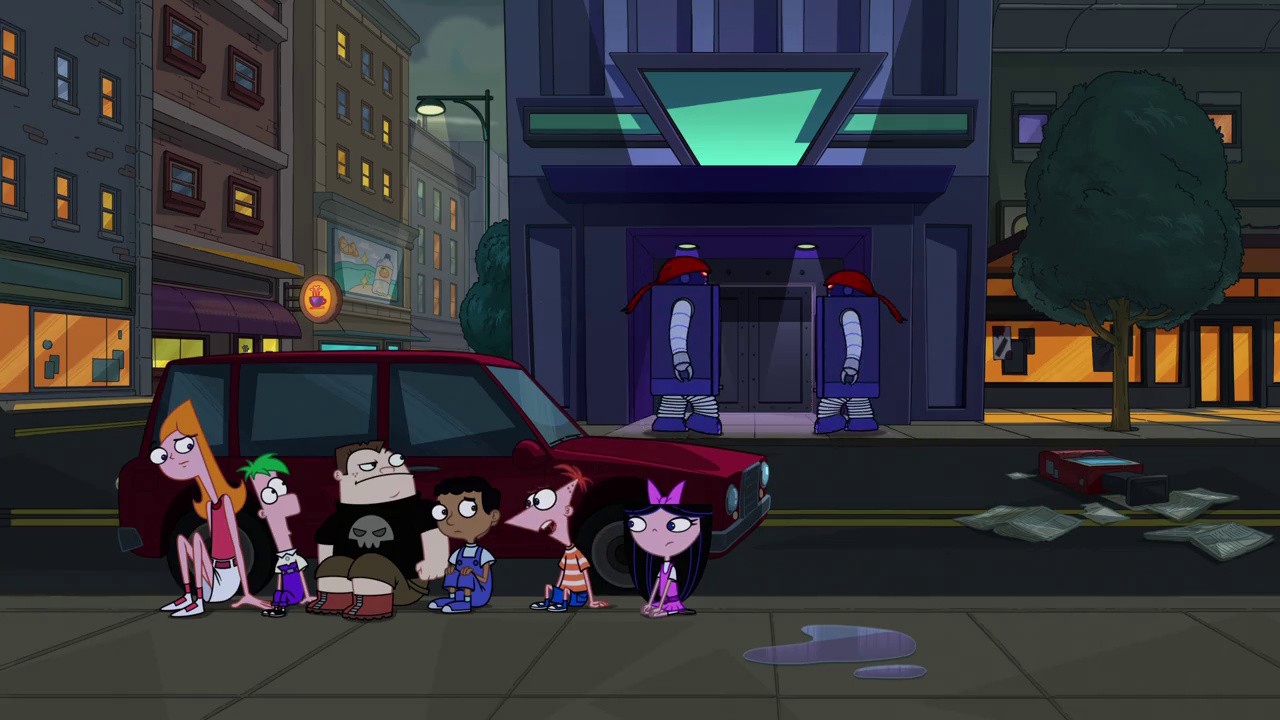
Jungle Cruise – film review

Spoiler Warning: There are spoilers ahead for Jungle Cruise.

Any review of Jungle Cruise on Disney+ needs to take into account the film’s price tag. Right now Jungle Cruise costs £20 in the UK or $30 in the United States to “unlock,” and thus the film’s value will vary from viewer to viewer. For my two cents, unless you’re a huge fan of the original Jungle Cruise ride at the Disney theme parks or a particular fan of either Dwayne Johnson or Emily Blunt, this is probably a film to wait for. In a matter of months, and certainly by Christmas, the film will be added to the regular Disney+ lineup, and though I had a decent enough time with Jungle Cruise, I’m not sure that I necessarily got £20 worth of enjoyment from it. If you’re on the fence, trying to decide whether to pay up or wait, I think this is one you can safely wait for.

That being said, Jungle Cruise was enjoyable. I’ve said this before, but in 2002-03 when Disney was talking about adapting Pirates of the Caribbean into a film, I thought it sounded like an atrocious idea! How could a theme park ride possibly translate to the screen, I wondered? I was wrong about Pirates of the Caribbean: The Curse of the Black Pearl then, and if I had similar doubts about Jungle Cruise eighteen years later then I was wrong again! The film was decent, and paid homage to a classic ride which has been part of Disneyland since the very beginning.

Jungle Cruise poster.

If you’re fortunate enough to have ridden Jungle Cruise, you’ll recall that there is a “story” of sorts to the ride itself. Obviously the film takes liberties with this, chopping and changing things to make the story more suited to the screen rather than a semi-interactive theme park attraction. But I was surprised at just how well Jungle Cruise captured the feel of the original ride, with Dwayne Johnson’s character of Frank taking the role of the Disneyland boat captain from the attraction.

There were nods to other aspects of the ride as well, particularly in the film’s opening act with Frank’s literal jungle cruise entertaining the tourists with the same mixture of dad jokes and props as the ride itself. As the story went on, the film naturally stepped away from being true to the ride to focus on a story that was not dissimilar to the aforementioned Pirates of the Caribbean film, complete with cursed undead sailors, a magical macguffin, and lashings of aquatic adventure.

Quila hits the rapids!

There were several surprisingly poignant and emotional moments in Jungle Cruise which I wasn’t expecting. Aside from the typical Disney happily ever after ending (complete with a fake-out sad ending which preceded it) the tastefully handled moment where Jack Whitehall’s character of MacGregor came out to Frank was a very sweet inclusion. Not only did it add personality and dimension to both characters – MacGregor gained a backstory of rejection and further reason to follow Lily, and Frank came across as accepting and kind – but it was a huge step for representation and inclusion. Seeing MacGregor experience rejection yet find acceptance in the most unlikely of places is a powerful message, and the mere act of LGBT+ representation in a blockbuster film is always fantastic to see. Such a message is especially important for younger viewers.

While we’re discussing some of Jungle Cruise’s deeper themes, the film took a dim view of wealth, aristocracy, and closed societies – despite practically all of its main characters being drawn from the upper classes of their day. MacGregor’s unease at having to experience life away from his home comforts was initially played for laughs – though he did become more comfortable with it as the film reached its end. The villain of the piece being a German aristocrat was also a continuation of this theme, as was the initial depiction of Frank as the last independent river boat captain – and the poorest.

Dwayne Johnson as Frank, the riverboat captain.

Having seen a number of films with British villains over the last few years, the decision to make the German Prince Joachim the main adversary to Frank and Lily was actually a bit of a change. There was a time a few years ago where villains in cinema were often German – or of German extraction. But enough time has passed and enough other villains have come and gone that the return to a German villain didn’t feel like stereotyping or a trope in the way it might’ve done had Jungle Cruise been made in the recent past.

The story itself took a couple of unexpected twists. The revelation that Frank wasn’t who he seemed to be definitely came as a shock – but in a good way! Sometimes twists of this nature can feel rushed or like they jolt the story in an unwanted direction, but learning Frank’s true origin managed to avoid that pitfall. It made his character feel more rounded and gave him motivation. We learn why he wanted to take Lily upriver – and why he was so convinced she wouldn’t succeed in her quest to find the Tears of the Moon.

Lily was seeking the Tears of the Moon.

Frank’s “betrayal” of Lily and MacGregor – which he apparently set up off-screen with Trader Sam and her tribe – was perhaps the weakest moment in the story. It did nothing to endear us to Frank, and while it was arguably in character for him it robbed what was initially set up as a tense moment of practically all of its drama. Though the threat and peril were restored after a brief respite, the way the film handled this moment was poor overall.

Representation of native peoples and their relationship to colonists has come a long way in recent years, and when looking back at past Disney depictions of indigenous peoples – such as in Peter Pan or even the original incarnation of the Jungle Cruise attraction – the way the “headhunter” tribe was presented was an improvement. Considering the tribe played a relatively minor role in the film, what we saw worked well. The depiction retained some of the mystery that westerners have of indigenous peoples – something that the original ride drew on for part of its threat – yet at the same time made at least one key character relatable.

The tribal chief.

Jungle Cruise also didn’t shy away from depicting the brutality of colonisation, showing Conquistadors savagely attacking a tribe of native people even after being offered shelter, food, and medicine. However, the film then immediately strayed into once again mystifying the tribespeople by giving them magical powers seemingly connected to the Tree of Life. Overall, the way Jungle Cruise handled its characters’ interactions with indigenous people was better than in some Disney titles, particularly older ones, but arguably imperfect and verging into some of the tropes commonly associated with such tribes in fiction.

Aside from the opening act, which was set in London, and a few other scenes near the beginning of the piece, Jungle Cruise broadly stayed true to its premise as a film about a voyage on a riverboat. The boat itself had character, being old and beaten-up, and was memorable for the way it looked while again retaining some of the charm of the original Disneyland attraction. Quila (Frank’s boat) was not only the characters’ home and method of transportation, but also played a key role toward the end of the story by blocking the river water and saving Lily and MacGregor. Giving the boat more to do in the story than simply be an ever-present stage for the characters made a huge difference to the film, and made its setting feel meaningful.

Quila – the boat – was almost like an extra character in the film.

Though the Conquistadors wanted to kill Frank – and later Prince Joachim – they seem to have had similar objectives when it comes to acquiring and using the Tears of the Moon, and as a result some of the moments toward the film’s climax felt rather forced. Obviously Lily and MacGregor had an incentive to stop the Prince and his gang of German submariners, as they clearly had nefarious intentions for the magical macguffin. But the Conquistadors had basically the same objective as Frank – to lift their curse – and it felt like there could have been a moment near the end of the film where they had all realised that they didn’t need to fight. In fact I initially wondered if Prince Joachim’s betrayal of the Conquistadors was going to set up precisely that kind of storyline. It feels like a miss that it didn’t, as the film basically ended with the heroes defeating two parties of villains.

There’s always room in fiction for that kind of narrative; not every story has to depict an emotional coming together and teaming up to defeat a worse villain. But the disturbing implication to the way Frank’s story ended is that he simply left the Conquistadors to endure endless torture; they’re unable to die and it didn’t seem as though he took action to lift their curse. Perhaps this is Disney leaving the door open to a sequel?

Did Frank and Lily condemn the Conquistadors to eternal torture?

Speaking of the way the film ended, with Frank and Lily only able to pluck a single petal from the tree, all Lily really got to do was write up her adventure and land herself a job. In the male-dominated world that the film depicted that is unquestionably a victory for her – but her original ambition had been to use the Tears of the Moon to “revolutionise medicine” and save countless lives, not least in the ongoing First World War. It seems as though this ambition was thwarted, yet the film skips over this point.

Jack Whitehall is not someone I would have expected to see in a film like Jungle Cruise, but he put in a creditable performance as MacGregor. His stand-up act often draws on his self-styled “posh” image, and his character felt like an exaggerated version of that in some respects. Emily Blunt was outstanding in the role of Lily, bringing real personality to the character and crafting a heroine that we as the audience wanted to get behind. Dwayne Johnson seemed at first to be playing a fairly typical “Dwayne Johnson” role, but the addition of an unexpected backstory for his character of Frank took the character to a different place and forced him to step out of his comfort zone and play things differently as the film passed the two-thirds mark. Though perhaps it wasn’t an Oscar-worthy performance, I found Frank to be a believable protagonist and someone I wanted to see succeed.

MacGregor and Frank shared a genuinely touching moment in Jungle Cruise that I wasn’t expecting.

Jungle Cruise relied heavily on CGI almost throughout, and not all of the animation work was as realistic as it could’ve been. Recent productions, even on television, have seen some truly outstanding CGI work, and while nothing in Jungle Cruise was awful or even immersion-breaking, there were quite a few elements that didn’t look quite right. At a number of points I felt that some of the CGI had that “too shiny,” plastic look that plagued CGI a few years ago, and I really thought that animation – especially cinematic animation – had begun to move past that particular issue.

I would’ve liked to have seen more physical props and practical effects, and the fact that a large portion of Jungle Cruise was filmed with green screens and other modern tricks wasn’t as well-concealed as it might’ve been. And perhaps this final point on visuals is a bit of a nitpick, but the fact that a number of the so-called “jungle” sequences were filmed not in South America but in Hawai’i was apparent to anyone who knows their flora! Different biomes do look different from one another, and a few scenes in particular which supposedly took place on the banks of the Amazon were very clearly filmed elsewhere. I know that’s a minor point that won’t have bugged many people, but I found it worth noting.

Happily ever after for the main characters!

So that’s about all I have to say, I think. Jungle Cruise certainly compares to the likes of Pirates of the Caribbean and other fantasy-adventure titles. It was fun, emotional at points, and set up its trio of main characters for a story that was easy enough to follow for kids while still having plenty to offer for adults as well. It stands up well against many adventure films, including classics of the genre like Indiana Jones – which Jungle Cruise was clearly channelling at points!

I had an enjoyable time with Jungle Cruise, and it was a fun way to spend a couple of hours. Whether it will be worth the cost of admission on Disney+ is something everyone will have to decide for themselves, but I think it’ll still be an enjoyable watch in a couple of months’ time. Jungle Cruise presented a fun story that drew inspiration from the likes of Pirates of the Caribbean, yet stayed true to its origins as a theme park attraction. It was a fun ride down the river with Frank, Lily, and MacGregor, and I’m sure I’ll have fun watching the film for a second and third time in the future; it’s definitely one to return to when I’m in the mood for adventure!

Jungle Cruise is available to stream now on Disney+ Premier Access (for a fee). Jungle Cruise is the copyright of Walt Disney Pictures and The Walt Disney Company. Some promotional images courtesy of The Walt Disney Company. This article contains the thoughts and opinions of one person only and is not intended to cause any offence.
The Mandalorian – Season 2 review

Spoiler Warning: There are spoilers ahead for The Mandalorian Seasons 1-2, including the Season 2 finale and post-credits scene.

As Season 2 of The Mandalorian approached, I debated whether or not to review each episode as they were broadcast. However, with Star Trek: Discovery’s third season running at the same time I concluded that two large reviews every week would probably be too much to manage. So this is what you’re getting instead – the full season reviewed all at once… seven months later.

I wasn’t the biggest fan of The Mandalorian Season 1. Though the series did some things very well, there were – in my subjective opinion, of course – a number of missteps. The worst problem I felt the show had in its first season was the protagonist himself – who was without even a name until the season finale. A combination of factors left me unimpressed with Mandy: sparse dialogue, a monotone, unemotional delivery of the scant lines he did have, the full face helmet making it hard to read any emotion or get any sense of how the character was feeling, and a lack of clarity on his aims and motivations. Mandy felt as though he was doing things because a room full of television writers decided that’s what he was going to do, and when it came to massive life-altering decisions such as betraying his client and the bounty hunters’ guild to save Baby Yoda, there was practically nothing from the man himself to inform that decision. Crucial backstory that should have been communicated sooner was included in the season finale, but by then it was too late. Some stories work well that way – but for a number of reasons this one didn’t.

Oh, Mandy. You came and you gave without taking…
If you got that Barry Manilow reference then congratulations, you’re as old as I am!

The first season also left me underwhelmed by its short runtime. Eight episodes in total, most of which averaged around 30-35 minutes was not a lot to get stuck into; there are children’s shows that run longer than that. Several episodes felt poorly-paced as a result; rushed stories that would have benefitted enormously from simply a few extra minutes to allow events to unfold and better depict the passage of time.

Finally, I felt that Season 1 massively overused elements from Star Wars’ original trilogy to the point that it was drowning in nostalgia. The Rise of Skywalker fell into a similar trap, though that film had a far weaker story under the nostalgic veneer. Elements like the freezing in carbonite of Mandy’s bounties – something which had been presented in The Empire Strikes Back as a terrifyingly unique punishment for Han Solo – or the large amount of time spent with a Jawa sandcrawler all felt cheap and fan-servicey. And that’s before we get to Baby Yoda and the inclusion of the Force in a series billed as “the adventures of a gunslinger far from the reaches of the New Republic.” I hoped The Mandalorian could have left much of this behind and instead told a new, original story in the Star Wars universe, expanding that setting rather than overtreading the same ground.

Bounties frozen in carbonite.

So by the time the first season of The Mandalorian drew to a close I was, at best, underwhelmed. While I appreciated that the series had succeeded in bringing many fans back into the franchise after they’d been left disappointed by the sequel trilogy, on a personal level I was unimpressed with what the show had offered. In between Seasons 1 and 2 came the announcement that Boba Fett would be joining the show in its second season, and as I wrote at the time that news was breaking, I felt it was another backwards step for the show and for Star Wars in general.

Though I did consider reviewing each episode for the website, when I ruled that out for practical reasons I then very seriously debated whether or not to watch Season 2 at all. I don’t like to seek out things I don’t think I’ll enjoy, and having had a disappointing experience with Season 1, and been put off by some of the announcements in the run-up to Season 2, I gave consideration to skipping the show altogether. There are plenty of other things to watch, after all! But curiosity got the better of me, and even though I knew I wouldn’t be reviewing each episode one by one, I thought there was the possibility to talk about the season as a whole, or elements from it, here on the website. And as you can tell by the fact this article exists, I did eventually settle in to watch Season 2.

Baby Yoda.

Runtime was once again problematic. In a short season which consisted of only eight episodes, five were less than forty minutes long, with two of those barely reaching the thirty-minute mark. For a flagship programme on a streaming platform, I find that incredibly difficult to excuse. Though the season premiere approached fifty minutes, none of the other episodes felt sufficiently long, and just as happened last season there were issues which arose from that. The entire runtime of The Mandalorian thus far – including titles and credits – stands at less than ten-and-a-half hours, which is simply not enough for two “full” seasons. It’s actually shorter than a single season of Star Trek: Discovery, and I can’t shake the feeling that Disney has stretched out a single season’s worth of plot over two seasons.

On the other hand, I do appreciate that Disney+ streams The Mandalorian in 4K resolution. It’s also available with HDR (high dynamic range) so there’s no denying that the show is visually beautiful. In addition, Disney+ has reached a far greater worldwide market than it had when the first season was rushed out the door in 2019, meaning that Star Wars’ considerable international fanbase was able to watch the series together. Both of these points are worth other companies taking note of – the Star Trek franchise in particular could learn from that!

Ah yes, the old “you thought he was dead” cliché…

The story of Season 2 is quite odd. Season 1 was, for the most part, a single story with a relatively clear line from point to point. Season 2 feels far more episodic; Mandy takes off on a variety of what can best be described as side-missions, with the long-term aim of reuniting Baby Yoda with his people. The Season 1 finale gave us crucial information about why Mandy wants to do this, and at least from that point of view the story doesn’t feel arbitrary in the way it did for much of last season. But it does certainly jump around a lot! Personally I like episodic television; I think it can be done very well. But The Mandalorian is a show with one overarching story, and several of these episode-long side-quests left the overall show feeling rather rudderless.

If these side-missions had felt important to the story, or perhaps if there had been fewer of them, I don’t think it would have become such a problem. But almost every episode felt like Mandy’s mission had slowed to a crawl as he got sidetracked by job after job. Instead of feeling like integral parts of a greater story, these side-missions became annoying – they got in the way of the main story. Though several of them were interesting enough in their own right, it was the way in which they were set up that caused the problem. It would have been possible to write the season in such a way as to make each of these stories feel like they were part of Mandy’s overall quest; instead they felt like obstacles to his mission and thus they came across as obstacles to the story the show wanted to tell.

Mandy with Bo-Katan on one of his many side-missions.

Modern Star Wars appears to find it impossible to step out of the shadow of its original films, and the greatest evidence of this in Season 2 of The Mandalorian came with the inclusion of Boba Fett. Just like Palpatine’s ham-fisted return dragged down the story of The Rise of Skywalker, Boba Fett inexplicably coming back from the dead likewise harms the story of The Mandalorian, and I don’t see a way around that. His role in the show was so different from the Boba Fett we met in The Empire Strikes Back that he may as well have been a different character, and the story of The Mandalorian Season 2 would have been absolutely no different if this character had been called Dennis or Engelbert Humperdinck.

But if I thought Boba Fett’s return was striking the wrong tone for the series, the season finale brought an even worse and far more desperate nostalgia play: the return of Luke Skywalker. There was, for a moment, something visually cool about seeing a Jedi cut through a squad of troopers with ease, but when this character was revealed to be Luke, whatever semblance of originality remained in The Mandalorian evaporated.

The Mandalorian was supposed to be a chance for Star Wars to step away from the Skywalker family.

Does every Star Wars project have to be about Luke Skywalker and the Jedi? Or maybe, one day, can Star Wars be more than that? A big part of the reason why both seasons of The Mandalorian have been so disappointing is that they took a premise that sounded genuinely appealing – “the adventures of a gunslinger far from the reaches of the New Republic” – and turned it into Return of the Jedi II. There is scope to see more of Luke’s adventures in between Return of the Jedi and the sequel trilogy… but I didn’t want that here.

At the risk of repeating myself, Star Wars feels stuck. It’s a franchise trapped by its original incarnation with producers, writers, and corporate leadership unwilling to step away from that and genuinely try something even slightly different. The return of Luke Skywalker and Boba Fett in Season 2 are symptomatic of this, but this problem doesn’t stop there. It extends to the sequel trilogy and to practically all of the recently-announced upcoming projects.

For the second time since 2019, the Star Wars franchise revived a dead character with no explanation.

At least Luke Skywalker, unlike Boba Fett and Palpatine, hadn’t been killed off. His appearance, while irritating, does make a certain kind of sense for the sake of the story, and it’s not a complete non-sequitur in the way those other two characters’ returns were in their respective stories. Even with those caveats, though, I felt it was pretty weak for The Mandalorian to already be relying on Luke Skywalker as a story crutch.

The Star Wars galaxy is one of the best fantasy settings ever brought to life in the entertainment realm. It’s a setting that feels vast and genuinely lived-in in a way that many franchises can only dream of, yet the producers at Lucasfilm and their corporate masters in the Disney boardroom seem dead set on only ever letting us see the same tiny sliver of this potentially wonderful setting over and over and over and over again. The Mandalorian had a chance to do something different, to take Star Wars to new places both literally and thematically. Its retreat to the safe ground of the original trilogy and the warm embrace of Luke Skywalker feels utterly regressive.

Though I freely admit this was a well-staged, action-packed sequence, I maintain that the story didn’t need Luke Skywalker.

There were a couple of visual misses in Season 2, despite the production as a whole being pretty good in terms of CGI and special effects. A few of the practical models and puppets didn’t look quite as good as they had done in Season 1. I’m thinking of the newborn alien-lizard in episode 3 in particular, but there were several other examples of practical effects that didn’t make the cut. Perhaps that’s a consequence of shooting in 4K HDR and viewers having better screens!

The second visual miss is the character of Ahsoka Tano. Though I haven’t seen the animated children’s shows The Clone Wars and Rebels in which Ahsoka Tano was a main character, when she made her live-action debut there was something off about the way she looked, and it took me a moment to figure out what it was. Ahsoka is a Togruta, a species with head-tentacles. Others of this species, and other tentacle-headed species, have been seen in other Star Wars projects since the prequel era. In The Mandalorian, Ahsoka is depicted with her tentacles being a different colour to her face, and not only that but a weird kind of leather-tiara right at the point where the two skin tones meet. The effect of this made it look like she was wearing a weird hat instead of being an alien with a tentacle head, and it was pretty distracting at points!

See what I mean? It looks like she’s wearing a hat!

Now that we’ve talked about the bad, how about some good points? There must be some, right?

Although the numerous disconnected side-missions were distracting, I appreciated the fact that, unlike in the first season, I knew what Mandy’s overall objective was and why he was doing the things he did. Mandy himself showed a little more emotion than in Season 1, and combined with seeing him without his helmet a little more often, that made him start to feel like an actual person for the first time – not just a walking, heavily-armoured plot device.

The dark troopers were neat; I liked their vaguely Vader-inspired aesthetic combined with the fact that they’re droids – something which we could argue ties in thematically with the droid armies of the prequel era. They managed to feel genuinely threatening in a way that many Star Wars villains don’t, and perhaps something about their inhuman nature and red eyes contributed to that. Though the dark troopers didn’t get much screen time, I’m hopeful we’ll see more of them in future.

The dark troopers were intimidating adversaries that I hope we see more of in future Star Wars productions.

The Mandalorian has enjoyed well-designed sets and a wide variety of filming locations that made most of its planets and locales feel different from one another. The only planet which definitely felt like southern California was Tython – the planet with the Jedi “seeing stone.” Compared to the likes of Star Trek: Picard – which relied far too heavily on outdoor filming locations in southern California that all looked alike – this was a success, and shows what’s possible when a big streaming show has a suitably high budget.

Season 2 gave us the briefest of glimpses at the New Republic – the faction which aimed to replace the Empire in the years prior to the rise of the First Order. I would’ve liked to have seen more of the New Republic, but with Rangers of the New Republic in early production, and other spin-offs like The Book of Boba Fett also in the works, perhaps that’s something we’ll get more of in future.

Season 2 gave us a brief glimpse of the New Republic.

Perhaps the most interesting story reveal came in the form of how Moff Gideon wanted to use Baby Yoda. Baby Yoda’s blood or DNA was being used to create Force-sensitive clones, and some of those clones looked an awful lot like the sequel trilogy’s Supreme Leader Snoke. Though this remains officially unconfirmed, my theory is that the clones seen in the fourth episode are supposed to be Snoke.

Snoke, as we learned in one of the worst moments in The Rise of Skywalker, was a clone and a puppet of Palpatine, and The Mandalorian appeared to drop a hint as to how Snoke came into being. Despite that particular storyline going down like a lead balloon in the final act of the so-called Skywalker Saga, it was nevertheless interesting to see it expanded upon here, and it finally provided Moff Gideon with a logical motive for his Baby Yoda obsession.

Is this clone in a tank supposed to be Snoke? It looks that way to me!

Speaking of Moff Gideon, like Star Trek: Picard’s Narek before him, he appears to have vanished in the season finale. Captured by Mandy and his squad when they attacked his ship, Gideon eagerly awaited his liberation by the dark troopers before being knocked unconscious as Luke Skywalker was making his way to the bridge. And then… he dropped out of the story. Did he remain in captivity with Mandy? Did Bo-Katan and the other Mandalorians take him? Was he turned over to Cara and by extension the New Republic for interrogation? Did he escape in the chaos surrounding Luke’s arrival? We just don’t know, and his absence from the season’s closing moments was noteworthy for a story that otherwise did a reasonable job at wrapping things up.

Overall, I’d say that The Mandalorian Season 2 feels like it should’ve been the second half of Season 1. It completed the story that was left unfinished last time, and the short runtime of both seasons makes it feel like fans didn’t really get two full seasons’ worth of action and adventure for their money. There were some solid character moments – Mayfeld coming to terms with his Imperial past being one of the better ones. The season saw Mandy develop as a character – or rather, develop into a character for the first time, and having a protagonist to root for instead of an unemotional helmet-wearing slab of nothing was a transformation the series desperately needed.

Season 2 saw the show’s protagonist grow into a character with understandable motivations.

Despite some decent growth and a main story that was worth pursuing, the disjointed nature of the side-missions meant that the season as a whole seemed to drift. There was direction to its main story, but at the same time that took up basically two of the eight episodes, with the other six comprised largely of fluff; obstacles in Mandy’s way as he attempted to complete his quest.

Season 2 was better than Season 1, but had the two halves of the story been united in a single season instead of being split up like this, perhaps I would’ve come away from the show with a better overall impression. I’m still disappointed that the basic premise of The Mandalorian, which seemed so appealing in 2018-19, hasn’t been fulfilled, and that the show has been overwhelmed by a tidal wave of nostalgia plays.

To me, The Mandalorian will always represent the Star Wars franchise missing an open goal. There was a chance to step away from the Force, the Jedi, and the Skywalker family for the first time, to open up the vast, unexplored Star Wars galaxy and tell some genuinely different and interesting stories. Instead, the show retreated to the same comfortable, overtrodden ground as the films that spawned it, and as a result it’s so much less than it could have been.

The Mandalorian Season 2 is available to stream now on Disney+. The Star Wars franchise – including The Mandalorian and all other properties mentioned above – is the copyright of LucasFilm and the Walt Disney Company. This article contains the thoughts and opinions of one person only and is not intended to cause any offence.
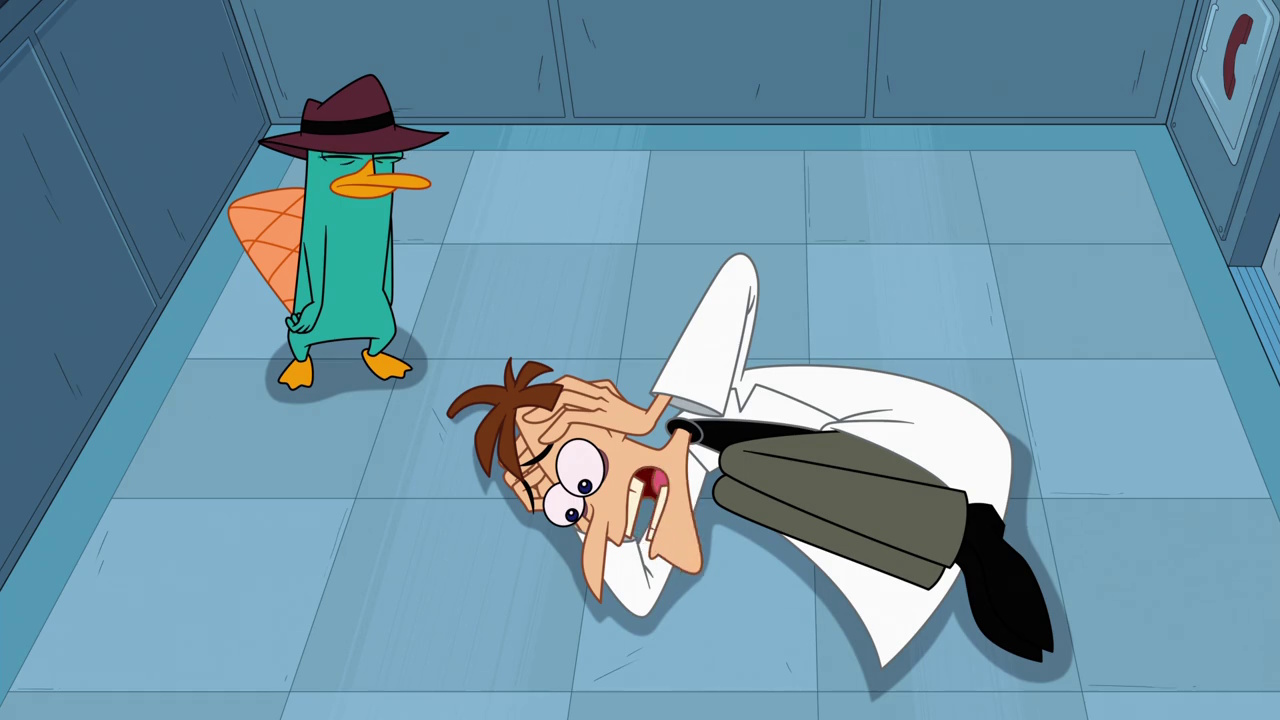
(When) Will Marvel reset the MCU?

Spoiler Warning: There are spoilers ahead for multiple films and television series in the Marvel Cinematic Universe, including Avengers Endgame and The Falcon and the Winter Soldier.

As I was watching The Falcon and the Winter Soldier recently, I got thinking. The Marvel Cinematic Universe (or “MCU” for short) has been running since Iron Man kicked things off in 2008, meaning it’s been in continuous production for more than thirteen years at time of writing. There have been 23 mainline Marvel films released in that time, as well as more than 380 episodes of television across 13 different shows, totalling several hundred hours of viewing. All of this is complicated, and as I’ve said previously, keeping up with Marvel can feel like a full-time job!

None of that means that a franchise needs to go through a reboot, though. Star Trek is going strong after more than half a century and 800+ episodes of television, and aside from the three films in the Kelvin timeline there hasn’t been a resetting of Star Trek; all of its shows and films coexist happily in one setting. But Marvel is arguably different.

2008’s Iron Man kicked off the Marvel Cinematic Universe.

One of the key elements of the MCU’s setting is that the superheroes and supervillains we meet all inhabit the real world right alongside us. This version of Earth is very similar to our own, but it’s one in which superpowers exist. The early films in the MCU depicted the way in which ordinary people came to terms with this idea, and how government agencies and others sought initially to keep things under wraps.

But now that’s all changed, and Marvel’s superheroes are known figures – almost celebrities – in their world. That change may not seem like a big deal, but what it does is chip away at one of the world’s foundational ideas: that superheroes could be among us right now and we just don’t know it. As Marvel’s world has changed and undergone progressively more massive events – culminating, at least thus far, in Thanos’ snap and the resultant disappearance and reappearance of half the world’s population – its original premise of being “the real world plus superheroes” has disappeared.

Sam Wilson (The Falcon) was recognised by members of the public in The Falcon and the Winter Soldier.

Attempts to recreate that are going to be met with challenges that weren’t present in earlier iterations of the MCU. And to be fair to Marvel, thus far the franchise has set the bar when it comes to creating a persistent, connected world. But that world is as much a constraint at this point as it is a highlight, because every story going forward as the MCU enters “Phase Four” has to be able to fit in with the very different world that was created by the events of Infinity War and Endgame.

We saw this as the underlying premise for the main storyline in The Falcon and the Winter Soldier. And in that series it worked well, building on the idea that the changes that happened were popular with some people and unpopular with others, as well as showing us glimpses at a world trying to figure out how to get back to “normal” – or what “normal” even means after such life-changing events. That concept can be explored in more detail and will undoubtedly be interesting – but it isn’t what attracted so many fans to the franchise to begin with.

The Falcon and the Winter Soldier showed us the first real look at a post-Endgame world.

As the next part of the MCU’s story builds on the events of the last few years, I have two concerns. The first one is that storylines will become convoluted, with any new film or show almost drowning in backstory and lore to the point of being offputting or even incomprehensible for anyone other than a fully up-to-date Marvel superfan.

Secondly, the MCU has to contend with the fact that Avengers Endgame felt like the end of a story. Several principal characters were killed off, and after the events of Infinity War brought the Marvel world to a crushing defeat, Endgame came along and saw the heroes save the day. They made it to their “happily ever after” – and figuring out what comes next is always a major challenge. Following up a monumental story like Endgame risks feeling anticlimactic and small, or worse, repetitive.

Endgame felt like the end of a story.

Having cheered on the Avengers as they saved the universe from Thanos, will fans show up in such numbers for the next supervillain who threatens all life? Endgame was, briefly, the highest-grossing film of all time. Maybe Marvel peaked?

All of this leads me to the crux of this argument: comic books often reset their characters and storylines. After a while, when writers feel they’ve taken the characters and stories as far as they can, or when stories are played out or too convoluted to continue, comic book companies have historically had no problem at all stepping in and just resetting everything. In DC comics – Marvel’s main competitor – the Crisis on Infinite Earths storyline in the mid-1980s effectively erased the backstories and past adventures of many superheroes, streamlining the convoluted DC universe into a much simpler form that continues to this day.

Crisis on Infinite Earths was a DC crossover event that reset the storylines of many DC superheroes.

As the Marvel Cinematic Universe rumbles on, getting more complicated and further away from the real world with each iteration, it makes jumping on board for new fans difficult, and it makes keeping up with every project feel like a full-time job; miss the latest show or a couple of films, and suddenly it’s hard to figure out who’s who and what’s what. That’s combined with the fact that some stories are going to feel small or even anticlimactic when compared to the likes of Infinity War and Endgame.

Not long ago I took a look at a number of television shows that ran too long. Shows like Supernatural, Lost, and The Walking Dead were great at first, but after they peaked they stumbled through a period of decline, failing to live up to past successes. I don’t know if Infinity War and Endgame represent the peak of the Marvel Cinematic Universe – the best may still be to come. But sooner or later the franchise will hit that peak, and when it does, it seems inevitable to me that a comic book-style reset is on the cards.

The Walking Dead, like many other television shows, peaked. It then entered a period of decline.

The MCU wouldn’t necessarily go back to the drawing board and remake past films. The legacy of characters like Iron Man, Captain America, and the Hulk could pass to new iterations of those characters with new actors taking on lead roles in stories inspired by earlier films, but remaining distinct from them. New backstories could be created, perhaps based on different versions of the superheroes from other editions of their comic books. Marvel has decades of history to draw on, and many superheroes have very different origin stories and personalities than the versions we’ve seen on screen in the last few years.

We’re undoubtedly going to be seeing Marvel and some version of the MCU remain a powerhouse for parent company Disney and the Disney+ streaming service for many years to come – perhaps even decades. I’m not suggesting for a moment that Marvel is simply going to pack up and disappear; there’s too much money on the table for Disney to allow that to happen! But as the MCU continues to expand, taking different characters in different directions, sooner or later that sense of it being convoluted is going to begin to bite.

Marvel Studios will continue to churn out new films and television shows.

I find this to be the case with Star Trek, at least to some extent. When talking to a friend or colleague about Star Trek, if they’re unfamiliar with the franchise it can be hard to know where to start. 800+ episodes and more than five decades of history and lore is intimidating to the point of being offputting, and for some people, simply getting started with Star Trek feels impossible without a guide. New and different iterations of the franchise – like Lower Decks as an animated comedy, or the upcoming Prodigy as a kid-friendly show – can be helpful jumping-on points for newbies, but even then I know the sheer size and scale of Star Trek, as well as its reputation, can be enough to put people off.

Marvel isn’t at that point yet, but it’s getting close. When I was talking to my brother-in-law, who’s a huge Marvel fan, about Infinity War, he recommended that I watch several other films first so that I’d “understand what was going on” better. This sentiment, while well-intentioned by someone who genuinely cared about me getting the most out of a film he liked, can actually have the opposite effect. Marvel is already becoming complicated – too complicated for some casual viewers to drop in and out of comfortably.

A trio of secondary characters in Avengers Infinity War.

Perhaps Disney and Marvel executives feel that, given the size of the MCU’s fandom, they can afford to put off casual viewers. If the fanbase is signing up for Disney+ and buying Marvel merchandise in droves right now, what’s the harm in continuing to make every series and film inextricably tied together? That attitude, if indeed it is prevalent over at Disney, is short-sighted in the extreme.

Any franchise taking such an approach will find its growth stunted, and when existing fans slowly but surely drop out, there won’t be many people lined up to replace them. That’s the danger in trading solely on nostalgia, too – eventually your existing fans either switch off or die off, and if there are fewer people jumping on than there are jumping off, the franchise will sputter and eventually fail. Marvel is undoubtedly a long, long way away from that right now, but every twist and turn in the MCU saga, and every would-be new fan dissuaded from getting started with a convoluted and complicated franchise is a problem for the comic powerhouse.

Does Endgame – briefly the highest-grossing film of all time – represent the peak of Marvel’s success?

Different franchises handle expansion in different ways. In Star Trek, for example, while there can be benefit to be gained from wider knowledge of other iterations of the franchise, for the most part, each television and film series is self-contained. It’s quite possible to be a fan of Deep Space Nine without ever seeing an episode of The Original Series, The Next Generation, or Voyager; a viewer in that position has lost practically nothing, understands basically everything going on, and while they’re missing some background about certain factions and some of early Star Trek history, all of that is explained within the show itself. The same applies to modern Star Trek productions – perhaps with the exception of Picard.

Marvel stands in contrast to that. Every film and show connects in a nakedly obvious way to every other film and show. Characters, factions, themes, and whole storylines cross over from one part of the franchise to another, and while it’s perfectly possible right now to sit down and watch just one or two films or one television show, a viewer who does so is clearly missing out. The Falcon and the Winter Soldier tried to mitigate this as best it could, but even so there’s no denying that a fan who’s seen every Marvel project will have got more out of it than someone who hasn’t.

In contrast to the way the MCU works, a Star Trek fan can watch just one series in the franchise without missing out on too much or getting lost with themes and stories that cross over.

The Marvel Cinematic Universe is one big, interconnected world. That is its strength, as we’ve seen Marvel films bring in audience numbers and a level of financial success that are quite literally unprecedented, as well as facilitating the transformation of comic book superheroes from nerdy niche to mainstream blockbusters. But that interconnectedness may yet prove to be a weakness, too, if more and more viewers find that new iterations of the MCU are too dense and require too much prior knowledge to properly enjoy.

Based on all of that, it seems inevitable to me that Disney and Marvel will eventually hit the reset button. Whether it happens in five years or fifteen, I think there will eventually be a resetting of the Marvel Cinematic Universe. How it will work, and whether it will revitalise the franchise and propel it to further success in future are all open questions, and we won’t know for sure until it happens. Watch this space!

All titles mentioned above are the copyright of their respective broadcaster, distributor, production company, etc. The Marvel brand – including the Marvel Cinematic Universe, Avengers Endgame, The Falcon and the Winter Soldier, and all other titles mentioned above – is the copyright of The Walt Disney Company. This article contains the thoughts and opinions of one person only and is not intended to cause any offence.
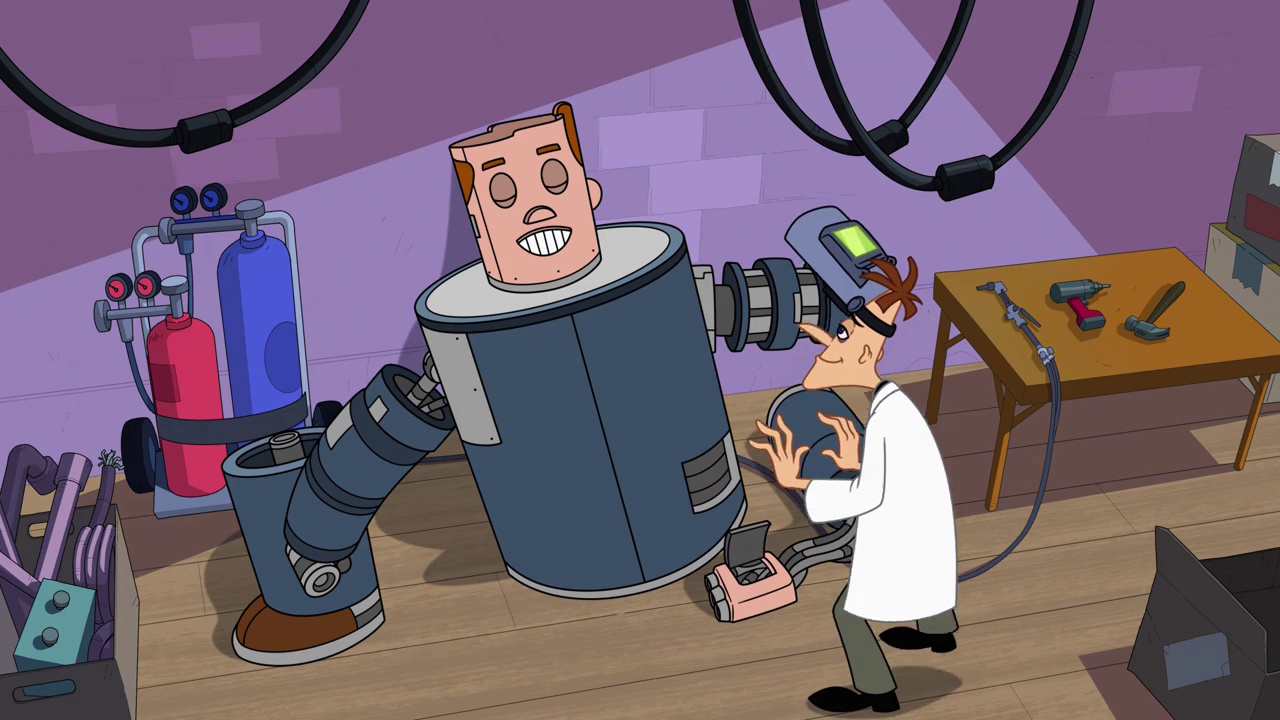
Have we seen an unstoppable shift away from the cinema?

One of the consequences of the pandemic has been the long-term closure of many cinemas (movie theaters for my American readers). Aside from a short respite last July and August, most cinemas here in the UK have been shut since March 2020 – for well over a year now. Some, like a local independent cinema near me, have had no choice but to close permanently, even with the end of lockdown seemingly in sight. Even when cinemas are able to reopen, limits on capacity due to social distancing, the general unease among many people about sitting in a room with dozens of strangers with the pandemic still ongoing, and most significantly, the lack of major film releases in the near term will – in my opinion, at least – most likely mean it will be a long time before things are able to get back to normal.

But will things ever get back to normal? That’s the question I want to ask today.

Will empty cinemas be full again one day?

In the early days of the pandemic, most films scheduled for release in spring or summer 2020 were simply postponed; their release dates pushed back by a few months so that they could be released to full crowds when lockdowns were lifted in their key markets. But as the pandemic has dragged on and on, film studios have begun to switch the way they release many big titles – opting to send them to streaming platforms rather than wait.

Without Remorse was originally supposed to get a theatrical release, but premiered on Amazon Prime Video instead. Raya and the Last Dragon went directly to Disney+. Then there are titles like Zack Snyder’s Justice League, Mulan, The Little Things, Godzilla vs. Kong, Bill & Ted Face The Music, News of the World, and Tom & Jerry. Upcoming titles such as Jungle Cruise, Space Jam: A New Legacy, Black Widow, Malignant, and A Quiet Place II are all going to either be released directly on streaming or with a limited theatrical run at the same time as going straight to streaming.

Animated film Raya and the Last Dragon went straight to Disney+ earlier in the year.

Is this a one-time thing, purely caused by the pandemic? And if it is, will audiences be happy to return to cinemas once the pandemic has cleared and they can fully reopen? If you’d asked me in March or April last year, I’d have said yes to both questions without hesitation. But now I’m not so sure.

There are a lot of advantages to streaming compared to going to the cinema, and as more and more people come to see those advantages, the cinema becomes a less-attractive option in contrast. This trend is not new – cinema attendance has declined a lot from where it was a few decades ago, and with the rise of high-quality television series which can rival and even surpass films in many cases, this is a reckoning that cinemas have had coming for a while. The pandemic has accelerated that to light-speed, but the trend has been going in this direction for a while.

Paramount+ is one of many competing streaming platforms that have arguably benefited from the forced closure of cinemas during the pandemic.

So what are the supposed advantages of at-home streaming? The first has to be convenience. Viewers can watch what they want on their own schedule, with the ability to pause a film to take a phone call or go to the bathroom, watching before or after work, or even late at night. It’s possible to watch with subtitles, audio description, director commentaries, and even watch in other languages. Most folks are more comfortable in their own homes than they are in a cinema chair – even the nicest cinema seats aren’t as pleasant as a comfy armchair or couch. There are no distractions from (other people’s) noisy kids, people munching popcorn, or idiots on their phones. You don’t have to sit through half an hour of adverts and trailers to get to the film. If you’re using a phone or tablet it’s possible to watch on the go, or literally anywhere. And some of the things we might’ve considered to be disadvantages a few years ago – such as screen size, resolution, and audio quality – are all easily surmountable even for folks on a limited budget.

Obviously not all of these points apply in every single case, but as a general rule, as screens get bigger and better, the need to watch something in the cinema is dropping. The old adage that a particular film was “better in the cinema” or “made for cinemas” no longer applies in many cases.

Amazon Prime Video have snapped up a number of films that couldn’t get a theatrical release this year – including Without Remorse.

I have a relatively inexpensive 4K television that doesn’t have OLED or HDR or any of those higher-end features, just a bog-standard LED set. But this model, even when I was buying it a few years ago, only started at a 40-inch screen size, with sizes going all the way up to 60″ or 65″. Nowadays, 85″ and 90″ sets are on the market and within reach of many consumers. Sound bars and speakers that put out fantastic quality audio are equally affordable, with prices dropping massively from where they had been when 4K and large screens were new. Even on my cheap and cheerful set, films look great. And if you sit reasonably close, it really does feel akin to being in the cinema – in the comfort of my own home.

It’s difficult, in my opinion, for cinemas to compete on price or quality. Even the more expensive streaming platforms, like Netflix, cost around £10-12 per month. It’s been a while since I was able to go to the cinema – health issues prevent me from doing so – but the last time I was able to go, £10 wouldn’t even stretch to two tickets. For that money you get one month’s worth of access to a massive library of titles – including many brand-new ones and Netflix originals made specially for the platform.

Large, good-quality television screens are increasingly affordable and offer a cinema-like experience at home.

In the late ’40s and ’50s, when my parents were young, going to the cinema was a frequent outing. You’d see an A- and B-movie, as well as perhaps a newsreel or something else, and it would feel like good value. Since the early 20th Century, going to the cinema on at least a weekly basis was a big part of many peoples’ lives – but things have been changing, slowly, for quite a while.

For at least the last couple of decades, going to the cinema is something most folks have viewed as an occasional treat rather than a regular outing. The price and value of a cinema ticket – and the additional extras like drinks and snacks – have shot up in relation to earnings, while at the same time the number of advertisements and trailers have also increased. Though the cinema still has a place in many folks’ lives, that place had been slipping long before the pandemic arrived. In the ’90s and 2000s, the blame for that lay with cable and satellite television channels, including many dedicated film channels. Nowadays, the blame has shifted to streaming.

Netflix has picked up a lot of subscribers in the past year.

Many film studios are keen to play their part in this trend, too. Sharing a big chunk of their profits with cinema chains and operators was never something they were wild about, which is why we’re seeing more and more studios and production companies either partnering with big streaming platforms or else trying to launch their own. Paramount+ exists for this reason, as do Disney+, HBO Max, and many others. These companies don’t care in the slightest about the fate of cinemas – except insofar as they can use them to turn a profit. When the pandemic meant that wasn’t possible, many companies happily jumped ship and released their films digitally instead.

Though I know a lot of people who have told me they’re keen to get back to the cinema as soon as possible, when I probed most of them further and asked how often they would go to the cinema pre-pandemic, or what films they were most excited to see at the cinema next, all of the answers I got back up everything I’ve been saying. Most folks go to the cinema infrequently at best, and while they’ve missed some of the social aspects of the “cinema experience,” they certainly haven’t missed the adverts, loud seat neighbours, and hassle. Streaming, while not as glamorous or exciting in some ways, is a more enjoyable experience in others.

Some people have missed every aspect of being at the cinema… but many haven’t!

I know I have to acknowledge my own bias here. As someone whose disability prevents them going to the cinema, I’d be quite happy if every film I want to watch from now on comes directly to streaming! On a purely selfish level, that’s something I’m fine with. And while I stand by the fact that the trend away from the cinema in a general sense is real and demonstrable, the pandemic probably hasn’t killed the entire concept of the cinema stone-dead. Nor would that be a good thing. Many cinemas offer more than just the latest blockbusters, with classic films, recorded theatre plays and ballet performances, and other such events. In the rural area where I live, the idea of being able to see something like the Royal Ballet is beyond a lot of people due to the distances involved. But local cinemas occasionally show things like ballets, operas, and Shakespeare plays, bringing a different kind of culture and entertainment to the region. Cinemas are also big local employers, and it’s nothing to celebrate when a local business is forced to close.

So most cinemas will eventually re-open. But the question I asked is still pertinent, because I don’t know whether they’ll see pre-pandemic numbers of visitors for a very long time – if at all. The pandemic has forced the hand of film studios and distributors, and the result has been an uptick in the number of subscribers to streaming platforms. Many folks have tried streaming for the first time, and while there will always be holdouts, people who proclaim that it really is “better in the cinema,” I think a lot of people have been surprised at how enjoyable streaming a film at home can be, and how favourably it can compare to the cinema experience.

Many people haven’t missed the “cinema experience” as much as they expected.

A big home theatre setup is no longer necessary. With a relatively inexpensive – but still large – television set and maybe a sound bar or pair of satellite speakers, many people can have a truly cinema-like experience in their own living rooms. And a lot of people who’ve tried it for the first time, prompted by lockdown, may have no plans to return to the cinema any time soon – or if they do, they’ll be making fewer trips.

In my opinion, this is something that has the potential to continue to build over time. As screens continue to improve, and as more people eschew the cinema in favour of staying in, more films will go direct to streaming because companies will see more success and more money in it. Fewer films will end up in cinemas exclusively, so fewer people will go. And the cycle will continue!

Even if I’m wrong on that final point, I do believe that we’ve already seen a slow move away from cinemas in the pre-pandemic years. The pandemic came along and blew the lid off that, and while there will be a return once things settle down, at-home streaming is here to stay. It benefits viewers and companies – the only folks who are going to lose out are the cinema chains themselves. I’m not saying it’s a positive thing necessarily, although it does stand to benefit me in some respects, nor am I advocating for it. But when I look at the way things have been going over the past few years, and add the pandemic’s disruption into the mix, I really do feel that we’re seeing a big move away from the cinema in favour of at-home streaming.

All titles mentioned above are the copyright of their respective studio, distributor, production company, etc. This article contains the thoughts and opinions of one person only and is not intended to cause any offence.
Star Wars Biomes is a cute and clever way to spend twenty minutes

Released to mark Star Wars day, Star Wars Biomes is a short film that’s simultaneously something different yet very nostalgic. A silent tour over several locations from the original trilogy, prequel era, sequels, and even The Mandalorian, Star Wars Biomes was not the sort of thing I was expecting from the franchise. It’s “slow TV” – something to watch for relaxation or to have on in the background while doing something else, and it’s unusual for a major franchise to produce something like that.

In other ways – and you probably know what I’m going to say if you’ve read some of my recent critiques of the overall direction of the Star Wars franchise – this was Star Wars once again retreating to largely safe, well-trodden ground. The short film only visited planets we’ve previously seen in other iterations of the franchise, and made no attempt to branch out and look at anywhere new. But you know what? On this occasion, with this unusual short film, I think that’s okay.

The Millennium Falcon departs Ahch-To in Star Wars Biomes.

A work like this is 100% about the visuals. And on that front, Star Wars Biomes largely delivered. The animation and CGI work was streets ahead of many high-budget television shows of recent times, and far beyond anything the prequel trilogy or special edition edits of the original trilogy were capable of. For example, I would say that Star Wars Biomes showed off the single best representation of Tatooine’s twin suns that has ever been put to screen.

There were a couple of moments in the eighteen-minute broadcast where I felt the CGI strayed into looking a little unrealistic and video-gamey, but generally speaking the animators did a good job. The vistas – or I suppose we should really be calling them “biomes!” – looked fantastic, even stunning in places, and that’s exactly what a short film of this nature aimed to deliver.

I don’t think Tatooine’s twin suns have ever looked this good!

When I first heard the name “Star Wars Biomes,” I wondered if we were going to get something akin to a nature documentary, looking at some of the wildlife or flora of the visited locations. But it was clear from the start that that’s not what the objective was! That’s fine, and it’s not the purpose of a review to say “well I wish it had been a totally different kind of film,” so I’m happy with what was put to screen. That being said, a pseudo-documentary looking at galactic flora and fauna would be an interesting project – as I said when I proposed something similar for Star Trek a little while ago!

Of the locations visited in Star Wars Biomes, I would suggest that the salt-crusted surface of Crait was perhaps the boldest choice. There were only six planets that Star Wars Biomes took us to, and considering the incredibly controversial nature of The Last Jedi, picking one that was featured prominently in that film was very daring on the part of whoever was making that decision! I think we even saw the crashed ski-speeders of Finn and Rose, which was a plot point that was not popular with many fans. Perhaps that’s Star Wars sticking up a cheeky middle finger as if to say “The Last Jedi is still canon!” But perhaps I’m reading too much into it. I still think it was a bold choice, regardless of the behind-the-scenes reasoning!

The crashed ski-speeders on Crait.

Hoth looked beautiful in all of its snow-capped glory. I do love wintery, snowy scenes, and Star Wars Biomes rendered the snow on Hoth perfectly. Moving like a helicopter (or drone, I suppose) the camera panned across the snowy landscape, and spotted a probe droid – which made the familiar, slightly menacing whirring noise it made in The Empire Strikes Back. We also saw AT-AT walkers, and I think it was the first time seeing them from so high up or at such an angle. Both the droid and walkers contributed to a sense of nostalgia, but at the same time it felt new.

As Star Wars Biomes wrapped up its time on Hoth, we got the first of several typical Star Wars “wipes” – the transitions from one scene to another that the Star Wars franchise has always done with a particular flair! This was new in the ’70s, but modern films have largely left this style of wipe behind, with the result being that it feels unique to Star Wars – even though you can find similar transitions in other films of the original trilogy era.

AT-AT walkers seen on Hoth.

Tatooine is up next, and as already mentioned, its twin suns look amazing. Rendered to look similar to our own sun, the shot at the end as the camera panned up was really stunning. Sand, like snow, is more or less a single colour and texture, so perhaps the Tatooine section of Star Wars Biomes relies more on other visual elements – droids, skeletons, Jawas, and a landspeeder – in order to retain visual interest. It was a well-done segment, though.

After Tatooine, Star Wars Biomes heads to Sorgan – a planet whose name I had to Google! This is the planet with the rustic village that was visited in The Mandalorian, and we saw the Razor Crest flying in as the camera panned overhead. Sorgan was the first point in Star Wars Biomes where I felt the CGI – in this case used for some of the huts in the village – strayed from being 100% realistic into video game territory, at least toward the end as the camera zoomed in and got closer. It wasn’t bad by any means, but as we got closer to the village it was possible to tell it was CGI.

The village on Sorgan.

Crait, as mentioned, was the boldest choice in my opinion. The camera angle used here was odd, looking down at a 90-degree angle the entire time. I kept waiting for the camera to pan, showing us more of the surface of Crait, but it never did. The way the vehicles depicted left red trails in the salty surface of Crait was neat, though, and very well done – even if a couple of the large walkers depicted looked a tad video gamey!

Mustafar came next, and was probably my favourite segment. The lava fields were rendered beautifully, and Darth Vader’s castle looked suitably menacing, dominating the scene. Mustafar is, of course, the planet from Revenge of the Sith where Vader was badly injured. A shuttle and a couple of TIE fighters were seen during this segment, too, and they were done well.

Darth Vader’s castle on Mustafar.

Finally we came to Ahch-To, the planet Luke travelled to to hide away, as seen in all three sequel films. We saw a couple of porgs in flight – but not up close – and at Luke’s island, the Millennium Falcon taking off which was neat to see. The island looked like it might’ve been a real shot taken from the Ahch-To filming location off the coast of Ireland, but it could just be very well-made CGI – at this point it isn’t always easy to tell! One CGI misfire during this segment came with a sea monster – the way it breached the surface then sank back beneath the waves didn’t make the right movements on the surface of the water. I know that’s a nitpick!

So that was Star Wars Biomes. Whether you sit and watch it intently – as I did – or put it on in the background as a screensaver, I think it’s worth a look. It’s a bit of fun, and a cute and clever way to celebrate Star Wars without going all-out on a movie marathon! Generally I think it was well-made, with just a couple of moments where the CGI was imperfect. It’s the kind of short film you can put on while you relax and unwind, and its short runtime means it doesn’t feel like a huge commitment.

I had fun with Star Wars Biomes, and I daresay I’ll come back to it again at some point to take another look and see if I can spot anything I missed! It’s the kind of thing I can see myself putting on in the background on a loop while I’m doing something, or even if I have people over (once coronavirus is over and done with). If you decide to check it out, I hope you enjoy Star Wars Biomes as much as I did.

Star Wars Biomes is available to stream now on Disney+. The Star Wars franchise – including all properties and titles mentioned above – is the copyright of Lucasfilm and The Walt Disney Company. This article contains the thoughts and opinions of one person only and is not intended to cause any offence.
A willingness to change is the key difference between Star Trek and Star Wars in 2021

Spoiler Warning: There are spoilers ahead for the following: The Mandalorian Seasons 1-2, The Rise of Skywalker, Star Trek: Discovery Seasons 1-3, Star Trek: Picard. Minor spoilers may be present for other iterations of both the Star Wars and Star Trek franchises.

I’ve been working on my review of Season 2 of The Mandalorian, which was shown on Disney+ at the end of last year, and I found myself saying the same thing several times. I will (eventually) finish that review, but for now I wanted to take a step back and look at two of the biggest sci-fi/space fantasy franchises, and one crucial difference between them.

Whether it’s the prequel trilogy, sequel trilogy, spin-offs, or even the recently announced slate of upcoming projects, Star Wars is intent on sticking close to its roots. I’ve made this point before, but Star Wars as a whole has only ever told one real story – that of Palpatine, Anakin, Luke, and Rey. Every film and television series in Star Wars’ main canon either directly tells part of that story or is inextricably tied to it. The inclusion of Luke Skywalker and other legacy characters in The Mandalorian doubles down on this.

Luke Skywalker recently appeared in The Mandalorian.

In contrast, Star Trek has continually tried new and different things. The Next Generation took its timeline 80+ years into the future and left much of the franchise’s first incarnation behind. Deep Space Nine took the action away from starships to a space station. Enterprise was a prequel, but not one which told the early lives of any classic characters. The Kelvin films attempted to reboot Star Trek as a big screen popcorn blockbuster. Discovery took a serialised approach to its storytelling, and Picard picked up that format but used it to tell a very different type of story. Lower Decks is perhaps the biggest departure to date, branching out beyond sci-fi into the realm of animated comedy. Though there are common threads binding the franchise together, each project is one piece of a much larger whole, and the Star Trek galaxy feels – to me, at least – much more vast as a result.

Where Star Wars has told one overarching story, Star Trek has told hundreds, many of which are totally separate and distinct from one another. And that concept shows no sign of slowing down. Indeed, both franchises are doubling down on what they do best: Star Wars is focusing on classic characters and looking inwards, Star Trek is expanding and trying new things.

Captain Burnham will take Star Trek: Discovery to new places.

That willingness to change, to explore totally different and unrelated aspects of its setting, is what sets Star Trek apart from Star Wars right now – and arguably is one of the big points of divergence going all the way back to the mid-1980s. It may also explain why so many fans are excited about The Mandalorian and even the dire Rise of Skywalker, while some Star Trek fans have never been interested in Discovery, Picard, and Lower Decks.

Nostalgia is a big deal in entertainment, and while I would argue Star Wars has overplayed that particular card far too often, there’s no denying it has seen success with that formula. That’s why we’re seeing the Obi-Wan Kenobi series, the Ahsoka series, the Lando series, and even the Cassian Andor series all getting ready to debut on Disney+ in the next few years.

Star Wars continues to bring back characters, themes, and designs from its past.

Someone far cleverer than I am said something a while ago that really got me thinking. If a franchise – like Star Wars, in this case – relies so heavily on nostalgia to the point of never trying anything new, it won’t survive beyond its current generation of fans. Because bringing in new fans – the lifeblood of any franchise – is increasingly difficult when every project is designed exclusively with existing fans in mind. How can Star Wars survive when its current fanbase moves on if everything it does is fan service? What kind of appeal does the Obi-Wan Kenobi show have to someone new to Star Wars? Basically none.

With the exception of Star Trek: Picard, which did rely on the strength of its returning character, I think any Star Trek project has the potential to bring in new fans. Some shows and films are definitely enhanced by knowing more about Star Trek and its setting, but even in Discovery, where main character Michael Burnham is related to classic character Spock, there really wasn’t anything that required a lot of background knowledge.

Spock in Star Trek: Discovery.

Star Trek is not only trying new things, but the people in charge are conscious to allow each project to stand on its own two feet. They are parts of a greater whole – and while I have argued many times here on the website that Star Trek could do more to bind its ongoing series together, it’s still possible to watch one show and not the others without feeling like you’ve missed something important.

What we see are two very different approaches to storytelling. Both Star Trek and Star Wars were reborn in the mid-2010s out of a desire on the part of their parent companies to use nostalgia as a hook to bring in audiences. That should not be in dispute, and I don’t want to say that Star Trek somehow avoids the nostalgia trap. But where Star Wars really only has nostalgia going for it, Star Trek continues to branch out, using nostalgia as a base but not allowing it to overwhelm any project.

“Baby Yoda” is symbolic of Star Wars’ reliance on nostalgia in many ways.

Neither approach is “right” or “wrong;” such things are subjective. I don’t want to sound overly critical of Star Wars either, because despite my personal feelings, there’s no denying many of the creative decisions made are popular – even The Rise of Skywalker, which was eviscerated by critics, was well-received in some areas of the fandom. It just strikes me as interesting and noteworthy that these two major franchises are taking very different approaches to the way they construct their narratives.

Whether it’s the inclusion of Luke Skywalker himself, the aesthetic of practically everything in the show, or a storyline which returns the franchise to the Jedi and the Force, The Mandalorian oozes nostalgia from every orifice – and if that’s what fans want and will lap up, then that’s okay. It was too much for me, and I stand by what I said last year during the show’s first season: I was expecting to see “the adventures of a gunslinger far from the reaches of the New Republic;” a show which would take Star Wars away from some of those themes to new places. That was my preference – a personal preference, to be sure, and judging by the positive reaction not only to The Mandalorian but to spin-off announcements like the Obi-Wan Kenobi series (and the return of Darth Vader to that series) I’m in the minority.

Mandalorian armour (i.e. Boba Fett’s armour) seen in The Mandalorian.

Star Trek takes a different approach. Both Picard and Discovery in their most recent seasons moved the timeline forward, brought in new characters, and dealt with contemporary themes. There were touches of classic Star Trek in both shows, including in aesthetic elements like set design and costuming, but in both cases the franchise feels like it’s moving forward.

Costuming is an interesting point to consider, as it’s representative of where both franchises find themselves. As early as 2015’s The Force Awakens, Star Wars was stepping back, relying on Stormtrooper armour, First Order uniforms, and especially the costumes worn by Rey that were practically identical to those seen in the original films. This was continued in The Mandalorian, not only with the main character’s Boba Fett armour, but with the use of Original Trilogy Stormtrooper armour and costumes for many villains. In contrast, Star Trek took its main characters out of uniform entirely in Picard, and Discovery has introduced a whole new set of uniforms and a new combadge for the 32nd Century. Where Star Wars looks back to its heyday, Star Trek looks forward, incorporating some of its classic designs into wholly new variants.

Discovery’s new combadges (as seen in the opening titles).

What we see in these costuming choices is a reflection of where both franchises are narratively. Star Wars continues to look back at the only truly successful films the franchise has ever made: the Original Trilogy. Frightened of trying anything truly new and unwilling to leave that comfortable ground, it’s stuck. As I wrote once, the Original Trilogy has become a weight around the neck of modern Star Wars, as projects not only become constrained by those films, but continue to fail to live up to them.

Star Trek looks forward, tries new things, and embraces change. Not every new project will win huge support and be successful, but some will, and every project has the possibility to be a launchpad for others, taking the evolving franchise to completely different places.

The Original Trilogy is – in my opinion at least – holding Star Wars back.

It’s clear which approach I prefer, and that I’d like to see more innovation and change from Star Wars. Though I was certainly underwhelmed by some of the recent announcements made by Disney and LucasFilm, I’m hopeful that, despite being held back in many ways by an overreliance on nostalgia, some decent films and series may stumble out the door.

Each franchise could learn something from the other, though. Star Trek’s projects are split up, and while Discovery’s third season made an admirable effort to connect to Picard, that was not reciprocated. Lower Decks had many callbacks and references to ’90s Star Trek, but otherwise stands alone. The franchise could work harder to bind its different projects together, reminding audiences that they’re watching one piece of a greater whole.

The Qowat Milat, who debuted in Picard, later appeared in Discovery. But the franchise could do more to bring its projects together.

Star Wars could see how a successful sci-fi franchise doesn’t need to be constrained by its original incarnation, and that shaking things up can work. The Mandalorian felt to me as though it was retreating to Star Wars’ comfort zone, and while that move may be popular right now with the fandom, it doesn’t really provide a solid foundation for expansion in the way Star Trek’s shows and films have done.

At the end of the day, both franchises are testament to the power of nostalgia to bring fans back. But they undeniably take very different approaches to that. Star Wars is conscious to try to make everything feel like its first couple of films – to the point that it can be overwhelming. Star Trek certainly doesn’t overwhelm anyone with nostalgia – to the point that some recent projects have been criticised for feeling like they aren’t part of the franchise at all.

Whichever approach you ultimately feel works best, one thing is clear: neither franchise is disappearing any time soon! The first half of the 2020s -and hopefully beyond – will see several different projects from both Star Trek and Star Wars, and as a fan of both and of sci-fi and fantasy in general, that’s great news. Long may it continue!

The Star Trek franchise – including all properties mentioned above – is the copyright of ViacomCBS. The Star Wars franchise – including all properties mentioned above – is the copyright of LucasFilm and Disney. This article contains the thoughts and opinions of one person only and is not intended to cause any offence.
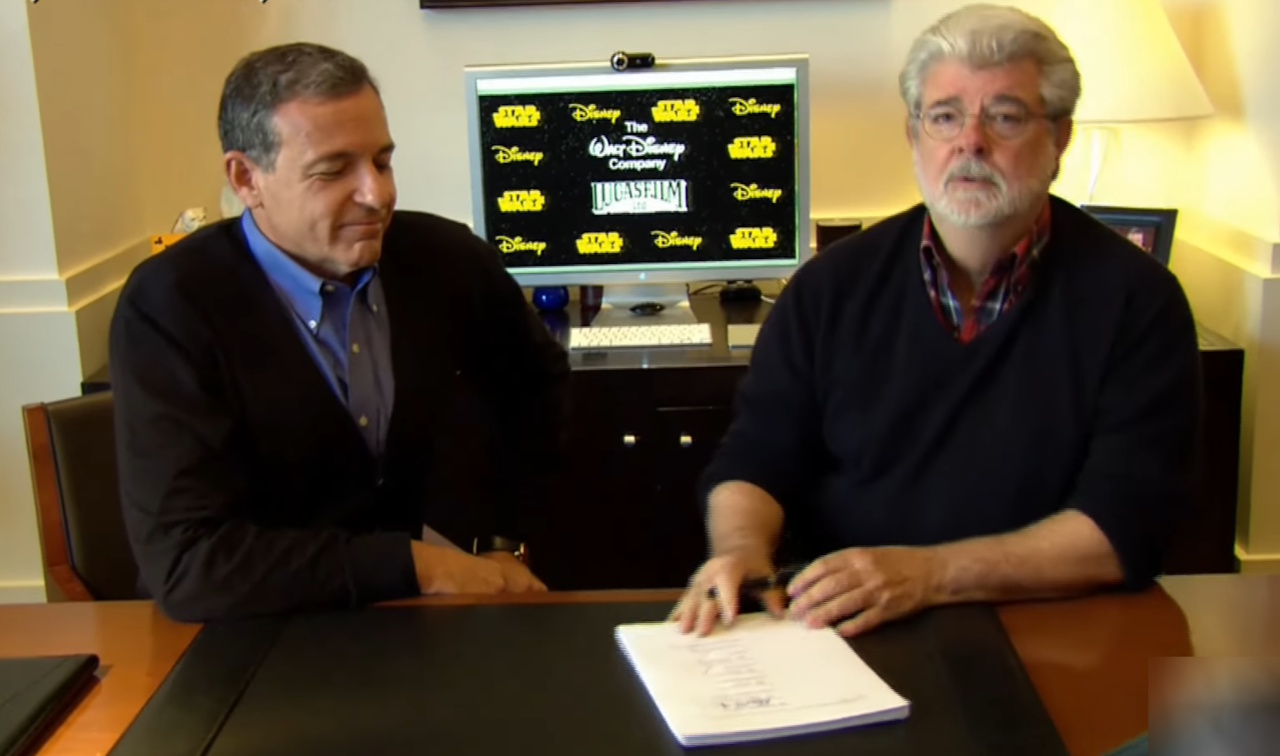
Electronic Arts seemingly loses its exclusive rights to Star Wars

For almost a decade following Disney’s acquisition of LucasFilm, only one company has been able to make Star Wars video games: Electronic Arts. A deal between Disney and EA gave them exclusive rights to the Star Wars license, and in the years since there have been four mainline Star Wars games, one Lego tie-in, one VR game, and a handful of mobile titles.

Both 2015’s Battlefront and of course 2017’s Battlefront II proved controversial and divisive; the former being disappointingly threadbare and the latter for its aggressive in-game monetisation. 2019 saw Jedi: Fallen Order, which I played through last year and was a fun title, and finally 2020 saw Star Wars: Squadrons, which I’ve also been enjoying. However, four games in nine years is perhaps less than many fans were expecting, especially with two of them having serious issues.

2015’s Battlefront was disappointing to many fans.

Calls for Electronic Arts to be “stripped” of the Star Wars license began after Battlefront’s release in 2015, but reached fever pitch in the weeks after Battlefront II’s launch. There was even a petition that hundreds of thousands of folks signed to ask Disney to revoke EA’s exclusive arrangement. That went nowhere, of course – fan petitions never achieve anything – but is indicative of the strong feelings over EA holding the rights.

The well-received Jedi: Fallen Order and Squadrons, combined with updates and patches which greatly improved Battlefront II, led to a cooling-off period, and as of early 2021 cries for the Disney-EA deal to be somehow undone had largely abated. It was a surprise, then, when LucasFilm announced a new Star Wars game… published not by EA but by Ubisoft!

“A surprise, to be sure, but a welcome one.”

Ubisoft has been honing its style of open-world games for years, with franchises like Assassin’s Creed, Far Cry, and Watch Dogs. It seems, from the teaser announcement made yesterday, that the new title will be an open-world game in a similar style, though no mention has yet been made whether it will be a single-player title like those in Ubisoft’s other open-world series, or a multiplayer “live service.” From my point of view I’m hoping for the former!

The game itself may be several years away, though Star Wars does have a recent track record of announcing games closer to release – that’s what happened with Squadrons last year, for example. No release window has been suggested as yet, and in fact we know precious little about the game itself beyond the publisher responsible.

Star Wars: Squadrons.

The upcoming game is just one part of this story, though. Most industry watchers agreed that Electronic Arts had a couple of years remaining on their deal with Disney, which raises the question of how and why this Ubisoft game has been able to enter development. It’s possible that the original contract was incorrectly reported, in which case it may simply have run its course. Or there may have been clauses regarding a number of titles, profit made, etc. that Electronic Arts didn’t live up to, allowing Disney to open up Star Wars to other companies. We don’t know the details – and unless someone senior breaks ranks to tell us, we likely never will!

Exclusivity arrangements can be difficult, and the Disney-EA deal over Star Wars is pretty much a textbook example of why. An exclusive contract like the one Disney offered EA effectively gives that company a monopoly over the license, and anyone who knows anything about basic economics can tell you why monopolies are a bad idea in practically every industry.

No, not that kind of Star Wars monopoly…

Having a monopoly meant there was no threat of competition, and this allowed EA to sit on the Star Wars license, cancelling titles that senior executives didn’t think would bring in “recurring user spending” and not feeling under any real pressure to develop or release anything. They could afford to be complacent because no one else was contractually allowed to even pitch a concept for a Star Wars title.

This attitude was changed when Electronic Arts saw the scale of the backlash to Battlefront II. The effects of that debacle are still being felt, and the game opened the eyes of parents, journalists, and even politicians to the shady practice of in-game gambling. But we’re off-topic. Too late, EA shifted focus away from cash-grabs, putting out the single-player Jedi: Fallen Order and following up with the space-sim Squadrons.

2017’s Battlefront II controversy may have triggered a change in thinking at EA – and at Disney.

Fans had been clamouring for a single-player story-driven Star Wars game for years, and while Battlefront II had a creditable single-player campaign, it wasn’t until Jedi: Fallen Order’s release in November 2019 that the single-player itch was truly scratched for most fans. By then the damage had been done for Electronic Arts, though, and their earlier complacency and attempts to swindle players with truly awful monetisation came back to bite them.

Though Electronic Arts will continue to work on Star Wars titles – most significantly the upcoming sequel to Jedi: Fallen Order – they will no longer be the only company Disney trusts with their incredibly expensive, incredibly lucrative license. The Ubisoft game may be the first of several upcoming Star Wars projects to be taken on by other companies, and hopefully what results will be a broader range of genres and styles of game.

Protagonist Cal Kestis in Jedi: Fallen Order.

In December 2020, LucasFilm announced half a dozen or so upcoming Star Wars films and television shows. There will be a lot of Star Wars content to come over the next few years at least, and while not all of the shows and films will be suitable for a video game adaptation, some may be. Disney and LucasFilm need to ensure they have access to the broadest possible range of talents in the video game industry if they hope to make the most of Star Wars.

I wasn’t especially excited by the film and television announcements made last month, to put it politely. Too many of them seem to be spin-offs, prequels, and deep dives into uninteresting side-characters rather than expanding Star Wars beyond its original incarnation. But even so, several of these projects seem ripe for video game tie-ins, and the end of the Skywalker Saga of films coupled with this expansion into new films and television projects may have been a contributing factor to Disney ending or not renewing its exclusive arrangement with EA.

Could a game based on the upcoming series Rangers of the New Republic be in the works?

For my two cents, I see the ending of this kind of exclusivity deal as a good thing. Monopolies are problematic for consumers for precisely the reasons the Disney-EA arrangement shows, and in future it could even be used as a case study for why these kinds of deals are a bad idea. Opening up Star Wars games to other companies allows for different points of view, competition, and hopefully what will result at the end of the day will be better games. Not necessarily more games. But better ones.

It is worth noting that Ubisoft is a company that hasn’t exactly escaped controversy recently. There have been serious problems within the company, including sexual harassment accusations against senior executives, and the accusation that the company itself tried to cover this up and cover for abusers. Company culture and institutional problems count against Ubisoft, and while Star Wars fans are rightly excited to learn that the franchise will be moving away from the EA exclusivity deal, it’s worth noting that Ubisoft has issues – and Disney should also be aware of this. The last thing the Star Wars brand needs right now is further controversy, yet a team-up with Ubisoft risks precisely that.

So that’s it. The end to Electronic Arts’ monopoly over the Star Wars license. Now if only someone would make a Star Trek video game…

The Star Wars franchise – including all titles mentioned above – is the copyright of Disney and LucasFilm. Star Wars: Battlefront, Star Wars: Battlefront II, Star Wars Jedi: Fallen Order, and Star Wars: Squadrons were published by Electronic Arts. Some screenshots and promo art courtesy of IGDB. This article contains the thoughts and opinions of one person only and is not intended to cause any offence.
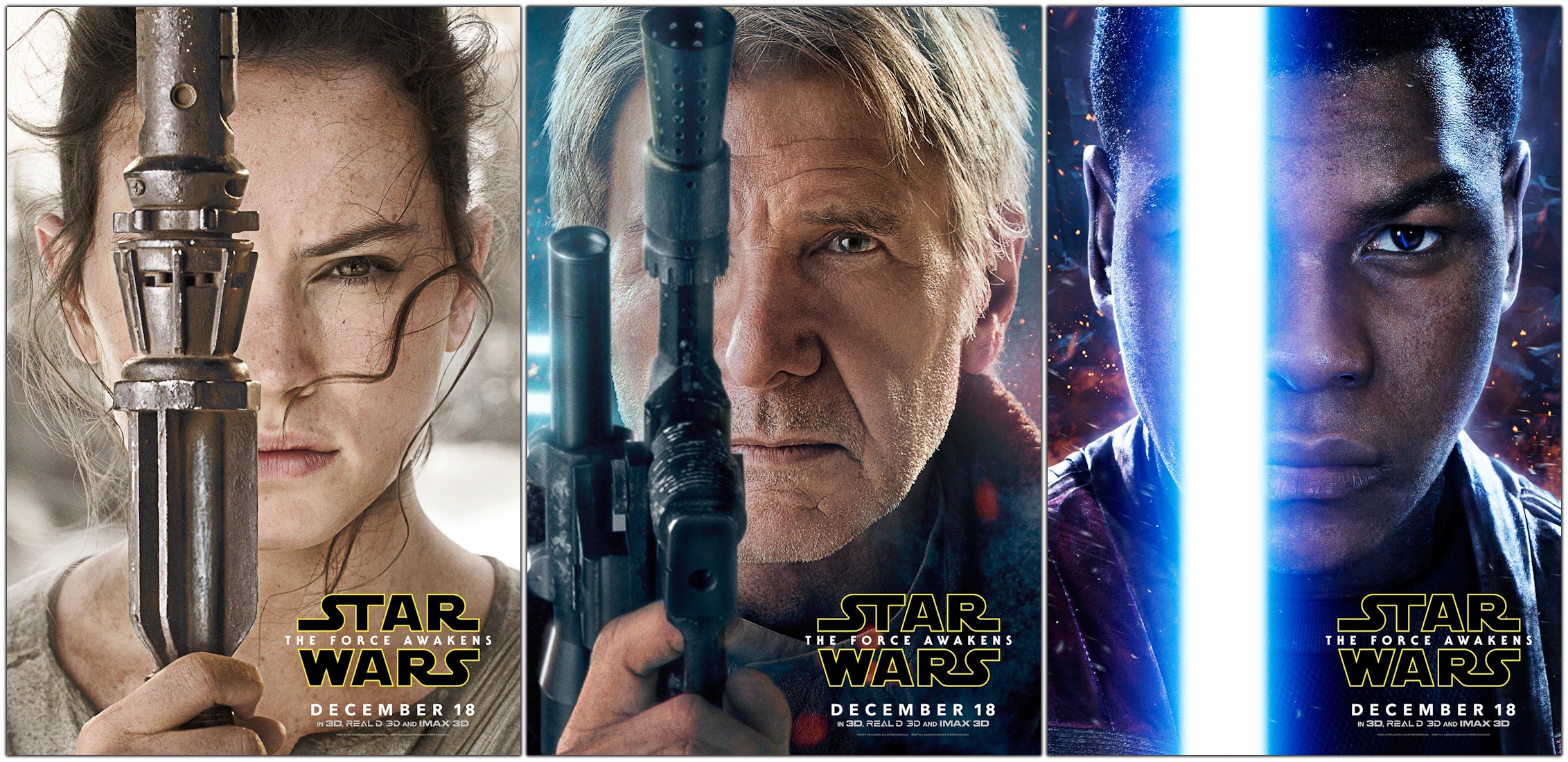
Will the Avatar sequels improve the franchise’s standing?

Spoiler Warning: There are spoilers ahead for Avatar.

James Cameron’s 2009 sci-fi film Avatar never really managed to break into pop culture in quite the way he hoped. It was a huge financial success – in part because folks were curious to see what this new project was all about – but it never really became a top-tier entertainment brand in the way Star Wars or Harry Potter did. In 1977, Star Wars became a phenomenon, and in the years afterwards the film was constantly on fans’ minds. The Empire Strikes Back cemented its place at the pinnacle of the sci-fi genre… even if Return of the Jedi perhaps tarnished its halo a little!

Avatar just isn’t on that level. There was a lot of hype leading up to its release, with a decent (if rather boastful) marketing campaign spearheading 20th Century Fox’s efforts to push Avatar as the “next big thing.” But for a lot of moviegoers, the film was just okay. It wasn’t bad; it was a solid, enjoyable summer blockbuster that went toe-to-toe with the best pictures of 2009 – including the rebooted Star Trek! But after leaving the cinema, I never really got the sense that fans were clamouring for more in the way Trekkies, Potter-heads, and Star Wars fans are for their respective franchises.

Avatar was a successful film – but can it become a successful franchise?

The creation of Pandora – The World of Avatar at Walt Disney World in Florida is a great demonstration of this. The new land attracted attention when it was built, and for months after it opened its rides were queuing out the door! But that happens for almost any new Disney attraction, and when compared to the opening of Star Wars: Galaxy’s Edge in 2019, it pales in comparison. There was huge excitement to be transported to a galaxy far, far away. There was curious interest in Pandora… but that was all.

None of this is to say Avatar was bad. It wasn’t at all, and I thoroughly enjoyed it when I first saw it. But I was never desperate to re-watch it, and my latest revisit to the 2009 film – which may be the third or fourth time I’ve seen it – was prompted by nothing more than boredom. But it also led to this article, so at least I got something out of it!

Pandora – The World of Avatar at Walt Disney World.

This is a much broader point that ties into another piece I’ve been writing, but the difference between a good one-off story and a good story that becomes a larger franchise is world-building. Any film, television show, book, or even video game that hopes to be “the next Star Wars” needs to put time and effort into creating a world that fans want to explore. Star Wars and Star Trek did so, and they did so by showing fans a relatively small piece of what felt like a huge picture. The galaxies depicted in Star Wars and Star Trek are so much bigger than the few characters we met in their original incarnations; it feels like there’s much more to see beyond what was depicted on screen.

Avatar – and a lot of other wannabe-franchises too – doesn’t have that, at least not yet. Partly that’s because the film doesn’t hint at anything more than what we see – Earth, Pandora… and that’s it. And on Pandora there’s one major human outpost. There are starships flying back and forth, and the glimpses we got of Earth had a futuristic vibe, but the world Avatar created doesn’t feel as though it extends beyond the places we see. There’s no other planets that we could imagine humans or Na’vi colonising one day. There’s no fleets of starships on missions of exploration or fighting battles; the few ships we see just fly between Earth and Pandora.

A starship seen in Avatar.

Pandora itself is absolutely beautiful; a location painstakingly created. And the Na’vi are more than just a simple analogue for Native Americans or other indigenous peoples; Cameron and his team went to great lengths to craft Na’vi culture, even going so far as to write a fully-formed Na’vi language. Those efforts may yet pay off, but they don’t seem to have thus far. Because as interesting as the Na’vi are – and they are undeniably interesting – they’re all there is. One tribe of Na’vi and one human settlement on Pandora, and… what? Nothing else, as far as the film showed us.

There’s a sense of scale missing from Avatar, and its world-building, while wonderfully done, is small. There’s nothing wrong with focusing on one aspect of a story and a few characters – in the first film in a series that kind of needs to happen! But if the aim is to create a series with franchise potential, something to hook fans in and get our imaginations running, that sense of scale and the idea of a greater world beyond what we see on screen is essential. It’s the single most important element in building a larger story – and Avatar didn’t get it right.

So on to the question I posed at in the title of this article: can the planned sequels – of which there are four – improve the franchise’s standing? Can they spin out what was a decent one-off sci-fi blockbuster into something more? Can Avatar make the jump and become “the next Star Wars?”

Two Na’vi seen in concept art for the Avatar sequel series.

The length of time between Avatar and its sequels may be an issue. By the time Avatar 2 hits cinemas in December 2022 – assuming it meets its planned release date – thirteen years will have passed since the first title. Given the general apathy and lack of interest in Avatar this long after its premiere, the first part of this sequel series will have to spend at least some of its runtime refreshing audiences on what happened in the first film and what the setting is. When I sat down to re-watch Avatar earlier, I had only a vague recollection of the film, and I daresay a lot of folks will be in the same position.

When The Empire Strikes Back came out, it had been only three years since Star Wars had been in cinemas. And while Star Trek: The Motion Picture was released a decade after The Original Series ended, the only reason the film was made was because there was a growing fanbase who had watched the show when it was rebroadcast and those fans were clamouring for more. Is anyone clamouring for Avatar 2?

A scene on Pandora from concept art.

Avatar was a welcome addition to the sci-fi genre. Especially as the last decade has been dominated by reboots, adaptations, remakes, and sequels, it was a welcome breath of fresh air, and despite what I’ve said about its world feeling small, there is potential for it to be expanded upon. To say that the Avatar series can never be more than it already is would be ridiculous – there’s only been one film so far, and it was decent. It didn’t blow up the genre or redefine what a film could be in the way its pre-release marketing seemed to suggest, but it was good. I don’t dislike Avatar.

The sequels do have a pretty big job to do, though. The storyline of Avatar was exciting, but it was hardly original. Comparisons have been made to Dances with Wolves and even Disney’s Pocahontas, and while I don’t think it’s fair to call it derivative, it wasn’t a unique narrative by any means. That point of criticism will have to be addressed, and the sequels will have to try harder to be different from a story perspective if they’re to achieve the heights the films are aiming for.

Na’vi fly atop their banshees in more concept art.

The beautiful world-building that worked so well for Pandora and the Na’vi needs to be expanded upon. Perhaps we could see different Na’vi tribes and civilisations on Pandora, or better yet, expand the scope of the setting out into space. Are there other moons or planets in the Pandora system, perhaps? Or is there another human settlement on some nearby world? These are just a couple of ideas for how the Avatar series can build on the successes of the first film to be bigger – to achieve that sense of scale which the best and most successful franchises have.

Avatar was also a film which had contemporary real-world analogies. I noted influences of at least two of America’s recent wars in the depiction of the Marines, scientists, and Na’vi – Vietnam and Iraq. The dense rainforests of Pandora, and the way Jake and others had trouble navigating them, were the film’s answer to the jungles of Vietnam. And references to winning “the hearts and minds” of the locals was a phrase we heard often in relation to the Iraq war during the 2000s – which is when Avatar was in development. The latter of those themes is arguably less relevant in 2021 than it was in 2009, and Avatar 2 will need to adapt to changing times.

Night time on Pandora in this final piece of concept art.

One improvement we’re sure to see is in CGI and digital animation. Avatar was released at a time when CGI was improving – and was far better than it had been even five or ten years earlier – but there are still some aspects of its visual style that haven’t aged especially well. Some textures have that “too shiny” look that plagued cinematic CGI in the 2000s, and while viewing the film on a cinema or IMAX projector screen dulled the impact of some of that, on a television set in 2021 it’s something you notice. I wouldn’t say Avatar looks dated – but it’s right on the cusp. A film that relies so heavily on computer animation – many of Avatar’s sequences are basically fully-animated – is always going to run that risk, and while it has aged more gracefully than, for example, the Star Wars prequel trilogy, there are still noticeable places where the animation isn’t up to code.

There have been improvements in computer animation since 2009, which should mean Avatar 2 and the rest of the sequel series will be far more visually interesting. Pandora was already beautiful, but if that beauty could be expanded upon I think the sequels could really be something special. Some fans tend to turn up their noses at visuals, but if you think about it, a distinct visual style is another absolutely crucial element to a franchise. Star Trek has combadges, ships with saucer sections, Klingons, and the transporter. Star Wars has white-armoured Stormtroopers, lightsabers, Jabba the Hutt, and X-wings. Avatar introduced us to the blue-skinned Na’vi, but none of its technology, characters, costumes, or locations have become iconic in the same way as the other franchises we’ve mentioned. Part of that is down to the quality of the CGI, but partly it’s the film’s own art style. Avatar 2 could introduce a new design for a starship, character, or even just a costume that will go on to be emblematic of the series – in the way that Boba Fett became a symbol of Star Wars after his debut in The Empire Strikes Back, for example.

So yes, there’s work to do to expand on Pandora and the world Avatar created in 2009. But I’m really interested to see where Avatar 2 will take the story after the conclusion of the first film, and what the other films in the planned sequel series have in store. James Cameron is an amazing director, and having put so much work and effort into the Avatar series, I really hope it will see the kind of success he’s looking for. There’s always room for more sci-fi franchises!

Avatar is out now on Blu-ray and DVD, and may be streamed on Disney+ in the United States, United Kingdom, and other countries and territories. Avatar is the copyright of 20th Century Fox and the Walt Disney Company. Avatar 2 is due for release in December 2022. Logo and official promotional artwork courtesy of avatar.com. Stock photos courtesy of Unsplash. This article contains the thoughts and opinions of one person only and is not intended to cause any offence.
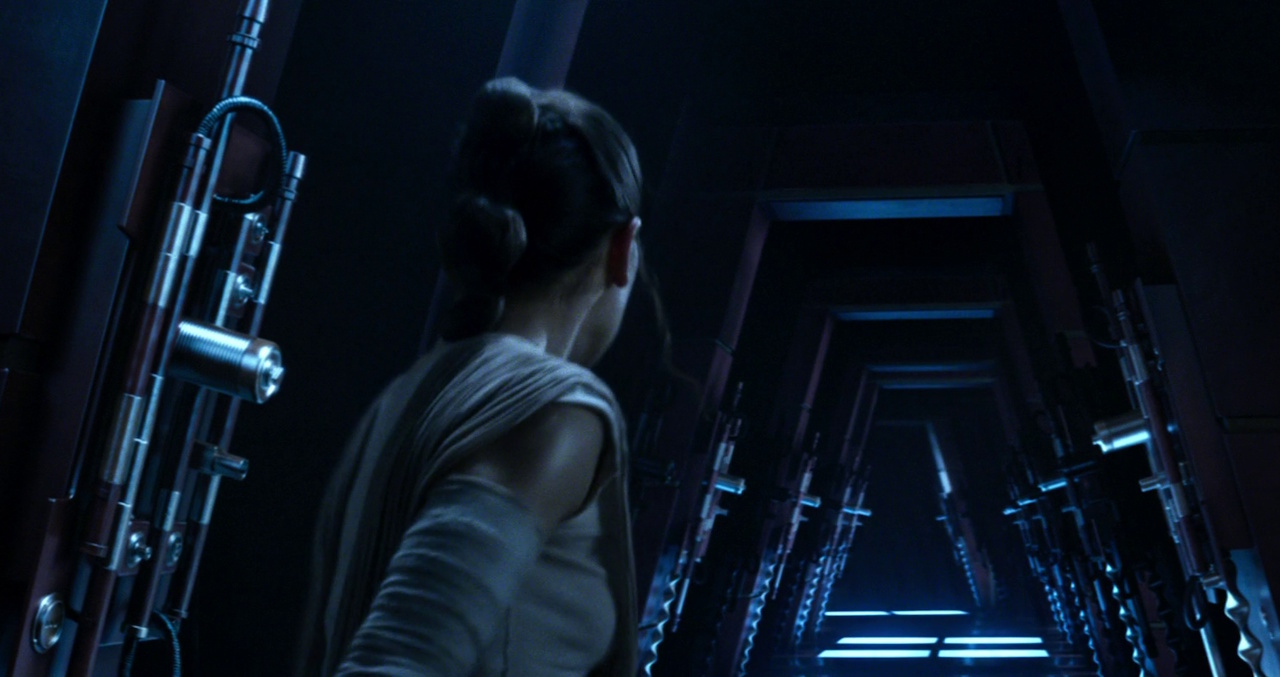
End-of-Year Awards 2020

Spoiler Warning: There are spoilers ahead for some of the films, games, and television shows listed below.

Welcome to my first annual End-of-Year Awards! These are the best (and worst) entertainment events of the year – in my subjective opinion! Rather than writing a top ten list (like I did last year to mark the end of the decade) I’m instead choosing a few categories and awarding my picks for the best entertainment experiences of the year.

I’m including a few titles from the tail end of 2019 on this list simply because many people will have only got around to watching or playing them this year. These decisions are always difficult and I often feel that – because people put these lists together weeks or months before the end of the year – titles released in December tend to miss out. As such you’ll find a few titles from the final few weeks of 2019 being given an award – and perhaps next year there may be a title or two from the end of 2020 featured!

Most categories will have a runner-up and a winner; a few only have one, and in those cases that title wins by default.

A note about exclusions: if I haven’t seen or played a title for myself, for reasons that I hope are obvious it can’t be included. I’m only one person, and I don’t have every moment of the day to dedicate to entertainment. As such, some titles others may consider to be “massive releases” for 2020 aren’t going to be given an award. In the gaming realm, this also applies to titles that I haven’t completed. The exclusion from these awards of titles like Ghost of Tsushima and Tenet isn’t to say they aren’t good; they may be – but I have no experience with them so I’m unable to comment at this time.

With all of that out of the way let’s jump into the awards! If you like, you can try to imagine a fancy stage and some celebrity presenter handing out statuettes. That may or may not be what I’m doing as I write!

Web Series:

Nowadays many of us get at least a portion of our entertainment away from big-budget productions on websites and apps like YouTube. There are a number of top-tier YouTube shows that may have started off as typical amateur productions, but have since become far more professional. As better cameras and microphones become readily available, even low-budget YouTube productions can offer impressive audio and visuals.

Personally I watch a video or two on YouTube most days, and there are a number of channels which have produced top-quality entertainment this year. When the pandemic hit, many YouTube shows were able to keep going despite the chaos engulfing the wider entertainment industry. They had the means and the technology to do so, and that’s fantastic.

🥈Runner-up🥈
Linus Tech Tips

Linus Tech Tips is one of the first YouTube channels I began watching regularly, having stumbled upon it when looking for PC building tips a few years ago. Though some of what they do is complete overkill (what YouTube channel needs $20,000 cameras?) they have a lot of fun while doing it. Linus Tech Tips explores the high-end and cutting-edge of computers, cameras, and other technologies, and the presenters manage to make it entertaining.

The channel has continued its steady growth and now boasts a number of regular presenters in addition to the titular Linus, most of whom specialise in particular topics. There are also several other channels produced by the same team, including TechQuickie, Short Circuit, and TechLinked. The combined output of the main channel plus its subsidiaries means there’s at least one new video per day, which is great. Even less-interesting topics can be made fun when presented well, and the team at Linus Tech Tips manage to be interesting and entertaining every time.

🏆Winner🏆
SORTEDfood

I love a good cooking show. Not only can they be entertaining but also very relaxing. SORTEDfood has a usual output of two videos per week, and while in recent years they’ve stepped away from purely doing recipes and into things like kitchen gadget reviews, everything is food-themed and the enthusiasm that the five presenters have is infectious. During the coronavirus pandemic, London (where the show is recorded) was in lockdown. Despite that, the team found creative ways to get around it, and even incorporated it into their videos. In addition to recipes there were helpful things like reviews of food delivery services, which at the height of lockdown here in the UK was actually really useful. I was able to use a couple of the services they recommended to send gifts to people I couldn’t see in person; gift ideas I would never have had were it not for SORTEDfood.

Their pandemic programming was good, but when lockdown was lifted it was nice for the team to come back together and get back to their regular output. I’m a huge fan of their “ultimate battles” in particular, which pit the presenters head-to-head to create the best dish. The “pass it on” series, where all five take turns to create a single dish, is also fantastic – and often very funny. SORTEDfood manages to be both informative and entertaining, and their output during lockdown was phenomenal and undoubtedly helped many viewers during a difficult time. For all of those reaons, I’m crowing SORTEDfood the best web series of the year.

Documentaries:

I’m setting aside a whole category for documentaries because I’m a big fan. There have been some great ones in 2020, both standalone films and series. Netflix has surprised me over the last few years by growing to become a huge player in the documentary genre, funding many productions – including some Academy Award nominees. Disney+ joined the streaming wars late last year – or in March this year if you’re in the UK – and has also brought some fascinating pieces of documentary content to the small screen. It’s a great time for documentaries at the moment!

🥈Runner-up🥈
We Need To Talk About A.I.

This documentary was fascinating, if perhaps somewhat alarmist. Looking at the possible creation of general artificial intelligence, and the potential for such an AI to surpass humanity, it was a truly interesting peek behind the curtain at what researchers are doing on the cutting-edge of AI research. The documentary was presented by Keir Dullea, famous for his role as Dave in 2001: A Space Odyssey. That film saw his character go up against an out-of-control AI, and Dullea brings a gravitas to the role of narrator as a result.

The film made reference to a number of sci-fi films which look at rogue AI, most significantly Terminator 2: Judgement Day, whose director James Cameron was interviewed. From my perspective as a Trekkie, having just seen Star Trek: Discovery Season 2 and Star Trek: Picard Season 1, which both look at the potential for out-of-control AIs, the documentary brought the world of fiction uncomfortably close to the world we inhabit today. While most of the interviewees offered a fairly bleak look at future AI, particularly in the military realm, others did paint a more positive picture. The biggest thing I took away from it, though, it how little consensus there is among researchers and scientists not only on whether AI is a good idea, but whether it’s even truly possible, or how long it will take.

The film is a fascinating, slightly unnerving watch.

🏆Winner🏆
The Imagineering Story

Though it isn’t a subject I’ve talked about often here on the website, I have a great fondness for Disney’s theme parks. It’s doubtful given my health that I’ll be able to go any time soon, but I have fond memories of visits to several parks with both family and groups of friends. Combine that love of Disney with my aforementioned love of documentaries and I got what was one of the most underrated yet fascinating entertainment experiences of the year!

Prior to the launch of Disney+ in the UK in March, there was already a Disney-branded streaming platform here. I wasn’t sure what kind of an upgrade to expect when the new service arrived – except for The Mandalorian there didn’t seem to be much new. The Imagineering Story was one of the few documentaries on Disney+ at launch, but it’s absolutely fascinating, detailing the behind-the-scenes work that went into building Disney’s various parks and themed lands.

The addition of some National Geographic documentaries to Disney+ over the last year or so has made the platform into a good home for the format, though I would like to see more films and series either added from Disney’s extensive back catalogue or better yet, commissioned exclusively for Disney+.

But we’re off-topic! The Imagineering Story was beautifully narrated by Angela Bassett, and as a series made by Disney itself was able to get the perspectives of many senior people who worked at the parks and on many of the projects it covered.

Video Games:

Despite the all the chaos and pandemonium in the world in 2020, many new games – and two new consoles – managed to make it to release. While it’s true that some titles have suffered delays, by far the majority of planned and scheduled releases made it, and that’s no small accomplishment!

As a new console generation gets ready for its centre-stage moment, it’s often been the case that we get a quieter-than-average year as companies shift their focus. Despite that, though, we’ve seen some pretty big titles in 2020, including a couple that will likely be heralded as “game of the generation” or even “game of the decade!” If I’m still alive and kicking in 2029, by the way, check back as I may have a thing or two to say about that!

Though it’s far too early to say which of the two newly-launched consoles will do best in the years to come, 2020 has given all of us some great gaming experiences… and some crap ones.

Worst Game:

Let’s start by getting the worst games out of the way. 2020 has seen some stinkers, including big-budget titles from successful developers and publishers. They really ought to know better.

🥈Runner-up🥈
Marvel’s Avengers

Marvel’s Avengers is the Anthem of 2020. Or the Fallout 76 of 2020. Or the Destiny 1 of 2020. Or the The Culling II of 2020. Pick any of those live service, broken-at-launch disasters, and that’s what Marvel’s Avengers is. The “release now, fix later” business model has condemned what could have been a popular and successful title to failure. But Marvel’s Avengers hasn’t even failed spectacularly enough to be forever etched in the annals of gaming history alongside titles like 1982’s E.T. Instead it’s slowly fading away, and in six months or a year’s time, nobody will even remember it existed.

Disney and Square Enix looked at a long list of crappy video game business ideas, including paid battle-passes, console-exclusive characters, corporate tie-ins with unrelated brands like phone providers and chewing gum makers, in-game currencies, and microtransactions for each of the six main characters individually. They then decided to put all of these into the game, robbing it of any soul or heart it could have had and turning it into a bland corporate cash-grab. As soon as I heard the company planned the game as a “multi-year experience,” the writing was on the wall. If, underneath all of the corporate nonsense, there had been a halfway decent game with fun gameplay, perhaps more players would have stuck it out. But, as usual with these types of games, there wasn’t. I’m not the world’s biggest Marvel fan. So I’m not horribly offended by this game in the way some folks undoubtedly are. But I can sympathise with them, because fans deserve better than this steaming pile of crap to which Disney and Square Enix have attempted to affix the Marvel logo.

🏆Winner🏆
The Last of Us Part II

The Last Of Us Part II’s cover-based stealth/action gameplay is fine. Though better than the first game, I didn’t feel there was a colossal improvement in terms of gameplay – but that could be said about countless sequels over the last couple of console generations. Where The Last Of Us Part II fell down was its story. This was a game I was sceptical of from the beginning; the first title felt like lightning in a bottle, something that neither wanted nor required a follow-up. In 2020, though, practically every successful title ends up being spun out into a franchise.

With a theme of breaking the cycle of violence, The Last Of Us Part II considers itself “artistic” and clever. Unfortunately that theme led to a horribly unsatisfying narrative, with players not only forced to take on the role of the person who murdered Joel – the protagonist/anti-hero from the first title – but ends with Ellie letting her escape and refusing to take revenge. Had the same concept been part of a new game with new characters, it could have worked better. But crammed into this title it fell flat. I stuck with it out of stubbornness as a fan of the first title, but it was a profoundly unenjoyable ride, and that’s why The Last Of Us Part II is the worst game of 2020.

Best Casual Game:

How do we define a “casual” game? It’s a difficult one, and it’s one of those contentious topics where fans of a title who may have spent hundreds of hours in the game world will get upset at hearing their favourite game referred to as “casual.” When it came to choosing titles for this category, I looked at games that could be easily picked up for a short burst, then put down. Games that can be played for a few minutes and that have gameplay suited to that was one of the main criteria. Games in this category also had to be pick-up-and-play. Some casual games can indeed be hard to truly master, but for my money, any game to which we assign the “casual” title has to be accessible and easy to get started with.

So that was how I came to my shortlist. Now let’s look at the runner-up and winner… though if you’ve been a reader all year I doubt you’ll be too surprised!

🥈Runner-up🥈
Fall Guys

Fall Guys seemingly came out of nowhere in August. It wasn’t a title I’d heard of, let alone one I was looking forward to, but it turned out to be a lot of fun. Taking a format inspired by television game-shows like Gladiators or Total Wipeout, the basic gameplay consists of running a series of obstacle courses, looking to be the last one standing at the end to win a crown.

I’m not usually interested in online multiplayer titles, but Fall Guys was something so genuinely different that I was prepared to give it a go. And what I found was a game that was shockingly fun. Each round lasts barely a couple of minutes, meaning even if you don’t qualify it’s not a big deal. Just jump into the next game. Though there are microtransactions, at time of writing they aren’t intrusive and the game is quite generous with the in-game currency given out simply for playing. There are fun cosmetic items to dress up your adorable little jelly bean character in, and the whole game is cute and lots of fun. Though it did have a cheating problem for a while, the addition of anti-cheat software appears to have fixed things. I’m probably about done with Fall Guys as I move on to find new things to watch and play, but I had a wonderful time with it this summer and autumn.

🏆Winner🏆
Animal Crossing: New Horizons

With over 120 hours played, I’ve spent more time this year with Animal Crossing: New Horizons than with the next two games on my list put together. That’s no small accomplishment – even if my 120 hours seems paltry compared to the amount of time some players have put into this title. Time alone doesn’t make a title worthy of winning an award, though. Why Animal Crossing: New Horizons deserves the title is because practically all of those hours were enjoyable.

It’s true that the base game at launch was missing features from past entries in the series, notably 2013’s Animal Crossing: New Leaf. And I find that disappointing, even if updates have since improved the game. But despite the missing content, what the game did have was fantastic, and there really isn’t anything like New Horizons on the market. It’s cute wholesome fun, and the kind of game that can be played for even just a few minutes at a time. It doesn’t demand a huge commitment in the way some titles do – but if you get stuck into it, you’ll find yourself wanting to spend more and more time on your island.

Best Racing Game:

There’s only one game in this category this year, simply because the other racing games I’ve played in 2020 were released in previous years. I had a lot of fun with Forza Horizon 4 in particular, but as a 2018 title it can’t be included here for obvious reasons.

🏆Winner🏆
Hotshot Racing

Congratulations to Hotshot Racing for winning by default! Jokes aside, this game is a lot of fun. An unashamed arcade racer that makes no attempt at realism, it’s fast-paced, exciting, and ridiculous in equal measure! What attracted me to the game when it was released in September was its deliberately mid-90s aesthetic; a beautifully simple art style inspired by racing games of the Sega Saturn and PlayStation 1 era.

At a time when many games feel overpriced, the £15 I paid for Hotshot Racing actually feels cheap! For how much fun the game is, even when simply playing against the AI, it could arguably ask for a lot more money! Speaking of playing against the AI, that’s something Hotshot Racing encourages, and considering how many titles that supposedly offer a single-player mode still try to force players to go online, I appreciated that. In the mid-90s, some games could do four-player split-screen, but many titles were limited to just two players at the most, so racing against the AI was something all gamers had to do; that was just how those games were meant to be played!

As a visual throwback to games past, Hotshot Racing caught my eye. But there’s more to it than just the way it looks, and what’s under that cute retro skin is a genuinely fun arcade racer.

Best Star Wars Game:

It’s unusual for two games in a single franchise to release within a year of each other, but that’s what happened! There was even supposed to be a third Star Wars title this year – Lego Star Wars: The Skywalker Saga – but it was delayed until 2021.

🥈 Runner-up 🥈
Star Wars: Squadrons

Though Squadrons is less arcadey than classic starfighter titles like Rogue Squadron, it’s a remarkably fun game. If you’ve ever dreamed of being a pilot in a galaxy far, far away, this is about as close as you can get! Though I don’t play in VR, the option to use a VR headset – as well as to set up a proper HOTAS or other flight controller on PC – surely makes this the most immersive Star Wars experience out there. Even just with a control pad, though, Squadrons truly transports you to the cockpit of an X-Wing, TIE Fighter, or one of the game’s other starfighters.

The single-player campaign was fun, giving players the opportunity to fight on both sides of the war as the New Republic seeks to defeat the rump Empire – the game is set in the aftermath of Return of the Jedi. I’m not much of a multiplayer gamer, so the fact that there is an AI mode, allowing me to continue to have fun just playing against the computer, is fantastic. I had a truly enjoyable time with Star Wars: Squadrons, and I keep going back for more.

🏆Winner🏆
Star Wars Jedi: Fallen Order

Jedi: Fallen Order was released in November 2019, so including it on this list is a bit of a stretch, I admit. But I got to play it this year, and it was the first game where I fully documented my playthrough. Jedi: Fallen Order managed to feel like a cross between Knights of the Old Republic and the Uncharted series, with protagonist Cal taking on a quest to visit several ancient worlds in search of a Jedi Holocron.

There were twists and turns along the way, but the whole time I felt like I was taking part in a Star Was adventure all my own. After the disappointment of The Rise of Skywalker, playing through Jedi: Fallen Order convinced me that the Star Wars franchise was going to be okay, and that there were still new and original stories worth telling in this universe.

The gameplay was great too, with lots of exciting action and lightsabre-swinging as Cal took on the forces of the Empire. I won’t spoil the ending if you haven’t played it for yourself, but Jedi: Fallen Order was a wild and incredible ride, and one I heartily recommend.

Best Action or Adventure Game:

This category ended up with two first-person shooters, but I’m keeping the name the same! There were many great action, adventure, and first-person shooter titles released this year, and I didn’t have time to play all of them. Here are the two I enjoyed most.

🥈 Runner-up 🥈
Doom Eternal

The sequel to the wonderful 2016 reboot of Doom is just fantastic. Gone is the horror vibe that Doom 3 mistakenly introduced, and instead what you get is action and excitement – with some interesting platforming sections thrown in for good measure. There is a story, of course, but unlike many games I’m not really all that interested in it. I come to games like Doom Eternal to feel like a demon-killing badass, and that’s precisely what the game offers.

There was a lot of fun to be had in the days leading up to Doom Eternal’s launch, as it coincided with the launch of Animal Crossing: New Horizons. I greatly enjoyed the memes and artwork created by folks on the internet, depicting Doom Guy and characters from the Animal Crossing series together! All in all, this is just a fast-paced, fun shooter that doesn’t try to be anything more. It isn’t a jack-of-all-trades; it does one thing and does it to perfection.

🏆Winner🏆
Halo: The Master Chief Collection

Throughout 2020, developers 343 Industries have brought the Halo series to PC. Halo: Reach arrived late last year, and in the months since we’ve gotten every other title in the series – except for Halo 5! It had been a long time since I played Halo: Combat Evolved on the original Xbox, and I had a lot of fun rediscovering the series and enjoying it all over again. The updated graphics improved the experience in a lot of ways, but it was also fun (and innovative) to be able to switch between visual styles on the fly.

I hadn’t played either Halo 3: ODST or Halo 4, so I not only got to recreate my Halo experience from years past, but expand on it too. The setting the series uses is as unique and interesting as any sci-fi video game I’ve played, and I’m very curious to see what Halo Infinite can bring to the series when it’s eventually ready.

Television Shows:

There have been some wonderful television shows this year. While the pandemic led to the shutdown of cinemas and a delay in many films being released, a lot of television shows were able to press ahead – at least, those that had completed filming before the worst effects were felt. I hoped to include more categories, such as best miniseries, but time got away from me and I have a number of shows still on my list of things to watch!

Worst Television Series:

Luckily there’s only one in this category! If I’m not enjoying a television series I tend to just stop watching – unless there seems to be a real prospect of improvement. Likewise, if I feel something won’t be to my taste I’ll just skip it; life is too short, after all, for bad entertainment. That said, there are exceptions, and I found one in 2020.

🏆Winner🏆
Supernatural

Supernatural is the king of running too long – a crown it inherited from The Big Bang Theory! Fifteen years ago, when it debuted, there was a great premise as brothers Sam and Dean Winchester set out to hunt ghosts and monsters, all the while keeping an eye out for the demon that killed their mother and Sam’s girlfriend.

But by the time the show reached its third season, many of its ongoing storylines had concluded. The writers began reaching for new and different demons and creatures for Sam and Dean to tackle, and the quality dipped. By the time the show crossed over into the self-congratulatory fan-servicey mess it has been in recent seasons it had just become ridiculous; a parody of itself.

As the seasons dragged on, writers began pumping more and more Biblical themes into Supernatural, transforming its protagonists into invincible prophets anointed by God. An episode a few seasons back saw Sam and Dean cross over into a world where their adventures are a television show in what has to be one of the worst examples of fan-service I’ve ever seen.

Thankfully Supernatural has now wrapped up its final season. I tuned back in – against my better judgement – to see if the impending end of the series would make a difference to its quality. But it didn’t, and I stand by something I’ve been saying for years: many television shows have a natural lifespan. Supernatural had maybe three decent seasons, and should certainly have ended a long time ago.

Best Animated Series:

🥈 Runner-up 🥈
Rick & Morty

We got five episodes of Rick & Morty in 2020; the back half of Season 4, which had premiered last year. The show’s entire premise is wacky, sometimes over-the-top humour, and that doesn’t always stick the landing, especially when the creative team have been working on it for seven years already. So with that in mind, I consider four episodes out of five being decent to be a pretty good run.

When the show stopped flying under the radar and really hit the mainstream in 2017, there was a fear perhaps that the newfound popularity would lead to changes. But I don’t really think that’s happened, and I wouldn’t say that this year’s episodes were substantially different to those in past seasons. They weren’t necessarily any better, but certainly no worse.

There were some great jokes, some hilarious moments, and some weird and wonderful aliens as Rick and Morty (along with Summer, Jerry, and Beth) took off on their interdimensional adventures.

🏆Winner🏆
Star Trek: Lower Decks

It could hardly be anything else, right? Building on the success of both the Star Trek franchise and animated comedies like Rick and Morty, Star Trek: Lower Decks represented the franchise’s biggest attempt to try something new – and arguably its biggest risk – in a very long time. Despite the controversy surrounding Lower Decks’ lack of an international broadcast, judging the series on merit it was a very enjoyable ride.

There were plenty of laugh-out-loud moments in Lower Decks, but more than that, the show paid homage to my personal favourite era of Star Trek – the 24th Century. There were so many callbacks and references to events in The Next Generation, Deep Space Nine, and Voyager and the series managed to feel like Star Trek while at the same time having an overtly comedic style.

While its sense of humour won’t be to everyone’s taste, there’s no denying that Lower Decks was made by fans for fans, and I’m really excited to see its second season whenever that may come – especially now that the show’s international broadcast has been settled meaning that fans everywhere can enjoy it together.

Best Live-Action Television Series:

🥈 Runner-up 🥈
Cobra

Right at the beginning of the year I watched Cobra, a British thriller about a government dealing with the aftermath of a disaster. Such an interesting fictional concept, I thought. How innocent we were back then, eh?

Cobra wasn’t what I expected. Having read the pre-release marketing I was expecting a disaster series, something dealing with an apocalyptic event. Instead it’s much more of a thriller with elements of political drama. Even though that was completely not what I expected, I had an enjoyable time with the series.

Robert Carlyle – who plays the role of a British Prime Minister clearly inspired by Tony Blair – is an actor I’ve always felt was underrated. I saw him a few years ago in a miniseries called Hitler: The Rise of Evil, and ever since I’ve found him to be a decent actor who can take on a variety of roles. He was the star of Cobra – but didn’t overwhelm the series. It was an entertaining ride with some truly tense moments.

🏆Winner🏆
Star Trek: Picard

This should come as no surprise to anyone who’s followed my articles and columns this year! Star Trek: Picard did something I’d been desperately wanting the franchise to do for basically twenty years: move forward. Since Enterprise premiered shortly after the turn of the millennium, Star Trek has looked backwards, with all of its attention focused on prequels and reboots. Many of those stories were great, don’t get me wrong, but I wanted to know what came next, and Picard scratched that itch.

But its premise alone would not make it the best television series of the year! Star Trek: Picard told an engaging, mysterious story as the retired Admiral Picard set out on a new adventure. The story touched on contemporary themes of artificial intelligence, isolationism, and mental health, and was an enthralling watch. Though it stumbled as the first season drew to a close, the first eight episodes were outstanding, and have hopefully laid the groundwork not only for future seasons and more adventures with Picard and his new crew, but also for further Star Trek stories set at the dawn of the 25th Century.

It’s difficult to pick out one individual episode and say it was the best the season had to offer, because Star Trek: Picard is designed to be watched from beginning to end as one continuous story. But that doesn’t mean I won’t try!

Star Trek Episodes:

2020 was the first year since 1998 with three Star Trek productions, so there’s a lot of episodes to choose from! As Trekkies we’re spoilt for choice at the moment – long may that continue! This year I reviewed every single Star Trek episode that was broadcast. The year began with Picard in late January, then Lower Decks came along in August, and finally Discovery premiered in mid-October.

Worst Episode:

There weren’t a lot of options here, because the quality of modern Star Trek has been high. That said, every Star Trek show has misfires and duds from time to time, and this year was no exception.

🥈 Runner-up 🥈
Et in Arcadia Ego, Part 1 (Star Trek: Picard)

After an incredibly strong start, Star Trek: Picard stumbled as its first season drew to a close. My primary complaint about Et in Arcadia Ego as a whole (aside from that godawful gold makeup they used for the synths) was that it introduced too many new characters and storylines, most of which didn’t get enough screen time to properly develop. The first part of a finale needs to bring together everything that’s already happened, not dump an awful lot of new things onto the audience, but that’s what Et in Arcadia Ego, Part 1 did.

The episode was also very poorly-paced, which is down to a combination of scripting and editing. The story jumped from point to point without sufficient time for the audience to digest what was going on. It also skipped over what should’ve been massive emotional moments, like Picard and Soji learning Hugh’s fate, or Elnor learning of Picard’s illness. Dr Soong and Sutra in particular needed more development and more screen time – though Isa Briones’ terrible, one-dimensional performance means that’s something I’m half-glad we didn’t get!

Overall, this was Picard’s worst episode by far. The aesthetic, editing, and pacing were all wrong, and if the story of Season 1 wanted to include all of these new characters, factions, and settings, we needed not only more episodes, but to have brought them in much earlier.

🏆 Winner 🏆
Envoys (Star Trek: Lower Decks)

Envoys’ opening sequence, in which Ensign Mariner kidnaps a sentient energy lifeform “for a laugh,” was the closest I came to switching off Star Trek’s second animated series and not going back. Where Lower Decks succeeded was in making the regular goings-on in Starfleet comical. Where it failed was in attempting to set up Ensign Mariner as Star Trek’s answer to Rick Sanchez (from Rick & Morty). This sequence encapsulated all of Mariner’s worst qualities, and was about as un-Star Trek as it’s possible to get.

It’s a shame, because the episode’s B-plot starred Ensign Rutherford in what was one of his better stories as he hopped from role to role aboard the ship, trying out different postings in different departments. The main story stuck with Mariner and Boimler, and derived much of its attempted humour from her mean-spirited selfishness. The ending of the episode did go some way to humanising Mariner, and arguably set the stage for her becoming a much more likeable character across the remainder of the season. But that opening sequence in particular is awful, and is the main reason why I’m crowing Envoys as the worst Star Trek episode of the year.

Best Episode:

This is a much more fun category than the one above! And there are plenty of candidates. All three shows managed to have some real gems, and picking just two was not an easy task.

🥈 Runner-up 🥈
Far From Home (Star Trek: Discovery)

After Michael Burnham arrived in the 32nd Century in the season premiere, Far From Home saw Discovery and the rest of the crew arrive too. We were treated to an excellent crash landing sequence that was reminiscent of Voyager’s fourth season episode Timeless, and we got an interesting storyline which saw Saru and the crew forced to adapt to a very different and difficult future.

Saru and Tilly both stepped up, and the dynamic between these two characters has been continued through the rest of the season. As two main characters who hadn’t spent a huge amount of time together before this episode, their relationship was somewhat new and very interesting. Saru stepped up to become the captain we all hoped he could be in Far From Home, and Tilly showed us that there’s more to her than mere comic relief.

As the second half of the series premiere, Far From Home does a lot of world-building, establishing the violent, chaotic nature of the 32nd Century. It was also rare in that it was a Star Trek: Discovery episode with practically no input from Burnham – something which allowed many other crew members to shine in unexpected ways.

🏆Winner🏆
Remembrance (Star Trek: Picard)

I don’t think I’ve ever been more excited for a Star Trek episode than I was for Remembrance. This was the moment Star Trek returned to the 24th Century for the first time since 2002’s Nemesis – and it was the first time the overall story of the Star Trek galaxy had moved forward since we heard about the destruction of Romulus in 2009’s Star Trek.

Children of Mars – the Short Treks episode that served as a prologue to Picard – had been somewhat of a let-down, so there was a lot riding on Remembrance as far as I was concerned! And I’m so happy to report that it delivered. It was mysterious and exciting, with moments of tension and action, and although the now-retired Admiral Picard was not exactly the same as he was the last time we saw him, flickers of the man we knew were still there.

Remembrance set the stage beautifully for Season 1 of Star Trek: Picard. It took things slow and didn’t overwhelm us with storylines and heavy plot all at once. By the end of the episode we’d only really met two of the season’s principal characters. Perhaps seen in the light of the rushed finale this could be argued to be a mistake, and that we needed to get a quicker start. But I don’t think I agree with that assessment; Remembrance is perfect the way it is, and probably the best single episode of television I saw all year.

Films:

Let’s be blunt for a moment: 2020 has been a catastrophic year for the film industry. So many titles that should have been released simply didn’t come out due to the pandemic, and as a result it’s been slim pickings. A few bigger titles managed to premiere in January or February before the worst effects hit, but since the end of February very few titles have come out. We’ve missed out on films like No Time To Die, Ghostbusters: Afterlife, and Dune, all of which have been delayed to 2021. And there will be ramifications for years to come, as titles planned for 2021 are being pushed to 2022, and so on.

There have been some titles that managed to come out this year, and from my selfish point-of-view, I’m happy that more have come straight to streaming! My health is poor, and one thing that I sadly can’t do any more is get to the cinema (I haven’t been able to for several years). So in that sense I don’t feel that I personally have missed out in quite the same way! However, the massively-curtailed release schedule has had an effect, and as a result I don’t really have a lot of titles to choose from for this section of the awards. In another year I might’ve split up the films into several genres, but instead we just have three categories.

Worst Film:

Luckily there’s only one film in this category this year. If you recall my review of it from the spring, it perhaps won’t be a surprise!

🏆Winner🏆
Star Wars Episode IX: The Rise of Skywalker

The Rise of Skywalker is saved from being the worst Star Wars film solely by the existence of The Phantom Menace – and it’s not always clear which is worse. The clumsy insertion of Palpatine into a story that was clearly not supposed to have anything to do with him is perhaps the worst example of corporate-mandated fan service I’ve ever seen. Not only does Palpatine ruin The Rise of Skywalker, but the revelation that he’s been manipulating the entire story of Star Wars from behind the scenes undermines every other story that the cinematic franchise has tried to tell. It was a monumentally bad decision; the worst kind of deus ex machina. And his presence wasn’t even explained.

But while Palpatine stank up the plot, he wasn’t the only problem in The Rise of Skywalker. The ridiculously choppy editing meant no scene lasted more than a few seconds, leaving the audience no time to digest what was happening. There was some truly awful dialogue. General Hux’s story makes no sense at all and was totally out of character. Rose Tico was sidelined, despite her character being a huge part of the previous film. Palpatine’s plan – and his decision to announce it to the galaxy before enacting it – makes no sense. The stupid limitation to his fleet also makes no sense. Rey’s character arc across the trilogy was ruined by the decision to listen to bad fan theories. Poe and Finn basically did nothing of consequence. And the scenes with Leia – I’m sorry to say given Carrie Fisher’s untimely demise – were so obviously lifted from another film that it was painful.

JJ Abrams ran around undoing so many storylines from The Last Jedi that The Rise of Skywalker felt like two films haphazardly smashed together, but cut down to the runtime of a single picture. There was an occasional moment where either something funny happened or perhaps the nostalgia hit hard, but otherwise it was a total failure, and by far the worst film I’ve seen all year.

Best Animated Film:

🥈Runner-up🥈
Frozen II

Disney does not have a good track record when it comes to sequels. Most of the time their big animated features are one-offs, with any sequels being relegated to direct-to-video offerings. But Frozen had been such a cultural landmark after its 2013 release that a sequel was, perhaps, inevitable. And far from being an afterthought, Frozen II was a film that equalled – and occasionally surpassed – its illustrious predecessor.

There was some fantastic animation work in Frozen II, such as the effects used for the fog. There was less snow than in the first film, and the snow in Frozen was beautiful, so that’s a shame in a way! The soundtrack was fantastic too, with several catchy songs that are well worth listening to.

Frozen II’s story was engrossing and genuinely interesting, and unlike some Disney sequels managed to avoid feeling tacked-on. The parents of the two sisters at the heart of the story had been killed early in the first film – and Frozen II saw them learn more about what happened to them, as well as discovering the source of Elsa’s powers.

🏆Winner🏆
Phineas and Ferb the Movie: Candace Against the Universe

Phineas and Ferb went off the air in 2015, and as Disney Channel shows are usually one-and-done affairs I didn’t expect to see it return. But Candace Against the Universe premiered in August on Disney+ and was absolutely amazing.

After a five-year break the film brought back practically everything that made Phineas and Ferb great. There was a wacky but fun plot that brought together the kids and Dr Doofenshmirtz, there were some great musical numbers, and above all a deep story that had heart. Candace – the sister of the titular Phineas and Ferb – took centre-stage in a story that made depression accessible to even the film’s young target audience. It ended by telling a story that showed kids that they don’t have to be the centre of the universe to matter, and I think that’s an incredibly powerful message.

I’m a big advocate of sensitive depictions of mental health in entertainment. Not every story has to touch on the subject, of course, but Candace Against the Universe did – and it did so in a way that was relatable and understandable. But beyond that, it was a fun return to a series I thought was over. It’s possible the film could be the springboard for more Phineas and Ferb, but even if it isn’t I’m still glad we got to see it.

Best Live-Action Film:

Ordinarily I’d try to split up films by genre, and at least have sections for comedy, sci-fi, and maybe one or two others. But so few films have staggered out the door this year that there’s not really a lot of choice. As I’ve seen so few new films I just picked my top two. It wasn’t even all that difficult.

🥈Runner-up🥈
Sonic the Hedgehog

In any other year, Sonic the Hedgehog wouldn’t have got a look-in as one of the best releases. But this is 2020, and as we’ve already discussed, there aren’t a lot of options. After receiving backlash for its visual effects when the first trailer was released in 2019, the creative team behind Sonic the Hedgehog went back to the drawing board and redesigned the titular Sega mascot, bringing him closer to his video game appearance. The willingness of the studio to delay the project in response to fan criticism is appreciated, especially when many other studios have chosen to double-down in the face of such backlash.

The film itself is surprisingly fun, though as with 1993’s Super Mario Bros., features a storyline quite far-removed from the video game franchise it’s inspired by. Jim Carrey hasn’t exactly disappeared in recent years, but has been nowhere near as ubiquitous as he was in his late-90s heyday, so his performance here feels like a return to form. And that’s all I have to say, really. It was a fun film, and an enjoyable way to kill a couple of hours. Is Sonic the Hedgehog going to be hailed as a classic of modern cinema alongside Lincoln and Bohemian Rhapsody? Of course not. But out of the available titles this year, it’s one of the best.

🏆Winner🏆
1917

Now for a complete change of tone! 1917 was released in December last year, and is a truly epic war film that missed out on winning any of the top Academy Awards. However, despite the snub by the Oscars, it’s an outstanding piece of historical cinema, and though its novel “one-take” style of editing was perhaps less impressive than I expected it to be, it was nevertheless interesting.

I fully expect 1917 to be considered a classic of the war genre in decades to come, such is its quality. At its core is an emotional story of two young men thrown into a gut-wrenching situation. The First World War was one of the worst and bloodiest in history, yet few films have depicted that horror with such brutal accuracy as 1917.

Though it isn’t the kind of popcorn flick you’ll want to watch a dozen times in a row, 1917 is artistic and inspired in all the ways that matter. From the performances to the costuming to the camera work, every tiny detail has been honed and perfected. Director Sam Mendes deserves a lot of credit for putting together this masterpiece.

Announcements:

In this final section I’ll briefly cover a handful of announcements for upcoming productions that got me excited in 2020. There are so many interesting projects in the works, and while some of these may not see the light of day until 2022 or even later, they’re still genuinely appealing and I’m keeping my ear to the ground listening for news!

Video Games:

🏆Winner🏆
Mass Effect: Legendary Edition

I’d been hoping for an announcement of the remastered Mass Effect trilogy ever since rumours of its existence began to swirl earlier in the year. Though EA and Bioware kept us waiting, the remaster was finally announced a short time ago and is due for release in 2021. Whether it will really tick all the boxes, and whether enough time has passed for a remaster to feel like a substantial improvement are both open questions… but I’m very interested to find out!

Television Shows:

🥈Runner-up🥈
Alien

There’s a television show based on the 1979 classic Alien in development! Practically everything is being turned into a streaming television series right now, so perhaps that shouldn’t come as a surprise, but I’m truly interested to see what the Alien franchise can do with more than a couple of hours. Television as a medium allows for longer and more complex stories than can fit in a two-hour film, so there’s a lot of potential here.

🏆Winner🏆
Star Trek: Strange New Worlds

Almost since the moment he beamed aboard Discovery at the beginning of the second season, fans had been clamouring for a Captain Pike series, and Alex Kurtzman and ViacomCBS listened! Strange New Worlds was announced in May, along with a short video from its three principal cast members. The show has already begun production, and while I doubt it’ll see the light of day before 2022, it’s one of the things keeping me going right now!

Films:

🥈Runner-up🥈
The Matrix 4

Though I have no idea where the story of The Matrix 4 could possibly take the series, I’m cautiously interested. Filming has already begun, but was disrupted by – what else – the pandemic. The two sequels to 1999’s The Matrix didn’t quite live up to the first part of the saga, but nevertheless were solid action-sci fi titles. I’m hoping that, after the series has taken a long break and with access to better CGI than was available in the early 2000s, The Matrix 4 will be just as good as the first. Could this be the beginning of a greatly expanded franchise?

🏆Winner🏆
Dune

The first part of this new Dune duology should have been released this month, but because most cinemas remain closed it’s been pushed all the way back to December next year. Dune has previously been difficult to adapt, with at least one attempted film version never making it to screen, but this adaptation has clearly been a labour of love. It seems to feature a great cast, and based on the trailer will have some stunning visual effects. Here’s hoping that it can get the cinematic release that the director and studio hope for.

So that’s it!

Those are my picks for the entertainment highlights of 2020. It’s been a very unusual year in terms of what all of us have been able to watch and listen to. A number of big titles weren’t able to make it to release, especially in the realm of cinema. We’re also going to be feeling the knock-on effects of this disruption well into 2021 and 2022, even if things get back to normal relatively quickly – which hopefully will be the case!

2020 brought Star Trek back to the small screen in a huge way. There literally has not been this much Star Trek to get stuck into for decades, and as a big fan of the franchise I think that’s just fantastic. It’s also been a year which has accelerated the move toward streaming as a main way of accessing content. I wouldn’t like to guess how many cable or satellite subscriptions have been cancelled in favour of Netflix, Disney+, CBS All Access, and the like!

I hope that you managed to find some fun things to watch and play this year – even as the outside world seemed to be falling apart. Entertainment is great escapism, and we all needed some of that in 2020. This may be my last post of the year, so all that remains to be said is this: see you in 2021!

All titles listed above are the copyright of their respective company, studio, broadcaster, publisher, distributor, etc. Some promotional images and artwork courtesy of IGDB. Stock photos courtesy of Unsplash. This article contains the thoughts and opinions of one person only and is not intended to cause any offence.
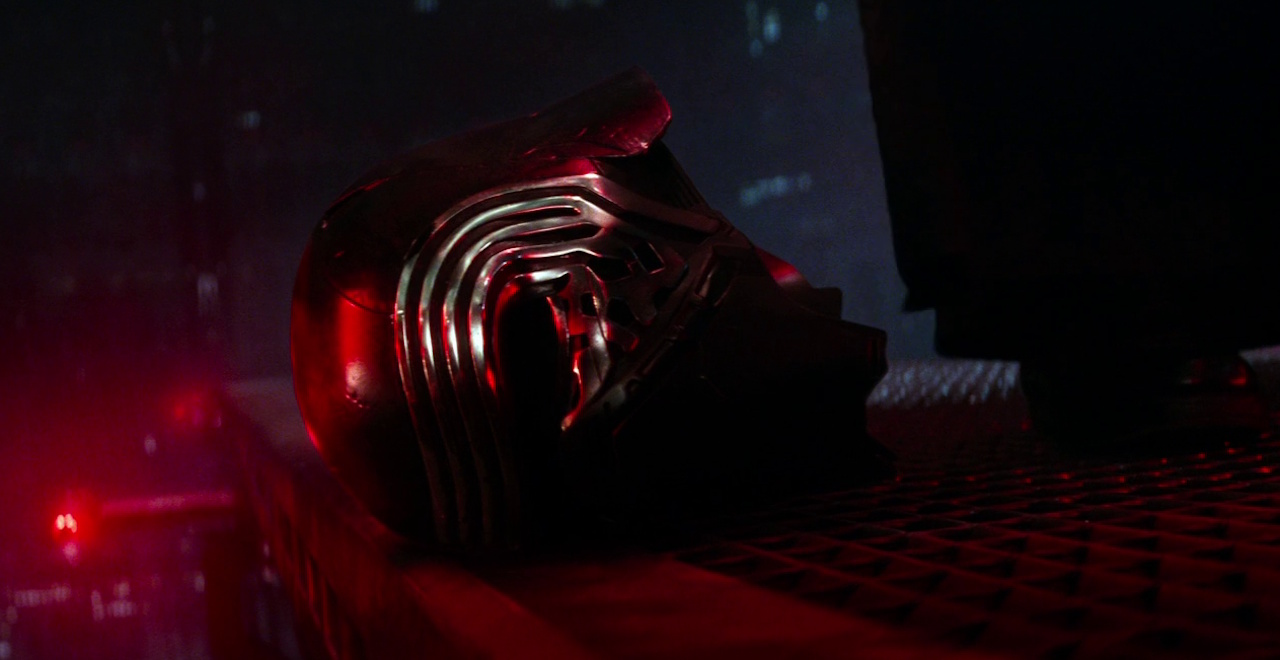
Star Wars doubles down HARD

Spoiler Warning: There are spoilers ahead for the Star Wars franchise, including The Rise of Skywalker, The Mandalorian, and announcements for upcoming productions.

A few months ago I wrote an article titled “Star Wars needs to move on.” In that piece I looked at how the Star Wars franchise has only ever told one real story since it debuted in 1977. Prequels, sequels, and spin-offs all played into or expanded the only real story the franchise has ever told – that of Palpatine and minor characters like Anakin, Luke, and Rey who apparently don’t get to act of their own volition. I argued that, just like Star Trek had done with The Next Generation in 1987, Star Wars needed to put the Skywalker Saga behind it and genuinely move on, telling new stories with new characters.

The Mandalorian should have done this, but hasn’t. The inclusion of Baby Yoda, the Force, Boba Fett, and so many elements copied from the Original Trilogy overwhelmed that series and left me disappointed. I was desperately hoping that, after the reaction to The Rise of Skywalker, the team at Disney and Lucasfilm would think hard about what to do next.

The inclusion of Palpatine ruined The Rise of Skywalker.

Instead they’ve once again retreated back to the Original Trilogy, its spin-offs, and familiar characters. I would have hoped that the failure of Palpatine’s ham-fisted insertion into The Rise of Skywalker would have served as a warning, and that with the only story the franchise has ever told now at a seemingly-final end, the franchise could genuinely move on.

The Star Wars galaxy is up there with Tolkien’s Middle-earth as one of the finest fantasy worlds ever brought to life, yet the creative team at Disney and Lucasfilm seem intent on never exploring the wonderful sandbox they paid $4 billion for. They’re instead going to show us the same tiny sliver over and over again, bringing to life ever more ridiculous spin-offs looking at characters of decreasing importance. What a disappointment.

Star Wars: Andor is a spin-off from a spin-off and a prequel to a prequel.

Let’s look at these disappointing announcements. A Droid Story will focus on R2-D2 and C-3PO. The Bad Batch is a spin-off to The Clone Wars, which was itself a spin-off to Attack of the Clones. Andor is the previously-announced series based around Rogue One’s Cassian Andor. Lando is bringing back Donald Glover, who took on the role of the smuggler in Solo: A Star Wars Story. Rangers of the New Republic is a spin-off from The Mandalorian. Ahsoka is another spin-off from The Mandalorian. And in the previously-announced Obi-Wan Kenobi series, we have the return of Darth Vader.

The only announcements which seem to have any potential to tell new stories are 2023’s Rogue Squadron, a project called Acolyte about which no information was revealed, and an as-yet-untitled film helmed by Taika Waititi. Everything else falls into the same trap that the franchise has fallen into repeatedly since the prequel era: overtreading the same ground, forcing fans to look back, and overplaying the nostalgia card. There’s nothing bold or innovative in any of these announcements. They represent a backwards-looking cowardly corporation, desperate to rekindle the magic of the Original Trilogy but without any clue of how to do so.

Do we really need a Star Wars film about these two droids?

Spin-offs to spin-offs and the increasingly minor characters given starring roles is indicative of a franchise out of ideas. There’s absolutely no creativity in any of these projects that I can see. At a fundamental level they’re all trying to do the same thing – use nostalgia as a hook to bring fans back. If the Star Wars galaxy looked bland and uninteresting, perhaps that would be a necessity. But it’s always been presented as such a vast, interesting setting that it’s positively criminal to only ever look at a tiny portion of it. There are tens of thousands of years of galactic history to dive into, as well as an uncertain future in the years after the war against the First Order. Could we see some of that, maybe?

And how about new characters? The idea of a show based on the two droids is patently ridiculous, as are those focusing on minor characters from spin-off projects. Donald Glover’s portrayal of Lando was certainly one of the better elements of Solo, but does that mean he needs an entire project of his own? What will Disney and Lucasfilm do when these projects run their course? Are we going to see Star Wars: Snowtrooper #7 and Star Wars: That Two-Headed Podrace Announcer? At this rate that’s what’ll happen.

Is this guy getting his own spin-off too?

The sequel trilogy got two things wrong when considering the fundamentals of its storytelling. Firstly was the inexplicable decision to split up the writing, leaving it with no direction and no overarching story. But secondly, and perhaps most importantly, was the decision to re-tell the Original Trilogy, drag Star Wars full-circle back to where it started, and spend too much time looking backwards. The sequel trilogy was an opportunity for Star Wars to lay the groundwork for future success, but instead it’s dragged the franchise backwards.

The Original Trilogy is a weight around Star Wars’ neck. The popularity of those three films compared to any others means that cowards in a corporate boardroom can’t see beyond it. Instead of looking at ways to take Star Wars forward to new adventures, all they know how to do is look backwards at the only successful films the entire franchise has ever produced.

Star Wars is being run by a corporate boardroom that clearly has no idea what to do with the franchise.

The end of the Skywalker Saga saw Luke, Han, and Leia killed off. It saw the final demise of Palpatine. And despite the story of Star Wars having been dragged through the mud, there was an opportunity that hasn’t really existed before – an opportunity to move on to greener pastures. With the only story Star Wars has ever told brought to a conclusion, it was hardly an unrealistic expectation to think we might get something new.

I’m disappointed, as you can tell. The lack of vision and the lack of boldness on the part of Disney and Lucasfilm means that we’re once again looking at the same miniscule fraction of the Star Wars galaxy that we’ve always been shown. There’s nothing interesting about that, and even though I have no doubt that, on an individual level, many of these projects will be at least decent and watchable, I just feel Star Wars could do better. These shows and films are a franchise aiming for a grade C. They’re middle-of-the-road attempts to scrape by, coasting on past success.

If the franchise ever wants to do more than get a basic pass, they’ll have to be bold and aim higher. Do something genuinely different. Step out of the ever-growing shadow of the Original Trilogy and do what Star Trek has been doing for thirty years – tell new stories.

The Star Wars franchise, including all films, series, and upcoming projects listed above, is the copyright of Disney and Lucasfilm. This article contains the thoughts and opinions of one person only and is not intended to cause any offence.
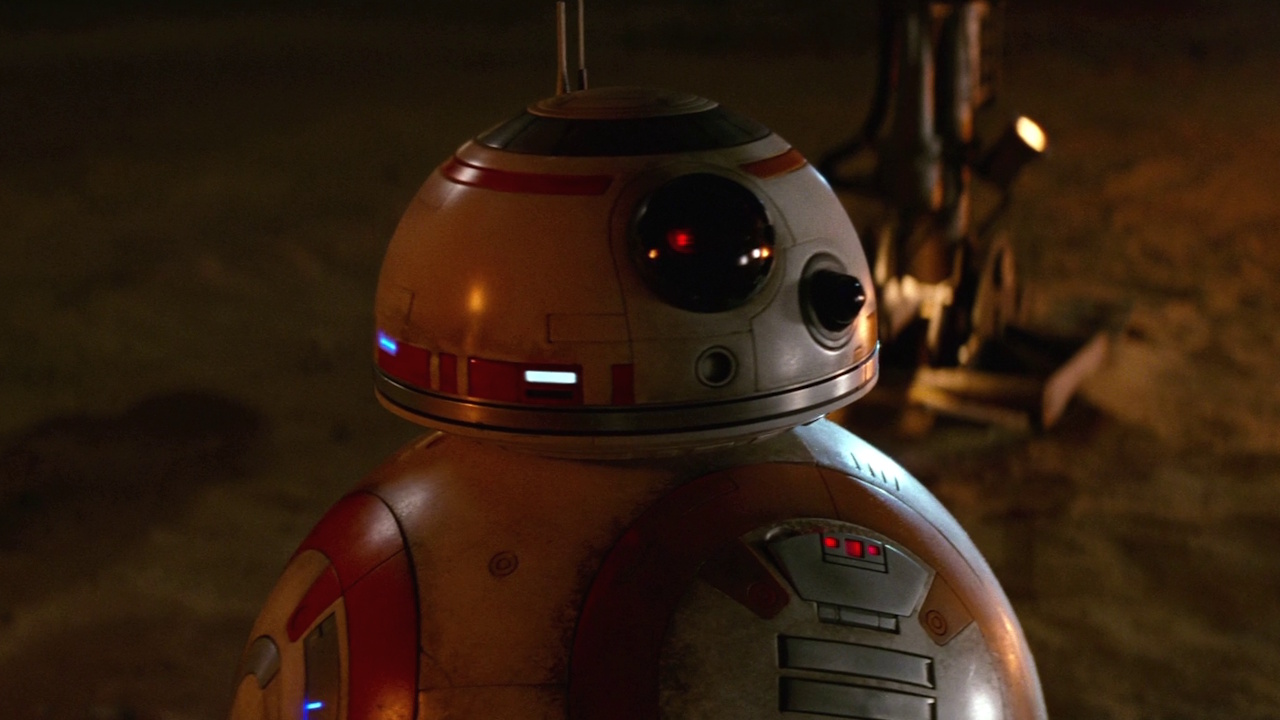
There’s no easy answer for film studios and cinemas right now

To perhaps nobody’s real surprise, three big films have recently announced delays: No Time to Die, Dune, and The Batman. With the coronavirus pandemic clearly not dying down any time soon – at least in the west – studios quite rightly feel that releasing their titles this year or even early next year won’t bring in audiences and won’t make enough money. They’re not wrong in that assessment; many people I know here in the UK would be uncomfortable visiting a cinema in person, even if the law or guidelines say that doing so is allowed. It’s going to take time – and, perhaps, a widely-available vaccine – for that mindset to change.

Over the summer, the UK government ran a scheme called “eat out to help out.” If you’re unfamiliar with it, the programme offered diners a 50% discount (up to a maximum of £10 per head) at participating restaurants. The goal was to encourage people anxious about the ongoing pandemic to get back into restaurants and, frankly, save the industry from collapse. It was successful, at least partially, with participating restaurants reporting increased takeup. However, such schemes are temporary, and there’s no way the government could run something like that for every impacted industry.

Cinema bosses have denounced decisions to delay releases – or, in the case of titles like Mulan – send titles directly to streaming platforms. Without big blockbuster releases, there’s no way to entice cinema-goers back, and the entire industry is on the brink. Cineworld, one of the world’s largest cinema chains, has announced it will close all of its US and UK sites until further notice – putting 45,000 people out of work. This is the real impact of the pandemic, and the longer it goes on, the worse it’s going to get.

Dune (2020) has been delayed.

There’s no “eat out to help out” equivalent coming to cinemas. The industry is on its own to handle the fallout from the pandemic – as are so many others – and there’s no easy fix. Until the public at large have confidence that it’s safe to go out, that it’s safe to sit in a big room with a couple of hundred strangers, there’s nothing that can be done. Even the release of Tenet in August failed to bring in sufficient numbers of viewers to make running a cinema financially viable. At this rate, the highest-grossing film of 2020 will remain Bad Boys for Life. Nobody would have predicted that in January!

I can understand from the cinemas’ perspective that film studios aren’t behaving appropriately. Cinemas and film studios are two parts of a greater whole, yet the studios have unilaterally acted to pull their films, either delaying them or sending them directly to streaming. And I can understand why that’s going to sting. Where there could have been a coming together, it feels like the bigger companies are acting selfishly; it’s everyone for themselves instead of a sense of community and togetherness.

And ultimately that’s going to make things more difficult. We’ve already seen Odeon, another large cinema chain, pledge to stop showing films from Universal Pictures in retaliation for Universal making Trolls World Tour a streaming-only title. As I wrote when looking at Mulan’s release on Disney+, if every cinema chain were to come together and announce a boycott of companies that acted this way, they could effectively prevent the release of any film they chose. There’s power in working together, but ultimately the question will be: who has that power?

Mulan (2020) went straight to Disney+, upsetting cinema chains worldwide.

Film studios clearly see streaming as a viable option. As television screen technology continues to improve – and as screens get larger – the adage that a particular film was “better in the cinema” doesn’t ring true for a lot of people any more. In some ways, the move towards streaming is something we can absolutely argue was coming anyway; like with many things, the pandemic may have accelerated the move, but it didn’t fundamentally cause it. Titles like Annihilation and the critically-acclaimed The Irishman began production with the intention of a theatrical release, but circumstances changed and they ended up going to Netflix instead.

Streaming titles have also been nominated for top awards, and when a film is released digitally nowadays, it’s become so commonplace that it scarcely gets a mention in reviews. When people of my parents’ generation were young, going to the cinema was at least a weekly outing, and not only was there an A- and B-movie but you’d probably also get a newsreel too. Those days have gone, and for increasing numbers of people pre-pandemic, the cinema was an occasional treat rather than a regular one. Attendance has been steady, but the likes of Netflix, Amazon, Disney+, and big-budget television series like Game of Thrones have slowly been eroding the need for cinemas. In short, if cinemas try to pick a fight with film studios over digital releases, I think they’ll likely lose.

But for film studios it’s not as clear-cut. Selling an already-made film to the likes of Netflix is a complicated undertaking. Netflix wants to make sure any purchase is going to be worth its while, and the gold standard is whether a title will bring in new subscribers. As a result, I think it’s not unfair to say that a lot of films would likely make more money at the box office than on a streaming platform. That’s why Mulan costs $30 instead of being available to anyone with a Disney+ account; Disney wants to make as much of the film’s budget back as possible.

Bringing a film to Netflix – or any streaming platform – is not straightforward and will not make as much money, in most cases, as a theatrical release.

Making a film is an expensive project, and the vast majority of any title’s money is made at the box office, not through streaming or sales. If film studios were to move to streaming-only releases, a lot of things would have to change. Budgets may have to fall in some cases, which would not only be to the detriment of the quality of films, but would also put more people in the industry out of work.

As I said at the beginning, there is no easy answer. Streaming is a short-term solution that may be viable for some projects, but certainly can’t replace the revenue of a full theatrical release for most titles. Mulan was a test case, but as a film that has received mixed reviews at best, it perhaps isn’t the best example for studios to look to. And besides, most film studios don’t have their own streaming platforms, meaning they have to negotiate with the likes of Amazon or Netflix to put their titles out.

One thing that history teaches us about the longer-term effects of a disaster on any industry is that things do eventually get back to normal. If one big cinema chain were to go out of business this year, within five years or so most of its empty cinemas will have been bought up and reopened by some other company. The desire for going to the cinema may not be present right now, but it will largely return when the pandemic is brought under control. At least, that’s the way I see it. Streaming has already been disruptive, but there’s still a sense of enjoyment in going to the cinema, and from the point of view of studios, streaming is far less profitable. That means that as soon as they can, film studios will want to encourage people to get back to the cinema.

How long the pandemic will continue to drag on, and how long studios and cinema owners can hang in there are the big questions right now. And unfortunately those are the same questions people are asking across many different sectors of the economy. When the pandemic is brought under control – and it will be, sooner or later – how many businesses will have survived? And how long will it take to rebuild? From the point of view of films, are we about to enter a “dark age” where budgets and quality drop? I don’t have a good answer to any of these questions. Only time will tell.

All titles mentioned above are the copyright of their respective studio and/or distributor. This article contains the thoughts and opinions of one person only and is not intended to cause any offence.
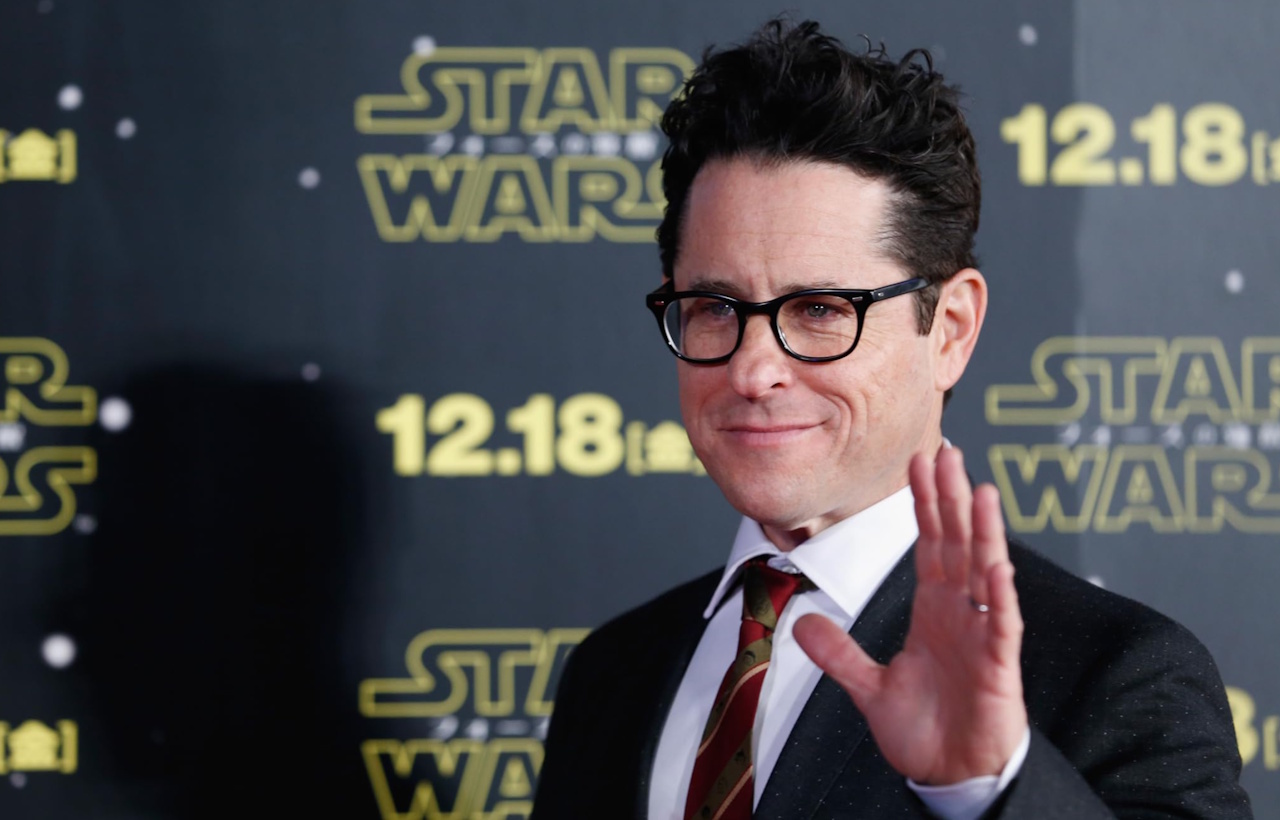
Is the decision to bring Mulan straight to Disney+ a good one?

I’ve made no secret here on the website that I consider Disney’s live-action remakes of some of its classics to be very much lesser versions of those films. That’s for a variety of reasons, and I’m sure is at least partially influenced by the nostalgic feelings I have for some titles. 1998’s Mulan is an interesting film in many ways, but it’s always felt like a second-tier member of the Disney Renaissance, not quite reaching the same heights as The Lion King, Aladdin, or even Pocahontas. So its remake, which had been scheduled to premiere earlier this year, is a project I’ve been anticipating with muted excitement at best.

That was before the coronavirus pandemic disrupted everything. After abortive attempts to release the film in cinemas in March, then July, then finally August, Disney decided to try something they haven’t done before: bring a major release directly to their streaming service, Disney+. But Mulan won’t arrive on Disney+ ready to watch like any other title, instead it’s going to be paywalled with customers being asked to stump up an extra $30 on top of their regular Disney+ subscription fee in order to access it when it releases next month.

Mulan (1998) is getting a live-action remake.

On a purely mathematical level, I can understand the charge. Films are expensive to make, and Disney wants to recoup as much of that money as possible. $30 is around the price you might pay for 3-4 cinema tickets, so if you think that it’s the same money as a family going to see the film at the cinema, Disney obviously feels that it’s a fair price. But of course watching a film on streaming isn’t the same as going to the cinema, and I have to confess I was taken aback by how steep the cost of seeing Mulan is. As a single person, $30 (or whatever its equivalent in GBP will be) is excessive for seeing one film! That’s the equivalent of more than four months’ subscription to the streaming platform, and I have no doubt many will be as put off as I was.

My big question is this: why can’t Disney just be patient? It isn’t just film releases that have been disrupted, film production has been massively affected too. Disney has already postponed the release dates of many other titles that are currently in production as a result of the pandemic, and surely Mulan could have taken any one of those release slots once the disruption finally ends. Sitting on the film costs Disney very little – releasing it too soon could backfire and cost them massively.

Liu Yifei in the 2020 remake of Mulan.

Ever since broadband internet made it possible to stream and download large files, piracy has been a problem for big entertainment companies. Streaming services like Disney+ are able to survive in part because most people like to follow the rules, but also at least in part because they make it easy and affordable to do so. Who would even notice £4.99 a month – that’s how much Disney+ costs in the UK. Hardly anyone would, of course, and that’s how the service survives. But a sudden turnaround to charge more than $30 for a single film and suddenly a lot of people will be looking for other options.

Piracy is incredibly easy. A simple online search leads to dozens of websites that allow users to stream up-to-date films, and within hours of a film or television series going live, it’s been recorded and reuploaded countless times. When Mulan releases behind a paywall, it will very quickly be uploaded to pirate websites where people will be able to watch it or download it for free.

No, not that kind of piracy…

While Mulan’s release on streaming will almost certainly be lacklustre, it could have the unintended side-effect of harming Disney+ as a brand. Disney+ already is worse than its competitors in that the most recent seasons of its television series aren’t uploaded until months or even years after they debut on television, but if the service gets a reputation for paywalling content, many people will wonder what the point of paying for it is and will unsubscribe. Partly that’s on principle, and partly it’s because the cost of accessing Mulan is incredibly high.

Disney has also harmed its relationship with cinemas and distributors. The cinema industry is suffering greatly from months of closure, and here in the UK, while cinemas have been allowed to reopen since early July, many haven’t. Regular readers will know that disability precludes me going to the cinema these days, but in the past when I was able to, I favoured an independently-owned cinema in a nearby town – one of the few left in the UK. Its fortunes hang in the balance right now, and one thing that could have helped is a big release like Mulan to tempt people back. By cutting cinemas out of the equation and going direct to streaming, Disney has upset the apple cart. Why should cinemas go out of their way to show other Disney films in future?

Cinema owners will protest this decision vehemently.

At least one cinema chain – Odeon, which is owned by AMC – has stated that they will no longer show any films by Universal Pictures as a result of that company making a similar decision. Universal chose to release Trolls World Tour digitally as a result of the pandemic, and AMC and Odeon reacted swiftly, banning Universal films in their cinemas, of which there are many in the UK; Odeon is a big chain. Disney could end up in a similar situation, and if several big chains were to band together, they could effectively prevent Disney films being released almost anywhere. Any company, even a giant like Disney, needs to tread very carefully.

Disney has chosen to prioritise making as much money as possible as soon as possible ahead of all other concerns. And with the company losing money – Disney lost $4.7 billion in just three months this year – perhaps the higher-ups decided they needed to do as much as possible to offset that. Indeed, the decision to reopen as many of the company’s theme parks as they’re allowed to is also part of that – the losses made by having the parks open are clearly less than the losses made by keeping them shut. Evidently Disney has made the calculation that the short-term harm of releasing Mulan digitally is less than the harm of sitting on it for an unknown length of time.

For those willing to pay, Mulan will be available next month on Disney+.

The coronavirus pandemic has been hard to predict, but many medical experts and analysts are anticipating a renewed increase in cases as we move into the autumn and winter here in the northern hemisphere. Disney may have interpreted such statements to mean that regional lockdowns may not be going away any time soon, and even if the rules are relaxed, the general nervousness of the public about the disease – and the looming recession it’s triggered – may put people off going to the cinema anyway. With the USA, which is Disney’s biggest market, being much more seriously affected than the rest of the world, even if everywhere else were to get back to some degree of normality, it may take a lot longer before American cinemas will all be able to reopen.

All of these issues and more have fed into the decision, and I can understand it on a corporate level. But I think one of the key problems is that many higher-ups don’t appreciate just how much they’re asking people to pay to see a single film in their living rooms – or even on a phone screen. $30 is a lot of money to a lot of people, and while it may not be to someone who’s making megabucks at the top of a huge company, out here in the real world it is. $30 could be the back-to-school supplies for a child, a big takeaway meal for a family, or as already mentioned, more than four months of Disney+. People could do a lot with that money, and while many are happy to pay extra for a treat like a visit to the cinema, far fewer will be willing to cough up cinema-ticket prices for a film they’re watching in their living room or on their phone. Disney+ has been inoffensively priced until now, and that has won it many supporters and subscribers. Mulan is not inoffensively priced. In fact it’s priced in such a way as to be downright offensive to many people.

Disney evidently sees this as the least-bad option right now.

Speaking purely anecdotally, I haven’t found anyone willing to pay for Mulan. One person I asked suggested that if it were a better film, they might be willing to consider it, but definitely not for a remake of a B-tier film like Mulan. That was the closest I got to a “yes” out of everyone I spoke to. While there will be a market for it, as some people will desperately want to see this reimagining and others will be pestered into it by their kids, it won’t be enough for the film to break even and I have no doubt Mulan will have a seriously disappointing launch.

But even a serious disappointment may be good enough for Disney as they look for ways to slow their financial haemorrhaging. Mulan will undeniably bring in more money for the company than the precisely $0 it would if it remained unreleased. As long as it covers the costs of streaming it worldwide – which, given Disney+ already exists, it almost certainly will – it may be seen as a success. At the very least it will be something Disney can show to investors and shareholders to demonstrate that they’re trying new and creative ways to get through what could be many more difficult months that lie ahead.

Mulan and Disney+ are the copyright of the Walt Disney Company. This article contains the thoughts and opinions of one person only and is not intended to cause any offence.
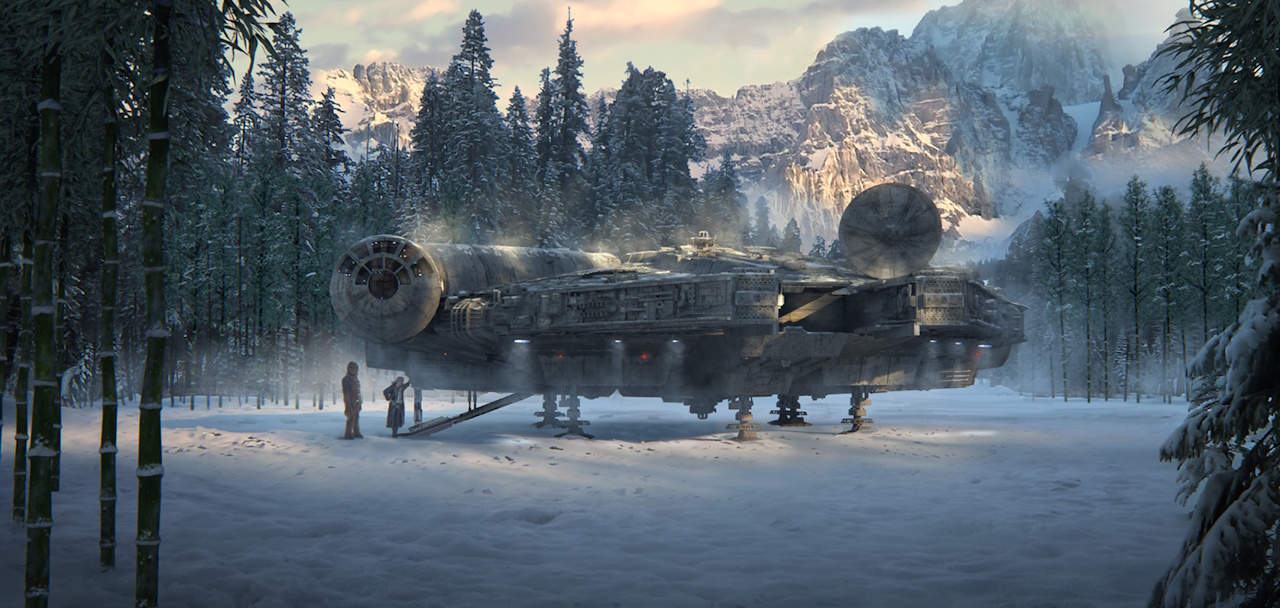
Ten of my favourite Disney films

Spoiler Warning: There will be spoilers for the Disney films on this list.

Disney+ finally reached the UK in March, several months after its US release. I was actually already a subscriber to a different Disney streaming service, Disney Life, and had been for a while, but Disney+ is better-organised, sharper, and does offer more content. Given that you may find yourself with some time on your hands at the moment, it could be a good moment to check out this streaming platform – and I believe it’s free to try for seven days.

I don’t intend for this to be a review of Disney+, but just to discuss it in a little more detail, the service delivers what it promises. Disney’s library of films – including from brands now under the Disney umbrella like Marvel and Star Wars – and Disney Channel original television shows. There’s also a limited amount of content from National Geographic, including some documentaries made specifically for Disney+. I hope to see them add more to this in future, as I love a good documentary. There are also a couple of original shows, including the first live-action Star Wars show, The Mandalorian. But save yourself time on that one because I’ve honestly not seen such a boring series in a long time.

As a childless adult fast approaching middle-age, I admit I still feel a certain embarrassment at admitting I’m a huge Disney fan. Perhaps that’s a product of the time and place I grew up, as nowadays it seems far more acceptable! Disney has created some of the best animated feature films of all time, and even today, almost a century on from when Walt and Roy founded the company, Disney sets the bar that other animation studios wish they could reach. In the last couple of decades, the company has greatly expanded both its content and the brands it owns, growing to become one of the biggest and most powerful entertainment companies in the world.

For this list, I’ll be picking ten of my favourite Disney animated films. This isn’t a “Top Ten” ranked list; instead these are just ten films I really enjoy and I’ll be listing them in order of release. All of them are available to watch on Disney+ if you’re lucky enough to live in a part of the world where the service is already live. If not, I daresay you can find copies on DVD, Blu-ray, or by, shall we say, other means… matey.

So without further ado, let’s jump into the list. Please be aware that spoilers may be present, and that a couple of the entries on this list may have scenes that are outdated and/or insensitive.

Number 1: Peter Pan (1953)

The titular Peter Pan.

There’s a ride at Disney World – and I believe at other Disney parks too – based on 1953’s Peter Pan called Peter Pan’s Flight. If you ever find yourself at the Magic Kingdom I highly recommend it; it’s one of my favourite rides there.

By 1953 Disney was already well-established as the best studio in town for animation. Peter Pan retells – faithfully, at least by Disney standards – the JM Barrie story, which had been a play in 1904 and a novel in 1911. You know the story, of course: Peter Pan lives in Neverland, a place where children never grow up, and has adventures with the Lost Boys while trying to stay one step ahead of his pirate nemesis, Captain Hook. It’s a story which has become a classic, in fact it already was a classic when it was given the Disney treatment. Disney films have been incredibly successful using this formula – taking a classic story and presenting it in a child-friendly manner. In 1953 that explanation described a good portion of Disney’s back catalogue, as indeed it still does today.

Peter Pan introduces a number of characters who would become Disney favourites, including Captain Hook, who is, in some respects, the archetypal film pirate even today (though the “pirate accent” is based on another film of the 1950s, Treasure Island). Tinker Bell, Peter’s fairy friend whose magical dust allows him and the children to fly, also debuts here. Tinker Bell has become a legend in her own right in the wider Disney universe, and is the subject of numerous spin-offs including her own film series.

One thing that always surprises me about older Disney films is how good the animation is – even rendered in full HD on a big-screen television. I was downright shocked to learn, in my youth, that Snow White and the Seven Dwarfs was as old as it was; it still holds up today. As does Peter Pan – the animation, which was all hand-drawn and hand-painted, looks amazing and hasn’t aged a day. Unlike some computer-animated titles, Peter Pan and other hand-drawn films are timeless.

The story is a pure-hearted swashbuckling adventure, as Peter and Wendy lead the Lost Boys to victory against the nefarious Captain Hook. Some of the scenes and references are undeniably dated by today’s standards – I’m thinking in particular of the way Wendy’s leadership is only seen as something maternal, and of course the now-infamous portrayal of Tiger Lily and the Native American tribe. I don’t believe, however, that either of those things are reason to hide Peter Pan or try to pretend it doesn’t exist.

Number 2: The Aristocats (1970)

Abraham de Lacey Giuseppe Casey Thomas O’Malley… O’Malley the Alley Cat!

Often overlooked, as it came out only three years after the incredibly-successful The Jungle Book, The Aristocats is nevertheless a brilliant and fun film with some great musical numbers. Production began shortly before Walt’s death in 1966, and thus The Aristocats is the last film he actively worked on and approved before passing away.

1961’s 101 Dalmations had proven a great success as an adventure story with animal protagonists and human villains, and that basic formula was reused for The Aristocats too. When a rich older lady decides to leave her fortune to her cats – instead of to her butler – he schemes to get rid of them to get his hands on her money. Taking the cats far away from their home, they meet a fun and eclectic cast of characters on their journey home.

As someone with several cats of my own, I do enjoy a good cat-themed story! And while The Aristocats doesn’t do anything radically different or new in terms of its animation style or story – both of which are comparable to Disney’s earlier output – it’s a sweet film that’s greatly enjoyable. Its music celebrates the jazz era of its 1910s-20s setting, and there’s a distinctly old-fashioned feel throughout – but not in a negative way.

There are some great musical numbers, all of which fit into that jazz/swing theme, as the cats make their way home. Marie, one of the kittens, has become a permanent fixture on Disney merchandise, though many of the younger people picking up those items haven’t seen The Aristocats in full! If that applies to you or your little ones, I definitely recommend sitting down to watch the film.

Number 3: Robin Hood (1973)

The Lion King! Oh wait, wrong film.

I mentioned at the beginning that this list doesn’t rank the films in order of how much I like them, but if it did, Robin Hood would be the undisputed number one. It’s my all-time favourite Disney film. Purely from a subjective point of view, of course!

Disney’s output between the “classic” era of the 1930s-50s and the “Renaissance” of the late 1980s-90s that we’ll look at in a moment is often ignored by fans today, and I think that’s a great shame. Perhaps it’s because I grew up on titles like Robin Hood, but I think that it has a lot to offer.

The hand-drawn animation retains much of the Disney charm of years gone by, and though it doesn’t necessarily bring anything new to the table compared to earlier titles, it still looks fantastic today – and don’t let anyone tell you otherwise! There was some recycling present in the film’s animation – most notably in the character of Little John, which is a copy of Baloo, the bear from 1967’s The Jungle Book. In fact, both characters are actually voiced by the same actor – Phil Harris, who also voiced Thomas O’Malley in The Aristocats – which further drives home the point. Even this recycling was actually Disney being cutting-edge; the process used to make exact copies of drawings was an early precursor to photocopying.

Robin Hood is a classic story, an old-world legend of a bandit who steals only to turn around and give away his money to the poor people in the community. In Disney’s adaptation, all of the characters are anthropomorphic animals, but otherwise the story doesn’t really stray too far from the confines of its source material. The inept Prince John – represented by a cowardly thumb-sucking lion, which as a kid I found to be absolutely hilarious – and his evil cohort are outsmarted by Robin and his brave Merry Men. Disney has always been great at using animals perfectly – portraying the Prince’s adviser as a sneaky snake, and the Sheriff’s men as wolves and vultures is definitely a great example of that!

The opening of Robin Hood introduces one of my favourite Disney songs, too – the beautiful Oo-De-Lally.

Number 4: Beauty and the Beast (1991)

The Beast!

After The Little Mermaid revived both the fortunes and reputation of Disney animation in 1989, a period known as the “Disney Renaissance” kicked off, in which the studio churned out a series of films which were both critical and commercial hits. Beauty and the Beast is the second of these films, and it’s amazing.

One of the first animated feature films to use CGI, Beauty and the Beast is groundbreaking in that regard, and the lessons Disney learned about computer animation would bear fruit later in the decade with releases like Toy Story. In that sense, Beauty and the Beast is a very important moment in the history not just of Disney, but of animated films and indeed all of cinema – as CGI has gone on to be massively important in all kinds of titles.

Beauty and the Beast managed to tell an engrossing story that was tense and dramatic, as a cursed prince learns to love for the first time. After a spell was put on him, a prince and his household staff (which seems a tad unfair to them!) were cursed to live as non-human objects, with the prince himself turned into a monster. Belle, a social outcast in her village, falls for him while in captivity.

By making Belle the protagonist, Disney has changed up its traditional princess formula. Belle is a “commoner”; a girl from the village as opposed to aristocratic or royal by birth. She’s disliked and gossiped about for enjoying reading and being intelligent, and with these points Beauty and the Beast says that it’s okay to be smart, and that any girl can be a princess – being a princess is less about where you come from than about being a good person, a theme which has carried through other Disney titles in some ways.

Number 5: Aladdin (1992)

Aladdin and Abu.

Aladdin marked Disney’s first real attempt to make a major film based on a non-European or American legend. It’s a title which marked a change in the way Disney operated, and a risk which could have backfired. It’s a title which is now famous for the Genie – voiced by Robin Williams close to the peak of his career – who has gone on to be a major character in Disney’s merchandise empire.

The story of Aladdin was perhaps uniquely suited to get the Disney treatment as a non-European legend, as it was quite well-known even in Europe and North America, and had been for many years. I remember, as a child, seeing a pantomime version of Aladdin before the film came out. It was probably one of the very few stories from “elsewhere” that Disney could have readily adapted, at least at the time. Nowadays, with the exception of those people who want to screech “cultural appropriation!” at everything, making stories from all across the world into Disney films is something we’ve come to expect and would be fine with; in 1992 it was something different and its success was less than certain. In that sense, Aladdin paved the way for future titles – like Mulan and Moana.

Following The Little Mermaid and Beauty and the Beast, Aladdin kept the “Renaissance” going, winning critical and commercial acclaim for its fun characters, great musical numbers, and exciting storyline. The Genie was, of course, the breakout star – though apparently Williams and Disney didn’t see eye-to-eye on a lot of things during the film’s production and marketing. It would also win two Oscars, and became the highest-earning film of 1992.

There would be two direct-to-video sequels to Aladdin – the first of which, The Return of Jafar, is a rare example of one of these Disney sequels being a success (at least in my opinion!) The film would be remade in 2019 in a live-action format, and while it lacks much of the character of the original, it remains probably the most watchable of the live-action remakes.

Number 6: The Lion King (1994)

Simba and Mufasa in The Lion King.

For many people, The Lion King’s 1994 release was the high-water mark of the Disney Renaissance, and while there will always be a debate on that front, what shouldn’t be contentious is that this film is fantastic. A star-studded cast, including James Earl Jones, bring the characters to life, and Elton John provided an incredible soundtrack, resulting in The Lion King being spun-off to create a long-running West End and Broadway musical.

There was, at the time, some degree of controversy regarding how similar The Lion King was to a Japanese series called Kimba the White Lion, with some fans of the manga/anime franchise going so far as to accuse Disney of ripping off a significant amount of material. Whether you believe this was intentional or not, it’s worth noting that there are similarities in terms of plot and certain characters – I’ll leave the final judgement on that up to you.

The Lion King billed itself as the first ever Disney film to be a wholly original story. Setting aside the Kimba controversy, this marked a change in the way Disney would approach writing stories for its major motion pictures, and while the studio would return many times to legends, history, and existing works of fiction, The Lion King laid the groundwork for future original stories.

The cast included Jeremy Irons, Rowan Atkinson, and Whoopi Goldberg among other stars, and while The Lion King is Simba’s story, the whole main cast gets a turn in the spotlight, including being able to sing. Many of the film’s songs have become well-known classics, often heard on playlists and CDs representing the best of Disney music.

Number 7: Pocahontas (1995)

Colors of the Wind is the best-remembered song from Pocahontas.

Pocahontas remains an outlier in the Disney canon. Other films are based on folklore, legends, and other published works, but the characters in Pocahontas were all real people – people whose lives are surprisingly well-documented. As you may know if you’re a regular, I’m somewhat of a history buff, and the early 1600s – the period in which Pocahontas is set – is really when record-keeping in England had begun to vastly improve in quality. Records of England’s first colony in mainland North America were meticulous, and while some information has been lost over time, for the most part we know a lot about John Smith, Pocahontas, and others who lived at the time.

The film takes a lot of liberties with the real-life story, which is always a contentious topic in historical fiction. But if we can set that argument aside, what Disney created is a film that tries very hard to celebrate Native American culture, recognising that they were the victims in Europe’s rush to colonise North America.

Compared to earlier depictions of Native Americans – like the one we talked about in Peter Pan a moment ago – Pocahontas represents them in a much fairer and less stereotypical manner. There is definitely a case of the “noble savage” – the presentation of Native Americans (and other indigenous peoples in other works) as being “better off” without contact, living peaceful, natural lives that were disrupted. Stereotypes like this aren’t always true, and while the song Savages in particular has sometimes been criticised for portraying the conflict between English settlers and Native Americans as if both were equally in the wrong, it’s worth recognising that Native American tribes, like all groups of people everywhere for all of history, could be violent. I feel like I have to justify some of these aspects of Pocahontas, as the film has recently come in for criticism, so I apologise for going off on a tangent.

Following up The Lion King was always going to be tough, and I think for that reason some of the things Pocahontas did very well, in terms of its animation and music to name but two examples, were overshadowed, especially at the time it was released.

Number 8: Lilo and Stitch (2002)

The titular characters.

After seeing Lilo and Stitch in 2002, it was one of the first films I ever bought on DVD. I was so keen to be able to rewatch it that I even bought a DVD-player kit for my Xbox (it was cheaper than buying an actual DVD player at the time) to be able to watch it! I would go on to collect many other DVDs – before the rise of HD and streaming made the whole collection redundant.

The widely-accepted definition of the Disney Renaissance I mentioned earlier puts 1999’s Tarzan as the final film, but I’d absolutely include Lilo and Stitch alongside titles of that era. Unlike the other films of the Renaissance, Lilo and Stitch tells a wholly original story and introduces new characters to the Disney canon. Release of the film was delayed due to the 11th of September attacks in the United States in 2001, with one section of the film’s climax being reworked to avoid comparisons to that atrocity.

Lilo and Stitch steers away from the often-sanitised world of prior Disney titles, showing Lilo and her sister Nani as a dysfunctional family, with Lilo on the cusp of being taken into care by the state. By Disney standards, this was something radical and different, taking a look at the “real” world in a way no prior film really had. This is complemented by the film’s present-day setting. Lilo herself is a misfit – but someone who refuses to change or conform to fit in. The message she sends is that it’s okay for kids to be themselves, and even that it’s okay to be weird – something I wholly embrace!

Stitch is adorable, but also naughty in a way that undoubtedly appeals to kids. As the film progresses, he has a chance to show his good nature and big heart, in a story that tells the audience that genetics and how you’re born doesn’t matter – what matters is being a good person and making the choice to do the right thing. Stitch overcomes his innate badness – the desire to misbehave instilled in him by his creator – thanks to the time he spends with Lilo and her family, choosing at the end to remain with her on Earth.

The film’s soundtrack definitely deserves a mention. While there are a couple of great original songs inspired by the music of Hawaii (where Lilo and Stitch is set), the soundtrack also features several of Elvis Presley’s greatest hits, including greats like Devil in Disguise and Burning Love. As an Elvis fan, I couldn’t be happier about this, and introducing more than one new generation of kids to the music of the King is definitely something great that Lilo and Stitch has done.

Number 9: Frozen (2013)

Anna and her friends meet Olaf for the first time.

When Frozen was released in 2013 I was living overseas for work. While browsing local cinema listings for English-language titles, I spotted Frozen, and it was the first I’d heard of it! Having missed all of the marketing I had no idea what to expect – and I was absolutely blown away.

I’m a big Christmas fan, and being released a few weeks before Christmas and with such a wintry setting, Frozen was absolutely perfect for that time of year. It was the first Disney film I’d seen in years that I felt was on par with some of the studio’s offerings in the 1990s – the height of the “Renaisannce” we’ve already mentioned.

Focusing on two sisters instead of the traditional prince and princess, Frozen shakes up the traditional Disney fairytale formula while keeping things royal for the sake of its Disney Princess brand. It was a change that absolutely worked, and the film’s “one true act of love” being sisterly love instead of romantic love was beautiful.

The big twist that Anna’s beloved Hans is in fact a villain and not the heroic prince charming she thought he was was shocking – and I can still remember the audible gasp from the audience at the cinema at that moment! By Disney standards, this was absolutely stunning, and tied in perfectly to the level-headed reasoning Elsa had shown earlier in the film when she forbade Anna to marry him. Indeed in many ways, Frozen is a film of its time, just as earlier titles were films of theirs. Acutely aware of the fact that its princesses are often seen as role models by young girls, the need to be socially responsible within the story definitely led to some of these decisions.

Frozen also has the best soundtrack of any modern Disney title – with several memorable songs like Do You Want to Build a Snowman, Love is an Open Door, Fixer Upper, and of course Let It Go, which remains an amazing song despite how frequently it was heard for at least a year afterwards… but perhaps parents of young girls would disagree on that point!

I picked Frozen for one of my top ten films of the 2010s when I made a list back in December – you can find the full list by clicking or tapping here.

Number 10: Moana (2016)

Moana aboard her canoe.

In 2016, when it was released, at least some of the hype surrounding Moana was lost due to the release six months earlier of Zootopia – which was retitled, for some stupid and inexplicable reason, Zootropolis in the UK. We’d been used to only seeing one Disney film a year, at most, so this meant that some of the pre-release marketing surrounding Moana didn’t get as much attention as it otherwise might’ve. Zootopia was a big hit, but of the two films released in 2016, Moana was by far the more enjoyable title.

Disney had begun to diversify away from Old-World European fairytales and folklore for its inspiration as far back as Aladdin and Mulan, and had brought in other non-European protagonists and princesses in films like The Princess and the Frog and even Pocahontas, but Moana was the first foray into a lesser-known culture – lesser-known, that is, from the point of view of Disney’s western audience.
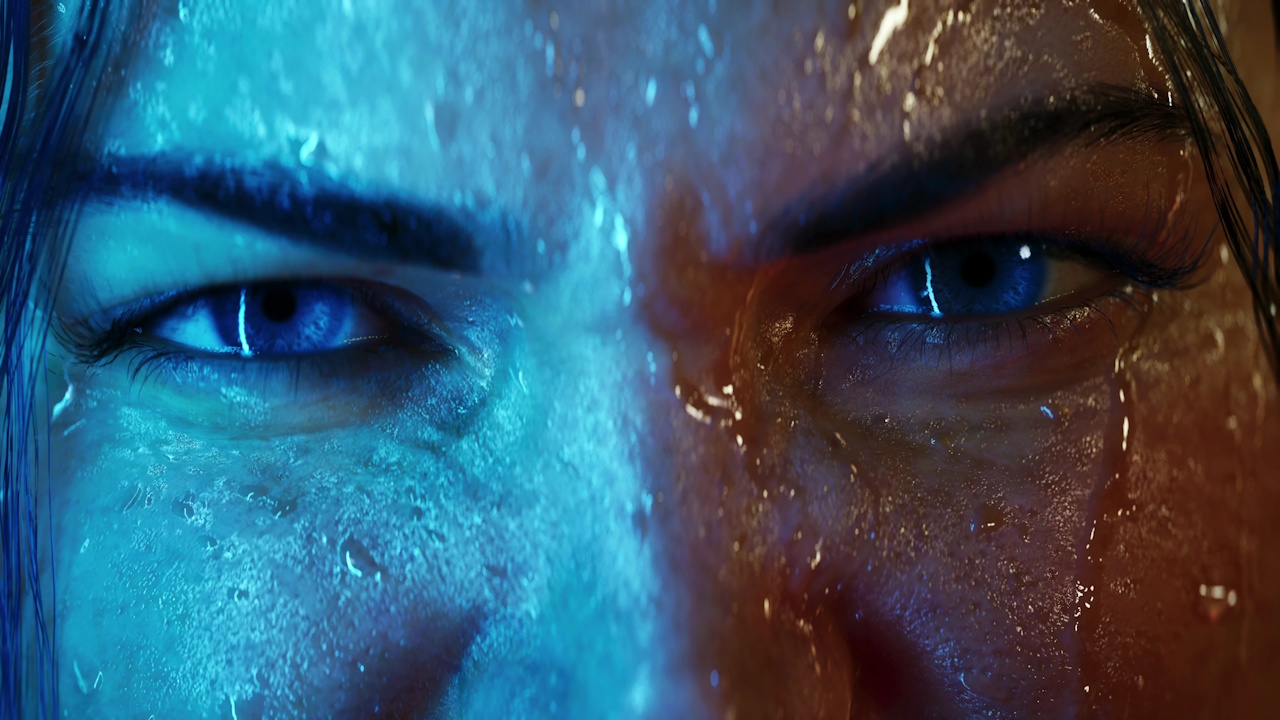
The history of Polynesian peoples is long, diverse, and fascinating, with a blurred line between history and legend due to stories being passed down orally. It’s also something most people in the west have never encountered; scattered across small and remote Pacific islands, most Polynesian legends stayed within their own communities or were recorded by academics and anthropologists and never made it into the cultural mainstream. Moana looks at one of these legends and spins it into a Disney tale for the modern age.

Moana is adamant that she isn’t a princess, even reacting angrily when Māui says she is. Where Frozen had finally told a Disney Princess story in which the princesses are the heroines and have genuine agency as characters, Moana amplifies that trend by having just a single protagonist. Her bravery and determination to overcome the obstacles in front of her drives the story forward, and eventually her courage leads her to stand up in the face of a terrifying foe. Moana had help, but ultimately she had to make those decisions and fight those battles – thus out of all the princesses in Disney’s canon, Moana is the bravest and most determined, which is a great message for the film to have.

The film also has a great soundtrack, with several hit tunes such as You’re Welcome going on to be played time and again.

So that’s it. The list doesn’t include live-action Disney films like the Pirates of the Caribbean series, so perhaps we’ll have to come to live-action Disney films on another occasion. However, several of the titles on this list have had live-action remakes – and in my opinion at least, not one of them has managed to live up to the original work. A couple of them are well worth a watch – Aladdin, in particular, was at least a decent film – but none of them come close to recapturing the Disney animation magic, at least not for me.

There are more films on the horizon, with Raya and the Last Dragon being the only one with a title so far, scheduled for release in 2021. Disney+ has, in some respects, changed the way Disney approaches its films and back catalogue. Gone are the days of the “Disney vault”, with titles given only limited home video releases. Instead, the company plans to leave all of its films available all the time, and in some cases will even be experimenting with simultaneous releases in cinemas and on streaming. That has the potential to really shake up the way films are released. From a selfish point of view, as someone who can’t go to the cinema in person any more, I think it’s a positive change. But whether it will work as intended is anyone’s guess.

Several generations of people have now grown up with Disney films – even my parents’ generation, people born in the 1940s and who are now well into their 70s, remember with fondness the Disney films of their childhoods. Which titles someone may prefer is probably, at least in part, dependent on when they grew up and which ones they saw at that time. But each “era” of titles, whether we’re talking about those made before Walt Disney’s death, the “Renaissance” of the 1990s, or the modern films like Frozen all have merit, and while the way they’re made may have changed through the years, the effort and attention to detail has not. Disney remains the market leader in animation because each film is meticulously created. There may be some flops and failures, but broadly speaking, the studio’s output has been phenomenal. The fact that they’re still around and still making films after such a long time is testament to that.

It was great fun making this list, and if it helped you decide what to watch on Disney+, then as Māui said… you’re welcome!

What can I say except “you’re welcome!”

I really hope the Boba Fett rumour isn’t true…

Spoiler Warning: There will be spoilers ahead for Season 1 of The Mandalorian, as well as minor spoilers for other iterations of the Star Wars franchise.

The Disney+ series The Mandalorian was the first subject I wrote about here on the website after I founded it last year. Suffice to say I found the show disappointing and boring, and a lot of that disappointment stemmed from the fact that the show seemingly promised a new and different look at the Star Wars galaxy, but ended up bringing back overused tropes and sending the characters over already-trodden ground. I wanted something new, a look at the Star Wars galaxy away from the Force and familiar characters, but The Mandalorian’s producers at Disney didn’t have the confidence to make a series that stood on its own.

I spotted a rumour earlier today, which has apparently been doing the rounds over the last 24 hours or so, that Boba Fett will be included in The Mandalorian’s second season. And when I saw that I sighed with disappointment and said “really?”

Boba Fett, mere moments before his death in Return of the Jedi.

While it is unconfirmed at this stage and should be taken with a pinch of salt, this rumour has been picked up by a number of reputable news outlets and is at least credible. While I generally avoid rumours here, this is one that I wanted to tackle. The Mandalorian was disappointing to me personally, for the reasons I’ve already laid out. I also found Pedro Pascal’s protagonist impossible to get behind, as he was a blank slate – a helmet-wearing, seldom-speaking, monotone bag of nothing. With no personality came no motivation – why did he do any of the things he did, like turn on his client to save the child? The answer seemed to be “because a room full of TV show writers decided that’s what he was going to do.” There was also The Mandalorian’s runtime – for a flagship series, thirty-minute episodes is pretty pathetic. And when practically all of those episodes would have benefited greatly from a few extra scenes providing background, explanation, or even just to show the passage of time from one moment to the next, the show felt poorly-edited or that corners had been cut.

But the worst part was the introduction of the child – nicknamed “baby Yoda” by the internet. The revelation that the Mandalorian’s target was a child is not in itself an issue. In fact it’s a major driving force for the rest of the season’s plot. Nor is my issue with the idea that the child is a member of Yoda’s species. That’s a little unoriginal, but there were always going to be little callbacks to other aspects of the franchise present in The Mandalorian. What bugged me was that, inside of two episodes, the Force comes back into play. The Force. In a show that promised to take a look at the Star Wars galaxy away from the Jedi and Sith. The Mandalorian told us it was a show about a lone gunslinger far beyond the reach of the Republic, and that premise sounded amazing. The Jedi and Sith are a tiny minority of the denizens of the Star Wars galaxy, and seeing how the 99% live, far away from the Force, is something that appealed to me. That concept still does – but it isn’t what The Mandalorian delivered.
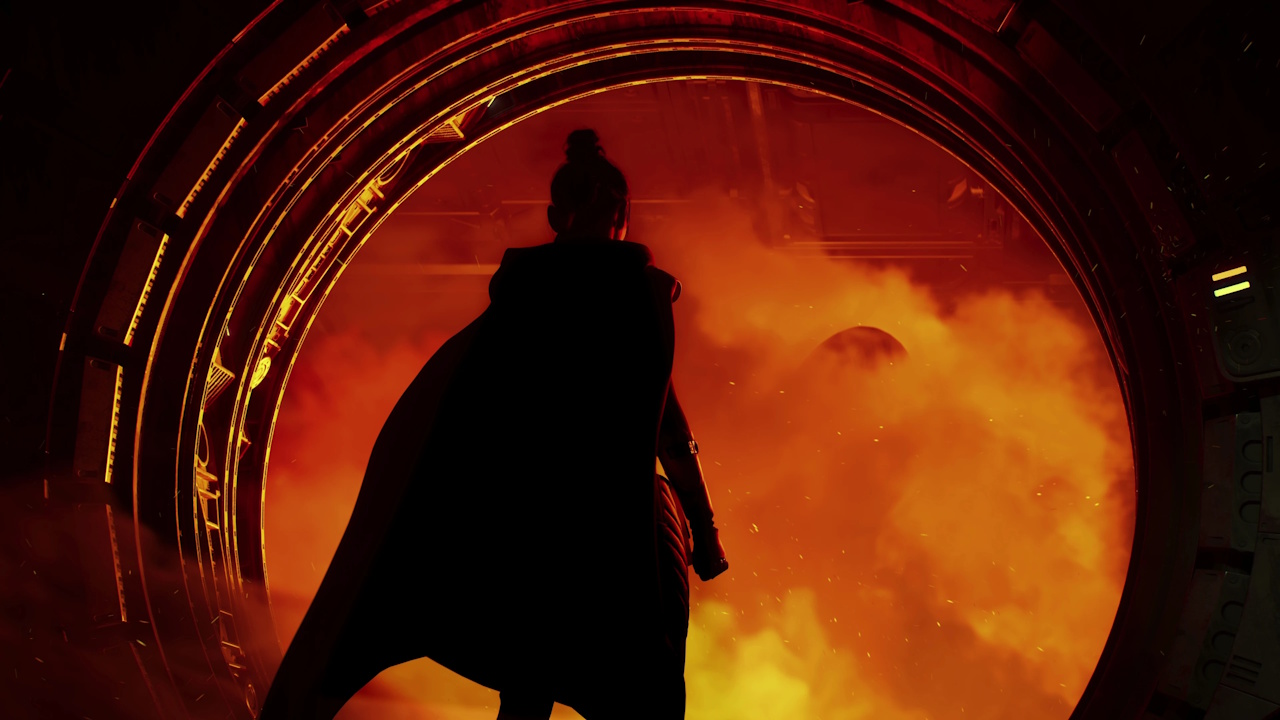
Recent Star Wars projects – practically all of them, in fact – have overplayed the nostalgia card. The Force Awakens and of course The Rise of Skywalker may seem the most egregious, but there’s also Solo: A Star Wars Story and the Darth Vader sequences in Rogue One. I named the latter my favourite film of the last decade, but those sequences detracted from it, at least for me.
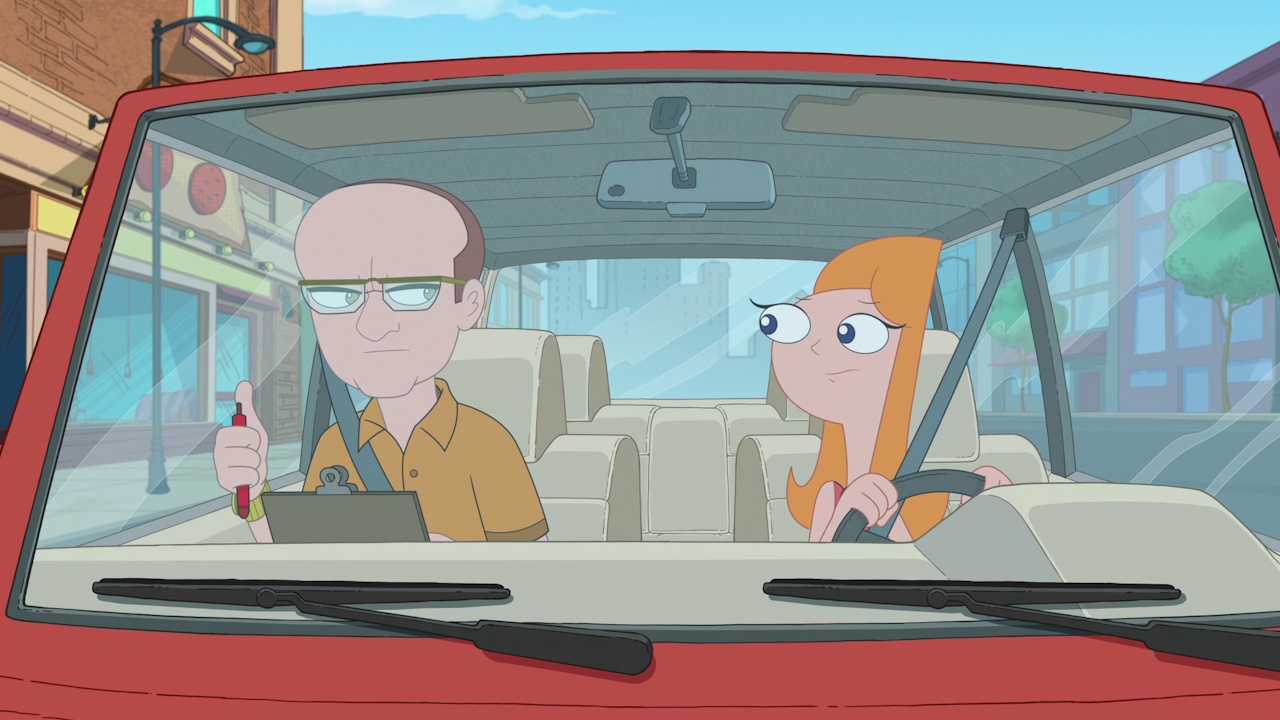
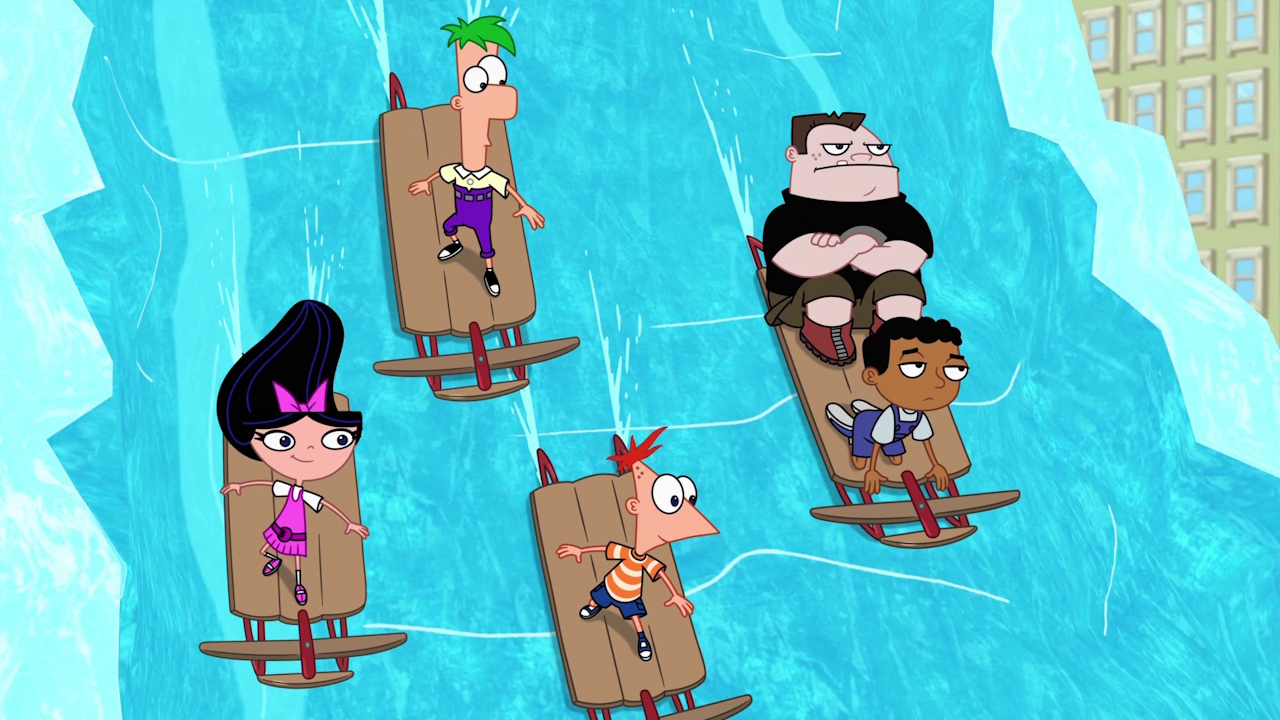
I would have preferred to see Rogue One stand on its own without Darth Vader – the story was good enough.

The Mandalorian has the same issue. At a number of points in its short runtime it strayed across that invisible line which divides a nod and a wink to returning fans from boring unoriginality. The overuse of nostalgia, such as in the sequences with the Jawas and their sandcrawler and epitomised by the child being a Force-user, went a long way to spoiling the series for me. The return of Boba Fett would just be another example of how the show’s producers don’t trust any Star Wars story to succeed without the crutch of nostalgia.

I really do find that to be disappointing – and it’s apparent, too, that Disney has learnt nothing from the overwhelmingly negative response fans had to the overuse of nostalgia in The Rise of Skywalker if it really is their intention to bring Boba Fett into this series. The only reason why The Mandalorian Season 2 was something I was even considering watching was because I hoped that we might finally get to see some character development and to see Pedro Pascal shine, finally bringing the nameless, bland protagonist to life and giving him some colour. But the Mandalorian is, at best, a pale clone of Boba Fett – even down to the identical armour design – and standing him up alongside the original would not make for a good comparison.

The Mandalorian’s unnamed and boring protagonist.

Boba Fett was himself an uninteresting character in Star Wars – his expanded role, such as his cameo in the prequels, was due simply to the popularity of action figures and merchandise. But despite that, he’s an established character now, someone we’ve seen as a child and as an adult, and while fortunately his role in the franchise’s awful Expanded Universe has been erased, he will still stand up next to the nameless protagonist of The Mandalorian and draw positive comparisons.

The Star Wars franchise has never been able to successfully move on from its first three films. The prequels told the backstory of some of the characters in the originals. The sequels (two of them, anyway) just remade those same films. And of the two spin-offs, one was a prequel focusing solely on one of the main characters, and the other was also a prequel which led directly to the plot of the first film. There is scope within Star Wars to move away from A New Hope, The Empire Strikes Back, and Return of the Jedi. But so far, no one has tried. Every major Star Wars project has relied excessively on its first three films. The characters, themes, and storylines have been rehashed so many times that at this point they really are flogging a dead horse. I long for some genuine originality in the Star Wars universe, and to see a project which finally steps out of the shadow of those three films. As wonderful as the original trilogy is, Star Wars should be able to be more than that.

The Knights of the Old Republic video games told a story that didn’t rely on the original Star Was films.

Knights of the Old Republic was a duology of Star Wars video games from 2003-04. These games are among my favourites, and are also among my favourite stories told in the Star Wars galaxy. Why? Because they’re original. They take an original premise and an original setting, ignoring the first three films entirely, and tell an exciting and engaging pair of related stories. Knights of the Old Republic is basically the only property from the old Expanded Universe worth reviving, largely because of its uniqueness and originality.

Why can’t The Mandalorian be as bold as that? Why do they feel the need to rely so heavily on what we’ve already seen, bringing the Force and Boba Fett into the show? The premise sounded so interesting and genuinely different, yet what we got was bland and dripping in cheap nostalgia. The return of Boba Fett – setting aside the dumb story point of reviving yet another dead character, which is a whole issue in itself – just stinks. It’s yet another example of the higher-ups at Disney not understanding Star Wars. There’s a whole galaxy to explore with trillions of inhabitants and perhaps thousands of years of history to dig into. Yet time and again, they drag the franchise back to the same handful of characters and the same overtrodden ground. I really hope this Boba Fett rumour turns out to be untrue.

The Star Wars franchise – including The Mandalorian – is the copyright of Disney and Lucasfilm. This article contains the thoughts and opinions of one person only and is not intended to cause any offence.