Don’t worry, there aren’t going to be any big spoilers for the story of Kena: Bridge of Spirits this time. I just wanted to take a moment to share my first impressions of one of the games I’d been looking forward to all year!
Unfortunately, Kena: Bridge of Spirits is an Epic Games exclusive on PC, meaning I had to finally break my year-long streak of avoiding the company. Long story short, I had a falling-out with Epic Games last year due to getting locked out of my account, and I had hoped to avoid spending money with them again. But Kena: Bridge of Spirits proved just too tempting, so I succumbed and bought the game. It had been one of my most-anticipated games of the year, so I was content to make an exception.
Promotional artwork for Kena: Bridge of Spirits.
Kena: Bridge of Spirits is the debut game from Ember Lab, a studio which originally worked on animation and CGI for film and television. Considering this is their first ever game, and that they’re a small studio, I’m absolutely blown away. Kena: Bridge of Spirits is incredible, and I’d be impressed if it had come from a major developer with the backing of a huge publisher. But knowing that the title is the culmination of years of hard work by a small, independent team working on their first ever interactive project leaves me speechless.
Kena: Bridge of Spirits is the debut game from Ember Lab.
In the couple of hours I’ve spent with Kena: Bridge of Spirits so far, the game plays beautifully. There aren’t any loading screens getting in the way of gameplay, platforming is intuitive and smooth, combat is fast-paced and exciting, the transitions from gameplay to cut-scenes and back again are well-integrated, and I haven’t found so much as a single bug, glitch, or visual goof.
Kena hangs from a ledge during an early platforming section.
Sticking with gameplay, Kena: Bridge of Spirits offers some incredibly fun adventuring. Kena has all the moves you would expect for this kind of game: she can run, jump, double-jump, and climb ledges. The Rot – Kena’s adorable companions – have a range of abilities, the most useful of which include being able to move objects and obstacles to clear a path or open up a new area for Kena, as well as occasionally pointing the way so she doesn’t get lost.
The Rot moving a platform for Kena to jump on.
Gameplay is all very intuitive, with the default controls and buttons doing everything you’d expect. The design of the game’s early levels shows a lot of thought and planning; it was always clear which path to take and I never felt like Kena was lost. There were some paths that led to dead-ends, but these seem to be areas that can be unlocked or expanded later in the game, so I should be able to return to them later.
Kena in the game’s opening level.
Kena: Bridge of Spirits isn’t heavy on dialogue, and while it was certainly pretty clear what to do and where to go, I didn’t feel the game was holding my hand and dragging me down a narrow path. To give one example, at an early point in the game the camera panned wordlessly over three vulnerable spots that Kena had to take out before she could defeat the main boss during a fight. It was obvious that these three spots needed to be hit first, but the game didn’t say so explicitly, it merely pointed me in the right direction then left me to fight the battle.
Kena takes damage in an early fight.
Combat feels great in Kena: Bridge of Spirits. Kena has a couple of primary attacks and one defensive shield. Using her shield at just the right moment can lead to a defensive parry, and she has a light and heavy attack. The Rot can also play a role in combat, but I won’t spoil exactly what they can do. Combat is fast-paced, but not so blindingly fast as to feel overwhelming. I also felt that the number of enemies present at each encounter was about right as well.
Kena performs a heavy attack on a monster.
The game offers three difficulty options at first, with a fourth “master” difficulty that unlocks after completion. For players who like a very tough challenge, this adds replayability. I’m categorically not a “hard mode” gamer by any stretch, so I’ve been playing on the easiest difficulty setting. I found that to be quite enough for my skill level! Difficulty settings change the recharge rate of Kena’s Rot companions, which will affect their ability to participate in combat encounters, and also ramps up the aggressiveness and damage of enemies. Increasing the difficulty doesn’t add additional enemies into the game.
Kena is hit by a monster and flies backwards!
Kena: Bridge of Spirits is without a doubt the most visually stunning game I’ve played all year. After traversing the game’s opening area, Kena climbed a staircase overlooking a mountain and valley, and I was blown away. I literally put down the control pad and said “woah” out loud! How many games – ever – have made me say “woah?”
I had to stop for a moment when I saw this incredibly beautiful vista so I could take it all in.
The animation and visual effects work are absolutely beautiful. Kena: Bridge of Spirits has a bright colour palette, with sunlit areas that are positively glowing. Shades of blue, yellow, white, and particularly green present a striking contrast with the “corrupted” areas of the map, which feel depressingly dark with faded greys and browns and flashes of an evil, glowing red. Ember Lab’s past as an animation studio absolutely shines through, and the animators’ work with the game’s colours is pitch-perfect.
The contrast between the verdant green living areas and the grey-brown corrupted areas is striking, and the game uses colour to great effect.
Kena: Bridge of Spirits has an aesthetic that wouldn’t be out of place in a big budget animated film from the likes of Pixar or Dreamworks. The game doesn’t prioritise gritty realism over beauty, and what results is an astonishingly pretty animated look to both its characters and environments. Kena herself is a lovingly-crafted protagonist, and everything from her hair and outfit to her magic staff just looks fantastic.
Kena – the game’s protagonist and player character.
Other characters and Kena’s Rot companions also look visually impressive. The Rot – despite their somewhat offputting name – are utterly adorable critters. Their big eyes and cute faces make them incredibly sympathetic, which is important! Their fearful nature means they tend to scatter and hide at the beginning of combat encounters, and in another game I feel like that mechanic could become annoying. But because of just how darn cute the Rot are I actually found it spurring me on! How dare those evil monsters scare my poor little Rot!
Kena is accompanied on her adventure by the Rot. And they’re adorable!
Oh, and the Rot get to wear hats. Cute, adorable little hats. The hats can be purchased using gems that are found throughout the game world – something that should be familiar to anyone who’s ever played a game like this one. One thing I liked about the way Kena: Bridge of Spirits handles collecting these gems, though, is that Kena never destroys or damages property – even in abandoned houses or ruins. She carefully opens a chest or barrel, collects the gems, and then closes it again. No need to smash or break any pots!
Kena collecting gems from a chest.
There’s also a map, as you might expect. The map was easy to navigate and seems to highlight significant points and quest-relevant locations but without being overwhelmed. Some games have maps that you can barely read for all the pins and markers, but Kena: Bridge of Spirits has a well-designed map that’s legible, useable, and fits right in with the rest of the game from an aesthetic point of view.
The in-game map is useful.
When Kena puts on a spirit mask the game enters a static first-person view. This mode allows you to spot Rot, as well as certain quest-specific items. It’s a riff on the “detective mode” present in several other games, but it’s handled in such a way as to feel like a unique experience for Kena: Bridge of Spirits.
Kena putting on a spirit mask.
And that last sentence could summarise my thoughts on the game. Kena: Bridge of Spirits takes established tropes of the adventure genre but gives them its own presentation and sets them up in a brand-new world. The gameplay is fantastic, and anyone who’s played these kinds of games in the past will feel right at home. Where it truly excels is its art style and aesthetic. The designers have to get much of the credit for the unique feel of Kena and the world she inhabits.
I’m having a great time with Kena: Bridge of Spirits! The game has met all of the expectations I could’ve had going in, and at least in terms of visuals it even exceeded them. I would have been impressed if this game had been produced by an established team of developers backed up by the resources of a huge publisher, but to know that it’s the first ever game by an independent studio is truly mind-blowing. Kena: Bridge of Spirits is fantastic – and I can’t wait to jump back in!
Kena: Bridge of Spirits is out now for PlayStation 4/5 and PC. Kena: Bridge of Spirits is the copyright of Ember Lab. Some promotional artwork courtesy of Ember Lab. This article contains the thoughts and opinions of one person only and is not intended to cause any offence.
Spoiler Warning: There are spoilers ahead for Star Trek: Lower Decks Seasons 1-2, particularly the second season episode Mugato, Gumato. There are also minor spoilers for Star Trek: The Original Series, Star Trek: The Next Generation, and Star Trek: Deep Space Nine.
This article deals with topics of sex and sexuality and may be uncomfortable for some readers.
The plan for today was to talk about new video game Kena: Bridge of Spirits. But while the game downloads (20+GB will take a while on my crappy internet connection) I thought it would be interesting to address a bubbling controversy involving Star Trek: Lower Decks.
When I watched the episode Mugato, Gumato a couple of weeks ago, the scene at the centre of this controversy barely registered. I was enjoying the episode’s central pairing of Ensigns Boimler and Rutherford, who teamed up for their first major outing of the season and I felt played off one another exceptionally well. As the two ensigns stumbled into mugato territory having escaped from an away mission gone wrong, they found themselves trapped by a pair of mating mugatoes. A third mugato appeared and seemed to be pleasuring itself by rubbing its horn, something the ensigns commented on.
This moment, which lasted only a few seconds, is at the centre of the “adult content” controversy now engulfing Lower Decks. I found the whole conversation to be quite odd, and reminiscent in some ways of the relentless attacks by people like Mary Whitehouse and the National Viewers’ and Listeners’ Association in the 1970s – the kind of reactionary, social conservative “outrage” that inspired characters like The Simpsons’ Helen Lovejoy.
British campaigner Mary Whitehouse. Picture Credit: BBC/Forge Productions via YouTube
When I watched Mugato, Gumato for the first time, I remember rolling my eyes at this moment. Masturbation jokes are pretty low-brow, and I didn’t think it was especially funny. As someone who is asexual, jokes about sex and sexuality can be uncomfortable for me, but this one wasn’t particularly. I didn’t find it hilarious, but I certainly didn’t find it offensive. In an episode that had other good jokes, a busy story, and some further development of Ensign Mariner’s character to hold my attention and interest, I simply wasn’t all that bothered about a fragment of a scene that was clearly meant to be a joke. In my original review I didn’t even consider the horn-joke worth making note of.
I’ve said before that Star Trek: Lower Decks is an animated comedy first and a Star Trek show second. Though it largely succeeds at “feeling like Star Trek” – a pretty nebulous, ill-defined concept that means different things to different people – it’s a show that very much occupies a space similar to the likes of The Simpsons, Rick & Morty, and even shows like Family Guy. Jokes like this one are thankfully infrequent, but to be expected, and after watching sixteen episodes of the show across two years, I’m surprised that some people still don’t fully appreciate that.
The sight gag at the centre of the controversy.
Humour is a very personal thing, perhaps second only to musical taste in terms of being purely subjective. A joke that one person considers hilarious will be boring or even offensive to another, and as long as comedy is well-intentioned and not punching down or deliberately picking on one group of people, I’m okay with that. I haven’t laughed at every single joke in Lower Decks just as I haven’t at every joke in other comedy shows. Humour sometimes misses the mark for all of us.
The conversation around this moment in Mugato, Gumato has taken a strange turn, though. Some fans seem adamant that this kind of sexual joke or sight gag is somehow inherently “un-Star Trek” or beneath what the franchise should aim to be. And I fundamentally disagree with that assertion. To anyone making such a claim, I want to ask: “have you ever seen Star Trek before?”
The famously non-sexual Star Trek: The Original Series…
The Deep Space Nine fourth season episode Bar Association saw the character of Rom make a comparable reference to masturbation. Oo-mox, a Ferengi term for pleasurably stimulating their ears, had been depicted in The Next Generation and Deep Space Nine as a very intimate act, so when Rom said he was performing it on himself it was meant as a joke. It wasn’t the funniest joke in that episode, but it was in keeping with Rom’s characterisation at the time and with the way oo-mox (and other sexual acts) had been presented in Star Trek.
One of the things I liked about Star Trek when I was growing up and struggling with my own sexuality was that the franchise didn’t put things like sex and relationships at the centre of every story. But even going all the way back to The Original Series, where Kirk would have romantic entanglements with a different woman almost every week, Star Trek has had this sexual dimension to it. Sometimes sex has been presented as something casual or jokey, and at other times the franchise has taken a very serious approach to sensitive topics. But to say sex has never been part of Star Trek is patently false and just ridiculous.
Rom mentioned the Ferengi “massage” known as oo-mox in the episode Bar Association.
One thing I admired about Mugato, Gumato is relevant to this discussion as well. The Ferengi poachers seen in the episode were harvesting the titular apes for their horns, then selling them on claiming the horns were an aphrodisiac. This environmental message parallels real-world poaching in Africa, where the trade in illegal rhinoceros horn is driving the species to extinction. It made sense, in that context, to see a mugato using its horn for some kind of sexual purpose.
When we compare Star Trek: Lower Decks to other animated comedies, there are far fewer of these low-brow jokes. Shows like Rick & Morty, Family Guy, and the like all lean far more heavily into sexual humour, and that’s something which is always going to be subject to taste. Personally, I prefer Lower Decks’ approach. These kinds of jokes can be funny – even to me – but the show is at its best when it finds ways to make the regular goings-on in Starfleet funny, or when it references obscure characters from past iterations of the franchise.
Mugato, Gumato had an important message about poaching for folks who could look past the jokes.
If you’re a regular reader and you saw my reviews of Lower Decks last season, you’ll know I’m not someone who would blindly leap to the show’s defence. I’m happy to criticise Lower Decks when I feel it misses the mark. For examples of that, take a look at my reviews of Season 1’s Envoys or Veritas, or even the Season 2 premiere, Strange Energies. In short, I’m not trying to defend the indefensible nor insist that Lower Decks can do no wrong.
I also feel that, as someone who is asexual, I have a different perspective on this. If the mugato masturbation joke was going to piss off anyone, it was going to be someone like me! It didn’t, because it just wasn’t that important. It wasn’t the focus of the episode, heck it wasn’t even the main focus of the scene in which it appeared. It was a throwaway sight gag that lasted all of a few seconds. The plot of the episode then moved on to other things. Like any joke, gag, or one-liner, it didn’t ruin the entire episode.
This moment just wasn’t a big deal in what was a busy episode.
People with an outside agenda are often looking for the next thing to jump on to further their cause and generate controversy, and in this case the anti-Trek folks think they’ve found a winner in Mugato, Gumato. But I’d wager a lot of them didn’t even watch the episode in its entirety before deciding this was something worth discussing, and even if they did, can we really argue that one sight gag that lasted a few seconds in a single scene was that important? Good luck if you try to argue with some of these folks, though. Their minds are made up about Lower Decks – and the rest of modern Star Trek.
If you watched Mugato, Gumato and hated that joke, that’s okay. If it spoiled the episode for you, that’s okay too. I’m not in the business of telling anyone how to feel, and with humour being something so subjective I can understand how a joke that goes over particularly poorly can ruin someone’s enjoyment. But to try to reduce Lower Decks to one insignificant gag in one episode does the series a huge disservice. It does Mugato, Gumato a disservice too, as the episode had a great central character pairing in Boimler and Rutherford and also saw a significant moment for Ensign Mariner’s characterisation.
Despite not being the star, Ensign Mariner got some decent character development in Mugato, Gumato.
I’m surprised that this has become such a big deal. It’s ironic, in a way, that the people who are most likely to use terms like “snowflake” are often the ones to become so aggressive when they encounter a joke or a television show that they don’t like. And to me, that’s what I see happening here. Something minor that’s being blown out of proportion either by folks with very short memories who’ve conveniently forgotten comparable moments in Star Trek’s past, or by folks who have a deliberate anti-Trek agenda.
I wasn’t a big fan of that sight gag in Mugato, Gumato. I thought it was pretty dumb, but after rolling my eyes at it I quickly forgot about it. It just didn’t matter that much in the context of the episode or of the series as a whole. Trying to ignore everything else Lower Decks has done across its first season-and-a-half and focus on one tiny moment in one episode is nitpicking in the extreme. That particular joke was, I would argue, out of character for the series. Lower Decks prefers a more referential style of humour, one which draws on the lore and history of Star Trek. There are other sight gags and moments of cringeworthy humour for sure, but to try to claim that this is all Lower Decks is isn’t just wrong, it demonstrates an ignorance of what the show has been and what it’s achieved.
Lower Decks is better than jokes like that, and I can understand if some folks want to tell the writers and producers that they expect a higher standard of humour. As I said, it wasn’t something I personally found funny either. But I just don’t see why this has to be such a big deal. It’s not representative of Lower Decks as a whole, and it’s not indicative of a series somehow losing its edge and trying to cater to a low-brow crowd. It was a throwaway gag in an otherwise-decent episode. I didn’t care for it, but you know what? I’d all but forgotten about it within seconds. It was only when people kept dragging it up – to the point that series creator Mike McMahan felt the need to defend it in an interview – that I felt compelled to add my two cents to the conversation.
Star Trek: Lower Decks is available to stream now on Paramount+ in the United States and on Amazon Prime Video in the UK and around the world. The Star Trek franchise – including Lower Decks and all other properties mentioned above – is the copyright of ViacomCBS. This article contains the thoughts and opinions of one person only and is not intended to cause any offence.
Spoiler Warning: There are spoilers ahead for the Star Wars franchise, including The Mandalorian Seasons 1-2, Jedi: Fallen Order, and the upcoming Obi-Wan Kenobi series.
We’ve known for a while that the upcoming Obi-Wan Kenobi series will feature Darth Vader – somehow. Hayden Christiansen, who played Anakin Skywalker in the Star Wars prequels, has even signed on to play the role, something which has excited at least some Star Wars fans. Today we’re going to consider what kind of role the Obi-Wan Kenobi series could offer to the franchise’s most iconic villain, and how the show will have to navigate a tricky situation of its own making.
Regular readers will know that I haven’t exactly been wild about many of the recent decisions taken by the Star Wars franchise. The Mandalorian, which seemed to offer such promise when it was announced, very quickly returned to the Force and the Skywalker family, and brought in a number of characters and settings that were lifted directly from the original trilogy. When Lucasfilm announced a slate of upcoming Star Wars projects last December, I felt that the franchise was doubling down on this kind of nostalgia play, unwilling to step out of the shadow of the original films and tell new stories. The inclusion of Darth Vader in the Obi-Wan Kenobi series – and indeed the very existence of the show itself – is a case in point.
Iconic villain Darth Vader is set to return to Star Wars very soon.
Regardless of what I and others may think, this is the direction Lucasfilm and Disney have chosen for the franchise. The most generous thing I could say about it is that, following the controversy generated by the sequel trilogy, they’re retreating to what they consider to be safe, comfortable ground for the foreseeable future. Returning the franchise to characters fans know and (mostly) love may be indicative of a franchise aiming for a grade C – a basic pass – but perhaps after the controversies of recent years, the higher-ups think that will be good enough.
Although the decision to return to classic characters may seem to be the safe path in the aftermath of the sequels, it’s not one that is free from danger. Darth Vader and Obi-Wan Kenobi may indeed prove to be bankable characters – along with the likes of Boba Fett in his upcoming spin-off – but fans won’t forgive Disney and Lucasfilm if the way these characters are used undermines their previously-established arcs.
What role will Vader play in the upcoming series?
When it comes to Darth Vader’s inclusion in the Obi-Wan Kenobi series, to me the single most important thing is that the two characters simply can’t be permitted to meet. A New Hope was their first face-to-face meeting since their duel on Mustafar, and were they to meet in the series it would seriously undermine the power of that moment.
We could talk at length about the failures of the prequel trilogy – and I have in the past – but to me their most egregious fault was the harm done to the character of Darth Vader. In the original films we’d learned all we needed to know about this character – he had once been good, then fell to the dark side, but had enough residual love for his son to be ultimately redeemed in the moments before his death. He was an intimidating villain, but one we could feel a pang of sympathy for. Seeing him as a child and a whiny teenager detracted from that; his background was over-explained.
I would argue that we didn’t need to see Anakin as a child and young man to understand Darth Vader in the original films.
Vader has already been undermined by the prequels, and it’s difficult to see him in the same frightening way as I did on first watching the Star Wars films in the early 1990s. But throwing him into a face-to-face meeting with Obi-Wan years before their iconic duel aboard the Death Star would rob the original film of one of its most significant moments. It would feel like cheap fan-service and accomplish nothing.
There are ways for Darth Vader to play a role in the new show’s story – even a major role – without having him and Obi-Wan meet. The show is set at least a decade after the events of Revenge of the Sith, meaning that Darth Vader’s role as the second-in-command of the Empire is well-established by this point. He’s a senior leader who answers directly to the Emperor with his own dedicated Stormtrooper corps, and has spent much of his time chasing surviving Jedi and enforcing the Emperor’s rule on wayward systems.
More than a decade after the events of Revenge of the Sith, Vader’s role in the Imperial hierarchy should’ve solidified.
We also know that Darth Vader has an intense hatred of the planet Tatooine. Obi-Wan chose the planet for his and Luke’s hiding place specifically for that reason, so Vader shouldn’t set foot on the planet for the entirety of the story. And really, Obi-Wan shouldn’t leave the planet either! It was strongly suggested in Revenge of the Sith and the original trilogy that he and Yoda wouldn’t leave their respective exiles, and Luke Skywalker seemed to have known “Old Ben” for his entire life.
This was something that led me to be sceptical of the Obi-Wan Kenobi series from the outset; how much of an adventure can “Old Ben” have within a few miles of Mos Eisley and his desert hut? I assume, though, that he will ultimately leave the planet at some point – it would be a pretty dull series otherwise!
What did “Old Ben” do in the years prior to A New Hope?
But if a significant portion of the action takes place on or in the vicinity of Tatooine, and Vader won’t set foot on the planet, then we have a pretty good reason for keeping the characters apart and preserving the special moment in A New Hope. But that still raises the question of what kind of role Darth Vader will have in the series.
If I were writing it, I’d use Darth Vader sparingly. He could be the overarching villain, sending out his troops or henchmen on missions for the Empire without ever having to interact with Obi-Wan personally. He might have a minor role in a couple of episodes, or he could appear toward the end of the season, with the revelation being that whoever Obi-Wan has been battling is actually one of Vader’s henchmen. This would still have to be done in a way that kept the knowledge of Obi-Wan’s survival and location from Vader, and that’s a difficult line for the series to walk.
Darth Vader with some of his loyal Stormtroopers in A New Hope.
It isn’t impossible for Darth Vader to be included in a Star Wars story in this fashion. The video game Jedi: Fallen Order did something similar – players spend much of the game facing off against the Second Sister and other forces of the Empire, only for Darth Vader to reveal himself at the story’s climax. In the case of Jedi: Fallen Order there wasn’t a pressing need to keep protagonist Cal Kestis away from Vader in the way there is in the Obi-Wan Kenobi series, but the game was better for having more original characters, at least in my opinion.
Although some prequel fans are undoubtedly looking forward to Vader’s return, I’m more interested to see what original characters the Obi-Wan Kenobi series will introduce us to. Will the titular ex-Jedi be facing off against the forces of the Empire? Presumably the inclusion of Darth Vader means there’ll be some kind of Imperial involvement in the story somehow. But I’m just as interested to see what Obi-Wan might get up to on Tatooine, outside of Vader’s reach.
Darth Vader appeared in the video game Jedi: Fallen Order.
At the end of the day, I wouldn’t have chosen to greenlight a series like this one. And if I were tasked with picking it up after it had already been greenlit, I’d have certainly kept characters like Darth Vader far away from the new show. Even though we’ve spent more time with him than we arguably needed to, Darth Vader can still be used to great effect in Star Wars, and I don’t want to say that there’s no room whatsoever for the franchise’s first and most iconic villain going forward. But the Obi-Wan Kenobi series just feels like a bad fit.
These are two characters who spent a long time apart, totally disconnected from one another for almost two decades prior to their fateful meeting aboard the Death Star. Maybe there’s a way for Obi-Wan to learn that Anakin survived and became Darth Vader – we know he was aware of his former apprentice’s identity by the time of A New Hope. Maybe there’s a way for Vader to be included in some kind of flashback, dream, or vision. But I can’t imagine that the series could get away with having the two face off against one another or have another duel. How would such a meeting end? If Vader so much as knows that Obi-Wan is alive – let alone meeting or fighting him – it undermines a key part of the original film.
The Obi-Wan Kenobi series will have to tread very carefully so as not to further undermine Darth Vader’s character and the story of the original films.
Having made this announcement and gone to a lot of trouble to include Darth Vader in the conversation surrounding the Obi-Wan Kenobi series, some fans will feel let down if Vader’s role is reduced to some kind of dream or flashback. I still think he could be included as some kind of overall villain, provided it was handled in such a way as not to overwrite anything we learned in A New Hope. But to me, this is a pretty egregious example of Star Wars skirting too close to canon for comfort. It’s not as bad as bringing Palpatine or Boba Fett back from the dead with no explanation, but it’s straying into that territory.
I’d love to say I’m excited for the Obi-Wan Kenobi series… or any upcoming Star Wars project, for that matter. At best, though, what I can muster is cautious interest. I’m curious to see what Obi-Wan got up to during the years we all assumed he was living in quiet seclusion on Tatooine. I just hope that the story doesn’t go off the rails. The decision to bring Darth Vader into the story has me more nervous than excited, and if I’d been in the room I’d have argued very strongly against it.
The Obi-Wan Kenobi series will be broadcast on Disney+ in 2022 or 2023. The Star Wars franchise – including all properties mentioned above – is the copyright of Lucasfilm and The Walt Disney Company. This article contains the thoughts and opinions of one person only and is not intended to cause any offence.
Spoiler Warning: There are spoilers ahead for Star Trek: Strange New Worlds, Star Trek: Discovery Season 2, and Star Trek: The Original Series.
Though we still haven’t seen a trailer for Star Trek: Strange New Worlds Season 1, which is on the schedule for next year, last week’s Star Trek Day broadcast finally introduced us to members of the crew of the USS Enterprise who will be joining Captain Pike. Along with Pike, Spock, and Number One, who are returning to their roles from Season 2 of Star Trek: Discovery, we briefly met six other characters.
We’ll look at each of these characters in turn to see what we can gleam and if we can figure out anything about the direction of any of Strange New Worlds’ plotlines, but first I wanted to cover an omission. Ever since Strange New Worlds was announced last year, fans had been speculating about who may or may not join Captain Pike on the Enterprise, but one character I felt had a strong chance of making an appearance was Cadet Sidhu.
Captain Pike with Cadet Sidhu in engineering.
Cadet Sidhu was introduced in the Short Treks episode Ask Not in 2019, and played a major role in that story alongside Captain Pike. Though Ask Not was primarily a vehicle for Anson Mount to reprise his much-loved role, almost any story aboard the Enterprise could’ve been invented for that purpose. To tell a story that focused on Cadet Sidhu and her being assigned to the USS Enterprise felt like a deliberate character introduction, and even though Strange New Worlds hadn’t been announced at that point, the series was clearly something that Star Trek was building up to.
I felt that Ask Not was a strong story, and that Sidhu actor Amrit Kaur put in a solid performance. It was a little surprising to see that she wasn’t part of the main cast at Star Trek Day, and while it’s still possible the character could return in some form, the inclusion of Cadet Uhura – whose role we’ll come to in a moment – seems like it’s potentially occupying a very similar space to the role that Sidhu might’ve played. Although the two characters are in different departments – Sidhu in engineering, Uhura in communications – in terms of narrative structure and character roles it seems unlikely that Strange New Worlds would have space to do justice to the stories of two cadets. If Sidhu is included, then, it seems certain that her role will be much less prominent than I’d have initially expected.
Cadet Sidhu doesn’t seem to be coming back – despite Ask Not seemingly setting her up for a role aboard the Enterprise.
Now that we’ve covered one non-appearance, let’s look at who will definitely be part of Season 1! The character about whom we know the least right now is Erica Ortegas, played by Melissa Navia. This lieutenant appears to occupy a role on the bridge, perhaps in either the helm or navigation positions in front of Captain Pike. Wearing a red shirt, however, could mean she has a role as a security officer, tactical officer, or engineer either in addition to or instead of a permanent role on the bridge.
Lieutenant Ortegas does not appear to be connected to any known Star Trek characters, either from The Original Series era or any other Star Trek production, so that speculation is really the extent of what we know! We can assume that she’s of Spanish, Latin American, or Hispanic-American origin simply based on her name and casting, which would make her the first major character in the franchise to be from one of those backgrounds.
Lieutenant Ortegas on what appears to be the bridge of the Enterprise.
Interestingly, the name “Ortegas” is not new to Star Trek. Gene Roddenberry’s original pitch for Star Trek, prior to commencing work on The Cage, included a character named José Ortegas who would occupy the role of the ship’s navigator. By the time The Cage entered production, however, this character had been changed. José Tyler (whose first name wasn’t mentioned on screen) replaced Ortegas. This subtle nod to Star Trek’s origin is incredibly sweet, and if we can infer anything at all from this connection, it could mean that Lieutenant Ortegas will indeed occupy the role of navigator on the bridge.
Up next is the other character who appears to have no connection that we’re aware of to anyone else in Star Trek: Hemmer, played by Bruce Horak. Horak was not part of the announcement of the cast of Strange New Worlds earlier in the year, so his inclusion was a bit of a surprise for more than one reason! Most interestingly, though, Hemmer appears to be an Aenar – an Andorian race first encountered in Enterprise.
It’s Hemmer time!
Most Aenar were known to be blind, and actor Bruce Horak is himself legally blind. This aspect of Hemmer’s character wasn’t discussed at all during Star Trek Day, which was a little odd considering it’s a significant step for the franchise. The character of Geordi La Forge in The Next Generation was also blind, but in his case a visor allowed him to see. Hemmer will potentially be the first blind character on Star Trek whose sight hasn’t been restored through technological means. What that means for his role aboard the ship isn’t clear, though.
Hemmer was wearing the red shirt of the security or engineering departments, and the very brief clip of him appeared to show him in a different area of the ship. Perhaps we can infer from that that he isn’t a bridge officer and may work in engineering. The Aenar in Enterprise were known to have extensive telepathic abilities, which could give Hemmer an edge when it comes to things like diplomacy or even a medical field. Hemmer is already a fascinating character, and I love the nod to Enterprise. His inclusion is a positive one for the visually-impaired, and for folks with disabilities of all kinds. Not only that, but it was done in a very “Star Trek” way – casting a character who is a member of a blind race of aliens doesn’t tread on the toes of things like Geordi’s visor and the prospect of offering a cure for blindness in Star Trek’s optimistic future.
Geordi La Forge in The Next Generation.
Now we’re coming to characters who may be a little more familiar. La’an Noonien-Singh, played by Christina Chong, shares a family name with Khan Noonien Singh (albeit with a hyphen, though that could be a mistake). It seems incredibly unlikely to me that that’s a coincidence, so the question it raises is to what extent is La’an connected to Khan? At this point in the timeline, Khan is still in stasis aboard the SS Botany Bay. He wouldn’t be encountered by the Enterprise and awakened until after Captain Kirk assumed command of the ship, so La’an seemingly can’t be a direct relation.
It’s possible that she’s a distant descendant, then. Though Khan was genetically augmented, the practice was banned after the Eugenics Wars and thus it seems unlikely that La’an could be an augment herself. However, genetic traits found in Khan may still be present after several generations and she may have increased strength or mental faculties as a result.
La’an may be in sickbay during this scene.
One storyline that could be interesting for a character like La’an is how she might want to move away from her family history. Assuming that she does have a family connection with Khan, the choice to either embrace or reject his legacy could be something we see the character struggle with at points. Some people struggle with a family name and family legacy, and this can be a source of drama in fiction. Though Kylo Ren’s story went completely off the rails in the Star Wars franchise, it began with lofty ambitions of depicting a man struggling with different parts of his family history. Perhaps we’ll see something similar with La’an Noonien-Singh.
Other than that implied connection with Khan, all we can say about La’an is that she’s also wearing the red uniform of either the security or engineering divisions. Either could be a good fit if there’s any kind of genetic legacy from Khan and his augments – a security officer with enhanced strength and endurance would have an advantage, and an engineer whose brain works faster than everyone else would likewise be an incredibly useful asset to any engineering team.
What connection might La’an have to iconic Star Trek villain Khan Noonien Singh?
Those three characters are brand-new to Star Trek – even though there are connections to the rest of the franchise. Strange New Worlds also re-introduced us to three other characters who are returning! These three all appeared in The Original Series. We’ll begin with Dr M’Benga, who appeared in just two episodes. When Dr McCoy was absent, Dr M’Benga appeared to be in charge, so he could’ve been the deputy chief medical officer by the time of The Original Series.
Though never confirmed on screen, the character’s first name was intended to be Joseph, and Dr M’Benga would’ve been born in Uganda in Africa. By the time of Geordi La Forge’s birth around a century later, an organisation called the African Confederation was known to exist, so it’s possible that Dr M’Benga may have originated from there as well. The actor taking on the role, Babs Olusanmokun, was born in Nigeria, so it’s possible that Dr M’Benga’s origin could be changed to give him a west African ancestry.
Dr M’Benga holding a padd in what could be sickbay.
The Original Series clarified one thing about Dr M’Benga – he was somewhat of an expert on Vulcan physiology having spent some time on Vulcan. It’s possible that we could see him strike up a friendship with Spock based on that, or prove useful if Spock requires medical attention. Given Dr M’Benga’s status by the time of The Original Series I’m not convinced that he’ll be the chief medical officer – if so, why would he seemingly have taken a demotion to serve under Dr McCoy a decade later?
Dr Boyce, who we met in The Cage, appeared to be a friend and confidante of Captain Pike as well as the Enterprise’s chief medical officer. It’s possible this character may yet return in some form, and that Dr M’Benga is again a deputy. Or perhaps Dr Boyce has taken a leave of absence leaving Dr M’Benga in charge temporarily. Of the returning characters from The Original Series, Dr M’Benga offers the creative team behind Strange New Worlds the most freedom. We saw him on only a couple of occasions, so his character is still largely unwritten.
Dr M’Benga in Season 2 of The Original Series – played by actor Booker Bradshaw.
Staying in sickbay, we come to Nurse Chapel. Along with Una (Number One), Nurse Christine Chapel was played by Majel Barrett during The Original Series and was a mainstay in sickbay alongside Dr McCoy. Jess Bush is taking on the role for Strange New Worlds, and presumably will share a number of scenes with Dr M’Benga. The two characters knew one another by the time of The Original Series, and even worked together to treat Spock in the episode A Private Little War.
Despite appearing in twenty-five episodes of The Original Series, as well as in The Animated Series and two films, I’d argue that Nurse Chapel is still quite an underdeveloped character open for Strange New Worlds to explore in more depth. Many of her appearances in The Original Series were as an assistant to Dr McCoy, and learning more about her as a person away from her medical duties could be something the new show does.
Jess Bush as Nurse Chapel in what appears to be sickbay.
There’s also the romantic feelings that Nurse Chapel developed toward Spock. Does she have a crush on him at this early stage? If not, perhaps the series will show how that came to be. Though I’m sure her characterisation won’t just be about that – the trope of female characters having nothing to think about but men is a tired one that needs to be retired – it could be one element among many that we see. Chapel was engaged to a man named Roger Korby by Season 1 of The Original Series, and this relationship could also be explored.
As a character that we’re at least a little familiar with, Strange New Worlds will have to tread somewhat carefully with Nurse Chapel. Though there is scope, as mentioned, to dive deeper into her characterisation and learn more about her, there are some constraints based on what we know of her from The Original Series that the show will have to respect.
Nurse Chapel in Season 1 of The Original Series.
Finally we come to the character that got many fans incredibly excited. Strange New Worlds was even trending on Twitter for a time following the reveal that Cadet Nyota Uhura will be a member of the crew. With the exception of Spock and, to a degree, Captain Pike, Uhura is the character fans are most familiar with, as she appeared in sixty-nine episodes of The Original Series, all but three episodes of The Animated Series, and all six films starring Star Trek’s original cast. She also appeared in the alternate reality Kelvin timeline films.
As such, there’s less scope to reshape or change Uhura’s character than there is for any of the others. However, as Discovery did with Spock in Season 2, there’s a lot of potential to show where Uhura came from and how she came to grow into the person we came to know and love during The Original Series. She can’t be too fundamentally different, but she can certainly start in a different place and slowly become the person we’re more familiar with. This was Spock’s journey, in some respects, in Discovery.
Cadet Uhura. We can clearly see Pike in the captain’s chair behind her, so this must be on the bridge.
We know from both her original depiction and her Kelvin timeline depiction that Uhura has a knack for alien languages. Perhaps her unique skillset is what landed her a role on the Enterprise to begin with, as it seems unlikely that a cadet would ordinarily be a regular on the bridge! In that sense we could see her akin to Hoshi Sato from Enterprise – still finding her feet on the ship, but confident in her particular field.
A young cadet or newly-graduated officer is a character archetype that Star Trek shows have used in the past to great effect. Wesley Crusher, Harry Kim, and Sylvia Tilly come to mind first and foremost, but I’d also point to Dr Bashir in his first appearances, as well as Pavel Chekov, D’Vana Tendi, and the aforementioned Hoshi Sato as great examples. These kinds of characters present a strong contrast with the more experienced members of the crew, and can offer different perspectives as a result. Not only that, but any character who’s new aboard the ship makes for a great introduction and point-of-view character for us as the audience. It’s possible that Uhura will fill this role at the beginning of Strange New Worlds.
Uhura in Season 3 of The Original Series.
Before we wrap things up we can also talk about Una Chin-Riley, also known as Number One. She’s Captain Pike’s first officer, and though we spent a little time with her in Discovery Season 2 and Short Treks, there’s still a lot that we don’t know about her. Her depiction in The Cage was as a rather unemotional, straight-laced person. In particular the Short Treks episode Q&A showed us that there is a fun side to her – and this is something we could definitely see more of. Number One seems like someone with a very professional attitude, and perhaps a very clear line between friends and co-workers. Captain Pike and Spock may have bridged that line – but who else will?
Rebecca Romijn, who plays the character, told us that Una is “way more complex” than we might expect, which is tantalising to say the least! She also said that Strange New Worlds will take the opportunity to “flesh out” the character in more detail, which sounds fantastic. Though the original portrayal – and to an extent what we’ve seen in Discovery – does act as a constraint on where the character could go, I think there’s still plenty of scope to explore who Number One is.
Number One passes Spock on what seems to be the bridge.
The uniforms have been redesigned for Strange New Worlds, with most characters sporting a V-neck variant without the high collar or much of the piping and stitching seen in Season 2 of Discovery. Number One appears to have her own unique variant with a zip collar and black undershirt, and more black or dark patches on the sides of the torso. It’s not clear why she gets a special uniform – or indeed if this is what she’ll wear most often. But it’s interesting, and makes her stand out from the rest of the crew.
Of course we also have Captain Pike and Spock returning as well – but I daresay you know at least a little about both of them already! We didn’t really learn too much more about either of them at Star Trek Day, though there was talk of Captain Pike potentially inviting members of his senior staff to his quarters and cooking meals for them. That seems like a neat addition to his character. In Discovery Season 2 we came to see Captain Pike as the embodiment of Starfleet’s values and the epitome of what it means to be a leader. I daresay that side of his characterisation will remain.
Captain Pike wearing the new V-neck uniform tunic.
When it comes to Pike, one element of his story that I’m most interested in is how he’s going to handle the knowledge of his impending accident and disability. He chose that future for himself in Discovery Season 2, and now it’s locked-in. As someone who’s disabled and suffers from a complex set of health issues, I’ve been in the position of knowing something is wrong and only going to get worse. I’ve heard bad news from a doctor, knowing there’s nothing I can do to change the outcome. Seeing how Pike will respond to being in a comparable situation has to be one of the things I’m most anticipating when it comes to his role in Strange New Worlds.
However, I’m also looking forward to spending time with Pike himself outside of that. There’s more to him than just one storyline, and we could see him, for example, attempt to make contact with Vina on Talos IV again, or furthering his friendships with Spock and Number One. I’m curious to see him interact with some of the other members of the crew, particularly those we remember from The Original Series era.
Captain Pike traded his future health for a time crystal in Discovery Season 2.
Finally we have Spock. As the character we know best, and as someone who’s been a major part of Star Trek for practically its entire history, there’s far less scope to radically change Spock. Additions can be made to his character – as we saw with Michael Burnham in Discovery – but at a fundamental level, who he is as a person is set in stone.
We may see Spock’s human and Vulcan sides in conflict in Strange New Worlds as he tries to bury his emotions. At Star Trek Day, producer Akiva Goldsman made reference to The Cage and how Spock was depicted there. How “smiley Spock” became the character we know, perhaps influenced by the loss of Michael Burnham, could be one element of his character that the new show will explore.
Spock aboard the Enterprise.
I think it’s more important for Spock to stay true to his past characterisation than it is for any of the others. Spock has appeared in The Original Series and its films, The Next Generation, and the Kelvin timeline films, and was a major character much of the time. There is still scope to explore unknown aspects of his character – and we could see, for example, how or why he came to have a falling-out with Sarek – but generally speaking this is the character that Strange New Worlds has to be the most careful with.
Production has now finished on Season 1 of Strange New Worlds. Though I fully expect a second season is already being worked on behind closed doors, there’s been no official announcement as of yet. If the show follows a similar pattern to Discovery and Picard, it might not be until the first season is about to premiere that we’ll learn a second is going to happen. Regardless, I think it’s a safe bet right now that, after all the effort and work that’s gone into Season 1, Strange New Worlds won’t just run for a single season!
The cast of Strange New Worlds Season 1. Photo Credit: Rebecca Romijn on Twitter.
Promising a return to a more episodic format, and bringing back Captain Pike and Spock after their excellent roles in Season 2 of Discovery, Strange New Worlds was already high up on the list of shows I’m most excited for. But I have to say, after seeing the casting announcements (and, perhaps, because Picard Season 2 has dropped down a little) it’s now officially right at the top! 2022 can’t come soon enough, to be honest!
Each of the new characters look genuinely exciting and interesting, and the series seems to be doing a good job at walking the line between staying true to Star Trek’s past and carving out its own niche. That isn’t always going to be easy, and the producers have certainly taken on a challenge by bringing back fan-favourites like Uhura. But everything I’ve seen and heard fills me with confidence that Strange New Worlds is going to be utterly fantastic. I cannot wait to see the show when it premieres next year.
Star Trek: Strange New Worlds will be broadcast on Paramount+ in the United States (and other regions where the platform is available) in 2022. Further international distribution has not yet been announced. The Star Trek franchise – including Strange New Worlds and all other properties mentioned above – is the copyright of ViacomCBS. This article contains the thoughts and opinions of one person only and is not intended to cause any offence.
Spoiler Warning: There are spoilers ahead for Star Trek: Lower Decks Seasons 1-2.
For the second week running, Lower Decks managed to strike the right balance in terms of stories and characters. The Spy Humongous spent time with the bridge crew, gave Boimler his own story, and gave Mariner, Tendi, and Rutherford something to do as well. Crucially, the episode managed to make each of these three components feel significant; none felt under-developed.
Most importantly, all three storylines were fun! The bridge crew split up for this episode, with Captain Freeman and Shaxs on an away mission to the Pakled homeworld on a peace initiative, while Ransom and Kayshon played host to a Pakled “guest” aboard the ship. These two halves comprised a single story, while Boimler separated from the other three ensigns for his own character journey.
The Pakled spy got into a little trouble…
Tendi, Mariner, and particularly Rutherford took smaller roles this time in a story which put Boimler at the centre, but their paths crossed in a significant way toward the end. I’ve spoken numerous times about how amazing Mariner’s character arc across both seasons has been, and how enjoyable it has been to watch her grow. The Spy Humongous gave us some comparable character development for Boimler, as he came to realise that chasing a promotion isn’t everything – and that imitating great captains of the past isn’t any use in a crisis.
Several Lower Decks stories have felt like they could’ve been set in a school had the characters been different. I’m thinking of Mariner making up rumours about herself in Mugato, Gumato, as well as the “love triangle” in Cupid’s Errant Arrow last season. This time, the story of Boimler ditching his friends after being poached by a group of “cooler kids” likewise felt like it could’ve been about schoolkids. I don’t necessarily mean this in a negative way, if anything it’s a commentary on how the series takes familiar situations and gives them its own Star Trek-themed twist.
Boimler with the Redshirts.
Having only just settled his conflict with Mariner regarding his decision to prioritise promotion over their friendship in last week’s episode, as well as seemingly learning a lesson in the process, it was a little jarring for that moment to immediately be followed up by Boimler again ditching Mariner (and the others) in order to hang out with a new group who he feels – at least in the moment – are more likely to be useful to his ambition. This is a consequence of scheduling more than story; I said last week that both pairs of ensigns got stories that resolved lingering conflicts from Season 1, and that those stories might’ve been better-served by coming earlier in the season. Boimler’s plotline this time only reinforces that; at the very least this episode shouldn’t have immediately followed on from last week as it makes it seem that Boimler learned nothing – or very quickly forgot the important lesson he’d learned about friendship.
Scheduling aside, The Spy Humongous gave Boimler a satisfying arc. He began the episode enticed by the “cool kids” to ditch his friends and follow only his ambition, and for a time went along with their shenanigans. But when Tendi was in danger, Boimler knew what to do, and while the other wannabes tripped over one another to try to give “inspiring” speeches copied from past captains that they admired, Boimler recognised the problem and took the necessary steps to solve it. Even though doing so meant abandoning the new group of “cool kids” and by extension his aim of getting promoted again, Boimler prioritised problem-solving and friendship. His reward was a compliment from Commander Ransom, something which clearly meant a lot more to him than any “acting captain” role.
Being noticed by the Commander and receiving a compliment for his work was worth it for Boimler.
This was, unquestionably, a deeply satisfying character arc for Boimler to go through. Had it not come immediately following a similar moment last week it would’ve worked better, but that’s the scheduling issue again. The way that the episode tied this arc into the B-plot following Mariner, Rutherford, and Tendi as they collected “anomalies” that the senior staff had been working on was neat as well.
Tendi actually got one of the more emotional moments this week. I think we’ve all had an experience, at some point in our lives, of either feeling genuine excitement for something or trying to show excitement for the benefit of others, only to have someone else shoot it down. That feeling of being crestfallen or deflated is exactly what Mariner and Rutherford inflicted on Tendi after shouting at her for being too enthusiastic and eager during one of their most-hated assignments aboard the ship.
Haven’t we all been Tendi in this situation?
This moment set up the remainder of Tendi’s story – as she was transformed into a scorpion-like monster by a strange artefact – as well as led to the crossover with Boimler. But as a purely emotional moment that I think a lot of us can relate to, it was one of the highlights of the episode for me.
I created this website in part to share my love of Star Trek with a wider audience. But I can remember many occasions where being a Trekkie or even simply mentioning Star Trek was enough to have someone react with derision or dismissiveness. Even within the Star Trek fan community and among friends, I can remember moments where expressing passion for the “wrong” part of the franchise became an issue. When talking to a Trekkie friend excitedly about 2009’s Star Trek shortly after the film premiered I was hit with that feeling when they reacted angrily having pledged to never watch the reboot. So in a very meta Star Trek way, I can relate to what Tendi must’ve been feeling! That sense of showing someone you care about something you’re excited for only to have that excitement ripped away is a very real feeling.
Tendi was transformed into a scorpion-monster.
Mariner didn’t get very much to do this week. The episode put her through a montage of unpleasantries to emphasise how bad this particular assignment was and build up to her shouting at Tendi. Aside from that she was relegated to a background role alongside Rutherford, whose characteristic love for all things Starfleet apparently doesn’t extend to Anomaly Collection Day either!
On first viewing I felt that Tendi’s loud and rather rude laugh at Boimler’s mess hall mishap at the beginning of the episode was a little out-of-character, but on reflection I can see that this was an attempt to set up the conclusion to her and Boimler’s stories. It’s not the first time that we’ve had an out-of-place moment like this which has become important later; Lower Decks isn’t always subtle in that regard!
This moment at the beginning of the episode became important later on.
The mysterious artefact that transformed Tendi was just a macguffin at the end of the day, but it was one that didn’t feel out of place in Lower Decks. The first episode of the season set up how “strange energies” were something Starfleet regularly has to put up with, and across the season we’ve also seen Lieutenant Kayshon turned into a puppet and met a self-duplicating species, so it definitely doesn’t come from nowhere! Star Trek has, in the past, leaned into this kind of weirder, inexplicable macguffin for many different episodes across basically every series, so again it’s right in keeping with the way the franchise has always operated.
As mentioned, Boimler was the hero of the day. He figured out that the macguffin was feeding off or amplifying Tendi’s emotions (though exactly why she became a giant scorpion is still not crystal clear!) and that the best way to save her – and everyone else – was to make her laugh. Looping back to what made her laugh uncontrollably at the beginning of the episode, Boimler used the mess hall’s replicators to cover himself in food, much to Tendi’s amusement and the disgust of the “cool kids” he’d been hanging out with all day.
Boimler saved the day – and his friend.
Though much of Boimler’s time with the other ensigns followed a familiar trope, one moment which stood out was his inspirational speech. This sequence was also incredibly well-animated, as the empty stage faded into a truly outstanding recreation of the bridge of the Enterprise-D. Boimler gave a great speech, one which could’ve been given by any of Star Trek’s past captains. Though he may suffer from anxiety and be more than a little neurotic, Boimler can make a difference when it counts. We saw that not only with the speech, of course, but also with the way he saved Tendi.
I was reminded of Boimler’s speech in the episode Veritas from last season. The joke in that episode (which I felt fell flat, sadly) was that he and his shipmates were never in danger, and on this occasion he similarly gives an inspiring speech when there are no real stakes. But his ability to speak well and to give that kind of rousing address is in keeping with where we saw him last season, and I felt it was worth making note of that.
This was a great moment in the episode, both in terms of the speech and the animation work.
I really thought that the Pakled spy was going to turn out to be something different, perhaps something that challenged the notion that the Pakleds were all as stupid as they appear to be. For the entire time the spy was on the ship, and especially when he snuck away, I was on the edge of my seat waiting for some kind of revelation. Was Shaxs – recently and inexplicably back from the dead – going to turn out to be the real spy? Was the spy actually better at his job than he let on? It was a hilarious double-bluff that, in reality, the Pakleds truly are as dumb as they seem to be.
There’s somewhat of an old-school cartoonish charm to the way Lower Decks presents the Pakleds. An alien race who all seem stupid in comparison to the rest of the galaxy could easily fall into the trap of stereotyping folks with learning difficulties, but because of the overly-exaggerated way the Pakleds’ stupidity is presented, it doesn’t come across as offensive. It manages to just be funny – and even though there’s surely more to come from this Pakled conflict before the season is over, I can’t predict where it’ll go or how it’ll end. There was a mention this week of a Pakled bomb being sent to Earth, but it seems as though Captain Freeman will be able to alert Starfleet in time to prevent anything bad from happening.
The Pakleds were back in The Spy Humongous.
Lower Decks has usually been great when it comes to depicting different-looking, aesthetically interesting planets. Pakled Planet was a little disappointing in that regard, as it felt rather generic. The action that took place there was fun and exciting, of course, but the background could’ve used a little spicing-up in my opinion. It could still have been kept simple – in keeping with the show’s depiction of the Pakleds – but a different colour palette (Pakled Planet was very heavy on yellow and brown tones) or some item or landmark of visual interest would’ve improved these sequences.
It was funny to see the various Pakled “leaders.” A queen, a king, and an emperor all seem to be parts of an overall hierarchy, one determined solely by the size of their helmets. I can’t help but wonder what consequences – if any – there will be for the Pakled revolution and overthrow of the previous leadership. Perhaps that’s something routine on Pakled Planet that won’t make any difference – but if so, why show that on screen? I can’t help but feel it’s setting up something that may be of importance later!
The Pakled Emperor.
It was particularly funny how the group of “cool kids” referring to themselves as “The Redshirts” – a Star Trek fandom expression dating back to the days of The Original Series. Redshirts were disposable minor characters who often ended up dead on away missions! Seeing the Pakled spy drifting through space after accidentally shooting himself out of an airlock was also a really funny moment.
So I think that’s about all I have to say this week. There was a great story for Boimler – albeit one that might’ve benefitted from taking place at a different point in the season – as well as some advancement of the Federation-Pakled conflict. There were some hilarious moments for all of the main characters, and particularly the Pakleds. Ensign Mariner took a backseat for the first time this season, but giving her an occasional break is no bad thing.
All in all, a great episode.
Star Trek: Lower Decks Season 2 is available to stream now on Paramount+ in the United States, and on Amazon Prime Video in the UK and around the world. The Star Trek franchise – including Lower Decks and all other properties mentioned above – is the copyright of ViacomCBS. This article contains the thoughts and opinions of one person only and is not intended to cause any offence.
I think all of us have an affinity for the music we grew up with; tracks that play on the radio in faded memories of childhood and adolescence. In this short series of posts I’m going to put together a playlist of some of my favourite tracks from the 1980s and 1990s – the music of my youth.
I remember my parents being adamant that the eighties was “the worst ever decade for music,” preferring instead the likes of Elvis, The Rolling Stones, Jerry Lee Lewis, The Beatles, and other mainstays from the late fifties and early sixties. Again, we all have an affinity for the music of our youth! But for me, there are some great tracks from the decade. The music of the ’80s is more varied than the stereotypical synthesiser-driven pop or New Wave that many folks associate it with. Though it’s certainly true that the decade saw pioneers of electronic music, the picture is a lot more complex than that simplistic portrayal.
I made you guys a mix tape!
My taste in music can be quite varied too. Sometimes I’m happy with a modern chart-topper, others I want to delve into hard rock or mid-century bluegrass. My ultimate ’80s playlist is likewise an eclectic mix – and might include a track or two that you didn’t know were released during the decade!
The tracks below are all YouTube videos, and I know that in some countries (like Germany, for example) complicated copyright laws may prevent you from watching all of them. However, I daresay you’ll be able to find all ten on your music streaming platform of choice.
With all that out of the way, let’s get started! I hope you’re ready to rock out!
Track 1: For Your Eyes Only – Sheena Easton (1981)
The theme song for 1981 James Bond film For Your Eyes Only had the difficult task of incorporating a somewhat clumsily-worded phrase into a pop song, but it actually worked really well! Sheena Easton, who sung the track, was an up-and-comer at the time, with an album already under her belt and a worldwide number-one hit. For Your Eyes Only is a slow track that plays well with the film’s romantic sub-plot; Bond films always see the debonair spy chasing at least one woman!
Maybe For Your Eyes Only wouldn’t make everyone’s list, but I like it – and not just because I like the film it’s from!
Track 2: Jump – Van Halen (1983)
Jump is almost certainly Van Halen’s best-known hit – at least here in the UK. The up-tempo rock song would go on to be a worldwide hit, entering the top ten in no fewer than eleven countries, including much of western Europe. Jump was the lead single from Van Halen’s album 1984, but was actually released in December 1983! 1984 would also include the hits Panama and I’ll Wait. But Jump was by far the most successful single the album produced, and it’s also a somewhat unique track with its heavy keyboard and synthesiser sound which contrasts with Van Halen’s guitar-driven rock.
Songwriter and guitarist Eddie Van Halen sadly passed away in 2020.
Track 3: Lifeline – Spandau Ballet (1982)
Few bands are as synonymous with the ’80s for me as Spandau Ballet. At the forefront of the New Romantic wave of pop music in the UK, Spandau Ballet’s hits all have a distinct early ’80s flair that couldn’t come from any other moment in British popular music. Lifeline has to be my favourite Spandau Ballet song. It has a strong synth-heavy beat that encourages dancing (or in my case, tapping my foot gently!)
The band’s name is derived from Spandau – a district of Berlin which housed a famous prison.
Track 4: End of the Line – Traveling Wilburys (1988)
The Traveling Wilburys were a supergroup! Comprising ex-Beatle George Harrison, Roy Orbison, Bob Dylan, Tom Petty, and Electric Light Orchestra’s Jeff Lynne, the band’s first album was released in 1988. Tragically Roy Orbison would pass away shortly afterwards, and the group’s second album wouldn’t be the same without him. But End of the Line, their biggest hit, features Orbison’s distinctive voice alongside the rest of the group.
End of the Line is a gentle song, one with a beat that mimics a train ride – a metaphor for life that the song embraces.
Track 5: Dead Ringer for Love – Meat Loaf & Cher (1981)
Often credited to Meat Loaf alone, this wonderful duet also stars Cher alongside the rock singer. The fast-paced rock song is great fun, depicting two strangers in a bar who get the hots for one another.
Meat Loaf never seemed to get as much love in his native United States as he did over here in the UK, where he’s held up as one of the great rock stars of the era. When I was at school a friend went to see Meat Loaf live – prompting no small amount of jealousy on my part!
Track 6: Hip To Be Square – Huey Lewis and the News (1986)
Long before American Psycho featured Huey Lewis and the News, the band was already riding high! Hip to be Square is one of those just feel-good, up-tempo tracks that rock and pop outfits in the ’80s made their bread-and-butter. Though songwriter and bandleader Huey Lewis would deny it was intended this way, the song became somewhat of an anthem for “squares” – a slang term for someone uptight, studious, and somewhat out-of-touch with modern trends and fashions.
However it was meant, Hip to be Square became an icon of the mid-80s, and the scene featuring it in 2000 film American Psycho reintroduced the hit to a new generation of listeners.
Track 7: The Twentieth Century Is Almost Over – The Highwaymen (1985)
The second supergroup to make the playlist, the Highwaymen are representing the country music genre! Johnny Cash, Willie Nelson, Kris Kristofferson, and Waylon Jennings teamed up in 1985 to put together an album, and though The Twentieth Century Is Almost Over wasn’t released as a single, to me it’s the standout track. I’ve always had a soft spot for country music, and that probably started with songs like this one. The genre never really broke into the mainstream over here in a big way, though there have been occasional country music hits.
As the ’80s wore on, more folks began to look forward to the millennium. And this song kind of epitomises the mood in the final years of the twentieth century – a nostalgic look back, wondering where all the time went.
Track 8: Bette Davis Eyes – Kim Carnes (1981)
The best-selling record of 1981 in the United States, and Kim Carnes’ biggest ever hit in the UK, Bette Davis Eyes – a reference to the actress from the “golden age” of Hollywood – is a mellow New Wave song. Carnes has a unique, somewhat raspy voice that cuts through the arrangement to highlight the lyrics.
I have a distinct memory of cruising around Cape Town with this song on the radio; one of those youthful memories that sticks in the mind for reasons unknown!
Track 9: Livin’ on a Prayer – Bon Jovi (1986)
Livin’ on a Prayer is an absolutely iconic rock ballad from Bon Jovi’s heyday. It wasn’t the band’s first hit, but it was the first to shoot to the top of the charts around the world and made the hard rockers a household name. It regularly places at or near the top of lists of the best rock songs of all time – and it’s hard to disagree!
I have been known, on more than one occasion, to sing along to Livin’ on a Prayer after a few too many beers! Not something I can do these days (I quit drinking, it interferes with medication – and god knows I take enough of that) but it’s fun to reminisce!
Track 10: Right Here Waiting – Richard Marx (1989)
This love song is now slightly tinged with sadness for me, knowing that Richard Marx and his wife – for whom he wrote the song – ended up divorcing a few years ago. But the song is beautiful – and often mis-titled! It’s Right Here Waiting, not “right here waiting for you!” Marx wrote the song at a time when his new wife, actress Cynthia Rhodes, was out of the country shooting a film.
Right Here Waiting is the kind of sweet ballad that I think we all need to listen to from time to time.
Bonus Track: The Imperial March – John Williams (1980)
Though we consider The Imperial March – a.k.a. Darth Vader’s Theme – to be inseparable from Star Wars, the brilliantly-composed tune only arrived in 1980 when The Empire Strikes Back premiered. It’s not unfair to say that few pieces of music – from the world of film, classical music, or pop – have become so iconic. Even non-Star Wars fans know it!
The intimidating piece of music has been used to signal the arrival of Darth Vader ever since.
So that’s it for now!
But stay tuned, I’ll be following this up with a second part soon. I find that, for a variety of reasons, I listen to less music these days than I ever used to. But once in a while it’s nice to go on a nostalgia trip like this; music can bring out emotions that even film and television fail to reach.
Part 2 will be coming soon, and then I think we’ll move on to the ’90s! Happy listening!
All songs on the playlist above are the copyright of their respective record company, studio, distributor, composer, artist, etc. All videos courtesy of YouTube. Videos are merely embedded here, and are not hosted by Trekking with Dennis. For copyright claims, please contact YouTube directly. This article contains the thoughts and opinions of one person only and is not intended to cause any offence.
Spoiler Warning: There are spoilers ahead for the ending of the Mass Effect trilogy, including Mass Effect: Legendary Edition.
Mass Effect 4 has a choice to make – at least it does if, as we’re all assuming, the game is planned as a sequel to the Mass Effect trilogy. The choice the developers will have to make will have knock-on effects for the entire plot of the game, and unfortunately will impact some players more than others. In short, BioWare will need to choose one of Mass Effect 3′s ending options as the foundation on which to build their new story.
We talked a little while ago about the ending options from a narrative point of view, and I came to the cop-out conclusion that all three have points in their favour as well as drawbacks. Though the “destroy” ending is seemingly favoured by a majority of players, there are still sizeable minorities who chose either “synthesis” or “control” at the climax of the story.
Which ending did you choose?
Each of the three endings are very different from one another, and each would leave the Mass Effect galaxy in a very different place. I don’t see how it would be possible for BioWare to make one game that allowed players to choose which ending to canonise; the narrative consequences are simply too different in each case to allow a single story, even a very adaptable one, to be created. Unless BioWare is prepared to essentially make three games, trying to incorporate all three endings seems like a non-starter.
There’s also the question of Commander Shepard’s fate. The teaser trailer for the next Mass Effect game that was shown off earlier in the year appeared to show Liara on a quest to either find Shepard or find their remains, and if we can infer from that that Commander Shepard will have some role to play in the game’s story – whether that’s as a playable character or not – then there needs to be some realistic way that Shepard could’ve survived the events of Mass Effect 3. As far as we know based on what we saw in the game, the only way Shepard even possibly survives is to choose the “destroy” ending.
Shepard’s possible survival was teased in Mass Effect 3.
Mass Effect 3′s ending – and really the final third of the game – was undeniably rushed, and as a result we only got a very brief epilogue showing off some of the possible consequences for each scenario. But even just in those few minutes of voiceover atop static images, we can tell that the Mass Effect galaxy ends up in a very different place depending on Shepard’s choice.
I’ve always felt that Mass Effect 3 wanted to push players toward the “synthesis” ending. That’s the one that was most difficult to unlock, and if EDI’s epilogue is to be believed it seems to lead to a technological utopia of sorts, with the rebuilding of the galaxy happening much more quickly and easily, and with the possibility of life extension for organic beings.
Turians in the aftermath of the “synthesis” ending.
But paradise doesn’t really make for an interesting story! Not only that, but synthesis was never Shepard’s goal; it was only introduced as an option right at the very end of the game with limited explanation courtesy of the Catalyst. The Catalyst would claim that synthesis – i.e. fusion of organic and synthetic life – had been its end goal since the beginning, which in effect makes it the Reapers’ objective too, as the Catalyst was the force controlling the Reapers. Shepard didn’t get the opportunity to hear anyone else’s perspective on synthesis before making their choice.
Setting aside that making such a monumental decision for every living being is not Shepard’s choice to make, “synthesis” also has some pretty disturbing implications. The way in which newly-synthesised denizens of the galaxy appear to go along with everything that’s happened, combined with the Reapers’ survival and the Catalyst’s comments about this being its own endgame, could be taken to mean that this isn’t really a victory at all for Shepard and their allies.
Did the Reapers win if Shepard chose “synthesis?”
“Control” is likewise not a strong basis for building a new story. With Shepard seizing control of the Reapers and simply directing them to leave the galaxy, the Reaper threat has not ended. Shepard may be in control for now – but how long will that control last? Can Shepard keep the Reapers under their sway indefinitely, or will millennia of isolation drive them mad?
In order for Mass Effect 4 to put the Reaper War in the rear-view mirror and move on to a new story, a decision has to be taken as to which ending is the “official” one. The popularity of “destroy”, combined with the negative consequences present in the “synthesis” and “control” options, seem to make it the only practical choice.
What will the state of the galaxy be by the time of Mass Effect 4?
My concern is that Mass Effect 4 might try to tell the same story in all three settings with a few cosmetic differences to pay lip-service to the ending choices but without really exploring in any detail what the consequences of those endings might be. Take, for example, my theory regarding the Leviathans. If BioWare wanted to make the Leviathans the main villain for Mass Effect 4, that only really works with the “destroy” ending. Consider that the Leviathans have remained hidden for millions of years following the Reapers’ first harvest. If a new force (Shepard) seized the Reapers in the “control” ending, from their point of view the Reaper threat still exists. Would they emerge from hiding? And in the case of “synthesis,” the Leviathans would be affected too. It was strongly implied in the “synthesis” epilogue that every species was now working together, so in such a case they couldn’t be villains.
That’s just one hypothetical example of how one story couldn’t be forced into three very different moulds for a new game in the series. We’ve seen smaller-scale examples of this within the Mass Effect trilogy itself, and Mass Effect 3 in particular seemed to have difficulty respecting players’ choices in previous games. To give two examples: regardless of what players did in Mass Effect 1 and Mass Effect 2, Liara will always be the Shadow Broker in Mass Effect 3, and Udina will always be Earth’s Councillor.
Udina is always the Councillor by Mass Effect 3, no matter what players choose.
These stories were relatively minor, though, at least in comparison to the things we’re considering today! Mass Effect 2 and Mass Effect 3 did respect players’ choices and the consequences of those choices in some ways, though, making each playthrough unique. In fact it’s this aspect of the trilogy that makes it so appealing to me and to many other players – Commander Shepard feels like a different person on each playthrough and the story is tweaked to recognise that.
But the differences in Mass Effect 2 and Mass Effect 3 were minor. Certain characters would be missing if they’d died in previous games, for example, but there was usually someone else to take their place. Urdnot Wreav (voiced by Star Trek: The Next Generation’s Michael Dorn) would take Wrex’s place as the clan leader if Wrex died. Ashley and Kaidan were basically interchangeable in Mass Effect 2 and Mass Effect 3. And even characters like Thane, who played an important role in Mass Effect 3 when it came to the Cerberus attack on the Citadel, were replaced by a like-for-like stand-in if they’d died during the suicide mission.
If Wrex died, Wreav takes his place and the story proceeds in a very similar way.
It would be impossible, though, for BioWare to successfully repeat this on a larger scale. The three ending options for Mass Effect 3 simply can’t lead to the same story because of how radically different everything about the galaxy necessarily must be in each scenario. Add into the mix that Mass Effect 4 may be picking up a story some years or even decades after the end of Mass Effect 3 and there’s been time for those changes to multiply. In short: one single story cannot be made to work in all three scenarios, and trying to do so will all but guarantee a disappointing experience for players.
Mass Effect 4 has a difficult task. Whatever BioWare chooses to do with the game’s story, some players who were very attached to the way they played the original trilogy are bound to be left upset. Because those games offered players different routes leading to different endings, there really isn’t any escaping that. The only glimmer of hope is that one ending choice is substantially more popular than others – and BioWare has been keeping tabs on that! The fact that the “synthesis” ending was not a big part of the game at all, only appearing right at the very end, and that “control” had been the preference of Mass Effect 3′s villains also seems to set up a situation in which the choice should be acceptable to a majority of fans of the Mass Effect trilogy. I’d wager that most players chose “destroy” on at least one of their playthroughs anyway.
So that’s it for today. Mass Effect 4 has a choice to make – and it’s a big one. As I see it, any sequel has to choose one ending over the others simply because the state of the galaxy is so radically different in each case that one single story couldn’t possibly fit all three scenarios. Despite my feelings about Mass Effect: Legendary Edition, I’m curious to see what BioWare has in store for the next part of the franchise – even though it’s still a few years away!
The next Mass Effect game is in early development and most likely won’t be released for several years. Mass Effect: Legendary Edition is out now for PC, PlayStation 4, PlayStation 5, Xbox One, and Xbox Series S/X. The Mass Effect series – including all properties mentioned above – is the copyright of BioWare and Electronic Arts. This article contains the thoughts and opinions of one person only and is not intended to cause any offence.
Spoiler Warning: There are spoilers ahead for Knights of the Old Republic and Knights of the Old Republic II: The Sith Lords. Minor spoilers are also present for other iterations of the Star Wars franchise.
Remember that rumour earlier in the year about a new Knights of the Old Republic game? Well the project was officially revealed at a recent PlayStation event, and instead of being a sequel or spin-off, it’s a remake of the first title!
Unfortunately all we were treated to was a tiny CGI clip of the villainous Darth Revan. The project seems at a relatively early stage of development and likely won’t see a release for at least a year. Interestingly, the remake is being handled not by BioWare – who developed the original title – but by Aspyr, a studio known primarily for porting games to new platforms. Aspyr has previously worked on Knights of the Old Republic, bringing the game to Mac, iOS, and Android over the years. So at least they have some experience with the title!
Darth Revan was seen in silhouette in the CGI teaser.
If you’re not familiar with the plot of the original game, I encourage you to stop reading now. Not only that, but try to avoid any Knights of the Old Republic spoilers from now until release; the game is so much more enjoyable if you can experience its story unspoiled.
Speaking of story, then, while Lucasfilm Games and Aspyr have pledged to stay true to the original narrative, there is already talk of the game being “re-written” and writers are known to be attached to the project. It’s possible, then, that there will be some incidental changes along the way, even if the overall thrust of the plot remains intact.
For my two cents, I think that’s actually a positive development. Remakes should aim to be ambitious, and to adapt the stories they tell for new audiences. There’s nothing wrong with Knights of the Old Republic in its original form, but shaking up things like side-missions would be no bad thing. Remember that we’re dealing with a game from 2003 that was released on the original Xbox; there’s room to potentially expand the game beyond what it was. Levels could be redesigned to be larger and more densely-populated, for example, and characters could be given additional lines of dialogue.
The remake is being developed by Aspyr.
With the game being a full-blown remake, it seems that the dialogue will be re-recorded. This opens up possibilities for expanding the things that characters have to say, as mentioned, and it could be possible to give the game’s protagonist a voice as well. In the original game, the player could choose what to say at certain points, but the player character wasn’t fully-voiced like NPCs were. Redoing the dialogue also means that at least some characters – including fan-favourites – will be recast. However, as voice acting in video games has arguably improved since 2003, that’s not necessarily a bad thing! Interestingly, Star Trek: Voyager’s Ethan Phillips (Neelix) had a voice role in the original game. I wonder if he’ll come back?
Though Knights of the Old Republic got an Oblivion-developed sequel a year after its release, the stories of Darth Revan and the Jedi Exile were left unfinished thereafter. Though it’s very early for such speculation, it seems at least plausible to think that Knights of the Old Republic II – my personal favourite of the duology – could also get the remake treatment if this project is deemed a success. From there, could the story finally get the sequel that fans have been asking for for more than fifteen years? Perhaps that’s too much to hope for right now and we should just be happy that Knights of the Old Republic is coming back at all! But I can’t help feel that there’s at least a glimmer of hope in that regard!
Is a sequel on the cards if this remake proves to be a success?
One area where Knights of the Old Republic could definitely do with an upgrade is its character creator. The original game offered players a handful of pre-designed male and female faces to choose from, and one of three starting classes. Three additional Jedi classes were available later in the game as well. This is one aspect that has huge room for improvement! Firstly, I’d love to see a non-binary gender option alongside male and female, perhaps with the character creator including a choice of pronouns. Secondly, a detailed character creator – like the kind seen in recent games such as the Saints Row series, Black Desert Online, or even Cyberpunk 2077 – would allow players to craft their own unique character, which is something I’d argue is an essential component of any role-playing game.
There’s a lot to be hopeful for when it comes to this project, and I can add it to the list of upcoming titles I’m looking forward to. Last year I had a great time playing through Jedi: Fallen Order as well as Star Wars Squadrons, so after a few years where there weren’t many Star Wars games the franchise has enjoyed some successes in the video game space. Coming after the disappointing way the sequel trilogy ended, a return to Knights of the Old Republic and a setting millennia before the films could be the palate cleanser that Star Wars fans desperately need.
The original game’s basic character creator is one element crying out for a major update!
Ironically, it was after two disappointing Star Wars films that the original Knights of the Old Republic appeared on the scene. The game (and its sequel) went a long way to rehabilitating the Star Wars franchise for me at the time, and gave me a reason to be excited for Star Wars after The Phantom Menace and Attack of the Clones had left me decidedly underwhelmed. Hopefully this remake is poised to do the same.
After several recent hotly-anticipated titles have crashed and burned due to being launched too early, my advice to Aspyr and Lucasfilm is to keep working on Knights of the Old Republic until they get it right. Don’t try to push out the game before it’s ready; the “release now, fix later” business model has been a plague on the modern games industry and players shouldn’t have to put up with bug-riddled, disappointing titles. This is a remake that many Star Wars and role-playing fans have been waiting for for a long time – it’s incredibly important to absolutely nail it!
A closer look at Revan and his lightsaber in the CGI teaser.
One of my favourite memories as a gamer is sitting with the Xbox control pad in my hand, mouth open in shock as Knights of the Old Republic dropped its huge story twist. I hadn’t been expecting it as the game’s wonderful storyline unfolded, and it hit me in a way that very few moments in all of fiction ever have. It’s got to be right up there with “no, I am your father!” in The Empire Strikes Back as one of the best twists in all of Star Wars, and I can’t wait to see how the remake will approach that amazing moment. Even though I’ll know it’s coming this time, I’m still ready to be blown away all over again!
So as you can tell, I’m quite excited for Knights of the Old Republic! But I’ll do my best to avoid boarding the hype train and to keep a level head. We don’t know much more about the project at this stage, other than it’s planned as a timed PlayStation and PC exclusive, so it’ll probably be at least a year after release before it’ll come to Xbox. I hope you’ll stay tuned here on the website, because if we get any significant news about the project I’ll try my best to break it down and analyse it. When the game is finally ready, I’ll almost certainly review it – and maybe do a complete playthrough too!
Star Wars: Knights of the Old Republic is being developed by Aspyr and will be published by Lucasfilm Games for PC and PlayStation 5. No release date has been announced. The Star Wars franchise – including all titles and properties mentioned above – is the copyright of Lucasfilm and The Walt Disney Company. This article contains the thoughts and opinions of one person only and is not intended to cause any offence.
Spoiler Warning: There are spoilers ahead for Rick and Morty Seasons 1-5.
Rick and Morty recently wrapped up its fifth season, and unfortunately it wasn’t a particularly enjoyable affair when compared to past seasons. I didn’t get into Rick and Morty until Season 2, so I was a bit late to the party in that sense. But the show hooked me in with its incredibly funny, utterly random, and frequently dark sense of humour, as well as a compelling main character in Rick Sanchez. I’ve stuck with the series since, and generally I’ve enjoyed most of the episodes that the series has put forward.
Season 5 almost certainly had fewer laugh-out-loud moments for me than any prior season of the show. Several episodes barely won so much as a smile, and while animation can be about more than just jokes and gags, the truth is that I come to a series like Rick and Morty to have a fun time. In that sense, Season 5 was a let-down when compared to what came before.
The titular characters didn’t have a particularly memorable or fun season this time around.
When I watch something like Star Trek: Lower Decks, and to an extent shows like The Simpsons as well, dramatic moments can absolutely be as enjoyable and entertaining as the jokes and moments of humour. I don’t want – or expect – shows like those to have me rolling around on the floor all of the time. And to a degree that applies to Rick and Morty as well – when the show gets its character moments right, there can be some genuinely emotional story threads that contribute to the series and elevate it. In short, my expectations weren’t for pure comedy all the time; if I wanted that I’d watch a sketch show or something.
But even with that caveat, Season 5 feels disappointing. To have endured several episodes that were neither funny nor particularly dramatic or emotional either left me feeling, on more than one occasion, with a sense of “what’s the point in watching this?” I felt that I wasn’t getting anything from Season 5 much of the time: not jokes, not characterisation, just animated content that retained the show’s trademark colourful sci-fi aesthetic but with nothing to back it up.
The “sperm episode” has to be the season’s worst by far.
Season 5 was also an incredibly meta season of Rick and Morty, one which abandoned the show’s earlier episodic format in favour of, as Rick derisively put it in the season finale, “serialised drama” and self-referential storylines. Being self-aware can be funny, and Rick and Morty has skirted the fourth wall on multiple occasions going all the way back to its inception. This time, though, the overreliance on meta-jokes, in-jokes, and self-reflection came across as self-congratulatory navel-gazing at best, and just plain boring and forgettable at worst.
While in the process of writing up this review I actually had to go back and read up on what happened in at least half of the episodes, as I’d literally forgotten entire stories and plotlines. Some story elements and moments from Rick and Morty have become absolutely iconic: the Mr Meeseeks from Meeseeks and Destroy, the “show me what you got” aliens from Get Schwifty, and even the stupid szechuan sauce from The Rickshank Rickdemption that kicked off a run on McDonald’s restaurants. All of these moments – and others, too – stick in the mind and have become emblematic of the series as a whole, showing how every aspect from concept to writing to vocal performances and animation all came together to create moments of amazing comedy or drama. Season 5 had no such moments, and will remain a forgettable season.
This episode with the demon-creatures? Totally forgettable.
As I’ve said before, practically every television series has a natural lifespan, and after seeing the lacklustre Season 5 I can’t help but feel that Rick and Morty may have peaked somewhere around Season 3. It’s not impossible for the series to recapture the magic, and I’m rooting for Season 6 to do so. But when a show becomes aware of its own success and its own reputation – which Rick and Morty surely did around the time of the szechuan sauce affair, if not earlier – it can be impossible for writers and producers to get back to making the show the way they used to.
There are myriad examples of this. In live-action we can point to Game of Thrones, specifically how in later seasons the writers and showrunners wanted to keep the unpredictability alive, leading to many disappointing out-of-character moments and storylines that felt random because of how they hadn’t been set up. In animation we can point to how The Simpsons lost its way sometime around the millennium and has limped on ever since, impotently trying to recapture its glory years.
Is that where we’re at? Has Season 5 marked the beginning of “zombie Rick and Morty” where the series mindlessly shuffles onward, not really funny any more but with enough of a pop culture following as to be uncancellable? I certainly hope not.
Has Rick and Morty peaked?
The season finale strikes me as particularly odd. The “evil Morty” storyline from Season 1 was brought to an end, but it was handled in such a way as to at least tease that Rick and Morty might go through a soft reboot of sorts; the destruction of the “central finite curve” potentially opens up new parallel universes for the titular heroes to explore. But the series never struck me as one that was running out of ideas in that sense – the multiverse the series has depicted since Season 1 feels so vast that we can barely have scratched the surface even after five full seasons.
Perhaps the best episode came late in the season, with Rickternal Friendshine of the Spotless Mort. Birdperson – one of the few characters we could describe as being a true friend to Rick – had been killed off, then resurrected as a villain, before being killed off again in earlier seasons. Giving this character a better send-off was as close to an emotional moment as Season 5 managed to get. Despite not being an especially funny episode, the interplay between Rick and Birdperson as they traversed the latter’s dying mind was dramatic enough to carry the story.
Rick and Birdperson in Season 5.
It’s difficult to know what else to say about a season of television that was so bland, uninspired, and just plain forgettable. Rick and Morty Season 5 marks a low point for a series that has previously delivered some incredible sci-fi humour. I’d considered Rick and Morty a worthy follow-up to Futurama, which was another great animated sci-fi series, but perhaps the reality is that the show needs a break.
It’s profoundly odd to think that a series like Rick and Morty – with potentially an entire multiverse at its disposal – could have come to the end of its run so quickly, but a series of poor decisions on the part of its creative team left this most recent outing feel incredibly shallow and disappointing. Perhaps the pressure of writing for an increasingly-popular series is to blame. Perhaps it’s the decision to go down an incredibly meta route. Regardless, what resulted was a season that failed to recapture the magic of earlier episodes, and one which came up short in practically every respect other than the quality of its animation.
Rick and Morty Season 5 is broadcast on Adult Swim in the United States and on Channel 4 in the UK. Rick and Morty is the copyright of Adult Swim, Warner Bros. Television, and/or Williams Street Productions. This article contains the thoughts and opinions of one person only and is not intended to cause any offence.
Spoiler Warning: There are spoilers ahead for Star Trek: Lower Decks Seasons 1-2. Minor spoilers are also present for Short Treks.
This week’s episode perhaps wasn’t the funniest of the season – though there were some good jokes and moments of humour – but you know what? It was by far the most character-driven and emotional episode we’ve seen probably since Season 1’s Crisis Point. The two main character pairings each got to talk out emotional issues that had been lingering since the end of Season 1, and perhaps my only criticism would be that this episode would’ve worked better slightly earlier in the season!
For the first time in at least a couple of weeks, I felt that Lower Decks wasn’t trying to cram too much into a single episode. There was time for Boimler and Mariner to have their story, Rutherford and Tendi to have theirs, and the bridge crew to also be involved in a way that ultimately connected to both other storylines and didn’t feel forced or rushed.
Dr T’Ana contending with the Dooplers.
Having blitzed through the Rutherford memory loss story at the beginning of the season and effectively “reset” him to where he had been in Season 1, this week’s Rutherford and Tendi team-up – in which he comes to terms with his memory loss and realises he doesn’t need to compete against his former self – would have worked better had it come earlier in the season. There was still a considerable emotional payoff in what was, as mentioned, an episode brimming with emotion, but had we seen more of Rutherford struggling with his lost memories in any of the first four episodes, this week’s conclusion would’ve felt more natural and more earned.
Considering that An Embarrassment of Dooplers had to set up Rutherford’s struggles, elaborate on them, and reach a satisfying conclusion in what was a B-plot, I have to give the episode plenty of credit. Rutherford and Tendi’s story was compact, but it revolved around a single item – their starship model kit – and placing this simple macguffin in the story kept it laser-focused. Had the writers tried to bring in too many different ways that Rutherford’s memory loss was affecting him, the story could’ve become unwieldy and lost its emotional core. In this case less was more – and the episode delivered.
Rutherford and Tendi’s B-plot was great this week.
As someone who used to build scale models (yes, I was that weird nerdy kid you’d see in model shops and toyshops) I adore that the writers brought in this element to Rutherford and Tendi’s friendship. It seems like the perfect hobby for the pair of them, as they both adore the ship and seemingly everything else about serving in Starfleet. I can absolutely buy into the idea that they’d want to spend their downtime working on a starship model.
I also absolutely love Tendi’s explanation for why the model was unfinishable. The idea that they would use the model as an excuse to not hang out or to prevent people from bothering them while they shared their time off together is simultaneously something I can relate to (as someone who is neurodivergent and has a very low tolerance for interacting with people) and, in a narrative context, a very cute romantic gesture. For all of my talk last week about “shipping” Boimler and Rutherford – which I still think would be adorable, by the way – the idea that either Tendi or Rutherford came up with this way of keeping people away so that they could enjoy time together without any distractions is incredibly sweet. It’s a kind of nerdy sweet, which is even better!
Tendi and Rutherford working on their USS Cerritos model.
Star Trek has always proudly shown off alien races that seem to be illogical or with traits that make very little sense. The Yridians always spring to mind during such conversations; would an entire race really be involved in information trading? How did they ever develop as a species if all of them are information dealers? The Bynars are another example: half-cyborgs who can only work in pairs. And don’t even get me started on the Q Continuum or Trelane (maybe Trelane is a Q?!), so when the Dooplers with their ability to self-duplicate were introduced in this episode, I barely batted an eyelid.
For some folks, though, I can predict that the Dooplers’ silliness might be a point of attack. There’s something kind of Rick and Morty-esque about this new race of aliens, and for some on the anti-Trek side of things perhaps they might latch onto that to criticise Lower Decks. But as I said above, there are myriad aliens and stories from past iterations of Star Trek that are equally silly or unbelievable – remember that episode of The Animated Series where the Enterprise ended up in a parallel universe where magic is real? Where do you think shows like Rick and Morty got their ideas from, anyway? Star Trek has always had aliens like the Dooplers – and if you want to get scientific about it, cell division (mitosis) is a thing, and a form of reproduction for many organisms. Perhaps the Dooplers simply reproduce in this asexual form – no, not that kind of asexual!
Captain Freeman and her senior staff had their hands full this week!
Captain Freeman had her hands full with the exponentially-reproducing Dooplers, though! I was reminded more than a little of the Short Treks episode The Trouble With Edward, in which tribbles quickly overrun the USS Cabot. That was a very funny episode – well worth a watch if you haven’t seen it. I don’t think I really spoiled it too badly there, so definitely track down a copy!
There’s a fine line between a trope and a stereotype, though, and the exaggerated Jewish-American accent used for the Dooplers, combined with their social awkwardness and ease of embarrassment, felt like it strayed very close at times. It was a little uncomfortable for that reason, kind of like watching the depiction of recurring Family Guy character Mort Goldman (and other Jewish-American stereotypes that that series seems to love for some reason). Maybe you can accuse me of being overly-sensitive, saying it was just a joke, etc. But it wasn’t a comfortable portrayal for me, it was one which leaned into stereotyping in a way that Star Trek should really be above.
There seemed to be some stereotyping when it came to the Dooplers themselves.
The Dooplers themselves were one-dimensional. There isn’t much more to say; complaints of falling into stereotyping aside, the Doopler ambassador was a character who basically had one trait: he was prone to embarrassment. That embarrassment was something Captain Freeman and her senior staff had been trying to avoid for the entire mission – until an ill-timed rant about how awkward the mission was led to the duplication process starting anyway. The whole “he was behind you and overheard you say things about him” trope was put to good use here!
Captain Freeman ultimately had the same motivation as Ensign Mariner in this episode, but mother and daughter approached their shared goal in fundamentally different ways. They also both experienced rejection, yet at the end found comfort in spending time together. Though the Mariner-Freeman family aspect wasn’t the main focus of the story, this smaller element didn’t pass by unnoticed. We got to see Mariner and Freeman wanting the same thing – to attend the fancy Starfleet party – and we got to see them go about it in very different ways, highlighting that they have both similarities as mother and daughter, but still some pretty significant differences.
This moment between Freeman and Mariner was very sweet.
The main thrust of the story focused on Mariner and Boimler, and this was their first major outing as a duo since the season began. Again, as with the Rutherford and Tendi story, I might’ve moved this episode to an earlier point in the season, as some of their emotional moments felt like they could’ve arisen upon Boimler’s return to the ship – not several weeks later. But despite that, we got a story that was both funny and emotional.
After arriving on the starbase, Mariner decides that they need to speak to a shady character to get information about the fancy Starfleet party – as its location was supposedly a secret. The payoff to this joke, of course, was that the party was being held in what seemed to be the main ballroom on the station, and all the running away from security was ultimately unnecessary! This aspect of the story was the comedic part, as Mariner and Boimler raced away in a dune buggy/kart to escape security.
The kart-escape was a fun sequence.
The sequence that took Mariner and Boimler in their kart through a variety of different shops and locations on the station was pretty funny, and reminded me of something you might see in a romantic comedy film – and I mean that in a good way! The sense that they were on an out-of-control ride, complete with some pretty slapstick humour, was a much-needed lighthearted sequence in an episode that was quite heavy on emotion later on. The parade of different shops was also reminiscent of the promenade, which was a major location in Deep Space Nine.
After taking his promotion and transferring to the USS Titan in the Season 1 finale, one thing we saw was that Boimler was ignoring messages from Mariner. Though he almost certainly was doing so due to his anxiety (answering the phone can be very difficult for people with anxieties, especially if the expected conversation is something negative), she felt abandoned by him. Just last week we learned that Mariner has experienced this rejection and abandonment before – in that case, her defence mechanism became telling elaborate stories about herself and crafting rumours that would lead to a sense of dark mystery. She chooses to avoid many people because of her fear of being rejected as they move on and move up the career ladder. She’d considered Boimler to be different, so his “betrayal” hit her very hard.
Boimler quite literally walks away from Mariner.
Finally getting all of these emotions out and laying them on the table was cathartic. Not only that, but it continued Mariner’s wonderful character arc going back to Season 1, as her characterisation as someone who is lonely and struggles to maintain friendships despite her “cool” persona was again laid bare. The only part I found a tad unbelievable was Boimler’s response, telling Mariner that he “didn’t know [she] had emotions.” He’d been her friend long enough to know that she can be emotional, and just last week he saw firsthand how much his friendship meant to her when she was so dejected that he’d believe the silly rumour she started. But that aside, this moment was beautiful and well-executed.
Boimler choosing to ditch the fancy party packed with Admirals and Captains to be with her was a wrench for him and a sacrifice, but it was one that worked perfectly for the story. Just like Mariner has grown over the past dozen episodes, so too has Boimler. Friendship matters to him, and Mariner matters to him in this moment – more so than just some fancy party. He could’ve schmoozed with senior officers and perhaps tried to score another promotion, but it seems that he was willing to give up on that – at least for now – to be with her. It was an incredibly sweet moment.
Boimler and Mariner reunited.
So I think that’s about all I have to say this time. Both main character pairs got cathartic, emotional stories that reinforced their friendships, and we even got a moment between Mariner and the Captain to round things off. For the first time in three weeks, Lower Decks managed to get the balance right in terms of the number of characters and stories it tried to include. Every character felt necessary to the episode’s plotlines, no story felt rushed, and the slower pace of the closing moments worked exceptionally well. There was still time for humour and to make jokes, but the success of An Embarrassment of Dooplers was its emotional edge.
It was sweet to see Mariner and Boimler enjoying one another’s company as friends, and likewise with Tendi and Rutherford. Each pair dealt with issues left over from Season 1 in a way that worked, and though I would argue the episode could’ve been bumped up the schedule so it came earlier in the season, overall I had a fun time this week. There were some neat references to past iterations of Star Trek, too – obviously the Kirk and Spock callback in the bar was cute, as well as something that firmly established the extent of Boimler and Mariner’s relationship. By comparing them to Kirk and Spock I’d argue the episode went out of its way to stamp out any ideas of a romantic bond between them, despite the semi-romantic nature of its storyline. There was also a callback to Okona – a character from The Next Generation who appears to have started a new career as a DJ. We’d heard a while back that Okona actor Billy Campbell was making a return to Star Trek – supposedly in Prodigy – but his voice wasn’t heard in this episode despite Okona’s appearance.
Overall, a great episode that was thoroughly enjoyable. An Embarrassment of Dooplers slowed down just long enough to allow its four main characters to shine. Oh, and hearing Dr T’Ana swear four times in a single sentence will never not be funny!
Star Trek: Lower Decks Season 2 is available to stream now on Paramount+ in the United States, and on Amazon Prime Video in the UK and around the world. The Star Trek franchise – including Lower Decks and all other properties mentioned above – is the copyright of ViacomCBS. This article contains the thoughts and opinions of one person only and is not intended to cause any offence.
Spoiler Warning: There are spoilers ahead for Star Trek: Picard Season 1 and all of the trailers and teasers for Season 2. Spoilers are also present for Star Trek: The Next Generation and Star Trek: First Contact.
As the dust settled on Star Trek Day, the Picard Season 2 trailer stuck in my mind. As exciting as it was to see the crew back in action, and to get a real tease of some of the upcoming season’s story elements, I was left with an unfamiliar and somewhat upsetting feeling. It took me 24 hours to really think it through, but I’m finally able to put it into words: I’m less excited for Season 2 of Star Trek: Picard than I had been before the Star Trek Day trailer.
This isn’t something I expected nor wanted from Star Trek Day. Picard Season 2 had been right at the top of my list when it came to the shows I’m most excited about – as I’ve said on more than one occasion. But the trailer showed off what are really two of my least-favourite Star Trek story tropes, and in its aftermath I’m finding it hard to remain as excited for the season as I was. None of this is to disparage the hard work all of the actors, directors, producers, and behind-the-scenes crew have put into the upcoming season of the show. I’m capable of separating my thoughts about individual story threads from the folks tasked with bringing them to the screen!
Seven of Nine in the new trailer.
More than once I’ve talked about how time travel – and in particular, time travel to the modern day – as well as Mirror Universe stories are among my least favourites in Star Trek. With a big disclaimer that what we saw in the trailer doesn’t seem to be the actual Mirror Universe, it borrowed from that setting both thematically and in terms of aesthetic, and combined with a time travel plot that will see Picard and the crew of La Sirena head to the modern day… suffice to say I was underwhelmed.
Star Trek is a franchise about the future, but more than that, it feels like it’s at least a semi-realistic future; that humanity could one day achieve many of the social and technological advancements that we see in the various shows and films. Stepping out of that to do a story set in the modern world has never sat right with me primarily for that reason, but I’d also add that any return to contemporary times naturally dates a story very quickly. Episodes like Enterprise’s Carpenter Street, the two-part Voyager episode Future’s End, and even Star Trek IV: The Voyage Home are stories which feel significantly more out-of-date than others made around the same time simply because they took Star Trek to what was, at the time, the modern day.
Visiting modern-day Los Angeles is on the cards in Season 2.
When it comes to the Mirror Universe – which, again, I’m not saying the “totalitarian state” shown in the trailer actually will be – the setting has long lent itself to over-the-top pantomime. Even recent Discovery episodes set in the Mirror Universe – like Season 3’s two-part story Terra Firma – fell victim to this, as actors seem almost encouraged or emboldened to over-act every scene and play up all of the villain tropes they remember from middle school drama classes.
Characters in the Mirror Universe have no nuance. The entire setting seems to be populated largely by violent sociopaths, with the occasional submissive alien thrown in for contrast. Though I believe that what we saw in the trailer isn’t the Mirror Universe, the “totalitarian state” borrows a great deal in terms of its aesthetic from that setting, and my fear is that Star Trek: Picard is going to fall into the familiar Mirror Universe trap of pantomime-level over-acting.
Picard will have to blend in as a senior figure in the “totalitarian state.”
In a nutshell, then, those are my concerns based on the latest Season 2 trailer. The season feels as though it may lurch from the excess of a Mirror Universe-inspired setting to the drab reality of the modern world – and unfortunately I’m finding it hard to get excited about either side of the story as things stand. I want to give Picard Season 2 a chance, and when it premieres in February I certainly will, but at the moment I can’t escape the sinking feeling of losing at least some of the excitement that I had for the project.
Though we were treated to a glimpse of the Borg Queen in the trailer, an alternate timeline (Mirror Universe or not) and a jaunt to the past don’t seem like settings where we’ll get to explore much of the 25th Century. I had hoped that the show might spend a little more time with Starfleet in Season 2, or perhaps take a look at one or more of the factions we remember from past iterations of Star Trek. Picard made many first contacts with alien races on The Next Generation, and has deep connections with the Klingons, for example, as well as the likes of the Bajorans.
Picard examines a portrait of his alternate timeline counterpart.
There was even the hope that an as-yet unannounced character might reprise their role in Season 2. Though Gates McFadden had ruled out Dr Crusher’s return a few weeks ago, there were characters like Riker, Troi, Wesley Crusher, Worf, or someone else who could yet make a welcome return to the franchise. That’s still possible, but the presence of an alternate timeline and a story involving time travel cuts into the potential screen time that any returning character could have.
Past iterations of Star Trek, which were primarily episodic, could do Mirror Universe or time travel stories relatively inoffensively from my point of view. The odd episode here or there that used one of those settings was gone within a week or two, even if I really didn’t enjoy it, so I wasn’t as upset to see such a story as one small part of a season with twenty-plus episodes to enjoy. But Picard isn’t an episodic series, and not only that it’s a shorter one (Season 1 clocked in at a mere ten episodes) so a time travel-meets-Mirror Universe story could run for practically the whole season. As the foundation for an entire season-long story arc… as I said above it’s just one that I personally don’t find particularly appealing.
Elnor, Raffi, and Picard in the “totalitarian state.”
I recognise that, so far, all of this must seem like whining. “Star Trek: Picard isn’t doing exactly what I want!” screams the petulant crybaby! But as an independent critic, I always say that I reserve the right to express my honest feelings on any of the shows, games, and films that I talk about; despite being an avid Trekkie and a fan of modern and classic Star Trek I’m not going to blindly sing the franchise’s praises when there are points of criticism or things that I don’t like. None of this means that Picard Season 2 is somehow invalid in my mind; despite my initial impressions from the trailer I will give it a chance to impress me. But I also want to share my honest thoughts, and right now I feel that the trailer seems to show a season-long story that rolls two of my least-favourite Star Trek tropes into one.
Having got all of that out of the way, let’s look at some of the points from the trailer that are more positive – or at the very least potentially interesting!
First up, the Borg Queen herself. I had half-written a bunch of Borg theories for Picard Season 2 following the announcement that the Borg Queen would be returning – almost all of which now feel extremely unlikely! The Borg Queen that we saw in the trailer appears to be a captive – my first thought was that it could be the reactivated remains of the Queen killed by Picard in First Contact. Episodes of Voyager and also Season 1 of Picard suggested that there may be more than one Borg Queen, or that she is capable of changing bodies with ease, so it could be a different Borg Queen altogether. Regardless, she seems to be a captive – how Picard came to capture her or know about her captive status is a story I’d quite like to follow!
Is the Borg Queen being held captive?
If the Borg Queen shown on screen is from after the timeline has been changed, perhaps we’ll see Picard and the crew of La Sirena lead a mission to capture her in order to facilitate their passage back in time. It seemed as though the Borg Queen is going to be used by Picard as a kind of time machine – though exactly how this would work isn’t clear. Perhaps the Borg Queen possesses unique knowledge of time travel, as we know she was personally present during the mission to Earth in First Contact. Maybe her presence is required for the Borg to travel through time?
As mentioned, the “totalitarian state” seems to me like it isn’t the Mirror Universe’s Terran Empire, but rather a fascistic state that emerged – somehow – in place of the United Federation of Planets in the Prime Timeline. Picard ascribes its rise by the 25th Century as being caused by something Q did to change the past, so in my opinion we’re looking at an alternate version of the Prime Timeline and not the Mirror Universe. This is backed up by something Q said in the previous trailer – that Picard and his crew had come to “the very end of the road not taken.”
Q and Picard face off in the new trailer.
So that brings us to Q’s role in the season. During First Contact Day back in April, Sir Patrick Stewart hinted that Q may not be the cause of the event that shattered the timeline – but this seems to be contradicted by what we saw and heard in this new trailer. Q made reference to “the trial” – he put Picard and all of humanity on trial in Encounter at Farpoint and has periodically returned to provoke and tease him ever since. Though episodes like Q Who saw Q deliberately interfering and putting Picard and the Enterprise-D in danger, I would very much argue that other episodes like All Good Things saw Q assume a less antagonistic role. He didn’t cause the anti-time eruption, but he did give Picard just enough clues and a little bit of a push toward finding a solution.
Q is a trickster – and not someone to be trusted. But I’ve often got the impression that, in his own twisted way, he sees himself as a friend, ally, and mentor to Picard. He didn’t introduce Picard to the Borg in Q Who with a view to getting him killed or assimilated; he wanted to demonstrate that Picard and the Federation were unprepared for the dangers lying in wait out in the galaxy. He was pleasantly surprised to see Picard solve the Farpoint mystery in Encounter at Farpoint and the anti-time puzzle in All Good Things. In short, though Q’s methods may be extreme, and while he does have an impish sense of humour, he’s never been an out-and-out villain. For him to go back in time and break the timeline so severely is, perhaps, somewhat out of character.
Q and Picard in All Good Things.
So my inclination at this stage is still to say that there’s more to Q’s role than meets the eye. Picard may blame him for the changes to the timeline initially, but part of the mystery of the season’s storyline may be figuring out that Q isn’t to blame – someone or something else is. I’d argue this better fits with Q’s characterisation – but it wouldn’t be completely strange to see him as the season’s antagonist as well. So I guess we’ll find out!
Notable by her absence was Guinan. Guinan has knowledge of and history with both the Borg and Q, so bringing her back could have made a lot of sense for the story of the season. Guinan could have taken on an advisory role, as we see her do in episodes like Q Who, Time’s Arrow and in Star Trek: Generations. It’s possible she will still appear and that her role will be revealed at a later date. It’s also possible that she will make an appearance in Season 3 – which we now know is officially confirmed and in production – or that her role was ultimately cut and she won’t be coming back.
Picard and Guinan in The Next Generation Season 2 episode The Measure of a Man.
We didn’t get a good sense of what any of the crew of La Sirena are up to in the trailer, really. All we can say is that there don’t appear to have been any legal consequences for Dr Jurati for murdering Bruce Maddox in Season 1 – perhaps the fact that she had been essentially brainwashed has meant that she won’t face prosecution for that act. We did see Jurati and the Borg Queen seemingly sharing a “moment” – could Dr Jurati’s love for all things synthetic give her a reason to feel sympathy for the captive Borg?
We saw very little of Soji, though she was present, and likewise not much from Elnor – though at one point he seemed to be in a medical facility possibly injured or sick. The green light of this scene could imply that the Borg are involved – perhaps the Borg Queen breaks out of her confinement, or perhaps Elnor was injured by the Borg somehow.
What has happened to Elnor?
The trailer seems to suggest an expanded role for Laris – one of Picard’s Romulan friends who stayed behind to look after the vineyard in Season 1. She spoke in voiceover at the beginning of the trailer and later appeared alongside Picard and Rios in what could be the past. It’s at least possible, then, that Laris will join Picard’s mission back in time.
At first I thought that an explosion and the collapse of a skyscraper was taking place in the future, but looking at that moment more carefully I think it’s actually something taking place in the 21st Century. Could that explosion mark the moment that everything changed? It could be that Picard and the crew have to prevent that from happening – or ensure that it does happen, which could lead to a dark, morally difficult storyline.
What is this explosion, and how does it connect to the story of the season?
Seven of Nine appeared – without her trademark Borg implants – along with Raffi. There wasn’t much of a hint at their relationship, but this is something that seems like it will be explored across the season, and I’m really quite excited to see how that comes across. They seemed to be having a disagreement when it came to driving a modern-day car, but that was played more as a comic moment than as a kind of dramatic fight between the pair.
And I think that’s all I have to say – at least for now. My head is already swimming with proto-theories, some of which may get the full write-up treatment in the weeks ahead. Despite feeling underwhelmed by the season’s premise, I’m still hopeful that Picard Season 2 will deliver enjoyment, entertainment, and drama. The underlying mystery of what happened to the timeline, what 21st Century event changed things for the worse, and what role Q played in all of that is interesting, and I’m curious to learn exactly what happened and why.
If I ultimately find Season 2 to be less enjoyable on the whole because of some of the things we’ve talked about today, at least I can look forward to Season 3! If Picard follows a similar path to Discovery then Season 3 will set aside much of what happened in Season 2 and tell a new self-contained story, so even in the worst case scenario there’s still much to be hopeful for when it comes to Star Trek: Picard.
Star Trek: Picard Season 2 will be broadcast on Paramount+ in the United States and on Amazon Prime Video in the UK and around the world beginning in February 2022. Season 1 is available to stream now. The Star Trek franchise – including Picard and all other properties mentioned above – is the copyright of ViacomCBS. This article contains the thoughts and opinions of one person only and is not intended to cause any offence.
Spoiler Warning: There are spoilers ahead for the Star Trek franchise, including the following upcoming series: Strange New Worlds Season 1, Picard Season 2, Lower Decks Season 2, Discovery Season 4, and Prodigy Season 1.
Yesterday was Star Trek Day! And in case you missed it, ViacomCBS held a live event that was streamed online and via Paramount+ showcasing and celebrating all things Star Trek! We’ll break down the big news in a moment, but first I wanted to give you my thoughts on the event as a whole.
This was the first big in-person event that many of the folks involved had been able to attend since 2019, and there was talk of the pandemic and its enforced disruption on the various shows that have been in production over the last couple of years. There was also a lot of positivity from presenters and interviewees not only about Star Trek – which was to be expected, naturally – but also about being back together and simply being able to hold a major event of this nature. The positivity of hosts Wil Wheaton and Mica Burton was infectious, and the event was much better for the role the duo played in hosting the panels and introducing guests.
Mica Burton and Wil Wheaton were great hosts.
That isn’t to say that Star Trek Day was entirely without problems, though. To be blunt, the event dragged on a bit too long (it ran to over three hours) and several of the panels and interviews were the worse for being conducted live instead of the pre-recorded, edited, and curated segments and panels we’ve had to get used to in the coronavirus era. Several of the guests seemed unprepared for what should’ve been obvious questions, and there were too many awkward silences and pauses while people gathered their thoughts and responded to the hosts. Such is the nature of live broadcasting – and it sounds rather misanthropic to criticise it!
During what I assume was an intermission on the main stage we were treated(!) to a separate pair of presenters on the red carpet reading out twitter messages and posts from the audience. This was perhaps the segment that dragged the most; one of the presenters even admitted to not being a regular Star Trek viewer (she hadn’t seen Discovery at all) so unfortunately this part of the show was less interesting as the pair were a little less knowledgeable about the franchise. If it had been made clear that this section of the broadcast was going to last as long as it did I might’ve taken a break as well!
This segment in the middle of the broadcast dragged on a bit.
Overall, though, despite running a bit too long and the ending feeling a little rushed (something we’ll talk about later), Star Trek Day was a success. It didn’t only look forward to upcoming projects like Strange New Worlds and Picard Season 2, but it looked back at every past Star Trek series, inviting members of the casts of those shows to talk about what made them – and the franchise – so great.
As a true celebration of all things Star Trek, the broadcast has to be considered a success. And although a pre-recorded event could’ve been edited and streamlined to cut to the more interesting parts and to give interviewees a chance to gather their thoughts, it was nice to see many of the folks we know and love from Star Trek back together and able to spend time in person with one another. Hosts Wil Wheaton and Mica Burton did a great job at making us as the audience feel included, as if we were there at Star Trek Day right along with them. For those few hours – even through awkward moments and segments that seemed to run a little too long – it felt like being a member of the Star Trek family. As someone with few friends, I appreciated that immensely. For those few hours last night – and yes, even though Star Trek Day didn’t start until 1:30am UK time I did stay up to watch it – I felt like I, too, was an honorary member of the Star Trek family, and that’s a feeling I would never have been able to get anywhere else.
Star Trek Day was a successful celebration of all things Trek!
Now then! Let’s talk about the various panels, trailers, and interviews. Over the coming days I’ll be taking a closer look at some of the announcements and trailers in more detail (as well as perhaps crafting a few of my patented and often-wrong theories), but for now I want to try to include an overview of everything that was included in Star Trek Day.
We’ll come to the biggest announcements and trailers at the end, but first I wanted to talk for a moment about the music. Star Trek Day had a live orchestra on its main stage, and we were treated to live renditions of Star Trek theme music past and present – as well as a medley that kicked off the event. I was listening to Star Trek Day on my headphones, and the music sounded beautiful. Composer Jeff Ruso (who composed the theme music to Discovery and Picard) picked up the conductor’s baton, and the medley he arranged was really an outstanding celebration of all things Star Trek.
Star Trek Day both began and ended with music, as Isa Briones (Star Trek: Picard’s Soji) sang her rendition of Irving Berlin’s 1926 song Blue Skies to close out the broadcast.
Isa Briones’ rendition of Blue Skies brought proceedings to a fitting end.
There were five “legacy moments” spread throughout Star Trek Day, and these celebrations of past Star Trek series were genuinely moving. Actors George Takei, LeVar Burton, Cirroc Lofton, Garrett Wang, and Anthony Montgomery spoke about their respective series with enthusiasm and emotion. Cirroc Lofton paid tribute to his on-screen dad Avery Brooks, talking about how Deep Space Nine showed a single dad balancing his work and family commitments. He also spoke about Deep Space Nine’s legacy as the first Star Trek show to step away from a starship and take a different look at the Star Trek galaxy.
The themes of diversity and inclusion were omnipresent in these legacy moments, and all five actors spoke about how Star Trek and Gene Roddenberry have promoted diversity since the very beginning. George Takei spoke about Gene Roddenberry’s vision for Star Trek, how sci-fi had previously been something often seen as just for kids, and how putting a very diverse cast of characters together was groundbreaking in the 1960s. It’s always amazing to hear George Takei speak, and even fifty-five years later he still has a grace and eloquence when speaking on these topics. As someone who has himself been at the forefront of campaigning for diversity and equality, he does so with a gravitas that few can match.
George Takei’s speech was outstanding.
Garrett Wang spoke about how Voyager could be a “refuge” for fans; a place to go where everyone could feel included and like they were part of the family. The way the show combined two crews was, I would argue, one of its weaker elements, but Wang looked at it through a different lens, and I can see the point about how Voyager put those folks in a difficult situation and brought them together to work in common cause. He also spoke in very flattering terms about Captain Janeway and Kate Mulgrew – who is returning to Star Trek very soon.
Anthony Montgomery was incredibly positive about Enterprise, and how the series embodied the pioneering spirit of exploration. I loved his line about how Enterprise, although it was a prequel recorded later than many other shows, laid the groundwork and filled in much of Star Trek’s previously unvisited stories and unexplained lore. Above all, he said, Enterprise was a “fun” show – and it’s hard to disagree! The orchestra concluded this speech with Archer’s Theme – the music heard over the end credits for Enterprise – which is a beautiful piece of music. If I were to remaster Enterprise I’d drop Faith of the Heart (which is a nice enough song, don’t get me wrong) and replace it on the opening titles with Archer’s Theme. The orchestra played it perfectly.
Anthony Montgomery spoke with passion and good humour about Enterprise.
LeVar Burton talked about The Next Generation, and how Star Trek was reinvigorated for a new era. The Next Generation was the first spin-off, and it came at a time when spin-offs didn’t really exist in the sci-fi or drama spaces, so it was an unknown and a risk. Burton also spoke about The Next Generation’s sense of family, and how Star Trek can be a unifying force in the world.
Far from being mere padding, the five legacy moments saw stars of Star Trek’s past pay tribute to the franchise and the shows they were part of. There were consistent themes running through all five speeches, particularly the theme of inclusion. Star Trek has always been a franchise that strives to include people who are “different” – people like myself. For many fans, that’s one of the things that makes Star Trek so great. To see some of the biggest stars acknowledge and celebrate that aspect of Star Trek was wonderful, emotional, and rather cathartic.
Cirroc Lofton paid tribute to Deep Space Nine and his on-screen dad Avery Brooks.
Each of the five actors spoke with love, positivity, and enthusiasm for the franchise that made them household names. Anthony Montgomery’s incredibly positive attitude in particular shone through – he was beaming the whole time and seemed genuinely thrilled to have been invited to speak and to celebrate Enterprise.
If Star Trek Day aimed to celebrate all things Star Trek, then the legacy moments went a long way to making that ambition a reality on the night. The speeches were pitch-perfect, as were the orchestral renditions of all five Star Trek themes, and I had an unexpectedly good time with these moments. I wasn’t sure what to expect from the programme listed on the website; I didn’t really have any expectations of what the legacy moments would include. They surprised me by being one of the most enjoyable, down-to-earth parts of a hugely entertaining evening.
Garrett Wang represented Voyager in the show’s legacy moment segment.
Let’s talk about news and announcements. That’s what you’re here for, right?! That was certainly what I was most interested in and excited for when I sat down to watch the Star Trek Day broadcast – though, as mentioned, I was taken aback by some of the other elements present that I wouldn’t have expected!
First, a non-announcement! Wil Wheaton interviewed the head of production on Star Trek, Alex Kurtzman, early on in the evening. Kurtzman didn’t have anything to say about the Section 31 series, nor about the upcoming Star Trek film due for release in 2023. However, he mentioned something that I found really interesting: a Starfleet Academy series or project. This isn’t anything close to an official announcement, of course, and he and Wil Wheaton talked about it in abstract terms. But a Starfleet Academy series has been something Star Trek has considered in the past; Gene Roddenberry was quite keen on a Starfleet Academy spin-off prior to developing The Next Generation. Watch this space, because it’s at least possible that a project centred around Starfleet Academy will get off the ground under Kurtzman’s leadership.
Alex Kurtzman seemed to tease that a Starfleet Academy project may be coming sometime soon!
There were no brand-new shows or films formally announced at Star Trek Day. While I wasn’t necessarily expecting such an announcement, and Kurtzman’s earlier statement that no new show will be worked on until the current crop have run their course would seem to exclude it, there are multiple pitches and projects that have been rumoured or talked about over the last few years. The Section 31 series was absent again, as mentioned, and that’s more bad news for a series that feels like it isn’t going to happen. There were also no mentions of the likes of Ceti Alpha V, Captain Proton, or Captain Worf – just some of the heavily-speculated or rumoured pitches believed to be floating around over at ViacomCBS.
We did get release dates or release windows for several upcoming seasons, though! After Lower Decks Season 2 draws to a close in mid-October there’ll be a couple of weeks with no Star Trek, but then Prodigy will be available (in the United States at least) from the 28th of October. Shortly thereafter, Discovery Season 4 will kick off – it will premiere on the 18th of November in the United States and on the 19th internationally. Finally, Picard Season 2 is scheduled to arrive on our screens in February next year – presumably shortly after the season finale of Discovery.
Prodigy is coming soon… if you live in the USA, anyway.
All of this is great news! There was no release date for Strange New Worlds, but I think we can assume it will follow within a few weeks at most of Picard Season 2, which would put it perhaps in May or June 2022 at the very latest. But there will be a whole lot of Star Trek on our screens this autumn and winter, well into the first half of next year. Wil Wheaton said it best: with so many new Star Trek projects in production, we’re living through a new golden age of Star Trek right now!
I was a little surprised when the Discovery panel ended without revealing a new trailer or teaser for Season 4. Michelle Paradise, Wilson Cruz, Blu del Barrio, and Ian Alexander talked about how the show is fostering a sense of family in the 32nd Century – and that we will see Gray get a “corporeal” body in Season 4 somehow, which is great! But I have to say I’d been expecting a new trailer; the show is only a couple of months away after all. Perhaps we’ll get that nearer to the time. There wasn’t any mention of Season 5 either, but it’s possible that announcement will come as the marketing campaign for Season 4 ramps up.
Wilson Cruz speaking during the Discovery panel.
Wilson Cruz seems like such a positive person in every interview I’ve ever seen him participate in, and he brought a lot of positive energy to the stage in Star Trek Day as well. There was talk of the Stamets-Culber relationship being revisited in Season 4, which is great – Stamets and Culber really form the emotional core of the show. He also spoke about how Dr Culber is embracing new roles in Season 4 – the role of counsellor to others aboard the ship as well as a parental role for Adira and Gray.
Gray’s storyline has the potential to be one of the most powerful in Discovery as the show moves into its fourth season. Being trans or gender-nonconforming can make one feel invisible – something I can speak to myself – and this is literally shown on screen by Gray’s invisibility. The powerful story of discovering how to be seen, and to do so with the help, encouragement, and support of one’s closest friends and family has the potential to be an exceptionally powerful story, one which I can already feel resonating with me. Blu del Barrio and Ian Alexander spoke very positively about their on- and off-screen relationships, and they seem like they work exceptionally well together as a duo. I can’t wait to see what Season 4 will bring for them both.
Blu del Barrio and Ian Alexander play Adira and Gray respectively. I’m greatly looking forward to their stories in Season 4.
I’ve already got a Prodigy theory! The show’s co-creators talked about how Prodigy Season 1 begins with the kids on a never-before-seen planet described as being “far removed and mysterious.” It sounds like we aren’t seeing a planet that the USS Voyager visited in the Delta Quadrant – something backed up by scenes seemingly set on that world in the trailer – and the USS Protostar appears to have crashed “inside” the planet. Did it crash during the final leg of Voyager’s journey home through the Borg transwarp network? Or perhaps during one of Voyager’s other flights – the space catapult from The Voyager Conspiracy or Kes’ telepathic launch in The Gift, for example. More to come on this, so stay tuned!
So we got a release date for Prodigy in the United States, but as I’ve said on a couple of occasions now it seems as though Prodigy isn’t going to be broadcast anywhere that doesn’t already have Paramount+. Considering that the series is a collaborative project between Star Trek and Nickelodeon (itself a ViacomCBS subsidiary), it should surely have been possible to secure an international broadcast on the Nickelodeon channel – a satellite/cable channel here in the UK and in many other countries. It’s a disappointment that, once again, ViacomCBS does not care about its international fans. It’s not as egregious a failing as it was with Lower Decks, because as a kids’ show Prodigy’s primary audience won’t really notice the delay. But for Trekkies around the world, to see Prodigy teased then find out we have no way to watch it is disappointing, and there’s no way around that.
The USS Protostar in flight.
Despite that, the Prodigy panel was interesting. Dee Bradley Baker, who voices Murf – the cute blob-alien – seems like he’s a real Trekkie and spoke about the franchise with passion. It was so much fun to see him perform Murf’s voice live, as well! Brett Gray, who will take on the role of young leader Dal, seemed overjoyed to have joined a franchise – and a family – with such a legacy, and I liked the way he spoke about how the young crew of the USS Protostar will grow as the season progresses.
The show’s co-creators – brothers Dan and Kevin Hageman – spoke about how Prodigy won’t be a series that talks down to children, but rather aims to be a series with plenty to offer for adults as well. The best kids’ shows manage this – and the Hagemans have received critical acclaim and awards for their work on Trollhunters and Ninjago, so there’s a lot of room for optimism. They both seemed to have a good grasp of the legacy and role Star Trek plays and has played for young people, and I think the show is in safe hands.
Dee Bradley Baker gave us a tease of Murf’s voice!
The Prodigy trailer was action-packed and exciting! We got a glimpse of the villainous character played by John Noble – and heard his distinctive voice – as well as got a much closer look at the USS Protostar than we had before. Perhaps the most exciting moment, though, was seeing the Janeway hologram for the first time! Janeway’s role in the show seems like it will be that of a mentor; the kids will make their own calls and decisions, but Janeway will be on hand to offer advice – at least that’s my take at this stage.
There were some funny moments in the trailer, too, which will surely produce a lot of giggles from Prodigy’s young audience. “Just hit all the buttons” until the phasers fire was a great laugh line, and the ship losing artificial gravity was likewise hilarious. There was also a crash-landing that reminded me very much of a scene in the Voyager episode Timeless. I’m really looking forward to Prodigy and to spending time with the young crew of the USS Protostar.
The crew of Prodigy on the bridge of the USS Protostar.
The Lower Decks panel was perhaps the funniest of the night. It was also the one where the interviewees felt the most comfortable and did their best at participating and answering questions; there were none of the awkward silences or long pauses that made me cringe during other panels. Noël Wells, Eugene Cordero, and creator Mike McMahan initially took to the stage before being joined in truly spectacular fashion by Ransom voice actor Jerry O’Connell. The cast members clearly get on very well together, and this came across as the four talked with host Mica Burton about the first four episodes of the season as well as what’s to come in the remaining six episodes.
Wells and Cordero talked about how they see their characters of Tendi and Rutherford becoming friends and bonding over “nerd” things – geeking out together over things like new tricorders, engineering, or how best to do their work was a hallmark for both in Season 1. I’m not so sure how I feel about Mike McMahan saying that the rest of the season plans to go “even bigger” with some of its stories. Lower Decks can be overly ambitious, at times, with the number of characters and story threads it tries to cram into a twenty- or twenty-five-minute episode, and this can be to the detriment of some or all of the stories it wants to tell.
Mike McMahan, Noël Wells, Eugene Cordero, and Jerry O’Connell participated in the Lower Decks panel.
However, McMahan spoke about the episode Crisis Point from Season 1 as a kind of baseline for how big and bold the show wants to go in the second half of Season 2. That episode was one of the best, not just for its wacky over-the-top action, but for its quieter character moments. If the rest of Season 2 keeps in mind the successful elements from episodes like Crisis Point, then I think we’re in for a good time!
The mid-season trailer was interesting! Here are just some of the things I spotted: the Pakleds are returning, Rutherford seems to get a “Wrath of Khan-inspired” moment in a radiation chamber, Tendi was transformed into a monster that seemed reminiscent of those in Genesis from Season 7 of The Next Generation, Boimler and Mariner are involved in a shuttle crash, Mariner rejoins Captain Freeman on the bridge, there was a scene in which Boimler easily defeated some Borg that I assume must be a dream or holodeck programme, a Crystalline Entity was seen, the creepy bartender with the New England accent was back, and Boimler and Mariner shared a joke about the utility of phaser rifles. I’m sure there was more – but those were the key things I spotted! The rest of Season 2 will hopefully continue to hit the highs of the past few weeks – and there’s another episode coming out very soon here in the UK that I can’t wait to watch!
Rutherford’s “Wrath of Khan moment” from the mid-season trailer.
It was very sweet for Star Trek Day to take time to discuss Gene Roddenberry’s legacy, coming in the centenary year of his birth. His son Rod, and former Star Trek stars LeVar Burton, George Takei, and Gates McFadden joined Wil Wheaton to talk about Gene Roddenberry, and this was one of the most touching moments in the entire event. There were some laughs as George Takei told us about his first meeting with Gene Roddenberry and how he came to land the role of Sulu – including how both he and Gene mispronounced each others’ names! Gates McFadden seemed to have been talked into joining the cast of The Next Generation by Roddenberry, having initially wanted to return to the stage and join a play. Rod Roddenberry’s reminiscence of the design process for the Enterprise-D was hilarious – apparently his mother thought the ship looked like “a pregnant duck!”
LeVar Burton, who had been a Star Trek fan prior to joining The Next Generation, spoke about how he was overwhelmed at first when meeting “the Great Bird of the Galaxy,” and how a small role on a made-for-television film introduced him to producer Bob Justman, who later arranged for him to meet with Gene Roddenberry during pre-production on The Next Generation. All of these anecdotes went a long way to humanising Gene Roddenberry the man – we can often get lost in the legacy and philosophy he left behind, and how Star Trek and the world he created has influenced and impacted us, but this was a rare opportunity to hear small, personal stories about the man himself. I greatly appreciated that.
LeVar Burton spoke about working with Gene Roddenberry before giving a speech about The Next Generation.
George Takei got one of the biggest applause lines of the evening when he spoke about the importance of Star Trek’s fans, in particular Bjo Trimble, on popularising The Original Series and getting a nationwide fan community started. Decades before the internet came along to make fandoms and fan communities a part of many peoples’ lives, Star Trek was already developing its very own devoted fan community thanks to people like Bjo Trimble, and for George Takei to take time to acknowledge the role fans have played in Star Trek’s ongoing success was wonderful to hear.
As I’ve said before, The Motion Picture was the culmination of this fan-led journey for Star Trek, but the film also laid the groundwork for much of what we’d come to know as Star Trek in the eighties and nineties. Many sets and design elements were in continuous use in some form from The Motion Picture’s premiere in 1979 right the way through to the cancellation of Enterprise in 2005, and much of the aesthetic and feel of Star Trek is owed to what The Motion Picture pioneered. George Takei acknowledged that, and that was a pretty cool moment. The Motion Picture is one of my favourite Star Trek films, and a 4K remaster was briefly shown off as well – the 4K blu-ray set of the first four Star Trek films is out now, so Star Trek Day took a moment to plug it!
There was a brief glimpse of the remastered version of The Motion Picture from this new box set.
The panel that seemed to get the most online attention was, I felt, one of the worst and most cringeworthy to watch! The Strange New Worlds panel was followed up by a pre-recorded video that introduced new members of its main cast, who joined Anson Mount, Ethan Peck, and Rebecca Romijn. Among the newly-revealed characters were an Aenar (an Andorian race introduced in Enterprise) a possible descendant or relation of iconic villain Khan, and three characters from The Original Series who are returning to Star Trek: Dr M’Benga, who appeared in a couple of episodes, Nurse Chapel, and the one who got the most attention: Cadet Nyota Uhura!
Uhura blew up online after the announcement, and it’s fair to say that I was not expecting this! There was scope, I felt, for Strange New Worlds to bring back classic characters, but the choices they made seem to be pitch-perfect. I’m especially excited to see more from Dr M’Benga – he was a minor character who feels ripe for a deeper look. The same could also be said of Captain Pike and Number One!
Uhura’s return pretty much broke the internet!
As I predicted a few months ago, the uniforms for Strange New Worlds have been slightly redesigned from their Discovery style. I was never wild about the asymmetrical collars; they worked okay on Discovery’s all-blue uniforms but looked perhaps a little clumsy on the recoloured uniforms worn by Pike and the Enterprise crew. So to see the teaser show off a redesigned style that keeps the bold primary colours but ditches the Discovery style was pretty great! As with any new uniform I think we need time to see them in action and get used to them, but there’s already a lot to like. In addition to the V-neck style worn by Pike and Spock, we saw a white medical variant worn by Nurse Chapel, another medical variant with a broad crew collar worn by Dr M’Benga, and a zipper style worn by Number One. Starfleet uniforms – like any aesthetic or design element – are of course subject to personal taste, but from what we’ve seen so far I like the Strange New Worlds uniforms.
The Strange New Worlds live panel was not the best, though. Anson Mount, who is usually so full of life and happy to talk about all things Trek, sat in silence for large parts of it, deferring to the rest of the panel to answer questions. He may have been trying to avoid jumping in too fast or dominating proceedings, but it led to several very awkward silences that weren’t fun to watch. I got the sense that perhaps he wasn’t feeling well.
Anson Mount was not on his best form for the Strange New Worlds panel, unfortunately.
The producers – Akiva Goldsman, who has previously worked on Picard, and Henry Alonso Myers – gave us a few tidbits of information about the series. I was very pleased to hear so much positive talk about returning Star Trek to a more episodic format. Goldsman, who had been instrumental in crafting Picard’s serialised story during Season 1, seems quite happy to return to episodic television. There are a lot of advantages in a show like Strange New Worlds – i.e. one about exploration – to using a more episodic format. Episodic television can still see wonderful character growth – I’d point to Ensign Mariner in Lower Decks as a recent Star Trek example – so it was great to see how positively the cast and crew talked about that aspect of Strange New Worlds.
The producers and cast seemed very keen to embrace the legacy of The Original Series in more ways than one. Without looking to overwrite anything, they want to bring their own take on classic characters, and I think that’s great. Spock benefitted greatly from the expanded look we got at him in Discovery’s second season, and there’s no reason to think characters like Nurse Chapel or Cadet Uhura won’t likewise get significant character development that plays into the characters we know and love from their roles in The Original Series.
Jess Bush will be taking on the role of Nurse Christine Chapel in Strange New Worlds.
In terms of aesthetic, Strange New Worlds is trying to walk a line between embracing the 1960s style of The Original Series and also updating the show to a more modern look. There was talk about the design of sets, in particular Captain Pike’s quarters, and how the designers had been keen to return to the 1960s for inspiration. Likewise hair and nail styles were mentioned by Rebecca Romijn for Number One – a ’60s-inspired, “retro” look seems to be on the cards for the character, but not to such an extent that it becomes distracting. Walking that line is a challenge – but one I’m glad to see the show tackling!
We didn’t get a full trailer for Strange New Worlds, and the character introductions were cut in such a way as to minimise what we could see of the USS Enterprise. However, we did get a decent look at the transporter room set, which looks really cool, and when we met Dr M’Benga we got a glimpse of what I assume to be sickbay – and it looks like the colour scheme from The Original Series is still present in some form. We also got to see the logo and typeface for Strange New Worlds.
The Strange New Worlds logo.
So an underwhelming panel in some respects led to one of the biggest reveals of the night! Uhura, Chapel, and Dr M’Benga make welcome returns to Star Trek, that’s for sure. And there’s a particular genius to choosing these three characters in particular: they’re all ripe for more development and exploration. Uhura was a mainstay on The Original Series, but compared with the likes of Kirk and Spock there’s still plenty of room to explore her characterisation, background, and learn more about who she is in a way that will inform the original character and portrayal. Likewise for Nurse Chapel and Dr M’Benga – in many ways these two characters are near-blank slates for the new writers and producers to mould into their own creations.
I’m more excited today for Strange New Worlds than I was 24 hours ago, and that’s really saying something! I loved how Mount and the producers spoke about how his portrayal of Pike and Pike’s leadership style led them to redesign parts of his quarters so he could accommodate more of his crew around the table. Cooking was a big part of Captain Sisko’s character in Deep Space Nine, and I picked up at least a hint of that in some of the things said about Pike.
Dr M’Benga, despite being a returning character, offers a lot of scope for further development by a new team of writers.
The panel also discussed how the USS Enterprise is a “star of the show” in many respects, and how episodic storytelling will allow the series to return to Star Trek’s roots in terms of producing entertaining stories with morals. As I’ve said before, Star Trek has always used its sci-fi lens to shine a light on real-world issues, and to learn that Strange New Worlds is embracing that is fantastic news.
Spock’s characterisation was mentioned by Ethan Peck and the producers, and there was talk of how we’d see different facets of his personality. The Cage was mentioned as showing us “smiley Spock,” and I liked how the producers have a keen knowledge of how Spock and other Vulcans perceive and experience emotions – Spock is an emotional person, even if he suppresses those emotions much of the time. An exploration of that aspect of his character – informed by his experiences in Discovery Season 2, perhaps – will be truly interesting to see play out.
Captain Pike and the crew of Strange New Worlds will be on our screens in 2022.
Finally we come to Star Trek: Picard. This was the final event of the evening, and unfortunately the way it was teed up felt incredibly rushed. Jeri Ryan – who will reprise her role as Seven of Nine in Season 2 – raced onto the stage to introduce the new trailer, and it just seemed very obvious that the people running the event were acutely aware of time constraints and wanted to get it over with as quickly as possible. There was no Picard panel, no appearance from Sir Patrick Stewart (even by video-link or in a pre-recorded message), and though the trailer was very interesting the way Picard Season 2 was handled felt rushed right at the end of Star Trek Day – ironic, perhaps, considering the rushed way Season 1 also ended!
We’ll get to the trailer in a moment, but it was great to see that Picard Season 3 has been officially confirmed. We knew this was coming – Season 3 is already in production, and filming has already begun. But to get an official confirmation was good, and it drew a huge cheer from the audience. There’s clearly a big appetite for more Picard!
Picard is coming back for a third season!
Onward, then, to the trailer. This is one that I’ll have to return to for a more detailed breakdown in the days ahead, but for now here are my summarised thoughts.
A return to the 21st Century is not what I would have chosen. Time travel isn’t my favourite Star Trek storyline, and in particular time travel stories which return to the modern day can feel awfully dated very quickly. Look, for example, at Voyager’s two-parter Future’s End, or Star Trek IV as examples of that. Star Trek feels like the future – one of the reasons I love it so much – and when it comes back to the modern day I think it risks losing something significant. It’s possible that only a small part of the story will be set in the modern day, but even so I wasn’t exactly wild about this story element, unfortunately.
We knew from the earlier trailer that there has been some kind of change or damage to the timeline. It now seems as though Q may be more directly involved, as Picard blamed him for breaking the timeline. Whatever the change was, it seems to be centred in our own 21st Century (though it could be anywhere from 2020-2040, I guess) and resulted not in the creation of the Federation but a “totalitarian state” by the 24th Century. I don’t believe that this is the Mirror Universe that we’re familiar with, but rather a change to the Prime Timeline itself – perhaps caused by Q, but earlier comments seemed to suggest that Q wasn’t to blame, so watch this space.
A visit to the 21st Century would not have been my choice… but I will give it a chance!
In voiceover we heard Laris questioning Picard’s motivation for wanting to join Starfleet or leave Earth, something we’d seen him talk about in episodes like Family and again in Generations. She seemed to question whether he’s “running” from something in his past – could it be some darker impulse or perhaps a family secret that’s connected in some way to the creation of the totalitarian state? Could it be, as I suggested recenly, tied into World War III?
One of the things I was most curious about was the role of the Borg Queen, whose return had been signalled a few days ago via a casting announcement. It seems as though Picard has access to the incarcerated remains of a Borg Queen – somehow – and that she may be vital to allowing the crew of La Sirena to travel through time. Rather than the Borg themselves playing a role in the story, then, this may be a battle involving Picard and Seven – victims of assimilation – and a captured, damaged Borg Queen.
What role will the Borg Queen play? She appears to be a captive of some kind.
There’s a lot more to break down from the Picard trailer, and in the days ahead I’ll put together my thoughts in more detail – as well as perhaps fleshing out a theory or two. For now, I think what I want to say is that I have mixed feelings. The big drawback I can see is the modern-day setting for part of the show. I hope I’m proven wrong, but to me Star Trek has never been at its best with these kinds of stories, and I’m concerned that it’ll stray from being a Star Trek show into something… else.
On the other hand, there are many positives. The return of Laris, who seems to have an expanded role compared to where she was in Season 1. Q’s mysterious time-bending role, too. Is he the villain of the piece, or is his latest “trial” something that he believes will help Picard and humanity? What role will he play – ally, adversary, or something in between? The “totalitarian state” definitely channelled some elements of the Mirror Universe, but also seems to have put its own spin on this concept, taking it to different thematic places. I’d be curious to see what role the Picard of this timeline has in the government of the totalitarian state.
Something has broken the timeline – leaving Picard and his crew trapped in a “totalitarian” nightmare.
So that’s all I have to say for now. In the days ahead I’ll take a closer look at the Picard trailer, as well as talk about other things we learned at Star Trek Day.
Although it was a late night and a long broadcast, I had a good time with Star Trek Day overall. There were some moments that didn’t work well, some unprepared interviewees and some segments that dragged on too long, but on the whole it was a fun and incredibly positive celebration of Star Trek. I came to the broadcast hoping to see more from upcoming shows, but I was blown away just as much by the celebration of Star Trek’s past as I was by the look ahead.
The hosts, presenters, and most of the speakers and guests showed off their passion and love for Star Trek in a very positive way. There was a lot of talk about returning the franchise to its roots, celebrating the legacy of Gene Roddenberry and his original vision for Star Trek and what made it so appealing to people of all ages across multiple generations. As we look ahead to Star Trek’s future in 2021, 2022, and beyond, taking these moments to look back at what got Star Trek to where it is today was fantastic, and well worth taking the time to see. Above all, Star Trek Day shone with passion and positivity, and that’s just what the franchise needed as it marked its fifty-fifth birthday. Here’s to the next fifty-five years of Star Trek!
Star Trek Day was broadcast online and on Paramount+ on the 8th of September 2021 (9th of September 2021 in the UK). At time of writing the event can be re-watched on the official Star Trek website; panels and trailers are supposed to be available via Star Trek and Paramount+ official YouTube channels. Clips may also be available via official social media pages and channels. The Star Trek franchise – including all properties and series mentioned above – is the copyright of ViacomCBS. This article contains the thoughts and opinions of one person only and is not intended to cause any offence.
Spoiler Warning: There are spoilers ahead for upcoming Star Trek productions, including: Star Trek: Picard, Star Trek: Discovery, Star Trek: Prodigy, and Star Trek: Strange New Worlds.
Just a short one today! Star Trek Day is coming up in a couple of days’ time, and we’re promised news and discussion of all things Trek straight from the horse’s mouth! Why is September the 8th designated as “Star Trek Day?” Good question, and here’s the answer: it was on that day in 1966 that The Man Trap premiered, kicking off Star Trek: The Original Series Season 1 and laying the groundwork for a franchise that’s still going strong today.
As an aside, last year I wrote a piece looking at the villainous creature at the heart of The Man Trap’s story, and you can find that article by clicking or tapping here. Worth a read at this time of year – if I do say so myself!
The Man Trap is where the franchise began – almost fifty-five years ago.
As much as Star Trek Day is an opportunity to look back at the franchise’s fifty-five years of history, this digital event hosted by Wil Wheaton and Mica Burton is also an excuse to look ahead to some of the Star Trek projects that are coming up over the next few months and years. There will undoubtedly be some news – and keep your fingers crossed because it’s even possible that we could get a big, unexpected announcement!
I’ve got a few ideas for what might be coming our way when Star Trek Day kicks off. Please keep in mind, as always, that I don’t have any “sources” nor any “insider information.” This is just a little educated guesswork – and a reminder, in case you’d forgotten, that Star Trek Day is imminent! All of the panels will be available to watch online on the official Star Trek website, so be sure to check in on the 8th to see what they have to say. Or just come back here a day or so later because I daresay I’ll summarise what I consider to be the most important points!
Let’s jump into the list!
Number 1: Official confirmation of Star Trek: Picard Season 3.
A third season is already being worked on!
This one is a bit of a cheat, as we’ve already heard from a number of reliable sources that Season 3 was in development alongside Season 2, and the two seasons are being filmed back-to-back. In fact, it seems as though some Season 3 scenes may have already been filmed – but that’s not confirmed at this stage.
What’s also unconfirmed, at least from ViacomCBS and Star Trek officially, is the existence of Season 3 at all. Though in the past we’ve seen the company wait until a season is almost being broadcast to confirm that the next one is in development, on this occasion it would make sense to announce Picard Season 3 way ahead of time. It’s already an open secret, so why not? It seems like a great way to drum up even more excitement!
Number 2: A trailer for Star Trek: Strange New Worlds.
Anson Mount recently appeared as Captain Pike in a series of trailers for Paramount+.
Since Strange New Worlds introduced us to five members of its main cast in mid-March, there really hasn’t been a lot of news about the series. We heard last month that production was drawing down on Season 1, only to later learn that some scenes outside of Toronto (where the show is based) were still being worked on. If it’s true that the season is finished, though, the time could be right for a trailer!
Along with Picard Season 2, Strange New Worlds has to be the series that I’m most curious about. Not only will it be fantastic to welcome back Anson Mount as Captain Pike, but the semi-episodic format that has been suggested feels like it could really be the best of both worlds – a return to Star Trek’s past without entirely stepping away from the modern feel of recent productions.
There is a Strange New Worlds panel that will be taking place during Star Trek Day, and a trailer would be a great way to wrap it up!
Number 3: A premiere date for Star Trek: Discovery Season 4.
The USS Discovery is ready to warp away to her next adventure!
At time of writing, all we know about Discovery’s impending fourth season is that it’s due before the end of the year. Maybe that’ll change and we’ll see the show fall back to early 2022, or maybe Discovery is still on track for a broadcast kicking off in mid-October after Lower Decks Season 2 has concluded. (That was what happened last year.)
Either way, I think Star Trek Day would be a great opportunity for ViacomCBS to drop the date of the new season’s premiere with a lot of attention on the franchise.
Number 4: A teaser trailer for Star Trek: Picard Season 2 featuring the Borg.
The Borg Queen is returning to Star Trek!
Soon we’re going to talk and theorise about the Borg in Picard Season 2. If you missed this, there’s been a casting announcement for the upcoming second season that caught me off-guard: the Borg Queen is returning! Not only that, but she may appear in as many as six of the season’s ten episodes, indicating that the Borg may play a significant role in the story.
It’s been more than eighteen years since the last Star Trek story featuring the Borg: Enterprise’s second-season episode Regeneration. After such a long time it’ll be fantastic to bring the faction back into play in a big way – assuming that’s even the plan! For all we know the Borg Queen may play an altogether different role in flashbacks or in an alternate timeline!
Regardless, following this casting announcement I’d think ViacomCBS would want to tease something about the Borg – without giving away too many potential spoilers.
Number 5: A second trailer for Star Trek: Discovery Season 4.
Captain Burnham in the first Discovery Season 4 teaser.
We got our first look at Season 4 of Discovery back in April, where a trailer showed Captain Burnham and the crew facing down a “gravitational anomaly” – whatever that could be! With the season coming up before the end of the year – all being well, that is – it would be a good time for a second trailer to get fans excited.
It can be hard to get the balance right when it comes to producing a trailer for a brand-new season, especially when a series has a mystery at its core like Discovery does. Show too little and it’ll be hard for fans and prospective viewers to get excited, but show too much and you risk spoiling major plotlines. Cutting the perfect trailer under such circumstances is a real skill!
Number 6: A release date for Star Trek: Prodigy.
Prodigy is coming soon… but how soon?
I’ve all but given up on Prodigy getting an international broadcast when it premieres this autumn – at least outside of countries and territories where Paramount+ already exists. Though the series has been co-developed alongside Nickelodeon, it seems as though ViacomCBS is intent on keeping the show exclusively on its streaming service, so it seems unlikely to arrive here in the UK until Paramount+ does some time next year.
For everyone who’s lucky enough to live somewhere with Paramount+ already, though, keep an eye out for a release date for Prodigy. Earlier in the year the series was officially announced for “Fall 2021” – and the beginning of September basically marks the start of autumn, as I recently noted! So we could see Prodigy literally any time from now until the end of November, and I think the Prodigy panel at Star Trek Day would be a great place to announce the specific date.
Number 7: A big, surprising announcement!
I’m always up for a surprise!
What could it be? Is the untitled Section 31 series finally on the verge of entering production? Has ViacomCBS backed down after years of being pestered by Michael Dorn and decided to greenlight a Captain Worf series after all? What about the live-action series that Alex Kurtzman had previously said was in development – could we finally learn more about that?
Though I don’t think we should get too excited about this one, there’s always the possibility for a surprise announcement of some kind. One thing we know for certain is that more Star Trek is in development – so it’s not impossible to think we could see something announced this week.
So that’s it!
All of the panels for 2021’s Star Trek Day!
Star Trek Day will be upon us before you know it, so stay tuned here on the website for coverage and analysis of any major announcements, as well as for a review/roundup of the event itself. I’m looking forward to Star Trek Day very much; it’ll be a great excuse to geek out for hours on end!
I hope this list of predictions has got you suitably excited for the main event!
Star Trek Day panels will be available to watch on Paramount+ and on the official Star Trek website on the 8th of September 2021. The Star Trek franchise – including all properties and titles mentioned above – is the copyright of ViacomCBS. This article contains the thoughts and opinions of one person only and is not intended to cause any offence.
The Forza Motorsport series – and its Forza Horizon companion – is Microsoft and Xbox’s answer to PlayStation’s long-running Gran Turismo, and also competes well against other racing sims like Project CARS, Assetto Corsa, and many more. The games are Xbox and PC exclusives, which makes perfect sense because their developers, Playground Games and Turn 10 Studios, are wholly-owned subsidiaries of Microsoft, and the games are published under the Xbox Game Studios brand. So why, then, is Forza Motorsport 7 about to be removed from Xbox Game Pass and pulled from sale altogether?
Forza Motorsport 7 is less than four years old, having been released in October 2017. Yet for some reason the game will soon be unavailable to purchase or to play via Game Pass, effectively killing the game and reducing it to a single-player experience for those who purchased it ahead of its imminent withdrawal date. I only spotted this a couple of days ago on the Xbox Game Pass for PC app, but I felt compelled to comment.
How has Microsoft managed to lose Forza Motorsport 7 (far right) from Game Pass?
To say that all of this struck me as odd would be an understatement. Xbox Game Pass does periodically lose games, and to be fair to Microsoft and Xbox these are always announced ahead of time as has been the case with Forza Motorsport 7. But the games that tend to disappear from the service have thus far been third-party titles, and usually unimportant, smaller, older, or indie games rather than major titles. This is the first time I’ve seen a major Microsoft-published title by a Microsoft-owned studio disappear, and I’m sure I’m not the only one who wanted to figure out why this has happened.
The reason, according to Turn 10 Studios, has to do with licensing. Specifically the licenses they hold for certain vehicles and racetracks are set to expire, and when they do the game will no longer be able to be sold. Rather than pay more money to update or extend their license agreements, evidently the decision has been taken to shut down the game, remove it from Game Pass, and pull it from sale altogether.
Forza Motorsport 7 features a number of different real-world cars and racetracks – the licenses for which are apparently due to expire.
This technical, legalistic reason makes perfect sense – but it shows how ill-prepared Turn 10 Studios and Xbox Game Studios have been. This should never have happened; they should never have been caught out with such short-term licenses in the first place. There have been other occasions where games have had licensing issues – the remake of Tony Hawk’s Pro Skater, for example. But in every other case that I can recall, the licenses involved were musical tracks and songs featured on the game’s soundtrack, not something as integral to the game as the vehicles and racetracks themselves.
Many other racing games remain available despite being far older than Forza Motorsport 7. The aforementioned Project CARS (2015) and Assetto Corsa (2014), along with titles like F1 2014 (2014), Dirt Rally (2015), NASCAR Heat Evolution (2015), and even titles like Euro Truck Simulator 2 (2012) all use real-world vehicles and racetracks, and are still on sale at time of writing despite being older than Forza Motorsport 7. Is Microsoft skimping out on paying for longer licenses for cars and racetracks compared with other companies? That seems to be the obvious conclusion.
Older racing titles, like F1 2014, are still on sale.
In some ways, this is a reflection of gaming as a whole moving away from the “buy it and own it” model to a subscription-based model. Just like Netflix periodically loses films or television series from its service, so too will Game Pass. That’s kind of priced into the scheme when we sign up; we know that any title could be removed at any time pending license agreements on the service’s side, and that’s generally okay. Most folks are still happy with the content Netflix or Game Pass can provide, so the price is worth it.
But Game Pass losing Forza Motorsport 7 – one of Microsoft’s own titles developed and published by its own subsidiaries – is akin to Netflix losing The Witcher or Paramount+ losing ten of the eleven Star Trek films that it had… oh wait, that one already happened because ViacomCBS is pathetic at managing its own brands. But you see my point, right? The one sure thing that subscribers have when they pay for a subscription is that a company’s own titles will be available, and Microsoft has violated what feels like the only “golden rule” of these kinds of subscription services.
I hope you’ve played Forza Motorsport 7 if you wanted to, because it’ll be gone in a matter of days…
Are there mitigating circumstances? Sure. Does that excuse the loss of Forza Motorsport 7 from Game Pass? Absolutely not. If vehicle and/or racetrack licensing agreements are the issue, Microsoft should’ve done better at negotiating those licenses in the first place, or at the very least made sure that they had licensing agreements in place for longer than three-and-a-bit years. There are newer racing sims to play, for sure, but Forza Motorsport 7 simply isn’t that old. To see it removed from sale altogether after having had such a short shelf life just feels wrong.
Though Forza Horizon 5 is coming up before the end of the year, the Horizon series is a fundamentally different one; arcade-style racing to Motorsport’s simulation-oriented approach. Without Forza Motorsport 7 Game Pass won’t have a racing sim at all. It’s got F1 2019 and MotoGP 2020, but those are both much more specialised titles with limited appeal. With no new Motorsport game coming imminently, fans of this kind of racing sim will be missing out if they play on Xbox or PC, and the Game Pass service will be noticeably worse for its absence.
Xbox Game Pass will be worse for this decision.
The pace of game development has definitely slowed over the last decade, with big AAA games taking longer to make than ever before. That’s certainly a factor here; a decade ago or more we’d almost certainly have expected to see a new racing sim ready to take Forza Motorsport 7′s place. But as we enter an era of subscription services, companies need to be on the ball when it comes to these things, and ensure that they have longer licenses to make certain their games last as long as possible.
Game Pass is still good value, in my opinion, considering the sheer number of titles available. For players on a limited budget it still feels like a service that has a lot to offer. But slip-ups like this will end up costing Microsoft in the long run if they aren’t careful. Losing a third-party title might be forgiven, even if a game was popular. But losing one of their own games for a totally avoidable reason and with no like-for-like replacement is poor, and it diminishes Game Pass and the service’s reputation. Hopefully Microsoft will learn the lesson here and ensure that Forza Motorsport 8 doesn’t suffer the same ignominious fate a few years down the line.
The Forza series – including Forza Motorsport 7 and all titles mentioned above – is the copyright of Turn 10 Studios, Playground Games, and Xbox Game Studios. Other titles copyright of their respective developers, owners, and/or publishers. Some promotional screenshots used above courtesy of IGDB. This article contains the thoughts and opinions of one person only and is not intended to cause any offence.
Spoiler Warning: There are spoilers ahead for Star Trek: Lower Decks Seasons 1-2. Minor spoilers are also present for The Original Series and The Next Generation.
Mugato, Gumato was a fun episode with some good jokes and perhaps more meta-humour than any other episode so far this season. It consisted of a main A-story and two much smaller B-plots, which in turn focused on Tendi, Dr T’Ana, and Captain Freeman. This week, however, the stars were Boimler and Rutherford, with Mariner playing a significant but smaller role.
Though we’ve seen them interact on a number of occasions already, it was a pleasant surprise how well the central Rutherford-Boimler pairing worked. Season 2 of Lower Decks has shaken things up from the usual first-season story pairings of putting Boimler with Mariner and Tendi with Rutherford, and the result overall has been that the four ensigns feel more like a group of friends who all like one another and work well together than ever before. There was less of a commentary on Rutherford and Boimler’s friendship than there had been with Mariner and Tendi in We’ll Always Have Tom Paris last week, but the duo arguably had a stronger foundation to build on as they’d been seen working together on several prior occasions. There’s also far less of a personality clash than with Tendi and Mariner!
The main story this week starred Rutherford and Boimler.
I’m not much of a “shipper,” but is it too late to start shipping Boimler and Rutherford as a couple? Some of their scenes together in Mugato, Gumato were just too cute, and though Rutherford and Tendi also make a great pair, I felt there was real chemistry between the two – and between actors Eugene Cordero and Jack Quaid. Maybe that’s one I’ll just have to settle for fantasising about… but if you ask me, it could work exceptionally well!
The episode’s opening scene didn’t feel great at first; I didn’t really like seeing the ensigns fighting one another to the point of drawing blood. There was a “girl power” vibe to it as Mariner was able to easily defeat Rutherford and Boimler – despite the fact that we’d seen that Rutherford has great martial skills in Season 1’s Envoys, but perhaps we can overlook that little inconsistency! As the title sequence kicked in I felt that the anbo-jyutsu match was going to be a let-down, but it actually set up the main thrust of the episode’s story well, and on reflection it was a solid way to open the story. It established that Rutherford and Boimler have been on the receiving end of Mariner’s fighting skills, so when they were confronted with the notion that she might be a super-spy it didn’t come from nowhere. While I didn’t like it in the moment – though seeing Shaxs calmly sit down and wait his turn was funny – overall I have to give it credit for setting up the plot quite well.
The opening act of the episode saw an anbo-jyutsu match.
I believe that Mugato, Gumato marks the first time that we’ve seen Denobulans outside of Star Trek: Enterprise – where main character Dr Phlox belonged to that race. It’s interesting to note that they seem to be Federation allies – or perhaps even Federation members – as of the late 24th Century, and perhaps that’s an indication that we might see more Denobulans in future. One of the anachronisms created by Enterprise being a prequel was that some races – like the Denobulans, but also including the Suliban and the Xindi – appear to have been known to the Federation in the mid-22nd Century but made no appearances in the 23rd or 24th Centuries. The question of why that might be (from an in-universe point of view, of course) is potentially interesting, and I wonder if we’ll see more from the Denobulans or other Enterprise races and factions in future.
The Denobulan couple were only on screen for a few seconds, but set up the main story. They encountered a mugato – an ape-like creature originally seen in The Original Series second season episode A Private Little War – and because the mugato are not native to that world the USS Cerritos was called in to investigate. This setup was neat, and combined elements from different eras of Star Trek, which was great to see.
A titular mugato. Or should that be “gumato?”
The name of the mugato – or “mugatu,” as Captain Kirk repeatedly called it – has long been confused, and this episode’s title made note of that. “Gumato” was the name of the animal in the script for A Private Little War, but this was changed during filming. Officially the animal is called the mugato, but as noted it has been pronounced several different ways on screen. Boimler voicing aloud that this is “inconsistent” was just one of several meta-jokes he made this time, including using the title of The Next Generation first season episode The Last Outpost to refer to the band of Ferengi that the away team encountered.
The use of the Ferengi as this week’s antagonists worked surprisingly well. The Ferengi were originally created for The Next Generation with a view to having them fill a role vacated by the newly-friendly Klingons as a recurring antagonist for Picard and the crew, but their appearance in The Last Outpost – in which future Quark actor Armin Shimerman played one of the Ferengi leaders – didn’t work as well as any of the writers and producers had hoped. The Ferengi would return in this capacity in episodes like The Battle, but the general feeling was that they didn’t work as well as intended in the antagonist role, and were subsequently shaken up to be more money-oriented, capitalistic, and arguably comedic by the time of Deep Space Nine. Lower Decks, however, very deliberately chose to play up the early depictions of the Ferengi on this occasion – and I have to say that I feel it worked exceptionally well.
The Ferengi were this week’s antagonists.
The Ferengi’s lightning-whip weapons made a return for the first time since Season 1 of The Next Generation, and while the special effects of 1980s live-action struggled to have them work as intended, in animation they actually come across as genuinely threatening weapons. The Ferengi’s motivation, while arguably basic, was very much in line with all of their prior depictions: their desire to capture and slaughter the mugato (or should that be mugatoes?) was entirely driven by a lust for gold-pressed latinum. Even the likes of Quark wouldn’t be above a scheme like this – though if this were a Deep Space Nine episode we’d have seen the Ferengi take on a more bumbling, slapstick look rather than the over-the-top villains ultimately portrayed!
There was also an ecological message buried in this side of the story, as the Ferengi’s treatment of the mugato was very much comparable to modern-day poachers hunting for rhino horn in Africa. At one point the Ferengi leader even made reference to mugato horn potentially being an aphrodisiac, which is one of the key factors encouraging real-world poaching. This was perhaps more of a minor point than it could’ve been; background to establish a related plot rather than being the driving force. But it came back into play at the story’s resolution, which was nice.
Shaxs confronts the Ferengi poachers. Note the energy whip weapons.
Speaking of which, unfortunately I felt that the way in which Boimler and Rutherford were able to convince the Ferengi to shut down their poaching operation in favour of a mugato conservation area was rushed. This is a consequence of the episode trying to jam three stories into its short runtime, and the result was that the resolution to the main story came and went in what felt like the blink of an eye. Nothing was wrong with the concept itself, and I like the idea of this eco-friendly solution, as well as Boimler and Rutherford using their brains and their mathematical and diplomatic skills rather than trying to attack the Ferengi head-on or use brute force. But it would’ve benefitted greatly from just an extra couple of minutes to play out.
If I had to choose one of the B-plots to cut it would’ve been the one involving Captain Freeman. Not for the first time this season Lower Decks has wanted to spend time with the captain and the bridge crew, but has simply lacked the runtime to successfully include everything needed to make much of their stories. Captain Freeman being the victim of a scammer was kind of funny – it definitely had its moments – but overall it feels more like a sub-plot that took away from the others without really giving much back. In an episode that already had Tendi and Dr T’Ana, Shaxs leading an away team, the Mariner super-spy story, Boimler’s team-up with Rutherford, and the Ferengi poaching mugato (or mugatoes?) there just wasn’t time for this bit with the Captain. It didn’t accomplish much of anything, and as much as I enjoy Captain Freeman as a character – and the performance by Dawnn Lewis – not for the first time in Season 2 I’m left feeling that perhaps Lower Decks needs to be a little less ambitious when it comes to the number of stories and the number of characters it tries to cram into a twenty-minute episode.
Captain Freeman got a story this week, but it arguably came at the expense of a better resolution to the main A-plot.
Though Ensign Mariner took a back seat for much of the story, her wonderful character arc was furthered in a big way by a significant moment in Mugato, Gumato. The revelation that she started a rumour about herself basically because she’s lonely and isn’t used to having friends really tugged at the heartstrings. As someone who’s also experienced loneliness and has few friends, I can empathise with Mariner. Likewise, Boimler and Rutherford’s willingness to believe the rumour because they’re not used to having a cool friend like Mariner is something that’s also very relatable.
What we seem to have learned here is that Boimler, Rutherford, and Tendi may be the first real friends that Mariner has made in a long time. In Season 1 we saw that she’s drifted far apart from some of her Starfleet Academy friends – like Captain Ramsey – and it seems as though Mariner’s desire to avoid certain types of people has caused her to feel quite isolated and lonely at times. She felt genuinely hurt at the notion that Boimler and Rutherford would believe the rumour she started – and I have to credit both the animators and a beautifully emotional voice performance by Tawny Newsome here for bringing that across in a pitch-perfect manner. As I’ve said before, Mariner’s character arc across Season 1 was wonderful to watch, and this moment follows on from her team-up with Tendi to continue that arc through Season 2 as well.
A dejected Ensign Mariner.
Mariner set up Boimler and Rutherford for their big moment, saving the day by convincing the Ferengi to give up poaching. Though I felt this moment was rushed, as mentioned, the fact that Rutherford and Boimler came up with a solution on their terms was great to see. After a story that had been partly about fighting and that started with an intro where the duo had tried to go toe-to-toe with Mariner in the anbo-jyutsu ring, the ultimate resolution was peaceful. This kind of story tells us that there are different ways to win – and not all of them have to involve violence. It’s okay not to be the strongest, because everyone has their own skills. I like that kind of message.
The mugato (or mugatoes) themselves were portrayed in basically the same way as they had been in The Original Series. Lower Decks kept the same design, and while it perhaps played up some of their more monkey- or ape-like qualities, for the most part I think what we got was a portrayal of the critters that was very much in line with their first appearance. They were present to serve as the background for a character-centric story rather than being the focal point, so that makes sense.
The Ferengi were convinced to give up poaching – in a moment that was, sadly, a little rushed.
The only story left to talk about is the B-plot which featured Tendi and Dr T’Ana. After her big outing last week it was fair enough for Tendi to drop back this time, but despite having a smaller story it was great to see that her characterisation is becoming more settled. This time we saw her go from being timid to assertive, not only with her colleagues and patients but also with Dr T’Ana herself. Though I don’t necessarily think we’re going to see her become the dominant force in her friend group any time soon, the lesson she learned this week about asserting herself may yet come into play in a future story.
Was it silly for Dr T’Ana to be so reluctant to have a basic medical scan? Absolutely. Do I care? Absolutely not, because it set up a truly hilarious sequence in which Dr T’Ana – already one of my favourite characters on the show – got to show off her most cat-like tendencies, which is a joke I swear I will never get tired of! Seeing her meowing and hissing as she ran through the Jeffries tubes was so funny, and poor Ensign Tendi struggled to keep up. Tendi’s broken arm was perhaps as close as Lower Decks has come to out-and-out goriness this season, but it worked well and allowed her to complete her mission. Tendi is nothing if not dedicated!
Ensign Tendi finally gives Dr T’Ana her medical scan.
Dr T’Ana also seems to be on the verge of renewing her relationship with Shaxs following his unexpected return, and their dynamic actually works really well. As the two gruff, short-tempered characters on the Cerritos, they work so well together. I hope a future episode can pair them up for more than just a few moments at a time – even if they don’t progress their relationship in a romantic way, I think they’d play off one another exceptionally well in any story.
There were plenty of fun moments in Mugato, Gumato, and two out of three stories worked really well. Other smaller things I liked seeing were the bartender with a strong New England accent – he seemed like a character right out of a Stephen King novel! The character of Patingi seemed like a less competent Steve Irwin, and that was fun too. Tendi’s montage of scanning different characters was clever, and saw her use a wide range of skills, including on the holodeck. But what I’ll remember the episode for most of all is how it progressed Ensign Mariner’s characterisation in such a relatable and downright emotional way. That, to me, is the real success of this week’s outing.
So I think that’s about all I have to say about Mugato, Gumato. As we approach the halfway point, Lower Decks’ second season has delivered plenty of entertainment and enjoyment. There’s a lot to love about the series, and I hope that Trekkies and non-Trekkies alike are finding their way to Lower Decks by now. I’m certainly encouraging everyone I know to give it a try!
Star Trek: Lower Decks is available to stream now on Paramount+ in the United States and on Amazon Prime Video in the UK and around the world. The Star Trek franchise – including Lower Decks and all other properties mentioned above – is the copyright of ViacomCBS. This article contains the thoughts and opinions of one person only and is not intended to cause any offence.
As we approach the PlayStation 5’s first anniversary in just a few weeks’ time, I don’t see how anyone could possibly challenge the assertion that Sony launched the console far too early. The PlayStation 5 has been out of stock since day one, and occasional shipments of consoles are either sent out to folks who pre-ordered one months earlier, or else are snapped up by bots or the occasional legitimate buyer within minutes of becoming available. To be fair, this isn’t something exclusive to Sony – Microsoft has had similar problems with the Xbox Series X and S.
As a result of ongoing shortages, Sony is clearly scrambling to make more units available as quickly as possible. Failure to do so will see the brand continue to take a hit, and if there isn’t sufficient stock in the run-up to Christmas, with parents and gamers forced to either go without for the second year in a row or buy from a scalper at over-inflated prices, the PlayStation 5 might take a long time to recover. Enter the downgrade controversy, which has been doing the rounds online in recent days.
The PlayStation 5 is still out of stock around the world.
In short, newer PlayStation 5 consoles appear to have smaller, lighter cooling systems, which obviously saves Sony a bit of money and presumably makes consoles easier and cheaper to ship around the world. The internal components are otherwise the same, but the heat-sink and cooling apparatus have been significantly changed. Many folks are calling out Sony for this, saying this represents a significant downgrade. Controversy and argument has ensued.
Let’s get the obvious things out of the way first. No one is suggesting that PlayStation 5 consoles are suddenly going to burst into flames or melt or explode or set your house on fire. That’s the dumbest, most pathetic straw-man argument I’ve seen put forward by some Sony fanboys as they try to defend the company. But it is clear that Sony has started using smaller, presumably less effective cooling solutions in newer consoles, so what’s going on? And is it a risk or a potential problem?
An original PlayStation 5 cooling setup (left) and a new one side-by-side. The new model is clearly a lot smaller. Image Credit: Austin Evans via YouTube.
Heat is bad for sensitive electronics, like the microprocessors used in video game consoles and PCs. The reason why manufacturers spend such a large amount of time and energy on figuring out the best cooling solution is because of this plain and simple fact. If an electronic device – like a PlayStation 5 console – runs at a higher temperature, there’s a higher chance of its components wearing out sooner than if an identical machine could be cooled better and more efficiently. That’s the heart of this discussion – not straw-man arguments about “catching fire.”
So the question I have is this: was the original PlayStation 5 cooler over-engineered? Or to put it another way: was the original version essentially “too good” at its job, providing a level of cooling that the PlayStation 5’s internal components didn’t need? Anyone who’s ever built their own PC can tell you that it’s possible to go overboard with cooling – eventually you hit a point of diminishing returns where cooling is as efficient as possible. Adding more cooling capacity is meaningless if a component or machine is already cooled as efficiently as possible.
Newer PlayStation 5 consoles may look identical to older ones, but they’re lighter and with smaller coolers.
If that’s the case, and the original PlayStation 5 had more cooling capacity than it could reasonably need, then perhaps this downgrade is perfectly understandable. The difficulty with figuring this out is that the console is less than a year old, and any long-term effects from overheating aren’t known right now. These things can take several years to fully manifest, and by then it could be too late for players who’ve bought a downgraded console if indeed there is an issue there.
From Sony’s point of view, this is already a PR problem. Disassembly videos and articles by popular tech websites and YouTube channels have already highlighted the downgrade, and whether or not it represents a genuine threat to the longevity of newer PlayStation 5 consoles and their internal components, there’s no denying that some people are concerned. Not only that, but it risks Sony looking cheap, like they’re skimping out on the PlayStation 5’s internals. That perception – regardless of whether it will actually cause a problem for the average player – is a real danger for the company.
Headlines like these – from reputable outlets – could be incredibly damaging for Sony, creating a perception that will be difficult to shift.
As I mentioned at the start of this article, the launch of the PlayStation 5 has been rocky at best for Sony. “Supply chain issues” has become a buzzword for all sorts of companies over the past year or so, but the public’s tolerance for such things is limited. Add into the mix the perception that Sony is trying to circumvent some of their shortages by cheaping out on something as important as cooling and you have the makings of a significant challenge for the console’s reputation – and the company’s.
Sony will need to address this issue, and do so quickly. Their response will be significant for the future success of the PlayStation 5, because if they allow the console to acquire a reputation for being hit-and-miss or for having cheap, low-quality components, that will be hard to shift. Microsoft had to spend a lot of money repairing the damage done by the Xbox 360’s dreaded “red ring of death” in the mid-2000s, not just in terms of replacement hardware but in terms of the console’s reputation. Sony doesn’t have the financial resources of Microsoft, so they need to get this right first time around.
This could turn into a major problem for the PlayStation 5 if Sony doesn’t act fast.
In summary, then, I’m not sure whether this downgrade is a significant issue. If the original PlayStation 5 had an unnecessarily large cooling capacity – which seems unlikely, but you never know – then perhaps all this is is an attempt at efficiency. My suspicion is that Sony is trying to find ways to cut the costs of shipping given the sudden jump over the past year in the price of sending products around the world – reducing weight is a great way to save money right now, and PlayStation 5 consoles are heavy. This downgrade does have the potential to be damaging, though, as sensitive electronic components that aren’t sufficiently cooled will wear out more quickly. Any impact, however, seems likely not to arise for months if not years.
Where Sony needs to worry is in terms of reputation and PR. Right now there’s a growing image among consumers that the company is skimping out on the PlayStation 5’s internal components, and they need to act fast to prevent that from becoming the headline – especially with the holiday season approaching. The PlayStation 5 has already endured a difficult launch, but until now the biggest issue Sony has had is that folks want to buy a PlayStation 5 but haven’t been able to. If this perception sets in and takes hold, the company could soon find that many of those would-be PlayStation 5 buyers have changed their minds and don’t want a console after all – and that will be a much more difficult problem to solve.
The PlayStation 5 is out now – assuming you can find one. PlayStation, PlayStation 5, and other properties mentioned above are owned by Sony and/or Sony Interactive Entertainment. This article contains the thoughts and opinions of one person only and is not intended to cause any offence.
I adore the beginning of September. As a kid I hated it, of course – the first week of September means back to school for kids in England – but with those years far behind me (too far, quite frankly) I’ve really come to appreciate what September brings. Even as a kid, September marked the beginning of the slow march to Christmas, and brought with it the end of the summer heatwaves and warm weather. As the leaves begin to turn shades of gold, orange, and red, autumn sets in and the weather cools. The nights start getting noticeably longer, and then before you know it it’s harvest time!
Autumn is, on balance, probably my favourite season. As much as I like seeing the beautiful frosts and snowfalls of winter, autumn has a sense of slowly-building anticipation that winter lacks; the hype before the main event. Just like the days leading up to Christmas are more enjoyable than Christmas Day itself, so too is autumn preferable to winter.
Don’t tell anyone, but Christmas is coming!
Though we don’t have Thanksgiving here in the UK like our American and Canadian friends, harvest time brings with it an abundance of many of my favourite dishes, like apple crumble – the perfect autumn dessert, if you ask me! As a kid we’d go bramble-picking, collecting the fruit you might also know as blackberries to make into desserts or jam. I tend to associate the autumn season with these kinds of fruity, sweet flavours – but you could just as easily add into the mix hearty stews or dishes like steak pie.
Apples – the quintessential autumn fruit.
As an aside, it was only when I moved away from the UK and met folks from other countries that I realised how British cuisine has acquired a truly awful reputation! It never occurred to me that it might be so looked down on by people from other parts of the world, especially because I grew up in a rural community where farm-fresh produce was often available. I can remember attending events celebrating cookery, where local chefs would show off the best (often very expensive) home-grown ingredients. There was even an apple festival that I went to once – around this time of year – which was great fun. And I still have a soft spot for cookery shows on television (or online) – many of which star British chefs cooking British food. But I digress!
Heat never used to be a big deal for me. I lived for a time in South Africa, on the KwaZulu-Natal coast, and summer was warm and humid there. Even when I lived in mainland Europe, temperatures were a lot warmer than they are here. Unfortunately though, as my health has gotten worse over the years I’ve found that my tolerance for heat has declined, and my idea of what makes for a comfortable temperature is now what a lot of folks would call “cold!” This means that I enjoy summer even less than I ever used to, so the beginning of September brings with it a sense of relief. Of course it’s still possible to get a heatwave or hot spell into September, but by and large we’re through what I consider the least-enjoyable part of the year.
Autumn is when the weather cools and the leaves turn beautiful shades of gold and orange.
From an entertainment point of view, September marks the beginning of the traditional television season – though of course such things are increasingly meaningless in an era of ten-episode seasons and on-demand streaming! But it was in September when many shows would premiere or kick off their new seasons – Star Trek: The Original Series and The Next Generation both debuted in September, for example. Even today, with streaming becoming an ever-larger part of the home entertainment landscape, summer still sees fewer new shows and fewer video game releases than the autumn. Got to get those games out in time for Christmas, right?
When I worked in the city in an office – or rather, a succession of offices – September was usually a great time to take a break. Co-workers with kids would often want time off over the summer holidays, and would be grateful to us childless folks for not taking up too many vacation days during the weeks when schools were closed. So by the end of the summer most of them would come back to work, meaning it was my turn for some time off! Though I wouldn’t say this was a tradition I stuck to every year, it was certainly something I took advantage of for several Septembers.
A real harvest bounty!
For a variety of reasons I have positive associations with this time of year, some going all the way back to my early childhood memories of picking brambles in the hedgerows around the small village where I grew up. Or playing conkers! Do you remember that game? If you never got to play, as kids we’d pick conkers – the large woody seed of horse chestnut trees – and tie them to pieces of string. The game then involved two players swinging or flicking their conker at the other player’s – the surviving conker was declared the winner!
So as September begins, we mark the unofficial end of summer. My favourite time of year gets started, and we begin the slow march toward Christmas and New Year – which will be upon us sooner than we realise! I never like to wish away time; none of us really know how many months or seasons we’ve got left, so wishing for a particular time of year to rush by seems rather ghoulish. But every year I’m pleased to welcome September, which brings with it the beginning of my favourite season and favourite time of year. And today, I just wanted to take a moment away from the usual things I talk about here on the website to acknowledge that.
All properties mentioned above are the copyright of their respective owner, studio, broadcaster, etc. Some stock images courtesy of pixabay. This article contains the thoughts and opinions of one person only and is not intended to cause any offence.
Spoiler Warning: There are spoilers ahead for Mass Effect: Legendary Edition and its ending.
Though the release of the underwhelming Mass Effect: Legendary Edition earlier this year was partly a money-making ploy on the part of BioWare and Electronic Arts, there is another significant factor in the development of what we’ll generously call a “remaster.” Legendary Edition had the task of rehabilitating the series’ reputation following the disappointment of Mass Effect: Andromeda, and was also tasked with bringing in new fans – as well as getting existing fans hyped up – in time for the upcoming release of Mass Effect 4. In that sense, Legendary Edition does seem to have largely succeeded, as excitement for the next entry in the series is higher than it’s ever been.
No details have yet been announced for Mass Effect 4, and we’ve only had the tiniest of teases in the form of a CGI teaser trailer, so any details of the game’s story are complete unknowns. But based on what we know about the Mass Effect galaxy, perhaps it isn’t too early to speculate about what might come next for Commander Shepard and their crew… assuming Shepard is coming back, of course!
Mass Effect 4 is coming!
One of the key things Mass Effect 4 will have to balance is the scale of its story. Whether we get to play as Shepard or not, Mass Effect 4 will almost certainly be picking up the story in the aftermath of the Reaper War. This conflict saw the whole galaxy – led by Shepard – fighting for its very survival against a seemingly unstoppable foe, so from a narrative point of view that kind of epic tale can be hard to top.
This was the fundamental problem that befell Mass Effect: Andromeda. Even if that game had been launched in a better condition, without the bugs and visual glitches that would go on to define it for many players, the underlying story still felt anticlimactic. I’ve described Andromeda in the past as a game that feels like an overblown side-quest, and partly this is because of the story that came immediately before it. Andromeda was an attempt to branch out, to take Mass Effect away from Commander Shepard and spin it out into a larger franchise. But it failed not because of its bugs and other technical issues – though those were catastrophic in their own right – but because it told a story that many players simply weren’t interested in.
My face is tired.
Coming on the heels of the Reaper War, Mass Effect 4 has to avoid feeling anticlimactic in the way Andromeda did. But it has to balance that against telling a story that’s too derivative or repetitive; another galactic-scale threat caused by invaders from beyond the galaxy would feel like a cheap knock-off of what came before. Look to Star Wars’ old Expanded Universe for countless examples of this, as fan-fiction versions of Luke Skywalker, Han Solo, and Princess Leia battled clone after clone of Palpatine and fought dozens of bland, derivative Sith Lords and Imperial wannabes.
What comes next for the Mass Effect galaxy has to feel consistent, too, with what we already know about the setting. After Shepard succeeded at uniting the forces of practically every major faction in the galaxy, having one of them turn on the others and become an antagonist wouldn’t only be difficult to pull off narratively, it would risk upsetting fans and coming across as annoying.
The next Mass Effect game has to tell a story that follows on from the Reaper War.
So I think we can rule out stories like a krogan or turian uprising, or the sudden return of the long-dead Protheans looking to conquer the galaxy! Those kinds of stories might seem interesting – and perhaps the game will ultimately try to go down a similar path – but for the reasons mentioned I think they’d be too difficult to execute in a satisfying way.
Instead I want to focus on a faction from Mass Effect 3′s DLC – the Leviathans. The Leviathan DLC is integrated into Mass Effect: Legendary Edition (albeit not especially well; there are some issues which arise from the timing of its insertion into the story) so I think we can safely assume that it’s fully canon and that most Mass Effect fans will have played it. Leviathan introduced Commander Shepard to the titular Leviathans – ancient lifeforms with the power to control minds.
Commander Shepard meets with one of the surviving Leviathans in Mass Effect 3.
The Leviathans revealed to Commander Shepard that their species created the Reapers; much like the way the quarians created the geth, the Reapers were artificial intelligences designed to aid the Leviathans. Of course, they soon betrayed their masters, having interpreted their directive to “preserve” all life in an apocalyptic manner.
Commander Shepard encountered a handful of Leviathans hiding deep below the surface of an uncharted ocean world. These were the survivors – or more likely the descendants of survivors – of a race whose empire once spanned the entire galaxy. The Leviathans were unapologetic for their dominance of other “lesser” races, who they forced to worship them as gods. The survivor who spoke with Commander Shepard had little regard for humans or other races, and seemed only willing to act in the Reaper War out of self-interest.
The Leviathans wanted other races to worship them and pay tribute to them.
Despite being in hiding for millions of years – perhaps longer – the Leviathans’ sense of self-importance was undimmed. They regard themselves as the galaxy’s “apex race,” and used their mind control powers to attack or kill anyone they perceived as even a minor threat.
The Leviathans seem to regard the entire Milky Way galaxy as their own personal fiefdom; their domain. Sharing power or joining a broader galactic community is simply not on their agenda, and with the destruction or removal of the Reapers, it seems at least plausible that they might seize the opportunity to emerge from hiding to reclaim the empire they had lost in the distant past.
The planet 2181 Despoina was the Leviathans’ hiding place.
On a much smaller scale, this was the Protheans’ idea. At least two Prothean facilities – on Eden Prime and Ilos – were designed to host hundreds of thousands of Protheans in hibernation, to emerge after the Reaper threat had passed. The Protheans failed in their goal – though a single individual did survive – but the Leviathans didn’t. They managed to sustain a viable population at the bottom of the ocean on an uncharted world, and although we only saw a few individuals it’s possible that there are hundreds, thousands, or even more Leviathans. They may even have populations on other worlds.
Of the three endings offered to the player at the conclusion of Mass Effect 3, a Leviathan return works best with the “destroy” ending. If Shepard opted to take control of the Reapers, it stands to reason that the Leviathans would still consider them to be a threat, whereas if Shepard chose the “synthesis” ending then presumably the fusing of organic and synthetic DNA across the galaxy would also have affected the Leviathans.
The “synthesis” ending would surely have affected the Leviathans as well as everyone else.
But if the Reapers were destroyed – the most popular ending choice – suddenly the Leviathans could find themselves in a galaxy where their biggest foe has been vanquished. Not only that, but with the Mass Relay network critically damaged and the combined fleets and forces of the galaxy all massed around Earth (and feeling a lot worse for wear after months of conflict, no doubt), the Milky Way might appear to them to be practically undefended – and ripe for the taking.
Striking out from their hidden undersea base, the Leviathans could use similar tactics to the Reapers to gain control of key worlds – using their mind control abilities to sway military and political leaders and bring them into the fold. From there, Leviathans could abandon their base, taking up residence at key locations around the galaxy before the survivors of the battle for Earth even realise what’s happened.
Amidst the wreckage of the Citadel and the ruins of Earth, it might be a long time before anyone realised the Leviathans were attacking.
Repairing the Mass Relays will take time – if the assembled scientific minds can even figure out how to do so – and with communications and travel disrupted across the galaxy on account of the long war, the Leviathans could establish a commanding position even if they didn’t make their move immediately.
A power vacuum on this scale is chaotic – and many war-weary citizens and refugees might even welcome Leviathan rule if it were accompanied by stability, and if the Leviathans could provide them with basic supplies like food and shelter. By the time the Council races realise what’s happened, large swathes of the galaxy could already be under Leviathan control – perhaps even including three of the four Council homeworlds.
The Leviathans could be the next threat for Commander Shepard and the rest of the galaxy.
Fighting the Leviathans would be similar, in some ways, to fighting the Reapers – their armies would largely consist of enthralled mind controlled victims of the galaxy’s races. The difference might be that taking on an actual Leviathan would be comparatively rare – unlike the Reapers, the Leviathans don’t seem like they’d want to get involved on the front lines, preferring instead to sit back (or hide) and let their enthralled victims do their dirty work.
So that’s the extent of this theory, really. To summarise it in a single sentence: with the Reapers defeated, the Leviathans finally emerge from hiding, intent on reclaiming a galaxy they’ve always considered to be “theirs.” Commander Shepard may be pressed back into action to save the galaxy all over again, or maybe we’ll take on the role of a new character when Mass Effect 4 is ready. Please keep in mind that, as always, I don’t have any “insider information.” This is nothing more than a fan theory – and it may very well be completely wrong!
Despite how I felt about Legendary Edition, I do like the Mass Effect series. In fact, the reason I was upset at BioWare for the sloppy work and unimpressive upgrades that Legendary Edition offered was because the games are so enjoyable – the series has the potential to be so much more than Legendary Edition made of it. I’m hopeful that Mass Effect 4 will be a game worth getting excited about – but there’s no rush. If BioWare and Electronic Arts have learned anything from recent releases, it should be to take their time!
Mass Effect: Legendary Edition is out now for PC, PlayStation 4, PlayStation 5, Xbox One, and Xbox Series S/X. A new Mass Effect game – referred to above as Mass Effect 4 – is currently in development, but no release date has been announced. The Mass Effect series – including all properties mentioned above – is the copyright of BioWare and Electronic Arts. This article contains the thoughts and opinions of one person only and is not intended to cause any offence.
Spoiler Warning: There are spoilers ahead for Starfield.
The in-engine teaser trailer for upcoming space-themed role-playing game Starfield was a bit of a let-down at E3 back in June. There’d been a lot of hype and rumours before the event that something big was coming from Bethesda and that we’d get our first major look at the game, so to only see a highly stylised teaser that might as well have been totally “fake” wasn’t the best. But the company has recently put out three new mini-trailers showing off three of the locations in Starfield, as well as dropping some more tidbits of information about the game, so I thought we could take a look at what’s been revealed and start to get excited!
Remember, though, that too much hype can be a bad thing! Just look at the disastrous Cyberpunk 2077 as a case in point. As fun as some of these bits of Starfield news may seem, it’s worth keeping in mind that we haven’t yet had a real look at the game itself. And as much as I hate to be too negative, Bethesda doesn’t exactly have a good track record in recent years when it comes to big releases. Their overreliance on a massively out-of-date game engine is also a concern. But Starfield is still over a year away, so hopefully there’s enough time to iron out all of the issues!
With that caveat out of the way, let’s take a look at what we’ve learned about Starfield since E3 – with a healthy pinch of speculation and guesswork thrown in for good measure!
Promotional artwork for Starfield.
The United Colonies is described as “the most powerful established military and political faction in the game.” Their capital city – or capital planet, not sure how best to describe it! – looks like a futuristic Dubai or New York City; a wealthy, clean megacity. This is the city of New Atlantis, and it’s described as being a “melting pot” of different peoples.
The “melting pot” reference is clearly meant to give the city and the faction an American vibe; the United States often likes to see itself as a mixture of cultures. But it could also mean that the United Colonies is akin to something like Star Trek’s United Federation of Planets – semi-independent cultures and worlds co-existing, perhaps under some looser federal form of government.
Concept art of New Atlantis (with a starship in the foreground).
I could be way off base with this, but it seems like the United Colonies isn’t going to be an evil or villainous faction. I didn’t get the sense that this was something like Star Wars’ Empire or First Order, but the fact that it’s described as being powerful – and with a strong military to boot – could mean that the player character is operating outside of the law, or that large parts of the game take place in areas beyond the United Colonies’ jurisdiction.
There were trees on New Atlantis, so the United Colonies clearly have some respect for greenery and the environment – even if just for aesthetic reasons. This is also something I think we can assume to be positive, as at least New Atlantis doesn’t have that overly industrialised, dystopian feel of some sci-fi megacities.
Concept art of New Atlantis showing a couple of trees!
If I were to hazard a guess I’d say that only parts of New Atlantis will be able to be explored and visited. The teaser image depicted a huge building complex with more buildings and lights in the distance, but it seems like making all of that part of the map might be too difficult to pull off; the last thing any of us want is a bland, mostly empty map that’s superficially large but has nothing going on or no one to interact with (looking at you, Fallout 76). New Atlantis was specifically mentioned in the context of a spaceport, so perhaps the spaceport and surrounding area will be able to be visited.
Going all the way back to 1994’s Arena, Bethesda has created contiguous open worlds – that is, game worlds that are one large, single space. There have been examples where smaller areas branched off from the larger game world – such as Morrowind’s expansion pack Tribunal, for example. But by and large we’re talking about single open worlds. Starfield, with different planets to visit and a spaceship being used to travel between them, seems like it will be a game where the game world is broken into smaller chunks. Some of these planets may be quite large, but the concept represents a change from the way Bethesda has worked in the past.
Large open worlds have been a Bethesda hallmark since 1994’s Arena.
Moving away from the United Colonies brings us to Neon, a watery planet with a facility run by the Xenofresh Corporation. This floating city resembles a large oil rig, and although the upper levels look well-lit and probably quite wealthy, I wonder if the lower levels of the platform might be home to the kind of sci-fi dystopia that didn’t seem to be present on New Atlantis!
The backstory of Neon was interesting – and perhaps the closest we’ve got so far to any “lore” of Starfield. The Xenofresh Corporation established Neon as a fishing platform, but soon stumbled upon a drug called “aurora” that they used to turn Neon into a pleasure city. Neon clearly operates outside of the jurisdiction of the United Colonies, and is the only place where this drug is legal.
Concept art of the floating city of Neon.
Previous Bethesda games allowed players to take drugs and drink alcohol, complete with screen-wobbling consequences! I can’t imagine that the developers would mention this aurora drug at this stage if players weren’t going to be able to try it for themselves in-game, so I think we can be pretty confident that aurora will play some role in the game’s story. Perhaps smuggling it from Neon to planets where it’s illegal will be an option for players to make some extra cash! Neon also gave me vibes of Star Trek: Picard’s Freecloud – a similarly independent, pleasure-centric world.
The final location shown off was Akila. The Freestar Collective, of which Akila is the capital, is described as “a loose confederation of three distinct star systems.” Perhaps I’m reading too much into this, but singling out the word “confederation” could indicate that this faction is villainous or adversarial. The Confederacy or Confederate States was the official name for the pro-slavery southern states that seceded in 1860-61, instigating the American Civil War. We’ve also seen the name “Confederacy” used in Star Wars, where the Confederacy of Independent Systems was the antagonist faction in Attack of the Clones and Revenge of the Sith.
Concept art of Akila, a city in the mountains.
Perhaps I have recent news reports on the brain, but something about the concept art for Akila reminded me of Kabul, the capital city of Afghanistan. The mountainous terrain, smaller buildings, and hooded or cloaked figures all gave me the impression of that kind of settlement. Perhaps a better analogy, though, would be a Wild West frontier town, and this is reinforced by the narrator saying that all of the people in the Freestar Collective place a strong emphasis on personal freedom and liberty. The whole faction seems very libertarian, then!
Akila was definitely the most Star Wars-seeming settlement, and there are several locales from the Star Wars franchise that Bethesda may have used for inspiration here. It was on this planet that we learned about the first confirmed alien enemy – the ashta, described as being a mix between “a wolf and a velociraptor.” Yikes! As above, there’s no way this critter would be mentioned at this stage if it wasn’t going to be something players could interact with, and like other iconic Bethesda open-world monsters like Fallout’s deathclaw or The Elder Scrolls’ slaughterfish, I think this is something we’re going to do battle with!
A closer look at some of the people and buildings in Akila.
So we know of three locations, each of which is controlled by a different faction. Presumably the Freestar Collective has at least two other planets under its control, as the narration specifically mentioned that the faction controls three star systems. Whether all three will be able to be visited or not is not clear, so I guess watch this space!
The Xenofresh Corporation could easily be in control of more worlds or settlements; I got the impression that it was the kind of mega-corporation that we often see in sci-fi, and thus it seems plausible that it controls holdings on other planets as well as its settlement of Neon.
The United Colonies would seem to be the most widespread and populous faction, but if players are potentially operating outside of its jurisdiction we may not get to visit all of the worlds that make up the United Colonies.
Is the United Colonies going to be similar to Star Trek’s Federation?
Then there’s the player’s faction or group – the organisation called Constellation, described as “the last group of space explorers.” The ship shown in the E3 teaser appears to belong to this group, so it’s assumed that the player will have some kind of relationship with them as well. If this faction is interested in exploration, they may not have a large settlement or permanent colony – but that’s pure speculation!
So that’s it for now. Starfield is still on course for a November ’22 release, but it goes without saying that that’s subject to change at any point between now and then. I’m tentatively looking forward to it, and nothing we’ve seen or heard so far has been offputting. If anything, these little teases are intriguing and make me want to learn more about the game, its backstory, and its factions and locales. I’m a little surprised that Bethesda didn’t include some of these details at E3; it would’ve been more impressive to give players a bit more information about the game rather than just sharing that stylised teaser trailer, and none of what’s recently been revealed seems like it couldn’t have been included a couple of months ago. This is all just backstory and concept art – things Bethesda certainly had at the time. But regardless, we’ve got another little tease of Starfield to pore over!
Starfield will be released on the 11th of November 2022 for PC and Xbox Series S/X. Starfield is the copyright of Bethesda Game Studios and Microsoft. Concept art featured above courtesy of Bethesda Game Studios and Microsoft. This article contains the thoughts and opinions of one person only and is not intended to cause any offence.
Spoiler Warning: There are spoilers ahead for Star Trek: Picard Season 1, Star Trek: Deep Space Nine, and for other iterations of the Star Trek franchise.
The Star Trek franchise has an aesthetic all its own, and a big part of that is the way starships are designed. Many Trekkies have said over the years that a ship is like an extra member of the cast; a vital part of any Star Trek series or film. While there have been some visual misses, of course, for the most part Star Trek’s ships have been fantastic to look at.
Aesthetics are always going to be a matter of personal taste, and there are many factors at play in considering what makes for a “good-looking” starship. Because the ships and most of their technologies are wholly fictional, designers and artists have a fair amount of leeway when it comes to designing a new starship. Technobabble can always be employed to explain away inconsistencies – like how the USS Defiant’s warp nacelles work, for example.
The USS Defiant.
Over more than half a century, Star Trek has featured many different designs of starship. Many of these, even the newest ones, take inspiration from the original USS Enterprise, which was designed by Matt Jeffries (with some input from others, including Gene Roddenberry) for The Cage in 1964. The basic saucer section, drive section, plus two nacelles on pylons style has been present in most Federation ships – and, in some form, all of the “hero” ships – ever since.
On this list I’m going to pull out ten of my favourite designs of both Federation and non-Federation starships. The list is by no means exhaustive, and it may be a topic I revisit in future as I can already think of several more I could have easily included! As indicated, this whole thing is entirely subjective. So without further ado, let’s jump into the list – which is in no particular order.
Number 1: The Klingon Bird-of-Prey
A Bird-of-Prey seen in Star Trek V: The Final Frontier.
The Bird-of-Prey is absolutely iconic as a Klingon vessel, at least on par with the D-7 battlecruiser from The Original Series. The vessel debuted in Star Trek III: The Search for Spock, before going on to appear in four more films, all of the 24th Century shows, and even recently in Lower Decks. Few non-Starfleet ships are as iconic or recognisable, and even many non-fans would easily identify the design.
In cinema, the Bird-of-Prey has had starring roles in five films, making it one of the most well-known enemy or villainous ships. Iconic adversaries like General Chang and Dr Soran used Klingon Birds-of-Prey in their nefarious schemes. But as Klingon-Federation relations improved in The Next Generation, we began to see the iconic vessel as an ally; a workhorse of the Klingon fleet. By the time of the Dominion War in Deep Space Nine we were rooting for the Klingon-Federation alliance, and some of the ships most often seen on the front lines were these wonderful Klingon ships.
Based loosely on the earlier Romulan Bird-of-Prey, the winged design captures the warrior philosophy of the Klingons perfectly. The small ship is incredibly powerful, armed to the teeth with disruptor cannons and photon torpedoes. The way the wings change position for combat or while at warp is clever, too, and the green colour scheme makes the craft stand out when compared to Federation ships.
Number 2: The Excelsior Class
The USS Enterprise-B.
Another starship that would be a workhorse for decades, the Excelsior is a really neat, futuristic design. It manages to look smarter and newer than the Constitution class that it would eventually replace, yet at the same time is clearly manufactured by the same organisation. It retains the saucer, drive section, and nacelles on pylons of older Federation ships, but switches up the design too. The ship is flatter, with a shorter “neck,” and has nacelle pylons that are shorter and have a ninety-degree bend instead of coming out of the drive section on a diagonal.
The Excelsior class also debuted in Star Trek III: The Search for Spock – the film succeeded at introducing us to two of the most iconic designs in the franchise! Though we’ve never seen a show or film set entirely aboard an Excelsior class starship, Excelsiors have been featured in five films and all three of the 24th Century shows.
By the 24th Century the Excelsior class was still in use, and while it had taken a back seat to the likes of the Galaxy class and other newer ships, many Excelsior class vessels were still in service in a variety of roles. Some would even see action in the Dominion War, meaning that the Excelsior class was still being deployed almost a century after its inception. That must be one solid ship!
Number 3: The Runabout
A Runabout seen in The Next Generation.
I adore the Runabouts that debuted in Deep Space Nine. They remind me of camper vans (or RVs) in terms of size and design, incorporating most of the mod-cons a 24th Century Starfleet officer might expect – just in a much more compact vessel. If I could pick any starship for myself (and the cats) to have for cruising around the galaxy, I’d definitely pick a Runabout.
When Deep Space Nine was being developed, there was a sense that setting a series on a static space station might be too far removed from Star Trek’s past, and thus there was a need to give Commander Sisko and the crew something to keep them mobile. From an in-universe perspective, too, the station needed to have some way for the crew to leave in an emergency – or just to make routine visits to nearby planets. Hence the Runabout was born – larger than a shuttlecraft but smaller than any starship we’d seen before.
These cute mini-starships each have their own name and registration, but from what’s shown on screen they seem to be assigned to bases and starships as auxiliary craft rather than being fully-independent vessels in their own right. Despite that, Runabouts are depicted as highly capable, versatile vessels. Early exploration missions into the Gamma Quadrant often utilised Runabouts based at DS9, and the ships were more than capable of surveying planets and charting star systems.
Number 4: The Constitution Class (original configuration)
The USS Enterprise from The Original Series.
The original Constitution class has to make any Trekkie’s list of great starship designs, right? Though it may feel dated in some respects, this is the source from which basically all of the other designs on this list were created. Federation starships are pretty much all designed with the Constitution in mind – the saucer, drive section, and nacelles design is emblematic of Starfleet, and thus of Star Trek. Even non-Federation ships are designed to stand in opposition to the Constitution (and the ships derived from it) so it’s undeniably the most significant and important starship design in the franchise.
The original design was simple, mid-60s futurism at its finest. The saucer is a design that had been synonymous with spaceships for decades thanks to myths of UFOs and flying saucers, so the decision to incorporate that kind of design was genius. The ship’s engines with their glowing tips became inseparable from warp speed and faster-than-light travel. And of course the deflector dish was reminiscent of satellite dishes – a new technology at the time.
Most importantly, this is where Star Trek began. The Constitution class USS Enterprise kicked off the franchise and became one of the most iconic sights in all of science fiction. Even today it’s instantly recognisable, even to folks who don’t watch Star Trek or know anything about the franchise.
Number 5: The Constitution Class (refit configuration)
An iconic moment in The Motion Picture.
As much as I love the original Constitution class, I think I like the refit even more. The refit Constitution class is the subject of one of my favourite sequences in all of Star Trek – where Admiral Kirk and Scotty approach the newly-refitted Enterprise when it’s still in drydock in The Motion Picture. That sequence is so beautiful (and with an amazing musical score to boot), showing off the starship in all its glory.
If the original configuration of the Constitution class had design features emblematic of its 1960s space race origins, the refit is much more “up-to-date,” replacing the satellite dish-style deflector with a glowing light, toning down the grey colour, and generally adding more lights and more features that make it an icon of the ’80s. In fact, I’d argue that many ’80s and ’80s-inspired sci-fi ships can trace some part of their design back to the refit Constitution class.
At the same time, though, the refit doesn’t completely abandon what made the original starship so iconic. The saucer section, drive section, nacelles, and pylons are all still present. The domed bridge is still there at the top of the ship, and even though a lot as been changed, it’s still clear that this is supposed to be an updated design, not a wholly new one.
Number 6: The Galor Class Warship
A Galor class ship under fire from a Maquis fighter in the premiere of Star Trek: Voyager.
The Cardassians – and their Galor class warships – debuted in The Wounded, a fourth-season episode of The Next Generation which, in many ways, began to lay the groundwork for Deep Space Nine. And it was in the latter show that the Galor class would be seen most often; a vehicle for the villainous Cardassians.
Its design is, in some respects, a blend of Starfleet and non-Federation ships. The semi-circular “mini saucer” that juts out at the front, as well as the deflector array it sits atop, kind of resemble Starfleet designs, but the wings and elongated “tail” – as well as the yellow colour scheme – make it clear that this is definitely not a Federation starship!
The Galor class would be seen as the mainstay of the Cardassian fleet, serving in combat roles before and during the Dominion War. Some engagements during the Dominion War would see dozens – perhaps hundreds – of Galor class vessels deployed alongside their Dominion and Breen allies, and they could look incredibly intimidating en masse. Seeing Galor class ships open fire on the Breen and Dominion indicated that the Cardassians had switched sides during the war’s closing hours, and that sequence is absolutely outstanding; one of the best space battles in the entire franchise.
Number 7: The USS Pasteur
The USS Pasteur.
Unlike the ships mentioned above, the USS Pasteur was only seen in one episode – All Good Things, the season finale of The Next Generation. Despite its limited screen time, however, I like the design. Its spherical “saucer” section is distinctive, and gives it a look all its own. The spherical design was based on an unused concept Matt Jeffries had for the original USS Enterprise during early development on The Original Series, which is a cool little fact!
As I’ve said before, I really like the concept of a hospital ship in Star Trek. I’d be quite happy to see a “Star Trek-meets-ER” series one day, and such a series would surely make use of a ship like the USS Pasteur. Modern navies have hospital ships, so it stands to reason that Starfleet would too, and the USS Pasteur was our first up-close look at such a support vessel.
A Pasteur-type ship was seen in Season 1 of Lower Decks (albeit in a flashback) so the design isn’t dead. Perhaps one day we’ll see more of these ships and get to know a little more about them. Regardless, I love the design.
Number 8: The Borg Cube
A Borg cube in orbit of Earth.
Few adversaries in Star Trek are as genuinely frightening as the Borg – for reasons that I discussed in my essay on the faction. An intimidating villain needs an intimidating starship, and the Borg cube delivers. There’s something frighteningly mechanical about a plain cube. There are no engines, no obvious bridge or command centre… everything about the vessel from all sides looks the same.
The Borg’s hive mind sees them operate as one entity, and their ships are part of that. The “philosophy” of the Borg – for want of a better term – is perfectly expressed in the design of their most commonly-seen starship. Every part of the ship is the same, just as every Borg drone is the same.
When we first see a Borg cube in Q Who, the sheer scale of the ship is impressive, too. The Borg vessel dwarfs the Enterprise-D, and then its powerful weapons and tractor beam overcome the Galaxy class ship’s defences with ease. Even though we’ve seen Borg cubes defeated in subsequent stories, remembering that a single vessel was able to destroy 39 Federation ships and almost succeed at assimilating Earth reminds us that these ships are incredibly powerful. Even by the time of First Contact, defeating a single Borg cube was a tall order for Starfleet.
Number 9: La Sirena
La Sirena in The Impossible Box.
Captained by Chris Rios and chartered by Admiral Picard, La Sirena made its debut in Star Trek: Picard Season 1. Everything I said about the Runabout feeling like a fun-sized ship could also apply to La Sirena, but the visual style makes it distinctive. La Sirena is basically a Runabout mixed with a hot rod!
The red and white colour scheme suits the ship perfectly, and there are even echoes of Star Wars’ Millennium Falcon in La Sirena’s design and concept. It’s the perfect vessel for Picard; small enough to be run by a skeleton crew (plus holograms!) but large enough not to feel cramped. It’s definitely not Starfleet, but there are Federation design elements present throughout.
Star Trek hasn’t really had many opportunities to showcase civilian starships, so La Sirena represents a look at a completely different side of the Star Trek galaxy, one we haven’t seen before. Though the franchise keeps these things deliberately vague, there must be a great deal of interstellar traffic, including transporting passengers and cargo. People like Captain Rios – and also others like Kassidy Yates – show us a glimpse of that world.
Number 10: The Sovereign Class
The first shot of the Enterprise-E in First Contact.
Perhaps it’s because Nemesis was the furthest forward the Star Trek timeline had got for almost twenty years, but to me the Soverign class has always seemed like one of Star Trek’s most modern and futuristic starships. The design represents a complete overhaul from the previous Galaxy class, flattening the “neck” of the ship again so the elongated saucer is almost contiguous with the drive section.
It’s a shame that the Sovereign class Enterprise-E only had the opportunity to make three appearances, as I would have dearly liked to see more of it in action. In some ways it has more of a militarised feel than the Galaxy, especially in terms of its interior, and perhaps we can say that’s a response to Starfleet taking on board threats from the Borg and Dominion during the design process.
The most iconic Sovereign class moment for me is the Enterprise-E’s arrival at the Battle of Sector 001. Swooping in to take on the Borg cube when the Starfleet armada was falling apart – accompanied by another beautiful piece of music – is one of the best moments in First Contact!
So that’s it! Ten great Star Trek starship designs.
Star Trek: Discovery’s new take on the Constitution class.
There were many other ships I could’ve picked for this list, so stay tuned for “part two” in future! The Star Trek franchise has some great starships, and by keeping a relatively consistent aesthetic – generally speaking – has carved out a niche within sci-fi. Star Trek’s starships are almost always distinctive, and seldom feel like they could easily be part of some other film or franchise.
Everybody has their own favourites, though! There are some starships that we see often, either because they’re a “hero” ship or because they’re a frequently-used secondary design, and some of these have become iconic and emblematic of the whole Star Trek franchise. Other ships only make a handful of appearances, yet still manage to leave a lasting impression.
The Star Trek franchise – including all properties mentioned above – is the copyright of Paramount Global. This article contains the thoughts and opinions of one person only and is not intended to cause any offence.
Spoiler Warning: There are spoilers ahead for Star Trek: Lower Decks Seasons 1 & 2. There are also minor spoilers for Star Trek: Picard Season 1.
With only one real caveat, I had a good time with We’ll Always Have Tom Paris this week. The episode’s title was a play on We’ll Always Have Paris – a first season episode of The Next Generation, itself a quotation from the film Casablanca. There were three storylines this week, all of which worked pretty well.
Having mentioned a caveat, let’s get that out of the way first. Tom Paris’ role was very minor; I think he only had four or five lines. As happened with Q last season, I just felt that more could’ve been made of the return of a major character from Star Trek’s past. As it is, there was nothing “Tom Paris” about this character’s appearance. The story wouldn’t have been changed in the slightest had the character been named Dennis or Engelbert Humperdinck, and that kind of very minor cameo, in which a character takes on a role totally disconnected from anything they’ve done in the past, can feel a bit wasteful. If we compare Paris’ appearance to Riker’s in the previous episode, for example, there’s a huge difference in terms of what the characters brought to the story and how well their appearances landed. In addition I’d add that the design of Tom Paris likewise felt very generic, and it was only because of the voice that he was even recognisable.
Is this character design bland… or am I being particularly unfair?
It feels as though Paris had been jammed into an unrelated script simply to give the episode a punny title, and I guess after his return was teased in the second trailer earlier in the year, I’d been hoping for something more. Small cameo appearances can work, and Lower Decks has succeeded in the past by giving folks from Star Trek’s past a mere line or two. But because Tom Paris didn’t seem to be doing anything we’d associate with his character (touring the bridge and being a motivating voice in Boimler’s imagination) it just felt a bit too bland. All in all, this cameo turned out to be a bit of a non-event.
The rest of the episode was pretty good, though, and the Tom Paris stuff did serve as the foundation for an interesting Boimler story, so it wasn’t a total misfire!
Boimler and his Tom Paris plate.
As the characters themselves noted in one particularly meta scene, we haven’t really had Mariner and Tendi teamed up for an adventure of their own before. They did have some time together in last season’s Crisis Point, but there was a lot going on in that particular episode so they weren’t really the focus. It was neat to see them paired up on this occasion, and it was particularly interesting to see them realise how little they really knew about one another despite having served together for a year.
This episode is perhaps my favourite Tendi story so far. As I’ve mentioned more than once, Tendi felt rudderless as a character across the first season, and unlike the other three main characters never really found a niche on the series. We’ll Always Have Tom Paris has done more to solidify her character than all of her other appearances to date, and we’ve come away from the episode knowing more about her as an individual. There were elements of her past portrayals: her desire to be liked – as she went along with Mariner’s “let’s go and have fun” agenda – that we’d seen in Moist Vessel, her difficult relationship with her Orion heritage that we’d seen in Crisis Point, and her role as an assistant in Sickbay that we’d seen best in Much Ado About Boimler. All of those elements have now come together to give us a solid idea of who Tendi is, and I think we’re now in a place where we can say that her character feels settled.
This was by far the best Tendi episode in the series to date.
Lower Decks has previously paired up Boimler with Mariner and Rutherford with Tendi on several occasions, as well as putting Boimler with Tendi for one story and giving Mariner a handful of moments with Rutherford. It would be great to continue this theme of different character pairings, and now that we’ve had a “girls trip” perhaps the next thing to do is to put Boimler and Rutherford together!
We’ve all been in Tendi’s shoes at one point or another: having broken something and being desperate to fix it. The feeling of having messed something up, regret mixed with anxiety about what might happen, is something very relatable. As Tendi and Mariner broke Dr T’Ana’s family heirloom, I think it gave their storyline a youthful edge as well. Though it could equally be seen as a work-related screw-up, I think most of us can vividly remember being a child and breaking or damaging something and not wanting the grown-ups to find out!
Tendi after breaking the heirloom.
That sense of desperately trying to fix something or cover it up escalated as Mariner and Tendi visited a few different locations during their “girls’ trip.” Qualor II had been mentioned in The Next Generation, but a closer look at its surface in this episode gave the world a distinct vibe of Freecloud – the planet Picard took his new crew to in search of Bruce Maddox in Season 1 of Star Trek: Picard. Their next destination, Starbase Earhart, likewise had a Picard connection, as it was the site of his first assignment after graduating from Starfleet Academy. Finally, they visited an Orion pirate den that was reminiscent of an Orion-run scrapyard seen in Discovery Season 3 just last year.
Each of these locations was distinctive, and it’s great that animation allows us to see such a variety of different worlds and locales in the course of a single episode. This is one advantage that animation can have over live-action! Each location also served a purpose for the duo, as they got progressively more desperate to fix Dr T’Ana’s heirloom.
Tendi and Mariner at Starbase Earhart.
There was a danger that this storyline would’ve come across making Mariner out to be “the bad guy” again, since it was a direct result of her nosiness and pressuring Tendi to open the box that the heirloom got damaged in the first place. But I think the rest of the story, and Mariner’s willingness to help put things right, made up for that. I didn’t come away from the episode feeling that Mariner had been horrible to Tendi; curiosity is normal, after all.
The way the story was ultimately resolved was fun, too. Firstly, the shuttle bouncing off the Cerritos’ shields, and the damage report being “none” was one of the funniest moments in the season so far. Mariner’s line about how “there was a bee!” was also incredibly funny, as was Dr T’Ana tending to Tendi’s scraped knee. The whole sequence was hilarious. But beyond that, Dr T’Ana not caring at all about the heirloom and just wanting to play in the box was amazingly funny – as anyone who has a pet cat can attest!
Dr T’Ana with her beloved box.
Lower Decks has gone out of its way on several occasions to play up the cat-like tendencies of Dr T’Ana, and every time I find myself laughing out loud. As I’ve said before, Dr T’Ana is one of my favourite secondary characters on the show, and moments like this are exactly why. She’s proven to be an excellent comedic character.
Mariner and Tendi learned a lot about each other over the course of their adventure, including challenging some of their preconceptions about one another. Though I never got the sense that they weren’t on friendly terms, their relationship should be stronger than ever from this point onwards, and any future Mariner-Tendi story can use this episode as a foundation to build upon. All of that is positive for the series.
Mariner and Tendi developed a solid friendship over the course of their adventure this week.
Now we come to the biggest surprise of the episode – and of the season so far – the return of Shaxs! The Bajoran security chief’s death was a poignant moment in the Season 1 finale, as he was killed in action saving Rutherford’s life. As a moment of pure shock value, seeing him back aboard the Cerritos was a complete success, and I wonder if we’ll get to learn more about his journey back from the grave. Whatever it was certainly seemed to have an effect on Rutherford!
We got to see Rutherford out of his comfort zone this week, and it was great to see him outside his usual role as he chased down Shaxs and tried to figure out what might’ve happened. As I said last time, Rutherford’s memory loss storyline that had been set up in the Season 1 finale ended up going nowhere – and this week he even said that he had some of his memories back (somehow) – so giving him a storyline involving the return of Shaxs set him up to do something a little different.
Rutherford’s storyline involved figuring out what happened to Shaxs.
Though we didn’t spend a great deal of time with him last year, Shaxs was a fun character and I was sad when he lost his life. His return is certainly welcome, but I hope that Lower Decks plans to do more with the “back from the dead” storyline than just explaining something to Rutherford off screen. Mariner and others mentioned a number of ways Shaxs could have returned, and in Rutherford’s mind we saw a few more – all of which referenced events in past iterations of Star Trek. But as Trekkies, I think we have a natural curiosity about these things. All we really need is some kind of technobabble explanation and that would suffice – so I hope we get it before the season ends!
Shaxs’ relationship with Rutherford is sweet, and the almost fatherly way he talks to his “baby bear” is something that the show can absolutely do more with. We haven’t really seen Shaxs interact with the other three ensigns yet, but Rutherford spent a short amount of time on his security team early in Season 1, and ever since they’ve been on good terms. It would also be great to see more of the teased relationship between Shaxs and Dr T’Ana – maybe that’s something that’ll come in a future episode too!
How did Shaxs come back from the dead?! Will we ever find out?
At first I thought that Boimler’s storyline – in which the Cerritos’ computer, replicator, and doors didn’t recognise him – was going to connect in some way to last week’s “transporter clone” storyline. After all, it wasn’t 100% clear which was the original Boimler and which was the clone! That didn’t happen, and by the end of the episode he’d got his security clearance set up and was back to normal again.
Seeing him crawling through the Jeffries tubes was neat, but as mentioned the stuff with Tom Paris – which connected to Boimler’s story – felt like a bit of a dud. It was all in-character for Boimler, though, whose anxieties and neuroses have been well-established in previous episodes and stories.
Boimler tried to make his way to the bridge.
After being unsure of Boimler’s ultimate fate following his promotion and transfer, it was nice to see him back aboard the Cerritos with his friends – even if he didn’t get much of an opportunity to interact with them this time. I’m sure we’ll get more of that in future, though.
So I think that’s about all I have to say on this occasion. This was the first truly outstanding Tendi episode; the first in which she was the real star. Mariner played a great supporting role, and we got to see their friendship really come to the fore. Tendi’s characterisation feels a lot more settled than it had in the past, which is great.
We’ll Always Have Tom Paris was Ensign Tendi’s first big centre-stage moment.
The return of Shaxs was unexpected, but it was accompanied by about a dozen callbacks to similar “back from the dead” storylines in past iterations of Star Trek, which was fun. I’m glad to have Shaxs back – and I wonder if his return is going to either have a lasting impact on Rutherford or perhaps become the subject of a new storyline later in the season. Maybe Shaxs being killed off every few episodes then returning without explanation will become a running joke!
In an episode with his name literally in the title, I felt that Tom Paris’ role wasn’t all it could’ve been. Further, the design of his animated character was incredibly bland; a rare miss in Lower Decks’ usually-good animated style. He did play a role in Boimler’s story, but as cameo appearances go his certainly wasn’t one of the best.
Despite that, I had fun this week. There were plenty of jokes and laugh-out-loud moments, and it was nice to see the four main characters reunited at last. In fact, this might’ve been the funniest episode of the season so far.
Star Trek: Lower Decks Seasons 1 and 2 are available to stream now on Paramount+ in the United States and on Amazon Prime Video in the UK and around the world. The Star Trek franchise – including Lower Decks and all other properties mentioned above – is the copyright of ViacomCBS. This article contains the thoughts and opinions of one person only and is not intended to cause any offence.
Spoiler Warning: There are spoilers ahead for Star Trek: Discovery Seasons 1-3, Star Trek: Voyager, and for other iterations of the Star Trek franchise.
Today we’re continuing our series of theory articles about the Burn, and we’re returning to the Voyager Season 4 episode Living Witness for yet another idea! As one of the very few episodes of Star Trek prior to Discovery’s third season to be set in or near the 32nd Century, Living Witness has been the source of several theories and concepts already. On this occasion we’re going to consider what the episode’s far future setting and its ending could mean for Discovery, and what implications there may be if the Delta Quadrant either partially or wholly escaped the worst effects of the Burn.
Let’s start by considering what we know from Discovery itself regarding the Burn and its possible extent. Cleveland Booker introduced us to the idea of the Burn in the first episode of the season, and used the term “the galaxy” when describing its range and scale; this may be hyperbole or exaggeration to a degree, though, as Booker’s knowledge of the wider galaxy was limited – he hadn’t even been to Earth.
Booker introduced Michael Burnham to the Burn – and its scope.
Next, Admiral Vance told us that the Federation peaked in the pre-Burn years with a membership of over 350 worlds. While there are certainly enough planets in the Alpha and Beta Quadrants for the Federation to have been contained there, this expansion of the Federation is significant. The Federation was also large enough and spread out enough that Vance’s Starfleet was unable to travel to or even remain in contact with every member world. Vance was familiar with worlds in or near the Gamma Quadrant, as he noted the location of the Guardian of Forever’s new planet was in that region of space, so the Federation has clearly mapped large portions of the Milky Way by the 32nd Century.
Next we have the Burn itself. Originally assumed to have taken place everywhere simultaneously, Michael Burnham was able to prove that the Burn in fact radiated outwards from its point of origin, with ships in different sectors being destroyed milliseconds apart. However, 32nd Century Starfleet didn’t have enough information to have figured this out, instead assuming that the Burn happened all at once. This could mean that the Federation wasn’t as widespread as we might think.
Admiral Vance was the head of Starfleet – but was out of contact with many current and former Federation planets.
Now we come to Living Witness. The bulk of the episode takes place in the 31st Century, and thus could well have been set in the years before the Burn (all dates in relation to Living Witness are guesstimates based on rounded figures). However, the episode’s ending clearly and demonstrably takes place decades – or perhaps even centuries – later. The final act of the episode sees a museum guide telling Kyrian and Vaskan citizens about the Doctor – a backup copy of whom was left behind by the USS Voyager – and this sequence takes place at the very least decades after the rest of the episode, and certainly after the Burn.
Obviously we have to acknowledge that, for production-side reasons, the two stories aren’t related. We wouldn’t have expected anyone at the end of Living Witness to talk about the Burn because the story concept did not exist at the time. But Star Trek has shown a willingness on multiple occasions to incorporate events depicted in one story into later episodes and films, and perhaps that will happen on this occasion.
An image of the Doctor in a museum sometime in or after the 32nd Century.
In short, here’s how the theory goes: the end of Living Witness shows the Kyrians and Vaskans in the 32nd or perhaps even 33rd Century talking about the Doctor. There was no mention of the Burn, nor of any disaster affecting their Delta Quadrant homeworld, and the fact that the Doctor was able to commandeer a starship in the late 31st or early 32nd Century to undertake his voyage back to the Alpha Quadrant at least implies that there was enough dilithium in that region of the Delta Quadrant for such a voyage to be plausible.
There are other implications from the ending of Living Witness that are worth considering. The Kyrians and Vaskans don’t seem to have had further contact with the Federation since the departure of the Doctor. This could mean that travel to and from the Delta Quadrant is still difficult and/or time-consuming in this era. The fact that the museum guide was not aware of whether the Doctor made it back safely suggests that there hasn’t been any contact between their homeworld and the Federation. We could think of reasons why this might be the case, including random chance, but with more than 700 years between Voyager’s journey and the Burn, there should’ve been ample time for the Federation to revisit planets Voyager encountered if they wanted to.
Did Starfleet return to the Delta Quadrant after Voyager’s journey home?
So is it possible that the Burn had a limited range? Was it truly a galactic-scale event, or did its effects weaken the further out its shockwave went? I think the fact that Burnham found a millisecond difference in between starships being destroyed could hint at this, because the shockwave did radiate outwards from its point of origin. Whether we’re talking about gamma rays or ripples on a body of water, we see the effects weaken the further away from the source we get, so perhaps the same is true of the Burn.
There may have been a transitional zone in which some starships were destroyed but some were merely damaged, and then a zone were the effects of the Burn were noticeable but not catastrophic. Finally the Burn’s shockwave would reach a point where it was imperceptible to all but the most finely-tuned sensors before fizzling out altogether. The episode Su’Kal showed us an example of this, in a way, when Su’Kal’s emotional outburst “almost” caused another Burn – but didn’t. Perhaps this is what some star systems in faraway parts of the galaxy experienced.
The almost-Burn radiates outwards from its point of origin.
We don’t know where the Verubin Nebula is in relation to the Federation or the Alpha and Beta Quadrants. But it could be located near one edge of the galaxy, far away from the Delta Quadrant. If so, and if the pre-Burn Federation didn’t routinely travel to and from the Delta Quadrant, things start to line up for this theory!
So let’s consider the possible implications, assuming this theory is correct. Obviously we know that the Kyrians and Vaskans seem to have escaped the Burn relatively unscathed, so perhaps other Delta Quadrant factions did as well. This could include races like the Kazon, though they seem unlikely to be a significant threat to the Federation based on how far behind they were in technological terms. It could also bode well for potential Federation allies like the Talaxians and Ocampa – if one or both had joined the Federation, perhaps they’re thriving on the far side of the galaxy even after the Burn decimated the Alpha and Beta Quadrants.
What might this mean for the likes of the Kazon?
But there’s one Delta Quadrant faction that we should be more wary of than any other: the Borg!
Discovery Season 3 didn’t make any mention of the Borg whatsoever, so we don’t know if they still exist in this era, if they’ve been defeated, if they’re still present in the galaxy, etc. But assuming that they’re still around and that their power base remains in the Delta Quadrant, the Borg’s survival could be catastrophically bad news for the Federation.
Even if the Federation had managed to find a way to keep the Borg at bay in the years prior to the Burn, the Borg may have just been given a 120-year head-start on developing new technologies and building up their forces while the Federation fractured and looked inwards to its own day-to-day survival. With much of their transwarp network intact and with their ships and drones protected from the worst effects of the Burn, the Borg may have been waiting and observing the Alpha and Beta Quadrants. They may even have been slowly making inroads, assimilating planets and star systems beyond the range of the Federation’s limited sensors. Perhaps the reason some Federation members dropped out of contact was not because of issues with long-range communications… but because they’d been attacked.
The Borg may be in an especially strong position if the bulk of their territory – and fleet – escaped the Burn.
The trailers for Season 4 appear to show the Federation under attack by a “gravitational anomaly.” As I pointed out, this anomaly could be argued to behave in an unnatural way if it seems to be targeting the Federation, its planets, and its starships. Perhaps the gravitational anomaly is a weapon, one designed to be the precursor to an invasion. If so, one of the primary candidates for developing such a powerful weapon has to be the Borg.
As the rest of the galaxy struggles to recover, maybe Starfleet will learn that the Delta Quadrant largely escaped the Burn. The century-long absence of strong borders and interstellar long-range communications could have allowed any faction from that region of space (including the Borg) to seize the opportunity to pursue an aggressive, expansionist policy. The shape of the galaxy could’ve changed far more in the wake of the Burn than we might think, and a return to “business as usual” may not be possible if whole sectors have changed hands – or been assimilated!
Who will Captain Burnham and the crew face in Season 4?
As I’ve mentioned in the past, it’s also possible that the backup copy of the Doctor is still alive in this era. We’ve heard nothing from the production side of Star Trek to suggest he might be included as a character in Season 4, but I’d be curious to see if he’ll be mentioned in some way even if he doesn’t appear on screen. If the Living Witness copy of the Doctor has survived and returned to the Alpha Quadrant, that would be the strongest hint yet that at least part of the Delta Quadrant may have escaped the worst effects of the Burn.
Though Star Trek hardly needs an excuse, this could also be a great opportunity to bring the Borg into play in a big way. Discovery flirted with a Borg origin story in Season 2 – at least in my opinion – but we haven’t seen a proper Borg episode or story since 2003’s Enterprise Season 2 episode Regeneration.
If we work on the assumption that everything seen on screen in past Star Trek episodes is canon, and that the events in Living Witness and Discovery both take place in the Prime Timeline, I think we have a solid basis to construct a theory! Did some or all of the Delta Quadrant escape the Burn? And if so, what are the implications for the Star Trek galaxy in the late 32nd Century and beyond? We simply don’t know yet!
Star Trek: Discovery Seasons 1-3 are available to stream now on Paramount+ in the United States and on Netflix in the UK and internationally. Star Trek: Voyager is available to stream now on Paramount+ in the United States and on Netflix in the UK (other international streaming may vary). The Star Trek franchise – including Discovery, Voyager, and all other properties mentioned above – is the copyright of ViacomCBS. This article contains the thoughts and opinions of one person only and is not intended to cause any offence.
Spoiler Warning: There are spoilers ahead for the entire Alien franchise, including films and video games.
Perhaps Ridley Scott’s 1979 film Alien wasn’t supposed to spawn a decades-long franchise. It was a great standalone horror film, but even as the credits rolled there was a sense that its Xenomorph – the titular alien – was a one-trick pony.
A while ago we discussed one of the problems Star Trek has had with the Borg. In short, even the most intimidating villain can end up feeling tame once we’ve seen our heroes defeat them over and over and over again, and certainly by the latter part of Voyager’s run the Borg had fallen into that trap. The Daleks in Doctor Who have likewise lost almost all of their intimidating factor. For the Alien franchise this is compounded by the Xenomorphs being the only real adversary – and the focal point of the franchise’s films and video games.
The Alien franchise only really has one kind of alien.
Speaking of video games, it was the recently-launched Aliens: Fireteam Elite that prompted this article and this consideration of the peculiar duality of the Alien franchise. Aliens: Fireteam Elite is a co-op game that sees players team up to take the fight to the Xenomorphs, killing the titular aliens by the dozens. It’s very much an action-shooter game, and the cannon fodder getting in the way of players’ guns are the Xenomorphs.
Contrast this to the single Xenomorph that Ripley encountered in Alien, or even the Xenomorph that provided the jump-scares in 2014’s Alien: Isolation video game. A single alien is all it takes in those titles; one Xenomorph is a significant adversary for a whole crew of humans. Some entries in the franchise go down this route, making the Xenomorphs out to be almost invincible, unstoppable killing machines. Other entries portray them as weaker, more easily-defeated creatures that are often little more than a bump in the road for our heroes on the path to victory.
The new video game Aliens: Fireteam Elite prompted this article.
This is the duality of the Alien franchise; a franchise that perhaps doesn’t quite know what it wants to be. On the one hand we have the horror vibe of the original film, followed up in titles like Alien: Isolation. These horror-style Alien films and games bring with them a single Xenomorph at a time – or at most a small group – and shows how utterly unprepared and incapable humans are of defeating them in combat. On the other hand we have action-oriented entries in the series – kicking off with Aliens and epitomised by titles like Fireteam Elite – where multiple Xenomorphs can be seemingly easy to defeat.
Many sci-fi properties can manage this kind of dual tone. There are moments in Star Wars, Star Trek, and others which fit both the action or horror moulds at different points, but the key difference is that those franchises aren’t trying to use the same alien race in both cases. Some alien adversaries can be all-conquering, unstoppable foes – like the aforementioned Borg or Daleks. Others can be cannon fodder that are easily dispatched – like Stormtroopers.
Doctor Who’s Daleks have been worn out as a threatening adversary by too many stories and too many defeats.
Imagine a Star Wars film or video game where a single Stormtrooper was painted as a terrifying villain. It would work on some level, perhaps, depending on how well the story had been set up and who the protagonist was. But it’d be difficult to pull off successfully because of how we’ve come to see Stormtroopers over past iterations of the franchise – as easily-killed cannon fodder.
As Star Trek and Doctor Who began to wear out the Borg and the Daleks respectively, the fear factor these once-mighty aliens inspired started to evaporate. At the back of our minds we felt that it was only a matter of time until our heroes prevailed – because they’d done so on so many past occasions. Like with Stormtroopers in the analogy above, we stopped fearing what had come to be seen as cannon fodder.
Stormtroopers have never felt particularly threatening in the Star Wars franchise due to the role they play.
And that’s where the Alien franchise is today, at least in some respects. Every action-heavy entry in the franchise diminishes the threat and fear factor of the Xenomorphs. That doesn’t mean that making another horror title in the franchise will become impossible, because good scripts and clever writing can go a long way to carrying a film. But it does mean that the Xenomorphs themselves feel less intimidating with every outing, and will eventually reach a point where they feel played out.
I’ve recently argued that Doctor Who should probably go back on hiatus. Sixteen years have passed since its 2005 revival, and the show has pretty much run its course. The Alien franchise is a little different, because it releases fewer instalments further apart, but eventually it will reach that point if care isn’t taken to remain in control of the kinds of stories it wants to tell.
The Xenomorph Queen in Aliens.
Aliens: Fireteam Elite didn’t need to be a game with the Alien franchise license. It could’ve swapped out the Xenomorph textures for generic aliens or monsters, or it could’ve swapped them out for Borg drones and slapped a Star Trek label on. Nothing about the game looks or feels particularly “Alien” except for, well, the aliens. The story, such as it is, wouldn’t have to make many changes if the Alien license weren’t used. And under those circumstances, I have to question why it was released and why the Alien franchise continues to confuse its messaging.
Though Prometheus has made a creditable attempt to expand the lore and mythos of the Alien franchise, the Xenomorphs remain its principle alien monster. Unlike Star Trek or Doctor Who, which are able to draw on many different aliens, monsters, and settings, Alien really just has the Xenomorphs to offer. This means that the danger the franchise is in from the cheapening and diminishing of its only real foe is all the more significant.
Too many games like Aliens: Fireteam Elite will change the way audiences perceive the Xenomorphs – and make it harder to tell scary stories involving them.
Alien doesn’t work without the Xenomorphs any more than The Creature from the Black Lagoon would work without the creature from, y’know, the black lagoon. Alien doesn’t have to always use the same horror tone for its films and video games, but the move to an action-focused story naturally requires a more disposable cast of adversaries. With only one alien around, the Xenomorphs are dropped into that role; a role which, I would argue, does not really suit them nor fit with many of their depictions in the franchise.
Video games like Doom and films like Men in Black show how much fun it can be to have an action-heavy title that cuts down swathes of monsters or aliens. That concept works well in both forms of media, and audiences lap it up. But I guess it feels fundamentally different to what Alien offered in 1979, and even though its sequel Aliens in 1986 had already begun the process of transforming the franchise into something more action-oriented, that feeling persists.
1986’s Aliens had already started to transform the franchise – and the Xenomorphs.
Perhaps if the Alien franchise had stuck firmly to action after 1986 we wouldn’t be having this conversation. But in films and in video games, the franchise continues to try to do both action and horror. It almost seems as though every other title will come out with an alternate theme and tone; horror one time, action the next. This leaves the Xenomorphs in an odd situation. Their original appearance in Alien is still frightening, but every subsequent appearance in action titles, where they’re far more easily dispatched, has turned them into something less terrifying. There’s no longer a sense that Xenomorphs are truly unstoppable.
How will this play into the upcoming Alien television series? I’m not sure. But if you ask me, the people in charge of the Alien franchise need to very carefully consider their next moves. The style and tone of upcoming titles is incredibly important to get right – and once settled, it’s important to stay consistent. Right now it feels like there are two kinds of Xenomorph: the terrifyingly unstoppable ones seen in Alien, and the cannon fodder of games like Fireteam Elite. The danger is that the cannon fodder perception will creep into productions that want to have a horror vibe, and that could absolutely ruin them.
The Alien franchise – including all properties mentioned above – is the copyright of 20th Century Studios and The Walt Disney Company. Some promotional artwork courtesy of the aforementioned companies. This article contains the thoughts and opinions of one person only and is not intended to cause any offence.
Spoiler Warning: There are spoilers ahead for The Mandalorian Seasons 1-2. Further spoilers are present for Jedi: Fallen Order, Rogue One, The Last Jedi, the prequel trilogy, and the original trilogy.
Let’s get a couple of things straight right off the bat: I don’t think The Mandalorian is an especially good show, and I don’t want either of these theories to turn out to be true. In both cases the reason is pretty much the same: the Star Wars franchise as a whole, and The Mandalorian in particular, greatly overplays the nostalgia card, and were either theory I’m about to discuss prove to be true, it would represent yet another example of the show’s writers and producers being unwilling to let it stand on its own two feet.
With that caveat out of the way, I’ve got a couple of theories regarding The Mandalorian that I’ve finally decided to write down. I’m sure I’m not the only one who’s come up with these concepts; it seems like it would be a pretty easy way of joining up some of the dots present in the franchise. But regardless, we’re going to talk a little about Baby Yoda – or to give him his proper name, Grogu.
Today we’re looking at the cutest little critter in Star Wars – Baby Yoda!
In Star Wars’ main canon – not including anything from the now-overwritten Expanded Universe – there have only been three members of Yoda’s species shown on screen. Yoda himself of course debuted in The Empire Strikes Back, then in The Phantom Menace we briefly met Yaddle, another Jedi Master who served on the Jedi Council. Finally we have Grogu himself, and that’s it. Of all the races and species in Star Wars, few are as mysterious and under-explored as Yoda’s species – it doesn’t even have a name.
This is odd, actually. Star Wars’ old Expanded Universe delved into the backstories of countless minor characters and background races, and while much of that has been overwritten, some elements have made their way back into canon. But even in old Expanded Universe projects that did feature members of Yoda’s species, like Knights of the Old Republic for example, we still didn’t learn anything about them – not even a name. When you consider that the Expanded Universe dived deeply into the backgrounds of races like the Quarren or the Rodians, neither of which had major characters in any of the films, for Yoda’s species to be left alone is certainly unusual. You’d think it would’ve been ripe for an Expanded Universe author to have explored at some point.
Yoda’s species has never been explored – not even in the old Expanded Universe.
The rarity of Yoda’s species also raises interesting points, one of which is connected to the two theories we’re discussing today. Every member of Yoda’s species that we meet in canon is Force-sensitive, which is already a point of interest. But the fact that the race seems to be so uncommon, and doesn’t have a known homeworld suggests that there is something strange going on. Is Yoda one of the sole survivors of his species, perhaps?
If so, perhaps Yoda – and possibly Yaddle – are the parents of Grogu. Though Yoda explained in Revenge of the Sith that for a Jedi, attachments and romantic entanglements are off-limits due to their opening up a path to the Dark Side, if he’s a member of a dead or dying species, the needs of his people may have overcome this. It would make sense that we had never met Grogu before the events of The Mandalorian, as Yoda would not have played any role in his upbringing – merely delegating that role to the Jedi Order once the infant had been conceived. This theory could also account for Yaddle’s absence after The Phantom Menace, as she may have been more involved with Grogu or even left the Jedi Order to raise him.
Yaddle was a Jedi Master during the events of The Phantom Menace.
This theory relies on Yoda – at well over 800 years old – becoming physically intimate with another member of his species. Sorry for giving you that particular mental image! But as we learned in The Mandalorian Season 2, Grogu’s M-count – assumed to be short for his midichlorian count – was said to be exceptionally high. This could be natural for Yoda’s species, as Yoda was said to have a high midichlorian count himself, but it could also be a genetic trait passed from parent to child. If Grogu’s parents were two Jedi Masters, that could explain his abnormally high level of midichlorians.
It could also explain Luke Skywalker’s interest in Grogu. Though it seems as though Luke would’ve been interested in recruiting any Force-sensitive child for his nascent Jedi Academy in the years after the Battle of Endor, if he knew Grogu’s true identity after conversing with the ghost of Yoda that may have given him an extra incentive to rescue the youngling. It could also explain how Ahsoka knew Grogu’s name – he didn’t communicate it to her, as she implied when she spoke with Din Djarin, but she’d already met him during her time as a Jedi apprentice.
Luke Skywalker in The Mandalorian Season 2.
With cloning technology featuring prominently in both The Mandalorian and The Rise of Skywalker, another possibility is that Grogu is in fact a direct clone of Yoda. As above, this would account for his unusually high level of midichlorians, but would avoid the need for Yoda to have had any role in conceiving an offspring. Though we do know that Grogu spent some time prior to Order 66 at the Jedi Temple, if he were a clone of Yoda that doesn’t mean that the Jedi played any role in his creation.
It would be possible for some nefarious faction – perhaps even the Sith themselves – to have attempted to create a clone of Yoda, hoping to turn Grogu into a powerful Dark Side user. The prequels showed us Yoda’s capabilities in much more detail; suffice to say that a Dark Side clone of Yoda would be an incredibly useful weapon for the Sith – or anyone else. Perhaps such a scheme was uncovered by the Jedi during the years prior to Order 66, and Grogu came to reside at the Jedi Temple after being rescued.
The Jedi Temple on Coruscant was Grogu’s home prior to the downfall of the Jedi Order.
Cloning would tie in thematically to points already present in The Mandalorian, as well as in the broader Star Wars franchise, so I could certainly see the story going in this direction. It would require a bit of backstory to explain who created Grogu and how he came to be rescued, but it wouldn’t be impossible to pull off from a narrative point of view. With cloning having already been introduced into the series and prominently featured, it could even be argued to make sense.
There is one more dimension to this theory, though, and it’s one that I’ve been wary of since Baby Yoda first appeared in the show in late 2019. Rather than being a child or clone of Yoda, could it be that The Mandalorian is setting up a story where Grogu is, in fact, Yoda himself?
Could Grogu actually be Yoda?
This might sound preposterous, and if it weren’t for Star Wars’ overreliance on characters and storylines from the original trilogy I probably wouldn’t consider it a realistic possibility. But given that the franchise is intent on looking backwards, and that The Mandalorian has already brought two major characters from the original films into its narrative, nothing would surprise me any more!
So here’s another caveat: I’m not familiar with everything that happened in the animated shows The Clone Wars and Rebels. But as I understand it, time travel is possible and has been depicted in those shows. Ahsoka Tano, who appeared in Season 2 of The Mandalorian, had her life saved thanks to the intervention of a time traveller who used something referred to as the “World Between Worlds” to rescue her from certain death at the hands of Darth Vader. The World Between Worlds also showed up in last year’s Lego Star Wars Holiday Special – but I’m pretty sure that appearance is non-canon!
Could Grogu travel back in time through a portal like this one?
The point is that time travel in some form does exist within Star Wars. Not only that, but at least one character present in The Mandalorian has some experience with the World Between Worlds. Suddenly it doesn’t seem to be impossible to think that Grogu might be sent back in time – either intentionally or accidentally.
One of the tragedies of The Mandalorian – as things sit right now, anyway – is that Grogu isn’t safe with Luke Skywalker. The events of The Mandalorian occur years before the sequel trilogy, before Luke’s Jedi Order was destroyed by Kylo Ren. According to what we learned in The Last Jedi from Luke himself, the only students who survived went on to serve the Dark Side as the Knights of Ren. Grogu seems to have been too young to have joined the Dark Side, so the logical conclusion is that he was killed along with Luke’s other students.
Luke’s new Jedi Order was destroyed by Kylo Ren. All of his apprentices were killed. But was Grogu among them?
Star Wars has certainly told stories with unhappy endings before. Heck, the entire prequel trilogy was a story that led to a very dark place, with characters like Padmé ultimately dying at the end. Rogue One likewise ended with the deaths of Jyn, Cassian, and everyone else involved in the mission to steal the Death Star plans. So it wouldn’t be out of character for the franchise to go to all of this trouble to set up a story in which Grogu ultimately dies and never gets to train and become a Jedi.
However, something about the way the story has been told – particularly in the final few episodes of Season 2 that really tried hard to ramp up the emotional connection between Din Djarin and Grogu – seems to be telling me that it might not end the way we currently think. It’s certainly true that there are ways Grogu could survive the attack on Luke’s Jedi Order that don’t involve time travel, and in many ways such a story would be much easier to construct. But there are possible points in its favour – by which I mean points that seem to make this storyline at least a possibility, not points that would make it a good story!
Grogu aboard the Razor Crest.
We know that Yoda’s species are very rare in the Star Wars galaxy. It’s not impossible to think that the race could have gone extinct with the passing of Yoda and Yaddle; they may have been two of the last survivors. We also have the presence of Ahsoka Tano, whose life was saved by time travel. And finally, we know that Grogu has a way of instinctively using the Force at key moments; it’s a power that’s beyond his control in some respects, yet one he has used repeatedly to save himself and others. He’s also potentially very powerful in the Force – perhaps as powerful as Yoda.
It’s not impossible to think that, before or during the attack on Luke’s new Jedi Order, Grogu would call on the Force to help him escape Kylo and the Knights of Ren. We’ve seen a couple of different ways to open a portal to the World Between Worlds, and Grogu could summon one himself – or someone already inside the World Between Worlds might open a portal and arrive to rescue him.
Might Grogu use the Force – intentionally or accidentally – to escape from Kylo Ren?
Once in the World Between Worlds, Grogu might be sent back in time, either intentionally or accidentally, emerging 900+ years in the past. From there, it’s a short hop to joining the Jedi Order, which would still exist in this time period. Without adding anything new to Star Wars, it’s possible, based on what we already know, for Grogu to “become” Yoda.
From the moment I saw Baby Yoda in the first couple of episodes of The Mandalorian, I began to worry that this would be the character’s ultimate destination. I mentioned at the beginning that I don’t think this theory would make for an enjoyable or satisfying story, and I stand by that. The Mandalorian has been a let-down for me because of its overuse of elements from Star Wars’ past, and if its entire story were ultimately revealed to involve yet another classic character, well I just don’t think that would be to the show’s overall benefit.
From the moment “Baby Yoda” appeared I began to wonder if the show would ultimately go down this route.
This kind of time travel story also happens to be one of my least-favourite tropes of the genre: the time-loop. Grogu was saved by Luke because Luke was trained as a Jedi by Yoda, who was saved as a baby by Luke. The whole thing becomes circular, and while Star Wars has often tried to tell stories that were symmetrical or that used comparable settings and character concepts, this would be a step beyond that. It would become a paradox; how could Yoda train Luke without Luke first saving him? And how could Luke save Grogu if he hadn’t first been trained as a Jedi? There’s no solution to such a storyline, and I personally find this type of time travel narrative annoying.
Time travel, as I find myself saying all too often, is exceptionally difficult to get right. It’s far too easy for a story to trip over itself and get all tied up in knots trying to explain away inconsistencies and paradoxes. For me, the idea that Grogu might be sent back in time to become Yoda is a classic example of such a story. Even if Luke hadn’t been involved in saving his life from the Dark Troopers at the end of Season 2, I still wouldn’t want the story to go down this road – nor for Grogu to be revealed to be Yoda’s clone or offspring.
Luke Skywalker with Grogu.
The Mandalorian teased a concept that I still find genuinely interesting: “the adventures of a gunslinger far from the reach of the New Republic.” But by bringing the Force, Boba Fett, and the Skywalker family into its storyline in significant ways, that premise hasn’t really been fulfilled – at least not yet.
Grogu’s departure at the end of Season 2 could be the soft reboot The Mandalorian needs. It could offer the series a fresh start, with Din and his companions setting off for new adventures away from the Jedi and the Skywalker family. For Star Wars this would be huge – it’s impossible to overstate how big of a deal finally breaking away from the Skywalkers and the Force would actually be. Season 3 or 4 bringing Grogu back and setting up this kind of time travel or cloning storyline would feel regressive in a series which, for me, already relies far too heavily on nostalgia for the franchise’s past.
Saying goodbye to Grogu could set the stage for new stories in Season 3 and beyond.
Shows like Obi-Wan Kenobi and The Book of Boba Fett can carry the torch for classic characters. Perhaps The Mandalorian can continue to chase down Moff Gideon, the Dark Troopers, and the cloning facility that I swear was creating Snoke. Tying the series into the sequel trilogy, not the original trilogy, would be a bold move, and might even go some way to rescuing some of the sequels’ less successful story elements.
Anyway! Those are all fantasies that may yet play out in future seasons and future stories. For now, I’ll bring this piece to a close by summarising my theories: Grogu is either a clone of Yoda, a child of Yoda, or will be sent back in time somehow in order to become Yoda himself. Even though I don’t necessarily want to see any of these theories make it to the screen, I will be very curious to see if any of the upcoming Star Wars projects give us more information about Grogu, Luke’s recreated Jedi Order, or anything else we’ve talked about today. Something tells me that Grogu’s story isn’t complete and that he won’t meet the ignominious end of being killed by Kylo and the Knights of Ren. Stay tuned, because if it turns out I’m right I’ll be sure to have something to say about that!
The Mandalorian Seasons 1 and 2 are available to stream now on Disney+. The Star Wars franchise – including The Mandalorian and all other properties mentioned above – is the copyright of Lucasfilm and The Walt Disney Company. This article contains the thoughts and opinions of one person only and is not intended to cause any offence.
Spoiler Warning: There are spoilers ahead for Star Trek: Lower Decks. Minor spoilers may also be present for other iterations of the Star Trek franchise.
Kayshon, His Eyes Open was a great episode. It’s only the second episode of the season, but I wouldn’t be surprised to look back in a few weeks and say it was the best – or one of the best – offerings in all of Season 2. Both of its storylines worked exceptionally well, even though they were wholly separate. There were plenty of jokes, humorous situations, and comic moments, there was great interplay between different characters, including some new characters we didn’t know, and the episode resolved the Boimler situation in a way that was completely unexpected.
The episode opened with a scene that was simultaneously funny and interesting – and which set up the character conflict between Mariner and Jet. Though the comic situation with Mariner and Jet turning up the sonic shower was funny, it was also interesting to see the inside of a sonic shower. This is a technology that has been mentioned on dozens of occasions in Star Trek – going all the way back as far as The Motion Picture – but this is perhaps our best look at a sonic shower so far. It was also our first look at communal sonic showers (at least as far as I can recall) and it was interesting to note that junior officers and “lower deckers” are expected to use these kinds of facilities. This communal shower is something we would almost certainly find aboard ships like the USS Defiant – though past iterations of the franchise seem to imply that ships like the Enterprise-D and USS Voyager have individual sonic showers in their crew quarters. I couldn’t tell if Mariner and Jet were turning up the heat or the frequency of the sonic waves, though!
Mariner and Jet in the sonic showers.
I neglected to mention this last time, but there has been a significant change to the show’s title sequence. The battle that the USS Cerritos retreats from now features Klingon and Pakled ships alongside Borg and Romulans. It isn’t clear who’s fighting who – the Pakleds and the Romulans seem to be firing at each other, with the Borg firing at everyone! A very confused battle, that’s for sure. The Pakled ships use the same design as the craft the Cerritos and Titan battled in the Season 1 finale.
After the title sequence we jump into the main thrust of the plot featuring Mariner, Rutherford, and Tendi. On this side of the story there was only one part that I felt was a bit of a flop: Captain Freeman’s command evaluation. It didn’t really do anything for her character, and seemed to be present as a minor storyline only to provide an excuse for Freeman not checking in with the away team. However, I feel that the episode could’ve proceeded just fine without this unnecessary explanation, and reallocating the minute or two this took up to either the Boimler or Mariner-led stories would’ve been fine too. It’s nice to spend time with the senior staff as well as the ensigns, but on this occasion it was such a minor point that it could’ve been skipped and the episode would’ve been no worse for it.
Captain Freeman’s “command evaluation” was the only part of the episode that didn’t feel particularly necessary.
The Cerritos being assigned to catalogue a collection of artefacts was a fantastic way for the episode to drop in a huge number of references to past iterations of Star Trek. Most of these played no role whatsoever in the story, but it was so much fun to try to spot all of the things in this collection. There were some contemporary references too – a vehicle that resembled the Curiosity or Perseverance rovers currently on Mars, as well as what looked like a fidget spinner (remember those?)
The titular Kayshon is, as the trailers had already established, a Tamarian. First encountered in The Next Generation Season 5 episode Darmok, the Tamarians were a race that the Federation had previously found it difficult to communicate with due to their peculiar language. Tamarians spoke entirely through metaphors, and without crucial context it was impossible for the universal translator to communicate meaning – even though it could translate many words in a literal sense. However, it seems that by the early 2380s (when Lower Decks is set) that limitation has been largely overcome!
Kayshon meets the bridge crew.
One great thing about Lower Decks is how the show looks at the aftermath of some past Star Trek stories. In Season 1 we had the return of Landru, as the crew of the Cerritos returned to Beta III decades after Captain Kirk’s mission there. In this case, we get a much more positive portrayal of Starfleet and their actions. In the aftermath of the events depicted in Darmok, the Federation and the Tamarians evidently found ways to work together to overcome the language barrier, allowing at least one Tamarian to serve in Starfleet.
Kayshon himself didn’t get a lot of screen time, as he was turned into a puppet by the collector’s automated defence system. This was pretty random, but it was necessary to keep him out of the way in order for the Mariner-versus-Jet storyline to play out. I’m not sure if Kayshon is set to be a recurring character or not, but if so it would be nice to learn more about the Tamarians.
The Tamarians are an interesting race – perhaps Kayshon will be a character who helps us learn more about them.
I won’t go over every item I spotted in the collection, but there were definitely some fun ones. There were multiple references to The Next Generation in particular, with items from episodes like The Pegasus, The Battle, and The Royale. Khan’s amulet/pendant was also displayed prominently, as were crates of Château Picard wine – a reference to the Picard family vineyard most recently seen in Star Trek: Picard.
Kahless’ “fornication helmet” was one of the most random, funny items in the whole collection, and became a minor plot point later in the episode. Dissecting a joke ruins it, of course, but this one is multi-layered for Trekkies and it works so well. Past iterations of the franchise have established that Klingon “love-making” is particularly aggressive and physically taxing, so the idea that some ancient Klingons might’ve worn helmets doesn’t come from nowhere. Gosh this is awkward to write about – I’m asexual, so any discussion of such topics is difficult!
Kayshon and Tendi with the Klingon sex hat.
The main thrust of the plot on this side of the episode was Mariner and Jet’s inability to work together. Both wanted to take the lead and assume command after Kayshon became incapacitated, but they have opposite styles of leadership that simply do not gel. Both characters want to be assertive, yet both realise that in doing so – and in competing with one another – they made mistakes that led to the situation becoming worse.
Some of this was a little on-the-nose; we didn’t need to hear the two characters say everything out loud to understand what was going on. But in a twenty-minute animated episode that was pressed for time, perhaps such things are to be expected! Regardless, none of the exposition from Jet or Mariner as they called each other out, and came to realise their mistakes, detracted from the story. It was still a solid character piece for them both.
Jet and Mariner had an argument over their styles of leadership.
Mariner in particular is our protagonist and our heroine, so naturally we’re more invested in her than we are in Jet. Mariner’s lines at this point in the story, recognising her own mistakes and perhaps more importantly, recognising why she had made those mistakes, feels right in line with her growth across Season 1. I’ve said on more than one occasion that Mariner’s Season 1 character arc has been one of the best things about Lower Decks, and I stand by that. The way she was able to recognise her own error here, and then throw the decision-making to Rutherford and Tendi, was great to see. Mariner appears to have solidified the better parts of that character arc from last time, and any fears I might’ve had of a regression or resetting of her character have proven to be unfounded.
Tendi and Rutherford are able to put their heads together and figure out an escape plan that neither Mariner nor Jet were able to, and while the situation aboard the collector’s ship was left unresolved (they abandoned ship with the defence system still online) the character story between Jet and Mariner worked exceptionally well.
Tendi and Rutherford ended up saving the day!
Before we get into Boimler’s story I want to just look briefly at Rutherford and Tendi. Last time, their B-plot was very rushed and unfortunately didn’t work all that well. This time they were secondary players in a Mariner-centric story, which is fine. But I stand by what I said recently – Rutherford’s implant/memory loss storyline has been a waste of a good concept.
For whatever reason, Lower Decks appears to have shelved Rutherford’s memory loss, which was one of the final reveals at the end of Season 1. By the end of the last episode he was basically back to normal, his friendships with Mariner and Tendi having been re-established off-screen. There was an opportunity to play the memory loss thing straight, or to take a comedic look at it. There was also an opportunity to change up Rutherford altogether, perhaps by giving him different cybernetic implants that could do different things – or at least look a little different. As it is, the memory loss story that was set up at the end of Season 1 just didn’t go anywhere. It may yet play a role in a future episode, but if so it will be limited in scope to a single story rather than being a part of Rutherford’s character across the season. I’m left wondering why Lower Decks bothered to tee up something and then not follow it through.
Rutherford and Tendi appear on the Cerritos’ viewscreen.
Aboard the USS Titan, Boimler is doing his best. We saw him seemingly struggling in the trailers for Season 2, as well as at the tail end of last episode, but despite the way it may have looked, he does seem to be settling in as well as someone with his anxieties and neuroses possibly could. There has always been a little of Reg Barclay in the way Boimler is portrayed, and we definitely saw elements of that with him on this occasion, particularly the oblivious way he wrote down everything Riker was saying in the conference room.
Speaking of Riker, it was great to welcome Jonathan Frakes back to the role once more. We’d known he was coming back, of course, but having an entire Titan-focused storyline was great. It was a bit of a shame not to have Troi alongside him, but perhaps there wouldn’t have been enough time to give both of them enough to do to make it worthwhile.
Riker is back!
The three members of the Titan’s senior staff that Boimler teamed up with for the away mission felt pretty bland at first, but when they were cornered by the Pakleds in the mine they came into their own. Boimler stood up for himself, telling them that he didn’t join Starfleet to fight and get killed, and seeing him say that they each shared their own reasons for joining up as well. Though we’re unlikely to see any of these characters again, I liked that this moment gave each of them a bit more personality – as well as showing off Boimler’s love of Starfleet once again.
The episode didn’t entirely conclude the Pakled threat, though. I wonder if we’ll find out more about their mysterious benefactor, the one Riker believed is orchestrating their attacks on Federation targets. This could be something that runs in the background all season, or it could be explored in-depth in another episode. In a way I’d like to see the Pakled situation resolved, though in light of Boimler’s hilarious line at the end of the episode about “serialised” stories and characters – a reference to the way other modern Star Trek series tell their stories – perhaps it won’t happen!
Will we see more of the Pakleds this season?
The away mission to the mine was a fun jaunt, and I think we really got to see Boimler at his best. He can be timid and anxious much of the time, but when pushed into a corner Boimler is willing to stand up for himself and for Starfleet, and we saw him do so here. Not only that, but his in-depth knowledge of past Starfleet missions allowed him to step up and save the away team.
One of the most interesting things going into Season 2 was the question of Boimler’s status on the Titan. I had a few theories about how and why he might get bumped back to the Cerritos, but I couldn’t have possibly predicted the direction Lower Decks would go in this regard! The Next Generation Season 6 episode Second Chances introduced Thomas Riker – a transporter-created clone of William Riker. Thomas would later be captured by the Cardassians after defecting to the Maquis, and his fate after that is unknown. To recreate that storyline for Boimler was so unexpected, but it worked wonderfully.
I was not expecting to see a Boimler transporter clone!
We can certainly nitpick it and argue that demoting one of the Boimlers after he’d saved the lives of the away team is unfair, but this was Lower Decks pushing him back to the Cerritos to allow the rest of the season to pan out, so I think we can overlook that. The transporter duplicate situation was such a random occurrence, yet it was one which harkened back to Star Trek’s past – and I love it. It worked brilliantly, being utterly unpredictable and allowing Boimler to return to the Cerritos with his head held high. He didn’t fail, he wasn’t booted off the ship, and he didn’t need to ask for a demotion after feeling overwhelmed. Circumstances simply got in the way, and I think for Boimler as a character, and for his self-esteem in particular, those are good things.
The second Boimler, the one who remained aboard the Titan, gave me “evil twin” vibes. He certainly seems a lot more confident and outgoing than “our” Boimler, and I can’t help but wonder if Lower Decks is setting up a future villain. Will a future episode revolve around a Boimler-versus-Boimler battle? We’ll have to wait and see!
Have we witnessed the creation of… “Evil Boimler?”
Speaking of creating villains, Jet seemed very angry at being spurned by Mariner, Tendi, and Rutherford at the episode’s end. There was a moment where his face was in the centre of the frame as he walked away where I was thinking that we’d just witnessed the creation of another villain. I won’t be surprised to see him come back in a much more antagonistic role later in the season, so watch this space.
So that was Kayshon, His Eyes Open. Definitely the high point of the season so far, and one of the best episodes that the series has yet produced. There were a lot of references to Star Trek’s past, several of which played significant roles in the story. The two principle characters featured – Mariner and Boimler – stayed true to their growth and arcs from Season 1, making them both feel like fully-rounded protagonists.
The ensigns are back together again!
The animation, as always, was fantastic. Lower Decks has a great visual style, and seeing the different colour palettes used for the Cerritos and Titan makes for a wonderful contrast between different 24th Century aesthetics. The Cerritos is very much in the style of the Enterprise-D, whereas the Titan has a distinctive Enterprise-E/Sovereign class feel throughout. The contrast works incredibly well, and having two stories set on the two different ships really played this up on this occasion.
Several of the secondary or guest characters worked really well this week too. Obviously Jet played off exceptionally against Mariner, but also we had Boimler’s away team colleagues who, despite seeming pretty one-dimensional at first, soon came into their own.
Overall, I had a great time with this week’s episode. It’s set a high bar for the rest of Season 2, and I hope that the series can continue to rise to the occasion!
Star Trek: Lower Decks is available to stream now on Paramount+ in the United States, and on Amazon Prime Video in the UK and around the world. The Star Trek franchise – including Lower Decks and all other properties mentioned above – is the copyright of ViacomCBS. This article contains the thoughts and opinions of one person only and is not intended to cause any offence.
Today marks what would’ve been Gene Roddenberry’s 100th birthday, so it’s a good opportunity to pause and look back at the life and legacy of the man who created Star Trek – and changed science fiction forever.
Of course it’s true that we wouldn’t have Star Trek without Gene Roddenberry. But it’s very likely that Star Wars wouldn’t exist either, at least not in any form we’d recognise, and without either of those pioneers, countless other sci-fi and fantasy films and television shows would likely have never made it to the screen. Gene Roddenberry’s legacy extends far beyond the USS Enterprise, Captain Kirk, and the franchise he created that’s still going strong in its fifty-fifth year; he quite literally transformed science fiction and started the process of making it mainstream.
I never had the opportunity to meet Gene Roddenberry. In fact, by the time I settled in to regularly watch Star Trek: The Next Generation in the early 1990s, he’d already passed away. But his creation had a huge influence on my early life and adolescence, even though I only knew the man himself as merely one name among many in the end credits. Many people have spoken about the inspirational side of Star Trek, how the franchise depicts an idealistic future free from many of the problems and challenges our society has to deal with today. For me, that was – and remains – the appeal of Star Trek.
Gene Roddenberry (seated) with other members of the production and creative team behind The Next Generation.
Whole generations of people have grown up watching and loving Star Trek since Gene Roddenberry passed away. The fact that the franchise he created is still inspiring people to look to the stars – and to look to make changes for the better in the world today – a hundred years after he was born, and almost three decades since his death, is a phenomenal legacy for any one person to have. Untold numbers of people have been inspired by Star Trek to become scientists, doctors, engineers, astronauts, and even politicians, taking Gene Roddenberry’s philosophy and idealism for the future to every corner of our society. Star Trek may still be on the air, but Gene Roddenberry’s legacy has long since moved beyond the screen and into the real world.
As someone who never met Gene Roddenberry and only started watching Star Trek after he was already gone, I can’t comment on the man himself. I didn’t know him on a personal level, and I regret never having the opportunity to talk with him about the future and how our society and civilisation might evolve. But I can speak to how I perceive his legacy and how he affected the world, and though it might sound like a cliché, there are very few people who have had such a positive impact – both on my own life and in the wider world.
Gene Roddenberry with William Shatner, Leonard Nimoy, and DeForest Kelley on the set of The Motion Picture.
Star Trek was always double-layered for Gene Roddenberry. There was the cool sci-fi stuff; the spaceships, phasers, transporters, and the like. He brought those to life using the best available television technologies and special effects, some of which would be adopted by other productions and become mainstays of the sci-fi genre. But there was also social commentary and a desire to show audiences that the way the world is today isn’t the way it always has to be.
At a time when racial segregation was still ongoing in the United States, and when the battle for civil rights and racial equality was still being fought, Gene Roddenberry put black and white characters together on an equal footing. At a time when the United States and the Soviet Union were engaged in the Cold War, Gene Roddenberry put a Russian on the bridge of the Enterprise. And at a time when neurodivergent people were looked down on and mistreated, Gene Roddenberry created characters like Spock and Data, who present very differently to their peers but were nevertheless welcomed and accepted.
Gene Roddenberry created many wonderful and diverse characters.
Gene Roddenberry’s vision of Starfleet and the Federation was a space where everyone could feel welcome. Discrimination and hate didn’t exist in the 23rd or 24th Centuries as he saw it, and the way Star Trek depicted this vision of the future has been a force for good in the world.
On the practical side of things too, Gene Roddenberry’s legacy lives on. George Lucas has said on many occasions that Star Wars – arguably the biggest space-based entertainment property in the world – would not have come to exist without Star Trek and the trail it blazed. Countless other sci-fi and space-fantasy films, television shows, and even video games all owe a great deal to Gene Roddenberry and Star Trek. Though he didn’t invent the genre, Roddenberry expanded it in a big way. By creating one of the first connected fandoms, complete with meet-ups and conventions in which he and the show’s stars would happily participate, Roddenberry pioneered the concept of a fan community decades before the internet came along.
Jeffrey Hunter and Gene Roddenberry holding a model of the USS Enterprise during production of The Cage.
Later today, on what would’ve been Gene Roddenberry’s 100th birthday, a new episode of Star Trek will premiere. What would he have made of Lower Decks, the franchise’s first foray into comedy? Some folks who haven’t liked the direction that the franchise has taken in recent years might say he’d have disliked the concept, but actually Roddenberry had plans for a Star Trek comedy himself. Perhaps the most famous concept would’ve focused on Lwaxana Troi as a spin-off from The Next Generation, but he had many other ideas for Star Trek projects – including comedies – going all the way back to the 1970s.
A number of people involved in the production of Star Trek have noted how Gene Roddenberry was acutely aware of how audience expectations changed over time. One of the main reasons why his television project Star Trek: Phase II was reworked into The Motion Picture was because he’d seen the success of Star Wars in 1977 and how well audiences had responded to it. Though he may not have liked every single creative decision taken by the franchise over the years, he would at the very least understand that audiences have changed and that Star Trek has to change too. Whether he’d approve of every joke and character in Lower Decks or Discovery is thus a moot point; I think Gene Roddenberry would have understood and been supportive of the concept and of taking Star Trek to new places.
So that’s about all I have to say today, really. Though I never met him, Gene Roddenberry has had an ongoing influence on my life. As a Trekkie, I revel in the world that he created, the characters he brought to life, and the wonderfully optimistic vision of a future free from the kind of social ills that plague the world today. I believe, as he did, that the human race is capable of getting to that point. He encouraged all of us to reach for the stars – and to strive to build a better world. That legacy continues to this day – and I hope it will always be there.
The Star Trek franchise – including all properties mentioned above – is the copyright of ViacomCBS. Some behind-the-scenes photos courtesy of TrekCore. This article contains the thoughts and opinions of one person only and is not intended to cause any offence.
Spoiler Warning: There are spoilers ahead for Star Trek: Discovery Seasons 1-3.
In the second part of this short series about the Burn we’re going to consider the possible impact of time travel. Last time, in case you missed it, we looked at how transporters and transwarp beaming could – potentially – have provided Starfleet and the Federation with a way to relieve the pressure of dwindling dilithium reserves in the years before the Burn. I also have a column looking at how well the Burn worked as a storyline, which you can find by clicking or tapping here.
As Season 3 began – and for much of its run – I speculated about the possible involvement of time travel either as part of the explanation for the Burn or as a way for Discovery to reset or even undo the catastrophic event at the storyline’s resolution. Here’s the short version of why: the Federation had access to time travel technology for hundreds of years, and by the 29th and 30th Centuries Starfleet routinely explored the timeline and even tried to patrol it and prevent any nefarious interference. Though there was a “temporal prime directive” in effect which prevented travellers from the future from changing the past, the precise way in which this worked is not clear.
The Department of Temporal Investigations is on the case!
Time travel has not been depicted consistently within Star Trek, and we do have to acknowledge that. Stories featuring the cast of The Original Series – including the film Star Trek IV: The Voyage Home – seem to depict time travel as something that basically anyone with a warp-capable starship could accomplish (via the method of slingshotting around a star). However, by the time we get to stories set in the 24th Century, time travel appears to require specialist equipment and devices – which, at various points, the Federation may or may not have been in possession of.
Even if we’re incredibly conservative with how we interpret time travel stories within Star Trek, it still seems highly likely that by the 25th Century or thereabouts, Starfleet had the technology to routinely and safely travel through time – which is more than 600 years before the Burn. Much of what we know about Starfleet’s time travel missions suggests that their primary interests would be in travelling backwards through time to get a first-hand look at historical events, as well as to prevent factions like the Sphere Builders or the Borg from changing the past to suit their own goals and purposes. But there’s nothing to say that Starfleet wasn’t at least peeking ahead at the future timeline.
The Enterprise-E was able to modify its deflector dish to travel back to the 24th Century in First Contact.
I’d argue that not doing so would be a major risk and even a dereliction of duty. With Starfleet involved in a Temporal Cold War and/or the Temporal Wars, other factions were almost certainly using time travel technology to jump forwards and backwards through time to try to score an advantage. Heck, Discovery’s second season finale is an example of this: Captain Pike, Saru, Burnham, and the crew decide that sending the USS Discovery forward in time – removing it from the 23rd Century – was the safest way to keep this vital ship and its important data out of the hands of their enemy. If 23rd Century Starfleet was doing that, I see nothing to suggest that 29th and 30th Century Starfleet wasn’t doing that too.
We can’t argue that travelling forwards in time is any more difficult than travelling backwards. Again, Discovery Season 2 is a case in point. The Red Angel project in the mid-23rd Century created two time travel suits that were capable of moving forwards in time, and at various points in Star Trek’s broader canon we’ve seen ships like the USS Defiant and the Enterprise-E manage to successfully return to the 24th Century after jaunts to the past.
HMS Bounty – Kirk’s stolen Klingon Bird-of-Prey – was able to travel to the 20th Century and back again.
Everything we know about time travel in Star Trek tells us that the Federation had the capability to travel forwards in time, and a combination of their role in the temporal conflicts of the 29th and 30th Centuries as well as their previously-established desire to protect and preserve the “true” timeline gives them the motivation – and moral requirement – to do so as well.
So why didn’t anyone warn the Federation about the Burn?
The answer, at least according to Discovery Season 3, is the ban on time travel. But I’m not convinced that this works as a satisfying and believable reason on its own. Even if Starfleet were willing to abide by the ban on time travel and the temporal prime directive, would everyone have felt that way? If a Starfleet timeship encountered the post-Burn galaxy, would they not have felt an obligation to warn their colleagues in their native era?
The USS Relativity – a Starfleet timeship from the 29th Century.
Even if Starfleet had been willing to sacrifice countless lives and leave the galaxy in a horrible state to uphold certain ideals and principles, the Burn is bigger than just the Federation. Other factions in the Temporal Wars, had they become aware of the Burn, would likely have tried to warn their colleagues of what was to come. Even organisations within the Federation, like Section 31, seem like they’d have been unwilling to abide by a ban on time travel, let alone refuse to share knowledge of an impending disaster.
We don’t know for certain that this didn’t happen. Section 31 may not exist by this time, and if they do still exist they may indeed have tried to warn the Federation about the Burn. Other factions with access to time travel technology may have also warned their past selves too. Heck, this could be a plot point in Season 4; perhaps one faction was better-prepared than everyone else and is now ready to conquer the galaxy.
A black Section 31 combadge. Did the secretive organisation try to warn the Federation about the Burn – or prevent it entirely?
However, there is a significant counter-point that we need to consider: until Saru, Burnham, and Dr Culber travelled to the Verubin Nebula and met Su’Kal, no one knew what caused the Burn. Even if Starfleet had been warned centuries ahead of time, without the crucial knowledge of what the Burn was, who caused it, and so on, simply knowing that it was going to happen would not have been enough to prevent it. And perhaps that’s the key here. Even if Starfleet had travelled forward in time, in this exact version of the timeline, all they would’ve seen is a galaxy devastated by an event that no one knew anything about.
As I said last time, the way the Burn occurred was a combination of unlikely, unpredictable circumstances centred around a single, relatively obscure starship and one Kelpien child. When looking at a galaxy-wide event that appeared to happen everywhere simultaneously, even the most dedicated timeship crew would’ve struggled to put the pieces together. Michael Burnham and the crew of the USS Discovery were able to do so only with the Federation’s help; and it seems highly unlikely that Admiral Vance would’ve agreed to help the crew of a 29th or 30th Century timeship in the way he agreed to help Saru and Burnham. Remember what Vance said when he debriefed Burnham and Saru: their mere presence in the 32nd Century was “by definition, a crime.”
Admiral Vance, head of Starfleet in the 32nd Century.
Thus we can argue that Admiral Vance would have been unwilling to help a Federation timeship prevent the Burn, and would not have shared the vital information relating to SB-19 which ultimately allowed Burnham to pinpoint its source.
Likewise, if Section 31, the Emerald Chain, or some other faction operating in the 32nd Century wanted to travel back in time to prevent the Burn, the same issue of not knowing how, why, and where it happened arises. Without this information, realistically it seems impossible for the Burn to have been avoided. Only after Burnham’s investigation, culminating in the discovery of the KSF Khi’eth and Su’Kal, could anyone realistically use time travel to prevent the Burn or warn their counterparts in the past. And from our point of view as the audience, we’ve only just arrived at that chapter of the story!
When the Burn was first teased in the trailers for Discovery’s third season in 2019 and 2020, I wondered what role – if any – time travel might’ve played in the story. There were possible hints at a time travel-related cause for the Burn, perhaps even connected to one of the Red Angel suits from Season 2. There was also the Temporal Cold War from Enterprise. However, as a story point one thing about connecting time travel to the Burn seemed like it would be impossible to resolve as the season rolled on.
Crewman Daniels worked with Captain Archer in the 22nd Century to prevent a time-war in the far future.
In short, if the Burn had been revealed to have been caused by the nefarious actions of a time traveller – or as the result of a time travel/Red Angel suit accident – then logically, from Starfleet’s perspective, the only solution to the Burn would be to undo it; to travel back in time and prevent it from happening. In the first couple of episodes of the season, as we found our feet, perhaps such a storyline could’ve worked. But as we got to know people like Booker, Admiral Vance, the leaders of Earth, Ni’Var, Trill, and many others across the 32nd Century, removing most of them from existence by resetting the timeline would have felt completely wrong.
Undoing the Burn would’ve completely changed the 31st and 32nd Centuries, with knock-on effects for all of those characters – and countless more. Even if the crew of Discovery were immune to such changes, the consequences for everyone else would be vast. As I mentioned when discussing Admiral Janeway’s decision to take a similar action in the finale of Star Trek: Voyager, wiping untold numbers of people from existence altogether seems like the worst possible use of time travel – a war crime. The Temporal Accords that Admiral Vance mentioned and which the Federation strives to protect seem specifically designed to prevent anyone from doing this kind of thing.
Admiral Janeway wiped out more than a quarter of a century’s worth of history – and countless people.
So we get into the weeds of philosophy with this one! The Burn happened, and until we learned exactly how and why toward the end of the season, it was possible that time travel could’ve played a role in it. But even if it had, and the Burn was entirely the fault of the misuse or weaponisation of time travel, more than 120 years had passed since. In those 120 years, billions of people lived out complete lifetimes. They made friends, had relationships, had children, and above all they shaped the galaxy in the 31st and 32nd Centuries. Some nebulous, unprovable concept of how it might’ve been “different” and thus better was already a moot point by the year 3188, because going back in time and changing the past would remove untold billions of people from existence, and utterly change the lives of everyone else.
There’s also no guarantee that preventing the Burn would’ve made the galaxy in 3188 a better place. The Burn destroyed countless starships, but if it hadn’t the galaxy’s dilithium shortage would’ve continued and even accelerated, potentially leaving whole fleets of ships – and possibly planetary power grids – with no fuel at all. Though we get into pure speculation at this point, perhaps the Burn destroyed an invasion fleet that the Borg, the Dominion, or some other villainous group had put together, and if it hadn’t occurred the Federation would’ve been conquered.
Was the Burn the worst thing that could’ve happened – or might there be something worse?
This is the fundamental problem with making changes to the timeline and with time travel in general – it isn’t possible to predict every consequence! Star Trek even has a story all about that: the Voyager two-part episode Year of Hell, in which the villainous Annorax is in control of a time travel-based weapon, but after inadvertently removing his wife from existence becomes obsessed with making changes to the timeline left, right, and centre to undo his mistake.
In short, whether the Federation, Section 31, or some other faction were involved, they wouldn’t be able to predict what consequences would befall the galaxy if the Burn never happened. It isn’t possible to take into account every individual and thus every variable – as the story of Su’Kal kind of demonstrates. One Kelpien child on one crashed starship caused all of this damage and devastation. Who’s to say that undoing that event wouldn’t have led to something worse, some other catastrophe caused by a different individual?
Su’Kal was ultimately revealed to be the cause of the Burn.
As a contemporary analogy, imagine going back in time and preventing the rise of Napoleon and thus the Napoleonic wars. Or going back in time to prevent the eruption of Krakatoa. Those events caused widespread death and misery, and our morality says that we should try to minimise suffering and death wherever we can. But could you reasonably predict the consequences? If Napoleon didn’t rise to power in France, would someone else – someone worse – have done so? If Krakatoa didn’t erupt in 1883, would the pressure building up under the crust be released somewhere else at a different time – perhaps somewhere more highly-populated? These are just two examples, yet each one brings with it huge potential ramifications.
To conclude, time travel seemingly presents a way for the Burn to have been avoided – if we don’t dig too deeply. But scratch the surface and it becomes apparent that there are serious barriers. Starfleet’s steadfast commitment to its principles wouldn’t have allowed Admiral Vance – or anyone else in his role – to share information with time travellers from the past. Even if someone from the past had travelled to the 32nd Century, without the very specific information on the KSF Khi’eth that Michael Burnham and the crew of the USS Discovery assembled, warning Starfleet that the Burn was coming would have made little difference. Perhaps some ships could’ve been saved if the Federation were forewarned of the exact timing of the event, but that’s about all. With the destruction of the Red Angel suits, it appears that no time travel technology exists in the 32nd Century, preventing anyone – Section 31, the Emerald Chain, etc. – going back in time to prevent the Burn. Even if someone wanted to, the lack of information would once again be a hurdle even if we ignore the huge moral implications – and the implications for Discovery as a series effectively wiping out an entire season’s worth of story!
The cause of the Burn was only uncovered by the crew of the USS Discovery more than 120 years after it happened.
I can understand why the writers of Discovery Season 3 brought in all of the stuff about the Temporal Accords and the ban on time travel. I wish it had been elaborated on – and I also wish that Star Trek had been more consistent in its depiction of time travel on the whole, because there are definitely holes we can pick in the concept quite easily. As things sit, it feels like the writers basically said “time travel was banned, so get over it” and then moved on to the rest of the story. If you don’t look too hard, that’s okay. But we’re Trekkies – we like to dive deeply into all things Star Trek!
The ban on time travel is just one part of why Starfleet couldn’t really have used the technology to avoid the Burn, though. And the Burn’s ultimate origin as something accidental connected to a child who wasn’t even born before the KSF Khi’eth entered the Verubin Nebula provides a reasonable explanation. Without knowing the Burn’s origin, all Starfleet could’ve done was shut down as many ships as possible and try to rebuild after the Burn – and that would likely not have been good enough for worlds like Ni’Var. The Federation would still have fractured and the rest of the galaxy would still be in a mess.
As for going back in time and undoing the Burn now that Starfleet knows its origin, that seems off the table. Maybe a faction like Section 31 would contemplate it, but even then I think there are solid reasons to hesitate. The morality of wiping out an entire timeline and most of the people in it is the biggest consideration, but purely on a practical level there’s no guarantee that undoing the Burn wouldn’t lead to something else – something worse. For us as viewers, the Burn is something new. But from the point of view of characters like Admiral Vance and Kovich, this is an historical event more than a century in the past; it occurred before practically everyone alive in the Federation in 3188 was even born. Undoing it would be like one of us wanting to undo something that happened in the 19th Century. Can we think of valid, sympathetic reasons to want to undo certain historical events? Of course. But can we also understand why changing the past can have catastrophic unforeseen consequences? Absolutely. And that, in a nutshell, is why I think the Burn couldn’t and wouldn’t have been avoided via time travel.
Star Trek: Discovery Season 3 is available to stream now on Paramount+ in the United States, and on Netflix in the UK and around the world. The Star Trek franchise – including Discovery and all other properties mentioned above – is the copyright of ViacomCBS. This article contains the thoughts and opinions of one person only and is not intended to cause any offence.
Spoiler Warning: There are spoilers ahead for Star Trek: Discovery Season 3, Star Trek: Picard Season 1, Star Trek Into Darkness, and for other iterations of the Star Trek franchise.
This article is going to be the first in a short series about the Burn – one of the main elements of Discovery’s third season. We’re going to consider different ways that the Federation – and the wider Star Trek galaxy – could have avoided the Burn, a catastrophic event that caused untold damage to factions and citizens across known space and beyond.
In order for the Burn to have occurred at all, a very specific set of circumstances needed to align in just the right way (or should that be just the wrong way?) One of these was the dilithium shortage that Admiral Vance elaborated on after Saru, Burnham, and the crew of the USS Discovery arrived at Federation HQ. In short, for a long time prior to the Burn there had been a shortage of dilithium across the galaxy. This shortage was so severe that the Federation began looking at alternative options for faster-than-light travel. One of the ideas they considered was something called SB-19 – a Ni’Var project that seemed to involve some kind of starship-sized “gateways” to get from place to place.
SB-19 was a pre-Burn experiment to send starships at faster-than-light speeds without warp drive.
We’re going to leave those ideas behind for now and focus on one aspect of Star Trek that has been present since the beginning: the transporter. In short, would it have been possible for transporter technology to provide an alternative to some or all of Starfleet’s faster-than-light travel?
On the surface it may seem that the two things aren’t related. Transporters are mainly shown on screen as a method of sending people from starships to planets, and vice versa. Faster-than-light starship travel is in a completely different ballpark, right?
Not so fast! What is the main purpose of warp drive in the Federation? Starfleet uses it for exploration and military purposes, of course, so as viewers that’s what we associate warp drive with – setting course for an unknown destination and racing away to explore it. But the Federation is much larger than just Starfleet, and there must be an awful lot of civilian and cargo traffic that uses warp drive in the same way we use a car, bus, train, or aircraft – it’s a means to an end; a way to get from place to place.
Book’s ship at warp in Discovery Season 3.
2009’s Star Trek introduced something that I think is vital to this consideration: transwarp beaming. On first viewing I felt the film wasn’t clear about how and when transwarp beaming was invented, so for the sake of clarity here’s what seems to have happened: after arriving in the 24th Century following decades in suspended animation – events depicted in The Next Generation sixth season episode Relics – Montgomery Scott eventually went back to work with Starfleet. Sometime prior to 2387, Scotty perfected the formula for transwarp beaming, and Spock provided this equation to Scotty’s younger self on the planet Delta Vega after arriving in the alternate reality.
In Star Trek Into Darkness we see how much more powerful transwarp beaming can be than a regular transporter. As with most of Star Trek’s technologies, transporters have always been somewhat vague and mouldable to the needs of a particular story, but Into Darkness actually gave us a pretty solid idea about the range that transwarp beaming has: it’s possible to transport from Earth to the Klingon home planet of Qo’noS.
“John Harrison” materialises on Qo’noS.
Into Darkness doesn’t give an exact distance to Qo’noS, but in Enterprise’s pilot episode it was far enough away from Earth that no human had ever encountered a Klingon despite humanity being a spacefaring species for decades. The travel time from Earth to Qo’noS at warp 4.5 was around four days in that same episode.
Memory Alpha, the Star Trek wiki, suggests that the distance between Earth and Qo’noS could be somewhere between 90-110 light-years, so for a rough guide for the sake of this argument we’re going to say that transwarp beaming has a range of at least 100 light-years. This technology was known to Spock in 2387, so it definitely existed in the Prime Timeline in the late 24th Century. Even if 100 light-years is the absolute maximum distance for transwarp beaming, it’s still a far faster method of travel than anything else known to the Federation. In Et in Arcadia Ego, Part 1 (the ninth episode of Star Trek: Picard), Admiral Picard tells Dr Jurati that the use of a Borg transwarp corridor allowed La Sirena to travel “25 light-years in fifteen minutes.” Picard says this with a tone of surprise, as if such speed is something that the Federation, even in the year 2399, is unaccustomed to.
In the year 2399, travelling 25 light-years in 15 minutes was remarkable.
Transwarp beaming, then, is even faster than the Borg’s transwarp network. Though the Borg’s spatial trajector (a technology they appear to have assimilated from the Sikarians) may give it a run for its money! Regardless, transwarp beaming is arguably the fastest method of long-range travel ever seen in Star Trek. It allowed “John Harrison” to travel around 100 light-years in a heartbeat, something that even Borg starships couldn’t do a century later.
So how does all of this connect to the Burn? Based on what we saw on screen, it doesn’t! That’s the short answer. For whatever reason, Starfleet appears not to have pursued transwarp beaming in the 29th and 30th Centuries. But this is a fan theory, so we’re running with it anyway!
Despite what’s usually shown on screen, transporters don’t just move people. In fact, living beings are arguably one of the hardest and most complex things for a transporter to manage. Early episodes of Enterprise explained that the first transporters were only supposed to move cargo, and we’ve seen industrial-sized cargo transporters on other ships, including the Enterprise-D. These transporters were often larger, capable of beaming large objects, groups of people, and other things.
Dr Crusher and Geordi La Forge in one of the Enterprise-D’s cargo bays.
Do you see where this is going yet? Much of the reason for interstellar travel within the Federation was to move objects and people from place to place. Going into space in a starship and travelling at warp speed was the best method that the Federation had of doing so – until transwarp beaming came along. Transwarp beaming, even if it had an absolute maximum range of 100 light-years that could never under any circumstances be surpassed, was still a viable option for a significant portion of the Federation’s interstellar travel needs.
Nothing we know of in Star Trek should have prevented the further development and honing of transwarp beaming. Even if no one did anything with the transwarp beaming concept before the 29th or 30th Centuries, when dilithium supplies began to run short Starfleet could easily have started to work again on a concept they’d sidelined. The formulae and information about transwarp beaming seem unlikely to have been lost in that time. Industrial-sized transwarp beaming hubs could have been built, capable of sending vast amounts of goods and whole crowds of people from one planet to another. Not only that, but transwarp beaming hubs in space could even have been constructed, forming a network that would’ve allowed Starfleet to send its vessels from system to system without expending valuable fuel.
Two crewmen carrying a dilithium crystal aboard the Enterprise-D.
It is possible based on what we saw on screen that some version of transwarp beaming was part of the aforementioned SB-19 project. But that has never been confirmed, and considering that transwarp beaming was known to work reliably in the late 24th Century (or the 23rd Century in the alternate reality) it seems unlikely that SB-19 would have struggled to make the concept work hundreds of years later. This was already proven, working technology within Star Trek’s Prime Timeline.
Had Starfleet invested in transwarp beaming on a large scale, it’s possible that the range of the technology could have been extended, its power consumption reduced, and a vast interplanetary network of transwarp beaming stations created that would have relieved at least some of the pressure on dilithium-powered starships. With that pressure reduced and the desperation on the Federation’s part to source new dilithium lessening as a result, the chances of the KSF Khi’eth crashing in the Verubin Nebula, setting in motion the unlikely chain of events that led to the Burn, seems greatly diminished.
The wreck of the KSF Khi’eth.
In short, using transporters in this way could have avoided the Burn entirely.
Now let’s consider the biggest counter-argument to this idea: how power generation works in Star Trek.
It stands to reason that a transporter takes up a lot of power. In Discovery’s premiere episode, a particular design of transporter in use on the USS Shenzhou was considered outdated by Michael Burnham specifically because of its high power consumption. It logically follows that the larger the mass of the objects being transported, the more power is required. It also stands to reason that transporting over longer distances would likewise require a larger expenditure of power. This might even jump exponentially.
Sarek and Michael Burnham in the USS Shenzhou’s transporter room.
Relatively few Star Trek stories have been set on planets, so we don’t know very much about how planetary power generation works. But assuming that, in order to power the technologies and mod-cons of the 24th Century, planets require comparable levels of power per person to a starship, it’s possible that planetary power grids (such as the one on Earth that was sabotaged by Admiral Leyton in the Deep Space Nine episodes Homefront and Paradise Lost) use a similar matter-antimatter reaction in order to generate enough power for the needs of the population. And what does a matter-antimatter reaction need to be safe and stable? Dilithium crystals.
Transporters based on starships would also have this limitation – as everything on board a starship seems to be powered by a controlled matter-antimatter reaction. Perhaps, then, transporters have the same basic limitation as warp drive: a reliance on dilithium for power. This counter-argument could be used to explain why transporters and transwarp beaming weren’t able to be used as a viable replacement for even a small amount of Starfleet’s interstellar traffic in the years prior to the Burn.
It seems as though transporter technology would use a lot of power.
I still think this is an interesting idea, though! Star Trek has thrown a lot of technobabble concepts our way over the years, so it’s inevitable that almost any new storyline can bring with it questions like “why didn’t they try to do X?” or “why didn’t someone think of using Y?” That’s just the nature of this kind of franchise.
On this occasion we’ve jumped headfirst into a theory based on a few lines of dialogue and interpretations of things shown on screen in unconnected parts of Star Trek’s broader canon. I didn’t do that to imply that there’s somehow an egregious “plot hole” in the way Discovery’s third season explained the dilithium shortage or the Burn; really this has just been an excuse to spend a bit more time in the Star Trek galaxy. This isn’t something to take too seriously – no fan theory is – and as already mentioned I can think of at least one solid counter-argument to the idea of Starfleet setting up a kind of transwarp beaming network to ease its reliance on warp drive.
I hope this theory was a bit of fun, though! Stay tuned for more in this short series about the Burn, because transporters and transwarp beaming aren’t the only ways that Starfleet could’ve potentially avoided the disaster and its consequences. And if you want to see my breakdown and analysis on how well the Burn did (and didn’t) work as a narrative in Discovery Season 3, take a look at this article.
Until next time!
Star Trek: Discovery Season 3 is available to stream now on Paramount+ in the United States and on Netflix in the UK and internationally. The Star Trek franchise – including Discovery and all other properties mentioned above – is the copyright of ViacomCBS. This article contains the thoughts and opinions of one person only and is not intended to cause any offence.
Spoiler Warning: There are spoilers ahead for Star Trek: Discovery Season 3.
As I was wrapping up my Discovery Season 3 series of articles in January, I said that we’d return to the Burn at a later date once I’d had time to get my thoughts in order. The Burn was the main storyline running through all of the show’s third season, and in addition it’s a story which has significant ramifications for Star Trek going forward, so I wanted to be able to do justice to this big subject. As you may recall from my commentary as the season was ongoing, I have mixed feelings. There’s a lot to talk about.
First up, let’s recap what the Burn was purely from an in-universe perspective, then we can get into my analysis of how well it worked as a narrative.
Though the timeline of some of these events was vague, we know that beginning in the 28th or 29th Centuries, the galaxy began to experience a dilithium shortage. The reason for this was never given nor explained in detail, but it was serious enough that the Federation began seeking out alternative sources of dilithium. At the same time, the Federation started to research alternative methods of faster-than-light travel, the most successful of these being the Ni’Var (Romulan-Vulcan) project called SB-19.
SB-19 was a pre-Burn Federation experiment – and one of the clues Discovery Season 3 dropped as to the event’s origin.
All of this came against the backdrop of a conflict referred to as the Temporal Wars. It’s assumed that this is related to Enterprise’s Temporal Cold War storyline, which saw a temporal agent named Daniels spend time aboard Captain Archer’s NX-01 Enterprise. The end of the war in the late 30th or early 31st Century saw the implementation of a ban on time travel, which is an aspect of the storyline that never really went anywhere.
By the mid-3060s, the Federation’s quest for dilithium was ongoing, and a Kelpien ship – the KSF Khi’eth, with Dr Issa on board – travelled to the Verubin Nebula. After finding a route inside, the ship crashed on a dilithium planet inside the nebula, and wasn’t able to be rescued. A child named Su’Kal was born to Dr Issa while inside the nebula, and as a result of exposure to the Verubin Nebula’s radiation and the dilithium of the planet where he was born, Su’Kal developed a telepathic connection of some kind with dilithium, a link which was seemingly amplified by being on the dilithium planet. At moments of extreme emotion, Su’Kal could trigger a psychic shockwave which destabilised dilithium. The death of his mother in the late 3060s caused this to happen, and the psychic shockwave travelled across the entire galaxy near-simultaneously. Almost all active dilithium went inert, and any ship with an active warp core exploded. This event was later referred to by survivors as “the Burn.” No one, including the Federation, knew how or why this happened, and for more than a century the cause of the Burn went unknown.
The Burn. Figuring out what caused it was a big part of Season 3.
The Burn caused widespread societal changes across the known galaxy, including the withdrawal of many Federation members and the rise of a faction called the Emerald Chain – which was implied to be a successor to the Orion Syndicate. Worlds like Trill, Earth, Ni’Var, and others left the Federation, and the severe dilithium shortage meant that other Federation members and colonies were no longer within travel distance. It’s not clear whether the Burn wrecked the Federation’s subspace communications network directly, or whether decades of decline and decay were responsible. Either way, by the time of Michael Burnham’s arrival in the year 3188, the rump Federation was not able to even communicate with some former and current members.
So that, in a nutshell, is the Burn.
Over the course of Season 3, Discovery dropped hints about the Burn and what it could be connected to. We had the mysterious piece of music that everyone seemed to know, Michael Burnham’s year-long research quest into starship black boxes, the aforementioned SB-19 project, the missing Red Angel suits and Michael’s mother, the name “Burn” possibly implying a connection to Michael Burnham, a mention of the Gorn having “destroyed” a region of subspace, a couple of possible ties to the Short Treks episode Calypso – by way of the word “V’draysh” to refer to the rump Federation and the timelines seeming to line up – and a couple of other smaller things.
Discovery implied a connection to the Short Treks episode Calypso – among others!
This setup forms a fairly typical “mystery box;” a style of storytelling pioneered by people like the writer/director of 2009’s Star Trek (and The Rise of Skywalker) J.J. Abrams. Alex Kurtzman, who was Discovery’s executive producer for all of Season 3 and who’s in overall creative control of the Star Trek franchise for ViacomCBS, is a colleague of and frequent collaborator with J.J. Abrams, and has adopted at least some of his storytelling methods. So it makes sense to see a “mystery box” in Discovery considering who’s in charge – and how television storytelling in general works as we’ve moved into an era of serialised shows.
The basic problem with the Burn as a “mystery box” is that the clues we as the audience were fed throughout the season did not add up to the story’s resolution. None of the clues or hints that the show dropped ultimately mattered; there was no way for anyone to put the pieces together to figure out the cause of the Burn based on what we saw on screen, not until the final episode when the Burn’s true origin was revealed. Some, like the piece of music, were dropped from the story altogether, despite seeming to be important when they first appeared. This made for a narrative that was, for many viewers and fans, unsatisfying at a fundamental level.
I’m not suggesting that the storyline should have been telegraphed or written in a very obvious way, but once the decision had been made to establish the 32nd Century’s semi-post-apocalyptic setting as being of mysterious origin, that mystery needed to be resolved in a satisfying way. The fact that nothing that we learned across the entire season mattered or had any impact whatsoever on the Burn made the reveal that Su’Kal was the cause feel like a bolt from the blue; a deus ex machina.
Had the Su’Kal reveal come in episode 3 or 4, and then the story had moved on to deal with things like the diplomacy with Ni’Var and the conflict with the Emerald Chain, perhaps it would’ve worked better. But it came at the end of a season that had been running for several months, and in which several episodes were side-missions that didn’t further the Burn story in any way. Season 3 feels like it spent a lot of time getting to an anticlimax; all of those expectations which had been built up quite cleverly over the preceding episodes basically fizzled out. It wasn’t a catastrophic disaster of an ending, but it was one which just didn’t seem to fit with the story that had been teased all season long.
Su’Kal, a Kelpien who had no connection to anything else in the story, was ultimately revealed as the cause of the Burn.
For Trekkies – and for more casual viewers too, I would argue – the Burn was the most interesting, tantalising, and engaging part of the story of Season 3. How had Star Trek’s optimistic future been brought to its knees? How had the Federation allowed this event to happen in the first place, and how had the organisation so badly bungled its aftermath that even Earth had quit the organisation? These questions were all teed up by the Burn storyline, and providing a satisfying answer was perhaps the single most important task that befell the writers and producers of Season 3.
Su’Kal being the answer could have worked if the mystery had been set up differently. Bringing in the Kelpiens at an earlier stage would’ve helped, as would clues or hints about missions to seek out dilithium or experiments about radiation and telepathy. But I don’t think there can be any denying that Su’Kal as the cause of the Burn in the version of the story that made it to screen came from nowhere; it simply does not fit with what was set up in the rest of the season. That’s the fundamental reason why, for many folks, the Burn feels like a storyline that didn’t deliver at what should’ve been its climax.
Having set up a season-long mystery, the storyline jumped to a completely different conclusion that ignored what had been previously hinted at or established.
There’s more to say, though. The idea of running out of an essential fuel and looking for alternative options is an interesting analogy considering that the real world remains dependent on fossil fuels. The Burn can be read, perhaps, as an extreme metaphor for climate change – the Federation’s dependence on dilithium ultimately caused a catastrophe that almost led to the collapse of civilisation itself.
But if this kind of analogy was part of the writers’ intentions, it has to get a failing grade. The concept itself works. It does what Star Trek has always done: uses its sci-fi setting to look at real-world issues. But once Su’Kal was shuffled out of the way, what did the Federation find? A massive cache of dilithium. A planet-sized mass of this vital fuel could power the galaxy for decades or more, regardless of the fact that it was almost responsible for the end of advanced civilisation. To continue the climate change analogy, this is the equivalent of running out of coal and oil, trying to use renewables, then the story ending with a huge new coal mine and oil fields being discovered.
Finding a dilithium planet rendered what could’ve been an interesting and timely story about fuel and energy resources somewhat meaningless.
Though some Trekkies may be glad to see that dilithium crystals aren’t in danger of disappearing from the franchise, this adds another element to the Burn’s unspectacular ending. After all of the talk of a shortage of fuel, alternative methods of propulsion (including several mentioned in the season premiere that were never spoken of again), and how dangerous dilithium could be, the story ends not with some new technology being invented to circumvent the crisis, nor with Federation starships being fitted with Spore Drives like Discovery has, but with a cop-out – finding a huge new dilithium planet that can be strip-mined for fuel.
The Burn and the dilithium shortage storylines were effectively reset by the end of Season 3. With Season 4 seemingly picking up a new story, what could’ve been one of the most powerful turning points in the entirety of Star Trek may find itself relegated to being little more than an unsatisfying season-long story arc that future stories will simply ignore. The Burn could’ve led to significant changes for Star Trek, assuming future shows might use a 32nd or 33rd Century setting. New kinds of starship could have been created using different methods of propulsion and new technobabble to explain it. Instead, basically what happened is that after a season-long dalliance with a setting teetering on the edge of the post-apocalyptic, Star Trek will shift back to using the same things as before.
Discovery can warp away to a new adventure next time and shelve the Burn.
A story that comes full-circle can work. After a season of seeing the galaxy struggling in the aftermath of the Burn, it will feel great to see Captain Burnham and the crew bringing hope back to the shattered Federation, and hopefully seeing the organisation returning to full strength. But how we get to those ending points is significant, and in the case of the Burn, the storyline took an odd route that has left many viewers feeling it wasn’t all it could’ve been.
Finally, we come to what I consider to be the worst and most egregious failing of the Burn and its storyline: the portrayal of Su’Kal and his role in it.
Bill Irwin put in an outstanding performance as Su’Kal, and I don’t want to criticise him for a moment. The way Su’Kal came across on screen was sympathetic, and his scenes with Saru in particular were deeply emotional. This is no criticism of the performances of Irwin or any of the other actors involved in the Su’Kal sequences.
Bill Irwin was wonderful to watch as Su’Kal.
Neurodivergent people, people with learning difficulties, and people with mental health issues have long been portrayed on screen in a variety of negative ways. That can be by becoming the butt of jokes, at other times being portrayed as villains, having no say in or agency over their own lives and stories, or simply by being ignored; it hasn’t been an easy road. Simply seeing a positive portrayal of someone in that situation could be a big deal, yet Discovery completely screwed this up.
By saying that Su’Kal accidentally caused the worst disaster in the entire history of the Star Trek galaxy, the show plays to old stereotypes of the neurodivergent as dangerous. Su’Kal is, for all intents and purposes, no different from Lennie in John Steinbeck’s 1937 novel Of Mice and Men. Lennie would accidentally kill another character in the book because he didn’t realise or understand his own strength, and that description of a man who was “too stupid” to recognise or understand his own power fits Su’Kal almost perfectly.
Su’Kal is basically a futuristic Lennie from Of Mice and Men. (1992 film adaptation pictured.)
Discovery treats Su’Kal with a cloying, sickening pity at times, looking down at him while trying to present him in as pathetic a manner as possible. The show sees Su’Kal as a hapless moron who blew up every starship in the galaxy with his uncontrolled emotional outburst, painting him – and, by extension, other people with mental health conditions and learning disabilities – as a serious danger to others. People with learning difficulties are often portrayed as unable to control their emotions, which is a further stereotype that Discovery leans into. These aspects of the portrayal are really just awful, and putting Su’Kal in this position has real-world comparisons that are deeply unpleasant.
How many times can you remember hearing, in the aftermath of a massacre or killing spree, that the suspect had “mental health problems” or a learning disability? It seems like it happens every time we hear of such an event, and there’s a huge stigma even today around the topic of mental health. As someone with diagnosed mental health conditions myself, this is a topic that hits close to home, and I feel that the way Discovery portrayed Su’Kal as this kind of “dangerous idiot” stereotype shows how far we still have to go as a society when it comes to talking about and depicting neurodiversity on screen.
Su’Kal being the cause of this disaster has some really disturbing implications beyond the story.
Though I enjoyed much of what Discovery’s third season brought to the table, the way Su’Kal was portrayed in his two appearances at the end of the season were really disappointing, even more so considering that the Star Trek franchise has so often tried to be a pioneer for portrayals of underrepresented peoples. Season 3 introduced transgender and non-binary characters for the first time, for example, and the show has a married gay couple, is led by a black woman, and has characters from many different backgrounds. But when it came to depicting someone with mental health issues and learning difficulties, Discovery fell back on overused stereotypes and outdated tropes, effectively bringing a modern-day Lennie to the screen.
There are aspects of Su’Kal’s story that did work. I like the fact, for example, that the telepathic technobabble aspect of the storyline was very “Star Trek” – you wouldn’t get this kind of story in any other franchise, and that’s something that gives Star Trek a sense of identity; a slightly esoteric, weirder kind of sci-fi than you get in other stories. But that side of it is drowned out by how badly Su’Kal as a character and a trope landed.
Su’Kal’s emotional outbursts are deadly.
Neurodiversity isn’t always going to be easy to put to screen, and I get that. If there were only two half-episodes to show off Su’Kal and get to know him, perhaps the chance for a nuanced portrayal that was sympathetic without being pitiful never existed to begin with. But if that’s what happened, Su’Kal should never have been created in the first place. Either a different character should’ve filled that role, or an alternative explanation for the Burn should’ve been found. Given all of the other faults, missteps, and failings present in the Burn narrative as a whole, which I outlined above, I would prefer the latter.
Su’Kal as a character exists in a weird space for me. On the one hand, the emotional side of the portrayal, and the performance by guest star Bill Irwin, were outstanding. But there are so many flaws in the premise of the character and his role in this galactic catastrophe that I can’t look past them. Su’Kal being responsible for the Burn is an age-old trope, one which perpetuates the stigmatisation of the neurodiverse, and in particular those with learning difficulties. Star Trek should know better than to use a character like Su’Kal in a role like this; Star Trek should be better than this, and that’s why it’s so disappointing to see this storyline in Discovery.
I’m very disappointed that a Star Trek show would choose to rely on these outdated stereotypes.
To conclude, I’ll say that the Burn was an interesting, if slightly alarming, premise for the season. It allowed Discovery to tell some truly different and unexpected stories, it provided the backdrop for some great characterisation and character moments, and it has set the stage for future stories in this era. It wasn’t a total failure and I wouldn’t want to see it somehow erased or overwritten.
At the same time, however, the storyline itself followed a very odd path. The ending didn’t flow from what had been slowly built up across the rest of the season leading to the Burn as a whole feeling unsatisfying. Season 3 is saved by the fact that it has those other great episodes, character moments, and standalone stories; had it been all about the Burn we could well be talking about Season 3 as Discovery’s worst.
For me, though, the most egregious failure and deepest disappointment with the Burn storyline is the role Su’Kal played in it, and the implications that has for how neurodiverse people are viewed and portrayed on screen. Though the stigma around mental health and learning disabilities still exists in a big way out here in the real world, Star Trek has always been at the forefront of changing minds and challenging stereotypes. To fall back on such an old-fashioned trope, even though I have no doubt it was accidental, is bitterly disappointing and even upsetting.
Star Trek: Discovery Season 3 is available to stream now on Paramount+ in the United States and on Netflix in the UK and around the world. The Star Trek franchise – including Discovery and all other properties mentioned above – is the copyright of ViacomCBS. This article contains the thoughts and opinions of one person only and is not intended to cause any offence.
Spoiler Warning: There are spoilers ahead for Star Trek: Lower Decks Seasons 1-2,
Here we go again! After more than seven months with no new Star Trek, Lower Decks has returned to brighten our days once more!
Despite problems caused by the lack of an international broadcast limiting fans’ access to the show, the first season of Star Trek: Lower Decks was outstanding. The series broke new ground for the Star Trek franchise, being its first foray into the realm of animated comedy, yet at the same time felt familiar. Many of the jokes relied on references to past iterations of Star Trek, and as a whole Season 1 of Lower Decks felt like a love letter to the franchise and its fans.
Star Trek: Lower Decks has found an international home on Amazon Prime Video, and beginning with Season 2 fans all over the world are able to watch together, which is great news. I hadn’t realised until recently how much I’d missed my weekly appointment with Lower Decks, and it was wonderful to be able to step back into its fun take on Star Trek.
The episode’s title card.
Having been excited to see trailers and teasers for the new season earlier in the year, as Strange Energies approached I felt that the marketing department at ViacomCBS went overboard with showing us clips from the episode. I wanted to avoid the dreaded “Simpsons Movie phenomenon” – where a production gives away all of its good jokes and clever moments in marketing material ahead of time – so in the final few days leading up to the episode’s arrival I actually tuned out of all of these clips. I wanted to go into Strange Energies in as unspoiled a manner as possible.
The episode was solid, but perhaps not the best Lower Decks has had to offer. There were some clever jokes, fun references, and an A- and B-plot just like most of Season 1. The A-plot looked at the relationship between Mariner and Captain Freeman as they dealt with the titular strange energies that effected Commander Ransom. The B-plot focused on Tendi and Rutherford’s relationship in the wake of his memory loss at the end of Season 1.
Rutherford and Tendi got a secondary storyline in this episode.
Both of these storylines had some great elements and some that weren’t so good. When it came to Tendi’s desire to keep Rutherford as her friend, the whole thing just felt rushed. Within seconds of the two characters appearing on screen, Tendi had jumped down the rabbit hole of obscure technobabble medical conditions, and their story then raced through several sequences before coming to an obvious conclusion. The only time either character had a second to breathe was in the episode’s final moments.
Tendi has been a character that I felt failed to really find a niche in Season 1, despite Lower Decks putting her in several different situations. The one constant in her characterisation had been her friendship with Rutherford, so this storyline did have a solid foundation to build on. Perhaps if more time had been dedicated to it it could’ve worked better; such is the peril of making an animated series with episodes that barely reach the twenty-minute mark.
Rutherford and Tendi’s B-plot felt rushed.
As for Rutherford, though the memory loss was mentioned, it really served as little more than background for the unfolding story. I would’ve liked to have seen more of Rutherford coming to terms with his lost memories and re-forging the friendships he had in Season 1, not just with Tendi but also with Mariner, Boimler, and characters like Billups in Engineering. This story with Tendi worrying about the future of their friendship could still have worked in that context, but could’ve perhaps come in episode 2 or 3 of the season, after we’d seen a little more of Rutherford rebuilding after losing all of those memories. In that sense, one of the last big moments in the Season 1 finale felt like it was underused at the beginning of Season 2. There’s still scope for some Rutherford memory loss moments, I suppose, but they’ll come after this story has already effectively reset him to the way he was last year.
When the episode’s A-plot focused on the relationships between Mariner, Freeman, and Ransom I was concerned that we were going to see Mariner undo all of the growth and development that made her arc in Season 1 so powerful and interesting to watch. I was glad that it didn’t happen; the story built on that character arc and took the characters to different places without trying to undo what had come before.
Strange Energies devoted a lot of time to the relationship between Mariner and Captain Freeman.
It makes sense for characters as different as Freeman and Mariner to find it difficult to work together at times. And it makes sense for Ransom, as the ship’s first officer, to see Mariner’s newfound status and special treatment as an issue, so all of the building blocks that went into this side of the story worked as intended. Just as it took an extreme and unusual event in the Season 1 finale for Mariner and Freeman to overcome those differences and work together, it took another such event this time for them to realise that they didn’t enjoy their new dynamic as much as they pretended to. There’s almost a mirror feel to these characters’ stories in this episode and the Season 1 finale from that point of view; they form a duology.
Once a secret is revealed, though, there’s no way to cover it up again. And the show realised this; it isn’t possible to reset Mariner to the insubordinate angsty teenager that she was at the beginning of Season 1 because the nature of her relationship to Captain Freeman is now a known quantity, and we’ve already seen her growth in that regard. So Lower Decks charted a new path for Mariner, one which will hopefully allow her to do things on her own, keep some of her rebelliousness, but at the same time not completely regress or revert back to the way she was and undo that wonderful Season 1 character arc.
Mariner still gets to be a rebel, but hasn’t been “reset.” I think that balances things well!
Mariner undergoing a character regression was one of my fears for Season 2, and I’m glad that – so far, at least – Lower Decks has managed to avoid that temptation. A show can still be episodic if it has character arcs and genuine character growth, and what I’m hoping Season 2 will deliver, at least in regards to Mariner, is the best of both worlds from that point of view.
It was an interesting choice to begin Season 2 with an episode that essentially sidelined Boimler. He got a few seconds of screen time right at the very end, but that was all. After all of the speculation about a possible demotion or a return to the Cerritos, for it not to have happened in the first episode was a bold decision – one which worked well.
Boimler, Riker, and the bridge crew of the USS Titan.
Had Boimler been included in Strange Energies in any meaningful way (such as by returning to the Cerritos), realistically one of the other storylines would have had to be cut entirely in order to make his promotion-demotion story work. As it is there’s already a concern that undoing Boimler’s promotion so soon after granting it could be a problem, so keeping him out of the first episode and just teasing that things aren’t going well for him on the Titan was clever – it seems like it’s setting up a pathway for him to perhaps lose or voluntarily give up that role in a future episode.
Though I do have some theories that I posited before the season kicked off, I’m still not sure how Lower Decks will square that circle. Since we’ve been talking about Mariner and her Season 1 character arc, I want to repeat that I hope Mariner doesn’t intentionally sabotage Boimler’s new role and promotion. She seemed mad at him in the opening act of Strange Energies, but also said she couldn’t really blame him for leaving as the episode reached its conclusion. So there’s hope, from my perspective, that whatever reunites Boimler with the rest of the group won’t be all down to Mariner!
Boimler is clearly not settling in well aboard the Titan.
I’m curious to see if we’ll get a full Boimler episode next week – or at any point this season – showing him under Riker’s command aboard the Titan. If so, perhaps the conflict the Titan was engaged in with the Pakleds at the end of Strange Energies may have set that up. It was great to have Riker back, though, even just for a brief moment.
Ransom becoming a god-like entity was perhaps the weakest part of the episode, even though it served as the catalyst for a solid Mariner-Freeman storyline and managed to include some decent and clever jokes. Perhaps it felt too over-the-top, as if Lower Decks had turned the silliness up to 11 mere moments after the season debuted. Or perhaps there was just something about the way Ransom turned 180° from his usual laid-back self into a ship-eating monster that just felt forced or didn’t stick the landing.
I wasn’t wild about this part of the story.
Plus the whole “kicking him in the balls” ending was pretty silly and childish, even by Lower Decks’ standards. I usually enjoy even the lowest-brow humour that the show has to offer (the line “he’s got wood” was one of the funniest for me in all of Season 1, for example) but something about this being the ultimate resolution to Ransom’s newfound godhood just seemed… cheap? It was definitely exceptionally silly.
It was funny to see how casually Mariner, Dr T’Ana, and others treated what was happening to Ransom, as if these “strange energies” are something everyone in Starfleet has encountered or heard of at some point. And the callback to Where No Man Has Gone Before – Star Trek’s second pilot – was definitely appreciated, as was the way Dr T’Ana became convinced that squishing Ransom with a boulder was the only solution to the problem. Lower Decks has been packed full of these references and callbacks since it kicked off last year, and I was glad to see more of the same this time around.
The Gary Mitchell reference was neat.
The Cerritos is continuing its mission of second contact, and this week we met a new race – the Apergosians. Their design was okay, but nothing groundbreaking – though they really just served a role in the story instead of supposedly becoming a race we’re going to spend a lot of time with, so I guess that’s okay. Not every alien has to be unique and distinctive! Their leader, who was pretty much the only Apergosian to get a speaking role, was very picky and almost neurotic, and I wondered if Lower Decks was going to do some kind of story about autism or Asperger’s syndrome – perhaps the name of the alien race also contributed to that. As it happened the story went in another direction, which was probably for the best.
Dr T’Ana was great comic relief in Strange Energies, and she’s one of my favourite secondary characters on the show. The moment where Ransom used his new powers to turn her hypospray into an ice cream cone was already hilarious, but then the fact that she just shrugged and started eating it almost made me spit out my drink. I had to pause the episode and recover my composure! Her boulder obsession was also pretty funny; having become attached to the idea that this was the only way, she just went off in search of a boulder disregarding what Mariner and Freeman did. And seeing her driving a forklift was funny too.
Dr T’Ana, forklift driver!
So I think that’s about all I have to say about Strange Energies. It wasn’t the best Lower Decks has had to offer, dragged down a little by the Ransom storyline. Its B-plot also didn’t really accomplish very much and felt rushed. But there were some funny moments, good jokes, and satisfying interplay between two pairs of characters. The fact that Strange Energies has started to chart a path for Mariner that doesn’t revert her to her early Season 1 portrayal while still keeping her relationship with the captain and chain of command strained will hopefully lay the groundwork for more fun antics as the season rolls on.
A solid if unspectacular start to Season 2, then. All things considered I’m satisfied with that!
Star Trek: Lower Decks is available to stream now on Paramount+ in the United States and on Amazon Prime Video internationally. The Star Trek franchise – including Lower Decks and all other properties mentioned above – is the copyright of ViacomCBS. This article contains the thoughts and opinions of one person only and is not intended to cause any offence.
Spoiler Warning: There are spoilers ahead for the entire Skywalker Saga, including The Last Jedi and The Rise of Skywalker.
I’ve made it clear more than once that I didn’t like The Rise of Skywalker. The film failed for a number of reasons, but the most egregious for me was its narrative – one which betrayed established characters, overwrote others, and tried to re-tell Return of the Jedi using characters and story threads that were simply not suited for that purpose.
It’s easy to criticise a story that someone else has written, to pick apart story beats and character moments and say they don’t work. What isn’t as easy is creating a new story – hopefully a better one. That’s the task I’ve assigned myself on this occasion.
Can I write a better film than The Rise of Skywalker?
Here are some basic ground rules:
Everything up to and including The Last Jedi happened exactly as shown on screen. We aren’t going back and undoing anything from previous films. The task at hand is to rewrite the final chapter of The Skywalker Saga assuming that the first eight films unfolded the way they did in the real world.
No dei ex machina. The story has to be brought to a conclusion using characters and elements already in play; no adding new pieces to the chessboard at this late stage!
No Palpatine. Palpatine’s inclusion was a deus ex machina in The Rise of Skywalker, and even if everything else wrong with the film went away his inclusion would still have ruined it.
Characters must stay true to their established personalities. In The Rise of Skywalker, General Hux’s betrayal was an out-of-character moment so truly awful that I don’t even know what to say about it.
Characters’ established backgrounds can’t be overwritten. Rey isn’t going to be a descendant of Palpatine any more than Kylo is suddenly going to learn he’s actually the result of an affair Leia had with Chewbacca.
Real-world events must be taken into account. This means that Leia’s role can’t be expanded – the actress who portrayed her, Carrie Fisher, had passed away before the film entered production.
As with The Rise of Skywalker, a reasonable time-jump of 1-2 years has taken place since the end of The Last Jedi.
Obviously I’m not going to write an entire script! This is just going to be a basic outline, a story treatment highlighting the broad strokes of the plot and how things would go. I feel no obligation to include anything from The Rise of Skywalker, as this is my own take on how the final chapter of the Skywalker Saga would have unfolded.
Palpatine can fuck off. This is not his story.
It goes without saying that this is fan fiction. Nothing about this story outline will ever make its way into actual Star Wars, nor should anyone interpret it in that manner. Everything in this article is also entirely subjective. If you liked The Rise of Skywalker and wouldn’t want to see it remade, that’s great. If you hate all of my ideas, that’s fine too. The Star Wars fandom is big enough for people with different ideas to peacefully coexist, and getting mad at one another over fan fiction that will never be anything more than text on an obscure website will accomplish precisely nothing.
Now that we’ve got all of that out of the way, let’s get started.
As the film begins, Kylo Ren has declared himself Supreme Leader of the First Order, succeeding the deceased Snoke. With the New Republic’s capital system destroyed, and the Resistance having been reduced to a handful of individuals, the First Order had a clear shot at taking over large parts of the galaxy. Systems like Coruscant, Corellia, and even Tatooine have fallen under the First Order’s sway.
Kylo Ren has established himself as the First Order’s Supreme Leader.
Kylo’s wavering commitment to the Dark Side has solidified in the wake of his power grab, and the pull to the Light that he felt in earlier films has been all but extinguished. His arc across the final chapter will see him descend further into darkness, culminating in his embrace of the Sith ideology of Palpatine and his beloved Vader.
General Hux despises Kylo, but has managed to distance himself from the Supreme Leader by taking command of First Order forces in different parts of the galaxy. The exact power structure of the First Order is left ambiguous, but it seems that Hux is a senior commander in the First Order. In this version of the story, he remains loyal to the cause.
General Hux will stay true to his characterisation.
Early in the film, perhaps even in the opening crawl, we learn that General Leia has been killed fighting the First Order. Her brave sacrifice allowed thousands of new Resistance recruits to escape the planet, laying the groundwork for the Resistance’s comeback and making her an icon and a martyr to the cause. Though killing her off in this fashion may be controversial, when the only alternative is ham-fistedly using cut footage from The Force Awakens that isn’t fit for purpose it’s pretty much the only option. Recasting Leia or using CGI wouldn’t feel right, so the next best thing is making her sacrifice meaningful. By saving thousands of Resistance fighters, Leia laid the groundwork for the Resistance’s ultimate victory.
Rey has been training as a Jedi, with the Force ghosts of Luke Skywalker, Obi-Wan Kenobi, Yoda, and Qui-Gon Jinn supervising and advising her. She begins the film on Ahch-To, where she relocated to train in private.
Rey has been training as a Jedi.
Poe has taken over from Leia as the leader of the Resistance, having taken to heart the lessons he learned in The Last Jedi. Inspired by the sacrifices of both Luke and Leia, citizens from all across the galaxy have joined or aided the Resistance, bringing it back up to strength. One of the people who’s joined up is Lando Calrissian, who saw Cloud City taken over by the First Order. He expresses regret at not helping sooner.
Finn begins the film as Poe’s right-hand man, using his knowledge of the inner workings of the First Order to coordinate strikes and attacks. He’s Force-sensitive, and has done some training with a lightsaber, but broke off his training to help the Resistance. He’s also in a relationship with Rose Tico, continuing a theme established in The Last Jedi and taking it to its logical conclusion.
Finn is going to have more to do than just shouting at Rey.
The opening act of the film sees Finn and Rose receiving a message from a group of Stormtroopers who want to defect. Along with Poe, they undertake a mission to a new planet to help get the Stormtroopers to safety. In the course of this mission, a small space battle occurs between a handful of Resistance ships and starfighters and the First Order forces in control of the new planet. During this mission, General Hux is killed – his death is necessary for the story of the trilogy to feel complete, and having him die trying to stop more Stormtroopers defecting to the Resistance feels somewhat like an arc in light of Finn’s story. Finn could be the one to fire the killing shot.
The Stormtroopers bring with them knowledge of a Sith superweapon that Kylo Ren has found and plans to use to secure the First Order’s dominance. The superweapon is essentially a macguffin that uses the Dark Side of the Force to send out a powerful shockwave across the galaxy, killing all who oppose the Supreme Leader.
A group of defecting Stormtroopers bring news to the Resistance of a horrifying plan.
The superweapon is an existential threat to the Resistance, and if Kylo is able to use it it will mean the end of all our heroes and establish Kylo and the Sith as the rulers of the galaxy permanently. Unlike the Death Star, Starkiller Base, or Snoke’s command ship, the macguffin is small – handheld – and thus can’t be destroyed in a conventional battle.
Despite her asking to be left alone so that she could focus on her training and become a Jedi, Poe decides that the only option is to contact Rey. Finn is the only one who knows where Rey is (as he had visited her on several occasions to further his own training in the Force) so he sets out alone to track her down.
Finn travels alone to Ahch-To to find Rey.
On Ahch-To, Rey is initially reluctant to leave her training incomplete, and cites what happened to Luke on Cloud City when he tried to face Vader before he was ready. Finn tells her that without her, their planned mission to Kylo’s fortress to retrieve the macguffin won’t succeed; they need her skills if they’re to have any hope of destroying the macguffin before Kylo can use it.
While Finn waits for an answer, Rey has a heart-to-heart with Luke. He admits that he made mistakes when he was younger, acting too rashly. But he also says that he and the other Force ghosts will be with her, offering their guidance along the way. Rey is concerned about having to go to a place so strong in the Dark Side, and Luke acknowledges that concern. But ultimately, he says, there is no other way.
Force ghost Luke advises Rey to go on the mission with Finn.
Rey consults the ancient Jedi texts and learns that the macguffin was actually created by the Jedi, not the Sith, but the Sith corrupted it with Dark Side sorcery millennia ago. The macguffin was considered lost, but Luke says that Vader or Palpatine may have found it during their years in power. Regardless, Kylo has it now and it’s an existential threat.
Finn spends a little time with the Force ghosts on Ahch-To, and as the two prepare to leave Rey presents him with his own lightsaber.
At the Resistance base, Poe, Rey, Finn, and Rose debate how best to undertake the mission. Kylo’s fortress is on Mustafar – he converted Darth Vader’s castle into his personal headquarters and base of operations. It’s perhaps the best-defended location in the galaxy, according to one Resistance pilot who pipes up.
At the Resistance base, Poe and the others formulate a plan.
Attacking Kylo’s base head-on would be a suicide mission, especially given the disparity between the First Order fleet and the cobbled-together band of Resistance starships. Lando has been working to bring in more people and ships to the Resistance cause, so Poe dispatches him to assemble as many ships as he can. The plan is set in motion – a Resistance attack in a neighbouring star system will lure the First Order fleet away from Kylo’s fortress long enough for Rey and Finn to infiltrate the base and destroy the macguffin. Poe will lead the Resistance fleet in person, and Rose will also stay behind on the fleet as her mechanic skills are more likely to be needed there.
At his fortress, Kylo is laughing at the death of General Hux. He had considered Hux to be one of his few remaining rivals for power; the loyalty Hux commanded from his troops posed a potential threat to Kylo’s leadership. With Hux out of the way, Kylo can appoint a loyalist to his position, further cementing himself as the Supreme Leader of the First Order.
Kylo moved into Darth Vader’s castle and made it his HQ.
Resistance forces led by Poe arrive in the neighbouring system, and frightened First Order admirals choose not to tell Kylo right away, hoping they could defeat the Resistance before having to tell him that they were able to launch a strike close to the heart of his territory. The battle in space begins.
With First Order ships moving out of position to join the battle, the Millennium Falcon – piloted by Rey – is able to make it to Kylo’s fortress. However, during the landing stage the ship is targeted by ground troops. Rey and Finn are able to bail out at the last moment, but the Millennium Falcon is destroyed.
The Millennium Falcon is destroyed while bringing Rey and Finn to Mustafar.
The destruction of a ship that’s been at the heart of Star Wars since the beginning is emblematic of this film bringing the Skywalker Saga to an end. Like Hedwig’s death in Harry Potter and the Deathly Hallows, it marks the end of an era for the characters and the franchise, and in lieu of having any major characters left to kill off, the destruction of the ship fills that role.
Rey and Finn are on the ground on Mustafar, but have to trek for miles to reach Kylo’s fortress from the crash site. Meanwhile, the space battle is not going well. First Order ships have arrived from all sides, and are using a special kind of hyperspace jammer to prevent Poe and Rose’s Resistance forces from escaping.
The First Order has a large fleet and is attacking the Resistance with everything it can muster.
After reaching the fortress, Rey senses that Kylo is inside. He knows that they’re coming, and he’s close to activating the magical Sith macguffin. They will have to move quickly. But standing in their way are Kylo’s personal guards – the Knights of Ren. Armed with red lightsabers, the dozen or so Dark Side knights try to stop Rey and Finn, who draw their own sabers and engage in a duel in Kylo’s palace.
It seems like the Knights of Ren have Rey and Finn on the ropes, and the action cuts back to the space battle. Poe’s forces are losing too, and it appears for a moment like the mission – and the Resistance itself – is doomed.
Finn and Rey engage the Knights of Ren in a duel.
In the duel at the palace, Finn and Rey are able to get the upper hand long enough to jump through a blast door or forcefield, trapping the Knights of Ren in a part of the palace where they can’t reach them. As Kylo continues to work on the macguffin and Poe’s forces fight a last stand in space, Rey and Finn rush to Kylo’s throne room to confront him.
In the second duel of the film, Rey and Finn work together against Kylo, who has gone “full Dark Side” despite Rey’s pleas to come back to the Light. After defeating him in the duel, Rey hesitates, unwilling to kill him. She turns to Finn and tells him that he was able to break his own indoctrination and leave the First Order, so maybe Kylo can too. In that moment, Kylo uses the Force to send his lightsaber into Finn’s chest.
Kylo uses the Force to hurl his lightsaber at Finn.
Rey has no choice now but to kill Kylo, and as she grieves for Finn she finds the macguffin. Before she can destroy it, the Force ghosts appear beside her. They believe they can use their energy to turn the macguffin back into a tool of the Light, and then Rey will be able to use it to spread Finn’s story to every indoctrinated soldier and trooper in the First Order. Luke, Yoda, Obi-Wan, and Qui-Gon join with the macguffin, sacrificing their ghostly forms in order to restore the corrupted artefact.
Rey picks up the macguffin, and while holding Finn’s hand activates it. A shockwave of bright white light eminates from Kylo’s palace and shoots out into space. In the nearby space battle, thousands of First Order soldiers and troopers switch sides, turning on each other. Several dozen First Order ships turn on the rest of the fleet, and in the unfolding chaos, Poe’s survivors are able to escape.
A Light Side shockwave (similar to the Praxis Effect from Star Trek VI: The Undiscovered Country) shoots out into space.
In Kylo’s palace, his guards turn on each other and Rey is able to make it to a shuttle and escape in the chaos, bringing Finn’s body with her. She returns to Resistance HQ. After mourning Finn’s loss, Poe explains that with Lando’s new reinforcements and millions of soldiers and troopers fighting alongside them, the Resistance has been able to defeat the bulk of the First Order’s forces.
An epilogue shows Rey training young children – including “broom boy” – on Ahch-To, where she has established a small, out-of-the-way Jedi base. Pictures of Finn and Luke are displayed prominently. The Republic has been re-established, and Senator Rose names Poe as Admiral of the Republic fleet.
The end.
The Skywalker Saga is over; the line of Skywalkers from Anakin to Luke and Leia to Ben having been finally broken. The Sith, too, appear to be finally defeated, with no known Sith remaining to reclaim the mantle of Sith Lord or Supreme Leader. Rey has proven that destiny and ancestry are no guide as to how one’s life will turn out. She came from nowhere to save the galaxy, while Kylo came from Jedi and Rebel royalty and almost conquered it. Poe showed how to be brave in the face of insurmountable odds, and Finn made the ultimate sacrifice to save the galaxy from the people that once considered him nothing but a disposable footsoldier.
By removing Palpatine and simplifying the story into one connected sequence of events, I think a film following this outline would have been easier to follow and more enjoyable. It would have also drawn a line under Star Wars’ first story, allowing the franchise to step away from the characters and themes it included to chart a new path in future.
The Star Wars franchise has concluded its first story. Where should it go next?
Where The Rise of Skywalker failed for me was the time it wasted trying to undo events from The Last Jedi in favour of fan theories. Rey’s parents remain no one of consequence in my story outline, and I think that allows her character to shine. Instead of her power being drawn from an important man she’s related to, her power is her own. There’s no destiny, aristocracy, or ancestry involved; Rey’s successes are her own, her victories her own, and by defeating Kylo Ren, the character who defined himself by his lineage, the story makes a point. Heroes can come from anywhere, even the most humble origins.
The destruction of the Millennium Falcon, as mentioned, underlines the idea that this film is the final entry in the series. Whatever Star Wars may be in future, it won’t be more jaunts in the Falcon with Chewbacca, looking backward at the “good old days!” The ship’s destruction is a symbol of the franchise leaving its past behind and looking ahead to different stories.
The story about lineage, ancestry, and destiny was inverted.
Finn’s death is a rarity in the Star Wars franchise, the loss of a hero. Though the sequel trilogy killed off Han and Luke, it did so at a point where the baton had already been passed to a new generation of heroes. Finn was one of those heroes, and his story could have continued. He could have trained hard and become a Jedi, but instead he was cut down by Kylo right when he was on the cusp of victory.
This version of the story brings into play elements that have been part of Star Wars films in the past, and would assemble them into what I feel could be an action-packed and exciting film. We get two big lightsaber fights and a giant space battle, a magical Force macguffin with the power to destroy the Resistance, Sith Lords, Jedi Knights, starfighter pilots, and a desperate, last-ditch mission to save the galaxy.
My story had many of the elements that Star Wars fans know and love about the franchise.
My objective here was to show that it would have been possible to pick up where The Last Jedi left off and tell a different kind of story, one which didn’t try to overwrite everything that film did. At the same time, I wanted the ending to feel conclusive, and not like the Resistance had a huge amount of work left to do to convert victory in one battle into victory in the overall war. The magical Sith macguffin managed to play a double role, both by setting up the main story and by providing that conclusion. I tried to connect the main parts of the story so points felt like they naturally flowed, and I tried to use each character where they seemed to fit best.
It’s been a while since I tried my hand at creative writing, and more than anything I was curious to see how the ideas I’ve had in my head would look on the page. Maybe one day I’ll revisit this and see if I can flesh it out a little more. It was a bit of fun, at any rate!
The Star Wars franchise – including all properties mentioned above – is the copyright of Lucasfilm and The Walt Disney Company. This article contains the thoughts and opinions of one person only and is not intended to cause any offence.
I’ve found it difficult to know what to say about the Activision Blizzard scandal, and how to cover the story in a way that’s appropriate in style and tone. It goes without saying that what happened at Activision Blizzard, as well as the company’s pathetic reaction to it, is incredibly serious, but I feel that a lot of the commentary and discussion around the scandal, even from well-established critics and publications, missed the mark.
To briefly recap what’s been going on in case you didn’t know, Activision Blizzard has been sued by the state of California in the United States for violating the rights of female (and other) employees. Activision Blizzard is accused of fostering a culture of sexual harassment and discrimination that is so intense that at least one employee is believed to have committed suicide following an extended period of harassment. The lawsuit is ongoing and unresolved at time of writing, but Activision Blizzard has acknowledged that there are “issues” with its corporate culture, and at least one senior executive has now resigned. Activision Blizzard employees also staged a walkout in response to the company’s handling of the scandal.
Some outlets have referred to this as a “frat boy” culture (a reference to the loutish, sexually aggressive behaviour of some college fraternities in the United States), but I don’t think that term comes close to describing what’s alleged to have happened at Activision Blizzard. Nor does it do justice to the severity of the accusations.
Sexual harassment is said to be rife at Activision Blizzard.
Other reports have suggested that this kind of sexual harassment is a problem that plagues the games industry as a whole. I agree, though I’d also add that this kind of behaviour can happen at any kind of company in any industry; it’s an industry problem, not specifically a games industry one. Tackling institutional or systemic misogyny and sexual harassment in the workplace is clearly an ongoing struggle, particularly in the United States and other parts of the world where workers’ rights are not as well-protected as they are in parts of Europe, for example.
I used to work in the games industry. I spent several years with a large games company based in Germany, and as a freelancer I worked with about a dozen small and large games companies in the years after I left my position at that company. I was fortunate that, in the decade or so I spent working in the industry, I never saw or experienced harassment or bullying of that nature. But as I often say, one person’s experience is not a complete worldview, and the fact that I didn’t see sexual harassment first-hand during the years I worked in the industry doesn’t mean it wasn’t happening.
Activision Blizzard has this statement on their website – quite unironically, it seems.
In recent years we’ve learned a lot more than ever before about abusive management practices and “corporate cultures” at large video games companies. Rockstar is just one of many companies that have been called out for their awful practices during “crunch” times – and crunch is something I definitely saw and experienced first-hand during my time working in the industry. Other companies like CD Projekt Red and even the sainted Nintendo have been criticised for this as well. Then there was Ubisoft, a company which faced comparable accusations of sexual harassment – and worse – to Activision Blizzard.
All of these cases – and many more besides – follow a pattern which is all too familiar in the days of 24/7 rolling news and social media outrage mobs: the story blows up, has its five minutes in the spotlight, then disappears. News of the Ubisoft scandal broke barely a year ago, yet practically no outlets, publications, or even independent commentators have so much as mentioned it for months. New Ubisoft games like Watch Dogs: Legion, Immortals Fenyx Rising, and Assassin’s Creed Valhalla have all been released since the scandal, and what happened? Practically all of the outlets and critics who went hell-for-leather against Ubisoft for all of five minutes forgot the scandal and reviewed their latest games – often giving them glowing recommendations. Assassin’s Creed Valhalla has an average score from professional critics of 80/100 on Metacritic, for example.
A similar scandal involving Ubisoft doesn’t appear to have harmed its recent games.
So we come to the Activision Blizzard scandal itself. The reaction from amateur and professional commentators alike was unanimous – the company is to be condemned for not only allowing this behaviour, but rewarding those involved and covering for senior managers and executives. And that is a sentiment I wholeheartedly agree with, not that it should even need to be said. Practically everyone who hears about what’s been going on at Activision Blizzard will have felt that such behaviour is unacceptable – and potentially criminal, as the lawsuit alleges. Those instincts are spot on, and I don’t disagree in the slightest.
But then I started to hear some very familiar statements and promises, accompanied by the same semi-hysterical language and, in some cases, blatant over-acting on podcasts and videos by folks trying to channel their original instinctive outrage into clicks, views, and advertising revenue. Critics and publications began inserting themselves into the story. Articles and columns weren’t about Activision Blizzard so much as they were about the writers and critics themselves, and how the scandal made them feel.
Some of this is unavoidable; when people are paid to discuss a big news story, how they feel about the story often creeps into even the most well-intentioned journalism. But in this case a lot of folks seemed to go way beyond that, promising their audiences that they will “boycott” future Activision Blizzard releases and discussing at length their own feelings and opinions on the subject. Many of these stories ceased to be about Activision Blizzard and became a “look at me” kind of thing, with publications and critics using the backdrop of the scandal to score attention, clicks, and money for themselves.
A visual metaphor.
This happens a lot on social media, where scandals and news stories are often less about the events themselves and more about the people discussing them. The term “virtue signalling” is often used to derisively critique people who feign outrage or interest in a story while it’s popular, and there seemed to be an awful lot of virtue signalling coming from professional and amateur commentators as news of the Activision Blizzard scandal was breaking.
Having been down this road before, both with companies that saw comparable scandals and with other companies that received justified or unjustified criticism, let me say this: the vast majority of the folks promising to “boycott” future Activision Blizzard titles will do nothing of the sort. A small minority may stick to their guns beyond the next few weeks and months, but eventually critics and publications will return to the company. Activision Blizzard has big releases planned, including the next Call of Duty title, a remaster of Diablo II, and the long-awaited Diablo IV. Not to mention that the company manages hugely popular online titles like Overwatch and World of Warcraft. I simply don’t believe that most of the people who’ve jumped on this story and criticised the company in such a public way will be able to resist the temptation of talking about some of these titles – particularly if hype and excitement grows, as it may for the likes of Diablo IV.
I’m pretty sure that a lot of critics and commentators will be back for Diablo IV, regardless of what they may have said about Activision Blizzard in the last few days.
We’ve been here too many times for me to have any confidence in people sticking to any promises or commitments that they may have made in the heat of a (scripted and well-planned) rant to camera about Activision Blizzard. Not only that, but the backlash a publication or critic can expect to receive for reneging on such a promise is basically non-existent. They might get a few comments calling them out for going back on their word, but that’s all. If history is any guide, most readers or viewers won’t even remember the Activision Blizzard scandal in a few weeks’ time, let alone be willing to hold a publication or critic to account for failing to live up to a commitment not to cover their future releases.
As the news of the scandal was breaking and I saw the increasingly manufactured outrage from professionals and amateurs unfolding, I felt there was no way to cover the story without getting sucked into all of this. I don’t like my website to be a space for negativity, so I haven’t talked about the Activision Blizzard scandal until now.
Trying to step back from the quagmire surrounding the story and address it head-on is a challenge, but here we go. There needs to be a complete overhaul of Activision Blizzard from the top down. Senior executives and managers need to be investigated to see what they knew and whether or to what extent they were complicit in the behaviour or in covering it up. The company needs to make real changes to the way it deals with its employees, and there needs to be some way of enforcing that and holding the company to that commitment. If those things can’t happen, the only other option is for the company to disband and be shut down.
Activision Blizzard CEO Bobby Kotick.
In 2021 it’s so incredibly depressing that we’re still dealing with sexual harassment of women in the workplace. It feels like the kind of story that should’ve been dealt with fifty years ago or more, and the fact that this kind of behaviour can still happen, and happen so openly at a large company, is unacceptable and deserves all of the criticism it gets – and more.
But at the same time, much of the criticism that I’ve seen smacked of the kind of soft-touch, blink-and-you’ll-miss-it coverage that has been all too common in recent years. And I note echoes of similar scandals at other large companies in the video games industry that have all but disappeared despite no senior managers or executives even being fired, let alone prosecuted for their actions.
The even more depressing truth is that I expect the vast majority of critics and players to drift back to Activision Blizzard in the weeks and months ahead, regardless of the outcome of the lawsuit and regardless of whether any substantial changes are actually made at the company. Activision Blizzard will try to get away with doing the bare minimum, making superficial changes and perhaps finding a scapegoat or two to fire in public. The company will then likely spend a lot of money on a marketing blitz for upcoming titles, wooing critics with everything they can muster.
A new Call of Duty game is scheduled to be released this year.
I could be wrong, and this could be the first time a company actually sees long-lasting consequences from its customers. But I doubt it. The sad truth is that most people don’t care. They want to be left alone to play Overwatch or Call of Duty, and even if they joined in the discussion and said they’d never buy another Activision Blizzard game again, chances are it’s only a matter of months before they go back on that and quietly pick up Diablo IV or whatever game they get excited about after seeing a slick, expensive marketing campaign. The same goes for publications and professional critics. Having made hay with their righteous indignation at the company’s behaviour, they’ll go right back to reviewing their games and publishing lists of “the ten worst Call of Duty levels ever!!!” because they know hardly anyone will remember or even notice their empty words and hollow promises.
As for me, I’m not making any such commitment. I don’t play games like Call of Duty, and I can count on one finger the number of Activision Blizzard’s upcoming games I was even vaguely interested in. I’ll do my best to keep tabs on this story as the lawsuit and the fallout from it rumbles on, but I think the ending will be depressingly familiar. Activision Blizzard will bring in people to manage the “optics” of the scandal, they’ll do the bare minimum to convince people they’re taking it seriously, and sooner rather than later it’ll drop off the radar entirely. The company will lay low for a while, then return with their latest game – and most folks will have forgotten all about it. That’s what happened with Ubisoft, with Rockstar’s crunch scandal, and many, many others. Despite the way people have reacted to Activision Blizzard in recent days, I’ve seen nothing that makes me think this scandal will play out any differently.
This is why it’s been so difficult to know what to say about the Activision Blizzard scandal. It’s such a serious story that it deserves to be covered extensively, but at the same time the manufactured outrage and over-acting has been cringeworthy to watch and listen to in some quarters. I’m not calling out any one individual critic or commentator for their coverage, but as a general point this is how I feel about it. It’s been interesting to see the story hit the mainstream press, but even then it barely lasted a day before dropping out of the headlines. Activision Blizzard will try to ride this out, and for my two cents, I think most players and publications are going to let them, just as they let other companies survive their respective scandals.
All titles mentioned above are the copyright of their respective publisher, developer, etc. Some stock images courtesy of Pixabay. This article contains the thoughts and opinions of one person only and is not intended to cause any offence.
Spoiler Warning: There are spoilers ahead for Star Trek: Lower Decks Season 1 and the trailers and teasers for Season 2. Spoilers are also present for the following Star Trek productions: Discovery Season 3, Picard Season 1, The Next Generation, and The Animated Series.
Star Trek: Lower Decks Season 2 is now less than a week away, and as the buildup to its premiere continues I thought it could be fun to step back to last year’s episodes and pull out ten of my favourite moments – and other things!
There was a lot to enjoy in Season 1 last year. The show succeeded at taking the regular goings-on in Starfleet and making them funny, while at the same time it managed to avoid the pitfall of coming across as mean-spirited and laughing at Star Trek. A sense of humour is a very subjective thing, and it’s certainly true that Lower Decks’ comedic style won’t be to everyone’s taste. But for my money, by and large the jokes and humour worked – and underlying all of that was a truly solid and engaging Star Trek show.
Lower Decks is coming back soon! Yay!
When Lower Decks’ first season ended last October I wrote that I was going to miss my weekly viewing appointment, and though Discovery’s third season came along and offered up a different kind of fun, as we’ve got to see more teasers, trailers, and discussion about the upcoming season, I’ve come to realise again just how much I missed Lower Decks in the months it’s been off the air. Though the Star Trek franchise has always had a sense of humour – something I said many times in the run-up to Lower Decks’ first season in response to critics of the concept – this show was the first to put comedy front-and-centre. It also took us back to the 24th Century and The Next Generation era in a big way, which is something I adored.
The Next Generation had been my first contact with the Star Trek franchise in the early 1990s, and I have a fondness for the shows of that era as a result. Lower Decks leaned into that in a big way in its first season, and I hope to see more of the same when Season 2 arrives in just a few days’ time!
So let’s take a look at ten of my favourite things from Season 1. The list below is in no particular order.
Number 1: Ensign Mariner’s character arc.
Ensign Beckett Mariner.
In the first episode of Lower Decks, and again at the beginning of the second, I didn’t like the way Mariner was presented. Coming across as arrogant and selfish, I felt that the writers were trying to set her up as Star Trek’s answer to Rick and Morty’s Rick Sanchez. Such a character could work in the Star Trek galaxy, don’t get me wrong, but not as an ensign – and probably not even as a senior officer. Mariner’s “I don’t care about anything” attitude was epitomised in a scene at the beginning of the episode Envoys, where she kidnapped a sentient alien lifeform and forced it to grant her “wishes” – seemingly just for the hell of it. To me, that seemed about as un-Starfleet as it was possible to get.
Beginning in the second half of Envoys, though, we started to see a turnaround in Mariner. Perhaps her friendship with the hapless Boimler was part of it, but over the course of the season we began to see less of the “teen angst” side of Mariner’s rebelliousness. She still had a streak of rebellion in her character, but some of the edginess was blunted – something which was a colossal improvement.
In the first few episodes, Mariner could feel more like a wayward teenager than a Starfleet officer.
In the episode Much Ado About Boimler, the USS Cerritos is visited by an Academy colleague of Mariner’s – who has already reached the rank of captain. Captain Ramsey’s intervention went a long way toward causing Mariner to have a re-think, as she saw how her friend had matured and moved on from their past childish behaviour.
The episode Crisis Point was where Mariner made her real breakthrough, though. After setting herself up as an extreme anti-Starfleet villain on the holodeck, Mariner saw her friends abandon her, and in a fight against a holographic version of herself, all of that teenage rebellion stuff came to a head. Mariner came to realise that she does care about Starfleet and her mother – Captain Freeman – even if she doesn’t always express that care in ways that line up with Starfleet regulations.
Captain Freeman is Mariner’s mother.
In a way, there are echoes of Michael Burnham (Discovery’s protagonist) in Mariner. Both characters started off with portrayals that I found to be negative and even difficult to watch, yet both characters have grown over the course of subsequent episodes. By the time we got to No Small Parts, the Season 1 finale, Mariner was able to take charge of a difficult situation, using her talents to help her friends and shipmates.
That season-long arc made Mariner’s actions in the finale feel genuine and earned, just like Michael Burnham’s recent promotion felt earned after all of her hard work. By the time we reached the point where the ship was in peril, turning to Mariner to play a big role in saving the day felt great. As a result, a character who I felt could’ve been one of the weaker elements of Lower Decks turned out to be one of its strongest. All I can say now is that I hope the version of Mariner we meet in Season 2 is closer to the one from Crisis Point and No Small Parts than Second Contact!
Number 2: The return to an episodic format.
Tendi in the episode Moist Vessel.
Lower Decks was the first Star Trek show really since the first couple of seasons of Enterprise to use a wholly episodic format. Serialised storytelling has become the norm in television in recent years, thanks to shows like Lost, Breaking Bad, and Game of Thrones, but the Star Trek franchise had primarily been episodic – at least prior to Deep Space Nine’s Dominion War arc.
This didn’t mean that the show reset itself after every episode, nor that past events were ignored. As mentioned above, Ensign Mariner had a satisfying season-long character arc that saw her grow, something which wouldn’t have been possible if the series kept rebooting after every outing. But Lower Decks saw the ensigns take on different challenges and stories each week, and while there were callbacks and references to things that happened in earlier episodes, the show revelled in its ability to do different things.
Commander Ransom leading an away mission in Temporal Edict.
I like episodic television. In a show like Lower Decks it makes a lot of sense to go down this route, as it allowed for many different scenarios and settings – and maximum fun! That isn’t to say serialised storytelling is bad, and I like the way Picard Season 1 and Discovery handled their season-long stories. But after seeing so many different serialised shows over the last few years – both within the Star Trek franchise and outside of it – it was a nice change of pace!
Season 2 will almost certainly retain this style of storytelling. There’s nothing to be gained by giving Lower Decks a season-long story of the kind seen in Discovery and Picard, and doing so would be an unnecessary constraint.
Number 3: The theme music.
The USS Cerritos in the title sequence.
Both Discovery and Picard have softer, slower theme music. I like both, and the understated musical pieces are a huge improvement over Enterprise’s early-2000s pop song! But Lower Decks’ theme is in a whole different league!
I wrote in one of my reviews last year that the Lower Decks theme could have been The Next Generation’s theme. The up-tempo, adventurous piece of music would have fit right in with that show and its theme of exploration, and I just adore it. The opening title sequence is also neat, showing the Cerritos getting into all sorts of trouble, and really went a long way to setting the stage for the show itself.
Number 4: “He’s got wood!”
A contender for best line of the season?
This line was one of the funniest of the whole season. Low-brow comedy for sure, but the execution of this moment in Temporal Edict was absolutely perfect. There were some great jokes, puns, and one-liners across the season, and I’m not saying this one was somehow the best, but the scene on the Galrakian home planet was built up wonderfully.
As Mariner, Ransom, and the rest of the away team leave behind the chaotic ship, there was a sense that the new time management rules that Captain Freeman was trying to implement were not going to plan. The Galrakians (a new alien race) were a crystal-obsessed people, and as part of the Cerritos’ mission of second contact, the away team had to present an honour crystal to the Galrakian delegation. But because of the problems on the ship, the away team accidentally brought a wooden totem instead of the crystal, leading one of the Galrakians to exclaim “he’s got wood!” I had to pause the episode because I was laughing so much.
Number 5: The return of the Edosians.
The Division 14 commander with Tendi and Boimler.
Lower Decks represented the best opportunity so far to bring back elements from The Animated Series, not only because of its animation style but because its wackier sense of humour would be a good fit for some of the weirder elements from Star Trek’s first cartoon show. In the episode Much Ado About Boimler we got the return of the Edosians – the three-legged, three-armed aliens first encountered in The Animated Series.
Lieutenant Arex (voiced by Scotty actor James Doohan) had been a mainstay on the bridge of the Enterprise in The Animated Series, but Star Trek’s return to live-action in 1979 meant that the character was dropped. Bringing to life a very different-looking alien was just prohibitively expensive at the time, and I don’t know if Gene Roddenberry and the others even considered including Arex in Phase II or The Motion Picture.
Arex (left) with Kirk and Sulu in The Animated Series.
Picard Season 1 had referenced the Kzinti, another alien race only ever seen in The Animated Series, and following some debate in the 1990s about whether the show should be considered part of Star Trek’s “official” canon or not, it was great to see the creators of Lower Decks and modern Star Trek embrace this more obscure part of the franchise.
The Edosian character we met was fun, too. Division 14 was presented as a mysterious off-the-books type of operation, and the episode – which saw the first team-up between Boimler and Tendi as well – leaned into a darker, almost horror vibe at points. It was great to welcome back the Edosians to Star Trek after such a long absence.
Number 6: Basically everything about Dr T’Ana!
Dr T’Ana was a lot of fun across Season 1.
Dr T’Ana has a terrible bedside manner. She’s gruff and sarcastic, but she’s incredibly funny and a great character! Practically every moment she was on screen in Season 1 was fun, and she elevated what would otherwise have been less-interesting moments many times. Speaking as we were of returning races, Dr T’Ana is a Caitian, an alien race only seen a few times in The Animated Series and some of The Original Series films.
Dr T’Ana reminds me of both Dr McCoy and Dr Pulaski. The latter is a character who I feel went under-appreciated in The Next Generation’s second season, and although Dr T’Ana turns up to eleven some of the rudeness present in both her and Dr McCoy, something about the way she came across on screen felt familiar – and I appreciated that.
Dr T’Ana and the ensigns have a standoff!
The ship’s doctor has been part of Star Trek since the beginning, but is a role that can be fairly static in sickbay. Dr T’Ana managed to find different things to do at points across the season, and appeared to be on the verge of developing a relationship with Shaxs – before his untimely demise.
I’m looking forward to seeing more from the Cerritos’ doctor in Season 2. I wonder what she’ll get up to as the ship continues its adventures?
Number 7: The cinematic shots of the USS Cerritos in Crisis Point.
The USS Cerritos in all her glory.
This sequence channelled one of my favourite moments in all of Star Trek – the reveal of the refitted Enterprise in drydock in The Motion Picture. That sequence still brings a tear to my eye even though I’ve seen it countless times, and this moment in Crisis Point was a wonderful homage to it.
Accompanied by a stirring musical number that was a mix of the Lower Decks theme with music from The Wrath of Khan and other films, the whole sequence was absolutely pitch-perfect, and without a doubt one of the highlights of the episode and the whole season.
The holo-crew and Boimler looking at the ship in awe.
Sometimes we can overlook the starships that our heroes serve aboard, but as has been pointed out on many occasions, the ship itself can be almost an extra character on the show. Moments like this go a long way to highlighting just how beautiful some Star Trek vessels can be. Is the Cerritos the best-looking ship in the fleet? Maybe not, but for a couple of minutes during this sequence you might just think she is!
Seeing the reactions of Boimler and the holographic bridge crew also added to the moment. These are people who really love their ship – and who can blame them?
Number 8: Badgey
Tendi with Badgey in Terminal Provocations.
Badgey would go on to be a villain not once but twice, and is a classic example of Starfleet’s own technology going wrong on the holodeck! Inspired by Clippy, the Microsoft Office “assistant” from the early 2000s, there’s something distinctly creepy about Badgey. The way he seems to be peppy and enthusiastic hides a murderous rage, and the concept of our own machines betraying us is a trope as old as science-fiction.
Originally created by Ensign Rutherford, like several of his inventions Badgey quickly went awry! Rutherford is a fun character on the show, but his love of tinkering and inventing caused trouble for the ensigns on more than one occasion!
Badgey almost got Ensign Rutherford killed in the season finale!
Badgey returned in the season finale and again tried to kill Rutherford. Shaxs’ intervention saved his life, but at the cost of his memories – and Shaxs himself. We’re yet to see how Rutherford will react to his lost memories in Season 2, but we already know, thanks to the teasers, than his implant is back.
Everything about Badgey from concept to execution worked perfectly, and he was one of the most interesting adversaries the crew had to face in Season 1. Have we truly seen the last of him, though? The return of the Pakleds (as glimpsed in one of the trailers) may suggest otherwise!
Number 9: A return to the aesthetic of The Next Generation era.
A hallway aboard the Cerritos – note the inspiration from older Star Trek productions.
I don’t dislike the way modern Star Trek looks. The Kelvin films used a lot of glossy white plastic and glass, and Discovery has somewhat of an industrial look to some areas of the ship, but on the whole recent productions have looked great. But for the first time since Voyager went off the air and Nemesis was in cinemas, Lower Decks brought back the aesthetic of ’80s and ’90s Star Trek in a big way.
As I mentioned at the beginning, this was “my” era of Star Trek; the point at which I became a fan. Just as I’m attached to The Next Generation in terms of its characters and stories, I adore the way the show looks, and how that look continued into Deep Space Nine, Voyager, and the films of that era. Lower Decks unapologetically brought that look back – and I love it.
Boimler wielding a Next Generation-era phaser.
At the same time, Lower Decks has adapted this look to fit the kinds of stories it wants to tell. The USS Cerritos has visual elements inspired by The Next Generation, but the ship also manages to look smaller and less significant, especially when set alongside other Starfleet vessels. The uniforms are likewise a riff on The Next Generation and other uniforms of past Star Trek shows, with a jacket seemingly inspired by the “monster maroon” uniforms that debuted in The Wrath of Khan.
Everything about the way Lower Decks looks just oozes “Star Trek,” and for fans like myself who adore those shows, that can only be a positive thing.
Number 10: The arrival of the USS Titan in No Small Parts.
“It’s the Titan!”
Toward the end of the season finale, it seemed as though the Pakleds had the Cerritos on the ropes. The last-minute arrival of the USS Titan was absolutely pitch-perfect, and drew inspiration from the likes of the Enterprise-E’s arrival at the Battle of Sector 001 in First Contact, with the theme music from The Next Generation accompanying it.
This is one of my favourite moments not just in Lower Decks but in all of Star Trek. The arrival of Riker and Troi aboard a ship we’d heard of but never seen was absolutely amazing, and the fact that they swooped in to save the day was heroic and exciting. The whole sequence is surprisingly emotional – at least it was for me!
Riker and Troi on the Titan’s bridge.
We’d seen Riker and Troi return in Picard Season 1 earlier in the year, but seeing them in their prime aboard their own ship was a moment that I didn’t expect from Lower Decks. It was something I didn’t know I wanted to see, but having seen it I can’t imagine the episode – or the first season – being the same without this wonderful inclusion.
After the Titan saved the day we got a sequence with Riker and Troi hanging out with the Cerritos’ crew. Boimler then received his promotion and transferred to the ship to serve under Riker’s command – and that’s where we left him when the season ended. Riker and the Titan will be back in Season 2, and I’m curious to see how the show will fit them in for a second time. Not to mention how the Boimler situation will be resolved!
So that’s it. Ten of my favourite things from Season 1 of Lower Decks.
Mariner, Boimler, and the rest of the crew will be back in just a few days!
Season 2 is almost upon us, and I honestly can’t wait! I had such a great time with the show last year, and despite the fact that the clusterfuck surrounding its lack of an international broadcast definitely did some damage, it’s my hope that Star Trek fans the world over will be able to enjoy Season 2 this time around. Hopefully Lower Decks will also succeed at bringing in many new fans to the Star Trek franchise as well.
Stay tuned because I plan to write reviews of every episode of Lower Decks this season, hopefully within a day or so of their broadcast. I’m sure I’ll have a lot to say! I hope this list has been a bit of fun, and that you’re as hyped up and excited for the return of Lower Decks as I am.
Star Trek: Lower Decks Season 2 will be broadcast on Paramount+ in the United States and on Amazon Prime Video internationally beginning on the 12th of August. Season 1 is available to stream now. The Star Trek franchise – including Lower Decks and all other properties mentioned above – is the copyright of ViacomCBS. This article contains the thoughts and opinions of one person only and is not intended to cause any offence.
Spoiler Warning: There are spoilers ahead for The Suicide Squad and other recent DC titles.
I always caveat my reviews of comic book films by saying that I’m not really a huge comics fan. I never read comic books as a kid, and while there have been some cinematic adaptations that worked well, for the most part the highest praise I can give most comic book films is that they’re moderately entertaining action fare.
My most recent encounter with a DC Comics film was Zack Snyder’s Justice League – and I really didn’t enjoy that film. But in 2016 I’d watched the first Suicide Squad and enjoyed it for what it was, so I figured I’d check in with this film to see what it had to offer. First, though, I had to figure out what The Suicide Squad is. Is it a sequel? A reboot? A soft reboot? In short, what’s going on with the confusingly similar title?
Poster for The Suicide Squad.
DC has struggled to compete with Marvel in terms of film adaptations, despite having just as many well-known and well-regarded superheroes at its disposal. Following disappointing results with some of the films of the DC Extended Universe, including the original cut of Justice League, DC opted to rework its cinematic offerings, and I think that’s why this film is called The Suicide Squad instead of Suicide Squad 2. DC hasn’t done a good job of communicating all of this, though, at least not to casual viewers. Hardcore DC fans who follow all the ins and outs of the brand and its news will know what to expect from The Suicide Squad, but there’s no doubt in my mind that its confusing name and the deeply muddled state of DC’s film universe is going to be baffling to many would-be viewers – if not outright offputting.
Compounding this was the fact that most of the cast of Suicide Squad didn’t reprise their roles this time around. Will Smith, Cara Delevigne, Jared Leto, and several other big names either chose not to return or saw their roles cut when the DCEU’s plans changed.
Though The Suicide Squad is tonally similar to its predecessor, when compared to the likes of Zack Snyder’s Justice League – a film which tried so desperately hard to take itself seriously that it became unintentionally funny – there’s a wild shift in tone. The dark humour and lack of seriousness in The Suicide Squad is a massive improvement over a film like Zack Snyder’s Justice League, and a far better fit for its source material, which was something I appreciated! But it does make DC’s recent cinematic output feel completely disjointed; wild jumps in tone and style make the two films feel like they couldn’t possibly be part of one supposedly-connected, ongoing world. Marvel comparisons again abound because that franchise handles this so much better. Marvel projects are generally consistent in basic things like their style and tone, and it’s seldom the case that one comes away from a Marvel film feeling it’s wildly out of kilter with other parts of the franchise.
The Suicide Squad had a light-hearted tone and knew what kind of film it wanted to be.
Humour is a very subjective thing, and not every joke or comedic moment will have landed for every viewer. But for me, the film’s sense of humour was generally on point. The Suicide Squad didn’t strive to take itself too seriously, and at the same time was able to successfully communicate the stakes involved for the protagonists. That isn’t a line that’s easy to walk sometimes, yet the film broadly stayed on the right side of it.
Keeping a relatively lighthearted tone throughout was to the film’s benefit. Not only was it appropriate for a story that bordered on the ridiculous (a giant starfish from outer space) but it provided The Suicide Squad with plenty of laugh-out-loud moments. A lighter style allowed the film to embrace much of the silliness that comes from comic book characters and their visual styles, and compared to other DC titles The Suicide Squad leaned into campiness in its costuming and took in its stride some truly wacky concepts, characters, and premises.
The Suicide Squad has a pretty wacky and silly premise, and the film leaned into that in a big way.
There were some definite visual misses in The Suicide Squad. The CGI and green-screen work was far from perfect, and though the worst moments were few and far between, in a film with a budget of more than $180 million that really shouldn’t be happening in the first place. There were some “uncanny valley” moments with the CGI, particularly CGI moments involving the film’s human characters. Then there were some moments where the use of green-screens was just incredibly obvious to the point of being offputting.
Interestingly, these issues also plagued Zack Snyder’s Justice League. In my review of that film I wondered if some of the visual effects misses might’ve been due to the lower budget afforded to the re-editing of the film. It now seems as though that wasn’t the case; DC just isn’t especially good at green-screen and CGI moments. In a film that relies heavily on visual effects, this isn’t just noticeable – it actively detracts from the experience and can completely ruin suspension of disbelief.
One of several green-screen moments that missed the mark.
After his recent controversy for apologising to the Chinese dictatorship, it was ironic – no, it was grotesque – to see John Cena playing a character whose defining characteristic is is love of freedom and peace. Though this character was always presented as a semi-antagonist, something about the casting really got under my skin. Cena’s portrayal of Peacemaker was fine – competent, even. But knowing how the actor favours Chinese money over basic human rights, seeing him spouting lines like “I would do it for liberty” was vomit-inducing.
Idris Elba took the leading role in The Suicide Squad and put in a creditable performance as a mercenary “with a heart of gold;” taking on the dangerous mission for the sake of his daughter. Giving Bloodsport this extra motivation added an extra dimension to the character and kept him believable – despite the wacky situation and the chaos that unfolded around him. Elba had previously played Krall, the villain in Star Trek Beyond, and it was fun to see him in a different role on this occasion.
Idris Elba’s Bloodsport was the main hero of the piece.
Margot Robbie got top billing alongside Idris Elba, but in 2016 I felt her forced “American” accent as Harley Quinn was just plain awful, and unfortunately that situation has not improved in the slightest in the years since. Robbie put in an otherwise impressive performance as the damaged, psychotic Quinn, but her accent was never believable and that did detract from the character at points.
The surprise star for me was Portuguese actress Daniela Melchior, who played Ratcatcher 2. Her deeply emotional portrayal cut through what was a strange and even silly premise to become an unexpectedly impressive performance in a film laden with established stars. Her character arc, coming to terms with the loss of her father and finally putting to use his odd invention, was elevated far beyond what it could’ve been by Melchior’s performance, which is even more impressive considering that The Suicide Squad is one of her first ever English-speaking roles. She provided vulnerability and emotion to the character – and the paternal relationship between Bloodsport and Ratcatcher 2, while not fully developed, really formed the film’s entire emotional core.
Daniela Melchior put in an amazing and emotional performance as Ratcatcher 2.
The decision to begin the film with a fake-out – setting up a secondary “suicide squad” and then watching them get slaughtered – was a bold decision. Setting up a different crop of characters, and framing that part of the film from the point of view of one of them, did succeed at setting up Harley Quinn’s storyline and at communicating the stakes involved and the level of risk to the main characters. But at the same time it felt cheap; setting up minor characters – redshirts – to be killed off allowed most of the other main characters to survive their so-called suicide mission. Only one of the principal characters on Bloodsport’s team ended up dead by the film’s end, which might not be enough for a film literally called The Suicide Squad.
Perhaps the decision for all but the Polka Dot Man to survive is DC’s way of teeing up another sequel. If that’s the case, I would definitely be interested to see Bloodsport and Ratcatcher 2 return for another outing. The disjointed way DC still runs its cinematic arm makes me wonder if they have any such plans, though – and if they do, whether it’ll ever happen!
The characters from the film’s opening act were all killed (except one).
In a film with a larger cast, some characters can end up feeling underused, and Peter Capaldi’s Thinker definitely fell into that trap. Set up early on in the film as one of the main villains of the piece, he ended up being little more than a one-dimensional hurdle for other characters to blaze past on their way to completing their mission. Peter Capaldi is an actor I’ve admired in the past, yet in recent years he never seems to land roles that are honestly worthy of his time. His tenure in Doctor Who saw lacklustre stories, and now his role in The Suicide Squad was, at best, a run-of-the-mill “mad scientist” trope.
It was a little disappointing we didn’t spend more time with the Thinker, nor really learn what he was doing at Project Starfish. A brief scene showed off a number of caged folks infected with the Starfish’s face-huggers and a few gory-looking but unexplained experiments. Yet the Thinker, despite being the closest The Suicide Squad got to a supervillain, had no motivation, no real accomplishments, and seemed to exist simply to fill a hole in the script.
Peter Capaldi’s character of the Thinker felt underused.
The Suicide Squad wasn’t shy in its criticism of American foreign policy, particularly the way the United States can be selective when it comes to favouring liberty and human rights. There were echoes of American policies toward Cuba and nations in Central America in its portrayal of Corto Maltese, as well as the United States’ general policy of supporting “pro-American” dictators all over the world.
These themes have been explored better and in more detail in other films, and while their inclusion in The Suicide Squad wasn’t necessarily bad, it didn’t exactly make for biting satire either. Nor was it particularly original; the political themes present in the narrative had things to say that have already been said both in entertainment and non-fiction on many other occasions, and the film added nothing to this conversation that hasn’t already been discussed and dissected in many other projects. In that sense, the political stuff was a bit unnecessary. It added little to the film except to elevate the ambiguous morality of Viola Davis’ character of Waller, the leader of the suicide squad programme.
The political themes didn’t really add a lot to the film, and similar criticisms of American policies have been done better in other titles.
Seeing Waller get her comeuppance from members of her own team was satisfying, and perhaps this was the best-executed moment on that side of the film. Waller had been presented as ruthless in the first Suicide Squad, but on this occasion we saw her team grow increasingly uncomfortable with the way she handled the squad and their mission, culminating in her getting wacked on the head. It was definitely a satisfying moment, but as with a couple of other storylines it feels as though there was no real resolution to what happened between Waller and her team.
Even the post-credits scene, which revealed that the Peacemaker survived, didn’t see Waller getting her own back or even interacting with her team in any way. After being knocked unconscious she never says another word on screen to any of them, and that conflict, which had been expertly built up in a number of sequences across the film, feels like it reached its climax then fizzled out. Perhaps it’s something else to be addressed in a sequel?
Perhaps a future sequel plans to look at the conflict between Waller and her team in more detail?
The Starfish alien, which was the reason for the story, was definitely one of the weirder villains I’ve seen in any comic book film to date. It was familiar enough to not be frightening in its appearance, yet it was also eerie in the way it moved. The face-hugging smaller starfish were like something right out of sci-fi horror classic Alien, but despite being unoriginal were still intimidating enough at first to seem to offer a degree of threat.
The fact that the suicide squad themselves were so easily able to fight off the smaller, mind-controlling starfish was poor, though. I’ve said this before, but the concept of a zombie virus, Borg assimilation, or anything else that can control minds and turn allies into enemies is deeply frightening; the thought of losing control of one’s body is, for many folks, a fate worse than death. Yet when it really could’ve mattered, The Suicide Squad wasted this concept. The only characters we saw get caught by the face-huggers were nameless goons (and one villain). As a result, the Starfish alien lost its only genuinely threatening aspect pretty quickly.
The smaller mind-controlling starfish only seemed to harm minor characters and extras.
It was still a giant monster to fight, and the squad had trouble taking it down. Because of the name of the film there was a sense that any of them could’ve been in danger, yet as noted only one character ended up being killed off during this climactic final battle. I had become somewhat attached to the likes of King Shark and Ratcatcher 2 (and the adorable Sebastian the rat) so on the one hand I’m glad that they all made it. On the other, it feels as though there could’ve been more casualties.
A film called The Suicide Squad and which sets up the premise of a forlorn hope type of mission seems like it should’ve ended with more casualties. Even one of the characters who appeared dead – Peacemaker – was later revealed to have survived, so at least part of the film’s premise doesn’t feel fulfilled. Though losing a protagonist is almost never fun, in some stories it feels right – and The Suicide Squad was certainly a story that could’ve seen more of its protagonists fail to make it home.
The main characters (bar one) survived to the end of the film.
Other superhero films using a team-up premise often set up at least some of their characters beforehand. As a result we know going in what to expect from them. In the case of The Suicide Squad, one negative point against the film is that none of the characters really felt like villains. We didn’t know any of them (except Margot Robbie’s Harley Quinn) before the film started, and though we heard from Waller and others that some of them had done bad things in the past, that never really came across on screen; none of them felt like bad people.
To me, this chips away at the premise of The Suicide Squad. It wanted to throw anti-heroes at a far worse villain, allowing us as the audience to feel like they were redeemable and not all bad. Yet because of the way the film started and the way the characters were introduced, none of them ever really felt like bad people or even people who deserved to be imprisoned. Perhaps if we’d seen for ourselves a montage of some of their worst moments earlier in the film that sense could’ve been present, and the moral ambiguity it would’ve brought to the film might’ve elevated it into something more complex. Instead we were given that fake-out sequence with the suicide squad B-team.
The titular suicide squad – and friends.
Overall, I had a good time with The Suicide Squad. It wasn’t the perfect film by any means, but it was funny when it wanted to be, it leaned into its over-the-top storyline in a way that was in keeping with its comic book origins, and featured a couple of truly outstanding emotional performances that I wasn’t expecting.
Though DC continues to struggle and not really know what kind of films they want to make, I would say they should try to make more like this one! It was everything I expected from a comic book film, and thanks to the emotional performances of a couple of its main characters, maybe even managed to be something more. There were some visual misses, some underdeveloped characters, and a childish storyline featuring a weird alien, but under that fluff I found a decent action-comedy that I decidedly enjoyed.
The Suicide Squad is currently available to stream on HBO Max in the United States. The Suicide Squad is the copyright of DC Films and/or Warner Bros. Pictures. This article contains the thoughts and opinions of one person only and is not intended to cause any offence.
Since I last ranked all of the rounds in Fall Guys, two new seasons have arrived and added fifteen additional ones! The total number now stands at a whopping fifty-five rounds, and there are promises of more to come. Hopefully developer Mediatonic and publisher Epic Games will soon launch a Nintendo Switch version of the game, because if there’s one thing stopping Fall Guys hitting its full potential its the lack of availability on that platform!
But we aren’t here to talk about that today, and a Switch version is still on the agenda for 2021 – at least according to Nintendo. This time I’m going to take a look at the fifteen newly-added rounds, giving my thoughts and impressions on each of them. We’ll start at the bottom with my least-favourites and work up to the rounds I consider to be the best and most interesting. So let’s get started, shall we?
Number 15: Lily Leapers
I don’t hate Lily Leapers, and after a few attempts I managed to get the hang of bouncing on the trampoline-like drums. But as I’ve said in the past about a few other rounds (like Door Dash, for example) the fact that there’s literally only one type of obstacle or item across the entire round naturally makes it less interesting. The trampoline-drums are fine, but the round itself is one-dimensional because that’s all there is to do.
Bouncing on the drums causes them to make a very bass-heavy noise. When playing the game using a setup that includes speakers and a subwoofer, this bass noise is incredibly loud, disproportionately so when compared to the rest of the music and sound effects. So I think a bit of tweaking might be necessary there!
Number 14 (tie): Basketfall and Power Trip
I’m not a big fan of team rounds. Your ability to progress is entirely dependent on who you find yourself teamed up with, and some rounds can see one or two players dominate proceedings. Power Trip is perhaps the better of the two team rounds introduced in Season 4, but even so it’s possible to play very well and lose simply because the other players on your team weren’t very good. Randomness is all part of the fun – sometimes. But it can be frustrating to be on a good run and be brought crashing down because of factors beyond your control!
All that being said, I haven’t seen anywhere near as many team games in recent weeks. I’m not sure if that’s pure luck or if the frequency of team games has been adjusted in one of the updates. As a result I scarcely play either Power Trip or Basketfall any more.
Number 12: Big Shots
The only reason Big Shots isn’t higher up the list is that it’s relatively easy. I’ve seen this round eliminate literally only one or two players sometimes, simply because most folks have got the hang of it. The concept is interesting – balancing on a see-saw while dodging flying obstacles – but something needs to happen to shake it up in order to make it a more useful round once again!
Despite that, I like Big Shots. I like the way it’s a riff on other concepts from elsewhere in the game, feeling familiar yet different at the same time. Its only problem is that it doesn’t always feel like a useful round given that practically everyone can qualify!
Number 11: Lost Temple
I really like Lost Temple. The maze-like layout manages to make the drab Door Dash concept actually worthwhile, and I like the way each chamber in the maze contains a different obstacle to overcome. It’s a very fun, well-designed round that’s constantly changing and keeps you on your toes!
Why isn’t it higher up the list? A valid question! And here’s the answer: because it only appears as a finale! Lost Temple would make a fantastic round earlier in the game, and restricting it to be only a finale feels almost like a waste of a great concept.
Number 10: Short Circuit
Short Circuit is fun, and the concept of racing multiple laps of a track instead of just running from one end of a course to the other is neat. I also like the way Short Circuit has a varied mix of different obstacles, as this keeps things interesting throughout the race.
The only problem with Short Circuit is – somewhat ironically – that it can be a long round. Two laps of what is a fairly long obstacle course by the standards of Fall Guys makes for a round that’s longer than many others. That’s not necessarily a bad thing, but it does keep Short Circuit from climbing any further up this list.
Number 9: Button Bashers
Button Bashers is unique in that it separates players into groups of two, and pits each pair against one another in the only one-on-one round in the whole game. Its arena is compact, with ten or so buttons to jump on to score points. I like the concept and I think it works well. In fact, Button Bashers could be a template for other one-against-one rounds or round variants in future.
This round doesn’t seem to come up as often as some of the others from Season 4 – as it’s dependent on there being an even number of players – so I’ve only played it a handful of times. But I recently recorded my first win, so that’s something!
Number 8: Roll On
The third round introduced using rolling cylinders, Roll On is perhaps the most interesting riff on the concept so far. Both of the other rounds are about survival; Roll On is a race to the finish line. It’s deceptively tricky, even after you think you’ve got the hang of it!
I was a little surprised to see that Roll On doesn’t use the futuristic sci-fi aesthetic of other Season 4 rounds, instead retaining the original look of the game from its launch. Was that an oversight? Did the developers run out of time or not have the resources to re-skin all of the different obstacles? Or was it a conscious choice to keep the visual style the same with Roll Off? Not sure, but it’s notable at least.
Number 7: Pegwin Pool Party
The Pegwins – robotic penguins that can be seen on many different courses – are adorable, and Season 5 added a water park-themed level where the Pegwins are the stars! It’s a cute concept, one which makes for a surprisingly chaotic round as players struggle in a relatively compact area to control the limited number of Pegwins.
The relatively small space is well-used, with different areas and obstacles adding to the challenge. When 25+ players are dumped in, the pool party really gets going and, as I said, can be very chaotic with players jumping and grabbing each other left, right, and centre! It’s wild and a lot of fun.
Number 6: The Slimescraper
As with Slime Climb before it, I’m atrocious at the Slimescraper. In fact, this round is my Fall Guys nemesis as it’s the only round I’ve never been able to qualify from! Not even once. But despite that, I love it. It’s a challenging obstacle course with plenty of different things going on, all the while the slowly-rising slime adds an additional threat.
One day – if I cross my fingers and hope for the best – I’ll finally defeat the Slimescraper!
Number 5: Bubble Trouble
Bubble Trouble is a neat round. The course is divided into four parts, with each quadrant having different jungle-themed obstacles to climb on as players pop bubbles to score enough points to qualify. The abundance of bubbles to pop makes it easy to get on the scoreboard even for newbies, and when compared to other hunt rounds like Hoopsie Legends I think it’s more enjoyable as a result.
Get lucky and be in the right area of the map at the right time and you can quickly claim plenty of bubbles – and points – all for yourself!
Number 4: Stompin’ Ground
Stompin’ Ground uses a similar concept to Snowball Survival from Season 3, but replaces the rolling snowballs with out-of-control rhinos! Because the rhinos can charge at anyone in any direction at any time, Stompin’ Ground is a round that keeps you on your toes the whole time.
Sometimes in Snowball Survival it’s possible to stand to one side and stay still until the round is over; nothing of the sort in Stompin’ Ground unless you want to be ejected from the arena!
Number 3: Skyline Stumble
Skyline Stumble is a great sci-fi themed obstacle course with a variety of different obstacles to defeat en route to the finish line. It’s tricky to get the hang of each of the different aspects, and even after playing it dozens of times I still find myself getting caught out sometimes!
This round was a great introduction to Season 4, and the futuristic visual style present for all of the Season 4 rounds is really neat. Skyline Stumble also offers different ways to make it to the finish line.
Number 2: Hoverboard Heroes
Hoverboard Heroes has a clever concept at its core. The continuously-moving platform draws inspiration from classic side-scrolling platformers, and the round has plenty of different obstacles for players to overcome. It’s not an easy round by any means, and can often result in relatively few survivors!
What I like most about Hoverboard Heroes is that it reminds me of those older platform games. The moving platform adds a lot of pressure to get past obstacles in a timely fashion lest you be left behind and unable to progress, and overall it’s a fun, challenging round.
Number 1: Treetop Tumble
So we made it to the best of the best! Treetop Tumble is everything an obstacle course should aim to be. There are different paths to the finish line. There’s a wide variety of static and moving obstacles. There are slippery slides. Cannons shooting balls. Drums to bounce on. And much more besides!
Treetop Tumble epitomises all of the things I like about Fall Guys, and is unquestionably one of my favourite rounds in the entire game as a result.
So that’s it! We’ve added the new rounds from Season 4 and Season 5 to the rankings.
Check out my earlier list (linked above and below) for my thoughts on rounds from Seasons 1-3!
With only a couple of exceptions really, all of the rounds added since Season 3 debuted last winter have been great. I’m not wild about the team rounds particularly, but there’s no denying that the developers of Fall Guys are still on the ball when it comes to improving and adding to the game.
The only thing missing is a Switch version, really. Now that Season 5 has launched and the game now boasts well over fifty rounds, perhaps it’s time for Mediatonic to refocus their efforts to getting the Switch version ready and out the door. Fall Guys is the perfect game for Nintendo’s platform, and the fact that it’s been absent for an entire year has meant that the Switch’s 85+ million players haven’t had a chance to try the game for themselves. Rectifying that has to be the next objective for Fall Guys, surely!
Getting the game on Nintendo Switch needs to be a priority now.
Fall Guys continues to be a lot of fun. The game just passed its first anniversary, and though a cheating problem last year saw a lot of players abandon it, those problems have long since been resolved and in its current state it’s the perfect kind of casual game to dip in and out of. I don’t play every single day, but if I have down time and I feel like picking up a controller for a few minutes, Fall Guys is my current go-to game.
I hope this list was a bit of fun! If you disagree or feel like I’ve been too harsh on some rounds (or too lenient on others) that’s great. We all have our own opinions, and something like this is always going to be wholly subjective. Perhaps I’ll see you out there on the obstacle course, pushing you out of the way as I bid to win my next crown!
Fall Guys: Ultimate Knockout is out now for PC and PlayStation 4/5, with Xbox and Nintendo Switch versions in development. Fall Guys: Ultimate Knockout and all associated properties mentioned above are the copyright of Mediatonic and/or Epic Games. This article contains the thoughts and opinions of one person only and is not intended to cause any offence.
Spoiler Warning: There are spoilers ahead for Jungle Cruise.
Any review of Jungle Cruise on Disney+ needs to take into account the film’s price tag. Right now Jungle Cruise costs £20 in the UK or $30 in the United States to “unlock,” and thus the film’s value will vary from viewer to viewer. For my two cents, unless you’re a huge fan of the original Jungle Cruise ride at the Disney theme parks or a particular fan of either Dwayne Johnson or Emily Blunt, this is probably a film to wait for. In a matter of months, and certainly by Christmas, the film will be added to the regular Disney+ lineup, and though I had a decent enough time with Jungle Cruise, I’m not sure that I necessarily got £20 worth of enjoyment from it. If you’re on the fence, trying to decide whether to pay up or wait, I think this is one you can safely wait for.
That being said, Jungle Cruise was enjoyable. I’ve said this before, but in 2002-03 when Disney was talking about adapting Pirates of the Caribbean into a film, I thought it sounded like an atrocious idea! How could a theme park ride possibly translate to the screen, I wondered? I was wrong about Pirates of the Caribbean: The Curse of the Black Pearl then, and if I had similar doubts about Jungle Cruise eighteen years later then I was wrong again! The film was decent, and paid homage to a classic ride which has been part of Disneyland since the very beginning.
Jungle Cruise poster.
If you’re fortunate enough to have ridden Jungle Cruise, you’ll recall that there is a “story” of sorts to the ride itself. Obviously the film takes liberties with this, chopping and changing things to make the story more suited to the screen rather than a semi-interactive theme park attraction. But I was surprised at just how well Jungle Cruise captured the feel of the original ride, with Dwayne Johnson’s character of Frank taking the role of the Disneyland boat captain from the attraction.
There were nods to other aspects of the ride as well, particularly in the film’s opening act with Frank’s literal jungle cruise entertaining the tourists with the same mixture of dad jokes and props as the ride itself. As the story went on, the film naturally stepped away from being true to the ride to focus on a story that was not dissimilar to the aforementioned Pirates of the Caribbean film, complete with cursed undead sailors, a magical macguffin, and lashings of aquatic adventure.
Quila hits the rapids!
There were several surprisingly poignant and emotional moments in Jungle Cruise which I wasn’t expecting. Aside from the typical Disney happily ever after ending (complete with a fake-out sad ending which preceded it) the tastefully handled moment where Jack Whitehall’s character of MacGregor came out to Frank was a very sweet inclusion. Not only did it add personality and dimension to both characters – MacGregor gained a backstory of rejection and further reason to follow Lily, and Frank came across as accepting and kind – but it was a huge step for representation and inclusion. Seeing MacGregor experience rejection yet find acceptance in the most unlikely of places is a powerful message, and the mere act of LGBT+ representation in a blockbuster film is always fantastic to see. Such a message is especially important for younger viewers.
While we’re discussing some of Jungle Cruise’s deeper themes, the film took a dim view of wealth, aristocracy, and closed societies – despite practically all of its main characters being drawn from the upper classes of their day. MacGregor’s unease at having to experience life away from his home comforts was initially played for laughs – though he did become more comfortable with it as the film reached its end. The villain of the piece being a German aristocrat was also a continuation of this theme, as was the initial depiction of Frank as the last independent river boat captain – and the poorest.
Dwayne Johnson as Frank, the riverboat captain.
Having seen a number of films with British villains over the last few years, the decision to make the German Prince Joachim the main adversary to Frank and Lily was actually a bit of a change. There was a time a few years ago where villains in cinema were often German – or of German extraction. But enough time has passed and enough other villains have come and gone that the return to a German villain didn’t feel like stereotyping or a trope in the way it might’ve done had Jungle Cruise been made in the recent past.
The story itself took a couple of unexpected twists. The revelation that Frank wasn’t who he seemed to be definitely came as a shock – but in a good way! Sometimes twists of this nature can feel rushed or like they jolt the story in an unwanted direction, but learning Frank’s true origin managed to avoid that pitfall. It made his character feel more rounded and gave him motivation. We learn why he wanted to take Lily upriver – and why he was so convinced she wouldn’t succeed in her quest to find the Tears of the Moon.
Lily was seeking the Tears of the Moon.
Frank’s “betrayal” of Lily and MacGregor – which he apparently set up off-screen with Trader Sam and her tribe – was perhaps the weakest moment in the story. It did nothing to endear us to Frank, and while it was arguably in character for him it robbed what was initially set up as a tense moment of practically all of its drama. Though the threat and peril were restored after a brief respite, the way the film handled this moment was poor overall.
Representation of native peoples and their relationship to colonists has come a long way in recent years, and when looking back at past Disney depictions of indigenous peoples – such as in Peter Pan or even the original incarnation of the Jungle Cruise attraction – the way the “headhunter” tribe was presented was an improvement. Considering the tribe played a relatively minor role in the film, what we saw worked well. The depiction retained some of the mystery that westerners have of indigenous peoples – something that the original ride drew on for part of its threat – yet at the same time made at least one key character relatable.
The tribal chief.
Jungle Cruise also didn’t shy away from depicting the brutality of colonisation, showing Conquistadors savagely attacking a tribe of native people even after being offered shelter, food, and medicine. However, the film then immediately strayed into once again mystifying the tribespeople by giving them magical powers seemingly connected to the Tree of Life. Overall, the way Jungle Cruise handled its characters’ interactions with indigenous people was better than in some Disney titles, particularly older ones, but arguably imperfect and verging into some of the tropes commonly associated with such tribes in fiction.
Aside from the opening act, which was set in London, and a few other scenes near the beginning of the piece, Jungle Cruise broadly stayed true to its premise as a film about a voyage on a riverboat. The boat itself had character, being old and beaten-up, and was memorable for the way it looked while again retaining some of the charm of the original Disneyland attraction. Quila (Frank’s boat) was not only the characters’ home and method of transportation, but also played a key role toward the end of the story by blocking the river water and saving Lily and MacGregor. Giving the boat more to do in the story than simply be an ever-present stage for the characters made a huge difference to the film, and made its setting feel meaningful.
Quila – the boat – was almost like an extra character in the film.
Though the Conquistadors wanted to kill Frank – and later Prince Joachim – they seem to have had similar objectives when it comes to acquiring and using the Tears of the Moon, and as a result some of the moments toward the film’s climax felt rather forced. Obviously Lily and MacGregor had an incentive to stop the Prince and his gang of German submariners, as they clearly had nefarious intentions for the magical macguffin. But the Conquistadors had basically the same objective as Frank – to lift their curse – and it felt like there could have been a moment near the end of the film where they had all realised that they didn’t need to fight. In fact I initially wondered if Prince Joachim’s betrayal of the Conquistadors was going to set up precisely that kind of storyline. It feels like a miss that it didn’t, as the film basically ended with the heroes defeating two parties of villains.
There’s always room in fiction for that kind of narrative; not every story has to depict an emotional coming together and teaming up to defeat a worse villain. But the disturbing implication to the way Frank’s story ended is that he simply left the Conquistadors to endure endless torture; they’re unable to die and it didn’t seem as though he took action to lift their curse. Perhaps this is Disney leaving the door open to a sequel?
Did Frank and Lily condemn the Conquistadors to eternal torture?
Speaking of the way the film ended, with Frank and Lily only able to pluck a single petal from the tree, all Lily really got to do was write up her adventure and land herself a job. In the male-dominated world that the film depicted that is unquestionably a victory for her – but her original ambition had been to use the Tears of the Moon to “revolutionise medicine” and save countless lives, not least in the ongoing First World War. It seems as though this ambition was thwarted, yet the film skips over this point.
Jack Whitehall is not someone I would have expected to see in a film like Jungle Cruise, but he put in a creditable performance as MacGregor. His stand-up act often draws on his self-styled “posh” image, and his character felt like an exaggerated version of that in some respects. Emily Blunt was outstanding in the role of Lily, bringing real personality to the character and crafting a heroine that we as the audience wanted to get behind. Dwayne Johnson seemed at first to be playing a fairly typical “Dwayne Johnson” role, but the addition of an unexpected backstory for his character of Frank took the character to a different place and forced him to step out of his comfort zone and play things differently as the film passed the two-thirds mark. Though perhaps it wasn’t an Oscar-worthy performance, I found Frank to be a believable protagonist and someone I wanted to see succeed.
MacGregor and Frank shared a genuinely touching moment in Jungle Cruise that I wasn’t expecting.
Jungle Cruise relied heavily on CGI almost throughout, and not all of the animation work was as realistic as it could’ve been. Recent productions, even on television, have seen some truly outstanding CGI work, and while nothing in Jungle Cruise was awful or even immersion-breaking, there were quite a few elements that didn’t look quite right. At a number of points I felt that some of the CGI had that “too shiny,” plastic look that plagued CGI a few years ago, and I really thought that animation – especially cinematic animation – had begun to move past that particular issue.
I would’ve liked to have seen more physical props and practical effects, and the fact that a large portion of Jungle Cruise was filmed with green screens and other modern tricks wasn’t as well-concealed as it might’ve been. And perhaps this final point on visuals is a bit of a nitpick, but the fact that a number of the so-called “jungle” sequences were filmed not in South America but in Hawai’i was apparent to anyone who knows their flora! Different biomes do look different from one another, and a few scenes in particular which supposedly took place on the banks of the Amazon were very clearly filmed elsewhere. I know that’s a minor point that won’t have bugged many people, but I found it worth noting.
Happily ever after for the main characters!
So that’s about all I have to say, I think. Jungle Cruise certainly compares to the likes of Pirates of the Caribbean and other fantasy-adventure titles. It was fun, emotional at points, and set up its trio of main characters for a story that was easy enough to follow for kids while still having plenty to offer for adults as well. It stands up well against many adventure films, including classics of the genre like Indiana Jones – which Jungle Cruise was clearly channelling at points!
I had an enjoyable time with Jungle Cruise, and it was a fun way to spend a couple of hours. Whether it will be worth the cost of admission on Disney+ is something everyone will have to decide for themselves, but I think it’ll still be an enjoyable watch in a couple of months’ time. Jungle Cruise presented a fun story that drew inspiration from the likes of Pirates of the Caribbean, yet stayed true to its origins as a theme park attraction. It was a fun ride down the river with Frank, Lily, and MacGregor, and I’m sure I’ll have fun watching the film for a second and third time in the future; it’s definitely one to return to when I’m in the mood for adventure!
Jungle Cruise is available to stream now on Disney+ Premier Access (for a fee). Jungle Cruise is the copyright of Walt Disney Pictures and The Walt Disney Company. Some promotional images courtesy of The Walt Disney Company. This article contains the thoughts and opinions of one person only and is not intended to cause any offence.
Spoiler Warning: There are spoilers ahead for Star Trek: Discovery Seasons 1-3 and for other iterations of the franchise.
When we think about which Star Trek show is the best fit for some wacky, out-of-left-field storylines, Lower Decks almost certainly springs to mind! But rather than silly or outlandish stories, what I’m thinking of today are five storylines that could take us by surprise in Discovery’s fourth season, in large part due to the huge time jump.
Star Trek: Picard showed us a little of the state of the galaxy in the years after Nemesis and Voyager, but that’s really as far along as the timeline has gone, and even then there’s a lot we don’t know. The galaxy as we knew it could have changed massively in the 800 years since; just think about how completely different our own world is today compared to even just a century or two ago. Factions and races we might not expect to see working together could come together, and likewise the passage of time could have seen friends drift apart.
Ni’Var had left the Federation by the 32nd Century.
Discovery’s third season already showed us a very different galaxy in the aftermath of the Burn. The idea that Vulcan and even Earth would have quit the Federation seemed unfathomable, yet that was the galaxy that Burnham and the crew found themselves in. So perhaps the entries on this list aren’t quite so wacky after all! Will they come to pass, though? Only time will tell…
My usual caveat applies: I have no “insider information.” This list is just for fun, to speculate about some strange possible future scenarios that could, under some circumstances, possibly come to pass in the Star Trek galaxy. I’m not even trying to say that any of these would necessarily be good stories! I just think these concepts are interesting, and would – if nothing else – shake up the Star Trek galaxy and Discovery’s 32nd Century in completely different and unexpected ways. With all that out of the way, let’s jump into the list.
Number 1: The Dominion has joined the Federation.
Weyoun was one of the Dominion’s leaders during the Dominion War.
Discovery’s third season focused a lot on which planets and factions had left the Federation, but aside from the Barzan we didn’t really learn of any existing Star Trek factions that had joined the Federation in the centuries since Nemesis and Picard. Prior to the Burn, there were at least 350 Federation members, so that means an awful lot of planets and factions had joined. Could the Dominion, once the foremost power of the Gamma Quadrant, be among them?
I don’t mean a Federation-Dominion peace treaty or alliance. I mean the Dominion became a full-blown Federation member like any other. It’s possible that faster warp speeds cut travel time between the Alpha and Gamma Quadrants, making such a proposal feasible without relying wholly on the Bajoran wormhole. But would the Dominion ever want to make such a move?
Odo returns to the Founders.
In What You Leave Behind, the finale of Deep Space Nine, Odo travelled to the Founders’ homeworld. He did so not only to cure them of a disease that threatened their lives, but also to share his knowledge of life among “solids,” hoping to convince them to abandon their desire for conquest and subjugation. If Odo had succeeded in that objective, it’s possible to envision a future in which the Federation and Dominion opened a dialogue, one which eventually led to friendship, alliance, and the Dominion’s accession as a member.
With actor René Auberjonois having sadly passed away in 2019, I can hardly think of a more fitting legacy for the character of Odo than for Star Trek to say he successfully brought the Federation and Dominion together. There are a lot of questions that such a story would bring up, like whether only the Founders joined, whether the Vorta and Jem’Hadar did too, and what became of the planets and races the Dominion had conquered. But if the Dominion are to return in a future Star Trek production, this could be a really interesting twist on their expected status as adversaries, as well as Star Trek once again using its sci-fi setting to comment on real-world issues, in this case the prospect of peace even between bitter enemies.
Number 2: The Kelvan Empire is attacking the Milky Way galaxy.
Rojan, the leader of a Kelvan expedition to the Milky Way.
By Any Other Name, from the second season of The Original Series, introduced the Kelvan Empire. The Kelvans were native to the Andromeda galaxy, but feared that rising levels of radiation would wipe them out. They sent out generation ships to seek out other galaxies to conquer; Captain Kirk and the crew of the Enterprise encountered several members of their expedition to the Milky Way.
The Kelvans were initially set on conquering the Milky Way by force, but were eventually convinced by Captain Kirk to seek a peaceful solution to their problem, dispatching an unmanned starship back to Andromeda with a proposal from the Federation to help the Kelvans find a new homeworld in the Milky Way. The story ends shortly after, without a proper conclusion.
The Kelvan Empire is native to the Andromeda galaxy. Picture Credit: NASA
Given that the Kelvans initially seemed to view humans and the Federation in the way we might view ants, and that Kirk was only able to change the Kelvan leader’s mind by essentially tempting him to remain in humanoid form and enjoy the new feelings and sensations that brought him, it’s at least possible that the Federation’s offer to the Kelvans in Andromeda would be dismissed out of hand. Even if the Kelvan Empire accepted, if they arrived at the Milky Way in the aftermath of the Burn, they may have seen an opportunity to conquer.
Perhaps the “gravitational anomaly” glimpsed in the Discovery Season 4 trailer is a Kelvan weapon! Their technology was very powerful, far outclassing the 23rd Century Federation’s, so it isn’t impossible to think they could have such a weapon. Discovery has looked at obscure parts of canon on several occasions in the past, including bringing back factions and races from The Original Series era. So perhaps this one isn’t quite as wacky as it may seem!
Number 3: The Federation and Klingons are at war again.
A Klingon commander seen in Lower Decks.
When Star Trek: The Next Generation featured a Klingon main character as a Starfleet officer it really was a big change in the way the two factions interacted. Over the course of the first few seasons of the show we’d learn more about how the Federation and Klingons were at peace, and finally in Star Trek VI: The Undiscovered Country we got to see how that peace was won. Considering that the Klingons had been the main adversary faced by Kirk and co. in The Original Series, this was a significant change for the Star Trek galaxy.
When discussing the Dominion, I noted that the passage of time can make friends out of longstanding enemies. But unfortunately the same is true in reverse; factions that had once been close allies can drift apart and even revert to being adversaries. It’s possible that this happened slowly over time, but there’s one event more than any other that could lead the Klingons – and many other factions, come to that – to hate the Federation: the Burn.
Discovery Season 1 featured a Federation-Klingon conflict.
Su’Kal, a Kelpien, caused the Burn, as we learned in Season 3 of Discovery. At that time, the Kelpiens were Federation members, and the ship Su’Kal was on when it crashed in the Verubin Nebula was undertaking a mission for the Federation. From the point of view of the Klingons, then, the Federation are responsible for the Burn, and presumably for thousands if not millions of Klingon deaths.
It’s hard to see how the Federation could keep the Burn’s origin a secret, and once it’s out there, it’s up to the denizens of the galaxy to apportion blame and decide how to respond. I hope that Season 4 doesn’t just ignore this aspect of the story, because I think there’s a lot of potential here to really shake things up. Whether the Klingons had ever been Federation members is kind of a moot point, because surely once the Burn’s true origin is known they would be out for revenge!
Number 4: A classic character is still alive… somehow!
The cast of The Next Generation Season 4.
This time I’m not talking about a backup copy of Voyager’s Doctor or any of the other few characters who could potentially have survived this long. Instead I’m thinking of a character who has absolutely no right to still be alive in the 32nd Century, yet somehow is! Whether it’s Will Riker, Kira Nerys, Harry Kim, or someone else doesn’t matter – I just like the idea that a random character has somehow been kept alive this long.
Discovery’s far future setting should mean that no one from the 23rd or 24th Centuries is still alive. But Star Trek has done funny things with stasis fields and sleeper ships in the past, even allowing Montgomery Scott to emerge from a transporter beam into the 24th Century and meet Captain Picard and the crew of the Enterprise-D.
Scotty aboard the Enterprise-D in Relics.
Technobabble basically means Star Trek can get away with bringing back practically any character, and as stasis, suspended animation, and other similar technologies are all known to exist, it would be quite achievable! In the past I did consider a handful of characters whose survival this long seemed more likely, but practically any character could come back via this method.
Dead characters could even return thanks to cloning, holographic technology, or even straight-up medical miracles that are tantamount to necromancy! So don’t count out any character from a past iteration of Star Trek, because who knows who we might encounter in the 32nd Century.
Number 5: The Borg have disappeared.
A battle between Borg and Romulans as seen in the Lower Decks title sequence.
In this storyline the Borg weren’t defeated militarily by the Federation. One day, they simply went silent – as if they had completely disappeared from existence. Perhaps the Federation sent probes or starships to visit what had once been Borg space, only to find no trace of the cybernetic beings who were once considered the galaxy’s biggest threat.
I like this kind of storyline for one simple reason: it’s incredibly unnerving. What could have caused the Borg to vanish? Did they do it themselves, or were they attacked? If they were attacked that raises perhaps an even bigger and more important question: who could possibly have the power to defeat the entire Borg Collective in one fell swoop?
A Borg Cube over Earth in The Best of Both Worlds.
It’s not unfair to say that a lot of Trekkies are sitting on our hands waiting to see how and when the Borg will return to Star Trek. This would be a complete twist on their expected return, triggering a mystery to solve in the process. One of the Star Trek shows I’d love to see most of all would be an all-out Borg war, but such a show could only have one possible ending: the Borg’s ultimate defeat. This storyline, in which the Borg have simply vanished, could be a lot more open-ended.
The danger in this kind of story is getting a suitably satisfying ending. The question of how and why the Borg disappeared would have to be paid off in a big way, somehow – and I’m not really sure how such a story could and should end. There are many different possibilities, but getting it to work and not feel unsatisfying or like a deus ex machina would be the key challenge.
So that’s it. Five wacky stories that Discovery Season 4 almost certainly won’t touch!
What kind of stories will Season 4 tell?
It’s been a lot of fun thinking up some very different Star Trek stories for the 32nd Century. I can see why the writers and producers wanted to take the ship and crew so far into the future – doing so has really opened up the kind of stories they’re able to tell within the Star Trek galaxy in a way that isn’t possible in other productions, even Picard.
Discovery’s fourth season is still on the schedule for 2021, and it’s possible we could see it as early as October – or as late as the end of December! Whenever it arrives, be sure to check back as I’ll be reviewing each episode as they’re broadcast as well as indulging in some theory-crafting. I hope these wacky ideas were a bit of fun!
Star Trek: Discovery Seasons 1-3 are available to stream now on Paramount+ in the United States and on Netflix internationally. The Star Trek franchise, including Discovery and all other properties mentioned above, is the copyright of ViacomCBS. This article contains the thoughts and opinions of one person only and is not intended to cause any offence.
From time to time a video game will come along that causes controversy for its length. Titles like last year’s Resident Evil 3 remake, PlayStation 4 launch title The Order 1886, and even Gears of War 4 have all been criticised in some quarters for being too short, and whenever such criticism is made the same keyboard warriors crawl out of the woodwork. “There’s no such thing as too short!” they exclaim, stating that a game’s length doesn’t matter so long as the game itself is good. And that’s not an unfair argument; many players would rather play an excellent game that’s 6 hours than endure a bad game for 60 hours. But that isn’t the end of the affair.
This whole discussion seems to stem from a place of wealth and privilege. If someone has a huge budget for gaming, then of course the length of a game doesn’t matter. Paying £50 or £60 for a six-hour experience is absolutely fine – but only for players who can afford it. Many folks, myself included, have a limited budget for games and gaming, and the length of time we’ll be able to enjoy a game is thus a factor in deciding whether to purchase it and whether it meets our needs, especially considering how many games are out there waiting to be played.
Last year’s Resident Evil 3 remake is one title that has been criticised for its length.
In brief, if I’m confronted with two games that are each £55 (the standard price for brand-new AAA games in the UK at present) one of which is 6 hours long and one of which is 30 hours long, one game clearly offers better value than the other; I will get more gaming for my money with the longer title. “Enjoyment” is a nebulous concept which is difficult to quantify, but if we assume both games are in the same genre and both were well-received by reviewers, one game demonstrably offers better value.
It’s uncommon for me to pick up a brand-new title at launch specifically because of how pricey games can be. Though length isn’t the only consideration when deciding which new game to pick up, it certainly can be one factor among many. Though I would never say “short games are bad,” because many aren’t and can be a lot of fun, how much time I can expect to enjoy a game for is a factor for myself and, I have no doubt, for many other players with limited funds.
Anthem was also attacked in some quarters for its short campaign.
The length-to-value calculation assumes that games are initially offered at full price – £55 or $60 for the basic version, with some ultra-special editions going for a lot more. But there is a second component to this issue, and for me it gets right to the heart of the matter. Some games, such as Ori and the Blind Forest, are competitively priced right from the moment that they launch. Both games in the Ori series didn’t ask full price, and because both games were relatively short (at around eight and ten hours respectively) they still offered good value.
If a game only has six hours’ worth of content and asks for £55 or $60 up front, it deserves all of the criticism that it gets. But if the same game were to launch for £20 or £30, practically all of that criticism would melt away. The game could be seen as good value because it would be priced accordingly. Raw length on its own isn’t the issue, the real reason why some people – especially those of us on lower incomes or with less money for gaming – can feel ripped off by a short game is that they feel like bad value.
The Ori games aren’t particularly long, but they don’t charge full price either.
Getting the best value for money isn’t always about buying the cheapest product. If I buy an incredibly cheap roll of bin liners (garbage bags) but they leak so I have to use two each time, I haven’t necessarily got the best value. If I buy a cheap pair of headphones that break, and I have to keep replacing them every few months, I haven’t necessarily got the best value. The same is true of video games: I could log on to Steam or any other digital shop right now and buy the cheapest game I could find – but there’s no guarantee I’d enjoy it or even be able to play it.
Value for money exists whatever kind of product we’re talking about, and video games are commercial products. Just like the cheapest game isn’t necessarily the best value game, nor is the longest game. But when considering all of the different factors involved in deciding whether or not to go ahead and make a purchase, for a lot of folks length absolutely can be a valid consideration.
The Order 1886 is another title that was subject to criticism.
If a game is too short, and a player only has enough money for one new game, I can quite understand that player choosing to overlook that game in favour of a longer one. For someone whose primary hobby is playing video games, how long a video game lasts can be important. If a game is over within a few hours, and can thus reasonably be beaten in a day or even in an afternoon, someone on a limited budget could find themselves stuck with nothing to play for the rest of the week or the rest of the month.
This is why length matters. It isn’t the only thing that matters, and I don’t believe that most folks on this side of the argument are trying to simplistically argue that “short game equals bad game.” But what we are saying is that short games that ask full price aren’t great value, and that some publishers need to reconsider how much they charge if their latest title is particularly short.
Game length can be one factor in determining value for money.
There are many short games that I’ve played over the years that I had a lot of fun with, and I would never say that short games are inherently bad or not worth playing. But at the same time, when reviewing a title like that you can expect to see me comment on the length and even go so far in some cases as to recommend players wait until a game’s price is reduced before picking it up. That’s simply because of my own perception of a game’s value.
Think about it like this: a six-hour game that costs $60 is charging you $10 per hour of playtime, whereas a six-hour game priced at $20 is only charging $3.33 per hour of playtime, and a game with a hundred hours’ worth of content at $60 is charging you a mere 60¢ per hour of playtime. Now it’s true that not all games and thus not all hours of gameplay are created equal, but assuming that we’re looking at games with similar review scores within the same genre then I think the comparison is apt.
Let’s conclude by answering a question: can a game be too short? No, but it can be too short to offer good value at its price point. Asking for games to be priced accordingly instead of blindly leaping to the defence of publishers who are, in some cases at least, trying to get away with overcharging and underdelivering, will see this argument all but disappear.
All titles mentioned above are the copyright of their respective studio, developer, and/or publisher. Some screenshots and promotional art courtesy of IGDB. This article contains the thoughts and opinions of one person only and is not intended to cause any offence.
Some of the biggest fans of Animal Crossing: New Horizons are beginning to sour on the game, having come to realise something I commented on last year: New Horizons feels incomplete, as though it were released before it was ready. At time of writing it has been basically three months since the game was last updated (version 1.10 came out on the 28th of April) and that update hardly added anything of consequence to the game.
New Horizons was released along with the promise of a plethora of updates, with many publications picking up the same figure: updates would continue to roll out for the game for at least three years. Less than half of that time has elapsed, yet many fans are questioning whether the next update will be the last, such has been the lack of care and lack of communication from Nintendo.
Nintendo has not done a good job at updating New Horizons, nor at keeping players informed about what’s coming next for the game.
Nintendo seems content to roll around in the money it’s made from sales of the game, no longer caring that the players who paid £55 or $60 are becoming increasingly dissatisfied. The company’s attitude seems to be “we’ve already got your money, so piss off.” After such a long time with no news and no updates, in order to win back the support of the folks who should be the game’s biggest fans Nintendo has to go all-in with the next update and bring something big to the table.
There are many, many things wrong with New Horizons in mid-2021 that make the game so much less than it could be, and a poor relation in many respects to its predecessor: 2013 Nintendo 3DS title Animal Crossing: New Leaf. As I said recently, New Horizons effectively offers players nothing to do in multiplayer, and is not worth paying for a Switch Online subscription. There simply isn’t anything to do aside from visit a friend’s island, because when you get there and you’ve had a look around, that’s it. There are no mini-games to play, there’s nothing different to collect, and compared to New Leaf – a game with such a fun multiplayer mode that I was still dabbling in it with friends more than seven years after the game’s release – New Horizons is absolutely boring.
Multiplayer mini-games on the tropical island were a huge part of New Leaf and are wholly absent in New Horizons.
The addition of multiplayer mini-games would be transformative for New Horizons as an online social experience, even if a dedicated level or area to play them wasn’t included. Simply being able to play a selection of mini-games on your island or a friend’s would give players a reason to return to the game and play together; such an incentive is sorely lacking in the current version of the game. It doesn’t seem like something that would be too difficult to implement, either, especially if it were done from the town square on a player’s island with no new characters or areas needing to be added to the game.
The next thing New Horizons needs is something it shouldn’t need… last year’s holiday events. For some inexplicable yet typically stupid Nintendo reason, 2020’s updates only added holiday-themed events (Easter, Halloween, Thanksgiving, Christmas, etc.) for the calendar year 2020. That means that the holidays are not present for 2021 and onward, and since New Horizons has an in-game calendar and strongly encourages players to play in real-time, this makes no sense. Why were the holidays even removed for 2021? Which incompetent moron thought that made sense?
Why were holiday events (like Toy Day, pictured above) not added for years other than 2020? That makes no sense at all.
Re-adding the holidays means Nintendo has created more work for its developers at a time when coronavirus is still having an impact on the games industry, disproportionately so in Japan. This has arguably slowed the pace of development on updates for the game, as the need to go back and re-do last year’s content is going to take time away from other aspects of development. It shouldn’t have happened to begin with, but at the very least the holiday events need to be re-added as soon as possible – and not just for 2021, either.
There are myriad quality-of-life improvements that the game is crying out for, too. Villager dialogue is perhaps the biggest, because to call the things villagers say “repetitive” would be unnecessarily kind. I’m by no means the world’s biggest New Horizons player (I sunk a little over 120 hours into the game in 2020) yet I’m completely burned out on talking to any of the villagers on my island. Even returning to the game after an absence of several months quickly became dull and boring because most of the villagers have only a handful of things to say in any given situation.
Villager dialogue is incredibly bland and repetitive.
For example, when walking into a villager’s home and finding them crafting an item, each villager “type” (of which there are only eight) has literally only got one line of dialogue that they repeat every single time. There are only eight villager types, yet there are potentially ten villager spots on a player’s island, which means a minimum of three characters will always have identical things to say. This compounded the lack of dialogue variety for me, especially when I found myself with three or four of the same villager type.
While we’re on the subject of dialogue, Isabelle’s daily announcements should either be changed to actually tell players what’s going on or else scrapped altogether. Isabelle was a popular character in New Leaf, but with Tom Nook assuming a larger role in the Resident Services building in New Horizons she takes on a much smaller role, and the daily announcements were clearly intended to expand that. But as with the villagers, Isabelle has only a handful of things to say, and these get incredibly repetitive.
No, Isabelle. No it does not.
Her daily announcements would be a great way to communicate to players things that might be taking place on the island: visiting special characters, for example. Yet Isabelle never mentions any of these, instead repeating the same uninspired line about what she supposedly watched on television. It’s just boring.
New Horizons doesn’t need voice actors to come in and record new lines for hours and hours. All of this is text-based, so writing a few more lines – or a few thousand more, even – wouldn’t be beyond Nintendo’s capabilities, and would scarcely even pad out the game’s modest file size when compared to some of the other things fans have been requesting, such as bringing back absent characters and items.
The game is in dire need of more updates and more things to do.
Speaking of which, there are several characters who could make an overdue return to the game. One of the most-requested absent characters is Brewster, a pigeon who ran a coffee shop in past games. The coffee shop could return too, either as an addition to an existing building or better yet, by being a brand-new building for players to place on their islands. Timmy and Tommy’s shop could also be expanded further, allowing it to sell more than the half a dozen or so items it currently offers each day. There’s also scope to bring in a dedicated shoe shop, gardening shop, fortune teller’s shop, or Gracie’s ultra-luxurious item shop. Whether any of these shops, which were present in New Leaf and City Folk, will make it is anyone’s guess, but many fans are asking for more shops and places to visit on their islands.
Tortimer and Kapp’n, who were present in New Leaf and earlier entries in the series, could also make a return, perhaps appearing in the town square to oversee mini-games. Though of course it would be great to get a new location for the mini-games à la New Leaf, in order to simplify things I’m sure players would be more than happy to see them visit their island like other special characters do.
The Roost – another missing feature from past games in the series. Picture Credit: Animal Crossing Wiki
Games have a natural lifespan, and for folks who’ve sunk hundreds or even thousands of hours into New Horizons, perhaps they were always eventually going to hit the wall and arrive at the end of the road. But considering that, for me at least, the previous entry in the series managed to give me seven years’ worth of casual enjoyment, for New Horizons to have lasted less than eighteen months before even its biggest fans have become bored and burned out is poor. I think we were all expecting better from Nintendo.
A big update this summer would go a long way to making up for it, and would bring back many lapsed players – like myself, as I haven’t checked in with my island in months at this point! The addition of new buildings, like the coffee shop, would be fantastic, but what the game desperately needs is mini-games and a compelling multiplayer offering, and that really ought to be Nintendo’s focus. As I said last time, New Horizons doesn’t have a multiplayer mode in its current form. It pretends to, but when you actually try it out you find very quickly that there just isn’t anything to do. Folks who bought Switch Online to play this game surely feel they got swindled.
Animal Crossing: New Leaf can feel rather empty or even boring.
New dialogue for existing characters and villagers would also spice things up and give players a reason to actually play the game once again. A game that aims to be a gentle, slow-paced “life simulator” loses so much when the villagers on your island who are supposedly your friends feel like one-dimensional, incredibly repetitive video game characters instead of making a basic effort to make them seem like more than that. Considering all of the in-game dialogue is text, I don’t see why New Horizons can’t simply add more. It would be incredibly easy to do and wouldn’t compromise the game in any way, nor even make it significantly larger on disc.
So there we go. New Horizons needs to do something big in fairly short order to pacify its remaining playerbase and to convince folks that this once-celebrated game isn’t just a one-trick pony. Well over a year on from its release it still offers less than New Leaf did at launch in 2013, and for a game that had such promise I think that’s a real shame. I ended my original review of the game last year by saying this: “I was still playing New Leaf earlier this year, seven years on from its release. Will I still be playing New Horizons after such a long time? If I’m still alive and kicking in 2027, remind me to come back and tell you.”
Unless the game gets a significant update – and soon – there’s not even a question of playing New Horizons in 2027. I won’t even be playing it in the second half of 2021.
Animal Crossing: New Horizons is out now for Nintendo Switch. The Animal Crossing series – including New Leaf, New Horizons, and all other properties mentioned above – is the copyright of Nintendo. Some promotional screenshots courtesy of IGDB. This article contains the thoughts and opinions of one person only and is not intended to cause any offence.
Spoiler Warning: There are spoilers ahead for Star Trek: Lower Decks and Star Trek: Prodigy, including for upcoming episodes.
For this year’s Comic-Con @Home digital event the Star Trek franchise was more streamlined than last year, with panels for only two upcoming productions: Star Trek: Lower Decks Season 2 and Star Trek: Prodigy Season 1. Though it would’ve been nice to see something from some of the live-action productions as well – not least Strange New Worlds, about which we’ve seen very little – the two panels were interesting! There’s more than enough to get stuck into as we look ahead to August and the autumn.
With Discovery Season 4 also scheduled to begin airing before the end of 2021, it seems like Star Trek will hardly be away from our screens starting in less than three weeks’ time, which is fantastic news. Prodigy doesn’t yet have a definite broadcast date, but the Comic-Con panel confirmed that the series will debut this autumn. If ViacomCBS wants to stick to one Star Trek show at a time, perhaps that’ll put it in late October, but watch this space!
Star Trek: Prodigy is coming soon!
In addition to the panels we also got a new trailer for both shows, which was great to see. This is the first time we’ve seen Prodigy in action, and I have to say that the show looks amazing. The animation is visually impressive, easily on par with the best offerings from the likes of Disney and others, and the spirit of exploration and adventure that’s been at the core of past Star Trek shows for so long seems to be present in the series in a huge way.
As I’ve said before, the best children’s shows manage to have things to offer to adults as well, and it seems like Prodigy will absolutely be that kind of series. The main characters appear to come together on some kind of junkyard or shipbreaking planet, which is where they encounter the USS Protostar – a pretty neat name for a ship! This setup could mean that the kids are orphans or even slaves, and the idea of escaping to a better life via Starfleet is a surprisingly grown-up theme for a series targeting a younger audience.
The USS Protostar will be the kids’ home in Prodigy.
The inclusion of a couple of familiar Alpha Quadrant races (a Medusan character and a Tellarite character) is also interesting. How did these individuals come to be so far from home? Perhaps they were kidnapped or taken by slavers, though this would be a very dark starting place for a kid-friendly show! I’m curious to learn more about the characters and in particular their backgrounds – were they simply born on this world with no idea how they came to be there? The original premise of Prodigy stated that none of the kids had ever heard of the Federation or Starfleet – but considering the Tellarites are Federation members and the Medusans had contact with the Federation at least a century earlier, the reason why could be interesting. Or I could be getting over-excited about minor points of canon again!
Zero, a Medusan character.
On the design of the USS Protostar, I wasn’t sure what to expect. Obviously there’s a degree of canon-bending taking place; this starship design is new and the ship itself looks too large to have been docked aboard Voyager during the latter’s journey through the Delta Quadrant. I had wondered if we might’ve got something like a runabout or even a Delta Flyer, but now that I think about it, a “classic” Star Trek design with a clear bridge, saucer section, and dual warp nacelles makes a lot of sense from an aesthetic point of view. It’s obviously ViacomCBS’ aim that fans of Prodigy will go on to check out other parts of the Star Trek franchise and become long-term fans, so keeping things relatively simple and consistent in terms of the basic designs and visual styles makes a lot of sense.
Though we only saw the Protostar’s bridge very briefly, I got the impression that it was a mix of Kelvin-timeline and Discovery-era styles, giving the ship’s command centre perhaps more of a modern look than one directly inspired by Voyager and other Star Trek shows of that era. Again this is something that probably makes sense; some younger viewers may feel that, compared to more modern offerings, ’90s Star Trek (and other sci-fi) doesn’t look quite as flashy and futuristic as it could!
The bridge of the USS Protostar.
Both internally and externally I like the ship’s design, and I’m looking forward to seeing more and really getting to grips with the show and its characters. The Prodigy panel told us a little more about some of the characters, and we got to meet several of the voice actors as well. I liked what Kate Mulgrew had to say about the show, and I’m really feeling positive about Prodigy now. It’s something that feels like it has the potential to really inspire a new generation of Trekkies, and that inspirational aspect of Star Trek is something that has been present since the beginning.
We learned a little more about some of the main characters from the panel, too. Rok-Tahk, the large rock-like alien, is in fact the youngest member of the crew (something we knew already when the cast was announced). But this seems like it will play exceptionally well into a fairly typical children’s show theme: don’t judge a book by its cover! The co-creators of Prodigy talked about how she’s a character who looks tough, as though she could be a security officer, but is in fact much more of a scientist and doesn’t like fighting. These kinds of story beats can work beautifully, and can often be teaching moments for adults just as much as for children!
A closer look at Rok-Tahk.
Let’s move on to Lower Decks now. There was a panel and trailer for the show’s upcoming second season, and we got a lot of new information! Firstly, perhaps the biggest reveal from the Lower Decks trailer is the return of another Voyager star – Tom Paris. It seems as though Paris isn’t exactly going to make an appearance in the show, but rather will be a figment of Boimler’s imagination. It looks like a fun scene, though, and there’s already a prop replica that’s been announced of the “Tom Paris plate” that Boimler talks to!
Boimler and his Paris plate.
There’s a lot to unpack from the trailer, but here’s a rundown of the things I noticed having seen it a few times now:
The Pakleds are back! The Pakleds were responsible for the attack on the Cerritos and her sister ship in the Season 1 finale.
Riker and Troi are also back, as is the USS Titan.
Boimler is an ensign again. How that will happen is still unclear, but there were more than enough scenes with him in his ensign’s uniform to confirm he’s been demoted and reassigned to the Cerritos. That seemed inevitable!
The Cardassians and Ferengi will make an appearance, with the latter looking set to be antagonists.
Mariner and Tendi seem to get into a bar fight with a group of Nausicaans – in what looks like a callback to Picard getting into a similar situation in The Next Generation Season 6 episode Tapestry.
Shaxs’ replacement is a Tamarian! Also known as the Children of Tama, this race appeared in The Next Generation Season 5 episode Darmok. Their distinguishing characteristic is the way in which they talk exclusively through the use of metaphors. I think this could go on to be a significant point of humour across the season!
The ensigns appear to visit Freecloud – a planet first seen in the Picard Season 1 episode Stardust City Rag.
A possible visit to Deep Space Nine is on the cards – though this could be a different Cardassian ship or facility. I love that Lower Decks is unapologetic in its re-use of the aesthetic of ’90s Star Trek, though! The Cardassian hallway with its panels and buttons was instantly recognisable.
Promotion was mentioned – perhaps for Tendi and/or Rutherford? Having seen Boimler promoted at the end of last season, it would be funny to see the other three all get promoted (and him to not be) this time!
Is Mariner in the brig?
Boimler was briefly depicted as a Locutus-style Borg – but does he really get assimilated or might that be a nightmare?
The Cerritos appeared to encounter the Crystalline Entity!
Phew! That was a lot, and I have no doubt I missed just as many things!
The ensigns watch as the USS Cerritos warps away!
In the panel that accompanied the trailer, creator Mike McMahan explained that the second season will be “funnier and bigger” than Season 1, which lines up with what I said last time! Having found its feet last year and definitively proved its concept, Lower Decks is now free to really go all-in, let its hair down, and crank everything up to eleven!
A Tamarian character could make for some great moments of humour.
Lower Decks managed to retain much of what makes Star Trek “Star Trek” while at the same time having a lot of fun. It used so many different elements from Star Trek’s past as a source of humour without ever coming across as mean-spirited or laughing at the franchise and its fans. Not every aspect worked and not every single joke landed in Season 1, but everything I heard from the panel and saw in the trailer has got me genuinely hyped up to see more of the same in Season 2.
The four ensigns, reunited!
One character arc that worked extremely well in the latter part of Season 1 was Mariner coming to terms with her role in Starfleet and her relationship with her mother – Captain Freeman. Tawny Newsome, who voices Mariner, had something to say about their relationship during the panel, and I like the fact that Season 2 hasn’t simply abandoned or reset this dynamic. Watching some of these characters continuing to grow and embrace their roles is something I’m genuinely looking forward to.
Ensign Mariner in the new trailer.
Lower Decks Season 2 is now less than three weeks away, and I cannot wait!
The panels and trailers are available to watch on YouTube and the official Star Trek website at time of writing, but just before we go I need to have a little rant. ViacomCBS and the Star Trek social media teams make it far more difficult than they should to access some of these things. For example, the official Star Trek Twitter account put out the trailer for Lower Decks Season 2… but if you’re in the UK at least it was unavailable to watch! And the official Paramount+ YouTube channel doesn’t have either trailer at time of writing, nor does the official Star Trek YouTube channel, despite the panels and trailers debuting more than 48 hours ago.
What the heck is this? ViacomCBS, this is no way to run a social media marketing campaign.
Big brands in 2021 need social media followers, and making it difficult for your fans to find something as basic as a trailer (which I can only access via third-parties that re-uploaded it) is beyond poor. It’s shocking, and ViacomCBS needs to work on this and get serious about the way it publishes marketing material. If you’re trying to bring in fans and viewers, this is not the way to go about it.
Rant over! And now the article is over too. I hope this was a bit of fun and brought you up to speed if you missed the panels and trailers.
Star Trek: Lower Decks Season 2 will debut on the 12th of August on Paramount+ in the United States, and within 24 hours on Amazon Prime Video in other countries and territories. Season 1 is available to stream now. Star Trek: Prodigy is due to be broadcast on Paramount+ in autumn 2021 and may be broadcast internationally on Nickelodeon. The Star Trek franchise – including Lower Decks, Prodigy, and all other properties mentioned above – is the copyright of ViacomCBS. This article contains the thoughts and opinions of one person only and is not intended to cause any offence.
Spoiler Warning: There are spoilers ahead for Star Trek: Generations. Minor spoilers may also be present for other iterations of the Star Trek franchise.
The Star Trek franchise has featured some absolutely terrific villains across its fifty-five year history. Characters like Khan, Gul Dukat, the Borg Queen, and many, many more have gone on to play significant roles in the franchise, cranking up the tension and drama while giving fans someone to truly despise. One of my all-time favourite Star Trek villains comes from what may – controversially – be my favourite Star Trek film: Dr Tolian Soran from Star Trek: Generations. It’s this character that I want to talk about today.
Although their motivations are very different, I feel that Dr Soran fills a similar role as an adversary for Captain Picard specifically as Khan did in The Wrath of Khan for Captain Kirk. Khan was motivated by vengeance and hatred for Kirk in particular, whereas Soran sees Picard as little more than a bump in the road on the way to completing a scheme he’s worked on for decades, so there are clear differences, yet in their two films the characters play similar adversarial roles for Star Trek’s first two captains.
Dr Soran in Star Trek: Generations.
One of Dr Soran’s lines has stuck with me ever since I first watched Generations in the cinema in 1995 (which is when the film was released here in the UK). The line is this: “Time is the fire in which we burn.” Delivered with menacing clarity by actor Malcolm McDowell, Soran’s view of time as an all-consuming fire is dark, yet beautifully poetic at the same time. Though Captain Picard would argue against this notion at the end of the film, the line, and the way it was delivered, is permanently etched in my memory. At times, it has been a motivating factor in my life, which may seem strange for a line delivered by a villain! As I said last November when I commemorated this website’s anniversary, the notion that time was catching up to me was one of the motivating factors I had in setting up my website and writing about Star Trek and other topics.
What I love most about the fire analogy is the way in which it describes the one-way flow of time. When an object is burned in a fire, an irreversible reaction takes place at the molecular level, and no matter how much we might regret burning something or wish we could undo a disastrous fire, doing so is impossible. The same is true of time – going back in time, changing the past or reliving a moment isn’t possible. (Except when Star Trek does time travel episodes, but that’s a different subject altogether!)
“Time is the fire in which we burn.”
Although Soran was an obsessive, desperate to get back to the Nexus, his philosophical side shines through at several key moments in the story, and the way this side of his character comes across elevates him. No longer a one-dimensional villain with a singular purpose, Soran is a thinker, someone who has an understanding of the world and his place in it. His interpretation of the world, or rather his reaction to it, may be extreme, but nevertheless the mere existence of this deep-thinking aspect of his character makes him feel a lot more significant and a lot more well-rounded. Soran has clearly considered the implications of what he’s doing, even if it means sacrificing millions of lives for his own benefit.
The attacks of September 11th, 2001 brought religiously-motivated terrorism to the fore in a way that was new for many people in the western world. Yet even before then, the idea of sacrificing one’s life in order to reach paradise, or heaven, had been a significant force. Soran’s quest to reach the Nexus at any cost can be seen through this lens; a dangerously obsessed man willing to do whatever it takes to reach his version of paradise.
The desperation etched on Soran’s face shows how obsessed he had become with returning to the Nexus.
At the same time, the Nexus storyline rebuffs the idea of religion in general, at least insofar as Soran is concerned. If Soran believed in an afterlife – a belief which is not uncommon even in Star Trek’s 24th Century – then his quest to re-enter the Nexus wouldn’t make sense. He could be comforted by the belief that the afterlife would be just as good, if not better than, what he experienced there. The fact that Soran is a scientist and he’s chasing an interstellar energy ribbon that is observable and definitely exists (within the confines of the story, of course) seems to pour cold water on the idea of Soran as a religious fundamentalist; his desire to reach the Nexus is based on his own experience of the phenomenon, and not simply on the nebulous concept of “faith.”
Star Trek’s history with religion is complicated. The Original Series once showed a “chapel” aboard the USS Enterprise, and in Deep Space Nine Kasidy Yates claimed her father was a minister, so human religion definitely still exists in the 24th Century and the franchise hasn’t tried to erase it. At the same time, however, Star Trek has often tried to offer alternative explanations for gods, miracles, and other religious experiences. The Final Frontier depicted the “god” at the centre of the galaxy as a beligerent alien. Q fills a similar role on occasion in The Next Generation. The Prophets in Deep Space Nine are noncorporeal aliens. And so on.
Star Trek has frequently looked at other explanations for things like the afterlife. (Pictured: Q in Tapestry).
So if the Nexus represents heaven or the afterlife for the sake of Soran’s story, it’s still a scientific and secular take on the concept. Soran isn’t like Sybok, a man on a mission with faith at its core. He’s a scientist, trying to solve a scientific puzzle. The fact that it has religious comparisons is neither here nor there for him; he sees the Nexus as his one shot at paradise.
Though we don’t see anything on screen of Soran’s life prior to his encounter with the Enterprise-B, given what happened to the El-Aurians and Generations’ focus on Picard’s family, there are the building blocks to see Soran through a semi-sympathetic lens if we’re so inclined. The Borg destroyed or assimilated the El-Aurian homeworld, and during the attack they killed Soran’s family, including his wife and children. When Picard visits the Nexus, he sees a version of the life he could have led, as did Kirk. What Soran sees in the Nexus – and what he wants so desperately to recapture – is his family. At a personal level we can understand and even empathise with that, even if it doesn’t come close to excusing his actions.
Soran immediately after being beamed aboard the Enterprise-B.
A villain that we as the audience can relate to is something the best stories manage to have, and a villain who isn’t simply evil for the sake of it also makes for a much more satisfying and fulfilling narrative. Soran ticks both of those boxes. We could even argue that Soran isn’t “evil” in the strict sense of the word; he’s merely uncaring and ambivalent to the lives of others due to his single-minded dedication to his quest.
For Trekkies, Soran is perhaps most significant and best-remembered for being the character who killed Captain Kirk. Star Trek’s first captain carried the torch for the franchise for more than two decades prior to the inception of The Next Generation, and while characters like Scotty, Spock, Dr McCoy and others all had their fans and their moments in the spotlight, Kirk was the most significant character from The Original Series. His death in Generations arguably marked the end of an era, and the definitive passing of the baton from one set of characters to another.
Soran is responsible for Kirk’s death – a seminal moment in the history of Star Trek.
Though we have since had a version of Captain Kirk back in the Kelvin timeline films, and Star Trek has of course returned to the 23rd Century with Discovery and Short Treks, the death of William Shatner’s Kirk is an incredibly significant moment in the history of the franchise. While it’s true that Star Trek had already moved beyond The Original Series by 1994 thanks to The Next Generation, Deep Space Nine, and the gentle yet clear ending to The Undiscovered Country, there was still a sense that any of the main characters could return – something epitomised by the return of Spock in Unification and Scotty in Relics. Captain Kirk did get the chance to make a triumphant return to the franchise – but doing so led to his death.
Kirk’s death is clearly a hugely emotional moment, especially for Trekkies who’d been with the franchise since the beginning. But his sacrifice stopped Soran and prevented the deaths of millions, as well as the deaths of the crew of the Enterprise-D. Even though the film doesn’t really acknowledge his death in this way, he died a hero.
Soran’s scheme brought Kirk and Picard together.
It was Soran’s scheme that killed Kirk, but it also brought Captains Kirk and Picard together. Between them they had to figure out a way to prevent Soran going through with his plan, and thus Soran became the unintentional catalyst for what has to be one of my favourite moments in all of Star Trek. Marvel films have shown that a good team-up story can be emotional and exceptionally fun, but putting together two of the most significant characters in the entire Star Trek franchise? It’s a moment that’s very hard to beat even more than 25 years later!
Without Soran, none of this would have come to pass. While we may lament Captain Kirk’s death, in a franchise that runs as long as Star Trek and where the in-universe timeline spans centuries, characters are eventually going to die. Maybe Captain Kirk would have preferred a quiet retirement, but as a satisfying story beat, making the ultimate sacrifice in order to save the lives of millions and a crew of Starfleet officers could not be more quintessentially Kirk.
Soran was a fantastic villain in Generations.
I find Dr Soran to be an absolutely fascinating character in his own right. But more than that, he’s responsible for perhaps the most ambitious crossover that the Star Trek franchise has yet attempted, and brought together Captains Kirk and Picard for an amazing adventure in a truly excellent film.
It’s hard to pick a fault with the way Soran was brought to screen, too. Malcolm McDowell put in an outstanding performance that was intense and riveting to watch. Even Soran’s lighter moments, such as his conversations with Geordi and the Duras Sisters, have a distinct edge to them. McDowell makes it clear with every syllable and every movement that Soran doesn’t care about any of them or their goals, and would hurt or kill them in a heartbeat if they got in his way. He comes across as a powerful, intimidating adversary thanks to this no-holds-barred approach.
So that’s about all I have to say, really! I find Dr Soran to be one of Star Trek’s most compelling villains.
Star Trek: Generations is available to stream on Paramount+ in the United States, and is also available on Blu-ray and DVD. The Star Trek franchise – including Generations and all other properties mentioned above – is the copyright of ViacomCBS. This article contains the thoughts and opinions of one person only and is not intended to cause any offence.
Spoiler Warning: There are spoilers ahead for Space Jam and Space Jam: A New Legacy.
I don’t think I’ve re-watched Space Jam since I saw it at the cinema in 1996… so it’s been a while! But the film is adored by many, and has a following of its own within the broader Looney Tunes fandom. I’m not sure I’d go so far as to call it a classic of the 1990s, but I daresay a lot of self-proclaimed “90s kids” would – even though many of them were born far too late to truly warrant the label. But we’re off-topic already!
The original Space Jam was a unique offering. A blend of live-action and animation, a mixture of comedy and sport, it’s a film that’s hard to define and pigeon-hole, and as a result of its premise – and wacky, child-friendly humour – it’s well-remembered and held in high regard even a quarter of a century later. Going back to that premise for a second time always felt like a risky move for Warner Bros. simply because it can be very difficult to recapture the magic of such a genuinely different, one-of-a-kind title.
Promo poster for Space Jam: A New Legacy featuring the Road Runner.
But this is the reality of modern cinema. In the realm of kids’ films – a genre Space Jam: A New Legacy is surely included in, despite its appeal to the millennial generation – Disney has pushed the boat out ever further with its recent slate of remade classics, and in a broader sense the idea of reboots, soft reboots, and remakes is something practically every major film studio is throwing money at. In a sense, Warner Bros. doesn’t really care whether anyone actually likes Space Jam: A New Legacy, because they know that the name and branding alone will convince many fans of the original to turn up and see it no matter what the critics say. The film is, to use an outdated movie industry term, “bankable.”
I recently had this conversation with a family member who lamented the existence of Steven Spielberg’s remake of West Side Story – which is due out later this year, in case you care. They were despondent at the idea that one of their favourite films of all time was being remade, and I can sympathise. Remakes, by their very nature, are aiming low. They can only ever hope to be considered “just as good” as the original, but never even try to surpass it.
LeBron James in Space Jam: A New Legacy.
But remakes serve a purpose, at least from the point of view of corporations. They’re easy money, because film studios know that millions of fans of West Side Story or Space Jam will turn up for the new version – even if only out of morbid curiosity! There’s also an argument to be made that, in some cases, younger audiences aren’t interested in watching films that they deem to be “too old.” Thus a remake can, from an artistic point of view, be argued to bring a story or a setting to a new generation of prospective fans. Whether that’s the case with Space Jam: A New Legacy is debatable; the film isn’t a straight remake. Nor is it really a sequel, instead I think it’s best described as a riff on the original concept, taking some familiar and some new characters and throwing them into a similar – but not identical – story.
That’s the area that Space Jam: A New Legacy occupies. Not a sequel, not a remake, but a riff. A shaken-up copy made a quarter of a century later with, let’s be honest, business and financial reasons at its core. It’s not an artistic piece; it wasn’t made because its director or writer had a burning passion for the wonderful, underexplored universe of Space Jam. Nor was it made because the original film was desperately crying out for a sequel or an expansion. It was made purely because corporate executives at Warner Bros. were looking through their back catalogue in search of something to monetise, and Space Jam caught someone’s eye. If we were being cruel, we might say that Space Jam: A New Legacy is soulless.
Space Jam: A New Legacy could feel, at times, very corporate.
One of the reasons I was curious to see Space Jam: A New Legacy – beyond the vague interest in a follow-up to a film I remember with fondness from the ’90s – was the involvement of Sonequa Martin-Green. Martin-Green plays Michael Burnham, the main protagonist of Star Trek: Discovery, and like many Trekkies I’m always interested to see other projects involving stars of Star Trek. Though I haven’t always felt that Michael Burnham was the easiest protagonist to root for in the franchise, there’s no denying Martin-Green’s talent and hard work, and just like she excelled in The Walking Dead a few years ago, she put in a great performance in Space Jam: A New Legacy. Though her character played a supporting role, it was still great to see her and her performance elevated the film.
I’ve seen more Space Jam films than I have basketball games. Basketball isn’t a big sport here in the UK, and while I have tried it in PE lessons at school way back when, it isn’t a sport I follow, nor do I know much about it beyond the basic rules. LeBron James is among the few basketball players whose names I’ve heard, but that’s really where my familiarity with the sport ends.
Sonequa Martin-Green as Kamiyah James.
Space Jam: A New Legacy felt, at points, like a love letter to its star, which was a very strange thing to watch. Some films can feel like vanity projects – John Travolta’s Battlefield Earth, Kevin Costner’s The Postman, and even to an extent William Shatner’s Star Trek V: The Final Frontier all cross that invisible line, and Space Jam: A New Legacy comes close. The introduction of Don Cheadle’s Al-G Rhythm is a scene which has him reading aloud a list of James’ accomplishments on and off the court, and the film’s title sequence is likewise a flattering summary of his career. For a film where this man is the star, it makes watching those sequences feel more than a little weird.
I didn’t have high expectations for LeBron James as an actor, and while he won’t be winning an Oscar anytime soon he did, to my surprise, manage to put in a solid performance. His early scenes left me concerned that I’d find him too flat and wooden, as many sports stars and athletes can be when they try acting for the first time, but when the plot got going and he and his son were transported to the Warner 3000 server-world, the quality of the performance definitely improved.
LeBron James finds out that he’s been turned into a cartoon.
While we’re discussing the acting, Don Cheadle was clearly having a great time as Al-G Rhythm, and embraced the opportunity to play a cartoonish, somewhat over-the-top villain for a change! It was fun to see him in the role, and he did a creditable job. Cedric Joe, who took on the challenging role of young Dom James (a character inspired by LeBron’s real-life son) put in a great performance. He was believable as a young man who felt rejected by his father and overshadowed by his legacy, and his struggle to get his dad to “let me be me,” as he put it, was the emotional core of the narrative.
The voice cast who played the Looney Tunes did a good job, but I have to caveat that by saying that none of them really got much material to work with. Most of the ‘Tunes weren’t even secondary characters, but were relegated to background roles. They all got to show off their greatest hits from past Looney Tunes outings, but even the two main players – Bugs and Lola Bunny – didn’t get an awful lot to do for much of the film.
Most of the Tune Squad didn’t have a lot to do.
At the centre of Space Jam: A New Legacy, underneath the cartoon comedy and basketball trappings, was a story that aimed to be uplifting. It was trying to send a message to kids that everyone has different passions and different talents, and not being good at sports doesn’t mean you have no worth. The film also wanted to tell a story to parents about allowing their kids to step out of their shadow and embrace the things they like, to experience different things and figure out their own path. Those messages are important in a film like this, and their inclusion made it feel like Space Jam: A New Legacy had purpose.
However, that purpose was in danger of getting lost in a film that was very commercial. There was a lot of product placement in Space Jam: A New Legacy, including things like E3 (a video game industry event), Red Vines (an American candy), a whole lot of Nike, Mercedes, Dell, Bose, and many, many mentions of Warner Bros. itself. It’s been a long time since I saw a film so heavy on product placement, and there were moments where this marketing ploy felt overwhelming. It adds to the sense I mentioned above that Space Jam: A New Legacy is a corporate product first and an artistic work second.
Space Jam: A New Legacy had a lot of product placement.
I literally cannot fault the visuals and animation work in Space Jam: A New Legacy. For a film to incorporate fully live-action scenes, traditional cartoon animation, 3D computer animation, greenscreen CGI sequences, and even footage from older films is a monumental task, and the animators, CGI artists, and editors did an amazing job not only on the individual segments but at blending it all together. The film’s climax is the basketball game, and this sequence features real actors and CGI creations alongside each other, and it works seamlessly.
Space Jam: A New Legacy is thus a visually impressive film. Not every element is unique or beautiful in its own right, but the technical skill required to bring so many different things into the same project is truly impressive. Aesthetics are a matter of personal taste, and I’m sure some folks will criticise some of the designs used for the characters and settings, but on the whole I felt what was presented on screen looked fantastic, and unlike in many CGI-heavy titles, I honestly couldn’t find fault; there were literally zero moments where the animation work didn’t hit the target it was aiming for. That’s something I find quite amazing.
The film did well to blend so many different elements seamlessly.
There were a lot of callbacks and references to other Warner Bros. properties, including a number of scenes from famous films that the characters were inserted into à la Forrest Gump. This was unexpected, but many of these scenes and cameo appearances were funny and added a lot to the film. Space Jam: A New Legacy has a pretty childish sense of humour, but sometimes that’s perfectly fine, and its comedy generally stuck the landing as far as I’m concerned.
Seeing characters from other franchises, like the Night King from Game of Thrones or the titular characters from Rick and Morty meant that there was something for adults to laugh at too, and though the humour was hardly sophisticated, it was, at points, more than simple cartoon slapstick. Perhaps younger viewers will cringe at things like Porky’s awkward rap battle, but you know what? I’m going to admit right now that I found that whole sequence – and many others – hilarious!
LeBron James and the Tune Squad.
In fact, despite initially having pretty low expectations for the film, there were plenty of enjoyable moments under the corporate fluff, and I found myself chuckling more than I thought. Though the narrative was silly – playing a computerised basketball game in order to win freedom – the basic premise underlying it was a father learning to connect with his son and embrace what makes him special instead of trying to push him in a certain direction. That story shone through the cartoon wackiness at key moments, and was just enough of an emotional force to make Space Jam: A New Legacy a more enjoyable film than I might’ve thought.
Was it the perfect film, or the perfect vehicle for telling this kind of story about bridging the gap and coming to an understanding? Perhaps not. Its commercial aspects certainly detracted from that message at points, which was a shame. Also, in a film which was supposedly half about basketball and half about the Looney Tunes, the cartoon characters themselves didn’t exactly get much time in the spotlight. That was perhaps the biggest let-down for me, as it made the film feel less like “basketball meets Looney Tunes” and more like a LeBron James vehicle with some cartoon trappings.
Despite that, however, I had fun with Space Jam: A New Legacy. It probably wasn’t as good as the original – as films of this nature seldom are – but it was visually impressive, had a narrative that was relatable for kids and for adults, and the quality of the acting performance from its lead took me a little by surprise. All in all, it was a perfectly entertaining way to spend a couple of hours.
Space Jam: A New Legacy is out now in cinemas in the United Kingdom, United States, and certain other countries and territories. Space Jam: A New Legacy is available to stream on HBO Max in the United States, and will come to streaming platforms in other countries and territories at an unspecified later date. This article contains the thoughts and opinions of one person only and is not intended to cause any offence.
Have you ever wondered why so many so-called “live service” games fail to live up to expectations and ultimately get shut down? Or why so many of these types of titles are actively despised by players all around the world?
I’ve lost count of the number of times an exciting-sounding game has been announced only for me to end up sighing with disappointment when I hear the dreaded words “live service.” To many players, those words have come to epitomise all of the worst things about gaming as a hobby in 2021, and it’s got to a point where a game has to offer something truly exceptional before I’ll even consider stepping over the live service hurdle to give it a shot.
This is how “live service” games make me feel!
I’ve talked on a number of occasions about the “release now, fix later” business model that has corrupted the modern games industry. In short, games companies see the internet as an easy way to roll out patches and fixes after a game has been released, thanks to the ubiquity of internet connectivity on every gaming platform nowadays, so they figure they can release a game in an incomplete state and fix it after launch. Though games like Mass Effect: Andromeda and Cyberpunk 2077 prove that this isn’t a phenomenon unique to live services, these kinds of titles are almost universally afflicted.
Many live service games launch with a “roadmap” – another dreaded gaming neologism that rightly turns off anyone who hears it. In lieu of actual gameplay features, levels, and content, the game arrives in a threadbare state with a so-called roadmap, which is little more than a euphemism for promises of updates and new content. All too often, though, the promised updates never arrive because the game gets shut down. The roadmap leads to a dead end.
How’s that roadmap working out for you, Anthem?
If a game felt complete – with enough characters, levels, and whatever else it needs – promises of further content would be no bad thing. It would give the game’s fans something to look forward to while they enjoyed what was available at launch. But it’s rare that a live service feels complete at launch, and most roadmaps end up promising content that should have been part of the original game.
So we come to what I’m calling the “live service spiral.” Here’s how it goes: a live service game launches to mediocre reviews from critics and players, with many criticising its threadbare state and unfinished nature. Though there is a roadmap promising further content to come at some nebulous future date, many players who were considering picking up the game instead adopt a “wait-and-see” approach, biding their time until the promised updates arrive and the game is actually worth playing. But this leads to lower-than-expected sales, which in turn means that the publisher panics and decides to cancel the roadmap, ending development on the game and cancelling planned updates and patches. The game’s remaining players drift away, disappointed, to await the next title and begin the cycle again.
The first Destiny game was an early example of this phenomenon.
In 2021, having seen so many of these live services stumble out of the gate and get unceremoniously shut down shortly thereafter, I have less and less sympathy for players who still believe the hype and get hooked in with promises. If a game isn’t good enough when it launches to be worth my time – and more importantly, my money – why should I give it either on the back of vague promises? And if you choose to invest in a live service game knowing how many have come and gone in the blink of an eye, why should I offer you my sympathy when the next one follows the pattern and also fails?
So many games have been in this position. Just in the last few years we can call to mind titles like Anthem, Star Wars Battlefront, WWE 2K20, Destiny 1, and probably Marvel’s Avengers within the next few months. So there are more than enough examples to serve as warnings that this business model is not worth investing in.
Marvel’s Avengers could be next on the chopping block.
Here’s the basic problem that games industry managers and executives can’t seem to wrap their corporate heads around: for every Fortnite or Grand Theft Auto Online there are a dozen or more Anthems or Destinys. For every title that adopts a live service model and makes a success of it, there are dozens more that fail. And if a company isn’t willing to put money and effort into creating a title that players actually want to spend their time playing, desperately chasing the faltering live service trend will always be a losing proposition.
Many live service games were doomed from the very moment they were conceived in the mind of a business executive. Someone with precious little understanding of the industry looked at Fortnite or Rainbow Six Siege, and without knowing the first thing about those games nor realising they’re about a decade too late, said to their team “make me one of those.” From that very moment the game was dead on arrival – but nobody realised it, or at least nobody had the balls to tell the publisher.
Not every game will see the success of titles like Fortnite. Companies need to set realistic expectations.
All the way through development and through the extensive marketing campaign that followed, dedicated developers tried their best to build a game to the specifications of some moron in a suit, and it was all for nothing. All of that time, effort, and money was pissed away chasing after a concept that’s already played out for a company that never understood it in the first place. In many cases, “crunch” and other abusive working practices saw developers and other employees suffer actual quantifiable harm, all for the sake of a meaningless, useless piece of shit game like Anthem. Imagine working yourself half to death for the sake of Anthem, only to see the game shut down months after it launched.
Hopefully the backlash some of these games generate, combined with lacklustre sales and continued failures to meet expectations, will see this business model slowly start to die off. But all of us need to be very careful about throwing our money into any live service game that comes along in future. Companies have proven time and again that they see these games as disposable and they’re willing to cut and run from a failing project no matter how many players get screwed over in the process. If they treat their own games with such little respect, why should we buy into such a model?
We have to find a way to break the live service spiral, to show games companies that this business model is no longer viable. Some noteworthy failures, like those mentioned above, will start to cause a rethink in corporate boardrooms, but the process needs to accelerate. Not just for the sake of us having better games to play, but for the physical and mental health of those in the industry working on these titles.
All titles mentioned above are the copyright of their respective studio, developer, and/or publisher. This article contains the thoughts and opinions of one person only and is not intended to cause any offence.
The newly-announced Steam Deck seems like a dream come true for a lot of gamers: a cross between the portable Nintendo Switch and a powerful gaming PC that can run modern titles. And on the surface it seems like a great idea; the Switch proved definitively that there’s a market for a handheld console that can play more than just Pokémon and Mario Kart. Lots of folks have enjoyed playing titles like The Witcher 3, Skyrim, and Doom on the go.
This marriage of a portable format with the power of a gaming PC seems like a match made in heaven then! Surely it’s just a matter of time until the reasonably-priced device becomes the next big thing in gaming, right?
Logo for the newly-announced Steam Deck.
Well let’s slow down for a minute and think about this. Firstly it’s worth pointing out that no reviewer has yet got their hands on the Steam Deck, so its claim to being a powerful handheld that can run most of the games in Steam’s library is untested, as is its screen and other hardware. But secondly, the most important reason why I’m wary of the Steam Deck is Valve’s poor track record when it comes to hardware.
Remember the Steam Controller? Valve’s big foray into the controller market aimed to create a device that could play not only games designed for a gamepad, but also games designed to be played with mouse and keyboard. The controller lasted a scant four years before Valve discontinued it following poor sales.
The Steam Controller is one of many Valve hardware products that have been unceremoniously discontinued.
The Steam Controller was originally created alongside the Steam Machine – a lineup of prebuilt gaming PCs co-created by Valve. These computers didn’t even last as long as the controller – being discontinued within three years.
There’s also been the Steam Link – a device which was designed to allow players to stream their Steam games to another device (like a television or mobile phone). That lasted a scant three years before being discontinued. Valve has also struggled to make a success of the HTC Vive – a virtual reality setup that it purchased – and its own Valve Index VR device.
The Steam Link has also been discontinued.
Then there’s SteamOS. This was Valve’s attempt to create a Linux-based operating system – and is the OS which will come preinstalled with the Steam Deck. But SteamOS hasn’t been widely adopted, and is only natively compatible with a handful of games – others can only be played via a Windows emulator which naturally impacts performance. SteamOS has been overlooked by practically everyone, and until the announcement of the Steam Deck I considered it dead and buried – the last version was released two years ago and it hasn’t been updated since.
Are you seeing a pattern yet? Valve has an appalling track record when it comes to hardware, and early adopters of practically all of the machines and devices the company has produced to date have been screwed over when Valve discontinued them and stopped providing support and updates. It’s possible that the Steam Deck will be different; an exception to the rule, so to speak. But I wouldn’t bet on that right now, and I would be very wary of picking up such a device until it’s definitively established itself as a viable platform.
Valve tried hard to make Steam Machines the “next big thing” only to dump them a few years later when it didn’t happen.
It’s not only Valve that has struggled to break into the video game hardware market. Who could forget the Google Stadia? Everyone, apparently, because Stadia is basically discontinued already, having lasted less than a year. This market is not easy to crack, and even a company like Google – with practically unlimited resources – has failed to make significant inroads.
The Steam Deck is trying to offer players a way to play higher-end PC games on a portable device. Stadia tried to offer players a way to play higher-end games without the need for an expensive PC or console. The comparison is significant, because practically nobody took up Google on that offer. Steam does have a large library of titles at its back – something Stadia definitely lacked – and though it may appeal to tech enthusiasts and other early adopters, most players already have a PC or console that can play those games. And most players interested in portable devices already have a Nintendo Switch.
The Steam Deck has a big competitor in the Nintendo Switch.
All of this overlooks a significant fact about portable PC gaming – the existence of gaming laptops! Players who want a portable PC capable of playing their games already have that option via a gaming laptop. This further erodes the market that the Steam Deck is trying to appeal to.
I’m just not sure where the Steam Deck will fit in, and who it’s trying to appeal to aside from the aforementioned enthusiasts and early adopters. And my concern with that is that when it inevitably fails to achieve the kind of sales figures in its first year that Valve is hoping for, will they simply stop marketing it and then quietly kill it off, as they’ve done on many occasions in the past? A company’s track record is well worth paying attention to before sinking your money into their latest project. Some companies doggedly support their products for years, even when things don’t seem to be going well. Valve is categorically not that kind of company.
Promotional image of the Steam Deck.
First-gen tech products are often janky, with issues that later revisions and newer models fix later on. The Steam Deck may fall into that category, though as mentioned there are still no units in reviewers’ hands to check that either way. But as a general rule, second- or third-generation iterations of a product tend to be better all-round experiences, with problems and issues encountered in early models being fixed. That’s also a concern when it comes to the Steam Deck.
Despite all of this, I can understand why people are hyped for the Steam Deck. It looks like a beefier, more powerful Nintendo Switch. And after the disappointment some fans felt at Nintendo not launching a “Switch Pro,” perhaps they’re looking at this machine as an alternative way to play games in a handheld format. The Steam Deck is a device with potential, and if some folks see it as a more affordable way into gaming than buying or building a full PC, I’m on board with that. I definitely want as many folks as possible to be able to access gaming as a hobby. But for your £349/$399 (the Steam Deck’s RRP) you could buy a PlayStation 5 (the discless version). Or you could get an Xbox Series S with enough money left over for a full year of Game Pass. Or, of course, a Nintendo Switch – a console which is already well-established and has a huge library of games, many of which are exclusive to the system.
As you can see, I’m sceptical of the Steam Deck. There are reasons to look at it with excitement, and it represents a potential new type of PC that may become more popular in future. But for a number of reasons – not least of which is Valve’s awful track record when it comes to hardware – I shan’t be picking one up on this occasion. If the device survives and thrives, it’s possible I’d consider it in future. But I have no desire to get burned by Valve as so many early adopters have been in the past.
The Steam Deck will launch in select markets in December 2021. The Steam Deck, Steam, and other properties and products mentioned above are the copyright of Valve. This article contains the thoughts and opinions of one person only and is not intended to cause any offence.
I don’t really see my website as a news source for everything going on in the Star Trek galaxy! From time to time I have jumped in to comment on a big news story – the announcements of Strange New Worlds and Star Trek 2023, for example. But when small pieces of news crop up I’m usually content to let other sites and social media outlets pick them up; there’s not a lot to be gained by me repeating a one-line news item that’s already floating around the Star Trek fan community!
In the last few weeks, however, there have been several of these smaller news stories, so I decided to compile the ones I think are most interesting into a short list – just in case any of these managed to pass you by. We’ll be talking about upcoming Star Trek productions, so if you want to avoid any chance of spoilers, now’s your chance to jump ship!
We have some Star Trek news to dissect today.
This might be an occasional series that I run here on the website, but there are definitely better places to go if you want to get the latest Star Trek news right when it’s breaking!
So without further ado, let’s take a look at a selection of news items that have come up over the last few weeks.
Number 1:Strange New Worlds is practically finished with filming on Season 1.
Hit it!
We have Anson Mount to thank for this one! Mount – who plays Captain Pike in Discovery Season 2 and the upcoming Strange New Worlds – posted on social media that filming is underway on the Season 1 finale. Assuming that the season was filmed in order, and that there aren’t many re-shoots or secondary shoots still to come – this means that the filming stage of production is almost over.
There will be a lot of post-production work to do between now and the series premiere next year, and the fact we haven’t seen anything official yet – no still images, no teaser, no trailer – suggests to me that very little post-production work has been done yet. With Discovery Season 4 coming up before the end of this year, I think the post-production team must be prioritising that series. However, with filming almost over that means Strange New Worlds has completed a big part of its production! The show looks set to be on track for a broadcast in the first half of next year.
Number 2:Star Trek 2023 gains a director and writer – and it’s not who you might’ve been expecting!
My placeholder image for the new film.
Shortly before the announcement of Star Trek 2023 back in April, we got the news that Kalinda Vazquez – who had written the Short Treks episode Ask Not and the Discovery Season 3 episode Terra Firma, Part II, as well as having been a producer during Discovery’s third season – had been tapped by Paramount Pictures to write a brand-new Star Trek film. Barely a month later came the announcement of Star Trek 2023, and I’m sure I wasn’t the only person who put two and two together!
However, along with the announcement that Star Trek 2023 will be directed by WandaVision’s Matt Shakman, we also learned that the script has been written by Geneva Robertson-Dworet, who previously wrote Tomb Raider and Captain Marvel, along with Lindsey Beer, who doesn’t have many credits to her name thus far.
Does this mean that the Kalinda Vazquez project isn’t happening? Or is it now significantly less likely? Some outlets are staying positive, assuming that “no news is good news,” and that with no announcement that the Vazquez film isn’t happening that it must still be going ahead. Does that mean two Star Trek films are potentially in the works?
I guess we’ll have to wait and see.
Number 3: There was a very small teaser for Lower Decks Season 2.
Boimler and Mariner reunited!
To mark one month to go until Lower Decks Season 2 premieres, we got a new very short teaser that Star Trek put out on social media. Unlike the trailer which we got for First Contact Day in April, this second teaser was far shorter and only showed off one part of one scene.
However, there are two points of note. The first is that this is the first time we’ve seen Boimler and Mariner together since Boimler’s reassignment in the Season 1 finale. It was cute to see them back together, as they came to work quite well as a duo across the show’s first season. But perhaps the most significant point is that Boimler appears to be wearing an ensign’s rank on his uniform.
I have several theories regarding Boimler’s possible route back to the USS Cerritos, and you can check them out by clicking or tapping here. Though it does seem inevitable that Boimler will be back with the other ensigns, this is the first confirmation we’ve had that it will be through some kind of demotion – assuming that this isn’t a dream or a flashback or something!
Number 4: Whoopi Goldberg made an appearance on the official Roddenberry Facebook page.
Whoopi Goldberg on the Roddenberry Facebook page earlier this month.
Sir Patrick Stewart made headlines in 2020 when he invited Whoopi Goldberg to reprise her role of Guinan in Season 2 of Star Trek: Picard. But since that moment on The View – the daytime television show Goldberg co-hosts – there hasn’t been any mention of Guinan in Picard. Two teaser trailers have come and gone without her, too.
So it was interesting to see Whoopi Goldberg appear reading one of the “Roddenberry daily quotes” – a series that I believe is being run by the official Roddenberry Facebook page. At least this confirms she has some involvement with Star Trek!
Goldberg recently appeared in The Stand – a miniseries which premiered last December on CBS All Access. I have no reason to doubt that she would do Picard Season 2 if she could – but the lack of information about her return to the role of Guinan could mean the story of the season has moved in a different direction since Sir Patrick Stewart’s invitation.
Number 5:Star Trek 2023 is rumoured to bring back the Kelvin timeline.
Is the Kelvin timeline coming back?
The official announcement from Star Trek and Paramount did not confirm this, but some outlets have been picking up on a rumour that Star Trek 2023 is going to bring back Chris Pine and the rest of the Kelvin timeline cast. I’ve debated the pros and cons of a Kelvin sequel in the past, and with Star Trek’s return to the Prime Timeline I’m not convinced that another Kelvin project is the right way to go.
This is just a rumour, though, and there are myriad possibilities for Star Trek 2023 and what it could be. Star Trek Beyond did clearly tease a sequel back in 2016, and there have been several proposals in the last few years that never got off the ground. Is now the right moment to bring back the Kelvin timeline?
Number 6: 4K versions of The Motion Picture, The Wrath of Khan, The Search for Spock and The Voyage Home are in the works!
The films will also be available on standard Blu-ray.
A new 4K Blu-ray box set has been announced, and the first four films starring The Original Series’ cast are being remastered. Why not all six, including The Final Frontier and The Undiscovered Country? Because that’s ViacomCBS logic, I guess. Perhaps they plan to sell the final two later as a two-part set, and then make another six-film set, pushing collectors to buy more and more versions of these films!
Considering the significant investment ViacomCBS has made in its streaming platform, I’m surprised to see them putting together a 4K Blu-ray box set. I can count on one hand the number of folks I know with a 4K Blu-ray player, and with streaming continuing to grow as a significant force in home entertainment, there’s something decidedly antiquated about any optical media in 2021.
Hopefully the remastered versions of the films will make it to Paramount+ after their launch on 4K Blu-ray! And maybe this means ViacomCBS will be willing to take another look at some other Star Trek projects in dire need of a trip to the remastering suite?
Number 7: ViacomCBS corporate news.
The ViacomCBS logo.
As Trekkies we need to pay attention to the business side of Star Trek on occasion. There are two stories out of the corporate side of ViacomCBS that I think could be potentially important to Star Trek’s future, and both have come up in the last few weeks.
Julie McNamara had been the head of programming for CBS All Access during the development of Star Trek: Discovery, as well as briefly the head of programming for Paramount+ when the service was re-launched. She’d been involved with CBS for a number of years, and was a strong behind-the-scenes force in bringing Star Trek back to the small screen.
The departure of an executive who was seemingly pro-Star Trek should not be taken lightly, and the franchise has suffered in the past due to corporate leaders who weren’t on board with the kind of stories Star Trek aims to tell. Hopefully her replacement will be as keen on continuing Star Trek as she was, but I’m at least a little concerned about this change in leadership.
Paramount+ is the digital home of Star Trek in the United States.
Secondly, there’s a rumour flitting around the business world that ViacomCBS and Comcast are seeking a merger. Comcast owns – among many others – American network NBC, the SyFy channel, the Peacock streaming service, DreamWorks Animation, and Universal Pictures. Comcast is reportedly the third-largest media company on the planet.
Whether such a merger would survive government oversight is a legitimate question, but one better-suited to corporate lawyers! From my point of view as a Trekkie, the concern I have with this kind of merger is that Star Trek’s importance would be reduced. Paramount+ expanded the streaming lineup already, yet the Star Trek franchise remains a significant part of Paramount+’s new content. However, if Comcast and ViacomCBS were to merge, the new company would have access to hundreds of new brands, shows, and films. The Star Trek franchise would suddenly find itself in a position of being far less important, and that could have consequences for future productions.
I don’t believe either of these news stories are reason to hit the panic button. But as a Trekkie, I’m invested in Star Trek’s ongoing success. Star Trek continuing to be a successful franchise means its parent company – whoever that ultimately ends up being – will continue to invest in the brand and produce more films and shows.
Number 8:To The Journey – the Star Trek: Voyager documentary – has officially entered production.
Logo for To The Journey.
Following a successful crowdfunding campaign, To The Journey has entered production with filming kicking off in Los Angeles. What We Left Behind, the Deep Space Nine documentary produced by the same team in 2018, was truly interesting, and I have no doubt that To The Journey will be a riveting watch as well.
Production is going to be slow, according to director David Zappone, with filming expected to continue well into the new year. When To The Journey is ready, I plan to write a full review, so be sure to check back!
Number 9: Playmates is going to produce a new line of Star Trek toys!
The official announcement image.
I have a rather modest Star Trek collection, but some of my favourite pieces are toys from the ’90s by Playmates. The brand became synonymous with Star Trek for much of the decade, producing action figures, dolls, vehicles, playsets, and prop replicas, and the company recently announced that they’ll be stepping back into the Star Trek franchise.
The teaser image shown off along with the announcement looks like it includes action figures or dolls of the following characters: Data, Michael Burnham, Admiral Picard, Captain Pike, Saru, and Discovery-era Spock. That’s unlikely to be the extent of it, though!
The Playmates logo.
The Star Trek franchise has been very poor in recent years when it comes to merchandise. Not only has there been a lack of things like action figures and prop replicas, but some of the products that have been created under the Star Trek license are just plain weird. I mean, does anyone want a Star Trek faction flag made by a company that usually makes flags for sailing ships? Which moron came up with that idea?
Regardless, it’s great to see ViacomCBS signing a contract with a proper toy manufacturer. I have some amazing Playmates figures in my collection – including Dr Pulaski and Morn! Hopefully this is the first step to many more Star Trek collectibles hitting the market.
So that’s it!
This has been your (very unofficial) Star Trek news roundup! As mentioned above, I wouldn’t have necessarily written a full article about any of these, but the fact that several potentially interesting pieces of news came along in a relatively short span of time meant that I was quite happy to cobble them together into a nice list.
If this kind of situation occurs in future I may do the same thing. Otherwise, I hope you’ll stay tuned for much more Star Trek content to come! We’re less than a month away from the premiere of Lower Decks Season 2, and I’ll be aiming to review each new episode as they’re broadcast.
Until next time!
The Star Trek franchise – including all titles and properties mentioned above – is the copyright of ViacomCBS. This article contains the thoughts and opinions of one person only and is not intended to cause any offence.
Spoiler Warning: There are spoilers ahead for The Mandalorian Seasons 1-2, including the Season 2 finale and post-credits scene.
As Season 2 of The Mandalorian approached, I debated whether or not to review each episode as they were broadcast. However, with Star Trek: Discovery’s third season running at the same time I concluded that two large reviews every week would probably be too much to manage. So this is what you’re getting instead – the full season reviewed all at once… seven months later.
I wasn’t the biggest fan of The Mandalorian Season 1. Though the series did some things very well, there were – in my subjective opinion, of course – a number of missteps. The worst problem I felt the show had in its first season was the protagonist himself – who was without even a name until the season finale. A combination of factors left me unimpressed with Mandy: sparse dialogue, a monotone, unemotional delivery of the scant lines he did have, the full face helmet making it hard to read any emotion or get any sense of how the character was feeling, and a lack of clarity on his aims and motivations. Mandy felt as though he was doing things because a room full of television writers decided that’s what he was going to do, and when it came to massive life-altering decisions such as betraying his client and the bounty hunters’ guild to save Baby Yoda, there was practically nothing from the man himself to inform that decision. Crucial backstory that should have been communicated sooner was included in the season finale, but by then it was too late. Some stories work well that way – but for a number of reasons this one didn’t.
Oh, Mandy. You came and you gave without taking… If you got that Barry Manilow reference then congratulations, you’re as old as I am!
The first season also left me underwhelmed by its short runtime. Eight episodes in total, most of which averaged around 30-35 minutes was not a lot to get stuck into; there are children’s shows that run longer than that. Several episodes felt poorly-paced as a result; rushed stories that would have benefitted enormously from simply a few extra minutes to allow events to unfold and better depict the passage of time.
Finally, I felt that Season 1 massively overused elements from Star Wars’ original trilogy to the point that it was drowning in nostalgia. The Rise of Skywalker fell into a similar trap, though that film had a far weaker story under the nostalgic veneer. Elements like the freezing in carbonite of Mandy’s bounties – something which had been presented in The Empire Strikes Back as a terrifyingly unique punishment for Han Solo – or the large amount of time spent with a Jawa sandcrawler all felt cheap and fan-servicey. And that’s before we get to Baby Yoda and the inclusion of the Force in a series billed as “the adventures of a gunslinger far from the reaches of the New Republic.” I hoped The Mandalorian could have left much of this behind and instead told a new, original story in the Star Wars universe, expanding that setting rather than overtreading the same ground.
Bounties frozen in carbonite.
So by the time the first season of The Mandalorian drew to a close I was, at best, underwhelmed. While I appreciated that the series had succeeded in bringing many fans back into the franchise after they’d been left disappointed by the sequel trilogy, on a personal level I was unimpressed with what the show had offered. In between Seasons 1 and 2 came the announcement that Boba Fett would be joining the show in its second season, and as I wrote at the time that news was breaking, I felt it was another backwards step for the show and for Star Wars in general.
Though I did consider reviewing each episode for the website, when I ruled that out for practical reasons I then very seriously debated whether or not to watch Season 2 at all. I don’t like to seek out things I don’t think I’ll enjoy, and having had a disappointing experience with Season 1, and been put off by some of the announcements in the run-up to Season 2, I gave consideration to skipping the show altogether. There are plenty of other things to watch, after all! But curiosity got the better of me, and even though I knew I wouldn’t be reviewing each episode one by one, I thought there was the possibility to talk about the season as a whole, or elements from it, here on the website. And as you can tell by the fact this article exists, I did eventually settle in to watch Season 2.
Baby Yoda.
Runtime was once again problematic. In a short season which consisted of only eight episodes, five were less than forty minutes long, with two of those barely reaching the thirty-minute mark. For a flagship programme on a streaming platform, I find that incredibly difficult to excuse. Though the season premiere approached fifty minutes, none of the other episodes felt sufficiently long, and just as happened last season there were issues which arose from that. The entire runtime of The Mandalorian thus far – including titles and credits – stands at less than ten-and-a-half hours, which is simply not enough for two “full” seasons. It’s actually shorter than a single season of Star Trek: Discovery, and I can’t shake the feeling that Disney has stretched out a single season’s worth of plot over two seasons.
On the other hand, I do appreciate that Disney+ streams The Mandalorian in 4K resolution. It’s also available with HDR (high dynamic range) so there’s no denying that the show is visually beautiful. In addition, Disney+ has reached a far greater worldwide market than it had when the first season was rushed out the door in 2019, meaning that Star Wars’ considerable international fanbase was able to watch the series together. Both of these points are worth other companies taking note of – the Star Trek franchise in particular could learn from that!
Ah yes, the old “you thought he was dead” cliché…
The story of Season 2 is quite odd. Season 1 was, for the most part, a single story with a relatively clear line from point to point. Season 2 feels far more episodic; Mandy takes off on a variety of what can best be described as side-missions, with the long-term aim of reuniting Baby Yoda with his people. The Season 1 finale gave us crucial information about why Mandy wants to do this, and at least from that point of view the story doesn’t feel arbitrary in the way it did for much of last season. But it does certainly jump around a lot! Personally I like episodic television; I think it can be done very well. But The Mandalorian is a show with one overarching story, and several of these episode-long side-quests left the overall show feeling rather rudderless.
If these side-missions had felt important to the story, or perhaps if there had been fewer of them, I don’t think it would have become such a problem. But almost every episode felt like Mandy’s mission had slowed to a crawl as he got sidetracked by job after job. Instead of feeling like integral parts of a greater story, these side-missions became annoying – they got in the way of the main story. Though several of them were interesting enough in their own right, it was the way in which they were set up that caused the problem. It would have been possible to write the season in such a way as to make each of these stories feel like they were part of Mandy’s overall quest; instead they felt like obstacles to his mission and thus they came across as obstacles to the story the show wanted to tell.
Mandy with Bo-Katan on one of his many side-missions.
Modern Star Wars appears to find it impossible to step out of the shadow of its original films, and the greatest evidence of this in Season 2 of The Mandalorian came with the inclusion of Boba Fett. Just like Palpatine’s ham-fisted return dragged down the story of The Rise of Skywalker, Boba Fett inexplicably coming back from the dead likewise harms the story of The Mandalorian, and I don’t see a way around that. His role in the show was so different from the Boba Fett we met in The Empire Strikes Back that he may as well have been a different character, and the story of The Mandalorian Season 2 would have been absolutely no different if this character had been called Dennis or Engelbert Humperdinck.
But if I thought Boba Fett’s return was striking the wrong tone for the series, the season finale brought an even worse and far more desperate nostalgia play: the return of Luke Skywalker. There was, for a moment, something visually cool about seeing a Jedi cut through a squad of troopers with ease, but when this character was revealed to be Luke, whatever semblance of originality remained in The Mandalorian evaporated.
The Mandalorian was supposed to be a chance for Star Wars to step away from the Skywalker family.
Does every Star Wars project have to be about Luke Skywalker and the Jedi? Or maybe, one day, can Star Wars be more than that? A big part of the reason why both seasons of The Mandalorian have been so disappointing is that they took a premise that sounded genuinely appealing – “the adventures of a gunslinger far from the reaches of the New Republic” – and turned it into Return of the Jedi II. There is scope to see more of Luke’s adventures in between Return of the Jedi and the sequel trilogy… but I didn’t want that here.
At the risk of repeating myself, Star Wars feels stuck. It’s a franchise trapped by its original incarnation with producers, writers, and corporate leadership unwilling to step away from that and genuinely try something even slightly different. The return of Luke Skywalker and Boba Fett in Season 2 are symptomatic of this, but this problem doesn’t stop there. It extends to the sequel trilogy and to practically all of the recently-announced upcoming projects.
For the second time since 2019, the Star Wars franchise revived a dead character with no explanation.
At least Luke Skywalker, unlike Boba Fett and Palpatine, hadn’t been killed off. His appearance, while irritating, does make a certain kind of sense for the sake of the story, and it’s not a complete non-sequitur in the way those other two characters’ returns were in their respective stories. Even with those caveats, though, I felt it was pretty weak for The Mandalorian to already be relying on Luke Skywalker as a story crutch.
The Star Wars galaxy is one of the best fantasy settings ever brought to life in the entertainment realm. It’s a setting that feels vast and genuinely lived-in in a way that many franchises can only dream of, yet the producers at Lucasfilm and their corporate masters in the Disney boardroom seem dead set on only ever letting us see the same tiny sliver of this potentially wonderful setting over and over and over and over again. The Mandalorian had a chance to do something different, to take Star Wars to new places both literally and thematically. Its retreat to the safe ground of the original trilogy and the warm embrace of Luke Skywalker feels utterly regressive.
Though I freely admit this was a well-staged, action-packed sequence, I maintain that the story didn’t need Luke Skywalker.
There were a couple of visual misses in Season 2, despite the production as a whole being pretty good in terms of CGI and special effects. A few of the practical models and puppets didn’t look quite as good as they had done in Season 1. I’m thinking of the newborn alien-lizard in episode 3 in particular, but there were several other examples of practical effects that didn’t make the cut. Perhaps that’s a consequence of shooting in 4K HDR and viewers having better screens!
The second visual miss is the character of Ahsoka Tano. Though I haven’t seen the animated children’s shows The Clone Wars and Rebels in which Ahsoka Tano was a main character, when she made her live-action debut there was something off about the way she looked, and it took me a moment to figure out what it was. Ahsoka is a Togruta, a species with head-tentacles. Others of this species, and other tentacle-headed species, have been seen in other Star Wars projects since the prequel era. In The Mandalorian, Ahsoka is depicted with her tentacles being a different colour to her face, and not only that but a weird kind of leather-tiara right at the point where the two skin tones meet. The effect of this made it look like she was wearing a weird hat instead of being an alien with a tentacle head, and it was pretty distracting at points!
See what I mean? It looks like she’s wearing a hat!
Now that we’ve talked about the bad, how about some good points? There must be some, right?
Although the numerous disconnected side-missions were distracting, I appreciated the fact that, unlike in the first season, I knew what Mandy’s overall objective was and why he was doing the things he did. Mandy himself showed a little more emotion than in Season 1, and combined with seeing him without his helmet a little more often, that made him start to feel like an actual person for the first time – not just a walking, heavily-armoured plot device.
The dark troopers were neat; I liked their vaguely Vader-inspired aesthetic combined with the fact that they’re droids – something which we could argue ties in thematically with the droid armies of the prequel era. They managed to feel genuinely threatening in a way that many Star Wars villains don’t, and perhaps something about their inhuman nature and red eyes contributed to that. Though the dark troopers didn’t get much screen time, I’m hopeful we’ll see more of them in future.
The dark troopers were intimidating adversaries that I hope we see more of in future Star Wars productions.
The Mandalorian has enjoyed well-designed sets and a wide variety of filming locations that made most of its planets and locales feel different from one another. The only planet which definitely felt like southern California was Tython – the planet with the Jedi “seeing stone.” Compared to the likes of Star Trek: Picard – which relied far too heavily on outdoor filming locations in southern California that all looked alike – this was a success, and shows what’s possible when a big streaming show has a suitably high budget.
Season 2 gave us the briefest of glimpses at the New Republic – the faction which aimed to replace the Empire in the years prior to the rise of the First Order. I would’ve liked to have seen more of the New Republic, but with Rangers of the New Republic in early production, and other spin-offs like The Book of Boba Fett also in the works, perhaps that’s something we’ll get more of in future.
Season 2 gave us a brief glimpse of the New Republic.
Perhaps the most interesting story reveal came in the form of how Moff Gideon wanted to use Baby Yoda. Baby Yoda’s blood or DNA was being used to create Force-sensitive clones, and some of those clones looked an awful lot like the sequel trilogy’s Supreme Leader Snoke. Though this remains officially unconfirmed, my theory is that the clones seen in the fourth episode are supposed to be Snoke.
Snoke, as we learned in one of the worst moments in The Rise of Skywalker, was a clone and a puppet of Palpatine, and The Mandalorian appeared to drop a hint as to how Snoke came into being. Despite that particular storyline going down like a lead balloon in the final act of the so-called Skywalker Saga, it was nevertheless interesting to see it expanded upon here, and it finally provided Moff Gideon with a logical motive for his Baby Yoda obsession.
Is this clone in a tank supposed to be Snoke? It looks that way to me!
Speaking of Moff Gideon, like Star Trek: Picard’s Narek before him, he appears to have vanished in the season finale. Captured by Mandy and his squad when they attacked his ship, Gideon eagerly awaited his liberation by the dark troopers before being knocked unconscious as Luke Skywalker was making his way to the bridge. And then… he dropped out of the story. Did he remain in captivity with Mandy? Did Bo-Katan and the other Mandalorians take him? Was he turned over to Cara and by extension the New Republic for interrogation? Did he escape in the chaos surrounding Luke’s arrival? We just don’t know, and his absence from the season’s closing moments was noteworthy for a story that otherwise did a reasonable job at wrapping things up.
Overall, I’d say that The Mandalorian Season 2 feels like it should’ve been the second half of Season 1. It completed the story that was left unfinished last time, and the short runtime of both seasons makes it feel like fans didn’t really get two full seasons’ worth of action and adventure for their money. There were some solid character moments – Mayfeld coming to terms with his Imperial past being one of the better ones. The season saw Mandy develop as a character – or rather, develop into a character for the first time, and having a protagonist to root for instead of an unemotional helmet-wearing slab of nothing was a transformation the series desperately needed.
Season 2 saw the show’s protagonist grow into a character with understandable motivations.
Despite some decent growth and a main story that was worth pursuing, the disjointed nature of the side-missions meant that the season as a whole seemed to drift. There was direction to its main story, but at the same time that took up basically two of the eight episodes, with the other six comprised largely of fluff; obstacles in Mandy’s way as he attempted to complete his quest.
Season 2 was better than Season 1, but had the two halves of the story been united in a single season instead of being split up like this, perhaps I would’ve come away from the show with a better overall impression. I’m still disappointed that the basic premise of The Mandalorian, which seemed so appealing in 2018-19, hasn’t been fulfilled, and that the show has been overwhelmed by a tidal wave of nostalgia plays.
To me, The Mandalorian will always represent the Star Wars franchise missing an open goal. There was a chance to step away from the Force, the Jedi, and the Skywalker family for the first time, to open up the vast, unexplored Star Wars galaxy and tell some genuinely different and interesting stories. Instead, the show retreated to the same comfortable, overtrodden ground as the films that spawned it, and as a result it’s so much less than it could have been.
The Mandalorian Season 2 is available to stream now on Disney+. The Star Wars franchise – including The Mandalorian and all other properties mentioned above – is the copyright of LucasFilm and the Walt Disney Company. This article contains the thoughts and opinions of one person only and is not intended to cause any offence.
Spoiler Warning: There are spoilers ahead for Zack Snyder’s Justice League. Minor spoilers are also present for other DC films and comic books.
Generally speaking, I’m not someone who cares too much about comic books or their associated films. Sometimes comic book/superhero films make for decent popcorn flicks – such as The Avengers and a few other Marvel titles. And the Dark Knight trilogy of Batman films were decent. But as someone who didn’t grow up reading comics, that’s about the highest praise I can heap upon their cinematic adaptations. That’s what I mean when I say I’m coming at Zack Snyder’s Justice League from the perspective of a non-fan.
I can’t actually remember if I’ve seen the original version of Justice League; superhero films tend to be somewhat forgettable, and judging by reviews and fan reaction, Justice League wasn’t one of the best. I’ve definitely seen other films in the DC canon, though, including Suicide Squad, Man of Steel, and about half of Batman vs. Superman (before I got bored and switched it off). In short, I’m not comparing the so-called “Snyder cut” to the original version of Justice League – because it was so forgettable that I’ve quite literally forgotten if I’ve even watched it.
Promotional poster for Zack Snyder’s Justice League.
Before we get into the meat of my review, I need to hold up my hands and admit to being utterly wrong about something. I never believed for a moment that DC fans would succeed in getting this version of the film released. The hashtag #releasethesnydercut trended online in the aftermath of Justice League’s lukewarm reception a few years ago, and I just dismissed it. These things often die down once the initial controversy over a film has had time to abate, and just like Disney and Lucasfilm were never going to edit or remake The Last Jedi, I felt certain that DC and Warner Bros. would simply ride out the criticism and move on with the rest of their planned releases. I was wrong, having underestimated the strength of feeling and persistence on the part of DC fans, and the fact that Zack Snyder’s Justice League exists at all is testament to their refusal to quit. In the age of social media – where stories and controversies often last a mere 24 hours before vanishing without a trace – that’s impressive.
It’s also indicative, in my opinion, of companies taking fan feedback more seriously than at almost any point in the past. In addition to Zack Snyder’s Justice League I’d point to Star Trek: Strange New Worlds – the so-called “Captain Pike series” – that was commissioned purely because of the overwhelming fan response to Anson Mount and Ethan Peck’s portrayals of Pike and Spock in Star Trek: Discovery. More than ever, big entertainment companies are listening to feedback, and that can only be a net positive for fans of any franchise or series.
As the movement to get this version of the film released gained momentum, even the actors joined in.
Onward, then, to Zack Snyder’s Justice League. This film was supposed to be DC’s answer to The Avengers, and any team-up story has to walk a line between relying on what previous entries in the franchise set up and charting a path casual viewers can follow. In that sense, Zack Snyder’s Justice League didn’t do an especially good job. There were a lot of story elements that built directly on top of past DC films, and for a casual viewer or non-fan coming to the film without all of that background knowledge, some events were hard to follow. When I reviewed the Marvel miniseries The Falcon and the Winter Soldier recently, I pointed out that, although returning fans would certainly get a lot more out of the series than I did due to references and callbacks to past films and shows, that wasn’t overwhelming and the production stood on its own two feet. Zack Snyder’s Justice League doesn’t – it feels like a direct sequel.
Avengers Endgame briefly became the highest-grossing film of all time. It did so on the back of casual viewers, not Marvel superfans who show up for every film and series. And because the Marvel producers recognised that, they did what they could to ensure the film didn’t rely excessively on past iterations of the MCU. Maybe the original version of Justice League balanced things better, but Snyder’s cut of the film relies very heavily on other DC titles, and as a result parts of it are nigh-on inaccessible to the casual viewer or non-fan.
Many elements of Zack Snyder’s Justice League – like the fate of Superman – relied 100% on viewers having seen prior films.
The film was very dark – and I mean in terms of lighting, not thematically. If you remember some of the criticisms fans levelled at parts of Game of Thrones Season 8 for poor lighting in some sequences, well Zack Snyder’s Justice League has the same problem almost throughout, as if Mr Snyder forgot to turn on the stage lighting – or deliberately ran the entire film through a crappy Snapchat filter. On a particularly fancy OLED television the darkness may be fine; it was occasionally irritating on my cheap and cheerful LED set. While we’re talking about visuals, it was odd to me to see a modern film shot entirely in the outdated 4:3 screen format. HBO claims that it was a creative choice… but it feels like it was done for no other reason than to give the film a gimmick and talking point.
Such things add nothing to cinema for me; I’d rather see a well-written, well-executed film in a standard widescreen format with proper lighting and colour temperature. These things are gimmicky in the extreme, and while that may be all well and good for arthouse films or Oscar-bait, in what is essentially an action film about superheroes from comic books made for children, these attempts at cinematographic “artistry” fall flat on their face. They’re indicative of a film taking itself far too seriously. Not only that, but the bland colour palette drowned in brown and grey tones; splashes of colour were desperately needed to liven things up.
Why make the film so dark, with such a boring palette? And why the 4:3 resolution? One word: gimmick.
Until just a few weeks before it was released, the plan had been to broadcast the film as a four-part miniseries; having seen it I think it could certainly have worked in that format. At over four hours (including the credits), Zack Snyder’s Justice League is a long film. That’s sometimes true of directors’ cuts, which is what this version of the film is, but it certainly makes it better-suited to streaming than to the cinema.
Speaking of streaming, the film is only available on HBO Max in the United States, and is accessible on a patchwork of other streaming and/or pay-per-view services in the rest of the world. This messy approach is caused, of course, by the fact that HBO Max is a US-only service at present. In short, where you live will determine how and even whether you can access Zack Snyder’s Justice League, which is never the best way to go about releasing a film, let alone one that was the subject of international fan attention. Sometimes companies need to be reminded of a simple fact: there’s a world (and an audience) outside of the United States!
Zack Snyder’s Justice League is available on HBO Max if you’re fortunate enough to live in America.
Everything about Zack Snyder’s Justice League feels like it’s deliberately made to stand in direct contrast to The Avengers and other Marvel titles. Marvel films have tended to embrace much of the light-hearted campiness that comes with the territory for a comic book adaptation, and though doing so can lead to some odd tonal moments where brightly-dressed superheroes find themselves in warzones or other semi-realistic scenarios, the sense of humour and lighter tone can work. DC films in general – and Zack Snyder’s Justice League in particular – seems to hate everything fun and light-hearted about comic books.
What I mean by that is that here we have a film that is going out of its way to be as gritty and dark as possible, to leave behind any of the joy and humour one might expect in a medium originally intended for kids and teenagers. I said earlier that the film takes itself far too seriously, and this is a case in point. These are cape-wearing superheroes of children’s fiction, yet Zack Snyder’s Justice League treats them as though they were hardened characters straight out of a gritty drama about a real-world war. In that sense, I would argue it’s a film that doesn’t know what it’s supposed to be; a film defining itself in opposition to two other projects – the original version of Justice League and Marvel films like The Avengers – but without knowing what its own identity is. What is there to fill the void?
The titular Justice League.
Because of how desperately seriously Zack Snyder’s Justice League tries to take itself, it became unintentionally hilarious at points, and I found myself chuckling at some of the lines and even character moments – the actors played the material they were given so deadpan and straight, and because of that, some moments that were meant to be important, tense, or dramatic ended up just being laughably funny.
Some of the names used for the heroes and villains just aren’t on the same level even as Marvel. “Thanos” has a somewhat poetic or classical quality to it; “Darkseid,” in contrast, does not. The fact that Darkseid is visually similar to Thanos, and his aim – to capture magical macguffins and conquer Earth – is not too far removed from Thanos’ ambitions either, makes the main villain of the piece feel like a knock-off. Maybe that’s unfair – the original version of Justice League was released before Avengers Infinity War brought Thanos to the fore. But even so, watching it after seeing the best Marvel has to offer leaves me with the distinct impression that DC has a long way to go to catch up.
Discount Thanos.
All in all, I found the plot to be rather pedestrian. There’s an ancient supervillain who’s able to return thanks to the Mother Boxes – another silly name for a macguffin – and he’s dead set on conquering Earth. One superhero isn’t enough, so Batman tries to get them to team up. Despite initial resistance from some of them – which was flat and one-dimensional at best – the heroes eventually get together to hatch a plan: bring Superman back to life as he’s the only one who can stop the bad guys.
Bringing someone back from the dead only to discover they aren’t the same as before they died is a trope as old as the written word. We see it in everything from ancient legends of necromancy and witchcraft all the way through to modern works like Stephen King’s Pet Sematary. So the Superman storyline wasn’t anything different or innovative, and the fact that Superman quickly returns to his old self after an encounter with his true love is a rather Disney-esque take on what could’ve been a theme that played out in a much darker way.
All he needed was a hug. Aww.
With Superman being so much more powerful than the other superheroes, Zack Snyder’s Justice League has a challenge to make their inclusion in the story after his resurrection feel worthwhile, and the film fails to rise to meet it. There’s simply no escaping the fact that the resurrected Superman didn’t need the others – he was perfectly capable of stopping Steppenwolf and the other villains on his own. The other heroes got moments, of course, as the film neared its climax, but the way Zack Snyder’s Justice League chose to present its own story and its own characters made it patently obvious that all but Superman were surplus to requirements.
Speaking of characters, I didn’t feel like any of the heroes or villains really saw any significant character development, despite the film’s four-hour runtime offering plenty of time for satisfying arcs to play out. Cyborg/Victor is the character who came closest, and was clearly wrestling with his feelings toward and about his father for much of his time on screen. But the others – Batman, Flash, Aquaman, Wonder Woman, and even Superman once he got over his initial shock at returning to life – were basically the same at the end of the film as they had been at the beginning. We know that these are heroic characters, people who will shoulder the responsibility of saving the world and put the needs of others before themselves. But in a film where several of them felt like spare parts already, having five almost-identical character types doesn’t make for the most interesting setup.
Several of the main characters felt very similar to one another.
The main storyline involving Steppenwolf and Darkseid seemed to be built on very shaky ground. In short, Zack Snyder’s Justice League asks us to believe not only that powerful aliens capable of travelling the stars were beaten 5,000 years in the past by the combined forces of Earth – including humanity, barely out of the stone age – but that they then somehow forgot the location of Earth, despite their obvious abundance of technology. If the villains in the film were the descendants of those who fought and lost millennia ago, I could kind of understand that they might not be aware of where these Mother Boxes were, but they’re supposed to be the same people – yet they didn’t even know what planet to go to.
The film tries to explain that the boxes only awakened after Superman’s death as there was no longer a force powerful enough to prevent the attack on Earth. But there are two problems with this premise: firstly, Superman is what? 35 years old or thereabouts? The boxes had millennia before Superman ever arrived on Earth when they could have awoken. And secondly, Darkseid, Steppenwolf, and the others should have always known that they were on Earth, even if they didn’t know the precise location of each box.
One of the magical macguffin boxes.
The Mother Boxes are, as mentioned, little more than magical macguffins to allow the story to flow and to give teeth to the villains. But the logical inconsistencies in their story makes it difficult to accept them as the foundation for the film’s narrative. How did Darkseid and Steppenwolf “lose” the location of Earth when they’d literally been here before? The film doesn’t explain or acknowledge this, yet it feels like a pretty major omission.
Compared to a lot of villains out there, both in comic book/superhero fiction and beyond, Darkseid’s objective is incredibly basic. He seems to want to conquer and kill for no other reason than “because.” He’s an evil-for-the-sake-of-it kind of villain, and those kinds of characters just don’t stand up to villains with more complexity and nuance. If I were being rude I might say that asking for complexity and nuance from a superhero film is too much, but there are many decent examples of villains in the genre whose motivations are understandable and hold up to scrutiny. Even if the overall objective is the same – conquering Earth – some villains just have a better reason for doing so than Darkseid. The film tries to throw in a revenge plot, saying that Darkseid’s earlier defeat is spurring him on, but that doesn’t answer the most basic of questions: why does he do what he does?
Steppenwolf, Darkseid’s henchman.
It was a profoundly odd choice for this version of the film to end with a long epilogue sequence that clearly set up a sequel – a sequel that we’ve known for four years isn’t going to happen. DC has completely reworked its film output, partly due to the perceived failings of the original version of Justice League, and several of the actors who took on the roles are done. Batman is being rebooted without Ben Affleck, Superman without Henry Cavill, and as far as I know there are no plans for Ray Fisher to reprise his role as Cyborg. Wonder Woman 1984 received mixed reviews, and while there are plans for a film involving this version of the Flash, as well as for a sequel to Aquaman, it seems all but certain that this version of the Justice League is finished.
Under such circumstances, I question the decision to end the film in this manner. It’s clearly teasing a sequel, but at the time Zack Snyder’s Justice League was being edited and compiled, Snyder and everyone involved knew that no sequel would be forthcoming. It feels almost mean-spirited to end on this note; it leaves the whole story feeling unfinished. And unfinished it is, as Darkseid wasn’t defeated and his planned invasion is coming – but it seems unlikely we’ll ever see that on screen.
The film’s final moments set up a sequel that everyone knows isn’t ever going to be made.
There were some great special effects and CGI moments in Zack Snyder’s Justice League, but there were also some awful visual misses. Cyborg is firmly in the uncomfortable uncanny valley, with half a human face and half a CGI face on a CGI body, and the two halves don’t mesh well at too many points. There were dozens of moments where the use of green screens was patently obvious; just off the top of my head I’d pick out several close-up shots of Barry/Flash running at high speed, and the queen of the Amazons on horseback as some of the worst examples of this. Although Justice League had a huge budget, perhaps some of these visual misses are due to the fact that this director’s cut had less money to work with? That’s a guess on my part but could explain some of the issues.
Zack Snyder’s Justice League is a film that tried very hard. At various points it wanted to be The Avengers, The Dark Knight, and even The Lord of the Rings. Though it clearly took inspiration from better films, the way it put them together and brought them to screen makes it a substantially weaker film than any of them; a popcorn action flick with delusions of grandeur. If this is what fans wanted, I’m genuinely happy for them, and the fact that I’m not really a comic book/superhero fan was perhaps always going to colour my impressions of Zack Snyder’s Justice League. Even with that caveat, however, I have to say I’ve seen far better comic book films.
So that was Zack Snyder’s Justice League. It’s probably the worst film I’ve seen so far this year. I don’t think I need to say anything more than that.
Zack Snyder’s Justice League is available to stream now on HBO Max in the United States, on Sky or Amazon in the UK (via pay-per-view), and via a patchwork of other streaming services internationally. Zack Snyder’s Justice League is the copyright of Warner Bros. Pictures and DC Films. This article contains the thoughts and opinions of one person only and is not intended to cause any offence.
Just to clarify: I don’t want to revel in someone’s disappointment. There are valid reasons to look forward to a brand-new Nintendo console and all of the improvements that such a device could bring to upcoming games. But I was very pleased to see that the rumours about an impending “Nintendo Switch Pro” have come to naught on this occasion.
There’s a moral to this story, one which we all need to be aware of in the age of the internet: don’t believe everything you read! Not long ago I talked about how a single Twitter post sent the online Star Trek fandom into a spiral of clickbaity articles promising the return of a major character, and in this case it seems that unspecified, unsourced, anonymous “rumours” led many Nintendo fans and commentators to expect the imminent announcement of a brand-new console.
The Switch OLED version has led some fans to feel disappointed – they were hoping for something more.
It’s incredibly easy to start a rumour. Sign up for an account on a popular forum, post your bullshit, claim to have “sources” close to the company or production concerned, and Bob’s your uncle. Rumour started. Watch with glee as the internet goes wild for whatever nonsense you’ve decided to peddle. I can’t count the number of articles I’ve seen that were kicked off by these so-called “leaks,” including about major games like Grand Theft Auto 6, huge films like Star Wars Episode VIII, and many more besides. Practically all of them turned out to be completely wrong, and those few that got something right seem to have done so more by chance than because of anything legitimate.
In short, don’t believe rumours that you read on the internet, especially those which concern the games industry. Even if you read something in the mainstream games press, on a usually-reliable website, or even see something on a YouTube channel with multiple millions of subscribers, it could all be based on nonsense. Check the sources of whatever publication or outlet is reporting these rumours. Where did they get it from? If it’s an “anonymous leak” or the publication refuses to say where the rumour comes from, it should be dismissed out of hand. I’ve said on more than one occasion here on the website that I’d rather not discuss a story that turns out to be true instead of jump in and comment on every non-event sparked by one of these ridiculous anonymous posts.
Any idiot with an internet connection can start a rumour.
Obviously the reason we’re talking about all of this is because Nintendo has finally revealed to the world the latest iteration of their Nintendo Switch console, and after months of rumours that a brand-new machine was in the offing, a lot of Nintendo superfans are feeling disappointed.
The Nintendo Switch is barely four years old, having been launched in March 2017. Though early console generations could be relatively short, for the past several generations we’ve seen double that – there were eight years between the launch of the PlayStation 4 and the PlayStation 5, for example. It’s not good business sense for Nintendo to launch a completely new console this soon after the Switch’s launch; doing so would leave the millions of players who’ve only just bought one feeling like they made a mistake, and would sour Nintendo’s carefully-constructed brand.
The rumoured Switch Pro was alleged to be a machine which would have had its own exclusive games; titles which wouldn’t work on the original 2017 Switch or the Switch Lite, and this horrible naming confusion would have made the Xbox Series X and Wii U debacles look positively genius by comparison.
The rumoured “Switch Pro” has failed to materialise.
So I’m glad that the Switch OLED has turned out to be a bag of nothing; a minor upgrade with a shiny new screen, better stand, and not a lot else to offer. When one of the biggest features Nintendo can brag about in the new device’s marketing is that the dock is a different colour, you know there’s not much worth talking about!
The Switch still has years’ worth of life left in it. It’s not impossible to think it could pass the decade mark and run alongside the PlayStation 5 and Xbox Series X for the entirety of this generation. Its limited internal hardware will mean that ports of brand-new games will become difficult to impossible, but as game streaming rises to become a big deal in the industry, it’s not beyond the realm of possibility to see a “Switch Streaming” app sometime soon that would allow players to stream games to their console that otherwise wouldn’t work. Developing something like that seems like a far better use of Nintendo’s time than making a Switch Pro.
The Switch is barely four years old – there’s plenty of life left in it yet!
Nintendo is uniquely positioned in the video game marketplace. Not only does the Switch offer Nintendo’s own, generally high-quality titles from Animal Crossing: New Horizons to The Legend of Zelda: Breath of the Wild, but it also allows players to take all kinds of games with them on the go. The unique selling point of the console has proven to be wildly popular with gamers of all stripes, and ditching it or mothballing it in favour of a new project would be a wasted opportunity. The Switch has already sold over 85 million units in just four years – and is already hot on the heels of the Wii, which sold just over 100 million. It’s not a stretch to think that the Switch could literally become the best-selling console ever, stealing the crown currently held by the PlayStation 2.
So it’s absolutely appropriate for Nintendo to continue to invest in the Switch. This latest iteration is just that: an iteration. A minor adjustment of the Switch to appeal to new fans and perhaps to convince some folks to upgrade to get the shinier screen. The Switch’s future success will be built on games, though, and I’m sure Nintendo has plenty of ideas in the pipeline there as well.
A sequel to The Legend of Zelda: Breath of the Wild is coming soon.
It’s also worth mentioning the very rocky launch that both the PlayStation 5 and Xbox Series X have endured, with shortages of key components leading to far fewer consoles being available. Even now, eight months later, tracking down a console at its recommended retail price is still difficult, and in some parts of the world is completely impossible. Any new Nintendo console would face similar issues, and with the shortage of components not looking like it’s going to ease up any time soon, such a device would have had a rough launch.
I’m sorry if you feel disappointed that there isn’t going to be a new Nintendo console this year, but in my opinion it’s for the best. There are some great positive reasons to stick with the Switch family of systems instead of trying to pre-emptively create something new, and there are plenty of negative reasons that should tell any wannabe-manufacturer that now is not a great time to consider launching new hardware. As I said at the beginning, rumours and leaks don’t mean anything. In 2021, with so much junk flying around online, unless something is outright confirmed by an official source it should always be looked at with a healthy degree of scepticism.
So I think this was the right call by Nintendo, and I hope they plan on sticking with the Switch beyond 2021 as well. There are some great Switch games out already, and I have no doubt that there are many more to come.
The Nintendo Switch and all other properties mentioned above are the copyright of Nintendo. This article contains the thoughts and opinions of one person only and is not intended to cause any offence.
Spoiler Warning: There are spoilers ahead for The Tomorrow War.
Well this is a rarity for me – reviewing a film while it’s still new! I have to hold my hands up and confess that I was completely unaware of The Tomorrow War’s existence until about a week ago when previews started popping up on the Amazon homepage. But after watching the trailer it seemed like the kind of thing I might like, so almost as soon as it was available to watch I gave it a shot.
Though I like sci-fi in all of its forms, time travel stories have never been my favourites. They’re exceptionally difficult to get right, and when they go awry they can lead to narratives which are confusing or just plain annoying. With a title like The Tomorrow War, there was no way this film was going to be about anything other than time travel – and unfortunately it did contain one of the dumb time-loop story elements that I really don’t find enjoyable or satisfying. However, it managed to avoid many of the other pitfalls that time travel stories can succumb to, so it gets credit in that regard.
Publicity image for The Tomorrow War.
Chris Pratt is not a typical action hero, yet following his role in Guardians of the Galaxy he’s been tapped to take on a broader array of action-heavy roles. And as the film’s lead and main character he puts in a creditable performance. There were fewer moments of humour than in some of his other roles, and as an actor with great comedic timing that was a bit of a shame as one of his strongest suits was not put to use. But as an actor, taking on different roles is all part of the job, and Pratt did a solid job as the film’s protagonist. He was emotional at the right moments, strong and gung-ho at others, and fit the bill as The Tomorrow War’s action hero.
The rest of the cast likewise were competent in their roles and believable. We didn’t really get a broad cast of secondary characters; aside from Dan and Muri, everyone else played a comparatively minor role in the story, limited to a few scenes and generally one or two settings. JK Simmons, Sam Richardson, Edwin Hodge, and Betty Gilpin all played their parts well, with the caveat that their characters were limited by the script to bog-standard supporting roles.
Yvonne Strahovski and Chris Pratt were The Tomorrow War’s leading pair.
Among these characters we have Dan’s father, the conspiracy theorist-veteran-mad scientist, whose seemingly unlimited set of skills allowed Dan and the crew to get to Russia at a key moment later in the film. Other than the personal drama between them, which was performed well, this character was a pretty basic plot device. Dan’s wife, whose name may have been mentioned but I can’t actually remember, was an absolutely run-of-the-mill character type, the spouse of the soldier-hero, and didn’t get much to do beyond tell him she wished he didn’t have to go and greet him when he returned.
Charlie and Dorian were perhaps the most interesting of the film’s secondary characters, and each brought something different to the table. Charlie was comic relief, but his moments of humour were well-used and injected some light-heartedness into a film that definitely needed it. His moment in the stairwell was hilarious, and went a long way to making the first on-screen introduction of the whitespikes – the film’s alien antagonists – much more memorable. Dorian, the other African-American character, was much more serious, and there’s something relatable in the story of a terminally ill man wanting to choose his own time and method of dying.
Sam Richardson’s character of Charlie provided The Tomorrow War with just about the right amount of comic relief.
The very intense, loud musical score feels like typical action movie fare – until it comes to moments of near-silence, which are expertly used to create tension at key moments. The soundtrack made neat use of The Waitresses’ 1982 Christmas hit Christmas Wrapping right at the beginning, and I guess we could argue that The Tomorrow War’s Christmas-themed opening qualifies it – along with Die Hard – as a Christmas film! Speaking of the film’s opening moments, was that supposed to be Scotland playing in the World Cup Final?! Someone’s being incredibly optimistic if that’s the case… sorry, Scotland!
Any story about war is going to come with political themes, and The Tomorrow War is no different. In Dan’s draft, for example, we see criticisms of the way the United States handles its own military draft, and in the technology implanted in his arm we see fears about how technology and our personal data are used and tracked.
The dire warnings about Dan’s arm implant/bracer could be taken as a critique of the way data is used today.
The film had one very strange tonal moment. After returning to the present day from his tour of duty, Dan – and by extension the film – treats what happened as a defeat. Despite the fact that he saved the toxin, which was his objective in his final hours in the future, everything in the minutes afterward is set up to feel as though he was too late, or that it didn’t matter with the jump-link being offline. But anyone who’s ever seen a time travel story can tell you that going back in time opens up new possibilities; even Muri knew this, as among her last words to Dan were to “make sure this war never happens.” The only way he could do that was by producing the toxin and using it in the present day (or else storing it in time for the invasion).
This sequence chips away at the film’s premise and exposes one of the major flaws in time travel narratives in general. I can believe, for the sake of the story, that the future scientists were only able to create one functioning wormhole, tethered to their present and our modern day. But it seems as though there were better ways to use it than recruiting everyday people to be footsoldiers – like giving the people of Earth advance warning so they could do everything in their power to prepare for or even prevent the invasion. This is what Dan and his team scramble to do at the film’s climax, but it really does begin to stretch credulity to think that they’re the first and only people to put the pretty basic pieces of this puzzle together and figure out what happened.
A handful of untrained people manage to figure out how to stop the aliens in less than a day when the rest of the world couldn’t in several years? Hmm.
It takes Dan and his wife all of five minutes to figure out that “they were already here” – a theme present in alien invasion stories going all the way back to The War of the Worlds at the end of the 19th Century. You’d have thought that someone else might’ve come to that realisation sooner! The Tomorrow War gives this old premise a modern twist by involving climate change, and we could entertain the argument that the entire film is thus an analogy for the dangers in unchecked and unsolved anthropogenic climate change. In the film’s story, the aliens were buried in Siberian ice, and the melting ice set them free. Out here in the real world, the consequences of man-made climate change may not be quite so gory and extreme, but are nevertheless dangerous.
We can definitely expect to see more of these kinds of climate change stories in future, I think. A Song of Ice and Fire, upon which the television series Game of Thrones was based, is likewise a climate change analogy according to its author, and these kinds of stories can be powerful. I’ve spoken on a number of occasions about how the Star Trek franchise uses its sci-fi lens to look at real-world issues, and while climate change was not exactly front-and-centre in The Tomorrow War, it was present, and the film was better for the inclusion of this theme.
The team inside a glacier.
There were two twists in the narrative of The Tomorrow War, but both were rather pedestrian and easy enough to figure out ahead of time. The first is that the character who speaks to Dan on the radio immediately upon his arrival in the warzone was Muri, and the film didn’t succeed in any way at concealing that. Perhaps it didn’t want to, but the fact that it seemed obvious for much of the preceding twenty minutes made the ultimate reveal of Muri’s identity at the military base far less impactful; we as the audience knew well before Dan did.
The second twist came along like something out of Star Trek – the aliens never meant to invade Earth, and in fact the whitespikes aren’t even the “real” aliens; they’re animals being transported by whoever owned the spaceship. Their feral, animalistic behaviour and seeming lack of weapons, clothing, or a language, as well as their nesting behaviour all spoke to this, and though there was a moment aboard the wrecked alien ship where the team encountered a dead alien pilot that was well-executed, the twist itself seemed apparent well in advance of the characters making that discovery.
I quite enjoyed the reveal that the alien invaders never meant to come to Earth and were essentially just animals – even if it wasn’t exactly well-hidden earlier in the film.
Some action films can go all-in on the guns-blazing killing, and it was a nice change of pace for The Tomorrow War to step back and present a semi-scientific solution to the characters’ alien invasion problem. To continue the climate change analogy from a moment ago, this is the film’s way of saying that science is the key to finding a solution. For a film largely about war, with the word “war” literally in its title, that’s a surprisingly anti-military message!
There were some solid visual effects in The Tomorrow War, and Paramount, Skydance, and Amazon made good use of the film’s $200 million budget in that regard. Any film involving monsters – or aliens, in this case – will fall flat on its face if the creatures are not sufficiently realistic and threatening, and the whitespikes, while not exactly groundbreakingly original in their design, managed to look fantastic on the screen.
One of the whitespikes – the invading aliens.
So I think that’s about all I have to say about The Tomorrow War. It was solid, perfectly entertaining sci-fi fare. The plot was fairly standard-issue for a time travel film, complete with some of the problems that brings, at least from my point of view. But it was well put-together, featured some good performances by its leading duo of Chris Pratt and Yvonne Strahovski, and kept me entertained for a couple of hours.
Given the film’s unexpected Christmas-themed opening, it might be one I return to at that time of year in future! I didn’t really know what to expect, as The Tomorrow War wasn’t even on my radar until very recently, but I’m glad I gave it a shot. It’s a film with some ideas and themes buried beneath its alien invasion storyline, and those themes elevate it to something a little more than just a basic sci-fi action flick. Not every element works, and I would have liked to see better use of perhaps a slightly smaller secondary cast instead of a collection of underused characters who feel more like plot devices than fleshed-out people. But the pair of leads did well and carried the film, and in particular Dan’s motivation to save the world for his daughter’s sake transcended some of the sci-fi waffle and dragged the film’s worse elements over the finish line.
If you’re an Amazon Prime subscriber, The Tomorrow War is already in your library and you might as well give it a shot. Is it the one film that will overwhelm the hardened resistor and finally convince them that they need to sign up for Amazon Prime Video? No. It’s not worth it on its own merit. But it’s enjoyable enough for what it is, and I respect The Tomorrow War for at least trying to be something more than just a basic action sci-fi title, even if it doesn’t completely succeed.
The Tomorrow War is available to stream now on Amazon Prime Video. The Tomorrow War is the copyright of Amazon Studios and Paramount Pictures. This article contains the thoughts and opinions of one person only and is not intended to cause any offence.
Spoiler Warning: There are spoilers ahead for The Stand.
I’ve been to Stephen King’s house. Not for any function, of course – nor indeed was I invited. But in his hometown of Bangor, Maine, King’s house is a local landmark with ornate gates befitting the preeminent author of pop-horror. I’m categorically not a fan of horror on screen, either television shows or films. Modern horror tends to veer very strongly into jump-scares – which always unnerve me – or just gore for the sake of gore, which I really have little interest in. But Stephen King straddles the line between out-and-out horror with a creepy weirdness that can, under the right circumstances, be absolutely riveting.
The Stand has already been adapted for television, with a miniseries in 1994 starring Gary Sinise. I put that adaptation on a tongue-in-cheek list that I wrote last year, before I became aware of this latest adaptation. Like my last miniseries review – which was for Marvel show The Falcon and the Winter Soldier – this review is also late to the party! The Stand was broadcast on CBS All Access – since rebranded as Paramount+ – late last year. Though I’ve been meaning to watch it ever since – and it even made my list last June of things I was looking forward to in the second half of 2020 – it’s taken me until now to get around to it.
Promotional poster for The Stand.
I feel more than a little sorry for this adaptation of The Stand, which languished in development hell for years before being commissioned in early 2019. The miniseries was filmed in late 2019 and early 2020, before the extend of the coronavirus pandemic became evident, and I think the mere premise of the series was more than enough to put people off given what’s happening in the world. Having invested in the project, it wasn’t practical for ViacomCBS to just sit on it or dump it – so it ended up being broadcast to a world that, quite frankly, was not in the mood for a show about a viral pandemic that killed everyone. That might undersell what The Stand is – or what it aims to be. But it nevertheless goes some way toward explaining its muted reception.
There were some inspired casting choices. James Marsden channels his inner Gary Sinise to put on a performance that lived up to – and in some respects mirrored – Sinise’s own in the 1994 adaptation. Alexander Skarsgård was fantastic as the villainous Dark Man/Randall Flagg. And Owen Teague – who I confess I wasn’t familiar with prior to The Stand – put in a truly inspired performance as the creepy Harold Lauder.
Owen Teague as Harold Lauder.
Stephen King’s novel Rage, about a shooting at a high school, hit a little too close to home even for the author and has been out of print since the early 2000s. In the characterisation of Harold Lauder, one of The Stand’s villains, I note some familiar themes. Lauder is an outcast, an obsessive, a true-to-type “incel” who blames society and the world around him for his own lack of success. Lauder is an interesting villain in some respects – though he has no real nuance, I think a lot of people are familiar with someone like this; someone who’s generally unsuccessful in life and who’s become bitter, jaded, and even creepy. The Stand throws such a person into the apocalypse, and Lauder’s newfound freedom allows him to follow his own destructive course.
The Stand mixes supernatural horror with post-apocalyptic storytelling, which make a natural pair at certain points, yet tug against each other and fail to gel at others. The miniseries contains some genuinely amazing moments and scenes that rival anything else in the entire post-apocalyptic genre. There’s a sweeping shot of New York City in the second episode, showing smoke from numerous small fires drifting over the city and Central Park, and it was incredibly atmospheric. This kind of silent storytelling, using the camera and some minimal visual effects work, did an amazing job at setting up the world that The Stand wanted to transport us to, and there were numerous examples of this across the nine-episode series.
The very atmospheric shot of New York City burning.
One thing I’ve always been interested in when it comes to post-apocalyptic fiction are the character stories – who survives whatever the event is and why? And what sort of person do we find in the aftermath of such events? The Stand gives us plenty of examples of thoroughly unpleasant people: criminals, liars, thieves, and worse. It also shows us examples of better people: heroes and those willing to do what’s right. Unfortunately that comes at the expense of nuance; The Stand basically splits its characters into goodies and baddies with very little going on in between.
We’ve already talked about Lauder and his characterisation as creepy, bitter, and ultimately murderous. But other villains fall into even more obvious stereotypes: Lloyd is a wannabe-gangster, the Trashcan Man is a pyromaniac, Nadine is the girl who made a deal with the “devil.” And speaking of the devil, the Dark Man himself, Randall Flagg, is a Stephen King mainstay and stand-in for the devil.
Randall Flagg – a.k.a. the Dark Man.
In that sense, nothing about The Stand is subtle. Its narrative centres around the battle of “good versus evil,” and that naturally divides its characters into two camps. Those on the side of good are selfless exemplars of virtue, those on the bad side are basically Satanic stereotypes who revel in every sin imaginable. The Stand setting its villain’s headquarters in Las Vegas – Sin City itself – is likewise about as subtle as a brick to the face.
Not every story has to have complexity and nuance; there’s room for a classic “heroes and villains” narrative even in 2021. But something about the way The Stand leaps headfirst into so many patently obvious plotlines and character arcs makes it less than it could’ve been. There are definitely narrative elements that are unpredictable, but most of the mainstays of both the overarching storyline and the individual stories of the characters felt telegraphed in advance, and that robbed the series of a good portion of its impact and drama.
The choice of Las Vegas as the setting for a story about the demerits of sin was… obvious.
In terms of the soundtrack and music, I have to credit The Stand as being truly fantastic. Practically every one of the nine episodes contains moments of extreme tension, and these moments were elevated significantly by some excellent, understated musical scoring. Music sets the stage for many significant scenes and moments, and the difference in tone it sets between the heroes’ home base in Boulder and the devil’s nest in Las Vegas is huge – and a big part of why the contrast between the two settings works so well. Each episode also features at least one popular song, and the choices here were generally good as well. I particularly liked the use of Melanie’s Brand New Key – it’s a great song in its own right, but the way it was used at the end of one of the episodes gave it a strangely creepy, almost otherworldly feel.
Cinematography was likewise pretty good across the board. There were some really excellent artistic shots – I mentioned the New York City one above, but also a shot of Frannie and Harold split through a wall was fascinating, as well as numerous silent (or practically silent) moments featuring Nick, the deaf character, which really added to the sense of immersion. Nick’s scene with the piano, in which we could see the inner workings of the piano but not hear the notes, was inspired, and something I would’ve expected to see in a series like Hannibal – another horror series with a strong artistic slant to its cinematography.
One of the very artistic moments involving Nick and the piano.
The way The Stand uses light was interesting. At first, I felt that the way several different characters seemed to leave lights on and candles burning was just typical post-apocalyptic/horror fare – a cheap way for villains to track or find them. But there’s something more to it than that, and the way the series as a whole used light, and particularly uncovered, obvious light, feels like a metaphor. The Stand is a series flooded with religious imagery, and there’s something almost poetic about seeing many of the heroic characters as representatives of “the light” against the forces of the Dark Man.
There was only one real miss in terms of visual effects, and it came in the final episode. In a sequence that was basically fully-animated, the camera panned over the ruins of Las Vegas to focus on Flagg’s trademark badge, and the whole thing fell into the so-called “uncanny valley,” where the CGI work just wasn’t quite believable enough. It wasn’t awful by any means, and would compare favourably to anything from ten years ago, even in cinema, but in a series that otherwise did its visual effects well, it has to go down as the weakest moment.
The CGI sequence that I felt didn’t quite stick the landing.
I’m not a religious person, and perhaps someone who is would get something more out of The Stand, which relies heavily on Christian apocalypticism for the theme underpinning its main story. At the same time, some of these religious themes work against the narrative – or at least the setting. The Stand wants to be bleaker than it manages to be; a post-apocalyptic tale of desperate people driven to do evil things and kill themselves. Yet the use of Christian imagery, which ramps up to near-continuous after about the halfway point, tugs The Stand in the other direction, softening some of those dark edges. What results is a series that’s confused.
The Stand wants to be two things at once: post-apocalyptic horror and supernatural horror with strong religious themes. As noted above, these two can make a natural pair, but The Stand doesn’t nail the pairing on every occasion, and there are times when the religious themes work against the bleaker, character-centric story about the world after an apocalyptic event. The theme of hope, which is so often present in post-apocalyptic fiction, is undermined by the sense that many of the protagonists have that their quest is anointed by an all-powerful interventionist god.
Mother Abigail’s role as the prophet of a very active and involved god gave hope to many of the characters – and led to a less satisfying narrative as a result.
Hope in post-apocalyptic stories works when it seems like characters have little to no reason to cling to it, yet through sheer force of will and strength of character, they find ways to do so. Some characters may revel in small victories – like the character of Tallahassee in Zombieland who finally gets a Twinkie (a kind of small cake) after craving one for the whole film. Others find meaning in their companions, fellow survivors, or family members – like Viggo Mortensen’s character in The Road, for example. The Stand drops all of its protagonists into a setting where they never genuinely question their status as “god’s chosen” and their hope for a better future stems from that. But that foundation, while somewhat novel, loses something significant as a result – and that something unfortunately happens to be what I personally find one of the most interesting and appealing things about post-apocalyptic stories.
Frannie’s snap decision at the beginning of the final episode to return to Maine felt like it came out of nowhere; an arbitrary character move to give the story a “shock” as it entered its endgame. Though the characters were, as I explained above, pretty standard heroes and villains, they were generally consistent in the way they were written and in their motivations. Frannie left Maine with Harold initially in search of others, and having found them, made friends, and begun to build a new civilisation in Boulder, seems far too quick to throw it away for the sake of what? Homesickness? If she’d mentioned Maine even once or twice in previous episodes it would at least feel like there’d been hints she was feeling this way. Sometimes when a story knows the endgame it wants to reach, some character choices necessary to get there can feel completely arbitrary, and Frannie’s desire to return to Maine – without even really providing a reason why – definitely falls into that category.
I wasn’t sold on Frannie’s out-of-nowhere decision in the final episode.
Though not really overt, there was one significant political theme that I picked up in The Stand. In the character of Flagg we have a dictator – someone who rules through fear, as characters like Glen note. The way Flagg draws his supernatural powers, embodied by his ability to levitate, from the worship and fear of his subjects could be read as a commentary on the way any dictator’s power relies on the people around them continuing to “feed” them with that fear. Or to put it another way: people have the power, even when it seems like a truly evil tyrant is in charge. We see this as Larry, Glen, and Ray’s challenge to his authority quickly inspires others and leaves him significantly weakened.
I’m a big fan of the Star Trek franchise, as you may know if you’re a regular around here. Star Trek: The Next Generation in particular is a favourite series of mine, and Whoopi Goldberg’s role as Mother Abigail had more than a little of her Star Trek character of Guinan in it. Guinan serves as a friend and guide to Captain Picard, and in particular her role in episodes like Q Who and Time’s Arrow, as well as the film Generations lines up perfectly with Mother Abigail’s place in The Stand. Though this isn’t intentional, of course, as a Trekkie I just find it interesting to note when former Star Trek stars take on new roles that are somewhat similar! Goldberg’s performance was excellent, and she brought a real weight or gravitas to the role of Mother Abigail that was much-needed.
Whoopi Goldberg as Mother Abigail.
The Stand attracted some controversy in the months before its broadcast for casting a non-deaf actor in the role of deaf character Nick. Nick’s role in the show does involve some scenes where he can hear and speak, and for that reason creator Josh Boone defended the decision. While I would say that I generally don’t subscribe to the camp that says actors can only play roles if they meet certain criteria, in this case it would have been relatively easy to cut the couple of scenes in which Nick speaks, or to replace them with signed scenes. It would take away a tiny bit of the supernatural aspect of Mother Abigail’s abilities, but there was more than enough of that through the rest of the show that I don’t think it would’ve made a significant difference. With that being the case, a deaf actor could have certainly taken on this role.
As someone who is disabled, I would be quite happy with an able-bodied actor playing a disabled role – so long as it was done tastefully and it doesn’t feel as though anyone has been excluded. Likewise with characters who are asexual or who are in between male and female on the gender spectrum; I think so long as it doesn’t stray into voyeuristic territory, actors can take on a wider variety of roles. There are great actors who are deaf, disabled, and in other categories, and I hope they find opportunities to play characters as well. I don’t want to see anyone’s career options limited, and as mentioned in this case I think the couple of scenes where Nick spoke could have been cut or changed to accommodate a deaf actor. As a general point, though, I’m okay with actors from many different backgrounds being able to take on a variety of roles. Perhaps this is something we should go into more detail in on another occasion, as I feel it could be an entire essay in itself, and I don’t want to spend too much time on just this one point on this occasion.
Another promotional poster for The Stand.
So I think we’re about at the end of my review. The Stand was interesting, and had some genuinely great moments. It was also a flawed production that didn’t get everything right and could feel, at certain moments, that it was trying to be two very different things at the same time. In part that fault lies with the source material – Stephen King’s novel. But it also lies with the adaptation and the way in which the novel was put to screen.
Despite nominally falling into the horror genre, The Stand won’t be giving me nightmares any time soon! It was tense at points, and there was some distinctive Stephen King supernatural weirdness, but nothing that I felt was terrifying or frightening. There was some gory violence and some gratuitous sex scenes that really didn’t add much to the story. But there was also some fantastic musical scoring and cinematography, as well as some great acting performances that elevated the series, making it better than it could’ve been.
I’m in no hurry to re-watch The Stand now that I’ve seen it. And with so many interesting film and television projects on the horizon between now and Christmas, I daresay it will go back on the shelf (or rather, Amazon Video’s shelf) for quite some time. But I’m glad to have finally got around to seeing it more than six months after its debut! Now, what should I watch next?
The Stand is available to stream now on Paramount+ in the United States and on Amazon Video (for a fee) in other countries and territories. The Stand is the copyright of ViacomCBS and/or Vertigo Entertainment. This article contains the thoughts and opinions of one person only and is not intended to cause any offence.
Spoiler Warning: There are spoilers ahead for Star Trek: Picard Season 1 and the trailers for Season 2. Spoilers are also present for the following: Star Trek: The Original Series, Star Trek: Voyager, Star Trek: First Contact, Star Trek: Discovery Season 2.
Star Trek’s internal timeline gets a little inconsistent when it comes to the late 20th and early 21st Centuries. If we take a “canon purist” approach, we have to say that the Star Trek timeline diverged from our own around the 1960s, with events like Khan ruling a large portion of the world taking place in the ’80s or early ’90s, before the Eugenics Wars saw him defeated. Obviously that doesn’t line up with stories like Star Trek IV: The Voyage Home, the Voyager two-part episode Future’s End, or even Enterprise’s Carpenter Street, all of which depicted the modern world unchanged by those events.
The Third World War is a part of Star Trek’s internal timeline that was first introduced in The Next Generation’s premiere episode, Encounter at Farpoint. Episodes of The Original Series had talked about the Eugenics Wars and other conflicts on Earth, but Gene Roddenberry had been keen to avoid mention of World War III during the show’s run in the 1960s. Some episodes, such as Season 2’s The Doomsday Machine, actively went out of their way to say that such a conflict had never happened on Earth – an apparent contradiction to what would come later.
Spock and Kirk at the end of The Doomsday Machine, during their discussion of nuclear weapons.
It was the film First Contact that elaborated on some of the ideas first posited in Encounter at Farpoint and thus gave us a better look at Earth in this era. Though we knew that nuclear attacks were part of the conflict, it was First Contact that first showed that some of these attacks had impacted North America, and that the conflict was fought between the United States and her allies on one side and the so-called “Eastern Coalition” on the other. Some of these moments would be shown or explored further in Enterprise’s fourth season, and most recently World War III has appeared in Discovery’s second season.
Although the Third World War has been an integral part of Star Trek’s fictional history for more than thirty years, that’s about the extent of what we know. There was a major conflict which occurred in the first half of the 21st Century, it killed hundreds of millions, there was a limited exchange of nuclear weapons (i.e. the planet wasn’t completely destroyed), and it took Earth a generation to recover – with more than a little help from the Vulcans. But this article isn’t just a history of the conflict within Star Trek’s timeline – because something in the promotional material for Star Trek: Picard Season 2 could suggest a return to this era.
The trial which Q presided over in Encounter at Farpoint was said to take place during the “post-atomic horror” after World War III.
When I took a look at the second Star Trek: Picard Season 2 trailer a couple of weeks ago I also looked at a newly-released poster which appears to show a modern-day city – probably Los Angeles in the United States. If the poster is supposed to represent Los Angeles circa 2021, well the timeline starts to line up for a possible World War III story.
In the real world, it’s impossible to overstate the importance of technological advancements made in wartime. The First World War saw the invention of tanks and the further development of aircraft. The Second World War gave us computers, rockets, and splitting the atom. Even recent conflicts like the Iraq and Afghanistan wars saw incredible developments in medical technology. Taking inspiration from the real world, Star Trek’s World War III is similarly an incredibly important event. The Third World War led directly to the development of warp drive in the 2060s, and thus to first contact with the Vulcans and to humanity becoming an interstellar species. The Federation would not exist without it – at least, not in a form we would recognise.
Zefram Cochrane’s ship would never have broken the warp barrier were it not for the Third World War.
And that’s at the heart of this theory. In order for everything we know of in Star Trek’s internal history to have come to pass, World War III needed to happen. It was a devastating conflict that resulted in the deaths of hundreds of millions of people, but what emerged from the wreckage was United Earth and ultimately the Federation.
In the first teaser trailer, we heard Picard say in voiceover that “time can turn even our most impulsive, ill-considered actions into history.” He also spoke in a regretful way about “what could have been” and tells us that time does not offer “second chances.” In the second trailer, Q told Picard that he had come to “the very end of the road not taken.” We also saw what appeared to be significant changes to the timeline for Picard, Raffi, Rios, and Seven of Nine, as well as possible changes for Soji as well.
Seven of Nine… without her trademark Borg implant!
It seemed from the first teaser as though Picard was talking about events in his own past – that teaser also featured prominently a model of the USS Stargazer, from which I derived a few other theories! Picard is someone who we know cares about history a great deal and has studied it in depth, but nothing from the first teaser gave me the impression that he was talking about anything outside of his own personal experience. Whatever he was lamenting or regretting seemed to be within his own past – not an event from centuries earlier to which he had no significant emotional connection.
Although Picard did spend several days in the 21st Century, shortly after the end of World War III, he doesn’t exactly have a strong tie to the war or even to that time period, certainly not enough to have any motivation to change or undo events in that era. Picard is as far removed from the events of World War III in the 24th Century as we are from the events of the early 1700s – and I can’t imagine anyone nowadays would feel strongly about the Jacobite Rising or the War of the Spanish Succession. Those events – and many others – are just too far in the past to be something we care about, even if the impact is still felt today in some respects.
It’s hard to imagine that Picard would have voluntarily changed the past.
So I’m not suggesting that Picard would deliberately seek to prevent World War III – even if he found himself able to do so, somehow. But the second trailer showed off some pretty significant changes to the timeline, and combined with a poster that appears to be teasing a contemporary setting, the possibility of a World War III storyline has come up.
It seems like the story of Picard Season 2 will deal with some kind of alternate timeline – that’s what I infer from Q’s “road not taken” line, as well as the changes to characters like Seven of Nine and Rios. Picard was also heard in voiceover promising his new crew that they can “save the future,” which seems to add to this idea of something going wrong in the past causing things to change.
Q spoke of the “road not taken” in the teaser trailer.
When we deal with alternate history and alternate timelines, practically every story hinges on a so-called “point of divergence.” This is the moment at which the real timeline and the alternate one separated. In alternate history novels, popular points of divergence include the American Civil War, with a Confederate victory being a common one, as well as World War II, with an Axis victory being similarly used. In Star Trek, a point of divergence between the Prime Timeline – the one which runs from Enterprise to Picard and beyond – could be World War III. What would the timeline look like if it didn’t happen, or happened in a different way?
It could be that the poster is teeing this up. In the background, behind the skyscrapers in the centre of the city, is a glow. That glow could be a sunrise or sunset – it looks like the right colour. But it could also be something far more sinister – the afterglow of a nuclear bomb, perhaps? Maybe that’s a stretch! But it would definitely tie into this World War III theme.
The Season 2 teaser poster.
There are still two big questions, even if we assume that this theory is true and that the point of divergence has something to do with World War III. Firstly, what happened to cause the divergence in the first place? In Star Trek, these things don’t just happen naturally! Every change in the timeline that we know of had a cause – the intervention of some nefarious time-traveller. Secondly, and perhaps most importantly, why are Picard and the crew of La Sirena seemingly immune to these changes in the timeline? Q’s intervention is a possible explanation for the second point, perhaps, presenting Picard with another time-mystery to solve. But I’m not convinced that’s how the story will go.
All of this leads to an interesting moral conundrum for Picard. If we’re right and, somehow, World War III was prevented and that’s the reason for changes to the timeline, it could fall to Picard and the crew of La Sirena to trigger the worst war in history in order to restore the timeline. How’s that for a horrible decision?! Imagine being told that you had the power to prevent the First World War, and all of the misery and death that resulted from it, but that doing so would make the world worse. Instead, you have to actively choose to cause this horrible conflict in order to preserve the timeline and “save” the future. That could be Picard’s choice in Season 2 if this theory is correct.
A World War III-era soldier as seen in Discovery Season 2.
Aside from the poster with its seemingly-modern city and some dialogue about time and changing the past, there’s no real evidence for this theory yet! Much of what we saw in the second trailer – which is the only time we’ve seen Picard and the others – may very well suggest that any changes to the timeline take place closer to the 24th Century than the 21st. But it’s interesting to consider the possibilities, especially in light of the Season 2 poster.
To summarise, then, here’s the theory in a couple of sentences: for an as-yet unknown reason, the timeline was changed to prevent World War III. This had major consequences for humanity and the Federation, and the only way to restore the timeline and save the future is to ensure World War III happens – and this is what Picard and the crew of La Sirena will have to do.
Something has changed the timeline – and it seems like Picard and the crew of La Sirena are immune.
It would be quite a dark story if Season 2 goes down this road – or anywhere close to it. But it would be very interesting to see the crew wrangling with these big moral questions and issues. It could lead to quite a lot of drama! Q’s inclusion in the season would make sense, not as the cause of changes to the timeline, but as the figure who steps in to guide Picard in his understanding of those changes. It would also explain the poster, which came completely out of left-field!
Having had two teasers already, with the latest dropping only a couple of weeks ago, it may be some time before we hear anything more out of Star Trek: Picard Season 2. So all we have to go on right now is the poster and the first couple of teaser trailers! It’s not a lot, and there are certainly many different ways to interpret things. In this theory I’ve focused on how the poster could be depicting the 21st Century, but that may not be the case. Changes to the timeline could have caused the 24th Century to become less technological, and the poster could instead depict Los Angeles in the year 2399!
I’m very much looking forward to Picard Season 2, and I’m still hopeful that we’ll eventually see spin-offs and other Star Trek projects set in the same era. If and when we get any more news or another poster or trailer, check back as I’m sure I’ll have more to say!
Star Trek: Picard Season 2 will be broadcast on Paramount+ in the United States (and on Amazon Prime Video in the UK and elsewhere) in 2022. The Star Trek franchise – including Picard and all other properties mentioned above – is the copyright of ViacomCBS. This article contains the thoughts and opinions of one person only and is not intended to cause any offence.
It’s the last day of June, and as we bid goodbye to the month we also mark the halfway point of 2021. I think that makes it a good opportunity to take stock and look ahead to the entertainment experiences that lie before us between now and Christmas.
Pandemic-related disruptions continue across the entertainment industry, but after more than a year of evolving working practices due to coronavirus, I think it’s not unfair to say that many more projects have managed to enter or remain in production over the last few months than were able to at this point last year. This bodes well for upcoming titles across film, television, and video games, and today I’m going to pick out a small selection of each that I’m looking forward to before the end of the year.
Television:
It’s probably television that has the most to offer – at least for me personally – in the second half of 2021. There are several big shows coming up that I can’t wait to get stuck into, and I’m sure you can probably guess what some of them are!
Number 1: Star Trek: Discovery Season 4
Discovery’s third season was an entertaining ride, and succeeded at establishing the 32nd Century and the Federation’s place in it. In the aftermath of the Burn – the galaxy-wide catastrophe which devastated known space – and the shortage of dilithium, Season 4 will hopefully see the crew beginning to pick up the pieces.
The trailer for Season 4, which was shown off in April as part of Star Trek’s First Contact Day digital event, also showed Captain Burnham and the crew facing off against a “gravitational anomaly” which seemed to be wreaking havoc with the ship and the Federation at large. What is the “gravitational anomaly?” I don’t know – though I have a few theories! We’ll find out more when Discovery Season 4 premieres on Paramount+ (and on Netflix internationally) in the autumn.
Number 2: Star Trek: Lower Decks Season 2
After a hilarious first season, Lower Decks is returning to our screens in August – and this time Star Trek fans the world over should be able to watch the show together. Season 1 had the difficult task of taking Star Trek into the realm of animated comedy for the first time. Having proven to be a success with that concept, Season 2 can let its hair down and really double down on what fans loved last year.
There are a couple of lingering storylines left over from the Season 1 finale that I’m genuinely interested in seeing resolved. But beyond that, I can’t wait for more wacky Star Trek-themed hijinks with Mariner, Boimler, Rutherford, and Tendi! Luckily we won’t have to wait too long for this one; Lower Decks Season 2 will debut on Paramount+ (and on Amazon Prime Video internationally) on the 12th of August – barely six weeks away!
Number 3: Star Trek: Prodigy
This one has to be tentative. Upcoming children’s show Star Trek: Prodigy has been suggested for a 2021 broadcast, but with no date confirmed as of yet, and with the aforementioned Lower Decks and Discovery taking up the Star Trek broadcast slots for much of the rest of the year, I don’t know where ViacomCBS plans to fit Prodigy in.
Despite that, as we continue to learn more details about the series, it sounds genuinely interesting and looks set to be a lot of fun. The best kids’ shows manage to have something to offer adults as well, and I hope Prodigy can manage to do that while retaining an atmosphere that’s fun for children. Out of all the recent Star Trek projects, Prodigy feels like it has the most potential to introduce the franchise to a new generation of fans. There’s currently no date on the calendar, so watch this space.
Number 4: Rick & Morty Season 5
We’ve already had two episodes of the fifth season of Rick & Morty, but there are eight more to come over the next few weeks! The trademark brand of wacky, non-sequitur humour that the show is known for is still present, and it continues to be a barrel of laughs! Rick & Morty paved the way in some respects for Star Trek: Lower Decks, and there are similarities between the two shows in terms of sense of humour and animation style.
Rick & Morty’s largely episodic nature keeps the show fresh, and while there are some jokes and storylines that perhaps take things too far, on the whole the show has largely avoided the trap of going over-the-top or falling into being offensive for the sake of it. You know the formula and main characters by now, and Season 5 seems like it’s shaping up to offer more of the same – and that’s a compliment. Rick & Morty Season 5 is ongoing on Adult Swim in the United States (and on E4 in the UK).
Number 5: Foundation
Isaac Asimov’s genre-defining epic is being adapted for the small screen by Apple, and it will star Jared Harris. Harris was fantastic in Chernobyl and also put in a stellar performance in The Terror, so I can’t wait to see what he’ll bring to the role of Hari Seldon. Foundation is an incredibly ambitious project; the seven-book series spans hundreds of years of galactic history and deals with some very deep and complex themes.
Apple TV+ is very much a second-tier streaming service. This is its first big push to change that; Apple’s first real foray into big-budget scripted television. I hope the company can use its phenomenal financial resources to do justice to one of the seminal works of science fiction.
Number 6: Dexter
I watched several seasons of Dexter in the mid/late-2000s, but eventually the series started to feel repetitive so I switched off. I’m curious, however, to see what the passage of time will do for the show and its titular anti-hero when it returns in what has been variously billed as both a “reboot” and a “continuation” depending on who you ask! The concept of Dexter was interesting when it kicked off in 2006, and hopefully the new season can recapture the magic of those early years of the show.
The idea of a show about a serial killer where the killer is known to us as the audience, and not only that but is the protagonist was genuinely different. Dexter’s work with the forensic team was a big part of what gave the show its unique mix of police/detective series along with gritty, violent drama, and I’ll be curious to see where the new season has taken the character – as that will be the key to its success.
Number 7: The Dropout
If you aren’t familiar with the story of Elizabeth Holmes and Theranos, it’s one that’s simultaneously riveting and frightening. Holmes and her startup Theranos promised to revolutionise the way blood testing works, enabling people to take blood tests without needing to visit a doctor and in a less-painful way. But it was a fraud: the technology didn’t work and Holmes and her team covered it up.
There have been several great documentaries and news broadcasts going into detail on the Theranos case, and with Holmes and others still awaiting trial it remains unresolved. This adaptation of an ABC News podcast will be the first dramatisation of the events of the Theranos scam, and despite some production setbacks it looks like it has the potential to be truly interesting when its broadcast on Hulu (and on Disney+ internationally) before the end of the year.
Number 8: Amazon’s Lord of the Rings series (full title unknown)
I’m beginning to wonder if we’ll see the first season of this incredibly expensive television show this year. With half the year gone, there hasn’t been much news about Amazon’s Game of Thrones-killer. That aside, a return to Middle-earth sounds incredible, and by taking the action away from most of the characters we’re familiar with from the films, hopefully what will result will be a genuinely different experience that doesn’t try to mimic the films too heavily.
Amazon has thrown cinema-level money at its Lord of the Rings adaptation, so I’m expecting to see something incredibly impressive for that investment.
Number 9: The Witcher Season 2
I’ve never played The Witcher 3 or any of the other games in the series. But the first season of Netflix’s adaptation of the original novels was great, and it’s always nice to see a high-budget fantasy project make it to screen! The first season debuted in late 2019, and I had half-hoped to see Season 2 before now. It’s still possible it won’t happen before the end of the year, but a recent teaser from Netflix suggests that Season 2 is in post-production and progressing nicely.
After such a long break, I feel like I should probably re-watch Season 1 before sitting down to see any new episodes! Henry Cavill will reprise his role as Geralt, and all being well Season 2 will be just as good as Season 1.
Number 10: Tokyo Vice
This true-crime series is based on the memoir of an American journalist, Jake Adelstein, who spent several years in Tokyo. In short, he documented a lot of police corruption during his tenure as a newspaper reporter in the 1990s, and given HBO’s pedigree at making high-budget series, I think there’s a lot of potential here.
Speaking as a westerner, Japan can be somewhat of a mystery. Romanticised by some, ignored by others, the truth is that many folks who’ve never set foot in Japan don’t know the first thing about Japanese life – and Tokyo Vice may just blow the lid off the seedier underbelly of Japan’s capital city in a big way. I’m calling it right now: this show could be 2021’s Chernobyl.
Film:
An increasing number of films are coming straight to streaming platforms – or being released digitally at the same time as heading to the box office. This is great news for me personally, as I’m not able to go to the cinema in person. There are some interesting titles coming up in the second half of the year.
Number 1: Jungle Cruise
In 2003 I felt that making a film based on the Disneyland/Disney World ride Pirates of the Caribbean was a stupid idea. Shows what I know, eh? Pirates of the Caribbean was great fun, so I’m hopeful that Disney’s latest ride adaptation will be as well. The Jungle Cruise ride takes theme park guests on a riverboat through – you guessed it – a jungle!
Hopefully the excitement that the ride offers will translate well to the screen. Parts of the trailer looked very CGI-heavy, and I hope that won’t be too offputting or problematic. Otherwise all I can really say is I’m looking forward to seeing what the film has to offer.
Number 2: Free Guy
Ryan Reynolds stars as a video game character who becomes sentient. I don’t know what else to say other than that sounds like a hilarious premise, one well-suited to Reynolds’ comedic style.
Video games have been the subject of many different films over the years, both as plot points and as direct video game adaptations. But no film so far has taken this approach; Free Guy looks set to be a unique experience when it arrives on the 13th of August.
Number 3: No Time To Die
This is the third or fourth time I’ve put No Time To Die on a list of “upcoming” titles. But this time it really is going to be released! Right?! Delayed by almost two years at this point, Daniel Craig’s final outing as 007 looks set to be an explosive and action-packed experience, and hopefully will bring down the curtain on his tenure in the role in suitable fashion.
The film will feature Academy Award-winner Rami Malek as its main villain, and I’m very interested to see what he’ll bring to the table. All being well, No Time To Die will be released at the end of September – and I’m curious to see whether it’ll be released on Amazon Prime Video as well, following Amazon’s acquisition of MGM.
Number 4: Encanto
We don’t know too much right now about Disney’s next big animated film. It’s set in Colombia, so there’ll be a Latin/South American feel. The film will focus on a girl who’s the only one in her family unable to use magic. I think we can expect an uplifting story of someone learning to be themselves and discover their own talents!
Lin-Manuel Miranda, who composed the soundtrack to 2016’s Moana (as well as Hamilton, In The Heights, and many others) is collaborating with Disney for a second time on the soundtrack to Encanto. That alone makes the film very exciting and worth checking out. Currently Disney aims to release Encanto in cinemas with no word on a Disney+ premiere.
Number 5: The Green Knight
I’ve long had an interest in the legends of King Arthur, and this film adaptation of one of the lesser-known Arthurian works looks set to be interesting at the very least. I got almost a horror or supernatural vibe from the trailer for The Green Knight, and while I’m not a big horror fan personally, I think the film has potential.
I’m not familiar with the director or most of the cast, so I can’t comment on the film’s pedigree. But with a decent budget and solid source material, this could be an interesting one to watch when it arrives at the end of July.
Number 6: Space Jam: A New Legacy
I don’t think I’ve re-watched the original Space Jam since it was released in 1996. But despite that, the idea of a sequel to the fun basketball-meets-Looney Tunes flick seems like it’ll be a lot of fun! Starring Star Trek: Discovery’s Sonequa Martin-Green alongside basketball legend LeBron James, the film looks set to follow a similar formula to its famous ’90s predecessor.
Nostalgia is a big deal in entertainment at the moment, so I’m not surprised to see ’90s hits like Space Jam being brought back. Hopefully A New Legacy can live up to the original film when it’s released in just a couple of weeks’ time.
Number 7: Dune
As with Foundation above, Dune is an adaptation of an absolutely iconic work of science-fiction. Frank Herbert’s 1965 novel has been notoriously difficult to bring to the screen, and while this version is the first part of a duology, in many respects the complicated story might be better served as a television series than in the cinema.
Despite that, however, I’m looking forward to Dune’s November premiere. A huge budget, visual effects that look outstanding, and a star-studded cast will hopefully all come together to make this latest adaptation a success.
Number 8: Top Gun: Maverick
It’s been a long time since I saw Top Gun, the film which propelled Tom Cruise to superstardom. To produce a sequel 35 years after the original film is, in some respects, a risk. But as already mentioned, nostalgia is a huge driving force in the modern entertainment industry, and with Cruise stepping back into the shoes of fighter pilot Pete “Maverick” Mitchell, there’s already been a huge amount of interest.
Top Gun: Maverick will come to Paramount+ shortly after its theatrical release, which will hopefully give the streaming platform – Star Trek’s digital home – a nice boost.
Number 9: The Matrix 4
Although The Matrix 4 remains on the schedule for 2021, with so little information about the production – not even a name – I think we have to call this one tentative. 2003’s Reloaded and Revolutions seemed to bring the story to a pretty definitive end, so I’ll be interested to see where a new instalment takes the sci-fi/action series.
Most of the original cast are reprising their roles, and Lana Wachowski is set to direct. After the Wachowskis came out as transgender and completed their transitions, many critics have re-evaluated The Matrix and its “red pill, blue pill” analogy through the lens of trans experiences. As someone who’s recently been exploring my own gender identity, I’ll be very curious to see what the fourth film in the series has to say about the subject.
Number 10: Resident Evil: Welcome to Raccoon City
The Resident Evil film series, which ran from 2002 to 2016, is a rare example of a successful video game adaptation on the big screen. Following 2016’s The Final Chapter, Welcome to Raccoon City aims to reboot the film franchise, and bring it closer in line with the video games that originally inspired it.
The video game Resident Evil 2 was recently remade, and that game’s success may have inspired some of the choices made for the film, including the decision to incorporate several major characters from the video game series. Even though horror isn’t really my thing, the Resident Evil films always managed to be the right mix of frightening and action-packed, and I’m hopeful for something similar from this reboot.
Video Games:
Some folks felt that this year’s E3 was a disappointment because of how many games have been pushed back to 2022. That’s another consequence of the pandemic, unfortunately! But there are still a number of exciting games coming before the end of the year.
Number 1: Kena: Bridge of Spirits
Kena: Bridge of Spirits has been on my radar for a while. Its Disney-inspired art style looks utterly adorable, and I can’t wait to give the game a try. There’s always room for this kind of single-player action-adventure title, and the premise of being a “spirit guide” who helps the newly-deceased sounds unique and fun.
I’m hopeful that developers Ember Lab, working on their first game after transitioning from digital animation, will succeed at creating an enjoyable, perhaps somewhat different experience.
Number 2: Bear and Breakfast
One of the indie highlights of E3 in my opinion, the adorable-looking, vaguely Stardew Valley-esque Bear and Breakfast is scheduled to launch before the end of the year. The premise, in case you didn’t get it, is that you run a bed & breakfast in a forest, and you’re a bear. What’s not to love about that?!
The game’s cartoony visual style looks cute, the premise sounds unique and just the right kind of silly, and I’m just really looking forward to giving Bear and Breakfast a shot.
Number 3: The Lord of the Rings: Gollum
This one has to be tentative, as there’s been very little movement on the game all year. Its absence at E3 was noticeable, and we may learn that it’s going to be delayed until next year. However, Gollum is a very interesting project. What could a game where this vile, villainous character is the star possibly have to offer? There have been antiheroes in gaming before, but few characters are as repulsive as Gollum!
And I think that’s what’s so fascinating about this title. Taking on the role of Gollum, and experiencing an adventure in Middle-earth from his perspective is almost certainly going to make for a game that’s one-of-a-kind.
Number 4: Mario Party: Superstars
Though its price seems rather steep, Mario Party: Superstars is bringing back classic boards and mini-games from the original Nintendo 64 Mario Party games. I had great fun with the first Mario Party in particular, and being able to play remastered versions sounds like a blast of nostalgia and potentially a lot of fun.
I can’t escape the feeling that Superstars might’ve been better value were it half the price, or an expansion pack for Super Mario Party instead of being a full-price standalone title. But despite that, it sounds like fun.
Number 5: Halo Infinite
After a disappointing trailer last year, Halo Infinite was delayed and reworked, ultimately meaning it didn’t launch alongside the Xbox Series X last November. Following a year-long delay, the game is now set to launch in time for Christmas, alongside a free multiplayer mode.
Since Halo Infinite will be coming to Game Pass I daresay I’ll give it a go when it comes out. After a six-year gap – the longest in the history of the series – fans will be clamouring for more from the Master Chief, as well as looking to see whether 343 Industries have finally managed to get the elusive Halo formula right. With a television series also in the works, Microsoft is investing heavily in the Halo brand.
Number 6: Age of Empires IV
Sticking with Microsoft, the next big brand they’re bringing back is Age of Empires! After the first three games were successfully remade over the last few years, the launch of Age of Empires IV is the series’ real test. Can Xbox Game Studios craft a title that successfully brings the classic real-time strategy series firmly into the modern day?
Age of Empires II: Definitive Edition in particular has built up a solid fanbase, with plenty of folks playing the game competitively online. A lot of them will be interested to try Age of Empires IV, so the game has the potential to be a success. The original Age of Empires was my first real introduction to the world of real-time strategy, so I’m rooting for the success of the latest entry in the series.
Number 7: Lego Star Wars: The Skywalker Saga
This is another one we’ll have to call tentative. There’s been radio silence from Traveller’s Tales and Warner Bros. since the game was delayed back in April – having already been delayed twice previously. However, I’m still hopeful that we’ll see it before the end of the year – it would be a great stocking stuffer were it to launch in time for Christmas!
2006’s Lego Star Wars: The Complete Saga was absolutely brilliant; a comedic, light-hearted take on Star Wars. I’m hoping this new game can live up to that legacy and bring a dose of fun to Star Wars. Maybe it’ll even make the dire Rise of Skywalker bearable!
Number 8: Road 96
I can’t actually remember where I first saw indie title Road 96. But the idea sounds great: a procedurally-generated game in which your character has to escape from a dangerous country. Some of the landscapes shown off in the trailer looked similar to the American Southwest, and I love the visual style.
Road 96 promises “thousands” of routes and non-player characters to interact with, and it sounds like this could be a game with a huge amount of replay value. I’m looking forward to trying it out for myself.
Number 9: Shredders
There have been some classic snowboarding games in years past: 1080° Snowboarding on the Nintendo 64 and SSX Tricky on the Xbox/PlayStation 2, just to give two examples. Shredders, which was announced at E3, looks like it’ll pick up the baton and offer a fun snowboarding experience.
Any game set in a wintry environment has to get its snow texture just right, and it looks as though Shredders has – at least based on pre-release trailers. I’m hopeful for a fun time when this lands on Game Pass in the run-up to Christmas.
Number 10: Forza Horizon 5
Forza Horizon 4 was great fun, and I’m hoping for more of the same from its sequel. The semi-arcade racing hops across the Atlantic to Mexico for this iteration, with promises of more cars, a bigger map, and diverse environments to race through. All of that sounds great!
Racing games often manage to look visually stunning, and Forza Horizon 5 is no exception. The game looks fantastic, and if it plays well too it could be a huge time-sink heading into the autumn!
So that’s it!
We’ve looked at ten television shows, films, and video games that I think will be fun as we cross into the second half of 2021. Summer is always my least-favourite season, with early sunrises making it harder to sleep than usual, annoying insects buzzing around, and heatwaves that make me wish I could afford air conditioning! But there are plenty of things to look forward to even as we roll through my least-favourite part of the year.
Star Trek: Discovery Season 4 has to be my highlight; if I could only choose one thing to be excited about it would be that! But Tokyo Vice is incredibly interesting too, a series which I think could blow up and become the next Chernobyl. Film-wise, Encanto looks great; any project with a soundtrack by Lin-Manuel Miranda is worth paying attention to! Dune I’m hopeful for, and The Green Knight could sneak in and become something more than I’m expecting. Kena: Bridge of Spirits is such an interesting and cute-looking video game, and a rare new IP in an entertainment landscape where sequels and franchises dominate.
2021 still has a lot left to offer, even though we’re already halfway through! I hope you found something here to get excited about – or maybe something you hadn’t heard of that you can add to your list.
All titles listed above are the copyright of their respective owner, studio, developer, broadcaster, distributor, publisher, etc. Some promotional video game screenshots courtesy of IGDB. This article contains the thoughts and opinions of one person only and is not intended to cause any offence.
Spoiler Warning: Minor spoilers may be present for some of the entries on this list.
As many television shows approach their summer break, perhaps you’re looking for something to watch while you wait for new series and seasons to debut later in the year. Late spring and summer have historically been the “off season” for prime-time television series, with the main television season running from September/October through to April/May. The rise of streaming services has gone some way to breaking that up, which is good news, but there are probably still fewer big television productions on the air at this time of year.
With that in mind, I thought it could be fun to take a look at five television series that you might’ve missed – or just not seen for a while! All five are, in my opinion, underappreciated today, even if they were big hits at the time they were originally broadcast. Some series end up living long lives even after they go off the air – these ones, despite picking up some attention, aren’t quite at that level.
We’ve got a mix of different genres today, from action and drama to horror and even a documentary. So hopefully you’ll find something worthy of your time this summer!
Number 1: Jericho (2006-2008)
Protagonist Jake Green.
Between the mid-2000s and the mid-2010s there seemed to be a lot of interest in the post-apocalyptic genre. We’d see The Walking Dead premiere in 2010, as well as Survivors, Battlestar Galactica, and films like Children of Men and Contagion. Arriving on our screens in 2006 was Jericho, a post-apocalyptic drama series about the inhabitants of small-town America as they endure the aftermath of a nuclear attack on the country.
Jericho featured some wonderful characters, including the hot-headed Jake, his level-headed brother Eric (played by Star Trek: Discovery’s Kenneth Mitchell) and father Johnston, and the enigmatic Robert. The interactions between the residents of the town – and other characters they met along the way – was really the core of the show, and Jericho dived headfirst into exploring how ordinary, everyday people would confront such a major, nationwide calamity.
One of the nuclear bombs exploding.
As always in post-apocalyptic works, some people respond better than others! Characters like protagonist Jake and mayor Johnston rose to the occasion, demonstrating the kind of selflessness and leadership necessary to help their community through the difficult times that lay ahead. Other characters descended into villainy, trying to shake down or scam the town, or violently attack people. This dichotomy, while hardly unique to Jericho, was put to screen exceptionally well.
While there was a storyline which focused on the bombings themselves – something that was explored further in the show’s short second season – for me the main draw of Jericho was its character-driven post-apocalyptic narrative, spending time with these folks as they tried to process what had happened.
Number 2: The Terror (2018-2019)
Promo image for The Terror Season 1.
The Terror could be a great show to watch in October to mark Halloween – if you can wait that long! This anthology series so far only consists of two seasons, but both were interesting in their own ways. Season 1 is definitely the better of the two, focusing on the ill-fated Franklin Expedition to the Arctic in the mid-19th Century.
Sometimes I’m a little uncomfortable with shows that take real-life people – even historical figures – and fictionalise them, and I think that will have to be the subject of a future essay! But despite that, The Terror Season 1 was an incredibly well-done piece of character-centric drama. The horror elements came into play over the course of the story, but like with classics of the monster horror genre like Jaws, the creature stalking the surviving members of Franklin’s arctic expedition was better for being largely unseen. The tension and stress that was built up over the course of ten episodes was truly riveting to watch.
George Takei in Season 2.
The second season picked up a completely different story, taking place in a Japanese internment camp during the Second World War. This story focused on a vengeful spirit, and likewise did a good job of building tension, though overall it was a more horror-centric season compared to the first. Star Trek: The Original Series star George Takei, who was himself interned during the war, had a co-starring role.
There was scope to continue The Terror as an anthology series, with new stories produced under the same banner. However, the lacklustre reception to Season 2 appears to have put the show on ice – pun intended – at least for now. Even though horror is far from my favourite genre, I had a good time with both seasons, and it feels like a lot of folks missed this one when it was first broadcast.
Number 3: Star Trek: Voyager (1994-2001)
The Voyager Season 2 cast.
It wouldn’t be one of my lists without at least some Star Trek, right? I feel that Voyager tends to be overlooked by at least some in the Star Trek fandom. The Original Series kicked things off and is a classic, The Next Generation is, for many folks of my generation at least, the high-water mark of the franchise, and Deep Space Nine has a fandom of its own. Modern Star Trek has picked up a following of new and old Trekkies alike, but Voyager can feel underappreciated.
I think a big part of the reason why is that Voyager struggled to find its own identity at the height of Star Trek’s ’90s “Golden Age.” The Next Generation introduced fans to the 24th Century, and during Voyager’s run its cast were starring in feature films. Deep Space Nine was something altogether different: set on a space station with a big cast of secondary characters, and dealing with darker themes. Voyager could feel, at times, a little too close to copying The Next Generation’s formula, and thus “just another Star Trek show.”
The USS Voyager during the show’s title sequence.
That sells it short, in my view, and there’s a lot to love about Voyager. It’s certainly true that not every element worked as intended – the “one ship, two crews” idea being the biggest, but even the overall story of a journey home could feel overlooked at points. But Voyager had a wonderful cast led by a fantastic captain.
Perhaps we could entertain the argument that Voyager could have done more to stand out. But re-watching it now, more than twenty years after its finale, it’s still a wonderful series. It’s just such a shame that it hasn’t been remastered yet!
Number 4: The World At War (1973)
Title card for The World At War.
There are a huge number of World War II documentaries floating around out there, with outlets like the History Channel making more all the time. Many modern documentaries make use of fully-acted dramatic recreations and use CGI and special effects to bring history to life. By those standards, The World At War might feel out-of-date and rather stuffy. But for my money there’s no documentary as interesting.
The World At War was produced at just the right moment, and I’ll explain what I mean by that! It’s difficult – if not impossible – to make a fair and balanced documentary during or immediately after the events it covers; feelings are too raw, some of those involved have careers to consider, and for all manner of reasons, getting to the raw unvarnished truth can be impossible if done too quickly. But on the other hand, waiting too long can mean that too many of the main people involved in an event have died or become too unwell to share their recollections. The World At War was produced almost 30 years after the end of World War II – long enough for passions to have faded and for people to share their opinions honestly, but also not too long after the event.
Albert Speer, former German armaments minister and one of the documentary’s interviewees.
As such, The World At War was able to interview many significant people from World War II, including British foreign secretary (and future Prime Minister) Anthony Eden, British RAF leader Arthur Harris, German Admiral (and Hitler’s designated successor) Karl Dönitz, German armaments minister Albert Speer, and a number of others. Getting these individuals on record to share their views, and to be able to see and hear them, is absolutely priceless from an historical perspective.
Beyond that, though, The World At War was incredibly well-made. With narration provided by Lawrence Olivier, plenty of footage from the era, and the aforementioned interviewees providing a direct eyewitness account to the war, it’s a unique production that aimed to be comprehensive, and a must-watch for any history buff.
Number 5: The Last Ship (2014-2018)
The USS Nathan James – the titular “last ship.”
It’s possible that, with the pandemic raging, now isn’t the best time to watch a series about the world being brought to its knees by a virus! But The Last Ship is a fun, action-packed show and something truly different in a post-apocalyptic genre that was being milked dry in the 2010s.
Some post-apocalyptic fiction uses military characters and settings, and that can be fun. But very few have a strictly naval focus, and the addition of that setting is really what makes The Last Ship so different from the likes of The Walking Dead and others. The USS Nathan James is a home base for most of the main characters, and a safe space away from the chaos engulfing the world around them. Some Star Trek fans say that the starship is like an additional character, and the Nathan James definitely fills that role in The Last Ship.
Captain Tom Chandler.
There are some fantastic character moments in what is a very tense and dramatic series. All of the main cast put in fantastic performances, and there are some villains who genuinely inspire hatred! Writing a truly nasty character whose motivations are still believable is no mean feat, yet The Last Ship managed it on more than one occasion.
Despite the dire straits the world finds itself in in The Last Ship, the series tells a positive, uplifting, and hopeful story, showing off humanity at its best as well as at its worst. This is one aspect of post-apocalyptic fiction that I really like, and The Last Ship uses the backdrop of the virus to reach for something good instead of merely revelling in showing us the bad.
So that’s it!
Did I give you any inspiration for what to watch?
We took a short look at five television shows that I think are underappreciated right now. Some failed to make much of an impact when they were first broadcast and simply fizzled out, others have been eclipsed by other productions made in the years since they went off the air. But all five are absolutely worth a watch – or a re-watch – in 2021.
I had fun putting this list together, and I hope you’ll stay tuned for more lists and other articles coming up soon! We’re almost halfway through the year, so check back at the end of the month for my look ahead to the entertainment experiences that we’ll be enjoying before 2021 is over. Until next time!
All shows mentioned above are the copyright of their respective broadcaster, studio, distributor, production company, owner, etc. Availability to stream or purchase on Blu-ray or DVD may vary by region. This article contains the thoughts and opinions of one person only and is not intended to cause any offence.
More than six months after a cataclysmic, bug-riddled launch saw Cyberpunk 2077 quite deservingly removed from sale by Sony, the game is finally back on the PlayStation Store. But is this the triumph it appears to be?
It’s been a while since we last took a look at the disastrous Cyberpunk 2077, and this seems like a good opportunity to consider the game’s progress – and how far it still has to go. On the surface, Cyberpunk 2077′s return to the PlayStation Store seems like a win for beleaguered developer CD Projekt Red. They’ll want to spin it as testament to the work put into the game since launch, and that it must be representative of a significant improvement for the game… even though its PlayStation Store listing comes with a major caveat that warns players of “performance issues” and that buying the game for PlayStation 4 is “not recommended!”
Cyberpunk 2077 is finally back on the PlayStation Store.
Let’s not forget, before we go any further, that Sony doesn’t have a great track record when it comes to gatekeeping on the PlayStation Store. Some truly awful games have been released there and allowed to remain on sale even after being shown to be buggy, unplayable messes. That’s one reason why the decision to pull Cyberpunk 2077 was so shocking! Sony allowing the game back means it’s finally at the same level as PlayStation classics like Life of Black Tiger and Sword of Fortress the Onomuzim.
The general consensus, even from Cyberpunk 2077′s remaining supporters, is that the game still has a long way to go. There are still a lot of glitches and issues to correct, but most significantly there are underlying gameplay problems, more of which become apparent with every bug fixed. Cyberpunk 2077 was rushed out the door to meet an arbitrary deadline, and the result of that isn’t just the bugs and glitches. Many aspects of the underlying gameplay just aren’t all that good.
Many elements of Cyberpunk 2077 – including driving – have been heavily criticised.
Non-player characters don’t react naturally to situations that transpire around them. There are many video clips you can find on YouTube of half a dozen characters performing an identical animation when the player takes out a gun or fires a shot. Night City’s police don’t exist dynamically in the world in the same way they do in games like Grand Theft Auto V – or Grand Theft Auto III, come to that. Instead, they spawn in when the player commits a crime – often within a metre or two of the player.
If the version of Cyberpunk 2077 that launched in December felt like an early alpha version, six months later what we have at best is the equivalent of a closed beta. It’s ready for play-testing by a large professional QA team who would report all of these bugs and glitches to the developers so they could be fixed before launch. In a game of this size, this phase of development could easily take six months or more. Being as generous as we can, Cyberpunk 2077 is still in dire need of months of development time to get to a state that’s anywhere close to acceptable.
Cyberpunk 2077 launched in an appalling state… and despite some improvements, is still nowhere close to acceptable.
And that’s before we get into new problems. CD Projekt Red and the development team are still reeling from a major hack that exposed the private data of many individuals who work for the company. That will undoubtedly have damaged morale. But to my great surprise, in recent interviews CD Projekt Red has already begun discussing its next game – which is assumed to be The Witcher 4.
They quite literally and demonstrably have not finished working on Cyberpunk 2077 and they’re already talking about moving on to new projects? Ouch. I think we can kiss goodbye to any Cyberpunk 2077 expansion packs or DLC! CD Projekt Red has also announced sales figures for the first quarter of 2021, and as you might expect given the state of the game, those numbers are catastrophically bad – Cyberpunk 2077 sold somewhere in the region of 800,000 copies. That’s less than 6% of the 13.7 million copies of the game that were sold in December 2020.
As you might expect, sales tanked following the game’s disastrous launch.
Then there are refunds to take into consideration. Many players chose to get refunds directly from Xbox, Steam, and other outlets where they’d purchased the game. This is a big part of the reason why Sony took the game down – there were so many refunds being requested, and Sony was concerned about their ability to handle all of them. CD Projekt Red directly refunded only around 30,000 players – but that doesn’t account for the vast majority who got their refunds from the shop they purchased the game from. The total number of refunds as of June – according to unofficial reports – may be in excess of two million.
Even if that number is inflated, a huge number of refunds have been paid out, and that’s had a massive impact on CD Projekt Red’s bottom line. The company has seen more than 50% wiped off the value of its share price in the last six months, and a recent investor presentation saw further falls as investors were disappointed at the lack of clarity about the company’s future – and Cyberpunk 2077 in particular.
CD Projekt Red’s stock price from June 2020 to June 2021. Image Credit: Google Finance
I’ve spoken at length about how Cyberpunk 2077 has become the latest in a long line of “release now, fix later” failures, but the point needs to be re-emphasised: this is not how you make a video game. Players have a right to expect basic functionality and playability at the bare minimum, and even as Cyberpunk 2077 returns to the PlayStation Store, those basic expectations are still not being met. The game remains in a poor state, unworthy of being called a finished product.
As the old joke goes: if you can’t be a success in life, maybe you can still serve as a bad example. And that’s what Cyberpunk 2077 is right now: a warning to any other publisher that thinks they can get away with releasing a broken, bug-riddled, unplayable mess and promise to fix it later.
Cyberpunk 2077 will be studied in the years ahead.
I had been hopeful that Cyberpunk 2077′s updates over the last few months would kick off a No Man’s Sky-style revival, with the game crawling its way slowly toward commercial success and critical acclaim. That’s still possible – though if CD Projekt Red are already considering their next game, I’m not encouraged by that. But as things stand, the updates and patches released so far haven’t succeeded at getting the game to anywhere near its promised condition.
Some of the bugs are gone. But each bug removed seems to uncover something else about Cyberpunk 2077 that’s disappointing – in a way, the game’s reputation for being unplayable due to bugs concealed what may come to be seen as its true failing: Cyberpunk 2077 is just not that fun to play. There may be a decent story, but in terms of gameplay, what’s there is a roleplaying-shooter that’s mediocre at best, with gameplay systems that other titles did better years earlier.
The reputation of CD Projekt Red has been badly damaged by the Cyberpunk 2077 fiasco and will take a long time to recover.
Considering the financial impact on CD Projekt Red, in a way I could quite understand the desire to move on. Cutting your losses and racing ahead to a new project makes business sense in some circumstances, and may even be helpful in the medium-to-long term for team morale. I wouldn’t be shocked to hear in the next few months that there won’t be any more Cyberpunk 2077 updates; that this is as good as the game will ever get.
BioWare did this twice in recent years – with Mass Effect: Andromeda and with Anthem. So before you dismiss the notion out of hand, keep in mind that it’s happened before. Games companies are notorious for cutting their losses and abandoning underperforming projects. And if we’ve learned one thing from the Cyberpunk 2077 clusterfuck it’s that CD Projekt Red, despite their earlier glowing reputation with players, behave just like every other major games company on the planet.
If you’re still playing Cyberpunk 2077 – or holding out hope for its future success – I’m with you. I don’t want this game to be forever bad; it had so much potential and I’d like nothing more than to see it succeed. I’m just not holding my breath any more. There have been too many underwhelming updates and too many strange noises coming from CD Projekt Red.
Cyberpunk 2077 is out now for PC, PlayStation 4, PlayStation 5, Xbox One, and Xbox Series S/X. Cyberpunk 2077 is the copyright of CD Projekt Red. Some promotional artwork courtesy of IGDB. This article contains the thoughts and opinions of one person only and is not intended to cause any offence.
I avoided covering the rumours and so-called leaks a few weeks ago, but it turns out that Windows 11 really does exist and will begin being rolled out later this year or early next year. I was surprised to hear that Microsoft planned to release a whole new operating system so soon after Windows 10’s 2015 launch; Windows 10 was billed as the “final” version, with the prospect of updates and tweaks but no replacement. A mere six years later – or fewer, assuming that the new OS has been in development for a while – and Microsoft is ready to abandon that pledge.
Windows 10 is far from perfect. It’s an improvement over past versions of the operating system, of course, but it has its problems. For me, though, the worst thing about Windows 10 has been Microsoft’s lack of care. Bugs and issues which were reported to Microsoft more than five years ago – such as 4K displays not being able to use extra large icons – are still in the OS and it seems Microsoft just opted to ignore them.
Windows 11 is coming. Prepare yourself!
An update to Windows has been needed for a while, not just to address some of these bugs but to give the whole OS a bit of a refresh. But does it need to be a completely new operating system? Though Windows remains dominant across the PC space, a lot of people were initially sold on the upgrade to Windows 10 based on the promise that it would be the final version of the OS. Windows 10 had a solid launch because people were keen to upgrade from Windows 7 and Windows 8 on that basis – something that was helped by the upgrade being free at first.
To abandon that promise so soon after making it is going to sour at least some people on Windows 11 – even more so if the new upgrade won’t be free. I can’t find any information on that, by the way, so watch this space. Windows 10 has, over the course of the last few years, come to eclipse Windows 7 and 8 as the most-used operating system around the world, and with a renewed growth in the PC market partly thanks to lockdowns and working from home, I would have argued that Windows 10 is well-placed to ensure Microsoft’s continued dominance of the PC space going forward.
An example of a Windows 11 desktop.
Windows 10 will be Windows 11’s main competitor, at least in the first few months and even years of the new OS’ life. Apple Mac is its own walled garden, and Linux, despite some attempts to make “user-friendly” versions, is still a niche, enthusiast product. So Windows as a whole has no major competition in the PC realm – but Windows 11 will have to stand up against Windows 10, an OS with a built-in userbase that numbers in the billions.
Windows 11 will have to strike the right balance between offering improvements and changes but without being so different as to discourage users familiar with the basic Windows interface. Moving the Start button to the centre of the taskbar instead of leaving it in its familiar left-hand position is one of those dumb aesthetic things that’s likely to prove costly. Windows isn’t Mac, and shouldn’t try to imitate everything Apple does. Folks need familiarity, especially considering the prevalence of Windows in the business world, where many users aren’t as tech-savvy and just want something that they know how to use.
Does Windows need to copy Mac?
If Windows 11 can smooth some of the rougher edges of Windows 10, perhaps it will see success. And in the longer term, unless we get a repeat of the Vista problem followed in short order by another upgrade, I think Windows 11 will, simply by default, gradually roll out to more and more devices. As noted above, there simply isn’t a viable alternative for most PC users.
There are some concerning elements, though. I mentioned Vista, and that greatly-disliked operating system brought some elements to Windows that seem superficially similar to Windows 11. Widgets for the taskbar and desktop are the most notable. And from Windows 8, which was also considered a major disappointment, Windows 11 is bringing back the “multi-device” design, with the new OS supposedly being able to work on phones, tablets, touch-screens, and laptops as well as PCs.
Gaming was mentioned as part of Microsoft’s Windows 11 presentation.
One thing Windows 10 got absolutely right was its return to a focus on PC and standard keyboard and mouse input devices. I’m not convinced that enough people want a Windows 11 tablet or laptop to make building the entire OS around that concept worthwhile. Doing so risks making the desktop PC experience worse for users – and considering 99% of folks who use Windows do so on a desktop PC or laptop, that’s a mistake Microsoft can’t afford to repeat.
All that being said, I’ll give Windows 11 a shot when it’s ready. I like to stay up-to-date, and the newest version of Windows is an inevitability for someone who uses a PC daily. Might as well get in at the ground floor and start getting used to things – that’s been the attitude I had with every version of Windows since I first owned a Windows 95 PC!
I’ve been using Windows for a while now…
One point to note is that Microsoft’s current policy is to continue to support Windows 10 “through October 14, 2025.” That’s a scant four years away, and if it should happen that support for Windows 10 ends on that date, as Microsoft seems to be implying, then everyone will need to upgrade to Windows 11 at that time. If there’s a free upgrade offered for a limited time, as there was with Windows 10, it would make sense in my opinion to take it.
Despite lofty promises in 2015 about kids being able to grow up with the ever-present, unchanging Windows 10, six years later Microsoft is ready to ditch it in favour of a new operating system. It looks to offer some superficial visual changes, and while I’m hopeful it’ll fix some of the problems with 4K displays that Windows 10 has suffered from I don’t know that for sure. It feels unnecessary, but as Microsoft is utterly dominant in the PC realm, anyone with a Windows machine should think seriously about taking the upgrade when it rolls out in the months ahead.
When the official Windows 11 upgrade or launch happens, I hope you’ll check back for my full thoughts on the latest version of the operating system. Until then, all that’s left to say is I hope it’s a success along the lines of Windows XP, and not a disappointment like Windows 8 or, god forbid, Windows Vista.
Windows 11 is being released in late 2021 or early 2022 by Microsoft. Windows 11, Windows 10, and all other properties mentioned above are the copyright of Microsoft. This article contains the thoughts and opinions of one person only and is not intended to cause any offence.


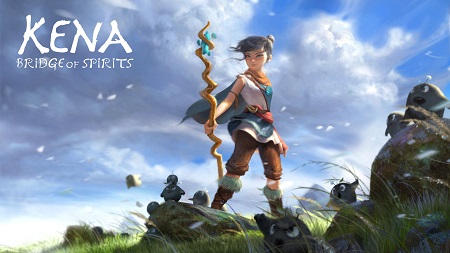

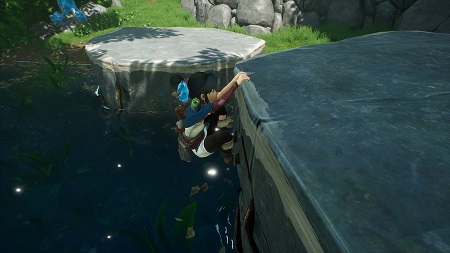
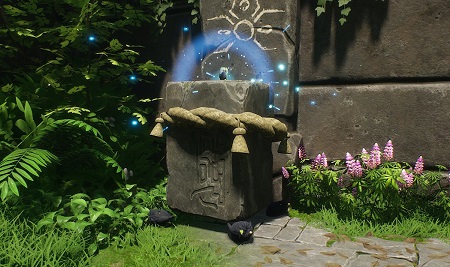
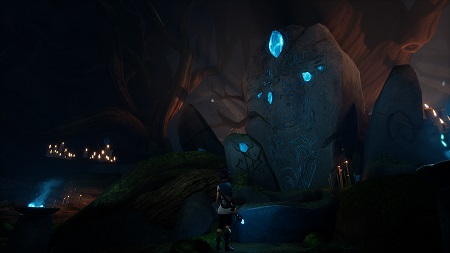
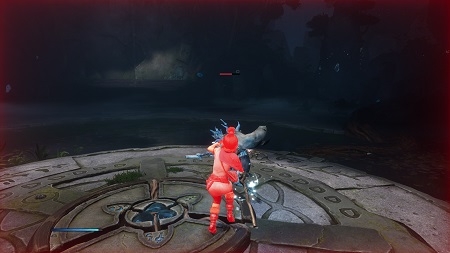
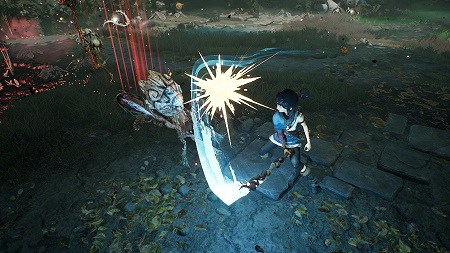
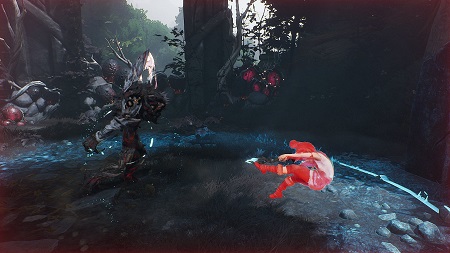
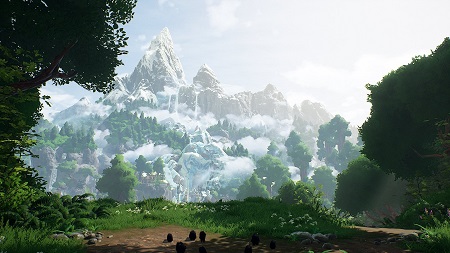
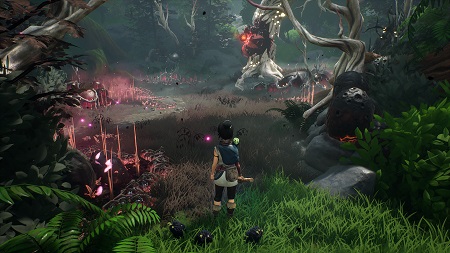
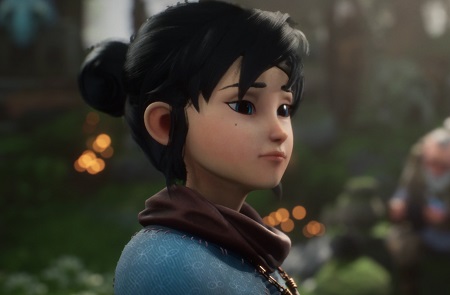
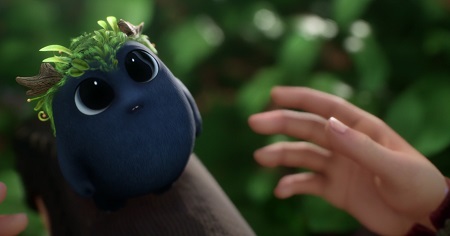
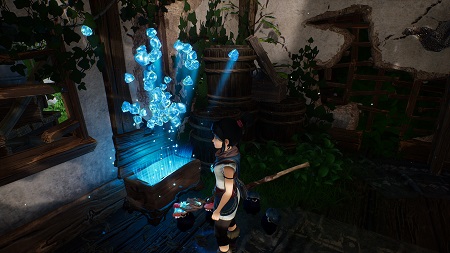
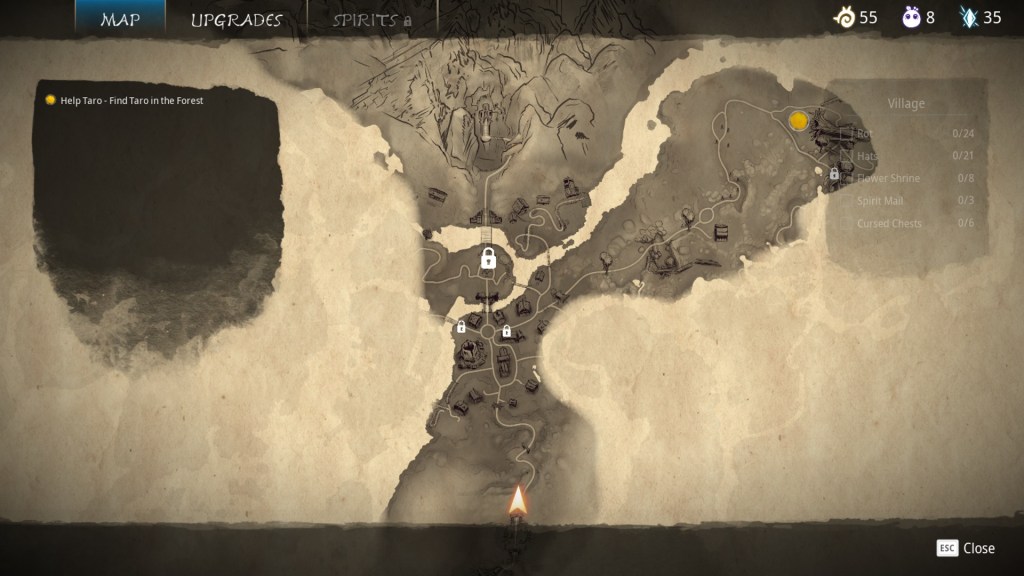
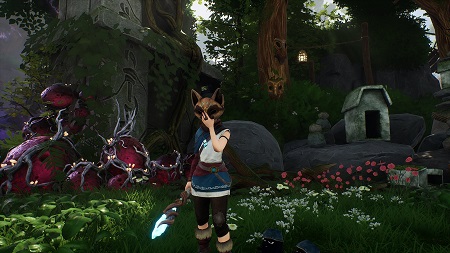




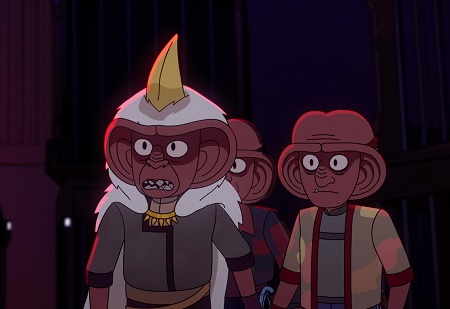


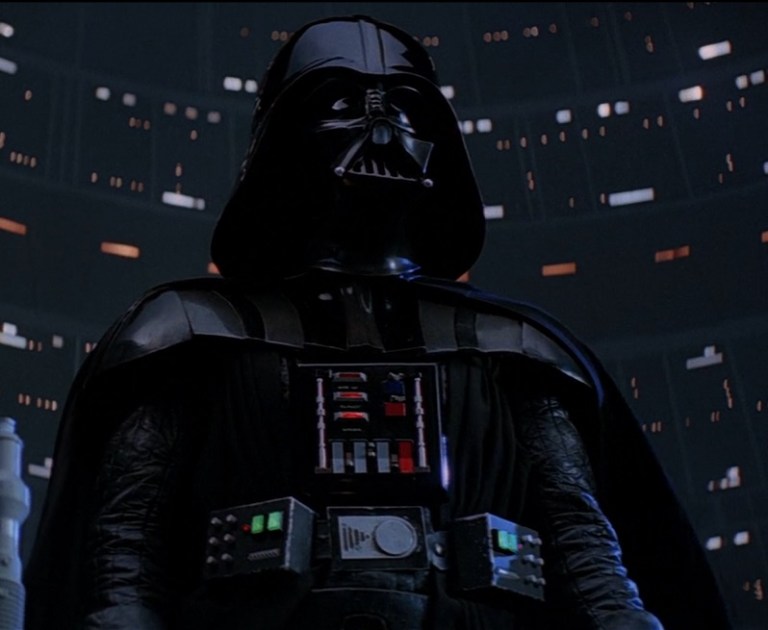


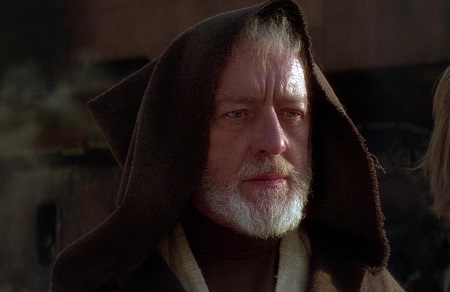
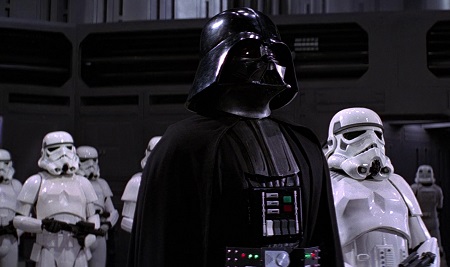


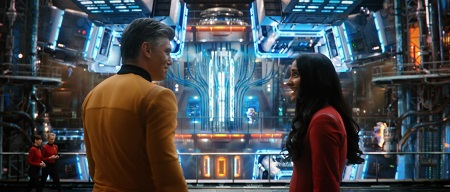
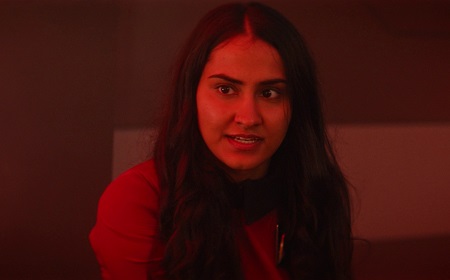
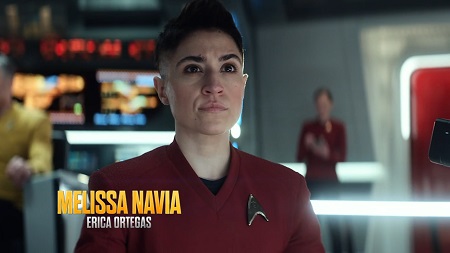
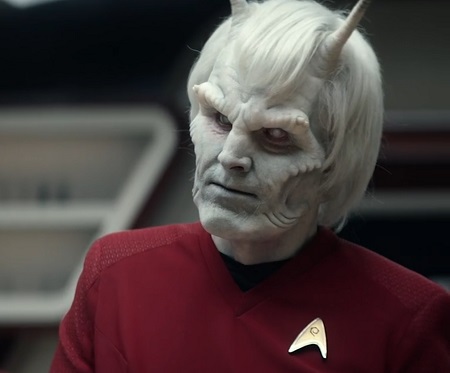
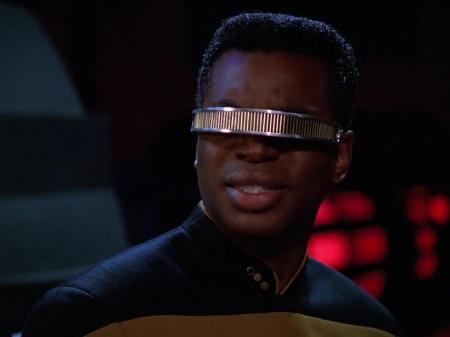
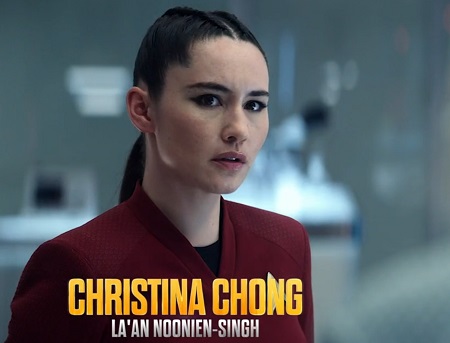
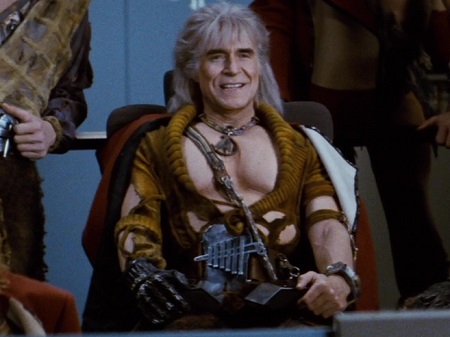
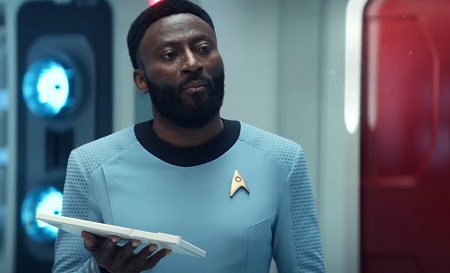
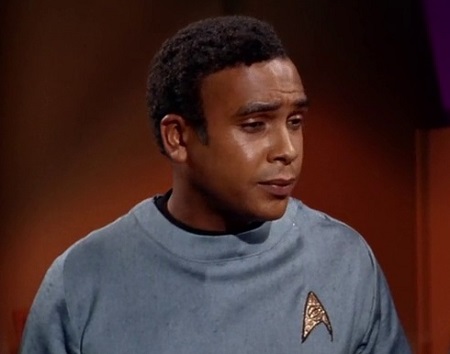
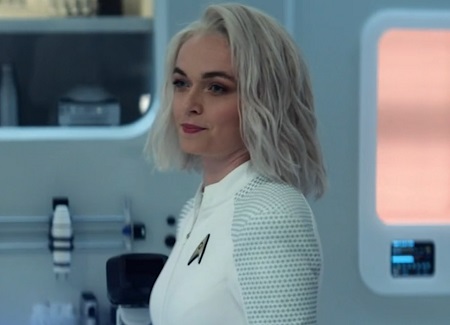
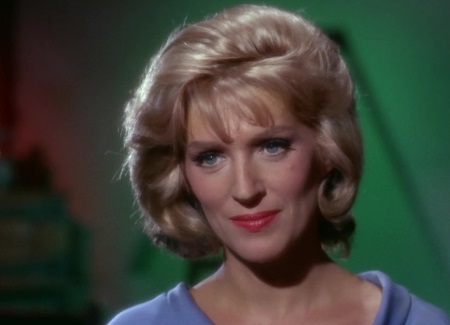
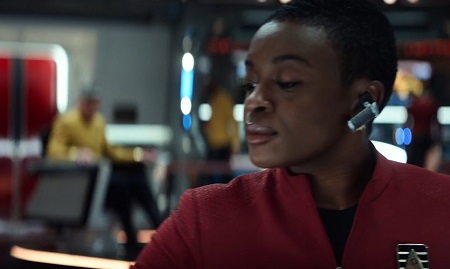
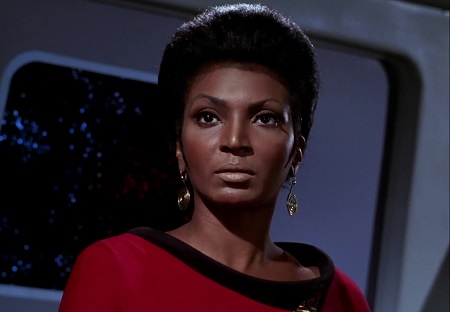
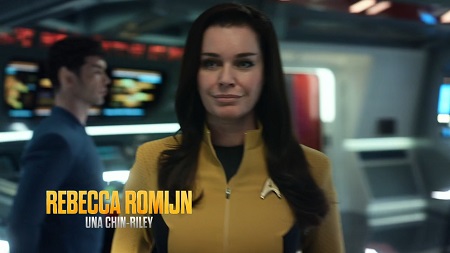

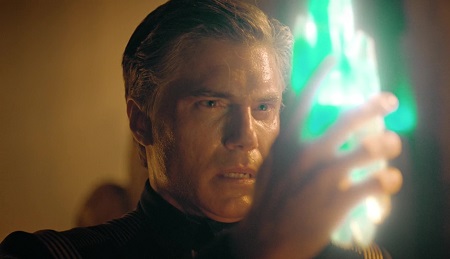
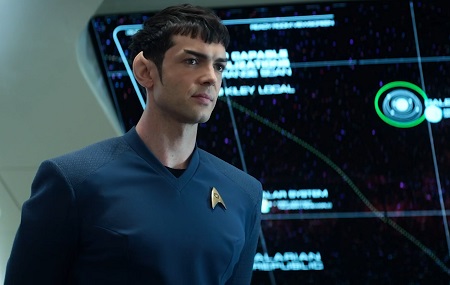
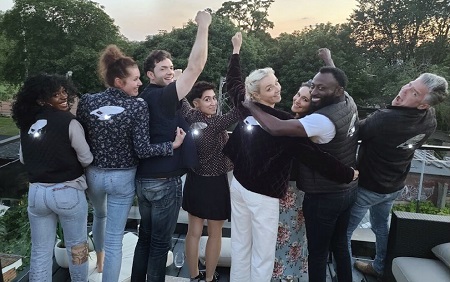

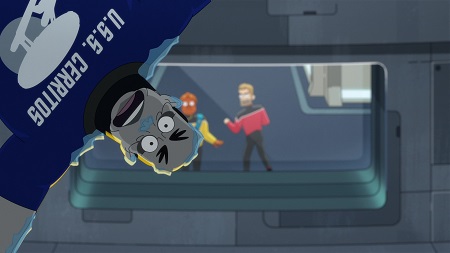
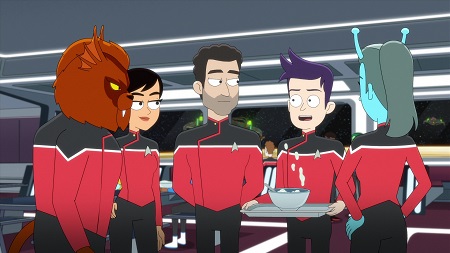
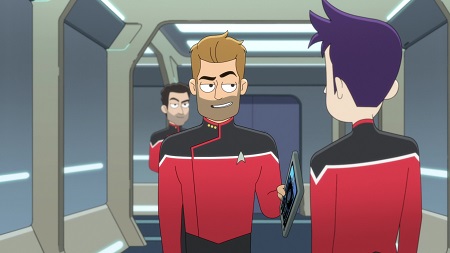

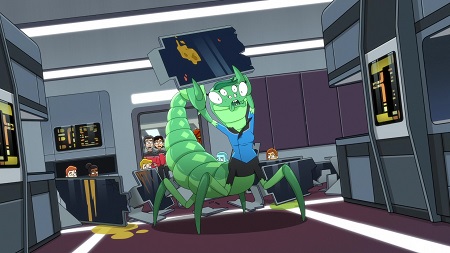
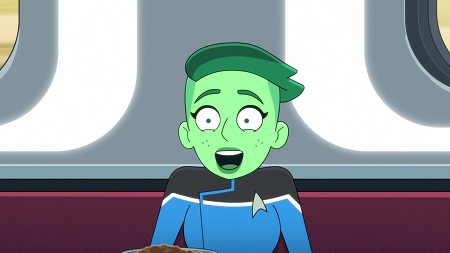


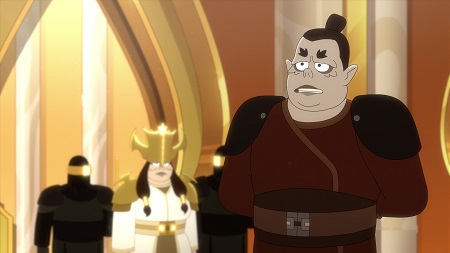
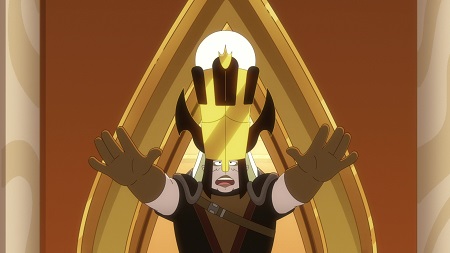

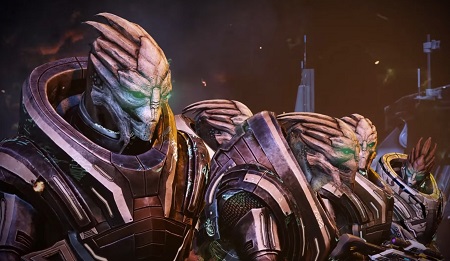
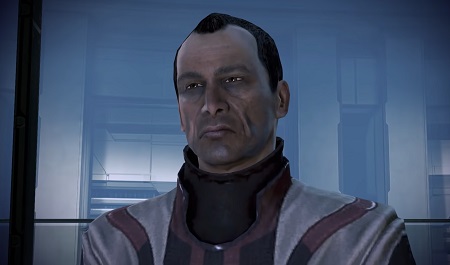
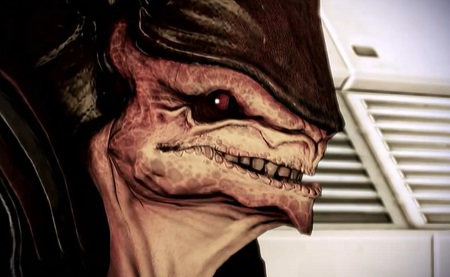

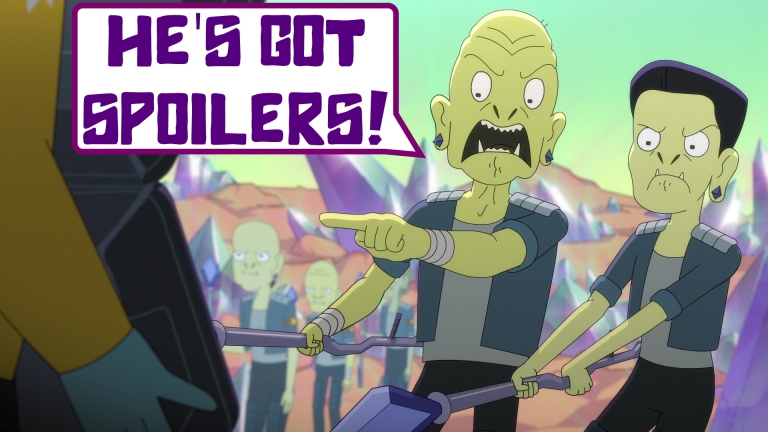








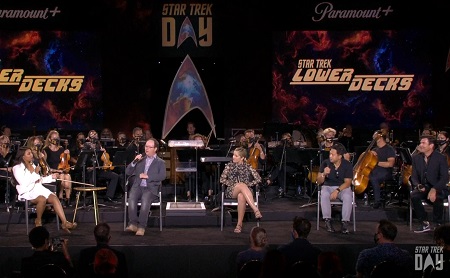
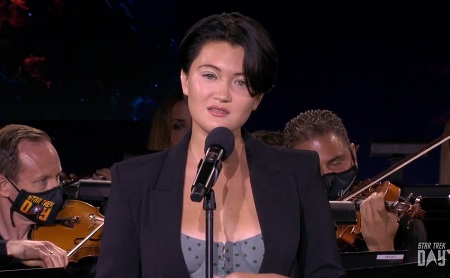



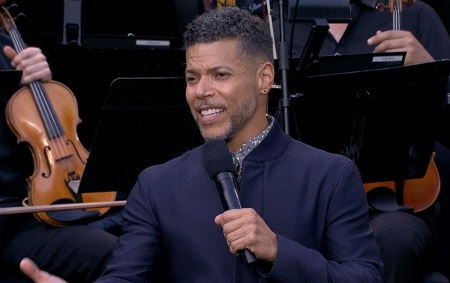
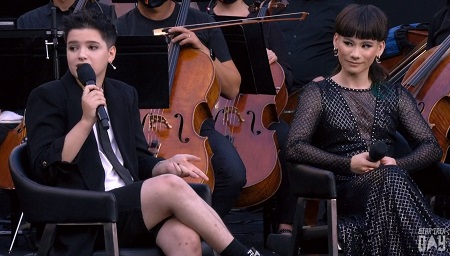
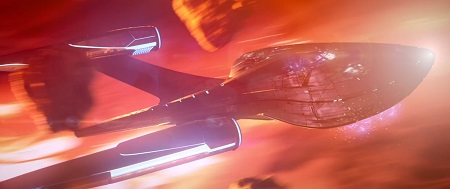


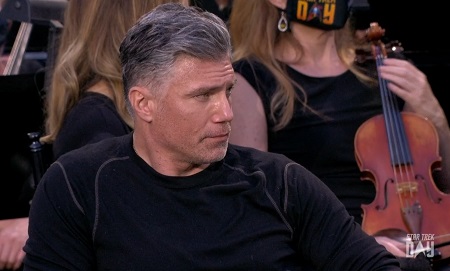


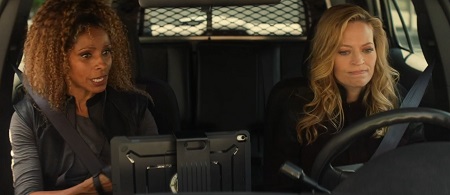

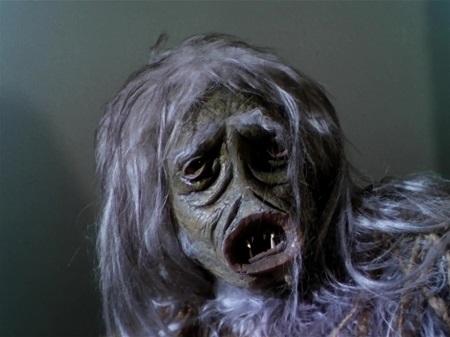

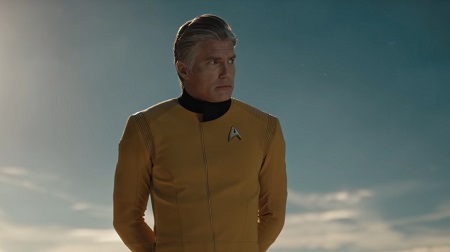
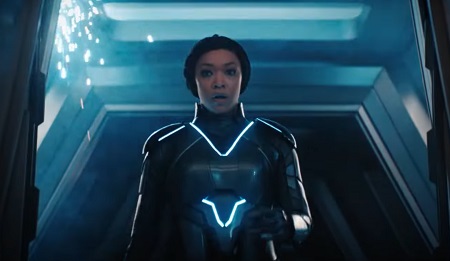

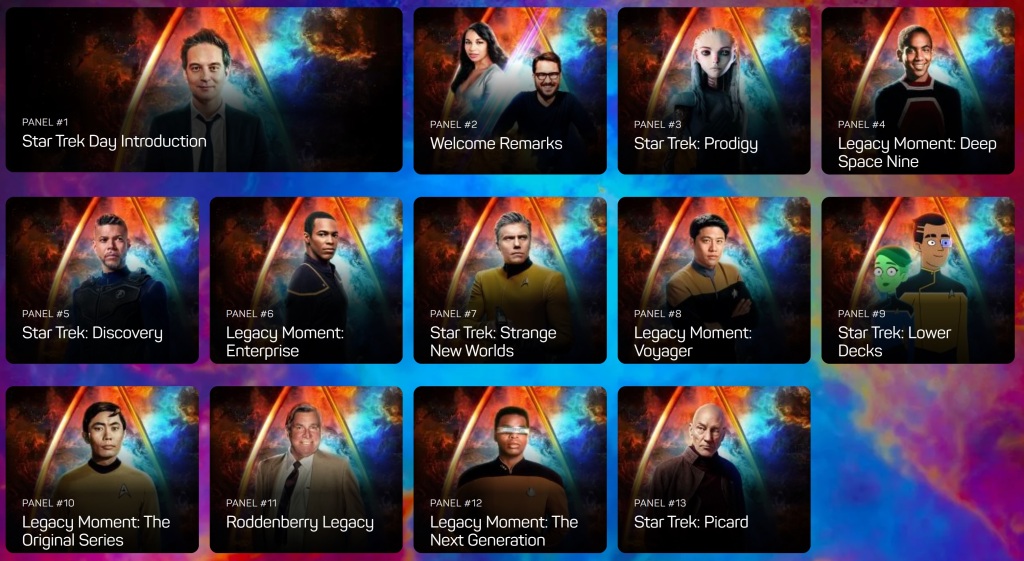


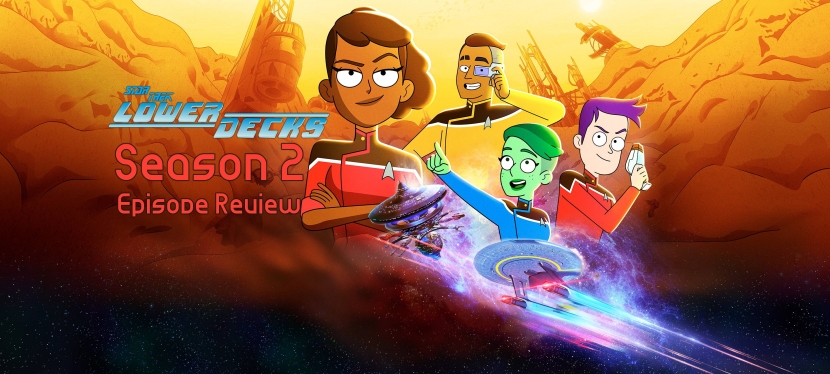
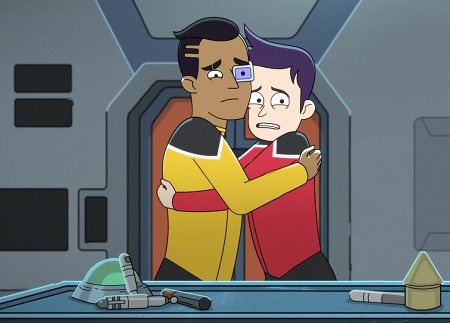

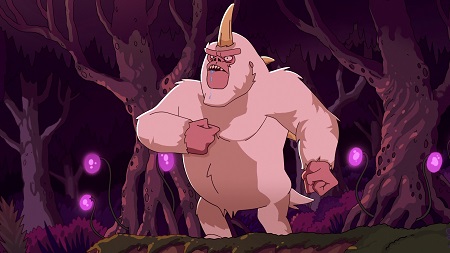

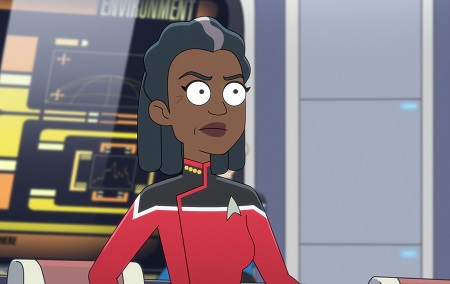

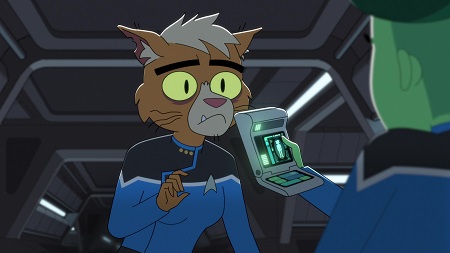










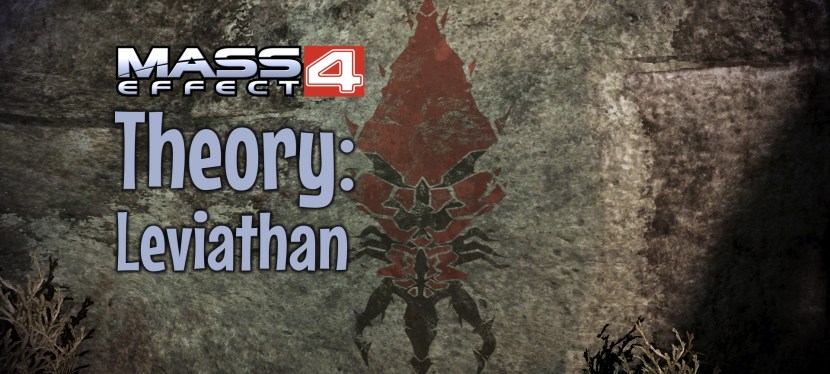
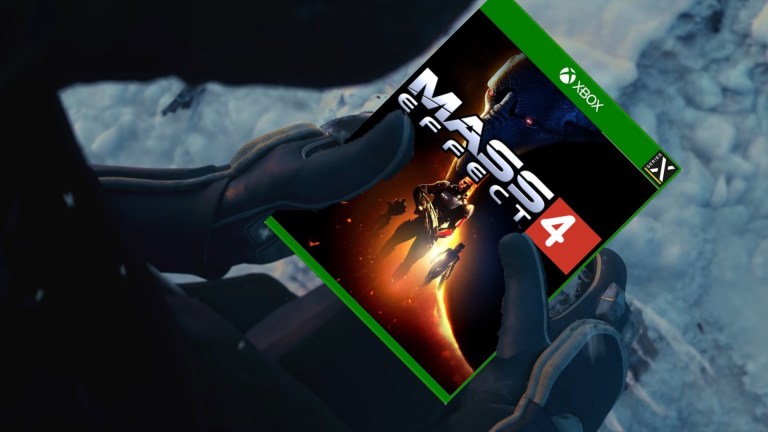
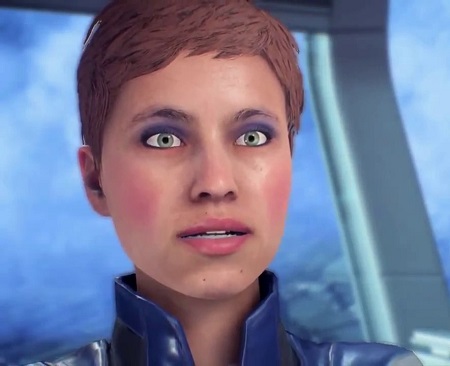
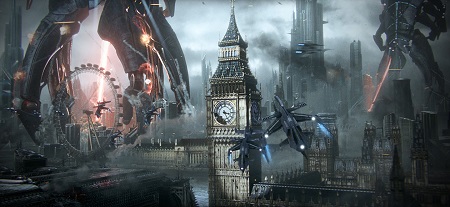
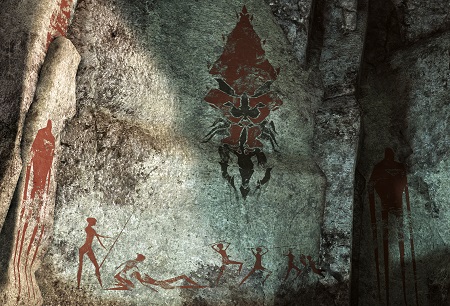
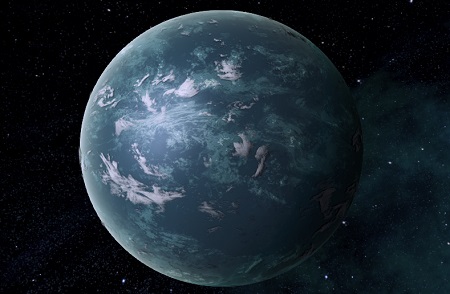
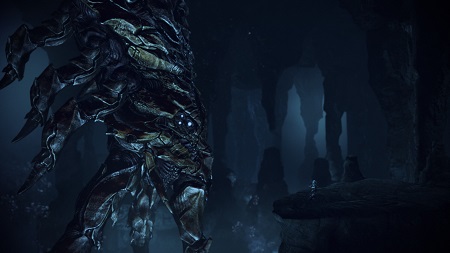
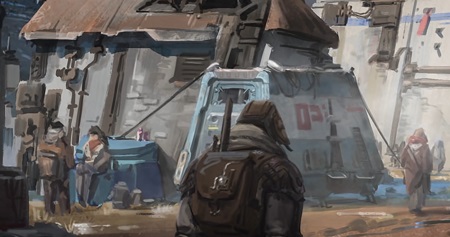
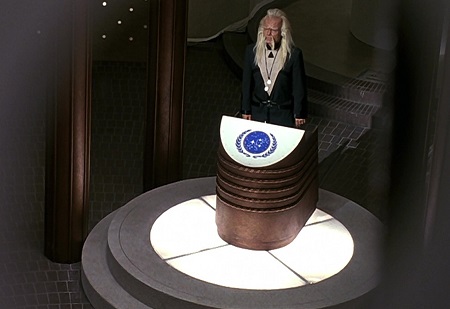
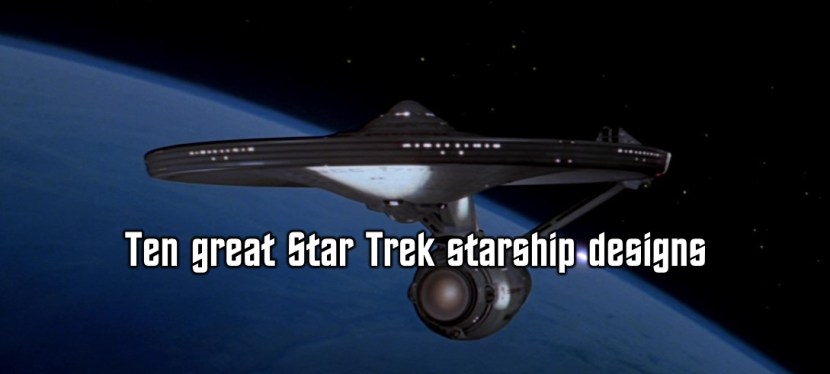

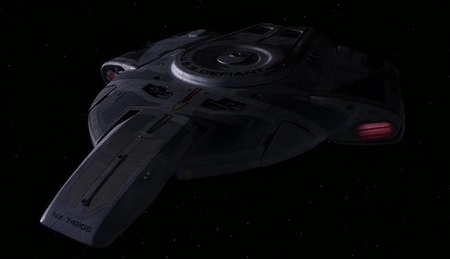
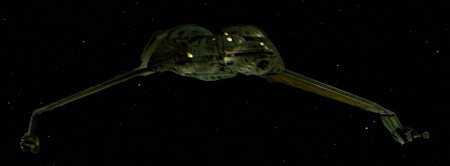
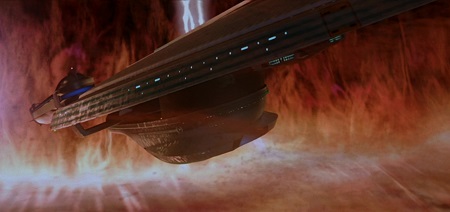

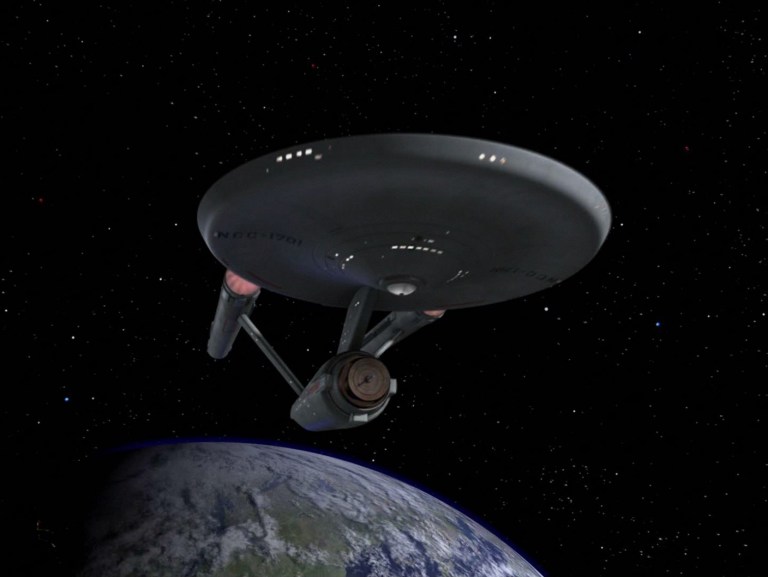
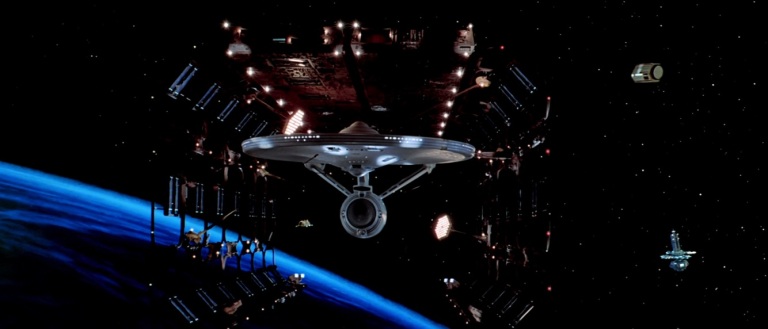


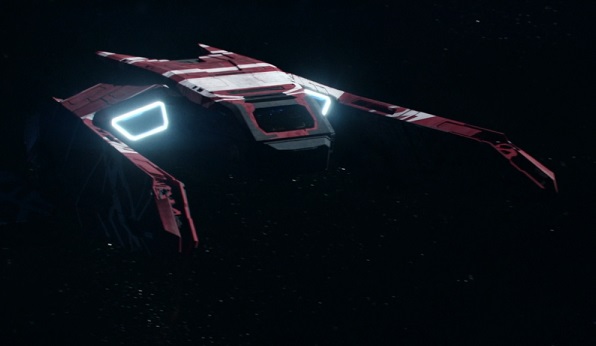

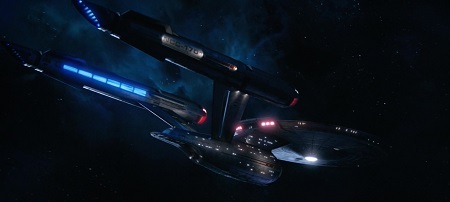
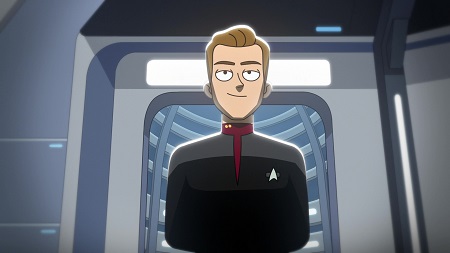

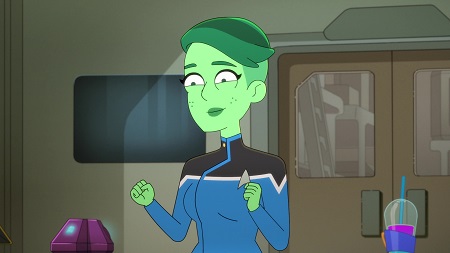
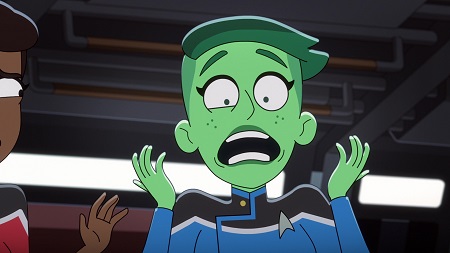
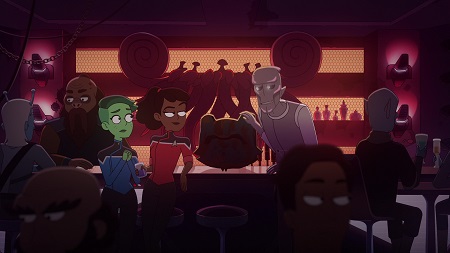
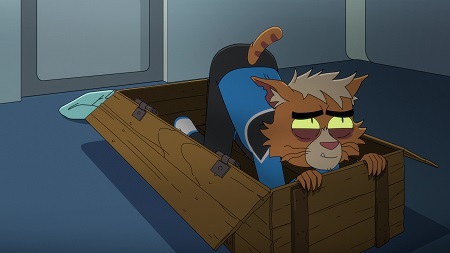
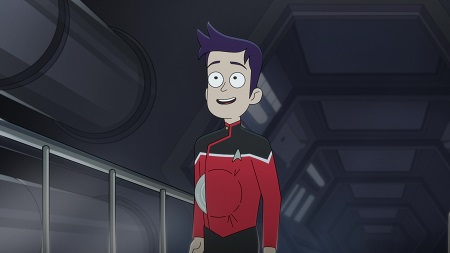
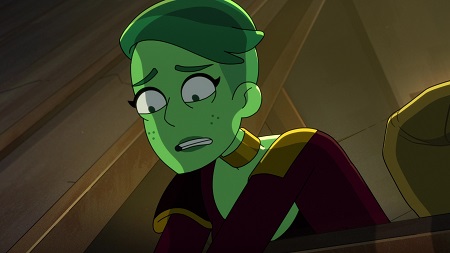


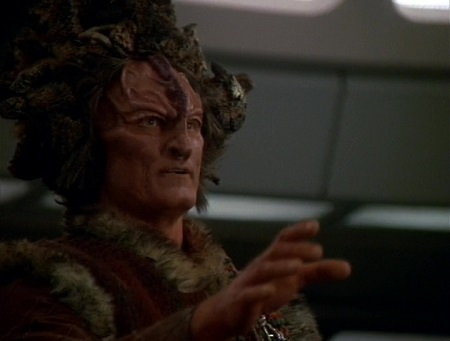

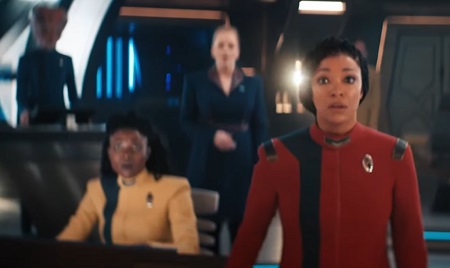







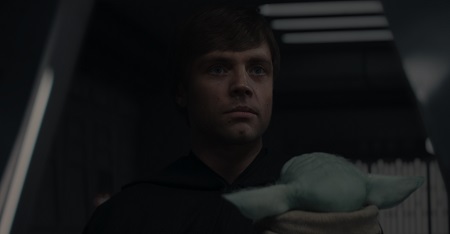

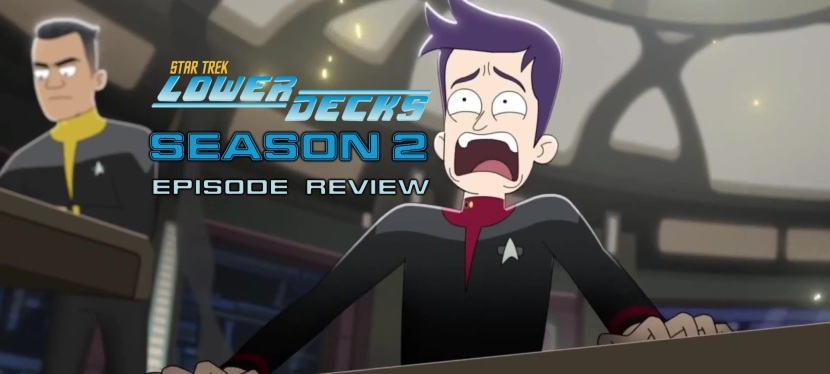
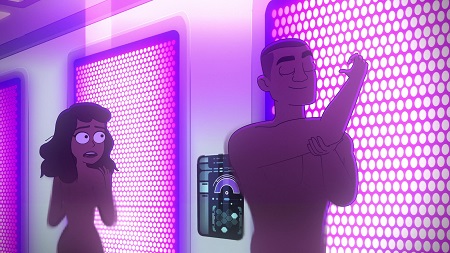

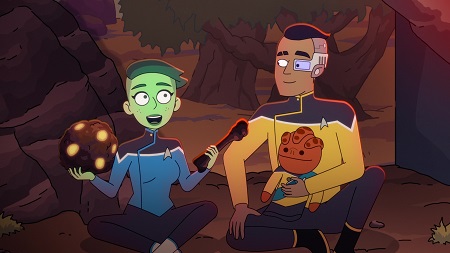
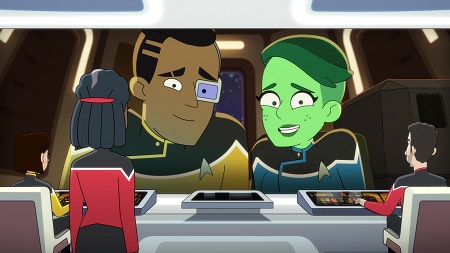


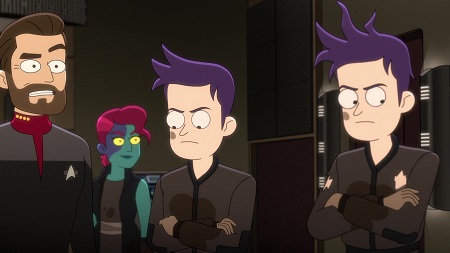
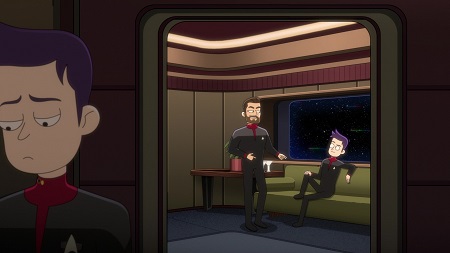

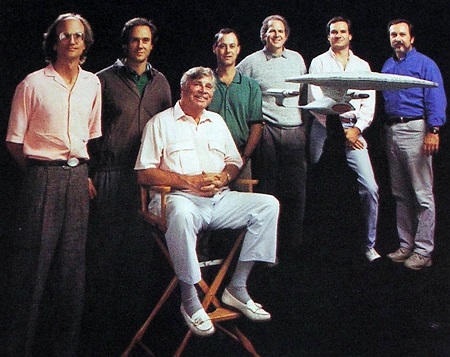
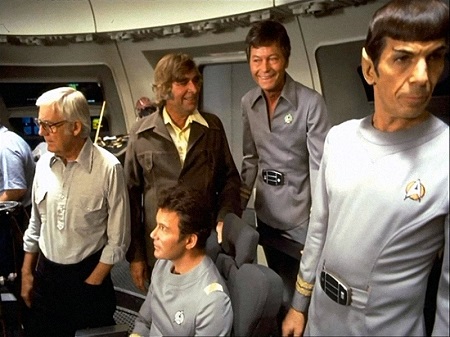
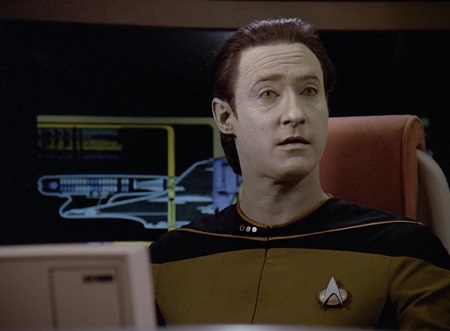


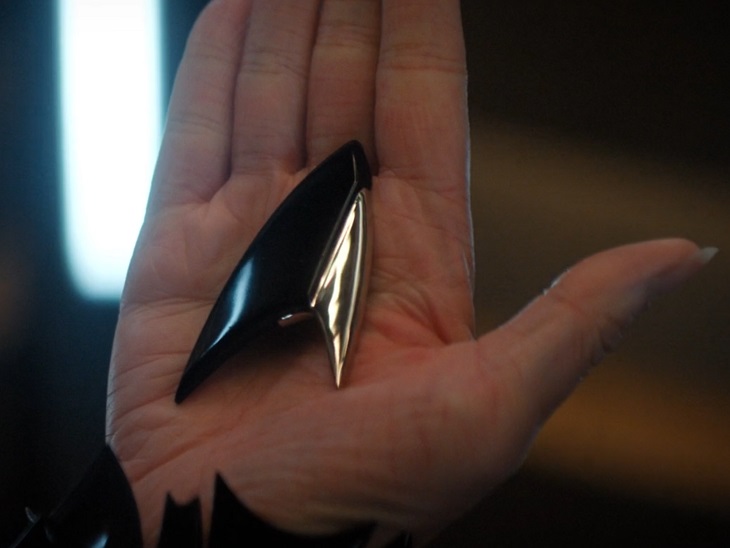




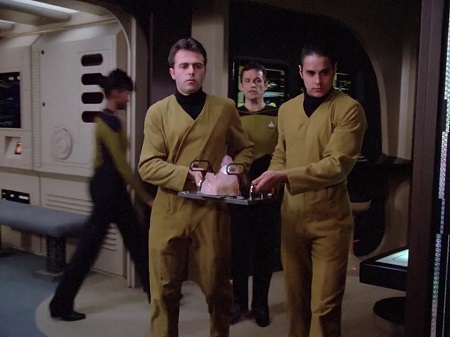






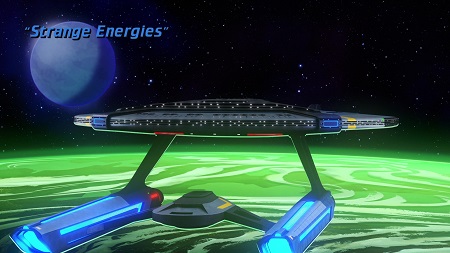
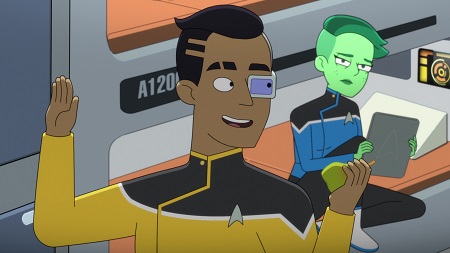


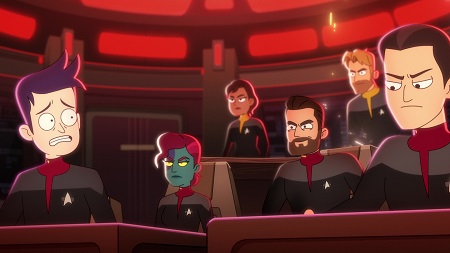
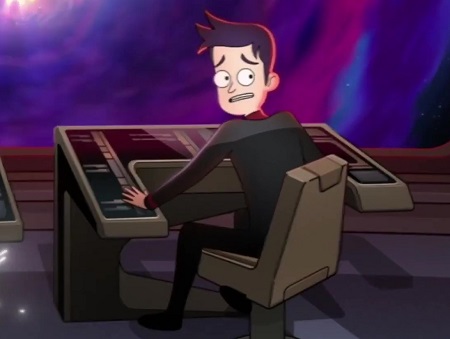


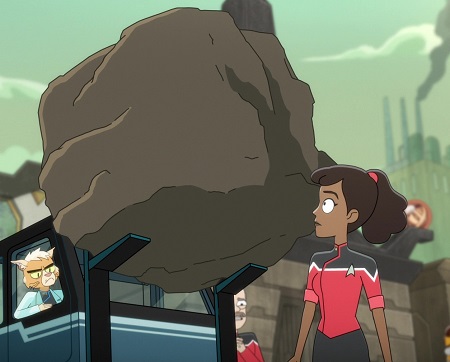

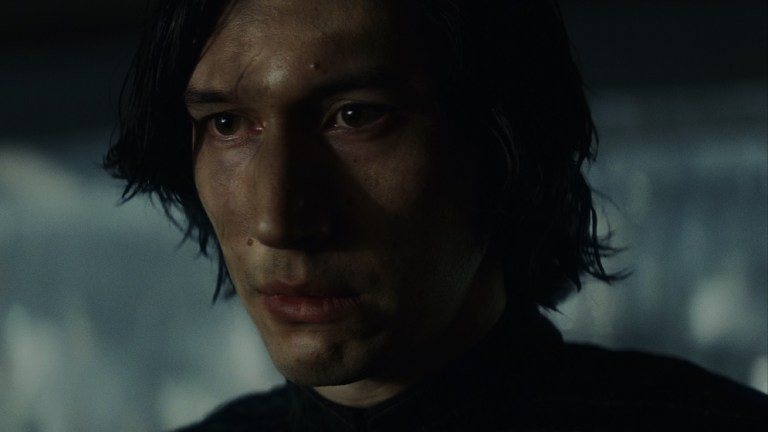
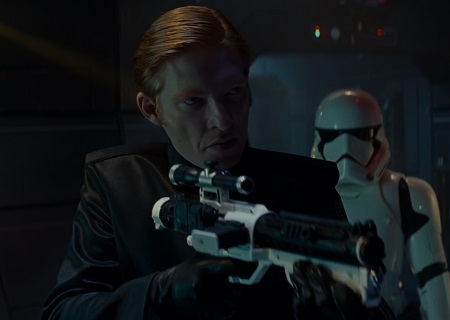

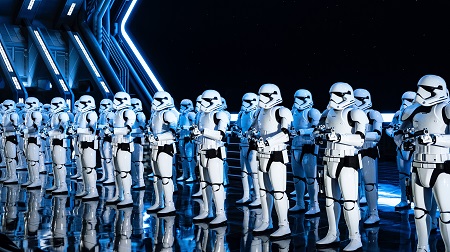
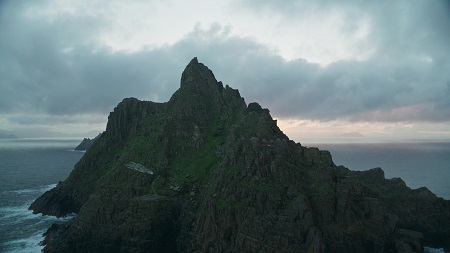

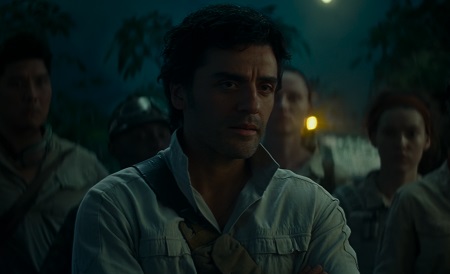
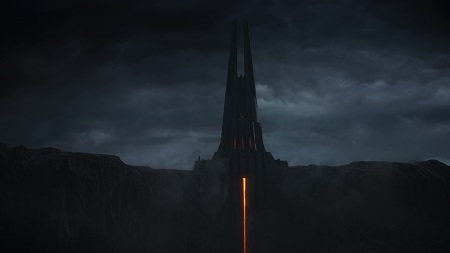
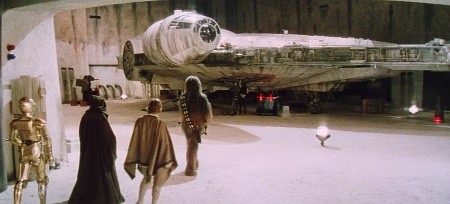
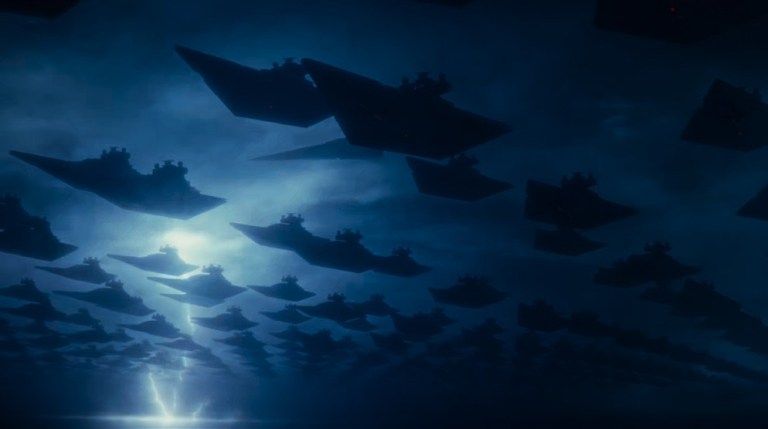
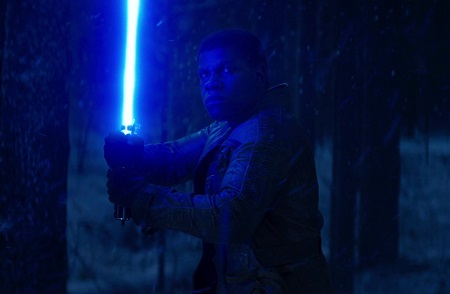
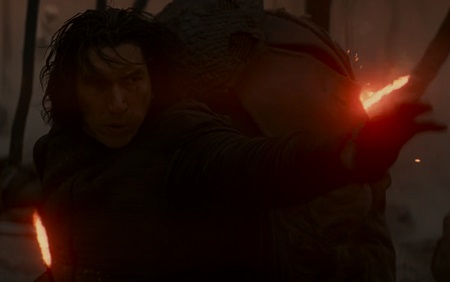


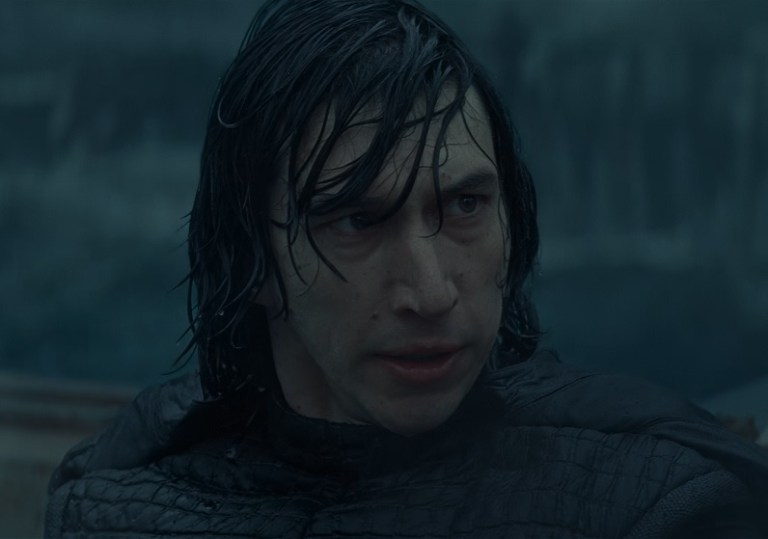






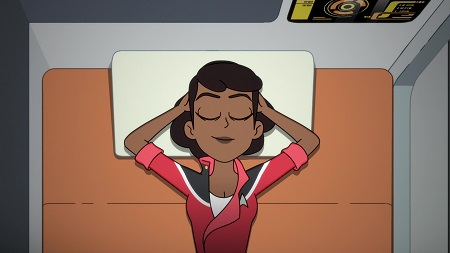
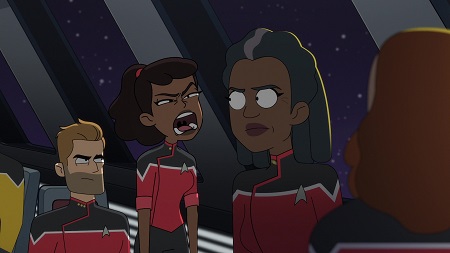

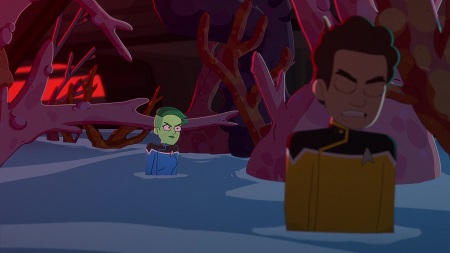
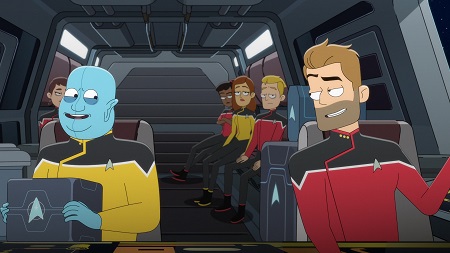
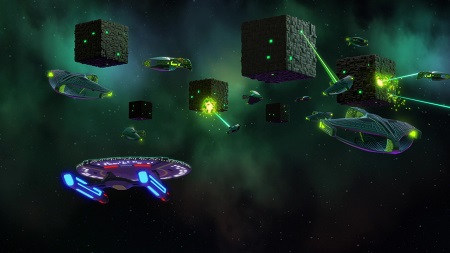

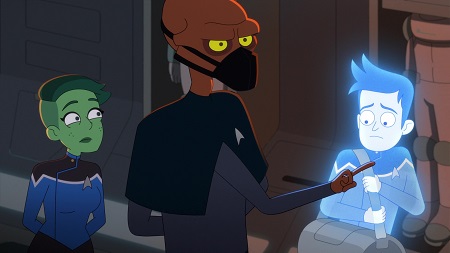

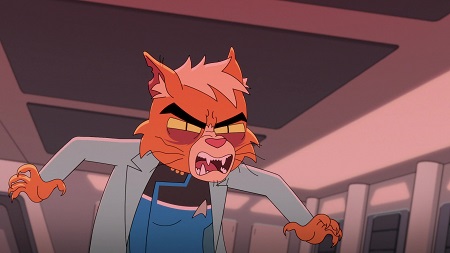

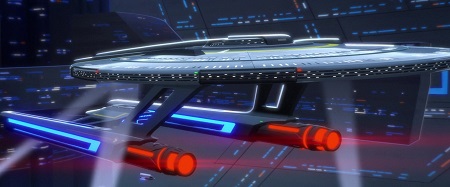

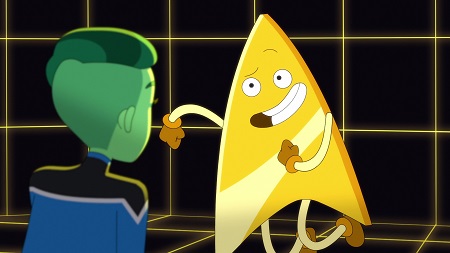
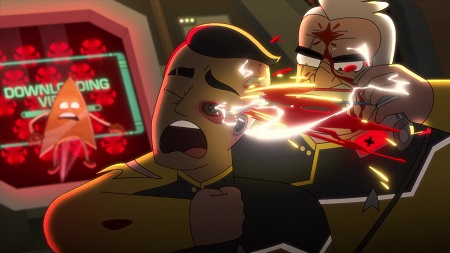


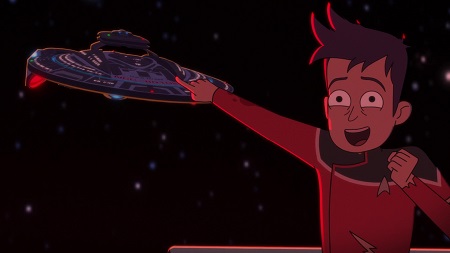

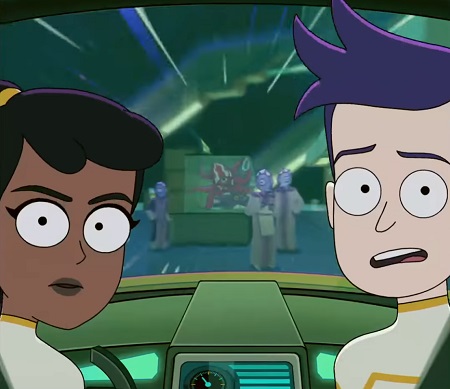












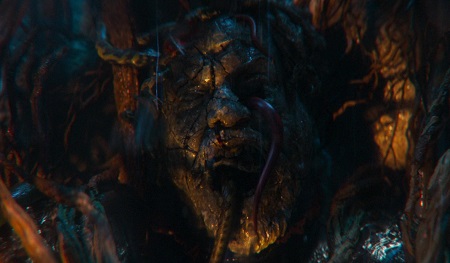

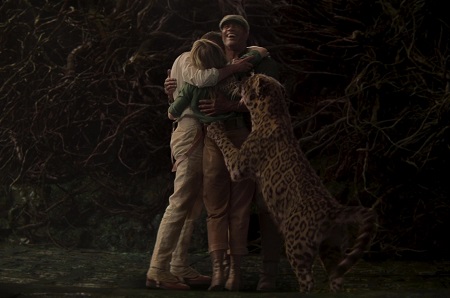
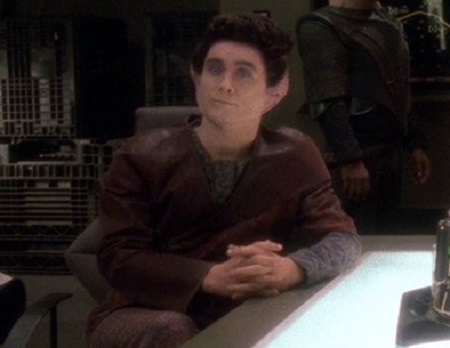
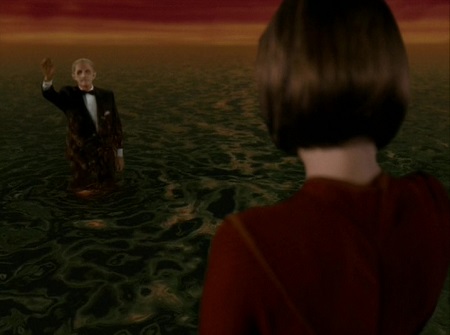


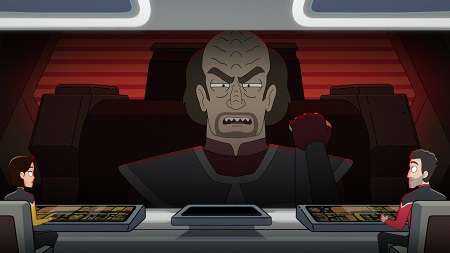

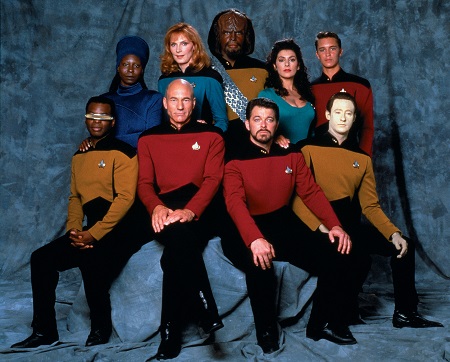






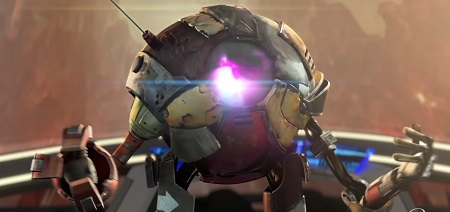


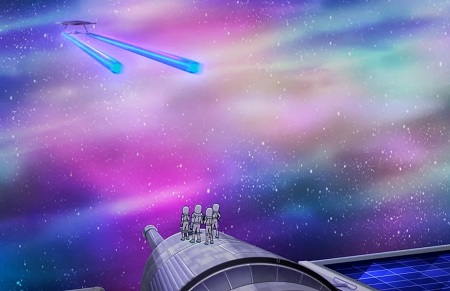



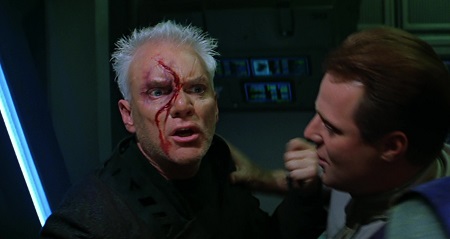




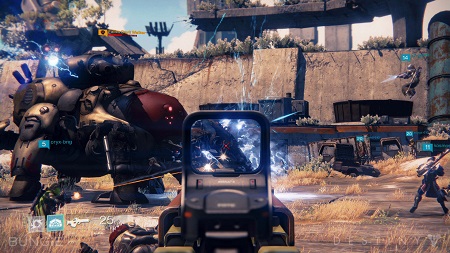
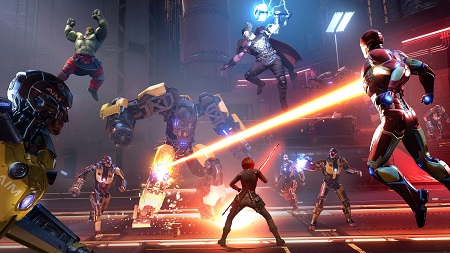
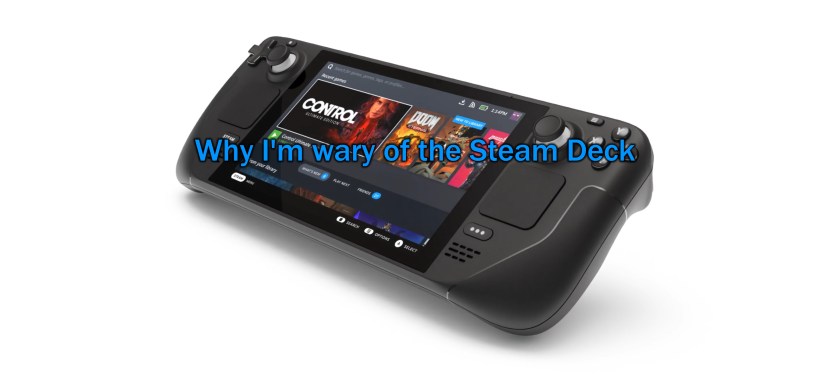


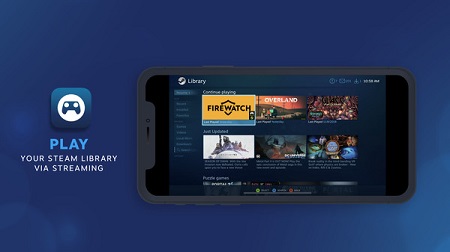



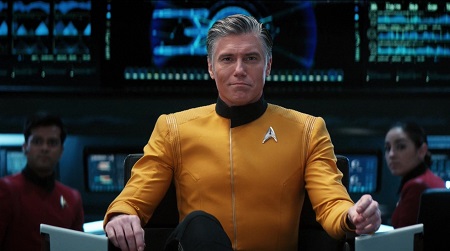

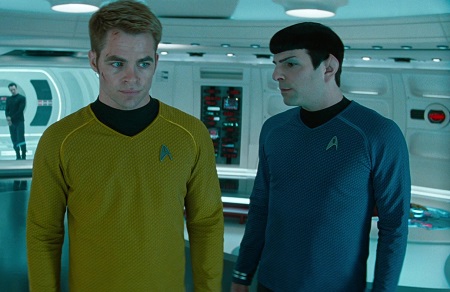













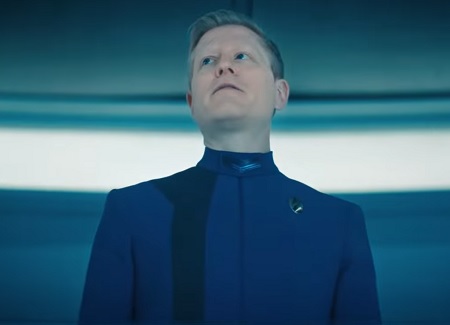

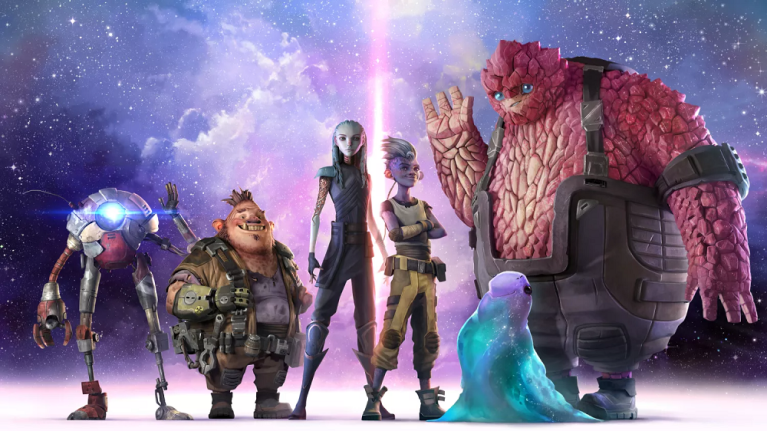
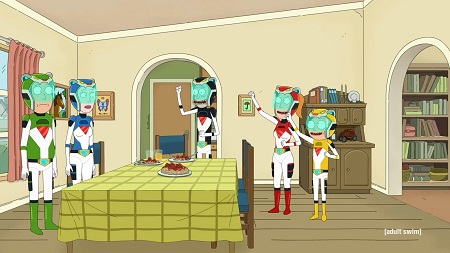



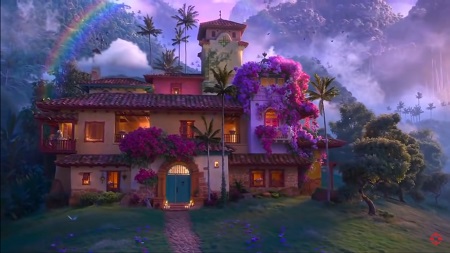
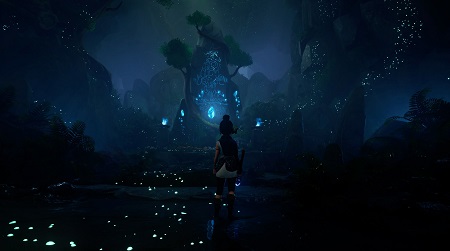
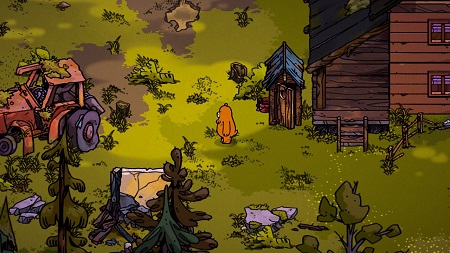

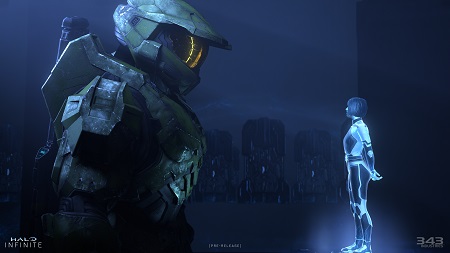
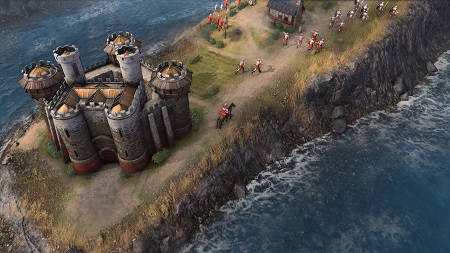











 Trekking with Dennis