Spoiler Warning: There are spoilers ahead for Star Trek: Picard Seasons 1-2 and the trailers, teasers, and announcements for Season 3. Spoilers are also present for the following Star Trek productions: The Next Generation, Nemesis, Deep Space Nine, and Voyager.
Is everyone going to survive the upcoming season of Star Trek: Picard? I think there are reasons to doubt that! So today I’m going to take a look at the show’s main and secondary characters and speculate about who may or may not be killed off before the curtain falls. Is that a bit macabre?
Picard hasn’t been shy when it comes to killing off legacy characters. In Season 1 we lost Hugh the Borg, Icheb, Bruce Maddox, and if you want to get technical about it, Picard himself – or at least his original body! We also saw the villainous Rizzo killed off in the season finale. And in Season 2, we said goodbye to Q most notably, but also saw Tallinn killed off as the story reached its conclusion.
Season 2 saw the death of Q.
In addition, several comments from showrunner Terry Matalas and others involved in the production of Season 3 have seemed to hint at the possibility of character deaths. So I think we have reason enough to speculate about who may or may not make it to the end of the story!
A well-timed character death can do wonders for a story, raising the stakes significantly. In the aftermath of television shows like The Walking Dead and Game of Thrones – pioneers of what I call the “disposable cast” model, where no main character can reasonably be assumed to be safe – audience expectations have shifted, and throwing characters into life-or-death situations definitely feels more dangerous than it ever used to!
Icheb was one of several legacy characters to die in Season 1.
A character death can also be the right move for a story. If a character has completed their arc or storyline, it can feel right – at least in some cases – if the way their story ends is with their death. So for all of those reasons, I think it’s at least a possibility that Star Trek: Picard will go down this route in Season 3.
When we’re dealing with legacy characters, this does get a bit more complicated. The main characters from The Next Generation are iconic and beloved, and need to be handled with care! But it could still feel right for the story, the character themselves, or both, if one or more were killed off. This season is being billed as the “final” adventure for this crew – and I can’t help but feel that “final” could really mean “final” for at least one of them!
Several of the main cast and crew at a recent panel.
Before we get started, a couple of caveats. First of all, I’m not necessarily advocating for any of these characters to be killed off. I adore The Next Generation and its characters, and while I could accept the loss of one or more of them if it came at the right moment and was handled well, I don’t really want to have to say goodbye to anyone!
This is also just the subjective opinion of one person. I’m going to look at each of the characters in turn and share my thoughts – but if you think I’m completely wrong or if I miss something you consider obvious, just keep in mind that it’s only my opinion… and although this is a dark subject in some ways, it’s supposed to be a bit of fun!
Finally, I have no “insider information.” I’m not even certain that all of the characters we’re going to look at will appear or even be mentioned in Season 3, let alone that they’ll have fully-fledged arcs, so please remember to take all of this in that spirit.
With all of that out of the way, let’s get started!
Character #1: Jean-Luc Picard
Status: Safe
Star Trek: Picard has, as mentioned, already “killed” Jean-Luc Picard – and it would feel very strange if the show were to do so again! I know that a lot of folks speculated that Picard would be permanently killed off in this series, especially in the run-up to Season 1 when it wasn’t clear if the series would be renewed, but having already done a fake-out death, it would be difficult, I feel, for the show to kill off Picard for a second time.
It’s primarily for that reason that I consider Picard to be safe. If we hadn’t gone through that death-and-rebirth narrative at the end of Season 1, I’d almost certainly feel that he was in danger. And I could be wrong about that – if the series is the final chapter of his story, it makes a lot of sense for it to end with his death. But I really feel that it would be a struggle to kill off Picard for the second time in a way that would be impactful, emotional, and that would carry the necessary weight to say a permanent goodbye to such an iconic character who has been such an important part of the Star Trek franchise.
Character #2: Laris
Status: Killed Off-Screen?
Laris was central to Picard’s story in Season 2 – serving as the “love interest” that he struggled to begin a relationship with. Picard’s inability to settle into a romantic relationship was what caused Q to set the entire season’s story in motion, and by the time Picard returned to his vineyard at the end of the season, he finally seemed ready to embrace a potential new relationship with Laris, something Guinan called his “one final frontier still to come.”
But unfortunately, Laris actress Orla Brady is one of the main cast members who won’t be returning for Season 3, something she confirmed shortly after the Season 2 finale had aired. Although Picard and Laris seemed to be on the verge of becoming a couple, Brady’s absence from the new season seems to suggest that it won’t happen. One reason for that could be Laris’ death – and after Zhaban was killed off-screen in between Seasons 1 and 2, I wouldn’t be stunned to see the series treat her the same way. Either way, given Laris’ importance last season her absence will have to be addressed somehow.
Character #3: William Riker
Status: In Danger
When considering potential character deaths, one factor to consider is the impact a particular loss would have on the people around them. While all of the main characters are friends, the bond that Riker had with both Picard and Troi – his wife – would make his potential death incredibly significant for those characters in particular.
Riker has also reached a point where we could at least make the case that his story feels somewhat complete. Having served as Picard’s loyal “number one” for fifteen years, he finally accepted his own command, got married to the person he loves, had a family, and retired. If Season 3 is to be an epilogue of sorts for Riker… maybe it won’t end well for him!
Character #4: Elnor
Status: Killed Off-Screen?
I genuinely do not understand the decision to grant Elnor a last-second stay of execution at the end of Season 2. His death, while tragic in more ways than one, served a narrative function, and was of particular importance to Raffi. After a deeply emotional sequence in the penultimate episode of the season, I felt certain that Elnor was truly gone – until Q resurrected him.
Why, then, do I suspect that Elnor may have been killed off-screen? It isn’t just the confirmed absence of actor Evan Evagora, though that is a part of it, but that we seemed to see Raffi looking angry and distraught in the trailer. It would arguably be repetitive if Raffi were forced to deal with Elnor’s death for the second season in a row… but then again, it worked well as the driving force for her arc last time. Elnor’s absence will have to be explained somehow, and unless he’s being secretly tapped for a role in the long-rumoured Starfleet Academy series, he might end up dead for the second time.
Character #5: Captain Vadic
Status: Deader than dead. 101% dead.
If anyone is going to die this season, surely it will be the villain of the piece! Somehow, some way, by the time the credits roll on the season finale, Captain Vadic will have been killed – I am practically certain of that. Her defeat and death may end up costing Picard and the crew dearly, but these kinds of villains really only end one way.
I just hope that, along the way, we truly come to learn who Vadic is and what’s driving her. Seasons 1 and 2 both left a lot on the table in terms of unexplained or unclear narrative threads, and whilst we’re having fun reuniting with the crew of the Enterprise-D, I truly want to spend time with Vadic to figure out what’s going on with her.
Character #6: Dr Beverly Crusher
Status: In Danger
Because of the nature of her close relationship with Picard – regardless of whether they ever “crossed that line” and became more than just friends – Dr Crusher’s death would hit him especially hard. For that reason alone, in a show called Star Trek: Picard, Dr Crusher is absolutely in danger!
Not only that, but based on what little we know so far, Dr Crusher is going to have a significant role to play in jump-starting the story, sending a distress signal of some kind to Picard while on an assignment in deep space. We’ve already seen clips in the trailers that confirm she will be reunited with Picard, so that mission won’t prove fatal. But Dr Crusher seems to be connected to whatever’s going on – perhaps in a big way. She could be one of Captain Vadic’s targets.
Character #7: Lore
Status: 50/50
I could see Lore’s story going one of two ways. Either he really leans into the “evil twin” angle from The Next Generation, allowing Brent Spiner to put in yet another delicious villainous performance, or there’s some kind of pathway to redemption for him – perhaps even one that might lead to a resurrection or restoration of Data.
So I’m calling this one 50/50. If there’s more to Lore’s story this season than just pure villainy, I think he’s in with a chance of survival. If he remains true to his mission and is loyal to Vadic, I wouldn’t be surprised at all to see him meet his end – maybe at the hands of Geordi!
Character #8: Soji
Status: Killed Off-Screen?
Soji made scarcely more than a cameo appearance in Season 2, and didn’t even join the others for a drink at Guinan’s bar at the end of the story. If the story of Season 3 will involve some kind of attack or invasion, such as by the Season 1 super-synths as I’ve previously theorised, we could learn that Soji has been killed. However, after being absent last time, her death wouldn’t have as big an impact on either the characters on the show or on us as the audience – so that could be a reason not to do it.
Either way, I hope some reference is made to Soji to explain her absence from the season’s story. She was such a big part of Season 1 that it would be a shame to hear absolutely nothing about her in the show’s final season.
Character #9: Worf
Status: In Danger
Of all The Next Generation characters, it seems from the trailers that Worf may be the one who’s changed the most from when we last saw him. Worf seemed to suggest that he has become a “pacifist,” something that could really shake up his characterisation. After a long arc across not only The Next Generation, but the back half of Deep Space Nine too, maybe Worf’s story is finally at an end. He might even be at peace with that idea!
Worf is the character that we’ve spent the most time with in all of Star Trek, so his exit – if indeed there is to be one – will have to be handled with care. But for Worf, dying in battle to save his friends (and maybe the Federation, too) would actually be a good way to go. So maybe it will finally be a good day to die for our favourite Klingon!
Character #10: Seven of Nine
Status: Safe
I’m calling Seven “safe” because I’m not convinced that the Star Trek franchise is done with her just yet! I know I wasn’t the only one in the aftermath of Season 2 to suggest that some kind of “Captain Seven” series could be an interesting direction to take for the next Star Trek production, but even if that doesn’t happen, the development that Seven’s character has gone through in Picard so far has set the stage for further appearances in some form.
While we’re still waiting to hear what (if anything) is coming up next for Star Trek, any future 25th Century series would do well to include Seven of Nine either as a main or recurring character. Her arc in Picard has been utterly transformative, taking one of my least-favourite characters from Voyager and getting her to a point where I could legitimately see her as the lead in her own spin-off.
Character #11: Deanna Troi
Status: In Danger
As above with Riker, Troi has to be considered in danger because of the emotional weight her death would carry. This would pack a punch for Riker in particular, as they’re married, but Troi was also close with Dr Crusher and Worf too. Like Riker, Troi has also arguably come to the end of her story: serving in Starfleet, retiring, and becoming a parent.
The loss of Troi would also deprive the crew of a particularly useful talent: her empathic abilities. As an empath, Troi has been able to get a sense of all kinds of adversaries – and in one of the trailers we saw her become deeply alarmed at what she sensed from Vadic. Losing Troi would weaken Picard’s crew in a potentially significant way – and that could provide a narrative reason for killing her off.
Character #12: Raffi Musiker
Status: In Danger
If there’s going to be any kind of “Seven of Nine show,” surely Raffi would be a part of that? But even with that caveat in mind, I can’t shake the feeling that Raffi could be in danger. If Picard’s writers and producers want the impact of killing off a main character – but don’t want the controversy of killing a legacy character – then Raffi is really their only option.
With the rest of the new characters already gone, it would be a great shame to lose Raffi as well. One of the things I hoped that Picard would do was serve as a kind of launchpad for new stories set in this time period – and for that to happen, at least some new characters need to be introduced, developed, and stick around. Raffi is the last new character standing, so if there is to be any kind of “passing of the torch,” as the show’s producers have suggested, she needs to survive!
Character #13: Geordi La Forge
Status: In Danger
One of the few things we know at this stage about Geordi in Season 3 is that he has two daughters – both of whom are set to appear in the show. As above with Troi and Riker, Geordi’s story could feel complete or close to complete in some ways, which could mean he’s in danger. His death would not only hit the main characters, but also these two new characters – and if it’s played well, the emotional impact of that could be huge.
Although I don’t think this is canon, at least one tie-in novel for Season 1 stated that Geordi had worked with Picard on the Romulan rescue plan prior to the attack on Mars. Dialogue in Season 1 confirmed the two are still friends, but I wonder if there could be unfinished business there. If so, that could give Geordi a reason to stick around – or it could set the stage for an arc that ends with his death.
Characters #14 and #15: Sidney and Alandra La Forge
Status: In Danger
Geordi’s daughters – who seem to have been given the names Sidney and Alandra – will be joining the mission, but despite their connection to him, at this point in the story they’re little more than redshirts… and we all know what can happen to characters like that!
If Picard’s writers and producers wanted to kill off a character in a way that would pack an emotional punch, Sidney and/or Alandra could be in the firing line. Their deaths would have a huge impact on Geordi, which could become a big part of his arc and characterisation across the season. It would be especially cruel to kill off both of these characters… but plenty of television shows have done exactly that kind of thing!
Character #16: Professor Moriarty
Status: In Danger
At this stage, I genuinely don’t know whether Professor Moriarty will have a significant role or if his appearance will be more of a cameo. Regardless, I think he’s in danger – and he could be one of the first villains on the chopping block, with Lore and Vadic keeping up the fight after his defeat/destruction.
Although Moriarty was programmed to be “evil” because of the source material upon which his characterisation was based, he’s a surprisingly sympathetic character – or at least he feels that way to me. His existence isn’t his fault, and the fact that he was trapped by the limitations of his technology feels strangely relatable. Could there be a redemption arc for Moriarty?
Character #17: The Borg Queen-Dr Jurati hybrid
Status: Killed Off-Screen?
The Borg Queen-Dr Jurati hybrid didn’t get a “goodbye” at all in Season 2, promising to stand watch over the mysterious anomaly that was part of that season’s story. I really hope that Season 3 will address this somehow – and I have a theory as to how the mysterious anomaly could connect not only to Season 3, but to the events of Season 1 as well!
Regardless of whether that pans out, though, we know that Alison Pill won’t be reprising her role in Season 3, which leads to the question of the Borg Queen’s survival. If the mysterious anomaly were to erupt again, could it have destroyed her ship? Or might her Borg faction have been one of Vadic’s targets?
Character #18: Sela (or Tasha Yar?)
Status: Unknown
At time of writing, we don’t know whether Denise Crosby’s rumoured appearance in Season 3 is for real. Some outlets have reported it as if it were fact, but I can’t find anything official on that! But let’s assume she is coming back for a moment. If her character of Sela is involved, somehow, I think she’s in serious danger. If there’s some kind of attempt to bring back Tasha Yar, then all bets are off!
Sela tangled with Picard and the crew of the Enterprise-D on two occasions, being defeated both times. If someone like Vadic were putting together a revenge mission, I can absolutely see Sela jumping at the chance to be part of it. Her story could also connect in some way to the Romulan storylines in Season 1. But if she’s coming back as a villain and part of Vadic’s team, I definitely think that puts her in the firing line.
Character #19: Another familiar face
Status: In Danger
One of the most shocking sequences in the trailer was the apparent destruction of Starfleet HQ (or some other major Federation building). If this is real, and isn’t some kind of vision or dream sequence, it stands to reason that a lot of Starfleet folks might be killed. Among them could easily be a familiar face or two from Star Trek’s past – either a recurring character or perhaps even a major character from The Next Generation, Deep Space Nine, or Voyager.
As we saw in Season 1, Picard hasn’t been shy when it comes to reintroducing a legacy character only to kill them off. Icheb’s death is perhaps the most noteworthy example, and it could be significant if a familiar character or two were to be killed by Vadic or someone working with her. If this happens, though, I hope we’re reintroduced to the character in some way, and that their death isn’t merely included as a line of dialogue.
So that’s it!
Those are all of the characters we know of at this stage, and I’ve made some wild guesses and perhaps even a couple of logical, educated guesses about who may or may not make it to the end of the season.
At the end of the day, when you throw characters into a high-stakes, high-tension, high-danger story, it stands to reason that they won’t all make it out alive. As television storytelling has progressed, the risk to even beloved main characters has become greater than it ever was, and although we have seen some pretty heavy plot armour in some parts of the Star Trek franchise (looking at you, Discovery) I can’t shake the feeling that someone significant is going to be killed before Season 3 is done.
But hey, maybe I’m wrong about that! In any case, we don’t have long left to wait before we’ll find out! As I said last time, I’m planning to write individual episode reviews as Season 3 is broadcast, and I’ll also craft a few theories if the series lends itself to that – so be sure to stop by when Season 3 arrives!
Star Trek: Picard Season 3 will premiere on Paramount+ in the United States on the 16th of February 2023, and in the United Kingdom and around the world on the 17th of February 2023. Seasons 1 and 2 are already available to stream or buy on DVD/Blu-ray. The Star Trek franchise – including Picard and all other properties discussed above – is the copyright of Paramount Global. This article contains the thoughts and opinions of one person only and is not intended to cause any offence.
Spoiler Warning: There are spoilers ahead for the entire Star Trek franchise, including the most recent seasons of Discovery, Picard, and Strange New Worlds. There are also spoilers for upcoming and unreleased Star Trek projects.
By almost every conceivable measure, 2022 has been a fantastic year for the Star Trek franchise. We’ve seen new projects become successful, ongoing series really hitting their stride, and more seasons and individual episodes of Star Trek than at any time in the past. Barely a week has gone by without a brand-new episode to get stuck into – and with different shows targeting wildly different audiences, it really feels like Star Trek in 2022 has had something to offer to practically everyone.
But that isn’t the whole story, and unfortunately it feels as though 2022 has also been a pretty dark year for Star Trek – one in which major mistakes have been made that could very easily lead to serious consequences in the medium-to-long term, and perhaps even premature cancellations for some or all of the shows currently in production.
Let’s look at the high and low points for the Star Trek universe over the past twelve months.
On this occasion, I want to look back at 2022 from the perspective of a Star Trek fan, and draw attention to both the highs and lows of a rollercoaster year for the franchise. And there’s quite a lot to say, so make sure you’re sitting comfortably!
My usual caveat applies: everything we’re going to talk about today is the subjective opinion of one person. There are a lot of reasons to think positively and optimistically about Star Trek, and the fact that I have some negative or uncomfortable points to raise shouldn’t be interpreted as me being some kind of “hater” of new Star Trek. I love the franchise, I want to see it succeed, and I raise these issues not out of spite but out of genuine concern. If you don’t agree with me, that’s okay. There’s room within the Star Trek fan community for polite discussions and civil disagreements!
Now that that’s out of the way, we can begin.
The Great:
A Starfleet armada as seen in Picard Season 2.
It seems only fair to allow the Star Trek franchise to put its best foot forward, so we’ll start with what went well in 2022. And there are several incredible highlights, any one of which alone would ordinarily mean we’d consider 2022 to have been a huge success for Star Trek.
Some of the best entertainment experiences that I had all year came from the Star Trek franchise, and those incredible episodes and stories weren’t limited to a single season or a single show. In fact, it wouldn’t be unfair to say that all five of 2022’s Star Trek productions had some fantastic high points; episodes or at least moments within episodes that had me on the edge of my seat, jumping for joy, or in tears.
Strange New Worlds Season 1 was fantastic:
Several of the main cast members of Strange New Worlds in a behind-the-scenes photo.
The first season of Strange New Worlds was, without a doubt, the best that modern Star Trek has had to offer – and one of the finest seasons in the entire fifty-six-year history of the franchise. A triumphant return to an older, more episodic style of storytelling that still retained many modern serialised elements represents a model that I genuinely believe every other current and upcoming project in the franchise needs to seriously consider adopting. The diversity of stories on display in Strange New Worlds Season 1 was unprecedented in the franchise’s modern era.
Strange New Worlds’ premiere was also the culmination of a fan campaign to get Anson Mount and Ethan Peck to reprise their popular and incredibly successful roles from Discovery’s second season. The show’s very existence is testament to Paramount’s willingness to take on board feedback from Star Trek fans and a wider audience, and the fact that the corporation backed up this relative gamble by awarding the series a decently high budget should be acknowledged. Paramount didn’t have to make Strange New Worlds – plans were afoot for other Star Trek shows and spin-offs, but the corporation reacted positively to feedback from fans and viewers, and the result was an absolutely outstanding season of television that has hopefully laid the groundwork for one of the best Star Trek series of the current era – if not of all-time.
The USS Enterprise.
It really is hard to overstate just how incredible Strange New Worlds’ first season really was. In my spoiler-free review I talked about how the show enthusiastically tried out different genres, managing to thread the needle of staying close to Star Trek’s roots while still feeling like a thoroughly modern production. There were ten fantastic episodes – and while I had a few story nitpicks, overall the season has to be considered the best since Star Trek returned to the small screen in 2017.
So Strange New Worlds is definitely one of the highlights of 2022 – not just for the Star Trek franchise, but in the entertainment space in general. It’s a show that should be accessible to new and old fans alike, with the potential to expand the Star Trek fandom beyond its current niche.
The Strange New Worlds-Lower Decks crossover announcement:
The announcement’s official graphic.
This is something that I genuinely was not expecting – but it’s a fantastic idea! Star Trek did a fair few crossover episodes in its heyday, and while I guess we can consider parts of Discovery and Strange New Worlds to have crossed over with The Original Series, it isn’t the same as bringing together two shows that are currently in production. With five shows occupying five different time periods and regions of the galaxy, a proper crossover felt like a remote possibility – until this announcement came along at Comic-Con in July.
I mentioned the diversity of genres that Strange New Worlds dabbled in in its first season – well, one of those was comedy! We had two episodes that had overtly comedic premises, and many other moments of humour throughout much of the season. A crossover with Lower Decks – an animated comedy series – is thus not as far-fetched as we might think!
Boimler and Mariner will soon be visiting Strange New Worlds…
As always in Star Trek, technobabble can account for most things! The crew of the Cerritos could find themselves in the 23rd Century thanks to all manner of phenomena, so there’s no real barrier to bringing the two shows together. With some creative scriptwriting, a solid foundation should be able to bring Boimler, Mariner, and perhaps other members of the Cerritos’ crew aboard Captain Pike’s ship.
This announcement has got a lot of Trekkies very excited, and that’s a great thing. Paramount needs to make moves like these to keep the fan community engaged, and while a crossover may feel very much like fan-service, there’s also a huge potential benefit to bringing together two different parts of the Star Trek franchise. Fans of Lower Decks may check out Strange New Worlds for the first time – and vice-versa. Crossover stories have the potential to benefit both shows and increase viewership, potentially turning casual viewers into fans of the franchise as a whole. If Star Trek is to survive long-term, we need to see more moves like this.
Visual effects and CGI:
A digitally de-aged John de Lancie as Q.
Although Discovery’s first season felt like it brought to the table some excellent visual effects, there were some definite disappointments thereafter. The Romulan and Federation fleets seen in the finale of Picard Season 1, for example, were pretty lacklustre; copy-and-paste starships that all looked the same and, in the case of the Starfleet vessels, didn’t even have names and NCC numbers. There were also some pretty sloppy CGI moments in Discovery’s third season – one example that comes to mind is a digital sword that supposedly stabbed a character, but just looked awful.
But in 2022, all that changed. We had a big, beautiful Starfleet armada in Picard’s season premiere and season finale. We had other CGI moments in the Confederation timeline that looked spectacular. Strange New Worlds did some incredible things with practical puppets in conjunction with CGI and visual effects to create some wonderful moments. And Discovery brought to screen one of the most “alien-looking” alien races ever seen in the franchise: Species 10-C.
Unknown Species 10-C looked fantastic.
Both Discovery and Strange New Worlds made excellent use of Paramount’s fancy new AR wall, too. When the AR wall first debuted, I felt there were definitely a few moments where its use was noticeable. But by the time we got to 2022’s Star Trek productions, the creative team and effects artists had clearly grown in both confidence and ability, taking advantage of the AR wall to craft some wonderful environments.
Finally, I’d be remiss not to mention the digital de-ageing of John de Lancie in his initial appearance as Q. That moment, which came at the end of the Picard Season 2 premiere, was absolutely fantastic!
Some of these technologies are very expensive, and Paramount doesn’t have the same resources as the likes of Disney or Netflix, so I can understand why they’re used sparingly in some cases. But overall, I’d give Star Trek’s visual effects and CGI work an A grade for 2022.
Discovery Season 4 ended on a spectacular high:
The Presidents of Earth and the Federation meet.
Although Discovery’s fourth season seemed to drag in places, there’s no denying that the way the season ended was pitch-perfect and went at least some way to making up for earlier narrative missteps. Coming Home (the season finale) was an incredible episode: deeply emotional, visually stunning, and tied up all of the season’s loose ends.
The way in which Season 4 ended showed off the Federation at its very best, racing in to help a planet that had left the organisation simply because they needed assistance and it was the right thing to do. I still get chills just thinking about it, and the way Admiral Vance led the charge, bringing Federation HQ to Earth in its hour of need… it’s one of the best story beats in the season.
The arrival of the USS Mitchell at Earth.
After the drama with Unknown Species 10-C was resolved, an epilogue saw Earth coming back into the fold, rejoining the Federation, and this has set the stage for what promises to be a different kind of story in the show’s upcoming fifth season. I would challenge any Discovery-avoider to watch Coming Home and not feel that the show has grown spectacularly since its premiere almost six years ago.
By expanding its cast with some genuinely interesting secondary characters, Discovery is starting down the Deep Space Nine road, where characters outside of the main headliners could be just as important to stories. Although it’s still “the Burnham show” in some ways, there’s movement away from a laser-focus on one character, with others being given moments in the spotlight. That’s all to the good – and as Season 5 approaches, there are plenty of reasons to be optimistic.
So that’s what Star Trek got right.
Spock, Pike, and Sam Kirk on the bridge of the Enterprise.
There are some really amazing highlights, and were it not for some of the things we’re about to discuss, they’d have meant that the year 2022 would’ve gone down in history as one of Star Trek’s finest; the beginning of a new “golden age” that would rival the franchise’s 1990s heyday. Strange New Worlds truly excelled, Discovery did some bold and interesting things, and Picard put together a Starfleet armada that was big, diverse, and beautiful. And that’s not even mentioning solid seasons from both Lower Decks and Prodigy that continue to branch out in very different directions.
But that isn’t all there is to say, and now I’m afraid we have to consider some of the ways in which Star Trek went wrong in 2022.
The Terrible:
It must be some kind of visual metaphor…
Paramount did serious, almost catastrophic harm to Star Trek in 2022, and I genuinely fear for the franchise’s longer-term prospects. I had felt all but certain that we’d make it to the 60th anniversary in 2026 with new seasons and perhaps even new films being created… but that goal feels pretty far away right now, even with the promise of unannounced projects being worked on behind the scenes.
The simple truth is this: I have no confidence in the leadership team at Paramount. It seems as if they don’t know what they’re doing; they leap from disaster to disaster, damaging trust and confidence in the Star Trek brand, harming the Star Trek fan community, and above all, it feels as if 20th Century thinking is trying – and desperately failing – to lead Paramount into the 21st Century. Without a major change in direction at the top and a serious rethink of the corporation’s attitude and approach, Star Trek will not succeed and will not survive.
The international rollout of Paramount+:
The Paramount+ logo.
If you’ve been a regular reader here on the website, you may remember that I’ve had a lot to say on this subject. The fact that Paramount was unable to speed up the painfully constipated rollout of its streaming platform – and crucially, the corporation’s unwillingness to broadcast Star Trek on other channels or streaming platforms in countries and territories where Paramount+ isn’t available – has been a dead weight around the neck of the Star Trek franchise, pushing Trekkies away… or into the arms of piracy.
Paramount sits atop a global media empire, and owns television channels in dozens of countries around the world. If the rollout of Paramount+ was so slow, the corporation had months or years in which to make other arrangements to broadcast Star Trek. Prodigy, for instance, is produced in part under Paramount’s Nickelodeon brand – and there are Nickelodeon channels available in more than 100 countries around the world. Why was Prodigy not broadcast on any of them until months after its first season had gotten underway? And why was Strange New Worlds not made available here in the UK on one of the dozen or so channels that Paramount already owns?
The real Paramount+ tagline, apparently.
These decisions hit the Star Trek fan community hard. But more than that, they greatly harmed Strange New Worlds and Prodigy in particular. In a 21st Century media landscape, word-of-mouth on social media makes all the difference – and Paramount has consistently failed to learn that cutting off a huge portion of the potential audience for its shows means that posts get fewer likes, hashtags don’t trend, and the resulting lack of online chatter harms these shows in the United States as well. The blinkered, short-sighted “America First” approach that the corporation has adopted may have worked fine in the 1980s… but it isn’t the ’80s any more. The internet is one single worldwide audience, and by denying a huge portion of that audience access to Paramount+ and the Star Trek franchise, Paramount has done immeasurable harm to Lower Decks, Strange New Worlds, Prodigy, and the entire franchise.
At time of writing, Paramount+ doesn’t even have the faintest idea about a launch in countries like Japan or South Korea, and even in western Europe, coverage is spotty. And you can forget about the hugely growing markets in places like China or Africa – Paramount doesn’t even acknowledge their existence. If there were plans afoot to get Star Trek shown on other networks in those regions – whether Paramount-owned or not – at least that would be something. But no such plans have been forthcoming, so the option Trekkies have in much of the world is to either pirate Star Trek or miss out. There’s no prospect of bringing on board new fans as long as this attitude persists.
Scheduling problems:
Why did Picard Season 2 premiere before Discovery Season 4 had ended?
Why did Discovery Season 4 overlap Picard Season 2 by three weeks in the spring of 2022? And why was the Picard finale shown the same day (the same minute, in fact) as Strange New Worlds’ premiere? Paramount’s scheduling decisions were pathetic in 2022, as there was simply no need for the shows to overlap like this.
Had Picard Season 2 been delayed and not run alongside Discovery, and Strange New Worlds also been delayed a mere four or five weeks so as not to overlap Picard, that would have lined up almost perfectly with Paramount+ launching here in the UK. There would have been the option for Trekkies in the UK to join in with fans in the USA, watching Strange New Worlds together. This bizarre rush saw several weeks with two different shows on at the same time, and while that did also happen during The Next Generation era, in an age of ten-episode seasons and on-demand streaming… it just shouldn’t be happening any more.
…and why did Strange New Worlds premiere before Picard Season 2 had ended?
You don’t see Disney+ having The Mandalorian and Andor overlapping one another – Disney makes sure that the Star Wars shows have room to breathe. I genuinely don’t understand how a decision was taken to have these shows clash. At the very least it should have been possible to spread out the release of episodes so that they weren’t on the same day, but Paramount even failed to consider that possibility, apparently.
Were it not for the rushed scheduling meaning that Strange New Worlds debuted in the USA weeks before Paramount+ arrived in the UK, I’d still find the whole thing pretty stupid. But when a slightly more spread out schedule could have allowed Paramount+ to land in the UK the same week as Strange New Worlds premiered… I honestly can’t forgive it. Whichever idiot at Paramount (and there’s no shortage of those, clearly) signed off the scheduling decisions for 2022 needs to be fired.
A premature announcement:
It turns out we aren’t going back to the Kelvin timeline after all…
One of the most basic, entry-level rules of the entertainment industry is this: you don’t officially announce anything until all of the pieces are in place. Paramount became a laughing stock in 2022 by announcing a sequel to 2016’s Star Trek Beyond… before trying to quietly un-announce it only a few weeks later.
Whatever you may think of the merits of a new Kelvin timeline film, it should be patently obvious that this was not the way to handle it. It seems as if no main cast members had been so much as offered a contract, let alone been in a position to sign one and start work on a film that had a very ambitious release date of July and then December 2023. Paramount’s failure in this regard was spectacular, and practically unheard of for a big corporation in the modern entertainment industry.
This was a catastrophic failure from Paramount.
Whether a new Star Trek film gets underway in the months ahead or not, this total own-goal from Paramount’s team of corporate morons has already damaged the film – and arguably the wider franchise, too. To make an official announcement, put a film on the schedule with an expected release date, and then have to walk it all back and try to quietly brush it aside is a bad look. It makes Paramount and the Star Trek franchise look disorganised, unprofessional, and chaotic. Who’d want to go to work for a corporation like that the next time they’re hiring?
I can’t even believe we have to say this, but here we go: if you don’t have all the contracts signed, don’t announce your film. If the executives at Paramount don’t understand that, then they need to be removed immediately.
Star Trek Day:
Nicholas Meyer at Star Trek Day.
Oh, I feel bad about putting this on the list – but I’m afraid we must. Star Trek Day was hyped up as a celebration of all things Trek… but it was a spectacular let-down. Despite promises of “announcements and reveals throughout,” nothing major was actually announced at Star Trek Day… unless we count a scripted podcast. Which we don’t.
The live broadcast was also pretty amateurish, with hosts who seemed unprepared, guests who couldn’t answer the most basic of questions about their shows, and panels that were either cut too short or that went totally off the rails and fell apart. There were a couple of teaser trailers, but even then, Paramount seems to have been saving the biggest and boldest of those for Comic-Con a couple of months later.
The less said about the Lower Decks panel the better…
By some accounts, Star Trek Day didn’t bring in much of an audience, which is a shame in a way. But if Paramount isn’t going to make this kind of celebration of the franchise and its fans a big blow-out, perhaps it’s better just to skip it next year – or at least make sure that expectations are properly set in advance.
I hoped for better things from Star Trek Day, and while I don’t want to be too critical of the main figures involved, it was a pretty big disappointment.
Social media failures:
A selection of social media apps.
We’ve already touched on this in a couple of places, but Paramount and the Star Trek franchise really need to get a better handle on social media. The way in which they used social media in 2022 was poor, and we need to see Star Trek becoming much more engaging and interactive with fans and viewers. Social media isn’t merely a billboard on which to paste an advertisement or show off a teaser trailer; Paramount needs to start treating social media platforms as spaces to engage with fans.
To just give a couple of examples, Star Trek’s social media pages could showcase fan art, highlighting the real passion that many Trekkies have for the franchise. And they could run competitions, with giveaways of merchandise or Paramount+ subscriptions as rewards. Take a look around at other big corporations and see what they’re doing; social media is a gateway that Paramount could open, giving new, especially younger fans a first look at Star Trek.
Star Trek and Paramount are not adept at using social media.
At the very least, Paramount and Star Trek need to be more active on social media. They need to respond to genuine questions from fans as much as possible, especially concerning things like release dates and availability. Frankly they also ought to curate their social media posts better, deleting hateful comments about some of the new Star Trek shows and especially about some of the actors. LGBT+ actors and actors from ethnic minority backgrounds are particular targets, and it’s a bad look when a post has comments of that nature.
Look at television shows as diverse as Game of Thrones, Tiger King, and Squid Game. What helped them blow up and break out of their original niches to attract massive audiences? Social media! Well-timed promotions and social media teams that actively leaned into the discussion, the jokes, the memes, and everything else helped those shows – and many more. Star Trek could have that too – if only Paramount could get someone competent to manage its social media operation.
Quentin Tarantino:
Quentin Tarantino. Photo credit: Georges Biard via Wikimedia Commons.
When a director with the undeniable talent of Quentin Tarantino says that he wants to make a film for you, serious consideration of the proposal is warranted. For whatever reason, higher-ups at Paramount decided not to go ahead with a film that had been pitched by the famed director of Reservoir Dogs, Pulp Fiction, and Kill Bill. No explanation has been given – and I really do fear that this could be a huge missed opportunity.
Here’s the short version: you may not like Tarantino personally or his filmmaking style. That’s okay. Maybe you’d hate his take on Star Trek. That’s okay too. Because what someone like Tarantino has that no one else who’s come anywhere close to Star Trek has is star power and pull. Tarantino’s films are on a different order of magnitude to anything else that Star Trek has ever done, and what that would have meant for the franchise is millions of new viewers turning up for the very first time. At least some of those folks would have stuck around, gone back to watch other Star Trek films and shows, and the fan community would have grown.
Tarantino’s pitch reportedly involved a return to the episode A Piece of the Action.
The very worst possible outcome for a collaboration with Tarantino would have been a mediocre film that made a decent profit. But beyond that, the potential for legions of viewers taking a first look at Star Trek – or a second look from folks who’ve not seen it in a while – is immense. To squander such an opportunity when it was seemingly presented on a silver platter may turn out to be an unforgivable mistake.
A standalone Tarantino film need not have impacted any ongoing series or project. It could have been a one-and-done thing occupying its own little piece of the Star Trek universe, inoffensively ignoring everything else in the franchise and doing no harm. Sure, there are potential pitfalls to working with someone like Tarantino… but the gains Star Trek could have made were massive.
Where are the Prodigy toys?
Playmates toys have started beaming down… but none for Prodigy yet.
It’s been well over a year since Prodigy premiered, but there are still no toys, no dolls, no dress-up costumes, no replica phasers or combadges, no teddies… nothing. Prodigy must be the only kids’ show in the world to have zero tie-in products even after its entire first season has come and gone.
There’s more to merchandise than just raw sales and profit. The way children engage with a franchise like Star Trek, especially in the moments where they aren’t sitting down to watch the latest episode, is all about play. Seeing exciting toys on shelves will literally get kids to check out the show for the first time, and seeing their friends dressed up for Halloween or playing with Star Trek dolls has the potential to expand the show’s audience.
The first batch of Prodigy toys are still not available at time of writing… even though the show’s entire first season has come and gone.
The Star Trek franchise may be new to making a kids’ show, but Paramount isn’t. Paramount owns Nickelodeon, and has made many other films and TV series for children in the past – and knows how to make toys and merch for them. Moreover, the Star Trek franchise used to be much better at this, even giving Star Wars a run for its money in the ’90s with figures of practically every guest character, costumes for dressing up, prop replicas, and much more.
I waited and waited for Paramount to address this as Prodigy’s first season went on, then took an extended break. I hoped that we’d have gotten something before the first season finale aired… but it didn’t happen.
Most of Picard Season 2:
Picard visited modern-day Los Angeles in Season 2.
Now we’re getting into narrative decisions, which I admit is something quite subjective – but I’m certainly not alone in considering most of Picard’s second season to have been a disappointment. After a truly spectacular premiere (that I gushed over in my review, calling it “one of the best episodes of live-action Star Trek that I’ve seen in a long time”) the second season took a nose-dive, spending eight-and-a-half episodes wandering aimlessly in a modern-day setting that didn’t feel inspiring, exciting, or even interesting much of the time.
There were some highlights, and by the time the action returned to the 25th Century in the second half of the finale, things did improve. But by then it was almost too late; the damage was done. This was an experimental season, and it’s to the Star Trek franchise’s credit that the creative team are given leeway to try out different ideas. But this one didn’t work, and considering it was one of only three seasons that Picard is going to get, its failure feels all the more egregious and disappointing.
Raffi and Rios.
Picard Season 2 felt muddled, bloated, and unnecessarily long. Yet by the time it ended, there were still huge unanswered questions about key storylines and characters, questions that I feel all but certain the series has no answers to and no plans to even pay lip-service to in Season 3. A meandering, confused batch of episodes gave way to a rushed finale that didn’t have time to bring everything to a satisfactory conclusion.
Some storylines in Season 2 just felt confused, as if there were two writers working against one another. Rios’ story, for example, saw him experience the worst of the 21st Century, being incarcerated and deported. But a couple of episodes later, Rios was raving about how much he loves the 21st Century for the cigars and the food on offer at a fancy party. There were clearly ideas on the table that, had they been executed better, were potentially interesting. But the way the season as a whole came to screen was poor – and it’s a concept that I hope won’t be repeated any time soon.
Prodigy isn’t gaining much traction:
The wrecked Protostar…
Right now, Prodigy is being watched mostly by existing Trekkies and some of their kids. It doesn’t appear to be finding much of an audience of its own, and there are a few reasons why that may be the case. The situation with toys and merch that we just talked about is definitely harming the show’s prospects, preventing it from reaching out beyond existing Trekkies for the reasons laid out above. But there’s more to say.
Prodigy hasn’t been marketed particularly well, with relatively few ads for the show cropping up online. Kids shows need to advertise where kids are – on apps like TikTok, for instance. Also, the show remained a Paramount+ exclusive until very recently, when a belated broadcast on Nickelodeon was announced. While I understand that Prodigy was made as a Paramount+ show, the platform itself is mostly being marketed at an adult audience.
The crew of the Protostar don’t seem happy…
Unlike something like Disney+, which clearly has a lot of content made for kids, Paramount+ just doesn’t have that reputation yet. As a result, I doubt most kids even know that Prodigy exists a full year and a full season later.
The question is this: who is Prodigy really made for? Is it for Trekkies who want to see more Captain Janeway and Chakotay? Is it for children of Trekkies as a way for their parents to get them into the franchise? Or does it have the ambition to bring in completely new viewers? The answer should be “all of the above,” but the way the show has been handled from its marketing and scheduling to its place in the wider franchise, it feels like a show that won’t succeed at growing Star Trek’s audience much beyond its current fans and viewers.
The Picard cast being unceremoniously dumped:
The cast of Picard Season 1.
It was profoundly disappointing to me to learn that all but one of the new characters who had been introduced in Picard would not be returning for the show’s third season. That disappointment was compounded because most of them didn’t even get an ending to their character arcs/stories in Season 2.
There were some really interesting characters in the mix when Picard debuted, and over the course of two full seasons I feel that we didn’t really get to know all of them very well; after twenty episodes we’d barely spent any time with Elnor, for example, and Soji was absent for all of Season 2 bar a tiny cameo in the premiere. There was vast potential in these characters – but it’s potential that the show has now thoroughly wasted.
The crew of La Sirena at the end of Season 1.
If the Star Trek franchise is to survive long-term, fans and viewers need to be given the opportunity to fall in love with a new generation of characters, because it’s these people who will drive the franchise forward in the years ahead. As much fun as I hope it will be to go on one last adventure with the crew from The Next Generation, it will be their final mission. That show is now more than thirty-five years in the past, and while there’s definitely still ways to bring back legacy characters, it isn’t exactly indicative of a franchise trying to move forwards.
It was my hope when Picard premiered that a new generation of fans would be just as excited in thirty years’ time to see Elnor or Rios make a return to the Star Trek franchise as we had been to see Picard come back. These new characters could and should have picked up the torch, taking Star Trek into the 2020s and beyond. Although I adore The Next Generation and will be happy to see its main characters make a return, it’s a bittersweet moment because of who had to be booted off the show to make it happen. And it’s a decision to double-down on nostalgia that I fear could have long-term ramifications for the entire franchise.
Paramount+ lost the Star Trek films. Twice:
The search for the Star Trek films is ongoing…
On two separate occasions in 2022, all or most of the Star Trek films disappeared from Paramount+. Let’s restate that: Paramount lost most of the Star Trek films from its own streaming platform, sending them to Hulu or Peacock or one of those other second-tier streaming services for a number of months. Then, after getting them back, it happened again!
From the point of view of a Trekkie, we’re told that Paramount+ is going to be the place to get all things Star Trek. But that’s demonstrably not true, as some of the best stories in the franchise – and the projects which had the highest production values – have arbitrarily disappeared. If I’d been a paying subscriber to Paramount+ at that time I’d have been livid.
It seems as if the Kelvin films are still available.
But it’s not just about Star Trek. It’s about Paramount as a whole, and what these mistakes say about the corporation and the platform it hopes to convince folks to sign up for. Losing parts of Paramount’s own back catalogue is something that simply should not be allowed to happen. It makes Paramount+ look inconsistent, cheap, and like a bad deal. The lack of communication about this – the announcement of the recent loss of the Star Trek films was made with just days to spare – also makes Paramount look chaotic, and Paramount+ look like a very poor relation indeed to the likes of Disney+ and Netflix.
Can you imagine logging into Disney+ and seeing a message that Beauty and the Beast, The Aristocats, Snow White, and more would no longer be available? Can you imagine Disney leasing the exclusive rights to those films to any other streaming platform? Of course not, because it undermines the entire concept of owning a streaming platform. Paramount+ is already on very shaky ground as a second-tier streaming platform in a massively competitive market. Mistakes like this cannot be repeated.
Was it simply too much?
Was there simply too much Star Trek in 2022?
2022 was a bumper year for Star Trek. In fact, the franchise barely had so much as a week’s break all year long – and as already noted, some weeks had two episodes at once. There were ten episodes each of Lower Decks, Picard, and Strange New Worlds, six episodes of Discovery, and fifteen episodes of Prodigy taking the total number for 2022 to a whopping fifty-one episodes of Star Trek. Is that too much for one franchise in a single calendar year?
There’s a danger, I fear, of “franchise fatigue” beginning to set in. Even the most ardent Star Trek fan would struggle to keep up with all the different productions, and I think there’s a case to be made that Paramount needs to take a foot off the accelerator and slow things down. The last thing we need is for fans and viewers to get burned out on Star Trek – or for the franchise to begin to look too complicated and too difficult to keep up with.
We should have an honest, difficult conversation about this…
There is a balance somewhere that Paramount needs to find. After years in the wilderness with no Star Trek at all it may seem odd to be complaining about there being too much, but it feels as though the pendulum has swung too far in the opposite direction. It’s good and healthy for franchises to take breaks and not to be constantly on the air, and for both the creative teams and fans, I don’t think the level of Star Trek we saw in 2022 can be maintained.
And that’s a worry because if burnout sets in, it could prove fatal to the entire franchise. Take a deep breath, slow things down, and try to spread out some of these shows a little more. Taking breaks of a few weeks in between each series would be a good start – and this really ties in with what we said about scheduling. Paramount blitzed through fifty-one episodes of Star Trek in 2022… but there’s now nothing for at least six weeks. Had things been better spread out, we could have had short, consistent breaks in between each show that would have meant the entire franchise would be more balanced.
So that’s what went wrong.
I know it’s a lot…
In 2022, Star Trek premiered more episodes than at any other point in its history… but the franchise was massively harmed by decisions on the corporate side that prevented millions of fans from even being able to watch any of it. The glut of episodes was arguably too much, and poor scheduling decisions saw shows overlapping one another, and too many episodes arriving all at once.
Paramount’s failures behind the scenes have seen Strange New Worlds denied to most of the world, massively harming the show’s reputation and killing much of the online chatter. On social media, Star Trek not only ignored fans, but in some cases actively attacked them, using outdated copyright laws to get fan accounts suspended. The lack of toys for Star Trek’s first kids’ show more than a year after its launch and after its entire first season has finished its run is pretty pathetic – and is just another way that Paramount has harmed its prospects.
Conclusion:
What lessons should Paramount and Star Trek learn?
2022 was, as the title of this piece states, a great and terrible year for Star Trek.
I can’t overstate how much I enjoyed Strange New Worlds, and how that show’s first season has to be one of the strongest debuts in the entire history of the franchise. After three seasons that were of varying quality, Discovery finally seems to be hitting its stride, too. Season 4 wasn’t perfect, but it was the best the show has had to offer so far. Lower Decks continues to do its thing and do it well, though it isn’t really reaching out beyond the existing Star Trek fan community in a big way. Prodigy is also a fun series, continuing to build up its characters. Even in Picard Season 2 there were fun moments; highlights in practically every episode even if the overall story itself wasn’t stellar.
But I can’t shake the feeling that 2022 could be both the zenith and a turning point for modern Star Trek. The sheer number of episodes and the way in which they were scheduled was enough to start the process of burnout, and one of the key lessons for Paramount has to be to better schedule the Star Trek franchise and spread it out more.
Are viewers going to get burned out on the Star Trek franchise?
Moreover, on the production side of things, Paramount had an absolutely atrocious year. Failing to bring Paramount+ to fans around the world is a weight around the neck of the Star Trek franchise and will continue to be for years to come. The lack of communication with fans, and Paramount’s piss-poor “America First” corporate attitude is also doing considerable harm to the Star Trek fan community and the wider brand.
In a difficult economic climate, it’s hard to see Paramount+ breaking into the top tier of streaming platforms, and on current form I would be surprised if it survives the decade. When Disney+ and Netflix – platforms with many more subscribers backed up by far bigger and more successful corporations – are struggling to turn a profit, one can only imagine how much money Paramount+ is losing and will continue to lose. If Paramount+ fails, will it drag Star Trek down with it?
I have significant worries about Star Trek’s future after 2022.
Pull back the curtain and I’m afraid it was a tough year for Star Trek. I don’t see anything changing in the immediate term, either, as Paramount looks set to keep doing what it’s been doing for the past few years. No major changes seem to be coming on the horizon, and teases of unannounced projects came and went in 2022 with no major announcements for new shows. And of course the Beyond sequel had to be rapidly un-announced as it became clear that Paramount had completely screwed things up.
If you enjoyed having fifty-one Star Trek episodes in a single year, I guess what I’d say is this: don’t get used to it. For all manner of reasons, I doubt we’ll see another year quite like 2022. And maybe that’s for the best.
The Star Trek franchise – including all films and television series discussed above – is the copyright of Paramount Global. This article contains the thoughts and opinions of one person only and is not intended to cause any offence.
I’ve written longer articles and columns about several of the subjects discussed above, and you can find links to them here:
Spoiler Warning: There are spoilers ahead for the entire Star Trek franchise, including the most recent seasons of Discovery, Picard, Lower Decks, Prodigy, and Strange New Worlds.
I’ve seen a lot of posts on social media where fans try to construct their “ultimate” Star Trek crews with characters from across the franchise, including one that popped up a few weeks ago. For whatever reason, this latest one – which was put out by the official Star Trek Twitter account – captured my imagination. So today I thought it could be fun to show off the characters that I’d pick to be in my “ultimate” Star Trek crew!
Let’s start by laying down some ground rules…
The social media post which inspired this article.
First of all, I don’t want to pick more than a couple of characters from a single series. If you’re just going to pick the entire crew of the Enterprise-D, what’s the point? We might as well just go and watch The Next Generation!
Secondly, the fact that characters come from different eras or timelines is entirely irrelevant. This is pure fantasy – though who knows, maybe one day Star Trek will do some kind of massive crossover event featuring characters from all over the place!
Third, characters have to occupy a role that we saw them fill on screen; i.e. Captain Picard can’t be a tactical officer, nor could Michael Burnham be assigned as the ship’s Chief Medical Officer!
Fourth, I want to include all of the major roles that we’ve seen main characters occupy on Star Trek – something that the Twitter post that inspired this piece didn’t do!
Finally (and most importantly), I want this to be taken light-heartedly and in the spirit of fun!
So let’s get started building the USS Trekking with Dennis!
Starship Class: Excelsior
The USS Excelsior in The Search for Spock.
One thing that a lot of these lists miss is the ship that the crew will be serving aboard. As many Trekkies have pointed out over the years, a starship is akin to a member of the crew; not merely a setting but a living, breathing entity in its own right. Many starship designs have become iconic parts not just of the Star Trek franchise, but of sci-fi and popular culture in general, and many Star Trek starships are instantly recognisable even to folks who aren’t fans.
The Excelsior-class has been one of my favourites ever since I first saw it. It’s a beautiful design that took the classic look of the Constitution-class and updated it, becoming an iconic piece of ’80s sci-fi in the process. It’s clearly a Starfleet ship – the design retains the saucer, neck, body, and nacelles on pylons that continue to define Federation starships, but it mixed things up for a new era. Excelsior-class ships became workhorses for Starfleet, remaining in use for decades. Picard Season 2 recently debuted an updated design, showing that the ships were still being used at the dawn of the 25th Century!
Admiral/Mission Commander: Jean-Luc Picard
Admiral Picard.
In overall control of our mission at Starfleet Command is Admiral Picard! He’s level-headed, diplomatic, and willing to try to negotiate even with the fiercest adversaries. He’s also a skilled tactician in his own right, and someone who I’d trust to plan operations that involve entire fleets of starships.
Admiral Picard was initially chosen by Starfleet to spearhead the Federation’s efforts to evacuate the Romulan homeworld. While that plan ultimately fell apart due to events beyond his control, the fact that he was the right man to take charge of such a massive assignment shouldn’t be in dispute. Admiral Picard – with support from his team – will be co-ordinating our mission back at headquarters!
Captain: Benjamin Sisko
Sisko in Deep Space Nine Season 7.
Although the question of “absolute favourite captain” is an incredibly difficult one, if I were placed under duress Benjamin Sisko is probably the individual I’d name! A battle-hardened commander who transformed a minor, obscure posting into one of the most significant strategic locations in the entire Alpha Quadrant, Captain Sisko led the charge against the Dominion during one of the Federation’s darkest hours.
As a commanding officer, Sisko inspired his crew to follow him, but he was also well-versed in dealing with alien cultures and could be both a diplomat and a deal-maker. I also feel that Captain Sisko would work well with Admiral Picard; he would command the ship while Picard was in control of the overall mission, but could also offer advice and input as we saw him do for Admiral Ross during the Dominion War.
First Officer: Jack Ransom
Commander Jack Ransom.
At the top we have two very serious people – so we need someone like Commander Ransom to balance things out! Although he can be laid-back and make jokes, when the chips are down we’ve seen Commander Ransom absolutely excel, putting the needs of his shipmates first and stepping up to tackle whatever the cosmos throws at him.
The role of a first officer in Star Trek has varied from show to show, with some taking on more away missions and others serving as advisors and confidantes. The best first officers are a mix of both, and Jack Ransom seems like someone his commanding officer can rely on to give honest, sound advice – and then lead a dangerous mission independently.
Helm: Tom Paris
Promo photo of Tom Paris.
The role of helm officer has been part of Star Trek since The Original Series. But it wasn’t until Tom Paris took over at the helm of the USS Voyager that I felt there was someone in the driving seat who was a bona fide pilot. Paris truly loves piloting Voyager – and any other ship or shuttle that he can get his hands on, too. That’s an impression that I never really got from Sulu, Wesley Crusher, or really anyone else who had sat in the chair before him; they seemed to see the role as a job or duty, where Paris revels in his work.
Not only does Tom Paris enjoy what he does, but he guided the USS Voyager safely home across an impossible distance. Whether it was wormholes, slipstream drives, spatial catapults, the Borg transwarp network, or a warp 10 shuttle that accidentally mutated him into a salamander, Paris navigated them all – and found redemption for his past misdeeds in the process.
Chief Engineer: Hemmer
It’s Hemmer Time!
As the first Aenar to be a major character, Hemmer had a lot of potential. The no-nonsense attitude he had stands in stark contrast to some other engineers we could think of, but when he was off-duty he was personable and friendly with his shipmates – and a guiding light to young cadets who found themselves under his wing. Hemmer’s love of science was cute, too, and he was able to take in his stride all kinds of different events that befell the USS Enterprise.
As Hemmer once told Uhura, he believed that his purpose was to fix what is broken – and he did that in more ways than one while serving as the Enterprise’s chief engineer. Hemmer helped the Enterprise survive major damage during battles against dangerous enemies, and he’s the person I’d want to rely on to keep my starship flying!
Chief Medical Officer: Dr T’Ana
Dr T’Ana.
Dr T’Ana is unapologetically my favourite Lower Decks character. Her gruff and grumpy bedside manner conceals genuine medical skill, and we’ve seen her treat patients with all kinds of horrible sci-fi ailments without so much as batting an eyelid. Despite her acerbic attitude, though, Dr T’Ana manages to strike up friendships with her shipmates – and has proven herself to be someone they can rely on.
We’ve also seen how Dr T’Ana is unflappable and doesn’t crack when put under pressure – something that could be important depending on how badly our mission goes! She may not be the politest doctor in the fleet, but no matter what was wrong – disease, injury, or random sci-fi shenanigans – I’d trust Dr T’Ana to patch me up. Plus she’s a Caitian, something that I appreciate as a cat-fanatic!
Nurse/Sickbay Assistant: Kes
Promo photo of Kes.
While Dr T’Ana can be grumpy and even abrasive, Kes has a wonderful bedside manner that has a way of putting patients at ease. Although she didn’t have much by way of formal medical training when she joined the crew of the USS Voyager, she soon grew into her role as the Doctor’s assistant in sickbay. I still think it’s a shame that Kes had to leave Voyager after the show’s third season, just as she was hitting her stride and learning more about her telepathic abilities.
Kes provides a sharp contrast to Dr T’Ana, and for that reason I think the dynamic in sickbay would be a lot of fun. But Kes has also demonstrated a willingness to learn and a keen medical intuition of her own, so if Dr T’Ana (and the rest of the medical staff) were busy or indisposed, Kes is more than capable of treating patients on her own.
Counsellor: Dr Hugh Culber
Dr Culber in Discovery Season 4.
Although Dr Culber is the USS Discovery’s chief medical officer, in recent seasons we’ve also seen him take on the role of ship’s counsellor to a greater degree. Not all doctors would make for good counsellors, but Dr Culber has grown into the role, taking on the extra burden of caring for his shipmates’ mental health in addition to his duties in sickbay.
In The Next Generation, Counsellor Troi had a pretty big advantage when it came to reading her patients and understanding them! Dr Culber doesn’t have that same empathic ability, meaning he has to do things the old-fashioned way! But his advice has proven invaluable to Captain Burnham, Saru, and even Book. Dr Culber throws himself into his work, prioritising his patients ahead of himself on occasion.
Tactical: Tuvok
Tuvok in Voyager’s first season.
Tactical has often overlapped with security on Star Trek, but if you think about it, they’re really two distinct roles that require different approaches. As fun as it might be to see Worf getting angry as the Enterprise races into battle, if my back’s against the wall and I’m facing defeat, I want the cool-headed, logical Tuvok aiming the phasers and firing the photon torpedoes.
Tuvok’s temperament makes him incredibly well-suited to a position at tactical – and not only in the heat of battle, either. As a strategist who has mastered the difficult Vulcan game of kal-toh – a strategy game he’s been playing for well over a century – Tuvok is also someone I’d trust to draw up plans for everything from small away missions to large battles.
Security Chief: Odo
Constable Odo.
As above, we’re separating the roles of tactical officer and security chief. For the latter, there’s no one I can think of who’s better-suited to the role than Odo! Odo is Star Trek’s first real “policeman;” a dedicated officer of the law who was trusted by the Cardassians, Bajorans, and the Federation to be impartial when it comes to justice.
That impartiality – ensuring that no one is above the law – is exactly what our crew needs. Odo will maintain order, but he’ll do so fairly. He’ll also be able to strike up friendships with the crew while retaining that impartiality. Everyone aboard our ship – Starfleet, non-Starfleet, guests, diplomats, or anyone else we meet along the way – will know that Odo will treat them fairly. And I gotta be honest about this last point: having a changeling on the crew could come in handy in a lot of situations!
Communications: Hoshi Sato
Ensign Hoshi Sato.
Hoshi Sato had not only mastered forty languages – including some very alien ones – in the days before universal translators existed, but she contributed in a major way to making the universal translator itself work in the way we’ve come to expect in Star Trek. Real-time, instant translation of previously-unheard alien languages wouldn’t have been possible without Hoshi’s work.
Hoshi Sato also showed an incredible aptitude for picking up languages very quickly – notably translating languages like Romulan and both Xindi-Insectoid and Xindi-Aquatic. If there was ever a problem with the universal translator – or our mission encountered an alien race whose language and form of communication was difficult to understand – Hoshi Sato is the linguist I’d want on our crew to handle things!
Science Officer: Spock
Spock at his post in The Original Series Season 1.
Could it really be anyone else in this role? Although Spock would go on to be a captain, an ambassador, and a diplomat, it’s his role as the Enterprise’s science officer where he’s best-remembered and most iconic. Spock has a genuine interest in uncovering the secrets of space and the universe, and his raised eyebrow and proclamation that something is “fascinating” have become legendary parts of the Star Trek franchise!
Spock’s logical analysis of sensor readings helped out – and saved – the Enterprise on multiple occasions. Taking his time to analyse unknown phenomena, Spock would present his findings based on the available evidence, and was instrumental in missions as diverse as discovering new forms of life and shutting down ancient super-weapons. On a mission of exploration – or any mission that needs good, solid scanning and sensor work, I want Spock manning that post!
Operations: Data
Data in Tin Man.
Although the role of operations or ops officer isn’t always well-defined in Star Trek, the role can involve things like power management, sensor control, deflector control, and oversight of the internal workings of the ship. We’ve seen senior officers like Data and junior officers like Harry Kim and Nog assigned to operations roles, and I’m choosing to bring Data along on this mission.
Data is an android, and he has super-human abilities and reflexes as a result. When it comes to things like systems maintenance and keeping the ship in good working order, someone like Data is ideally-suited to the role, and he’s also proven himself to be more than capable of overseeing departments and even entire crews. Data can also provide valuable insight into unfolding situations almost entirely free from bias, making him incredibly useful to have on the bridge as an advisor.
Transporter Chief: Montgomery Scott
Scotty shortly before his first retirement.
Although Scotty is best-remembered as the Enterprise’s chief engineer, I’m assigning him the role of transporter chief this time. One of the most iconic (and misquoted) lines from The Original Series is “beam me up, Scotty,” so I think we’re on safe ground here! Scotty is nothing short of an engineering genius, and when things go wrong – as they often do with Starfleet transporters – he’s the man I’d want to fix things and keep them running smoothly.
Transporter chief is a role that can be overlooked, especially considering that transporting is a fairly quick process when everything runs smoothly. But everything doesn’t always run smoothly, and the right transporter chief with the right technical know-how can mean the difference between beaming up and having your molecules scattered across half a sector of space. Or worse!
Cadet: Rok-Tahk
Rok-Tahk.
It’s not unusual for a starship to have several cadets assigned as they complete their courses at Starfleet Academy, so I’m picking Prodigy’s Rok-Tahk for that role (even though she isn’t formally a Starfleet cadet!) Across the first ten episodes of Prodigy, I felt we got to see some genuine character growth from Rok-Tahk that I hadn’t really expected, and I think she’ll continue to develop into a truly excellent Starfleet officer one day.
We’ve seen cadets like Uhura in Strange New Worlds and Tilly in Discovery moving between departments to try their hand at basically everything aboard a starship. Perhaps Rok-Tahk will do something similar during the course of our mission, giving her a range of new experiences, and potentially bringing a different point of view to all of the departments aboard our ship.
Bartender: Guinan
Guinan in Picard Season 2.
Although Quark is a worthy contender to bring along, I think it’s not unfair to say he’s a bit of a troublemaker! Guinan can be relied upon to create a welcoming environment in her bar for when our crew need some time to relax, but she’s also far less likely to cause problems during our mission!
Guinan can draw upon the experiences of her centuries-long life to offer advice and support to all members of the crew, and we’ve seen moments where her words to Captain Picard ended up completely transforming the outcome of a story. As someone who not only tends the bar but also listens and occasionally has something of value to add, Guinan is the perfect complement to any Starfleet crew.
Non-Starfleet Crewmate: Garak
In The Pale Moonlight was one of Garak’s best episodes.
Since The Next Generation premiered, most Star Trek crews have included at least one non-Starfleet or non-Federation crewmate. When I think back over these characters, few stand out more than Deep Space Nine’s Garak. Garak also brings a lot to the table for our crew! His previous life as a spy saw him develop a completely unique set of skills ranging from technical to combat and beyond – and in a pinch, he could be very useful.
However, Garak will need to be carefully monitored during our mission, as he can be rather slippery and self-serving. Although his service toward the end of the Dominion War saw him firmly allied with the crew of DS9 and the Federation, Garak has gone off-script on a number of occasions. He doesn’t always willingly share everything that he knows, so having someone else on board who knows how to handle him and how to get the best out of him could be important! But when a crisis looms, I think Garak can be counted on to find unconventional – and often un-Starfleet – ways to solve problems.
Villain: The Borg
The first Borg drone seen in Star Trek.
There have been some wonderfully iconic villains in Star Trek, like Khan or Gul Dukat, and it can be hard to pick an absolute favourite. Purely in terms of the scale of the threat they pose, though, few Star Trek adversaries can compare to the Borg Collective. A vast army of billions or perhaps trillions of assimilated drones, a fleet of thousands of identical cube-shaped ships… the Borg are a faction that could wipe out the Federation in a matter of days without seriously overtaxing themselves.
We’ve seen Starfleet ingenuity and individuality overcome the Borg on a handful of occasions, but I’ve always wondered what it would look like if the Borg ever tried to invade en masse. Would a one-sided rout be inevitable… or will our cobbled-together crew find a way to save the day?
So that’s it!
Star Trek’s first crew.
Those are the characters that I’m choosing for my “ultimate” Star Trek crew.
There are no right answers to the question of which characters make for the “best” crew, and in addition to individual characteristics it’s worth considering how different characters would interact with one another and how well they’d work together. For my two cents, practically every Star Trek show has managed to get a good balance of characters and deployed them successfully. There are a handful of characters who didn’t really get enough time in the spotlight to truly shine, but even so, the franchise as a whole has done a fantastic job – and there are plenty of wonderful characters to choose from when making a list like this one!
I hope this was a bit of fun – and not something to take too seriously or get upset over! I was inspired a few weeks ago by that post from the official Star Trek social media team, and this is my (lengthy) response. It took a while to put this list together and really think about which characters I’d want to include – and which I’d have to exclude. For practically every position on the list above, there was at least one and often two other characters that I strongly considered including. I hope that the final list feels balanced between different shows and different eras, and was, if nothing else, a bit of fun to read!
Until next time!
The Star Trek franchise – including all characters, television series, and films mentioned above – is the copyright of Paramount Global. This article contains the thoughts and opinions of one person only and is not intended to cause any offence.
Spoiler Warning: There are spoilers ahead for the entire Star Trek franchise, including Picard Season 2, Discovery Season 4, Prodigy Season 1, Strange New Worlds Season 1, and more.
With Season 3 of Star Trek: Picard purportedly being the series’ last, I’m not ready to give up the 25th Century! Ever since Nemesis in 2002, I’d been desperately keen to see Star Trek show us what happened next; to move its timeline along. After the briefest of glimpses in 2009’s Star Trek, it was Picard that finally scratched that itch! Although Discovery is still in production with a fifth season being worked on, that show’s 32nd Century is far removed from the characters, factions, and themes of The Next Generation era. That’s why today I wanted to consider ten possibilities or concepts for shows that could pick up the baton from Picard.
For me, The Next Generation era – i.e. the late 24th Century setting that also includes Deep Space Nine and Voyager – is the franchise’s “golden age.” These shows – and the four films made during that time, too – represent the bulk of Star Trek’s 800+ episodes, and while there are definitely points of interest in the 22nd Century and 23rd Century that the franchise could revisit, for me it’s this time period that I’d like to see picked up for more adventures.
Captain Picard.
With Star Trek: Picard having established the dawn of the 25th Century as its setting, I really do feel that there’s scope to build on what’s been created so far. Season 3 may spend more time with Starfleet, but as of the end of Season 2 at least, there’s a lot we haven’t seen of this era. Picking up some of the characters, factions, storylines, and themes from past iterations of Star Trek is a big part of why spending more time in this era is worthwhile, but that doesn’t mean that every potential 25th Century project has to be a straight-up sequel to something that’s come before. I’d be thrilled to see a Strange New Worlds-style semi-episodic exploration-focused series with a brand-new cast, for example, set in this time period.
Although Picard Season 3 is still being worked on and likely won’t hit our screens until next year, I sincerely hope that the creative teams over at Paramount have already considered their next move. Alex Kurtzman (who is in charge of the Star Trek franchise for Paramount) has stated that there are other concepts in early development, and that as the current shows come to the end of their runs, these new shows would begin to be worked on. Whether any of the series concepts that he was referring to are going to be set in the 25th Century is unknown – but there are significant advantages to doing so.
Alex Kurtzman was interviewed by Wil Wheaton for Star Trek Day back in September and commented on the potential Starfleet Academy series.
I would wager that a significant portion of the Star Trek fan community would rank at least one of The Next Generation, Deep Space Nine, or Voyager in their top two favourite shows. And fans under the age of forty literally won’t be able to remember a time before The Next Generation! Most fans of my age will have either come to Star Trek during The Next Generation era or will have encountered it soon after becoming a fan; The Next Generation era was dominant from 1987 to 2002.
Fans who were invested in storylines like the Dominion War, the Maquis, Voyager’s journey home, and many, many more are interested to know what came next for their favourite characters. Picard has shown us a little of this – with a focus on Admiral Picard himself, naturally – and there have also been teases and glimpses in Lower Decks, Prodigy, and potentially in Discovery’s 32nd Century, too. But there’s a heck of a lot of room to do more.
The new USS Stargazer.
With Strange New Worlds flying the flag for the 23rd Century, and Discovery off doing its own thing in the far future, there’s a gap in live-action Star Trek that at least one 25th Century project needs to fill. Having established a few interesting details about what we must now call the Picard era, it would be positively criminal for Paramount to just abandon it. There are so many characters who we could catch up with, so many incomplete storylines to resume, and so many codas and epilogues still to be written.
Time is marching on, too – a sad reality for all of us. It won’t always be possible to bring back original actors and the characters that they portrayed, so it’s really a case of “if not now, when?” Wait too long to greenlight projects set in this time period and it may be too late to bring back certain characters.
So with all of that in mind I’ve put together a list of a few Star Trek projects that I personally think could be interesting and could pick up the baton from Picard. Although I feel confident that conversations are happening about future projects set in this era behind closed doors, my usual caveat applies: I have no “insider information.” I’m not trying to claim that any of these ideas will be picked up and make it to screen. This is a wishlist from a fan, and nothing more! It’s also entirely subjective, so if you hate all of my ideas or I don’t include something that you think should obviously be included, then that’s okay! There’s plenty of room within the Star Trek fan community for respectful disagreement and civil conversations!
Concept #1: Starfleet Academy
The emblem of Starfleet Academy.
When Lieutenant Tilly departed the USS Discovery early in Season 4, she became an instructor at Starfleet Academy in the 32nd Century. With her departure episode feeling like somewhat of a backdoor pilot thanks to introducing us to a handful of cadets, I’m sure I’m not alone in assuming that the heavily rumoured Starfleet Academy series will be set in the 32nd Century with Tilly as a major character. So that’s a big caveat to this potential project!
But a 25th Century Starfleet Academy series has a lot of potential, too. As a direct spin-off from Picard it could bring back characters like Raffi and Elnor, the latter of whom has already been established as a Starfleet cadet. That could even give meaning to Elnor’s unexpected survival at the end of Season 2.
Cadet Elnor in Picard Season 2.
A 25th Century Starfleet Academy series would be perfect for bringing back all sorts of characters from Star Trek’s past. We could learn, for instance, that Miles O’Brien is still at the Academy teaching engineering – as was established at the end of Deep Space Nine. Even if Chief O’Brien wasn’t a major character he could still make occasional appearances in that role.
One of the big advantages to a Starfleet Academy series right now is how it could serve as a kind of soft landing for new, younger fans who’ve been enjoying Prodigy. A series starring young adult cadets (or featuring cadets in major roles even if they aren’t the exclusive focus) would be a natural next step in so many ways, and could be a gateway into the Star Trek fandom for legions of newcomers. Just as holo-Janeway has been a guide in Prodigy, a returning character could fill a similar role here.
Concept #2: The Seven and Raffi show
Seven of Nine and Raffi in the Picard Season 2 finale.
When Season 2 of Picard premiered, I really thought that a USS Stargazer spin-off with Captain Rios in command would be a fantastic new series. That can’t happen now (and after Rios’ disappointing regression in Season 2, I don’t think I’d want it anymore anyway), but there is still the possibility to see a direct spin-off. This version would feature Seven of Nine and Raffi.
Although Seven of Nine’s captaincy of the USS Stargazer in Farewell felt very much like a brevet or a temporary thing, I feel there’s potential to see her given a commission in Starfleet. Raffi certainly felt that she would make an excellent captain! So maybe the next Star Trek series could be Star Trek: Stargazer with Captain Seven and XO Raffi taking the USS Stargazer on all kinds of adventures.
Captain Seven.
Seven of Nine is particularly well-suited to feature in stories that focus on the Borg, but there’s more to her character than that. I’m not sure whether a traditional exploration-focused series would be the best fit; maybe Seven and Raffi’s ship would be a rapid-response vessel designed for combat and tactical missions. An overtly action-oriented series would be new to Star Trek, so this could be a fun experiment to see how well it could work.
I’ve thoroughly enjoyed Seven of Nine’s arc across the first two seasons of Picard. It’s been cathartic to see a character I once disliked for her dull and repetitive storylines undergo genuine and lasting growth, and we might just be reaching a point where Seven of Nine is a strong enough character to take on the challenge of headlining a brand-new series of her own… supported by Raffi, of course!
Concept #3: Captain Sisko’s return
Captain Sisko.
Perhaps better-suited to being a miniseries or limited series, I really love the idea of Captain Sisko finally returning to the galaxy after spending time with the Prophets. At the end of Deep Space Nine, Sisko promised us that he wasn’t really gone and that he would return “one day.” After more than twenty years, could “one day” finally be just around the corner?
It’s worth acknowledging that Avery Brooks has seemed less willing than some other former Star Trek actors to reprise his role, and although there has been speculation as to why that may be, there’s never been any definitive statement from the man himself. I wouldn’t want to see Sisko recast at this moment in time (nor recreated through some kind of CGI process), so if Avery Brooks isn’t interested, the project won’t get off the ground.
In The Pale Moonlight is one of my all-time favourite Star Trek episodes.
One massive advantage to bringing back Captain Sisko is that he’d make a wonderful point-of-view character for us as the audience. As someone who’s spent decades away from the galaxy, Sisko would be just as interested as we are to learn what happened to his friends, to Deep Space Nine, to the Cardassians and Dominion, and so on. A Sisko-focused series could get away with dropping a lot of exposition in a way that feels natural, bringing us up to speed on the events of the past couple of decades without it feeling out-of-place.
More than that, though, I want to spend more time with Captain Sisko. Although picking favourites is hard, Sisko has always been one of the best and most interesting characters of The Next Generation era, and one of the best captains in the Star Trek franchise. Bringing him back would be just as impactful as bringing back Picard has been, and providing an epilogue and closure to Sisko’s story would be absolutely worth doing.
Concept #4: Section 31
A black Section 31 combadge in the mid-23rd Century.
The untitled Section 31 series was announced in 2019, shortly before Season 2 of Discovery aired. But since then, the supposedly ready-to-go project has been sidelined. Lack of interest from fans was part of the equation, perhaps, but Strange New Worlds certainly stole its thunder too!
The proposed series was to follow ex-Terran Empress Georgiou as she worked with the shadowy organisation that was first introduced in Deep Space Nine, and after Georgiou went through some significant character growth in Discovery’s third season, she finally seemed to get to a place where she could potentially take on the role of a morally ambiguous Section 31 leader without feeling like someone who resorts to violence and literal genocide at the drop of a hat.
Empress Georgiou’s departure.
To briefly recap, Georgiou had to leave the 32nd Century due to suffering from a technobabble illness that appeared to be fatal, and she was permitted to do so by the Guardian of Forever. If a suitable explanation could be found, Georgiou could potentially emerge in the 25th Century, setting the stage for her to play a role in Section 31 in this time period.
Alternatively, a Section 31 show set in this era could drop Georgiou altogether and focus on new characters instead. With Borg, Romulans, super-synths, strange anomalies, and other potential threats to the Federation that we’ve glimpsed in Picard, Section 31 could have a lot of work to do in this era!
Concept #5: A new exploration-focused series
The original USS Enterprise.
Strange New Worlds is currently flying the flag for semi-episodic “old school Star Trek” with a big focus on exploration. But this is the foundation of Star Trek; the franchise’s roots. Returning to this format in the 25th Century could be absolutely fantastic – and it could be a fun way to include a mix of new and legacy characters.
One of the limitations faced by Strange New Worlds is that it’s set a decade before The Original Series. There’s still a lot of wiggle room in that time period, and we could see Captain Pike make first contact with new and familiar alien races alike. But there are still constraints on which alien races can be included and how, and what stories Captain Pike and the crew could reasonably take part in.
Captain Pike.
In contrast, a new exploration series set in the 25th Century would basically have free rein to hop all across the galaxy, meet brand-new aliens, and bring back classic factions without treading on anyone’s toes. As long as such a series avoided Unknown Species 10-C (basically the only major new faction introduced in Discovery’s far future that Captain Burnham made first contact with), a show like this one could do what The Original Series, The Next Generation, and to an extent Voyager all did: set out on a mission of exploration with a blank canvas.
Seeking out strange, new worlds is where Star Trek began; it’s the core mission of Starfleet and the main goal of the Federation. Strange New Worlds is already proving that fans enjoy a series with that kind of focus, so picking up that concept and reworking it to be set in the Picard era absolutely could work.
Concept #6: Hospital ship
The USS Pasteur – a Federation medical ship.
In the ’90s, when I was watching and enjoying the shows of The Next Generation era, this was a concept that I thought could be a ton of fun! I imagined “ER in space,” with a hospital ship like the USS Pasteur being the show’s main setting and a chief medical officer as the main protagonist. My original version of this concept would’ve seen characters like Dr Pulaski and Dr Bashir return; a team-up of some of my favourite medical characters from other Star Trek shows.
Although Dr Pulaski is unlikely to be part of such a series now, there’s definitely scope to bring back the likes of Dr Bashir or Voyager’s EMH, as well as secondary medical staff like Nurse Ogawa, as part of a series that also introduces new characters.
Nurse Alyssa Ogawa.
The hospital ship would travel around the Federation and beyond, lending its services to planets, bases, and starships in need. There’d be illnesses and diseases to cure, natural disasters to bring aid to, and the ship could even be part of major military engagements and battles, tending to wounded soldiers and crewmen. Star Trek has shown us all of these basic concepts before, but this time they’d have an overtly medical focus.
There’s a huge audience for shows like House, ER, and Grey’s Anatomy, and a medical Star Trek series could have an appeal that extends far beyond the franchise’s typical sci-fi niche. Without the constraints of the real world, and with numerous aliens as both staff and patients, there’s almost unlimited potential in terms of creativity as well. We could see new deadly diseases created that could be timely reflections of our pandemic-afflicted world, and we could even take a deeper dive into diseases and medical conditions that have been referenced in past iterations of Star Trek.
Concept #7: Captain Kim
Ensign Harry Kim.
It’s become a bit of a joke in the Star Trek fan community: Harry Kim spent seven years as an ensign without being promoted. Perhaps he could finally get the command he’s always wanted and headline a new Star Trek show in the process!
Harry Kim would be the second major character from Voyager to play a role in this era of Star Trek, and that could lead to crossovers. It could be a lot of fun to see an older and more mature Harry Kim reunite with Seven of Nine – perhaps for the first time in many years. The series could even feature a Voyager reunion of the kind seen in Endgame. And of course, any time we’re talking about Voyager these days there’s the potential to tie in with themes and ideas present in Prodigy.
An older Harry Kim (from an alternate future) in the episode Timeless.
Captain Kim could show us a different side of Starfleet. Perhaps he’s in command of a hospital ship as we were discussing above, or perhaps his vessel is much more scientific in its mission; charting anomalies and stellar phenomena rather than making lots of first contact missions. A series like that would be more personality-driven and serialised rather than episodic with a “monster-of-the-week” to engage with, and I think someone like Harry Kim would excel in that kind of role.
Out of everyone on Voyager, I’d suggest that Harry Kim has perhaps the most potential for growth if he were to return. Considering that we met him on his first mission after graduating – and that he stuck with that “young and eager” characterisation for a long time during Voyager’s run – there’d be something rather cathartic about being reintroduced to an older, more mature Captain Kim.
Concept #8: A Klingon series
General Martok, a 24th Century Klingon leader.
This one would be quite a radical departure from anything that Star Trek has tried before. Leaving the Federation and Starfleet behind, this show would be set aboard a Klingon vessel. A Starfleet officer could be present as a point-of-view character and a way to help us as the audience find both a way in and a frame of reference, but the rest of the characters would be Klingons.
With Worf returning for Picard Season 3, he could become a recurring character on a Klingon-focused series. A character like Worf bridges the gap between the Klingon Empire and Starfleet, and along with a Starfleet officer aboard the ship he could also help ground the series.
Kol, a 23rd Century Klingon who recently appeared in Discovery.
What I like about this idea is that it would be something genuinely bold and different. We’ve spent a lot of time with the Klingons across various iterations of Star Trek – they’re probably the faction we know the most about after the Federation itself. But there’s still plenty of room to expand our understanding of the Klingons, and to show us the next chapter for their Empire in the aftermath of the Dominion War and their alliance with the Federation.
What kind of mission would a Klingon vessel have? If it’s exploration, how different would their approach be to what we’d expect from Starfleet? A Klingon series could also show off different roles for Klingons beyond that of “warrior.” How does a Klingon crew treat its engineers, scientists, and medical personnel, for example? Far from being one-dimensional “baddies,” there’s plenty of room for nuance and to show us a different side to the Klingons, and different Klingon personalities.
Concept #9: Captain Worf
Could Michael Dorn finally get his Captain Worf series?
Sticking with the Klingons, Michael Dorn has been talking about his pitch for a Captain Worf series for the better part of a decade at this point! Although I confess that I remain sceptical of the proposal for a number of reasons, with Worf’s imminent return in Picard Season 3, it has to be considered at least a possibility that there’ll be some kind of backdoor pilot or an attempt to test the waters to see if a Captain Worf series could be viable.
As the character who’s made the most Star Trek appearances (280+, not counting upcoming appearances in Picard Season 3), I feel that we’ve seen more than enough of Worf! We’ve seen his inner conflict between his Klingon and Starfleet identities, his struggles with fatherhood, his marriage and the grief he felt at losing Jadzia… and I’m just not sure where else there is to go.
Worf as he appeared in Season 1 of The Next Generation.
But despite my personal reservations, a Captain Worf series could prove me wrong and be the right move for Star Trek once Picard ends. Like Picard itself, a Captain Worf series would be anchored by its familiar face but perhaps rounded out with a fun group of new characters. There would be potential, perhaps, depending on how things go in Season 3, to bring in someone like Raffi as Worf’s first officer, tying the show to Picard in an even greater way.
As with Seven of Nine and Raffi above, a Captain Worf series could go all-in on action, with Worf commanding a tactical vessel and rushing into dangerous situations and combat missions. Or, in an attempt to put a completely different spin on the character, maybe Captain Worf would be in command of a lightly-armed science vessel on a mission of exploration! That could be a fun way to go and a twist on the expected premise of the series.
Concept #10: Super-synth invasion
The mechanical noodles of the super-synths.
Spoiler alert for a future theory article, but one of my guesses about Picard Season 3 is that the Admiral and his friends will have to face off against the super-synths from Season 1 – and that they’re responsible for the anomaly in Season 2. That would be a neat way to tie all three seasons of the show together!
But assuming that doesn’t happen, I’d love to revisit the super-synths that we only caught a glimpse of in the Season 1 finale. Assuming that their intentions were hostile, and that they planned to attack organic life in the Alpha Quadrant, could a new spin-off revisit that concept and perhaps show the super-synths making their invasion attempt?
Did Soji paint a target on the Alpha Quadrant thanks to her beacon?
This is a reworking of another concept that I’ve had kicking around for some time: a Borg invasion series. But with the Borg having already played a big role in Season 2, perhaps the super-synths could be subbed in to become the antagonists of a series (or miniseries) that sees the Federation involved in a war for its very survival.
This kind of existential threat has been used and re-used in Discovery, and I could understand if some fans wouldn’t want to see it brought back so soon! As I’ve said recently, it’s my hope that Discovery will try something different in Season 5! But it would be fun to bring back the super-synths and to revisit the Federation at war for the first time since Enterprise’s conflict with the Xindi – and it could be a great way to bring in a mix of new and legacy characters.
So that’s it!
Admiral Picard.
Those are ten concepts for Star Trek shows that I think could pick up the baton from Star Trek: Picard in the years ahead, sticking with the early 25th Century and potentially expanding on what Picard has already done.
My “first contact” with Star Trek back in the early 1990s was The Next Generation, and I was a big fan of Deep Space Nine and Voyager during their original broadcast runs as well. With live-action Star Trek series set in the 23rd and 32nd Centuries, it seems to me that Picard’s eventual finale is going to leave a pretty significant hole in the franchise. Even if every major character from The Next Generation returns and gets an amazing goodbye, there are still characters, themes, storylines, and more from Deep Space Nine and Voyager that I’ve been longing to see picked up for more than two decades!
Deep Space Nine.
If it were up to me, the early 25th Century would probably be the main setting that I’d want to use for the majority of new Star Trek projects. There was even scope a couple of years ago to bring Captain Burnham and Discovery into this time period, and I think that could’ve worked exceptionally well too. I don’t think that Picard necessarily needs a direct spin-off, bringing back main characters in a huge way, but I’d dearly love to see the setting and time period re-used in future.
I’m hopeful that Season 3 will be a fun adventure with the crew of The Next Generation, and that it can serve as a launchpad for one or more new Star Trek projects set in this era. Whether any of my own ideas will make it… well, I doubt it. But who knows! More than ever it feels like Paramount is listening to Star Trek fans; without a massive fan campaign we would never have seen Strange New Worlds. So there’s a possibility, perhaps, if Picard Season 3 is well-received that a spin-off or follow-up could indeed make it. Time will tell!
Star Trek: Picard Season 3 will be broadcast on Paramount+ in the United States and on Amazon Prime Video around the world sometime in the next year or so. The Star Trek franchise – including Picard and all other properties discussed above – is the copyright of Paramount Global. This article contains the thoughts and opinions of one person only and is not intended to cause any offence.
Spoiler Warning: There are spoilers ahead for Star Trek: Picard Seasons 1-2 and casting announcements for Season 3. Spoilers are also present for the following Star Trek productions: The Next Generation, First Contact, and Voyager.
So here we are! Although it seems like only yesterday that we were settling in for The Star Gazer after a two-year wait for Picard Season 2, it’s time to bid “farewell” to Admiral Picard and the (remaining) crew of La Sirena. At least the wait for Season 3 – which has already begun filming – shouldn’t be quite as long!
Season 2 took a meandering and frustrating route to reach this end point, and while Farewell had some real emotional highlights and moments of excitement, I can’t shake the feeling that the lessons of Season 1 weren’t heeded. Just as happened last time around, there were a lot of underdeveloped moments, stories that needed longer in the spotlight, and narrative threads that missed the mark not because they were bad, but because the season wasted time getting here. While I can happily say that I enjoyed Farewell, it wasn’t as good as it might’ve been.
Admiral Picard on the bridge of the USS Stargazer.
Most of the story complaints that I have really aren’t Farewell’s fault on its own. They’re actually the consequence of a slow, muddled season that dedicated too much time in earlier episodes to what ultimately ended up as extraneous fluff. The episode Watcher, for example, spent a huge amount of time tracking down Rios and Tallinn – and those sequences could have been massively shortened to move the story along at a more reasonable pace. That would’ve allowed last week’s episode, Hide and Seek, to have fully wrapped up the Europa Mission and Renée stories – stories that Farewell had to blitz through to get Picard and the crew to meet Q and get back to the 25th Century.
Farewell felt like a busy episode from the first moment, and considering how much story was left to cram in, I think that’s to be expected. I will give credit where it’s due and say that the director and editors did a good job; the best they could with the material they had, I suspect. Although several storylines were undeniably rushed as the season raced toward its end, the cinematography and production values remained high.
The USS Excelsior.
Perhaps you might think this is unfair criticism, but it feels to me as though Picard Season 2 blew most of its budget – in terms of both set-building and CGI – on The Star Gazer and the second half of Farewell. That’s where we got back to the new sets that had been built for the USS Stargazer and that’s where we saw a return of the outstanding animation work seen in the season premiere. The Federation fleet that faced down the Borg – and later the strange anomaly – looked absolutely fantastic, and seeing a big, beautiful Federation fleet in action will be something that I never tire of.
I’m sure that we’ll be seeing the new USS Stargazer back in action in Season 3 (and maybe even a spin-off series one day), so that’s definitely something to look forward to. I talked about this in my review of the premiere, but the design of the Stargazer inside and out felt like the perfect natural evolution of the aesthetic and design philosophy of The Next Generation era shows and films. Seeing more of that ship would be a request of mine – and it’s my hope that Picard will serve as a springboard for more adventures in the early 25th Century.
The Borg vessel and the Federation fleet stop the anomaly.
So let’s start with the shortest and least-interesting of the storylines in Farewell. Kore Soong was a non-entity this season. Her presence served only to provide Dr Adam Soong with some degree of motivation – motivation which at first had me thinking he might be a complex and nuanced character, but that quickly fell away. She didn’t do much of consequence, she was flat and uninteresting, and aside from being a supporting character to prop up the very one-dimensional Adam Soong, her presence seems to have been Picard’s producers throwing a bone to Isa Briones, whose main character of Soji hasn’t been present all season long (and didn’t even show up in the little epilogue when the characters got together in Guinan’s bar).
Kore choosing to hack into and delete her dad’s files was something and nothing. It makes sense – I guess – but it doesn’t feel like it accomplished anything for the story other than finding something for Kore to do after walking out on her home and her life. She doesn’t seem to feel conflicted in any way about that decision, even though she appears to have spent her entire life living with her father in that carefully-shielded house.
Kore’s story also came to an end.
However, I was more than happy to forget all about Kore’s wasted storylines because of the totally unexpected arrival of Wesley Crusher. Tying the Travelers into the same organisation that Tallinn and Gary Seven worked for was a masterstroke; I was totally blindsided by something that I genuinely did not anticipate. Having seen more than 800 Star Trek stories over the span of more than thirty years, the fact that the franchise can still pull off genuinely shocking moments like that – moments that also tie into over fifty-six years’ worth of lore – is amazing. Moments like that are why I love Star Trek, and they can go a long way to redeeming even the most mediocre of stories and flattest of characters.
I had been feeling frustrated that, six episodes on from her introduction, Tallinn appeared to have died without her storyline going into any detail at all about the mysterious organisation she worked for. Going all the way back to Season 2 of The Original Series, there had been questions about this faction and what their objectives might be; I felt disappointed that we weren’t going to get any further explanation. But to my delight, the totally unexpected arrival of Wesley Crusher provided at least a partial answer – and tied together The Original Series, his own role in The Next Generation, and the events of this season in absolutely wonderful fashion.
Wesley Crusher made an unexpected but thoroughly welcome return to Star Trek.
As a moment of pure fan-service, I can totally understand why Farewell didn’t spend more time with Welsey and Kore – as much as I’d have loved it. It would’ve been wonderful to see Wesley reunite with Picard, but in an episode that was very busy I can understand why it didn’t happen. And I don’t interpret this moment as setting up a major new spin-off following Wesley, Kore, and other Travelers and Supervisors – again, as fun as that might be for fans! It was simply a cute cameo; a way to both include a classic character from The Next Generation while also providing closure of a sort to Kore’s story.
There are many questions that I have about what might happen next for Wesley and Kore – as well as why he chose to reach out to her. I assume that the Supervisors and Travelers pick individuals who are both brilliant and somewhat out-of-place – Kore won’t be missed if she vanishes from Earth in 2024 in the way that someone else might, for example. But I guess we should save the speculation for a future theory article!
Wesley and Kore.
Captain Rios’ story has been a disappointment all season long, and the explanation why is simple: we caught a glimpse of him in the season premiere living his best life, but the series stripped that away from him and regressed him back to his Season 1 presentation. If Rios had been not the captain of the USS Stargazer but even just its first officer, at least some of that would’ve abated. But because we’d seen him as a Starfleet captain, the way he seemed to forget about his ship and those under his command had been really grating on me since Penance. The conclusion to his story this time, which saw him written out of the series, just capped off that disappointment.
If it hadn’t been for seeing him in command of the USS Stargazer, I think I could’ve let slide much of what Rios went through – although I would still have some questions. The culmination of his arc this time feels less like a natural decision for either him or Teresa to make and more like one driven by a writers’ room desperate to get rid of main cast members in anticipation of the return of The Next Generation characters in Season 3. Along with Dr Jurati, Rios drew the short straw.
Rios’ story was disappointing this season.
I said in my review of The Star Gazer that I’d be happy to see a spin-off following Captain Rios’ adventures, and had he stuck to the new characterisation that we saw back then, I would’ve absolutely been down for that. Unfortunately Rios’ departure now means that can’t happen – but after seeing the way he regressed as a character this season, I was already less keen on spending more time with him and less confident that he could carry a new series.
As with other narrative threads in Farewell, Rios’ departure was rushed. The episode dedicated less than two minutes of its runtime to Rios saying his goodbyes, and whatever decisions or discussions he’d had with Teresa appear to have happened entirely off-screen. Did Rios, for example, offer to take Teresa and Ricardo to the 25th Century? Did he consider the consequences of staying – both for the timeline and for himself? I mean… World War III is literally right around the corner (in Star Trek, not in the real world… I hope), and the first three-quarters of the 21st Century is arguably one of the worst and most difficult parts of Earth’s entire history in the Star Trek timeline. I know that Rios stayed “because he was in love,” but even so… couldn’t he have thought of something else? Maybe he skipped history class.
Rios chose to stay with Teresa and Ricardo.
As the culmination of a season-long arc, one that took Rios away from much of the rest of the action and that marks his final end as a Star Trek character, the send-off Rios got was poor. So much more could have been made of this moment – but at the same time, with Rios having been so disconnected from almost everyone else all season long, it’s perversely fitting that his goodbye was brief and to the point. Despite what he said in an earlier episode about viewing Picard as a “father figure,” and the words they shared as he prepared to remain behind, I never felt that Rios and Picard were especially close. They were acquaintances; business colleagues. Work friends but not real friends.
One of the things that I wanted from Picard, going all the way back to the show’s initial announcement, was to meet some new characters and spend time with them. Obviously in a series with a clear protagonist there’s going to be a limit on the number of characters that can be included and how much detail their story arcs can receive, but there was so much potential in someone like Rios. It was never mentioned in a big way, but Rios is only one of a handful of Hispanic characters to have appeared in a big way in Star Trek, and the first major Hispanic character to be given the rank of captain and to command a starship. There was so much scope to do more with Captain Rios, and I guess I’m just disappointed that a character with potential – perhaps even spin-off potential – was sidelined, regressed, and kind of wasted in this mad rush to bring back The Next Generation characters in Season 3.
So long, Captain Rios…
Another character who fell victim to this need to trim the main cast was Dr Jurati, but in her case at least she seems to have had more of a substantial arc this season. Although I would be remiss not to point out that in both seasons of the show Dr Jurati ended up causing massive, catastrophic problems for Picard! She didn’t do so on purpose, of course, but it’s interesting to see that the writers chose to follow up her murder of Bruce Maddox by transforming her into the new Borg Queen!
It was obvious, of course, by the time Picard and the crew returned to the bridge of the USS Stargazer that Dr Jurati would be the face behind the mask, and so it proved. I was a little surprised that Farewell seemed to treat this as some kind of big revelation; I can’t imagine that even the most casual and uninterested of viewers wouldn’t have been able to put two and two together long before Picard set up Dr Jurati’s unmasking.
The Borg Queen unmasked.
As above, Dr Jurati was a character with potential. She was also someone who felt closer to Picard in terms of friendship than Captain Rios, and there was certainly scope to see her continue in her un-assimilated role in future stories. Unlike with Rios, though, there’s definitely a substantial season-long arc for Dr Jurati that worked well enough. She felt lonely and isolated, never being able to hold down a relationship or partnership, and through a strange marriage with the Borg Queen ended up with hundreds, thousands, or perhaps even millions of friends. She also got the chance to become partially synthetic – which I have to assume she would approve of based on what we saw of her last time.
Since we’re dealing with the Borg, the reason for their appearance at the beginning of the season was paid off. The sudden appearance of an unexplained anomaly that threatened the quadrant meant that the Borg wished to team up with the Federation to save lives, and generally I liked this angle and I think there’s potential in it. My initial thought was that it could be connected to the Season 1 super-synths, but again that’ll be something to discuss in a future theory article.
What is this strange anomaly? And crucially… will we revisit it next time?
My concern on this side of the story stems from the fact that we know that Alison Pill, who plays Dr Jurati and the new Borg Queen, doesn’t seem to be returning for Season 3. If the Borg chose to remain at the anomaly as a “guardian at the gate,” as Borg-Jurati put it, that seems to imply we won’t have anything to do with her next time around – and thus we may not be revisiting this anomaly. I certainly hope that won’t be the case, because if we don’t get back here it will seriously jeopardise this season’s entire story by making it feel meaningless. Thirty seconds of screen time for a weird anomaly that one character believed could be damaging doesn’t really justify an entire season wandering in the past, nor the loss of two (or three) major characters.
The question of what the Borg wanted loomed large over the entire season, even while Picard and the crew scrambled to save the future from their base in 2024. Now that we have an answer to that question – they wanted help to stop the anomaly from harming the Alpha Quadrant – we need to go deeper. There needs to be some greater story arc that can tie into the closing moments of Season 2, even if it isn’t the main storyline of Season 3.
The Borg vessel and the strange anomaly.
One thing that Farewell didn’t have time to explain was the relationship between the Jurati-led Borg and the Borg Collective that we’ve seen elsewhere in Star Trek. Is the Jurati-Borg faction separate from the Borg or did they somehow replace the rest of the Collective? Are there now two distinct Borg Collectives? It seems like there must be – because everyone involved seems to believe that the prime timeline has been restored, and that couldn’t have happened if the Jurati-Queen took over the entire Borg Collective. Events like the Battle of Wolf 359 and the attempted assimilation of Earth in First Contact wouldn’t have happened – or would have been changed entirely – if the Jurati-Queen was leading the whole Collective. But this is something that should’ve been given more of an explanation – and it’s indicative of the fact that Farewell was overstuffed with story threads.
The season also ended without detailing in any way how the Confederation were able to defeat the Borg using 25th Century technology. While this may not have been important for wrapping up the stories that were in play, it was a pretty big point earlier in the season. There was the potential for something that the Confederation had developed to come into play, even at this late stage, and although I’d pretty much given up on learning anything more about the Confederation several weeks ago, the way the season ended now leaves the entire Confederation timeline feeling like one massive contrivance.
The Borg Queen-Dr Jurati hybrid.
The Confederation timeline existed as a spur for other storylines, and if we had never seen it and only heard about it in passing, maybe that would be fine. But for those of us invested in the Star Trek universe, creating an entirely new setting, populating it with characters, and telling us that those characters did something as monumental as defeating the Borg, only to leave all of the hows and wherefores unexplained is disappointing. With no return to the Confederation timeline on the agenda – and the question of whether it still exists in any form in serious doubt – it feels like it served the story but in an unrealistic way.
Presumably Adam Soong had to survive because with Kore taking off with Wesley and the Travelers, there needs to be some way for his family line to continue in order to reach Data’s creator and the other Soongs we’ve met. Villains don’t need to be killed off in order for their defeats to feel satisfying, and seeing Adam Soong realise that he’d been beaten was a well-done sequence overall. I also appreciated the Khan reference – and the date-stamp.
Is this merely an Easter egg… or could it be a tease of something yet to come?
Star Trek’s internal timeline can feel inconsistent if you go all the way back to The Original Series and watch episodes that reference events in the late 20th or early 21st Centuries. I’ve always assumed that Star Trek and the real world diverged sometime around the 1960s, and the reference to “Project Khan” being in 1996 ties in with what we know from Space Seed and The Wrath of Khan about legendary villain Khan’s origins. I’m glad that Star Trek isn’t trying to overwrite any of this – and it makes me wonder if there may yet be a reprieve for the proposed Ceti Alpha V miniseries! At the very least, Adam Soong looking up “Project Khan” seems to imply that he’ll be returning to his work on genetic engineering – tying in with the appearance of another Dr Soong in Enterprise.
As a character who we’ve only just started getting to know and who has great potential, I’m glad that Elnor survived the season and I look forward to his continued participation in Picard – and hopefully in future Star Trek productions as well. However… his survival renders one of the best and most emotional moments from last week completely impotent, and I’m left wondering why Hide and Seek even bothered to include it.
Elnor’s survival makes one of last week’s biggest emotional moments entirely irrelevant.
One of the things driving Raffi all season has been Elnor’s death – and after speaking with a holographic recreation last week in one of the season’s best and most powerful emotional sequences, she seemed ready to come to terms with it and let go of the guilt she’d been feeling. That was one of the highlights of last week’s episode, and a significant moment that seemed to signal that the shocking decision to kill off Elnor in Assimilation would indeed be permanent.
However, that moment now feels like wasted time, even more so considering that several of the storylines present in Farewell could’ve used a few extra minutes. Had holo-Elnor’s role been cut from Hide and Seek, replaced with literally anyone else to fill the “combat hologram” role, the wasted moment with Raffi and the now-gratuitous sequences that seemed to be bidding goodbye to the character could’ve been reallocated to other, more pressing stories. Seeing how Raffi dealt with Elnor’s death earlier in the season isn’t undermined by his survival – but the scene in which she came to terms with it absolutely is. As deeply emotional as that moment was, it now feels like a total waste.
Raffi was relieved to see Elnor again.
Perhaps this is my dislike of the 21st Century storylines showing, but I never really felt all that invested in Renée and the Europa Mission. For the supposedly-most important event in the show that our characters had to protect, the Europa Mission and Renée herself had been absent for several episodes as the season’s story continued its slow plod to this rushed conclusion. I wasn’t mad that the rocket launch was raced past to allow Farewell to get to other storylines… but it wasn’t exactly a spectacular ending for what has been the driving force in the story of the season since the third episode.
There were some moments of tension as Adam Soong’s drones appeared to be in danger of blowing up Seven, Rios, and Raffi, and again when he’d managed to successfully infiltrate the Europa Mission launch. I stand by what I said a couple of weeks ago, by the way: that Adam Soong having been kicked out of the scientific community should be a pretty serious barrier to his involvement in something like the Europa Mission… but his status and finances are something that, once again, Picard Season 2 didn’t find time to go into any detail on.
How Adam Soong was able to buy his way into Europa Mission HQ wasn’t really explained.
This part of Farewell secured Renée’s mission – one which seems to have been beneficial for Earth itself and set humanity on a path that would eventually lead to first contact and the creation of the Federation. It was also an opportunity to kill off Tallinn – her death being the “price” for Renée’s survival rounds out her arc in a reasonable way.
I didn’t understand why Q believes that Tallinn always dies at this stage in “every” timeline; it seems to me that the only threat to Renée came about because of Q’s interference, and thus had Q not intervened there’d be no reason for Adam Soong or the Borg Queen to go after her or try to prevent the Europa Mission at all. So I guess I don’t get that line – it was included, perhaps, to make Tallinn’s sacrifice feel more justifiable, but it raises as many questions as it answers (if not more!)
Why does Tallinn die in “every” timeline?
This sets up a discussion about the nature of Q’s intervention. Although establishing a Jurati-Borg seems to have prevented some kind of cataclysm in the 25th Century, that isn’t why Q did it – at least, not based on what he told Picard in Farewell. This was all about Picard learning to come to terms with his past and his loss and because Q considered him a friend and a favourite.
But there are some pretty notable problems with this setup – and with Picard’s ultimate reaction to it. People died as a result of Q’s actions, and whether directly or indirectly he’s responsible for that. Q was able to wave away Tallinn’s death and resurrect Elnor – so from the point of view of main characters I guess he gets somewhat of a pass. But what about the dozen or more assimilated semi-Borg who died last week? They were human beings; people whose lives were cut short as a direct result of Q’s intervention. Picard was clearly willing to forgive Q for this extended Tapestry redux – but even if we assume that there are no timeline consequences from the loss of those individuals… they’re still people who died and who won’t be resurrected as a result of what Q did. The morality of it bugs me.
Q’s actions cost lives – and Picard seems okay with it.
So we’ve come to the purpose of the entire story: Q wanted to teach Picard to overcome the traumatic moment in his own past. He wanted Picard to learn to embrace the person that he is; to choose to become that person. That’s a familiar theme that we’ve seen from Q in the past, most notably in the episode Tapestry. In that story, Q gave Picard the opportunity to change mistakes in his past – but he did so in order to demonstrate to him that the mistakes are what made him the person he is. It’s not exactly the same story, because in this instance Picard had to embrace a dark and traumatic event that was beyond his control, and recognise that he can’t always save everybody. But it’s close – and I like that. It means that at least thematically, Q stayed true to his characterisation.
In terms of the wider lore of Star Trek, including the role of the Q Continuum in potential future productions, I wish we’d learned why Q was dying. Although Q wasn’t a main character for most of the season, his impending death spurred him on and served as the main motivation for why he was intervening in Picard’s life at this moment – and for that to end without being explained, and without Picard so much as offering to help, feels a bit hollow.
Q’s final snap.
However, on the flip side there’s something very relatable – and dare I say very human – about not knowing what’s happening and finding no explanation for it. Speaking as someone with health conditions, I can relate to what Q has been going through. Knowing that things will only get worse, losing abilities that you’d once taken for granted, and being acutely aware that – as Picard once put it – “there are fewer days ahead than there are behind,” these are all very understandable feelings, and the idea that Q took inspiration from his own failing health to use his remaining time to help someone who he has always considered to be a friend… there’s something sweet about that.
From an in-universe point of view, Q has always been a wildcard. The schemes and puzzles that he concocts can seem incredibly random, but they usually have a point. Riker was given the powers of the Q as a test, Picard was given just enough information to solve the Farpoint mystery, Q helped Picard move through three different time periods to solve the anti-time eruption, and so on. In this case, the point Q wanted to make was served by the actions that he took… but in a very disconnected way. While we eventually got to Q’s point – that Picard needed to let go of his trauma, embrace who he is, and learn to love – it took a very long time through a very jumbled sequence of events. And unlike in stories such as Tapestry, Q’s actions this time had a significant impact on other people.
Q did it all for Picard.
Whatever we may think of the new Jurati-Borg Queen hybrid, would that have been a destiny that Dr Jurati would have chosen for herself? Was it where she needed to end up, or could she have led a perfectly happy life as a 25th Century human? Q stripped that choice from her, and Picard seems content to roll with it. While Renée did ultimately make it onto her spacecraft, Q screwed with her mental health in a major way, sabotaging her therapy and doing what he could to undermine her. Q’s actions directly led to Tallinn’s death, as well as the deaths of a dozen or more humans that had been partially-assimilated. Q also stranded Rios in the 21st Century – and again, while Rios was happy enough to make that choice, he could have also lived a happy life in the 25th Century had Q not interfered.
In short, other Q stories across Star Trek haven’t been so destructive. If there was a bigger purpose – such as the Jurati-Borg stopping some galactic catastrophe – and that was Q’s main objective, perhaps we could overlook it. The scale would be tipped in such a way that, to quote Spock, “the needs of the many outweigh the needs of the few.” But Q did it all for Picard’s sake – so the needs of the many were, in Q’s view, outweighed by the needs of the one.
Picard with Q.
Maybe that makes sense to Q, but is Picard okay with it? He seems to be fine with learning that Q did all of this, made all of these changes for his sake and his alone – and I’m not sure I buy it. Maybe Q is right – maybe Tallinn always dies in every conceivable timeline. But does Dr Jurati always become a Borg? Does Rios always quit Starfleet to live through World War III? Do all of those paramilitary people die in 2024? Q might be fine with changing people’s lives, but I’m struggling to accept that Picard would be, especially if he knows that Q was doing it all for his sake.
It also raises another question: was there really no other way for Picard to process his trauma? Did it truly require establishing the Confederation timeline, killing all those people, and spending all that time stranded in the 21st Century? Couldn’t Q have just… got Picard into therapy? Or given him those dreams of his mother in the 25th Century?
Picard prepares to embrace Q.
These points may seem nitpicky, but this is the foundation of the story. Everything Picard and the others have been through over the past ten episodes hinges on this explanation. Q set all of this up because Picard couldn’t let go of a trauma he’s been carrying since childhood, and Q felt that trauma was holding him back and preventing him from learning to love and being happy. And because of that, Q decided that the best way to get through to Picard and get him to work through his mental health issues was by changing centuries’ worth of history and forcing Picard to travel back in time.
In a way, it’s a very “Q” thing. But at the same time, where past Q stories have felt at least vaguely connected to the goals he had, this one requires more than a few leaps to get from point A to point B. Maybe you can suspend your disbelief, get lost in this presentation of Q, and happily accept this explanation. For me… I’m struggling a little.
Q’s plot feels quite convoluted this time around.
However, that isn’t to detract from a wonderfully emotional sequence between Q and Picard. Recognising what Q had done and understanding why he did it, Picard found himself willing to embrace the friendship that Q had been offering him for decades. Picard was able to set aside the animosity he had for Q – allowing Q to spend what appear to be his final moments with a friend. As Picard said, he won’t die alone.
Does that make the whole story worthwhile? It was definitely a beautiful sequence, and after clashes, conflicts, and an ongoing “trial,” it was nice to see Picard and Q reconcile as Q reached the end of his life. Themes of love, of letting go, and of acceptance were weaved through these moments, and while we didn’t get an explanation for everything – including why Q is dying and what may have become of other members of his species – it was satisfying enough as we bid what seems to be a final farewell to a character who was first introduced in the very first episode of The Next Generation.
Picard meets with Q for the final time.
Q giving what remained of his life force or energy to send Picard home was likewise a sweet moment; a final act of kindness that, while it arguably doesn’t redeem Q for everything he’s done, went some way to making his final moments positive, and showed that he has perhaps learned a thing or two from Picard along the way. I did enjoy Q’s line that Picard was his “favourite,” along with the implication that, of all the many beings that Q must’ve met over his many years of life, Picard was someone special to him – special enough to spend his final moments with.
I wonder if in a future Star Trek story – perhaps even in Season 3 – we’ll learn what became of Q and why he was dying. As I said above, for the purposes of this story the exact reason (which would likely have been technobabble) doesn’t matter in a narrative sense, but as Trekkies, I think we have a curiosity about the world of Star Trek and a desire to know these things! I would certainly be interested to know why, after seeming to have been alive for billions of years, Q suddenly found himself dying.
An emotional farewell.
That only leaves us with Seven of Nine to talk about – and her field commission as a Starfleet captain that she seemed to receive during the Borg mission. Seven has been one of my favourite characters in both seasons of Picard; the growth and development that she’s received has completely changed my opinion of someone who was once my least-favourite character from Voyager. After seeing how she’d become much more human, how she’d come to terms with the loss of Icheb (something I’m surprised wasn’t mentioned to Raffi as part of the Elnor story, I must say), this season she got to reconcile her history with both the Borg and Starfleet.
Consider where Seven was at the beginning of the season. Like Michael Burnham in Discovery’s premiere episode, Seven wanted to shoot first the moment the Borg emerged. The idea of listening to anything they might have to say was unfathomable to her. Yet by the season finale, after what she went through with Dr Jurati, she was willing not only to listen, but to follow the Borg’s lead. She put her trust in the Borg, overcoming decades’ worth of hostility that she’d been holding onto.
Seven of Nine in the captain’s chair.
Could we see more from Seven in future? The idea of her and Raffi having their own adventures – either within Starfleet or outside of it – is an enticing one, but I guess we’ll have to see what Season 3 has in store for them first. With potentially three departures from the main cast, there’s room for Seven of Nine to stay on board, particularly if the story of Season 3 continues to involve the Borg. At the same time, though, unlike the new characters who won’t be returning, Seven’s arc across both seasons of the show leaves her in a pretty good place. If this is going to be her swansong, she ends the series in a strong position.
Having had a run-in with Q in the Voyager Season 7 episode Q2, it was a shame that Farewell didn’t see Seven and Q say so much as a single word to each other, and again this is the consequence of a season finale that was left with a lot of work to do to wrap everything up. It wasn’t essential, but it would’ve been nice to at least acknowledge that they’d met each other before racing ahead with the rest of the plot.
Seven of Nine and Raffi.
So that was Farewell. It was the best episode since the season premiere, but that’s damning with faint praise. We’ll have to take a broader look at Season 2 as a whole in the days or weeks ahead, because I have to say that, despite an outstanding premiere and a solid final half-episode, this meandering stroll through the 21st Century was far from my favourite season of Star Trek.
Taken on its own merits, though, Farewell tied together as many of the narrative threads as it could. There weren’t huge gaping holes left behind, but a number of story beats weren’t as well-developed as they could’ve been, and the slow, plodding pace of much of the rest of the season meant that we arrived at this point with the season finale having to do a lot of heavy lifting to get across the finish line. Farwell did what it could in the confines of its runtime, but realistically, much of the damage had already been done and there was a limit on how much a single episode could do to redeem an underwhelming season.
The USS Stargazer.
There were some genuinely heartwarming moments along the way. Wesley Crusher’s surprise appearance (which thankfully wasn’t spoiled in advance) may actually be the highlight for me, and I enjoyed seeing Seven of Nine step up to work with the Borg after returning to the 25th Century as well. Picard and Q’s reconciliation feels incredibly sweet – but it isn’t a storyline free from questions. As the season’s main driving force, it ended in a way that left some points feeling unexplained or underdeveloped, and despite the emotional highs, that taints things a little for me.
Where Picard Season 1 was generally a fun ride that was spoiled by an underwhelming ending, Season 2 has been an underwhelming and occasionally frustrating story that somehow managed to pull out a passable ending. Farewell didn’t hit the same high notes as The Star Gazer had ten weeks ago, but by the time Picard and the crew were back home, it came close. If the second half of the episode had been given more time and was stretched out over forty-five minutes instead of twenty-five, perhaps we’d be able to consider it a bit more favourably.
So that’s it for now. I won’t be publishing any reviews or theories for Strange New Worlds over the next few weeks, because unfortunately the series is “officially” unavailable here in the UK. But stay tuned for more Star Trek content here on the website, including the conclusion of my Picard Season 2 theories, some initial thoughts about Season 3, and eventually a proper retrospective-review of Season 2 as a whole. Until next time!
Star Trek: Picard Season 2 is available to stream now on Paramount+ in the United States, Scandinavia, Latin America, and Australia, and on Amazon Prime Video in the United Kingdom and the rest of the world. The Star Trek franchise – including Picard and all other properties mentioned above – is the copyright of Paramount Global. This article contains the thoughts and opinions of one person only and is not intended to cause any offence.
Spoiler Warning: There are spoilers ahead for Star Trek: Picard Seasons 1-2. Spoilers are also present for the following Star Trek productions: The Next Generation, Voyager, First Contact, and Discovery.
I found Monsters to be a frustrating experience – with the odd moment of sheer brilliance. While the story edged along in incremental steps, overall this side-mission inside Picard’s mind seemed to drag just a little too long. That being said, when the amateur Freudian psychoanalysis let up, we got some interesting moments with Seven of Nine and Raffi as they hunted for Dr Jurati, and from Picard and Guinan as the episode drew to a close.
Despite having mixed feelings about the season overall – particularly its time travel story – some of the promotional images released for Monsters looked intriguing, so after a couple of weeks where I’d been uninterested to the point of near-apathy in Picard, this time around I managed to work up some excitement and interest for the latest outing. To summarise, I guess I’d say that Monsters didn’t deliver what I’d hoped for, and the show’s 21st Century setting continues to be a drag, but there were some genuinely insightful and interesting moments, especially as the episode neared its end.
The final few minutes of the episode were the best.
As last week’s episode drew to a close, I felt that there was potential in a story that explored some of Picard’s psyche, and that seemed to be borne out by a couple of the promotional images released before the episode aired. These pictures showed Picard sitting aboard a 24th Century vessel, meeting with a new character who was wearing what looked like a new Starfleet uniform variant. Based on those pictures and that setup, I was hopeful that a season which has been content to stay in the modern-day for the most part might actually show us a little more of Star Trek’s future – the part that I find a thousand times more interesting, exciting, and inspiring.
Unfortunately we didn’t really get any of that – at least, not in the way I had hoped. We returned to the château of Picard’s childhood, and spent a lot of time running around in the dungeons while monsters from low-budget horror films chased after Picard, his mother, and later Tallinn. I think the problem with this story is more fundamental than just its B-movie horror aesthetic, though. If a decision is made to psychoanalyse a character in this fashion, diving deeply into their subconscious mind and buried memories, by the time we reach the end we should feel like we learned something – anything, really – that could inform and educate us about why the character behaves a certain way or has a particular personality trait. We came to the end of this coma-dream with Picard awakening… and I don’t feel like I understand him any better than I did before watching this entire drawn-out storyline.
Tallinn was attacked by one of the B-movie monsters.
We’ve spent a lot of time with Picard over the past thirty-five years, and in that time we’ve seen him go through many significant and traumatic events. There are more things from his past that we’ve only heard about in passing; lines of dialogue in The Next Generation that informed a story or gave us a tidbit of information about the man and his personal history. This episode, and the framework it used, could have explored any of those. Just off the top of my head, we could’ve seen Picard wrangle with the death of Jack Crusher – husband of Beverly Crusher – during his time in command of the Stargazer. We could’ve seen him dealing with the trauma of Tasha Yar’s death, or the loss of his family in a fire at the château that we heard about in Generations.
Instead, Monsters chose to introduce a wholly new backstory element to Picard’s character, giving him a moment in his youth in which he was traumatised by being trapped in the passageways below his family’s château, as well as his mother’s mental health condition. I can deal with the fact that this seems to clash with depictions of Picard’s mother in The Next Generation; the two shows are very different, and while there’s definitely a major difference in tone, there’s nothing that stands out to me as being wholly contradictory. But what I find difficult to get on board with is the fact that this entire sequence feels meaningless to the story overall – we didn’t learn anything significant about Picard, nor did we unlock anything that might be key to understanding the story of the season.
A faded memory from Picard’s youth.
I don’t recall it ever being mentioned prior to Monsters that Picard had a fear of confined spaces. I can recall many occasions in the past where we’d seen him in the Jeffries’ tubes, for example, and that never seemed to bother him. If it had been mentioned even an episode or two ago we could’ve at least said that Season 2 was trying to set it up, but even that didn’t happen, so I find it being brought up here particularly odd. Not only that, but this supposed claustrophobia didn’t even feature in a big way in the story at all – there was no moment where Picard was in a confined space either in reality, in his mind, nor in his memories. The dungeon was certainly a frightening place, but young Picard seemed to be trapped in a pretty large room.
Obviously trauma and the development of phobias is a more complicated thing than that, and I get that. But even so, this attempt to depict Picard’s supposed trauma feels weak. More importantly, though, it doesn’t seem to have accomplished much of anything, certainly not enough to justify producing an entire episode dedicated to it.
Picard and Tallinn inside his subconscious mind.
Star Trek: Picard promised to show us the beloved character in his later years, going on new adventures with a new crew but still fundamentally the same man we remembered from his debut thirty-five years ago. There was scope in a story about memory and digging into someone’s trauma and psyche to draw on something from Star Trek’s past – either something that was underdeveloped during The Next Generation era or something merely referenced – to flesh out some unknown or unseen part of Picard’s character. This episode took that open goal and missed it by a country mile by telling a disconnected and just plain odd story that feels functionally and narratively irrelevant. A ten-episode series can’t afford to waste time – something Picard learned to its cost in Season 1 – so Monsters feels not only like a disappointment, but an episode that could potentially be a weight around the neck of the entire season.
When I deconstructed the failings of Et in Arcadia Ego (the two-part Season 1 finale) a few weeks ago, I concluded by saying that I hoped the lessons of that rushed pair of episodes had been learned. Whole storylines ran out of road, characters disappeared, new factions came and went in the blink of an eye, and narrative threads that could’ve been weaved together had there been more time ended the season just dangling, unresolved. With three episodes remaining in Season 2 to resolve this new story, I feel a sense of anxiety. The past three episodes essentially revolved around the astronauts’ party and its aftermath, without much input from Q or significant progression of the season’s main story arcs. There isn’t a lot of time to get back on track – especially if we get any more short episodes like the half-hour Two of One last week.
We’ve spent a significant chunk of the season’s runtime dealing with Picard’s comatose mind.
To return to the dungeon and the monsters, when this storyline kicked off with young Picard and his mother, it seemed like it had potential. As someone with mental heath issues myself, I briefly felt some of what I’ve experienced being reflected in the depiction of Yvette Picard. There was scope to expand upon this – and perhaps a future episode will tell us more about her nameless condition. Unfortunately, though, what we got in Monsters may have began in a relatable way – so much so that, for a brief moment, it felt uncomfortably close to my own personal experience – but it quickly descended into pantomime and farce.
Mental health conditions are not easy to depict in fiction. It takes time, it needs a nuanced portrayal, and it requires a creative team who all understand the condition in question and what the purpose of its depiction is. Yvette’s condition wasn’t shown for its own sake, and wasn’t even trying to be a sensitive or sympathetic depiction of whatever unnamed condition she suffered from. It existed purely to attempt to inform us as the audience about the trauma Picard himself feels from those events, and that already relegates it to a kind of secondary status that perhaps was always going to prevent a nuanced or at least decent attempt to portray it.
Yvette Picard’s mental health condition was basically a backdrop for other parts of the story.
The Star Trek franchise hasn’t always dealt with mental health particularly well. I noted as recently as Season 1 of Picard how the franchise can lean into unhelpful one-dimensional stereotypes, and Yvette feels barely a step ahead of that. The decision to include hallucinatory elements was potentially an interesting one – but to then turn around and make those hallucinations B-movie horror monsters rendered any impact it could’ve had utterly meaningless.
I’ve tried to be an advocate for better depictions of mental health in fiction, but more than once I’ve found myself exasperatedly saying that if a story can’t get it right – or at least make an effort to do better with the way mental health is depicted – then maybe it’s preferable to leave it alone. If there isn’t time in a series like Picard – which understandably has its focuses elsewhere – to show Yvette’s mental health condition in more detail and more sympathetically, then maybe this angle shouldn’t be included. With a few rewrites, the story could get to the same place while skipping over a pretty uninspired and occasionally problematic one-dimensional depiction of an unnamed but somewhat stereotypical “mental illness.” Otherwise it feels like the series is paying lip service to an important subject; touching on it in the most basic and meaningless of ways.
The nature of Yvette’s condition wasn’t revealed or explained.
So what was this story trying to say? That Picard’s desire to explore strange, new worlds is connected to trauma related to his mother? That seems incredibly clichéd and basic, even by the generally poor standards of mental health stories that we’ve just been talking about. I want to believe that this story has more to give; some twist or turn that will pull out a passable ending to a narrative thread that will otherwise be disappointing in the extreme. I’ve jumped the gun before with these kinds of things and been too quick to criticise, so I guess we need to wait and see what comes next. On its own merits, though, this part of Monsters – the part that took up the majority of the episode’s runtime – was poor.
There was a glimpse of something better (or at least something different) at the close of the episode. Picard visited Guinan’s bar to try to “summon” Q (or another member of the Q Continuum, this wasn’t 100% clear). I liked that we got callbacks to past iterations of Star Trek; Guinan’s “claw” pose that we saw in Q Who made a comeback, for example. And this part of the story filled in a blank from all the way back in The Next Generation’s second season, potentially explaining the animosity between Guinan and Q, or at least the El-Aurians and the Q Continuum.
We learned a little about the relationship between the El-Aurians and the Q Continuum this week.
This is the kind of thing I’d hoped Picard Season 2 would do more of. Season 1 had a fairly narrow focus on the Romulans and synths, and while we got a deeper dive into one aspect of Romulan culture in particular, there was a lot more that the last season could’ve done to connect its narrative threads to Star Trek’s broader canon. Because of how it quickly stepped out of the prime timeline and then shot back in time, Season 2 hasn’t really had much of an opportunity to do this, and when elements from Star Trek’s past have been introduced they haven’t really been explored or fleshed out in a substantial way; take Tallinn and the mysterious organisation she works for as a case in point. So I greatly appreciated the Guinan-Q connection here.
Picard and Guinan being apprehended may yet have a deeper significance to the story – if the “FBI Agent” isn’t who he claims to be, for example. Stay tuned for my theory post for more on that! But if it really is the FBI and 21st Century Earth authorities, I’m actually kind of glad that the story went down this road! Picard and the crew, despite their best intentions, have made a lot of noise since arriving in the 21st Century – so it makes perfect sense that, in the highly-surveilled world of 2024, the authorities would be attempting to track them.
Agent Wells, FBI.
We got several cute moments this week with Seven of Nine and Raffi. Their relationship, which had been teased at the end of Season 1, hadn’t developed as much as I’d hoped or expected this season, and with Seven being sidelined for the entirety of last week’s outing, I’m glad that the show’s writers haven’t entirely forgotten about this angle. We caught snippets of their conversation aboard La Sirena that suggested that their relationship is built on solid foundations, even if they don’t always have time to acknowledge it to each other, and I think in a busy episode with a lot of storylines on the go, I can accept such moments of exposition.
What I would say, though, is that we’re really feeling the impact of modern Star Trek’s shorter seasons, and I noticed that in particular with Seven and Raffi this week. After they returned to La Sirena, tracking down Dr Jurati, figuring out how the Borg code got into the ship’s computers, and coming up with a plan to counteract it and figure out what happened could’ve been an entire episode in itself during The Next Generation and Voyager eras. As it is, we got a couple of lines of dialogue and a cut-down sequence. That isn’t bad, but it’s definitely something that could’ve been expanded upon.
Raffi and Seven of Nine discovered that Dr Jurati has been assimilated.
Rios now officially irks me. His regression from the Starfleet captain we were reintroduced to in The Star Gazer to the Han Solo-inspired rogue that we met at the beginning of Season 1 had been bugging me all season long, but now it feels like there isn’t time to do anything about it. If we hadn’t seen Rios in such a different – and arguably better – state in The Star Gazer, I guess I’d just roll with his storyline. But because we’d got a glimpse of Rios at his best and seen what he can be, this Season 1 presentation feels wrong. The fact that he doesn’t seem to care at all about the ship and crew he left behind (on the brink of self-destruction and death, no less) is the icing on a particularly unpleasant cake.
One of Rios’ lines this week also felt unearned. He referred to Picard as a “father figure” that he had been seeking, but I just don’t feel that from Rios in any way. I can’t actually remember a significant moment that the two characters have shared in either season of the show, aside perhaps from Picard’s remark all the way back in Season 1 that Rios kept his ship to Starfleet standards. They’ve just been on different narrative trajectories, and while they seem quite happy to work together, I’ve never felt that Rios saw Picard that way.
Rios told Teresa how he feels about Picard.
“Show don’t tell” is the advice that creative writing teachers often give their students; show the audience how a character feels, what they’re thinking, etc. through their actions and behaviour, don’t just try to dump clumsy lines of expository dialogue and assume that’s good enough. And that’s basically the Rios situation. I’d seen nothing from him to make me feel he saw Picard as a father figure, so this line of dialogue didn’t land in the way it should’ve.
One of Rios’ lines this week was pitch-perfect, though, and continues a season-long trend of making references to Star Trek IV: The Voyage Home. When Teresa was figuring out the truth about who Rios is, we got a riff on the lines spoken by Dr Gillian Taylor and Captain Kirk in that film when Rios told her that he’s from Chile, but works in outer space. It was an incredibly neat reference, and I genuinely wasn’t expecting to see The Voyage Home called back to in so many different and unexpected ways this season.
Rios probably got the episode’s best line while speaking to Teresa.
Was Rios right to tell Teresa the truth? And then, having done so, was taking her and Ricardo to La Sirena a good idea? Part of me feels that Rios will bring Teresa and Ricardo to the 25th Century with him – as Kirk did with Gillian Taylor – so stay tuned for my theory update for my thoughts on that! Regardless of whether it was a smart idea, the moment where Teresa materialised on La Sirena’s transporter pad was pitch-perfect, and Sol Rodriguez captured that moment wonderfully.
Dr Jurati was only glimpsed this week, but the Borg Queen’s influence is clearly growing. The “endorphin rush” concept is an interesting one, with the Borg Queen needing to trigger endorphins in order to speed up or help the assimilation process. I certainly hope we learn more about how this works, as well as what exactly the Borg Queen is doing. Is this, as Seven seemed to think, the “birth” of a new Borg Queen? If so, that presumably tees up Dr Jurati (or rather, her assimilated body) for being the masked Borg Queen seen in The Star Gazer at the beginning of the season! There’s also the possibility on this side of the story to learn more about the Borg and how Borg Queens work in a general sense.
Will Dr Jurati become the new Borg Queen?
I would’ve liked Monsters to spend more time on this side of the story. With the bulk of the story dealing with the coma-dream that Picard was experiencing, it feels as if the episode had its focus in the wrong place. Whatever’s happening with Q is clearly still important – but the potential for a Borg Queen to be loose in the 21st Century and growing in power should bring everything to a screeching halt. Picard and the crew need to tackle this problem, and they need to do so urgently! But as far as we know based on what we saw on screen this week, Seven of Nine and Raffi haven’t even told Rios or Picard what they’ve learned about Dr Jurati.
As I suggested in my last theory post, there’s all sorts of ways that this story could go. A Q-Picard truce or even a temporary alliance is one possibility, with a weakened Q working with Picard to prevent the assimilation of Earth. But it feels like the season is running out of road to tell all of the stories that have been set up. We didn’t get any advancement this week of Kore or Dr Soong’s stories, for example, and Q himself – despite being mentioned – was also absent. If we’re to see this Borg Queen story play out in anywhere close to as much depth as it deserves, a change in focus is urgently needed.
Picard in Monsters.
So I guess that was Monsters. It was an episode that dragged in places, one that feels like an unnecessary sojourn in a short season that really doesn’t have time for such indulgences. Yes, it’s possible that the story of Picard’s youthful trauma will come back later in the season in a way connected with Q. But even assuming that will be the case, Monsters feels like a gratuitous and self-indulgent look at this part of Picard’s backstory and psyche that simply ran too long.
I’m reminded in a way of Nepenthe and, to a lesser extent, Absolute Candor from Season 1. These two episodes advanced the main story of Season 1 in increments, but given the way the story ran out of road by the time we got to Et in Arcadia Ego, they feel somewhat like wasted time in retrospect. Monsters feels like it could end up the same way – but unlike the two Season 1 outings mentioned, it wasn’t a strong or particularly enjoyable episode in its own right. If we look back on the season later and feel that more time was needed to allow things like the Borg Queen story, Q’s story, or Kore and Dr Soong’s stories to play out, Monsters will feel like the standout example of what should’ve been cut.
There were interesting ideas here, and if the same framework or story concept had been used in a different way, I think we could’ve been looking at the episode in more of a positive light. But the barebones and clichéd depiction of Yvette’s mental health condition, the uninspired “haunted castle” and B-movie monsters, and the more interesting storylines being sidelined makes it one of the season’s most disappointing outings so far.
Star Trek: Picard Season 2 is available to stream now on Paramount+ in the United States, Scandinavia, Latin America, and Australia, and on Amazon Prime Video in the United Kingdom and the rest of the world. The Star Trek franchise – including Picard and all other properties mentioned above – is the copyright of Paramount Global. This article contains the thoughts and opinions of one person only and is not intended to cause any offence.
17.04.22 Additional thought:
It only occurred to me as I was re-reading this review, but one thing to say about Monsters – and the season overall by extension – is that the season’s main characters, as well as important secondary characters all feel disconnected from one another. They don’t seem to be communicating at all, with Rios taking Teresa and Ricardo to La Sirena seemingly without consulting Picard or anyone else, and Raffi and Seven of Nine chasing Dr Jurati also without a word to Picard or Rios. This is in addition to Q doing his own thing away from everyone else, and Kore and Dr Soong off on their own, too. There are occasional bridges between these groups of characters; meetings or pairings in which they get together. But for the most part, everyone feels like they’re in their own little narrative box, taking part in their own story that’s disconnected from everything else. This is a very odd way to structure a season of television in a show like Star Trek: Picard.
Spoiler Warning: There are spoilers ahead for Star Trek: Picard Seasons 1-2. Spoilers are also present for the following Star Trek productions: The Next Generation, First Contact, Nemesis, and Voyager.
After such an incredibly strong start to Season 2 last week, there was almost nowhere left for Penance to go in terms of action and excitement! But the season continues in strong form with another excellent episode, one with a very different tone to its immediate predecessor.
After the explosive end to last week’s episode, Picard and the crew of the Stargazer found themselves transported – as if by magic – to a strange, twisted reality, one in which the human-centric Confederation reigns. But the surprising thing they learned (which had essentially been explained already in the trailers and teasers) is that this isn’t some alternate reality or parallel universe, but rather the prime universe after something or someone had changed the past.
Seven, Elnor, Raffi, and Picard reunited in the Confederation timeline.
The Confederation definitely strayed into Mirror Universe territory with its militaristic aesthetic, demagoguery, and clear love of violence, but I actually found it more interesting to watch as a viewer than practically any story set in the Mirror Universe. There’s one key reason for that, I think: practically all of the characters we spent time with in Penance were from the original timeline, meaning that the actors were playing their familiar, more complex and nuanced roles.
One of my primary complaints about the Mirror Universe in practically all of its appearances, from The Original Series right through to Discovery, is that it feels like hammy, over-the-top pantomime. It’s a setting that’s written in such a way that it tricks even great actors like Sonequa Martin-Green into putting in incredibly poor, one-dimensional performances as their Mirror Universe counterparts, and I think if we’d had to spend a lot of time with Confederation Picard or Confederation Rios, we could’ve been in a similar position in Penance.
Sticking with our established characters – and not their alternate counterparts – was good for Penance.
Luckily that didn’t happen, so what we got is a genuinely interesting setting – it’s the Mirror Universe but also not the Mirror Universe at the same time. Q even used the familiar expression “through a mirror, darkly” (a riff on a similarly-titled Enterprise episode!) to describe the Confederation timeline, and similar themes of presenting our characters with a dark, twisted version of reality are present here, just as they are in the Mirror Universe.
In this case, though, it’s arguable that Picard and the crew might feel worse about how things have turned out. In the Mirror Universe, we’re dealing with similar-looking but very different people; dark counterparts to our familiar characters. But the Confederation timeline aims to say that Picard – our familiar Picard – would have behaved this way if he’d been born and raised here. Picard is confronted not with a doppelgänger, but with an alternate version of himself.
A recording of the Confederation timeline version of Picard.
This isn’t the first time we’ve been here with Picard, if you think about it! In Nemesis, Picard had to deal with a clone of himself, and at one point in the film he came to the realisation that, if he had led the life that Shinzon had, he’d have turned out exactly the same way. Here, in the Confederation timeline, Picard must deal with the fact that this version of himself has been such an all-conquering general, subjugating alien races and bringing a xenophobic, human-centric ideology to the galaxy.
Speaking of “all-conquering,” something I’d be very interested to learn more about is the Confederation’s conquest of the Borg. Dr Jurati specifically stated in Penance that the Confederation’s technology is comparable to the Federation’s in the prime timeline, and we saw just last week how completely overpowering the Borg were when facing the Federation. So how did General Picard beat the Borg? And having destroyed literally the entire Borg Collective, why does the Confederation seem to be having such a problem keeping the planet Vulcan under control?
Rios watches the Battle of Vulcan from La Sirena.
It’s possible that this will be explored in more detail in the episodes ahead, and there could be a connection here between the Borg of the Confederation timeline and the Borg in the prime timeline that we saw in The Star Gazer, perhaps. I’d certainly be interested to see a conversation between the captive Borg Queen and Picard on this subject; if she is the sole survivor of her entire people, she would certainly have a thing or two to say to him!
It’s also possible, of course, that the Confederation’s conquest of the Borg won’t be referenced again – and personally, I think that would be a bit of a disappointment. Maybe Picard’s trip back in time – which seems to be coming in the next episode, despite the cliffhanger ending this week – will wipe out the Confederation timeline, and what we saw of it in Penance will be all we ever see. But as I’ve said before, as Trekkies who feel a connection to the Star Trek galaxy, we always want to dig deeper and learn more about this wonderful setting. To brush aside something as potentially huge as the Borg being defeated would be a shame.
Picard comes face to face with the Borg Queen.
Like The Star Gazer before it, Penance revelled in the lore and history of Star Trek. We got our first major references to Deep Space Nine since live-action Star Trek returned to the small screen thanks to mentions of Gul Dukat (also known in this timeline as “Skull Dukat!”) and General Martok; two of General Picard’s defeated adversaries. There was also a reference to one General Sisko, which was awesome! As a big fan of Deep Space Nine, it’s wonderful to see modern Star Trek make reference to it.
I doubt that we’ll see anyone from Deep Space Nine on screen this season, but the callbacks were definitely appreciated. Aside from Sarek, though, the conquests Q showed to Picard weren’t really characters or villains that I’d have associated very strongly with Picard himself. There was scope to reference someone like Dathon, the Tamarian captain from the episode Darmok, who has a stronger association with Picard than the likes of Gul Dukat or General Martok – characters we never saw him meet on screen. That’s not to be critical, though – I adored the Deep Space Nine references and for something relatively minor that most viewers won’t have thought twice about, it was a great way to include a couple of references to this part of Star Trek!
Confederation Picard was quite the collector of skulls, apparently!
Was it a little bit of a contrivance that the characters were all able to find each other so soon after their arrival in this new timeline? And if we get really nitpicky about it, shouldn’t they have considered the possibility that someone else might’ve found themselves transported there too? Captain Rios didn’t seem to even consider looking for any of his officers or crew from the Stargazer, for example. It didn’t cross my mind during my first time watching Penance, but as I was going through it for a second time it gave me a moment’s pause.
That being said, I liked very much that the characters were all split up after their arrival in the Confederation timeline. Although we can call it somewhat of a contrivance that they were able to contact one another and get back together within a single episode, the fact that they all found themselves in different places, occupying very different roles, was something that Penance pulled off very well considering that it all had to be done in the runtime of a single episode.
Elnor, shortly after his arrival in the Confederation timeline.
Around the 23-minute mark, when Elnor has been cornered by Confederation security forces, there was a very odd visual moment where one brief shot looked very different – and of significantly lower quality – to the others. It hardly ruined the episode, but it was noticeable even on a first viewing that this one shot of Elnor didn’t look right. It seemed as if it was using a green screen and the shot had been spliced into the episode at the last minute.
Other than that, though, the visuals, CGI, and other special effects in Penance were outstanding. The battle Rios found himself engaged in over Vulcan was one of the most fast-paced that the Star Trek franchise has ever shown, and it had almost a Star Wars starfighter feel, as other ships of La Sirena’s class fought against Vulcan ships that drew on designs from Enterprise for their visual inspiration.
La Sirena and other Confederation ships battling Vulcans.
So let’s talk about Q: what could be going on with him? Picard seemed to think that there was something wrong; the implication being that Q, like Picard, is coming to the end of his life, perhaps? I’m not sure if this is the route the story will go, though, and I have a couple of theories that I’ll expand on in my next theory post. It was definitely a change to see a more aggressive, less jovial characterisation of Q, though. For all the puzzles and tricks Q has laid for Picard in the past, he never treated any of them in the same way as he did here. If I didn’t know better, I’d say that Q was angry.
Could the root of this anger be a sense of disappointment that Q feels in Picard? When Season 1 kicked off, Picard had been in self-imposed isolation on his vineyard for more than a decade, having chosen to resign from Starfleet and cease participating in Federation and galactic affairs. As someone Q had taken a very strong personal interest in, could Q have taken that decision personally? Could he have felt that Picard was failing to live up to the potential that Q initially believed him to have? If so, perhaps that might explain Q’s attitude in Penance.
Why is Q so grumpy?
When I put together a list of episodes that I felt could be good background viewing for Picard Season 2, I deliberately included stories like Q Who, Tapestry, and All Good Things. These episodes I feel encapsulate the Q-Picard relationship; the adversarial but not villainous nature of Q, the way Q sees himself as a guide, the way Q has even tried, in his own twisted way, to help Picard. All of these things feel quite far removed from the way Q appeared in Penance, but as we almost certainly haven’t seen the last of him this season, I’m sure we’ll learn more about Q’s role and motivations.
We don’t even know for certain at this stage that it was Q who damaged the timeline. At most, I think we can say with reasonable certainty that Q used his powers to ensure that Picard and the rest of the crew were aware of the change that transpired, but the question of his guilt – or the extent of his complicity in these strange events – is still open.
Q and Picard at Château Picard.
Just like Sir Patrick Stewart makes it feel as if The Next Generation never ended, John de Lancie stepped back into the role of Q seamlessly. Yes, there’s a noticeable change in the way Q was characterised in Penance, but the performance was outstanding and hit all of the right notes for bringing back the Q that we remember. I’m thrilled to have Q back, and right now I’m genuinely curious to see where this new timeline and history-changing event go!
Dr Jurati provided some darkly comedic moments in Penance, and was strangely relatable. We’ve seen her anxious babbling before in Season 1; in a similar vein to characters like Discovery’s Tilly she has a tendency to overshare or not know when to stop talking! Those moments with Seven and the Magistrate were funny, but where I found Dr Jurati at her most relatable were her moments of vulnerability. The Borg Queen rounded on her, sensing how she feels like an outsider no matter what timeline she’s in – and I think that’s something a lot of people can relate to.
Dr Jurati provided both comic and relatable moments this week.
Feeling like an outsider, feeling like your “friends” aren’t really your friends, and so-called imposter syndrome are all things that any of us can feel at different points in our lives, but speaking as someone who is neurodivergent, I think it hits home in a different way. It seems like Penance is setting up a story about manipulation using Dr Jurati’s natural insecurities as a base, and we could see a very interesting allegory play out in future episodes, taking this complex dynamic between Dr Jurati and the Borg Queen to different thematic places.
Notable by her absence was Soji. If this Confederation timeline only has basic F8-type synths (as we saw with Harvey at Picard’s vineyard, for example) then it’s not inconceivable to think that Soji may not exist at all. However, if Q’s statement to Picard about him being given a synthetic body in this timeline is correct – and we have no reason to think he’s lying about that, necessarily – then obviously the synth-creating process had reached the same level, and thus Soji may exist!
Harvey the synth.
With Picard and the crew being prevented from going back in time in the closing seconds of Penance, I wonder if next week we’ll see Soji make an appearance. Otherwise she seems set to miss the entire adventure – and that would be a shame. Soji was a huge part of Season 1, but noticeably didn’t appear in a big way in any of the pre-season trailers and teasers. I wonder if that’s because she’s going to take on a different appearance, or whether there’s something even bigger going on with her that we don’t know at this stage. Time will tell!
Where The Star Gazer had deliberately embraced many different 24th Century Star Trek design elements, Penance was striking out in its own direction, trying something new. There was a definite “Mirror Universe” feel to some of it, but even then the Confederation felt distinct. The scenes with Raffi and Elnor definitely honed in on a very specific kind of dystopia – the police state – that we haven’t really explored in the Mirror Universe before, and it felt shocking and frightening as a result. The way that the sequence with Elnor immediately preceding his arrest was filmed was incredibly claustrophobic, and did an excellent job at communicating just how different this new timeline is.
Elnor and Raffi.
Penance leaned into the “fish out of water” angle with most of its characters, too. Seven’s husband – the Magistrate – seemed to catch on very quickly that something wasn’t right, and kept her and everyone else under suspicion the entire time. Having him watching over her shoulder, and getting too close for comfort to Dr Jurati, Picard, and everyone else was successful at keeping the tension high, and Jon Jon Briones – father of Isa Briones, who plays Soji – put in a riveting performance as a villain. He was perfect for the role, and when he materialised on La Sirena at the end of the episode, it felt like the culmination of a wonderful performance that managed to be menacing and disconcerting but without ever falling into the Mirror Universe trap of hammy over-acting.
As a cat lover, Spot-73 was incredibly cute! Actor and comedian Patton Oswalt brought a lot of life to the cute animated critter, and although we didn’t get a lot of time with Spot-73, those moments were cute, funny, and also set up the apparent loneliness and isolation felt by this timeline’s version of Dr Jurati – something that, as noted, the Borg Queen was able to hone in on.
Tell me I’m not the only one who wants a Spot-73!
Does Laris’ apparent death in this timeline mean she won’t accompany Picard back in time? I had thought we might see more from her this season! It was clearly a moment that affected Picard greatly, and really hammered home just how different – and evil – this timeline’s version of the character is. Laris’ death also gives Picard an added motivation; he now has someone to save, and someone to get back to if he can save the future. Establishing their closeness last week was paid off in a very different and unexpected way here.
Overall, I had a great time with Penance. I don’t think it’s necessarily fair to compare it directly with The Star Gazer; the two episodes are doing entirely different things, and both achieve the feelings and objectives that they were clearly aiming for. Purely subjectively, because of things like the design of the USS Stargazer and the excitement of the Borg’s return, I would probably say I had more fun last week – but Penance was an interesting exploration of a very different timeline, and also managed to include a lot of Star Trek references!
The Magistrate at the end of Penance.
I have so many questions – and the story feels very unpredictable right now. Two episodes in and we’ve seen most of the scenes from the trailers already, with the exception of some of the 21st Century clips. The pre-season marketing did a great job of teasing just enough about the story to get fans interested and excited, but without spoiling big reveals like the Federation fleet, the USS Stargazer, and other key story elements.
There’s a lot to look forward to as Picard Season 2 finds its feet! Will Elnor survive his injury? What will the Magistrate do next? I can hardly wait to find out!
Sorry for the delay in getting to this review! With two episodes of Star Trek premiering within hours of each other (on Fridays in the UK, remember) writing two big reviews is a lot. This weekend I was also building my new computer, something that cut into my writing time quite a bit too. But it’s here now – and stay tuned for my weekly theory updates, too!
Star Trek: Picard Season 2 is available to stream now on Paramount+ in the United States, Scandinavia, Latin America, and Australia, and on Amazon Prime Video in the United Kingdom and the rest of the world. The Star Trek franchise – including Picard and all other properties mentioned above – is the copyright of Paramount Global. This article contains the thoughts and opinions of one person only and is not intended to cause any offence.
Spoiler Warning: There are spoilers ahead for Star Trek: Picard Seasons 1-2. Spoilers are also present for the following Star Trek productions: The Next Generation, First Contact, and Voyager.
It’s been a long road… getting from there to here. Picard Season 1 wrapped up two years ago this month, but thanks to the pandemic it’s taken until now for the show’s second season to be ready. I said over and over again in late 2019 and early 2020 that Picard was the series I’d been waiting for for eighteen years! As a Trekkie who first fell in love with the franchise thanks to The Next Generation, returning to that era and spending more time with Jean-Luc Picard (and other familiar faces) will always be something that gets me excited!
The Star Gazer was beyond fantastic, and by the time the credits rolled I was sitting there with a big stupid grin plastered across my face. Though there were a couple of slightly clunky lines of expository dialogue, the episode was an incredible ride from start to finish, and I’m so pleased that the season’s pre-release marketing managed to keep such a big secret. I went into The Star Gazer completely unprepared for what I was about to experience – and what I found was one of the best episodes of live-action Star Trek that I’ve seen in a long time.
Picard and Laris relaxing at Château Picard.
Picard Season 1 had received some criticism for stepping away from the familiar 24th Century aesthetic that had defined the fifteen-year span that we call The Next Generation era, and the producers and designers have clearly taken all of that on board when crafting Season 2. The brand-new USS Stargazer recaptured that look, moving it along in subtle, incremental ways rather than throwing it out or trying to radically overhaul it. And both the CGI and practical designs used to bring that 24th Century look to life were absolutely perfect. Whether it was the design of the captain’s chair with its trademark cushion gap, the sleek lines of the helm and operations consoles at the front of the bridge, or the return to physical LCARS-based screens instead of an overreliance on holographic interfaces, this ship absolutely oozed “Star Trek” from every pore.
The fleet that assembled to face down the anomaly was also absolutely perfect. The Starfleet armada seen in the Season 1 finale was a copy-and-paste job, a large fleet but one comprised of only a single starship design. Again, the creators and producers took on board feedback provided by fans all around the world and changed things up, bringing to screen a smaller but far more visually impressive assortment of ships. The new design of the USS Stargazer is going to become iconic, I have no doubt, but there were also callbacks to past iterations of the franchise! I spied a Sovereign-class ship, a variant of the Excelsior-class, and at least one other that may have appeared either in Deep Space Nine’s Dominion War or possibly First Contact – alongside several new starships that I didn’t recognise. These ships all looked beautiful, with outstanding animation work used to bring them to life.
The beautiful and diverse Starfleet armada.
I don’t play Star Trek Online, so I don’t have the same connection that some fans of that game will have to some of the ships that appeared in the new fleet, but I’m so glad that the creatives reached out to the Star Trek Online team – the game even received a credit at the end of The Star Gazer. I’ve seen on social media that Star Trek Online has done a great job at designing ships – they’re one of the big in-game collectables – so it makes a ton of sense to work together on a project like this. The inclusion of Star Trek Online ships will mean a lot to fans of the game, and I’m so happy to see different parts of the Star Trek franchise linking up in this manner.
The biggest narrative beat that pre-release marketing had managed to conceal was the extent of the Borg’s return. Though the Borg vessel that subtitles identified as “Legion” was seen in the opening titles before it appeared on screen, the way in which the story unfolded was truly spectacular. Firstly, the emergence of a green-tinged anomaly set the scene. Green is a colour we’ve associated with the Borg since their early appearances, so this was the first hint that there could be Borg involvement. I also got just a hint – a feeling, maybe – that the anomaly had a vague resemblance to the beacon/portal that the super-synths used last season. Something about the edges of the anomaly, which were green here, looked at least slightly similar to the red portal seen in Et in Arcadia Ego, though that could just be a standard visual/CGI effect.
The USS Stargazer with the anomaly.
Next came the message being transmitted through the anomaly. It fell to Dr Jurati to clean up the message, which was in fact dozens of identical messages being broadcast all at once, but when she managed to isolate part of it, the voice that came through sounded eerily Borg-like. The distorted, mechanical voice had an inhuman quality, and reminded me of when we’ve heard the Borg send hails in past iterations of the franchise. No one acknowledged that in the moment, but it definitely felt like our second hint!
After Picard responded to the message, a large ship emerged. I’m glad it wasn’t a typical Borg cube; the design of this “Legion” vessel was phenomenal. The mechanical arms and insect-like design made it feel immediately threatening, like some kind of nightmarish monster, and its metallic grey exterior bathed in green light meant that we knew it was Borg long before Seven of Nine confirmed it.
The Borg vessel identified in subtitles as “Legion.”
I absolutely adore the design of this “Legion” ship. There were echoes of the Borg Queen’s complex that we saw in episodes like Dark Frontier and Endgame in the latter part of Voyager’s run, and although the design itself was new, it immediately felt “Borg” to me, and I would think that most longstanding Trekkies would have similar reactions. As with many Borg vessels, “Legion” is huge, towering over the entire Federation fleet that had been sent to meet it, employing a sense of scale that we seldom see in Star Trek outside of the Borg.
While we’re talking about designs, let’s also celebrate the brand-new USS Stargazer! The new ship borrowed from the original Constellation-class design which debuted in The Battle, a Season 1 episode of The Next Generation, but evolved it and took it forward. The familiar saucer-plus-four-nacelles design is still present, but the ship incorporates a number of aesthetic elements seen on vessels like the Prometheus- and Sovereign-classes. Not only that, but it shoots forward beyond those to feel like a brand-new design that’s even more highly advanced than those ships, both of which are now 25 years behind the times!
A front view of the new USS Stargazer.
It’s wonderful that the creative team was able to build new sets for the Stargazer instead of relying on redresses of Discovery’s. On re-watching Et in Arcadia Ego, for example, the bridge of the USS Zheng He is noticeable as Discovery’s bridge – the captain’s chair in particular. So to see a brand-new set making full use of 24th Century design elements was absolutely fantastic. As mentioned, I loved the return to LCARS screens in place of holographic interfaces, and the Stargazer’s bridge felt like what I’d expect and want to see from the bridge of a Starfleet ship of this new era.
There were new uniforms to accompany the new ships and other aesthetic changes, but they were similar enough to last season’s design that I didn’t feel the change was too obtrusive. I had placed the Picard Season 1 designs on my list of my favourite Starfleet uniforms, and this new variant keeps most of the aesthetic elements that I found most appealing about them.
Raffi sporting the gold variant of the new uniforms.
When I first saw the new uniforms shown off in a couple of promotional images, I wondered if they might’ve been a dress variant; they seemed to employ a style that didn’t seem out-of-place when compared to The Next Generation’s dress uniforms, and the fact that the couple of promo images that I saw seemed to feature officers at Starfleet Command could’ve meant that they weren’t the usual uniforms! But it seems that this design has been widely adopted by Starfleet as their main uniform as of the year 2400 (or is it 2401?)
Strange as it may sound, I actually get a bit of a Lower Decks vibe from the uniform jackets. I doubt that was intentional, and the idea of a uniform jacket over an undershirt is something we’ve seen going all the way back to The Wrath of Khan’s “monster maroon” uniforms! The mostly-black affair with coloured shoulders to denote division is neat, and it’s perhaps Star Trek’s most commonly-seen uniform design, having been seen in several seasons of Deep Space Nine, all of Voyager, and the film Generations. The Season 1 uniforms updated that basic concept, and the Season 2 uniforms feel like another iterative step from the same starting position.
The blue science variant as worn by the USS Stargazer’s communications officer.
Of course, having dedicated all of this time to talking about the Borg, the Stargazer, and new Starfleet uniforms, we’re not actually going to be spending a lot of time with them – at least as things stand! So let’s take a look at the episode’s story – because I think it’s one of the strongest season-openers in the Star Trek franchise.
Last season, I wrote that Remembrance was almost certainly the strongest premiere episode of any Star Trek show. It probably even eclipsed Emissary – the premiere of Deep Space Nine – which had been the previous high-water mark. Remembrance was a slow-burn episode with some fast-paced moments. It kicked off the story, but it didn’t introduce every character or every narrative thread, and it played its cards close to its chest. The Star Gazer, in contrast, started with a bang! The sequence at the beginning of the episode was explosive and action-packed, and really gave us a taste of what was to come.
The opening shot of the episode.
The action then jumped back by 48 hours, and it was here that we slowed down and got more of those Remembrance vibes. Picard and Laris at the vineyard, a trip to Starfleet Academy, Picard’s dreams or reminiscences about his mother… all of those slower-paced moments felt great, and stood in stark contrast to the thrilling conflict with the Borg that bookended the episode.
I don’t want to compare The Star Gazer and Remembrance and try to say which was better. I don’t think there’s an answer to a question like that – as with other “which was better” questions in Star Trek, the answer to me is that they’re both fantastic in their own ways and both represent different kinds of stories. There’s a time when I want the slower pace of a story like Remembrance, just like there are times when I want other slower episodes or films. Then there are times where I want action and excitement like The Star Gazer delivered, and I don’t think it’s fair to say “this one was better than that one.” Both season openers do what they do exceptionally well, and trying to choose between them is always going to be something subjective. Not only that, but the answer will depend on what I’m in the mood for at a given moment!
Sparks flying and a phaser blast during the action-packed episode.
In terms of The Star Gazer itself, the episode naturally put Picard at its centre, but all of the other main cast members got something to do. The only character who felt somewhat off to one side was Soji, who seemed to be taking part in some kind of diplomatic mission. I couldn’t tell if her Federation emblem combadge – which, by the way, is an awesome concept – means that she’s working for the Federation directly, or whether her mission to the planet Raritan IV was on behalf of the synths from Coppelius.
The callback to the Deltans – a race not seen since The Motion Picture over forty years ago – was a neat one, and it was nice to see them make a return. Like the reference to the Kzinti last season, Picard is drawing on some of the lesser-known parts of Star Trek’s canon. It’s possible that Soji is looking for a permanent home for the synths; she mentioned that “we” – i.e. she and someone else or a group – had been touring the galaxy since the ban ended, and with the unclear status of the Zhat Vash and Romulan attitudes to synths, it’s at least possible, in my opinion, that the synths might’ve had to leave Coppelius in order to keep themselves safe.
Soji and the Deltans.
After their adventures with Admiral Picard, and the discovery of what really happened during the attack on Mars and aboard the USS Ibn Majid, both Raffi and Rios have rejoined Starfleet. Raffi’s last name – Musiker – was heard aloud for what I believe is the first time, which was pretty neat, and I like the way that Starfleet appears to have accepted them both. Both characters had fallen quite far as a result of what happened to them, but being proven right in Raffi’s case and discovering the truth for Rios seems to have settled them both, and set them on a pathway to rejoining the organisation.
In that sense, both characters have had comparable arcs across the series so far – with significant events taking place in the year or so of time that passed off-screen! In both cases, though, seeing them doing well, feeling stable, and having jobs with responsibility that they could take pride in was incredibly sweet; we saw both at such a low ebb, at points, that it feels fantastic to see how the events of Season 1 ultimately led to something positive for both of them.
Captain Rios and Commander Musiker spoke very briefly.
Dr Jurati’s role is a little less clear; she was wearing a similar Federation emblem to Soji and was clearly working with her as part of her synth-adjacent mission, but in what capacity I’m not sure. She doesn’t seem to have continued to work with Dr Soong building new synths, and the question of whether it’s even possible to continue to build synths without Data’s neurons wasn’t addressed – and may not be any time soon.
Dr Jurati probably got the least successful lines of dialogue in The Star Gazer – her scene at the bar with the unnamed Deltan was very heavy on exposition. Such lines are necessary sometimes, though, and we did get a fair amount of information about Dr Jurati and Rios having broken up and how she’s not in legal jeopardy for killing Dr Maddox, both of which were open questions as the new season began. Given the time-jump (and just how long it’s been in between seasons for casual viewers who may not remember everything that happened) I guess some exposition was inevitable, and it was a short enough conversation to be inoffensive.
Dr Jurati at the bar.
When Dr Jurati and Rios were together on the bridge of the Stargazer, I didn’t really feel the whole “never speak to me again” vibe that she and Soji had just been discussing. Santiago Cabrera and Alison Pill have great chemistry together, but in their moments together on the bridge leading up to the Borg or “Legion” message being received I didn’t really buy that they’ve just been through what sounded like an acrimonious split. Of course it’s possible for couples who have broken up to work together and maintain a level of civility and professionalism – but this seemed to be more than just that; they felt rather like friends. Perhaps it’s teeing up something that will be featured later in the season!
Is it a nitpick to ask why Captain Rios asked Dr Jurati to decode the message instead of giving the Stargazer’s literal communications officer time to do her job? I guess it probably is! And I liked the way the scene unfolded, with Dr Jurati clambering across the bridge in a very non-Starfleet way – still feeling the effects of the drinks she’d been having at the diplomatic reception! The way she cleared up the message and was able to pull out an intelligible voice was pure Star Trek, and reminded me of similar scenes with characters like Uhura and Worf in past iterations of the franchise. The only difference was we got to see a fairly detailed look at what she was doing this time, thanks to a holographic display.
Dr Jurati decoding the message from “Legion.”
Elnor joining Starfleet reminds me of the Nog storyline in Deep Space Nine, and I think it has potential. It certainly wasn’t a direction that I was expecting for his character, but it definitely beats returning to Vashti with the nuns – both as a story beat and, I’m sure, from Elnor’s point of view too! Being the first of his race to enlist could pose unique challenges – particularly in light of the difficult relationship between the Federation and the Romulan Empire/Romulan Free State following the attacks on Mars and Coppelius – and it will be interesting to see if we learn much more about his decision to apply to the Academy, what role he sees for himself in Starfleet, and how his studies at the Academy are progressing in the episodes that lie ahead. Nog found Academy life difficult, at first, as a Ferengi; there’s scope for an interesting story about a clash of cultures, perhaps.
Nog’s journey from petty thief to Starfleet officer was one of the best character arcs in Deep Space Nine – and in all of Star Trek, certainly up to that point in the franchise’s history. Elnor doesn’t start from quite such a lowly place, but it still feels like development for his character. Elnor was occasionally comedic in Season 1 – thanks in no small part to his rather sheltered and unique upbringing – but going to Starfleet Academy and learning new skills could set him up for having more to do in Season 2.
Cadet Elnor.
The only character who arguably regressed at the start of Season 2 was Seven of Nine. She hadn’t fallen back to her Voyager characterisation (thank goodness), but she was definitely back in her role as a Fenris Ranger; a vigilante operating outside of Starfleet’s jurisdiction and with much of the same passion – and anger – that we saw in Season 1. After the mission to Coppelius, I might’ve expected her to be working with the ex-Borg; there were still a number of survivors after the Artifact landed on the planet, and without Hugh or Soji they don’t really have an advocate. Seven of Nine seemed to be moving toward that role at times in Season 1, particularly in episodes like Broken Pieces and Et in Arcadia Ego – but if she did spend time with the xBs, that part of her life seems to be over.
With the Borg returning in what seems to be a pretty major way, there’s scope for the story to return to the Artifact and the xBs. The question of what happened to them is an interesting one that I’d be happy to see explored, and we now also have the idea of Starfleet using Borg technology in their new ships. That particular plot point has already proven to be very important, and I wonder whether we’ll go into more detail about that at some point this season.
Seven of Nine watching the Borg ship emerge.
When I first saw First Contact at the cinema in 1996, the Borg Queen was certainly a villain that I found intimidating. But whether it was in First Contact or her appearances in Voyager, I never had quite the same visceral, fearful reaction as I did to her appearance in The Star Gazer. The cloaked, hooded figure, dressed all in black, was absolutely terrifying, and the designers deserve so much credit for bringing a completely new style to this character. After more than thirty years as a Trekkie, I love that the Star Trek franchise can still evoke such reactions from me – even when returning to themes and characters we’ve seen before. There was something of the Grim Reaper in this robed design, and I think it combined with the mechanical elements to create a truly scary presentation.
The Borg work so well as villains because of how oversized, overpowered, and unstoppable they seem – and The Star Gazer punched us in the face with all of those things. The scale of the “Legion” ship, as previously mentioned, and its design were big parts of that, but the way the Borg Queen herself appeared – how her transporter beam could cut through the shields with ease, depositing her on the bridge, and then how she used her mechanical tentacles to seize control of the ship – all of these things ramped up the fear factor, and for the first time really since Enterprise’s second season episode Regeneration I felt that our heroes were in real danger from the Borg.
The Borg Queen.
Mechanical tentacles are new for the Borg Queen, but they make perfect sense. The Borg are organic-machine hybrids, so giving them abilities and tools that humanoids wouldn’t have is perfectly logical – when you think about it, it’s surprising we haven’t seen something like it before! The look of the Queen’s appendages reminded me of oversized assimilation tubes – the kind we’d often see shooting out of Borg drones’ hands or wrists to assimilate unlucky crew members. And that makes sense given what the Queen was doing – she was basically trying to assimilate the ship.
In the days ahead I’ll have to write up some theories about what’s going on with the Borg. It was implied that the Collective has been weakened – perhaps as a result of the actions of Admiral Janeway in the Voyager series finale, but that wasn’t made explicitly clear. It seems as if the Federation has been able to observe or spy on the Borg since the events of Endgame, at least enough to know that they’re in a weakened state, but whether there’s been any further Borg-Federation contact wasn’t clear either. Have we seen the first hints that the Borg might be on their last legs, though? That’s an interesting thought to consider…
The Borg vessel’s transporter beam attack on the USS Stargazer.
There was definitely something amiss with the Borg, and not just their claim to wish to speak with Picard or to join the Federation – a ludicrous idea, surely? I got the sense that this was some kind of desperation play on the Borg’s part, not only because of what their message said, but because of the way the Borg Queen was said to be stunning, rather than killing, the crew of the Stargazer. Whatever she was trying to do, she wanted to stop the security team interfering – but either lacked the will or the strength to kill them. Were they being stunned to be assimilated later? Or were they being stunned, not killed, as some kind of gesture of goodwill?
Even if we are dealing with a vastly weakened Borg Collective, they still possess technology that can outdo anything the Federation has. And we got a payoff, of a sort, to one of the big storylines from last season – the use of Borg “parts” and Borg technology. Apparently it was a bad idea to incorporate Borg tech into Federation ships… who knew?
Seven of Nine explained how the USS Stargazer has Borg-based technology.
There’s actually a very interesting real-world parallel here, and it’s one that harkens back to the original presentation of the Borg. As I wrote in my essay The Borg: Space Zombies a while ago, the Borg draw on many of the same ideas that inspired zombie fiction. The frightening idea at the core of an enemy like the Borg is our innate fear of losing ourselves and suffering a fate worse than death. Metaphorically, the Borg can be argued to represent an extreme form of brainwashing, something that here in the west we always accused the communists in the east of doing to their citizens. The Borg, created in the late 1980s at a time when Cold War jingoism had made a comeback, can be read as an American view of Soviet communists – brainwashed to all think alike, having no volition, no independence, and no freedom.
Here in The Star Gazer, we get to see how the Federation used Borg technology in their ships, and how that led to a “backdoor” for the Borg Queen to exploit. In recent years we’ve heard accusations levelled at companies like Huawei that they’re doing something similar. Popular social media app TikTok was even criticised for this, and there’s been a fear for the last few years of granting Chinese companies “too much” access to communications and technology here in the west. In the UK, for example, Huawei was recently denied the opportunity to construct the nation’s 5G mobile network, and another Chinese company was set to be replaced as an investor in a large nuclear power plant, with similar concerns being cited.
Moments like this draw on past and present socio-cultural phobias and anxieties.
This is Star Trek at its best – using a sci-fi lens to touch on (or at least glance at) real-world issues. The idea of foreign companies or agencies potentially having “backdoor” access to important infrastructure is a very contentious one, as governments try to balance the need for investment with their concerns about hacking and cyber-warfare. In this most recent depiction of the Borg, we got to see a very “Star Trek” take on this concept. The Borg can certainly be seen as a manifestation of western fears about communism, so to include them in this kind of story about hacking, cyber-warfare, and technological “backdoors” based on their technology is one I take an interest in!
The music in The Star Gazer is worthy of a mention! It included a number of familiar musical motifs and melodies from past iterations of the franchise. I heard parts of the familiar theme from The Next Generation as well as figures and stings from The Original Series and First Contact. The episode also made great use of classical music to open Soji’s reception, a funky jazz number to set the scene at Guinan’s bar, and a haunting rendition of the classic French ballad Non, je ne regrette rien in the moments before the Stargazer’s self-destruct sequence was activated.
Picard, moments before the destruction of the USS Stargazer.
Speaking of the self-destruct, was it odd that Captain Rios didn’t order the crew to abandon ship? With a ten-second countdown, maybe most of them wouldn’t have had time – and those on the bridge would have stayed regardless – but perhaps some of those down on the lower decks, if they were lucky enough to be near an escape pod, might’ve been able to escape if they’d heard the order. It’s a very minor point in some respects in the context of the story, but it struck me as odd that the order wasn’t given.
I did like, though, that Picard’s authorisation code was exactly the same as Kirk’s in The Search for Spock. That callback was a really neat one, and one that seems to confirm that all admirals – even newly-reinstated ones – have the authority to set a ship to self-destruct. As the flag officer, the destruction order fell to Picard, even though the Stargazer was under Rios’ command, which is another point of note.
The Borg Queen with her new tentacles.
The discussion in the conference room was a genuinely interesting one, showing different perspectives on the Borg. If we assume that the Borg are in a weakened state because of what happened in Endgame, this meeting could be years in the making. The question I have is one of timing – are the Borg making this move now, singling out Picard by name, because they know he’s now a synth? Perhaps that’s something to save for my next theory post!
Seven of Nine was arguing for attacking the Borg ship outright, whereas Picard and Dr Jurati were seemingly willing to hear what they had to say. For Picard, who had been aggressively anti-Borg during the events of First Contact, and who was still processing his Borg trauma in Season 1, this feels like a pretty big step. Perhaps he’s pushing his feelings down, trying to remain objective and level-headed, willing to give the benefit of the doubt, even for a second, to an old and very personal enemy. I’m not sure. I think it worked well, though, and this felt like the Picard we remember – he wouldn’t sanction exterminating an enemy while they asked for help. He couldn’t support the Federation’s decision to withdraw and stop helping the Romulans, and he wouldn’t consider firing first on the Borg here for the same fundamental reason.
Seven of Nine, Dr Jurati, Captain Rios, and Admiral Picard in the Stargazer’s conference room.
Picard’s other role the story was an interesting one. The setup for The Star Gazer used Picard’s lack of romantic entanglements during The Next Generation as its basis, asking the question: “why?” Why has Picard remained unattached throughout his life? Even going as far back as his time as an ensign, as shown in the episode Tapestry, Picard’s story mostly avoided sex and relationships – though he did strike up relationships with an officer under his command, Nella Daren, in the episode Lessons, with Anij in Insurrection, and of course came close with Dr Crusher.
It seems as though an exploration of Picard himself is going to be part of the story, figuring out why it is that he’s remained single and unattached throughout most of his life. We’ve seen Picard as someone dedicated to his work, but it seems as though The Star Gazer is suggesting there’s more to it than that. It would be very interesting if the answer was that Picard is asexual – perhaps even aromantic or on the aromantic spectrum – but I somehow doubt that’s the direction the story is going! It seems as though his unwillingness to commit to a relationship might be anchored to an event in his past, possibly something to do with his mother.
Picard’s mother, Yvette, seen in a dream.
It was this idea – of embracing a new relationship and learning to love – that Guinan called Picard’s “one final frontier yet to come.” At least part of Picard’s story is going to be tackling whatever this past trauma is and overcoming it. Laris seems to be waiting in the wings for him if he can get to that point, which is certainly an interesting development in and of itself! I’d assumed that Guinan must have been referring to time travel when we heard that line in one of the recent trailers, so it was interesting that The Star Gazer took things in a very different direction.
Guinan also said that this was one of the few things that she and Picard had never discussed. It was great to see her back in this kind of unofficial counsellor role; the shoulder to cry on for Picard as he considered the situation between himself and Laris. We’ve seen Guinan willing to listen and offer advice to many characters – from Wesley Crusher to Data – on subjects like romance, so she felt like a natural fit for this side of the story.
Picard talked with Guinan.
The one thing I’m trying to put out of my mind, speaking as someone who’s asexual, is the idea that Picard is going down a somewhat familiar path. By saying that everyone must want a romantic and presumably sexual relationship, and that if they don’t they must offer some reason or justification – such as past trauma – to explain themselves, some stories in this mould can feel a tad uncomfortable sometimes. It depends how it plays out, and of course I never say that any character must be openly made to be asexual or aromantic! But it’s a trope that some stories can fall into.
As I was struggling with my own asexuality, television shows like The Next Generation and others in the Star Trek franchise held such an appeal for me specifically because the characters didn’t seem to spend all day every day trying to hook up or have sex. The idea that a character like Picard could be “like me” was an appealing one then, and even though he had relationships and near misses over the course of the show’s run, there was a distinction between him and Captain Kirk in that respect, or with other characters like Riker who were much more forward in their romantic liaisons. I’m absolutely interested to see what happened in Picard’s past that might’ve dissuaded him from pursuing a relationship, though, and I think such a story could go far deeper than a potential relationship with somebody like Laris.
Picard with Laris.
As we saw in Season 1, Picard has a tendency to disappear from peoples’ lives. Whether it was Raffi, Elnor, the Romulans on Vashti, Hugh, or even Riker and Troi to an extent, Picard left them to their own devices when he encountered a problem he couldn’t solve; when his diplomatic skills failed him. We also saw as far back as The Next Generation that Picard kept most of his crew at arms’ length, trusting them but not being as close or friendly with them as Captain Kirk had been or as we’d see Captain Janeway be.
These things could be explained by a deeper dive into Picard’s past and his psyche. It could be connected to something in childhood – something to do with his mother. Or it could be something that’s tied to other events in his past, such as his time aboard the original USS Stargazer. We know that Dr Crusher isn’t going to appear in Season 2, so that seems to rule out the most significant event from the Stargazer that we know of – the death of Beverly’s husband Jack Crusher – but it’s certainly very interesting that the new season has brought back the name Stargazer. Is that a coincidence, or will there be some connection to the original ship?
Will Laris be a love interest for Picard going forward?
There’s a lot to unpack, and my amateur hour Freudian analysis won’t do the trick! We’ll have to wait and see how this side of the story plays out – or whether it will be sidelined as Picard has to deal with Q’s shenanigans!
Speaking of Q, his inclusion in The Star Gazer was small, coming right at the end, but it was one of my favourite moments in the entire story. The dynamic between Q and Picard has real nuance and depth that takes it far beyond a simple “good-guy-versus-bad-guy” conflict. Q, despite his attitude and provocations, often seems to act out of curiosity – and even, as I’ve theorised, to be helpful. In his own way, Q sees himself as Picard’s friend and ally – and while we’ve seen hints that that might change, I certainly hope that there’s more to Q than just being a straight villain during Season 2.
When Q was first teased sometime last year, I wrote a piece here on the website saying that his appearance can change at will. In that piece I argued that, although the Star Wars franchise and others were doing fun things with digital de-ageing, I didn’t see a need for it in Star Trek, and that an older Q was fine with me. But when I saw the de-aged face of Q standing behind Picard I almost lost my mind. It looked fantastic, and although Q soon aged himself up to catch up with Picard, those few seconds of digital de-ageing made such a tremendous impact on the episode.
The de-ageing of Q is one of my favourite moments in the whole episode!
As this kind of technology continues to become more accessible, the potential for using CGI characters or de-aged characters becomes practically limitless, as we’ve seen over in the Star Wars franchise with shows like The Book of Boba Fett. Q was absolutely the perfect character to use this technique with, because he can change his appearance in any way he chooses. It fits with his impish sense of humour, too, that he’d want to look older to match with Picard – so to see him appear as we last saw him and then voluntarily age himself up was the perfect way to use this complicated visual effect. I absolutely loved it – it was one of the moments that won the biggest smile from me in The Star Gazer!
There were plenty of smaller references and callbacks to past iterations of Star Trek. The Star Gazer crammed an awful lot into its fifty minutes – and I wonder if that’s because the jump to a different timeline and the mission back in time will mean that fewer such overt references will be possible in the episodes that lie ahead. The display at Starfleet Academy included a number of different familiar ships – and Raffi and Elnor were assigned to the USS Excelsior, which may be a new, refitted, or updated version of the ship first seen in The Search for Spock and later commanded by Captain Sulu.
Picard and Raffi by the starship displays – the USS Excelsior can be seen behind Picard.
The speech that Picard gave at the Academy felt like it was one he could’ve delivered at any time in The Next Generation, and really confirmed that he was back to his old self after a decade away from Starfleet and galactic affairs. I loved seeing his story in Season 1 – a story that shows us how heroes can fall, how depression can strike anyone, and how there is hope to find better days ahead. That story was a powerful one, and one absolutely worth telling. But this speech felt like it was drawing a line under that particular chapter of Picard’s life.
After his “rebirth” in a new synthetic body, Picard seems to have fully regained his passion for Starfleet, and while the whole Laris situation has definitely thrown him – as we saw through his conversation with Guinan – it was wonderful to see him getting back to his old self, enjoying his time with Starfleet again. Taking up a role as Chancellor of Starfleet Academy feels like the perfect next move for Picard in terms of his career, and again I felt this was handled perfectly within the story. Raffi said it was an excuse for Picard to get stuck into his work and ignore working on himself – but we all need things to do, sometimes, to distract ourselves! That doesn’t have to be the wholly negative thing it was presented as.
Back in uniform!
The Borg Queen’s intervention has completely changed things, though. Was it, as Seven of Nine suggested, simply an act of deception on the Borg’s part, using their technology to attempt to assimilate Federation ships in order to get back on their feet? Or is there something more going on? My gut says the latter – that we wouldn’t have heard from people like Dr Jurati, nor seen Picard willing to consider what the Borg had to say, if ultimately the story was going to be one of Borg deception and another attack on the Federation. But those questions are open right now, and the story could go in all manner of different directions from this point.
Though there can be mitigating circumstances, I’m never wild about a character being killed off-screen, which was unfortunately the fate that befell Zhaban. I don’t recall it being stated outright in Season 1 that he and Laris were married; I certainly didn’t get that impression. But if they were, it makes sense that he’d need to be shuffled out of the way to free up Laris and set up this romantic sub-plot and/or this dive into Picard’s past and personality. I would have liked to get a better goodbye with Zhaban, though, as he was an interesting character in his appearances last time.
Laris walking away from Picard.
I think we need to wrap things up – or I’ll never get anything else written! I adored The Star Gazer. It was the return to the world of Star Trek: Picard that I so desperately wanted, washing away the underwhelming end to Season 1 and setting the stage for what I hope will be a new and exciting story. It was dripping with nostalgia – but not so overloaded with it that it drowned out the plot. There’s a balancing act between doing something new and relying on what came before – and The Star Gazer nailed it.
There were so many fun callbacks and references to Star Trek’s past – not only from The Next Generation, but practically the entire franchise! I’m sure I’ve missed many of them, even after re-watching the episode a couple of times.
Picard in a new timeline…
In terms of the look, sound, and feel of The Next Generation-era of Star Trek, I cannot fault The Star Gazer. The diversity of ships, the inclusion of ships from Star Trek Online, the design of the Stargazer’s bridge, the familiar musical motifs, the LCARS screens and panels, even the angled walls to the ship’s hallways – all of it felt absolutely pure Star Trek, and I adored every second I spent with Picard and the crew.
The Star Gazer also set up a story of inner conflict for Picard – one that interests me and has me curious to learn more. What happened to him in the past; what shaped his life to bring him to this point? And is it about to be changed or meddled with somehow – either by Q or someone else? Why did he seem to hear his mother’s voice speaking to him through the Borg Queen moments before the Stargazer blew up? Was it because the Borg had assimilated his mind in the past and were trying to manipulate him… or is there some other connection that will be revealed?
I cannot wait for the next episode – titled Penance. After such a strong start, I hope it can reach the high bar that The Star Gazer has set. If the rest of the season is this good then we’re in for one of the best sci-fi adventures I’ve ever seen.
Star Trek: Picard Season 2 is available to stream now on Paramount+ in the United States, Scandinavia, Latin America, and Australia, and on Amazon Prime Video in the United Kingdom and the rest of the world. The Star Trek franchise – including Picard and all other properties mentioned above – is the copyright of Paramount Global. This article contains the thoughts and opinions of one person only and is not intended to cause any offence.
Spoiler Warning: There are spoilers ahead for Star Trek: Picard Season 1 and the trailers and teasers for Season 2. Spoilers are also present for the following Star Trek productions: The Next Generation, First Contact, Deep Space Nine Season 3, Voyager Season 7, and Discovery Seasons 3-4.
The new season of Star Trek: Picard kicks off later this week! After a two-year wait since Season 1 ended, it feels so good to finally be just days away from another adventure with the crew of La Sirena. During Picard Season 1 I wrote up a list of theories that was updated after each new episode, and this season I wanted to do something similar. Because news, information, and teasers have trickled out about Picard Season 2 over the past couple of years, I have a few theories already – and this week we’re going to start my Picard Season 2 theory list by looking at each of them in turn.
Several of these theories have had longer write-ups elsewhere on the website, and you’ll find links to some of those articles as we go. As always, a caveat: I have no “insider information,” nor am I trying to claim that anything listed below will be part of Picard Season 2! If you followed along last season, or if you’ve been keeping up to date with some of my Discovery theories, you’ll know that I get things wrong! For me, that’s part of the fun, and taking time away from the real world to dive a little more deeply into Star Trek is something I find enjoyable. But no fan theory is worth getting too attached to or too upset over!
With all of that out of the way, let’s jump into the list.
Theory #1: The season will end on a cliffhanger.
This one really comes from what we know about the production side of things! Picard Season 3 is already in production, and filming appears to have kicked off almost the minute work was done on Season 2. That leads me to think that the two seasons could form one continuous story – or, at the very least, that the final act of Season 2 will set up the story of Season 3.
Star Trek has a track record of cliffhangers going all the way back to Season 1 of The Original Series with the two-part episode The Menagerie. There have also been a number of season-ending cliffhangers, including in The Next Generation, with the most famous, perhaps, being The Best of Both Worlds. So I think it’s at least possible that Picard Season 2 will draw to a close in this fashion!
Theory #2: The USS Stargazer will make an appearance.
A model of the USS Stargazer.
This is a theory that the very first Season 2 teaser kicked off almost a year ago! The image above, taken from that teaser, was a lingering shot of a model of the USS Stargazer in Picard’s study, and while we’ve seen glimpses of what appears to be a new USS Stargazer in some of the most recent clips and teasers, I think it’s still plausible that the original vessel will show up at some point.
Time travel is on the agenda, and while we know for a fact that Picard and the crew of La Sirena plan to visit the year 2024, that may not be their only destination. If the damage to the timeline is connected, somehow, to an event in Picard’s past, maybe it will be necessary to visit his time as captain of the Stargazer as part of that storyline. The Stargazer could also be seen in flashbacks, or even as a museum ship!
Theory #3: There will be some kind of crossover with Star Trek: Discovery.
The USS Discovery in the Season 4 episode Rubicon.
One thing that I find a little odd right now is the scheduling of Picard and Discovery. For the next three weeks, the two shows will be broadcast on the same day, which doesn’t make a lot of sense when you consider that 1) they’re shows with relatively short seasons, and 2) Paramount+ is a streaming platform. Does that mean there’s a glimmer of hope for some kind of larger-scale crossover than either show has attempted so far?
I suspect I’ll be proven wrong on this one, and that it’s simply due to the inexplicable nonsense that we’ve come to expect from Paramount+ and parent company Paramount Global. Someone has evidently decided that “Thursday is Star Trek day,” and that’s inflexible no matter what. That still doesn’t explain why Picard Season 2 couldn’t be delayed by a measly three weeks, though – especially with the constipated international rollout of Paramount+ potentially meaning that Strange New Worlds will premiere in the USA weeks or months before Paramount+ arrives in Europe. But we’re off topic!
In short, one possible explanation for the odd scheduling could be because the two shows are planning some kind of crossover event; if so, I’d love to see it! And with time travel on the agenda, anything is possible, right? At the very least, I hope that Picard Season 2 will put in more of an effort to connect with Discovery than happened in Season 1.
Theory #4: There will be a reference to Gabriel Bell or Sanctuary Districts.
Dr Bashir and Commander Sisko in Past Tense.
According to the latest trailer, Picard Season 2 will be paying a visit to the year 2024… but it isn’t the first Star Trek production to visit that specific year! If Picard Season 2 wanted to visit “the modern day,” why not pick 2022 – or 2021 or 2023? 2024 feels like it could hold some kind of significance, and though there have been a couple of other references to events in the 2020s, the Deep Space Nine third season two-part episode Past Tense has already taken us to 2024.
The biggest event that we know of took place in California – the Bell Riots. I don’t necessarily expect to see the Bell Riots depicted all over again, but we could get some kind of reference to Gabriel Bell – the man who led the riots. There could also be mentions of “Sanctuary Districts,” which were areas built to house homeless people that became overcrowded prisons.
Given the current problem with homelessness in some American cities – including in California – it could be an interesting point of social commentary to revisit some of the themes tackled by Past Tense. That episode’s depiction of the 2020s feels a little too close for comfort to the state of the real world, in some respects!
Theory #5: The Borg Queen will be necessary for time travel.
The Borg Queen in one of the Season 2 trailers.
One aspect of the Picard Season 2 story that I can’t place right now is the inclusion of the Borg Queen. In a story that seems not to be all about the Borg, what role might she play? To answer this question I wonder if we need to step back to the events of First Contact. In that film, the Borg Queen was present during a mission to assimilate Earth in the 21st Century… so could it be that Borg Queens have a special ability to travel through time that other Borg lack?
If so, perhaps the Borg Queen will be necessary to facilitate time travel, or at least to precisely calculate a destination in time. The explanation could be that time travel is possible but imprecise, and the Borg Queen has some kind of unique ability to hone in on a specific point in space-time that makes precise jumps through time possible. This wouldn’t be entirely inconsistent with the way time travel post-The Original Series has been depicted… so watch this space.
When the Borg Queen was initially teased, I had a bunch of ideas for ways that the Borg as a whole could be included. But when the season’s time travel story seemed to take up such a significant part of the marketing campaign I dropped most of them in favour of this one!
Theory #6: Dr Jurati will unleash the Borg Queen.
The Borg Queen and Dr Jurati.
Sticking with the Borg Queen, we’ve seen several teases and clips that seem to show the Borg Queen on the loose. If the Borg Queen was originally a captive – as the trailers have seemed to suggest – the question of how she was able to break free raises its head. It’s of course possible that the Borg Queen is smart enough and powerful enough to break out of her confinement on her own, but she might also be able to convince someone to help her.
Dr Jurati is the cyberneticist that we met in Season 1, and she has a real love for all things synthetic. She wasn’t able to carry out her mission of harming Soji because her love and curiosity about synthetic life overwhelmed her Zhat Vash mind-meld, and I wonder if her innate fascination and sympathy for synthetic life could make her a target of the Borg Queen.
If so, perhaps Dr Jurati is able to be convinced to (literally or metaphorically) loosen the Borg Queen’s restraints, accidentally letting her loose on La Sirena.
Theory #7: The captive Borg Queen is the same one from First Contact.
The Borg Queen in First Contact.
At the end of First Contact, Picard and Data managed to stop the Borg Queen. The Queen’s organic components were destroyed by plasma coolant in the Enterprise-E’s main engineering, but her synthetic parts – including her skull and part of her spine – remained intact. Picard appeared to break them at the end of the film, signifying the “death” of the Borg Queen.
However, the Borg Queen returned on several occasions, most notably in Voyager, seeming to confirm that there are multiple Borg Queens, or that the Queen is able to move her consciousness into a new body at will. It’s possible, then, that the captive Borg Queen in Picard Season 2 was found elsewhere, such as aboard the Artifact. But it’s also possible that the Queen from First Contact was not totally dead, and has been revived or reactivated in the years following the events of the film.
Theory #8: Elnor will be assimilated.
Raffi and Elnor.
This theory stems entirely from a clip glimpsed in two of the recent trailers! In the image above, Elnor can be seen clearly injured with Raffi by his side. What’s interesting to note, though, is the eerie green light – green is a colour that has a strong association with the Borg. Could it be that Elnor has been attacked by the Borg Queen and is in the early stages of being assimilated?
That was definitely how I interpreted the clip on first viewing! I can’t tell if it’s taking place in La Sirena’s sickbay or somewhere else, though. Regardless… I hope that poor Elnor survives whatever’s happening to him! There are ways of surviving or reversing Borg assimilation, so there’s hope for Elnor even if the worst comes to pass.
Theory #9: Q is not responsible for changing or damaging the timeline.
Did Q really damage the timeline?
The teasers and trailers for Season 2 seem to place the blame for whatever’s going on firmly at the feet of Q. But I would argue that the role of an out-and-out villain doesn’t really fit with Q’s prior characterisation, where he’s been challenging and adversarial, but usually to make a point or to push Picard to solve a mystery. Q’s god-like powers would also make him ill-suited to fill the role of the season’s overarching villain; with a snap of his fingers he could undo any victory Picard could hope to win.
I’ve always felt that Q sees himself as a friend, ally, and guide to Picard – and to humanity in general. That doesn’t fit with becoming a super-villain, and with so much teased about Q in pre-release marketing material, I have to assume that there’s more going on than meets the eye. We can’t have been introduced to the entire plot already, surely?
I have a longer article that goes into more detail about this theory, and you can find it by clicking or tapping here.
Theory #10: Q shielded Picard and the crew of La Sirena from changes to the timeline.
Q in one of the trailers for Season 2.
One way in which Q could be involved would be to protect Picard – and his new crew – from changes to the timeline. There are many reasons why he might do this, and it could apply regardless of whether Q changed the timeline himself or not. If the entire timeline has been changed going back centuries, there has to be a reason why Picard and the crew of La Sirena are seemingly the only ones unaffected – and one explanation for that could be “Q’s magic.”
This would be in line with how we’ve known Q to operate. Episodes like Tapestry and All Good Things saw him use his powers to place Picard in an alternate life while retaining his original memories, and to move between three different time periods. Such a power is something we know Q can use, and it would explain two key things: how Picard and the crew of La Sirena remained unaffected, and how Q is involved in the story.
Theory #11: Who is responsible for damaging the timeline, then?
Did the Borg do it?
If Q isn’t the one who changed the timeline, the obvious question that raises is “who did it?” In the days ahead I might put together a longer list of suspects, but for now I have a few suggestions!
In theory, it could be any one of a number of different Star Trek factions. We’ve seen the Klingons having access to time travel in the early 25th Century, for example, in the Voyager episode Endgame, and various time travel stories and stories depicting powerful alien races could all theoretically yield suspects. But considering what we know about Star Trek: Picard specifically, in my view the main suspects are as follows:
The Borg. We know the Borg have the ability to travel through time, and that they’ve weaponised that ability on more than one occasion.
The Zhat Vash. While the Zhat Vash may not have been shown to possess time travel tech, they were the primary antagonist last season, and arguably were not defeated in the Season 1 finale.
How about the Zhat Vash?
The super-synths. The super-synths from the Season 1 finale are a wildcard; we don’t know much about them except that they seem to be technologically powerful. Travelling back in time might be on their agenda – but erasing the prime timeline could result in the erasure of the Coppelius synths.
The Romulan government or the Tal Shiar. With or without the support of the Zhat Vash, the Romulan government could have taken action against the Federation in response to the events of Season 1.
There are undoubtedly other Star Trek factions who could be implicated, and if we had a free choice we could suggest the likes of the Dominion or the Sphere-Builders. But I think those are far less likely when considering the elements Picard has brought on board.
Theory #12: Picard and the crew will have to actively trigger World War III to save the future.
World War III soldiers as glimpsed in Discovery Season 2.
Although the Bell Riots are the main event of 2024 that we know about in Star Trek’s internal timeline, the 21st Century was arguably dominated by another event: World War III. The war may have kicked off as early as 2026 (as suggested in The Original Series) and concluded by the mid-2050s as seen in First Contact. The “post-atomic horror” that followed was the backdrop for Q’s trial in Encounter at Farpoint.
World War III is integral to Star Trek because without it, it’s hard to see how warp drive would’ve developed and how humanity would’ve made peaceful first contact with the Vulcans. Just like the end of the Second World War brought about major technological and societal changes that ultimately made the world a better place, Star Trek’s World War III is integral to the events that led to the founding of the Federation. If it were prevented, the timeline would change dramatically.
So my theory is that the point of divergence is the outbreak of World War III – meaning that it will fall to Picard to trigger one of the worst wars in human history in order to save the future. Talk about a moral dilemma! You can find a full write-up of this theory by clicking or tapping here.
Theory #13: The “totalitarian state” will be run by Khan and the augments.
Picard in the alternate timeline.
The alternate timeline that is established in Picard Season 2 will see the Federation replaced by a “totalitarian state.” This faction appears to be superficially similar to the Terran Empire from the Mirror Universe (though I hope not too similar, as I’m not the biggest Mirror Universe fan!) At the very least, this faction is not as genteel as the Federation and may be governed in an autocratic, dictatorial style.
Based on his appearances in The Original Series and The Wrath of Khan, we know that this is how Khan governed – or intended to govern – when he held power. It’s possible, then, that the totalitarian state that we’ve glimpsed in the trailers and teasers is led or inspired by Khan, and may be a society in which augmented humans hold power.
This could be supported by the introduction of a new member of the Soong family – played by Brent Spiner. The Soongs were known to have researched and studied human augmentation prior to the 22nd Century.
Theory #14: There will be a connection between the augments and Strange New Worlds.
One of the few things we know about Strange New Worlds at this early stage is that there will be a character named La’an Noonien-Singh. This new character seems to be related in some way to the iconic villain Khan, and if Khan or Khan-inspired augments play some kind of a role in the “totalitarian state,” perhaps that will set up a connection – or even a crossover – between Picard Season 2 and Strange New Worlds.
Theory #15: The “totalitarian state” is an isolationist power.
A portrait of the alternate timeline version of Picard.
Rather than being one part of a Federation, or the conquering force behind an Empire, it seems possible based on what we’ve seen so far that the “totalitarian state” is only comprised of humans on Earth. This could mirror Discovery’s isolationist Earth in the 32nd Century, and it would be interesting to look at the state of the galaxy if humanity remained isolationist and refused contact with other races. There could also be an allegory about some of our current political movements.
It will be very interesting to learn more about this faction. Who exactly it is, how it rose to power, and what role the alternate timeline version of Picard played in its power structure are all open questions at this stage, and I’m very curious to see how it will all unfold!
Theory #16: Romulans are spying on Earth in the 21st Century… and could be time-travelling Zhat Vash.
A young boy encounters a Romulan or Vulcan.
In the third trailer, a young boy wearing what seemed to be 21st Century clothing was seen encountering a Romulan or Vulcan. If the Zhat Vash are involved in the new season’s story somehow, perhaps this individual is a Zhat Vash operative, and could confirm that the Zhat Vash were able to travel through time, or send a message back in time to their 21st Century counterparts. The Romulans had achieved interstellar flight centuries earlier, so travelling to Earth to spy or place operatives seems plausible for them.
Of all the scenes we’ve glimpsed so far from Season 2, the one with the young boy and the Romulan or Vulcan is the one that I’m least sure about! It doesn’t seem to fit naturally into a story about the Borg, Q, and time travel… but this is one theory that could make sense, and would connect to the theory above about Q not being to blame.
Theory #17: The Vulcans are on Earth in the early 21st Century… as stated in Discovery Season 4.
A meeting of senior Federation and allied officials in Discovery Season 4.
Another theory about the unnamed Romulan or Vulcan is tied into the most recent episode of Discovery. This could easily be a complete overreaction to a throwaway line, but at the beginning of The Galactic Barrier, mysterious Federation leader Dr Kovich stated that Vulcans were on Earth for decades prior to official first contact taking place.
This one line could be a reference to Carbon Creek, an episode of Enterprise that saw Vulcans crash-land on Earth in the 1950s. But the timing seems odd given the scene glimpsed in the Picard Season 2 trailers! If the character seen above is a Vulcan, perhaps there will be a connection of some kind between Discovery and Picard.
Theory #18: Guinan will be aware of the shifting timelines.
Picard with Guinan in the Season 2 trailer.
Though clips with Guinan that we’ve seen so far seem to suggest that she and Picard will meet prior to his new mission or during the very early stages of it, one thing we know for sure about Guinan is that she has a sense of when the timeline has been changed or damaged. We saw this in The Next Generation Season 3 episode Yesterday’s Enterprise most prominently, and it could come into play again here.
This could set up Guinan to be an advisor to Picard; she could be the one to tell him, for example, roughly when she thinks the timelines were changed or when the point of divergence was – potentially setting up the entire mission to the past!
Theory #19: Laris and Zhaban will join Picard’s new mission.
Laris and Zhaban in Season 1.
Laris and Zhaban – Picard’s Romulan friends who lived with him at his vineyard – didn’t accompany him on the mission to track down Bruce Maddox and Soji, despite their skills potentially being very useful. If there’s another dangerous mission in the offing, will they be left behind again? I hope not!
We’ve already glimpsed Laris in some of the trailers for Season 2, and it seems as though she will have an expanded role, which is great. Although she and Zhaban filled a narrative role in Season 1 (being the familiar faces of home that Picard had to leave behind on his adventure, similar to the residents of Hobbiton in The Hobbit and The Lord of the Rings) it never sat right that Picard had two ex-Tal Shiar operatives on his side and just… ditched them! So maybe Season 2 will right that wrong.
Theory #20: The loose ends from Season 1 will be tied up.
The crashed remains of the Artifact.
Because of the rushed nature of its final two episodes, Season 1 left a lot of unfinished story elements behind. Some of these will be solvable with a line or two of dialogue, and it would be great if Picard Season 2 could at least make an effort to draw a line under some of the unresolved, underdeveloped points at the end of Season 1.
Here are the main ones, as I see it:
What will become of the synths on Coppelius, and will they have to be relocated for safety?
Did Starfleet attempt to visit Aia and shut down the beacon at the centre of the Zhat Vash’s prophecy? Leaving it out in the open seems dangerous.
Will Starfleet contact the super-synths and attempt to make peace or convince them that they pose no threat?
The super-synths’ mechanical noodles.
Why did Bruce Maddox go to Freecloud?
With the Zhat Vash plot exposed, what will become of their crusade against synthetic life?
Did Federation-Romulan relations suffer as a result of the Zhat Vash’s attack on Mars and attempted attack on Coppelius?
What happened to Narek after he was captured by the Coppelius synths?
Who controls the Artifact and what will happen to the surviving ex-Borg?
Were there legal consequences for Dr Jurati?
Theory #21: At least one character from The Next Generation will make an appearance.
The cast of The Next Generation Season 4.
With the return of Guinan and Q, as well as Voyager’s Seven of Nine, there are already a lot of returning characters in Picard Season 2! But that doesn’t mean that there isn’t room for a well-placed cameo or two, or even an episode like Season 1’s Nepenthe that steps away from the main story to revisit classic characters.
There are so many characters from Star Trek’s past that I would love to spend more time with; listing them all here would be impossible! But if Picard is to end with Season 3, as some outlets have been reporting, it would be fantastic if the crew of The Next Generation could reunite one last time.
I have a list of possible character crossovers that I wrote back in 2020, before we got to see any teasers or trailers, and you can find it by clicking or tapping here.
So that’s it!
La Sirena is warping onto our screens very soon!
With Picard Season 2 now just days away, those are my main pre-season theories. I have no doubt, though, that Picard Season 2 will bring new and unexpected storylines into play, so I hope you’ll tune in every week to see which theories get debunked and which new ones emerge as the story gets rolling!
I’m excited to see ex-Admiral Picard and the crew of La Sirena return. Getting back to the 24th Century had been my biggest Star Trek wish for almost twenty years, and we’ve now got three different shows in that time period! Whatever happens this season, and regardless of whether any of my theories pan out, I’m hopeful and optimistic that we’ll get a fun, engaging story.
Star Trek: Picard Season 2 will premiere on the 3rd of March on Paramount+ in the United States and on the 4th of March on Amazon Prime Video in the United Kingdom and around the world. The Star Trek franchise – including Picard and all other properties mentioned above – is the copyright of Paramount Global. This article contains the thoughts and opinions of one person only and is not intended to cause any offence.
Spoiler Warning: There are spoilers ahead for Star Trek: Picard Season 1, in particular the two-part episode Et in Arcadia Ego.
With Star Trek: Picard Season 2 approaching, I wanted to take a moment to step back to the Season 1 finale. Et in Arcadia Ego was the two-part ending to the show’s first season, and after the preceding eight episodes had masterfully and slowly built up an engaging story, it unfortunately ended in a way that was, at best, underwhelming. On this occasion I want to look back at Et in Arcadia Ego and ask “what went wrong?”
I think we can summarise the finale’s issues in a single word: rushed. The two parts of Et in Arcadia Ego were overstuffed with plot, partly as a result of the deliberately slow pace of the rest of the season, but also in part because of the decision to introduce new characters, a new faction, and whole new storylines at the last minute. As a result, Et in Arcadia Ego had to rush through far too much narrative in far too little time, leaving significant chunks of it on the table by the time the credits rolled on Part 2.
The final scene of Et in Arcadia Ego, Part 2.
In my view, most of the damage was done in Part 1 and the first half of Part 2. By the time we got into Picard’s speech over Coppelius and his stint with Data in the digital afterlife, Et in Arcadia Ego picked up, and the issues with pacing and the editing of certain scenes abated. Those latter emotional sequences went a long way to salvaging the finale, and Picard’s time with Data – giving the character the proper send-off that he hadn’t got in Nemesis – meant that the story found a second purpose, one which I think many Trekkies appreciated.
There was also some fantastic acting in the second part of Part 2, with Evan Evagora, Michelle Hurd, Santiago Cabrera, and Jeri Ryan all putting in exceptional, deeply emotional performances as their characters dealt with the apparent death of Admiral Picard in different ways. The way Elnor broke down crying at the loss of his surrogate father figure is one of the most emotional moments in the entire season, and both Evagora and Hurd excelled in that moment.
A heartbreaking moment.
But as the credits rolled on Part 2, after Picard had laid Data to rest and been reborn in a new synthetic body of his own, I was left feeling that, despite the emotional high points as the finale drew to a close, the nicest thing I’d be able to say about Et in Arcadia Ego is that it was a mixed bag; an underwhelming end to what had been an otherwise excellent first season. At worst, I might even call the entire finale disappointing because of its underdeveloped characters and storylines that seemed to go nowhere.
The basic premise of Et in Arcadia Ego was interesting on the surface. After discovering that there are more synths than just Soji, we as the audience had been led to assume that they’re a peaceful civilisation who are being unfairly targetted by fanatical Romulan zealots. But instead we learn that the Zhat Vash were, in a sense, right. The beacon they discovered on Aia did warn of a powerful civilisation of super-synths who would murder organics, and not only that, but Soji’s evil twin Sutra planned to contact them. The synths turned from damsels in distress needing to be saved into a civilisation acting out of self-preservation, but nevertheless needing to be stopped from inflicting mass murder – or possibly even mass genocide – on the galaxy.
Soji’s “evil twin,” Sutra.
It fell to Picard to try to dissuade the synths, to show them that not every organic is hostile to them, and that if they would trust him – and trust the Federation to do the right thing – they would be safe. After a season in which the Federation was not painted in the best possible light this was a cathartic moment, and I understand what Et in Arcadia Ego was trying to do here.
Particularly in Part 2, Et in Arcadia Ego successfully hit some of those story beats, and the emotional high points surrounding Picard’s death, Data’s second death, and the desperate last stand over Coppelius felt great. In fact, I’d argue that the second half of Part 2 came close to rivalling the rest of the season in terms of the emotional side of its storytelling, and if we were looking at that part of the finale in isolation – or if the rest of the two-part story had been up to that level – we wouldn’t be having this conversation today!
Data in the digital afterlife.
On the technical side of things, before we get into story complaints, Et in Arcadia Ego was a very rushed, poorly paced episode. As a result of trying to cram several episodes’ worth of story into not enough runtime, there were some utterly ridiculous editing choices. At one point, Commodore Oh was stood on the bridge of her Romulan vessel, and appeared to speak a line to absolutely no one.
This line was very generic, too, and the entire scene – if we can be so generous as to call a clip that lasted a few seconds a “scene” – just came across as laughable, not intimidating or concerning. There were also a couple of places where two scenes were very poorly spliced together – at the beginning of Part 2, for example, a speech Picard made to Soji was heard only in voiceover, with Dr Jurati on screen silently watching the synths building their beacon.
Commodore Oh’s generic “evil villain” moment.
The gold makeup used for the Coppelius synths – Sutra in particular, as she was featured most prominently – was just awful. It looked like something out of The Original Series, and I don’t mean that in any way as a compliment. If I’d seen characters on The Original Series so poorly made-up I’d have written it off as a limitation of the medium at the time, and tried to get on with the story. Characters like Bele and Lokai from Let That Be Your Last Battlefield look similarly ridiculous by today’s standards, but with all of the improvements made over the last fifty years… I can’t excuse how poor practically all of the synths looked.
The problem of a lack of diversity in outdoor filming locations plagued Picard Season 1, but it came to a head in Et in Arcadia Ego because it was the finale. In short, the ten-episode season attempted to depict locations on Earth, including France and Japan, as well as the planets of Vashti, Nepenthe, Aia, and Coppelius using outdoor filming locations within a few miles of Los Angeles. And this was painfully obvious as the season wore on, leading Picard Season 1 to feel smaller and less visually interesting as a result. If Coppelius needed an expansive outdoor filming shoot, then other worlds could – and should – have been created on indoor sound stages if long-distance location shoots were out of the question.
Look, it’s California… oops, I mean Coppelius!
Both parts of Et in Arcadia Ego ruined the surprise appearance of a returning actor from The Next Generation. Brent Spiner’s role in Part 1 was telegraphed in the opening credits before his character had appeared on screen, but most egregiously the mistake was repeated in Part 2, where the return of Jonathan Frakes’ Acting Captain Riker was spoiled in the opening credits. The scene where Riker arrived at the head of a massive Starfleet armada to defend Coppelius was treated on screen like a huge surprise, but the fact that he was coming had been telegraphed in advance by the opening credits.
How difficult would it have been to credit special guest stars at the end instead of at the beginning? This also happened with Jeri Ryan’s Seven of Nine in the episode Absolute Candor earlier in the season – a character who appeared right at the end of the episode, in that case, and whose arrival was also treated as a surprise. For fans who don’t follow all of the ins and outs of Star Trek, the fact that any of these characters were coming back was supposed to be a total surprise, and both halves of Et in Arcadia Ego treated their returning guest stars in this way. But their unnecessary inclusions in the opening titles detracted from it. Riker’s arrival in particular felt far less impactful than it should’ve been; by the time the story reached the point of Picard standing alone against the Romulan armada, it was obvious that Riker was coming to save the day.
This shouldn’t have happened in the opening titles.
Speaking of the two fleets, the fact that both the Romulan and Starfleet armadas were comprised of a single starship design each seriously detracted from the way they looked. The copy-and-paste fleets were big, which was visually impressive at first glance, but the longer they remained on screen the more obvious it was that the CGI animators had literally copied and pasted each ship dozens of times.
Fleets seen in past iterations of Star Trek were almost always comprised of a variety of different starship types, and there was the potential to use this moment as fun fan-service, perhaps bringing back Romulan warbirds and scout ships from The Next Generation era, as well as Federation starship types like the Defiant-class, Sovereign-class, and Galaxy-class. Heck, Picard Season 1 had already made a brand-new CGI Galaxy-class model for the premiere, so it couldn’t have been too much extra work to include it here.
The Romulan and Federation fleets were copy-and-paste jobs and looked the worse for it.
As a final point on the technical side of things, I’m sorry to say that, despite a great performance as Soji across the rest of the season (and as Dahj in the premiere), Isa Briones was not convincing as Sutra, the central synth villain. Her performance was incredibly hammy, and while the character was written sufficiently well that her basic motivation – to protect the Coppelius synths from an outside attack – should have been understandable and even potentially sympathetic, the “I’m evil for no reason and I love it” performance was so bad that it detracted from the character.
Although Sutra being so easily shut down in Part 2 meant that the character as a whole felt like a waste, and was not the angle I would’ve wanted the show to take, in a way I was glad that we were spared too much more of what has to be the entire season’s single worst acting performance.
Sutra with Admiral Picard.
In terms of story, let’s talk about the big picture first of all before we get into smaller narrative complaints. The super-synths that Sutra and Soji planned to contact were so barebones as a faction that they don’t even have a proper name. Their “admonition” – i.e. the vision that the Zhat Vash encountered from their beacon – was superficially intimidating, and the mechanical tentacles that we saw approaching the beacon at the climax of the story likewise looked frightening… but without knowing more about this faction, it was difficult to remain invested in this story.
We didn’t know what the super-synths would’ve done had they arrived. Would they have sought to exterminate all organic life everywhere, or just in the vicinity of Coppelius? Having exterminated, would they have taken the super-synths to live with them in “dark space?” Was their offer to help even genuine or was it an elaborate trap to conquer the Coppelius synths and steal their technology? We have so many open questions, and because it seems that Star Trek won’t be returning to the super-synths any time soon, they’ll be left open and this aspect of the story will remain less than it could have been.
Some mechanical noodles were all we got to see of the super-synths.
In monster movies – which Et in Arcadia Ego’s super-synths were, to an extent, trying to emulate – we don’t always know everything about the monster. We might not know where Godzilla came from or why the Xenomorph in Alien is going on the rampage, but we at least have some perspective or frame of reference to understand why they should frighten or unnerve us – we’ve seen for ourselves how destructive and deadly the monster can be. The super-synths were barely glimpsed, and while their beacon was interpreted by the Zhat Vash as being dangerous, what we as the audience saw of it on screen was ambiguous at best. Because of that, the super-synths are more mysterious than frightening, and with no frame of reference to go on to showcase their level of technology, weapons, or danger, they’re less interesting and less frightening than they should’ve been.
During my first watch of Et in Arcadia Ego, I referred to the super-synths as the “Mass Effect Reapers” because of their similarities to a faction from the Mass Effect video game series. On re-watching the episodes, those similarities are really hammered home, even to the point where the vision contained in the Zhat Vash’s beacon and the beacon encountered by Commander Shepard in the first Mass Effect game contain striking visual similarities. I can’t believe that this is entirely a coincidence, and while I don’t want to accuse anyone of “ripping off” anyone else… it’s at the very least noteworthy that this aspect of the storyline of Et in Arcadia Ego – and thus of Picard Season 1 as a whole – is not original.
We could play a game called “Mass Effect or Star Trek: Picard?” with some of these sequences.
In the episode The Impossible Box, Narek walked Soji through a complicated series of steps to help her understand a dream she’d been having. His motive was to find out the location of her homeworld – Ghoulion IV or Coppelius. At the end of Soji’s dream, she looked up to the sky and saw two red moons and a lightning storm, leading Narek and Rizzo to conclude that they had enough information to locate Soji’s homeworld.
We subsequently learned that the Romulans had a fairly narrow search area and only needed to look within a few different star systems, so it seems reasonable that only a couple of pieces of information might be enough to go on if there aren’t that many possibilities. But when we finally reached Coppelius a couple of episodes later, the red moons were present – but where were the thunderstorms? This had been an absolutely essential part of the plot of The Impossible Box, yet the weather on Coppelius was sunlit and beautiful – some might say almost California-like. There were literally only two bits of information conveyed in The Impossible Box that Narek and Rizzo used to pinpoint Soji’s home planet… and one of them was completely disregarded in Et in Arcadia Ego.
This moment told us two things about Soji’s homeworld. Et in Arcadia Ego ignored one of them.
Speaking of being completely disregarded… what happened to poor Narek? I know Narek wasn’t everybody’s favourite character in Season 1, but I felt he was interesting as a character who didn’t fall into the obvious trap of being a clichéd “spy with a heart of gold” who falls in love with his target. Narek remained loyal to the Zhat Vash cause, even though his relationship with Rizzo was complicated and despite his feelings for Soji.
For Narek to simply be abandoned by the story of Et in Arcadia Ego is disrespectful – not only to actor Harry Treadaway, who had put in a great performance – but to us as the audience. We’d been following Narek’s story since the second episode of the season, and as he approached what should’ve been his moment of triumph, and then his moment of defeat, he just vanished from the story altogether.
This was the last we saw of Narek.
At the very least it would’ve been worth following Narek’s story to some kind of conclusion. I’d have liked to see how he reacted to Soji shutting down the beacon – would seeing that have finally broken his Zhat Vash brainwashing? Would he have tried to apologise to her and the rest of the synths? Or would he have stayed true to his mission even while being taken into custody by Starfleet or the synths?
We don’t know the answer to any of these questions, and while there is supposedly a scripted but unfilmed scene in which Narek was handed over to the Federation, that hardly seems like rock-solid “canon,” does it? Picard Season 1 didn’t actually feature that many characters in a big way, so for one of the principals to simply be dropped with no explanation midway through the finale is indicative of the fact that this two-parter had far too much narrative to cram into its runtime. It was poor, and whatever viewers might’ve thought of Narek and the earlier scenes and sequences in which he starred, getting some closure on one of the season’s most important characters was necessary.
Narek had been a major character throughout the season.
In an overstuffed story with some very serious themes, there were some very odd choices. Dr Jurati and Picard making jokes while launching La Sirena into orbit felt out-of-place, but thankfully that didn’t last very long. What did last a long time, though, in the context of the story, was the very odd campfire scene with Narek, Raffi, and Rios.
This scene was a complete waste of time. As the audience, we already knew what the Zhat Vash prophecy and philosophy was by this point, so re-telling it in a “ghost stories by the campfire” cliché was unnecessary fluff in an episode that simply didn’t have so much as a second to spare. Secondly, this scene messes with the timing of the entire episode. Narek seemed to be in a mad rush to attack the synths’ compound and stop their beacon, and if we’re to believe that Raffi and Rios had been persuaded too – which appears to have happened in a very short scene aboard La Sirena that really needed to be extended – then the characters themselves shouldn’t be wasting time camping out. It’s also the only scene in the entire episode to take place after dark, which was obviously done to make the campfire more visually dramatic… but the rest of the story seems to have taken place over the course of less than one day, so when did this night occur and why didn’t anyone else on Coppelius experience it? In short, it wasn’t just an unnecessary scene, but one that breaks the continuity of the whole story.
The campfire.
After the campfire scene we came to the poorly-scripted bomb plot. Using grenades donated by Narek and a football that Rios had aboard La Sirena, the trio planned to smuggle a bomb into the synths’ compound and blow up the beacon. I didn’t understand why the synths’ compound was suddenly being guarded as the group approached – except, of course, to ramp up the drama. From the synths’ point of view Raffi and Rios were no threat; they’d been on friendly terms when they parted, so why hassle them?
Dr Soong joined in after they arrived at Coppelius Station, but even he couldn’t salvage what was an illogical and stupid “plan.” Dr Soong had two aces up his sleeve: the video evidence that proved Sutra, not Narek, was responsible for murdering Saga, and his “magic wand” weapon that could apparently disable synths at the push of a button. He used the latter once, on Sutra, and then disappeared entirely from the plot until after Picard’s “rebirth.”
Dr Soong was able to “shut down” Sutra… but then made no further contributions to the plan to attack the beacon.
After the remaining trio made a stupid full-frontal attack against the much larger group of synths, it fell to Rios to try to throw the bomb-ball into position… but, naturally, Soji was able to clear it with seconds to spare.
This entire operation was so stupid, and was clearly written to ensure that the heroes’ plan would fail, meaning it would be up to Soji and Picard to save the day. And I won’t dismiss Picard’s speech and the emotional impact of Soji’s decision to stand down – both of those aspects felt great. But they were, unfortunately, sabotaged by this awfully-scripted bomb plot which made no sense, and the immediate disappearance of everyone involved in its aftermath.
Soji was able to easily stop the bomb plot.
Here are just a few of the questions this sequence raised: why didn’t Dr Soong show the footage of Sutra to the other synths? Why didn’t Dr Soong use his “magic wand” on Soji? Why didn’t Rios and Raffi try to talk to Soji and explain the dangers of the super-synths? There was so much wrong in this one sequence, and it was contrived in such a way as to skip over any and all of these points to get to the standoff between Soji and Picard, and Picard’s convincing speech. Unfortunately the route to that otherwise powerful moment felt so unnatural that it detracted from it.
After the bomb plot and the speech, things took a turn for the better, and much of the remainder of Et in Arcadia Ego hit those emotional high points, and as the rushed, almost panicked pacing and editing gave way to a slower-paced story of laying Data to rest and restoring Picard to life, things did improve.
Picard’s “death” marked a turning point in the story.
Unfortunately, though, Et in Arcadia Ego ended with many questions left on the table. Having arrived just in time to save the day, is the Federation now committed to leaving an entire fleet in the Ghoulion system to defend Coppelius? If not, it seems like there’s nothing to prevent the Romulans from returning next week and obliterating the synths from orbit. Or perhaps the synths will need to be evacuated and taken to a new, safer location. If so, we saw no indication that Starfleet plans to help with that.
There was also no attempt made to explain Bruce Maddox’s visit to Freecloud, which had been a huge story point in the first half of the season. Maddox’s lab on Coppelius clearly hadn’t been “raided by the Tal Shiar,” and if we’re to understand he set up a second lab somewhere else for some unknown reason, why didn’t he return to Coppelius if it was destroyed; why go to Freecloud instead? This opens up a pretty big plot hole in the entire season, as Maddox now has no reason to go to Bjayzl – a dangerous woman to whom he owed money – other than “because plot.” Maddox was there simply to allow the rest of the story to unfold, and that just isn’t satisfying at all.
Why did Dr Maddox go to Freecloud?
And this is just one way in which Et in Arcadia Ego damages the entire first season of the show. With so much rushing around in the final two episodes, with brand-new characters, new civilisations, new factions, new antagonists, and whole new storylines being dumped into the show with two episodes remaining, it makes going back and reflecting on the rest of the season somewhat difficult. Was the deliberately slow pace of episodes like Maps and Legends too much? Should the side-stories on Vashti and Nepenthe have been cut down… or skipped altogether?
Nepenthe was, for me, one of the most enjoyable episodes of Star Trek that I’ve seen in a very long time, and spending time with Picard, Riker, and Troi after so long felt absolutely magical. We caught a glimpse of their retirement, the family life that they deserved to have after their rollercoaster relationship and the tragedy of the loss of their first child. And it was wonderful. But in retrospect, all of that time with Kestra and Soji bonding and Picard catching up with his old friends, cooking pizza in an outdoor oven and hanging out in a cabin in the woods just feels wasted. There was too much plot left for Picard Season 1 to get through, so either stories like Nepenthe needed to be cut down or, realistically, the season needed to be extended. One of the advantages of streaming over traditional broadcast television is that things like schedules don’t mean much – it’s far easier to add an extra episode or a few minutes here and there if necessary. Discovery did exactly that in its first season… why couldn’t Picard?
Picard and Riker’s reunion in Nepenthe.
That’s the real tragedy of Et in Arcadia Ego: the way it makes eight genuinely wonderful episodes feel worse in retrospect. We aren’t quite at the level of something like Game of Thrones, where a truly awful ending has made going back to re-watch earlier seasons feel downright unpleasant, but we’re in the same ballpark.
The sad thing is that the synths’ storyline wasn’t bad. Dr Soong wasn’t a bad character, and if he’d had more time on screen I think we could have got more of a nuanced portrayal that showed us a man doing his best to work around the synth ban and keep his people safe. We could’ve learned why he wanted to build a golem for himself – was he dying? Was he trying to become immortal? What drove him to pick up his father’s work? All questions that Et in Arcadia Ego left on the table.
Coppelius Station – home of the synths.
Likewise with Sutra. Despite the crappy makeup and the poor, hammy performance, there was the kernel of an interesting character at Sutra’s core. Her presence turned the synths from a group in need of rescue into a potential danger, and that concept – had it been executed better over a longer span of episodes – could have been interesting.
The super-synths, despite their similarities to the Reapers from Mass Effect and their blink-and-you’ll-miss-it appearances on screen, had been the driving force for the entire season’s plot, and learning more about who they were and what drove them, whether their offer to help was genuine, and whether they had any connection to other Star Trek factions were all points that could’ve been explored. The super-synths, while hardly an original faction in a broader sci-fi environment, were something new to Star Trek, and as Trekkies I think we have a great curiosity about the Star Trek galaxy and the races present within it. Finding out more about the super-synths would have been fun.
I’d like to know more about the super-synths.
There was also the standoff over Coppelius itself. We’ve already covered how the copy-and-paste ships didn’t look great, but as a story beat this entire sequence was rushed. After Picard and Dr Jurati made their “last stand,” Acting Captain Riker showed up at the last second, positioning his fleet in between the Romulans and Coppelius. And then he opened hailing frequencies to talk to Commodore Oh.
Within moments, the zealous Zhat Vash commander had been convinced to withdraw rather than fight it out… and I think that fails as a convincing narrative beat. The Zhat Vash had been portrayed for the entire season as having an almost-religious zeal; a crusade against synthetic life born out of fear of total annihilation. And in mere seconds, Commodore Oh appeared to abandon that crusade. When faced with opposition, she chose not to fight but to withdraw.
Riker’s appearance – and the entire standoff – was too short.
The two fleets looked surprisingly well-matched, and I would have thought that Commodore Oh would have had a chance, at least, of going toe-to-toe with Acting Captain Riker. It wasn’t like the Federation armada had the Romulans horribly outnumbered. And all it would have taken, from her point of view, was for one ship to break through the blockade and fire on Coppelius Station – a single quantum torpedo would probably have done the job.
Commodore Oh and the Zhat Vash simply don’t seem like the types who would come this close to achieving their life’s ambitions – and remember that Oh had been embedded in Starfleet for literally decades – only to be scared away by a few Starfleet ships or convinced to change their lifelong aims by one speech and the beacon being shut down. At the very least, this was yet another sequence which needed much more time to unfold. Heck, I could have happily spent an entire episode on the standoff, with negotiations taking place between Federation and Zhat Vash representatives. The Zhat Vash needed to be talked into withdrawing; I don’t believe that seeing Picard’s speech and Riker’s fleet was anywhere near enough motivation for Oh to take her entire fleet and withdraw, and if it was, we needed to spend a lot longer getting to that point, seeing her agonise over the decision, perhaps facing down mutinous members of her own organisation, and so on.
Commodore Oh’s decision to withdraw was horribly rushed.
So we come back to the crux of why Et in Arcadia Ego didn’t succeed as a finale: it contained plenty of interesting characters and storylines, but didn’t have enough time to pay off most of them in anywhere close to a meaningful way. And as a result, it doesn’t feel like most of Picard Season 1’s storylines came to an end at all. Some, like Narek’s, were just completely abandoned; unceremoniously dumped with no explanation given. Others, like Dr Soong’s, were completely undeveloped, leaving him along with Sutra and several other characters feeling like one-dimensional plot devices instead of real people.
The disappointing thing, at the end of the day, isn’t that the ideas and storylines here were bad, it’s that none of them were allowed to play out in sufficient depth. With the possible exception of laying Data to rest, every single storyline that Et in Arcadia Ego brought into play or introduced for the first time were underdeveloped, cut short, and/or not sufficiently detailed. Some individual scenes and elements were less successful in their own right – like the performance of Sutra or the campfire sequence – but taken as a whole, what I wanted from Et in Arcadia Ego was more – more time for these characters, ideas, and narrative elements to play out. It feels like practically nothing in Et in Arcadia Ego saw justice done, and when I had been invested in the story, the characters, and this return to the 24th Century after such a long wait, that was disappointing.
Dr Soong.
As we approach Season 2 of Picard, which kicks off in just one week from today, I hope that the show’s writers and producers have taken on board the feedback that they surely received about Et in Arcadia Ego. The show’s second season can’t afford to repeat the mistakes made by the ending of its first, and if Picard is to end with Season 3, as some news outlets have been reporting, then it’s going to be even more important for the creative team to consider the problems of Et in Arcadia Ego and make sure that the series as a whole won’t end in such disappointing fashion.
There were successes along the way – great moments of characterisation with Admiral Picard, the “heroic last stand” story that always gets me no matter how it’s told, and of course saying a proper goodbye to Data after eighteen years. The emotional moments present in the latter half of Part 2 went some way to making up for earlier disappointments.
I can’t call Et in Arcadia Ego a failure. It brought together storylines that, even two years later, I find fascinating. The disappointment stems from the fact that those stories weren’t able to play out properly due to unnecessary time constraints, a rushed pace, and, in retrospect, eight preceding episodes that spent too long reaching this point. With Season 2 now upon us, I’m hoping for much better things from Star Trek: Picard!
Star Trek: Picard Season 1 is available to stream now on Paramount+ in the United States and on Amazon Prime Video in the United Kingdom and around the world. The Star Trek franchise – including Picard and all other properties mentioned above – is the copyright of Paramount Global. This article contains the thoughts and opinions of one person only and is not intended to cause any offence.
Spoiler Warning: There are spoilers ahead for the following Star Trek productions: The Original Series and its films, The Next Generation and its films, and Picard Season 1.
“The only question I ever thought was hard / Was do I like Kirk, or do I like Picard?” So sang “Weird Al” Yankovic on his 2006 parody hit White & Nerdy. In those two lines, the comedy singer encapsulated a debate that has rumbled on in the Trekkie community since The Next Generation premiered in 1987! This is a question I’ve thought about many times, and today I’m finally going to put (metaphorical) pen to paper and lay out my thoughts on this classic Trekkie debate.
Though there have been at least a further six captains or protagonists who’ve joined the Star Trek franchise over the years – or more, depending on how you count things – the classic debate has always surrounded Picard versus Kirk, and I think that’s probably because the contrasts between the two characters and their approaches to leadership are so extreme. Most Star Trek captains who have followed embody elements of both Kirk and Picard’s styles of management and leadership while remaining distinct characters, but when it comes to the franchise’s first two captains, there seems to be a major clash of personalities.
Just like “Weird Al” did, we’re going to consider this difficult question!
My first contact with the Star Trek franchise was The Next Generation in the early 1990s. It was only later that I went back to watch The Original Series and its films, encountering Captain Kirk and his crew for the first time. The Next Generation made me a Star Trek fan, and while I can appreciate what The Original Series did and how entertaining it was, I just don’t have the same connection to it – or to any other Star Trek show, frankly – as I do to The Next Generation. So that’s my own bias stated up front as we go into this discussion!
I’ve always found this debate to be fascinating, but I try not to take it too seriously. Some fans can turn genuine and heartfelt passion into toxic or even aggressive negativity sometimes, attacking others who don’t share their precise views on the nature of Star Trek (or other franchises). Fandoms shouldn’t be a place for division, negativity, or toxicity; they should be a place where we can all come together to share something we love. It’s in that spirit that I enter this discussion – and I encourage everyone to keep in mind that all of this is subjective, and it’s supposed to be light-hearted fun!
So let’s get started, shall we? For reasons both alphabetical and chronological, Captain Kirk gets to go first!
The Case For Kirk
Captain Kirk in his first appearance.
Captain Kirk will forever be Star Trek’s first captain, and thus he should be the yardstick that Trekkies use to judge the successes of any subsequent captain – Picard included. Without Kirk, there would never have even been Picard – because there would quite literally have been no Star Trek. Just look at the failure of The Cage, the first pilot shot for The Original Series, as a case in point: Star Trek only became successful when Captain Kirk was in command.
But Kirk isn’t the best just because he was first. James T. Kirk is a man of action: a tough-talking, villain-punching, decisive commander who stops at nothing to get the job done and protect his ship and crew. He’s not above a bit of rule-breaking, either; when you’re alone on a mission of exploration far beyond Federation space, what’s the point in Starfleet orders or the Prime Directive?
Captain Kirk wasn’t above getting into a proper fight.
On board his ship, Captain Kirk made friends. He didn’t see his crew as mere underlings, but as people he actually liked spending time with. He even developed Star Trek’s first ever cross-species friendship, bridging the gap between emotional humans and stoic, logical Vulcans in the best way possible. His friendship and partnership with Spock became legendary – and frankly, Picard has no friends… or at least, he has no friendships that come anywhere close to matching the closeness between Kirk and Spock. This pair literally created the genre of slash fiction!
It wasn’t until the finale of The Next Generation that Picard was prepared to sit down with Riker and play a round of poker, but Kirk had those friendships from the start. His closeness with Spock has rightly become legendary, but he was also firm friends with Dr McCoy, Sulu, Uhura, Scotty, and even the young Chekov. Kirk’s crew would even risk their Starfleet careers to steal the USS Enterprise and follow him on a dangerous mission to the Genesis Planet in The Search For Spock.
Captain Kirk was loved by his crew… not grudgingly respected.
As Star Trek’s first captain, Kirk made first contact with many different races and factions – including practically all of the franchise’s best-known and most famous aliens. He also introduced us as the audience to races like the Vulcans and the Klingons – two of Star Trek’s most iconic alien races. It’s through Kirk’s eyes that we first came to perceive many of the franchise’s classic factions; he gave us his perspective and allowed us as the audience to meet these aliens through his interactions with them.
Captain Kirk developed rivalries with some of Star Trek’s biggest and most notorious villains. The Romulan commander from Balance of Terror, Garth of Izar, who went on to inspire an entire fan-series, Dr Tolian Soran in Generations, and even “God” himself in The Final Frontier. Most significantly, of course, Kirk found his arch-enemy in one of the greatest villains ever put to screen in the whole of cinema: Khan. Picard’s enemies simply aren’t in the same league.
“Khaaaaaan!”
Captain Kirk recognised the dangers of space travel, and he blazed a trail that Picard and others merely followed. He knew that it wasn’t going to be possible to find a negotiated settlement to every problem, and wasn’t shy about pulling out his phaser – and his fists – to settle disputes. Do you think Captain Kirk would have been bossed around by the Sheliak, or by the Edo and their Mediators? Or would he have punched those alien menaces in the face and told them where to shove it?
In conclusion, Captain Kirk is a bona fide action hero, a man’s man, and the embodiment of the very best of Starfleet in the 23rd Century. He would consider peaceful options where they were available, but wasn’t above punching aliens in the face when he needed to. He would go above and beyond for the sake of his crew, even being reduced in rank by Starfleet for having the audacity to save Spock. He saved Earth on many occasions – and even saved the life of his rival, Captain Picard, and the entire crew of the Enterprise-D in his final act before dying a hero.
The Case For Picard
Captain Picard in Encounter at Farpoint.
Let’s calm down, leave the toxic masculinity in the ’60s where it belongs, and let a grown-up take charge. Captain Picard is the Joe Biden to Captain Kirk’s Donald Trump – he’s level-headed, diplomatic, and professional. Captain Kirk may have been the archetypal action hero of the ’60s, but by the late ’80s, things had moved on. What fans wanted to see from someone in a position of authority was not someone who was quick to pull out their phaser or punch an alien in the face, but someone who could be diplomatic, courteous, and who could resolve situations without needing to resort to such barbarity. Embodying all of those traits was Captain Picard.
A new era of Star Trek not only needed a new face, but a whole new style of leadership, and Captain Picard delivered. If the 23rd Century had been the “wild west,” where anything was allowed and rules were made to be broken, the 24th Century saw Starfleet evolve and move beyond that. Civility could finally replace cowboys like Captain Kirk.
Captain Picard is a more civilised leader perfect for a new era.
Did Captain Kirk ever pilot his own ship? In the episode Booby Trap, we saw for ourselves just how skilled Captain Picard was, and how intimately he knew his ship. Where someone like Kirk would have ordered maximum warp until the power was drained, Picard and his crew came up with a complex solution, then executed it perfectly. Picard made the Enterprise-D dance like a ballerina; Kirk could never have done anything like that.
Where is Star Trek: Kirk? Oh, that’s right: they never made that series. But they did make Star Trek: Picard, such was the overwhelming response from fans to this wonderful character. 176 episodes of The Next Generation and four films weren’t enough – fans were eager for more Captain Picard, and thus he became the first character in Star Trek’s history to get a new show named after him. More than thirty years after we first met Captain Picard, new adventures with the character are still being created, with at least two more seasons of the show in production.
Captain Picard got his own spin-off show because fans love the character so much.
While Kirk may have had fun with some villains like Khan, he never had to stare down the biggest, most devastating threat that the Federation ever faced. Captain Picard beat the Borg… and he did it twice. He even survived being assimilated and was able to push through his Borg programming to give his crew a piece of vital information that ultimately saved Earth. In First Contact, Picard brought the Enterprise-E to the Borg’s second invasion attempt, saving the day in the 24th Century and then again in the past. Forget the Klingons, the Gorn, the Romulans, and the people on that weird planet who all pretended it was Chicago in the ’20s: Captain Picard fought and defeated the most dangerous threat that the Federation has ever encountered.
Captain Picard realised that he can be on good terms with those under his command, but that as the captain he has to put the needs of the ship first. In the episode Lessons, he learned first-hand that having close relationships with subordinates is difficult for any commanding officer, and maintaining a friendly but respectful distance from his crew – even those whose advice he relied upon – was necessary to keep everyone safe and to allow him to be able to make the tough calls.
Captain Picard and the crew of the Enterprise-D.
Captain Kirk got to make many first contacts – but he did so by default because he was first. Captain Picard actually made more first contacts than Kirk did – including with some very different forms of life. Whether it’s the Microbrains, the Exocomps, or the Q Continuum, Captain Picard was prepared to treat everyone he met with courtesy and respect, staying true to Starfleet’s mission of seeking out new life. But it doesn’t end there. Captain Picard introduced us as the audience to alien races like the Bajorans, Cardassians, and of course the Borg – and these would go on to be just as important to the Star Trek franchise overall as any of the aliens we met in The Original Series.
In conclusion, Captain Picard is a calm diplomat, the level-headed manager of a large crew, and the personification of the very best of 24th Century Starfleet. He guided his crew through some incredibly difficult and dangerous missions while maintaining his composure. He learned lessons about loss and grief that Kirk never had to learn. And he saved the lives of at least two of Kirk’s crew: Spock and Scotty. He also saved Earth from the Federation’s greatest threat, and even learned to perceive time in a non-linear fashion thanks to Q.
So Who Wins?
Kirk or Picard?
You’re going to hate me for this – but they both win. Everything I said above is true (in a roundabout, tongue-in-cheek way), but that doesn’t mean that one captain is better than the other! Like all of us, Kirk and Picard have strengths and weaknesses; things they do well and areas where they need to rely on others. There isn’t a definitive answer to a question like this, because the answer will always be “it depends on the circumstances.”
There are times when Captain Kirk’s approach to leadership is needed, and times when the way Picard approached a situation would lead to the best chance of success. As we saw in Generations, there was even a time when the only way to save the day was for both men to team up. The fact that each captain has his own set of skills and his own style of leadership isn’t a weakness – it’s a strength, one which benefits Star Trek as a whole.
Kirk and Picard meeting for the first time.
I mentioned in my introduction that subsequent captains have incorporated elements from both Kirk and Picard, and that’s because both men have so many positive, upstanding qualities that Star Trek’s writers were keen to give to new characters as the franchise has continued to grow. Kirk was always ready for action, but that never came at the expense of being thoughtful and considering non-violent solutions. And Picard’s diplomatic, polite style could give way to ordering his crew to “fire at will” when the situation called for it. Both captains are adaptable, able to rise to meet the needs of all manner of incredibly difficult situations – even if that meant setting aside their usual ways of doing things.
No one can doubt Kirk or Picard were absolutely dedicated to their ships and crews, either. They may have shown that dedication in slightly different ways, and they may have expressed their appreciation and love for their friends and crewmates in different forms as well, but both of them were quite literally willing to lay down their lives and go down with the ship if necessary. Both men ultimately lost their ships – the original USS Enterprise and the Enterprise-D were both destroyed. But they both bounced back to take over new commands and go on to even greater things.
There are times when I’m in the mood for watching Captain Kirk get into a fist-fight with a Gorn or for seeing his epic stand-off against Khan. And there are moments where I want to see Picard use diplomacy to win an argument with the Sheliak or watch him wrangle with one of Q’s puzzles. But there are also times where I want to see Picard grab his phaser rifle and kick some Borg butt, and times where I can think of nothing better than seeing Kirk solve a scientific mystery like that of V’Ger. Both captains have given all of us so much enjoyment and entertainment over the years that I simply can’t crown one of them a winner and leave the other a loser. To me, they’ll always both be winners.
The Star Trek franchise – including The Original Series, The Next Generation, and every episode and film mentioned above – is the copyright of ViacomCBS. This article contains the thoughts and opinions of one person only and is not intended to cause any offence.
Spoiler Warning: There are spoilers ahead for Star Trek: The Next Generation.
This is the first in what I hope to be a weekly series over the next few months. In the wake of the Star Trek: Discovery Season 4 disaster – the series has been withheld from fans outside of North America, if you somehow missed the news – I won’t be covering the show at all. Instead I’ll be writing up re-watches of some of my favourite episodes from Star Trek’s extensive back catalogue. This week we’re visiting The Next Generation’s final season to look at the episode Masks.
First up, a brief introduction to this format. I’m not calling these articles “reviews.” It wouldn’t be fair to do so because I’ve seen Masks – and all of the other episodes we’ll be looking at over the next few weeks – more times than I care to remember! This won’t just be a recap of the plot of the episode – I will be giving my thoughts and analysis as we go. But it can’t really be an objective “review,” strictly speaking.
The episode’s title card (from the remastered version).
Masks was one of the last episodes produced for The Next Generation before production shifted to Star Trek: Generations. At this stage we’ve been with the crew of the Enterprise-D for almost seven years and we know them well – so we think we know what to expect. Season 7 tried to shake things up at various points – like in Genesis where the crew all de-evolved! And Masks is kind of in a similar vein. We’ll see the ship transformed, and Data in particular will take on several different personalities.
Masks is one of those episodes that sticks in my mind. The Enterprise-D and her crew found themselves in many wacky and unpredictable situations over the years, but there’s something about the Aztec-inspired aesthetic that really makes what’s going on in Masks feel ancient and otherworldly. It’s a story that feels at home in the Star Trek franchise; the kind of episode no other sci-fi series would even attempt.
Picard and Troi examine a D’Arsay obelisk.
The episode is also a great one for Data actor Brent Spiner, who gets a chance to show off his range as an actor. There’s always seemed to be a disconnect between the character of Data and the personality of the man who plays the role! Data is cool and logical, but Brent Spiner has an almost chaotic energy to him, full of life and with a great sense of humour. Masks isn’t the only episode of Star Trek to give him more to do – look at his roles as Lore and as various members of the Soong family for more examples – but it’s certainly an episode that gives Spiner many opportunities to shake up his regular role.
Data is such a wonderful character, and his series-long quest to become more human saw him attempt to mimic a variety of different behaviours. At the beginning of Masks we see him taking an art class, learning to sculpt and to use his imagination. Because of the largely episodic nature of The Next Generation, even in Season 7 Data is still chasing his ambition of becoming human in much the same way as he had been earlier in the show’s run. The character saw evolution across the series as a whole, but moments like these at the beginning of Masks could sometimes feel like a reset, reinforcing Data’s android nature and showing how he doesn’t fully understand some element or other of what it means to be human.
Data learning about imagination at the beginning of the episode.
I wouldn’t try to argue that Masks is an especially important episode, either for The Next Generation or Star Trek as a whole. It’s great, don’t get me wrong, but it isn’t groundbreaking or transformative for the franchise in the way certain stories can be – it doesn’t introduce new characters, factions, or themes that would carry over to future projects, for example, nor is it a transformative event in the lives of any of the main characters.
But that doesn’t mean it isn’t a fun episode with an interesting premise. In a way, what we have in Masks is an examination of computer viruses and the major cultural and technological differences that exist between cultures. After encountering the D’Arsay archive inside of what appears to be a comet, it transmits its information to the Enterprise-D, but that computer code plays havoc with the ship’s systems – and with Data. Though this computer virus analogy isn’t the episode’s message or primary focus, it’s not a coincidence that a story like Masks was created at this time.
There’s a timely message about rogue computer software buried in Masks.
In 1994, when the episode was initially broadcast, home computing was growing exponentially. Along with the rise of the PC came fears of computer viruses, and antivirus software was becoming a big business. Though Masks mainly considers cultural themes within the story itself, I’d argue very strongly that the premise – disruptive or even malicious software being beamed to the Enterprise-D – is a reaction to the way the home computer market was shaping up at the time.
Computer viruses continue to plague systems today, of course, but with improvements in antivirus software and better computer education, the fears most folks have of viruses has diminished. In that sense, this aspect of Masks feels like a step back in time a quarter of a century – which it is, of course! The idea of rogue computer code harming – or in this case transforming – one’s computer was certainly a relevant concern at the time, though, and although it’s one that the episode doesn’t feature prominently it’s still an interesting aspect.
Riker, Data, and Geordi tried to make sense of the mysterious symbols that began appearing on the Enterprise-D’s computer screens.
Masks also looks at how we deal with cultures very different from our own, and how we need to be careful when interpreting history. Captain Picard is at his best in episodes like Masks, getting the chance to show off one of his real passions – history. Picard is well-placed to jump into the story and find a use for his skills, and is supported at various points by Riker, Troi, and perhaps the most unusual choice – Worf. One of Worf’s lines about the sun and moon proves crucial to unlocking the mystery of the archive, and while Captain Picard definitely needed others around him in these scenes, I’m not sure I’d have chosen Worf!
The struggle that Picard and the others had of trying to interpret an unfamiliar culture is one that historians and anthropologists have long dealt with. And to me, Masks is an example of Star Trek doing what it has always done: using a sci-fi lens to examine a real-world subject. Usually the stakes aren’t so high, of course, but putting a kind of ticking clock and threat in the background gave the story an impetus it would’ve otherwise lacked; had Picard and the crew simply been trying to learn about the D’Arsay symbols and characters out of curiosity, the story wouldn’t have gone anywhere.
Picard had to draw on his knowledge of history and anthropology to solve the mystery of the D’Arsay archive.
On the technical side of things, Masks was one of the first Star Trek episodes to use computer-generated imagery (CGI), using the new technology for the comet and D’Arsay archive. The remastered version, which is what you’ll find on blu-ray and streaming – didn’t preserve the original CGI model, recreating the archive from the ground up based on the original design. The DVD version, however, and other older copies (like VHS) do still have this piece of Star Trek’s history. You can also find images of the original CGI model online, of course.
A few times across The Next Generation, sped-up shots would be used to show Data working or moving faster than a human could. Out of everything present in Masks, this short sequence (which shows Data sculpting a treble clef in his art class) is perhaps the only part that feels dated in 2021. The rest of the episode’s effects hold up remarkably well, and the remastered CGI sequences look great even on a modern 4K display.
This shot of the Enterprise-D melting a comet with its phasers is pretty darn cool.
Many times across Star Trek’s long history there have been so-called “bottle shows.” These are episodes which primarily use existing sets and often don’t bring in many new characters or guest-stars, focusing on just the main cast. Though there was a set built for Masks – the temple, which would later be re-used in Deep Space Nine – the episode is mostly a bottle show, or perhaps a semi-bottle show! It focuses on a handful of characters, mostly re-uses existing Enterprise-D sets – with a few additions and changes to reflect the transformation the ship is undergoing – and feels like a very self-contained story in that respect.
Given Data’s prominent role, Brent Spiner is the star of Masks. And while we see elements of his portrayal of Lore in one of the personas that Data assumes, for the most part he makes each of the D’Arsay characters feel unique and distinctive. For an actor who spent most of The Next Generation’s run playing a very unemotional, unreactive character, I can quite understand why Brent Spiner would describe Masks as one of his biggest acting challenges on the show. I think he rises to the occasion and shows off a range that any actor would be proud of; making each persona feel separate despite only minor costuming changes is no mean feat, and he pulled it off very well. There was a risk, perhaps, that in order to differentiate each of the D’Arsay personas in such a short runtime each would have to be exaggerated to the point of pantomime caricature, but that didn’t happen in the final episode. That alone should be testament to Brent Spiner’s talents and hard work.
Data actor Brent Spiner had to take on several different personas in Masks.
There are a few lines from Masks that resonate with me from a mental health standpoint. Though the episode isn’t intended as an examination of mental illness, Data developing an android version of “multiple personalities,” as Troi puts it, does bring up some comparisons. When Data asks Geordi what it feels like to lose one’s mind is a line that very much struck a chord with me, not least because it’s a question I’ve asked myself (and doctors) in the past.
Data’s line as the episode draws to a close about feeling “empty” following the removal of the D’Arsay personalities likewise felt very relatable. It isn’t always easy to tell where the line is between one’s own personality and aspects of oneself that might be better characterised as manifestations of mental illness, and even the removal or lessening of a mental health symptom can, in some cases, bring with it a feeling of emptiness or of feeling incomplete. That’s definitely a second thing I find relatable – and I think it shows how stories which only touch on themes of mental health can still be impactful even if mental health isn’t the focus.
Data on Masaka’s throne.
The only real criticism I have of Masks is that its ending feels a little too quick – almost abrupt, really. After a slow buildup which sees the Enterprise-D progressively transformed to resemble the D’Arsay culture, Picard has a short conversation with Masaka, and then after a quick “woosh” everything is un-transformed and back to normal. A quick epilogue with Data and Picard in the ready-room closes the episode, and the final few minutes just feel a little rushed, especially considering the deliberately slow pacing of the rest of the episode.
Despite that, I enjoy Masks. It isn’t my all-time favourite episode of The Next Generation, but it’s one of those solid standalone stories that Star Trek does far fewer of since the move to serialised story arcs and shorter seasons. Masks shows off a different kind of science fiction with its slightly wacky concept of an archive transforming the ship into stone artefacts, but at the same time it’s a story that’s grounded in real-world parallels of history and anthropology. Brent Spiner puts in one of his finest performances, taking on a variety of personas that force him to step well outside of his normal bounds as Data.
So I hope this was a bit of fun. My objective at the moment is to remain connected to Star Trek and the Star Trek fan community but without providing any support or coverage of Discovery in light of the awful decision from ViacomCBS. Later this week I hope to look at an episode from Star Trek: Enterprise, and I already have dozens of other ideas for episode re-watches as we move through the holidays and into 2022.
Star Trek: The Next Generation is out now on blu-ray and DVD, and is available to stream on Netflix outside of the United States (at least for the time being). The Star Trek franchise – including The Next Generation and all other properties mentioned above – is the copyright of ViacomCBS. This article contains the thoughts and opinions of one person only and is not intended to cause any offence.
Spoiler Warning: There are spoilers ahead for the trailers and teasers for Star Trek: Picard Season 2. Spoilers are also present for the following Star Trek productions: The Next Generation, First Contact, Voyager, and Enterprise.
Today we’re going to take a look at Q, the immortal trickster who has tangled with Captains Picard, Sisko, and Janeway – and who will soon be returning to the Star Trek franchise! Q is an unusual character in many ways. He seems to have practically unlimited knowledge of the galaxy, and may have been alive for billions of years. Yet he has an impish, almost childish sense of humour that sees him tease and mess with Starfleet – and many other people too.
I wouldn’t call Q a “villain” in any of his appearances to date. In fact, I would argue very strongly that Q sees himself as a friend, an ally, and a guide to Captains Picard and Janeway in particular, having offered his services more than once. He’s certainly selfish – forcing Starfleet officers to undergo tests and trials of his own devising – but there’s usually more to his games than meets the eye.
Q in his judge’s robe.
On several occasions – going all the way back to his first appearance – Q has presented Starfleet with puzzles to solve. These puzzles can be dangerous, and more than once Q has gotten people killed. But even so, I wouldn’t characterise him as a typical “villain” for Captain Picard or Captain Janeway to “defeat.”
The puzzles Q has presented – especially to Captain Picard – have actually proven to be deeply satisfying, and arguably helped Picard and Starfleet grow. Recognising that life can take very different forms – as Q helped Picard to see in Encounter at Farpoint – is one such puzzle he presented. He also taught Picard how to view time in a non-linear fashion – understanding that events in the future could have a causal link to events in the past in All Good Things.
All Good Things saw Q present Picard with another puzzle to solve.
Even the teasers and trailers for the upcoming second season of Star Trek: Picard may not be all they seem. Picard says he blames Q for disrupting or changing the timeline, but I think we’ll have to see that story play out before we can assign all the blame to Q. Even if Q is responsible, the question of motivation comes up. Is it really just a game; a trick to mess with Picard? Or is there something bigger going on?
That’s one of my big Picard Season 2 theories! But I’ll save the full write-up for another day. Today we’re not looking ahead to future Star Trek, we’re going to look back at past iterations of the franchise and try to answer a deceptively simple question: did Q save the Federation?
Q will soon be returning to Star Trek…
Star Trek has made a mess of the early history of Borg-Federation contact. The Raven, from Voyager’s fourth season, told us that the Borg assimilated humans and a Federation vessel in the 2350s. Regeneration, from Enterprise Season 2, showed the Borg battling against Captain Archer and his crew – and sending a message to the Delta Quadrant that would be received in the 24th Century. So the question of how the Borg first became aware of the Federation is an open one. Did they receive a message from across the galaxy? Did they first discover humanity when they assimilated Seven of Nine and her family?
Either of these explanations could account for the Borg’s interest in the Alpha and Beta Quadrants in the mid-late 24th Century. Season 1 of The Next Generation first teased the Borg’s appearance with the episode The Neutral Zone, in which both Federation and Romulan colonies had gone missing – “carried off” the surface of their planets, as Romulan commander Tebok put it. The Borg’s responsibility for these attacks would be confirmed in The Best Of Both Worlds – though the connection is easily missed, in my opinion, as it doesn’t take up much screen time.
The Borg were responsible for the destruction of several Federation colonies in the 2360s.
Regardless, one thing is certain: the Borg knew of the Federation’s existence well before the Federation knew of theirs. They had even begun to send scouting vessels relatively close to Federation space; system J-25, where the Enterprise-D first encountered a Borg Cube, was a mere two-and-a-half years away from Federation space at high warp, placing the Borg tens of thousands of light-years away from their Delta Quadrant home.
Were the Borg actively scouting for the Federation, or was it just a coincidence that one of their vessels was operating so far away from their own space? We may never know the answer to that, but someone almost certainly does: Q.
Q was responsible for this encounter.
In brief, here’s my theory: the Borg and the Federation were already on a collision course, but the Federation didn’t know it. Whether it was because of the First Contact–Regeneration time travel loop, the assimilation of the USS Raven, the attacks along the Neutral Zone, or simply the Borg’s continued exploration of the Alpha and Beta Quadrants, they had humanity and the Federation firmly in their sights long before Starfleet was aware that there was a problem.
Recognising this, and seeing potential in humanity thanks to his earlier run-ins with Captain Picard and the crew of the Enterprise-D, Q chose to intervene. He knew that if the Federation became aware of the threat the Borg posed, their ingenuity would lead to better defences and they’d be able to protect themselves, so he chose to deliberately introduce them to the Borg for that reason.
A Borg Cube hovering ominously over Earth. The Borg came very close to assimilating humanity’s homeworld.
The events of The Next Generation Season 2 episode Q Who can be reinterpreted through this new lens. Rather than Q trying to frighten Picard for the sake of it or to prove his own superiority, he was – in his own twisted way – helping Picard and the Federation. The events of Q Who led the Federation to begin serious preparations for a Borg incursion, and without that tactical readiness it seems likely that the Borg would have been able to cruise to victory during the events of The Best of Both Worlds.
This fits with how Q operates. In stories like Encounter at Farpoint, Tapestry, and All Good Things, as well as Voyager’s The Q and the Grey, Q never explains everything he knows. Instead he obfuscates, talks around the issue, and forces Starfleet figure out what’s going on for themselves. Sometimes he pushes Picard or Janeway in a certain direction to get things moving, or even devises a puzzle or test of his own, like he did in Hide and Q. But what he never does is simply communicate – he doesn’t just sit down with Picard and tell him about Farpoint Station or the anti-time problem. He pushes Picard to figure those things out for himself.
Q appeared in Season 1 of Lower Decks.
And so it is with the Borg – according to this theory. Rather than contacting Picard and explaining what he knows about the Borg and their intention of targetting Earth, he sends the Enterprise-D to a location where he knows a Borg vessel will be and allows the crew to discover the threat for themselves. He does so knowing that the consequences will be Starfleet ramping up their defences in preparation of a Borg attack.
In All Good Things, Q told Picard that the Q Continuum saw potential in humanity – the potential to one day understand more about the universe than they ever thought possible. From Q’s point of view, perhaps he believed that seeing the Federation attacked and humanity assimilated would be a net loss to the galaxy because that potential would never be realised.
Q has his reasons for “testing” Picard and humanity – even if he chooses not to explain himself.
Q’s motivation for putting Picard and humanity “on trial” seems to be connected to this. In Encounter at Farpoint he accused humanity of being “a dangerous, savage, child race.” Yet even by the end of the episode, Q appeared to be impressed rather than disappointed that Picard and the crew could solve his puzzle. Rather than believing humanity to be dangerous and savage, as he asserted, Q almost certainly sees humanity as something more than that – and thus would feel humanity’s assimilation by the Borg would be a loss. His desire to avoid that fate could have motivated him in Q Who.
All of this could tie into Picard Season 2. Q may feel that Picard and the Federation are ungrateful for his “assistance” over the years, and he could cite the events of Q Who as one example of how his intervention saved the Federation from assimilation. While the latter part is up for debate, I definitely believe that Q feels underappreciated by Picard in particular, and sees his interactions with the former captain of the Enterprise-D as helpful rather than antagonistic.
Q looks annoyed with Picard in the trailer for Star Trek: Picard Season 2.
So let’s recap! The Borg became aware of the existence of the Federation by the mid-24th Century. The Federation had technology and resources that the Borg considered valuable, and they began targetting outlying Federation colonies, including those near to the Romulan Neutral Zone. All the while, the Federation remained ignorant of the Borg’s existence – considering them to be little more than rumour.
Foreseeing disaster and either the total assimilation of humanity or the devastation of the Federation such that humanity could not achieve its full potential, either the Q Continuum or Q independently decided to intervene. Instead of simply contacting the Federation to share his knowledge, Q transported the Enterprise-D to the star system J-25, where they encountered the Borg. This encounter led to the Federation developing anti-Borg strategies and defences that would ultimately save them from assimilation.
Unusually, Q has never taken credit for this. However, it’s at least possible that he considered Picard and the Federation as a whole to be ungrateful for his help, and this could tie in somehow to the events of Picard Season 2 where Q will be making a return to the Star Trek franchise.
Did Q save the Federation from assimilation?
What I like about this theory is that everything feels like it fits together. This theory connects the message sent in Regeneration and the early assimilation of Seven of Nine’s family to the events of The Neutral Zone, giving the Borg a reason to be operating so far outside of their territory. It also fits in perfectly with the way Q behaves – never sharing everything he knows and presenting dangerous and often deadly puzzles to Picard and Starfleet.
Whether it’s true or not is open to interpretation! I would say that Q Who wasn’t written with any of this in mind, and a straight watch of the episode strongly suggests that Q’s motivation is simply to frighten Picard and the crew of the Enterprise-D after his offer to join the crew was rejected. Q felt that Picard was arrogant in assuming that Starfleet could handle any threat the galaxy contained, and wanted to prove him wrong. While that explanation works in the context of the episode, it doesn’t preclude anything included in this theory from also being true; Q could still have been annoyed at Picard’s assertion that the Federation was prepared for anything while also intending to provide them with advance warning of the Borg.
So that’s it for this one! As with all fan theories, anything we see on screen in a future episode or film could render the whole thing invalid. But for now, I think it’s at least plausible that the events of Q Who represent Q trying – in his own unique and twisted way – to help Picard and the Federation. Q has always seen himself as a friend of Picard’s, and based on what we know of both Q and the history of Borg-Federation contact, it seems to me that everything arguably fits together!
The Star Trek franchise – including all episodes and other properties mentioned above – is the copyright of ViacomCBS. This article contains the thoughts and opinions of one person only and is not intended to cause any offence.
Spoiler Warning: There are spoilers ahead for the following Star Trek productions: The Search for Spock, The Next Generation Season 3, Nemesis, Deep Space Nine, Voyager, and Star Trek 2009.
Over on Disney+, Marvel has recently put out a series of animated short films with a very interesting premise. These shorts asked what might’ve happened in the Marvel universe if circumstances had changed, characters had taken different actions, or things had ended differently.
Alternate history has always been a subject that fascinated me! So with that in mind, we’re going to consider a few “what ifs” from the Star Trek franchise – from an in-universe point of view, naturally! There are more than 800 Star Trek stories at time of writing, meaning that there are literally hundreds of potential scenarios where a different decision or different outcome could have radically changed the Star Trek galaxy.
Inspired by Marvel’s What If…? series, we’re going to put a Star Trek spin on this concept!
As always, please keep in mind that all of this is one person’s subjective opinion! I’m indulging in fan-fiction and pure speculation based on my own thoughts about how some of these scenarios might’ve unfolded. If you hate all of my ideas, or something you like wasn’t included, that’s okay! Within the Star Trek fandom there’s enough room for different opinions.
With that out of the way, let’s consider some Star Trek “what ifs!”
Number 1: What if… Captain Picard couldn’t be saved after being assimilated?
Locutus of Borg.
This isn’t going to go the way you might be expecting! In this scenario, the events of The Best of Both Worlds play out as we saw on screen: Picard is captured, the Borg defeat the Federation at Wolf-359, Riker and the Enterprise race to confront them over Earth, and Captain Picard is able to communicate to Data how to defeat them. The Borg cube explodes, and the Federation lives to fight another day! But unfortunately Captain Picard then dies – severing his connection to the Collective and/or removing his Borg implants was too much for his body and mind to take, and he doesn’t survive beyond the end of The Best of Both Worlds, Part II.
As Starfleet and the crew of the Enterprise-D mourn the loss of Captain Picard, Captain Edward Jellico is assigned to the ship as his replacement, and many of the events later in The Next Generation proceed unaltered. As Q would tell Picard in the episode Tapestry, even without him in command the Enterprise-D and Starfleet would be fine.
Captain Edward Jellico.
The Federation, armed with new knowledge of the Borg, developed new ships like the Defiant-class and Sovereign-class, and were even able to defend against a second Borg incursion a few years later – albeit at great cost. But the loss of Captain Picard would have a huge impact later, in the year 2379. A coup on Romulus brings a human clone to power – Shinzon. Shinzon’s plot to destroy the Federation was only stopped because of his personal connection to Picard, a connection that fascinated him and that he hoped could save his life.
Without that obstacle in the way, Shinzon sees no reason to wait or to play nice with the Federation before implementing his plan. He takes his flagship, the Reman warbird Scimitar, and heads straight for Earth before the Federation even has time to respond diplomatically to the change in government on Romulus. Under cloak, the Scimitar deploys its thalaron radiation weapon – massacring all life on planet Earth and crippling the Federation government and Starfleet command.
Without Captain Picard to pose a distraction, Shinzon was able to launch his attack on Earth.
With war now assured between the Romulans and Federation, Romulan commanders who had been sceptical of Shinzon rally to the cause. All-out war breaks out between the Romulan Empire and the residual Federation, but without a government or command structure to provide a coordinated response, and seriously demoralised from the attack on Earth, things don’t go well for Starfleet. The Scimitar proves to be an unstoppable force all on its own, and its thalaron radiation weapon is able to devastate multiple other planets: Betazed, Andoria, Alpha Centauri, Mars, and others. The Federation is forced to sue for peace on very unfavourable terms.
However, Shinzon wouldn’t live to see the Romulan victory. Without the original Picard, there was no way to save his life from the DNA degradation that he was suffering from, and shortly after the Federation’s defeat Shinzon dies. His Reman viceroy would succeed him as the new leader of the Romulan Empire, an empire which now incorporated large swathes of what had once been Federation space. Whether the Romulans could hold all of this territory, and whether their empire would accept a Reman leader, are now open questions…
Number 2: What if… Spock wasn’t resurrected on the Genesis Planet?
Spock’s empty coffin on the Genesis Planet.
This scenario sees the events of The Wrath of Khan unfold exactly as we saw on screen. Khan stages an attack on the Enterprise, steals the Genesis device, and is defeated at the Battle in the Mutara Nebula. Spock sacrifices his life repairing the Enterprise’s warp drive, allowing the ship to outrun the blast of the Genesis device. But in our alternate world, Captain Kirk doesn’t give Spock a Starfleet funeral. Instead Spock’s remains are returned to Vulcan, in line with his and his family’s wishes. There is no chance for a resurrection because Spock never came into contact with the Genesis Planet.
Spock would indeed prove instrumental in several key events later in his life that now can’t happen. But we’re going to focus on the Kelvin timeline today. Spock’s actions in the Kelvin timeline saved Earth from Nero’s attack – but without his presence there’s no one to stop the crazed Romulan commander.
Nero.
Assuming that Nero arrived in the Kelvin timeline thanks to Red Matter (presumably deployed by someone else from the Federation as part of a plan to save Romulus), he has no reason to wait for Spock before enacting his revenge plan. After destroying the USS Kelvin (killing the infant Kirk in the process), Nero races to Vulcan and destroys the planet in the year 2233 – decades earlier than he would during the events of Star Trek 2009. Before the Federation even has time to realise what’s happening, and with Vulcan still collapsing, Nero heads to Earth and deploys his weapon for the second time – destroying the planet.
Nero then moves on quickly, targeting Tellar Prime and other Federation member worlds and colonies. The devastating losses mean it takes Starfleet a while to reorganise, but eventually the remaining fleet comes together to make a last stand over Andoria – the last remaining Federation member world. The battle against Nero’s powerful flagship is long and incredibly difficult, but Starfleet eventually prevails through sheer numerical advantage – despite suffering huge losses.
The Narada and the USS Kelvin.
Nero’s defeat wouldn’t mark the end of the rump Federation’s problems, though. With many planets and colonies destroyed, more than half the fleet lost, and millions of people turned into refugees, the Federation is an easy target. First the Klingons come, seizing planets and systems near their borders. Then the Gorn, the Tholians, and the Romulans also join in, picking off star systems that the Federation could no longer manage to defend. Federation space shrinks to a small area in the vicinity of Andoria.
The Andorians were not happy with the large numbers of refugees who sought them out, though. Plans were put in place to resettle humans, Vulcans, Tellarites, and others on new colony worlds, even though doing so would leave them vulnerable. After being kicked out by the Andorians, the remaining Federation members maintained their alliance more out of fear and necessity than anything else. How long these small populations can survive in a hostile galaxy is unknown…
Number 3: What if… the USS Voyager went the other way?
The USS Voyager.
The events of Voyager’s premiere episode, Caretaker, play out much the same as they did on screen in this scenario. But after that, things take a very different turn – literally! The Maquis raider Val Jean, under Chakotay’s command, is transported to the Delta Quadrant by an entity known as the Caretaker. The USS Voyager is likewise transported by the Caretaker’s Array, and after the death of the Caretaker and a short battle with the Kazon, Captain Janeway orders the destruction of the Array. Voyager must find a way home.
Instead of taking the most direct route to Earth, Captain Janeway and the crew of Voyager consider an alternative idea – heading for the Gamma Quadrant, and the far side of the Bajoran Wormhole. From there it would only be a short journey back to Earth! The crew debate the ideas for a while, and there isn’t a clear consensus. No starship has ever undertaken such a long journey before, so there really aren’t ground rules for route planning when it comes to long-distance interstellar travel.
A non-canon map of the Star Trek galaxy. Image Credit: Star Trek Star Charts (2002) via Memory Beta
Using the map above (which is non-canon) as a guide, the crew quickly figure out that both a direct route home via the Delta and Beta Quadrants or an indirect route via the Gamma Quadrant and Bajoran Wormhole are roughly the same length and would take roughly the same amount of time.
The two crews can’t agree at first. Chakotay and the Maquis, keen to avoid going anywhere near Cardassian space and fearing being turned over to Cardassian authorities upon their return, firmly advocate for the Delta Quadrant route. Neelix claims to be familiar with space in both directions and along both routes, but ultimately the decision falls to Captain Janeway.
The choice of route ultimately falls to Captain Janeway under the “my ship, my decision” principle.
Somewhat ironically when considering her actions in Endgame, Janeway chooses the Gamma Quadrant route. Why? She’s fearful of the Borg, naturally. Whatever dangers and obstacles may await Voyager in the Gamma Quadrant, she tells her crew, Starfleet has known for years that the Borg’s home territory is the Delta Quadrant. Taking that path seems positively suicidal in comparison, so Voyager will instead head for the Gamma Quadrant terminus of the Bajoran wormhole.
Voyager’s superior technology makes battling the Kazon sects in the area around the Caretaker’s Array relatively easy, but they have to be careful to avoid space claimed by the Haakonian Order – the conquerors of Neelix’s people, the Talaxians. After they leave their starting region, though, the truth is that we simply don’t know very much at all in canon about this area of space. Would Voyager find a faster way home through some technological means or natural phenomenon? Or would the ship and crew have to undertake a slow, decades-long journey to reach the wormhole? Would they even survive at all, or instead fall victim to some villainous faction or dangerous anomaly present in this unexplored region?
Number 4: What if… the USS Discovery didn’t go into the far future?
Michael Burnham and the USS Discovery at the mouth of the time-wormhole.
I already have a theory discussing in detail why I think the USS Discovery didn’t need to go into the far future based on the outcome of the battle in Such Sweet Sorrow, Part 2 – and you can find that one by clicking or tapping here. For the sake of this scenario, though, all we’re going to say is that somehow Captain Pike, Burnham, and Saru figured out a way to defeat the Control AI without sending the USS Discovery into the 32nd Century.
Obviously some changes wouldn’t appear until the 32nd Century. Without the USS Discovery and Michael Burnham, no one is able to discover the source of the Burn or the huge cache of dilithium in the Verubin nebula. Without the USS Discovery and its Spore Drive to fight over, the Emerald Chain doesn’t stage a bold attack on Starfleet HQ. Su’Kal would almost certainly die alone when the KSF Khi’eth is destroyed – whether that event would trigger a second Burn is unclear.
A second Burn could occur.
But more substantial changes could have taken place in the Star Trek galaxy centuries earlier. With the Spore Drive still in existence in the 23rd Century, it stands to reason that Starfleet would have continued to explore the technology – it works, after all, so if a new way of navigating the mycelial network could be discovered, the Spore Drive would be an absolute game-changer for the Federation.
At some point, Starfleet scientists would hit upon the idea of using empaths to connect to the mycelial network in place of augmenting human DNA. After promising test flights using Betazoid and even Vulcan navigators, in the late 23rd Century Starfleet is able to begin a wider rollout of the Spore Drive. At first a handful of ships are kitted out as rapid-response vessels, able to jump across Federation space at a moment’s notice to assist with emergency situations.
Starfleet is able to kit out a whole fleet of Spore Drive-enabled starships.
The Spore Drive would soon attract the attention of other factions, however. Unwilling to allow the Federation a massive tactical advantage, particularly in the aftermath of the Federation-Klingon war, the Klingon Empire begins development on their own Spore Drive programme. The Romulans follow suit, and by the early part of the 24th Century the Spore Drive has become a mainstay of interstellar travel in the Alpha and Beta Quadrants.
No longer limited by geography or travel time, Starfleet is able to jump to interesting-looking phenomena across the galaxy with ease, initiating dozens of first contacts decades ahead of schedule. On one unfortunate occasion, however, a Spore Drive ship jumps to the Delta Quadrant… right into the heart of Borg space. The Borg quickly assimilate the vessel, taking the Spore Drive technology for themselves and putting a target on the Federation’s back. Due to the distances involved, Starfleet remains unaware of what happened, merely recording the USS Discovery-C as “missing in action…”
Number 5: What if… Benjamin Sisko wasn’t the Emissary of the Prophets?
Commander Benjamin Sisko.
Ignore for a moment the revelation from Image in the Sand about Benjamin Sisko’s Prophet-induced conception! For this scenario, we’re considering that there were two occupants of the Runabout which first discovered the Bajoran Wormhole: Sisko and Jadzia Dax. Though the Prophets would choose Sisko as their Emissary, they could just as easily have chosen Dax instead.
Jadzia Dax returns from the wormhole having been anointed by the Prophets as their Emissary, and receives much respect and adoration from the Bajorans. Meanwhile, Sisko makes good on his threat and quits Starfleet, returning to Earth. Jadzia is promoted to the rank of commander and given “temporary” command of DS9, due in no small part to the way the Bajorans feel about her.
Jadzia Dax assumes command of Deep Space Nine.
First contact with the Dominion occurs, and shortly afterwards the Dominion and Cardassians form an alliance – the work of Dukat, formerly the commander of Bajoran occupying forces on Bajor. The Dominion Cold War begins. Behind the scenes, Dukat is researching the Pah-wraiths, the ancient noncorporeal enemies of the Prophets. In disguise he travels to Deep Space Nine with a lone Pah-wraith, and in the course of unleashing the entity into the wormhole, kills Jadzia.
With no Emissary on the outside to come to their aid, the Prophets are fighting a losing battle against the Pah-wraiths while the Dominion War rages. The loss of Dax, though distressing to the crew of DS9 and her husband Worf, doesn’t appear to matter to the Federation war effort… not at first. In fact, the wormhole’s closure appears to provide the Federation alliance a reprieve, as the threat of Dominion reinforcements is reduced.
Jadzia is killed by the Pah-wraiths.
However, without the Orb of the Emissary re-opening the wormhole and expelling the Pah-wraiths, things go badly for the Prophets. When Dukat is able to implement the next phase of his plan and release the rest of the Pah-wraiths from the Fire Caves, there’s no one to stop him. The Pah-wraiths seize control of the wormhole, and as a thank you to Dukat they destroy the Federation minefield, allowing a massive fleet of Dominion reinforcements through the wormhole. The Dominion conquer DS9 and Bajor with ease.
With no way to stop Dominion reinforcements pouring in through the wormhole, the Federation alliance moves into attrition mode, trying to hold the existing front line for as long as possible against repeated Dominion attacks. Though the Pah-wraiths don’t actively take part in the fighting, their involvement allowed Dukat and the Dominion to swing the balance of the war back in their favour. By controlling Deep Space Nine and the wormhole, the Cardassian-Dominion alliance has the Quadrant’s most significant asset. It seems like only a matter of time until the Federation will have to sue for peace, if the Dominion would even accept…
So that’s it! Five Star Trek “what ifs!”
There are many more “what if” scenarios in the Star Trek universe!
I can already think of more, so watch this space. I might return to this concept in future. I hope this was a bit of fun, and a chance to consider some alternative outcomes to some of the events we’ve seen across Star Trek’s history. I tried to pick a few different ideas from different productions – otherwise this could’ve been “five Captain Picard what ifs!”
As always, this was really just an excuse to spend a little more time in the Star Trek galaxy. It’s totally fine if you disagree with any of the storylines I’ve suggested today, or if you think this whole concept was a silly idea! None of this will ever make it to screen, and it was more of a thought experiment and creative writing project than anything else. I had fun putting this together – and I hope you enjoyed reading it.
What If…? and the logo for the series are the copyright of Marvel and The Walt Disney Company. The Star Trek franchise – including all films and series mentioned above – is the copyright of ViacomCBS. This article contains the thoughts and opinions of one person only and is not intended to cause any offence.
Spoiler Warning: There are spoilers ahead for Star Trek: Generations. Minor spoilers may also be present for other iterations of the Star Trek franchise.
The Star Trek franchise has featured some absolutely terrific villains across its fifty-five year history. Characters like Khan, Gul Dukat, the Borg Queen, and many, many more have gone on to play significant roles in the franchise, cranking up the tension and drama while giving fans someone to truly despise. One of my all-time favourite Star Trek villains comes from what may – controversially – be my favourite Star Trek film: Dr Tolian Soran from Star Trek: Generations. It’s this character that I want to talk about today.
Although their motivations are very different, I feel that Dr Soran fills a similar role as an adversary for Captain Picard specifically as Khan did in The Wrath of Khan for Captain Kirk. Khan was motivated by vengeance and hatred for Kirk in particular, whereas Soran sees Picard as little more than a bump in the road on the way to completing a scheme he’s worked on for decades, so there are clear differences, yet in their two films the characters play similar adversarial roles for Star Trek’s first two captains.
Dr Soran in Star Trek: Generations.
One of Dr Soran’s lines has stuck with me ever since I first watched Generations in the cinema in 1995 (which is when the film was released here in the UK). The line is this: “Time is the fire in which we burn.” Delivered with menacing clarity by actor Malcolm McDowell, Soran’s view of time as an all-consuming fire is dark, yet beautifully poetic at the same time. Though Captain Picard would argue against this notion at the end of the film, the line, and the way it was delivered, is permanently etched in my memory. At times, it has been a motivating factor in my life, which may seem strange for a line delivered by a villain! As I said last November when I commemorated this website’s anniversary, the notion that time was catching up to me was one of the motivating factors I had in setting up my website and writing about Star Trek and other topics.
What I love most about the fire analogy is the way in which it describes the one-way flow of time. When an object is burned in a fire, an irreversible reaction takes place at the molecular level, and no matter how much we might regret burning something or wish we could undo a disastrous fire, doing so is impossible. The same is true of time – going back in time, changing the past or reliving a moment isn’t possible. (Except when Star Trek does time travel episodes, but that’s a different subject altogether!)
“Time is the fire in which we burn.”
Although Soran was an obsessive, desperate to get back to the Nexus, his philosophical side shines through at several key moments in the story, and the way this side of his character comes across elevates him. No longer a one-dimensional villain with a singular purpose, Soran is a thinker, someone who has an understanding of the world and his place in it. His interpretation of the world, or rather his reaction to it, may be extreme, but nevertheless the mere existence of this deep-thinking aspect of his character makes him feel a lot more significant and a lot more well-rounded. Soran has clearly considered the implications of what he’s doing, even if it means sacrificing millions of lives for his own benefit.
The attacks of September 11th, 2001 brought religiously-motivated terrorism to the fore in a way that was new for many people in the western world. Yet even before then, the idea of sacrificing one’s life in order to reach paradise, or heaven, had been a significant force. Soran’s quest to reach the Nexus at any cost can be seen through this lens; a dangerously obsessed man willing to do whatever it takes to reach his version of paradise.
The desperation etched on Soran’s face shows how obsessed he had become with returning to the Nexus.
At the same time, the Nexus storyline rebuffs the idea of religion in general, at least insofar as Soran is concerned. If Soran believed in an afterlife – a belief which is not uncommon even in Star Trek’s 24th Century – then his quest to re-enter the Nexus wouldn’t make sense. He could be comforted by the belief that the afterlife would be just as good, if not better than, what he experienced there. The fact that Soran is a scientist and he’s chasing an interstellar energy ribbon that is observable and definitely exists (within the confines of the story, of course) seems to pour cold water on the idea of Soran as a religious fundamentalist; his desire to reach the Nexus is based on his own experience of the phenomenon, and not simply on the nebulous concept of “faith.”
Star Trek’s history with religion is complicated. The Original Series once showed a “chapel” aboard the USS Enterprise, and in Deep Space Nine Kasidy Yates claimed her father was a minister, so human religion definitely still exists in the 24th Century and the franchise hasn’t tried to erase it. At the same time, however, Star Trek has often tried to offer alternative explanations for gods, miracles, and other religious experiences. The Final Frontier depicted the “god” at the centre of the galaxy as a beligerent alien. Q fills a similar role on occasion in The Next Generation. The Prophets in Deep Space Nine are noncorporeal aliens. And so on.
Star Trek has frequently looked at other explanations for things like the afterlife. (Pictured: Q in Tapestry).
So if the Nexus represents heaven or the afterlife for the sake of Soran’s story, it’s still a scientific and secular take on the concept. Soran isn’t like Sybok, a man on a mission with faith at its core. He’s a scientist, trying to solve a scientific puzzle. The fact that it has religious comparisons is neither here nor there for him; he sees the Nexus as his one shot at paradise.
Though we don’t see anything on screen of Soran’s life prior to his encounter with the Enterprise-B, given what happened to the El-Aurians and Generations’ focus on Picard’s family, there are the building blocks to see Soran through a semi-sympathetic lens if we’re so inclined. The Borg destroyed or assimilated the El-Aurian homeworld, and during the attack they killed Soran’s family, including his wife and children. When Picard visits the Nexus, he sees a version of the life he could have led, as did Kirk. What Soran sees in the Nexus – and what he wants so desperately to recapture – is his family. At a personal level we can understand and even empathise with that, even if it doesn’t come close to excusing his actions.
Soran immediately after being beamed aboard the Enterprise-B.
A villain that we as the audience can relate to is something the best stories manage to have, and a villain who isn’t simply evil for the sake of it also makes for a much more satisfying and fulfilling narrative. Soran ticks both of those boxes. We could even argue that Soran isn’t “evil” in the strict sense of the word; he’s merely uncaring and ambivalent to the lives of others due to his single-minded dedication to his quest.
For Trekkies, Soran is perhaps most significant and best-remembered for being the character who killed Captain Kirk. Star Trek’s first captain carried the torch for the franchise for more than two decades prior to the inception of The Next Generation, and while characters like Scotty, Spock, Dr McCoy and others all had their fans and their moments in the spotlight, Kirk was the most significant character from The Original Series. His death in Generations arguably marked the end of an era, and the definitive passing of the baton from one set of characters to another.
Soran is responsible for Kirk’s death – a seminal moment in the history of Star Trek.
Though we have since had a version of Captain Kirk back in the Kelvin timeline films, and Star Trek has of course returned to the 23rd Century with Discovery and Short Treks, the death of William Shatner’s Kirk is an incredibly significant moment in the history of the franchise. While it’s true that Star Trek had already moved beyond The Original Series by 1994 thanks to The Next Generation, Deep Space Nine, and the gentle yet clear ending to The Undiscovered Country, there was still a sense that any of the main characters could return – something epitomised by the return of Spock in Unification and Scotty in Relics. Captain Kirk did get the chance to make a triumphant return to the franchise – but doing so led to his death.
Kirk’s death is clearly a hugely emotional moment, especially for Trekkies who’d been with the franchise since the beginning. But his sacrifice stopped Soran and prevented the deaths of millions, as well as the deaths of the crew of the Enterprise-D. Even though the film doesn’t really acknowledge his death in this way, he died a hero.
Soran’s scheme brought Kirk and Picard together.
It was Soran’s scheme that killed Kirk, but it also brought Captains Kirk and Picard together. Between them they had to figure out a way to prevent Soran going through with his plan, and thus Soran became the unintentional catalyst for what has to be one of my favourite moments in all of Star Trek. Marvel films have shown that a good team-up story can be emotional and exceptionally fun, but putting together two of the most significant characters in the entire Star Trek franchise? It’s a moment that’s very hard to beat even more than 25 years later!
Without Soran, none of this would have come to pass. While we may lament Captain Kirk’s death, in a franchise that runs as long as Star Trek and where the in-universe timeline spans centuries, characters are eventually going to die. Maybe Captain Kirk would have preferred a quiet retirement, but as a satisfying story beat, making the ultimate sacrifice in order to save the lives of millions and a crew of Starfleet officers could not be more quintessentially Kirk.
Soran was a fantastic villain in Generations.
I find Dr Soran to be an absolutely fascinating character in his own right. But more than that, he’s responsible for perhaps the most ambitious crossover that the Star Trek franchise has yet attempted, and brought together Captains Kirk and Picard for an amazing adventure in a truly excellent film.
It’s hard to pick a fault with the way Soran was brought to screen, too. Malcolm McDowell put in an outstanding performance that was intense and riveting to watch. Even Soran’s lighter moments, such as his conversations with Geordi and the Duras Sisters, have a distinct edge to them. McDowell makes it clear with every syllable and every movement that Soran doesn’t care about any of them or their goals, and would hurt or kill them in a heartbeat if they got in his way. He comes across as a powerful, intimidating adversary thanks to this no-holds-barred approach.
So that’s about all I have to say, really! I find Dr Soran to be one of Star Trek’s most compelling villains.
Star Trek: Generations is available to stream on Paramount+ in the United States, and is also available on Blu-ray and DVD. The Star Trek franchise – including Generations and all other properties mentioned above – is the copyright of ViacomCBS. This article contains the thoughts and opinions of one person only and is not intended to cause any offence.
Spoiler Warning: There are spoilers ahead for Star Trek: Picard Season 1 and the trailers for Season 2. Spoilers are also present for the following: Star Trek: The Original Series, Star Trek: Voyager, Star Trek: First Contact, Star Trek: Discovery Season 2.
Star Trek’s internal timeline gets a little inconsistent when it comes to the late 20th and early 21st Centuries. If we take a “canon purist” approach, we have to say that the Star Trek timeline diverged from our own around the 1960s, with events like Khan ruling a large portion of the world taking place in the ’80s or early ’90s, before the Eugenics Wars saw him defeated. Obviously that doesn’t line up with stories like Star Trek IV: The Voyage Home, the Voyager two-part episode Future’s End, or even Enterprise’s Carpenter Street, all of which depicted the modern world unchanged by those events.
The Third World War is a part of Star Trek’s internal timeline that was first introduced in The Next Generation’s premiere episode, Encounter at Farpoint. Episodes of The Original Series had talked about the Eugenics Wars and other conflicts on Earth, but Gene Roddenberry had been keen to avoid mention of World War III during the show’s run in the 1960s. Some episodes, such as Season 2’s The Doomsday Machine, actively went out of their way to say that such a conflict had never happened on Earth – an apparent contradiction to what would come later.
Spock and Kirk at the end of The Doomsday Machine, during their discussion of nuclear weapons.
It was the film First Contact that elaborated on some of the ideas first posited in Encounter at Farpoint and thus gave us a better look at Earth in this era. Though we knew that nuclear attacks were part of the conflict, it was First Contact that first showed that some of these attacks had impacted North America, and that the conflict was fought between the United States and her allies on one side and the so-called “Eastern Coalition” on the other. Some of these moments would be shown or explored further in Enterprise’s fourth season, and most recently World War III has appeared in Discovery’s second season.
Although the Third World War has been an integral part of Star Trek’s fictional history for more than thirty years, that’s about the extent of what we know. There was a major conflict which occurred in the first half of the 21st Century, it killed hundreds of millions, there was a limited exchange of nuclear weapons (i.e. the planet wasn’t completely destroyed), and it took Earth a generation to recover – with more than a little help from the Vulcans. But this article isn’t just a history of the conflict within Star Trek’s timeline – because something in the promotional material for Star Trek: Picard Season 2 could suggest a return to this era.
The trial which Q presided over in Encounter at Farpoint was said to take place during the “post-atomic horror” after World War III.
When I took a look at the second Star Trek: Picard Season 2 trailer a couple of weeks ago I also looked at a newly-released poster which appears to show a modern-day city – probably Los Angeles in the United States. If the poster is supposed to represent Los Angeles circa 2021, well the timeline starts to line up for a possible World War III story.
In the real world, it’s impossible to overstate the importance of technological advancements made in wartime. The First World War saw the invention of tanks and the further development of aircraft. The Second World War gave us computers, rockets, and splitting the atom. Even recent conflicts like the Iraq and Afghanistan wars saw incredible developments in medical technology. Taking inspiration from the real world, Star Trek’s World War III is similarly an incredibly important event. The Third World War led directly to the development of warp drive in the 2060s, and thus to first contact with the Vulcans and to humanity becoming an interstellar species. The Federation would not exist without it – at least, not in a form we would recognise.
Zefram Cochrane’s ship would never have broken the warp barrier were it not for the Third World War.
And that’s at the heart of this theory. In order for everything we know of in Star Trek’s internal history to have come to pass, World War III needed to happen. It was a devastating conflict that resulted in the deaths of hundreds of millions of people, but what emerged from the wreckage was United Earth and ultimately the Federation.
In the first teaser trailer, we heard Picard say in voiceover that “time can turn even our most impulsive, ill-considered actions into history.” He also spoke in a regretful way about “what could have been” and tells us that time does not offer “second chances.” In the second trailer, Q told Picard that he had come to “the very end of the road not taken.” We also saw what appeared to be significant changes to the timeline for Picard, Raffi, Rios, and Seven of Nine, as well as possible changes for Soji as well.
Seven of Nine… without her trademark Borg implant!
It seemed from the first teaser as though Picard was talking about events in his own past – that teaser also featured prominently a model of the USS Stargazer, from which I derived a few other theories! Picard is someone who we know cares about history a great deal and has studied it in depth, but nothing from the first teaser gave me the impression that he was talking about anything outside of his own personal experience. Whatever he was lamenting or regretting seemed to be within his own past – not an event from centuries earlier to which he had no significant emotional connection.
Although Picard did spend several days in the 21st Century, shortly after the end of World War III, he doesn’t exactly have a strong tie to the war or even to that time period, certainly not enough to have any motivation to change or undo events in that era. Picard is as far removed from the events of World War III in the 24th Century as we are from the events of the early 1700s – and I can’t imagine anyone nowadays would feel strongly about the Jacobite Rising or the War of the Spanish Succession. Those events – and many others – are just too far in the past to be something we care about, even if the impact is still felt today in some respects.
It’s hard to imagine that Picard would have voluntarily changed the past.
So I’m not suggesting that Picard would deliberately seek to prevent World War III – even if he found himself able to do so, somehow. But the second trailer showed off some pretty significant changes to the timeline, and combined with a poster that appears to be teasing a contemporary setting, the possibility of a World War III storyline has come up.
It seems like the story of Picard Season 2 will deal with some kind of alternate timeline – that’s what I infer from Q’s “road not taken” line, as well as the changes to characters like Seven of Nine and Rios. Picard was also heard in voiceover promising his new crew that they can “save the future,” which seems to add to this idea of something going wrong in the past causing things to change.
Q spoke of the “road not taken” in the teaser trailer.
When we deal with alternate history and alternate timelines, practically every story hinges on a so-called “point of divergence.” This is the moment at which the real timeline and the alternate one separated. In alternate history novels, popular points of divergence include the American Civil War, with a Confederate victory being a common one, as well as World War II, with an Axis victory being similarly used. In Star Trek, a point of divergence between the Prime Timeline – the one which runs from Enterprise to Picard and beyond – could be World War III. What would the timeline look like if it didn’t happen, or happened in a different way?
It could be that the poster is teeing this up. In the background, behind the skyscrapers in the centre of the city, is a glow. That glow could be a sunrise or sunset – it looks like the right colour. But it could also be something far more sinister – the afterglow of a nuclear bomb, perhaps? Maybe that’s a stretch! But it would definitely tie into this World War III theme.
The Season 2 teaser poster.
There are still two big questions, even if we assume that this theory is true and that the point of divergence has something to do with World War III. Firstly, what happened to cause the divergence in the first place? In Star Trek, these things don’t just happen naturally! Every change in the timeline that we know of had a cause – the intervention of some nefarious time-traveller. Secondly, and perhaps most importantly, why are Picard and the crew of La Sirena seemingly immune to these changes in the timeline? Q’s intervention is a possible explanation for the second point, perhaps, presenting Picard with another time-mystery to solve. But I’m not convinced that’s how the story will go.
All of this leads to an interesting moral conundrum for Picard. If we’re right and, somehow, World War III was prevented and that’s the reason for changes to the timeline, it could fall to Picard and the crew of La Sirena to trigger the worst war in history in order to restore the timeline. How’s that for a horrible decision?! Imagine being told that you had the power to prevent the First World War, and all of the misery and death that resulted from it, but that doing so would make the world worse. Instead, you have to actively choose to cause this horrible conflict in order to preserve the timeline and “save” the future. That could be Picard’s choice in Season 2 if this theory is correct.
A World War III-era soldier as seen in Discovery Season 2.
Aside from the poster with its seemingly-modern city and some dialogue about time and changing the past, there’s no real evidence for this theory yet! Much of what we saw in the second trailer – which is the only time we’ve seen Picard and the others – may very well suggest that any changes to the timeline take place closer to the 24th Century than the 21st. But it’s interesting to consider the possibilities, especially in light of the Season 2 poster.
To summarise, then, here’s the theory in a couple of sentences: for an as-yet unknown reason, the timeline was changed to prevent World War III. This had major consequences for humanity and the Federation, and the only way to restore the timeline and save the future is to ensure World War III happens – and this is what Picard and the crew of La Sirena will have to do.
Something has changed the timeline – and it seems like Picard and the crew of La Sirena are immune.
It would be quite a dark story if Season 2 goes down this road – or anywhere close to it. But it would be very interesting to see the crew wrangling with these big moral questions and issues. It could lead to quite a lot of drama! Q’s inclusion in the season would make sense, not as the cause of changes to the timeline, but as the figure who steps in to guide Picard in his understanding of those changes. It would also explain the poster, which came completely out of left-field!
Having had two teasers already, with the latest dropping only a couple of weeks ago, it may be some time before we hear anything more out of Star Trek: Picard Season 2. So all we have to go on right now is the poster and the first couple of teaser trailers! It’s not a lot, and there are certainly many different ways to interpret things. In this theory I’ve focused on how the poster could be depicting the 21st Century, but that may not be the case. Changes to the timeline could have caused the 24th Century to become less technological, and the poster could instead depict Los Angeles in the year 2399!
I’m very much looking forward to Picard Season 2, and I’m still hopeful that we’ll eventually see spin-offs and other Star Trek projects set in the same era. If and when we get any more news or another poster or trailer, check back as I’m sure I’ll have more to say!
Star Trek: Picard Season 2 will be broadcast on Paramount+ in the United States (and on Amazon Prime Video in the UK and elsewhere) in 2022. The Star Trek franchise – including Picard and all other properties mentioned above – is the copyright of ViacomCBS. This article contains the thoughts and opinions of one person only and is not intended to cause any offence.
Spoiler Warning: There are spoilers ahead for Star Trek: The Next Generation. Minor spoilers may also be present for other iterations of the Star Trek franchise.
For reasons that still aren’t crystal clear over thirty years later, Gates McFadden was dropped after Season 1 of Star Trek: The Next Generation. Dr Crusher had been a mainstay of the show’s first season, going a long way to humanising the otherwise stoic Captain Picard, as well as bringing a family dynamic to the series. Her absence in Season 2 was an obstacle for the show to overcome, and to replace her, Gene Roddenberry and the creative team introduced a new character: Dr Katherine Pulaski.
I have to hold up my hands and admit to being a fan of Dr Pulaski. There are certainly elements to her characterisation that worked less well, and we’ll look at those in a moment, but on the whole I felt her inclusion in the series took The Next Generation to different places, places it wouldn’t have been able to reach without her. That’s my own bias coming into play as we delve into her character today.
The intention behind Dr Pulaski’s introduction was to shake up The Next Generation. Across the show’s first season there hadn’t been much interpersonal drama between the main characters – something that was a marked change from The Original Series. In Star Trek’s first incarnation, the “frenemy” relationship between Dr McCoy and Spock in particular was a source of both drama and humour, and it seems clear to me that The Next Generation lacked that in Season 1, and that Dr Pulaski was created to try to bring that element back to Star Trek.
When I think about Dr Crusher, with the possible exception of her role in the two-part episode Descent, I wouldn’t use the terms “strong” or “forceful” to describe her personality. She’s a reasonably quiet, slightly soft-spoken character, clearly very compassionate but also quite agreeable, especially when pressed by Captain Picard. To call her “bland” might be unkind, but she was never meant to be the standout character among the cast of The Next Generation.
Dr Pulaski is the polar opposite. She’s opinionated, outspoken, and occasionally brash. Though she does form firm friendships with other members of the senior staff, she’s much more of a standalone, individualist character. These are all traits that she inherited from The Original Series’ Dr McCoy, and we can see a very definite McCoy influence for practically her entire run on the series.
The role of a doctor in Star Trek is naturally a limited one, and that was especially true when the franchise was primarily interested in episodic storytelling. Dr Pulaski’s scenes are largely limited to Sickbay or dealing with medical-themed stories and events, and this naturally puts constraints on what she – and other doctors in the franchise too – can do. In episodes with a strong medical storyline, I’d argue that Dr Pulaski shines, and aspects of her personality that might otherwise come across as abrasive can instead feel determined and driven. In stories without much going on in Sickbay she’s naturally of less use to the writers, and it shows.
One of the main areas of criticism when Dr Pulaski came aboard was her relationship with Data. Designed to mimic the Spock-McCoy dynamic from The Original Series, some of Dr Pulaski’s early scenes and episodes with Data did not work as intended. She came across as patronising and looking down at Data – and that’s putting the most positive spin possible on it! At worst, Dr Pulaski was actively degrading and dehumanising in the way she spoke to and about Data, and that’s something that many fans found hard to take.
Though we’re more aware in 2021 of the need to be inclusive and attentive to the needs of neurodivergent people, non-binary folks, and other marginalised groups, even in 1988 many fans were uncomfortable at seeing Data dehumanised and talked about in the abstract. Fans had had a whole year to get to know Data, and just like we balked at Dr Bruce Maddox’s treatment of him in the episode The Measure of a Man, so too fans felt Dr Pulaski was treating Data unfairly. This is legitimate criticism, and soured many fans on Dr Pulaski almost from her first moment on the series.
Though I was perhaps a little unkind in my characterisation of Dr Crusher earlier, there were many fans of The Next Generation who liked the character and wanted her back. A letter-writing campaign began almost from the moment Season 2 premiered – supposedly with some involvement from Patrick Stewart – to convince the producers to bring back Gates McFadden and dump Dr Pulaski. Though I daresay this would’ve happened regardless of how well Dr Pulaski’s character had been received, the fact that those early episodes featured a conflict with Data that certainly went too far and crossed a line didn’t help her cause.
Despite all of that, by the time Season 2 was finding its feet, Dr Pulaski had become established as a regular member of the crew of the Enterprise-D, and had settled into her role in Sickbay about as well as she could. The fact that she was a strong and decisive personality may have been divisive among fans, but in my opinion she elevated the role of the ship’s medical officer, taking what had been a secondary position with Dr Crusher in Season 1 and transforming it into a more important role, especially in medical storylines. Even when Dr Crusher returned in Season 3, this aspect of the show continued to an extent; Dr Pulaski’s legacy on the show, despite the character being dropped with little fanfare, may be that Dr Crusher found more prominent storylines.
The comparisons with Dr Crusher are inescapable, and one other aspect that viewers felt was missing after Dr Crusher departed the series was a relationship with Picard. Dr Crusher and Picard had history as well as more than a little romantic tension, whereas Dr Pulaski didn’t have that connection with Picard – or with anyone else. Though there was a storyline in the episode The Icarus Factor involving a past relationship with Commander Riker’s father, this didn’t become a major aspect of her character, and she remained romantically un-attached for the rest of her tenure.
Though the episode Unnatural Selection is perhaps the story where she was given the most to do, where I felt we saw Dr Pulaski at her best was in episodes like Time Squared, where she tended to a second Captain Picard from several hours in the future, Up The Long Ladder, in which she takes part in a traditional Klingon ceremony with Worf, and though there are two sides to her relationship with Data on display in Peak Performance, the way she consoled him after his defeat at Strategema was sweet. In these moments we see different aspects of her character – her medical expertise, her embrace of different cultures, and through her evolving relationship with Data, her ability to overcome her own prejudice.
Perhaps the fact that Dr Pulaski had anti-android prejudice to begin with made her too unpopular with fans to be redeemable. Her occasionally blunt persona didn’t help her in that regard either. But had we met Dr Pulaski in Season 1 not Season 2, I think it’s possible for her evolving relationship with Data to have provided a deeply satisfying character arc.
The problem Dr Pulaski faced was that she joined a series that already had a full season – 25 episodes – under its belt. The characters had grown together and been through some major events in Season 1, particularly the death of their friend and colleague Tasha Yar. Yar’s own deep relationship with Data, which was jump-started by the events of The Naked Now, had gone a long way to humanising him across Season 1, and there was something charming in the “android who longs to be human” story. In Encounter At Farpoint, Riker called Data “Pinocchio,” and across Season 1 that’s how viewers came to know Data. Dropping in Dr Pulaski at the beginning of Season 2 and giving her a very prejudiced way of looking at this character we’d come to know and love was a bridge too far for many viewers, and although the relationship improved dramatically over the course of the season, her early interactions with Data remained a sore spot.
Dr Pulaski was present for all but two episodes of Season 2. However, most episodes didn’t have a major medical focus, and thus she was really a secondary character much of the time. Even so, I’d argue that she brought a lot to the show, and despite the introduction of her character not really succeeding in the way the creative team intended, Dr Pulaski certainly achieved her objective of shaking up the crew. Though she was never a villain, the introduction of Dr Pulaski showed that there can still be disagreements and interpersonal drama among Starfleet officers in the 24th Century, and that not everyone has to agree all the time. The Next Generation could, at times, fall into the trap of being too idealistic in its portrayal of characters in particular, and while there were adversaries and antagonists in Season 1 – including some from the Federation – Dr Pulaski was the first main character on the show to pull in a different direction. In that sense she arguably laid the groundwork for storylines we’d see from Season 4 onwards with characters like Ro Laren, and in particular the non-Starfleet crews we’d meet in Deep Space Nine and Voyager.
The fact that Dr Pulaski was never shy and didn’t pull her punches is something I found charming and appealing about her, particularly when compared to Dr Crusher’s Season 1 persona. She could be opinionated and even pushy at times, but she always did her best to help those in her care and didn’t bat an eyelid at the wacky situations the Enterprise-D would find itself in. Not only that, but she grew as a character across her single season on the show, particularly in terms of her relationship with Data and her understanding of different kinds of life. The Next Generation set out to seek out new life, and while Dr Pulaski’s old fashioned idea of what “life” is may have held her back at first, over time she came to recognise that Data was a valuable colleague and even a friend, even if she didn’t understand everything about him.
Had she been kept around and spent more time on the show, perhaps we would have seen those themes continue to play out. There was scope for her relationship with Worf to develop, not romantically necessarily but certainly putting them in more stories that would have allowed their friendship to grow and for both characters to learn more about the other’s culture. Her relationship with Kyle Riker could have been revisited, allowing for a more complex and nuanced relationship with William Riker on the Enterprise-D. And though she could never replace Dr Crusher in terms of having a close relationship with Captain Picard, the dynamic between the two – particularly the power play between a man who’s used to being the sole commanding officer of his ship and the doctor who’s the unquestioned master of Sickbay – would have been interesting to explore. There was scope for her to occasionally push back against Picard and other main characters, asserting herself more strongly than Dr Crusher usually would.
All of that and more would have been interesting to see, and while Dr Crusher had some great stories from Season 3 onwards, I’ve always felt at least a little sad that we didn’t get more from Dr Pulaski. At the very least it would have been nice to know how she came to depart the Enterprise-D and what her next role was going to be. Did she transfer to a different starship, return to Earth, retire? We don’t know, and I think it’s highly unlikely we will ever get any kind of solid confirmation of Dr Pulaski’s post-Season 2 life.
I found Dr Pulaski an interesting character and a welcome addition to The Next Generation, even though not every aspect of her characterisation succeeded or achieved its intended objectives. She remains an interesting character in Star Trek, particularly within the 24th Century, and I’ve always been fascinated by this single-season character. Season 2 of The Next Generation marked a change and uptick in the show’s quality – whence comes the expression “growing the beard,” a reference to Commander Riker’s facial hair! Though she wasn’t front-and-centre at every moment, Dr Pulaski played a significant role in the evolving series, helping it grow and become better than it had been in its first season. We can’t argue that the introduction of her character is somehow responsible for The Next Generation’s increasing success in that era, but we can’t dismiss it as mere coincidence either.
And perhaps that’s Dr Pulaski’s real legacy. She was a part of The Next Generation at a key moment – its powerful second season. Season 2 provided much more of a blueprint for the show’s future success – and for the successful development of Deep Space Nine and other parts of the franchise – than The Original Series-inspired first season had. Dr Pulaski, though originally intended to be a throwback to Star Trek’s first series, played a role in the franchise’s evolution as a character who wasn’t afraid to shake things up, stand up to her commander, and hold her ground. We can see elements of her personality in a number of Star Trek characters who came later, even continuing to the modern day.
Star Trek: The Next Generation is available to stream now on Paramount+ in the United States and on Netflix in the United Kingdom and elsewhere. The Star Trek franchise – including all characters and properties mentioned above – is the copyright of ViacomCBS. This article contains the thoughts and opinions of one person only and is not intended to cause any offence.
Spoiler Warning: There are spoilers ahead for Star Trek: Picard Season 1, Star Trek: Discovery Seasons 1-3, as well as the teaser trailers for Star Trek: Picard Season 2 and Star Trek: Discovery Season 4. Further spoilers may be present for other iterations of the Star Trek franchise.
During Season 1 of Star Trek: Picard last year, I kept holding out hope that the show would make a serious attempt to connect or cross over – somehow – with Discovery, its sister show. Aside from a couple of throwaway lines, however, that didn’t happen. We have since seen Discovery pick up a major faction that had been present in Picard, though, so clearly there’s some intention over at ViacomCBS to link up the two shows. Hopefully this will continue into their next seasons – and that’s what today’s theory is all about!
Discovery Season 4 will premiere months before Picard Season 2, and while I’m hopeful it will be able to include some kind of cameo or crossover like Season 3 did, where I’m going to focus much of my attention this time is on Picard Season 2, so we’ll be shooting past Discovery Season 4 for the most part. In short, there was a line in the Picard Season 2 teaser which stood out to me, and it could be interpreted as setting up some kind of crossover. At the beginning of the short teaser, we hear Picard say in voiceover that “the true final frontier is time.”
Picard Season 2 seems to have a time travel focus.
Beginning with Season 3, Discovery shot forward into the future, with Seasons 3 and 4 taking place almost 800 years after the events of Picard Season 1. That should preclude any major character crossovers… but not if time travel is somehow involved. By the 32nd Century, Admiral Vance and Starfleet believe time travel has been completely outlawed and that no way to travel through time exists. But at the dawn of the 25th Century, the Federation (and other factions) are just beginning to dip their toes in this untapped “final frontier.”
Picard himself has travelled through time on several occasions, both to the future and to the past. And while much of what we saw in the Season 2 teaser suggests that Picard and/or his new crew will travel backwards in time, if time travel is involved, all bets are off. The future and the past blend together in many time travel stories, and it’s possible – at least in my opinion – that Picard and his new crew could find themselves in Discovery’s 32nd Century at some point during their adventures.
Could Picard Season 2 visit the 32nd Century?
Another point we could argue is in favour of this theory is the re-emergence of Q. Because of Q’s nature as a trickster, and an incredibly powerful being, practically anything is possible. In the Voyager Season 2 episode Death Wish, for example, a member of the Q Continuum was able to send the USS Voyager back in time to the moment of the big bang – 13 billion years in the past. The 32nd Century is nothing compared to that!
I’ve spoken before on a number of occasions about the need for Star Trek as a whole to get some threads of consistency going between the shows currently in production. There is a link between Strange New Worlds and Discovery, of course, but Picard and Discovery are almost entirely disconnected right now. Bringing the two crews together – even just for a one-off special episode – would be absolutely fantastic and a great way to celebrate all things Star Trek.
Maybe Admiral Picard will meet Captain Burnham!
If Picard Season 2 is going to focus on travelling backwards through time instead of forwards, perhaps looking to preserve the future by righting wrongs in the past, that still doesn’t necessarily preclude the appearance of Discovery and her crew. Before Burnham, Saru, and the rest of the crew headed into the 32nd Century they were, of course, present in the 23rd, and although we’d be seeing these characters as they were in the past – and thus the storyline could become complicated – it would be possible, at least in theory, for Picard and his new crew to meet up with someone from Discovery if they visited the 23rd Century.
Given the complicated nature of the Control AI storyline in Season 2, anyone from Discovery having been aware of meeting someone from the Picard era could open up a plot hole, so it would have to be handled carefully. Perhaps Picard or someone from La Sirena is able to blend in and disguise themselves as a member of Starfleet in the 23rd Century, for example, allowing them to interact with the likes of Saru or Michael Burnham without the latter being aware of their true origins. That kind of crossover would be a lot of fun, and I think everyone involved would enjoy it!
Visiting the 23rd Century could allow Picard and the crew of La Sirena to meet up with Michael Burnham, Saru, and the crew of Discovery before they headed to the future.
One image that was prevalent in the Picard Season 2 teaser was the USS Stargazer – Picard’s first command. He first sat in the captain’s chair in the 2330s – about 75 years after the events of Discovery Seasons 1-2. That’s quite a long time, but considering the extended lifespans we know are present in Star Trek, it’s not so long that characters from Discovery couldn’t still be alive. Spock, obviously, is still alive in this era. And Dr McCoy was present at the launch of the Enterprise-D, despite being 137 years old. This opens up the possibility to see “aged up” versions of characters from the 23rd Century that we met in Discovery, such as Ash Tyler, L’Rell, or Saru’s sister Siranna.
Even just a short cameo from someone like that would be an amazing way to tie the shows together. Ash Tyler could have risen through the ranks to become a senior officer in Starfleet Intelligence by this era, and he could be someone Picard speaks with upon assuming command of the Stargazer, just as one idea off the top of my head. The introduction of Q and time travel into Picard Season 2 has opened up the possibility of such crossovers in a way that I hadn’t previously considered possible.
Ash Tyler could conceivably still be alive in the early 24th Century.
There is one other possibility, and it’s an inversion of a theory I had in the months before Discovery Season 3 premiered. Back then I theorised that something would go wrong with Burnham and Discovery’s jump into the future, leading them to arrive not in the 32nd Century but at the dawn of the 25th, leading to a crossover with Picard. That didn’t happen, of course, but right now there exists the possibility of this happening in reverse – for Picard and La Sirena to find themselves in the 32nd Century.
Maybe I’m in the minority, and both casual fans and Trekkies love to see the various Star Trek shows and films split up along the timeline – and in parallel universes! But I really do believe that consistency and stability are the hallmarks of a successful franchise, and if Star Trek wants to build on recent successes, picking a single time period to focus on for a majority of its shows and films makes a lot of sense. It makes following the franchise as a whole easier, and it makes it simpler for casual viewers to hop from one series to another without needing to read whole encyclopaedia articles about Star Trek lore to understand who’s where and what’s what. Perhaps bringing Picard into the 32nd Century could be a way to cut down on the franchise’s ongoing time periods.
If La Sirena travels through time, a crossover could be on the cards!
This would be bittersweet, in my opinion. While it would be great for Star Trek to replicate its ’90s heyday by picking an era and sticking with it, taking Picard out of the 25th Century would make future character returns significantly more difficult. It was great fun to see the likes of Data, Riker, Troi, and Seven of Nine again, and I think one thing a lot of Trekkies are hoping for is that Season 2 of Picard will reintroduce more characters from The Next Generation era. Shooting the show forward by more than eight centuries would make that much more difficult.
We’d also miss out on finding out more about the state of the galaxy as the 25th Century dawns. We spent some time with the Romulans in Season 1, but we know next to nothing of the Klingon Empire, the Cardassians, the Bajorans, and so many others. In my opinion, if Star Trek is going to pick one era to be the main focus for upcoming projects, I’d rather it was the 25th Century than the 32nd. Jumping forward in time by a generation instead of centuries is what the Star Wars sequel trilogy tried to do, allowing for the return of classic characters alongside new ones. That’s one reason why I wondered if Discovery was going to end up in this time period too!
In 2019 I wondered if Saru and the crew of Discovery might end up in the 25th Century!
At the end of the day, time travel in Star Trek allows for many different possibilities. Even if Picard just visits the 23rd or 32nd Centuries briefly, during a single episode, the potential for using this technobabble as an excuse for a major crossover exists. If Season 2 is going to have a major focus on time travel, it would almost be a wasted opportunity if the show didn’t include some kind of crossover with Discovery!
The inclusion of Q almost certainly means that some wacky shenanigans are afoot in Picard Season 2. Whether he’s responsible for Picard travelling through time or not, he certainly has the potential to be a disruptive influence, and I could absolutely see Q sending La Sirena spiralling into the path of the USS Discovery – either the refitted 32nd Century version or the older 23rd Century variant! Heck, this could even be how the Short Treks episode Calypso gets resolved… though maybe that’s too much to hope for!
So that’s my theory. A rather disjointed and vague theory, I grant you, but a theory nevertheless. Somehow, the time travel storyline in Picard Season 2 will lead to a crossover with Discovery. Regardless of whether it happens or not, I’m really looking forward to Picard Season 2. It’s been over a year since Season 1 wrapped up, and despite the ending of the first season not quite hitting the highs of its premiere episode, I cannot wait to find out what will come next for Picard and the crew of La Sirena.
Star Trek: Picard Season 1 is available to stream now on Paramount+ in the United States and on Amazon Prime Video in the United Kingdom and elsewhere. Star Trek: Discovery Seasons 1-3 are available to stream now on Paramount+ in the United States and on Netflix in the United Kingdom and elsewhere. Star Trek: Picard Season 2 is currently targeting a 2022 broadcast, and Discovery Season 4 is scheduled to premiere before the end of 2021. The Star Trek franchise – including Picard, Discovery, and all other properties mentioned above – is the copyright of ViacomCBS. This article contains the thoughts and opinions of one person only and is not intended to cause any offence.
Spoiler Warning: There are spoilers ahead for Star Trek: The Next Generation.
It isn’t. This “article” is just a horrible April Fool’s Day joke.
Gotcha!
I need to write something convincing here so that I can use it as an excerpt on the homepage. Let’s see what we can come up with… By expertly blending these different scenes together, Shades of Gray compiles the very best of Star Trek: The Next Generation into a single package. There, that’ll do. What can I say? I used to work in video game marketing. I can spin and bullshit about any subject I choose!
While we’re here, though, it’s worth noting a couple of things about Shades of Gray if you have the time. And yes, I’m serious this time. Pinkie promise.
Riker was injured on an away mission… setting up a clip show.
Shades of Gray is the only clip show that Star Trek ever made. With the decline of clip shows in general, and modern Star Trek shows having shorter seasons that don’t need to be padded out to fit archaic broadcast television schedules, I doubt that we’ll ever see another one. That makes it utterly unique in the Star Trek franchise. “Unique,” though, does not mean “good.”
The only reason Shades of Gray was made, as I alluded to above, was to fulfil The Next Generation’s contract of producing twenty-two episodes in its second season. Problems earlier in the season caused shoots to run longer than planned, and several episodes ended up being more expensive to produce than expected – most notably Q Who, which introduced the Borg for the first time, but also Elementary, Dear Data. This left the show in a place where it was necessary to produce an episode as cheaply as possible. It was thus little more than a money-saving measure, as clip shows almost always were.
The final scene of the episode – and of the entire second season. They were lucky a third had already been commissioned!
The poor reception to Shades of Gray meant that no other attempts were made to make clip shows, and the creative team behind The Next Generation and other Star Trek shows of the ’90s were very keen to avoid them.
It’s the only episode of The Next Generation to feature all of the show’s main cast. In addition to the main cast of Season 2, Dr Crusher and Tasha Yar returned in clip form from Season 1. So it’s got that going for it… which is nice.
Finally, and this is the most bittersweet part for me, is that Shades of Gray marked the unceremonious end of Diana Muldaur’s role as Dr Pulaski.
Captain Picard and Dr Pulaski.
I’ve yet to meet another fan of The Next Generation who likes Dr Pulaski as much as I do. Where Dr Crusher was often – and I’m sorry to say this – rather bland and uninteresting, even in episodes which gave her a significant role, Dr Pulaski has much more personality and more character. She’s headstrong and opinionated, and while some of her opinions – such as her ideas about Data being less than human – did not win her any fans, I liked that about her.
I would say that the Data issue was only really present in a couple of places across the season, and certainly by the time the season really got going she and Data had developed much more of a rapport. But her initial conflict with Data was supposed to mimic Dr McCoy’s argumentative tone with Spock in The Original Series. Indeed Dr Pulaski was intended to be a Dr McCoy-type character, designed to shake up the dynamic in what was still a new series. I do like Dr Crusher, and she had some great episodes, particularly in Seasons 5 and 6. But I would have dearly loved to have seen more of Dr Pulaski.
Perhaps we should save that for a Dr Pulaski article somewhere down the line? Remind me if I forget!
I’m not going to waste any more of your time for this silly April Fool’s Day joke. I hope it was a bit of fun!
Star Trek: The Next Generation is available to stream now on Paramount+ in the United States and other regions where the service is available. The series may also be available internationally on Netflix, and is available to buy on DVD and Blu-ray. The Star Trek franchise – including The Next Generation and all other properties mentioned above – is the copyright of ViacomCBS. This article contains the thoughts and opinions of one person only and is not intended to cause any offence.
Spoiler Warning: There are spoilers ahead for Star Trek: Picard Season 1 and Star Trek: Discovery Season 3.
Just a short one today. It seems as though the long-delayed second season of Star Trek: Picard has officially entered production, with filming commencing in California. Raffi actress Michelle Hurd posted on social media that she was “back to work.”
Details of the season are otherwise hard to come by; ViacomCBS is keeping a tight lid on production. Partly that will be due to coronavirus-related concerns, but also to avoid leaks or spoilers. Sir Patrick Stewart has been back in California for a while, and from what he’s said has been raring to go! Stewart recently appeared during the ad campaign for Paramount+ – the new name for the rebranded CBS All Access, and the future home of Star Trek: Picard.
Aside from Stewart and Hurd, the Season 2 cast will comprise Isa Briones as Dahj, Santiago Cabrera as Chris Rios, Evan Evagora as Elnor, Alison Pill as Dr Jurati, and Jeri Ryan as Seven of Nine in a “special guest star” capacity. The only main character from Season 1 who isn’t returning (as far as we know, anyway) is Harry Treadaway’s Narek. I’m still hopeful, however, that Season 2 will somehow make note of Narek’s fate, as the Season 1 finale left things unclear.
Will we at least learn what happened to Narek?
The timeframe for Season 2’s production and release is still up in the air. If we use Season 1 as a baseline for comparison, we can expect filming to last approximately four months (Season 1 filmed from late April to the end of August 2019). However, it goes without saying that coronavirus-related safety protocols could delay things. Four months of filming would put the end of production somewhere in late June or early July, and again if we use Season 1 as a baseline, where post-production work took approximately four-and-a-half months, we could potentially see Season 2 being wrapped up and ready to go before Christmas.
However, Discovery’s third season took closer to nine months in post-production due to coronavirus and the teams all having to work from home, so I’d be surprised to see Picard Season 2 before next year. There’s also Discovery Season 4 to consider – it began filming back in November, so will likely conclude first. I’m not sure how much crossover there is of post-production staff between the two shows, but it stands to reason that if work on Discovery Season 4 is already underway, Picard Season 2 may have to wait longer.
Production on Discovery Season 4 has been underway for weeks.
So let’s assume, for now, that sometime in the first half of 2022 seems like a reasonable guesstimate for when we could see the season air! If we get any significant news regarding character crossovers, plot details, or a trailer, be sure to check back as I’ll almost certainly have something to say.
Speaking of character crossovers, have you heard the news that Thadiun Okona (from The Next Generation Season 2 episode The Outrageous Okona) may be appearing in Star Trek: Prodigy?! What an odd choice. But actor William O. Campbell confirmed on a recent podcast that he’s already been in the recording studio, so I guess we’ll see what he brings to the series when it arrives later this year! I had suggested Okona as a possible character for Picard Season 2 months ago, but I would never have guessed he’d crop up in Prodigy!
So that’s all I have to say, really. Picard Season 2 felt in danger for a while there, so I’m very glad indeed to hear that filming is underway. A few weeks ago I wrote up some preliminary predictions for what Season 2 may contain, so be sure not to miss that article if you’re interested in my pre-season musings!
Star Trek: Picard Season 1 is available to stream now on CBS All Access (soon to be rebranded as Paramount+) in the United States, and on Amazon Prime Video in the United Kingdom and elsewhere. The Star Trek franchise – including Picard and all other properties mentioned above – remains the copyright of ViacomCBS. This article contains the thoughts and opinions of one person only and is not intended to cause any offence.
Spoiler Warning: There are spoilers ahead for Star Trek: Picard Season 1. There are also minor spoilers for Star Trek: Lower Decks and Star Trek: Discovery.
Time certainly flies, doesn’t it? It was one year ago today that Star Trek: Picard Season 1 debuted in the United States (and a day later in the rest of the world). It’s not unfair to say that I was incredibly excited about this series, which would take the Star Trek timeline forward in a significant way for the first time in eighteen years. Though I tried hard to keep my hype and expectations in check, there was no getting around how much I was looking forward to Star Trek: Picard.
As we hit the first anniversary, I thought it could be a good moment to look back on my remembrances (ha! get it?) of the show as well as what the first season achieved, what it did well, and where it came up short.
The opening title card.
If you were a regular reader a year ago, you’ll recall from my reviews that the season started very strongly. In fact, I named Remembrance (the season premiere) the best Star Trek episode of 2020 – a year which, for all its problems, saw 33 episodes across three shows. I rank Remembrance very highly among modern Star Trek episodes, and I’d even compare it favourably to Deep Space Nine’s Emissary, perhaps placing them joint-first as the best Star Trek premieres.
The finale, on the other hand, let the season down somewhat. Carefully-established mysteries that the show had slowly build up over the preceding eight episodes felt rushed through in a two-part conclusion that dumped new characters, a new location, a new faction, and whole new storylines into play right at the very end. The season also ended with a plot hole unexplained – why Dr Maddox travelled to Freecloud – and the disappearance of main character Narek, whose storyline was dropped halfway through the second part of the finale.
So despite enjoying Picard overall, as I look back a year later at Season 1, I’m afraid I have to say that it was a mixed bag.
Jean-Luc Picard.
From the moment Star Trek: Picard was announced it shot to the top of my list of shows I was excited for. I may have talked about this in the run-up to the season, but I remember feeling distinctly underwhelmed when Enterprise was announced in 1999. I wasn’t particularly interested in a Star Trek prequel, and while the show had heart and told some exciting stories, there was a sense really since Voyager ended and Nemesis had been in cinemas that Star Trek wasn’t moving forward.
Enterprise, the Kelvin reboot films, Discovery, and even Short Treks all told stories in the 22nd or 23rd Centuries, and though those stories were enjoyable and fun, there was a lot left behind in the 24th Century that was never explored. What would become of the characters we knew, of the Federation, of Starfleet, and all the other factions, races, and planets? The 24th Century had been Star Trek’s biggest era – with 517 episodes of television and four films starring three crews and a huge supporting cast of secondary and recurring characters.
Moving the timeline forward beyond Nemesis was something I really wanted to see from Star Trek.
The 24th Century was also “my” Star Trek era. The Next Generation was the first Star Trek series I watched, and it was literally my way into being a Trekkie. I have a great fondness for the shows of that era, and I consider it to be not only the time when Star Trek was at its most successful in terms of viewership (and finances) but also the closest the franchise has to a “Golden Age.” So to see that era abandoned for prequels and mid-quels wasn’t exactly disappointing, but it wasn’t something I was wild about.
So for eighteen years (Nemesis was released in 2002) Star Trek hadn’t moved forward in terms of the timeline. And even when Discovery launched and established itself with Short Treks and a spin-off, there was still no plan to revisit the 24th Century. Picard came along like a breath of fresh air, and I was incredibly excited, hyped up, and interested in what the series would bring. That was my mindset going into the premiere and each of the subsequent nine episodes.
The opening shot of the season.
Picard was not Season 8 of The Next Generation – and I didn’t want it to be. I was very keen that the new cast be given an opportunity to establish themselves within the franchise and become fan favourites for a new generation of Trekkies. What I hoped for was that, in thirty years’ time, people would be clamouring for a Dr Jurati series or Star Trek: Elnor with the same vigour I have for Picard. And I think, in that sense, we’ve begun to see at least the beginnings of that.
A lot of television shows don’t really settle in until Season 2, which is where the overused term “growing the beard” comes from. I’ve used that expression myself a few times, but in the aftermath of Discovery’s recent outing it seems to be the only phrase that critics are using to describe the show and it’s honestly put me off! But we’re off topic. There was perhaps a degree of leniency on my part going into Season 1 of Picard; a willingness to let some minor issues slide in order to see the show continue to build and grow. And as underwhelming as the Season 1 finale was, I’m hopeful that Season 2 can build on the foundation that has been laid.
The crew of La Sirena at the end of Season 1.
Though there was the mystery of Dr Maddox’s location, the Romulans’ scheme, and later the beacon to contact the super-synths, what Season 1 really was, when you boil it down, was a team-up story. Picard, over the course of ten episodes, put together a new crew and gave them a reason to work together. Establishing each member of the crew, giving them a side-quest of their own, and binding them together to follow Picard was the primary accomplishment of the season.
I’ve used the analogy of the Mass Effect video game series once in relation to Star Trek: Picard already – when it comes to the basic existence of the super-synths and their beacon. But there is a second point of comparison that is interesting to me, and may be to you if you’ve played those games. In Mass Effect 2, much of the game is comprised of Commander Shepard recruiting a crew. Each member of the crew needs to be brought on board, then later a side-mission is given in which players can earn their loyalty. Picard Season 1 played out similarly.
Elnor in Season 1. Recruiting him for the mission took up one episode.
Raffi wanted to go to Freecloud to reunite with her son. Dr Jurati had a secret plot to kill Dr Maddox. Elnor had to resolve his lingering emotional issues with Picard. Rios had to put together the pieces of what happened aboard the USS Ibn Majid. Seven of Nine wanted revenge for Icheb. Each of the main characters – at least those on the mission to save Soji – had to be recruited and then have their side-quest resolved before the story could reach its conclusion. This isn’t just a story from Mass Effect 2, it’s something many team-up stories do.
As I mentioned when considering some preliminary ideas for Season 2, finding a way to keep this crew together will be something that the next chapter of this story needs to address. Because they came together to do a single task – rescue Soji – and then continued to help the synths on Coppelius and prevent the arrival of the super-synths, they’re done. Their mission is complete, and Season 2 will have to find a believable reason for keeping them together. But that is a challenge for next time!
The super-synths were called off at the last moment.
Each character we met was interesting, and none felt unoriginal or bland in the way some secondary characters can in a story which primarily focuses on one person. We’ll deal with Picard himself in a moment, but for now: Elnor was a lonely member of an all-female sect, and also had abandonment issues after Picard’s disappearance. Rios pretended to be the roguish “Han Solo” type, but had serious post-traumatic stress following his former captain’s murder-suicide while aboard the USS Ibn Majid. Raffi was a flawed genius whose drug problem had dominated her life and cost her her most important relationships. Dr Jurati had been brainwashed into murdering someone she loved. Narek was the spy with a heart of gold – but instead of being a cliché he turned that trope on its head by sticking to his mission to the end. Dahj and Soji were different from one another – androids unaware of their synthetic nature. One was drawn to Picard, the other deeply suspicious of him.
Then we had the reintroduction of several legacy characters. Dr Maddox, who we met in The Next Generation, had continued his research after his meeting with Data, and eventually was able to develop his own line of androids. Seven of Nine had helped Icheb become a Starfleet officer, but lost him when she was betrayed by Bjayzl. Riker and Troi, who had married in Nemesis, had a family – but their son had died. Hugh was perhaps the most successful of all the legacy characters, the ex-Borg who had taken full advantage of his own liberation to assist hundreds or possibly thousands of other ex-Borg on the Artifact.
Hugh the Borg returned.
There was tragedy and drama aplenty in each of the characters we met, but none of it felt forced or contrived in the way some drama shows can. This wasn’t a soap opera, it was hard-hitting. Picard Season 1 may not have followed the traditional episodic Star Trek formula, but it had a distinctly Star Trek tone – it used its sci-fi setting to examine real world issues. It did so in a tense, dramatic, and exciting way, and expanded on themes from The Next Generation and elsewhere in the franchise, looking at basic rights such as the right to life.
The attack on Mars can be analogous to many different recent and historical events, but the reaction to it is certainly reminiscent of the western world’s post-9/11 outlook. The aftermath of a tragedy allowed a nefarious faction to push through a prohibition on certain groups of people. Islam was not “banned” after 9/11, but as recently as 2016 Donald Trump talked of a “ban on people from Muslim countries” – these restrictions were in place for much of his term as President.
The attack on Mars was a significant event in the years before Season 1 of Picard is set.
The theme of the season was in realising that we mustn’t judge whole groups of people by the actions of a few. This could apply just as much to the supporters and voters of Donald Trump in 2021 as it did to Muslims and others. The fanatics who attacked the United States Capitol a couple of weeks ago are no more representative of the 70+ million Trump voters as ISIS or al-Qaeda are of Islam. That is the message of this synthetic ban storyline: not to be so quick to judgement, and not to allow those with a pre-existing agenda to force the issue.
The Zhat Vash quietly infiltrated Starfleet, and slowly began poisoning the minds of Starfleet officers and Federation civilians. We have the literal expression of this metaphor via the mind-meld – this represents how those with an agenda are using propaganda and “fake news” to unduly influence the discourse. These themes are buried in the narrative, but they are there – and open to interpretation. This is how I see some of these storylines having real-world comparisons, but it may not be how you or someone else sees it. Fiction is always subjective, and that’s okay. If you disagree, that’s great!
Commodore Oh.
As I’ve said before, a story doesn’t just have merit because it can be seen through a real-world lens. In some cases, pushing too far in that direction can lead to a narrative being less enjoyable. So Picard balanced out some of these contemporary metaphors with a truly engaging and mysterious Star Trek story.
We saw these events from Picard’s point of view, and he’s such a great character for telling this story because he didn’t know exactly what happened and why, just as much as we as the audience didn’t know. So when the synths attacked Mars, his life, his career, and his whole world fell apart. We meet him at the beginning of the season premiere as someone who’s fallen into a major depression. Dahj would be the catalyst for bringing him out of that – but it wasn’t until the mysteries and conspiracies had been unravelled and brought to light that he could truly move on.
Picard in the Season 1 premiere.
We went on that journey with Picard. We began together, not knowing what had happened on Mars, not understanding why, and then along comes Dahj. She was equally mysterious: who was she, why was she seeking out Picard, who were the assassins that were trying to hurt her? And as we learned more about both of these elements of the story, this chapter of Picard’s life – and the lives of those around him – came into focus.
My criticisms of the season finale generally don’t stem from the fact that any of the narrative decisions were bad, but rather that I wanted to see more. We rushed through Sutra’s story, Dr Soong’s story, and the end of Narek’s story. We don’t know anything about the super-synths, and precious little about the civilisation on Coppelius. There was scope to know more if the season had been structured differently and perhaps extended by an episode or two, and that’s really where I felt things came unstuck.
Coppelius Station was the setting for the two-part finale.
From an aesthetic point of view, Picard blended The Next Generation-era elements with a style firmly centred in modern-day sci-fi. The design of La Sirena reflects this – it was clearly not a Starfleet ship. Inside and out, La Sirena has touches of Star Trek, but stands apart and very much does its own thing. Beginning with the redesign of the USS Enterprise in Star Trek: The Motion Picture and carrying all the way through to Discovery, we’ve seen starship interiors with certain visual elements – angled corridors and hallways, grey or blue pastel carpeting, panels with distinctive lines, the warp core as a glowing column, and so forth. La Sirena has some hints at some of these, but is much closer to ships seen in The Expanse, for example, and other modern sci-fi properties in other ways.
Within the Star Trek fandom, starship designs and uniforms are both subjective things with a range of opinions on which are best. And before anyone rushes to judgement to say La Sirena looks bad or they dislike the mermaid-combadges, I’d say that we need to give the show time for its aesthetic to grow on us. There have only been ten episodes of Picard compared with 176 of The Next Generation, and those episodes are only a year old. Obviously nothing in Picard will feel as “iconic” yet – but as time goes by and we spend more time in this era that may happen.
La Sirena.
I adored the design of La Sirena. It felt like a runabout mixed with a hot-rod, and I think that shows to some extent the personality of Captain Rios. This is his ship, and he’s put his personal stamp on it – as we saw in a very funny (and incredibly well-acted and well-filmed) sequence with five different Rios-holograms. After the blue boiler suits of Enterprise were followed up with another all-blue look in Discovery I was also glad to see more colour back in the two new Starfleet uniform designs which debuted in Picard. The one in the “current” time (that we saw people like Riker and Commodore Oh wearing) was my favourite of the two when compared to the design seen in flashbacks, but both were neat.
The only aesthetic problem I felt Season 1 had was its outdoor filming locations and their lack of variety. We visited locations on Earth which were supposedly in France, Japan, and North America, as well as half a dozen planets, and each looked exactly like southern California. Because Picard had ten episodes and almost all of them had some outdoor filming this was amplified far more than it had been in the likes of The Next Generation, which would see fewer outdoor shoots with more episodes in between them. But as the season progressed, the fact that each planet Picard visited was a barely-disguised location within a few miles of Los Angeles detracted from the look.
The surface of California… I mean Aia.
Some locations, like the planet of Aia, were beautifully created in CGI, but then ruined when scenes on the surface not only didn’t match the CGI creation of the planet (the colour and tone are way different). What made no sense to me about the Aia scenes in particular is with so little time spent there, why not use a sound stage? Rig up a planet that looks genuinely different instead of using an outdoor filming location. We only saw two or three scenes set on Aia, all around the beacon, and I honestly just thought it was a wasted opportunity. Vashti, Nepenthe, and Coppelius all felt very samey because of the decision to shoot outdoors in the same area, and that’s just a shame to me. I would love to see some more variety in Season 2 – either by travelling to shoot on location further afield, or by using indoor sound stages that can be made to look different each time.
So we come to the man himself: Jean-Luc Picard. I mentioned earlier that he was depressed, and the way this part of his story was conveyed was heartbreaking and wonderful. I recently wrote an article looking at the characterisation of Luke Skywalker in the 2017 film The Last Jedi, because he was also depressed in that story. It was one that some Star Wars fans hated, but it resonated with me. Picard’s story in Season 1 resonated with me too, for many of the same or similar reasons as I explained in that essay.
Jean-Luc Picard.
Depression and mental health are not easy subjects to convey in fiction, and Picard itself had a scene in the episode The End Is The Beginning which unfortunately painted a pretty stereotypical picture of mental health. But Picard’s story was much better, and very well done overall. It showed that anyone – no matter how heroic they have been in the past – can fall victim to depression. Picard lost his fleet, he lost his role in Starfleet, and instead of saying “no, the right thing to do is to help so I’m going to fight on,” he collapsed. He hit a problem that he couldn’t solve, suffered a humiliating defeat, and gave up. He spent years in quiet retirement – which was more like a self-imposed exile – because of how he felt.
That is powerful in itself, as it shows how anyone – even heroes that we want to put on a pedestal – can fall victim to depression. The same was true of Luke Skywalker. But what came next is equally important – Dahj gave Picard a reason to believe in something again. Not only was there a mystery to figure out, which can be tantalising in itself, but Picard was the only one capable and willing to help Soji – so he stepped up. Where he had fallen into the lowest point of his life, he found a reason to believe and that set him on the path to recovery. I find that a powerful and inspiring story.
Dahj inspired Picard and gave him a cause to believe in.
There were two cathartic moments for me in Season 1 that I didn’t know I needed to see. The first was with Seven of Nine. During the latter part of Voyager’s run, Seven was my least-favourite character. She was annoying, arrogant, and worst of all, after learning some “lesson in how to be human” from Captain Janeway or the Doctor, she’d seemingly reset and forget it ever happened by the next episode, requiring her to “learn” the same lesson in being human many times over. She was repetitive and boring. But in Picard she had finally moved past her Borg years and embraced her humanity and emotions – even though she lost Icheb, seeing her get so genuinely angry and react in such a human way was something wonderful to see – and was performed beautifully by Jeri Ryan.
The second cathartic moment came from Data. His death in Nemesis wasn’t something I was happy about, but within the story of that film I remember feeling at the time that it worked. However, looking back I can see how, for example, seeing Picard and the rest of the crew laughing and moving on at the end of the film was perhaps not the right way to end the story. Data didn’t get to say goodbye to anyone – his sacrifice happened in a brief moment, and after saving Picard he was just gone.
Data’s consciousness remained in the digital afterlife until Picard shut it down.
Picard carried that regret with him in a far more significant way than the closing moments of Nemesis hinted at. Riker and Troi did too, and we got to see both of them express that. Picard poured his heart out to Data when he was in the digital afterlife, and the scene between the two of them was something incredible. It was something I as a fan needed to see, to put Data to rest properly after all these years.
In a sense, Picard and Data’s story is an inversion of the story Kirk and Spock went through in The Search For Spock and The Voyage Home. After Spock’s death, Kirk would stop at nothing to find a way to bring his friend back to life – even stealing the Enterprise. While Picard set out on his journey to save Data’s “daughter” from harm, what he ended up doing was bringing a final end to Data’s life. There was no way to save Data, nor to transfer whatever remained of him into a new body. The only thing Picard could to for his friend was finally allow him his mortality, and permit him to die. As Kirk might’ve said, that sounds like a “no-win scenario.” But as Kirk never really had to learn – at least until the moment of his own death – those scenarios exist every day. It might sound cool to say “I don’t believe in no-win scenarios” and push to save everyone all the time, but that isn’t possible. It’s a fantasy – and Picard confronted the genuine reality of death in a way Kirk never had to.
Picard shut down the remaining part of Data permanently.
Data had desperately yearned to be more human. From his first appearance in Encounter at Farpoint when he struggled with whistling through to the introduction of his emotion chip in Generations and beyond, all Data wanted was to feel less like an android and more like a human. Mortality is one of humanity’s defining characteristics – especially when compared to machines and synthetic life. By shutting down Data’s remaining neurons and consciousness, Picard gave him perhaps the greatest gift he could give – and Data achieved his goal of getting as close to humanity as possible.
As I look back on Season 1 of Picard, I can see that it had some flaws and some issues. But none of them were catastrophic, and even though there was one episode that I described at the time as a “misfire and a dud,” the season as a whole was great. It started off with what is perhaps the best premiere of any Star Trek series, and though the ending was imperfect we got some amazing story-driven dramatic Star Trek.
Dr Jurati beams the crew of La Sirena aboard.
Perhaps Season 1’s legacy will be defined by what comes next. Not only by future seasons of Picard, but by other shows and films set in or around this time period, expanding the Star Trek franchise and pushing it to new places. The Next Generation served as a launchpad for two other series and four films, and perhaps Picard has similarly laid a foundation upon which more Star Trek will be built. That’s my hope, at any rate.
Even if that doesn’t happen, though, Season 1 was an entertaining ride – with a few bumps in the road as mentioned. We got to learn a lot more about some of Star Trek’s factions – the Romulans in particular, but also the Borg – and meet some genuinely interesting new characters. Despite some leftover story threads from Season 1, Season 2 is potentially wide open to tell some new and interesting stories when it’s finally ready to be broadcast. I can’t wait for that!
Star Trek: Picard Season 1 is available to stream now on CBS All Access in the United States, and on Amazon Prime Video in the United Kingdom and elsewhere. The Star Trek franchise – including Picard and all other properties mentioned above – is the copyright of ViacomCBS. This article contains the thoughts and opinions of one person only and is not intended to cause any offence.
Spoiler Warning: There are spoilers ahead for the entirety of Star Trek: Picard Season 1. There are further spoilers for Star Trek: Discovery (including the Season 3 trailers) and for other iterations of the Star Trek franchise.
It’s been a little over six months since Season 1 of Star Trek: Picard came to an end. The series set up a number of mysteries, and while many of them were completely resolved by the first season finale, some weren’t. Some of these may be addressed in future – in fact, that’s something I’d really like to see – but assuming the series follows a similar pattern to Star Trek: Discovery, Picard and his new crew will likely warp away to a different adventure next time. That may mean that we never learn the truth behind these mysterious unresolved story threads.
Many television series nowadays set up mysteries or unanswered questions early on that become important later, and I don’t mean to come across as impatiently banging on the table demanding we get answers to everything now! Part of the fun of watching a series like Star Trek: Picard – at least for me – is the theorising and speculating, trying to figure out the puzzles that the producers and writers have created.
Jean-Luc Picard will return in Season 2!
One small caveat: it’s possible that some of these points have been addressed in non-canon sources (like comic books) but I’m not counting that. Star Trek, unlike Star Wars, has always drawn a clear line between official canon and unofficial sources. Occasionally we will see points from unofficial material make its way into Star Trek, but unless we see these points resolved on screen, the potential exists for the writers of Season 2 – or indeed of any future Star Trek production – to overwrite anything published in a novel, comic, video game, etc.
With that out of the way, let’s dive into the list!
Number 1: Who are Laris and Zhaban, and what is the nature of their relationship with Picard?
Laris and Zhaban.
The first few episodes of Season 1 introduced us to Laris and Zhaban – Picard’s assistants at his vineyard in France. Laris and Zhaban are Romulans, and not just any Romulans but former Tal Shiar operatives. I assumed, before we learned what happened to Picard’s planned rescue armada, that he had won their loyalty by saving them (or their families) from the Romulan supernova. But now we know that Picard only evacuated a minuscule number of Romulans, most of whom wound up on the planet Vashti. Those refugees detest Picard for abandoning them – even though the decision was taken by the Federation rather than him personally.
So the question remains: why are Laris and Zhaban so loyal to Picard that they’d give up everything to become housemaids and winemakers on Earth? Even if he saved their lives during the evacuation, very shortly afterwards he gave up on helping their people and their cause. Not only do they seem 100% fine with that, but they appear to have made no effort to help either, despite being operatives of the Tal Shiar.
A related point would be why didn’t Laris and Zhaban accompany Picard when he left the vineyard to go back into space? Picard seems to convince them to stay behind by telling them he needs them to attend to the grape harvest – but if you stop to think about it, this doesn’t make much sense. If they’re staying with him out of sheer stubborn loyalty – for some as-yet-unidentified reason – why would they allow him to head off on a dangerous mission unaccompanied?
Laris with Picard.
And finally, now that Picard seems to have a ship and loyal crew, what will happen to Laris and Zhaban back on Earth? Are they just going to remain behind as custodians of the vineyard while Picard is away? That’s certainly a possibility, but it still raises the question of why he has such steadfast loyalty from them.
Laris and Zhaban filled a story role in Season 1, not only by introducing Picard (and us as the audience) to the idea of the Zhat Vash’s existence, but also by being representations of Picard’s home and safe harbour that he has to leave behind as he goes on his adventure. They serve the same role as some of the Hobbiton Hobbits in The Hobbit and The Lord of the Rings novels in that regard. As a story point and character archetype that’s fine, but in the Star Trek galaxy, given everything we learned about Picard and the Romulans, some explanation would be nice!
Number 2: What happened to Soji’s Trill friend after Maps and Legends?
Dr Kunamadéstifee with Soji.
Maps and Legends (the second episode of Season 1) introduced us to a Trill character: Dr Kunamadéstifee. The two sequences in which she featured appeared to have a lot of horror film-style foreshadowing, leading to a theory I held onto for almost the whole of the season that she was going to meet an unpleasant fate. However, after Maps and Legends the character was abruptly dropped with no explanation.
From a production point of view, it would have been beneficial to keep this character around. Soji had precious little interaction with anyone aside from Narek for much of the season, and a character like Dr Kunamadéstifee could have been a friend she could speak to, if only occasionally. Star Trek has always had guest stars who make a single appearance then don’t return, and from that point of view this isn’t odd or out of the ordinary. But it would still be nice to learn what became of Dr Kunamadéstifee – one way or the other!
Number 3: Why was Dr Bruce Maddox on Freecloud?
This is a huge point, because right now it represents a gaping hole in the story of the first season. I’ve talked about this before, but just to recap: the storyline of the first half of the season was about locating Bruce Maddox, who had been missing since the ban on synthetic life. Maddox was eventually tracked to Freecloud, and the only reason he’d travelled to the dangerous planet was because his lab had “been destroyed by the Tal Shiar.”
Obviously he can’t have been referring to his lab on Coppelius – Picard was literally sat in that room at one point, and it didn’t look destroyed to me! But even assuming Maddox had built a second lab away from Coppelius, why did he not simply return there if the new facility had been attacked? Why did he go to Freecloud instead? Dr Soong and the other synths would have welcomed him with open arms, yet he chose to go to a dangerous place and visit a woman he owed a lot of money to.
Freecloud was a very dangerous place for Maddox to visit.
Bjayzl may not have killed him or successfully sold him to the Tal Shiar, but she contributed to his death by weakening him significantly. Travelling to Freecloud – and to Bjayzl’s club in particular – appears to be an act of desperation or of last resort, yet Maddox clearly had other options.
Right now, the only reason Maddox was on Freecloud is to enable other aspects of the storyline to make sense, and to get Picard and other characters into position. Without Maddox, Picard would have had to find a different way to track down Soji, so he’s important to the plot. Unfortunately, the lack of explanation to this point leaves a pretty wide plot hole, and because finding Maddox was the main focus of the first half of the season, it’s one I can’t overlook. It needs a satisfactory expanation.
Number 4: What will happen to the ex-Borg and the Artifact?
The Artifact’s final resting place on Coppelius.
At the climax of the Artifact’s storyline, Seven of Nine and Elnor attempted to lead a rebellion of ex-Borg against the Romulans. However, Rizzo and the Zhat Vash were prepared and ended up killing a lot of xBs. Not all of them were killed, though, and while we don’t know how many survived, there clearly were survivors after the Artifact arrived at Coppelius. A Borg cube can easily have tens of thousands of drones aboard, and while it was suggested that Rizzo killed the majority of them, we don’t really know how many could have survived. It could easily be hundreds – or possibly more.
Seven of Nine appeared to take on a leadership role for the xBs, filling a void left by Hugh’s death. Many xBs seemed confused or traumatised by their experiences – and they will need someone to help them get through that. At the end of the Season 1 finale, though, both Seven of Nine and Elnor had rejoined Picard aboard La Sirena, and the ship then warped away to an unknown destination. Without Seven of Nine, what will happen to the ex-Borg?
Seven of Nine went to a lot of trouble to help the xBs… then appears to have ditched them.
The Artifact itself is likely to come under Starfleet control, at least in my opinion. Its wreckage on Coppelius is largely intact, and presumably the Federation will want to study as much Borg technology as it can get its hands on. It’s possible that something has happened in the galaxy in the two decades that we didn’t see that may have resolved or ended the Borg threat, but that was never mentioned on screen so I assume Starfleet would be very keen to get its hands on a mostly-intact Borg cube – even if it had been picked at by Romulans and may be several years out-of-date!
The ex-Borg are another matter, though. There appeared to be a wide range of races, including many non-Federation species. Some may wish to return home, but in the case of species like the Hirogen, that may not be possible. The Federation may offer them all refugee status and help them reacclimate to life outside the Borg Collective, but it still seems very strange to me that Seven of Nine has just seemingly abandoned the survivors. It’s possible that the final scenes of Season 1 took place many months later, in which case this may have been handled off-screen. Still, it would be nice to get a proper resolution, even if it’s just a couple of lines of dialogue.
Number 5: What will Starfleet do about Aia?
The Zhat Vash by the beacon on Aia.
Somewhere beyond Romulan space – and out of reach of Starfleet – lies Aia, a planet at the centre of eight stars. The stars were deliberately moved and aligned to strongly indicate Aia’s location, and at some point in the past – perhaps centuries ago – the Romulans stumbled upon it. On Aia there’s a beacon left behind by a powerful synthetic race (I nicknamed them the “Mass Effect Reapers”) and it tells synthetics to contact them. The Romulans would interpret this information as something apocalyptic, and the Zhat Vash came to believe that any synthetic life would ultimately lead to the extinction of all sentient organic life in the galaxy.
The beacon was more complicated than that, and instead contained an instruction for synths, telling them to contact the “Mass Effect Reapers” if they need help or are being persecuted by organics. Given the immense power that the “Mass Effect Reapers” appear to possess, surely Starfleet can’t risk leaving the beacon on Aia for anyone to find.
The planet Aia.
The beacon already caused massive problems – the attack on Mars and the Romulan attempt to attack Coppelius being just two examples, and there may be countless others. Leaving it alone will not only perpetuate the Zhat Vash’s conspiracy theory, but will also be dangerous. What if someone else encounters the beacon and contacts the “Mass Effect Reapers”?
I have a theory that – somehow – the Romulans have “cloaked” the octonary star system and Aia, otherwise surely with 24th Century scanning technology and telescopes the Federation would have noticed it. So it may not be as easy as just travelling there and shutting it down. Attempting to do so could even lead to war with the Romulans. However, I think it’s a risk the Federation will have to take; leaving the beacon alone is simply not an option.
Number 6: Who are the super-synths that I nicknamed the “Mass Effect Reapers”?
Who are these guys?
The “Mass Effect Reapers” – nicknamed for their similarities to a faction from a video game series – are a total unknown quantity. There are many possibilities for who they are and what their motivations are, but we only caught the barest of glimpses of them in the Season 1 finale, and in the aftermath of Picard’s “death,” no one mentioned them. Surely, however, they’re an existential threat to Starfleet – and indeed the whole galaxy – on a scale comparable to the Borg. Heck, they could actually be the Borg.
I have a theory that the “Mass Effect Reapers” may be the cause of the Burn – a galactic catastrophe seen in the trailers for Star Trek: Discovery Season 3. If that’s the case, perhaps Discovery will explain this faction’s backstory in more detail. If they reside in an area of space far beyond the Milky Way galaxy it could have taken them centuries to travel here, meaning the timelines match up for Discovery’s far-future setting.
Soji used a beacon to contact the “Mass Effect Reapers.”
Theories aside, we know next to nothing about this faction. They were powerful enough to move stars and to create a sustainable eight-star octonary system. They also appear to have altruistic motivations when it comes to synthetic life, offering to help synths in their struggle against organic oppressors. But is that genuine? Or when they arrive would they simply harvest or assimilate whoever they found? We simply don’t know, but it feels like something that could easily be a trap.
Soji was talked into closing the beacon – but whoever the “Mass Effect Reapers” are, they’re now aware of the existence of the Federation, the Romulans, and the Coppelius synths. If I were Starfleet, I’d immediately work on a plan to contact them and try to open a dialogue. Explaining what happened, and that the Coppelius synths are safe, may be the only way to avert a conflict.
Number 7: Why was Dr Soong planning to transfer his mind to a synthetic body?
Dr Altan Inigo Soong.
When Picard and the crew of La Sirena arrived on Coppelius they met Dr Soong – the son of Data’s creator. Dr Soong was working on a synthetic body for himself, but had been unable to perfect the mind-transfer that he would have needed to accomplish that goal. He ended up donating the body – nicknamed the “golem” – to Picard, but what consequences (if any) will there be for that?
Sadly we didn’t get to spend a lot of time with Dr Soong, but I felt it was at least hinted at in Et in Arcadia Ego, Part 1 that he needed a synthetic body. Perhaps he, like Picard, is dying? The finale had a lot of story to get through and rather skipped over that point, so we don’t really know why Dr Soong wanted to become a synth. Was it a desire for immortality? Was it because of illness? Was it because all of his friends were synths and he felt left out? We simply don’t know.
With Brent Spiner set to reprise the role in Season 2, I’d say we have a decent chance of finding out.
Number 8: What became of Narek?
We have no idea what happened to Narek after this moment.
Narek’s story came to an abrupt end partway through Et in Arcadia Ego, Part 2. After convincing Raffi and Rios to go along with his plan to attack the synths’ beacon, Narek was wrestled to the ground by a group of synths during the botched attack. After that he was never seen or referenced again.
Apparently there’s a deleted or unfilmed scene from the episode which was to depict Narek being taken into custody by the Federation. While it isn’t canon, it remains the most likely outcome. However, there are other possibilities. Narek could have been retrieved by the Romulans during their mission to Coppelius, being transported aboard a Romulan ship during the standoff. He could have been held by the synths, who have cause to hate him for unleashing the Zhat Vash upon them. He could have recanted his Zhat Vash ideology and left aboard La Sirena with Picard – though I consider this one unlikely.
There are many reasons why Et in Arcadia Ego, Part 2 was a mixed episode and a somewhat stumbling finale. The lack of any resolution to the story of a major character is just one of them. Though unconfirmed at this stage, I doubt Narek will return as a major character in Season 2, so unless we get some dialogue or a cameo confirming his fate, the deleted/unfilmed scene may be all we have to go on.
Number 9: Are the synths safe on Coppelius?
The Federation and Romulan fleets over Coppelius.
The timely arrival of Riker’s Starfleet armada is the only reason Coppelius wasn’t obliterated from orbit by a massive Romulan attack fleet. Soji may have listened to Picard and shut down the beacon, but Commodore Oh and the Zhat Vash are fanatics and zealots, and the idea that they would have simply stood down having witnessed that and having heard Picard’s speech doesn’t make a lot of sense.
With that in mind, what’s to stop them returning at any point in the future to finish the job and destroy this colony of synths? Unless Starfleet plans to permanently base an entire fleet in the system, and perhaps build a Starbase there too, it seems like the synths can never be safe if they remain on Coppelius. Evacuating them to a new home would seem to be the safest option.
Number 10: Who knows that Picard is now a synth?
Picard in his new body.
Obviously Dr Soong, Dr Jurati, and Soji know that Picard is now a synth. The rest of La Sirena’s crew must know too, as will Seven of Nine. At the very end of Et in Arcadia Ego, Part 2 Picard basically admitted it out loud in front of all of them. But does anyone else know? What about Riker and Troi? They played big roles in Season 1, but Riker left Coppelius before Picard’s “death” so he may not be aware of what transpired.
There are potential ramifications for Picard’s death-and-rebirth. From Starfleet’s perspective, is he the same Jean-Luc Picard as before? To his friends he may seem the same, but to those prejudiced against synths after a long prohibition on synthetic life, will they treat him the same? Picard may reunite with other people from his past in Season 2 – someone like Dr Crusher or Guinan. I wonder how they will react if they learn what happened.
So that’s it. Ten unresolved mysteries from Star Trek: Picard Season 1. Some of these I fully expect future seasons to tackle, but others feel in danger of being abandoned as Picard and the crew move on to new adventures.
Overall, Season 1 of Star Trek: Picard did a good job of resolving the mysteries and storylines that it set up. But there are some that fell by the wayside and didn’t get a proper conclusion. If the plan is to continue these stories and make more of them in future seasons then I’m all for it, because that sounds fantastic. But if we aren’t going to see these storylines and characters return, doing something to bring proper closure is something I really hope the producers and writers try to do.
Star Trek: Picard is available to stream now on CBS All Access in the United States and on Amazon Prime Video in the United Kingdom and other countries and territories. The Star Trek franchise – including Star Trek: Picard – is the copyright of ViacomCBS. This article contains the thoughts and opinions of one person only and is not intended to cause any offence.
Spoiler Warning: There are spoilers ahead for the entirety of Star Trek: Picard Season 1, including its ending. There may also be spoilers for other iterations of the Star Trek franchise.
Star Trek: Picard’s first season wrapped up at the end of March – and it feels like forever ago, what with everything that’s happened in the world since! While the season was running, in addition to reviewing each of the episodes in turn I also concocted a number of different theories for what was going on in the show. Star Trek: Picard very carefully set up a number of mysteries, and even heading into the second half of the finale, it wasn’t clear exactly how they would be resolved.
I’d argue that the first season’s two-part finale wasn’t the show at its best, and it felt as though a season which started incredibly strongly ended up stumbling a little as it crossed the finish line. There were a number of reasons for this – which I covered at the time – but it boils down to some of the show’s mysteries not being fully explained, and some storylines being dropped or left unresolved. That and the truly awful gold makeup used for the synths on Coppelius!
Yikes.
If you’d like to read all of my theories from Star Trek: Picard Season 1, you can find them on my dedicated Star Trek: Picard page. Click or tap here to be taken there!
This time, what I’d like to do is take a look back at some of the theories I postulated while the season was running. I’ll explain why I thought they seemed viable – and why they ended up being total misses! In a way, part of the fun of theory-crafting and speculating is knowing that you won’t always get it right… and boy oh boy did I have some seriously wrong theories!
Number 1: Dahj and Soji aren’t synthetics, they’re genetically-engineered humans.
Soji in the episode Nepenthe.
This is a theory I first came up with right at the beginning of the series, almost from the very moment Picard begins to suspect that Dahj is synthetic. It seemed like it could’ve been a clever idea for a double-bluff – establishing Dahj and Soji as synths, only to rip that away and challenge both Picard’s and the audience’s expectations. However, it didn’t pan out that way, and looking back, this theory was kind of ridiculous!
Genetic enhancements, similar to those made on characters like Dr Bashir and Khan, could have given Dahj the incredible speed and strength that she possessed in Remembrance, so from that point of view it wasn’t wholly unthinkable. But looking back, while Star Trek: Picard did aim to be a show that kept us guessing and didn’t telegraph every aspect of its storyline, this kind of subversion of expectations would have been a step too far. We didn’t know anything about Dahj or Soji at the beginning of the series, and to take the one established fact about them and make it a lie or a misunderstanding would have been a storytelling mistake.
Dahj during her fight against Zhat Vash operatives in Remembrance.
There was also plenty of evidence that Dahj and Soji were synthetic: Picard’s meeting with Dr Jurati, Narek’s interest in Soji, and the strong connection Picard felt to Dahj (and later to Soji) because of his friendship with Data. All of that would have made no sense in the story if we’d ended up dealing with genetically-enhanced humans!
I brought this theory back after episode 3, The End is the Beginning, based on a line spoken by one of the Romulans who attempted to assassinate Picard: “she’s not what you think she is!” This of course referred to Soji, and it struck me that, as Picard and his comrades believed Soji to be a synth, perhaps the Romulan knew that she was not. However, as the story progressed it became abundantly clear that Soji and Dahj were the synthetics that the story established them to be, and that I was barking up the wrong tree with this one!
Number 2: Section 31 will make an appearance in the show.
A black Section 31 combadge from Star Trek: Discovery.
This theory was crafted not so much because of anything that directly happened in the plot of the show, but rather for production reasons. In short, the Star Trek timeline is seriously fractured, with shows being produced simultaneously occupying very different timeframes. When Discovery’s third season kicks off in a few weeks time, there will be four shows occupying four time periods. This complicates the franchise, and what that means is that some threads of continuity would be very helpful, especially for casual viewers.
Section 31 featured heavily in Discovery’s second season, and in addition, a spin-off based on the organisation is currently being worked on. It seemed logical that Star Trek: Picard might want to find some way of incorporating Section 31 if for no other reason than having one of those threads of continuity running through the franchise, tying things loosely together and being a frame of reference for casual viewers.
My first thought for a potential Section 31 appearance was that they could’ve been responsible for the attack on Mars and the destruction of Picard’s armada. I theorised they might have taken such aggressive action to prevent the Federation giving aid to the Romulans. This was extended to include Section 31 hacking the Mars synths as part of this plan.
F8’s eyes during a flashback sequence that depicted the hack.
I next had two potential Section 31 operatives pegged – Chris Rios and Seven of Nine. Rios because he worked aboard a Starfleet ship that was “erased” from the records, and Seven of Nine because it wasn’t clear who she worked for or why she was following Picard.
Finally, as these other theories fell by the wayside, I speculated that Section 31 may have arrived to take control of the Artifact after it was abandoned by the Romulans and later crashed on Coppelius. While I suppose you could argue that might yet happen, it didn’t happen in Season 1, and thus any real benefit of the organisation crossing over from a behind-the-scenes perspective was lost.
I maintain that this theory makes a lot of sense from a production perspective, and my final idea in particular – Section 31 taking control of the Artifact to study it – could have been accomplished without making any changes whatsoever to the season’s storyline. However, it didn’t happen!
Number 3: Soji’s Trill friend will end up getting assimilated or killed.
Soji with Dr Kunamadéstifee in Maps and Legends.
Episode 2, Maps and Legends, introduced a Trill doctor working aboard the Artifact along with Soji. She ultimately only appeared in one sequence, but that sequence seemed to contain a lot of horror film-style foreshadowing, and for weeks I was insistent that we’d see this character meet an unpleasant end! Aboard a Borg cube – even a disabled one – the most likely way that would manifest would’ve been her assimiliation.
After Soji helped Dr Kunamadéstifee with her uniform, the two stood together while they listened to a speech from one of the Artifact’s Romulan guards. He stated that the area they were about to enter was incredibly dangerous, and a nearby sign seemed to reinforce the possibility of assimilation by counting the days since it had last happened. This seemed as thought it could tie in with Soji working on de-assimilating Borg drones; was she about to see her friend end up on her operating table?
Dr Kunamadéstifee again.
It turned out, of course, that I was reading too much into one side character and one short sequence, because not only didn’t Dr Kunamadéstifee end up assimilated, she was never seen again after Maps and Legends, which was a shame because she seemed like a potentially interesting character. Soji spent much of her time from episodes 2-6 with Narek, and giving her someone else to interact with was a good idea. My theory was that their friendship may have built up a little more, leading to shock and sadness for Soji upon learning of Dr Kunamadéstifee’s fate.
I suppose in theory we could say that it’s unlikely that she survived the various disasters which befell the Artifact, from Narissa executing huge numbers of ex-Borg to the ship crashing on Coppelius, but nothing was ever seen on screen to even hint at her fate.
Number 4: Commodore Oh is a synthetic.
Commodore Oh in the episode Broken Pieces.
As with Soji and Dahj being human, this was kind of an “out there” theory! But the whole point of theory crafting is to make wild guesses sometimes, and there were a couple of reasons why I considered this a possibility. First of all, it would have been thoroughly unexpected and shocking. Many recent films, games, and television series have tried to pull off genuinely unexpected twists, and had this been true, it would have been one heck of a shock!
Secondly, the premise of Star Trek: Picard’s first season had been the cloak-and-dagger factions vying to thwart or create synthetic life. The Zhat Vash and the Tal Shiar were on one side, Maddox and his team on the other. There were rogue traders, Romulans, ex-Borg, and all sorts of shadowy figures involved – any one of whom could have not been what they seemed. The show crafted mysteries for us to examine. As we learned more about the Zhat Vash and their mission, I began to wonder if they could have been infiltrated by someone who wanted to stop them harming synths. This later evolved into wondering if they’d been infiltrated by someone who wanted to bring about the very disaster they sought to prevent.
Commodore Oh on the bridge of her ship.
Dahj and Soji were both unaware of their true synthetic natures, which built on past iterations of Star Trek that showed synths can be programmed to not realise they’re synths. Commodore Oh could have genuinely believed in the Zhat Vash cause – but been programmed to “activate” at the opportune moment. We later learned that the Zhat Vash feared the arrival of a faction of super-synths that I dubbed the “Mass Effect Reapers” (because they were very similar to that video game faction) and I incorporated that into this theory, suggesting that Commodore Oh may be working for the “Mass Effect Reapers” to try and bring about their arrival.
Of course it was a complete bust! Commodore Oh was a Zhat Vash operative to the core, and as far as we know, wholly organic in nature! I still think she’s a fascinating character, and I wrote an article a few months back looking at her place in the Star Trek timeline. You can find it by clicking or tapping here.
Number 5: Picard telling everyone that their enemies are the Tal Shiar – and not the Zhat Vash – will have consequences.
A Zhat Vash operative.
One thing that Star Trek: Picard didn’t do particularly well, in my opinion, was staying consistent in how it referred to its antagonists. In Remembrance, the faction who attacked Picard and Dahj weren’t named, but in Maps and Legends we learned of the existence of the Zhat Vash – an ancient, shadowy organisation which operated within, yet were distinct from, the Tal Shiar.
Yet for several episodes, Picard and others kept referring to their adversaries as the Tal Shiar. In-universe, there’s a certain kind of logic to this. Picard may not have believed fully in the Zhat Vash’s existence, having only heard about them from one source, or he may have felt trying to explain the difference would have been too time consuming and/or made him seem too conspiratorial. However, with practically everything else in the show being done deliberately to achieve certain story payoffs, I wondered whether Picard’s decision not to be up front with his crew might have had repercussions.
Colonel Lovok (or rather, a changeling impersonating him) was a Tal Shiar operative seen in Star Trek: Deep Space Nine.
Elnor was the one character who I felt seemed most likely to be affected by the revelation that it was the Zhat Vash, not the Tal Shiar, that he was up against. As a member of the Qowat Milat, Elnor was opposed to the Tal Shiar. But the Qowat Milat’s relationship with the Zhat Vash was unclear; even if they were enemies, the Qowat Milat may have had particular techniques for dealing with them. And at the very least, Elnor and his faction seemed likely to know of their existence.
However, Elnor learned in Nepenthe that he was facing off against the Zhat Vash, not the Tal Shiar, and the revelation seemed to have no impact on him whatsoever. The rest of La Sirena’s crew were equally nonplussed, and there were no consequences at all for the confused terminology – at least, not from an in-universe point of view. I think that, unfortunately, the decision to complicate the terminology around the show’s antagonists may have made it harder to follow for casual viewers. When dealing with made-up names like “Tal Shiar” and “Zhat Vash”, remaining consistent is important for the audience to be able to follow what’s going on.
Number 6: There’s a Starfleet-Zhat Vash conspiracy.
Admiral Clancy, the commander-in-chief of Starfleet.
In Maps and Legends, we were introduced to Commodore Oh for the first time. It was a great shock to see a high-ranking Starfleet officer involved in Dahj’s murder, and at the time it wasn’t at all clear whether Commodore Oh was a Romulan infiltrator or a Vulcan co-conspirator. If she was a Starfleet officer working with the Zhat Vash, it stood to reason that others in Starfleet were as well – perhaps even senior admirals.
Furthermore, when we learned how Commodore Oh recruited Dr Jurati into the conspiracy – all it took was a brief mind-meld – it seemed plausible that she may have used the same technique on others. Commodore Oh had been embedded in Starfleet for more than sixty years, and in that time there’s no telling how many people she may have interacted with.
Lieutenant Rizzo arrives to meet Commodore Oh.
However, it turned out not to be the case. Admiral Clancy, the head of Starfleet Command, wasn’t compromised, nor were any of the other Starfleet officers and leaders seen or referenced in Season 1. As far as we know – and this could change if future Star Trek projects decide to look at this aspect more deeply – only Commodore Oh and Rizzo were involved within Starfleet, and they were both Zhat Vash operatives.
This is one theory that I’m definitely pleased didn’t pan out. Making Starfleet itself the “bad guys”, even if there were a reason for it, wouldn’t have felt great in a Star Trek series, and would have been a far darker path for the show to have taken. Seeing Riker show up in Et in Arcadia Ego, Part 2 at the head of a Starfleet armada was a beautiful moment (though sadly one that had been telegraphed ahead of time) in large part because it proved that Starfleet and the Federation were still on the right side. The plot to kill the synths and attack Mars was purely a Zhat Vash creation.
Number 7: The Control AI, from Star Trek: Discovery Season 2, is involved.
A re-used image from Star Trek: Discovery.
Although I initially considered it to be a bit out of left field, the episode Nepenthe really kicked this theory into high gear! My first thought had been that perhaps the reason why the Zhat Vash were so frightened of synthetic life was because they had some involvement with Control, the rogue artificial intelligence from Star Trek: Discovery’s second season. I was convinced – wrongly – that the producers behind the overall Star Trek franchise would have wanted to build a major connection between Discovery and Picard for some of the reasons already discussed, and bringing Control in seemed like a viable option for accomplishing this.
In the episode Nepenthe, we finally got to see how Dr Jurati came to be recruited into the conspiracy – she was shown a vision by Commodore Oh, one that seemed to warn of something apocalyptic. Contained within this vision were a couple of visuals that were made for Star Trek: Discovery – more specifically, they were used to show a vision Michael Burnham and Spock had of the Control AI.
The Control AI commandeered Captain Leland’s body in Star Trek: Discovery.
At the time, I noted that there could be production-side reasons to re-use visual effects, as it was less time-consuming and cheaper than making wholly new CGI. However, for a couple of weeks I really did think that we were going to find some connection between Control and the Zhat Vash; perhaps the Romulans and Federation had been competing in some kind of mid-23rd Century AI arms race, or perhaps while Control was on the loose it had attacked Romulan ships or planets.
In a thematic sense, Star Trek: Picard’s first season and Discovery’s second season share some significant points. Both consider the potential for rogue or out-of-control artificial life, and both look at the consequences of continuing to develop AI – something that we arguably should be concerned about today! But there was no deeper crossover beyond basic themes, and the shows remain almost entirely separate from one another. The re-used visuals are what completely threw me for this one!
Number 8: The synths on Coppelius are already dead.
A crowd of clearly not dead synths in Et in Arcadia Ego, Part 2.
Star Trek: Picard’s first season had, unfortunately, one rather large plot hole. The driving force for much of the first half of the season was locating and rescuing Bruce Maddox, the Federation cyberneticist who built Soji, Dahj, and many of the other synths. Maddox was on a planet called Freecloud, a place he travelled to when he seemed to have nowhere else to turn. He ended up returning to the dangerous Bjayzl, someone he owed a lot of money to, and was captured. The reason he put himself in such grave danger was because his lab had been destroyed by the Tal Shiar, or so he claimed.
But in the two-part finale, Picard and the crew travelled to Coppelius and saw for themselves that Maddox’s lab hadn’t been destroyed, and the Tal Shiar or the Zhat Vash had never been there. This feels like a pretty major issue, because the question of why Maddox was on Freecloud now has no satisfactory answer. The reason seems to be “because plot”, and that’s never a good thing.
Bruce Maddox only went to Bjayzl because his lab had been destroyed.
However, before the finale I was still trying to square that particular circle. One of the possibilities I came up with was that Maddox was right – his lab had already been destroyed, which could mean that the synths he’d built were already dead. It would have made Narek’s mission kind of a waste of time, as his colleagues had already killed off the synths, not to mention being a rather bleak way to end the season, but it would have fit together with what had already been established.
I don’t think I’d have enjoyed this storyline, which would have left Soji as perhaps the sole survivor of her race. It would have been very dark, and would have felt like a victory for the show’s antagonists. But at the time, I was scrambling around looking for ways to make the story of the first half of the season – culminating in Maddox’s statement to Bjayzl about his lab being destroyed – fit with the second half of the season and the revelation of the existence of more synths.
Number 9: The captain of the USS Ibn Majid is a character from a past Star Trek show.
Harry Kim could’ve been a starship captain in this time period.
This was a pretty simple theory by my standards. When we learned that Rios had served aboard a ship called the USS Ibn Majid, which was destroyed and covered up, I began to wonder who might’ve been in command of the vessel. Rios was clearly very attached to his former captain, and I wasn’t sure if we might’ve seen – in flashback form – this character make an appearance.
From Rios’ initial comments about the character – that they were dead, male, and “heroic” – I put together a shortlist based on possible characters from past Star Trek shows who could conceivably have been starship captains in that era. I ruled out those who seemed to have no desire to sit in the captain’s chair, like Dr Bashir or Tom Paris, and obviously ruled out those who wouldn’t be eligible like Chief O’Brien. Finally, Zhaban had mentioned that La Forge and Worf were still alive, so they were out too. That left a handful of characters, including Chakotay and Harry Kim, both from Voyager. I also suggested Edward Jellico from The Next Generation two-parter Chain of Command, Solok from the Deep Space Nine episode Take Me Out to the Holosuite, and Captain Bateson from The Next Generation Season 5 episode Cause and Effect.
Solok, the Vulcan captain of the USS T’Kumbra.
There were other possibilities – most of which were minor characters who made only one or two appearances in Star Trek – and there were many male officers who could, in theory, have made the cut. I liked this idea simply for the sake of continuity, as having the Ibn Majid’s captain be someone we already knew seemed like an interesting concept.
With Bruce Maddox, Hugh, and Icheb all killed off in Star Trek: Picard’s first season, it was clear that the producers has no qualms about getting rid of legacy characters! That fact also contributed to making this theory plausible. Past iterations of Star Trek has been reluctant to kill off main characters, but Star Trek: Picard did so several times. However, none of this came to pass, and instead a new character – Captain Alonso Vandermeer – was created for the show, and was only seen briefly in a photograph.
Number 10: Narek will go rogue.
Narek in Broken Pieces after trying to kill Soji.
Narek was a unique character, not only in Star Trek: Picard but in the whole franchise. Never before had an out-and-out villain been a main character, with their name in the opening titles. Narek was also an interesting and nuanced character in a season where – most of the time – the villains could feel flat and one-dimensional. I’m still disappointed that his storyline was unceremoniously dumped midway through the season finale; we didn’t even learn what became of him after Picard’s “death”.
But that’s somewhat beside the point. From as early as the third episode, I began speculating that somehow, Narek would be convinced to abandon his mission and join with Soji and Picard. His clear feelings for Soji seemed to offer a route for him to make this happen, but even if the show didn’t go for the “spy falls in love with his target” trope, there were other ways it could’ve happened. Narek seemed like a reasonable man; if it were demonstrated to him that the synths were not a threat, it seemed at least plausible that he might’ve switched sides.
Narek’s final appearance.
However, as of the last time we saw him – before he just dropped of the face of the series with no conclusion to his story – he was still 100% committed to the Zhat Vash cause. In fact, he never wavered. His attempt to kill Soji may have caused him great distress, but that didn’t stop him going ahead with his mission; he didn’t even hesitate.
I actually like that Narek was unpredictable, and as a whole I like that the show set up what looked to be a familiar trope – the spy with a heart of gold who switches sides for the girl he loves – only to say that actually, Narek was still committed to his cause and his mission. However, it’s a shame that this never really got a proper payoff, as Narek disappeared. His character arc feels incomplete, and as I’m fairly confident he won’t be returning for the show’s second season, we may never learn what happened to him after the events on Coppelius.
So that’s it!
A handful of my theories for Star Trek: Picard Season 1 that never came to pass! I did manage to successfully predict a handful of (more obvious) plot points across the first season, so my theories didn’t all fail as hard as those listed above. The important thing, though, was that I had fun doing this. Thinking about the series and writing up the theories was really enjoyable at the time, and it’s something I hope to do with Discovery later in the year – at least, provided it has suitable theory-crafting material to work with!
Jean-Luc Picard will return for Season 2!
The important thing when considering fan theories is to remember that they’re just guesses and speculation. The showrunners, writers, and producers are the ones who craft the story, and they’re the ones who get the final say on how it’s going to pan out. Getting overly attached to any one theory – no matter how much we like it or how plausible it seems – really just means we’re setting ourselves up for disappointment. I could point to many projects in recent years which have suffered as a result of this, but all I really want to say is that, for those of you who followed my theories during Star Trek: Picard Season 1, I hope that I didn’t cause you any disappointment or frustration when I was wrong. At the end of the day, this is supposed to be fun and an excuse to spend more time in the Star Trek galaxy. Let’s all try to take fan theories with an extra-large pinch of salt!
Star Trek: Lower Decks is currently airing its first season – the second of three Star Trek projects in 2020. For all the problems that this year has thrown at us, having three different Star Trek shows to enjoy has been a blessing. If you missed it, I’ve reviewed the first episode of Lower Decks and I’ll soon be taking a look at episode 2, which will be available to watch (at least for viewers in the US and Canada) later today. And as mentioned I’ll be looking at Discovery when that airs in October. There’s no word on when exactly we can expect to see Season 2 of Star Trek: Picard. It has an optimistic release date of 2021, but given that California is still largely locked down and filming has yet to begin, I wouldn’t be surprised if that slips back. Regardless, whenever we get it I’ll be taking a look at the episodes and probably crafting a bunch more theories!
Star Trek: Picard Season 1 is available to stream now on CBS All Access in the United States, and on Amazon Prime Video in the United Kingdom and elsewhere. The Star Trek franchise – including Star Trek: Picard – is the copyright of ViacomCBS. This article contains the thoughts and opinions of one person only and is not intended to cause any offence.
Spoiler Warning: There will be spoilers for the episodes listed below.
Last time, I covered a few episodes and films that I thought might be important to watch in the run up to Star Trek: Picard premiering. I had a few more episodes from the Star Trek canon that I was tempted to include, but for one reason or another it felt like the stories they told wouldn’t be likely to be relevant to the new show. Mostly this was because we were dealing with a somewhat obscure plot point, or a story which was only tackled in a single episode then never referenced again.
There’s a huge number of episodes and films in the Star Trek back catalogue, and figuring out which ones may have some relationship with the upcoming Star Trek: Picard is a bit of a guessing game!
Regardless, I had fun putting together the previous list, so here’s a few more episodes from previous iterations of Star Trek which probably won’t matter when it comes to Star Trek: Picard, but are still enjoyable and worth a watch.
Number 1: Balance of Terror (Star Trek: The Original Series, 1966)
The Romulan Commander and Centurion in Balance of Terror.
We know that Star Trek: Picard is going to touch on the Romulans in some form. Picard was supposedly involved with helping them evacuate in preparation for the supernova which ultimately destroyed their homeworld, and the series is set to feature the first ever Romulan main cast member, so why not take a look at the Romulans’ first ever appearance?
The Romulans, at least in early Star Trek, were based loosely on the Roman Empire. Their name is derived from Romulus, the legendary figure said to have founded the city of Rome – and for whom that city and its empire were named. Their military and civilian structure – an Empire and Senate, and with military ranks like Centurion – were all named for the Roman Empire. Though arguably the Romulans were also an analogue for America’s Cold War adversaries, particularly with the concept of a “Neutral Zone” being similar to the kind of demilitarized zones which existed in the world at that time – particularly in Korea and Eastern Europe.
Balance of Terror gives us a fair amount of background to the Romulans – they’d fought a war against Earth, and until the events of the episode, no human had seen a Romulan in person. The episode deals with their potential links to the Vulcans, after the crew of the Enterprise are able to hack into the Romulans’ ship and see them for the first time. Overall, an interesting introduction to what would become one of the franchise’s most significant factions. Mark Lenard – who would later become better known for his role as Sarek – makes his first Star Trek appearance here, as the unnamed Romulan Commander.
Number 2: Regeneration (Star Trek: Enterprise, 2003)
Scientists on Earth discover Borg remains in Regeneration.
Regeneration has a pretty silly premise from an in-universe point of view, but nevertheless churned out a solidly entertaining episode. Conceived as a way to bring the Borg into Star Trek: Enterprise at a time when it needed a boost, the idea is that the Borg who travelled back in time during the events of First Contact crash-landed in the Arctic, and were discovered during the events of Enterprise some 90+ years later.
Setting aside the notion that Picard and his crew would surely have scanned for and recovered or destroyed any Borg technology on Earth to prevent contaminating the timeline, this episode works surprisingly well as a standalone piece. The Borg – who are set to feature in some form in Picard – have always been a formidable adversary, even for the 24th Century Federation, so to see the impact even a small number of drones would have on a 22nd Century crew was interesting. The Borg had become stale across their multiple appearances in Voyager, and Regeneration aimed to bring back their fear factor. In that respect, it did largely succeed.
Though it’s arguably a nitpick given the messy state of Star Trek canon overall, this episode does retcon Starfleet’s first encounter with the Borg – Regeneration takes place over two centuries before the Borg’s first appearance in TNG. And that does raise questions, like why Starfleet seemed to keep no records of the encounter. However, as a standalone episode it’s one of Enterprise’s better offerings, and if you’re not interested in or can ignore the canon issues, it’s well worth a watch.
Number 3: Minefield (Star Trek: Enterprise, 2002)
As seen on Enterprise’s viewscreen, a Romulan vessel decloaks amidst mines in the episode Minefield.
As with Regeneration above, this episode serves as Starfleet’s first introduction to the Romulans in canon – placing the events of Enterprise prior to the Earth-Romulan war mentioned in Balance of Terror. Indeed, the war was supposedly a story element under consideration for a fifth season of Enterprise which was ultimately never produced.
In Minefield, the crew of Enterprise are continuing their mission of exploration when they encounter a planet that the Romulans claim to have annexed. They have placed a minefield in orbit, and Lt. Reed – Enterprise’s weapons/tactical officer – ends up pinned to the outer hull of the ship while attempting to defuse a mine.
The episode plays on Balance of Terror in terms of the claustrophobic ship-versus-ship atmosphere – itself lifted from war films featuring submarines. Unfortunately, as with Regeneration it does throw up some retcons/canon issues, such as the use of Romulan cloaking devices, which were supposedly new technology in Balance of Terror. My own head-canon to get around this – and similar issues raised by Discovery – is simply that there are different types of cloaking devices, and when one has been “cracked” it’s rendered useless. So if the Federation could render older styles of cloak inoperative, they could still be caught off-guard by a new type. That’s just my own personal take on it. But we’ve strayed off-topic.
Minefield is really a character piece, focusing primarily on Reed, who had been a fairly one-dimensional character in Enterprise thus far. He’s given more of a chance to shine here, and Star Trek has always been good at giving characters their own episodes in most of its iterations. As with Balance of Terror, it’s on this list for its Romulan connection.
Number 4: Star Trek VI: The Undiscovered Country (Film, 1991)
Kirk and McCoy are put on trial by the Klingons (General Chang and Colonel Worf pictured) in The Undiscovered Country.
Gene Roddenberry hated The Undiscovered Country when it was screened for him shortly before he passed away. He didn’t like the military elements, and felt that anti-Klingon “racism” was beneath humanity in the 23rd Century. Whether you agree with him or not – he could be unflinching in his positive vision for humanity – the resulting film was a return to form for Kirk’s crew after the flop that was The Final Frontier a couple of years previously.
For our purposes, as we gear up for Star Trek: Picard, the film shows the events which led to a lasting peace between the Klingons and Federation – as seen in The Next Generation and the other 24th Century series. The Romulans are involved as they aid in a plot to sabotage the peace conference. Ultimately, Kirk and his crew are able to save the day and stop the conspiracy – which even involved some members of Starfleet.
It’s a nice swansong for Kirk’s crew – this would be their final appearance on screen together (save for a photograph in Star Trek Beyond). Whether the Klingons and Federation are still at peace by the time of Star Trek: Picard isn’t clear, but if they are then this is where that peace was won. As a film which looks closely at some of the politics in the Federation and the relationship between two of the Alpha and Beta Quadrants’ biggest powers, it has an interesting place in the Star Trek timeline.
Number 5: In The Pale Moonlight (Star Trek: Deep Space Nine, 1998)
Garak and Sisko watch a faked Dominion/Cardassian meeting on the holosuite during In The Pale Moonlight.
I included this episode in the “honourable mentions” section of my previous list, but I wanted to expand on what I said there and give it a full entry. With the Dominion War going badly for the Klingon-Federation alliance, Sisko conspires with Garak to bring the Romulans into the conflict on their side – but in order to do so he has to lie and cheat.
Garak ultimately commits murder to cover their tracks, and the plot works! The Romulans declare war on the Cardassians and Dominion shortly thereafter. And for the remainder of Deep Space Nine they remain a key part of the alliance – though by the events of Nemesis which takes place a few years later, Romulan-Federation animosity is once again present.
This one’s a bit of a long shot, and I freely admit that. While it’s one of Deep Space Nine’s finest episodes in my opinion, especially as a character piece looking at Sisko, its events were never referenced again and there were no consequences for the lying and scheming. My pet theory is that prior to the events of Picard, the Romulans learn the truth of how they came to be roped into the Dominion War, and that this will negatively impact relations with the Federation. Whether that’s true or not remains to be seen, and it’s definitely a little “out there” as far as theories go. Even if none of that turns out to be true, the episode is fantastic and well worth a viewing in its own right. I’d be interested, though, to see the Federation get its comeuppance for the plot.
Number 6: Scorpion (Parts I & II) and The Gift (Star Trek: Voyager, 1997)
A partially de-assimilated Seven of Nine with Captain Janeway in The Gift.
This trilogy of episodes introduces Seven of Nine to the Voyager cast. Seven will have a role to play in Picard, so seeing how she came to be separated from the Borg Collective would make for good background viewing.
Seven of Nine was introduced to shake up the Voyager cast and replace Kes – though at one time it was supposedly Harry Kim who would be sacrificed in order to include her. Personally I found Kes a more interesting character in many ways, particularly as she began to develop her telepathic and telekinetic powers in Season 3. Nevertheless the producers wanted to make a change, and Seven of Nine was that change. As the first Borg crew member on a Star Trek series she brought something new to the table. My criticism of her really stems from later seasons – in which many of her episodes were all about the same thing. She’d learn some lesson or other about “what it means to be human,” only to seemingly forget it all by the next episode and have to learn another, similar, lesson.
Regardless of character critique, however, Seven of Nine is going to be in Picard, and from her scenes in the trailers she looks set to be very different from when we saw her in Voyager.
Number 7: Encounter at Farpoint (Star Trek: The Next Generation, 1987)
Picard’s first on-screen appearance on the bridge of the Enterprise-D in Encounter at Farpoint.
With Picard about to return to our screens for the first time in almost two decades, maybe we should go back to where it all began. Encounter at Farpoint is the premiere of The Next Generation, and the episode in which Picard makes his debut.
Though we’ve been on many adventures with him since, Picard was – at least as of the end of Nemesis – fundamentally the same man, at the core, as we met in this episode. His style of captaincy was radically different from Kirk’s twenty years previously, and as a result the Kirk-versus-Picard debate has rumbled on in the fan community ever since! A more diplomatic and cautious style of command than we’d previously seen in Star Trek served him well, and was on full display here, even when beset by the dastardly Q.
Q wants to put Picard and his crew on trial to answer for humanity’s “crimes”. Picard refuses, and later impresses Q by solving the puzzle presented by the peculiar and slightly-too-perfect Farpoint Station.
Number 8: The Survivor (Star Trek: The Animated Series, 1973)
Kirk speaks with a Romulan official during the events of The Survivor.
The Animated Series is weird. And for a long time, there was a debate as to whether the characters and events it depicted should even be considered part of the official Star Trek canon. The answer to that is yes, technically it is all canon – but that doesn’t necessarily mean we’ll revisit the parallel universe where magic is real any time soon.
The Survivor plays out much more like a “normal” episode of Star Trek than many of its other animated outings. A rogue shapeshifter forces the Enterprise into the Romulan Neutral Zone, and of course the Romulans take the opportunity to pounce.
The shapeshifter ends up saving the day by protecting the Enterprise from the Romulan vessels, and though he agrees to be taken into custody, it seems that his actions defending the ship will greatly aid his defence. The episode is notable for being the Romulans’ only major appearance in The Animated Series, and while nothing here is going to be essential, the episode does discuss briefly the terms both the Romulans and Federation agreed to regarding the Neutral Zone.
Number 9: Starship Mine (Star Trek: The Next Generation, 1993)
Trapped alone aboard the Enterprise-D, Picard must contend with mercenaries in Starship Mine.
Starship Mine is definitely one of my favourite TNG episodes. The Enterprise-D needs to be cleansed of baryon particles – a process which is described as “routine”, but which employs a beam that is deadly to humans. A group of mercenaries try to steal trilithium resin – a toxic byproduct of warp drive which can be used as a weapon – while the ship is unoccupied.
Picard finds himself trapped aboard the ship with the mercenaries while the deadly sweep slowly makes its way through the ship, and the way he is forced to deal with them, while having none of his crew or any equipment, is impressive. It shows off a side to Picard – his MacGyver-like ingenuity – which we don’t see very often.
We also see a rare instance of Picard’s calm brutality – by deliberately making the stolen chemical more volative, he condemns the mercenaries to death even as they escape. This prevents the trilithium resin falling into the wrong hands, but was nevertheless a brutal decision.
Number 10: Chain of Command, Parts I & II (Star Trek: The Next Generation, 1992)
Picard is trapped and captured by the Cardassians in Chain of Command.
This one should’ve really been on my previous list, but never mind! In Chain of Command, Picard leads a secret mission to prevent the Cardassians developing a biological weapon, but it turns out to be a trap to lure him there, and he’s captured.
He’s subjected to torture by Gul Madred – a wonderfully villainous performance by David Warner – in an attempt to get him to reveal sensitive tactical information. Part of the torture is being told to say that he can see five lights where there were only four, and by the end, as he confesses to Troi when back aboard the Enterprise, he genuinely believed he could see five lights.
Picard’s strength, and his ability to survive impossible situations, is on full display here. Despite the horrible torture, he never breaks. Given that we’re about to jump into the unknown in Star Trek: Picard, he will need as much of that strength as he can muster.
Honourable Mentions:
Like last time, I couldn’t end the list without adding a few more episodes that I think are great – even if their relationship to Star Trek: Picard is likely to be tentative at best!
Final Mission (TNG, 1990) – Picard and Wesley crash on a desert moon and are forced to survive. Wesley’s last appearance in TNG as a main character. Unimatrix Zero Parts I & II (VOY, 2000) – Seven of Nine is drawn into a world where Borg drones exhibit freedom and individuality – and helps them carry that over into the real world, resulting in a minor insurgency among rogue Borg. The Enterprise Incident (TOS, 1968) – The Romulans’ second and last appearance in TOS sees Kirk try to steal a cloaking device. Redemption Parts I & II (TNG, 1991) – The first major appearance of Sela, the half human-half Romulan Commander who would tussle with Picard on at least one more occasion. Yesterday’s Enterprise (TNG, 1990) – The episode which sets up how Sela came to exist is an interesting time travel story in its own right, and shows how altering a single event can have major implications. The Search Parts I & II (DS9, 1994) – After the Dominion had been introduced at the end of Season 2, the start of Season 3 of DS9 saw the arrival of the USS Defiant to aid in the fight against them. Noteworthy because it shows Romulan/Federation cooperation – which allowed the Defiant to have a cloaking device. Eye of the Needle (VOY, 1995) – While trapped in the Delta Quadrant, Voyager finds a micro-wormhole to the Alpha Quadrant, but the only ship they are able to contact is Romulan. This episode has a final twist which is quite an emotional punch. The Pegasus and These Are The Voyages… (TNG and ENT, 1994 and 2005) – Though it can be jarring to watch these two episodes back-to-back, they present an interesting story about cloaking technology and a treaty between the Federation and Romulans, as well as giving some backstory to Riker – who will feature in some form in Star Trek: Picard. The Measure of a Man (TNG, 1989) – Picard must defend Data and prove to Starfleet that he is a sentient lifeform – if he can’t, they’ll dismantle Data to try to recreate him! The First Duty (TNG, 1992) – Wesley is involved in an accident at the Academy which kills a cadet, and Picard suspects he and his friends are covering up the truth.
So that’s it.
A few more episodes which are less likely to be relevant to Star Trek: Picard, but might be! One of the reasons I started this blog was to share my love of Star Trek, and even though I like to talk about other sci fi franchises too, and even some real world things, Star Trek really is one of my personal favourites. Writing these lists has given me inspiration not only to write more, but to go back and rewatch some episodes that I haven’t seen in years. It really has been a lot of fun putting these together.
When it comes to Star Trek: Picard, it was actually a struggle to narrow down which episodes to recommend. Particularly when it comes to The Next Generation, Picard was such a huge presence on the show that there are lots of episodes which feature him and show off his character – and which contain plot points and backstory that could potentially be relevant going into the new show. It was hard to resist the temptation to just say “oh my gosh, just watch all of TNG!”
On a personal note, The Next Generation was my introduction to Star Trek. The first episodes of the whole franchise that I can solidly remember watching are The Royale and Who Watches The Watchers.To have Picard back is really amazing and something I would have never expected. I can’t wait for the series to kick off, and it’s a mere ten days away!
Live Long and Prosper!
The Star Trek franchise – including all films, series, and episodes listed above – is the copyright of Paramount Pictures and ViacomCBS. This article contains the thoughts and opinions of one person only and is not intended to cause any offence.
Spoiler Warning: There are spoilers for the episodes and films on this list.
It’s only a few days till Star Trek: Picard premieres. Just saying that gets me excited, as I’ve been anticipating this series since it was announced! And in a broader sense, I’ve been waiting for the Star Trek franchise to move its timeline forward again since Voyager went off the air and Nemesis was in cinemas.
If you’re new to Star Trek, or haven’t watched any of the older series for a long time, it might be worthwhile to go back and take a look at some of the classics in anticipation of Star Trek: Picard. So let’s go together and get caught up on some of the episodes which may – or may not – be relevant to Picard’s story. At any rate, they’re all worth a watch before the show kicks off.
Number 1: Endgame (Star Trek: Voyager, 2001)
Admiral Janeway and the Borg Queen in the Voyager episode Endgame.
Before The Avengers ever thought of it, Voyager had the first Endgame! And it was a heck of a ride involving a time-travelling Janeway giving her past self technology from the future in order to defeat the Borg. By changing the past, Janeway was able to get Voyager home far sooner than she had in her own timeline.
Time travel paradox aside (how could future Janeway exist if she erased her own timeline by interacting with her past self?) the episode sets up what could be an important story point regarding the Borg. As Voyager prepares to travel home, future Janeway infects the Borg Queen with a virus – one that has the potential to devastate the entire collective. Voyager is able to easily destroy many Borg vessels – and the Borg Queen’s complex – thanks to the enhancements future Janeway brought them, and the end of the episode is the last time we’ve seen the Borg in the Star Trek timeline. What happened to them after Endgame is a key question, and given that we’ve seen a Borg vessel and ex-Borg in the trailers for Star Trek: Picard, it may be one that the series will answer.
Seven of Nine, a key member of Voyager’s crew in its later seasons, is also set to feature in some form in Star Trek: Picard, and her relationship with the collective was always a point of interest. I definitely think it’s worth giving Endgame a rewatch before Picard kicks off.
Number 2: Star Trek: Nemesis (Film, 2002)
Data and Picard in this scene from Star Trek: Nemesis.
This had to be on the list, right? Nemesis is as far forward as the Star Trek timeline had gotten – prior to last week’s Short Treks episode Children of Mars. And it was a Picard-centric story, focusing on his fight against a clone of himself created by the Romulans. As a story which features Picard heavily, as well as his relationship with the Romulans, this would already be an important one to watch. But because in this film Picard sees Data sacrifice himself to save him, it becomes even more meaningful in the story of Picard’s life.
We already know from the trailers that Data’s loss weighs heavily on Picard, and may even be a significant factor in his decision to leave Starfleet a few years after the events of Nemesis. As Data’s sacrifice is such an important moment in Picard’s later life, Nemesis is definitely worthy of a viewing before Picard premieres.
Other things to note from the film would be the Romulans and their relationship with the Federation. Nemesis takes place after the Dominion War (as seen in Deep Space Nine) and the Federation and Romulans had been allies. Is that alliance still in place? Is it possible that the surviving Romulans will have a good relationship with the Federation after the destruction of their homeworld? All interesting points to consider!
Number 3: Children of Mars (Short Treks, 2020)
Picard’s blink-and-you’ll-miss-it cameo appearance in Children of Mars.
I have a full review of Children of Mars already written and posted, which you can find by clicking or tapping here. Suffice to say that it wasn’t my favourite episode of Short Treks, but nevertheless it was created to be a prequel to Star Trek: Picard. While it’s unclear whether the two principal characters the episode features – schoolgirls named Kima and Lil – will cross over to the main series, there’s a significant event depicted which certainly will be a story point in some form.
A faction called the “rogue synths” launches a massive attack on Mars, where the Federation’s Utopia Planitia shipyards are located. Who this group are and what their aims were isn’t clear, but it seems as though this attack was designed to disrupt efforts led by Admiral Picard to assist the Romulans as they faced the supernova which would ultimately destroy their homeworld. In that sense, the attack on Mars looks set to be significant in the backstory to Star Trek: Picard.
Unfortunately if you’re outside the United States, as I am, you won’t be able to watch this episode by “conventional” means. Amazon Prime, despite having the rights to show Picard, don’t seem to have shown this episode of Short Treks. I suppose it’s possible that they will put up Children of Mars on their streaming platform before Picard premieres, but realistically if you want to guarantee seeing it before the main series you will have to find another way to access a copy. I can’t recommend any one website or other method, but if you know your way around a computer I daresay you’ll be able to find it.
Number 4: Disaster (Star Trek: The Next Generation, 1991)
Picard and the children in the stuck turbolift in Disaster.
Disaster is one of my personal favourite episodes of The Next Generation. Perhaps I should do a list of those one day! It’s a bottle show (i.e. a show taking place entirely on board the ship – these were usually done to save money on building new sets) but that doesn’t mean it doesn’t tell a very interesting story – or rather, a connected series of stories. As the Enterprise-D hits a “quantum filament”, it is left without power to most of its key systems. The main crew are split up, and are forced to play different roles than they usually would.
It’s a great example of characters working in the face of adversity, and of how the threat and danger in an episode of Star Trek doesn’t have to come from a menacing evil alien. Worf ends up delivering a baby, Counsellor Troi is the senior officer on the bridge and is forced to make significant command decisions, and most significantly for our purposes, Picard is stuck in a turbolift with a group of frightened children.
We’ve seen Picard in command countless times and we know he’s good at it – with his own crew. What Disaster does is show us how Picard can take control of any situation, even one he’s uncomfortable in as he’s never been keen on children. He’s able to get the situation under control and lead the kids to safety in the face of a difficult situation. It may not be the most significant TNG episode ever from Picard’s point of view, but it is nevertheless worth a watch.
Number 5: The Battle (Star Trek: The Next Generation, 1987)
Accompanied by a Ferengi Marauder, the Enterprise-D takes the USS Stargazer under tow in The Battle.
The Next Generation’s first season was all about the show finding its feet. With the Klingons having been somewhat pacified, the show was looking for a new antagonist, and the Ferengi were initially created to fill that role. Though over the course of Deep Space Nine we’ve come to see the Ferengi more as a neutral power, interested in their own finances more than in galactic events, in early TNG they were much more aggressive.
The Battle was only the Ferengi’s second appearance, though we’re not really interested in the episode for that reason. Dai’mon Bok, a Ferengi captain, has somehow acquired the USS Stargazer – a ship previously captained by Picard. Over the course of the episode, we learn Picard had been in command at an event called the “battle of Maxia”, in which he defeated a Ferengi vessel using a warp speed technique called the “Picard manoeuvre”. The story fills in some of Picard’s pre-TNG history and proved to be a great opportunity for Patrick Stewart to show off his acting abilities, as the episode takes the character through a moment of (induced) madness.
Number 6: The Best of Both Worlds, Parts I & II (Star Trek: The Next Generation, 1990)
Picard transformed into Locutus of Borg in The Best of Both Worlds.
I’ve kind of spoilt it in the above picture, but Picard’s assimilation by the Borg in The Best of Both Worlds was a truly shocking moment for The Next Generation to end its third season on. This was the first time we’d seen assimilation on screen, and for a character as significant as Picard to be captured was a phenomenal moment. The entire two-part episode is beautifully constructed, and the moments leading up to the reveal of the assimilated Picard are perfectly shot and edited.
In terms of Picard’s life, his experience with the Borg, and the guilt and regret he felt over the attack on Starfleet ships at Wolf 359, would stay with him for a long time. In First Contact we see how it could influence his judgement – Picard was usually level-headed, calm, and neutral, but when it came to the Borg his emotions could get the better of him leading to irrational decisions. Seeing how this came to be, and how one traumatic event can affect his character, could be very important to understanding his decision-making in Picard, especially if the Borg are involved.
Family, the second episode of Season 4 of TNG, follows on from The Best of Both Worlds and would also be worth a look-in as an epilogue of sorts to this story.
Number 7: Star Trek: Discovery (2017-present)
Lorca and Saru during Discovery’s first season.
Given the significant changes to Star Trek storytelling that are present in Discovery, it would be well worth getting up to date with Star Trek’s most recent outing if you haven’t seen it already. I understand that some fans weren’t happy with the series for a number of reasons, but there are some definite high points in there which even the most hardline sceptic should be able to appreciate.
Jason Isaacs in Season 1 and Anson Mount in Season 2 both give amazing performances as two very different Starfleet captains, and Discovery tells two separate, season-long serialised stories in the style that Picard plans to adopt for its first season. If the Short Treks episode Children of Mars is any indication, the visual style of Discovery will also carry over to Picard at least in part. Whether you think this is a good thing or not is another matter, of course, but if you’ve somehow avoided Discovery this long, now could be a good time to give it a second chance.
Because of its serialised nature it’s hard to pull just one episode from Discovery and say “just watch this one”. But if I had to pick a single episode, I’d recommend An Obol for Charon from Season 2. Despite containing several ongoing story arcs, the main thrust of this episode – dealing with an ancient planet-sized lifeform – is largely a self-contained story, albeit one that would have a huge impact on the remainder of the season.
Number 8: Star Trek: Generations (Film, 1994)
Captains Kirk and Picard meet for the first time inside the Nexus in Star Trek: Generations.
“Don’t let them promote you. Don’t let them transfer you, don’t let them do anything that takes you off the bridge of that ship, because while you’re there, you can make a difference.” Those were the words spoken to Picard by Captain Kirk in Star Trek: Generations. And for a time, it seemed as though Picard was following the advice his predecessor gave him. We saw Janeway promoted to Admiral in Star Trek: Nemesis while Picard remained a captain, even though for the audience she was a character we’d met much later and was noticeably younger. What could it have been that caused Picard to turn his back on Kirk’s advice?
In Generations, Picard loses several members of his family to a fire. Château Picard, where it seems he’s living in retirement at the beginning of the new series, was the place where his brother and family had lived. Family had been important to Picard, but he had been content that the family line would continue thanks to his brother having a family, but that was taken away from him in Generations. It’s a film in which he suffers another loss, too – the Enterprise-D.
Though casualties were said to be light, the loss of the ship he’d called home for more than seven years and had countless adventures aboard did have an effect on Picard, not that much of it is acknowledged on screen. Mostly, though, it’s Kirk’s sacrifice which is the key point worth noting from Generations, and even though the two men didn’t know each other particularly well, Kirk’s advice seemed to be taken to heart.
Number 9: Tapestry (Star Trek: The Next Generation, 1993)
Given the chance to start over by Q, Picard ends up leading a very different life in Tapestry.
As Tapestry begins, Picard has been badly wounded. His artificial heart couldn’t tolerate the injury and he dies – only to be greeted by his long-time nemesis Q, and given a rare opportunity to make a fresh start.
Picard has an artificial heart because in his youth he was brutally stabbed! By choosing to avoid that fate, Picard set his life on a different path, one which didn’t lead to the man we knew, but a more timid and less successful man who had only made it as far as a junior lieutenant in Starfleet. He realises his mistake, and pleads Q to send him back to set things right, stating: “I would rather die as the man I was… than live the life I just saw.”
It’s another story that adds some colourful background to Picard’s story, and we see him in his youth before he settled down into the man we knew. Given that there are sure to be changes in his character between the last time we saw him and how he appears in Star Trek: Picard, it’s worth remembering that people do change over the course of their lives, and the person you are at 20 isn’t the same person you are at 50 or 70 or 90.
Number 10: All Good Things… (Star Trek: The Next Generation, 1994)
Q takes Picard back in time in All Good Things…
The finale of Star Trek: The Next Generation was a strange one, with a time-travel concept and the return of Q. Across three time periods Picard had to figure out a puzzle – a spacial anomaly which would destroy humanity, and for which he was ultimately responsible!
If you’ve seen the science fiction film Arrival, then All Good Things… uses a similar concept. By learning to perceive time differently – realising that events in the future were impacting the past, not the other way around – Picard was able to prevent disaster. “We wanted to see if you had the ability to expand your mind and your horizons. And for one brief moment, you did.” So says Q, complimenting Picard on his ability to change the way he thought and attack the situation in a different way from a completely different line of reasoning.
Bringing to a close Q’s arc in The Next Generation, the episode also shows Picard as someone who is capable of things that he even doesn’t know about himself. Q gave him the push, but it was Picard who solved the mystery and saved humanity. We also get glimpses of Picard’s personal future – including his retirement at Château Picard. There’s the mention of a degenerative disease called irumodic syndrome which Picard is said to be suffering from in his later years – whether this will come into play in Star Trek: Picard is unknown.
Honourable Mentions:
I can’t end a list without adding in a few honourable mentions!
Star Trek (Film, 2009) – This is where we first hear about the supernova that destroyed Romulus from Spock. It’s a significant plot point in the film, but not one which is covered in great detail. What You Leave Behind (DS9, 1999) – Concluding the Dominion War arc, which brought together the Federation and Romulans as allies, this episode is the most recent in which we saw many Star Trek factions like the Cardassians and Breen. Skin of Evil (TNG, 1988) – Picard’s first on-screen experience with losing an officer and a friend, when Tasha Yar is killed in action. Time Squared (TNG, 1988) – Picard must contend with the idea that he abandoned ship in the middle of a crisis when a duplicate of himself from the future is discovered. The Defector (TNG, 1990) – A Romulan Admiral defects to the Federation to try to prevent a war, and Picard must deal with the information he provides. The Raven (VOY, 1997) – Seven of Nine experiences flashbacks and uncovers her family’s half-assimilated ship where she was first captured by the Borg. I, Borg (TNG, 1992) – The introduction of Hugh the Borg, and Picard’s attempt to weaponise him to defeat the collective. Human Error (VOY, 2001) – Seven of Nine begins to discover more about her human side after years away from the Borg. In The Pale Moonlight (DS9, 1998) – Sisko lies and cheats to bring the Romulans into the Dominion War as an ally – and Garak commits murder to cover up their actions. Did the Romulans find out between the end of the war and the events of Picard? Sarek (TNG, 1990) – Picard came to know Spock well, but also met his father. Picard helped Sarek stay in control of his emotions as he suffered a serious Vulcan illness.
So that’s it.
A few episodes and films that might feed into the plot and background of Star Trek: Picard. Perhaps not everything will be relevant, especially given the scant information about the show’s plot that we actually have. I’ve made two significant assumptions based on the trailer and cast information that we’ve seen so far – firstly that the Borg will have some role to play in the story, and secondly that the Romulans will too. But it could be an elaborate misdirect and both of these factions will ultimately end up being little more than backstory. We’ll have to see.
Regardless, the episodes and films above should go some way to showing off Picard and Star Trek at their best as we prepare for the new series. It’s been a long time since I was this excited about the premiere of a new television series, and I can’t wait to tune in when Picard kicks off in just ten days’ time.
Live Long and Prosper!
The Star Trek franchise – including all films, series, and episodes listed above – is the copyright of Paramount Pictures and ViacomCBS. This article contains the thoughts and opinions of one person only and is not intended to cause any offence.


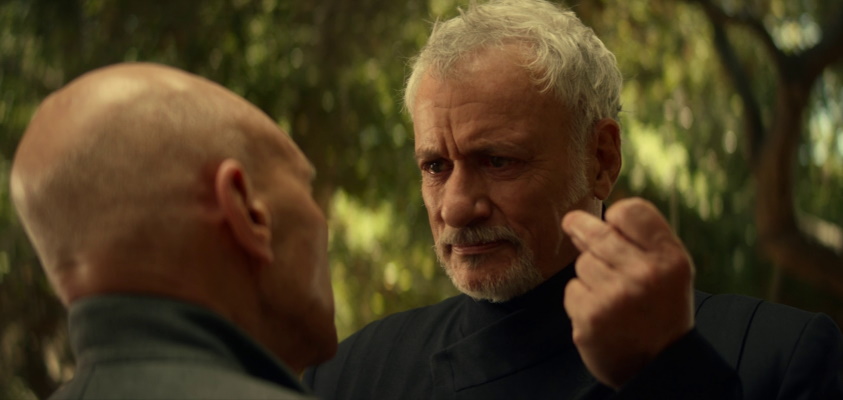
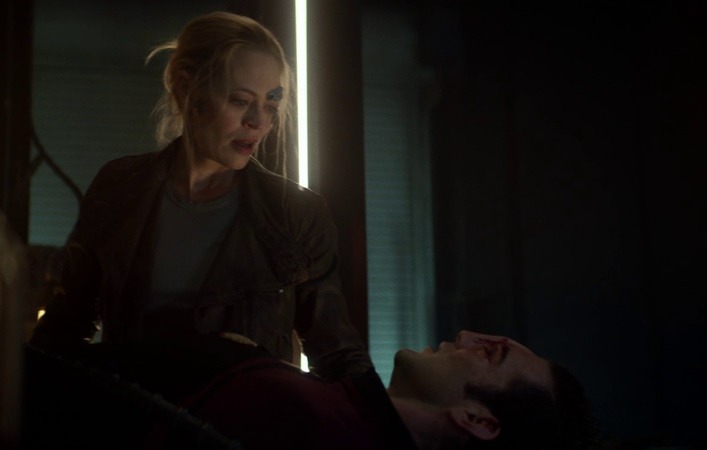
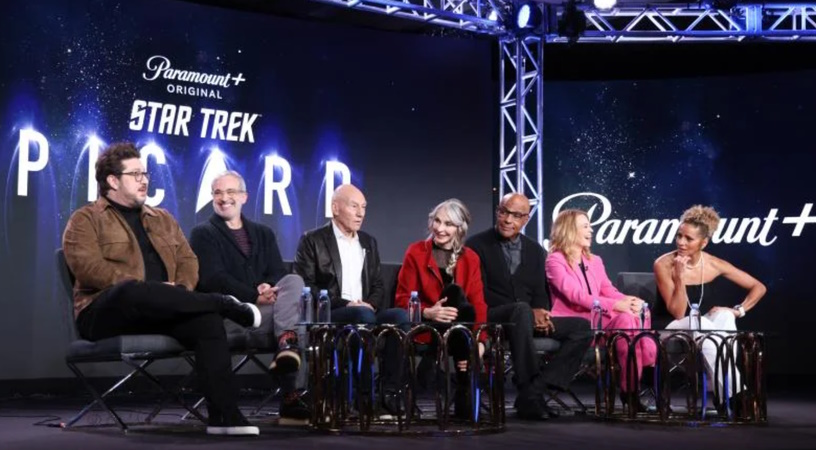
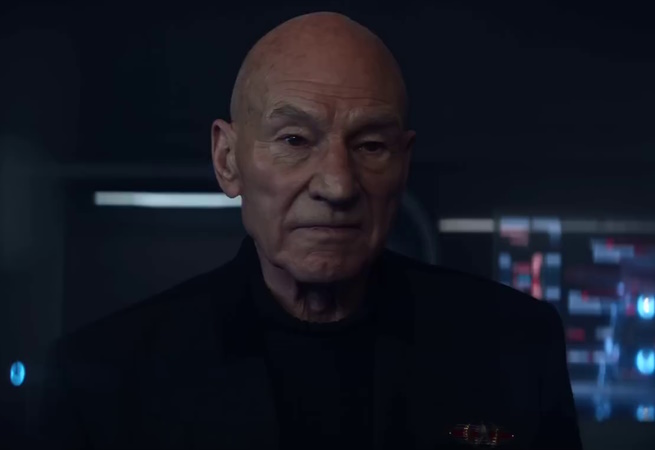
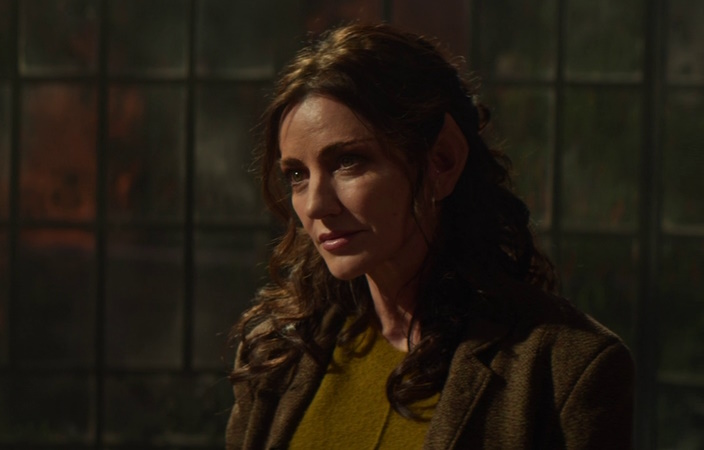
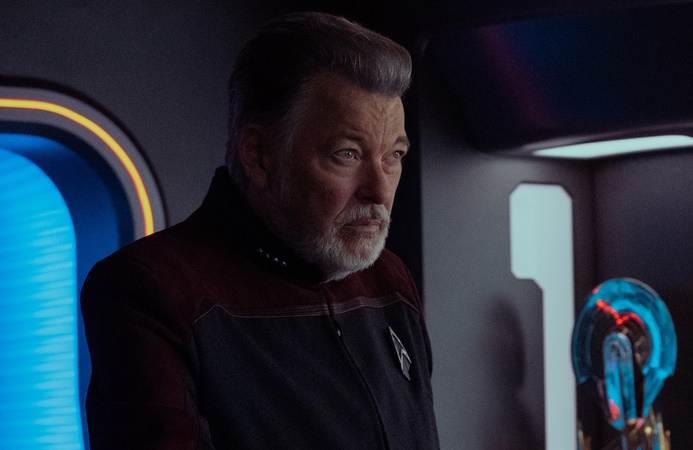
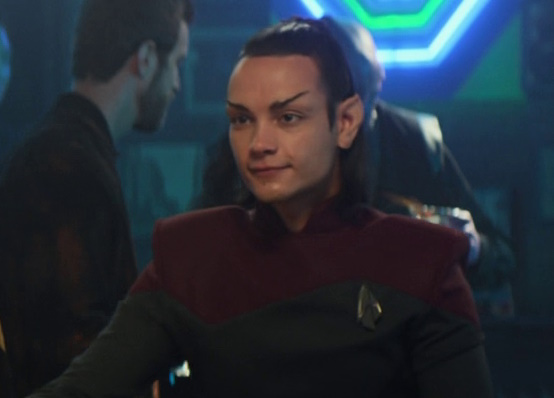
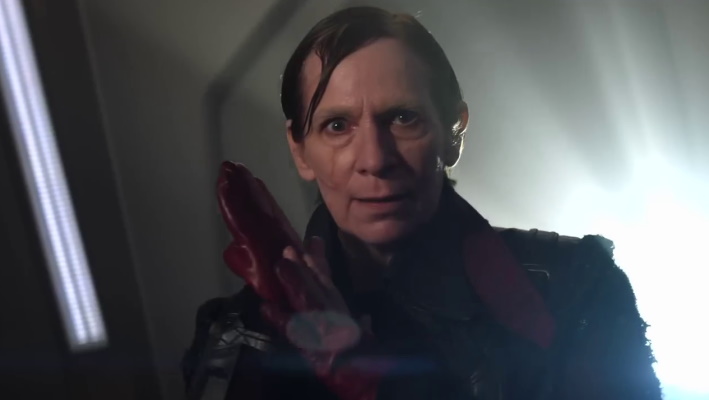

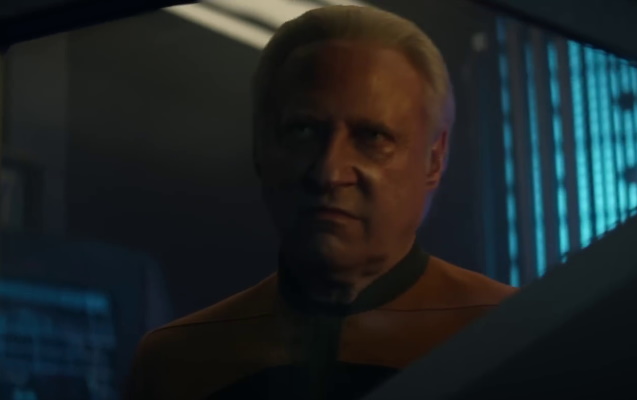
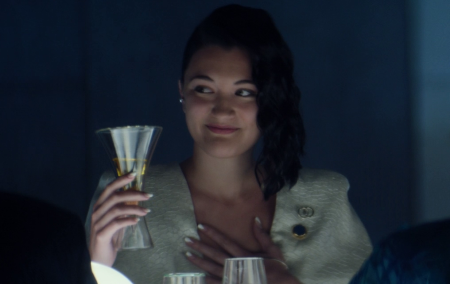
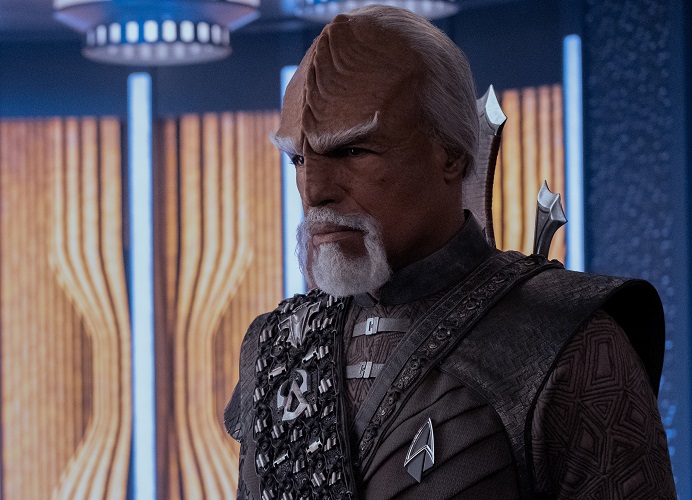
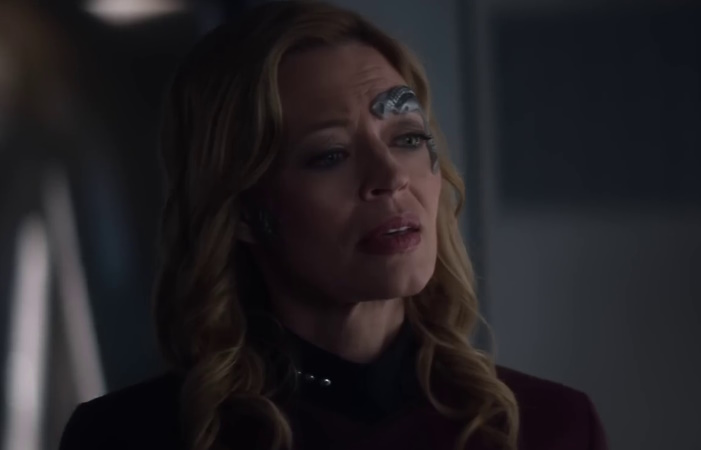
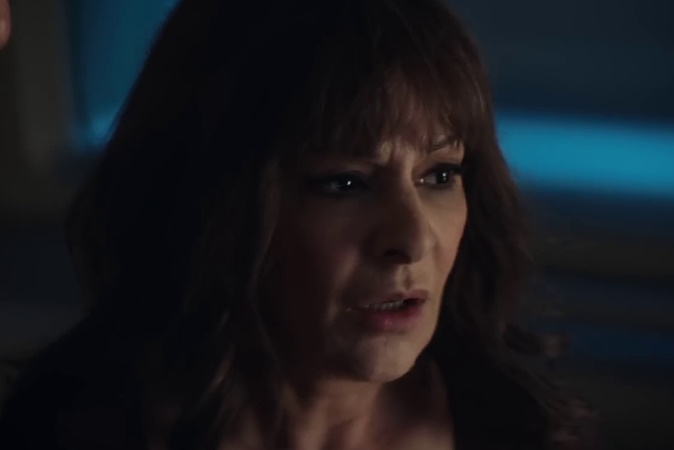
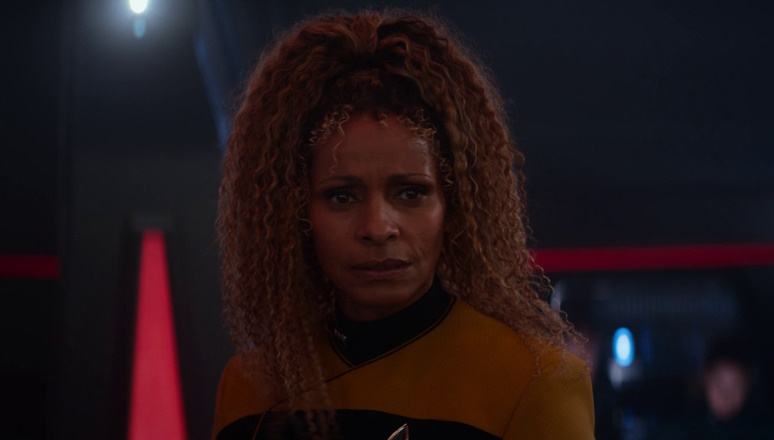
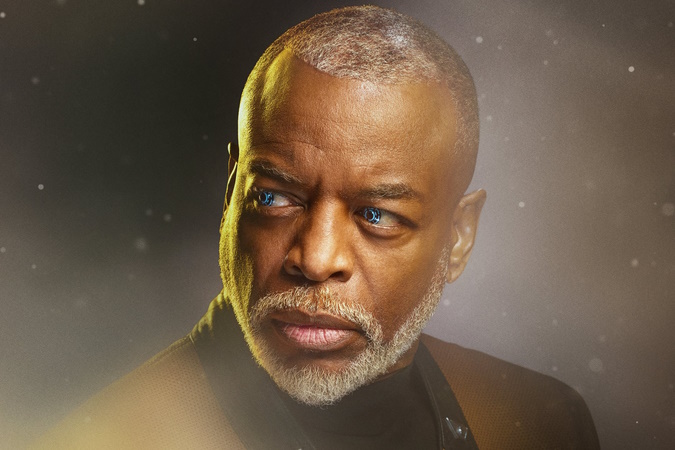
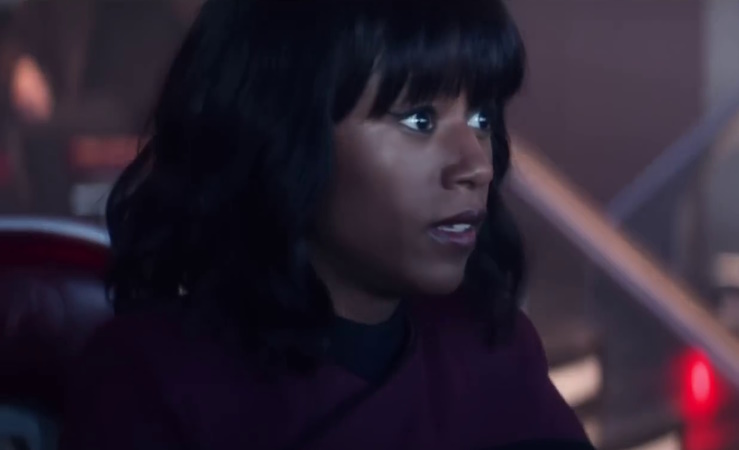


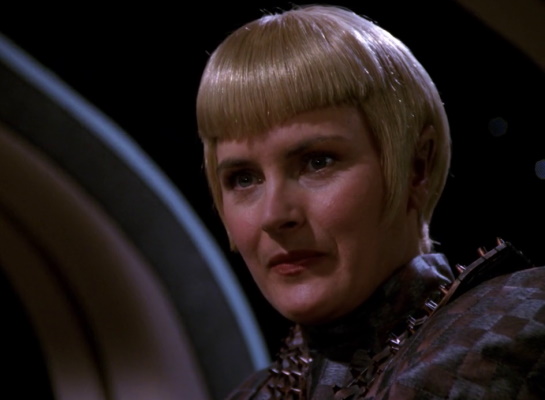
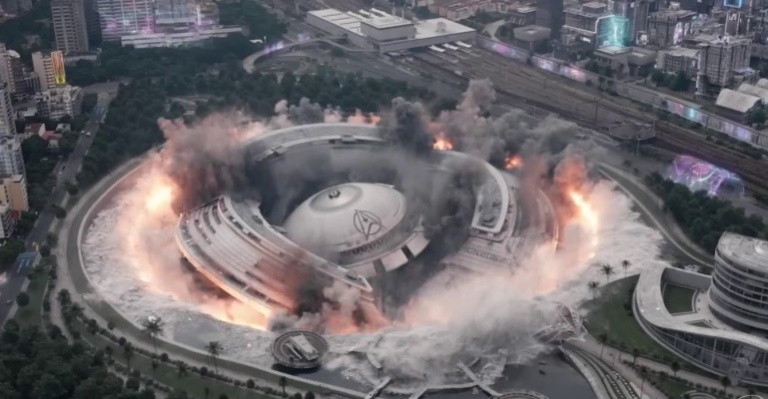
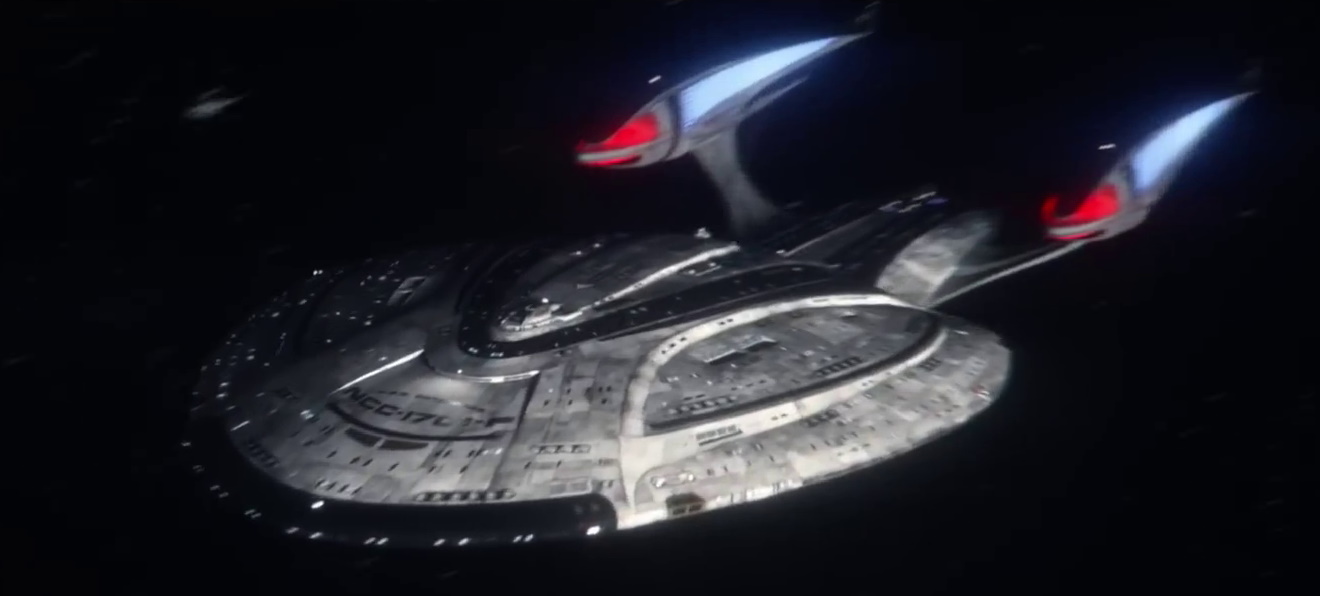


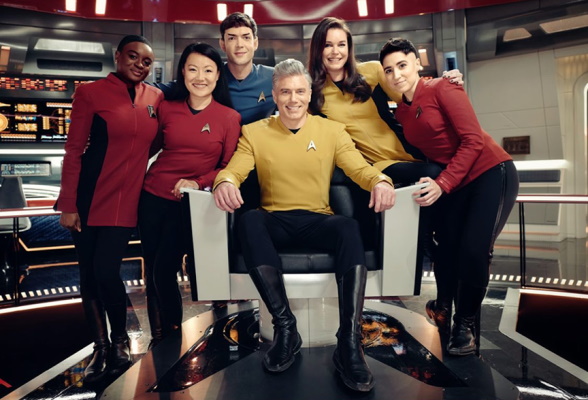
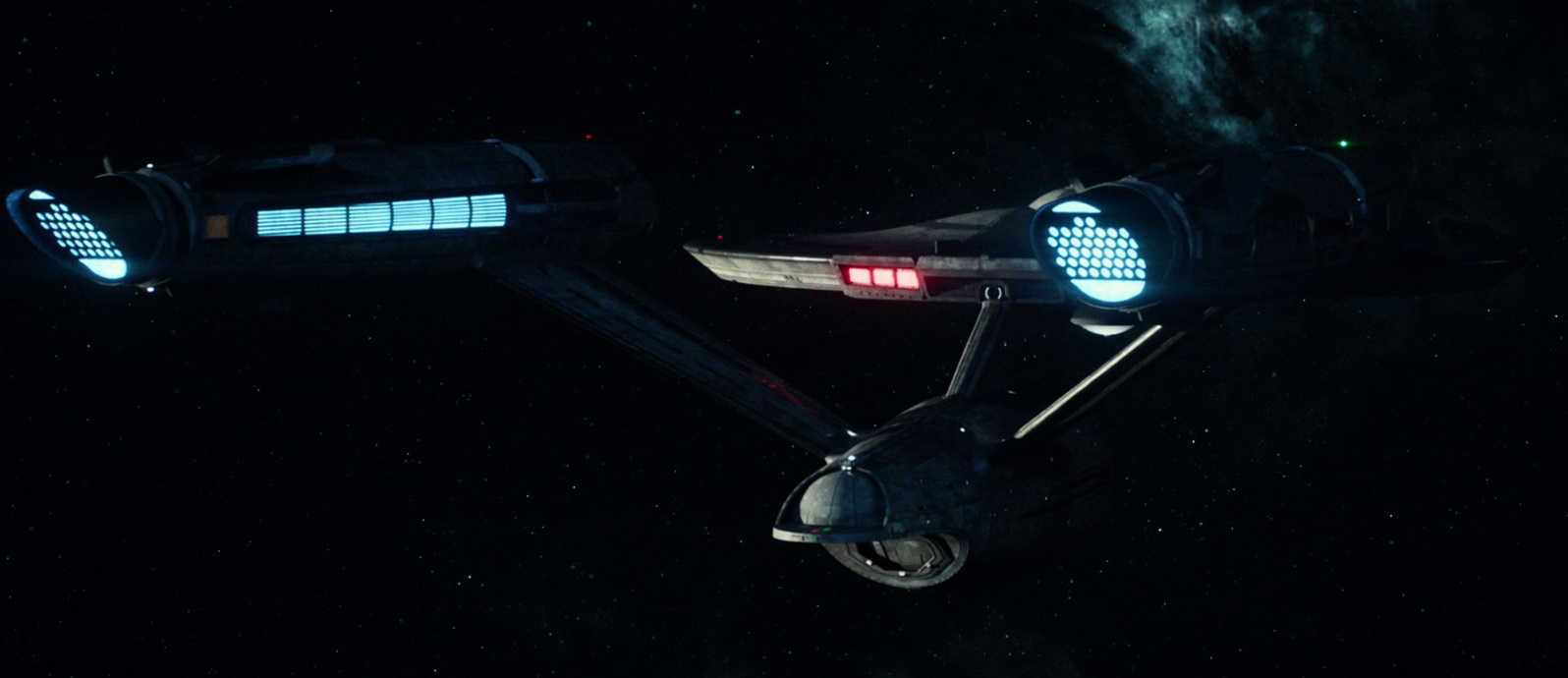


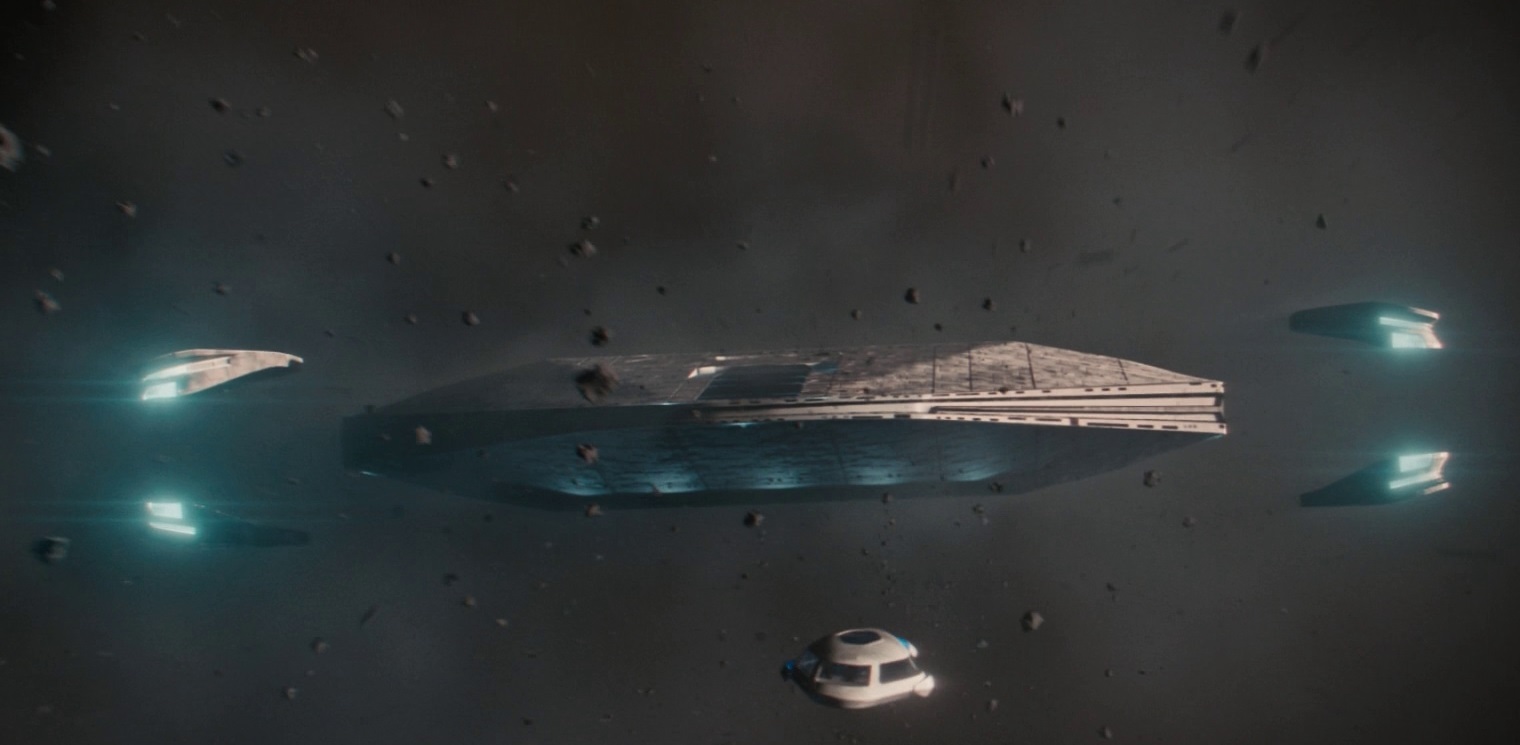



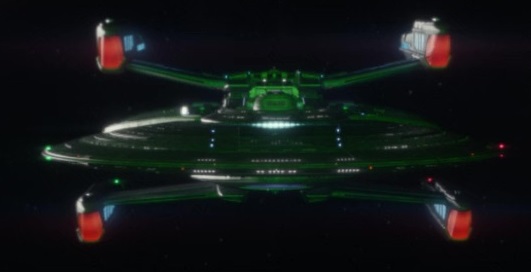





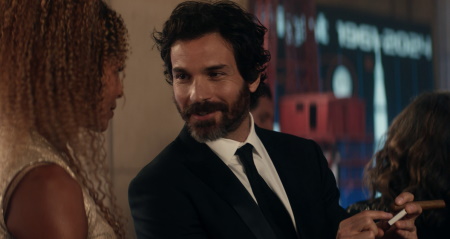
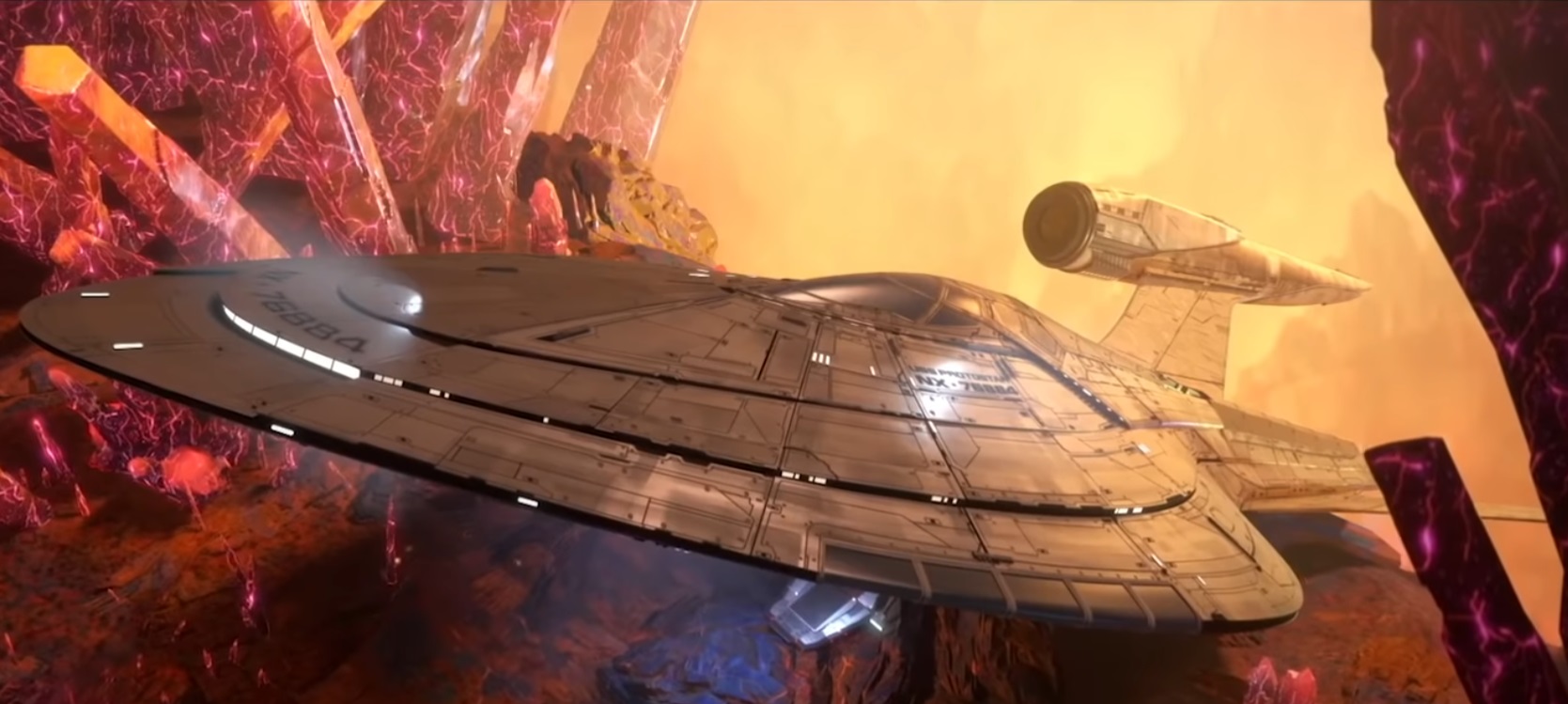


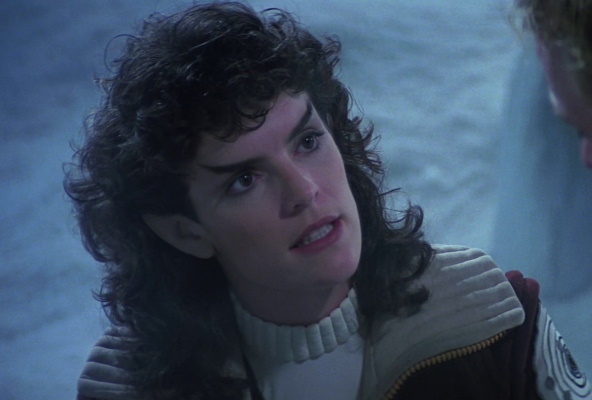


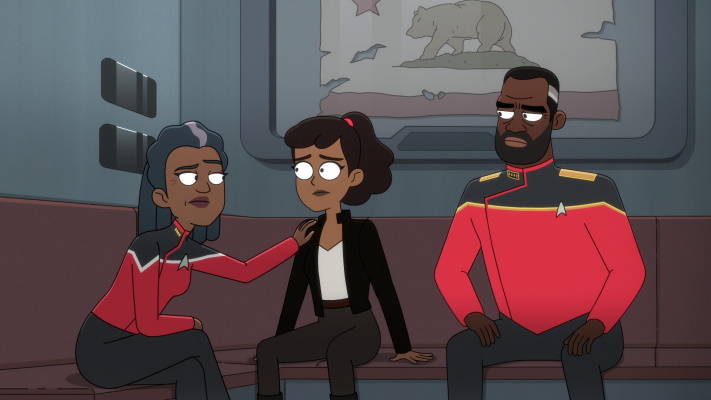

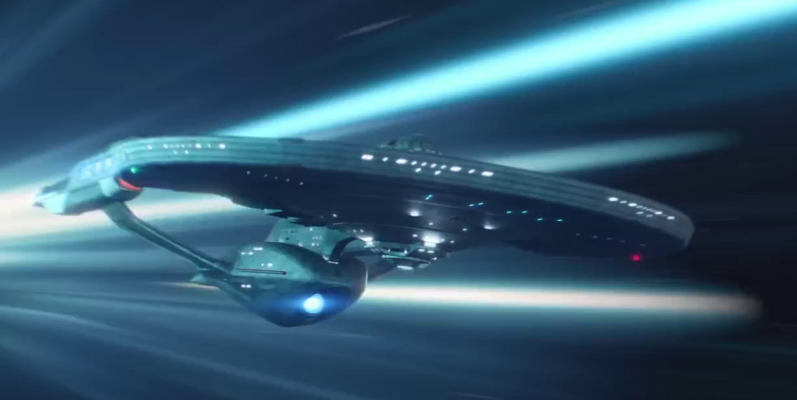

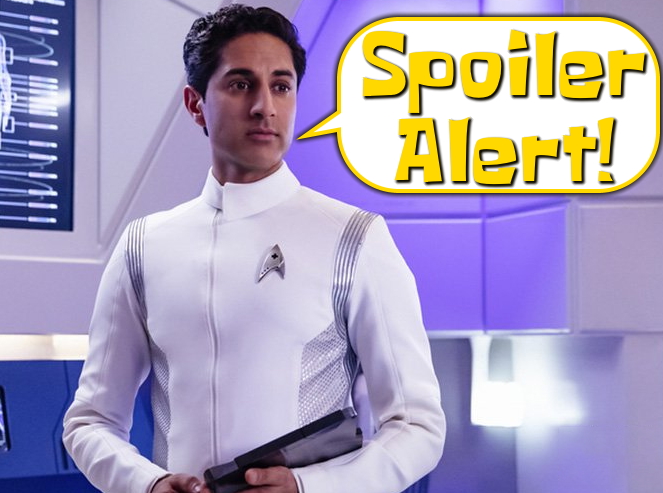


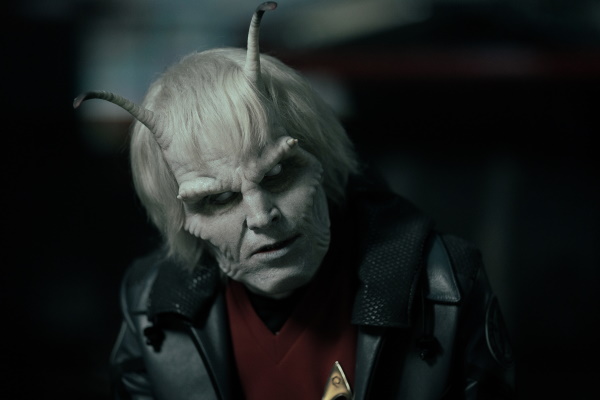


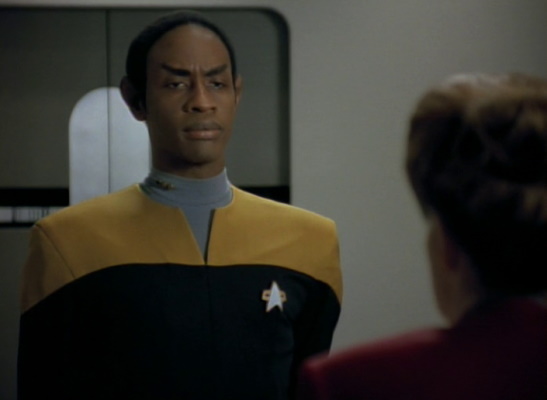




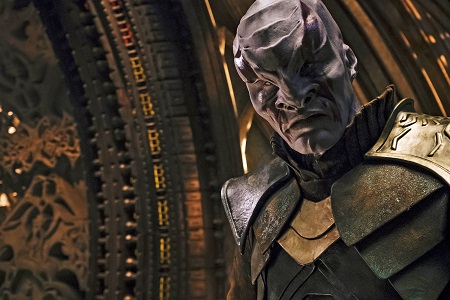
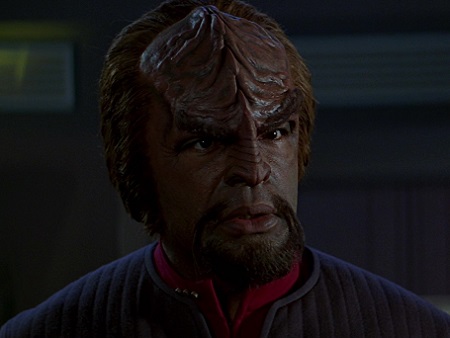




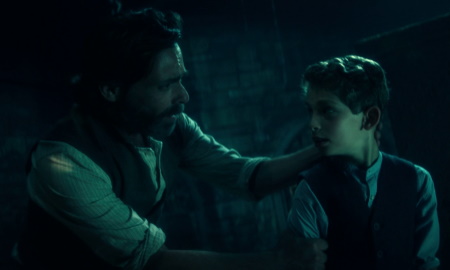


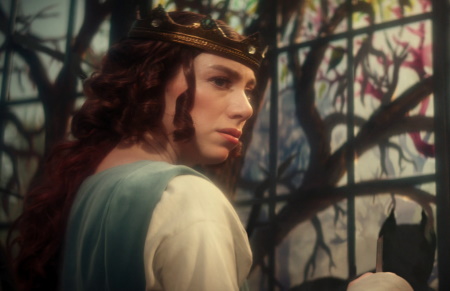

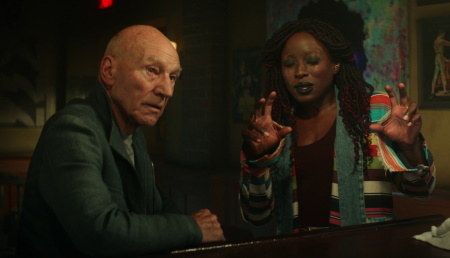


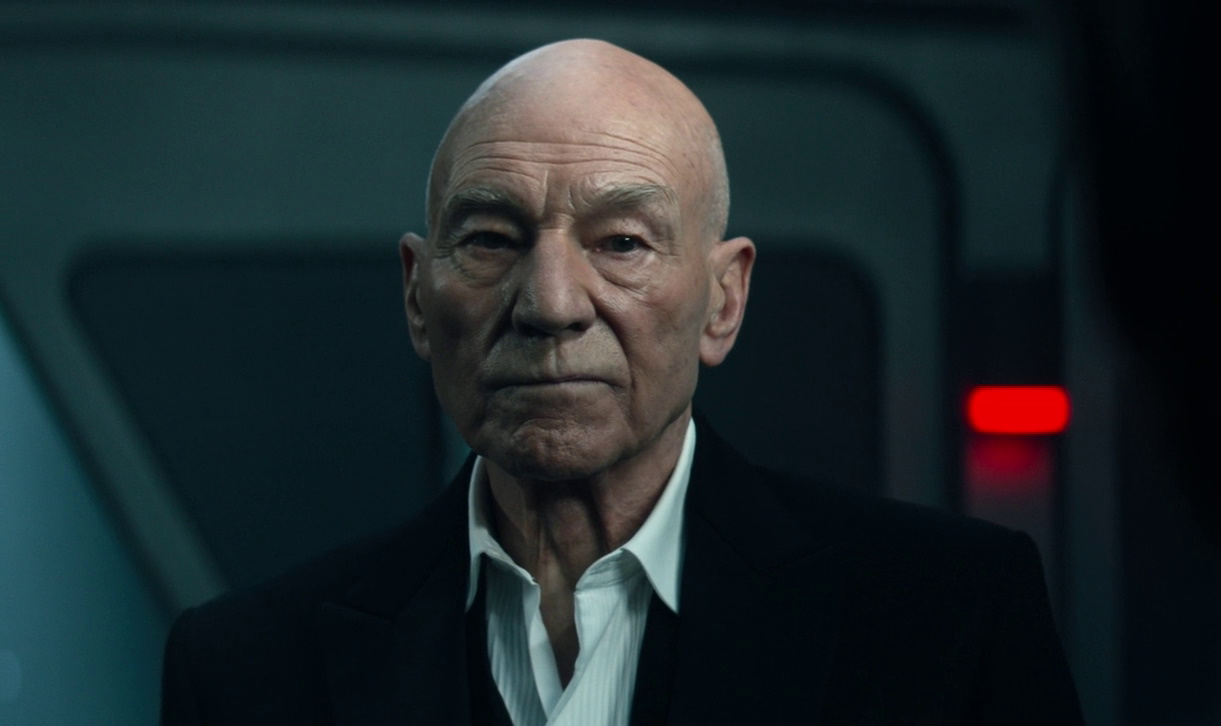


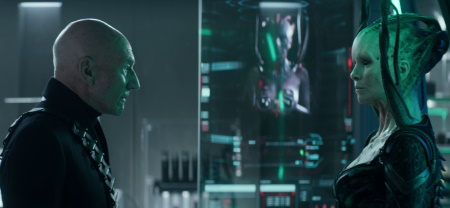

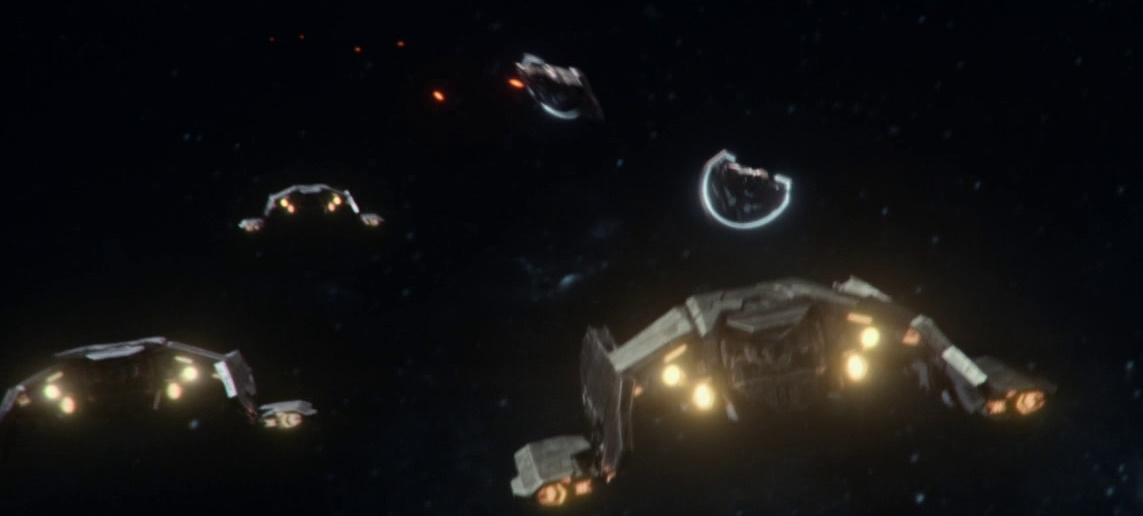


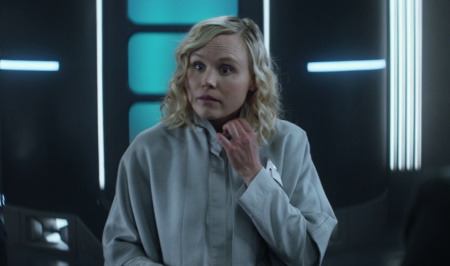



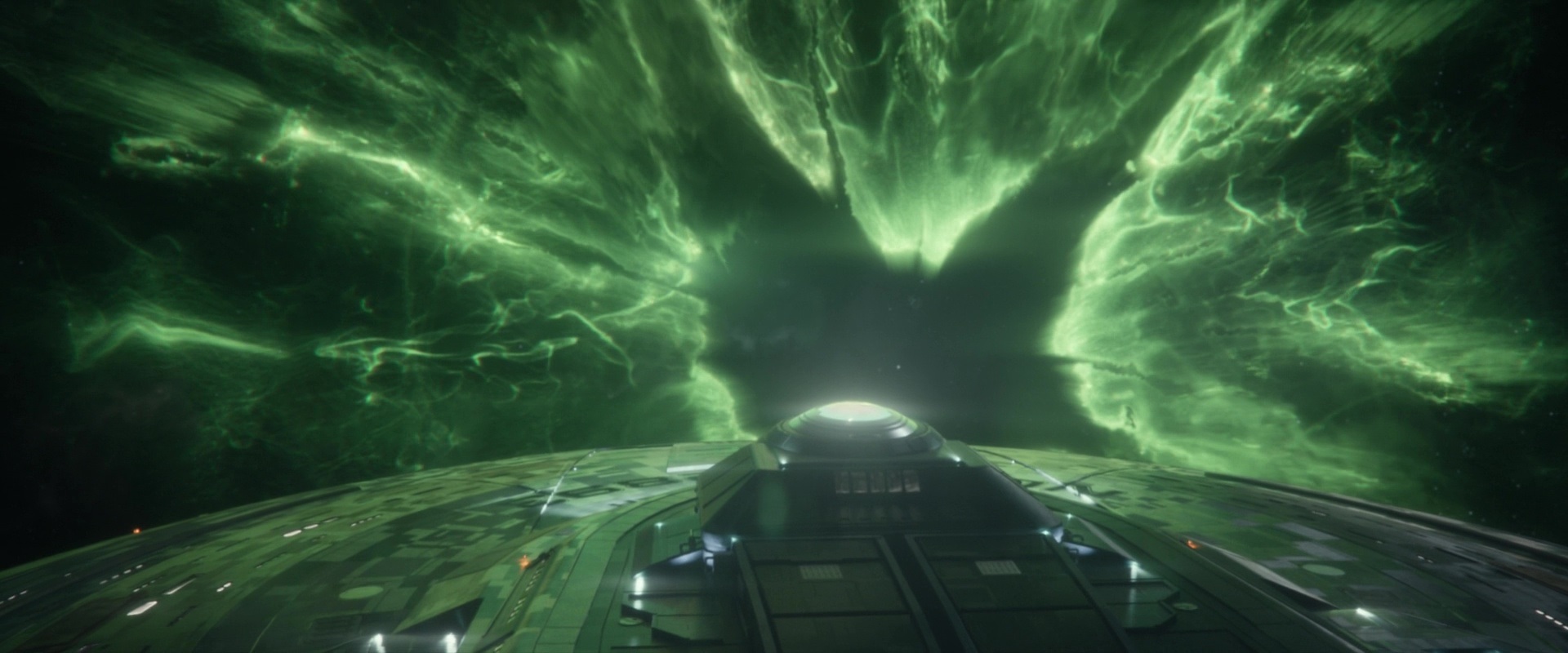

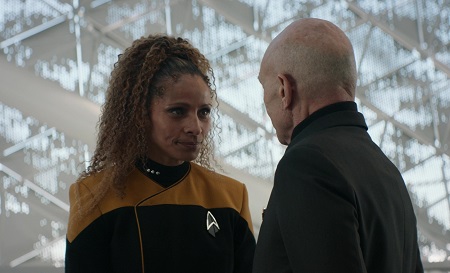


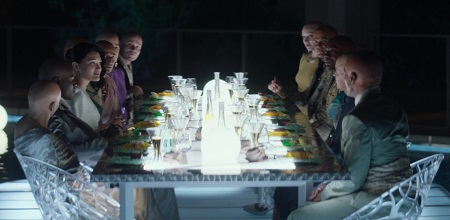
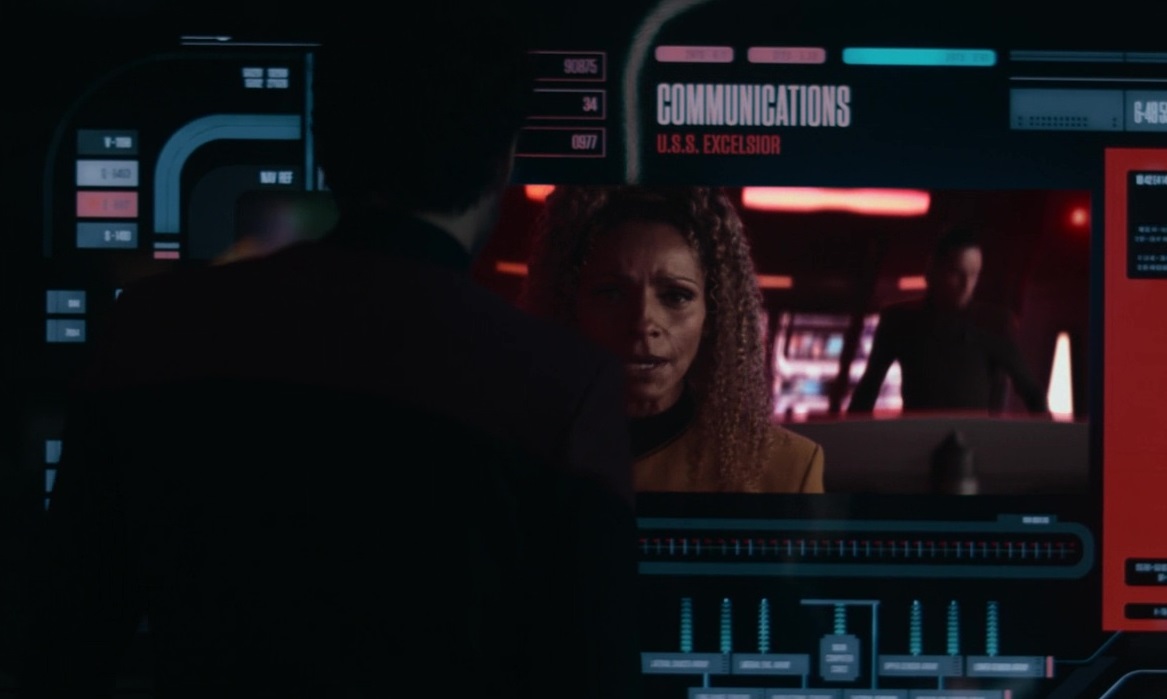



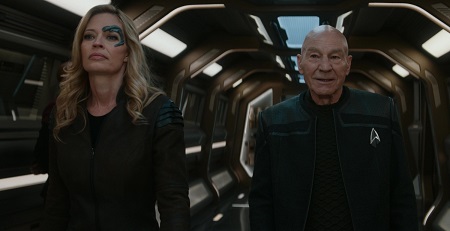
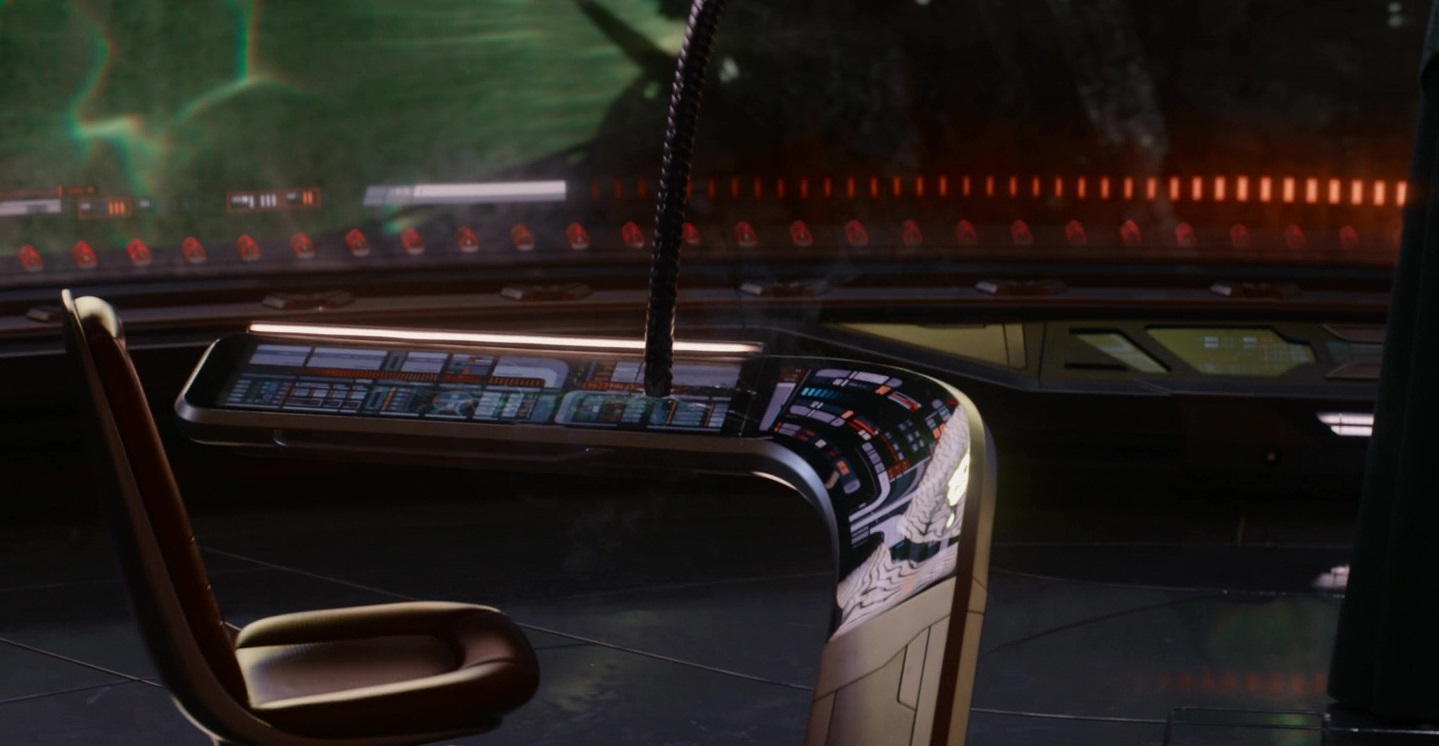
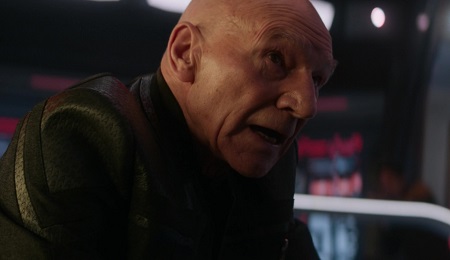
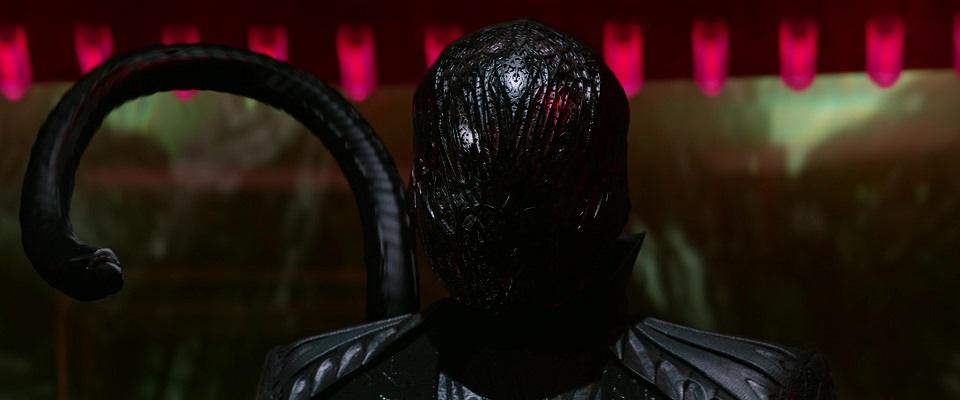
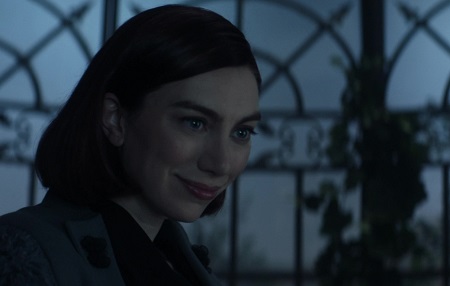

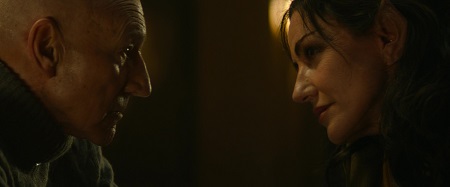

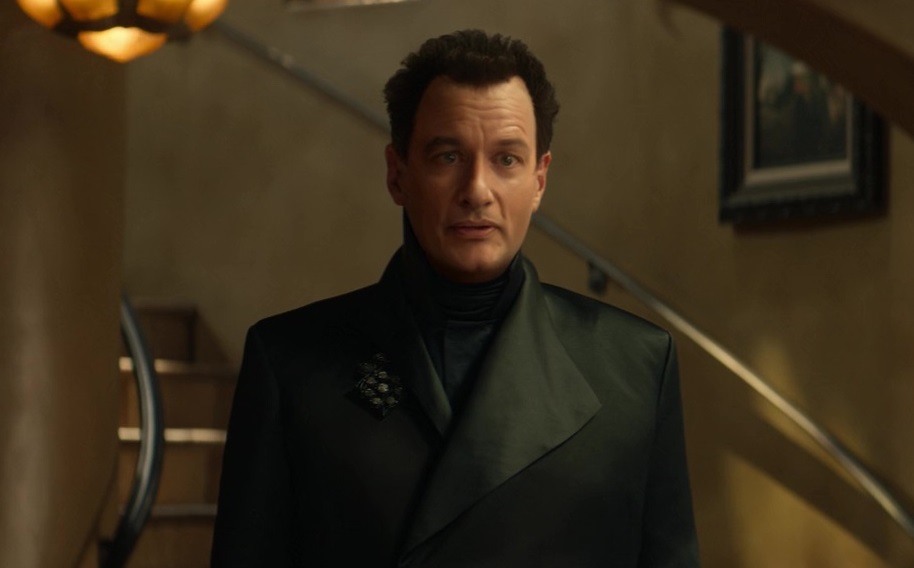
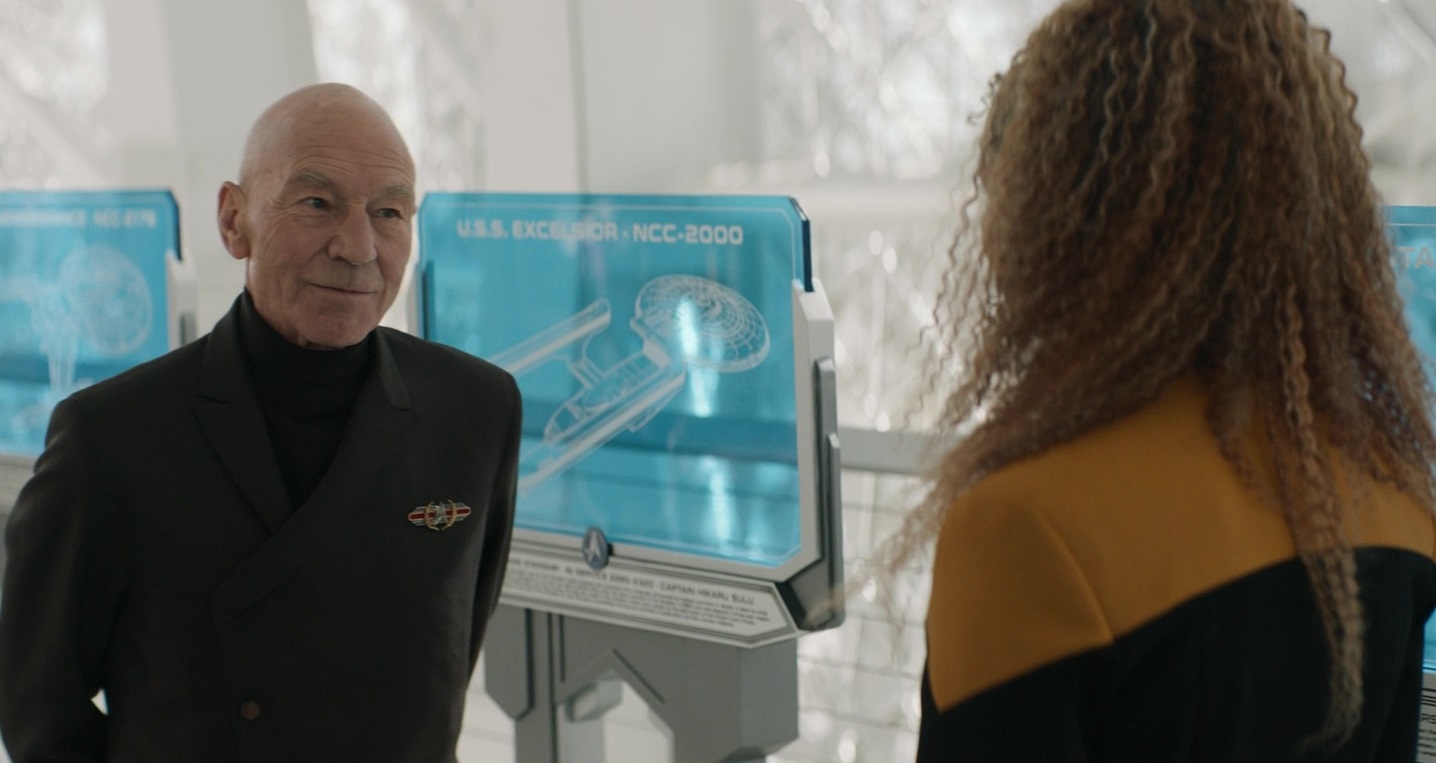
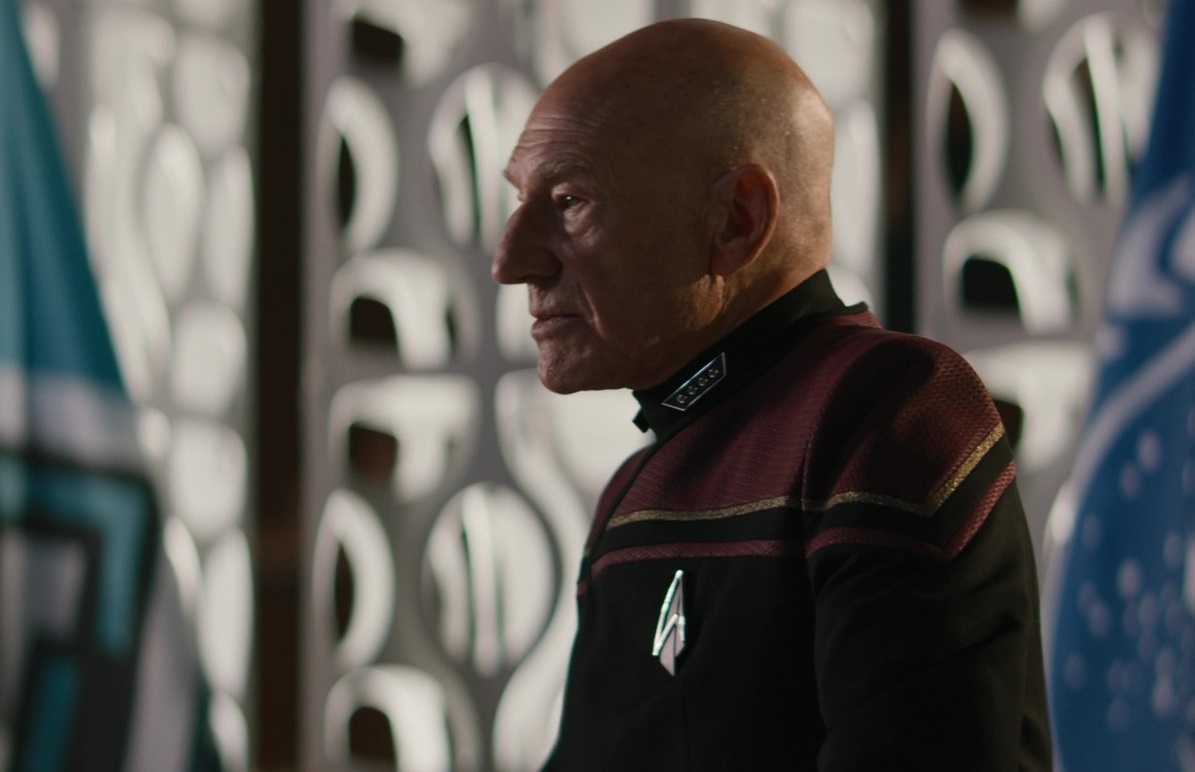



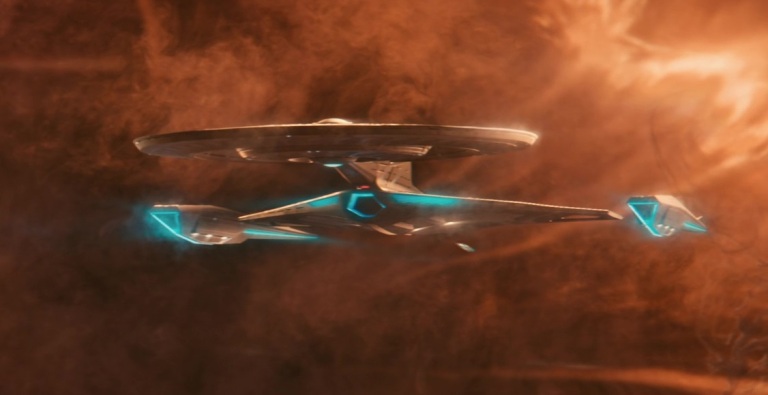


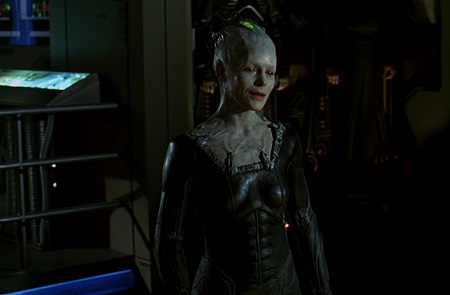


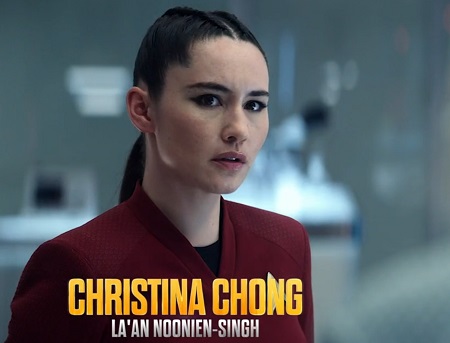


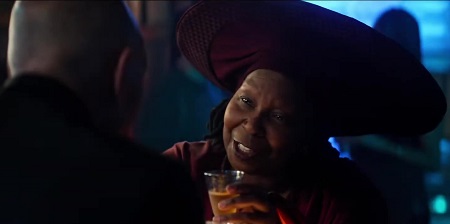


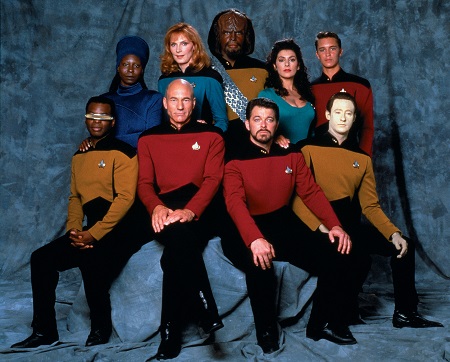


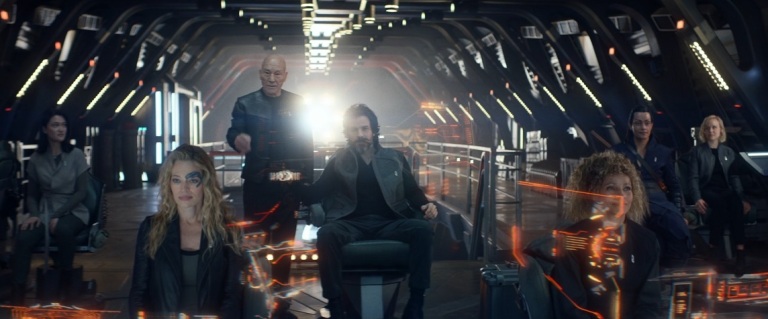






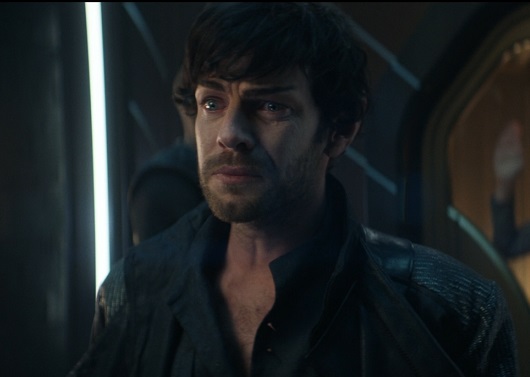


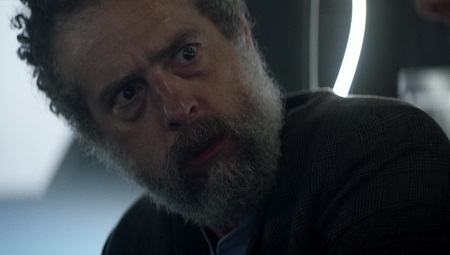

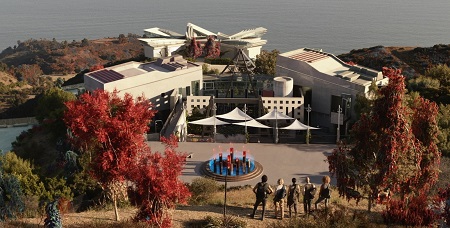
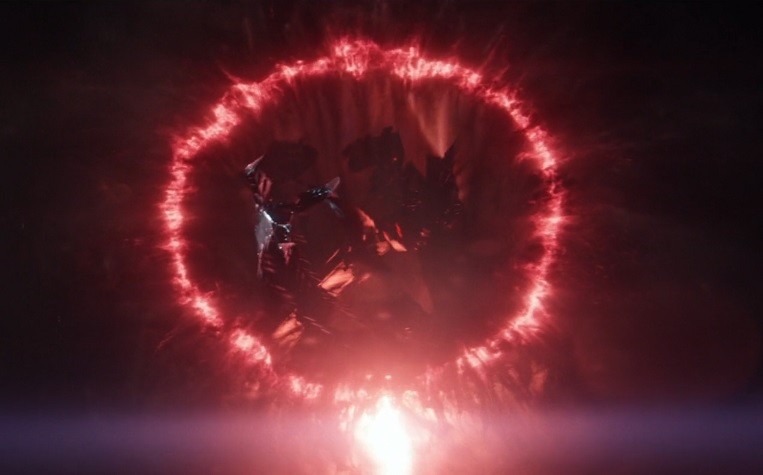


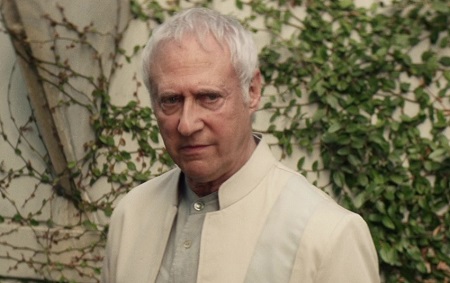


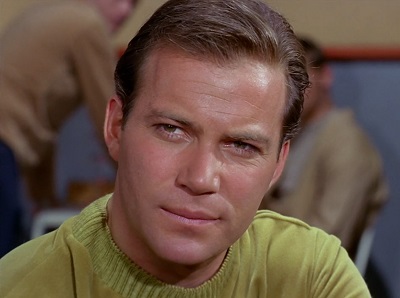


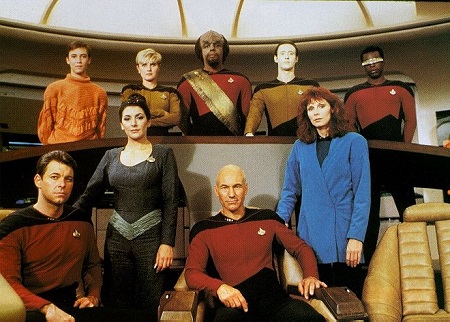



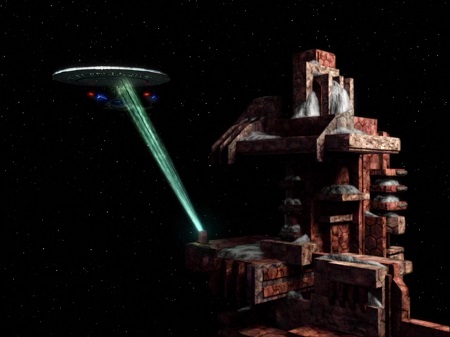
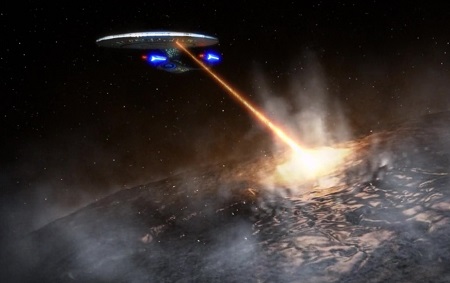
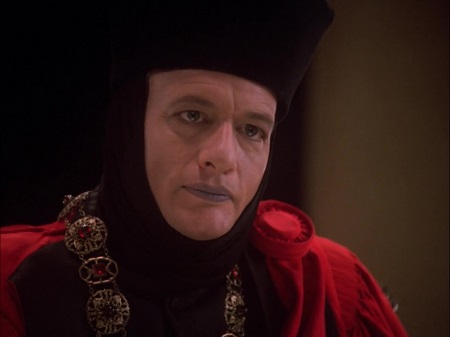
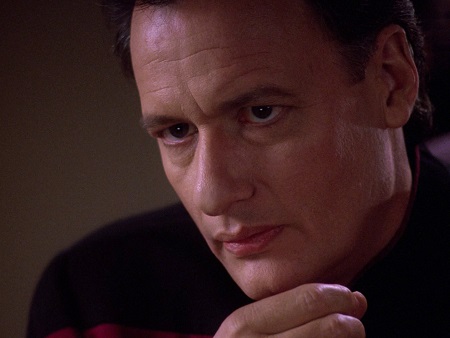

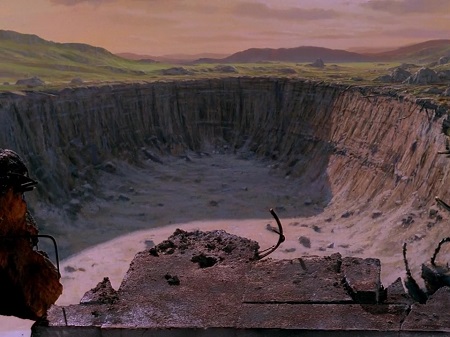




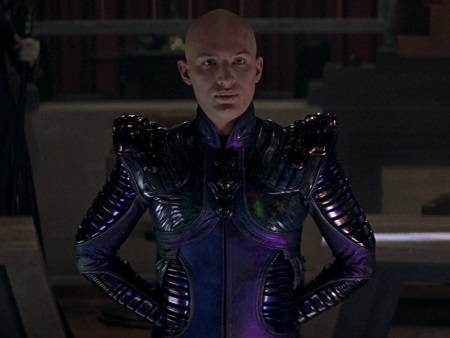
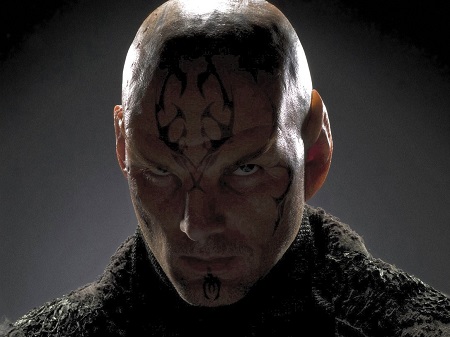
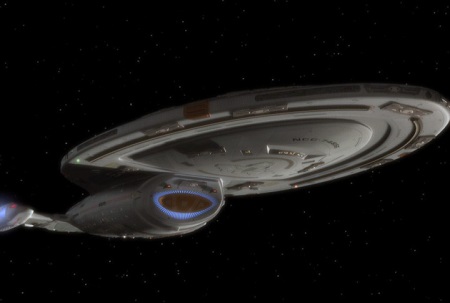
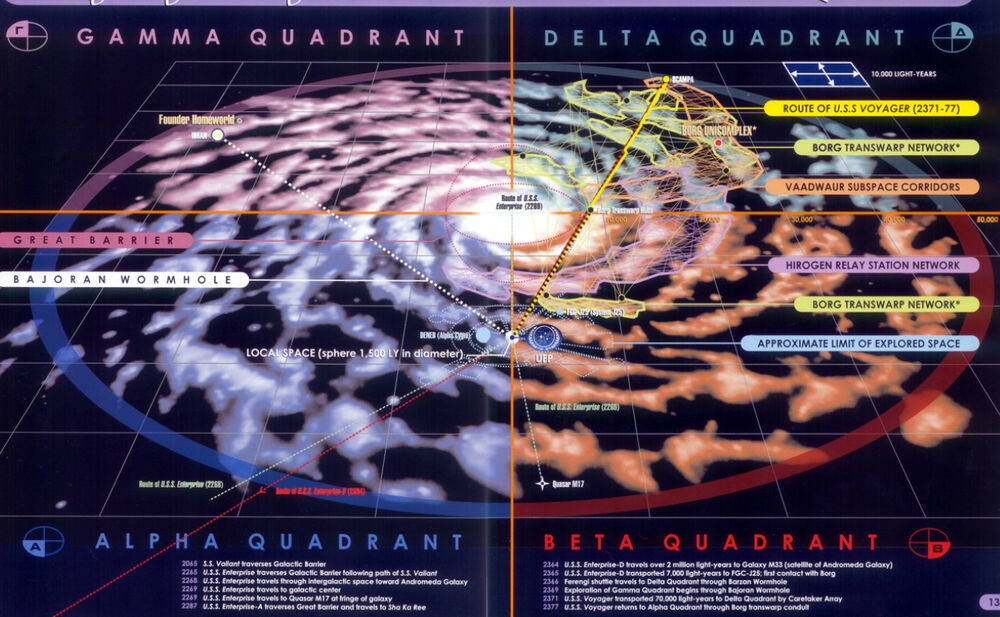
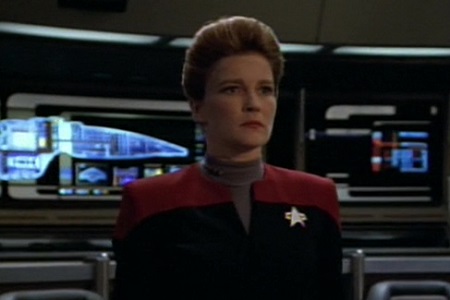


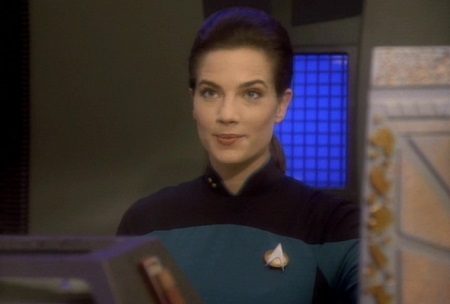
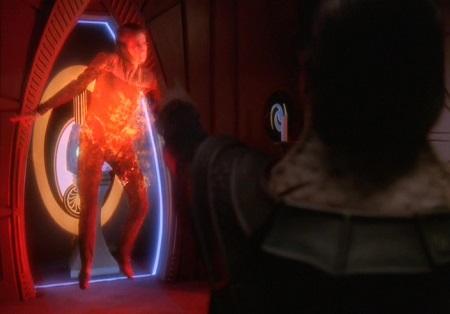

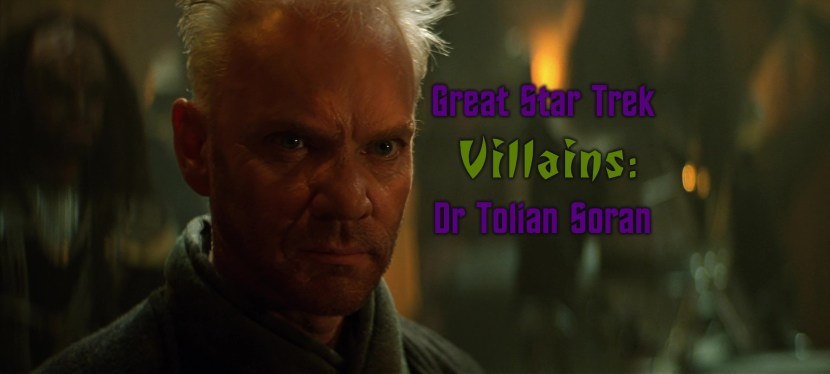









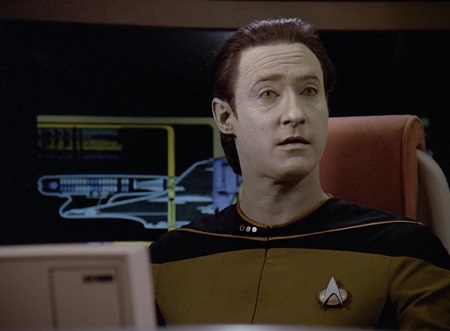











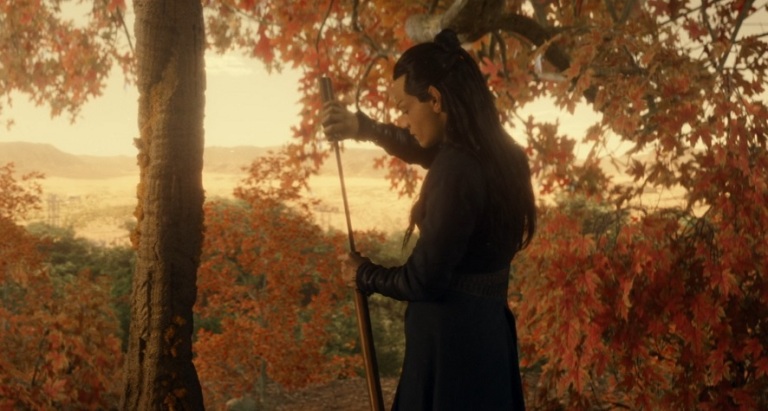


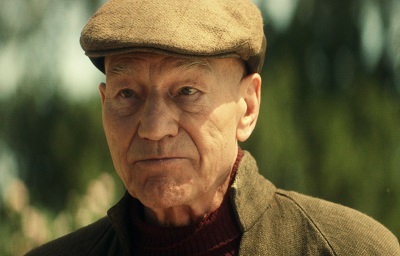


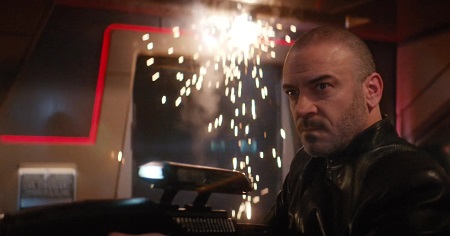


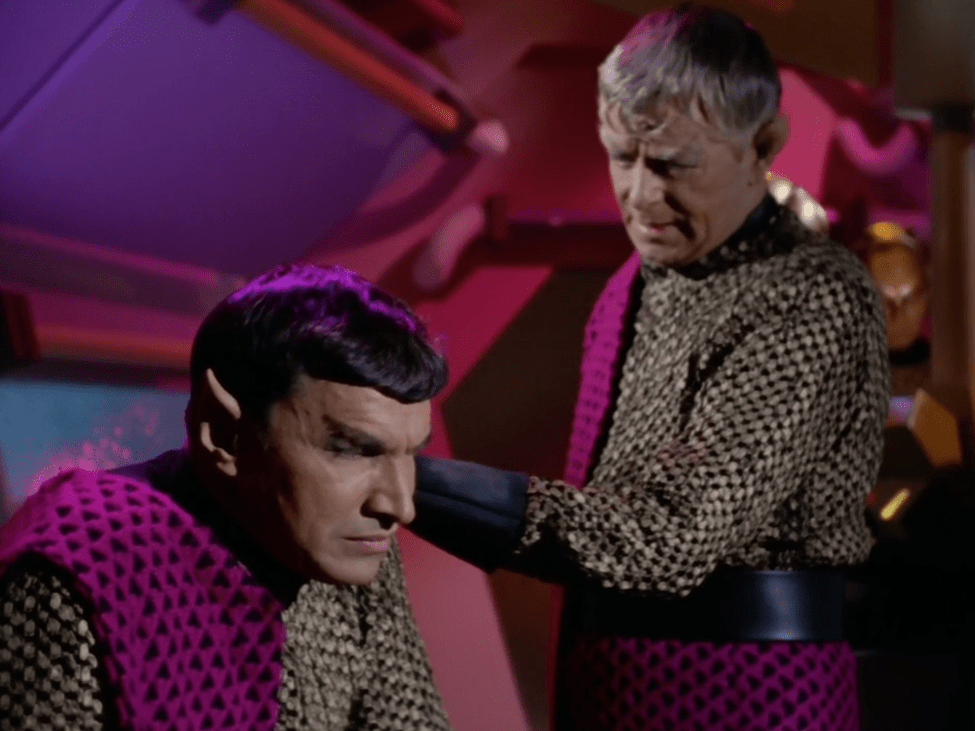
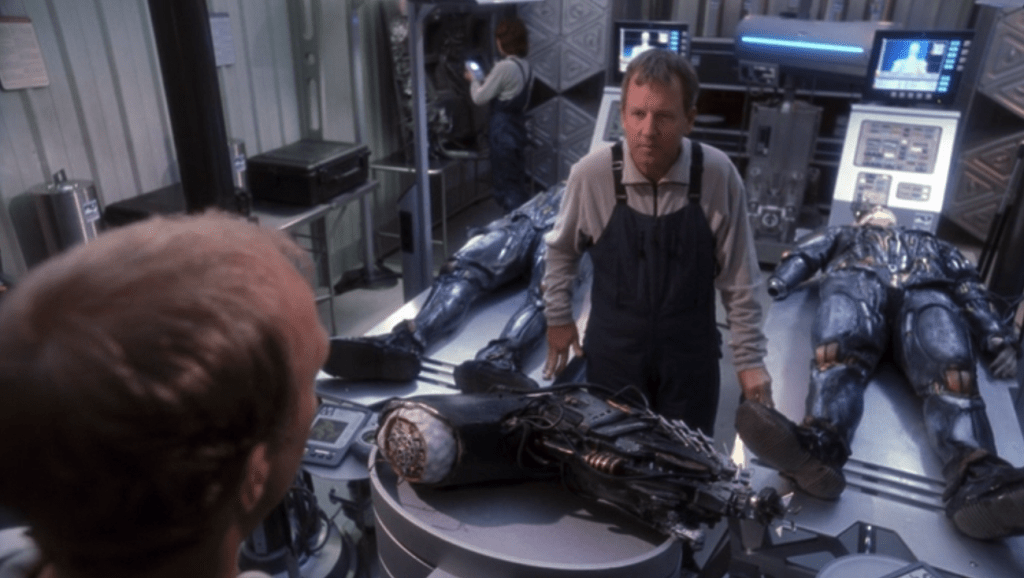
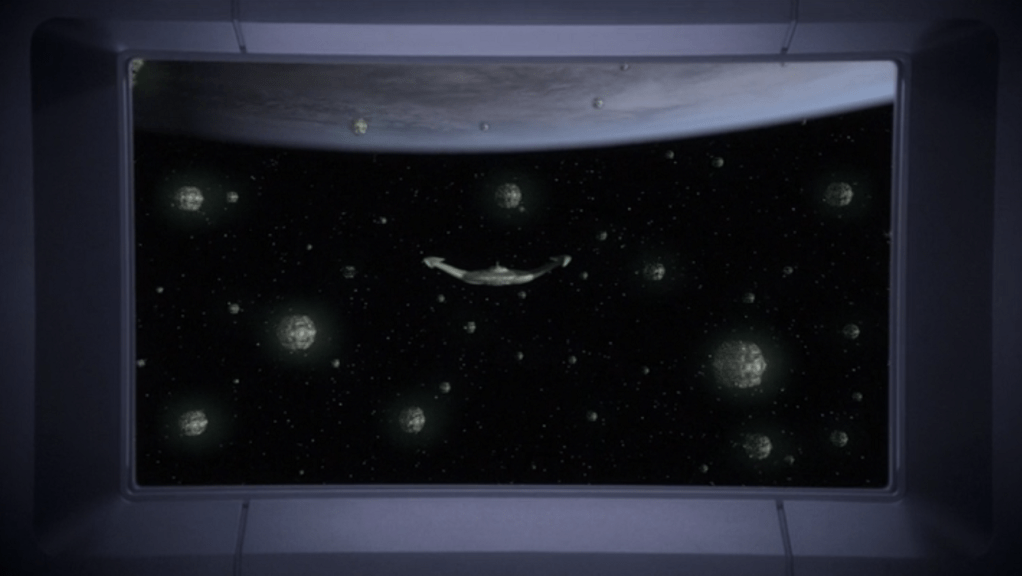
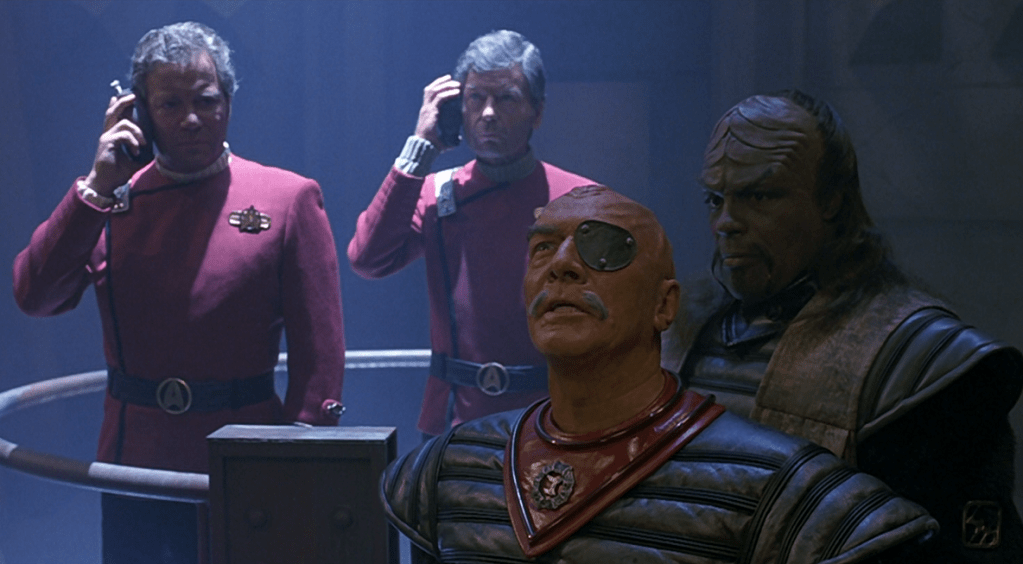
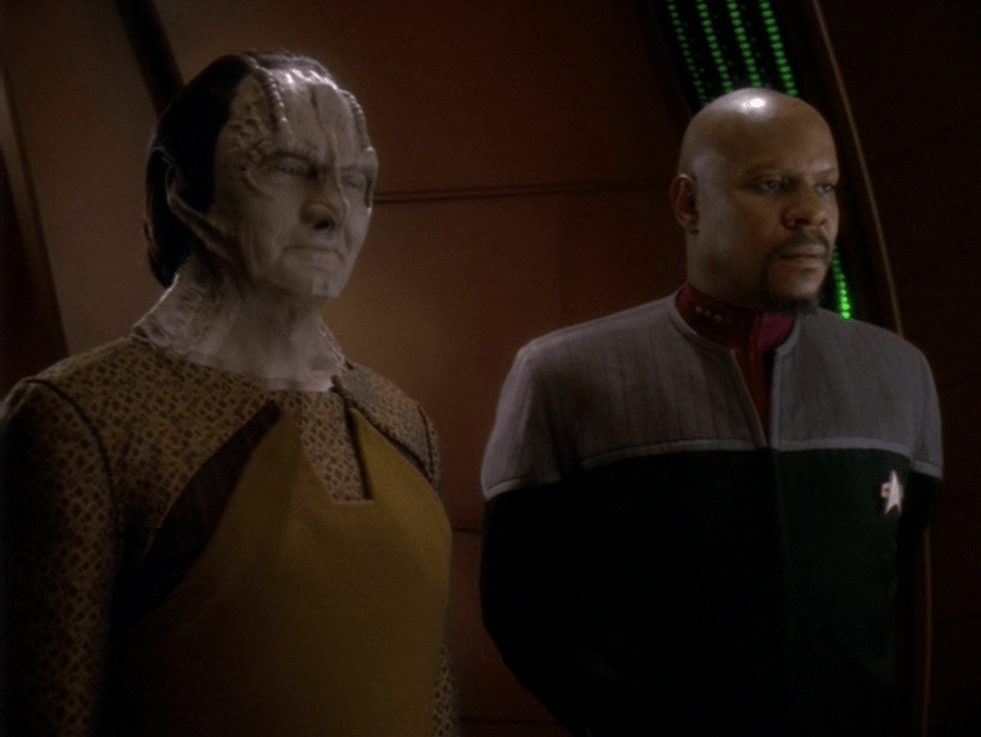
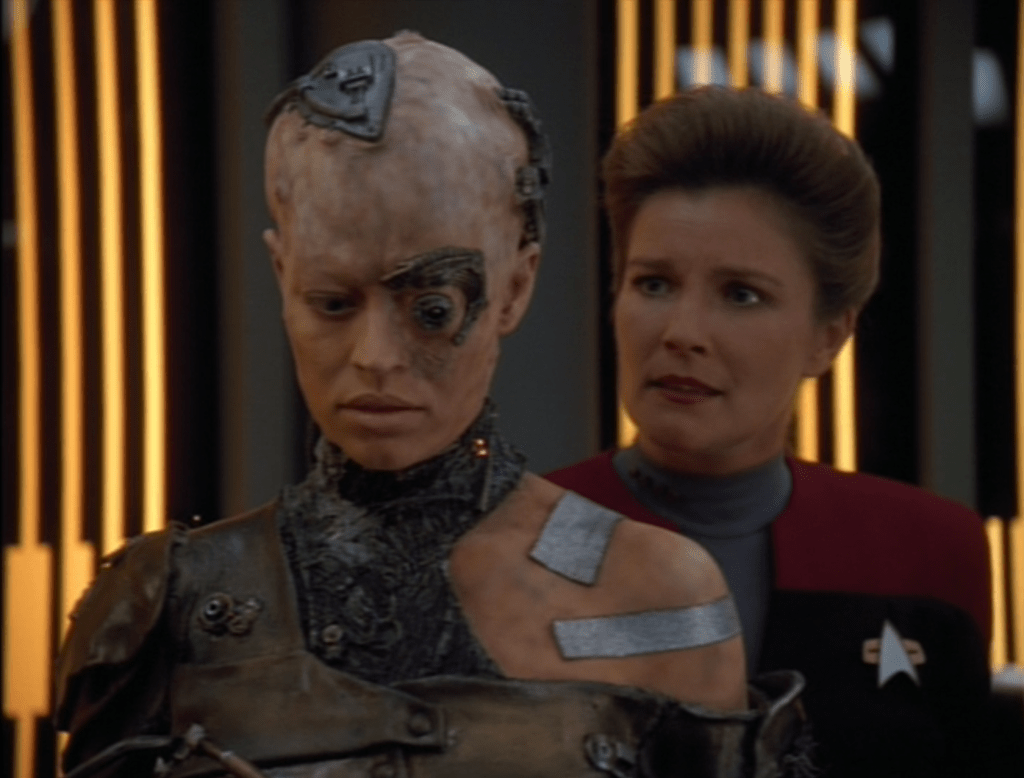
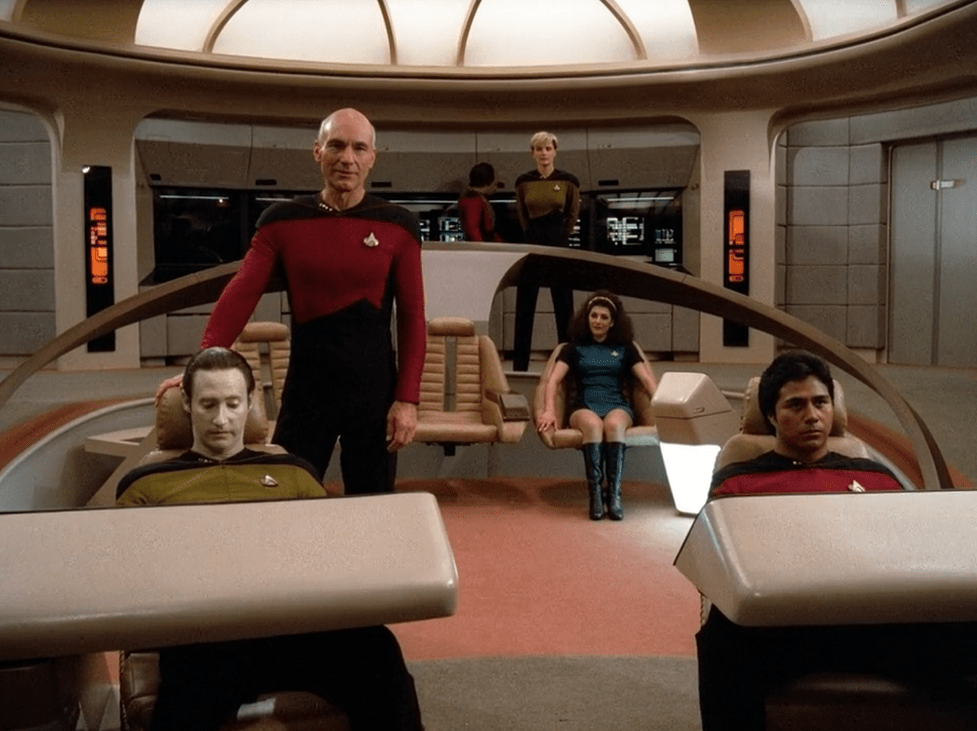
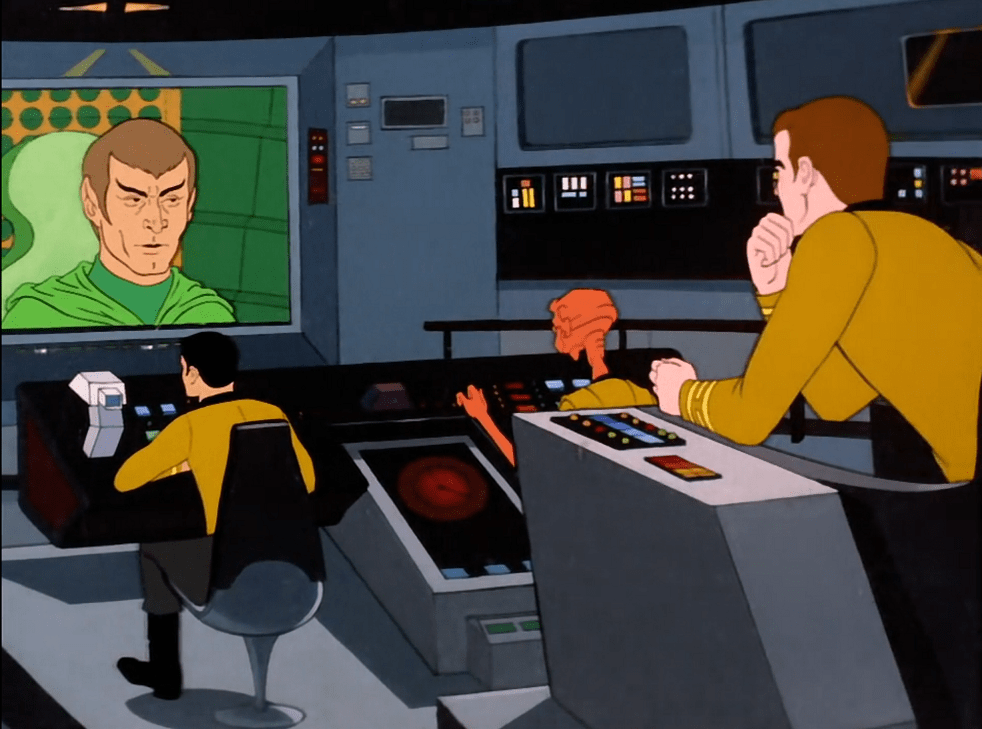
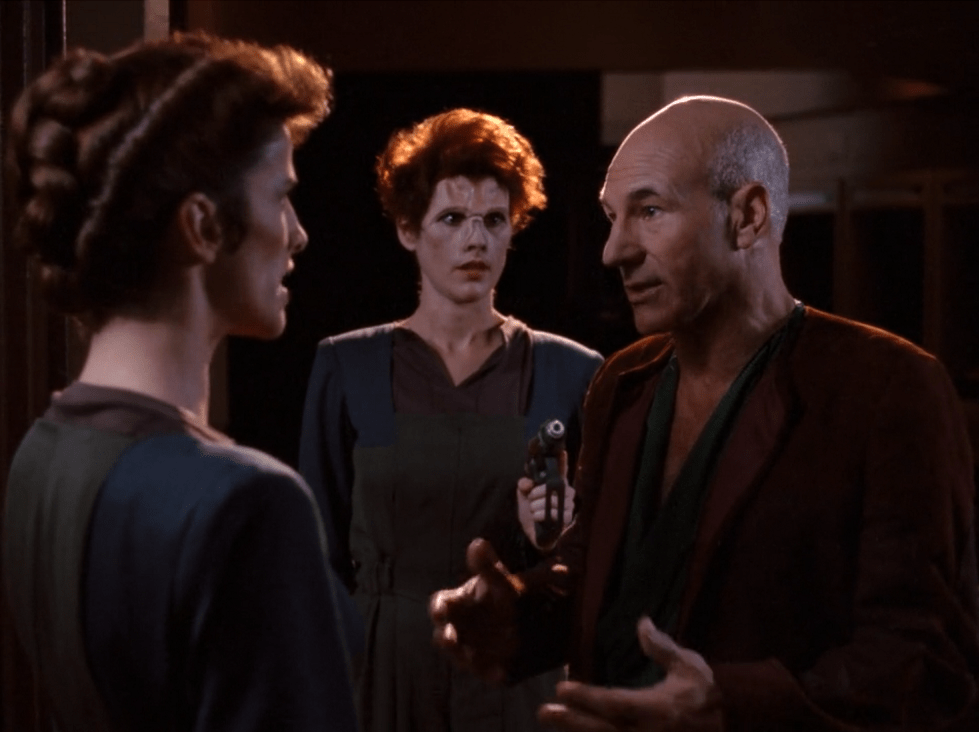
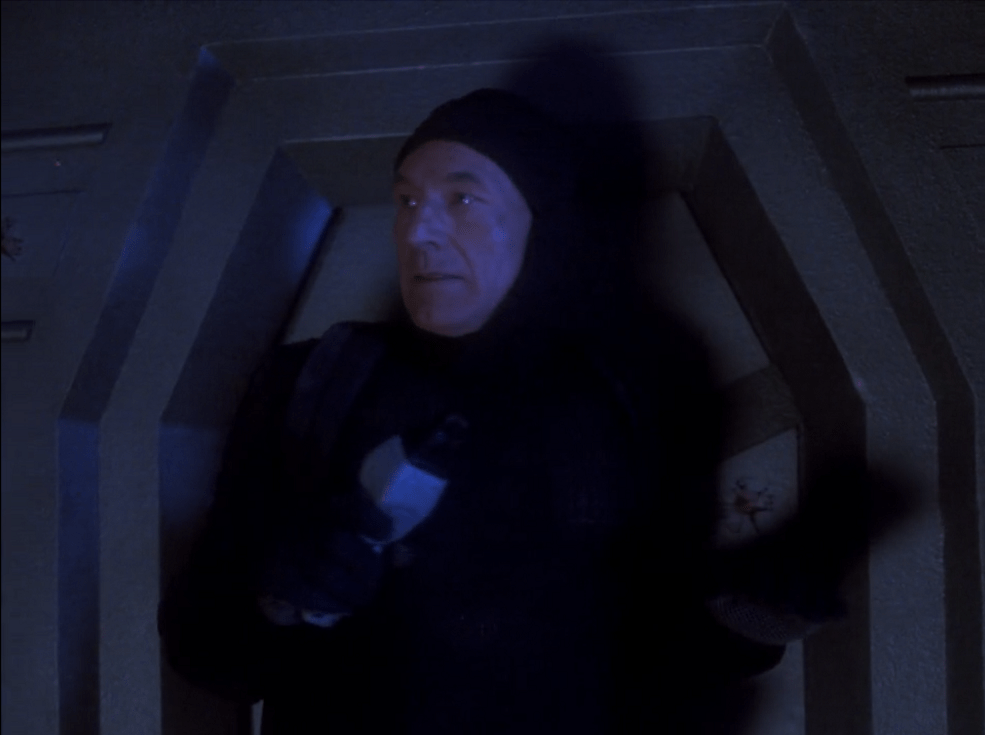


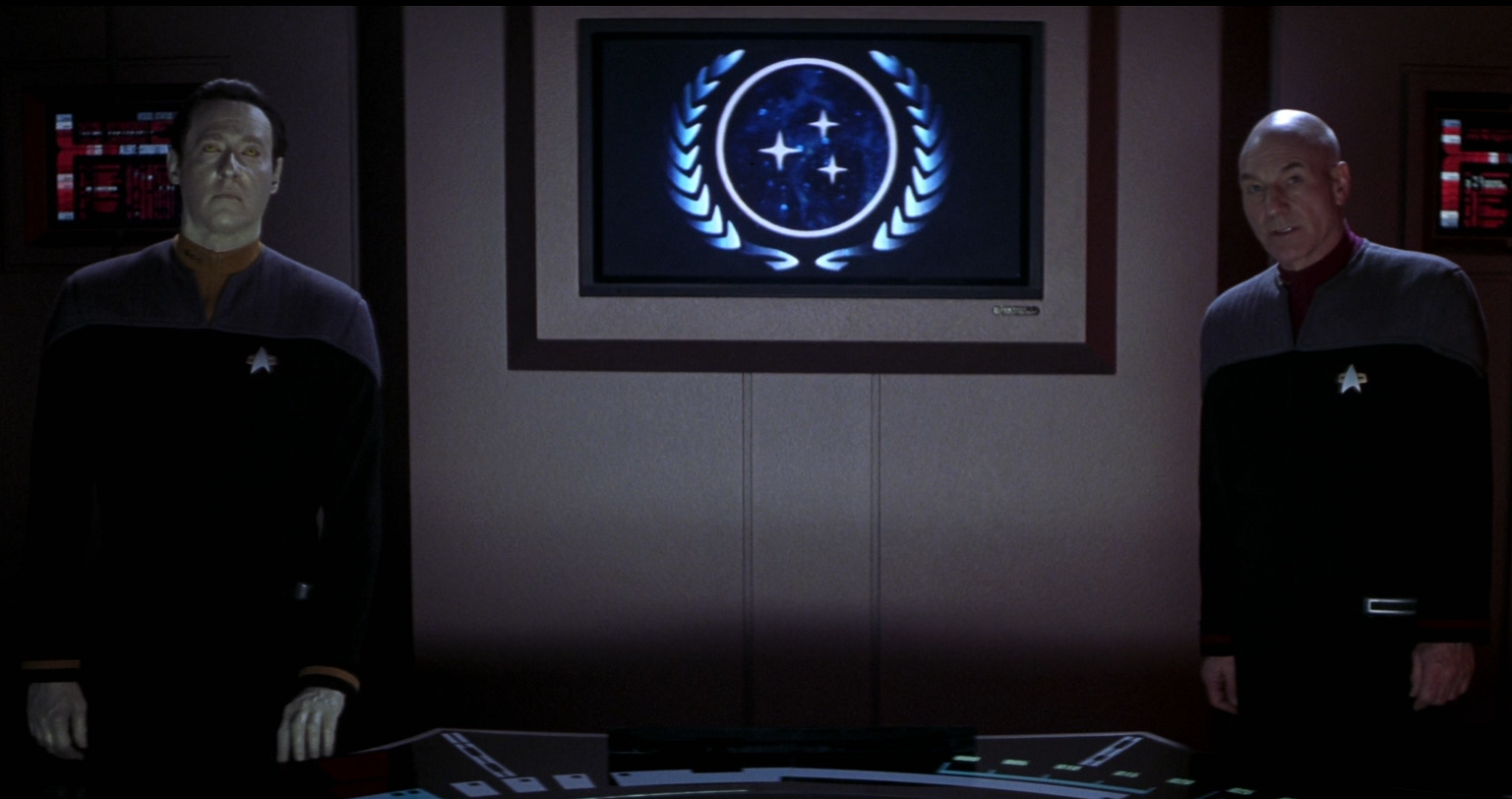
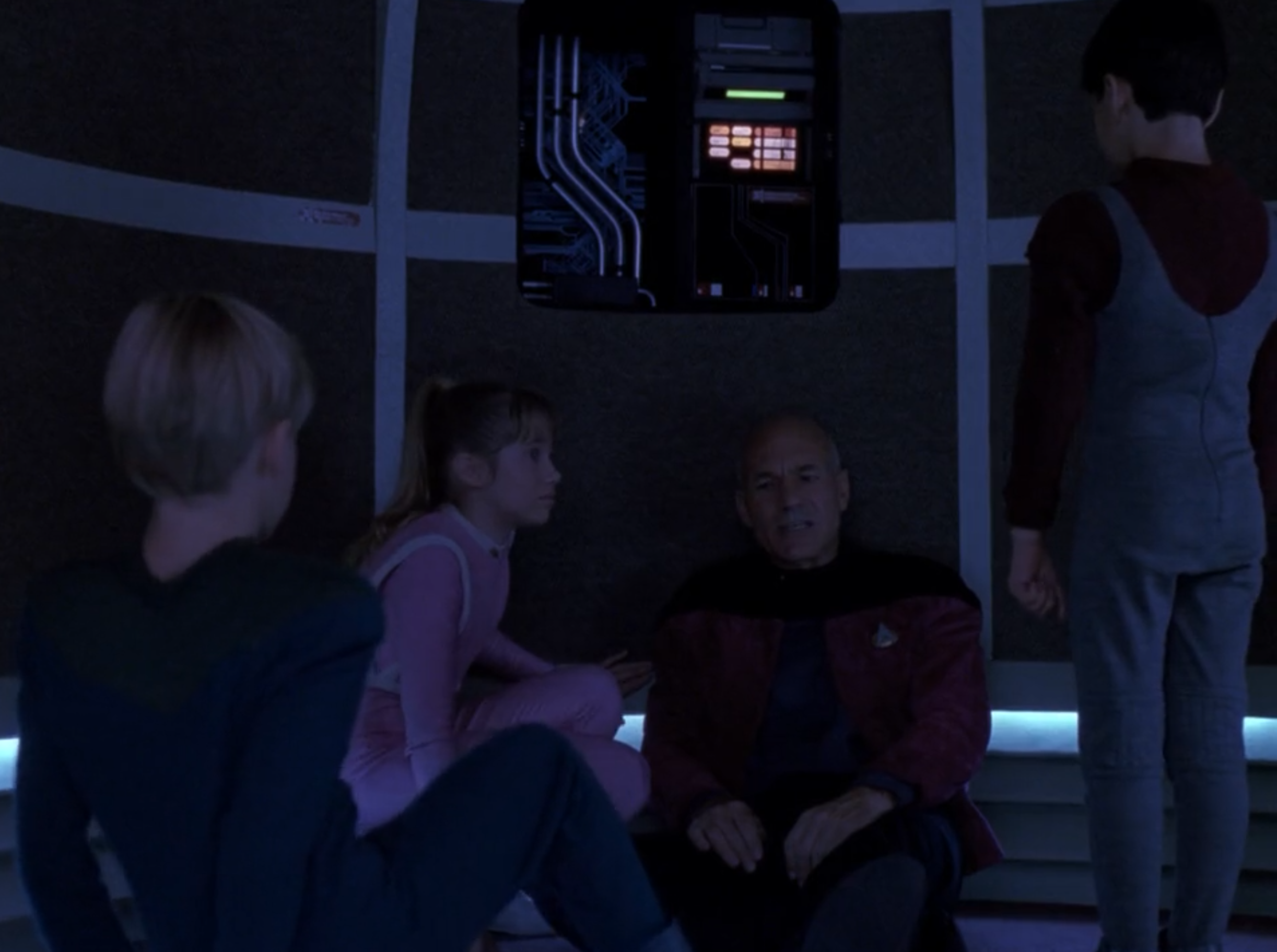
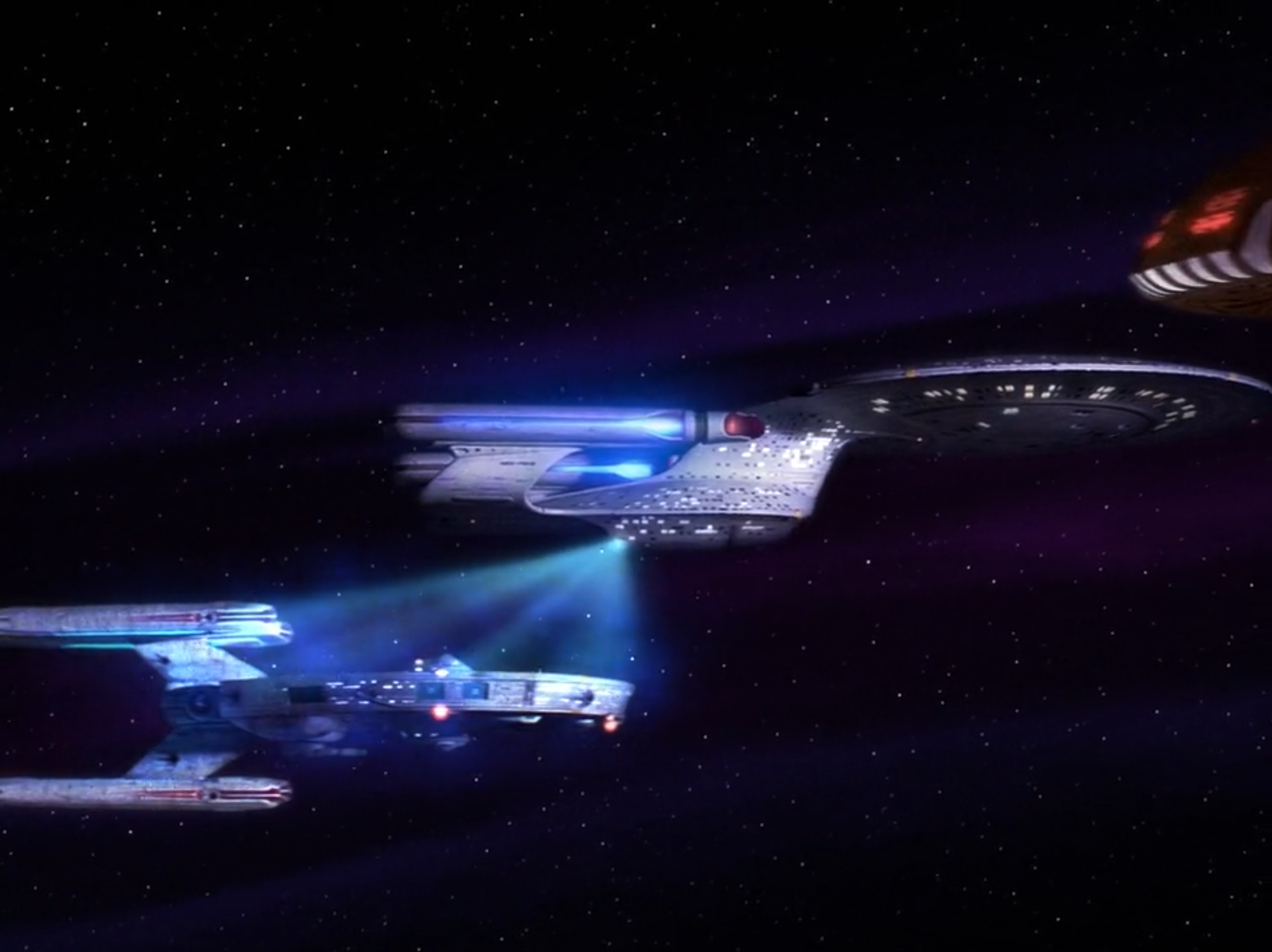
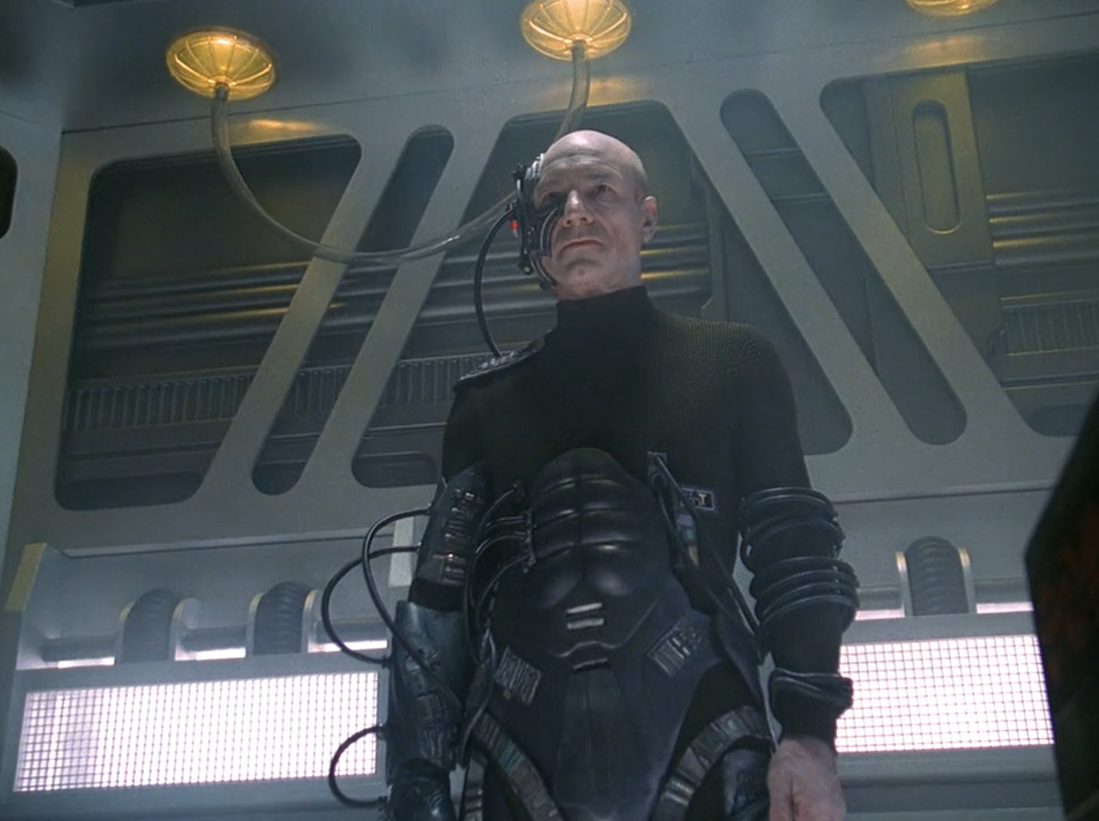
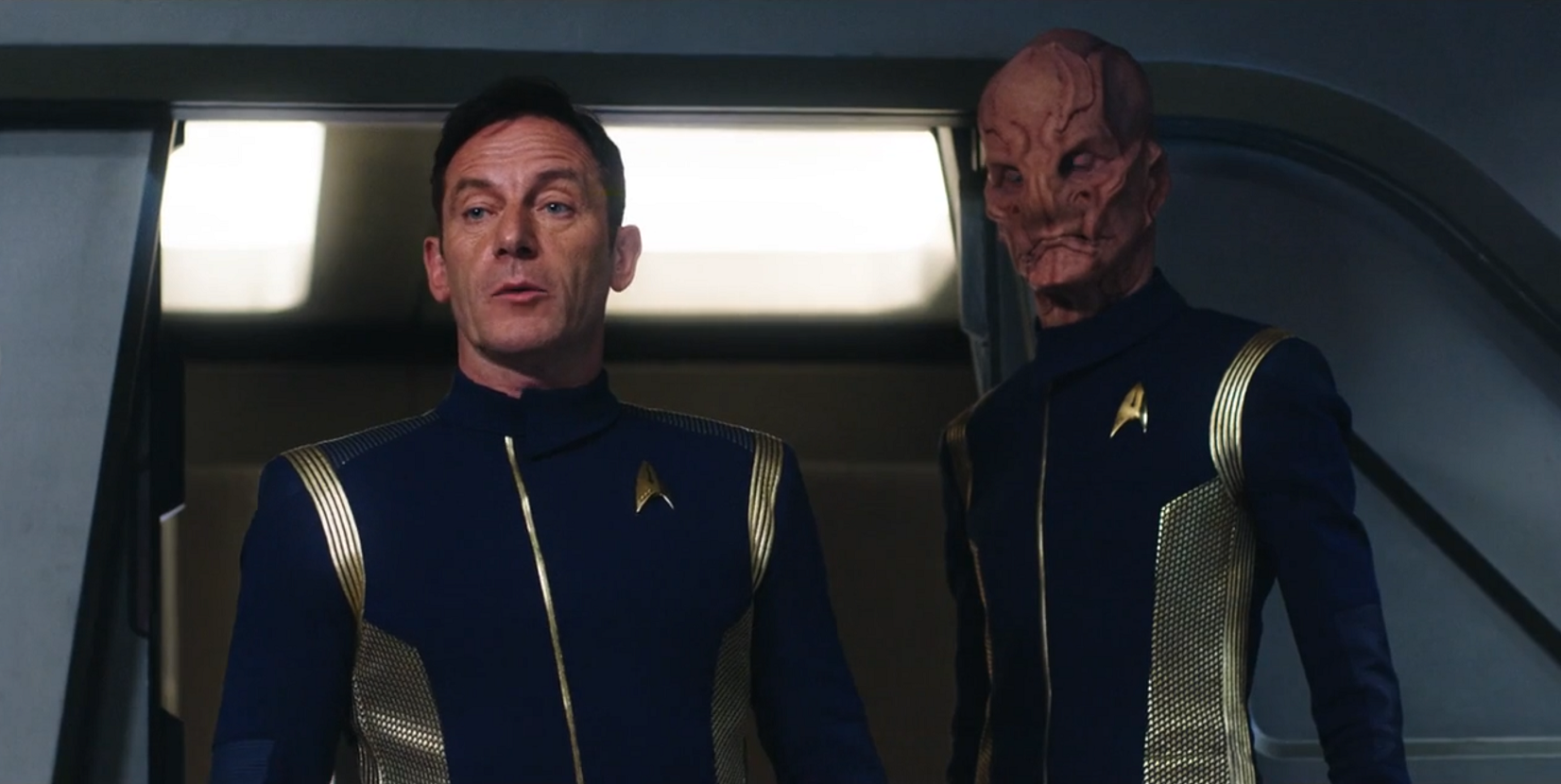
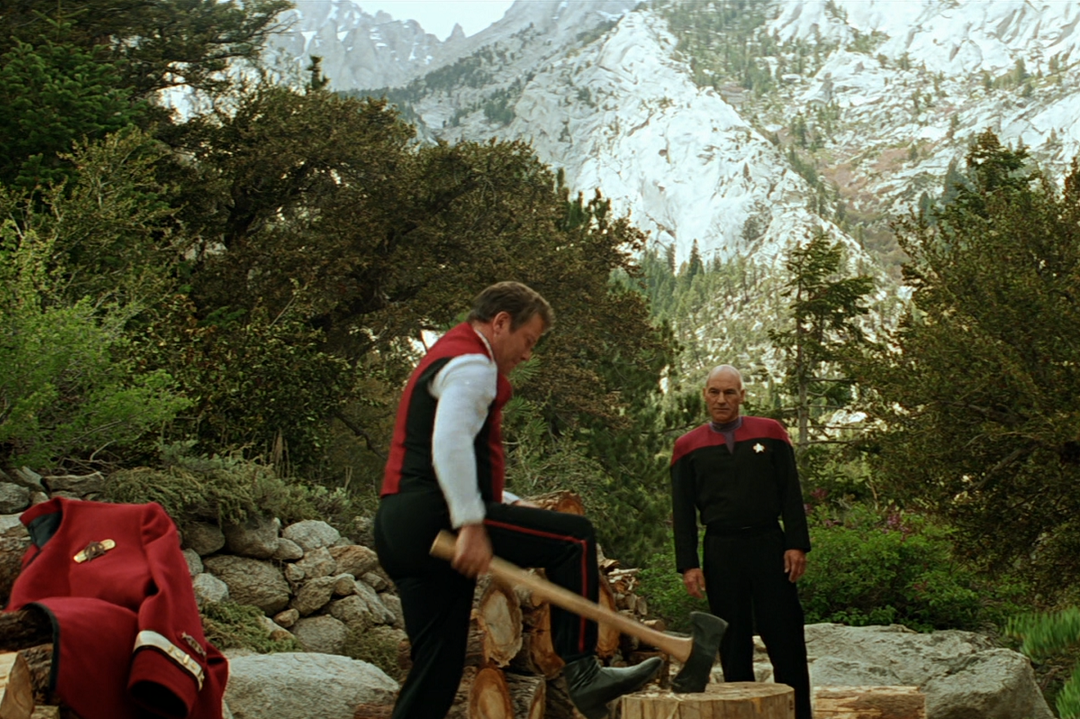
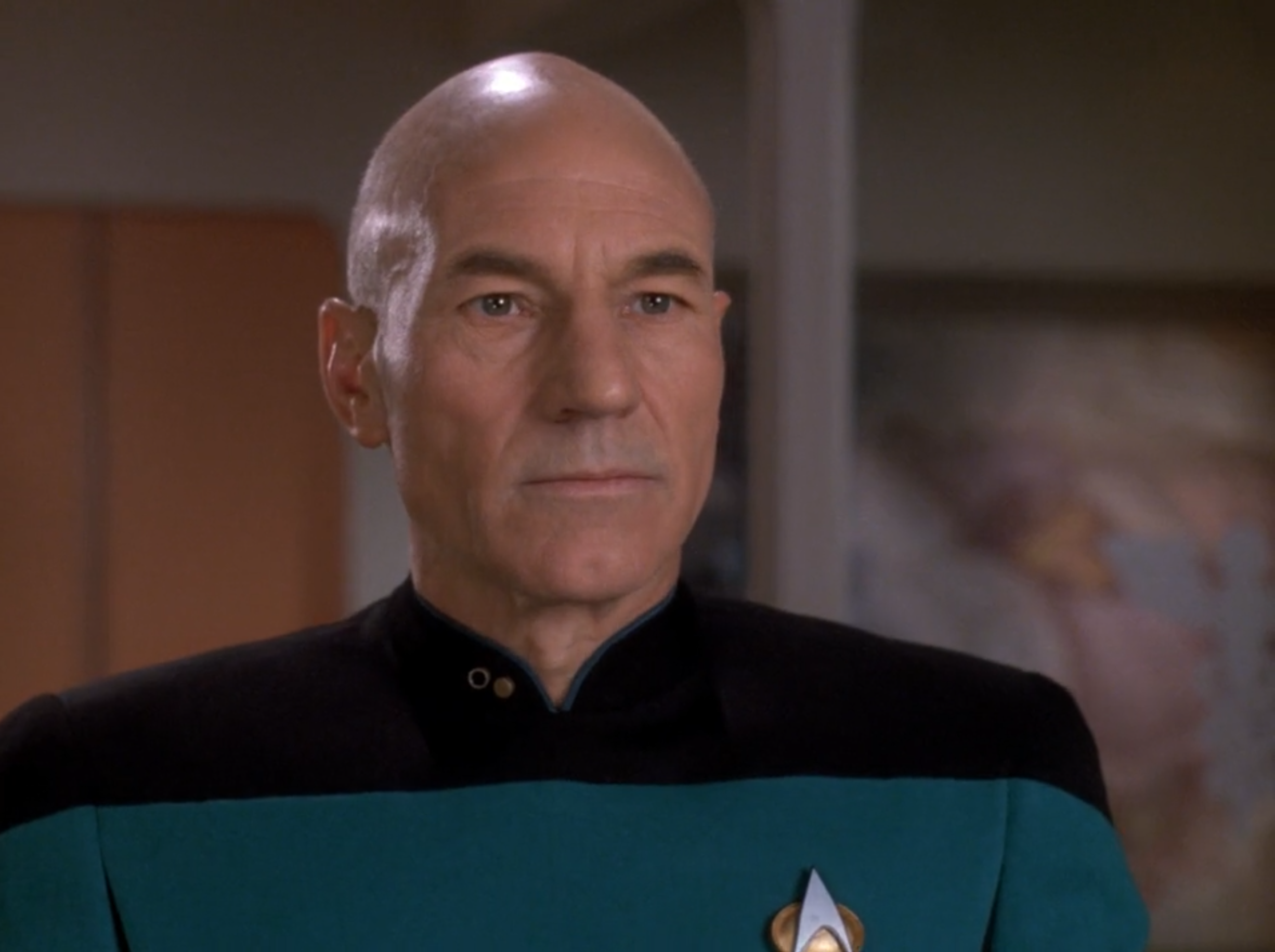
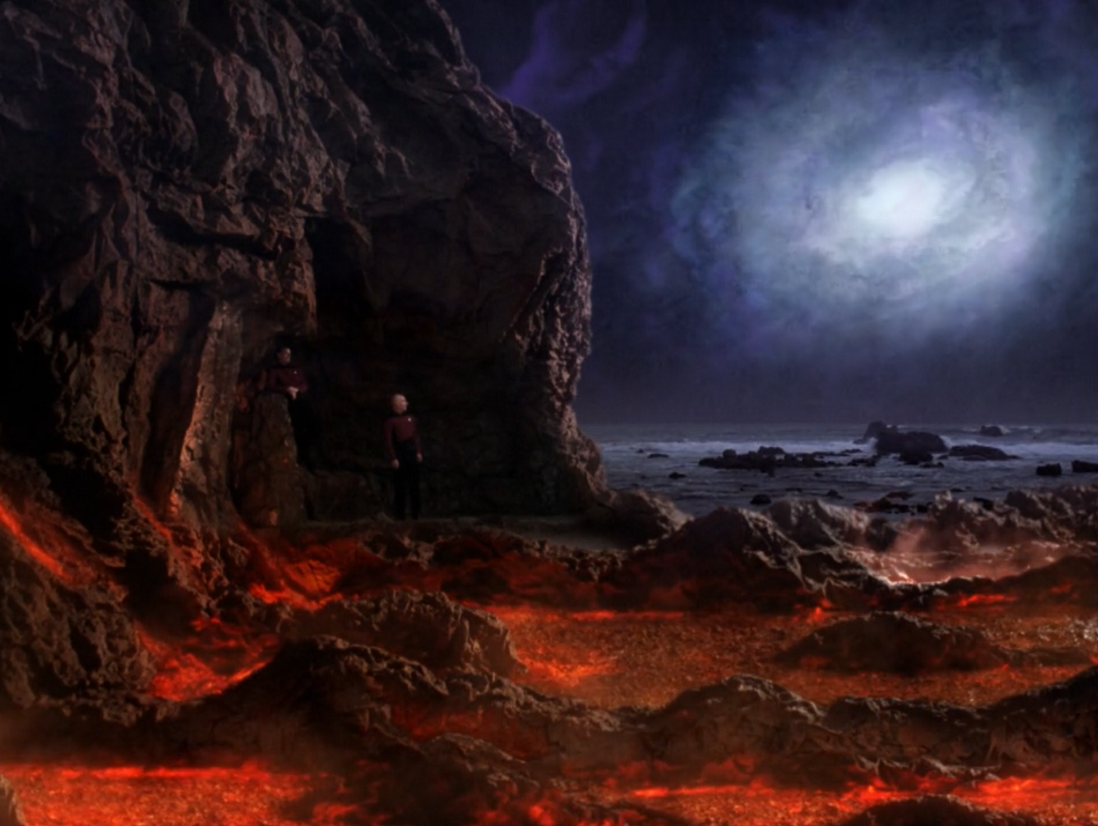
 Trekking with Dennis