Spoiler Warning: Beware of minor spoilers for Star Trek: Starfleet Academy Season 1.
Mere days after the finale of Season 1, and with Season 2 still in post-production, news has leaked that Star Trek: Starfleet Academy has been cancelled. I won’t lie: this was something I expected we’d hear either this year or next year at the very latest, but there’s something about the timing that feels… well, pretty brutal.
The newly-formed Skydance/Paramount corporation seems to be making it clear that a line is being drawn under Star Trek’s current streaming era. That was pretty obvious, I argued, when Discovery and Strange New Worlds were cancelled – the latter coming before the show had even aired a single episode of its *third* season, with two more still to come after that. Star Trek’s new corporate overlords clearly intend to take the franchise in a very different direction, and Starfleet Academy was the last vestige of the old regime. That final pillar of “streaming Trek” has now fallen.
Variety broke the news. Image: Variety.com
I’m still assuming, at this stage, that Season 2 will actually be completed and broadcast. Filming wrapped last month, and while there’s still a lot of work to do in the editing suite, it would be foolish to scrap the entire project. So Starfleet Academy fans can, at least, take solace in the fact that we’re only halfway through the show; ten more episodes should air sometime next year or in 2028.
I don’t really wanna keep repeating the phrase “end of an era;” it was something I said last year when Strange New Worlds got the axe, and when Discovery and Lower Decks wrapped up, too. But with Starfleet Academy being treated so brutally by Paramount, it’s hard to know what else to say. This is definitely calling to mind Enterprise’s 2005 cancellation – with the only difference, really, being that a new feature film is allegedly in the works, a consolation prize we didn’t have back then.
Does anyone else feel echoes of 2005?
If you’re a regular reader, you may recall that Starfleet Academy’s cancellation was something I predicted for 2026 back in January. I’m not taking a victory lap – the show may not have been “my thing,” but I went into it with an open mind, and I truly hoped it would find a way to connect with its intended target audience. Low streaming numbers throughout Season 1, however, seem to confirm that that simply didn’t happen. I said back in January that it would take a real miracle to convince this new incarnation of Paramount to stick with the show beyond Season 2 – going viral and becoming a must-watch sensation, like Stranger Things or Wednesday, perhaps, might’ve been enough to guarantee a renewal. But even doing reasonably well probably wouldn’t have been enough. I just got that impression from Paramount’s new ownership.
But, regrettably, Starfleet Academy didn’t even manage “good but not great” streaming numbers. It never cracked the top ten in the United States or here in the UK, even in a relatively easy TV window where there wasn’t a ton of big-budget competition. Shows like Fallout, The Pitt, and even preschool cartoon Bluey were performing well ahead of Starfleet Academy during its first season. Cancellation seemed inevitable, I’m sorry to say.
A pair of cadets in happier times.
But the timing… it feels brutal, as I said, but also a little insulting to the cast and crew. Paramount will still expect Holly Hunter and her co-stars to go out on the interview circuit, promoting Season 2 next year or the year after. And we’re barely ten days out from the end of Season 1. I get why the decision was made – if a show isn’t performing very well, and a new corporate team wants to reorganise the studio’s big brands and franchises, it makes sense. But even so, you’d think a bit of a grace period could’ve been given, timing-wise. There’s now practically no chance of the show picking up any extra attention from fans who missed it over the past couple of months. What would be the point, after all, in getting invested in a series which has already been cancelled?
With Starfleet Academy’s cancellation, there’s now officially no new Star Trek in production on the small screen. Strange New Worlds and Starfleet Academy’s second season remain in post-production, so there’ll be new Star Trek on our screens later in 2026 and into 2027. But then, after that? All we have to focus on, barring any shocking announcements, is Skydance’s new feature film. Although this was expected, and despite Starfleet Academy not really being “my thing,” I gotta be honest: this news still stings.
Showrunner and director Alex Kurtzman on set.
However, as I said a couple of weeks ago, there are some potential benefits for a long-running franchise like Star Trek taking a break or going on hiatus for a while. The previous incarnation of ViacomCBS and Paramount threw *a lot* of Star Trek at us over the past few years… in a pretty incoherent and poorly-managed way a lot of the time. There’s something to be said for a new team coming in, wiping the slate clean, and taking a moment so we can all catch our breath. And if the current creative/production team has taken Star Trek as far as it reasonably could, there’s also a lot to be said for new folks taking the reins. Most of the Star Trek shows since Discovery have shared writers, directors, producers, and more behind-the-scenes folks, so giving new people an opportunity to work on the franchise should – in my opinion, naturally – be a positive thing.
No serious Trekkie sat down to watch Starfleet Academy hoping they’d hate it or wanting it to fail. But I think a lot of us recognised that the show was probably coming along a little too late, after the previous Paramount corporation hadn’t handled Star Trek especially well. It would’ve taken something exceptionally special for Starfleet Academy to rise above all of that, and to do something that no project in the franchise’s streaming era *truly* managed to do to any great extent: connect with a new audience. It was a tall order, for sure, but making a show intentionally aimed at teens and young adults was far from the worst idea in the world. It’s just a shame, really, that Starfleet Academy launched when it did, and didn’t really get a chance to connect with potential new viewers.
Surely it’s not some kind of visual metaphor…
Many folks argue that Star Trek shows don’t really “get good” until their second seasons or beyond, so cancelling Starfleet Academy after just one season might seem like a poor decision in that sense. And I kind of see that point, at least to an extent. But if Season 1 just wasn’t finding much of an audience in the first place, not with older Star Trek fans nor with its intended new audience of younger folks, would sticking with it for a third or fourth season have really changed that? I guess we’ll never know, eh?
It’s a shame, and despite the fact that Starfleet Academy wasn’t really for me, I don’t celebrate its cancellation by any stretch. In fact, I lament it. I think it’s a real shame, barely nine years on from Star Trek’s triumphal return to the small screen, to be back here all over again. And despite the way things look right now, it’s my hope that, behind the scenes, there are folks at the new Skydance/Paramount corporation who are seriously considering where to take the franchise in the future. Films are great, and some of Star Trek’s most highly-regarded stories came at the cinema. But for this old Trekkie, Star Trek has always been a television show; a franchise best-suited for the small screen, where crews of explorers can warp away to a new planet, a new alien race, and a new adventure every week. Maybe one day… that kind of Star Trek will be back.
Four main cast members in a behind-the-scenes snap.
If you’re a huge Starfleet Academy fan, you have my sympathies today. This news may have seemed inevitable for a while, but it’s not something any of us wanted to see. And as for what it means for the future? I really don’t know, to be honest. I want to say I feel optimistic that, one day soon, Star Trek will be back! But today… doesn’t really feel like that kind of day, to tell the truth.
Thanks for reading. And, as always: Live Long and Prosper, friends.
Star Trek: Starfleet Academy is available to stream now on Paramount+ in countries and territories where the service is available. The Star Trek franchise – including Starfleet Academy and everything else discussed above – remains the copyright of Paramount/Skydance. This review contains the thoughts and opinions of one person only and is not intended to cause any offence.
Spoiler Warning: There are spoilers ahead for Star Trek: Starfleet Academy. Spoilers are also present for the following Star Trek productions: Voyager, Discovery, Picard, Prodigy, and Strange New Worlds.
There was a time when the premiere of a brand-new Star Trek series would have been the most exciting thing I could’ve imagined. You don’t have to go back very far to see it, either: Strange New Worlds, which debuted in 2022, was somewhat soiled by the lack of an official broadcast here in the UK, but it was still an exciting moment. The same for Lower Decks in 2020. Picard, which premiered a few months before that, was probably my most-anticipated TV programme in years. Starfleet Academy, though… it wasn’t doing it for me.
The truth is that I arrived at the Starfleet Academy premiere with pretty low expectations. The show’s marketing campaign has been, in a word, lacklustre. A “teen drama” isn’t really my thing, with my teen years being so far behind me now that I can barely even see them over the horizon. And, after season upon season of modern Star Trek doing the whole serialised storytelling thing, I just feel pretty burned out on that. Some of that isn’t Starfleet Academy’s fault on its own… but it’s part of the conversation as we welcome the debut of the franchise’s eleventh show overall and ninth live-action series.
The main cast at the show’s premiere in January 2026.
I don’t sit down to watch *any* television show hoping to have a bad time. I genuinely want to give Starfleet Academy a chance to blow those low expectations out of the water, hook me in, and convince me that this has a shot at eclipsing Strange New Worlds to be the best thing the franchise has done in a long time. And I tried to go into the two-part premiere with an open mind – or as open a mind as possible, under the circumstances.
The long and short of it is that there are things Starfleet Academy did well, some areas where it was less competent, and a whole bunch of “teen drama” that I already knew I wouldn’t enjoy. I will go through the key points, but I don’t want to dwell for too long on the negatives, because I think there are moments that Trekkies will be able to enjoy – even if those moments are wrapped up in a narrative framework that isn’t necessarily going to be to everyone’s taste. I’m still hopeful that Starfleet Academy will be able to reach a younger audience; folks who might be more interested in the angst, crushes, petty rivalries, and schoolkid drama than you or I. The only way for Star Trek to survive is if the franchise can grow beyond its existing niche, and I really do want to see more Star Trek on our screens in the years to come. Starfleet Academy is intended to be a stepping-stone – an easy gateway for new, younger viewers to get started with what can be a dense, convoluted, and offputting franchise. There are tentative signs that Starfleet Academy may be able to achieve that objective, and I will certainly be crossing my fingers and hoping for its success.
Behind-the-scenes shot of Bella Shepard as Genesis.
One thing I will compliment the writers, directors, and producers for is the length of the opening pair of episodes. I don’t know if this will be compensated for later in the season with shorter ones – and I hope not – but there’s no denying that Starfleet Academy got a meaty premiere. The two episodes together clocked in at almost two hours and ten minutes (sans credits), with the first part well over an hour long. That’s a decent length for a premiere, especially amongst today’s streaming TV shows with cut-down seasons and shortened episodes. There was enough time for the series to set up its main characters, introduce us to the cadets, instructors, and the season’s overarching antagonist, as well as set up two pretty different adventures for Caleb, Captain Ake, and the rest.
One thing I criticised Discovery for, after the show jumped forwards to this 32nd Century time period, was how it never really spent a lot of time considering the Burn – the massive, galaxy-changing event that led to the Federation’s ruin and the overall “post-apocalyptic” state of the galaxy. In just two episodes, I felt Starfleet Academy did at least as much as Discovery had done in three seasons with that premise, and the theme of rebuilding after a traumatic event was front-and-centre in a way it never was in that earlier show. Given the impact of the pandemic, wars, and other major events out here in the real world, there’s the potential for Starfleet Academy to do what Star Trek has always sought to do: examine real-world issues through the lens of science-fiction. The premiere made a start on that; time will tell if the rest of the season will continue those themes.
The re-opening of Starfleet Academy after the Burn.
The first two episodes of the season weren’t *as* heavily-serialised as I expected them to be, which is also a trend I’d very much like to see continue. We jumped from a story about Caleb, Captain Ake, and the villainous Nus Braka to one which focused on the Betazoids and their possible re-entry into the Federation. That change took us from an action-packed story to one that was much more focused on the subtleties of diplomacy. Both episodes kept plenty of “teen drama,” but they had different kinds of storylines at their core for those dramatic character moments to play out in front of. In that sense, I was quite pleased to see at least some effort to give the series a chance to explore different kinds of stories, different alien factions, and different characters.
That’s not to say that the show is as episodic as I’d have wanted it to be. Starfleet Academy has a pair of co-protagonists, really, in Captain Ake and Caleb, and the second episode of the season, in part, advanced their stories and the search for Caleb’s missing mother. In that sense, it’s not a “one-and-done” story that you could just pick up and watch without the context of the preceding episode – and I can only assume this trend will continue across much of the season.
Caleb and Captain Ake.
Star Trek, as a franchise with a focus on exploration, works better – in my opinion – when it has the freedom to explore new aliens, new locales, and new themes basically every week, and when a rotating cast of main characters each get turns in the spotlight. But I fully accept that that format *also* worked best when TV shows had the freedom to run to twenty-plus episodes per season instead of eight or ten. However, Strange New Worlds has managed to strike a pretty good balance, even if the show’s writers have a preference for certain characters over others, sometimes. A mix of episodic storytelling with ongoing themes and character arcs works so well in that show, and I’d have ideally liked Starfleet Academy to adopt a similar approach.
A show like Starfleet Academy would’ve been perfect for this episodic-plus-character-arcs style, too. Think about what the Academy is: it’s a school. The cadets are going to be attending a variety of classes with totally different focuses, and there can be field trips, missions, and more. And, in addition, to make the show accessible to newbies, an episodic style is the perfect introduction to Star Trek: an episodic show could give new viewers and younger folks an overview of Starfleet and Star Trek without delving too deeply into any one faction, alien race, or character. And from the 32nd Century, it would even be possible to look backwards at basically everything Star Trek has ever done – the perfect thing for this big anniversary year, too.
2026 is Star Trek’s 60th anniversary year.
Speaking of Star Trek’s 60th anniversary, I liked the new introduction/logo that we got to see at the start of both episodes. Seeing the various hero ships from elsewhere in the franchise was cute, and it was a nice, subtle way to acknowledge this milestone year. It didn’t add a lot to Starfleet Academy in and of itself, but it didn’t go unnoticed or unappreciated by this old Trekkie.
The title sequence and theme music reminded me a lot of Picard, and perhaps Discovery to a lesser extent. I never thought I’d hear myself say this, but if *any* Star Trek show might’ve been able to get away with an Enterprise-style modern pop song for its opening credits… it would probably be Starfleet Academy! I’m not familiar enough with a lot of big-budget shows aimed at this demographic, but I wonder how the opening titles compare to something like Wednesday or Stranger Things. For my money, as a Trekkie, the opening theme felt fine. Perhaps a bit understated, but I didn’t dislike it. I’m also not sure if the title sequence is going to change every time, or whether the two different sequences we saw are just a result of one episode being the show’s overall premiere. In any case, I didn’t mind the change.
The opening title card from Kids These Days.
Alright, let’s get into the weeds with both of the opening episodes.
A story about someone making a mistake, or being caught up in an institution that makes a mistake, and later seeking to atone for it can work pretty well. So as the setup for Captain Ake and Caleb’s stories, the whole “crime and punishment” thing that we got in the beginning had potential. But the way it was executed left a lot to be desired. First of all: “show, don’t tell.” Let us, as the audience, see Nus Braka and Caleb’s mother doing *something* together, even if it was just scavenging supplies from the crashed Federation ship. It would’ve been so much more impactful if we’d seen what these characters did first-hand instead of having it read out to us, dryly, in a pretty poor courtroom scene.
Then we have the length of this sequence. Putting Nus Braka and Caleb’s mother “on trial” together, when one is the instigator and one an unwilling accomplice, felt… rushed. As if the episode didn’t have time to give us two separate moments with these characters facing their punishments. I like the idea of this decrepit rump Federation resorting to excessively harsh punishments; it feels like a good way to indicate how far it had fallen and how tough the post-Burn era was. But the way we arrived at that moment wasn’t great, and it was utterly *dominated* by Paul Giamatti’s incredibly hammy over-the-top performance.
Nus Braka at his trial.
Paul Giamatti’s casting was one of the main reasons why I felt there was even a scintilla of a chance for Starfleet Academy to be a decent series. I adored his performance in the John Adams miniseries a few years ago, and he’s been in a ton of wonderful films, including Saving Private Ryan and 12 Years A Slave, as well as TV shows like Billions. He’s an incredible actor, which is reflected in his many awards and nominations.
So it takes a perverse kind of “skill” on the part of writers, producers, and directors to get someone so great to turn in such a shockingly poor performance.
Nus Braka is everything I feared he’d be when I saw him in pre-release promos and marketing material. He’s a one-dimensional villain stereotype; a direct-to-video kids’ movie antagonist who wants to bulldoze the neighbourhood playground to build a car park. He’s so comically over-the-top that it ceases to be entertaining in its own right and just becomes ridiculous. And I absolutely despise that the modern Star Trek franchise can attract a performer of such genuine talent and calibre and reduce them to this… puddle of cold vomit.
Co-showrunners and executive producers Alex Kurtzman and Noga Landau at the show’s premiere. Kurtzman also directed the opening two episodes.
While we’re on the subject of Nus Braka, Starfleet Academy broke a cardinal rule of storytelling that I fear will come back to haunt the series: don’t let your young, untrained heroes – before even *starting* their character arcs – defeat the villain in the first act. Sure, Nus Braka lives to fight another day… but only because Captain Ake inexplicably didn’t immediately recover (or just destroy) his escape pod. But when he inevitably returns to taunt Caleb and his friends again… we’ve already seen how easily he goes down. Caleb went toe-to-toe with him in a fight, and the cadets – who hadn’t even attended a single class, got to know each other’s strengths and weaknesses, or anything – were able to outsmart and outmanoeuvre his entire band of pirates.
Where are the stakes meant to come from when this season-long overarching antagonist comes back?
A couple of minor changes in the premiere episode could’ve seen Nus Braka departing the Athena, having dealt a blow to Caleb’s pride and the cadets’ morale – setting him up as a much more significant foe when he makes a return. Instead of having Caleb go toe-to-toe with him in a fight, we’d see Nus Braka get the upper hand, only to be forced into a retreat when Starfleet security is on the way. Instead of having the cadets work together to outsmart him, defeat his technology, and destroy his ship, keep the cadets working on smaller, but no less impactful problems, like the injury to Lura Thok. Have Braka and Captain Ake effectively come to a stalemate, with only the arrival of Starfleet reinforcements causing Braka and his pirates to withdraw. Starfleet reinforcements were discussed in the episode – why not make better use of them? It was far more important in this story, at this moment, to establish Nus Braka as a competent villain than to show Starfleet as weak.
“Nooooo!”
That kind of setup still gives Braka a pathway to feeling aggrieved by Caleb and the others, but it leaves him intact as a potentially intelligent, powerful, and dangerous foe. We’ve already seen his neck – how easy he is to beat, how he runs away when cornered, how he can be duped by something as basic as a fake alarm, and how he can be outsmarted by a group of untrained kids. How are we to take him seriously next time? A point made worse by the hammy, scenery-chewing performance.
I get that Starfleet Academy wanted to throw the kids into a difficult situation, but still give them a win – showing how they can come together and put their skills to good use when it matters. But again… this is our *first* introduction to these characters. They haven’t gone through anything, they barely know each other’s names… a victory like this needs to feel earned, and this one didn’t. Not to mention that all of the cadets were supposed to be in lockdown in their cabins, and that the Athena is a starship with its own crew. Where was the Doctor when Lura was injured? Where were… any crew members at all, come to that?
Lura’s injury gave the cadets an opportunity to work together on a smaller-scale problem.
The kind of story we got in the premiere shouldn’t have come until at least halfway into the season. And if the producers and writers wanted an explosive beginning to the season, which tied into Caleb and Captain Ake’s stories, there were ways to set that up without giving the kids a win that felt… scripted. If everyone comes across as being too perfect on day one, able to solve the most complex of problems and defeat who we assume is still going to be the season’s main villain… where does the show go from there? How do you give characters an arc when they start from such a high point? It’s a challenge that the rest of the season will now have to overcome – and it didn’t need to be.
This highlights a trend that a lot of media made for kids can fall victim to: in order for the young’ins to be able to save the day, the adults around them – who are, in this case, in loco parentis – have to be shockingly incompetent. The bridge crew did basically nothing, save for triggering a pre-made training programme. It fell to Caleb and the other cadets to stop Braka and save the ship. And, in the next episode, it fell to Caleb again to provide all of the answers to solving the diplomatic crisis between Betazed and the Federation. The adults at Starfleet Academy just… aren’t up to the task, apparently.
Captain Ake arrives on the bridge.
There are a plethora of ways to show that a younger character is competent and able without having them save the day over and over again. We’re only two episodes in, and thanks to Captain Ake telling us over and over again how special and wonderful and magical Caleb is, and the demonstrable proof of that through Caleb’s technical skills, his engineering skills, his combat skills, and even his diplomatic skills… well, I’m getting “Wesley Crusher” vibes. Which, unfortunately, I can’t say I intend to be a compliment.
I would’ve liked to see a more nuanced take on Caleb. Instead of being able to hack computers with ease, fight off the season’s main villain, and save the day at the drop of a hat, I’d like to see the *potential* for him to one day be able to do those things – but to see that raw talent as rough and unguided. This would give the likes of Captain Ake a way in – a way to assume the role of mentor or teacher. Why does Caleb need a teacher? What can the Academy teach him that he doesn’t already know how to do? He’s willing to stay – for now – because Starfleet seems useful to him, and he can hack their computers from the comfort of his dorm room. But when a character starts the story at the level of an expert, it doesn’t leave a lot of room for growth.
There’s a risk in making a protagonist too perfect from the very start.
One area where we could potentially see more from Caleb – to give him more of a genuine arc beyond “find my mother” – is in making friends. Realising that he can work as part of a team, and then later, that he can work *better* as part of a team, is basically the only growth potential a character like Caleb can have, at this point. And I hope that the remainder of the season can show him working with the other cadets, as well as Tarima, Captain Ake, and others at the Academy, to undergo some kind of arc beyond the main narrative.
To return to Captain Ake, I have to repeat something I said a moment ago: “show, don’t tell.” Captain Ake repeatedly tells Caleb that she hasn’t stopped looking for him for fifteen years, but we saw absolutely none of that on screen. In fact, when we saw Captain Ake for ourselves, she seemed pretty settled on Bajor, playing with kids and enjoying an ice cream. Not exactly the desperate search that she swore up and down she’d never stopped nor given up on. It wasn’t the worst scene in the world, and I did like how it harkened back to Archer recruiting Hoshi in Enterprise, Janeway seeking Tom Paris’ help in Voyager, and other, similar moments.
Captain Ake.
But at the same time, we’re following *this* story – the search for Caleb, Caleb’s mother, and Nus Braka. And Captain Ake tells Caleb – and by extension, us as the audience – repeatedly that she’s been searching for him ever since he ran away. But… the only scene we get of her in between Caleb’s escape and her accepting the role of Chancellor shows her with a bunch of children licking an ice cream cone. It’s just tonally jarring in a way that it didn’t need to be.
Let’s reimagine this moment.
One of the key themes that Starfleet Academy seems to be going for is that we’re all “better off together;” that one of the biggest strengths Starfleet and the Federation can offer is teamwork. So, instead of Admiral Vance finding Captain Ake chilling out with an ice cream, how about he finds her in some seedy bar on a dangerous Orion Syndicate planet, desperately chasing a long-dead lead. Vance could tell her that *Starfleet* found and rescued Caleb, demonstrating the show’s point about working as part of a diverse team, and a well-managed organisation having strengths and abilities that a “lone wolf” doesn’t. We get to the same place, but without the weird jump in tone and the kind-of-a-lie Captain Ake would later tell.
Does this look like a woman consumed by her search for a missing kid?
See how we get to basically the same destination, but via a route more in keeping with the story?
Let’s stick with Captain Ake for now. I like the idea of using her run-in with Caleb and his mother to highlight the state of the galaxy after the Burn – and how the Federation in that era could do the wrong thing. There were pretty obvious parallels to the issue of family separation in the United States, where migrant parents and children have been separated, and where parents have been deported, leaving children who were citizens behind.
As I said above, using a sci-fi lens to examine this complex issue is a great idea, and that’s something Star Trek has always done – from the anti-nuclear message of The Doomsday Machine to the criticism of the way homelessness and mental health issues are handled in Past Tense. Captain Ake was put into an impossible position by Starfleet – though I wish we’d gotten to see a little more of that. She stated that she was the senior officer in charge of prosecuting Nus Braka, yet when she spoke to Caleb’s mother, she implied that her hands were tied when it came to enforcing the law and dishing out punishments. But… who tied her hands? Did she get orders from someone else in Starfleet? Seeing that moment for ourselves, and perhaps seeing her at least trying to argue back, recognising how wrong that decision felt to her, would have done a lot to inform her characterisation at this crucial moment.
Why did Captain Ake feel she had no choice but to separate Caleb from his mother?
So far, I don’t think the show has made much of Captain Ake’s age or the fact that she’s a Lanthanite. We’ve met one other Lanthanite in Star Trek recently: Pelia, from Strange New Worlds. There’s plenty of time for the rest of the season to do more with the idea of Captain Ake being several hundred years old, and I hope it’ll come into play a bit more and have more of an impact on both the story and her characterisation. So far, I don’t really feel a lot of “ancient and wise” from her – though I would note that there are more than a few similarities with Pelia, which I did appreciate.
Whether Starfleet Academy does or doesn’t make more of Captain Ake’s age, though, it does call one thing into question for me: why have both an ancient Lanthanite captain *and* an ancient holographic Doctor in the same show? Don’t these two characters kind of occupy similar narrative spaces? Do we need two “Yoda” type characters in Starfleet Academy for the kids to turn to? I guess I’m just a little worried about one overwhelming the other, or how they’ll really distinguish themselves if they’re both gunning for that “wise mentor” space.
These two characters are both ancient and long-lived.
In my preview of Starfleet Academy, which I wrote based on the teaser trailers and clips that had been shown off last year, I said that Gina Yashere’s performance was of particular concern; I just wasn’t at all convinced by her acting from what I’d seen. Yashere had her moments as Lura Thok – the half-Jem’Hadar, half-Klingon XO and cadet master – in the two-part premiere, but she was far from perfect much of the time. Ironically, I felt her best performances came in what was probably one of the tougher acting challenges she had: when Thok was injured and being attended by the cadets, I felt the character was far more believable than at basically any other moment in the double-header.
I hope that Lura Thok will grow on me, and that my familiarity with the performer (and perhaps the accent, too) are part of what’s been throwing me off. I find the idea of a half-Jem’Hadar interesting, and there’s potential, perhaps, to catch up with the Dominion and see what came of Odo’s peace initiative. At the very least, I hope that Lura Thok isn’t just going to be a sidelined character, whose history and traits are played up for dramatic effect. Starfleet can have this kind of “drill sergeant” without them needing to be from such a background – and really, as Trekkies, don’t we want to know more about how a half-Klingon, half-Jem’Hadar came to be? Jem’Hadar were all artificially created in Deep Space Nine; I’d love to know more about them and what kind of culture they may have developed independently from their Founders. And how did someone who’s half-Jem’Hadar make their way to Starfleet? I have more questions than answers… and despite a shaky and inconsistent performance, I’m still keen to learn more about this character. As a DS9 fan, I really want to like Lura Thok!
Lura Thok.
From one Klingon to another! Jay-Den Kraag is a genuinely interesting character, and I really enjoyed what he brought to the first episode in particular. There’s always going to be something interesting about a character who is – for want of a better term – “rebelling” against social expectations, so a Klingon doctor (or med student, technically) is a really fun idea. He reminds me a little of Dr Reyga – the Ferengi scientist from The Next Generation Season 6 episode Suspicions; a character who was defined by his desire to show that his people could be more than money-obsessed merchants.
As above with Lura Thok, I’m hopeful that Jay-Den can be a gateway to us learning more about his people in this era – something Discovery failed to show us. Some have speculated that the Klingons may have joined the Federation by this time; Jay-Den’s interactions with his fellow cadets and Lura Thok seem to suggest that there’s still a strong warrior culture amongst many Klingons. Those two things aren’t necessarily mutually-exclusive, of course, but if the Klingons aren’t Federation members, it raises the question of why (and how) Jay-Den is attending Starfleet Academy. I hope that’s something we’ll get to learn more about. His introduction was surprisingly cute; I liked his reluctant admission that he enjoys birdwatching, and again, the idea of a “softer” Klingon character has a ton of potential.
Jay-Den, the Klingon med student.
Darem is a potentially interesting character, as he introduces us to a brand-new alien race. But his introduction as an antagonist… it left a lot to be desired, quite honestly, and the whole “stuck-up rich kid who’s also a bully” character is a pretty tired cliché, even for a show set at a school. The upside to Darem’s poor introduction is that it does leave him with genuine space to grow – something I talked a lot about earlier. And we perhaps saw a few baby steps in that direction, with Darem risking his life for his shipmates.
There’s also potential in the “two kids who hate each other have to be roommates” trope, though we didn’t get much of that in the first couple of episodes. I’d like to think we’ll get some more one-on-one time with Darem and Caleb, though the introduction of a third roommate for them could complicate that a bit. Darem was the character I was least sure about going into the premiere; he seemed like he could be totally superfluous, seeming to share some aspects of his character bio with other cadets. But he emerged as a unique character in the series – even if his “rich kid bully” archetype is pretty tired when considering other “teen drama” type shows. I like the idea of a shape-shifting alien, and I wonder if we’ll learn more about these abilities in the future.
Squaring up for a fight.
We’ll pick up with the remaining cadets and crew in a moment, but I want to take a diversion to talk about CGI and animation.
In modern Star Trek, CGI has generally been pretty solid. There have been a few notable misfires, like the copy-and-paste fleets in Picard’s first season finale, and a digital sword in the third season of Discovery that looked weightless and fake, but I couldn’t call to mind many other examples of genuinely poor-looking CGI.
Until now.
Yikes.
The whale in the aquarium in Beta Test looked just *atrocious*. It looked like it was from a 2005-era video game, totally unrealistic, and genuinely detracted from that entire sequence. Other CGI in Starfleet Academy’s opening two episodes looked fine – establishing shots of the Academy, the USS Athena, the battle with Nus Braka’s ship, holograms and programmable matter interfaces… they all looked good enough. But that whale… Jesus Christ. I thought Paramount’s artists had begun to get better at using the AR wall, but I don’t think the wall itself was the issue. The model used for the whale was just too low resolution or low-poly to be at all realistic.
And I genuinely don’t understand how that could’ve happened. Not only was this a callback to The Voyage Home, but it was a pivotal moment in the episode, with Caleb showing Tarima something meaningful, reaching out to her, and showing us as the audience how the pair are potentially developing feelings for one another. The whale was a vital part of the scene, so for it to look so cheap, so outdated, so far behind the times, so low-res… it was utterly awful, and by far the worst-looking moment in the entire pair of episodes – and one of the worst-looking moments in Star Trek as a whole since Enterprise.
Are those pixellated blobs meant to be… *bubbles*?
While other CGI in Starfleet Academy was pretty good, the 32nd Century’s overabundance of holographic displays can be a tad offputting, sometimes. And it probably isn’t easy for a performer to have to act on a blank stage, only for all of the holographic stuff to be added in post-production. Sometimes, parts of the Academy could just feel a little… cluttered, thanks to there being so many holographic signs and floating displays.
The design of the USS Athena… it’s something that I hope will grow on me as the show continues its run. It’s interesting that the ship’s basic layout is reflected in the kids’ combadges, and that feels like a cute little addition. And in principle, the idea of a ship that can be both a ground-based campus *and* take off and go to space is really neat. The opening two episodes showed us one space mission and one on Earth, and I hope we continue to get a good mix of both kinds of stories going forward.
The USS Athena.
The Athena continues a trend from Discovery of starships having a lot more diversity in their designs when compared to earlier iterations of Star Trek. I don’t hate that in principle, but we have to remember that one of the tasks Starfleet Academy has is to bring new, younger eyes to Star Trek for the first time. Establishing a firm visual identity for the franchise – ensuring that viewers can *immediately* tell that they’re watching Star Trek – is important, so I think I’d have picked a design for the Athena that was a little more… traditional.
The Athena’s introduction was – unlike the aforementioned whale – a very competently-constructed CGI sequence. But I’m afraid it was spoiled, at least for me, by being too cluttered. The Athena was shown off while surrounded by other starships and space stations, and it wasn’t easy to tell at a glance – or if you’re new to the franchise, perhaps – which parts were the Athena and which were something else. Compare the introduction of the Athena, or the Athena preparing to go to warp, with similar moments in The Motion Picture, The Next Generation, or Voyager to see what I mean. Those sequences did a much better job of highlighting the “hero” ship, and while modern CGI might’ve allowed artists to construct spacedocks that they felt looked larger and more believable… that realism actually detracted from the entire point of the sequence. Scenes like these need to highlight and show off the main starship, and all of the background clutter made that harder, not easier. It was a bit of an unnecessary own goal.
The Athena’s introduction was somewhat drowned out by background clutter.
Tarima could make for an interesting character, and I’ll be curious to see how she progresses. The idea of a Betazoid with some kind of medical condition that means their empathic abilities have to be dampened is potentially interesting, as long as the resolution to that mini-mystery is solid. Though I suspect it’ll turn out that she has some kind of “superpower” that the cadets will be able to use further along in the story to defeat a baddie or solve a problem. I’m also interested to learn more about this War College, and its seeming rivalry with the Academy – Tarima, as a War College enrollee, could be our point-of-view character for some of that.
The Betazoids made for a welcome addition to Starfleet Academy, though, and I did enjoy the presentation of the Betazoid leader, who communicated through sign language and telepathy, converted to speech via a translator. I think this is something we’ve seen hinted at before – that Betazoids, among themselves, prefer communicating telepathically. It makes sense to me at least that, after a century-plus of isolation, some Betazoids may have almost never spoken aloud, and may not possess the ability to do so. Plus, it’s always nice to see a bit of disability representation in Star Trek, with the franchise again showing it through a sci-fi lens. The same is true of the Betazoids and their “wall;” the theme of bringing down the wall and opening up to integration was another way Starfleet Academy passed comment on real-world events.
The President of Betazed.
So far, I’m not feeling a ton of personality from Genesis. She seemed to have moments of politeness and friendliness – like her interactions with Sam and Jay-Den in the premiere – and moments where she might be either a bit more calculated or perhaps a bit jovial – as we saw when she caught Caleb sending his message. The daughter of an Admiral, who’s been training her whole life for the moment she could join Starfleet, could give her a bit more to say, and I hope we’ll get an episode where she’s more in focus. As it is, the opening pair of episodes have left her quite open, and there are many possible directions for her character across the season.
The same is true of Sam (or SAM? I’m going to write it in lowercase for now). The one thing I’d really like to learn from Sam is why her photonic civilisation felt the need to create a child and send her to school. And if they wanted to create a holographic child, why not start from a newborn age, or a toddler? Why create a 17-year-old and send her to school? Sam also opens up a pathway for us as the audience to connect with the Doctor in a new way, something we kind of glimpsed in the premiere, and she brings a bit of light-heartedness to various conversations and character groups with her wide-eyed “everything is so new and I’m fascinated by it” energy.
Sam.
I’m glad that the Doctor didn’t overwhelm Starfleet Academy, as I’ve come to feel that an overreliance on legacy characters hasn’t been great for the franchise overall. Fans like you and I might be approaching this show as a sequel – the eleventh show in a line stretching back six decades. But for newcomers – the younger audience Starfleet Academy is meant to be reaching out to – a focus on returning characters and a massive dump of lore just… would be too much, I suspect. For me, the Doctor’s role in the show so far stuck more or less the right balance – more than a cameo, but not so much as to be overwhelming.
I was interested by the Doctor’s reaction to Sam, and particularly how he seemed reluctant to discuss the crews of Voyager and the Protostar (the latter being from Prodigy, which I still need to finish watching!) Perhaps the Doctor just didn’t want to talk about something like that with someone he’s just met, though I suspect there’s more to it. Could we learn that living such a long life, and seeing so many generations of organic friends live and die, takes a toll on an artificial life-form? That could be an interesting angle, and a way for the Doctor to get a more personal storyline.
The Doctor.
This review is already running long, so let’s start to wrap things up.
Starfleet Academy is a show that I almost certainly wouldn’t have sat down to watch were it not for the “Star Trek” label. This style of show just isn’t my thing, and I knew that before a single frame had aired. But, for Trekkies, I think there are some green shoots and some reasons to be optimistic. I like how the series has taken Discovery’s post-Burn setting and done a lot more with it, I like at least some of the main characters, or at least I can see their potential. And I’m still hopeful that a show deliberately targeting a younger audience will help the fan community grow.
I will continue to watch the series, but I won’t be doing weekly episode reviews this year. Instead, I’ll write up my thoughts on the season as a whole when it’s over – which will be in mid-March. I may talk about the show in between now and then, for example if I have a theory to craft or if I have something to say about a character or plotline that just can’t wait! Such things have been known to happen around here!
Caleb at the end of the two-parter.
I stand by what I’ve been saying over the past year or so: Starfleet Academy feels like it’s going to be the final Star Trek show to premiere for the foreseeable future. And unless it really does blow up and do exceptional numbers for Paramount+, I doubt it’ll continue beyond its already-produced second season. I really want the show to be enjoyable on a personal level, of course, but I think what’s even more important is that it reaches its intended audience – younger folks in the under-20 bracket, people who’ve enjoyed the likes of Wednesday and Stranger Things on Netflix, and fans of these kinds of high school/university dramas in general.
So that was Starfleet Academy’s premiere. I haven’t read any other reviews yet, so I don’t know if my thoughts on the show are the same as other fans and critics. But I hope that Trekkies and new viewers alike are finding their way to Starfleet Academy and giving it a fair shake.
Be sure to check back after the season finale in March to get my review of Season 1 as a whole. And in this big 60th anniversary year, I’m sure I’ll have more to say about this wonderful franchise! Live Long and Prosper, friends.
Star Trek: Starfleet Academy is available to stream now on Paramount+ in countries and territories where the service is available. The Star Trek franchise – including Starfleet Academy and everything else discussed above – remains the copyright of Paramount/Skydance. This review contains the thoughts and opinions of one person only and is not intended to cause any offence.
Spoiler Warning: Beware of very minor spoilers for Strange New Worlds Seasons 1 and 2, Discovery Seasons 1 and 2, and Picard.
If you follow Star Trek on social media, or really any of the big Star Trek fansites or channels, you’ve probably already heard the news that Strange New Worlds is to be cancelled after a truncated fifth season. I find this to be an especially disappointing blow, as Strange New Worlds has been the best show – and by far the best live-action show – since Star Trek’s small-screen resurrection back in 2017. Captain Pike has been telling us in voiceover form that the Enterprise is on a “five-year mission,” of course, but I’m not gonna lie: a big part of me was hoping that this show would continue to go from strength to strength, pushing past that five-year mark.
This decision is quite clearly coming from the corporate side. Paramount’s finances have been bad for a long time, Paramount+ is on shaky ground as very much a second-tier streaming service, and the ongoing Skydance merger seems to be pretty convoluted, even by industry standards. So I’m not stunned at this news – just as Discovery’s cancellation, Lower Decks’ cancellation, and the lack of interest in Star Trek: Legacy didn’t shock me too much, either. But that doesn’t make it any more pleasant or easy to digest.
Skydance and Paramount are involved in a messy buyout/merger.
It seems odd to announce the cancellation at this stage: a few weeks before Season 3’s premiere, and potentially two, three, or even four years before the show’s fifth and final season will be broadcast. Is it not at least possible that high viewership and a strong fan reaction to Seasons 3, 4, and 5 could make the show a more intriguing business proposition? With the Skydance merger still ongoing and a new leadership team potentially coming in, mightn’t they be interested in the flagship series for one of Paramount’s biggest franchises? Or conversely, did Skydance insist on cancelling Strange New Worlds – and perhaps other Star Trek projects, too – ahead of the merger?
We may never learn exactly what happened or what the ins and outs of it all were. But it’s disappointing in more ways than one to learn that Strange New Worlds isn’t being given more of a chance. I don’t know what the show’s viewership has been like, but I would remind everyone that Season 1 wasn’t available internationally at first, so there’s only really been one full season that was available around the world on Paramount+ on broadcast day. It feels premature to cancel the show when you bear that fact in mind. And that’s not to mention that, historically speaking, Star Trek shows tend to improve as they go along, picking up more support and viewers from their second seasons onwards.
Adrian Holmes (Admiral April) with Anson Mount (Captain Pike) on the set of Strange New Worlds Season 4.
Then there’s the shortened fifth season. Season 5 will run to a mere six episodes instead of the usual ten. What, were those extra four episodes really fucking up the budget that badly? Is Paramount so broke that the corporation can’t stump up a few extra dollars for four episodes of a series that’s already in production, where the majority of its sets are already built, and the main roles are already cast? C’mon… that’s just pathetic.
Strange New Worlds has been the high-water mark of modern Star Trek. But, as with almost everything Paramount’s executive fuckwits have touched over the past decade, some appalling decision-making at the highest levels has worked against the show and its prospects. Oversaturation of the Star Trek brand is a major contributing factor, with Strange New Worlds having to compete for attention against four other Star Trek shows at various points, including episodes of Picard which were literally broadcast on the exact same day. Then there was the piss-poor decision to cut off the series from anyone outside of the United States during its critical first season. And even when Strange New Worlds was available and wasn’t being trodden all over by other Star Trek shows… it didn’t get much of a marketing budget, hardly any tie-in merchandise, and Paramount always seemed to treat the show as secondary to Discovery and Picard. Even as those shows came to the end of their runs, there wasn’t as much love for Strange New Worlds as there should’ve been.
Captain Pike in the series premiere.
I heaped praise on Paramount back in 2020 for commissioning Strange New Worlds. The show wouldn’t have come to exist without the incredibly positive reaction fans had to Pike and Spock’s roles in Discovery Season 2, and I think it’s worth acknowledging how at least some folks at Paramount had the basic business acumen to recognise that. Strange New Worlds was prioritised ahead of Section 31, arguably contributing to that series being put on hold and eventually re-worked into the TV movie we got earlier this year. And I stand by what I’ve said multiple times: that was the right decision. Fans were clamouring for more adventures with these versions of Pike and Spock, as well as for an episodic series that returned Star Trek to its roots. It’s no exaggeration to say that Strange New Worlds is the Star Trek show that I and many other Trekkies had been waiting for for a very long time.
There’ll be time in the months and years ahead to give Strange New Worlds a proper autopsy, discussing what went wrong, what went right, and what lessons the newly-formed Skydance-Paramount corporation can learn for Star Trek’s future… if Star Trek has a future beyond the next few years. But for now… I just feel like wallowing, to be honest with you. The timing of the news caught me off-guard, with Season 3’s marketing campaign ramping up, and while a five-season run is in keeping with modern Star Trek and with Pike’s “five-year mission,” I’m still disappointed to learn that the end is nigh for Strange New Worlds.
The USS Enterprise.
Let’s talk a little about the timing, because this really is a bit of an oddity, isn’t it?
We’re weeks away from Season 3’s premiere. A new trailer was released just a few days ago. The cast are soon gonna be out and about on the interview circuit. This is categorically not the time to announce that the show is being cancelled! It risks overshadowing the marketing push for Season 3, and it risks turning away potential viewers. What’s the point, after all, in tuning in for Season 3 if the show’s about to be canned? A lot of people won’t read the whole press release; they’ll hear “Strange New Worlds is being cancelled” and push the series out of their minds. Paramount has always struggled with timing – and with plenty of other incredibly basic things that practically every other entertainment corporation handles better – but even by their standards this is pretty bad.
The only thing I can think of to justify the announcement is this: the news was about to be leaked. Someone at Paramount got wind of an imminent leak and jumped in first, trying to head it off. Maybe that’s what happened… I don’t know. It seems to me to be the only logical justification for the timing of this announcement.
Spock.
So what does all of this mean for Star Trek’s future?
This might have to be the subject of a longer piece in the weeks ahead (when I’ve had more time to process things and get my thoughts in order) but I have a couple of things to say at this stage.
Firstly, I sincerely hope Strange New Worlds can be Star Trek’s last prequel series – at least for a good long while. There were fun moments in Enterprise, Discovery’s first couple of seasons, and the Kelvin films… but for a franchise that’s always been about looking to the future, prequels have never felt right to me. Strange New Worlds has, in my view, been outstanding… but if there is to be more Star Trek on our screens in the years ahead, let’s move the timeline along instead of re-treading old ground. Many Strange New Worlds episodes would’ve worked just as well – if not better – had they been set in the Picard era. A few small tweaks here and there and you’d be all set!
Star Trek doesn’t need another prequel series.
Secondly, I feel increasingly certain that, by the time we get to 2028 or 2029, Star Trek as a whole will cease production.
There are other projects in production right now: two seasons of Starfleet Academy and potentially at least one season of Tawny Newsome’s “workplace comedy” show. To me, a reasonably plausible timeline might see us get Starfleet Academy next year, Strange New Worlds Season 4 in 2027, Starfleet Academy and/or the comedy show in 2028, and Strange New Worlds’ finale in 2028 or 2029. But after that? Paramount’s merger will have fully concluded, and it’ll be up to the new executives to decide what – if anything – they want to do with Star Trek.
When Paramount+ was beginning its painfully slow rollout a few years ago, I said that I wouldn’t be surprised if the streaming platform doesn’t make it to the end of the decade. And despite talks of a potential merger of Paramount+ with another platform, I feel like that looks more and more likely, too. The future of streaming feels like it’s going to consolidate around a few large, profitable platforms, meaning second-tier, unprofitable ones like Paramount+ are on the way out. I don’t see the merger changing that, either.
Will Paramount+ survive the decade?
What that means for Star Trek is that, if the franchise survives, it’ll likely be licesned out to someone like Netflix or Amazon in the future, rather than being made for Paramount’s own platform. Even in the Paramount+ era we’ve seen this; Prodigy was recently licensed to Netflix, though that deal is shortly coming to an end. With Netflix having been burned before, though, with both Discovery and Prodigy… will they want to make another investment in this beleaguered brand? If Star Trek kind of fizzles out in the second half of the 2020s, will it be an appealing prospect to any big streaming platform in the future?
Maybe we’re getting ahead of ourselves. It’s still possible that the remaining seasons of Strange New Worlds or Starfleet Academy will bring in new viewers, attracting new eyes to Star Trek at just the right time to greenlight more from the franchise! Maybe that’s a little too optimistic for this moment, but my point is that you never know. Strange New Worlds is fantastic with its episodic storytelling, and Starfleet Academy has the potential, at least, to appeal to younger folks. There are a couple of glimmers of hope there, I feel.
Here’s to Strange New Worlds…
But none of that can hide the disappointment of today. Strange New Worlds – the show spawned by a fan campaign and which quickly became the best thing Star Trek has done in years – is cancelled. And Season 5 won’t even manage a measly ten episodes.
I’m glad that Star Trek was resurrected in 2017, and there have been some fantastic, hilarious, and emotional episodes produced over the past eight years. But we’re seeing the effect of Paramount’s epic mismanagement now; shows failing to find an audience, being either cut off from the world or squashed up too tightly together, and ultimately the result is premature cancellation. I don’t know what the future might hold for Star Trek beyond Strange New Worlds’ finale… but I hope whoever’s in charge of the franchise by that point does a better job than the current crop of executive morons.
Despite this disappointing news, I still hope to watch and review Strange New Worlds Season 3 later this summer, so be sure to check back for that. Until then… well, I don’t really have any encouraging or optimistic words to end on, I’m afraid.
Star Trek: Strange New Worlds Seasons 1 and 2 are available to stream now on Paramount+ and are also available on DVD and Blu-ray. Season 3 will premiere on the 17th of July. The Star Trek franchise – including Strange New Worlds and all other properties discussed above – remains the copyright of Paramount Global. This article contains the thoughts and opinions of one person only and is not intended to cause any offence.
Spoiler Warning: There are spoilers ahead for Star Trek: Section 31 and the following Star Trek productions: The Next Generation Season 3, Discovery Seasons 1-3, and Prodigy Season 2.
A brand-new Star Trek film is always going to be an exciting occasion! It’s been almost a decade since Beyond was in cinemas, and in that time it’s fair to say that a lot has happened for the franchise. But at the same time, there are similarities between Star Trek’s most recent trip to the cinema and this made-for-TV movie – not least in terms of how I’d rate the quality of both films!
We are going to be talking about plot spoilers for Star Trek: Section 31 this time, so if you haven’t seen the film yet this is your final opportunity to jump ship. I’d encourage you to check out my spoiler-free review of Section 31 – you can find it by clicking or tapping here.
The film’s title card.
If you’ve already read my spoiler-free review, you’ll know that I thought Section 31 was okay for what it was. It’s a fairly average action/sci-fi film which has little to do with the rest of the franchise. I don’t think it achieves its objective of being a good “first contact” for new, younger viewers… but I didn’t dislike Section 31 on the whole. I’m considering writing up an updated version of my Star Trek films ranked list – and I guess if I had to give Section 31 a grade, it would get a C. Not great, not terrible; a film I don’t need to think too hard about that doesn’t demand much from me. Background viewing that I can dip in and out of with ease.
Those words may sound negative or even harsh, but I really don’t intend them to be. Taken on its own merits, Section 31 is a perfectly entertaining action film with some sci-fi trappings. It isn’t hard to separate it from the rest of Star Trek, as it has so few connections to anything else in the franchise outside of a few name-drops, so I don’t think Section 31 is in any way bad for Star Trek or the fan community. I don’t think it achieved its objective of expanding the fan community and bringing a new audience on board – which is definitely a mark against it.
Will Section 31 bring new eyes to Star Trek?
Alright, summary over! It’s time to get into the plot.
When is Section 31 set? Because I still genuinely don’t know. At the beginning of the film we see “Stardate 1292.4” prominently displayed – and if we assume lower-value stardates are earlier than higher-value ones, it would tentatively place Section 31 in between Discovery’s departure from the 23rd Century (approximately Stardate 1201.7) and The Original Series (the earliest Stardate given, in Where No Man Has Gone Before, was 1312.4). But is that correct? It seems to conflict with at least one other piece of information we have.
Rachel Garrett – who is a Lieutenant during the events of Section 31, and therefore isn’t a fresh-faced Academy graduate – is someone we’re familiar with from The Next Generation episode Yesterday’s Enterprise. In that episode, Garrett is in command of the Enterprise-C in the 2340s… but if Section 31 takes place in between Discovery and The Original Series and Garrett is already in her late twenties or early thirties, that would mean she’d have to be over 100 years old by the time we see her again in Yesterday’s Enterprise. The Federation has great medical and life-extension technology, but is that a good enough explanation? Or have we found our first issue with Section 31 already?
When is Section 31 supposed to be set?
I get it: this is a nitpick. But as I’ve said before: as Trekkies, we want the world of Star Trek to make sense and feel consistent, and that means that new projects have to at least try to fit in with what’s come before. There were two exceptionally easy fixes to this issue: firstly, the film could’ve been more obviously set later in time. It’s possible that this was the writers’ intention – but with no frame of reference (familiar uniform designs, starships, etc) it’s hard to tell. Secondly, the Rachel Garrett character could’ve been renamed either to another legacy character more suited to the era or to someone brand-new.
I genuinely enjoyed Kacey Rohl’s take on Rachel Garrett. But this character was pretty much a blank slate; if you haven’t seen Yesterday’s Enterprise in a while, could you even tell me much about Captain Garrett? It’s not like she had a particularly memorable catch-phrase or a unique design. She was an upstanding Starfleet officer, sure, but so are dozens of other single-appearance characters. Given the confusion this inclusion adds to the timeline, maybe other choices could’ve been made.
We’ll see Rachel Garrett again…
One final point on the timeline: if Section 31 is meant to be set after the events of The Original Series – as Rachel Garrett’s inclusion arguably hints at – then… isn’t the Terran Empire meant to be in decline or even defeated in this era? After the events of Mirror, Mirror, Spock ascended to a high rank in the Empire and attempted to reform it. Those reforms weakened the Empire, leading to its defeat by the early or mid-24th Century. So if we’re going to say Section 31 takes place in the late 23rd Century, that would coincide with a period of decline – which doesn’t line up with the film’s plot of stopping the Terran Empire breaking through the portal between universes and invading.
San’s survival also means that Section 31 can’t be set too long after the events of Discovery – he’s roughly the same age as Georgiou, and there didn’t seem to be a noticeable difference between them when they reunited.
Okay, okay. Enough timeline nitpicking for now!
San aboard his ship.
Let’s talk about the Terran Empire.
The Original Series wasn’t explicit about the Emperor or how one might ascend to that position – though it was certainly clear that advancement in the Imperial military was by assassination. However, Enterprise’s excellent Mirror Universe episode – In A Mirror, Darkly – strongly implied that the path to becoming Emperor was similar to how it is in many dictatorships and authoritarian powers: whoever has the most guns and can kill their rivals wins the “game of thrones.” That Emperor will hold power only until they can’t – I mean, this was basically Captain Lorca’s plan in Discovery’s first season. He wanted to overthrow and kill Empress Georgiou so he could rule the Terran Empire instead.
Having established the Terran Empire as being ruled by the strongest, most brutal dictators… does it really make sense that the Terrans would stage a Squid Game-style contest to decide who should be their next ruler? Technically nothing we saw of the Terran Empire in Section 31 explicitly contradicts what we know of the Empire from past iterations of Star Trek… but it doesn’t make a lot of sense to me that the Empire’s leader would be decided in this fashion. Most real-world monarchies are hereditary, and in most dictatorships, power is held by whomever can wield the most military force. This idea of a contest to anoint a new Emperor doesn’t sit right with me.
Young Georgiou with her family.
Then there were the depictions of San, Georgiou’s family, and Georgiou herself. Don’t get me wrong: I’m glad, in some ways, that Star Trek is moving away from incredibly one-dimensional Terrans who only care about murder, torture, and power. That’s great… but it’s also a pretty big reversal from the way Terrans are usually depicted. Showing Georgiou and San so emotional and loving made both characters feel distinctly un-Terran… which kind of got in the way of the Mirror Universe plot.
I wish I understood why modern Star Trek writers love the Mirror Universe so fucking much. Between Section 31, Discovery’s first and third seasons, Picard’s second season with its “Confederation of Earth,” and a recent episode of Prodigy, the Mirror Universe is everywhere in the franchise’s recent stories. It could be a fun setting to dip into for a single episode back when Star Trek was a wholly episodic franchise, but basing entire story arcs around Terrans and the Mirror Universe has been to the franchise’s detriment in recent years. I hope that Section 31 will be the final appearance of the Mirror Universe for a good long while.
I am thoroughly burned out on Mirror Universe stories for the foreseeable future.
I felt that seeing a young Georgiou with her family and San in the Mirror Universe also muddled her character arc – particularly the growth we saw in Discovery’s third season. Part of what made that story work for Georgiou was that she was discovering a new way of seeing the world. But we’ve just learned that she had a family, she cared about people, and she was even capable of falling in love… decades before Burnham and the crew of the USS Discovery helped her to discover that side of herself. I guess we could frame Georgiou’s softening as a “rediscovery” of those feelings… but it does seem to undermine her growth somewhat, finding out that she came from a caring family and had already known love.
While we’re talking about San, it seemed pretty obvious to me from the moment Georgiou betrayed and wounded him in the film’s prologue that he was going to survive and turn out to be one of the villains. His survival wasn’t the “shocking twist” that Section 31 wanted it to be, and while I guess that’s not necessarily a huge problem, I think it’s worth saying that this narrative element was pretty basic and the twist didn’t land for me. Georgiou’s reaction to it – wonderfully emoted by Michelle Yeoh – definitely gave San’s return some emotional weight. But I felt it was a pretty obvious outcome from almost the first moment.
San and Georgiou, reunited.
I could buy San and Georgiou’s emotional connection – both Michelle Yeoh and James Hiroyuki Liao sold me on that pretty well. But what I struggled with was San’s apparently convoluted and dumb “evil scheme.” He hated Georgiou for her betrayal and how she changed to become nasty and dictatorial after she beat him in Takeshi’s Castle or whatever that Terran competition was. So… to get back at her, he: stole a genocidal super-weapon, found a way to cross over to the prime timeline – where he had no idea Georgiou resided – and planned to detonate it, then return to the Terran Empire, tell them he’d found them a new galaxy to conquer, and… what? He’d be some kind of hero? Even though the weapon was so over-powered that Georgiou said whoever survived it would only have “ashes” left to rule over? Have I missed something? It just seems… I dunno. Overkill in one sense, convoluted and stupid in another.
And while we’re talking about convoluted and dumb schemes: why would Section 31 infiltrate Georgiou’s space station in such a stupid way? All they needed to do was distract Georgiou long enough to beam Dada Noe to their ship – but they had a massively complicated plot involving all of the Section 31 characters… that instantly failed anyway. There were some interesting ideas here – and I actually enjoyed the fantasy/flash-forward sequence, typical of heist/spy films, in which the plan succeeded. That was creative and cool. But as core narrative threads that we’re meant to take at least somewhat seriously, both Section 31’s plan and San’s evil scheme don’t really work for me.
The Section 31 team planned to infiltrate Georgiou’s nightclub in a particularly stupid and convoluted way.
Then we come to the sheer randomness of Georgiou’s role in the story. It was presented as pure coincidence that the one mission Section 31 chose to recruit Georgiou for – after apparently knowing about her return to the 23rd/24th Century for some time – just happened, by accident, to involve her ex-lover, her own super-weapon, and the Empire that she formerly led. There wasn’t even a last-second twist saying that Control or Section 31 knew it all along, this was just totally by accident.
There was an obvious route to making this part of the story feel less random and disconnected. The briefing from Control – which I generally liked, it was a creative framing device and it did actually feel pretty immersive – could’ve had a little bit more detail on Dada Noe’s weapon. If Control knew that this weapon originated in the Mirror Universe, that could’ve been a smooth narrative reason for Section 31 to turn to Georgiou. It wouldn’t have blown any big surprises further along the story, and Georgiou would’ve had a better, more solid, and more believable reason for joining Sahar’s team than “c’mon, man.”
If Section 31 had known the true origin of the macguffin, it could’ve made for an easier way to recruit Georgiou for the mission.
I was a little surprised to see that the Section 31 of this era uses something named “Control” to dish out information and orders, in light of the events of Discovery’s second season. Again, the lack of a definitive moment in time for the film’s setting could arguably cover this, but if we assume that Section 31 takes place after the events of Discovery Season 2 then the Control AI should’ve been defeated and shut down.
So how do you interpret the holographic “Control” figure that we saw at the end of the film? Is she a real person, an AI, or do her cybernetic implants perhaps imply she’s a mix of both? This scene already felt a bit weird; “Control’s” appearance was treated by the director as if it was some huge revelation… but actress Jamie Lee Curtis is brand-new to Star Trek, and doesn’t seem to be playing a familiar character or even a member of a species we’ve seen before. I guess the point of this big reveal was that Curtis is a big star, and she’d also worked with Michelle Yeoh on Everything Everywhere All At Once. But it didn’t really work for me in the moment, and showing off this version of “Control” leaves me with far more questions than answers. Perhaps a head-canon explanation will have to be that “Control” is simply a designation or title that Section 31 of the 23rd Century uses for its leaders?
After the events of Discovery Season 2… what exactly is this “Control”?
In my spoiler-free review I talked about the visual language of Star Trek – and how Section 31 basically ignores all of it. Rachel Garrett doesn’t wear a typical Starfleet uniform; the closest comparison to what she’s wearing would be Discovery’s away team armour that we saw in the first couple of seasons. There wasn’t a single character using a combadge or communicator, and the familiar Starfleet delta only showed up as a graphic during Control’s briefing. None of the starships – even those only briefly glimpsed in orbit of Georgiou’s space station – conformed to familiar Star Trek designs, either.
For me, this was a little disappointing. There has to have been a way for at least one starship to have had the familiar saucer section and nacelles design, or for a single character to use a Starfleet combadge or wear a familiar uniform – even if only for just one scene. Part of the point of Section 31 was to draw in new fans… but the lack of obvious visual connections to anything else in Star Trek makes the film feel especially disconnected.
Georgiou’s space station surrounded by a bunch of generic-looking spaceships.
Then we come to sets and props. I can’t be certain, but I felt that parts of both the Section 31 starship and San’s ship looked familiar – maybe recycling parts of the sets made for Picard’s La Sirena or Discovery’s 32nd Century vessel. This wasn’t necessarily a problem, but I thought it was worth pointing out. Generally, the sets used for the planet where most of the action took place, Georgiou’s station, and the garbage scow were pretty good – I liked how the planet and the scow gave off an “abandoned ruin” kind of vibe.
Props, though, left something to be desired in Section 31. The phaser pistols were mostly okay, though they didn’t look exceptional and didn’t seem to draw inspiration from phasers seen elsewhere in Star Trek. But the tricorder? I mean, you couldn’t have made it more obvious that it was a fucking iPhone if you tried. It was a pathetic visual effect that looked incredibly cheap; akin to something I’d expect to see in a low-budget fan film, not the Star Trek franchise’s flagship streaming project. How much extra work would it really have been to make a basic tricorder prop? You can literally buy prop replicas from the official Star Trek shop that would’ve done a better job than an iPhone in a chunky case.
It’s an iCorder… or a Triphone.
Here’s a philosophical question for you: are some people – and, by extension, some fictional characters – so far gone that they’re irredeemable? Because parts of Georgiou’s story in Section 31 (and Discovery’s third season, too) are effectively a redemption arc. Georgiou has to confront what she did to San, and also stop the super-weapon that she had commissioned – these two represent her past, and she has to demonstrate how far she’s come as she tries to defeat San.
Some Trekkies have taken to derisively using the term “space Hitler” to describe Georgiou. I don’t particularly care for that expression, so let’s pick another point of comparison from the world of fiction. Georgiou is comparable to Star Wars’ Emperor Palpatine in terms of how she ruled her Empire with an iron fist, and there are even echoes of Palpatine’s scorched-earth approach to his death – glimpsed briefly in canon – in Georgiou’s super-weapon. But would a Star Wars film shot from Palpatine’s point of view, in which he is “redeemed” and teams up with a rag-tag gang of rebels to stop a villain, work as intended? Or are characters like that too far gone to be turned into protagonists?
Georgiou was a murderous tyrant in the Mirror Universe.
As far as Section 31 itself is concerned, we don’t see many crimes or atrocities committed by Georgiou on screen. There’s the murder of her family during the Jim Davidson’s Generation Game part of the prologue, and the way she deliberately scars San with a red hot sword. But we don’t get much context outside of Control’s briefing for her more massive crimes: slavery, genocide, and the like.
But viewers of Discovery – particularly the show’s first season – have seen at least some of those things. In one particularly gruesome sequence, Georgiou ate Kelpien meat – Kelpiens are sentient humanoids in Star Trek’s galaxy. We also learned of how she defeated the Klingons of the Mirror Universe – by destroying their planet and committing genocide against them. Georgiou kept slaves, tortured people for fun, and we saw more than just glimpses of the extent of her tyranny. So… is a character like that possibly redeemable? Can we ignore that context and go on a fun, silly romp with Georgiou and her new crew?
Having seen Georgiou in the Mirror Universe, and the atrocities she committed, can we really support her in this new story?
This was always a hurdle that Section 31 had to find a way to surmount, but perhaps condensing the story – and Georgiou’s arc in particular – into a single film instead of playing out over the span of a dozen or more episodes kind of highlights it for me. If we take this version of Georgiou out of context, then yeah, as I said at the beginning: Section 31 is a big, dumb action film that makes for entertaining enough popcorn fare. But knowing what we know of Georgiou and having seen her at her worst… it raises the question of whether redemption for this character is something we should even want, let alone whether it’s possible.
And I don’t really know what the answer to that question is, to be honest with you. I can separate Section 31 from the rest of Star Trek pretty easily, and taken on its own, I think Georgiou’s story works well enough. She’s anchored more to San than to the crimes and genocides of the Terran Empire – which, while mentioned more than once, feel relatively distant. And her arc brings her back to San as she confronts the super-weapon she commissioned during her reign. But the more I think about it, and the more I reflect on Georgiou’s time as Emperor that we saw parts of in Discovery… the more uncomfortable I feel, and the less confident I am that a spin-off focusing on this character was the right call. It’s the Palpatine problem: could a Palpatine redemption movie, padded out with wacky side-characters, work in Star Wars? Or would fans feel his redemption was a bridge too far?
Was a redemption arc for Georgiou even a good idea for a story?
Speaking of wacky side-characters… I have some thoughts on Section 31′s roster!
Obviously we have to keep in mind that Section 31 was originally pitched as a TV series – one that could, in theory, have run for multiple seasons. Several of these characters had potential in that kind of format… potential that was, unfortunately, squandered in a single film. Melle stands out as perhaps the most obvious of these, though given modern Star Trek’s tendency to “Flanderise” characters and whole alien races, I wasn’t particularly wild about seeing what the writers might’ve done with the famously hyper-sexual Deltans. We caught a glimpse of that before Melle was unceremoniously killed off, and that was more than enough for me.
Zeph also feels like wasted potential, though at least he stuck around a little longer and found time to deliver a couple of funny lines. Robert Kazinsky, who played the role, did a great job, and in the pre-release interviews on the publicity circuit for the film he seemed to be genuine and passionate about Star Trek. Obviously Zeph won’t be returning, but I’d like to think Kazinsky could one day.
Zeph’s mechanical suit was interesting.
I would’ve liked to have learned a bit more about Zeph’s mechanical suit. The suit was really there to serve a narrative function: it enabled Fuzz to remain undetected as the “mole” for a little longer. But given that this kind of armour or tool is rare in Star Trek, learning a bit more about how it works and why someone would choose to use it would’ve been fun. Again, this is the kind of thing I’d expect a longer series to have found time for – but obviously there wasn’t that possibility in a single film.
Although I wasn’t expecting it, I held out a dim hope that we might’ve learned a little more about Quasi’s people – the Chameloids. Aside from a single appearance in The Undiscovered Country, this race of shape-shifters is completely unexplored. I liked the visual effect used when Quasi switched between forms, as well as the line about no one knowing a Chameloid’s true appearance. That differentiates the Chameloids from the likes of the Founders, whose liquid form has been seen many times across Deep Space Nine’s run.
The animation work for Quasi’s shape-shifting was neat.
Quasi himself, though, was a bit of a non-entity for me. Sam Richardson put in a stellar performance with the material he had to work with, but I just didn’t really feel much of anything for the character. Quasi’s scientific prowess was mentioned a few times, but never really came to the fore in a big way – that role ultimately fell to Garrett at the film’s climax. Quasi was just sort of… there. A presence, but not an especially memorable one.
One thing Star Trek hasn’t always been great at is depicting very “alien-feeling” alien races. Most Star Trek aliens are in the “forehead or nose” brigade; humanoids with prosthetic noses or foreheads to represent different races. With that in mind, the Nanokins – Fuzz’s race – felt like something new and genuinely unique. Sure, the Nanokins aren’t the first non-humanoid race we’ve ever seen, nor even the first microscopic race, either, but it was a fun and unexpected direction for the film to take.
Fuzz’s true form.
On the flip side, Fuzz’s small stature combined with his eccentric personality made him stand out – and, unfortunately, I don’t really mean that as a positive. Rather than coming across as wacky and funny, almost from the first moment he just felt… odd. When the group decided (a little too quickly and without considering any other options) that there was a traitor in their midst, Fuzz was the obvious candidate. In fact, he was pretty much the only candidate.
Think about it: the mole obviously isn’t Georgiou, and it wasn’t going to be Sahar, the team leader. Zeph is an adorable idiot, but he clearly didn’t have the intellect or the motivation to betray the group. It wouldn’t be Starfleet officer Garrett, either – if for no other reason than we know her career would continue for decades after this moment. That only left Quasi, the shapeshifter, and Fuzz. Quasi was a character that we hadn’t really gotten to know at this point in the story, outside of a barebones introduction, and what we had seen of him showed him to be passionate about his work and friendly. So there really was only one serious contender for the mole – or at least it seemed that way to me!
Fuzz turned out to be the mole in the team.
Section 31 already had a pretty basic story: rag-tag team of misfits have to stop the villain from using the magical macguffin or it’s going to destroy the galaxy. Not only is that the plot of countless sci-fi movies, it’s also pretty similar to the Star Trek franchise’s recent output – see Picard, Prodigy, and Discovery for that. So when the few opportunities for a plot twist or a subversive moment come along… they really ought to be handled a bit better and not telegraphed so far in advance. Fuzz’s villainous turn, as well as San’s survival and reappearance, were both treated in the story as if they were massive shocking twists… but they weren’t.
As above with San, part of what makes moments like this impactful is how the characters respond. And even though a plot point may seem obvious, a strong emotional reaction can make even the most impotent narrative beat feel better. We got some of that with San and Georgiou, but arguably less of it with Fuzz and Sahar.
Part of the fight between Sahar and Fuzz.
Again, I feel the ramifications of a full season or multi-episode arc being condensed and cut down. Had we met Fuzz earlier, or had a flashback to his first meeting with Sahar – like we got in the prologue with San and Georgiou – maybe there’d have been more of a foundation to build on, making the revelation of his betrayal feel more impactful. Without some of that context, and not having spent very much time with Sahar, Fuzz, or really any of the others, the betrayal didn’t feel as powerful as the film’s writers wanted it to. It’s simply one more slightly chaotic element in an already chaotic, fast-paced film. It wasn’t bad per se, it just didn’t have much weight to it.
The same is true of Melle’s death – though I’d argue this was at least a genuine shock in the moment. Melle had been introduced to us moments earlier and seemed like she was going to be a big part of the team… but she died relatively early in the film, having delivered only a couple of lines and without contributing to the story in any way. Perhaps this is because I’d been paying attention to the film’s marketing campaign – in which Melle’s actress, Humberly González, was featured – but I expected her to be a bigger part of the story. In that sense, her early death was certainly a shock.
Melle’s death early in Section 31 came as a surprise.
It’s worth noting, by the way, that this is the second film in which a Deltan has been a main character. It’s also the second film in which the Deltan character has been killed off at an early stage – and the second time where a television series pitch being condensed down to fit the runtime of a single film is the reason why! If you’re familiar with the early production history of The Motion Picture, you’ll know it was originally pitched as Phase II – a new Star Trek television series. Ilia, the first Deltan seen in Star Trek, was originally intended to be a main character on the show, but when the series was adapted into a feature film, Ilia was killed off.
Okay, random trivia over – let’s get back to the review!
Sahar was perhaps the most fleshed-out of the Section 31 characters. We got to learn a little of his backstory – he’s a veteran of the Eugenics Wars, and survived to the 23rd Century in stasis. This story obviously harkened back to Khan’s in Space Seed, and I’m a little surprised that Khan wasn’t name-dropped at this point. That’s not to say it would’ve improved the story – but given how little time we spent talking about Sahar’s past and his Augment tormentor, it wouldn’t have really changed much, either.
Sahar was an augmented human from the 20th Century.
Sahar is, yet again, a character who’s suffering as a result of Section 31 being crushed down from a full TV show to a film. I have to imagine that, if the original TV series had gone ahead, this revelation about his history would’ve come further into the story, and probably would’ve been the subject of a secondary storyline if not an entire episode. I found what we got to be interesting – enough to pique my curiosity and to give Sahar more than just a generic background. But at the same time, Section 31 didn’t really do a lot with the revelation of his augmentations or his 20th Century origin. With a sequel almost certainly not happening, I doubt Sahar will be revisited, leaving this interesting background feeling rather underdeveloped.
Having nitpicked Section 31 seemingly to the brink of death – from its confusing place in the timeline to the status of the Terran Empire, and whether Georgiou’s redemption arc was repetitive, possible, or neither – how can I sit here and say that I didn’t dislike it? That’s a fair question, right? Because the truth is that, for what it is, Section 31 is fine. It’s not gonna win any awards, and I can see some Trekkies absolutely despising it (particularly folks who didn’t like Discovery and the Kelvin films), but speaking for myself… I can’t say I didn’t enjoy Section 31 on its own terms as a standalone film.
Humberly González played Melle in Section 31. Photo Credit: IMDB
If the intention was to create a competitor to The Wrath of Khan or First Contact for the title of “best Star Trek film,” then obviously Section 31 doesn’t succeed. It’s narratively, structurally, and even visually weaker than those illustrious titles. And as a “first contact” – a new and easy way for viewers to get started with a complicated franchise – well, I don’t think it achieves that objective either.
But there is a place in entertainment – and, I would argue, in the Star Trek franchise, too – for the kind of action-heavy story that you don’t need to think too hard about. And that’s how I see the film, at the end of the day. It’s basically a B-movie, putting together a bog-standard story centred around a single familiar character, cropping out a lot of the visual and narrative hallmarks of Star Trek. I don’t think it’s really a Star Trek film in that sense; it’s an action film trying to dress itself up in a Star Trek outfit. But I don’t hate that, and with such a cookie-cutter plot and some over-the-top characters, it’s hard to really complain about Section 31 once you open your eyes to what it is.
It’s Empress Georgiou again!
That doesn’t mean that I don’t think Paramount can and should do more with Star Trek. There’s a version of Section 31 floating around out there, somewhere, that’s significantly better, has a stronger plot, and genuinely succeeds at bringing in new fans. This version is a cynical attempt to cash in on Michelle Yeoh’s name while she’s still a box office draw. It’s also a cheap way to recycle some of the work that had already been done on the original Section 31 TV series – which officially entered pre-production almost six years ago. Recouping some of that initial investment seems to have been a priority for Paramount, otherwise I have to believe that a story and a cast of characters better-suited to a single one-off film could have been written.
But I don’t hate action-heavy B-movies, and as soon as I realised that’s what I was watching, I just kind of… went with it. The film genuinely seemed to fly by, which is something that doesn’t happen for me if I’m not having at least somewhat of a nice time! I was actually quite surprised when I glanced down at the time and realised I was already halfway through. Section 31 kept my interest, kept me entertained, and as the credits rolled I can honestly say that I wasn’t disappointed in the film or the story I’d seen unfold. I didn’t love it, and I’m not in a mad rush to re-watch it. But there’s definitely a place for a project like this in an expanded Star Trek franchise.
San in the Mirror Universe.
There absolutely were weaknesses in the story that prevent Section 31 from being a top-tier film. And if I spend too long thinking about Georgiou, her pretty regressive and repetitive character arc, the film’s confusing time period, the status of the Terran Empire, and more… yeah. I can understand why a Trekkie would feel disappointed with some of those things. But Section 31 feels, to me, like the kind of film that you really shouldn’t spend too long thinking about. It’s Star Trek’s version of, say, Transformers or The Fast and Furious insofar as it has a basic plot, plenty of mindless action, some quirky characters, and a smattering of amusing dialogue. I don’t know about you, but I’m okay with a film like that.
The flip side, of course, is that Paramount spent a decent amount of money on Section 31 – so to churn out a film so “mid” after working on this project since 2018… that’s not great. And for the Star Trek franchise, a film that ultimately underwhelms and will probably not do great numbers for Paramount+ could ultimately prove damaging. There may be some in the Paramount or Skydance boardrooms who look at the reception to Section 31, and the numbers of subscribers it pulls in, and feel disappointed. That could prove detrimental to Star Trek’s future prospects, whether we’re talking about a new feature film, another made-for-TV movie, or a brand-new series. That isn’t what I hoped for heading into Section 31.
The official Section 31 poster.
As I said last time, it’s hard not to recommend the film to fans of Star Trek: Discovery and existing subscribers to Paramount+ in particular. But I don’t think it’s going to win the Star Trek franchise a lot of new fans, nor will it convert haters of “nu-Trek.” I’m also concerned that, if it does ultimately prove a disappointment for Paramount in financial and subscriber terms, there might be less willingness to commit to more one-off stories, made-for-TV movies, and streaming projects in the future.
But for my part, despite its issues and narrative flaws, I enjoyed Section 31 for what it was. Taken on its own terms, and trying not to think too hard about some of the broader implications of its story for the Star Trek universe… it’s fine. It’s an action film with the loosest of ties to Star Trek, existing off to one side in its own little box. There’s definitely a place for projects like that in the franchise, and I’m sure I’ll revisit Section 31 in the future.
The final shot of the film.
Stay tuned, because I have a couple of other pieces in the pipeline connected to Section 31! I’m planning to write up a few suggestions for potential new fans who are just getting started with Star Trek, offering some suggestions for episodes and films to turn to next. And I’m also planning to re-do my Star Trek films ranked list to add Section 31. I might even do it using the internet-friendly tier list format! So I hope you’ll join me for that – and plenty more coverage of the Star Trek franchise. I’ve still got a couple of episodes of Strange New Worlds to watch before Season 3 premieres!
Until then, I hope this has been interesting. I’m going to check out some other reviews of the film from professional critics and Star Trek fans to see if my impressions of Section 31 are shared more widely!
Live Long and Prosper!
Star Trek: Section 31 is available to stream now on Paramount+ in countries and territories where the platform is available. The Star Trek franchise – including Section 31, Discovery, and all other properties discussed above – is the copyright of Paramount Global. This article contains the thoughts and opinions of one person only and is not intended to cause any offence.
Thanks to Storm Éowyn knocking the power off, I’m a little late getting to Section 31! You can imagine my annoyance when the electricity went off mere minutes after the film was made available on Paramount+; it’s delayed this review by a couple of days. Although I could, I suppose, have logged into the app on my phone and watched it there… who really wants to watch a brand-new Star Trek film on a tiny screen? Not me, anyway – so I had to wait all weekend until the power came back!
Now that that issue has – touch wood – been resolved, it’s time to get into the review! This first piece isn’t going to contain any plot spoilers, but I have a longer review in the pipeline that will look at the narrative in more detail. I definitely have some thoughts on the finer points of Section 31′s plot! But this piece is intended to be a soft landing for anyone who hasn’t seen the film and wants to go into it un-spoiled.
Michelle Yeoh at the Section 31 premiere. Photo Credit: Star Trek on Facebook
For my part, I haven’t read any other reviews of Section 31. I’ve been keeping my head down and avoiding social media groups and my usual Trekkie websites and blogs; I wanted to give my thoughts on the film without fear of being influenced by other critics’ opinions. So that’s what you’re gonna get today: pure, uncorrupted thoughts from Trekking with Dennis!
If you’ve read my preview of Section 31, which I published on Wednesday, you’ll know that I was sceptical of the film on a personal level. The trailers and teasers seemed to hint at a project with a very modern tone, inspired by the likes of Suicide Squad and other popular superhero flicks. With a couple of specific concerns about the story and character arcs (that we’ll go over in more detail next time when we talk spoilers), I wasn’t convinced that Section 31 would really be my kind of film. Despite that negative first impression, though, I can put my hand on my heart and tell you that I gave Section 31 a fair shake, giving director Olatunde Osunsanmi, writer Craig Sweeney, and lead actress Michelle Yeoh a chance to impress me.
Actor Robert Kazinsky (left) and director Olatunde Osunsanmi on the set of Section 31.
I think I’ll start by making two somewhat conflicting observations.
Firstly, Section 31 was a very generic action/sci-fi film that – bar a couple of the barest of Star Trek references that mostly came in the form of blink-and-you’ll-miss-it name-drops – could’ve been set in a totally different franchise without much effort. There were a couple of moments where I caught the briefest glimpse of things that felt familiar from past iterations of Star Trek… but for the most part, this film left all of that behind. If you’re a Trekkie showing up for Section 31 because it has the Star Trek name attached… keep in mind that it’s only the name. Nothing else about this film felt like Star Trek.
Secondly… once I got started, Section 31 seemed to fly by. I was astonished to glance down and realise I was already halfway through. For what it was, I can’t say I didn’t enjoy Section 31. I would argue that it isn’t even close to anything the franchise has done before – with the possible exception of parts of the Kelvin timeline reboot films – but taken as a standalone title, one that almost certainly isn’t getting a sequel or spin-off… yeah. I didn’t dislike it. In fact, I’d say I enjoyed Section 31 more than I expected I would.
Empress Georgiou in promotional artwork.
In my preview of Section 31, I argued that Paramount was positioning this title as a “first contact” for potential new fans and viewers. Star Trek can’t remain the sole preserve of people who liked it decades ago; if it’s going to survive and remain in production, new folks need to be joining the fan community. On that mark – which is where I actually had the most hope for Section 31 – I’m not feeling so optimistic any more, unfortunately.
Long story short, I just don’t think this spin-off was the right choice to adapt as a “first contact” film, a soft reboot, or an attempt to bring in brand-new fans. Making a film with a more modern tone, leaning into popular cinema as a way to ease new viewers into what can be a complex franchise is a great idea, and there will have had to be compromises made along the way – as there were with the 2009 reboot, too. There were strong points in Section 31′s story that were definitely entertaining… but I’m not sure it would be the right introduction to Star Trek given how detached it is from the rest of the franchise both narratively and – more importantly – in terms of theme, style, and tone.
A starship in Section 31.
The visual language of Star Trek is quite distinctive and memorable. There are spaceships with saucer sections and nacelles, uniforms in bright primary colours, the familiar Starfleet delta… and Section 31 uses none of these. Its visual language is more akin to something from Marvel or Star Wars, and while those are both popular franchises that are absolutely fair game for drawing inspiration from… it breaks the film off from what came before a bit too abruptly, and sticks out as perhaps the most glaringly obvious example of how detached Section 31 feels from the rest of the franchise.
In that sense, what I felt could’ve been Section 31′s strongest suit and the biggest point in its favour feels in real danger of falling flat. I struggle to see the film converting many viewers into fully-fledged Trekkies – though I certainly hope I’m wrong on that front. With so few ties back to the rest of Star Trek, it’s hard to know where a viewer impressed by Section 31 could turn next. Stay tuned, though, because in the next few days I’m going to write up a short list of episodes that I think could make for a soft landing for fans of Section 31.
A trio of main characters.
I would’ve liked the film’s musical score to have had a few more familiar Star Trek elements – only once did I hear the classic sting from The Original Series. As above with Section 31′s visual language, there was definitely room to use music to tie the film in a more overt way to the rest of the franchise. That being said, the score itself wasn’t bad… it was more or less on par with what you’d expect to get elsewhere in modern Star Trek.
Michelle Yeoh – no, wait, I’m sorry… Academy-Award winner Michelle Yeoh, whose newfound fame and status Paramount wished to capitalise on by resurrecting Section 31 after years in development hell – was, naturally, the standout star of the film. Despite what I’d say was a confusing and somewhat repetitive storyline for her character (which we’ll get into in more detail next time), Yeoh dominated most of her scenes and did the absolute best she could with the material she had to work with. Section 31 isn’t going to win her another trophy cabinet full of awards – but that’s more a comment on the film itself rather than her performance.
A promotional photo of Michelle Yeoh as Philippa Georgiou.
I was familiar with Kacey Rohl from her work on Hannibal a few years ago, and I was impressed with her turn in Section 31. The character she played had more depth and complexity than I’d been expecting, and the expanded role she had on screen – including several key scenes without Michelle Yeoh that were important for the story – gave her plenty to work with. Paramount did well to land a performer of her calibre to take on the role of a legacy character, and the story threaded the needle quite well: expanding the character’s backstory without treading on the toes of anything we’re familiar with from past iterations of Star Trek.
I also want to credit Sven Ruygrok for his complex performance. Without getting into spoilers, Ruygrok’s character had layers, and while there must’ve been a temptation to ham it up in some scenes, I feel the right balance was struck. There were several scenes in which Ruygrok’s character was centre stage, and he rose to the occasion well. I wasn’t familiar with him prior to his appearance in Section 31, but I hope he can return to Star Trek one day.
The main cast on a promotional poster.
The final performer I’d like to highlight is Omari Hardwick. Hardwick’s character also had more complexity than I’d been expecting, and we got a decent explanation of his backstory, too. There was more emotion to this character than I thought there’d be, and Hardwick brought that to screen exceptionally well. There were limitations to this character – perhaps as a result of compressing a TV series into a sub-two-hour film – but separating criticisms of the character from the performance and I think we can say that Hardwick did a great job.
That statement above also applies to several of the other characters. I suspect if Section 31 had gone ahead in its originally-planned form in 2019, some of these characters would’ve been expanded upon, we’d have spent more time with them, and their backstories and arcs could’ve played out over multiple episodes or even multiple seasons. We got what we got with the film, though, and while I could certainly entertain the argument that cutting one or two of these characters might’ve given us a few extra seconds with the principals… I think each of them brought something to Section 31.
Sam Richardson as Quasi in Section 31.
I used to work in marketing (video game marketing specifically, which is part of the broader entertainment industry), and I like to think I still have a reasonable grasp on the subject! With that in mind… some of Paramount’s decisions when promoting Section 31 leave me scratching my head. Putting Michelle Yeoh front-and-centre was obviously the right call, but in terms of the film’s social media campaign… I really don’t think Paramount did a great job.
The two trailers generally presented a positive and accurate picture of the film, getting the tone more or less spot on. But why weren’t these trailers more readily available on YouTube and platforms like TikTok? If this film was targeting a younger audience, surely it makes sense to spend money on ad campaigns where younger folks are. Paramount also has a weird obsession with big, expensive stunts in New York City – Times Square billboards, for instance, or in Section 31′s case, lighting up the Empire State Building in vague shades of yellow, purple, and pink. For the amount of money that must’ve cost… did anyone notice? Or even make the association between random colours not typically associated with Star Trek and the upcoming film?
How much did Paramount pay for this weird marketing stunt? Photo Credit: Star Trek on Facebook
I came to Section 31 with high hopes for the Star Trek franchise, but low expectations on a personal level. It turns out I was wrong on both counts: the film seems unlikely, in my view, to serve as a good “first contact” for new viewers who are unfamiliar with Star Trek, at least insofar as converting them into fully-fledged Trekkies. But despite my misgivings and some criticisms of a rather formulaic action story, I had a much better time with Section 31 than I expected based on the trailers. I guess it’s true what they say: you can’t judge a book by its cover! Or a film by its trailers, in this case.
I think we’ve gone about as far as we can without getting into the meat of the story. If you’re a Trekkie and you’re already a Paramount+ subscriber, all you have to lose by watching Section 31 is an hour and a half of your time. If you already have Paramount+ and you’ve enjoyed modern Star Trek – Discovery in particular – I think you’ll find at least something to hold your attention. If you’re a fan of action/sci-fi films, I also think Section 31 is worth checking out.
Michelle Yeoh and Robert Kazinsky at a promotional event for Section 31. Photo Credit: IMDB
However, this isn’t going to be an award-winning film, and it won’t be the film to finally sway haters of “nu-Trek.” In fact, it’s barely a Star Trek film at all, lightly affixing some of the franchise’s aliens, factions, and names atop a very generic story. Section 31 wouldn’t feel out of place in Marvel, Star Wars, Alien, or any one of a dozen action/sci-fi properties. With very minor tweaks, you wouldn’t notice the difference.
I hoped that Section 31 could’ve been a big draw for the franchise, bringing in legions of new fans who would go on to discover other parts of Star Trek. And while I’m sure there will be some new viewers – as there are with every Star Trek project – I can’t help but feel the opportunity presented by Michelle Yeoh’s return hasn’t been properly taken advantage of.
Michelle Yeoh in Section 31.
That being said, I didn’t feel watching Section 31 was a hard slog. If anything, its basic, action-heavy story, generic villains, and simple macguffin made it incredibly straightforward to watch; the cinematic equivalent of easy listening. That isn’t a criticism exactly – there’s always gonna be room for made-for-TV movies that deliver a bog-standard narrative experience. Was making a film like that the right call for the Star Trek franchise at this delicate moment, though? I think the jury’s out on that; we’ll have to wait and see how well-received the film is and whether it succeeds at attracting the new, younger audience it’s seeking.
Next time I’ll dive into the story in more detail, and we’ll take a look at the main plot, individual character arcs, and so on. So I hope you’ll stay tuned for that and come back after you’ve watched Section 31. It’s hard for me to say I didn’t like it or there isn’t a place for it; it’s such a bland, middle-of-the-road film that it didn’t elicit particularly strong emotions either way. You can make a negative inference from that if you want, but I don’t really mean it in a negative way. Perhaps my expectations were so low that the film didn’t need to do much to leave a positive impression!
I’m in no rush to return to Section 31, but I won’t shun it or actively avoid it. I can see myself re-watching it in a couple of years’ time and having a decent time with it again. Or perhaps putting it on in the background while I do the vacuuming or clean the toilet. It’s that kind of film.
Star Trek: Section 31 is available to stream now on Paramount+ in countries and territories where the platform is available. The Star Trek franchise – including Section 31, Discovery, and all other properties discussed above – is the copyright of Paramount Global. This article contains the thoughts and opinions of one person only and is not intended to cause any offence.
Ladies and gentlemen, boys and girls, roll up and be the first to subscribe to the greatest streaming service of all time: the brand-new MountCock+!
If only it was real…
If you haven’t heard, Paramount Global – the company behind Paramount+, the Star Trek franchise, and others – is in a pretty bad place financially. That isn’t “breaking news;” it’s been the case for quite some time. As Paramount has continued to lose money, its executives have put a lot of faith in streaming to swoop in as some kind of saviour – but they’ve learned, belatedly, that streaming is a difficult market to crack at the best of times. And these are not the best of times!
Here’s what I think happened a few years ago. An elderly executive or investor – who knows nothing about the internet, data, streaming, or any of the complex technologies required to make it work – saw the success of Netflix, looked at CBS/Paramount’s own back catalogue and library of content and said to some poor, overworked employee “make me my own Netflix.” In the mid-2010s, Netflix was the hottest up-and-coming property in the entertainment world, and Paramount wanted a piece of that action. But rather than work with Netflix, Paramount wanted to be a competitor – despite having none of the outside investment, financial support, development knowledge, or technological know-how.
Logo of Paramount Global.
I really wish that I’d been faster at getting to work on this story, because “MountCock+” would’ve been a great April Fools’ gag if I’d made it a week ago! Oh well, lesson learned.
The title of this piece – which, in case it really needs saying, is facetious and won’t really be the name of a potential newly-merged streaming service – comes from news that new Paramount investor and potential new owner, SkyDance Media, is considering rolling Paramount+ and the Peacock streaming service together into one single entity. This would give subscribers to either platform access to a lot more films and TV shows, and the hope is that rolling two unprofitable streamers together will help the restructured Paramount/Paradance/Dancemount (or whatever the new company might be called) edge its way closer to profitable territory.
Paramount Global and Skydance Media may be in talks about a merger or sale.
Let’s get one thing straight right off the bat: small, specialised streaming platforms that only offer relatively few shows and films within a single niche have always been a bad idea. It was a bad idea when DC Comics tried it, it was a bad idea when CNN tried it, and the fact that DC Universe and CNN+ no longer exist as independent platforms is all the proof you’ll ever need. Netflix succeeded in the 2010s because it was a comparatively cheap and convenient way to access a huge library of content. Yes, there were whole genres on Netflix that you’d never even touch because they were of no interest to you. But there was so much other stuff that was appealing that it made a Netflix subscription worthwhile.
That was what convinced me to cut the cord – or rather, the wire to my satellite dish! In the late 2000s I got Sky – a satellite TV provider here in the UK. Getting Sky in the first place had been one of my ambitions for a long time; ever since it launched in the ’90s, the idea of hundreds of channels had been massively appealing! But by the late 2010s, the media landscape was changing. When Star Trek: Discovery was only going to be available on Netflix, I signed up so I could watch it. And I found streaming to be so convenient and at such a good price point that I very quickly dropped Sky altogether.
You can still see a satellite dish on many houses here in the UK.
The reasons for Netflix’s success were its convenience, low price point, and huge library of content. Take away one of those factors and it wouldn’t have become the phenomenon that it did – and as the so-called “streaming wars” rage in the 2020s, it’s a combination of those same factors in reverse that account for the failure or underperformance of other, newer streaming platforms. Less content for a higher price turns people away – even big fans of some franchises. I’m a Trekkie, but in 2024 I’ve only paid for a single month of Paramount+ so far; the streaming platform just doesn’t feel worth it most of the time.
Roll Paramount+ content in with another streaming service, though, and suddenly it becomes a more enticing proposition. As long as the price stays low as the library of content grows, there would be much more of an incentive to sign up for MountCock+ than there is for either Paramount+ or Peacock individually. Continuing as competitors will, in all likelihood, lead to the failure of both platforms, but if they join forces they might stand a chance. Even though Skydance doesn’t own Peacock and thus profits will have to be split, it still feels like a good idea.
There are currently too many streaming services. Some will never be profitable for their parent companies.
Almost every time Star Trek’s parent company has been shaken up, there have been changes for the franchise. And not all of these changes have been positive. We have to keep in mind that it’s possible that a Skydance/hedge fund-owned corporation would have less of an interest in Star Trek, especially if the franchise seems to be underperforming, not bringing in or retaining subscribers, or even running too hot. While I don’t expect to see imminent cancellations, it’s something to be aware of as it’s happened before. It’s also possible that new corporate leadership might be keener on feature films with cinematic releases than on making more made-for-streaming series.
On the other hand, Paramount has been slow and even reluctant to listen to Trekkies sometimes. There’s been a significant fan campaign to create a sequel/successor show to Star Trek: Picard – but after more than a year, it hasn’t garnered a response from those at the top of the corporation. So perhaps new faces in the boardroom would be better at reading the room and understanding where the fan community is and what kind of projects we’d like to see. This is an area where Paramount has needed to improve for a long time, so again there’s the potential to see some positive changes.
Trekkies have been clamouring for another Picard-era series.
Business and finance is not my strong suit nor my area of expertise – and I don’t blame you if the details are boring or difficult to grasp. I’m pretty sure I’m oversimplifying it because I don’t fully understand it either; when you’re looking at corporations that routinely deal in the hundreds of millions or billions of dollars… it can be hard to really comprehend the kinds of decisions that they take. But as fans, and as consumers of media in a competitive marketplace, we need to know a little about what’s happening behind-the-scenes. The future of Paramount Global will have an impact on future Star Trek productions, on the corporation’s other streaming projects, and even on its cinematic output and television channels.
For my two cents, I can see why amalgamating Paramount+ and Peacock – or Paramount+ with some other streaming platform, if the Peacock deal falls through – would make sense. After several years of streaming becoming an increasingly balkanised and fractured marketplace, bringing different platforms together just makes sense. There’s a general unwillingness on the part of audiences to pay for more than two or three different streaming services, and smaller, second-tier platforms will struggle in such a challenging environment. I’m a Trekkie – albeit one who’s been feeling a bit burned out of late – but even I have never paid for a full year’s worth of Paramount+; it’s a service I pick up for a month or two at a time to watch a couple of shows. On a related note: have you checked out my review of Halo Season 2 yet?
It’s the Master Chief!
So could the hypothetical MountCock+ turn things around? I think it has to have a better chance of turning a profit than either Paramount+ or Peacock do individually – though it will perhaps need a better name than I’ve given it! But in theory, a bigger streaming platform with more original and legacy content, backed up by a corporate merger that brings more film franchises and television shows under its umbrella is a good thing. We don’t want any one corporation to have a monopoly in this marketplace, of course, but creating platforms that are more consumer-friendly and don’t see small bundles of content paywalled off at every turn is a good thing and a positive development.
“Watch this space” is probably the soundest advice right now! Paramount has been in talks for a while about possible mergers, sales, or splitting off different parts of its business, so nothing is set in stone and this latest Skydance/Peacock proposal is unofficial at best. It could happen – or Paramount could end up going in a very different direction. Still, corporate changes are afoot – and I feel increasingly confident of major news breaking before the year is over.
All properties discussed above remain the copyright of their respective broadcaster, distributor, studio, etc. This article is not financial or investment advice. This article contains the thoughts and opinions of one person only and is not intended to cause any offence.
Spoiler Warning: There are spoilers ahead for Halo Seasons 1-2, and for the Halo video game series.
In 2022, I was one of the relatively small number of folks who enjoyed the first season of Halo. I didn’t think it was the best thing since sliced bread or anything, but it felt like a decent adaptation of the long-running video game series – albeit one that had been trimmed and cropped to fit a very specific mould used by other serialised streaming shows. Season 1 seemed to be a reasonable foundation upon which the next chapter of Halo could be built, so it was with some degree of anticipation that I awaited Season 2’s arrival.
And before we go any further, let’s acknowledge just how long that wait actually was. Halo Season 1 ran from March to May 2022 – meaning it’s been basically two full years since it went off the air. And as I’ve noted in the past with other made-for-streaming shows like Amazon’s The Wheel of Time, The Witcher on Netflix, or even some of the Star Trek shows on Halo’s platform, Paramount+, there are issues that result from long breaks in between short seasons. I needed a recap before the first episode – and at least in the UK, no such recap was forthcoming on Paramount+. Aside from the Master Chief and Kai, I couldn’t remember who was who nor where exactly the story left off – which wasn’t helped by a time-jump of six months in-universe, in which characters had moved around and at least one major story beat had taken place off-screen.
Promo poster for the second season of Halo.
Although it took me a while to get back into Halo during that first episode, as I was hampered by the lack of a proper recap, I will say that I did find myself engaging with the series as its story got going. Although I had to look up a plot synopsis for Season 1 online – something I really shouldn’t have needed to do – once I’d got myself properly reacquainted with the main players, and recapped the major story beats from the end of Season 1, I found a story that was entertaining enough to justify paying for a month’s worth of Paramount+, and that I didn’t mind following to its conclusion.
That being said, I still don’t feel that Halo has truly excelled – at least, not yet. Season 1 laid a solid foundation, but Season 2 seems to have disregarded parts of it, as well as deviated in a major way from the story that I remember from playing (most of) the main Halo video games. While I’m by no means a “canon purist,” I have to wonder: why go to all the bother of licensing a major entertainment property only to jettison most of its story and some of its characters? The story of the Halo video games – at least the first two or three titles, plus Halo: Reach – would have made for a strong and captivating story in itself, and with only a few tweaks could’ve seen the addition of new characters to join the Master Chief.
The story of Halo Season 2 was radically different from that of Halo: Reach.
In my review of the show’s first season, I said that re-interpreting and changing the story – and particularly finding a way to humanise the otherwise stoic Master Chief to make him into a sympathetic protagonist – was something I was generally on board with. And I stand by that to a certain extent; I don’t think a faceless, monotone character who’s an unfeeling killing machine would make for a good television protagonist, even if such a character works well in an action-heavy video game. But this time around, the Master Chief’s story felt muddled and seemed to rely on a few too many clichés and contrivances.
And partly, it must be noted, that’s because Halo’s writers have now taken the story in a significantly different direction to its source material. In Season 1, with the Master Chief getting entangled with a Covenant agent, discovering his humanity, and unlocking the mysteries of a strange alien artefact, there was still the potential to call all of this a preamble; the hitherto-unseen prequel to more familiar events. But in Season 2, with the Fall of Reach being depicted on screen in a radically different way to how it unfolded in the games, and with the story more interested in the intrigue within the UNSC and ONI, that possibility has evaporated. I’m not sure whether the new story that the writers have replaced it with is as compelling or as entertaining as the one that was sitting there, waiting to be adapted.
The Master Chief.
There was clearly an ambition on the part of some of Halo’s writers to use the UNSC, ONI, and the admiralty to look at the politics of war and the calculations that leaders have to make. This concept is sound, but it was let down by poor execution in Halo, unfortunately. In the first season, it felt as if most of the major characters – including Keyes, Halsey, and Parangosky – all had their own agendas. The Master Chief and his squad were caught in the crossfire and let down by the internal workings of the admiralty and leadership.
This message was somewhat streamlined in Season 2… but the way it was done necessitated some major contrivances. Corporal Perez, who Master Chief saved during the first episode of the series, refused to elaborate on what she saw of the Covenant during her debriefing… for seemingly no reason other than “because plot,” and when her words would have corroborated what Master Chief reported, that just doesn’t feel very satisfying. There was potential in Perez’s story to look at trauma and in particular the post-traumatic stress that soldiers can suffer from – but this angle was so undeveloped that I’m loathe to even include it as a plot point. In any case, it went nowhere – and thus doesn’t work as a justification for the narrative contrivance.
The Master Chief with Corporal Perez.
Perhaps this is the armchair general in me speaking… but I have a hard time seeing a character like Ackerson as an out-and-out villain. When confronted with the reality that a Covenant attack was imminent and unstoppable, he and the other admirals took what seems the only rational path open to them: a covert, quiet evacuation of high-ranking personnel and valuable assets in order to establish a new command centre to continue the fight and co-ordinate the defence of other worlds. Reach was, as Cortana explained, already lost before the explosions started – there was no way to prevent it.
Yet because we’re following the story of Master Chief and his crew, the series paints Ackerson and Parangosky as antagonists – more antagonistic, in some ways, than the Covenant themselves. And while we could entertain a more nuanced discussion of the “calculus of war” and how some leaders might try to use it as a justification to seize power or leave rivals for dead… Halo doesn’t really do any of that. It manoeuvres its characters into place – using more than a couple of contrived moments to get them there – and then… that’s it. Master Chief rages about how “they stole [his] armour” and his identity, but that just felt incidental and not like a driving force behind either the character or the story. The series came close to making a point about politics and war – albeit one that other, stronger narratives have already made – but then baulked on it at the last moment, despite the convoluted setup, in order to tee up the next big action sequence.
Halo came dangerously close to making a point about the politics of war with the character of Admiral Parangosky.
When such a story requires characters to act in a specific way to move things along, it can feel forced. And parts of Halo absolutely fall into this trap. During the climactic fight at Fleetcom, Master Chief and his Spartans are conveniently called away at the last second so they can be in just the right place to encounter Soren and Halsey, then Makee and the Arbiter, and finally to be rescued by Laera and Kwan. Master Chief was conveniently obscured by both fog and a communications blackout when he first encountered the Covenant, and the only other character to witness them refused to admit the truth. Laera was able to track down Soren just in time to save everyone from the attack on Reach. And so on.
Although Ackerson and Parangosky were manipulating the situation and keeping everyone in the dark about what was about to happen, their machinations can’t account for all of this – and the result is that the story is built on weak foundations. There are still successful moments of tension, excitement, and drama, and the deaths of major characters still manage to carry emotional weight. But that comes in spite of – not because of – the way in which the story has been structured. Halo is in real danger of getting in its own way.
Ackerson was presented as an antagonist.
In terms of visuals, Halo made a couple of missteps. Physical props used for things like spaceship doors, armour, and other pieces of supposedly “roughed-up” metal could look pretty phony in places, and while it wasn’t enough to take me out of the story entirely, it was definitely something I noticed across multiple episodes. This isn’t something unique to Halo, as I’ve noted it in big-budget productions from Star Wars to the upcoming Fallout series, but that doesn’t excuse it. Set design was generally okay, though, and I liked the interiors of the Covenant ships and the way they were laid out – as well as how the show got creative with re-using certain sets for Makee’s ship, the training simulator, and a real Covenant ship in battle.
Halo had some successes with its CGI – and one pretty epic misfire. The assault on Reach midway through the season, as well as the attack on another planet in the first episode, were fantastic, with explosions and plasma weapons that looked stunning. These were well-blended with physical sets, and the transitions between the two were great. The fleet battle toward the end of the season was likewise solid; a well-animated series of CGI sequences that lived up to the excitement I was hoping for from such a powerful narrative climax.
The Fall of Reach.
Then we got on the ground and came to the climactic one-on-one duel between Master Chief and his Covenant adversary, the Arbiter. The Arbiter felt vastly under-developed as a character, and while his hatred for the Master Chief was stated in almost every scene in which he appeared, there was no reciprocity there whatsoever, so the conflict itself felt very one-sided. I will say, though, that I liked the concept of this duel, and seeing plasma swords clashing almost like Jedi lightsabers was a fun idea, and a great way to take a rather clumsy weapon from the video game series and improve upon it. So in principle, this duel should have worked reasonably well.
But my god, the animation work here was atrocious. Neither the Master Chief nor the Arbiter looked at all real, with that “too shiny, too smooth, and too airy” CGI feel that I thought we’d left behind a decade ago. Even the shaky camera and fast-moving sequence couldn’t cover up these absolutely glaring flaws in the way these characters looked, and the entire duel – which, thankfully, was pretty short – entirely fell apart for me. There were clearly limitations in Halo’s animation budget that were showing, because the series completely failed to make either character look realistic at this moment. Because the Arbiter is a largely CGI creation to begin with, perhaps the way he looked wasn’t as bad as the Master Chief during the duel – though it was certainly the worst the character had looked all season long. But the Master Chief in particular just looked so hollow and fake, and that really took the shine off what was supposed to be one of the season’s final climactic moments.
It’s difficult to convey in a single JPEG just how bad this sequence looked.
One thing we didn’t see much of this time, unfortunately, was the first-person perspective that I noted in Season 1. Last season, this unusual blend of camera work and CGI was used sparingly, but at a couple of key moments it really worked well. As an homage to Halo’s video game origins, I enjoyed what the first-person viewpoint brought to the series. It’s also something a little different in the action space, at least in the medium of television, and in Season 1 it was used infrequently enough as to not be too obtrusive for folks who didn’t like it. It was a little disappointing to get so little first-person action this time around; there was one scene – or a clip, really, as it was so short – that I noticed… but that was all.
This season, Halo struggled to find a good character to pair with the Master Chief. In Season 1, the Master Chief spent time with Kwan, Kai, Makee, and of course Cortana, as well as butted heads with Dr Halsey and Admiral Keyes. His relationships with Makee and Cortana in particular, as well as the resentment he felt toward Halsey, went a long way to humanising him and turning him from that faceless video game protagonist into a character better-suited to a new medium. But in Season 2, Master Chief didn’t really spend enough time with any single character to have those kinds of moments. He spent much of his time angrily barking out orders and pushing his team beyond their limits, and his relationship with the under-developed character of the Arbiter was so non-existent that their conflict and climactic duel didn’t really work.
Halo struggled to find another character to pair with the Master Chief this season.
There’s something to be said for a storyline that puts its characters through a tough set of challenges, or even one that forces them to confront their own limitations and mistakes. But Halo didn’t really give us any of that, with the series presenting the Master Chief as having been “right all along,” even though he was basically behaving like an irrational dick for several episodes in a row. Combined with the lack of a partner or confidant for most of the season, this meant that the series’ protagonist spent much of his time angry and brooding – and that just never feels particularly fun. Shows like Game of Thrones did wonderful things with an ensemble cast that was broken up into distinct groups, taking literally years in some cases before some of the main characters even met one another. But Halo… I don’t think it has the chops to pull off something like that anywhere near as successfully, so splitting up its few noteworthy characters for so much of the story feels more a weakness than a strength at this point. I’d love to be proven wrong about that – but realistically, the show would need to run to six or seven seasons to develop these characters well enough to pay it off.
So after two seasons of a series called “Halo,” we’ve belatedly arrived at the titular ring-world. By this point, the Halo itself has been mythologised out of all proportion, and again this feels like a weakness when compared with the original story present in the first part of the video game series. Again, I have to point out that I’m not well-versed in the more recent lore of the expanded Halo franchise, and perhaps by this point the Halo ring-worlds are as legendary as the TV show depicts. But there was something to be said for the way in which humanity stumbled upon the first Halo, and how the Covenant were the ones who knew more about them and treated them with reverence. This “race to the Halo” idea that was underpinning the story of this season was just another way in which I felt it had diverged significantly from the story I remember.
Halo has finally arrived at the titular Halo.
The introduction of the Flood – which unfortunately came pretty late in the season – is at least potentially a point of interest. Presenting the Flood as akin to zombies from the likes of The Walking Dead or 28 Days Later certainly went some way to ramping up the fear factor as Halo came to the end of its final episode – but I can’t help but feel that more could have been made of this storyline if it had emerged earlier in the season and been drawn out for longer. There were a couple of key points at which the story needed to move rapidly thanks to the time constraint of being halfway through the series finale, and that just left things feeling a bit rushed and unsatisfying.
The biggest example of this is Soren and Kwan’s rescue mission. No one stops to ask “hey, what’s going on here?” because the episode just didn’t have time for the diversion, and when Laera revealed her “zombie bite,” it shouldn’t have been at all clear to Soren and the others that a bite wound would lead to infection. There was no time to explain this in-universe to the characters – nor really to us as the audience, either, as elsewhere in the base, infection seemed to spread by way of small spider-like creatures that emerged from the mouths of the infected. Perhaps Season 3 will be able to expand upon this storyline, flesh out its concepts and ideas a bit more. But as far as an introduction goes… it was a bit of a mixed bag.
The Flood’s “patient zero” in a holding cell.
On a more positive note, Halo took strides for representation, and it did so in a way that I’m always going to advocate for. There was a gay couple shown partway through the season; friends of Riz who she turned to for help. The fact that they were gay wasn’t front-and-centre in either of their characterisations, it was simply treated as an entirely unexceptional part of this sci-fi future. Representation can work incredibly well when handled in this way, and I’d point to Halo Season 2 as an example of how to include LGBT+ characters in a series when there isn’t the time or narrative space to include full-blown LGBT+ storylines or themes. Simply seeing a couple like this represented on screen is a positive thing.
As in Season 1, acting performances were solid across the board, and I wouldn’t want to single anyone out for criticism on that front. Halo’s sound design and music were solid; understated, perhaps, but in line with its source material. I heard several sound effects that were lifted directly from the video game series, which was great! With the exception of some unnecessary “shaky cam” sequences that made it difficult to follow the action, cinematography was pretty good, and the series’ use of light and shadow led to some tense moments of mystery and action at various points.
The Master Chief.
Unlike in 2022, I don’t think I’m going to call Halo one of my favourite TV shows of the year when I dish out my annual awards in December! It was alright; entertaining enough popcorn action fare. But there were significant weaknesses and narrative contrivances this time around that I feel got in the way of the fun, as well as a weak CGI sequence during what was supposed to be a climactic battle. I didn’t hate Halo by any means, but it wasn’t all it could’ve been.
However, now that the action has moved to an actual Halo… maybe there’s hope for Season 3. Although an official renewal hasn’t been announced at time of writing, it’s hard to see how the series could be cancelled at this point, given where it ended. With positive reactions from a number of critics and plenty of social media buzz, a third season feels like a sure thing. If it goes ahead and does actually take place on a Halo ring-world, that could certainly shake things up and perhaps go some way to bringing Halo back to firmer and more familiar ground.
I will be crossing my fingers for Season 3, then – and a story that successfully builds on what Seasons 1 and 2 laid out could go a long way to making some narrative decisions feel better in retrospect. So there are reasons to be positive as Halo continues its run. If for some reason, however, Halo isn’t renewed… I doubt it’ll be remembered particularly fondly, and instead will simply be tossed on the growing heap of video game adaptations that failed to light up the board.
Halo Season 2 is available to stream now on Paramount+ in countries and territories where the platform is available. Season 1 is also available on DVD and Blu-ray. Halo is the copyright of 343 Industries, Microsoft, Showtime Networks, Amblin Television, and Paramount Global. This review contains the thoughts and opinions of one person only and is not intended to cause any offence.
If you’re a regular reader, you might’ve noticed that my reviews for Star Trek: Strange New Worlds Season 2 came to an abrupt halt this summer. Truth be told, I haven’t even finished watching the season – a season of television that I was pretty excited for earlier in the year. That’s not because Strange New Worlds was in any way bad or unenjoyable; Season 1 was fantastic and the first half of Season 2 definitely had some fun and interesting stories in the mix. But honestly… I just feel burned out on the franchise as a whole right now.
When Star Trek was on the air in the 1990s and early 2000s, we’d regularly get two episodes a week here in the UK for much of the year. When brand-new episodes weren’t airing, there’d often be re-runs of older ones in the same timeslot. I missed a few episodes when they were new in the ’90s and early 2000s – but not that many. And I re-watched a bunch of episodes on VHS before later buying the entire Star Trek franchise on DVD. I don’t recall feeling burned out on Star Trek in the way I do now, even though there were several shows and films running for basically an entire decade.
A Radio Times listing for Star Trek: The Next Generation in 1996.
It was only in 2001, when Enterprise premiered, that I took a step back. And that wasn’t burnout as such – I just wasn’t particularly interested in Enterprise’s premise and 22nd Century setting. I’ve said this before and I’ll say it again: I was wrong about that! Enterprise is a great show and a welcome addition to the Star Trek franchise, something I wish I’d realised at the time. But again, even as I stepped away from what was Star Trek’s newest incarnation, I still considered myself a fan. In the mid-2000s I must’ve watched my Star Trek DVDs dozens of times.
So why can’t I muster up the enthusiasm or effort to watch the rest of Strange New Worlds right now? Or even start Lower Decks’ fourth season?
It’s not that I don’t think I’d enjoy them. With the possible exception of Strange New Worlds’ musical episode (as I’m not a big fan of non-animated musicals) I’m sure I’d enjoy at least some of what’s on offer. But whenever I think about sitting down to watch the next episode… I just feel like I’ve lost interest.
Subspace Rhapsody is a musical episode.
I run a Star Trek fansite. Sure, I talk about other topics, but the Star Trek franchise accounts for around two-thirds of the articles, reviews, and columns that I’ve written here over the past few years. “Trek” is literally in the website’s name! I’m no hater of “nu-Trek,” either, and even though I haven’t been wild about every storytelling decision in Picard or Discovery, for example, I still consider myself a fan and supporter of those shows. When I’ve been critical of Star Trek – and of the corporation that owns and manages it, Paramount Global – that criticism is intended to be constructive and comes from a place of love.
So why do I find myself so uninterested in Star Trek right now?
I’ve been wrestling with this question for months. At first I thought I could write it off as simply being distracted. I played through video games like Star Wars Jedi: Survivor and Baldur’s Gate 3, and I was eagerly awaiting Starfield. I watched a couple of other shows, like Silo on Apple TV+, and films like The Last Voyage of the Demeter. But I wasn’t avoiding Star Trek because I was too busy. That might’ve felt like a convenient excuse in the moment, but it isn’t the real answer.
Have you read my review of Baldur’s Gate 3 yet?
The simple truth is that I feel burned out on Star Trek. The franchise’s return to the small screen has snowballed over the past couple of years, going from a single show to five shows – all of which have been on the air in the past eighteen months or so with very few breaks. That should be great, and it should feel like a return to form for a franchise that aired The Next Generation, Deep Space Nine, and Voyager alongside one another for much of the ’90s. But somehow… it doesn’t.
I warned about the dangers of “franchise fatigue” and burnout just after New Year when I took a look at Star Trek’s highs and lows of 2022. I said then that running five different shows might just be too much to keep up with – and I meant it. I could feel the early stages of burnout beginning even last year, and that’s partly why I stopped reviewing episodes of Lower Decks and ended up taking a break from writing anything here on the website at all.
Mining the Mind’s Mines was the last Lower Decks episode that I reviewed.
A lot has changed since Star Trek’s ’90s heyday. To fit in with modern trends, most stories are serialised and seasons now run to ten episodes instead of twenty-two or more. The franchise’s shows all occupy different time periods instead of sticking to a single, unified setting. And the five different shows that have been on the air of late are all dabbling in very different genres and styles. Where it felt relatively smooth and easy to hop from an episode of The Next Generation to Deep Space Nine or from DS9 to Voyager, it’s less easy to jump from Lower Decks to Picard or Discovery to Prodigy. Perhaps that’s part of it.
But there’s another factor here: me. When I was enjoying those early episodes of The Next Generation in 1991, I was a kid. Star Trek was a big deal for me as a lonely, awkward adolescent trying to navigate school and social life in the ’90s… but maybe I overestimated how big of a deal it still is for me thirty years later. I’ve changed since then, too… so I can’t place all of the blame on Star Trek.
The Royale, from Season 2 of The Next Generation, is the earliest Star Trek episode that I can remember watching.
I’ve spoken before about building this website, and how I hoped to create for myself a space where I could talk about the subjects that interest me at my own pace. I wanted a little piece of the internet where I could write without fear of word limits, and without being reduced to a mere comment on someone else’s work. Moreover, I wanted the freedom to talk about what interests me – whether that’s Star Trek or some other film, game, or series. Or even topics unrelated to entertainment.
But as the website has developed, I found myself writing Star Trek theories, Star Trek episode reviews, and much more about the franchise. As several of those pieces seemed to pick up a lot of interest and attention, being clicked on tens of thousands of times in some cases, I felt a kind of pressure to keep up. Last year, I said I felt I’d been writing reviews of Lower Decks less out of enjoyment than a sense of obligation… and this summer I started to feel the same way about Strange New Worlds. While I still enjoy the process of writing here on the website, I felt trapped in a sense by having made a commitment to review all of these episodes within a couple of days of their broadcast.
Spock in Strange New Worlds Season 2.
So perhaps, somewhat ironically given my intentions, writing here on the website has become another factor. If I sit down to watch the next episode of Strange New Worlds I’ll feel guilty if I don’t take notes for my review, capture still frames to use, and write something that runs to at least a couple of thousand words – if not more. So is the burnout I feel less to do with Star Trek and more to do with writing?
That doesn’t seem right, either; this isn’t a case of writer’s block. I recently reviewed Baldur’s Gate 3 – a title that I adored and would recommend to any fan of role-playing games. And I’ve talked a lot about Starfield over the past couple of months, too… so when I find a subject that interests me and where I feel I have something to say I can still get the words to flow. But for Star Trek? The interest has faded, at least temporarily.
I’ve found a lot to say about Starfield over the past couple of months.
And it probably is temporary. I’ve taken breaks from Star Trek before; there might’ve been a year or more where I didn’t watch a single episode or film in the 2000s and/or the 2010s. I’ve never been someone who can settle on just one “thing;” I tend to dabble in different hobbies and experiences – or in this case, entertainment properties. Sometimes I’ll be fixated on one thing for a time before moving on and leaving it behind entirely.
But that’s always been the case, and even when I found myself taking breaks from Star Trek unintentionally, I wouldn’t have described myself as feeling burned out. So we still haven’t zeroed in on what’s changed.
Even though I wasn’t wild about Enterprise during its original run, I didn’t feel the same kind of burnout as I do today.
With Star Trek feeling like its on decidedly shaky ground amidst strikes, the “streaming wars,” and Paramount’s failing leadership, I feel a strong sense of obligation to support the franchise. I don’t want to see Star Trek disappear again – and in the current media landscape, who knows when or even if another revival would be possible if that were to happen? But at the same time, there’s no fun or enjoyment in writing out of obligation. I might as well go back to my old job working in marketing; writing meaningless, uninspired fluff to meet arbitrary deadlines.
Perhaps the answer is a combination of factors, as is often the case. Paramount has hit the accelerator too hard and Star Trek has become oversaturated. Franchise fatigue has begun to set in, and hopefully the lesson the corporation will learn before it’s too late is that it needs to slow down and refocus. At the same time, I’ve changed over the years, and Star Trek no longer occupies the same place in my life as it did during my adolescence. Having this website as a project has been great for me – but it’s also created made-up obligations that are teaming up with my anxiety. Retreating from Star Trek is the way my brain has responded to that sense of being overwhelmed, and once I “missed” a deadline or two, re-starting feels all the more difficult.
The Enterprise-D at DS9.
Although this has been a rather introspective look at things, I’m absolutely certain that I won’t be the only one feeling a sense of burnout. Trying to create a broad and varied franchise is an admirable goal, and pitching different shows at different audiences and demographics is, in theory, not a bad idea. But Paramount’s execution of this has been poor, and the corporation needs to wake up to a simple reality: there are limits to how far a single franchise can be pushed. Star Trek can’t bear the weight of carrying Paramount Plus on its own, and audiences have their limits.
But it would be remiss to ignore my personal circumstances, as this sense of burnout isn’t entirely the fault of franchise fatigue and oversaturation. I have to find a way to rediscover my passion for Star Trek – but I also have to acknowledge that I’m not a kid or a teenager any more, and that my relationship with the franchise has evolved over the years. Even as Paramount tries desperately to play the nostalgia card, what existed back then can never truly be recreated.
I’ll get back to watching and reviewing Star Trek sooner or later. Just don’t ask me when, because I honestly couldn’t tell you right now.
The Star Trek franchise – including all properties discussed above – is the copyright of Paramount Global. Most Star Trek films and shows can be streamed on Paramount Plus in countries and territories where the platform is available. This article contains the thoughts and opinions of one person only and is not intended to cause any offence.
If you haven’t already heard the news, then I’m sorry to report that Star Trek: Prodigy has been cancelled. The second season of the animated series is almost complete, but won’t be shown on Paramount Plus. If Paramount can’t line up another network to broadcast it – and on past form, they may not try very hard – then it’s not outside the realm of possibility that we won’t see it at all. Let’s talk about Prodigy and the absolutely pathetic decision-making at Paramount that led us here.
I’ve been ringing alarm bells about Prodigy’s prospects since before the show even aired a single episode. There were several big hurdles that got in the way of Prodigy, and all of them are entirely Paramount’s fault. The first was the choice of platform: Paramount Plus simply isn’t a streaming service with a lot of content made for kids. As such, it isn’t a platform that many kids or young people would have had access to, limiting Prodigy’s potential audience long before the show was even broadcast.
Promo poster featuring the main characters.
Considering that Prodigy is a co-production between CBS and kids’ broadcaster Nickelodeon – both of which are wholly owned by Paramount – this never made any sense to me. Nickelodeon was the perfect home for Prodigy, and the series could have joined a decent lineup of shows aimed at a younger audience. It wasn’t until almost a year after Prodigy premiered that the series debuted on Nickelodeon. Paramount Plus simply isn’t a big enough streaming service, nor one with much appeal to a younger audience, meaning the choice of platform was a weight around Prodigy’s neck from day one.
Then we have some absolutely appalling scheduling. Prodigy debuted in October 2021 with a feature-length premiere. But after that, only three more episodes would be broadcast before the show took a seven-week break. There wasn’t enough time for Prodigy to gain traction with its audience – and especially with a younger audience – before it simply disappeared. Paramount has fucked up the scheduling of Star Trek in general, but Prodigy’s messy launch is perhaps the corporation’s single most egregious scheduling mistake.
Paramount Global CEO Bob Bakish, one of the morons most responsible for the state of the corporation.
After its hiatus, Prodigy again only premiered five new episodes before taking an extended break – this time from February 2022 all the way to October. If any kids were still watching at that point… well, they were unlikely to stick around for eight months while the show disappeared. The second half of Season 1 ran from October through to December 2022, and was the only time where Prodigy actually got a decent run of episodes.
By the time the show returned from its extended break, though, it seemed pretty obvious that the only people watching were hard-core Trekkies and a few of their kids.
The crew of the Protostar in Season 1.
Prodigy was cut off from an international audience from the start, with no effort made to broadcast the show outside of the United States. Even in the few places where Paramount Plus existed, episodes of Prodigy weren’t always shown. In Australia, for instance, paying subscribers to Paramount Plus didn’t get to watch Prodigy in full at the same time as American subscribers.
In the rest of the world, including here in the UK, things were even bleaker. Despite the Nickelodeon channel existing in some form in more than 100 countries and territories around the world, Paramount stupidly stuck to its “America First” fetish, only showing Prodigy on Paramount Plus in the United States and ignoring all messages and requests from fans.
Trump would be proud.
This approach will never work. In the 2020s, the internet and social media are one massive worldwide audience. Cutting off more than 90% of the world from a new television show is a catastrophic decision. It means that the hype bubble collapses, there are far fewer conversations on social media, hashtags don’t trend, posts don’t get likes, advertisements don’t get noticed – and then no one turns up to watch. This impacts the show in the United States – and it’s what happened with Prodigy.
Because Prodigy was on an obscure second-rate streaming platform, one that had no reputation with audiences as being a platform for kids’ shows and children’s content, because it was cut off from a worldwide audience and got precious little attention and chatter online, and because it was scheduled in such an appalling, idiotic manner, there was never any hope for the series. The only surprise here is that Paramount dragged it out this long.
Prodigy was a Paramount Plus exclusive.
The lack of toys and tie-in merchandise was just another nail in Prodigy’s coffin. The way kids – especially younger kids – engage with any property is through imaginative play. Star Trek toys would have kept Prodigy alive in the minds of its young fans in between episodes – and during the aforementioned breaks in the schedule. Furthermore, seeing toys being played with by friends or even just on shelves at the local toy shop would have inspired at least some kids to seek out Prodigy and give it a try for themselves.
I’ve shared this story before, but one of my earliest Star Trek memories isn’t an episode or a film, it’s a toy phaser. When I was perhaps as young as seven or eight, I remember seeing my uncle – who boasted an impressive collection of nerdy merch – showing me a phaser pistol from Star Trek. Before I’d even watched a single episode, I remember being intrigued by the phaser pistol and having fun pushing its button, watching it light up and make a noise.
A handful of Prodigy toys were belatedly launched in 2023.
Prodigy must be the only kids’ show in the world in 2023 to have had no tie-in products associated with it for the entirety of its first season. The lack of merchandise didn’t just prevent kids who were already fans of the show from having something to play with, it actively harmed Prodigy’s prospects and is another factor in its failure.
The truth is that Paramount didn’t give Prodigy a fair chance. Despite having so many opportunities to make this show a success, Paramount’s leadership has once again demonstrated that it isn’t fit for purpose. 20th Century thinking is trying – and desperately failing – to lead the corporation into the 21st Century, but the media landscape has shifted so much that these people don’t know what they’re doing. Prodigy’s cancellation follows Discovery’s a few months ago – and despite promises of new content, things don’t look good for either the Star Trek franchise or Paramount Plus.
Tom Ryan, President and CEO of streaming for Paramount Global.
Prodigy had the potential to open up Star Trek to a new, younger audience. The only way the franchise can survive long-term is to bring new, younger fans on board. If Star Trek remains the nostalgic preserve of people like me, it won’t survive – and it won’t deserve to. It’s bitterly disappointing that the series didn’t achieve that objective… but it’s even more disappointing that its failure is entirely the fault of pathetic decision-making by Paramount leadership.
It’s imperative that Paramount learns the right lessons from this clusterfuck. It would be easy to say “let’s never make another kids’ show,” but that would be absolutely the wrong way to react. Prodigy didn’t fail because it was aimed at kids – it failed because Paramount had no idea what to do with it. Scheduling, the choice of platform, the lack of toys, failure to make use of existing child-friendly channels, the lack of an international broadcast… all of these factors contributed. And the blame for all of them lies at the door of Paramount’s board and executives.
It’s Paramount’s fault that Prodigy ended up here.
There were story issues in Prodigy, too, which may have been a factor. The show leaned heavily on the legacy of Voyager – and not just because of the inclusion of Captain Janeway. Prodigy’s story was, in many ways, a Voyager sequel, and it introduced characters and story threads that may have been too complicated or convoluted for a young audience who were unfamiliar with older iterations of Star Trek. That’s a creative decision, and one that I enjoyed – but I’ve been a Trekkie for more than thirty years. I watched Voyager when it aired, I bought the whole series on DVD, and I’ve watched most episodes more times than I can count.
Maybe, in retrospect, we’ll have to call into question the decision to have Prodigy rely on Voyager to such an extent. Maybe it would have been better to allow the show more freedom and to have it stand on its own two feet. Might that have harmed Prodigy with some Trekkies? I suppose so… but it could have opened it up to a new audience, and wasn’t that supposed to be the point?
Was it a mistake to rely on Voyager to such an extent?
At the end of the day, though, this is Paramount’s fault – there’s no two ways about it. Decisions taken by executives at the top cut off Prodigy from the very audience it was supposed to attract, and the show simply never found a foothold outside of existing Trekkies and a few of their kids. With no international audience, with episodes shown in short, random batches on an obscure streaming platform, and with no toys or merchandise… there was no hope for Prodigy.
A Star Trek kids’ show was a brilliant idea. And Prodigy had some wonderful voice acting, stellar animation work, and some engaging, emotional storytelling. But it was sabotaged so thoroughly by the idiots at Paramount that one would be forgiven for thinking their actions were deliberate. Surely no group of executives with dreams of running a media corporation could be so utterly, irredeemably stupid… right? But that’s the reality of working with Paramount, I guess.
The abandoned wreck of the Protostar feels like a fitting image for this occasion.
Paramount needs a good clear-out. Failed leaders need to be ousted and the corporation’s attitude adjusted. Priorities need to be re-examined, and the long-term future of streaming needs to be urgently addressed. Paramount Plus is losing money by the boatload – and that seems unlikely to change in the short-term. Will it survive the decade? Will it last until Star Trek’s 60th anniversary in 2026? Will it still be here at Christmas?
Make no mistake, Prodigy won’t be the only casualty here. Unless and until Paramount can get its act together, these failures will continue to happen. With two of Star Trek’s five shows being cancelled within months of each other, and with Paramount Plus continuing to flop around like a dying fish, fears for the franchise’s longer-term prospects – and the prospects of shows like Strange New Worlds, which is currently paused due to an ongoing writers’ strike – only grow. I wish I had confidence in Paramount’s leadership to steady the ship and sort things out.
The Star Trek franchise – including all properties discussed above – is the copyright of Paramount Global. This article contains the thoughts and opinions of one person only and is not intended to cause any offence.
Spoiler Warning: There are spoilers ahead for Star Trek: Strange New Worlds Season 1 and the trailers and teasers for Season 2. Spoilers are also present for Star Trek: Discovery.
There are only a few days left until Strange New Worlds Season 2 arrives, and as the show’s marketing push ramps up we’ve been treated to two major trailers and a handful of additional clips. Today I thought it could be fun to take a look at what’s been revealed about the season so far, and share my thoughts on how Strange New Worlds looks to be shaping up.
On balance, Strange New Worlds Season 1 was probably my favourite television series of 2022. It was, in my view anyway, the best that modern Star Trek has had to offer, ditching the serialised approach taken by most projects since 2017 in favour of a return to a style of storytelling that felt much closer to the franchise’s roots. Its stellar cast was backed up by some fantastic writing, a beautiful score, elaborate sets that both harkened back to The Original Series while taking advantage of cutting-edge technology like the AR wall, and a combination of CGI and animation work with some incredible practical effects and puppets. It was fantastic across the board – with not a single one out of the first season’s ten episodes that I’d consider to be sub-par.
No pressure… but Season 2 has a lot to live up to!
Season 2 is almost here!
First of all, I can’t tell you how glad I am that the new season is arriving in June and didn’t follow last year’s dismal scheduling display. In 2022, Discovery, Picard, and Strange New Worlds all overlapped one another thanks to some truly moronic decisions at Paramount – scheduling decisions that contributed to Strange New Worlds’ first season not being available here in the UK. I will give credit where it’s due and note that in 2023, Paramount is doing a much better job with scheduling Star Trek. There’s been a decent break since Picard’s finale, and breaks like that are good and healthy for any franchise.
But enough about all of that! We’ve already caught a glimpse of Number One on trial – something that was set up right at the very end of Season 1 when she was taken into custody by Starfleet security personnel. Star Trek can do courtroom drama exceptionally well, and while it feels like a safe bet that Una won’t be unceremoniously kicked out of Starfleet… how we get to that point and what role Pike and the others might play feels like it has the potential to be high-stakes entertainment at its very best.
Una on trial.
As an aside, I was a little disappointed to note in this sequence that the redress of Discovery’s Federation HQ set felt nakedly obvious. There are a handful of examples in modern Star Trek where this has happened – the Ba’ul prison cell in Discovery Season 2 being one example that leaps to mind – but as Paramount has pumped more money into the franchise and Star Trek has continued to expand, it’s something I’d hoped to see less of.
In Discovery’s first couple of seasons, this same sound stage was used to depict the USS Shenzou and Georgiou’s Section 31 vessel, so the same set can be used in different ways. Here, though, the redress doesn’t feel quite as extensive, and I see too many elements from the 32nd Century’s Federation HQ present in the court-martial set. Here’s hoping that the story itself will be too tense and dramatic to make its setting much of an issue!
Fire phasers!
When Discovery premiered in 2017, the redesign of the Klingons became something of a sore spot in parts of the fan community. The Strange New Worlds trailer prominently shows off Klingons in their much more familiar style – closer to their post-Motion Picture appearance than anything we’ve seen since Enterprise went off the air (or since Worf appeared in Picard’s third season). I daresay that’ll make some folks happy!
The Klingons are fantastic, and an absolutely iconic part of the Star Trek franchise. Discovery’s first two seasons prominently featured Klingon characters and storylines, and Klingon characters have also cropped up in Lower Decks, but this will be the first time in several years that we’ll get at least one Klingon-focused live-action episode.
A Klingon.
I’ll be particularly interested to see whether and to what extent Strange New Worlds will reference Discovery’s Klingon War storyline. This new season takes place in between Discovery and The Original Series, an era in which the Federation and Klingons should be maintaining a kind of uneasy peace. Spock certainly appeared to be on good terms with the Klingons in the clips we saw; will they know he’s the brother of the human who started the war? Will the war even be mentioned at all, or will Strange New Worlds simply step over this relatively recent addition to canon? Lieutenant Ortegas mentioned something about “the war” in one of the clips, so it’s possible it will at least be made reference to.
The Klingons need to be handled with care. When you think about how many appearances Klingons have made across the history of Star Trek, and the extent to which we’ve gotten to know about Klingon culture and history, making too many changes – especially in a time period so close to The Original Series – could be offputting. However, what we can see seems, if anything, to be a step closer to familiar canon and a move away from at least the aesthetic presentation of the Klingons that Discovery and the Kelvin films employed. That could be a positive thing… or it could be something neutral! I’ve never really had much of an issue with the Klingon redesign – and I liked some of what I perceived to be an “Ancient Egyptian” influence in some of Discovery’s Klingon designs.
Spock drinking bloodwine with the Klingons.
It looks like the Gorn are also coming back! The Gorn played a role in two of Season 1’s most action-packed episodes, and overall I like what Strange New Worlds has done with this relatively unknown Star Trek faction. Giving the Gorn more of a Xenomorph-inspired horror vibe has taken the series in a completely different direction, and any story with the Gorn is sure to be tense, dramatic, and exciting!
Several clips seemed to show Captain Pike (and others) getting into combat – and I could be wrong, but it looked like they were fighting the same kind of warriors that we saw in The Cage. If so, that could mean that a return to Rigel VII is on the agenda – though why, exactly, is still unclear. It could just be a coincidence, but the way it looked certainly felt familiar.
Captain Pike on an away mission.
There were several romantic moments glimpsed particularly in the second trailer. Pike and Una shared a kiss, as did Spock and Nurse Chapel. My first thought on seeing those clips was that we could be in for an episode inspired by The Naked Time and The Naked Now, with some kind of technobabble explanation for lowered inhibitions or misbehaviour among members of the crew. I could be wrong about that – it’s just a guess!
Pike and Una would make an interesting couple – but there’d be an element of tragedy with Pike’s future once again set in stone. We don’t know what became of Una after the events of Strange New Worlds, but it seems unlikely that she’d follow him to Talos. A doomed romance could be on the cards, perhaps, or one that deals with themes comparable to The Next Generation Season 6 episode Lessons – a story in which Captain Picard had to wrangle with the idea of becoming romantically involved with someone under his command.
Pike and Una sharing a kiss.
Spock, though, is a character who needs to be handled delicately. We know a great deal about Spock’s life, including his romantic entanglements – and lack thereof. Spock’s also a character who’s been messed with a lot, with retcons and additions complicating one of the Star Trek franchise’s most beloved and iconic characters. There’s room to make additions, don’t get me wrong, but internal consistency is important – and if we’re to buy into the idea of this Spock being the same man as we see in The Original Series, the films, The Next Generation, and into the Kelvin timeline… he needs to be handled with care.
As an aside, Spock is a character who has often been discussed in an asexual or ace-adjacent context. As someone who is asexual, I’ve always found something relatable in Spock’s presentation. Though he would have romantic attachments, and he would go through a biological mating cycle, outside of a mere handful of few episodes Spock can feel like a very relatable character for people on the asexual spectrum. Season 1 already introduced us to Spock’s betrothed, T’Pring, and adding an ongoing relationship – or even a one-night stand – with Nurse Chapel into the mix would risk detracting from an important character. Again, Spock needs to be handled with care, and there are a couple of points of concern that the trailers raised in that regard.
Spock in the captain’s chair.
Another potential pair who need to be handled carefully is La’an and James T. Kirk! Although Paul Wesley put in a thoroughly fantastic performance as Kirk at the end of Season 1, this came in a sequence set in The Original Series era, years after the events of Strange New Worlds. I confess a degree of scepticism when I saw Kirk on the transporter pad, and while he can be integrated into the series in a way that perfectly fits with everything we know about him and his background… I’m just not sure it’s something I’d have done.
That being said, there are some incredibly enticing possibilities that come along with Kirk’s inclusion. We’ve never seen how Kirk and Spock met in the prime timeline, for example, and whether this will be their first meeting or whether they’ll be catching up after being buddies at the Academy, it could be fascinating to learn more about how they came to become such close friends. There’s also the potential to see a younger Kirk working with Pike and Number One, with the building blocks of his own leadership skills being formed and honed. Again, this feels like something worth seeing.
James T. Kirk.
But as with Spock, there are pitfalls. Kirk never mentioned serving with Pike, nor did he seem especially close to the Enterprise’s former captain during the events of The Menagerie – which should rule out any kind of close bond or mentor relationship between the two men. More significantly, though, is Kirk’s run-in with La’an – something that Una seemed to pick up on.
Kirk’s encounter with Khan – the original Khan – is legendary. The Wrath of Khan is one of the best films ever made, with even non-Trekkies rating it very highly. There’s limited room for manoeuvre here, and bringing Kirk into close contact with another member of the Khan family years before his run-in with the man himself is something that has the potential to undermine or detract from that wonderful story. A friendly meeting could be fine… but pairing these two up for a long period of time would almost certainly cross a line.
La’an seems fascinated with Kirk…
Well, all that’s left is to talk about that crossover!
When the Lower Decks crossover was announced, I felt it was a really fun idea. And from what we’ve seen of it in the trailers, Boimler and Mariner’s visit to the Enterprise looks absolutely fantastic. The details of the story – including how and why Mariner and Boimler might end up on the Enterprise – are still under wraps, but it looks like they’ll get to meet both Pike and Spock… something that Boimler in particular will clearly adore.
The Lower Decks uniforms look great in live-action, and it’s amazing how closely actors Tawny Newsome and Jack Quaid resemble their characters. I was already feeling excitement at the prospect of Star Trek’s first major crossover of the current era – but having caught a glimpse of it, now I can’t wait!
Mariner and Boimler will appear in live-action for the first time.
So Strange New Worlds is almost upon us! Season 1 was fantastic, although it was sadly tainted by Paramount’s indefensible decision to only broadcast it in the United States at first. But Season 2 looks set to continue this fun, retro Star Trek series. There were plenty of smaller clips or images seen in the trailers that both harken back to Star Trek’s past and look to be telling brand-new stories, and above all, I’m excited to see a continuation of Strange New Worlds’ episodic style of storytelling.
When the series lands next week I’ll do my best to keep up with weekly episode reviews. I wasn’t able to do that for Season 1 with the series “officially” unavailable to me – but beginning with Season 2 I hope you’ll join me for my thoughts and my take on each of the season’s ten episodes.
I hope this was a fun look ahead!
Star Trek: Strange New Worlds Season 2 will be broadcast on Paramount+ in countries and territories where the service is available. Season 1 is available to stream now. The Star Trek franchise – including Strange New Worlds and all other properties discussed above – is the copyright of Paramount Global. This article contains the thoughts and opinions of one person only and is not intended to cause any offence.
Spoiler Warning: There are spoilers ahead for Star Trek: Discovery Seasons 1-3, Star Trek: Picard, Star Trek: Prodigy, and potentially minor spoilers for Star Trek: Section 31.
Second time lucky?
Paramount will certainly be hoping so, because this is the second time they’ve tried to get Star Trek: Section 31 off the ground! Originally envisioned as a television series, this latest announcement is something new for the Star Trek franchise: Section 31 will come directly to Paramount+ as a kind of “TV movie.” Reading between the lines, I think we can expect a lower budget than a full theatrical film, but perhaps a higher budget than would be afforded to a miniseries or a couple of episodes of a regular show.
If Section 31 proves to be a success with this format, I wouldn’t be surprised to see other Star Trek projects created in the same mould. As I said last year when discussing Short Treks, there’s a lot of potential in one-off stories – and with the sets having already been built for the likes of Picard and Strange New Worlds, there could also be a relatively low cost of entry, too.
The official announcement graphic.
But we’re getting ahead of ourselves!
Off the back of Michelle Yeoh’s success at the Oscars and Golden Globes, her star has risen significantly. It’s a coup for Paramount to have won her back, there’s no two ways about it. Yeoh could have chosen to pursue other projects – she will have had no shortage of offers after Everything Everywhere All At Once took the world by storm – so it’s significant for both Paramount and the Star Trek franchise that she’s been convinced to come back.
With Michelle Yeoh at the helm, there’s potential for Section 31 to pick up a lot more interest and attention than it otherwise might’ve done – and that can only be a positive thing! We’ve talked before about how Star Trek needs to win over new viewers, and how the franchise needs to get new fans through the door. A project like Section 31 could be a gateway into Star Trek for legions of new viewers – at least some of whom will stick around. The potential for the franchise and the fandom to grow is significant – and growth is the only way to ensure that Star Trek will continue to be produced.
Paramount hopes this project will bring in a large audience…
Over the past couple of years I’ve talked about Section 31 a handful of times here on the website, and my overriding thought has been this: Paramount screwed this up. By announcing the project far too early, and at a time when fans were just about to get excited for the return of Captain Pike, Section 31 was dead on arrival. And it was such a shame, because by the time the groundwork had been properly laid for the project in Discovery’s third season, it was something I’d come around to.
This revival is, let’s be honest here, driven almost entirely by Michelle Yeoh’s success and Paramount’s wish to capitalise on it. I don’t think there’s much of a creative or artistic side to it – this is a commercial decision. As was the decision to dump the original Section 31 concept into development hell. In that case, Paramount saw the appetite for a Pike spin-off and prioritised that idea ahead of Section 31. This time, the board has seen the success Michelle Yeoh has had and has pulled out all the stops to bring her back to Star Trek.
Michelle Yeoh at the 2023 Golden Globe Awards.
But by the time Georgiou departed Discovery in the two-part episode Terra Firma, she’d undergone a significant shift in her characterisation – and was finally ready to take the lead in Section 31. If only Paramount had announced the project at that stage instead of two years earlier!
A TV movie feels like a good compromise for a franchise that’s in danger of burning out. With Starfleet Academy having just been announced as a new series, and growing calls for a Picard spin-off, I’m not sure that another series would’ve been the right call, especially with the Star Trek franchise continuing to have different eras and timelines on the go simultaneously. A TV movie could certainly lead to something more – either in the form of a sequel or a series – if it proves to be a huge hit. But for now at least, this feels like a surprisingly good call from a corporation that has made very few of those over the last few years.
Michelle Yeoh during production on Discovery’s first season/
The story that Section 31 will tell is going to be kept under wraps for a long time – and we might not see it until 2025 or even 2026. It’s my hope that Section 31 won’t feel like a re-hash of some of Star Trek’s recent “the whole galaxy is in danger!!!” stories that have been prevalent in Discovery, Picard, and even Prodigy in recent years. The writers need to find a way to take advantage of the secretive organisation to tell a different kind of story – a kind of black ops/spy thriller that might best be summed up as “Star Trek does James Bond.”
Besides Michelle Yeoh, there are other Discovery alumni who could potentially join the cast – though no announcements have been made at this stage. Shazad Latif, who played Ash Tyler in Discovery’s first and second seasons, is perhaps the most likely candidate, and I’d be interested to see what might’ve become of Tyler after his run-ins with Michael Burnham and the USS Discovery!
Could Section 31 bring back Ash Tyler?
There’s also the potential for Section 31 to cross over in some way with Strange New Worlds, with the TV movie potentially debuting the same year as that show’s third season. The end of Discovery’s second season certainly implied that Captain Pike was aware of Georgiou’s true identity, and bringing him into the story could make for the kind of team-up event that Star Trek really ought to consider doing more of. If Section 31 were to aim for a 2026 release, coinciding with the Star Trek franchise’s 60th anniversary, it could even be billed as an anniversary event.
There’s been far more of a positive reception to the announcement of Section 31 in 2023 than there was to its premature announcement more than four years ago, and that’s good news. The project feels much more solid this time around, and is almost certain to get off the ground and escape the gravitational pull of development hell. Partly that’s thanks to Michelle Yeoh’s newfound stature as an award winner – but it’s also, at least in part, thanks to the development of her character across Season 2 and especially Season 3 of Discovery. The more grounded, nuanced, and dare I say more human presentation of Georgiou toward the end of her tenure on Discovery is what has made her into the kind of antihero that fans can root for.
Star Trek will celebrate its sixtieth anniversary in 2026.
So I can now say I’m genuinely looking forward to Section 31… even though I have no idea when it will be set, who it might include, or what kind of story it will aim to tell! As a standalone Star Trek project it represents a genuinely different format that the franchise hasn’t really attempted before – albeit one that could, perhaps, lead to a more traditional series if it proves a runaway success.
There’s a lot more potential in Section 31 today than there was when its original announcement in early 2019 flopped and failed to get off the ground, and I think you can see that in the positive reaction both within the Star Trek fan community and outside of it. Michelle Yeoh brings a star power to Star Trek that’s unprecedented, at least in the franchise’s modern incarnation, and the effect of that should be to bring more eyes to Star Trek – and to Paramount Plus – than it’s seen in a long time. It may not be an exaggeration in the years ahead to say that Section 31 shored up Star Trek and set the stage for its future success.
Until then, I hope you’ll stay tuned here on Trekking with Dennis! As and when we get more news about Section 31, details about the cast, teasers and trailers, and the like, I’ll do my best to discuss and analyse it all. And when Section 31 is ready, you can expect a full review, too!
Star Trek: Section 31 will premiere on Paramount Plus in the United States, United Kingdom, and other countries and territories where the platform is available at an unknown future date. Further international distribution has not been announced. The Star Trek franchise – including Section 31, Discovery, and all other properties discussed above – is the copyright of Paramount Global. This article contains the thoughts and opinions of one person only and is not intended to cause any offence.
Spoiler Warning: There are spoilers ahead for Star Trek: Picard Seasons 1-3. Spoilers are also present for the following Star Trek productions: The Wrath of Khan, The Search for Spock, The Undiscovered Country, The Next Generation, Deep Space Nine, and Voyager.
If you read my review of the season premiere last week, there’s almost no need to read this! In short, many of the points I made last time are the same this time: Disengage was an episode with the same contradictory feel as The Next Generation, one in which the main storyline seemed to edge along at a very slow pace while several story beats rushed past too quickly, or else didn’t get enough time dedicated to them.
And those story beats are more or less the same ones as last time, too: Raffi’s undercover mission seemed to race by, some of the scenes between Picard and Jack could have been extended, Riker didn’t get a lot of time to shine, and even the intrigue on the Titan with Captain Shaw and Seven didn’t get a lot of time in the spotlight. As I said last week, it’s a story with a contradictory feel.
The Shrike looms over the Eleos.
Let’s talk visuals. Both last week and this week, Picard looked incredibly washed-out and faded on my 4K HDR display. I tried adjusting my screen manually, but I could either get the default faded, washed-out look or I could get a horribly over-corrected, over-saturated look. Neither is right or natural, and the colour temperature of the season so far feels off. I hope this is something that Paramount can fix – but I doubt it.
In addition to the colour temperature issue, both episodes of the season so far have been incredibly dark. In multiple scenes and sequences – particularly those set in Raffi’s underworld city, but it wasn’t entirely restricted to that setting – it hasn’t always been easy to see what’s going on. Areas that should be in focus are poorly illuminated, and the washed-out effect doesn’t help here either. Again, this is something I’d hope Paramount would have been able to correct behind-the-scenes when it became apparent… but so far, no luck. I did manage to, shall we say, “source” a second copy of Disengage, but this was also plagued by the same issues.
Picard Season 3 has a dark, faded look in many scenes.
There are really two parts to this complaint. The first is that this is a deliberate choice of cinematography, presenting scenes in a dark, under-illuminated way to try to achieve a certain visual effect. The limitations of this are apparent, and one need only look at similar complaints in other television shows to see why turning the brightness down isn’t a good idea.
Secondly we have the way episodes are compiled and compressed for streaming, and I think there’s a technical issue here that Paramount has yet to get to grips with. Because the episodes were dark to begin with, compressing them down for streaming may have contributed to this faded, washed-out look. My screen isn’t a cheap model by any means, but it’s a problem if the only time Picard can look reasonable is when it’s seen on an expensive, high-end OLED television set.
For illustrative purposes, here’s a promo photo for Disengage featuring Seven of Nine and Captain Shaw…
…and here’s the photographed scene as it appeared in the episode. Note the radical difference in brightness, colour temperature, and tone.
So let’s take a step back. Where are we in terms of story? After two complete episodes – a full 20% of the season – it still feels like we’re at the beginning. The main events of both The Next Generation and Disengage appear to have taken place, for the most part, over the span of a few hours; the exception being Raffi’s sequences, which, despite being rushed, actually seem to take place over a longer spell of time.
This episode focused on Jack Crusher, the character who many of us had guessed was the son – somehow – of Jean-Luc Picard and Beverly Crusher. This focus on Jack’s identity and backstory was worth doing, and although some moments didn’t quite stick the landing, it’s an interesting and engaging story – one that has me wanting to learn more. But again, in terms of the overall narrative arc of the season, it feels as though Disengage crawled along at a pretty slow pace.
Is the main story progressing at the right pace? Or am I overthinking things?
Two episodes in and we’ve barely gotten off the starting line. Dr Crusher’s plea for help and Picard and Riker’s off-the-books rescue was the starting point for this story, yet after two entire episodes have passed, we haven’t moved much beyond that yet. It makes me feel as though some of the moments in Disengage could and perhaps should have been included last week.
The ten-episode seasons of modern television shows are a double-edged sword. On the one hand, Picard would almost certainly never have been made if Paramount insisted on twenty episodes or more per season! And the serialised nature of these stories makes a ten-episode season akin to a ten-part movie, which is a great thing in many ways. But on the other hand, these truncated seasons don’t have as much room for manoeuvre, so getting bogged down at the starting line – or spending too long on side-quests – can end up having a serious knock-on impact. We saw this with Picard in both its first and second seasons… and I can’t shake the feeling, even at this relatively early stage, that the same problem is about to reoccur.
Captain Vadic and her crew on the Shrike.
Now for the contradiction! At several points, I felt that all we were getting of Riker were clips; cut-down snippets of what should’ve been longer scenes. There was scope to spend a lot more time with Riker as he tried to convince Picard of what he already knew: that Jack is his son. Having Riker realise that first was a genuinely great story point – one that showed just how close these two old friends are, and how Riker has a perceptiveness, even years later, that Picard can rely on. But it was blitzed through so quickly that there wasn’t enough time to really showcase this angle, and that’s a shame.
Re-establishing and evolving the relationship between Riker and Picard has been one of the best things about Star Trek: Picard, and feels like a real, solid justification for providing these characters with new storylines after such a long time. But it’s only really when the action slowed down in Season 1’s Nepenthe that the show truly excelled in terms of this kind of character-focused storytelling.
Picard and Riker had an all-too-brief chat about Jack.
I’d have wanted to spend a bit more time with Riker this week, and the moments we got with him felt somehow cut-down. The problem, as I’ve said before in Picard, isn’t that the core idea is in any way bad, it’s that it needed more screen time to properly unfold. There was merit in Riker seeing the obvious, and using him as the point-of-view character to convey the truth of Jack’s parentage; revealing to us as the audience something Picard couldn’t – or wouldn’t – see. But that got lost because of how short most of Riker’s scenes were, unfortunately.
We continue to rush through Raffi’s story to such an extent that certain elements, such as the inclusion of her ex-husband, felt almost gratuitous; the story clearly doesn’t have time to delve into this relationship in a big way. I wouldn’t be surprised if this is the last we see – or even hear – of Raffi’s ex, and as I’ve said about narrative elements in Picard more than once: good idea, not enough time to do anything meaningful with it.
Raffi with her ex-husband.
Once again, Michelle Hurd excelled – but she did so in spite of the way the season has been scripted and/or edited. And despite jumping from point to point as she tried to chase down the terrorist or terrorists responsible for the attack, her storyline again feels like it hasn’t made a lot of progress from its start point.
Last week, Raffi was desperately trying to hunt down the person who stole “experimental weapons,” and this week she continued to do that. She found the broker who arranged the sale – but that’s all. Again, all of this could turn out to be okay… but I’m just worried about the pacing of the story in light of what happened in Seasons 1 and 2.
Parts of Raffi’s story continue to feel rushed.
All that being said, the moments we got with Raffi this week were among my favourites in the episode – and are probably among Raffi’s most interesting scenes, from a narrative point of view, that we’ve gotten in the entire series to date. It’s absolutely true that Raffi’s underworld planet borrows a lot both visually and thematically from Star Wars and dystopian sci-fi, but I think there’s more than enough room in the Star Trek galaxy for places like this to exist. We’ve caught glimpses of such worlds in past iterations of the franchise, too, so I think it works well.
The scenes with Sneed – the Ferengi broker – were fantastic. At first, I wondered if there might be some kind of connection to Quark or perhaps DaiMon Bok with the introduction of a Ferengi character, but Sneed was perfectly interesting on his own. And the last-minute arrival of Worf to save the day – revealing himself as Raffi’s “handler” – capped off this story in pitch-perfect fashion. There are nitpicks here, sure, but overall I felt it worked well.
Worf is back!
Let’s talk about Vadic, who made her first appearance of the season. I’m convinced that there’s more to Vadic than has been revealed so far – though it was noteworthy in Disengage that no one recognised her, or had even heard of her. That certainly calls into question some of the ideas that I and others may have had for who she could be and how she may be connected to Picard and the crew… but I don’t think it totally destroys all but the most outlandish of fan theories, so we’ll come back to that perhaps in my next theory update.
My concern about Vadic’s presentation in Disengage comes down to a single factor: her motivation. A villain this over-the-top (and Vadic was, for better or worse, certainly over-the-top in Disengage) needs to have a reason for being so. Khan – the character I and others compared Vadic with after her initial appearance in pre-season trailers – had a single-minded quest for vengeance. Like Captain Ahab in Moby-Dick, he was willing to do anything and sacrifice anything to get his revenge on Kirk for years of being abandoned in a desolate wasteland, and that came across in his on-screen presentation.
Vadic lighting a cigarette.
If Vadic is motivated solely by money – as she claims – that seriously undermines her characterisation. Sure, Jack Crusher may be a valuable target – but does that justify the kind of “Khan meets the Wicked Witch of the West mixed with Dr Doofenshmirtz” presentation? Amanda Plummer really dialled it up to eleven with her villainous performance, letting every word, every syllable, drip with malice, and throwing in a wonderful cackle for good measure. But if Vadic only cares about money… I just feel there’s a disconnect between the character and the performance if that’s the case.
But there are still eight episodes left for Vadic’s story to unfold, and for her to become more than just a one-dimensional villain trope. I’d hoped we might’ve seen the beginnings of that in some way this week, and going into the episode I was probably more excited to meet Vadic than I was about any other character. While I wouldn’t describe her as a “let-down,” she’s definitely a character I think we need to see more of before we can really assess whether or not she’s going to work, and whether her inclusion will end up being a positive thing for the season… or might end up detracting from it.
If we’re to see Vadic as something more than a bog-standard villain trope, we need to know more about her and what’s driving her.
What we’ve heard about Vadic and her crew from Jack – as well as a couple of remarks of a rumoured ship matching the Shrike’s design from Seven of Nine – tells us that she has resources at her disposal. The Shrike was armed to the teeth, and more than outmatched the Titan – which Captain Shaw described this week as a vessel of exploration, which I thought was interesting. But that doesn’t really speak to who Vadic is or what her overall motivation might be – especially if, as the season seems to be suggesting, she’s the terrorist mastermind that Raffi and Worf have been chasing and who attacked the Federation facility last week.
So again, we need to learn more about this character. We obviously weren’t going to get her entire backstory and an explanation of her mission in a single episode, and I wasn’t expecting to. But I was expecting to at least see the beginnings of that – and so far, it feels that Vadic’s true identity and motivation is rather obscured. I don’t believe that “money” will be all there is to it… but just in case I’m wrong about that, let me say right now that it will be monumentally unsatisfying if that somehow were to be the case.
The Shrike’s tractor beam attack was neat, though.
In The Wrath of Khan, Kirk learned that he had a son: David Marcus. Continuing the theme of Season 3 being “Picard does The Wrath of Khan,” we have Jack Crusher being Picard’s own son. This revelation – that at least some fans saw coming – is an interesting one, though I hope the mechanics of how it came to be will be explained… somehow. I don’t need a detailed, no-holds-barred flashback sequence (please no) but some kind of explanation of the events surrounding Jack’s conception wouldn’t go amiss.
As I said last week: there’s a question of timing that I find particularly interesting. According to Riker, Dr Crusher has been absent from her friends’ lives for approximately twenty years, but Jack is clearly not twenty years old or younger – no offence to actor Ed Speleers! – which means he had to have been around before her unannounced departure. Could we learn that a threat against Beverly, Jack, or perhaps against Picard might’ve prompted her to take him and leave?
Why did Dr Crusher take Jack and leave everyone behind?
The question of safety is also a pertinent one. Based on one of Dr Crusher’s lines from pre-season trailers, in which she says something to Picard about “attempts on [his] life,” I’d been wondering whether Dr Crusher may have taken her son as far away as possible in order to keep him safe. But Jack’s long list of criminal offences and the huge bounty seemingly placed on his head would seem to run completely counter to that; at the very least, if this was Dr Crusher’s intention, she hasn’t done a very good job of it!
If we’re sticking with comparisons to The Wrath of Khan, will Jack Crusher end up meeting the same fate as David Marcus? And if so, will his death have the same kind of effect on Picard as David’s did on Kirk? It would be cruel to introduce this character and begin to explore his background and his relationship with both his mother and Picard only to see him killed off – but it could be poetic symmetry, too.
What will become of Jack in the end?
We’ve already seen Jack offering himself to Vadic in an attempted act of self-sacrifice – something not incomparable to how David stepped in to save Saavik’s life in The Search for Spock. Saavik’s name was seen, briefly, this week – used for the doomed shuttle that Picard and Riker piloted to the Eleos. According to background details released by Paramount, Saavik was the commanding officer of the original USS Titan in the late 23rd Century.
These references could be to honour the late Kirstie Alley, the first actress to play the role of Saavik, who passed away late last year. They could also just be coincidental references to tie Picard Season 3 into past iterations of Star Trek. But there’s also a very deliberate connection to The Wrath of Khan once again… and in light of what happened with David Marcus and Saavik, I can’t help but wonder whether the season is setting up Jack Crusher for a similarly sacrificial end.
Debris from the shuttlecraft Saavik…
…and Kirstie Alley as Saavik in The Wrath of Khan.
I hope that there will be time to explore some of what Dr Crusher and Jack have been doing. Jack’s crimes can’t and shouldn’t just be hand-waved away by the story; such an important part of his background needs to be fleshed out. It won’t be enough to say “Jack’s a criminal,” and leave it at that – we need to know some of the details of why he broke the law, whether some or all of it could be morally justifiable, and why, when he’s supposedly on a “mission of mercy,” such law-breaking was required in the first place.
As with Raffi’s criminal underworld, I think there’s scope to show off a side of the Star Trek galaxy that hasn’t always been front-and-centre, and there’s definitely a pathway to explain Jack’s criminality in a way that feels natural and even sympathetic. Saying that he “did what he had to do” in order to provide medical assistance is going to be part of that, for sure – but I hope there will be time to go into a bit more detail.
Jack has an extensive criminal record… and a list of aliases.
There’s also clearly more to Captain Shaw than meets the eye. Vadic alluded to his “psychological profile,” and I think that could potentially connect with his anti-Borg prejudice that we saw in last week’s episode. If Captain Shaw had lost someone to the Borg, such an event could have had an impact on him – and could explain why he’s so openly hostile to Picard and Seven of Nine in particular. I keep expecting Captain Shaw to be killed off – but there may be more of an arc for this character than I’d been expecting.
What I liked about Shaw’s story this week was the moral ambiguity of it. It’s tempting to portray Shaw as being cowardly; turning over Jack to Vadic in order to save himself. But there’s clearly more to it than that – he takes the responsibility of command very seriously, and his number one overriding priority seems to be to keep his crew safe. He’s outside Federation space, with no immediate hope of backup, facing an opponent that clearly outmatches him in terms of firepower… so risking the lives of everyone on his ship to save a wanted criminal is a big ask – even if we as the audience would want to see the son of Jean-Luc Picard and Beverly Crusher kept safe.
Captain Shaw is growing on me.
Am I warming up to Captain Shaw?! That’s certainly not something I expected! But under the rude, unpleasant, and even bigoted exterior, I think we’ve seen glimpses of a good, upstanding captain. Putting aside the anti-Borg prejudice, Shaw reminds me, as I said last time, of the likes of The Search for Spock’s Captain Stiles, Discovery’s Captain Lorca, and The Next Generation’s Captain Jellico. Shaw isn’t wrong in his read on Picard and Riker – who snuck aboard his ship and took it on an unsanctioned mission. His anti-Borg attitude may be extreme, and targeting the wrong people, but I feel we may be on the verge of finding out how it came about. And finally, when he realised the true circumstances he was faced with, Shaw did the right thing – albeit at the last possible moment.
So Captain Shaw has turned out to be more complex than I expected. What’s more, he’s different enough from Chris Rios to provide some kind of justification for the latter’s departure from the series. These storylines wouldn’t have worked with Captain Rios, and while others could have been created to get the rest of the characters to similar narrative places, it would have been a lot more friendly and less adversarial. That’s more “Star Trek” in some ways – but perhaps less interesting in others!
Captain Shaw in the briefing room.
Picard seemed to be struggling with the idea of Jack being his son, and only really came to accept it at the end of the episode. As mentioned, I think there was scope to do a bit more with this idea – explaining why Picard felt that way, and whether he was trying to push those questions aside simply as a point of practicality given the time constraint, or whether it was because he feared the truth. The way Disengage presented Picard left it open as to which it might’ve been – I can see clear cases for both explanations, and the episode doesn’t seem to have picked a side.
The scene in which an injured Dr Crusher wordlessly conveyed the truth, though, was spectacularly well done, and the emotional high point of Disengage. The wordless scene was set to a fantastically evocative piece of music, and told us what I think most viewers already knew: that Jack is Picard’s son.
This was a fantastic scene all around.
Though this story was, overall, a tad rushed, and I’d have liked to have spent more time with Picard, Riker, and Jack in the moments leading up to it, there’s no faulting the final “reveal” itself. This moment also cemented Captain Shaw as an albeit begrudging ally, and has set the stage for the next chapter of the story as the Titan fled into a dangerous nebula.
A battle in a sensor-blind nebula? That sounds like yet another story beat from The Wrath of Khan! This season really is going all-in with the Khan comparisons… and so far, I’m really into that! It isn’t a straight copy; there are enough differences that we can consider it a variation on a theme. But the overt callbacks to one of the best things Star Trek has ever done are not going unnoticed – and after two muddled, lacklustre seasons, maybe this kind of big all-action blow-out is just what the doctor ordered.
The Titan opens fire on the Shrike.
Aside from the danger of coming across as repetitive – which Season 3 has thus far avoided, I have to say – the other potential pitfall here is that this story just feels a bit… safe. Not safe for our characters – not all of whom will make it to the end alive and unscathed, I’m fairly confident of that – but in terms of how the story comes across. This narrative framework is one that Star Trek has used before, and that could mean that we’ll end the season feeling it played things a bit too safe. We’ll have to see – but it’s worth keeping in mind.
So let’s start to wrap things up! Disengage finally saw the season move beyond its starting point, and we now have some idea of how the two main narrative arcs may come together. It was a treat to see Worf again after so long – but a shame he was on screen so briefly. The same can be said for Riker, whose contributions to the episode were a little too rushed for my liking.
Ensign La Forge.
Visually, Disengage was a bit of a disappointment due to a washed-out, faded look that didn’t suit an already dark episode. However, the CGI and other effects work was perfectly okay, and unlike last week I didn’t feel too much of the dreaded “uncanny valley” in CGI sequences featuring the Shrike and the Titan.
Whether Disengage did enough to advance its two main narratives is still an open question, and one that I feel particularly attuned to after the disappointments of Seasons 1 and 2. I’m crossing my fingers that it will all be alright, and that the next eight episodes will see the story advance and unfold at just the right pace. Both this week’s episode and last week’s have left me worried, though.
Time will tell…
Overall, I had a good time with Disengage. I don’t think it’s the best episode of the series or anything, but it feels like there’s the potential to consider it a solid addition, one that advanced key storylines just far enough. I certainly hope so, anyway!
Aside from pacing, my biggest point of concern – or rather, my biggest question-mark – coming out of Disengage has to do with Vadic and the way she’s both written and presented on screen. I feel that we’re going to learn something significant about Vadic in the weeks ahead that will completely reframe her characterisation, and give meaning and purpose to someone who feels a bit out-of-place right now. “Money” can’t be all there is – at least, I hope not!
So that was Disengage. Let’s see what Season 3 has in store for us next time.
Star Trek: Picard Seasons 1-3 are available to stream now on Paramount+ in the United States and other countries and territories where the service is available, and on Amazon Prime Video in the UK and around the world. The Star Trek franchise – including Picard and all other properties discussed above – is the copyright of Paramount Global. This article contains the thoughts and opinions of one person only and is not intended to cause any offence.
If you’re a Netflix subscriber, there’s a major change coming to the subscription service that you may need to take note of. Netflix has begun rolling out a new update that is supposed to clamp down on “password sharing,” i.e. where people in different households share a single Netflix account. What this means is that if you have relatives or friends who use your Netflix login, things are going to get a lot more complicated.
Essentially, Netflix will begin forcing all of its users to designate one network as their “home” network, and all devices using that Netflix account will have to log in on that home network at least once a month. If they don’t, or if Netflix’s algorithm suspects that there’s a case of “freeloading,” as the company has insultingly termed it, additional verification may be required – such as entering a code sent to the registered email address.
Look at that little freeloader. Makes me sick…
There is a solution, though, for all of you “freeloaders” out there! Netflix will very generously allow you to continue to share your password – for a fee, naturally. In Chile, Peru, and Costa Rica, where this scheme is being trialled, the additional charge will be $2.99 (approx. £2.44 here in the UK). Inventing a problem or inconvenience in order to sell a solution is a business model as old as time itself, but there are good reasons to think that it won’t work in this case.
The mistaken assumption that Netflix is making is the same fundamental misunderstanding that the music industry made in the early 2000s when Napster and other sharing sites first rose to prominence: that for every password shared, they’re missing out on a subscriber. The music industry incorrectly assumed that every download was akin to a CD not being sold, and Netflix is making the same basic mistake more than twenty years later.
Netflix is making the same mistake as the music industry did in the early 2000s.
This is desperation from Netflix, as the company clearly has no idea how to gain more subscribers in an increasingly competitive streaming market. Rather than trying to reach new groups of people by creating or licensing films and shows that would appeal to them, Netflix is banking on the flawed notion that this crackdown will lead to millions of new subscribers. It won’t.
Most folks who access Netflix via a friend or family member’s account won’t magically be transformed into new subscribers by this move. And the aggressive, insulting way that the company has approached it is even likely to turn people away – being compared to pirates and being called “freeloaders” is not a great way to win support for what was always going to be a controversial move.
It must be some kind of visual metaphor…
Netflix has been upset with password sharing for a long time, but the truth is that it has been a huge benefit to the company. It’s very hard to put a price on the kind of chatter and buzz that some of Netflix’s shows have attracted on social media, and in part that’s been possible because of, not in spite of, password sharing.
Let’s break it down. Password sharing means more folks have access to Netflix – potentially tens of millions more people are able to watch the shows and films that Netflix has created and licensed. Practically all of those folks use social media, and when they see something they like, they hop online to talk about it. Hashtags trend on Twitter, Facebook posts get more likes, Instagram pictures get more comments, and so on. The resultant online buzz hypes up shows, leading to more and more people becoming aware of them, wanting to watch them, and in turn, signing up for Netflix.
Netflix’s Wednesday is one example of a series that blew up thanks to social media.
Netflix shows as diverse as Wednesday, Tiger King, and Squid Game have all blown up in the last few years. Why is that? Because of the conversations they prompted on social media, with many “freeloaders” joining in those conversations, amplifying them, and spreading Netflix’s brand to a wider audience. This is the power of social media – and doing anything at all that cuts off potential viewers can be catastrophic.
I’ve made this exact same argument from the other side in relation to Paramount+ and the Star Trek franchise. Because Paramount+ has been so slow to arrive in practically every country outside of the United States, it’s been much, much more difficult for any of the platform’s shows, including the renewed Star Trek franchise, to gain much attention online. Because most folks can’t watch these shows, they don’t talk about them. Hashtags don’t trend, posts reach a smaller audience, and the resultant lack of online chatter harms Paramount+ in the United States as well as around the world.
Paramount+ already has this problem, and Netflix should take note.
Netflix is about to make the same mistake. By cutting off potentially tens of millions of viewers from its platform, Netflix won’t only fail to pick up new subscribers, it’ll almost certainly see its big investments fall well short of expectations. It will be much more difficult in the months and years ahead for another Wednesday or Squid Game to take the online world by storm, because with an audience that’ll be tens of millions of people smaller, those shows won’t gain as much attention.
We’ve been able to see for a long time that the streaming market is becoming oversaturated, with too many corporations all chasing the same audience using the same business model. Quite a few of these streaming services are not long for this world, and by the end of the decade – if not sooner – we should expect to see many failures and closures.
We should expect to see more streaming services go the way of CNN+ in the months and years ahead.
Netflix felt like a behemoth, an unassailable juggernaut at the pinnacle of the streaming game. And why shouldn’t it? Netflix was the pioneer of this business model, and its success is what directly led to the creation of Disney+, Paramount+, Apple TV+, and many of these other platforms as they sought to imitate its success.
But Netflix has become vulnerable, and this attempt to clamp down on “freeloaders” shows just how desperate the company is. Its position as the market leader has been challenged, and its ongoing success is no longer assured. It’s not inconceivable any more that Netflix might end up as one of the casualties in the “streaming wars” – something that would have seemed impossible not so long ago.
Netflix’s old logo.
Netflix needs to walk this back and apologise – today, if possible. Treating its own audience so badly, with terms like “freeloaders” being thrown around, is appalling, and this money-grubbing move was always destined to end in failure. Netflix is in a better position than many companies in this market, and is still a synonym for “streaming” in many households. But even brand names that are so well-known that they enter the popular lexicon can still end up failing – just ask Skype about that!
For a long time, Netflix was almost the default streaming platform that people would pick up. A good mix of films, television shows, original content, and more was a tempting offer – especially for the price. But as Netflix continues to jack up its prices and behave in ways that aren’t consumer-friendly (to say the least) its reputation is slipping. As more companies enter the market – and crucially, reclaim or even buy back their own properties – Netflix feels diminished. This attack on password sharing is a symptom, not the root of the problem.
Netflix is an increasingly expensive platform in a crowded market.
I dumped my Netflix subscription last year, when the platform lost the Star Trek franchise to Paramount+. There haven’t been many Netflix projects in that time I felt were must-watch events… and that’s the platform’s biggest problem by far. It needs to get a good mix of older and newer content, and create shows that people actually want to watch. Cancelling popular shows because they didn’t generate new subscribers in large numbers is kind of missing the point – Netflix is in a position right now where retaining current subscribers, and convincing lapsed ones to rejoin, is a much more pressing concern.
So that’s what’s going on. Be aware that Netflix plans to implement this change if you still use the platform, and it’s probably also worth keeping an eye on the streaming market. It could be a very interesting year!
Wait… does this mean there could finally be an opening for Paramount+ to take the world by storm? Nah!
This article contains the thoughts and opinions of one person only and is not intended to cause any offence.
Spoiler Warning: There are spoilers ahead for the entire Star Trek franchise, including the most recent seasons of Discovery, Picard, and Strange New Worlds. There are also spoilers for upcoming and unreleased Star Trek projects.
By almost every conceivable measure, 2022 has been a fantastic year for the Star Trek franchise. We’ve seen new projects become successful, ongoing series really hitting their stride, and more seasons and individual episodes of Star Trek than at any time in the past. Barely a week has gone by without a brand-new episode to get stuck into – and with different shows targeting wildly different audiences, it really feels like Star Trek in 2022 has had something to offer to practically everyone.
But that isn’t the whole story, and unfortunately it feels as though 2022 has also been a pretty dark year for Star Trek – one in which major mistakes have been made that could very easily lead to serious consequences in the medium-to-long term, and perhaps even premature cancellations for some or all of the shows currently in production.
Let’s look at the high and low points for the Star Trek universe over the past twelve months.
On this occasion, I want to look back at 2022 from the perspective of a Star Trek fan, and draw attention to both the highs and lows of a rollercoaster year for the franchise. And there’s quite a lot to say, so make sure you’re sitting comfortably!
My usual caveat applies: everything we’re going to talk about today is the subjective opinion of one person. There are a lot of reasons to think positively and optimistically about Star Trek, and the fact that I have some negative or uncomfortable points to raise shouldn’t be interpreted as me being some kind of “hater” of new Star Trek. I love the franchise, I want to see it succeed, and I raise these issues not out of spite but out of genuine concern. If you don’t agree with me, that’s okay. There’s room within the Star Trek fan community for polite discussions and civil disagreements!
Now that that’s out of the way, we can begin.
The Great:
A Starfleet armada as seen in Picard Season 2.
It seems only fair to allow the Star Trek franchise to put its best foot forward, so we’ll start with what went well in 2022. And there are several incredible highlights, any one of which alone would ordinarily mean we’d consider 2022 to have been a huge success for Star Trek.
Some of the best entertainment experiences that I had all year came from the Star Trek franchise, and those incredible episodes and stories weren’t limited to a single season or a single show. In fact, it wouldn’t be unfair to say that all five of 2022’s Star Trek productions had some fantastic high points; episodes or at least moments within episodes that had me on the edge of my seat, jumping for joy, or in tears.
Strange New Worlds Season 1 was fantastic:
Several of the main cast members of Strange New Worlds in a behind-the-scenes photo.
The first season of Strange New Worlds was, without a doubt, the best that modern Star Trek has had to offer – and one of the finest seasons in the entire fifty-six-year history of the franchise. A triumphant return to an older, more episodic style of storytelling that still retained many modern serialised elements represents a model that I genuinely believe every other current and upcoming project in the franchise needs to seriously consider adopting. The diversity of stories on display in Strange New Worlds Season 1 was unprecedented in the franchise’s modern era.
Strange New Worlds’ premiere was also the culmination of a fan campaign to get Anson Mount and Ethan Peck to reprise their popular and incredibly successful roles from Discovery’s second season. The show’s very existence is testament to Paramount’s willingness to take on board feedback from Star Trek fans and a wider audience, and the fact that the corporation backed up this relative gamble by awarding the series a decently high budget should be acknowledged. Paramount didn’t have to make Strange New Worlds – plans were afoot for other Star Trek shows and spin-offs, but the corporation reacted positively to feedback from fans and viewers, and the result was an absolutely outstanding season of television that has hopefully laid the groundwork for one of the best Star Trek series of the current era – if not of all-time.
The USS Enterprise.
It really is hard to overstate just how incredible Strange New Worlds’ first season really was. In my spoiler-free review I talked about how the show enthusiastically tried out different genres, managing to thread the needle of staying close to Star Trek’s roots while still feeling like a thoroughly modern production. There were ten fantastic episodes – and while I had a few story nitpicks, overall the season has to be considered the best since Star Trek returned to the small screen in 2017.
So Strange New Worlds is definitely one of the highlights of 2022 – not just for the Star Trek franchise, but in the entertainment space in general. It’s a show that should be accessible to new and old fans alike, with the potential to expand the Star Trek fandom beyond its current niche.
The Strange New Worlds-Lower Decks crossover announcement:
The announcement’s official graphic.
This is something that I genuinely was not expecting – but it’s a fantastic idea! Star Trek did a fair few crossover episodes in its heyday, and while I guess we can consider parts of Discovery and Strange New Worlds to have crossed over with The Original Series, it isn’t the same as bringing together two shows that are currently in production. With five shows occupying five different time periods and regions of the galaxy, a proper crossover felt like a remote possibility – until this announcement came along at Comic-Con in July.
I mentioned the diversity of genres that Strange New Worlds dabbled in in its first season – well, one of those was comedy! We had two episodes that had overtly comedic premises, and many other moments of humour throughout much of the season. A crossover with Lower Decks – an animated comedy series – is thus not as far-fetched as we might think!
Boimler and Mariner will soon be visiting Strange New Worlds…
As always in Star Trek, technobabble can account for most things! The crew of the Cerritos could find themselves in the 23rd Century thanks to all manner of phenomena, so there’s no real barrier to bringing the two shows together. With some creative scriptwriting, a solid foundation should be able to bring Boimler, Mariner, and perhaps other members of the Cerritos’ crew aboard Captain Pike’s ship.
This announcement has got a lot of Trekkies very excited, and that’s a great thing. Paramount needs to make moves like these to keep the fan community engaged, and while a crossover may feel very much like fan-service, there’s also a huge potential benefit to bringing together two different parts of the Star Trek franchise. Fans of Lower Decks may check out Strange New Worlds for the first time – and vice-versa. Crossover stories have the potential to benefit both shows and increase viewership, potentially turning casual viewers into fans of the franchise as a whole. If Star Trek is to survive long-term, we need to see more moves like this.
Visual effects and CGI:
A digitally de-aged John de Lancie as Q.
Although Discovery’s first season felt like it brought to the table some excellent visual effects, there were some definite disappointments thereafter. The Romulan and Federation fleets seen in the finale of Picard Season 1, for example, were pretty lacklustre; copy-and-paste starships that all looked the same and, in the case of the Starfleet vessels, didn’t even have names and NCC numbers. There were also some pretty sloppy CGI moments in Discovery’s third season – one example that comes to mind is a digital sword that supposedly stabbed a character, but just looked awful.
But in 2022, all that changed. We had a big, beautiful Starfleet armada in Picard’s season premiere and season finale. We had other CGI moments in the Confederation timeline that looked spectacular. Strange New Worlds did some incredible things with practical puppets in conjunction with CGI and visual effects to create some wonderful moments. And Discovery brought to screen one of the most “alien-looking” alien races ever seen in the franchise: Species 10-C.
Unknown Species 10-C looked fantastic.
Both Discovery and Strange New Worlds made excellent use of Paramount’s fancy new AR wall, too. When the AR wall first debuted, I felt there were definitely a few moments where its use was noticeable. But by the time we got to 2022’s Star Trek productions, the creative team and effects artists had clearly grown in both confidence and ability, taking advantage of the AR wall to craft some wonderful environments.
Finally, I’d be remiss not to mention the digital de-ageing of John de Lancie in his initial appearance as Q. That moment, which came at the end of the Picard Season 2 premiere, was absolutely fantastic!
Some of these technologies are very expensive, and Paramount doesn’t have the same resources as the likes of Disney or Netflix, so I can understand why they’re used sparingly in some cases. But overall, I’d give Star Trek’s visual effects and CGI work an A grade for 2022.
Discovery Season 4 ended on a spectacular high:
The Presidents of Earth and the Federation meet.
Although Discovery’s fourth season seemed to drag in places, there’s no denying that the way the season ended was pitch-perfect and went at least some way to making up for earlier narrative missteps. Coming Home (the season finale) was an incredible episode: deeply emotional, visually stunning, and tied up all of the season’s loose ends.
The way in which Season 4 ended showed off the Federation at its very best, racing in to help a planet that had left the organisation simply because they needed assistance and it was the right thing to do. I still get chills just thinking about it, and the way Admiral Vance led the charge, bringing Federation HQ to Earth in its hour of need… it’s one of the best story beats in the season.
The arrival of the USS Mitchell at Earth.
After the drama with Unknown Species 10-C was resolved, an epilogue saw Earth coming back into the fold, rejoining the Federation, and this has set the stage for what promises to be a different kind of story in the show’s upcoming fifth season. I would challenge any Discovery-avoider to watch Coming Home and not feel that the show has grown spectacularly since its premiere almost six years ago.
By expanding its cast with some genuinely interesting secondary characters, Discovery is starting down the Deep Space Nine road, where characters outside of the main headliners could be just as important to stories. Although it’s still “the Burnham show” in some ways, there’s movement away from a laser-focus on one character, with others being given moments in the spotlight. That’s all to the good – and as Season 5 approaches, there are plenty of reasons to be optimistic.
So that’s what Star Trek got right.
Spock, Pike, and Sam Kirk on the bridge of the Enterprise.
There are some really amazing highlights, and were it not for some of the things we’re about to discuss, they’d have meant that the year 2022 would’ve gone down in history as one of Star Trek’s finest; the beginning of a new “golden age” that would rival the franchise’s 1990s heyday. Strange New Worlds truly excelled, Discovery did some bold and interesting things, and Picard put together a Starfleet armada that was big, diverse, and beautiful. And that’s not even mentioning solid seasons from both Lower Decks and Prodigy that continue to branch out in very different directions.
But that isn’t all there is to say, and now I’m afraid we have to consider some of the ways in which Star Trek went wrong in 2022.
The Terrible:
It must be some kind of visual metaphor…
Paramount did serious, almost catastrophic harm to Star Trek in 2022, and I genuinely fear for the franchise’s longer-term prospects. I had felt all but certain that we’d make it to the 60th anniversary in 2026 with new seasons and perhaps even new films being created… but that goal feels pretty far away right now, even with the promise of unannounced projects being worked on behind the scenes.
The simple truth is this: I have no confidence in the leadership team at Paramount. It seems as if they don’t know what they’re doing; they leap from disaster to disaster, damaging trust and confidence in the Star Trek brand, harming the Star Trek fan community, and above all, it feels as if 20th Century thinking is trying – and desperately failing – to lead Paramount into the 21st Century. Without a major change in direction at the top and a serious rethink of the corporation’s attitude and approach, Star Trek will not succeed and will not survive.
The international rollout of Paramount+:
The Paramount+ logo.
If you’ve been a regular reader here on the website, you may remember that I’ve had a lot to say on this subject. The fact that Paramount was unable to speed up the painfully constipated rollout of its streaming platform – and crucially, the corporation’s unwillingness to broadcast Star Trek on other channels or streaming platforms in countries and territories where Paramount+ isn’t available – has been a dead weight around the neck of the Star Trek franchise, pushing Trekkies away… or into the arms of piracy.
Paramount sits atop a global media empire, and owns television channels in dozens of countries around the world. If the rollout of Paramount+ was so slow, the corporation had months or years in which to make other arrangements to broadcast Star Trek. Prodigy, for instance, is produced in part under Paramount’s Nickelodeon brand – and there are Nickelodeon channels available in more than 100 countries around the world. Why was Prodigy not broadcast on any of them until months after its first season had gotten underway? And why was Strange New Worlds not made available here in the UK on one of the dozen or so channels that Paramount already owns?
The real Paramount+ tagline, apparently.
These decisions hit the Star Trek fan community hard. But more than that, they greatly harmed Strange New Worlds and Prodigy in particular. In a 21st Century media landscape, word-of-mouth on social media makes all the difference – and Paramount has consistently failed to learn that cutting off a huge portion of the potential audience for its shows means that posts get fewer likes, hashtags don’t trend, and the resulting lack of online chatter harms these shows in the United States as well. The blinkered, short-sighted “America First” approach that the corporation has adopted may have worked fine in the 1980s… but it isn’t the ’80s any more. The internet is one single worldwide audience, and by denying a huge portion of that audience access to Paramount+ and the Star Trek franchise, Paramount has done immeasurable harm to Lower Decks, Strange New Worlds, Prodigy, and the entire franchise.
At time of writing, Paramount+ doesn’t even have the faintest idea about a launch in countries like Japan or South Korea, and even in western Europe, coverage is spotty. And you can forget about the hugely growing markets in places like China or Africa – Paramount doesn’t even acknowledge their existence. If there were plans afoot to get Star Trek shown on other networks in those regions – whether Paramount-owned or not – at least that would be something. But no such plans have been forthcoming, so the option Trekkies have in much of the world is to either pirate Star Trek or miss out. There’s no prospect of bringing on board new fans as long as this attitude persists.
Scheduling problems:
Why did Picard Season 2 premiere before Discovery Season 4 had ended?
Why did Discovery Season 4 overlap Picard Season 2 by three weeks in the spring of 2022? And why was the Picard finale shown the same day (the same minute, in fact) as Strange New Worlds’ premiere? Paramount’s scheduling decisions were pathetic in 2022, as there was simply no need for the shows to overlap like this.
Had Picard Season 2 been delayed and not run alongside Discovery, and Strange New Worlds also been delayed a mere four or five weeks so as not to overlap Picard, that would have lined up almost perfectly with Paramount+ launching here in the UK. There would have been the option for Trekkies in the UK to join in with fans in the USA, watching Strange New Worlds together. This bizarre rush saw several weeks with two different shows on at the same time, and while that did also happen during The Next Generation era, in an age of ten-episode seasons and on-demand streaming… it just shouldn’t be happening any more.
…and why did Strange New Worlds premiere before Picard Season 2 had ended?
You don’t see Disney+ having The Mandalorian and Andor overlapping one another – Disney makes sure that the Star Wars shows have room to breathe. I genuinely don’t understand how a decision was taken to have these shows clash. At the very least it should have been possible to spread out the release of episodes so that they weren’t on the same day, but Paramount even failed to consider that possibility, apparently.
Were it not for the rushed scheduling meaning that Strange New Worlds debuted in the USA weeks before Paramount+ arrived in the UK, I’d still find the whole thing pretty stupid. But when a slightly more spread out schedule could have allowed Paramount+ to land in the UK the same week as Strange New Worlds premiered… I honestly can’t forgive it. Whichever idiot at Paramount (and there’s no shortage of those, clearly) signed off the scheduling decisions for 2022 needs to be fired.
A premature announcement:
It turns out we aren’t going back to the Kelvin timeline after all…
One of the most basic, entry-level rules of the entertainment industry is this: you don’t officially announce anything until all of the pieces are in place. Paramount became a laughing stock in 2022 by announcing a sequel to 2016’s Star Trek Beyond… before trying to quietly un-announce it only a few weeks later.
Whatever you may think of the merits of a new Kelvin timeline film, it should be patently obvious that this was not the way to handle it. It seems as if no main cast members had been so much as offered a contract, let alone been in a position to sign one and start work on a film that had a very ambitious release date of July and then December 2023. Paramount’s failure in this regard was spectacular, and practically unheard of for a big corporation in the modern entertainment industry.
This was a catastrophic failure from Paramount.
Whether a new Star Trek film gets underway in the months ahead or not, this total own-goal from Paramount’s team of corporate morons has already damaged the film – and arguably the wider franchise, too. To make an official announcement, put a film on the schedule with an expected release date, and then have to walk it all back and try to quietly brush it aside is a bad look. It makes Paramount and the Star Trek franchise look disorganised, unprofessional, and chaotic. Who’d want to go to work for a corporation like that the next time they’re hiring?
I can’t even believe we have to say this, but here we go: if you don’t have all the contracts signed, don’t announce your film. If the executives at Paramount don’t understand that, then they need to be removed immediately.
Star Trek Day:
Nicholas Meyer at Star Trek Day.
Oh, I feel bad about putting this on the list – but I’m afraid we must. Star Trek Day was hyped up as a celebration of all things Trek… but it was a spectacular let-down. Despite promises of “announcements and reveals throughout,” nothing major was actually announced at Star Trek Day… unless we count a scripted podcast. Which we don’t.
The live broadcast was also pretty amateurish, with hosts who seemed unprepared, guests who couldn’t answer the most basic of questions about their shows, and panels that were either cut too short or that went totally off the rails and fell apart. There were a couple of teaser trailers, but even then, Paramount seems to have been saving the biggest and boldest of those for Comic-Con a couple of months later.
The less said about the Lower Decks panel the better…
By some accounts, Star Trek Day didn’t bring in much of an audience, which is a shame in a way. But if Paramount isn’t going to make this kind of celebration of the franchise and its fans a big blow-out, perhaps it’s better just to skip it next year – or at least make sure that expectations are properly set in advance.
I hoped for better things from Star Trek Day, and while I don’t want to be too critical of the main figures involved, it was a pretty big disappointment.
Social media failures:
A selection of social media apps.
We’ve already touched on this in a couple of places, but Paramount and the Star Trek franchise really need to get a better handle on social media. The way in which they used social media in 2022 was poor, and we need to see Star Trek becoming much more engaging and interactive with fans and viewers. Social media isn’t merely a billboard on which to paste an advertisement or show off a teaser trailer; Paramount needs to start treating social media platforms as spaces to engage with fans.
To just give a couple of examples, Star Trek’s social media pages could showcase fan art, highlighting the real passion that many Trekkies have for the franchise. And they could run competitions, with giveaways of merchandise or Paramount+ subscriptions as rewards. Take a look around at other big corporations and see what they’re doing; social media is a gateway that Paramount could open, giving new, especially younger fans a first look at Star Trek.
Star Trek and Paramount are not adept at using social media.
At the very least, Paramount and Star Trek need to be more active on social media. They need to respond to genuine questions from fans as much as possible, especially concerning things like release dates and availability. Frankly they also ought to curate their social media posts better, deleting hateful comments about some of the new Star Trek shows and especially about some of the actors. LGBT+ actors and actors from ethnic minority backgrounds are particular targets, and it’s a bad look when a post has comments of that nature.
Look at television shows as diverse as Game of Thrones, Tiger King, and Squid Game. What helped them blow up and break out of their original niches to attract massive audiences? Social media! Well-timed promotions and social media teams that actively leaned into the discussion, the jokes, the memes, and everything else helped those shows – and many more. Star Trek could have that too – if only Paramount could get someone competent to manage its social media operation.
Quentin Tarantino:
Quentin Tarantino. Photo credit: Georges Biard via Wikimedia Commons.
When a director with the undeniable talent of Quentin Tarantino says that he wants to make a film for you, serious consideration of the proposal is warranted. For whatever reason, higher-ups at Paramount decided not to go ahead with a film that had been pitched by the famed director of Reservoir Dogs, Pulp Fiction, and Kill Bill. No explanation has been given – and I really do fear that this could be a huge missed opportunity.
Here’s the short version: you may not like Tarantino personally or his filmmaking style. That’s okay. Maybe you’d hate his take on Star Trek. That’s okay too. Because what someone like Tarantino has that no one else who’s come anywhere close to Star Trek has is star power and pull. Tarantino’s films are on a different order of magnitude to anything else that Star Trek has ever done, and what that would have meant for the franchise is millions of new viewers turning up for the very first time. At least some of those folks would have stuck around, gone back to watch other Star Trek films and shows, and the fan community would have grown.
Tarantino’s pitch reportedly involved a return to the episode A Piece of the Action.
The very worst possible outcome for a collaboration with Tarantino would have been a mediocre film that made a decent profit. But beyond that, the potential for legions of viewers taking a first look at Star Trek – or a second look from folks who’ve not seen it in a while – is immense. To squander such an opportunity when it was seemingly presented on a silver platter may turn out to be an unforgivable mistake.
A standalone Tarantino film need not have impacted any ongoing series or project. It could have been a one-and-done thing occupying its own little piece of the Star Trek universe, inoffensively ignoring everything else in the franchise and doing no harm. Sure, there are potential pitfalls to working with someone like Tarantino… but the gains Star Trek could have made were massive.
Where are the Prodigy toys?
Playmates toys have started beaming down… but none for Prodigy yet.
It’s been well over a year since Prodigy premiered, but there are still no toys, no dolls, no dress-up costumes, no replica phasers or combadges, no teddies… nothing. Prodigy must be the only kids’ show in the world to have zero tie-in products even after its entire first season has come and gone.
There’s more to merchandise than just raw sales and profit. The way children engage with a franchise like Star Trek, especially in the moments where they aren’t sitting down to watch the latest episode, is all about play. Seeing exciting toys on shelves will literally get kids to check out the show for the first time, and seeing their friends dressed up for Halloween or playing with Star Trek dolls has the potential to expand the show’s audience.
The first batch of Prodigy toys are still not available at time of writing… even though the show’s entire first season has come and gone.
The Star Trek franchise may be new to making a kids’ show, but Paramount isn’t. Paramount owns Nickelodeon, and has made many other films and TV series for children in the past – and knows how to make toys and merch for them. Moreover, the Star Trek franchise used to be much better at this, even giving Star Wars a run for its money in the ’90s with figures of practically every guest character, costumes for dressing up, prop replicas, and much more.
I waited and waited for Paramount to address this as Prodigy’s first season went on, then took an extended break. I hoped that we’d have gotten something before the first season finale aired… but it didn’t happen.
Most of Picard Season 2:
Picard visited modern-day Los Angeles in Season 2.
Now we’re getting into narrative decisions, which I admit is something quite subjective – but I’m certainly not alone in considering most of Picard’s second season to have been a disappointment. After a truly spectacular premiere (that I gushed over in my review, calling it “one of the best episodes of live-action Star Trek that I’ve seen in a long time”) the second season took a nose-dive, spending eight-and-a-half episodes wandering aimlessly in a modern-day setting that didn’t feel inspiring, exciting, or even interesting much of the time.
There were some highlights, and by the time the action returned to the 25th Century in the second half of the finale, things did improve. But by then it was almost too late; the damage was done. This was an experimental season, and it’s to the Star Trek franchise’s credit that the creative team are given leeway to try out different ideas. But this one didn’t work, and considering it was one of only three seasons that Picard is going to get, its failure feels all the more egregious and disappointing.
Raffi and Rios.
Picard Season 2 felt muddled, bloated, and unnecessarily long. Yet by the time it ended, there were still huge unanswered questions about key storylines and characters, questions that I feel all but certain the series has no answers to and no plans to even pay lip-service to in Season 3. A meandering, confused batch of episodes gave way to a rushed finale that didn’t have time to bring everything to a satisfactory conclusion.
Some storylines in Season 2 just felt confused, as if there were two writers working against one another. Rios’ story, for example, saw him experience the worst of the 21st Century, being incarcerated and deported. But a couple of episodes later, Rios was raving about how much he loves the 21st Century for the cigars and the food on offer at a fancy party. There were clearly ideas on the table that, had they been executed better, were potentially interesting. But the way the season as a whole came to screen was poor – and it’s a concept that I hope won’t be repeated any time soon.
Prodigy isn’t gaining much traction:
The wrecked Protostar…
Right now, Prodigy is being watched mostly by existing Trekkies and some of their kids. It doesn’t appear to be finding much of an audience of its own, and there are a few reasons why that may be the case. The situation with toys and merch that we just talked about is definitely harming the show’s prospects, preventing it from reaching out beyond existing Trekkies for the reasons laid out above. But there’s more to say.
Prodigy hasn’t been marketed particularly well, with relatively few ads for the show cropping up online. Kids shows need to advertise where kids are – on apps like TikTok, for instance. Also, the show remained a Paramount+ exclusive until very recently, when a belated broadcast on Nickelodeon was announced. While I understand that Prodigy was made as a Paramount+ show, the platform itself is mostly being marketed at an adult audience.
The crew of the Protostar don’t seem happy…
Unlike something like Disney+, which clearly has a lot of content made for kids, Paramount+ just doesn’t have that reputation yet. As a result, I doubt most kids even know that Prodigy exists a full year and a full season later.
The question is this: who is Prodigy really made for? Is it for Trekkies who want to see more Captain Janeway and Chakotay? Is it for children of Trekkies as a way for their parents to get them into the franchise? Or does it have the ambition to bring in completely new viewers? The answer should be “all of the above,” but the way the show has been handled from its marketing and scheduling to its place in the wider franchise, it feels like a show that won’t succeed at growing Star Trek’s audience much beyond its current fans and viewers.
The Picard cast being unceremoniously dumped:
The cast of Picard Season 1.
It was profoundly disappointing to me to learn that all but one of the new characters who had been introduced in Picard would not be returning for the show’s third season. That disappointment was compounded because most of them didn’t even get an ending to their character arcs/stories in Season 2.
There were some really interesting characters in the mix when Picard debuted, and over the course of two full seasons I feel that we didn’t really get to know all of them very well; after twenty episodes we’d barely spent any time with Elnor, for example, and Soji was absent for all of Season 2 bar a tiny cameo in the premiere. There was vast potential in these characters – but it’s potential that the show has now thoroughly wasted.
The crew of La Sirena at the end of Season 1.
If the Star Trek franchise is to survive long-term, fans and viewers need to be given the opportunity to fall in love with a new generation of characters, because it’s these people who will drive the franchise forward in the years ahead. As much fun as I hope it will be to go on one last adventure with the crew from The Next Generation, it will be their final mission. That show is now more than thirty-five years in the past, and while there’s definitely still ways to bring back legacy characters, it isn’t exactly indicative of a franchise trying to move forwards.
It was my hope when Picard premiered that a new generation of fans would be just as excited in thirty years’ time to see Elnor or Rios make a return to the Star Trek franchise as we had been to see Picard come back. These new characters could and should have picked up the torch, taking Star Trek into the 2020s and beyond. Although I adore The Next Generation and will be happy to see its main characters make a return, it’s a bittersweet moment because of who had to be booted off the show to make it happen. And it’s a decision to double-down on nostalgia that I fear could have long-term ramifications for the entire franchise.
Paramount+ lost the Star Trek films. Twice:
The search for the Star Trek films is ongoing…
On two separate occasions in 2022, all or most of the Star Trek films disappeared from Paramount+. Let’s restate that: Paramount lost most of the Star Trek films from its own streaming platform, sending them to Hulu or Peacock or one of those other second-tier streaming services for a number of months. Then, after getting them back, it happened again!
From the point of view of a Trekkie, we’re told that Paramount+ is going to be the place to get all things Star Trek. But that’s demonstrably not true, as some of the best stories in the franchise – and the projects which had the highest production values – have arbitrarily disappeared. If I’d been a paying subscriber to Paramount+ at that time I’d have been livid.
It seems as if the Kelvin films are still available.
But it’s not just about Star Trek. It’s about Paramount as a whole, and what these mistakes say about the corporation and the platform it hopes to convince folks to sign up for. Losing parts of Paramount’s own back catalogue is something that simply should not be allowed to happen. It makes Paramount+ look inconsistent, cheap, and like a bad deal. The lack of communication about this – the announcement of the recent loss of the Star Trek films was made with just days to spare – also makes Paramount look chaotic, and Paramount+ look like a very poor relation indeed to the likes of Disney+ and Netflix.
Can you imagine logging into Disney+ and seeing a message that Beauty and the Beast, The Aristocats, Snow White, and more would no longer be available? Can you imagine Disney leasing the exclusive rights to those films to any other streaming platform? Of course not, because it undermines the entire concept of owning a streaming platform. Paramount+ is already on very shaky ground as a second-tier streaming platform in a massively competitive market. Mistakes like this cannot be repeated.
Was it simply too much?
Was there simply too much Star Trek in 2022?
2022 was a bumper year for Star Trek. In fact, the franchise barely had so much as a week’s break all year long – and as already noted, some weeks had two episodes at once. There were ten episodes each of Lower Decks, Picard, and Strange New Worlds, six episodes of Discovery, and fifteen episodes of Prodigy taking the total number for 2022 to a whopping fifty-one episodes of Star Trek. Is that too much for one franchise in a single calendar year?
There’s a danger, I fear, of “franchise fatigue” beginning to set in. Even the most ardent Star Trek fan would struggle to keep up with all the different productions, and I think there’s a case to be made that Paramount needs to take a foot off the accelerator and slow things down. The last thing we need is for fans and viewers to get burned out on Star Trek – or for the franchise to begin to look too complicated and too difficult to keep up with.
We should have an honest, difficult conversation about this…
There is a balance somewhere that Paramount needs to find. After years in the wilderness with no Star Trek at all it may seem odd to be complaining about there being too much, but it feels as though the pendulum has swung too far in the opposite direction. It’s good and healthy for franchises to take breaks and not to be constantly on the air, and for both the creative teams and fans, I don’t think the level of Star Trek we saw in 2022 can be maintained.
And that’s a worry because if burnout sets in, it could prove fatal to the entire franchise. Take a deep breath, slow things down, and try to spread out some of these shows a little more. Taking breaks of a few weeks in between each series would be a good start – and this really ties in with what we said about scheduling. Paramount blitzed through fifty-one episodes of Star Trek in 2022… but there’s now nothing for at least six weeks. Had things been better spread out, we could have had short, consistent breaks in between each show that would have meant the entire franchise would be more balanced.
So that’s what went wrong.
I know it’s a lot…
In 2022, Star Trek premiered more episodes than at any other point in its history… but the franchise was massively harmed by decisions on the corporate side that prevented millions of fans from even being able to watch any of it. The glut of episodes was arguably too much, and poor scheduling decisions saw shows overlapping one another, and too many episodes arriving all at once.
Paramount’s failures behind the scenes have seen Strange New Worlds denied to most of the world, massively harming the show’s reputation and killing much of the online chatter. On social media, Star Trek not only ignored fans, but in some cases actively attacked them, using outdated copyright laws to get fan accounts suspended. The lack of toys for Star Trek’s first kids’ show more than a year after its launch and after its entire first season has finished its run is pretty pathetic – and is just another way that Paramount has harmed its prospects.
Conclusion:
What lessons should Paramount and Star Trek learn?
2022 was, as the title of this piece states, a great and terrible year for Star Trek.
I can’t overstate how much I enjoyed Strange New Worlds, and how that show’s first season has to be one of the strongest debuts in the entire history of the franchise. After three seasons that were of varying quality, Discovery finally seems to be hitting its stride, too. Season 4 wasn’t perfect, but it was the best the show has had to offer so far. Lower Decks continues to do its thing and do it well, though it isn’t really reaching out beyond the existing Star Trek fan community in a big way. Prodigy is also a fun series, continuing to build up its characters. Even in Picard Season 2 there were fun moments; highlights in practically every episode even if the overall story itself wasn’t stellar.
But I can’t shake the feeling that 2022 could be both the zenith and a turning point for modern Star Trek. The sheer number of episodes and the way in which they were scheduled was enough to start the process of burnout, and one of the key lessons for Paramount has to be to better schedule the Star Trek franchise and spread it out more.
Are viewers going to get burned out on the Star Trek franchise?
Moreover, on the production side of things, Paramount had an absolutely atrocious year. Failing to bring Paramount+ to fans around the world is a weight around the neck of the Star Trek franchise and will continue to be for years to come. The lack of communication with fans, and Paramount’s piss-poor “America First” corporate attitude is also doing considerable harm to the Star Trek fan community and the wider brand.
In a difficult economic climate, it’s hard to see Paramount+ breaking into the top tier of streaming platforms, and on current form I would be surprised if it survives the decade. When Disney+ and Netflix – platforms with many more subscribers backed up by far bigger and more successful corporations – are struggling to turn a profit, one can only imagine how much money Paramount+ is losing and will continue to lose. If Paramount+ fails, will it drag Star Trek down with it?
I have significant worries about Star Trek’s future after 2022.
Pull back the curtain and I’m afraid it was a tough year for Star Trek. I don’t see anything changing in the immediate term, either, as Paramount looks set to keep doing what it’s been doing for the past few years. No major changes seem to be coming on the horizon, and teases of unannounced projects came and went in 2022 with no major announcements for new shows. And of course the Beyond sequel had to be rapidly un-announced as it became clear that Paramount had completely screwed things up.
If you enjoyed having fifty-one Star Trek episodes in a single year, I guess what I’d say is this: don’t get used to it. For all manner of reasons, I doubt we’ll see another year quite like 2022. And maybe that’s for the best.
The Star Trek franchise – including all films and television series discussed above – is the copyright of Paramount Global. This article contains the thoughts and opinions of one person only and is not intended to cause any offence.
I’ve written longer articles and columns about several of the subjects discussed above, and you can find links to them here:
Spoiler Warning: There are spoilers ahead for the entire Star Trek franchise, including recent and upcoming seasons of Picard, Discovery, Strange New Worlds, Prodigy, and Lower Decks.
The 8th of September is Star Trek Day! That’s the date in 1966 when The Original Series premiered in the United States with the episodeThe Man Trap, and Paramount chose to mark the occasion with a live broadcast for the second year in a row. I tuned in with some degree of excitement; the press release promised “announcements and reveals throughout,” and with Picard finishing up its run next year there was hope, I felt, for some kind of big announcement of a new series.
Star Trek Day was overshadowed this year by the death of Queen Elizabeth II. I wasn’t entirely sure whether the event would go ahead as it became clear throughout the afternoon here in the UK how serious things were, but with the official announcement of her death coming mere minutes before Star Trek Day was due to start (and after most of the guests had already arrived), there wasn’t time to do anything about it. As someone who is categorically not a monarchist, this didn’t bother me in the slightest! But I hope that Star Trek Day proceeding as it did, with light-heartedness and humour, didn’t upset anyone in light of such an historic event.
Hosts Paul F. Tompkins and Tawny Newsome on the main stage at Star Trek Day 2022.
There were some fun chats with stars of all of the present Star Trek shows, but Star Trek Day lacked any major announcements or reveals, in my view, to fully justify a two-hour live broadcast of this kind. It was fun – up to a point – but there were expectations that Paramount had placed on the event through its promise of “announcements and reveals” that weren’t met, at least not for me.
I’m not just talking about brand-new projects, either. We could have seen announcements for things like Lower Decks Season 5 or Strange New Worlds Season 3, the latter of which is surely being worked on at this stage with filming having already been completed on Season 2. But no such announcement was forthcoming at Star Trek Day, and really the only big news (if we can call it that) was the announcement from Nicholas Meyer that his Ceti Alpha V pitch is going to be turned into a podcast.
All of the guests took to the stage stage at the end of Star Trek Day.
As the event’s hosts and guests gathered together on the stage to bid farewell to Star Trek Day, I was thinking to myself “surely that can’t be it!” Some kind of final announcement to wrap things up, like last year’s Picard Season 3 revelation, felt like a possibility. But then the live stream ended and, as it turned out, that really was it.
So I confess to feeling a little disappointed that we didn’t get any of the major announcements that I had been half-hoping to see. As I said a few weeks ago when previewing Star Trek Day, though: Paramount hasn’t been shy about making announcements and revealing details about upcoming projects this year, with news being made at events like Comic-Con. In a way, it’s a testament to how broad Star Trek’s base is as the franchise continues to enjoy its renaissance that so much news has been made so far in 2022. Still, a part of me feels at least a little sad that this made-for-fans event couldn’t have included some kind of big announcement.
Alex Kurtzman on stage at Star Trek day.
But that’s enough about what didn’t happen at Star Trek Day! Let’s talk about what we did see, because there were some trailers and teasers, some fun conversations, some fan-focused moments, and some trademark Star Trek weirdness thrown in for good measure.
First up, to get this out of the way, there were some technical hitches that definitely didn’t go unnoticed. Hosts Tawny Newsome and Paul F. Tompkins both struggled with their teleprompters at different points in the event, leading to some awkward moments as they didn’t know what to say or how to fill the space.
Also on the technical side, at least on YouTube the live stream cut out at least half a dozen times. This only happened for a few seconds at a time (and thankfully not during any of the teasers or trailers), but it’s something that really shouldn’t be happening at this level. Paramount is a massive corporation with a big budget and with lots of experience in running live broadcasts. This wasn’t an issue at my end, either, as I saw a lot of people making similar comments on social media about the quality of the stream itself. This didn’t happen last year – and if Star Trek Day is to return in 2023, I hope it won’t happen again.
The YouTube live stream cut out multiple times.
Last year, Star Trek Day felt rehearsed and choreographed. The hosts (Wil Wheaton and Mica Burton) felt confident, and everyone involved seemed to know where to go, what to say, and what was coming up next. This year… let’s just say that the whole thing felt a lot more “casual.”
Hosts Tawny Newsome and Paul F. Tompkins had great chemistry together and both brought a lot of energy to the stage, but neither of them seemed to have the faintest idea what they were doing, who they were about to talk to, or what was coming up next during the entire broadcast. There was chaos on stage at several points as one or both of the hosts got distracted, forgot what to say, or because of the aforementioned teleprompter issue. One or two instances of this could feel charming, but for two hours of occasionally cringeworthy viewing… I felt it rather outstayed its welcome. While I like both Newsome and Tompkins, and they definitely had great chemistry, I think a dress rehearsal of some kind would have been to their benefit. They didn’t have that many lines to learn, and several of the panels only consisted of a couple of questions, so it just feels as though on that side of things, Star Trek Day wasn’t as polished or rehearsed as it might’ve been or as it was last year.
Paul F. Tompkins and Tawny Newsome (both of whom star in Lower Decks) were on hosting duties.
This also applies to the DJ who was present throughout the event and the stand-up routine that took place partway through. Musical taste and comedy are both very subjective things, of course, but I felt that neither DJ Reggie Watts nor comic Brian Posehn excelled. Neither appeared well-rehearsed or coordinated, and I think that’s such a shame. Had a bit more effort or at least practice gone into their acts, Star Trek Day might’ve been a bit more enjoyable. As it was, both were pretty forgettable, with the only points of note being jokes that appeared to fall flat in the auditorium and a DJ who didn’t know what buttons to press and whose music didn’t seem to start on time.
Aside from big announcements of new projects, I was hoping to get news of Prodigy’s first season, Picard’s third, and Strange New Worlds’ second. We got a few tidbits of information about these projects, which was great, and in a moment I’ll break down the trailers and teasers that we saw. But first, a word about the live panels themselves.
Brian Posehn performed a short stand-up act.
Only Strange New Worlds felt fully-represented, with the majority of the main cast making an appearance. The Strange New Worlds panel was also probably the least cringe-inducing to watch, as host Tawny Newsome managed to get in a few interesting questions that prompted the cast to talk about both their experiences of Season 1 as well as drop a few teases about Season 2.
The other panels, however, were pretty lacklustre. Sir Patrick Stewart was present along with Michelle Hurd and Jeri Ryan to talk Picard Season 3, but the truncated panel only had time for a couple of questions before rolling the new teaser trailer. The Lower Decks panel completely fell apart, and while I don’t like to be too critical of performers who come down with a case of what seemed to be stage fright, Noël Wells and Tawny Newsome were not at their best as they seemed to have no idea what questions to ask or how to answer them.
The Lower Decks panel went completely off the rails.
The Prodigy panel was so short as to basically amount to nothing; Brett Gray, who plays Dal, barely got to say two words before a teaser clip for the second half of Season 1 was shown. I’m glad that Prodigy finally has a release date for those episodes, and I’m happy to see that Picard Season 3 will be on our screens in Feburary next year, but the panels were one of the parts of Star Trek Day that I was most looking forward to, and it’s just a shame that they were cut short. Better preparation from the hosts and some of the guests would have improved things, too.
The announcement of Ceti Alpha V as a podcast, that I mentioned earlier, is an interesting one in some ways. I’m glad that the Star Trek franchise hasn’t committed television or film money to this project, as it wasn’t one that I was desperately interested to see. But an audio drama of some kind is something different, and if Paramount markets it well it could become something of a sleeper hit. I won’t go into my full critique of the Ceti Alpha V concept again; suffice to say that I feel the chapter of Khan’s life in between Space Seed and The Wrath of Khan may not be the most interesting one to revisit. But if Nicholas Meyer was dedicated to it, perhaps an audio drama is a good compromise. I would say that Meyer didn’t seem thrilled to be making the announcement and specifically mentioned that he wrote it for television; perhaps there’s some degree of sour grapes there! You can read my full thoughts on Ceti Alpha Vby clicking or tapping here.
Nicholas Meyer announced the upcoming Ceti Alpha V podcast.
The teaser we saw from Prodigy seems to pick up fairly shortly after the events of the most recent episode, with the crew of the Protostar on the run. It looked tense and exciting, and really like more of the same; a continuation of the story and events of the first half of Season 1. I’m hopeful that Paramount will start to support Prodigy more strongly as I really feel that the show has so much untapped potential to convert a whole generation of kids into Trekkies for the first time. But if that’s going to happen, Paramount is going to have to do more to promote and assist the show. Toys would be a good start; we’re still months away from the first batch of Prodigy toys, and despite showing off some new merch at Star Trek Day, Prodigy was once again conspicuously absent from the lineup.
It’s good that Prodigy will be returning in late October, though – as soon as Lower Decks Season 3 wraps up, Prodigy can fill that slot. It means there’ll be new Star Trek on our screens all the way to the end of the year, which is fantastic. Although the clip that was shown seems to be from the first new episode, there’s scope for the crew of the Protostar to have lots of new adventures – and perhaps connect their story to Voyager in a significant way. I can’t wait to see what’s in store!
Prodigy is coming back in seven weeks’ time!
Strange New Worlds also showed a single clip from Season 2 in lieu of an edited and composed trailer, with the action focused on Lieutenant Ortegas as she prepared for an away mission. The planet Rigel VII was mentioned, which was a location first glimpsed in flashback sequences in The Cage and The Menagerie; Rigel VII is a planet Captain Pike has visited before and it’s home to fierce Kalar warriors.
The clip itself was interesting. We learned a little about the relationship between Ortegas and Spock as the latter’s analysis of information caused Ortegas to be dropped from an away mission she was excited for. We also learned that Captain Pike had once been a “test pilot” which made him confident enough to pilot a shuttle under what sounds like difficult circumstances. I’m getting a Gallileo Seven vibe from this story setup; perhaps the shuttle will crash in Kalar territory and the crew – led by Ortegas aboard the Enterprise, maybe – will have to mount a rescue! Am I over-interpreting a short scene? Well that’s a possibility!
Spock and Ortegas in our first look at Strange New Worlds Season 2.
A second announcement for Strange New Worlds’ second season introduced a brand-new character: Commander Pelia will become the Enterprise’s new chief engineer, taking over from poor Hemmer. I’m still sad about Hemmer’s departure from the series, but I can’t tell you how relieved I am that the writers managed to resist the temptation to replace him with Scotty! There’s scope to do more with legacy characters in Strange New Worlds, don’t get me wrong, but I want to maximise the time we have with some fantastic new characters, too.
Commander Pelia will be played by veteran actress Carol Kane, who you might know from Taxi, Unbreakable Kimmy Schmidt, or the original stage production of Wicked. Landing someone of her calibre feels like a real coup for Strange New Worlds, and I’m hopeful that Commander Pelia will be a wonderful addition to the crew. I’m excited to see more scenes set in engineering in Season 2, as well!
Promo photo of Commander Pelia.
We caught a glimpse of a new Lower Decks episode during Star Trek Day, too. The clip seemed to feature an aggressive Romulan adversary attacking the USS Cerritos, so I guess we should stay tuned for the Romulans to make an appearance later in the season! Maybe this is a controversial point, but I think Lower Decks may be in danger of over-using the “starship swoops in at the last second and saves the day” trope. It worked so well with the Titan in Season 1, and the Cerritos getting to be the saviour in Season 2 was poetic symmetry. But I think big, emotional moments like this should be used sparingly, so to see another starship doing the same here was… I don’t know. Maybe a little less impactful than it could have been.
However, all of this could be a moot point! It seems possible that the events we saw in the clip are taking place in an alternate timeline, a holodeck simulation, or something like that – because how else do we explain a Boimler clone with a different name in command of the other vessel? It was an exciting clip, though, and I’ll be fascinated to see that episode when it’s broadcast! Stay tuned for a full review!
What could be going on here?
The promised Discovery set tour was a bit of fun. Season 5 seems well underway, and it’s always nice to catch a glimpse behind the scenes. Wilson Cruz was a great guide, and although we didn’t get to see any brand-new sets, we got to see some of the details in Burnham’s quarters that are often overlooked. Cruz also drew attention to the dedication plaque at Federation HQ; again this is something I hadn’t seen up-close.
Of particular note during this segment was Mary Wiseman’s appearance. Lieutenant Tilly’s departure from the USS Discovery early in Season 4 was an unexpected move, but one that actually felt right for her character. Tilly got an emotional send-off before making an appearance in the season finale alongside Admiral Vance, and it felt possible that her departure could have set her up for a role in the long-rumoured Starfleet Academy series. That may still happen, but for now it seems that Tilly will be back aboard the USS Discovery in some form in Season 5. I’ll be glad to welcome her back – but I hope her return doesn’t detract from her wonderfully emotional departure in Season 4.
Wilson Cruz with Mary Wiseman and Blu del Barrio.
As the tour continued we saw a scene being prepared on the bridge set, with several characters in uniform. The bold primary colours that were reintroduced in Season 4 remain in place – something I’m pleased to see! A conversation with Stamets actor Anthony Rapp and one of the show’s costume/wardrobe artists was also interesting, and we saw Stamets’ familiar blue tunic in that segment.
Finally, a single promotional photo was shown off for Discovery’s upcoming fifth season – featuring Michael Burnham riding some kind of Star Wars-inspired speeder bike across a dusty or desert landscape. The image looks like it’s taken from an exciting sequence, and Burnham seemed to be out of uniform which could suggest she’s on an away mission or undercover assignment. But there’s only so much speculating we can do based on a single image! There was no release window for Discovery Season 5, but filming is well underway and I’m a little surprised that we didn’t get some kind of teaser trailer.
Captain Burnham looks like she’s having fun!
Star Trek Day paid tribute to Nichelle Nichols in very touching fashion. In fact, the pre-recorded segment was my favourite at the event, all things considered. Nichelle Nichols, who passed away earlier this year, made a huge impact on the Star Trek franchise – but more importantly in many ways, on the world beyond Star Trek and entertainment, too.
Performers Dawnn Lewis, Sonequa Martin-Green, Celia Rose Gooding, Wilson Cruz, Michelle Hurd, and more all contributed to the beautiful piece, and it really was the perfect way to salute a unique individual, someone who made a real difference not only on screen and within the Star Trek franchise, but far beyond the world of entertainment. As we discussed when I paid my own tribute to Nichelle Nichols, she played a huge role at NASA in getting more people from diverse backgrounds involved with the space programme. For Star Trek Day to take the time to salute her and recognise her legacy was important, and it was handled beautifully.
Nichelle Nichols at NASA as seen in the Star Trek Day tribute.
Picard’s third and final season now has a release date, and it’s nice to know that we’ll be having one last adventure with Admiral Picard in the early part of next year. The teaser trailer was interesting, and we got to see another new starship: the USS Titan! Spacedock also made a return to the franchise, which was beautiful to see. Sir Patrick Stewart told us that he and the crew are going back to space for Season 3 – after Season 2 spent most of its time on Earth in the 21st Century – and if the teaser is anything to go by, the crew’s return to the stars will be epic!
It was great to see Seven of Nine in uniform, and she seems to be playing an important role in whatever mission Admiral Picard will have to pick up. During the brief panel, Michelle Hurd mentioned that Season 3 will feature some kind of storyline involving the “criminal underworld” of the Star Trek galaxy, a premise that sounds interesting – and perhaps a little Star Wars-y!
The USS Titan leaving spacedock.
The teaser trailer showed clips of all of the returning cast members from The Next Generation, with the notable exception of Brent Spiner. Spiner will be playing a role in Season 3, but who his character will be is still unknown. It could be a member of the Soong family, such as Altan Inigo Soong who was part of the story of Season 1. Equally it could be an android like Lore or B-4. We don’t know at this stage, but clearly Paramount is keeping that under wraps for now!
Aside from seeing the USS Titan up close, the teaser trailer played its cards close to its chest! The brief glimpses that we caught of the main characters were fun and exciting, but didn’t really communicate anything significant about the plot. At this stage, we really don’t know where the story will go or whether it will connect with anything from Seasons 1 or 2. I hope that it does, and that maybe some of the dangling story threads from those earlier seasons could be tied up… but my gut says we’re probably going to get something brand-new.
Geordi La Forge as seen in the Season 3 teaser trailer.
So that’s about all there is to say this time. Star Trek Day was… okay. There were no big announcements, no replacement for Picard, no season renewals for the current shows, and only two release dates for seasons that we already knew were coming. I think it would be unfair to call an event like this that was made for Trekkies “underwhelming,” but I really wasn’t blown away by this year’s Star Trek Day. A combination of technical issues, hosts and guests who felt unprepared, most of the panels being shorter and less-detailed than expected, and the lack of any major announcements or news all came together to put a bit of a downer on what should have been a fun extravaganza of all things Trek.
I felt that last year’s Star Trek Day event – which had a few issues of its own, don’t get me wrong – was better. Last year the hosts and guests felt better-prepared and rehearsed, there were none of the technical hiccups that impacted this year’s event, there were longer and more detailed panels featuring more guests, and there were bigger and more interesting announcements for all of the current shows. This year’s event just feels smaller and less exciting in comparison.
Hosts Paul F. Tompkins and Tawny Newsome with Wil Wheaton (who hosted last year’s event).
Despite that, I had a good time for the most part with Star Trek Day. I’m glad that Paramount put this together and I’m especially glad that it wasn’t locked behind a Paramount+ paywall and was thus accessible to all Trekkies. It’s no one’s fault that there weren’t any major announcements; that’s just the way it goes and if things aren’t ready, it’s infinitely better to wait than to jump the gun and announce something prematurely! Star Trek 2023 and the untitled Section 31 series stand as cases in point to that!
That’s just my take, though, and I sincerely hope that everyone in attendance and the legions of fans who watched from all across the globe had fun. We’re very lucky that the Star Trek franchise is going through a renaissance right now and that events like this still draw huge audiences! Long may that continue!
The Star Trek franchise – including all properties discussed above – is the copyright of Paramount Global. Star Trek series and films are available to stream now on Paramount+ in the United States, United Kingdom, and other countries and territories where the platform is available. Star Trek: Picard and Star Trek: Lower Decks are available on Amazon Prime Video outside of the United States. This article contains the thoughts and opinions of one person only and is not intended to cause any offence.
Paramount+ will officially arrive in just a couple of days’ time here in the UK, and there are a lot of questions over its viability as well as its short- and longer-term prospects. The fact that the UK is currently experiencing some of the worst economic issues of the past forty-plus years is going to have a massive impact, and that’s not Paramount’s fault nor is it something that the corporation could have done anything to avoid. But it’s far from the only issue that looks certain to affect the new streaming platform… and practically all of the other problems we’re going to talk about are Paramount’s fault.
In early 2021 I wrote an article here on the website titled The ad campaign for Paramount+ has been surprisingly strong. In that piece I took a look at some of the advertisements that had been created in the run-up to the US launch of Paramount+, some of which featured the likes of Anson Mount and Sir Patrick Stewart. Paramount (which was still known as ViacomCBS at that time) even spent an insane amount of money to advertise during the Super Bowl in 2021 – and Super Bowl adverts are the most sought-after and expensive in the United States.
Sir Patrick Stewart in one of the American Paramount+ adverts that were shown in 2021.
I complimented Paramount at the time for not only the scale of the advertising campaign – which appeared to be pretty extensive over in the United States – but also for the content of some of the ads. The aforementioned Super Bowl commercial played the song Sweet Victory from SpongeBob SquarePants (as a Nickelodeon production, Paramount owns SpongeBob) and that was a masterstroke!
But with the launch of Paramount+ mere hours away, it’s hugely disappointing to have seen nothing of the sort here in the UK.
If Paramount+ is to stand a chance in a hugely competitive streaming market during the worst cost-of-living situation in decades, at the very least there should’ve been adverts for the service somewhere. Paramount+ is launching years behind its competitors, so if viewers are to be expected to take the plunge and part with our cash, Paramount needed to step up weeks ago and do something – anything – to sell it to us.
Paramount+ made a splash at the Super Bowl last year.
Star Trek’s use of social media is awful, I don’t think anyone would dispute that. And in a broader sense, Paramount hasn’t got to grips with social media in the same way as some of the other big entertainment companies. So it’s no surprise to me to have seen practically nothing from any of the official accounts – even the official Paramount+ UK Twitter account has only half-heartedly tweeted out a couple of messages “counting down” to the platform’s launch. There’s been radio silence elsewhere (though I have to credit some particularly dedicated Star Trek fans for doing the job of Paramount’s marketing team for them!)
This is purely anecdotal so take it with a grain of salt, but no one I’ve spoken to has seen any promotional material or advertising for Paramount+ either. I have several friends and neighbours who are subscribed to Sky TV – a well-known satellite television provider here in the UK – and they have likewise seen or heard nothing about the impending arrival of Paramount+. Why does that matter? Well, Sky TV and Paramount+ have teamed up to offer subscribers to certain package deals access to Paramount+ at no additional cost. I would have expected Sky TV subscribers to have seen something – an advert, a reminder… anything at all, really – with Paramount+ so close to its official launch.
Paramount+ has some kind of deal with Sky TV in the UK.
Perhaps Paramount has already given up on the UK, at least for 2022. Knowing how bad the economic outlook is, and looking at how big streaming platforms like Netflix have been losing subscribers may have caused some in the Paramount boardroom to hit the panic button. As a result, a large-scale advertising campaign – something that costs a lot of money no matter how you do it – may have been taken off the table. Paramount may simply be content to get the biggest fans of its biggest franchises on day one, and save the advertising push for a future date when the cost-of-living crisis and inflation have settled down somewhat.
That’s my generous assessment. Now for the less-generous possibility: this is just the latest in a long line of decisions that show how Paramount doesn’t actually value non-American consumers nor the marketplace outside of the United States. The board may see the international launch of Paramount+ not as an exciting opportunity to bring in profit, but as a tiresome chore that must be completed in order to shore up their share of the domestic American market. In order to make Paramount+ look like a good investment, a safe long-term subscription, and a genuine competitor to the likes of Disney+ and Netflix (which, incidentally, it is not), they took the decision to roll out Paramount+ internationally. They did so not because they care one iota about viewership outside of the United States, nor even really to turn a huge profit, but simply to make Paramount+ look better to investors.
The advertising slogan for Paramount+ in the United States.
We’ve talked at length here on the website about the absolutely disgusting corporate attitude present at Paramount, an attitude that says “America First!” with Trumpian gusto. The Paramount board clearly and demonstrably does not care about non-American fans, viewers, or the marketplace in the wider world, and the state of Paramount+ when it lands in the UK this week is yet another testament to that. Star Trek: Strange New Worlds, which has broadcast seven episodes at time of writing, will arrive in the UK not with all seven episodes available, but with just three. The recently remastered 4K version of Star Trek: The Motion Picture – which was literally created exclusively for Paramount+ and has never been available or broadcast here in the UK – will likewise be unavailable when the streaming service arrives. The Halo series that I recently reviewed has already concluded its first season – but again, only three out of nine episodes will be available to UK subscribers this week.
Paramount has made a conscious choice to make its streaming service worse in the UK – with less content available – than it is in the United States. The corporation and its leadership continues to double-down on this selfish “America First” attitude, so in a way I shouldn’t be surprised that they can’t be bothered to launch even the most basic of advertising campaigns to promote Paramount+. That doesn’t make the situation any less disappointing, though… and this short-sightedness will have serious long-term consequences for the platform’s viability.
Donald Trump would be thrilled.
As things sit right now, I would wager that most folks in the UK are completely unaware of Paramount+. Some super-fans of franchises like Halo or Star Trek may have heard of it through the course of pursuing their fandom, but your average viewer knows nothing about an American-only streaming service. In order to simply raise awareness of the existence of Paramount+, some kind of advertising campaign was necessary. There needed to be television ads, cinema ads, radio ads, ads and promoted posts on social media, banners on websites, and perhaps some kind of “stunt” akin to SpongeBob at the Super Bowl to get people talking. Paramount has done none of that, and the result is now predictable: the service will land on the 22nd of June to absolutely dire subscriber numbers.
Obviously it costs money to advertise on television, in cinemas, online, and so on. But Paramount has had an ace in the hole that they could’ve taken advantage of: the advertisements and promotional material that they put together for the platform’s American launch. Those ads, as I noted when I took a look at them last year, were pretty good – and with a small amount of work they could’ve been repurposed for the UK market. Paramount would’ve still had to pay to air those ads, of course, but they wouldn’t have had the expense of creating them from scratch.
Anson Mount appeared as Captain Pike for the American ad campaign.
Here in the UK, Paramount has a significant media presence already. Their biggest property is free-to-air broadcaster Channel 5, but they own a number of other channels both on Freeview and cable/satellite such as 5Star, Nickelodeon, MTV, and the Horror Channel. At the very least you’d think there’d be a significant advertising presence on Paramount-owned channels in the days leading up to the launch of Paramount+. Doing so would be relatively inexpensive as Paramount wouldn’t have to pay itself to advertise on its own channels! But again, at least as far as I’ve seen, there’s been nothing – or next to nothing – to promote Paramount+ on any of these channels.
Paramount has recently announced plans to market Paramount+ “throughout the summer,” including setting up some in-person events in London, and that’s a positive noise from the corporation. But the time to get people excited for a new streaming platform is really in the days and weeks leading up to its launch – now is the time to have been pushing and seriously trying to sell people on Paramount+ as being the next “must-have” streaming service in their lives. Doing so slowly over the course of the summer isn’t bad… but it may be too late.
The official Paramount+ logo.
As a Star Trek fan (and a casual fan of other Paramount properties), I’m invested in the success of Paramount+. I want it to succeed and be profitable – including here in the UK – because that seems like the best way to guarantee the future of Star Trek and other franchises. I don’t want to see Paramount+ crash and burn – despite the insulting moves the corporation has made and its appalling attitude towards people like me – because that could very well mean the end of the Star Trek franchise. So I want to see a successful, profitable Paramount+ that brings in loads of subscribers. There are some great shows that either are or will be on Paramount+ that have genuine potential to blow up and become huge successes.
But the question is, does Paramount want that? Does the corporation see this international rollout as a glorious opportunity… or is it a torrid chore? Do they care about viewers outside of the United States… or is this merely an expensive exercise in branding? Does Paramount have a genuine ambition to compete against the likes of Netflix, Disney+, and UK television broadcasters… or has the board already resigned itself to lacklustre subscriber numbers for at least the rest of this year?
I wish I knew the answers, and I wish I understood why there’s been so little fanfare for Paramount+ with the service now only a couple of days away from its launch. But one thing is certain: Paramount has done everything in its power to make this launch as difficult and low-key as possible.
Paramount+ will be available in the UK from the 22nd of June 2022 as either a standalone subscription or as part of a Sky TV package. All franchises and properties discussed above – including Paramount+ – are the copyright of Paramount Global. This article contains the thoughts and opinions of one person only and is not intended to cause any offence.
Spoiler Warning: There are spoilers ahead for Halo and several of the Halo video games.
Despite Paramount’s best efforts to keep the first live-action Halo series away from viewers in 95% of the world, I was recently able to binge-watch it. I really wasn’t sure what to expect going in; I knew of only a couple of the performers from their past work, and although there was supposedly a significant budget attached to the series, I can’t recall a single time that a video game has been successfully adapted in this way. And no, the “so-bad-it’s-good” Super Mario Bros. doesn’t count!
Video game adaptations have been notoriously difficult to get right, but I think Halo offers a glimpse at what’s possible. By telling a story spread across nine episodes instead of condensing it to a two-hour film, there was more depth and more time able to be spent bringing the world and the lore of the long-running series into a new format. In that sense, I think we could hold up Halo as an example of why video game adaptations may work better on the small screen – and especially in the current media environment as streaming projects – than as feature films.
The Master Chief with fellow Spartan Kai.
I’m not particularly well-versed in the depths of Halo lore. I played the first game on the original Xbox when it was new, and I’ve played most of the mainline games now thanks to Halo: The Master Chief Collection. But I haven’t played spin-offs like the Halo Wars strategy games, nor read any of the books or comics that have been produced. So as I sat down to watch Halo, I wasn’t particularly worried about things like “canon” or consistency with what’s come before – and that was probably for the best!
Halo seems to exist in its own space; a standalone project, a reinterpretation of the stories shown in the games but without the pretence of being a prequel or direct adaptation. Many of the same elements exist in the world of Halo as did in the show’s source material – the Master Chief, Dr Halsey, the UNSC, the Covenant, and so on – but they’re being reinterpreted and used in different ways.
Dr Halsey.
In order to turn the Master Chief from a faceless everyman into a relatable protagonist, that had to happen. The Master Chief in the Halo video games basically exists as an excuse to blast aliens; a television series like this needs to have a fully-rounded character with his own thoughts, motivations, and feelings to guide the plot and to get us as the audience invested in his story. This was accomplished thanks to the help of the “Keystone” – a magical macguffin that began to give the Master Chief access to memories and feelings that he hadn’t had before.
The nature of the Keystone wasn’t readily apparent, and I liked the sense of mystery that brought to the table. Only the Master Chief and his Covenant-raised counterpart Makee were able to interact with the object, and that limitation gave legs to the story. While the Master Chief wanted to learn more about his family and the life he never knew, those around him all wanted – in slightly different ways and with varying degrees of maliciousness – to use him and his connection to it for their own purposes.
The Keystone was at the centre of the season’s storylines.
This was one aspect of Halo that I felt worked well – at least, most of the time. Aside from the Master Chief and, to an extent, his fellow Spartan Kai, everyone else that we met had their own agenda, their own biases, their own prejudices, and their own moral ambiguity. On the “good” side of the conflict we have the UNSC and its leadership – but in order to get ahead, practically all of them became morally compromised along the way. There’s a message there about how the military, politics, and power work that wasn’t lost… but wasn’t exactly subtle, either.
Through the eyes of Miranda Keyes we also got to see the way the UNSC’s power structure and chain-of-command operate. Despite being intelligent and well-qualified, she found herself cut off from information that she could have used to better perform her duties; cut out of the loop not only of the conspiracy involving her parents and the Spartan programme, but also without the necessary clearances and access to information that would have made part of her job – translating the Covenant’s language – much easier.
Miranda Keyes’ story showed us the realities of working with the UNSC.
I expect that some of the show’s mysterious elements – particularly the somewhat-disconnected events of the rebellion and mysterious portal on the planet of Madrigal – may have been quite different from what some fans of the Halo games were expecting from the series. Although Halo started with a bang thanks to a truly excellent battle sequence between the Spartans and a group of Covenant elites, there were definitely moments across the show’s nine-episode run where fast-paced action and combat took a back seat to these unfolding storylines.
As I found myself getting invested in the Master Chief’s story and wanting to learn more about where he came from and what happened, I actually enjoyed this aspect of Halo… but I can understand that it may not have been what everyone expected or wanted from an adaptation like this. What I’d say in defence of Halo is that it’s worth keeping in mind that the games were designed to be interactive and to be played through; the series is designed to be watched. A game needs more combat and action to keep players invested – if the series had been nine episodes of gunfighting and running around it might’ve been truer to its source material but it would almost certainly have been far harder to watch!
Learning about the Master Chief’s family and personal history was a big part of Season 1.
Halo did some interesting things with its battle sequences in terms of cinematography. The first-person perspective that was surprisingly close to how things look in the Halo games is something rarely seen on screen in this way, and it was done much better than it had been in projects such as 2005’s Doom adaptation. Halo integrated things like the Spartans’ heads-up display into its storytelling at key moments, with things like the low shield alarm signalling that a character was in danger. It generally worked well, and as a callback to the games it was something that I appreciated.
Dipping in and out of this first-person perspective was smooth enough for the most part, but there were definitely a handful of moments across the season where combat sequences felt a little jumpy and too quick; I ended up missing things and debating whether or not I should rewind parts of several episodes as a result. I fully agree that it wouldn’t have been desirable to show every battle and combat sequence entirely in first-person, though, and the series balanced this pretty well. The first-person camera could’ve ended up feeling like a complete gimmick; it’s to Halo’s credit that that isn’t the case.
An example of the first-person camera.
I suppose one of the big questions fans will be left wrangling with is whether this approach – the slowly-building character-oriented mystery with action elements – was the right one for Halo. For me, as someone who’s enjoyed this kind of story across multiple genres and in different ways, I found it enjoyable enough. But as I said at the beginning, I’m not any kind of Halo super-fan, and I could certainly entertain the argument that there wasn’t a need to completely rework the story and parts of the lore of the franchise.
It would have been possible, even with the caveat that video games are designed to be played and a television show is designed to be watched, to adapt the story of one or more of the games. A blend of the stories of Halo: Reach leading into the events of Halo: Combat Evolved has potential as an exciting story, but one with scope for at least some of the elements of mystery and characterisation that the series ultimately included. I’m not exactly upset about “what might have been,” but at the same time, I can’t help wondering. The first game in particular, the one that established the Halo universe, the Master Chief, and many other elements that Halo used in its first season, could have been brought to screen with a few tweaks rather than telling a completely new story.
A Covenant Elite.
I was only familiar with a couple of the actors before I sat down to watch Halo – I’d seen Natascha McElhone in Designated Survivor and Burn Gorman in Turn: Washington’s Spies and The Man In The High Castle. Both were fine performers who excelled in their roles in Halo, and it was neat to see them again. Burn Gorman in particular has a menacing style that made him perfect for the role of the villainous Vincher, and his scenes were delicious to watch.
Other standout performances from the cast that I’d highlight include Yerin Ha, who took on the role of young Kwan, and Kate Kennedy, who excelled as Master Chief’s Spartan ally Kai. There was a vulnerability in the way Kennedy portrayed the otherwise-invincible Spartan warrior, and the way Kai began to follow in the footsteps of the Master Chief was an interesting – and occasionally cute – sub-plot that I hope is expanded upon in Season 2.
I enjoyed Kai’s sub-plot.
Both Captain Keyes, played by Danny Sapani, and his daughter Miranda, played by Olive Gray, were fun characters. Sapani brought the right weight or gravitas to the role of the Master Chief’s commanding officer, but as the story unfolded I didn’t really get the sense that Keyes and Master Chief knew each other all that well. There were moments of exposition… but I think seeing some of their past, even if only via a flashback, would’ve done better at building up this relationship.
Of course, all attention was on Pablo Schreiber, who took on the challenging role of this adaptation of the Master Chief. There will always be some long-time fans who have a hard time adapting to a recasting or reinterpretation of a classic character, so right off the bat I have to commend Schreiber for being willing to take on the role! Master Chief has existed for more than twenty years at this point, and this was our first real exploration of his characterisation – and our first time seeing him with his helmet off!
Pablo Schreiber with the iconic Master Chief helmet.
The mysterious elements of Master Chief’s past worked well, and seeing him gradually explore his memories and come to terms with some new feelings and emotions was interesting – but more could have been made of some of those things. Because the Master Chief quite quickly left Kwan with his ex-Spartan friend for protection, one avenue to exploring those new feelings was pretty abruptly brought to an end, and while there were interesting aspects to his relationship with Makee, there were definitely aspects of this storyline left on the table as the curtain fell on the season.
As an acting performance, though, Pablo Schreiber did the best he could with the material that he had, and I found him to be a fun and convincing protagonist for the most part. The Master Chief’s arc across Season 1 has set the stage for a story that could branch off in several different directions as both humanity and the Covenant chase these artefacts and the titular Halo ring-world… so there’s scope, when the series returns, to see more.
The Master Chief as Season 1 drew to a close.
Halo felt like a thoroughly modern serialised made-for-streaming television show. In the wake of projects like Lost and Game of Thrones, studios and entertainment corporations have been looking at their properties for anything that could be adapted into a similar, multi-season epic, and Halo feels like it’s cut from the same cloth as the returning Star Trek franchise, some of the Marvel and Star Wars projects, and shows like The Witcher over on Netflix. In that sense, there’s not a whole lot of originality in the core concept; it’s a familiar framework that has been moulded to fit this particular franchise.
By choosing to riff on the Halo concept rather than remake or directly adapt any of the stories from the games, the sense of anticipation and mystery that was clearly intended to be a big part of the series absolutely stuck the landing, and I’m still curious to learn more about the magical macguffin that was at the heart of the story. However, some storytelling decisions split up key characters perhaps too early in the story, leaving the Master Chief and UNSC characters entirely disconnected from events on Madrigal after Kwan returned there. Of course it’s possible for future seasons to reunite these story threads and connect them – it feels like it’s possible that the same mysterious faction responsible for the Keystones may have created Madrigal’s portal, for example – but as things sit right now, we definitely have a series in two halves.
The main cast of Halo Season 1.
All that being said, Halo got off to a good start and I’m curious to see what will come next. Rumours of a shake-up over at 343 Industries/Paramount may mean that a new showrunner and producers are being brought in for Season 2, which will begin filming imminently at time of writing, so we may see a shift in the way the series is written and structured to take on board feedback from fans and critics from this first outing.
I give credit to Halo for ambitiously trying to bring a long-running franchise into a completely different environment. Adapting video games has never been easy and has rarely been successful, so make no mistake: this was a risk. For my money, it’s a risk that largely paid off, and what resulted was a decent season of television that has set the stage for more adventures in this surprisingly deep fictional universe. Were there elements both narrative and technical that were imperfect? Sure, but that doesn’t ruin what was a decently engaging drama. The mysteries kept me engaged, the performances from both leading and secondary actors were great, and moments of action, while perhaps spread a little thin, made sure that Halo didn’t forget its roots.
Halo Season 1 is available to stream now on Paramount+ in regions where the service is available. The Halo franchise – including the Halo television series – is the copyright of 343 Industries and Microsoft. This article contains the thoughts and opinions of one person only and is not intended to cause any offence.
Here on the website I often talk about potential Star Trek projects, storytelling and narrative choices, and some of the things that I’d like the franchise to do in upcoming series and films. This time I thought it could be interesting to do things a little differently – today we’re going to look at some technical and production-side changes that I think would benefit Star Trek going forward.
The renewed Star Trek franchise hasn’t been shy when it comes to trying new and different things since its return to the small screen in 2017, and while there are some ongoing issues – particularly relating to the way parent company Paramount is handling things – there are still a number of successes that deserve to be commended. This piece isn’t meant to detract from the accomplishments that Star Trek has made in recent years.
There’s a lot to celebrate in modern Star Trek!
But there’s always room for improvement and new ideas! Sometimes that might mean pushing the boat out further and trying genuinely different things – a lesson that another sci-fi franchise could learn from Star Trek, in my opinion! Other times, returning to something that has previously been demonstrated to work well or be popular could be the way to go. There are different ways to approach such a big subject – and naturally, everyone is going to have different perspectives based on their own ideas and preferences.
I’m not an entertainment industry professional. The closest I came to that was working in the video games industry some years ago, and even then I was working in marketing rather than in a creative or technical capacity. So I’m categorically not an expert at how television shows are created and brought to screen! But I know what works for me, what I personally think looks and feels good, and I have some ideas for what I’d like to see from Star Trek in future. That’s what we’re going to talk about today.
My usual caveats apply: I have no “insider information,” nor am I in a position to set policy at Paramount! So it’s quite likely that much of what we talk about today will never make it to screen. This is a wishlist from a long-time fan, and nothing more. It’s also entirely subjective – so if you hate all of my ideas or I don’t include things that seem like common sense to you, that’s okay! We all have different perspectives and points of view; these are mine, and I share them in the spirit of civil and polite discussion about the future of Star Trek.
With all of that out of the way, let’s take a look at ten technical and/or production-side changes that I’d like to see the Star Trek franchise make.
Number 1: 4K and HDR.
4K UHD logo.
If you’re unfamiliar with these terms, “4K” is a screen resolution also known as “ultra-HD.” Whereas a standard HD video image might be 1920 pixels wide by 1080 pixels high, 4K video footage is typically 3840 pixels wide by 2160 pixels high. The increased number of pixels means that image clarity is massively improved, and more detail can be shown with each frame.
“HDR” is an acronym that stands for “high dynamic range,” and in basic terms it makes bright colours brighter and darker colours darker, making for a more true-to-life image on screen. When viewed on an HDR-compatible television or screen, HDR footage looks significantly more real than non-HDR video.
Exaggerated visualisation of the difference between HDR (left) and SDR (right). Image Credit: LG Electronics.
Both 4K and HDR are increasingly common in home entertainment, and streaming platforms like Netflix and Disney+ are offering an increasing amount of their new content in 4K with HDR support. So far, no new Star Trek shows have been created in 4K HDR, despite the technology being available, and Paramount+ doesn’t support it right now. This has got to change – and soon – in order for Paramount+ to offer a comparable service to its competitors, and the Star Trek franchise is a great place to start.
There have been a limited number of 4K re-releases, such as the Director’s Edition of The Motion Picture, but realistically it’s now time for Star Trek to transition to producing its newest content in 4K HDR.
Number 2: Go big for the sixtieth anniversary.
The 60th anniversary is approaching…
At time of writing it’s just over four years to go before the Star Trek franchise will celebrate its sixtieth anniversary. At the time of the fiftieth in 2016, Discovery hadn’t yet premiered and while there was a whole lot of celebrating, it wasn’t possible to do a lot on screen. Star Trek Beyond was the only project to release that year.
But the sixtieth should be different! There are currently five Star Trek projects in production, with at least two others supposedly being worked on behind the scenes. By the time we get to 2026 the franchise should still be going strong, and that raises the possibility of some truly spectacular events to mark the milestone.
Let’s make it a party to remember!
The 30th anniversary of Star Trek in 1996 saw projects like Trials and Tribble-ations and Flashback from Deep Space Nine and Voyager respectively that paid homage to the franchise’s history. Bringing back classic characters, telling fun fan-servicey stories, and more could all be part of a big sixtieth anniversary celebration – but I’d like to see some kind of major crossover event!
Imagine how much fun it could be if a crossover special were created that featured characters from every iteration of Star Trek. Star Trek’s version of The Avengers, where characters from every show and film found themselves – somehow – in the same timeline and era, needing to battle some nefarious villain. It might be terrible, it might be criticised for being too heavy on the fan-service, but as a one-off project there’s nothing I’d like to see more!
Number 3: Make better use of indoor sound stages and the AR wall.
The AR wall during filming for Discovery Season 4.
To be fair, I think the investment that Paramount has made in the AR wall is already beginning to see some results (though I can’t be the only one playing a game of “spot the AR wall,” can I?) But since Star Trek returned to the small screen, it hasn’t been smooth sailing in terms of getting diversity in filming locations.
I felt this most acutely during Season 1 of Star Trek: Picard, and if you’ve been a regular reader since 2020 you may recall that I commented on it in my reviews as the season wore on. In short, every planet that Picard and the crew visited was a barely-disguised southern California, and in a ten-episode season that took them to a new locale almost every week, that became painfully obvious to the point that it detracted from the story in places.
The faraway planet of… southern California.
This has also been something I’ve started to notice with Discovery, too. Certain filming locations (like a disused quarry) crop up multiple times, supposedly representing entirely different planets, and there’s just no need for it. Some of the outdoor shoots that I’ve felt were problematic barely lasted five minutes, so for the sake of a short sequence or a handful of scenes, making use of an indoor sound stage is preferable.
Partly this is because we’ve been spoilt by the likes of Game of Thrones with its multi-national filming locations all across Europe! But partly, it must be said, it’s because Star Trek’s producers have lacked either the budget or the creativity to do something different. The AR wall will be a big help going forward, I have no doubt, but getting diversity in the franchise’s filming locations is a big request of mine. Once you start to notice these things, you can’t un-see them!
Number 4: Make better use of social media.
Some of the most popular social media platforms.
Star Trek’s social media has been atrocious over the past couple of years, and in 2022 there’s no excuse for that. Social media can be a massive asset to any franchise, particularly in the run-up to big releases. But the way Star Trek has handled it has been poor.
Star Trek’s official social media channels – and the rest of Paramount’s, too – need to coordinate better. If a trailer is broadcast for a new or upcoming project, it needs to be available on every platform within minutes. Official Star Trek and Paramount+ YouTube channels don’t do this for some incredibly stupid reason, and it can be hard to find a good-quality copy of the latest trailers sometimes – something that I notice because of trying to get screenshots and still frames to use here on the website.
A regular sight for non-American fans.
Moreover, Star Trek needs to be more conversational and interactive. Social media isn’t just a billboard; an empty advertising space to display posters and teasers and talk about what’s coming up. It’s a place to interact with fans. That means that when fans have questions, someone needs to be there to provide answers. If fans make art or jokes or memes, someone needs to react and respond to those.
In 2022, social media can literally make or break a television series. Projects as diverse as Game of Thrones and Squid Game blew up thanks to social media, and Paramount has continually failed to recognise what an asset social media could be if they used it right. This is one example, in my opinion, of how Paramount’s leadership remains stuck in the past. 20th Century thinking won’t cut it anymore, and wasting money on things like billboards in Times Square or posters on the London Underground won’t bring in viewers. Social media is where it’s at – so a complete overhaul of the way it’s handled is a must.
Number 5: Ditch the cinematic “letterbox.”
The “letterbox” in Short Treks.
I admit that this one is very much a matter of personal taste, but I find that the “cinematic” format used for modern Star Trek episodes is just a bit… gimmicky. Most television shows use a 16:9 or maybe a 16:10 aspect ratio; modern live-action Star Trek episodes have insisted on using a 2.4:1 aspect ratio that’s more commonly seen in films.
If you’re watching a film at the cinema, that’s basically become the industry standard. But most televisions – and even many fancy home theatre setups – still use 16:9 or 16:10 screens, meaning that Star Trek episodes have awkward and ugly black bars above and below the picture. I just feel that this is an unnecessary gimmick, and that I’d prefer to see episodes in a standard widescreen format.
The “letterbox” in Strange New Worlds.
To be fair, this isn’t an issue that’s exclusive to the Star Trek franchise, as it’s been seen in shows like The Mandalorian and Obi-Wan Kenobi over in the Star Wars franchise as well, and seems to be increasingly in vogue for modern television series. But to me it still feels like a gimmick at best, and something that may end up making TV shows of this era feel dated in years to come.
Any time I watch a video with ugly black bars around it, it makes me feel like I’m not seeing the full picture; as if something has been cut off. This applies when watching older shows in 4:3 as well. So if everyone could stick to a standard widescreen format that would be great!
Number 6: A return to more episodic storytelling.
Discovery set the stage for serialised storytelling in modern Star Trek.
To be fair, this has already happened with the likes of Lower Decks and, of course, Strange New Worlds. But it would be great to see more of a focus on episodic, “monster-of-the-week” storytelling from Star Trek going forward. That was where the franchise began, and there are many benefits to this approach.
In the wake of projects like Lost and Game of Thrones we saw a lot of television shows try to take a more serialised approach – with varying results. Some series and franchises can pull it off more successfully than others, but the fundamental weakness in this approach – as Lost, Game of Thrones, and some recent seasons of Star Trek have shown – is that you have to absolutely nail the full story, and particularly have a well-written, thoroughly planned ending.
There’s a reason why no one talks about Game of Thrones anymore.
In short, the weakness in serialised storytelling is that one or two bad episodes, particularly if they come at the end, can sour an entire season or even an entire series. Look at how the two-part finale of Picard Season 1 put a downer on the whole season, or for a more extreme example how Game of Thrones’ eighth season effectively killed off the entire series.
Episodic storytelling is less risky in that regard! One bad episode doesn’t ruin an entire story, and that’s a big point in its favour. But moreover, the Star Trek galaxy is well-suited to these kinds of one-and-done stories. It allows for a lot more freedom and creativity, and would allow us as the audience to take a look and many more aliens, many more planets, and to get a much broader perspective. There’s a place for serialised storytelling within Star Trek – but not in every project.
Number 7: Properly address international distribution issues.
There’s a world beyond America’s borders…
One of the main weights around the neck of the Star Trek franchise right now is the appalling international distribution situation. It really feels like Paramount doesn’t care in the slightest about any non-American fans – and in the globalised, connected marketplace we’re in in 2022, that’s not acceptable.
Star Trek is one of the big selling points for Paramount+… but if the streaming platform isn’t available and there are no concrete plans to make it available in the short-term, Paramount needs to do something else to ensure non-American fans can watch the latest episodes of Star Trek. As I’ve already pointed out, Paramount Global owns or co-owns a massive number of television channels all across the world, and they have the ability to do deals with the likes of Netflix, Google, Amazon, and others.
Paramount’s approach feels very Trumpian.
The lack of international distribution for Lower Decks Season 1, Prodigy, Strange New Worlds, and most egregiously Discovery Season 4 was entirely Paramount’s fault. They chose to broadcast these shows in the United States without getting international broadcasts set up, and they could have either worked harder to get that set up or delayed those shows if they couldn’t.
There are many Trekkies outside of the United States who feel hurt by this – and as I continue to point out, this harms the reputations of Paramount and Star Trek all across the world. Paramount needs to do more – and quickly – to address this situation and ensure that fans all over the world can watch and share in every new episode of Star Trek. If they won’t do that, the Star Trek franchise and Paramount+ will be in serious jeopardy. It’s that simple.
Number 8: More official merchandise.
Playmates is one of the brands that Star Trek has worked with in the past.
As I said last year when Prodigy premiered, it was incredibly poor from Paramount to broadcast a television show aimed at kids while offering no kid-friendly tie-in products like toys, playsets, and dress-up costumes. Merchandise is a money-maker in itself, of course, but it’s also a great way to signal that the Star Trek franchise is back and here to stay.
One of my earliest Star Trek memories isn’t an episode or film, but a product. My uncle showed my a toy phaser that he had when I was very young, and that memory has stuck with me. For kids, toys and games can push them to check out a television show or franchise for the first time, and just by seeing Star Trek-branded products on shelves, more people will be aware of the fact that new shows and films are being made.
A modern action figure of Q.
Star Wars has an excellent approach to merchandise – and that’s always been the case. In the 1990s Star Trek was a close competitor, and I have a number of figures in my collection from that era. Even relatively minor characters like Morn found themselves turned into action figures – and Star Trek needs to get back to doing that. There’s a place for expensive collectables too, but more than anything Star Trek needs the playsets and toys that it used to be so good at creating.
We’re seeing moves in the right direction here, with the likes of Mego and Playmates coming online and starting to produce more toys and products, but Paramount still needs to do more. At this rate, Prodigy’s entire first year will have come and gone without a single toy or tie-in product being created, and to me that just screams “amateurish.”
Number 9: Restart the Short Treks series and create more one-off stories, mini-episodes, and TV movies.
There’s a lot of untapped potential in Short Treks.
There are many Star Trek concepts and ideas that don’t have a place in the wider franchise. Some pitches from well-known actors and writers may not make for a great film or series, but could be adapted to be a one-off, a mini-episode, or even a TV movie. With the investments that have been made in sets, the AR wall, and so on, it’s easier than ever to do this.
These one-shot projects would also be commercially useful for Paramount+, convincing subscribers to remain engaged with the platform in between seasons of Star Trek’s main shows. That was the original purpose behind Short Treks (even if it was never stated up-front!) and it makes a lot of sense.
One Short Treks episode told us more about Saru.
Short Treks as a format could be the gateway to some incredibly diverse and varied stories, potentially revisiting classic characters and episodes in a way that the franchise’s main shows wouldn’t be able to. And aside from the fan-service, one-shot episodes and TV movies could be excellent gateways into the Star Trek franchise for newbies or for viewers who’ve just begun to dip their toes into Star Trek.
By making use of existing sets and props as much as possible, at least some of these projects could be relatively inexpensive to create – another big point in their favour.
Number 10: Use less CGI in favour of more practical effects and props.
A combination of practical and digital effects in Star Trek: Picard.
Some episodes of modern Star Trek are overladen with CGI, including in places where no CGI should really be necessary. CGI is great in some instances, don’t get me wrong, but it doesn’t have to be used in every case for every shot!
Star Wars has found success by returning to physical props and puppets and making use of more practical effects, and those moves have won praise from many fans. Star Trek could absolutely go down the same road, creating more models, physical props, and prosthetics for alien races instead of relying entirely on CGI.
The USS Discovery at warp.
Some older episodes of Star Trek haven’t aged well because of some of their sets and props, but I think that can also apply to CGI. CGI-heavy projects from 10-15 years ago can look pretty amateurish by today’s standards, so we shouldn’t worry too much about how “dated” something may or may not look in the years ahead.
There are some wonderful sets, some amazing prosthetics, and some fantastic props that have been created for modern Star Trek. And as I pointed out above, relying too much on one set or one outdoor location can be detrimental, too! But for my money, Star Trek could absolutely make use of more physical props, puppets, and visual effects.
So that’s it!
The Star Trek Universe logo.
“If I ruled the world…” or in this case, if I were in charge of the Star Trek franchise, those are some of the changes I’d like to make. Some are more important than others, naturally, and none of this is to say that what Star Trek has been doing so far is bad. Just that there are changes that could be made to improve things. In my subjective opinion, of course!
I hope that this was a bit of fun, and you can find longer articles that go into more detail about some of the subjects discussed above right here on the website. If you’re new around here, I write about Star Trek a lot! So stay tuned for more Star Trek content to come.
The Star Trek franchise – including all films and series mentioned above – is the copyright of Paramount Global. This article contains the thoughts and opinions of one person only and is not intended to cause any offence.
Here we go again. Paramount continues to double-down on the disdain its corporate leadership has for anyone who doesn’t happen to live in the United States. First came the news that the London edition of Destination Star Trek – one of the biggest conventions outside of the United States – was being cancelled with only a few weeks’ notice, and shortly after that we learned that when Paramount+ finally arrives here in the UK later this month, it won’t bring with it all of the episodes of Strange New Worlds that have been broadcast in the United States.
Let’s break these down and deal with them one at a time.
It’s been over a decade since I was last able to attend an in-person convention. Unfortunately my health pretty much rules out things like that these days! But London’s Destination Star Trek has been an event that a lot of folks have on their calendars. Hosted by a company called Massive Events, under license from Paramount, the convention is one of the few big official events to take place outside of the United States and (pandemic disruption aside) has been running for a number of years.
Destination Star Trek’s cancellation announcement.
Not only was the event cancelled on very short notice, but there was a mess for several days surrounding the issue of refunds. At first, Massive Events were unwilling to offer full refunds, instead only offering tickets to a hypothetical future event. Perhaps under advice from their legal team, that line has now changed. If anyone reading this has tickets for Destination Star Trek that they haven’t refunded yet, I believe you only have about ten days to contact the company to sort out your refund, so you better hop to it!
Take this with a grain of salt, but fan-site Trek Central has been reporting a “leak” from an insider at Massive Events that places the blame for the cancellation entirely at the feet of Paramount. According to Trek Central’s “whistleblower,” Paramount simply has no interest in promoting big conventions and events in Europe. Small events may continue to happen, they claim, for “promotional purposes,” but the days of officially licensed conventions in Europe may be over.
Attendees at a recent edition of Destination Star Trek London. Image Credit: StarTrek.com
I’ll link the full article from Trek Central below so you can see their piece in full, and as always I encourage critical thinking and ensuring you’ve done your homework and placed everything in its proper context! But suffice to say that if Trek Central’s “insider” is right, this just confirms our worst fears about the appalling nature of Paramount’s corporate attitude.
I’ve written about this several times here on the website, but Paramount Global as a whole is in a pretty bad place. Corporate leadership needs a complete clear-out, with old and outdated thinking in dire need of being replaced by new people who have a better understanding of the way entertainment works in this day and age. The damage done to Star Trek by continuing to treat non-American fans like second-class citizens can and has spilled over into Star Trek’s domestic market, and I don’t understand how Paramount doesn’t recognise that.
Paramount Global’s logo.
We live in a globalised, connected world, one in which the internet and social media in particular bind us all together. For all intents and purposes, the entire world is one big marketplace for Paramount’s products, and decisions to hurt potential fans and viewers in one part of that marketplace have a huge knock-on effect.
Let me try to break it down for the “America First” Trumpians on the Paramount board: imagine you’ve launched Paramount+ in three out of fifty states: California, Oregon, and Washington. All of your marketing and all of your events target those states and those states only, and you ignore and cut off potential viewers in New York, Wyoming, and everywhere else. You cancel events due to take place in North Carolina, and when Paramount+ finally lands in Nevada a year after its original launch, it doesn’t have the same content – new episodes of new shows are missing.
Donald Trump would be proud.
That’s the approach Paramount has taken to the rest of the world: to cut us adrift, not share their latest creations, and ignore all questions about it. The resultant harm that has been done to the Star Trek brand is impossible to gauge right now, but it’s significant. Projects like Lower Decks and Prodigy should have been gateways into the Star Trek franchise for untold numbers of new fans… but because of Paramount’s pathetic “America First” approach, we won’t know how much bigger or more successful those shows could have been.
If Paramount hopes to break into the top tier of streaming services and make Paramount+ into a genuine competitor to the likes of Netflix and Disney+, this ridiculous and outdated approach to the rest of the world needs to go. Why should I sign up for Paramount+ here in the UK if doing so won’t give me access to the same episodes and the same content as viewers in the United States? As I’ve said before, Paramount+ does not exist in a vacuum and fans can easily find alternative methods of accessing that content.
It’s some kind of visual metaphor…
There needs to be a root-and-branch overhaul at Paramount, and particularly in its streaming division, if there’s to be any hope of salvaging Paramount+ and the Star Trek franchise. Strange New Worlds has been an impressive series across its first five episodes – but if those episodes are cut off and only available via piracy, Paramount isn’t getting any attention or benefit from that. Casual viewers – who make up the vast majority of any television show’s audience – won’t even be aware of the existence of Strange New Worlds if Paramount+ isn’t available in their part of the world, but more significantly for Paramount, many potential American viewers won’t become aware of it either.
For every social media post that doesn’t reach many people, for every hashtag that doesn’t trend, Paramount’s influence is reduced. And because social media is global, fans across the world need to be able to talk about their shows and films together. When a huge portion of the audience can’t do that, it doesn’t just harm the reputation of Paramount in those areas, it harms it at home, too. That’s the lesson that the Paramount board has continually failed to learn.
Leaked photo from the Paramount boardroom.
These disgusting moves won’t stop people like me from being Trekkies. I’ve been a fan for more than thirty years, when I first watched The Next Generation during its original run here in the UK, and that isn’t going to change. But what Paramount’s approach guarantees is that there will be fewer and fewer new fans from the UK, Europe, and all across the world. Where Star Trek was once as powerful and as influential as Star Wars and other big brands, that reputation will continue to diminish. Fewer fans means less online chatter, and less online chatter makes it harder for any new Star Trek project – or any other project from Paramount – to gain traction, even within the United States.
Although I’m not about to quit the Star Trek fandom, these moves harm fans’ enjoyment of new shows. If we’re constantly made to feel like we aren’t important, it’s hard to get as excited or as engaged for a new show, and while I’ve been happy to watch Strange New Worlds and Prodigy over the past few months, I haven’t been talking about them online, reviewing them, or bigging them up on social media. Paramount has taken away at least some of my excitement and enjoyment – and I’m hardly alone in feeling that way.
By the time Strange New Worlds has landed in the UK, most Trekkies will have already seen it.
If this approach continues, with the United States being prioritised over everyone else, franchises like Star Trek won’t last long. Paramount+ is about to launch at perhaps the worst possible time into an incredibly difficult market, and there are no guarantees that it will be anywhere close to successful here in the UK. If Paramount wants to convince Star Trek fans that it’s worth the investment, they need to demonstrate that. They need to stop cancelling conventions and stop ignoring us on social media, but more importantly they need to make every episode of every show available to everyone.
Why should I pay for Paramount+ if I can’t watch the latest episodes of Star Trek? If the service I’m getting is clearly and demonstrably worse than the same service an American would get, how does Paramount possibly expect to sell it to me? Perhaps someone senior should ponder those questions.
So Paramount screws up and continues to disappoint its non-American fans. What else is new?
I’m trying to get my thoughts in order with June just around the corner. Here in the UK we’re just over three weeks away from the (alleged) launch date of Paramount+, and despite my criticisms of Paramount Global and the jokes I’ve made on social media, I truly want to be able to sign up for the platform and give my financial backing to the renewed Star Trek franchise. But I’m not sure that I can, at least not at the moment.
As a disabled person on a fixed income, the current inflation and cost of living crisis is hitting me particularly hard. Since the start of this year I’ve cancelled my plans for an upgrade to my slow internet connection and also let go of my Netflix subscription. I’d originally signed up for Netflix in order to be able to watch Star Trek: Discovery in 2017, and although there are still Netflix projects that interest me, the removal of the Star Trek franchise from the platform was a big factor in choosing to cancel that subscription.
I originally signed up for Netflix to be able to watch Star Trek: Discovery.
Right now I have two subscriptions that I pay for: Xbox Game Pass and Disney+. In order to be able to afford Paramount+, realistically I’d have to cancel one or the other. And the problem there is simple: I regularly use and enjoy both. Subscribing to Game Pass has meant that I’ve only had to buy one game since the start of the year (Lego Star Wars: The Skywalker Saga, in case you were wondering). It’s a good service – for now, at least – that offers a decent number of games, and although I don’t spend as much time gaming as I did say a decade ago, Game Pass still has a lot to offer.
Disney+ has a few new shows that I’m interested in, like the current Obi-Wan Kenobi series, but more than that it’s a service that carries a lot of shows that I’ve enjoyed in years past. The likes of Futurama or Scubs make great background viewing; light entertainment that I don’t need to think too deeply about. Kids’ cartoon Phineas and Ferb is one of my comfort shows that I turn to on days when my mental health is poor, and Disney+ even carries shows like Lost and a diverse array of documentaries and films.
I watch quite a lot of things on Disney+ these days.
I feel like the debate I’m currently having internally about streaming kind of encapsulates a broader issue with the oversaturated streaming market, but more significantly for Paramount Global and the Star Trek franchise, it shows how being too late to the party can be incredibly costly. I’m not trying to decide between Paramount+ and Disney+ in a vacuum with both services on an equal footing; I already have Disney+, so in order to be able to afford Paramount+, Paramount needs to convince me to give up what I already have.
Perhaps the cost of living crisis of 2022 has blown the lid off things – it certainly has for me, at least – but these kinds of conflicts were inevitable, and not every streaming service currently on the market can survive. Perhaps current events will accelerate the decline of some of the lesser ones – such as CNN+, which cost parent company Time Warner over $300 million and lasted barely one month – but with the market having become so crowded and so anti-consumer, there simply isn’t room for everyone.
There have been some high-profile streaming failures already.
I’ve argued this point before – in an article that you can find by clicking or tapping here – but I really think it makes a lot of sense for some of the lesser companies to get out of the streaming game and focus instead on making content, not trying to make their own platform. The Star Trek franchise could be a good example of how this could work; Discovery was sold to Netflix, but Picard and Lower Decks were sold to Amazon Prime Video. Other media companies could take a similar approach, selling their shows and films to the highest-bidding streaming platform without making a cast-iron commitment to always work exclusively with a single platform.
That has to be the future, doesn’t it? It isn’t affordable for most households to pay for four, five, or six different streaming subscriptions even at the best of times, so something’s got to give sooner or later. As inflation and the cost of living continue to bite around the world – and with no sign of things improving at least in the short-term – I’d expect similar conversations to be happening in a lot of households. It’s possible that we’ll even start to see the impact of this on the streaming market pretty soon.
It’s increasingly unaffordable for folks to keep adding new streaming subscriptions.
I’ve written about piracy here on the website on more than one occasion. Although it can be hard to explain how I feel in just a few words, I’ll give it a shot: when a series, film, or video game is made available, I’m firmly in the camp that says “pay for it.” If everyone turned to piracy there’d be no future for entertainment; it wouldn’t be possible to keep creating new films, games, or shows if no one was paying for and supporting the creation of those projects. So with Paramount+ slowly stumbling its way towards its UK launch, almost by default I felt sure that I’d be signing up.
As a big Trekkie and someone who loves the Star Trek franchise, I want to be in a position of contributing to its success, even when Paramount Global as a corporation has misbehaved when it comes to international fans. The reason for that is pretty simple: I want Star Trek to be financially successful so that it’ll continue to be produced for many years to come. I don’t want to be a pirate, especially not when it comes to Star Trek. The fact that Paramount forced fans like me into piracy with their decisions over Discovery Season 4, Prodigy, and Strange New Worlds remains a source of disappointment.
I want to see Star Trek succeed.
But now, with the cost of living and inflation biting me in the backside, I’m left wondering whether my best option in the short-term is to rely on my DVDs and Blu-rays for older shows and pirate the final few episodes of Strange New Worlds. By the time Paramount+ lands in the UK there will only be three weeks left in the first season of Strange New Worlds – and even if Prodigy or Lower Decks are going to be hot on its heels, it hardly seems worth signing up for a new subscription to get three episodes of a single series.
Perhaps I’m clutching at straws trying to justify accessing media that I can’t afford. Maybe it’s the curse of those of us on low and fixed incomes that, in a world of dozens of streaming subscriptions, it’s too expensive to be able to afford to watch everything. Do the cost of living crisis and inflation justify piracy? Is piracy, as some like to claim, a form of theft? If I can’t afford Paramount+, shouldn’t I find ways to cut other things out of my budget so that I can – and if I’m unable or unwilling to do that, shouldn’t I then stick to that commitment and stop watching these new Star Trek shows?
Piracy remains a tempting option.
These are some of the questions rolling around in my head at the moment! Maybe I should just shut up, review new episodes of Star Trek and whatever else, and let everyone reading assume that I paid for everything completely legitimately. But this website is my only real outlet for talking about some of these issues, and with the cost of living and inflation being big worries at the moment and weighing on my mind, I wanted to talk about it and not just cover it up and pretend like everything is fine.
This is far from the worst financial crisis I’ve personally had to deal with. Ever been so broke that you had “sleep for dinner?” I’ve been there. I’ve been to the supermarket with only a bunch of coins that I managed to scrounge up from pockets and down the back of the sofa, buying food for a couple of days without knowing when or how I’d be able to afford the next shop. And I’ve been in a position of turning off the heat and wearing a coat, gloves, and three pairs of socks in the living room in order to save money. Compared to that – and compared to what many folks are going through right now, too – having to choose between different streaming services because I can’t afford all of them… well it doesn’t exactly matter, does it?
I’ve been in worse financial positions at other points in my life…
But at the same time, there is a broader point here. Paramount+ is about to launch in an incredibly difficult market, one in which some of the biggest fans of the corporation’s most popular franchises are going to struggle to afford the service. The longer-term prospects of Paramount+, and whether it will ever be able to break into the top tier of streaming platforms alongside Netflix and Disney+, remains very much in question – and with that question comes fears for the longer-term sustainability of Star Trek. As a fan, that concerns me.
Decisions going back a decade or more on the part of big entertainment corporations have led to this point, and while the current jump in inflation and rise in the cost of living may have exposed some of these issues of affordability sooner than expected, it was inevitable that we’d reach this point in such an oversaturated marketplace. As a Star Trek fan I want to support Star Trek and I want the company that owns it and the platform on which it’s available to be financially successful – but I can’t commit to backing Paramount+ with a long-term subscription at the moment. If the cost of living crisis worsens in the months ahead – and with energy bills set to rise significantly in October, just in time for the winter, it very well may – I’ll be needing to cut back even more on the few services I already pay for, and there’ll be absolutely no place for anything new.
It’s a tough market, and Paramount Global’s many mistakes and offensive decisions have not endeared the corporation or its latest venture to the people who should be its biggest supporters. I wish Paramount+ well as a Star Trek fan who wants the franchise to succeed… but I’m unsure whether I’ll be able to make a long-term commitment to it right now.
Paramount+ is available in the United States, Scandinavia, Australia, and parts of Latin America now, with launches in the UK and South Korea in June 2022. Further international launch dates are yet to be announced. Paramount+ and the Star Trek franchise are owned by Paramount Global. Some stock images used above are courtesy of Pixabay. This article contains the thoughts and opinions of one person only and is not intended to cause any offence.
Spoiler Warning: There are spoilers ahead for Star Trek: Picard Seasons 1-3, Discovery Seasons 1-4, Short Treks Seasons 1-2, and minor spoilers for other iterations of the Star Trek franchise.
At time of writing, the most recent episode of Short Treks aired two-and-a-half years ago in the run-up to Season 1 of Star Trek: Picard. Since then, Paramount has been content to put the format on ice, and although it’s been mentioned more than once in interviews and conversations, no new episodes or seasons have been forthcoming. I think that’s a shame, because in 2022 Short Treks has a lot of potential – arguably more than it did just a few years ago.
As a concept, Short Treks always felt nakedly commercial to me. At a time when many subscribers to what was then still called CBS All Access would watch their favourite show and then cancel their subscription, the corporation in charge hoped that dropping a handful of short episodes in between seasons would be enough to keep some of those folks paying their subscription fees. Promises that Short Treks stories would tie into the world of Star Trek: Discovery in a big way were part of this, too.
Cadet Sidhu in the Short Treks episode Ask Not.
However, as Short Treks rolled on, there seemed to be a bit more leeway given with the kind of projects that were greenlit. Short Treks became more experimental, producing an overtly comedic episode, two animated episodes that used wildly different storytelling and animation styles, as well as continuing to connect with ongoing or upcoming Star Trek projects. It’s this experimental aspect and the potential to create some truly different and interesting one-off stories where I feel Short Treks could excel in the years ahead.
Not every Star Trek character or concept can be spun out into a film or an entire season of television, and there’s scope to use Short Treks to tell one-off stories that wouldn’t fit anywhere else. Robert Duncan McNeill’s Captain Proton pitch, for example, could absolutely work as a one-off short story, and I think that could be a cute nod and wink to fans of Voyager.
Captain Proton might work well in this format.
There would be scope to bring back legacy characters in this format as well, particularly if actors are unable or unwilling to make a longer commitment. Fans have asked for a long time to see Captain Sulu aboard the USS Excelsior, for example, and a Short Treks story featuring George Takei could be a truly excellent way for the franchise to celebrate his decades-long association with Star Trek. Rather than trying to shoehorn legacy characters into ongoing shows – or writing out main characters to bring back legacy characters, as happened in the case of Picard Season 3 – giving some of them their own Short Treks stories could be an alternative option.
The Short Treks format could even operate as a kind of backdoor pilot to test the waters and see how fans respond to concepts that could go either way. Michael Dorn’s Captain Worf pitch, for example, could be converted into an episode or two of Short Treks, recycling sets built for Picard Season 2, as a way to see how interested fans would actually be and whether the character truly has spin-off potential.
Could a successful Short Treks story finally lead to the Captain Worf spin-off that has been pitched?
Star Trek has never shied away from being an experimental franchise, and that continues in its modern iterations. But given the serialised nature of shows like Picard and Discovery in particular, the scope to go completely off-topic and to different thematic and narrative places is more limited than it ever used to be. Short Treks could be the catalyst to bring more of that experimentation back to Star Trek.
The episodes The Girl Who Made The Stars and Ephraim and DOT showed off a very different style of animation and storytelling to anything we’ve seen so far in any iteration of Star Trek, and with advancements in animation happening all the time, there’s even the potential to use animation to bring some of these concepts to life. Where it might seem prohibitively expensive to tell a story set in an alternate reality where the Borg have conquered large swathes of the Alpha Quadrant, for instance, an animated Short Treks story could delve into that concept in a way live-action couldn’t.
Ephraim the tardigrade.
When we look at the production side of Star Trek, too, Short Treks has a lot more to work with than it did in the 2010s! New sets have been constructed in recent years for Picard, Strange New Worlds, and Discovery’s 32nd Century that could all be taken advantage of to tell stories set in different eras. With a few changes here and there and some clever set redresses, Short Treks stories could be set in basically any era of Star Trek without having to spend excessive amounts of money on design and construction.
Then there’s the AR wall – the massive video wall that’s been used to great effect in Discovery and Strange New Worlds to bring depth and scale to some of the sets. The AR wall opens up all kinds of possibilities for unique designs: starships, planets, and more could be brought to screen without having to construct new sets. It would even be possible to use the AR wall to reconstruct something like the bridge of the Enterprise-D and tell a new story set during the events of The Next Generation.
The AR wall first began to be used during Discovery’s fourth season.
If Star Trek chooses to settle on one primary era for its main shows – such as the 32nd Century or the 25th Century, for instance – then Short Treks could be the way to keep other eras and alternate timelines alive. Short Treks would be great to tell one-off Mirror Universe stories, for example, or stories set in the 22nd or 23rd Centuries if those aren’t going to be the franchise’s main focus in the years ahead.
A particularly fun idea could see Short Treks expand on our knowledge of the events of individual episodes. We could see one of the battles of the Dominion War from the perspective of another Federation ship, for example, with its crew coming to the aid of the USS Defiant. Or how about the same battle from the Cardassian side? A Short Treks episode could absolutely do that.
How cool would it be to get a story from the Cardassians’ perspective?
There are many Star Trek stories that, while not exactly incomplete, are definitely able to be built upon to show us more. The Lower Decks Season 2 episode wej Duj took a unique format showing us the crews of several different ships who were all part of one larger story, and Short Treks could do something similar. By picking up story threads that we only caught glimpses of in classic episodes, there’s scope to expand our understanding of some of these stories.
There’s also huge potential to dip into the wider lore of Star Trek. What happened in the years in between The Undiscovered Country and The Next Generation Season 1, for example? This massive eighty-year span of Star Trek’s history contains many interesting events that have been mentioned or referenced but never explored on screen, and Short Treks could change all that. We could see, for instance, the “Tomed incident” that led to the Romulans entering a prolonged period of isolation and find out what happened to cause the Federation to give up cloaking technology.
Why did the Romulans isolate themselves prior to the events of The Next Generation?
With sets already built for the USS Stargazer that we saw in Picard Season 2, Pike’s Enterprise, and more, as well as the AR wall, there’s a heck of a lot that Short Treks could do with existing sets that it couldn’t a few years ago. That has greatly expanded the number of potential stories that episodes could tell, and right now it really does feel as though Short Treks is a concept that Paramount is not taking advantage of.
Not only would some of these ideas be interesting and fun for longstanding fans, they could serve as soft landings for newcomers to Star Trek too, providing fans of shows like Prodigy with new experiences that build on their burgeoning fandom. Fans who’ve only just begun to fall in love with Star Trek could find one-off episodes that serve as easy ways into what can be a complicated and convoluted franchise, and that’s another massive benefit to creating stories like these.
Short Treks episodes could ease new fans into the wider Star Trek franchise.
From Paramount’s perspective, the original idea behind Short Treks is still valid. While 2022 may yet see five different Star Trek productions, in years ahead there will still be downtime; gaps in between seasons of the franchise’s main shows. Short Treks stories could fill those gaps, keeping Star Trek alive in the minds of fans and casual viewers alike, providing one more reason to sign up for and remain subscribed to Paramount+.
The experimental nature of some of these stories could see Paramount test out pitches that may be able to be expanded into full series of their own – just like Short Treks episodes featuring Pike, Spock, and Una helped prove that a Captain Pike series would be viable! Stories that draw significant reactions from fans, or that bring back elements from past iterations of Star Trek that prove popular, could be spun off into their own miniseries, show, or even films, setting the stage for Star Trek’s continued expansion.
In short, there are a lot of ways that brand-new episodes of Short Treks could be utilised to not only tell fun, entertaining, and fan-servicey stories, but to give a boost to Paramount+ and provide a way for the creative teams to experiment with completely different ideas that would be difficult or impossible to fit into any of the existing shows. Short Treks has a vast amount of untapped potential.
The first two seasons of Short Treks are available to stream now on Paramount+ (in areas where the service is available). Short Treks is also available to purchase on DVD and Blu-ray. The Star Trek franchise – including Short Treks and all other properties mentioned above – is the copyright of Paramount Global. This article contains the thoughts and opinions of one person only and is not intended to cause any offence.
Spoiler Warning: There are spoilers ahead for Star Trek: Strange New Worlds Seasons 1-2, Star Trek: Discovery Season 2, and for other iterations of the Star Trek franchise.
I’ve had a hard time lately knowing what to say about Strange New Worlds. When the series was officially announced just under two years ago, I had high hopes and it rocketed to the top of the list of TV shows that I was most excited to see. Even as 2022 approached, this was the mindset that I had. After the phenomenal portrayals of Captain Pike, Spock, and Number One in Discovery Season 2, I was among the fans who wrote to Paramount Global (then known as ViacomCBS) about getting a Captain Pike spin-off series, and Strange New Worlds’ very existence is the result of a powerful fan campaign that brought together Trekkies from all across the world. I’ve been proud of the small role I played in that.
But as the show’s premiere approaches, Paramount Global has completely screwed up. It became apparent late last year, when Prodigy Season 1 and then Discovery Season 4 were denied international broadcasts, that Strange New Worlds would follow suit, and I said as much back in November when the Discovery debacle was unfolding. And now, with barely five weeks to go before Strange New Worlds makes its debut in the United States, there’s been radio silence from Paramount Global about an international broadcast.
It’s time to talk about Paramount Global again.
Let’s get one thing straight right now: this lack of information and refusal to engage with fans and audiences isn’t merely something that might hurt Strange New Worlds’ chances in the future. Paramount Global’s blinkered “America First” policy is hurting the show right now. For every fan whose question is left unanswered, anxiety and apathy about the series grow. Instead of Trekkies and viewers all around the world being able to chatter excitedly on social media and in fan clubs, the discussion is suppressed. Everyone remembers the Discovery Season 4 clusterfuck and how damaging that was to both Star Trek as a brand and the Star Trek fan community – and people are being cautious, talking less about Strange New Worlds for fear of stoking arguments.
Because we live in a globalised world, it’s no longer possible for big entertainment companies or streaming platforms to region-lock their content. Doing so is incredibly stupid, harming the prospects of a series and practically guaranteeing it won’t live up to its potential. How many more viewers might Lower Decks have picked up if it had been broadcast internationally in its first season? We will never know – the chance to get untold numbers of new eyes on the Star Trek franchise for the first time in years was wasted.
A representation of how we’re all connected in a globalised world.
When a show is cut off and its audience segregated geographically – as seems all but certain to happen with Strange New Worlds – that has a knock-on impact that the out-of-touch and out-of-date leaders at Paramount Global seem totally unaware of. With the Star Trek fanbase being large and international, millions of people will miss out on Strange New Worlds – and as a result, they won’t talk about the series on social media. Hashtags won’t trend, posts about the series will reach far fewer people, and even within the United States, Strange New Worlds will suffer as its social media hype bubble deflates – or never inflates to begin win.
This is the real harm of this stupid, blinkered “America First” approach. By refusing to engage with fans, we’re left to assume that the reason for that is because the news is bad. As a result, millions of Trekkies aren’t talking about Strange New Worlds, just as they didn’t talk about Lower Decks or Prodigy. In the absolutely critical few weeks before the series premieres, when hype should be growing and excitement reaching fever-pitch… it just isn’t.
Paramount Global is refusing to engage with fans from outside of the United States.
Why should we, as Trekkies outside of the United States, bother to engage with Paramount Global on Strange New Worlds – or on any other Star Trek property, come to that? If we’re constantly treated as second-class, even in regions where Paramount+ is available, what’s the point in continuing to support the series or the franchise? I’m left in the position of actively willing Strange New Worlds to underperform at the very least. Maybe then, Paramount Global would begin to understand.
I’m all for supporting actors, writers, directors, and other creative folks. But they’ve already been paid for the work they did on Strange New Worlds, and moreover a second season has already been confirmed and entered production. So to the folks who say that they’ll pay to use a VPN to subscribe to the American version of Paramount+, or who plan to wait diligently for the service to be rolled out internationally, I have to ask: how are fans supposed to protest? How are we supposed to share our anger and frustration with Star Trek’s corporate overlords if not by voting with our feet and our wallets?
Season 2 is already underway.
This article began life as a breakdown of the Strange New Worlds trailer that was released a couple of weeks ago. But as I started writing, I soon realised that I couldn’t do it. I couldn’t sit here and happily ignore the corporate bullshit and the incredibly poor way that Paramount Global has treated its biggest fans and biggest supporters. I couldn’t just pay lip service to the problems with a line or a paragraph and then get chatting about Pike’s beard or the Enterprise at warp. I’ve lost my excitement for this series.
A few weeks ago I managed to get a print of the Strange New Worlds poster. It’s framed alongside my Picard Season 2 poster, and it overlooks my workspace where I sit to write these columns and articles. But even that was stupidly difficult, because Paramount Global didn’t make the poster available for purchase in the UK. I had to get a custom print of it ordered from a print shop. Just another way that Paramount Global is content to damage its own marketing, cutting off its biggest fans because of where we happen to live.
The poster in landscape form with the addition of the show’s logo.
Considering the position we’re currently in, the scheduling of Discovery Season 4, Picard Season 2, and even Prodigy feels incredibly weird and inept; another example of Paramount Global fucking things up. Why did Discovery Season 4 and Picard Season 2 overlap by three weeks? And why is Strange New Worlds scheduled to overlap with Picard as well? Delaying both projects by literally just a few weeks might’ve given Paramount+ more time to get ready for an international launch. We’ve been promised the service by the end of June and Strange New Worlds premieres in early May… if Paramount+ is still on schedule, can’t Strange New Worlds be delayed by five or six weeks so that more fans can watch it together? Where would be the harm in that from Paramount Global’s perspective?
On top of all that, as Season 1’s marketing campaign was just getting started we had a really stupidly-timed Season 2 announcement: the casting of a new actor to play James T. Kirk. I didn’t like the fan reaction in some quarters, with a lot of folks being incredibly critical and some of that criticism spilling over into hurtful remarks directed toward the actor – my firm belief is that we need to give Paul Wesley a chance to show us what he can do, and we need to be patient to learn more about the storyline (or storylines) that Kirk may be involved with. But I have to admit, I understand where the backlash came from… and it’s yet another indication of how poorly Paramount Global has handled this new series.
I was disappointed that some Trekkies attacked actor Paul Wesley… but this premature announcement was a stupid own-goal from Paramount Global.
There was no need to announce Kirk’s role this early. There had been a single leaked on-set photo showing actor Paul Wesley as an unnamed character, and there was no reason whatsoever for Paramount Global to comment on it. They could have said something like “that’s a secret for now, but stay tuned for Season 1!” and left it at that. Some fans would’ve speculated, some had already guessed that the character was James T. Kirk before the official announcement was made. But confirming it just made things worse, and turned an already depressed and underwhelming conversation around the new series positively toxic for a few days.
One way or another, I’m going to watch Strange New Worlds – and you can interpret that however you’d like! But what I won’t do is talk about the series here on the website or on social media. If Paramount Global doesn’t make it available here, why should people like me comment on the series or give it publicity? In my own small way, I plan to have a communications blackout – shutting down a portion of the conversation around the series and directing attention away from Paramount Global. I’d love to see others get on board and do the same thing – a full-fledged blackout would be symbolic of the fanbase coming together to tell a greedy American corporation that its behaviour is not acceptable. If you’ve ever watched Star Trek, that shouldn’t feel out of place at all!
A Strange New Worlds blackout would be unfortunate, but I would argue it’s necessary.
But it’s unlikely to happen, sadly. A lot of fan websites and social media groups work hand-in-glove with Paramount Global and wouldn’t want to risk losing their access or their freebies that the corporation provides them. So we’re in a difficult, unpleasant situation once again, with echoes of the Discovery Season 4 mess all over again. And I don’t know how to navigate it, I really don’t. I feel like I want to stick to my principles and do whatever I can, in whatever small way, to stick the boot into Paramount Global. I also feel that someone needs to make a stand on behalf of fans around the world who can’t access the series because we’ve been so callously cut off.
But I can also understand the argument that we should be supporting a series that was originally brought about thanks to a fan campaign – a campaign I participated in. And, of course, I’m aware that I’m such a small outlet that on my own I can’t make much difference.
Fans have been waiting for the next chapter of Captain Pike’s story for almost three years.
Maybe Paramount Global will surprise me with Paramount+ in time for the show’s premiere. Or maybe they’ll do the right thing and delay it if Paramount+ won’t be ready… but I’m not holding my breath. Right now it feels like we’re on course for a repeat of the Discovery mess, and the only thing I can do in this situation is refuse to cover the series at all. That isn’t the stance I wanted to take. I wanted to be spending this time talking with you about the minute details that I noticed in the trailer, or speculating about what role Kirk might play. But I can’t. And if Strange New Worlds doesn’t get broadcast here or in other parts of the world in a few weeks’ time, don’t expect to see any reviews, theories, or discussion here on the website.
I’m tired, and I feel like I can’t keep doing this. Star Trek is supposed to be fun; an escape from the realities of life. As someone who’s disabled and has mental health struggles, I need the positivity and fun that a show like Star Trek can bring. I’m not cut out for this kind of constant negativity, shouting and screaming at Paramount Global to get its fucking act together. It’s depressing and disappointing that we’re here again.
This is where I’d usually tell you where to watch Star Trek: Strange New Worlds and tell you that it’s the copyright of Paramount Global. This article contains the thoughts and opinions of one person only and is not intended to cause any offence.
Here we go again. When Trekkies all over the world should be talking with boundless enthusiasm and unbridled passion about the latest Star Trek announcements, we’re slapped down hard by ViacomCBS – sorry, that should be “Paramount” or “Paramount Global” now – and the corporation’s latest mess. I’m genuinely getting worried for the medium-to-long-term prospects of the Star Trek franchise under the corporation’s current leadership.
Just when I thought ViacomCBS had hit rock bottom with the Discovery Season 4 debacle, paying Netflix to remove the show internationally and preventing fans outside the United States from being able to watch, the corporation has, through sheer ingenuity, managed to sink even lower. Using outdated copyright laws and social media platforms’ heavy-handed DMCA policies to actively attack Trekkies is the latest move; a new low for a corporation that I naïvely assumed could sink no lower.
We need to support Trek Central and other fans who have had their accounts attacked by ViacomCBS. If you’re on Twitter, the hashtag #FreeTrekCentral is the place to be.
ViacomCBS (or whatever it wants to rebrand itself as now) is a corporation that has consistently failed to move with the times. It’s a corporation where 20th Century thinking is trying – and failing – to lead it into the 21st Century, and that’s the poisoned well from which all of these ridiculous, outdated, and harmful policies continue to flow. ViacomCBS has an “America First” fetish that would make even Donald Trump blush, brazenly ignoring fans outside of the United States – even going so far as to point-blank refuse to broadcast brand-new episodes on international versions of its own streaming platform, Paramount+. When will this end?
An investor event today – which was live-streamed on social media – showed off a new teaser trailer for Strange New Worlds, the upcoming Star Trek series bringing back Anson Mount as Captain Christopher Pike. Yet ViacomCBS then went on the attack, literally getting some fans’ social media accounts banned for daring to share still frames and screencaps of the trailer. At time of writing, the trailer itself has yet to be published on any of the official Star Trek social media channels, meaning fans know it’s out there but have no lawful way to access it.
Wouldn’t it be nice if we could see the Strange New Worlds trailer?
There was also “news” – and I use that term in its loosest possible sense – about the painfully constipated rollout of Paramount+ internationally. We knew as early as the middle of last year that the planned launch window for the UK was “early-to-mid 2022,” so today’s so-called “announcement” that the mediocre streaming service will arrive “before the end of Q2” means absolutely nothing. The lack of so much as an attempt at precise timing, or even a narrower window, does not fill me with confidence.
Strange New Worlds – the show whose trailer is now being deliberately hidden and used as a pretext to attack fans on social media – is due to premiere in the United States in early May. The end of the second quarter of the year (or “Q2” in corporate-speak) is at the end of June. Assuming Paramount+ remains on what we could generously call its “schedule,” that seems to suggest that very few Trekkies outside of the United States will be able to watch the show.
The real Paramount+ slogan, apparently.
And if Paramount+ repeats what it tried to do with Discovery Season 4 and successfully did with Prodigy Season 1, then even being a Paramount+ subscriber might not be enough to guarantee that non-American Trekkies will be able to watch Strange New Worlds anyway. In both of those cases, Paramount+ outside of the United States didn’t broadcast new episodes at the same time as they were broadcast in the United States. Paramount+ is already a second-tier streaming service on a good day, but if it gates off its own original content outside of North America, what exactly is the point in becoming a subscriber? Maybe someone at ViacomCBS should ponder that question.
Every time I think we’re starting to see signs of progress, it feels like ViacomCBS takes one step forward and at least two steps back. The corporation has no clue how to act in a 21st Century media landscape that has shifted under its feet, and despite having its own streaming platform for over seven years (CBS All Access launched in late 2014) there’s been no evidence so far that the corporation knows how to successfully operate it, let alone how to bring it to audiences around the world.
Paramount+ will struggle under current management.
I want to support Star Trek. I want to offer my financial backing (in whatever small way I can) to ensure that the franchise continues to be successful and will continue to be produced. And there are some positive signs – Paramount+ has been adding new subscribers, Discovery has been its best-performing series, and shows like Halo and Yellowstone have attracted attention and been picked up for additional seasons. But like I said, for every step forward, there are two steps back. The reputation of ViacomCBS remains in the sewer with many of Star Trek’s biggest fans, and rebranding under a new name won’t fix that.
Social media is the biggest and most important way for any entertainment corporation to get its message out and to bring in new audiences and new subscribers. Look at shows as diverse as Game of Thrones, Chernobyl, Tiger King, and Squid Game. Social media buzz and hype were a huge factor in their success, and why they blew up far beyond their anticipated audiences to become absolutely massive. When ViacomCBS mistreats its biggest fans so badly on social media, and when its own social media marketing strategy is so painfully inadequate, it actively harms the potential success of Star Trek – and all of its other programmes.
Photo of the ViacomCBS board.
I noted this with disappointment in 2020 when Lower Deckswas denied an international broadcast, and again in 2021 when the same thing happened to Prodigy. The two most different and interesting Star Trek projects in a generation had practically unlimited potential to expand the franchise and bring in boatloads of new fans – but because ViacomCBS chose to carve them up, deciding for itself which viewers were “worthy” of being allowed to watch the new shows, that potential was wasted.
When ViacomCBS cuts off its own shows at the knees, it doesn’t just harm their potential success in the rest of the world. It harms it in the United States as well. Social media is worldwide, and if fans in the rest of the world aren’t able to participate, the potential buzz and online chatter dies down. The hype bubble deflates, hashtags don’t trend, social media algorithms don’t pick up or promote posts, and untold numbers of potential fans and viewers miss out. They never even come to hear that Lower Decks, Prodigy, or Strange New Worlds exist because ViacomCBS made sure that millions of Star Trek fans don’t talk about them online.
Prodigy remains unavailable to most fans around the world.
Attacking fans is a new low, and rebuilding trust between ViacomCBS and Trekkies should be top priority for the corporation as it moves forward. It won’t be, but it should be. But there are more problems deeply-rooted within ViacomCBS and its corporate attitude, one which puts “America First” with vigour. That kind of thinking was outdated by the turn of the millennium, and fixing it is going to be essential to the future success of Paramount+.
One way that the corporation could win back fans’ support would be to guarantee that Strange New Worlds won’t be broadcast until Paramount+ has been rolled out to more countries. If there’s a delay in the rollout, there should be a delay in the new show as well. I’m sure some American Trekkies would be disappointed, but others wouldn’t mind waiting an extra few weeks or months if it means more Trekkies will be able to join in. It would be good for the fan community, and for the reasons mentioned above it would be good for Strange New Worlds’ prospects, too.
Strange New Worlds will premiere in May… if you’re lucky.
As for me, I remain extremely disappointed with Star Trek’s corporate overlords. If Strange New Worlds doesn’t come to the UK at the same time as it does in the United States, we end up right back in the piracy debate. I feel fans have an absolute moral justification to go right ahead and pirate it – if ViacomCBS chooses not to make it available lawfully, piracy becomes the only way to access the show. I will certainly have no qualms about going down that road.
But if Strange New Worlds doesn’t come to the UK, why should I cover it? In my own small way on my little corner of the internet, I offer the Star Trek franchise what amounts to free publicity, talking about shows and sharing my passion. It would feel wrong to offer my support to a series that ViacomCBS has, for what would be the third time in as many years, tried to deny to millions of fans around the world.
My message to the board and leadership at ViacomCBS (or Paramount as it’s now going to be known) is simple: do better. Treat your fans with basic respect, stop abusing outdated copyright laws, fix your social media marketing, find a way to bring your shows to the millions upon millions of fans who are literally opening our wallets and offering you our cash, and if you can’t do all of that, then get out of the way and make room for other people who can. Your intransigence and outdated thinking have already caused immeasurable harm to Star Trek, so you need to fix those things – before it’s too late.
The Star Trek franchise – including all properties mentioned above – is the copyright of ViacomCBS/Paramount. This article contains the thoughts and opinions of one person only and is not intended to cause any offence.
In the course of researching Star Trek: Prodigy for my review of the first part of Season 1, I learned something very odd. The first half of the season was itself cleaved in two, with a few episodes being broadcast, followed by a month-long break, before a second batch were broadcast leading up to the mid-season finale. This appalling scheduling – and on a streaming platform, no less – already made no sense and arguably damaged Prodigy, making it harder for the series to gain traction and retain viewers, and that’s something I addressed in my review. But one thing that’s even worse is that for Paramount+ subscribers outside of the United States – such as in Australia – the second batch of episodes weren’t broadcast at all.
When ViacomCBS announced its intention to take Discovery Season 4 away from fans, the same thing happened. Although Paramount+ existed in Latin America, Australia, and Scandinavia, those regions weren’t going to get Discovery Season 4 at the same time as the American version of Paramount+, effectively meaning that Trekkies in those regions had paid for nothing.
A rather barebones, unapologetic Twitter post from Paramount+ Australia.
We’ve talked on several occasions about ViacomCBS prioritising American Trekkies and viewers over those of us in the rest of the world, but I had hoped that the rollout of Paramount+ internationally would finally bring an end to this disgusting, outdated attitude. Although the pace of the streaming service’s rollout would make a snail covered in molasses riding a sloth up a glacier look fast by comparison, I’m still halfway hopeful that it’ll arrive here in the UK before the end of 2022 – and if I dare to dream, I’d hope that Paramount+ will be available worldwide… one day.
But even if ViacomCBS magically finds competent leadership in the months ahead, meaning Paramount+ will indeed be available here in the UK in time for, say, the debut of Strange New Worlds, it now seems as though the corporation can’t offer fans a guarantee that subscribing to Paramount+ will actually mean we’ll be able to watch any new Star Trek. So… what’s the point of Paramount+, then, and why should I bother subscribing at all?
Hey Paramount+, I fixed your slogan.
A couple of weeks ago, I wrote that there are some big questions that ViacomCBS and the team behind Paramount+ need to answer as soon as possible regarding the availability of upcoming Star Trek productions. But we can add into the mix the very real and very serious question of whether any non-American Paramount+ subscribers will be able to watch any new or upcoming Star Trek shows at the same time as viewers in the United States. And then we’ll have to decide for ourselves whether we can trust the answer given the corporation’s poor track record going back several years at least.
Last year, when Paramount+ debuted in the United States and began its painfully slow international rollout, I was optimistic and even dare I say looking forward to the streaming platform’s arrival here in the UK. Being able to subscribe to Star Trek’s home, its native platform, felt like a good opportunity, and as I’ve said on several occasions: I want to offer ViacomCBS and the Star Trek franchise my support and financial backing in whatever way I can.
ViacomCBS is the corporation in charge of Paramount+.
But now, having seen just how poorly ViacomCBS has been treating Paramount+ subscribers outside of the United States, the idea of signing up for Paramount+ when it eventually arrives in the UK is getting harder and harder to justify. That’s before we get into the technical issues that plague the platform: in just the last couple of weeks there was an episode of Prodigy that wasn’t available, error messages about servers being “too busy” that seem to be trying to force subscribers to pay for even more expensive packages, and myriad other glitches and screw-ups that leave Paramount+ in the United States feeling like a poor quality product.
Given that viewers in the United States are ViacomCBS’ priority – which they clearly and demonstrably have been thus far – that hardly leaves me feeling optimistic about the kind of service I can expect if and when Paramount+ makes its way across the Atlantic. If Paramount+ were to repeat the Prodigy mistake or their initial Discovery Season 4 plans with Strange New Worlds, for example, then why should I – or any other Trekkie, come to that – bother to sign up? It brings us right back to the arguments about piracy: if ViacomCBS offers fans no lawful way to access their new shows, then piracy becomes the default option.
Will Trekkies in the rest of the world get to enjoy Strange New Worlds along with our American friends… or at all?
Paramount+ does not exist in a vacuum. The choice fans are presented with is not “pay for Paramount+ or don’t watch anything.” Piracy exists, and with a minimal amount of effort it’s possible for anyone with a phone, tablet, or computer to watch or download every new episode of Star Trek. To compete against that successfully, Paramount+ has to do what Netflix, Disney+, and others have done: the platform has to be a compelling, inexpensive alternative.
That means it needs to work, first and foremost. If fans log in and try to watch the latest episode but find that it won’t play or, as happened with Prodigy Season 1, Episode 9, it just isn’t there at all, then the entire argument behind paying to subscribe falls down. And if fans in the rest of the world can’t access something that fans in America can, how on earth does ViacomCBS expect to convince anyone that a Paramount+ subscription is a worthwhile investment?
Actual photo of the Paramount+ server.
We’re facing inflation and a significant rise in the cost of living. Speaking for myself, as someone on a fixed income, I’m already considering that it may not be possible to keep all of my current subscriptions, let alone add a new one into the mix. In order to overcome that, or to make sure folks are willing to consider Paramount+ a must-have subscription that they can’t live without, ViacomCBS has to demonstrate that the service is a solid investment. That means basic competence to begin with – fixing technical issues, ensuring that the service works properly, and that it has an intuitive, easy-to-use interface. But from the point of view of someone outside of the United States, it means ViacomCBS and Paramount+ need a major attitude adjustment. The corporation and its streaming platform need to demonstrate to Trekkies – and to viewers of all of their other programmes – that they aren’t just fixated on America; that those of us in the rest of the world matter to them too. If they can’t, I see no reason whatsoever why we should offer them our money.
This is an own goal; a self-inflicted wound from Paramount+ that the streaming service absolutely does not need to make. Take a look at the competition: Disney+ doesn’t gate off shows like The Mandalorian or films like Encanto – once they’re on Disney+ they’re on Disney+ for everyone, and while Disney+ has had its own international rollout issues, the service is streets ahead of Paramount+. Paramount+ has existed in its current form for almost a year – and going back to CBS All Access, for almost five years. There has been time for ViacomCBS to learn how to act and how to get this right – but they have consistently failed to do so.
Disney+ doesn’t gatekeep like this – and neither should Paramount+ if it wants to compete.
There’s no question in my mind that ViacomCBS is mismanaging Paramount+ in a serious, potentially fatal way. For a second-tier platform like this to survive the “streaming wars” it has to make an offer that viewers simply can’t refuse. It has to compete not only against the likes of Netflix and Amazon Prime, but also against the option of piracy, and it has to convince folks like me that I’ll actually get a decent service if I part with my money. So far, I don’t see Paramount+ as a compelling investment as someone living outside of the United States. And even if I were in America, given the other issues and faults with Paramount+ the best I can say is that it might be a service I pay for one month out of twelve to binge-watch a few shows before cancelling.
In short, bringing Paramount+ to the UK – and to countries and territories around the world – will only matter if the service brings with it all of the new and upcoming shows that American viewers can look forward to. If it doesn’t, or if those shows are going to be delayed by many months, then fans are pretty quickly going to see Paramount+ as a bad offer. If the corporation allows that mindset to take hold, it will be very difficult to change the narrative later on, so they need to get this right from day one. Paramount+ needs to bolt out of the gate with a strong, good value offer that can compete with Netflix, Amazon Prime, and Disney+. That means the current “America First” attitude of the ViacomCBS board has got to go.
Paramount+ is owned and operated by ViacomCBS and is available in the United States, Scandinavia, Latin America, and Australia. This article contains the thoughts and opinions of one person only and is not intended to cause any offence.
Spoiler Warning: Although this article doesn’t get into major plot spoilers, minor spoilers are still present for Star Trek: Prodigy Season 1, Episodes 1-10.
I wanted to cover Star Trek: Prodigy as extensively as I cover every other current Star Trek series. I had plans to write individual episode reviews, theories, and additional commentary and discussion pieces about some of the season’s themes and stories. But because ViacomCBS made the utterly inexplicable decision to withhold the series and prevent it from being broadcast outside of the United States, I felt that I couldn’t offer the show my support. As a result, this is the first time I’ve talked about Prodigy here on the website since the first season premiered.
Star Trek: Prodigy is a co-production between CBS Studios and Nickelodeon – both of which are subsidiaries of ViacomCBS. Nickelodeon is a kids’ television channel that is available in more than 70 countries and territories around the world, from here in the UK to South Africa, Pakistan, and beyond. It would have been incredibly easy and inexpensive for ViacomCBS to organise an international broadcast for Prodigy using their existing Nickelodeon channels – but they chose not to do so.
ViacomCBS owns and operates both CBS Studios and Nickelodeon.
Prodigy’s primary audience – children – are unlikely to be too upset by this, as they aren’t involved with online fan communities and the like. But for Trekkies and adult fans, there really is only one way to interpret this move from ViacomCBS, especially considering that the corporation has pulled other similar moves with Lower Decks Season 1 and Discovery Season 4 in just the last couple of years. This is ViacomCBS prioritising the United States over the rest of the world; taking an incredibly blinkered, shortsighted approach that has already done serious harm to the Star Trek franchise and several of its new and upcoming shows. Unfortunately, that means it isn’t possible to review or discuss Prodigy without taking a moment to acknowledge the truly awful way in which the show has been handled by Star Trek’s corporate overlords.
Another indication of how poorly ViacomCBS is managing the Star Trek franchise is evident in the lack of any toys or tie-in products for Star Trek: Prodigy. Toys and games aren’t just a way for a corporation to make extra money – they’re a way to keep younger fans engaged with the show and the wider Star Trek universe during the rest of the week when they aren’t watching the latest episode. It’s also a great way to introduce brand-new potential fans to Prodigy and to Star Trek; kids playing with their friends might be interested in the toys and check out the series from there. It might sound silly, but one of my earliest memories of Star Trek is actually a toy phaser that my uncle showed me when I was very young.
I’m pretty sure that this is the toy phaser I’m remembering.
I’ve seen on social media some very creative Trekkies who’ve hand-made plush toys of Murf or 3D printed combadges so that their kids would be able to have something Prodigy-related to play with. But these products should have been available officially in time for the show’s premiere. At the very least there should’ve been dolls or figures of the main characters, pretend-play toys of things like phasers and tricorders, and perhaps a playset of the USS Protostar. The fact that ViacomCBS has failed to create any merchandise whatsoever for Prodigy is yet another way in which the corporation is failing the Star Trek franchise.
Finally, we have the broadcast schedule for Star Trek: Prodigy. The series initially ran for a mere four episodes (including the feature-length premiere) between late October and mid-November, before taking a break. The second batch of episodes ran from January to the beginning of February, and the first season will now take an extended break. Broadcasting the series in this way is stupid. Just as fans were beginning to get into the show, it disappeared for more than a month, and its so-called “mid-season break” seems to be scheduled to last from now until at least this summer.
Star Trek: Prodigy streams on Paramount+… but only if you’re lucky enough to live in the United States. Even in Australia, subscribers to Paramount+ have only been able to see the first four episodes at time of writing.
Paramount+ is a streaming service. It’s a crappy, second-tier streaming service plagued by technical problems and a ridiculously slow international rollout, but it’s a streaming service nevertheless. There is no need for Prodigy to have to go off the air to free up space for Discovery or Picard – especially given that the shows are targeting completely different audiences. Screwing up the broadcast schedule so badly is enough to put off casual viewers, and these are exactly the kind of people that ViacomCBS needs to hook in and retain in order to make Star Trek and Paramount+ sustainable in the long-term. Decisions like these aren’t just an idiotic annoyance, they actively work against Prodigy’s success, making it much more difficult for the show to gain traction and appeal to the wider audience that both it and Paramount+ need.
So that’s the corporate state of play surrounding Prodigy’s first season, and as you can see there are major issues that ViacomCBS needs to begin addressing immediately to give the series a much-needed boost. An international broadcast would be a good start, but unfortunately that isn’t the only thing that the corporation has got wrong when it comes to Prodigy. The reason I bring up these points is not to crap all over Prodigy, but because I genuinely enjoy the series and want to see it succeed. Right now, ViacomCBS is shooting the series in the foot and harming its potential success through corporate mismanagement on a truly epic scale.
I genuinely want to see Prodigy succeed and bring a new generation of Trekkies into the fandom.
As Trekkies, I firmly believe that we need to be aware of these things. We also have to be willing to be vocal and call out ViacomCBS when the corporation makes mistakes. ViacomCBS has a marketing team of its own – it doesn’t need fans to blindly sing its praises and pretend that it can do no wrong. If anything, what ViacomCBS needs is more criticism and more Trekkies willing to hold its feet to the fire in order to ensure these kinds of mistakes are corrected and never repeated. Star Trek as a whole needs better leadership and better management on the corporate side, and the issues surrounding Prodigy Season 1 are just one example among many.
But Dennis, I hear you ask, aren’t you from the United Kingdom? How on earth were you able to watch Star Trek: Prodigy if it’s only available in the United States? Well, I’m glad you asked! Of course it’s incredibly easy for anyone with a computer to pirate Prodigy – and given that the series is unavailable by any other means, piracy is the only option for Trekkies outside of the United States. I reckon that gives all of us the absolute moral justification to pirate the series. But of course, piracy is against the law, so there’s no way you’d catch me doing something like that. Instead, I – a disabled person on a low income – moved to my second home in the United States (in the middle of a global pandemic) just so I could watch Prodigy. Don’t believe me? Look, here’s a photograph of my house:
This is absolutely my house. And it’s clearly in the United States. Which is definitely where I am.
So let’s shelve the corporate bullshit for now, because I promised you a review of Star Trek: Prodigy Season 1, Part 1 and so far all we’ve done is talk about ViacomCBS!
The great thing about Prodigy is that it manages to absolutely nail the feel of a Star Trek show. The best kids’ shows have always managed to find a way to offer interesting content for adults as well as children, and Prodigy is right up there with the absolute best of modern children’s television in that regard. I was curious, as an adult, whether Prodigy would really be all that interesting, or whether I’d find it too basic due to its target audience – but I’m happy to report that the show really does bring a lot to the table.
Prodigy is also a fantastic “first contact” – i.e. a great way for anyone brand-new to the Star Trek franchise to get acquainted with the universe and the way things work. This is something that could easily have been overlooked as the series brought in Captain Janeway and tried to fit a new story into a long-established setting, but I would absolutely recommend Prodigy for both children and adults who are looking to get started with the Star Trek franchise.
Prodigy will be a great “first contact” for new young Trekkies.
From the point of view of someone who’s been a Trekkie for over thirty years and who watched and enjoyed Voyager during its original run, I was surprised by just how much Prodigy felt like a homecoming. There was enough explanation of what was going on to gently guide newbies into Star Trek for the first time, as already mentioned, but beyond that I found a series steeped in the rich lore of the franchise.
The presence of Captain Janeway obviously connects the show to Voyager in a pretty big way, and there are other references to Voyager that longstanding fans will certainly be interested in. But Prodigy managed to walk a delicate line between being Star Trek: Voyager II and being its own thing, never straying too far into sequel territory that would be offputting for new fans, but never making Janeway and other references and callbacks to past iterations of Star Trek feel tokenistic; in practically every episode I felt Prodigy got this balance just right.
Look who’s back!
Modern iterations of Star Trek are lauded for their diverse casts, but in terms of alien races, Prodigy has them all beat! There are literally no humans to be seen – this version of Janeway is a hologram, something that pre-release marketing made clear! All of the other main characters are from a variety of alien races, some familiar and some brand-new.
There’s often talk within the Star Trek fan community about certain characters feeling under-utilised by their respective shows; such a disagreement even led to at least one departure from Star Trek, when Denise Crosby quit her role on The Next Generation. This was noticeable all the way back in The Original Series, too, where some characters could feel secondary in all but a handful of stories. Modern Star Trek has tended to focus on specific protagonists: Michael Burnham in Discovery and Picard in, well, Picard. Prodigy is different, and each of the main characters feel like they have an important role both on the ship and within the stories that the show has told so far.
Most of the main characters together on the Protostar’s bridge.
Murf attracted a lot of attention for their incredibly cute design, and I’ve definitely seen a strong positive reaction to Murf through my limited interactions with the Star Trek fan community. But for me, the breakout star of the first half of Season 1 has been Rok-Tahk – the youngest member of the crew, voiced by young actress Rylee Alazraqui. Another of the show’s more unusual character designs, Rok-Tahk has a striking, rock-like appearance and large stature that seems completely at odds with her quiet, sweet personality. Perhaps it’s this initial disconnect that first made the character so interesting, but Rok-Tahk had moments of bravery and significant character growth over those first ten episodes that really stood out to me.
Later seasons of Deep Space Nine and Season 3 of Enterprise in particular had introduced Star Trek to serialised storytelling years ago, but one of the defining things about the franchise since its return to the small screen in 2017 had been an embrace of fully serialised storytelling – for better or for worse, depending on your point of view. Lower Decks definitely pulled Star Trek back in the direction of episodic television, though, and there have since been thoroughly enjoyable standalone (or at least semi-standalone) episodes of Discovery. Prodigy is a surprising blend of the two; a number of standalone stories contained within a serialised framework.
The villainous Diviner is part of Prodigy’s ongoing serialised story.
This allows for genuine character development, and it’s been amazing to see the young crew of the USS Protostar grow into their roles, becoming a true Starfleet crew in every sense of the term. Individual episodes may take the crew on different adventures, but unlike most of the stories in shows like The Next Generation and Voyager, the lessons the crew of the Protostar learned stay with them. This allows for the overarching story of their conflict with the mysterious Diviner to unfold slowly while taking the crew on varied and fun adventures. This is the kind of storytelling model that Strange New Worlds has teased us with – and if the creative team in charge of that show manage to do half as well as the writers and producers of Prodigy, we’re in for a good time!
Prodigy has an amazing title sequence, with a theme that truly feels like it could’ve come from any of the pre-Enterprise shows. The adventurous, up-tempo music is pitch-perfect for the Star Trek franchise, and for the kind of series that Prodigy is, and it’s played over a fun title sequence that harkens back to the style used from The Original Series through to Enterprise. Every Star Trek show needs a fun, memorable theme and opening titles, and Prodigy absolutely nails that. It might sound like a silly thing to compliment, but this style of title sequence and this type of theme music are, in many ways, hallmarks of the Star Trek franchise.
The USS Protostar in flight as seen in the show’s title sequence.
Many Trekkies have noted over the years that a starship is an extra member of the crew; an extension of the series’ main cast. Prodigy brings a fun design to the table with the USS Protostar, one that appears externally to be very much in line with other 24th Century Starfleet vessels – albeit on a slightly smaller scale. The addition of its unique engine adds not only to the design of the ship, making it stand out, but also adds to the overall lore of Star Trek; it’s quite possible, in my opinion, that we’ll see this method of propulsion cropping up in future Star Trek productions.
Internally, the ship brings several different Star Trek designs together. I note influences from the Kelvin-timeline USS Enterprise on the Protostar’s bridge in particular, with the use of bright lights and sleek lines. The use of holographic displays in addition to flat panels is a continuation of a trend that we’ve seen in much of modern Star Trek, and the show takes full advantage of its animated nature to do things with holograms that would be expensive in live-action.
Zero at one of the Kelvin-esque bridge consoles.
Within the USS Protostar are most of the familiar rooms that we’d expect any 24th Century starship to have. The design of the transporter room was one I found to be especially clever; it feels like there are influences from the USS Discovery and the USS Voyager in particular. It’s important for any franchise to have common design elements – these are the visual cues for viewers that they’re watching Star Trek, not another random sci-fi franchise. Generally the designs across Prodigy have done well in that regard – and that’s before we get into the various designs that make a return from past iterations of the franchise.
Prodigy brought back Janeway’s familiar Voyager-era uniform (at least some of the time!) but pairs it with a scaled-back combadge design based on that used in The Original Series (and Lower Decks). The simplified combadge design works pretty well, and when taken in the broader context of those being used in Discovery, Lower Decks, Strange New Worlds (soon) and even to an extent Picard, it gives modern Star Trek a sense of consistency that is otherwise difficult to come by with so many different time periods in play! So I like the return to a more basic design – even if it was admittedly odd, at first, to see Janeway sporting this style of combadge.
Dal in the captain’s chair.
There’s a lot more I want to say about Prodigy, but we’d start getting into serious spoiler territory! So perhaps it’s best to end things here. Despite the damaging corporate nonsense that is, sadly, doing harm to Prodigy, the show itself has been a lot of fun. I wasn’t sure what to expect from a series that was deliberately pitched at such a young audience, but what I found was a genuinely great Star Trek show, one with all of the heart and spirit of adventure that has defined the franchise since its inception more than fifty years ago. It’s not the same as what came before, and there are kid-friendly elements and choices that you wouldn’t expect to see in any other Star Trek series. But those things aren’t front-and-centre the whole time, and overall the series has a lot to offer even if, like me, you’re not that young anymore!
I hope that Prodigy can succeed at bringing in hordes of new, younger fans. With a potential Starfleet Academy series also in the offing, and Lower Decks trying to bring in fans of animated comedy, there’s the potential for the Star Trek fandom to grow a lot over the next few years – something that will hopefully shore up the franchise and see it continuing to be supported for years to come. Of all the shows currently in production, Prodigy has the most potential, at least in my view, to bring in totally new fans.
Here’s hoping Prodigy will create lots of new Trekkies!
It’s up to all of us to try to make the fandom a welcoming place. I remember attending my first fan meet-ups in the early/mid-1990s, meeting older Trekkies who’d been fans since the days of The Original Series. No one made me feel unwelcome, even if I hadn’t seen every episode or film, and I hope that we can all extend that same courtesy to newbies who are jumping into Star Trek for the first time after getting excited by Prodigy. I’ve already heard anecdotally of new Prodigy fans who are jumping into Voyager to spend more time with Captain Janeway! Perhaps that could be a great excuse for ViacomCBS to finally get Voyager remastered… well, a fan can dream!
If you’ve been sleeping on Prodigy, or waiting to see how its first season was received, I hope you’ll give it a try. Stick with it for the first three or four episodes at least before judging it, and keep in mind that as a kids’ show it isn’t going to be exactly the same as past iterations of the franchise. There’s no shame in disliking Prodigy or finding that its tone isn’t right for you – but in my view, if you stick with it you’ll find a genuine Star Trek series that embodies all of the elements that fans have long enjoyed about the franchise.
I was surprised at just how invested I became in Prodigy and its characters. The world-building is fantastic, the stories dramatic and even emotional. It’s a Star Trek series through and through, and I can’t recommend it highly enough. Now if only ViacomCBS would allow it to be broadcast…
Star Trek: Prodigy Season 1, Part 1 consists of ten episodes and is available to stream now on Paramount+ in the United States. Some episodes are available to stream on Paramount+ in Australia, Latin America, and Scandinavia too. No further international distribution has been announced. The Star Trek franchise – including Prodigy, Voyager, and all other properties discussed above – is the copyright of ViacomCBS. This article contains the thoughts and opinions of one person only and is not intended to cause any offence.
Spoiler Warning: There may be minor spoilers ahead for the Star Trek franchise.
Yesterday we got some fantastic news about the direction of the Star Trek franchise over the next couple of years. I’m sure you’re already aware of all of it, but just in case, here are the key announcements in brief:
Star Trek: Discovery has finally been renewed for a fifth season.
Star Trek: Picard Season 2 will premiere on the 3rd of March.
Star Trek: Strange New Worlds will premiere on the 5th of May.
Star Trek: Strange New Worlds has been officially renewed for Season 2.
Star Trek: Lower Decks Season 3 will premiere this summer.
Star Trek: Lower Decks has been renewed for Season 4.
Star Trek: Prodigy Season 1 will take a break when Discovery returns, before broadcasting the second half of the season later in the year.
Star Trek: Prodigy has been officially renewed for Season 2.
All of these announcements take the Star Trek franchise well into 2023, and when you add into the mix the as-yet-untitled 2023 film as well, there’s a massive amount of content to come over the next couple of years. It seems as though scarcely a week will go by without at least one new Star Trek episode premiering throughout all of 2022!
This is all unequivocally good news. Star Trek has made an absolutely triumphant return to the small screen since Discovery premiered in 2017, and the franchise has grown beyond my wildest hopes and most optimistic expectations in a scant five years. I hope that this is just the first phase of a new Golden Age, with more Star Trek on our screens taking us to the franchise’s sixtieth anniversary in 2026 – and beyond.
But it hasn’t been a smooth ride for Trekkies in recent weeks, especially for those of us who live outside of the United States. Star Trek: Prodigy is well into its first season for American viewers, but the rest of the fanbase hasn’t been able to see so much as a single episode – at least not via “conventional” means. This is despite Prodigy being a co-production between CBS Studios and Nickelodeon; the latter being a kids’ television channel that is available in more than 70 countries and territories around the world and is wholly owned by ViacomCBS. Surely a Prodigy international broadcast should have been possible – yet the corporation running Star Trek has consistently chosen to prioritise its American audience ahead of fans in the rest of the world, even when doing so makes no sense.
The same situation initially befell Discovery’s fourth season, when an insultingly-worded, awfully-timed announcement saw the series pulled from Netflix with 48 hours to spare. It was only thanks to the huge backlash that ViacomCBS received, leading to a significant fall in the corporation’s share price, that Discovery was shopped out to Pluto TV, Amazon, YouTube, and other platforms. Fans won in the end – but it was a battle that we should’ve never needed to fight.
At the time of the Discovery disaster, I wrote a piece here on the website in which I asked a difficult question: what might the situation and the precedent it had set mean for future Star Trek productions, including those shows that have just been renewed or had premiere dates announced? You can check out the full article by clicking or tapping here, but to briefly summarise: I am not optimistic that the painfully slow rollout of Paramount+ can be sped up, nor that shows like Strange New Worlds will be granted an international broadcast at all.
ViacomCBS is a poorly-managed corporation with leaders and executives who seem utterly incompetent – or who are dusty old relics, ill-suited to a 21st Century media landscape. The lack of care and preparation with which the Star Trek franchise is being handled is indicative of this, and the franchise lags far behind old rival Star Wars in many areas. Where are, for example, 4K HDR episodes? This is something Star Wars has been doing since 2019 with The Mandalorian, and many other television shows on Amazon, Netflix, and Disney+ are now streaming in 4K HDR. Where are the toys that should have been available in time for Prodigy’s debut? And, come to that, where’s the rest of the Star Trek merchandise for other shows?
These are just a couple of examples of how the Star Trek brand is being mismanaged by ViacomCBS, and unfortunately the breach of trust between the corporation and a sizeable chunk of its fanbase means that the plethora of announcements made yesterday are, at the very least, seen through a new lens. At worst they’re completely tainted, with excitement and hype replaced with either apathy or anxiety as fans ask whether we’ll be able to watch any of these new shows and new seasons – and if we can’t, why should we care?
Since I created this website in 2019, I’ve reviewed every Star Trek episode that has been broadcast – except for Prodigy. Why? Because ViacomCBS deliberately chose not to make Prodigy available here in the UK (by lawful means, at least) despite owning and operating the UK version of the Nickelodeon channel and thus having the ability to do so with ease. When a corporation behaves in such an insulting manner, I feel it’s difficult to support practically any announcement or project that they have going on.
It will take time – and most importantly, a significant amount of effort from ViacomCBS – to repair the breach of trust between the corporation and Trekkies. And while these announcements are exciting, I can’t bring myself to fully board the hype train, not until we have more information about how and when these shows are going to be made available.
Here are several key questions that ViacomCBS needs to address in pretty short order:
When will Paramount+ be available here in the UK?
Are there any plans to make Paramount+ available in Asia, Africa, and other regions?
If there are no plans to roll out Paramount+ in a particular country or territory, will these new Star Trek shows be available via some other broadcaster?
Will new episodes of Star Trek be available on Paramount+ outside of the United States, or will the international version of Paramount+ delay the broadcast of some or all of these episodes (as initially happened with Discovery Season 4 in Australia, Latin America, and Scandinavia)?
Can you offer fans a guarantee that Picard Season 2 and Lower Decks Season 3 will be broadcast on Amazon Prime Video this year?
Will Paramount+ be available internationally in time for Strange New Worlds Season 1?
If not, will Strange New Worlds be available on another broadcaster or platform outside of the United States?
I love Star Trek. Heck, I run a Star Trek fan website – and in my small way I offer ViacomCBS free publicity and advertising by talking and writing about the franchise in my free time. But I can’t blindly support a corporation that has continually taken decisions that harm Star Trek’s international fans, and until ViacomCBS is willing to answer some of the questions fans are rightly asking about the availability of upcoming productions, it’s going to remain difficult for any of us to fully get on board and be as excited as we want to be.
ViacomCBS needs to get a grip and put real effort into accelerating the international rollout of Paramount+. If Paramount+ isn’t going to be available in time, then the corporation needs to make plans to ensure international Trekkies can watch the likes of Strange New Worlds at the same time as fans in the United States. Star Trek is not an American entity, solely the preserve of American fans. ViacomCBS and its predecessors encouraged the creation of a global fanbase because they saw profit overseas – but that fanbase has been bruised by a slew of poor corporate decisions that have damaged the reputation of Star Trek and Paramount+, and which have unfortunately seen shows like Lower Decks underperform.
As Star Trek gears up for an exciting couple of years, the team in charge has a lot of work to do to rebuild trust between ViacomCBS and Trekkies. Star Trek’s long-term success depends on fixing the problems of the past couple of years and getting things right going forward. I’m interested to see how ViacomCBS will respond – and willing and able to hold their feet to the fire if they continue to get it wrong.
The Star Trek franchise – including all properties mentioned above – is the copyright of ViacomCBS. This article contains the thoughts and opinions of one person only and is not intended to cause any offence.
In 2001 I was bitterly disappointed by the failure of the Dreamcast – a console I’d only owned for about a year and had hoped would carry me through to the next generation of home consoles. For a variety of reasons that essentially boil down to mismanagement, worse-than-expected sales, and some pretty tough competition, Sega found itself on the verge of bankruptcy. The company responded not only by ending development on the Dreamcast, but by closing its hardware division altogether.
At the time, Sega seemed to be at the pinnacle of the games industry. For much of the 1990s, the company had been a dominant force in home video game consoles alongside Nintendo, and as the new millennium approached there were few outward signs of that changing. It was a massive shock to see Sega collapse in such spectacular fashion in 2001, not only to me but to millions of players and games industry watchers around the world.
The Sega Dreamcast failed in 2001.
Thinking about what happened from a business perspective, a demise like this was inevitable in the early 2000s. Both Sony and Microsoft were arriving in the home console market with powerful machines offering features like the ability to play DVDs – something that the Dreamcast couldn’t do – but at a fundamental level the market was simply overcrowded. There just wasn’t room for four competing home consoles. At least one was destined for the chopping block – and unfortunately for Sega, it was their machine that wouldn’t survive.
But the rapid demise of the Dreamcast wasn’t the end of Sega – not by a long shot. The company switched its focus from making hardware to simply making games, and over the next few years re-established itself with a new identity as a developer and publisher. In the twenty years since the Dreamcast failed, Sega has published a number of successful titles, snapped up several successful development studios – such as Creative Assembly, Relic Entertainment, and Amplitude Studios – and has even teamed up with old rival Nintendo on a number of occasions!
The end of the Dreamcast was not the end of Sega.
I can’t properly express how profoundly odd it was to first see Super Mario and Sega’s mascot Sonic the Hedgehog together in the same game! The old rivalry from the ’90s would’ve made something like that impossible – yet it became possible because Sega recognised its limitations and changed its way of doing business. The board abandoned a longstanding business model because it was leading the company to ruin, and even though it does feel strange to see fan-favourite Sega characters crop up on the Nintendo Switch or even in PlayStation games, Sega’s willingness to change quite literally saved the company.
From a creative point of view, Sega’s move away from hardware opened up the company to many new possibilities. The company has been able to broaden its horizons, publishing different games on different systems, no longer bound to a single piece of hardware. Strategy games have been published for PC, party games on the Nintendo Wii and Switch, and a whole range of other titles on Xbox, PlayStation, handheld consoles, and even mobile. The company has been involved in the creation of a far broader range of titles than it ever had been before.
Sega’s mascot Sonic now regularly appears alongside old foe Super Mario.
So how does all of this relate to streaming?
We’re very much in the grip of the “streaming wars” right now. Big platforms like Netflix, Amazon Prime Video, and Disney+ are battling for subscribers’ cash, but there’s a whole second tier of streaming platforms fighting amongst themselves for a chance to break into the upper echelons of the market. The likes of HBO Max, Paramount+, Apple TV+, Peacock, BritBox, and even YouTube Premium are all engaged in this scrap.
But the streaming market in 2021 is very much like the video game console market was in 2001: overcrowded. Not all of these second-tier platforms will survive – indeed, it’s possible that none of them will. Many of the companies who own and manage these lower-level streaming platforms are unwilling to share too many details about them, but we can make some reasonable estimates based on what data is available, and it isn’t good news. Some of these streaming platforms have simply never been profitable, and their owners are being propped up by other sources of income, pumping money into a loss-making streaming platform in the hopes that it’ll become profitable at some nebulous future date.
There are a lot of streaming platforms in 2021.
To continue the analogy, the likes of Paramount+ are modern-day Dreamcasts in a market where Netflix, Amazon, and Disney+ are already the Nintendo, Xbox, and PlayStation. Breaking into the top tier of the streaming market realistically means one of the big three needs to be dethroned, and while that isn’t impossible, it doesn’t seem likely in the short-to-medium term at least.
Why did streaming appeal to viewers in the first place? That question is fundamental to understanding why launching a new platform is so incredibly difficult, and it’s one that too many corporate executives seem not to have considered. They make the incredibly basic mistake of assuming that streaming is a question of convenience; that folks wanted to watch shows on their own schedule rather than at a set time on a set channel. That isn’t what attracted most people to streaming.
Too many corporate leaders fundamentally misunderstand streaming.
Convenience has been available to viewers since the late 1970s. Betamax and VHS allowed folks to record television programmes and watch them later more than forty years ago, as well as to purchase films and even whole seasons of television shows to watch “on demand.” DVD box sets kicked this into a higher gear in the early-mid 2000s. Speaking for myself, I owned a number of episodes of Star Trek: The Next Generation on VHS in the 1990s, and later bought the entire series on DVD. I had more than enough DVDs by the mid-2000s that I’d never need to sign up for any streaming platform ever – I could watch a DVD every day of the year and never run out of different things to watch!
To get back on topic, what attracted people to streaming was the low cost. A cable or satellite subscription is easily four or five times the price of Netflix, so cutting the cord and going digital was a new way for many people to save money in the early 2010s. As more broadcasters and film studios began licensing their content to Netflix, the value of the deal got better and better, and the value of cable or satellite seemed ever worse in comparison.
Streaming isn’t about convenience – that’s been available for decades. (Pictured: a 1975 Sony Betamax cabinet)
But in 2021, in order to watch even just a handful of the most popular television shows, people are once again being forced to spend cable or satellite-scale money. Just sticking to sci-fi and fantasy, three of the biggest shows in recent years have been The Mandalorian, The Expanse, and The Witcher. To watch all three shows, folks would need to sign up for three different streaming platforms – which would cost a total of £25.97 per month in the UK; approximately $36 in the United States.
The overabundance of streaming platforms is actually eroding the streaming platform model, making it unaffordable for far too many people. We have a great recent example of this: the mess last week which embroiled Star Trek: Discovery. When ViacomCBS cancelled their contract with Netflix, Discovery’s fourth season was to be unavailable outside of North America. Star Trek fans revolted, promising to boycott Paramount+ if and when the streaming platform arrived in their region. The damage done by the Discovery Season 4 debacle pushed many viewers back into the waiting arms of the only real competitor and the biggest danger to all streaming platforms: piracy.
Calls to boycott Paramount+ abounded in the wake of the Star Trek: Discovery Season 4 mess.
The streaming market does not exist in a vacuum, with platforms jostling for position solely against one another. It exists in a much bigger digital environment, one which includes piracy. It’s incredibly easy to either stream or download any television episode or any film, even with incredibly limited technological know-how, and that has always represented a major threat to the viability of streaming platforms. Though there are ethical concerns, such as the need for artists and creators to get paid for their creations, that isn’t the issue. You can shout at me until you’re blue in the face that people shouldn’t pirate a film or television show – and in the vast majority of cases I’ll agree wholeheartedly. The issue isn’t that people should or shouldn’t engage in piracy – the issue is that people are engaged in piracy, and there really isn’t a practical or viable method of stopping them – at least, no such method has been invented thus far.
As more and more streaming platforms try to make a go of it in an already-overcrowded market, more and more viewers are drifting back to piracy. 2020 was a bit of an outlier in some respects due to lockdowns, but it was also the biggest year on record for film and television piracy. 2021 may well eclipse 2020’s stats and prove to have been bigger still.
The overcrowded streaming market makes piracy look ever more appealing to many viewers.
Part of the driving force is that people are simply unwilling to sign up to a streaming platform to watch one or two shows. One of the original appeals of a service like Netflix was that there was a huge range of content all in one place – whether you wanted a documentary, an Oscar-winning film, or an obscure television show from the 1980s, Netflix had you covered. Now, more and more companies are pulling their content and trying to build their own platforms around that content – and many viewers either can’t or won’t pay for it.
Some companies are trying to push streaming platforms that aren’t commercially viable and will never be commercially viable. Those companies need to take a look at Sega and the Dreamcast, and instead of trying to chase the Netflix model ten years too late and with far too little original content, follow the Sega model instead. Drop the hardware and focus on the software – or in this case, drop the platform and focus on making shows.
Some streaming platforms will not survive – and their corporate owners would be well-advised to realise that sooner rather than later.
The Star Trek franchise offers an interesting example of how this can work. Star Trek: Discovery was originally available on Netflix outside of the United States. But Star Trek: Picard and Star Trek: Lower Decks went to Amazon Prime Video instead – showing how this model of creating a television show and selling it either to the highest bidder or to whichever platform seems like the best fit for the genre can and does work.
Moves like this feel inevitable for several of these second-tier streaming platforms. There’s a hard ceiling on the amount of money folks are willing to spend, so unless streaming platforms can find a way to cut costs and become more competitively priced, the only possible outcome by the end of the “streaming wars” will be the permanent closure of several of these platforms. Companies running these platforms should consider other options, because blindly chasing the streaming model will lead to financial ruin. Sega had the foresight in 2001 to jump out of an overcrowded market and abandon a failing business model. In the two decades since the company has refocused its efforts and found renewed success. This represents a great model for streaming platforms to follow.
All films, television series, and video games mentioned above are the copyright of their respective owner, studio, developer, broadcaster, publisher, distributor, etc. This article contains the thoughts and opinions of one person only and is not intended to cause any offence.
After a difficult week for the entire Star Trek fan community, we finally got some good news. Star Trek: Discovery Season 4 is going to be available outside of North America after all.
This isn’t “total victory,” as there are still too many countries and territories where the season won’t be available – particularly in Asia and Africa. The series is not returning to Netflix. But in regions where Paramount+ exists – Australia, Scandinavia, and Latin America – the decision to withhold the new season from fans has been reversed. This was the easy bit – that particular decision was so stupidly arbitrary that it didn’t make sense to begin with.
Here in the UK, as well as elsewhere in Western Europe, the new season will go to Pluto TV – described as a “free streaming television service.” I’ll have to look up Pluto TV and how it works as I’m not familiar with it at all. In the UK, Germany, France, Russia, South Korea and “additional select countries” (whatever that might mean) Season 4 episodes will be available to purchase digitally on “participating platforms.” Could that mean Amazon Video, among others? Watch this space, I guess.
Discovery Season 4 is coming to Pluto TV!
Reversing the Netflix decision was never going to happen, not after contracts had been torn up and significant sums of money had changed hands. But this is a victory for Star Trek fans – and for fans of any franchise, series, film, or video game across the entertainment industry. It demonstrates the power of fans coming together, and how these kinds of pressure campaigns and reactions can and do have an impact even on the biggest corporations.
At the end of the day, ViacomCBS saw the backlash as a problem and a threat to their current and future profits. That’s the power that we – all of us – have as consumers and as fans. Because we all pulled together and expressed our collective anger, outrage, and frustration, the corporation had no choice but to sit up and take notice. Especially when the value of their shares began to fall.
ViacomCBS shares tumbled following the Discovery announcement and the backlash from fans.
A couple of days ago on Twitter, some anonymous nobody told me to stop “crying” about the Discovery decision because it “wouldn’t change anything.” That person was wrong. On an individual level, none of us have the power to stand up to big corporations; that’s true. But en masse, when fans pull together we can do anything. Star Trek’s history is testament to that.
In 1967-68, a letter-writing campaign orchestrated by Star Trek superfan Bjo Trimble literally saved The Original Series from cancellation at the end of Season 2. The fact that the show got a third season at all was all down to Trekkies. And later, in the 1970s, pressure from fans to bring Star Trek back led to The Animated Series and later The Motion Picture – the film which kicked off Star Trek’s renaissance going into the 1980s.
Star Trek returned in 1979 thanks to the overwhelming support of the fan community.
Following the cancellation of Enterprise in 2005, the fact that the franchise remained popular was a key factor in 2009’s reboot film getting the green light – something which ultimately led to Discovery, Picard, and the rest of modern Star Trek. At every stage of the franchise’s history, fan-led campaigns and the response from fans has been absolutely critical to keeping Star Trek going and reinvigorating the franchise. So it has proved again with Discovery Season 4.
This victory is imperfect. There are still too many Trekkies across the world who can’t access the series – and the rollout of Paramount+ is still plagued with the same problems it was yesterday. For fans in regions where Season 4 still won’t be arriving, this victory may not mean much at all. But it does give us hope for the future.
We still need to work hard to ensure Paramount+ and Star Trek are available to everyone.
ViacomCBS appeared to have forgotten about Star Trek’s international fans. But we reminded them that we’re still here, and that we still want to support the franchise and, albeit reluctantly in some cases, the corporation that owns and manages it. North American Trekkies were allies in that fight – as were many of the cast and crew of Discovery itself, applying pressure in public through their statements.
We can’t look at this as the end of the affair. Trekkies in Africa, Asia, Eastern Europe, and other parts of the world still won’t be able to watch Discovery Season 4, and there are too many regions without a planned rollout of Paramount+. We mustn’t forget that, and we have to keep pressure on ViacomCBS to ensure that they deliver for every Trekkie, not just those in the wealthy west.
Here’s hoping everyone can watch Discovery Season 4 soon.
I feel optimistic today. Not only because Discovery Season 4 is coming here in 48 hours’ time, but because ViacomCBS recognised how badly they screwed up. Rather than doubling-down and continuing to ignore the response from fans, the corporation did something to mitigate the problem, no doubt at a significant financial cost. It won’t have been free to disrupt Pluto TV’s schedule with mere hours to spare, after all! I’d been worried about Picard Season 2 and Strange New Worlds in light of the Discovery Season 4 debacle, but perhaps ViacomCBS has now learned how bad of a decision it was to try to cleave the fanbase in two. Maybe that means those shows are safe – that we will be able to watch Picard Season 2 together in February, no matter where we live.
So it’s time to investigate the mysterious Pluto TV and see how that works! Apparently Discovery Season 4 is being broadcast there at a scheduled time – 9pm local time – so I guess it works like a television channel rather than a streaming service. I don’t mind that, and if it’s possible to purchase the season or individual episodes for on-demand streaming I don’t mind doing that too. Whatever hoops we have to jump through it’ll be worth it to watch Discovery together.
Star Trek: Discovery Season 4, Episodes 1-2 will be available to watch on Pluto TV in the UK, Austria, France, Germany, Italy, Spain, and Switzerland on Friday the 26th of November 2021. The episodes will also stream on Paramount+ in countries and territories where the service is available, and will be available to purchase digitally in the UK and “additional select countries.” The Star Trek franchise is the copyright of ViacomCBS. This article contains the thoughts and opinions of one person only and is not intended to cause any offence.
The Star Trek: Discovery Season 4 catastrophe isn’t going away anytime soon for ViacomCBS. In the days since they dropped a clumsily-worded statement that simultaneously broke the bad news to Trekkies around the world and tried to push sign-ups to Paramount+, the anger in the fandom has not abated. At time of writing, ViacomCBS shares are worth more than $2 less than they were before the announcement – a drop of more than 6%.
That brings us to the #BoycottParamountPlus discussion that has been doing the rounds in some quarters of the Star Trek fan community. In light of the decision by ViacomCBS to pull the show from Netflix internationally, some Trekkies have responded by saying they’re either boycotting Paramount+, cancelling their subscription to the service, or that they will refuse to sign up for it whenever ViacomCBS can be bothered to make it available in their part of the world. Today I wanted to consider the discussion around boycotting Paramount+, boycotts in general, and how fans can and should register their anger, upset, and frustration with a corporation like ViacomCBS.
Some fans are advocating a boycott of Paramount+ in response to the Discovery fiasco.
There are many reasons why folks – even big Trekkies like yours truly – might be wary of signing up for a service like Paramount+. The platform has not been particularly well-received in markets where it has been available, with complaints ranging from technical issues and video quality to a lack of content. At one point, all of the Star Trek films disappeared from Paramount+ with only a few days’ notice due to licensing conflicts with a different streaming platform – despite the fact that ViacomCBS owns the rights to the Star Trek films.
There’s also the cost involved. The “basic” plan, which currently costs $4.99 per month in the USA, comes with advertising. The “premium” plan ditches the commercials, but clocks in at double the price – $9.99 per month in the USA. That makes Paramount+ actually more expensive than Netflix for a comparable service, as Netflix’s cheapest plan in the USA doesn’t run any adverts and costs $8.99 per month.
Paramount+ ain’t cheap.
Paramount+ is not competitively priced, then. It’s more expensive than the big three streaming services (Netflix, Amazon, and Disney+) and though it does offer some content that the others don’t – such as live sports – its content as a whole is lagging behind. So even being as generous as we can, Paramount+ feels like poor value for what is clearly a second-tier platform.
But all of this talk of costs is rather beside the point. People who can’t afford Paramount+ won’t pick it up, and folks who can perhaps afford one or two streaming subscriptions may have to choose whether to pick up Paramount+ or an alternative. It’s all moot right now here in the UK anyway, because Paramount+ is unavailable, but I wanted to at least acknowledge that the streaming service isn’t particularly competitive with its pricing.
Paramount+ is more expensive than Netflix… and worse.
On an individual level, I can fully understand the response fans have had to ViacomCBS and to Paramount+. The anger and frustration I’ve seen expressed on social media resonates because it’s exactly how I feel, too. The decision the corporation made was horrible, and to cap it off it was announced in the most offensive and callous way possible. No apology has been forthcoming, and ViacomCBS’ marketing and social media teams are apparently burying their heads in the sand, trying to ignore the pushback.
The lack of communication from the corporation is something that I find deeply offensive. Their original message was not contrite or apologetic, and seemed designed to present what they knew would be an upsetting, anger-inducing move as some kind of net positive for international Trekkies. Combined with the marketing doublespeak and the pushing of Captain Burnham’s “Let’s Fly” catchphrase to sign off, the way they chose to communicate this decision was awful.
And as we covered the other day, the timing of this move almost seems to have been designed to inflict maximum hurt on Trekkies, coming 48 hours before Discovery Season 4 was due to premiere. They did this, it seems, for two reasons: so that a major Star Trek convention in London earlier in November wouldn’t be overshadowed by this news (particularly with several Discovery cast members in attendance), and also, if I put on my cynical hat for a moment, ViacomCBS knew that dropping this news with mere hours to go before the season premiered would prevent fans from having time to organise any kind of pushback.
The #BoycottParamountPlus hashtag and movement emerged from the Discovery debacle, but it’s in no way an organised thing right now. And with Season 4 already underway in the United States, practically all of the big Star Trek fansites and social media channels have begun their coverage of the show. Even if fans were able to organise a protest of some kind in the next few days, from the corporation’s perspective things have gone about as well as possible. They succeeded at pulling the show from Netflix, they’re forcing people to pay for Paramount+ with no alternative options, and the fan reaction has been significant, but disorganised.
Star Trek fans are disorganised right now.
I used to work in marketing, and unfortunately, the way corporations see these kinds of social media campaigns is very dismissive and negative. ViacomCBS will have expected a degree of pushback, but they also knew that by making the announcement at the last possible moment, any pushback would be disorganised during the crucial first few days after the season debuted. They’re also counting on fans having short memories, so that by the time Paramount+ rolls out in 2022 (or later, because let’s be honest they aren’t exactly competent so we can’t rely on their planned schedule) the controversy will have died down and even the most ardent critics will still sign up.
And if history is much of a guide, they’re probably right about the latter point. Look at past examples of fans pushing back against corporate decisions. Over in the Star Wars franchise, for example, The Last Jedi was so utterly detested by some fans that they swore they’d never watch anything from the franchise ever again. A heck of a lot of those folks are currently loving The Mandalorian and are excited for other upcoming projects. Even when dealing with topics more important than entertainment, like political issues, it’s increasingly true that all someone has to do is survive and keep their head down for a few days and wait for the source of controversy and its resultant outrage to blow over. Here in the UK we can point to politicians who were caught breaking coronavirus lockdowns who are still gainfully employed, and that’s just one example.
The response to The Last Jedi was negative for Disney at first, but many fans have since returned to the franchise.
One of the main counter-arguments people have been putting forward in response to suggestions of an organised boycott of Paramount+ is that they want to support the series and the hard work the creative team put into making it. I can understand that point of view too, especially coming from those fans who have a creative background themselves. Many of these folks are also ardently opposed to any form of piracy.
But I do want to ask a question: how else are fans supposed to express themselves? If a corporation misbehaves, as ViacomCBS has to put it mildly, how are fans supposed to respond to show their disgust? We can write all the tweets and articles we like, of course, but that has a very minor impact on the corporation overall. Hitting them in their finances is where we can actually hurt them, and if fans make it clear that the reason Paramount+ is losing subscribers or not signing up new ones is because of the Discovery fiasco, then perhaps they’ll sit up and take notice.
A visual metaphor.
However, there is, as the saying goes, more than one way to skin a cat. I mentioned ViacomCBS’ share price at the beginning of the piece because it’s relevant to this conversation. The short-term impact of the Discovery controversy has knocked the value of shares down by a significant amount, and that could continue in the days and weeks ahead. Whether we boycott Paramount+ or not, the corporation is already being kicked in the wallet for this decision. I hope that brings a smile to your face – it certainly did for me.
What I would have liked to see, had there been more time in the wake of the announcement to organise such a thing, would have been a blackout from all of the big fansites and social media channels: a promise not to cover Discovery Season 4 at all until it became available worldwide. Even shutting down discussion of the show for a single week would have a huge impact and would be symbolic of the fandom coming together.
A total communications blackout would send a powerful message.
In my own small way here on my minor slice of the internet, that’s exactly what I’m doing. I could write reviews of the Season 4 episodes – I’ve already seen the premiere. And I could continue to write up my theories because I’ve got dozens swimming around in my head. If I threaten to boycott Paramount+, ViacomCBS knows I’m just one person and they’ve only lost one potential customer. But by refusing to talk about the show at all, the hype bubble around Discovery is ever so slightly deflated. Fewer people talking about the show has an impact – and if we could expand that and get a proper blackout going, then I think ViacomCBS would realise how badly they’ve screwed this up.
It will never happen though, unfortunately. Many of the big Trekkie websites and social media channels work hand-in-glove with ViacomCBS, getting advance screenings, press kits, and even freebies from the corporation. Very few outlets would be willing to lose their access and their privileges, which is why we’ve seen some messages from these folks sound rather tokenistic, I’m sorry to say. I don’t want to cast doubt on anyone’s sincerity, but it kind of smarts when they’ll express their upset in one tweet and then promote their latest review or show off their exclusive pass to the virtual premiere in the next.
I can’t see a big shutdown like this ever happening.
To get back on topic, I can’t tell you what to do. If you want to boycott Paramount+, cancel your subscription, or tell ViacomCBS you’re never paying for Star Trek again, go for it my friend. It’s as good a way as any of getting “revenge” for the offensive way we as international Trekkies have been treated. But if the thought of boycotting upsets you or you want to support the cast and crew, know that the outrage that has been expressed over the past few days has already had a noticeable financial impact on ViacomCBS.
Speaking for myself, if Paramount+ were available to pre-order here in the UK, I wouldn’t. Not right now. And in my own way I’m registering my protest. Refusing to discuss the series, even if only on my own small slice of the internet, is my way of telling ViacomCBS how I feel about the decision they made and the callous way they went about announcing it. But I don’t think we need to get at each other’s throats about this boycott idea. Some fans are up for boycotting, others aren’t. Both points of view have merits and demerits, but the one thing we need to try to do as a fandom right now is come together. Fighting amongst ourselves over what to do about the situation won’t resolve anything – it’s already happened and it won’t be undone. We have to try to move forward together.
For my part, I won’t be posting any spoilers about Discovery Season 4 here on the website – beyond what I’ve already discussed prior to the season premiere, which was only based on teasers and trailers. So you can consider this website a safe space between now and February. I wish I had better news or a better idea of how to fix things, but the reality is that Discovery is ViacomCBS’ product and as consumers, we’re stuck. All we can do is register our protests in whatever way we can. It’s up to you how you protest this decision.
This article contains the thoughts and opinions of one person only and is not intended to cause any offence.
It’s been 24 hours since ViacomCBS clumsily dropped the news that Star Trek: Discovery Season 4 will be kept away from international audiences. The resultant PR disaster has caused significant harm to the corporation’s reputation, as well as that of its streaming service, Paramount+. Once my anger at the situation had simmered down, I became mired in thought. I had a whole series of articles planned here on the website about Discovery: episode reviews and theory posts twice a week, as well as keeping space open for other occasional discussion pieces about the series over the next three months. Should I put all of that on hold for now, even though Star Trek and writing are two of my biggest loves? Or should I power through despite knowing that, even in my small way on my minor slice of the internet, I’m promoting and drawing attention to a series and a company that I just don’t want to support right now?
I’m not one of the big Star Trek fan sites… obviously. I don’t have a huge audience who’d feel let down if my reviews weren’t around, or conversely who would feel the need to mute me or unsubscribe if I carried on posting about a series they aren’t able to watch. So the decision is mine alone, and I confess I’m struggling with it.
What to do?
I feel absolutely morally justified in pirating Discovery. ViacomCBS has willingly chosen to remove the series from distribution here in the UK and around the world. They actively spent money to buy out Netflix’s share in the series so that Netflix wouldn’t be able to broadcast Discovery internationally. Just to reiterate that last point, because I think it’s an important one that’s gotten lost in the heated discussion: if ViacomCBS had done nothing, Discovery would have been broadcast internationally. This isn’t a case of failing to agree licenses in time or broadcast rights expiring, they actively and willingly chose to remove the series from broadcast, and they paid money out of their own pocket in order to ensure it wouldn’t be available to international fans.
Not only that, but in some countries where Paramount+ is available – such as Australia, for example – Discovery Season 4 is still not going to be available to stream. You read that right: Australian Trekkies who’ve already subscribed to Paramount+ and paid for it still won’t be able to watch Discovery Season 4, as will any other Trekkies outside of North America whether they have Paramount+ in their country or not. Why? Because ViacomCBS loves arbitrary bullshit, it seems.
“That is one big pile of shit.”
So I feel all of us outside of North America have the moral high ground and the absolute right to pirate Discovery – and the rest of Star Trek too. When a corporation voluntarily chooses not to share their creation, piracy becomes the only way to access that content. When a film, game, or television series is available to purchase, stream, or rent, I think the vast majority of folks would agree that the moral thing to do is pay to enjoy it. But when that option is taken away, there is only one remaining option – and from a moral, ethical, and philosophical point of view I see no reason at all why international Trekkies shouldn’t pirate Discovery Season 4.
This is not the choice that I would have made. I’m a Netflix subscriber and an Amazon Prime subscriber. I first signed up for Netflix in 2017 specifically because Discovery was about to be available there; Netflix earned my subscription because of Star Trek. Over the past four-plus years I’ve paid my dues on both platforms where Star Trek is available, and if CBS All Access and/or Paramount+ had been made available here in the UK I’d have signed up for them in a heartbeat.
Trekkies were offering ViacomCBS our money… but they didn’t want it.
I’m a Star Trek fan. I want Paramount+ to succeed because I want Star Trek to succeed. I want as many people as possible, from casual viewers and total newbies to hardcore fans like myself to be able to watch Star Trek – and to pay to watch it. That’s the only way Star Trek will succeed in the medium-to-long term, and that’s the only way that the franchise’s future will be secure.
But this transactional approach is not a one-way street. It isn’t good enough for ViacomCBS to insist that fans pay to sign up to their mediocre second-tier streaming platform – and then make sure the vast majority of fans can’t because it isn’t available. It isn’t good enough to roll out Paramount+ to countries like Australia and then tell fans they still can’t watch a show that others can.
ViacomCBS has created a paywall that no one can pay for because the corporation is run by incompetent morons.
In 2021, this kind of gatekeeping is simply not acceptable. Segregating the Star Trek fanbase by geography, deeming some “worthy” of being able to watch the latest shows and others not, is not only unacceptable, it’s the complete antithesis of everything Star Trek as a franchise has always stood for. What happened to infinite diversity in infinite combinations? What happened to the dream of a better, more egalitarian world? What happened to United Earth – a place where national borders have no meaning? The answer is that it was all nonsense in the eyes of Star Trek’s corporate overlords, mere words that they don’t believe in yet were happy to sell to anyone stupid enough to pay. Star Trek is a corporate product – that’s the only way ViacomCBS sees it, bankrupt of any real-world meaning or creativity.
All that the corporation cares about is profit – yet they’re so blind, thinking purely about the short-term, that they can’t see how this pathetic, awful approach is going to cost them a hell of a lot more money than it will ever bring in.
Let’s be blunt. Paramount+ will never be Netflix. It will never be Disney+ or Amazon Prime Video either. The platform arrived on the scene ten years too late, plagued by technical issues, running some of its biggest shows in DVD quality, lacking new original content, seriously mismanaged, and with an international rollout that would make a snail riding a sloth look like Usain Bolt. Paramount+ might survive the streaming wars, but even if it does it will forever be a second-tier platform, the kind that people subscribe to for a few months out of the year to watch a show or two and then cancel.
Paramount+ will only ever be a mediocre second-tier streaming service.
From the moment CBS All Access was conceived in the mind of some ageing corporate moron it was fighting an uphill battle. Netflix was already dominant in the streaming realm, and it seems to me that some halfwit with little to no understanding of streaming or the internet looked at the money that Netflix was making, then looked at CBS’ modest library of television shows and said “make me my own Netflix.” The fact that CBS All Access had to be rebranded less than three years after it launched was already a bad sign.
Now called Paramount+ and supposedly bolstered a little by the re-merging of Viacom and CBS, the service continues to flop around like a dying fish. Paramount+ must be run by the most incompetent team of morons any corporation has ever assembled when you consider its track record. Lower Decks Season 1 didn’t get an international broadcast. Prodigy Season 1 didn’t either. All of the Star Trek films disappeared for several months because of licensing conflicts with another streaming platform. Prodigy’s broadcast schedule makes no sense. And now Discovery Season 4 is being pulled from Netflix – and ViacomCBS is willingly spending money in order to pull it from Netflix – months or perhaps even years before Paramount+ will be available internationally.
I guess it’s some kind of visual metaphor…
It’s so disappointing to see ViacomCBS mishandle and mangle their biggest franchise. How can Star Trek have a shot at success with this team of corporate fuckwits running it into the ground at every opportunity? If Paramount+ fails in the years ahead, and drags Star Trek down with it, it won’t be the fault of the writers, producers, and actors across the various shows. It’ll be entirely the fault of a corporate board who haven’t got a clue what they’re doing and who don’t understand the most basic realities of running an entertainment company in 2021.
We live in a connected, globalised world. ViacomCBS (and their corporate predecessors) pushed hard to create this world because it means more profit. More Star Trek fans equals more revenue equals more profit. But the global, interconnected fandom that ViacomCBS has created means that the internet – our primary communication tool – is going to be awash with spoilers. Even the most ardent Trek-avoider would be hard-pushed to steer clear of everything Star Trek-related online, especially if they have friends within the fandom.
We live in a connected world.
YouTube channels, websites, and social media will be drowning in spoilers, making the dilemma that much more tricky for the Trekkie with a moral compass. If they decide to be patient and wait it out, despite ViacomCBS not actually providing anything close to a specific timeframe – “2022” could mean January or it could mean December, and I don’t believe for a moment that the hapless fuckwits will be able to deliver the rollout on time anyway – chances are sooner or later they’ll stumble upon a spoiler, or be served up spoilers on a plate by an algorithm. Some websites and social media outlets have pledged to tag any spoiler material, but even then it’s still highly likely that things will slip through the cracks.
Over the past 24 hours I’ve been continuously trying to think of ways to try to mitigate the situation, given that the Netflix decision is clearly final. One compromise could have been to simply delay Discovery Season 4 for everyone – including North American viewers. Waiting until next year would mean we could all watch the series together. But that won’t work.
The decision to pull Discovery from Netflix appears to be final.
The painfully slow rollout of Paramount+ is going country by country and region by region, with many parts of the world having received no information about if or when the platform will be available. In the UK at least we know that there’s a target: 2022. Many countries, such as Japan, don’t even have that. So this idea – while well-intentioned – would either delay the series indefinitely, and certainly well beyond the end of next year, or still end up shutting out a huge number of fans and viewers.
So that brings us to the Trekkie’s dilemma. The way I see it, if you’re outside of North America (which 95% of the planet’s population are, lest we forget), you have three options: wait patiently for ViacomCBS to decide that you’re allowed to watch Discovery, use a VPN to trick Paramount+ into thinking you’re in North America, or pirate the series.
A map of the world according to ViacomCBS.
The first option is what the corporate morons assume everyone will do. That isn’t true, of course, and the PR clusterfuck of the last 24 hours will seem like nothing when Discovery rockets to the top of the most-pirated shows list next week. I think we can expect to see some significant share price falls for ViacomCBS over the coming days and weeks – I certainly wouldn’t be investing in ViacomCBS stock if I were you.
The second option is the worst of the bunch. Not only are you having to jump through hoops to watch Discovery, but you’re paying ViacomCBS for the privilege. They’ve slapped you in the face, and in response you’ve pulled your wallet out and slipped them some cash while saying “do it harder next time, daddy.”
The third option is the one I daresay many Trekkies will avail themselves of. With a tiny amount of effort it’s possible to find any film or television show online, either to stream or to download, and in 2021 if ViacomCBS doesn’t know that then they’re even more out of their depth than I thought.
ViacomCBS is pushing people to take the third option: piracy.
ViacomCBS has encouraged all of us to sail the high seas.
I’m going to watch Discovery Season 4. Interpret that however you’d like. But I’m not going to cover the series extensively here on the website. Rather than individual episode reviews, what I’ll probably do is write up a full season review at the end as a single article. And Fridays, when my Discovery Season 4 reviews would’ve been published, can instead be dedicated to write-ups of older episodes of Star Trek – something I’ve been meaning to do more of here on the website for a while. I’ll pick thirteen Star Trek episodes from the franchise’s extensive back catalogue and write about those instead.
I don’t want to give ViacomCBS or Star Trek: Discovery any more attention at the moment. The corporation has chosen, for utterly inexplicable reasons, not to share the series with its most ardent supporters, so I refuse to do anything to support the show right now. I feel sorry for the actors, directors, and the rest of the creative team, because their incredible hard work under difficult circumstances during the pandemic is now soiled by this truly disgusting corporate mess. But I can’t in good conscience publish weekly reviews, theories, and other discussion pieces drawing attention to the series when I so fundamentally disagree with the way ViacomCBS has conducted itself.
I’m going to go back and re-watch some earlier Star Trek episodes and write about those instead.
I opened my wallet and offered ViacomCBS my hard-earned cash. I’ve paid for two streaming platforms in order to watch Star Trek. I’ve bought the merchandise. I provide the Star Trek franchise and Paramount+ free publicity here on the website simply by discussing the various shows. My website has an American audience, so I know for a fact many of the folks who read my reviews and theories are engaged with Paramount+. But this relationship has turned toxic, and even though I was offering ViacomCBS my cash, my time, my effort, my passion, and my attention, they chose to throw it back in my face. They told me to go fuck myself, so I’m returning the favour.
What should you do? I can’t answer that. Your conscience has to be your guide. Are you confident in your ability to avoid spoilers for the next few months? If you live in a region without a Paramount+ release window, are you okay with the idea of waiting perhaps two years or more to watch the show? I can’t officially condone or encourage piracy – it’s almost certainly breaking the rules wherever in the world you happen to be. But from a philosophical point of view, if you’re a Trekkie outside of North America I think you’re absolutely morally justified in pirating the heck out of Discovery – as well as every other Star Trek show and ViacomCBS production.
I would usually put a disclaimer here saying that the Star Trek franchise is the copyright of ViacomCBS. This article contains the thoughts and opinions of one person only and is not intended to cause any offence.
The message above was posted on social media earlier this evening. What follows is my immediate response – a somewhat unstructured, angry response. For a more structured argument about ViacomCBS’ mishandling of the Star Trek brand internationally, check out this article.
I cannot believe what I just read. Star Trek: Discovery’s fourth season is not going to be made available on Netflix outside of the United States, and will only be available for international viewers sometime next year when Paramount+ arrives. I’m still digesting this truly awful news.
Over the last couple of weeks I’ve had a go at ViacomCBS – the corporation which owns and mismanages the Star Trek brand – for refusing to make Star Trek: Prodigy available internationally, despite that show being a co-production between CBS Studios and Nickelodeon… a ViacomCBS-owned channel that’s available in more than 70 countries around the world.
This Discovery news comes after Prodigy has been denied to international fans. Lower Decks Season 1 was also denied a simultaneous broadcast internationally, arriving almost six months later. So I can’t be alone in asking what the fuck ViacomCBS thinks it’s playing at. Are they trying to encourage piracy? Do they just not care about Star Trek? Perhaps they want to do as much harm as possible to their own brand, and that of their mediocre second-tier streaming platform at the heart of these problems: Paramount+.
ViacomCBS is desperately but incompetently pushing Paramount+.
To make this announcement less than 48 hours before Discovery’s fourth season was due to premiere is beyond insulting. It’s the latest and most egregious “fuck you” in a long line going back a couple of years at least from a corporation that doesn’t give a damn about Star Trek’s sizeable international fanbase.
Not only is Season 4 not going to be available on Netflix, but Seasons 1-3 have been pulled – or will shortly be pulled – from the streaming service as well, gated off behind a paywall that doesn’t exist because Paramount+ isn’t available here in the UK (and elsewhere) yet. It is at least possible to get the first three seasons of the show on blu-ray, so fans who want to watch or re-watch earlier seasons will be able to do so that way. But Season 4 isn’t available… or at least it isn’t available via conventional methods.
Perhaps this is some kind of visual metaphor?
When corporations choose to become gatekeepers and refuse to share the content that they’ve produced with fans who are literally holding their wallets open screaming “take my money!” then piracy, by default, becomes the only option to access that content. Discovery actually will be available internationally, because this is the 21st Century and most folks have internet access. With a tiny amount of effort it’s going to be possible to pirate every episode of the show, allowing fans to enjoy Discovery while ensuring that ViacomCBS doesn’t see a single measly cent by way of profit. That isn’t the decision fans made, it’s the choice ViacomCBS made.
Star Trek became an international franchise at the behest of ViacomCBS and its corporate predecessors. They advocated this kind of corporate globalism because – like the greedy little Ferengi they are – they saw profit beyond America’s borders. There are Trekkies from Tierra del Fuego to St. Petersburg because globalism proved so attractive for ViacomCBS, but the corporation has once again proved beyond any doubt that it doesn’t give even the tiniest of fucks about anyone outside of North America.
Leaked photograph from the ViacomCBS boardroom.
So as I said a couple of weeks ago about Prodigy: it’s totally morally justifiable to pirate it. Go right ahead and pirate Prodigy, and pirate Discovery too. ViacomCBS has told us to keep our money and fuck off, so let’s make sure they don’t ever see another penny of it. What’s the point in continuing to support a corporation that leaves its international fans out in the cold because it can’t manage the incredibly basic task of broadcasting a television show?
Broadcasting and streaming is ViacomCBS’ entire business model – yet time and time again they fuck it up. Paramount+ is a mediocre platform at best that will never be the Netflix and Disney+ competitor that its corporate masters wish it to be. It arrived on the scene a decade too late, with too little original content, and its rollout even within the United States has been horribly mismanaged by a corporation that appears to be run by absolute morons. Paramount+ recently lost the rights to all of the Star Trek films for several months – despite ViacomCBS owning the rights to those films. And as we’re learning the hard way once again today, its international rollout has been pathetically slow.
Only for fans in North America.
It’s such a shame for all of the actors, directors, and behind-the-camera crew who clearly have put a lot of work into Discovery Season 4 that their work is going to be tainted by a truly selfish and shitty business decision. It isn’t their fault, yet their hard work is now soured in the minds of many of the show’s biggest fans because of incomprehensible corporate bullshit.
I’ve been disappointed with ViacomCBS for a while for their pathetic mishandling of the Star Trek brand, but this latest attack has come as a body blow. I’m angry – actually legitimately angry – with a cowardly corporation that doesn’t have the faintest idea how to operate in a 21st Century television and streaming market. Their mismanagement will continue to harm Star Trek – perhaps fatally so.
ViacomCBS is the company responsible for mismanaging Star Trek.
I can’t speak for every Trekkie, but a lot of Star Trek’s international fans are losing patience with this corporation. It’s long past time for ViacomCBS to get a grip and start managing the franchise properly – before too much harm is done. Star Trek is an amazing franchise that everyone should be able to watch together and share with one another no matter where they’re from – but disgusting and insulting corporate decisions continue to get in the way and actively harm Star Trek.
Lower Decks is so much less than it could and should be entirely because ViacomCBS fucked up its international broadcast. The same will be true of Prodigy – a decision compounded in that case by the utterly ridiculous broadcast schedule. Four episodes, then a two-month break? What fuckwit came up with that idea? And now Discovery.
Here’s a newsflash for the ViacomCBS board: fans aren’t going to wait for the mediocre Paramount+ to arrive. A lot of Trekkies will pirate the show, and a lot of viewers who had been looking forward to seeing it on Netflix just won’t bother; they’ll have forgotten all about it by next year. So let’s all sarcastically applaud ViacomCBS for hammering a nail into the coffin of Star Trek. I hope someone out there with a modicum of business acumen will be able to step in and save the day – but I’m not holding my breath.
The Star Trek franchise – including Discovery and all other properties mentioned above – is the copyright of ViacomCBS. This article contains the thoughts and opinions of one person only and is not intended to cause any offence.
I like Star Trek. I’ve been a Trekkie since I first watched The Next Generation in the early 1990s, and watching that series kicked off a lifelong love of the franchise that continues to this day. Over a span of three decades I’ve watched every single film and episode – practically all of them several times over – and in addition I’ve spent a lot of money on plenty of merchandise, ranging from action figures and coffee table books to artwork and stationery. My house is decorated with Star Trek posters and action figures in display cases, and if you ever stop by for a coffee you’ll almost certainly drink it out of a Star Trek mug. But Star Trek, it seems, doesn’t reciprocate.
At the very least, the suits in charge of the franchise at ViacomCBS do not care one iota about any Star Trek fan outside of North America – as evidenced by the fact that, for the second year in a row, a brand-new Star Trek series is not going to be made available to fans across the world.
Logo for ViacomCBS – the corporation that owns Star Trek.
Star Trek: Prodigy premieres in a couple of days’ time, and just as happened with Lower Decks in August 2020, the series is going to be kept away from fans outside of North America. This decision re-emphasises ViacomCBS’ disgusting attitude to the franchise’s non-American fans, but in one significant way it’s an even worse and more egregious insult than the Lower Decks debacle was.
Why do I say that? Because Prodigy is a co-production between CBS Studios and Nickelodeon – both of which are ViacomCBS subsidiaries. Nickelodeon, as I’m sure you know, is a children’s television channel that is broadcast across the world – in more than 70 countries from New Zealand to Ukraine and South Africa to Pakistan. In order to make Prodigy available to a worldwide audience, all ViacomCBS would have needed to do was put the series on Nickelodeon – something incredibly easy to do as Nickelodeon is a channel it already owns and operates. It wouldn’t have even cost the corporation any money, as there would have been no expensive rights agreements or broadcast licenses to negotiate.
ViacomCBS literally owns Nickelodeon and all of its international channels.
The decision not to broadcast the show on Nickelodeon can only be taken one way: it’s an insult. ViacomCBS is once again throwing up a middle finger to Star Trek’s international fanbase – a sizeable fanbase that must at the very least equal the number of Trekkies in the United States.
At first I thought I was okay with it. Prodigy is a show for kids, after all, and most kids won’t care. But the more I thought about it the more I kept returning to the argument I made in the run-up to Lower Decks’ premiere last year: that this is not an acceptable way for ViacomCBS to behave.
Star Trek became a global brand at the behest of ViacomCBS and its predecessors. The corporation adores globalism because it wants to make more and more profit – like a greedy Ferengi – from people who don’t live in the United States. But creating a global brand comes with a responsibility that doesn’t stop at international borders, and for seemingly no reason at all ViacomCBS is abdicating its responsibility to Trekkies.
Photo from the ViacomCBS boardroom.
I get it – ViacomCBS wants people to sign up for its mediocre second-tier streaming platform: Paramount+. The future is digital, and the corporation wants Paramount+ to be a success as more people around the world stop tuning in to broadcast television. But if that’s the case, ViacomCBS needs to make Paramount+ available internationally – the platform’s international rollout has been painfully slow and incredibly patchy, with films and shows the corporation owns not being available on the platform even after Paramount+ arrives in some regions.
ViacomCBS is trying to tie Star Trek to Paramount+, using the franchise to hook Trekkies in and convince us to subscribe. There’s a profit motive here – but that doesn’t absolve them of the responsibility they have to fans of their programmes and franchises. Star Trek only exists and was only able to be revived in 2017 because of its international fanbase – a deal with Netflix reportedly paid for almost the entire cost of Discovery’s first season. Yet time and again, ViacomCBS is content to ignore its international fans and leave us in the cold.
Prodigy will only be available to American audiences via Paramount+.
This isn’t just about one series – or two series now, counting Lower Decks last year. The Star Trek franchise is constantly prioritising fans in North America over us out here in the rest of the world. Trailers and clips for upcoming shows or even marketing material will be quite literally gated off on social media, with fans outside North America being told that “this content is not available in your location.” Star Trek’s official shop offers a paltry range of products internationally when compared to its North American offerings, and ViacomCBS is quite happy to ignore any and all questions on the subject of international availability.
Look at any recent social media post promoting Prodigy and you’ll see a slew of messages and comments from fans overseas. Most are polite, simply enquiring about if and when the series will be made available in their neck of the woods. And Star Trek’s social media team ignores every last one of them – just as they did last year when fans were clamouring for information about Lower Decks.
A handful of comments from social media directed at the official Star Trek pages and channels – all of which were ignored. Names redacted.
There has been no official word from ViacomCBS or the Star Trek social media teams about Prodigy’s international debut – and there won’t be. They simply do not care enough to even give a non-answer like “coming soon.” Instead, fans are left to shout into the void, bang our heads against a wall of silence, and whatever other metaphor you can think of for trying to get information from an uncaring corporation.
Last year there was an excuse – a piss-poor one, but an excuse nevertheless: the pandemic. Disruption to production and broadcast schedules – especially post-production work on Discovery Season 3 – meant that last-minute changes were necessary. Lower Decks was bumped up to be broadcast ahead of Discovery, and there wasn’t time to sort out the international rights. That excuse is bullshit, of course, because as I said last year it’s still up to ViacomCBS to broadcast or delay the series, meaning they could have waited to ensure fans everywhere could watch it together. But this year even that paltry excuse no longer applies.
There are two reasons why: Prodigy’s production hasn’t been impacted by the pandemic to anywhere near the same extent, and as already discussed, ViacomCBS owns Nickelodeon and has the option to broadcast the series on a channel that they own in 70+ countries around the world.
Prodigy is a Nickelodeon and CBS Studios co-production.
I want ViacomCBS and Paramount+ to succeed because I want Star Trek to succeed and continue to be produced. But if the corporation is so callous and uncaring when it comes to fans like me, what am I supposed to do? It’s a toxic relationship right now; a one-way relationship with no reciprocity. Prodigy is supposed to be a series that will bring in new fans to Star Trek – but it’s also supposed to be a show with a lot to offer to Star Trek’s existing fans. For “business reasons,” though, only certain fans that ViacomCBS deems important enough or worthy will be permitted the privilege of watching the series.
In 2021, with the global interconnected fandom that ViacomCBS pushed to create, segregating a series or film geographically is indefensible. A delay of a day or two between regional broadcasts might be acceptable – though there’s no technical reason why, given the technologies involved. But to broadcast a new show in one location and not even give lip service to when it might be available anywhere else? It’s wrong – and more than that, it’s stupid and self-defeating from a business perspective.
A map of the world according to ViacomCBS.
ViacomCBS wants as many people as possible to tune in to Star Trek. They want as many kids as possible to watch Prodigy, and I would assume they’re planning to sell merchandise based on the show as well – though the lack of any obvious Prodigy merchandise so far is yet another indication of the moronic and amateurish way the corporation is handling its biggest brand. But if the goal is to get fans excited and talking about the show, hyping it up in the run-up to its premiere and generating the kind of online buzz that makes television shows a success, cutting off at least half the fanbase is the dumbest and most idiotic thing the corporation could possibly do.
From Game of Thrones to Squid Game, online chatter is what drives people to check out a new television series. People who love something and who are passionate about it tell their friends and their social media followers, and that engagement drives people to the show – and the platform that hosts it. By deliberately and intentionally preventing many Trekkies from accessing Prodigy, ViacomCBS has killed a lot of the hype and excitement that the show could have generated.
Who knows how much bigger Prodigy could have been if the corporation in charge had handled its broadcast better?
The corporation has evidently learned nothing from the muted and lacklustre response to Lower Decks last year – a response that, sadly, has seen the show fail to hit the heights it could have in terms of viewership. Even when Lower Decks did arrive internationally and even when its second season did get the simultaneous broadcast it needed, a lot of damage had already been done, and the opportunity to make the series bigger than it ultimately became was missed.
Lower Decks and Prodigy are the two most unique and different offerings that the Star Trek franchise has arguably ever produced. Out of everything the franchise has on the horizon, it’s these two shows more than any others that had the potential to bring in hordes of new fans and to take the Star Trek franchise as a whole to the next level in terms of audience numbers and the scale of the fanbase. These opportunities have been pissed away by a corporation that clearly has no idea how to run an international franchise.
Fans outside North America might as well stare out of the window – because Prodigy won’t be hitting our screens any time soon.
When a corporation deliberately and wilfully treats a large section of its fanbase with such blatant disrespect, what can we do?
Since ViacomCBS clearly doesn’t care about anyone outside of North America, it seems to me that there’s no point in continuing to engage with the corporation or support it. They don’t care about us, so why should we care about them? And why should any non-American Trekkie consider spending a single penny on any ViacomCBS product in future? It seems like it’s only a matter of time until the next Star Trek show or film isn’t made available to us either.
If ViacomCBS chooses not to make Star Trek available to fans, we might as well pirate it. They clearly place no value on the money we could pay them or the passion we could have when talking about upcoming shows and films, so why bother? We might as well pirate all of Star Trek – and everything else ViacomCBS does, too. If they’ve chosen not to make Prodigy available internationally, and won’t even have the basic decency to answer repeated questions from fans, piracy is the default option – quite literally the only way to watch the series. It didn’t have to be, but this is a choice ViacomCBS willingly made.
When a corporation chooses to place no value on its biggest and most passionate fans, and takes increasingly stupid business decisions that almost seem intended to harm their franchise, they’ve made their decision. The lack of a response to these basic questions from fans about Prodigy’s availability or about the Paramount+ rollout is in itself an answer. And that answer is: “go fuck yourself, we don’t give a shit about you.”
In most jurisdictions around the world, piracy – defined above as the sharing of copyrighted material over the internet – is not legal. This essay was an examination of the moral and ethical implications of piracy only, and was categorically not an endorsement or encouragement to download any individual film or television series, nor should anything written above be interpreted in that manner. This article contains the thoughts and opinions of one person only and is not intended to cause any offence.
Spoiler Warning: There are spoilers ahead for The Stand.
I’ve been to Stephen King’s house. Not for any function, of course – nor indeed was I invited. But in his hometown of Bangor, Maine, King’s house is a local landmark with ornate gates befitting the preeminent author of pop-horror. I’m categorically not a fan of horror on screen, either television shows or films. Modern horror tends to veer very strongly into jump-scares – which always unnerve me – or just gore for the sake of gore, which I really have little interest in. But Stephen King straddles the line between out-and-out horror with a creepy weirdness that can, under the right circumstances, be absolutely riveting.
The Stand has already been adapted for television, with a miniseries in 1994 starring Gary Sinise. I put that adaptation on a tongue-in-cheek list that I wrote last year, before I became aware of this latest adaptation. Like my last miniseries review – which was for Marvel show The Falcon and the Winter Soldier – this review is also late to the party! The Stand was broadcast on CBS All Access – since rebranded as Paramount+ – late last year. Though I’ve been meaning to watch it ever since – and it even made my list last June of things I was looking forward to in the second half of 2020 – it’s taken me until now to get around to it.
Promotional poster for The Stand.
I feel more than a little sorry for this adaptation of The Stand, which languished in development hell for years before being commissioned in early 2019. The miniseries was filmed in late 2019 and early 2020, before the extend of the coronavirus pandemic became evident, and I think the mere premise of the series was more than enough to put people off given what’s happening in the world. Having invested in the project, it wasn’t practical for ViacomCBS to just sit on it or dump it – so it ended up being broadcast to a world that, quite frankly, was not in the mood for a show about a viral pandemic that killed everyone. That might undersell what The Stand is – or what it aims to be. But it nevertheless goes some way toward explaining its muted reception.
There were some inspired casting choices. James Marsden channels his inner Gary Sinise to put on a performance that lived up to – and in some respects mirrored – Sinise’s own in the 1994 adaptation. Alexander Skarsgård was fantastic as the villainous Dark Man/Randall Flagg. And Owen Teague – who I confess I wasn’t familiar with prior to The Stand – put in a truly inspired performance as the creepy Harold Lauder.
Owen Teague as Harold Lauder.
Stephen King’s novel Rage, about a shooting at a high school, hit a little too close to home even for the author and has been out of print since the early 2000s. In the characterisation of Harold Lauder, one of The Stand’s villains, I note some familiar themes. Lauder is an outcast, an obsessive, a true-to-type “incel” who blames society and the world around him for his own lack of success. Lauder is an interesting villain in some respects – though he has no real nuance, I think a lot of people are familiar with someone like this; someone who’s generally unsuccessful in life and who’s become bitter, jaded, and even creepy. The Stand throws such a person into the apocalypse, and Lauder’s newfound freedom allows him to follow his own destructive course.
The Stand mixes supernatural horror with post-apocalyptic storytelling, which make a natural pair at certain points, yet tug against each other and fail to gel at others. The miniseries contains some genuinely amazing moments and scenes that rival anything else in the entire post-apocalyptic genre. There’s a sweeping shot of New York City in the second episode, showing smoke from numerous small fires drifting over the city and Central Park, and it was incredibly atmospheric. This kind of silent storytelling, using the camera and some minimal visual effects work, did an amazing job at setting up the world that The Stand wanted to transport us to, and there were numerous examples of this across the nine-episode series.
The very atmospheric shot of New York City burning.
One thing I’ve always been interested in when it comes to post-apocalyptic fiction are the character stories – who survives whatever the event is and why? And what sort of person do we find in the aftermath of such events? The Stand gives us plenty of examples of thoroughly unpleasant people: criminals, liars, thieves, and worse. It also shows us examples of better people: heroes and those willing to do what’s right. Unfortunately that comes at the expense of nuance; The Stand basically splits its characters into goodies and baddies with very little going on in between.
We’ve already talked about Lauder and his characterisation as creepy, bitter, and ultimately murderous. But other villains fall into even more obvious stereotypes: Lloyd is a wannabe-gangster, the Trashcan Man is a pyromaniac, Nadine is the girl who made a deal with the “devil.” And speaking of the devil, the Dark Man himself, Randall Flagg, is a Stephen King mainstay and stand-in for the devil.
Randall Flagg – a.k.a. the Dark Man.
In that sense, nothing about The Stand is subtle. Its narrative centres around the battle of “good versus evil,” and that naturally divides its characters into two camps. Those on the side of good are selfless exemplars of virtue, those on the bad side are basically Satanic stereotypes who revel in every sin imaginable. The Stand setting its villain’s headquarters in Las Vegas – Sin City itself – is likewise about as subtle as a brick to the face.
Not every story has to have complexity and nuance; there’s room for a classic “heroes and villains” narrative even in 2021. But something about the way The Stand leaps headfirst into so many patently obvious plotlines and character arcs makes it less than it could’ve been. There are definitely narrative elements that are unpredictable, but most of the mainstays of both the overarching storyline and the individual stories of the characters felt telegraphed in advance, and that robbed the series of a good portion of its impact and drama.
The choice of Las Vegas as the setting for a story about the demerits of sin was… obvious.
In terms of the soundtrack and music, I have to credit The Stand as being truly fantastic. Practically every one of the nine episodes contains moments of extreme tension, and these moments were elevated significantly by some excellent, understated musical scoring. Music sets the stage for many significant scenes and moments, and the difference in tone it sets between the heroes’ home base in Boulder and the devil’s nest in Las Vegas is huge – and a big part of why the contrast between the two settings works so well. Each episode also features at least one popular song, and the choices here were generally good as well. I particularly liked the use of Melanie’s Brand New Key – it’s a great song in its own right, but the way it was used at the end of one of the episodes gave it a strangely creepy, almost otherworldly feel.
Cinematography was likewise pretty good across the board. There were some really excellent artistic shots – I mentioned the New York City one above, but also a shot of Frannie and Harold split through a wall was fascinating, as well as numerous silent (or practically silent) moments featuring Nick, the deaf character, which really added to the sense of immersion. Nick’s scene with the piano, in which we could see the inner workings of the piano but not hear the notes, was inspired, and something I would’ve expected to see in a series like Hannibal – another horror series with a strong artistic slant to its cinematography.
One of the very artistic moments involving Nick and the piano.
The way The Stand uses light was interesting. At first, I felt that the way several different characters seemed to leave lights on and candles burning was just typical post-apocalyptic/horror fare – a cheap way for villains to track or find them. But there’s something more to it than that, and the way the series as a whole used light, and particularly uncovered, obvious light, feels like a metaphor. The Stand is a series flooded with religious imagery, and there’s something almost poetic about seeing many of the heroic characters as representatives of “the light” against the forces of the Dark Man.
There was only one real miss in terms of visual effects, and it came in the final episode. In a sequence that was basically fully-animated, the camera panned over the ruins of Las Vegas to focus on Flagg’s trademark badge, and the whole thing fell into the so-called “uncanny valley,” where the CGI work just wasn’t quite believable enough. It wasn’t awful by any means, and would compare favourably to anything from ten years ago, even in cinema, but in a series that otherwise did its visual effects well, it has to go down as the weakest moment.
The CGI sequence that I felt didn’t quite stick the landing.
I’m not a religious person, and perhaps someone who is would get something more out of The Stand, which relies heavily on Christian apocalypticism for the theme underpinning its main story. At the same time, some of these religious themes work against the narrative – or at least the setting. The Stand wants to be bleaker than it manages to be; a post-apocalyptic tale of desperate people driven to do evil things and kill themselves. Yet the use of Christian imagery, which ramps up to near-continuous after about the halfway point, tugs The Stand in the other direction, softening some of those dark edges. What results is a series that’s confused.
The Stand wants to be two things at once: post-apocalyptic horror and supernatural horror with strong religious themes. As noted above, these two can make a natural pair, but The Stand doesn’t nail the pairing on every occasion, and there are times when the religious themes work against the bleaker, character-centric story about the world after an apocalyptic event. The theme of hope, which is so often present in post-apocalyptic fiction, is undermined by the sense that many of the protagonists have that their quest is anointed by an all-powerful interventionist god.
Mother Abigail’s role as the prophet of a very active and involved god gave hope to many of the characters – and led to a less satisfying narrative as a result.
Hope in post-apocalyptic stories works when it seems like characters have little to no reason to cling to it, yet through sheer force of will and strength of character, they find ways to do so. Some characters may revel in small victories – like the character of Tallahassee in Zombieland who finally gets a Twinkie (a kind of small cake) after craving one for the whole film. Others find meaning in their companions, fellow survivors, or family members – like Viggo Mortensen’s character in The Road, for example. The Stand drops all of its protagonists into a setting where they never genuinely question their status as “god’s chosen” and their hope for a better future stems from that. But that foundation, while somewhat novel, loses something significant as a result – and that something unfortunately happens to be what I personally find one of the most interesting and appealing things about post-apocalyptic stories.
Frannie’s snap decision at the beginning of the final episode to return to Maine felt like it came out of nowhere; an arbitrary character move to give the story a “shock” as it entered its endgame. Though the characters were, as I explained above, pretty standard heroes and villains, they were generally consistent in the way they were written and in their motivations. Frannie left Maine with Harold initially in search of others, and having found them, made friends, and begun to build a new civilisation in Boulder, seems far too quick to throw it away for the sake of what? Homesickness? If she’d mentioned Maine even once or twice in previous episodes it would at least feel like there’d been hints she was feeling this way. Sometimes when a story knows the endgame it wants to reach, some character choices necessary to get there can feel completely arbitrary, and Frannie’s desire to return to Maine – without even really providing a reason why – definitely falls into that category.
I wasn’t sold on Frannie’s out-of-nowhere decision in the final episode.
Though not really overt, there was one significant political theme that I picked up in The Stand. In the character of Flagg we have a dictator – someone who rules through fear, as characters like Glen note. The way Flagg draws his supernatural powers, embodied by his ability to levitate, from the worship and fear of his subjects could be read as a commentary on the way any dictator’s power relies on the people around them continuing to “feed” them with that fear. Or to put it another way: people have the power, even when it seems like a truly evil tyrant is in charge. We see this as Larry, Glen, and Ray’s challenge to his authority quickly inspires others and leaves him significantly weakened.
I’m a big fan of the Star Trek franchise, as you may know if you’re a regular around here. Star Trek: The Next Generation in particular is a favourite series of mine, and Whoopi Goldberg’s role as Mother Abigail had more than a little of her Star Trek character of Guinan in it. Guinan serves as a friend and guide to Captain Picard, and in particular her role in episodes like Q Who and Time’s Arrow, as well as the film Generations lines up perfectly with Mother Abigail’s place in The Stand. Though this isn’t intentional, of course, as a Trekkie I just find it interesting to note when former Star Trek stars take on new roles that are somewhat similar! Goldberg’s performance was excellent, and she brought a real weight or gravitas to the role of Mother Abigail that was much-needed.
Whoopi Goldberg as Mother Abigail.
The Stand attracted some controversy in the months before its broadcast for casting a non-deaf actor in the role of deaf character Nick. Nick’s role in the show does involve some scenes where he can hear and speak, and for that reason creator Josh Boone defended the decision. While I would say that I generally don’t subscribe to the camp that says actors can only play roles if they meet certain criteria, in this case it would have been relatively easy to cut the couple of scenes in which Nick speaks, or to replace them with signed scenes. It would take away a tiny bit of the supernatural aspect of Mother Abigail’s abilities, but there was more than enough of that through the rest of the show that I don’t think it would’ve made a significant difference. With that being the case, a deaf actor could have certainly taken on this role.
As someone who is disabled, I would be quite happy with an able-bodied actor playing a disabled role – so long as it was done tastefully and it doesn’t feel as though anyone has been excluded. Likewise with characters who are asexual or who are in between male and female on the gender spectrum; I think so long as it doesn’t stray into voyeuristic territory, actors can take on a wider variety of roles. There are great actors who are deaf, disabled, and in other categories, and I hope they find opportunities to play characters as well. I don’t want to see anyone’s career options limited, and as mentioned in this case I think the couple of scenes where Nick spoke could have been cut or changed to accommodate a deaf actor. As a general point, though, I’m okay with actors from many different backgrounds being able to take on a variety of roles. Perhaps this is something we should go into more detail in on another occasion, as I feel it could be an entire essay in itself, and I don’t want to spend too much time on just this one point on this occasion.
Another promotional poster for The Stand.
So I think we’re about at the end of my review. The Stand was interesting, and had some genuinely great moments. It was also a flawed production that didn’t get everything right and could feel, at certain moments, that it was trying to be two very different things at the same time. In part that fault lies with the source material – Stephen King’s novel. But it also lies with the adaptation and the way in which the novel was put to screen.
Despite nominally falling into the horror genre, The Stand won’t be giving me nightmares any time soon! It was tense at points, and there was some distinctive Stephen King supernatural weirdness, but nothing that I felt was terrifying or frightening. There was some gory violence and some gratuitous sex scenes that really didn’t add much to the story. But there was also some fantastic musical scoring and cinematography, as well as some great acting performances that elevated the series, making it better than it could’ve been.
I’m in no hurry to re-watch The Stand now that I’ve seen it. And with so many interesting film and television projects on the horizon between now and Christmas, I daresay it will go back on the shelf (or rather, Amazon Video’s shelf) for quite some time. But I’m glad to have finally got around to seeing it more than six months after its debut! Now, what should I watch next?
The Stand is available to stream now on Paramount+ in the United States and on Amazon Video (for a fee) in other countries and territories. The Stand is the copyright of ViacomCBS and/or Vertigo Entertainment. This article contains the thoughts and opinions of one person only and is not intended to cause any offence.
Spoiler Warning: There are spoilers ahead for Star Trek: Prodigy.
A few weeks ago we got to see a first glimpse of upcoming kids show Star Trek: Prodigy, showing off the main cast of characters. Today, ViacomCBS revealed a little more information about who these folks are – as well as the voice actors who will bring them to life! In addition, we got four brand-new teaser images. I thought it would be fun to take a look at what’s been revealed as we start to get excited for Prodigy.
It’s worth saying at this stage that no broadcast date was revealed. In fact, we weren’t given so much as a hint as to when Prodigy might hit our screens. I’d definitely seen 2021 talked about as being likely, but given we’re going to get Lower Decks in less than two months, with Discovery following hot on its heels before the end of the year, I’m beginning to think that Prodigy will arrive next year instead. Stay tuned, because if and when we get a proper release date – or a trailer – I’ll try to cover it here on the website!
Meet the cast!
We’d learned during Star Trek’s First Contact Day digital event a couple of months ago that Prodigy is set in the Delta Quadrant, and that the characters mostly belong to races we haven’t met before. Despite that, however, there are two characters who actually are from familiar races – presumably we’ll learn more about how they came to be in the Delta Quadrant when the show airs!
First up we have a Tellarite named Jankom Pog. The Tellarites were founding members of the Federation – so perhaps we’ll get a different perspective from this character, who may know a little more about Starfleet and the Federation than the others. And secondly we have a Medusan character named Zero. The Medusans were seen in The Original Series Season 3 episode Is There In Truth No Beauty? These aliens are noncorporeal and unable to be looked upon by humans (and presumably others) as the sight of their appearance can drive people insane!
The first of two images featuring Dal.
Modern Star Trek has enjoyed bringing back characters and races from The Original Series era, and this feels like a continuation of that trend in some ways. Both Tellarites and Medusans are known but have never been explored in depth, and making main characters out of each feels like it has the potential to expand our understanding of both races.
I don’t want to pre-empt some of the storylines that Prodigy could explore, but in the Medusan character in particular I wonder if we’re going to see stories about things like overcoming insecurities about one’s physical appearance. There’s also the potential for an analogy about having to hide one’s true self and never feeling able to be truly “seen.” The Medusan character was very pointedly described as “genderless” in the press release, and I wonder if that means we’ll get storylines considering gender identity in a comparable way to how Discovery’s third season introduced the non-binary character Adira.
Dal again – perhaps on the Starfleet vessel the kids encounter?
Let’s look at the remaining characters and see if there’s anything else we can gleam!
The character I felt bore superficial similarities to Jaylah from Star Trek Beyond is called Gwyn, described as a Vau N’Akat – a new race that we haven’t met before – who grew up on a bleak mining world. Sounds interesting, and there’s potential for Gwyn to perhaps be a point-of-view character, allowing for things to be explained to us as the audience because she’s less familiar with the wider galaxy and its inhabitants.
Dal is next, the same age as Gwyn but from an unknown race. A couple of the characters have this description; I don’t know if it means their races will be revealed during the series or if the characters themselves don’t know their own origin and identity. If it’s the latter, perhaps there’s scope for Dal to learn more about his people and his home as the series progresses. Otherwise, this character was described as a “maverick,” but also full of hope.
A new teaser image of Gwyn.
The very large alien that I thought might’ve been a Horta is actually the youngest member of the group. Rok-Tahk is described as shy and an animal-lover. Aside from the unconventional size, this kind of feels like Rok-Tahk has been given generic “little girl” attributes by the creators… but maybe she’ll surprise me and bring something more to the table.
Finally we have Murf, the adorable blob-alien who immediately became a fan-favourite. Murf is the second character whose species is described as being “unknown,” so we’ll have to see what happens there. Otherwise Murf was described as “indestructible,” which certainly seems like an attribute that could come in handy.
Rok-Tahk seems to be hard at work!
There were a couple of known names among the voice cast. Jason Mantzoukas will voice Jankom Pog (the Tellarite character) and is an actor and comedian who’s been in films like The Dictator and The Lego Batman Movie, as well as television shows like Brooklyn Nine-Nine and Big Mouth. Dee Bradley Baker will voice Murf, and you might know his name from his prolific voice acting in television shows like Star Wars Rebels, SpongeBob SquarePants, and as the “voice” of Perry the Platypus in Phineas and Ferb.
So now we have names to go with the faces we first saw a few months ago! Prodigy is definitely taking shape, and the more we learn about the series, the more interesting it seems to get. I know it’s a show primarily aimed at kids, but the best children’s shows have something to offer adults as well. Not to mention that Star Trek has long been a child-friendly franchise.
It was great to get another glimpse at the new series. Prodigy will be the fourth brand-new Star Trek project to premiere since ViacomCBS brought the franchise back to the small screen less than four years ago. It’s an absolutely amazing time to be a fan of Star Trek – as I keep saying! – and I can only hope that the new show is as entertaining and enjoyable as the others. It’s a departure for the franchise to make a deliberately child-oriented show, and to have a cast of characters which primarily consists of teens and kids, but as Lower Decks proved last year – albeit in a very different way – Star Trek is adaptable. The franchise is capable of branching out and going in different directions. For a lot of kids, Prodigy is about to become their first contact with Star Trek, and I hope many of them will explore the franchise, watch its other iterations, and become lifelong fans.
You can find more information about the cast and characters of Star Trek: Prodigyby following this link to the official Star Trek website. Star Trek: Prodigy will premiere on Paramount+ in the United States soon. International distribution has not yet been announced. The Star Trek franchise – including Prodigy and all other properties mentioned above – is the copyright of ViacomCBS. This article contains the thoughts and opinions of one person only and is not intended to cause any offence.
One of the consequences of the pandemic has been the long-term closure of many cinemas (movie theaters for my American readers). Aside from a short respite last July and August, most cinemas here in the UK have been shut since March 2020 – for well over a year now. Some, like a local independent cinema near me, have had no choice but to close permanently, even with the end of lockdown seemingly in sight. Even when cinemas are able to reopen, limits on capacity due to social distancing, the general unease among many people about sitting in a room with dozens of strangers with the pandemic still ongoing, and most significantly, the lack of major film releases in the near term will – in my opinion, at least – most likely mean it will be a long time before things are able to get back to normal.
But will things ever get back to normal? That’s the question I want to ask today.
Will empty cinemas be full again one day?
In the early days of the pandemic, most films scheduled for release in spring or summer 2020 were simply postponed; their release dates pushed back by a few months so that they could be released to full crowds when lockdowns were lifted in their key markets. But as the pandemic has dragged on and on, film studios have begun to switch the way they release many big titles – opting to send them to streaming platforms rather than wait.
Without Remorse was originally supposed to get a theatrical release, but premiered on Amazon Prime Video instead. Raya and the Last Dragon went directly to Disney+. Then there are titles like Zack Snyder’s Justice League, Mulan, The Little Things, Godzilla vs. Kong, Bill & Ted Face The Music, News of the World, and Tom & Jerry. Upcoming titles such as Jungle Cruise, Space Jam: A New Legacy, Black Widow, Malignant, and A Quiet Place II are all going to either be released directly on streaming or with a limited theatrical run at the same time as going straight to streaming.
Animated film Raya and the Last Dragon went straight to Disney+ earlier in the year.
Is this a one-time thing, purely caused by the pandemic? And if it is, will audiences be happy to return to cinemas once the pandemic has cleared and they can fully reopen? If you’d asked me in March or April last year, I’d have said yes to both questions without hesitation. But now I’m not so sure.
There are a lot of advantages to streaming compared to going to the cinema, and as more and more people come to see those advantages, the cinema becomes a less-attractive option in contrast. This trend is not new – cinema attendance has declined a lot from where it was a few decades ago, and with the rise of high-quality television series which can rival and even surpass films in many cases, this is a reckoning that cinemas have had coming for a while. The pandemic has accelerated that to light-speed, but the trend has been going in this direction for a while.
Paramount+ is one of many competing streaming platforms that have arguably benefited from the forced closure of cinemas during the pandemic.
So what are the supposed advantages of at-home streaming? The first has to be convenience. Viewers can watch what they want on their own schedule, with the ability to pause a film to take a phone call or go to the bathroom, watching before or after work, or even late at night. It’s possible to watch with subtitles, audio description, director commentaries, and even watch in other languages. Most folks are more comfortable in their own homes than they are in a cinema chair – even the nicest cinema seats aren’t as pleasant as a comfy armchair or couch. There are no distractions from (other people’s) noisy kids, people munching popcorn, or idiots on their phones. You don’t have to sit through half an hour of adverts and trailers to get to the film. If you’re using a phone or tablet it’s possible to watch on the go, or literally anywhere. And some of the things we might’ve considered to be disadvantages a few years ago – such as screen size, resolution, and audio quality – are all easily surmountable even for folks on a limited budget.
Obviously not all of these points apply in every single case, but as a general rule, as screens get bigger and better, the need to watch something in the cinema is dropping. The old adage that a particular film was “better in the cinema” or “made for cinemas” no longer applies in many cases.
Amazon Prime Video have snapped up a number of films that couldn’t get a theatrical release this year – including Without Remorse.
I have a relatively inexpensive 4K television that doesn’t have OLED or HDR or any of those higher-end features, just a bog-standard LED set. But this model, even when I was buying it a few years ago, only started at a 40-inch screen size, with sizes going all the way up to 60″ or 65″. Nowadays, 85″ and 90″ sets are on the market and within reach of many consumers. Sound bars and speakers that put out fantastic quality audio are equally affordable, with prices dropping massively from where they had been when 4K and large screens were new. Even on my cheap and cheerful set, films look great. And if you sit reasonably close, it really does feel akin to being in the cinema – in the comfort of my own home.
It’s difficult, in my opinion, for cinemas to compete on price or quality. Even the more expensive streaming platforms, like Netflix, cost around £10-12 per month. It’s been a while since I was able to go to the cinema – health issues prevent me from doing so – but the last time I was able to go, £10 wouldn’t even stretch to two tickets. For that money you get one month’s worth of access to a massive library of titles – including many brand-new ones and Netflix originals made specially for the platform.
Large, good-quality television screens are increasingly affordable and offer a cinema-like experience at home.
In the late ’40s and ’50s, when my parents were young, going to the cinema was a frequent outing. You’d see an A- and B-movie, as well as perhaps a newsreel or something else, and it would feel like good value. Since the early 20th Century, going to the cinema on at least a weekly basis was a big part of many peoples’ lives – but things have been changing, slowly, for quite a while.
For at least the last couple of decades, going to the cinema is something most folks have viewed as an occasional treat rather than a regular outing. The price and value of a cinema ticket – and the additional extras like drinks and snacks – have shot up in relation to earnings, while at the same time the number of advertisements and trailers have also increased. Though the cinema still has a place in many folks’ lives, that place had been slipping long before the pandemic arrived. In the ’90s and 2000s, the blame for that lay with cable and satellite television channels, including many dedicated film channels. Nowadays, the blame has shifted to streaming.
Netflix has picked up a lot of subscribers in the past year.
Many film studios are keen to play their part in this trend, too. Sharing a big chunk of their profits with cinema chains and operators was never something they were wild about, which is why we’re seeing more and more studios and production companies either partnering with big streaming platforms or else trying to launch their own. Paramount+ exists for this reason, as do Disney+, HBO Max, and many others. These companies don’t care in the slightest about the fate of cinemas – except insofar as they can use them to turn a profit. When the pandemic meant that wasn’t possible, many companies happily jumped ship and released their films digitally instead.
Though I know a lot of people who have told me they’re keen to get back to the cinema as soon as possible, when I probed most of them further and asked how often they would go to the cinema pre-pandemic, or what films they were most excited to see at the cinema next, all of the answers I got back up everything I’ve been saying. Most folks go to the cinema infrequently at best, and while they’ve missed some of the social aspects of the “cinema experience,” they certainly haven’t missed the adverts, loud seat neighbours, and hassle. Streaming, while not as glamorous or exciting in some ways, is a more enjoyable experience in others.
Some people have missed every aspect of being at the cinema… but many haven’t!
I know I have to acknowledge my own bias here. As someone whose disability prevents them going to the cinema, I’d be quite happy if every film I want to watch from now on comes directly to streaming! On a purely selfish level, that’s something I’m fine with. And while I stand by the fact that the trend away from the cinema in a general sense is real and demonstrable, the pandemic probably hasn’t killed the entire concept of the cinema stone-dead. Nor would that be a good thing. Many cinemas offer more than just the latest blockbusters, with classic films, recorded theatre plays and ballet performances, and other such events. In the rural area where I live, the idea of being able to see something like the Royal Ballet is beyond a lot of people due to the distances involved. But local cinemas occasionally show things like ballets, operas, and Shakespeare plays, bringing a different kind of culture and entertainment to the region. Cinemas are also big local employers, and it’s nothing to celebrate when a local business is forced to close.
So most cinemas will eventually re-open. But the question I asked is still pertinent, because I don’t know whether they’ll see pre-pandemic numbers of visitors for a very long time – if at all. The pandemic has forced the hand of film studios and distributors, and the result has been an uptick in the number of subscribers to streaming platforms. Many folks have tried streaming for the first time, and while there will always be holdouts, people who proclaim that it really is “better in the cinema,” I think a lot of people have been surprised at how enjoyable streaming a film at home can be, and how favourably it can compare to the cinema experience.
Many people haven’t missed the “cinema experience” as much as they expected.
A big home theatre setup is no longer necessary. With a relatively inexpensive – but still large – television set and maybe a sound bar or pair of satellite speakers, many people can have a truly cinema-like experience in their own living rooms. And a lot of people who’ve tried it for the first time, prompted by lockdown, may have no plans to return to the cinema any time soon – or if they do, they’ll be making fewer trips.
In my opinion, this is something that has the potential to continue to build over time. As screens continue to improve, and as more people eschew the cinema in favour of staying in, more films will go direct to streaming because companies will see more success and more money in it. Fewer films will end up in cinemas exclusively, so fewer people will go. And the cycle will continue!
Even if I’m wrong on that final point, I do believe that we’ve already seen a slow move away from cinemas in the pre-pandemic years. The pandemic came along and blew the lid off that, and while there will be a return once things settle down, at-home streaming is here to stay. It benefits viewers and companies – the only folks who are going to lose out are the cinema chains themselves. I’m not saying it’s a positive thing necessarily, although it does stand to benefit me in some respects, nor am I advocating for it. But when I look at the way things have been going over the past few years, and add the pandemic’s disruption into the mix, I really do feel that we’re seeing a big move away from the cinema in favour of at-home streaming.
All titles mentioned above are the copyright of their respective studio, distributor, production company, etc. This article contains the thoughts and opinions of one person only and is not intended to cause any offence.
Plans for a television series based on the Halo video game franchise have been kicked around for well over a decade at this point. One incarnation of the project, which languished in development hell for much of that time, even included famed director Steven Spielberg, and appeared to have a decent budget set by franchise owner Microsoft. That version of Halo never made it to screen, and despite some still images and a web miniseries in 2012, Halo remains firmly a video game franchise.
But according to Paramount+ – which is also the home of Star Trek – all that will change in 2022. As part of the advertising campaign for Paramount+ earlier this year, it was announced that the Halo series, which was originally planned to debut on American television network Showtime, will join the streaming service’s lineup. With a lot of sci-fi already on Paramount+ this seems like a good fit – at least in theory. However, after so long in development, and with production clearly suffering from some setbacks, can Halo live up to the hype that fans of the series have? And perhaps more importantly, will Halo be successful at bringing in a wider audience of viewers who are less familiar with the games?
Halo is based on an acclaimed video game series.
On the first point, production on Halo has not gone smoothly. The series was picked up for a ten-episode order, after years in pre-production, over three years ago. Filming began in 2019 in Canada, and while the pandemic has been a disruptive factor, it doesn’t seem to be the only factor in why Halo is still being worked on today. There have been behind-the-scenes changes including major script rewrites and a mid-production switch to a new showrunner, and while neither of those things necessarily spell disaster for Halo, they are hardly encouraging signs.
Sometimes when a series makes these kinds of changes, what results is better than the original version would’ve been. And we have to hope that will be the case with Halo! Still, talk of reshoots, script revisions, and so on doesn’t exactly inspire confidence, and while I’m hopeful that the series will eventually present a fun and exciting story, at least some of the information coming out of the project is ringing alarm bells.
Teaser image for Halo.
As to Halo’s broader appeal, that’s still an open question. The Halo video games are best-sellers on Xbox consoles, but until last year, when Halo: The Master Chief Collection was ported to PC, that was the only place to play the main series. Though the franchise is well-known to gamers even on other platforms, a lot of folks simply don’t have much experience with Halo, and might not be as interested in the series as a result. That being said, having any kind of pre-built following is generally a net positive for any new film or television series, as at least Paramount+ can be sure that some Halo fans will show up to give the series a try!
Sci-fi is doing well at the moment, though, with shows like The Expanse, The Mandalorian, and the reinvigorated Star Trek franchise all bringing in viewers by the millions – so there’s hope that non-fans and those interested in sci-fi in a more general sense might be tempted to check out a new, high-budget sci-fi series. With a decent marketing push, I’m sure there’ll be some interest beyond Halo’s pre-existing audience.
Halo should be able to bring in a wider audience beyond fans of the video game series.
The story of the series remains unknown beyond a simple tease of its premise, and the question of whether it will be a direct adaptation of the first game – or any other title in the series – remains open. The casting of Natascha McElhone as Dr Halsey – the creator of the Spartan project in Halo: Reach – could imply that the show plans to revisit the events of Reach. This could be a prologue, as Reach was a prequel, or it could be a significant adaptation lasting a full season.
Unlike a lot of shooters, which prioritise action and gameplay over story, the Halo games always managed to strike a good mix and had single-player campaigns that were fun, engaging, and suitably long. I’ve always felt that the Halo series – at least, the first couple of games and Reach – were far better as single-player or co-op experiences than multiplayer ones – but then that could just be my general preference for single-player gaming showing through! Regardless, Halo clearly has a lot of story and material from the games that could be adapted, and I would suggest that there are several seasons’ worth of television if the show plans to follow the story of the mainline games.
Will the new series include parts of the storyline of Halo: Reach?
One thing that will be interesting is how Halo deals with the franchise’s two enemy factions – the Covenant and the Flood. Not because the factions will be difficult to adapt from game to screen from any story point of view, but because video games (or animation in general) are able to make use of far more “alien-looking” aliens. None of Halo’s aliens are humans with a forehead or nose prosthetic – like we see often in Star Trek! They’re different shapes and sizes, and practically all of them are very inhuman. Adapting grunts, brutes, hunters, and the Flood for the screen will be a challenge, particularly if the series doesn’t have a wildly-high CGI budget!
Special effects and CGI are improving all the time, and television shows today can easily be more visually impressive than even films from fifteen or twenty years ago, especially on the CGI front. But if we’re talking about animating several major characters, as well as enemy aliens that could be present in practically every episode… well that would eat up a CGI budget pretty quickly!
The Halo games have some very unusual-looking aliens (pictured: a Grunt) Picture Credit: Halo Wiki
Though Halo never quite broke into the top tier of sci-fi franchises along with Star Trek, Star Wars, and the like, it’s still a richly detailed setting for any television show, film, or game to explore. The idea of humanity fighting a major war against a superior alien force has been done before in many different ways on screen – the Borg in Star Trek, the alien invasion in Falling Skies, and even aspects of the Marvel cinematic universe all put different spins on the same basic concept. Though Halo doesn’t do anything radically different, it will still be a chance for the franchise to put its own stamp on the “evil aliens” narrative.
Though I do have some concerns based on what I’ve heard about Halo’s rocky development and production, I’m cautiously optimistic for what the series could bring to the table. There’s a lot of lore and story to adapt, and even if the show doesn’t intend to be a direct adaptation of any of the stories seen in the Halo games, the universe that those games created is a potentially very interesting setting for the new show to play with. Hopefully, when it debuts on Paramount+ next year, we’ll be in for at the very least an interesting, engaging, and action-packed show.
A promotional screenshot for 2004’s Halo 2.
Adaptations of video games have generally been poorly-received, but the late 2010s seemed to see an explosion of video game spin-offs. There’s the Uncharted film, a television series based on The Last Of Us, a show based on the Fallout games, and even Minecraft: The Movie. Hopefully some or all of these will be better than the likes of Doom and Super Mario Bros. – though the latter film is one of those “so bad it’s actually good” titles that’s fun to watch for a laugh!
So Halo is in good company at the moment! I’m looking forward to it, and at the very least it’ll be interesting to see the various factions and settings brought out of the video game realm into wholly new territory. Whether it’ll be as enjoyable to watch Halo as it is to play the games… well that’s an open question. But I’m curious to find out.
Halo will be broadcast on Paramount+ in 2022 in the United States, Australia, and other countries and territories where the platform is available. Further international distribution has not yet been announced. The Halo franchise is the copyright of Microsoft and 343 Industries, and Halo (the series) is further the copyright of Amblin Television, Showtime, and ViacomCBS. Some screenshots used above courtesy of IGDB. This article contains the thoughts and opinions of one person only and is not intended to cause any offence.
The most popular article I’ve written here on the website is about Star Trek: Deep Space Nine and Star Trek: Voyager, and how neither series has been remastered. In the late 2000s and early 2010s, The Original Series and The Next Generation were given a complete overhaul and rebroadcast, then re-released on Blu-ray (and HD DVD, if anyone remembers that failed format!)
For a number of reasons, though, The Next Generation in particular didn’t see great sales numbers on Blu-ray. Because of the significant cost involved in upscaling and remastering it, and the lack of a significant return on that investment, ViacomCBS hasn’t been willing to spend money on Deep Space Nine or Voyager. As a result, both series remain in “standard definition,” a.k.a. DVD quality. On today’s ever-larger television screens, the difference between a remastered episode of The Next Generation and a non-remastered episode of Deep Space Nine is incredibly noticeable.
Captain Picard in The Next Generation remaster (left) and Deep Space Nine DVD quality (right). Even allowing for image compression, the difference in quality is easy to spot.
Star Trek has been one of the big franchises that ViacomCBS has used to push its rebranded Paramount+ streaming service. Paramount+ is now the digital home of all things Star Trek – yet two of its flagship series that many folks remember with fondness from the 1990s don’t look great. As I noted last time, that’s a problem. It makes Paramount+ look cheap, as though ViacomCBS simply can’t be bothered to put in the effort.
Netflix runs some shows in DVD quality, but by far the majority of its content is in high definition. As Paramount+ attempts to position itself as a competitor to Netflix, Disney+, and other platforms in a very crowded market, having two big flagship shows in low quality standard definition is not a good look, and it’s something that needs to be addressed.
But last time the company made a significant investment in remastering Star Trek it didn’t pay off, so how should they proceed?
The Next Generation did not sell particularly well on Blu-ray.
There are a few factors at play here. The first is that ViacomCBS (and its predecessor, CBS) measured the success of the remastered Star Trek series purely by Blu-ray sales. The problem with this approach is that, even by the early 2010s, optical media in general was in decline. Fewer people had made the switch to Blu-ray than DVD, and with the rise of on-demand streaming platforms it seemed only a matter of time before Star Trek would be available to watch. I owned a number of The Next Generation stories on VHS, I’d also bought the entire series on DVD, and in the early 2010s I just wasn’t prepared to spend that money all over again on the same show – especially when it seemed inevitable that eventually the series would be available online. I was right.
Physical media sales are a poor measure of success in the days of on-demand streaming, and the value in investing in any project – be it a remaster or the commissioning of a new series – is less about pure sales numbers and more about the number of subscribers it will drive to your streaming platform. ViacomCBS has invested in Paramount+, so why not go the extra mile and remaster these classic shows for the service too?
One of the commercials for Paramount+ focused on Star Trek.
That’s the first aspect of this issue – the business side and how to calculate a return on investment. Raw sales numbers are less and less valid as a metric of success in a world that’s moved on to streaming, so making that calculation isn’t easy. But I bet that remastering Deep Space Nine and Voyager would drive new subscribers to Paramount+, as well as convince wavering subscribers that it’s worth sticking around. Both of those things are what any streaming service needs to survive.
The second point to consider is that the cost of remastering any television series is dropping all the time. There is software that uses AI that can produce creditable results from DVD-quality sources, such as the existing versions of Deep Space Nine and Voyager. Consumer-grade versions of this software exist, and can be bought for less than $100. You can even find homemade upscaled clips of Deep Space Nine and Voyager on YouTube and elsewhere online – and they look pretty darn good.
There are many fan-made upscales of clips from Deep Space Nine and Voyager online.
As software continues to improve and come down in price, the cost of a project like this drops dramatically, and we may only be a few years away from fans being able to fully upscale their DVD collections at home. In some ways, we’re arguably there already. Rather than ViacomCBS having to spend huge sums of money recruiting new artists and animators to recreate whole sequences from scratch, it’s going to be possible to run entire episodes of the show through software and just have a small team of people make tweaks on the resultant upscaled version to knock it into shape. It’s far less of a project than it was ten years ago – so there are fewer and fewer reasons not to do it.
With ViacomCBS having the original tapes of these shows, it should be even easier to get a good result than it is for someone using the DVD version. I’m not saying it can all be done from home for a few dollars – the project will still cost money – but it’s a far less significant expense than it was last time the company chose to send Star Trek to the remastering suite, and waiting even just a couple of years could see those costs fall yet further.
Sisko and O’Brien in Emissary, the Deep Space Nine premiere.
I really hope that ViacomCBS will consider giving both shows a proper remaster at some point in the future. It’s something that would undoubtedly provide Paramount+ a boost, especially if the service were the only place to access the newly-upgraded shows. And it surely would be, because why bother with a Blu-ray release? Physical media continues its decline, with fewer people than ever upgrading to the latest 4K Blu-ray standard, so there’s almost no point. Remaster the shows, stick them on Paramount+, and enjoy a nice subscriber boost.
I truly believe AI and software offer a path to remastering these shows – and a lot of others, too. There are a few other series from the ’80s and ’90s that are yet to be properly remastered, and the same solution potentially exists for those as well. I’m not a tech expert, but I think the results speak for themselves. When I’ve seen upscaled clips online, created incredibly inexpensively by amateurs using commercially-available software, it really feels like ViacomCBS is missing a trick. Maybe upscaling the series this way wouldn’t be as good as spending huge amounts of money to do it from scratch, but it would be something – and the result would almost certainly be a better-looking show than the currently-available SD version.
Paramount+ would get a boost if both shows were remastered.
As I mentioned at the beginning, the most popular article I’ve written is about Deep Space Nine and Voyager needing a remaster – so there is clearly huge interest there from both Trekkies and casual fans. People who watched the shows years ago may want to rewatch them. New Star Trek fans who’ve joined the fandom since the release of the Kelvin films or Discovery may want to go back and watch older Star Trek shows. And of course us Trekkies would love nothing more than to see the two series get an overhaul. There’s a sizeable audience out here asking for a remaster, an upscaling, or whatever you want to call it. AI could be a good solution – saving money while giving fans what we’ve been asking for for years!
At the very least, I think it’s worth considering. And if ViacomCBS never does it… maybe someone else will. These pieces of software get better and cheaper all the time, and we could be in a position in a very short span of time where fan-made remasters of whole episodes, not just clips, will be widely available.
Deep Space Nine and Voyager were a big part of Star Trek’s most successful era to date, and a lot of casual viewers and Trekkies remember them with fondness. While there’s nothing wrong with the DVD versions, as screen technology improves and televisions get larger, what viewers expect from their programming has changed. For a lot of people in 2021, standard definition isn’t good enough – especially on a streaming service that costs $9.99 per month. If ViacomCBS is serious about continuing to invest in the Star Trek franchise, a portion of that investment needs to be directed backward, to remastering these two shows that have been sidelined. Part of the marketing for Paramount+ highlighted that it was the place to watch every episode of Star Trek – some fans will have been disappointed to learn that over 300 of those episodes don’t look great.
AI and software offer a solution to this problem, one ViacomCBS should take advantage of as soon as possible.
Star Trek: Deep Space Nine and Star Trek: Voyager are available to stream now (in SD quality only) on Paramount+ in the United States, and on Netflix in the UK and other countries and territories. Both series are also available on DVD. This article contains the thoughts and opinions of one person only and is not intended to cause any offence.
In early March, CBS All Access is being relaunched under the new name Paramount+. As a Trekkie, I’m invested in the future of Star Trek, and it’s my hope that Paramount+ will be a successful, stable home for the franchise in the 2020s and beyond. The rebranding of CBS All Access is in many ways a positive thing, especially as ViacomCBS will be taking Paramount+ international, beginning with launches in Australia and the Scandinavian countries.
At the same time, though, I can’t help but feel that, if CBS All Access had proved to be the runaway success ViacomCBS was hoping for, the rebranding would be unnecessary. ViacomCBS has never been totally up-front about subscriber numbers, viewership, or revenue, so it’s hard to tell how big of a success CBS All Access has really been. But we’re drifting off-topic.
The rebranding has led to an ad campaign in the run-up to next month’s launch of Paramount+, and I have to admit that I’m surprised at how fun the commercials have been.
Anson Mount during the Super Bowl ad.
As someone who doesn’t watch broadcast television any more, I don’t actually see a lot of ads. But because I follow Star Trek and Paramount+ on social media I’ve seen most of the adverts made for the new service, including one which was broadcast during the Super Bowl – the single biggest and most valuable day of the year in terms of television advertising in the United States. The fact that ViacomCBS paid millions of dollars for a Super Bowl commercial shows how seriously they’re taking the launch of Paramount+.
Star Trek has been front and centre of this ad campaign, with the stars of Discovery, Picard, and the upcoming Strange New Worlds all being featured prominently. There was also a separate Star Trek Universe ad that showed off the franchise. These ads have been clever and funny, and above all they’re memorable. After being shown prominently during the Super Bowl, and being discussed online, I don’t think there can be many folks in the United States who are unaware of the impending arrival of Paramount+ – and hopefully that has already begun to translate into pre-orders and subscribers to the service.
Sir Patrick Stewart during the Super Bowl ad.
Sonequa Martin-Green reprised her role as Michael Burnham – albeit in the “old” Discovery uniform – for the ads, and Anson Mount returned as Captain Pike too. We also saw Ethan Peck’s Spock, and of course Sir Patrick Stewart was heavily featured and narrated the commercials. The message was clear: Star Trek is back, and the best place to see it is on Paramount+.
A couple of years ago Stephen Hillenburg, the creator of SpongeBob SquarePants, passed away. There was a campaign online to have the song Sweet Victory from the cartoon incorporated into the Super Bowl halftime show, but fans were left disappointed when it was only given the barest of mentions. The Paramount+ Super Bowl ad featured the song – as SpongeBob SquarePants is a Nickelodeon show, and Nickelodeon is a ViacomCBS company. This alone has brought a huge amount of online attention to Paramount+ from fans who felt the 2019 Super Bowl didn’t go far enough, and whoever it was in ViacomCBS’ marketing department that came up with the idea deserves a raise!
Hopefully it will be a “sweet victory” for Paramount+!
There are still arguably too many streaming platforms, especially in the United States. And over the next few years we’ll see which survive and which end up either closing down or amalgamating in order to remain competitive. Paramount+ is not quite at the same level as Netflix or Disney+ – but ViacomCBS have a huge advantage over the likes of Apple TV+ in the sense that they can draw on a huge library of content that they already have. They’re not starting from scratch with original content nor having to pay expensive licensing rights to other people’s films and shows. In my opinion (as someone watching from the outside) that does give the service a boost.
As SpongeBob SquarePants showed during the Super Bowl, building up goodwill and using nostalgia to hook in fans – especially younger ones – is a step in the right direction as Paramount+ gets ready for its debut. I never used CBS All Access as someone who doesn’t live in the United States, but one of the criticisms levelled against it was that it didn’t have a lot going on. Besides Star Trek – which was the flagship franchise, especially when it launched – a lot of folks felt that CBS All Access was rather barebones, and I know of a lot of people who would subscribe during the run of a show they wanted to see – like Star Trek: Discovery – and promptly unsubscribe when the season was over. Hopefully Paramount+ will have enough new and legacy content to prevent that from happening.
Anson Mount, Stephen Colbert, and Sir Patrick Stewart dancing to Sweet Victory. Not sure who the animated guy is… maybe someone from Archer?
Paramount+ is also promising live sport – something relatively uncommon in the streaming world. Here in the UK, Amazon Prime Video have paid for the rights to some Premier League football (soccer) matches, but as far as I’m aware there aren’t many other platforms that do so regularly. If sport becomes a big part of Paramount+, that will certainly be another way to attract subscribers.
So the ad campaign has been fun, and it was especially cool to see Star Trek at the Super Bowl! I doubt that’s happened before! I’m rooting for the success of Paramount+, and I hope it will be a successful home for Star Trek – and its promised “mountain” of other content – going forward. Please bring it to the UK soon – I know of at least one person who’ll subscribe!
Paramount+ will launch in the United States on the 4th of March 2021. Launches in other countries and territories are already planned for early- and mid-2021. The service will be the new digital home of Star Trek. Paramount+, the Paramount logo, and all titles mentioned above are the copyright of ViacomCBS. This article contains the thoughts and opinions of one person only and is not intended to cause any offence.
We’ve known for a few months that CBS All Access is planning a major rebranding as Paramount+ this year, and more details have just emerged. The new service will launch – or should that be re-launch – in March, and will be the new digital home of Star Trek in the United States. Paramount+ is also going international, with launches planned for Latin America, Canada, Australia, and Scandinavian countries all before the summer of 2021.
Paramount+ was made possible by the coming together of the two halves of ViacomCBS in 2019, and in addition to content from American network CBS, the streaming platform will offer shows and films from Nickelodeon (where Star Trek: Prodigy will make its debut soon), MTV, Comedy Central, Paramount Network, and most significantly, films released under the Paramount Pictures brand.
Films from Paramount will be a big part of the new service.
Licensing rights are complicated, though, and with many shows and films contracted to Netflix, Amazon Prime Video, etc. it seems likely that Paramount+ won’t have everything in its library immediately available in every country and territory. Star Trek: Discovery, for example, looks set to remain on Netflix outside of the United States – even in countries where Paramount+ will operate – at least in the short-to-medium term.
There was no mention of a UK launch for this new service, which from a personal point of view is a bit of a double-edged sword! On the one hand I’m disappointed that we aren’t being prioritised by ViacomCBS for this new service, but on the other hand I’m already subscribed to Netflix and Amazon Prime Video for my Star Trek shows (as well as Disney+) and I don’t exactly relish adding a new streaming platform to my monthly bills!
Hopefully a UK launch isn’t too far away.
And that encapsulates the challenge facing Paramount+. Since CBS All Access launched in the United States in 2017, most people I’ve spoken to or heard from either aren’t subscribed at all or only subscribe for a few weeks to see whichever show they’re interested in, then cancel their subscription when the season ends. Netflix offers a huge library of content such that many people are content to have a year-round subscription – will that be true of Paramount+?
The name Paramount carries a certain gravitas, far more so internationally than CBS, which as an American network is not particularly well-known overseas. The addition of shows from the likes of Nickelodeon, Comedy Central, MTV, etc. as well as Paramount’s extensive back catalogue of films does make it seem like an appealing package – but is that good enough?
One of the promises made by Paramount+.
There are a lot of streaming platforms competing for attention in the current market, so much so that we’re in an era dubbed the “streaming wars.” People who cut the cord and stopped paying for cable or satellite television did so to save money first and foremost, as well as to watch what they wanted on their own schedule. Expecting viewers to pick up half a dozen or more subscriptions pushes them back into cable television-scale costs, and for many it just won’t be worth it to pick up a second-tier service like Paramount+, especially if they already have Netflix or one of the bigger services.
However, ViacomCBS is clearly going all-in with Paramount+, and a wider international rollout looks likely, as well as taking back shows and films that are currently available elsewhere. As Paramount+ grows its library of content, both with new shows and films and by returning its older content to the platform when contracts and licenses lapse, it has the potential to be a pretty big and interesting service – certainly bigger than the likes of Apple TV+, which has to rely entirely on brand-new programming due to having no back catalogue.
SpongeBob SquarePants is one of the famous series that is coming to Paramount+.
Decades worth of films and television shows broadcast across multiple channels could be Paramount+’s ace in the hole. There’s a trend for nostalgia and returning to classics of the past – which is a big part of why Star Trek is back in the 2020s – so with that in mind, many people will be at least a little interested to see what else Paramount+ has to offer.
Paramount+ will need a well-designed user interface and a decent marketing push, but I feel the name, branding, and greater library of content are all appealing and will bring in an audience. It can take time for a streaming service to both establish itself and become profitable, so as long as ViacomCBS is willing to make the investment and give it time to pay off, hopefully the platform will at the very least become stable as time goes by.
The Paramount+ logo. Better get used to seeing it!
The rebranding is a risk in a way, and its international rollout may mean in the longer term that some Trekkies who had access to Star Trek elsewhere may lose that access as rights and licenses change. But anyone who wants to watch the various upcoming Star Trek productions will know that Paramount+ is the place to do so, and I guess that’s a good thing.
If Paramount+ were coming to the UK I would sign up, and although it will be an expense it’s one I’m happy to absorb if it means more Star Trek! The business people who own and operate the Star Trek brand decided years ago that pushing their own streaming service was the way to go, and while we can debate the merits of that versus the option of just producing shows and selling them to the likes of Netflix, it has resulted in the broadest and most varied lineup of Star Trek productions ever – something I do appreciate.
So I wish Paramount+ well. Hopefully it will be the home to Star Trek productions new and old for a long time to come, and the catalyst for continuing to expand the final frontier into new live-action shows, animated series, miniseries, and feature films. Please bring Paramount+ to the UK soon… and while you’re at it, this is a great excuse to finally remaster Deep Space Nine and Voyager – doing so would surely bring in viewers who loved those shows during their original runs.
Paramount+ will launch in the United States on the 4th of March 2021. Launches in other countries and territories are already planned for early- and mid-2021. The service will be the new digital home of Star Trek. Paramount+, the Paramount logo, and all titles mentioned above are the copyright of ViacomCBS. This article contains the thoughts and opinions of one person only and is not intended to cause any offence.
Spoiler Warning: There are spoilers ahead for Star Trek: Discovery Seasons 1-3, Star Trek: Lower Decks Season 1, Star Trek: Picard Season 1, and other iterations of the franchise.
Almost half a year ago (26 weeks would be a half-year) we sat down to watch Second Contact, the premiere episode of Star Trek: Lower Decks. This episode kicked off something ViacomCBS billed as “23 weeks of Star Trek” – ten weeks of Lower Decks followed immediately by thirteen weeks of Discovery. Now that we’ve had Discovery’s season finale, I thought it would be fun to look back on the past five-ish months and see how it went.
2020 was the first year since 2004 that saw more than twenty Star Trek episodes premiere, and with three different productions on the go for the first time since the 1990s it’s really beginning to feel that Star Trek is back! Assuming all of the currently-announced series and projects make it to screen, we’ll be seeing the franchise continue through at least the first half of the 2020s, hopefully even until the 60th anniversary in 2026. There have been bumps in the road – and more seem likely – but overall the franchise seems to be in a good place as these 23 weeks come to an end.
Burnham and Book in the third season premiere of Discovery.
Lower Decks did suffer because of the stupid decision to broadcast it in the United States months ahead of anywhere else. Of all the Star Trek projects we’ve seen announced in recent years, Lower Decks had the greatest potential to expand the fanbase. The entire purpose behind creating a show of this kind is to take Star Trek to new audiences, and that required a unified broadcast so fans everywhere could enjoy it and get hyped for it.
The sad consequence of Lower Decks being split up and shown to some fans but not others is that the buzz around the show died down in the weeks leading up to its broadcast. Many potential viewers tuned out or never even became aware of its existence, and we’ll simply never know how big it could’ve become were it not for that godawful decision. Could we be talking about Lower Decks hitting the mainstream like Rick and Morty? It’s good enough on its own merit, but we’ll never know now.
Ensign Mariner from Lower Decks.
When it was decided to press ahead with this 23 weeks of Star Trek, the team at ViacomCBS clearly knew that the pandemic had massively set back other projects in the franchise. Whereas we might’ve hoped to see Picard Season 2, Lower Decks Season 2, Prodigy Season 1, and maybe the Section 31 show or even Strange New Worlds in 2021, as things sit right now, no announcements have been made regarding any releases this year. Understandably so, of course, but to me it just compounds the stupidness of the Lower Decks decision.
Since we now know that Lower Decks will be broadcast internationally later this month, I’m left wondering why it was pushed out in North America first. We could have all enjoyed it together, and it would have filled a hole in the schedule in the first part of 2021. But that’s not the way it happened, and re-litigating the issue over and over accomplishes nothing! Instead, let’s look at some of the high points from these past 23 weeks. There have been quite a lot!
The USS Discovery crash-lands in Far From Home.
First up, Lower Decks itself. Despite a rocky start, by midway through the second episode the series was beginning to find its feet, and as the season went on it became a thoroughly enjoyable watch with plenty of laugh-out-loud moments. There were a ton of references and callbacks to past iterations of Star Trek, including The Next Generation era. Until Picard premiered earlier in 2020 the franchise had been looking backwards at reboots and prequels for almost twenty years, leaving little room to even name-drop something from The Next Generation onwards.
Discovery included fewer elements from The Next Generation’s era than I’d have liked to see. Partly that’s a consequence of shooting forward in time centuries beyond that time period, and partly it’s a creative choice. There were a couple of references though, like bringing back the Trill and introducing a new USS Voyager. I was especially pleased that the Qowat Milat – a Romulan faction introduced in Star Trek: Picard – also cropped up in Discovery.
Dr Gabrielle Burnham was a member of the Qowat Milat.
Bringing together the shows currently in production is something I hope to see more of going forward! I had theorised before we knew too much about Discovery’s third season that – due to time travel shenanigans – it could have been set at the dawn of the 25th Century along with Picard, but ultimately that didn’t happen. It would’ve been cool, though!
Lower Decks and Discovery didn’t really connect in any significant way during these 23 weeks. The most significant thing I noticed which came close to tying the two series together was that in both of their season premieres, a main character gets chewed on by an alien monster! In Second Contact it happened to Ensign Boimler, and in That Hope Is You, Part 1 it happened to Burnham. Maybe that was a conscious choice – but I suspect it may be little more than coincidence.
Boimler got chewed on by a monster…
…and so did Michael Burnham.
Both Star Trek: Lower Decks and Star Trek: Discovery represent a franchise stepping out of its comfort zone and trying to do something different. In Lower Decks’ case we see Star Trek trying a different genre – comedy. The particular style of comedy chosen may not be to everyone’s taste, but I would argue that fans of shows like Rick and Morty or The Orville would have found something to enjoy. Discovery took Star Trek away from the familiar ground of the 23rd and 24th Centuries in a major way for really the first time. We’d seen individual episodes or parts of episodes set in the far future before, but never a whole season.
Both shows felt like they were made with Star Trek fans firmly in mind. That may seem obvious, but we have to remember that hardcore fans are a small percentage of any franchise’s audience. Lower Decks in particular was a series that was largely episodic and that relied at key moments on references to somewhat obscure events in Star Trek’s wider canon, both for its comedy and for narrative beats. That was a bold move, and one which could have backfired.
The arrival of the USS Titan.
Discovery didn’t take an episodic approach, but there are more episodes in its third season which act as standalone stories than there were in Seasons 1 and 2 combined. The writers and producers have clearly tried to blend season-long storylines with shorter episodic stories, and while we can debate which episodes were the best and the worst, taken as a whole the season was definitely better for the inclusion of some of these smaller stories.
Though we won’t know for sure until the new show hits our screens, Star Trek: Strange New Worlds is supposedly going to take a similar approach: keeping the season-long arcs while at the same time flying the ship and crew to different adventures every week. Discovery Season 3 provides a good foundation to build on in that regard – provided the writers and producers pay attention to what worked and what didn’t!
Saru in command of the USS Discovery.
Though I plan to do a proper look back at both Season 1 of Lower Decks and Season 3 of Discovery in the weeks ahead, looking back at this 23 weeks of Star Trek I can already say that I had a great time. There were some stumbles and some storylines and episodes that didn’t work for a few different reasons, but the quality of both shows was generally high. I can’t fault the visual effects, the acting, the direction, the editing, the post-production work, or anything behind-the-scenes when considering the bigger picture. Narrative will always be something subjective, but I would encourage anyone to give both shows a try and to stick with them beyond the first couple of episodes.
The only thing I’d say is that, having set up this promotion between the two shows, it’s a little odd that there were essentially no references or crossovers between them. Because of the decision to send Discovery into the future, there was the possibility for Lower Decks to reference something from Discovery’s first two seasons, and for Discovery to reference something from Lower Decks’ first season. Maybe that’s something that can happen at some point in the future.
There will be more Lower Decks to come!
Though we don’t have access to viewing figures – something which, unfortunately, leads to a lot of speculation and misinformation floating around online – I hope that both shows did well. On merit I’d happily recommend both to any Star Trek fan, and to any fan of either animated comedies or action-sci fi. The upcoming rebranding of CBS All Access as Paramount+ may bring in more new viewers to both shows, and Lower Decks’ international broadcast later this month will hopefully attract some attention too.
As I said at the beginning, Star Trek feels like it’s in a good place. There are projects in the pipeline that should see the franchise grow and build on what both Discovery and Lower Decks have done over the last 23 weeks, and it’s my hope that it will remain viable and stay on our screens for many years to come. I have the same sort of feeling that I had in the mid-1990s when Deep Space Nine and Voyager had picked up the baton from The Next Generation; there’s a lot going on, and all of it is different or at least not afraid to try new things.
I will miss my Friday appointment with Discovery now that the third season has concluded. However, as I look ahead to the rest of 2021, I’m hopeful that we may see Prodigy and Lower Decks Season 2 even if we have to wait until 2022 for more live-action Star Trek! I hope you’ll stay tuned here on the website, as I’ll break down any news that comes our way regarding upcoming Star Trek projects as well as look back at some of the stories and themes that we saw over these 23 weeks. It really is a great time to be a Star Trek fan right now – or a fan of sci-fi and fantasy in general. I truly hope that you enjoyed the last 23 weeks as much as I did.
Star Trek: Lower Decks Season 1 is available to stream now on CBS All Access in the United States and will be available to stream on Amazon Prime Video on the 22nd of January in the rest of the world. Star Trek: Discovery Seasons 1-3 are available to stream now on CBS All Access in the United States and on Netflix in the rest of the world. The Star Trek franchise – including Lower Decks, Discovery, and all other properties mentioned above – is the copyright of ViacomCBS. This article contains the thoughts and opinions of one person only and is not intended to cause any offence.


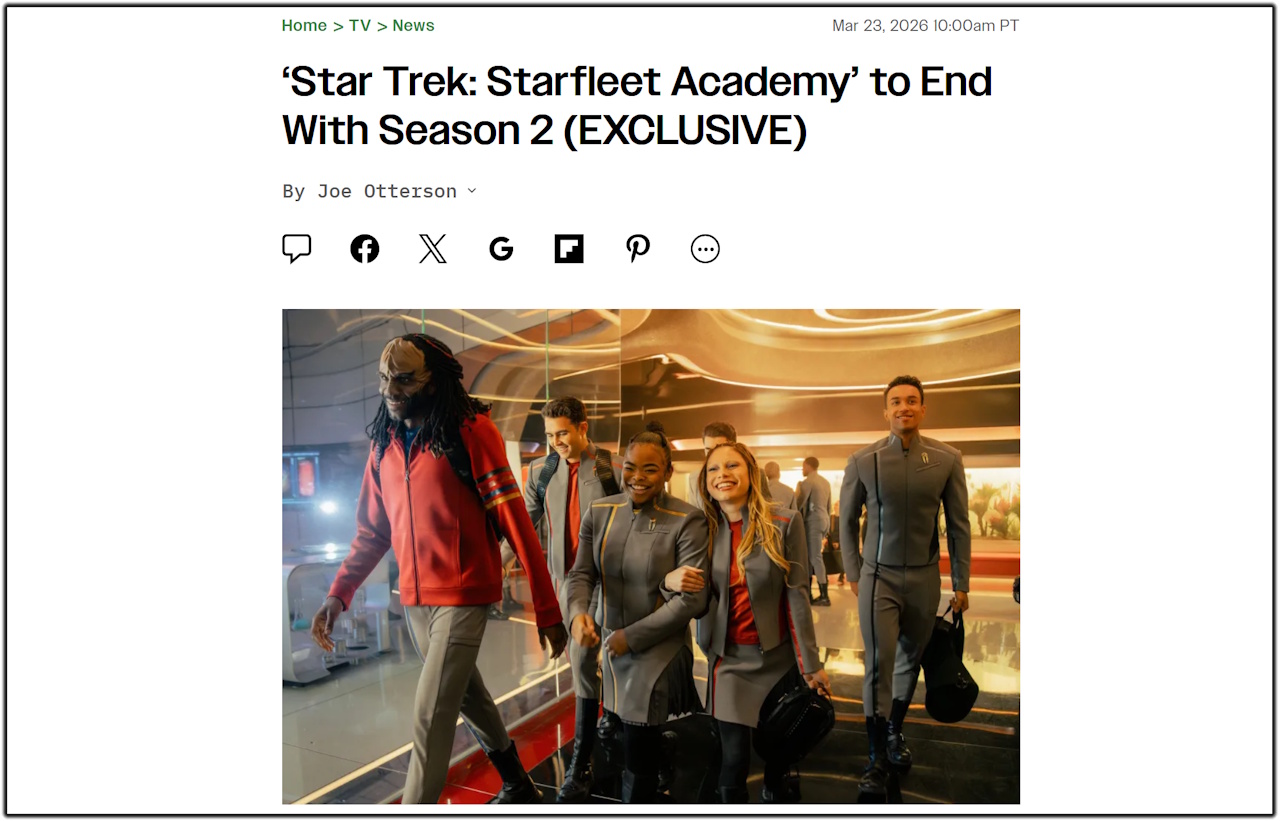
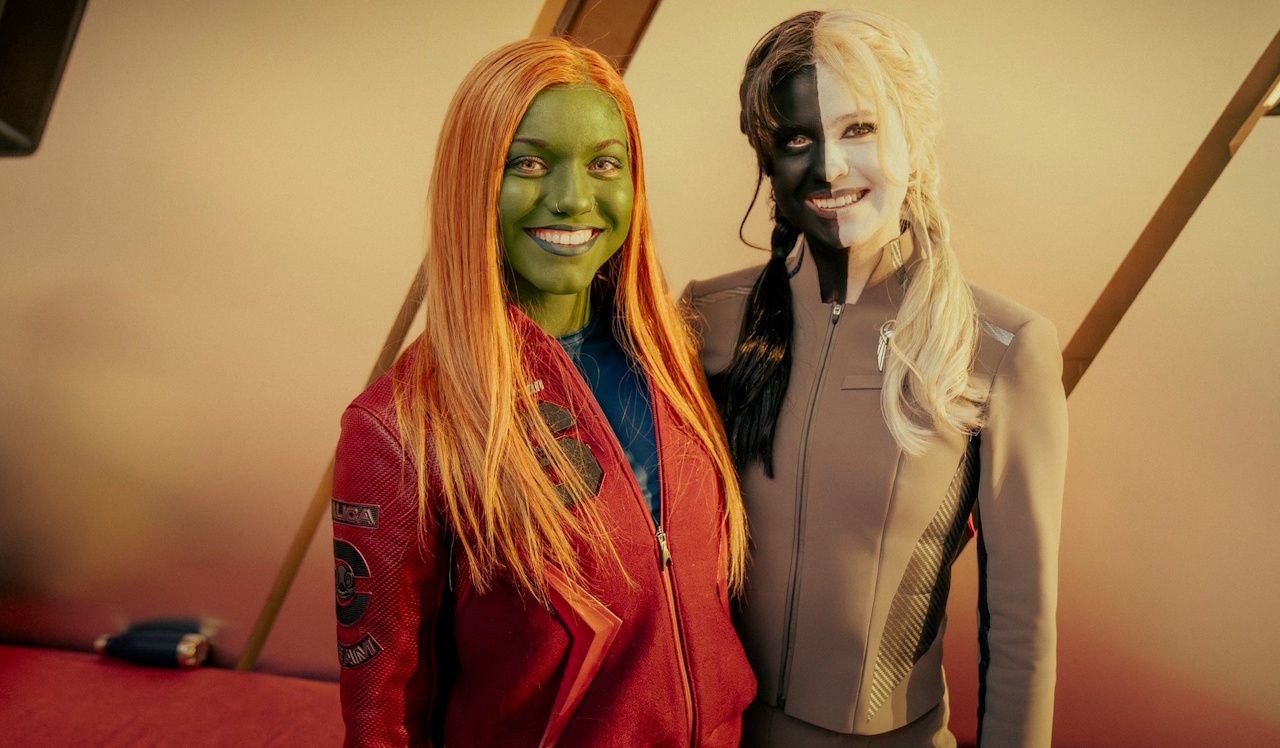

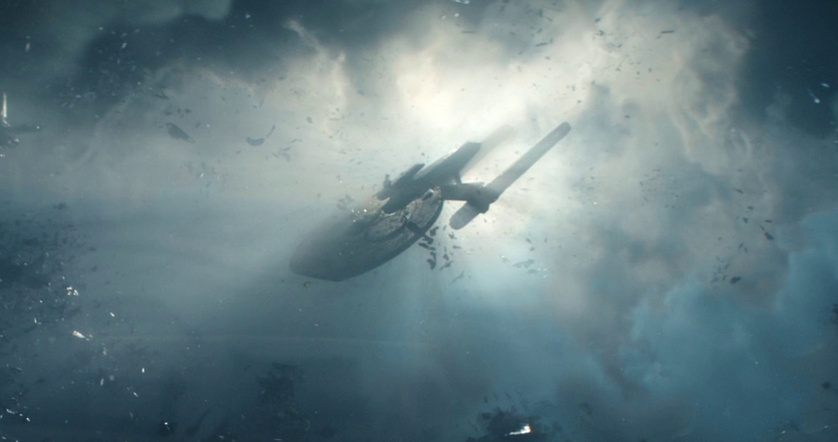
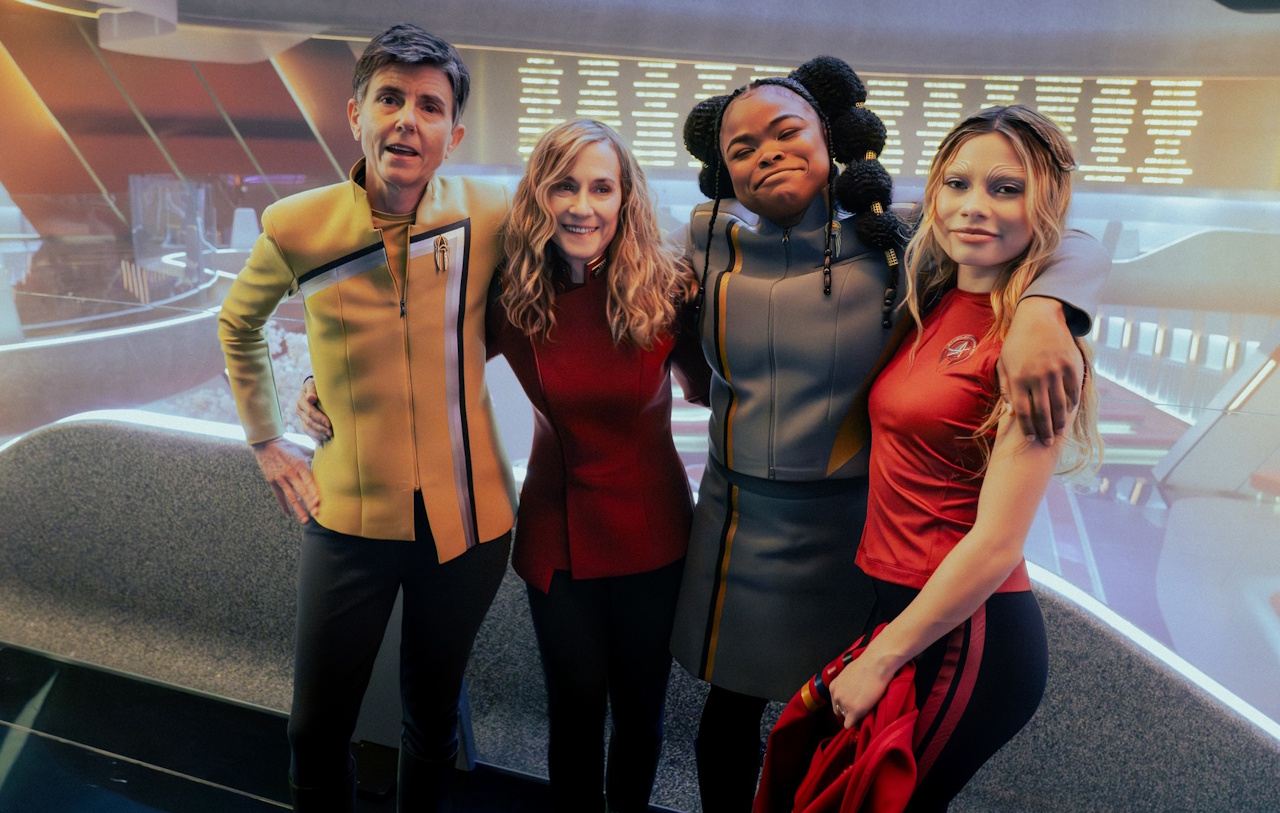
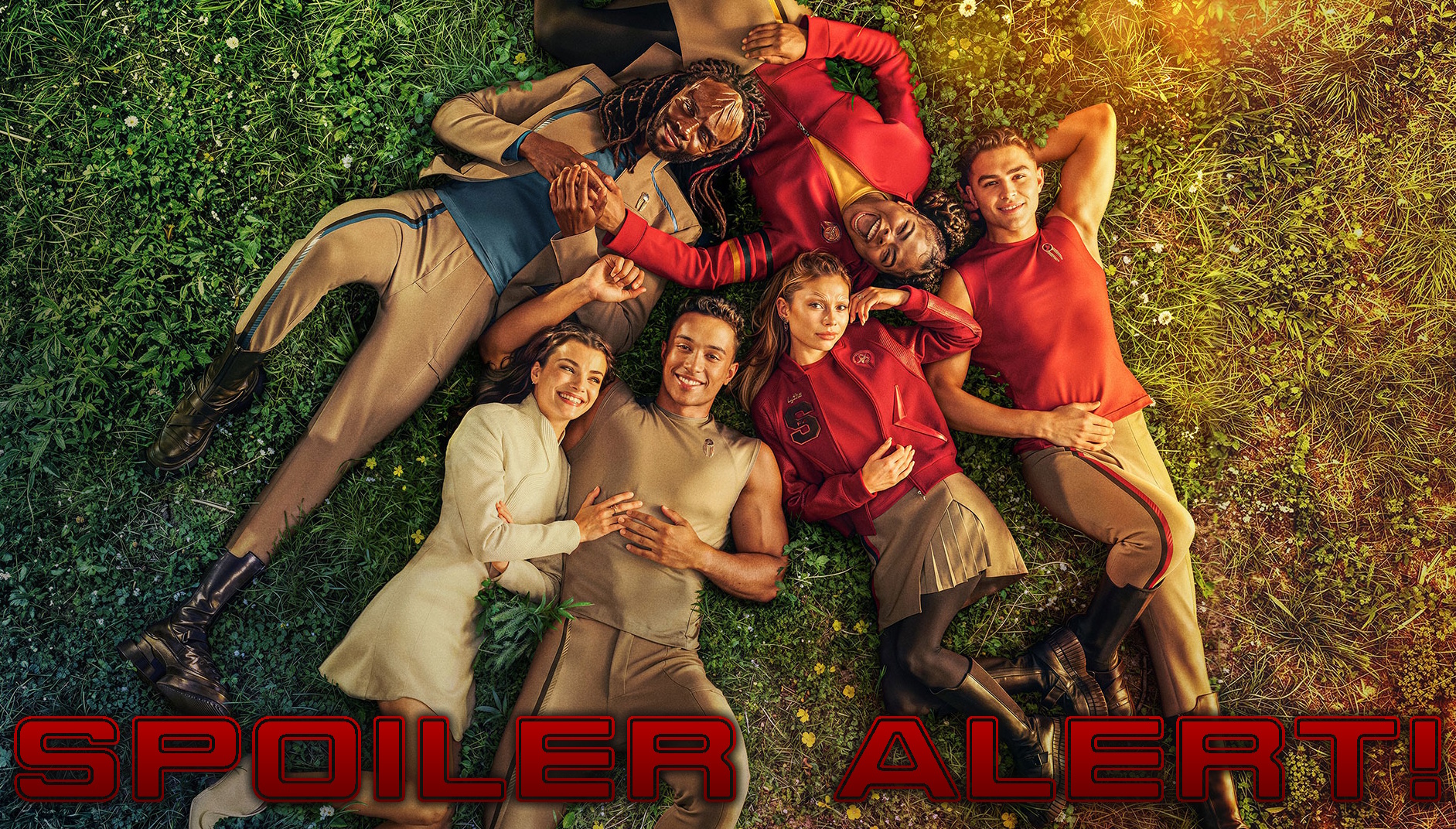
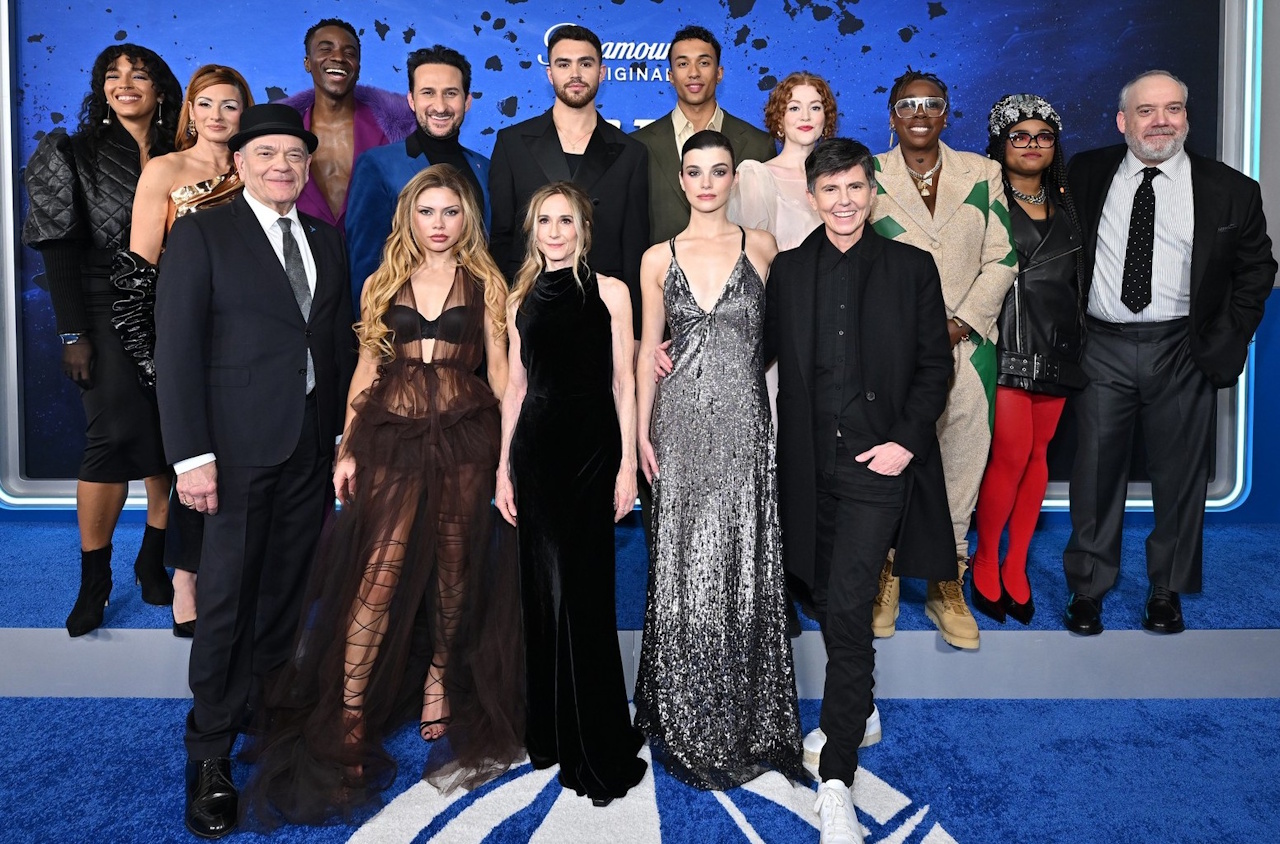
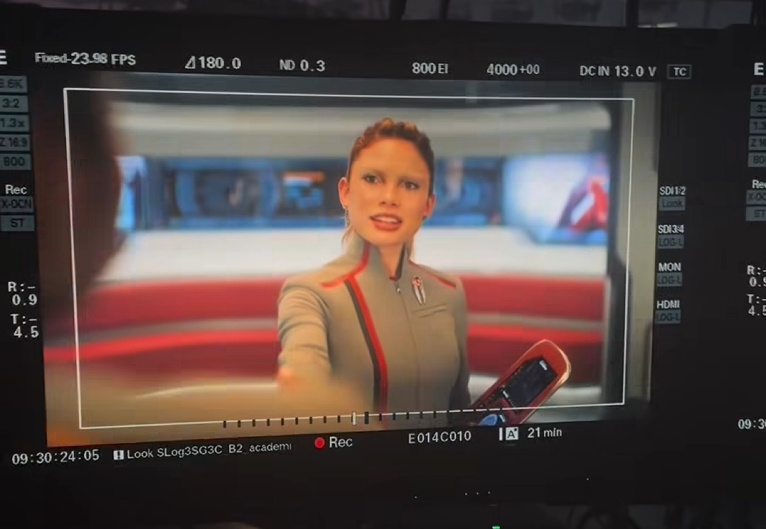
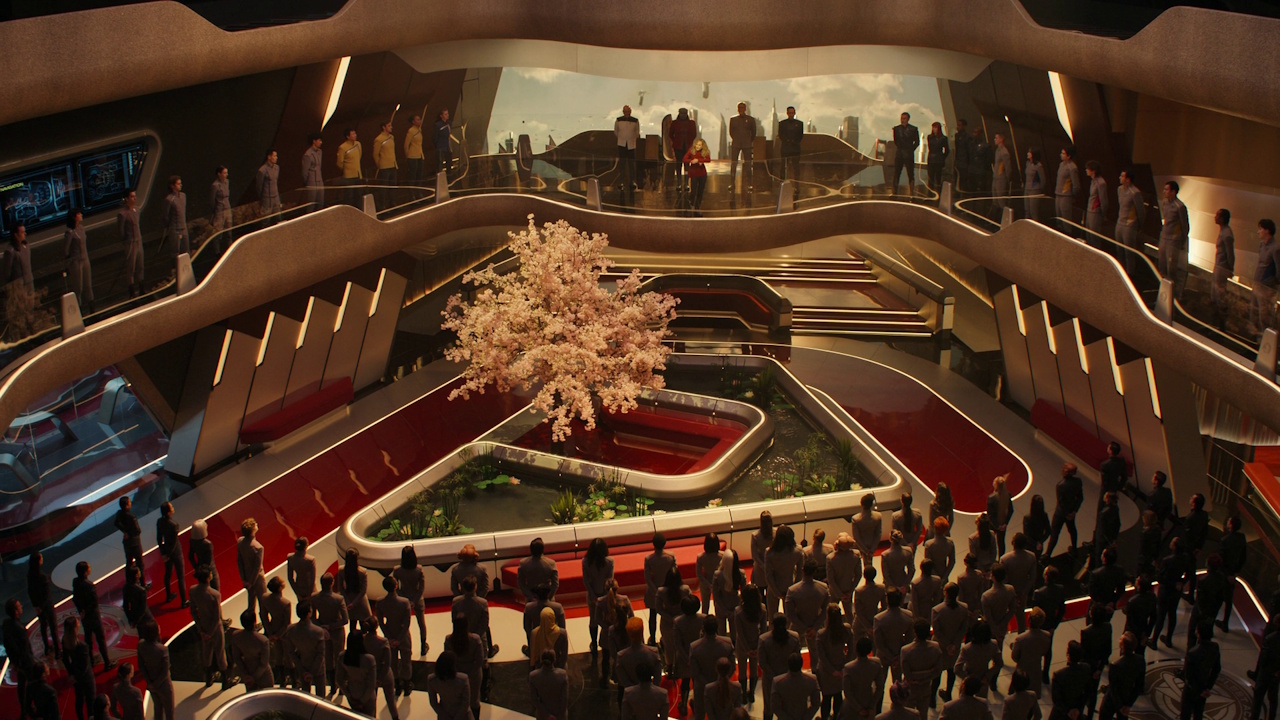
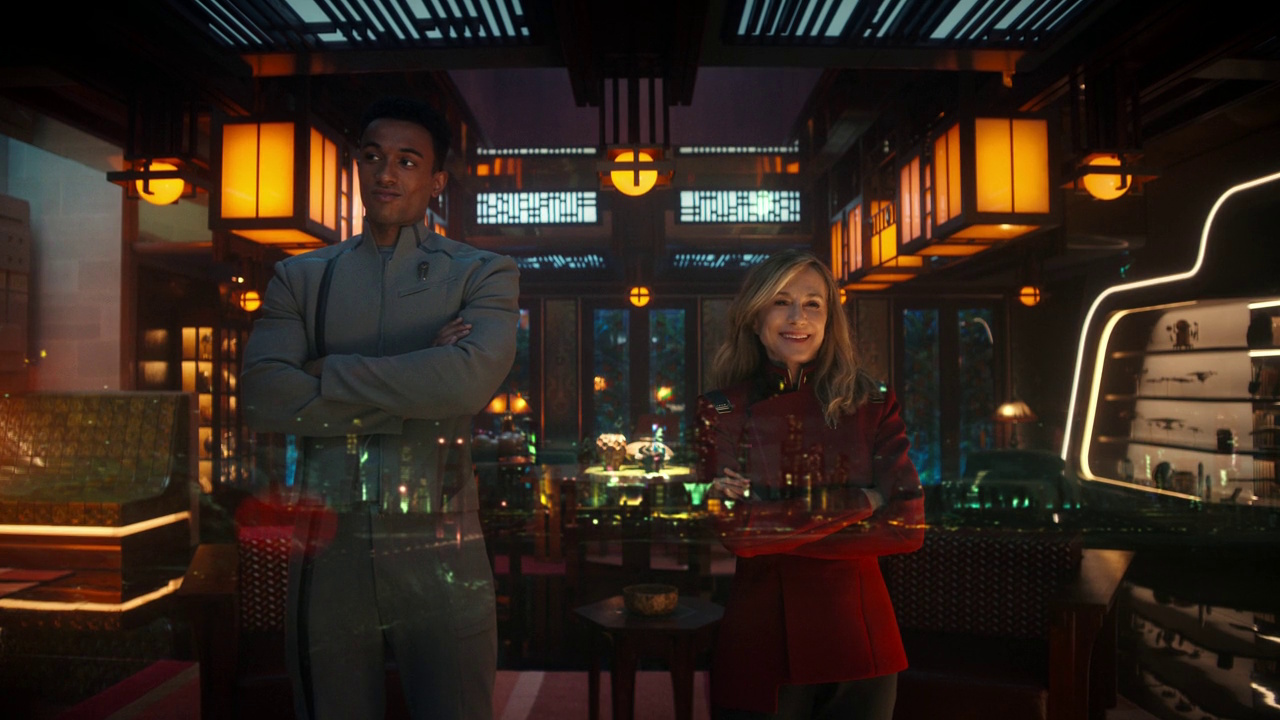
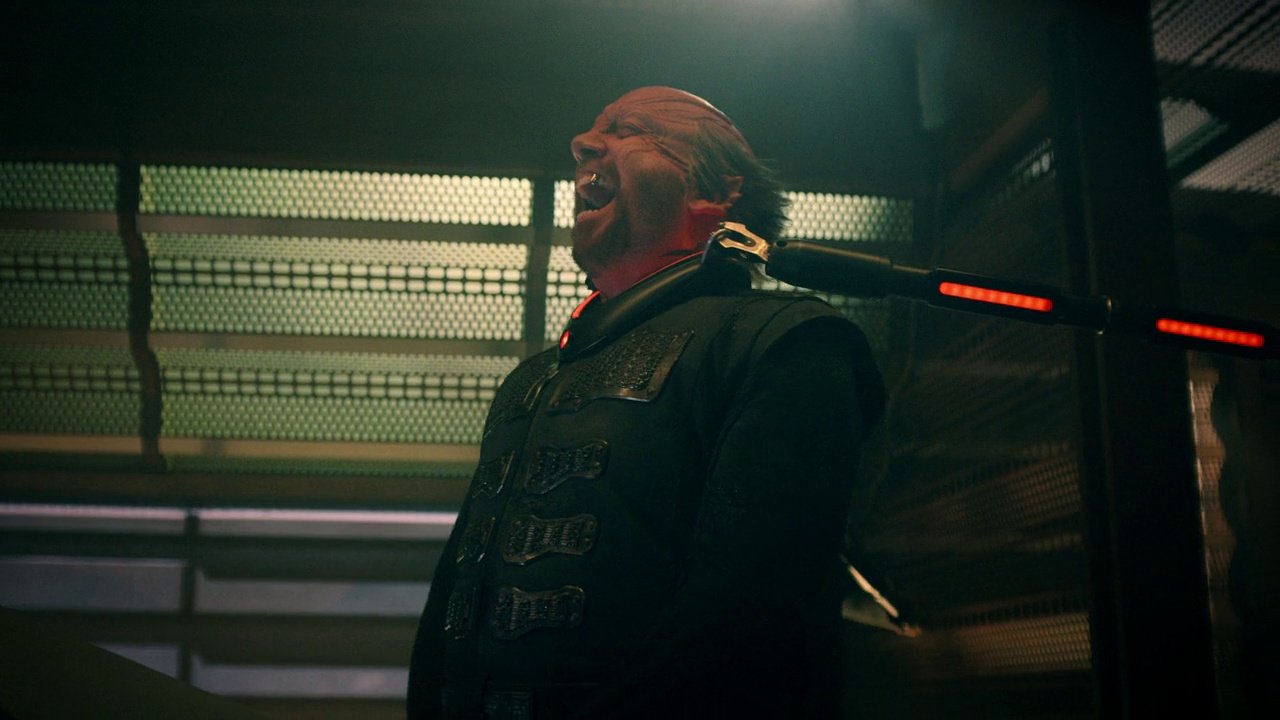
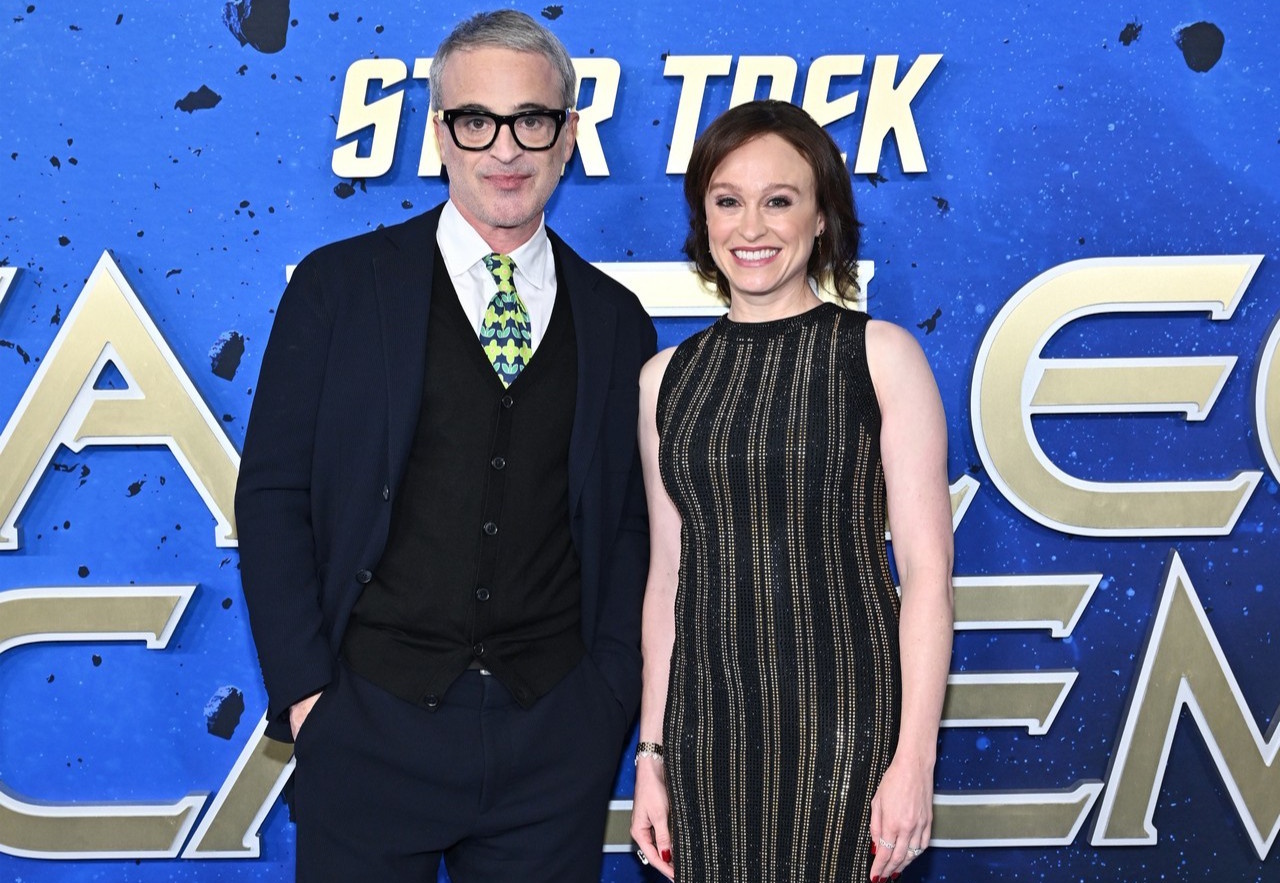
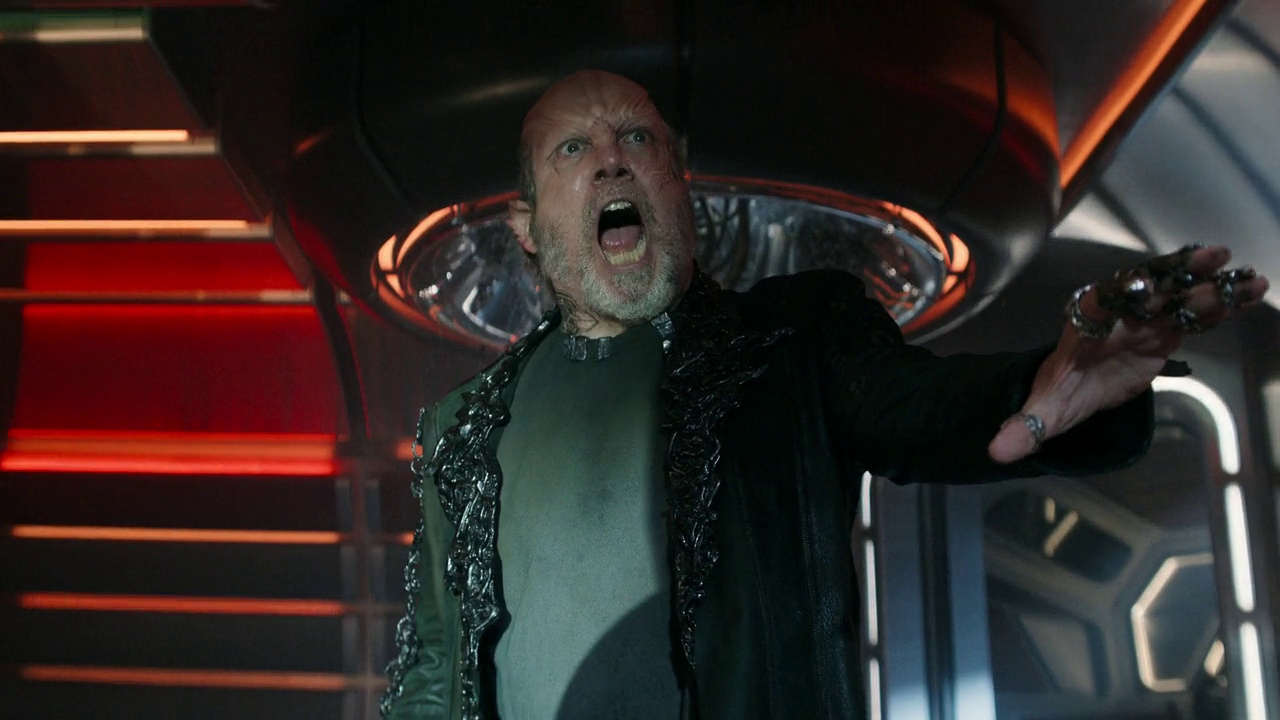
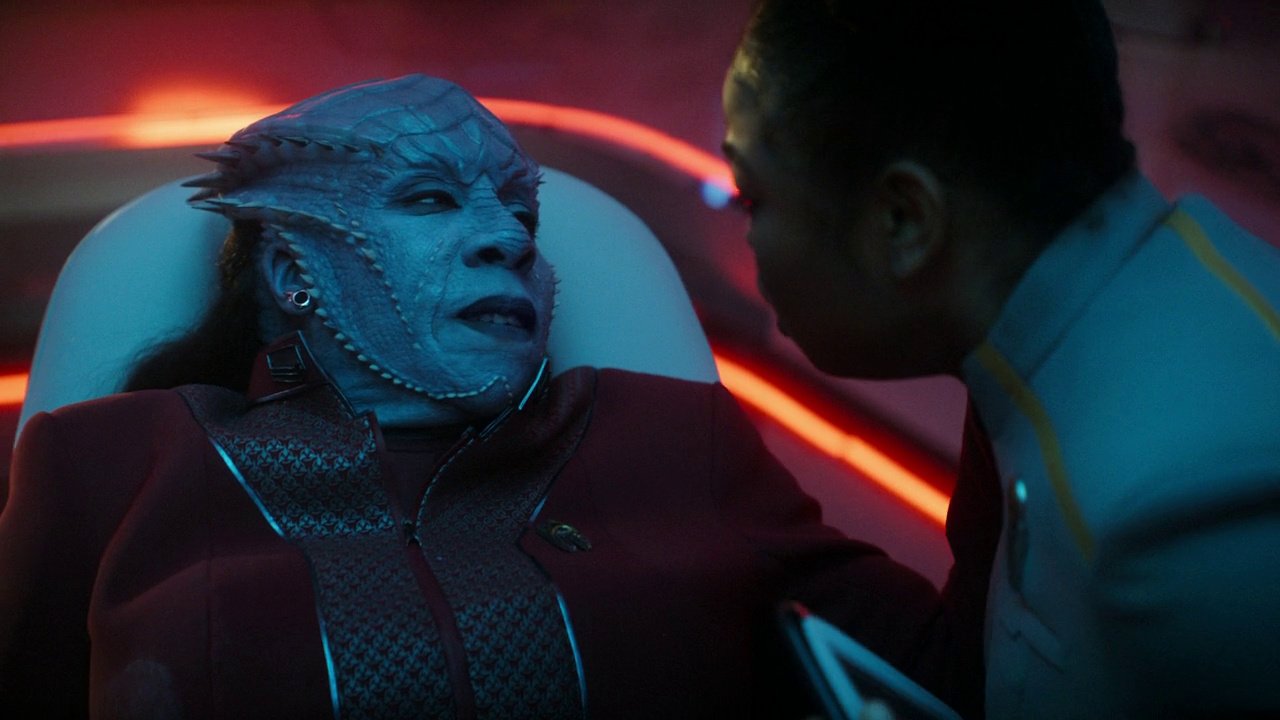

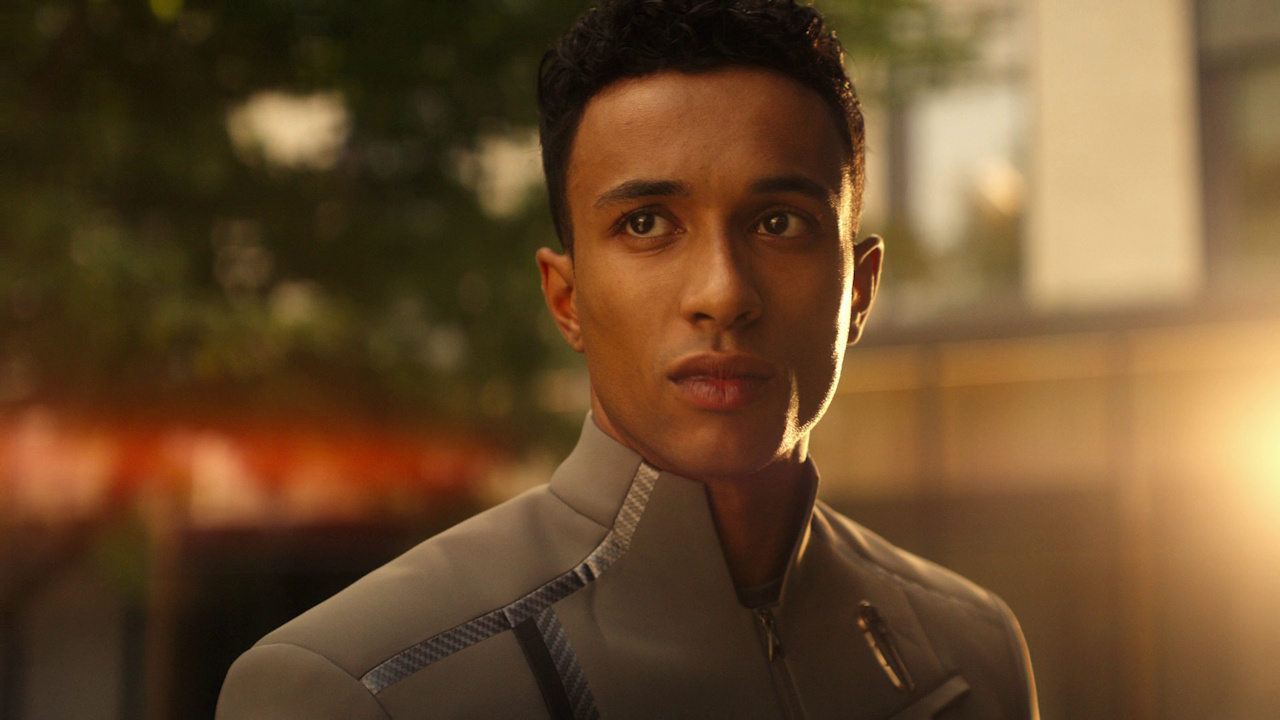
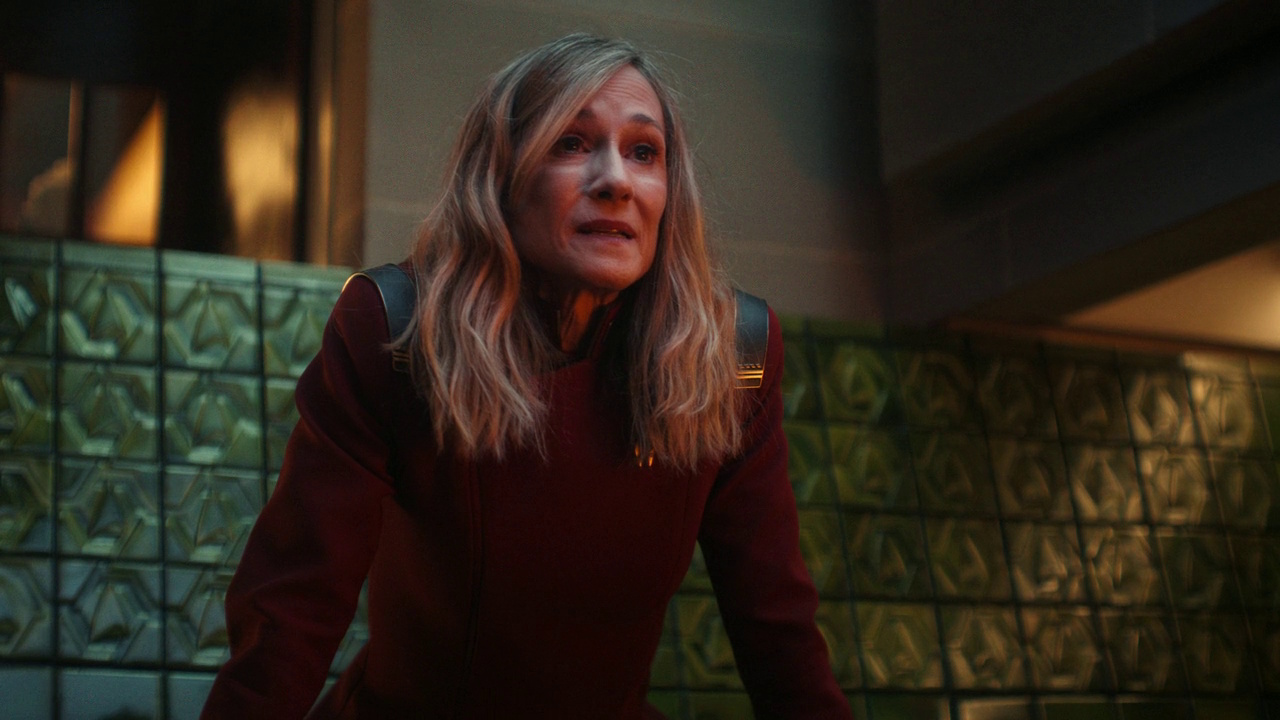
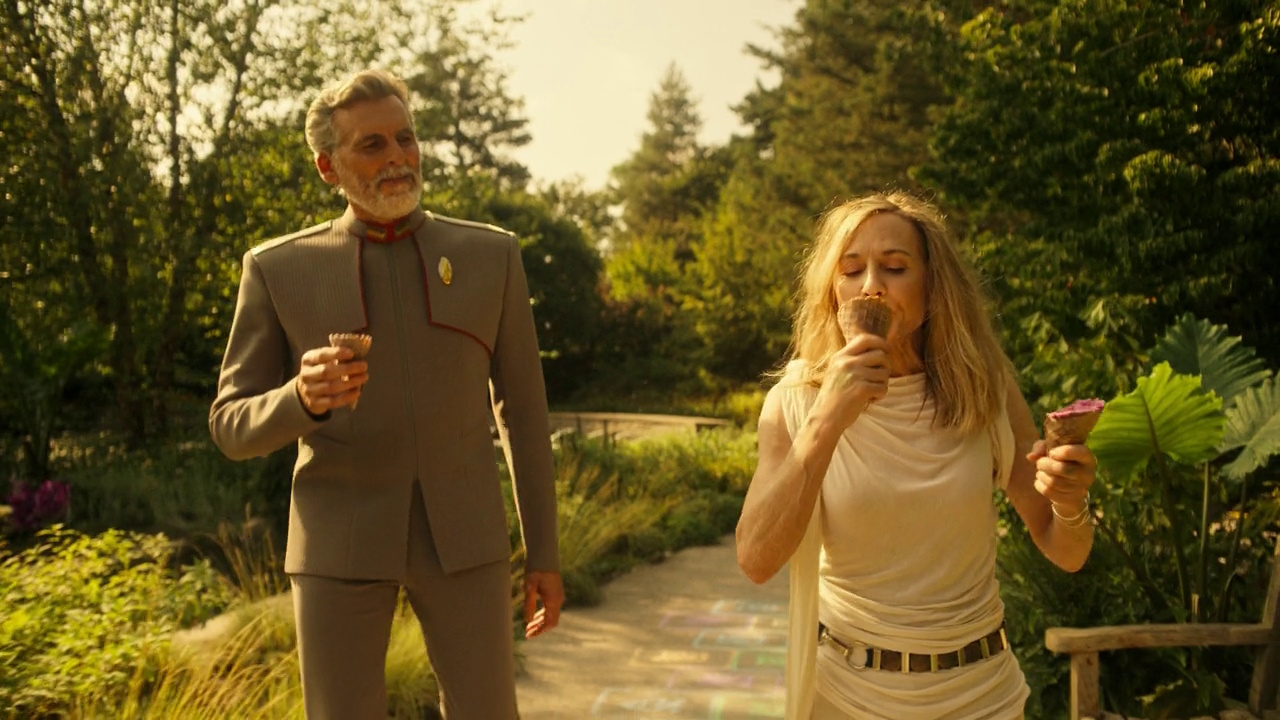

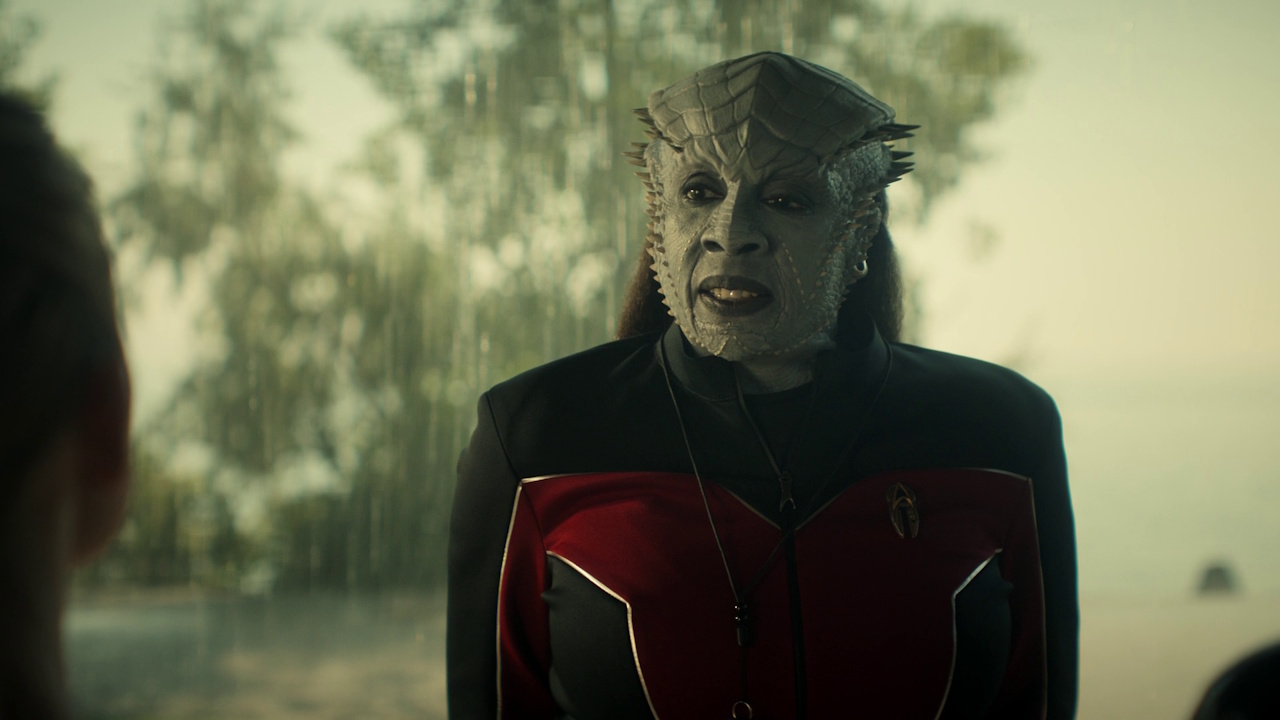


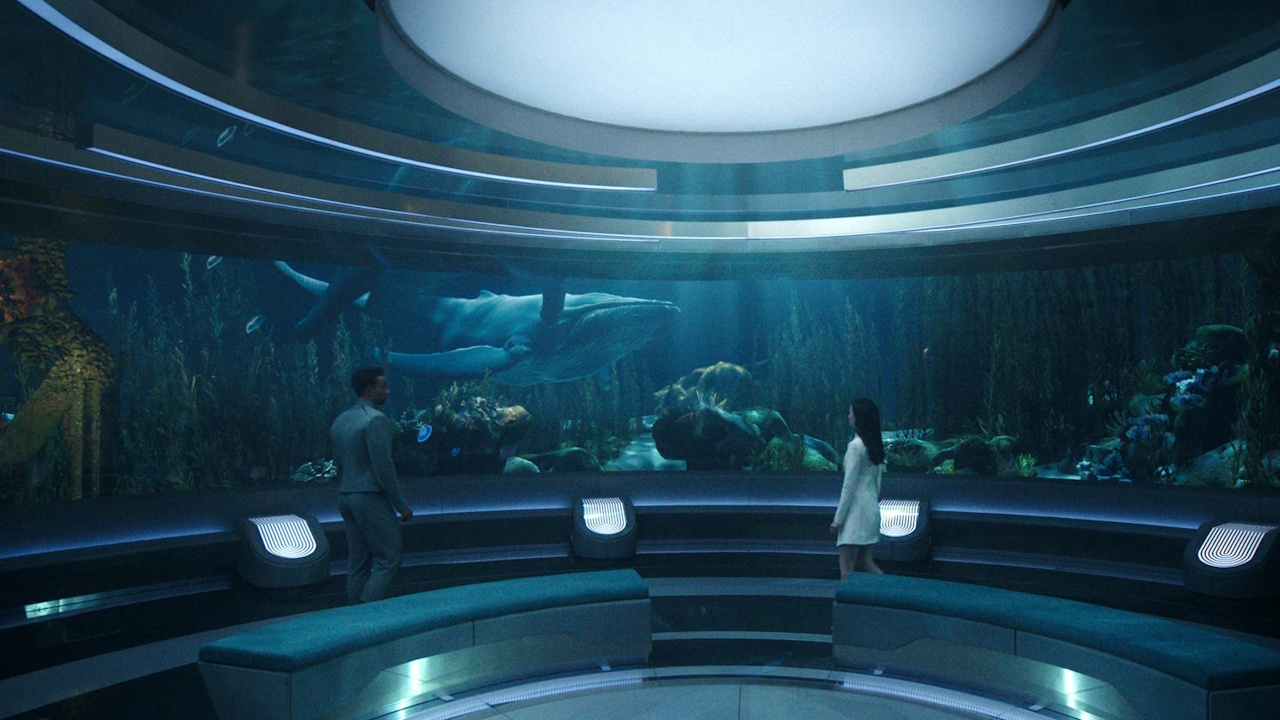

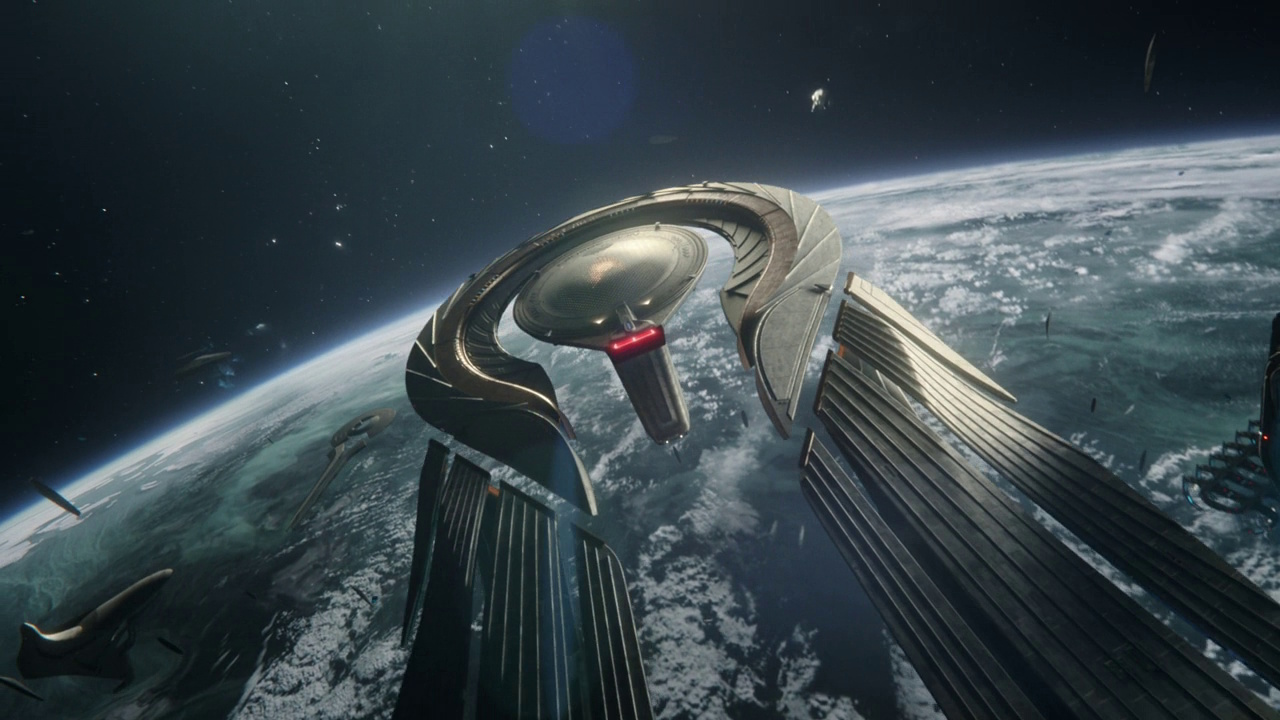
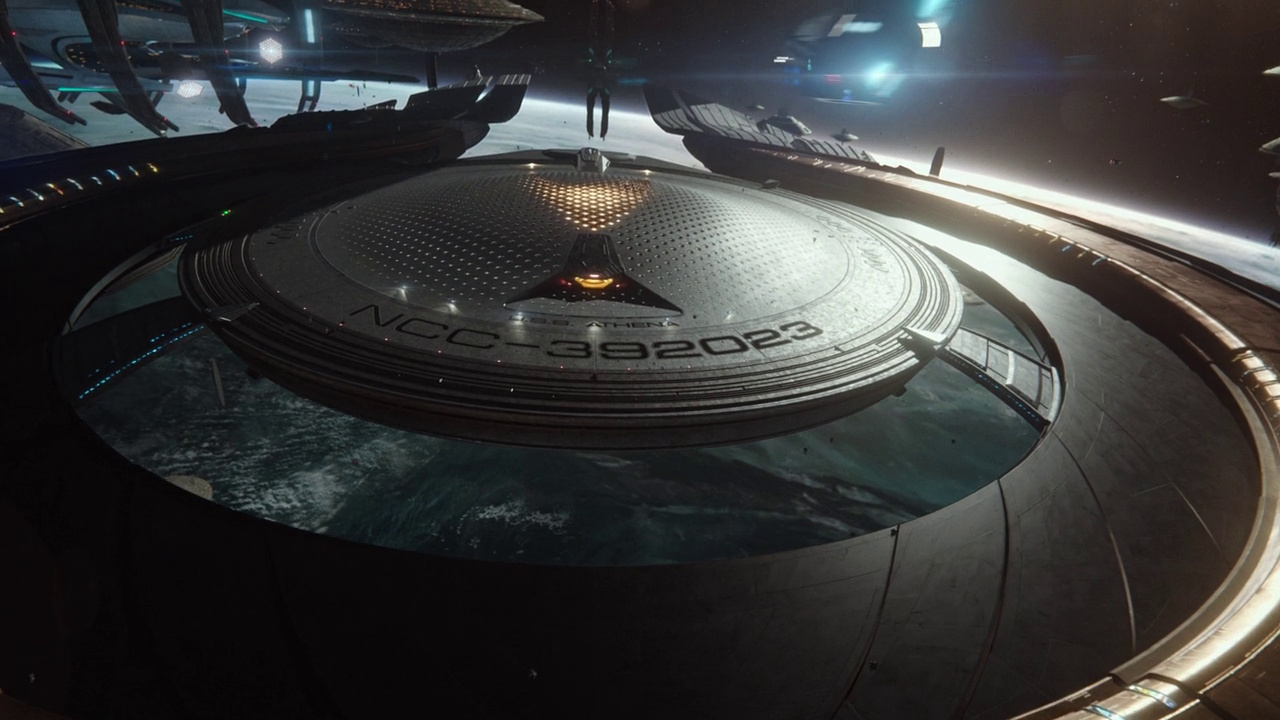
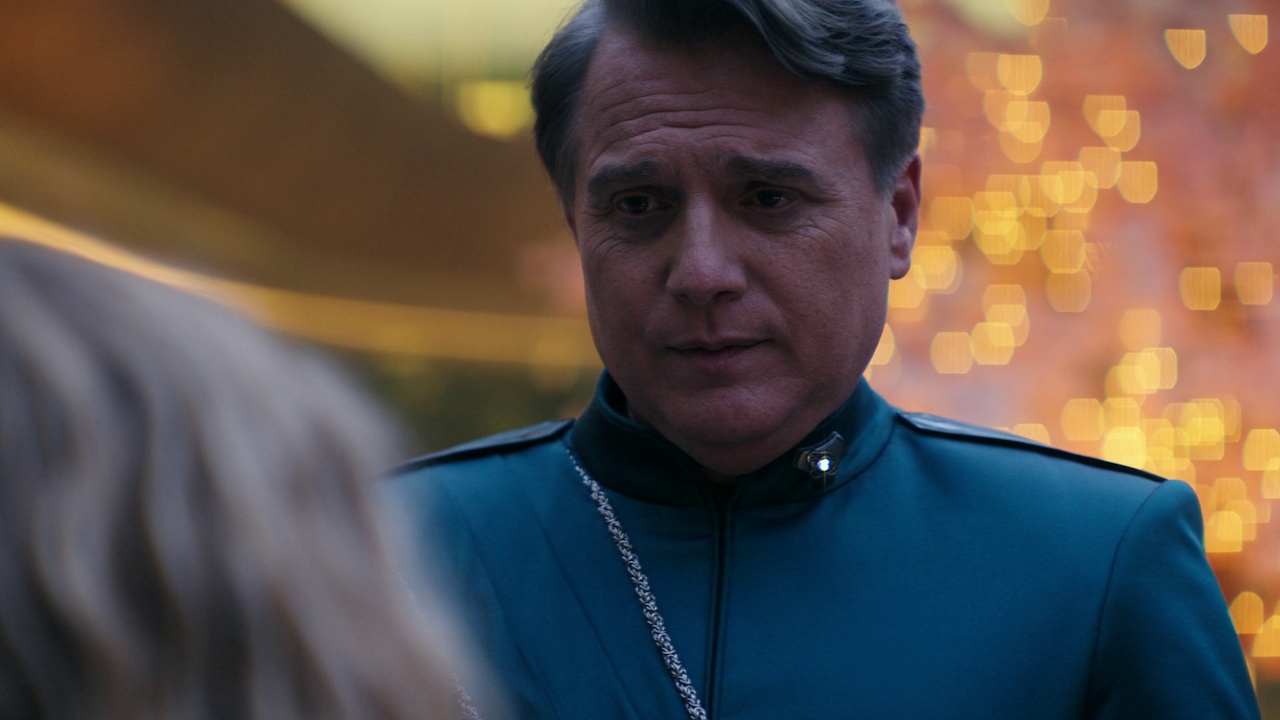
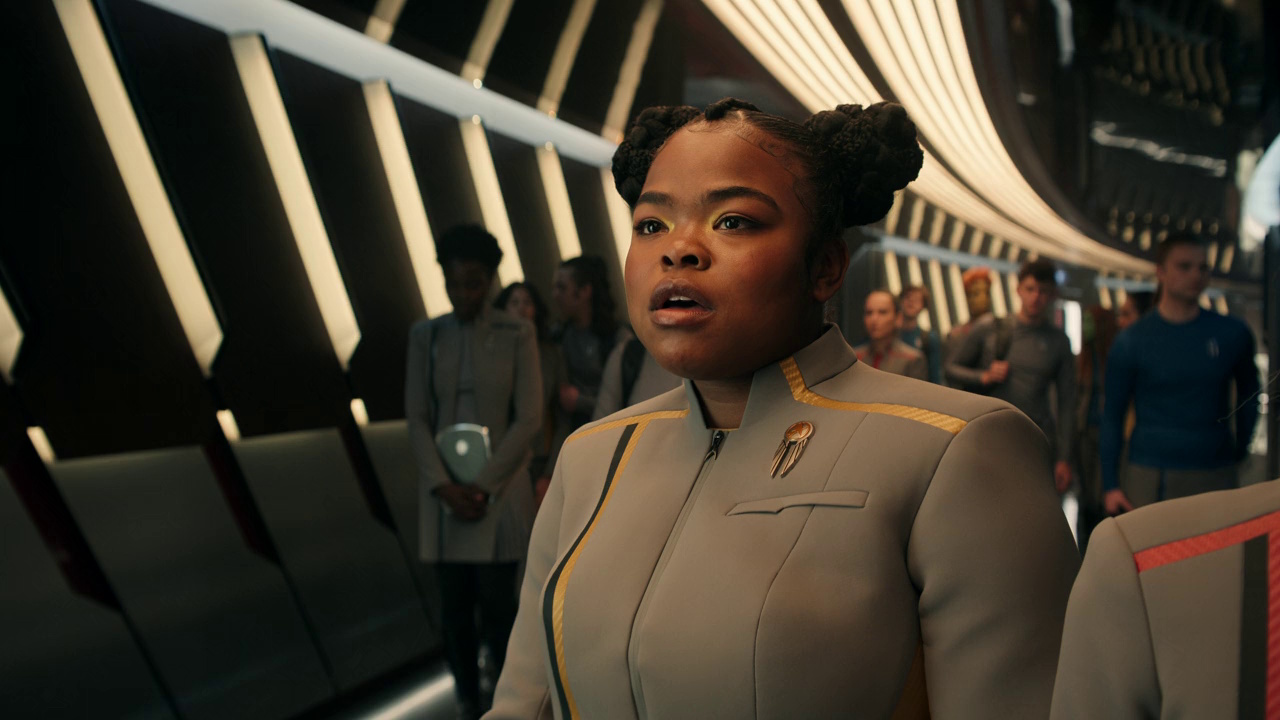
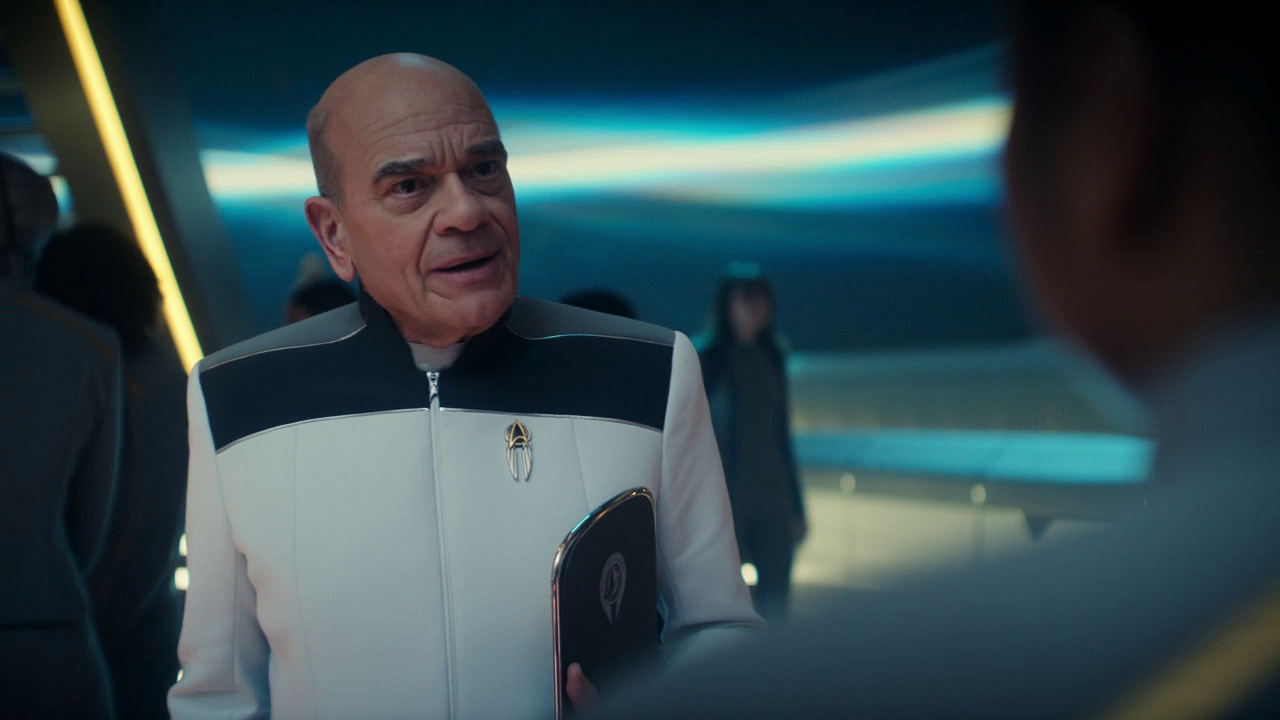
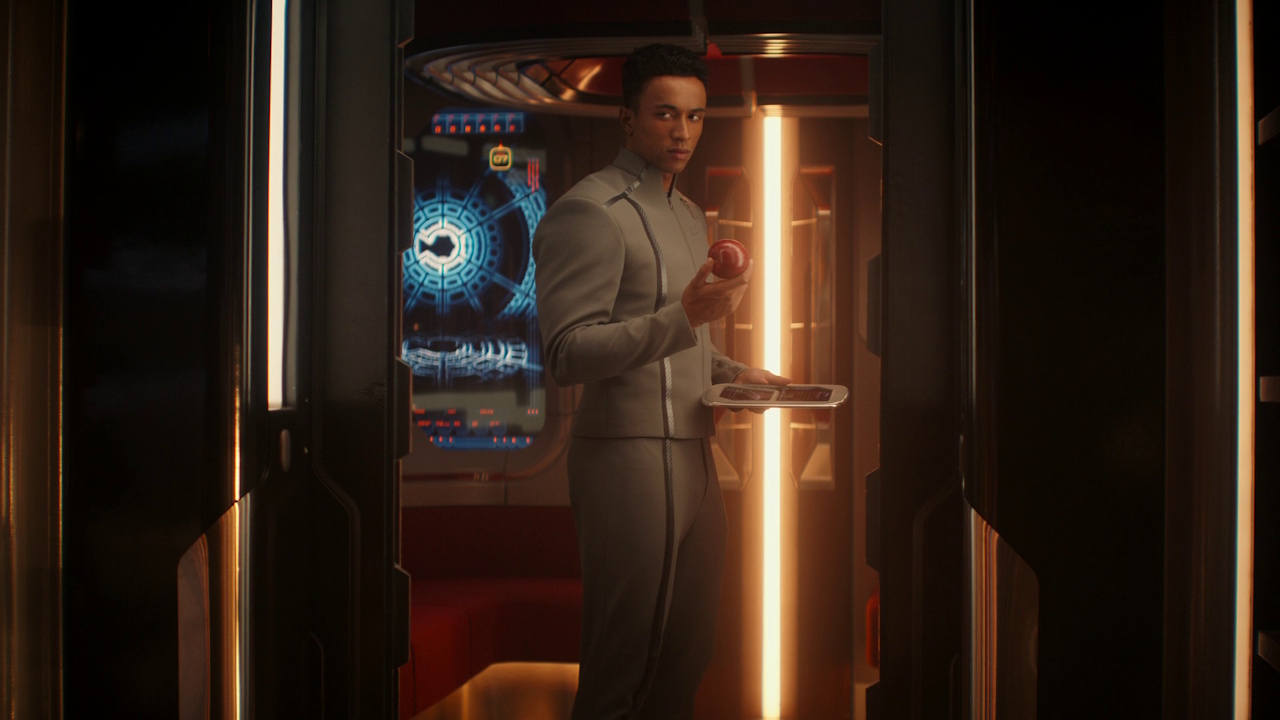
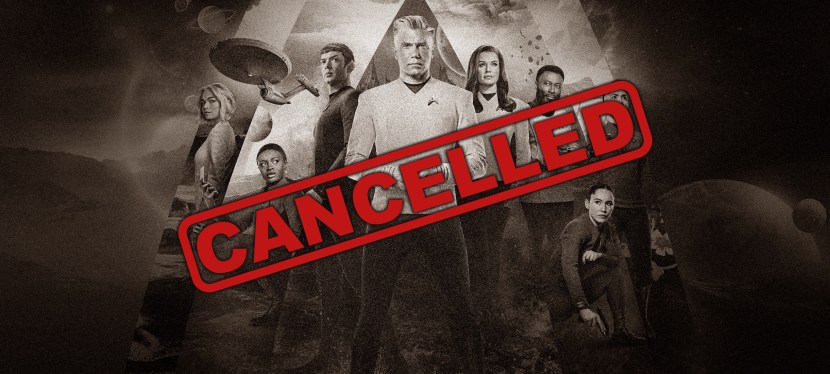
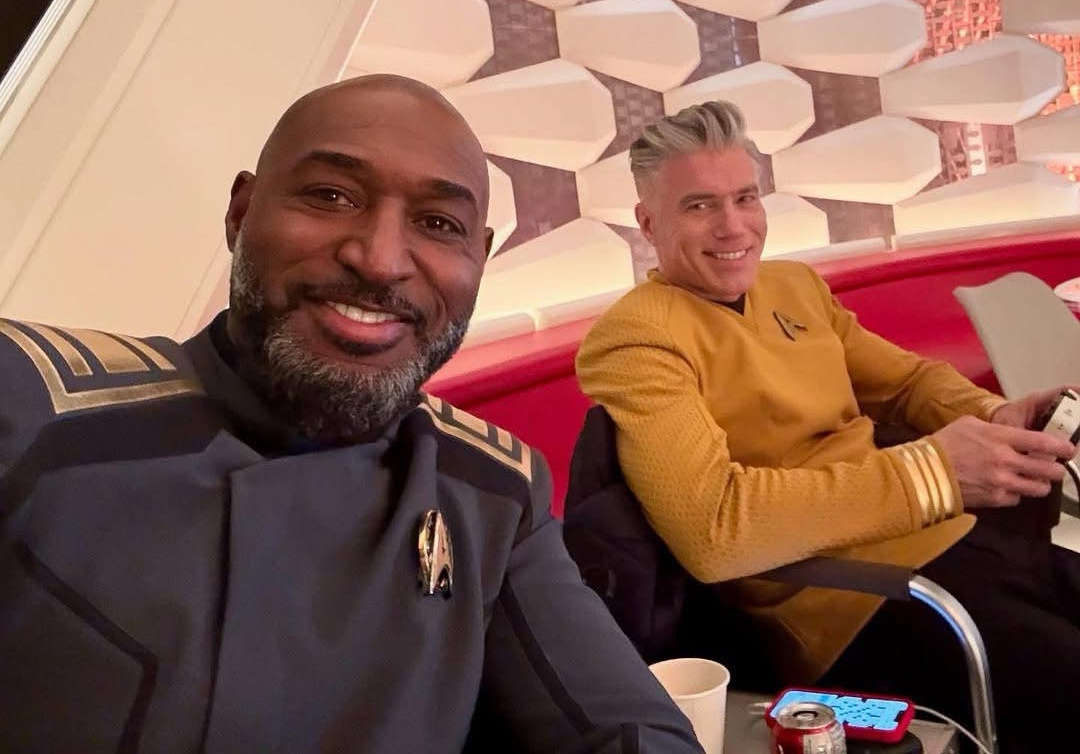

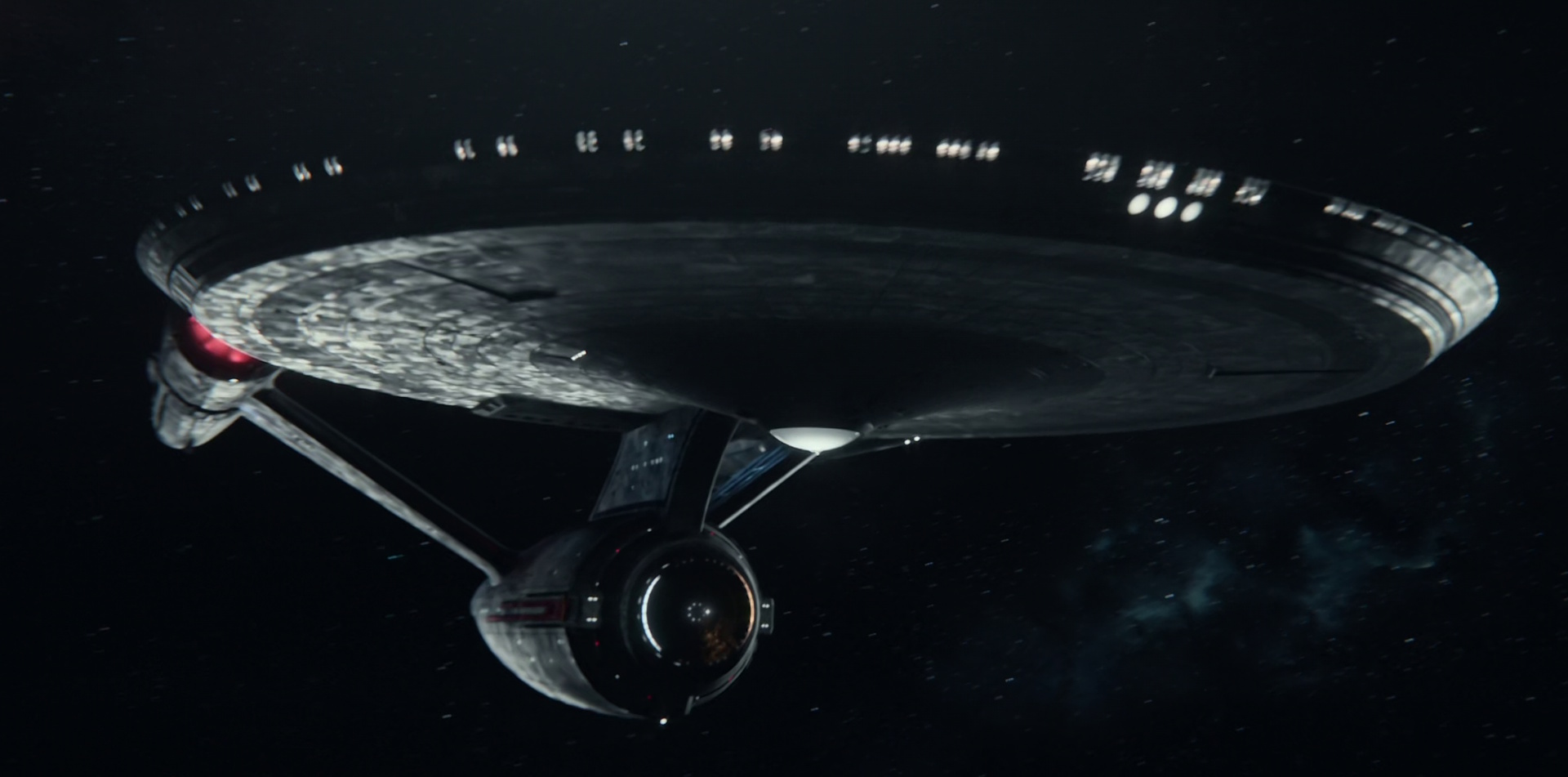
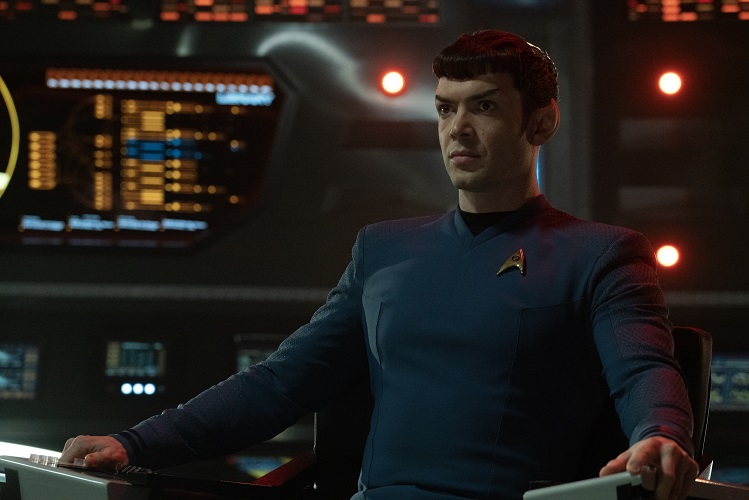
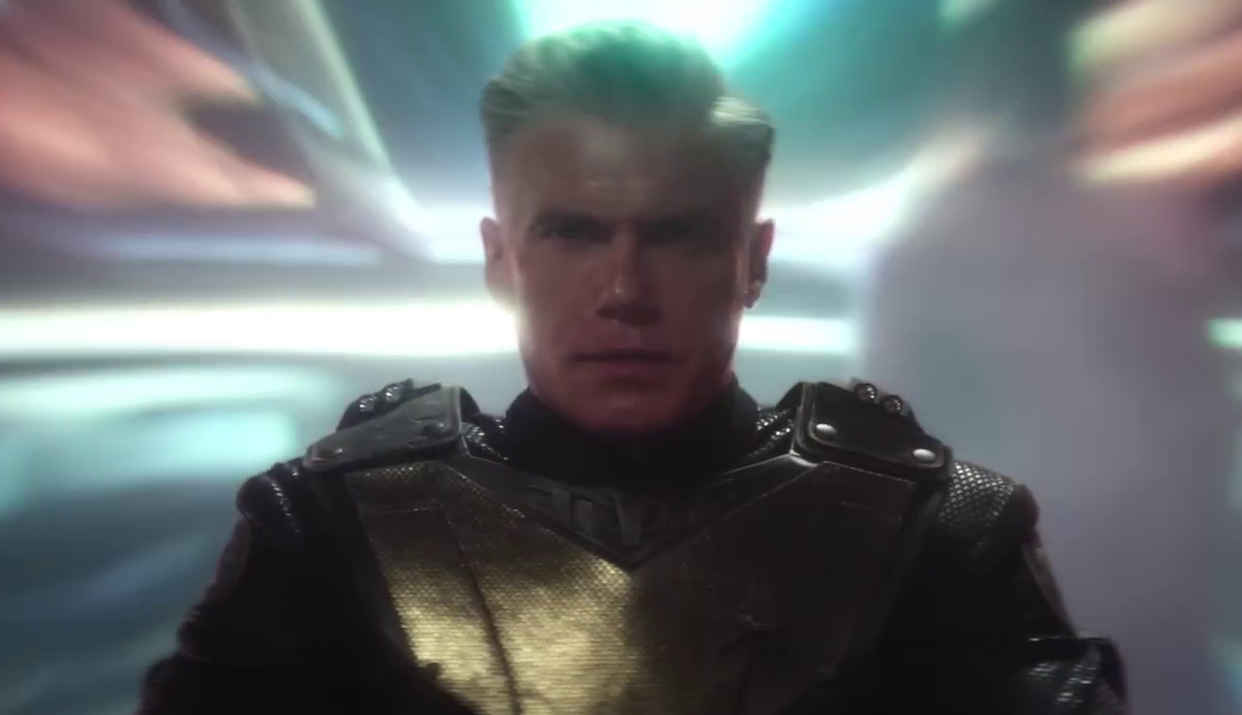

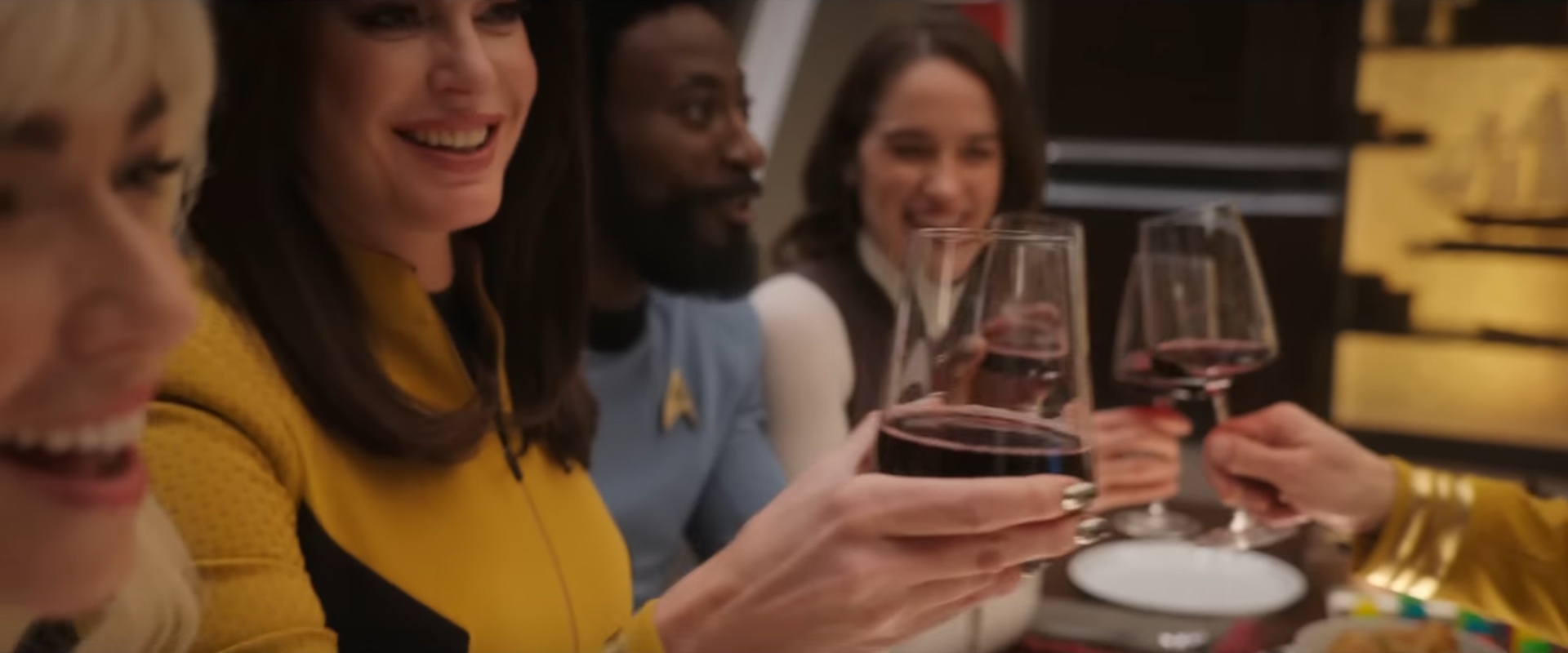
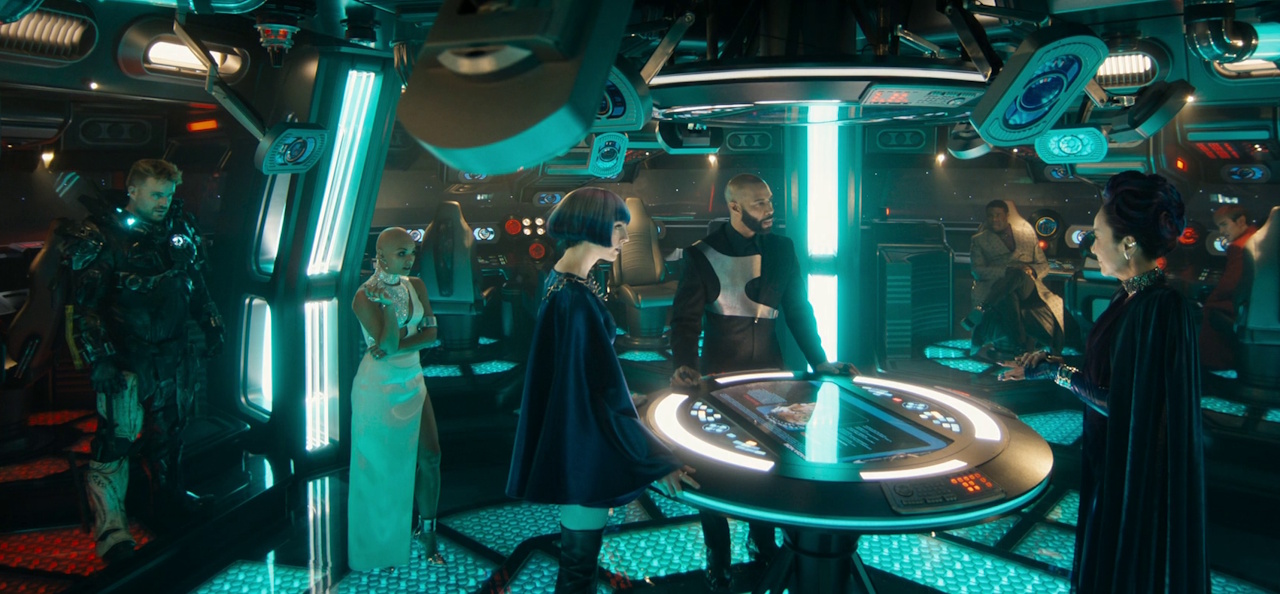
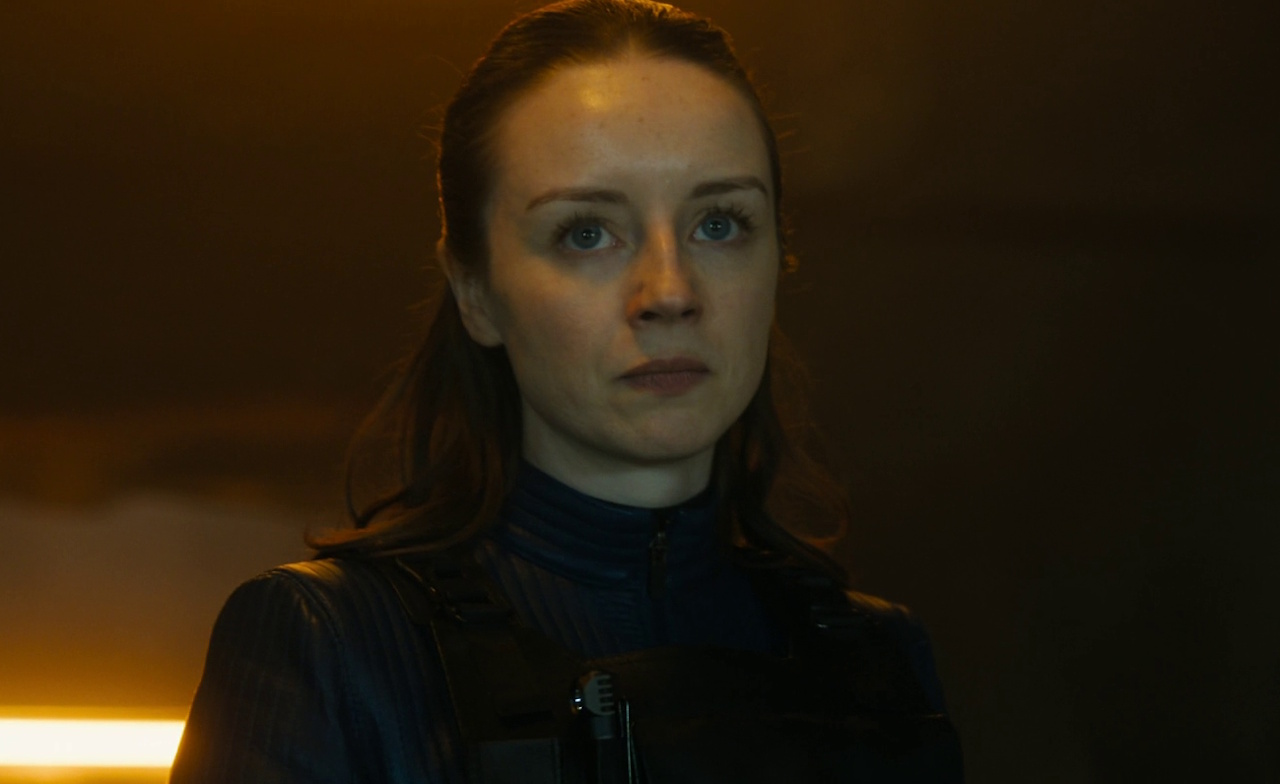
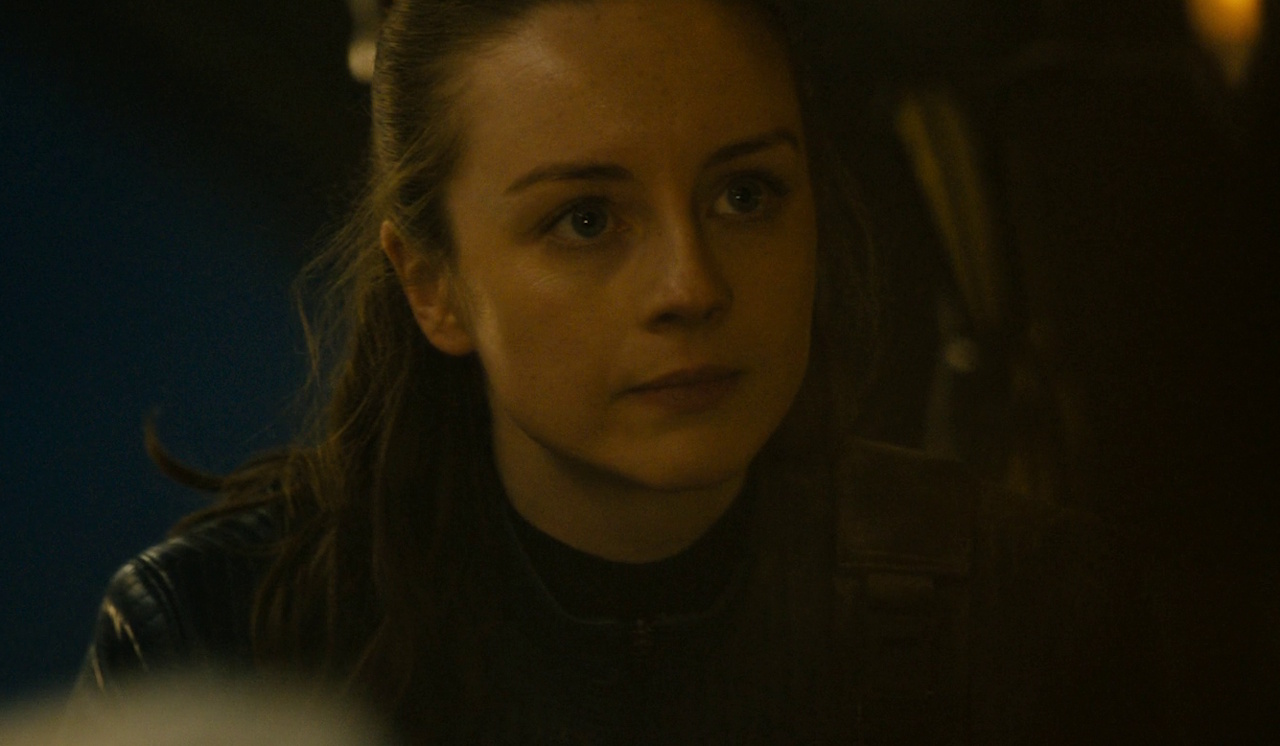
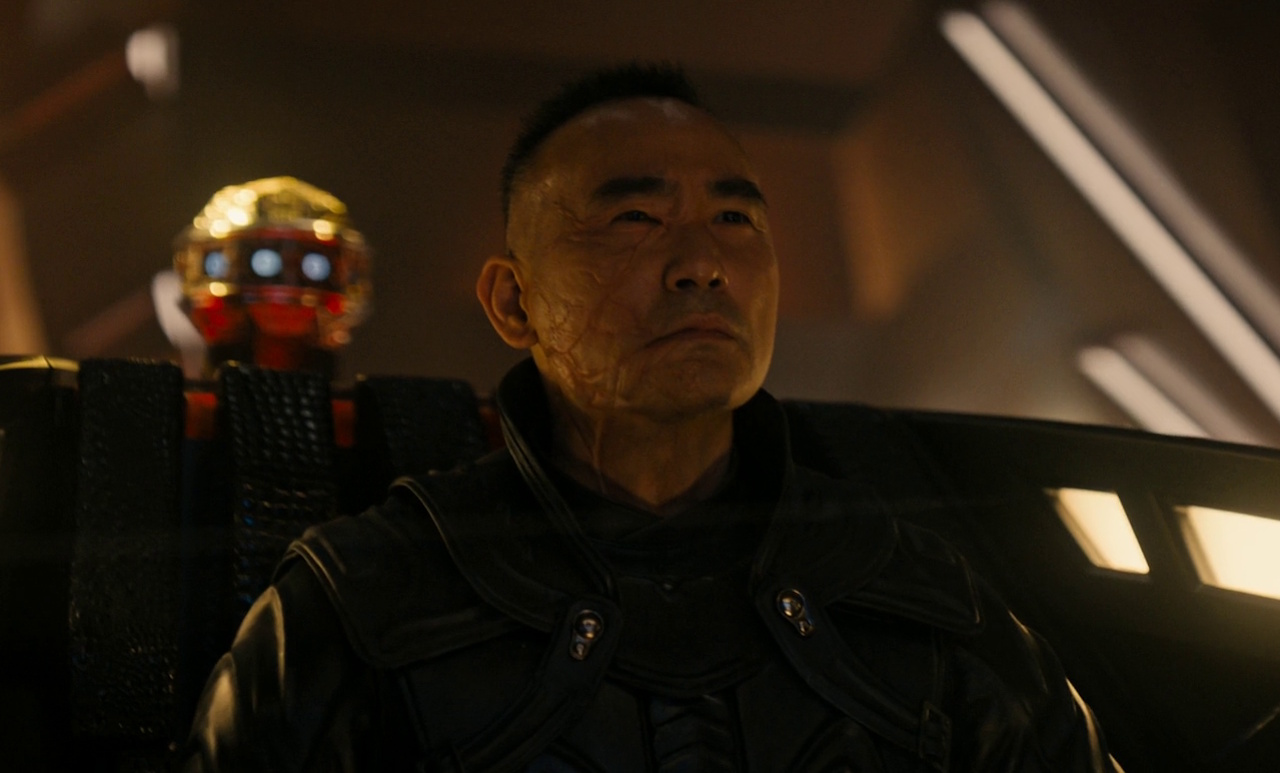
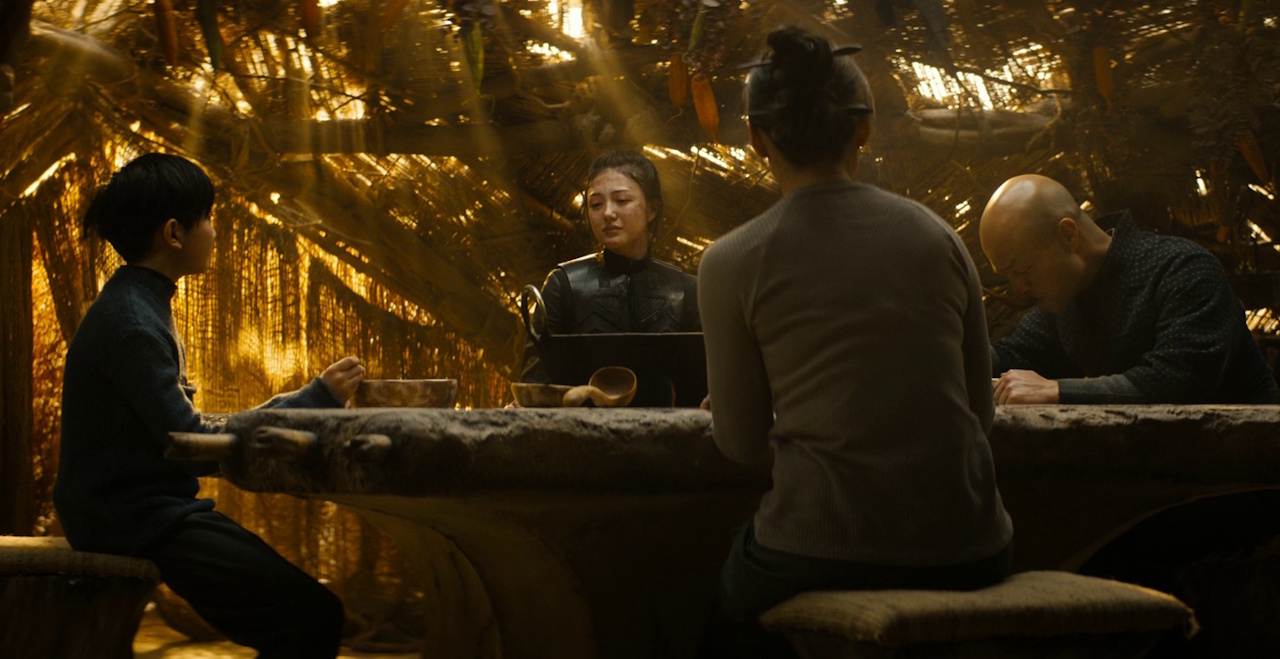
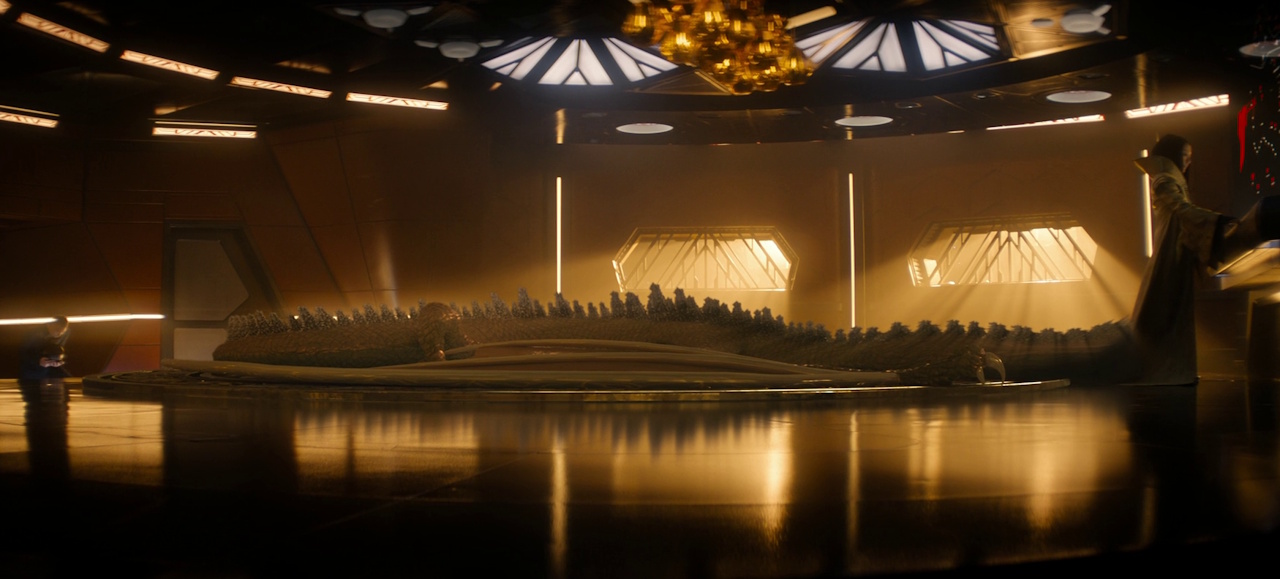
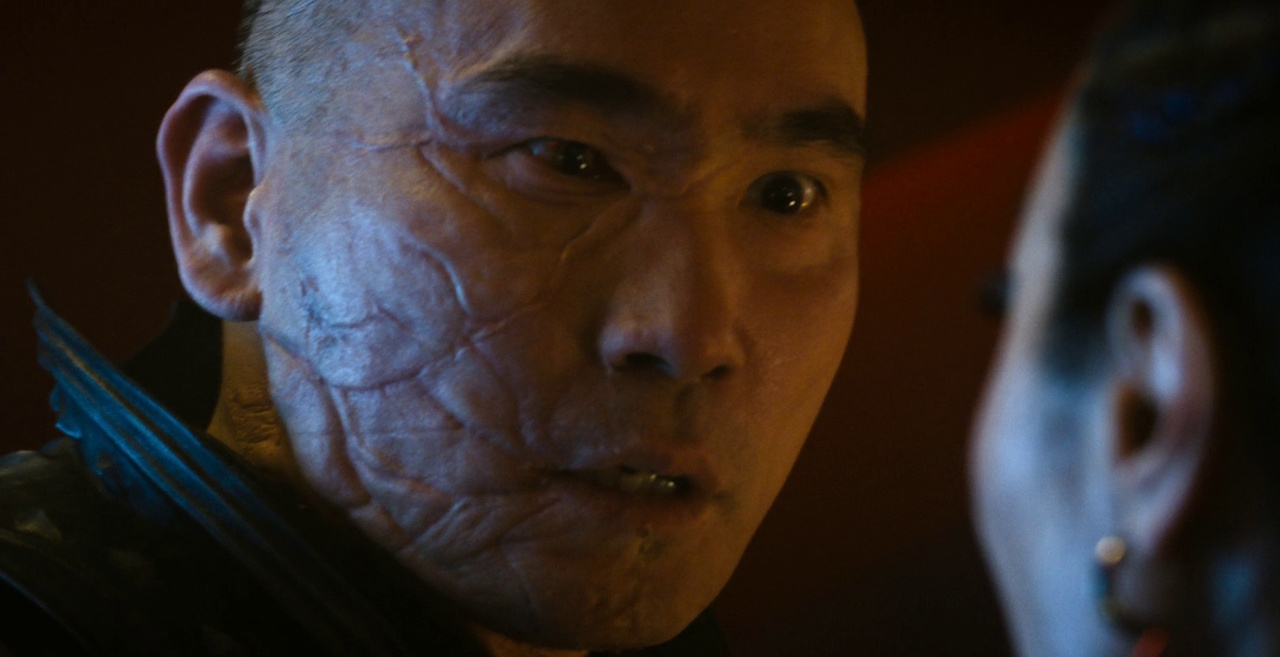
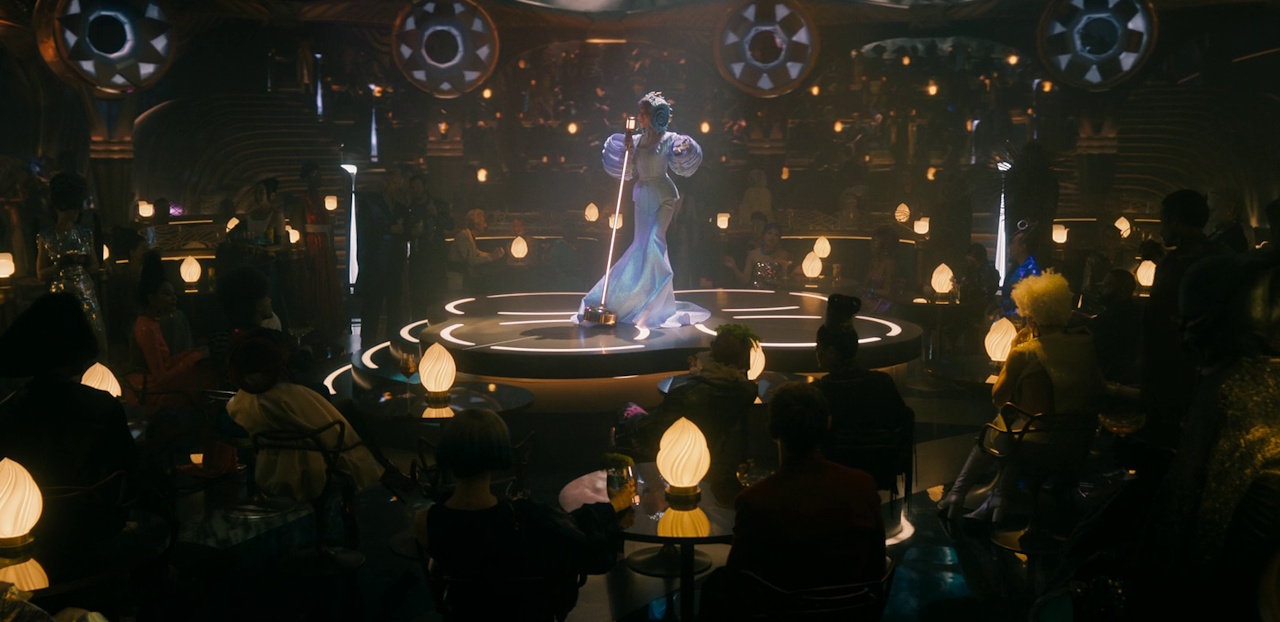

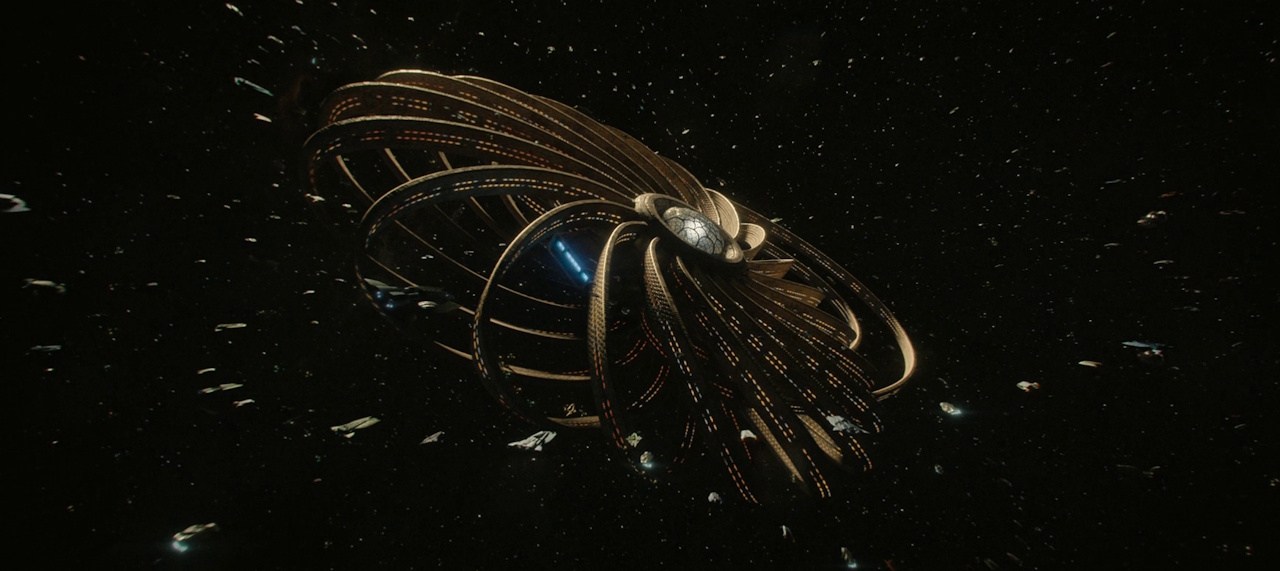
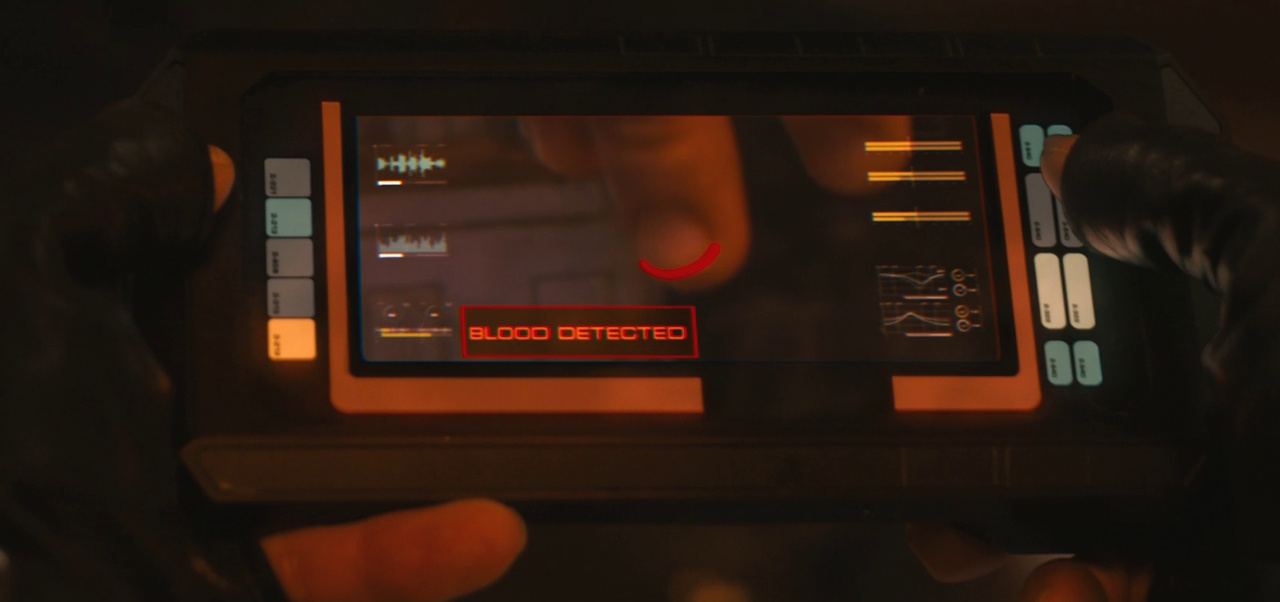
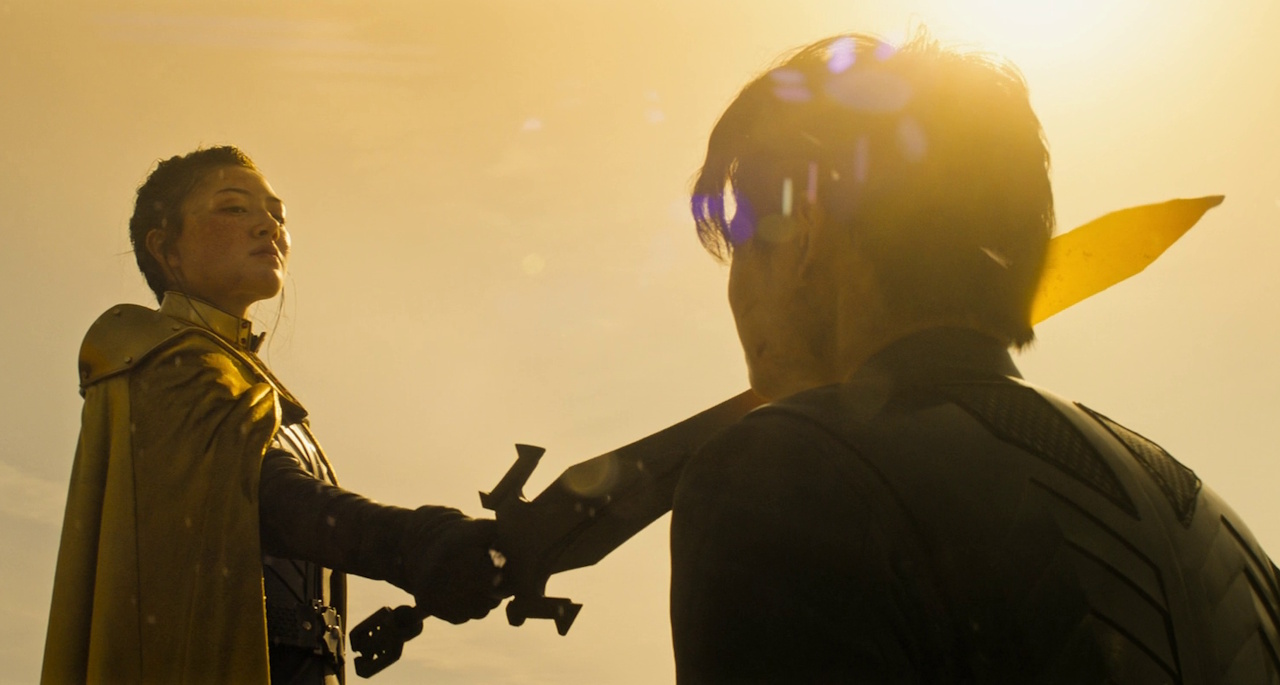
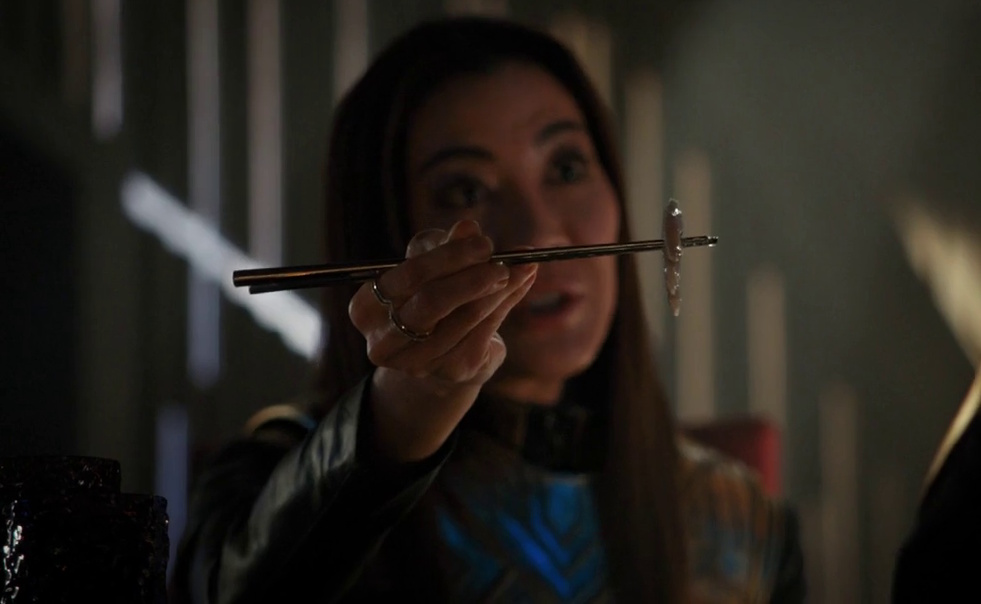
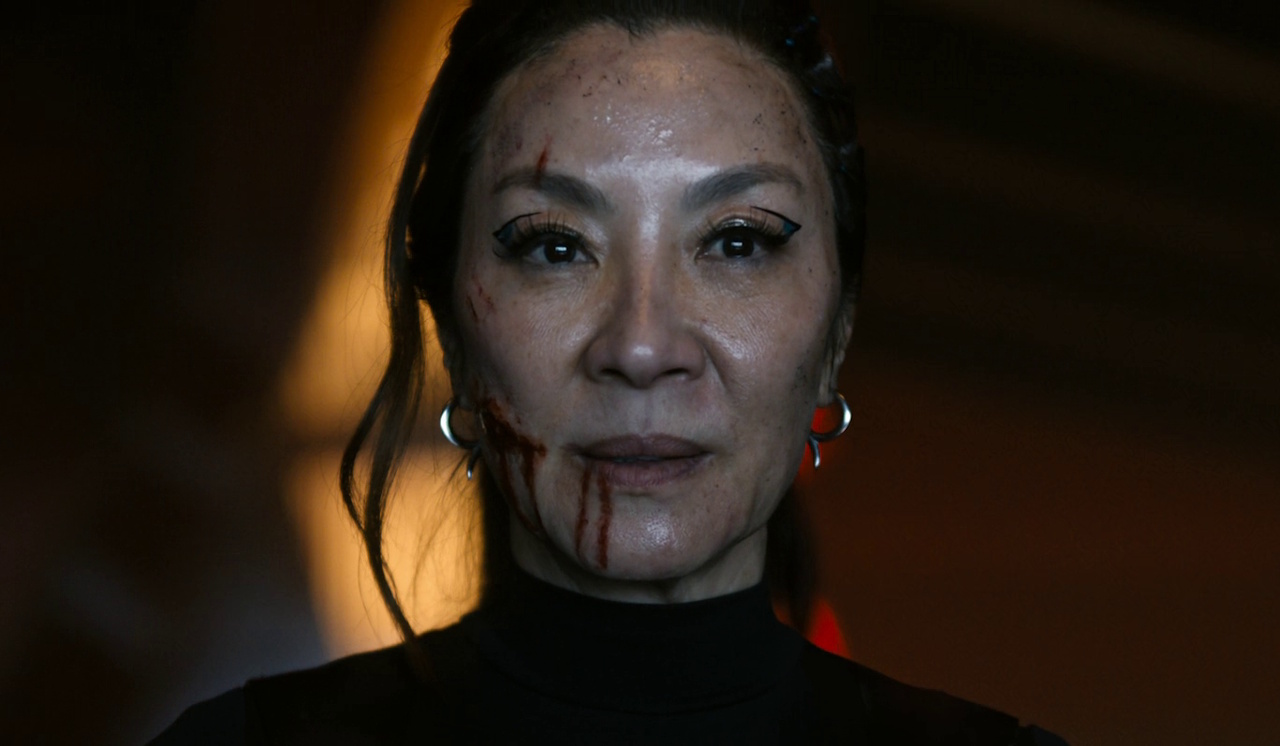
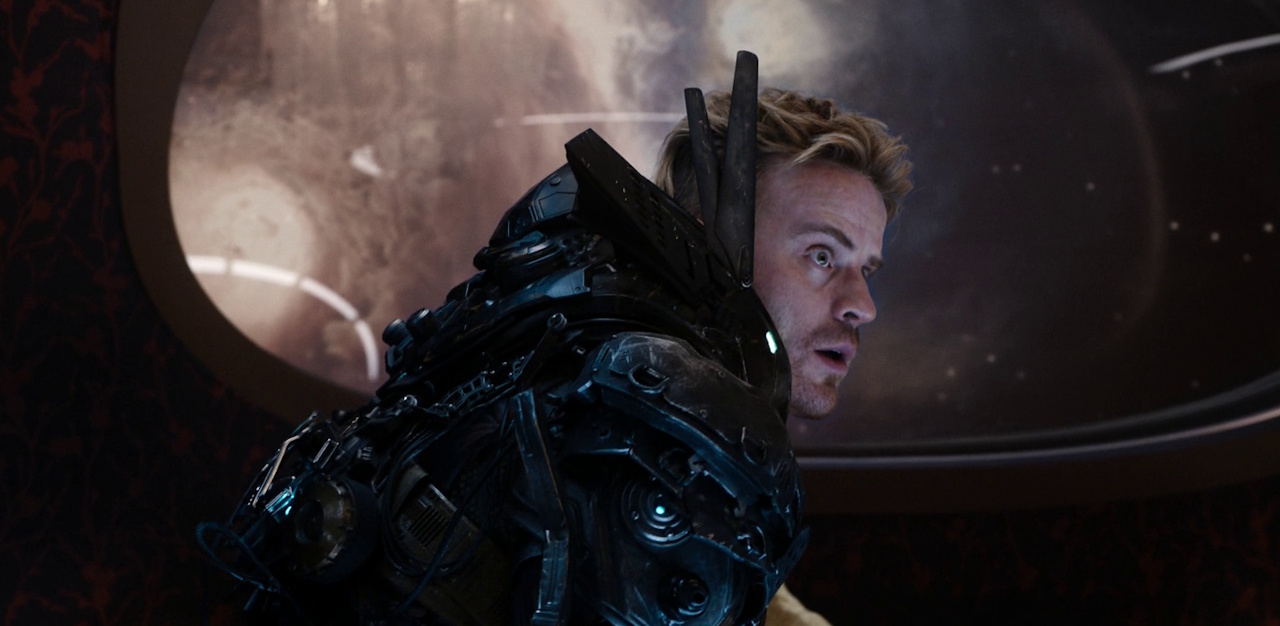
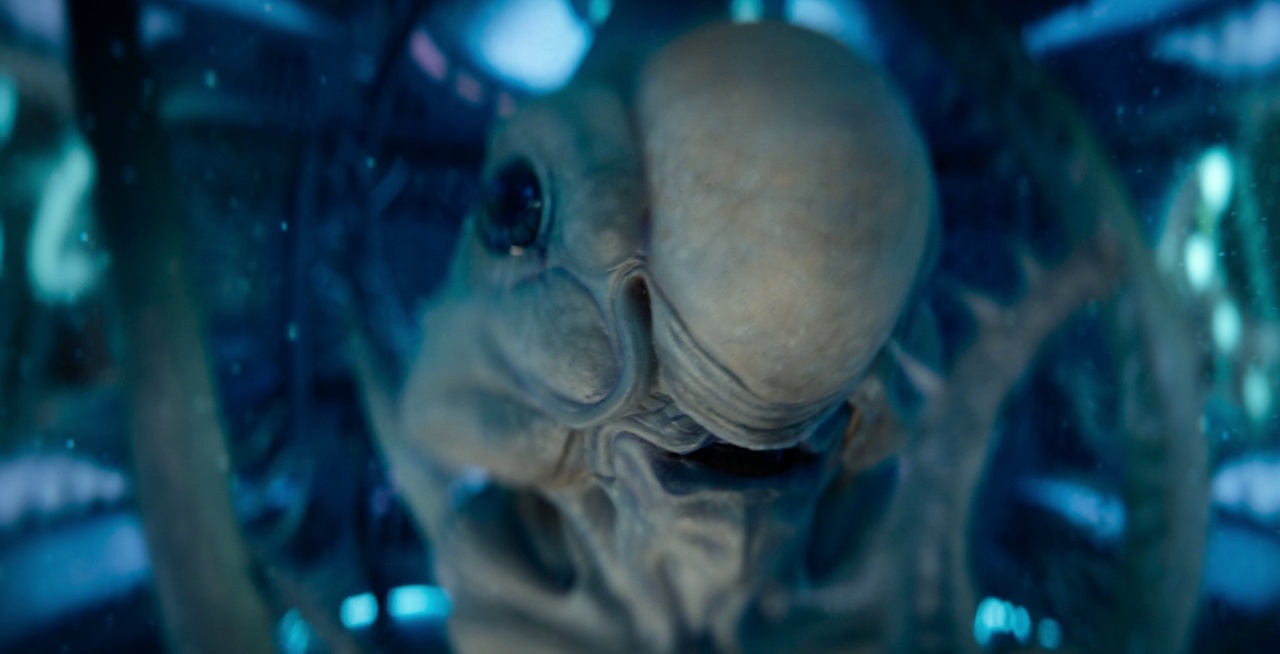
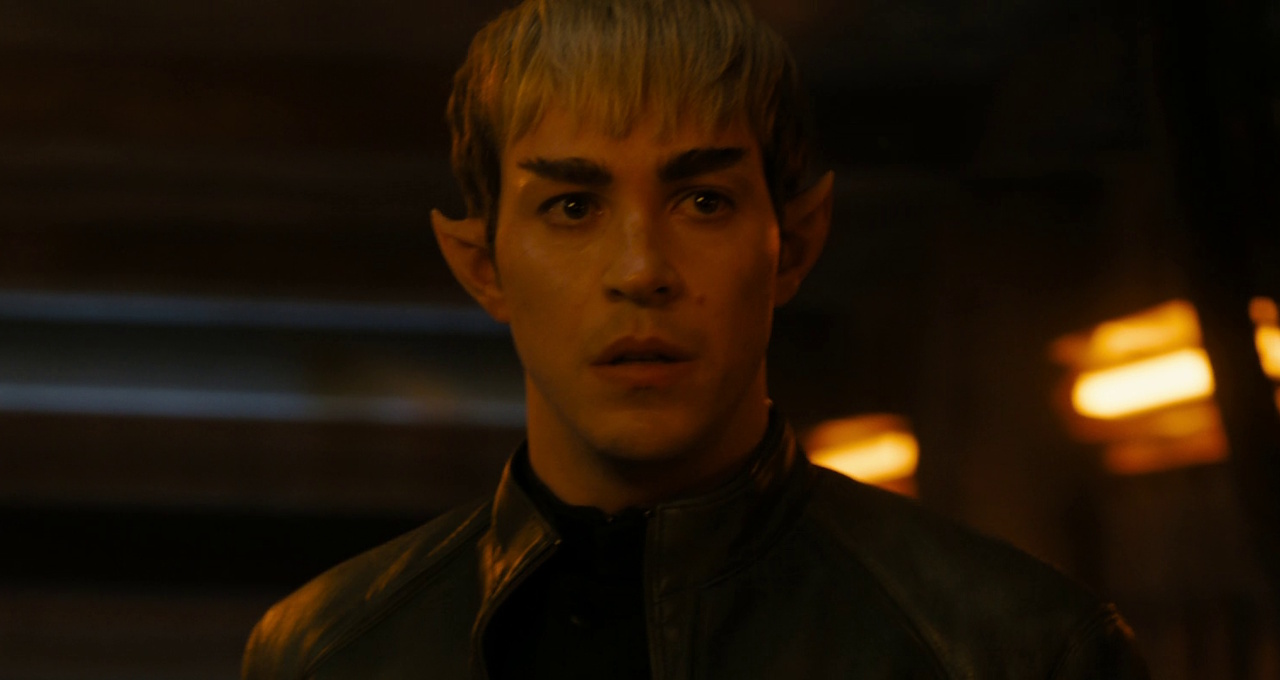
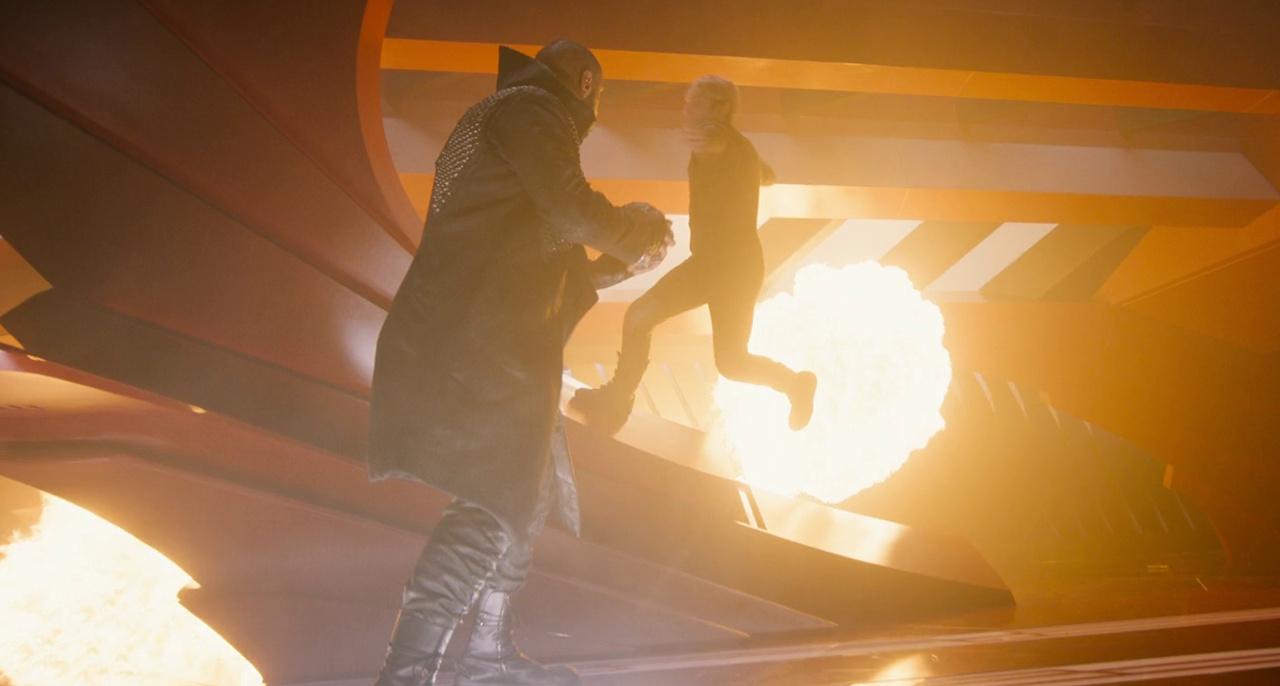
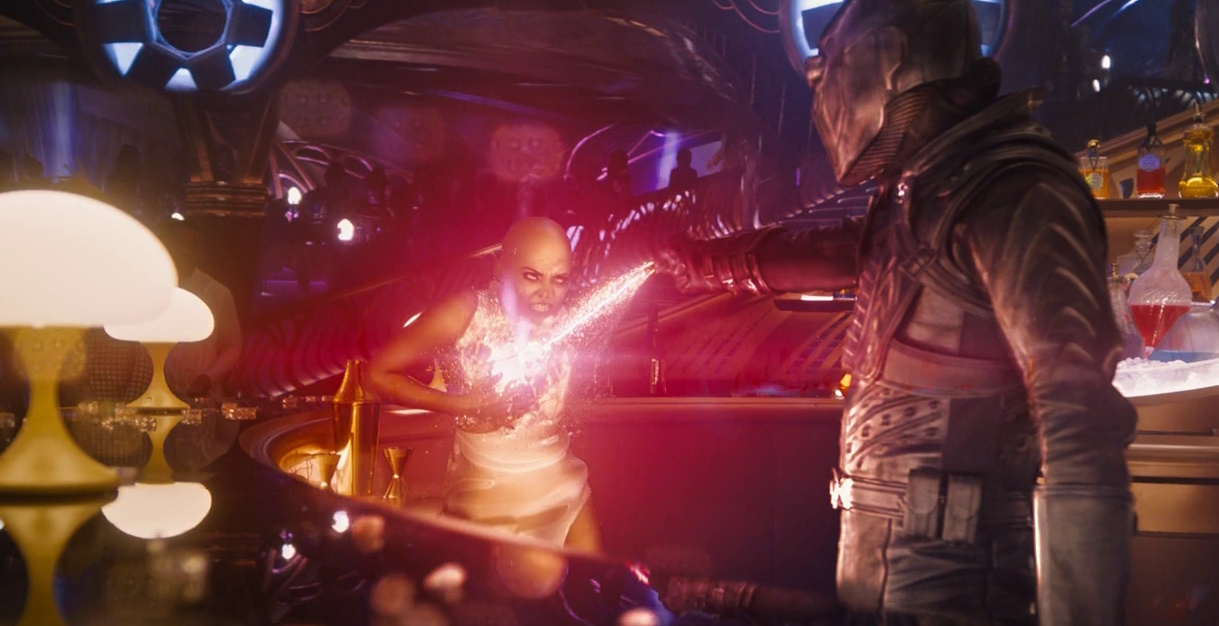
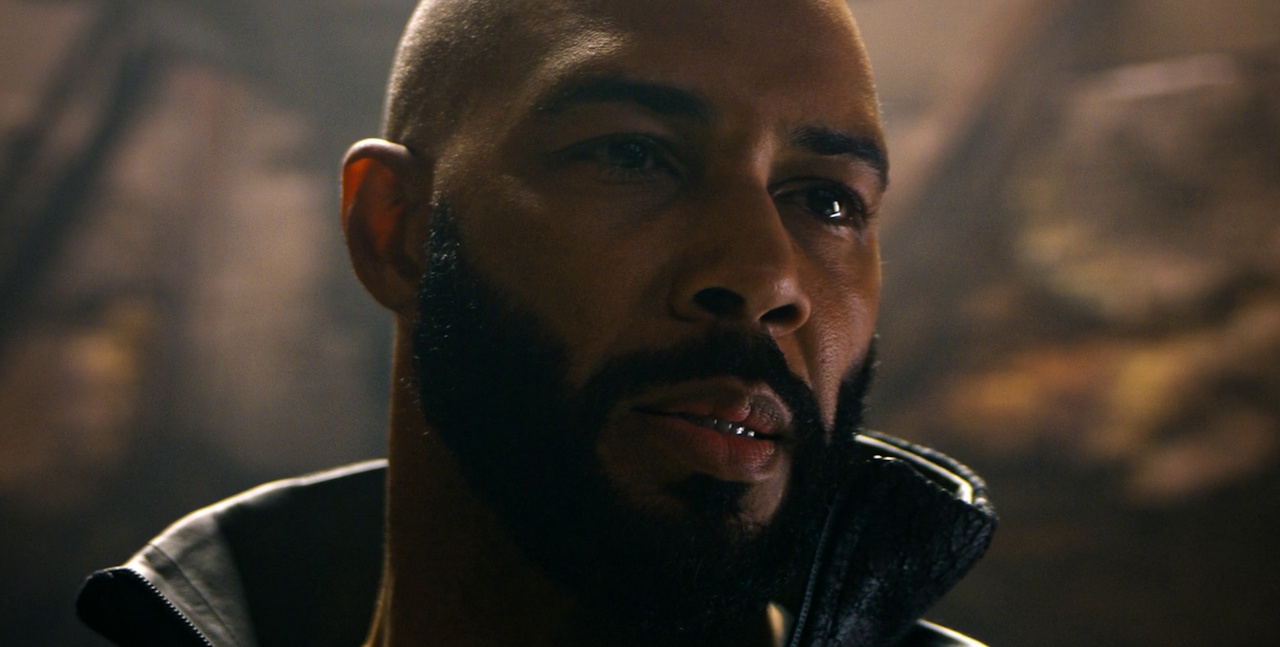

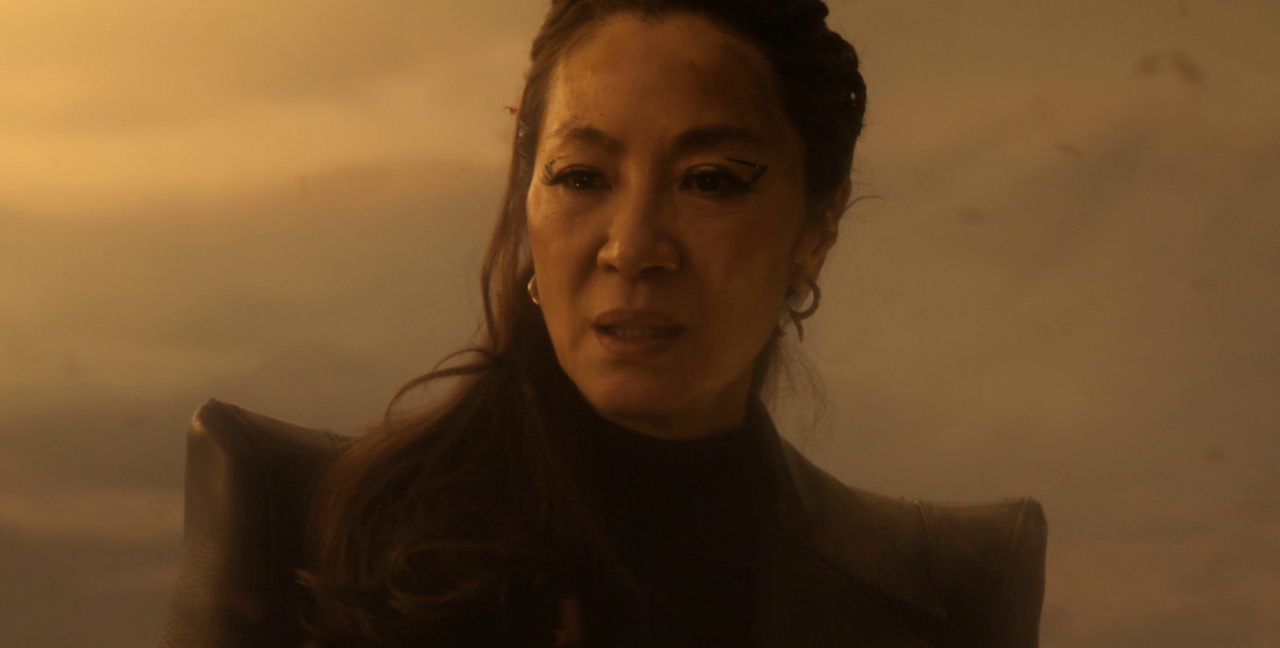
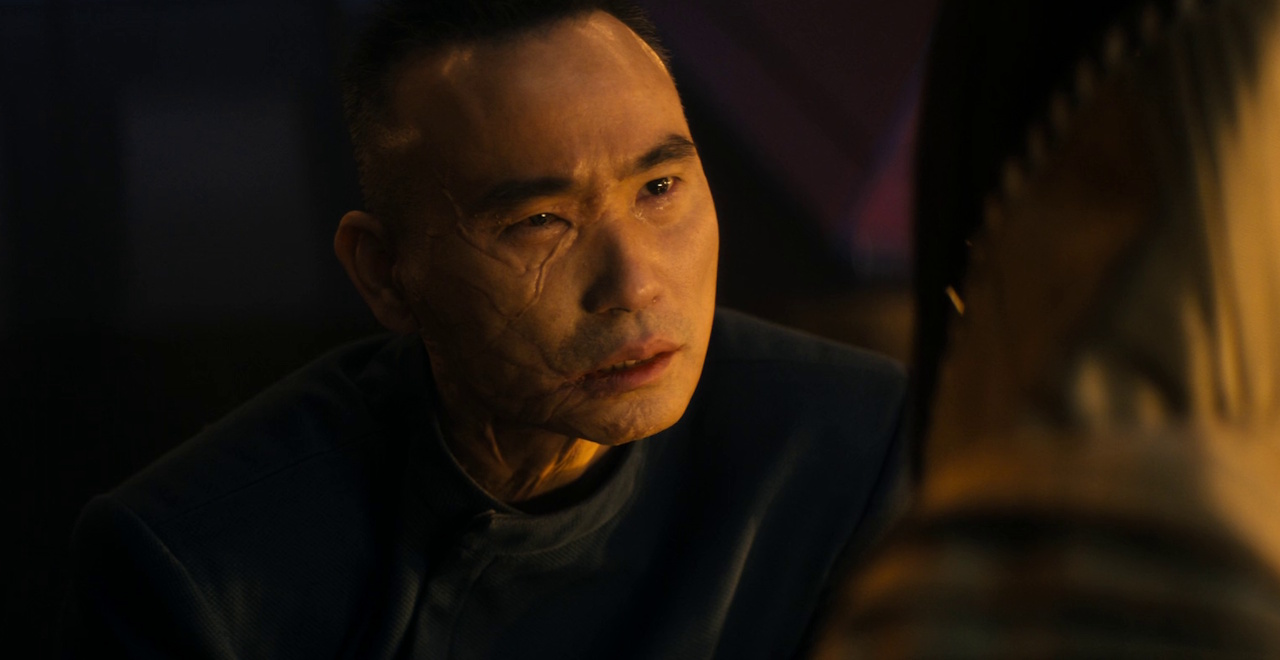

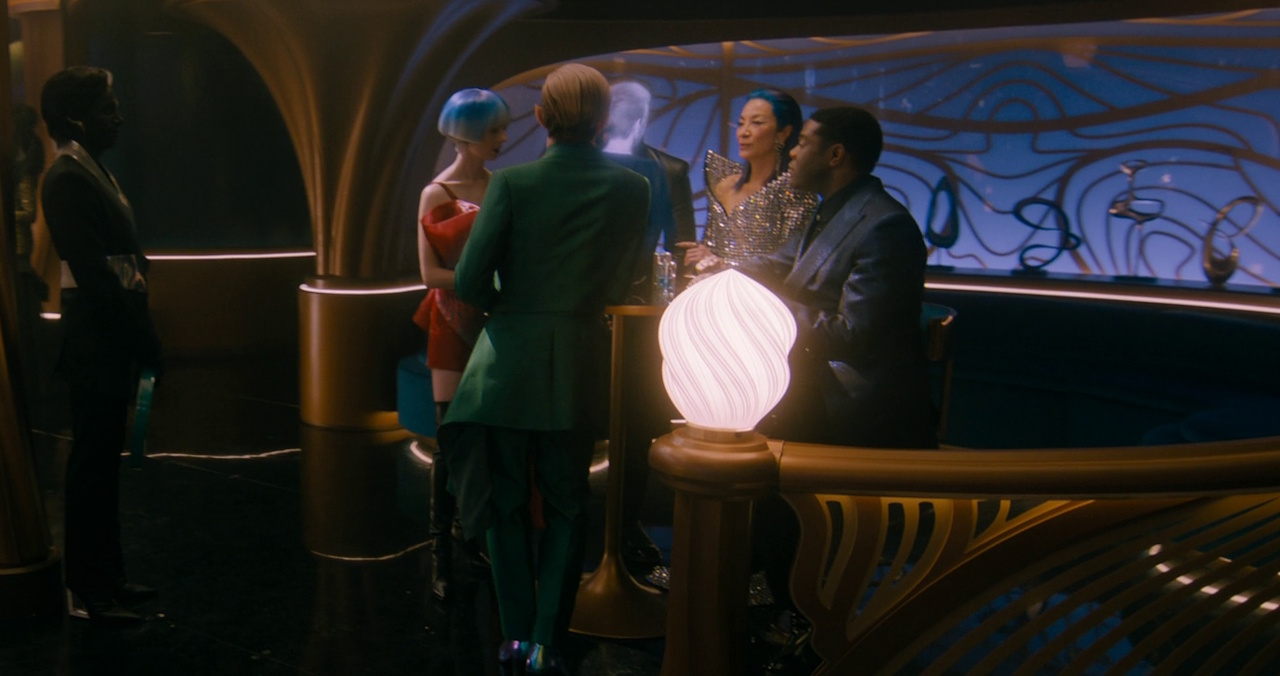

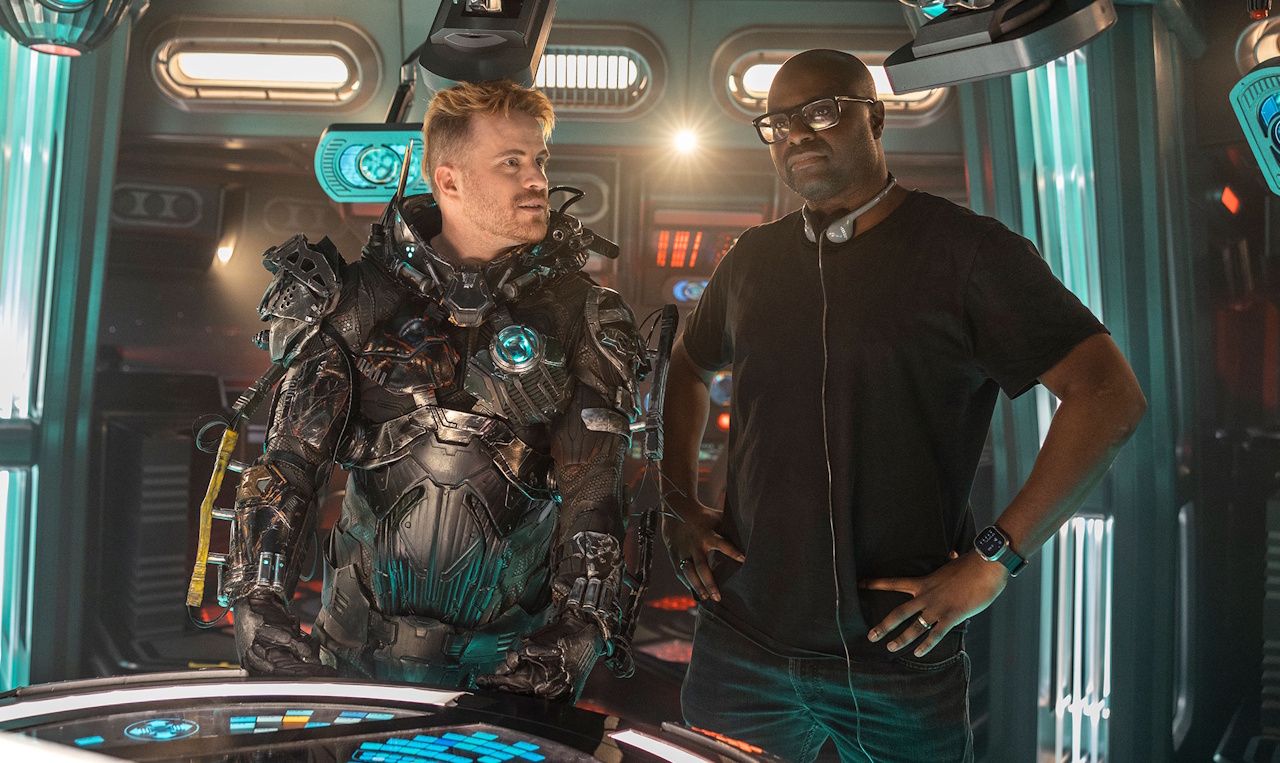
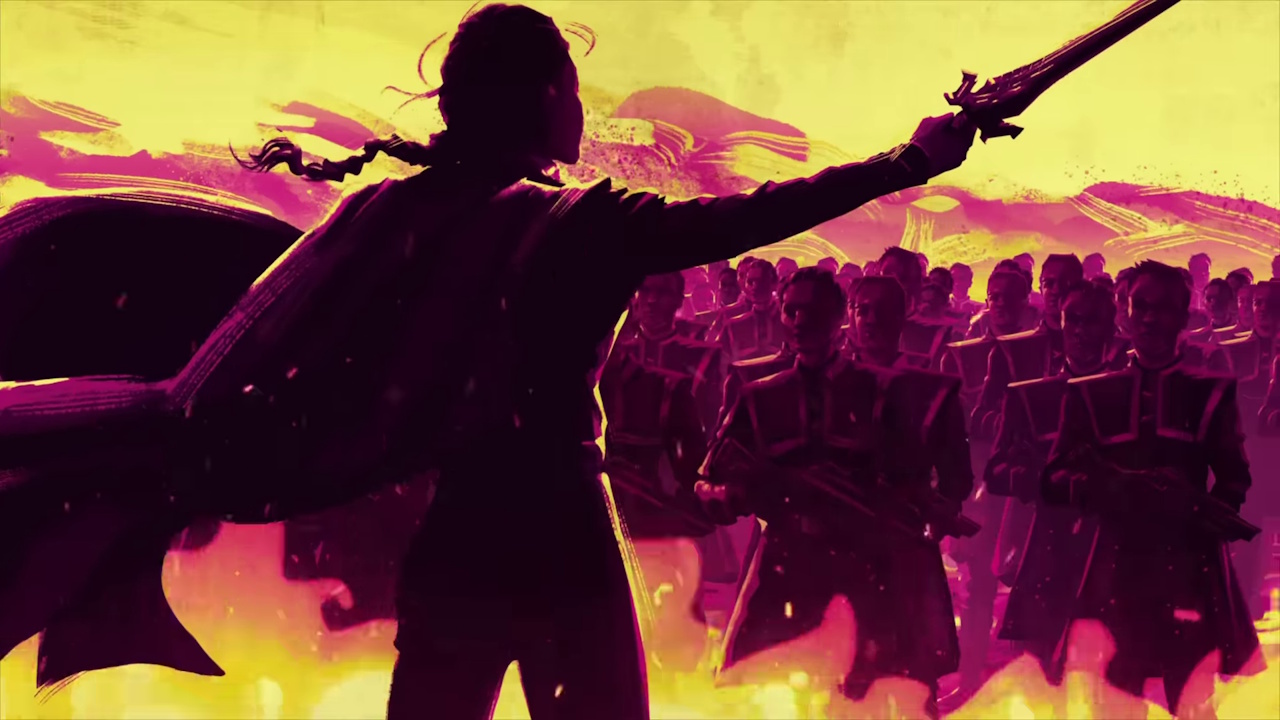
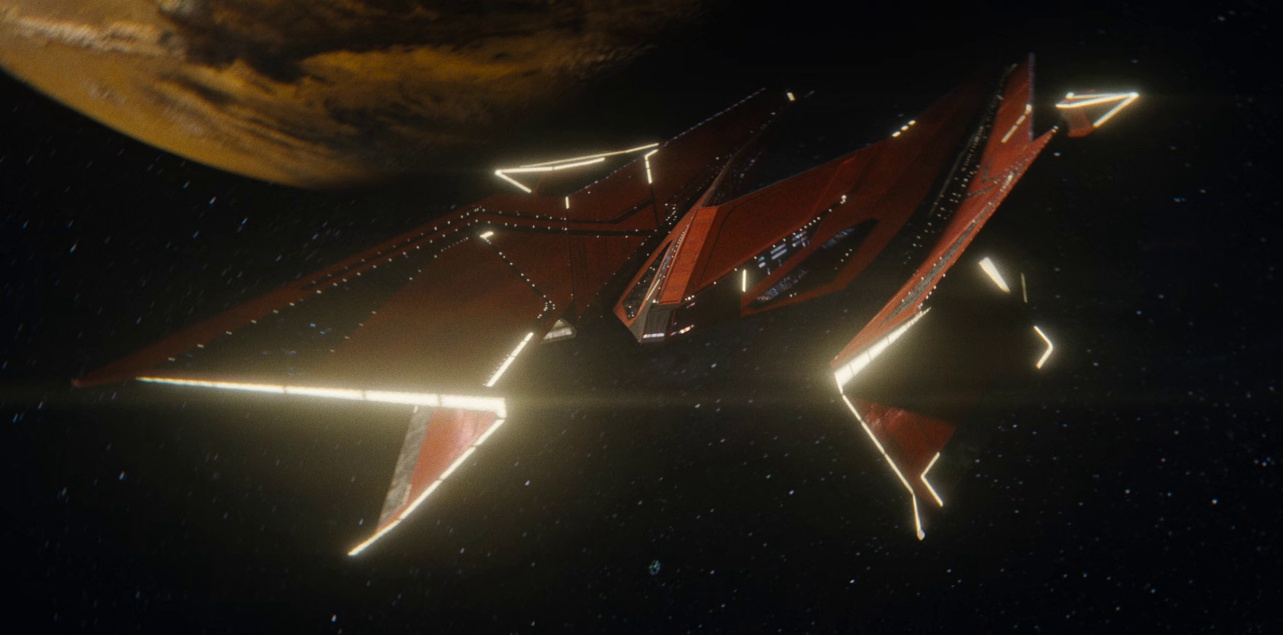
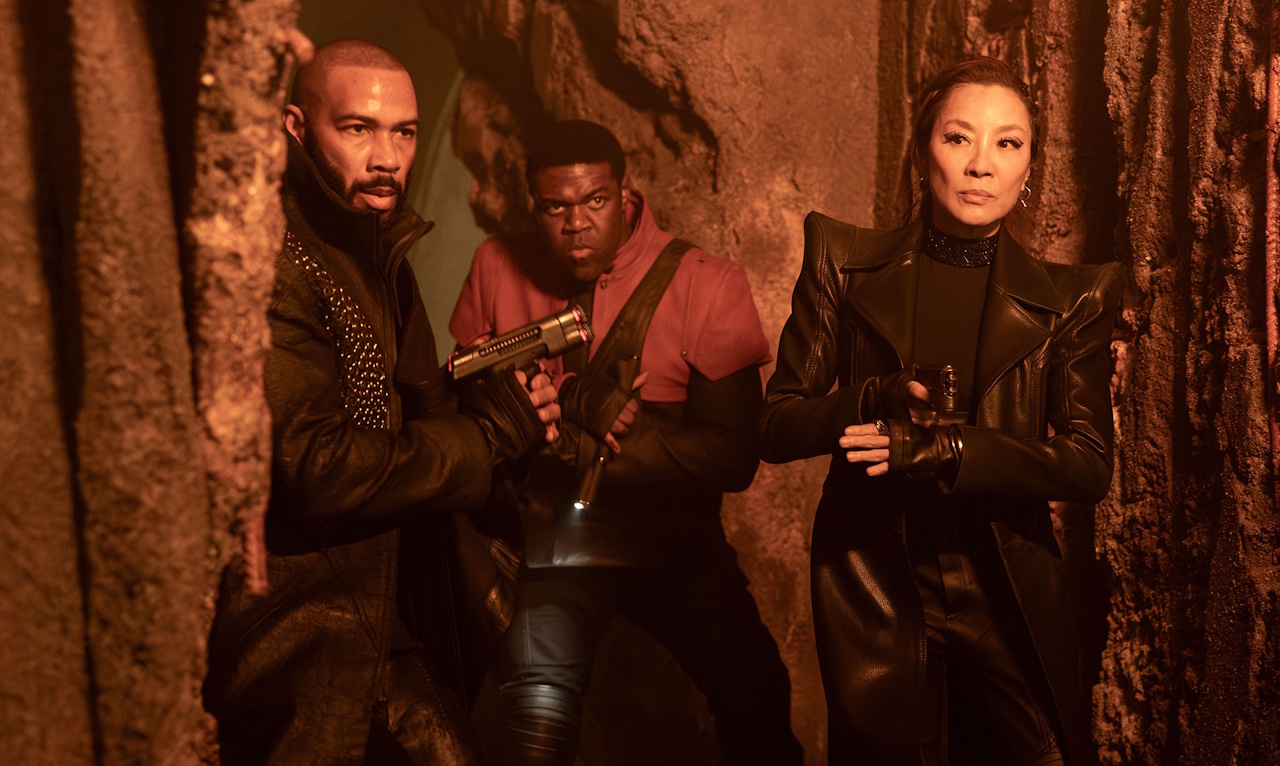
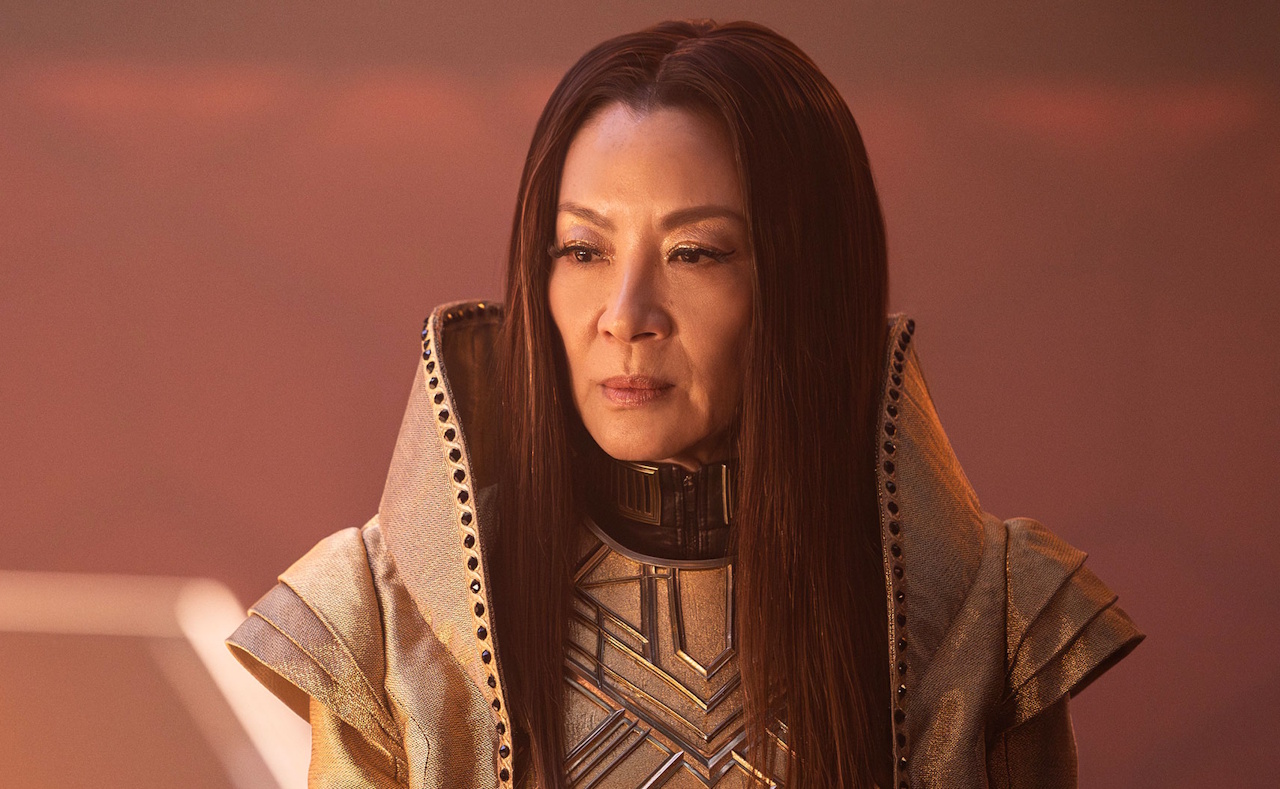
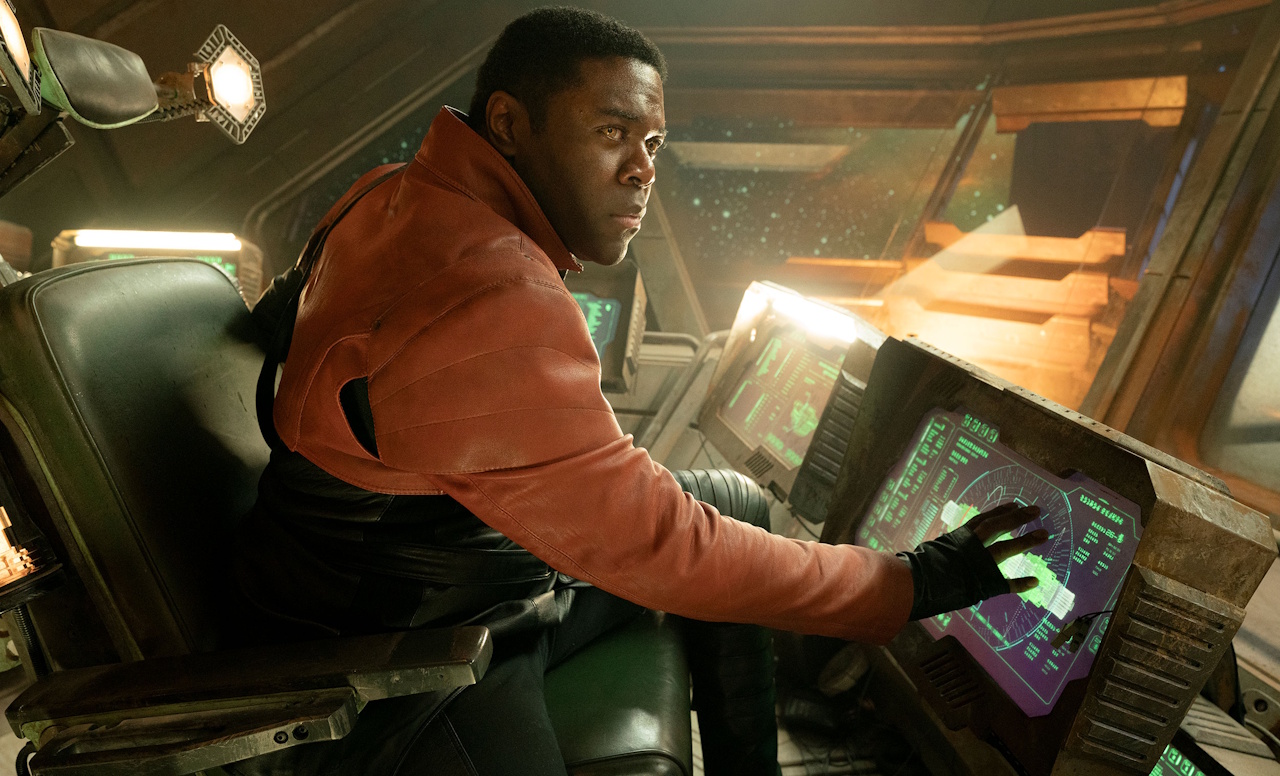
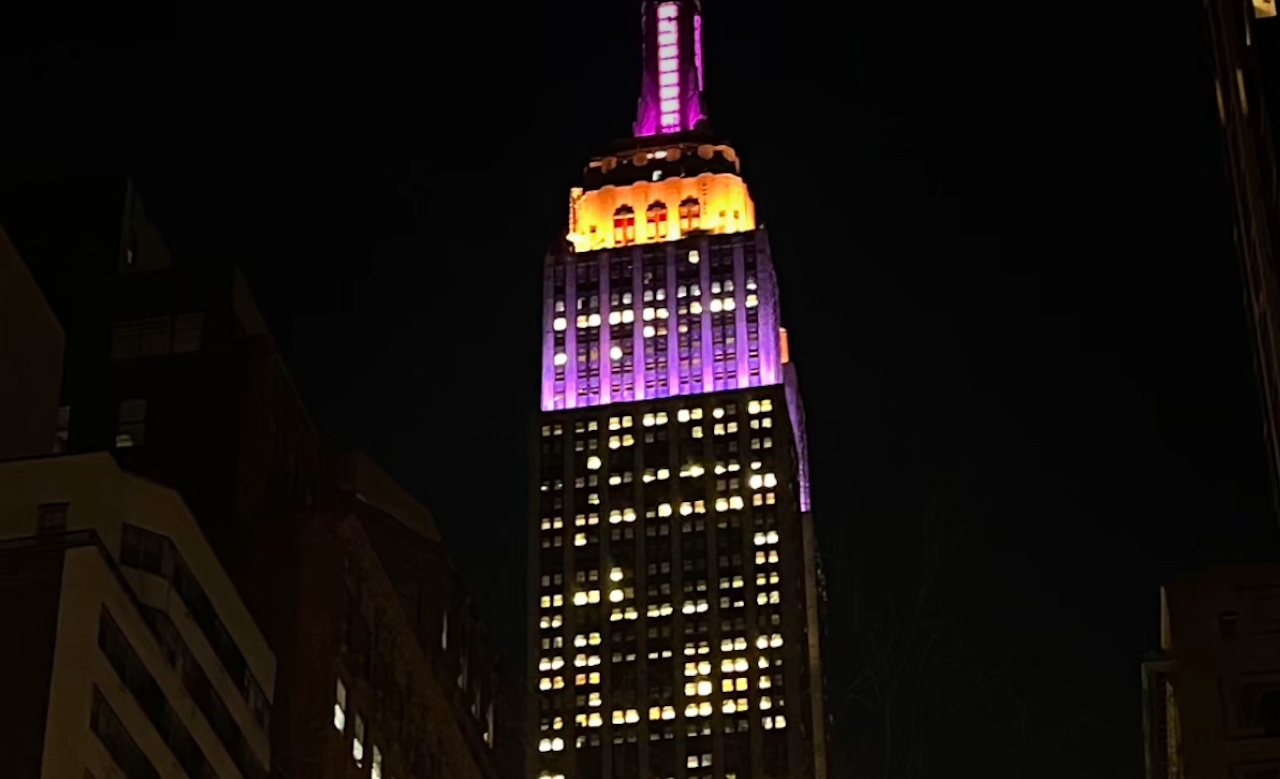
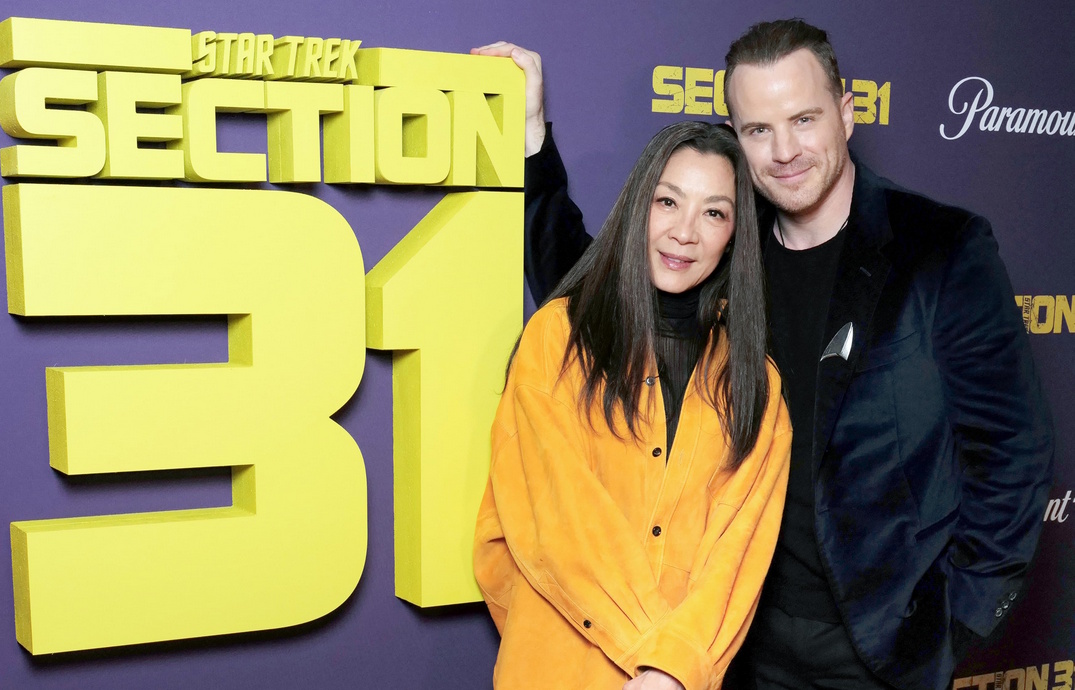
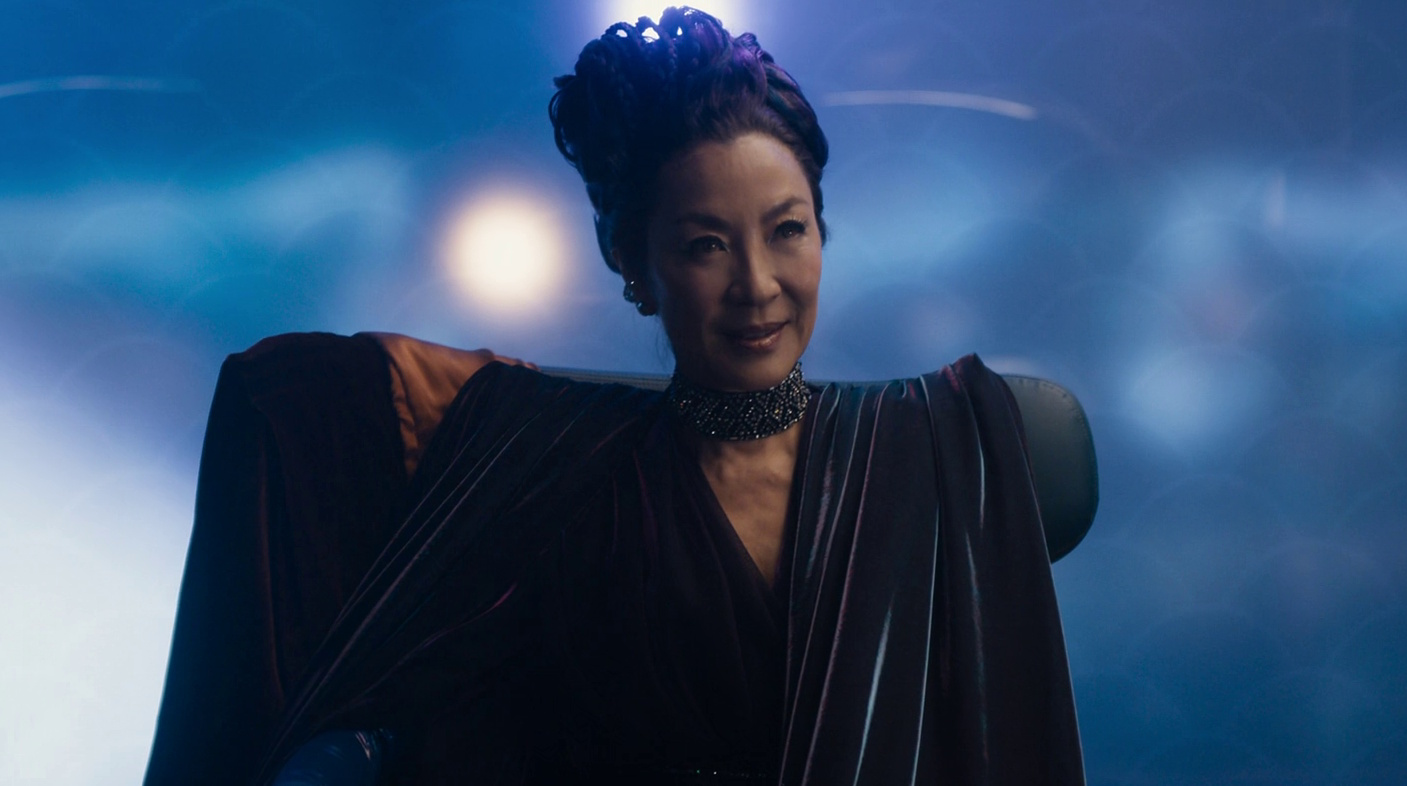




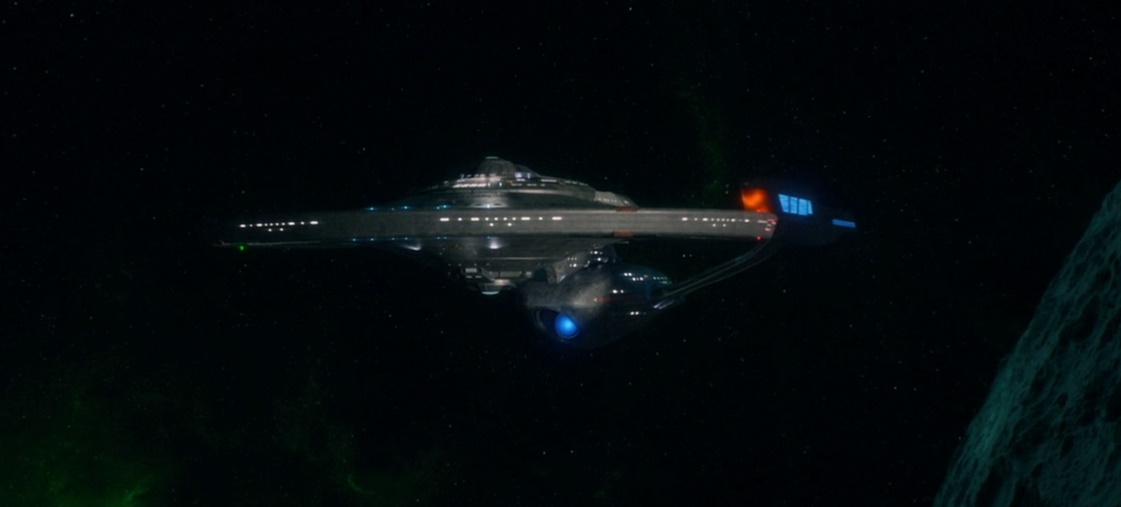
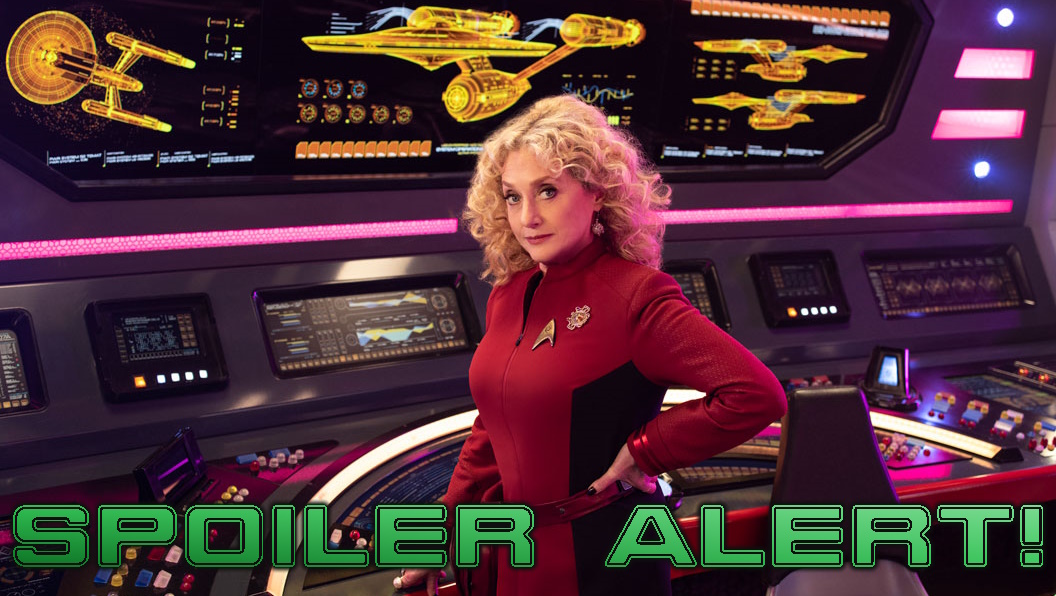

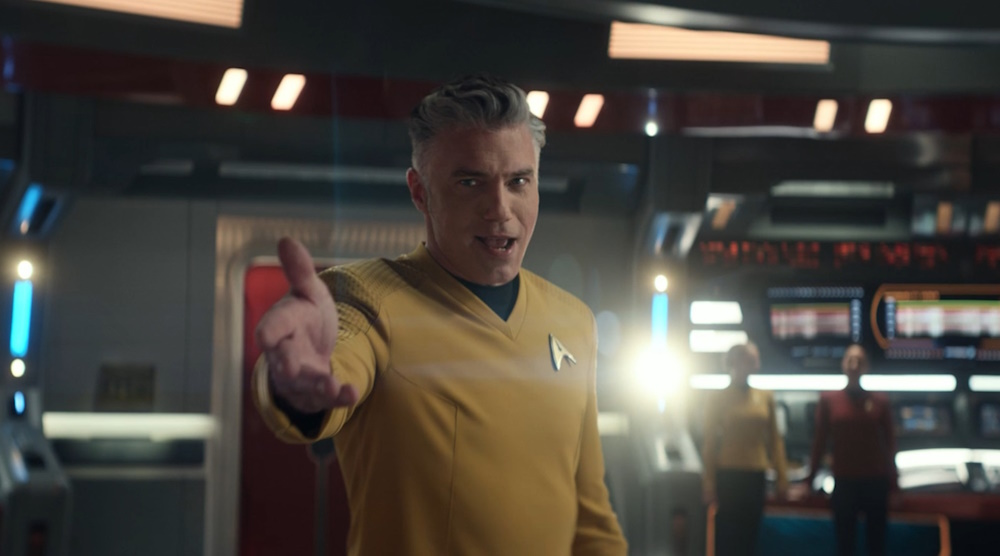
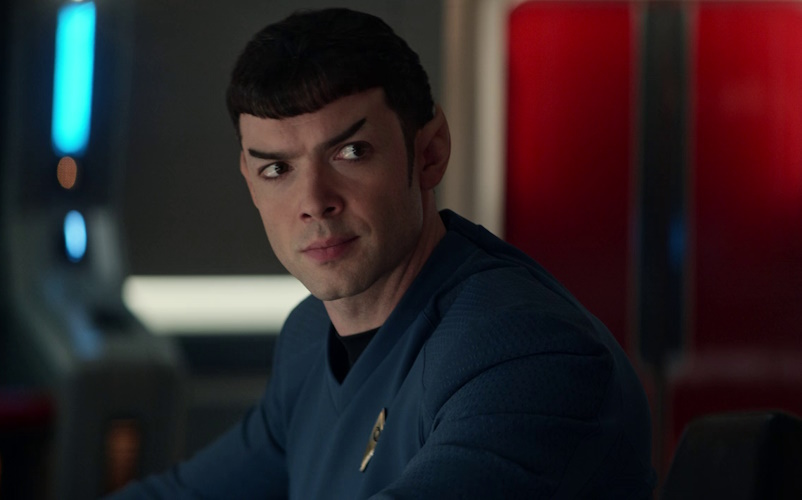





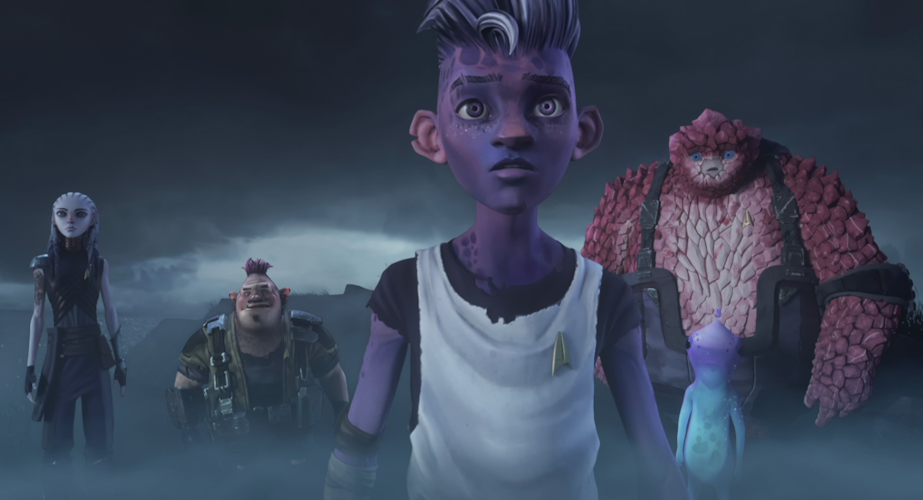
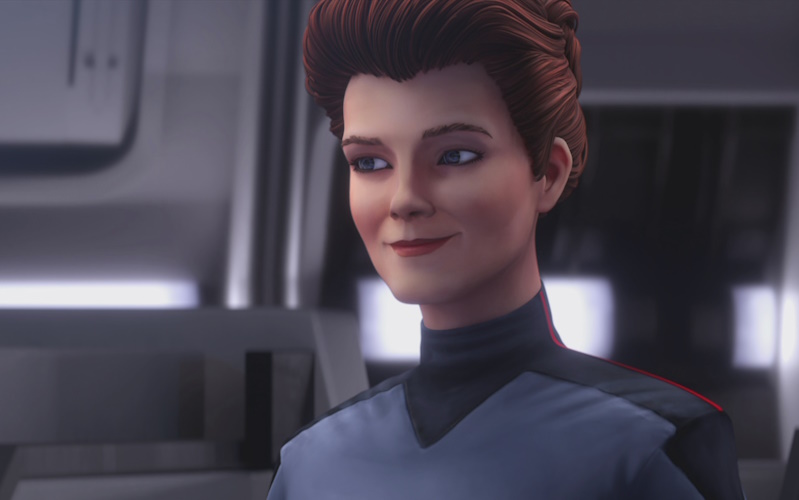
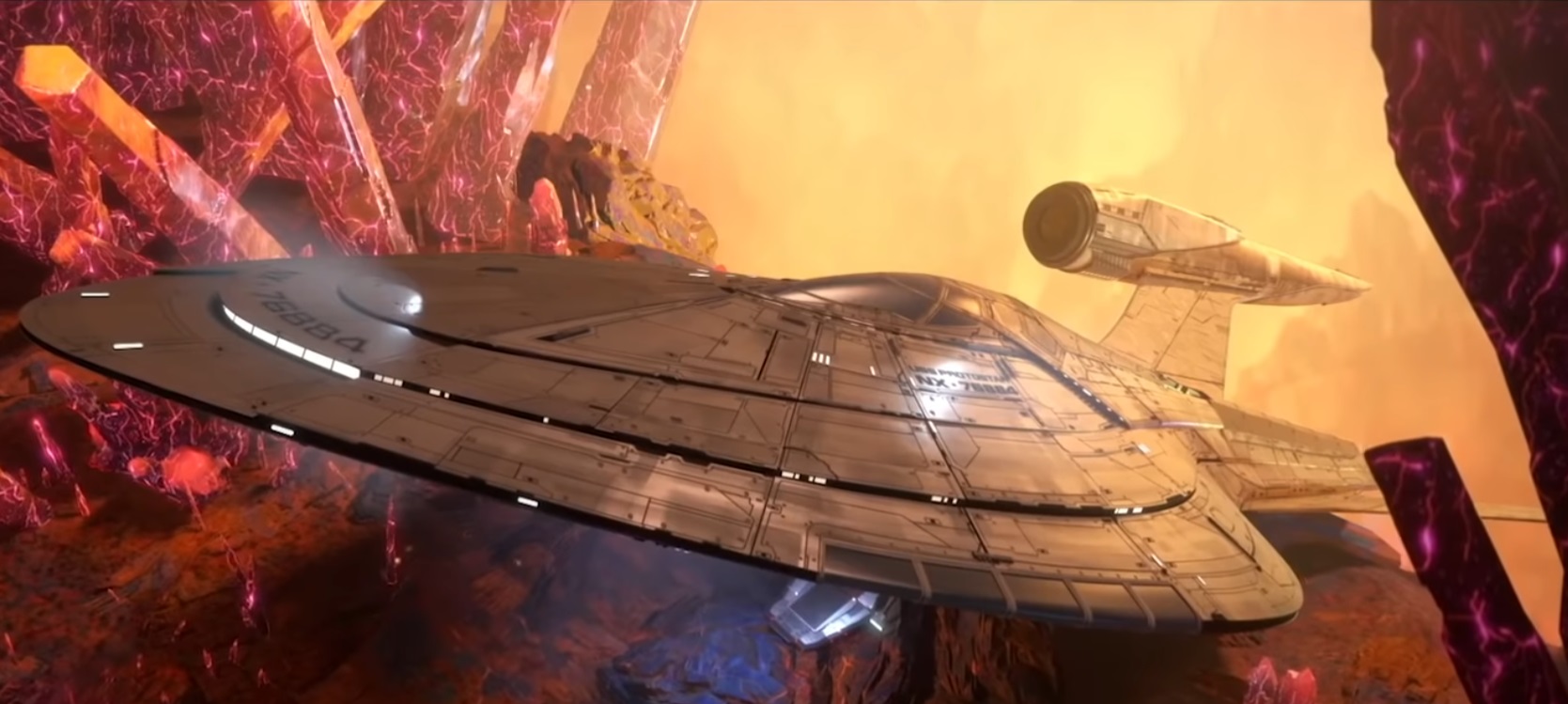

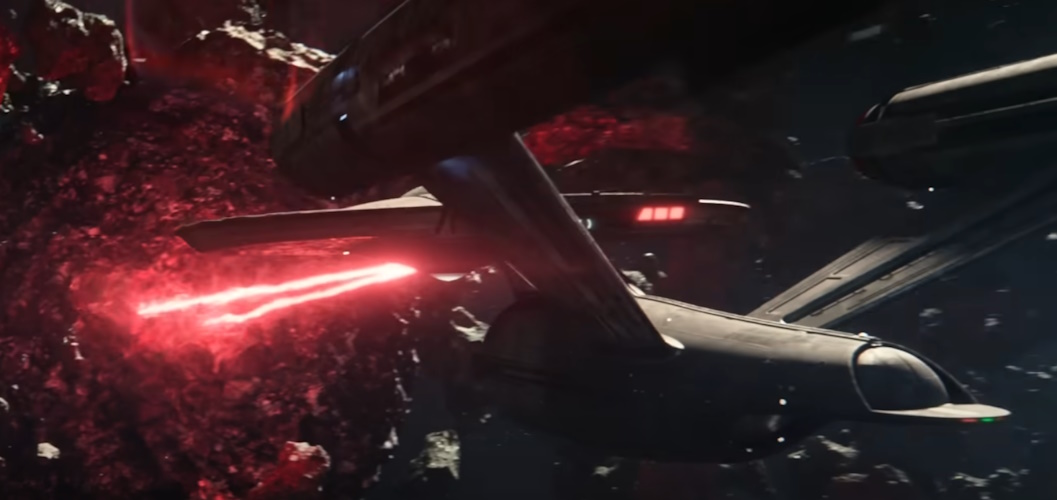
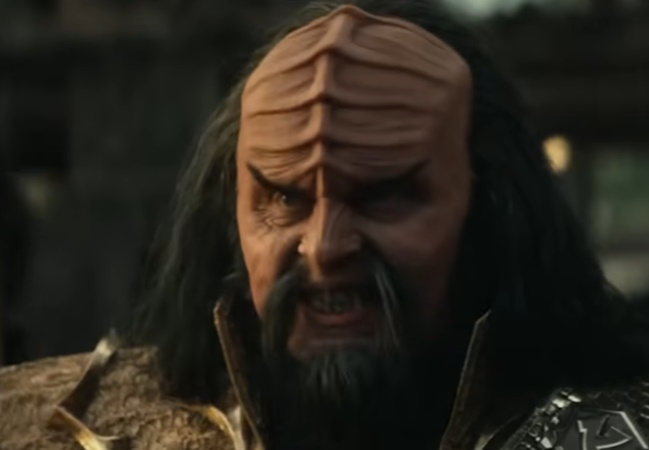
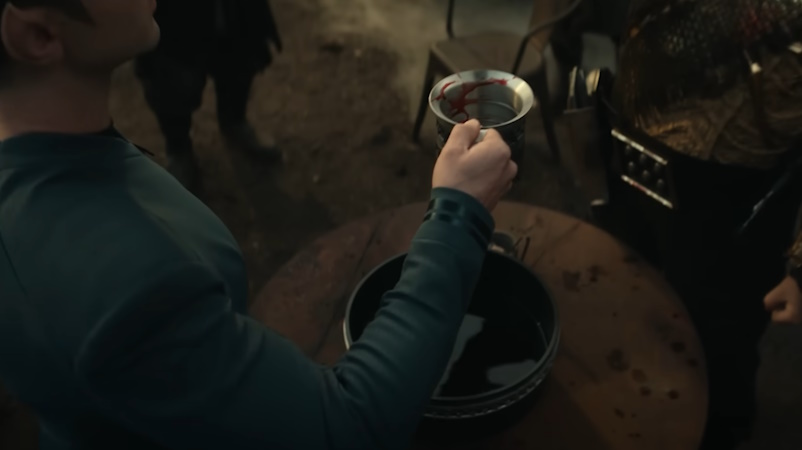

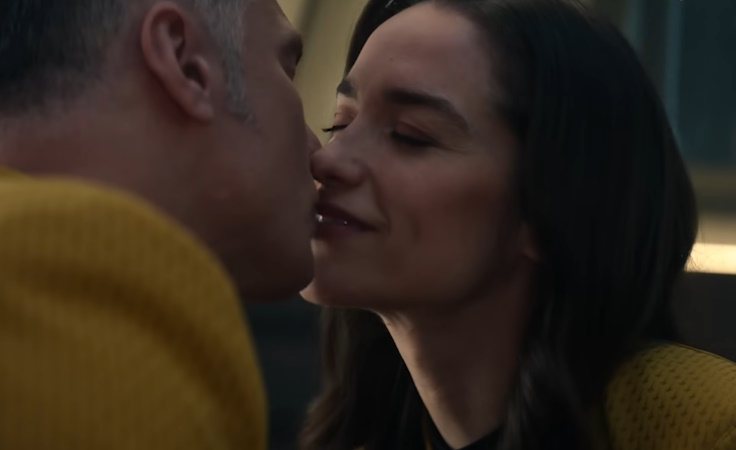
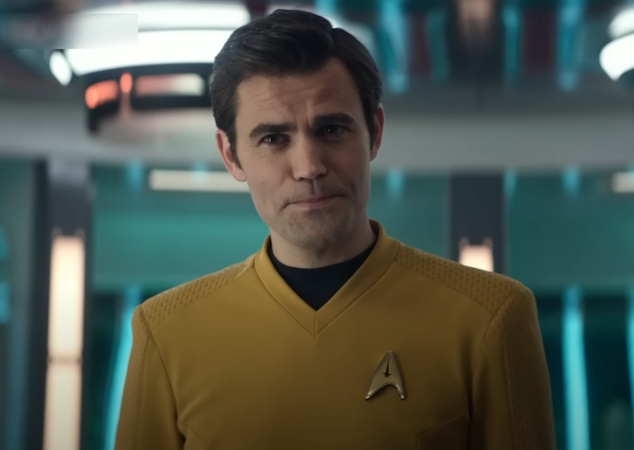
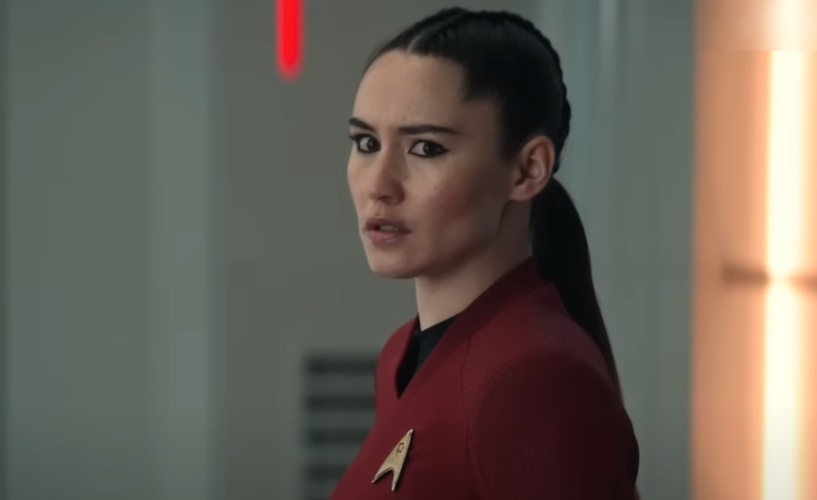
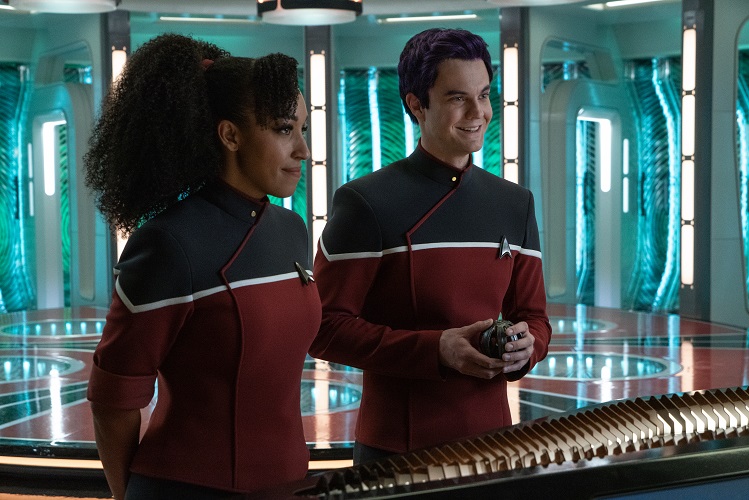


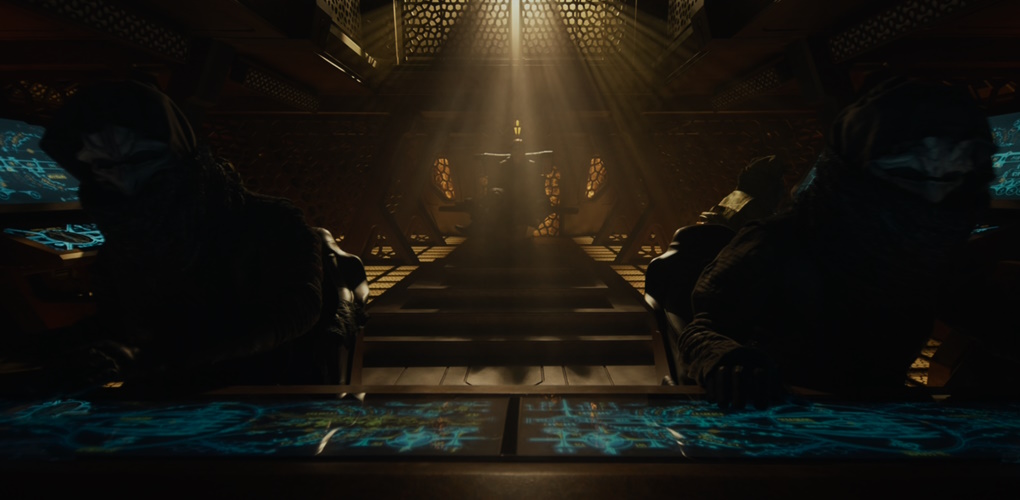






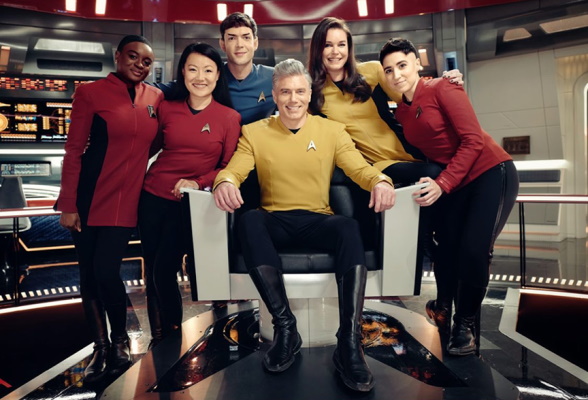
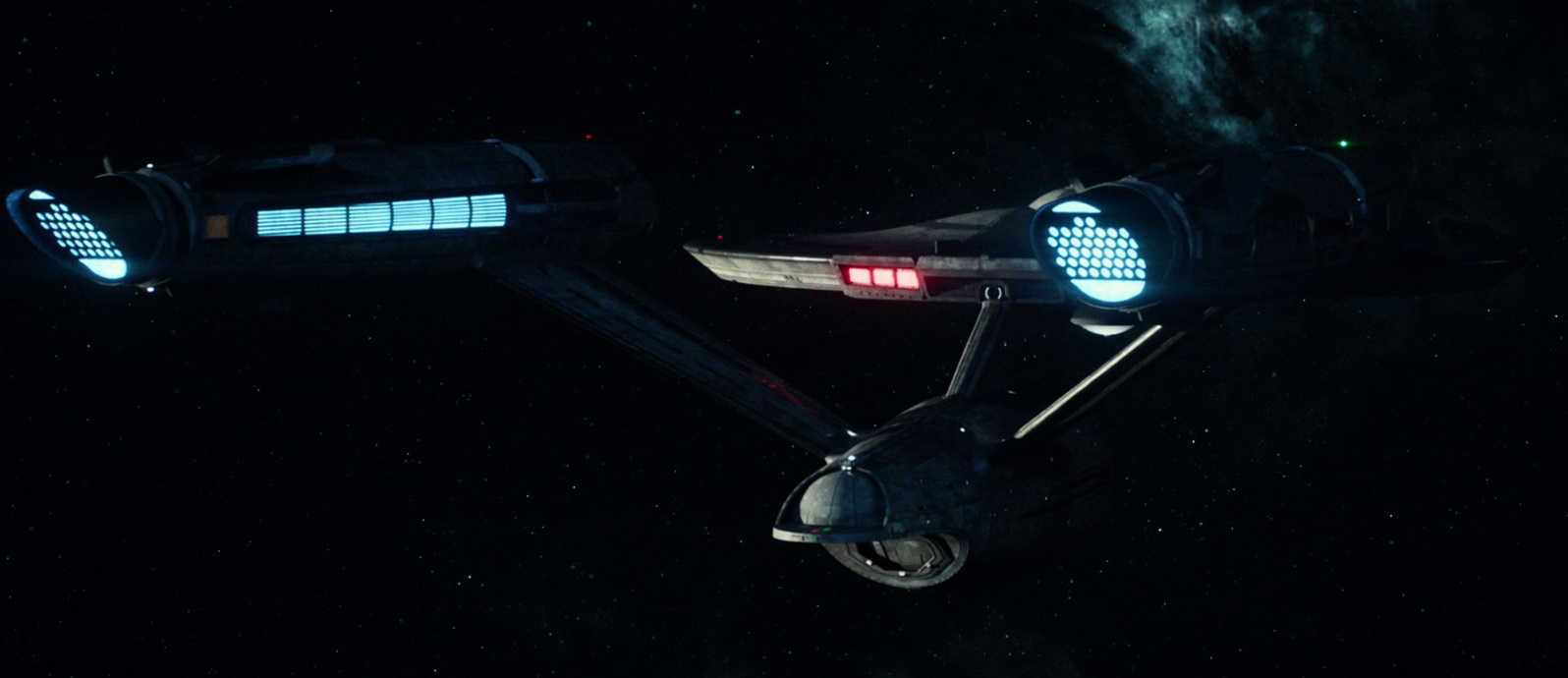


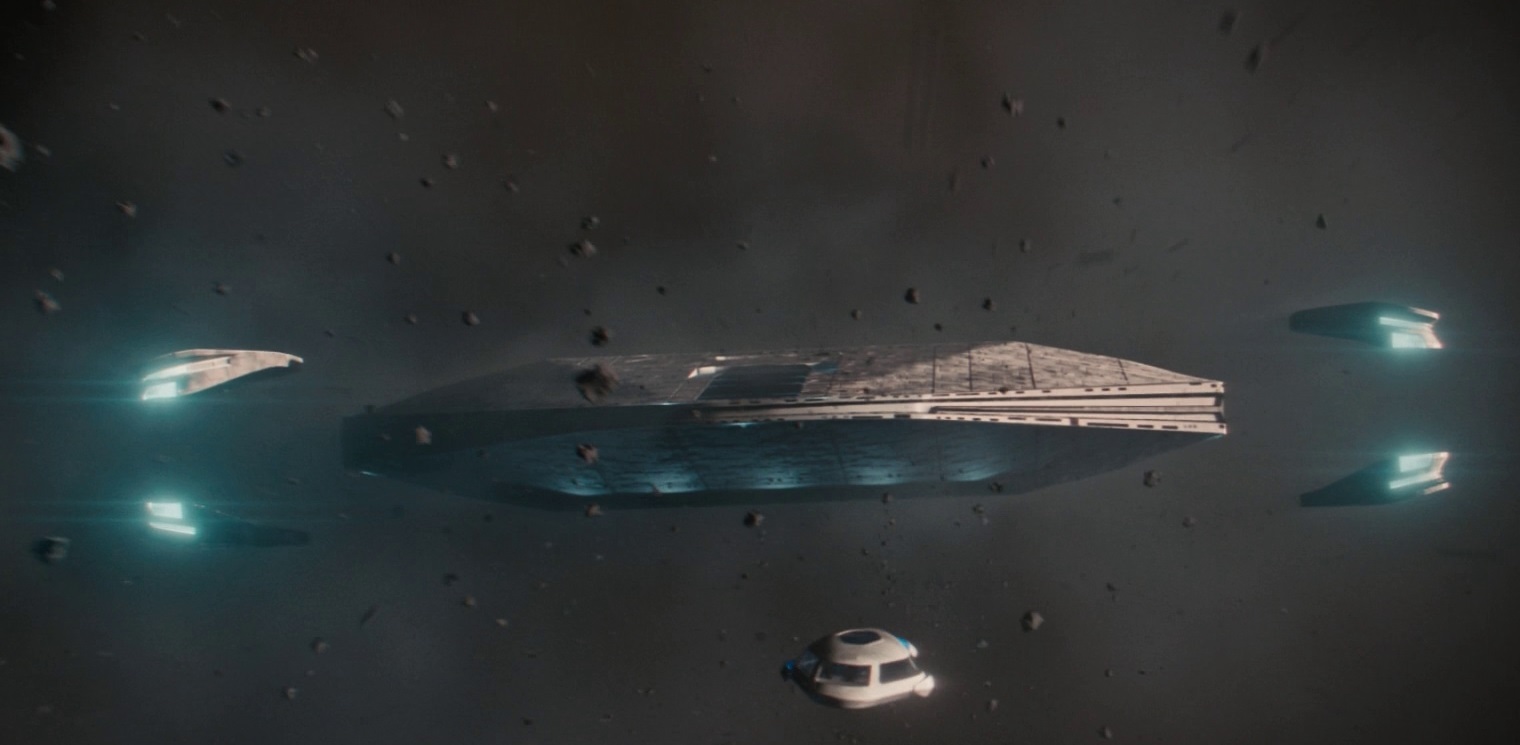






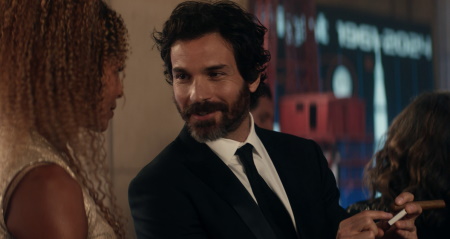


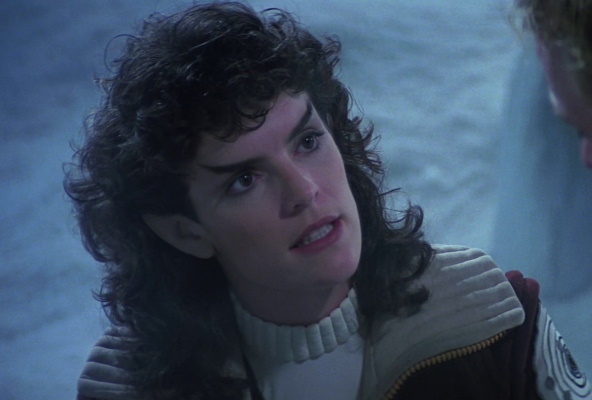


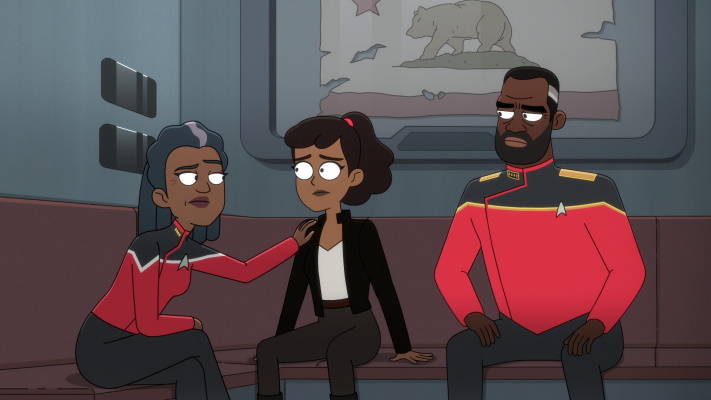

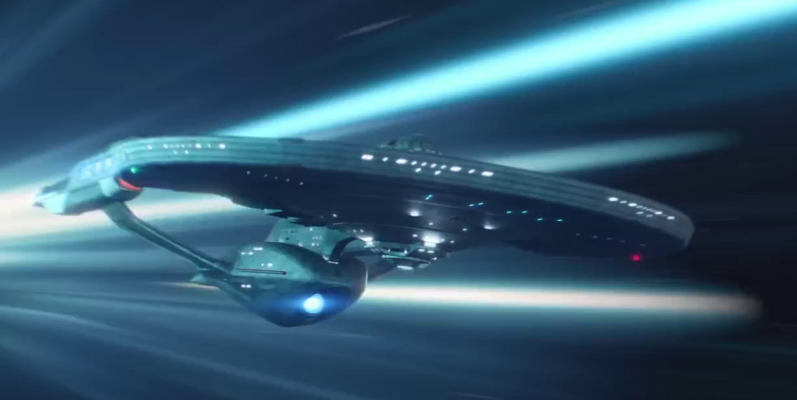


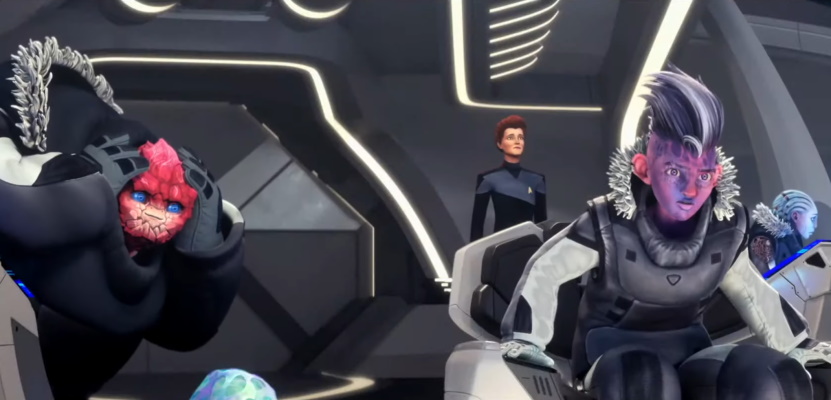
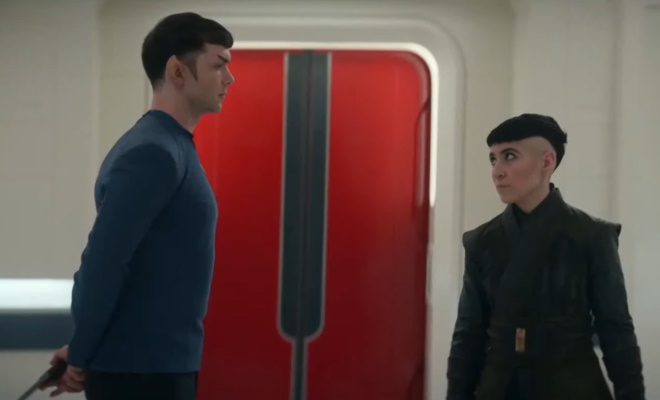
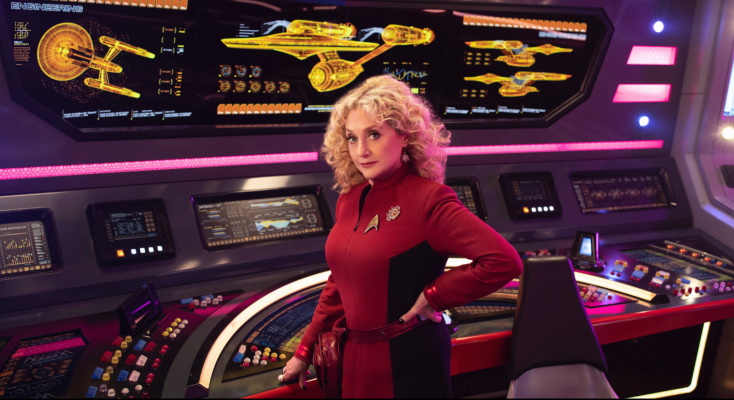
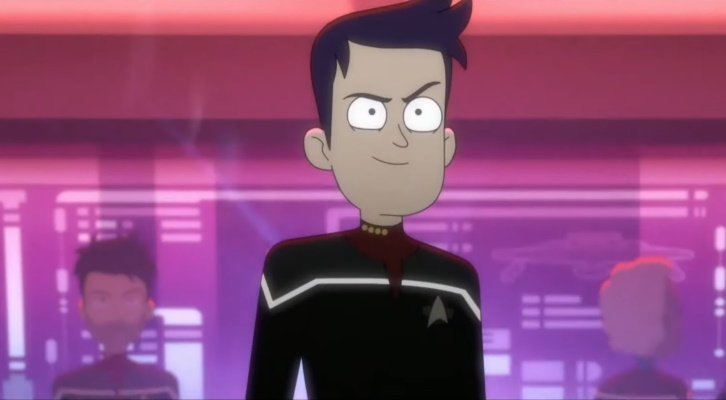
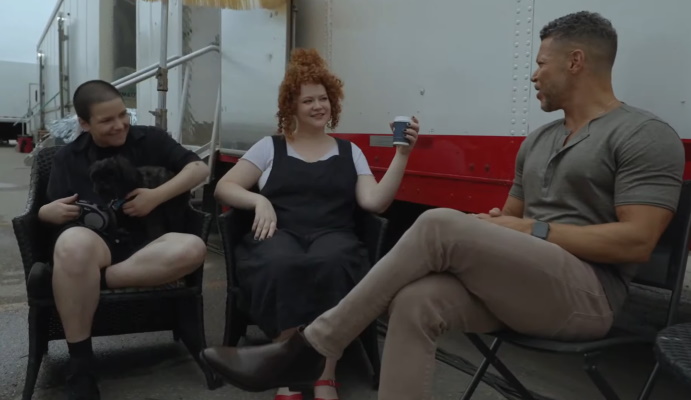
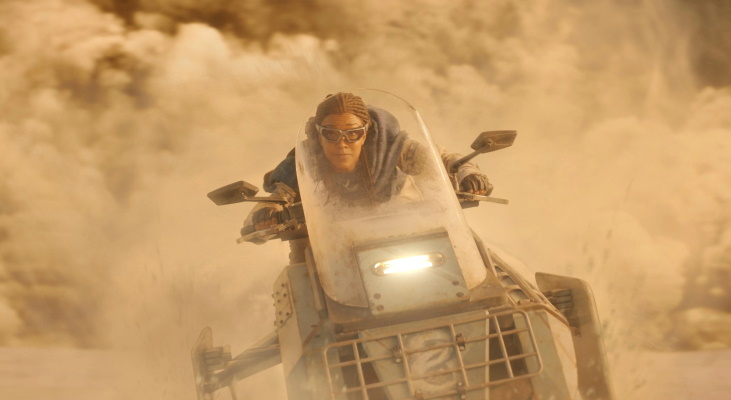
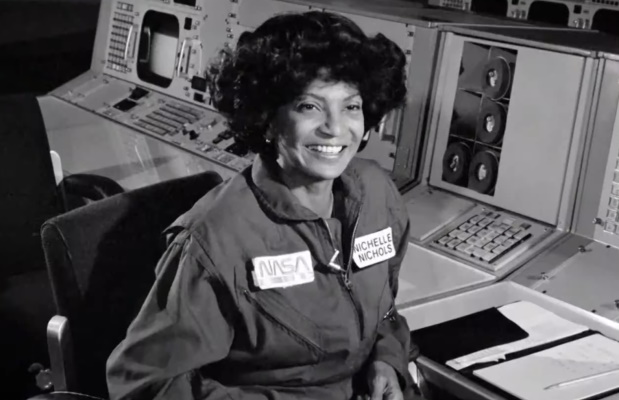
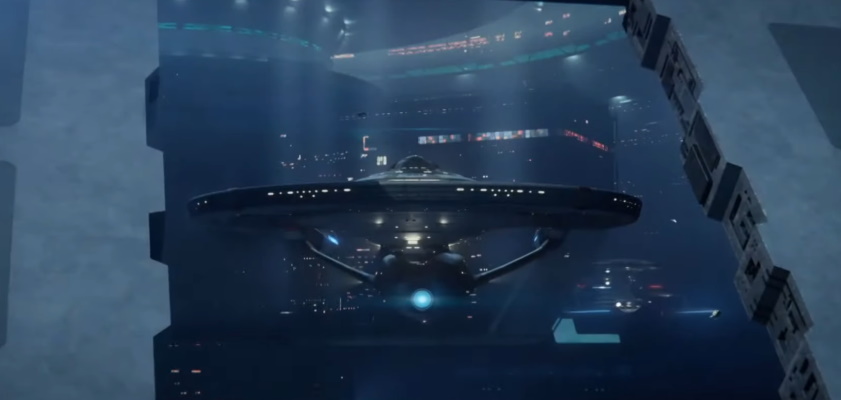
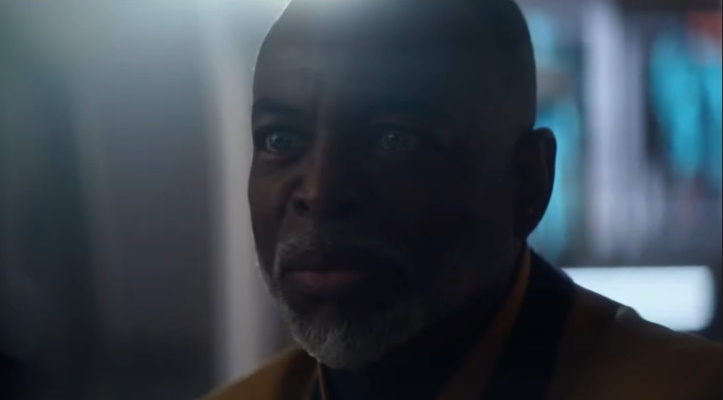
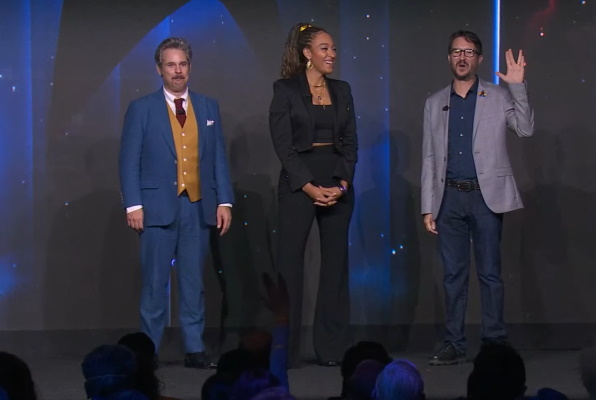


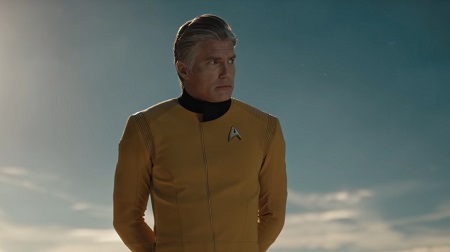
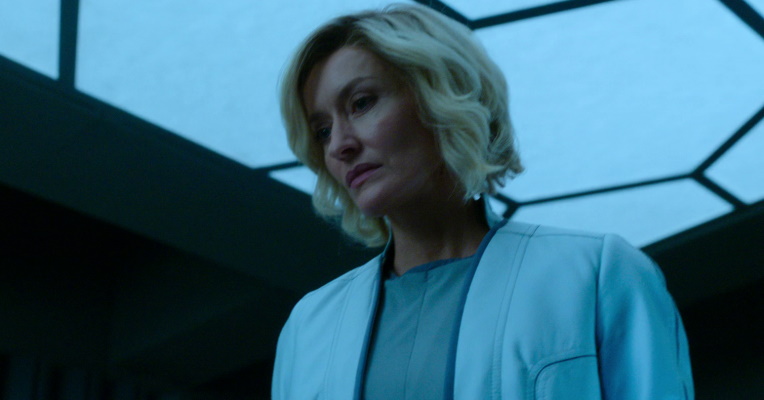
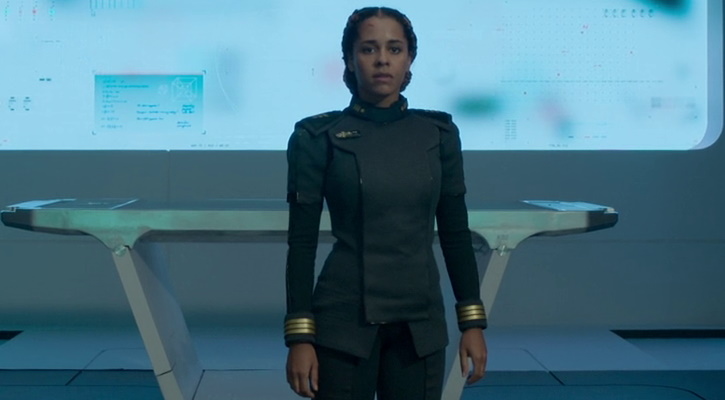
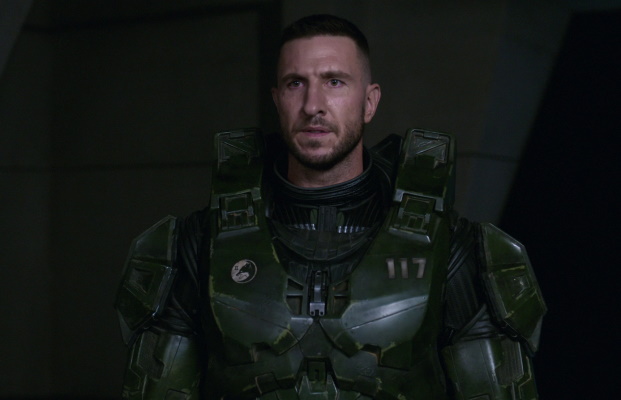



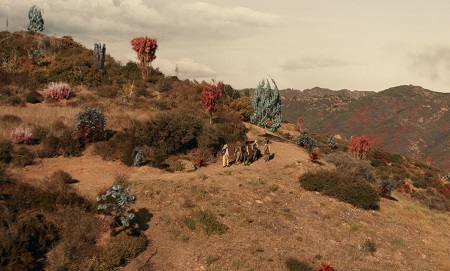






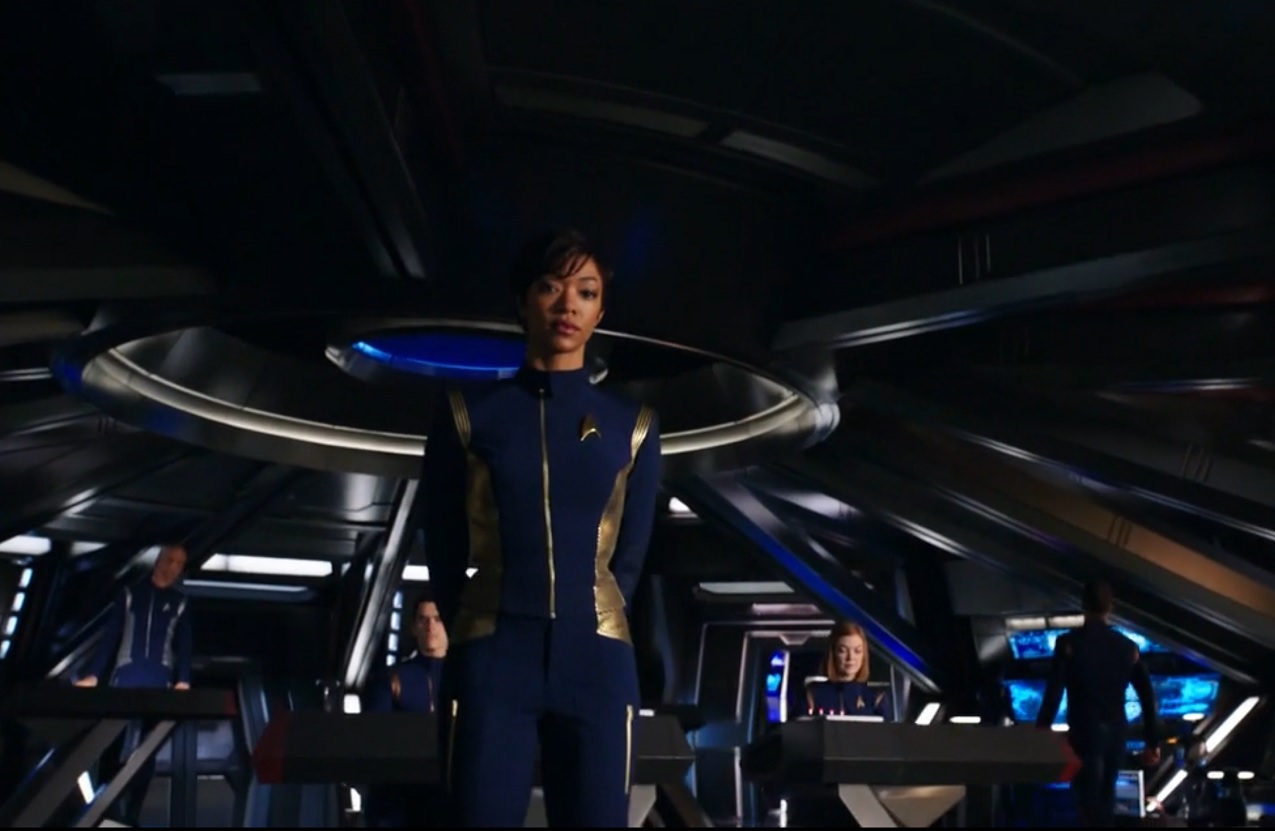


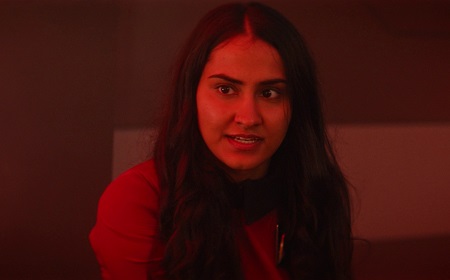
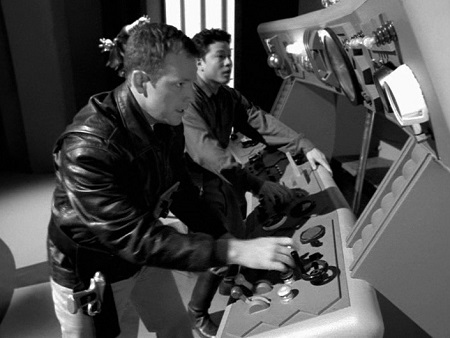

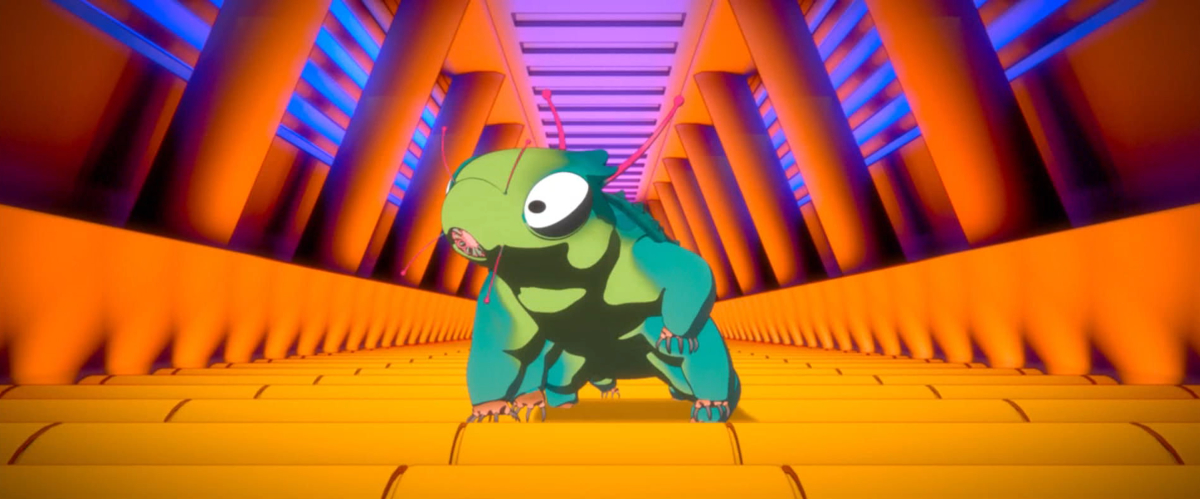
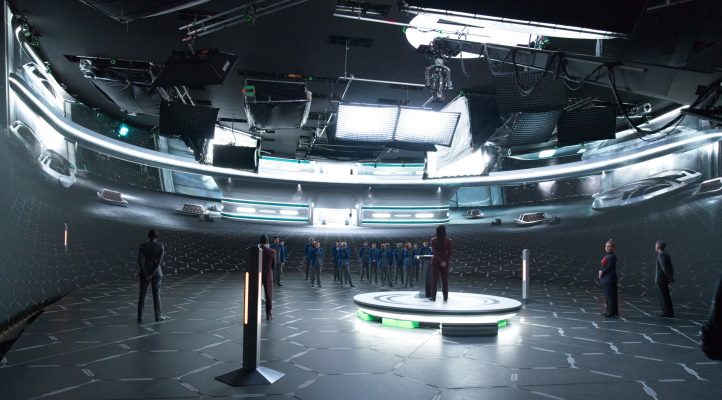
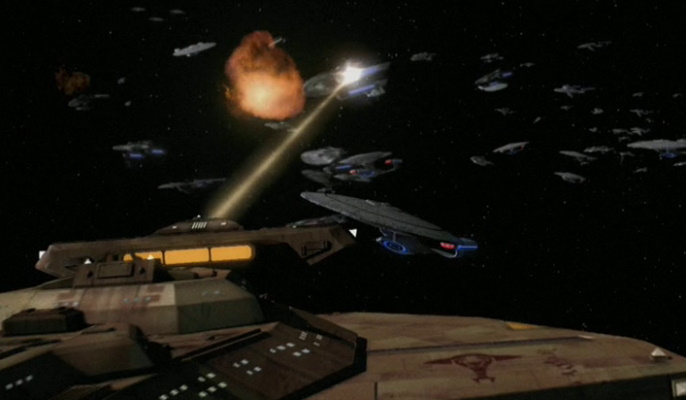
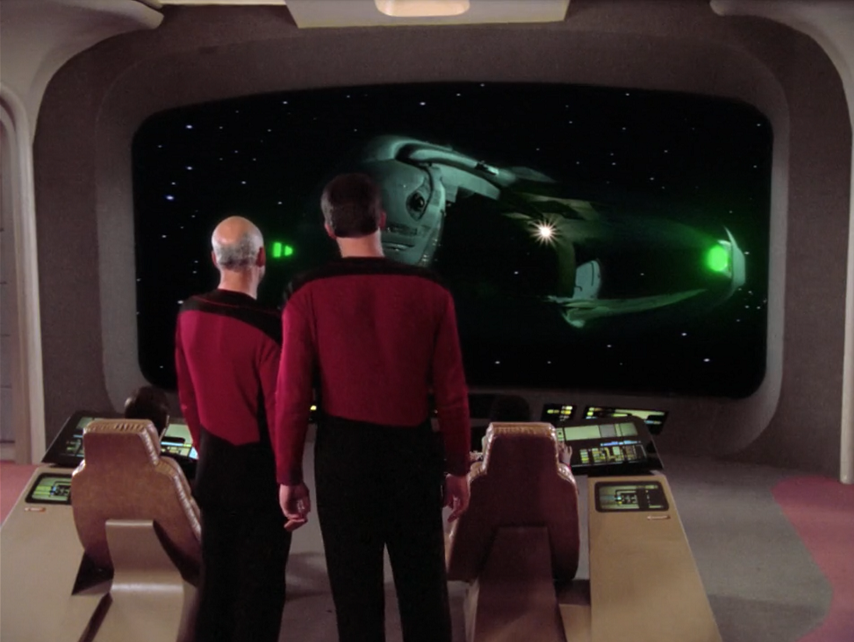


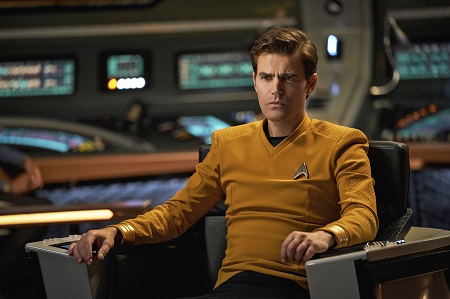

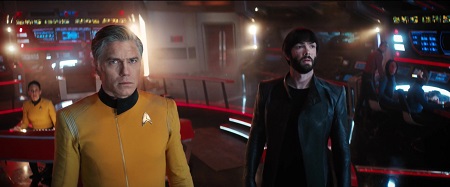









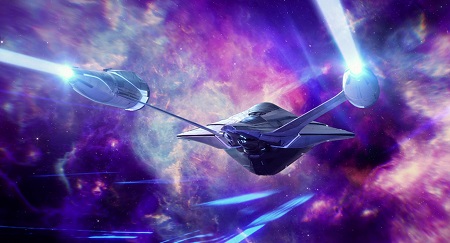









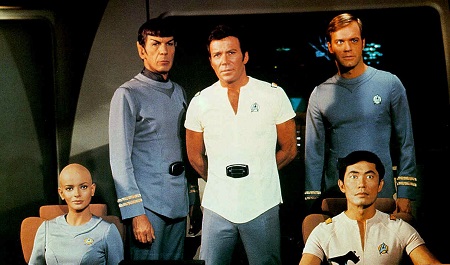
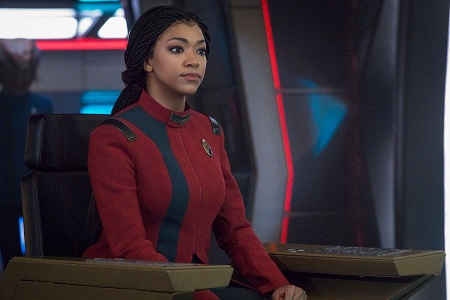

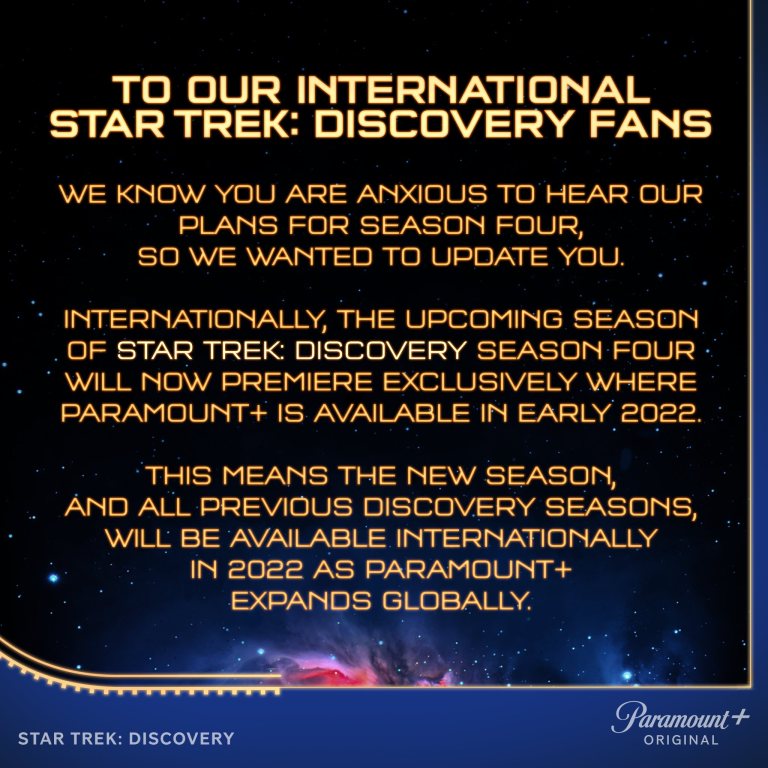








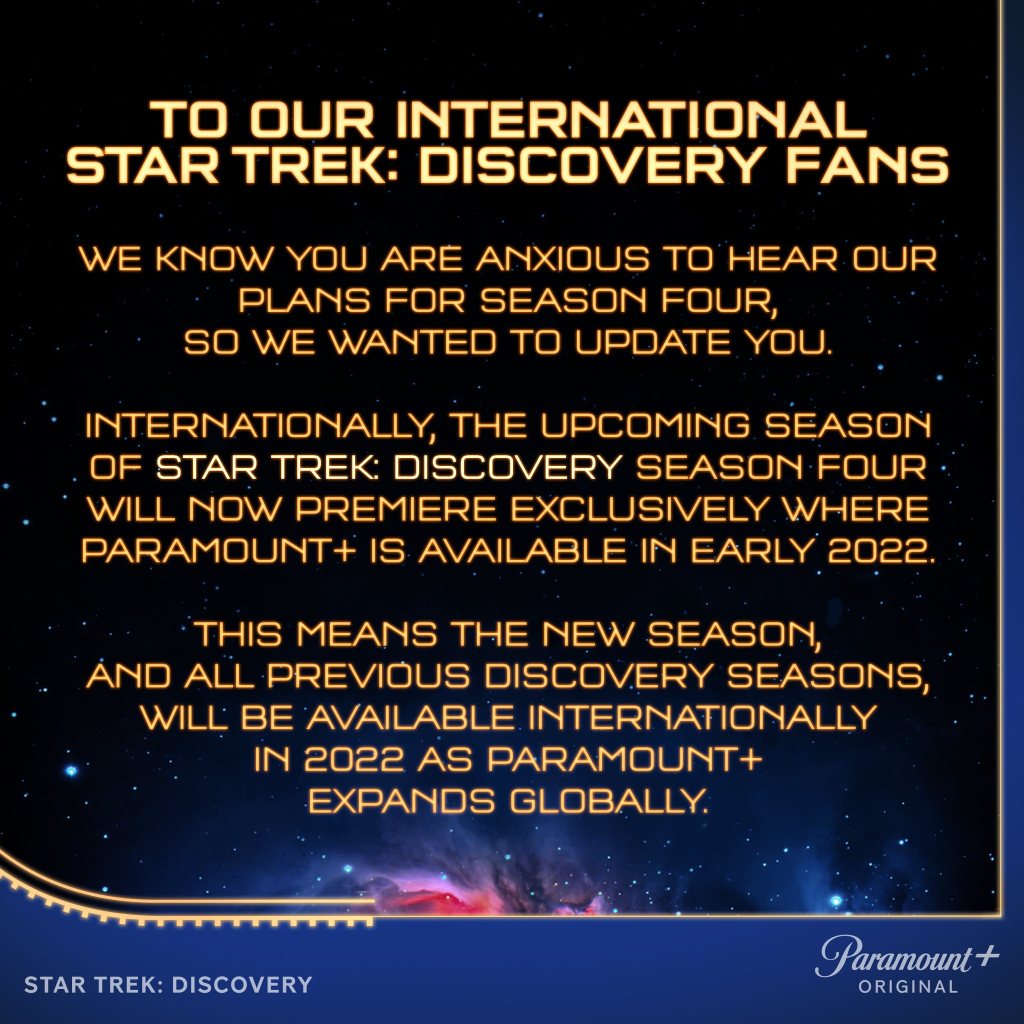


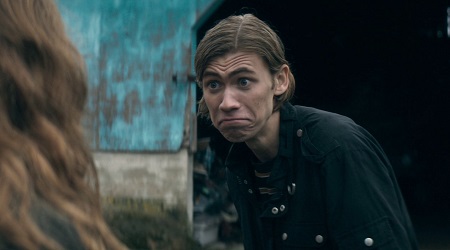
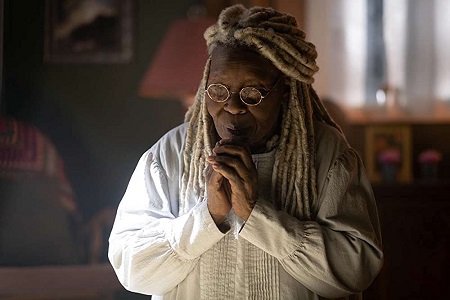










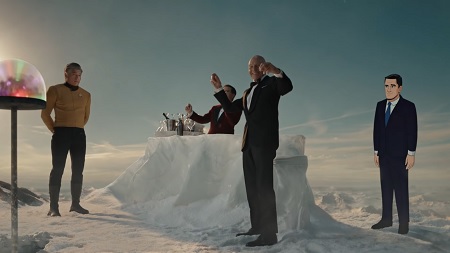




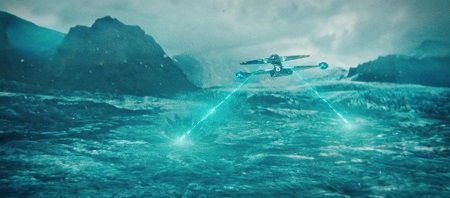


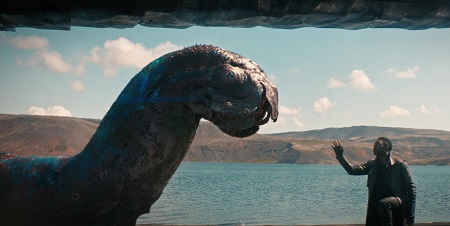
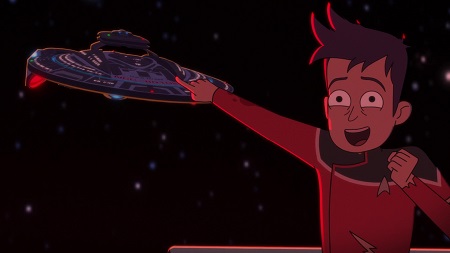


 Trekking with Dennis