Spoiler Warning: There are spoilers ahead for Star Trek: Picard Seasons 1-2 and the trailers, teasers, and announcements for Season 3. Spoilers are also present for the following Star Trek productions: The Wrath of Khan, The Next Generation, Deep Space Nine, Voyager, Nemesis, and Lower Decks.
Last year, shortly before Picard’s second season premiered, I put together a list of twelve Star Trek stories that I felt would make for good background viewing – and I was pleasantly surprised that most of the episodes and films that I selected actually did have some bearing on the story of the season, or at least would’ve given viewers some additional information as the story unfolded. Given my usual track record with theories and predictions, that was a bit of a surprise! But you know what they say: “even a broken clock is right twice a day!”
With Season 3 now less than three weeks away, I wanted to once again compile a few stories from Star Trek’s extensive back catalogue that I think could make for useful background viewing ahead of its premiere. At this stage last time around I felt we had a pretty good idea of the main narrative elements that would be present in Season 2: Q, the Borg Queen, and time travel had all been teased ahead of time, and comprised a big portion of the season’s story. This time, though, it feels like we don’t have as much information to go on!
A chair and console aboard the USS Stargazer.
As always, a couple of important caveats before we get started. First of all, I have no “insider information.” I’m not trying to claim that I know or have somehow clairvoyantly predicted the plot of Star Trek: Picard Season 3, and it’s quite possible that none of the stories we’re going to talk about will have any bearing whatsoever on the new season. Paramount is keeping a relatively tight lid on things this time around, and while we know which characters will be included, there’s still plenty that we don’t know! I’ve made a few guesses and assumptions – but I could be completely wide of the mark.
I’m calling the entries on this list “stories,” as several of these arcs play out across more than one episode. And I’ll be listing the stories in broadcast order – not in order of importance! It also goes without saying that Picard Seasons 1 and 2 are necessary viewing – so I’m not going to put them on this list.
Finally, all of this is the subjective opinion of one person. If I include episodes and films that you hate or think will be irrelevant, or I exclude something that seems blindingly obvious, please just keep in mind that this is only the opinion of one Trekkie – and that it’s meant to be a bit of fun!
With all of that out of the way, let’s take a look at a few Star Trek stories!
Story #1: The Wrath of Khan
The USS Enterprise in The Wrath of Khan.
Although we’re unlikely to see any characters cross over from The Wrath of Khan – which is set more than a century before the events of Picard – ever since we got our first glimpse of the new season’s villain a few months ago, I’ve been wondering if we might see some of the same themes crop up. Captain Vadic is still shrouded in mystery right now, but she gives me a very strong Khan vibe, and her potential obsession with Picard and desire to seek revenge against him could take the story down a somewhat familiar path.
Ricardo Montalbán’s take on Khan is one of the most iconic villain performances not only in the Star Trek franchise, but in all of cinema. So if Season 3 is going to try to emulate that in some way, there are some very big shoes to fill! If Star Trek is going to return to this idea of a powerful villain on a quest for vengeance, it will definitely be worth stepping back to see the franchise’s first take on that concept. And maybe, just maybe, there could be something in the story about genetic engineering and augmentation, too!
Story #2: The Battle The Next Generation Season 1
DaiMon Bok on the Enterprise-D’s main viewscreen.
This one is a bit of a stab in the dark and it could go absolutely nowhere! But The Battle introduces us to DaiMon Bok, a Ferengi captain who holds a grudge against Picard. Years earlier, the USS Stargazer had come under attack by an unknown vessel, and Picard was able to defeat it before the ship was lost. Aboard that ship was Bok’s son, and the Ferengi has never forgiven Picard for causing his death.
Aside from the fact that this is another story that deals with the theme of revenge (and specifically, revenge against Picard), I can’t help but wonder whether Bok might make a surprise appearance in Picard Season 3. We’ve already seen that Captain Vadic has brought two of Picard’s old adversaries – Lore and Moriarty – onto her team, and I have no doubt that Bok would jump at the chance to join another mission against his old foe. If Captain Vadic has put together a “rogues’ gallery” of Star Trek villains, perhaps we’ll see Bok among them.
Story #3: Datalore, Brothers, and Descent Parts I-II The Next Generation
Lore.
Lore only appeared in four episodes of The Next Generation, and I’m grouping them all together for this entry! Given that Brent Spiner is listed as a main character, I think it’s a safe assumption that Lore will play a significant role in the story of Season 3, so I think it will be absolutely worthwhile to see where he came from and what he went through prior to being shut down by Data.
Lore is Data’s “evil twin,” a malicious android who betrayed his creator and has caused a lot of harm. But especially by the time we got to the two-part episode Descent, I felt there was much more to the character than just a one-dimensional anti-Data or a foil for the crew of the Enterprise-D. Lore has a degree of complexity, and I’ll be curious to see what’s become of him when the new story gets underway.
I also have a theory about how Lore’s backstory could be connected to the events of Season 1, and you can find it by clicking or tapping here.
Story #4: Elementary, Dear Data and Ship in a Bottle The Next Generation
An evil hologram…
Sticking with villainous characters, a huge surprise last year was that Daniel Davis will be reprising his role as the malevolent hologram Professor Moriarty. Moriarty was created by a computer error in Elementary, Dear Data and went on to kidnap Dr Pulaski. In Ship in a Bottle, Moriarty returned and tried to escape the confines of the holodeck. Both episodes are fascinating, and Davis’ portrayal of the iconic Sherlock Holmes character has a menacing calmness that’s absolutely riveting to watch!
Given what we know of holographic technology, and advances like the Doctor’s mobile emitter that was seen in Voyager, I wonder what kind of role Moriarty might play? He’s a genius, that much is certain, and he could cause Picard all kinds of trouble – as indeed he did in his earlier appearances!
Considering that both Professor Moriarty and Lore are both artificial life-forms, I have a theory that could connect the story of Season 3 with that of Seasons 1 and 2. Check it out by clicking or tapping here.
Story #5: Redemption Parts I-II and Unification Parts I-II The Next Generation
Sela.
There have been rumours flitting about for months that Denise Crosby will appear in Picard Season 3, and while we have yet to get any official confirmation of this, if it’s true and she will return, it seems logical to assume that it will be in the role of Sela. Sela was the daughter of an alternate timeline’s version of Tasha Yar, and tangled with Picard on two occasions – trying to interfere in the Klingon Empire’s civil war and later attempting to conquer Vulcan.
As discussed above, if Captain Vadic is looking for allies in her campaign against Picard and/or the Federation, Sela would surely jump at the chance to be involved. Her failures were almost certainly very costly for her politically, and I can absolutely see her wanting to get her own revenge on Picard and the crew of the Enterprise-D. There’s also the possibility that Sela’s involvement in the story could connect with the Zhat Vash plot and other Romulan storylines from Season 1.
Story #6: Disaster The Next Generation Season 5
Riker in Disaster.
Disaster is a fantastic episode that throws the whole crew of the Enterprise-D into a chaotic situation. When the ship strikes a quantum filament in space and is left damaged and without power, everyone has to step out of their familiar roles in order to save the day. Disaster is an ensemble piece that gives practically everyone something to do.
Disaster is one of the strongest episodes from Season 5 – which is perhaps my personal favourite season of The Next Generation, so that’s saying a lot! For our purposes today, I like that it’s an episode that throws everyone far out of their comfort zones, that it groups together characters who didn’t often interact with one another, and that it gives all of the main characters something to do to contribute to the story.
Story #7: Attached The Next Generation Season 7
Picard and Dr Crusher.
There are several episodes that look at Picard and Dr Crusher’s relationship, but few are as detailed or emotional as Attached. What sounds like a silly sci-fi premise of being connected to one another by telepathic implants actually leads to a great story about the two characters and their emotional bond – a bond that has skirted friendship and something romantic.
One open question that fans have had really since Picard premiered three years ago is what may have happened between Picard and Dr Crusher over the past twenty years or more. It certainly seems as if they’re still friends based on what we’ve seen… but did they ever “cross that line” and become something more? Picard’s arc just last season ultimately turned out to be about his lack of romantic attachments, but you never know!
Story #8: All Good Things… The Next Generation Season 7
The USS Pasteur.
In some ways, All Good Things doesn’t really feel like a finale – and that makes sense given that Generations would release in cinemas only a few months after it was broadcast! But The Next Generation’s final episode is an interesting one, and when looking ahead to Picard Season 3, what’s perhaps its biggest draw is that parts of the episode are set in the same time period.
Q sets Picard the challenge of solving an “anti-time” mystery, and to facilitate that, Picard moves through three different time periods – including an alternate future in which we get a look at the show’s main characters. Events in Picard and other Star Trek projects have already undone much of the anti-time timeline, but some elements may make their way into this new story.
Story #9: The Way of the Warrior Deep Space Nine Season 4
Worf with a Klingon D’k tahg dagger.
Worf is about to make a big return to Star Trek – but unlike his crewmates, we’ve already seen the chapter of his life after he left the Enterprise! In Deep Space Nine’s fourth season, Worf transferred to the station, and the two-part episode The Way of the Warrior not only brought him on board, but did so in spectacular fashion.
The episode focuses on Worf’s inner conflict between his Klingon heritage and duties to Starfleet, as the Klingons plan a mission into the Gamma Quadrant. With Worf set to return, and promises of some kind of connection or tie-in with Deep Space Nine on the cards, I think seeing how he came to join the crew could be worthwhile.
Story #10: In Purgatory’s Shadow and By Inferno’s Light Deep Space Nine Season 5
Garak and Worf at a Dominion internment camp.
This pair of episodes wrapped up the Klingon-Federation war that started in The Way of the Warrior, and set the stage for the Dominion War that would break out at the end of the season. It was also a strong Worf story that saw him held prisoner at a Dominion internment camp along with Martok, Garak, and Dr Bashir.
Since Star Trek returned to the small screen in 2017, we’ve only gotten the barest of mentions of the Dominion War – but there’s so much potential in a return to Cardassia, the Dominion, and to look at the aftermath of the conflict. As someone who was heavily involved in the war and who did so much to keep the Federation and Klingon Empire united, Worf is the perfect character to use to explore some of these points. We may learn nothing new about the aftermath of the Dominion War in Season 3… but I kind of hope that we will.
Story #11: Insurrection
Troi and Riker in Insurrection.
I know that Insurrection isn’t everyone’s favourite film, but I actually see several parallels with its story based on what we know of Season 3. Picard and his crew undertaking a “Starfleet-adjacent” mission, which may or may not have official approval, sounds an awful lot like what the crew got up to in Insurrection!
Furthermore, I noted in the Season 3 trailer a little while ago that one of the nebulae that Picard and the crew will seemingly visit looks an awful lot like Insurrection’s “Briar Patch” – the region of space in which the Ba’ku homeworld was located. Could there be a deeper connection there? Maybe Captain Vadic is a Son’a, one of the defeated adversaries from Insurrection. That would be a bold move in more ways than one!
Story #12: Author, Author Voyager Season 7
The Doctor with Captain Janeway and Tuvok.
With the return of Professor Moriarty, a sentient hologram, I think it could be worth taking a look at Voyager’s seventh season episode Author, Author. The story focuses on the Doctor, who has written a holo-novel based very loosely on his experiences aboard Voyager – but when he wants to make changes to it, his publisher tries to deny him that right, claiming that a hologram cannot “own” the copyright to his work.
Author, Author may turn out to be ahead of its time given that right now, here in the real world, the question of AI authorship is being discussed! In light of AI art, AI essays, and the like, we’re going to have to take a serious look at this issue in the years ahead! But for our purposes, Author, Author could be an interesting starting point to consider the state of holographic rights and synthetic rights in a general sense in the late 24th and early 25th Centuries. Maybe none of it will matter for Professor Moriarty’s story, but given that Season 1 looked at a ban on synthetic life, there’s a chance some of the themes in the episode will turn out to be relevant.
Story #13: Nemesis
A painting of the Enterprise-E.
Nemesis was the last time that Picard and his old crew were all together – at least as far as we know! It was certainly the last time that we as the audience got to see them working together, even if they may have reunited off-screen in the years before Season 1. So Nemesis, while arguably not the best Star Trek film, is going to be an important one to watch.
This is also Data’s final mission, as he was killed while stopping the Reman plot. A big part of Season 1 involved giving Data the send-off that he didn’t get in Nemesis, and his influence loomed large over the story in more ways than one. There are also mentions of Lore in the story, though nothing significant I suspect, and we’re introduced to B-4, an early precursor to Data. For all of those reasons and more, Nemesis is a story worth checking out.
Story #14: Kayshon, His Eyes Open Lower Decks Season 2
Captain Riker of the USS Titan!
This might seem a bit of an odd choice, but Lower Decks actually showed us a bit of a look at Captain Riker’s tenure aboard the USS Titan – and the Titan, or at least a ship bearing the same name, is going to be seen in Season 3. In this episode, Lower Decks main character Boimler is serving aboard the Titan under Riker’s command, and takes part in an away mission to a dangerous planet.
When Kayshon, His Eyes Open premiered, I was thrilled to get a look at Riker, the Titan, and the crew he served with. I wouldn’t be surprised at all to see Season 3 make some kind of reference to Riker’s time in command, and there could even be name-drops of one or more of the characters in this episode. Season 1 already made reference to Star Trek’s animated adventures, and with this episode including Riker in such a large role, it would be a shame in a way if Season 3 just ignored it completely.
I have a full episode review of Kayshon, His Eyes Open – click or tap here to check it out!
So that’s it!
Who (or what) is Picard firing his phaser at?
Those are fourteen Star Trek stories that I feel could make for interesting or useful viewing before Picard Season 3 kicks off.
If nothing else, all of the stories above are good fun, and worth re-watching for any Trekkie who may not have seen them in a while! With the story of Season 3 being kept under wraps, some of these picks are admittedly guesses – but I think that all of them have the possibility, at least, to connect with the story that lies ahead.
I’m cautiously optimistic about the upcoming season, despite Picard as a whole not having been as enjoyable as I’d hoped nor having accomplished what I’d wanted it to. There are reasons to be concerned – such as the disappointing decision to jettison all but one of the new characters that the series had introduced – but I’d be lying if I said that one more adventure with the crew of the Enterprise-D wasn’t a tantalising, enticing prospect.
When Picard Season 3 arrives next month, I’ll do my best to keep up with weekly episode reviews, and if the series lends itself to theory-crafting, I daresay I’ll put together some of my patented (and usually wrong) theories as well! So I hope you’ll stay tuned for that!
Star Trek: Picard Season 3 will premiere on Paramount+ in the United States on the 16th of February 2023, and in the United Kingdom and around the world on the 17th of February 2023. Seasons 1 and 2 are already available to stream or buy on DVD/Blu-ray. The Star Trek franchise – including Picard and all other properties discussed above – is the copyright of Paramount Global. This article contains the thoughts and opinions of one person only and is not intended to cause any offence.
Spoiler Warning: There are minor spoilers ahead for The Last Of Us, both the TV series and the video game.
The Last Of Us is finally here! One of the television shows that I’ve been most keen to see over the past couple of years made its debut last week, and with two episodes under its belt, I think it’s a good time to share my first impressions of the show.
First of all, the narrative of The Last Of Us is just perfect for an adaptation like this. Video games have been notoriously difficult to successfully bring to the screen – but in my view, that’s because most previous attempts have been feature films, not television shows. A modern, serialised TV show is a far better option for almost all video game stories for one simple reason: length.
Concept art for The Last Of Us.
The Last Of Us was released on the PlayStation 3 back in 2013, and its main storyline took players anywhere from 16-20 hours, on average, to complete. There’s no way to condense a story like that into a film; even the longest works of cinema clock in around the three-hour mark. By choosing the small screen instead, Sony and developers Naughty Dog have played a masterstroke.
So before the show had even got started, it felt like there was a strong chance for success. If I’d have heard that The Last Of Us was going to be adapted as a film, I’d have been far less interested – because its complex, dark, and deeply emotional story needs more time to play out. And based on the first two episodes, it seems as though we’re in for a solid adaptation that doesn’t rush past or skip over key story points.
Pre-release still frame of Tess and Joel with a victim of the cordyceps infection.
I was worried that I’d find Pedro Pascal miscast as Joel, if I’m being honest. Although Pascal was solid in Game of Thrones, and I’ve enjoyed his performances in other titles, like last year’s The Unbearable Weight of Massive Talent – which you should really check out, by the way, as it’s a solid action-comedy – I wasn’t convinced that he was the right fit for this part. Pascal underwhelms me in The Mandalorian, his other big made-for-streaming series, but that’s more to do with the writing rather than the performance; The Mandalorian doesn’t give Pascal a chance to show his emotional range (nor any range at all, come to that) which is where he shines in The Last Of Us.
So I’m glad to have been proven wrong about that! The central pairing of Joel and Ellie is both the driving force of the plot of The Last Of Us and also its emotional core, and I think we’ve seen the beginnings of that in the show’s first couple of episodes. Again, this is something that builds up slowly, and the initial part of the story – the part that we’ve seen so far – put Ellie with other characters at first. But there’s a hint of good things to come in the pairing of Pedro Pascal and fellow Game of Thrones alum Bella Ramsey.
Pedro Pascal at the premiere of The Last Of Us. Image Credit: IMDB
It’s not a stretch to say that The Last Of Us is one of the best video games I’ve ever played. Mechanically the game is solid, and its stealth-action gameplay is decent – but that was hardly innovative in 2013. What made the game special was its narrative; the game’s story was one I’d long felt was worthy of an adaptation like this. Bringing it to a new audience, as well as providing fans of the game with an adaptation worthy of such a remarkable story, was the challenge that befell HBO – and so far, it seems that they’ve risen to meet it.
Bringing the post-apocalyptic world of The Last Of Us to screen successfully required a huge financial investment – not only to secure big-name stars like Pedro Pascal, but to create intricate sets that reflect twenty years’ worth of decay, and to craft animation work that provides a sense of scale. HBO backed up the show’s creators with a decent budget, and as a result The Last Of Us recreates the game’s hauntingly beautiful world – with a few changes along the way!
The post-apocalyptic world of The Last Of Us is stunning.
I don’t know whether there will be a reason for the decision to change the time period in which the story is set other than perhaps an attempt to play on some kind of hidden early 2000s nostalgia… but maybe there will be more to it than that, we’ll have to see. In the original game, the infection broke out circa 2013 (the year the game was released) with the main story taking place in 2033-34. Perhaps the creators of the show hoped to use a kind of “look at what life could be like right now in an alternate timeline” thing, but if that’s all there is to it I don’t think it adds anything.
In a way, the show might be more relatable, not less, if it were set in the 2030s or 2040s, amidst the decaying remnants of today’s culture, rather than reflecting the way things were twenty years ago. There were what I interpreted as subtle digs at the George W Bush administration and the general post-9/11 culture of the United States in some of The Last Of Us’ scenes and dialogue, but this is something that, to be honest, has been explored in far more depth – and far better – in numerous other works, and again I don’t think it added anything of substance. However, I’m content to wait and see if the time period and other setting changes are going to be paid off later.
In the show, the outbreak occurred in 2003.
One thing that the show absolutely nails is its post-apocalyptic look. The faces of the characters are grimy and dirty from years of living in difficult conditions, the sets all show attention to detail with moss and mould, and every last element has been carefully crafted to simulate a world that is, for the most part, abandoned. CGI and animation work combine with practical effects and some very gruesome makeup to really sell the effect.
Two episodes in and I’ve already noticed multiple locations that look incredibly similar to the video game upon which the show was based. The flooded hotel in particular felt eerily familiar, and doubtless it would to anyone who played through The Last Of Us. There must be a temptation with an adaptation like this to shake things up and put the characters into different-looking spaces, but so far I’ve been struck by just how similar the locations have all felt.
The flooded hotel felt eerily familiar.
The series has made some changes, though, and one of the biggest ones that’s become apparent so far is the relationship between Tommy and Joel. In the video game, Joel was estranged from Tommy by the time of the main story, with Tommy having left to join the Fireflies – an anti-government group whose objective is to both end the military government and find a cure for the cordyceps infection. In the show, however, a big part of Joel’s motivation is to reunite with Tommy, who seems to be a resident of the Boston quarantine zone along with Joel and Tess. It remains to be seen how this change will impact the story, and whether there’s a deeper reason for it.
Another notable change came toward the end of the second episode, with the events that unfolded at the State Capitol also being quite different when compared to the video game – though this one was less impactful as it took the main characters to more or less the same place.
Tess and Joel at the Capitol.
I’m not any kind of “purist” opposed to changes like this, and if they serve the story well and create an engaging narrative, it should be fine. But I do think it’s noteworthy in any kind of adaptation – be that of a book, film, or video game – when narrative beats and characterisations are altered. The Last Of Us worked so well because it’s such a strong character-driven story… and I guess all I can say is that I hope that making changes to that story and its characters won’t have any ill effects or unintended consequences!
There are advantages to changing things up, though. While fans of the game should be confident that they’re familiar with the broad strokes of the plot, smaller changes and additions keep The Last Of Us fresh even for folks who may have played through its story multiple times. That’s a net positive, in my view, and never being quite sure what will happen next is almost always a good thing for a television show like this as it seeks to keep the tension and excitement levels high!
A new creation for the series.
The addition of a sequence set at the very beginning of the outbreak, following a scientist and military officers in Indonesia, was interesting, and the show seems to be making a bit more of an attempt than the game did to explain the origin of its cordyceps infection. Even if that sequence is all we’re going to see, I still think it was a good idea to include it. Changing the disease’s origin from “South America” to Indonesia is certainly an interesting choice, though, and again I wonder if this is something that will be paid off down the line.
The Last Of Us has a beautiful and understated piece of music as its main theme. The Americana-inspired tune is pitch-perfect for the series, and the short, modern title sequence is in line with a lot of other shows in the serialised space; shows from Star Trek: Picard to Game of Thrones have all used CGI sequences like this. I don’t think that The Last Of Us’ theme will become quite so recognisable and iconic as some others, but it’s a great piece in its own right.
Cover art for the original video game.
So let’s wrap things up! The Last Of Us is off to a great start. There are a couple of open questions; elements unique to the series or that have been changed from the source material, and I’m curious to see how that will play out as the story progresses. But overall, the show feels like a great adaptation. It’s easily one of the best video game adaptations that have been created so far, and certainly gives the Halo series on Paramount+ a run for its money!
For someone who isn’t a big horror fan, there were jumpscares and tense moments in The Last Of Us that were definitely pushing me out of my comfort zone as a viewer, but they were relatively few and far between in a complex, nuanced story that has plenty of other things to focus on. At no point did I feel I needed to switch off or skip ahead to get past a difficult or frightening sequence, and I think that’s to the show’s credit.
Above all, The Last Of Us is one of the most incredible and emotional stories that I’ve ever played through in a video game. Bringing that story to a wider audience and making it more accessible is a fantastic thing, and I hope that this series will succeed, bring in huge numbers of viewers, and introduce this wonderful story to a whole new group of folks – while still finding ways to keep it exciting and engaging for people who’ve already experienced it. Based on the first couple of episodes, there are plenty of reasons to think it’s up to the task!
The Last Of Us is broadcast on HBO and streams on HBO Max in the United States and is broadcast on Sky Atlantic in the United Kingdom. The Last Of Us is the copyright of Naughty Dog, Sony Interactive Entertainment, and HBO. This article contains the thoughts and opinions of one person only and is not intended to cause any offence.
This article deals with the sensitive subject of transphobia and may be uncomfortable for some readers.
When the Harry Potter books emerged in the late 1990s, I missed out on the craze at first. It was only around the time of the third book in the series that I was convinced to check them out; it had become an unavoidable phenomenon by then, and even though I was outside of the nominal target age range and had long since moved beyond kids’ stories, I felt that the Harry Potter stories were good fun and had a lot to offer. I even went as far as to pre-order a couple of the remaining titles, reading them as soon as they were available.
Although I was never “in” the Harry Potter fan community, I definitely held the books in high regard, and when the films came along I enjoyed those as well. Harry Potter became a point of pride, in a way, as a British person; in an entertainment landscape so utterly dominated by the United States, Hollywood, and American films and television shows, here was a distinctly British entertainment property that was taking the world by storm.
Harry Potter author JK Rowling.
When the Harry Potter film series came to an end at the beginning of the last decade, so too did my involvement with the franchise. I found the first Fantastic Beasts film to be poor, I wasn’t in a position to be able to see the Cursed Child stage play, and although I’d still have said that the films and books were decent, I was in no rush to go back and re-read or re-watch any of them. Harry Potter had come and gone for me – as indeed it had for most of its audience outside of the hard-core fandom.
The recent conversations around JK Rowling, prompted in large part by the upcoming video game Hogwarts Legacy, have dragged up the Harry Potter series for me, though, and it’s fair to say that my feelings have changed a lot since I first sat down to read the books more than twenty years ago. JK Rowling has leveraged the fame and money that Harry Potter brought her to go to some pretty dark places, and as a result I’m one of a growing number of people who can’t support, enjoy, or take part in the Harry Potter series, Hogwarts Legacy, or anything else related to it any longer. In this piece I want to explain, as best I can, why I feel that way.
Upcoming video game Hogwarts Legacy prompted this conversation.
First of all, I believe that each of us has an inalienable right not to be compelled, forced, or shamed into supporting a company, product, or public figure when what they say and do conflicts with our values and beliefs. This applies to conservatives who say they won’t support “woke” corporations and it applies equally to anyone who doesn’t want to lend their support to companies and individuals who express homophobic, transphobic, and other kinds of bigoted views. Whether we agree or disagree with someone about the importance of an issue, the fact remains that we all have the right to determine what’s important to us, where our values lie, and to try – insofar as possible in a corporate capitalist system – to avoid companies and entities that don’t share those beliefs and values.
This is the very definition of “voting with your wallet.”
It doesn’t have to be explained in such lofty philosophical terms, but this is basically what it boils down to. For some folks, JK Rowling’s transphobic public statements, her continued financial support for transphobic organisations, campaigns, and causes, as well as other decisions she’s taken and statements she’s made mean we don’t want to support Harry Potter, Hogwarts Legacy, or anything else in the franchise.
JK Rowling at the White House circa 2010.
Now I’d like to get into some of the reasons why I came to the decision to undertake what essentially amounts to a boycott of Hogwarts Legacy and Harry Potter.
I first started to feel uncomfortable with the way JK Rowling was treating the franchise when she began going back to the books and clumsily tried to insert characterisations and narrative elements that were simply not present – nor even implied to be present – in the original work. She seemed to be doing this for “internet points;” for the clout of being able to claim that she had actually created a series that was more progressive than it truly was.
What Rowling was attempting to accomplish with an unsubstantiated claim that, for instance, the character of Dumbledore was gay, was to award the Harry Potter series – and herself as its author – further prestige and recognition that was unearned. At a time when Rowling’s other endeavours were failing to come anywhere close to recapturing the magic (no pun intended) of Harry Potter, making very public statements about her only genuinely successful work was a way for her to retain a level of attention and relevance – and by keeping a spotlight on Harry Potter at a time when many of the series’ more casual readers and viewers were drifting away, it was a way to try to keep the cash flowing.
JK Rowling went back to the Harry Potter series and tried to arbitrarily insert character traits that didn’t exist.
Long before JK Rowling started down a path that would lead to overt transphobia, I think it was pretty obvious that she was someone who was struggling to let go of Harry Potter. By returning to the series to put out a sequel in the form of a stage play, signing another deal with Warner Bros. to make films based on the book Fantastic Beasts and Where To Find Them, and having the online forum/community Pottermore created, Rowling signalled both a desperation to stay in the spotlight and a cold-hearted greed as she sought to keep the money coming in.
But during this period, Rowling was more a figure of fun than anything harmful. Sure, it wasn’t great to see her trying to almost arbitrarily assign new sexualities and other traits to characters in the Harry Potter books, but it came across more as pathetic attention-seeking than anything malicious. Rowling saw that the LGBT+ movement was advancing, felt that the lack of open or even implicit LGBT+ characters in Harry Potter was hampering its ongoing success, and tried to remedy that in a pretty shameless way. It was sad, almost pitiable… but something I felt was, at most, worthy of being joked about.
JK Rowling with Rupert Grint, Daniel Radcliffe, and Emma Watson in the early 2000s. Image Credit: IMDB
JK Rowling’s very first public step down what we now know to be a transphobic path seemed pretty innocuous at first. I actually interpreted her Twitter post – in which she responded to an article by Devex that used the phrase “people who menstruate” – to be harmless wordplay. People who write a lot often like to play with words, as I can attest, and by sarcastically responding to the post it seemed, for a moment at least, that what she was doing wasn’t anything serious.
But over the following months and years, Rowling has clearly become increasingly transphobic.
Let’s define what we mean by “transphobia” so there are no misunderstandings. Someone who is transphobic has an irrational hatred toward transgender and gender non-conforming people. In this context we aren’t using “phobia” to refer to a fear, but to refer to dislike, disapproval, prejudice, discrimination, and/or hatred. And to be especially clear: if someone says they believe that transgender people, and trans women in particular, should be “treated with dignity,” but then refuse to even accept that transitioning is possible or oppose laws that would affirm someone’s true identity, they are transphobic. Saying they believe in treating people with “dignity” has become a buzzword in some right-wing circles, but if they can’t back up that word with any meaningful action, then it’s nothing but cover for something overtly harmful.
I hope we’re clear on our definitions now.
One half-serious Twitter post that may have been tone-deaf does not constitute transphobia, although it clearly hinted at a deeper dislike or disapproval of transgender and gender non-conforming people. But if that had been Rowling’s sole contribution to the debate, or if she had walked it back, apologised, or even simply ignored transgender issues thereafter, we wouldn’t be having this conversation. But she didn’t – when faced with pushback, she doubled-down.
Although JK Rowling had begun to lose her status as the Harry Potter series slipped out of the mainstream cultural conversation, she was still someone who was held in high regard. She’d become far less important as Harry Potter began to be eclipsed by other, newer franchises, but if you had asked almost anyone throughout the 2010s about JK Rowling, chances are you’d have heard them say something positive about her – or at least about the Harry Potter series. This pushback that she got for her initial transphobic post was the first time since becoming a household name that she’d gotten any kind of major criticism in public – and it clearly had a huge psychological impact on her.
JK Rowling’s Twitter post from June 2020.
Rowling’s initial beliefs about sex, gender, and gender identity may be understandable, to an extent, because of the era in which she was born and the society in which she was raised. Even when I was at school in the ’90s, “sex education” lessons entirely excluded any mention of homosexuality, and the idea that someone could transition from one gender to another was never even discussed in any health or even biology lesson. If transgender people were mentioned at all, it was for the sake of mockery; “trannies” were the butts of jokes and figures of fun, and nothing more.
Some people of my generation still cling to those beliefs even as science and society have moved on in leaps and bounds – but thankfully, better education, increased awareness, and more scientific and sociological research into sex, gender, and gender identity have already changed minds. Unfortunately, though, people are using JK Rowling’s public and vocal transphobia to try to push back against the societal acceptance of trans people – and even to attack legislation that protects trans rights.
A protest in the UK in January 2023. Image Credit: Sky News
Rowling herself has become the figurehead of this movement, and the current Conservative government in the UK has been able to turn the question of trans rights into what is insultingly termed the “trans debate,” in part using Rowling and others like her as cover for some seriously harmful legislation that either seeks to block the advance of trans rights in the UK, or in some cases, actively rolls back pre-existing trans rights.
This is the real crux of the JK Rowling problem: her status and wealth have allowed her free rein to spearhead one of the worst and most aggressive anti-trans campaigns anywhere in the western world, lending undue legitimacy and standing to a point of view that is mostly shared by a bizarre coalition of religious fundamentalists, paleoconservative reactionaries, and internet trolls. At a time when LGBT+ rights were advancing across the board, Rowling stepped in and has actively worked to push back against those rights, scoring some successes as the current Conservative government and its allies use her and the people who support her as a shield.
The current Conservative government in the UK is keen to oppose and roll back trans rights.
This is why I can’t “separate the art from the artist,” as some folks have suggested. Because what JK Rowling is doing is still happening and is continuing to actively cause harm to trans people, I find myself in a position where I can’t support the Harry Potter franchise. Moreover, with Rowling retaining ownership of the franchise, any purchase of books, films, video games, and other merchandise gets her a cut of the proceeds – and as we’ve just been discussing, Rowling uses some of her money to provide financial support to transphobic campaigns, causes, and organisations. I feel that making any new purchase of Harry Potter merchandise, at this time, is akin to donating to such causes myself – something I would categorically never do.
Last time we talked about JK Rowling we touched on this concept, which is referred to in some academic circles as “the death of the author.” Taken from the title of an essay by French critic Roland Barthes, “death of the author” is primarily about discovering one’s own interpretation of a published work independent from the original intent of the author and who they are or were – but I would very strongly argue that it doesn’t apply in this case, and that separating JK Rowling from Harry Potter is impossible as long as she remains in control of the franchise and continues to monetise it.
It isn’t possible to separate JK Rowling from Harry Potter.
There are plenty of authors and other creators whose work I would also choose not to support under similar circumstances – but they’re either long dead, no longer actively involved in their franchise, or their franchise has been taken over and moved on. This is the key difference, and while there are many, many creative people who were unpleasant or even harmful during their careers and lifetimes, JK Rowling is continuing to cause harm to her targets right now.
I also found some of JK Rowling’s recent attacks on the Harry Potter fan community to be pretty distasteful, showing how little respect or appreciation she has for the people who quite literally gave her the position and power that she’s wielding. In her recent book The Ink Black Heart, Rowling clumsily inserts a character as a stand-in for herself, then makes that character the target of an angry and murderous mob stemming from an online fan community. The book, much like everything else Rowling has tried outside of Harry Potter, got mixed reviews and didn’t sell especially well. But the intent was there – and Rowling has shown her true colours, sneering at and judging the very people who made her who she is.
The Ink Black Heart got mixed reviews.
One interesting thing that has come out of this whole unfortunate mess that is to the overall good, I feel, is a reevaluation of JK Rowling’s work and the Harry Potter series in particular. While the setting of Harry Potter captured the attention of a worldwide audience, there’s a reason why it’s always still referred to as “Harry Potter” instead of its official title: “the Wizarding World.” The world of Harry Potter doesn’t stand up to scrutiny, and without its titular characters and the admittedly engaging story that they were part of, it doesn’t feel as though there’s anything else of substance there.
Look at franchises like Star Trek or Star Wars – deep world-building created rich, lived-in settings in which characters could get lost, where their skills and talents mattered and could be applied to any number of roles in those universes. Harry Potter, in contrast, is both shallow and inconsistent; a cobbled-together mix of English folklore, tropes of the fantasy setting, and even elements and narrative beats directly plagiarised from other literary works. It invented practically nothing new, and its few original elements are actually its weakest points. As a setting and a fictional world, it doesn’t survive more than a cursory glance.
The “Wizarding World” is not a well-constructed setting.
And that’s totally fine. Not every author can be brilliant, not every fictional setting can be wonderfully rich and deep, and for its intended purpose and target audience, there’s nothing wrong at all with the setting of the Harry Potter books. But it does raise a wry smile when I hear people leaping to its defence, claiming it’s a unique and brilliant fictional setting comparable with the likes of Tolkien’s Middle-earth. It isn’t… and it was never meant to be. JK Rowling simply doesn’t possess the talent to create something anywhere close to that level.
There are some deeply troubling and problematic depictions within the Harry Potter books, too. Goblins who run the Wizarding World’s banks – and who are set to be a major villainous faction in Hogwarts Legacy – clearly and obviously draw on anti-semitic tropes and stereotypes. The Wizarding World practices slavery, enslaving “inferior” house elves to do the bidding of witches and wizards. And when, in the books, a character tries to point this out and campaign against it, she’s ridiculed not only by her friends, but really by the narrative itself. Harry even takes ownership of a house elf at one point, sending him to complete tasks for him; his own personal slave.
Kreacher, Harry’s personal house elf.
JK Rowling also seems to delight in making fun of people with different body types, using “ugliness” and fatness as indicators of maliciousness and evil. And, of course, Harry Potter falls into the trap of racial stereotyping, with its tiny number of minority characters being deeply problematic.
It’s actually been good to see more and more folks taking a critical eye to the Harry Potter series in light of the issues surrounding JK Rowling. Some criticisms of the books at the time of their publication and in the years since had been written off or just ignored – and for folks who always felt uncomfortable with certain aspects of the stories or the ways in which they treated marginalised and minority groups, it must be cathartic to find more support.
Katie Leung as Cho Chang in The Goblet of Fire.
I won’t ask anyone to boycott or refuse to purchase Harry Potter merchandise or Hogwarts Legacy, because I don’t think it’s my place to do that. This piece wasn’t intended to change minds or convince people on the fence to adopt a certain point of view. It was more a way for me to get my thoughts in order and share why, as someone who talks a fair amount about the video games industry here on the website, I won’t be covering Hogwarts Legacy this year. Hogwarts Legacy could end up being a bust, at the end of the day – an overhyped, mediocre video game not worth all of this fuss and bother.
As I said at the beginning, we all have the right to decide for ourselves which products, companies, and public figures we want to support – and which ones we don’t or can’t support. For me, Hogwarts Legacy and the entire Harry Potter series now fall firmly into the latter category, and unless there’s a massively compelling reason to discuss the franchise in future, I hope that this will be the last time I have to comment on it.
A replica of the Hogwarts Express steam locomotive.
I would love to see greater acceptance of transgender and gender non-conforming people. People like JK Rowling have caused and are continuing to cause harm to trans women in particular, and unfortunately her very public attacks on trans folks have been seized upon by people and organisations with pre-existing anti-trans views and agendas to halt and reverse trans rights.
Hogwarts Legacy and the Harry Potter series may not be openly transphobic in terms of narrative, but because a cut of the proceeds go to someone who is, and who uses the wealth, fame, and status she has to contribute to these causes, I’m now in a position where I can’t support them. As a consumer in a capitalist marketplace, all I can do is vote with my wallet – so that’s what I’m choosing to do.
I’m done with Harry Potter.
This is not an easy subject, and for people who are much greater fans of Harry Potter than I ever was, all I can really say is that I empathise with you. I keep thinking how I might feel if this kind of controversy were engulfing something I deeply care about, like Star Trek, and whether I could realistically cut off the entire Star Trek franchise as a point of principle. I genuinely don’t know what I’d do in that situation – so I sympathise with any Harry Potter fan who feels that way.
I also don’t think that many of the “hot takes” floating around on social media on this subject are doing anyone any favours. Viral videos proclaiming that anyone who purchases Hogwarts Legacy must be transphobic and is automatically a “bad person” don’t help the discourse around this complex and sensitive subject, and such polarising language arguably pushes away just as many people as it converts to this cause. So I feel that, while passions are understandably high, we need to try to approach these conversations, and our interlocutors on the other side of the debate, with as much calmness as possible.
So that’s it. I hope you now have a better understanding of why I can’t support Hogwarts Legacy and the Harry Potter series.
This article contains the thoughts and opinions of one person only and is not intended to cause any offence.
I recently saw a video on TikTok of all places where a player was talking about their list of games that, for one reason or another, they had tried but didn’t like or couldn’t get the hang of. I’ve lost the video now and can’t find it to credit the person, unfortunately – so if you somehow see this please don’t think I’m stealing your idea! But I liked the concept, so today I wanted to talk for a few minutes about five highly-rated games that I just couldn’t get into.
A note before we start: these games are, according to most reviews, thoroughly enjoyable. The fact that I’m personally not interested in them, or couldn’t get to grips with them, is not meant as an attack. Chances are you’ll find some or all of these games to be great – and that’s okay! All of this is just the subjective opinion of one person. While I will try to explain what it was that put me off or what I didn’t like about each of these titles, I recognise that all of them are held in high regard. The fact that I didn’t enjoy them or couldn’t get stuck into them is a personal thing and nothing more!
It’s someone who isn’t enjoying a game!
The first games console I owned in the early 1990s was a Super Nintendo, and even back then I remember struggling with some particularly challenging titles. Gaming has not always been accessible to everyone – and I’m not the most skilled player in the world by any stretch. There were also games on the SNES that I tried out but didn’t like or wasn’t interested in, as there were on every subsequent console I owned, too! At least in those days it was easier to re-sell or trade in a game that I didn’t like!
As gaming has evolved, it’s become easier than ever to get started with playing games – and there are more titles more easily accessible on more platforms than ever before. But despite the ubiquity of gaming today, and the myriad titles in every imaginable genre, not every game is going to be right for every player!
So without further ado, let’s jump into my list.
Number 1: Star Trek Online 2010
Promo art for Star Trek Online.
I’m a huge Star Trek fan and have been for more than thirty years. At a time when the Star Trek franchise had stepped out of its prime timeline to make the reboot film trilogy, Star Trek Online came along and promised to return to that setting and take a look at events after The Next Generation era, around the turn of the 25th Century.
This is exactly the time period that I was (and still am) most interested to see explored, so Star Trek Online should have been perfect for me! The game has also brought on board many Star Trek actors, both series regulars and guest-stars, to voice versions of their beloved characters. Storylines would take players to different eras of Star Trek’s history thanks to missions that travelled through time, and almost every Star Trek race was present – with several major factions being fully playable, too.
Several Star Trek Online characters.
I tried Star Trek Online shortly after it launched, and I even paid for some of its in-game currency and cosmetic items like uniforms. But despite sinking somewhere in the region of 35 hours into the game, I just couldn’t find a way to enjoy it, and I quickly felt that I was playing it more out of obligation and hope rather than for any real sense of fun.
I just can’t get on with online multiplayer games for the most part. In titles like Fall Guys I can have fun, and I’ve played some racing games online too, but in a game with a story where I want to get immersed in a fictional world and enjoy interacting with characters, seeing hundreds of other players cutting about just rips me right out of it. There can’t be 16,000 “one and only heroes” who are all the best hope for saving the galaxy… that just doesn’t make sense. So for me, Star Trek Online’s genuinely interesting stories and missions clashed in a fundamental, irreconcilable way with its gameplay.
Number 2: Kingdom Come: Deliverance 2018
Box art for Kingdom Come: Deliverance.
I followed the development of Kingdom Come: Deliverance for a while, and in 2018 it was definitely one of the titles I was most interested to try out. I’m a history buff (it was the subject I read at university) and the idea of stepping into a realistic recreation of the high medieval period was genuinely exciting. Kingdom Come: Deliverance seemed to be offering a unique experience; an action/role-playing game but without the fantasy elements that are often present in the genre.
I like to think that I gave Kingdom Come: Deliverance a fair shake when I was able to eventually get the game for myself. But to my disappointment, I found it punishingly difficult to the point that it was basically unplayable. One day we’ll need to have a longer conversation about difficulty in games, because this is a big topic, but for now suffice to say that Kingdom Come: Deliverance didn’t respect me or my time.
A fistfight is part of why I called it quits…
By denying players the option to freely save their game, Kingdom Come: Deliverance forced me to replay long sections with no good reason. And with no way to turn down the difficulty, I found myself dying over and over even in what was supposed to be the introductory area. Combine those two things together and I was already having an incredibly frustrating time. I put Kingdom Come: Deliverance down and simply never went back to it.
Difficulty settings are accessibility features, opening up games to disabled players and players with different abilities. Moreover, they’re commonplace and not that hard to implement – there’s no technical reason why a modern game can’t offer a way to change the difficulty for players who want or need an easier experience. I don’t have the time or energy to spend hours and hours practising one aspect of one game, and I don’t really have the ability or skillset, either. Kingdom Come: Deliverance was basically denied to me as a result – and that’s unfortunate, because I genuinely wanted to play it.
Number 3: Marvel’s Spider-Man 2018
Swinging through New York City!
Although I’m not the world’s biggest fan of comic books and their cinematic adaptations, Marvel has been unavoidable over the past few years. I wouldn’t have normally sought out a superhero title, but Spider-Man is widely considered a masterpiece; one of the best open-world adventures certainly of the last generation. So I thought I’d give it a shot.
Perhaps it’s because I have no real investment in the world of Marvel or its characters, but I found that I just couldn’t get into Spider-Man’s story. Several hours into my playthrough I’d done a handful of story missions and spent a bit of time enjoying the scenery – the game’s recreation of New York City really is a sight to see, and one of the most interesting and vertical cityscapes ever brought into the gaming realm. But despite a great setting, the game’s version of New York seemed to be filled with bog-standard open-world busywork and little else; most encounters consisted of beating up a handful of nondescript thugs and bad guys.
Promo screenshot of Marvel’s Spider-Man.
At first I thought I was going to have a hard time with the web-swinging mechanic that’s a big part of how Spider-Man traverses the open world, but after a little while – and more than a few false starts and mistakes – I think I more or less got the hang of it. Swinging is pretty forgiving, and at least in the denser parts of the city, there’s no shortage of things to grab hold of. It’s certainly an unusual way to navigate a game world!
The game’s story included a number of Marvel villains and characters whose names were familiar to me, but I feel that without that investment in either the films or comic books, I just wasn’t particularly interested to see where the story and its characters went. I didn’t actively choose to stop playing Spider-Man – the game is actually still installed on my PC at time of writing – but I put it down one day and just… didn’t pick it back up. I found other things to watch and play instead, and I feel no pressing need to return to Spider-Man and see its story continue.
Number 4: Elden Ring 2022
Many publications picked Elden Ring as their game of the year, and it’s considered by a lot of folks to be one of the best open-world games and one of the best “Souls-like” games of all-time. But as I said above when discussing Kingdom Come: Deliverance, it’s that punishing difficulty that I found to be offputting.
FromSoftware – developers of both Elden Ring and the Dark Souls series – use this kind of excessive, punishing difficulty as a selling point in their games and have for years, but I’m not on board with it at all. Granted I’m not the world’s best gamer, and that’s probably part of it, but I also see this style of gameplay being used to cover up game mechanics and design elements that aren’t great, and especially to pad out the runtime of a game that would ordinarily be a lot shorter. Think about it: the combination of very difficult combat encounters and a checkpoint system that can mean having to replay entire chunks of the game over and over clearly adds to the runtime of titles like Elden Ring.
A familiar sight to anyone who’s played a “Souls-like” game!
This is much more of a subjective thing, but I felt that, despite having decent graphics, Elden Ring actually looked pretty bland. A colour palette that was swamped by brown, khaki, green, and grey tones just didn’t impress me, and the game had a pretty drab and even depressing look to it as a result. Maybe there was a reason for that, but it didn’t exactly leave a good impression.
At the end of the day, I’d have given Elden Ring a shot if the game offered difficulty and accessibility options. There’s absolutely no technical reason why every game in 2023 shouldn’t be able to do this – and while it’s a choice the developers made, and will presumably continue to make in future titles, it’s one that is intentionally cutting off millions of potential players. I knew from the second it was announced that Elden Ring wouldn’t be for me because I knew that the company developing it would ensure it would be a game I would find inaccessible. And that’s kind of sad, especially if it really is as good and as immersive as people have said.
Number 5: Grand Theft Auto V (Online) 2013
Promo art for the game’s online mode.
I played through Grand Theft Auto V’s single-player campaign and I had a decent enough time with it. The open world is great – or at least it was by the standards of games a decade ago; it’s definitely showing its age by now! But the game’s online mode was, for the same kinds of reasons that we’ve already discussed, just something I couldn’t get into.
Grand Theft Auto V also feels remarkably pay-to-win for a game that costs money up-front, and probably deserves more blame than it gets for normalising in-game microtransactions and pay-to-win elements in online multiplayer games that we’ve seen explode in the decade since it was released. Other titles such as Fortnite and Overwatch definitely contributed to this as well, and the less said about the FIFA series or Battlefront II the better… but Grand Theft Auto V was doing the pay-to-win thing before any of them.
Racing is one of a number of activities players can partake in online.
By 2023 I had expected to see the Grand Theft Auto series move on, releasing a new game. And no, the awful “remaster” of the Grand Theft Auto III trilogy doesn’t count! Obviously this wasn’t an issue in 2013 or 2014, but as Grand Theft Auto V was ported to more and more platforms, including the latest generation of home consoles, there’s a growing sense that Rockstar is milking it dry, and is unwilling to let it go. Development time and resources than could – and I would argue should – have been allocated to the next game in the series have been taken up by creating new missions and microtransactions for Grand Theft Auto V. That’s great for folks who are still playing – but some of us are ready for a new game!
At the end of the day, when Grand Theft Auto V became the highest-grossing entertainment product of all-time, I guess it’s understandable that Rockstar would struggle to let it go. But on the other hand, with all the money it’s made them, there’s more than enough to spend on developing a new game! We know that Grand Theft Auto VI is being worked on, at least, but it’s taking an awfully long time.
So that’s it!
Did I just lose my “gamer” credentials?
Those are five highly-rated games that, for the reasons discussed above, I just couldn’t get into. If one or more of your favourites made the list, well… just keep in mind it’s only the opinion of one person! We’re all allowed our own preferences, and while I tried to explain what it was that made these titles unappealing or offputting to me, it’s all subjective. I recognise that these games are all bestsellers and held in high esteem by many players… they just weren’t right for me.
We’re lucky that gaming has grown to such a point where there are so many different choices available to players. These games aren’t my cup of tea… but there are many that I’ve enjoyed over the years – and many more coming up that I hope to enjoy in the months and years ahead! Whether you want to play a quiet, casual game for a spot of relaxation or punish yourself with an impossibly difficult title, there really is something for everyone. And I think that’s fantastic!
So I hope this was a bit of fun – and please try not to take it too seriously, especially if I made criticisms of one of your favourite titles!
All titles discussed above are the copyright of their respective studio, developer, and/or publisher. Some screenshots and promotional artwork courtesy of IGDB. This article contains the thoughts and opinions of one person only and is not intended to cause any offence.
Spoiler Warning: There are spoilers ahead for Star Trek: Picard Seasons 1 and 2 as well as trailers, teasers, and announcements for Season 3. Spoilers are also present for The Next Generation, Nemesis, and Discovery.
With Star Trek: Picard’s upcoming third season now barely a month away, it seems like a good time to look ahead. Thanks to trailers, teasers, and interviews with the cast and crew, we know a little about how the season is shaping up, and from my point of view, it wouldn’t be unfair to say that Picard Season 3 has a lot of work to do to salvage a troubled, muddled production that hasn’t hit the high notes that I’ve been hoping for.
Let’s take a step back. My “first contact” with the Star Trek franchise came in the early 1990s. The first episode I can solidly remember watching was The Royale, from The Next Generation’s second season – though I’m fairly sure I’d seen others, or at least parts of others, prior to that. The Royale aired here in the UK in June 1991, so I’ve been a Trekkie for more than thirty years at this point! Moreover, I have an incredible fondness for The Next Generation in particular, as it was Captain Picard and the crew of the Enterprise-D that first made me into a Star Trek fan.
The cast of The Next Generation Season 1.
In short, I’m about as close as it’s possible to get to the ideal target audience for Picard Season 3; a season of television that promises to bring back the main cast of The Next Generation. But before so much as a single frame has aired, I find myself having mixed feelings. I genuinely want to see Picard Season 3 succeed – and if I dare to hope, maybe even find a way to tie up loose ends and unresolved narrative threads that were left on the table as Seasons 1 and 2 faltered. But at the same time, I have concerns.
Seasons 1 and 2 both had some incredible highlights: episodes and moments within episodes that were as good as Star Trek has ever been, that hit all of the right notes, and that left me on the edge of my seat or jumping for joy. But step back and look at the bigger picture, and I’m afraid that both seasons also had some pretty major issues that hampered my enjoyment. Both seasons told long, serialised stories… and both plodded along in places, stumbled in others, and failed to resolve key storylines and character arcs by the time it was over.
Do you think we’ll find out more about this mysterious anomaly?
One of my biggest pre-season questions is this: will Picard simply ignore what came before as it races to tell a new story? Or might there be time to step back, even if just for a moment through a line or two of exposition-laden dialogue, and try to tie up some of these loose ends? If – as I suspect will be the case – Season 3 is going to tell a new story unrelated to the events of Seasons 1 and 2, there could still be time to acknowledge, in the most barebones of ways, what became of the Coppelius synths, the Zhat Vash, Narek, the new Borg faction, the mysterious anomaly, and other unexplained or unresolved story points.
In fact, that would be my single biggest request!
There are ways in which Picard Season 3 could tie everything together, transforming the disjointed series into something more closely resembling a single, ongoing story – and I have a theory as to how that could pan out that involves the faction of super-synths from Season 1. But even if none of that comes to pass, it would still be worthwhile, in my view, to find some way to acknowledge the events of the past twenty episodes and do something to try to tie up those loose ends. If Season 3 is to be Picard’s last, as we’ve been repeatedly told, and no other early 25th Century projects are coming up in the short term at least, this will be the last opportunity to do so for several years – possibly ever.
The storyline involving the super-synths in Season 1 is just one of several that remain incomplete.
I think it’s worth reiterating just how disappointing it is that all but one of the new characters introduced in Picard have been dumped. Although a couple of them got what we could generously call “narrative arcs” in Season 2 that felt somewhat conclusive, I still felt that, twenty episodes in, we hadn’t really had much of a chance to get to know most of them. Soji and Elnor, who were both sidelined for practically all of Season 2, had a lot of potential as young, new characters – but that potential was squandered by a production that didn’t seem to know what to do with either of them, and then completely wasted by the decision to cut them both from Season 3.
As I said at the time, if Star Trek is to survive long-term, it will be new characters, not old ones, who will have to pick up the baton and drive the franchise forward. Just as Jean-Luc Picard and the crew of the Enterprise-D did when The Next Generation premiered, it will fall to new characters in the years ahead to keep Star Trek fresh and relevant. By removing almost all of them from the show in favour of what could turn out to be nothing more than a desperate attempt to play the nostalgia card, I truly fear that Picard’s producers have done serious harm to the Star Trek franchise’s longer-term prospects.
The cast of Picard Season 1.
Before Picard Season 1 had premiered back in 2020, I said here on the website that it was my genuine hope that legions of new, younger Star Trek fans would be just as excited in another thirty years’ time to see Star Trek: Elnor or The Dr Jurati Show as I was to see Jean-Luc Picard’s return. That moment felt like it had the potential to be on par with the premiere of The Next Generation – a handing of the torch from one generation of characters to another. But it hasn’t happened, and I feel we’re seeing the Star Trek franchise as a whole struggling with its identity, not really knowing how to move beyond its legacy characters.
There’s no way in which I can fully get on board with Picard Season 3 and the return of The Next Generation characters because of this. Although I’m interested and perhaps even a little optimistic as this new adventure approaches, their return feels tainted because of who had to be unceremoniously kicked off stage in order to make it happen. I think I’d still feel that way even if all of the departing characters had been given enjoyable arcs that felt complete, but when at least two (Soji and Elnor) didn’t even get the barest of goodbyes, and Dr Jurati got more of a “see you later” rather than a definitive ending to her story, this disappointment feels all the more egregious.
Isa Briones and Evan Evagora at a Star Trek: Picard panel in 2020. Image Credit: Fandom Spotlite via YouTube
That would be bad enough in isolation, but unfortunately it isn’t the first time that Picard has lost a character without giving them a proper send-off – or even a conclusion of any kind to their storyline. Narek simply vanished at the end of Season 1, midway through the second half of the finale, and was never seen nor heard from again. Despite having plenty of time to process the reaction to Season 1 and plan for ways to avoid making the same mistakes, it feels as if the producers and creative team didn’t learn any of the lessons from the rushed and disappointing Season 1 finale.
Narek’s disappearance is a big part of why I don’t have much confidence that Season 3 will do anything at all to tackle some of these unresolved narrative threads. How difficult would it have been for someone in Season 2 to comment on Narek, confirming that he had been incarcerated? It would’ve taken a line or two of dialogue at most – and in a plodding story that really slowed down and dragged in places, it’s not like there wasn’t time to fit it in!
So… what happened to Narek?
But all of that is looking backwards when we should really be looking ahead. Despite feeling disappointed in cast departures, reminiscing about “what might have been,” and worrying about what it could all mean in the future, I’d be lying if I said that the return of the Enterprise-D’s crew isn’t something that I feel has huge potential to be entertaining and enjoyable. Seeing what these characters could do in a modern television environment that wouldn’t have been possible thirty-five years ago is genuinely appealing, and getting what should feel like a “ten-hour movie” with all of the visual effects and other trappings of a thoroughly modern production is a prospect that I daresay many fans of The Next Generation will be thrilled about.
Star Trek: Picard has already taken us back to some of these characters and showed us how much we’d missed them. I noted in Season 1 that seeing Picard give Data a proper goodbye and laying him to rest was something that I didn’t even know I wanted, but in retrospect I can see how it was a glaring omission from Nemesis. And for all the talk of characters being left in the lurch with incomplete stories and arcs, Nemesis didn’t really provide a conclusive or definitive endpoint for anyone – so this season will be an opportunity to do that; the first such opportunity that these characters have gotten.
Captain Riker and Admiral Picard in a promo photo for Season 3.
When all of this talk about “endings” started coming out, and when executive producer and showrunner Terry Matalas talked about Picard Season 3 as giving the characters the “send-off” that they never got in 2002, I can’t be the only one who started to think about character deaths, can I? We just talked about Picard bringing the crew of The Next Generation into a modern, serialised television framework – and if there’s one thing more than any other that has defined television over the past decade or so it’s main characters being killed, often at shocking moments or in particularly gory ways.
Picard has done this too. Season 1 saw three Star Trek legacy characters killed off: Dr Bruce Maddox, Hugh the Borg, and Icheb. And although Data was already “dead,” that season also saw the last parts of his consciousness shut down as well. Season 2 then saw Q meet his final end… so I don’t think any of the characters feel safe at all as we go into this new story!
Some of the main cast and crew at a recent panel. Image Credit: StarTrek.com
And that could be okay. A character death, if handled well, can set up the stakes for a story, or it can even feel right for the character if they’ve gone through a satisfying arc or come to the end of their place in the story. After thirty-five years, 176 episodes of The Next Generation, four films, and further involvement with Star Trek for at least some of these characters, though, it would be a pretty bold decision to kill off even one of them! But it absolutely could be the right thing to do if it fits with the story, accomplishes a narrative goal, and/or brings someone’s decades-long arc to a satisfying end.
There was speculation when Picard premiered in 2020 that the show would end with his death – but having already seen Picard die once (only to be immediately brought back to life thanks to technobabble) he actually feels pretty safe – or at least safer than the others. It would be a strange series indeed that ran to only thirty episodes in total and killed off the same character on two separate occasions!
Picard has died once in this show already…
I’ve criticised Discovery for providing its main and even its secondary characters with some borderline-ridiculous plot armour in certain episodes and sequences, and it’s been to that show’s detriment in some respects that we haven’t seen any main character deaths for two whole seasons at this point. Picard has already demonstrated a willingness to swing the proverbial axe – though the question of who may end up on the executioner’s block is still an open one. It could be no one, of course, but I can’t help but feel that the “end” to these characters’ stories that has been discussed may prove fatal and permanent for at least one of them.
The main villain of the season, Captain Vadic, feels like an interesting new element for the series. In her brief appearance in the trailer, she gives me a “Khan” kind of vibe; the obsessive, maniacal, revenge-obsessed villain archetype that Ricardo Montalbán brought to screen so perfectly in The Wrath of Khan. I don’t want to pin my hopes too much on Vadic being “the new Khan” or anything like that, because that kind of character could easily stray into a one-dimensional villain caricature, but from what we’ve seen so far, there’s potential.
The villainous Captain Vadic.
I talked about this back in November, but I’d really love to see some kind of connection to the events of The Next Generation through Vadic. Bringing back the old crew for a wholly new adventure could still be fun, don’t get me wrong, but if it tied into a past Star Trek story in some way, that could be absolutely fantastic. I’ve already come up with a few ideas about how Vadic could be connected to The Next Generation, and who she could bring along for the ride if she puts together a “rogues’ gallery” of Star Trek baddies – and at this stage, none of that seems to have been ruled out!
Given that Picard has introduced new narrative elements for its main storylines so far, I stand by what I said last time we looked at Captain Vadic: if I had to place a bet right now, I’d still have to put my money on her being someone new. That would mean her driving force, the reason for her revenge obsession, is also likely to be new and unconnected to Star Trek’s past, too.
The Shrike, Captain Vadic’s warship.
If we assume that Captain Vadic is someone new and her reason for hating Picard and/or the Federation is also new, that leaves open the question of why Picard would choose to reunite his old crew to take her on. Although Captain Rios is gone, he could still have called on Soji, Elnor, Laris, and the Borg-Jurati hybrid to help if he needed it – and I wonder how (and whether) the absences of these characters will be addressed. Could they even have been killed off-screen to both explain away their absences and to give motivation to Picard, Seven, and Raffi?
Away from narrative decisions, on the technical side of things I expect Picard Season 3 to be polished and to look great. The teasers and trailers that we’ve seen so far had no shortage of beautiful starships, vessels which continue the design philosophy of The Next Generation era but move it along into the early 25th Century. We already saw this – a little too briefly, unfortunately – with the USS Stargazer in Season 2, but with a big return to space supposedly on the agenda this time around, there’s scope to finally spend some more time with Starfleet.
The USS Titan at warp.
Picard Season 1 was probably the low point for modern Star Trek in terms of visual effects. We’ve talked before about the copy-and-paste fleets seen in the season finale, but there was also a CGI sequence copied from Discovery’s second season, a pretty obvious redress of Discovery’s bridge, and more besides. Although none of these moments were atrocious, they didn’t hit the highs that Star Trek can reach in its modern incarnation – and when compared to what the Star Wars franchise and others have been doing, they were downright poor.
But all of that has changed! Not only did Season 2 build whole new sets for the USS Stargazer, including a bridge, ready-room, and hallway, it also showed off a beautiful and diverse Starfleet armada that more than made up for the lacklustre one we saw in Season 1! Just from what we’ve seen so far in the trailers and teasers, I have high hopes for the visual effects that we’ll be able to enjoy in Season 3.
The Enterprise-F, based on a design from Star Trek Online.
Picard has struggled to get enough diversity in its filming locations, something that was incredibly obvious as Season 1 wore on and took us to places on Earth, including Japan and France, and then half a dozen planets – all of which were filmed in the “thirty-mile zone” around Los Angeles. Season 2, because it stepped back in time to a particular time and place, largely avoided that feeling, but I’m not sure how Season 3 will fare. If more time is going to be spent in space on starships, that’s probably a net positive for the series in more ways than one. Because Picard is filmed in California, the show doesn’t have easy access to Paramount’s AR wall in Toronto, so the choice the producers have is to either build sets on sound stages or film on location in the all-too-familiar California area. I hope they’ve chosen the former!
Nostalgia is a big deal in today’s entertainment landscape, and when done right, a show that harkens back to the past and successfully plucks the right chords can be wonderful. I’m not opposed to any and all forms of nostalgia in entertainment, and despite my disappointment in the casting situation that we discussed above, there’s a big part of me that wants to see the crew of the Enterprise-D back in action. But nostalgia is something that needs to be handled with care. Crucially, it mustn’t be overdone or overplayed.
The cast of The Next Generation in the 1990s. Image Credit: StarTrek.com
It’s all too easy for a production to assume that digging up fan-favourite characters or returning to familiar settings will cover up all manner of storytelling sins – but there are dozens or perhaps even hundreds of examples by now that prove that isn’t the case. And there are productions that go completely overboard with attempts to play the nostalgia card, something that can come across as just plain desperate. The Star Wars franchise has fallen victim to this in more ways than one in recent years, and it’s a trap that I truly hope Picard Season 3 can avoid.
A story that goes all-in on nostalgia can end up feeling gratuitous or tacked-on; an unnecessary epilogue for characters whose stories were, for better or worse, already over. While it’s true that Nemesis didn’t exactly end in conclusive fashion, that doesn’t absolve Picard Season 3 of responsibility to these characters. Just because their stories didn’t end definitively twenty years ago, that doesn’t give the new season free rein to do anything. What comes now – especially if it’s being designed from the ground up to be a send-off or finale – has to be decent in its own right, not simply “more.”
A promotional photo for Season 3 showing Riker and Picard at a bar.
Unlike in 2020 when Season 1 was approaching, I feel less out-and-out excitement for Star Trek: Picard and more a sense of restricted optimism. I have hope that the new season will look great, that it will be fun to welcome back fan-favourite characters after a twenty-year absence, and that we’ll get at least some enjoyable moments and perhaps a dash of that elusive sense of “Star Trek” that hasn’t always been front-and-centre in the franchise’s modern era. But I also have reservations about a season that may very well race past or just outright ignore key story points that were left on the table last time around.
Maybe I should give up hope of seeing much of anything from Season 1; those stories had the chance to be addressed in some way in Season 2, but it didn’t happen. But things like Season 2’s mysterious anomaly – that felt like an attack on the Federation or Alpha Quadrant – just being ignored as the story rushes to bring back legacy characters and set up a new mystery… I will be disappointed, I fear, if the season ends without so much as mentioning what happened last time.
Gates McFadden at a recent Star Trek: Picard panel. Image Credit: StarTrek.com
I’m trying to reconcile my disappointment in the way the new cast was handled with my interest and excitement in seeing old favourites coming back for another adventure, and I’m keenly aware that I need to at least try to judge Season 3 on its own merit – for the story it aims to tell – rather than wondering what might have been or being upset at a situation that I can’t change. That’s a challenge that I will have to face – and if you stick around, you can judge for yourself how well I do when you read my episode reviews!
After two mismanaged, difficult seasons that had some great episodes and moments but ultimately failed to deliver, this is Picard’s last chance. As someone who’s a huge fan of The Next Generation and the other Star Trek shows of that era, it also feels like a last chance for the Star Trek franchise as a whole to demonstrate that there’s potential in this 25th Century setting, and that telling stories that at least tangentially connect with the themes, settings, and characters of Star Trek’s “golden age” is a concept worth pursuing. It’s definitely noteworthy to me that, at time of writing, no new Star Trek projects have been announced, despite several concepts supposedly being worked on behind the scenes. Is Picard Season 3 an opportunity not only for these characters but for this setting and this time period? Will Paramount be watching to see whether there’s still potential here? I can’t help but wonder.
The briefing room of the USS Stargazer in Season 2.
I see genuine potential in the new season’s villain, Captain Vadic. A character who feels as though she’s drawing inspiration from Khan, one of the best villains not only in Star Trek but in all of cinema, could be absolutely delicious to watch, and Amanda Plummer is an actress who has the ability to pull it off. While the story remains shrouded in mystery, the teases and glimpses we’ve seen have been genuinely fascinating to this old Trekkie, and have inspired me to craft a few of my patented (and usually totally wrong) Star Trek theories!
At the end of the day, all any of us really want is for Picard to be entertaining. It doesn’t have to be high art, it doesn’t have to be the best thing Star Trek has ever done… but it does have to keep my attention and interest, not annoy me, and be basically consistent with what the show and the franchise have done before. Everything else is just fluff, and I can overlook nitpicks, retcons, character absences, and everything else as long as the show is basically fun.
And hey, if it doesn’t go well, there’s always Strange New Worlds Season 2 to look forward to!
Star Trek: Picard Season 3 will premiere on Paramount+ in the United States on the 16th of February 2023, and in the United Kingdom and around the world on the 17th of February 2023. Seasons 1 and 2 are already available to stream or buy on DVD/Blu-ray. The Star Trek franchise – including Picard and all other properties discussed above – is the copyright of Paramount Global. Some images used above courtesy of StarTrek.com. This article contains the thoughts and opinions of one person only and is not intended to cause any offence.
Spoiler Warning: Though there are no major plot spoilers, minor spoilers are still present for The Rig.
The title of this piece was originally going to be “Miniseries review: The Rig,” because all of the marketing that I’d seen for this six-episode Amazon production led me to believe that it would be a one-and-done miniseries or limited series. In fact, I probably wouldn’t have tuned in if I’d have known it would end on a pretty substantial cliffhanger – especially when a continuation of the story hasn’t yet been greenlit. Even going into The Rig’s final moments, I was still anticipating a climax and resolution to its ethereal enviro-mystery. When the series ended I actually wondered if I’d missed an episode, or if there was more to come – but at time of writing, the six episodes currently available on Amazon Prime Video are all there is.
I hope that The Rig will get a second season or at least some kind of conclusion, because there was promise in its story and characters that I’d certainly be happy to pick up and see resolved. But for now, I guess the biggest takeaway from The Rig for me is this: do just a little bit more research before committing to watching something!
Title card for The Rig.
I’d seen advertisements for The Rig on Amazon’s homepage and plastered across social media, so at least here in the UK, it seems as though the show has had a decent marketing budget attached to it. The main splash banner on Amazon’s homepage has previously been reserved for Star Trek: Picard (in its first season, at least) and Amazon’s big productions like The Wheel of Time and The Rings of Power, so it certainly felt that the company was pushing its latest endeavour with all it could muster.
If only a few dollars from that marketing budget had been redirected to The Rig’s CGI and visual effects, though, because there were some pretty serious misfires in those departments, especially for a series that seems to be trying to compete at such a high level. Some of the CGI felt decidedly “last-gen,” as if it were something we’d have seen circa 2008. This was noticeable from literally the first second, as The Rig’s opening sequence was entirely animated, and not animated to anywhere near the high standards I’d expect from a corporation with the resources of Amazon.
The Rig’s opening CGI sequence was poor.
The opening CGI sequence left a poor first impression, and across the first couple of episodes especially, The Rig was having to work hard to overcome some low-budget visual effects. This extended beyond CGI into the physical space, too. The show’s signature “fog” effect looked decent enough when animated – nothing spectacular, but a step up from some of the other animation work, especially in those first couple of episodes. But when real actors were supposedly walking through the “fog,” I’m afraid the effect looked rather similar to what you’d get from those cheap smoke machines that became popular in discos a few years back. It looked poor – and for such an important part of the series, getting this wrong was, again, something that gave a poor impression.
However, while some CGI sequences remained poor across the entire six episodes, the animation work for the “spore” phenomenon that the crew encountered fared a lot better, and as this element was of particular importance to the story, getting it to look right was important.
An example of how the “spores” look.
The “spores” reminded me more than a little of The Expanse’s protomolecule, if you’re familiar with that sci-fi series (and if you aren’t, you should really check it out as its fantastic!) And this ties into a broader point about The Rig – the series brought to the table a number of elements that we’ve seen in other sci-fi films and franchises. There wasn’t too much originality in the production – which isn’t to say that it was bad by any means, but as the show progressed I definitely found myself noting more and more of these inclusions.
James Cameron’s The Abyss, released in 1989, was definitely a film that I felt The Rig was drawing inspiration from, not only thematically but visually, too. There was also the introduction of a corporate officer who knows more about the phenomenon than he lets on that felt like it had been lifted straight from Alien. And the “it was only trying to communicate” trope that clearly took inspiration from Star Trek. We also have the aforementioned visual effect that was similar to The Expanse… the list goes on! The way in which The Rig pieced these elements together was decent, and the fact that a story, visuals, or other elements of a production aren’t wholly original isn’t to say it’s awful – but it is worth noting how many narrative and design choices echoed other productions in the same mystery/sci-fi/thriller space.
Some of The Rig’s story beats and visuals felt familiar.
Despite being commissioned by Amazon and made by Amazon Studios for Amazon Prime Video, The Rig felt remarkably similar to dozens or perhaps even hundreds of British television shows that I’ve seen over the years. The cinematography, acting (and some actors, too), the musical score, the aforementioned low-budget VFX… all of it came together to feel very familiar. If I hadn’t known that I was watching The Rig on Amazon Prime Video you could’ve told me this was a show made by the BBC, Sky, or ITV and I’d have believed it, no question!
Part of The Rig’s marketing stated that it’s the first Amazon show to be wholly produced in Scotland – and I guess that explains why it feels so familiar to a British viewer! The director/executive producer, John Strickland, has worked on episodes of popular British shows like Poirot and Line of Duty, and I swear I’ve seen at least half of the cast before – in bit-part roles on shows like Holby City or Doctor Who.
The main cast and crew of The Rig at the show’s premiere in Scotland. Image Credit: IMDB
Speaking of the cast, everyone involved did a good job at selling what was an increasingly sci-fi story. The characters all felt grounded and real, and even moments of exposition were delivered in ways that felt natural, informing us about certain characters’ histories and backstories without being too obtrusive. There’s some excellent scriptwriting and characterisation there, and the cast all did well to bring it to screen convincingly. I wouldn’t single out anyone for giving a disappointing performance; everyone on The Rig did a standout job.
There were some great moments involving practical makeup – particularly in one gory moment after a character suffered a fall. The way bruises, broken bones, and gaping wounds were constructed felt visceral and realistic, and at a moment where the story was only just beginning to take off, the shock value these simple practical effects had shouldn’t be overlooked.
Some great makeup was used to create wounds and injuries.
The Rig didn’t take long to get going – and in a series that only has six episodes, I guess that’s fair enough. My only point of criticism on this side of things would be that it felt as if at least some of the characters went from normal life to “panic mode” in a heartbeat – instead of a degradation in the crew’s mood from happy to irritable to angry and depressed taking a slower course. It felt as if The Rig got started, introduced us to its big storyline, and then the members of the crew who were going to get angry just snapped immediately, largely remaining in that state for the rest of the series. There was scope, I felt, to show how the effect of a disaster and being isolated with no field of vision or communications could slowly wear people down – and while The Rig tried to pay lip service to that at a couple of points, it didn’t really work convincingly.
That being said, there were some great character moments in all of the episodes that really showed off the tension and stresses that the worsening situation was putting people under. While I would have liked this to have been built up a bit more slowly, at the same time it’s worth saying that this wasn’t really what The Rig was all about, and considering the main thrust of the narrative was elsewhere, I guess it’s fair to say that this side of things was handled about as well as it could’ve been within the show’s time constraints.
Different character conflicts came to the fore in The Rig.
The Rig had a clear environmentalist message – one about climate change, the dangers of unchecked oil exploration, and the responsibility humankind has en masse for the damage to the atmosphere and natural world. But rather than allowing its sci-fi, rather ethereal story about ancient microorganisms to stand on its own as a metaphor, someone involved in The Rig’s production clearly insisted on inserting some rather clumsy dialogue to make this environmental message incredibly obvious and in-your-face.
For me, as someone who’s a huge fan of the Star Trek franchise, I think sci-fi like this works best when subtlety is the order of the day; when the analogy is given space to speak for itself without the script punching viewers in the face with the same message over and over. The Rig comes across, in these moments, as a show that doesn’t trust the intelligence of its own audience; its producers and writers want to make their environmentalist message clear, so they keep repeating it. Rather than trusting what was a well-constructed metaphor to make that point, The Rig drops these clumsy, awkward exchanges of dialogue in a desperate attempt to make things obvious. And I just found that to be unnecessary and a little disappointing.
One of the moments where a conversation about climate and environmental issues was very obvious.
Don’t get me wrong: I love a series with a moral and a message, and The Rig clearly has one. Climate change and the environment are causes that we definitely need to care about, pay attention to, and find solutions to out here in the real world, and although The Rig was never going to be high-brow “art” or a series that would change opinions and sway huge numbers of folks to its cause, it had a point to make and its metaphor about “the earth fighting back” against humanity’s destructiveness was a good one. Not a wholly original point, perhaps, but a decent one nevertheless.
But what the series didn’t need to do was constantly hammer that message home by other means – the metaphor at its heart was strong enough on its own to get that message across. We didn’t need half the cast to spout anti-oil, anti-fossil fuels, or pro-climate lines – especially pretty clunky, hammy ones – in order to get the message. The Rig had a point – but the way in which it went overboard ended up rather detracting from it.
Someone really wanted to make sure that The Rig’s environmental message came through!
One thing I admired about The Rig’s story is the way in which it blended some very ancient-feeling legends of the sea with modern science and technology to create its core mystery. For as long as humans have been sailing, there have been legends of strange phenomena out at sea, and The Rig seemed to take some of these as a starting point, combined with our lack of knowledge of the ocean floor in general, and weave them into its sci-fi mystery. The way in which it was done was clever, and it came to screen well.
There was a strong anti-corporate message in The Rig, particularly one that went after big oil corporations. Though Pictor, the corporation in the show, is fictional, it’s clearly based on real-world corporations like Shell, BP, and others, and The Rig doesn’t hold back when it comes to criticising the way in which these massive corporations are managed and their impact on the environment. As we got into the final couple of episodes, the inclusion of a secretive character from “head office,” the fact that they were unwilling to share what they knew – and how long they’d known about some of the problems affecting the Kinloch Bravo rig – really leant into this “corporate dystopia” angle, and I think that worked pretty well.
So let’s wrap things up and I’ll share my thoughts on The Rig as a whole.
The titular rig in the fog.
Overall, I felt that The Rig was an interesting series. Its core mystery certainly captured and held my attention, and even as its story descended from something semi-plausible into outright sci-fi, I was content to go along for the ride. I wouldn’t have climbed on board, however, if I’d realised that it was going to end on such an abrupt cliffhanger – and with no second season having been greenlit at time of writing, I fear the ending to this interesting story may never be told. All we can do is watch this space and hope that Amazon decides to go ahead with the next chapter!
On the technical side of things, though, I felt The Rig was let down by some pretty poor visual effects, both animated and practical, especially in its first couple of episodes. For a series that relies heavily on these things to set up its mysteries and narratives, the way in which some of them came across on screen wasn’t spectacular, and I’ve come to expect better from Amazon Prime Video in that respect.
So that was The Rig. An interesting series that I hope gets a continuation. If a second season, a film, or some other conclusion is in the offing, I daresay I’ll check it out. The Rig hadn’t been on my radar at all until I saw advertising for it on social media and Amazon’s homepage, but I was pleasantly surprised to find an enjoyable enough six-hour series with a good cast.
The Rig is available to stream now on Amazon Prime Video. The Rig is the copyright of Amazon Studios and Amazon Prime Video. This article contains the thoughts and opinions of one person only and is not intended to cause any offence.
Spoiler Warning: There are spoilers ahead for Star Trek: Discovery Seasons 1-4, Star Trek: Strange New Worlds, Star Trek: Picard, and Star Trek: Prodigy.
In 2017, Star Trek returned to the small screen after a twelve-year break. Star Trek: Discovery picked up the baton for the long-running franchise, and thanks in part to a deal with Netflix, scored a decently high budget for its first season. Bryan Fuller, who had written and produced a number of episodes of Deep Space Nine and Voyager, initially spearheaded the project, and it was on his stories and ideas that the show’s characters, story arcs, and settings were based – even though he stopped working on the show while it was still in early production.
Discovery proved controversial in some corners of the Star Trek fan community right from the start, and today I want to consider one of the reasons why that was the case. In addition, I want to ask a deceptively simple set of questions: should Star Trek: Discovery have left the 23rd Century alone? Would the show have been better-received by fans, and won more support, if it had been set after the events of Nemesis instead of a decade before The Original Series? Would fans have found things to pick on and argue about anyway? Was Discovery’s setting in its first two seasons a net positive, negative, or something mixed for the show? And did sending the ship and crew into the far future at the end of Season 2 come as a tacit admission from the producers and showrunners that Discovery should never have been set in the 23rd Century to begin with?
The first glimpse fans caught of the USS Discovery in a 2016 teaser.
Before we go any further, a few important caveats. This is a controversial topic; Discovery elicits strong opinions from fans on both sides of the debate. The fact that we’re considering, hypothetically, whether Discovery might’ve been a better show – or might’ve been received with less hostility by fans – had it employed a different setting doesn’t mean it’s a perfect idea that would’ve massively improved its first two seasons. Regular readers will know that I’m a Discovery fan not a hater; while there are areas where the show could improve, generally I like and support it and I’m glad to have it as part of the broader Star Trek franchise.
Secondly, these are just the subjective thoughts of one person. I’m not trying to claim that I’m right and that’s the end of the affair! Other folks can and will have different opinions – and that’s okay! There’s room enough within the Star Trek fan community for polite discussion and disagreement.
Finally, I’m not trying to attack Discovery, nor any of the creative team, actors, or those involved in its production. This is a thought experiment; a hypothetical question to consider what Discovery – and the wider Star Trek franchise – might have looked like if different decisions had been taken at a very early stage.
Behind the scenes during production on Discovery Season 1.
First of all, let’s consider some of the arguments and points of contention. By deliberately choosing a setting ten years before the events of The Original Series, Discovery ran into some issues with Star Trek’s internal canon. Some of these points matter far more than others, and I tend to take a somewhat nuanced approach to canon. I’m not a “purist,” claiming that the tiniest minutiae of canon must be “respected” at all costs – but at the same time, I believe that the world of Star Trek needs to be basically internally consistent. Internal consistency is the foundation of suspension of disbelief, and messing too much with established canon can, in some circumstances, be to the detriment of a story.
Is that what happened with Discovery, though?
We can set aside arguments about aesthetic elements like uniforms, starship designs, and even special effects. To me, none of those things are relevant, and all that’s necessary to overcome those hurdles is to say that, much like out here in the real world, things like design, fashion, etc. are always changing. Who’s to say that the look of the 2260s wouldn’t be radically different from the 2250s? Considering that there have been leaps and bounds in visual effects, CGI, and cinematography since The Original Series aired, it would be profoundly odd for Discovery to have tried to emulate that 1960s style.
I don’t think anyone seriously wanted or expected Discovery to use this particular look!
So I’m content to put visual style to one side. But there are other elements of canon that the show arguably stumbled over in its first two seasons. The biggest issue that I can see is the USS Discovery’s spore drive – a brand-new piece of technology that had never been seen or heard of in Star Trek before.
The spore drive effectively made warp drive obsolete, and considering that the show was set a decade before Captain Kirk’s five-year mission – and more than a century before The Next Generation era – that obviously didn’t make a lot of sense. Sure, the spore drive was a classified piece of kit, and across Season 1 we came to see some pretty serious drawbacks, but such a phenomenally useful technology isn’t something Starfleet would simply abandon – or so fans believed. Even if the spore drive had issues, it was such a game-changing piece of technology that persevering and working through those problems would almost certainly be worthwhile.
The USS Discovery in Season 1.
As Season 1 demonstrated, the spore drive’s military applications were incredible. The USS Discovery could jump around a Klingon vessel with ease, basically becoming invulnerable, and the spore drive could be used for rapid hit-and-run attacks, destroying enemy ships before they even had a chance to register what was happening. And for an exploration-focused organisation, the spore drive opened up the entire galaxy, allowing distant worlds to be visited at a moment’s notice. Planets that were decades away from Federation space by warp drive could be hopped to in an instant, and then the USS Discovery and her crew could be back home in time for tea! We saw this in Season 2, with planets like Terralysium able to be visited easily with a single spore jump – instead of the decades of warp travel that would have normally been required.
To the show’s credit, Discovery found uses for the spore drive in this period – but I confess that I found the spore drive to be a gimmick, one that had been clearly and pretty obviously designed to allow the ship to travel to the Mirror Universe in Season 1. In fact, it’s the Mirror Universe – and more specifically, the idea of having an impostor from that parallel world who was trying to blend in and find a way home – that I would argue led to many of the decisions in Discovery’s early production.
Having a Terran character was clearly important to Discovery’s creative team when building the story of Season 1.
Choosing a Mirror Universe character in Captain Lorca arguably determined when Discovery would need to be set. In order for Lorca to be a soldier of the Terran Empire, Discovery would have to be set in an era where the Terran Empire existed – and as Mirror Universe stories in Deep Space Nine categorically established that the Terran Empire had long since fallen by the 24th Century, in order to return to that setting, stepping back to the 23rd Century was required. If having a Terran impostor was one of the first narrative beats written for the season – and I believe it was – then many other elements of the show had to be built around that, including its 23rd Century setting.
As an aside, I would say that the Mirror Universe really isn’t worth all this fuss and bother! It’s a bit of fun for occasional, one-off stories in longer, more episodic seasons, but building an entire story around the Mirror Universe and Terran characters was probably Discovery’s first mistake. This is a setting that easily falls into overacting and pantomime, with one-dimensional villains who love murder, torture, and murderous torture all for their own sake. There’s very little room for manoeuvre in the Mirror Universe, and as we’ve seen in Discovery – and in past iterations of Star Trek too, to be fair – it can trick even competent actors into putting out incredibly over-the-top, hammy performances.
This is what we’d call “a case in point.”
But that’s my own personal lack of interest in the Mirror Universe showing through, I suppose!
When Star Trek: Picard’s second season premiered, I think it brought to the table something incredibly interesting that’s relevant to this conversation: the Confederation timeline. The Confederation wasn’t the Terran Empire, and its setting wasn’t the Mirror Universe, yet it borrowed a lot from that setting both thematically and stylistically. An authoritarian, fascist dystopia was on full display – and it was in the late 24th/early 25th Century, and managed to be there without treading on the toes of anything that had been previously set up in past iterations of the franchise.
Although the Confederation timeline story was a bit of a misfire in Picard, I think it stands as testament to what’s possible with a little creative thinking. Star Trek doesn’t have to keep going back to the same previously-established time periods and settings, and even in those that are superficially similar, new and different creations can be brought to the screen. Very few things in Discovery would have needed to change had the show’s first season adopted a setting inspired by the Mirror Universe instead of lifting it directly from The Original Series.
The Confederation timeline established in Picard Season 2 shows how a new Mirror Universe-inspired setting could work.
And that statement could apply to other elements of the show’s production as well. The idea of a protagonist who was human but raised by Vulcans is a fun and interesting one, a character type that was new to Star Trek – if we don’t count the PC game Hidden Evil, that is! What would have changed about Michael Burnham had her adoptive parents not been Sarek and Amanda but two new Vulcan characters?
Spock’s family is something that Star Trek has messed about with more than once! We could even argue that, as far back as Journey to Babel, it was nonsensical to suggest that Spock’s connection to Sarek would be something that Captain Kirk would have been unaware of. But setting that aside, the film The Final Frontier gave Spock a half-brother who had never been mentioned. Adding Michael Burnham to his family felt, to some fans at least, like yet another retcon; an addition that certainly came very close to treading on the toes of Star Trek’s past because of how closely it involved a very familiar character.
The decision to make Michael Burnham Spock’s adopted sister was criticised in some quarters.
It was clear that Discovery’s writers and creators wanted to tie the show to past iterations of Star Trek, but rather than coming across as respectful homage, some of these decisions felt nakedly commercial – it was as if CBS didn’t trust the Star Trek brand to stand on its own without myriad references and close connections to its earlier iterations. This didn’t sit well with a lot of fans, and when Spock had already had a missing half-brother, giving him an adopted sister who he’d also never mentioned began to feel gratuitous.
And for a lot of folks, it came back to that same argument: what would change about this new character if her parents were inspired by Sarek and Spock’s family? The introduction of Spock in Season 2 definitely shook things up in that regard, but by then a lot of the damage had been done and some fans had already decided not to tune in.
Sarek and Amanda in Season 2.
Going all the way back to The Next Generation’s creation in 1987, Star Trek had struck out in bold new directions and tried to do things differently. Every Star Trek show prior to Discovery had cameo appearances, name-checks, and even character crossovers in some episodes, but by and large, the franchise’s different shows stood up by themselves. Would The Next Generation have been improved if the captain of the Enterprise-D had been Kirk’s grandson, for instance? I don’t think anyone would make that case – the show needed the freedom to do its own thing away from those familiar characters. And while Deep Space Nine’s premiere, Emissary, brought Captain Picard on board, thereafter the new series also struck out on its own – as did Voyager and Enterprise when they came along.
For some fans, Discovery crossed a line between finding a connection to what had come before and using it as a crutch, and where past iterations of the Star Trek franchise had been connected to one another through common themes, locales, and even characters, none had ever gone back to retroactively change so many different things as Discovery. Coming off the back of the three Kelvin timeline films – which were also controversial in some quarters because they had re-cast the characters from The Original Series – that felt like a bridge too far for some folks.
A promo photo for Season 1 showing most of the main cast.
Retcons can happen in any franchise, but it’s not unfair to say that some work better than others. Prequels almost always end up bringing more retcons to the table than sequels do, and when we’re talking about a universe that was over fifty years old and had more than 700 stories under its belt at the time Discovery premiered, for a lot of fans, those retcons to Star Trek’s past were too unpalatable.
The Star Trek franchise, much more so than Star Wars, has always felt like it was looking forwards and to the future rather than backwards at its own past. But by 2017, there hadn’t been any Star Trek stories that moved the overall timeline of the franchise forwards in fifteen years. Aside from a short sequence in 2009’s Star Trek reboot film (which told us of the destruction of Romulus), everything that the franchise had done since Nemesis and Voyager’s finale had been a prequel.
By 2017, everything Star Trek had done for fifteen years was a prequel or reboot.
After Enterprise had underperformed and the franchise faced cancellation, the Kelvin timeline came along and rebooted things. But both projects proved to be controversial in some quarters – fans were clearly less keen on a prequel show, as Enterprise’s viewing figures demonstrated. And while the Kelvin films were successful with general audiences at the cinema, there were many Trekkies who were unimpressed with the new action-oriented approach and the decision to recast fan-favourite characters.
Along came Discovery – and it incorporated many of the same issues. Here was another prequel, another Star Trek project that was stepping back in time and not taking the opportunity to pick up the story of the Star Trek universe that had come to an abrupt halt with Nemesis. And not only that, but it then emerged that the show’s protagonist would be a hitherto-unknown relative of one of Star Trek’s most iconic characters – a character whose history and family had already been messed with on more than one occasion.
Spock in The Original Series Season 1.
In 2016, I recall making the facetious point that Discovery seemed to be combining everything that Trekkies didn’t like: a plot point from The Final Frontier – which is widely regarded as one of the least-successful Star Trek films, a prequel setting like in Enterprise – which had demonstrably been the least-successful Star Trek series, and both an aesthetic and action focus that were borrowed from the Kelvin timeline films – films which weren’t popular with a lot of fans. That was a joke; some black humour as we looked ahead to the show and as news was trickling out. But I think that it encapsulates how many fans were feeling at the time.
More than anything, I wanted to see Star Trek move forwards again. Despite knowing a number of Trekkies who either hated or outright refused to watch the Kelvin timeline films, I felt that they were decent additions to the franchise. But if Star Trek was to return to both the small screen and the prime timeline, my preference in 2016-17 would have been for a new show to pick up the story in the years after Nemesis, not another prequel set before the events of The Original Series.
Cadet Tilly in a pre-release promotional image.
Discovery’s prequel setting quickly became a weight around its neck; a barrier that didn’t stop the excitement from building, but that certainly slowed it down. On the one hand, the show’s writers and creative team were constrained by more than 600 stories that were set after Discovery, and on the other, everything that they tried to do that was new or different was subject to intense scrutiny and criticism by fans. There was no way to win – either the show would have to tell less-interesting stories as a result of being cornered by canon, or it would be nitpicked to death by fans who felt it was overstepping its bounds and treading on the toes of stories that had already been told.
Had Discovery’s first season been set in the same time period as Star Trek: Picard later was – the late 24th Century or early 25th Century – a lot of those issues would have disappeared. The spore drive could be Starfleet’s new initiative, with its potential unlimited and the genuine possibility of this interesting piece of technology going on to become the Federation’s new way of getting around. We knew, even before a single minute of Discovery had aired, that the spore drive wouldn’t take off in the 23rd Century – because if it had, all of Star Trek wouldn’t be able to exist as depicted. A post-Nemesis setting would have completely negated that issue.
The spore drive was a controversial inclusion in Discovery’s first season.
Then there was the question of character. Michael Burnham could have been exactly the same person – a human raised by Vulcans with Vulcan instincts. But instead of being the second addition to Spock’s increasingly soap opera-like family, her adoptive parents could have been new characters who were inspired by characters from Star Trek’s past, or even Vulcan characters from the 24th Century that we’d met before if an overt connection was deemed necessary. The war with the Klingons could have broken out in much the same way as we saw on screen – all it would have taken is a brief word of explanation saying that the Klingon-Federation alliance of the late 24th Century had broken down in the intervening years.
Star Trek had an opportunity to advance its timeline, and to take into account events like the Romulan supernova. With relatively few changes to how the story of Season 1 played out, it could be the Romulans, not the Klingons, who went to war with Starfleet. Or it could have been that the Klingons wanted to reassert themselves in the aftermath of the Romulan catastrophe, perhaps seizing former Romulan territory as their empire collapsed. And the idea of having an impostor as the ship’s captain – someone from an alternate reality – could have also been made to fit without returning to the Mirror Universe.
Captain Lorca turned out to be from the Mirror Universe.
Discovery could, for example, have taken the idea of a more militaristic Starfleet that had been seen in the Kelvin timeline in Into Darkness as a starting point, and said that the Kelvin timeline would develop into the same kind of dystopian setting as the Mirror Universe. Captain Lorca could have originated from a late 24th Century Kelvin timeline, from a Federation that was much more authoritarian in nature. That would have tied together the two most recent parts of the Star Trek franchise while still leaving open the possibility of a fourth Kelvin film starring the reboot cast.
In short, there were plenty of ways that Bryan Fuller’s initial concepts and ideas could have been made to fit a post-Nemesis setting rather than a pre-The Original Series one. Some changes are bigger than others, and in hindsight we now know that we’d miss out on the recasting of Captain Pike and Spock that paved the way for Strange New Worlds… but at the time, without that foreknowledge, I really do believe that it would have been worth considering.
Star Trek: Discovery creator Bryan Fuller. Image Credit: StarTrek.com
Season 2, which focused on the Control AI, could have also been a good fit for a late 24th/early 25th Century setting. In fact, I doubt I’d be the only one to suggest that the Control story might’ve been a better fit for that time period! This idea of essentially a rogue supercomputer is one that Star Trek has tackled before, with episodes like The Ultimate Computer and even some of the stories about Lore in The Next Generation. Control’s schemes could have absolutely worked in a post-Lore environment.
I’ve talked before about how the Control storyline in Season 2 felt like a potential Borg origin story – or at least a story with superficial Borg similarities. Because of Discovery’s place in the timeline, those references were only ever tiny little hints to us as the audience; no one within the show could say “hey, this looks an awful lot like Borg assimilation” because none of them knew who the Borg were at that point. But if the story had been set in that post-Nemesis era, the similarities between Control and the Borg could have been made more overt – even if a full “Starfleet accidentally created the Borg” story had been taken off the table.
Captain Leland was “assimilated” by the Control AI in Season 2.
At the end of the day, though, Discovery wasn’t only controversial because of its place in the Star Trek timeline, and while replacing its 23rd Century setting would have blunted some points of criticism, fans would have found others. Things like the redesign of the Klingons, the more action-heavy storyline, the show’s shorter serialised seasons and more would all remain, and a potential post-Nemesis setting would’ve probably thrown up a bunch of new things for people to pick on, too.
In hindsight, we now know that if Discovery had been set in the years after Nemesis, we’d have missed out onStrange New Worlds – a show that I’d argue is probably the high-water mark of modern Star Trek, at least at time of writing. That alone should make Discovery and its complicated relationship to canon and Star Trek’s internal timeline absolutely worthwhile!
Strange New Worlds is one of the best things about modern Star Trek – and it wouldn’t have happened without Discovery and its 23rd Century beginnings!
But on the other hand, who knows what we’re missing out on? Potential crossovers with The Next Generation and other 24th Century shows would have been on the table, and while Discovery’s third and fourth seasons have tried to pay lip-service to that era, by shooting so far forward in time, it’s once again ruled out any significant crossovers and link-ups.
In addition to obvious characters like Jean-Luc Picard or Kathryn Janeway, dozens or even hundreds of secondary characters and guest stars from that era could have been incorporated into Discovery to tie Star Trek’s newest adventure to what came before – with fan-favourite characters (and the actors who played them) potentially returning. Picard, Lower Decks, and Prodigy have all shown just how much of an appetite there is within the Star Trek fan community to bring back characters as diverse as Q and Captain Jellico, just to give two examples.
Edward Jellico recently returned in a couple of episodes of Star Trek: Prodigy.
When making those very early decisions about Discovery, one of the fundamental mistakes executives at CBS (now Paramount) and the creative team made is failing to recognise Star Trek’s real “golden age.” The Original Series in the 1960s may have gotten things started – and it’s remembered fondly, don’t get me wrong – but for many fans, especially fans in their thirties and forties, it’s The Next Generation and the other shows of the 1990s that are best-remembered. Discovery jumped back in time to draw inspiration from and connect up with The Original Series… but I’m not sure that’s where the majority of the fan community was in 2017 – or is in 2023, either.
Whatever we may think of the arguments surrounding canon and the so-called integrity of Star Trek’s internal timelines, a more basic question is this: what setting and what era would most Trekkies choose for a new series? There are some fans, of course, who want to see more of Enterprise’s 22nd Century, some who want to see a far future that shoots past the 24th and 25th Centuries, and certainly there are fans for whom the 23rd Century has its own unique appeal. But many, many Trekkies who first came to the franchise during The Next Generation era – myself included – wanted and still want to see Star Trek pick up where it left off after Nemesis and Endgame. That was doubly true in 2017, when the franchise hadn’t touched that time period in fifteen years.
The USS Voyager in Endgame.
When it became apparent that Discovery was going to be yet another prequel – the third in a row – it meant that there was still no chance of the timeline advancing. It meant that the return of fan-favourites from Benjamin Sisko to B’Elanna Torres was completely off the table. And it meant no explanation of the Romulan supernova that had been glimpsed in 2009’s Star Trek. We subsequently got to see some of those things in Picard – but it wasn’t obvious in 2016-17 that that series was going to be made, and there was, in some quarters at least, a sense of disappointment that Star Trek was once again doing this kind of navel-gazing at its own history and backstory instead of moving forward. That planted the seeds of unhappiness for some Trekkies – a seed that would grow as more details were revealed about the series, its setting, its technologies, and its characters.
And I feel that this is really the key point. On their own, many of the criticisms levelled at Discovery in its first season were overblown nitpicks. The spore drive was never considered by the crew of the USS Voyager as a way to get home quicker. Spock didn’t have an adopted sister in that one episode of The Animated Series that aired in 1973. Did the Klingons and the Federation really fight a war in this era? And so on. But those criticisms found fertile ground in the disappointment that fans were already feeling – and the “snowball” started to roll.
I doubt many fans were that upset about Spock not mentioning Michael Burnham in The Animated Series…
This “snowball effect” is something that I’ve talked about before here on the website. In brief, it refers to how a production can find itself subject to more and more points of criticism once a few big ones start to build up. The “snowball” starts rolling, picking up more and more nitpicks and amplifying them. Relatively minor things – like Discovery’s all-blue uniform designs, for example – end up being nitpicked to death in a way that they never would have been in a production that didn’t have those original, fundamental points of criticism to get the “snowball” rolling in the first place.
And that’s what happened with Discovery in 2016-17, in my opinion. Its place in the timeline became the initial source of disappointment for a fanbase that comprised more fans of The Next Generation era than higher-ups at CBS realised. Those fans would have preferred to see a series set after Endgame and Nemesis, and the disappointment they felt began to set the stage for many other points of criticism that, in a different production, would never have been mentioned.
Did the producers at CBS underestimate support in the Star Trek fan community for a post-Nemesis series?
There are, of course, some self-proclaimed “fans” of Star Trek for whom the race and gender of Discovery’s protagonist was the issue. Those people would never have been placated by changes in the show’s setting, and the hate, abuse, and toxicity spewed by that thankfully small section of the show’s audience would have remained regardless. I see no way to avoid that; just as there were viewers in the ’60s who objected to Uhura’s presence on the bridge of the Enterprise, there were some in 2017 who felt that women, people of colour, LGBT+ people, and others shouldn’t be part of “their” entertainment products.
Such folks would often try to cage their attacks in the language of media criticism, using expressions like “bad writing” to criticise Discovery. I think we’re all able to tell the difference, though, and I don’t really see much point in addressing this part of the attacks on the show. It isn’t relevant to what we’re talking about today, as the minority of viewers who objected to Michael Burnham because she was a black woman in a leading role would have felt the same way regardless of when the show was set. The only thing that would have changed would have been the way in which those folks would have tried to cover their tracks when attacking Discovery.
Michael Burnham at the end of Season 1.
When Season 2 rolled around, it wasn’t apparent at first that Discovery’s creative team had taken on board much of the feedback and criticism that had been levelled at the show in its first season. In fact, they seemed to double- and even triple-down on making these overt connections to The Original Series by introducing Captain Pike and Spock.
I have to confess something at this point – something which, in light of how darn good Strange New Worlds was in its first season, I’m quite embarrassed about: I didn’t like the idea of Pike and Spock joining Discovery in 2018-19 when that news broke. I’d been a fan of The Cage since I first watched it, and there was something about Jeffrey Hunter’s portrayal of Pike, and the differences between him and Captain Kirk in particular, that occupied a unique place in Star Trek’s history. Here was an “alternate timeline,” and just like hearing a different version of a familiar song, all the pieces were there, but they were different. Pike stood as this kind of “what-if” for the Star Trek franchise; what might have been if history had taken a different course.
I’ve always had a soft spot for The Cage…
Furthermore, I found Bruce Greenwood’s take on the character in Star Trek and Star Trek Into Darkness to have been one of the highlights of the Kelvin timeline. Recasting the character so soon after this portrayal wasn’t something that I was wild about either, and I felt that the whole thing rather smacked of desperation on the part of CBS/Paramount; an attempt to bring more eyes to a show that had proven controversial and that probably hadn’t brought in the numbers of subscribers and viewers that they and Netflix had hoped to see.
I was wrong about that, of course – so very, very wrong!
But I wasn’t alone in feeling that way; that Discovery was reaching for a crutch as its second season dawned. Fans who had been left unimpressed by the show in its first season – and particularly at its perceived “violations” of Star Trek’s internal canon – were not looking forward to seeing what would become of Captain Pike, a character who had a certain reverence from at least some in the fan community as Star Trek’s “first” captain, but more importantly of Spock – one of the most important foundational characters in the entire franchise.
Pike and Spock in Season 2.
Whether we agree or not that Discovery’s second season shook up Spock’s characterisation for the better – which is something I absolutely believe it did, by the way – something very interesting happened at the end of that season: Michael Burnham and the USS Discovery left the 23rd Century altogether. Opening a time-wormhole, Burnham led the ship and crew into the far future, and the show has remained in that time period ever since. By the time Season 5 arrives later this year, Discovery will have spent longer in the 32nd Century than it did in the 23rd.
Does that decision stand as an admission from Discovery’s creatives and producers that the 23rd Century was never a good fit for the show? Is it more a case of exasperatedly saying to fans and critics “you wanted us to be set in the future? Well here ya go!” Or is it simply a creative narrative decision that would have been taken regardless of how Seasons 1 and 2 had been received?
Burnham and the USS Discovery heading into the far future.
Let’s rule out that latter point immediately! If Discovery’s place in the timeline was uncontroversial and hadn’t been commented on and criticised from the moment it was announced, we’d have seen Discovery remain in the 23rd Century – I am as certain of that as I can be. The decision to take the series out of the 23rd Century was, at least in some way, a response to these criticisms and/or a way to pre-empt or shut down further such nitpicks.
We’ll have to talk about this in more detail one day, but there’s a phenomenon that I call the “prequel problem” that affects a lot of prequel stories. In short, at the back of our minds as viewers, we know that certain storylines have to end in particular ways; tension, drama, and stakes are all lower in certain prequels – whether we’re conscious of that fact at the time or not. This goes double for a show like Discovery where galactic-scale apocalyptic disasters are the bread-and-butter of its stories.
The Klingon war – especially toward the end of Season 1 – was presented as an existential threat to the Federation.
When it seemed as if Control was going to wipe out all life in the galaxy, we knew that it wasn’t possible. The details of how Pike, Burnham, and the crew were going to prevent it were still to be revealed, but because we’d seen the galaxy in the 24th Century, we knew at the back of our minds that there was no real danger. Likewise with Season 1’s Klingon war – we knew that the Federation wouldn’t be defeated, because we’d seen Captain Kirk’s five-year mission taking place a mere decade after the events depicted in the show. Those “prequel problems” took at least some of the tension out of Discovery’s main narratives – and in a show that wants to turn the tension up to eleven, that’s not ideal to say the least!
If Discovery was the kind of show that told stories that were smaller in scale, we could disregard this point altogether. But for the kind of series Discovery aimed to be, a setting that was constrained by stories set decades and centuries later was problematic – and it had been since day one.
Discovery has always wanted to tell stories with very high stakes; galactic-scale threats.
So let’s start to wrap things up.
The saving grace of Discovery’s 23rd Century beginning is, as I see it anyway, the existence of Strange New Worlds as a spin-off production. Bringing in Captain Pike and Spock proved to be an unexpected masterstroke, thanks in part to some inspired casting. Had Discovery always been set after Nemesis in the late 24th Century, we would never have seen Anson Mount and Ethan Peck take on those roles, and from there we’d never have gotten to see the masterpiece that was Strange New Worlds Season 1. That would have been a huge loss for Star Trek – and I feel that alone more than justifies Discovery’s first two seasons in the 23rd Century.
But it’s clear that being set in this time period caused the show a lot of issues, particularly because of the kind of storytelling it employed. Big, bold stories that focus on end-of-the-world type threats and a serialised framework in which only one or two main stories were told per season combined with a prequel setting to cause some major stumbling blocks. Some of these were bigger than others, and some minor points definitely saw their status overinflated by fans and viewers who were “snowballing” and picking on anything and everything to criticise a series that they already didn’t like. But some of those points of criticism were genuine, and the internal consistency of the Star Trek franchise and its timeline was challenged by some of the narrative decisions that Discovery took.
A promotional image of Discovery’s captain’s chair, from the show’s early marketing campaign.
With Strange New Worlds serving as a huge caveat, I still believe that if I’d been in charge of things in 2016-17, I wouldn’t have created a series set in the 23rd Century. It remains my view that at least a plurality of fans, if not an outright majority, would have preferred to have seen the overall timeline of Star Trek move forwards, and that creating a series set sometime after Endgame and Nemesis would have been the best call. There’s a lot of leeway if all we say is “after Nemesis,” and I’d have entertained pitches and ideas for both the late 24th Century as well as for decades or centuries in the future, far beyond The Next Generation era.
Bearing that in mind, I’d say that practically everything that Discovery did in those first two seasons could and would have worked in a post-Nemesis setting. Some story beats would have had to change to accommodate being set further forwards in time, such as Captain Lorca’s universe of origin. But even if the brief required the creative team to use elements that the Star Trek franchise had already created, I think it would have been possible to tell those same stories in a very similar way.
Captain Lorca and his Terran allies.
The big twist in Discovery’s first season was Captain Lorca’s true identity – but I’m not really convinced that this story beat was worth all the fuss. It was certainly fun and unexpected to find out that the character had crossed over from another universe, and that he was responsible for stranding the ship there as he tried to get home – but after Lorca’s true origin was revealed, his characterisation took a turn for the worse, and he ceased to be the complex, nuanced, hardball Starfleet captain in favour of being a rather one-dimensional villain caricature. So maybe all of this hassle wasn’t even worth it after all!
Season 2 introduced us to Pike and Spock, and set the stage for Strange New Worlds – something which, in hindsight, we know now we’d have missed out on if Discovery didn’t take place in this time period.
Spock and Captain Pike in Strange New Worlds Season 1.
Shooting forwards in time, well past the 24th and 25th Centuries, has allowed Discovery much more creative freedom, and I don’t think it’s a coincidence that most of the show’s best episodes have come in the last couple of years rather than in those first two seasons. Even in an established, long-running franchise, writers and creatives need to have the freedom to branch out, to add wholly new elements, and to tell stories that go to completely different thematic places. Some of that was possible in the 23rd Century – and we’ve seen Strange New Worlds succeed in that setting by taking on a more episodic approach – but for the kinds of large-scale, dramatic stories that Discovery wanted to tell, a setting unconstrained by having to fit in with 600+ episodes and films set after the events of the show has undoubtedly opened up a lot more possibilities.
So the question posed is a tough one. Discovery set the stage for Strange New Worlds, and that really is a huge point in favour of its initial 23rd Century setting. But Discovery also reinvigorated the Star Trek franchise for a post-Game of Thrones television landscape, one in which ongoing serialised stories with big, bold storylines was the order of the day. Without Discovery doing what it did in 2017, who knows whether the Star Trek franchise would have continued at all, and whether the likes of Picard, Lower Decks, and Prodigy would have been created as well.
Alex Kurtzman and the Discovery cast with William Shatner and Nichelle Nichols. Image Credit: StarTrek.com
Just like the Kelvin films kept a torch burning for Star Trek and proved that there was life in a franchise that had burned out by 2005, perhaps what we should say about Discovery’s first two seasons is that they led to bigger and (mostly) better things, both for the show itself and for the franchise as a whole. Messing with that too much, or trying to create something “better,” may not have had the desired result!
But all of that is with the benefit of hindsight. In 2016-17, I wasn’t alone in wishing that Star Trek would move forward instead of creating yet another prequel. And it wasn’t possible to know at that time where Discovery might lead or what kind of spin-offs might be created in the years ahead. Although I did enjoy what the show did in its first two seasons overall, for much of the time I couldn’t shake the feeling that these stories would still have worked – and in some ways at least, would have worked far better – if the show was set after Nemesis.
It would ultimately fall to Star Trek: Picard to move the timeline of the franchise forward again.
Furthermore, I feel that Discovery’s producers felt that way too, especially after Bryan Fuller left the project and after the show premiered to a rather divisive reaction in some quarters of the fan community. Some of the people in charge may have underestimated just how detail-oriented some Trekkies can be, and in an age of social media, online fan communities, and continuous discussion and debate, small nitpicks about the series and its relationship to past iterations of Star Trek became amplified, making some of these controversies grow larger.
Any time a franchise expands, it leaves some folks behind. There were always going to be Discovery-haters; folks who, for any one of a number of reasons, didn’t want to see Star Trek doing something new and different. But did the show itself provide ammunition to those critics and others by its 23rd Century setting? Absolutely. Leaving the 23rd Century behind was clearly the right decision, and in some ways we can argue that it came two seasons too late.
Discovery’s logo in Seasons 1 & 2.
So there we have it. In my view, Discovery could and perhaps should have been created as a post-Nemesis series instead of one set before The Original Series. With relatively few tweaks to the stories of its first couple of seasons, the same cast of characters, the same starship designs, the same technologies, and the same narrative beats could have all been present, and perhaps interesting new connections could have been found that would have tied the series into the events and even characters of The Next Generation era.
I hope this was an interesting thought experiment! I’ve been wanting to talk about Discovery’s creation and its early seasons for some time now. Because I only created this website in late 2019 I missed the opportunity to write up my thoughts on Discovery as it was being teased and as those first two seasons were broadcast, so this was an opportunity to step back and begin to rectify that! I hope you won’t interpret this as me “hating” on Discovery. Although I wasn’t wild about every decision taken or every character and storyline, I feel that we got two decent seasons of Star Trek, and a show that certainly wasn’t afraid to try new things. This hypothetical question is really just an opportunity to talk about the series some more and highlight some of what I feel were the key decisions taken during its creation.
I’m glad that Discovery remains a part of a very broad, varied franchise. But I think I’m also glad that the show’s producers took it out of the 23rd Century – not because I’m desperately angry about “the purity of canon” or other such things – but because its new era, free from any such constraints, has allowed for the creation of some genuinely different stories.
Star Trek: Discovery is available to stream now on Paramount+ in the United States, United Kingdom, and other countries and territories where the platform is available. The series is also available on DVD and Blu-ray. The Star Trek franchise – including Discovery and all other properties discussed above – is the copyright of Paramount Global. This article contains the thoughts and opinions of one person only and is not intended to cause any offence.
Spoiler Warning: There are spoilers ahead for the entire Star Trek franchise, including the most recent seasons of Discovery, Picard, and Strange New Worlds. There are also spoilers for upcoming and unreleased Star Trek projects.
By almost every conceivable measure, 2022 has been a fantastic year for the Star Trek franchise. We’ve seen new projects become successful, ongoing series really hitting their stride, and more seasons and individual episodes of Star Trek than at any time in the past. Barely a week has gone by without a brand-new episode to get stuck into – and with different shows targeting wildly different audiences, it really feels like Star Trek in 2022 has had something to offer to practically everyone.
But that isn’t the whole story, and unfortunately it feels as though 2022 has also been a pretty dark year for Star Trek – one in which major mistakes have been made that could very easily lead to serious consequences in the medium-to-long term, and perhaps even premature cancellations for some or all of the shows currently in production.
Let’s look at the high and low points for the Star Trek universe over the past twelve months.
On this occasion, I want to look back at 2022 from the perspective of a Star Trek fan, and draw attention to both the highs and lows of a rollercoaster year for the franchise. And there’s quite a lot to say, so make sure you’re sitting comfortably!
My usual caveat applies: everything we’re going to talk about today is the subjective opinion of one person. There are a lot of reasons to think positively and optimistically about Star Trek, and the fact that I have some negative or uncomfortable points to raise shouldn’t be interpreted as me being some kind of “hater” of new Star Trek. I love the franchise, I want to see it succeed, and I raise these issues not out of spite but out of genuine concern. If you don’t agree with me, that’s okay. There’s room within the Star Trek fan community for polite discussions and civil disagreements!
Now that that’s out of the way, we can begin.
The Great:
A Starfleet armada as seen in Picard Season 2.
It seems only fair to allow the Star Trek franchise to put its best foot forward, so we’ll start with what went well in 2022. And there are several incredible highlights, any one of which alone would ordinarily mean we’d consider 2022 to have been a huge success for Star Trek.
Some of the best entertainment experiences that I had all year came from the Star Trek franchise, and those incredible episodes and stories weren’t limited to a single season or a single show. In fact, it wouldn’t be unfair to say that all five of 2022’s Star Trek productions had some fantastic high points; episodes or at least moments within episodes that had me on the edge of my seat, jumping for joy, or in tears.
Strange New Worlds Season 1 was fantastic:
Several of the main cast members of Strange New Worlds in a behind-the-scenes photo.
The first season of Strange New Worlds was, without a doubt, the best that modern Star Trek has had to offer – and one of the finest seasons in the entire fifty-six-year history of the franchise. A triumphant return to an older, more episodic style of storytelling that still retained many modern serialised elements represents a model that I genuinely believe every other current and upcoming project in the franchise needs to seriously consider adopting. The diversity of stories on display in Strange New Worlds Season 1 was unprecedented in the franchise’s modern era.
Strange New Worlds’ premiere was also the culmination of a fan campaign to get Anson Mount and Ethan Peck to reprise their popular and incredibly successful roles from Discovery’s second season. The show’s very existence is testament to Paramount’s willingness to take on board feedback from Star Trek fans and a wider audience, and the fact that the corporation backed up this relative gamble by awarding the series a decently high budget should be acknowledged. Paramount didn’t have to make Strange New Worlds – plans were afoot for other Star Trek shows and spin-offs, but the corporation reacted positively to feedback from fans and viewers, and the result was an absolutely outstanding season of television that has hopefully laid the groundwork for one of the best Star Trek series of the current era – if not of all-time.
The USS Enterprise.
It really is hard to overstate just how incredible Strange New Worlds’ first season really was. In my spoiler-free review I talked about how the show enthusiastically tried out different genres, managing to thread the needle of staying close to Star Trek’s roots while still feeling like a thoroughly modern production. There were ten fantastic episodes – and while I had a few story nitpicks, overall the season has to be considered the best since Star Trek returned to the small screen in 2017.
So Strange New Worlds is definitely one of the highlights of 2022 – not just for the Star Trek franchise, but in the entertainment space in general. It’s a show that should be accessible to new and old fans alike, with the potential to expand the Star Trek fandom beyond its current niche.
The Strange New Worlds-Lower Decks crossover announcement:
The announcement’s official graphic.
This is something that I genuinely was not expecting – but it’s a fantastic idea! Star Trek did a fair few crossover episodes in its heyday, and while I guess we can consider parts of Discovery and Strange New Worlds to have crossed over with The Original Series, it isn’t the same as bringing together two shows that are currently in production. With five shows occupying five different time periods and regions of the galaxy, a proper crossover felt like a remote possibility – until this announcement came along at Comic-Con in July.
I mentioned the diversity of genres that Strange New Worlds dabbled in in its first season – well, one of those was comedy! We had two episodes that had overtly comedic premises, and many other moments of humour throughout much of the season. A crossover with Lower Decks – an animated comedy series – is thus not as far-fetched as we might think!
Boimler and Mariner will soon be visiting Strange New Worlds…
As always in Star Trek, technobabble can account for most things! The crew of the Cerritos could find themselves in the 23rd Century thanks to all manner of phenomena, so there’s no real barrier to bringing the two shows together. With some creative scriptwriting, a solid foundation should be able to bring Boimler, Mariner, and perhaps other members of the Cerritos’ crew aboard Captain Pike’s ship.
This announcement has got a lot of Trekkies very excited, and that’s a great thing. Paramount needs to make moves like these to keep the fan community engaged, and while a crossover may feel very much like fan-service, there’s also a huge potential benefit to bringing together two different parts of the Star Trek franchise. Fans of Lower Decks may check out Strange New Worlds for the first time – and vice-versa. Crossover stories have the potential to benefit both shows and increase viewership, potentially turning casual viewers into fans of the franchise as a whole. If Star Trek is to survive long-term, we need to see more moves like this.
Visual effects and CGI:
A digitally de-aged John de Lancie as Q.
Although Discovery’s first season felt like it brought to the table some excellent visual effects, there were some definite disappointments thereafter. The Romulan and Federation fleets seen in the finale of Picard Season 1, for example, were pretty lacklustre; copy-and-paste starships that all looked the same and, in the case of the Starfleet vessels, didn’t even have names and NCC numbers. There were also some pretty sloppy CGI moments in Discovery’s third season – one example that comes to mind is a digital sword that supposedly stabbed a character, but just looked awful.
But in 2022, all that changed. We had a big, beautiful Starfleet armada in Picard’s season premiere and season finale. We had other CGI moments in the Confederation timeline that looked spectacular. Strange New Worlds did some incredible things with practical puppets in conjunction with CGI and visual effects to create some wonderful moments. And Discovery brought to screen one of the most “alien-looking” alien races ever seen in the franchise: Species 10-C.
Unknown Species 10-C looked fantastic.
Both Discovery and Strange New Worlds made excellent use of Paramount’s fancy new AR wall, too. When the AR wall first debuted, I felt there were definitely a few moments where its use was noticeable. But by the time we got to 2022’s Star Trek productions, the creative team and effects artists had clearly grown in both confidence and ability, taking advantage of the AR wall to craft some wonderful environments.
Finally, I’d be remiss not to mention the digital de-ageing of John de Lancie in his initial appearance as Q. That moment, which came at the end of the Picard Season 2 premiere, was absolutely fantastic!
Some of these technologies are very expensive, and Paramount doesn’t have the same resources as the likes of Disney or Netflix, so I can understand why they’re used sparingly in some cases. But overall, I’d give Star Trek’s visual effects and CGI work an A grade for 2022.
Discovery Season 4 ended on a spectacular high:
The Presidents of Earth and the Federation meet.
Although Discovery’s fourth season seemed to drag in places, there’s no denying that the way the season ended was pitch-perfect and went at least some way to making up for earlier narrative missteps. Coming Home (the season finale) was an incredible episode: deeply emotional, visually stunning, and tied up all of the season’s loose ends.
The way in which Season 4 ended showed off the Federation at its very best, racing in to help a planet that had left the organisation simply because they needed assistance and it was the right thing to do. I still get chills just thinking about it, and the way Admiral Vance led the charge, bringing Federation HQ to Earth in its hour of need… it’s one of the best story beats in the season.
The arrival of the USS Mitchell at Earth.
After the drama with Unknown Species 10-C was resolved, an epilogue saw Earth coming back into the fold, rejoining the Federation, and this has set the stage for what promises to be a different kind of story in the show’s upcoming fifth season. I would challenge any Discovery-avoider to watch Coming Home and not feel that the show has grown spectacularly since its premiere almost six years ago.
By expanding its cast with some genuinely interesting secondary characters, Discovery is starting down the Deep Space Nine road, where characters outside of the main headliners could be just as important to stories. Although it’s still “the Burnham show” in some ways, there’s movement away from a laser-focus on one character, with others being given moments in the spotlight. That’s all to the good – and as Season 5 approaches, there are plenty of reasons to be optimistic.
So that’s what Star Trek got right.
Spock, Pike, and Sam Kirk on the bridge of the Enterprise.
There are some really amazing highlights, and were it not for some of the things we’re about to discuss, they’d have meant that the year 2022 would’ve gone down in history as one of Star Trek’s finest; the beginning of a new “golden age” that would rival the franchise’s 1990s heyday. Strange New Worlds truly excelled, Discovery did some bold and interesting things, and Picard put together a Starfleet armada that was big, diverse, and beautiful. And that’s not even mentioning solid seasons from both Lower Decks and Prodigy that continue to branch out in very different directions.
But that isn’t all there is to say, and now I’m afraid we have to consider some of the ways in which Star Trek went wrong in 2022.
The Terrible:
It must be some kind of visual metaphor…
Paramount did serious, almost catastrophic harm to Star Trek in 2022, and I genuinely fear for the franchise’s longer-term prospects. I had felt all but certain that we’d make it to the 60th anniversary in 2026 with new seasons and perhaps even new films being created… but that goal feels pretty far away right now, even with the promise of unannounced projects being worked on behind the scenes.
The simple truth is this: I have no confidence in the leadership team at Paramount. It seems as if they don’t know what they’re doing; they leap from disaster to disaster, damaging trust and confidence in the Star Trek brand, harming the Star Trek fan community, and above all, it feels as if 20th Century thinking is trying – and desperately failing – to lead Paramount into the 21st Century. Without a major change in direction at the top and a serious rethink of the corporation’s attitude and approach, Star Trek will not succeed and will not survive.
The international rollout of Paramount+:
The Paramount+ logo.
If you’ve been a regular reader here on the website, you may remember that I’ve had a lot to say on this subject. The fact that Paramount was unable to speed up the painfully constipated rollout of its streaming platform – and crucially, the corporation’s unwillingness to broadcast Star Trek on other channels or streaming platforms in countries and territories where Paramount+ isn’t available – has been a dead weight around the neck of the Star Trek franchise, pushing Trekkies away… or into the arms of piracy.
Paramount sits atop a global media empire, and owns television channels in dozens of countries around the world. If the rollout of Paramount+ was so slow, the corporation had months or years in which to make other arrangements to broadcast Star Trek. Prodigy, for instance, is produced in part under Paramount’s Nickelodeon brand – and there are Nickelodeon channels available in more than 100 countries around the world. Why was Prodigy not broadcast on any of them until months after its first season had gotten underway? And why was Strange New Worlds not made available here in the UK on one of the dozen or so channels that Paramount already owns?
The real Paramount+ tagline, apparently.
These decisions hit the Star Trek fan community hard. But more than that, they greatly harmed Strange New Worlds and Prodigy in particular. In a 21st Century media landscape, word-of-mouth on social media makes all the difference – and Paramount has consistently failed to learn that cutting off a huge portion of the potential audience for its shows means that posts get fewer likes, hashtags don’t trend, and the resulting lack of online chatter harms these shows in the United States as well. The blinkered, short-sighted “America First” approach that the corporation has adopted may have worked fine in the 1980s… but it isn’t the ’80s any more. The internet is one single worldwide audience, and by denying a huge portion of that audience access to Paramount+ and the Star Trek franchise, Paramount has done immeasurable harm to Lower Decks, Strange New Worlds, Prodigy, and the entire franchise.
At time of writing, Paramount+ doesn’t even have the faintest idea about a launch in countries like Japan or South Korea, and even in western Europe, coverage is spotty. And you can forget about the hugely growing markets in places like China or Africa – Paramount doesn’t even acknowledge their existence. If there were plans afoot to get Star Trek shown on other networks in those regions – whether Paramount-owned or not – at least that would be something. But no such plans have been forthcoming, so the option Trekkies have in much of the world is to either pirate Star Trek or miss out. There’s no prospect of bringing on board new fans as long as this attitude persists.
Scheduling problems:
Why did Picard Season 2 premiere before Discovery Season 4 had ended?
Why did Discovery Season 4 overlap Picard Season 2 by three weeks in the spring of 2022? And why was the Picard finale shown the same day (the same minute, in fact) as Strange New Worlds’ premiere? Paramount’s scheduling decisions were pathetic in 2022, as there was simply no need for the shows to overlap like this.
Had Picard Season 2 been delayed and not run alongside Discovery, and Strange New Worlds also been delayed a mere four or five weeks so as not to overlap Picard, that would have lined up almost perfectly with Paramount+ launching here in the UK. There would have been the option for Trekkies in the UK to join in with fans in the USA, watching Strange New Worlds together. This bizarre rush saw several weeks with two different shows on at the same time, and while that did also happen during The Next Generation era, in an age of ten-episode seasons and on-demand streaming… it just shouldn’t be happening any more.
…and why did Strange New Worlds premiere before Picard Season 2 had ended?
You don’t see Disney+ having The Mandalorian and Andor overlapping one another – Disney makes sure that the Star Wars shows have room to breathe. I genuinely don’t understand how a decision was taken to have these shows clash. At the very least it should have been possible to spread out the release of episodes so that they weren’t on the same day, but Paramount even failed to consider that possibility, apparently.
Were it not for the rushed scheduling meaning that Strange New Worlds debuted in the USA weeks before Paramount+ arrived in the UK, I’d still find the whole thing pretty stupid. But when a slightly more spread out schedule could have allowed Paramount+ to land in the UK the same week as Strange New Worlds premiered… I honestly can’t forgive it. Whichever idiot at Paramount (and there’s no shortage of those, clearly) signed off the scheduling decisions for 2022 needs to be fired.
A premature announcement:
It turns out we aren’t going back to the Kelvin timeline after all…
One of the most basic, entry-level rules of the entertainment industry is this: you don’t officially announce anything until all of the pieces are in place. Paramount became a laughing stock in 2022 by announcing a sequel to 2016’s Star Trek Beyond… before trying to quietly un-announce it only a few weeks later.
Whatever you may think of the merits of a new Kelvin timeline film, it should be patently obvious that this was not the way to handle it. It seems as if no main cast members had been so much as offered a contract, let alone been in a position to sign one and start work on a film that had a very ambitious release date of July and then December 2023. Paramount’s failure in this regard was spectacular, and practically unheard of for a big corporation in the modern entertainment industry.
This was a catastrophic failure from Paramount.
Whether a new Star Trek film gets underway in the months ahead or not, this total own-goal from Paramount’s team of corporate morons has already damaged the film – and arguably the wider franchise, too. To make an official announcement, put a film on the schedule with an expected release date, and then have to walk it all back and try to quietly brush it aside is a bad look. It makes Paramount and the Star Trek franchise look disorganised, unprofessional, and chaotic. Who’d want to go to work for a corporation like that the next time they’re hiring?
I can’t even believe we have to say this, but here we go: if you don’t have all the contracts signed, don’t announce your film. If the executives at Paramount don’t understand that, then they need to be removed immediately.
Star Trek Day:
Nicholas Meyer at Star Trek Day.
Oh, I feel bad about putting this on the list – but I’m afraid we must. Star Trek Day was hyped up as a celebration of all things Trek… but it was a spectacular let-down. Despite promises of “announcements and reveals throughout,” nothing major was actually announced at Star Trek Day… unless we count a scripted podcast. Which we don’t.
The live broadcast was also pretty amateurish, with hosts who seemed unprepared, guests who couldn’t answer the most basic of questions about their shows, and panels that were either cut too short or that went totally off the rails and fell apart. There were a couple of teaser trailers, but even then, Paramount seems to have been saving the biggest and boldest of those for Comic-Con a couple of months later.
The less said about the Lower Decks panel the better…
By some accounts, Star Trek Day didn’t bring in much of an audience, which is a shame in a way. But if Paramount isn’t going to make this kind of celebration of the franchise and its fans a big blow-out, perhaps it’s better just to skip it next year – or at least make sure that expectations are properly set in advance.
I hoped for better things from Star Trek Day, and while I don’t want to be too critical of the main figures involved, it was a pretty big disappointment.
Social media failures:
A selection of social media apps.
We’ve already touched on this in a couple of places, but Paramount and the Star Trek franchise really need to get a better handle on social media. The way in which they used social media in 2022 was poor, and we need to see Star Trek becoming much more engaging and interactive with fans and viewers. Social media isn’t merely a billboard on which to paste an advertisement or show off a teaser trailer; Paramount needs to start treating social media platforms as spaces to engage with fans.
To just give a couple of examples, Star Trek’s social media pages could showcase fan art, highlighting the real passion that many Trekkies have for the franchise. And they could run competitions, with giveaways of merchandise or Paramount+ subscriptions as rewards. Take a look around at other big corporations and see what they’re doing; social media is a gateway that Paramount could open, giving new, especially younger fans a first look at Star Trek.
Star Trek and Paramount are not adept at using social media.
At the very least, Paramount and Star Trek need to be more active on social media. They need to respond to genuine questions from fans as much as possible, especially concerning things like release dates and availability. Frankly they also ought to curate their social media posts better, deleting hateful comments about some of the new Star Trek shows and especially about some of the actors. LGBT+ actors and actors from ethnic minority backgrounds are particular targets, and it’s a bad look when a post has comments of that nature.
Look at television shows as diverse as Game of Thrones, Tiger King, and Squid Game. What helped them blow up and break out of their original niches to attract massive audiences? Social media! Well-timed promotions and social media teams that actively leaned into the discussion, the jokes, the memes, and everything else helped those shows – and many more. Star Trek could have that too – if only Paramount could get someone competent to manage its social media operation.
Quentin Tarantino:
Quentin Tarantino. Photo credit: Georges Biard via Wikimedia Commons.
When a director with the undeniable talent of Quentin Tarantino says that he wants to make a film for you, serious consideration of the proposal is warranted. For whatever reason, higher-ups at Paramount decided not to go ahead with a film that had been pitched by the famed director of Reservoir Dogs, Pulp Fiction, and Kill Bill. No explanation has been given – and I really do fear that this could be a huge missed opportunity.
Here’s the short version: you may not like Tarantino personally or his filmmaking style. That’s okay. Maybe you’d hate his take on Star Trek. That’s okay too. Because what someone like Tarantino has that no one else who’s come anywhere close to Star Trek has is star power and pull. Tarantino’s films are on a different order of magnitude to anything else that Star Trek has ever done, and what that would have meant for the franchise is millions of new viewers turning up for the very first time. At least some of those folks would have stuck around, gone back to watch other Star Trek films and shows, and the fan community would have grown.
Tarantino’s pitch reportedly involved a return to the episode A Piece of the Action.
The very worst possible outcome for a collaboration with Tarantino would have been a mediocre film that made a decent profit. But beyond that, the potential for legions of viewers taking a first look at Star Trek – or a second look from folks who’ve not seen it in a while – is immense. To squander such an opportunity when it was seemingly presented on a silver platter may turn out to be an unforgivable mistake.
A standalone Tarantino film need not have impacted any ongoing series or project. It could have been a one-and-done thing occupying its own little piece of the Star Trek universe, inoffensively ignoring everything else in the franchise and doing no harm. Sure, there are potential pitfalls to working with someone like Tarantino… but the gains Star Trek could have made were massive.
Where are the Prodigy toys?
Playmates toys have started beaming down… but none for Prodigy yet.
It’s been well over a year since Prodigy premiered, but there are still no toys, no dolls, no dress-up costumes, no replica phasers or combadges, no teddies… nothing. Prodigy must be the only kids’ show in the world to have zero tie-in products even after its entire first season has come and gone.
There’s more to merchandise than just raw sales and profit. The way children engage with a franchise like Star Trek, especially in the moments where they aren’t sitting down to watch the latest episode, is all about play. Seeing exciting toys on shelves will literally get kids to check out the show for the first time, and seeing their friends dressed up for Halloween or playing with Star Trek dolls has the potential to expand the show’s audience.
The first batch of Prodigy toys are still not available at time of writing… even though the show’s entire first season has come and gone.
The Star Trek franchise may be new to making a kids’ show, but Paramount isn’t. Paramount owns Nickelodeon, and has made many other films and TV series for children in the past – and knows how to make toys and merch for them. Moreover, the Star Trek franchise used to be much better at this, even giving Star Wars a run for its money in the ’90s with figures of practically every guest character, costumes for dressing up, prop replicas, and much more.
I waited and waited for Paramount to address this as Prodigy’s first season went on, then took an extended break. I hoped that we’d have gotten something before the first season finale aired… but it didn’t happen.
Most of Picard Season 2:
Picard visited modern-day Los Angeles in Season 2.
Now we’re getting into narrative decisions, which I admit is something quite subjective – but I’m certainly not alone in considering most of Picard’s second season to have been a disappointment. After a truly spectacular premiere (that I gushed over in my review, calling it “one of the best episodes of live-action Star Trek that I’ve seen in a long time”) the second season took a nose-dive, spending eight-and-a-half episodes wandering aimlessly in a modern-day setting that didn’t feel inspiring, exciting, or even interesting much of the time.
There were some highlights, and by the time the action returned to the 25th Century in the second half of the finale, things did improve. But by then it was almost too late; the damage was done. This was an experimental season, and it’s to the Star Trek franchise’s credit that the creative team are given leeway to try out different ideas. But this one didn’t work, and considering it was one of only three seasons that Picard is going to get, its failure feels all the more egregious and disappointing.
Raffi and Rios.
Picard Season 2 felt muddled, bloated, and unnecessarily long. Yet by the time it ended, there were still huge unanswered questions about key storylines and characters, questions that I feel all but certain the series has no answers to and no plans to even pay lip-service to in Season 3. A meandering, confused batch of episodes gave way to a rushed finale that didn’t have time to bring everything to a satisfactory conclusion.
Some storylines in Season 2 just felt confused, as if there were two writers working against one another. Rios’ story, for example, saw him experience the worst of the 21st Century, being incarcerated and deported. But a couple of episodes later, Rios was raving about how much he loves the 21st Century for the cigars and the food on offer at a fancy party. There were clearly ideas on the table that, had they been executed better, were potentially interesting. But the way the season as a whole came to screen was poor – and it’s a concept that I hope won’t be repeated any time soon.
Prodigy isn’t gaining much traction:
The wrecked Protostar…
Right now, Prodigy is being watched mostly by existing Trekkies and some of their kids. It doesn’t appear to be finding much of an audience of its own, and there are a few reasons why that may be the case. The situation with toys and merch that we just talked about is definitely harming the show’s prospects, preventing it from reaching out beyond existing Trekkies for the reasons laid out above. But there’s more to say.
Prodigy hasn’t been marketed particularly well, with relatively few ads for the show cropping up online. Kids shows need to advertise where kids are – on apps like TikTok, for instance. Also, the show remained a Paramount+ exclusive until very recently, when a belated broadcast on Nickelodeon was announced. While I understand that Prodigy was made as a Paramount+ show, the platform itself is mostly being marketed at an adult audience.
The crew of the Protostar don’t seem happy…
Unlike something like Disney+, which clearly has a lot of content made for kids, Paramount+ just doesn’t have that reputation yet. As a result, I doubt most kids even know that Prodigy exists a full year and a full season later.
The question is this: who is Prodigy really made for? Is it for Trekkies who want to see more Captain Janeway and Chakotay? Is it for children of Trekkies as a way for their parents to get them into the franchise? Or does it have the ambition to bring in completely new viewers? The answer should be “all of the above,” but the way the show has been handled from its marketing and scheduling to its place in the wider franchise, it feels like a show that won’t succeed at growing Star Trek’s audience much beyond its current fans and viewers.
The Picard cast being unceremoniously dumped:
The cast of Picard Season 1.
It was profoundly disappointing to me to learn that all but one of the new characters who had been introduced in Picard would not be returning for the show’s third season. That disappointment was compounded because most of them didn’t even get an ending to their character arcs/stories in Season 2.
There were some really interesting characters in the mix when Picard debuted, and over the course of two full seasons I feel that we didn’t really get to know all of them very well; after twenty episodes we’d barely spent any time with Elnor, for example, and Soji was absent for all of Season 2 bar a tiny cameo in the premiere. There was vast potential in these characters – but it’s potential that the show has now thoroughly wasted.
The crew of La Sirena at the end of Season 1.
If the Star Trek franchise is to survive long-term, fans and viewers need to be given the opportunity to fall in love with a new generation of characters, because it’s these people who will drive the franchise forward in the years ahead. As much fun as I hope it will be to go on one last adventure with the crew from The Next Generation, it will be their final mission. That show is now more than thirty-five years in the past, and while there’s definitely still ways to bring back legacy characters, it isn’t exactly indicative of a franchise trying to move forwards.
It was my hope when Picard premiered that a new generation of fans would be just as excited in thirty years’ time to see Elnor or Rios make a return to the Star Trek franchise as we had been to see Picard come back. These new characters could and should have picked up the torch, taking Star Trek into the 2020s and beyond. Although I adore The Next Generation and will be happy to see its main characters make a return, it’s a bittersweet moment because of who had to be booted off the show to make it happen. And it’s a decision to double-down on nostalgia that I fear could have long-term ramifications for the entire franchise.
Paramount+ lost the Star Trek films. Twice:
The search for the Star Trek films is ongoing…
On two separate occasions in 2022, all or most of the Star Trek films disappeared from Paramount+. Let’s restate that: Paramount lost most of the Star Trek films from its own streaming platform, sending them to Hulu or Peacock or one of those other second-tier streaming services for a number of months. Then, after getting them back, it happened again!
From the point of view of a Trekkie, we’re told that Paramount+ is going to be the place to get all things Star Trek. But that’s demonstrably not true, as some of the best stories in the franchise – and the projects which had the highest production values – have arbitrarily disappeared. If I’d been a paying subscriber to Paramount+ at that time I’d have been livid.
It seems as if the Kelvin films are still available.
But it’s not just about Star Trek. It’s about Paramount as a whole, and what these mistakes say about the corporation and the platform it hopes to convince folks to sign up for. Losing parts of Paramount’s own back catalogue is something that simply should not be allowed to happen. It makes Paramount+ look inconsistent, cheap, and like a bad deal. The lack of communication about this – the announcement of the recent loss of the Star Trek films was made with just days to spare – also makes Paramount look chaotic, and Paramount+ look like a very poor relation indeed to the likes of Disney+ and Netflix.
Can you imagine logging into Disney+ and seeing a message that Beauty and the Beast, The Aristocats, Snow White, and more would no longer be available? Can you imagine Disney leasing the exclusive rights to those films to any other streaming platform? Of course not, because it undermines the entire concept of owning a streaming platform. Paramount+ is already on very shaky ground as a second-tier streaming platform in a massively competitive market. Mistakes like this cannot be repeated.
Was it simply too much?
Was there simply too much Star Trek in 2022?
2022 was a bumper year for Star Trek. In fact, the franchise barely had so much as a week’s break all year long – and as already noted, some weeks had two episodes at once. There were ten episodes each of Lower Decks, Picard, and Strange New Worlds, six episodes of Discovery, and fifteen episodes of Prodigy taking the total number for 2022 to a whopping fifty-one episodes of Star Trek. Is that too much for one franchise in a single calendar year?
There’s a danger, I fear, of “franchise fatigue” beginning to set in. Even the most ardent Star Trek fan would struggle to keep up with all the different productions, and I think there’s a case to be made that Paramount needs to take a foot off the accelerator and slow things down. The last thing we need is for fans and viewers to get burned out on Star Trek – or for the franchise to begin to look too complicated and too difficult to keep up with.
We should have an honest, difficult conversation about this…
There is a balance somewhere that Paramount needs to find. After years in the wilderness with no Star Trek at all it may seem odd to be complaining about there being too much, but it feels as though the pendulum has swung too far in the opposite direction. It’s good and healthy for franchises to take breaks and not to be constantly on the air, and for both the creative teams and fans, I don’t think the level of Star Trek we saw in 2022 can be maintained.
And that’s a worry because if burnout sets in, it could prove fatal to the entire franchise. Take a deep breath, slow things down, and try to spread out some of these shows a little more. Taking breaks of a few weeks in between each series would be a good start – and this really ties in with what we said about scheduling. Paramount blitzed through fifty-one episodes of Star Trek in 2022… but there’s now nothing for at least six weeks. Had things been better spread out, we could have had short, consistent breaks in between each show that would have meant the entire franchise would be more balanced.
So that’s what went wrong.
I know it’s a lot…
In 2022, Star Trek premiered more episodes than at any other point in its history… but the franchise was massively harmed by decisions on the corporate side that prevented millions of fans from even being able to watch any of it. The glut of episodes was arguably too much, and poor scheduling decisions saw shows overlapping one another, and too many episodes arriving all at once.
Paramount’s failures behind the scenes have seen Strange New Worlds denied to most of the world, massively harming the show’s reputation and killing much of the online chatter. On social media, Star Trek not only ignored fans, but in some cases actively attacked them, using outdated copyright laws to get fan accounts suspended. The lack of toys for Star Trek’s first kids’ show more than a year after its launch and after its entire first season has finished its run is pretty pathetic – and is just another way that Paramount has harmed its prospects.
Conclusion:
What lessons should Paramount and Star Trek learn?
2022 was, as the title of this piece states, a great and terrible year for Star Trek.
I can’t overstate how much I enjoyed Strange New Worlds, and how that show’s first season has to be one of the strongest debuts in the entire history of the franchise. After three seasons that were of varying quality, Discovery finally seems to be hitting its stride, too. Season 4 wasn’t perfect, but it was the best the show has had to offer so far. Lower Decks continues to do its thing and do it well, though it isn’t really reaching out beyond the existing Star Trek fan community in a big way. Prodigy is also a fun series, continuing to build up its characters. Even in Picard Season 2 there were fun moments; highlights in practically every episode even if the overall story itself wasn’t stellar.
But I can’t shake the feeling that 2022 could be both the zenith and a turning point for modern Star Trek. The sheer number of episodes and the way in which they were scheduled was enough to start the process of burnout, and one of the key lessons for Paramount has to be to better schedule the Star Trek franchise and spread it out more.
Are viewers going to get burned out on the Star Trek franchise?
Moreover, on the production side of things, Paramount had an absolutely atrocious year. Failing to bring Paramount+ to fans around the world is a weight around the neck of the Star Trek franchise and will continue to be for years to come. The lack of communication with fans, and Paramount’s piss-poor “America First” corporate attitude is also doing considerable harm to the Star Trek fan community and the wider brand.
In a difficult economic climate, it’s hard to see Paramount+ breaking into the top tier of streaming platforms, and on current form I would be surprised if it survives the decade. When Disney+ and Netflix – platforms with many more subscribers backed up by far bigger and more successful corporations – are struggling to turn a profit, one can only imagine how much money Paramount+ is losing and will continue to lose. If Paramount+ fails, will it drag Star Trek down with it?
I have significant worries about Star Trek’s future after 2022.
Pull back the curtain and I’m afraid it was a tough year for Star Trek. I don’t see anything changing in the immediate term, either, as Paramount looks set to keep doing what it’s been doing for the past few years. No major changes seem to be coming on the horizon, and teases of unannounced projects came and went in 2022 with no major announcements for new shows. And of course the Beyond sequel had to be rapidly un-announced as it became clear that Paramount had completely screwed things up.
If you enjoyed having fifty-one Star Trek episodes in a single year, I guess what I’d say is this: don’t get used to it. For all manner of reasons, I doubt we’ll see another year quite like 2022. And maybe that’s for the best.
The Star Trek franchise – including all films and television series discussed above – is the copyright of Paramount Global. This article contains the thoughts and opinions of one person only and is not intended to cause any offence.
I’ve written longer articles and columns about several of the subjects discussed above, and you can find links to them here:
Spoiler Warning: Minor spoilers may be present for some of the titles on this list.
As a new year gets underway, it’s a good opportunity to look ahead. There are some exciting-sounding films, television series, and video games that are currently on the schedule for 2023, and on this occasion I thought it could be fun to pick out a few that I find particularly interesting and preview them! I’ll share some of my preliminary, pre-release thoughts on ten of each.
On balance, I don’t think 2022 will be held in particularly high esteem in future in terms of its entertainment experiences. There were some good ones, but there were also plenty of delays and projects that just underwhelmed for one reason or another. Will 2023 fare any better? That’s still an open question… but there are certainly some big releases on the horizon that could potentially excel.
What does 2023 have in store?
It’s time for a couple of caveats! First of all, delays can happen at any time in the creative process, especially in a war-torn, pandemic-disrupted world. As a result, any or even all of the films, shows, and games that we’re going to talk about today could miss their intended release dates or release windows – and there really isn’t anything we can do about that! I’m firmly in the camp that says delays are almost always a net positive; while never fun, I’d rather creatives spent longer working on a project to finish getting it ready rather than launching it too soon. We don’t need to look far for examples of how wrong that goes!
Finally, these projects seem interesting or exciting to me personally for one reason or another… in my subjective opinion! I’m not trying to say that these are or will be “objectively the best” releases of 2023, nor should the exclusion from the lists below be interpreted as any kind of snub. I’ve just picked out a few projects that I find to be of interest, and if you hate all of my picks or I’ve excluded some of your favourites, please just keep in mind that this is only the opinion of one person!
With all of that out of the way, let’s get started!
Films:
I confess that I didn’t see a lot of films in 2022. I can’t go to the cinema any more due to my declining health, and while practically every major title made its way to a streaming platform last year, there were some I just wasn’t interested in or found that I didn’t have the right mindset or headspace for. That’s just the way it goes sometimes! That being said, there are some interesting films on the schedule for this year, and I shall be keeping an eye out for these ten in particular!
Film #1: The Super Mario Bros. Movie
I’ve been pleasantly surprised by the two trailers we’ve seen so far for The Super Mario Bros. Movie. The film looks like it’s going out of its way to stay as true as possible to its source material, while at the same time putting a twist on Mario’s adventures in the Mushroom Kingdom. The “hero who has to save a princess” trope has been rather overdone – and feels pretty outdated in 2023 in more ways than one – so seeing Luigi being held captive by the villainous Bowser and Mario working with Peach feels like it should be a great change of pace.
The inclusion of an all-star Hollywood cast has proven controversial in some quarters, but from what I’ve seen of the film so far, I will be surprised if most folks aren’t won over by the time the credits roll. There will be some die-hard haters – as there always are in any franchise any time something is changed – but overall, I have high hopes for this one. This film could easily be the best animated film of the year – and one of the best non-Disney animated films of the decade!
Film #2: Dune: Part Two
The first part of Dune was a surprisingly strong adaptation of a book that has proven to be notoriously difficult to adapt. I had a fantastic time with it when it was released at the end of 2021, and I’ve been meaning to go back and re-watch it for some time now. I was concerned that this sequel might not see the light of day if Warner Bros. didn’t feel the first part did as well as they’d hoped – but fortunately there was no denying the critical and commercial success of Dune in 2021!
The cast from the first film are all reprising their roles, and director Denis Villeneuve is returning to the big chair. Filming officially wrapped a couple of months ago, and Dune: Part Two is well into post-production at this stage. A November release is on the cards, and I’m really excited to see the story continue.
Film #3: Knock at the Cabin
Director M. Night Shyamalan has an inconsistent track record, and I suspect his career has been more harmed than helped by acquiring an early reputation as the “master of twists.” But regardless, he’s back with Knock at the Cabin in 2023, a psychological horror film about a family who are confronted by four people who claim to be trying to prevent the apocalypse.
The film’s premise sounds interesting to me, and a cast that features Jonathan Groff and Rupert Grint feels like it has potential. I wouldn’t say my expectations for Knock at the Cabin are sky-high, but we could certainly be in for one of the more interesting titles in the horror genre this year.
Film #4: The Little Mermaid
To be blunt, I wasn’t blown away by the visuals in the teaser trailer for The Little Mermaid. The CGI looks fantastic, but the fully live-action moments didn’t feel convincingly “underwater,” and actually looked pretty amateurish. Assuming that Disney can figure out a way to pull off those underwater sequences convincingly, though, The Little Mermaid should be a creditable adaptation of the 1989 animated film.
Visual criticisms aside, I feel hopeful that this new version of The Little Mermaid will introduce the story to a new generation. While the animated film is still perfectly watchable in its own right, there’s nothing wrong with updating things and recreating the film for a younger audience, and Disney has a pretty good track record at doing so by now.
Film #5: Indiana Jones and the Dial of Destiny
Is it a great idea to bring back Indiana Jones for another adventure? As a child of the ’80s, I’d be lying if I said I don’t enjoy the Indiana Jones films… but Kingdom of the Crystal Skull was already a let-down. Dial of Destiny could redeem the series, ending Harrison Ford’s turn with the famous hat and whip on a high note – or it could double down on the disappointment!
This film is definitely one I’m placing in the “interested in” rather than “excited about” category. I don’t really have high hopes, but I’d love to be proven wrong. At the very least, I hope Dial of Destiny will be a passable popcorn adventure flick. Whether it will truly live up to its illustrious forebears… well, I’m less hopeful of that. If it succeeds at bringing in a wad of cash, though, I think we can expect to see reboots, prequels, and spin-offs in the years ahead!
Film #6: Asteroid City
There isn’t a lot to go on with this film, billed as a “romantic comedy-drama.” But the director, Wes Anderson, has pedigree, and has put together a diverse ensemble cast that rivals his previous pictures, such as The Grand Budapest Hotel. The full cast list is far too long to include, but some of the standout performers for me that I’m interested to see include Bryan Cranston, Tom Hanks, Willem Dafoe, Tilda Swinton, and Scarlett Johansson.
Though I’m not entirely sure what to expect from this one, it could be a lot of fun! The setting is the mid-1950s somewhere in the American Southwest, and some kind of “stargazer convention” will be part of the plot, too.
Film #7: Wish
To mark the company’s centenary, Disney is going to release Wish – a film all about the “wishing star;” the star upon which characters in other Disney films have made their wishes. The star itself is going to be a character of sorts, but the film will also introduce a new cast of characters, including Asha, voiced by Ariana DeBose of West Side Story fame.
Wish will also bring back a hand-drawn animation style, something Disney hasn’t used since The Princess and the Frog more than a decade ago. While we haven’t seen just how the film will look, some concept art has been released that looks absolutely beautiful. Disney’s big animated releases are almost always fantastic, and I have high hopes for Wish.
Film #8: The Haunted Mansion
The third Disney entry on this list, The Haunted Mansion is the company’s latest attempt to turn a theme park ride into a film! No one would deny that Pirates of the Caribbean set a high bar for that concept a few years ago, but other attempts haven’t always worked! An adaptation of The Haunted Mansion twenty years ago (that I’m fairly sure I’ve seen but can’t really remember much about) starred Eddie Murphy, but even he couldn’t salvage what critics regarded as a picture that was average at best.
Jungle Cruise may not have been 2021’s film of the year, but I enjoyed it for what it was, so there’s definitely room for another theme park adaptation. The Haunted Mansion could be great to watch around Halloween; a kind of lighter, child-friendly horror title that will be spooky… but not too spooky!
Film #9: 65
65 has an unusual premise – an astronaut accidentally travels back in time to the era of the dinosaurs, and must figure out a way to survive. Adam Driver will take the lead in this sci-fi action-adventure, and his presence alone should make it worth checking out. Driver’s performances as Kylo Ren in the Star Wars sequel trilogy were outstanding, and his turn as a divorcee in Marriage Story was Oscar-worthy in my opinion.
That being said, I can’t help but feel that 65 could go either way! Its premise could make for a different kind of sci-fi title in a genre overrun by sequels and comic book adaptations… or it could turn out to be an overblown B-movie that didn’t deserve a leading man of such quality! Time will tell… but I’m definitely interested to see how it shakes out.
Film #10: Napoleon
Ridley Scott will direct this historical epic that focuses on the rise to power of Napoleon Bonaparte. Scott has a great track record, with films like Alien and Thelma & Louise under his belt, but an earlier attempt at an historical epic – 1492: Conquest of Paradise – was not particularly well-received! Could this be a chance for redemption for the director in the genre?
The title role has gone to Joaquin Phoenix, and that feels like it could be an inspired choice. Backed up by a cast that features Ben Miles and Vanessa Kirby, I’ll be curious to see what Napoleon has to offer when it releases. The film will be an Apple TV+ exclusive, which is also a point of note.
Television Series:
2023 looks set to be another year where franchises, spin-offs, and continuations of ongoing stories dominate the television landscape. There are several big shows whose new seasons I’m eagerly anticipating, but it feels like there are fewer wholly original projects to look forward to. That being said, there were some great new stories in 2022 – so hopefully this year will bring along some surprises, too!
Television Series #1: Star Trek: Strange New Worlds Season 2
Strange New Worlds was truly outstanding in its first season, blending old-school episodic storytelling with modern serialised elements. As much as I like what Discovery and Picard have done with season-long story arcs, the approach used by Strange New Worlds should, in my view at least, serve as a model for the entire Star Trek franchise going forward.
The show’s second season wrapped months ago – and I will be positively stunned if we don’t get an announcement that a third season is being worked on sometime before Season 2 premieres this spring. I absolutely cannot wait to spend more time with Captain Pike, Spock, and the rest of the crew of the Enterprise!
Television Series #2: Hailey’s On It!
Hailey’s On It! is a Disney Channel animated series that will feature Moana’s Auli’i Cravalho in its leading role. The premise sounds interesting – a young woman must step outside of her comfort zone and confront her fears in order to “save the world.” And with Cravalho leading the charge, I think there’s the potential for the show to be something a little more than just a distraction that parents can use to get a few minutes’ peace!
The animation style shown off in concept art looks fantastic, and while I wouldn’t normally say that I’m excited for a new Disney Channel cartoon, I feel hopeful, at least, that Hailey’s On It! could be the kind of kids’ show that has something to offer to a grown-up audience as well.
Television Series #3: Star Trek: Picard Season 3
After a decidedly lacklustre second season, my disappointment was compounded by the announcement that all but one of the new characters introduced in Picard will not be returning for the show’s final outing. Season 3 has a lot of work to do, then, to pull out a satisfying ending to what has been a troubled production. If the trailers and teasers are anything to go by, it just might be up to the task after all!
The return of main characters from The Next Generation feels bittersweet because of who had to be unceremoniously kicked off stage to make room for them. This season could be a roaring return to form, or it could drown in failed attempts to play the nostalgia card. I’m absolutely hoping for the former… but trying to prepare myself for the latter.
Television Series #4: The Lord of the Rings: The Rings of Power Season 2
It isn’t entirely clear when The Rings of Power’s second season might be ready. Filming only started in October, and a series with such extensive post-production work may take a while. That’s not to mention that Season 2 is being filmed in new locations, and may even serve as somewhat of a soft reboot of a series that proved controversial in some quarters.
Despite that, however, I called The Rings of Power my favourite television series of 2022, so I’m incredibly excited to see what happens next. The first season ended with several massive cliffhangers for both individual characters and for the story as a whole, so it’ll be great to see the next chapter of this fantasy epic unfold.
Television Series #5: Star Trek: Discovery Season 5
Discovery’s fourth season ended on a high, with what is almost certainly one of the best episodes that the show has ever produced. I was concerned that the show would attempt yet another recycling of the old “the entire galaxy is in danger and only Burnham and the crew can save it!!!” narrative framework that has been used four times now… but thankfully, based on the first trailer and comments from the show’s producers, it seems as though Discovery will finally be bold enough to try something different!
As a result, my excitement for Season 5 grew immensely! Although Season 4 dragged in parts, on the whole I think it marks a turning point in the show’s run, and the addition of some wonderful secondary characters to the cast has given new life to a series that is rapidly approaching its sixth anniversary and sixty-fifth episode. Season 5 could build on what Season 4 did, taking these well-rounded characters to new thematic and storytelling places.
Television Series #6: Masters of the Air
Produced by the same team that created Band of Brothers and The Pacific, this new World War II drama will follow the stories of members of the United States Army Air Forces – the precursor to the Air Force. The miniseries seems to be following a similar format to its popular predecessors, with an expansive cast of characters, almost all of whom are based on real people. Masters of the Air is based on a biography of the unit that was published in 2007.
I’m expecting a tightly-focused story with plenty of character. CGI and visual effects have improved since Band of Brothers premiered, so I’d hope that the show will look fantastic and really succeed at bringing World War II to life on the small screen.
Television Series #7: Shōgun
The second adaptation of James Clavell’s 1975 novel has a lot to live up to! An earlier adaptation, made in 1980, was one of the most popular shows of the year, and with a troubled production that saw scripts scrapped and rewritten, new showrunners brought on board, and a shoot that overran by two months… let’s just say that Shōgun has work to do.
But the story, set in 17th Century Japan, is an interesting one, and there’s potential in this new adaptation to see it introduced to legions of new fans. A shipwreck sets up the story of a “fish-out-of-water” hero in an unfamiliar land, and the palace intrigue at the castle of the titular Shōgun could rival the very best drama series of the year.
Television Series #8: The Last Of Us
Video game adaptations are notoriously difficult, but The Last Of Us has an all-star cast, a sky-high budget, and crucially, it seems to have won over many fans of the video game. The Last Of Us is one of the best video game narratives that I’ve ever experienced, and it feels like a natural fit for a serialised drama series; the story would certainly be far too long to condense into a film. So I’m hopeful that – finally – a video game adaptation will get the accolades it deserves!
Moreover, I’m really excited to be able to show this fascinating and unique horror-drama story to friends and family members who have no interest in gaming. The story of The Last Of Us is fabulous and absolutely deserves to find a bigger audience. There’s reason to hope that this adaptation will be up to the task.
Television Series #9: Halo Season 2
I enjoyed what the Halo series did in its first season, all things considered. It succeeded at bringing the long-running video game franchise to the small screen, adapting its story to fit the new format and making a few changes along the way. Some of those changes proved controversial – as such things always do – and I can certainly entertain the argument that there was less action than fans were hoping for.
But Halo will press on, potentially taking on board some of those criticisms, and it’s my hope that Season 2 will build on the accomplishments of Season 1 to progress the story in an enjoyable way. The first season had some great performances, clever cinematography that incorporated a first-person perspective during key sequences, and a mysterious story that will have kept even fans of the games guessing. I’m interested, and dare I say even excited, to see more.
Television Series #10: Faraway Downs
I am joking. This is a joke. Nobody should ever be tortured into watching Faraway Downs. I can honestly think of nothing less appealing than watching an extended, reworked version of Baz Luhrmann’s Australia – quite possibly the worst film that I have ever had the misfortune to see. When I heard that Luhrmann was planning to use cut footage to expand Australia into a six-part miniseries I was flabbergasted. Who on earth would possibly want to see this? Was anyone asking for it to be made?
I’d rather trek to the bottom of the garden, heave the lid off the septic tank, and spend six hours staring unblinkingly at the festering sewage within.
Television Series #10: The Three-Body Problem
China can often feel like a world unto itself; western productions struggle to cross over, and Chinese productions seldom attract mainstream attention over here. The Three-Body Problem is an adaptation of a Chinese sci-fi novel (or rather, the first part of a trio of novels) and is helmed by Game of Thrones’ showrunners David Benioff and DB Weiss.
I haven’t read The Three-Body Problem, but the premise sounds absolutely fascinating to me. Benioff and Weiss have proven themselves capable when it comes to adapting novels for the small screen – at least, completed novels – so there’s reason to hope that The Three-Body Problem will be interesting and entertaining in equal measure. This one could easily go toe-to-toe with the likes of Foundation in the sci-fi genre.
Video Games:
There are some massive releases on the schedule for 2023 – several of which were originally promised for last year! If even one of these big titles succeeds, 2023 will already be a great year for gaming. Single-player games are definitely holding the line in an industry where online multiplayer continues to bring in the big bucks, so there are plenty of reasons to think that 2023 could actually turn out to be a fantastic year for the medium.
Video Game #1: Tchia
I’ve been tracking the progress of this amazing-looking indie game for more than a year, and it looks like 2023 could be Tchia’s moment. Based on legends from the developers’ New Caledonia home, Tchia will see players take on the role of a young girl on a quest to rescue her father. In addition to platforming and action-adventure gameplay in an open-world archipelago based on the island of New Caledonia, the ambitious game promises to unleash players’ creativity – and even includes a playable ukulele!
There have been some fantastic debut games by indie studios in recent years. My game of the year in 2021 was Kena: Bridge of Spirits – and without wanting to raise expectations too high, at least part of me is hoping that Tchia might just reach that same high bar.
Video Game #2: Mario Kart 8 Deluxe DLC: Booster Course Pass Waves 4, 5, and 6
You might think it a cheat to include a piece of downloadable content on this list, but it’s my list so that’s just tough! Although I was disappointed not to see a wholly new Mario Kart title in 2022, the Booster Course Pass for Mario Kart 8 Deluxe has been a surprising amount of fun. Not only have racetracks from past games in the series been updated and made welcome returns, but wholly new tracks have been created, too.
The Booster Course Pass is only half-finished, and three more waves are planned for 2023. Specific dates aren’t known, nor is it certain which racetracks will be appearing, but I’m nevertheless excited to have more Mario Kart to get stuck into!
Video Game #3: Star Trek: Resurgence
A narrative adventure game with a branching storyline sounds like a perfect fit for the Star Trek franchise. After years in which no new Star Trek games had been licensed for PC or home consoles, two have come along within a few months of each other; Resurgence is hot on the heels of last year’s Star Trek: Prodigy – Supernova, which I really must get around to playing!
The game is being developed by folks who used to work for studio Telltale Games, a developer whose games were often praised for their narratives. I’m hopeful that, after a drought of games for Trekkies who aren’t interested in the online multiplayer scene, Resurgence will be a welcome return to the video game realm for the Star Trek franchise.
Video Game #4: Disney Speedstorm
Developers Gameloft worked with Disney and created my favourite gaming experience of 2022:Disney Dreamlight Valley. Having taken Nintendo’s Animal Crossing formula and massively improved upon it… could they be about to do the same thing by creating a Disney-based rival to the Mario Kart series? Maybe that’s expecting too much… but Disney Speedstorm looks like a ton of fun!
I like casual, arcade-style racing games, and I’m a pretty big Disney fan, too. Bring those two things together and I hope it’ll be a fun time.
Video Game #5: Starfield
One of the year’s biggest releases has to be Bethesda’s Starfield – the company’s first foray into a wholly new world in a quarter of a century. An epic sci-fi adventure has been promised, with all of the hallmarks of past Bethesda titles: joinable factions, a huge mix of varied side-quests, diverse non-player characters to interact with, customisation of every facet of your character, and much more besides.
Starfield will also give players the opportunity to design and upgrade their very own spaceship, before setting off to journey to one of a thousand different planets across dozens of star systems. Starfield is ambitious, and while there are certainly things that give me pause – such as Bethesda’s insistence on reusing its outdated game engine – I can already feel myself getting swept along by a growing hype train!
Video Game #6: The Lord of the Rings: Return to Moria
I confess that I’m not entirely sure what to expect from this one. The game promises base-building and adventures in the Dwarven realm of Moria, set years after The Lord of the Rings as the Dwarves seek to reclaim their abandoned halls. It sounds as if the game will be set up for multiplayer – though the official blurb promises that it can be played solo, too.
There’s something about an underground setting that harkens back to the days of dungeon-crawler games, and the subterranean setting combined with the lore of Tolkien’s Middle-earth could make for a genuinely exciting title. I’m curious and perhaps a little hopeful of having some fun adventures deep underground!
Video Game #7: Star Wars Jedi: Survivor
The much-anticipated sequel to Jedi: Fallen Order is almost ready! The game – which I played through back in 2020 – is one of the best Star Wars experiences I’ve had in recent years, and it was left open-ended by the time the credits rolled. Finding out what happens next for Cal Kestis, the former Jedi padawan, is something I’m really interested in!
Jedi: Survivor seems to have taken the gameplay of Fallen Order and expanded upon it, giving Cal new weapons and abilities – and at least one new companion, too. I recently played through it for a second time, which seems to be perfect timing with the sequel coming up! I really can’t wait to join Cal and the crew of the Stinger Mantis for another adventure in a galaxy far, far away.
Video Game #8: Forspoken
Unlike many action-adventure titles, it seems as though Forspoken will focus much more on magic and spell-casting – something that could be absolutely fascinating. Set in an open-world, the game will follow the story of Frey, a young woman from our world who finds herself transported into a mysterious realm where magic exists and must find her way home.
Forspoken hadn’t really been on my radar until recently, but I’m now genuinely looking forward to it.
Video Game #9: Perfect Dark
Though unconfirmed at this stage, Xbox’s Perfect Dark remake/reimagining would be well-timed if it should be ready this year – because the original game on the Nintendo 64 was set in 2023! Perfect Dark was originally created by Rare, hot on the heels of their success with Goldeneye 007 on the same platform, and it was a ton of fun when it released in the year 2000.
I’m genuinely curious to see what a recreated Perfect Dark might look like. Could it kick off another first-person shooter series for Xbox… and, perhaps more importantly, for Microsoft’s Game Pass service? I think that’s a possibility – but my main hope is that the single-player campaign will be fun to play through!
Video Game #10: EA Sports FC
Bear with me on this one, okay? I know football (soccer) isn’t everyone’s favourite thing, and I know that sports games – and especially Electronic Arts’ sports games – have been particularly scummy with their in-game gambling and monetisation. But for the first time since EA published FIFA International Soccer in 1993, the corporation won’t have the official license or naming rights from world football’s governing body. That could mean we’re about to witness a sea change in the series… or it could lead to nothing of consequence at all!
Nevertheless, I’m curious to see what changes – if any – will come about as a result of EA and FIFA going their separate ways. Will EA Sports FC be noticeably different from recent entries in the FIFA series? We’ll find out later this year!
So that’s it!
We’ve picked out ten films, ten television shows, and ten video games to watch out for as 2023 gets underway. There will be many surprises along the way, I have no doubt, and it’s possible that some of the entertainment experiences that I’m excited in right now will either end up being disappointments or won’t even make it out of the door this year. But I’m hopeful that we’ll get some exciting, dramatic, and just plain fun stories to enjoy between now and Christmas!
There are definitely things to look forward to. I’ll try to cover at least some of these titles with reviews, first impressions, and general commentary here on the website over the next twelve months. I hope that you found this interesting, and that it was a fun, positive look ahead to some of what I hope will be the entertainment highlights of 2023.
Until next time!
All titles discussed above are the copyrights of their respective studio, developer, publisher, distributor, broadcaster, etc. This article contains the thoughts and opinions of one person only and is not intended to cause any offence.
Happy New Year! As 2023 gets underway, I think it’s fun to look back at the past year and see how the website performed. Thanks to my web host and Google Analytics, I have quite a lot of data to dive into for measuring such things.
My annual caveat applies: this whole thing is just for fun! Running this website is a hobby for me, not something I endeavour to take too seriously, and even if no one was tuning in I’d still be writing because it’s something that I enjoy doing. I’m not intending to turn this website into a full-time job, nor am I interested in chasing “internet points” or going viral. So everything we’re about to discuss should be considered with that in mind!
A lovely stock photo of a man reading on a tablet.
Now that that’s out of the way, let’s reflect on the progress Trekking with Dennis made in 2022. This past year has been much less consistent on my side, with long breaks in between posts and a general slowdown in my writing. I wrote far fewer pieces for the website this year than I did in both 2020 and 2021, and the second half of the year in particular was much more sparse in terms of new articles, lists, and other posts.
That isn’t something I plan on addressing, at least not intentionally. As I said back in November when I last talked about this: the point of Trekking with Dennis for me is to talk about the subjects I fancy or that pique my interest at my own pace. In 2020 and 2021 I obviously found more things to talk about than I have this past year… and I’m actually okay with that. That doesn’t mean I don’t have regrets – there are films, television shows, and at least a dozen Star Trek episodes that I wish I’d found or made time to review in 2022. But I’d rather pace myself, take breaks when I need to, and continue enjoying what I do here instead of forcing myself to write to arbitrary, self-imposed deadlines and end up feeling burned out – or worse, no longer enjoying the creative process.
In short: if I find more time and energy to write in 2023 than I did in 2022, that’s great! But if not, that’s okay too.
I may or may not write more this year!
The website saw some significant milestones in 2022. The final post of the year – my annual “End-of-Year Awards” piece – was the 650th article that I’ve published here since I began the project in November 2019. That’s quite a lot of writing! The total number of visitors that the website received in 2022 was just over 67,000 – which is an absolutely incredible number! That makes 2022 the best year on record for Trekking with Dennis, beating 2021’s visitor numbers by a little over 6,000. That may not sound like much (especially considering the massive year-on-year improvement from 2020 to 2021) but it’s an increase of almost 10%, which is pretty darn good. I’m running at almost the same level as inflation!
Another big landmark came on April Fool’s Day, when the number of total hits ticked past the 100,000 mark for the first time. That means that, since November 2019 when Trekking with Dennis first went live, more than 100,000 people had visited the website. I marked the occasion with a banner at the top of the website for a few days!
Readers once again came from all over the globe – from Tanzania to Finland and from Japan to Peru!
Hello, Tanzania!
All that being said, I feel that 2022 was rather “front-loaded” in terms of visitors! Thanks to a couple of big posts about Star Trek: Discovery’s fourth season (which we’ll look at in more detail in a moment) the website did impressive numbers in January, February, March, and into April as well, before things started to tail off in the spring. Don’t get me wrong, even the quietest month of 2022 was still nice and busy, but we definitely saw the majority of visitors in those first few months.
In total, I wrote 471,500 words in 2022. That’s as many words as Herman Melville’s Moby-Dick and James Joyce’s Ulysses combined! It is, however, significantly less than my word counts for 2020 and 2021, but again that’s because I wrote fewer pieces for the website this past year. It’s still a lot of words, though!
So let’s count down the top ten most-read articles that I wrote in 2022!
My piece about the truly awful Diablo Immortal takes the number ten spot, partly thanks to being published within a couple of weeks of the mobile game’s release. I detest not only Diablo Immortal itself, but what it represents: the worst excesses of an incredibly greedy video games industry. And I held no punches in my tear-down of the appalling little game, calling out publisher Activision Blizzard for one of the worst, scummiest mobile games of the year.
Significant line:“I was surprised when I began seeing ads for the game all over my social media pages, and even more surprised to learn that Activision Blizzard has only just finished pushing this absolute turd of a game out of its corporate anus.”
I had a ton of fun writing up this tongue-in-cheek clash between Star Trek’s first two captains – a debate that has persisted in the Trekkie community since The Next Generation premiered all the way back in 1987! I also had fun mocking up a poster for the article’s key image, basing it on the famous “Rumble in the Jungle” boxing match poster that I think a lot of folks would be familiar with. I end up sitting firmly on the fence at the end of the article after considering the cases for both Kirk and Picard – because I like them both too much to say that one is definitively “better!”
Significant line:“Most Star Trek captains who have followed embody elements of both Kirk and Picard’s styles of management and leadership while remaining distinct characters, but when it comes to the franchise’s first two captains, there seems to be a major clash of personalities.”
In 2022 I kicked off my “video game spotlight” series, in which I plan to take a look back at some of my favourite games of all time. The first title to get the full write-up treatment was Banished, an indie town-building game that makes regular appearances on other lists here on the website. Since I’m far too late to reasonably call a piece like this a “review,” I settled on “spotlight” as a name, and I had a lot of fun talking about why Banished is such good fun. Hopefully I’ll add to this series in the new year; there are at least a dozen games I plan to shine a spotlight on in future!
Significant line:“The fact that I’m still playing [Banished] almost eight years later should tell you how I feel about it!”
I wrote this piece at the end of February, just days after the war in Ukraine kicked off. I wanted to highlight a few Star Trek episodes from different parts of the franchise that, at least in my opinion, make for great escapism. The episodes I chose are almost all lighter in tone, with themes of humour, family, and coming together front-and-centre. If I were doing the list all over again there are certainly more episodes I could include, but overall I’m happy with my picks. And if the list helped even one single person find something to watch when they were feeling low, then it’s been a rousing success.
Significant line:“A future where humanity has succeeded at conquering not only the problems of today but also many of the baser, more primitive aspects of our own nature holds an appeal that can be difficult to put into words…”
As the title suggests, this list – which was also my most-read piece about gaming in 2022 – shows off ten games that I consider to be decent alternatives to Hogwarts Legacy for anyone who doesn’t want to play or support the game. I wanted to contribute something to the discussion around Hogwarts Legacy that was a little more positive and that didn’t just consist of saying “J.K. Rowling is a horrible bigot who hates the Harry Potter fan community.” She is, and she does… but that isn’t what this piece was primarily about. As above, if it helped even one person find something to play, I consider it a success.
Significant line: “Hogwarts Legacy, just like the rest of the fictional setting that J.K. Rowling created, is not irreplaceable.”
It’s hard to say what this piece is about without spoiling Season 1 of Star Trek: Strange New Worlds. Suffice to say that I came up with several theories about Una Chin-Riley – a.k.a. “Number One” – and where her story may go when Season 2 rolls around. I had fun putting the list together, as well as stepping back to consider her role in The Cage, where she might be during the events of The Original Series, a connection to Star Trek: Enterprise… and much more besides.
Significant line:“I’m looking forward to welcoming back Captain Pike, Una, and the rest of the crew – and getting a satisfying end to this storyline, too!”
This theory – that I only wrote in November – has been racking up a lot of views! Without spoiling anything, a new character named Captain Vadic is being billed as a villain in Star Trek: Picard’s upcoming third season, and I took the opportunity of her appearance in a trailer shown off at Comic-Con to consider a few possibilities for her origin and what her mission might be. If my current track record with theories is anything to go by I’m going to be wide of the mark by miles… but that doesn’t mean it wasn’t a ton of fun to speculate!
Significant line:“As much as I like the idea of Vadic having a major connection to an event in The Next Generation or one of the films, if you forced me to place a bet right now, in November 2022, I’d have to put my money on her being someone brand-new…”
This theory did huge numbers in the first quarter of the year – while Discovery’s fourth season was running. I was ultimately disappointed by the way this storyline ended, but it was still fun to delve pretty deeply into the history of Star Trek to consider some potentially interesting character possibilities. It isn’t possible to say too much more without getting into spoiler territory! I had fun making up a rather jokey key image for this piece, too!
Significant line:“With Discovery taking an unplanned six-week break, we’ve got a little time to settle in and collect our thoughts.”
Shortly before Star Trek: Picard Season 2 premiered, I put together this list of episodes that I felt might have a connection of some kind to the upcoming story. I focused on what we knew about the season from pre-release trailers and marketing material, and selected stories that focused on time travel, the Q Continuum, Guinan, and the Borg Queen. I like to think that basically all of the episodes that I put on the list did something to inform the story of the season, even if I’d probably make a few changes in hindsight!
Significant line:“I think we’ve hit most of the key subjects – at least, those that we’re aware of at this early stage – and got a good mix of stories…”
So we come to the most-read article that I wrote in all of 2022! Blowing all of the others out of the water by several thousand hits, this theory about Q that I wrote in the aftermath of Picard Season 2 is clearly of interest to Trekkies! Partly, I must say, that’s because of how poorly-explained parts of the story of Season 2 ultimately were (the season isn’t one of my favourites, if you didn’t know). But regardless, I found it interesting to take what feels like an incomplete, muddled story as the starting point for another of my Star Trek theories, and even if we’ll never know what really happened, I hope that my guesswork at least makes sense and feels consistent with what we know of Q and the Q Continuum. I can’t say more without seriously spoiling the story of Picard Season 2.
Significant line:“As Trekkies and as fans who’ve followed Q’s journey over the span of more than three decades, it definitely feels like there’s a missing piece of the puzzle.”
So those were the most-read pieces of 2022!
But wait, there’s more! There are posts on the website going all the way back to November 2019, and some of them had a pretty big year too! Before we wrap things up, let’s look at the top five most-read posts from previous years.
Although it seemed not to light up the board when I first published it in August 2020, this piece about the 1987 pop hit Star Trekkin’ has since become one of the most consistent performers here on the website! It was one of the most-read pieces in both 2021 and 2022, and I look forward to seeing if it will make the cut again this year! In the piece I talk about the history of the song and its composition, as well as my own thoughts and personal connection with it. The song is a fun one, and well worth a listen for any Star Trek fan.
Significant line:“The song was – perhaps understandably – rejected by several record labels…”
Another piece that didn’t seem to get a lot of attention at first, my theory about Discovery Season 2 gained a lot of traction in 2022. It’s hard to get into specifics without spoiling things, but suffice to say that one of the main storylines in Discovery’s second season felt like it was setting up an origin story for the Borg – one of the Star Trek franchise’s biggest and most iconic villainous factions. In this piece I consider why it felt that way and whether it’s possible such a story was attempted and then abandoned, leaving behind clues in its wake.
Significant line:“I know for a fact that I’m not alone in having speculated that Discovery Season 2 was setting up an origin story for the Borg…”
This piece kicked off 2022 with a bang – and saw the year end on a high note, too. In 2020, with practically every major New Year event both in person and on television being cancelled, I put together a short list of things to watch instead, as well as time-stamps for getting a specific scene or line on screen at the stroke of midnight. The post did exceptionally well at New Year in both 2020 and 2021, and the same thing happened again in 2022, even with many in-person and televised events returning. This is one of those pieces that gets practically no views all year long, but then sees one massive spike over a relatively short period of time!
Significant line:“I’ve never been particularly impressed by fireworks. A professional display can be fun to see if you’re there in person, but on television much of the impact is lost.”
I’m not surprised to see the most-read article of 2021 continuing to do well. But I stand by what I said last time: I think a lot of folks are clicking on this piece looking for a “how-to” guide or walkthrough to achieve a specific ending to Mass Effect 3 – and that’s not what it’s about! The article takes a look at the different endings of the Mass Effect trilogy from a narrative point of view, and I tried to consider which would be the “best” – subjectively speaking, of course.
Significant line:“Like it or hate it (and my god do some people hate it) Mass Effect: Legendary Edition retains the three-and-a-half possible endings present in the Mass Effect 3 Extended Edition DLC from 2012.”
Earlier I talked about how 2022 was kind of “front-loaded” in terms of hits… well, here’s one of the main culprits! My theories about Unknown Species 10-C – a faction from Discovery’s fourth season that was shrouded in mystery – did absolutely huge numbers while the season was running, as many Trekkies were clearly just as interested as I was to learn more! I put together a whopping list of some twenty-six possibilities from past iterations of Star Trek, and if nothing else it was a lot of fun to speculate about how any of them could potentially connect with the story of the season.
Significant line:“Right now, this is one of the biggest mysteries in Star Trek: Discovery’s fourth season – and one of the most tantalising storylines that the series has ever teased us with.”
So that’s it!
Those were the most-read articles and columns of 2022 – and with that, I think that about wraps up our look back at the year. I tend not to go back and re-read things that I’ve written very often, but once a year it can be fun to take a step back. Taking a look at the pieces folks are most interested in doesn’t necessarily mean I’m going to try to write more of that type, but it’s certainly interesting to see what people are most likely to click on!
Click!
As I said, 2022 was a year of ups and downs. The website broke records and passed milestones, but at the same time I definitely felt the need to take a break and to write less frequently. That doesn’t mean I’m not still having fun – but in order to preserve the enjoyment and not feel like I’m under pressure or in danger of getting burned out, I need to recognise my own limitations and take a step back when necessary. Perhaps that’s the lesson of 2022 – at least for what I do here on the website!
Stay tuned, because in the days ahead I’ll be looking forward to some of the entertainment experiences that lie before us in 2023 – some of which, all being well, will get the full review or write-up treatment here on the website when they’re ready! And if you missed it, you can take a look at my annual End-of-Year Awards, in which I dished out a few make-believe trophies and medals to some of my favourite films, games, and television shows of 2022.
I hope this was a bit of fun, or at least a mildly interesting look back!
– Dennis, Tuesday 3rd January 2023
All titles mentioned above are the copyright of their respective studio, owner, corporation, distributor, broadcaster, etc. This article contains the thoughts and opinions of one person only and is not intended to cause any offence.
Spoiler Warning: Minor spoilers may be present for some of these titles.
As we enter the final hours of 2022, it’s time to look back at the entertainment experiences that we’ve enjoyed – as well as a few that we didn’t enjoy all that much! I’ve cobbled together a few categories from the world of television, film, and video games, and today I’m going to hand out some highly-coveted Trekking with Dennis Awards to some of my favourites!
You’ll find a couple of titles from the tail end of 2021 on this list; I reckon anything released in December is fair game as those titles often get the short end of the stick when it comes to lists like these. Some outlets put together their “best of” lists way back at the start of December, which is far too early in my opinion! But we’re drifting off-topic already!
It’s time to hand out my End-of-Year Awards!
There are plenty of titles that, for one reason or another, I didn’t get around to this year – so for reasons that I hope are obvious they can’t be included. I’m only one person and I don’t have every minute of the day to devote to these pursuits, so the exclusion from this list of certain big titles shouldn’t be interpreted as any kind of deliberate snub!
And as always, a caveat before we begin: all of this is the subjective opinion of one person. I may give an award to a production you vehemently hate, or talk negatively about something you enjoyed, but at the end of the day this is supposed to be a bit of fun. Feel free to disagree with any or all of my picks – but there’s no need to take any of it too seriously!
With all of that out of the way, let’s get started!
Best Television Miniseries/Limited Series:
🥈 Runner-Up🥈 Five Days At Memorial
Five Days At Memorial had the challenging task of dramatising a real-world event – and a gruelling one at that. I remember the harrowing news reports in 2005 showing the aftermath of Hurricane Katrina, and I could absolutely understand why some folks might feel it’s too soon to make a programme like this. But for my money, Five Days At Memorial did a good job at adapting the events at Memorial Hospital as delicately as possible, staying true to what happened while still making the story engrossing and understandable for viewers.
The fact that Five Days At Memorial shows what happened at Memorial Hospital from two very different angles felt a bit strange at first, but by doing so the series lends the events the challenging ambiguity that they continue to have. By refusing to come down on one side or another – to condemn as guilty or exonerate Dr Pou – Five Days At Memorial strikes the right balance. There was some choppy editing in some sequences that meant the miniseries didn’t feel as smooth as it could’ve, but other than that it was a very interesting look at a very difficult moment in the recent past.
🏆 Winner 🏆 1899
Netflix original 1899 is taking the crown in this category this year. The show goes on a wild and unpredictable ride, blending themes of mental health that resonated strongly with me with mystery and psychological horror. The multilingual series is, in my view, best enjoyed without being dubbed, as the different characters and the language barriers between them are key elements in the story at several crucial junctures.
I was first attracted to 1899 because of its setting – both in time, at the end of the 19th Century, and on a boat making a transatlantic voyage. But what I found when I got started was one of the most unique and different television productions that I’ve seen in a long time. 1899 may not be to everyone’s taste, but I found it absolutely riveting all the way through.
Worst Television Series:
🏆 “Winner” 🏆 Obi-Wan Kenobi
After I’d enjoyed what The Book of Boba Fett brought to the table, I felt a pang of hope that Obi-Wan Kenobi might at least be passable. But it wasn’t to be, and the series was a horrible slog through the absolute worst kind of tacked-on story that used increasingly desperate nostalgia plays to try to recreate some of the magic that, frankly, Star Wars hasn’t had since the ’80s.
Say it with me, folks: it’s time for Star Wars to move on! The vast sandbox that is the Star Wars galaxy has trillions of inhabitants, millions of star systems, thousands of planets, and hundreds of factions and organisations – and tens of thousands of years of history that could explore any of them. For more than forty years, Star Wars has been laser-focused on the same handful of characters and the same tiny sliver of this wonderful setting, but it’s over. If Star Wars is to survive, something’s gotta change. Obi-Wan Kenobi proved that.
Best Television Series:
🥈 Runner-Up🥈 Halo
Halo wasn’t spectacular, but as the first real attempt to bring the long-running video game franchise into a new medium, it got a lot right. The story it told was a riff on the familiar story that fans will remember from the games, but there were important differences which not only kept the mystery going, but also gave genuine characterisation to the Master Chief.
In terms of cinematography, I liked the way that Halo incorporated some first-person sequences into its action-heavy moments. This could have easily felt like a gimmick, but the way it was done – and crucially, not overdone – made it feel like a throwback to the series’ source material while also mixing things up in the television space. Halo used a fairly standard format that would be familiar to anyone who’s seen a made-for-streaming television show in the past few years, with a slowly unfolding mystery, multiple storylines, and characters who grow and change over the course of the series. It wasn’t anything groundbreaking, and I certainly get the argument that it wasn’t as action-packed as some fans might’ve wanted. But it was, all in all, a decent bit of sci-fi.
🏆 Winner 🏆 The Lord of the Rings: The Rings of Power
The Rings of Power had a lot of work to do to impress me. It had to live up to the legacy of the trilogy of films from a few years ago. It had to show that it could go toe-to-toe with the likes of Game of Thrones, The Witcher, and other big-budget productions in the fantasy space. And, to be blunt, it had to justify its billion-dollar price tag.
Whether The Rings of Power managed to accomplish all of those goals in its first season is still arguably an open question. But it certainly laid the groundwork for what should be a television spectacular, and it was, on balance, probably the best show I’ve seen this year. When I was at a low ebb in the autumn and didn’t have the energy or headspace for watching many new things, The Rings of Power was the one show that I made time for. Sure, there were big battles and other CGI spectaculars, but there were also some genuinely wonderful performances that brought to life some incredible character-focused storytelling. I can’t wait for Season 2!
Best Web Series:
🥈 Runner-Up🥈 How To Cake It
After a hiatus of more than a year, YouTube show How To Cake It made a welcome return this year. This time, there’s less of a focus on the kind of attention-grabbing, visually spectacular cakes that look like rocket ships or Princess Elsa or a completely different food, and I think that’s actually been a positive thing! Host Yolanda Gampp has branched out, doing much more of a variety when it comes to baking. Some highlights include flavoured cookies, baklava, and even popcorn.
As often happens when a web series takes an extended break, recent episodes of How To Cake It haven’t been doing the same numbers as the series used to get. But I hope that, as time goes by, it will pick up some of those wayward viewers – and perhaps bring on board a whole host of new ones, too. This new version of How To Cake It seems to be making more down-to-earth recipes that you or I might feel brave enough to attempt, rather than showing off impressive designs that only a master baker could create. For me at least, that’s a great thing, and I hope to see much more from Yolanda and the team in the new year.
🏆 Winner 🏆 Anti-Chef
If How To Cake It shows a master at work, Anti-Chef – as the name suggests – is the complete opposite! The show is a lot of fun, and Jamie, the host, isn’t shy about sharing his failures in the kitchen as he works his way through some very complicated recipes. Though he’s not a total newbie any more, many of the techniques in the recipes he challenges himself to try are very advanced, and the personal, relatable style makes me feel like I’m right there in the kitchen.
I love a good cooking show, and as much fun as it can be to see an experienced chef at work, it can be even more entertaining to see an inexperienced home cook tackling some of these recipes. Anti-Chef has given me a lot of laughs this year – but also some cooking tips and inspiration, too.
The Worst of Star Trek:
🏆 “Winner” 🏆 Most of Picard Season 2
I thought long and hard about whether I wanted to call out Picard Season 2, but I think it’s earned a place on this list. The first episode of Season 2 was absolutely fantastic, and if the rest of the season had been anywhere close to that level, we’d be talking about Picard as the best show of the year. But unfortunately things took a pretty sharp nose-dive after the second episode of the season, with Picard and his crew wandering aimlessly for much of the season in a present-day setting that didn’t feel inspiring or enjoyable in the least.
By the time the action returned to the 25th Century in the second half of the season finale, the damage had been done, and despite Farewell pulling out a decent ending, this disconnected, disjointed, overly-long story has to go down as one of Star Trek’s big misses – perhaps even one of the biggest missteps in the franchise’s history. There were individual elements in most episodes that I can honestly say that I enjoyed… but Picard Season 2 overall feels like a massive disappointment.
Star Trek’s Biggest Surprises:
🥈 Runner-Up🥈 Kobayashi Star Trek: Prodigy
We ought to talk more about Prodigy here on the website – and I hope we will next year! But for now, the episode Kobayashi came out of nowhere in January to be one of the biggest surprises in the show’s first season. The Kobayashi Maru training programme famously tests would-be captains in a “no-win scenario,” and you wouldn’t think that premise would lead to such a genuinely heartwarming and wholesome episode – but as a longstanding fan, I really appreciated what Kobayashi brought to the table.
Without giving too much away, the Kobayashi Maru scenario plays out on the holodeck, and a cast of fan-favourite Star Trek characters all join in on the action. It’s a nostalgic treat – but it doesn’t overplay its hand, keeping a tight focus on the new characters introduced in Prodigy.
🏆 Winner 🏆 All Those Who Wander Star Trek: Strange New Worlds
Strange New Worlds had an incredible first season, showing off a varied, episodic approach in which it wasn’t shy about trying out many different genres. All Those Who Wander draws inspiration from the likes of The Thing and Alien to create a tense, claustrophobic sense of horror aboard a crashed starship.
It’s hard to say too much more without getting into spoiler territory – and of all the episodes in Season 1, All Those Who Wander has to be the most important to go into un-spoiled! Suffice to say that the episode takes the horror angle right up to the edge of my personal comfort zone, but never crosses that line. It’s an intense experience, and one that shows just how incredible Star Trek can be when it throws itself into another genre.
The Best of Star Trek:
🥈 Runner-Up🥈 Coming Home Star Trek: Discovery
Discovery’s fourth season plodded along, in places, and definitely teased us with mysterious factions and characters that ultimately turned out to be brand-new. But by the time the season finale rolled around, most of that was already settled. What we got was an incredibly emotional episode that saw Captain Burnham and the crew racing against time to reach an unknown, uncontacted alien race.
There were resolutions to disagreements between characters, several incredibly dramatic moments, and a storyline involving Admiral Vance at Federation HQ that showed off Starfleet and the Federation at their very best. Coming Home is, without a doubt, one of Discovery’s very best episodes.
🏆 Winner 🏆 A Quality of Mercy Star Trek: Strange New Worlds
Captain Pike gets a visit from “the Ghost of Christmas Yet To Come” in A Quality of Mercy – and the episode is incredible. In Discovery Season 2, when it became apparent that Captain Pike knew in advance that he was going to suffer a debilitating accident, an obvious question would be “why didn’t he try to prevent it?” And A Quality of Mercy takes that idea and runs with it.
In addition to a very emotional story involving Captain Pike – one that I, as a disabled person, found incredibly relatable – there’s also a wonderful callback to an episode of The Original Series, and moments for all of the main characters to get a chance to shine. Ethan Peck puts in a spectacular performance as Spock, and there was even time at the very end of the episode for one final twist as the curtain fell on one of the best seasons of Star Trek ever put to screen.
Best Animated Film:
🥈 Runner-Up🥈 Minions: The Rise of Gru
The Despicable Me franchise is usually good for some fun escapism, and so it proved again with The Rise of Gru. There isn’t anything completely groundbreaking here; you know how the titular Minions behave by now. But stepping back in time to a ’70s setting allowed for some fun jokes, and the over-the-top villains that Gru encountered were a ton of fun.
There was still heart and emotion in The Rise of Gru thanks to Gru’s relationship with the villainous Wild Knuckles, and that did enough to ground what was otherwise a pretty wacky adventure. There were plenty of references and callbacks to other franchises for nerds like us to enjoy, and on the whole, I had a good time with the film. I’m not in a desperate rush to re-watch it, but it was good fun for what it was.
🏆 Winner 🏆 Encanto
After several years in which Disney has focused on live-action adaptations and sequels, Encanto came along like a breath of fresh air! It’s one of the best Disney films of the current era without a doubt, with a deeply engrossing and frequently emotional story that has an uplifting message. And thanks to a wonderful soundtrack by the phenomenally talented Lin-Manuel Miranda, there are some incredible songs too!
A setting inspired by Colombia was also something different for a major Disney production, and the company has done well at diversifying the peoples and places it depicts in its major releases. But that would have been meaningless had Encanto not been such a wonderful, well-told story – and I’m so very pleased that it was.
Best Live-Action Film:
🥈 Runner-Up🥈 The Unbearable Weight of Massive Talent
With the caveat that I didn’t see that many films this year, The Unbearable Weight of Massive Talent is definitely up there as one of the better ones! I genuinely couldn’t believe that this film existed when I first heard of its premise – Nicolas Cage playing a fictionalised version of himself and going on a wacky adventure. But you know what? I’m very glad that it does!
The Unbearable Weight of Massive Talent could have ended up as a bargain-bin B-movie – or worse, it could’ve tried to take itself far too seriously. But instead it leans into a kind of self-deprecating humour as well as tropes of the action genre, coming across as light-hearted and just plain fun. Nicolas Cage is a good sport for taking part, and The Unbearable Weight of Massive Talent is definitely worth a watch if you haven’t seen it already.
🏆 Winner 🏆 All Quiet on the Western Front
Netflix’s reimagining of this classic German war film is absolutely brutal. If any film has ever come close to accurately depicting the true horrors of the First World War, this is it. The story follows a young conscript from Germany as he joins the army and is dispatched to the front line, and then jumps ahead to the closing days of the war.
Every version of All Quiet on the Western Front – and there have now been three adaptations of the original novel – have shown just how senseless and meaningless war can be, taking a very individualist, human look at warfare. This version hammers that home, and can be uncomfortable viewing. But it’s an incredibly powerful film – one that absolutely deserves to be in contention for some of the top awards.
The “I-didn’t-play-this-game-but-you-probably-should” Award:
🏆 Winner 🏆 Elden Ring
I wish I could say I was interested in Elden Ring… but I’m just not. The “difficult for the sake of it” style of gameplay that has come to be known as the “Souls-like” genre just isn’t my cup of tea, but by all accounts Elden Ring is one of the best examples of this type of game, and one of the best games of the year – if not the generation.
Taking the Dark Souls format into an expansive open-world setting, Elden Ring has won almost universal acclaim from critics and players alike, becoming one of the most talked-about releases of the year. For a single-player title in a gaming landscape increasingly dominated by the online multiplayer scene, I think that’s a fantastic thing, and even though Elden Ring isn’t for me, I still think it’s worth noting it as one of the most important releases of the year.
Best Browser Game:
🏆 Winner 🏆 Wordle
I wouldn’t usually dedicate much time to browser games on a list like this, but since I first played Wordle back in February or March, I don’t think I’ve missed a single day. The format is fun, with a single word each day to guess and only six chances to get it right. Wordle was snapped up by the New York Times and has since spawned dozens or perhaps even hundreds of clones – including variants that have multiple words to guess, and variants based on specific topics or franchises. There’s even a Star Trek-themed one!
Wordle blew up to become an internet phenomenon in 2022, and for a while it seemed like you couldn’t move for people showing off their Wordle results on social media. It’s become part of my daily routine – and my current streak is 77 wins in a row, going all the way back to the middle of October!
The “buggy piece of crap” Award:
🏆 “Winner” 🏆 Uncharted: Legacy of Thieves Collection (PC version)
The PC port of Uncharted: Legacy of Thieves Collection is the worst I’ve come across in recent years. I’d thought that the days of amateurish PC ports were finally over, but PlayStation Studios, Naughty Dog, and Iron Galaxy Studios showed me that I was wrong about that. In short, Uncharted is incredibly poorly-optimised for PC, with a piss-poor frame rate and weird visual and texture bugs that were incredibly offputting. The screenshot above shows off one such glitch.
It’s such a shame because the Uncharted series has always been a blast. The Indiana Jones-inspired games still feel like something different in the action-adventure space, even with the likes of Tomb Raider being reimagined for a new generation. The stories present here are great – but if I have to spend as much time battling bugs as I do enemies, I’m going to have a bad time. Other PlayStation titles – like Spider-Man and God of War – don’t have these issues, so I don’t understand how Uncharted: Legacy of Thieves Collection managed to launch on PC in such a bad state.
Best Expansion Pack/DLC:
🏆 Winner 🏆 Mario Kart 8 Deluxe – Booster Course Pass
The Booster Course Pass has given Mario Kart 8 Deluxe a new lease on life – even if it’s not as transformative as a new entry in the series would’ve been. I was disappointed as the year went by and it became clear that there would be no Mario Kart 9, but the Booster Course Pass has definitely convinced me to dust off my Nintendo Switch and pick up Mario Kart 8 Deluxe again.
The “wave” approach to the DLC has been fun, too, keeping the game feeling fresher for longer when compared to dumping all 48 new racetracks at once. Don’t get me wrong, the longevity of Mario Kart 8 Deluxe is still an issue, and I now have the additional concern that there will be fewer racetracks left to adapt whenever Mario Kart 9 eventually comes along. But in the short-term, the Booster Course Pass is proving to be great fun.
Game of the Year:
🥈 Runner-Up🥈 Stray
Stray is absolutely adorable: a game in which you get to play as a kitty cat! I was sold on that premise alone, but what I found when I got stuck in was a genuinely enjoyable, well-paced, well-structured indie title. Stray has great graphics, with the movement of the main cat character in particular being incredibly realistic. There’s some wonderful art design in both the environments and the robotic non-player characters, too.
Stray is further proof that there’s plenty of life in the narrative, linear, single-player space, and that not every game needs to be forced into the open-world mould. But at the same time, it’s something very different. Not only is the idea of playing as an animal unique, but the game’s slow pace and focus on peaceful interaction with the environment instead of combat and quick-time events all make for a relaxing, yet deeply engrossing experience.
🏆 Winner 🏆 Disney Dreamlight Valley
If you’d told me a few months ago that my favourite game of 2022 would be an early access Disney title, I wouldn’t have believed it! But I’ve sunk well over 150 hours into Disney Dreamlight Valley since its launch at the end of August, and I’ve been having an incredible time. The game basically took all of my criticisms of Animal Crossing: New Horizons and fixed them, then threw in dozens of new features I didn’t even know I wanted – and some fun Disney-centric stories with a diverse cast of characters for good measure.
Disney Dreamlight Valley is so much fun and has so much to offer, even in this early access form, that it’s hard to know where to begin. There’s an interesting main quest, dozens of character-focused missions, the kind of home-building and design gameplay that players loved about titles like The Sims, and all of the fun of living another life in a fantasy land as you’d expect from an Animal Crossing game. There’s so much to love about Disney Dreamlight Valley, and I’m happy to crown it my favourite game of the year.
So that’s it!
At the first Academy Awards in 1929, Joseph Farnham receives his award from Douglas Fairbanks. Image Credit: oscars.org
We’ve dished out awards to some of my favourite entertainment experiences of the year. The countdown is on to 2023 – there are just hours left until the sun will rise on a whole new year! Stay tuned in the days ahead because I plan to take a look at some of the things I’m most looking forward to between now and Christmas. Is that the earliest you’ve seen someone mention Christmas 2023?
I hope that this was a bit of fun. There were plenty of enjoyable films, television shows, and video games this year – despite the delays that still hang over the entertainment industry. Though I wouldn’t say that 2022 is likely to go down in history as one of the best-ever years for entertainment, I think we still got a wide variety of experiences, many of which were enjoyable.
So I suppose all that’s left to say is this: Happy New Year! Whatever you plan to do, I hope you have a wonderful time!
See you next year!
All titles listed above are the copyright of their respective owner, company, studio, broadcaster, developer, distributor, publisher, etc. This article contains the thoughts and opinions of one person only and is not intended to cause any offence.
Check out reviews or articles featuring some of the films, games, and TV shows mentioned on this list by clicking or tapping the links below:
Important: All prices listed below were correct at time of publication. All of these holiday sales end around New Year; prices will no longer be accurate after that point. All prices listed below in GBP; prices and discounts may vary by region.
In 2019, one of the very first pieces that I put together for the website was a list of some of the best holiday sale deals for PC gamers – and with it being the most wonderful time of year once again, it’s time for a new list! All of these games are titles that I personally enjoyed – or that have excellent reviews and write-ups – and that I reckon are good value at their discounted price.
There are two absolutely amazing things about gaming on PC: firstly, it’s possible to pick up old and even out-of-print games from years past, and secondly, massive sales like these! There are usually two big sales times on PC – in the summer and around the holidays. Smaller sales come and go at different times of the year, too, so unless a new game is something you simply cannot wait for, it can absolutely be worth saving your pennies until one of the big sales rolls around! A PC may be more expensive to get started with (and take it from someone who built their own PC this year, some components can be very pricey!) but sales like these more than make up for it, in my view.
I built my own PC this year for the first time!
I’ll be looking mostly at Steam, Epic Games, and GOG on this occasion, though there are other digital shops on PC that may also be having holiday sales. Not every game is the same price on every digital shop, so it can absolutely be worth shopping around to get the best deals. Remember that these sales don’t last long – some deals will be gone before New Year. So be sure to act fast if you see something you’re interested in!
For less than the price of a coffee, XCOM 2 feels like an absolute steal! A turn-based strategy game about humanity’s attempt to fend off an alien invasion, XCOM 2 has an old-school feel in a gaming landscape dominated by fast-paced shooters and MMOs – and for a certain type of player, that’s just what the doctor ordered! I used to say that I prefer real-time strategy games to turn-based ones, but in recent years I’ve definitely come to appreciate titles like XCOM 2.
Deal #2: Elden Ring Steam: 30% discount, £34.99
For a game that was released earlier this year, and that recently won “game of the year” at The Game Awards, a 30% discount seems pretty good for Elden Ring! A “souls-like” game like this is absolutely not something I’m interested in, but I can appreciate the skill that went into crafting Elden Ring even if I have no plans to play it myself any time soon! Widely considered to be one of the best games of the year and one of the best open-world titles of the last few years, Elden Ring could be your thing – even if it isn’t mine!
Deal #3: Star Trek: Hidden Evil GOG: 25% discount, £6.29
Hidden Evil isn’t the best adventure game you’ll ever play, and it’s probably fair to say it isn’t the best Star Trek game ever created, either. But it’s a game I remember with a degree of fondness from the late 1990s, and its story is definitely strong, fun, and very Star Trek-y! Set shortly after the events of Insurrection, players take on the role of a human character who was raised by Vulcans (sound familiar?) as they serve aboard the Enterprise-E and unravel a mystery. Patrick Stewart and Brent Spiner lend their voices to the roles of Picard and Data respectively.
Deal #4: Red Dead Redemption II Steam & Epic Games: 67% discount, £18.14
Red Dead Redemption II is a masterpiece, a game that shows just how incredible interactive entertainment can truly be. It is, without a doubt, one of the best games I’ve ever played, and its story is dark, bleak, and deeply emotional in places. Red Dead Redemption II is set in a wonderfully crafted open world that recreates the look and feel of the United States at the end of the 19th Century. Gameplay takes place from a third-person perspective, but the addition of the “dead-eye” slow-mo targeting mechanic makes its signature quick-draw shooting feel like something different. An incredibly easy game to recommend – especially at a steep discount.
Deal #5: Lego Star Wars: The Skywalker Saga Steam & Epic Games: 50% discount, £19.99
Lego Star Wars: The Skywalker Saga doesn’t actually do anything new. If you’ve played a Lego game on any platform at any time in the past fifteen or so years, you know the formula by now: this is a light-hearted Lego take on a familiar story. Lego Star Wars: The Skywalker Saga polishes that familiar gameplay style, throws in plenty of humour, and makes the graphics look shinier than ever. Right now, this is the definitive Lego Star Wars experience!
Deal #6: The Saboteur GOG: 75% discount, £4.39
A stealth-action game set in World War II, The Saboteur’s unique selling point was its “black-and-white turns to colour” gameplay mechanic. In short, as players moved through the game and liberated different sections of Paris, the game’s monochrome aesthetic would give way to full colour. It was a gimmick, perhaps, but underneath that hides a genuinely fun stealth game and a decent recreation of World War II-era Paris.
Six years on from its release, Civilization VI has racked up a number of expansion packs and additions that take the total price of the game to well over £100. It’s a bit much to pay that all at once in my view, so picking up this turn-based strategy game while it’s on sale makes a lot of sense. Civilization VI was one of my most-played games of the last few years, with its digital board game style being incredibly engaging! I’ve had fun learning the ins and outs of the different expansions and rule changes as they’ve been released, and when no two matches are the same, it really is a blast.
Of all the Star Wars games released in the last few years, Squadrons is probably the most niche. But if you’ve ever wanted to really feel like you’re in the cockpit of a starfighter in a galaxy far, far away… there’s literally nothing quite like it. A solid single-player campaign is let down by a multiplayer scene that never really saw huge numbers of players, but there’s plenty of replayability in Squadrons nevertheless. This is the game we dreamed we were playing in the ’90s when we picked up the likes of TIE Fighter and Rogue Squadron!
I actually felt that Legendary Edition was a bit of a let-down; a remaster that didn’t do as much to the Mass Effect trilogy as I’d have liked to see. But for anyone who has never played this amazing trio of games, Legendary Edition is by far the best and easiest route into the Mass Effect universe. Forget my gripes with the way the remaster was handled – the Mass Effect trilogy is one of the best sci-fi stories I’ve ever experienced. At such a steep discount, there’s no excuse not to get started with this single-player adventure. I have a full review of Legendary Edition which you can find by clicking or tapping here.
Deal #10: Forza Horizon 4 Steam: 67% discount, £18.14
The Forza Horizon games are incredibly accessible and fun arcade-style racing games, and both Forza Horizon 4 and Forza Horizon 5 in particular are fantastic! With Forza Horizon 4 on offer with a bigger discount, that’s the title I’m picking for this list, and there’s so much to see and do in the game’s open-world racing festival – and more than 700 cars to race in – I’m pretty sure that you won’t get bored any time soon! Also the game’s open-world map is loosely based on the UK, which is neat!
Deal #11: Disney Dreamlight Valley Steam & Epic Games: 25% discount, £17.84
Disney Dreamlight Valley comes with the major caveat that the game is still in early access – and that it will be free-to-play at some point in the future. But for anyone who likes Disney or casual life-sim games like Animal Crossing, Disney Dreamlight Valley is a must-play. It’s my favourite game of 2022 and I’ve sunk over 100 hours into it since it launched. Two major updates have already dropped, adding new characters and quests, and there’s lots more to come before the game leaves early access. Check out my full early access review by clicking or tapping here!
Control is a tense and exciting single-player action game set in a seemingly-abandoned government facility. It’s full of twists and turns, and despite its seemingly simplistic “office block” environment, once you get stuck into the story things get pretty wild pretty quickly! Control has one of the best and most mind-bending sequences that I’ve played through in any game over the past few years as it reaches its climax, but all the while the story of a woman looking for her long-lost brother keeps the story emotionally grounded. I’ve been meaning to go back and re-play Control… so maybe I will in the new year!
Deal #13: Banished Steam: 66% discount, £5.09
Banished is an incredibly fun town-building game, and one that I’ve sunk literally hundreds of hours into since its 2014 release. It’s deceptively simple, as managing your town, resources, and population isn’t as easy as it looks! Balancing all of the different things that the townsfolk need to stay warm, fed, and healthy is a challenge – but a truly entertaining one. It’s still amazing to me to know that Banished was created by just one person! I have a more detailed write-up of the game that you can find by clicking or tapping here.
Kena: Bridge of Spirits was my pick for 2021’s game of the year. It’s visually stunning, with an adorable cast of characters and some fun, surprisingly old-school adventure and 3D platforming gameplay. The titular Kena has a handful of abilities thanks to her magical staff, and each new skill that she learns makes a massive impact on the next section of the game. For a new studio’s debut release, Kena: Bridge of Spirits is absolutely fantastic. Check out my full review of the game by clicking or tapping here.
Deal #15: Sonic Frontiers Steam: 30% discount, £34.99
Sonic Frontiers was released less than two months ago, so its 30% discount feels generous considering the game’s positive reception by Sonic fans. There’s always been a question-mark for me over how well Sonic’s signature ability of incredibly fast movement can work in a fully 3D setting. In 2D platformers this was fantastic, but 3D Sonic titles haven’t always figured out a way to make it work. By all accounts, Sonic Frontiers gets it right – and is chock-full of callbacks and references to the franchise’s past.
Deal #16: Two Point Hospital and Two Point Campus Steam: 46% discount, £32.52
Steam is offering both of these critically-acclaimed “tycoon” games as a package deal, and honestly it’s a pretty good offer! There seemed to be a time when the tycoon genre was disappearing, but games like Two Point Hospital came along and revitalised it! Two Point Hospital feels like a spiritual successor to the much-loved Theme Hospital from the 1990s, and Two Point Campus is in a similar vein but, unsurprisingly, with a university instead of a hospital!
The Mafia trilogy was remade from the ground up over the past couple of years, and the entire trilogy is now available for purchase. Open-world crime games inspired by the likes of the Grand Theft Auto series, Mafia puts a new spin on the concept by focusing heavily on the mob and by stepping back in time. Some great storytelling, fun characters, and enjoyable action gameplay awaits!
With Skyrim having long since worn out its welcome and The Elder Scrolls VI still years away, going back to re-play Oblivion might just scratch that fantasy role-playing itch for some of you! And there’s a whole generation of players who’ve grown up since Oblivion made its debut back in 2006 and who missed out on playing it first time around. Many of the elements that players love about Skyrim are on full display here – though some are a little less refined. But Oblivion has some wonderful stories and side-quests, and is well worth picking up at such a steep discount.
Deal #19: Shenmue I & II Steam: 80% discount, £4.99
I can never quite manage to properly explain just how utterly revolutionary Shenmue felt when I played it on the Dreamcast in the year 2000. A realistic modern-day setting, an intense murder mystery, fascinating characters… Shenmue was the first game I ever played that felt truly cinematic, as if its story could play out on the big screen. It’s a slow-paced game in some ways, with long periods of exploration and dialogue in between fast-paced quick-time events and combat encounters. But it’s one of my favourite titles of all-time!
Deal #20: Call of Duty: WWII Steam: 67% discount, £14.84
I’m not much of a multiplayer gamer, so I’m looking at Call of Duty: WWII for its single-player campaign. A relatively short but well-crafted affair, I think it’s worth it when the game goes on sale. Unfortunately the Call of Duty franchise has largely abandoned single-player in favour of multiplayer deathmatches, but WWII’s campaign shows that the developers can still create fun and engaging stories. Modern and near-future settings are currently in vogue for first-person shooters, so WWII feels like something a little different for players burnt out on those kinds of titles.
So that’s it!
I tried to pick a range of different titles, some of which may be more popular than others. I also tried to branch out a little beyond my usual games and genres to cast a wider net. There are plenty of fantastic games out there that, for one reason or another, just aren’t “my thing,” but I can still appreciate the work that went into them and that, for folks who like those styles of games, they’ll be great fun!
But at the same time, it’s nice to pull out some old and new favourites and show them off! When these sales roll around, it’s absolutely wonderful to think that someone is going to pick up one of these games and experience a fantastic story for the very first time. PC as a platform and its digital shops like Steam, Epic Games, and especially GOG are doing a great job at keeping older games alive – and that’s a wonderfully positive thing.
If money’s a bit tight right now, don’t panic! There will almost certainly be more big sales in the summer – if not before! I hope I’ve given you some inspiration for games to pick up, or at least that you had fun geeking out about some of these titles with me!
All titles listed above are the copyright of their respective studio, developer, and/or publisher. Some screenshots and promotional artwork courtesy of IGDB. This article contains the thoughts and opinions of one person only and is not intended to cause any offence.
It’s official: I’ve given up on seeing Mario Kart 9 any time soon. That game most likely won’t arrive until the Nintendo Switch’s successor console is released, which is a shame if you ask me! 2022 has been the Mario Kart series’ thirtieth anniversary, and with Mario Kart 8 Deluxe being just an extended port of a Wii U game released back in 2014, I felt that the time was right for a brand-new entry in the series. But Nintendo disagreed, and instead what we’ve had this year has been the Booster Course Pass – downloadable content for Mario Kart 8 Deluxe that’s slowly adding extra tracks to the game in “waves” of eight at a time.
Let’s set Mario Kart 9 and its associated disappointment to one side for now and focus on the Booster Course Pass. For the money, I reckon the Booster Course Pass is pretty good value – or at least it will be when all of the tracks are ready! Only half of the new racetracks have been released at time of writing, so your mileage may vary on how much value for money you think you’re getting!
As I said when I reviewed the Booster Course Pass, several of my favourites from past editions of the series have already been added. Racetracks like Kalimari Desert, from the Nintendo 64, and Coconut Mall, from the Wii, have been included in the Booster Course Pass already, and would likely have made a list like this if I’d made it a few months ago! But there are still plenty of racetracks from past iterations of Mario Kart that I’d love to see updated – so that’s what we’re going to look at today!
I’ve tried to pick tracks from different entries in the series, some of which I’m more familiar with than others. I haven’t invented any brand-new racetracks this time around; these are all tracks that have appeared in one or more Mario Kart titles. For obvious reasons, I haven’t picked any tracks that are already part of Mario Kart 8 Deluxe or the Booster Course Pass! And as always, my usual caveats apply: I have no “insider information,” and I’m not trying to claim that any of these racetracks will be part of the Booster Course Pass in future. Finally, all of this is just the subjective take of one person! If I don’t include your favourite racetrack, or include a track you absolutely hate, that’s just the way it goes!
With all of that out of the way, let’s begin!
Trekking Cup:
Racetrack #1: SNES Bowser Castle 2
We’ll start by going all the way back to the Super Nintendo! Super Mario Kart may seem rather basic by today’s standards, but it’s where the series began – and it was one of my most-played games of the mid-90s! There were three Bowser Castle tracks, all of which used the same basic aesthetic, and on this occasion we’re going to pick Bowser Castle 2, from the Flower Cup.
Bowser Castle 2 has the infamous “STOP” sign if players take a wrong turn, and that could be something fun as relatively few Mario Kart tracks have anything quite like it; a dead-end path that leads to nothing but lava! The track also splits into two roughly equal paths at one point, and has several hops over the lava. As we’ve seen with other older racetracks, Bowser Castle 2 could be adapted to incorporate anti-gravity or gliding sections.
Racetrack #2: Tour Singapore Speedway
One of the surprise hits for me from the first three waves of the Booster Course Pass has been the inclusion of real-world cities. I talked extensively about New York Minute in my review of the Booster Course Pass as I think it’s one of the best racetracks in the game, but I’ve also really enjoyed what Mario Kart has done with Tokyo, Paris, Berlin, Sydney, and London. At time of writing there aren’t many more Tour-exclusive tracks that could be added to Mario Kart 8 Deluxe, so I’m picking Singapore Speedway this time.
Singapore would join Tokyo and Sydney to represent another non-European city, and while I’d love to see many more real-world cities represented as I feel it’s a fun concept, of the cities that Nintendo has chosen to adapt so far, Singapore feels the most interesting. As the world’s only real city-state, Singapore is a unique place – and I’m sure it’ll be fun to race through!
Racetrack #3: N64 Frappe Snowland
I like the music that accompanies this winter-themed track, and I think it would be fun to see it updated. Out of 72 racetracks in the game (at time of writing) only five are winter- or ice-themed (six if you include the winter variant of the Animal Crossing track). So there’s definitely room for another snowy, wintertime track in Mario Kart 8 Deluxe.
As happened with Kalimari Desert when it was added to the Booster Course Pass, there’s scope to reimagine parts of Frappe Snowland, updating them for the Switch. The jump could be replaced by a glider ramp, an anti-gravity hill could be added, and the final part of the lap, with towering walls of snow, could become narrower or even change shape with each lap.
Racetrack #4: Wii Moonview Highway
One of the few Wii tracks not to have been ported to another game, Moonview Highway is notorious for its difficulty. Some fans consider Moonview Highway to be one of the hardest tracks in the entire Mario Kart series – so perhaps some adaptations would need to be made to mitigate this before it could join Mario Kart 8 Deluxe!
Moving traffic is always a difficult obstacle in a racetrack, and has proven tricky going all the way back to Toad’s Turnpike on the Nintendo 64. But as annoying as they can be, moving vehicles keep players on their toes and ensure that every lap – and indeed every race – feels different. I also really like the theming of Moonview Highway; the night time setting, the rising moon, and the combination of city and forest sections make it a visually interesting and distinct racetrack.
Dennis Cup:
Racetrack #1: 3DS Shy Guy Bazaar
There are plenty of desert levels in the Mario Kart series (and several already in Mario Kart 8 Deluxe) but for me, Shy Guy Bazaar has always been a little different. It picks up a vaguely Arabian-inspired theme, with some of the buildings and the main marketplace using that aesthetic. Most other desert tracks in the Mario Kart series take place across dunes or ruins, so having one set in the marketplace of a living town definitely makes Shy Guy Bazaar unique.
I have very fond memories of Mario Kart 7. When the game was released, I was working in a large office in a big city, and I had several colleagues with whom I’d play the game using the 3DS’ download play feature. It was great fun to take part in some very competitive races! Shy Guy Bazaar may not be Mario Kart 7′s best-remembered racetrack – but that’s just another reason to bring it back!
Racetrack #2: Arcade GP Diamond City
Now we’re heading into some real uncharted territory! Beginning in 2005, Nintendo created a series of arcade machines based on the Mario Kart series, each of which featured a handful of new and unique racetracks. At time of writing, none of these tracks have made it to a home console, remaining arcade exclusives. That means relatively few players have had the chance to try any of these racetracks – and I can’t be the only one who thinks it’s high time to change that!
Diamond City has a fun look – at least based on what I’ve seen of it. A Wario-themed near-future city with some Japanese elements, the racetrack is at least superficially different from others set in big cities. The layout is more than just a simplistic oval, with a tight turn at the beginning, and there are plenty of places where anti-gravity, gliding, or even underwater sections could be included.
Racetrack #3: N64 Unfinished Town
If you thought we were getting into some weird territory with the arcade version of Mario Kart, you ain’t seen nothin’ yet! This racetrack was seemingly abandoned during development on Mario Kart 64, never making it into the final game. However, thanks to the tireless work of modders and data-miners, the track’s existence was confirmed, and a playable version has even been recreated from files that were uncovered.
The racetrack known simply as “Town” is actually pretty basic from what I can tell, following a fairly straightforward route through a generic town setting. Had work on the track continued, perhaps more theming would have been added! The concept remains interesting, though, and as a slice of Mario Kart history, I think it would be incredible to finally allow this unfinished track to see the light of day in an official release.
Racetrack #4: GCN Rainbow Road
In true Mario Kart style, we finish with Rainbow Road! The version from Mario Kart: Double Dash has yet to be remade, and I think it would be great to bring it back here. Like other Rainbow Roads it’s a difficult racetrack, but one whose verticality could lead to a truly excellent reworking that would really showcase Mario Kart 8′s anti-gravity feature in particular.
There are already four Rainbow Roads in Mario Kart 8 Deluxe – so what’s one more? The tracks are all different enough from one another to be distinct, so there’s no harm in including this version of Rainbow Road. With only four tracks from Double Dash in Mario Kart 8 Deluxe at time of writing, bringing back another from the GameCube era would be no bad thing, too.
So that’s it!
I think we’ve picked some different racetracks that would make for fun and exciting additions to the Booster Course Pass – although I’d be happier, in many ways, if they’d be part of a brand-new game instead! But in lieu of Mario Kart 9, the Booster Course Pass is definitely filling a gap, and has convinced me to pick up Mario Kart 8 Deluxe all over again. I suppose in that sense it’s achieved its aim!
This time, I tried to pick racetracks that haven’t gotten as much attention, or that haven’t been remastered or made many appearances outside of the games in which they originally appeared. I’d be happy to see any of these tracks return to the Mario Kart series – and if none of them make it into the Booster Course Pass then maybe they’ll crop up in a future title!
I’ve been having a good time with Wave 3 of the Booster Course Pass. The track Merry Mountain in particular is just what I want to see at this time of year, and it’s been a blast racing through that Christmassy village! London – the place where I was born! – also features in Wave 3 as one of the more interesting (and longest) city tracks shown off so far, and it’s been a blast to replay racetracks like Maple Treeway too.
So I hope this was a bit of fun; some fantasy racetrack additions from a long-time Mario Kart fan. I certainly had a good time going back to replay some of these tracks or just looking at gameplay videos. What better way to celebrate Mario Kart’s thirtieth anniversary?
Mario Kart 8 Deluxe and the Booster Course Pass are out now for Nintendo Switch. The Booster Course Pass will add more racetracks in three “waves” across 2023. The Mario Kart series – including all titles discussed above – is the copyright of Nintendo. Some screenshots courtesy of the Super Mario Wiki. This article contains the thoughts and opinions of one person only and is not intended to cause any offence.
Spoiler Warning: Although there are no major plot spoilers for Cyberpunk 2077, minor spoilers may be present for some of the game’s missions.
Thanks to a combination of a sale and a rather generous £10 voucher courtesy of the Epic Games Store, I was able to buy Cyberpunk 2077 for just £15 – that’s about $17 or $18 for my friends in the United States. For that price, it’s actually pretty easy to recommend CD Projekt Red’s role-playing shooter, despite the game’s reputation and its shockingly bad launch two years ago.
By the time I got around to fully playing through Cyberpunk 2077 earlier this year, most of the game’s most egregious bugs, graphical issues, and other glitches had been fixed, at least on PC (which is the platform I played on). So from that point of view, I think I got the best possible Cyberpunk 2077 experience – and certainly a far, far better experience than the poor souls who picked up the game on launch day for PlayStation 4 or Xbox One consoles! Although I did encounter a handful of bugs during my 60-hour playthrough, none were what I’d call game-breaking, and as of late 2022, the PC version of Cyberpunk 2077 is probably comparable with the likes of the launch versions of Skyrim or Fallout 4 in terms of bugs and glitches – a low bar, perhaps, but one the game is finally on the cusp of clearing.
Johnny Silverhand.
As I’ve said before on more than one occasion: Cyberpunk 2077 was released far too early in an unfinished state. It took well over a year of additional development time to knock the game into shape – and that work is still ongoing at time of writing, especially for the console versions. The “release now, fix later” business model that we’ve talked about at length here on the website really screwed Cyberpunk 2077 – and the fact that CD Projekt Red lied about the game’s condition in the weeks leading up to its launch is not something players will ever forget.
But for me, Cyberpunk 2077 doesn’t disappoint because of its bugs, glitches, and graphical issues. By the time I got stuck into the campaign, most of those – and certainly the worst and most obvious ones – had been patched. In fact, I’d argue that the bugs and glitches became a distraction that arguably shielded the game from what I consider to be its real flaw: it’s just not that good.
One of the many bugs that plagued Cyberpunk 2077.
I realise that’s a horribly subjective statement, so let me try to qualify. Cyberpunk 2077 has a genuinely interesting and entertaining story. It has fun characters with some great voice acting, a world that feels dense and lived-in, and an interesting visual style that blends a kind of ’80s retrofuturism with East Asian influences and then sets it all against the backdrop of a dark corporate dystopia. As a narrative experience, Cyberpunk 2077 was genuinely enjoyable for me, and I found myself getting stuck into its story.
But in terms of the mechanics of its gameplay, Cyberpunk 2077 is sorely lacking. Far from being the genre-redefining epic that CD Projekt Red’s out-of-control marketing seemed to be promising, the game is comprised entirely of systems and mechanics that have been done before – and in many cases, done far, far better – by other titles.
An atmospheric view.
Compare Cyberpunk 2077 to Fallout 4 and it comes up short. Heck, compare it to Fallout 3 and, at least in terms of quests and characters, it feels much the lesser title. For a game that seemed to be promising the moon, Cyberpunk 2077 didn’t even make it to the launch pad. On a good day, it’s an above-average role-playing shooter… but that’s it. It’s never going to be anything more than that – because it never tried to be.
Let’s start with the game’s mandatory first-person perspective. Many games are first-person only, and it’s a creative choice that I respect. But in practical terms, what that decision has meant is that Cyberpunk 2077′s character creator – which is one of the game’s better elements – is basically useless. It’s only right at the very end of the game, literally in one of the final missions, where it’s even possible to see the player character for any length of time.
This was “my” V. Not that I ever got to see her face…
This feels like such a waste because of how good the in-game character creator actually is. There are so many options to customise every aspect of a character’s appearance – but then Cyberpunk 2077 makes it so that even cut-scenes are from a first-person point-of-view, rendering all of that work essentially pointless for the bulk of the game.
Sticking with the player character’s appearance, we have costumes, outfits, and armour. Once again, the first-person perspective is limiting, meaning that players can only really see their outfit in the pause menu, but that’s not the worst of it in this case. Because Cyberpunk 2077 employs a very outdated sliding scale for its items, including clothing and armour, as the player character levels up, there’s a constant need to change clothing to get better armour stats.
Cyberpunk 2077 has a great character creator; one of the best around.
Failing to improve your armour – which is basically done by throwing together the most random and mismatched outfits – can lead to being instantly killed in some missions or when facing off against particularly difficult enemies. During my entire playthrough I don’t think I stuck with the same outfit for more than a few minutes; I was constantly searching the bodies of defeated enemies and picking up the pieces with the best armour stats and just throwing them on.
This renders the in-game clothing shops pretty impotent, and while it’s possible, I suppose, to keep going back to the same shop and buying better versions of the same pieces of clothing if you were really attached to a specific look, doing so is pretty pointless when you consider that you hardly see the outfit anyway. With outfits and costumes being so random, a pretty big part of the role-playing side of the game felt like it disappeared, at least for me.
An in-game clothes vendor.
I love being able to customise my character and choose how they look, but the way Cyberpunk 2077 handles this feels like it’s straight out of a role-playing game from 2000, not 2020, leading to much less of an immersive experience. Throwing together a random, mismatched outfit just to get the best stats feels very video-gamey and breaks the immersion of the role-playing experience.
Sticking with the theme of outdated game mechanics, Cyberpunk 2077 was a surprisingly linear experience for a game that bills itself as “open-world.” In my 60+ hours with the game, I completed 90% of the available missions and side-quests, as well as the main story – and most of the missions and questlines don’t offer much by way of replayability. There are no factions to join, as there are in other open-world games like Skyrim, for instance, and once the player character is sufficiently leveled up, all the game’s missions are available to play.
A list of completed missions.
Although there are different basic play styles – utilising stealth, hacking and tech powers, and weapons in different combinations and to different extents – the missions themselves are linear, with one beginning and one end point. The final act of the game offers a branching storyline, leading to four potential final missions and four different epilogues. But again, each of these missions are pretty linear once they get going, and any player who’s paid attention to more than a handful of side-missions will be able to experience all of them; Cyberpunk 2077 even has a mandatory save point before kicking off the final act, making it easy to go back and try out each of the different endings.
Story missions in Cyberpunk 2077 are fun and engrossing, and the characters feel real and well-rounded, with their own lives and motivations. This gives the game a boost, and even while playing through some bog-standard gameplay, the story was decent enough to elevate Cyberpunk 2077 to something a tad more entertaining. But the same can’t be said for all of the side-missions.
Most of the game’s main characters are fantastic.
Practically all of Cyberpunk 2077′s side-quests follow the exact same formula: go to a location marked on the map, defeat either one overpowered enemy or a handful of normal ones, and receive a check mark on the quest list. The stories that set up some of these missions feel like they have the potential to be interesting on the surface, but when the way that’s communicated to the player is through in-game text messages that are easy to skim or just skip altogether, it makes a mission structure that’s already pretty flimsy feel downright disappointing.
These missions are your typical open-world busywork; padding to give Cyberpunk 2077 a boost to what would otherwise be a pretty meagre runtime for a game of this type. There are a few side-missions that, thanks to some creative voice acting or a particularly interesting premise, manage to feel a little more exciting or entertaining, but even these are pretty basic in terms of what there is to do. If the quest isn’t to kill a specific enemy or clear out an area, it’s basically “go to location, press button to interact with an item, the end.”
One of the game’s side-missions.
Because enemies don’t level up with the player character, many of these missions – despite being nominally “available” to play as soon as the prologue is complete – result in immediate death, even on the lowest difficulty setting. It was incredibly frustrating to stumble upon a side-mission – which in-game text seemed to suggest was urgent – only to die over and over again in a single hit.
Cyberpunk 2077′s open world feels lived-in, so the fact that these scripted missions could be ignored for weeks and weeks’ worth of in-game time sticks out like a sore thumb and further damages the sense of immersion. If I’m told that a dangerous killer is on the rampage right now, my first thought shouldn’t be “oh well, I’ll leave them to it for a fortnight while I do other things and level up; they’ll still be here when I get back.” That’s just so… video-gamey.
An example of an impossible side-mission.
One of Cyberpunk 2077′s selling points before its launch was the different “life paths” that players could start from. Three options were available, with players able to choose what amounted to their character’s “origin story.” However, having toyed with all three, the impact they had on the game itself was minimal. A short prologue was different for each life path, but once that was over, the main game played out in identical fashion. There were a handful of different dialogue options, and one unique “mission” – which, as above, was something incredibly basic. But that was it.
In a role-playing game, I can’t excuse that. The point of offering a choice like this is to give players a fundamentally different experience; a reason to return to Cyberpunk 2077 and do things differently next time. But as with other aspects of the game, this was incredibly short and incredibly linear, offering the appearance of a choice while providing what amounts to the bare minimum.
The much-vaunted “life paths” were basically meaningless.
One other point where a false choice was presented really came to bug me. At the start of the game (after the prologue, at least) V has their own apartment. And this apartment had very limited customisation options, but there were a couple of aesthetic choices that players can make to mix it up. But throughout the game’s open world, other apartments are available to purchase, and V can then use them to rest, store weapons and items, and so on.
But there’s no way to make these properties V’s home. None of them can be customised at all, which is bad enough, but at several points in the game, V will be forced to return to their default, beginning-of-the-game apartment in order to do things in the story or side-missions. It’s as if the game is incapable of recognising that players might want V to move to a nicer part of town (or a more central location). There’s really no reason why it shouldn’t be possible to choose which apartment to make V’s primary residence. Again, this just feels like a break in the immersion and a let-down.
One of the apartments that can be purchased.
So to me, that’s where Cyberpunk 2077 falls short. It fails to live up to the hype in a massive way, and players who were initially disappointed by the game’s awful condition at launch have found, when the dust has settled, a game that simply doesn’t do what they had been expecting. The bugs, glitches, and other problems that Cyberpunk 2077 had may have actually covered up some of these problems, drawing flak away from the real disappointment – the gameplay itself.
I’ve played far better open-world games, far better shooters, and far better role-playing games than Cyberpunk 2077. Games from literally twenty years ago, like Morrowind, or almost a decade ago, like Grand Theft Auto V, brought to the table many of the same elements that Cyberpunk 2077 tries to use – and despite being so late to the party and having seen what other titles in the same space can do, Cyberpunk 2077 doesn’t improve on them in any meaningful way. In some ways, some of Cyberpunk 2077′s in-game mechanics are actually worse than other titles in these genres.
Shooting and combat in Cyberpunk 2077 are nothing special.
Where Cyberpunk 2077 finds a redeeming feature is its main story. The stories of V, Johnny Silverhand, Jackie, and the intrigue at the Arasaka Corporation are genuinely fantastic, and the scripting and voice acting that brought it all to life were fabulous. But even here, Cyberpunk 2077 falls short – literally, because the main quest itself is a relatively short affair. I reckon the main quest might’ve taken me about 18 hours, all told, spread across a prologue and two main “acts.” Distracting myself with side-missions took up the rest of my time.
The main quest also has a rather abrupt feel at points. Without getting into spoiler territory, there are a couple of points toward the middle and end of the game where it feels as if something has been cut out – or more likely, something should have been added – to give a bit more detail to the events that were unfolding. The story itself was fantastic – but on these occasions, the way in which it unfolded just felt rather brief.
The Arasaka Corporation was a big part of the game’s main story.
As I said before Cyberpunk 2077 was even launched: this was a game that was massively and catastrophically over-hyped. By promising what seemed to be a once-in-a-lifetime, genre-busting experience, CD Projekt Red spectacularly – and stupidly – overplayed their hand. Had expectations been reined in and kept in check through 2018, 2019, and into 2020, players would have had a more reasonable and realistic picture in their minds of what to expect from the game. The bugs at launch, the overall appalling state that the game was in, and CD Projekt Red’s outright lies would still have harmed the game immeasurably – but at least when the dust had settled, players would have known what they were getting into.
There are some games I’m happy to go back and replay over and over, and some open-world games from years past that are so overstuffed with content, missions, and characters, that even years after their release I still haven’t been able to see and do everything. Cyberpunk 2077 is in neither category. I’m glad to have played it, and in terms of story it’s certainly one of the better games I’ve played in recent years. But its story is a one-and-done, surprisingly linear affair – and when the side-missions that comprise the rest of the game are so incredibly basic, going back and replaying them all feels more like a chore than anything I would actually enjoy.
Promotional art for Cyberpunk 2077.
We’re into December at time of writing, and Cyberpunk 2077 may well go on sale at a pretty steep discount in the days or weeks ahead. If you can pick it up at a low price, as I did, it’s definitely worth playing now that CD Projekt Red has actually had more time to finish developing it and bashing it into a playable state. For full price though, I think it’s a much harder sell – but if you buy a physical copy, I suppose it’s possible to trade it in or sell it on once you’ve beaten it, so that option could be a good one.
Despite the controversy that will forever define Cyberpunk 2077, I didn’t hate it. There was some great storytelling, some wonderfully realistic characters, one of the best character creators in any modern game, and an immersive world that could be fun to just drive around in, soaking up some of the scenery and checking out this dystopian vision of the future. But considering the way the game actually plays, Cyberpunk 2077 was pretty average.
And for a game that had promised so much and been hyped to oblivion for close to a decade, “average” isn’t good enough.
Cyberpunk 2077 is out now for PC, Playstation 4 & 5, Xbox One, and Xbox Series S/X. Cyberpunk 2077 is the copyright of CD Project Red. This article contains the thoughts and opinions of one person only and is not intended to cause any offence.
For the third year in a row I’m putting together a playlist of some of my favourite Christmas tunes! This playlist will perfectly complement the playlists I published in 2020 and 2021, so be sure to check out both of those to see even more holiday favourites!
I love this time of year, and revelling in Christmas music is one way to enjoy the season. Over the years I’ve amassed a collection of Christmas albums and singles, spanning a range of musical genres and styles. A lot of more modern albums seem to be comprised of the same handful of “traditional holiday favourites,” but every once in a while there’s a real gem amongst them – be that an original song or a great cover.
Christmas will soon be upon us once again!
Last year we were treated to Ed Sheeran and Elton John’s instant Christmas classic Merry Christmas, and that song will be a permanent fixture on my holiday playlist from now on! There are still original Christmassy songs composed, then, even if the charts have been dominated in recent years by talent show winners and novelty songs.
This playlist is really “part three” – following on from the playlists I’ve published over the past couple of years. So please go back and check out my first playlist, which you can find by clicking or tapping here. And don’t forget part two, which you can find by clicking or tapping here! Put all three together – or just pluck out your personal faves – and you’ll be set to go for your Christmas party!
The videos below are all hosted on YouTube, and some may be region-blocked. However, all of the songs should be available via your streaming method of choice if you can’t listen to them here. Let’s jump into the playlist!
Track 1: Wonderful Christmastime – Paul McCartney (1979)
Was the ’70s the golden age of pop-rock Christmas songs… or is that just the nostalgia talking? After the likes of Slade, John Lennon, Mud, and Wizzard all put out songs that have become perennial favourites, Paul McCartney closed out the decade with Wonderful Christmastime. And apparently he hates it – or rather, he’s come to dislike the song after hearing it every Christmas season for more than forty years!
What’s fascinating about Wonderful Christmastime is that Paul McCartney composed the song, sings it, and also plays every single instrument you hear on the recording. His band at the time, Wings, wasn’t involved in the song at all (though members of the band do appear in the video). Whatever you may think of the song – and it’s definitely a love-it-or-hate-it Christmas track – a lot of work and talent went into its recording.
Track 2: Up On The Housetop – The Jackson 5 (1970)
Up On The Housetop is one of those Christmas classics that seems to have been recorded by a wide range of performers! Originally composed in the mid-19th Century, the song tells a timeless tale of the arrival of Santa Claus on Christmas Eve. The Corporation, who produced many of the Jackson 5’s early hits, adapted the song for the group, adding in new lines for the Jackson family.
As an R&B/funk arrangement, the up-tempo adaptation of the song is pitch-perfect, and the extra lines add a little dash of humour. It’s not a straight cover of this Christmas classic – but there are many other arrangements of Up On The Housetop that stay true to its original composition. For my money, the Jackson 5 version is one of the better ones, and certainly one of the most unique.
Track 3: 21st Century Christmas – Cliff Richard (2006)
21st Century Christmas was Sir Cliff Richard’s last real effort to score a number one hit in the UK. If he’d succeeded, he would’ve been the first and only artist to reach the number one spot in six different decades, after achieving the milestone at least once in every decade from the ’50s to the ’90s. 21st Century Christmas managed to sell more CDs than any other song – but was pipped to the post by Take That in the week before Christmas and by X Factor winner Leona Lewis in Christmas week. Both artists achieved their positions thanks to downloads, which were newly-incorporated into the charts at the time.
Despite not quite hitting the top spot, 21st Century Christmas is a nice song, and it’s been a fixture on my Christmas playlist. I bought the CD single in 2006, and I bought the song again as an mp3 a few years later. Some of the lyrics feel rather dated as Sir Cliff’s idea of a 21st Century Christmas involves faxes and DVDs… but hey, they were modern and hip at the time! And it wouldn’t be Christmas without one of Sir Cliff’s songs!
Track 4: Christmas Is All Around – Love Actually OST (2003)
Rom-com Love Actually didn’t really feel like a typical Christmas film when I first saw it, but it’s certainly become a perennial Christmas favourite over the past couple of decades! One of the film’s story threads followed ageing rock star Billy Mack – played by Bill Nighy – as he chases one last chance at stardom by scoring a Christmas number one with a Christmas version of Love Is All Around.
The song is deliberately silly, with some slightly awkward moments as the words don’t quite fit in time to the beat! But as a parody and pastiche of novelty Christmas songs, it’s absolutely perfect. And the end result is a perfectly creditable Christmas song in its own right – one that has managed to find a place on my Christmas playlist!
Track 5: Santa’s Coming For Us – Sia (2017)
Australian pop superstar Sia released her first Christmas album in 2017 – and as a collector of Christmas albums, I snapped it up as soon as it was available! The lead single from a Christmas album that was made up mostly of new compositions was Santa’s Coming For Us, and it’s a fantastic modern Christmas song.
Santa’s Coming For Us topped the charts in Canada… but nowhere else, reaching a distant 17th place on the charts here in the UK. The music video features Henry Winkler (best known as Fonzie on Happy Days) as part of an all-star cast, which is kind of neat. I always like to give new songs a fair shot, and I’m definitely glad to have tried Sia’s Christmas offering.
Track 6: O Little Town Of Bethlehem – Annie Lennox (2010)
In 2010, Annie Lennox (of Eurythmics fame) released her first Christmas album! God Rest Ye Merry Gentlemen – a fairly drab traditional carol – was the lead single, but for my money, Lennox’s arrangement of O Little Town Of Bethlehem is the real standout track. It wasn’t released as an independent single, though, so it never charted.
Traditional carols like O Little Town Of Bethlehem have seen many different arrangements and covers over the years. Lennox’s take is much more traditional than the Cliff Richard/Amy Grant song Little Town (which made the cut to feature on the 2020 edition of my festive playlist!) But I think there’s room to enjoy both classic and novel arrangements of the same festive favourites sometimes. Annie Lennox did a great job on O Little Town Of Bethlehem, and her version is, at least for me, one of the best.
Track 7: Merry Christmas (Exclamation Point) – Jon Lajoie (2013)
Jon Lajoie’s song is a very light-hearted look at Christmas, and I absolutely love it! Merry Christmas (Exclamation Point) is incredibly relatable; we all have people in our lives outside of our immediate circles of family and close friends, work colleagues and casual acquaintances who we want to acknowledge over the holidays – but not in a big way! And that’s what the song is all about.
I confess that I’m not familiar with Jon Lajoie or any of his other work. I stumbled upon this Christmas song on iTunes or YouTube shortly after it was released, and I fell in love with its humourous take on the holiday season. It’s been a feature on my playlist ever since – and a song I’ve recommended to others, too!
Track 8: Do They Know It’s Christmas? – Band Aid (1984)
Last year, I put Band Aid 20’s version of Do They Know It’s Christmas (from 2004) on my playlist, but as I said then, it’s a toss-up for me whether that version or the original from 1984 is better! So this year we’re going to add the original version! Band Aid came together very quickly in late 1984, inspired (or so the story goes) by a BBC news report on that year’s famine in Ethiopia. The song was thrown together in a matter of days by Bob Geldof and Ultravox’s Midge Ure.
Do They Know It’s Christmas? was a charity single, with all the proceeds raised going to help with famine relief in Ethiopia, and although some of the lyrics are a little on the nose, the intentions here were good. Band Aid went on to inspire the Live Aid and USA For Africa concerts in 1985 (the former of which is one of my earliest television viewing memories!) and the song itself has been re-recorded on three separate occasions now, raising more money for charity every time. And as a festive hit, Do They Know It’s Christmas? actually manages to be a good, enjoyable song.
Track 9: Thank You Santa – Mitchel Musso (2009)
This song was featured on the Phineas and Ferb Christmas special in 2009 – specifically, it’s the song at the very end that plays while the credits roll. It’s an incredibly sweet song, and without wanting to put too fine a point on it, it’s all about saying thank you to Santa Claus!
Mitchel Musso voiced the character of Jeremy in Phineas and Ferb for all four seasons of the show (and its spin-off films), and was also a Disney Channel star, appearing in shows like Hannah Montana and Pair of Kings. This song has been a fixture on my Christmas playlist – along with several others from the same Christmas special – ever since I got the CD soundtrack!
Track 10: Three Ships – Cyndi Lauper (1998)
Cyndi Lauper’s Christmas album in 1998 didn’t do especially well on the charts, but she brought a new style to several traditional carols. Her version of Three Ships is probably one of the more unique takes on the carol that I’ve heard, and as a lesser-known Christmas tune it’s nice to see songs like this given a new arrangement sometimes.
I Saw Three Ships is a traditional carol whose origins are lost, and speculation abounds as to what the titular three ships might have been carrying – and what their destination may have been! Regardless, the song seems to date to at least the middle ages, and although it isn’t at the top of everyone’s list, new versions and arrangements still pop up from time to time.
Track 11: Stop The Cavalry – Jona Lewie (1980)
Stop The Cavalry is one of those songs that didn’t start out life as a Christmas song… but became one almost by default thanks to a December release! One line in the song mentions Christmas, but aside from that it’s really a protest song, an anti-war track that references the First World War but also looks to contemporary conflicts and the threat of nuclear war as well.
I’m certain that Stop The Cavalry would have reached the number one spot in December 1980 – possibly as that year’s Christmas number one – were it not for the murder of John Lennon that same month. Two of Lennon’s hits – (Just Like) Starting Over and Imagine – hit the number one spot in December and January, keeping Stop The Cavalry from topping the charts. In the years since, however, the song has become a well-known holiday favourite here in the UK.
Track 12: To Christmas! (The Drinking Song) – Straight No Chaser (2016)
The story of acapella group Straight No Chaser is a fun one! The group was founded in 1996 by a group of students in Indiana, and they played a number of local gigs in the late 1990s before they graduated and went their separate ways. But in 2006, a video that had been recorded of their version of Twelve Days of Christmas years earlier went viral on YouTube, racking up more than twenty million views – massive numbers at the time! The band got back together and have since put out several albums.
To Christmas! (The Drinking Song) is a fun, light-hearted track taken from their 2016 Christmas album. The song races through the entire season, from the weeks leading up to Christmas right through to New Year, and it does so in a gentle and fun way, touching on topics like parties and Christmas shopping but with a neat, modern twist.
So that’s it!
Not long to wait!
We’ve added twelve more tracks to the festive playlist, and for the third year in a row we’ve managed to dodge both Wham! and Mariah Carey. That’s no mean feat… but will we be able to keep them at bay again next year? Tune in to find out!
Here in the UK, we’re looking at the third Christmas in a row that won’t be as enjoyable as we’d want it to be. Two pandemic-disrupted years have given way to a cost-of-living catastrophe, inflation, strikes, and a general sense that we’re in for a “winter of discontent” that could rival the late 1970s. At times like these, the light escape that Christmas music can provide is incredibly important to me. Stepping away from the difficulties of the real world, if only for a moment, can be just what the doctor ordered, and for me, Christmas music can provide that. It’s in that spirit that I share this playlist with you – and I hope some of the songs provide you with a little dash of festive enjoyment to perk up your holiday season.
With just over three weeks to go until the big day, I have a couple of other Christmassy ideas that may make their way onto the website – so I hope you’ll check back for those before Santa comes. I truly hope you’re making the best of the holiday season, whatever your circumstances may be.
All songs on the playlist above are the copyright of their respective record company, studio, distributor, composer, etc. All videos courtesy of YouTube. Videos are merely embedded here, and are not hosted on Trekking with Dennis. For copyright claims, please contact YouTube directly. This article contains the thoughts and opinions of one person only and is not intended to cause any offence.
It’s the 30th of November, and that means it’s Trekking with Dennis’s third anniversary! I published my first article at the end of November 2019, kick-starting the project that would eventually become this website, and I think it’s worth taking a moment to both mark the occasion and look back at the past twelve months. No, this isn’t my “end of year” article looking at some of my favourite films, games, and television shows (that’ll come around New Year), but rather this is a more personal reflection on the events of the past twelve months.
Back in April, Trekking with Dennis passed 100,000 hits, which is a pretty huge milestone! And – touch wood – we’re on track to make 2022 the most successful year so far in terms of visitors, which is also fantastic news. Although visitor numbers and traffic aren’t my main focus, and I’d still be writing about these subjects even if no one was tuning in, it’s still a rewarding feeling to know that so many people have been interested in my take on some of these topics.
Check back in January for a more detailed look at stats and numbers!
But the past twelve months have also been a bit of a rollercoaster ride. This time last year I was posting at least one article every other day, and that carried on until the spring. But as we headed into the summer I found it difficult to keep up that schedule – I began to lose motivation and suffer from a case of writer’s block. By the time the September rolled around I was only managing a few posts a month, and I ended up taking an eight-week break from late September through to early November.
That break is the longest I’ve taken since starting the website, and truth be told I probably needed it. I’d begun to feel that I was writing some articles (and especially some Star Trek episode reviews) less for enjoyment and more out of a sense of obligation, and I think that comes across in at least some of the pieces I published this past summer and autumn. I’m not sure that those articles and reviews represent my best work, and they’re nowhere near the bar that I aim to reach.
Some of the reviews I wrote this year aren’t as good as I’d want them to be.
So if that’s what happened, what should the takeaway be? What lesson should I be learning from that period of burnout and of writing to deadlines out of a sense of obligation? I guess “don’t do that” is a pretty basic one! Perhaps I’d become a little too interested in sticking to my “every other day” writing schedule, and perhaps I’d lost focus on what this website was supposed to be achieving for me.
When I created Trekking with Dennis, what I wanted was a space on the internet where I could discuss the topics that I was interested in at my own pace. I could choose what I wanted to comment on, which films or television programmes I wanted to review, and talk about them in an open-ended way without word limits. Earlier this year, perhaps fuelled in part by a couple of posts that picked up a lot of attention, I started to forget that, and trying to chase the next big “viral” article became a distraction.
I need to remember why I like writing here!
Speaking of distractions, regular readers may recall that I recently jumped out of the toxic mess that is Twitter. I have an article that goes into more detail about why I thought it was the right time to bring an end to my two-year experiment with the platform, and I’d encourage you to check it out if you haven’t already. But suffice to say that I don’t feel Twitter was a good fit for me, I wasn’t really getting out of it what I’d hoped in terms of traffic to the website, and the general atmosphere on Twitter is one of division, toxicity, and embarrassingly childish behaviour. Dumping the platform has been good for my mental health – even though I occasionally find myself composing a pithy Twitter post in my head and now have nowhere to put it!
Earlier this year I stepped outside of my comfort zone and built myself a PC for the first time ever! As I said at the time, it’s increasingly rare to find wholly new experiences these days, so it was definitely an interesting project. The PC that I built back in March is working great, and it’s my hope that it will continue to serve as my main device for years to come! Constructing it wasn’t a completely smooth experience, but if nothing else that just gave me even more of a sense of accomplishment; tracking down a particularly troublesome issue and figuring out a solution was the icing on the cake of an interesting and fun experience… even if it didn’t necessarily feel that way at the time!
Building my own PC for the first time was a new and interesting project.
In housekeeping news, the website’s old URL is finally going offline. By the end of the year, only the current URL (trekkingwithdennis.com) will be functional, so if any of you still haven’t updated your bookmarks, now is the time! One unexpected consequence of last year’s decision to change the website’s name is that many links within posts and articles didn’t update – and I couldn’t figure out a way to change that! As a result, I’ve had to go back into basically 90% of all the pieces I’ve ever published here – more than 600 of them – and manually edit or remove URLs that are about to become outdated. What a hassle!
Naturally, doing that took a long time! But it was actually interesting to step back and re-read some of the articles and columns from the earliest days of the website. I don’t regularly re-read things that I wrote two or three years ago, so it was fun in a way to take a nostalgic trip back in time! Doing so also gave me the opportunity to fix a few issues with some of those older posts. Some of the earliest pieces that I wrote here didn’t have images, or if they did the images were low-quality, misaligned, or cropped poorly. I took the opportunity to update some of them while fixing the URL issue, and I have a short list of a few other pieces that need improved header images or other corrections.
Manually changing hundreds of links was an annoyance in some ways, but provided an interesting look back in others.
As we take a moment to look back to that day in 2019 and reflect on how far the website has come, it’s genuinely interesting to me to catch a glimpse of that pre-covid world. The pandemic has turned so many things upside down, and looking back to 2019, it feels like there was a brief window of optimism that came in between a decade that had been dominated by austerity and Brexit and the pandemic that was about to bowl us over. That moment coincided with the creation of Trekking with Dennis; it now occupies a strange space as we look ahead to a “winter of discontent” that could see blackouts, food shortages, and even a general strike!
This past year has seen a lot of Star Trek! In fact, there hasn’t been much of a break from Star Trek at all, although my enjoyment of it has been hampered by Paramount’s poor scheduling – putting two episodes on the same day for several weeks running makes no sense. And that’s before we get to the awful decisions Paramount has made that have denied new Star Trek shows to millions of fans around the world.
A lot of Star Trek episodes have been broadcast over the past twelve months.
Star Trek being cut off from much of its international fanbase has damaged the brand immeasurably, and as Paramount Plus continues its painfully constipated rollout, that damage isn’t going away. Looking at the big picture and considering how these decisions have impacted the brand and the fan community are things we’ll have to consider in a future article I think, but on a purely personal level, I felt deeply disappointed in Paramount this year. The Discovery Season 4 catastrophe last November rumbled on for a while, and then came the lack of a broadcast for Strange New Worlds.
Paramount Plus finally arrived here in the UK earlier this year, but having already seen most of Strange New Worlds – and with the series running weeks behind on the UK edition of Paramount Plus – I didn’t bother to sign up. It’s something I will consider in the new year, depending on how things go, but it’s by no means a given. Money is tight and getting tighter – I had to cancel my plans to pre-order Starlink (Elon Musk’s satellite internet service) because it was unaffordable given inflation and other price hikes, and that’s just one example. I don’t have a lot of other expenses that I can see myself cutting back on, so Paramount Plus may not win a new subscriber any time soon.
Paramount Plus is now available in the UK.
The sad thing with the Paramount and Star Trek situation is just how good much of Star Trek has been this year. There were issues with Picard Season 2 and some of the sub-plots in Discovery’s fourth season, but by and large it’s been a good year for the franchise. Strange New Worldswas thoroughly excellent – who knew that making an episodic, exploration-oriented Star Trek series might be a good idea?
Star Trek has continued to be the main topic here on the website over the past twelve months, accounting for roughly two-thirds of the pieces that I’ve published. But there have been some other interesting films and television shows that I’ve checked out, some of which I encountered in the process of doing research for the website. As I said last year, Trekking with Dennis continues to broaden my experiences of media! Television shows like 1899 and Five Days At Memorial, films like The Unbearable Weight of Massive Talent and Morbius, and games like Stray and Sniper Elite 5 all came onto my radar as a result of seeking out new and different things. While I haven’t found time to write a full review of all of them, I have included some on lists and as parts of other projects. In a general sense, I find myself thinking more about what kind of films, games, and television shows I want to check out, and sometimes trying out something quite different, all because I have Trekking with Dennis and I’m on the lookout for things to write about and discuss.
There have been some… interesting films this year!
I’ve added a few items to my Greatest Hits page, but fewer pieces made the cut over the past twelve months than in previous years. Partly that’s because of the burnout I talked about earlier; writing fewer pieces, and some of them being of noticeably lower quality, has meant that there haven’t been as many that I would consider to be among my best work.
So I suppose that’s it for now. The website’s third year in operation has been one of ups and downs in some respects. I didn’t plan on taking any time out, let alone being gone for almost two months, but that’s the way it goes sometimes! As I’ve said before, this is a project for fun, not something that I view as a serious job, so I try to pace myself and not overdo it. There are definitely things that I haven’t written about that I feel I should have – reviews of the second half of Lower Decks’ third season being first and foremost in my mind at the moment. However, my current attitude is one of “I’ll get around to it when I feel like it,” and it’s in that spirit that the website will operate in the immediate term!
If you’re a regular reader, thank you for sticking around. Some of the pieces I’ve written over the past twelve months have really taken off and done some impressive numbers (by my standards, at least) and I’m grateful to everyone for tuning in, clicking on my posts, and checking out this old Trekkie’s takes on Star Trek, gaming, and the broader world of geeky entertainment. I have no immediate plans to go back on hiatus, nor to change in any major way what I do here. You can expect more Star Trek reviews and theories, re-watches of older episodes, analysis of the video games industry, and discussion of television shows, films, and games. If you’re new around here, I hope you’ll stick around – or at least check back from time to time to see what’s new!
Here’s to another year. Cheers!
– Dennis Wednesday, 30th November 2022
All properties mentioned above are the copyright of their respective broadcaster, studio, developer, distributor, company, etc. Some stock images may be courtesy of Pixabay. This article contains the thoughts and opinions of one person only and is not intended to cause any offence.
Spoiler Warning: There are spoilers ahead for the entire Star Trek franchise, including the most recent seasons of Discovery, Picard, Lower Decks, Prodigy, and Strange New Worlds.
A little while ago I put together my “ultimate” Star Trek crew – based on a post that the official Star Trek social media team put out. It was a lot of fun to consider which characters to include for the main roles that we’ve seen across the franchise, and I like to think I put together a crew who could work well together.
This time, I thought it could be fun to take the “ultimate crew” concept to a slightly different place – by limiting myself to secondary characters, recurring characters, and even characters who only made one or two appearances. In short, no main characters allowed!
We have quite a selection of officers and crewmates to choose from!
Over the course of more than 850 episodes and 13 films, Star Trek has introduced us to a huge range of characters. Although some were disappointing and others rather forgettable, most Star Trek characters have been fun, interesting, and memorable – so there’s quite a lot to choose from when it comes to putting together a list like this one!
I’m going to follow the same basic rules as last time, and here they are:
First of all, I don’t want to pick too many characters from a single series. If you’re just going to pick the entire crew of the Enterprise-D, what’s the point? We might as well just go and watch The Next Generation!
Secondly, the fact that characters come from different eras or timelines is entirely irrelevant. This is pure fantasy – though who knows, maybe one day Star Trek will do some kind of massive crossover event featuring characters from all over the place!
Third, characters have to occupy a role that we saw them fill on screen; i.e. Captain Picard can’t be a tactical officer, nor could Michael Burnham be assigned as the ship’s Chief Medical Officer!
Fourth, I want to include all of the major roles that we’ve seen main characters occupy on Star Trek – something that the social media post that inspired this piece didn’t do!
Finally (and most importantly), I want this to be taken light-heartedly and in the spirit of fun!
So without further ado, let’s get started!
Starship Class: Galor-class Warship
A Galor-class warship as seen in Lower Decks.
I wanted to pick something a little different from the usual Starfleet vessel – though how exactly our crew came to commandeer a Cardassian ship is something you’ll have to imagine for yourself! I put the Galor-class on my list of ten great starship designs a while ago, and I really do find it to be a strangely beautiful vessel.
The semi-circular “saucer” above the deflector at the front gives it a vaguely Federation (or at least Star Trek-inspired) look, but the “wings,” elongated tail section, and yellow-gold colour scheme makes it stand out as clearly being of Cardassian design. Originally described as a “scout ship,” we’d later see the Galor-class as the workhorse of the Cardassian fleet, and Galor-class vessels played a prominent role in the Dominion War.
I’ve always thought the design was a neat one, and with an interior that may be reminiscent of Deep Space Nine, perhaps it won’t be quite as “alien” to our crew as it might initially appear!
Admiral: Charles Vance
Admiral Vance’s first appearance.
Admiral Vance has been a great addition to Star Trek: Discovery since his Season 3 debut. Despite Starfleet – and the Federation as a whole – being in dire straits due to the lingering aftermath of the Burn, Admiral Vance never lost faith in Starfleet’s ideals. He did everything he could to hold the Federation together through the toughest of times, and was fair and level-headed.
Whether it was a diplomatic negotiation with an adversary or racing to help evacuate a planet before a catastrophe, Admiral Vance had the stomach and the skills for it, and was even willing to put his own life on the line to help others. He’ll be coordinating our mission back at Starfleet Command – and I can’t think of anyone I’d rather have in that role!
Captain: Edward Jellico
Captain Jellico.
I have to be honest: I adore Captain Jellico, despite the character only making a single appearance in Star Trek. The two-part episode Chain of Command, from The Next Generation’s sixth season introduced the gruff, standoffish captain. Jellico temporarily assumed command of the Enterprise-D while Captain Picard was on another assignment, and he handled himself well against the Cardassians.
Captain Jellico had a very different style of command to Picard, and upset the apple cart on the Enterprise-D in a pretty significant way. Commander Riker and Deanna Troi were both particularly put out by Jellico’s “take no prisoners” approach, but there’s no denying that he ran a tight ship and got results. Maybe he isn’t the most friendly character, but I’d trust Captain Jellico to handle whatever the galaxy has in store. I’d also be curious to see how he handled a longer assignment – my suspicion is that he’d eventually establish a solid working relationship with his crew, and perhaps even make a few friends.
First Officer: George Kirk
George Kirk on the bridge of the USS Kelvin.
George Kirk – father to Samuel and James T. – served as the first officer of the USS Kelvin in the early 23rd Century. Although we only saw him in action in the alternate reality, he was clearly an outstanding first officer, an inspiration to his sons, and someone who exemplified the very best of Starfleet.
In the alternate reality, George Kirk saved the lives of the crew of the Kelvin, sacrificing his own life in the process when Nero’s ship attacked. He seems like the ideal candidate to serve on our fantasy crew, and I think he’d work exceptionally well with Captain Jellico.
Helm: Keyla Detmer
Lieutenant Detmer in Discovery Season 4.
Last time, I said that Tom Paris felt like Star Trek’s first bona fide pilot – and Keyla Detmer is definitely cut from the same cloth! A pilot by vocation, Detmer not only loves her job, but as we’ve seen on multiple occasions, she’s damn good at it too! Detmer guided the experimental USS Discovery during trials on its spore drive, then took the ship into the unknown – saving many lives during the bumpy landing in the 32nd Century.
In Season 4, we saw her navigate the dark matter anomaly and the galactic barrier, occasionally having to set aside her own feelings to focus on her work. Detmer was given a sub-plot of sorts in Season 3, but I would’ve liked to have seen it fleshed out a little more, especially considering the difficulty of dealing with mental health on screen. But regardless, Detmer makes for a great pilot and a fantastic helm officer.
Chief Engineer: Joe Carey
Carey in Voyager’s first season.
When the USS Voyager’s original chief engineer was killed, Lieutenant Carey should have replaced him. Because Captain Janeway felt that there was a “political” need to have more Maquis in senior positions, however, it was B’Elanna Torres who was elevated to the role. But from what we saw of him in those early Voyager episodes, Carey would have made a perfectly creditable chief engineer in his own right.
Voyager’s writers quickly ran out of ideas for the “one ship, two crews” concept, and with less conflict between the Maquis and Starfleet members of the crew, perhaps there was less of a role for him on the show. But from a strictly in-universe point of view, I think we can trust Carey to head up main engineering on our mission!
Chief Medical Officer: Dr Pulaski
Dr Pulaski in the episode Up The Long Ladder.
Is this a bit of a cheat? Dr Pulaski was the Enterprise-D’s CMO for all of Season 2 of The Next Generation… but actress Diana Muldaur was only ever credited as a “special guest star,” so I’m choosing to include her!
As you may know if you read my character study of Dr Pulaski, I’m a pretty big fan! Although there were aspects of her characterisation that didn’t work particularly well – such as her conflict with Data – overall I liked what she brought to The Next Generation, and I would have loved to have seen more from her.
Dr Pulaski may not have the friendliest bedside manner, but as she demonstrated on many occasions, she more than makes up for it with her medical expertise. Not only that, but she was absolutely unflappable, taking whatever the galaxy had to throw at the crew in her stride, and coming up with some outside-the-box ideas on more than one occasion. And despite her initial misgivings about Data, over the course of her year aboard the Enterprise-D, we saw her attitude shift. She’s a great doctor and will serve us well on our mission!
Nurse/ Sickbay Assistant: EMH Mark II
The EMH Mark II in Message in a Bottle.
The idea of an Emergency Medical Hologram is a great one – but it clearly needed refining! We got to know Voyager’s EMH over the course of that show’s run, but a second version was developed in the years after the USS Voyager was lost. A Mark II EMH was installed on the USS Prometheus – an experimental long-range tactical vessel that the Romulans attempted to steal early in the Dominion War.
Hopefully we won’t ever need to activate our EMH Mark II, but if things go bad out there – which they can on dangerous assignments – it’s good to have backup!
Counsellor: Dr Boyce
Dr Boyce.
Dr Boyce served as the Enterprise’s Chief Medical Officer under Captain Pike, but in The Cage we saw that he was more than just a doctor. In one of the episode’s most powerful sequences, Dr Boyce listened to and advised Captain Pike as the latter struggled with the weight of command. In that sense, Dr Boyce not only served as a template for the subsequent creation of Dr McCoy, but also as a kind of counsellor.
In the 23rd Century, it doesn’t seem that many Starfleet vessels had dedicated counsellors, so the role would fall to other members of the medical staff. Dr Boyce was clearly experienced at this, as his advice to both Captain Pike and other members of the crew would demonstrate. I wondered whether Strange New Worlds would bring back Dr Boyce, but that position was taken by Dr M’Benga instead!
Tactical: Major Hayes
Major Hayes in Enterprise Season 3.
Major Hayes was a rare character in Star Trek in some respects. As a bona fide soldier rather than a security officer, Hayes occupied a role that few characters before or since have really aimed to inhabit, and he was the perfect inclusion for Enterprise’s much darker third season. Although we didn’t get to see a lot of Hayes’ strategic planning, what we did see of his work during preparation for away missions and when recommending the crew take part in tactical drills is enough to fill me with confidence that he’s someone who knows what he’s doing!
There’s obviously a difference between combat on the ground and combat in space, and as someone less familiar with ship-to-ship combat, Hayes might need some on-the-job training! But his hardworking attitude more than makes up for any deficiencies, and I’m sure he’d be a quick study, applying his knowledge of ground-based military operations to conflicts in space.
Security Chief: Michael Eddington
Eddington prior to his defection to the Maquis.
Deep Space Nine’s Lieutenant Commander Eddington was a wonderful addition to the series; a complex, nuanced character whose motivations were understandable and even a little sympathetic – and whose anti-Cardassian stance was, in a roundabout way at least, kind of justified by subsequent events. Eddington would defect from Starfleet to the Maquis after spending time with colonists in the demilitarised zone along the Federation-Cardassian border, but before that, he served as chief of Starfleet security aboard DS9.
In that role, Eddington actually did a pretty good job. We saw Eddington in action on several occasions prior to his defection, and even his defection itself was meticulously planned. He was a good officer and a loss to Starfleet – and he’ll do a great job on our team!
Communications: M’Ress
M’Ress at her post.
I like the Caitian race, and it’s one I wish we saw more of in Star Trek! M’Ress was the first ever Caitian that we got to know, debuting in The Animated Series, and she served as a kind of deputy or backup communications officer for Uhura on the Enterprise. M’Ress proved herself, though, and would be a perfectly capable comms officer in her own right.
M’Ress was a character who was easy to animate but harder to bring to live-action, and while we did see a couple of Caitians in one of The Original Series films, there’s still a lot that we don’t know about this interesting race. Regardless, M’Ress will make a fine addition to our crew!
Science Officer: Saavik
Saavik on the Genesis Planet.
Although she initially seemed to be on the command track in The Wrath of Khan, by the time of The Search for Spock Saavik had transferred to become a science officer. In that capacity she served aboard the USS Grissom and worked with Dr David Marcus to investigate the Genesis Planet – and played a key role in saving Spock.
Vulcans tend to make great science officers in Star Trek, and Saavik is no exception! Her fierce devotion to logic doesn’t stop her from developing solid working relationships with her non-Vulcan crewmates, though, and I have no doubt that she’d be a fantastic addition to any crew – particularly one which may be on an exploratory or scientific mission.
Operations: Nog
Nog aboard the USS Defiant.
Nog has to be one of the best recurring characters in all of Star Trek! His arc took him from a petty thief and troublemaker in his youth through to becoming an upstanding Starfleet officer – and a war hero to boot. As the first Ferengi to serve in Starfleet, Nog was also a pioneer, someone who broke barriers and paved the way for closer cooperation between the Federation and the Ferengi Alliance.
I adore Nog, and it was so terribly sad that Aron Eisenberg passed away a couple of years ago. However, Nog’s legacy lives on in Star Trek, with the Eisenberg-Class USS Nog being his namesake in the 32nd Century. Nog took on different roles within Starfleet, but it was the operations division where he settled. He was promoted to lieutenant at the end of the Dominion War – and in one alternate future, we even saw him as a captain!
Transporter Chief: Janice Rand
Rand in The Motion Picture.
The former Yeoman Rand had been promoted to chief petty officer by the time of The Motion Picture, and in one of the film’s most harrowing sequences, she tried to engage the Enterprise’s malfunctioning transporter to save the lives of Sonak and another officer; she would sadly be unsuccessful.
But it isn’t fair to judge Rand’s competency with the transporter by one bad incident! She did her best under difficult circumstances aboard a newly retrofitted ship that was experiencing technical issues, and while the death of Sonak may have contributed to her decision to transfer out of the role, I’m sure that giving her a second chance won’t be a problem. Right?
Cadet: Peter Preston
Midshipman Preston in the Enterprise’s engine room.
Many Starfleet ships take at least one cadet along for the ride, and I think that Peter Preston from The Wrath of Khan would be a great choice. A line which wasn’t included in the original cut of the film identified Preston as Montgomery Scott’s nephew, and he would serve alongside his uncle in engineering.
Unfortunately, Preston would be killed during Khan’s initial attack on the Enterprise, but stayed at his post in an attempt to save the damaged ship. His death was devastating for Scotty, and made a huge impression on Admiral Kirk, too. If Peter Preston had lived, I’m sure he’d have completed his training and gone on to be a wonderful engineer in his own right.
Bartender: Vic Fontaine
Vic in It’s Only A Paper Moon.
When our crew needs a break, where could be better to go than Vic’s Lounge? Vic Fontaine was a sentient hologram, and his 1960s-inspired Las Vegas bar and casino was installed at Quark’s on Deep Space Nine. Vic would become a true friend and confidante to the crew, and even helped Nog with his rehabilitation when he suffered a wartime injury.
The whole point of having a bar or recreation area on board our ship is to give the crew a place to relax, and what could be more relaxing than stepping out of the real world into a simulated one? Vic is a great host – and a great singer to boot! James Darren, the actor and singer who played Vic, released an album shortly after appearing Deep Space Nine called This One’s From The Heart, featuring many of the songs from the show. It’s well worth a listen for any Trekkie!
Non-Starfleet crewmate: Zhaban
Zhaban in Season 1 of Star Trek: Picard.
Because Star Trek: Picard’s production has been somewhat slapdash, Zhaban ended up being written out of the series after the first season. But I think he was an absolutely fascinating character, and someone I’m sad that we didn’t get to spend more time with. A former Tal Shiar operative, Zhaban felt indebted enough to Admiral Picard that he gave up his career to live on Earth at the Picard family vineyard.
For the purposes of our mission, I think having an ex-Tal Shiar on board could be incredibly useful, and Zhaban clearly has a varied set of skills – even if his relocation to Earth might mean he’s a little rusty in some areas! Regardless, I can think of countless ways that a former operative of one of the quadrant’s premiere espionage agencies could prove useful, and it’s primarily for that reason that I’m insisting that we bring Zhaban along for the ride (as Picard should have done in Season 1 of his show!)
Villain: The Tholians
A 23rd Century Tholian leader.
The Tholians have been part of Star Trek since The Original Series, but in all that time we’ve only seen them on a handful of occasions. The Enterprise two-part episode In A Mirror, Darkly told us a little more about the Tholians, including that they’re native to a planet with extremes of heat and temperature, finding it impossible to tolerate “standard” temperatures that humanoid life can survive in.
I wanted to choose a villain that would be familiar to most Trekkies, but with enough mystery to still be interesting – and to potentially allow a story to unfold in very different ways. The Tholians may not be as iconic as the Klingons or the Borg, but I reckon they’re ripe for a deeper dive and an exploration of their culture and society.
So that’s it!
The main crew members of the Enterprise-D.
Did we manage to put together a crew that will become as renowned and as iconic as any other in Star Trek? Well… maybe not quite! But I think all of the characters above are fun in their own way, and I’d definitely welcome back any and all of them to the franchise in future.
For our purposes, though, our crew is complete and it’s time to start our mission! I hope everything goes according to plan…
As I said last time, there are hundreds of wonderful characters that the Star Trek franchise has created over the span of more than fifty years. I picked out a few examples here, but there’s really no right answer to the question of who should be part of the “ultimate” Star Trek crew. Such decisions are entirely subjective, so if you didn’t like any of the characters I included, or I excluded someone that you think should be incredibly obvious, well that’s okay! There’s plenty of room in the Star Trek fan community for discussions like these!
A few weeks ago I was inspired by a social media post that the official Star Trek marketing team put out. That post led me to create my earlier list, and putting that list together led me to think about some of the secondary and recurring characters who I could’ve also included – which is how we ended up here! I hope this was a bit of fun; I certainly had fun writing it up and looking back at older episodes of Star Trek to pick out some of my favourite characters.
The Star Trek franchise – including all characters, television series, and films mentioned above – is the copyright of Paramount Global. This article contains the thoughts and opinions of one person only and is not intended to cause any offence.
I’m not any kind of Pokémon fan. I haven’t played the card game, watched the cartoon, nor have I tried any of the 100+ video games in the series and its various spin-offs. But as someone who watches the games industry and its shenanigans, I feel compelled to add my two cents to the conversation surrounding the latest entries in the long-running series: Pokémon Scarlet and Pokémon Violet.
If you didn’t know already (and you didn’t gather from the title of this article), Pokémon Scarlet and Pokémon Violet have become the latest games to fall victim to one of the worst trends in modern gaming: the dreaded “release now, fix later” business model. To put it bluntly, both games (which are 99% the same game, but Pokémon as a series has been intent on ripping off its biggest fans since the first titles were released more than twenty-five years ago) are buggy messes. Pokémon Scarlet and Pokémon Violet are unfinished at best, and players have found what is arguably the worst experience ever in the long-running series.
The three starter Pokémon – which I’m told are all new for Pokémon Scarlet and Pokémon Violet.
Today we’re talking about the Pokémon series. But this “release now, fix later” approach has been tried by many different companies over the last few years, and after every big blow-up I think – and hope – that this will surely be the last one. Whether it’s Mass Effect: Andromeda, Cyberpunk 2077, or even 2013’s Star Trek, every time one of these unfinished messes is pushed out too early by a corporation that should know better, I hope that we’ll finally see the back of this truly irritating trend. But it just keeps happening!
Pokémon is one of the biggest names in gaming, and certainly one of the biggest franchises on Nintendo hardware, so you’d think that The Pokémon Company, Nintendo, and developers Game Freak would want to ensure the highest possible quality. With Pokémon Legends: Arceus released just this January, and Pokémon Brilliant Diamond and Pokémon Shining Pearl released last November, it’s not like there’s been a dearth of games in the series lately, nor is Nintendo exactly struggling for money; the company has sold almost 90 million Switch systems and made a quarterly profit of just over $1bn in the three months up to the end of June.
An excerpt from Nintendo’s most recent financial statement.
Why bring up the financials? Well, it’s simple: there was no need to rush this game out of the door. A few weeks or even a few months of extra development time could have solved many of the issues that players have been complaining about, turning a disappointing experience that will be forever tainted in players’ minds into a perfectly creditable new entry in this long-running series. I don’t claim to assess Pokémon Scarlet and Pokémon Violet from the point of view of a fan, so I can’t tell you how well-received the new setting, new characters, and new critters might’ve been. But as someone who used to work in the games industry, I can tell you this: it’s very difficult to recover from a bad launch, and it’s nigh-on impossible to change opinions about a game after it’s already out in the wild and criticism is spreading.
And I don’t understand how corporations in the games industry consistently fail to learn this lesson. Very occasionally a title like No Mans Sky will take a disastrous launch and turn it around, but even then, that game forever comes with a caveat in the minds of many players – and many more will forever choose to skip it in favour of other titles that weren’t released too soon. And for every No Mans Sky there are dozens of Anthems and Aliens: Colonial Marines that never win back the support of players. And the jury’s still out on 2020’s most notorious mess, Cyberpunk 2077.
Promo image for Pokémon Scarlet and Pokémon Violet.
So why did Nintendo do this? There was no need and no benefit to releasing an unready game – and plenty of dangerous consequences. As a brand you have to say that Pokémon feels rock-solid, but it only takes one or two rotten releases to turn fans away, and while Pokémon was a unique proposition when it launched in the 1990s, other games and series have since come along and could pose a challenge. The history of the games industry is littered with once-celebrated franchises that are now either entirely dead… or worse, relegated to nothing more than crappy mobile releases.
Nintendo needs to learn lessons from this, as do The Pokémon Company and Game Freak. While internet connectivity makes it technically and logistically possible to launch a game in an unfinished state and patch out the bugs and glitches later, it’s been proven time and again to never be a good idea. Once the narrative sets in that “Pokémon Scarlet and Pokémon Violet are buggy and unplayable,” it becomes very difficult to change – and once a game is routinely picking up 0/10 or 1/10 scores from players, that’s more than enough to cost sales.
A player character in an out-of-bounds area. Image Credit: Beta Brawler on YouTube
But there’s also a lesson for us as players and consumers, too. The most important takeaway should be this: pre-ordering is never a good idea. I’ve lost count of the number of games that were released to poor reviews or in a disappointing state, and when there are so few benefits to pre-ordering – especially for digital games where scarcity isn’t a concern – there’s just no need to do it. It’s better to wait and see how well a game is received – especially if, like me, you don’t have a huge amount of disposable income to spend on video games.
That’s before we consider the advantages of waiting. Obviously if a game is released in an unfinished state, waiting even just a few weeks can mean the difference between an awful experience and a significantly better one, but it’s also possible to see significant price drops or sales. Games that don’t perform well at launch can be heavily discounted within a very short span of time. Even the Nintendo eShop has sales from time to time, so unless you’re the hardest of hardcore Pokémon fans, it can make a lot of sense to wait and exercise a little patience and caution. Perhaps it’s too late to do that with Pokémon Scarlet and Pokémon Violet (though I hear rumours of Nintendo issuing refunds to some disgruntled players) but it’s definitely something to keep in mind for future releases.
A visual bug in Pokémon Scarlet or Pokémon Violet. Image Credit: Beta Brawler on YouTube
It’s unfortunate that the games industry has worked itself into such a rotten state that we have to say “be cautious” even about games that we want to be excited for – but that’s the reality of where we’re at. Corporations have continued to push the boundaries of what’s acceptable, and while some games – like Pokémon Scarlet and Pokémon Violet – generate a degree of backlash as a result, the sad fact is that this will happen again, perhaps as soon as next week. Even companies with good reputations – like Nintendo or CD Projekt Red – can get themselves into trouble, and we shouldn’t be afraid to call them out for it. It’s poor behaviour, and while Nintendo is definitely getting a kick in the wallet, it likely won’t be enough to dissuade the company from misbehaving again.
For Pokémon fans who feel let down, I feel ya. I’ve been there too – and unfortunately, so have most players at one time or another. It’s never a pleasant feeling when a game we’re hyped or excited for turns out to be a disappointment, and it’s even worse in a case like this where just a little extra development time would, in all likelihood, have resulted in a much better product.
Definitely steer clear of Pokémon Scarlet and Pokémon Violet for now. I hope that Nintendo and Game Freak get their acts together and patch out as many of these bugs and glitches as they can as quickly as they can – but for now, it’s one to avoid.
Pokémon Scarlet and Pokémon Violet are out now for Nintendo Switch. The Pokémon franchise – including all titles discussed above – is the copyright of Nintendo, The Pokémon Company, and/or Game Freak. Some screenshots and promotional artwork courtesy of IGDB. This article contains the thoughts and opinions of one person only and is not intended to cause any offence.
Spoiler Warning: There are spoilers ahead for Star Trek: Discovery Seasons 1-4 and the trailers, teasers, and announcements for Season 5. Minor spoilers are also present for The Next Generation and Deep Space Nine.
At New York Comic-Con in October, we caught another glimpse of Star Trek: Discovery’s fifth season. The news earlier this week that filming has officially wrapped makes it seem like a great time to take a look at the teaser trailer and see what – if anything – we might be able to glean about the new story!
So to begin with, filming has just wrapped on Discovery Season 5 at time of writing. With Picard Season 3 and Strange New Worlds Season 2 both also well into post-production, there’s now no live-action Star Trek being worked on… at least, nothing has been officially announced. So that’s definitely something interesting – and while I’m expecting a Season 3 announcement for Strange New Worlds at literally any moment considering how well Season 1 was received, it’s definitely noteworthy that, at least in terms of live-action production, Star Trek seems to be entering a quiet period.
Sonequa Martin-Green on the set of Discovery Season 5.
At Star Trek Day back in September, we were treated to a set tour with Wilson Cruz, but I was a little surprised that the set tour and a single still photo were all that there was to show for Discovery at that point. I guess Paramount was saving this teaser trailer for Comic-Con, though, which came barely a month later. I’m glad we finally have something to get stuck into, even though I would guess that Discovery Season 5 may not hit our screens until after Picard and Strange New Worlds, potentially meaning it could be up to a year away.
Earlier in the year I wrote a piece about my “biggest wish” for Discovery’s fifth season. If you missed it, I can summarise it thusly: I don’t want Discovery to try to tell another “the galaxy is in danger and only Burnham and the crew can save it!!!” type of story. We’ve had four of those across the show’s first four seasons, and I know I wasn’t the only one in the weeks leading up to Season 4 to say that it was already beginning to verge on the repetitive. Trying to cram another story into that same creaking framework would be too much… and I’m pleased to say that, based on both this teaser trailer and the official synopsis of Season 5, Discovery seems to be trying something different this time around.
Here’s to a different kind of story in Season 5!
The teaser trailer certainly contained a lot of action – explosions, fire, injuries, weapons, masked alien adversaries, and a fair amount of running away. But these disconnected moments seem – if the voiceover and selected clips can be believed, at any rate – to be in service to a new and different kind of story, possibly one about… treasure hunting!
I know that we don’t have a lot to go on in a teaser trailer that was less than a minute long, so I hope I’m not being misled or getting too excited based on a single line that could, I admit, be open to other interpretations. But I really think that the idea of a treasure hunt could be a good one for Discovery if that’s the route that the new season will go down. At the very least it represents a change from what the show has done before, and as I’ve said previously, Discovery doesn’t need to keep re-using the same “horrible galactic disaster” narrative in order to tell stories that are exciting.
I hope that this rather desolate location isn’t indicative of another galactic-scale threat or disaster.
As viewers, our investment in a story is not inexorably tied to a sense of scale. On the contrary, some of the best films and television shows of all time have told character-centric stories that were a million miles away from civilisation-ending disasters – and some of the worst and most boring works of entertainment have tried and failed to compensate for lacklustre storytelling by going too big on the scale of the threat.
Past iterations of the Star Trek franchise also used the “galaxy is in danger” story archetype very sparingly, when you think about it, and some of the most well-remembered films and episodes don’t focus on villains or disasters on anywhere near that scale. If Discovery really is willing to set aside this framework for Season 5 – a framework that I would argue it has pushed to the limit – I think that can only be to the show’s overall benefit. Based on this teaser I’m cautiously optimistic that we’re going to get a main story that goes in a different direction. Fingers crossed, anyway!
President Rillak in the new trailer.
Some of the clips in the teaser tie into this theme of an “epic adventure across the galaxy,” to quote the official synopsis released by Paramount. We saw a slightly different look at Burnham on her speeder bike from the previously-released photo, and it seems as though Stamets will be joining her for that part of the quest! Stamets was relegated to a minor role in Season 4, missing out on key storylines, even those which involved Gray, Adira, and Dr Culber – so seeing him back in action will definitely feel good!
We also briefly saw two characters who may be competitors or adversaries as Captain Burnham and the crew race to solve this mystery. The characters’ names have been given as Moll and L’ak, and their official descriptions read somewhat like a 32nd Century Bonnie and Clyde! Their backgrounds as couriers could give them a connection to both Book and Burnham – the latter having spent roughly a year as a courier after arriving in the 32nd Century before the ship and the rest of the crew joined her. There’s scope for some drama there, and I wouldn’t be surprised if one or both characters were known to Book, at least.
Promo photo of L’ak and Moll.
I can’t tell what planet L’ak hails from, though his design feels at least somewhat familiar. There’s something Kelpien about his look, but at the same time I don’t think he is a Kelpien. I can’t put my finger on why he looks so familiar, though! Perhaps some kind of connection to an established Star Trek race or character will become apparent once we meet him. Moll, on the other hand, is giving me flashbacks to Farscape’s Chiana – I think that’s just the hairstyle, though!
There were a few clips of ancient-looking statues and ruins that seem to connect with this theme of ancient mysteries and treasure-hunting. I’m reminded of episodes like Captain’s Holiday, The Chase, and Gambit from The Next Generation, and the archaeological sequences set in the ruins of the Bajoran city of B’hala in Deep Space Nine. Jean-Luc Picard studied archaeology, and set off to uncover more than one ancient mystery in his time! Perhaps the story of the season will play out in a similar fashion – and there could even be references to some of the individuals or events in some of those earlier archaeological stories. Discovery hasn’t been big on drawing these kinds of connections, but some smaller references have made it to screen, so it’s possible at least!
Captain Burnham exploring a ruin.
It seems that the enigmatic Dr Kovich will be back for Season 5 – and after an occasionally frustrating time with this character, I have to say I hope that we’ll learn a little more about him. I haven’t forgiven Discovery’s writers for Kovich’s line in Season 4 that he had “more important things” to do than join the mission to contact Unknown Species 10-C; the fact that that line wasn’t paid off in any way at all wasn’t great. Despite appearing in seven episodes across two seasons, Dr Kovich’s role within the hierarchy of Starfleet and the Federation is still unknown.
I like the idea of Dr Kovich being the one to set Captain Burnham on the right path to begin this quest, as I think he’s the kind of character who could conceivably know something about whatever this mystery is that needs to be unravelled. But I hope that we learn more about Kovich himself, including how he seems to know so much about some of the subjects that he’s an expert in. What rank does he have, for example? Is he, as I’ve suspected since Season 3, an operative of Section 31? Dr Kovich is in danger of become a bit of a joke; a character used only for exposition and whose ambiguous background grows to accommodate anything a story needs – teacher, administrator, psychiatrist… I think we need to pin down who he is and what his official role is!
Dr Kovich in the trailer.
One character who we barely glimpsed in the trailer is new series regular Captain Rayner. This Romulan or Vulcan (at least by appearance) is described as a “gruff, smart Starfleet Captain” who had a “track record of wartime success,” but struggles in peacetime. Rayner sounds like he’s being set up to be a kind of antagonist for Captain Burnham to butt heads with; perhaps a Starfleet officer who doesn’t appreciate her lax attitude to rules nor her style of command.
We had a similar setup, in some respects anyway, with President Rillak last season, and I was on tenterhooks waiting to see if she’d betray Burnham and the crew – or if she was involved in some way with the DMA. Since arriving in the 32nd Century, senior Starfleet and Federation personnel haven’t fallen into the Star Trek trope of being the “bad admiral,” so I wonder if there could be more to this Captain Rayner that his official description might suggest. It does raise an interesting question, though: what ship will Captain Rayner command? The USS Discovery already has two officers on board who hold the rank of captain: Burnham and Saru. Surely Rayner can’t also be assigned to the USS Discovery – but if he isn’t, how could we expect to see him as a series regular?
Captain Rayner.
Sticking with characters, let’s talk about Tilly. I talked about this after Star Trek Day, when Mary Wiseman appeared during the behind-the-scenes look at Season 5, but I hope that Tilly’s apparent return to the USS Discovery doesn’t undermine the emotional story she went through in Season 4 – a storyline that led to her leaving the ship for a role at Starfleet Academy.
We didn’t see a lot from Tilly in the trailer, but she was present for several clips, including aboard the USS Discovery. She could be “just visiting,” of course, or accompanying one or more of her cadets, but I’m not sure. I get the impression that something has changed for Tilly behind the scenes (yet again) and a reversal of a previously-established arc could be coming. As much as I love Tilly and want to see her continue on the show, her departure in Season 4 felt final… but moreover, it felt right for her character. Undoing that would not be my choice. I wonder if plans may have changed regarding the rumoured but still unannounced Starfleet Academy series – a series which could potentially have included Tilly. If last season’s All Is Possible (an episode that felt like a possible backdoor pilot) wasn’t as well-received as hoped, perhaps a rethink of that series and which characters it might include is underway. That’s something we’ll have to consider in more depth on another occasion!
Is Tilly back?
We saw members of the bridge crew at their posts and on an away mission in the teaser, and I’ll repeat what I said in the run-up to both Seasons 3 and 4: there’s still scope to do more with some of these characters. With the return of characters like T’Rina, Admiral Vance, and President Rillak, Discovery is definitely building up a good roster of secondary characters, so it would be neat to see at least one of the bridge crew given a storyline or sub-plot this season.
And that raises another question: will Season 5 retain Discovery’s heavy plot armour for all of the named characters? After so many disasters, conflicts, and dangerous assignments since the crew arrived in the 32nd Century, it’s a miracle that everyone has survived! As I wrote in the run-up to last season, audience expectations are changing in the aftermath of shows like The Walking Dead and Game of Thrones, so giving every character heavy plot armour to survive deadly situations doesn’t really work any more. As sad as it would be to lose anyone – even one of the secondary characters that we don’t know so well – I think it’s something Discovery’s writers ought to at least consider doing.
Burnham with Rhys and Owosekun.
One thing that I found interesting in the trailer is the puzzle box. The markings on the apparently wooden box were unfamiliar to me, but they look suitably “alien.” They could be Vulcan, perhaps, or Ferengi, or even from a planet like Risa. Whether the puzzle box will be an important macguffin in the story – or whether it was little more than a fun visual metaphor for the trailer – isn’t clear at this stage. Will it be an important artefact that the crew spend much of the season chasing down or trying to figure out?
The mysterious puzzle box…
But there is something more to say about the sequences in which the puzzle box is prominently featured. Look at the fingers that are moving the pieces into position. Do they look familiar at all? They absolutely could belong to an alien – like the new character of L’ak, for instance. But something about those fingers says “android” to me; they remind me a lot of how Data’s hands looked in The Next Generation. Could this mystery connect in some way to Data, Lore, or the Coppelius synths from Star Trek: Picard? Maybe that’s a complete overreach… but you never know!
…and a closer look at the fingers of whoever is using it.
It’s hard to know what else to say at this stage, really. Some of the clips in the trailer were very short, and without more context it’s hard to say more other than all of the characters from Season 4 seem to be returning. I’ll be curious to see more from President Rillak, who was a fun addition last time, and it’s my firm hope that Discovery will find a way to settle the relationship between Book and Burnham – their relationship drama was not one of the better aspects of Season 4. Book seems to be aboard the USS Discovery in the trailer, so there’s hope in that regard!
For a first look, the teaser trailer did a good job at getting me interested for Season 5. I like the idea of the show striking out and trying something genuinely new and different as it enters its fifth season – giving a bit of a refresh to a show that’s been running since 2017 and is quickly approaching its sixty-fifth episode is no small feat, and I’m rooting for Discovery to succeed.
Although there’s a lot of post-production work to be done, I’m hopeful that we’ll see Discovery Season 5 on our screens in 2023. If I had to guess, I’d say that the show could be targeting a broadcast next autumn, with Picard Season 3 and Strange New Worlds Season 2 going first. If we get any more big news or another trailer (which we surely will before the season arrives) I hope you’ll check back as I daresay I’ll have more to say. For now, I hope this was a fun look ahead to Season 5!
Star Trek: Discovery Seasons 1-4 are available to stream now on Paramount+ in countries and territories where the platform is available, and are also available on Blu-ray. The Star Trek franchise – including Discovery and all other properties mentioned above – is the copyright of Paramount Global. This article contains the thoughts and opinions of one person only and is not intended to cause any offence.
“Put up or shut up,” “put your money where your mouth is,” and other similar phrases and sayings all have the same meaning: stand by your principles. And that’s what I shall be doing when it comes to the football World Cup, which kicks off in the nation of Qatar in less than 24 hours’ time. I won’t be tuning in to watch a single minute of football at a World Cup for the first time in my life, having cheered on England at every tournament (that they qualified for, at any rate) for literally as long as I can remember. But I can’t support the decision to send the World Cup to Qatar.
In my view, England, Wales, and any other footballing nation with a conscience should have officially boycotted the tournament, and made their intentions plain in that regard months if not years ago. All of this talk of a “political boycott” – in which senior government officials refuse to attend but the football team still goes and plays – is utterly meaningless and hypocritical. Either go to the World Cup and say that “sport and politics should be wholly separate,” or stand by your principles. The FA and UK government want to have their cake and eat it; to criticise Qatar while simultaneously attending the World Cup. But it doesn’t work that way.
England’s World Cup squad with Prince William, who is the President of the English Football Association. Image Credit: Football Association
Qatar should never have been in serious contention to host a tournament like the World Cup in the first place, and despite an internal “investigation” in which FIFA cleared itself of any wrongdoing, let’s not pretend that the decision to award the World Cup to Qatar back in 2010 was anything other than corrupt. Qatar schemed, cheated, and bribed their way to hosting this tournament, and while they’re certainly not the only nation to have bought and paid for a major event (looking at you, Salt Lake City) the sheer brazenness of the bribery and corruption in this case was enough to turn off fans right from the start.
Qatar is simply not a place well-suited to play football. Setting aside the searing desert temperatures that, even at this time of year, can cause health problems, it’s a tiny place which in 2010 had a single football stadium that everyone agreed was unsuitable for hosting games at this level. Qatar pledged to build eight new stadia in time for the World Cup… and that’s where the problems began.
La’eeb, the official mascot for Qatar 2022.
At least 6,500 people have died building these eight stadia over the past twelve years. Let’s repeat that: six thousand, five hundred people died. Sixty-five hundred people. Have you known of any other comparable building project in the last few decades to have a death toll of more than a few individuals? For comparison, the London Olympic Games in 2012 required the construction of new stadia for the track and field events, swimming, cycling, and more – and recorded a single fatality (a crane operator in 2011 slipped and fell during a storm).
Many of the 6,500 people who died to build Qatar’s vanity project were “migrant workers” – many of whom came from the Indian subcontinent and Africa and were paid a pittance for their labour. Many deaths were attributed to heatstroke, but the poor working conditions contributed to many more. And according to recent reports from fans and journalists who have begun arriving in Qatar ahead of the event, major construction projects like the so-called “fan village” aren’t even complete.
Part of the unfinished “fan village” in Qatar. Image Credit: Daily Mail
The treatment of these migrant workers should come under heavy scrutiny, and should have resulted in Qatar being relieved of its opportunity to host the tournament years ago. Had a decision been taken in, say, 2017 or 2018, lives could have been saved. Even as late as this summer, it would have been possible to strip Qatar of the World Cup and make alternative arrangements in countries that already have the footballing and transportation infrastructure to handle an even of this magnitude. Those decisions should have been taken by FIFA, and there were years in which the Qatari treatment of its forced labourers was obvious even to casual outside observers. But again, corruption at FIFA runs deep, and money talks. Qatar was allowed to continue as host of the World Cup, and FIFA seems to have taken no action whatsoever to prevent further deaths, even as the death toll continued to climb.
As if that wasn’t enough, Qatar also has an appalling record on human rights, with homosexuality being illegal. This issue also came up in regards to Russia four years ago, so it seems that FIFA has a knack for awarding the World Cup to the most homophobic countries imaginable. This has led to some utterly ridiculous statements, including from some government officials here in the UK: “don’t be gay” if you go to Qatar is basically the official advice from the British government.
“Don’t be gay” in Qatar is the best advice the UK government can offer.
And it’s this issue of gay rights where the England football team and others feel incredibly hypocritical. If they want to take a stand in favour of gay rights in Qatar, the only way to do so in any meaningful way is not to play. All this talk of rainbow shoelaces, rainbow armbands, or rainbow shirt logos is just nonsense – as long as the teams are there, they’re providing the Qatari government and its homophobic policies with their tacit support. Qatar is using the World Cup as a textbook exercise in sportswashing – and to make a packet of cash, of course – and we’re not only letting them get away with it, but actively participating in it.
I cannot in good conscience support the World Cup in Qatar. I wish that the British government, the English and Welsh football associations, and others from around the world had been bold enough to take a stand, but they haven’t. So it falls to all of us as fans to decide – is sport more important than human rights? Can we support and endorse a tournament in a place like Qatar? Or should we do what our governments and football associations have been too cowardly to do, and boycott the tournament ourselves? I’m choosing the latter.
One of the stadia that cost so many lives to build.
By refusing to watch any of the matches, engage with any of the posts on social media, or buy products from brands and sponsors who are heavily investing in advertising at the World Cup, we can send a message that we don’t support Qatar, that we don’t support sportswashing, that we don’t support a regime that condemns workers to death and routinely violates the basic human rights of its citizens and residents, and that we don’t support hypocrisy.
It isn’t good enough to say that we oppose Qatar’s position on gay rights, or that we believe that migrant workers have been mistreated, if we then go on to cheer for our favourite teams, make the sponsors feel that their decision to invest in Qatar was worthwhile, and provide cover for the Qatari regime as they attempt to sportswash their image and their reputation. It’s time to take a stand on principle, and do so as loudly as possible.
Tamim bin Hamad Al Thani, the current Emir of Qatar.
Qatar should never have been awarded the World Cup, and when the bribery and underhanded schemes that they used came to light, they should have been stripped of the tournament. When the bodies of migrant workers piled up as Qatar built its stadia, again the right to host the tournament should have been taken away. And when it became obvious that Qatar’s appalling attitude to basic human rights wasn’t going to change, that should have been the final nail in the coffin. At every stage, FIFA failed to act. But it isn’t only FIFA’s fault. The British government, the football associations of England and Wales, and governments and sporting bodies from Europe, the United States, and around the world could and should have worked together to take stand. They failed to do so.
That only leaves us. The World Cup is a nakedly commercial event, one which sponsors and advertisers hope will bring their corporations a bucketload of cash. The more of us who loudly and proudly state that we aren’t participating, and the more we call out corporations like Budweiser, Coca-Cola, Adidas, Hyundai, and Visa (to name but a few) the more they will realise that they have made a mistake – and the greater the chance we have of avoiding a repeat of this disaster in the future.
Hit the corporations and the Qataris where it hurts: in the wallet. I hope you’ll join me in boycotting this year’s World Cup.
This article contains the thoughts and opinions of one person only and is not intended to cause any offence.
Spoiler Warning: There are spoilers ahead for Star Trek: Picard Seasons 1-2 and the teasers, trailers, and announcements for Season 3. Spoilers are also present for the following Star Trek productions: The Next Generation and Voyager.
Today I’m updating one of my big Star Trek: Picard Season 3 theories and adding a second part to it! This addition is based on what we saw in the recent New York Comic-Con trailer, and if you’re a regular reader you may have seen me allude to it in my recent articles about who Captain Vadic could be and who else might be joining her on the villainous side of the season!
First of all, a recap. A few months ago I put together a theory that, if it were to pan out, would tie together all three seasons of Star Trek: Picard – which is something that hasn’t really happened so far. Seasons 1 and 2 told largely standalone stories, and it’s a distinct possibility that Season 3 will also go in its own direction – the likelihood of which was arguably raised when most of the main cast members from Seasons 1 and 2 were dumped.
The crew of La Sirena at the end of Season 1.
But the theory that I came up with tied together Seasons 1 and 2 in a big way, and potentially set the stage for Season 3 as well.
In brief, my theory says that the super-synths from Season 1 (the faction who left the beacon on Aia and who Soji and Sutra attempted to open a portal for in the season finale) are also responsible for the anomaly that the Borg Queen and Picard joined forces to stop at the end of Season 2. After being unable to arrive at Coppelius, the super-synths used the anomaly to try to attack the Federation and/or the Romulans, perhaps in retaliation or perhaps as some kind of preemptive strike prior to an invasion.
Nothing that we saw on screen in either season would rule out the super-synths as being responsible for both attacks, and as we know so little about this faction and their objectives and motivations, it feels plausible to me that they might have left the beacon on Aia as a trap – that their real intent was not to help synthetics, but to use the presence of synthetic life as an indicator that a quadrant or galaxy was ripe for the conquering!
The super-synths’ portal.
Enter Captain Vadic and her “rogues’ gallery.” After what we saw of synthetic life in Seasons 1 and 2, I don’t think we can entirely rule out an artificial background for Captain Vadic, even though she appears to be organic at a glance. But that’s neither here nor there, really. One thing that I find absolutely fascinating about the characters we saw joining her crew is this: they’re both artificial life forms. Professor Moriarty is a sentient hologram and Lore is, of course, an android.
I had speculated back when I made my original theory that the villain Picard and the crew would have to face in Season 3 would be the super-synths; tying together all three seasons of the show and giving Picard a truly powerful adversary to defeat. This theory now expands to include Captain Vadic – she could be their pawn, she could be a synth, or she could be someone who experienced the beacon on Aia and became obsessed with the arrival of the super-synths.
Who is Captain Vadic?
We’ve spoken before about some of the similarities between Picard Season 1 and the Mass Effect video game series, in particular the first game, and I think we can draw upon Mass Effect once again to add to this theory. In the world of Mass Effect, the Reapers – a race of sentient machines from far beyond the Milky Way galaxy – could exert influence over organic minds through a process called “indoctrination.” Indoctrinated servants of the Reapers could work on their behalf, but would eventually begin to worship the Reapers themselves before going mad.
Captain Vadic could be someone who has been indoctrinated – or brainwashed, if you prefer that term – by the super-synths. Perhaps this happened when she encountered their beacon, or maybe it happened on some other occasion – possibly during the standoff over Coppelius. Either way, Captain Vadic came to worship the super-synths and wants them to arrive in the Milky Way galaxy. Picard prevented that from happening – at least once and maybe twice – so that could explain why Captain Vadic has such a personal grudge against him and his crew.
Could Captain Vadic be “indoctrinated” like some characters in the Mass Effect video game series?
This could also set the stage for the story of the season. Season 1 ended with Picard preventing the arrival of the super-synths, and Season 2 ended with Picard and the Borg Queen stopping the anomaly – which, as we’ve discussed, could be a super-synth weapon. Season 3 may begin with Captain Vadic on a quest for revenge against Picard, but it could also see her – and her gallery of rogues – planning to build a new portal to allow the super-synths to invade. This could be what Picard and the crew have to stop, it could even be what Dr Crusher was doing on her mission in space when she had to send a distress signal.
If I’m right, the super-synths could be behind the attack on Starfleet Command that we saw in the most recent trailer, too. We saw some kind of beam coming from above completely destroy one of the main Starfleet buildings, and that beam was superficially similar (in colour, at least) to the Season 2 anomaly. Could that be another piece of the jigsaw puzzle?
Who did this… and why?
So there are really two additional components to my super-synths theory! And the story could go in either direction. It seems possible that Captain Vadic has been driven mad by the beacon on Aia, like the Zhat Vash were, but redirected her madness into some kind of devotion to or worship of the super-synths, perhaps through a process not dissimilar to Mass Effect’s indoctrination. That could explain why she wants to attack Picard and the Federation – they were responsible for preventing the super-synths’ arrival.
Alternatively, Captain Vadic could be seeking to build her own portal to allow the super-synths to travel to the Milky Way, and this could be what Picard and the crew have to prevent. Captain Vadic could be a synth herself, or she could be an organic under their thrall who’s doing their bidding.
The Shrike – Captain Vadic’s ship.
With Professor Moriarty and Lore on her side – both of whom are malevolent artificial life-forms – Captain Vadic could be attempting to bring about a full-scale assault on organic life in the Milky Way galaxy, or seeking revenge for an arrival that was thwarted by Picard and the Federation. I could quite see Lore and Moriarty supporting this kind of “synthetic supremacy” crusade, and who knows – maybe the ultimate twist will be that the super-synths never intended to help artificial life-forms, but rather intended to destroy, conquer, or assimilate them.
So that’s my addendum to my earlier theory!
What I liked about the super-synth idea in the first place was that it would tie together all three seasons of the show in a big way, connecting everything from the attack on Mars and the Zhat Vash plot through to the Season 2 anomaly, Dr Jurati becoming a Borg Queen, and beyond into Season 3. Star Trek: Picard would be transformed from a disjointed sequence of standalone stories into one continuous story – albeit one that got sidetracked!
The strange anomaly in Season 2.
And at the very least, what we’ve seen of Captain Vadic and her “rogues’ gallery” – at least so far – hasn’t ruled any of that out. It’s still a viable theory, and it still seems at least possible to me that Season 3 will pan out this way. The decision to show Captain Vadic seemingly working with two artificial life-forms could even be a hint toward the idea of her working for the super-synths in some capacity.
There are other possibilities, of course, and as has happened in recent seasons of Star Trek, the show could go in wildly unpredictable directions! But I think it’s possible to tell this kind of story in a way that would still keep Season 3 approachable for newcomers and casual viewers. Because the super-synths and the Season 2 anomaly were only on screen for such a short time, and because so little was revealed about them in the first two seasons, Season 3 has a near-blank slate on which to build. The connection back to Seasons 1 and 2 would be fun for returning viewers, but wouldn’t necessarily hamper the enjoyment of anyone who missed those seasons or for casual viewers who may not remember every event that unfolded.
Professor Moriarty.
But as I always say: I have no “insider information,” and all of this is just for fun! I like writing, I like Star Trek, and writing up these Star Trek theories is fun for me – and that’s the spirit in which I hope you’ll take this theory. No fan theory, no matter how fun or plausible it may seem, is worth getting upset about, and it’s highly likely that Star Trek: Picard Season 3 won’t include anything that we’ve talked about today. I’m totally okay with that, and I hope that the new season will tell a fun and exciting story regardless of whether any of my fan theories come to pass!
So that’s all for today. After thinking about Captain Vadic a lot over the last couple of weeks I thought it was worth adding this addendum to my earlier super-synths theory. I’m really looking forward to Picard Season 3, which is now less than three months away from being broadcast! If we get any major news or new trailers between now and then I hope you’ll check in as I’ll be sure to provide some analysis.
Star Trek: Picard Season 3 will be broadcast on Paramount+ in the United States and on Amazon Prime Video in the United Kingdom and around the world beginning on the 17th of February 2023. The Star Trek franchise – including Picard and all other properties discussed above – is the copyright of Paramount Global. This article contains the thoughts and opinions of one person only and is not intended to cause any offence.
They say that social media isn’t an airport: you don’t need to announce your departure. But having recently jumped out of the “hellsite” that is Twitter, I wanted to explain why I decided to put an end to an almost two-year experiment with the micro-blogging platform – and my reasons for leaving may not be what you expect.
In 2022, tech entrepreneur (and richest human on Earth) Elon Musk announced that he planned to purchase Twitter. Some of the changes he made when the deal eventually went through haven’t gone down all too well – but my decision to quit is entirely unrelated to the Musk situation, even though I now find myself as one voice among many who have chosen to leave Twitter at the same time. In fact, the situation with Elon Musk’s takeover is partly why I wanted to share my thoughts; it would be easy for folks to assume that I left Twitter because of Musk, when really the timing is little more than coincidence.
New Twitter CEO Elon Musk.
First of all, I don’t think I was ever a good fit for Twitter, nor was Twitter the right place for me, because of my writing style. If you’re a regular reader, you may know that I have a somewhat longwinded or exhaustive style (I have reviews of individual Star Trek episodes that break the 10,000-word mark, for instance) and that just doesn’t gel with Twitter’s 280-character limit. I find it nigh-on impossible to condense an article or argument into such a short-form post, and while Twitter does allow for writing threads of posts that are joined together, that sort of defeats the purpose – and I found that many people on Twitter would only read one post out of an entire thread anyway.
As a result of posts being so curtailed, the conversation on Twitter, such as it is, lacks nuance. When we’re talking about the world of entertainment, which is my primary focus here on the website, I found that a Twitter post had barely enough space for me to say that I either liked something or I didn’t; there’s very little room for shades of grey or a more detailed explanation of how some elements of a production worked while others didn’t. And the audience on Twitter seems to largely expect that kind of black-and-white judgement.
No, not that kind of Shades of Gray…
In practically all of my reviews here on the website, you’ll find me saying both positive and negative things about a film, television show, or video game – because in almost every case, no production is either absolutely perfect nor irredeemably awful. Even in cases where I’ve been scathing about films I didn’t enjoy – such as The Rise of Skywalker or Zack Snyder’s Justice League – I found positive things to say about some aspects of the projects, and likewise in productions that I loved and had plenty of positive things to say – like Star Trek: Discovery’s fourth season finale, Coming Home, or the video game Forza Horizon 5 – I wasn’t shy about picking on elements that I felt were less successful. Twitter, at least in my experience, didn’t really allow me to do that – and most people I interacted with there didn’t seem to want that nuanced discussion in any case.
Most things in life are not black-and-white, with either wholly positive or entirely negative opinions, and speaking for myself, it can be those nuances that I find the most interesting. Twitter, by its very nature, forces users into one camp or another, and when there’s already so much division in the world – and in fan communities – that kind of discussion goes nowhere positive. Taking Star Trek as an example, I feel that there have been some incredible Star Trek episodes since the franchise returned to the small screen five years ago… but there have also been some pretty serious missteps by Paramount Global, as well as some disappointing storytelling decisions to boot. But on Twitter, fans are pretty firmly divided into two camps: those who support new Star Trek and those who hate it. I found it difficult to fit in with either; I was to pro-“new Trek” for those who hate it, and too critical of it for those who never wanted to see a negative opinion expressed and who were quick to label anyone saying anything remotely critical of Paramount as a “hater.”
I’ve been critical of Paramount Global over the past couple of years.
On both sides of an increasingly black-or-white argument, I saw people who openly said that they didn’t want fans from “the other side” to even follow them, let alone interact with them, and these divisions seem to go very deep. One fan had in their Twitter bio words to the effect of “I never want to say anything negative about Star Trek ever” – and I just feel that such extremes of positivity or negativity don’t make for a healthy fan community, nor for a supportive one that can discuss in a civil and polite way the franchises they love. And this was by no means exclusive to the Star Trek fan community – similar divisions and arguments seem to plague practically every community on Twitter, and that’s before we even get to the world of politics!
On a similar note, Twitter reminded me a lot of the kind of stupid “he said, she said” arguments that were common on the playground at school. In the roughly two years I spent on Twitter I lost count of the number of times that “drama” erupted in the Star Trek fan community, with everything from financial scams to racist rants to ill-considered compliments triggering huge waves of backlash targeting certain individuals and their friends. Many times I was told that a person I had followed was “toxic,” and that if I wanted to remain part of whatever clique I had inadvertently stumbled upon then I’d better un-follow a whole host of people extra-quick.
It’s a visual metaphor.
If someone made a mistake – not being racist or anything truly nasty, but just saying something ill-advised or even something that was taken the wrong way – they would often find themselves the subject of hate and abuse, leading to exile. Twitter’s community of medieval peasants placed the targets of the day’s ire in the stocks, tarring and feathering them until the humiliation or attacks got too much, forcing them to leave the platform. I saw perfectly decent people who had friends and fans make a single mistake, write one single poorly-worded post, and get run off the site by sanctimonious self-appointed moderators.
I’d heard people call Twitter “toxic” long before I joined, and I’d even seen some folks refer to it as a “hellsite,” but I confess that I was entirely unprepared for the levels of childishness, of toxicity, and of poor behaviour that I encountered. Fortunately, for the duration of my two years on Twitter, none of that hate was ever directed at me personally, but simply being there and seeing these “Twitter dramas” unfold was enough to put me off.
An average Twitter user getting ready for a day of arguing with strangers about meaningless nonsense.
I joined Twitter with the rather shameless intention of promoting some of the articles here on the website, in the hopes that I’d get a few more clicks from Trekkies and people interested in some of the other things I talk about here. But looking at my stats, the posts I shared on Twitter only ever got a few hundred clicks at the very most, meaning that the experiment was a failure and sticking around didn’t feel worthwhile. I was conscious not to come across like a spam-bot, only ever posting links to the website, so I tried to expand what I did to include memes and jokes, often but not always about Star Trek. But even so, I never managed to attract much of a following.
This isn’t intended to sound bitter, and I appreciated that some folks on Twitter did follow my account and share and like some of the posts I made. I’m grateful for that and for their support. But speaking purely practically, being on Twitter didn’t accomplish what I hoped it would, and the few hundred extra hits that the website got wasn’t worth falling down that rabbit hole and getting sucked in to the politics and the drama that swirls around that infernal website.
Social media just isn’t my strong suit!
Twitter became a time-sink for me, and I found myself scrolling through memes, politics, and even some of those damned arguments and toxic conversations that I talked about earlier. I found I could spend hours just endlessly doomscrolling, and honestly it wasn’t good for my mental health – nor for my productivity. While there were some genuinely interesting accounts sharing fun posts, they were drowned out in an ocean of negativity, toxicity, and argument – and perhaps that’s partly why my own account got lost and never managed to find much of an audience, even in the niches I hoped to break into.
The political side of this was, for me, perhaps the worst part – I found myself unable to resist the temptation to fall down these political rabbit holes, and would waste time in a way that wasn’t positive for my mental health. Politics can be fascinating, don’t get me wrong, and Twitter is, in some respects anyway, an interesting platform in which politicians at all levels can interact directly with their constituents. But for many of the same reasons that we’ve just been discussing, those conversations are black-and-white, and Twitter is firmly divided into camps. Toxicity and hate reign supreme, with the most extreme posts getting the most attention and the most feedback. It really is a nightmare.
I found myself spending way too much time reading and thinking about politics.
I’m glad that a platform like Twitter exists, where people from different backgrounds and with different opinions can interact. I think there were good intentions there – at least in the beginning. And despite his personal controversies, I hope that Elon Musk can find a way to make the platform a success going forward; the world needs a place to communicate, and for all the talk of toxicity and people falling into echo chambers, the one positive thing to say about Twitter – and social media in general – is that it can, under the right circumstances, expose people to points of view that they may not have considered, and with proper content moderation it should be able to direct people away from conspiracy theories in the direction of scientific fact. Twitter has failed on that latter point lately – but no more so than any other big social media platform.
But for me, Twitter was never a good fit. I need to have the freedom to write longer posts, to take positions on the subjects I discuss that don’t fall solidly into “love it” or “hate it,” and just in general my communication skills, even online, are lacking. I didn’t know how to use the site to talk to people or make friends, nor how to really take advantage of its algorithms to drive traffic to my own website.
So that’s it. If you used to follow me on Twitter and wondered what happened to my account, now you know. I have no plans to join any other social media platforms at this time, and while I’m happy to have experimented with Twitter and given it as much of a fair shake as I reasonably could, it was definitely time for me to get out.
No statement in the article above should be interpreted as targeting any individual, fan group, social media page, etc. This article contains the thoughts and opinions of one person only and is not intended to cause any offence.
Spoiler Warning: There are spoilers ahead for the entire Star Trek franchise, including the most recent seasons of Discovery, Picard, Lower Decks, Prodigy, and Strange New Worlds.
I’ve seen a lot of posts on social media where fans try to construct their “ultimate” Star Trek crews with characters from across the franchise, including one that popped up a few weeks ago. For whatever reason, this latest one – which was put out by the official Star Trek Twitter account – captured my imagination. So today I thought it could be fun to show off the characters that I’d pick to be in my “ultimate” Star Trek crew!
Let’s start by laying down some ground rules…
The social media post which inspired this article.
First of all, I don’t want to pick more than a couple of characters from a single series. If you’re just going to pick the entire crew of the Enterprise-D, what’s the point? We might as well just go and watch The Next Generation!
Secondly, the fact that characters come from different eras or timelines is entirely irrelevant. This is pure fantasy – though who knows, maybe one day Star Trek will do some kind of massive crossover event featuring characters from all over the place!
Third, characters have to occupy a role that we saw them fill on screen; i.e. Captain Picard can’t be a tactical officer, nor could Michael Burnham be assigned as the ship’s Chief Medical Officer!
Fourth, I want to include all of the major roles that we’ve seen main characters occupy on Star Trek – something that the Twitter post that inspired this piece didn’t do!
Finally (and most importantly), I want this to be taken light-heartedly and in the spirit of fun!
So let’s get started building the USS Trekking with Dennis!
Starship Class: Excelsior
The USS Excelsior in The Search for Spock.
One thing that a lot of these lists miss is the ship that the crew will be serving aboard. As many Trekkies have pointed out over the years, a starship is akin to a member of the crew; not merely a setting but a living, breathing entity in its own right. Many starship designs have become iconic parts not just of the Star Trek franchise, but of sci-fi and popular culture in general, and many Star Trek starships are instantly recognisable even to folks who aren’t fans.
The Excelsior-class has been one of my favourites ever since I first saw it. It’s a beautiful design that took the classic look of the Constitution-class and updated it, becoming an iconic piece of ’80s sci-fi in the process. It’s clearly a Starfleet ship – the design retains the saucer, neck, body, and nacelles on pylons that continue to define Federation starships, but it mixed things up for a new era. Excelsior-class ships became workhorses for Starfleet, remaining in use for decades. Picard Season 2 recently debuted an updated design, showing that the ships were still being used at the dawn of the 25th Century!
Admiral/Mission Commander: Jean-Luc Picard
Admiral Picard.
In overall control of our mission at Starfleet Command is Admiral Picard! He’s level-headed, diplomatic, and willing to try to negotiate even with the fiercest adversaries. He’s also a skilled tactician in his own right, and someone who I’d trust to plan operations that involve entire fleets of starships.
Admiral Picard was initially chosen by Starfleet to spearhead the Federation’s efforts to evacuate the Romulan homeworld. While that plan ultimately fell apart due to events beyond his control, the fact that he was the right man to take charge of such a massive assignment shouldn’t be in dispute. Admiral Picard – with support from his team – will be co-ordinating our mission back at headquarters!
Captain: Benjamin Sisko
Sisko in Deep Space Nine Season 7.
Although the question of “absolute favourite captain” is an incredibly difficult one, if I were placed under duress Benjamin Sisko is probably the individual I’d name! A battle-hardened commander who transformed a minor, obscure posting into one of the most significant strategic locations in the entire Alpha Quadrant, Captain Sisko led the charge against the Dominion during one of the Federation’s darkest hours.
As a commanding officer, Sisko inspired his crew to follow him, but he was also well-versed in dealing with alien cultures and could be both a diplomat and a deal-maker. I also feel that Captain Sisko would work well with Admiral Picard; he would command the ship while Picard was in control of the overall mission, but could also offer advice and input as we saw him do for Admiral Ross during the Dominion War.
First Officer: Jack Ransom
Commander Jack Ransom.
At the top we have two very serious people – so we need someone like Commander Ransom to balance things out! Although he can be laid-back and make jokes, when the chips are down we’ve seen Commander Ransom absolutely excel, putting the needs of his shipmates first and stepping up to tackle whatever the cosmos throws at him.
The role of a first officer in Star Trek has varied from show to show, with some taking on more away missions and others serving as advisors and confidantes. The best first officers are a mix of both, and Jack Ransom seems like someone his commanding officer can rely on to give honest, sound advice – and then lead a dangerous mission independently.
Helm: Tom Paris
Promo photo of Tom Paris.
The role of helm officer has been part of Star Trek since The Original Series. But it wasn’t until Tom Paris took over at the helm of the USS Voyager that I felt there was someone in the driving seat who was a bona fide pilot. Paris truly loves piloting Voyager – and any other ship or shuttle that he can get his hands on, too. That’s an impression that I never really got from Sulu, Wesley Crusher, or really anyone else who had sat in the chair before him; they seemed to see the role as a job or duty, where Paris revels in his work.
Not only does Tom Paris enjoy what he does, but he guided the USS Voyager safely home across an impossible distance. Whether it was wormholes, slipstream drives, spatial catapults, the Borg transwarp network, or a warp 10 shuttle that accidentally mutated him into a salamander, Paris navigated them all – and found redemption for his past misdeeds in the process.
Chief Engineer: Hemmer
It’s Hemmer Time!
As the first Aenar to be a major character, Hemmer had a lot of potential. The no-nonsense attitude he had stands in stark contrast to some other engineers we could think of, but when he was off-duty he was personable and friendly with his shipmates – and a guiding light to young cadets who found themselves under his wing. Hemmer’s love of science was cute, too, and he was able to take in his stride all kinds of different events that befell the USS Enterprise.
As Hemmer once told Uhura, he believed that his purpose was to fix what is broken – and he did that in more ways than one while serving as the Enterprise’s chief engineer. Hemmer helped the Enterprise survive major damage during battles against dangerous enemies, and he’s the person I’d want to rely on to keep my starship flying!
Chief Medical Officer: Dr T’Ana
Dr T’Ana.
Dr T’Ana is unapologetically my favourite Lower Decks character. Her gruff and grumpy bedside manner conceals genuine medical skill, and we’ve seen her treat patients with all kinds of horrible sci-fi ailments without so much as batting an eyelid. Despite her acerbic attitude, though, Dr T’Ana manages to strike up friendships with her shipmates – and has proven herself to be someone they can rely on.
We’ve also seen how Dr T’Ana is unflappable and doesn’t crack when put under pressure – something that could be important depending on how badly our mission goes! She may not be the politest doctor in the fleet, but no matter what was wrong – disease, injury, or random sci-fi shenanigans – I’d trust Dr T’Ana to patch me up. Plus she’s a Caitian, something that I appreciate as a cat-fanatic!
Nurse/Sickbay Assistant: Kes
Promo photo of Kes.
While Dr T’Ana can be grumpy and even abrasive, Kes has a wonderful bedside manner that has a way of putting patients at ease. Although she didn’t have much by way of formal medical training when she joined the crew of the USS Voyager, she soon grew into her role as the Doctor’s assistant in sickbay. I still think it’s a shame that Kes had to leave Voyager after the show’s third season, just as she was hitting her stride and learning more about her telepathic abilities.
Kes provides a sharp contrast to Dr T’Ana, and for that reason I think the dynamic in sickbay would be a lot of fun. But Kes has also demonstrated a willingness to learn and a keen medical intuition of her own, so if Dr T’Ana (and the rest of the medical staff) were busy or indisposed, Kes is more than capable of treating patients on her own.
Counsellor: Dr Hugh Culber
Dr Culber in Discovery Season 4.
Although Dr Culber is the USS Discovery’s chief medical officer, in recent seasons we’ve also seen him take on the role of ship’s counsellor to a greater degree. Not all doctors would make for good counsellors, but Dr Culber has grown into the role, taking on the extra burden of caring for his shipmates’ mental health in addition to his duties in sickbay.
In The Next Generation, Counsellor Troi had a pretty big advantage when it came to reading her patients and understanding them! Dr Culber doesn’t have that same empathic ability, meaning he has to do things the old-fashioned way! But his advice has proven invaluable to Captain Burnham, Saru, and even Book. Dr Culber throws himself into his work, prioritising his patients ahead of himself on occasion.
Tactical: Tuvok
Tuvok in Voyager’s first season.
Tactical has often overlapped with security on Star Trek, but if you think about it, they’re really two distinct roles that require different approaches. As fun as it might be to see Worf getting angry as the Enterprise races into battle, if my back’s against the wall and I’m facing defeat, I want the cool-headed, logical Tuvok aiming the phasers and firing the photon torpedoes.
Tuvok’s temperament makes him incredibly well-suited to a position at tactical – and not only in the heat of battle, either. As a strategist who has mastered the difficult Vulcan game of kal-toh – a strategy game he’s been playing for well over a century – Tuvok is also someone I’d trust to draw up plans for everything from small away missions to large battles.
Security Chief: Odo
Constable Odo.
As above, we’re separating the roles of tactical officer and security chief. For the latter, there’s no one I can think of who’s better-suited to the role than Odo! Odo is Star Trek’s first real “policeman;” a dedicated officer of the law who was trusted by the Cardassians, Bajorans, and the Federation to be impartial when it comes to justice.
That impartiality – ensuring that no one is above the law – is exactly what our crew needs. Odo will maintain order, but he’ll do so fairly. He’ll also be able to strike up friendships with the crew while retaining that impartiality. Everyone aboard our ship – Starfleet, non-Starfleet, guests, diplomats, or anyone else we meet along the way – will know that Odo will treat them fairly. And I gotta be honest about this last point: having a changeling on the crew could come in handy in a lot of situations!
Communications: Hoshi Sato
Ensign Hoshi Sato.
Hoshi Sato had not only mastered forty languages – including some very alien ones – in the days before universal translators existed, but she contributed in a major way to making the universal translator itself work in the way we’ve come to expect in Star Trek. Real-time, instant translation of previously-unheard alien languages wouldn’t have been possible without Hoshi’s work.
Hoshi Sato also showed an incredible aptitude for picking up languages very quickly – notably translating languages like Romulan and both Xindi-Insectoid and Xindi-Aquatic. If there was ever a problem with the universal translator – or our mission encountered an alien race whose language and form of communication was difficult to understand – Hoshi Sato is the linguist I’d want on our crew to handle things!
Science Officer: Spock
Spock at his post in The Original Series Season 1.
Could it really be anyone else in this role? Although Spock would go on to be a captain, an ambassador, and a diplomat, it’s his role as the Enterprise’s science officer where he’s best-remembered and most iconic. Spock has a genuine interest in uncovering the secrets of space and the universe, and his raised eyebrow and proclamation that something is “fascinating” have become legendary parts of the Star Trek franchise!
Spock’s logical analysis of sensor readings helped out – and saved – the Enterprise on multiple occasions. Taking his time to analyse unknown phenomena, Spock would present his findings based on the available evidence, and was instrumental in missions as diverse as discovering new forms of life and shutting down ancient super-weapons. On a mission of exploration – or any mission that needs good, solid scanning and sensor work, I want Spock manning that post!
Operations: Data
Data in Tin Man.
Although the role of operations or ops officer isn’t always well-defined in Star Trek, the role can involve things like power management, sensor control, deflector control, and oversight of the internal workings of the ship. We’ve seen senior officers like Data and junior officers like Harry Kim and Nog assigned to operations roles, and I’m choosing to bring Data along on this mission.
Data is an android, and he has super-human abilities and reflexes as a result. When it comes to things like systems maintenance and keeping the ship in good working order, someone like Data is ideally-suited to the role, and he’s also proven himself to be more than capable of overseeing departments and even entire crews. Data can also provide valuable insight into unfolding situations almost entirely free from bias, making him incredibly useful to have on the bridge as an advisor.
Transporter Chief: Montgomery Scott
Scotty shortly before his first retirement.
Although Scotty is best-remembered as the Enterprise’s chief engineer, I’m assigning him the role of transporter chief this time. One of the most iconic (and misquoted) lines from The Original Series is “beam me up, Scotty,” so I think we’re on safe ground here! Scotty is nothing short of an engineering genius, and when things go wrong – as they often do with Starfleet transporters – he’s the man I’d want to fix things and keep them running smoothly.
Transporter chief is a role that can be overlooked, especially considering that transporting is a fairly quick process when everything runs smoothly. But everything doesn’t always run smoothly, and the right transporter chief with the right technical know-how can mean the difference between beaming up and having your molecules scattered across half a sector of space. Or worse!
Cadet: Rok-Tahk
Rok-Tahk.
It’s not unusual for a starship to have several cadets assigned as they complete their courses at Starfleet Academy, so I’m picking Prodigy’s Rok-Tahk for that role (even though she isn’t formally a Starfleet cadet!) Across the first ten episodes of Prodigy, I felt we got to see some genuine character growth from Rok-Tahk that I hadn’t really expected, and I think she’ll continue to develop into a truly excellent Starfleet officer one day.
We’ve seen cadets like Uhura in Strange New Worlds and Tilly in Discovery moving between departments to try their hand at basically everything aboard a starship. Perhaps Rok-Tahk will do something similar during the course of our mission, giving her a range of new experiences, and potentially bringing a different point of view to all of the departments aboard our ship.
Bartender: Guinan
Guinan in Picard Season 2.
Although Quark is a worthy contender to bring along, I think it’s not unfair to say he’s a bit of a troublemaker! Guinan can be relied upon to create a welcoming environment in her bar for when our crew need some time to relax, but she’s also far less likely to cause problems during our mission!
Guinan can draw upon the experiences of her centuries-long life to offer advice and support to all members of the crew, and we’ve seen moments where her words to Captain Picard ended up completely transforming the outcome of a story. As someone who not only tends the bar but also listens and occasionally has something of value to add, Guinan is the perfect complement to any Starfleet crew.
Non-Starfleet Crewmate: Garak
In The Pale Moonlight was one of Garak’s best episodes.
Since The Next Generation premiered, most Star Trek crews have included at least one non-Starfleet or non-Federation crewmate. When I think back over these characters, few stand out more than Deep Space Nine’s Garak. Garak also brings a lot to the table for our crew! His previous life as a spy saw him develop a completely unique set of skills ranging from technical to combat and beyond – and in a pinch, he could be very useful.
However, Garak will need to be carefully monitored during our mission, as he can be rather slippery and self-serving. Although his service toward the end of the Dominion War saw him firmly allied with the crew of DS9 and the Federation, Garak has gone off-script on a number of occasions. He doesn’t always willingly share everything that he knows, so having someone else on board who knows how to handle him and how to get the best out of him could be important! But when a crisis looms, I think Garak can be counted on to find unconventional – and often un-Starfleet – ways to solve problems.
Villain: The Borg
The first Borg drone seen in Star Trek.
There have been some wonderfully iconic villains in Star Trek, like Khan or Gul Dukat, and it can be hard to pick an absolute favourite. Purely in terms of the scale of the threat they pose, though, few Star Trek adversaries can compare to the Borg Collective. A vast army of billions or perhaps trillions of assimilated drones, a fleet of thousands of identical cube-shaped ships… the Borg are a faction that could wipe out the Federation in a matter of days without seriously overtaxing themselves.
We’ve seen Starfleet ingenuity and individuality overcome the Borg on a handful of occasions, but I’ve always wondered what it would look like if the Borg ever tried to invade en masse. Would a one-sided rout be inevitable… or will our cobbled-together crew find a way to save the day?
So that’s it!
Star Trek’s first crew.
Those are the characters that I’m choosing for my “ultimate” Star Trek crew.
There are no right answers to the question of which characters make for the “best” crew, and in addition to individual characteristics it’s worth considering how different characters would interact with one another and how well they’d work together. For my two cents, practically every Star Trek show has managed to get a good balance of characters and deployed them successfully. There are a handful of characters who didn’t really get enough time in the spotlight to truly shine, but even so, the franchise as a whole has done a fantastic job – and there are plenty of wonderful characters to choose from when making a list like this one!
I hope this was a bit of fun – and not something to take too seriously or get upset over! I was inspired a few weeks ago by that post from the official Star Trek social media team, and this is my (lengthy) response. It took a while to put this list together and really think about which characters I’d want to include – and which I’d have to exclude. For practically every position on the list above, there was at least one and often two other characters that I strongly considered including. I hope that the final list feels balanced between different shows and different eras, and was, if nothing else, a bit of fun to read!
Until next time!
The Star Trek franchise – including all characters, television series, and films mentioned above – is the copyright of Paramount Global. This article contains the thoughts and opinions of one person only and is not intended to cause any offence.
Spoiler Warning: There are minor spoilers ahead for Disney Dreamlight Valley.
I don’t usually go for “early access” titles. Some developers and publishers really take advantage of early access, pushing out incomplete games and getting players to effectively pay full price to do the work of a quality assurance team, and just in general, I’d rather wait until a game is ready for prime-time before sinking my energy and money into it. A title has to be something truly exceptional to attract my attention while it’s still in early access. Enter Disney Dreamlight Valley.
At time of writing in November 2022, Disney Dreamlight Valley still has some of the issues that make early access titles so offputting – major missing features, an incomplete story, and some bugs, glitches, and areas where more development time is needed to give the game some polish. But despite that, I’ve sunk more than 100 hours into the game since it launched in early access back in August, and I’ve been having a whale of a time!
The title screen as of the most recent update.
Disney Dreamlight Valley blends the customisation and design gameplay of titles like The Sims with the casual life-sim gameplay of the likes of Animal Crossing, combines those with some simple but fun nonviolent puzzle-solving gameplay, and then also throws in character-focused storytelling that can absolutely compete with any narrative game on the market – at least if you’re a Disney fan! The game’s characters, all of whom are lifted directly from Disney’s extensive back catalogue of blockbuster films, feel real and feel fun to engage with, and the game has so much to offer to kids and adults alike as a result.
As expected, recent titles like Frozen and Moana feature in a big way, but Disney Dreamlight Valley also happily incorporates characters from titles that are almost certainly less well-known nowadays (especially among younger players) like The Sword in the Stone. In fact, the very first character that players will meet upon starting a new game is Merlin – a storytelling decision that I find incredibly bold.
Mickey Mouse, a player character, and Merlin.
Unlike in games like Animal Crossing, where villagers can feel flat and repetitive after a while, the characters in Disney Dreamlight Valley feel much more complete. Partly, it must be said, that’s because they’re all familiar characters from films that most players will be familiar with, but a big part of the way they come across in the game is down to some creative quest design and some pretty good writing. Characters will also interact with one another, stopping for a casual chat that players can overhear while wandering around the valley or participating in other quests, and this small detail goes a long way to making Dreamlight Valley feel like a real place and its inhabitants like real people.
As an early access title, there are of course areas with room for improvement. But I have confidence that developers Gameloft will take player feedback on board and implement changes and fixes as they have done already. Improvements have already been made, for example, to the in-game photo mode, to the impact weather can have on the game world, to certain character interactions that players generally weren’t happy with, and much more besides. One of the advantages of early access is that developers have an opportunity to get feedback from real players – and Gameloft has certainly shown a willingness to change, adapt, and tone down different elements of the game in response.
Promo screenshot featuring Ursula.
Disney Dreamlight Valley feels like it’s also taken on board feedback and criticism of other titles in the casual life-sim genre, particularly 2020’s Animal Crossing: New Horizons. Complaints and criticisms about that game and how difficult it was to play long-term when compared to other Animal Crossing titles abounded, and while Disney Dreamlight Valley is still very much incomplete – multiplayer and cross-platform play have yet to be added, for example – other criticisms that I and others levelled at New Horizons simply don’t apply here. Crafting, for example, is so much easier and smoother in Disney Dreamlight Valley, and the simple fact that tools don’t need to be replaced every five minutes is fantastic!
Characters feel dynamic and respond in real-time to events in the game, and each character has their own series of quests to play through in addition to the main storyline. While there’s a case to be made that exhausting all of the quests should bring the game to an end, there are still “daily duties” – mini-quests that can involve some or all of the game’s roster of Disney characters. Moreover, when the main quests and character quests have all been completed, Disney Dreamlight Valley remains fun to play as an Animal Crossing-esque casual life-sim game; there’s still fun to be had. Racing through certain questlines is not how the game is intended to be played, and several quests have natural timers – plants that take time to grow, or objectives that can only be performed at certain times of day, for instance.
Crafting in Disney Dreamlight Valley.
Although the in-game economy works relatively well at the moment, there are potentially things that could be reworked or rebalanced in future. The titular “dreamlight,” for example, that players accumulate as a reward for accomplishing tasks and finishing quests has a limited number of uses – and when all of the different areas of the map have been unlocked, I found myself simply accumulating dreamlight by the boatload with no way to use it or spend it.
Likewise, the in-game “coins”, while slow to acquire at first, soon build up, and I found that getting a moderately decent crop farm going soon racked me up over 2 million coins – and although there are things to spend those coins on, I’ve hardly made a dent in a money vault that even Scrooge McDuck would be envious of!
Scrooge McDuck in Disney Dreamlight Valley.
While we’re on the subject of currencies, it’s clear that when Disney Dreamlight Valley exits its early access phase and goes free-to-play that a significant focus for the game will be on recurring monetisation and in-game microtransactions. Gameloft and Disney have not promised that all characters and story content will take the form of free updates, either, so there’s a risk in the longer-term that Disney Dreamlight Valley will turn into one of those titles that can be quite a money-sink. For parents of younger kids, that can absolutely be an issue, and it’s worth being aware of at this stage. While Disney Dreamlight Valley is currently quite generous with its various in-game currencies, one in particular – “moonstones” – is clearly being readied to be sold.
Moonstones can be earned in-game at time of writing, and are used to purchase cosmetic items like furniture, clothing, and motifs that can be added to custom designs. Players are also required to spend a large cache of moonstones in order to unlock more items for purchase via a kind of “season pass” that, once again, feels like it will be the target for future monetisation. Free-to-play games and ongoing “live services” require a source of income, but again it’s worth being aware even at this early stage that this is the model Disney Dreamlight Valley plans to adopt.
In-game monetisation is planned in future.
Character customisation is fun in Disney Dreamlight Valley, and I feel that there are a decent range of options including different body types, hairstyles, and so on – with some extras that can be unlocked in-game that weren’t available right at the start. There’s also a huge range of different types of furniture – many pieces of which are lifted from or inspired by modern and classic Disney films. And while there are plenty of clothes to choose from, I think I’d like to see a few more outfits and costumes that allow players to dress up as their favourite Disney characters. Some of the clothes feel a little too “generic” to me, and some of the costumes and outfits are more “inspired by” the films rather than directly taken from them. So that’s an area that I’d like to see improved upon! To give one example that may be more relevant to some fans than others, while Disney Dreamlight Valley includes a decent approximation of Princess Anna’s dress from Frozen, there really isn’t a good facsimile of Elsa’s dress from the same film, despite it being one of the most iconic of modern Disney Princess costumes.
But for the creatives among you, Disney Dreamlight Valley offers a pretty extensive customiser, allowing budding designers to create their own Disney-inspired outfits. The game includes a range of blank clothes – tops, dresses, hoodies, and even Mickey Mouse ears – that can be customised with patterns, designs, and much more. These designs are unlockable through gameplay, so the more time players invest in Disney Dreamlight Valley, the more options there will be when it comes to making fun outfits. Although I have the imagination and creativity of a colour-blind slug, even I managed to create a few fun designs with an intuitive and easy-to-use customiser.
Customising a dress in Disney Dreamlight Valley.
So that’s all there is to say for now! I may take another look at Disney Dreamlight Valley in the months ahead, perhaps when it’s ready to leave early access and go free-to-play. If you have Game Pass either for PC or Xbox, Disney Dreamlight Valley is incredibly easy to recommend. At £35/$30, there’s more than enough content to justify the price in my view – and coming in at less than “full price” is fair for a game that is still in early access and has a few issues as a result. However, despite being in early access, I found my 100+ hours with Disney Dreamlight Valley to be remarkably smooth and free from major bugs; there have only been a couple of occasions on which the game crashed, and thanks to a frequent auto-save, I didn’t even lose any progress.
There are anecdotal reports from folks who play on Nintendo Switch having a worse time with more frequent crashes and finding the game to be a less stable experience, but as I’ve played it on PC I can’t speak to that – however, it’s worth being aware of that and checking out other reviews if you plan to play on Switch.
Remy from the film Ratatouille.
For my two cents, Disney Dreamlight Valley is probably the most fun gaming experience I’ve had in 2022. For anyone who’s a Disney fan there’s a lot to love – familiar and new friends to meet and hang out with in a game that blends both narrative storytelling and casual life-simulation. I haven’t seen some of the newer films from which some characters were taken (Remy from Ratatouille and the titular Wall-E were both new to me) but even with that limitation, I had a whale of a time.
Disney Dreamlight Valley is also one of the best early access games that I’ve played – speaking for the PC version, at least. Despite a persistent issue with cloud saving (which I’ve been repeatedly assured is being worked on) the game is largely bug-free on PC, runs smoothly and plays exceptionally well. Were it not for the incomplete story and some impassable doors, you’d hardly realise that the game was in fact still in early access!
So there we go. I’m happy to recommend Disney Dreamlight Valley at this time. Check back when the game leaves early access and I’ll try to share my updated thoughts!
Disney Dreamlight Valley is out now – in early access – for PC, Mac, Xbox One, Xbox Series S/X, PlayStation 4, PlayStation 5, and Nintendo Switch. Disney Dreamlight Valley is the copyright of Gameloft and the Walt Disney Company. Some screenshots used above are courtesy of Gameloft. This article contains the thoughts and opinions of one person only and is not intended to cause any offence.
Spoiler Warning: There are spoilers ahead for Star Trek: Picard Seasons 1-2 and the trailers, teasers, and announcements for Season 3. Spoilers are also present for the following Star Trek productions: The Next Generation, Deep Space Nine, Voyager, Discovery, and Lower Decks.
Last time we talked about Captain Vadic – the mysterious villain who will appear in Picard’s third and final season next year. We considered a few possibilities as to who she might be and what her grievance might be with Admiral Picard, so if you want to check out those theories – some of which are more plausible than others – you can do so by clicking or tapping here.
This time I want to move beyond Captain Vadic. Taking the most recent trailer as a starting point, I thought it could be fun to look back at other characters from The Next Generation and beyond who might have a bone to pick with Admiral Picard. The most recent trailer for Season 3 included two pretty big surprises: the return of Lore and Professor Moriarty, both of whom seem to be allied with Captain Vadic. So here’s my theory: those two won’t be the only villains on her team!
Professor Moriarty in the recent Season 3 trailer.
Could Captain Vadic have put together what I’ve termed a “rogues’ gallery” of Star Trek villains? If so, it could make for an even more explosive and exiting final season – and there’s certainly no shortage of candidates for such a team. Like Marvel’s HYDRA or DC Comics’ Legion of Doom, perhaps Captain Vadic has managed to create her very own rogues’ gallery!
So today, I thought it could be fun to consider which other characters could be included – if indeed this is part of Captain Vadic’s scheme. During his adventures aboard the Enterprise-D, it’s not unfair to say that Picard made more than his share of enemies, and it stands to reason that many of them would jump at the chance to seek revenge.
As always, a caveat: this is just for fun! I don’t have any “sources” or “insider information,” and I’m not trying to claim that any of the characters below definitely will appear in Season 3 of Picard. I don’t even know for sure that there will be any other villainous characters besides those we’ve already glimpsed, so please take all of this with a healthy pinch of salt! With that out of the way, let’s get started!
Rogue #1: Toral, son of Duras
Toral, son of Duras, after his attempted coup failed.
The two-part episode Redemption, which closed out Season 4 of The Next Generation and kicked off Season 5, introduced us to Toral, son of Duras. The House of Duras made several attempts to take over the Klingon Empire and to cover up their family’s collaboration with the Romulans, including at the attack on Khitomer in which Worf’s family was killed. Although Toral was relatively young during the events of Redemption, and was merely being used by his more powerful and manipulative aunts, there’s no denying his ambition.
Toral’s father and his aunts were killed by the crew of the Enterprise-D, and both Toral and his house were left disgraced and without a future in Klingon politics. If given the chance, Toral – or perhaps another member of the House of Duras – would surely be on board with a mission to destroy Admiral Picard and the crew of the Enterprise-D.
Rogue #2: Ro Laren
Ro Laren in Season 7 of The Next Generation.
Although Ro Laren, a former Starfleet officer and Maquis defector, didn’t hate Picard the last time they met, subsequent events could certainly have changed her opinion. In the years before the Dominion War, Picard was very much in favour of maintaining peace with the Cardassians at all costs – even if that included abandoning Federation colonies in Cardassian space. The former Ensign Ro took a different approach, ultimately defecting to the Maquis and abandoning Starfleet.
As we learned in Deep Space Nine, following their alliance with the Dominion the Cardassians were able to wipe out nearly all of the Maquis, leaving only a few survivors. Starfleet was unable to help, and given how bad relations had got between the Federation and the breakaway Maquis, it stands to reason that any survivors would carry a deep hatred for the Federation. If Ro Laren survived the Dominion War, maybe she’d try to seek revenge on her former captain and the organisation that abandoned her friends to their fate.
Rogue #3: The Remans
The Reman Viceroy.
The Romulans treated the native Remans horribly, essentially using them as a class of slave labourers. The Remans’ only real chance to overturn this came when Shinzon – a Romulan-created clone of Picard – seized power on Romulus and uplifted many Remans, putting them into positions of power. Picard defeated Shinzon and his Reman Viceroy, potentially restoring the status quo on Romulus and relegating the Remans once again to their enslavement.
Not only that, but Starfleet’s decision to abandon the Romulan rescue armada that Picard was in charge of arguably cost Reman lives. The Romulans would surely have prioritised saving their own citizens ahead of saving Remans, so it stands to reason that many Remans were killed during the supernova. Although there are no remaining Reman main characters (the Viceroy was killed in Nemesis) I think it’s possible that we could see a Reman figure who wants to get revenge on Picard.
Rogue #4: Sela
Sela aboard the Enterprise-D.
The half-Romulan daughter of an alternate timeline’s Tasha Yar was an adversary for Picard and the crew of the Enterprise-D on more than one occasion. Picard prevented her from interfering on behalf of the House of Duras during the Klingon succession crisis, and then thwarted her plans again when she tried to use Ambassador Spock’s peace process to invade and conquer Vulcan. Sela survived – but her authority within the Romulan hierarchy was surely undermined by these major defeats.
Sela would almost certainly want revenge on Picard for those incidents, and I could absolutely see her teaming up with someone like Captain Vadic. Assuming that Sela survived the Romulan supernova, Picard must be right at the top of her enemies’ list! Furthermore, Picard disrupted yet another Romulan scheme back in Season 1, and while we can’t say that Sela was involved with the Zhat Vash, it’s possible that she was privy to their plans or involved, to some degree, in the mission to Coppelius.
Sela and Tasha Yar actress Denise Crosby has teased a possible appearance in Season 3, too… so I think Sela showing up is a distinct possibility!
Rogue #5: DaiMon Bok
DaiMon Bok on the Enterprise-D’s viewscreen.
While in command of the USS Stargazer – about ten years before the events of The Next Generation – Picard defeated a Ferengi vessel, and in doing so killed the son of DaiMon Bok, a Ferengi captain. Bok attempted to get his revenge on Picard on two subsequent occasions, firstly by sabotaging the wreck of the Stargazer, which he had salvaged, and secondly by convincing Picard that he had a son. Both times, Bok was defeated.
However, Bok survived his run-ins with Picard, and as I noted last time, the grudge he carried is deeply personal and feels like it would be something he would never be able to let go of. Like Sela above, Bok has a personal vendetta against Picard, and if the opportunity were to arise to join a mission to kill or defeat him, I could see Bok signing up in a heartbeat!
Rogue #6: The Conspiracy parasite-aliens
One of the parasite-aliens outside of a host body.
After thirty-five years, could a continuation of the story begun in The Next Generation first season episode Conspiracy finally be on the agenda? Anything’s possible, right?!
The Conspiracy parasite-aliens attempted to take over Starfleet and the Federation before being thwarted by Picard and the crew of the Enterprise-D. Although their “mother creature” was killed, before it died it was able to send a message, presumably to its home world or others of its species… but the story was never continued (although the parasite-aliens were recently referenced in an episode of Lower Decks).
The parasite-aliens were originally conceived as part of the storyline that would eventually lead to the introduction of the Borg in Season 2, but this connection was written out of the series before Q Who entered production. So the parasite-aliens have remained a mystery ever since – but would surely want to gain revenge on the people most responsible for foiling their plans. Maybe Captain Vadic and others on her crew have been taken over by these parasitic beings.
Rogue #7: Norah Satie
Norah Satie overseeing a sham trial.
Rear Admiral Norah Satie was sent to the Enterprise-D to investigate an apparent act of sabotage. However, she massively overstepped her brief and became paranoid, treating the entire crew with suspicion and using her power to drag innocent officers before a hastily-arranged “drumhead” trial. Picard was eventually able to outmanoeuvre her at the trial, ending her investigation – and possibly her career as well.
We don’t know what became of Norah Satie after her humiliation, but it’s at least possible that she would hate Picard as a result. Perhaps her actions led to her being kicked out of Starfleet, or at least losing her investigative position, and after having had years in which to build up resentment, she might be ready to seek revenge.
Bringing a Federation officer into the “rogues’ gallery” (if Captain Vadic is not a former member of Starfleet herself) could lead to some really interesting and complex storytelling.
Rogue #8: Altan Inigo Soong and/or the Coppelius synths
The Coppelius synths.
Although we’ve seen Brent Spiner as Lore in the most recent trailer, could he also be back as Season 1’s Altan Inigo Soong? One line from the first teaser trailer really stood out to me (as I flagged up at the time) and that line came from one of Spiner’s characters: “evolution is not an act of preservation; it’s addition.” I’ve wondered ever since if that line could be Dr Soong – or one of his synths – arguing in favour of some kind of organic-synthetic synthesis.
Connected to this idea is something we touched on last time – my theory that Captain Vadic could be motivated by the Season 1 super-synths. Both of the characters we know of so far in her “rogues’ gallery” are synthetic: Lore is an android and Moriarty is a hologram. If her crusade against Picard and the Federation is somehow connected to the super-synths from Season 1, perhaps other synthetics will join her cause, such as the ones on Coppelius.
Rogue #9: Captain Benjamin Maxwell
Captain Maxwell shortly before his arrest.
Captain Maxwell was a fascinating character in his sole appearance. A renegade Starfleet officer who took his ship on an unsanctioned mission into Cardassian space, Maxwell held a personal grudge against the Cardassians for the deaths of his family. He found it hard to adjust to peace with the Cardassians, and sought to expose their secret military build-up – something that he was, in the end, right about.
Picard was sent after him, and with the help of Miles O’Brien, Maxwell was taken into custody before peace between the Cardassians and Federation could be jeopardised. But Maxwell wasn’t exactly wrong about the Cardassians – something that feels even more significant in the aftermath of the Dominion War. Would someone like Maxwell – an otherwise upstanding Starfleet officer – want to get revenge on Picard and his crew? It’s got to be at least a possibility!
Rogue #10: T’Paal (also known as Tallera)
T’Paal on Vulcan.
T’Paal used the assumed identity of “Tallera” to track down an ancient Vulcan weapon called the Stone of Gol. She hoped to use the weapon to purge Vulcan of all alien influence, believing that contact with non-Vulcans was “polluting” her planet and culture. Picard, on an undercover mission of his own, managed to stop her, and she was taken into custody by the Vulcan authorities.
I’d consider T’Paal to be a real zealot, someone completely dedicated to her cause and her scheme. When Picard thwarted her attempts to use the Stone of Gol to rid Vulcan of all alien influence, she became enraged – and someone like that could hold a grudge for a very long time indeed. Though perhaps not as iconic or well-remembered as some of The Next Generation’s other adversaries, T’Paal could certainly make a return and join Captain Vadic’s mission.
Rogue #11: Kelsey the mercenary
Kelsey on board the Enterprise-D.
Known only by her first name, Kelsey was presumed to have been killed when her ship was destroyed near Arkaria Base – but maybe there’s some way she could have survived! Picard thwarted her plot to steal a valuable and highly dangerous substance called trilithium resin from the Enterprise-D when it was undergoing maintenance at the base, allowing her to escape with a sabotaged canister that caused her ship to explode moments later.
If Kelsey survived somehow – such as by boarding an escape pod – it stands to reason that she’d be furious with Picard. Not only did he prevent her from getting the trilithium resin, he was responsible for the deaths of several of her friends, and the destruction of her ship. Although we’ve considered her dead ever since Starship Mine aired, it’s possible that there might be an unexpected resurrection!
Rogue #12: Commodore Oh
Commodore Oh on the bridge of her ship.
One of the primary antagonists in Season 1 was the Romulan spy Commodore Oh. Oh infiltrated Starfleet shortly after the discovery of Data, playing a very long game to sabotage the Federation’s work on developing synthetic life. She was responsible for the attack on Mars, the death of Chris Rios’ captain aboard the USS Ibn Majid, and the attack that claimed Dahj’s life.
Commodore Oh was also a zealot, completely dedicated the Zhat Vash mission to prevent and exterminate synthetic life. Although she was convinced to withdraw from Coppelius, I see no evidence whatsoever that she or the Zhat Vash would abandon their anti-synthetic crusade. Having been exposed, the Zhat Vash may be on a quest for revenge – and as the person who stopped them and exposed their secrets, Picard would surely be at the top of Oh’s list.
Rogue #13: The Control AI
The Control AI took over Captain Leland’s body.
Returning to the theme of artificial life that we discussed above, one other “evil” AI that springs to mind is Control, which was the primary antagonist for much of Discovery’s second season. Control wanted to evolve and become fully sentient, so if it had the opportunity to contact a race of super-synths, that seems like something it would have tried to do! Although the end of Discovery Season 2 implied that Control was completely and utterly dead (or shut down), it’s not implausible to think that it could be revived.
One thing that I’ve been disappointed with in modern Star Trek has been a lack of major points of connection between the franchise’s main live-action shows. Discovery and Picard have run alongside one another since 2020, and four seasons of television have been produced in that time. But aside from a couple of blink-and-you’ll-miss-it references, there haven’t been any major connections or crossovers. If Captain Vadic is on a mission connected to the Season 1 super-synths, synthetic life, or building a crew of artificial life forms, including Control would be a way of rectifying that.
Rogue #14: The impostor known as “Ardra”
“Ardra” realises she’s been caught.
“Ardra” – whose real name remains unknown – was a con artist who attempted to prey on the Ventaxian civilisation in The Next Generation Season 4 episode Devil’s Due. She claimed to be the Ventaxian devil, and tried to force the entire population into slavery to enforce a “contract” that they had signed in the distant past.
Picard and the crew of the Enterprise-D were able to expose “Ardra” for what she really was, denying her the chance to rule over the Ventaxians. She was subsequently arrested – and I’m sure she’d hold a grudge against Picard for that! Although “Ardra” isn’t one of the most iconic Star Trek villains, I could entertain the idea of bringing her back as part of a team-up against Picard.
Rogue #15: Nicholas Locarno
Cadet Locarno.
Nicholas Locarno is probably best-known to Trekkies nowadays because he was portrayed by future Tom Paris actor Robert Duncan McNeill. But he was a complex and interesting character in The First Duty, an episode of the fifth season of The Next Generation, and I could conceivably see him holding Picard responsible for his expulsion from Starfleet Academy.
Locarno was the head of Nova Squadron – an elite flight performance team at the Academy – when he covered up the death of a fellow cadet. Wesley Crusher, after a major dressing-down from Captain Picard, eventually told the truth at an inquiry into the cadet’s death, leading to Locarno’s expulsion.
Rogue #16: Narek
Narek aboard the Artifact in Season 1.
I was disappointed that Narek’s story was abandoned partway through the Season 1 finale of Picard. Could Season 3 bring back Narek in some form – if for no other reason than to bring some kind of closure to his narrative arc? I’m not sure… but if we’re considering characters from within Picard who might want to join a crusade against the retired Admiral, Narek has to be in contention.
Like Commodore Oh above, Narek was a true believer in the Zhat Vash cause to the very end – and while I know some fans didn’t like his storyline, for me it was at least interesting that he stuck to his mission and didn’t fall into the clichéd trap of being the “spy with a heart of gold” who falls in love with his target. I’d quite like to see Narek again, and if Captain Vadic is putting together a squad, his unique skillset could make him an invaluable addition.
Rogue #17: The Ux-Mal prisoners
The Ux-Mal prisoners.
After more than five hundred years imprisoned on a moon, stripped of their physical bodies, a group of prisoners belonging to a race called the Ux-Mal came very close to escaping. Using the bodies of several Enterprise-D officers and crew, they hoped to transport their fellow prisoners away from the torturous moon that they had been confined to – until the rest of the Enterprise-D’s crew thwarted their plans.
If some of the Ux-Mal prisoners were able to escape the moon of Mab-Bu VI, it’s at least possible that they would want to get revenge on Picard and the others who stopped their earlier escape attempt. Captain Vadic could even turn out to be “possessed” by one of the prisoners in the same way as they took over the bodies of Data, Troi, and O’Brien.
Rogue #18: Thomas Riker
Thomas Riker on Nervala IV.
Like Ro Laren above, Thomas Riker was a Starfleet officer who defected to the Maquis in the years before the Dominion War. A transporter clone of William Riker, Thomas spent years in isolation on the planet Nervala IV before being rescued by the crew of the Enterprise-D and resuming his Starfleet career. He would later attempt to steal the USS Defiant from Deep Space Nine – exposing a fleet of ships that the Obsidian Order had been building in secret.
Thomas Riker was arrested by the Cardassians and sent to a labor camp – with the approval of the Federation. It’s unclear what happened to him during and after the Dominion War, but if he survived he may very well hold a grudge against the Federation and his doppelgänger – as well as Picard.
Rogue #19: Jev
Jev attempting to perform his telepathic attack.
Jev was an Ullian, a member of a telepathic race whose job was to gather memories. However, he abused his powers, telepathically assaulting dozens of people across multiple star systems. His crimes were brought to light when he tried to attack Deanna Troi and other members of the Enterprise-D’s crew. Jev was arrested by the Ullians and was expected to receive a harsh punishment for his crimes.
As a classic narcissist who put his own pleasure ahead of the basic rights of others, Jev may well blame Picard and others for his downfall rather than being able to admit his own wrongdoings. Although the episode in which he appeared, Violations from Season 5, may not be as well-remembered as some others, Jev is certainly a slimy, nasty villain who could be interesting to revisit.
Rogue #20: Admiral Erik Pressman
Admiral Pressman in Ten-Forward on the Enterprise-D.
In the late 2350s, before Picard assumed command of the Enterprise-D, Admiral Pressman was in charge of a secret project to design and test a cloaking device – despite the Federation being prohibited from doing so under the terms of a treaty with the Romulans. The mission went wrong and a young Ensign Will Riker was one of the few survivors. Years later, Pressman came aboard the Enterprise-D to go looking for his old ship, the Pegasus, and recover or destroy its prototype cloak.
Riker, along with Picard, was instrumental in exposing Pressman to both Starfleet and the Romulans, and he was taken into custody to face a court-martial. Although we don’t know what became of Pressman after the events of The Pegasus, it stands to reason that he lost his reputation, and possibly his position in Starfleet as well. If he suffered major repercussions, he could blame Picard and Riker for his troubles and want to get his revenge.
So that’s it!
Who else might join Captain Vadic on her mission?
We’ve considered quite a few candidates for Captain Vadic’s “rogues’ gallery” – some of whom, I freely admit, are more likely to appear than others! But it was a bit of fun to put together this list and to speculate about what kind of team Captain Vadic might have put together, as well as what her criteria could be for choosing people.
As I said at the start, I’m not convinced that we’ve seen every member of what I’m calling the “rogues’ gallery” just yet, and there may be more surprise casting announcements to come either before Season 3 premieres or saved for surprises after it kicks off. I quite like the idea of a team-up of some of Picard’s enemies from his many Star Trek appearances, as that’s something that has the potential to be explosive and exciting.
Could some of the people on this list be the obscured characters in this still from the most recent trailer?
Last time we talked about Captain Vadic as having a Khan-esque obsession with Picard and the crew of the Enterprise-D. While we still don’t know why that is, there are many events that we’ve seen on screen that could connect to the story of the new season, and while it’s still possible that Vadic is someone new whose grudge against Picard and the crew originates with some hitherto-unseen occurrence, it would be an absolute blast if it turned out that something we’re already familiar with from a past episode or story was her driving force.
I hope this was a bit of fun while we wait for Season 3, if nothing else! Please remember what I said at the beginning: all of this is pure speculation and the opinion of just one person. It’s quite likely that none of the characters discussed above will appear in Season 3, and that’s totally fine. As much fun as it is to speculate – and to occasionally get things right – it’s also fantastic when Star Trek can take us on adventures to truly unexpected places.
Star Trek: Picard Season 3 will stream on Paramount+ in the United States and on Amazon Prime Video around the world beginning on the 16th of February 2023. Seasons 1 and 2 are available to stream now and are also available on DVD and Blu-ray. The Star Trek franchise – including Picard and all other properties mentioned above – is the copyright of Paramount Global. This article contains the thoughts and opinions of one person only and is not intended to cause any offence.
Spoiler Warning: There are spoilers ahead for Star Trek: Picard Seasons 1-2 as well as for announcements and trailers for Season 3. Spoilers are also present for the following Star Trek productions: The Next Generation, Voyager, First Contact, Insurrection, Nemesis and Discovery.
Today we’re going to talk about Captain Vadic, the villainous commander of the Shrike who appeared in the most recent trailer for Season 3. Based on the information that Paramount has released so far, Captain Vadic appears set to be the main adversary that Admiral Picard and the former crew of the Enterprise-D will face off against in the upcoming final season of the show, and I think we have enough evidence to put together a few theories about who she could potentially be.
One thing we can say for near-certain based on her appearance in the trailer is that Captain Vadic has become obsessed with Picard – and possibly with his former crewmates as well. Her desire to get revenge for some (real or perceived) wrong that was done to her seems to be her driving force, and as a result there are favourable comparisons to one of the Star Trek franchise’s most iconic villains – Khan. Vadic seems to channel much of the same energy as Khan did in The Wrath of Khan, with a passionate quest for vengeance that strays into near-madness.
Captain Vadic.
The question of why Vadic is so obsessed with getting revenge is inherently tied to who she is. Although past iterations of Star Trek didn’t ultimately connect to the big story arcs in Seasons 1 or 2 of Picard, it has to be at least possible that Captain Vadic has a connection to some character or event that we’ve seen unfold on screen before. She could even be a character that we’ve already met.
So that’s what we’re going to take a look at today! Who could Captain Vadic be? And tied to that question is the nature of her revenge plot – why is she seeking vengeance? What could Picard and the crew of the Enterprise-D have done to her in the past?
Captain Vadic appears to have scars on her face that superficially resemble those of the ex-Borg that we met in Season 1, so some kind of Borg origin feels like a possibility. We could learn that Vadic was among the survivors of the Artifact when it crash-landed on Coppelius at the end of Season 1, and that could be the beginning of her vendetta against Picard.
It’s possible that Vadic was assimilated by Locutus – Picard’s Borg designation when he was himself briefly part of the Borg Collective. If Vadic was assimilated at, for example, the Battle of Wolf-359, she may have spent years in the Collective before she was freed, and may hold Picard personally to blame for her traumatic experience.
Starfleet engages the Borg at the Battle of Wolf-359.
Seasons 1 and 2 both dealt with the Borg to an extent, albeit in different ways, so this could be somewhat of a continuation of that familiar theme. Although Picard and the crew of the Enterprise-D faced off against many enemies and opponents during their adventures, few are as ferocious or intimidating as the Borg, so there’d be something significant if the final foe they have to deal with has some kind of Borg connection.
If Captain Vadic is an ex-Borg, that could also explain her interest in both Picard’s crew and the Federation as a whole; she may blame the Enterprise-D and Starfleet more broadly for what happened to her.
Theory #2: An augment.
A group of 22nd Century human augments.
We talked a moment ago about the superficial similarities between Captain Vadic and iconic Star Trek villain Khan… but what if there’s more to it than that? The end of Season 2 seemed to imply that Picard’s adversary Adam Soong would either begin or re-start research into Khan-inspired human augments, connecting his story to that of Dr Arik Soong in Enterprise. Could Captain Vadic be a descendant of one of Dr Soong’s augments – or perhaps even an augment who had been kept alive in stasis?
If so, her vendetta may be inspired by Dr Soong – she may blame Picard for changing the timeline and preventing Dr Soong from being celebrated in the Confederation timeline that we saw in Season 2. Successive generations of augments may have carried that grudge, or alternatively Captain Vadic may have been “programmed” to awaken in the early 25th Century by Dr Soong to get his revenge.
The “Project Khan” folder seen at the end of Season 2.
This would connect the story of Season 3 to what happened last time in a major way, and I think that would be to the show’s overall benefit. Season 2 could even look better in retrospect if it ends up being one piece of a larger connected story, so giving Captain Vadic a connection to what happened in Season 2 would be a net positive.
There’s also a possibility that Captain Vadic is an augment, but one who isn’t connected to Adam Soong or Khan. There are a couple of episodes of The Next Generation in which Picard and the crew tussled with genetic engineering and human augmentation: Season 2’s Unnatural Selection and The Masterpiece Society from Season 5. Perhaps Captain Vadic is one of the augments from the Darwin Genetic Research Station or one of the Moab IV colonists whose society was disrupted by the arrival of the Enterprise-D.
Theory #3: A Romulan (or Romulan ally)
A Romulan commander in the 23rd Century.
I know, I know: Captain Vadic doesn’t have the right ears to be a Romulan! But as noted above, she does have significant facial scars – could those hint at some kind of cosmetic surgery to alter her appearance? The design of her warship, the Shrike, definitely feels Romulan to me. It evokes both Nero’s Narada (from the 2009 Star Trek reboot film) and the Scimitar, Shinzon’s flagship in Nemesis. Could that design hint at some kind of Romulan origin for Vadic… or at least for her ship?
Picard has dealt with the Romulans on multiple occasions, and thwarted major Romulan schemes to invade Vulcan, to end the alliance between the Federation and the Klingons, and to use a thalaron radiation weapon to attack Earth, just to name three examples. Then there’s Picard’s failure to aid in the Romulan evacuation in the aftermath of the attack on Mars – perhaps Captain Vadic blames Picard for the deaths of people she cared about. And finally there’s Sela: the daughter of Tasha Yar who was raised by Romulans and eventually held a senior role in the Romulan military. Picard outmanoeuvred and defeated her on two separate occasions.
Sela, a Romulan-human hybrid and enemy of Picard.
I don’t think we’ve seen all of the members of Captain Vadic’s “rogues’ gallery” of Star Trek villains just yet, so I wouldn’t be at all surprised to see Denise Crosby reprise her role as Sela in Season 3. So at this point I don’t think we can say “Vadic is Sela,” although that’s a possibility. But she may be an ally of Sela, perhaps a relative or another child of Tasha Yar.
The Romulans played a major role in Season 1 of Picard, and bringing them back in some form in Season 3 could tie things together nicely. We could learn more about the Zhat Vash and Tal Shiar, and particularly what happened to the Zhat Vash’s anti-synthetic crusade after it was exposed. Maybe Captain Vadic is a Zhat Vash zealot who is unwilling to accept her faction’s defeat at the hands of Picard and his crew.
Theory #4: A descendant of Adam and/or Noonian Soong
Adam Soong in Season 2.
We touched on a potential connection to the Soong family above, but rather than being an augment or genetic creation, could it be possible that Captain Vadic is a relative or descendant of the Soongs? This could explain how she managed to recruit Lore for her revenge quest, or how she was able to reassemble and reactive him after the events of The Next Generation two-part story Descent.
Clearly the relationship between Picard and the Soong family is complicated. On the one hand, Picard’s strong friendship with Data should mean that he and the Soongs would get along, but on the other hand his actions in Season 2 prevented Adam Soong from becoming one of the most important humans in history, and from establishing a dynasty that was still important in the early 25th Century. Surely some members of the family would want revenge for that – if they knew about it.
Dr Noonian Soong – the creator of Data and Lore.
Picard also tussled with Altan Inigo Soong in Season 1, disrupting his research into synths and potentially denying him a synthetic body of his own. Although Altan would eventually team up with Picard’s crew to stop Sutra and Soji’s plan to contact the unnamed faction of super-synths, it isn’t clear what happened after that to the Coppelius synths.
If things went wrong, maybe a relative or colleague of Altan Inigo Soong would want revenge. Perhaps Altan sought out and reactivated Lore in order to continue his research; the loss of Data’s neurons may have brought his work to an abrupt halt. Again, this could explain how and why Lore is back!
Theory #5: A Son’a
Ru’afo, a Son’a commander in the late 24th Century.
There are a couple of reasons why the Son’a spring to mind as a possible origin for Captain Vadic. Firstly there are the facial scars that we’ve already discussed; the Son’a had to use technology to keep their skin stretched and to get rid of toxins in their bodies after losing access to the metaphasic radiation of their home planet. Although the Ba’ku believed their physiology would be restored if they returned home, it’s possible that there would be lingering physical effects of being away for so long.
Secondly, the most recent trailer showed off Captain Vadic’s ship, the Shrike, engaging in a battle against the USS Titan in a nebula that looked awfully similar to the Briar Patch – the location of the Ba’ku/Son’a home planet. After Picard was instrumental in defeating the Son’a, could some members of the faction hold a grudge against him personally?
Does this battle take place in the Briar Patch?
The Son’a had planned their revenge on their Ba’ku cousins for a long time – they had been living in exile for almost a century at the time of the events of Insurrection. Although the Ba’ku welcomed them back, it stands to reason that not every Son’a would have wanted to return home under those circumstances.
Ru’afo, the Son’a leader, was killed, and it’s possible that Captain Vadic may have been his partner or close friend. Even if she wasn’t a true believer in the Son’a cause, she may be seeking revenge for the loss of someone she cared about.
Theory #6: A member of Picard’s crew
Captain Picard on the bridge of the Enterprise-D.
Could it be possible that Captain Vadic once served under Picard’s command? She could be an officer or crewman who served on the Stargazer, the Enterprise-D, the Enterprise-E, or during the Romulan rescue and the attack on Mars. Although Picard never deliberately endangered members of his crew – and would go above and beyond to help them on multiple occasions – during his time in command we saw a number of casualties.
Perhaps Captain Vadic was badly wounded during Soran’s attack on the Enterprise-D, or was left behind on Bersallis III during the firestorm that nearly claimed the life of Nella Daren. She could be a victim of the first Borg encounter when a slice was carved out of the Enterprise-D’s saucer section in system J-25, or an officer who was assimilated when the Borg took over the lower decks of the Enterprise-E. She could even be a familiar character, such as Ensign Sito, who was sent on a dangerous mission into Cardassian space by Picard.
Ensign Sito Jaxa.
The reality is that Picard has no shortage of “victims” – people who were killed or maimed while serving under his command going all the way back to his time on the Stargazer. Any one of them – or their close friends or family – could hold Picard personally responsible, even if he did everything he reasonably could have to prevent what happened to them.
I think this is an interesting idea. Starfleet is far from perfect, and we haven’t often seen the organisation or its leaders having to confront those left behind or caught up in conflicts, battles, or dangerous situations. Whoever Captain Vadic is, she clearly has a personal grievance against Picard, and if she had once served under his command, that could explain why.
Theory #7: An ally of DaiMon Bok
DaiMon Bok.
One of the first villains that we ever saw Picard deal with was DaiMon Bok, a Ferengi captain who blamed Picard for the death of his son. Bok is similar to what we know of Captain Vadic insofar as his vendetta against Picard was deeply personal. After being defeated in the episode The Battle, Bok would tangle with Picard one final time toward the end of The Next Generation’s run in the episode Bloodlines – and while he suffered a mutiny from his crew, he was still alive as of the end of the episode.
Most importantly for this theory, Bok’s quest for revenge was left incomplete, his personal vendetta unfulfilled. Bok would almost certainly have carried this grudge for his entire life – and while we don’t know for sure that he would still be alive thirty years after we last saw him, there’s no reason to think he wouldn’t be. Perhaps Captain Vadic is an ally of Bok’s, and her quest for vengeance is connected to his.
Could DaiMon Bok be a member of Vadic’s rogues’ gallery?
Even if DaiMon Bok’s revenge mission isn’t the main factor driving Captain Vadic, I would consider it at least a possibility that Bok could be another of the hidden members of her rogues’ gallery. Few characters in Star Trek have such a strongly-felt personal animosity toward Picard, so if someone asked him to join a mission of this type, Bok would surely have jumped at the chance!
So whether Bok proves to be a big part of the story or not, it’s definitely possible that we’ll see him or hear of him in Season 3!
Theory #8: A devotee of the super-synths from Season 1
Sutra became obsessed with contacting the super-synths.
The super-synths from Season 1 claimed to be “an alliance of synthetic life,” and they left behind at least one beacon to instruct other synths on how to contact them. Whether their offer to help the Milky Way’s synthetics was genuine or part of an elaborate trap was never explained, and the super-synths themselves were only glimpsed on screen very briefly.
But one thing we know is that their beacon – known to the Zhat Vash as the “admonition” – could drive organic minds to madness, and that madness could be so powerful that it could even damage an entire Borg cube if a Zhat Vash initiate was assimilated. Sutra’s behaviour after being exposed to the beacon’s message could also be argued to show that synthetic minds were not entirely immune from this, especially in synths with human qualities.
The device on Coppelius that the synths built to open a portal for the super-synths.
In short, whether she’s organic or synthetic, it’s possible that Captain Vadic has been exposed to the beacon on Aia – either before or after the events of Season 1. But rather than taking the Zhat Vash approach of fearing the coming of the super synths, maybe she had a different reaction: she wanted them to arrive. If she’s a synth, that could be because she wants to team up and attack organic civilisations – and that may explain why she’s teamed up with Lore and Moriarty, who are both artificial constructs. If she’s an organic, she may have simply been driven mad by the beacon’s vision and somehow come to worship the super-synths.
It was the intervention of Admiral Picard at the end of Season 1 that prevented the arrival of the super-synths at Coppelius, and if Starfleet took further action against the Zhat Vash in the aftermath of Season 1, such as shutting down the beacon on Aia, it may not be possible to construct another portal. Either way, as the person most responsible for stopping the super-synths, a devotee of theirs would surely hate Picard as a result.
Theory #9: Someone entirely new
The super-synths and Zhat Vash were brand-new to Star Trek in Season 1.
In Season 1, both the Zhat Vash and super-synths were brand-new to Star Trek. Likewise in Season 2, a new story was told that didn’t rely on events or characters from past iterations of the franchise. So it has to be considered plausible – perhaps even more likely than not – that Captain Vadic is a brand-new character, and that the event in her past that kicked off her revenge obsession will also be new to us as the audience.
Modern Star Trek has, I feel, rather teased longstanding fans with implied or hinted connections that have ultimately failed to materialise. Discovery’s second season seemed to be setting up a possible Borg origin story – before that was ripped away in the season finale. Storylines in Seasons 3 and 4 also could have connected to events in Star Trek’s past, but decisions were taken to go in new directions again, despite seemingly teasing those potential ties. And as mentioned, both seasons of Picard have likewise not made major connections in terms of their main storylines.
Season 2 introduced us to a piece of Picard’s personal history that was brand-new.
Depending on your point of view, this can be a positive or negative thing! I would suggest, though, that after Season 2 spent a long time on an element of Picard’s personal history that was entirely new to us as the audience, it wouldn’t be a bad thing if Captain Vadic was connected to an event that longstanding Star Trek fans would be familiar with.
The “mystery box” style of storytelling can work very well, but it can also feel rather hollow if the story doesn’t pull out an excellent ending, and when a connection to past iterations of Star Trek has been teased – as it arguably has been with Vadic’s quest for revenge – it could feel underwhelming if we’re once again confronted with some brand-new story that bears no relation to anything from The Next Generation or other aspects of Picard’s past that we already know. So there’s a potential stumbling block here, I fear.
So that’s it!
Captain Vadic on the Titan’s viewscreen.
We’ve considered a few possibilities for who Captain Vadic could be and what her beef might be with Admiral Picard and his crew. As much as I like the idea of Vadic having a major connection to an event in The Next Generation or one of the films, if you forced me to place a bet right now, in November 2022, I’d have to put my money on her being someone brand-new, with her quest for vengeance stemming from an event that will also be entirely new to us as the audience. Two seasons of Picard in which Star Trek’s past didn’t matter (as well as similar things going on in Discovery) may have left me feeling a little jaded in that respect!
But regardless, it was fun to speculate. All of the suggestions I’ve made feel plausible at this juncture… based on what little we’ve seen of Captain Vadic in her sole appearance in one teaser trailer! It would certainly be fun, in a season that will bring back the main cast members of The Next Generation, if the villain they had to defeat was also someone from the past.
The Shrike, Captain Vadic’s ship.
As mentioned, I don’t think we’ve yet seen all of Vadic’s friends and allies in what I’ve termed the “rogues’ gallery.” The most recent trailer showed us Professor Moriarty and Lore, but there seem to be at least four others with Captain Vadic on the bridge of her ship in one of the clips – and her ship will need more than just a handful of people on its crew! I think it’s possible that other villains from The Next Generation era, such as Sela or Bok, could make appearances in Season 3.
I’m looking forward to Season 3, even though I was generally unimpressed with much of Season 2. A return to space and a villain who feels rather Khan-esque promises to be a good combination, one that should lead to a fun and exciting story. When Season 3 premieres in February, I hope you’ll join me for episode reviews and perhaps some theory-crafting, and if we get any more trailers or significant announcements between now and then, I’ll take a look at those as well!
Star Trek: Picard Season 3 will stream on Paramount+ in the United States and on Amazon Prime Video around the world beginning on the 16th of February 2023. Seasons 1 and 2 are available to stream now and are also available on DVD and Blu-ray. The Star Trek franchise – including Picard and all other properties mentioned above – is the copyright of Paramount Global. This article contains the thoughts and opinions of one person only and is not intended to cause any offence.
Spoiler Warning: There are spoilers ahead for Star Trek: Picard Seasons 1-2 and the trailers, teasers, and announcements for Season 3. Spoilers are also present for Star Trek: The Next Generation, Star Trek: Deep Space Nine, and Star Trek: Voyager.
At New York Comic-Con back in September, Paramount showed off a new trailer for the upcoming third season of Star Trek: Picard, and I’m finally getting around to taking a look at it! This time, I’m going to give my thoughts and analysis of what was shown off in the trailer, as well as speculate a little about what the plot of Picard’s final season might end up looking like.
The first thing to say is that Season 3 appears to be another standalone story, one that doesn’t follow on directly from the events of Season 2. Does that mean that we’ll never know who or what caused the anomaly that was so central to kicking off (and resolving) last season’s main story? And does it mean that the dangling story threads from Season 1 will also be left unresolved when Picard comes to an end? I hope not – but I have to say that, based on what we know of Season 3 at this stage, my hopes of the unresolved storylines from Seasons 1 and 2 being addressed are fading fast.
Will Season 3 provide a conclusion to unresolved stories from Seasons 1 and 2?
And before we go any further, I want to address that. Picard, despite having a lot of promise when it was announced and when it premiered, has been hit-and-miss so far; a rather disconnected series that has boldly tried some new and potentially-interesting ideas, but that hasn’t always managed to pull them off successfully. I still haven’t written up my full thoughts on Season 2 as a whole, but suffice to say that there were some pretty significant problems that seriously hampered my enjoyment. If Season 3 is, as I suspect, leaving all of that behind to rush off into another new story, for me that’s a double-edged sword. On the one hand, spending too much time looking back at the underwhelming elements of Season 2 isn’t what I’d want to see… but on the other, Season 3 represents Star Trek’s last chance – at least in this iteration – to make more of some of those unresolved storylines. Season 2 could end up looking better in retrospect if it turns out to be one piece of a greater whole… but if Season 3 drops those stories to do its own thing, it will remain a disappointment.
I’ve already shared my thoughts on the way the casting situation has been handled, but as we’re diving back into Picard Season 3, I think it’s worth pointing out again that the return of The Next Generation’s main characters – all of whom got some screen time in the new trailer – has come at the expense of several genuinely interesting characters from Seasons 1 and 2 of Picard that we were only just beginning to get to know. As it seems unlikely that most of them will be seen in the franchise again – at least, not for a long time – I think it’s worth reiterating just how much potential has been squandered.
The cast of Star Trek: Picard Season 1 – most of whom are not returning this time around.
If the Star Trek franchise is to survive long-term, it can’t simply coast on nostalgia. Trying new things, innovating, and introducing new characters has been what the franchise has done since the 1980s, but the current crop of Star Trek shows all seem to be falling back on nostalgic crutches in a way that they really shouldn’t. Picard Season 3 may be the epitome of this backwards-looking take on the franchise, but it’s certainly not the only example.
But that’s enough about that for now! We’re here to look at the trailer rather than talk about Picard or the franchise in a general sense, and the New York Comic-Con trailer definitely raised a lot of interesting (or potentially-interesting) points!
The USS Titan at warp.
First of all, the season’s main villain, played by veteran actress Amanda Plummer, will be called Captain Vadic. Vadic was seen briefly in the trailer, and seems to have an almost Khan-like obsession with getting revenge on Picard and his former Enterprise-D crewmates. Exactly what her beef is with the retired admiral is unclear… but given who else is involved, surely there has to be a connection to The Next Generation, right?
Well, not so fast! In both Seasons 1 and 2, key storylines were ultimately not connected in a major way to Picard’s past… or at least, not to elements of his past that we were already familiar with. Speculation abounded regarding the Coppelius synths, the mysterious super-synths, the Borg Queen, the anomaly, and Q, but ultimately in both seasons the writers chose to go in a different and new direction. Captain Vadic could be connected to Picard either because she’s a returning character utilising a nom de guerre or because she’s related to or otherwise connected to a classic character. And don’t worry, I have plenty of ideas in that vein that we’ll talk about on another occasion! But I think we have to consider the very real possibility that this character, as well as whatever may have caused her to hate Picard and his crew, will be something entirely new to us as the audience.
The mysterious Captain Vadic.
I liked what I saw of Amanda Plummer’s performance in the trailer. She brought a ferocity to Captain Vadic that straddled the line between dedication and obsession, and had an almost animalistic or beastly quality that echoed not only Khan, but other great Star Trek villains too. Vadic has been described as an “alien,” though what species she could be if not human wasn’t clear. Could her scars suggest some kind of ex-Borg origin, perhaps?
Vadic’s ship, the Shrike, seemed to draw inspiration from Nemo’s Narada that we saw in 2009’s Star Trek reboot film, as well as perhaps from the Romulan vessels seen in Nemesis, which could all hint at a Romulan (or Reman) origin or connection. The sweeping, blade-like lines of the Shrike give the vessel a genuinely threatening appearance, and if what we saw from Picard and Riker in the trailer depicts them and their vessel in combat against the Shrike, Vadic’s ship seems to have the weapons to back up its intimidating look!
The Shrike, Captain Vadic’s ship.
Speaking of starships, we got a closer look at the USS Titan in the new trailer – and it looks absolutely fantastic! One of the criticisms some fans have had of Picard – especially with last season’s 21st Century story – has been the lack of starships, and in addition to the Titan we also caught a glimpse of Star Trek Online’s Enterprise-F. Though I dabbled briefly in Star Trek Online, MMO games aren’t really “my thing,” but I’m nevertheless happy to see the creative team take inspiration from the game on this occasion. Fans of Star Trek Online will be thrilled, undoubtedly!
La Sirena was also present, and may be being used by Raffi and/or Seven of Nine. I like the design of La Sirena and I hope the story will find a way to include the smaller vessel alongside bigger ships like the Titan and Enterprise-F. Rounding out the “starship porn” in the trailer was a beautiful shot of Earth Spacedock – bringing back memories of both The Next Generation and some of the Star Trek films in which the massive station was featured. Could a Search for Spock-inspired starship heist be on the cards? I guess we’ll have to wait and see!
The Enterprise-F, with a design borrowed from Star Trek Online.
Although the producers are keeping a pretty tight lid on the season’s story, the trailer did actually give us quite a lot to go on. Captain Vadic seems to be chasing Dr Crusher – perhaps to get to Picard or get his attention – and her reason for doing so seems to be connected to her hatred of Picard and his Enterprise-D crewmates. As I said, we’ll speculate more about her possible reasons in the days ahead.
As part of her anti-Picard vendetta, Captain Vadic appears to have put together what I’d describe as something of a “rogues’ gallery” of The Next Generation’s villains. We saw Professor Moriarty – the sentient hologram created in the Season 2 episode Elementary, Dear Data – as well as Lore, Data’s “evil twin.” Could there be more villains from The Next Generation era who’ll be brought on board? I think that’s a distinct possibility!
Professor Moriarty joins a “rogues’ gallery” for an anti-Picard vendetta.
Captain Vadic was seen speaking to a group of characters – most of whom had their faces covered or obscured – promising “vengeance,” so I think it’s at least possible that we haven’t seen the last big or surprising announcement of a returning villain! Several of the characters with Vadic seemed to be aliens, and I can think of no shortage of alien adversaries that Picard and the crew of the Enterprise-D tackled during their adventures. Could the promise of revenge combined with Captain Vadic’s powerful personality have convinced them all to work together?
Any time a television show brings back a number of past characters all at once, there’s a risk of some of them being overshadowed. If, as I suspect, Captain Vadic is someone wholly new connected to a hitherto-unseen event in Picard’s past, her dominant role as the leader of the rogues’ gallery could end up relegating the likes of Lore and Professor Moriarty to smaller cameos. Depending on how it’s handled that could be fine – or it could be a little underwhelming. Paramount is promising big things from this “explosive” final season of Picard… so I hope the series can deliver!
Lore makes a return!
We saw quite a lot of Riker in the new trailer, more than almost anyone else aside from Picard himself. The relationship between Riker and Picard was, in my view anyway, beautifully restored in the Season 1 episode Nepenthe, which saw the two men reuniting for the first time in almost twenty years (at least on screen). After seeing Riker out of uniform enjoying his family life and retirement, it’ll be great to see him back in action once more.
I feel that Worf’s appearance has the most potential to cause controversy out of all of the returning cast members. His statement in the trailer that he “prefers pacifism” and has abandoned the way of violence was played for laughs at first, but it represents a major departure from the character we knew through seven seasons of The Next Generation and four of Deep Space Nine. It’s definitely something that could feel like a natural progression if it’s suitably well-explained – some older Klingon characters, like Kor, for instance, seemed to mellow with age and become less quick to anger – but it’s definitely a move that could be controversial in some quarters. Could this be the producers and creators potentially setting up a calmer, more level-headed Worf for a leading role in his own series or film?
Worf in the trailer.
We didn’t see too much of either Dr Crusher or Deanna Troi, though the former seems to be a major driving force in kicking off the storyline. I expect we’ll hear of her distress signal in the season premiere, and that could be the moment where an off-duty Picard was approached by two Starfleet officers (was that scene in Guinan’s bar? I couldn’t tell!) As for Troi, she seems to be along for the ride with Riker, and her Betazoid senses were put to use describing the mood on what could be the Shrike as an “all-consuming darkness.” This ties into the themes of obsession and revenge that I touched on earlier.
Seeing Dr Crusher in some form of stasis pod was interesting; could her distress signal have been the lure to get Picard (and the others) back out into space? If Dr Crusher was the only one of the Enterprise-D crew who was on a deep space assignment, she would seem to be the logical target – as bait in a trap!
Dr Crusher seems to kick off the story.
Raffi also seems to be being hunted – can we assume it’s by the same adversary? If so, Captain Vadic may be doing more than simply targeting the crew of the Enterprise-D – she may be trying to get to Picard by attacking anyone he’s worked closely with in the past. As his former aide-de-camp from his time as an Admiral, Raffi certainly fits the profile!
But there could be more to it than that. We’re getting into some seriously speculative territory, but if the story of the new season involves a villain (and/or a rogues’ gallery of villains) trying to hurt Picard by targeting those close to him, we could potentially learn of the deaths of some friendly faces. Elnor and Soji spring to mind as possible victims – both worked closely with Picard and neither are scheduled to make a major appearance this time around. Could one or both of their deaths have sent Raffi into hiding? Or put her on the revenge trail?
Who is Raffi hiding from?
Finally we have Geordi La Forge. In the trailer his main moment came when he seemed to criticise Picard for dragging Worf and Riker into whatever crisis is going on… but it doesn’t end there. We know from casting – and briefly from an appearance at the Titan’s helm in the trailer – that Geordi will be joined by two of his children. One of his daughters will be played by LeVar Burton’s real-life daughter Mica, which is neat. Mica Burton hosted Star Trek Day 2021 alongside Wil Wheaton, and has been a fixture in the expanded Star Trek community ever since the franchise returned to the small screen.
Having covered the main characters – and speculated a little about some of them – we still have a few disjointed clips and images to assess from the trailer before we wrap things up! Starfleet Academy or Starfleet HQ appears to be attacked and destroyed at one point, but for some reason my gut instinct is to say that that may not happen in the real world. We could be looking at a simulation, dream, or plan rather than an actual attack. I don’t know exactly why I feel that way… but I do!
Is this moment real, or does it take place in a dream or fantasy sequence?
Amongst some wreckage in space we caught a glimpse of a derelict or abandoned starship. Could this be Dr Crusher’s ship – the one from which she sent the distress signal to Admiral Picard? The name and registry number was hard to make out from the trailer, and the design seemed similar to the USS Titan. The field of debris in which the ship was drifting seems too large to all have come from one (largely intact) vessel, so could this be the aftermath of a larger battle in which other ships were destroyed?
As mentioned, I can’t quite tell if the trailer’s opening shot sees Picard at Guinan’s bar on Earth (“Ten” on Forward Avenue in Los Angeles’ historic district that was featured in Season 2), but it certainly could be. Starting Season 3 in a location that was central to the story of Season 2 would go some way to tying the stories together if there isn’t a bigger connection between what seems to be two separate stories.
Is Picard dining at Guinan’s bar in this scene?
Some of the shots of the Shrike and Titan chasing one another and battling seem to be reminiscent of the Briar Patch from the film Insurrection, so could that be a clue? Starship battles that take place in nebulae have been a part of the franchise from The Wrath of Khan all the way through to Discovery’s most recent outing, so it’s by no means a cast-iron statement. But the colour and appearance of the clouds in the nebula certainly brought back memories of Insurrection for me.
The Shrike having the power to outgun the Titan could mean that the ship is incredibly powerful – like Nero’s Narada or Shinzon’s Scimitar, for example – but it could also speak to the Titan potentially being an older vessel, perhaps one that has been recently taken out of mothballs and potentially with only a skeleton crew aboard. While the Shrike definitely has the appearance of a warship or a hunter, it could be worth keeping in mind the Titan’s potential condition!
The Shrike engages the Titan.
After being given a field commission last season and assuming command of the USS Stargazer, Seven of Nine appears to wear the rank pips of a commander rather than a captain, though she does still seem to be on the command track. It wouldn’t be the first time that an officer below the rank of captain has been given a command, though, so Seven may yet prove to be in command of a vessel. Geordi, meanwhile, appears to hold the rank of either a commodore or perhaps a one-star admiral based on the single pip seen on his uniform collar.
I find it interesting, too, that Seven has chosen to remain in Starfleet while Raffi appears to have taken La Sirena on a mission of her own. Is this something that we’ll see her do during the season, or is this where her story will begin? If so, what could have caused her to abandon Seven, Elnor, and her role in Starfleet? And could this connect with my theory above about Captain Vadic potentially having attacked, kidnapped, or killed the likes of Elnor and Soji?
Seven of Nine wielding a phaser pistol.
By far my biggest question at this stage is this: who else, besides Moriarty and Lore, might be joining Captain Vadic’s rogues’ gallery? I feel all but certain that we’re going to see other villains of The Next Generation era coming on board if this is a quest for vengeance against Picard and the crew of the Enterprise-D. From the Duras family and Sela to DaiMon Bok and even the Maquis, Picard and his crew thwarted the nefarious schemes of many villains during their adventures – and if Captain Vadic is indeed putting together a crew of her own to seek revenge, there must be no shortage of applicants!
If Picard and the crew are going to go out with a bang, as we’ve been promised, facing off against a team of their most powerful and feared adversaries could absolutely make for an exciting, tense, and explosive season of Star Trek. After the slower pace of Season 2 and its focus on Picard’s innermost thoughts and his personal family history, something a bit more action-oriented this time around could be just what the doctor ordered. Although I’m still upset about the decision to ditch most of the main cast members from Seasons 1 and 2 in favour of this return to The Next Generation’s characters, I’m hopeful that what we’ll get will be a fun ride and a great way to say goodbye.
Season 3 is purportedly the final voyage for Picard and the crew.
The trailer shown off at New York Comic-Con looked action-packed and exciting, so hopefully that’s representative of the new season. Although Picard has its problems and I have some gripes, the trailer itself has raised my hopes, and I’m now definitely looking forward to the new season.
So that’s it for now! Although this summer and autumn has seen me writing less and making fewer posts here on the website, when Picard Season 3 kicks off in February I still plan to review each episode in turn, as well as crafting a few theories and giving my thoughts on how the season as a whole shapes up. So I hope you’ll stay tuned and join me for that in the new year!
Star Trek: Picard Season 3 will stream on Paramount+ in the United States and on Amazon Prime Video around the world beginning on the 16th of February 2023. Seasons 1 and 2 are available to stream now and are also available on DVD and Blu-ray. The Star Trek franchise – including Picard and all other properties mentioned above – is the copyright of Paramount Global. This article contains the thoughts and opinions of one person only and is not intended to cause any offence.
Spoiler Warning: There are spoilers ahead for Star Trek: Lower Decks Seasons 1-3. Spoilers are also present for the following Star Trek productions: The Wrath of Khan, Generations, The Next Generation, and Picard Season 1.
Lower Decks got off to a weaker start than I’d have liked in Season 3, with a couple of episodes that didn’t really manage to hit the high notes that the series has demonstrated that it’s capable of reaching. For me at least, Mining the Mind’s Mines was somewhat of a return to form; an episode that managed to be more enjoyable and much closer to some of the better offerings from Seasons 1 and 2. It wasn’t perfect, and I still find myself judging the Lower Decks by the standards of the absolutely phenomenal Season 2 finale. We aren’t quite there yet, but Mining the Mind’s Mines was definitely a big step in the right direction after an underwhelming start to the new season.
For the first time this season, all four of our main ensigns felt like they got a decent amount to do. Although Tendi was largely off to one side this week, her B-plot still felt well-developed and was given enough time to shine. Lower Decks doesn’t always have time to include everybody, but Mining the Mind’s Mines is a great example of how there’s room to give all of the main characters something to do – even if some stories are bigger than others!
Tendi was separated from the group this week.
There are two genuinely interesting concepts in Mining the Mind’s Mines, one of which Star Trek as a whole hasn’t dedicated much time to in the past. Firstly, we have the idea of Starfleet officers acquiring reputations or even celebrity status. This is something that Mining the Mind’s Mines looked at through the lens of the ensigns from the USS Carlsbad, and how they came to view the Cerritos as a kind of “Cali-class legend.”
We’ve seen in Generations how the Federation’s media crowded around the retired Captain Kirk, and in Season 1 of Picard how the retired Admiral was interviewed about his role in the Romulan rescue effort, and these scenes certainly hint at the fact that some Starfleet officers end up as household names or at least names that are known and respected within Starfleet.
Through the USS Carlsbad crew, we came to see how the USS Cerritos is viewed by others in Starfleet.
Within Lower Decks itself, Boimler has often taken on the role of the over-zealous fan, showing how some Starfleet officers (and others) go on to become famous, at least within the ranks! Boimler’s fawning over characters like Will Riker and Tom Paris serves as both a gentle poking of fun at Trekkies and, from an in-universe perspective, as an example of the fame and reverence that some Starfleet officers garner as they go on adventure after adventure.
As someone who’s fascinated with the world-building side of Star Trek, things like this go a long way to making the Federation and the Star Trek galaxy feel real and lived-in. It makes sense that some of the monumental events that we’ve seen on screen would be massive news stories within the Federation, and the names of those involved would become well-known. As a real-world analogy, how many astronauts, explorers, or even soldiers and military officers could you name off the top of your head? Fame (and infamy) come to people in all walks of life, and given the incredible escapades we often see our favourite characters taking part in, it seems perfectly reasonable to think that at least some Starfleet officers would acquire reputations – as would certain vessels and postings!
Lower deckers from the USS Carlsbad and the USS Cerritos.
The second point that I found interesting was the way that the episode examined the working relationship between Starfleet and the civilian scientists on Jengus IV. Set aside, for the moment, the conclusion to that particular storyline; I just find it really interesting how there can be a real disconnect between Starfleet and some of these groups of non-aligned scientists.
Again, this is something that makes the Federation feel real and alive in a way that many fictional worlds just don’t. Far from being a flat, one-dimensional plane in which everyone works to the same goals, here we have an example of how factions within the Federation find themselves at loggerheads, competing with one another. Starfleet, as the Federation’s exploration and military arm, gets resources and attention that some civilian groups clearly envy. Even within Star Trek’s optimistic, post-scarcity future, these kinds of disagreements are bound to exist!
A representative of the Scrubble and a Federation scientist.
In that sense, Mining the Mind’s Mines picked up a story thread from a long way back in Star Trek’s past. One of the most prominent examples of this “scientists versus Starfleet” divide came in The Wrath of Khan, with Dr Carol Marcus and Dr David Marcus and their research on Project Genesis drawing attention from Starfleet – and later, of course, from Khan!
Psychic mines were a very interesting inclusion in Mining the Mind’s Mines. The way they came across on screen was largely played for comedic effect, but at the same time they felt threatening and dangerous. I’d argue that psychic mines aren’t something you’d expect to find in any other sci-fi franchise; they have an “old school Star Trek” feel to them, as if they might’ve been conceived for one of Captain Kirk’s adventures in The Original Series! Bringing fears and phobias to life is a trope that has been explored in other stories, of course, but the way it was handled here put a uniquely “Star Trek” spin on it.
Lieutenant Commander Stevens got in trouble when the psychic mines brought fears to life!
The psychic mines reminded me a little of the Deep Space Nine episode If Wishes Were Horses from Season 1, and also of Voyager’s second season episode The Thaw – so again, this is something that feels like pure Star Trek in both concept and execution. It led to some pretty funny moments in Mining the Mind’s Mines, too, with each of the ensigns given a chance to criticise the others’ fantasies and fears. It didn’t feel as if fun was being had exclusively at one character’s expense; there was no bullying or punching down, which was nice to see.
I don’t think we learned anything about the ensigns through the manifestation of their fantasies and fears, though, which could have been interesting to see. Boimler got a fairly typical “I love Starfleet and want to be a hero” outing that fits perfectly with his character (and could have been a fun way to include a cameo!), Mariner got to see a manifestation of Jennifer the Andorian, who we haven’t seen since Season 2, and Rutherford got to meet one of his heroes: Leah Brahms, who was a character we met in The Next Generation in a rather… complicated story involving Geordi La Forge.
Rutherford with an illusionary Leah Brahms.
All of these were fun, and it was great to welcome back Susan Gibney as Dr Brahms for a cameo appearance. Interestingly, Gibney was one of the contenders to play Captain Janeway back when Voyager was in pre-production; she was ultimately passed over as producers considered her “too young” to play the role. After a long absence from Star Trek, it was neat to see her make a return, albeit just as a small cameo on this occasion.
I’d like to see more from Mariner and Jennifer; I think there’s the potential for Jennifer to be a positive influence on Mariner, even if their relationship isn’t “exclusive” at first. Giving Mariner someone to talk to outside of the other three ensigns would be interesting, and Lower Decks embarking on its first fully-fledged romantic storyline could be a blast. I’d be interested to see how Jennifer might react to some of Mariner’s rule-breaking and wacky adventures… could she prove to be a calming influence just as much as a partner in crime?
An illusion of Jennifer the Andorian.
Back aboard the ship, Tendi’s storyline was an interesting one. We’ve seen characters like Troi go through some form of command training before, so it wasn’t an entirely new concept to see this kind of senior officer training. But for someone like Tendi, who’s usually very mild-mannered and doesn’t like conflict or trouble, it was naturally going to pose a challenge. She struggled first of all to stand up to Dr Migleemoo, who clearly wasn’t a good fit in his new role as mentor, but she eventually found her confidence and was even able to save the day as the two divergent storylines came together. All in all, it was a good outing for her!
We’ve seen Tendi “snap” on a couple of previous occasions, so this outburst of assertiveness doesn’t come from nowhere. In Season 1’s Crisis Pointwe saw her stand up to Mariner, and again to Mariner in Season 2’s We’ll Always Have Tom Paris. Tendi clearly needs to work on her assertiveness if she’s to be an effective bridge officer, because getting her point across when others want to ignore her or talk over her is going to be important! It took Dr T’Ana to help her with that, and although the two only shared a brief scene this week, the relationship between them that has evolved over the past couple of seasons really is one of the best outside of the core friend group. Although Dr T’Ana can be abrasive, she has a soft spot for Tendi that’s really sweet to see.
Tendi explains her predicament to Dr T’Ana.
Seeing scientists “go rogue” and work against Starfleet for their own ends was an interesting – and genuinely unexpected – twist. It took a fairly common Star Trek story trope – that of scientists in peril who need assistance – and flipped it on its head, and while that concept isn’t entirely unique, it was well-executed in Mining the Mind’s Mines.
This week’s episode was also a rare outing for Lieutenant Commander Stevens, one of the Cerritos’ senior officers who’s mainly seen in the background. One of the few things we know about Stevens is that he adores Commander Ransom, and that aspect was played up again here. I don’t think it hurts Lower Decks to have characters like Stevens; familiar faces who occasionally have larger roles to play are something past Star Trek shows have taken advantage of, too.
Stevens and Ransom.
So that was Mining the Mind’s Mines. It was a fun episode with some great laugh-out-loud moments, and Lower Decks seems ready to put an underwhelming start to Season 3 behind it. The psychic mines were a neat concept and allowed for some fun and different imagery, it was great to welcome back Susan Gibney for a cameo as Dr Leah Brahms, and while the main story was engaging and interesting, Tendi’s B-plot felt fleshed out too. I found myself having a good time with Mining the Mind’s Mines and remained engaged throughout.
Beyond the story of the scientists and Scrubble on Jengus IV, though, there was a genuinely interesting take on the idea of Starfleet officers – and certain vessels – acquiring a degree of fame and notoriety within the ranks. The way the ensigns from the USS Carlsbad approached their counterparts from the Cerritos seemed to be setting up the story for conflict and rivalry, but in true Star Trek style they soon found a way to work together – and the Carlsbad ensigns got to meet some of their Cali-class heroes in the process!
Once again, I apologise for the delay in getting these reviews published. Although it may take longer than usual, I still plan to review each episode of Season 3 of Lower Decks, so I hope you’ll bear with me.
Star Trek: Lower Decks Seasons 1-3 are available to stream now on Paramount+ in the United States and on Amazon Prime Video in the United Kingdom and around the world. The Star Trek franchise – including Lower Decks and all other properties discussed above – is the copyright of Paramount Global. This article contains the thoughts and opinions of one person only and is not intended to cause any offence.
Spoiler Warning: There are spoilers ahead for the entire Star Trek franchise, including recent and upcoming seasons of Picard, Discovery, Strange New Worlds, Prodigy, and Lower Decks.
The 8th of September is Star Trek Day! That’s the date in 1966 when The Original Series premiered in the United States with the episodeThe Man Trap, and Paramount chose to mark the occasion with a live broadcast for the second year in a row. I tuned in with some degree of excitement; the press release promised “announcements and reveals throughout,” and with Picard finishing up its run next year there was hope, I felt, for some kind of big announcement of a new series.
Star Trek Day was overshadowed this year by the death of Queen Elizabeth II. I wasn’t entirely sure whether the event would go ahead as it became clear throughout the afternoon here in the UK how serious things were, but with the official announcement of her death coming mere minutes before Star Trek Day was due to start (and after most of the guests had already arrived), there wasn’t time to do anything about it. As someone who is categorically not a monarchist, this didn’t bother me in the slightest! But I hope that Star Trek Day proceeding as it did, with light-heartedness and humour, didn’t upset anyone in light of such an historic event.
Hosts Paul F. Tompkins and Tawny Newsome on the main stage at Star Trek Day 2022.
There were some fun chats with stars of all of the present Star Trek shows, but Star Trek Day lacked any major announcements or reveals, in my view, to fully justify a two-hour live broadcast of this kind. It was fun – up to a point – but there were expectations that Paramount had placed on the event through its promise of “announcements and reveals” that weren’t met, at least not for me.
I’m not just talking about brand-new projects, either. We could have seen announcements for things like Lower Decks Season 5 or Strange New Worlds Season 3, the latter of which is surely being worked on at this stage with filming having already been completed on Season 2. But no such announcement was forthcoming at Star Trek Day, and really the only big news (if we can call it that) was the announcement from Nicholas Meyer that his Ceti Alpha V pitch is going to be turned into a podcast.
All of the guests took to the stage stage at the end of Star Trek Day.
As the event’s hosts and guests gathered together on the stage to bid farewell to Star Trek Day, I was thinking to myself “surely that can’t be it!” Some kind of final announcement to wrap things up, like last year’s Picard Season 3 revelation, felt like a possibility. But then the live stream ended and, as it turned out, that really was it.
So I confess to feeling a little disappointed that we didn’t get any of the major announcements that I had been half-hoping to see. As I said a few weeks ago when previewing Star Trek Day, though: Paramount hasn’t been shy about making announcements and revealing details about upcoming projects this year, with news being made at events like Comic-Con. In a way, it’s a testament to how broad Star Trek’s base is as the franchise continues to enjoy its renaissance that so much news has been made so far in 2022. Still, a part of me feels at least a little sad that this made-for-fans event couldn’t have included some kind of big announcement.
Alex Kurtzman on stage at Star Trek day.
But that’s enough about what didn’t happen at Star Trek Day! Let’s talk about what we did see, because there were some trailers and teasers, some fun conversations, some fan-focused moments, and some trademark Star Trek weirdness thrown in for good measure.
First up, to get this out of the way, there were some technical hitches that definitely didn’t go unnoticed. Hosts Tawny Newsome and Paul F. Tompkins both struggled with their teleprompters at different points in the event, leading to some awkward moments as they didn’t know what to say or how to fill the space.
Also on the technical side, at least on YouTube the live stream cut out at least half a dozen times. This only happened for a few seconds at a time (and thankfully not during any of the teasers or trailers), but it’s something that really shouldn’t be happening at this level. Paramount is a massive corporation with a big budget and with lots of experience in running live broadcasts. This wasn’t an issue at my end, either, as I saw a lot of people making similar comments on social media about the quality of the stream itself. This didn’t happen last year – and if Star Trek Day is to return in 2023, I hope it won’t happen again.
The YouTube live stream cut out multiple times.
Last year, Star Trek Day felt rehearsed and choreographed. The hosts (Wil Wheaton and Mica Burton) felt confident, and everyone involved seemed to know where to go, what to say, and what was coming up next. This year… let’s just say that the whole thing felt a lot more “casual.”
Hosts Tawny Newsome and Paul F. Tompkins had great chemistry together and both brought a lot of energy to the stage, but neither of them seemed to have the faintest idea what they were doing, who they were about to talk to, or what was coming up next during the entire broadcast. There was chaos on stage at several points as one or both of the hosts got distracted, forgot what to say, or because of the aforementioned teleprompter issue. One or two instances of this could feel charming, but for two hours of occasionally cringeworthy viewing… I felt it rather outstayed its welcome. While I like both Newsome and Tompkins, and they definitely had great chemistry, I think a dress rehearsal of some kind would have been to their benefit. They didn’t have that many lines to learn, and several of the panels only consisted of a couple of questions, so it just feels as though on that side of things, Star Trek Day wasn’t as polished or rehearsed as it might’ve been or as it was last year.
Paul F. Tompkins and Tawny Newsome (both of whom star in Lower Decks) were on hosting duties.
This also applies to the DJ who was present throughout the event and the stand-up routine that took place partway through. Musical taste and comedy are both very subjective things, of course, but I felt that neither DJ Reggie Watts nor comic Brian Posehn excelled. Neither appeared well-rehearsed or coordinated, and I think that’s such a shame. Had a bit more effort or at least practice gone into their acts, Star Trek Day might’ve been a bit more enjoyable. As it was, both were pretty forgettable, with the only points of note being jokes that appeared to fall flat in the auditorium and a DJ who didn’t know what buttons to press and whose music didn’t seem to start on time.
Aside from big announcements of new projects, I was hoping to get news of Prodigy’s first season, Picard’s third, and Strange New Worlds’ second. We got a few tidbits of information about these projects, which was great, and in a moment I’ll break down the trailers and teasers that we saw. But first, a word about the live panels themselves.
Brian Posehn performed a short stand-up act.
Only Strange New Worlds felt fully-represented, with the majority of the main cast making an appearance. The Strange New Worlds panel was also probably the least cringe-inducing to watch, as host Tawny Newsome managed to get in a few interesting questions that prompted the cast to talk about both their experiences of Season 1 as well as drop a few teases about Season 2.
The other panels, however, were pretty lacklustre. Sir Patrick Stewart was present along with Michelle Hurd and Jeri Ryan to talk Picard Season 3, but the truncated panel only had time for a couple of questions before rolling the new teaser trailer. The Lower Decks panel completely fell apart, and while I don’t like to be too critical of performers who come down with a case of what seemed to be stage fright, Noël Wells and Tawny Newsome were not at their best as they seemed to have no idea what questions to ask or how to answer them.
The Lower Decks panel went completely off the rails.
The Prodigy panel was so short as to basically amount to nothing; Brett Gray, who plays Dal, barely got to say two words before a teaser clip for the second half of Season 1 was shown. I’m glad that Prodigy finally has a release date for those episodes, and I’m happy to see that Picard Season 3 will be on our screens in Feburary next year, but the panels were one of the parts of Star Trek Day that I was most looking forward to, and it’s just a shame that they were cut short. Better preparation from the hosts and some of the guests would have improved things, too.
The announcement of Ceti Alpha V as a podcast, that I mentioned earlier, is an interesting one in some ways. I’m glad that the Star Trek franchise hasn’t committed television or film money to this project, as it wasn’t one that I was desperately interested to see. But an audio drama of some kind is something different, and if Paramount markets it well it could become something of a sleeper hit. I won’t go into my full critique of the Ceti Alpha V concept again; suffice to say that I feel the chapter of Khan’s life in between Space Seed and The Wrath of Khan may not be the most interesting one to revisit. But if Nicholas Meyer was dedicated to it, perhaps an audio drama is a good compromise. I would say that Meyer didn’t seem thrilled to be making the announcement and specifically mentioned that he wrote it for television; perhaps there’s some degree of sour grapes there! You can read my full thoughts on Ceti Alpha Vby clicking or tapping here.
Nicholas Meyer announced the upcoming Ceti Alpha V podcast.
The teaser we saw from Prodigy seems to pick up fairly shortly after the events of the most recent episode, with the crew of the Protostar on the run. It looked tense and exciting, and really like more of the same; a continuation of the story and events of the first half of Season 1. I’m hopeful that Paramount will start to support Prodigy more strongly as I really feel that the show has so much untapped potential to convert a whole generation of kids into Trekkies for the first time. But if that’s going to happen, Paramount is going to have to do more to promote and assist the show. Toys would be a good start; we’re still months away from the first batch of Prodigy toys, and despite showing off some new merch at Star Trek Day, Prodigy was once again conspicuously absent from the lineup.
It’s good that Prodigy will be returning in late October, though – as soon as Lower Decks Season 3 wraps up, Prodigy can fill that slot. It means there’ll be new Star Trek on our screens all the way to the end of the year, which is fantastic. Although the clip that was shown seems to be from the first new episode, there’s scope for the crew of the Protostar to have lots of new adventures – and perhaps connect their story to Voyager in a significant way. I can’t wait to see what’s in store!
Prodigy is coming back in seven weeks’ time!
Strange New Worlds also showed a single clip from Season 2 in lieu of an edited and composed trailer, with the action focused on Lieutenant Ortegas as she prepared for an away mission. The planet Rigel VII was mentioned, which was a location first glimpsed in flashback sequences in The Cage and The Menagerie; Rigel VII is a planet Captain Pike has visited before and it’s home to fierce Kalar warriors.
The clip itself was interesting. We learned a little about the relationship between Ortegas and Spock as the latter’s analysis of information caused Ortegas to be dropped from an away mission she was excited for. We also learned that Captain Pike had once been a “test pilot” which made him confident enough to pilot a shuttle under what sounds like difficult circumstances. I’m getting a Gallileo Seven vibe from this story setup; perhaps the shuttle will crash in Kalar territory and the crew – led by Ortegas aboard the Enterprise, maybe – will have to mount a rescue! Am I over-interpreting a short scene? Well that’s a possibility!
Spock and Ortegas in our first look at Strange New Worlds Season 2.
A second announcement for Strange New Worlds’ second season introduced a brand-new character: Commander Pelia will become the Enterprise’s new chief engineer, taking over from poor Hemmer. I’m still sad about Hemmer’s departure from the series, but I can’t tell you how relieved I am that the writers managed to resist the temptation to replace him with Scotty! There’s scope to do more with legacy characters in Strange New Worlds, don’t get me wrong, but I want to maximise the time we have with some fantastic new characters, too.
Commander Pelia will be played by veteran actress Carol Kane, who you might know from Taxi, Unbreakable Kimmy Schmidt, or the original stage production of Wicked. Landing someone of her calibre feels like a real coup for Strange New Worlds, and I’m hopeful that Commander Pelia will be a wonderful addition to the crew. I’m excited to see more scenes set in engineering in Season 2, as well!
Promo photo of Commander Pelia.
We caught a glimpse of a new Lower Decks episode during Star Trek Day, too. The clip seemed to feature an aggressive Romulan adversary attacking the USS Cerritos, so I guess we should stay tuned for the Romulans to make an appearance later in the season! Maybe this is a controversial point, but I think Lower Decks may be in danger of over-using the “starship swoops in at the last second and saves the day” trope. It worked so well with the Titan in Season 1, and the Cerritos getting to be the saviour in Season 2 was poetic symmetry. But I think big, emotional moments like this should be used sparingly, so to see another starship doing the same here was… I don’t know. Maybe a little less impactful than it could have been.
However, all of this could be a moot point! It seems possible that the events we saw in the clip are taking place in an alternate timeline, a holodeck simulation, or something like that – because how else do we explain a Boimler clone with a different name in command of the other vessel? It was an exciting clip, though, and I’ll be fascinated to see that episode when it’s broadcast! Stay tuned for a full review!
What could be going on here?
The promised Discovery set tour was a bit of fun. Season 5 seems well underway, and it’s always nice to catch a glimpse behind the scenes. Wilson Cruz was a great guide, and although we didn’t get to see any brand-new sets, we got to see some of the details in Burnham’s quarters that are often overlooked. Cruz also drew attention to the dedication plaque at Federation HQ; again this is something I hadn’t seen up-close.
Of particular note during this segment was Mary Wiseman’s appearance. Lieutenant Tilly’s departure from the USS Discovery early in Season 4 was an unexpected move, but one that actually felt right for her character. Tilly got an emotional send-off before making an appearance in the season finale alongside Admiral Vance, and it felt possible that her departure could have set her up for a role in the long-rumoured Starfleet Academy series. That may still happen, but for now it seems that Tilly will be back aboard the USS Discovery in some form in Season 5. I’ll be glad to welcome her back – but I hope her return doesn’t detract from her wonderfully emotional departure in Season 4.
Wilson Cruz with Mary Wiseman and Blu del Barrio.
As the tour continued we saw a scene being prepared on the bridge set, with several characters in uniform. The bold primary colours that were reintroduced in Season 4 remain in place – something I’m pleased to see! A conversation with Stamets actor Anthony Rapp and one of the show’s costume/wardrobe artists was also interesting, and we saw Stamets’ familiar blue tunic in that segment.
Finally, a single promotional photo was shown off for Discovery’s upcoming fifth season – featuring Michael Burnham riding some kind of Star Wars-inspired speeder bike across a dusty or desert landscape. The image looks like it’s taken from an exciting sequence, and Burnham seemed to be out of uniform which could suggest she’s on an away mission or undercover assignment. But there’s only so much speculating we can do based on a single image! There was no release window for Discovery Season 5, but filming is well underway and I’m a little surprised that we didn’t get some kind of teaser trailer.
Captain Burnham looks like she’s having fun!
Star Trek Day paid tribute to Nichelle Nichols in very touching fashion. In fact, the pre-recorded segment was my favourite at the event, all things considered. Nichelle Nichols, who passed away earlier this year, made a huge impact on the Star Trek franchise – but more importantly in many ways, on the world beyond Star Trek and entertainment, too.
Performers Dawnn Lewis, Sonequa Martin-Green, Celia Rose Gooding, Wilson Cruz, Michelle Hurd, and more all contributed to the beautiful piece, and it really was the perfect way to salute a unique individual, someone who made a real difference not only on screen and within the Star Trek franchise, but far beyond the world of entertainment. As we discussed when I paid my own tribute to Nichelle Nichols, she played a huge role at NASA in getting more people from diverse backgrounds involved with the space programme. For Star Trek Day to take the time to salute her and recognise her legacy was important, and it was handled beautifully.
Nichelle Nichols at NASA as seen in the Star Trek Day tribute.
Picard’s third and final season now has a release date, and it’s nice to know that we’ll be having one last adventure with Admiral Picard in the early part of next year. The teaser trailer was interesting, and we got to see another new starship: the USS Titan! Spacedock also made a return to the franchise, which was beautiful to see. Sir Patrick Stewart told us that he and the crew are going back to space for Season 3 – after Season 2 spent most of its time on Earth in the 21st Century – and if the teaser is anything to go by, the crew’s return to the stars will be epic!
It was great to see Seven of Nine in uniform, and she seems to be playing an important role in whatever mission Admiral Picard will have to pick up. During the brief panel, Michelle Hurd mentioned that Season 3 will feature some kind of storyline involving the “criminal underworld” of the Star Trek galaxy, a premise that sounds interesting – and perhaps a little Star Wars-y!
The USS Titan leaving spacedock.
The teaser trailer showed clips of all of the returning cast members from The Next Generation, with the notable exception of Brent Spiner. Spiner will be playing a role in Season 3, but who his character will be is still unknown. It could be a member of the Soong family, such as Altan Inigo Soong who was part of the story of Season 1. Equally it could be an android like Lore or B-4. We don’t know at this stage, but clearly Paramount is keeping that under wraps for now!
Aside from seeing the USS Titan up close, the teaser trailer played its cards close to its chest! The brief glimpses that we caught of the main characters were fun and exciting, but didn’t really communicate anything significant about the plot. At this stage, we really don’t know where the story will go or whether it will connect with anything from Seasons 1 or 2. I hope that it does, and that maybe some of the dangling story threads from those earlier seasons could be tied up… but my gut says we’re probably going to get something brand-new.
Geordi La Forge as seen in the Season 3 teaser trailer.
So that’s about all there is to say this time. Star Trek Day was… okay. There were no big announcements, no replacement for Picard, no season renewals for the current shows, and only two release dates for seasons that we already knew were coming. I think it would be unfair to call an event like this that was made for Trekkies “underwhelming,” but I really wasn’t blown away by this year’s Star Trek Day. A combination of technical issues, hosts and guests who felt unprepared, most of the panels being shorter and less-detailed than expected, and the lack of any major announcements or news all came together to put a bit of a downer on what should have been a fun extravaganza of all things Trek.
I felt that last year’s Star Trek Day event – which had a few issues of its own, don’t get me wrong – was better. Last year the hosts and guests felt better-prepared and rehearsed, there were none of the technical hiccups that impacted this year’s event, there were longer and more detailed panels featuring more guests, and there were bigger and more interesting announcements for all of the current shows. This year’s event just feels smaller and less exciting in comparison.
Hosts Paul F. Tompkins and Tawny Newsome with Wil Wheaton (who hosted last year’s event).
Despite that, I had a good time for the most part with Star Trek Day. I’m glad that Paramount put this together and I’m especially glad that it wasn’t locked behind a Paramount+ paywall and was thus accessible to all Trekkies. It’s no one’s fault that there weren’t any major announcements; that’s just the way it goes and if things aren’t ready, it’s infinitely better to wait than to jump the gun and announce something prematurely! Star Trek 2023 and the untitled Section 31 series stand as cases in point to that!
That’s just my take, though, and I sincerely hope that everyone in attendance and the legions of fans who watched from all across the globe had fun. We’re very lucky that the Star Trek franchise is going through a renaissance right now and that events like this still draw huge audiences! Long may that continue!
The Star Trek franchise – including all properties discussed above – is the copyright of Paramount Global. Star Trek series and films are available to stream now on Paramount+ in the United States, United Kingdom, and other countries and territories where the platform is available. Star Trek: Picard and Star Trek: Lower Decks are available on Amazon Prime Video outside of the United States. This article contains the thoughts and opinions of one person only and is not intended to cause any offence.
Spoiler Warning: There are spoilers ahead for Star Trek: Lower Decks Seasons 1-3.
After a somewhat disappointing season premiere last week, The Least Dangerous Game was an improvement – but it still wasn’t a particularly spectacular episode. Lower Decks’ third season hasn’t yet managed to hit the highs that we know the series can reach, and I think the best thing that I can say about this week’s offering is that it was mostly inoffensive. There were no glaring faults that dragged it down in the way that Grounded’s non sequitur ending did last time, but there was nothing that really elevated the story, either. Even an appearance by J.G. Hertzler as a simulated General Martok didn’t do much for what was a fairly bland and uninspired outing for the Lower Decks ensigns.
After the incredible Season 2 finale and last week’s premiere both followed a single story that brought all of the ensigns together, The Least Dangerous Game returned to the A, B, and C-plot structure that split up the main and secondary characters into groups. Pairing Mariner with Commander Ransom was something that Lower Decks hadn’t done to any great extent since Season 1’s Temporal Edict, and this time the addition of Ransom having final say over Mariner’s continued service in Starfleet added an extra dimension.
Ransom and Mariner were paired up this week.
I’m glad that Lower Decks didn’t drop that angle after it was introduced in the somewhat rushed conclusion to last week’s outing. With Mariner’s parents being a captain and an admiral, there’s been a bit of a question-mark over how her misbehaviour and occasional insubordination gets excused, so assigning her to Ransom’s jurisdiction feels like a way to both circumvent that issue and also potentially shake up the way Mariner has to act, at least when on duty.
As an aside, I promised as far back as Season 1 in 2020 that I’d take a look at how Starfleet seems to fall victim to nepotism and favouritism on occasion, and Ensign Mariner is hardly the first example! We have characters like Wesley Crusher on the Enterprise-D and Nog (at least to an extent) on Deep Space Nine who made full use of their relationships with senior officers as examples of this phenomenon. This is absolutely ripe for a deeper dive (and I’ve had a piece in my writing pile tentatively titled Nepotism and favouritism within Starfleet for the better part of two years now) so we won’t get into too much of it here. But suffice to say that I like the idea that Captain Freeman and Admiral… Mariner(?) seem to recognise that they have a soft spot for their daughter and can’t remain objective. When we think about how some past Starfleet captains went out on a limb to back up their favourites (even when they were in the wrong), this is something new and different.
Mariner’s parents seem to have pulled a lot of strings to keep her in Starfleet.
On the surface, Mariner and Ransom shouldn’t be at loggerheads. Both can be laid-back, and you’d think that Ransom’s less formal attitude would sit well with Mariner – and that he might be inclined to cut her some slack. But there’s a definite personality clash, and Tawny Newsome and Jerry O’Connell really sell it through their performances.
As is sometimes the case with Lower Decks, we have to try to set aside some of the nitpicking. It doesn’t make a lot of sense that an away team wouldn’t assign the engineering task – repairing the orbital lift – to its two engineers, nor that Ransom would be able to get away with essentially jeopardising a mission simply to push Mariner’s buttons. And jeopardise the mission he did – not only in terms of repairs to the elevator but also in terms of the Federation’s relationship with the planet of Dulaine. In this case, the normal structure of a mission like this took a back seat to story concerns, and in a less-serious series like Lower Decks I can forgive it. I would caveat that, though, by saying that the story for which the basic operating procedures of Starfleet were sacrificed was pretty mediocre.
Rutherford and Billups – the engineers on the away mission – weren’t assigned an engineering task.
After Lower Decks took Mariner on a two-season-long journey from being a bratty, angsty “teenager” through to being a more complex character with an evolving and improving relationship with both her mother and Starfleet, there was a bit of a question-mark over what would come next. For my money, I’d have liked to have seen a continuation of Mariner’s progress, coming to terms with her role in Starfleet and perhaps coming to realise that, if she wants to be able to make her own decisions without consulting others, she needs to climb the ranks. Last week’s episode trotted out a “trust the system” story, and that could play well. But this week, with Mariner getting frustrated with Ransom, I felt perhaps the first steps toward a regression that could undo some or all of her progress.
As the story concluded, Mariner worked hard to undo her act of rebellion or insubordination, seeming to realise that it would jeopardise her continued service in Starfleet as Ransom would surely have been given the excuse he needed to discipline her. But the fact that she ended up in that situation in the first place could be indicative of that kind of regression, and while there’s blame to go around – in the sense that it was Ransom who was manipulating the mission to be as annoying to Mariner as possible – that doesn’t excuse her reaction. I guess this cuts to a deeper issue with Mariner’s characterisation, and how the whole “loose cannon” character type doesn’t really fit within an organisation like Starfleet. Regardless, I hope the next episode can begin to put this aspect of Mariner to one side. Lower Decks isn’t at its best when putting Mariner into storylines like this one – and it’s something we’ve seen on multiple occasions already, so it isn’t even new or innovative at this point in the show’s run.
Mariner’s “orbital skydive” was similar to Kirk’s in Star Trek 2009 and B’Elanna Torres’ in Voyager Season 5.
Boimler’s storyline this week was something and nothing. The design of K’ranch was interesting, perhaps one of the most visually distinctive aliens that Lower Decks has created so far, and I liked that. His passion for the hunt was also reminiscent of both Klingons and Voyager’s Hirogen, which was a neat inclusion. But I just never felt that there was any real sense of danger once the hunt had been agreed to and got underway; there just weren’t any stakes. Without feeling that Boimler was genuinely being hunted “to the death,” this whole chapter of the story just felt incredibly flat.
Taking a step back, I like the idea that Lower Decks may be trying to give some of its main characters something different this season. Mariner has to keep herself in check because of being watched over by Ransom (though she didn’t succeed this week), and now Boimler, at least in this episode, is trying to be bolder, more outgoing, and more adventurous. Spurred on by the news that Vendome (a character we met briefly in Season 1) had been promoted to captain, Boimler vowed to say “yes” to everything that came his way – something that I feel was lifted from the plot of some ’80s comedy film… but I can’t remember which one!
Saying “yes” to everything got Boimler into difficulty…
Because Lower Decks is so episodic, it isn’t clear if “bold Boimler” will stick around, but even if not it was at least an interesting concept to try out, and one that could return in later seasons if deemed a success. As I said, I didn’t feel that the hunt that Boimler got involved with was a particularly strong story in and of itself, but the concept underpinning it feels like it has potential. To see Boimler stepping out of his comfort zone and having new experiences is no bad thing for a series that’s racing towards its thirtieth episode.
Tendi and Rutherford drew short straws this week, and neither made a huge impact on the story. It was nice to see all four ensigns together playing their Klingon game – a game based on a real-world video board game from the 1990s – but after that, Tendi and Rutherford didn’t have very much to do. Not every episode can give equal screen time to every character, though, and I’m sure both of them will have turns in the spotlight before Season 3 is over.
J. G. Hertzler reprised his role as Martok from Deep Space Nine for the video board game sequences.
One final point that made me a little uncomfortable was the presentation of Chief Engineer Billups. Season 2’s Where Pleasant Fountains Lie gave Billups a really interesting story – one that felt like a Star Trek analogy for asexuality. Billups was incredibly uncomfortable at the idea of sex and sexuality – perhaps being “sex-repulsed” – and this was a big part of his arc in that story. As I wrote afterwards, Where Pleasant Fountains Lie was one of the best and most understandable depictions of what it’s like to be asexual that I’ve ever seen on the small screen.
However, in The Least Dangerous Game we seemed to see Billups a lot more comfortable with scantily-clad aliens on a kind of “pleasure planet,” and while he ended up getting into difficulty as the mission went off the rails, I would have liked to have seen more from him about his lack of interest in sex and lack of sexual desire. He seemed, at one point, to be very happily enjoying what the planet had to offer, and I guess it just feels like a pretty big difference when compared to where he was in Season 2.
I wasn’t wild about the way Billups was presented this week.
This matters to me because, as someone who is asexual, Billups’ story in Where Pleasant Fountains Lie was actually a big deal. It was a first not only for Star Trek, but one of the very few stories in the world of entertainment at all that felt like a reference to asexuality. Trying to move Billups away from that presentation, especially for the sake of a minor role in an otherwise forgettable episode, is just a bit of a disappointment. While I don’t expect Lower Decks to make a big deal of Billups’ potential asexuality again, I definitely don’t want the series to start undermining that story – and it felt to me that it happened – albeit in a small way – this week.
All in all, I didn’t hate anything about The Least Dangerous Game. But neither of its main storylines were particularly strong, and where there should have been some sense of danger or some degree of high stakes for Boimler, the story setup didn’t really allow for that. It certainly isn’t Lower Decks’ worst-ever episode, but The Least Dangerous Game just feels bland and generic. Nothing consequential really happened, and where there could have been major disruptive events, at least for two of the ensigns, the end of the story seems to have basically reset everything back to normal. Mariner got away with abandoning her post, and Boimler easily survived his “hunt” with K’ranch.
Boimler hiding from K’Ranch.
And finally, the short sequences featuring Billups, as mentioned, made me a little uncomfortable when considering his Season 2 presentation and how powerfully that resonated with me. All of these things came together to make The Least Dangerous Game a bit of an underwhelming episode.
But I’m hopeful that Lower Decks will pick up as Season 3 gets going! There are still eight episodes left to shake things up, and I’m always going to go into every new Star Trek episode hoping to have a good time. Although I’ve found some criticisms of Lower Decks Season 3 so far, I genuinely enjoy the series and what it’s brought to the table. Some of the points of criticism have arisen in light of the successes of past episodes; I just don’t feel that Lower Decks has hit those same high notes yet this season.
My writing schedule is all over the place at the moment, so unlike in Seasons 1 and 2 I may not get these reviews out in a timely fashion. That can’t be helped, unfortunately, and I hope you’ll bear with me. I still intend to review each episode this season, but some of the reviews may be later than usual.
Star Trek: Lower Decks Seasons 1-3 are available to stream now on Paramount+ in the United States and on Amazon Prime Video in the United Kingdom and around the world. The Star Trek franchise – including Lower Decks and all other properties discussed above – is the copyright of Paramount Global. This article contains the thoughts and opinions of one person only and is not intended to cause any offence.
Spoiler Warning: There are spoilers ahead for The Lord of the Rings: The Rings of Power. Spoilers are also present for The Lord of the Rings, The Hobbit, The Silmarillion, and other J.R.R. Tolkien works.
The Rings of Power – or to give it its full, clumsy title: The Lord of the Rings: The Rings of Power – got underway yesterday on Amazon Prime Video. As one of the shows I’d been most interested in all year, I tuned in almost as soon as the opening pair of episodes were available, curious to see what Amazon’s sky-high budget and years of planning could bring to the high fantasy genre.
For me, and doubtless for many other viewers as well, The Rings of Power simply cannot escape three massive sets of expectations. Firstly, the show has a legacy to live up to in the form of The Lord of the Rings film trilogy. Secondly, as the first-ever “billion dollar” television show, The Rings of Power must demonstrate an ability to go above and beyond pretty much anything else present on the small screen. And finally, there are inevitable comparisons with the show that set the bar for multi-season serialised high fantasy television shows: Game of Thrones. I think it isn’t unfair to say that there hasn’t been a television project in a generation that finds itself under so much pressure to deliver.
Galadriel and Gil-Galad on a promotional poster for The Rings of Power.
As we discussed back in February when I previewed the series, some viewers have taken to pre-judging The Rings of Power. Partly there seems to be a bloody-mindedness in hoping that Amazon would fail, and there were definitely racially-motivated criticisms of some of the casting choices – something that’s been incredibly disappointing to see. But there are also some genuine concerns: could the series possibly live up to the legacies of one of the most successful film trilogies and one of the most influential television shows of the past twenty years? How would it fit in with the “established lore” of Tolkien’s Middle-earth? And more fundamentally, is there even a story here that’s worth telling?
Some folks seem to have arrived at their answers to these questions already, deciding that The Rings of Power is going to be irredeemably awful and taking to social media at every opportunity to denounce it to anyone who’d listen. In the past couple of days the show has even been subjected to a degree of review-bombing. But speaking for myself, I wanted to see The Rings of Power before rushing to judgement. While two episodes of an eight-episode season aren’t enough to paint a full picture, I feel like I can at least share my first impressions of the series with you today.
The Rings of Power has finally arrived.
I liked The Rings of Power. The acting performances were solid, the visual effects were competent, its aesthetic style harkened back to The Lord of the Rings films, and when the story got going it held my attention well enough that two episodes passed by in what felt like a matter of moments. As the credits rolled on the second episode, Adrift, I felt myself curiously interested to see what happens next.
The two-part premiere did a decent job at introducing us to what seems to be the primary characters whose stories The Rings of Power intends to follow. One of my criticisms of Game of Thrones back in 2011 was actually how dense its first few episodes felt; had I not binge-watched Season 1 I may actually have stopped watching the series, as keeping track of so many characters and storylines was pretty confusing. In that sense, The Rings of Power did a good job not to overwhelm viewers with too much all at once.
Lenny Henry as Sadoc, one of the Harfoots.
So I felt that The Rings of Power got off to a good start – but perhaps not a spectacular one. After two episodes, the show feels like it’s trying to play it safe; I didn’t note much by way of risk-taking that could take a decent, competent series and elevate it to the kind of phenomenon that The Lord of the Rings films or Game of Thrones became. By sticking relatively close to the visual style established by The Lord of the Rings, for example, The Rings of Power has tried to both find a ready-made identity and pluck at the nostalgic strings that its producers hope will bring in viewers in droves. But by re-using this aesthetic style, The Rings of Power has surrendered its opportunity to construct its own identity.
It’s also worth talking about the story framework that we saw in the premiere. The trope of a hero who finds evidence of an impending threat or disaster, only to be ignored by their superiors, may have been brand-new when Tolkien was writing in the first half of the twentieth century, but it doesn’t exactly make for a groundbreaking or unique story in 2022. Yet this is the outline of both Galadriel’s story with the Elves and, to an extent, Bronwyn’s story in the Southlands. A common trope like this doesn’t necessarily make for the strongest introduction to a new story.
Galadriel found herself opposed by Elrond and other Elves, despite presenting them with evidence of Sauron’s survival.
Though The Rings of Power did a solid job at introducing us to its main characters, there were definitely moments where I felt some background knowledge of Tolkien’s works was something that the series expected from its audience. These mainly concerned elements of backstory – who the villainous Morgoth is, what a Silmaril is, the relationship between factions like the Elves, Men, and Dwarves, and how Sauron fits into the story of a conflict between the peoples of Middle-earth and Morgoth. A very brief sequence at the beginning glossed over some of these points, but not in sufficient depth that a newcomer to the world of Middle-earth would find them easily understandable.
In terms of laying out the world of The Rings of Power, though, I felt that the series did a good job. After two episodes I feel that I understand who lives where, where locations are in relation to one another, and the layout of the world and the primary locations we’ve visited so far. The relatively simple construction of a map, shown on screen for no more than a few seconds at a time, actually ended up being a very effective tool for communicating these things, and I felt it worked well. The seamless transition from the map to the sea at one point was also a neat effect.
The inclusion of a map was a simple but effective visual tool.
Sticking with visual effects, there weren’t many in the first two episodes that I felt were sub-par. There were a few moments where the blending of real actors and sets with CGI backgrounds wasn’t entirely perfect, but those issues can be noticeable even in big-budget productions, and none of those handful of moments really pulled me out of the immersion. I’d particularly call attention to the “falling star” seen in A Shadow of the Past as one of the better CGI creations; it really managed to feel like a meteor of some kind was hurtling toward Middle-earth.
If I were to nitpick, I’d say that perhaps the physical fake snow used in the first part of A Shadow of the Past wasn’t particularly impressive, managing to have the same flat, non-reflective look of similar set dressings that have been in use for decades. The CGI snow used elsewhere in these sequences looked decent, but when Galadriel and her team were seen up close, there was a noticeable difference in texture. Otherwise, physical props and costumes used throughout the first pair of episodes were solid.
A closer look at the fake snow used in the season premiere.
One of the most interesting props is the darkly enchanted sword hilt that Theo uncovered. It’s fascinating from a story point of view, of course, and may well belong to Sauron or one of his most-important minions. But it manages to look fantastic on screen, too – a dark, intimidating design that seems to harken back to the image of Sauron in full armour from The Lord of the Rings films.
Speaking of harkening back to The Lord of the Rings: surely I’m not the only one who noticed that Halbrand actor Charlie Vickers was doing an almost over-the-top impersonation of Viggo Mortensen’s Aragorn as he made his first appearance! The way his hair was styled, the way he held himself, and even the way he opened his mouth all felt like they had been carefully choreographed to mimic that iconic portrayal. Halbrand is not a canonical character from Tolkien’s works, and the aforementioned mimicry could be a deliberate red herring, but part of me thinks we’re going to learn that this character has some kind of connection to Aragorn in the episodes ahead!
Halbrand channelling his inner Aragorn…
Some of the battle and post-battle scenes early in the season premiere carried a very strong First World War influence, and I have to assume that was done deliberately. Tolkien was himself a veteran of that conflict, and its influence can be felt in the massive scale of the wars and battles that he created for The Lord of the Rings in particular. This level of destruction, with battlefields reduced to mud, trees stripped of all of their branches, and huge piles of bodies, also succeeded at communicating the scale of the Elves’ conflict against Morgoth and Sauron in a relatively short sequence that didn’t have time to go into a lot of detail, so as an effect it worked well.
Even a century on from the First World War, the way its battlefields looked is still seared into the minds of many people here in the west, and The Rings of Power took advantage of this to use a familiar visual cue to communicate, in a short sequence, just how destructive and devastating this war was as it set the stage for the story to follow.
Galadriel stands on a battlefield that feels reminiscent of the First World War.
A good television soundtrack is unobtrusive. It subtly tells audiences what emotional state certain characters are in, whether danger is just around the corner, or fills an otherwise-awkward gap during silent moments. While a theme tune can become iconic, the soundtrack of episodes themselves should be a relatively toned-down affair. The Rings of Power didn’t get this right, in my view, bringing an incredibly dominating soundtrack that, at several critically-important moments, seemed to hit levels rarely seen outside of soap operas.
The old-fashioned, heavy soundtrack came booming in during several crucial scenes, drawing attention away from the characters and the action instead of backing it up. This is obviously the opposite of what a good soundtrack should be doing, and there are criticisms of both the composition and the sound mixing in both of the first two episodes that I really shouldn’t be needing to make. When we’re at this level, these are some of the basic competencies that a television production should be pulling off flawlessly without even thinking.
One of the moments between Bronwyn and Arondir had music that was, for me at least, too heavy and intrusive.
I’m not a Tolkien super-fan, so I can’t be sure whether some of the dialogue in The Rings of Power has been lifted directly from works like The Silmarillion. But what I would say is that much of the language used in the first two episodes, particularly in scenes featuring the Elves, was very flowery and old-fashioned, as if it had been written decades ago. That was almost certainly intentional, perhaps to tie in with Tolkien’s own writing style or perhaps to give The Rings of Power a “classiness” or even just to distinguish it from other modern shows. However, the effectiveness of this kind of flowery, old-fashioned language is very much a subjective thing, and how well it will work isn’t exactly clear at this early stage.
Some of the lines of dialogue in the first two episodes felt scripted and clumsy – partly as a result of this choice of language – and while I didn’t feel knocked out of my immersion once I got used to it, it was definitely something that took a little getting used to. In any work of fantasy, actors have to work hard to make strange and unusual words and phrases seem normal, but that really isn’t the issue in this case. I can easily accept conversations about warp cores in Star Trek or dragons in Game of Thrones, but here in The Rings of Power, choices as far back as the scriptwriting stage made otherwise innocuous or basic conversations feel almost stilted, as if the production itself, despite its modern visual style and impressive CGI work, was from a much earlier era. For some fans, that’ll make The Rings of Power feel even better. For others… I think it has the potential to detract from the story.
There were several clunky or unnatural-sounding lines of dialogue in the opening two episodes.
As I said, though, once my ears had acclimatised to this way of speaking I didn’t feel it was horribly awkward – but it’s worth noting that, at least for me, it was something that took some getting used to before I could fully immerse myself in Middle-earth. Perhaps I should’ve re-watched The Lord of the Rings before watching The Rings of Power, because now I can’t really remember whether this issue of flowery, old-fashioned language was present to the same degree. I don’t remember it ever being a problem, and I regard that trilogy as one of the best ever brought to screen. But it would be interesting to take a look and compare!
So let’s talk story. Although I find myself curiously interested to see where The Rings of Power goes next and how it will weave its disparate narrative threads together, I don’t feel absolutely gripped by the story after the first two episodes. I’m not desperately awaiting next Friday in the way I can be for new episodes of Star Trek, or in the way I was for Game of Thrones or even shows like Lost.
The Elves of Lindon.
I think partly this is because of the “prequel problem” that I’ve talked about here on the website on more than one occasion. In short, we know where these characters will go and what the ultimate outcome of this story will be. There’s no real sense that Galadriel will ever be in serious danger – because we know she survives for another four thousand years after the events of The Rings of Power. While the series is doing its own thing to an extent by introducing new characters and telling its own story, it’s also billing itself as being firmly set in the world of The Lord of the Rings – heck, that’s the first part of the show’s title. So given that we know the story of The Lord of the Rings and how characters like Elrond, Galadriel, and Sauron fit into it, it’s difficult for The Rings of Power to really reach out and grab me in the same way as a new story with an unknown outcome could.
When we look at The Silmarillion and other Middle-earth books set millennia before The Lord of the Rings, one of the key points is that the characters involved don’t know who Sauron is, whether he’s still around, whether he can come back, etc. But as the audience watching The Rings of Power, we know how this ends: Sauron returns, raises an army, and it takes an alliance of Men, Elves, and Dwarves to defeat him on the slopes of Mount Doom – as seen in the introduction to the film version of The Fellowship of the Ring. Knowing what’s coming robs a story like this of at least some of the tension and excitement, and while it can still be fun to see how the characters arrive at their ending points, we know the destination.
Sauron’s presence looms large over the story.
Even someone like me – and I’m no super-fan of Tolkien by any stretch – knows the basic outline of the story of Sauron’s rise and fall in this era, and just like other famous prequels have struggled to keep up the tension and excitement, I feel that the same issue is already hampering The Rings of Power – at least to an extent. The fates of characters like Nori, Bronwyn, Arondir, and Halbrand are definitely up in the air and ripe for exploration, and I’m absolutely interested to see what comes next for them. But characters like Galadriel, Elrond, Celebrimbor, Durin, and Gil-Galad have their futures written.
Overall, though, the first pair of episodes did a good job at setting up this idea of a slowly-awakening evil; a gathering storm. We saw the slow build-up to the discovery of Sauron’s survival through Galadriel’s eyes, then saw how the Southlands are slowly being corrupted and attacked by Orcs in the stories of Bronwyn and Arondir. The proto-Hobbit Harfoots also had comments to make on the unusual goings-on in Middle-earth, and of course were present for the “falling star” that brought a character currently known as the Stranger into the story. The idea that the world is on the edge of some drastic changes, and that the ruling Elves are oblivious or perhaps wilfully blind to these problems was well-established and conveyed through these different storylines. The latter part – leaders ignoring or trying to downplay serious problems – feels rather timely at the moment, too!
The “shooting star.”
I definitely felt Galadriel’s frustration at being dismissed by Elrond and Gil-Galad, and I think that’s a testament to some strong performances from Morfydd Clark, Robert Aramayo, and Benjamin Walker. Though I called this setup a trope earlier, there’s no denying that it works in this context. The aloof presentation of the High Elves gives their leaders an arrogance that absolutely succeeded at getting me firmly on Galadriel’s side. While again this isn’t something that can be said to be unique to The Rings of Power (look at how the Vulcans are portrayed in Star Trek: Enterprise, for instance) it was pitch-perfect in the way it was deployed.
The sequences at sea with Galadriel, Halbrand, and (briefly) Halbrand’s companions were among the best in the premiere. I’m not certain how or where this was filmed, but the water was so incredibly realistic, managing to look like deep ocean instead of a shallow sea or pool – and this one visual cue did so much to ramp up the tension as the duo survived an attack by a sea monster. The dark water felt dangerous, not only because of what it was hiding but because deep water like that is usually only seen far from land. Look at how films like The Bounty use this same deep water effect to signal how isolated and far from safety characters are; The Rings of Power really did a great job here.
Galadriel and Halbarad’s raft.
And these scenes with Halbrand and Galadriel also took the story in somewhat of a different direction. Galadriel’s choice to swim back to Middle-earth could have been a simple one, perhaps even one that was resolved off-screen, but putting her in this “shipwrecked” situation was a definite change of pace for a character who had been on a mission.
The Harfoots’ camp recaptured at least some of the idealised, pastoral feel of the Shire in The Hobbit and The Lord of the Rings. Showing how the Harfoots live in a temporary camp, migrating with the seasons, was a neat addition that made it feel even older, somehow – like some depictions of Native Americans prior to European colonisation.
The Harfoots’ encampment.
Within that framework we got the traditionalist Harfoots to contrast with the more adventurous Nori; her story was set up well enough by leading some of the camp’s children to a berry bush, but I didn’t feel that the danger posed by a wolf was properly paid off – though I suppose it’s something that could be revisited in later episodes, the wolf’s presence was very brief and although it did feel like a threat to the diminutive Harfoots, it seemed to be rushed past and quickly forgotten by a story that had other priorities.
Nori’s relationship with the Stranger is still something that The Rings of Power is building up – beautifully, in my view. Her care for this mysterious giant who fell from the sky humanises her and takes her from being a somewhat rebellious child to someone that I’m sure we’ll be able to get behind as the story progresses. Although I’m sure there’s a lot of speculation as to the identity of the Stranger, I felt that the impact crater and fire seemed to resemble an eye – and a flaming eye definitely carries with it memories of a certain Dark Lord!
Am I overreaching, or does this look like “a lidless eye wreathed in flame” to you?
Of all the settings we’ve seen so far in The Rings of Power, none felt quite so familiar as the Dwarves’ mountain home of Khazad-dûm. We’d spent a lot of time with Dwarven mines in The Lord of the Rings and particularly in The Hobbit trilogy, and The Rings of Power seems to borrow heavily from those projects in practically every way. From the design of the Dwarves themselves all the way to the aesthetic of their subterranean kingdom, The Rings of Power really succeeded at recapturing how the Dwarves have been presented in the past.
It was also in Khazad-dûm that I felt The Rings of Power beginning some of its more delicate and character-driven storylines. Stories focusing on Arondir and Galadriel feel epic in scale because of their focus on this growing darkness and the impact it will have on Middle-earth, but the conflict between Elrond and Prince Durin brought The Rings of Power back down to an understandable level. Durin was upset that Elrond, a long-lived Elf, had simply disappeared from his life for such a long time – and it took Elrond a moment to fully grasp that. For me at least, this became one of the best and certainly most-relatable storylines in the opening pair of episodes.
Elrond and Durin’s falling-out went a long way to bringing the story of The Rings of Power down to a relatable level.
The Rings of Power is off to a good start – but not a great one. Visually, the series is well-made. It borrows from The Lord of the Rings in many ways, but it also incorporates new design elements that help it feel distinct; part of the same world, but not a carbon copy of what came before. There were definitely some issues with the soundtrack and sound mixing that shouldn’t be present in a series that aims to compete at this level, and that’s something I hope can be addressed promptly. There have been some wonderful moments of characterisation that really pulled me in… and a handful of others that weren’t quite reaching that same high bar. Overall, I’d say that the series has left a good first impression and I’m happy to return to it next week to pick up the story. But I’m unlikely to be spending much time between now and then speculating, theory-crafting, or even really just thinking about The Rings of Power very much.
Am I nitpicking too much or being too harsh on The Rings of Power? Well, that’s up to you to decide. But what I will say is this: The Rings of Power is the most expensive television series ever created, and that brings with it expectations in terms of quality that basic competence doesn’t cover. Moreover, as much as I want to judge The Rings of Power entirely on its own merits, by very deliberately leaning into The Lord of the Rings films, the show has invited comparisons to that trilogy – and other works in the high fantasy genre.
What’s going to happen next in The Rings of Power?
I’m glad that I gave The Rings of Power a fair shake and didn’t make a snap judgement. Although I can understand a certain amount of schadenfreude at wanting to see a massive corporation like Amazon meet with financial and critical failure, speaking for myself what I really want to see is another success in the high fantasy genre. I don’t want The Rings of Power to be disappointing – I want it to be entertaining! The first episodes, while they had some issues that I’ve tried to elaborate on, broadly speaking managed to entertain me, and I came away from them feeling satisfied with what I’d seen.
I’m hopeful that The Rings of Power now has a foundation upon which to build a successful series. With five seasons having been planned – and potentially somewhat of a soft reboot coming in Season 2 thanks to a change in filming locations – there’s a long story to get stuck into, one that, like Game of Thrones before it, will unfold over the next few years. There’s time for some of the production’s weaker elements to be addressed, even if it doesn’t happen this season. Whether The Rings of Power will still be talked about in the same breath as Game of Thrones and The Lord of the Rings by future audiences… well, that’s still an open question. But it feels as though all of the elements exist for this series to reach those high bars. I genuinely hope that it will.
The Lord of the Rings: The Rings of Power is available to stream now on Amazon Prime Video. The Lord of the Rings: The Rings of Power is the copyright of Amazon Studios, New Line Cinema, and Amazon. The Lord of the Rings, The Silmarillion, and other works mentioned above are the copyright of the Tolkien Estate. This article contains the thoughts and opinions of one person only and is not intended to cause any offence.
There’s a phrase that seems to be appearing more and more often these days – at least in the increasingly left-wing social media circles in which I find myself after hours of doomscrolling. The “cost of living crisis” that we’re all feeling biting us in the backside is being reframed as a “cost of greed crisis,” as massive corporations continue to profiteer off the misery of ordinary people. It’s incredibly galling to see a company pleading poverty in public statements, then turning around to its shareholders and boasting of record-setting profits, but it’s something that we see more and more often these days. Corporations will claim they’re “suffering” through this crisis just like the rest of us – but they still seem to find the money to pay massive shareholder dividends and furnish their executives with eye-watering bonuses.
It’s through this lens that I view Sony’s PlayStation price hike. If you’ve missed the news, Sony is jacking up the price of PlayStation 5 consoles around the world from a recommended retail price of £449 to £470 here in the UK, and from €499 to €549 in the European Union. Similar price hikes are taking place in Australia, Canada, China, Japan, and Latin America – although the USA seems to have escaped, at least for now.
PlayStation 5 consoles are about to get a lot more expensive.
This is unprecedented for a games console. As time goes by, consoles have always seen price reductions, not price increases, and as each generation of home consoles wears on there’s an expectation that manufacturers will lower the price, enabling more and more people to pick up the latest machines. Sony is bucking this trend in the worst way possible and at the worst time possible, throwing into chaos plans many folks will have had to pick up a PlayStation 5 in the run-up to the holidays.
At a time when many of us are suffering as a result of inflation, excessive bills, and other financial pressures, it’s incumbent upon corporations like Sony to try to minimise the damage. Sony doesn’t need to jack up the price of PlayStation 5 consoles now; doing so is pure greed and a desire to make already-excessive profits look positively gluttonous. It’s a reminder, if one were needed, that no corporation is ever a friend. Corporations’ loyalties lie with those who are already wealthy: the 1% who own massive stock portfolios and for whom there will never be a choice between going cold or going hungry. Sony has nailed its colours to the mast with this decision – but it’s hardly the only corporation to be using the current cost of living and inflation crises as a paper-thin excuse for profiteering.
Sony is jacking up the price of PlayStation 5s all over the world.
Sony has already demonstrated how anti-consumer it can be with the piss-poor launch of the PlayStation 5, one of the worst console launches ever. By failing to produce enough machines, Sony played right into the hands of touts and scalpers, ensuring that many players – and many children – were left disappointed and unable to acquire a console. Those who did either had to be exceptionally lucky to find a shop that had a console in stock or pay ridiculously-inflated rates to a scalper. Sony took no action whatsoever to prevent this, and for months after the console launched it wasn’t uncommon to see units on auction sites and private social media sales where prices were more than double the RRP.
In addition, most new PlayStation 5 games have seen a huge increase in price since the beginning of this new console generation. Games that used to cost $60/£55 now regularly go for $70/£65 – and that’s often just for the “base” or “core” version. Complete games, including pre-order bonuses, special editions, and the like can easily be in excess of £100. So players are being hit and hit again by Sony – and by other greedy companies in the gaming realm.
Different special editions are available for upcoming PlayStation title The Last Of Us Part I.
At the end of July, shortly before this PlayStation price hike was announced, Sony made another announcement. The corporation told investors and shareholders that it was predicting profits for the 2022-23 financial year of $8.4 billion. Let’s repeat that: Sony expects to make $8.4 billion of pure profit over the next few months – and they have the sheer fucking audacity to turn around a couple of weeks later and tell players that it’s getting too expensive to make PlayStation 5 consoles so the price has to go up. Two words for you, Sony: fuck off.
Earlier in the year, Sony also announced record-setting profits in both its film and music divisions, with Sony Pictures making a profit of $394 million in just the first quarter of the year and the corporation’s music division surpassing that, posting a quarterly profit of $471 million. This reminds us of something important, too: Sony is a massive corporation whose reach extends far beyond gaming.
A summary of Sony’s increased profits in the first quarter of this year. Image Credit: Sony Group Corporation.
Even if we accept Sony’s claim at face-value – that manufacturing PlayStation 5 consoles and buying the required components has become more expensive – then Sony, as a massive corporation, can easily offset any increased costs with the record-breaking profits it’s been making in other fields. Music and cinema are just two examples shown above, but Sony also has many other profitable business divisions and subsidiaries, and by taking a tiny fraction of those record profits, Sony could have avoided passing the price increase on to the rest of us at a time when inflation and the cost of living catastrophe is really hurting a lot of people.
This is pure greed, there’s no two ways about it. Sony has demonstrated, in truly callous and uncaring fashion, just how little respect or care it has for practically everyone. And if you’re an American thinking that this isn’t coming your way: I wouldn’t bet on it. Sooner or later Sony – and perhaps other corporations in the gaming space, too – will increase your prices just like they have in the rest of the world.
Different PS5 editions.
We could talk at length about where inflation has come from, what’s causing all of these problems (and spoiler alert, it isn’t all Putin’s fault), and maybe one day we should. But for now, I think it’s enough to say that this price hike from Sony is about greed. Sony is a greedy, money-grubbing corporation that has chosen to screw over its own fans and players at a time when it’s already making more money than it’s ever made before. Sony will soon be paying out some of that money – your money – to shareholders in the form of dividends and to executives in the form of massive bonuses, all while the rest of us are barely keeping our heads above water with a huge storm heading our way this winter.
For some folks, a PlayStation 5 was something that, despite shortages, they were still hoping to pick up in the months ahead. For some parents, a PlayStation 5 seemed like a great Christmas gift. Sony is doing everything it can to hurt those people, forcing them to pay more unnecessarily at a time when people simply can’t afford it.
Profiteering is absolutely disgusting and Sony should be ashamed of itself.
PlayStation and PlayStation 5 are the copyright of Sony/Sony Interactive Entertainment. This article contains the thoughts and opinions of one person only and is not intended to cause any offence (except to corporate profiteers).
Spoiler Warning: There are spoilers ahead for Star Trek: Lower Decks Seasons 1-3.
Ah, it feels good to be doing this again! After a ten-month hiatus, Star Trek: Lower Decks is back on our screens with a ten-episode third season to take us all the way to Halloween! Although the season premiere didn’t quite hit the high notes that I was hoping for, it’s still great to welcome the series back. There’s been some big news about Lower Decks over the last couple of months – a crossover episode with Strange New Worlds is on the cards for next year, if you somehow missed that announcement.
After Season 2 ended on a cliffhanger with an incredibly powerful episode, I was hoping that this new season would bolt out of the gate and keep the quality high. Unfortunately, Lower Decks’ tendency to go for the non sequitur ending meant that the season premiere, while fun and entertaining at first, fell flat as it reached its conclusion. A well-established cliffhanger that ended Season 2 was wrapped up in an odd and ultimately unsatisfying way, with all of the significant events taking place off-screen. While we got a fun adventure with our favourite ensigns that took up the first four-fifths of the episode, the ending let it down massively.
The ensigns at Sisko’s Creole Kitchen in New Orleans.
Grounded was an episode that was full of little nods and references to past iterations of Star Trek, and I certainly appreciated that. It was fun to get a look at Bozeman, Montana as it appears in the 24th Century, for example – including the infamous statue of Zephram Cochrane that we first heard about in First Contact. The outfits worn by the main characters recalled past Star Trek stories, including Rutherford’s Jake Sisko-inspired jumper and Boimler’s vest, which was first seen adorning Wesley Crusher in The Next Generation.
There was some gentle poking fun at Disneyland and Disney World in the presentation of the Bozeman, Montana complex, and that was certainly cute. The Phoenix “ride” that the ensigns hijacked to take to the Cerritos reminded me of the ride Star Tours at Disney World, particularly in the queue area. And the churros that Rutherford and Tendi were seen snacking on are likewise a Disney Parks staple!
Churros at a theme park!
Back to Star Trek, we had callbacks to and parodies of the Picard family vineyard – which has most recently appeared, of course, in both seasons of Star Trek: Picard, though here it was seen closer to its appearances in Family and All Good Things. Sisko’s Creole Kitchen – the family restaurant operated by Benjamin Sisko’s father Joseph – was the setting for one scene, and we also got name-drops of Tuvok and Captain Bateson (the character played by Kelsey Grammer in The Next Generation Season 5 episode Cause and Effect) during Captain Freeman’s truncated explanation of her trial and the events leading up to it.
Finally, and this was a neat inclusion, James Cromwell reprised his role as Zephram Cochrane – albeit in holographic form. The musical sting from First Contact brought a tear to my eye, and the launch of the Phoenix was an incredibly neat sequence. The addition of a random theme park guest (and a cowardly one at that) kind of detracted from the moment a little, but that was a classic Lower Decks move in its own way and one I can’t really hold a grudge against.
The Phoenix.
Once we’ve finished wading through the nostalgia, though, I’m left feeling that Grounded was a little hollow; an episode of false starts and setups that led nowhere – or to a disconnected, unpredictable conclusion that may have been “trademark Lower Decks” in some respects, but where the execution of its final twist and closing moments left a bit of a sour taste.
At first, Ensign Mariner seemed to be on a quest driven by emotion. But that emotional setup didn’t go anywhere, and her relationship with her mother arguably ends the episode in a worse place than it had been at the start. There seemed to be a story about Starfleet’s trustworthiness that could’ve harkened back not only to stories like The Search for Spock but that also could have connected with themes in recent seasons of Discovery and Picard – but it also didn’t go anywhere. And there was the fear that Ensign Mariner had that Captain Freeman was being mistreated because of her “lowly” status as captain of a California-class ship. That concept also hit the wall.
Mariner’s emotional state didn’t get the time in the spotlight that it needed.
Then there was a particularly harsh judge for Captain Freeman’s trial who was mentioned once, never seen on screen, and whose influence appears to have had no impact whatsoever on the story. Boimler’s logs turned out to be unusable because of their content. That joke wasn’t even especially funny – yet it was the punchline of a whole chapter of the story, one that ended up going nowhere as a result. These are just some of the false starts and red herrings that Grounded threw at us.
The problem with these ideas isn’t that any of them are bad – it’s that Grounded threw them all out and then paid off none of them in a significant way. The idea of Starfleet being biased, or of a “conservative court” picking on officers from lower positions are both really neat concepts that even a comedic series like Lower Decks could have explored… but it seems to have dropped them just as soon as it had picked them up.
More could have been made of the “bias” angle during Captain Freeman’s trial.
The first three-quarters of the episode did a decent enough job at setting up Mariner’s grief and fear, but the culmination of this storyline was far too short and one sequence on the bridge of the Cerritos wasn’t enough of a pay-off. When the rest of the ideas introduced to us in the first part of the episode went nowhere, there was basically nothing left and no way to salvage the story. Grounded’s “big twist” was that Captain Freeman was acquitted at her trial with no input from Mariner or the other ensigns, but it was just… nothing. It wasn’t especially clever, it certainly wasn’t funny, and the fact that it was rushed through with a brief montage to explain what really happened just felt incredibly anticlimactic.
Worse, Grounded picks up an unfortunate trend from earlier in Lower Decks’ run. By encouraging us as the audience to get invested in the ensigns’ story and believe that they were on a Search for Spock-type last-ditch mission to save their captain, only to turn around and show us that she was never in any real danger and didn’t even need their help, the show and its creators almost feel like they’re laughing at us. As if the audience’s investment in the story they set up is part of the joke. I noted this with disappointment in Season 1’s Veritas, and it’s a shame to see this unfortunate trope reoccur now that Lower Decks is entering its third season. The show should aim to be better than this.
Stealing the Cerritos.
When Captain Freeman walked through the shuttlebay doors, flanked by her senior staff, I admit it was a surprise. But it didn’t feel real – I felt sure that she’d turn out to be a hologram, a changeling, a disguised Pakled… basically anything else other than the real, newly-freed captain. And the reason for that is simple: the story doesn’t flow. This conclusion is, as I said at the beginning, a non sequitur; it doesn’t follow on naturally from the story we’ve spent the rest of the episode following. And for some people, maybe this kind of twist works. For me, it didn’t. And when the entire episode is built around this one big, explosive moment, its failure condemns the entire episode.
Perhaps that last statement was a tad harsh. There are neat moments across the first portion of Grounded that really plucked the right nostalgic strings, and others that were amusing in one way or another. I liked, for example, the kindly old man who operated the transporter, and how none of the ensigns had the heart to stun him and tie him up. That was a fun way to throw in a twist to what felt like a predictable storyline.
Captain Freeman is free and back in command.
However, all of those neat moments feel soured by the episode’s ending. Partly this is because going back and rewatching a story with a bad ending always feels like a tainted experience, but also it should be said that it feels like some of these moments were wasted time. Captain Freeman blitzed through a montage and explanation of the Pakleds’ scheme and her trial that lasted barely a minute, and perhaps a longer sequence – that could have included flashbacks to the trial itself and/or the events surrounding it – might’ve gone some way to making up for the rug-pull. I’m not sure that would’ve saved Grounded, but maybe the episode could have been transformed from a disappointment into something merely underwhelming.
Had the Captain Freeman reveal been made at the halfway point, instead of three minutes before the credits rolled, more time could’ve been dedicated to explaining her situation, she and Mariner could’ve enjoyed a longer conversation to process what happened, and some of the ultimately unnecessary fluff could’ve been cut from earlier in the story.
Ensign Mariner with her parents.
So I’m sorry to say that Lower Decks continues a trend of season premieres that don’t hit the high notes that we know the series can reach. Grounded was undermined by the decision to have the ensigns’ story not matter – and while, in some ways, that’s the point of Lower Decks as a whole, the way in which it was executed here is what let it down. I don’t mind following the ensigns as they follow orders, complete insignificant tasks, and the like… but setting up a story in which they seemed to be on a dangerous adventure only to yank it away at the last minute and show how pointless it all was, well that just doesn’t make for a fun, worthwhile, or entertaining ride. At least not for me.
Star Trek references dripped from every orifice in Grounded, but the inclusion of so many locations, characters, callbacks, and name-drops couldn’t save an episode that was, unfortunately, spoiled by a poor ending. After First First Contact had set up Season 3 for greatness, this first episode feels like a swing and a miss from Mike McMahan and the team.
Star Trek: Lower Decks Seasons 1-3 are available to stream now on Paramount+ in the United States and on Amazon Prime Video in the United Kingdom and around the world. The Star Trek franchise – including Lower Decks and all other properties discussed above – is the copyright of Paramount Global. This article contains the thoughts and opinions of one person only and is not intended to cause any offence.
Spoiler Warning: There are spoilers ahead for the first episode of House of the Dragon.
It’s been a little over three years since Game of Thrones went off the air. That show’s disappointing final season and conclusion did a lot of damage to its brand – and may be a contributing factor to the delay in concluding the series of novels upon which it was originally based. As I wrote once, the incredibly negative reception to the way that Game of Thrones ended effectively killed any residual support the show had and removed it from our collective cultural conversation. The show’s legacy is the reshaping of the world of entertainment, with high fantasy enjoying a renaissance, multi-season serialised stories coming to the fore, the “disposable casts” of characters who could be killed off at any moment, and more besides. But Game of Thrones itself isn’t the phenomenon it once was.
The rise of big-budget fantasy and genre shows in the wake of Game of Thrones has led to projects like The Rings of Power, which will premiere next month, as well as The Wheel of Time, The Witcher, and even to an extent shows like Star Trek: Discovery, which has brought into the Star Trek franchise some of the tenets of storytelling in this post-Thrones world. All of these projects, and others like them, mean that there’s intense competition for viewers in this space.
Princess Rhaenyra Targaryen on a promotional poster for House of the Dragon.
This is the environment in which House of the Dragon has premiered. Undermined by the evident failures of Game of Thrones’ final season and no longer a singular phenomenon, the series has to attempt to carve out a new niche and demonstrate that it can bring something at least superficially different to the table. More of the same won’t cut it for fans who were left disappointed by Game of Thrones, and with ever more big-budget shows in the fantasy space, House of the Dragon has a lot of work to do. Based on its premiere episode, I’m not sure it will be up to the task.
House of the Dragon needs to define itself, to stand on its own two feet and demonstrate how it can be something new and different rather than just “more Game of Thrones,” and in its premiere it did nothing of the sort. The story outline feels incredibly familiar, with a focus on quarrelling aristocratic factions as they vie for the throne. The aesthetic and feel of the series have scarcely moved, with the same costumes, sets, music, and even cinematography clearly trying to emulate what has come before. It brought back as much sex, violence, and gore as it could fit into its premiere episode, too – all hallmarks of Game of Thrones, and elements that helped that series to stand out from the pack in its early seasons.
A jousting tourney was the stage for one of several violent clashes in the series premiere.
House of the Dragon introduces us to an ageing, weakened king, a young Targaryen princess, a mad Targaryen prince, and even has the audacity to dump in some foreshadowing of the Night King, the Long Winter, and events we saw unfold in Game of Thrones in a particularly ham-fisted sequence that laid on the exposition with some pretty clunky dialogue. I guess some kind of overt connection to Game of Thrones was inevitable – but it didn’t need to come in the premiere, and it certainly could’ve been toned down or at least worded less clumsily.
In terms of visual effects, I again felt House of the Dragon did not excel – particularly when considering the sky-high budget afforded to the series by HBO. There were too many moments where the blending of CGI with real actors and sets was noticeable, such as during long establishing shots of the jousting tournament. Visual differences between what the camera picked up and what the artists and animators imagined were noticeable enough to pull me out of some sequences altogether. Some fully-animated sequences, such as a flyover of Kings Landing early in the episode, likewise strayed into the “uncanny valley,” and when we’ve seen lesser shows with lower budgets pull off similar sequences much better, House of the Dragon has definitely come up short.
Animation work in House of the Dragon wasn’t fantastic.
This one is purely a personal taste thing, but I don’t like the refurbished throne room set. The iconic Iron Throne is now framed by a small forest of foam-rubber swords that neither improve its look from Game of Thrones nor come close to recreating its appearance as described in the original novel series. The effect looks cheap, and while I’ll credit the creative team for doing something to try to differentiate the series from its predecessor, for me it doesn’t work.
So far, I see no evidence that HBO has truly taken to heart the criticisms fans had of Game of Thrones as that series came to its end. “More of the same” isn’t going to cut it, and House of the Dragon feels like the second coming of Game of Thrones – and that isn’t for the better. If it was 2010 all over again, maybe it would indeed be good enough. But in a television landscape that has completely changed over the past twelve years, House of the Dragon has to do more than that. When compared with other offerings in the same genre on other networks or streaming services, House of the Dragon manages to feel aggressively average.
The new look of the Iron Throne – complete with additional foam-rubber swords – isn’t doing it for me.
The Rings of Power is hot on the heels of House of the Dragon, and despite also taking place in a long-established world, that series feels newer and fresher, somehow, than House of the Dragon does. I can’t escape the feeling that we’re going to get a story that will ultimately feel rather samey, and while that doesn’t mean there won’t be twists, turns, and excitement along the way, I’m not convinced that that will be good enough. House of the Dragon has a legacy to live up to – but it also has a legacy it must surpass. When it comes to the latter, there’s no evidence that it’s even willing to try – at least, nothing of the sort was forthcoming in the series premiere.
Familiar musical stings, recycled sets, and character archetypes who harken back to the “glory days” of Game of Thrones’ early seasons can’t be all that House of the Dragon has to offer. The series needs to have the ambition to go beyond what its predecessor achieved and set a new benchmark. Moreover, trying to pluck those nostalgic strings really won’t take House of the Dragon very far with fans who came away from Game of Thrones feeling let down. Right now, I’m trying to decide whether the series is worth pursuing; whether this time a decent ending has been planned out with a roadmap to get there that keeps the entertainment value going. That’s where Game of Thrones came unstuck, so if House of the Dragon’s sales pitch is just “we’re doing Game of Thrones again!” then I’m out. I won’t make it past the first few episodes – because what’s the point?
King Viserys sits on the Iron Throne.
For now, though, I’ll stick with House of the Dragon to see what comes next after this underwhelming debut. I can forgive a degree of looking backwards in a series premiere that aims to reach out to an audience that it hopes to bring back; casual viewers who may not follow fantasy but who showed up in droves for Game of Thrones. If House of the Dragon can begin the task of differentiating itself and standing on its own two feet in the episodes ahead, that will be a greatly positive thing and something that will certainly hold my attention.
House of the Dragon will continue to face stiff competition for as long as it remains on the air. Rising to meet that competition is the task the series now faces – a task that, arguably, its predecessor didn’t have to deal with. The shadow of Game of Thrones looms large in more ways than one, and time will tell whether House of the Dragon truly has what it takes to convince audiences that the world of Westeros is deserving of a second look.
House of the Dragon is available to stream now on HBO Max in the United States. The series is broadcast on Sky Atlantic in the United Kingdom and on the NOW TV catch-up service. House of the Dragon is available internationally via a patchwork of different channels and/or streaming platforms. House of the Dragon, Game of Thrones, and other properties mentioned above are the copyright of HBO and Warner Bros.-Discovery. This article contains the thoughts and opinions of one person only and is not intended to cause any offence.
Spoiler Warning: There are spoilers ahead for the Star Trek franchise, including Picard Season 2, Strange New Worlds Season 1, and Discovery Season 4.
It’s been known for a while that there are unannounced Star Trek projects that are being worked on behind-the-scenes, and from time to time someone senior at Paramount will re-confirm this fact in public! Just last month at Comic-Con, we got yet another statement about these secretive projects, this time from Alex Kurtzman himself – the man who’s in charge of the overall direction of the Star Trek franchise. Kurtzman stated that there are two unannounced series that are in active development, so today I thought it could be a bit of fun to speculate about what exactly those projects could involve!
In the past I’ve put out lists of prospective Star Trek shows, but this time I want to be more focused. Rather than wild speculation or pure fantasy, I want to stick as close as possible to what we know based on statements that have been made in public, filings by Paramount, and plausible rumours from around the Star Trek franchise. Rather than saying “here’s a list of my fantasy Star Trek projects,” I want to try to stay realistic and consider some projects that feel genuinely plausible. So that’s what we’re going to do today – no “hospital ship” or “colony world” concepts here! As nice as those would be from my perspective, they don’t seem like ideas that are being actively considered by Paramount at the moment.
Despite wanting to stick to the real world as much as possible, my usual caveat applies: I have no “sources” close to the production of Star Trek nor any “insider information.” I’m not trying to say that any of these projects are definitely going to be made, let alone that an announcement may be imminent! I’ve tried to base the entries on this list on statements from people involved with Star Trek, official notices and filings from Paramount, and plausible, persistent rumours – but all of it could be easily wrong or otherwise untrue. So please take all of this with more than a few grains of salt!
The reason why I’m putting together this list now is twofold. Firstly, Star Trek Day is coming up in just under three weeks from now, and there’s the possibility of a big announcement as part of that event. Secondly, Season 3 of Picard will be that show’s last, so in my view Paramount will already have something lined up to replace it – and an announcement of that project may be forthcoming sooner rather than later. Announcing Picard’s replacement too close to its third season risks overshadowing the show as it comes to an end; getting the announcement out of the way ahead of time will give fans time to properly digest it.
So with all of that out of the way, let’s jump into the list!
Series #1: Section 31
Sloan, director of Section 31 during the Dominion War era.
Although a series based around Section 31 has technically been “announced,” the lack of any official news for almost four years at this point clearly means that the series has hit some bumps in the road. While I wouldn’t be surprised at all to learn that it’s been cancelled altogether, it’s still possible that the Section 31 series will be reworked and perhaps even re-announced along with a premiere date.
As I’ve said more than once, the Section 31 series was announced far too early. Not only was it completely overshadowed by the hugely positive response from fans to Captain Pike and Spock in Discovery’s second season – something that seemed to catch Paramount completely off-guard – but its main character desperately needed the development she would receive in Discovery’s third season in particular before she could begin to feel like someone who could carry her own spin-off.
At the time the Section 31 series was first announced, many fans viewed Georgiou as a kind of sociopathic monster.
When the Section 31 series was first discussed, Michelle Yeoh’s Empress Georgiou was about as flat and one-dimensional as Star Trek characters get. Moreover, she wasn’t just a villain, she was a psychopathic, genocidal monster who kept slaves, ate sentient beings, and seemed to revel in torture, violence, and death. Even for an organisation as roguish and off-the-books as Section 31, Empress Georgiou seemed extreme – and asking fans to support a series centred around a character like that was, for many, too much.
It wasn’t until the two-part Season 3 episode Terra Firma that we really saw a change in Georgiou. After spending time away from the Mirror Universe she began to view aliens as equals rather than sub-human, and had even adopted some Federation-inspired ways of thinking. By the time she stepped into the Guardian of Forever’s portal she had changed just enough that she could be an anti-hero rather than an out-and-out villain, and both she and the Section 31 series needed that development.
Georgiou enters the Guardian of Forever’s portal in Terra Firma, Part 2.
My gut still says that the Section 31 series isn’t going to happen, and we should brace for a quiet cancellation sometime in the future rather than a big announcement. I haven’t heard anything about the series since its premature announcement back in January 2019 that sounded even slightly positive, and with Star Trek branching out in different directions, it’s possible that Section 31 simply missed the boat.
However, at time of writing the Section 31 series still exists, Paramount has retained the trademarked name, and it isn’t impossible to think that it will be revived. Perhaps a new team of writers and producers will take over the project and rework it in some way – potentially even without Empress Georgiou.
Series #2: Seven of Nine and Raffi
Seven of Nine and Raffi at the end of Picard Season 2.
With Picard concluding its run before any of the other current Star Trek projects, a spin-off from that series feels like a distinct possibility when considering its replacement. The time period that Picard established – the dawn of the 25th Century – is not represented by any other current Star Trek project, so if Paramount wants to keep that era alive – and potentially bring in more legacy characters from Deep Space Nine and Voyager – then a series occupying the same timeframe could be a possibility.
A lot of work went into Picard Season 2 in terms of sets being constructed for the brand-new USS Stargazer – but those sets were only used in the premiere and the second half of the season finale. That seems like a lot of work for relatively little screen time, so part of me has been wondering ever since whether those sets may be destined for use in a spin-off project!
Could a Seven and Raffi series be set aboard the new USS Stargazer?
With Seven of Nine being awarded a role in Starfleet at the end of Picard Season 2, she could be being groomed for command. Depending on how she and Raffi get on in Season 3 – which we’ll see in the first half of next year – a spin-off could see those two characters headline a new show, perhaps one set aboard the USS Stargazer.
Seven of Nine was, at one time, my least-favourite Voyager character. But Picard has given her some much-needed development that led into a wonderful arc across both seasons of the show so far, culminating in her taking the Stargazer’s captain’s chair in the Season 2 finale. I would never have expected to write these words in 2000-2001, but I think I’m ready for a Seven of Nine series!
Seven of Nine takes the captain’s chair.
Both Seven and Raffi have tactical backgrounds, so we could potentially see a series set aboard a kind of rapid-response vessel. The Stargazer’s mission could be less about exploration and more tactical in nature, potentially serving as Starfleet’s “muscle” in dangerous situations. That concept isn’t one that Star Trek has done before (not as a whole series, at least) so it would be something different for the franchise.
There are other 25th Century concepts that could replace Picard, but a direct spin-off featuring at least one new character that was introduced in that series could be just what the Star Trek franchise needs. Keeping some consistency and some ties between different projects isn’t a bad idea, and I’m sure that a Seven and Raffi series could find a way to stand on its own two feet without the presence of Admiral Picard.
Series #3: Project Khan and/or Ceti Alpha V
Iconic Star Trek villain Khan could make a return.
Earlier this year it was reported that Paramount had trademarked the name Project Khan. This follows on from a pitch by The Wrath of Khan writer/director Nicholas Meyer, whose project would focus on Khan’s life in between the events of Space Seed and The Wrath of Khan. Although these two ideas could be totally separate, there does seem to be an appetite from someone at Paramount to see this iconic villain make a comeback.
If we take the two ideas as separate for now, Project Khan could be connected to the Eugenics Wars, and could even be a spin-off from Picard. Season 2 antagonist Adam Soong very prominently picked up a folder titled “Project Khan” at the end of his storyline, with the series seeming to imply that he plans to resume working on some kind of genetic engineering.
How might this moment from Picard Season 2 connect to Project Khan?
This is a complete hypothetical, but if we were to get a series starting from that point, Khan himself may not appear. This could be a Brent Spiner project with Adam Soong attempting to recreate Khan’s work in the 21st Century, and could potentially see things like the outbreak of World War III, which purportedly happened in that era. Such a series could see the return of Chris Rios and Dr Teresa Ramirez – they could be trying to stop Dr Soong’s work.
Alternatively, Project Khan could step back to before the events of Picard and focus on Khan’s rise to power in the 20th Century. This would be an interesting concept, but it would have to be handled delicately. In short, the Star Trek timeline has, until now, been pretty vague about events in the modern day and how they relate to real-world history. If it were set in the 1990s, Project Khan could completely transform our knowledge of that era – but it could also tread on the toes of a number of other Star Trek stories.
Khan in Space Seed.
Then we come to the Ceti Alpha V pitch. As much as I admire Nicholas Meyer’s work on Star Trek, I have to be honest: this isn’t a series I would give the green light to if I were in charge. We’re talking about the least-interesting chapter of a story where the ending is already known, and I just don’t see what Ceti Alpha V could tell us about Khan or his ambitious plans that we don’t already know from Space Seed and The Wrath of Khan.
There is the tantalising possibility that a Khan-focused project could connect with Strange New Worlds, though, as the character of La’an Noonien-Singh is a descendant of Khan. That could certainly be a point in favour of doing a new Khan story. Last year I took a longer look at the Ceti Alpha V concept, and you can find that article by clicking or tapping here.
Series #4: Starfleet Academy
The logo of Starfleet Academy in the 24th Century.
Last year (at Star Trek Day) Alex Kurtzman came pretty close to confirming that a Starfleet Academy series may be in the works. It’s certainly the nearest we’ve gotten to any kind of outright confirmation – and as above, Starfleet Academy is a title that Paramount has trademarked, this time all the way back in 2018.
Combine that with what felt like a bit of a backdoor pilot during Discovery’s fourth season, and I think we have a solid case to make that a Starfleet Academy series could be in the works! The Discovery Season 4 episode All Is Possible featured Lieutenant Tilly heading off on an away mission with a trio of new Starfleet cadets at the recently-reopened Starfleet Academy. It ended with her deciding to take up a permanent teaching post at Starfleet Academy and departing the USS Discovery – although she would reappear in the season finale.
Tilly’s departure.
All Is Possible definitely feels like a backdoor pilot, although the attention wasn’t on Tilly and the cadets all of the time. Tilly’s presence would connect the series to Discovery in a major way, and there’d be the possibility of crossover episodes with both shows set in the same 32nd Century time period. A Starfleet Academy show could also feature David Cronenberg’s character of Dr Kovich – a somewhat mysterious character who I still can’t figure out!
Alternatively, a Starfleet Academy series could ignore the 32nd Century and instead be set in the 25th. This version of the series could feature characters like Raffi and Elnor – the latter of whom is a cadet, and who was resurrected at the last minute in a sequence in the Season 2 finale that feels seriously underwhelming right now. Perhaps Elnor’s survival could be given new meaning and purpose if he were to be a major character in a Starfleet Academy series.
Cadet Elnor.
As a series concept, Starfleet Academy has been around the longest! While The Original Series was still in production in the 1960s, Gene Roddenberry came up with the idea of a show that would have focused on young Kirk and Spock during their Academy days – something we eventually saw (albeit in an alternate timeline) in 2009’s Star Trek reboot film.
I feel like a Starfleet Academy series could be a strong addition to the franchise. Not only would it be something different, but it could also be a great first contact for younger viewers – and perhaps even a second port of call for those who’ve recently become fans of Prodigy, too – as they find their way into the Star Trek fandom. Having several cadets as major characters would mean younger viewers could find this iteration of Star Trek easier to relate to and get started with, and that can only be a positive thing. I took a longer look at the Starfleet Academy concept last year, and you can find that article by clicking or tapping here.
Series #5: Enterprise Season 5/The Earth-Romulan War
The NX-01 Enterprise and two Romulan vessels.
This one is a bit more speculative, but I’m not the only one to wonder if there may be an attempt to bring back the 22nd Century in the near future. Calling this one “Enterprise Season 5″ might be a bit of a stretch, but any 22nd Century project could bring back at least some of the characters from that series for another adventure.
Prior to its cancellation in 2005, there were plans being drawn up for a fifth season of Enterprise. According to one of the show’s producers, if it had gone ahead Season 5 would’ve shown more of the origins of the Federation, and particularly the Earth-Romulan War that was first referenced in The Original Series. That could be the starting point for a revived Enterprise or a new 22nd Century series.
The Earth-Romulan War was established in The Original Series Season 1 episode Balance of Terror.
The Earth-Romulan War is a major event in Federation history, one that pushed the founding members of the Federation closer together. It was also a devastating conflict in its own right, and a series focusing on the war could have echoes of Deep Space Nine’s Dominion War arc. Star Trek can do war stories incredibly well – as we’ve seen in episodes of Discovery and Strange New Worlds just in the last couple of years – so this could be a great fit for an expanding franchise.
Any franchise has to be careful about coming across as too backwards-looking and introspective if it dives deeply into chapters of its own lore and backstory, but I think there’s space as Star Trek continues its renaissance to potentially step back to the time of the Earth-Romulan War. I know a lot of fans would happily welcome back Captain Archer or any other members of the Enterprise crew, so this project could be a real “love letter to the fans.”
The NX-01 Enterprise.
There were a number of factors that led to Enterprise’s cancellation in 2005, and although it was sad at the time, in many ways the Star Trek franchise needed a break and a reset. But maybe the time is right to bring back some of the characters and stories that had been conceived for unproduced seasons of Enterprise now that the franchise is back on solid ground.
There are definitely arguments to be made against establishing yet another different time period for Star Trek, as the franchise can already feel overcomplicated, especially for newcomers. But there are points in favour of returning to the 22nd Century, too, particularly if a series had a relatively tight focus on something like the Earth-Romulan War.
Series #6: Captain Worf
Worf on a promo poster for Picard Season 3.
Along with most of the rest of the main crew members from The Next Generation, Worf will be returning in Season 3 of Picard next year. It’s no secret that actor Michael Dorn has been talking up his own “Captain Worf” idea for the better part of a decade, and with the casting announcements for Picard, part of me has been wondering if that show’s final season might lead into a Worf spin-off.
As the character with the most Star Trek appearances to date – 274, in case you were wondering – we’ve spent a lot of time with Worf already! We’ve seen our favourite Klingon wrangle with his heritage and his duty to Starfleet, gain promotions, establish friendships with two different casts of characters, become a father, get married, become a widower, and much more besides. Is there room for another chapter in Worf’s life after the events of Deep Space Nine? I still think that’s an open question!
Is there room for new Worf-focused stories?
This one really depends on how Picard Season 3 goes down. Executive producer Terry Matalas has described Picard Season 3 as being a “send-off” for the crew of The Next Generation, presumably including Worf, and that sounds pretty definitive and final. We may see some characters killed off as the season goes on, especially if Picard and the crew are facing off against some kind of galaxy-ending threat. Even if Worf survives, it’s possible that all of the characters’ stories will come to a conclusive end, and if that’s the case there may be no room – and no need – for a Captain Worf series.
But it’s also possible that Picard Season 3 will be testing the waters to see whether certain spin-off ideas are viable. We’ve already considered the possibility of a Seven of Nine and Raffi series, and that’s one possibility. But maybe there’s a chance that, if fans respond incredibly positively to Worf in his new role, he could finally take the lead in his own series.
Worf as he appeared in Season 1 of The Next Generation.
For me, I feel that Worf in a leading role is an untested idea, and one that may not work. Although there are nuances in Worf’s characterisation, many episodes of The Next Generation and Deep Space Nine played up his Klingon traits, and while I’d never call him something like “flat” or “one-dimensional,” there’s definitely a case to be made that a character like Worf works best in a supporting role rather than a leading one.
But we can reserve judgement on that until we see what role has been created for Worf in Season 3 of Picard. Maybe he’ll get a fantastic ending to his decades-long story, one that feels conclusive and satisfying, rounding out his arc and tying up loose ends from both The Next Generation and Deep Space Nine. But maybe, just maybe, he’ll establish himself as the next character deserving of a spin-off project.
So that’s it!
Where will Star Trek go next?
Paramount (and subsidiary CBS Studios) has trademarked other names associated with the Star Trek brand that may be connected with shows or films that are currently in development, but it’s very difficult to know what to make of some of them! Vague titles like Star Trek: Destiny, Star Trek: Revolution, or Star Trek: Reliant have all been trademarked over the past few years – though several of these have now lapsed and haven’t been renewed. It isn’t clear whether any or all of these names were even intended to be used for films and television shows, or whether they were meant for merchandise and other projects. The interesting-sounding Star Trek Continuum trademark, for example, isn’t connected with a film or TV show at all, but is instead an official line of awful-looking NFTs.
For now at least, these are the Star Trek projects that seem to be the most likely based on what we’ve heard through official and unofficial channels. It’s definitely possible that work is ongoing in secret to develop some completely different Star Trek projects that we can’t predict at the moment, but in terms of what may be announced in the weeks or months ahead, the projects we’ve talked about today feel the most likely.
Next month’s Star Trek Day could be the venue for a big announcement…
Although trademarks exist for Ceti Alpha V and Starfleet Academy, if it were up to me I’d pick a 25th Century series to fill the hole that will be left when Picard finishes its run. Lower Decks and Prodigy will still be representing the late 24th Century, but I think it’ll feel like something’s not right if the 25th Century that Picard has only just begun to explore is abandoned with that show’s conclusion. Not only because we won’t get to carry on the journey, but because that era feels like the natural next step for a franchise that found so much success in the 1990s with shows set in the 24th Century.
But we’ll have to wait and see what the creative team at Paramount has in store! I think it’s possible – but by no means guaranteed – that an announcement could come as soon as next month. The Star Trek Day live broadcast has promised “announcements, reveals, and surprises” in its official press release, and the inclusion of certain actors – such as Jeri Ryan and Michelle Hurd – could hint at something big to come.
I hope this has been a bit of fun! I tried to steer clear of baseless rumours and fan-fantasies to focus instead on concepts and pitches that are known to exist and that seem plausible. But we’ll have to wait and see whether any of them are really going to happen!
The Star Trek franchise – including all properties (and potential properties) discussed above – is the copyright of Paramount Global. This article contains the thoughts and opinions of one person only and is not intended to cause any offence.
Spoiler Warning: There are spoilers ahead for the Star Trek franchise, including recent seasons of Picard, Discovery, Lower Decks, and Strange New Worlds.
The 8th of September is Star Trek Day! On that date in 1966, The Original Series premiered in the United States with the episode The Man Trap, kick-starting a franchise that’s still going strong fifty-six years later. Last year, Paramount organised a major broadcast to mark the occasion, hosted by Wil Wheaton (The Next Generation’s Wesley Crusher and host of The Ready Room) and Mica Burton (daughter of Geordi La Forge actor LeVar Burton). It was a fun event – albeit one that probably went on a little too long – that celebrated all things Star Trek. With Star Trek Day coming back this year, I wanted to look ahead to the event and consider what we might see when it arrives in just under three weeks’ time.
My usual caveat for these sort of things applies: I have no “insider information,” and I’m not trying to claim that anything discussed below will definitely be included in this year’s Star Trek Day broadcast. This is speculation from a fan – and an opportunity to talk Trek – and nothing more! With that out of the way, let’s get started!
George Takei at last year’s Star Trek Day.
First of all, I think it’s worth talking about some of the big announcements we’ve seen over the past few months, because Paramount hasn’t been shy when it comes to making headlines for the Star Trek franchise. We’ve had major announcements about Picard Season 3, including who will be part of – and excluded from – the main cast, we’ve seen trailers, clips, and teasers for Lower Decks, which will be a couple of episodes into its third season by Star Trek day, we’ve had plenty of news about Strange New Worlds Season 2 – including the surprising return of a fan-favourite character… and much more besides. Events like last month’s Comic-Con saw big panels featuring main cast members and major announcements, like the Strange New Worlds crossover with Lower Decks.
In short, I’m not so sure that we should expect a glut of trailers and teaser clips and a plethora of massive announcements! Paramount could’ve saved things like the Picard Season 3 teaser and posters that were shown off at Comic-Con for Star Trek Day, but in a way it makes sense to use an event like that – where all eyes are on the world of entertainment – to make waves and show off Star Trek’s renaissance. Star Trek Day itself, at least based on what we saw last year, is more of a celebration for Trekkies and the Star Trek community.
Star Trek already dropped some big announcements at Comic-Con just last month.
But that doesn’t mean there won’t be anything of substance, and the official press release for Star Trek Day promised announcements, reveals, and surprises! With Season 3 being Picard’s last, and principal photography already having been completed, I can’t help but wonder whether we might get an announcement of what could replace it in the lineup. When Picard disappears from the schedule next year, there will be a gap – and as Alex Kurtzman (head honcho of Star Trek for Paramount) has previously told us, there won’t be any new Star Trek until one of the current shows has ended its run. Well, something’s going to have to fill the Picard hole in late 2023 or 2024… so could the announcement of a new project be imminent?
I note that the official press release for Star Trek Day specifically mentioned that Michelle Hurd (Raffi) and Jeri Ryan (Seven of Nine) will be present to talk about Picard. I know I’m not the only one who’s talked up the possibility of a “Seven and Raffi Show” as a spin-off from Picard, so it’s interesting that these two actors will be present together at Star Trek Day. Sure, they could just be there to talk about Picard Season 3… but maybe, just maybe, there’s more to it than that!
Seven of Nine and Raffi in Picard Season 2.
There are at least two unannounced Star Trek projects in the works at Paramount, again according to Alex Kurtzman. I don’t think we’d get two massive announcements like that at Star Trek Day, and if I had to put my money anywhere I’d say that a Picard spin-off or at least another show set in that same 25th Century era is the most likely. But you never know! There are rumours of a Khan-focused project and a Starfleet Academy series, the latter of which may (or may not) be a Discovery spin-off set in the 32nd Century with Mary Wiseman reprising her role as Lieutenant Tilly.
Does the untitled Section 31 series still count as having been “announced,” given that there’s been no official news for almost four years at this point? We could finally hear something about that project, too, I suppose. But I’m not holding my breath on that one.
So there are a few different possibilities for a major announcement. A brand-new series would be a heck of a way to celebrate Star Trek Day, especially if the announcement came along with things like concept art or maybe even casting information.
Are we going to get an announcement about… Khaaaaaaaan?!
The other big project that’s currently up in the air is the untitled feature film Star Trek 2023. As we recently discussed, I seriously doubt whether the film will make its intended December 2023 release date given that most of the main Kelvin timeline cast don’t appear to be on board yet, but Star Trek Day could surprise us with some more information about the project.
So those are the potential projects that I think we could hear something about. As I said, my money would be on some kind of 25th Century Picard replacement if you forced me to make a bet… but there are definitely cases to be made to hear something about a Starfleet Academy series or perhaps a some kind of Khan project, too.
The new USS Stargazer.
This year’s Star Trek Day will be hosted by Tawny Newsome (Ensign Mariner on Lower Decks) and Paul F. Tompkins (Dr Migleemo on Lower Decks) who co-host The Pod Directive, Star Trek’s official podcast. I’m sure they’ll make a great presenting duo – though part of me feels a little sad that Wil Wheaton won’t be on hosting duties. His energy and passion for Star Trek really elevated last year’s event.
I’m curious to see what may be teased about Discovery Season 5. Filming is currently underway in Toronto, and a behind-the-scenes tour hosted by Wilson Cruz (Dr Culber) promises appearances by some of the cast members and a look at new sets. I’m not sure when Discovery’s fifth season will make its debut; it seems right now as if Picard and Strange New Worlds will be ready first, even though Discovery Season 4 wrapped up back in March, so we could see one or both of those arrive before Season 5 is ready. Still, it’ll be neat to catch a glimpse behind the curtain – and maybe there’ll even be a teaser of some kind!
Dr Culber in Discovery Season 4.
We’re edging closer to the first anniversary of Prodigy’s premiere, and we’ve been promised a second batch of ten episodes to round out that show’s first season before the end of this year. With a Prodigy panel on the agenda for Star Trek Day, I have to assume we’ll get some more details about those episodes – hopefully including a premiere date. If I had to guess, I’d say that the second half of Season 1 could directly follow on from Lower Decks, which could mean a premiere date in late October or early November.
Prodigy has not been particularly well-supported by Paramount, in my view, at least not so far. Splitting up its first batch of episodes into chunks of four and five respectively with a long gap in between is not a great way for a new series to gain traction – especially with its young target audience. There’s also a lack of toys and tie-in products, and while there are plans in place to address that, at time of writing none of those items are available for purchase. Paramount has a lot of work to do to really sell Prodigy – and I really hope they get on with it, because it’s a unique project within the Star Trek franchise and one that could turn a whole generation of kids into Trekkies if handled better.
We’ll hear something about Prodigy at Star Trek Day.
Either Lower Decks or Strange New Worlds stars could go into more detail about the upcoming crossover, and although it’s still early days we could get some kind of teaser for Strange New Worlds’ upcoming second season. I don’t expect to see any clips from the crossover at Star Trek Day – that’s just a hunch, of course, but something tells me it’ll be kept under wraps until much closer to the episode’s premiere. But we could learn more about Season 2, including whether any new cast members will be coming on board. There’s at least one and perhaps two spots open if the producers wanted to make additions, although I hope they don’t go overboard and try to cram in too many new characters – especially not characters from The Original Series.
Season 1 managed to strike a good balance between legacy and new characters, and I’d hope that would continue in Season 2. There must be a temptation to add characters like Scotty, for example, in engineering, but I hope that the show’s writers can resist – at least for now. There may be scope to bring in more legacy characters in later seasons, but for now I’d like to spend more time with some of the newbies who we’re just getting to know.
Behind-the-scenes with Captain Pike and the Enterprise bridge crew.
There’s also a decent chance, in my view, that we’ll hear about a Season 3 renewal for Strange New Worlds. Season 2 has already finished its main production phase, and with Discovery Season 5 well underway, it’s definitely time for those conversations to be happening behind-the-scenes. It seems utterly unfathomable to me that there won’t be a third season (and a fourth…) given how well Season 1 was received. Pre-production may be already happening, so it wouldn’t shock me at all to get a formal announcement at Star Trek Day.
In a similar vein there could be announcements for a fifth season of Lower Decks, a third for Prodigy, and perhaps even a sixth for Discovery – though the latter may be premature at this stage. As Discovery has been running since 2017 (and in production since 2016), it’s not an absolute certainty that we’ll get more after Season 5, but at the same time the 32nd Century feels like a really interesting setting to spend more time in, so I’m hopeful that there’ll be more to come from Captain Burnham and the crew.
Captain Burnham in Discovery Season 4.
So those are my main thoughts/predictions. I’m also looking forward to some of the other events that will be part of the live broadcast, including a tribute to Nichelle Nichols, as well as a couple of fan-focused events, some music, and even some stand-up comedy. Star Trek Day’s stated runtime is two hours, and that feels about right for something like this. As mentioned, last year’s event may have dragged just a little – at least for me – so it seems as though some lessons may have been learned from that. But as they say, live events have the potential to take unexpected turns, so I won’t be shocked if Star Trek Day ends up running a little over that time limit!
I guess that’s about all there is to say. I’m glad Paramount is doing this, and I’m glad the event will be free to stream on the official Star Trek website instead of being locked behind a Paramount+ paywall. It’s a nice way to celebrate all things Star Trek, and even if there are no massive announcements about brand-new shows or films, I still think it’ll be a fun time. There’ll be glimpses behind-the-scenes, chats with cast members, and hopefully a lot of positivity and excitement about the Star Trek franchise.
I’m looking forward to Star Trek Day, and when the event is over I’ll be sure to share my thoughts on the broadcast, as well as perhaps take a longer look at any major trailers, teasers, or announcements. Stay tuned here on the website in the next few days because I have a list of a few potential upcoming Star Trek projects currently in the works – and who knows, we may hear about some of those at Star Trek Day!
Star Trek Day will be live-streamed on the official Star Trek website and social media channels on the 8th of September 2022 beginning at 3:00pm Eastern Standard Time/8:00pm British Summer Time. The Star Trek franchise – including all shows and properties discussed above – is the copyright of Paramount Global. This article contains the thoughts and opinions of one person only and is not intended to cause any offence.
I’ve got to be honest with you right at the start: Mario Kart 8 Deluxe – Booster Course Pass disappointed me before I’d raced a single lap… or even downloaded it. That’s because I was really hoping to see Mario Kart 9 this year; a brand-new game with new features rather than just an expansion pack for Mario Kart 8 Deluxe. The original version of Mario Kart 8 released for the Wii U back in 2014 (though I played a preview build at a press event in 2013; lucky me!) so I’ve been waiting to see what Nintendo would do next for a long time. This Booster Course Pass just felt underwhelming when it was announced compared to what I’d been hoping for.
With 2022 being the thirtieth anniversary of the Mario Kart series (Super Mario Kart was released for the SNES all the way back in 1992), and with Nintendo’s love of celebrating big milestones and anniversaries, again the timing for a new game felt right. But I guess Nintendo is sticking to the “one Mario Kart game per console” thing, and the Booster Course Pass is intended to throw players a bone and give the game a bit of a refresh as the Switch enters what must be the latter part of its life. I have no doubt that there’ll be a Mario Kart 9… but now it seems like it’ll be on whatever console Nintendo makes in the years ahead rather than coming to the Switch.
Pink Gold Peach in a promo image for the Booster Course Pass.
But the Booster Course Pass makes Mario Kart 8 Deluxe “feel like a new game,” right? That seems to be the cliché that a lot of folks have trotted out to describe the expansion pack. I’d answer that question with a firm “no.” An expansion pack like this refreshes the game, gives it a new lick of paint and shuffles things around, but the same Mario Kart 8 gameplay and visual style is still front-and-centre, even as new racetracks are added. For players who’d been getting bored of that, or who had drifted away from Mario Kart 8 Deluxe in search of new experiences, this will be at best a shot in the arm; a temporary boost to bring them back for a while. But the novelty of the new courses will fade faster than it would had there been a brand-new game this year.
But is it fair to judge the Booster Course Pass by that standard? No expansion pack is really intended to be a wholly new game, and there are undoubtedly some fun tracks that have been added to Mario Kart 8 Deluxe this time around. Not only that, but the format that Nintendo has used here is a fun one; tracks will be added in “waves” of eight at a time until the end of 2023. The total number of tracks added by the time the Booster Course Pass is complete will be forty-eight – doubling the number of racetracks in Mario Kart 8 Deluxe.
The Booster Course Pass includes tracks from past Mario Kart titles.
I quite like the “wave” approach to the expansion pack. Building up the Booster Course Pass slowly over the span of a couple of years keeps the game feeling fresh for longer compared with dumping all of the racetracks at once in a single event. Your mileage on that may vary, though, and there’s nothing wrong with holding off on picking up the Booster Course Pass until late 2023 when the final wave of racetracks has been added. At a cost of £20 ($25 in the United States) it felt a bit steep at first for only eight additional racetracks; the value of the Booster Course Pass will feel a lot better when all forty-eight are playable!
So who is this expansion pack really for? I don’t think it’s necessarily the natural next step for the Mario Kart series in general, rather the Booster Course Pass is for people who’ve started to get bored of what Mario Kart 8 Deluxe has to offer. Once you’ve played Rainbow Road, Toad Harbour, and GBA Cheese Land a hundred times apiece, this expansion pack shakes things up and provides some new layouts, new scenery, and a bit of a new challenge. For someone new to the Nintendo Switch and/or Mario Kart 8 Deluxe, I’d say you don’t have as much to gain by picking up the Booster Course Pass at this stage, but it could be worth it later on. It just depends on how repetitive you begin to find the forty-eight courses that come with the base game!
The Booster Course Pass may feel like better value in a year’s time.
I’ve made a couple of lists here on the website of racetracks that I’d want to see in a future Mario Kart title, and two of my favourites have appeared already in the first couple of waves of the Booster Course Pass. As with racetracks across the rest of Mario Kart 8 Deluxe, older tracks have seen more changes to both mix things up and to fit with the game’s anti-gravity, flying, and underwater mechanics that weren’t present in earlier titles.
Both Coconut Mall and Mushroom Gorge, which were tracks that debuted on the Wii, feel more or less unchanged in the Booster Course Pass. Both tracks were fantastic in Mario Kart Wii and make wonderful additions here. Their musical accompaniments are likewise neat, and both feel like a nostalgia blast! I have fond memories of playing these racetracks with friends during the Wii days, and replaying them in HD on the Switch has been a blast.
Coconut Mall is back!
Kalimari Desert and Choco Mountain have returned from the Nintendo 64, and the former in particular is one of my all-time favourite Mario Kart racetracks. Choco Mountain is a fun course, although I would say that its all-brown colour palette makes it feel a little bland, and that’s something that could’ve been worked on or adapted for this new version.
Kalimari Desert, though, is absolutely fantastic in the Booster Course Pass. It’s more linear this time around – each of the three laps follows a definite route, meaning players don’t have as much choice when it comes to taking risky shortcuts through the tunnel or over the train tracks. But the adaptations that have been made are fantastic and really showcase the course at its best. There’s something about the “American Southwest” aesthetic that I’ve always loved about Kalimari Desert, and seeing it brought into the modern day thanks to a visual and gameplay overhaul has been wonderful. Although the track also appeared on the 3DS back in 2011, this new version feels like the definitive take on Kalimari Desert.
Kalimari Desert is one of my favourite Mario Kart tracks… ever.
Mario Kart Tour is a crappy mobile game that is bedevilled by many of the pay-to-play and pay-to-win microtransactions that blight the mobile gaming scene. As a result I’m not familiar with most of its racetracks, so the inclusion of several in the Booster Course Pass has given me my first real opportunity to play them. At time of writing (wave two) there have been four racetracks from Mario Kart Tour added; there may be six more to come for a total of ten.
I’ve been lucky enough earlier in my life to have visited both Paris and New York – the settings for two of the Mario Kart Tour tracks included in the Booster Course Pass – and I have to say that New York Minute in particular really hit me in a way that I wasn’t expecting. There were some genuinely recognisable locations in Central Park and the downtown area that I vividly remember travelling to with friends years ago, and again I wasn’t expecting this brand-new track to give me the nostalgic feels in the way that it did! The music for New York Minute is one of the best in the game; the perfect jazz accompaniment to a beautiful racetrack.
New York City comes to Mario Kart 8 Deluxe!
The Mario Kart Tour tracks also have fun and varied layouts, with each of the three laps taking different routes. I think this keeps things interesting and makes it a lot harder to just drive on “autopilot” even after playing each of the tracks a dozen times. The three other Mario Kart Tour tracks – Paris Promenade, Tokyo Blur, and Sydney Sprint – all hit a number of tourist attractions and key locations in their real-world settings, and it’s something both fun and a little different to race through a Mario Kart track based on a real-life locale.
Having first played Super Mario Kart in the early 1990s, not too long after it was released here in the UK, I’m a dab hand at practically all of the SNES courses that have been included in Mario Kart 8! The sole SNES inclusion in the Booster Course Pass (again, at time of writing after wave two) is Mario Circuit 3, and it’s perhaps the least-interesting from my perspective. Not much has been done to the course’s layout, and with Donut Plains 3 as part of the base game I guess it just wouldn’t have been my first choice. There are better SNES courses, like one of the Vanilla Lake tracks or possibly a Bowser Castle or Koopa Beach that might’ve offered a bit more diversity. That isn’t to say Mario Circuit 3 is bad, just that as an addition to Mario Kart 8 Deluxe it doesn’t offer as much originality as some of the other SNES courses could’ve.
Though there’s nothing wrong with SNES Mario Circuit 3 per se, there are other SNES tracks that might’ve been more fun.
Rounding out the retro courses we have Toad Circuit from the 3DS, which is fine, Snow Land from the Game Boy Advance, which is a cute winter-themed track with an icy road, Waluigi Pinball from the DS, which is one of the most unique concepts on show in the Booster Course Pack so far, Sky Garden from the Game Boy Advance, which reminded me a lot of Cloudtop Cruise from the base game in terms of the way it’s been adapted, and finally Shroom Ridge from the DS – a racetrack with traffic.
There are two brand-new tracks, too: Sky High Sundae and Ninja Hideaway. I like food-themed tracks, so Sky High Sundae was a visual treat! It’s also one of the rare tracks to fully take advantage of Mario Kart 8′s anti-gravity racing feature, which is neat. Ninja Hideaway is a Japanese-themed track with a couple of flying sections that break up what is otherwise a pretty basic layout – albeit one with a fun aesthetic.
Sky High Sundae.
So that’s the Booster Course Pass for Mario Kart 8 Deluxe. I’ve tried to judge the additional racetracks on their own merits as much as possible, and there are definitely some fun inclusions that make Mario Kart 8 Deluxe worth returning to for lapsed players and those who’d been getting bored of the same lineup over and over again.
However, I can’t shake the feeling that it would’ve been better for Nintendo to include these tracks as part of a new game: Mario Kart 9. There could’ve been transformational gameplay changes, perhaps some new drivers from both Nintendo titles and from games and series that have found success on the Switch in recent years, and while the visuals wouldn’t be significantly improved due to the limitations of the Switch’s hardware, changing things up from a gameplay perspective would’ve been worth doing. The Booster Course Pass adds a lot of content and a lot of value to Mario Kart 8 Deluxe, but a new game this ain’t.
For what it is, though, and for the price, the Booster Course Pass has plenty to offer. There are some fun tracks that I hadn’t played before as well as several blasts from the past that really hit the right nostalgic notes. I daresay the Booster Course Pass will keep Mario Kart 8 Deluxe at the top of the Switch charts now that we’re well into the second half of the console’s life – though whether it’s worth picking up now and trying out each wave of tracks as they arrive or whether it would be better to wait and pick it up in the latter part of next year is going to be up to you.
Mario Kart 8 Deluxe is out now for Nintendo Switch. Mario Kart 8 Deluxe – Booster Course Pass is available as an expansion pack for an additional fee. Mario Kart 8 Deluxe, Mario Kart 8 Deluxe – Booster Course Pass, and all other titles and properties discussed above are the copyright of Nintendo. This article contains the thoughts and opinions of one person only and is not intended to cause any offence.
Spoiler Warning: Minor spoilers are present for Star Trek 2009, Star Trek Into Darkness, Star Trek Beyond, and Star Trek: Strange New Worlds.
It’s been a while since we last talked about the currently-untitled Star Trek 2023. The most recent official news we got came back in February of this year, when it was announced that the film would involve a return to the Kelvin timeline that had been established by 2009’s J.J. Abrams-directed Star Trek reboot. Since then there’s been very little official news from Paramount – and some of the unofficial news and soundings from some of the actors supposedly involved with the title have been very strange indeed for a film that’s supposedly been greenlit.
Several members of the Kelvin timeline cast – including Karl Urban, who plays Dr McCoy, and Chris Pine, who plays Captain Kirk – have given cryptic, non-commital statements when asked about the film, and it seems as if Paramount may have jumped the gun and announced Star Trek 2023 before everything was officially in place and ready. That’s certainly the impression I’ve been getting.
Spock, Kirk, and Dr McCoy in Star Trek Beyond.
Making a film is complicated, and I think it’s imporant to stress that. It takes a lot of effort to get contracts in place, to agree the division of profits, to line up the schedules of actors and directors, and to cover all of the legal, contractual, and economic bases – and that’s before anyone can begin rehearsing and learning their lines, let alone be on set ready to get started. There’s a reason why so many people are named in the end credits of a film; many of those jobs begin years before production gets underway.
One thing that we can say for near-certain is that, as of August 2022, Paramount doesn’t have all of the main Kelvin timeline actors signed on to Star Trek 2023. For a film with a preliminary premiere date of December 2023, that’s not good – and it almost certainly means, at a bare minimum, that we shouldn’t expect the new film to make that deadline. Perhaps we’d better start calling it Star Trek 2024… or more realistically, Star Trek 2025.
When can we expect to see Star Trek 2023?
Then there’s the question of a script. Last year we got two announcements about a new Star Trek film being written: one by Discovery and Short Treks writer/producer Kalinda Vazquez, and another by Geneva Robertson-Dworet (who co-wrote the scripts for Captain Marvel and 2018’s Tomb Raider) and Lindsey Beer. It wasn’t clear, following the second announcement, whether that meant the Vazquez project is not progressing, whether two Star Trek films may be in early production, or what exactly is going on.
It isn’t unusual for a big film studio to commission scripts, change their minds, and go in a different direction. The film industry can be brutal like that, so we can’t really infer much from the fact that two different scripts appear to have been commissioned – nor that their announcements came within weeks of one another. But the script situation certainly doesn’t help clear things up!
One of the earliest promotional images/posters for 2009’s Star Trek.
At this point, though, we should be seeing some progress on whichever project ultimately became Star Trek 2023. We’re less than eighteen months away from the film’s currently-scheduled premiere – at which point all three previous Kelvin timeline films were already shooting. 2009’s Star Trek took 141 days of filming (not including reshoots and pick-up shots) between November 2007 and March 2008, and the film wasn’t ready until May 2009.
While I could entertain the notion that Star Trek 2023 is working to a tighter schedule – not unlike some past entries in the cinematic franchise, such as Generations in 1994 – even then we’d expect to have heard a lot more positive noises about the film’s pre-production. At the very least I’d have expected all of the principal cast members to have confirmed that they’re signed on to the project, even if other aspects of production are still up in the air.
Star Trek: Generations had a relatively short production schedule.
As recently as last month (July 2022), Kirk actor Chris Pine said the following about reprising his role: “If it happens, I think all of us would come back.” That doesn’t exactly sound like someone who’s signed a contract – or is even getting ready to sign one. That sounds speculative, hypothetical, and it’s not the only comment from a Kelvin timeline star that raises concerns.
“As soon as they can figure out our moment we can we could all be together, I’m sure we’ll do it.” So said Scotty actor Simon Pegg in June of this year, and a month earlier in May, Dr McCoy actor Karl Urban said “I have heard that it is happening, but I’ve been hearing that for the last three years… All I know is they are developing it, they’re writing a script…” From these comments, it sounds like neither has signed on to the project officially.
Montgomery Scott actor and Star Trek Beyond writer Simon Pegg. Photo Credit: Sean Reynolds from Liverpool, United Kingdom, CC BY 2.0 https://creativecommons.org/licenses/by/2.0, via Wikimedia Commons
While none of the actors have ruled out working on Star Trek 2023, it’s significant at this stage that none of them have committed to it, either. According to some reports, earlier attempts to get the film made in the immediate aftermath of Star Trek Beyond in 2016 were hampered by financial issues, and actors and their agents have a history of using public statements as part of salary negotiations. Perhaps that could account for some of what’s been said – but again, that means the film is clearly at a very early stage with no guarantees of going ahead.
If we were to see Star Trek 2023 arrive on time in December next year, realistically the film should be on the verge of beginning principal photography. That would mean not only would the script be finished but sets would have been built, outdoor filming locations secured, costumes sewn, and all of the actors would need to have cleared their schedules and be ready to go. The fact that we’re still hearing comments from members of the cast that seem to confirm that they haven’t made any significant commitments or made space in their schedules tells me that the film is nowhere near that stage – and that means that its December 2023 release date feels completely unrealistic.
A scene being shot for 2009’s Star Trek.
I have to be honest: if I’d been in charge of the Star Trek franchise for Paramount, I wouldn’t have greenlit this project. Don’t get me wrong, I wish it well and I hope it succeeds both as a fun Star Trek story and as a film that turns a tidy profit and brings new audiences to the franchise. But with so much other Star Trek on our screens from Prodigy to Strange New Worlds and beyond… I can’t help but feel that the money thrown at this project could be better-spent.
The Kelvin films were undoubtedly what Star Trek needed in 2009, not only rebooting the franchise but showing that there was still life in it. We would never have got Discovery, Picard, Strange New Worlds, and the rest of modern Trek without the Kelvin films’ success on the big screen. So in that sense I thank them for carrying the torch and paving the way for the current renaissance that Star Trek is enjoying.
With Strange New Worlds doing phenomenally well, it feels like there’s less of a place for the Kelvin timeline.
But as I’ve argued before on more than one occasion, there are drawbacks to a new Kelvin timeline project. A new film set in the alternate reality risks overcomplicating what can be an already convoluted franchise, with different projects occupying different time periods and timelines. The unique premise of the films also no longer exists, taking a look at “young” Kirk and Spock in their Academy days and youth. And with Strange New Worlds coming online – and blowing up to become the most-watched Star Trek show on Paramount+ in the United States – there’s a real risk that a new Kelvin film would retread too much ground with many of the same characters also appearing in that series.
So if Star Trek 2023 is faltering, could it be for the best? Aside from the fact that Star Trek Beyond seemed to tease a sequel, is there really a pressing need to revisit this alternate timeline right now? With so much else happening in the Star Trek franchise, I think I’m inclined to say “no.”
The end of Beyond definitely teased a sequel.
I will always support Star Trek as best I can, and I always feel that more Star Trek is good news! If Star Trek 2023 manages to get off the ground, I’ll wish it all the best and do what I can on my small corner of the internet to get hyped up for it. But at the same time, I wouldn’t be devastated to learn that it isn’t going to happen. With so much other Star Trek on our screens, I just don’t feel that another Kelvin film is a necessary addition to the franchise’s current and upcoming lineup. And with Strange New Worlds in particular including characters like Spock, Uhura, and even Captain Kirk, there’s a danger that it could feel underwhelming, as if the two projects are stumbling over one another without offering anything new to say about these characters.
There’s definitely room in the Star Trek franchise for a new film or two – whether they get a full cinematic release or end up going straight to Paramount+. But maybe it would be better if Paramount redirected its efforts into new projects, or perhaps a film based on Discovery, rather than pressing ahead with this new Kelvin timeline project. If things seemed to be going smoothly I guess I wouldn’t be thinking that way, but if the film is already struggling and looks set not to make its intended release date, maybe that’s a sign that it isn’t meant to be.
Regardless, I’ll keep my ear to the ground! If there’s more news about Star Trek 2023 in the weeks and months ahead, I’ll do my best to cover it here on the website.
Star Trek 2023 is currently scheduled to premiere on the 22nd of December 2023. The Star Trek franchise – including all films and series discussed above – is the copyright of Paramount Global. This article contains the thoughts and opinions of one person only and is not intended to cause any offence.
This story is a very strange one, so buckle up! If you haven’t heard the news, Warner Bros. and DC Films recently announced the cancellation of Batgirl, with news reports suggesting that the film was considered “irredeemable” by the studio after disastrous test screenings. What’s so strange about this, though, is how far along in its production Batgirl was at the time of its cancellation.
Films get cancelled all the time, but almost never this late in the game. With principal photography complete, enough post-production work done to get the film ready for test screenings, and a partnership with streaming platform HBO Max to distribute the film, practically all of Batgirl’s reported $90 million budget has been spent. Canning it at this stage is incomprehensible… no matter how subjectively “bad” test audiences may have found the film to be.
Did test audiences really hate Batgirl that much?
But is that all there is to say? The film was “so bad” that Warner Bros. and DC Films pulled the plug, and that’s it? Many industry watchers don’t think so, and there’s a rumour flitting around – unsubstantiated at this stage, it must be said – that Warner Bros. and its corporate ownership may have taken this decision in order to offset debts and losses elsewhere in the company.
Warner Bros-Discovery – the parent company of both Warner Bros. films and DC Comics – is tens of billions of dollars in debt, and by cancelling Batgirl the corporation may have been able to write off the loss against its substantial debts, perhaps saving or even earning money in the process. That would be on top of the money saved on the film’s marketing and theatrical release.
Warner Bros-Discovery is the corporation responsible for this mess.
Whether that was the intention or not, it does seem as though Warner Bros-Discovery will indeed benefit financially from the film’s cancellation, and that leads us to some very challenging questions about the state of corporate entertainment in a broader sense. This situation is basically unprecedented in modern times; for a film to be cancelled while being functionally complete, potentially locked away in a vault or destroyed, never to be shown in public, it’s something that just hasn’t happened in a very long time.
Other corporations will be watching, looking to see what kind of backlash Warner Bros-Discovery may face, and what kind of consequences – if any – there may be. If the prevailing consensus in a few weeks’ time is that they got away with it and made a tidy saving in the process, perhaps we’ll see this happen again at other corporations in future. You know what corporations are like – once they see an opening, and the waters are tested to confirm it’s safe, they all start jumping in.
Is this whole situation to do with writing off debt?
I don’t know whether Batgirl would’ve been any good. I felt that The Batman, released earlier this year, was okay for what it was, but as someone who isn’t the biggest fan of comic books and their cinematic adaptations, perhaps it was never really going to be “my thing.” But that’s basically irrelevant at this point, because there clearly was an audience for Batgirl, and as we’ve seen by the reaction on social media, fans of comic books and even cinema in general have turned up to condemn this move from Warner Bros-Discovery.
There have been some well-received comic book adaptations in recent years – Avengers Endgame and Joker spring to mind as just a couple of examples. But even if Batgirl was never going to hit those high notes, did it not still deserve a chance? Even if it was going to end up being critically panned alongside Morbius or Inhumans, shouldn’t it have been left to audiences to find that out for ourselves?
The only official promo photo released for Batgirl.
With the cost of releasing a film digitally relatively low – Warner Bros-Discovery owns HBO Max, at the end of the day – it doesn’t seem worth it to spend all of this money on Batgirl only to cancel it at such a late stage. Even if test audience reactions were so negative that a theatrical release was taken off the table, sticking the film on a streaming platform has almost no downsides. Nothing Batgirl could’ve done would’ve damaged the reputations of Warner Bros. or DC Comics in a significant way, so if the film flopped then so what? That happens all the time, and studios dust themselves off and move on. All that would’ve happened if Batgirl had been poorly-received is that it wouldn’t have gotten a sequel and would’ve been quietly forgotten, not being incorporated into any version of the foundering DC Extended Universe.
So that’s where this “debt write-off” conspiracy theory has come from. We may never know the true story of what happened to Batgirl, but I think its cancellation is a shame. Having heard some details about the film, I can honestly say that it sounded like a film with potential. JK Simmons was to take on the role of Commissioner Gordon, Michael Keaton was to return as Batman for the first time since 1992’s Batman Returns, and Brendan Fraser was to star as villain Firefly. I like all of those performers, and seeing Brendan Fraser take on a role like this would’ve been absolutely delicious; I could see his performance being a highlight even if the story of the film and some of its other elements weren’t especially strong.
Brendan Fraser was set to star as the film’s villain. Photo Credit: New York Post.
Moreover, Batgirl would’ve starred Leslie Grace, best known for her role in In The Heights. She seemed ready to take on the role of Batgirl, and her take on the character would’ve been an interesting one. In a superhero genre overloaded with male superheroes and ensembles, almost any picture with a female lead is going to feel different, interesting, and exciting.
All of these performers, as well as the film’s directors and other members of the creative team, have been insulted by this move. If it’s true that Warner Bros-Discovery is doing this to take advantage of a loophole and pay down its mountain of debt, then it’s even worse. Allowing Batgirl to take the fall – and be heinously attacked in the process, with worlds like “irredeemable” being thrown around – is just awful, rotten treatment by the studio and its corporate overlords.
So I think it’s disappointing that Batgirl was cancelled. The circumstances are incredibly bizarre, and I can quite understand why speculation has turned into conspiracy theory pretty quickly. The reaction online has been overwhelmingly negative, and if Warner Bros-Discovery stick to their guns and don’t release the film, I wouldn’t be at all surprised to see bootleg copies popping up on pirate websites in the weeks ahead. Ironically, Batgirl may have just become one of the hottest and most sought-after films of the year. I know I for one would be very interested to see what all the fuss has been about.
Batgirl is the copyright of Warner Bros. and DC Films. No release is currently scheduled. This article contains the thoughts and opinions of one person only and is not intended to cause any offence.
What can be said about Nichelle Nichols that hasn’t already been said over the last few days? Her loss is felt profoundly by the entire Star Trek fan community – a rare moment of togetherness in what can be a divided fandom at times. But beyond that, news of her passing has resonated across the world of entertainment and beyond. She was a unique person, someone whose influence and hard work may not have been centre-stage for everybody, but whose tireless commitment to the causes she supported – and to fans of Star Trek – will never be forgotten.
At a time when the United States was still in the process of outlawing racial segregation, Nichelle Nichols became an icon for the civil rights movement. The character of Uhura took her place on the bridge of the USS Enterprise not as a servant or a maid, not as a subordinate, but as an equal member of the crew; an officer with the respect of her shipmates. Such roles were incredibly rare on American television at that time, and the statement made by Uhura’s presence on Star Trek was one of racial equality and hope for the future.
Nichelle Nichols, 1932—2022.
There’s a frequently-cited story that it was Martin Luther King who convinced Nichelle Nichols to remain on Star Trek when she considered leaving to return to the stage after the show’s first season. Star Trek, according to King, was one of the few shows he allowed his children to watch – and Uhura’s role was the reason why.
Star Trek told morality tales and gave commentary on contemporary issues of race and civil rights across its three seasons, and Uhura was a powerful presence in many of those stories. Nichelle Nichols brought the character to life with a quiet, understated charm, and quickly became an irreplaceable part of Star Trek.
Nichelle Nichols as Uhura in The Undiscovered Country, 1991.
While we as Trekkies might remember Nichelle Nichols from her role as Uhura, her legacy extends far, far beyond the Star Trek franchise – and even beyond the realm of entertainment itself. Beginning in the 1970s, she worked with NASA to help drive the recruitment of new, younger astronauts from diverse backgrounds. The first African-American, Asian-American, and Hispanic-Americans to travel into space joined the space programme as part of Nichelle Nichols’ initiative. She quite literally changed the face of NASA and diversified space exploration.
The documentary Woman in Motion goes into detail about Nichols’ work with NASA, and if you haven’t seen it it’s well worth a watch. I love a good documentary, and Woman in Motion presents her story in an understandable way. I have to be honest and say that I didn’t know much about her involvement with NASA prior to watching Woman in Motion, but it’s a story that absolutely should be told – and I’m glad it was able to be told before Nichelle Nichols passed away.
Nichelle Nichols on the Woman in Motion poster.
Over the past few days we’ve seen an outpouring of grief and remembrance from Nichelle Nichols’ Star Trek co-stars, actors and creatives in the Star Trek franchise, many others from the world of entertainment, and countless people who felt inspired by her. Many people have shared their own stories of what it meant to see Uhura on the bridge of the Enterprise, how Nichelle Nichols inspired them to get started in their chosen career, or the words of advice she had from those lucky enough to have met her in person.
For one person to have such an impact and leave such a legacy is phenomenal, and the thousands upon thousands of tributes that we’ve seen are just a small fraction of the lives that Nichelle Nichols touched in one way or another. Those lives were changed not because she played a role on Star Trek, but because of what she did with that role, that fame, and the spotlight that was placed upon her. Other actors could’ve happily taken their pay and done nothing more – and there’s nothing wrong with that at all – but Nichelle Nichols went the extra mile. She recognised what her role meant to millions of people across the United States and around the world, and she did everything that she could to make it matter. That’s why it’s been so hard to know what to say, and why her loss hits so profoundly. She wasn’t just another performer – she was so much more than that to so many people.
Nichelle Nichols with Star Trek: Discovery’s Sonequa Martin-Green.
We’ve been lucky to have Nichelle Nichols with us for as long as she was. It was only in her final couple of years that she began slowing down her activities; she attended her final Star Trek convention less than a year ago. In all of that time she offered to fans and everyone else the kind of boundless, unbridled optimism that defines Star Trek itself: always smiling, always happy to be seen with fans, co-stars, and new actors alike.
I’m going to miss Nichelle Nichols. I’ll miss hearing about her appearances at conventions and the interactions she had with fellow fans and friends of mine within the Star Trek fan community. I’ll miss the stories she could tell about working on the show and its films. And I’ll miss seeing her with the likes of Sonequa Martin-Green, Zoe Saldaña, and Celia Rose Gooding. The comfort I take is that she lived a full life, one in which she put her talents to good use both on-screen and off. She leaves behind a legacy most people could only imagine, and her impact on the worlds of Star Trek, entertainment, and even space exploration itself will outlive her, continuing long into the future.
Some images used above courtesy of Star Trek/Paramount Global. This article contains the thoughts and opinions of one person only and is not intended to cause any offence.
Spoiler Warning: There are spoilers ahead for Star Trek: Lower Decks Seasons 1-2 and the following Star Trek productions: The Original Series Season 2, The Next Generation, and Deep Space Nine Season 3.
With Lower Decks’ third season fast approaching, I wanted to write up a theory that I’ve had kicking around since the second episode of Season 2. Lower Decks’ episodic nature hasn’t lent itself to a ton of theory-crafting so far – although I do have at least one more in the pipeline, so stay tuned for that! – but this one feels plausible; it’s the kind of narrative choice that I could see the show’s writers making.
First of all, let’s briefly recap what happened to Ensign Boimler from the end of Season 1 to the beginning of Season 2. After impressing Captain Riker, Boimler took a transfer to the USS Titan at the very end of Season 1, leaving Mariner and the Cerritos behind and being promoted to the rank of lieutenant. Boimler would serve under Captain Riker for a short while, and one of the Titan’s assignments at this time involved following up with the newly-aggressive Pakleds.
Boimler got a transfer at the end of Season 1.
Lieutenant Boimler was assigned to an away mission to the planet Karzill IV as part of this assignment, and after getting caught in a firefight he was able to save the day and allow the rest of the team to make it back to the Titan. However, as this mission drew to a close a transporter accident created a duplicate – or clone – of Boimler, resulting in two identical Lieutenant Boimlers, indistinguishable from one another.
For seemingly arbitrary reasons, Starfleet decided that only one Boimler could remain aboard the Titan, and the other would have to take a demotion back to the rank of ensign and return to the Cerritos. After one Boimler returned to the Cerritos we’ve followed his actions, and the second Boimler hasn’t been mentioned since. But could that be about to change?
Boimler betrayed!
Although we were told that the two Boimlers were indistinguishable from one another – totally identical – the second Boimler, the one who remained aboard the Titan, seemed much more outgoing than the Boimler we’ve gotten to know. Not only that, but he seemed more than a little devious in tricking “our” Boimler to return to the Cerritos so that he could continue on the Titan and advance his career. Could we be looking at the beginnings of an “evil twin” (or “evil clone,” I guess) storyline?
It wouldn’t be the first time that such a story has appeared in Star Trek! Going all the way back to The Original Series we had stories like The Enemy Within that split Captain Kirk into two distinct personalities, one “good” and one “evil.” And of course there’s the classic Mirror, Mirror that showed our heroes’ evil alternate universe counterparts.
Two Captain Kirks!
The Next Generation followed this up by creating Data’s own “evil twin” – Lore. Lore would tangle with the crew of the Enterprise-D on more than one occasion, doing things like allying with the Crystalline Entity and raising an army of abandoned ex-Borg, as well as trying to corrupt Data and sway him to his cause.
Most significantly we have Thomas Riker, the first transporter duplicate in Star Trek and whose character clearly inspired the Boimler storyline in Kayshon, His Eyes Open. Not only was Thomas difficult to work with for William Riker after being rediscovered, but he would go on to rebel against Starfleet, join the Maquis, and even steal the USS Defiant from Deep Space Nine.
Thomas Riker.
Lower Decks has brought back a lot of Star Trek tropes and story beats, and many of them have been used for one-off gags or as cute callbacks to past events. It can be difficult to tell whether there’s some deeper meaning to the whole transporter duplicate story because of that. In the episode Kayshon, His Eyes Open it worked well as a surprising twist, a way to kick Boimler back to the Cerritos, and as a cute wink to fans of The Next Generation, especially considering Riker himself was present. The storyline could end there with Boimler’s twin never being mentioned again.
But at the same time, Lower Decks has used some of these classic Star Trek moments and story beats to set up longer arcs, or returned to them later. There’s a symmetry to some of the show’s episodes and storylines, too. The way the Cerritos saved the USS Archimedes in the Season 2 finale after having to be saved in the Season 1 finale is one of the best examples of this – and we could also point to the Pakled storyline itself as an unfolding multi-episode arc.
Captain Riker and the Boimlers.
I think we’ve laid out how it’s at least possible that there could be something more going on with the transporter clone and looked at previous examples of “evil twin” tropes in Star Trek. So that answers the question of “could it happen?” quite nicely – but that’s really just the beginning.
The matter at the heart of this theory is what direction such a story would take, how it could potentially impact (our) Boimler, and what it could do for the series as a whole.
If we look back to episodes like Datalore or Second Chances, I think it’s not unfair to say that those storylines didn’t go on to have a lasting effect. The creation of twins, clones, and duplicates hasn’t actually come to matter in a significant, ongoing way for any Star Trek character so far. Even when those twins made repeat appearances their stories tended to be confined to a single episode – or perhaps a two-parter.
Lore.
It was never really explained in any detail what impact Thomas’ emergence had on William Riker after the events of Second Chances. Even when Thomas returned in Deep Space Nine’s third season episode Defiant, the story unfolded from his perspective without any input from his doppelgänger.
Data’s conflict with Lore is perhaps the biggest of these storylines, with Lore being mentioned a handful of times outside of his main appearances. But because of Data’s nature, he wasn’t as emotionally impacted by Lore’s behaviour as other characters in a similar situation might’ve been. Data even expressed confusion in Second Chances as to the nature of the dispute between Will and Thomas Riker!
Thomas Riker in Defiant.
Although Lower Decks has been largely episodic, we’ve still seen some impressive character work across its first two seasons. The way Ensign Mariner in particular has grown into her role and come to resolve some of her issues with her mother, her friendships, and her position in Starfleet has been wonderful to see – and it’s this more serialised approach to characterisation (a hallmark of modern television storytelling) that could make an “evil Boimler” storyline different to what we’ve seen before in Star Trek.
Boimler’s issues with his transporter duplicate could have an impact on him that extends beyond a single episode – and that could take his character on a journey. Beginning with the sense of betrayal he surely felt at the duplicate’s duplicity aboard the Titan, Boimler could begin to forgive him, only to discover he’s up to no good. He could find it difficult to convince his friends at first, before showing them irrefutable proof of the clone’s misdeeds. And the whole experience of having to face off against someone who literally knows him inside and out and has shared every experience he ever had could both challenge and change him.
Boimler in Season 2’s We’ll Always Have Tom Paris.
We could see a more confident Boimler emerge from under such a storyline – but someone whose friendships have been pushed and stretched before eventually settling. Or we could see Boimler begin to second-guess himself; if the “evil” clone was Boimler himself, perhaps he’d wonder if being “evil” is part of his own nature, and that could cause him to freeze or find it hard to make decisions.
In short, there are a lot of ways that such a story could go – but almost all of them would be good for Boimler’s characterisation in the long run. We’d get a fun episode with the evil twin that could harken back to the likes of The Enemy Within, Mirror, Mirror, Datalore, and others – but the impact of that episode could reverberate across an entire season, giving Boimler a character arc that could be very satisfying to see unfold.
Are we in for some Boimler-on-Boimler action?
So that’s it for now! The theory is that Boimler’s transporter duplicate will – in classic Star Trek tradition – turn out to be evil!
For the reasons laid out above, I think such a story could be fun and interesting. Moreover, I like the idea of the fallout from Boimler’s conflict with his “evil twin” not being confined to a single episode and potentially setting him on a season-long arc as he processes what happened and what it means for himself and his friends. Going down that road could feel deeply cathartic – with Boimler filling in for other Star Trek characters in similar situations who never got the chance to deal with the longer-term implications of what they went through!
I hope this was a bit of fun. Please keep in mind that I have no “insider information” and I’m not trying to claim that any of this will happen in Lower Decks either imminently or in Season 4. I just think it’s a fun concept, and while all the pieces seem to be in place for such a story, it could be that the transporter duplicate will (in the best tradition of Star Trek) never be mentioned again!
Star Trek: Lower Decks Seasons 1-2 are available to stream now on Paramount+ in the United States and on Amazon Prime Video in the UK and around the world. Season 3 will premiere on the 25th/26th of August 2022. The Star Trek franchise – including Lower Decks and all other properties mentioned above – is the copyright of Paramount Global. This article contains the thoughts and opinions of one person only and is not intended to cause any offence.
Spoiler Warning: There are spoilers ahead for Star Trek: Picard Seasons 1-3, Star Trek: Lower Decks Seasons 1-3, Star Trek: Strange New Worlds Seasons 1-2, and for other iterations of the Star Trek franchise – including upcoming and unreleased projects.
This year’s San Diego Comic-Con is winding down – and we got a lot of Star Trek news to process over the weekend! I didn’t attend Comic-Con myself, but I’ve been following the event online, and there were several big announcements, a big surprise, teasers and trailers, and comments from Star Trek stars past and present to dive into. I’ll do my best to take a look at all of the major points today!
I’m actually a little surprised that there was so much news coming out of Comic-Con; a Lower Decks trailer and something about Picard felt like certainties, but beyond that I was wondering if Paramount might hold things back and put together a repeat of last year’s “Star Trek Day” broadcast event where the franchise could be centre-stage.
A billboard promoting Star Trek at San Diego Comic-Con.
An event like Comic-Con is a double-edged sword in some ways for corporations like Paramount. On the one hand, there’s a lot of attention directed at Comic-Con even from mainstream news outlets, which can be good for promotional purposes. But on the other, Star Trek has to compete for that attention with the likes of Marvel, Star Wars, Amazon’s Lord of the Rings series, and many others.
So I hope it was a success from Paramount’s point of view and managed to bring at least some new eyes to the Star Trek franchise. It feels as though Paramount put a significant amount of investment into this weekend’s events and promotional materials, so as someone who hopes to see Star Trek continuing to be a success, I’d like to think it paid off!
The Strange New Worlds panel at Comic-Con.
So let’s start with Star Trek: Picard. We didn’t get to see a proper trailer, instead getting another teaser that showed off the main cast of Season 3. I’m still quite disappointed with how the casting situation has been handled, and the fact that we aren’t going to get to spend more time with characters like Elnor and Soji feels like a backwards step – at least in some respects – for a franchise that should be moving forward. But that decision has long ago been taken, so let’s consider what we did see instead of what we didn’t!
First of all, Seven of Nine’s field commission seems to have been made permanent, and she’s seen in uniform for the first time. That was neat, and seems to further her wonderful arc from both seasons of the show so far. The design of Worf was perhaps the most interesting to me; after the Klingons had undergone a major redesign for both the Kelvin films and Discovery, the design of Worf shown off in the Picard Season 3 teaser is much closer to the post-Motion Picture Klingon look that Worf had during The Next Generation’s run.
Glimpses of the main characters.
Absent from the teaser was Brent Spiner – so we still don’t know who he may be portraying. It’s tempting to suggest that his absence may be hiding some major design secret (such as a reimagined Data, Lore, or B4) but I’m not convinced of that yet. Altan Inigo Soong (from Picard Season 1) feels like the most obvious choice for Spiner to portray, but we don’t know that for certain.
At the panel, Sir Patrick Stewart indicated that a visit to “more than one” USS Enterprise could be on the cards in Season 3, which could imply anything from travelling through time to a Search for Spock-inspired starship theft! Precisely which Enterprise(s) Picard and the crew may visit wasn’t stated – so could it be Pike’s Enterprise, perhaps?
Sir Patrick Stewart speaking during the Picard panel.
There’s actually not much else to say about Picard right now. The teaser didn’t give much away, and aside from design choices like several characters wearing leather jackets, we don’t actually know a whole lot more about the show’s final season than we did before Comic-Con. Some of what was discussed – like a potential female villain and revisiting the Enterprise – sounds interesting, and Picard Season 3 is definitely one of my most-anticipated right now. But after an underwhelming Season 2 and the disappointment of the rather callous cutting of under-used characters, there’s no doubt it has serious work to do. Nothing I saw at Comic-Con has me anxious or worried… but because what we saw was relatively barebones, nothing blew me away either.
The upcoming video game Star Trek: Resurgence made an appearance at Comic-Con. Still scheduled for release later this year, the panel didn’t go into a lot of story details for obvious reasons, but the game seems to be shaping up nicely. It looks to be very much in line with Telltale Games titles from the past few years – the likes of Batman, The Wolf Among Us, and The Walking Dead, to name but a few – and considering that developer Dramatic Labs is made up of a number of ex-Telltale creators, that makes sense! I’ll be sure to take a detailed look at Resurgence when it launches, so stay tuned for that!
Resurgence’s Captain Solano.
I wasn’t expecting to see any kind of teaser or trailer for Strange New Worlds Season 2; although filming recently wrapped up we’ve only just finished watching Season 1, so Season 2 is likely ten-plus months away! There was no news about a potential third season renewal either – although I suspect that’s just a matter of time!
The biggest news from the Strange New Worlds panel, though, was the surprise announcement of a crossover with Lower Decks. I’ve been longing for a proper crossover between the current crop of Star Trek shows – so this is great news! Strange New Worlds had moments of humour and comedy in its first season, so the pairing is not as unnatural as it might first appear. I’m not quite sure how the episode will blend live action and animation, though – will Boimler and Mariner appear as cartoons on a live-action set? That’s something to watch out for!
A truly unexpected crossover is on the cards!
The crossover episode will air as part of Strange New Worlds’ second season sometime next year, and will be directed by Jonathan Frakes. Frakes has directed some of Discovery and Picard’s best episodes and knows the Star Trek franchise inside and out, so I’m really hopeful that this crossover will end up being as much fun as it sounds! I might not have chosen to stick Lower Decks and Strange New Worlds together, but with both shows hitting their stride after successful debut seasons, the time is right for a crossover. Hopefully it will be the first of many as Star Trek’s renaissance continues!
There were some interesting pieces of merchandise shown off at Comic-Con, too. I didn’t see any Prodigy toys or figures, but there were some prototypes from Playmates and EXO-6 showing off their latest figures of the likes of Captain Kirk, Locutus of Borg, and other classic characters. Factory Entertainment also debuted their Motion Picture insignia and Type II “dustbuster” phaser – which I hope will come to the UK!
A new “dustbuster” phaser replica may be coming soon!
Alex Kurtzman teased us with news that there may be two unannounced Star Trek projects in early production. With Picard finishing its run after Season 3 next year, I feel like an announcement can’t be far away for at least one new project, but what that project may be is still unknown! One potential series is the untitled Section 31 spin-off that was announced back in 2019, but my gut says that project probably won’t see the light of day. There’s been talk of a Ceti Alpha V miniseries focusing on Khan, and there’s also a rumoured Starfleet Academy series. Any of those could be announced before the end of the year – so watch this space!
I wonder, though, if one of these unannounced projects could be a 25th Century post-Picard series, perhaps even a spin-off focusing on Seven of Nine and Raffi. There seemed to be a lot of investment in new sets built for Picard Season 2 that were only seen at the beginning and end of the season, so could those sets be repurposed for a new series set aboard the new USS Stargazer? It’s all speculation at this point, of course, but I can’t help wondering!
The USS Stargazer.
A trailer for Lower Decks Season 3 debuted at Comic-Con, and the series has recently been confirmed to be returning on the 25th of August – in just a month’s time! The trailer picked up from where the Season 2 finale left off, with Captain Freeman in custody and the crew having to figure out what to do next. It seems like we saw several clips from the first episode – at least, that’s the impression I got – so there may be surprises still to come later in the season!
One story will take the Lower Decks crew to Deep Space Nine, and we saw the station and nearby wormhole shown off in the trailer – along with the familiar Deep Space Nine theme. I absolutely adore Deep Space Nine, and after the station was briefly glimpsed in a Season 1 flashback, it will be amazing to head back there for what will be the first post-Dominion War episode in that setting. Series creator Mike McMahan has promised us a look inside the station as well as some familiar faces, too!
The USS Cerritos at Deep Space Nine.
One of those familiar faces seems to be the Klingon General Martok – an important recurring character in the latter part of Deep Space Nine’s run. It may be too much to hope for to get a real Deep Space Nine-inspired story that picks up some of the dangling threads that series left behind… but I can’t help it! I’d love to see the next chapter in the Deep Space Nine story unfold on screen, and even just getting a glimpse or a tease would be fantastic.
Other scenes in the trailer seemed to show a return to one of the first planets visited by Mariner and Boimler in Season 1, stealing the impounded USS Cerritos (presumably to rescue Captain Freeman), Boimler in Cetacean Ops, Rutherford and Tendi at Sisko’s restaurant in New Orleans, Boimler and Mariner acting as Starfleet recruiters, Dr T’Ana performing an amputation, and more! We saw Captain Freeman in uniform alongside Commander Ransom briefly, so I assume she will be able to escape the false charges laid against her!
Dr T’Ana prepares to perform surgery!
The trailer looked like the familiar blend of animated comedy hijinks and throwbacks to The Next Generation era that we’ve come to expect from Lower Decks across its first two seasons. We’ve had some genuinely outstanding episodes so far – and only a couple of duds, really – so more of the same is no bad thing! I’m curious to see how the Captain Freeman cliffhanger will be resolved – will it be a one-episode story or will it rumble on for much of the season?
There was a surprising absence at Comic-Con: Prodigy. There was no mention of Prodigy (aside from a poster as part of the broader “Star Trek Universe” marketing), and that strikes me as odd. We’re supposedly going to be seeing ten more episodes of Prodigy before the end of this year to round out the show’s first season, so it was surprising that nothing was mentioned. We don’t even have an official broadcast date for the next batch of episodes – and there’s currently no new Star Trek being shown for the next few weeks.
There was nothing Prodigy-related at Comic-Con this time.
It’s possible that we’ll come to learn more about Prodigy’s next steps and some of these in-production but unannounced projects in the near future. The 7th of September will be “Star Trek Day,” for example, and we could see another presentation of some kind to mark the occasion. Prodigy could also follow Lower Decks and kick off the second half of Season 1 in late October or early November – this would keep Star Trek on our screens through the holiday season and into 2023.
There was a comment from William Shatner about Star Trek that a lot of folks have picked up on on social media. At Comic-Con, Shater claimed that Gene Roddenberry would not approve of the direction of modern Star Trek, saying that the franchise’s creator would be “spinning in his grave” at the many of the creative and narrative decisions that have been taken. I think it’s worth pointing out that Shatner was similarly dismissive of The Next Generation, the Kelvin reboot films, and practically every Star Trek project that doesn’t feature his take on Captain Kirk. I don’t think we need to dedicate a lot of time to what Shatner has said; he’s entitled to his opinion, of course, and really the question of whether Gene Roddenberry would or wouldn’t approve of certain shows, episodes, or stories is rather a moot point. Modern Star Trek is doing some great things – and I for one hope it’s here to stay!
William Shatner spoke at Comic-Con.
So I think that about wraps things up.
For me, the biggest and most interesting piece of news is the Lower Decks-Strange New Worlds crossover. A story like that has massive entertainment potential as both shows have demonstrated respect and reverence for past iterations of Star Trek. It seems to me that the crossover could be a real “made for fans” moment – but perhaps also one that could bring in new viewers to both series. Blending animation and live-action can be a challenge, but Star Trek has always risen to meet technical and creative challenges as it strives to tell new, different, and exciting stories!
The tease of new projects on the horizon is fascinating – but until we start to get information about what those projects may be, it’s hard to get overly excited! I’ve got a few different articles and lists here on the website looking at pitches and concepts – as well as putting together a few ideas of my own – so check those out if you’re interested. As and when Alex Kurtzman and the creative teams see fit to tell us more, I’ll be sure to cover it in-depth and give my thoughts!
So that was Comic-Con. Star Trek put in a decent showing this year, and it seems like we have a lot to look forward to both later this year and in 2023.
The Star Trek franchise – including all shows, films, and properties discussed above – is the copyright of Paramount Global. Some images used above courtesy of Star Trek/Paramount Global on social media. This article contains the thoughts and opinions of one person only and is not intended to cause any offence.
We’re about a month away from the release of Saints Row – the long-awaited reboot of the open-world crime franchise. In the run-up to the game’s launch, developer Volition released Saints Row: Boss Factory, which is the game’s character creator. I took a look at this free download (because you know I love freebies!) and I wanted to briefly share my thoughts today.
First of all, it’s nice to get a demo for once! Demos used to be commonplace in the games industry, particularly in the 1990s and early 2000s, but have more or less disappeared since then. Downloading and booting up Saints Row: Boss Factory felt like somewhat of a throwback to the days when game demos came on CDs attached to magazine covers!
Choosing teeth in Saints Row: Boss Factory.
I put Saints Row on my list of games to check out in the second half of 2022, and it’s been a project I’ve watched from afar since it was first announced. I don’t think it’s fair to say that the Saints Row series is just a “Grand Theft Auto clone,” because over the course of fifteen years it’s carved out its own niche in the open-world space. But there’s no denying that, with Grand Theft Auto V wearing out its welcome and Grand Theft Auto 6 nowhere to be seen, Saints Row has the potential to fill that void for many players.
This reboot aims to tone down some of the silliness that has typified the franchise’s most recent instalments – and if you ask me, that’s probably for the best! Rebooting the series and taking it back to its roots feels like a good move, especially in an environment where many players are looking around for a new open-world crime experience.
There are a huge range of colour options in Saints Row: Boss Factory (and note the prosthetic arm!)
So for all of those reasons and more, Saints Row has been on my radar! But that isn’t really what prompted me to talk about Saints Row: Boss Factory. Sure, it’s nice to get a demo. And it’s a great way for Volition and Deep Silver to remind players that the game is coming up! But from my point of view, Saints Row: Boss Factory actually serves as a great example of what in-game character creators can look like in 2022.
Games like Cyberpunk 2077, Elden Ring, Fallout 76, and many more have put together great character creators in recent years. And that’s important because having a customised, personal character is a big part of what makes (some) video games the immersive experiences that players can get lost in. Speaking for myself, I love tinkering with a character creator, choosing every aspect of my character’s appearance, and really tailoring them to the gameplay experience I want to have.
For all the game’s issues, Cyberpunk 2077 has a stellar character creator.
One of the disappointing things for me about Cyberpunk 2077 (aside from the shocking state that the game was in at launch) was that, despite having an absolutely excellent character creator and seeming to bristle with hundreds of clothing and outfit options, the mandatory first-person perspective meant that you almost never got to see the face and body you spent so much time making! That was combined with the fact that, in order to get the best gameplay experience, every few minutes you needed to pick up some new article of clothing because it offered better armour stats.
But we’ve drifted off-topic! A good character creator can absolutely make a difference, and a bad or mediocre one can drag down a game. Just look at last year’s Mass Effect: Legendary Edition as an example. The game used Mass Effect 3′s character creator – a character creator that was already limited even by the standards of the game’s original launch in 2012, so by 2021 it felt very basic with only a handful of different hair and other options. Remaking or expanding the character creator would’ve made Mass Effect: Legendary Edition so much better.
The character creator in Mass Effect: Legendary Edition was a bit of a let-down.
So that brings us to Saints Row: Boss Factory. The character creator is incredibly impressive, with customisation options for basically every aspect of the character’s face and body. Every race is represented – including hair styles – and players can make their character a male, female, cis, trans, or non-binary thanks to a huge variety of options.
Whether you’re trying to make a photo-realistic copy of yourself (something I always struggle with, for some reason!) or create the weirdest-looking creature ever glimpsed by mankind, I daresay you can do it with Saints Row: Boss Factory. I’ve had a blast messing around with all of the different options already, and if Volition has put as much care and effort into the rest of Saints Row as they have to its character creator, I think we’re in for a fun time when the game arrives next month!
Some of the skin tone options in Saints Row: Boss Factory.
One thing I loved about earlier Saints Row games that returns this time are the different voice options. There are eight different voices in Saints Row: Boss Factory – four masculine and four feminine – and they offer a variety of different accents and personalities to really bring a custom character to life. It must be one heck of a task to record all of the dialogue for the game eight times over, but this level of dedication is something special! I’d love to see other games, particularly role-playing experiences, offer something similar.
Most of the sliders in Saints Row: Boss Factory move a long way in both directions – meaning you get a lot of customisability for each individual feature. Not only that, but each one can be moved in tiny increments, allowing for anyone with the time and attention to detail to really nail each and every aspect of their character. It’s a lot of fun for someone like me – but in the right hands this powerful tool with so many different options should allow players to create basically any character that they can imagine!
Look at all of these different options just for one single facial feature!
So I think that’s it for now. Saints Row: Boss Factory has surely succeeded at getting me even more interested in Saints Row – which is due out in just over a month’s time. But beyond that, it’s another great example of what a character creator can (and should) be in 2022. Creating your own character and being in control of every aspect of their appearance is part of what makes video games the immersive and engaging experiences that they are, and while there’s nothing inherently wrong with playing a set character, if the choice is there I’ll always opt to change up my character’s look.
Saints Row: Boss Factory was a fun little experience in and of itself, and I’m genuinely looking forward to the full game’s release.
Saints Row: Boss Factory is available to download now for PC, PlayStation 4, PlayStation 5, Xbox One, and Xbox Series S/X. Saints Row and Saints Row: Boss Factory are the copyright of Volition and Deep Silver. This article contains the thoughts and opinions of one person only and is not intended to cause any offence.
Spoiler Warning: There are spoilers ahead for the following Star Trek productions: The Original Series, The Next Generation, Deep Space Nine, Enterprise, and Discovery. Minor spoilers are also present for Strange New Worlds Season 1.
Strange New Worlds was absolutely fantastic across its first season, hitting ten for ten and leaving me – and many other Trekkies – clamouring for more! This time, I thought it could be fun to put together a list of a few episode concepts that I would love to see in future seasons of the show as Captain Pike’s adventures aboard the Enterprise continue!
There are so many different alien races, stellar phenomena, factions, puzzles, and more from past iterations of Star Trek that I’d love to see a new and different take on that one list may not be enough! While we do have to keep in mind that Strange New Worlds takes place before the events of The Original Series – and thus the vast majority of Star Trek stories – there’s still plenty of room for writers, creators, and fans like us to play around in the vast sandbox that is the Star Trek franchise!
Captain Pike and his bridge crew.
So the obvious caveat here is that I have no “insider information.” I’m not trying to claim that any of the story pitches below will ever make it to screen; I just think they’re neat ideas that I personally would like to see. And as I always say, everything here is entirely subjective! If you hate all of my ideas, or if I don’t include something that seems obvious to you, that’s okay! There’s plenty of room in the Star Trek fan community for respectful disagreement and civil conversations – and there’s absolutely no need to get upset about fan-made episode ideas that almost certainly won’t ever make it to the screen.
So with all of that out of the way, let’s jump into the list!
Pitch #1: Reintroduce the Xindi.
Two of the five different Xindi races.
Although a character supposedly representing the Xindi was briefly glimpsed in Discovery Season 4 last year, they’ve only appeared in a big way in Enterprise. The Xindi served as primary antagonists for much of the show’s serialised third season, and had been plotting to destroy Earth under the manipulation of time-traveling aliens. With Strange New Worlds being set a full century after those events, it would be great to catch up with the Xindi and see what came next for them.
As of the 26th Century, the Xindi were supposedly Federation members – so perhaps we could see moves in that direction. Maybe the Xindi have entered a period of isolation, and that could explain their total absence from Star Trek stories set in the 23rd and 24th Centuries – not that such an explanation would be strictly necessary.
Either way, I think it could be fun to bring back the Xindi for a one-off story, particularly one in which they aren’t just an antagonist.
Pitch #2: Save Captain Lorca!
Captain Gabriel Lorca.
This could be a great way not only to bring back an interesting character, but also to give at least some Strange New Worlds characters a chance to cross over to the Mirror Universe. At the end of Discovery Season 2, Captain Pike heavily implied that he was aware of the existence of the Mirror Universe, so that could be an interesting angle to work if a crossover were on the agenda.
In short, I don’t believe that crossing over to the Mirror Universe was the death sentence for Captain Lorca that other characters in Discovery Season 1 believed it to be. I think that someone with Lorca’s skills could have found a way to blend in and go into hiding, and if he could find a way to send a distress signal from the Mirror Universe that could lead to Captain Pike planning a rescue!
Captain Lorca was one of the highlights of Discovery’s first season, and it would be fun to get a look at the prime version of the character.
Pitch #3: Make first contact with a faction from The Next Generation era.
A Cardassian delegation.
Captains Picard, Sisko, and Janeway made plenty of first contacts during their respective missions in the 24th Century, but they also introduced us to a lot of factions that Starfleet had already met. We had, for instance, the Cardassians, the Lurians, and the Sheliak – all of whom were new to us as the audience, but not to the characters on the show.
So it could be fun to see a mission of first contact with an alien race like the Cardassians. Did first contact go well? Could there be some foreshadowing of events that will unfold in the 24th Century? How would Captain Pike deal with one of these races that we’ve seen before? I think it could be a neat concept, if done right, and one that would tie together different eras of Star Trek in a big way.
If I had to pick one race or faction for this episode, I’d pick the Cardassians.
Pitch #4: Bring back a main character from Enterprise.
The crew of Enterprise.
Another “crossover” idea, this episode would bring back one of Enterprise’s main characters for one last assignment. As we’ve seen from episodes like Relics, creative use of technobabble can be used to bring in basically any character, so I don’t think we can really rule anyone out! That being said, there is one character more than any other who could still be alive in this era and who could have a major role to play: T’Pol.
As the first Vulcan to work extensively with humans and Starfleet, T’Pol could have a lot of advice to give to this younger version of Spock. As Spock continues to wrangle with his human and Vulcan heritage, someone like T’Pol could step in to offer guidance. She could do this independently, or we could see her included as part of a Vulcan delegation that the Enterprise has to deliver.
It would be fascinating to learn what came next for the entire crew of the NX-01 Enterprise, but if I had to pick one character this time it would be T’Pol.
Pitch #5: Battle the Borg!
The first Borg drone ever seen in Star Trek.
I would absolutely love to see Captain Pike and the crew take on the Borg. I think this one would have to be set in some kind of Borg-dominated alternate reality, though, rather than being set in the prime timeline. Although Star Trek has made a huge mess of Borg-Federation contact, I’d still rather avoid treading on the toes of The Next Generation in that regard.
But it could be amazing to see the Enterprise crew having to figure out how to make it home safely while having to defend themselves against one of the most terrifying adversaries in all of Star Trek. Season 1 already showed us a great take on the horror genre – and bringing in the Borg could really succeed at ramping up the fear factor.
With the Borg having made relatively few appearances in modern Star Trek, this could be a fun and unexpected way to include them.
Pitch #6: Set up a story that will be paid off in The Original Series.
The USS Enterprise in Where No Man Has Gone Before.
There are a number of episodes from The Original Series that could be expanded upon and given new backstory. We could visit Deep Space Station K-7, for example, from the classic episode The Trouble With Tribbles. Or Captain Pike could escort the lawyer Samuel T. Cogley to his new posting at Starbase 11.
There are dozens of such examples; stories that The Original Series has already told that could be fleshed out. Even if a wholly new story was concocted for a character or location that was visited – as we’ve seen in Season 1 with the Gorn, for example – it would still be a cute nod and wink to longstanding Trekkies.
Strange New Worlds has leaned on The Original Series for inspiration already – so this would really just be more of the same!
Pitch #7: A backdoor pilot for the Section 31 series.
Ash Tyler.
At time of writing, it feels as though the purported Discovery spin-off based around Section 31 won’t be going ahead. But Strange New Worlds could change that by reintroducing the shadowy organisation. After Pike and Spock tangled with Section 31 during Discovery’s second season they might have a score to settle, and it could also be fun to bring back Ash Tyler for a guest appearance – he was named Section 31’s new leader after the battle against Control.
A Section 31 episode that brings back Ash Tyler – and perhaps even Georgiou – could test the waters to see whether the concept still has potential. Strange New Worlds is definitely the Discovery spin-off that fans wanted, but particularly in light of Georgiou’s character development in that show’s third season, the Section 31 idea shouldn’t be written off and feels more viable now than it did when it was first announced.
Even if no spin-off happens, it would still be nice to get some furtherance of the Section 31 storylines that we saw a couple of years ago.
Pitch #8: What happened between Sarek and Spock?
Sarek in Discovery Season 2.
As Strange New Worlds continues to develop Spock’s character, it would be interesting to see his conflict with his father. This was first broached in The Original Series episode Journey to Babel – Sarek’s first appearance – but a canonical reason for it has never been established. It’s been implied that Sarek disapproved of Spock joining Starfleet instead of enrolling at the Vulcan Science Academy, but it’s never been fully confirmed.
James Frain put in a decent performance as Sarek in Discovery’s first two seasons, and with Spock being a big part of Strange New Worlds he seems like a logical choice to bring back. Spock has stated that he and Sarek were “estranged” during this era, but there’s still the possibility of some kind of contact between the two.
I’d be curious to see if there’s more to the Spock-Sarek split than we’ve seen so far!
Pitch #9: Travel back in time.
Could time travel soon be on the agenda?
Time travel stories – especially those that involve visiting the modern day – are seldom my favourites in Star Trek. But time travel has been part of the franchise since its inception, and even more than half a century and 850 episodes later, there are still ideas that haven’t really been tried. We’ve seen practically every Starfleet captain visit modern-day Earth – but we’ve only seen a handful of episodes set in Earth’s past.
I’d be interested to see Captain Pike and the crew visit the middle ages, the 1700s, or the First World War, just to pick three examples. How did they get there? I don’t know. What would they have to do there – aside from figure out a way home? I don’t know that either! But taking time travel to an era that Star Trek has never explored would be fascinating.
Maybe Captain Pike could even view time travel as a way to postpone his inevitable accident?
Pitch #10: A “bottle episode” set during a long voyage.
The Enterprise’s saucer section as seen in Season 1.
In Star Trek we often see our heroes warping from one destination to the next at the drop of a hat, and while travel times between locations are occasionally mentioned, we don’t often get to see the reality of some of these long-distance voyages. The Season 5 premiere of Voyager perhaps came closest to this (before it introduced us to the Malon) but if you think about it there must be a lot of downtime for the crew of the Enterprise in between missions.
So this episode would focus on different members of the crew and how they spend their free time. The Enterprise is en route to deliver supplies or conduct a scientific experiment, but that just serves as background to show us how Captain Pike and the crew handle a weeks-long voyage across space with nothing to do. We could see the Enterprise’s recreational facilities, learn some of the characters’ hobbies, and generally slow things down and take a break from the action for a while.
Being set entirely aboard the ship could also cut costs – allowing for more of the budget to be allocated to other, more demanding stories!
So that’s it!
Season 1 promo poster.
Those are ten of my ideas (or “pitches”) for Strange New Worlds episodes that I’d like to see in future seasons of the show. I doubt any of these will ever get made… but you never know! It’s fun to speculate and come up with episode concepts regardless.
If you missed my spoiler-free review of Season 1, I had an amazing time with Strange New Worlds and I can’t recommend the series highly enough! I’ve been telling as many people as I can to give it a shot, because I feel it has the potential to be a gateway into the Star Trek franchise for newcomers.
So I hope this was a bit of fun for today! There will be more Strange New Worlds content to come in the months ahead as we await Season 2 – so stay tuned!
Star Trek: Strange New Worlds Season 1 is available to stream now on Paramount+ in the United States, United Kingdom, and other countries and territories where the platform is available. Further international distribution has not been announced. The Star Trek franchise – including Strange New Worlds and all other properties mentioned above – is the copyright of Paramount Global. This article contains the thoughts and opinions of one person only and is not intended to cause any offence.
Since I covered the announcement of The Last Of Us Remastered… Remastered last year, I’ve left the project alone. I’m flat-out not interested in a game that’s been remastered or reworked for the second time in just nine short years, especially when the PlayStation 4 version is perfectly playable. I don’t seek out projects that I don’t like with the intention of crapping all over them; there’s more than enough negativity in gaming communities online that I don’t want to add to it.
But a widely-reported remark from a developer/animator (whose name I won’t share to avoid piling on) really pushed me over the edge. The Last Of Us Remastered… Remastered (or whatever it’s going to be called) is a cash-grab. It’s the second remake of a game that was released in 2013 at the tail end of the PlayStation 3’s life, and it’s being resurrected for the second time entirely as a cheap cash-grab by Sony.
The Last Of Us is being re-remade.
After sharing my initial thoughts back when the announcement was made, I was content to ignore this new remaster. I have no plans to buy it – especially not with a ridiculous £70 price tag (or close to £100 for the deluxe version) – so that was that. Comment made, time to move on. But for one of the senior developers to have the audacity to speak about the game in such a brazen and dishonest way… I just couldn’t let it lie.
The Last Of Us is a good game. It was a great way to close out the PlayStation 3 era for Sony, and it was the game that convinced me to buy my first ever PlayStation console. I consider it one of the best games of the 2010s, and even though its sequel struggled under the weight of a clumsy narrative that tried to be too smart for its own good, the original game hasn’t been sullied by that controversy and remains one of the best examples of narrative, linear, single-player adventures.
The Last Of Us is undeniably a great narrative experience.
But this second attempt to “update” The Last Of Us for a new console generation is motivated purely by profit. Sony is cheaping out; recycling a game that they already have rather than investing in something new. By reusing things like recorded dialogue and motion-capture performances, and by not having to pay a team of writers to come up with a new story, the project can cut costs compared to making a new game from scratch.
There are remasters and remakes that are absolutely worth your time. Resident Evil 2, for example, was remade a couple of years ago from the ground up, and updating a title from 1998 to bring it into the modern-day with a new engine, new voice acting, and so on was absolutely worth doing. It introduced the title to a crowd of new fans who didn’t play it the first time around – and for whom going back to a clunky PlayStation 1 title would be offputting.
The remake of Resident Evil 2 feels much more worthwhile.
The Last Of Us doesn’t have that excuse. Not only is the PlayStation 3 version still perfectly playable in its own right, the PlayStation 4 remaster is an iterative improvement, bringing sharper graphics and ensuring that the game can be played on both PlayStation 4 and new PlayStation 5 consoles. As I said when the project was announced last year, I can’t imagine it would be worthwhile to resurrect the game for a second time – not so soon after the first two versions were released.
New video game generations have offered diminishing returns over the years. There was a huge difference between games from 1980 to 1990, and from 1990 to 2000. But even by the turn of the millennium, things were slowing down. The difference in graphical fidelity between a game from 2000 and one from 2010 was less noticeable than it had been in previous decades, and the difference between a game from ten years ago compared to a brand-new game released today can be so small that it’s difficult to spot.
Is this image from the PlayStation 3, 4, or 5?
Grand Theft Auto V is the same game fundamentally as it was when it was released in 2013 – the same year as The Last Of Us – and it’s still going strong. There have been tweaks as the game was brought to new consoles, but those changes have been criticised for being incredibly minor. Skyrim, The Witcher 3, and many other games from the past decade likewise hold up incredibly well and are still a ton of fun to play.
The only reason for a project like The Last Of Us Remastered… Remastered to exist is to be a cash-grab. That’s why it was dreamt up and that’s all it will ever be. It might be a good cash-grab – and with a game as good as The Last Of Us at its core it should be, provided the new team doesn’t screw it up – but it’s still a cash-grab. And I don’t want to claim that the people working on it aren’t working hard – I’m sure that they are. I’m sure a lot of energy and passion has gone into this cash-grab from the developers. As someone who worked in the games industry, I know how passionate developers can be, and even when a game isn’t great, good developers will still give it their all. That’s commendable.
Promotional image for The Last Of Us.
But that doesn’t excuse trying to present a project like this as something it’s not. The Last Of Us Remastered… Remastered may end up being decent with pretty graphics and neat animation work that talented developers put a lot of time, effort, and passion into making. But that doesn’t make it any less of a cash-grab. I genuinely hope that it will be good – because I don’t want the reputation of The Last Of Us tainted by being associated with a sub-par remaster. But this isn’t a fundamentally new or even different experience; anyone who’s played the original game won’t need to play this version.
And that’s what makes it a cash-grab. It’s an attempt by Sony to, well, grab as much cash as possible for as little investment as possible. Without spending the big bucks that would be needed to create The Last Of Us Part 3, or any other brand-new game, Sony hopes to grind out a remaster that will save them some money but still rake in the cash from fans of the original game. And that strategy will probably succeed, if past experience is anything to go by.
For just $100, you can own the “Digital Deluxe Edition!”
Buy The Last Of Us Remastered… Remastered if you want. Or don’t. If you haven’t played the game yet, it might even be worth waiting for the new remaster to get the most up-to-date and visually polished experience. It’s definitely a game worth playing… but I’m not convinced that this version will be, at least not for me – nor for most folks who’ve already played it.
But whether it’s good, bad, or mediocre, and regardless of how hard individual developers have worked on it, The Last Of Us Remastered… Remastered is a cash-grab. Trying to pretend otherwise is either pure and selfish dishonesty or abject self-delusion.
The Last Of Us Part 1 will be released for PlayStation 5 on the 2nd of September 2022, and for PC at an unspecified later date. The Last Of Us is the copyright of Naughty Dog and Sony Interactive Entertainment. This article contains the thoughts and opinions of one person only and is not intended to cause any offence.
Spoiler Warning: There are major spoilers ahead for Star Trek: Strange New Worlds Season 1, including the season finale. Spoilers are also present for Star Trek: The Original Series and Star Trek: Discovery.
This theory is going to get into major spoiler territory for Star Trek: Strange New Worlds, including the very last scene of the final episode of Season 1. If you aren’t fully caught up on the events of Season 1 – and you decided to ignore the spoiler warning above – this is your last chance to nope out!
So today I thought it could be fun to speculate about Una Chin-Riley – a.k.a. Number One. Captain Pike’s first officer had an interesting season, with a truly unexpected backstory that connected back to the events of Star Trek: Enterprise while simultaneously setting the stage for some significant development in her relationship with La’an in particular.
Let’s talk about Una!
The decision for Una to be an Illyrian was a genuinely interesting one, and I felt sure that there’d be something more to come after the revelation of her true heritage in Ghosts of Illyria. It took until the closing moments of the season finale, but eventually we got there! Una’s arrest was the perfect tease on which to end the season, setting the stage for what will presumably be the first part of Season 2 in truly spectacular fashion.
There are a few points to consider before we jump into the main theory list. First of all, the fact that Captain Pike visited an alternate future in which Una is still incarcerated almost a decade after the events of Season 1 does not, in itself, mean that that will be her fate. That was an alternate timeline, after all, one which Pike’s actions have now erased. So I don’t think we can dismiss Una, saying “that’s it, she’s off the show” and close the book! There’s obviously going to be something more to come – though whether it will fully restore her to a leading role in Starfleet is still an open question.
Una was arrested at the end of Season 1.
One of the interesting things about a show like Strange New Worlds is the potential it has to explore different aspects of Star Trek’s 23rd Century and answer questions that most fans didn’t even know they had! One such question could be “where was Una after the events of The Cage?” She didn’t participate in Spock’s off-the-books quest to transport Captain Pike to Talos IV, despite being one of only a handful of people who knew about his impending disability and the powers of the Talosians.
Una was also never seen, nor even mentioned, during the entire run of The Original Series and its films. On the production side of things that’s at least partly because Majel Barrett, who was the first actress to take on the role, was playing the character of Nurse Chapel. But again it leaves the question of Una’s fate open-ended. A senior officer with such promise serving on the Federation flagship would usually be gunning for a promotion and their own command; was that what Una hoped to do?
Majel Barrett as “Number One” in The Cage.
It could be that the explanation for Una’s absence from the events of The Menagerie and other significant moments in the second half of the 23rd Century is that she was either locked up or exiled for her deception and illegal genetic enhancements. That would be a pretty depressing way for the story to go, but it wouldn’t contradict anything we know of from other Star Trek productions. Personally, I’ve never felt any of these absences were glaring omissions that have been crying out to be explained away – but perhaps some of the show’s writers disagree.
There’s also a potential narrative reason to shuffle Una out of the way, and that comes from the character of Spock. Firstly, Spock long ago took over Number One’s original “cool and logical” persona that debuted in The Cage. And secondly, while Captain Pike was surprised to learn in A Quality of Mercy that Spock was his new Number One, as Trekkies we know that Spock’s arc will take him through being Captain Kirk’s first officer and trusted confidante all the way to becoming a captain in his own right, an ambassador, and beyond. Perhaps part of the next chapter of Strange New Worlds will involve setting the stage for Spock to step up and grow into that kind of role, either by serving as Pike’s XO aboard the Enterprise or potentially by pairing him up with a younger Jim Kirk.
Spock and Captain Kirk.
However, I’m not convinced that we’ve seen the back of Una just yet. Strange New Worlds already killed off Hemmer – in one of the most shocking and tragic sequences in the entire season – and La’an’s request for a leave of absence to track down the family of Oriana could mean that she will have less of a role to play in future, too – potentially being absent for some or all of next season. With at least one and possibly two characters already gone, it would be one heck of a shake-up to lose Una as well.
With the exception of Lower Decks, modern Star Trek shows have struggled with consistency. Discovery has famously had four different captains across its four seasons, and Picard took two very different approaches to its characters in the two seasons that we’ve seen so far, with some noteworthy absences in Season 2. In short, it would be to the benefit of Strange New Worlds – and the Star Trek franchise overall – to settle down and to find room to breathe; to expand and develop the characters who are already in play before rushing off to make more and more changes. So if I had a vote, I’d find a way to keep Una around!
Una as she appeared in Discovery Season 2.
All of this leads up to my theory list about Una. The first part of the list will consider possible culprits for grassing her up to Starfleet Command and getting her arrested, and the second part will consider possible outcomes and options for Season 2 that could either bring her back into the fold or see her depart the series.
My usual caveats apply: I have no “insider information” and I’m not trying to claim that anything discussed here will be part of Season 2. This is pure speculation from a fan and nothing more! If Season 1 is any indication, Una’s story in Season 2 will go in a wildly different direction that I won’t be able to predict! Secondly, all of this is the subjective opinion of one person. If you hate all of my ideas (or I don’t include your current pet theory) that’s okay! There’s room within the Star Trek fan community for civil conversations and polite disagreement.
With all of that out of the way, let’s look at some theories!
Culprit #1: Captain Pike
Captain Pike in his ready-room in Ghosts of Illyria.
I don’t believe that Captain Pike would have intentionally told Starfleet about Una’s Illyrian heritage. But in the course of his duties as captain, he may have had to log or otherwise record Una’s disclosure to him – or may have done so in a personal log. If those logs were then sent to Starfleet, it could be that Captain Pike inadvertently flagged up Una’s true origin.
There was room in Season 1 for more development of the relationship between Una and Captain Pike – a relationship that seemed well-established when they appeared together in Season 2 of Discovery. In a busy season, though, their time together was somewhat limited, and I’d like to see more interaction between the Enterprise’s captain and first officer going forward. Making Pike the one who got her arrested – even if it was completely accidental – would risk damaging that relationship. While that could give them a starting point to rebuild from, it wouldn’t necessarily be my first choice.
Culprit #2: Dr M’Benga
Dr M’Benga learned of Una’s true heritage.
As with Captain Pike above, I don’t believe that Dr M’Benga would deliberately reveal Una’s secret to Starfleet. Just as Una had something to hide, so too did Dr M’Benga, and Una was the only one who knew about his daughter being kept suspended in the transporter buffer. He would have no motivation to expose her, and from his perspective doing so may have compromised himself and his daughter’s safety.
However, Dr M’Benga is responsible for the ship’s sickbay and the health of all its personnel, so perhaps he logged somewhere that there’s an Illyrian aboard. Maybe Dr M’Benga noted that the treatment for the contagion that broke out aboard the Enterprise came from Illyrian antibodies; Starfleet Medical must surely keep records of these dangers and their cures for the sake of other ships and crews.
Culprit #3: La’an Noonien-Singh
La’an in Ghosts of Illyria.
La’an is really the only character who would have any motive for deliberately and maliciously telling Starfleet the truth about Una. Although the two had resolved their differences by the end of Ghosts of Illyria – and grew closer over the rest of the season – La’an was incredibly angry at first upon learning who Una really was. It seems possible to me that La’an contacted Starfleet sometime during the events of Ghosts of Illyria, possibly while under the influence of the contagion.
This could set up La’an and Una for a confrontation, but one for which La’an already feels guilt and remorse. If she is responsible, I think there’s a pathway for forgiveness – and perhaps she’ll find a way to make it right, such as by advocating on Una’s behalf or even trying to break her out of prison.
Culprit #4: Spock
Spock on the bridge of the Enterprise.
On a number of occasions we’ve seen how Spock is a stickler for the rules – particularly at this early point in his life and career. In Star Trek Into Darkness, his decision to be completely truthful in a mission report ended up getting Captain Kirk in a lot of trouble, so even if Pike, M’Benga, and everyone else had chosen to conceal the truth in their logs, it’s possible that Spock wouldn’t. He may not even see it as a bad thing at first, regarding telling the full, unvarnished truth as part of his job.
One of the interesting things about Strange New Worlds is how it’s taking Spock on a journey; building him up to become the character we’re familiar with from The Original Series. Perhaps one of the lessons Spock will learn in Season 2 is how to bend the rules, how loyalty to one’s friends and the need to keep certain things private can superscede the official rules. That could make for an interesting story and a chance for growth.
Culprit #5: Una herself
Might Una have turned herself in?
Maybe Una was sick of hiding. Maybe she wanted to get caught. Maybe she hoped to give herself an opportunity to defend her people against Starfleet’s hardline anti-genetic engineering rule. There are a few different reasons why Una might have turned herself in, or anonymously submitted the evidence to get herself arrested.
This would be a bit of a twist, but it could lead to a wonderfully complex story and character arc for Una if it’s handled well. The idea that she was fed up with having to live a lie, or even that revealing the truth to Captain Pike, La’an, and some of her other shipmates was a weight off her shoulders could be an interesting angle to explore. It would also absolve anyone in the crew of any wrongdoing – intentional or not!
So those are the culprits!
Up next we’re going to look at a few different ways that Una’s story could go from here. As above, please keep in mind that all of this is speculation; I’m not claiming that any of these things will happen.
Theory #1: Una will stand trial with Captain Pike defending her.
Una and Captain Pike on the bridge.
Star Trek can do courtroom drama exceptionally well, and perhaps we’ll be treated to an episode that blends the likes of The Measure of a Man and Court Martial. I can absolutely see Captain Pike stepping up to be Una’s advocate – like Captain Picard did for Data or Captain Sisko did for Worf. How exactly this trial would go is unclear, but with Spock and the rest of the crew also working on it, maybe there’d be a way to win – or to convince Starfleet to make an exception for Una.
That wouldn’t be unprecedented in the Star Trek franchise. Dr Bashir, who was also genetically engineered and didn’t disclose that fact to Starfleet, was permitted to continue to serve after the truth came out. Perhaps what Captain Pike will have to do is convince Starfleet that Una is irreplacable and should be forgiven for her deception.
Theory #2: Una will be broken out of prison – but will have to go into exile.
Is a dangerous prison break on the cards?
If Starfleet insists that Una needs to be locked up and won’t budge, maybe La’an and some of Una’s other friends will stage a break-out. It wouldn’t be easy – and they could all end up in hot water if things go wrong – but they may see it as a last resort if the alternative is Una being locked up for years in a Starfleet penal colony.
However, even if they succeed it seems unlikely that Una will simply be able to return to the Enterprise. She may have to go into exile, either by returning to the Illyrians or by striking out on her own. Either way, that could mean Una will be departing the series.
Theory #3: Una is found guilty and imprisoned.
Una in an alien prison in the Season 1 premiere.
With the major caveat that what Captain Pike saw took place in an alternate timeline that has since been overwritten, this was Una’s destiny in that version of the future. Captain Pike, La’an, Spock, and the rest of the crew seemed to have come to terms with her imprisonment by that point, and while we don’t know what happened at the time of her arrest and trial, any schemes that Pike and the others may have had to get her released clearly didn’t work.
Again, this would surely see Una leaving the show, perhaps after one final episode in which she comes to terms with being locked up. I don’t think that would be a fun or satisfying end for her character, though. It would tie up the loose end of Una’s whereabouts as of The Menagerie – but as stated above, I don’t think anyone has ever really challenged or questioned that, making it a solution to a non-existent problem. If Una is to leave the show, I’d rather see her go out in a blaze of glory, saving the ship and crew!
Theory #4: Diplomacy with the Illyrians.
An Illyrian seen in Star Trek: Enterprise.
If Una is still in contact with her family or other Illyrians, perhaps the Illyrian government will attempt to intervene on her behalf. Just because the Illyrians are not permitted to join Starfleet that doesn’t mean that formal diplomatic relations between the Federation and the Illyrian government don’t exist, and perhaps they’d have something to say about one of their own being arrested, especially if the reason is basically “because she’s an Illyrian.”
This could lead to some kind of diplomatic mission for Captain Pike, and again it could conclude with Una being given some kind of special exemption and being permitted to remain in Starfleet. Having revealed Una’s true heritage, it would be interesting to see more Illyrians show up in Strange New Worlds – perhaps they still hold a grudge after their meeting with Captain Archer during the events of Enterprise!
So those are the theories!
Is Una’s story at an end?
There are lots of different paths that the story could take from this juncture, and the question of whether Una will be back in a big way in Season 2 feels kind of open right now. Along with the departure of Hemmer and the potential absence of La’an, that would be a pretty radical shake-up of the main characters after only one season of the show.
I suspect that Una will be back aboard the Enterprise before too long, though. There’s untapped potential in her relationships with La’an, Spock, Captain Pike, and everyone else that would be wasted if she were to leave so soon. I’d love to spend more time with Una, perhaps seeing her in temporary command of the ship, leading an away mission, or doing other things that first officers in Star Trek are often seen to do. So it’s my hope, at least, that we haven’t seen the beginning of the end for Una on Strange New Worlds.
Captain Pike looks on as Una is taken into custody.
I hope this was a bit of fun. I haven’t had many opportunities to dive so deeply into Strange New Worlds thanks to the frustrating and disappointing international distribution situation, but with Paramount+ now here in the UK, that’s all changing. Hopefully by the time Season 2 rolls around we can talk about more theories like these during the show’s run instead of having to wait until the dust has settled!
I had a great time with Strange New Worlds Season 1, and the fact that it ended on this shocking cliffhanger was fantastic. I’m looking forward to welcoming back Captain Pike, Una, and the rest of the crew – and getting a satisfying end to this storyline, too!
Star Trek: Strange New Worlds Season 1 is available to stream now on Paramount+ in the United States and other countries and territories where the platform is available. Episodes of Season 1 are being released weekly in the UK. The Star Trek franchise – including Strange New Worlds and all other properties discussed above – is the copyright of Paramount Global. This article contains the thoughts and opinions of one person only and is not intended to cause any offence.
Spoiler Warning: Although there are no major plot spoilers for Strange New Worlds Season 1, the inclusion of particular episodes on this list may hint at certain themes, characters, storylines, etc. There are also spoilers below for the episodes and stories on this list.
I haven’t been able to talk about Strange New Worlds as much as I would’ve liked thanks to Paramount taking an “America First” approach to the series, the Star Trek franchise, and pretty much everything else on Paramount+. However, with Paramount+ having now arrived here in the UK, I hope to slowly begin to rectify that situation and make up for lost time. On this occasion, I’ve put together a list of ten episodes that I think make great background viewing for Strange New Worlds Season 1.
You can absolutely watch these Star Trek stories before diving into the show’s first season, but if – like me – you’ve already watched Strange New Worlds Season 1, there’s still value in going back to some of them to expand on what the new show’s first season delivered. Ordinarily I’d have written a list like this before the season aired, but having already seen Strange New Worlds that’s allowed me to adapt the list and include a couple of episodes that I would have never considered!
The long-awaited Captain Pike series is finally here!
Strange New Worlds was absolutely fantastic in its first season – and it has me lamenting the truncated ten-episode seasons of modern Star Trek as I could’ve happily enjoyed at least ten more! If you missed it, I’ve already written up my spoiler-free thoughts on the show’s first season, and you can find that piece by clicking or tapping here. At the risk of repeating myself, Strange New Worlds hit ten for ten in its first season – ten outstanding episodes that I thoroughly enjoyed.
I can’t recommend Strange New Worlds highly enough both to fans of Star Trek and to newcomers to the franchise. If you’re new, or if it’s been a while since you last saw some of these episodes, watching them will provide some additional background and backstory heading into Strange New Worlds – or will expand somewhat on some of the stories, factions, and characters if you’ve already watched Season 1. However, nothing below makes for essential or unmissable viewing; Strange New Worlds is a very accessible series that newcomers to Star Trek shouldn’t feel intimidated by!
Who could this be? Watch Strange New Worlds to find out!
As always, please keep in mind that all of this is just the subjective opinion of one person. I’ve chosen episodes that I generally enjoy and that I feel connect in significant ways to Strange New Worlds Season 1. If you don’t like my picks or I miss something you would’ve included, that’s okay! There’s always room in the Star Trek fan community for discussion and polite disagreement.
I’ve tried hard to avoid major plot spoilers for Strange New Worlds Season 1, but the inclusion of certain episodes here may hint at the inclusion of factions, aliens, characters, and storylines. If you don’t want to risk any of that, this is your last chance to nope out!
With all of that out of the way let’s take a look at the episodes I’ve chosen, which are listed below in no particular order.
Episode #1: The Menagerie, Parts I-II The Original Series Season 1
Captain Pike as he appeared in The Menagerie.
Technically speaking, The Menagerie was Captain Pike’s first Star Trek appearance. The episode incorporates most of the footage left over from The Original Series’ unsuccessful first pilot, The Cage, but uses a frame narrative to include Captain Kirk and Spock as they look back on the events of Captain Pike’s mission to the planet Talos IV.
After network NBC had spent a significant amount of money on The Cage, one of the conditions attached to The Original Series’ first season was that Gene Roddenberry and his team find a way to use the footage left over from the original pilot. It was either impossible or prohibitively expensive to bring back The Cage star and original Captain Pike actor Jeffrey Hunter for the role, and the recasting of the character is part of the reason for Pike’s severe disfigurement and disability.
What could Spock be doing in engineering?
We could do an entire article on the production history of The Cage and The Menagerie – and maybe one day we should! – but for now, the important thing to keep in mind is that this is Captain Pike’s ultimate destination. The Menagerie exists as a reminder of where Captain Pike’s arc will ultimately lead him, but it’s also an interesting episode in its own right.
The Original Series was beginning to find its feet by this point in its first season, and a two-parter like The Menagerie could’ve blown it off-course. However, the way The Cage was incorporated into the story made for a fascinating and somewhat mysterious presentation, and Spock’s characterisation and his dedication to his former captain in particular are noteworthy. It’s a fascinating episode that managed to be so much more than just a recycling of a failed pitch and that found a unique and innovative way to accomplish what could have been a difficult and annoying task.
Episode #2: Trials and Tribble-ations Deep Space Nine Season 5
Can you spot who might be out-of-place?
Trials and Tribble-ations was created for the Star Trek’s thirtieth anniversary in 1996, and it was a fun celebration of the franchise’s roots. The crew of the USS Defiant – led by Captain Sisko – find themselves displaced in time, arriving during the events of The Original Series episode The Trouble With Tribbles.
Sisko and his crew have to preserve the timeline – a nefarious villain is attempting to use a Bajoran Orb to alter the past to his advantage. What results is a genuinely fun romp, and seeing the two crews from two different eras coming together was quite something. I’ve always held Trials and Tribble-ations in high esteem ever since I first watched it!
Two legendary captains meet.
On the technical side of things, Trials and Tribble-ations was incredibly ambitious for its time. Using the same technology that had been used to place Tom Hanks alongside real-world historical figures for the film Forrest Gump – which had been released only a couple of years earlier – the creative team managed to seamlessly blend the Deep Space Nine characters into The Original Series. Some excellent work with costumes and sets – including a recreation of the original USS Enterprise’s bridge – really sold the illusion.
The only character from Trials and Tribble-ations to appear in Strange New Worlds is Spock, with the episode taking place after Pike’s tenure in the captain’s chair. But as a celebration of all things Star Trek, and one of the few stories to bring together the 23rd and 24th Centuries, it’s one you shouldn’t miss! There are also some interesting time travel and timeline-integrity angles to the story’s frame narrative that may just prove interesting to viewers who pay attention.
Episode #3: Q & A Short Treks Season 2
Who’s this promising young ensign?
Q & A steps back in time to before the events of Strange New Worlds and Discovery Season 2 to show us Spock’s arrival aboard the USS Enterprise while still an ensign. It’s a cute short story that shows off a younger Spock while also introducing us to Una – a.k.a. Number One. Una had far less screen time than Spock or Pike in Discovery’s second season, so Q & A was one of the first stories to feature her in a big way.
There are some great shots of the internal workings of the USS Enterprise’s turbolifts – something that a geek like me is always going to be interested in! In fact, Q & A must be one of the very few episodes, along with parts of The Next Generation’s fifth season episode Disaster, to make a turbolift its primary setting. That format could feel restrictive, but Q & A makes it shine through some excellent character work and occasionally hilarious writing.
One of the Enterprise’s many turboshafts.
Q & A was one of three episodes of Short Treks to bring back Pike, Spock, and Una – and these short stories began to expand upon their roles and set the stage for Strange New Worlds. They were also experimental; teases to fans that also served to see whether the much-requested “Captain Pike show” was a viable concept. Short Treks did some genuinely interesting things in its second season – which is why I’ve argued that the concept should absolutely be revived!
Captain Pike is less of a presence in Q & A than he would be in Ask Not, but that’s no bad thing. We got to spend more time with Una, and seeing her in her role as first officer – in part through the eyes of a young Spock, fresh out of Starfleet Academy – was fascinating!
Episode #4: Unification, Parts I-II The Next Generation Season 5
An older Ambassador Spock in the 24th Century.
We just talked about how interesting it was to see young Spock when he was first assigned to the Enterprise – so now let’s jump forward in time by more than a century to see a much older Spock in a completely different chapter of his life! The two-part episode Unification brought Spock into The Next Generation in a truly interesting story that built upon the Vulcan-Romulan connection that had been introduced in The Original Series.
I adore crossovers, and aside from a brief cameo in the premiere of The Next Generation, this was the first crossover involving main characters that the franchise had attempted. Its success laid the groundwork for the likes of Relics, Flashback, Defiant, Caretaker, These Are The Voyages, and many more.
Spock and Data.
Unification found a way to give Spock genuine development to reflect decades of his life that we hadn’t seen on screen. It was great to see him alongside not only Captain Picard but also Data – the two characters share many characteristics and filled similar roles in their respective series. The mystery at the heart of the episode and subsequent revelations about Spock’s work and the Romulans’ schemes made for a story that was tense, dramatic, and exciting.
Strange New Worlds isn’t all about Spock, but seeing what his life would be like decades after the events of the series is worthwhile. It puts into context not only the stories that unfold around Spock, but his own actions, behaviours, and thoughts. The Spock we meet in Unification is different from the Spock of Strange New Worlds – but not unrecognisable.
Bonus Episode #4½: Unification III Discovery Season 3
Cleveland Booker and Michael Burnham watch a recording of Spock.
The two-parter became a three-parter when Discovery added to the legacy of Unification in its third season. Taking Spock’s work with the Romulans as a starting point, Unification III shows us how subsequent generations of Romulans and Vulcans looked to Spock as an inspiration. His legacy is all over this story – and it would carry through into future episodes of Discovery in its third and fourth seasons.
Spock would go on to be an important part of Vulcan history, remembered fondly even centuries after his death for the process that he started. Seeing Michael Burnham react to that was sweet, and knowing that Spock has a legacy within the Star Trek timeline that extends far beyond his own lifespan is something incredibly meaningful.
Episode #5: Arena The Original Series Season 1
The Gorn captain.
An absoloute classic of The Original Series, Arena features Captain Kirk’s iconic battle against an unnamed Gorn captain – the first Gorn encountered in Star Trek. I might be in the minority here, but I absolutely adore the way the rubber-suited Gorn looks. There’s something menacing about its tyrannosaurus rex-like head, its silvery, almost insectoid eyes, and its sharp crocodilian teeth. But at the same time, there’s a light-hearted campiness to the way the Gorn comes across on screen thanks in part to the limitations of 1960s special effects – and perhaps also due to the bold pattern on his (or her?) costume!
There’s more to Arena than just the scuffle at Vasquez Rocks, though! There’s a more philosophical side to the story, one that shows how far humanity has come by the 23rd Century – and how far there is still to go to make progress. Despite the conflict, both Spock and Kirk demonstrate a willingness to try diplomacy and show mercy – something that impresses the highly-advanced Metrons.
The Enterprise crew watch helplessly as Captain Kirk battles against the Gorn.
The way in which Captain Kirk was able to outsmart and defeat the Gorn captain shows his ingenuity at its best – and presents a contrast between “brains” and “brawn” that made it clear how even a strong and physically imposing enemy can be defeated. There’s a great metaphor there for dealing with bullies!
Arena is one of those episodes that I believe every Trekkie – even those who aren’t fans of The Original Series – needs to see at least once. Despite the Gorn not becoming a recurring villain in The Original Series or even during The Next Generation era, the original design of these reptilian aliens has become iconic, and as a story that fully encapsulates the Star Trek franchise’s approach to science-fiction, Arena has it all.
Episode #6: Damage Enterprise Season 3
Enterprise has seen better days…
Damage comes quite late in the fully-serialised story of Enterprise’s third season, but it’s worth a watch regardless. At this point in the story, Captain Archer and his crew are running out of time to prevent the Xindi from launching a super-weapon against Earth, and Archer’s desperation to do anything to complete his mission forces him down a very dark moral path.
In essence, Captain Archer must choose between failure – which will almost certainly lead to the total annihilation of Earth itself – and his morality, leading to him basically turning to theft and piracy in order to survive in the harsh Delphic Expanse. It’s a fascinating story that features a brand-new alien race, but also one that’s an introspective character piece focusing on Archer’s decisions.
Captain Archer is forced to confront an impossible decision.
There are other story threads in play in Damage, including T’Pol’s exposure to Trellium-D – a compound toxic to Vulcans that caused her to begin to lose control over her emotions. The way in which Vulcans suppress their emotions in favour of logic is something that Enterprise explored in depth, and it’s a fascinating part of Vulcan culture that subsequent Star Trek projects have also touched upon.
Enterprise’s third season was a tense and exciting one overall – and Damage is one of the highlights for its strong character work and examination of how Starfleet’s enlightened morality can end up falling by the wayside when the going gets tough. Captain Archer is pained by the decision he makes – but that doesn’t stop him from making it.
Episode #7: Through the Valley of Shadows Discovery Season 2
Visiting the Klingon monastery on Boreth.
Although I’d encourage you to watch Discovery Season 2 in its entirety, I felt that Through the Valley of Shadows was really the only episode that had a significant impact on Strange New Worlds. It’s here where Captain Pike has to make a decision about his fate and his future that sets him on a particular path – one that will culminate in devastating disability.
Although Pike was willing, in the moment, to make the sacrifice in order to obtain the time crystal, the decision he made has a huge impact on him. With only a couple of episodes left in Season 2, Discovery didn’t have a lot of time to address how this would affect him – but Strange New Worlds certainly does, and this is really the starting point for Pike’s season-long arc.
Captain Pike comes face-to-face with his own future.
Discovery’s second season was a big improvement on its first, and I think it’s fair to say that bringing Captain Pike and Spock into the show in a big way was a masterstroke! Through the Valley of Shadows reframes Pike’s accident and disability in an entirely different way, and while there are sci-fi trappings of time-travel macguffins and talk of fate and destiny, what lies just under the surface is a story that I find incredibly relatable.
I’ve been Captain Pike at this moment. Sitting down with a doctor, hearing bad news about my health, knowing that things won’t get better but will get worse, that my ability to do basic things like walking will become increasingly difficult… these are all experiences that I’ve personally had and that I saw reflected in Captain Pike. Whether intentional or not, the decision to have him become aware of his future – and choose to embrace it for the greater good – kicked off a story about disability and declining health that really resonated with me. Its approach to this complex topic was sensitive, understandable, and darkly beautiful.
Episode #8: Prime Factors Voyager Season 1
Harry Kim and Eduana using a Sikarian spatial trajector.
Prime Factors flips Starfleet’s Prime Directive on its head. The Prime Directive is Starfleet’s most important standing order, and it states that “no starship may interfere with the normal development of any alien life or society.” We’ve seen the Prime Directive – and the principles upon which it is based – play a huge role in episodes of practically every Star Trek series, with captains having to decide whether to interfere, how to interfere, and what the consequences may be.
Prime Factors takes the opposite approach, and asks how it would feel to our heroes if they were on the other side of this kind of policy. How would Starfleet react to being denied a request for help or trade because it conflicted with an alien society’s principles? The resultant episode was absolutely fascinating.
Tuvok and Captain Janeway.
At this relatively early point in Voyager’s run, the fact that Captain Janeway and her crew really are stranded on the far side of the galaxy with no way to get home is beginning to sink in. Prime Factors is one of several episodes that teased the crew with a potential way to complete part of that journey – before yanking it away again.
The episode is also an interesting one for Harry Kim, who we get to see at his most eager to get home, and for the relationship between Captain Janeway and Tuvok. Although Chakotay would really take over the role of “trusted advisor” as Voyager got settled, initially it was Tuvok who was being established as Captain Janeway’s closest confidante and most reliable friend.
Episode #9: Balance of Terror The Original Series Season 1
A Romulan warbird firing its plasma torpedo.
Balance of Terror is the episode that first introduced the iconic Romulans to Star Trek – as well as revealing their connection with the Vulcans that we talked about in Unification above. Inspired by war films – particularly naval war films and those set aboard submarines – from a generation earlier, there’s a really tense, claustrophobic feel to the conflict between the Enterprise and this new, terrifying threat.
Balance of Terror expertly sets up the background of Federation-Romulan relations and uses that to create tension and conflict on the bridge of the Enterprise when a surprising connection between the Romulans and Spock’s own Vulcan people is revealed. The episode also raises the stakes by giving the Romulans not one but two super-weapons: the devastating plasma torpedo and a cloaking device. This was the first on-screen appearance of a cloaking device in Star Trek.
Captain Kirk in Balance of Terror.
Of particular note here is Captain Kirk’s approach to the conflict. After discovering the Romulan vessel and its technology, Kirk decides to pursue it, hoping to intercept it before it can cross back into Romulan space. Was this uncompromising approach the right call?
Balance of Terror is a fascinating episode for its tone, for its approach to bigotry and prejudice in the enlightened future Star Trek presents, and for its introduction of a faction that would go on to play a major role in the Star Trek franchise. It’s another episode of The Original Series that I consider to be a must-watch for all Trekkies.
Episode #10: Star Trek 2009 Kelvin Timeline film
The USS Kelvin, namesake of the Kelvin Timeline.
Technically a film rather than an episode, 2009’s Star Trek kicked off the Kelvin timeline with a soft reboot of the franchise. It’s a textbook example of how to write a successful reboot, and after the Star Trek franchise had begun to fade and lose viewership toward the latter part of Enterprise’s run, the 2009 reboot came along and definitively proved that there was still plenty of life in it yet! We wouldn’t have Discovery, Strange New Worlds, and the rest of modern Star Trek without this film and its two sequels.
For our purposes today, though, 2009’s Star Trek shows us a different timeline with alternate versions of Captain Pike – who plays a prominent role in the story – as well as Spock and Uhura. Seeing these versions of the characters and noting their differences and similarities to their prime timeline counterparts could be worthwhile going into Strange New Worlds.
Spock, meet Spock!
Star Trek 2009 also chronicles the next chapter of Spock’s life after the events of Unification (which we took a look at above). Spock’s relationship with the Romulans and his plan to help them avert a catastrophe are what led to him being dragged into the alternate reality, and the meeting between the older and younger versions of the character is a powerful moment.
Seeing Kirk, Spock, McCoy, and others in their Starfleet Academy days was a concept that Gene Roddenberry had toyed with even as far back as The Original Series in the 1960s. 2009’s Star Trek took that concept and put a spin on it, updating the franchise for the 21st Century and introducing it to legions of new Trekkies. It’s a good film in its own right, and one whose legacy is the rejuvenated Star Trek franchise that we’re continuing to enjoy today.
So that’s it!
Promotional poster for Strange New Worlds.
Those are my picks for ten episodes to watch before Strange New Worlds to prepare for what the series will bring – or afterwards, if you prefer, to lend some context to some of the character arcs and storylines.
There are at least ten more episodes and films that I could’ve chosen; it wasn’t easy to whittle down the list to the ten picks above. Having already seen Strange New Worlds Season 1, I confess that I picked several different episodes that I might not have chosen otherwise. But that’s the benefit of hindsight!
As I said in my spoiler-free review of the first season, Strange New Worlds is utterly fantastic and well worth a watch for Trekkies and newcomers to the franchise alike. I can’t praise it highly enough – and I can’t wait for Season 2!
Star Trek: Strange New Worlds is available to stream now on Paramount+ in countries and territories where the service is available. New episodes are being released weekly on Paramount+ in the United Kingdom. Further international distribution has not been announced at time of writing. The Star Trek franchise – including Strange New Worlds and all other episodes, films, and shows discussed above – is the copyright of Paramount Global. This article contains the thoughts and opinions of one person only and is not intended to cause any offence.
Spoiler Warning: Although there are no major plot spoilers for Star Trek: Strange New Worlds Season 1, spoilers are present for other iterations of the Star Trek franchise, including Discovery Seasons 1-4 and Short Treks.
Despite Paramount’s best efforts to keep Strange New Worlds away from fans in 95% of the world, I’ve been able to watch the first season over the past ten weeks. With the finale recently airing and the curtain falling on the show’s first season, I thought it would be worthwhile to share my spoiler-free thoughts on each of the episodes.
I had hoped to write full reviews of every episode of Strange New Worlds as they aired, as well as perhaps concocting a few theories along the way, but the show’s unavailability internationally has made that difficult. As much as I love Star Trek and want to see it succeed, I felt unable to offer Paramount and the series my support due to the offensive and misguided way the corporation has treated its non-American fans – treatment that is regrettably still ongoing at time of writing.
The first poster that was revealed for Strange New Worlds. (I have it framed on my living room wall!)
However, stay tuned in the weeks and months ahead, because I daresay I will eventually publish individual episode reviews. Paramount+ has finally landed here in the UK – though it didn’t bring all of Strange New Worlds with it – so I can go back and re-watch the episodes any time. As Paramount+ continues its international rollout, I hope that Trekkies who avoided piracy will be able to watch the show.
The international broadcast situation and Paramount’s failings in that regard feel all the more egregious because of just how damn good Strange New Worlds has been across its first season. This is the Star Trek show that fans have been asking for and waiting for, a show that recaptures the episodic nature of The Original Series and The Next Generation but updates it with season-long arcs and modern trappings. It’s a show that feels so very similar to those classic stalwarts of the Star Trek franchise, and one that definitely has huge potential to reach out across the growing divide in the fan community to bring back into the fold people who felt disappointed or uninterested in Discovery, Picard, and even Lower Decks.
A behind-the-scenes photo of the Enterprise’s bridge crew.
Strange New Worlds updates the look of Star Trek, retaining some visual elements from Discovery and the Kelvin films, but blends that look with a very classic aesthetic with a clear inspiration from The Original Series. After the bland all-blue uniforms of Discovery, the bold primary colours are unapologetically back. The USS Enterprise is brightly-lit and colourful too, with some wonderful sets that have updated the look of areas like the bridge, sickbay, and engineering while retaining key design elements to make it clear that this is a Star Trek show.
The use of practical special effects and puppets has created some really incredible creatures and aliens, some of which have had a genuinely “old-school” feel that reminded me of some of the alien races from The Original Series and The Next Generation era. These effects have combined with some excellent CGI animation and increasingly creative use of the expensive AR wall. It’s clear that Paramount’s visual effects artists are becoming more and more comfortable with this fancy piece of kit, and Strange New Worlds has found some fun ways to blend in the AR wall and make it seamless.
Behind-the-scenes filming with the AR wall.
Like classic Star Trek shows have always done, Strange New Worlds tried its hand at some very different genres across Season 1. There was plenty of sci-fi, exploration, and action, but the show also dipped its toes in comedy, drama, warfare, and even horror at one point. Combined with a diverse range of planets to visit and alien races to meet, this gave Strange New Worlds an incredibly varied feel. A worse show might’ve ended up feeling jumpy or even unsettled, but the characters at Strange New Worlds’ heart kept it on track throughout thanks to some truly wonderful writing and world-building.
The theme music that has been composed for Strange New Worlds jumped right up the list to become one of my absolute favourite Star Trek themes. I felt an influence from the classic Superman theme by John Williams that blended perfectly with elements from The Original Series theme to create an exciting, adventurous up-tempo piece of music to really set the stage for every new episode. It’s a wonderful piece of music that I just know is going to become a celebrated part of the franchise.
Behind-the-scenes in sickbay with Dr M’Benga and Una Chin-Riley.
I’d happily recommend Strange New Worlds to any fan of Star Trek, and I’d challenge even the most ardent Discovery-hater to give it a fair shake. More than that, I feel that Strange New Worlds has huge potential to bring in new Star Trek fans alongside Lower Decks and Prodigy, as it’s a very accessible show. Perhaps folks who’ve tried Star Trek in the past and found it wasn’t to their taste won’t be swayed, but for anyone who’s been on the fence or curious about where to start, Strange New Worlds would make for a wonderful and engaging first contact.
For longstanding Trekkies like myself, Strange New Worlds feels like a return to a long-forgotten format, but not in a way that’s regressive. Strange New Worlds has taken the episodic, exploration-oriented format that was at the heart of the franchise in its golden age but updated it for 2022, keeping things like character growth and arcs while still finding ways to play in different genres and with different aliens and settings. It’s the best of both worlds, and while the series builds on what Discovery, Picard, and even Lower Decks and Prodigy have achieved, for me it surpasses all of them.
Promo photo of Spock, Pike, and Una.
I’ll hold up my hands and admit to having found a few nitpicks across the first season, including a couple of character arcs that either felt under-developed or rushed, but generally speaking the quality was high and the episodes outstanding. It’s rare for me to be able to say this, but Strange New Worlds hit ten for ten in its first season – ten genuinely great episodes that I thoroughly enjoyed.
What I’ll do now is briefly summarise my spoiler-free thoughts on each of the episodes in turn.
Episode 1: Strange New Worlds
Captain Pike on horseback in the season premiere.
The season premiere was an episode that showcased Captain Pike. We got to see his internal struggle as he wrangled with the knowledge of his impending disability, and we got to see him at his best as he resumed command of the Enterprise. There are parallels to Picard Season 1, particularly the contrast between where Pike began the story in terms of his emotional and mental state and where he finished it; finding his place and restoring his confidence were absolutely crucial parts of the episode.
Strange New Worlds was a strong premiere and a great way to kick off the series. It took Star Trek back to its roots and showcased the exploration and missions of first contact that were key parts of the shows that we remember. There were moments of action and humour as we were introduced to most of the new crew for the first time, and what resulted was a solid foundation for the season to build upon.
Episode 2: Children of the Comet
Cadet Nyota Uhura.
Children of the Comet had an interesting premise and pitted the Enterprise against an adversary who was able to easily overpower the Federation flagship – and yes, Strange New Worlds has confirmed that the Enterprise is the flagship in this era! There were some truly outstanding visual effects both practical and animated, and we got to see a really beautiful episode that, as the title suggests, focused in large part on a comet.
Uhura was a big part of this story, and this new, younger version of the character has a lot of space to grow into the person we remember with fondness from The Original Series. Celia Rose Gooding stepped up and put in an outstanding and complex performance as we saw the young cadet navigate her first away mission to a very alien environment.
Episode 3: Ghosts of Illyria
Spock and Captain Pike on an away mission.
I have to confess that I’d almost entirely forgotten about the Illyrians prior to watching Ghosts of Illyria. The alien race appeared once in Enterprise’s third season – so I really recommend checking out the episode Damage for context before watching this one! Nothing in Damage is essential, but having that extra bit of background was definitely useful.
This was a big episode for Una Chin-Riley – a.k.a. Number One – as well as for the relationship between Captain Pike and Spock. Ghosts of Illyria also told us something important about Dr M’Benga that would go on to define his arc across much of the rest of the season. There were some clever and innovative concepts here, and what resulted was a fun episode.
Episode 4: Memento Mori
La’an Noonien-Singh.
Memento Mori raised my first real nitpick of the season! But despite that, it was a tense and thoroughly enjoyable ride that drew inspiration from battles in classic Star Trek stories like Balance of Terror and The Wrath of Khan – as well as the war films that served to inspire those episodes. Throughout Memento Mori there was a sense that everyone was in danger and that not all of our favourite characters would make it out alive.
We got to see Captain Pike at his absolute best in Memento Mori, showing off why he’s long been considered one of Starfleet’s finest commanders. It was also a great episode for Lieutenant Ortegas – the Enterprise’s navigator – and for La’an Noonien-Singh, who had to confront her own inner demons and traumatic memories.
Episode 5: Spock Amok
T’Pring and Spock in Spock’s quarters.
An episode about Spock confronting his conflicted inner nature and the way he feels about the human and Vulcan sides of his heritage doesn’t seem at first like it would be the foundation for a comedic story, but Spock Amok ended up being absolutely hilarious with plenty of laugh-out-loud moments that could rival even Lower Decks for its unapologetic sense of fun. Spock Amok had emotion at its heart, though, with Spock’s struggle played for more than just a cheap laugh.
The episode’s B-plot featured Captain Pike attempting diplomacy with an unusual alien race who felt like they couldn’t possibly be from any other science-fiction franchise. In that sense, Spock Amok is a Star Trek episode through and through!
Episode 6: Lift Us Where Suffering Cannot Reach
Captain Pike wielding a phaser.
This episode’s title feels like it was lifted directly from The Original Series – as does the concept it brings to the fore. Captain Pike finds himself caught between his feelings for an alien woman he met in the past and his duty to the Federation. There’s a continuation of Dr M’Benga’s character arc from earlier in the season, one that flips the idea of the Prime Directive on its head in a way that reminded me very much of the Voyager Season 1 episode Prime Factors.
Lift Us Where Suffering Cannot Reach pushed the limits of narrative complexity within a single episode, with a dramatic mystery involving the attempted kidnapping of a young boy who was destined to play a key role in the leadership and future of his planet. A worse episode could’ve made its central mystery feel convoluted or even rushed, but Lift Us Where Suffering Cannot Reach balanced this complexity perfectly, despite having other storylines in play.
Episode 7: The Serene Squall
Nurse Chapel seems to be in trouble!
I didn’t think I was going to enjoy The Serene Squall based on its premise and the teases we got prior to its broadcast – but I was wrong! The crew face off against space pirates in what was both a tense and fun story that also found time to throw in an unexpected twist. Perhaps the resolution to the narrative was a tad rushed in its final act, but that would be my only real criticism.
There was an incredibly powerful moment with Spock early in the episode that reframed his internal human-Vulcan split, and without giving too much away, it was something I found absolutely fascinating – and more than a little relatable! I think Spock’s characterisation here was the highlight of the episode for me, and pairing him up with Nurse Chapel was a great creative choice.
Episode 8: The Elysian Kingdom
Dr M’Benga isn’t in uniform!
The Elysian Kingdom is two very different episodes rolled into one. On the one hand, there’s a funny, almost pantomime story in which the entire crew – sans Hemmer and Dr M’Benga – take on roles from a children’s story book. On the other, there’s an intensely emotional story with Dr M’Benga.
The Elysian Kingdom follows on from episodes like Mirror, Mirror or Bride of Chaotica insofar as it allows all of the main cast a chance to play around and step out from their usual roles. I have no doubt that it was an incredibly fun episode to work on – and that comes across in the performances from practically everyone involved. My only real gripe is that the final act and conclusion wrapped up very quickly.
Episode 9: All Those Who Wander
It’s Hemmer time!
Of all the episodes in Season 1, the most important one to go into un-spoiled has to be All Those Who Wander. It’s an incredibly powerful episode with a thrilling horror theme, and there’s clear inspiration from the film Alien throughout. It’s also an episode that builds to a shocking emotional climax – and I won’t say any more about that lest I risk spoiling it!
Star Trek can do horror really well, as episodes like Empok Nor demonstrated years ago. For me, All Those Who Wander takes the horror angle right up to the edge of my personal comfort zone – but never beyond it. It’s not the most kid-friendly episode, that’s for sure, but it’s an incredibly tense and thrilling ride from start to finish with a wonderfully atmospheric setting.
Episode 10: A Quality of Mercy
Spock, Pike, and [Spoiler] on the bridge of the Enterprise.
Captain Pike receives a visit from, well, “The Ghost of Christmas Yet To Come.” That’s about the best way I can describe A Quality of Mercy! There are some outstanding visual moments that really show off the USS Enterprise, a callback to a classic episode of The Original Series, and a storyline that furthers Captain Pike’s season-long arc.
A Quality of Mercy sees Season 1 end on a high note – and with a little tease for something more to come. It’s an action-packed episode with some real emotional punches, and a love letter to fans of The Original Series in particular. All in all, an absolutely outstanding episode and a great way to close out one of the best seasons of Star Trek ever put to screen.
So that’s it!
Promo photo of Lieutenant Ortegas.
Strange New Worlds is off to a roaring start, and I can’t wait for Season 2 already! Good news in that regard – the show’s second season recently finished filming and will be broadcast next year. Here’s to Season 3 – and beyond! Hopefully Paramount will have gotten its act together by then, ensuring that this amazing series is available to audiences all around the world.
Star Trek: Strange New Worlds is the show that fans had been asking for since Captain Pike and Spock appeared in Season 2 of Star Trek: Discovery in 2019. Its mere existence would already be a massive win for Star Trek fans and proof that Paramount is willing to listen to feedback, but the fact that the show has been such an amazing experience across its first season and exceeded expectations that were already sky-high is absolutely fantastic!
Commander Una Chin-Riley – a.k.a. Number One.
Not only has Strange New Worlds Season 1 laid the groundwork for future stories with Captain Pike and co. aboard the Enterprise, but I feel it offers a template that future Star Trek projects should take a serious look at. The serialised season-long stories of Picard and Discovery have been interesting – and some have worked better than others – but Strange New Worlds’ more episodic approach has been absolutely wonderful, allowing for a more diverse array of stories that both revisited elements from Star Trek’s past while also introducing us to brand-new aliens, planets, and cultures.
I was bitterly upset that Paramount’s pathetic and indefensible “America First” attitude cut off Strange New Worlds from so many of the fans who campaigned to make it happen, and unfortunately I can’t deny that that has tainted the experience. But if we can look past the corporate nonsense, Strange New Worlds itself has been an absolutely phenomenal show, one that I hope will continue for at least four more seasons to fulfil Captain Pike’s promised “five-year mission.”
Whether you’re new to Star Trek or whether you’ve enjoyed past iterations of the franchise, it’s easy to recommend Strange New Worlds. I sincerely hope you’ll give it a try.
Star Trek: Strange New Worlds Season 1 is available to stream now on Paramount+ in countries and territories where the platform is available. Episodes are being broadcast weekly on Paramount+ in the UK. Further international availability has not been announced. The Star Trek franchise – including Strange New Worlds and all other properties mentioned above – is the copyright of Paramount Global. This article contains the thoughts and opinions of one person only and is not intended to cause any offence.
Spoiler Warning: There are spoilers ahead for the entire Star Wars franchise, from A New Hope to Obi-Wan Kenobi and beyond.
A little while ago I gave six of my “hot takes” on the Star Trek franchise, so this time it’s Star Wars’ turn to receive some controversial opinions! These are all opinions on the Star Wars franchise that, at least based on my limited engagement with the broader fan community, are either unpopular or will prove to be divisive.
This is supposed to be a bit of thought-provoking fun, so more than ever I ask you to keep in mind that all of these opinions are subjective, not objective! I’m not trying to claim that my perspectives on these broad and complex topics are in any way factual or unquestionable; I’m simply offering up my singular take on these points for the purposes of entertainment. I’ll try to explain why I feel the way I do – but I already know that many folks can and will disagree. And that’s okay! The Star Wars fan community is big enough for respectful and civil disagreement about all manner of subjects.
With all of that out of the way, this is your last chance to jump ship if you aren’t interested in some potentially controversial Star Wars opinions!
“Hot Take” #1: The sequel trilogy having problems hasn’t magically redeemed the prequel trilogy or made it any more enjoyable.
Darth Maul in The Phantom Menace.
One of the strangest arguments, in my view, that has been put forward in recent years by critics of the Star Wars sequel trilogy is that the prequels look so much better by comparison. Although I find Revenge of the Sith to be an okay film, I’ve never been wild about the first two parts of the prequel trilogy in particular, and the fact that The Rise of Skywalker and, to a lesser extent, The Force Awakens have issues doesn’t change any of that.
The prequels had a planned story from the start, and George Lucas knew which characters he wanted to include, what roles he wanted to give them, and what their arcs would look like from beginning to end. There were changes and edits along the way, but the broad strokes of the story had been planned in advance. This is something that the sequel trilogy lacked, with different writers and directors being given free rein to tell whatever stories they wanted – something widely considered to be a mistake. But just because the producers of the sequel trilogy screwed this up, that doesn’t mean that the uninspiring, overexplained backstory that comprised much of the prequels is any better as a result. It was a planned story, sure, but an unnecessary, bloated, and occasionally just plain boring one that did a lot to detract from the intimidating nature of Darth Vader in particular.
Padmé and Anakin in Attack of the Clones.
Though it’s difficult – and perhaps even a little unfair – to try to summarise the main issue with an entire trio of films in just a few words, I’d say that the sequels went wrong by trying to be too much of a copy of the original films, and then by trying to course-correct following the divisive reaction to The Last Jedi. But the prequels went wrong by telling a story that was ultimately unnecessary; we didn’t need three films chronicling the minutia of Anakin Skywalker’s rise and fall to know that he was an evil villain who could be redeemed by the residual love that he had for his son.
And in many ways, the prequels undermined the story that the original trilogy had told. The inclusion of things like a nine-year-old Anakin being the builder of C-3PO was just plain dumb, and smaller things like Yoda not being the Jedi who trained Obi-Wan, as he would later claim to Luke, ended up contradicting points in the original films. Some of these are arguably nitpicks, but in a story that was weak and muddled, smaller points like these become much more noticeable and begin to pile up.
A Republic battle cruiser in Revenge of the Sith.
At the end of the day, many of the prequels’ biggest defenders are folks who grew up watching them as kids. For many people in their teens and twenties, these films were their first point of contact with the Star Wars franchise. And there’s nothing wrong with loving the prequel trilogy – there are points from all three films that I enjoyed, and I even put together a list of some of my favourites for Star Wars Day a couple of years ago.
But just because the sequel trilogy had issues with its production and its narrative, that doesn’t mean that the prequels are somehow made better in hindsight. For me, the prequels remain a disappointment, and although I was scathing in my review of The Rise of Skywalker when I saw it in 2020, for me it’s still a toss-up as to whether it’s marginally better or worse than The Phantom Menace.
“Hot Take” #2: Star Wars needs to end its overreliance on the same handful of legacy characters.
Darth Vader loomed very large indeed over the Obi-Wan Kenobi series.
Since it premiered all the way back in 1977, the Star Wars franchise has focused on a tiny number of characters, only a few of whom have been explored in any detail. Prequels, sequels, spin-offs, and even supposedly-unrelated projects have all brought back into play the same handful of characters again and again, and sooner rather than later I’d like to see that stop.
The Star Wars galaxy is, in my view, one of the finest fictional settings ever created. It has both a breadth and a depth that other settings could only dream of: dozens of factions, hundreds of alien races, thousands of inhabited planets, and tens of thousands of years’ worth of galactic history – all of which could be explored in a way that would be absolutely riveting. But so far, writers and creatives have been limited to one tiny corner of this potentially vast sandbox, forced to re-use the same characters, revisit the same planets, and stay within the confines of the same relatively short sixty-year span of galactic history centred around the rise and fall of the Empire.
Boba Fett reappeared in The Mandalorian Season 2.
One of the reasons I love the video game Knights of the Old Republic so much is because it stepped away from much of what was familiar about Star Wars. There were some recognisable planets, and of course we spent time with the Republic and the Jedi, but beyond that the story took place thousands of years prior to the events of the films and introduced an entirely new cast of characters. There were definite inspirations from the original and prequel trilogies, but Knights of the Old Republic was separate from them.
That’s what I’d like to see Star Wars do more of. Instead of telling us another story about Obi-Wan and Darth Vader, tell us something else. Introduce us to a new Jedi, a new Sith, or better yet, new Light and Dark Side factions. Or abandon the Force altogether for once and show us how the 99.9% of the galaxy who aren’t blessed with space magic live! That’s what I hoped that a series like The Mandalorian might do.
Luke Skywalker in The Book of Boba Fett.
George Lucas once spoke of symmetry in Star Wars, saying that its stories should “rhyme.” But there’s a huge difference between rhyming and being a carbon copy of what came before, or between rhyming and diving ever deeper into less and less important chapters of backstory. Unfortunately, because Star Wars has never broken away from its previously-established characters, doing so now is something that must feel like a risk to the suits at Lucasfilm and Disney – and if there’s one thing that makes corporations uncomfortable, it’s risk.
However, as I’ve recently argued, Star Wars can’t just coast forever on nostalgia for its original films and the only real story it’s ever told. Sooner rather than later those characters and settings will be exhausted, spent of all storytelling potential. Then the only remaining choice will be to either try something genuinely new and different… or to bring the entire franchise to an end.
“Hot Take” #3: The Last Jedi will be highly-regarded in fifteen or twenty years’ time.
Luke Skywalker heads out to meet the forces of the First Order.
I unapologetically love The Last Jedi – it’s the highlight of the sequel trilogy for me by far. But I recognise that it was divisive in the fan community, and that some narrative decisions seem to have been made to be deliberately challenging to the expectations its audience had. For me, those points succeeded – and just like Star Wars fans eventually came to accept patent nonsense like “from a certain point of view,” or the arbitrary and unexplained decision to make Luke and Leia into brother and sister at the last moment, in time I think many of The Last Jedi’s story beats will just become accepted part of Star Wars lore.
Moreover, as fans who are kids today grow up and look back on the sequels, we’ll probably see a reappraisal of those films within the wider discourse of the fan community. Just as the prequels are supported today by fans in their teens and twenties, in fifteen or twenty years’ time I think we’ll see a similar movement in support of the sequels from fans for whom those films were their first contact with the Star Wars franchise.
Ben Solo’s turn to the Dark Side was shocking and unexpected.
In particular, the merits of The Last Jedi will come to be reappraised. The film wasn’t perfect, but it got a lot of things right, and after The Force Awakens had played it very safe by basically copying large parts of the plot of A New Hope, The Last Jedi really tried hard to take Star Wars to completely different narrative and thematic places.
Unfortunately many of its successes were overridden by The Rise of Skywalker – which itself will gradually become accepted as part of the wider lore of Star Wars, too – but that doesn’t mean that the film can’t be enjoyed on its own merits. Decisions like Rey’s parents being “no one” of consequence or Kylo Ren fully embracing his inner Dark Side to claim the mantle of Supreme Leader are – at least in my opinion – storylines that had massive appeal and huge potential. I’m sure that they’ll be looked upon much more kindly in the years ahead.
The Holdo Manoeuvre.
If the Star Wars franchise continues its current trend of doubling-down on cheap nostalgia plays and samey, almost repetitive storylines, then The Last Jedi’s attempts to shake things up will come to be seen in a new light. Star Wars is in real danger of becoming stale – if every story focuses on the same few characters, or characters who are so similar as to fill functionally the same role, then the franchise will feel like it’s lost a step and stopped innovating.
It may take a while for attitudes to shift, and there will of course be some fans for whom The Last Jedi will always remain one of the worst parts of the Star Wars franchise. But I really do believe that in a few years’ time the film will find more defenders than detractors, and will come to be an accepted and even celebrated part of Star Wars’ cinematic canon. Hopefully there’ll still be a Star Wars at that point, with new films and shows being created!
“Hot Take” #4: So-called “Jedi Robes” were originally just typical desert attire and not something ceremonial or unique to the Jedi Order.
“Old Ben” Kenobi with Luke and R2D2 in A New Hope.
One thing that’s always bugged me, even as far back as Return of the Jedi, is how so-called “Jedi Robes” are basically just the typical outfit one would expect to wear in a desert environment like Tatooine. Obi-Wan Kenobi’s outfit in the original film was never intended to be some kind of ceremonial marker of the ancient Jedi Order, but rather a costume inspired by desert cultures around the world.
Look at typical outfits worn in North Africa and on the Arabian peninsula as examples. The typical thobe (thawb) and bisht that are worn by men in those regions was part of the inspiration for the outfit, along with outfits worn by Bedouin and nomadic peoples. These outfits are designed to be worn in hot desert conditions, and that’s exactly what we see in “Old Ben” Kenobi’s costume when he encounters Luke Skywalker.
This mistake was first made with Anakin’s ghost in Return of the Jedi.
Luke is actually dressed very similarly to Kenobi at that point. The outfit he wears is similar to what Kenobi was wearing under his cloak – a kind of loose-fitting belted tunic. Again, this is something pretty standard in desert regions and makes sense for a planet like Tatooine. There’s nothing about either of their outfits that screams “religious order,” and it’s always struck me as odd – and more than a little arbitrary – that Kenobi’s desert cloak ended up being the basis for the ceremonial robes worn by everyone in the Jedi Order.
In-universe, it doesn’t even make sense for “Old Ben” to be cutting about Tatooine in his Jedi robes – if indeed that’s what they’re supposed to be. He’s in hiding on that world, and as we saw in the opening act of the Obi-Wan Kenobi series, changing out of his robes into civilian attire would help him blend in. Putting his robes on to go exploring would draw unnecessary and unwanted attention to him at a time when he’s still one of the Empire’s most-wanted Jedi survivors.
Members of the Jedi Council in their robes in Attack of the Clones.
It would’ve been nice to see more diversity in the outfits worn by Jedi Knights and Masters, particularly during the prequel era. We could have seen a whole new range of costumes introduced, including elaborate ceremonial attire if there was a need for that. But simply copying what “Old Ben” wore on Tatooine and slapping it on every Jedi character has never made sense.
While I accept that this is now an established part of the lore of Star Wars and isn’t going to change, it’s something that’s always bugged me!
“Hot Take” #5: Star Wars doesn’t need the Jedi and the Force to tell fun stories.
Rey and Kylo Ren in The Last Jedi.
When The Mandalorian was announced a couple of years ago I felt that it had a truly exciting premise. Following “the adventures of a gunslinger far beyond the reach of the New Republic” sounded absolutely fascinating, and would have been a huge departure from anything we’d seen the franchise do before.
But within two episodes the Force came back into play, and by the end of the second season we’d been reintroduced to Luke Skywalker himself. I still find The Mandalorian to be disappointing as a result; it didn’t live up to expectations and very quickly fell back to retread the same ground as other Star Wars projects.
Finn wielding a lightsaber in The Force Awakens.
The Book of Boba Fett likewise brought the Force and Luke Skywalker into its story, and again there was a missed opportunity to show us how the 99.9% of the galaxy who aren’t Force-users live. I’m hopeful that one day a Star Wars project will be bold enough to leave the Force behind entirely – and perhaps it’ll finally happen in Andor, Rogue Squadron, or one of the upcoming films or television shows!
As I said above, the Star Wars galaxy is massive and densely-populated – and the vast, vast majority of the population doesn’t use the Force or rely on it in any way. Characters like Han Solo didn’t even believe that the Force existed at first – and that attitude could well be prevalent across much of the population. Showing us characters like that could take all manner of different forms, and I’d be really interested to see some completely different projects set in the Star Wars universe.
A New Republic pilot in The Mandalorian.
Just as a couple of examples, we could see a kind of noir-inspired crime drama set in the underworld of a planet like Coruscant. Or we could see an ER-esque medical drama that follows the exploits of doctors and nurses at a hospital. There’s more to Star Wars than just Jedi Knights, Sith Lords, and the Force, and while we all love a good lightsaber duel… Star Wars can be more than that, if there’s someone bold enough in creative control to make those decisions.
So far, every Star Wars project has included the Force or Force-wielders to a greater or lesser degree. I’d like to see a film or TV show that completely sets the Force aside. Not only would it expand our knowledge of the Star Wars galaxy away from those familiar elements, but it would be thematically and narratively different by default. And telling new and different stories is something that the Star Wars franchise needs to start doing!
“Hot Take” #6: The prequel trilogy told a story that was ultimately unnecessary.
Young Anakin in The Phantom Menace.
This isn’t saying “the prequels were bad” and commenting on things like the quality of the writing or specific narrative choices. Instead, what I’m saying is that the story of the prequel trilogy didn’t actually add anything of consequence to the Star Wars saga. Everything we knew about characters like Palpatine, Obi-Wan Kenobi, and of course Darth Vader had already been explained in the original films.
At best, the prequels were padded backstory. They showed us the Clone Wars firsthand, instead of the conflict being left as a rather ambiguous part of the saga’s lore that was referenced but unexplained. They explicitly showed us things like the original duel between Darth Vader and Obi-Wan that had been referenced, and confirmed that Obi-Wan had been responsible for causing Darth Vader’s life-limiting injuries. But nothing that they brought to the table was necessary or couldn’t be inferred from the original films.
Palpatine seizes power in Revenge of the Sith.
By the time it had been decided to make Darth Vader Luke’s father in The Empire Strikes Back, his pathway toward redemption was possible. He was an evil villain, but he had enough residual goodness and light inside him thanks to the love he had for his son that it was possible for him to betray the Emperor. We didn’t need three films charting Anakin’s rise and fall to tell us that.
Nor did we need to see Obi-Wan Kenobi training Anakin to inform their conflict. Darth Vader told us all we needed to know in a single line when they were reunited aboard the Death Star. Even Palpatine’s scheming and the way he played both sides in the Clone Wars didn’t really do much to explain his role in The Empire Strikes Back or Return of the Jedi – and certainly wasn’t necessary to understand his position or role in either story.
The “birth” of Darth Vader.
There are things to celebrate about the prequels, don’t get me wrong. And there’s nothing inherently wrong or problematic about stepping back in time to look at characters in their younger days or to go into more detail about some of the events that preceded what we’d seen in the original films. But the Star Wars prequel trilogy padded out that story without really adding to it anything of substance.
The simple fact is that we knew all we needed to know at the time of the original films for those stories to be exciting and engrossing. I never felt that I was missing any crucial context to understand Luke, Leia, Han, Palpatine, or Vader, and while the prequels certainly expanded the story of Star Wars – and in many ways set the stage for its ongoing success – I feel that the reason the story never really resonated with me is because it never seemed like it was one that needed to be told.
So that’s it!
Han Solo.
I hope we’re still friends after all of that! Just remember that these are simply the opinions of one person, presented here for a bit of fun and perhaps to be thought-provoking.
Despite criticisms of some individual films and stories, I consider myself a fan of Star Wars. I’ve been a Star Wars fan since I first sat down to watch the original trilogy at the insistence of a friend in the early 1990s, and I’ve supported Star Wars at the cinema, on television, and in the gaming realm ever since. There’s a lot to love – even if I have some controversial “hot takes” on the franchise sometimes!
Just this year I’ve enjoyed The Book of Boba Fett and Lego Star Wars: The Skywalker Saga, and I’m looking forward to seeing what Andor and Lego Star Wars: Summer Vacation will have to offer, too. So I hope this was a bit of fun as we look ahead to some of those upcoming Star Wars projects.
The Star Wars franchise – including all films, games, and television shows discussed above – is the copyright of Lucasfilm and The Walt Disney Company. This article contains the thoughts and opinions of one person only and is not intended to cause any offence.
Spoiler Warning: There may be minor spoilers for some of the entries on the list below.
The end of June marks the halfway point of the year, and I think that makes it a great time to take a step back. There are a lot of entertainment experiences that lie ahead over the next few months, and with the nights already starting to get longer it’ll be autumn and then Christmas before we know it! There’s a lot coming our way before we must bid farewell to 2022, though, so today we’re going to take a look at a few of the projects on my radar.
Since the vaccine rollout peaked last year we’ve seen an easing of pandemic restrictions, including in the entertainment industry. That bodes well for at least some of the projects that have been in development! While there are still regulations and guidelines being enforced on film and TV sets, it’s much easier for many productions to work than it has been for the past couple of years. There may be disruptions to come thanks to lockdowns in China and the war in Ukraine, though… so watch this space!
I’ve broken down my choices into three categories – films, television shows, and video games – and I’ve picked six titles in each category that I’m hoping to pick up and enjoy before the sun sets on New Year’s Eve!
Film #1: Avatar: The Way of Water
I took a look at Avatar: The Way of Water when we got a brief teaser trailer earlier in the year, but suffice to say I’m curiously interested to see what writer-director James Cameron has to offer this time around. I never felt that the original Avatar was the genre-defining epic that its creators hoped it would be, and over the course of the past decade I don’t think it’s unfair to say that the world of Avatar has largely dropped out of the cultural conversation.
The Way of Water has a lot to do, then, to reintroduce viewers to a fictional universe that many haven’t revisited since 2009 or 2010. It also has the task of expanding the world of Avatar beyond the events of the first film, showing us more about the world of Pandora, the Na’vi, and this future version of Earth and humankind. There have been some clever technical feats that have gone into the production of this sequel – including gruelling underwater motion-capture shoots – so I’ll be interested to see if it all comes together when the film releases in December.
Film #2: Jurassic World: Dominion
Technically Jurassic World: Dominion has already been released – but as my health prevents me from doing things like taking trips to the cinema these days, I’m waiting for it to become available to stream! The teaser trailer for the film, which was released back in December, looked great, and the prospect of a reunion of the main cast members from the first film – Sam Neill as Dr Alan Grant, Laura Dern as Dr Ellie Sattler, and of course Jeff Goldblum as Dr Ian Malcolm – is a pretty significant draw.
There is always going to be the question of whether the premise of the original Jurassic Park – which was based on a novel by Michael Crichton – can really sustain a multi-film franchise. The first film was brilliant in both premise and execution, but was it a one-trick pony? I’m curious to see what director Colin Trevorrow can do to make dinosaurs both fun and intimidating once more! I’ve been trying to avoid reading reviews and spoilers for this one, and when it’s available to stream I hope to get a review written here on the website – so stay tuned for that!
Film #3: Minions: The Rise of Gru
Despicable Me was a fun film that managed to be surprisingly heartwarming, and the franchise it spawned has gone on to become one of the biggest animated properties of all-time. The last Minions film was released back in 2015, and this sequel will reintroduce Gru – the antihero/evil villain from Despicable Me – as he teams up with his Minions for the first time.
There’s potential for a lot of fun, kid-friendly hijinks in The Rise of Gru, and I’m genuinely looking forward to another outing with the Minions. Steve Carell has been on top form in previous entries in the franchise, and the film will also feature Star Trek: Discovery’s Michelle Yeoh as part of a star-studded cast.
Film #4: Glass Onion: A Knives Out Mystery
I had a good time with Rian Johnson’s “whodunnit” Knives Out a couple of years ago, so this follow-up definitely holds appeal. Without wanting to give away any spoilers for the first film, suffice to say that I’m excited for one character in particular to make a return!
From what I can gather, Glass Onion isn’t so much a direct sequel as it is a follow-up; a film set in the same world and that will bring back at least one familiar face, but that will also introduce an ensemble cast of new characters and perhaps a new setting as well. Hopefully what results will be just as fun and dramatic as the original!
Film #5: Hocus Pocus 2
I missed the original Hocus Pocus when it was released in 1993, and it wasn’t until years later that I finally sat down to watch it at the insistence of a friend. What I eventually found was a fun, even somewhat clever film; a light-hearted take on Halloween that’s just right for someone who isn’t a big fan of horror!
The sequel aims to bring back Sarah Jessica Parker, Bette Midler, and Kathy Najimy as the three witches from the original for a new adventure that sounds like it will be a riff on the original concept. Keep an eye out for Star Trek: Discovery’s Doug Jones, who will also be reprising his role from the original film. Hocus Pocus 2 might be just right for Halloween 2022!
Film #6: Beast
Could Beast be “Jaws but with a lion?” Because the marketing material released by the studio makes it sound like that! I quite like a good thriller or monster flick, so maybe Beast will be a bit of fun. I don’t have especially high expectations; it’s unlikely to be a cinematic masterpiece. But it might just be entertaining enough to waste a little time.
Idris Elba is always fun to watch regardless of what he’s doing – see last year’s The Suicide Squad as a case in point! So at least on that front there’s a solid star in the leading role, and the film’s South African setting appeals to me as I used to live there. I’m curiously interested to see what Beast will have to offer when it’s released in August.
Television Show #1: Lego Star Wars: Summer Vacation
Lego Star Wars: Summer Vacation will be the third Lego Star Wars special released on Disney+, and the first two were fantastic! 2020’s Holiday Special was a barrel of laughs, and last year we enjoyed Terrifying Tales in October, a lightly spooky Halloween special featuring Poe Dameron. The trailer for Summer Vacation had me in stitches, so if the special itself lives up to its marketing then we’re in for a wonderful time!
Expect to see some cheeky marketing for Disney’s “Galactic Starcruiser” themed hotel (which hasn’t been doing particularly well) in a special that will star “Weird Al” Yankovic and will bring back Finn, Poe, Rey, Rose, and other Star Wars characters.
Television Show #2: Star Trek: Lower Decks Season 3
At time of writing we don’t have a confirmed premiere date for Season 3 of Lower Decks, but if it follows the same pattern as it did in 2020 and 2021 we might see it in late summer, perhaps mid-to-late August. Season 2 actually ended on a cliffhanger – which I won’t spoil – and I still have a few theories and ideas kicking around that I’ll try to get written up before the new season arrives!
Lower Decks took a couple of episodes to fully get going, but it’s been an absolute blast across its first couple of seasons. Consistently high quality has left the series with only a couple of boring or unenjoyable episodes, and there’s a surprising amount of emotion at the heart of the Lower Decks crew. It’s a Star Trek show through-and-through, and one I find myself getting surprisingly invested in. I’m hopeful for more of the same when Lower Decks returns.
Television Show #3: The Lord of the Rings: The Rings of Power
Although The Rings of Power is already (and prematurely, in my view) proving to be controversial in some quarters, I have high hopes for what will be the most expensive television show ever produced! A return to Tolkien’s world is, of course, hugely enticing, but The Rings of Power is aiming to be a spiritual successor to Game of Thrones, telling a multi-season serialised story set in the realm of high fantasy. With a massive budget to back it up, I couldn’t be more excited about that concept!
However, with a high budget and high expectations come dangers. The Rings of Power has a long way to fall if it fails to live up to expectations, and no matter what the producers and creative team try to do, the Peter Jackson Lord of the Rings trilogy will be the yardstick by which this new series is measured. I hope it can compare favourably!
Television Show #4: House of the Dragon
Take everything I said in the entry above, copy-and-paste it, and that’s how I feel about House of the Dragon as well! This Game of Thrones prequel is one of several projects currently in production, but as far as I can see the biggest hurdle it has to surmount is not its predecessor’s reputation as one of the best television shows of all time, but the deep disappointment practically all Game of Thrones fans felt at its finale.
Just convincing people to show up for House of the Dragon in light of Game of Thrones Season 8 feels like a big ask… but if the show learns from those mistakes and makes changes, we could be in for something genuinely exciting. The first five-plus seasons of Game of Thrones were some of the most tense, atmospheric, and exciting ever brought to the small screen, so a return to Westeros – and to the writings of George R R Martin – could be fantastic. Could be.
Television Show #5: Star Wars: Andor
A prequel to a prequel (or should that be a spin-off from a spin-off?), Andor will follow Rogue One’s Cassian Andor in the years before the events of the film. We might get to see more detail about the early days of the Rebel Alliance prior to the Battle of Scarif, which would be interesting in itself, but more than that I’m curious to see what Star Wars can do with a genuinely different premise. In this case, we’re talking about a spy thriller.
Is there room in the Star Wars galaxy for stories that aren’t just about Jedi Knights, the Force, and lightsaber duels? The Mandalorian and The Book of Boba Fett could’ve begun to show us what the Star Wars galaxy looks like away from those familiar elements, but chose not to do so. So it falls to Andor to potentially become the first Star Wars series to really broaden the franchise’s horizons and show us what’s possible. Is that too much to hope for? Maybe… I guess we’ll have to see!
Television Show #6: Five Days At Memorial
When done well, a miniseries can be a great format for storytelling. Five Days At Memorial aims to adapt the true story of doctors and nurses working at Memorial Medical Center in New Orleans in the immediate aftermath of Hurricane Katrina. Based on a book from 2013, the miniseries will take a look at some of the events that transpired – including how patients were triaged when the hospital’s systems failed and supplies ran low.
Most controversially, some patients were euthanised by doctors at the hospital – leading to a legal case against them in the months and years afterwards. Hopefully the miniseries will be faithful in its adaptation and won’t try to over-sensationalise these difficult events. I’m really curious to see how it turns out.
Video Game #1: Star Trek: Prodigy – Supernova
You wait years for a Star Trek video game and then two come along at once! This year should see the release of Star Trek: Resurgence – a narrative adventure game – as well as Star Trek: Prodigy – Supernova, a kid-friendly adventure title based on the new animated series. With new episodes of Prodigy’s first season set to air later this year, the time is right for a tie-in.
I was disappointed (and a little concerned) that Prodigy kicked off its first season with no toys or tie-in products, but that is slowly being addressed. Supernova looks a little last-gen in terms of its graphics, and I’m not going to pretend it doesn’t, but I’m still hopeful for a fun game that ties in with the show, and one that can appeal to the younger audience that the show has been targetting.
Video Game #2: Stray
Stray has been on my radar for a while, and it’s finally due for release in July! Getting to play as a cat is already a huge part of the appeal, but it sounds as if Stray will have a genuinely interesting mystery at its core: what happened to all of the humans in its world? Players will assume the role of a stray cat in a cyberpunk-inspired city, and solving that mystery will be top priority.
I’m really looking forward to what I hope will be a different experience with Stray. Many games do mystery, third-person exploration, and create atmospheric worlds, but Stray feels like it could offer something that I haven’t experienced before.
Video Game #3: Grounded
If a game has been in early access for more than two years, should its “release” even count on a list like this? Regardless, I haven’t played Grounded yet – because I largely avoid early access titles – so I’m looking forward to seeing what the full release will have to offer. I loved Honey, I Shrunk The Kids, and even visited the attraction at Disney World… could Grounded let me live out a long-held childhood fantasy?
There are survival aspects to Grounded that could either work exceptionally well… or feel annoying, depending on how good the rest of the game is and how much fun I’m having! But I’ve heard good things from players who’ve enjoyed the early access version, so I’m going to give Grounded a shot when it officially releases in September.
Video Game #4: Return to Monkey Island
Despite loving the first three games in the series, I seem to have fallen behind on my Monkey Island adventures! The fourth and fifth games in the series ended up on my “pile” of unplayed games, and despite meaning to get around to them I still haven’t! Perhaps I should rectify that before Return to Monkey Island – the sixth game in the series – arrives.
Updated versions of the first three Monkey Island games proved that point-and-click adventure titles could still find an audience when they were released a few years ago, and there’s still an appetite for this kind of comedy-adventure. I’m hopeful that Return to Monkey Island will deliver more of the same humour and excitement as the series did in its early days.
Video Game #5: The Lord of the Rings: Gollum
After being on my radar for a while, The Lord of the Rings: Gollum has finally set a release window. All being well we’ll see the weird-sounding game in September. I honestly don’t know what to expect from this one, as Gollum would never be the kind of character I’d have expected to build a game and a story around. However, there’s clearly more to his story than we saw in the films – or even the books – so this could be an interesting adventure!
With a renewed focus on the world of Tolkien and high fantasy thanks to the Amazon show and other fantasy films and TV shows, The Lord of the Rings: Gollum could be a surprise hit. I don’t want to go overboard with the hype, but I’m definitely interested to see what the developers have come up with.
Video Game #6: Saints Row
It does the Saints Row series a grave disservice to call it simply a “Grand Theft Auto clone,” even if that’s where it might’ve begun. This soft reboot of the series aims to take it back to its roots, setting aside at least some of the over-the-top hijinks of the third and fourth games in favour of a return to the gangland roots of the original Saints Row from 2006.
With no Grand Theft Auto VI on the horizon any time soon, Saints Row might just scratch that open-world crime itch for players who are getting tired of Grand Theft Auto V – but hopefully Saints Row can continue to carve its own niche and stand on its own two feet.
So that’s it!
Those are just some of the projects that we can look forward to in the weeks and months ahead. There are plenty more, of course, and I’m sure there’ll be some surprises along the way, too! Although 2022 has been much better than the past couple of years, there’s still the potential for disruption and delays, so keep in mind that any of the shows, films, and games listed above may not make their currently-scheduled launches. Such things happen, unfortuately!
I hope that this was a bit of fun and a glimpse at what lies ahead. It’s always interesting (to me, at least) to research different upcoming projects to see what piques my curiosity, and as someone who takes an interest in the world of entertainment I’m always keeping my ear to the ground to see what might be coming up! I hope you’ll stay tuned here on the website for reviews, impressions, and write-ups of at least some of the projects we’ve talked about today.
Until next time!
All films, television shows, and video games listed above are the copyright of their respective owner, company, distributor, broadcaster, publisher, etc. This article contains the thoughts and opinions of one person only and is not intended to cause any offence.
I love Fall Guys – and I’ve had a blast playing the fun party battle royale title since it landed in August of 2020. Following a buyout by Epic Games it seemed inevitable that Fall Guys would eventually go free-to-play, and here we are! The new version of Fall Guys launched yesterday and I’ve had a couple of hours to jump in and have a play around.
First of all, some points to be aware of: Fall Guys is no longer available via Steam, although players who purchased it on that platform before yesterday will be able to continue to play the game – and it will presumably continue to receive updates in line with other versions. Secondly, the game is now available on Switch and Xbox… finally! And thanks to cross-platform play, players on PC, Switch, PlayStation, and Xbox systems are able to play together.
Fall Guys has finally made it to Nintendo Switch!
I was confused by some of the pre-launch marketing, specifically the talk of a “season reset.” Fall Guys had introduced a lot of new content and new rounds across its first couple of years, including a winter-themed season and a sci-fi one. It wasn’t communicated very clearly, in my opinion at least, whether some or all of this content would be included as part of this “new Season 1,” or whatever it’s called. As it turned out, all of the rounds are available, which is great! The good rounds are still a ton of fun… and the annoying ones are still annoying.
I didn’t get off to a great start, as some kind of error prevented me from even getting to the game’s main menu. I saw something about this on social media from one of Mediatonic’s pages, and considering the increased player numbers as the game launches on two new platforms and simultaneously goes free-to-play for the first time ever, I guess a few bumps in the road can be forgiven! But I hope this issue – which persisted for quite a while – hasn’t had too much of a negative impact on new players and their first impressions of Fall Guys.
The error message that I received.
So first of all, anyone who’s played Fall Guys before (on the same account) will be granted a few freebies – including some new costumes and access to the first Season Pass. That’s nice, and a little bit of generosity from Epic/Mediatonic toward the game’s early adopters. But going free-to-play has, naturally, completely changed Fall Guys’ in-game marketplace. The original “kudos” currency is still present and can be used for some items, but there’s now a second premium currency that must be bought with real cash – and this second currency can be exchanged for other in-game items.
Fortunately, items unlocked prior to the game going free-to-play seem to have remained in my inventory, so I don’t feel a desperate need to shell out a lot of cash for in-game currencies and new items right now. But new players in particular will find themselves affected by the decision to lock many cosmetic items behind a paywall, and Fall Guys is definitely following the business model used by many free-to-play mobile games and Epic’s own juggernaut Fortnite in terms of the way in-game monetisation is handled.
Part of the in-game marketplace.
Too many reviews skip over microtransactions and in-game monetisation, but in my view it’s absolutely worth drawing your attention to this aspect of Fall Guys before we go any further. This is a game that’s very appealing to kids and young people thanks to a cute visual style, the lack of any violence or gore, and a fun party vibe, so parents and carers should be aware of what could lie in store. The original version of Fall Guys, as I noted in my first look at the game a couple of years ago, was very good about making its microtransations entirely optional and allowing simply playing the game to unlock boatloads of in-game currency and a plethora of new items. This new free-to-play version of the game feels more tight-fisted and stingy with its in-game rewards, and the emphasis from this point forward is going to be on those microtransactions and that premium currency.
Mentions of a “Season Pass” have also not eluded me, and it seems like this is another aspect of the game that is going to be monetised and heavily pushed. Paying for the game’s Season Pass – which, as noted, is free right now for players who bought the game prior to its free-to-play move – will unlock a lot of “premium” items and some in-game currency. It seems like these Season Passes will be a big part of the game going forward.
Fall Guys has added a purchasable Season Pass.
As with Fortnite, playing Fall Guys without spending a penny is possible, and none of the Season Passes, in-game currencies, and microtransactions could be described as being either necessary to complete the game nor as offering any kind of in-game advantage. But it’s worth being aware of the fact that this “free” game – like many, many others – could be a gateway to spending not insignificant amounts of real money.
While none of the purchases players can make today will offer any kind of in-game advantage, there’s always the possibility of that changing in future. Updates or changes to the game could potentially see some of Fall Guys’ rounds gated off behind a paywall, or the addition of power-ups, boosters, and the like that could potentially make the game a “pay-to-win” experience. I’ll do my best to keep tabs on things as Fall Guys progresses with its new business model – and I’m sure I’ll have something to say if any kind of pay-to-win mechanics begin cropping up.
So far, microtransactions don’t appear to be pay-to-win.
So that’s how things sit in terms of monetisation from my point of view. Fall Guys is to be commended for not including the dreaded randomised lootbox as part of its monetisation, but that’s a pretty low bar. A free game with dedicated online servers naturally requires some kind of revenue stream in order to be financially viable, and the fact that there are still unlockable items without spending money is a good thing. Monetisation doesn’t feel horribly aggressive right now when compared to some other titles, but it is still present and, speaking as someone who played and enjoyed Fall Guys in its earlier incarnation, monetisation and pushes to spend money feel like a much larger part of the game than they used to be.
But enough about that for now.
Fall Guys plays exactly the same as it used to now that it’s free-to-play, and for newbies I guess I’d describe its gameplay as “deceptively simple.” You can run, grab, jump, and dive – and those are your available moves. Using those moves you have to navigate a huge variety of different rounds – most of which only last a couple of minutes at the most – in order to qualify for the next one. It takes a bit of getting used to, but there’s never been a better time to get started thanks to the influx of new players! It’s a level playing field right now.
Skyline Stumble, one of many rounds in the game.
I won’t go into detail about every round in the game – but I have several lists here on the website of my favourites (and least-favourites), the most recent of which you can find by clicking or tapping here. Suffice to say that most of the rounds are an absolute blast, and the few that I don’t personally enjoy never ruin my gameplay experience because of how short they are and how infrequently they crop up in a game with so much variety.
There are a handful of new rounds that have been introduced alongside the free-to-play update, and the ones I’ve tried so far retain Fall Guys’ signature sense of wild and wacky fun. I can’t wait to get stuck in all over again and figure out my best strategies for approaching some of these new experiences!
Fall Guys will hopefully stick around for a long time to come.
So I don’t think there’s a lot more to say. Fall Guys has gone free-to-play but has retained its fun gameplay, and while there is a definite and noticeable push towards in-game monetisation, at this stage it doesn’t feel excessive. I hadn’t played much Fall Guys over the past few months, but this update gave me another opportunity to dive headfirst into one of my favourite games of the last few years. As I said when Fall Guys was brand-new, it takes something truly special for me to be interested in any kind of online multiplayer title, least of all one that could be described as a kind of “battle royale,” but Fall Guys really is that kind of exceptional, unique game.
I’m pleased to see that the game is now available on Xbox and Nintendo Switch; the latter platform in particular should be a natural fit for this kind of fun, kid-friendly party game. I’d been awaiting the game’s Switch release for a long time, and although I’ve only played on PC so far I hope to jump into the Switch version very soon.
Maybe we’ll see each other out there on the obstacle courses… but I should warn you, the gloves are off! I’ll shove you out of the way without a second thought for a chance at winning my next crown! Good luck and happy falling!
Fall Guys is out now for free (with in-game purchases) on PC, PlayStation 4/5, Nintendo Switch, Xbox One, and Xbox Series S/X. Fall Guys is the copyright of Mediatonic and Epic Games. This article contains the thoughts and opinions of one person only and is not intended to cause any offence.
Paramount+ will officially arrive in just a couple of days’ time here in the UK, and there are a lot of questions over its viability as well as its short- and longer-term prospects. The fact that the UK is currently experiencing some of the worst economic issues of the past forty-plus years is going to have a massive impact, and that’s not Paramount’s fault nor is it something that the corporation could have done anything to avoid. But it’s far from the only issue that looks certain to affect the new streaming platform… and practically all of the other problems we’re going to talk about are Paramount’s fault.
In early 2021 I wrote an article here on the website titled The ad campaign for Paramount+ has been surprisingly strong. In that piece I took a look at some of the advertisements that had been created in the run-up to the US launch of Paramount+, some of which featured the likes of Anson Mount and Sir Patrick Stewart. Paramount (which was still known as ViacomCBS at that time) even spent an insane amount of money to advertise during the Super Bowl in 2021 – and Super Bowl adverts are the most sought-after and expensive in the United States.
Sir Patrick Stewart in one of the American Paramount+ adverts that were shown in 2021.
I complimented Paramount at the time for not only the scale of the advertising campaign – which appeared to be pretty extensive over in the United States – but also for the content of some of the ads. The aforementioned Super Bowl commercial played the song Sweet Victory from SpongeBob SquarePants (as a Nickelodeon production, Paramount owns SpongeBob) and that was a masterstroke!
But with the launch of Paramount+ mere hours away, it’s hugely disappointing to have seen nothing of the sort here in the UK.
If Paramount+ is to stand a chance in a hugely competitive streaming market during the worst cost-of-living situation in decades, at the very least there should’ve been adverts for the service somewhere. Paramount+ is launching years behind its competitors, so if viewers are to be expected to take the plunge and part with our cash, Paramount needed to step up weeks ago and do something – anything – to sell it to us.
Paramount+ made a splash at the Super Bowl last year.
Star Trek’s use of social media is awful, I don’t think anyone would dispute that. And in a broader sense, Paramount hasn’t got to grips with social media in the same way as some of the other big entertainment companies. So it’s no surprise to me to have seen practically nothing from any of the official accounts – even the official Paramount+ UK Twitter account has only half-heartedly tweeted out a couple of messages “counting down” to the platform’s launch. There’s been radio silence elsewhere (though I have to credit some particularly dedicated Star Trek fans for doing the job of Paramount’s marketing team for them!)
This is purely anecdotal so take it with a grain of salt, but no one I’ve spoken to has seen any promotional material or advertising for Paramount+ either. I have several friends and neighbours who are subscribed to Sky TV – a well-known satellite television provider here in the UK – and they have likewise seen or heard nothing about the impending arrival of Paramount+. Why does that matter? Well, Sky TV and Paramount+ have teamed up to offer subscribers to certain package deals access to Paramount+ at no additional cost. I would have expected Sky TV subscribers to have seen something – an advert, a reminder… anything at all, really – with Paramount+ so close to its official launch.
Paramount+ has some kind of deal with Sky TV in the UK.
Perhaps Paramount has already given up on the UK, at least for 2022. Knowing how bad the economic outlook is, and looking at how big streaming platforms like Netflix have been losing subscribers may have caused some in the Paramount boardroom to hit the panic button. As a result, a large-scale advertising campaign – something that costs a lot of money no matter how you do it – may have been taken off the table. Paramount may simply be content to get the biggest fans of its biggest franchises on day one, and save the advertising push for a future date when the cost-of-living crisis and inflation have settled down somewhat.
That’s my generous assessment. Now for the less-generous possibility: this is just the latest in a long line of decisions that show how Paramount doesn’t actually value non-American consumers nor the marketplace outside of the United States. The board may see the international launch of Paramount+ not as an exciting opportunity to bring in profit, but as a tiresome chore that must be completed in order to shore up their share of the domestic American market. In order to make Paramount+ look like a good investment, a safe long-term subscription, and a genuine competitor to the likes of Disney+ and Netflix (which, incidentally, it is not), they took the decision to roll out Paramount+ internationally. They did so not because they care one iota about viewership outside of the United States, nor even really to turn a huge profit, but simply to make Paramount+ look better to investors.
The advertising slogan for Paramount+ in the United States.
We’ve talked at length here on the website about the absolutely disgusting corporate attitude present at Paramount, an attitude that says “America First!” with Trumpian gusto. The Paramount board clearly and demonstrably does not care about non-American fans, viewers, or the marketplace in the wider world, and the state of Paramount+ when it lands in the UK this week is yet another testament to that. Star Trek: Strange New Worlds, which has broadcast seven episodes at time of writing, will arrive in the UK not with all seven episodes available, but with just three. The recently remastered 4K version of Star Trek: The Motion Picture – which was literally created exclusively for Paramount+ and has never been available or broadcast here in the UK – will likewise be unavailable when the streaming service arrives. The Halo series that I recently reviewed has already concluded its first season – but again, only three out of nine episodes will be available to UK subscribers this week.
Paramount has made a conscious choice to make its streaming service worse in the UK – with less content available – than it is in the United States. The corporation and its leadership continues to double-down on this selfish “America First” attitude, so in a way I shouldn’t be surprised that they can’t be bothered to launch even the most basic of advertising campaigns to promote Paramount+. That doesn’t make the situation any less disappointing, though… and this short-sightedness will have serious long-term consequences for the platform’s viability.
Donald Trump would be thrilled.
As things sit right now, I would wager that most folks in the UK are completely unaware of Paramount+. Some super-fans of franchises like Halo or Star Trek may have heard of it through the course of pursuing their fandom, but your average viewer knows nothing about an American-only streaming service. In order to simply raise awareness of the existence of Paramount+, some kind of advertising campaign was necessary. There needed to be television ads, cinema ads, radio ads, ads and promoted posts on social media, banners on websites, and perhaps some kind of “stunt” akin to SpongeBob at the Super Bowl to get people talking. Paramount has done none of that, and the result is now predictable: the service will land on the 22nd of June to absolutely dire subscriber numbers.
Obviously it costs money to advertise on television, in cinemas, online, and so on. But Paramount has had an ace in the hole that they could’ve taken advantage of: the advertisements and promotional material that they put together for the platform’s American launch. Those ads, as I noted when I took a look at them last year, were pretty good – and with a small amount of work they could’ve been repurposed for the UK market. Paramount would’ve still had to pay to air those ads, of course, but they wouldn’t have had the expense of creating them from scratch.
Anson Mount appeared as Captain Pike for the American ad campaign.
Here in the UK, Paramount has a significant media presence already. Their biggest property is free-to-air broadcaster Channel 5, but they own a number of other channels both on Freeview and cable/satellite such as 5Star, Nickelodeon, MTV, and the Horror Channel. At the very least you’d think there’d be a significant advertising presence on Paramount-owned channels in the days leading up to the launch of Paramount+. Doing so would be relatively inexpensive as Paramount wouldn’t have to pay itself to advertise on its own channels! But again, at least as far as I’ve seen, there’s been nothing – or next to nothing – to promote Paramount+ on any of these channels.
Paramount has recently announced plans to market Paramount+ “throughout the summer,” including setting up some in-person events in London, and that’s a positive noise from the corporation. But the time to get people excited for a new streaming platform is really in the days and weeks leading up to its launch – now is the time to have been pushing and seriously trying to sell people on Paramount+ as being the next “must-have” streaming service in their lives. Doing so slowly over the course of the summer isn’t bad… but it may be too late.
The official Paramount+ logo.
As a Star Trek fan (and a casual fan of other Paramount properties), I’m invested in the success of Paramount+. I want it to succeed and be profitable – including here in the UK – because that seems like the best way to guarantee the future of Star Trek and other franchises. I don’t want to see Paramount+ crash and burn – despite the insulting moves the corporation has made and its appalling attitude towards people like me – because that could very well mean the end of the Star Trek franchise. So I want to see a successful, profitable Paramount+ that brings in loads of subscribers. There are some great shows that either are or will be on Paramount+ that have genuine potential to blow up and become huge successes.
But the question is, does Paramount want that? Does the corporation see this international rollout as a glorious opportunity… or is it a torrid chore? Do they care about viewers outside of the United States… or is this merely an expensive exercise in branding? Does Paramount have a genuine ambition to compete against the likes of Netflix, Disney+, and UK television broadcasters… or has the board already resigned itself to lacklustre subscriber numbers for at least the rest of this year?
I wish I knew the answers, and I wish I understood why there’s been so little fanfare for Paramount+ with the service now only a couple of days away from its launch. But one thing is certain: Paramount has done everything in its power to make this launch as difficult and low-key as possible.
Paramount+ will be available in the UK from the 22nd of June 2022 as either a standalone subscription or as part of a Sky TV package. All franchises and properties discussed above – including Paramount+ – are the copyright of Paramount Global. This article contains the thoughts and opinions of one person only and is not intended to cause any offence.
Xbox recently hosted its Games Showcase event – an addendum to Summer Games Fest, which has effectively replaced this year’s E3 industry event. The Showcase was generally pretty decent, with a focus being on games that will be released over the next twelve months. Some big games like Valheim and Redfall took centre stage, and there was news or updates about the likes of Grounded, Microsoft Flight Simulator, and even Fall Guys – the latter of which is belatedly launching on Xbox (and Nintendo Switch) in just a few days’ time.
Having recently been gobbled up by Microsoft’s expanding gaming division, Bethesda had a lot to say about Starfield. Though the game has recently been delayed until the first half of 2023, the Xbox Games Showcase event provided a massive update on the game and showed players a first look at gameplay. That’s what we should be talking about; that should be the headline for Bethesda coming out of their big summer presentation. But it isn’t, at least not in a lot of publications.
Bethesda chief Todd Howard chose to drop the “announcement” – if we can even call it that – that Fallout 5 will be the studio’s next-but-one big project, and that news has grabbed headlines and stolen attention away from Starfield right at the moment when you’d think its marketing campaign should be beginning in earnest. I just don’t really understand why it was necessary to make this so-called “announcement” and confirm what most players and fans had already been assuming.
Firstly, if Starfield brings in rave reviews, massive player numbers, and goes on to be the success that Bethesda and Microsoft must be hoping for, then surely a sequel should enter the conversation. By stating now, before Starfield has even launched, that Fallout 5 will follow The Elder Scrolls VI as Bethesda’s next-but-one project, that seems to push any kind of Starfield sequel even further away. If decisions need to be made in future to change that around for whatever reason, some people are going to be left upset. There’s literally no upside to talking about Fallout 5 at this juncture.
The same could have been said, arguably, about The Elder Scrolls VI when that was similarly “announced” at E3 in 2018. With the game so far off, talking about it so soon seemed premature at best. In that case, though, there was a case to be made that the constant stream of re-releases for Skyrim, the fact that there had never been such a long gap in between Elder Scrolls games, the releases of not one but two Fallout titles, and Starfield being in active development all combined to make it worthwhile to make a commitment to Elder Scrolls fans that their series hadn’t been forgotten.
With Fallout, there just isn’t any need. Fallout 4 was released in November 2015, and that was followed up by the (disastrous and unplayable) Fallout 76 just three years later. Fallout 76 continues to receive attention and updates, some of which have been pretty substantial, so there isn’t that same feeling of abandonment that some Elder Scrolls fans had been feeling in the wake of a lack of follow-up to Skyrim. Though I’d still suggest that announcing The Elder Scrolls VI in 2018 was premature, at least there was a kind of logic to it – a logic that this “announcement” of Fallout 5 lacks.
The Elder Scrolls VI was also announced with a slick teaser – obviously no gameplay, but at least a look at a pretty landscape and a logo. Fallout 5 got no such fanfare, with the news of its planned existence seemingly being an off-the-cuff remark dropped haphazardly in an interview with IGN. Perhaps someone at Microsoft or Bethesda needs to help Todd Howard with his interviews so this kind of thing doesn’t happen again!
Starfield has been Bethesda’s biggest and longest project to date, having been worked on for at least a decade. Production officially began following the release of Fallout 4 in 2015 and ramped up in the wake of Fallout 76′s launch in 2018, so this has been a massive undertaking. The Elder Scrolls VI will be comparable in scale, and if it follows a similar timeline to Starfield it may not be ready until 2027 or 2028. If Fallout 5 likewise takes five-plus years in active development, we’re potentially talking about a release window sometime in the early/mid-2030s. So why on earth should we be talking about this game now?!
One of the reasons why video game corporations like sequels is that there’s a built-in fanbase. Fans of Fallout 3 turned up for Fallout 4; fans of Oblivion turned up for Skyrim… and so on. Starfield represents much more of a risk compared with the likes of a new Elder Scrolls or Fallout title, and as a result it needs to be handled carefully, marketed cleverly, and not overshadowed by the bigger and more illustrious franchises that its parent company owns.
The mere act of mentioning Fallout 5 – which had not been discussed by anyone senior at Bethesda or Microsoft prior to this – has completely stolen Starfield’s thunder coming out of the Xbox Games Showcase, and that shouldn’t have been allowed to happen. Bethesda’s mistakes and stumbles – some of which go back several years – have already meant that there’s a bit of a caveat in the minds of some players when they think about Starfield, so the game needs every boost it can possibly get. Being overshadowed by a new title, especially one that’s probably ten years away from being released, doesn’t help and has actually hurt Starfield at the moment players should be beginning to pay attention and, from Bethesda’s point of view at least, get excited for its launch next year.
Maybe this was just a mistake; a throwaway remark that Todd Howard didn’t really intend to make. If so, I guess it’s fair to say that we all make mistakes, these things happen, and to try to move on from it and refocus on Starfield. But it won’t be easy to do. There are already a ton of articles about Fallout 5 being “announced,” and that will lead to questions from fans and the gaming press drawing attention away from Starfield at what was supposed to be its first moment in the spotlight.
We could have spent today talking about the gameplay that was shown off, how things like jumping and jetpacking look like fun, and how incredibly excited I am to design and build my own spaceship! But instead we’re talking about a marketing screw-up and a game that, to be blunt, I’m not sure I’m going to live long enough to see! It was a mistake to even mention Fallout 5 this early, and if Starfield exceeds expectations and becomes Bethesda and Microsoft’s “next big thing,” I wouldn’t be at all surprised to see a sequel planned sooner than expected. That could push back work on Fallout 5, upsetting fans. There was literally no upside to this at all, and the resultant reaction to Todd Howard’s statement has drawn attention away from Starfield at the precise moment when fans should have been excitedly talking about its gameplay reveal, new features, and the scale of the galaxy that Bethesda has created. What a mess!
Starfield will be released in the first half of 2023 for Xbox Series S/X and PC and will also be available via Xbox Game Pass. Fallout 5 has no release date scheduled. Starfield, the Fallout franchise, the Elder Scrolls franchise, and other titles and properties mentioned above are the copyright of Microsoft and Bethesda Softworks. Some promotional images courtesy of IGDB. This article contains the thoughts and opinions of one person only and is not intended to cause any offence.
Because the controversy surrounding Diablo Immortal’s notorious announcement was so long ago – four years ago, in fact – I guess I’d just assumed that the crappy mobile game had already been released sometime in the last few years. I was surprised when I began seeing ads for the game all over my social media pages, and even more surprised to learn that Activision Blizzard has only just finished pushing this absolute turd of a game out of its corporate anus.
Diablo Immortal could stand as a monument to everything that’s wrong about modern gaming and the state of the video games industry. It seems to be desperately chasing every cash-grabbing trend going, degrading a brand that has been part of the gaming landscape for more than a quarter of a century. It’s a contemptible title, one whose inevitable failure I will genuinely be celebrating.
What a piece of shit.
You may have heard this figure floating around during conversations about Diablo Immortal: $110,000. For those of us in the UK, that equates to over £90,000, and according to analysis done by Bellular News it’s the total cost of fully upgrading a player’s in-game character. This figure is based on the fact that many of the game’s upgrades aren’t able to be unlocked by gameplay and are only available via lootboxes.
There are some games out there that take the piss when it comes to how much they cost. Strategy games from developer Paradox Interactive are notorious for their expansions, DLC, and add-ons, the combined cost of which can push some of their biggest titles to well in excess of £300. Look at the likes of Europa Universalis IV or Cities Skylines as examples of what I’m talking about.
Promo screenshot of Diablo Immortal.
And then there are multiplayer titles that try to coax players who the games industry dehumanisingly and offensively refers to as “whales” into spending massive amounts of money on one-time-use items like ammo, power-ups, and other such fluff. Often the excuse is that players have the option to pay to “skip the grind,” as if the grind hadn’t been deliberately and intentionally built into the game in the first place in order to force as many players as possible into paying more and more money just to be able to play.
Diablo Immortal has taken on all of these money-grubbing trends, seeming to see it as a challenge to get away with as much egregious bullshit as possible. The result is that the game is completely drowning in monetisation to the point that simply playing and enjoying it on its own merit is impossible – something that, sadly, too many publications and self-proclaimed “journalists” and “reviewers” have refused to discuss in any depth. Many purported “reviews” of video games nowadays end up being little more than puff pieces; marketing material that may not have been bought and paid for, but that’s worth about as much as if it had been. The threat of revocation of access and a loss of freebies serves as an incentive for some publications to set their ethics aside – as some of the reviews for Diablo Immortal demonstrate. But I guess that’s something we need to talk about in more depth on another occasion.
There’s disagreement between professional reviewers and players about Diablo Immortal.
In the late 2000s and early 2010s, corporations suddenly realised the potential that mobile gaming had as a platform. With the explosion in popularity of smartphones came a massive growth in gaming – though many players didn’t necessarily realise that they had been converted to become “gamers” for the first time! But it’s off the back of this particular trend that Diablo Immortal was belatedly conceived; the idea being to take an established brand with good name recognition and a solid reputation and shart it into a typical, done-before mobile game mould.
That’s what Diablo Immortal is. It isn’t a Diablo game like the previous entries in the series. It’s a mobile game with a Diablo veneer; a festering, rotting puddle of raw sewage that Activision Blizzard has attempted to cover up with Diablo branding. But everyone could smell the stink coming. From as far back as its announcement in 2018, the fact that Diablo Immortal was going to be nothing more than a trend-chasing cash grab was readily apparent to everyone from fans to industry watchers. The extent of Activision Blizzard’s piss-taking, and the absolute lack of shame that the corporation seems to have about it, may have caught some folks off-guard, but make no mistake: this was the inevitable, predictable outcome.
For the low price of just $110,000 you can fully upgrade this character!
Some folks have taken to calling the game Diablo Immoral, dropping the T, and honestly I wish I’d thought of that first because it’s so clever! It perfectly embodies the disgusting corporate approach to every aspect of this game, and the state it’s in as a result. Not only that, but it captures the sense that many Diablo fans have that this cash-grab is a corruption of the franchise they love.
The danger here is that Activision Blizzard’s plan will backfire. Rather than the Diablo branding for this shitty mobile title bringing in boatloads of cash, the appalling, predatory nature of its in-game lootboxes and microtransactions may actually end up harming the franchise and its reputation. With Diablo IV in the works, that could be disastrous.
How badly will Diablo Immortal hurt Diablo IV?
The acquisition of Activision Blizzard by Microsoft – which is still in the works and hasn’t been completed at time of writing – may mean that there’s less of a financial risk, but reputational damage on this scale can take time to recover from and can be a weight around the neck of brands and franchises for years. Look at Bethesda or BioWare as examples – recent titles that have been extremely underwhelming have led at least some fans and reviewers (myself included) to begin placing a caveat on any potential hype for new titles. So it will be with Diablo IV – sure, the game could be good, but do you remember how shitty Diablo Immortal was and how scummy its in-game marketplace was? That could well be the narrative going into the next major game in the series.
Perhaps Diablo Immortal was too far along in its development to have been extensively reworked or cancelled, but honestly, it may have been to Microsoft and Activision Blizzard’s benefit to at least put the project on pause. After being hit by a major scandal recently, the last thing Activision Blizzard needs as this Microsoft acquisition goes through is more bad press. Yet here we are.
Activision Blizzard is facing a major sexual harassment lawsuit.
So that’s Diablo Immortal, I guess. A typical mobile cash-grab with the Diablo logo haphazardly affixed to it. Don’t be fooled by the branding or the expensive marketing campaign that’s seen ads for the game pop up all over social media: Diablo Immortal is a piece of shit. It’s garbage that doesn’t deserve to be associated with a franchise that has delivered a lot of enjoyment to folks through the past twenty-five years.
Do yourself a favour and wait for Diablo IV. I really wish this had been an out-of-season April Fools’ joke.
Diablo Immortal is, regrettably, out now for PC, iOS, and Android. Diablo Immortal is the copyright and unending shame of Activision Blizzard. This article contains the thoughts and opinions of one person only and is not intended to cause any offence.
Spoiler Warning: There are spoilers ahead for Halo and several of the Halo video games.
Despite Paramount’s best efforts to keep the first live-action Halo series away from viewers in 95% of the world, I was recently able to binge-watch it. I really wasn’t sure what to expect going in; I knew of only a couple of the performers from their past work, and although there was supposedly a significant budget attached to the series, I can’t recall a single time that a video game has been successfully adapted in this way. And no, the “so-bad-it’s-good” Super Mario Bros. doesn’t count!
Video game adaptations have been notoriously difficult to get right, but I think Halo offers a glimpse at what’s possible. By telling a story spread across nine episodes instead of condensing it to a two-hour film, there was more depth and more time able to be spent bringing the world and the lore of the long-running series into a new format. In that sense, I think we could hold up Halo as an example of why video game adaptations may work better on the small screen – and especially in the current media environment as streaming projects – than as feature films.
The Master Chief with fellow Spartan Kai.
I’m not particularly well-versed in the depths of Halo lore. I played the first game on the original Xbox when it was new, and I’ve played most of the mainline games now thanks to Halo: The Master Chief Collection. But I haven’t played spin-offs like the Halo Wars strategy games, nor read any of the books or comics that have been produced. So as I sat down to watch Halo, I wasn’t particularly worried about things like “canon” or consistency with what’s come before – and that was probably for the best!
Halo seems to exist in its own space; a standalone project, a reinterpretation of the stories shown in the games but without the pretence of being a prequel or direct adaptation. Many of the same elements exist in the world of Halo as did in the show’s source material – the Master Chief, Dr Halsey, the UNSC, the Covenant, and so on – but they’re being reinterpreted and used in different ways.
Dr Halsey.
In order to turn the Master Chief from a faceless everyman into a relatable protagonist, that had to happen. The Master Chief in the Halo video games basically exists as an excuse to blast aliens; a television series like this needs to have a fully-rounded character with his own thoughts, motivations, and feelings to guide the plot and to get us as the audience invested in his story. This was accomplished thanks to the help of the “Keystone” – a magical macguffin that began to give the Master Chief access to memories and feelings that he hadn’t had before.
The nature of the Keystone wasn’t readily apparent, and I liked the sense of mystery that brought to the table. Only the Master Chief and his Covenant-raised counterpart Makee were able to interact with the object, and that limitation gave legs to the story. While the Master Chief wanted to learn more about his family and the life he never knew, those around him all wanted – in slightly different ways and with varying degrees of maliciousness – to use him and his connection to it for their own purposes.
The Keystone was at the centre of the season’s storylines.
This was one aspect of Halo that I felt worked well – at least, most of the time. Aside from the Master Chief and, to an extent, his fellow Spartan Kai, everyone else that we met had their own agenda, their own biases, their own prejudices, and their own moral ambiguity. On the “good” side of the conflict we have the UNSC and its leadership – but in order to get ahead, practically all of them became morally compromised along the way. There’s a message there about how the military, politics, and power work that wasn’t lost… but wasn’t exactly subtle, either.
Through the eyes of Miranda Keyes we also got to see the way the UNSC’s power structure and chain-of-command operate. Despite being intelligent and well-qualified, she found herself cut off from information that she could have used to better perform her duties; cut out of the loop not only of the conspiracy involving her parents and the Spartan programme, but also without the necessary clearances and access to information that would have made part of her job – translating the Covenant’s language – much easier.
Miranda Keyes’ story showed us the realities of working with the UNSC.
I expect that some of the show’s mysterious elements – particularly the somewhat-disconnected events of the rebellion and mysterious portal on the planet of Madrigal – may have been quite different from what some fans of the Halo games were expecting from the series. Although Halo started with a bang thanks to a truly excellent battle sequence between the Spartans and a group of Covenant elites, there were definitely moments across the show’s nine-episode run where fast-paced action and combat took a back seat to these unfolding storylines.
As I found myself getting invested in the Master Chief’s story and wanting to learn more about where he came from and what happened, I actually enjoyed this aspect of Halo… but I can understand that it may not have been what everyone expected or wanted from an adaptation like this. What I’d say in defence of Halo is that it’s worth keeping in mind that the games were designed to be interactive and to be played through; the series is designed to be watched. A game needs more combat and action to keep players invested – if the series had been nine episodes of gunfighting and running around it might’ve been truer to its source material but it would almost certainly have been far harder to watch!
Learning about the Master Chief’s family and personal history was a big part of Season 1.
Halo did some interesting things with its battle sequences in terms of cinematography. The first-person perspective that was surprisingly close to how things look in the Halo games is something rarely seen on screen in this way, and it was done much better than it had been in projects such as 2005’s Doom adaptation. Halo integrated things like the Spartans’ heads-up display into its storytelling at key moments, with things like the low shield alarm signalling that a character was in danger. It generally worked well, and as a callback to the games it was something that I appreciated.
Dipping in and out of this first-person perspective was smooth enough for the most part, but there were definitely a handful of moments across the season where combat sequences felt a little jumpy and too quick; I ended up missing things and debating whether or not I should rewind parts of several episodes as a result. I fully agree that it wouldn’t have been desirable to show every battle and combat sequence entirely in first-person, though, and the series balanced this pretty well. The first-person camera could’ve ended up feeling like a complete gimmick; it’s to Halo’s credit that that isn’t the case.
An example of the first-person camera.
I suppose one of the big questions fans will be left wrangling with is whether this approach – the slowly-building character-oriented mystery with action elements – was the right one for Halo. For me, as someone who’s enjoyed this kind of story across multiple genres and in different ways, I found it enjoyable enough. But as I said at the beginning, I’m not any kind of Halo super-fan, and I could certainly entertain the argument that there wasn’t a need to completely rework the story and parts of the lore of the franchise.
It would have been possible, even with the caveat that video games are designed to be played and a television show is designed to be watched, to adapt the story of one or more of the games. A blend of the stories of Halo: Reach leading into the events of Halo: Combat Evolved has potential as an exciting story, but one with scope for at least some of the elements of mystery and characterisation that the series ultimately included. I’m not exactly upset about “what might have been,” but at the same time, I can’t help wondering. The first game in particular, the one that established the Halo universe, the Master Chief, and many other elements that Halo used in its first season, could have been brought to screen with a few tweaks rather than telling a completely new story.
A Covenant Elite.
I was only familiar with a couple of the actors before I sat down to watch Halo – I’d seen Natascha McElhone in Designated Survivor and Burn Gorman in Turn: Washington’s Spies and The Man In The High Castle. Both were fine performers who excelled in their roles in Halo, and it was neat to see them again. Burn Gorman in particular has a menacing style that made him perfect for the role of the villainous Vincher, and his scenes were delicious to watch.
Other standout performances from the cast that I’d highlight include Yerin Ha, who took on the role of young Kwan, and Kate Kennedy, who excelled as Master Chief’s Spartan ally Kai. There was a vulnerability in the way Kennedy portrayed the otherwise-invincible Spartan warrior, and the way Kai began to follow in the footsteps of the Master Chief was an interesting – and occasionally cute – sub-plot that I hope is expanded upon in Season 2.
I enjoyed Kai’s sub-plot.
Both Captain Keyes, played by Danny Sapani, and his daughter Miranda, played by Olive Gray, were fun characters. Sapani brought the right weight or gravitas to the role of the Master Chief’s commanding officer, but as the story unfolded I didn’t really get the sense that Keyes and Master Chief knew each other all that well. There were moments of exposition… but I think seeing some of their past, even if only via a flashback, would’ve done better at building up this relationship.
Of course, all attention was on Pablo Schreiber, who took on the challenging role of this adaptation of the Master Chief. There will always be some long-time fans who have a hard time adapting to a recasting or reinterpretation of a classic character, so right off the bat I have to commend Schreiber for being willing to take on the role! Master Chief has existed for more than twenty years at this point, and this was our first real exploration of his characterisation – and our first time seeing him with his helmet off!
Pablo Schreiber with the iconic Master Chief helmet.
The mysterious elements of Master Chief’s past worked well, and seeing him gradually explore his memories and come to terms with some new feelings and emotions was interesting – but more could have been made of some of those things. Because the Master Chief quite quickly left Kwan with his ex-Spartan friend for protection, one avenue to exploring those new feelings was pretty abruptly brought to an end, and while there were interesting aspects to his relationship with Makee, there were definitely aspects of this storyline left on the table as the curtain fell on the season.
As an acting performance, though, Pablo Schreiber did the best he could with the material that he had, and I found him to be a fun and convincing protagonist for the most part. The Master Chief’s arc across Season 1 has set the stage for a story that could branch off in several different directions as both humanity and the Covenant chase these artefacts and the titular Halo ring-world… so there’s scope, when the series returns, to see more.
The Master Chief as Season 1 drew to a close.
Halo felt like a thoroughly modern serialised made-for-streaming television show. In the wake of projects like Lost and Game of Thrones, studios and entertainment corporations have been looking at their properties for anything that could be adapted into a similar, multi-season epic, and Halo feels like it’s cut from the same cloth as the returning Star Trek franchise, some of the Marvel and Star Wars projects, and shows like The Witcher over on Netflix. In that sense, there’s not a whole lot of originality in the core concept; it’s a familiar framework that has been moulded to fit this particular franchise.
By choosing to riff on the Halo concept rather than remake or directly adapt any of the stories from the games, the sense of anticipation and mystery that was clearly intended to be a big part of the series absolutely stuck the landing, and I’m still curious to learn more about the magical macguffin that was at the heart of the story. However, some storytelling decisions split up key characters perhaps too early in the story, leaving the Master Chief and UNSC characters entirely disconnected from events on Madrigal after Kwan returned there. Of course it’s possible for future seasons to reunite these story threads and connect them – it feels like it’s possible that the same mysterious faction responsible for the Keystones may have created Madrigal’s portal, for example – but as things sit right now, we definitely have a series in two halves.
The main cast of Halo Season 1.
All that being said, Halo got off to a good start and I’m curious to see what will come next. Rumours of a shake-up over at 343 Industries/Paramount may mean that a new showrunner and producers are being brought in for Season 2, which will begin filming imminently at time of writing, so we may see a shift in the way the series is written and structured to take on board feedback from fans and critics from this first outing.
I give credit to Halo for ambitiously trying to bring a long-running franchise into a completely different environment. Adapting video games has never been easy and has rarely been successful, so make no mistake: this was a risk. For my money, it’s a risk that largely paid off, and what resulted was a decent season of television that has set the stage for more adventures in this surprisingly deep fictional universe. Were there elements both narrative and technical that were imperfect? Sure, but that doesn’t ruin what was a decently engaging drama. The mysteries kept me engaged, the performances from both leading and secondary actors were great, and moments of action, while perhaps spread a little thin, made sure that Halo didn’t forget its roots.
Halo Season 1 is available to stream now on Paramount+ in regions where the service is available. The Halo franchise – including the Halo television series – is the copyright of 343 Industries and Microsoft. This article contains the thoughts and opinions of one person only and is not intended to cause any offence.


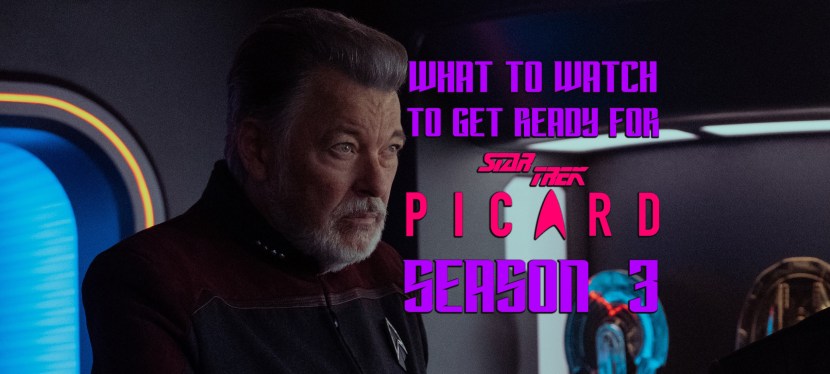
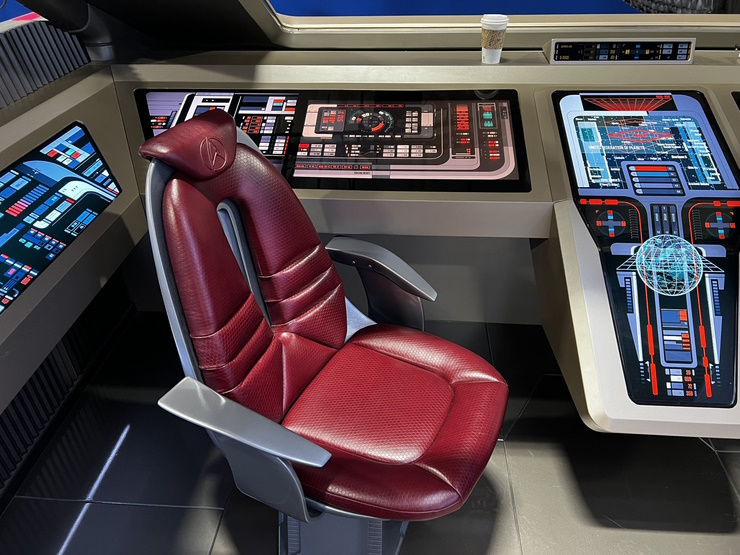

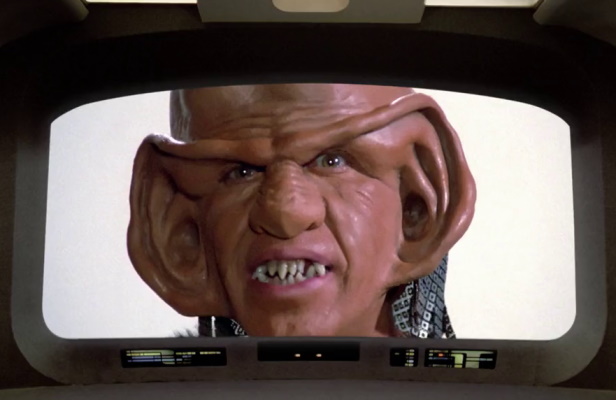

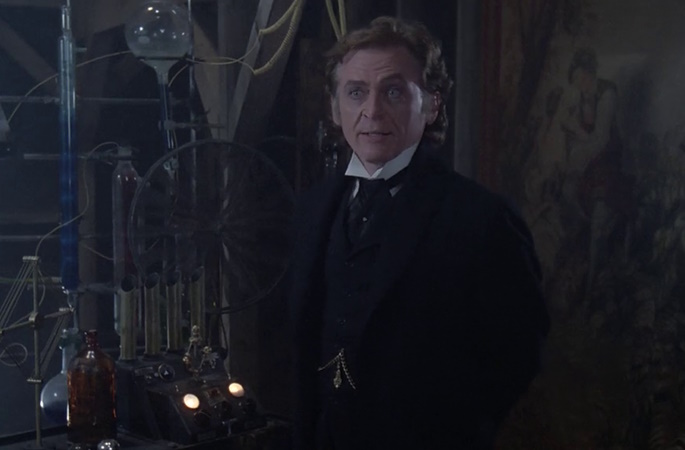

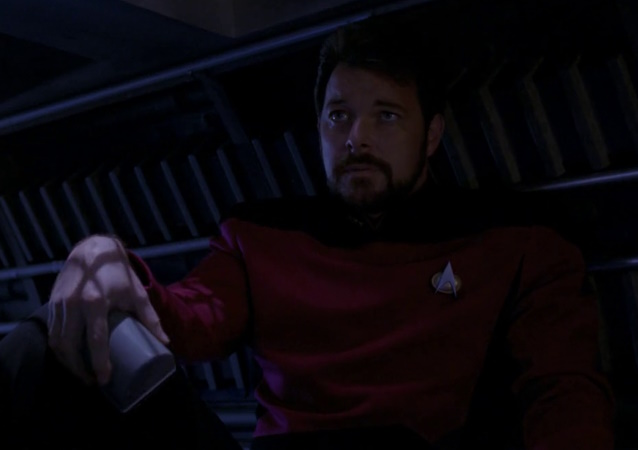
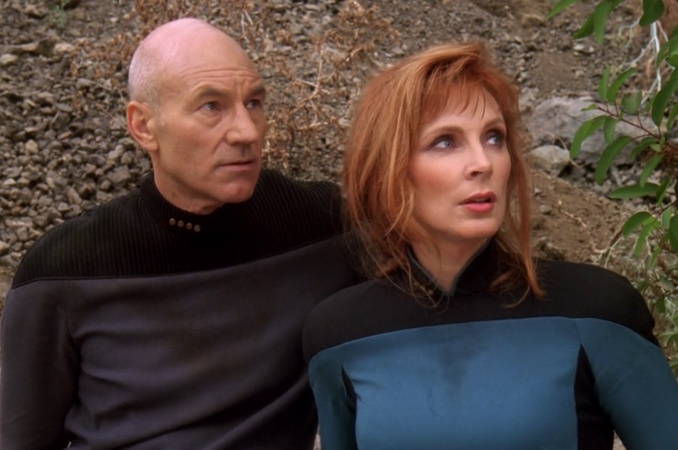

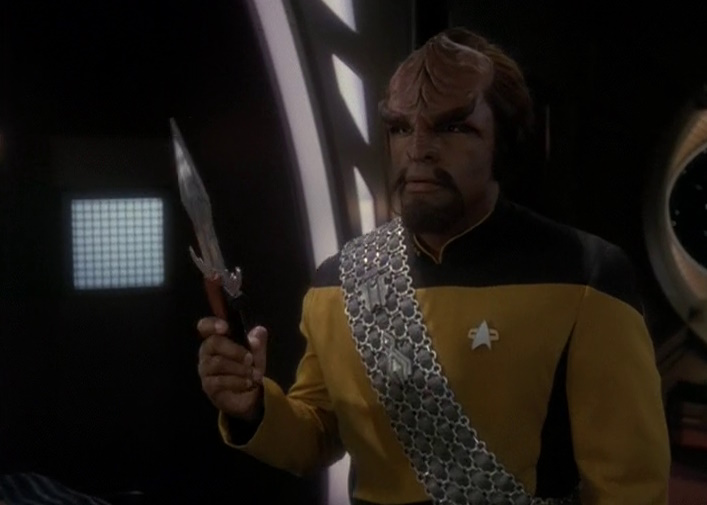
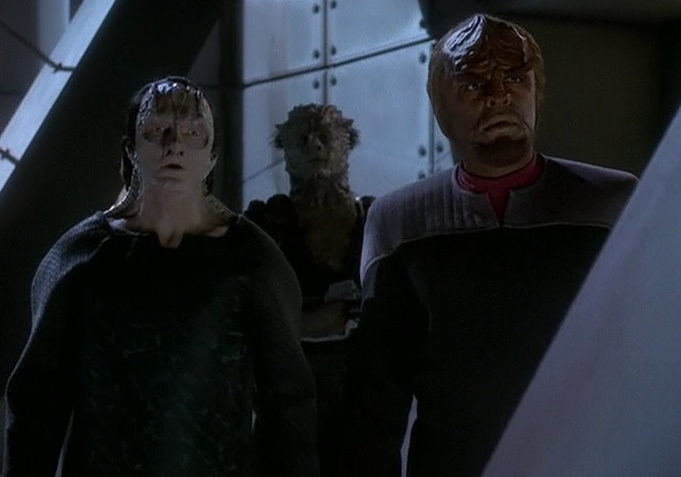
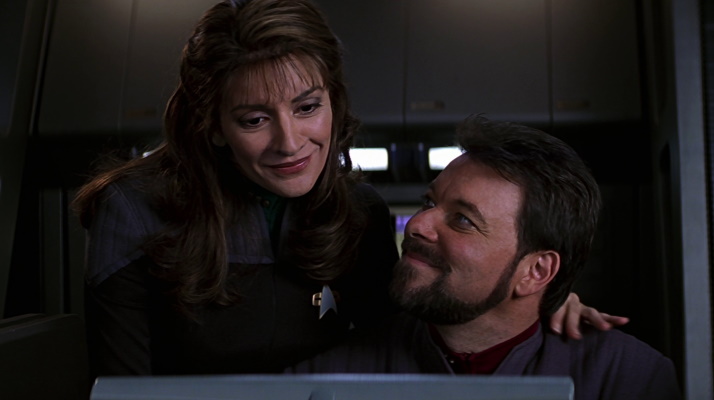
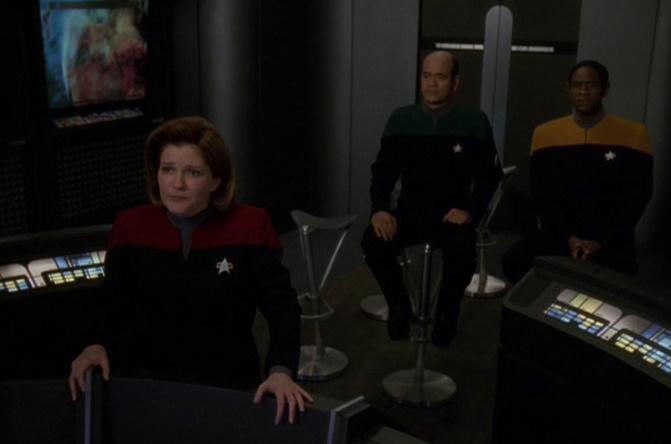
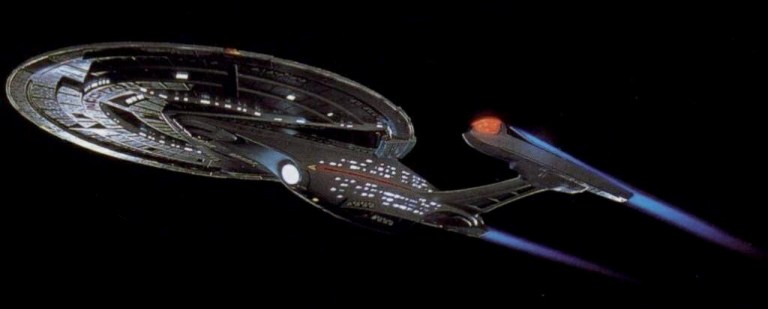

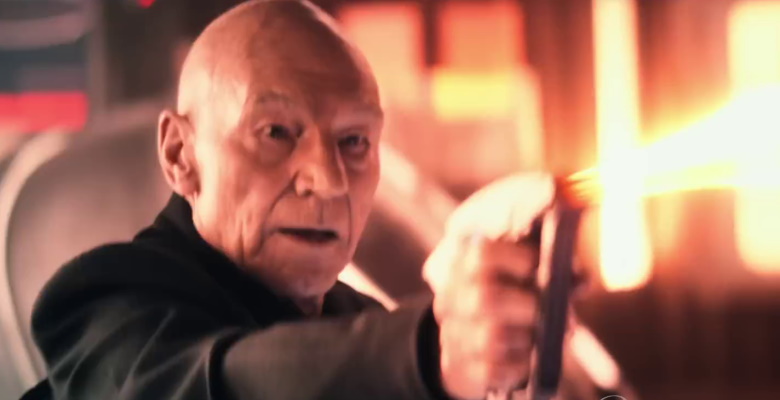

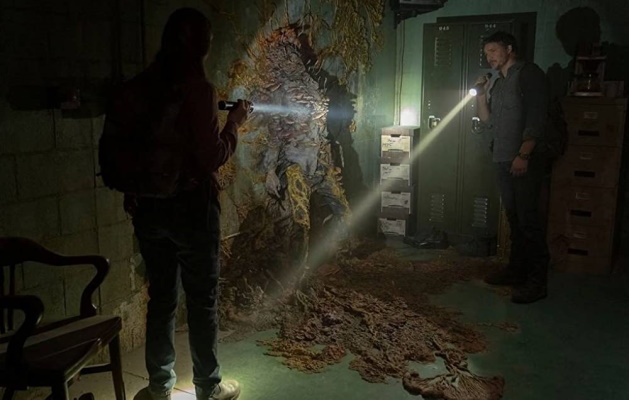
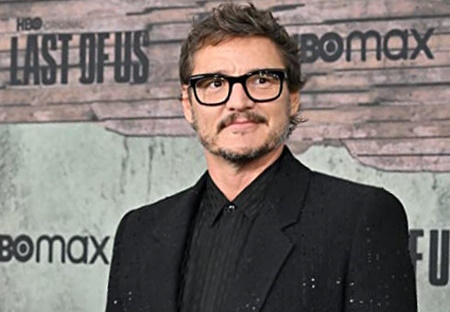
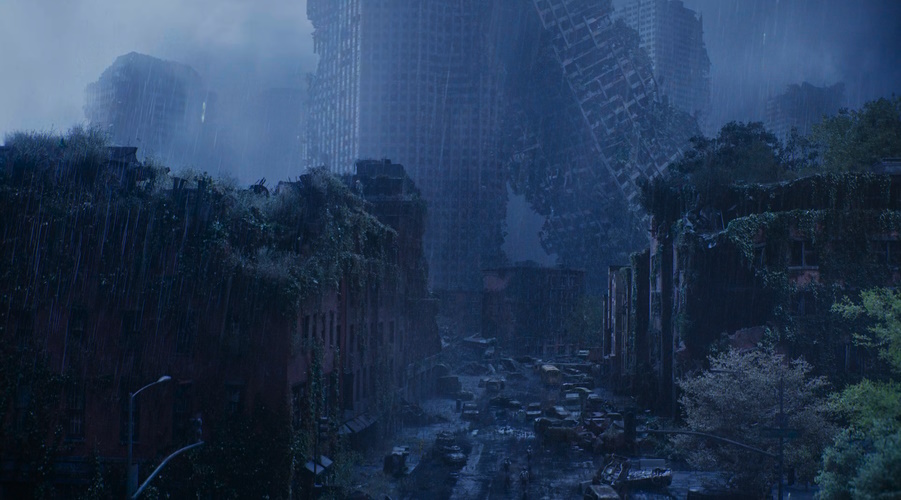


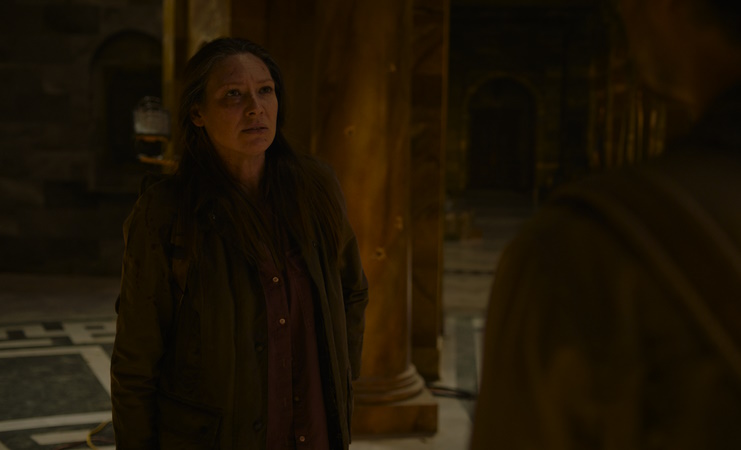
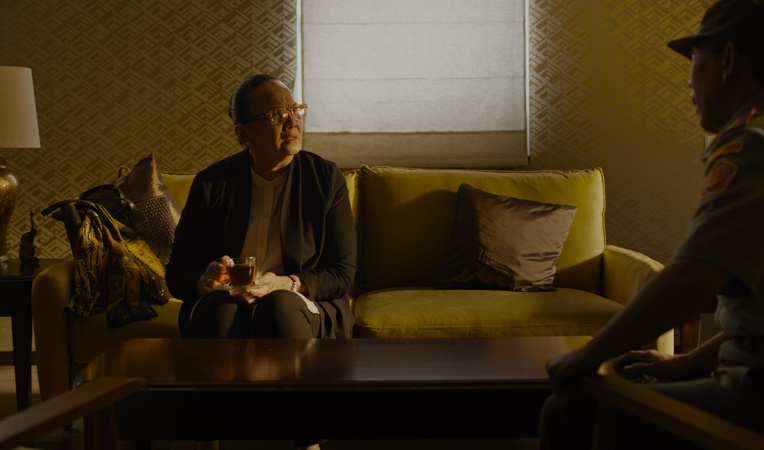

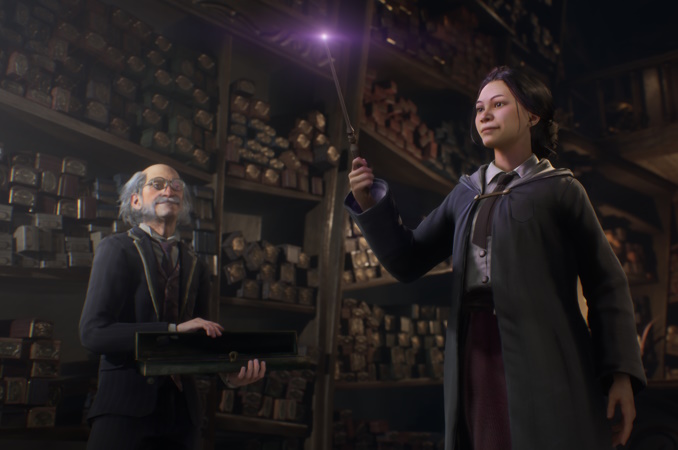
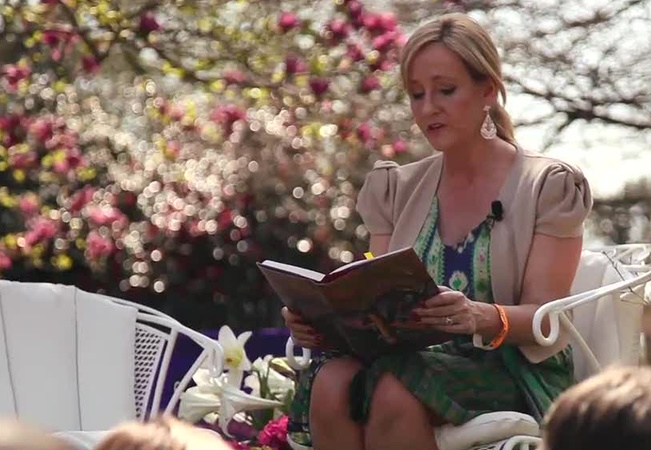

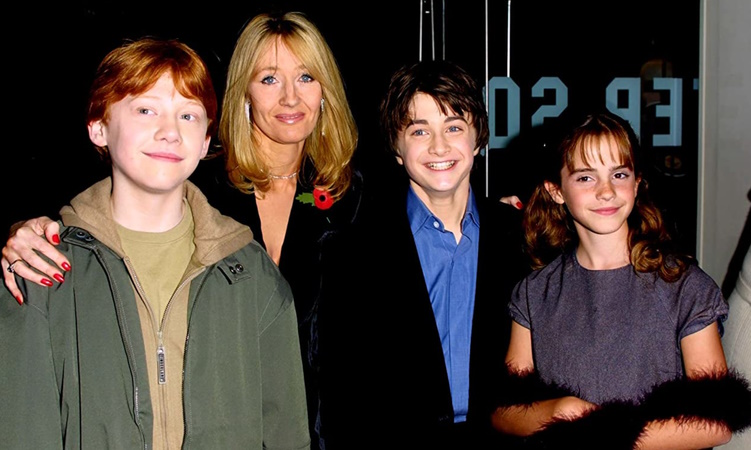
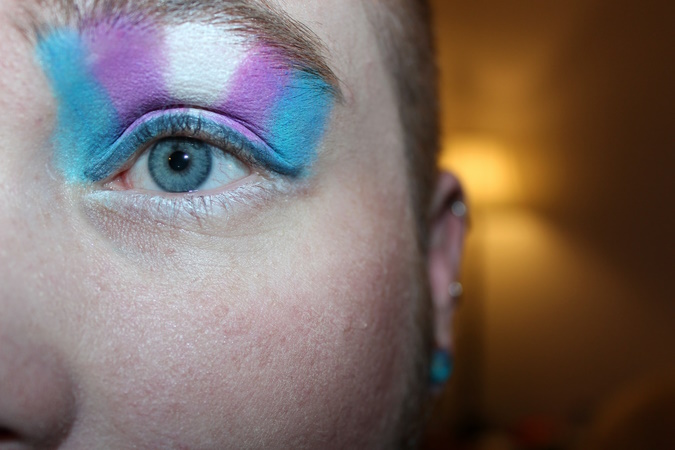
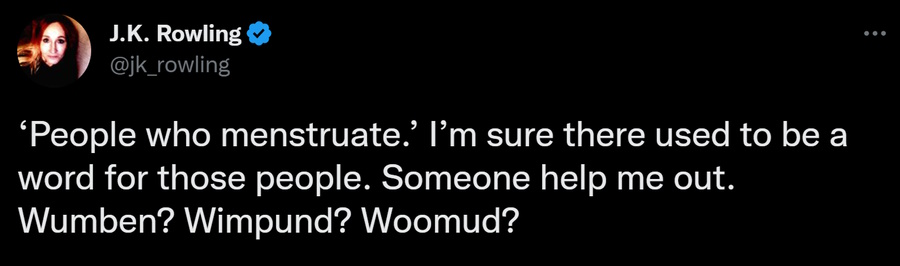

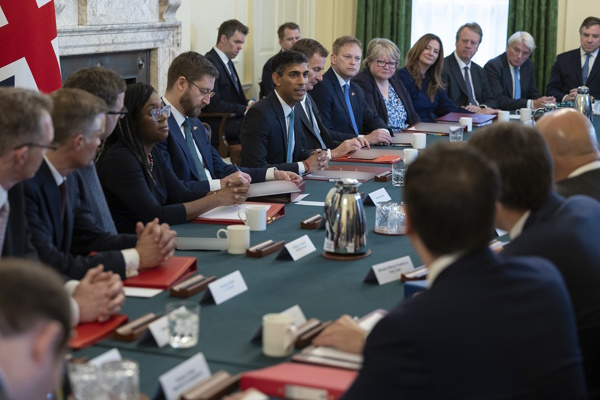
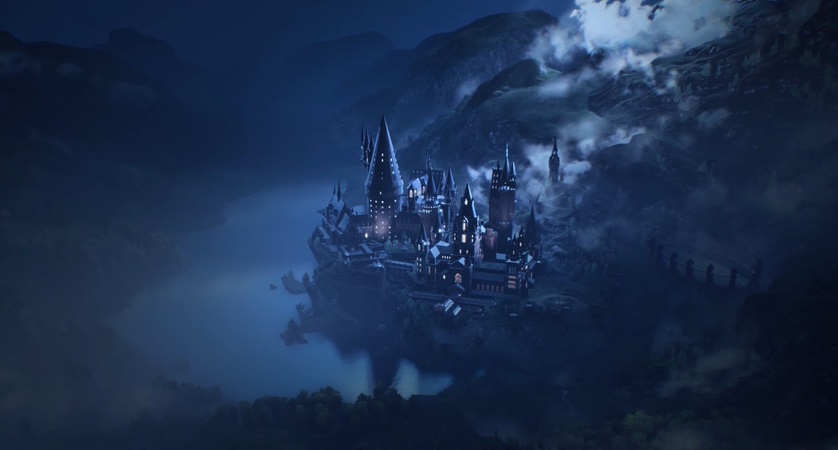
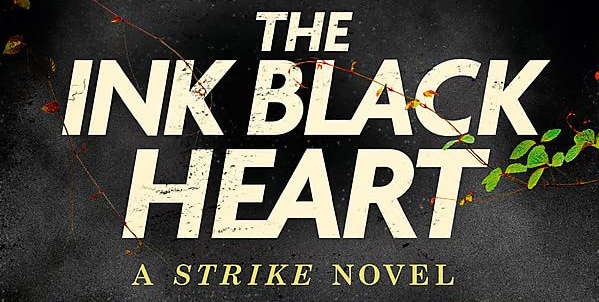
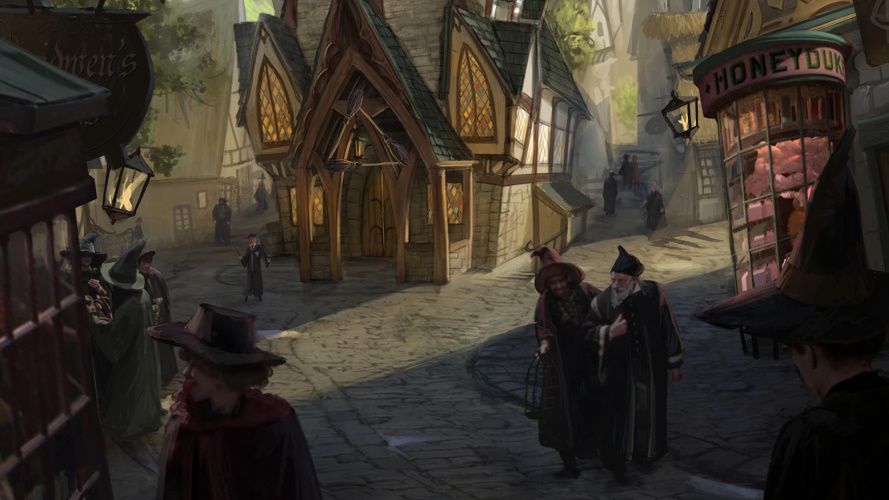
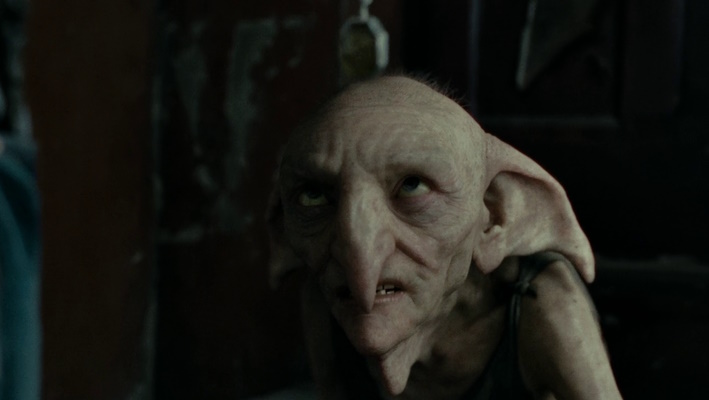
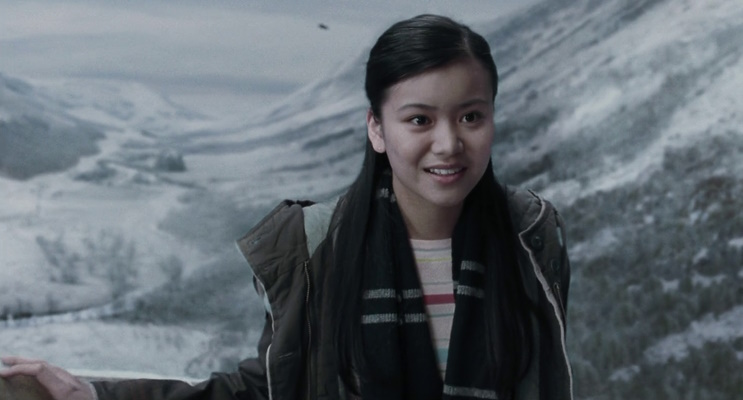
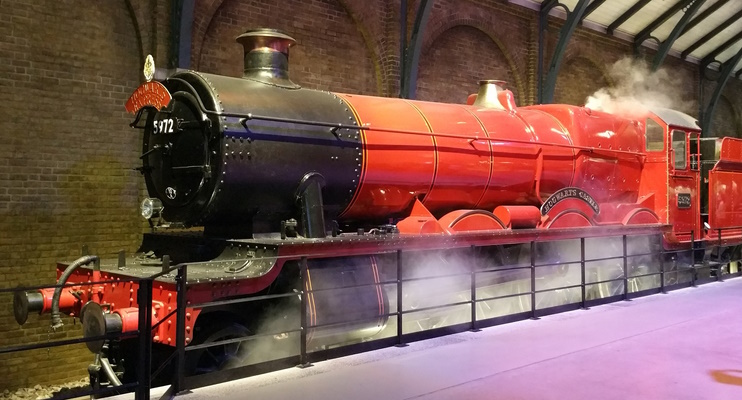
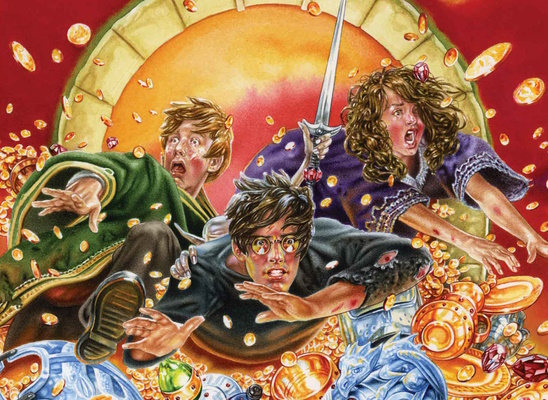

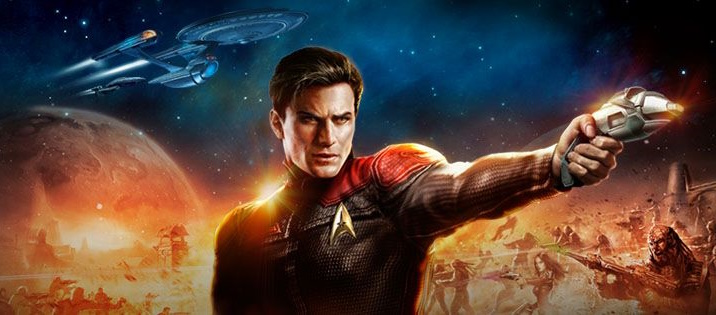
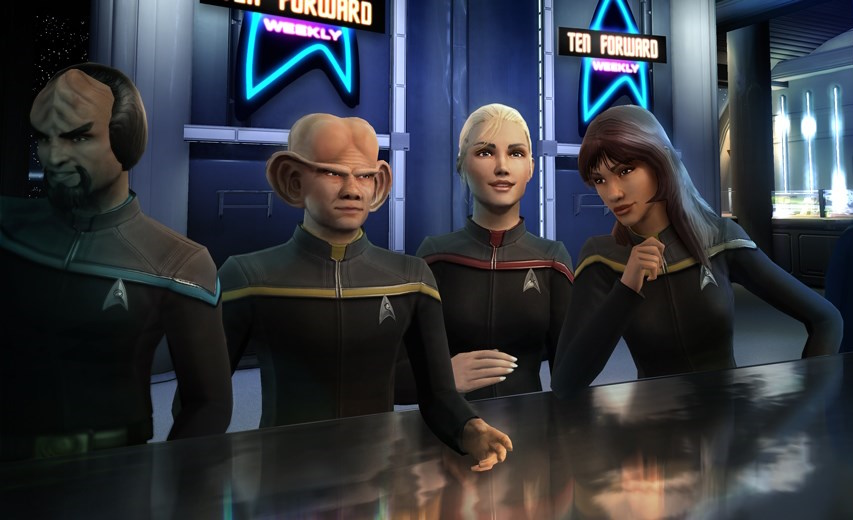
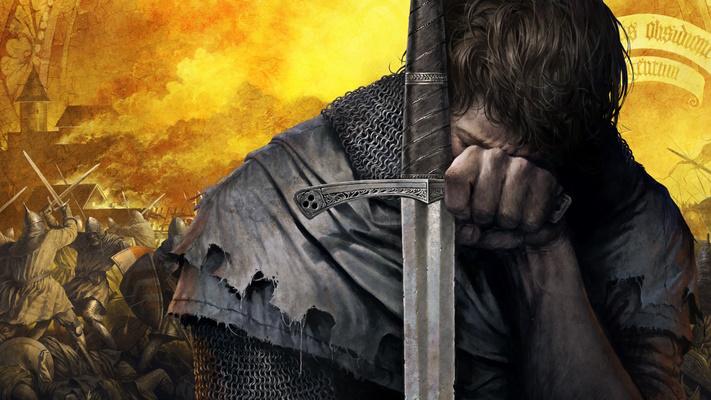
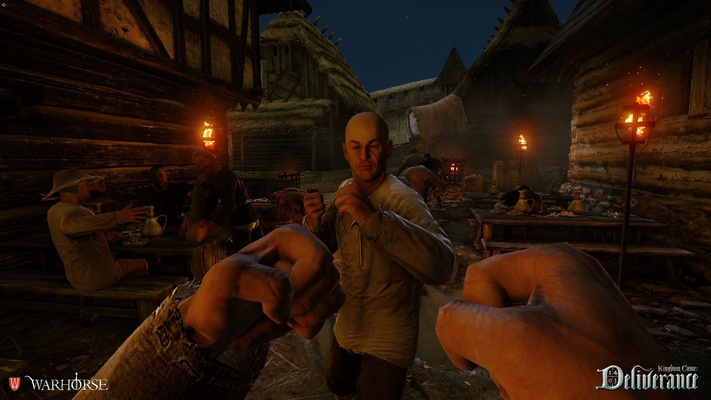
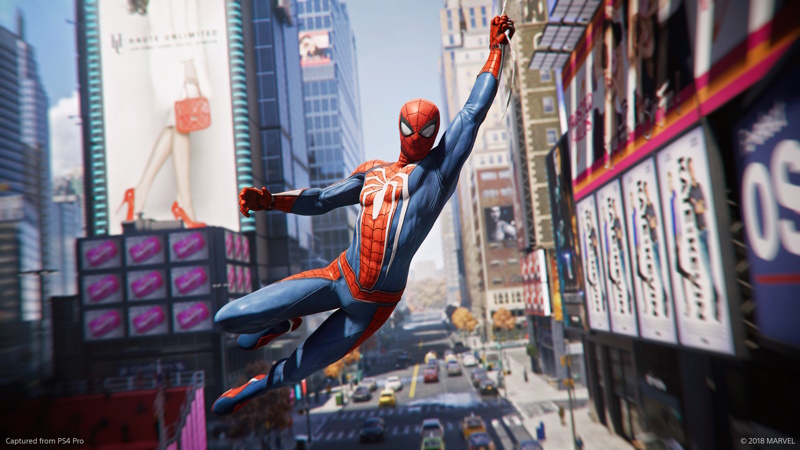

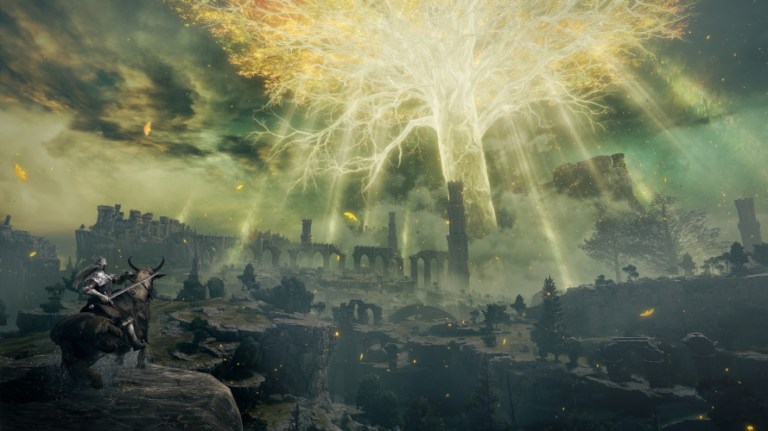
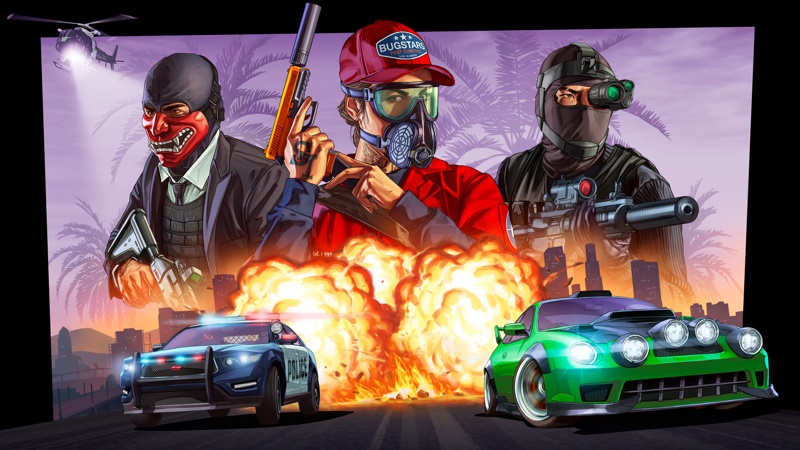
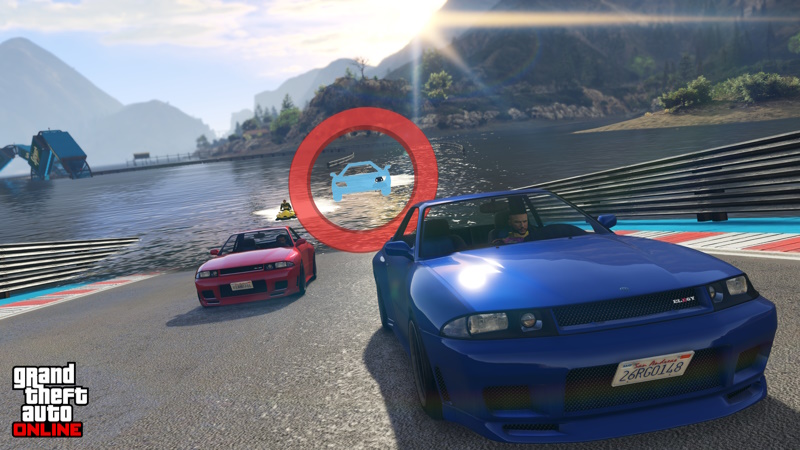


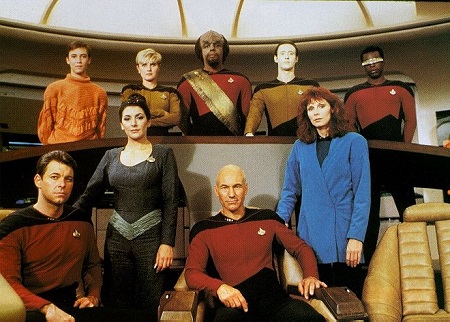



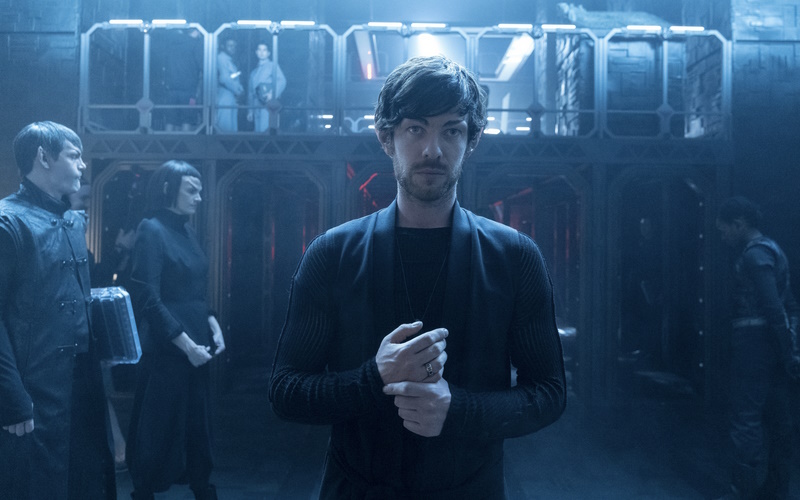
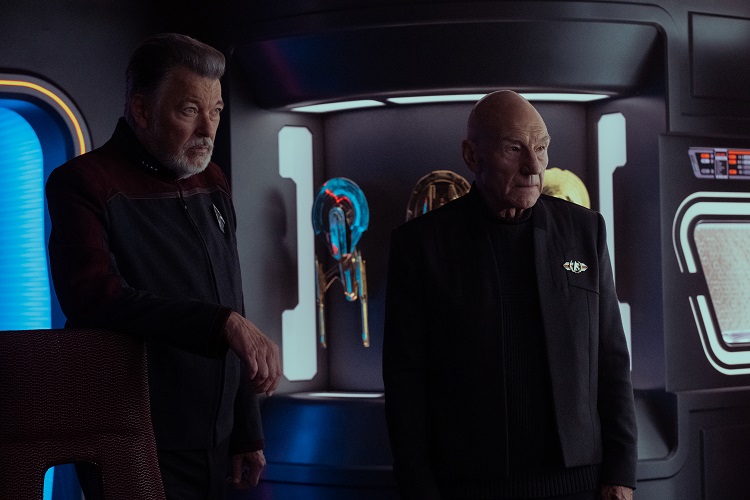
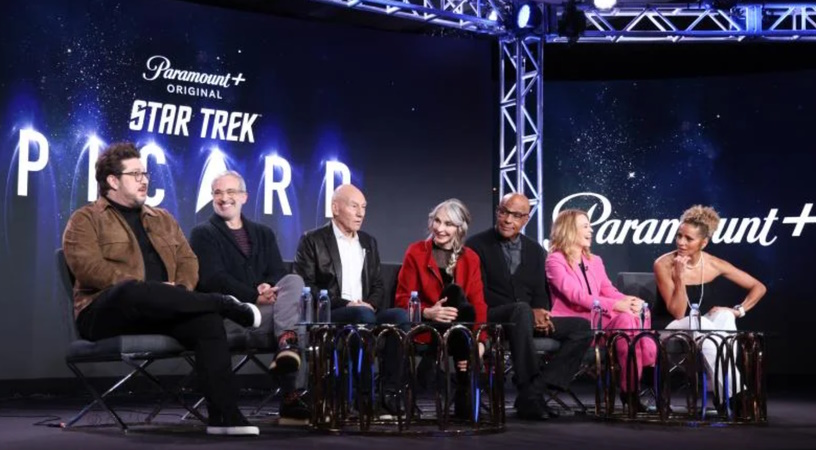
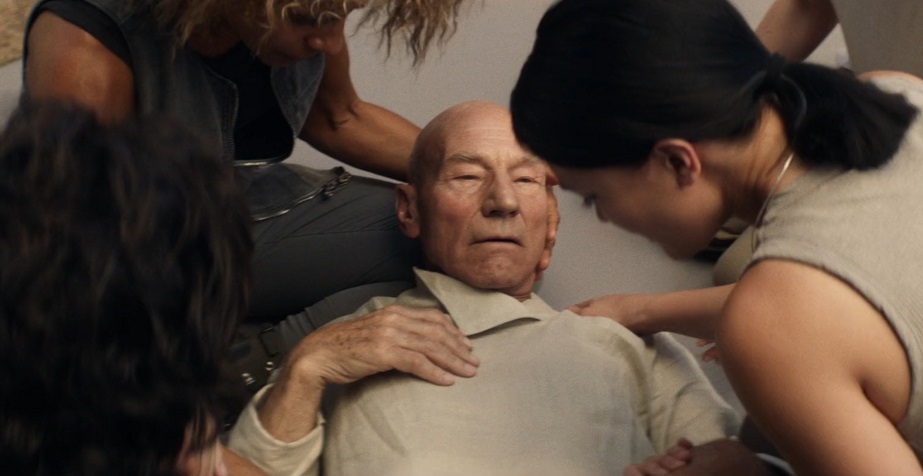
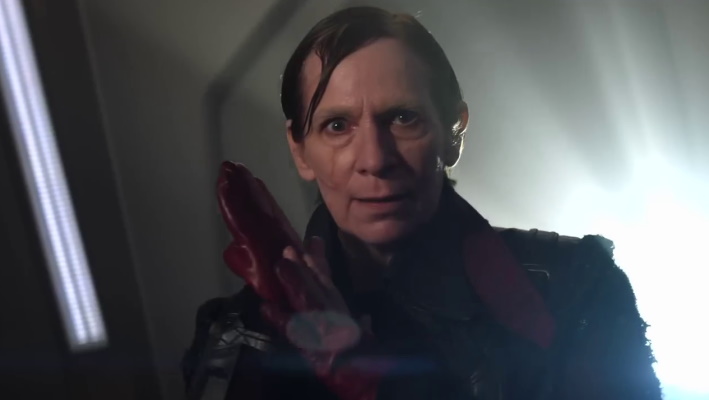
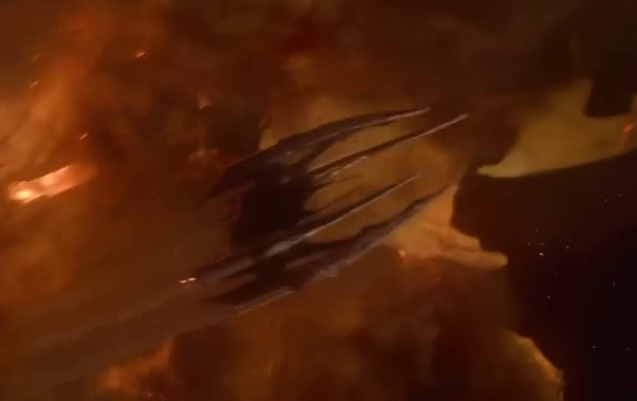
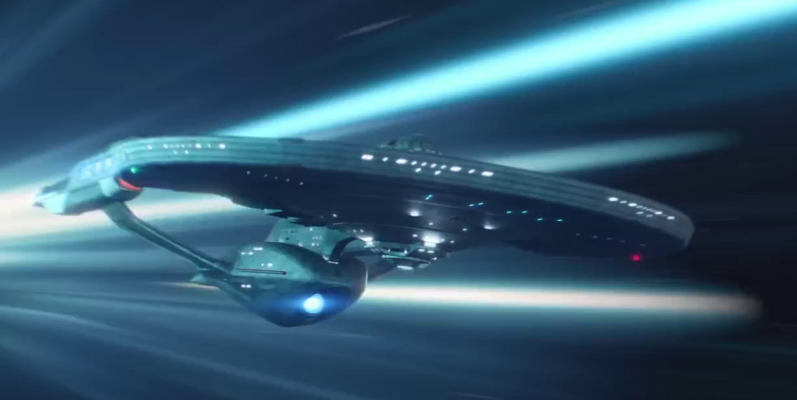
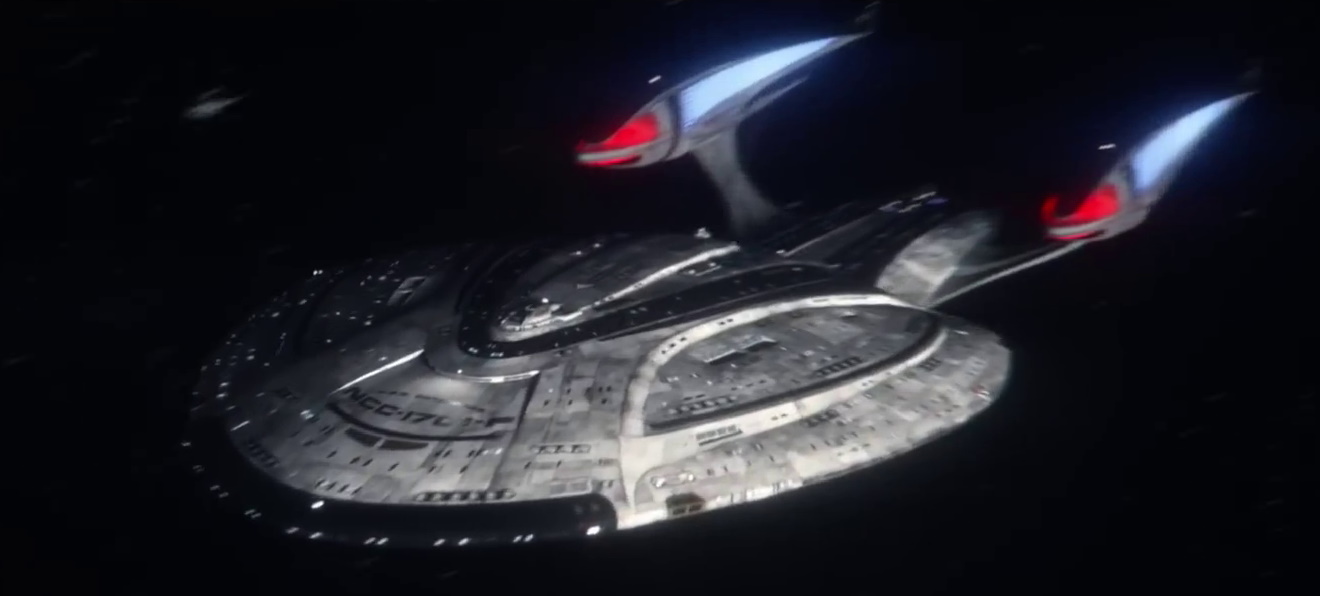
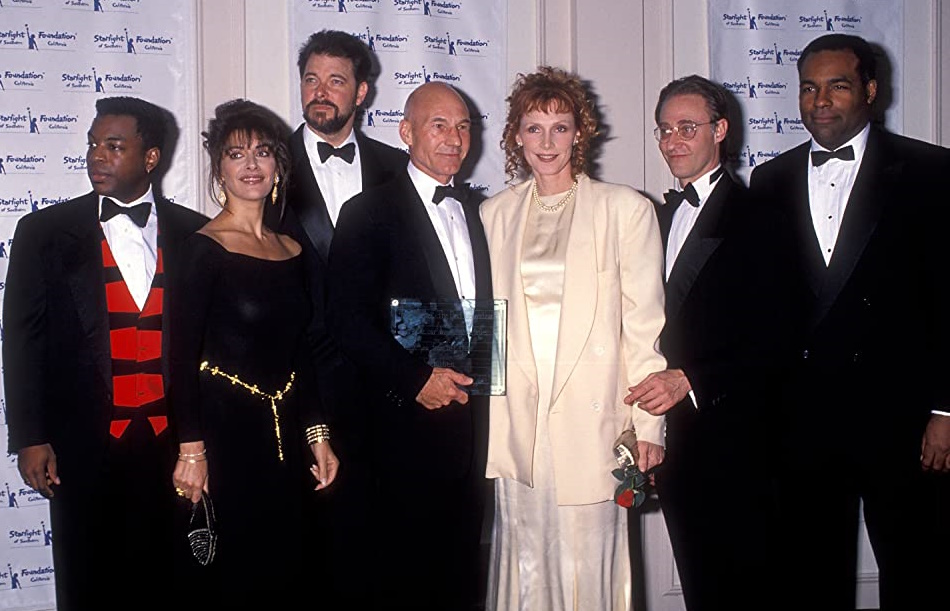
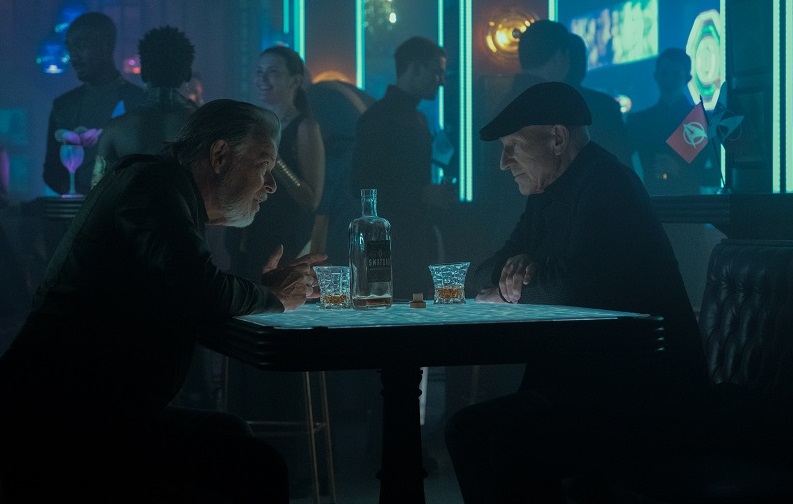
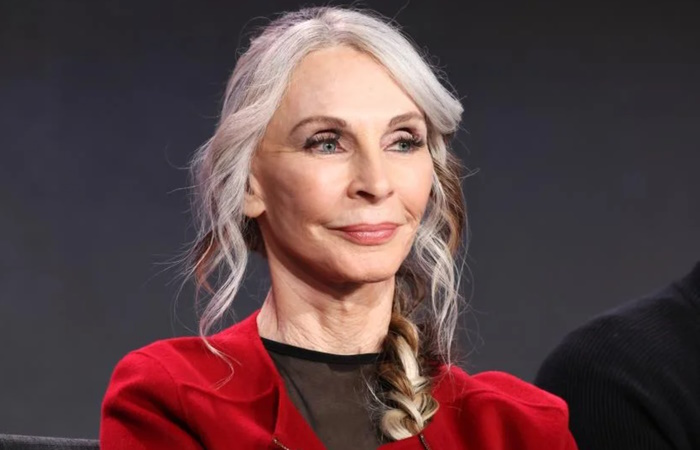



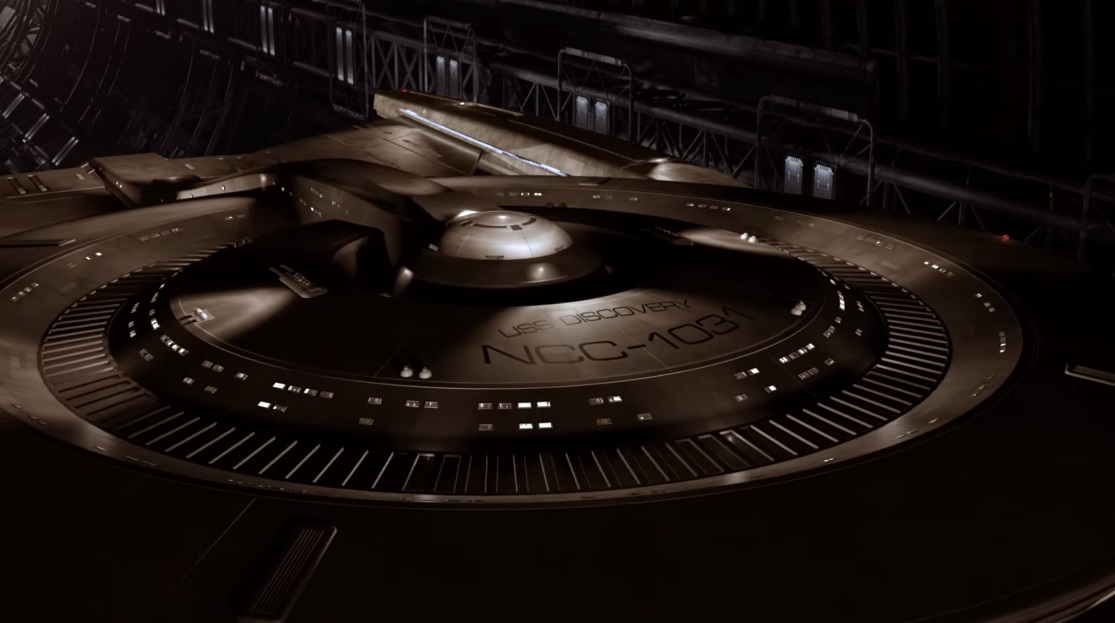


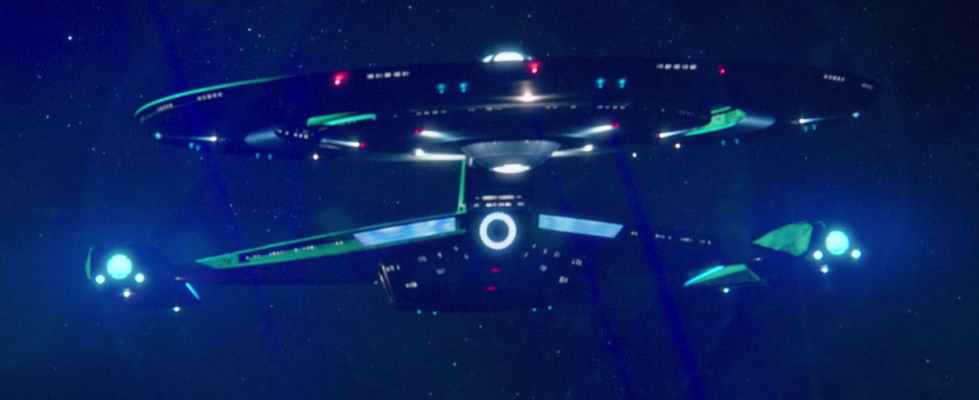
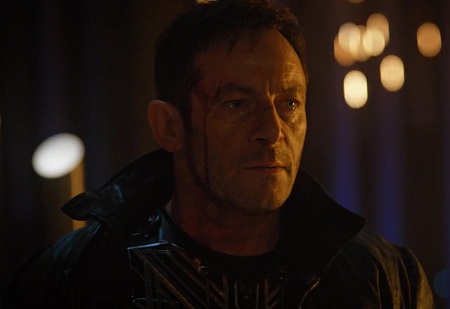
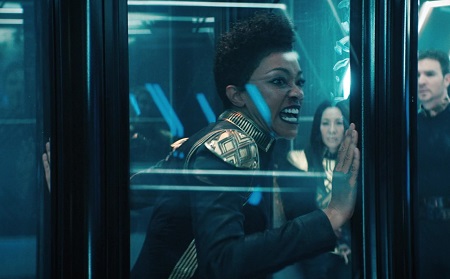


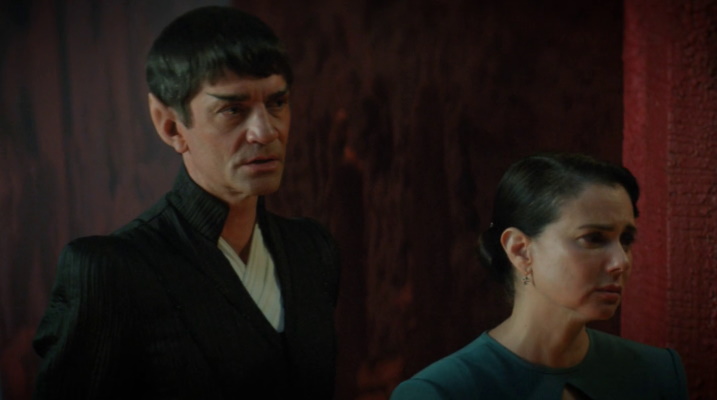
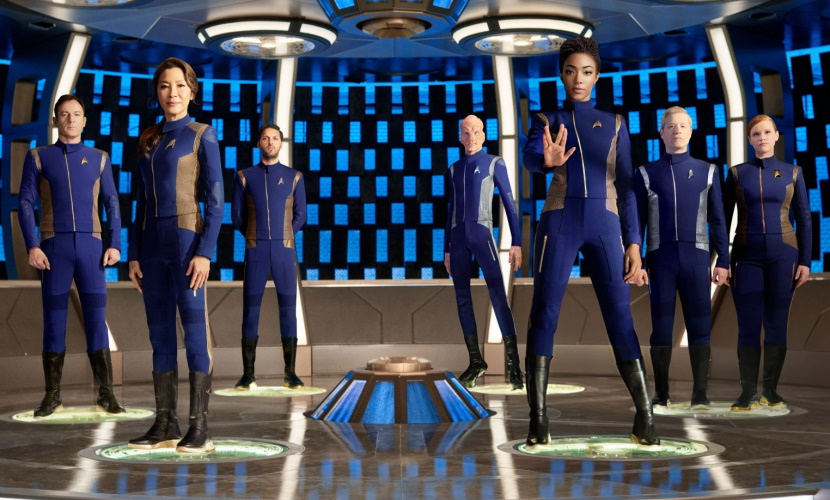


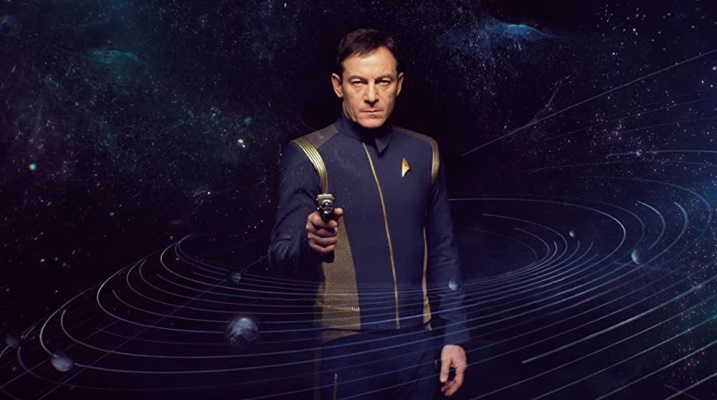


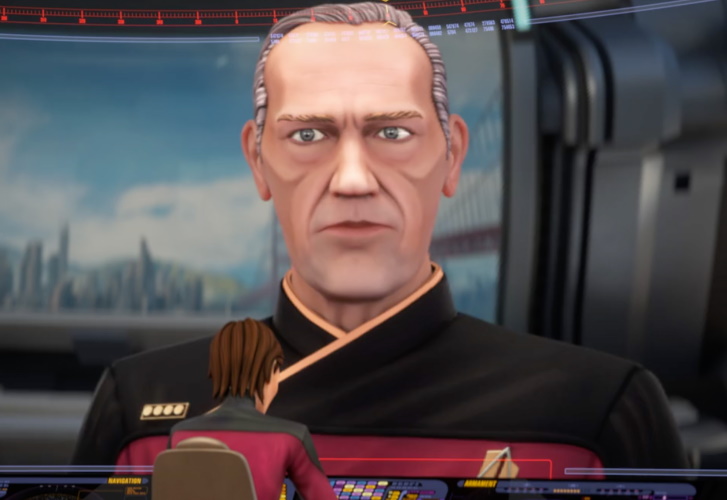
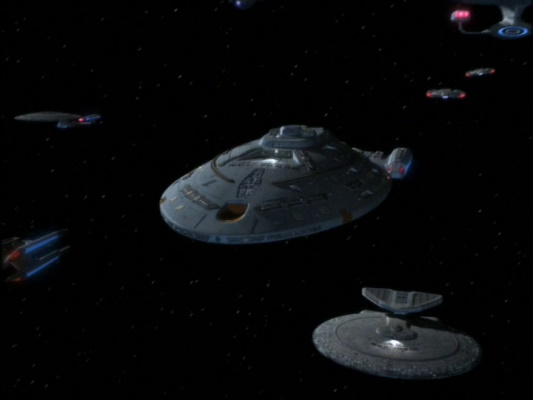


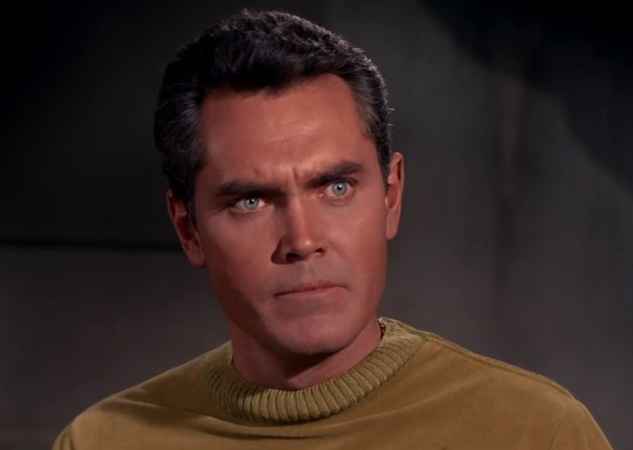
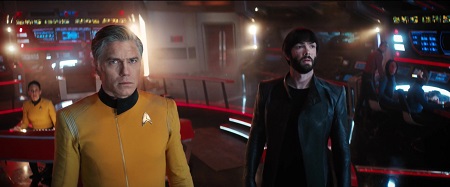
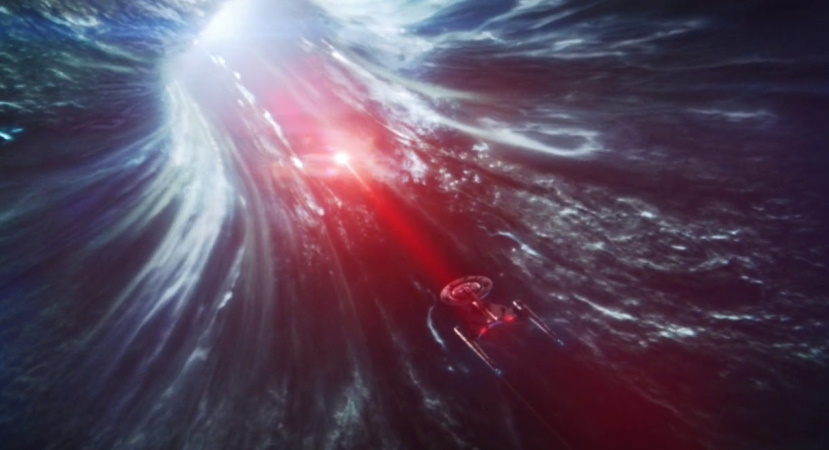

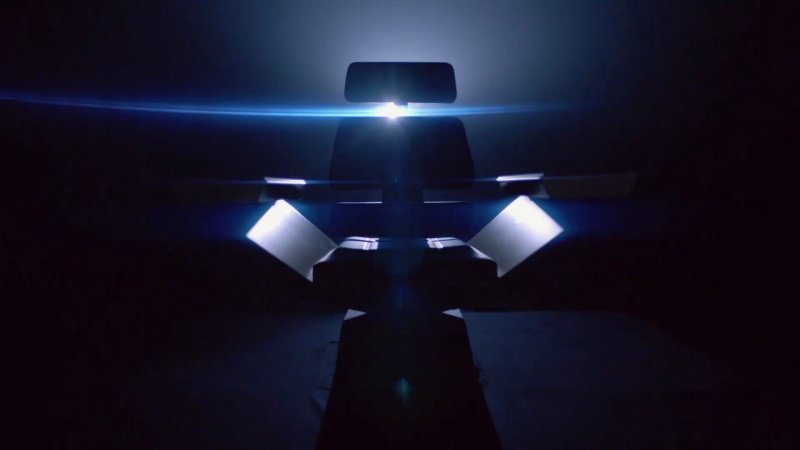
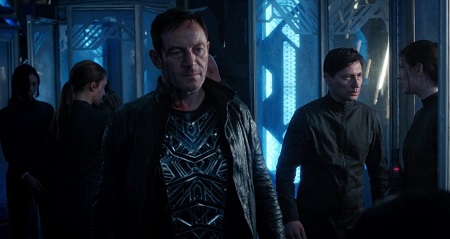
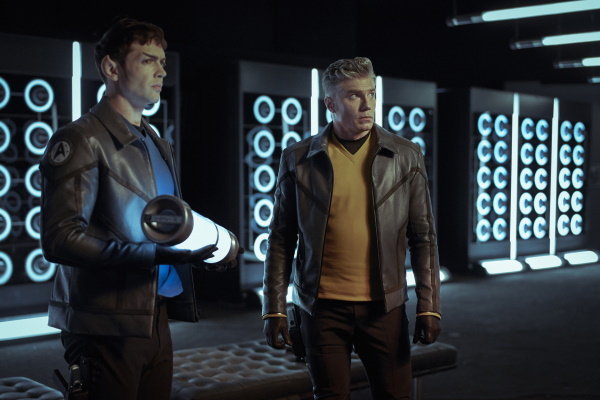
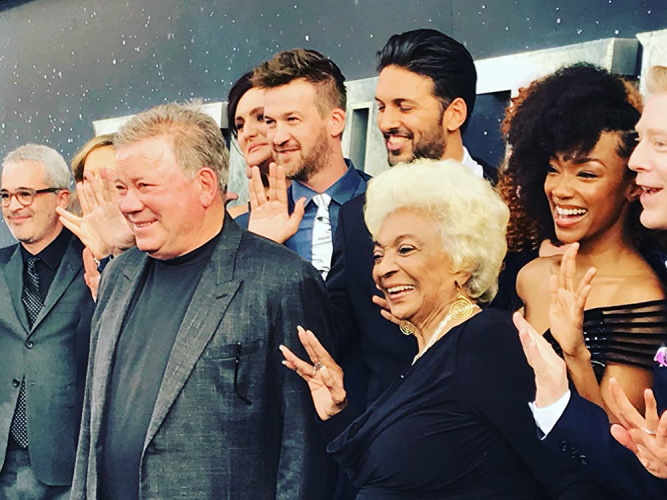



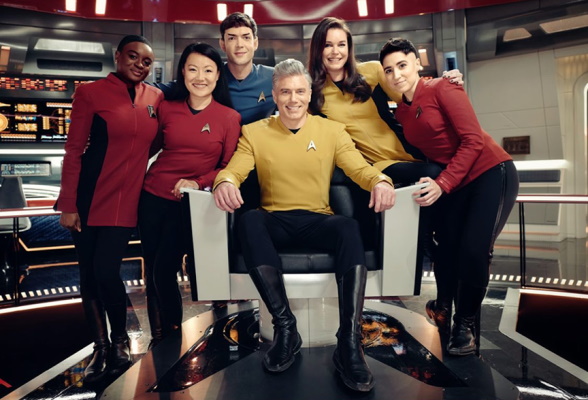
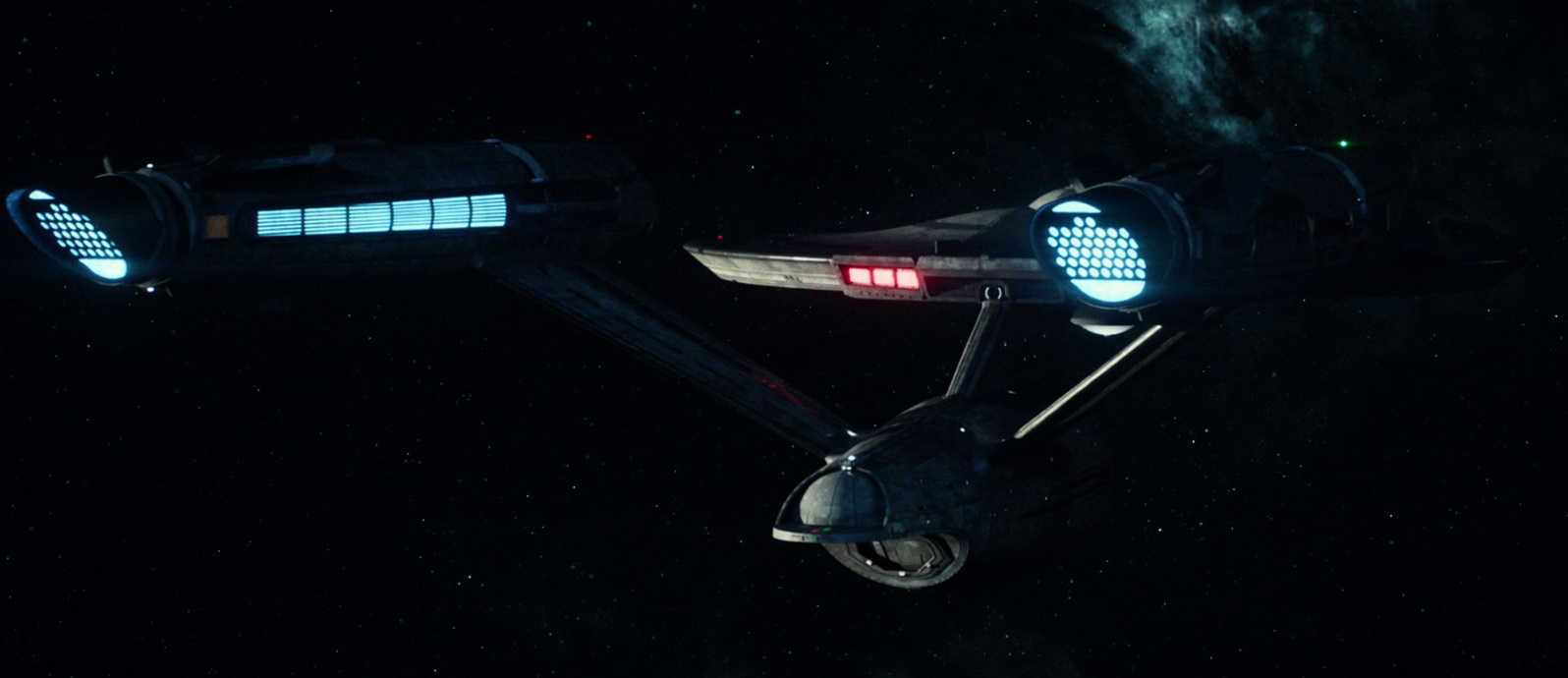


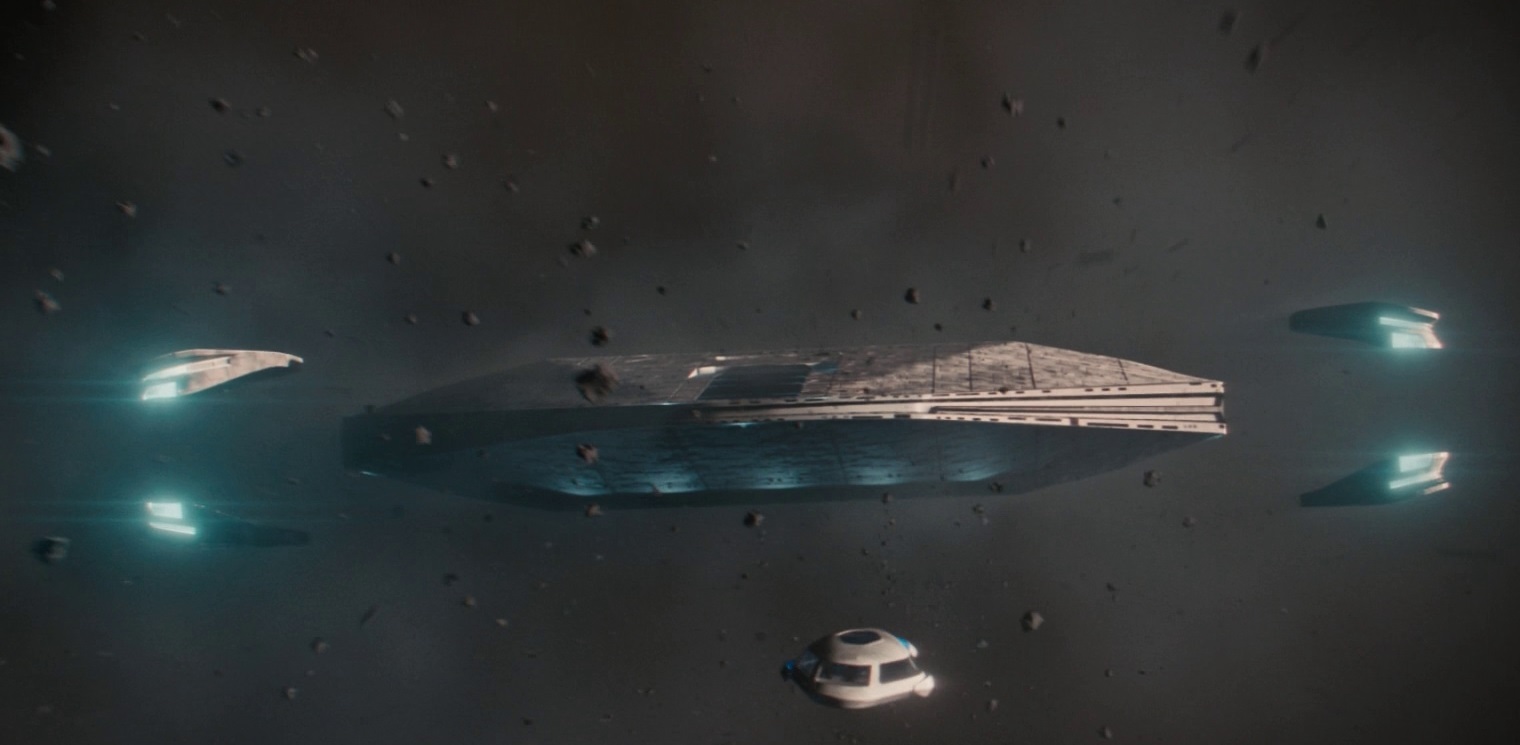



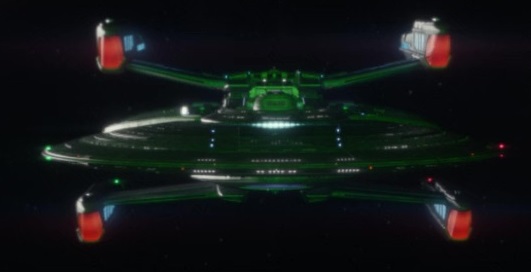




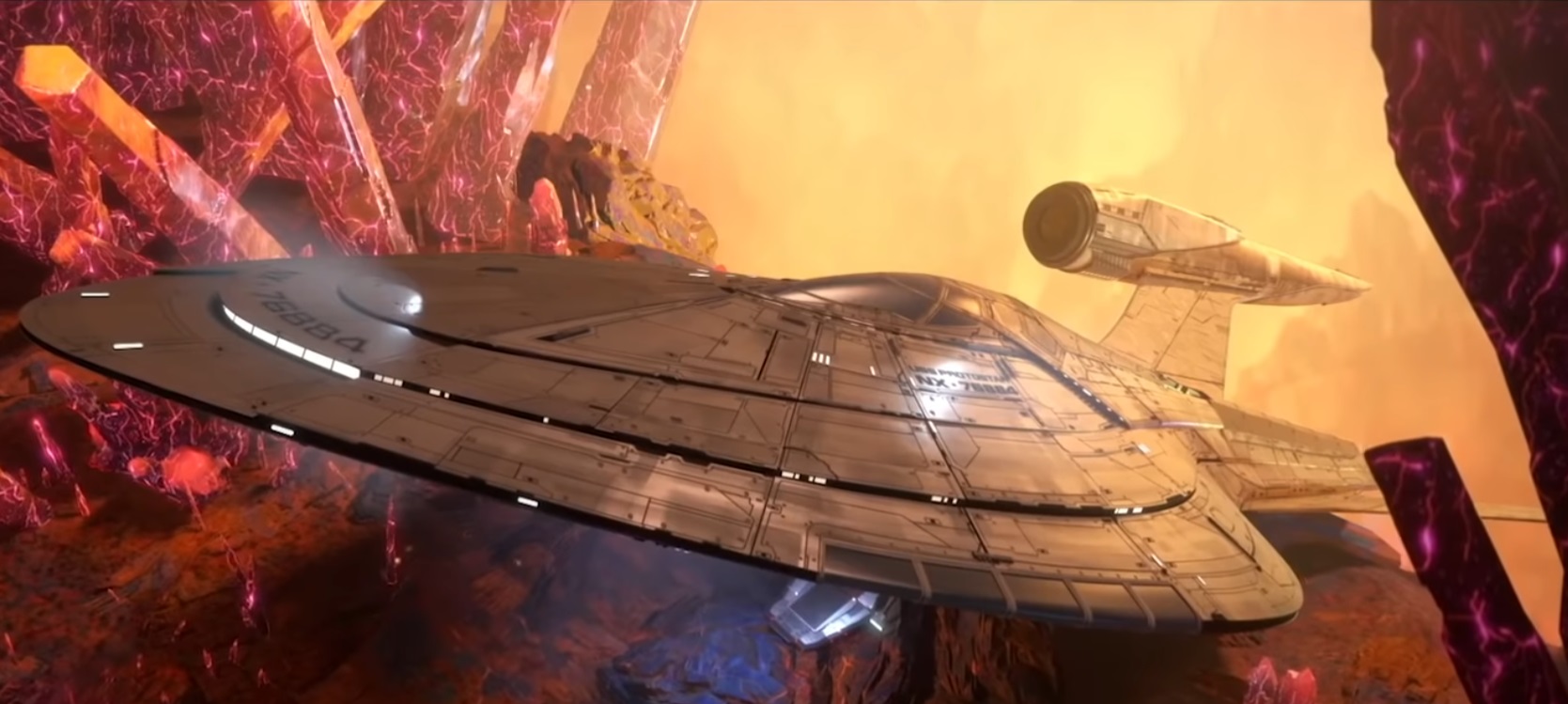


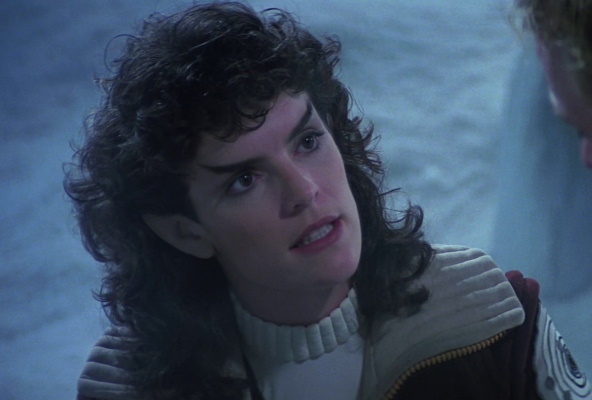


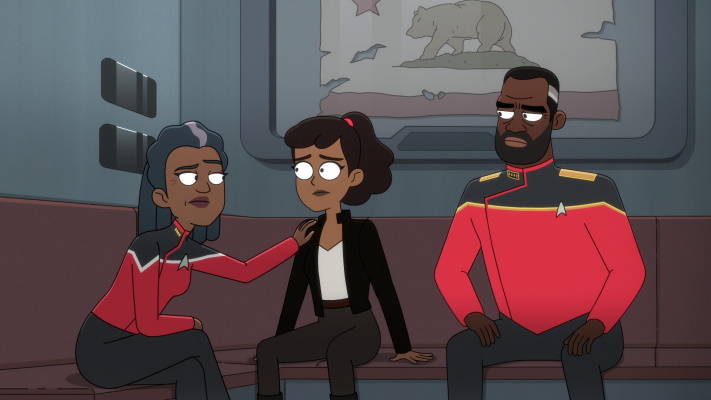




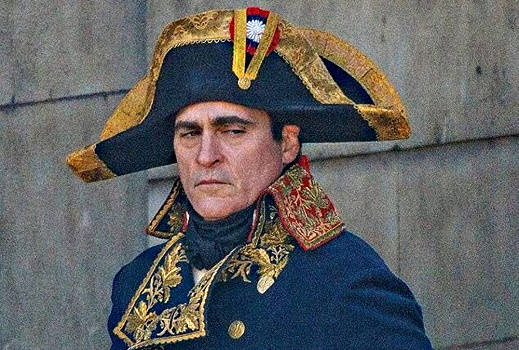
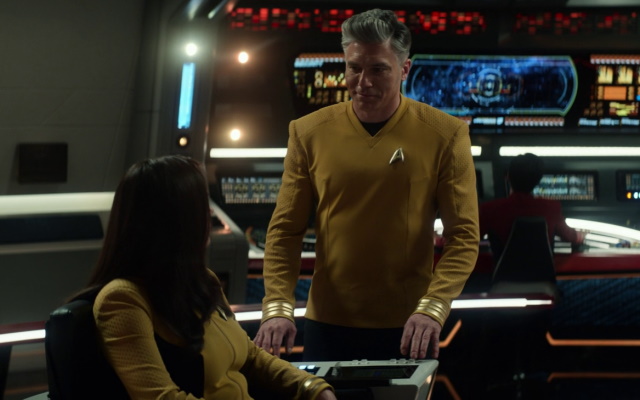

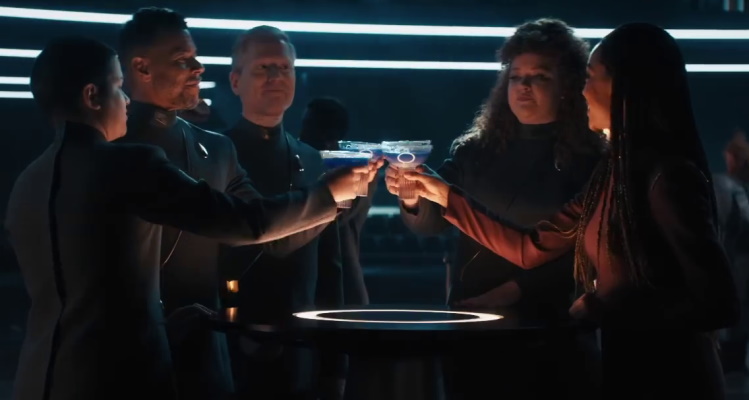


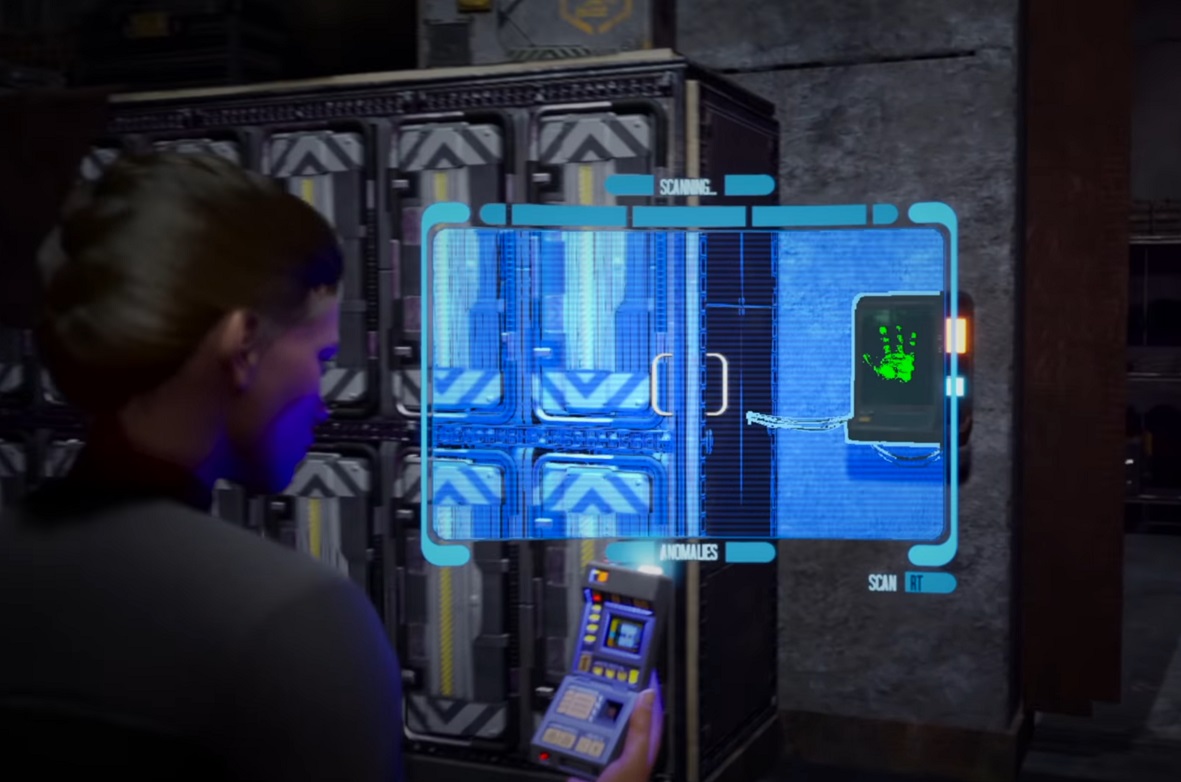
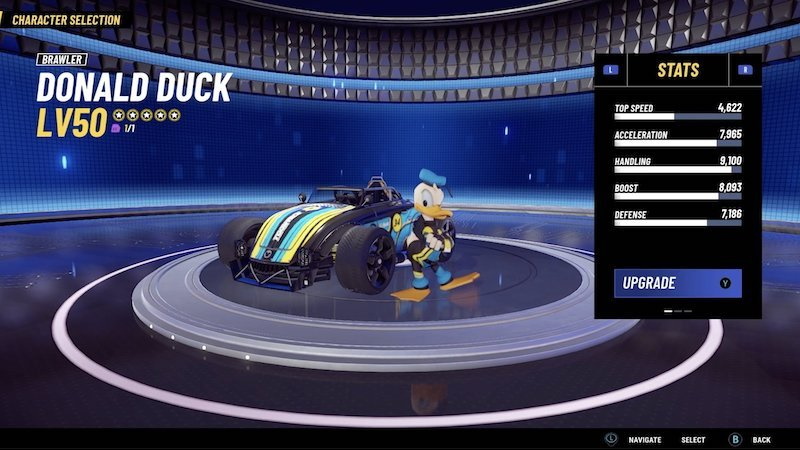
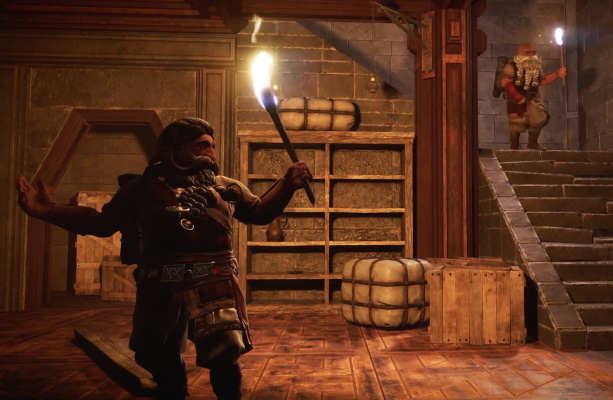
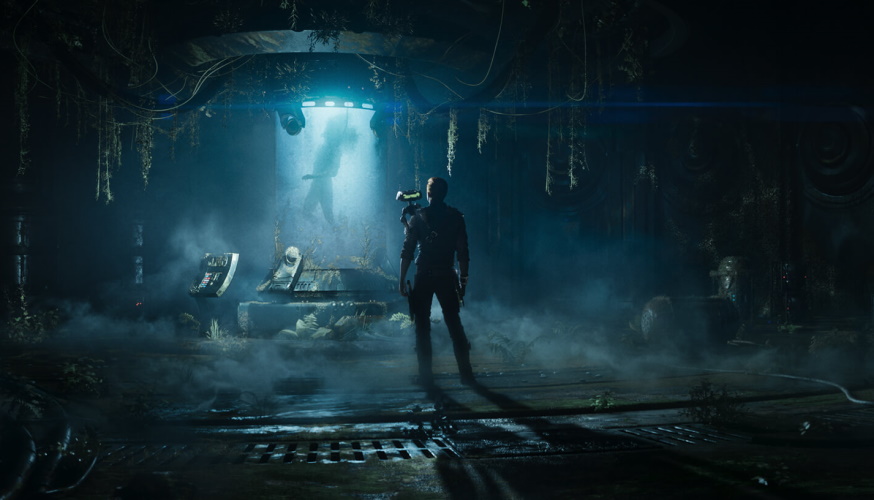





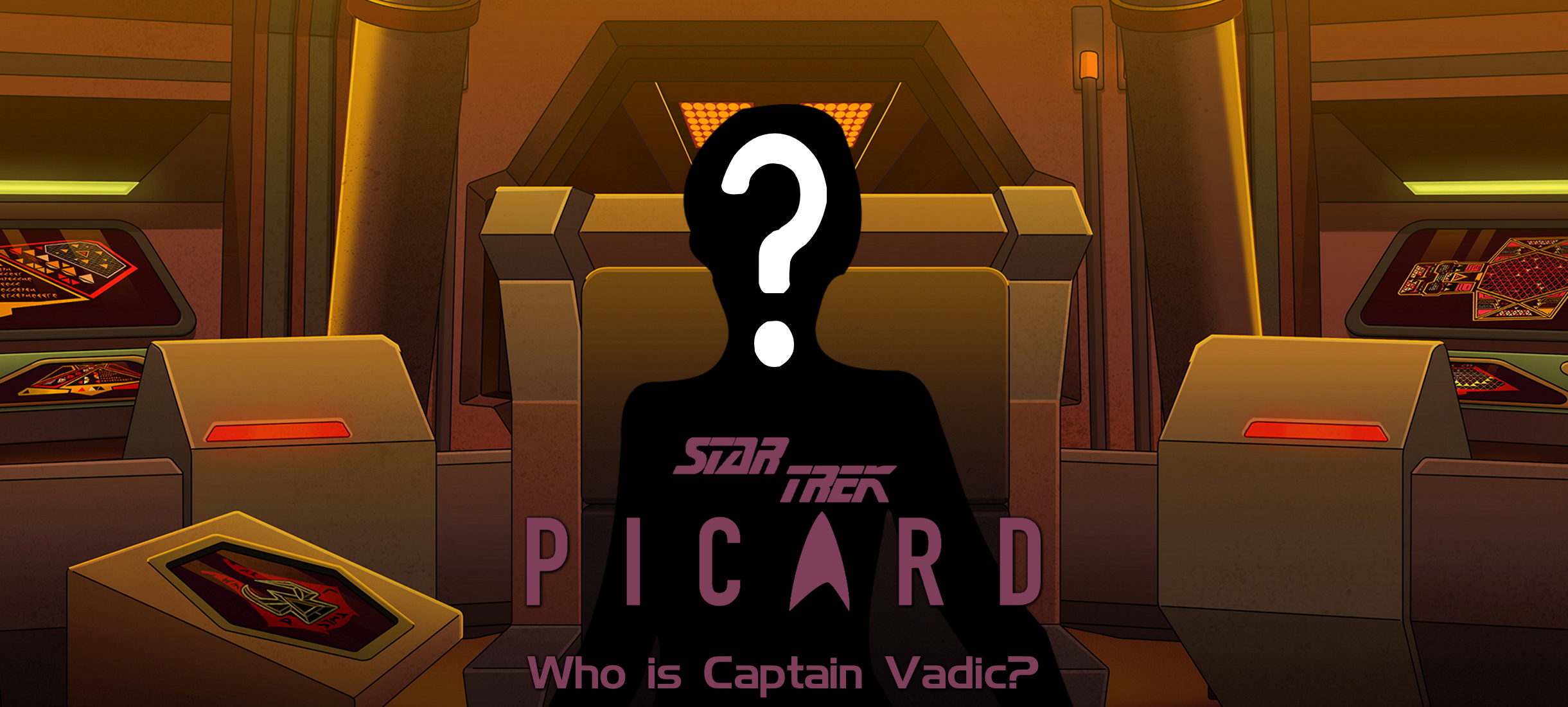
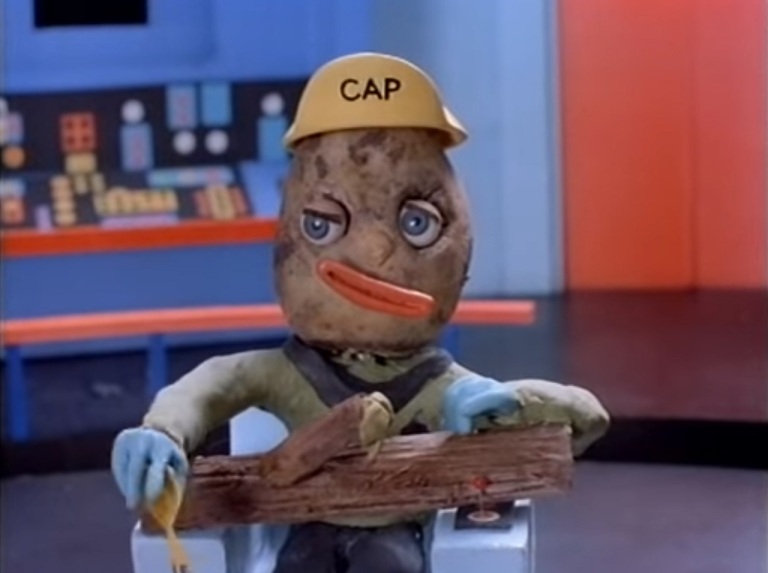






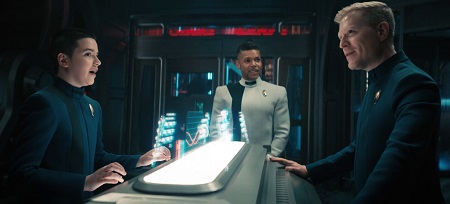





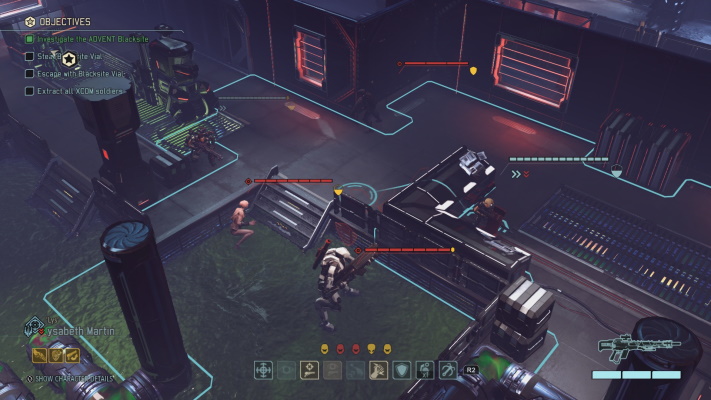
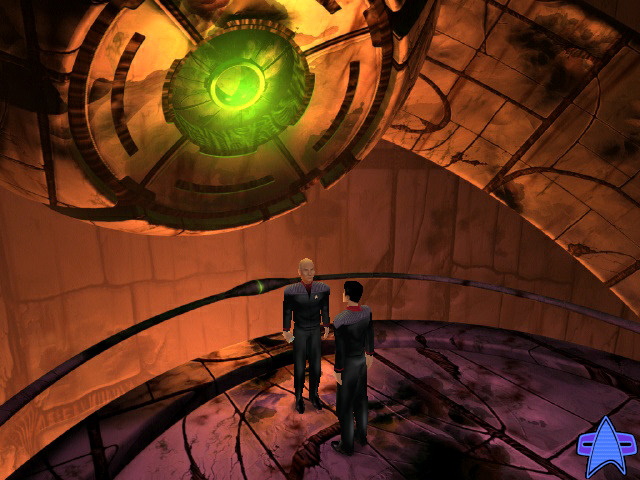























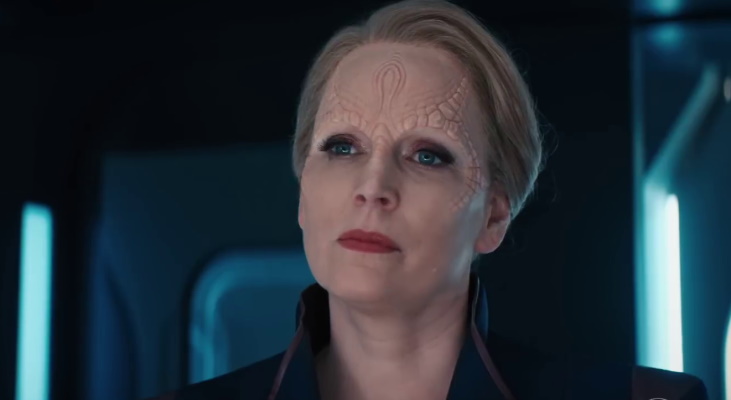
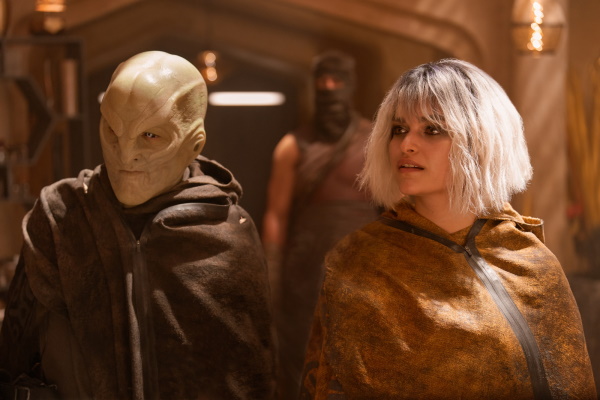
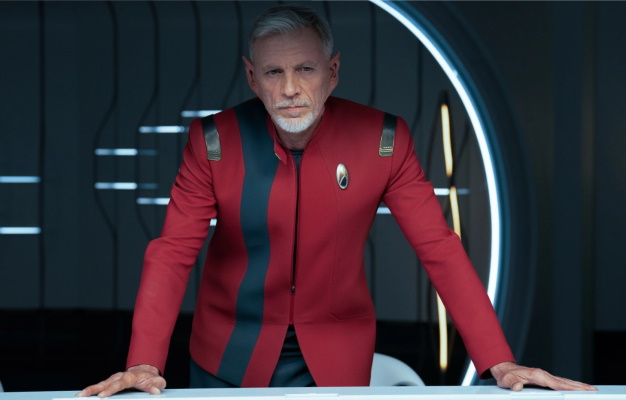

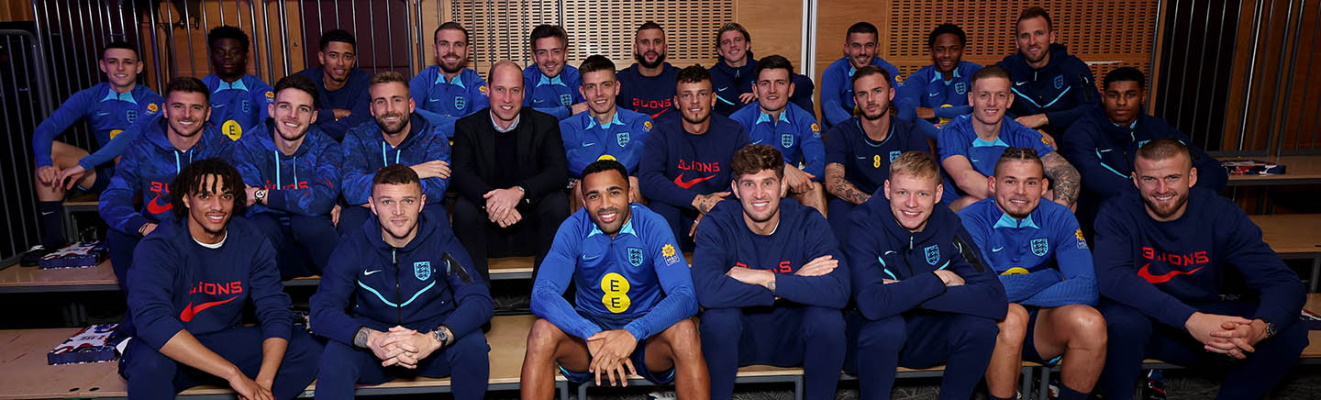
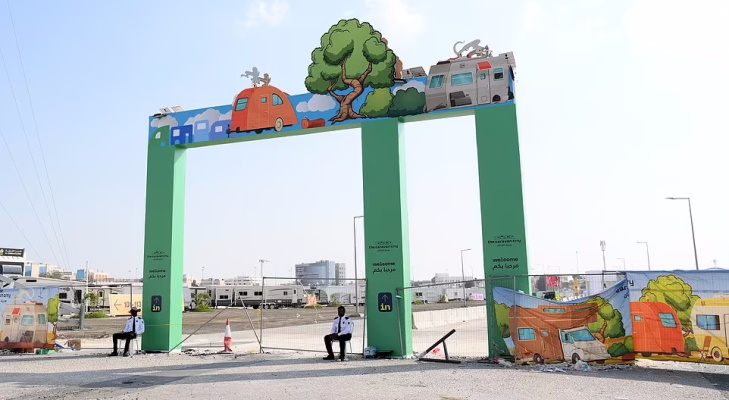

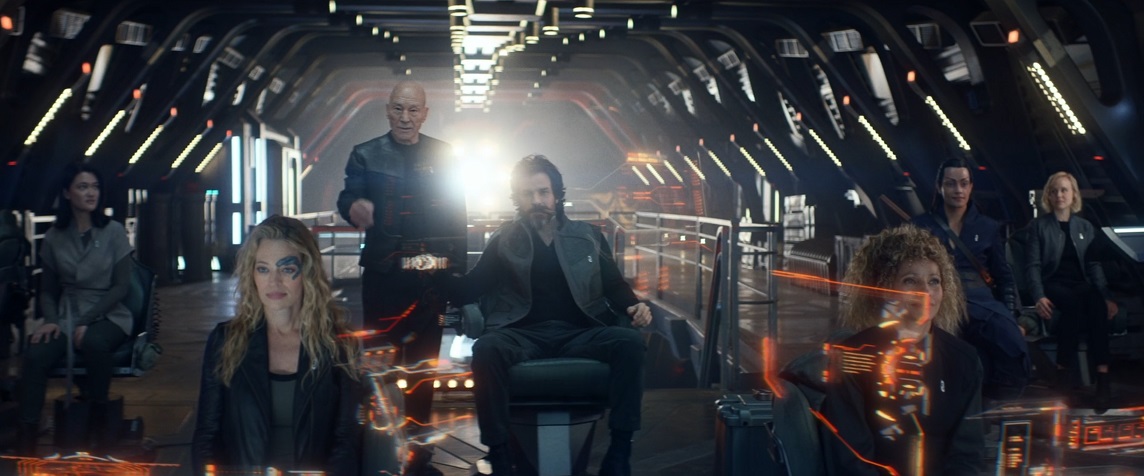

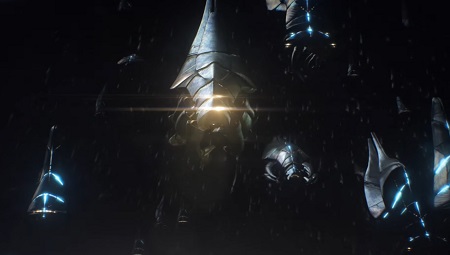

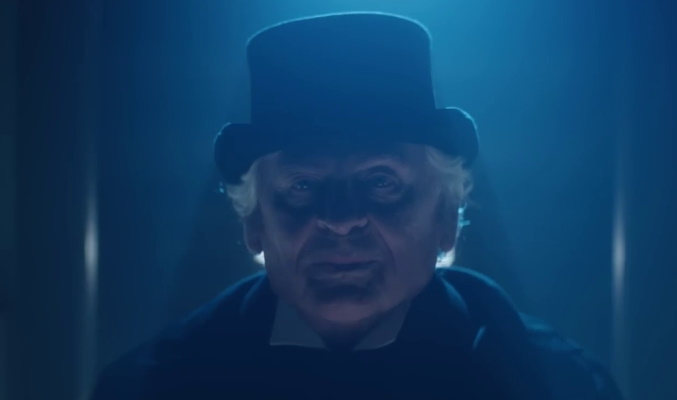




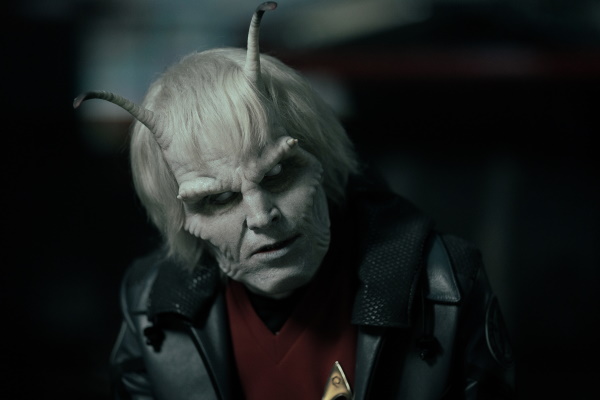


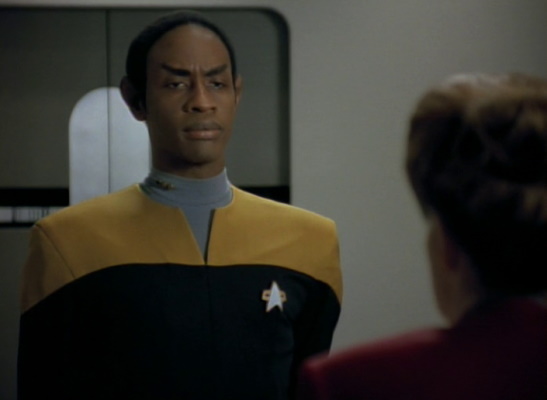





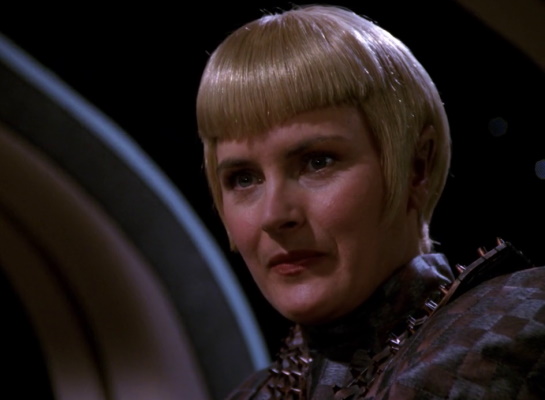




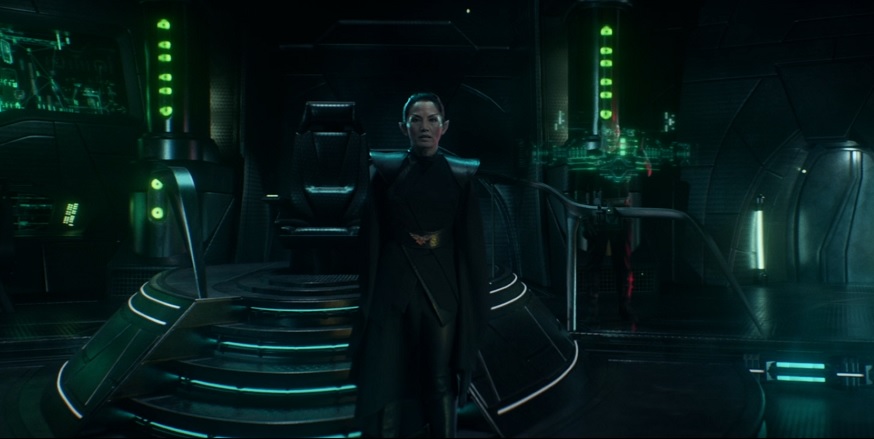


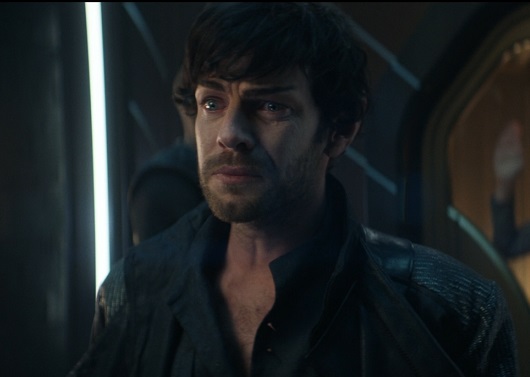



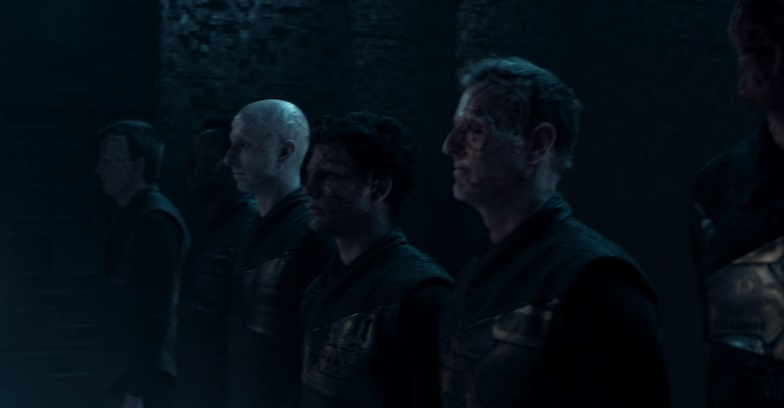
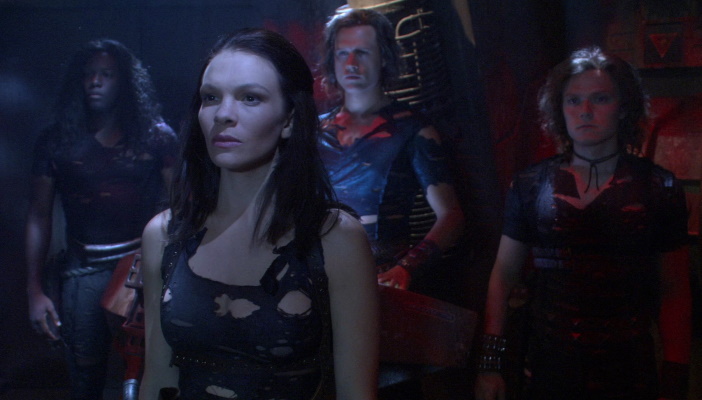
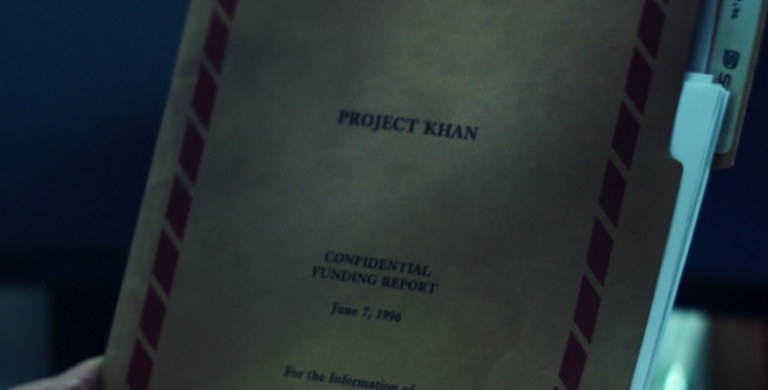
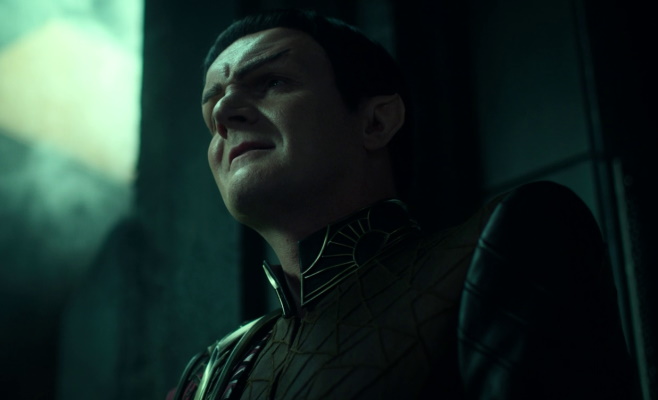
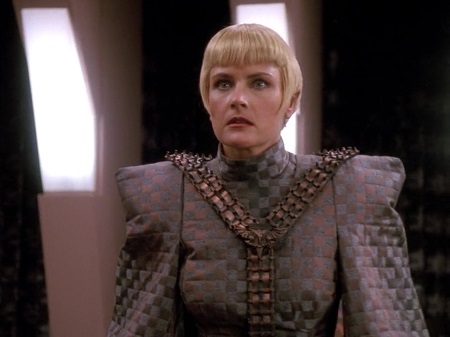
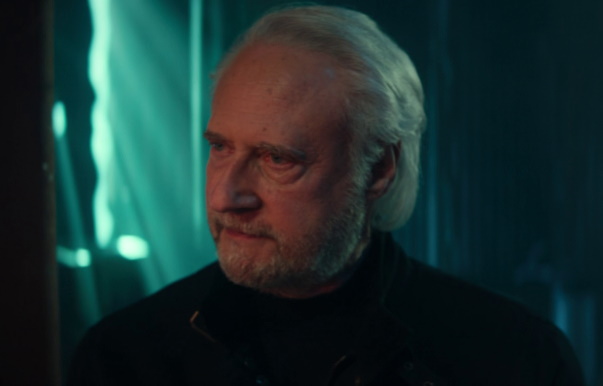
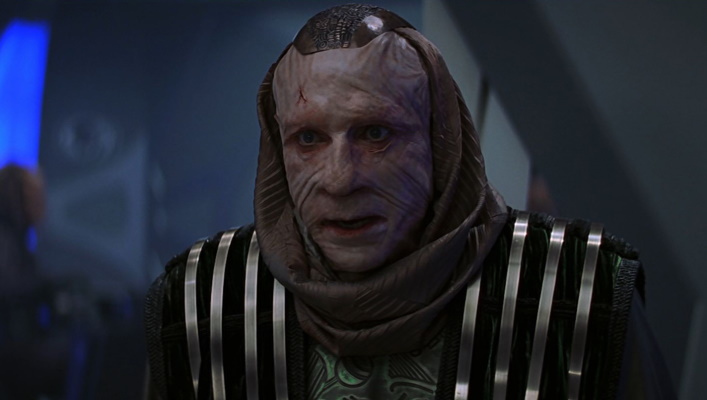
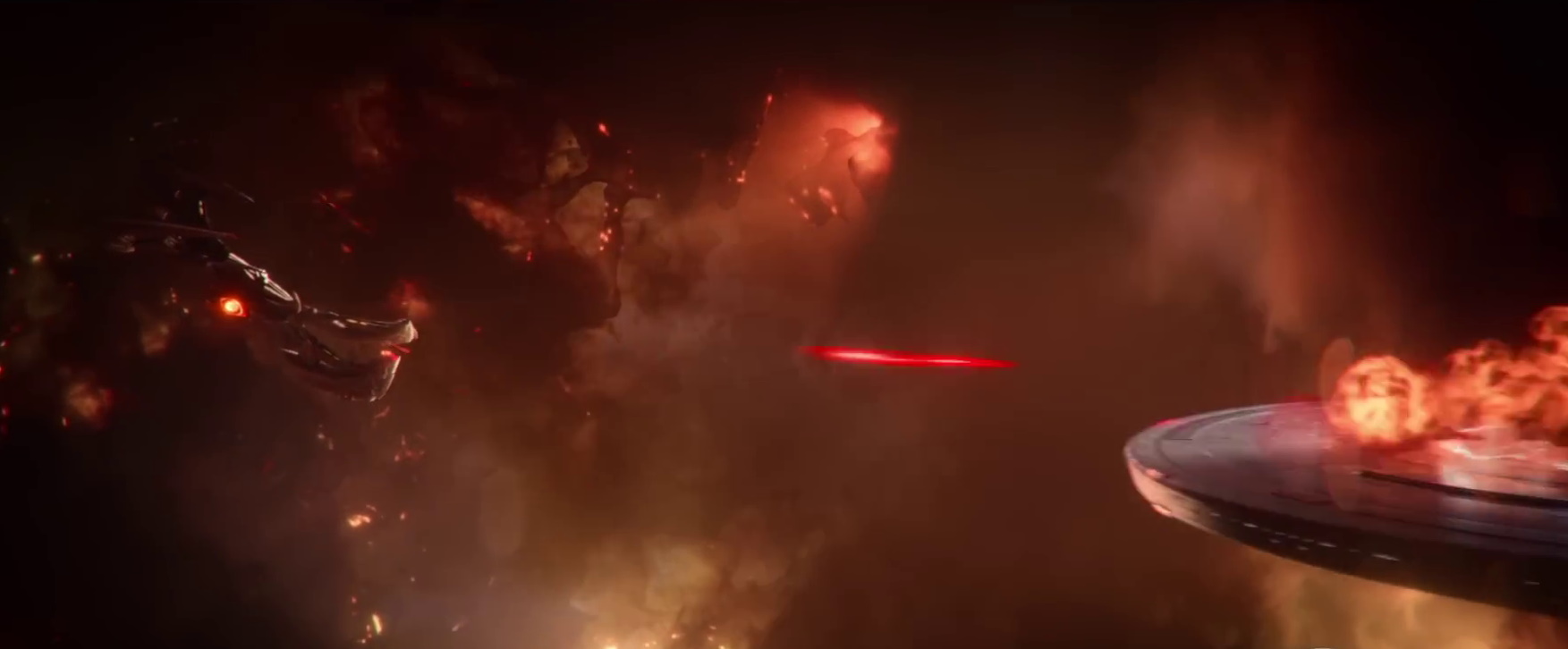
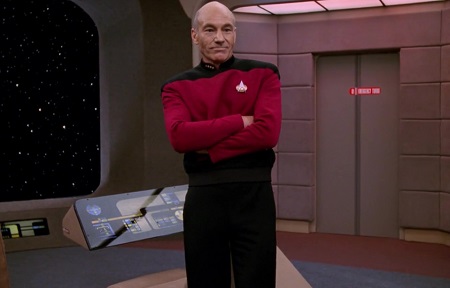
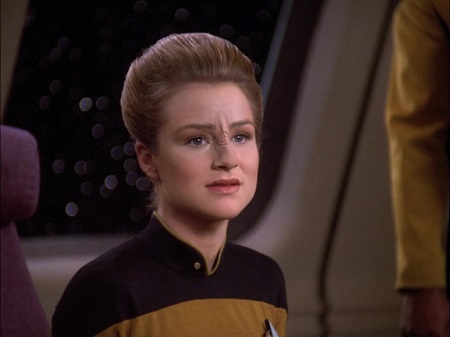
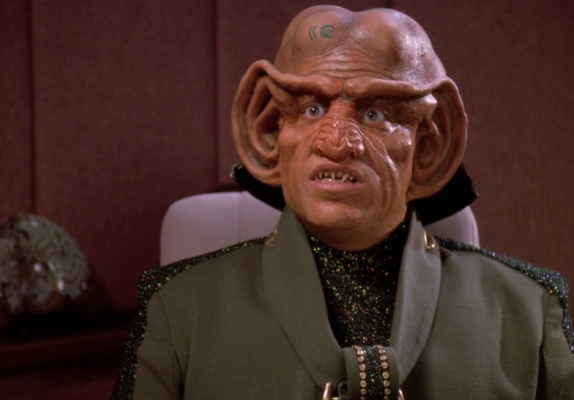
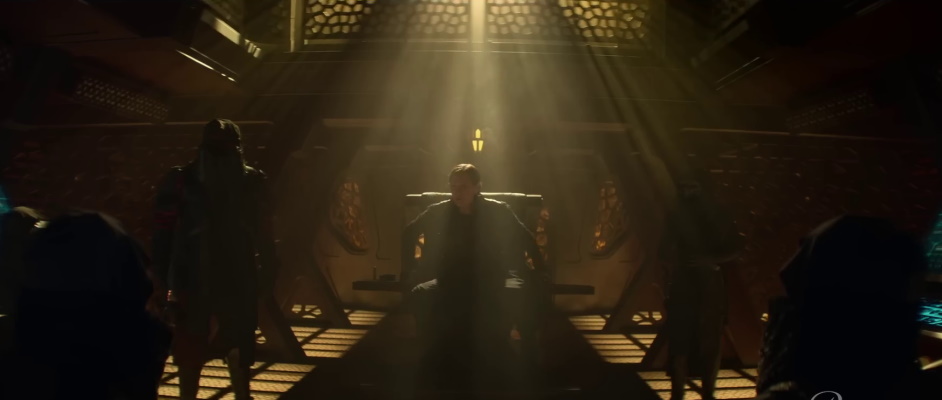
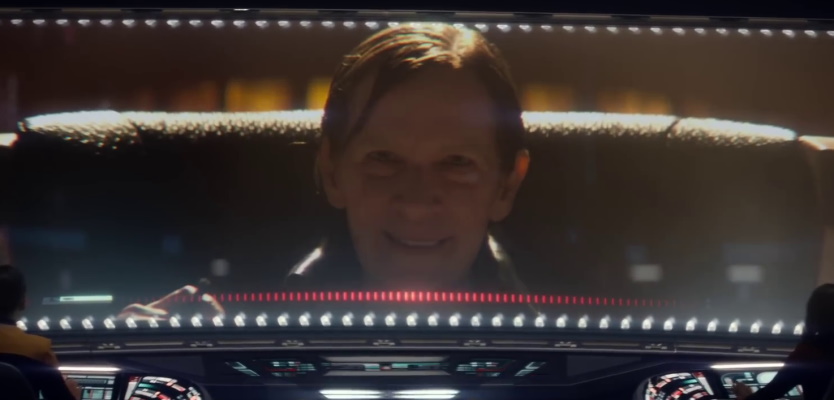


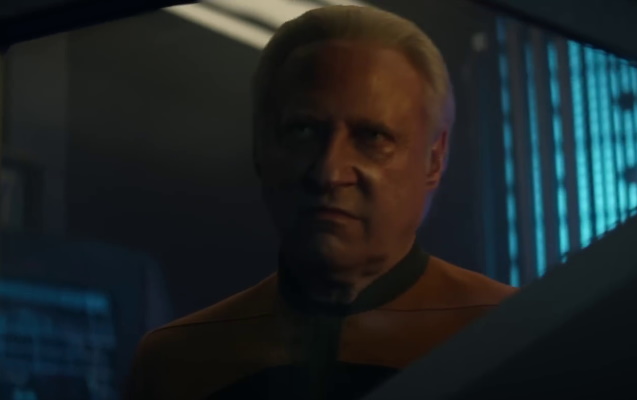









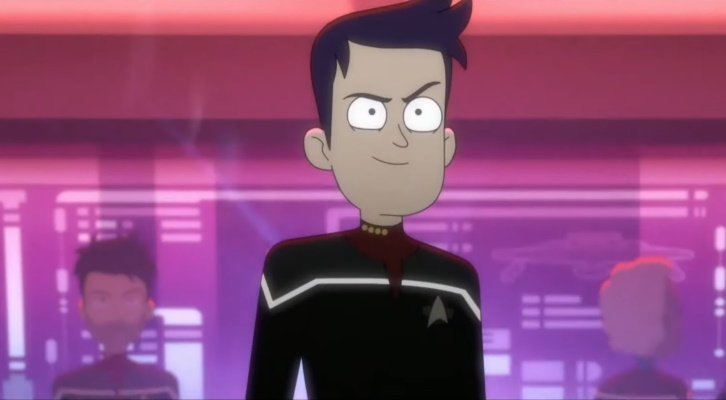
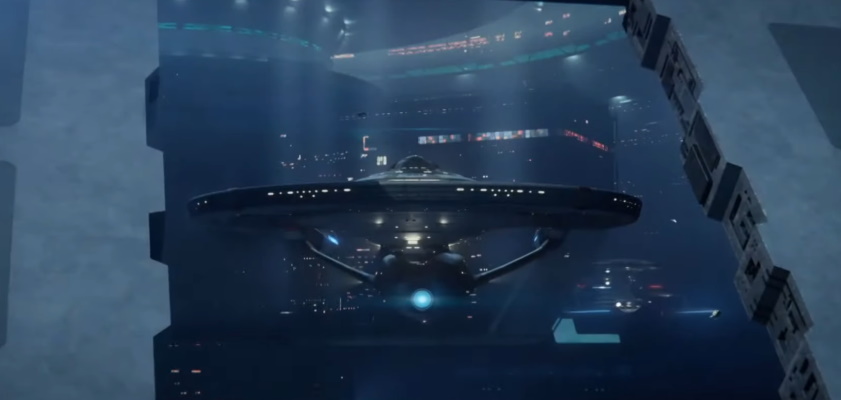
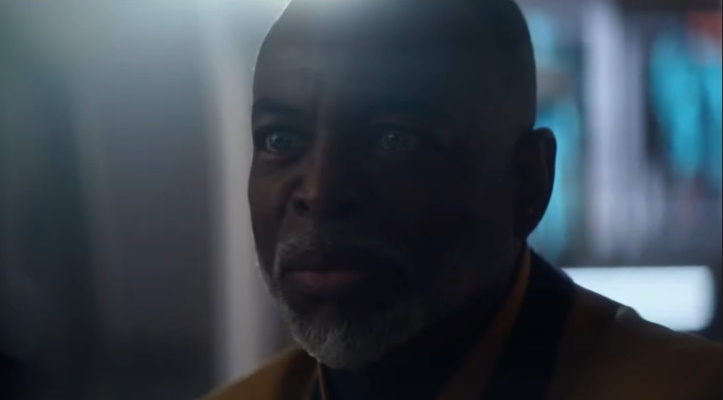
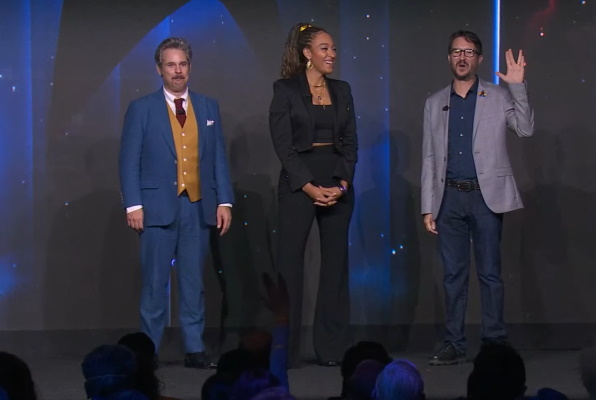

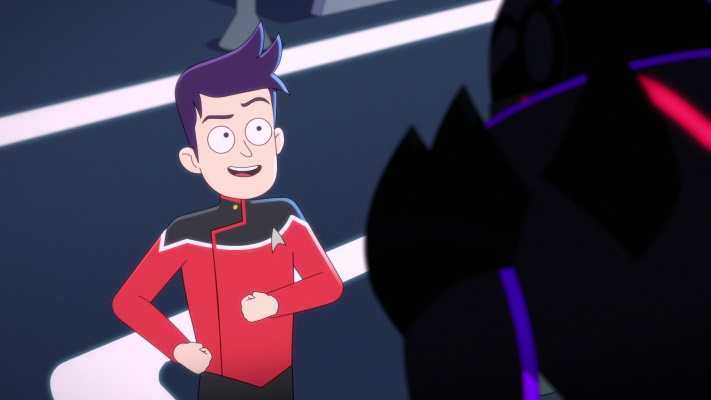




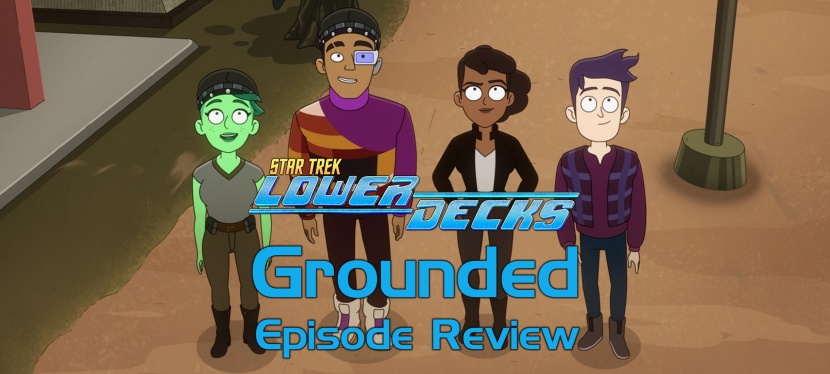
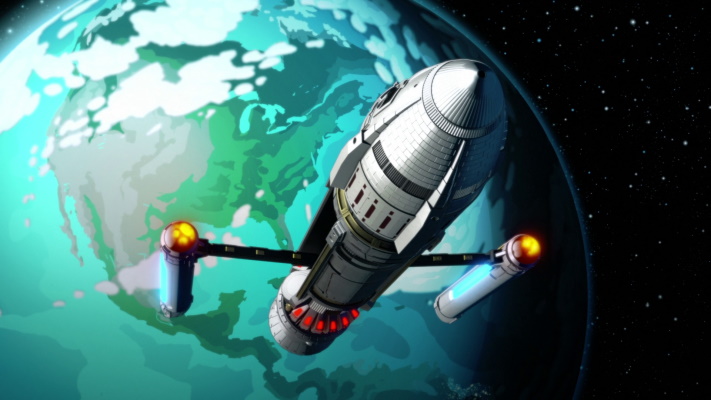
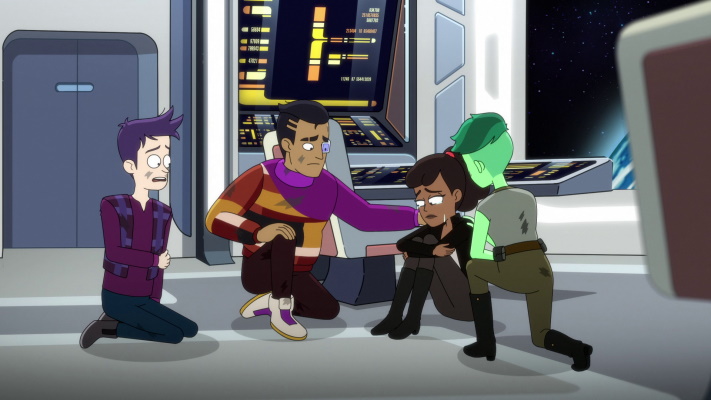

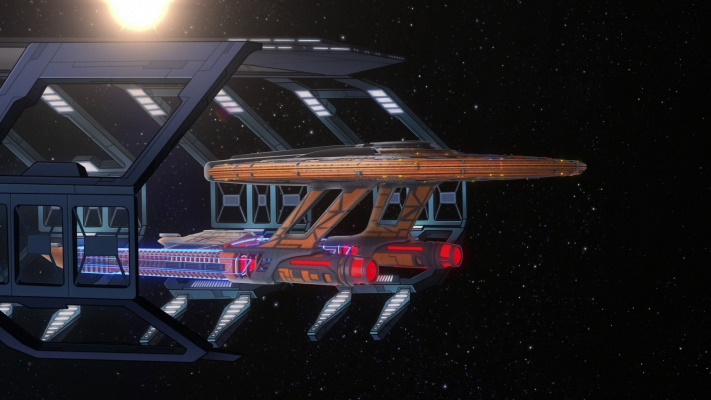



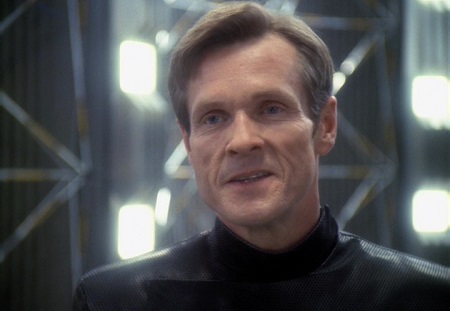


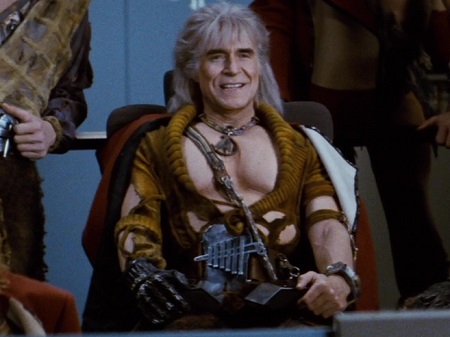








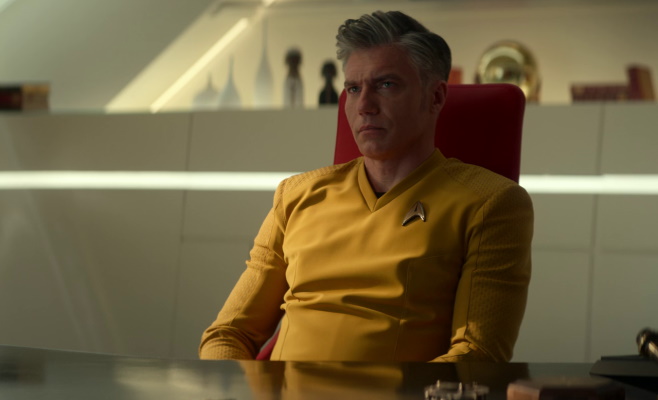


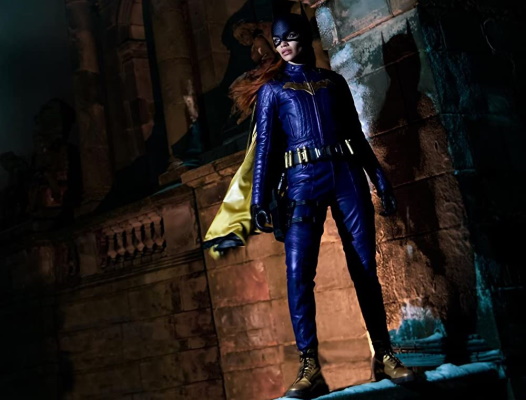
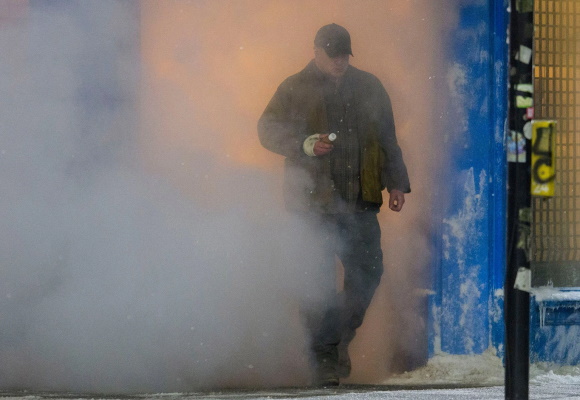
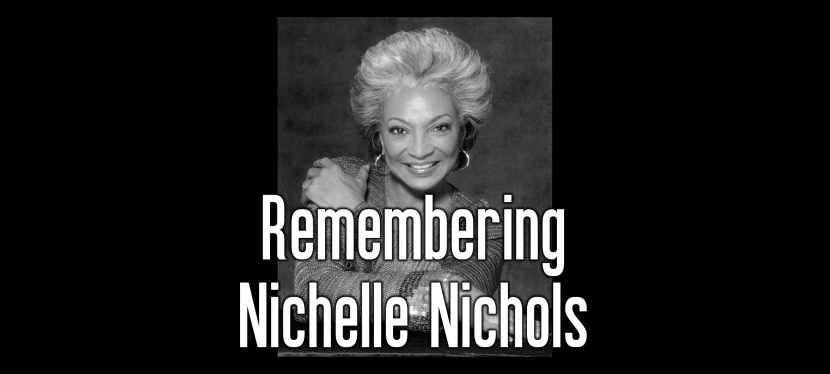
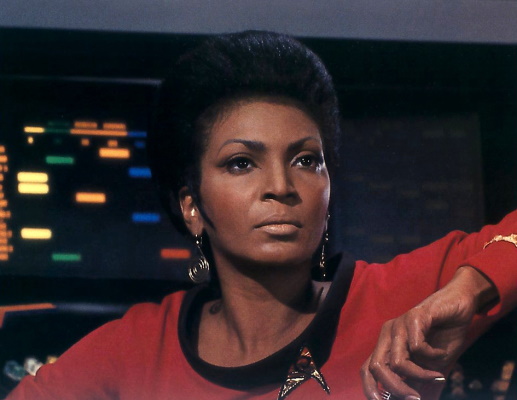
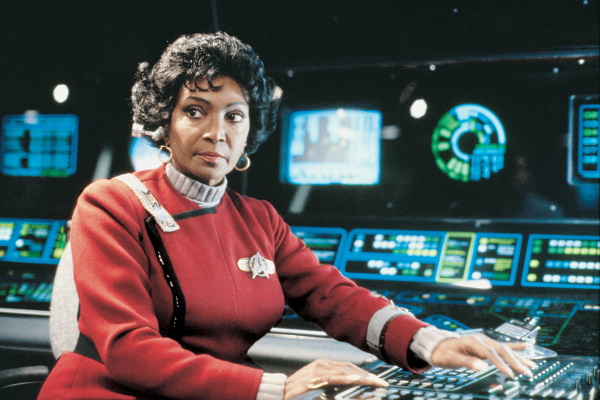


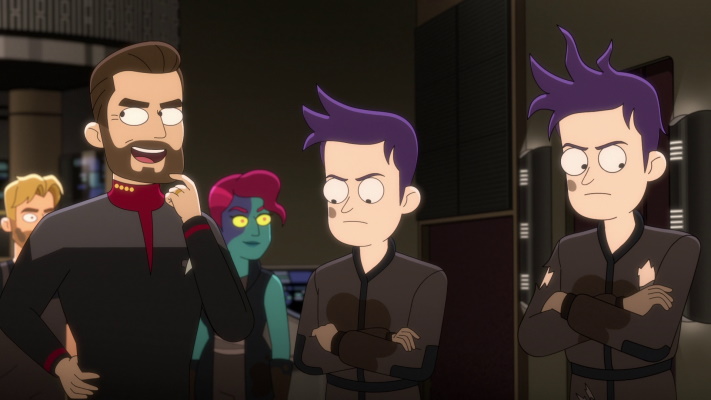


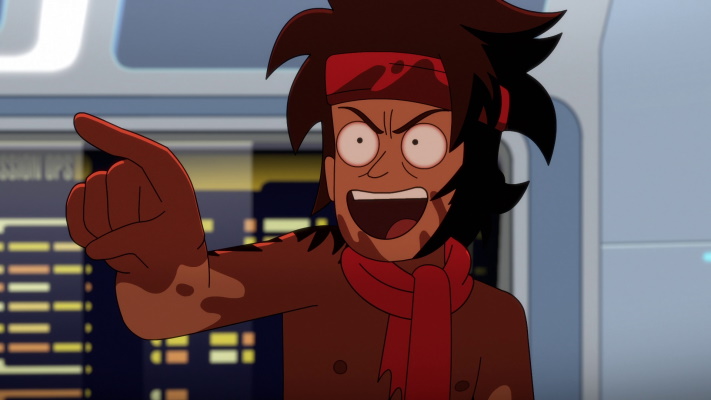
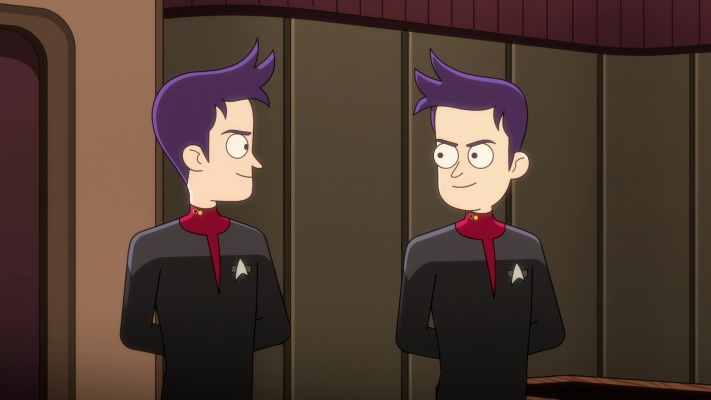

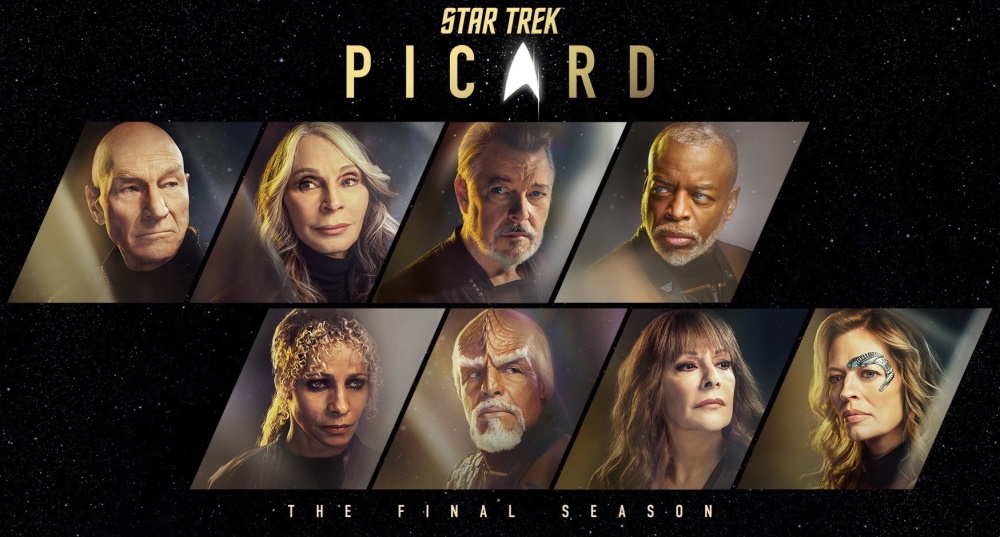
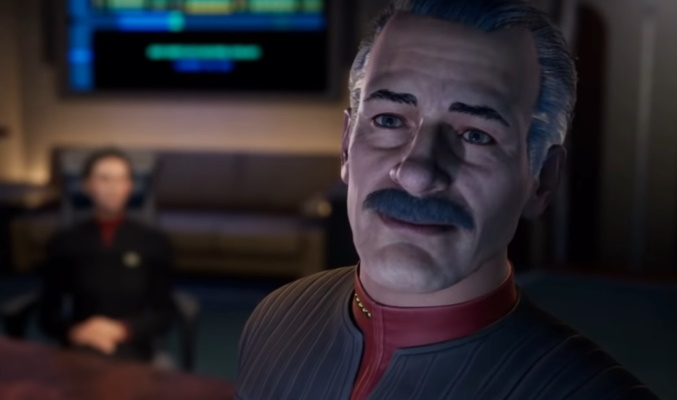

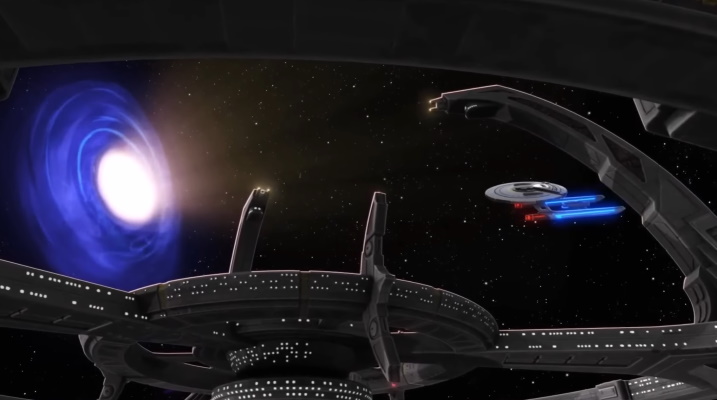




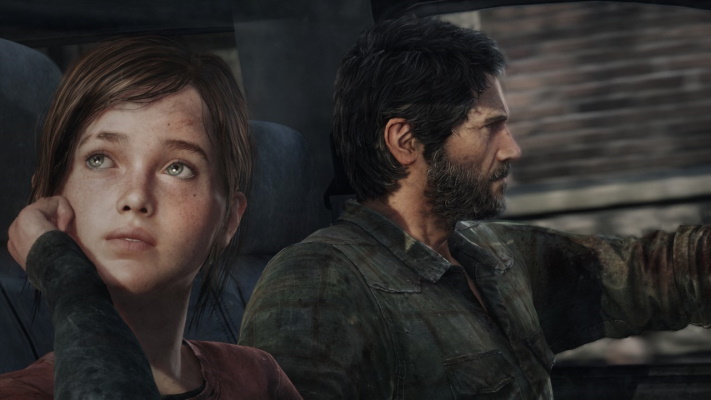
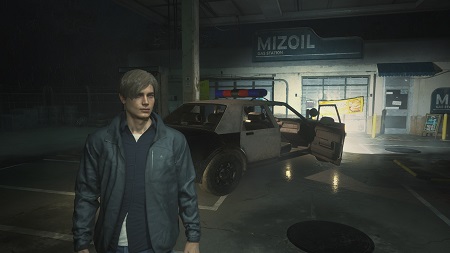
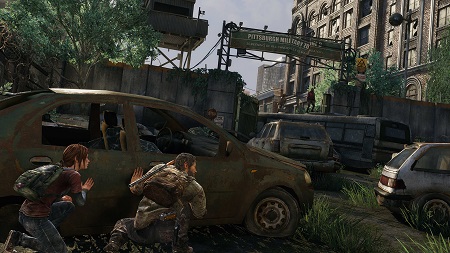
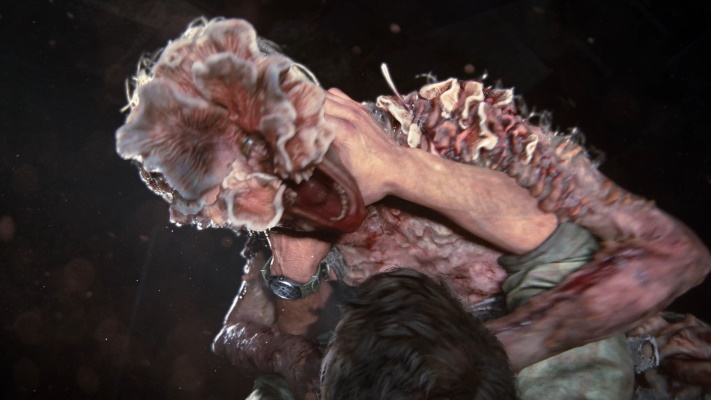
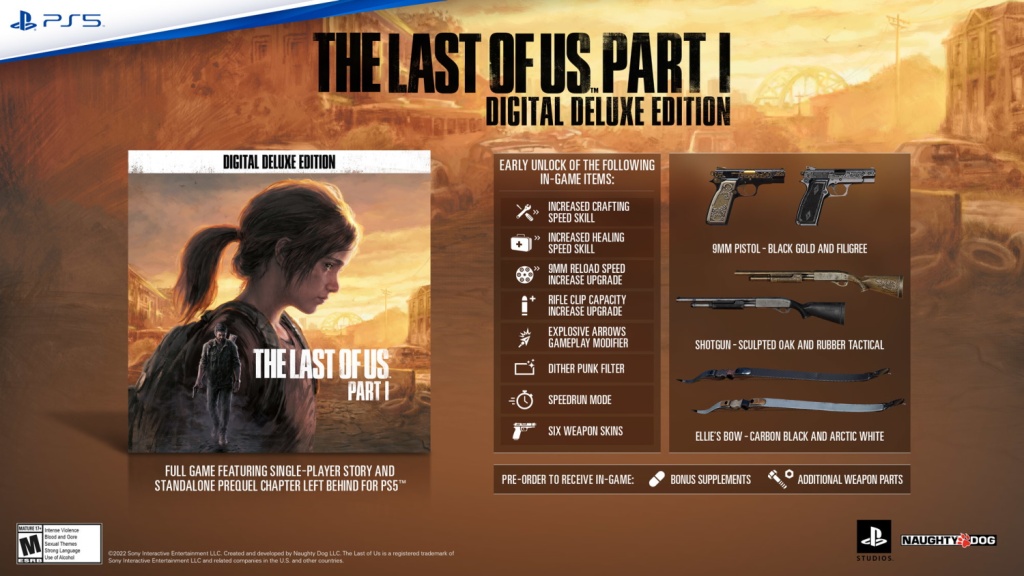
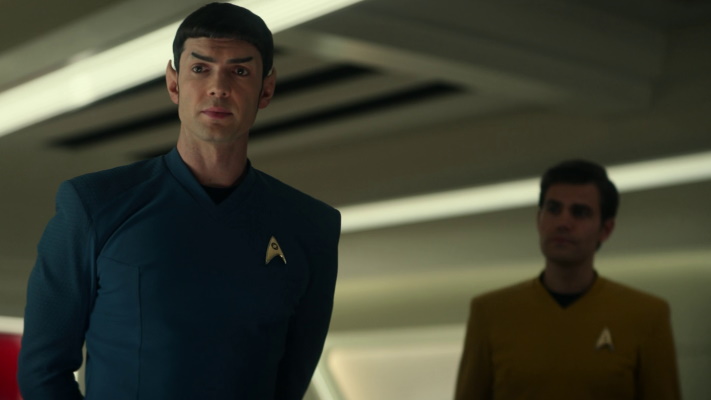
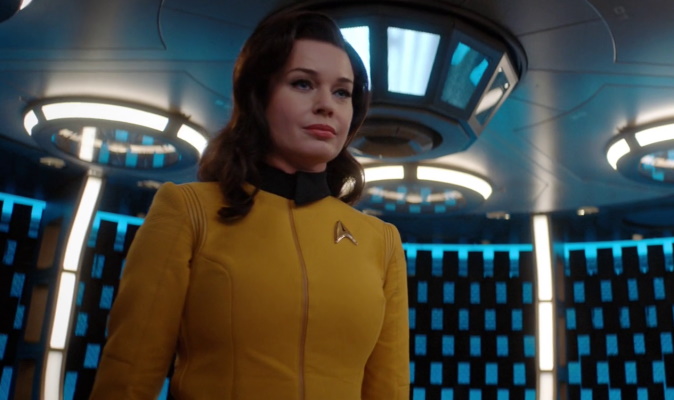
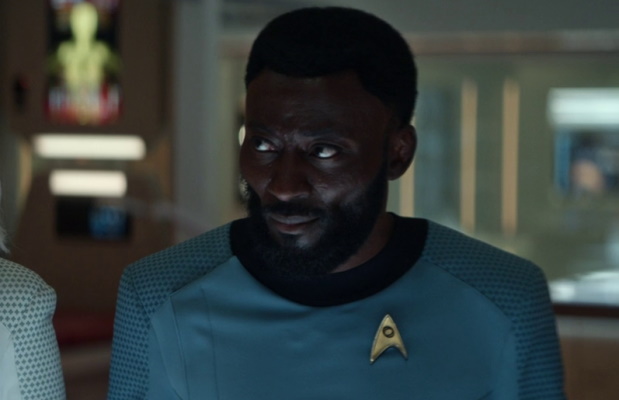
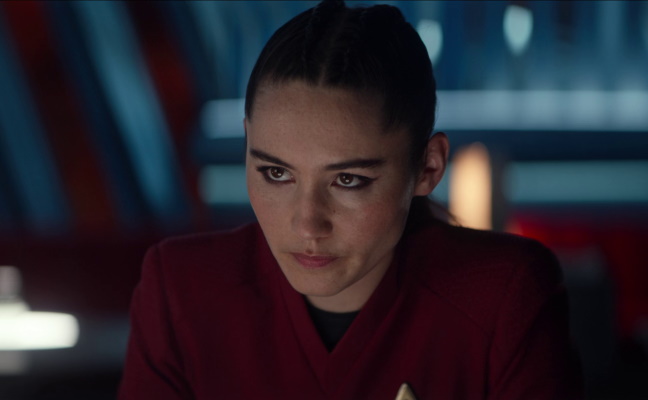
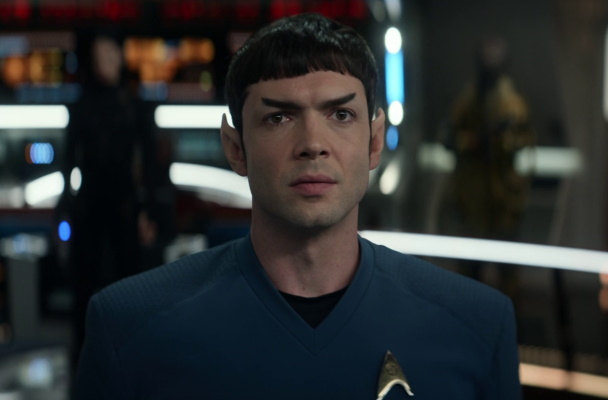
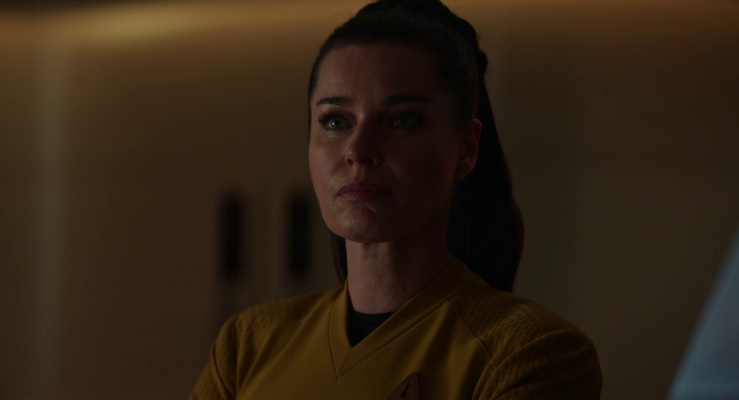
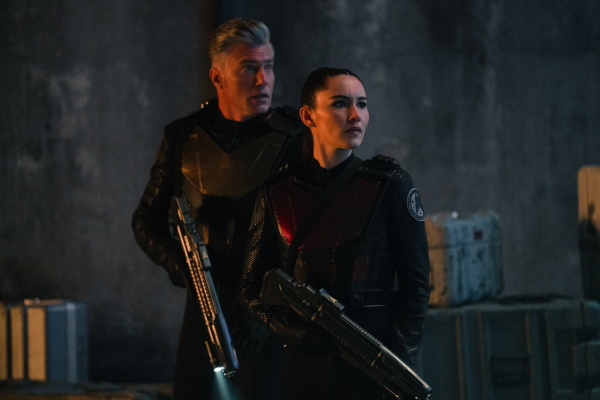
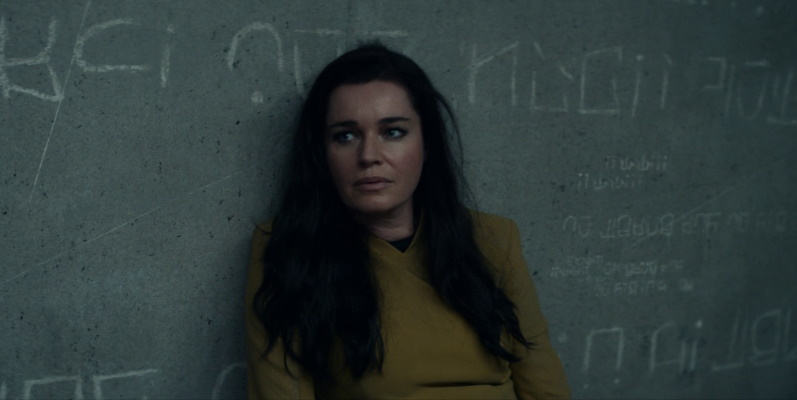
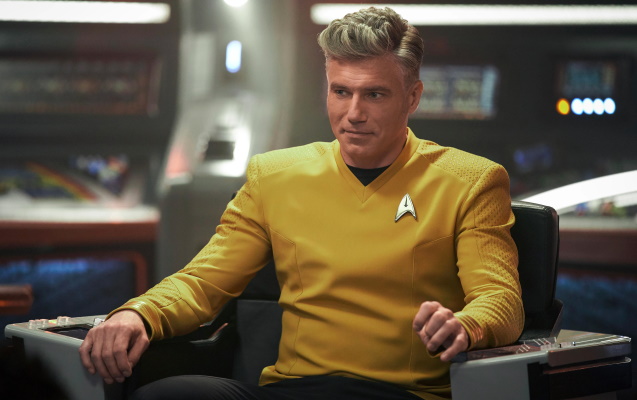
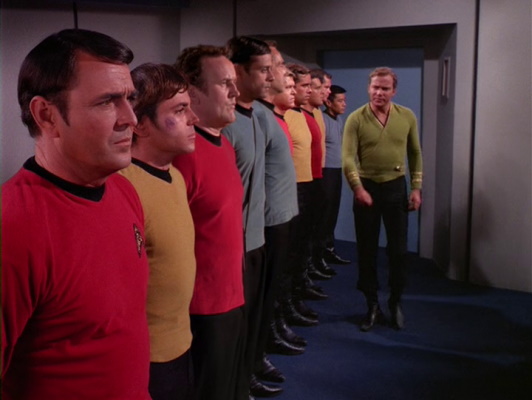
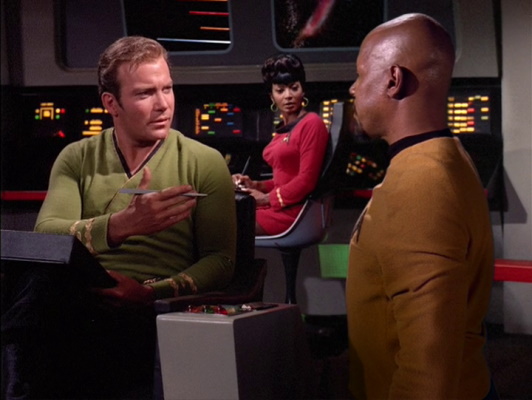
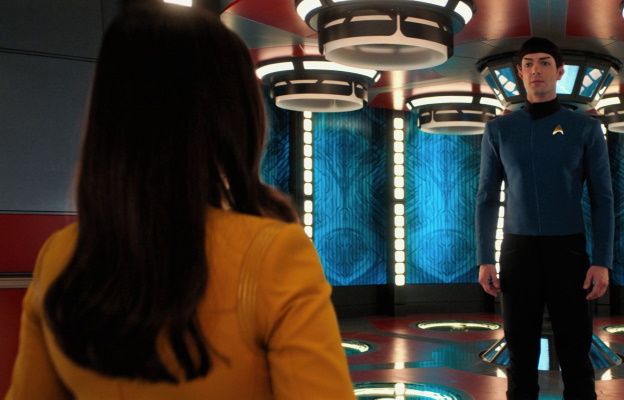


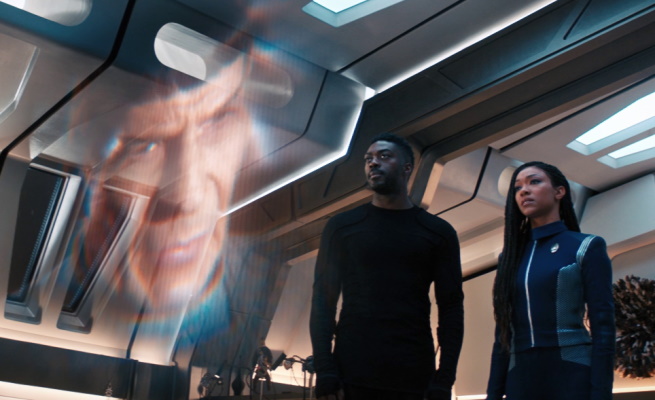
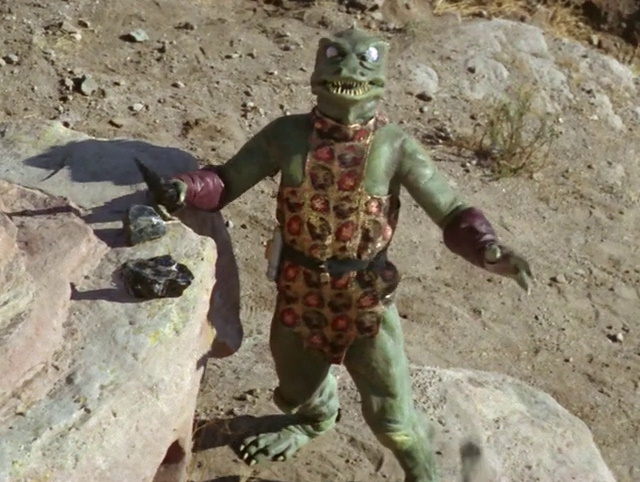
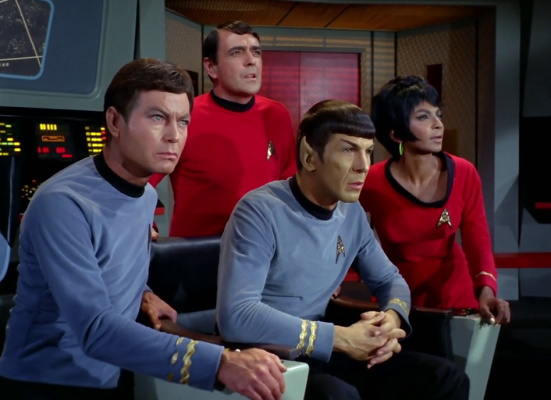
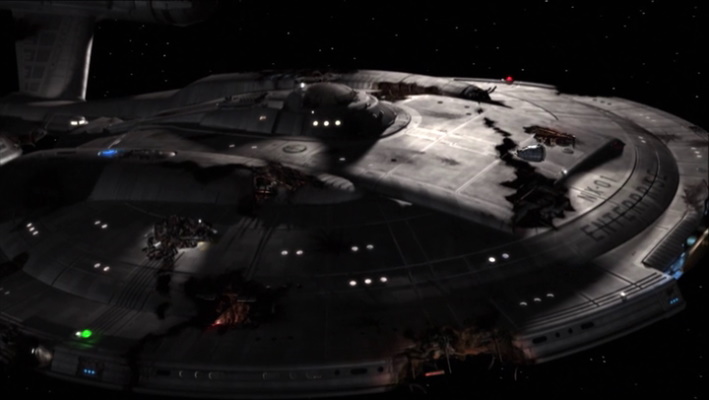
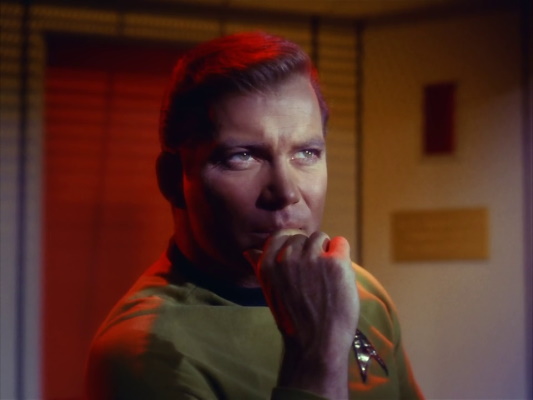
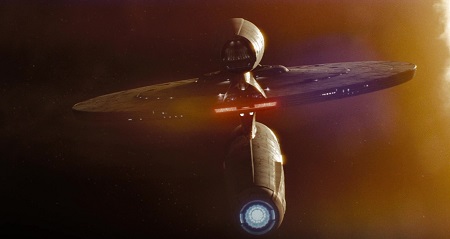
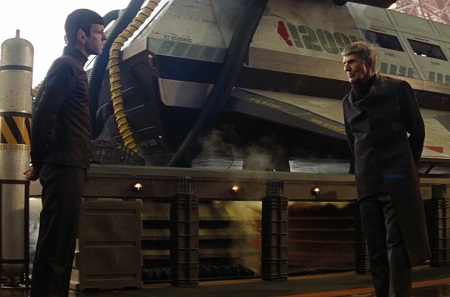



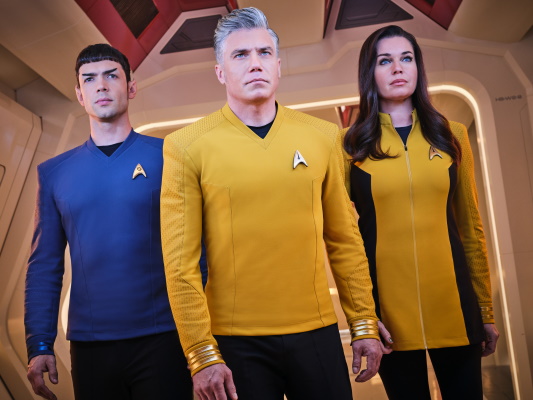
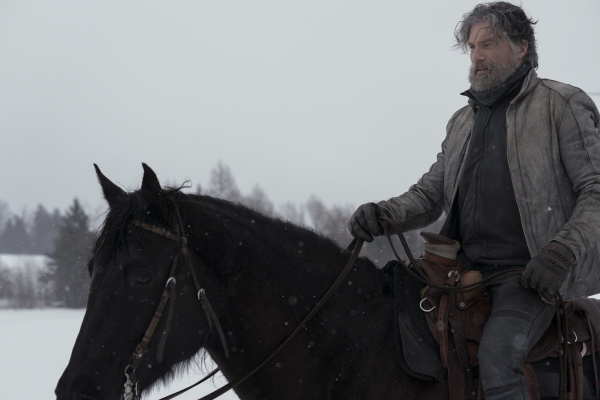
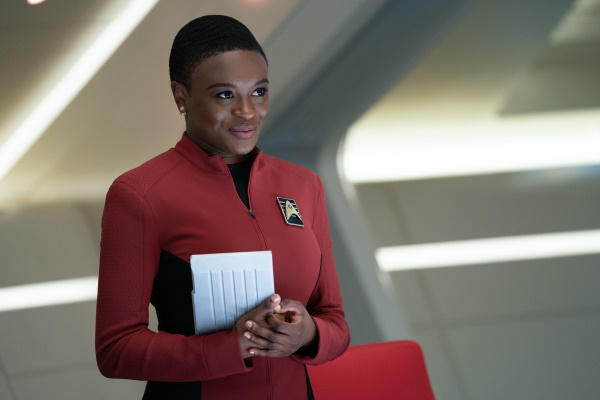
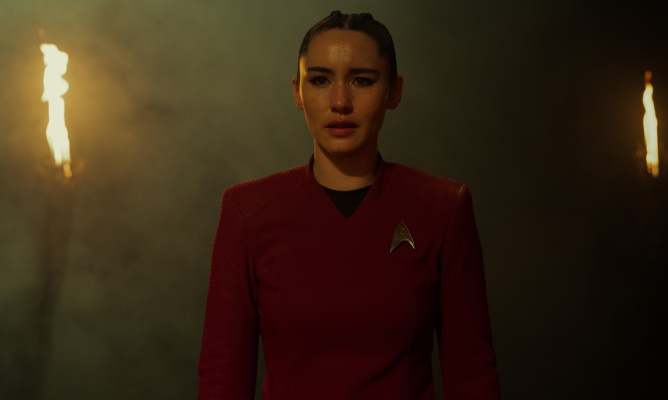
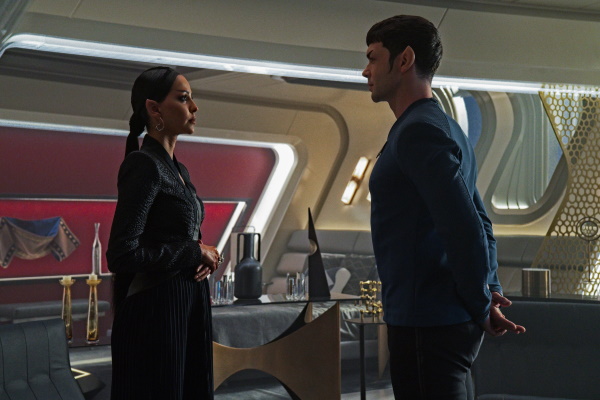
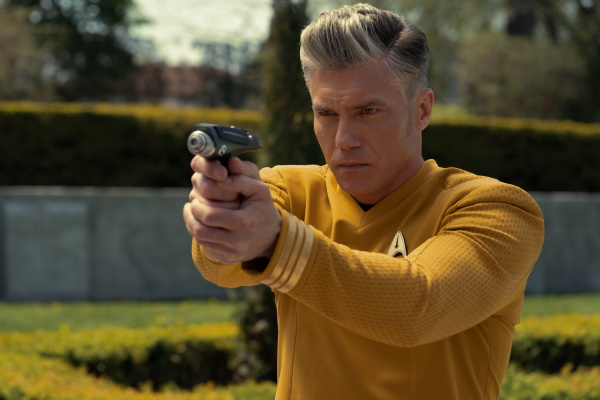
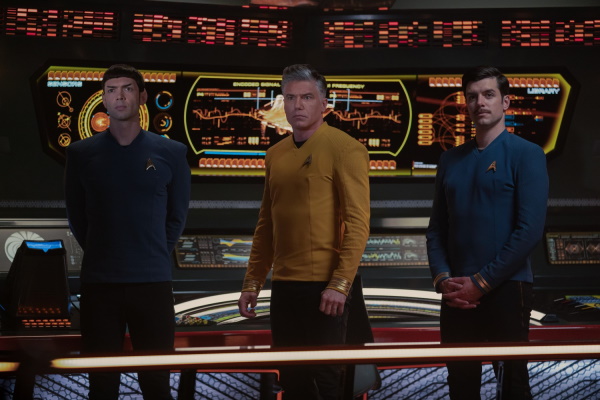
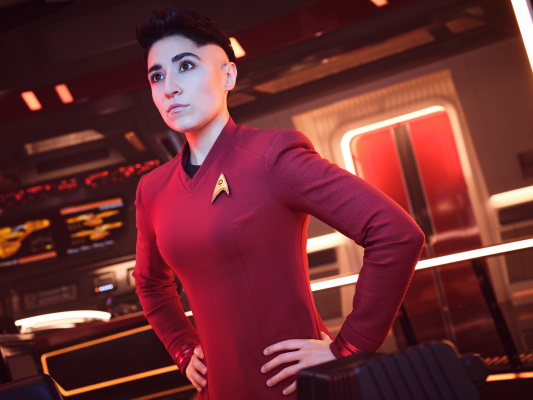
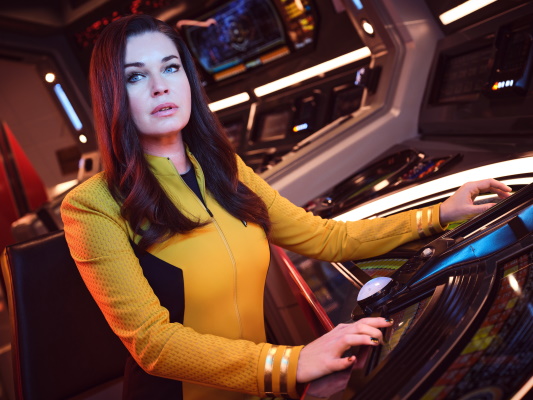


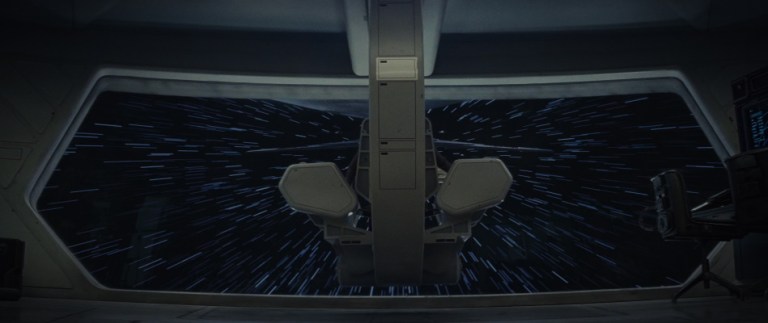













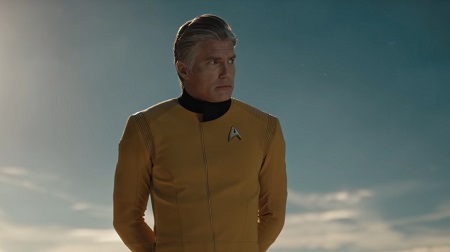

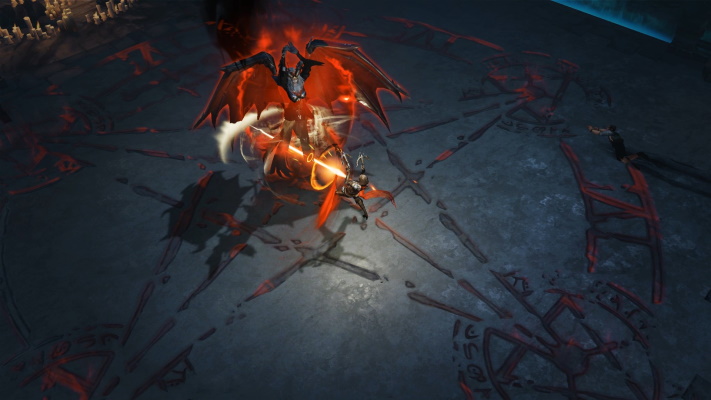
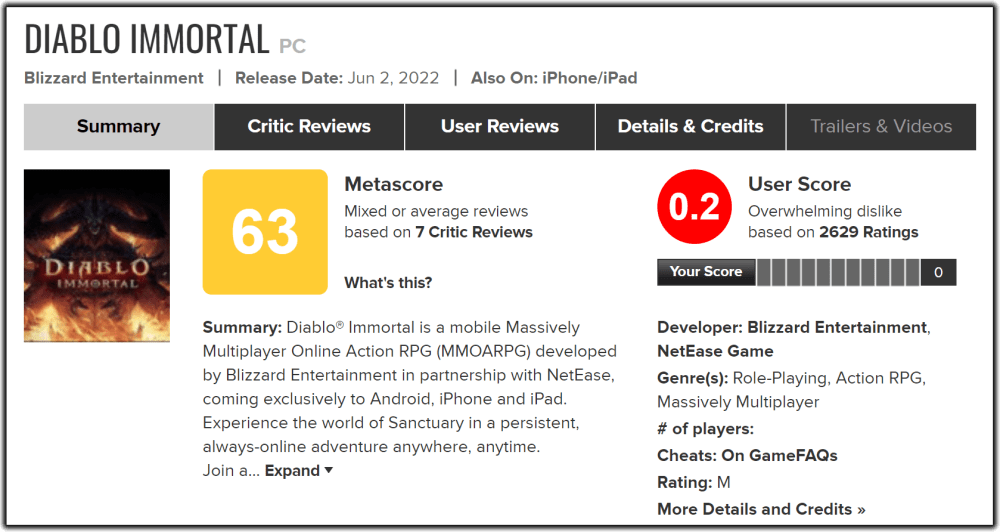
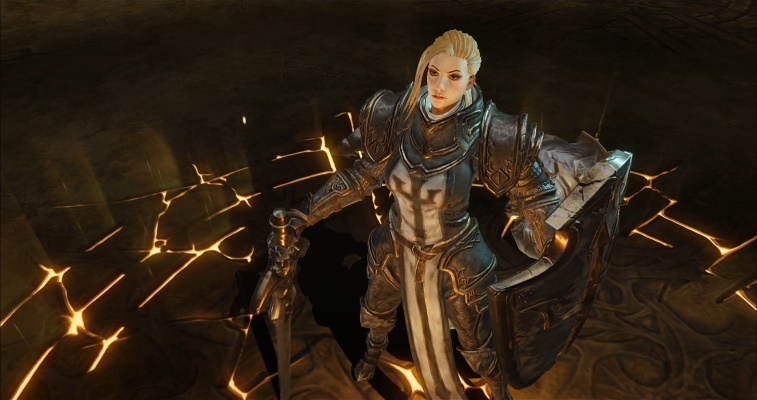
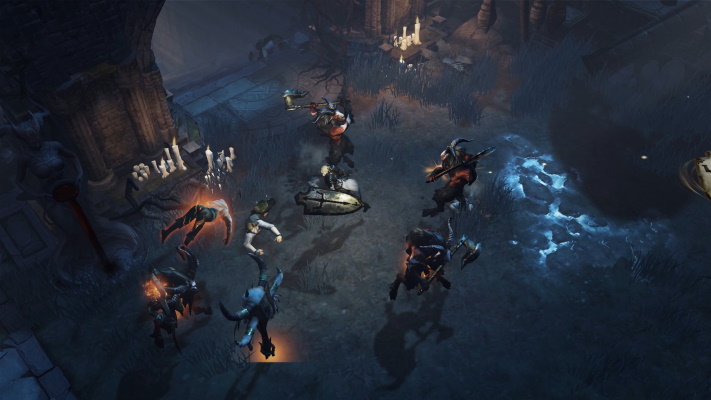
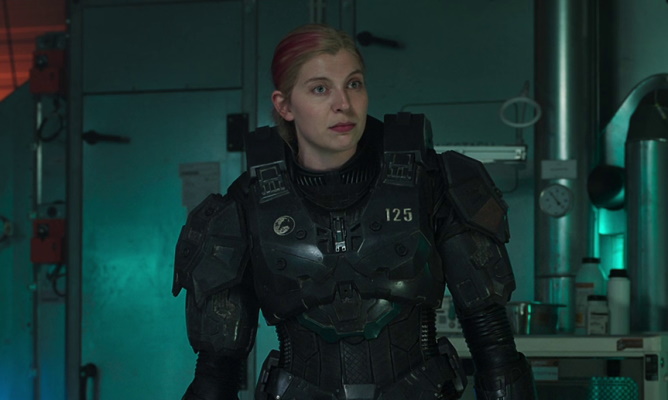
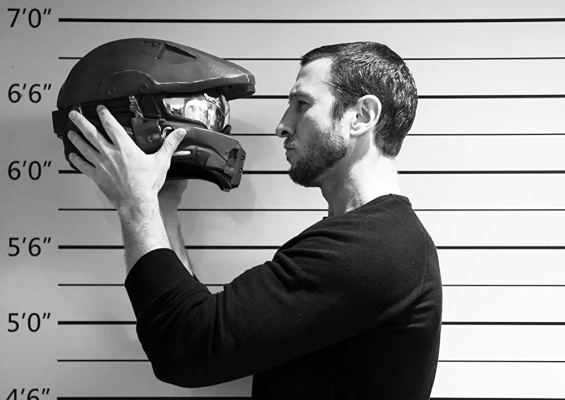
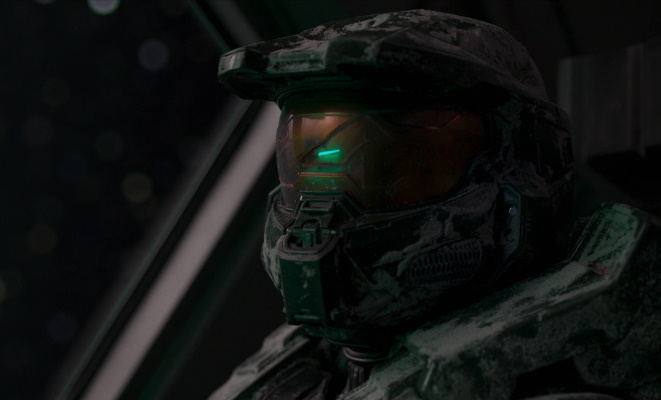

 Trekking with Dennis