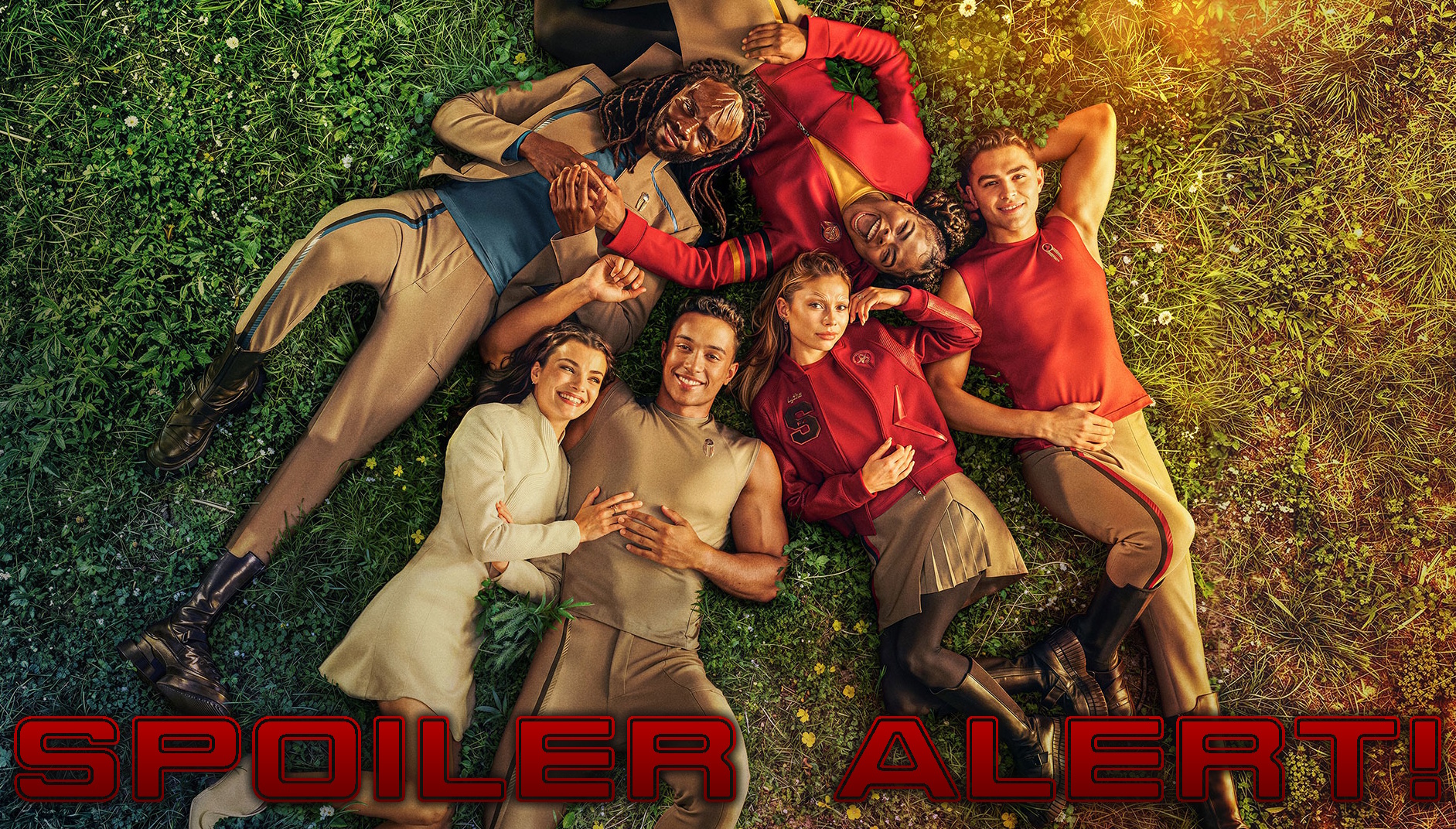
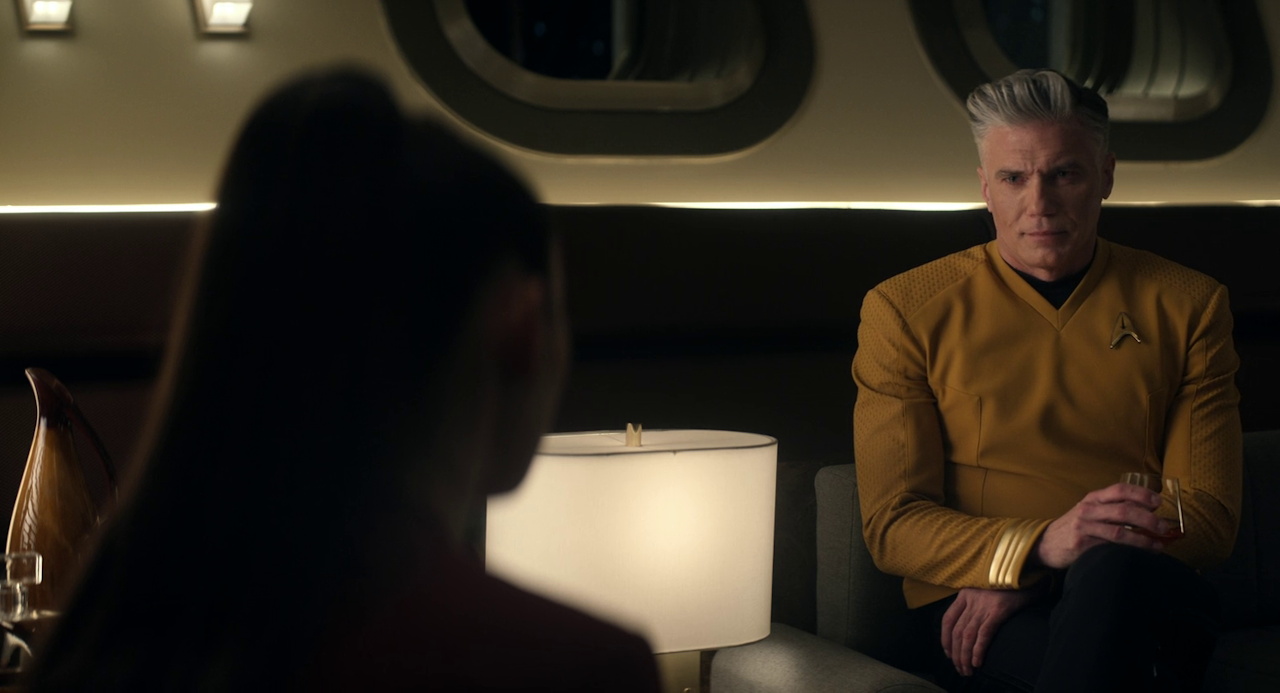
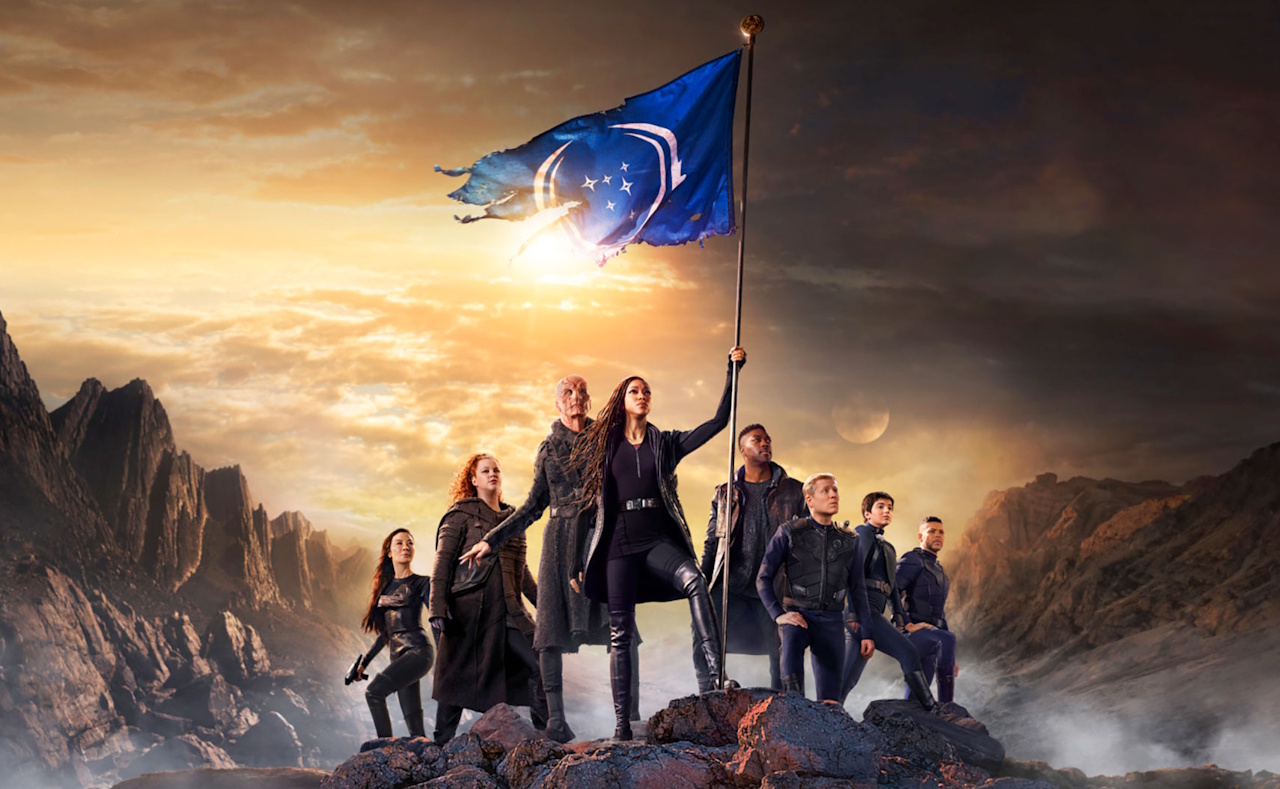
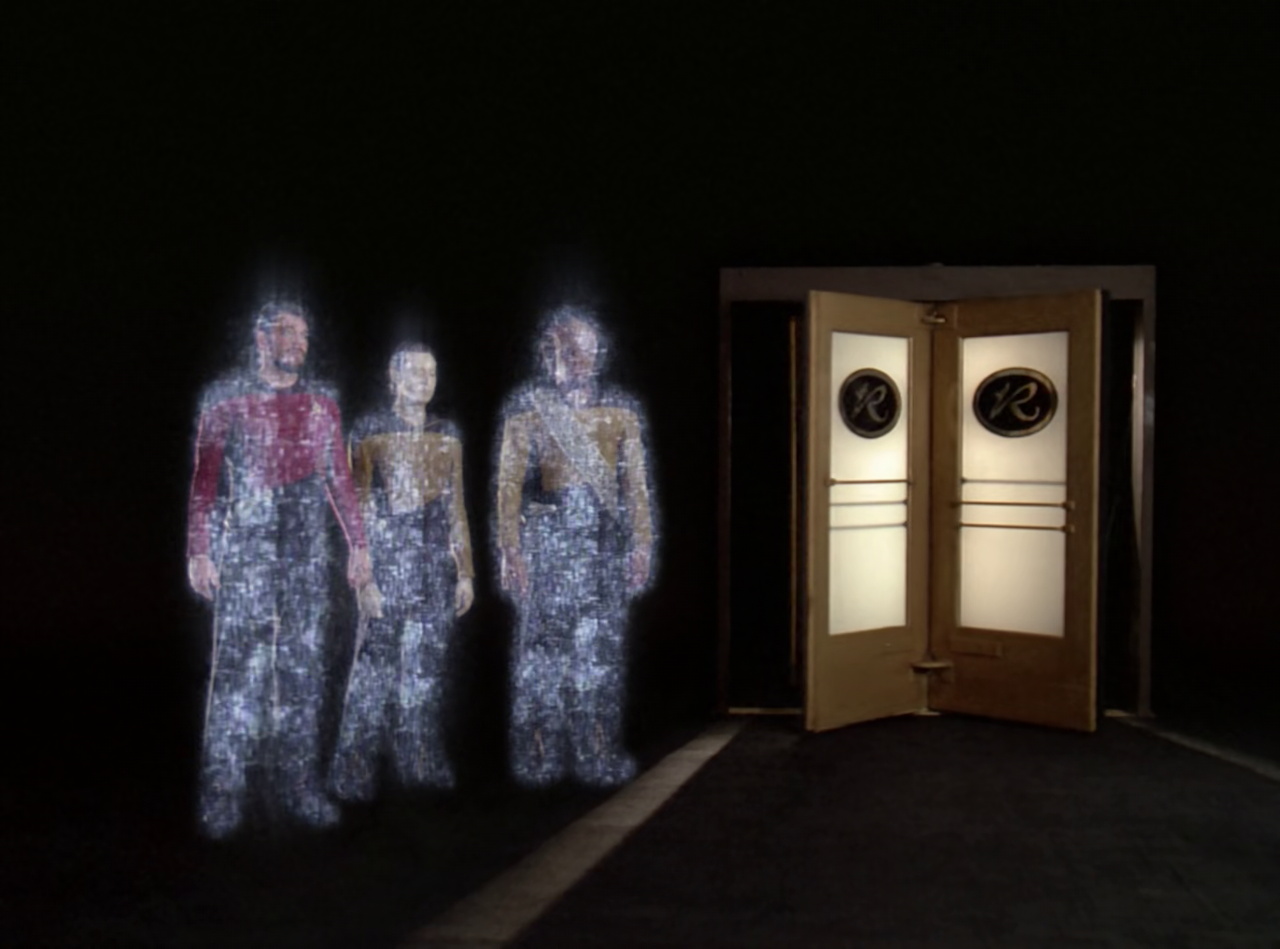
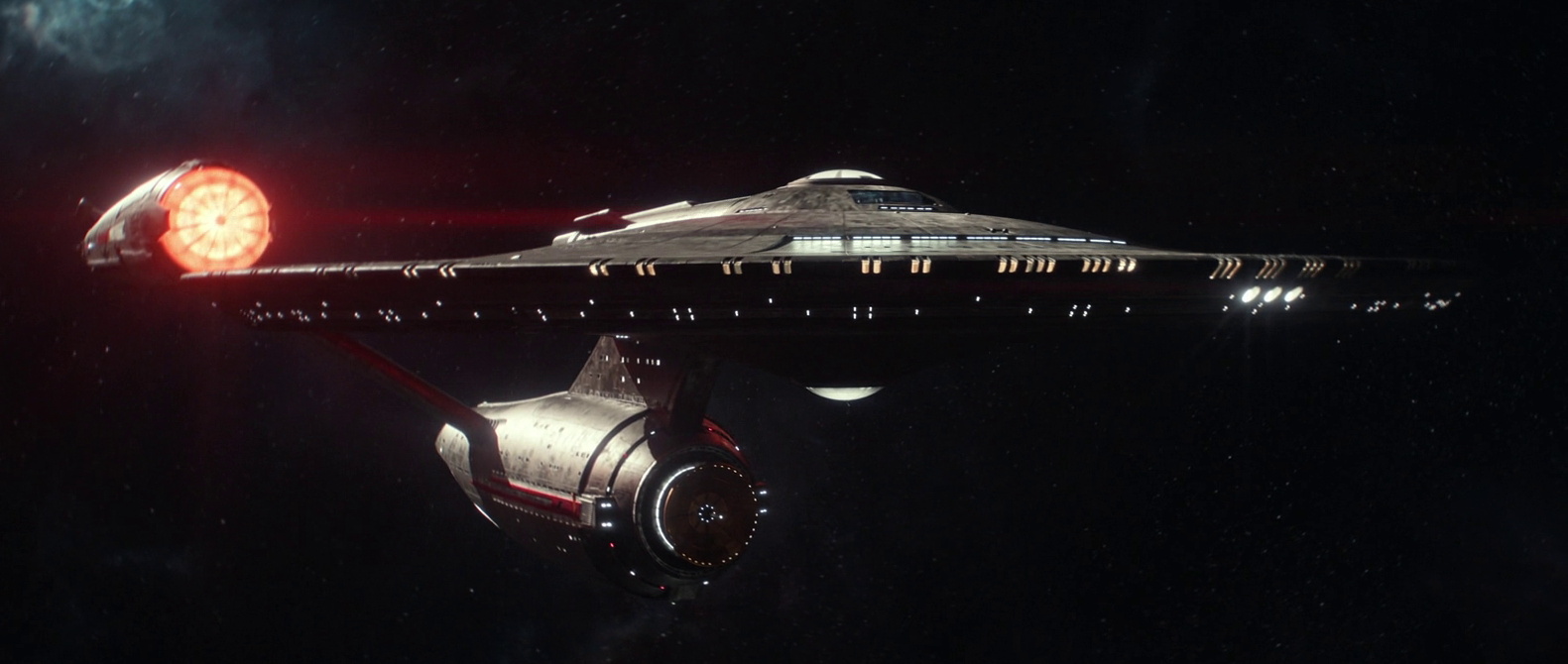
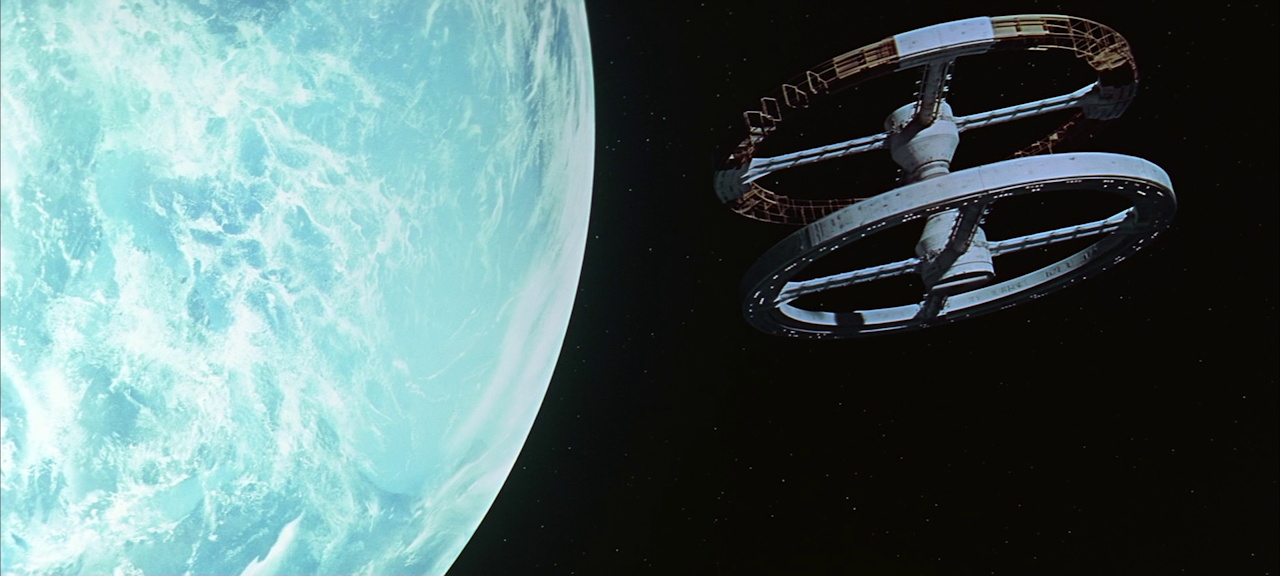
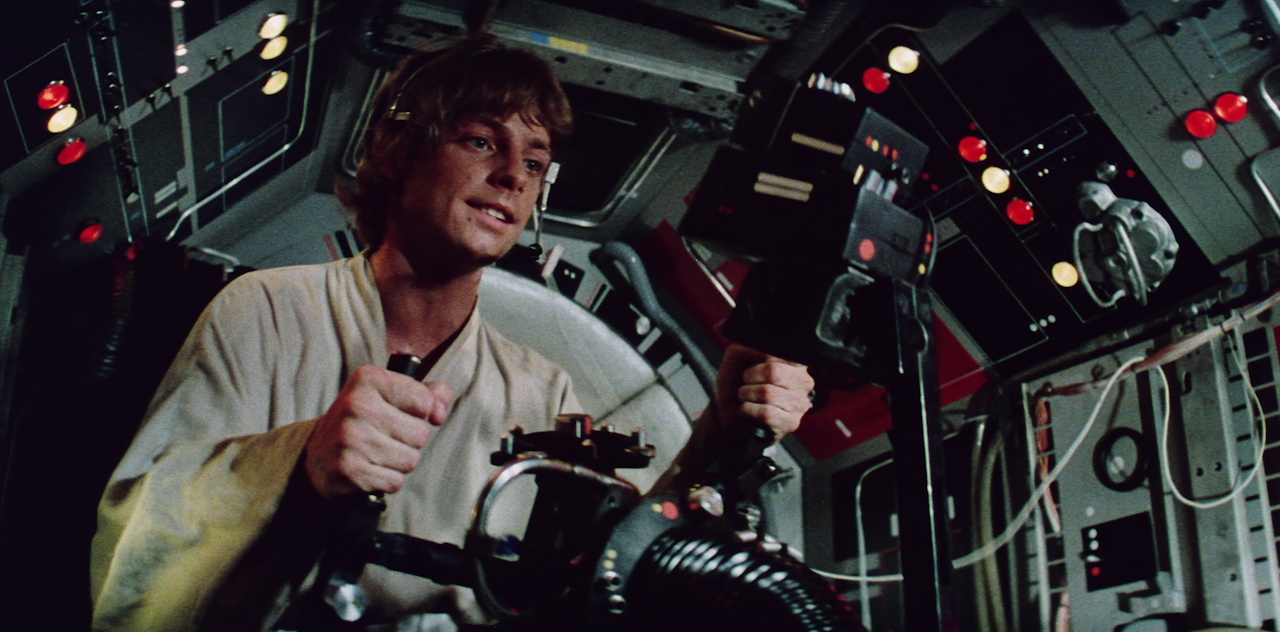
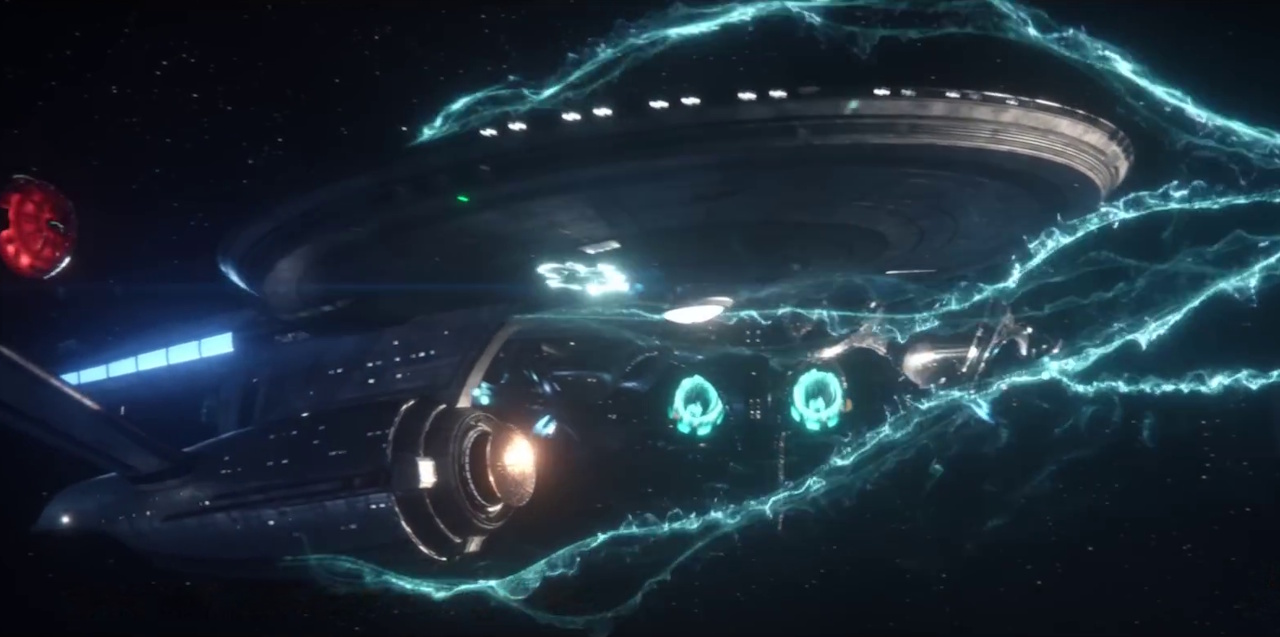
Spoiler Warning: Beware of spoilers for the Mass Effect series.
I adored BioWare’s Knights of the Old Republic and Jade Empire back on the original Xbox. I often credit KotOR as being the story that “saved Star Wars” for me, after the major disappointment of the prequel trilogy! And later, I played the Mass Effect trilogy and fell in love with the new sci-fi universe that BioWare had created. Although most of the people at BioWare who were responsible for the creation and direction of those fantastic games have long ago departed the studio, learning that BioWare is being shut down – and will join the ever-growing Electronic Arts graveyard – was still a sad piece of news. Inevitable, perhaps, given BioWare’s recent form and the EA buyout that we discussed last year… but still sad.
Cards on the table: the situation at Electronic Arts meant that I wasn’t going to buy or play Mass Effect 4 even if it had made it to release. So in that sense, I guess I already felt that BioWare and Mass Effect were over – at least on a personal level. But I thought the news of Mass Effect 4′s cancellation could provide an opportunity to talk about a topic that needs to be aired more than ever in gaming, and in the entertainment industry at large: the need for stories to end.
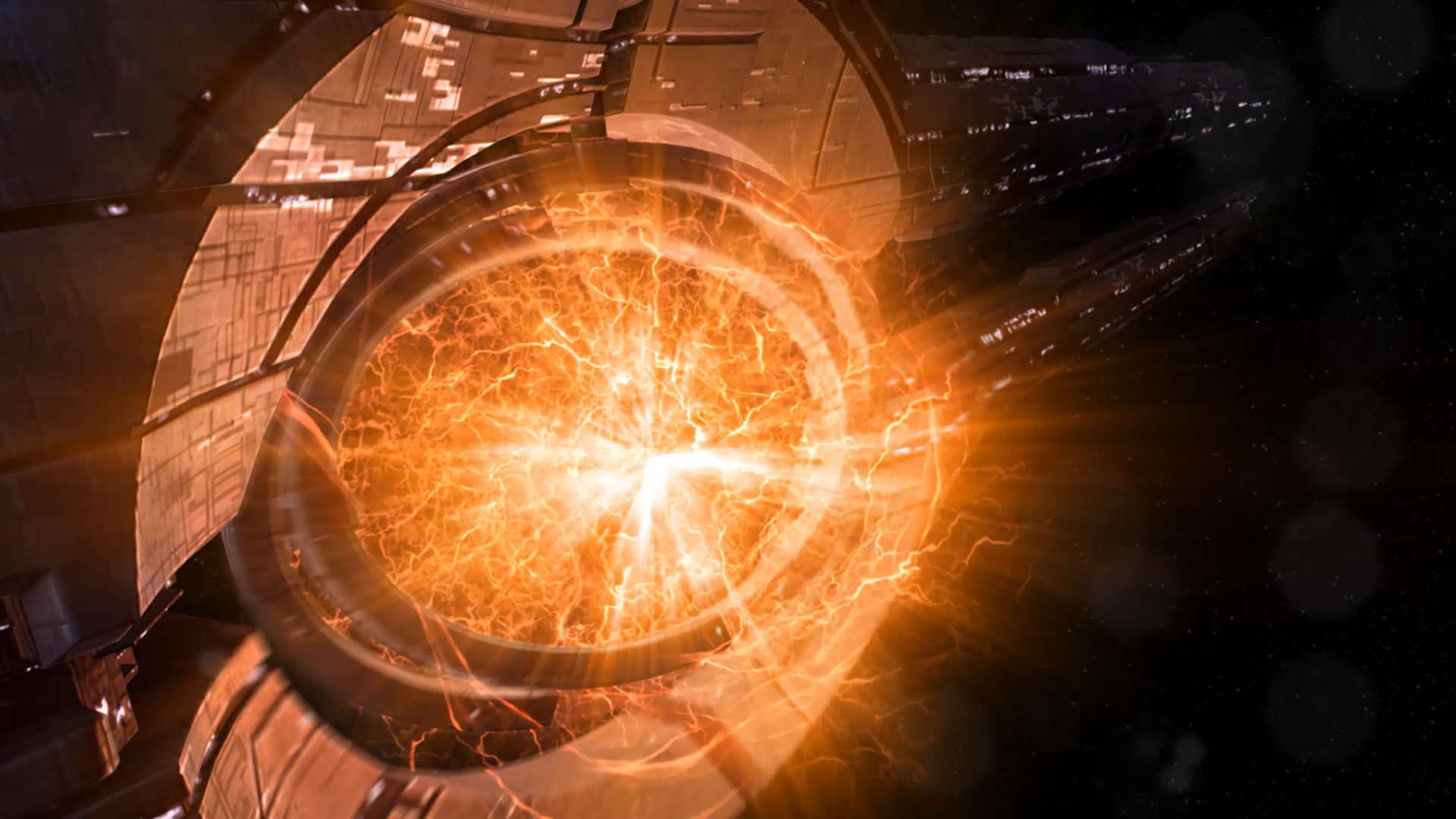
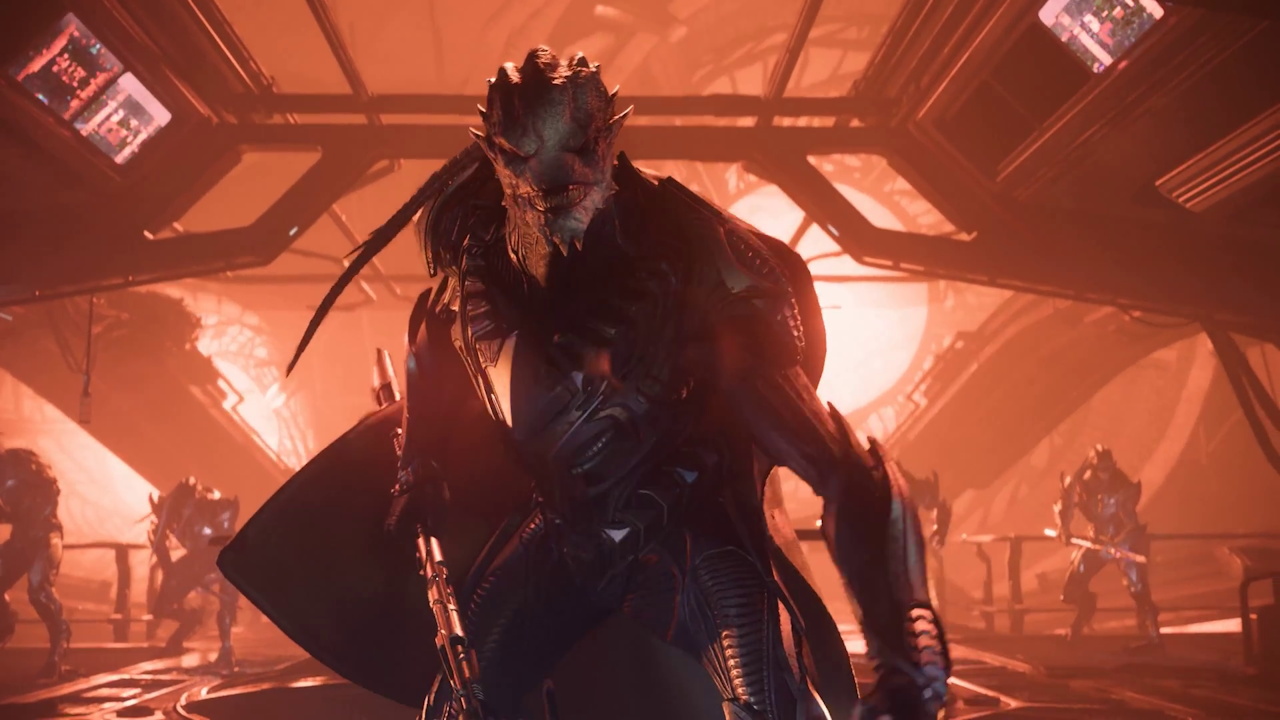
The next Mass Effect game has been cancelled by Electronic Arts.
Every story ends. When you reach the final page of a book, watch the credits roll at the end of a film, or beat the final boss in a video game… that’s it. That’s the end. The best stories and fictional worlds leave us with the sense that the people we met, and the worlds they inhabited, are going to persist beyond that last page or final boss, but that’s just a hallmark of good storytelling. However, in the modern, highly-commercialised entertainment industry, stories that should have been allowed to end… aren’t. Character arcs may be complete, the “big bad” may have been finally defeated, and peace restored to the land… but then, inevitably, a room full of executives decrees that such a financially lucrative property can’t just be allowed to end with dignity! We need sequels, damn it! Sequels, prequels, spin-offs… the works.
And for me, Mass Effect has been in that position for a while.
The Mass Effect trilogy told one connected story: that of Commander Shepard and the war against the Reapers. Shepard began to unravel the Reaper conspiracy in the first game, encountered and defeated a Reaper ally or subordinate in the second, and finally took on the entire Reaper fleet in the third – bringing the conflict, and their own character arc, to a conclusion. We can debate how well the ending of Mass Effect 3 was structured, of course; the whole “pick a colour” thing became notorious for a while. But, for better or worse, that was the end of the story.
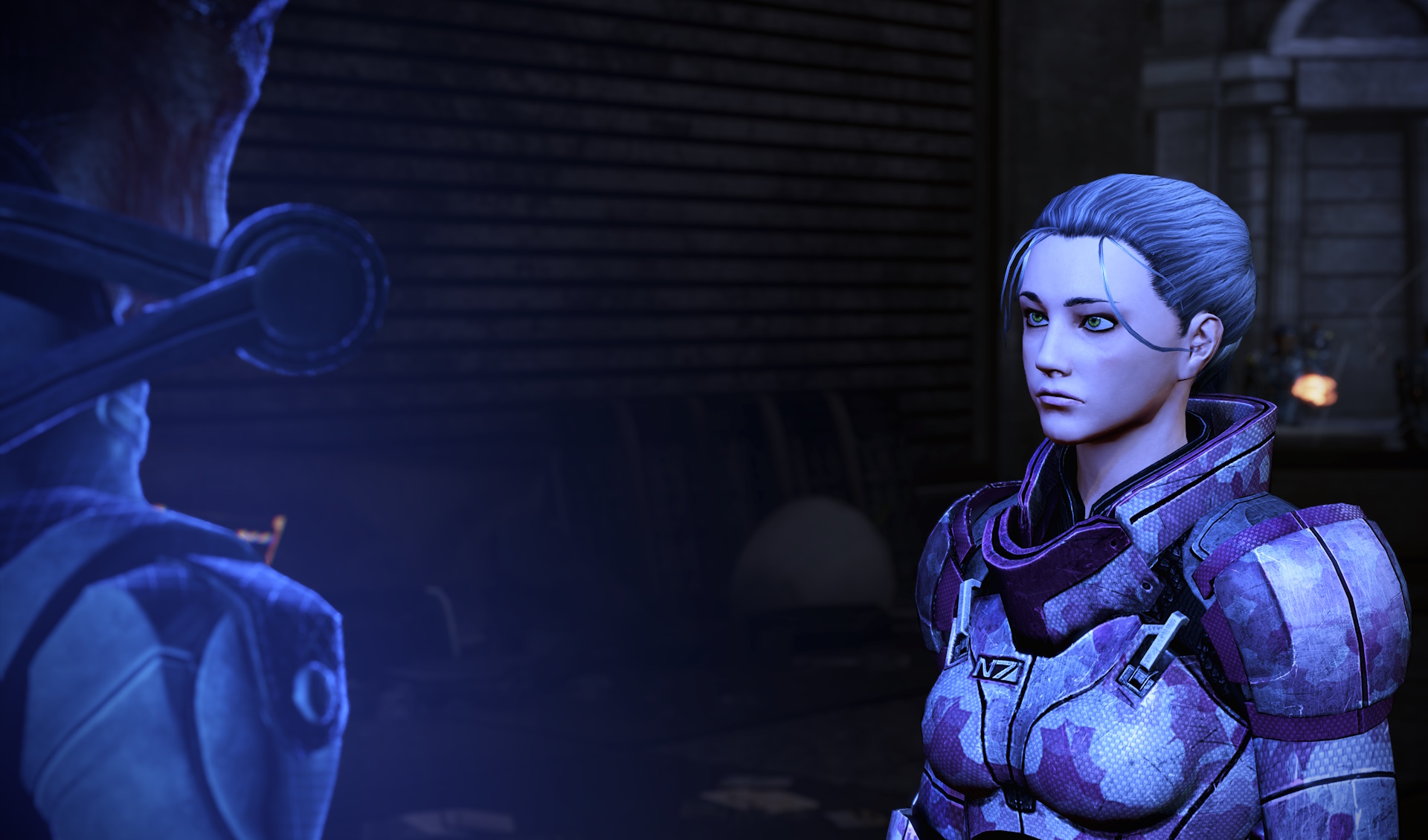
Which colour did you pick?
And to be honest with you, I’ve never been able to see a pathway to writing a new chapter for Mass Effect that wouldn’t have felt some combination of tacked-on, derivative, repetitive, underwhelming, fan-servicey, or just all-around disappointing.
This is a phenomenon that I’ve termed the “Disney sequel problem” – i.e. what comes *after* the “happily ever after” that most Disney movies end on? Very, very few stories get this right, because one of the basic, most fundamental building blocks of fiction is that stories have a beginning, a middle, and an end. Hack away at any one of those pillars and you risk the entire thing collapsing. That was the position Mass Effect found itself in after the end of the Reaper War, in my opinion; there really was no way to tell another story in this world that would’ve been anywhere close to the epic stakes of the first trilogy… but Electronic Arts demanded that BioWare do it anyway.
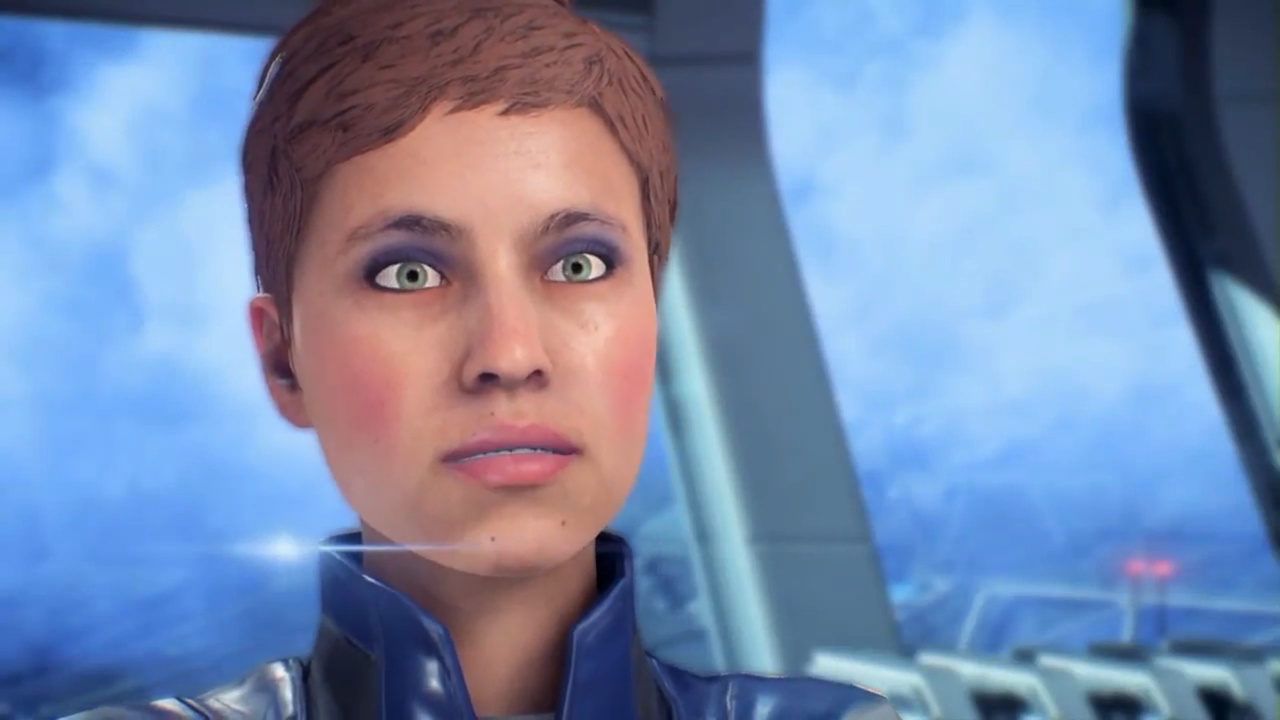
The result was Andromeda – a spin-off that aimed to take Mass Effect to a new setting, but with familiar alien races. The game was a disappointment, so BioWare was pushed back to making a direct sequel to Mass Effect 3.
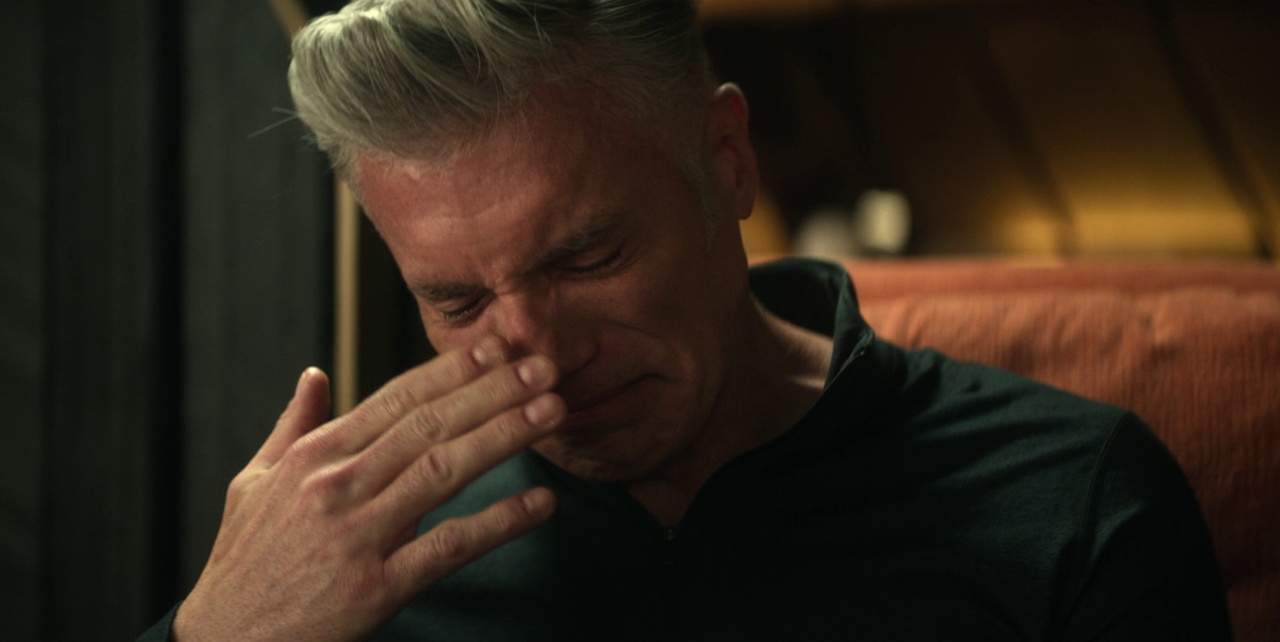
“My face is tired.”
Mass Effect is hardly the only popular entertainment series to find itself in this position, though.
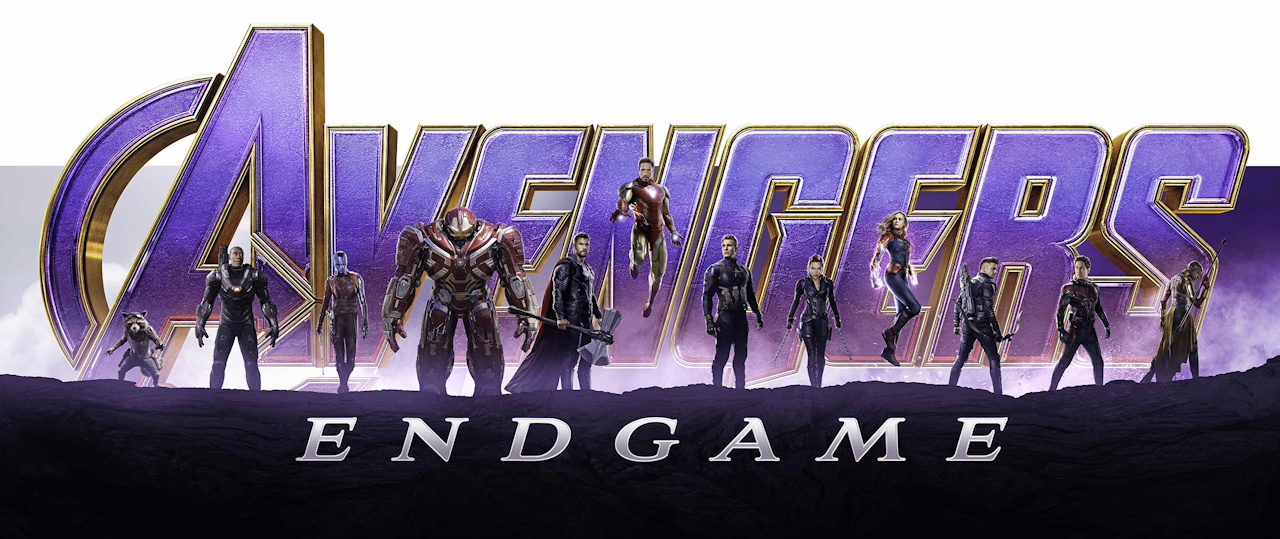
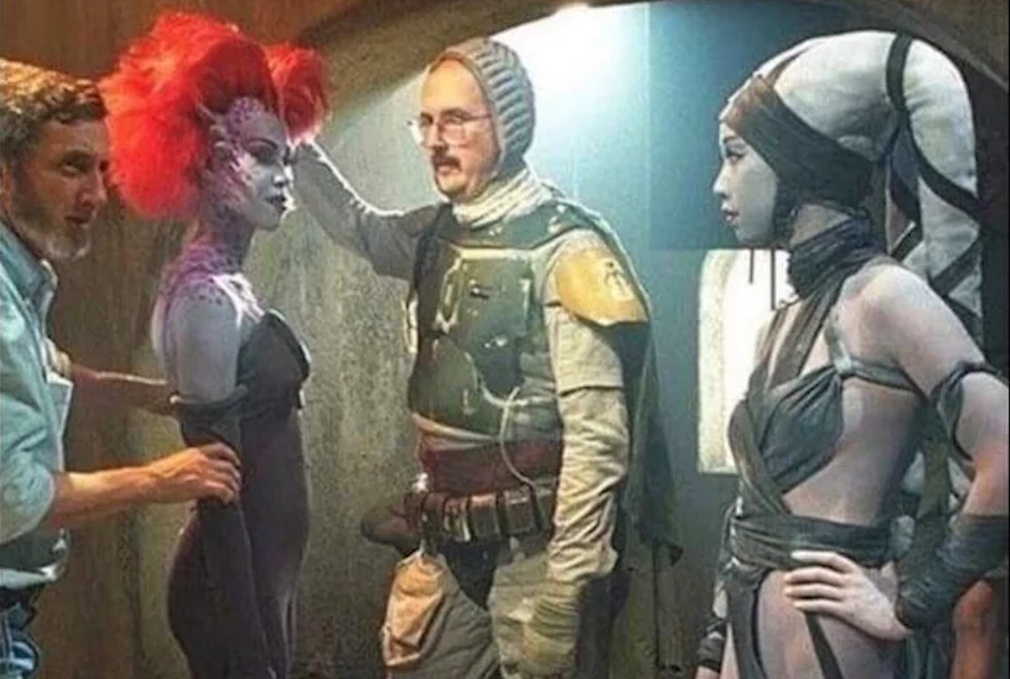
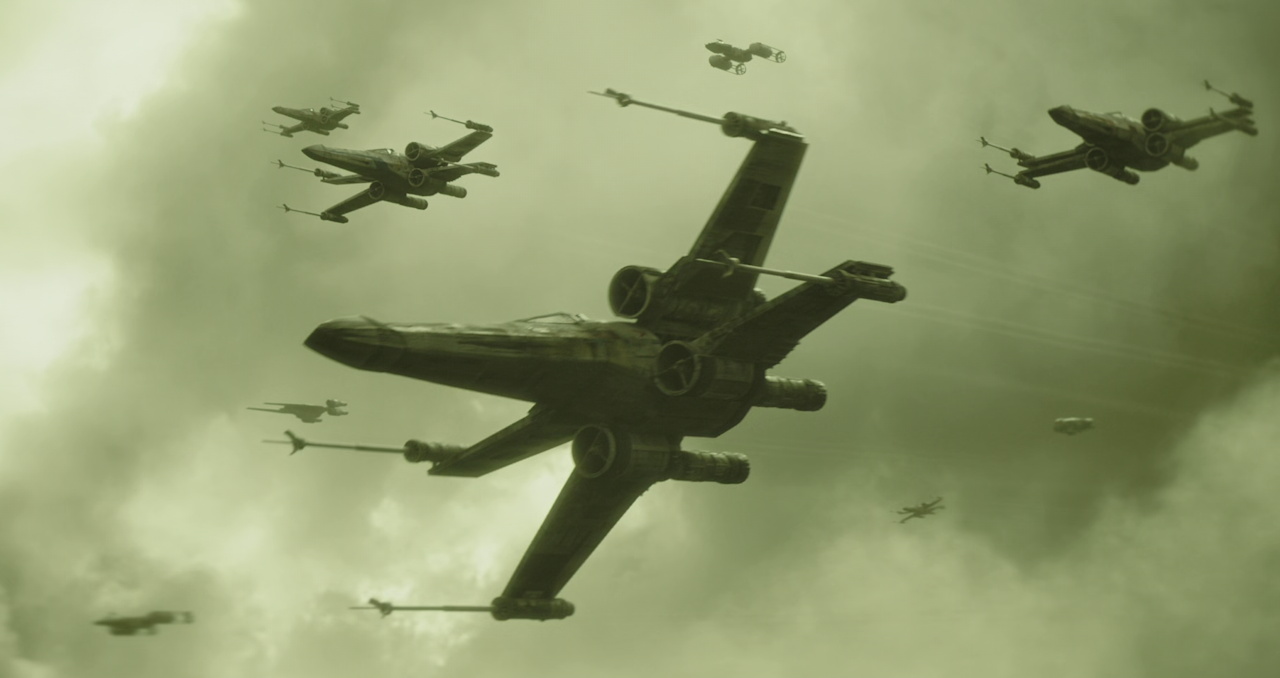
Look at Star Wars and Marvel – two of the biggest brands in the entire entertainment space. Star Wars’ sequel trilogy underwhelmed for various reasons, but a core part of the reason why those stories were never going to be as well-regarded as what came before is that the original story of Star Wars *should* have been over. The same with Marvel, which is now desperately bringing back former stars and resurrecting dead characters… all because no film since Avengers: Endgame has come close to living up to the stories that came before. With Marvel, it felt, for a long time, like Endgame was what every other story was slowly building towards; the ultimate coming-together of all the franchise’s heroes. And that, realistically, *should* have been the final part of the cinematic saga.
There are ways to tell new stories – or re-tell familiar stories – in a big fictional setting after the main event has concluded. But it depends on the nature of the setting and how closely connected it is to that first big story. The best way is probably to take the Andromeda approach – to tell a side-story that’s totally disconnected from the main event. But we saw how well that worked, eh?
Disney and Marvel have struggled to make a successful follow-up to Avengers: Endgame.
Sometimes, an author, filmmaker, or game developer might create a sequel story like this for genuinely good reasons – i.e. they truly felt there was another story in that world or with those characters that was worth telling or that needed to be told. Some of those stories work, some don’t – for the reasons we’ve already elaborated on – but at least there’s some artistic merit to them, in cases like that.
But then we come to the nakedly commercial sequels – the corporate-mandated stories that are conceived not because of any artistry or narrative vision, but because a corporation and its cowardly investors want to put their money into what feels like more of a sure thing and less of a risk. Established franchises have built-in audiences, at least some of whom will show up for the latest iteration. Try doing something new – even if it’s way better – and you miss out on those supposed guaranteed sales. That’s why a return to Mass Effect was coming, that’s why the Star Wars sequels were made, and that’s why Marvel is trying to recapture the magic of Endgame with the latest Avengers crossover film(s).
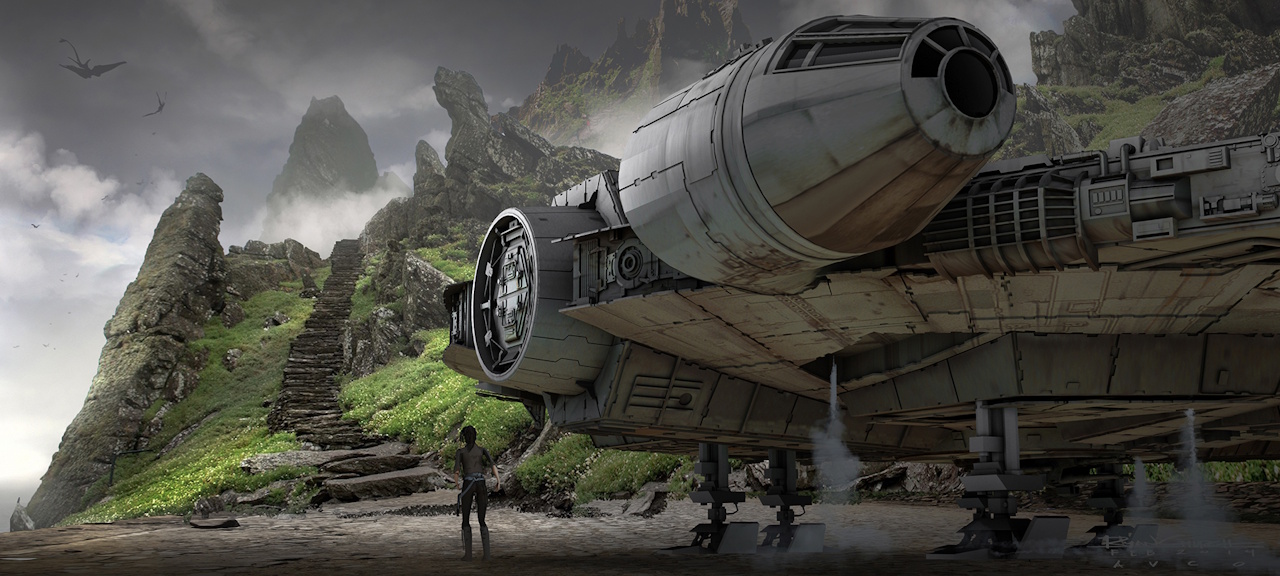
The Star Wars sequel trilogy exists for this very reason.
And you know what? *Audiences can tell the difference!*
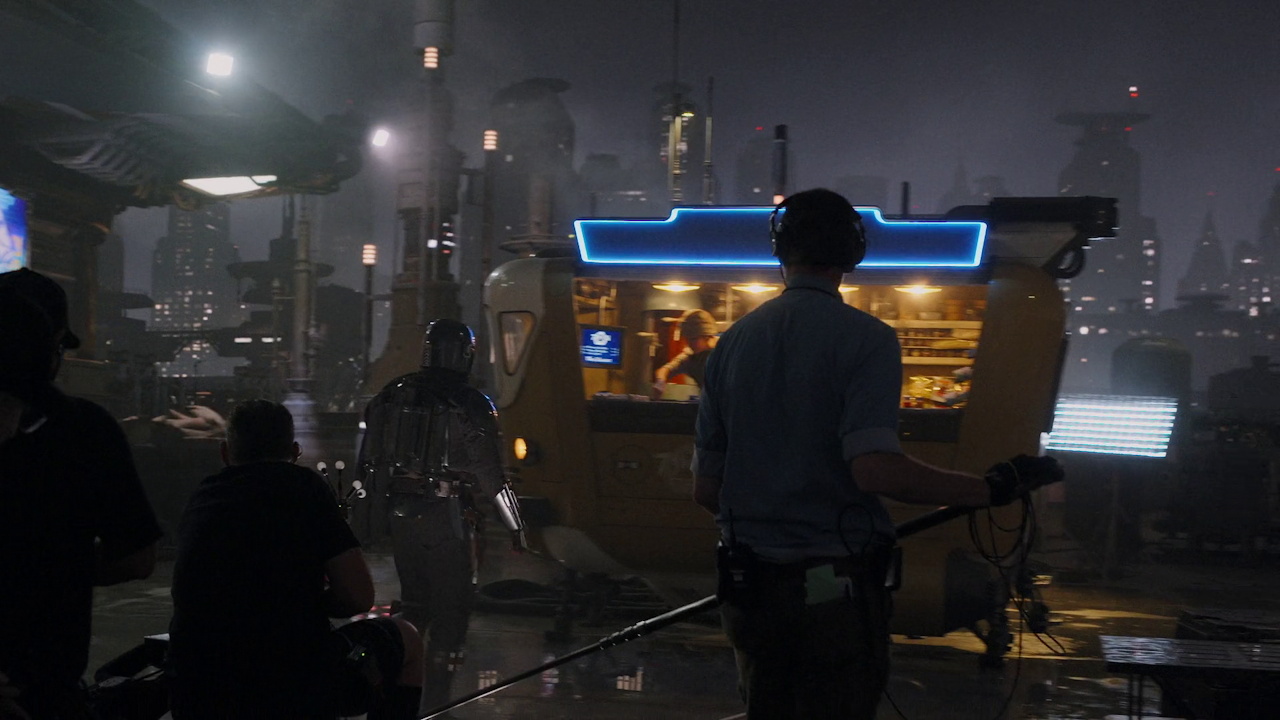
As the entertainment industry at large continues to consolidate more and more brands into the hands of fewer and fewer corporate owners, this is going to keep happening. Why would a mega-corporation greenlight a new story set in a brand-new universe when they could return to one that already has a fanbase? Worst case? You make a crap film or game that gets absolutely roasted by critics… but the fan community still shows up for it in droves. There are some exceptions to that – see The Mandalorian and Grogu over in the Star Wars franchise, for instance – but by and large, that’s the corporate approach.
That’s why BioWare was tapped to return to its two successful series – Dragon Age and Mass Effect – after the failure that was Anthem. Sure, EA could’ve trusted BioWare to try something new again, but those two properties felt… safe. Andromeda, despite its poor reception from critics and fans, more than made its money back for EA… which is more than can be said for Anthem.
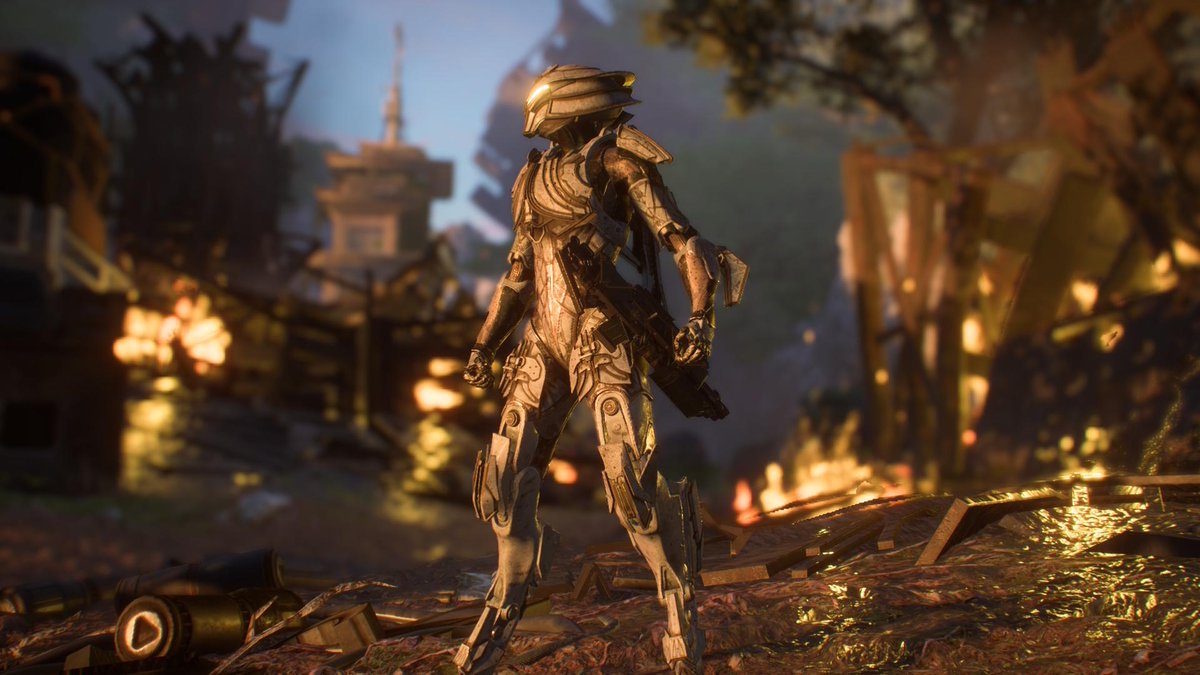
After Anthem flopped, BioWare was sent back to safer ground by its corporate overlords.
We are firmly in an era of corporate-mandated sequels, prequels, spin-offs, and reboots, and I really don’t see it ending any time soon. Some franchises may be better-suited to it than others, and there clearly are fictional worlds that are deep enough, rich enough, and with enough lore and backstories to sustain multiple projects, even after the “main” story arc has concluded. But in too many cases, these nakedly commercial returns to long-finished stories are just painfully obvious… and not very good.
As with many things in life, it’s not about being black-and-white, saying “sequels are universally bad,” or insisting that no story ever gets a follow-up or a return to its world. There’s a balance to be struck between wrapping up a story successfully and finding those rare properties that can sustain more stories and sequels. Too often, corporations get this wrong – and they get it wrong because they aren’t interested in art, or in any narrative value a project might have. They’re out to make as much money as possible *immediately* – and what happens next to a beloved franchise or to a completed story is entirely irrelevant.
It’s short-term thinking at its very worst.
No story can realistically be never-ending…
Moreover, this push to turn *every story* into a “forever franchise” which can be monetised indefinitely means that we’re losing the value in well-written endings. When every movie or game has a corporate requirement to leave the door ajar for a future spin-off or sequel, we lose the inherent value in one of the best parts of fiction itself: the ending. A well-written, well-timed, well-paced ending is the culmination of a story. It rewards readers, viewers, or players for the time they’ve invested in a fictional setting, concluding character arcs and narratives in a satisfying way. Endings matter… and trying to get rid of them to turn art into an infinite money-maker has already soiled multiple stories and franchises.
A good, well-written, and *conclusive* ending can be the very best part of a story. After everything our protagonist(s) went through over their adventures, getting to the end and beating the villain or uncovering the truth behind a mystery just feels inherently satisfying. But too often, we’re being deprived of that in order to tell tacked-on, wholly unnecessary follow-ups that have basically the same amount of artistic vision and merit as one of those direct-to-video Disney sequels.
Mass Effect 3 was the end of this story.
I would like to see genuine *boldness* back in the entertainment industry; a real willingness to let old stories come to their natural ends, and new ones created to take their place. Not every movie, TV show, book, or game can tolerate being turned into a franchise… and *that’s okay!* New stories can come along, and plenty of folks – myself included – still enjoy jumping from one story to another. Sure, I’m a big Star Trek fan… but Star Trek isn’t and has never been the *only* fictional world I care about. And many, many people are in the same position.
That doesn’t mean that every new story can or will succeed. We discussed BioWare’s Anthem a moment ago, but you could also point to films like Cutthroat Island and Rebel Moon, TV shows like Supertrain and Terra Nova, or games like Concord and even another of my beloved titles: Shenmue. But failures and flops happen… and with today’s mega-corporations having so much money and so many investors, they can sustain a miss or two here and there. Isn’t trying something new – and potentially establishing the “next big thing” in the process – a better use of time and money than trying to squeeze every last penny out of a story that’s already come to its natural end?
I’d argue that it is.
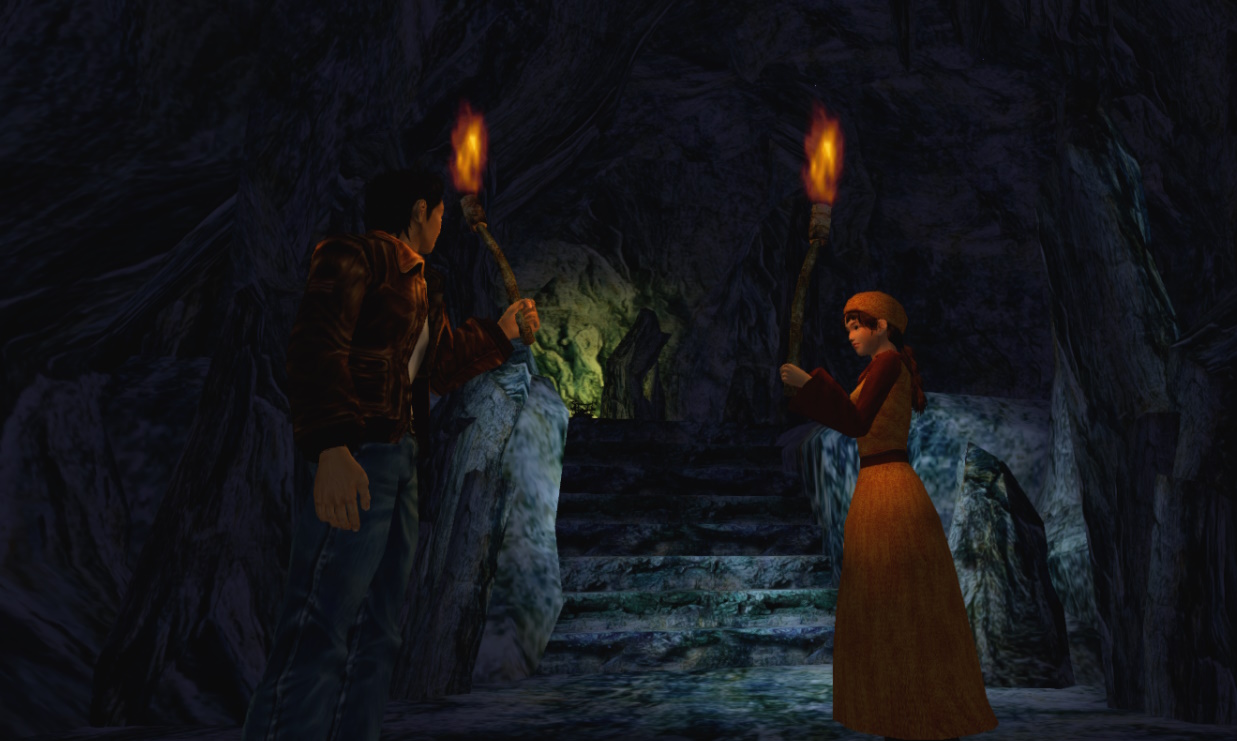
Shenmue was a brand-new story that didn’t get a chance to connect with a wider audience.
Titles that are deliberately more episodic in nature can last longer than those with a single, connected story. Star Trek is a great example: as long as you can invent new aliens, new planets, and new space weirdness to encounter, you can make an exploration-focused Star Trek show (or franchise) that persists for a long time. But things like Star Wars and Mass Effect don’t work that way; there’s one story, one villain or set of villains, and when it’s over… it’s over. Returning to a setting like that for different kinds of projects might be possible if there’s enough support for it – and it’s also possible to reimagine the story for a different medium, as Mass Effect aimed to do with its TV adaptation. But a direct sequel just… I don’t see how it was ever going to work.
The Star Wars sequel trilogy is a case in point. There *were* questions that fans had about what would come next for Luke, Han, and Leia after the events of Return of the Jedi. But, having seen both the low-quality fan-fiction of the old Expanded Universe *and* Disney’s sequel trilogy… it’s pretty clear that tacking on a new story after the events of the original films was impossible to do in a way that felt natural. The Sith were gone, the Rebels were victorious… where do you go after that?
Somehow Star Wars returned…
I think we all have an innate understanding of where a story should end. That’s why you often hear criticisms of films that were too long, or TV shows that outstayed their welcomes by producing one season too many. Some super-fans might *never* want their favourite franchise to end, but even within fan communities, we see plenty of people willing and able to criticise unnecessary sequels, continuations, or epilogues that don’t fit with what came before. That’s why franchises like Star Wars, Marvel, and others we’ve mentioned have struggled to hit the heights of their earlier incarnations, both critically and commercially.
I’d always rather a story ended leaving me wanting more than dragged on too long and left me thinking “god, I wish this ended ages ago.” Whether it’s a film, a book, a game, or a TV show, every story will eventually reach a natural end – and it should be allowed to. Endings aren’t a flaw, they’re a normal part of storytelling. And when handled properly, they can be the very best part of a good story. Some super-fans who wish they could live inside a fictional universe might never be satisfied with that, and might want nothing more than to see their favourite franchise continue indefinitely… but most people aren’t in that category.
This show went on and on and on… for fifteen years.
As a final point, corporations insisting that every story must be written in such a way as to allow for spin-offs and sequels, and tacking on totally unnecessary sequels to stories that are already complete, doesn’t just rob us of good, enjoyable endings… it robs us of new experiences, too. How many new films, games, books, and TV shows might’ve been created over the last twenty-plus years if this doubling- and tripling-down on existing IP hadn’t happened? If Halo had been allowed to end after Halo 3 or Halo: Reach, what other sci-fi franchises or shooters could’ve taken its place? If Disney hadn’t tried to buy itself an infinite money printer with Star Wars, might someone there have invented a new sci-fi universe?
I can’t even conceive of the potentially wonderful stories being created by passionate, talented folks that aren’t even getting a moment’s consideration because of this insistence on sequels and “forever franchises,” and it’s really, truly sad. I’m a big Trekkie, sure, but I’m always going to be open to new sci-fi, fantasy, and other kinds of stories… if anyone could be brave enough to give the green light to that kind of project. Some of those stories might go on to be my next big fandom, and could spawn fan communities that will persist for years. But no one at any of the fewer and fewer entertainment industry mega-corps is willing to take a slightly risky bet. Even though they all have the money to do so safely and securely.
This is exactly how I imagine most corporate executives and investors…
It’s through that lens that I always saw Mass Effect 4′s existence… and that’s why I can put my hand on my heart and say I’m not upset by its cancellation. Maybe someone at the now-defunct BioWare did have a genuinely good idea for where to take the story… but it’s way more likely, in my opinion, that this was little more than a corporate-mandated sequel, one that would’ve been painfully obvious in how commercial it was, and one that simply wouldn’t have been able to add *anything* meaningful to the world of Mass Effect or to the legacy of its original trilogy. We can be sad for the developers at BioWare who are losing their jobs, and we should *never* applaud a corporation (especially one like Electronic Arts) closing down a studio. But in terms of the cancelled game that we now won’t get to see? Honestly… I doubt we’re missing much.
So that’s all for today.
This piece wasn’t really about Mass Effect, and I’ve been meaning, for a long time, to talk about the importance of narratives coming to a natural end and the way in which “forever franchises” can end up soiling a good ending. The cancellation of Mass Effect 4 just provided me with an opportunity to get stuck into this topic.
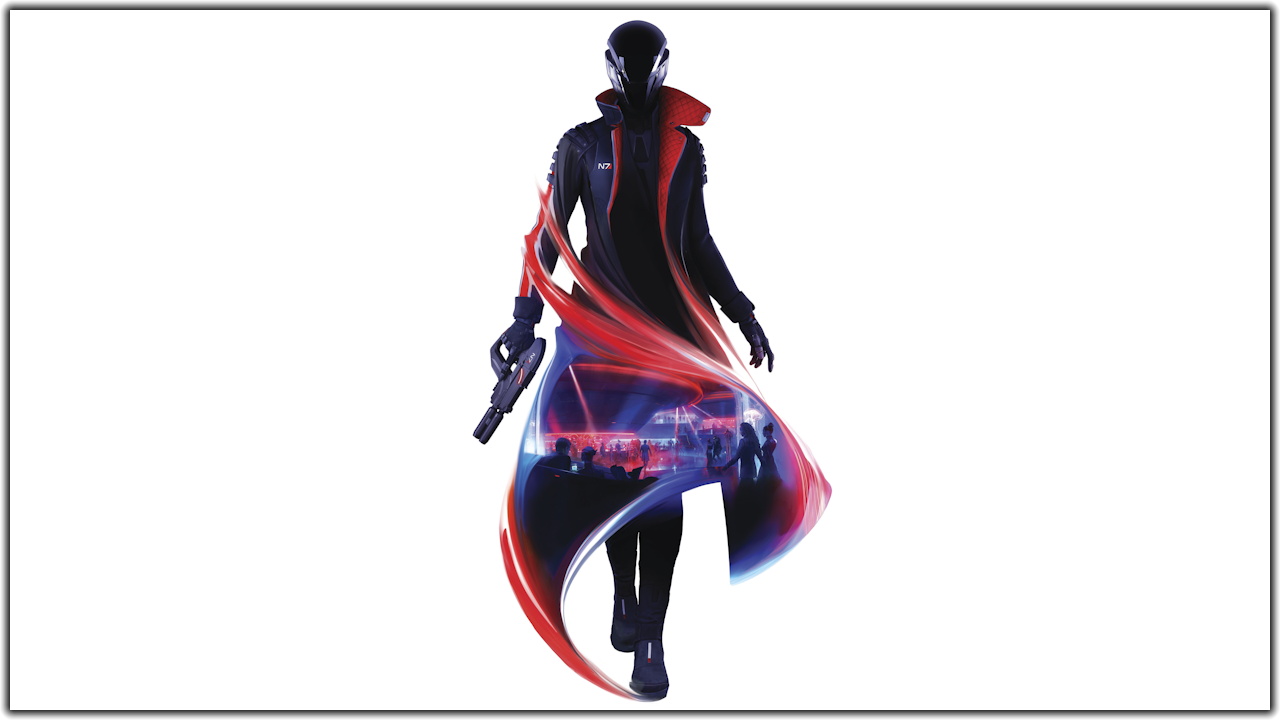
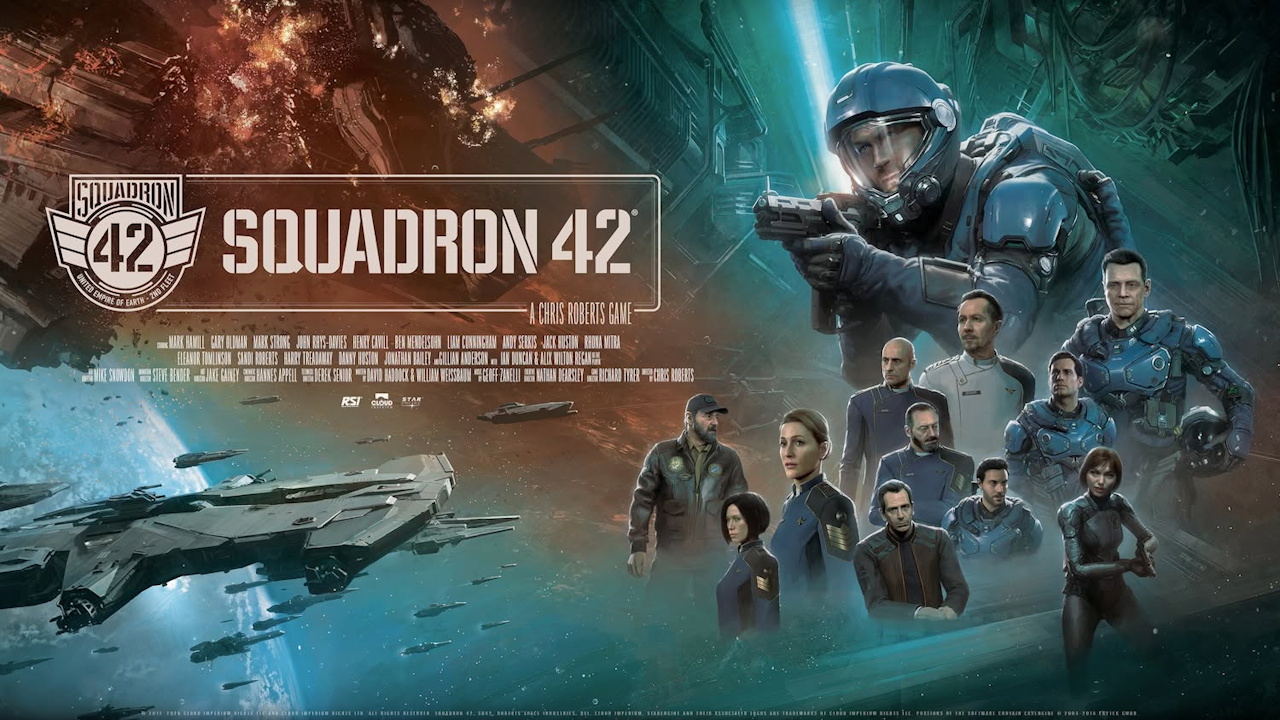
The final piece of promotional artwork released for Mass Effect 4 before its cancellation.
On the subject of Mass Effect, though, here’s what I’d say: I doubt that Electronic Arts will sit on the IP forever and do nothing with it. The next console generation could be an opportunity to do another Legendary Edition-type of remaster, though I hope it would be a more *substantial* remaster this time around! I haven’t heard whether the TV spin-off/adaptation has been similarly cancelled, so that could be a way for Mass Effect to continue in some form. At its peak, Mass Effect was a lot of fun… but it was also a story with a very definitive conclusion. Tacking on an unnecessary sequel never seemed right – so I do not lament this project’s cancellation in the slightest.
Thanks for joining me today. I know that a game’s cancellation is never going to be a *fun* subject, and I hope I didn’t come across as being too negative. But I thought this moment made for an interesting opportunity to discuss the failures of these kinds of unnecessary sequels, and why every story deserves a good, conclusive ending.
All titles and properties discussed above are the copyright of their respective developers, broadcasters, distributors, publishers, etc. This article contains the thoughts and opinions of one person only and is not intended to cause any offence.
Spoiler Warning: Beware of spoilers for the Star Trek franchise.
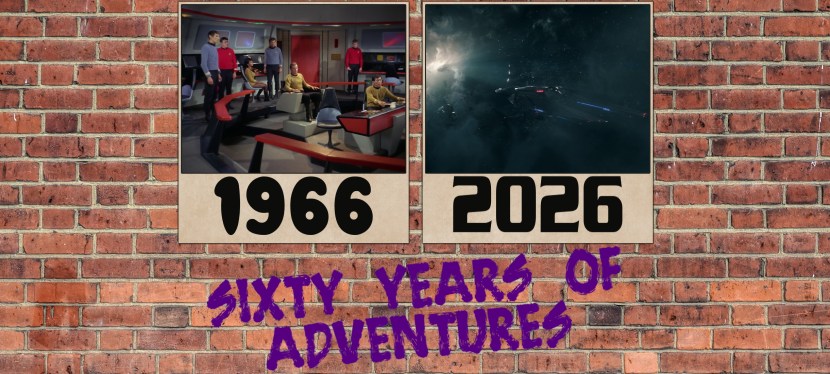
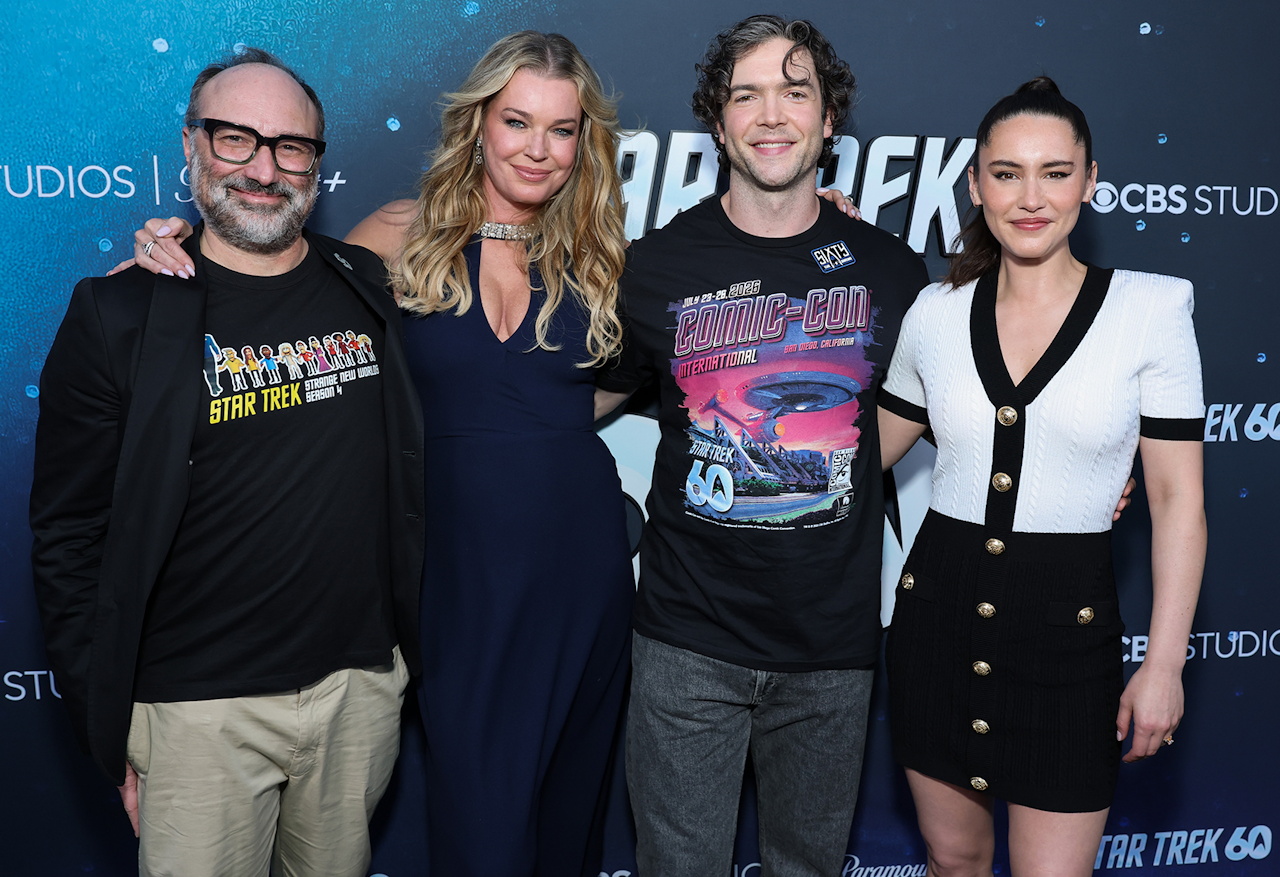
If you didn’t already know, 2026 marks the sixtieth anniversary of the Star Trek franchise! I wrote a piece to mark the occasion on the actual anniversary last month (click or tap here to check it out if you missed it!), but I’m still in a celebratory mood!
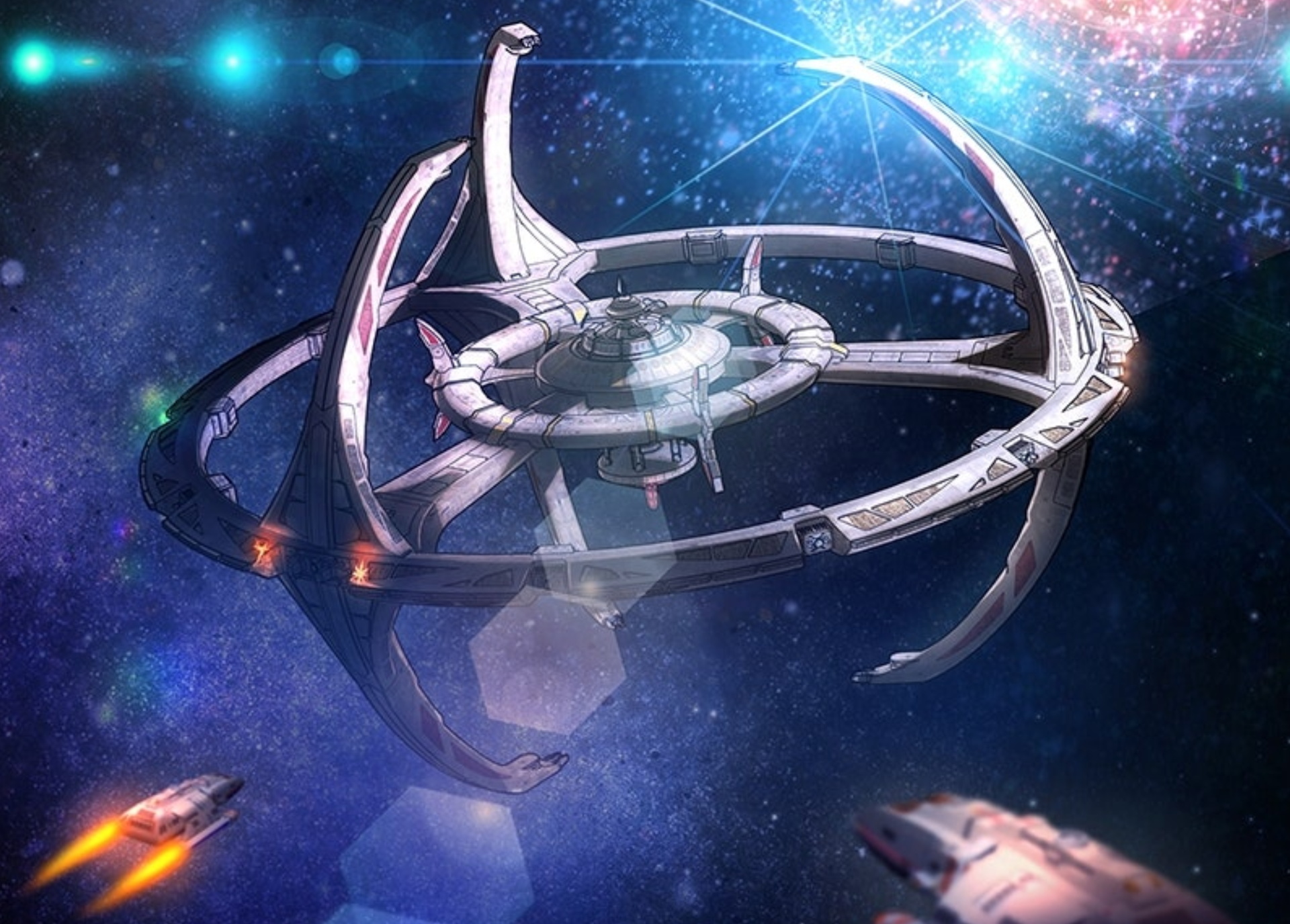
What I’m doing today is… well, exactly as the title of this piece implies! I’ve chosen one Star Trek story from every year of the franchise’s life – from the beginnings in 1966 all the way through to 2026! These aren’t necessarily my “top sixty” favourite Star Trek stories… some years are quite fallow without much going on, and the Star Trek franchise had two long-ish spells where there wasn’t much to choose from at all. But I thought it could be fun to examine some of the books, comics, and video games from Star Trek’s “lost years”, as well as talk about classic episodes and movies!
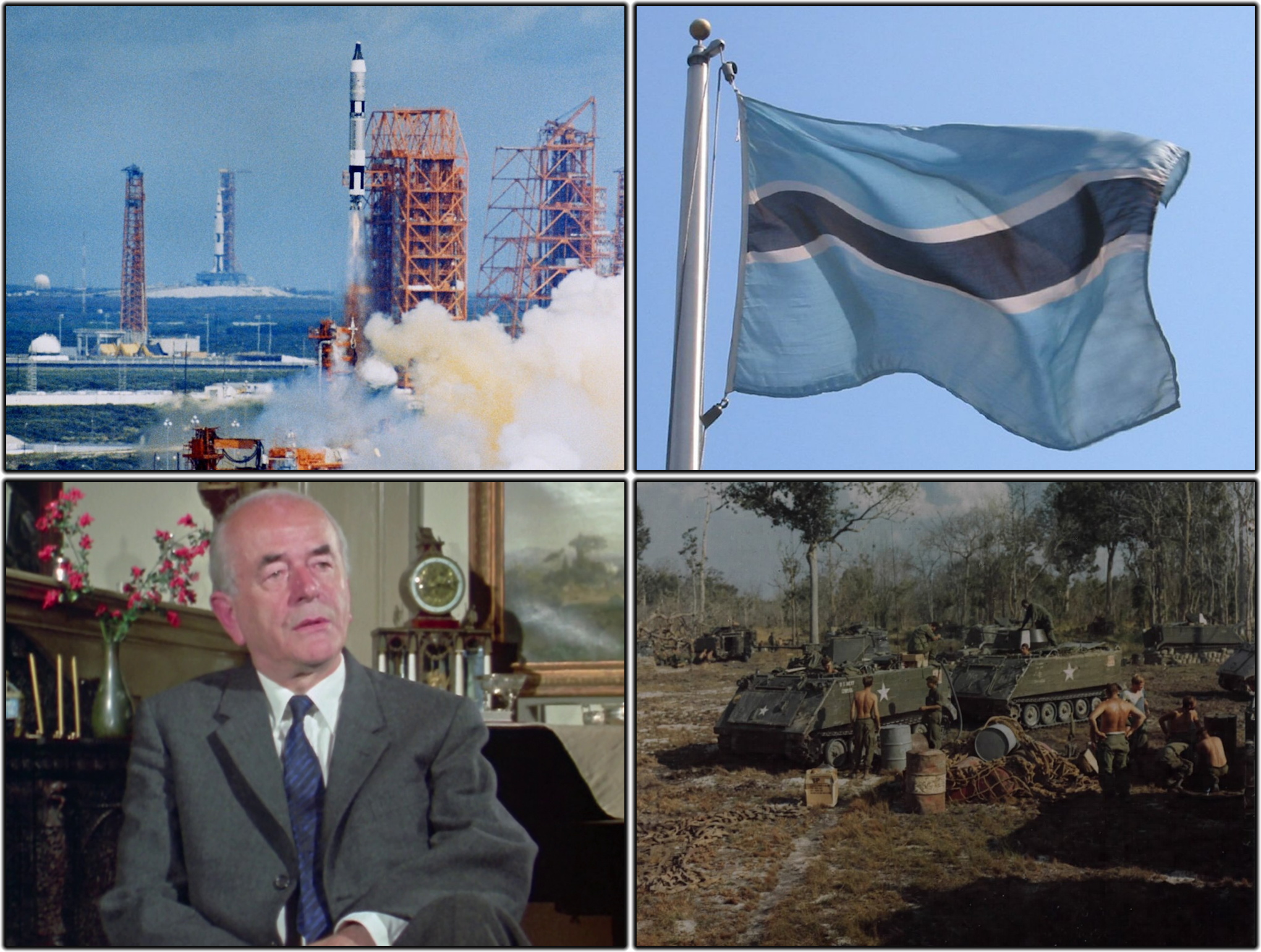
Some other events from September 1966 (the month Star Trek premiered). Clockwise from top left: Gemini 11 launches, Botswana becomes an independent country, Operation Sunset Beach takes place in the Vietnam War, and Nazi minister Albert Speer is released from prison.
If that sounds like fun, then you and I are on the same page! But before we get stuck in, I have a couple of important caveats.
Firstly, all of this is just one old Trekkie’s *subjective, not objective* opinion. If we disagree about what makes for a good or fun Star Trek story, that’s okay! There’s plenty of room within the fan community for differences of opinion and polite disagreement.
Secondly, I haven’t read all that many Star Trek books or comics, I haven’t played all of the games, and I can’t even say that I’ve watched every episode any more, either! Star Trek kinda got oversaturated in the 2020s, so I still need to get caught up on the latter parts of Lower Decks and Prodigy. Because of the aforementioned “lost years” in the 1970s and the 2000s/2010s, that might mean we have to pick a couple of stories that I’m less familiar with. But I’ll do my best with what’s available!
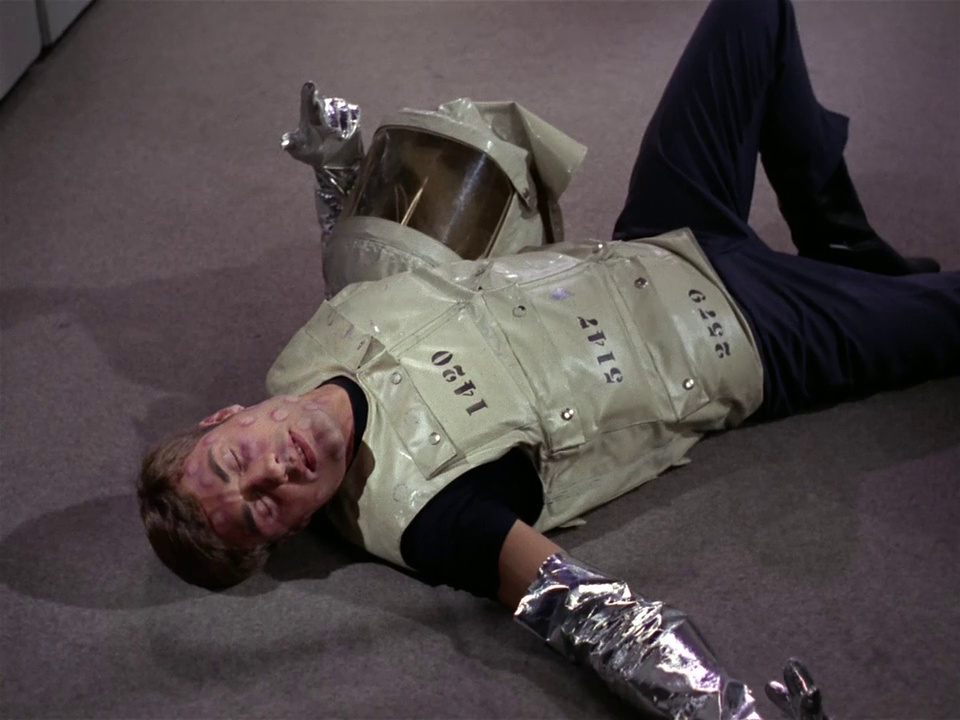
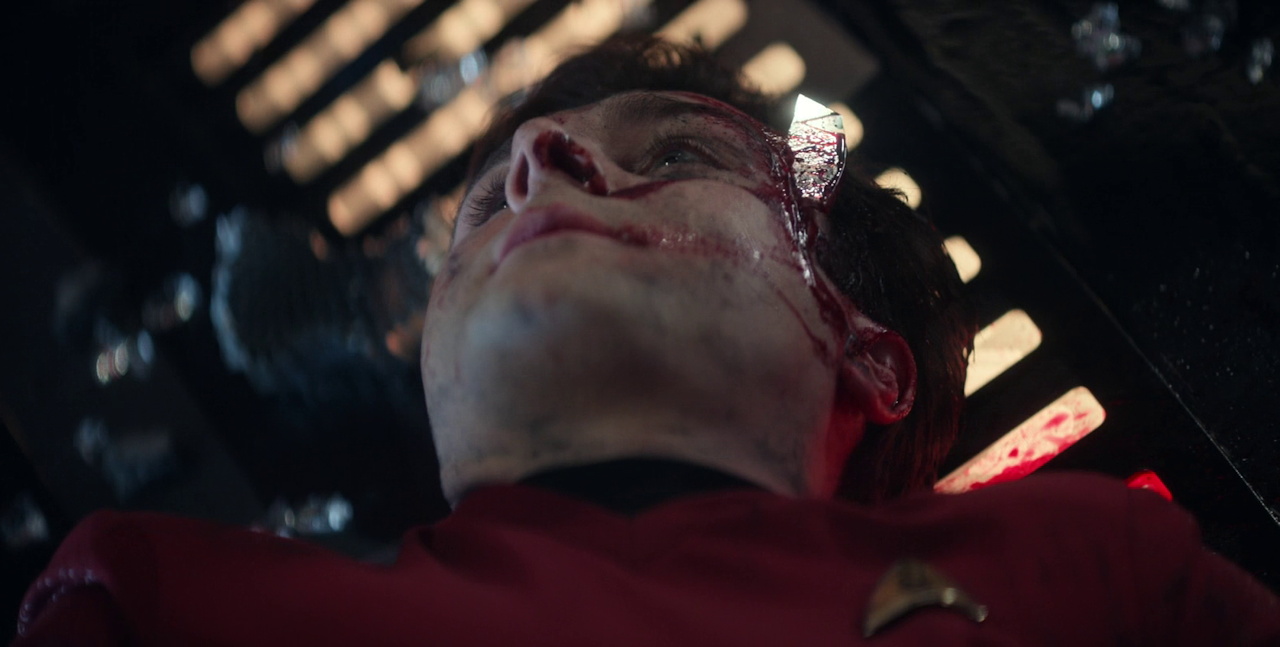
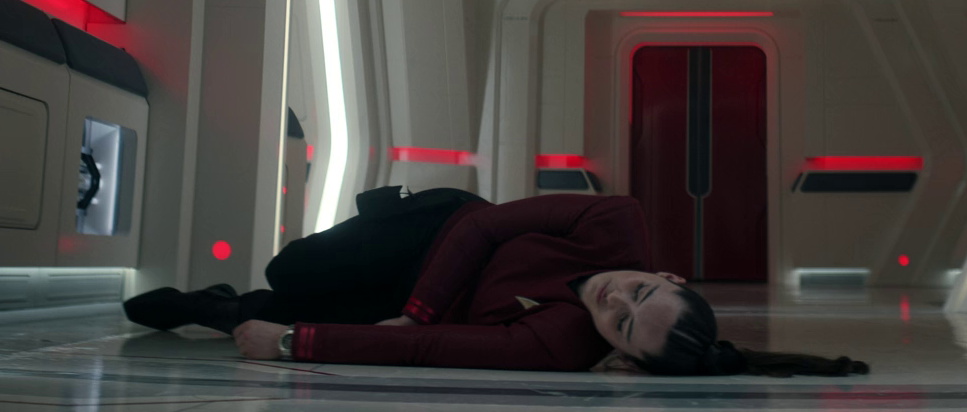
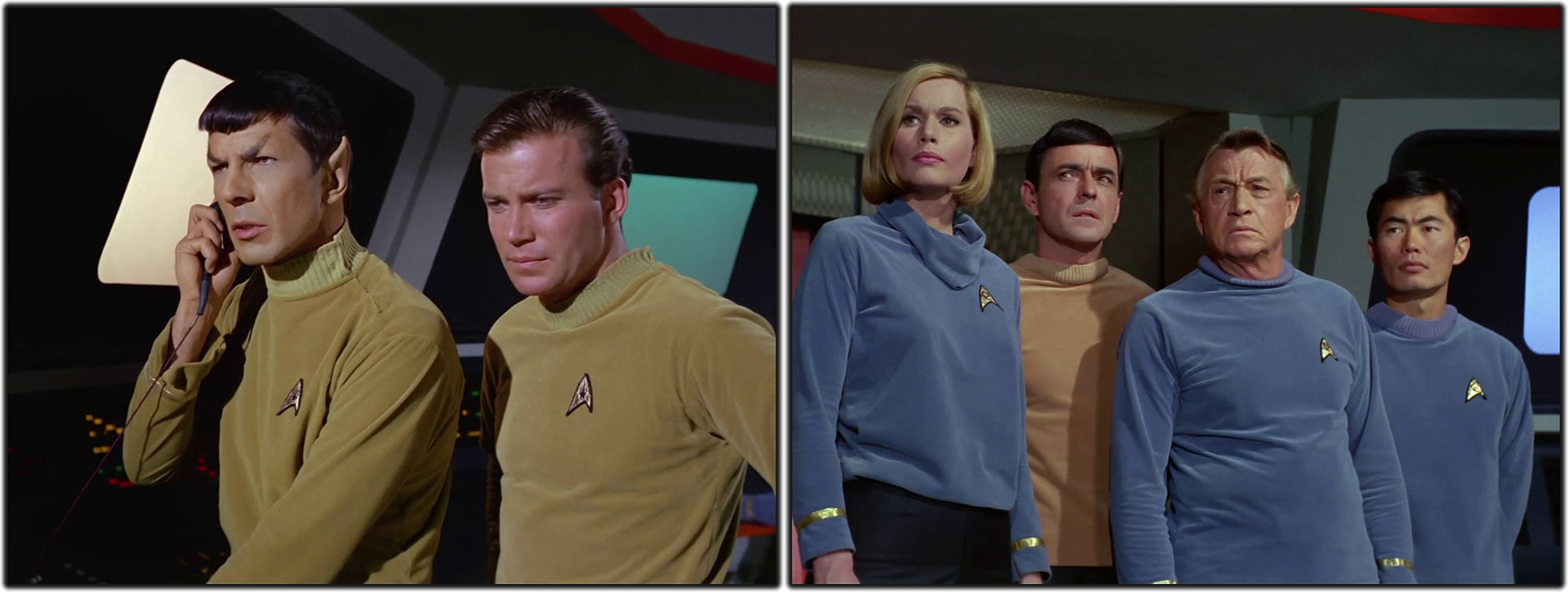
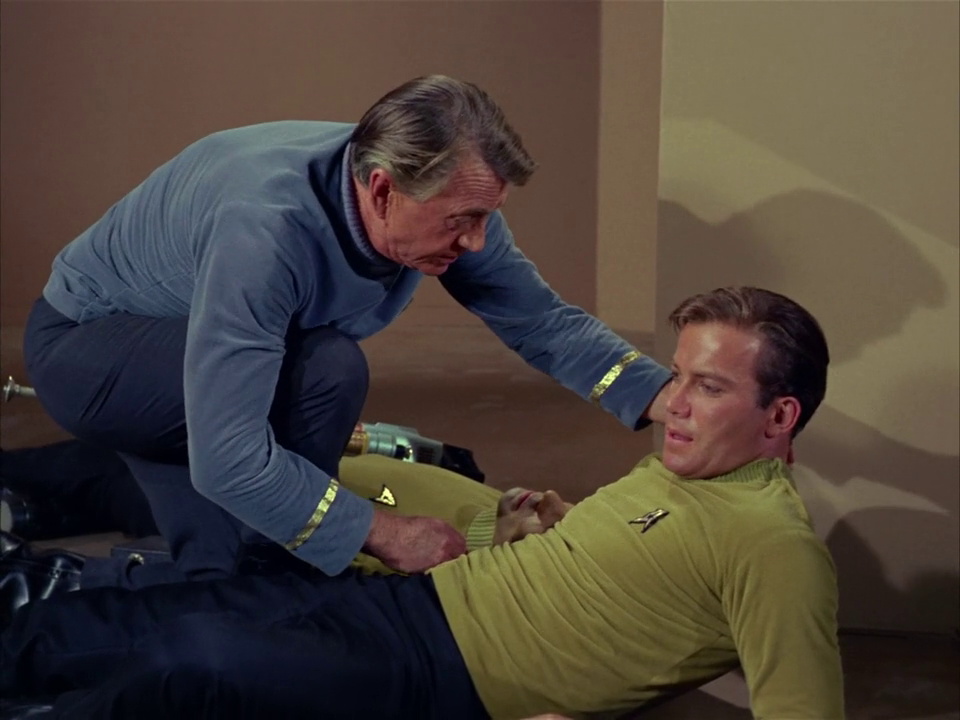
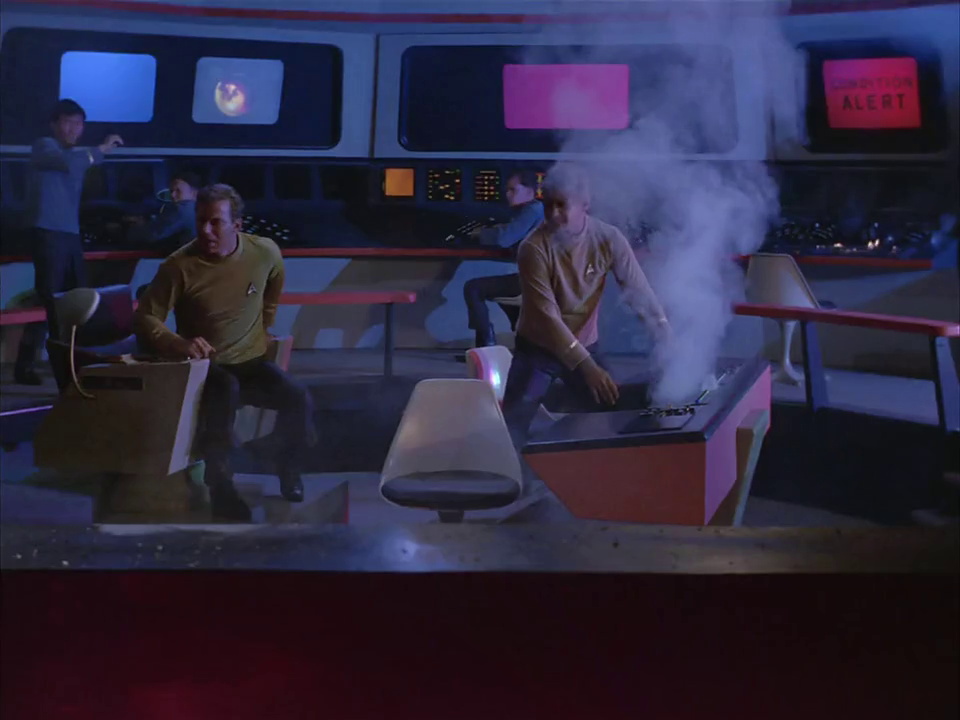
A dead “redshirt” in The Man Trap, which was the first-ever episode of Star Trek to be broadcast.
I’m only going to write one short paragraph for each story; there are sixty, after all, and I don’t want this piece to get too long to read comfortably. All dates/years referenced are based on the first airdate/publication date/release date for a given episode, film, book, etc. – which, in almost every case, is the *American* one! I’m based in the UK, and I know a lot of folks from all over the world are huge Trekkies (and visitors to my website – hi!), but we’re taking the first date that each production was available for this list.
Finally, my thanks go out to everyone at “Memory Alpha” and “Memory Beta” – the two Star Trek wiki projects – for how well-organised they’ve been with chronologing all of Star Trek’s various releases. That was such a big help to me over the course of writing this piece.
Now that all of that’s out of the way… let’s get started!
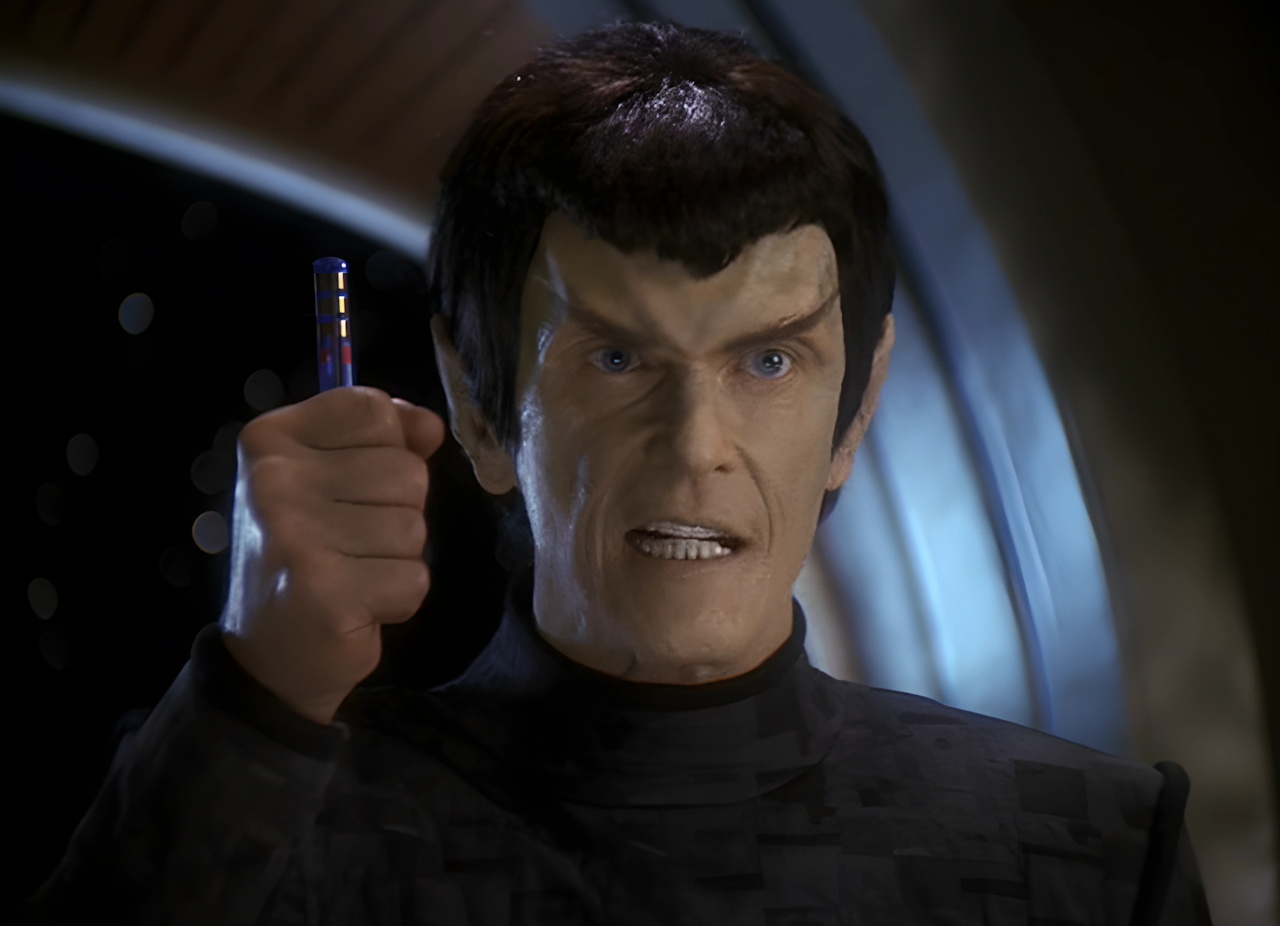
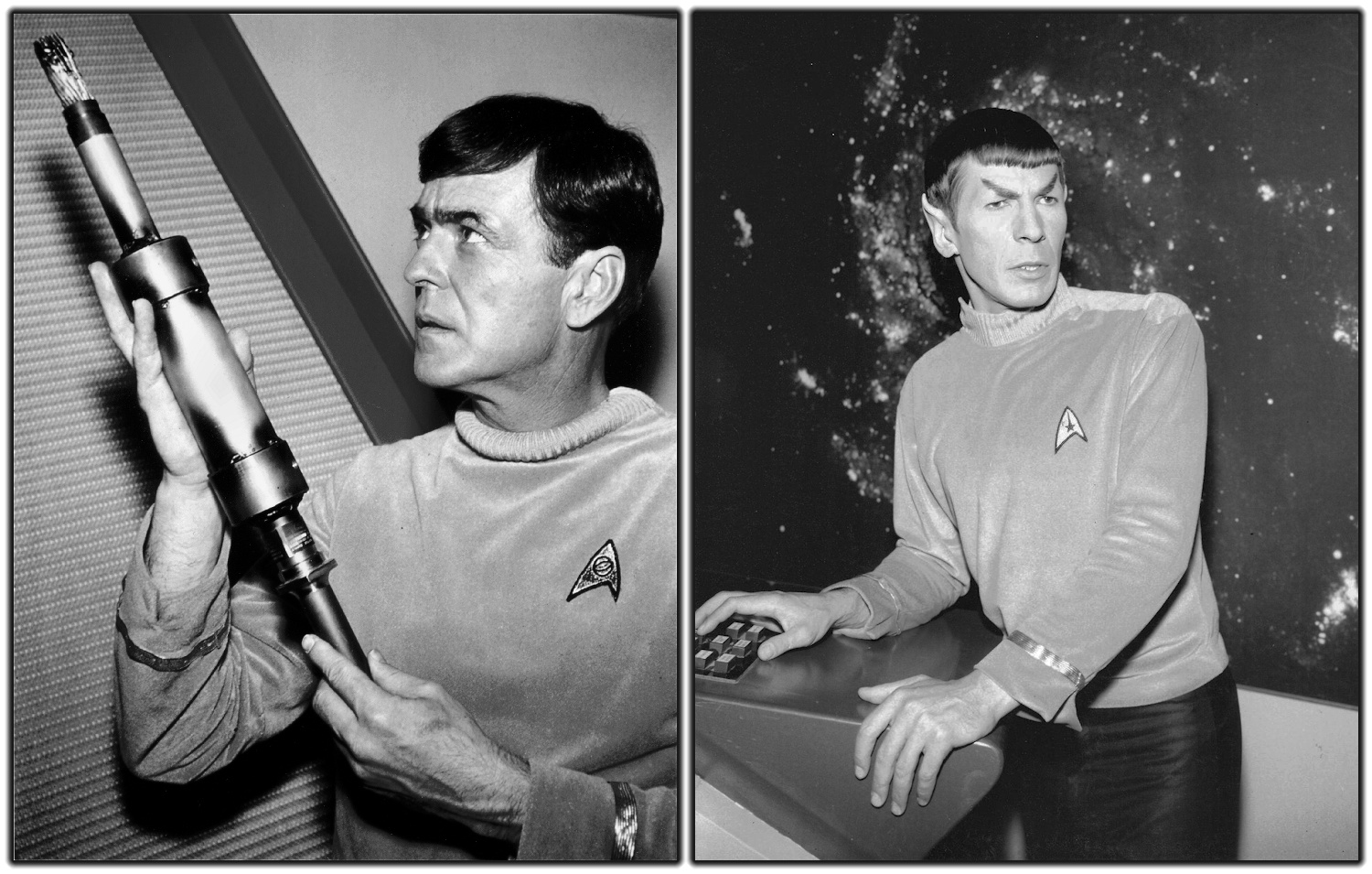
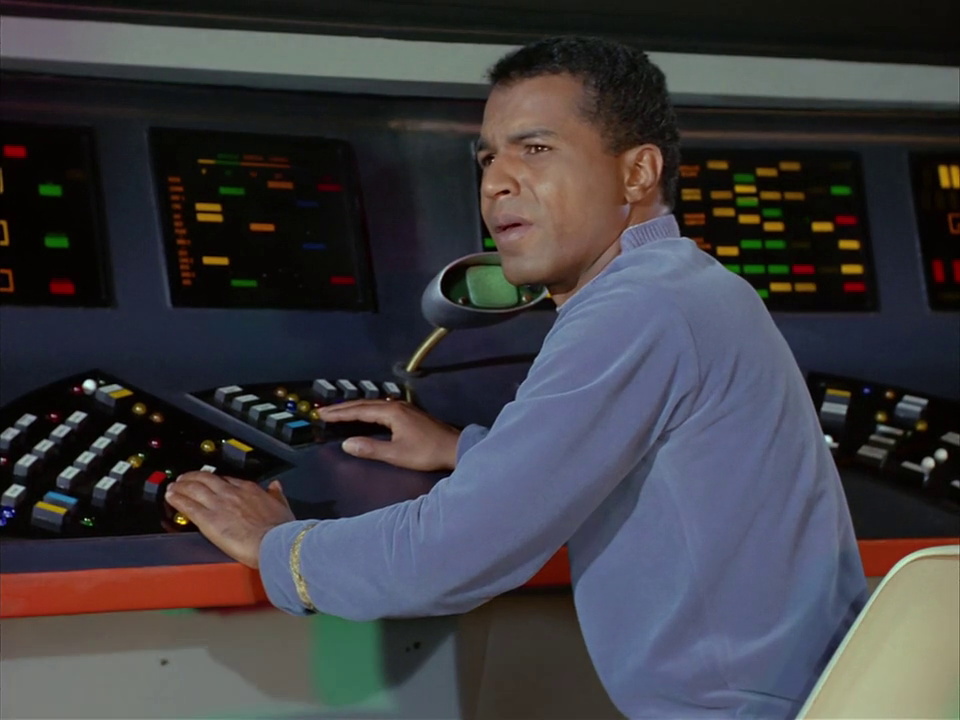
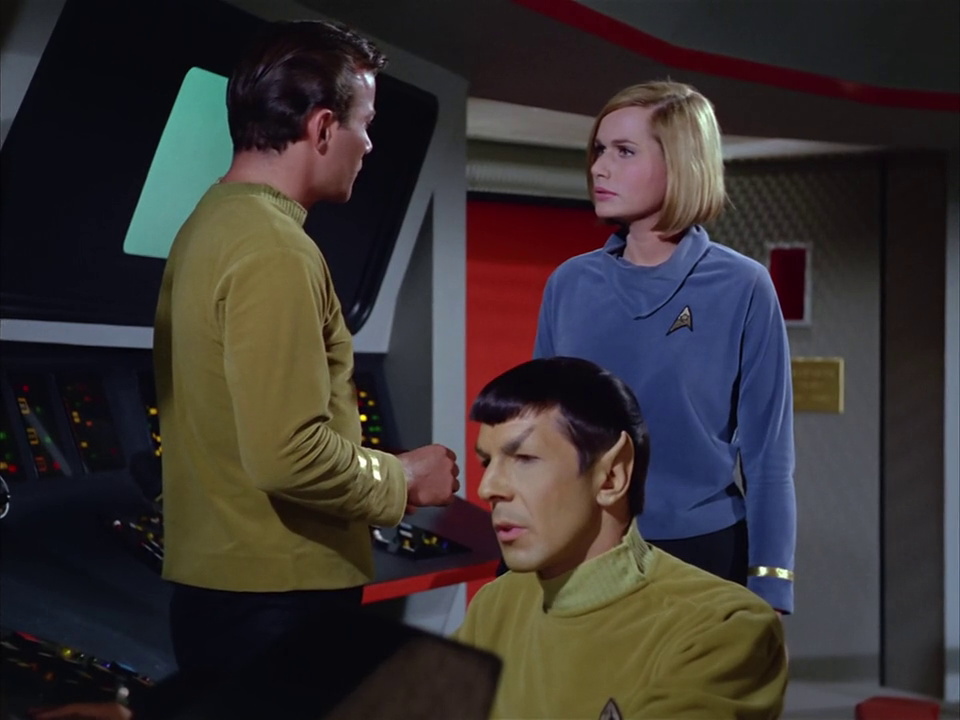
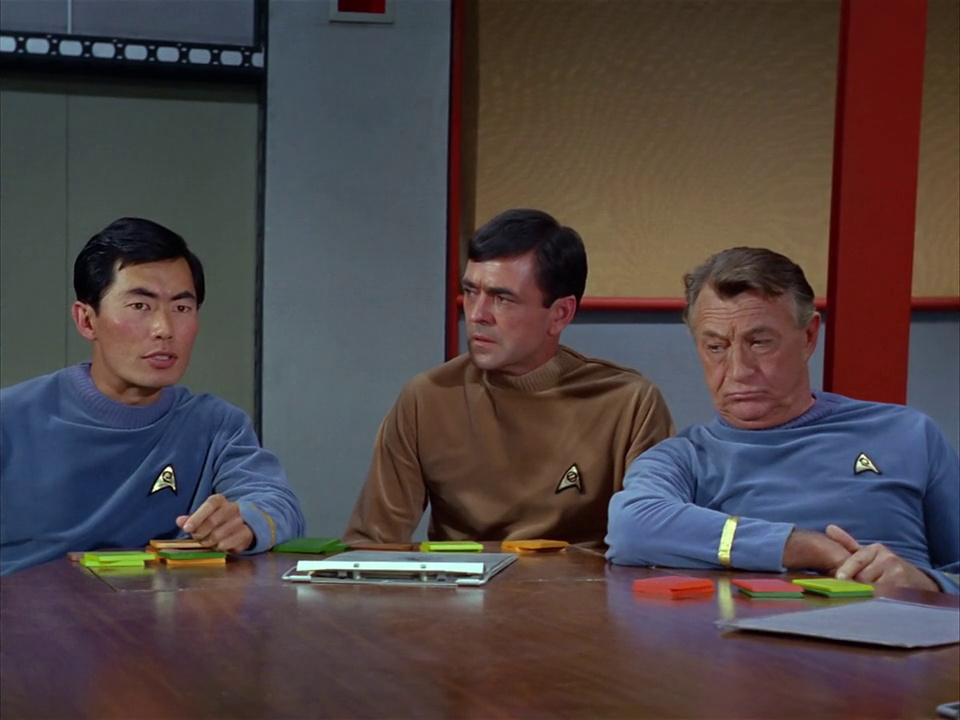
1966: Balance of Terror
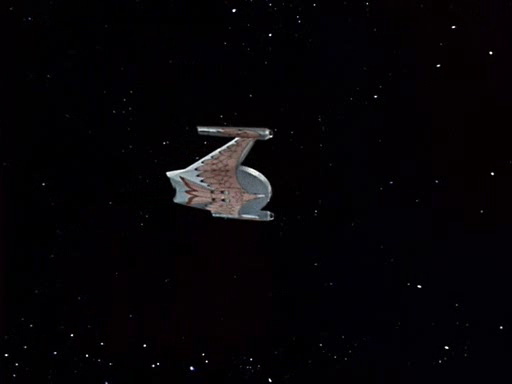
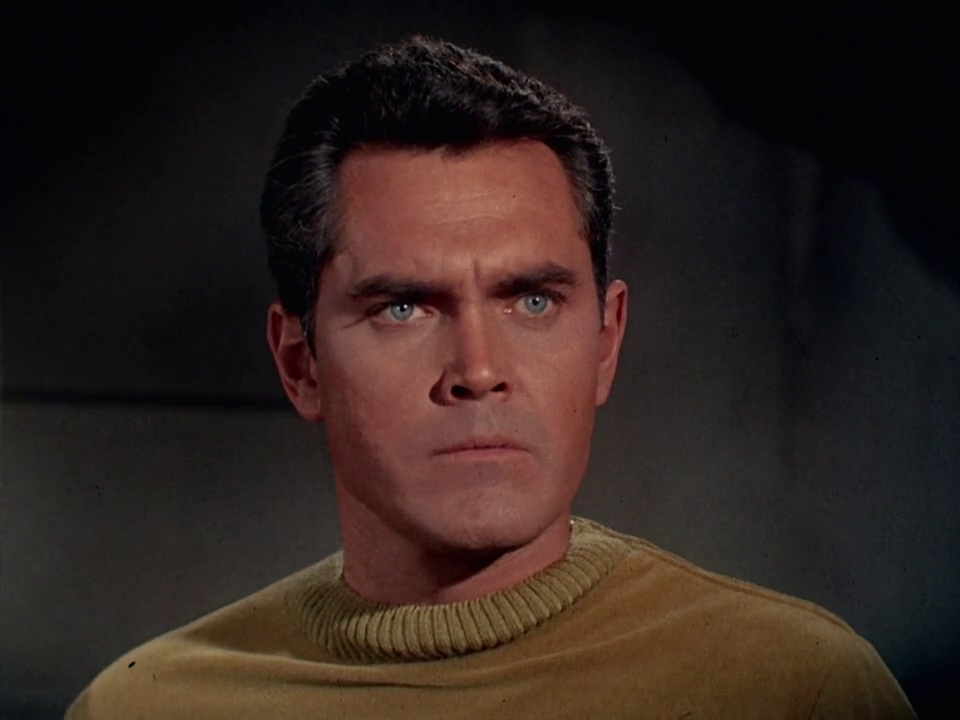
Of the fifteen TOS Season 1 episodes to air in 1966, I’m choosing Balance of Terror on this occasion. The episode introduces the Romulans – and Spock’s possible connection to them. It also harkens back to submarine films from World War II, with the cloaked Romulan Bird-of-Prey being difficult for Kirk and the crew to track down and stop. One character in the episode – Lieutenant Stiles – shows how even 23rd Century enlightened humans can have biases and xenophobic traits, something Captain Kirk would push back on in a key sequence. An iconic episode that introduced a faction that would be incredibly important to the wider franchise.
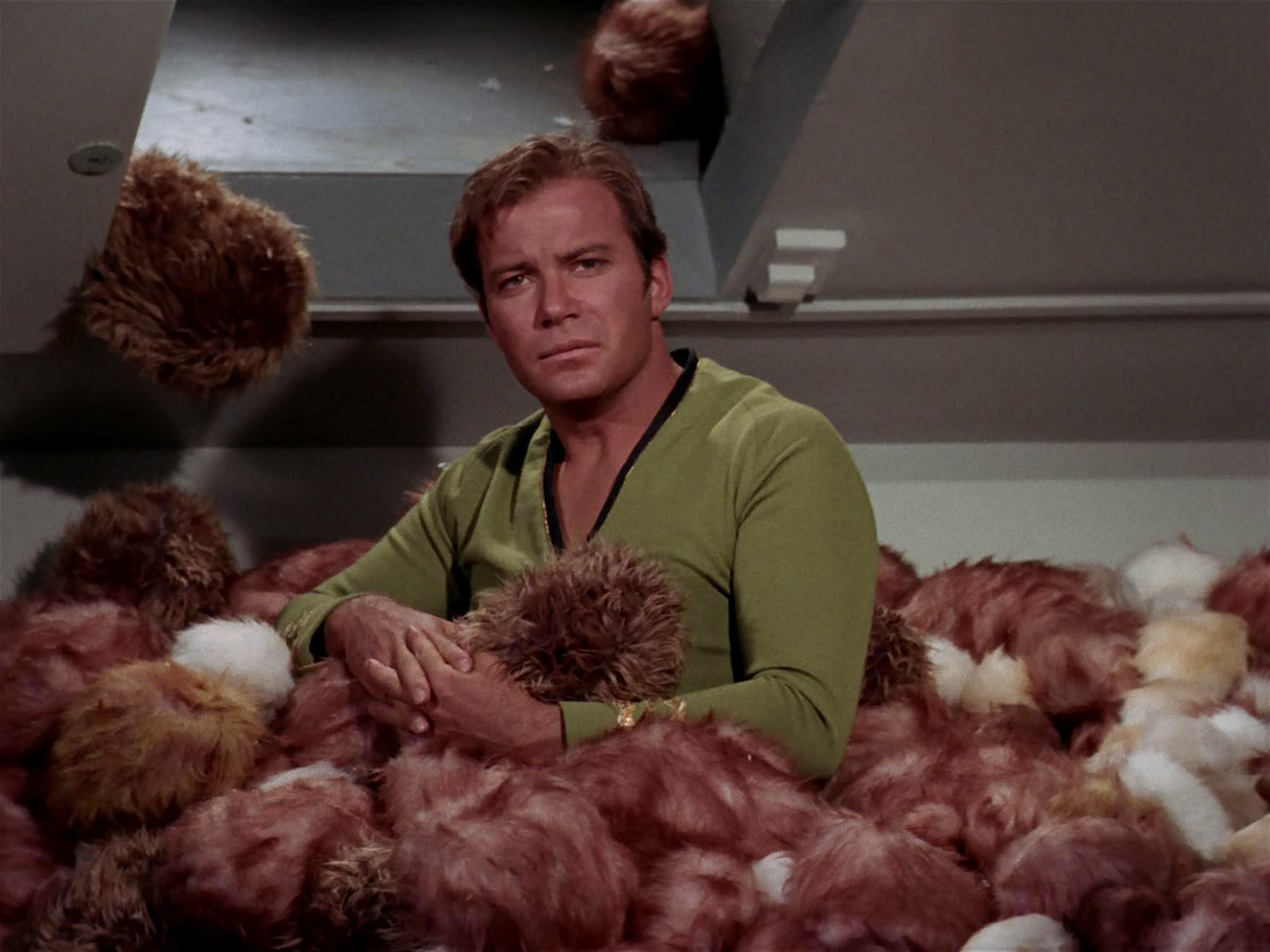
1967: The Trouble with Tribbles
A lot of iconic episodes aired this year, but few are better-remembered than The Trouble with Tribbles, which aired in between Christmas and New Year. The story perfectly encapsulates The Original Series’ blend of serious sci-fi and humour – and the tribbles themselves, despite making just a handful of appearances, are inseparable from Star Trek in the minds of many. This is also a great episode for the ongoing Klingon-Federation conflict, which would grow in importance as Star Trek developed.
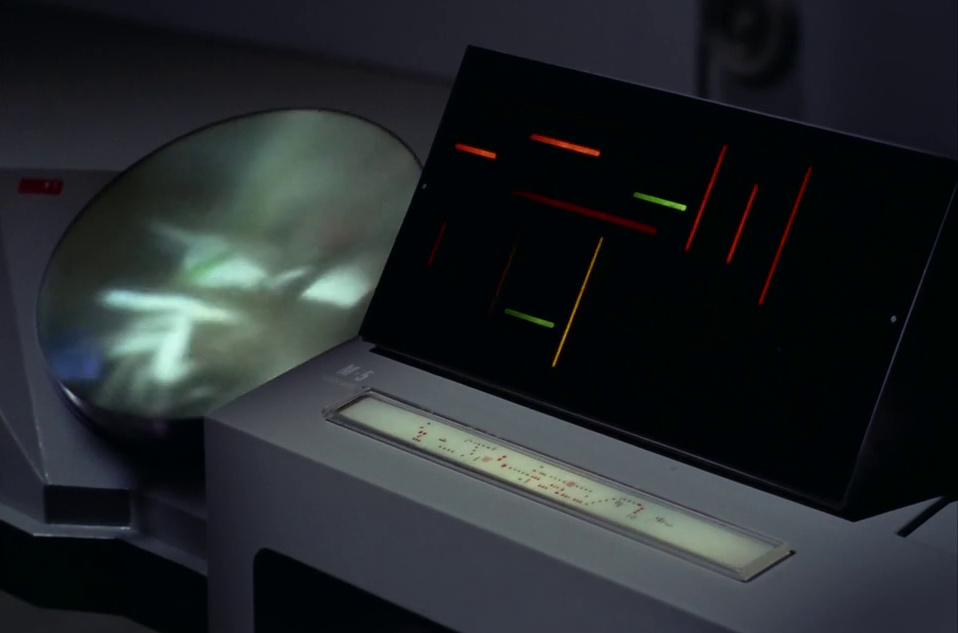
1968: The Ultimate Computer
A story that feels *more* relevant today than it did when it aired, this fable warns of an overreliance on machines – and how machine intelligence may not understand or be properly aligned with the needs of its creators. Given what’s happening in the real world today, with the advance of A.I. systems… The Ultimate Computer feels timeless; a warning from the past. It’s also a fun episode in its own right!
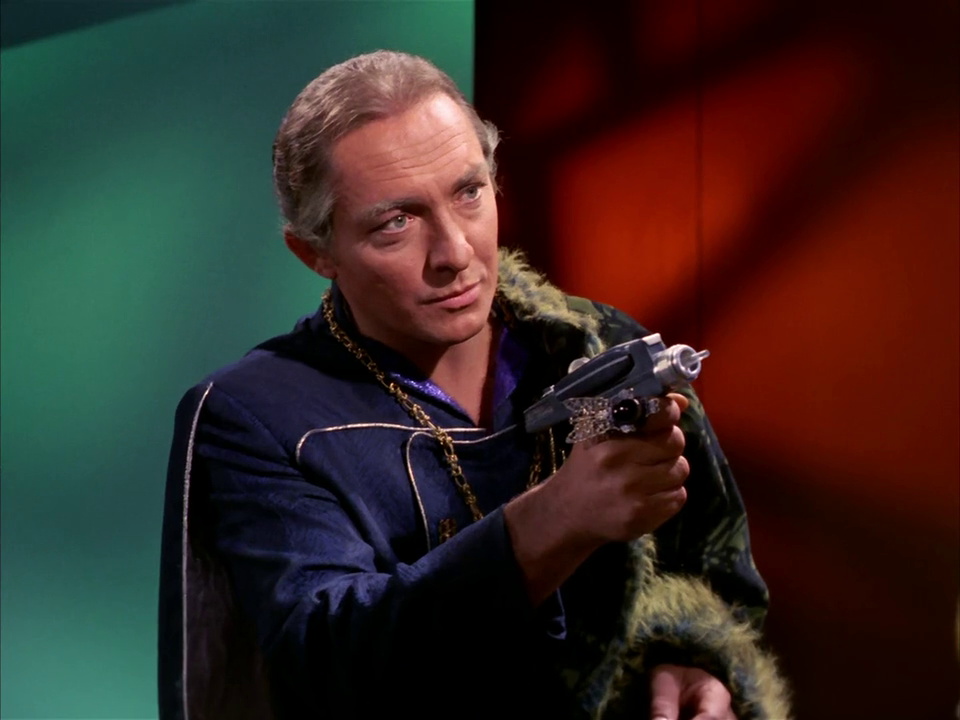
1969: Whom Gods Destroy
A famous episode in the fan community – and spawning an entire (long-running) fan production – Whom Gods Destroy is my pick for 1969. This was the year of TOS’s cancellation, bringing Star Trek’s first phase to an end. The episode is action-packed, of course, and leans on some tropes that audiences today might find a bit dated. But there’s an inspirational, hopeful tone to parts of the story, and the idea that even the most severe mental illnesses may, one day, be curable is a good message.
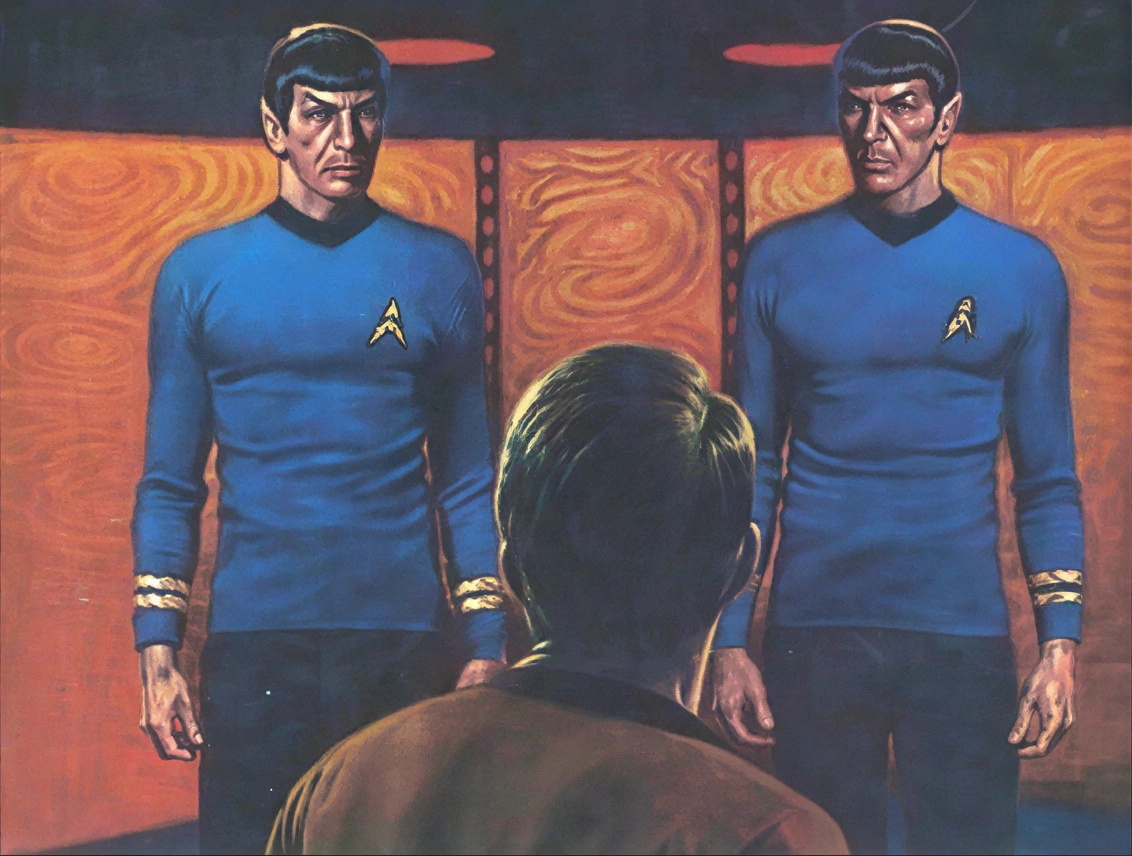
1970: Spock Must Die!
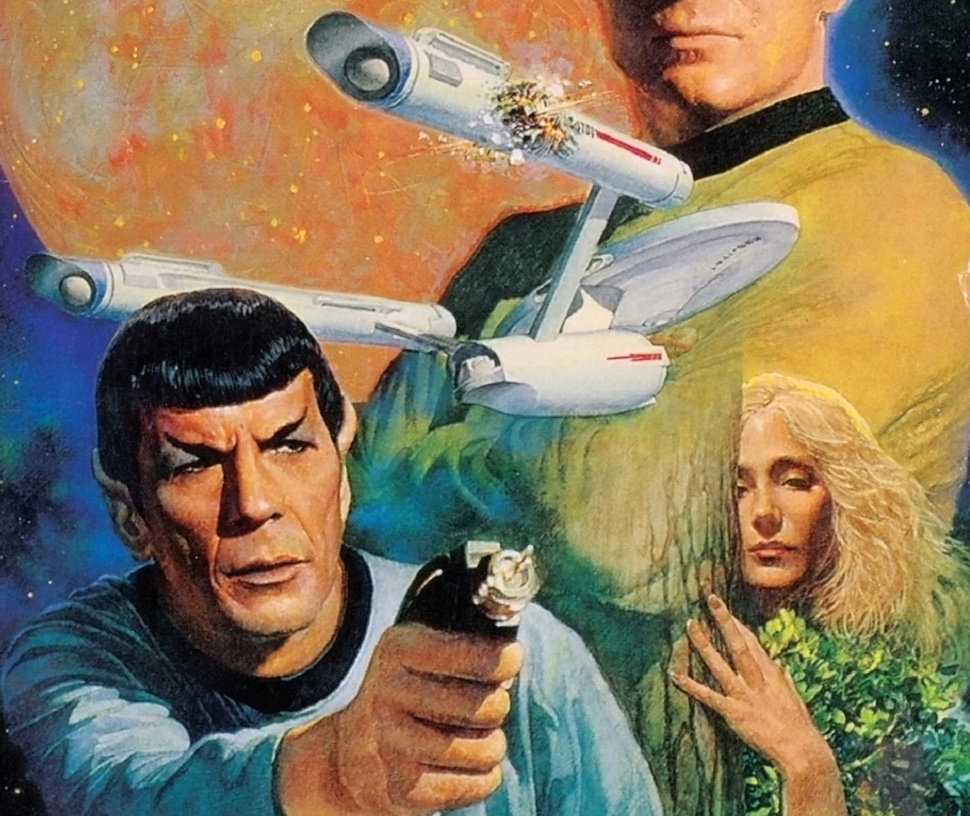
Full disclosure: I haven’t read this novel! Sorry. But it was the first Star Trek novel with an origial story, and having read a summary, I think it has a lot of potential as a fun and very “Star Trekky” adventure. It reminds me of both The Enemy Within and TNG’s Second Chances, with an evil transporter clone of Spock getting into mischief. As the first novel to keep Star Trek alive after cancellation, I think the book deserves some recognition, too.
1971: Star Trek 4
No, not The Voyage Home! This book is a collection of adaptations of six TOS episodes: All Our Yesterdays, The Devil in the Dark, Journey to Babel, The Menagerie, The Enterprise Incident, and A Piece of the Action. I’ll be honest: 1971 was probably the hardest year to find something from for this list! But these short 20-ish-page adaptations of classic TOS episodes fit the bill. And, again, as The Original Series was gaining traction in syndication, it probably helped some folks continue their burgeoning fandom.
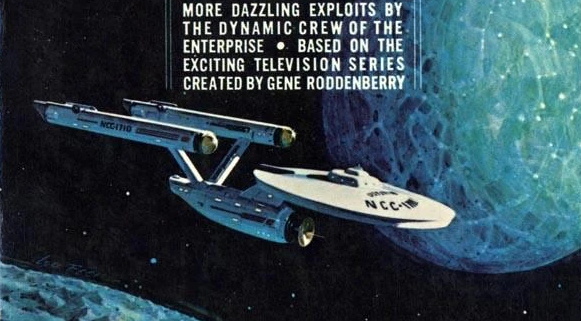
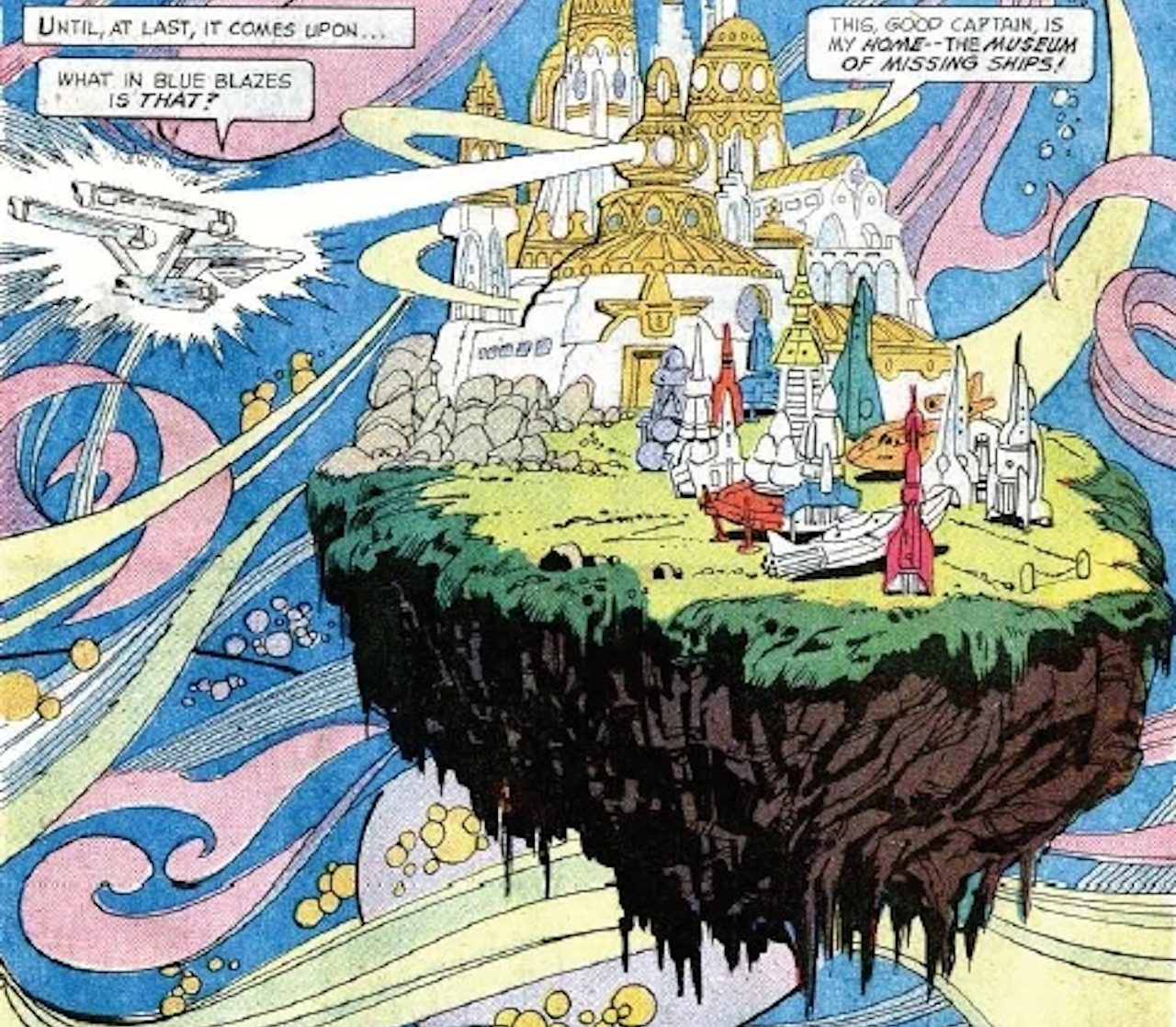
1972: Museum at the End of Time
Our first comic book is remarkably similar to two stories I’m a bit more familiar with: The Time Trap from The Animated Series and the video game Star Trek: Voyager – Elite Force! This story sees the Enterprise trapped in an alternate dimension along with various other missing starships, and working with the Klingons to faciliate an escape. I haven’t read it myself, but I think the premise should work – and, again, comics and books were doing a good job for the growing Star Trek fan community in this time period.
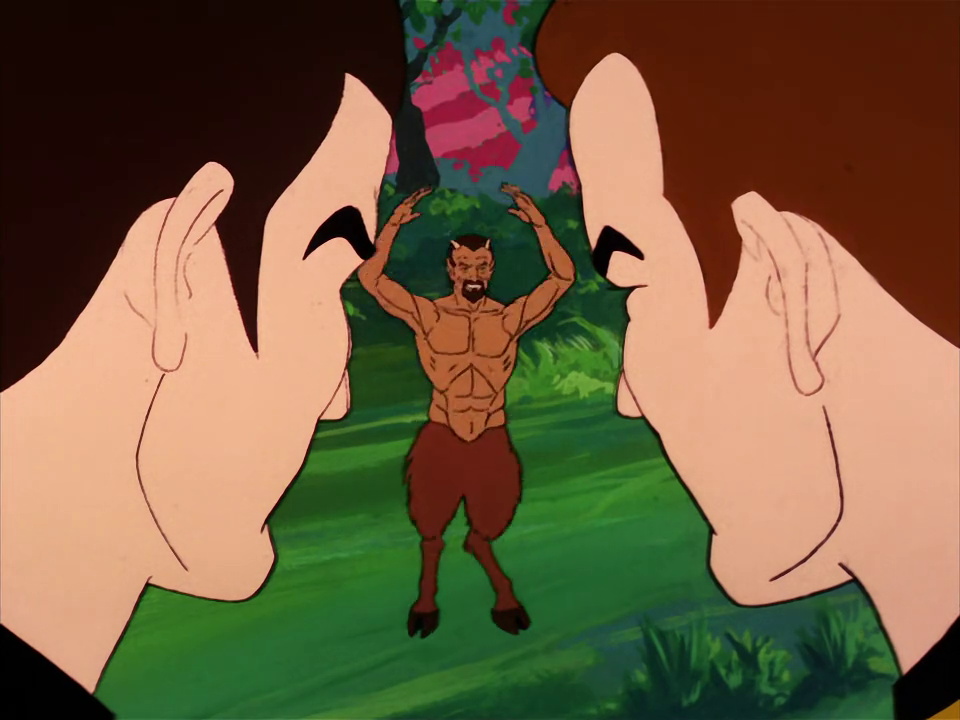
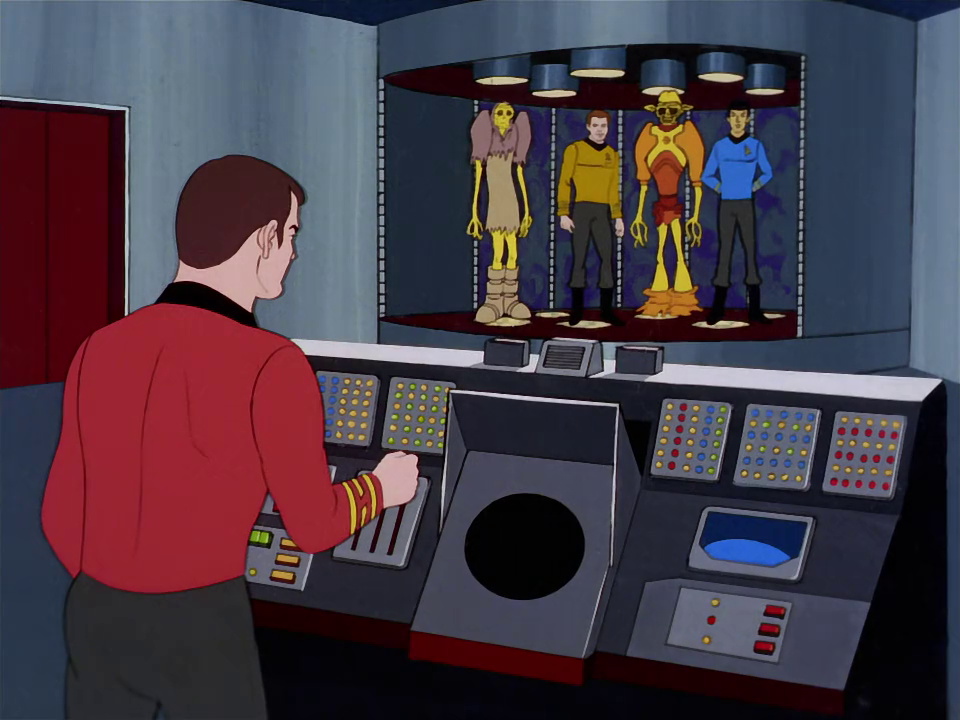
1973: The Magicks of Megas-Tu
For a long time, The Animated Series was considered “officially non-canon” by Gene Roddenberry and the wider Star Trek production team. I can remember watching a few episodes when they must’ve been repeated on terrestrial TV, but I don’t think The Magicks of Megas-Tu was among them. However! I unashamedly love this episode for its silly, totally unscientific story. The Enterprise gets transported to an alternate reality where magic is real! I mean… how much fun is that? It’s a great episode, a really fun time, and the perfect blend of classic Star Trek storytelling with the “Saturday morning cartoon” style that parts of The Animated Series leaned into.
1974: Albatross
From a silly, cartoony story to one with a much more serious tone – proving that The Animated Series, like Star Trek as a whole, can do both. Dr McCoy is accused of killing almost the entire population of a planet, and is consequently arrested and put on trial. A fun Spock-McCoy team-up leads to the creation of a cure, and this is just a very classic-feeling Star Trek story that would’ve made for a wonderful live-action episode, too. It’s more serious in tone than quite a few other TAS stories… but it’s because of that that I enjoy it.
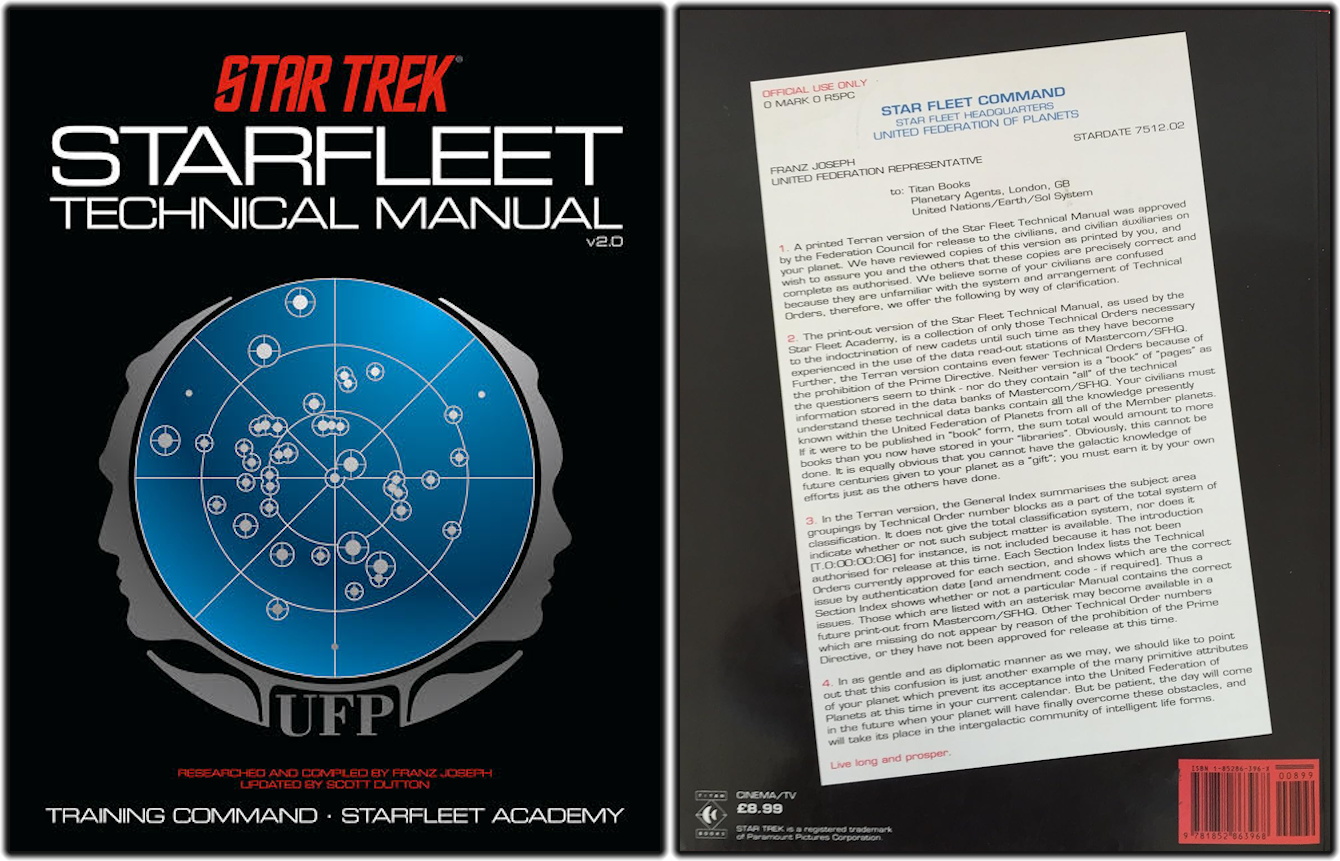
1975: Star Fleet Technical Manual
A reference guide that spawned a long-running tabletop series, the Star Fleet Technical Manual was, for a long time, the most detailed and intricate guide that the fan community had. It includes detailed designs of uniforms, starships, and pieces of tech, and even has costume patterns for fans to make replicas. It’s a very detailed, in-depth book for the nerdiest of Trekkies – and you can see why it went on to form the basis of the aforementioned tabletop game series. I guess this one isn’t a “story” per se, but I think it should still count for this list!
1976: The New Voyages
An anthology of fan-written stories, each of which gets an introduction by a member of the main cast; I think I’m right in saying that The New Voyages is the first example of Trekkie fan-fiction being officially published like this. I like this anthology as an example of the fan community coming together to collaborate on a project, and for the powers that be – including Gene Roddenberry – to take fan initiatives and turn them into something at least semi-official.
1977: Phase II
Okay, I admit it: this one’s a cop-out! Phase II never even entered full production, let alone aired any episodes; the project was later adapted into The Motion Picture. But this was the year when Star Trek’s successful re-runs and animated adaptation really paid off: Paramount Pictures began accepting pitches and ideas for a return to the world of Star Trek, and Phase II was conceived. Several of the scripts and pitches created for the series would appear in The Next Generation more than a decade later, and characters created for the show (as well as several actors hired for the project) would go on to have roles in The Motion Picture.
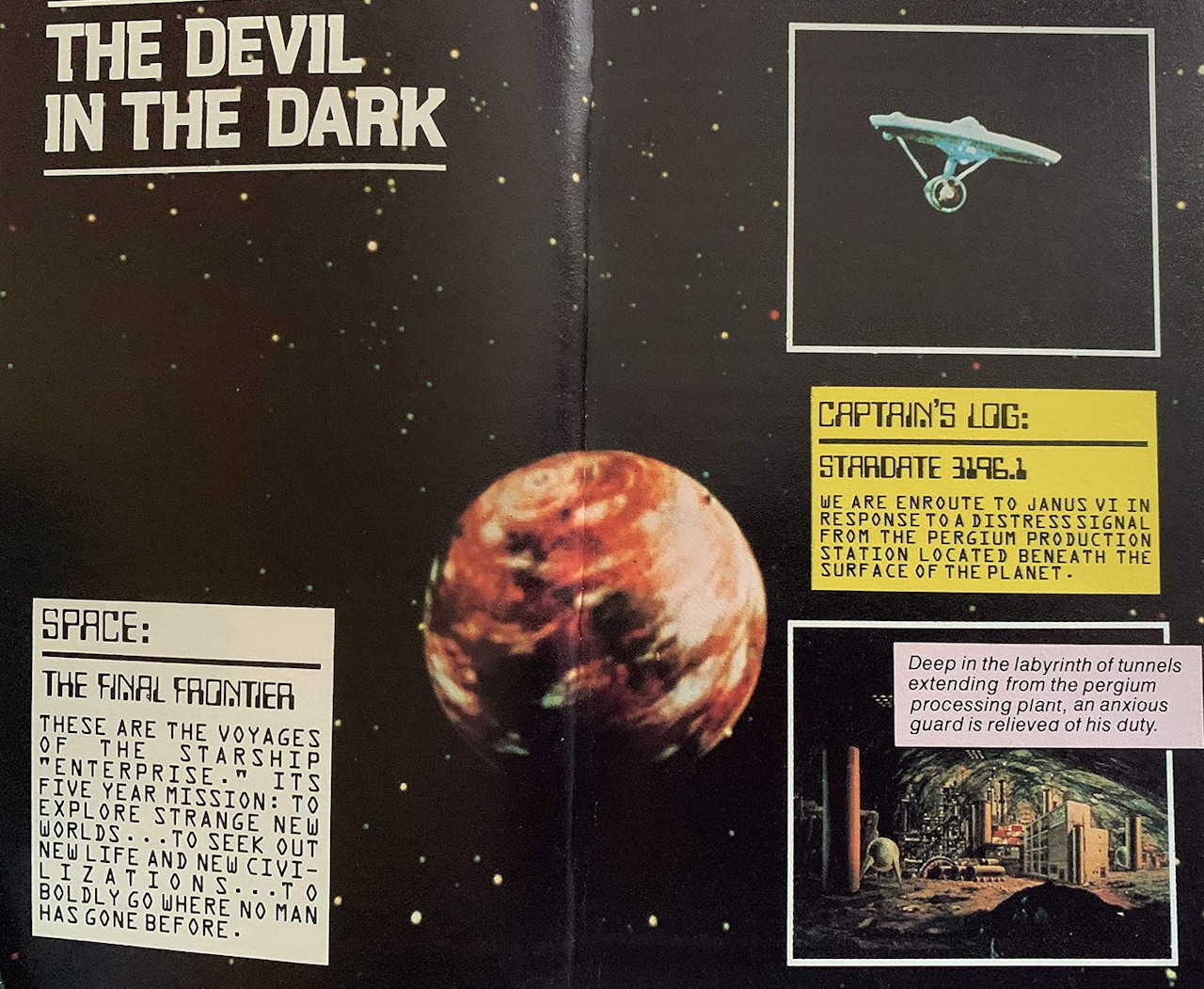
1978: The Devil in the Dark (Fotonovel)
Truth be told, 1978 was one of the toughest years to find something for! So I’m picking this fotonovel adaptation of the classic TOS story The Devil in the Dark as kind of a cheat. You know the episode: this is the one with Spock and the Horta; an exploration of “life, Jim, but not as we know it” that TOS was so famous for! It’s presented in the style of a comic book or graphic novel, except with photographs and production stills in place of hand-drawn art.
1979: The Motion Picture
After a decade in the wilderness, and several false starts, Star Trek returned to live-action with The Motion Picture! The film tells the story of Kirk’s return to the refitted USS Enterprise and the crew’s encounter with V’Ger – a lifeform of almost unimaginable size and power. I’ve long felt that The Motion Picture is underappreciated by some fans; it kind of gets lost amidst the overwhelming love Trekkies have for its immediate sequel. But it plays out like a high-budget, extended version of TOS, with an ethereal sci-fi story about connection and discovering a truly different form of life. Additionally, much of the visual language of Star Trek was born here; these sets and stages would remain in use until Enterprise’s cancellation a quarter of a century later.
1980: The Galactic Whirlpool
This novel was written by David Gerrold, who also wrote The Trouble with Tribbles. The story – which depicts the Enterprise’s encounter with a generation-ship caught in a maelstrom in space – has a bit of a weird publication history! It was first pitched as a TOS episode, then re-worked into a standalone novel, before Gerrold came back to the franchise and re-adapted the novel back to its Star Trek roots. In that sense, it feels like a truly classic TOS-style story – the kind of thing that would’ve made for a solid episode of the show, had there been space for it.
1981: The Entropy Effect
This novel might be best-known for giving us Mr Sulu’s first name: Hikaru! It’s a time-travel story focusing heavily on Spock; he’s forced to travel backwards in time to save Captain Kirk’s life. The plot spirals into a giant threat to the entire universe, before Spock is able to find a solution. Another story that, in a different world, could’ve been a perfectly fine addition to The Original Series – and noteworthy for establishing Sulu’s first name, too.
1982: The Wrath of Khan
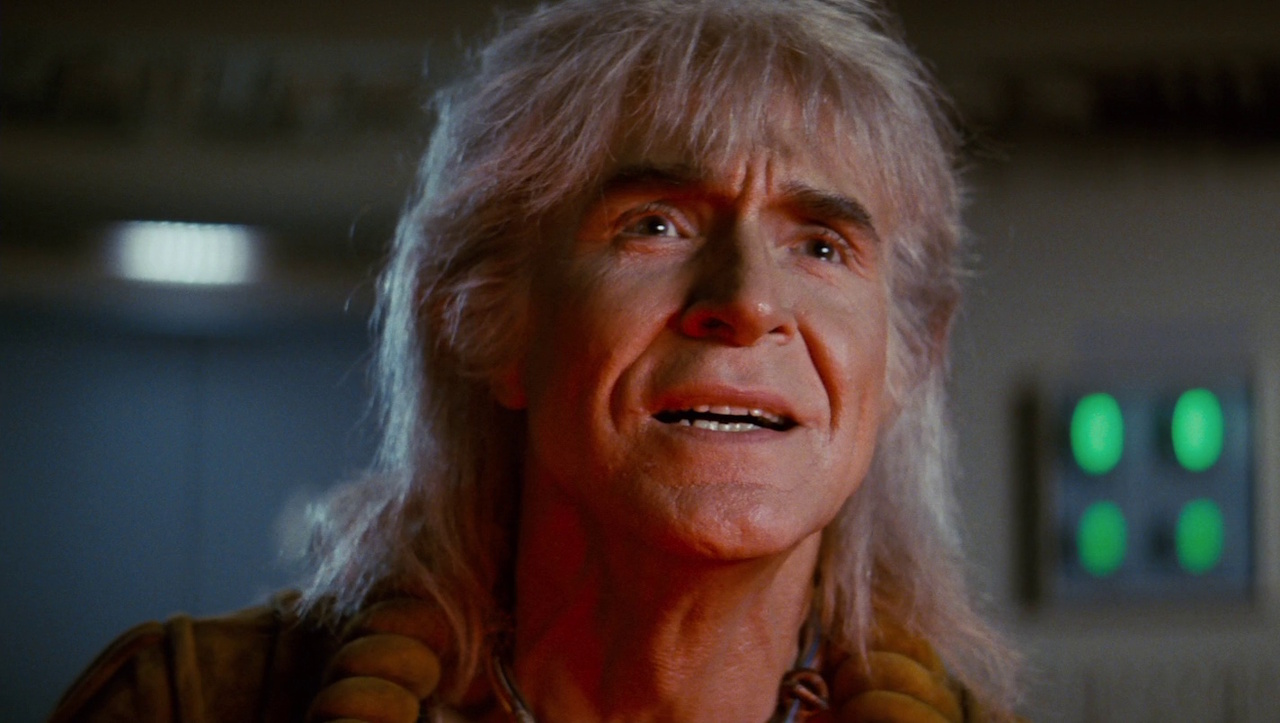
What else was it gonna be for this year? The Wrath of Khan is still heralded by many fans as the high-water mark of cinematic Trek, and one of the best stories in the entire franchise. It brought new eyes to Star Trek in a huge way, and set the table for Star Trek’s renaissance. An action-heavy film, The Wrath of Khan takes a few steps away from the franchise’s roots, but clearly that resonated with a wider audience. One of the most iconic villains not just in Star Trek, but arguably in all of cinema, serves as a dangerous antagonist for Captain Kirk and the crew – and the fight to stop Khan is brutal.
1983: Mutiny on the Enterprise
There’s a mutiny… and it happens on the Enterprise! That’s kind of a synopsis of this novel – though, of course, the mutiny is connected to alien shenanigans. Kirk and the crew rescue an alien woman, and she begins convincing members of the crew that the Enterprise will start the very war that the mission is meant to prevent. This mutiny could hardly come at a worse time – with an away team stuck on a planet and the ship damaged. 1983 is also the year I was born – though putting *myself* as an entry on this list would’ve seemed a tad self-centred!
1984: The Search for Spock
This is a weird one for me, because after I started getting into Star Trek in the early ’90s, I watched some re-runs of The Original Series whenever it was on the air. But The Search for Spock somehow ended up being the first film in the franchise that young Dennis ever saw! As the middle part of a trilogy, I guess that made it a bit of a weird place to start! This film depicts Kirk stealing the Enterprise and Spock’s re-birth on the Genesis Planet, as well as a climactic clash with the Klingons. It sets the stage for the final act of this three-film story; Star Trek’s first multi-part saga. And it was the final film to enter production before attention would turn to spin-offs. It’s a fantastic film with lots of practical special effects, props, puppets, and more – and a fun story to boot.
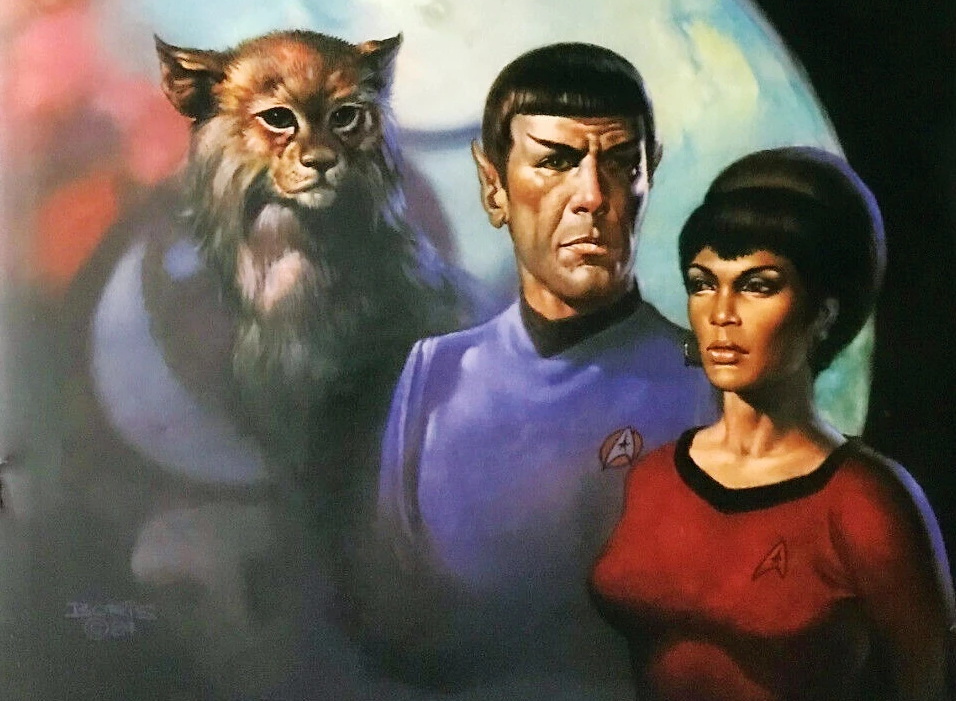
1985: Uhura’s Song
A race of cat-like aliens, forbidden music, and a race against time to stop a dangerous plague! That’s the premise of Uhura’s Song in a nutshell – and it feels almost like a story that we might’ve seen in Strange New Worlds. The disease, which had previously only been affecting the cat-like Eeiauoan people suddenly starts spreading to humans – including the crew – and the secret to a cure seems to be hidden in clues within music. The story re-establishes contact between sister races, and puts Uhura in the driver’s seat along with Captain Kirk.
1986: The Voyage Home
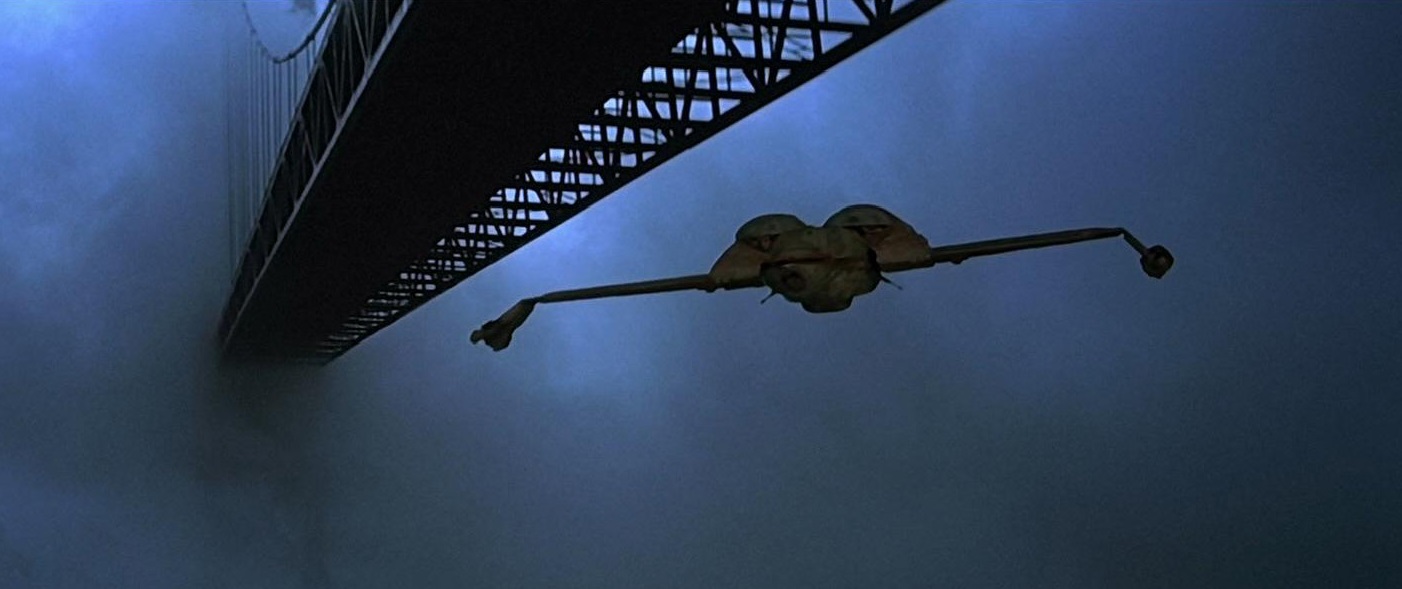
In my opinion, The Voyage Home hasn’t aged as well as most of the other Star Trek films thanks to its visit to contemporary Earth… and its overall ’80s comedy style. However, it’s still a film with plenty of fun and enjoyable moments, and I like the genuine danger posed by the whale probe. The film has a great message about the need to protect biodiversity – and the unknowable implications of even a single species going extinct. Seeing Kirk and the crew in command of a Klingon Bird-of-Prey is also a ton of fun!
1987: Encounter at Farpoint
So we made it! Star Trek is back on television, where it will enjoy almost two decades of uninterrupted production. Encounter at Farpoint started The Next Generation with a bang; a mysterious god-like entity wants to put Captain Picard and the crew on trial for humanity being a so-called “savage race.” This kicks off not only the series, but a long-running role for Q, and it does a good job of establishing the Enterprise-D, most of the main characters, and a new century for Star Trek to explore.
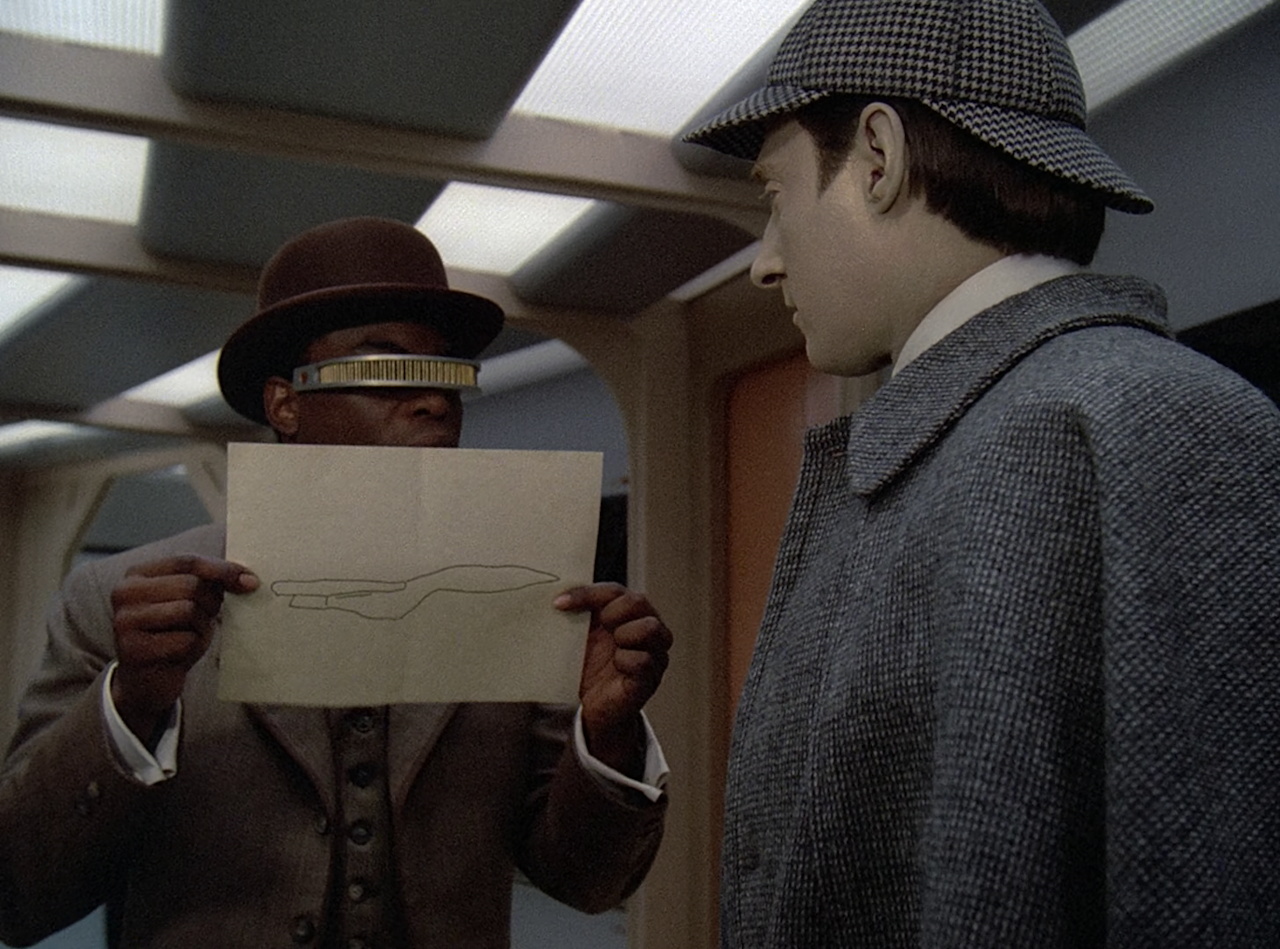
1988: Elementary, Dear Data
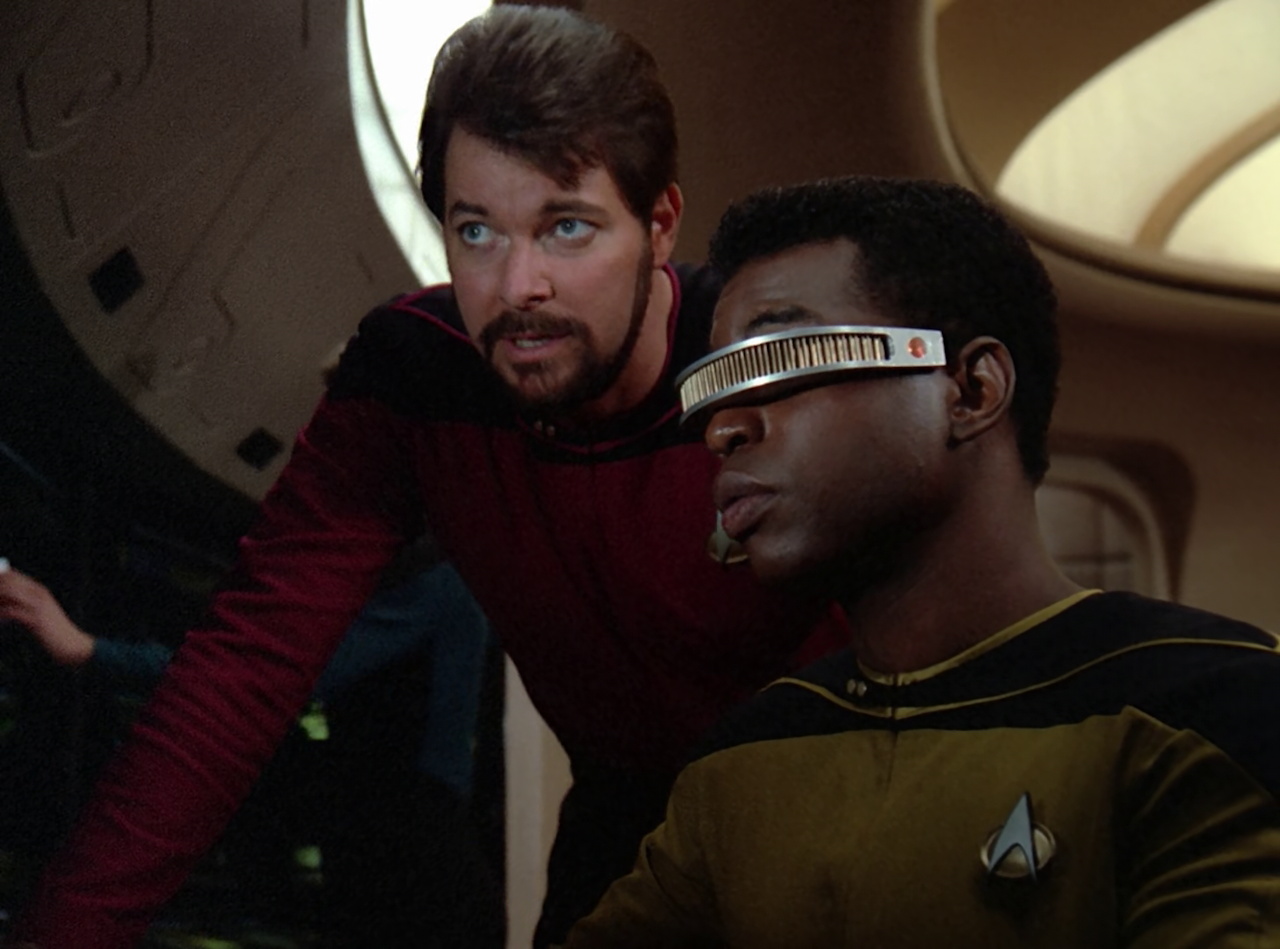
An accident on the holodeck creates Star Trek’s first sentient hologram – based on Sherlock Holmes’ nemesis, Professor Moriarty. I like Dr Pulaski, and her role in this episode was a fun one. Seeing Data and Geordi having to face off against a challenging foe in a different kind of setting was great, too. Moriarty would return later in the show’s run – and even had a cameo in Picard’s third season a few years ago. I think it’s fair to call this one an iconic and well-remembered episode.
1989: The Royale
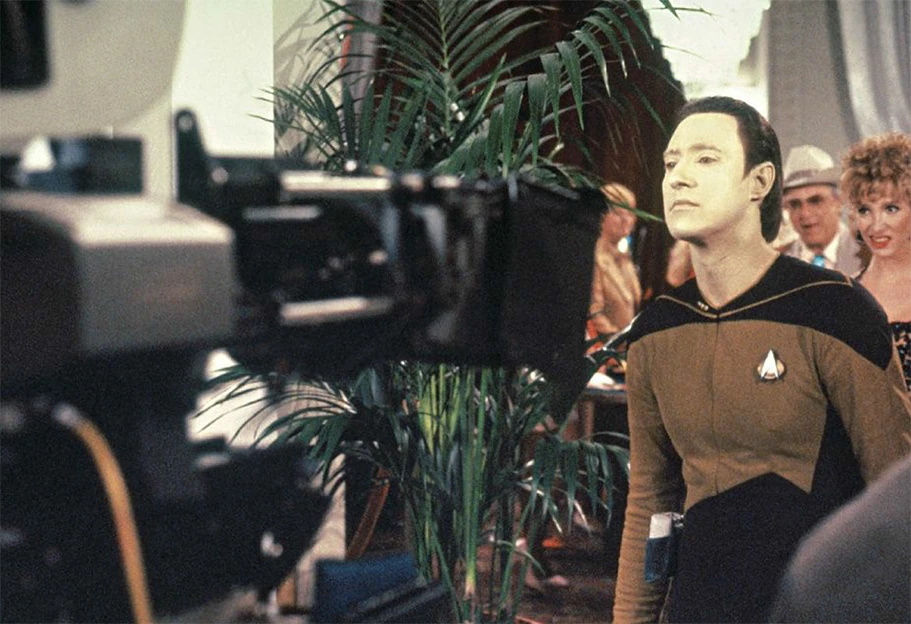
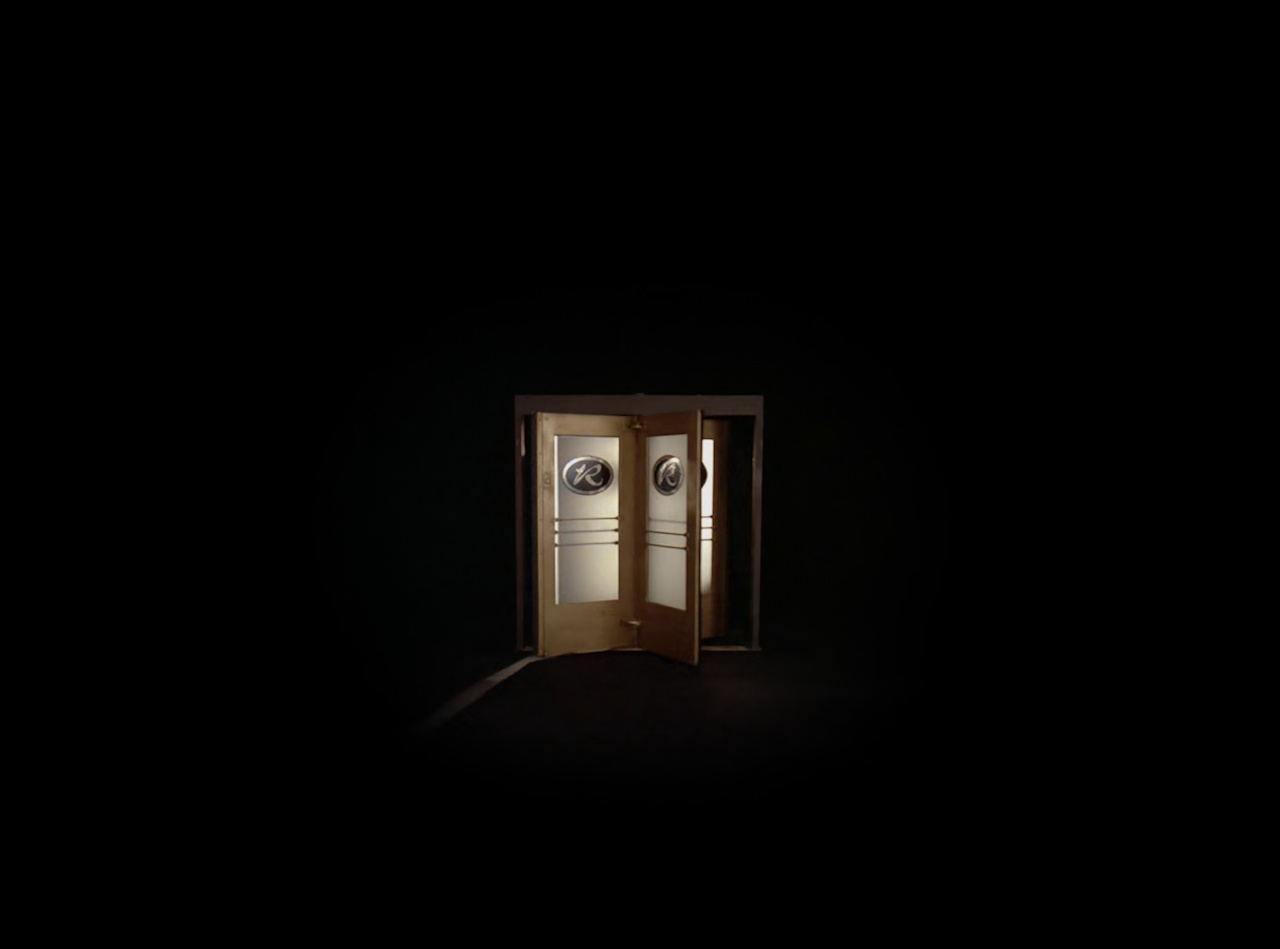
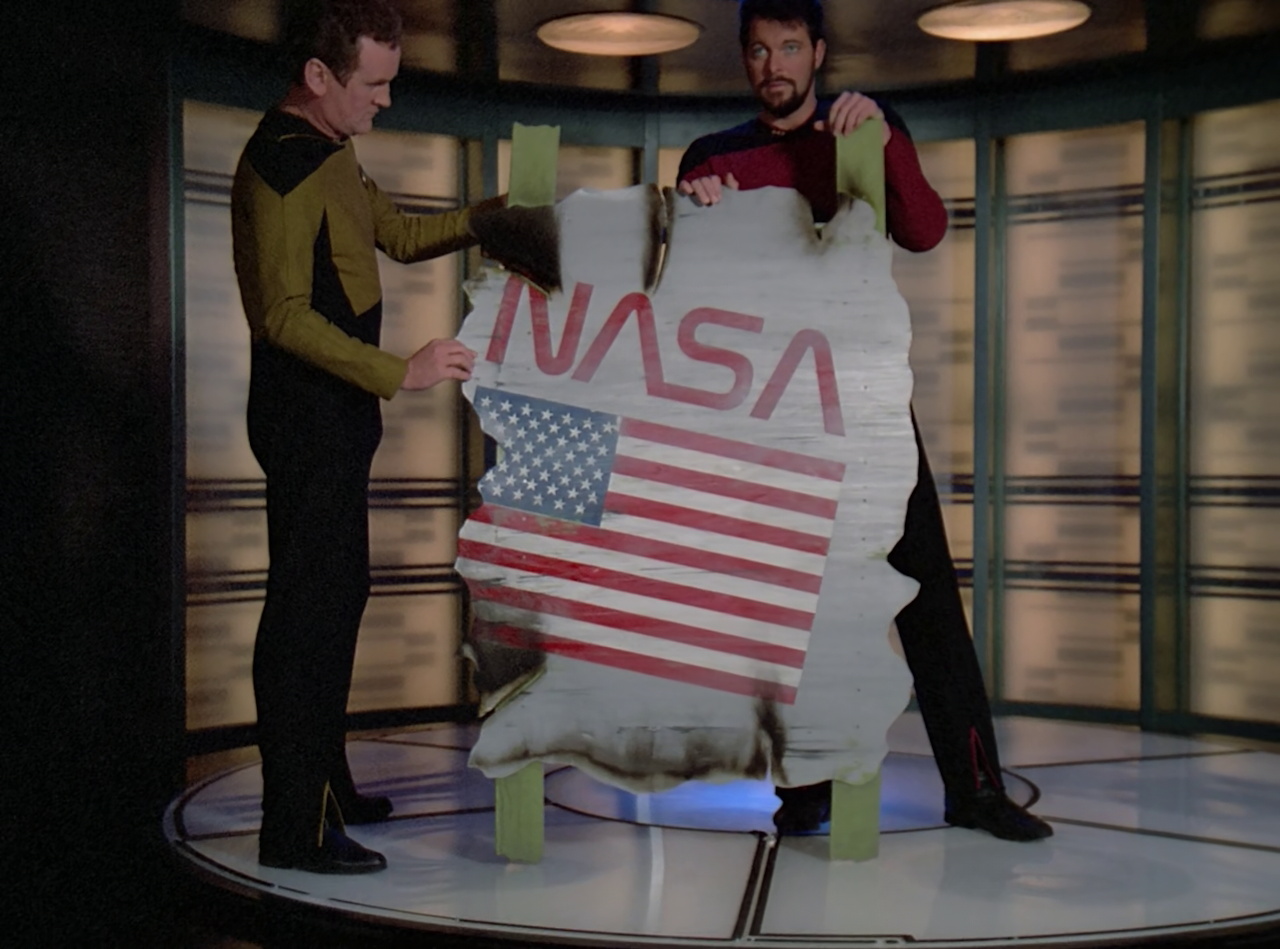
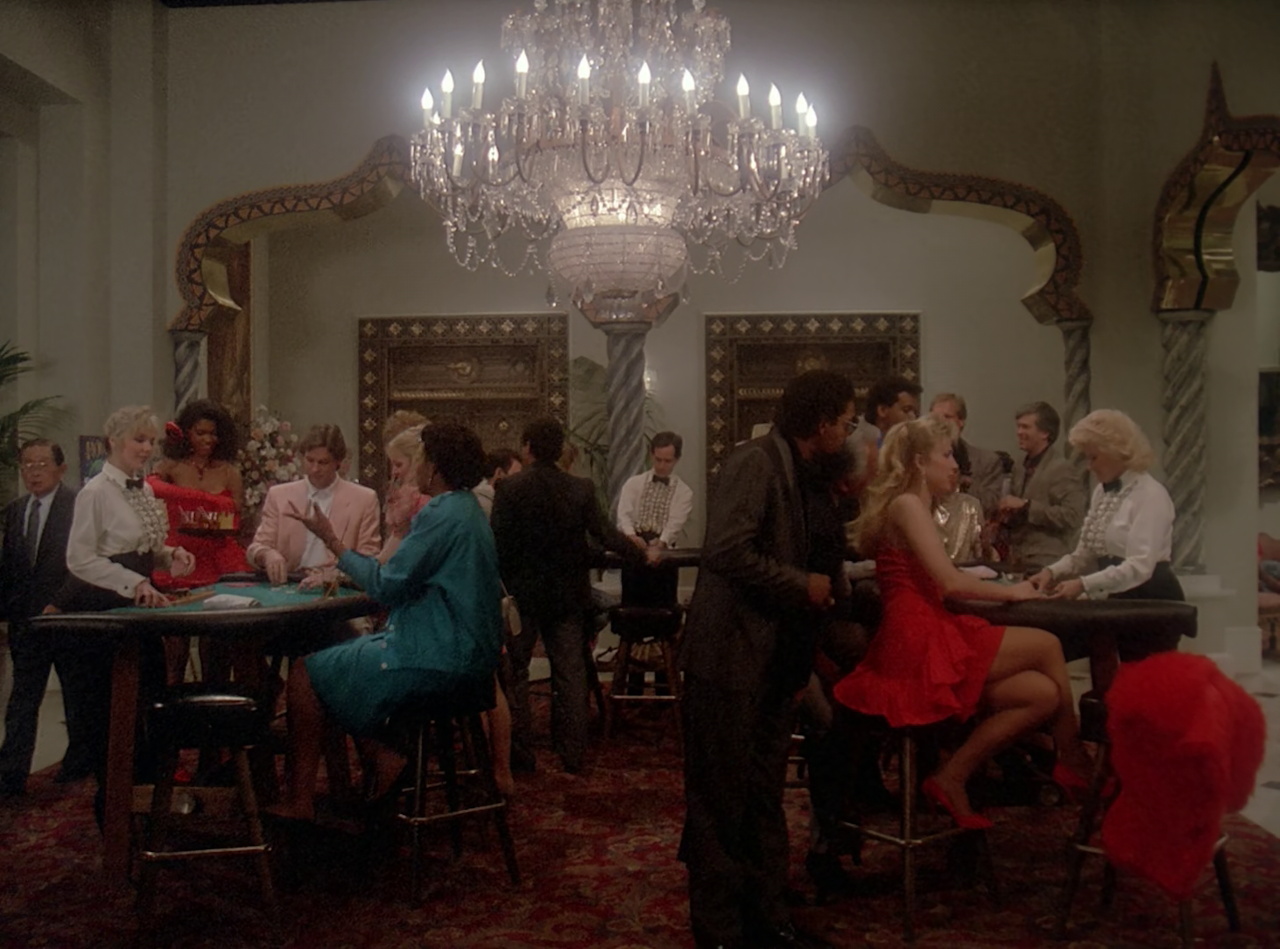
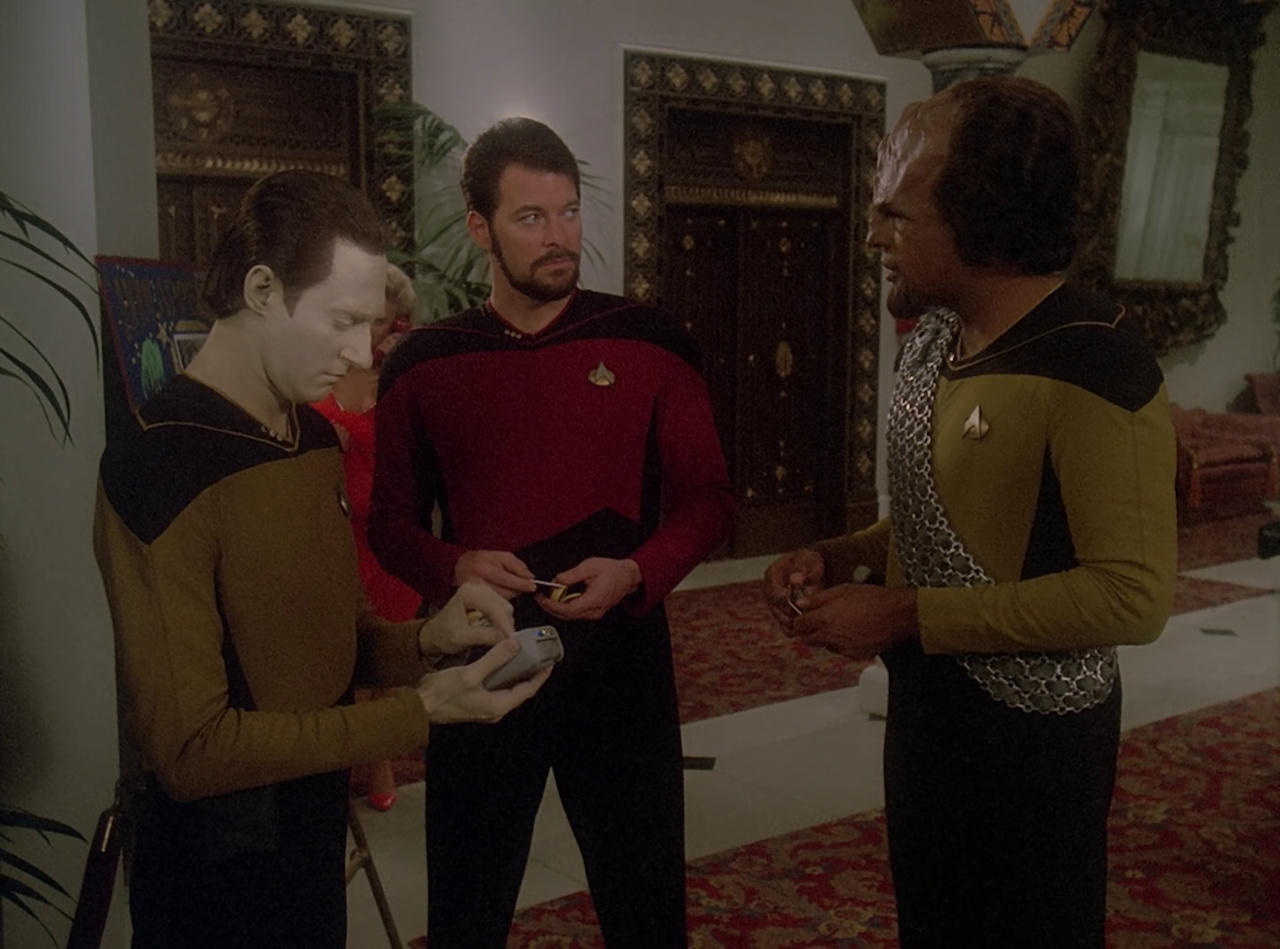
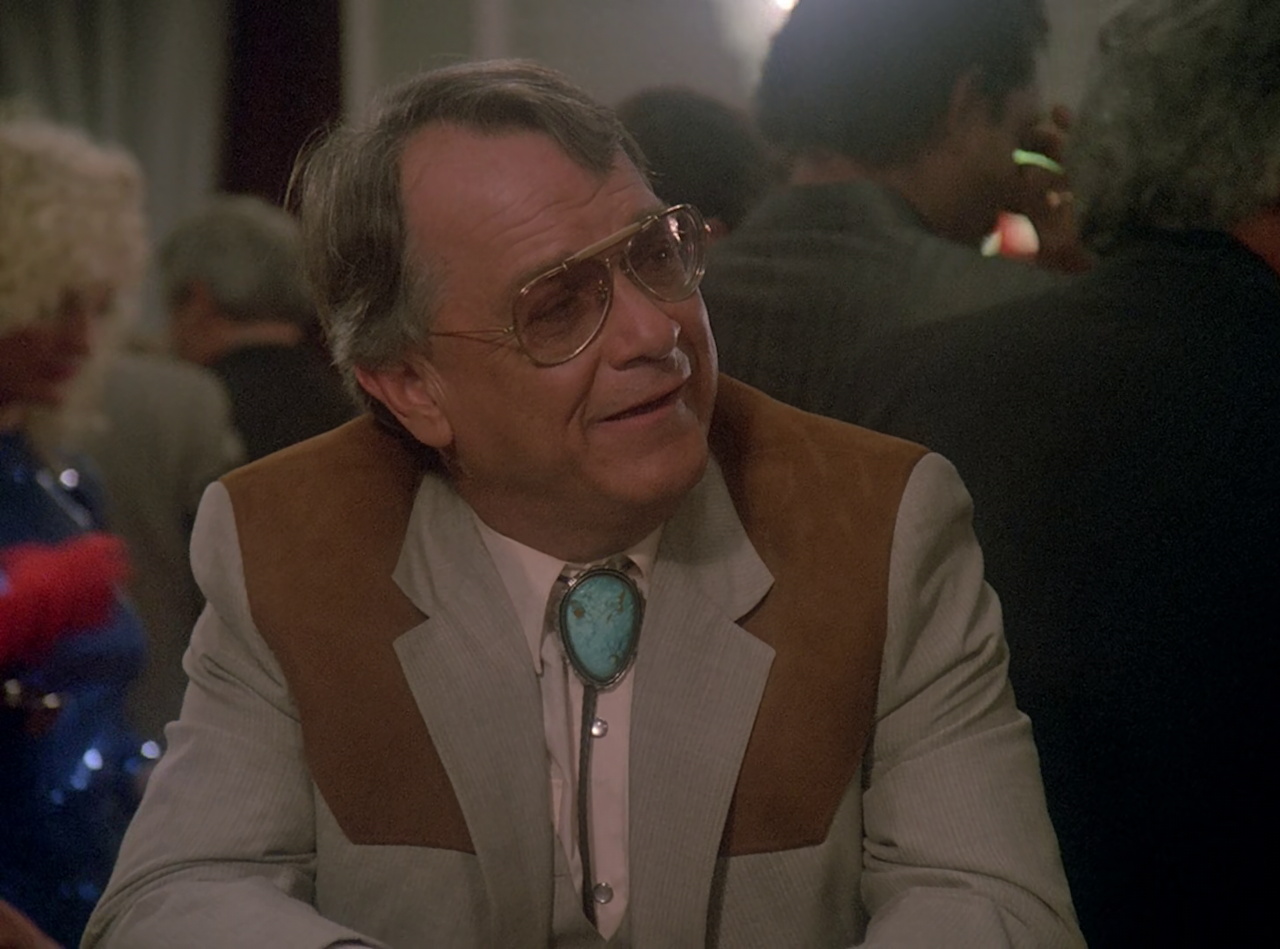
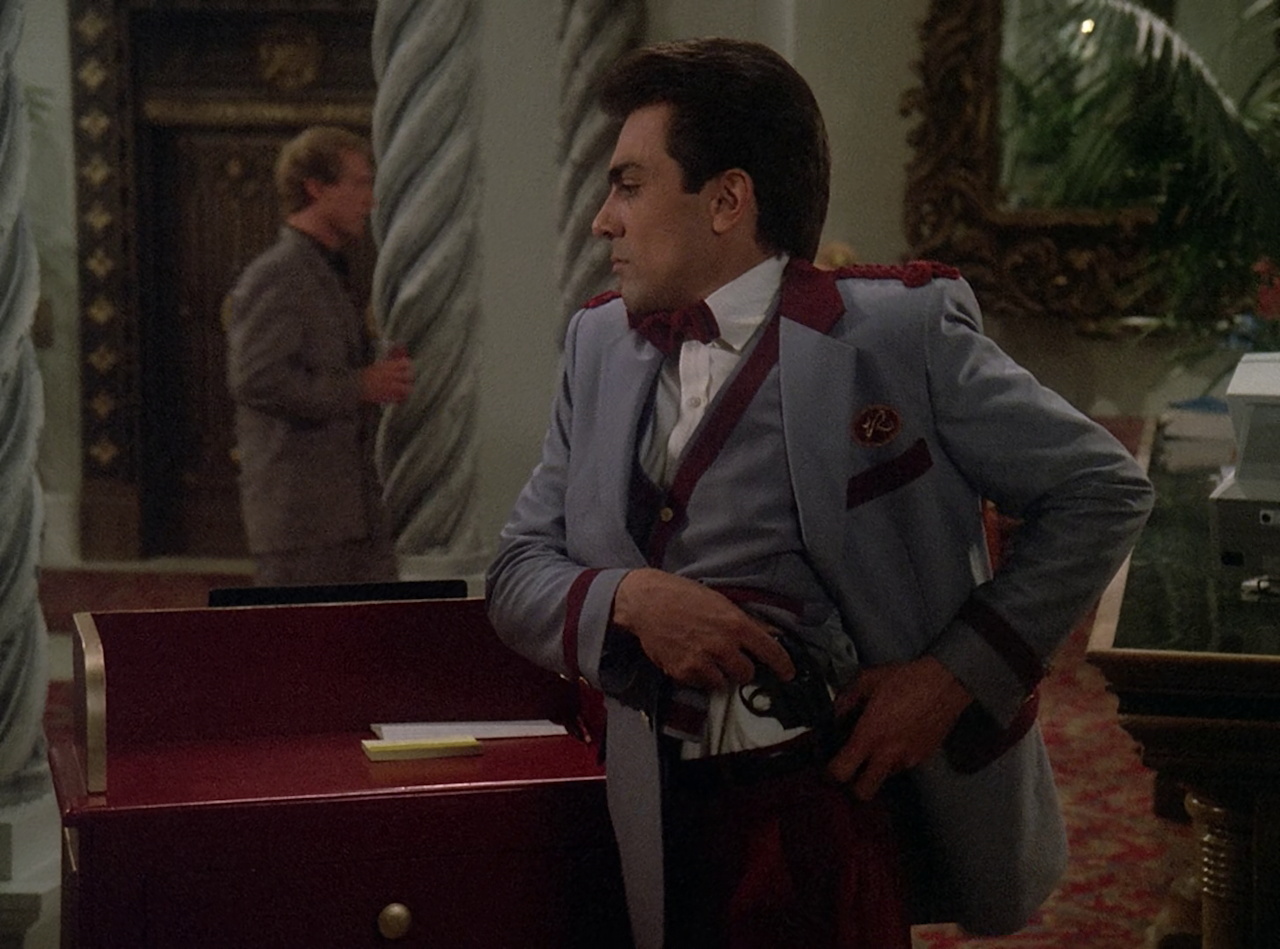
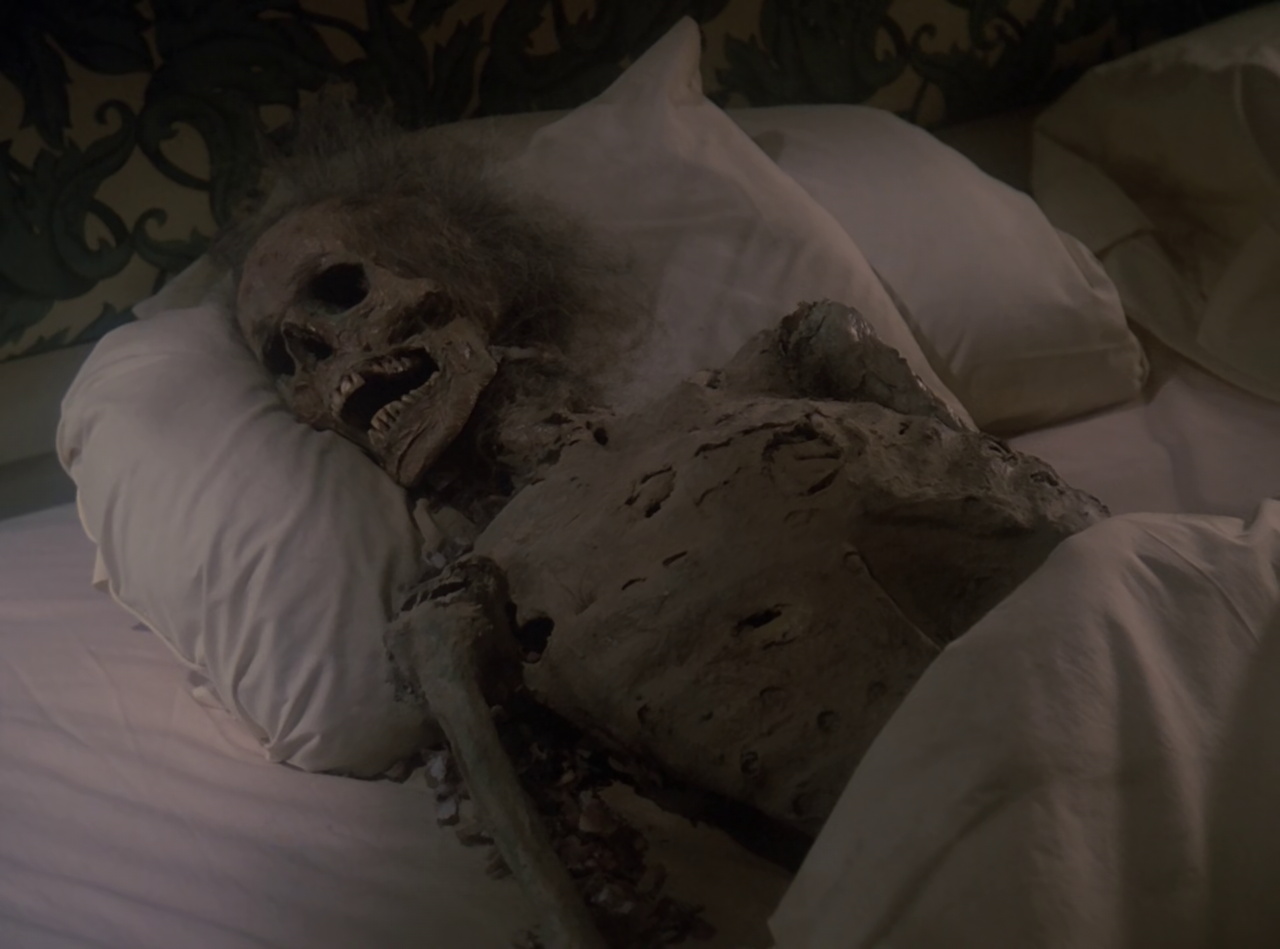
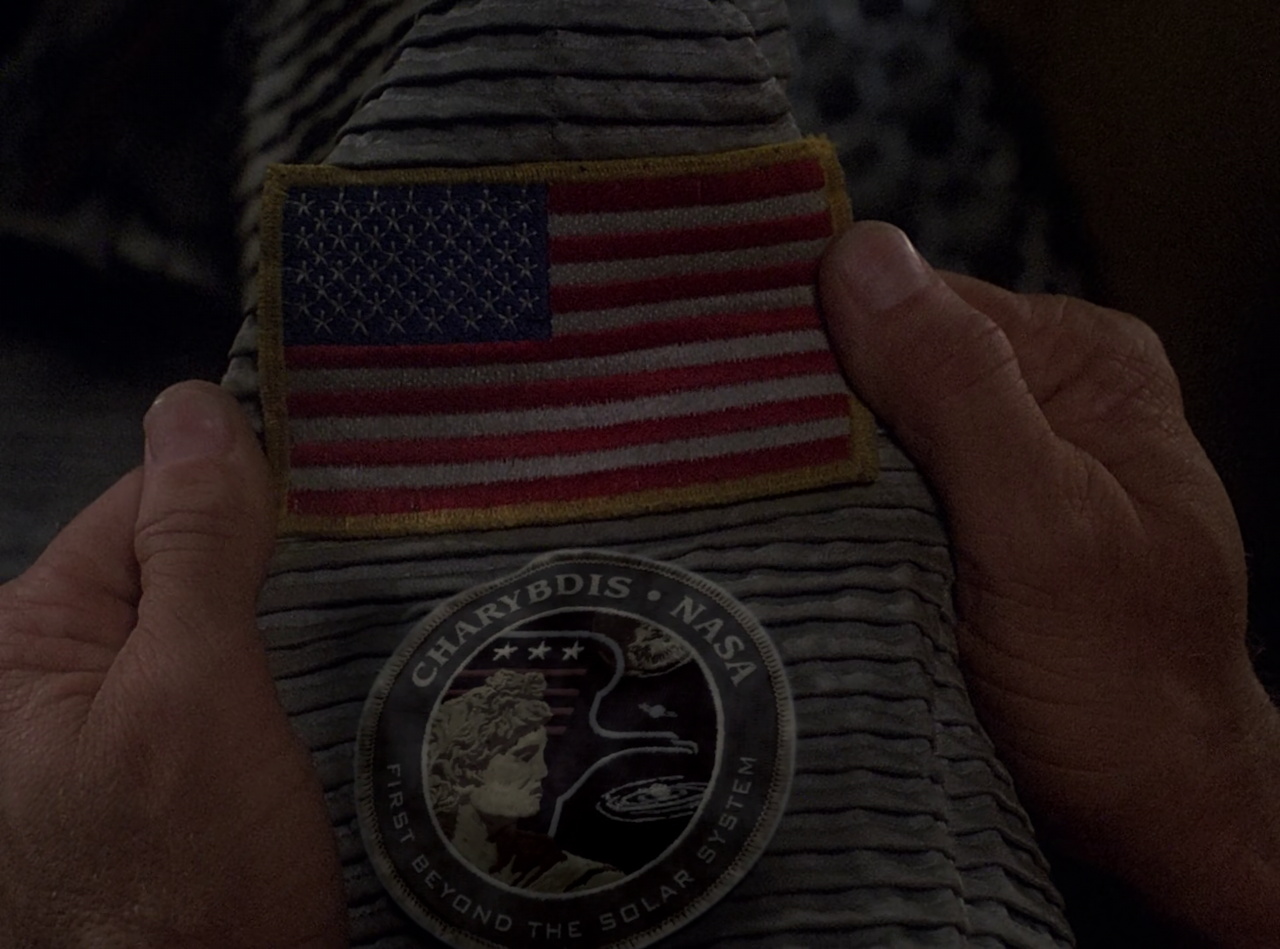
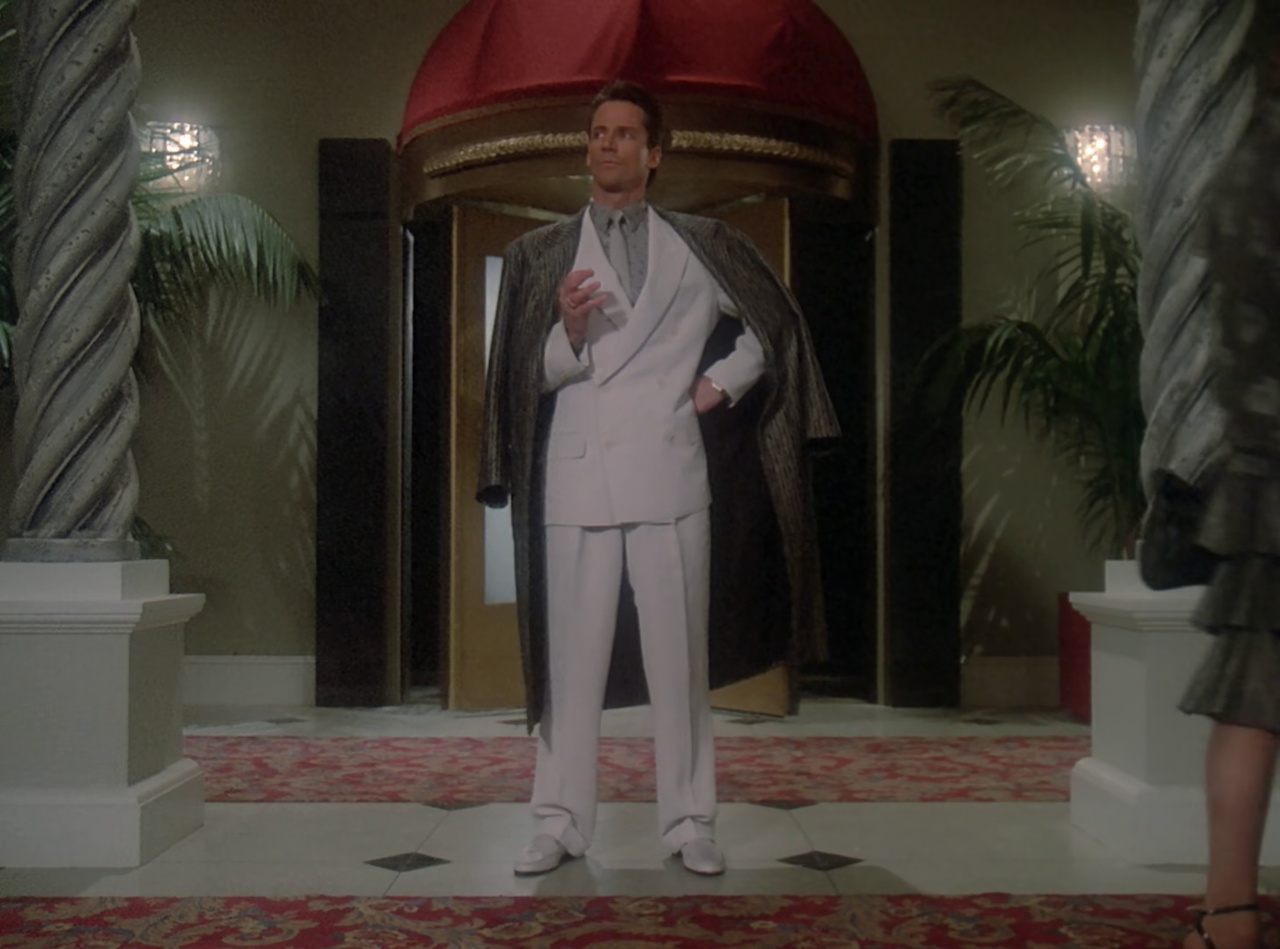
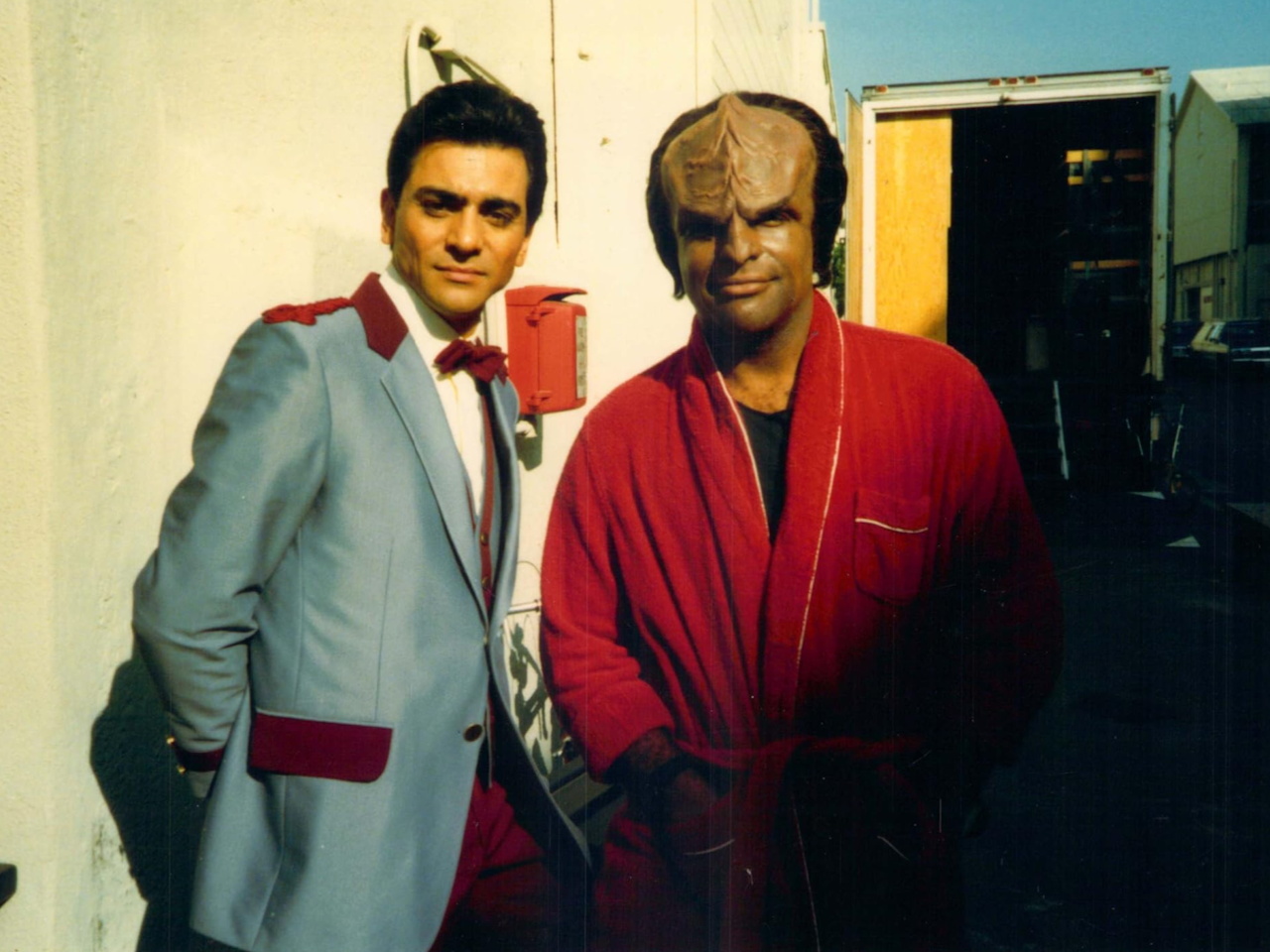
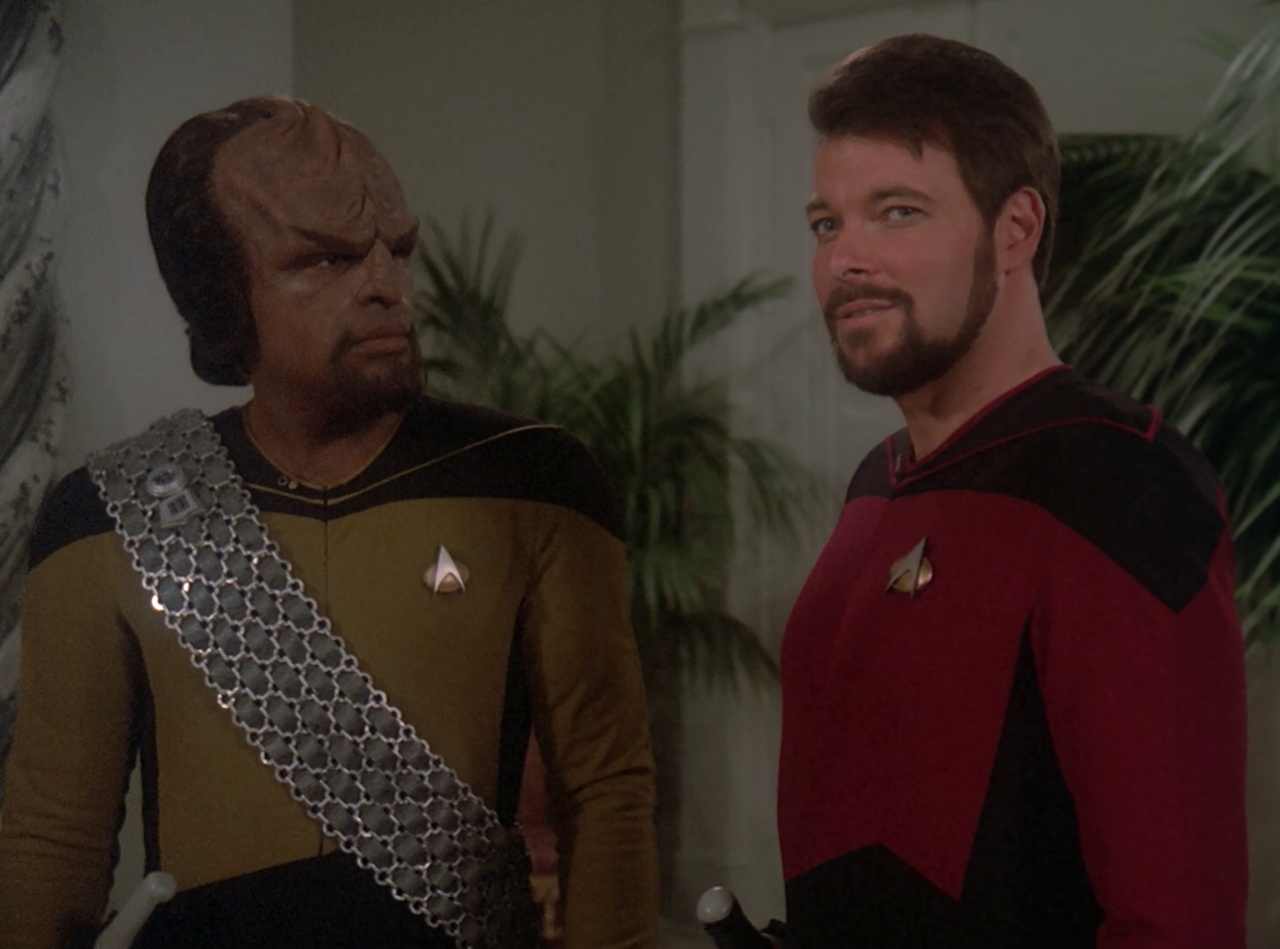
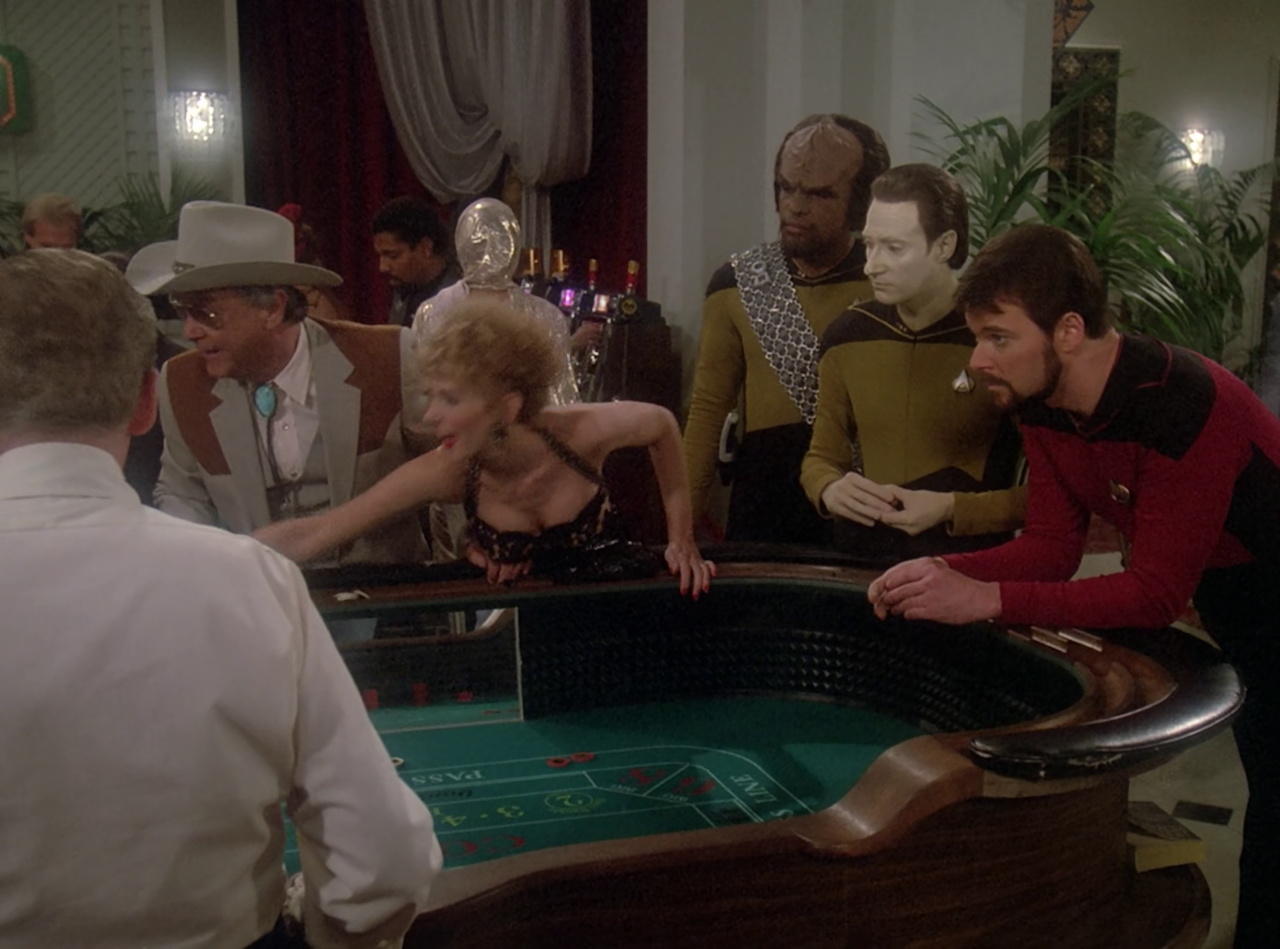
This is the first episode of Star Trek that I can ever remember watching (when it aired in the UK a couple of years later), so I admit that this is a bit biased on my part! However, I really adore The Royale for its fun, slightly weird kind of sci-fi story that most other franchises wouldn’t even attempt. A mysterious artefact in space leads the Enterprise-D to a violently inhospitable planet… where they discover a 20th Century hotel, the final resting place of a NASA astronaut. As the away team has to unravel the goings-on in the hotel, the crew back aboard the ship try to figure out how to bring them home safely. And this episode turned lil’ Dennis into a Trekkie all those years ago!
1990: The Best of Both Worlds, Parts I-II
Both halves of The Best of Both Worlds aired this year, either side of TNG’s summer break. This pair of episodes brought back the Borg, introduced us to the concept of assimilation, and depicted a massively existential threat to humanity and the whole of the Federation. Seeing Captain Picard “Borg-ified” was a true *shock*, and Riker had to step up to lead the crew in his absence. The Battle of Wolf-359 – though largely taking place off-screen in this episode – has become an ingrained part of the franchise’s lore. The Borg have never felt more menacing or threatening than they did here.
1991: The Wounded
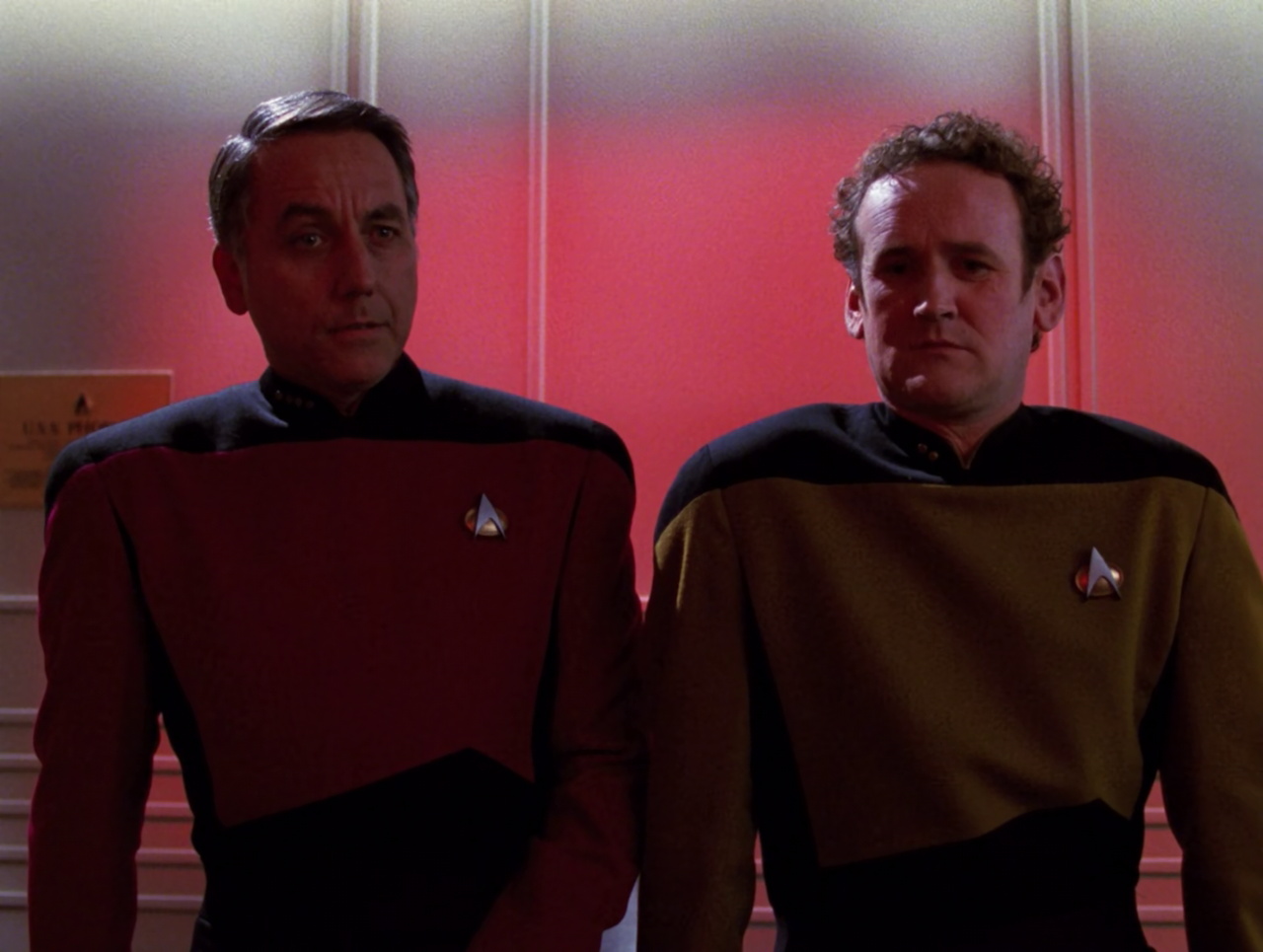
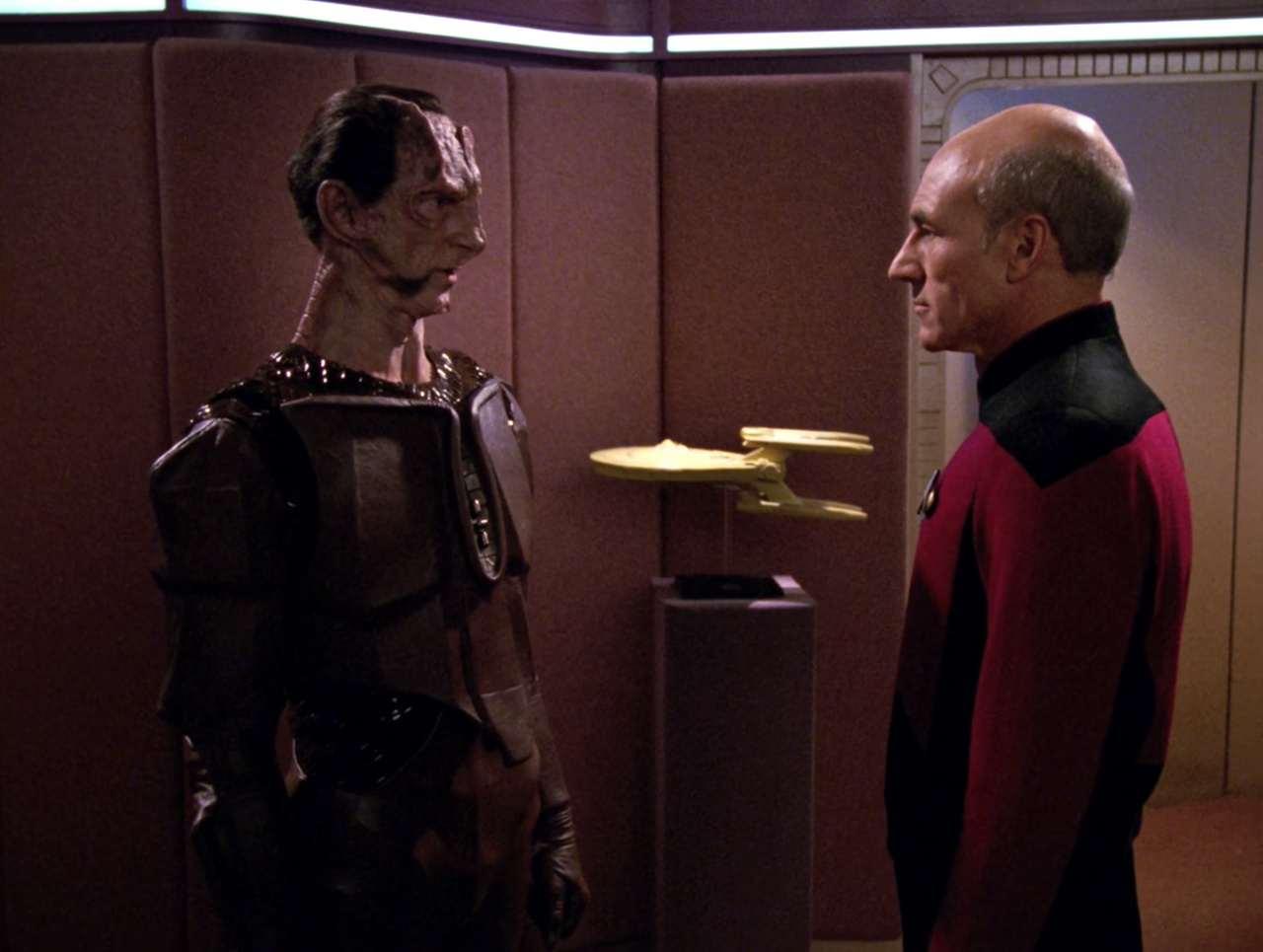
The Wounded began to set the table for Star Trek’s next spin-off: Deep Space Nine. The episode introduces the Cardassians for the first time, and gives Chief O’Brien – formerly a secondary recurring character – a major starring role ahead of his transfer to DS9. It’s an “Apocalypse Now” type of story, with the Enterprise-D tracking a rogue Starfleet captain who seems hell-bent on a personal anti-Cardassian vendetta. Picard and O’Brien are forced to work with the dislikable Cardassians, and must learn to put their differences aside. A fantastic character piece for O’Brien, a wonderful introduction to an iconic and hugely important alien race, and a tense story as well.
1992: Relics
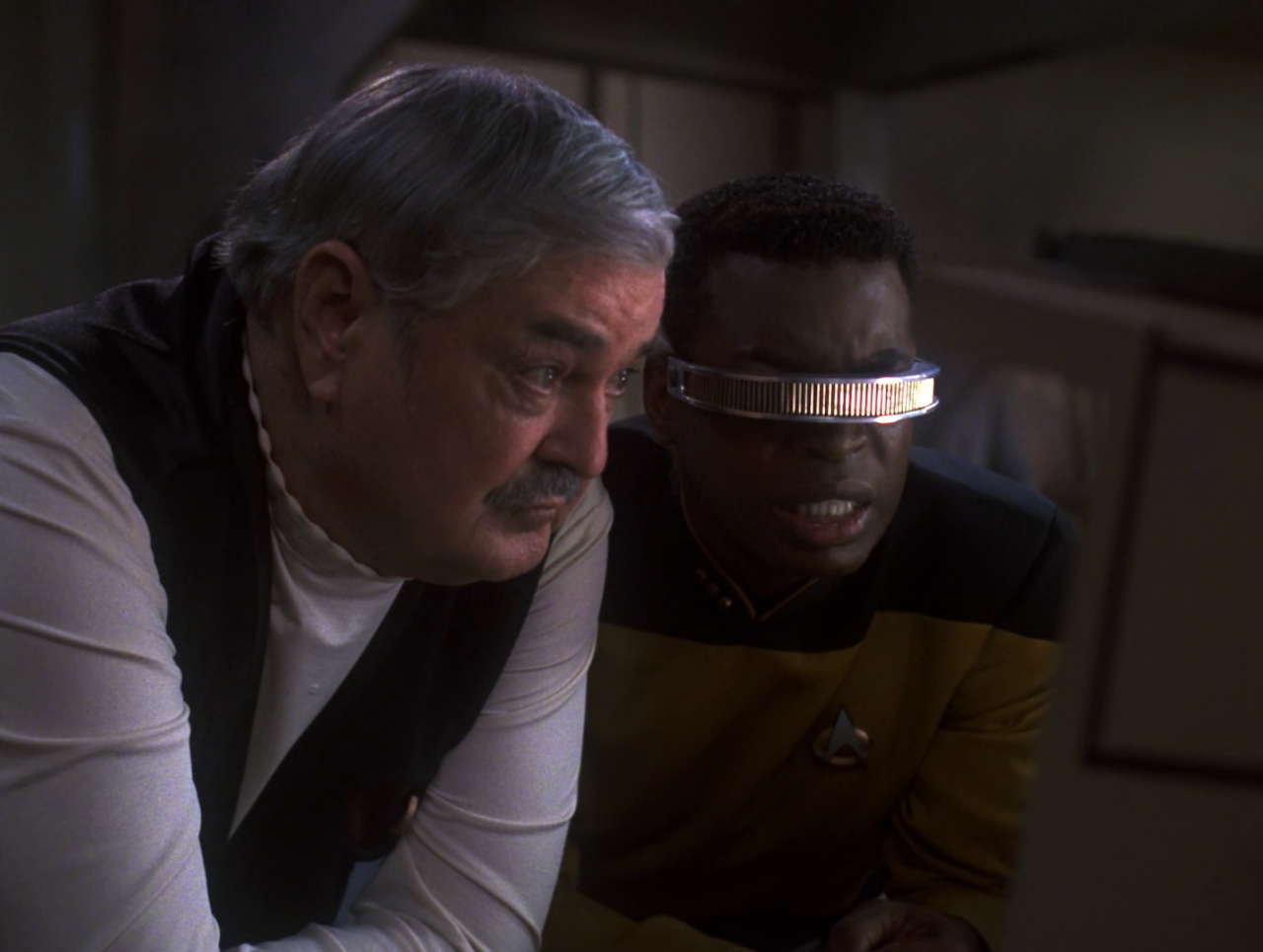
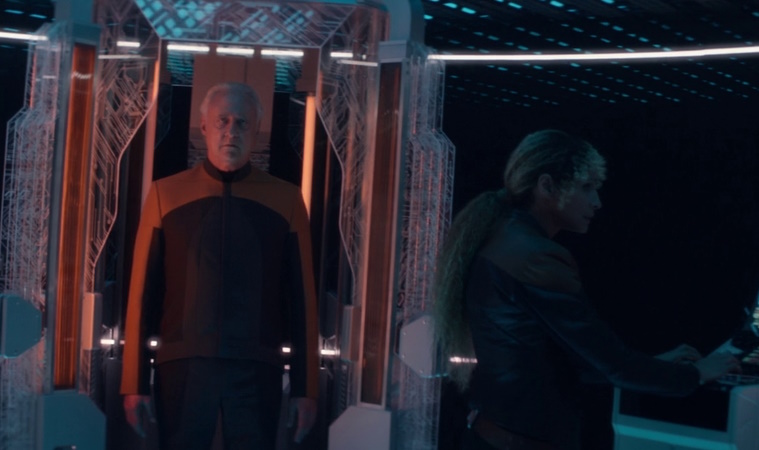
After Spock had appeared in Unification the previous year, it was now Scotty’s turn to team up with the crew of the Enterprise-D! This is where “transporter suspension” became a thing, as Scotty used the method to survive the crash-landing of the small USS Jenolan. The episode is a fun and occasionally awkward coming together of Star Trek’s first two engineers – Scotty and Geordi La Forge – and it’s also a story with a message about older people and how they can feel left behind as technology evolves.
1993: Emissary
Kicking off DS9′s run is Emissary, widely regarded as the best Star Trek premiere episode. Commander Sisko – a veteran of the Battle of Wolf-359, and a single dad to his young son, Jake – is tapped to take command of Terok Nor, newly recommissioned as Deep Space Nine: Starfleet’s first outpost in the Bajoran system. Emissary does a great job at establishing the dynamic between Starfleet and the Bajorans, who have just come off a long fight for their independence against the Cardassians, and it also sets up the Bajoran Wormhole – a gateway to the Gamma Quadrant.
1994: Generations
This is it: the crossover fans have waited and waited for! Captain Kirk and Captain Picard work together – thanks to the time-shifting effects of the Nexus – to stop Dr Soran from destroying whole planets and stars. The film seems to get a bit of a bad rap nowadays, but I genuinely adore almost every aspect of it. We get to see the launch of the Enterprise-B, filling in a bit of a gap in Star Trek’s “lost years,” we learn what happened to Captain Kirk, the Duras sisters return as fun secondary antagonists, and Data gets to experiment with emotions for the first time. There’s a lot to love in Generations.
1995: Improbable Cause and The Die Is Cast
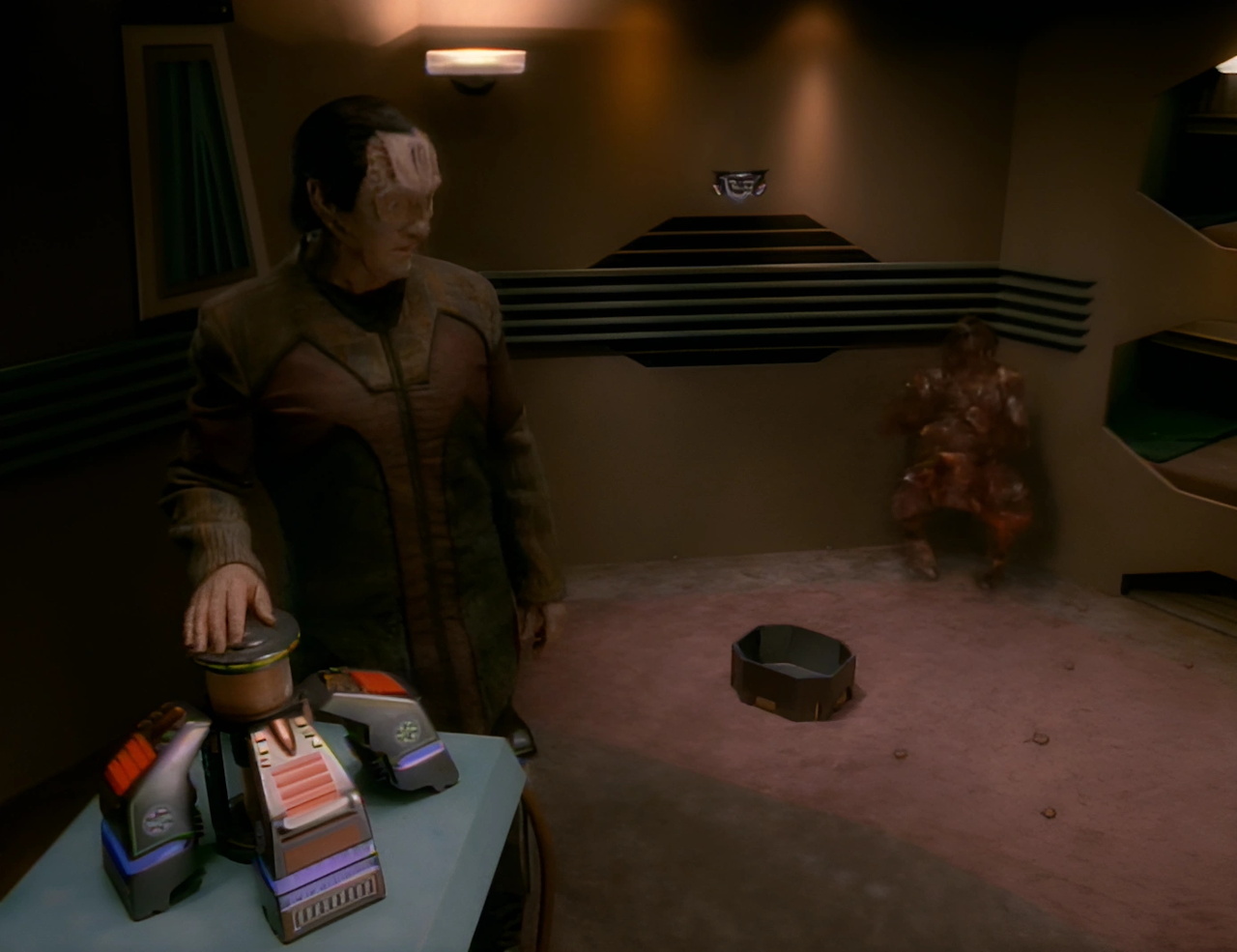
This two-part story picks up the idea of a conflict between the Dominion and the various Alpha Quadrant powers. Garak’s ex-mentor and friend, Enabran Tain, recruits him to join a plot to destroy the Founders’ homeworld, which the Obsidian Order is working on in conjunction with the Romulan Tal Shiar. It’s an intense story, and Garak makes for a wonderfully complex anti-hero, in places. It also paves the way for the Cardassian-Dominion alliance, which would in turn lead to the Dominion War.
1996: Investigations
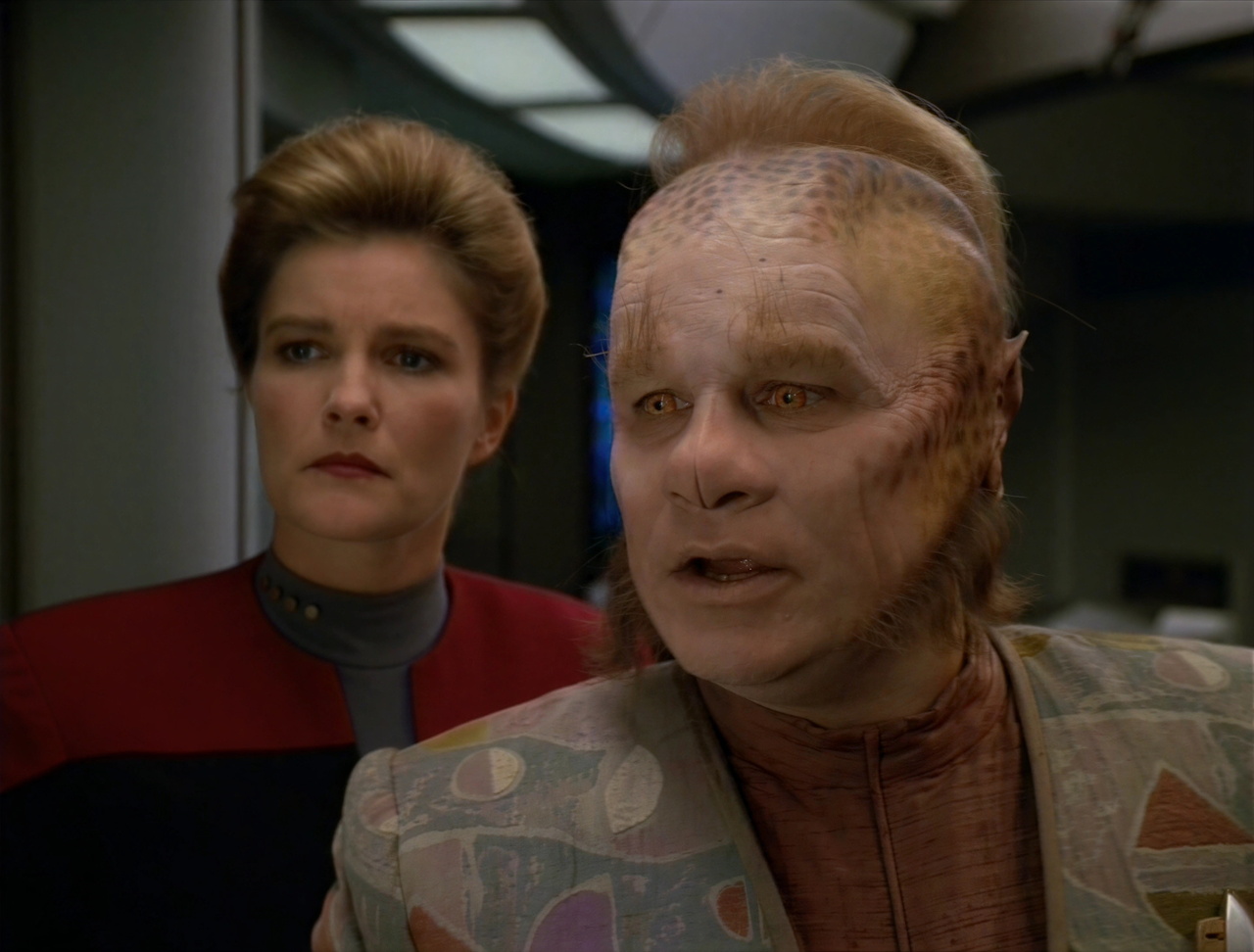
This episode furthers Voyager’s Kazon conflict arc, and it follows Neelix trying to figure out what’s happening aboard the ship – and whether someone might be betraying the crew. It sets the stage for Basics – the two-parter that would end Season 2 and kick off Season 3 later in the year. It’s a fun mystery story that has genuine stakes, and it’s great to see Neelix in a different setting for a change. This conflict with the Kazon had been brewing across the season – and, really, since the start of the show – and Investigations took it to a new level. 1996 also gave us First Contact and two episodes made for the 30th anniversary, all of which are great! But I think Investigations is just no less enjoyable.
1997: Call to Arms
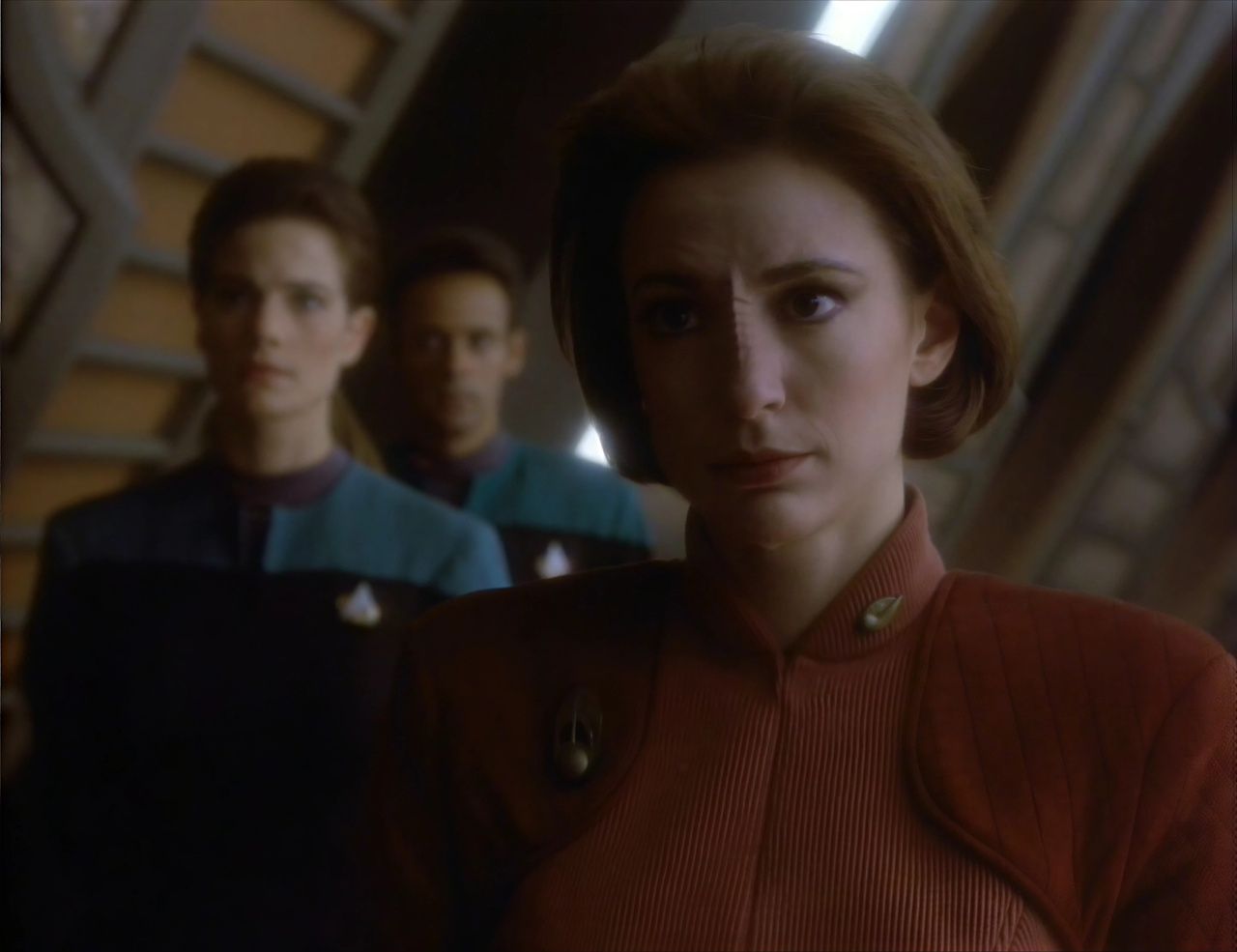
I love DS9′s Dominion War arc, which kicks off with the explosive episode Call to Arms. Sick of seeing Dominion reinforcements pouring through the wormhole, headed for Cardassia, Sisko and the crew concoct a scheme to deploy a minefield – knowing that doing so will likely turn the “cold war” into an all-out conflict. We get great moments with practically everyone – Rom plays a huge role in setting up the mines, Kira has a wonderful scene where she reports for duty, Sisko and Weyoun dance around each other while talking peace… it’s a fantastic episode, and a great way to start this incredible arc.
1998: In The Pale Moonlight
I think choosing an “all-time favourite Star Trek episode” would be way too difficult – but if I had to, In The Pale Moonlight would be a serious contender. Captain Sisko recounts a scheme to bring the Romulans into the Dominion War as allies, and the nefarious way he did it along with Garak. A fake holosuite recording, the assassination of a Romulan Senator, and Sisko’s grim assessment that he “can live with it,” because it was the only way to turn the tide in the war, make In The Pale Moonlight one of Star Trek’s darkest episodes. Avery Brooks’ performance is incredible, though, and the whole thing is just fantastic.
1999: Equinox, Parts I-II
Compared to the crew of the titular USS Equinox, Voyager’s journey home seems like a walk in the park! Jokes aside, this episode really challenges viewers with a moral question: what would *you* have done in Captain Ransom’s place? Ransom isn’t a typical villain, and while his actions are appallingly horrific, we’re able to at least understand why he became so desperate and how the burden of commanding a smaller, less-powerful ship through the dangerous Delta Quadrant affected him. Janeway gets some good moments in this pair of episodes, too, which wrapped up Season 5 and kicked off Season 6.
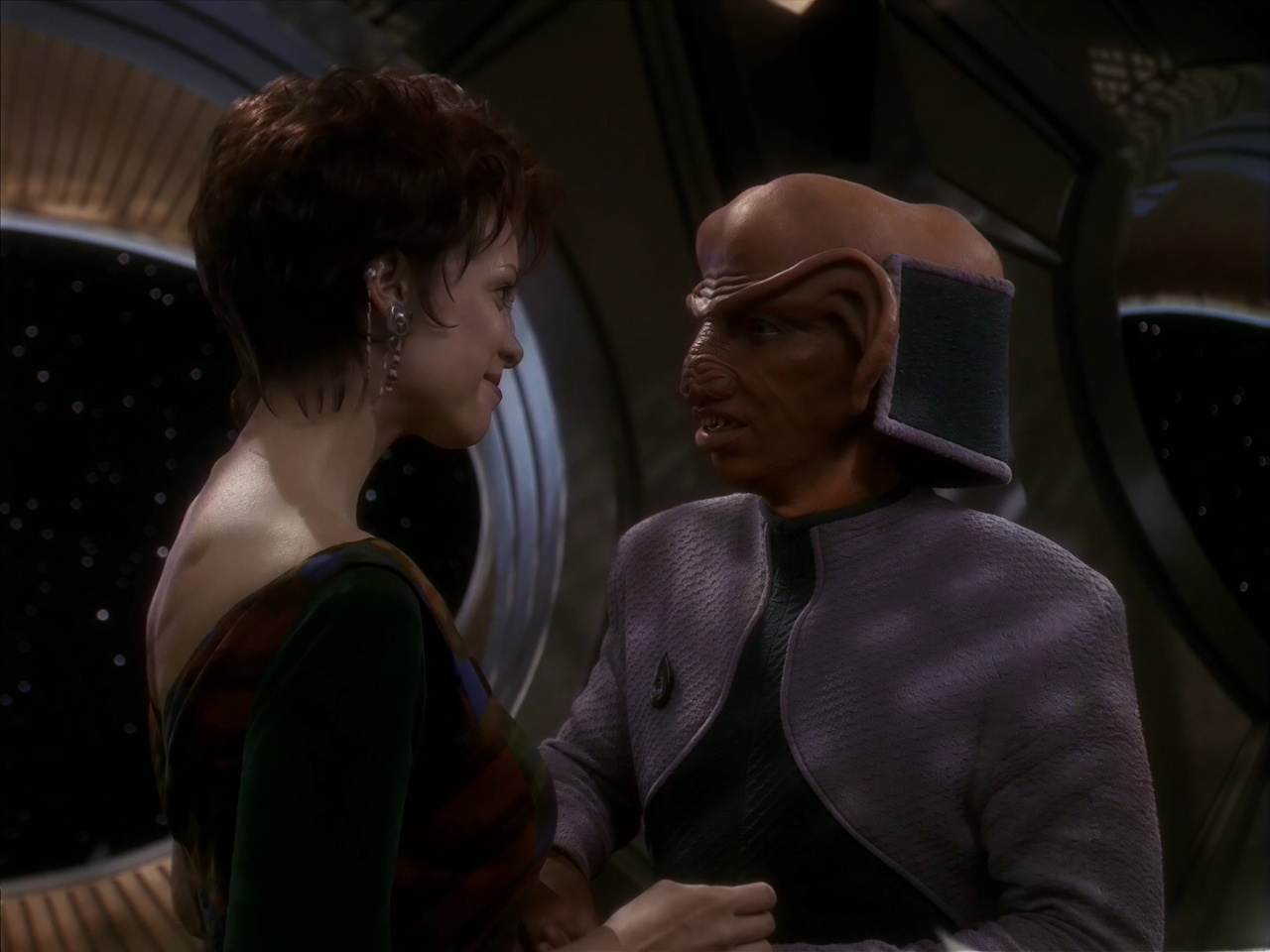
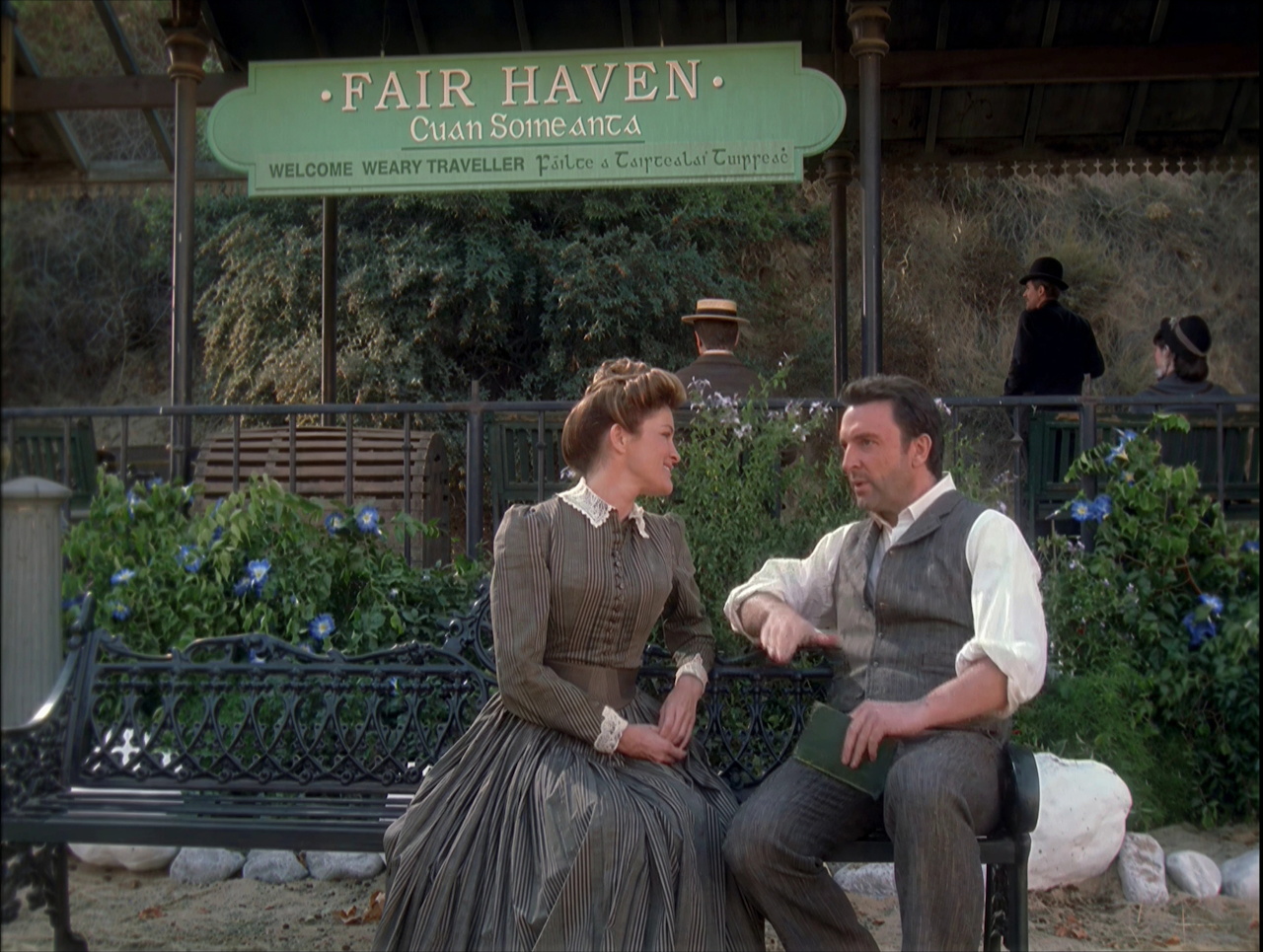
2000: Fair Haven and Spirit Folk
These two episodes from Voyager’s sixth season form two parts of a connected story, so I’m lumping them together this time. The crew of Voyager begin taking time away from their journey home to visit a recreation of an Irish village on the holodeck – and the expected hijinks ensue! Captain Janeway gets a rare romantic storyline, we see more of Tom Paris’ holonovel-writing skills, and later, the holographic villagers begin to realise that everything is not as it seems…
2001: Endgame
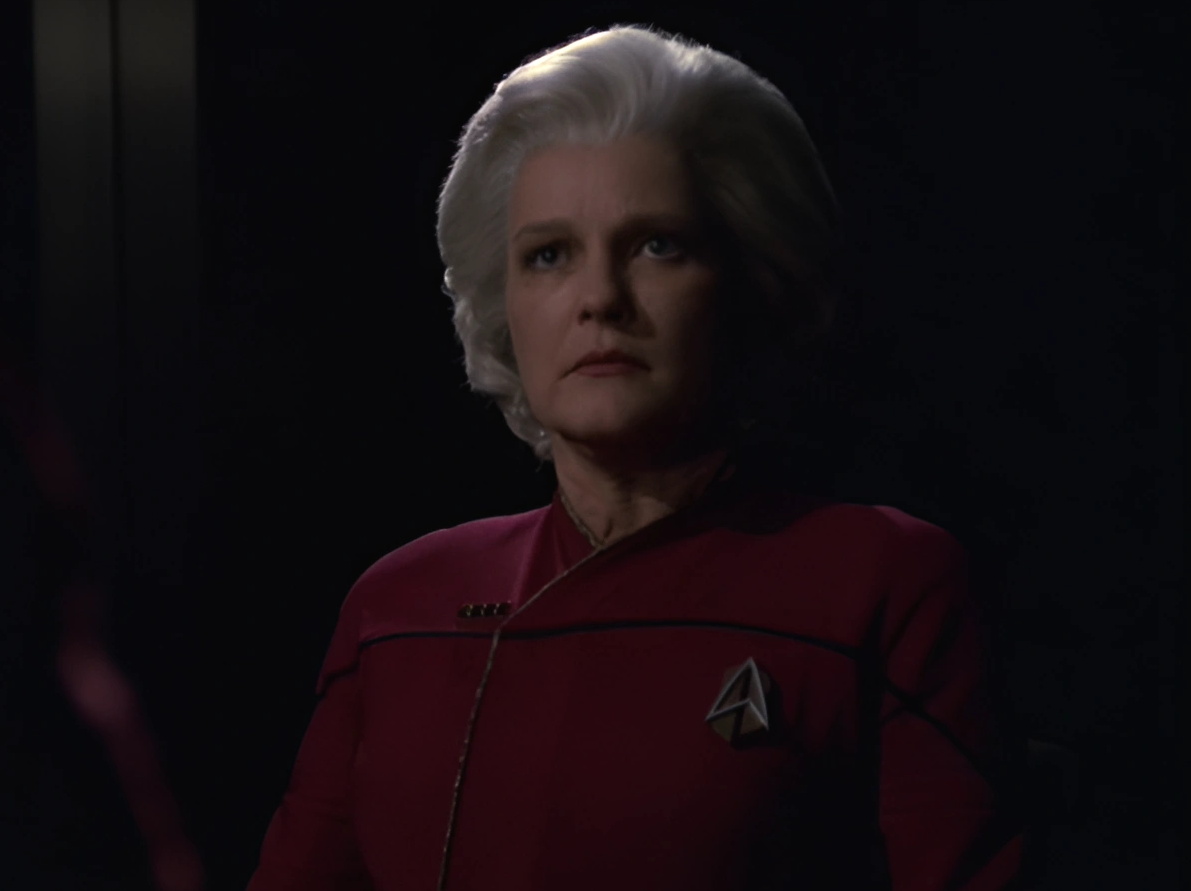
Voyager’s seven-year run comes to an end with a time-travelling Borg story – and one of the worst genocidal war crimes ever committed by a Starfleet officer! Click or tap here for more on that! This was the culmination of Voyager’s entire arc, the long-awaited return to the Alpha Quadrant and to Earth. The Borg, having been a thorn in the crew’s side on multiple occasions across the back half of the show’s run, were the only sensible choice for a story of this magnitude, and while I don’t agree with the actions taken by a time-travelling Admiral Janeway, the best thing about Star Trek is how it encourages its viewers to think and judge for themselves – and that, for me, is the core of this story.
2002: Minefield
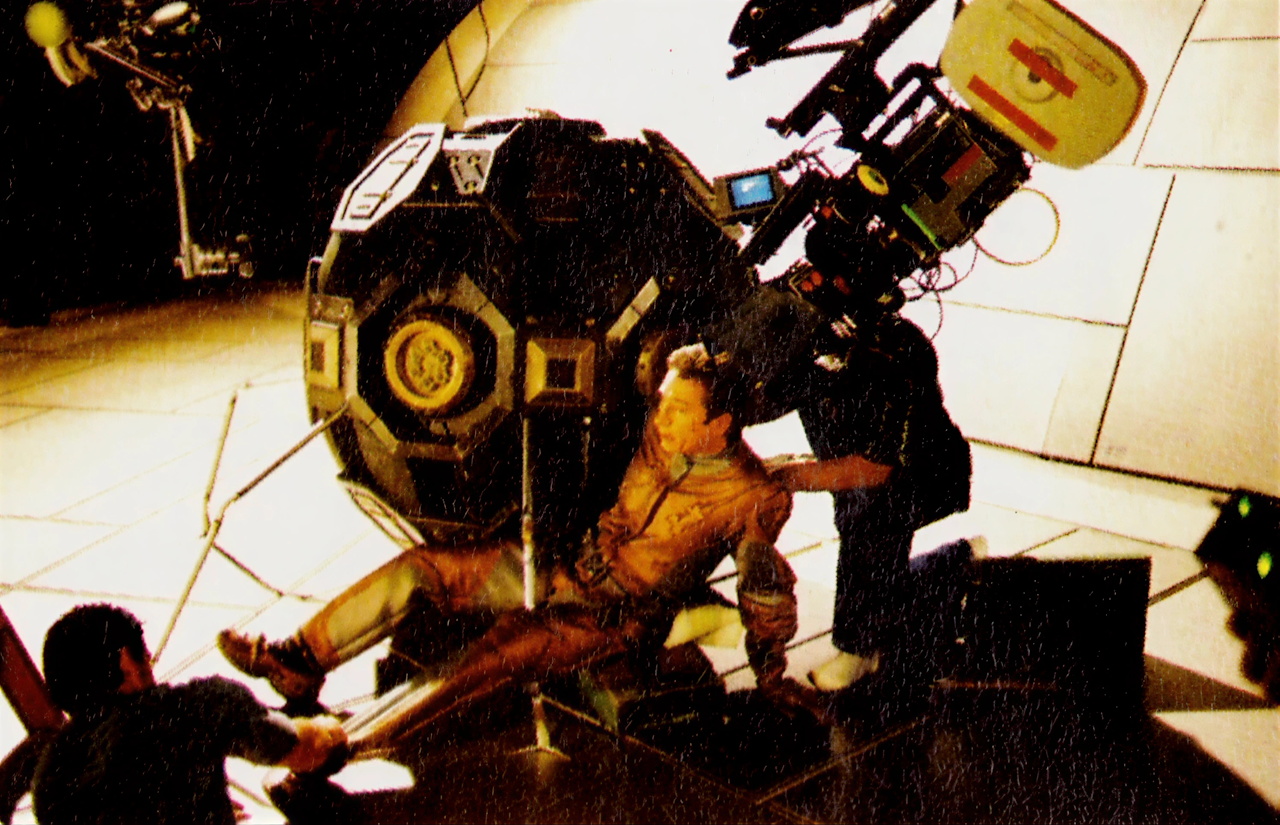
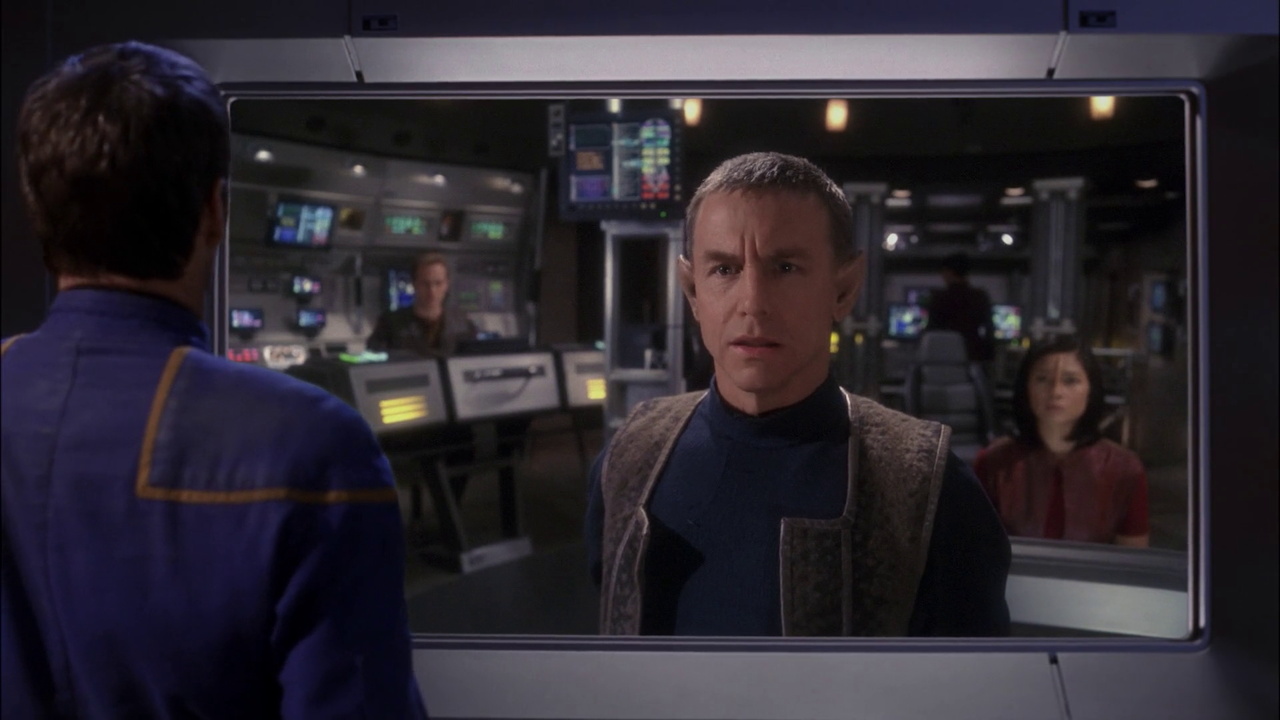
Enterprise arguably muddled the timeline just a little with Minefield – a “prequel problem” that a show set a hundred years before TOS was bound to create sooner or later! But the episode is solid, depicting the NX-01’s first encounter with the Romulans, and shows how humanity’s first contact with this secretive alien race did not go well! It’s also a great episode for Captain Archer and Reed, who get several moments together that explore their friendship in a bit more depth. And, hey, I have head-canon about cloaking devices that gets around the issue some folks had with the storyline!
2003: Impulse
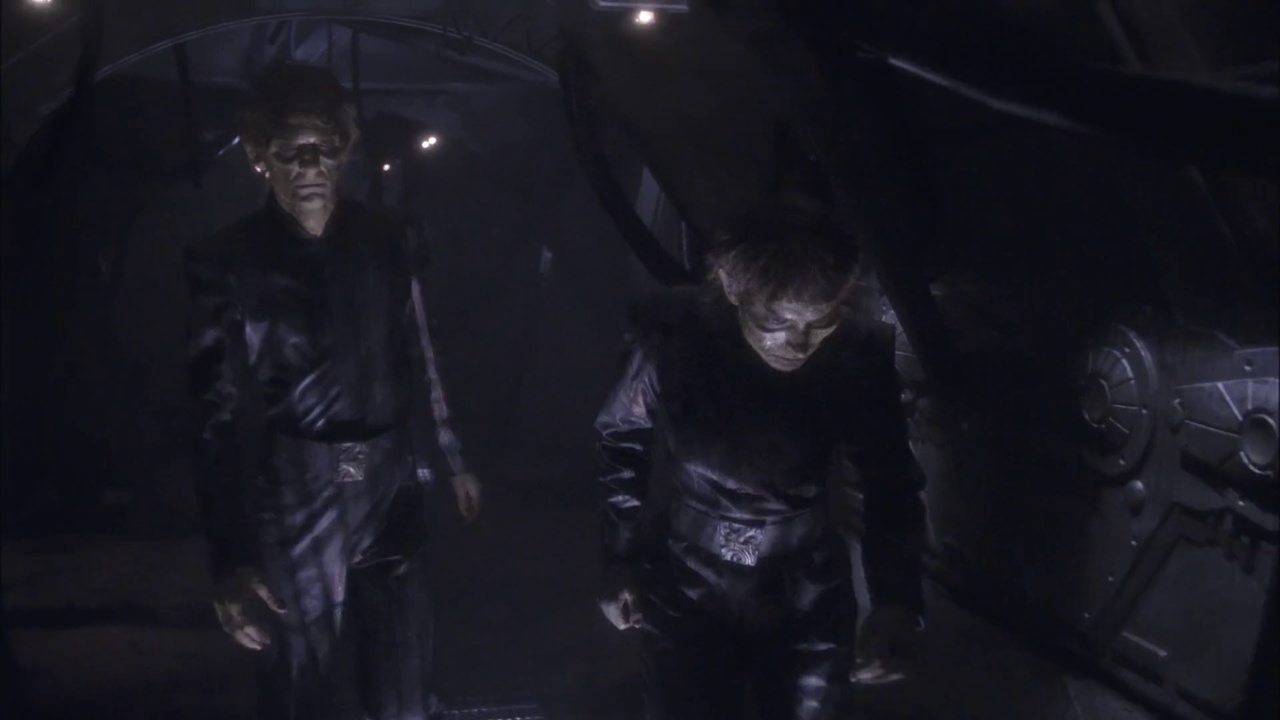
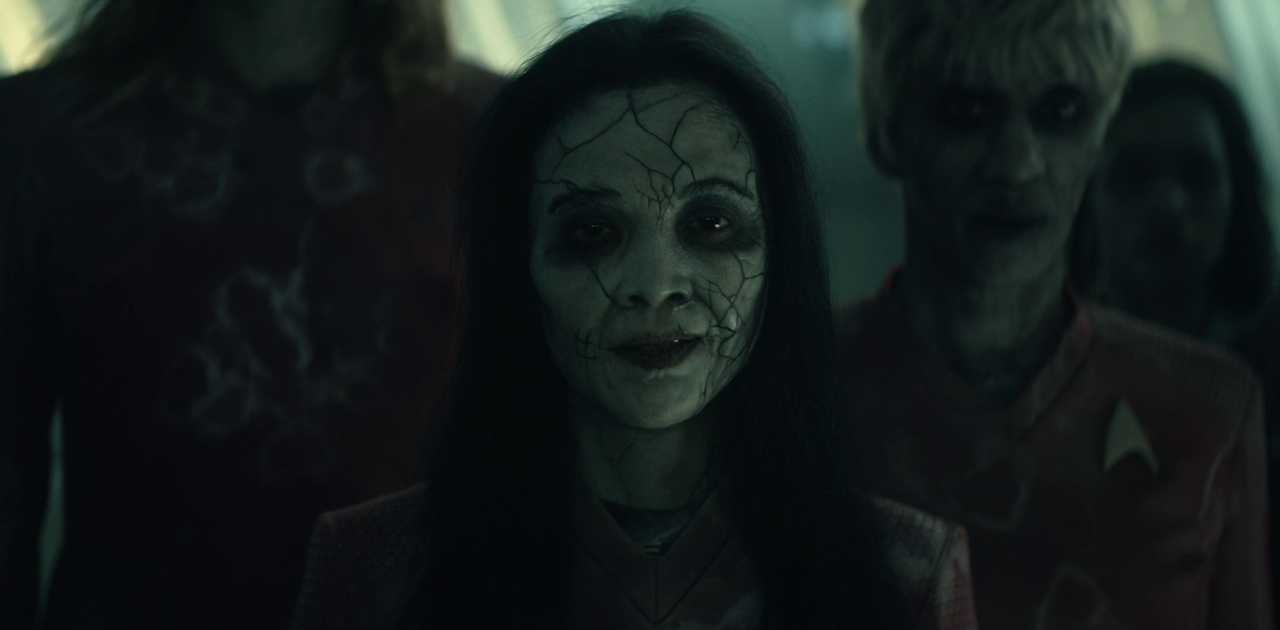
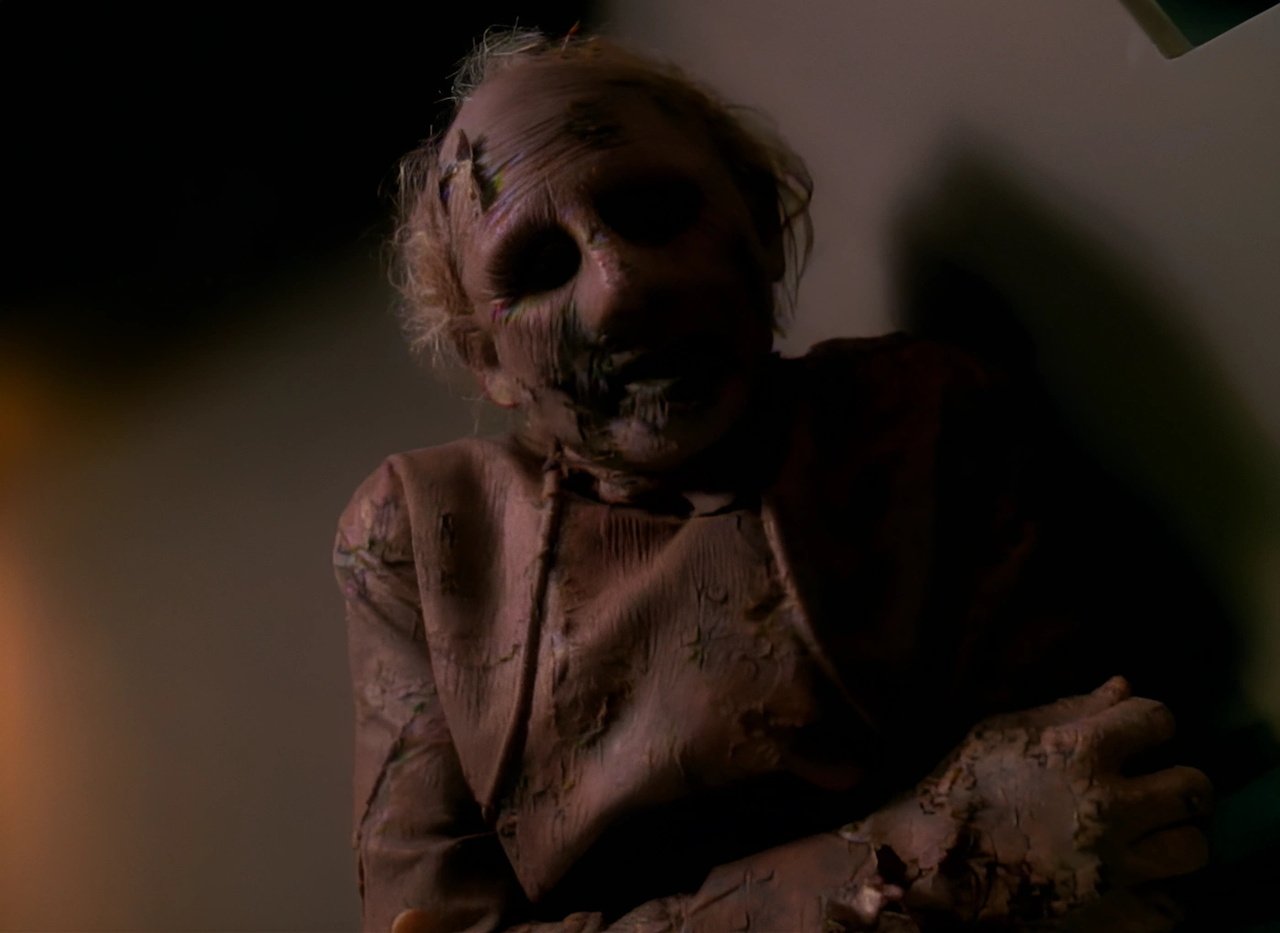
Impulse is the “Vulcan zombie” episode, featuring a horror tone and plenty of tension throughout! It’s also one part of a season-long serialised story, as the NX-01 is dispatched to the unexplored Delphic Expanse to track down the Xindi. The episode would become very important for T’Pol’s future character arc, as the whole “trellium” syndrome that the Vulcans in the episode contracted would be passed on to her, as well. It was a creative way to use the Vulcans; stripping away their emotional control and turning them into the episode’s antagonists/monsters.
2004: E²
E² shows how badly wrong Enterprise’s journey in the Delphic Expanse could’ve gone – in one timeline, the ship got thrown backwards in time and had to become a generation-ship, waiting for the moment where the real Enterprise would return. An older T’Pol – who lived for more than a century – meets her younger counterpart, Trip gets to work with his half-Vulcan son, and other characters get moments in the spotlight, too. It’s a time-loop paradox, which usually annoy me, but the way it’s handled works pretty well in the episode itself.
2005: In A Mirror, Darkly, Parts I-II
I wouldn’t usually choose a Mirror Universe episode… but In A Mirror, Darkly might just be the best of the bunch! The first episode to take place exclusively within the Mirror Universe, with only Terran characters in the spotlight, In A Mirror, Darkly works really well. We get a connection to The Original Series, which was unexpected but a ton of fun, and the return of two classic TOS villians with the Gorn and Tholians. A recreation of a Constitution-class ship – and TOS-era uniforms – makes for a fun visual presentation, too.
2006: Legacy
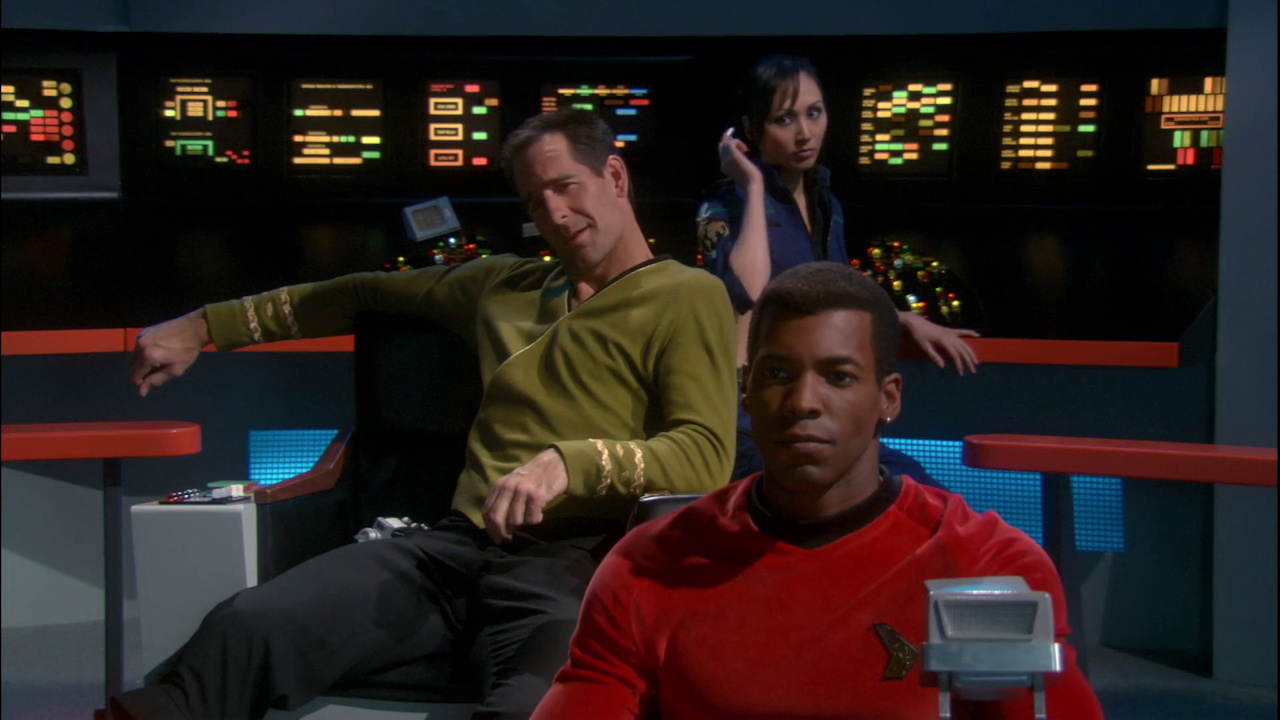
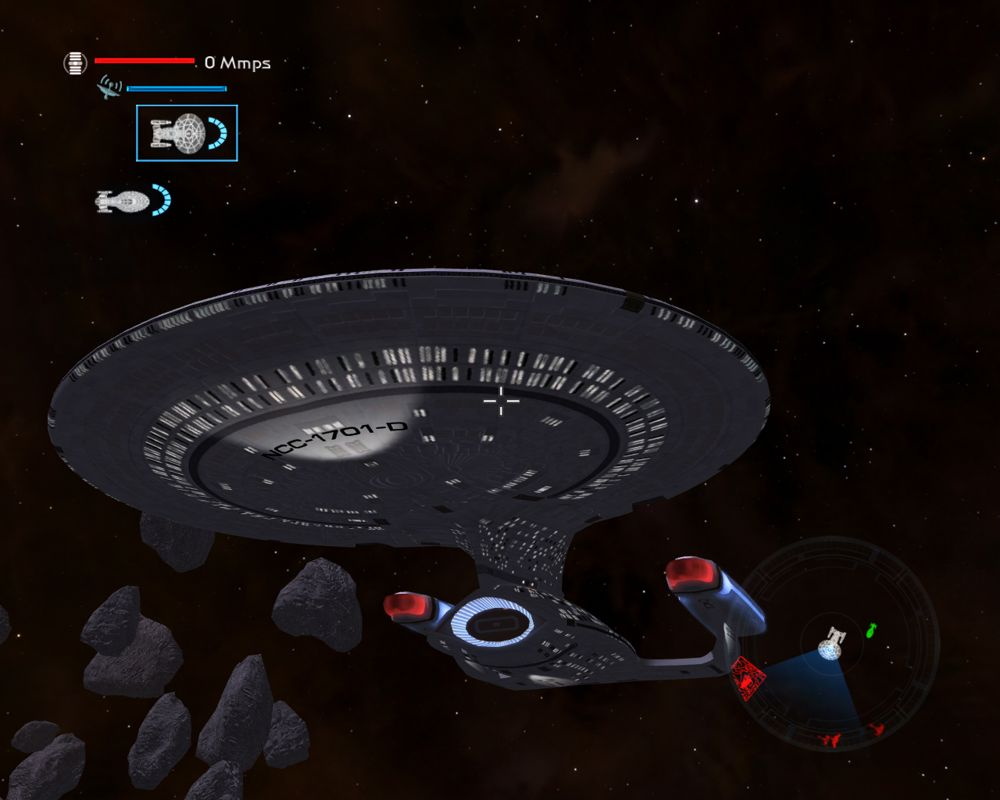
No, not the Picard successor series that was touted a couple of years ago! This is Legacy the video game – which was released on PC and Xbox 360 by Bethesda Softworks (yes, *that* Bethesda Softworks) and Mad Doc Software. The game is notable for bringing together all three Star Trek time periods – the 22nd, 23rd, and 24th Centuries – and bringing back all five captains as part of the voice cast. William Shatner, Patrick Stewart, Avery Brooks, Kate Mulgrew, and Scott Bakula all voiced their iconic characters – and that made this game feel like, well, Star Trek’s legacy. More than a year after we lost Enterprise, and with rumours of a new movie doing the rounds… it felt like things might be okay for Star Trek after all.
2007: Excelsior: Forged In Fire
This novel brings together The Undiscovered Country, which first saw Sulu in command of the USS Excelsior, and a plotline from Deep Space Nine, which saw Dax team up with a Klingon to take down an old enemy. I like the way the crossover was handled, and a prequel story that weaves together different parts of the Star Trek franchise can be a ton of fun when done well.
2008: Terok Nor Trilogy
These three books – which all released in 2008 – document the Cardassian occupation of Bajor prior to the events of DS9. Familiar characters, like Kira and Dukat, are present, and the saga adds a lot of backstory in between the events we’ve seen in DS9. I’m not familiar with all three books in the series, but the first one – titled Day of the Vipers – explores the beginnings of the Cardassian occupation, and from what I can remember, it was a fun book.
2009: Star Trek
The first reboot film premiered in 2009, and definitively proved that there was life in the Star Trek franchise – and more stories to be told. I did my best to support the film while it was in production, and I went to see it on the first day I could! I don’t think Star Trek ’09 is fantastic, but it’s a by-the-book reboot, it draws a definitive line under Star Trek’s earlier incarnation, and it succeeded at making this convoluted and nerdy franchise accessible to casual viewers and newcomers. Star Trek ’09 carried the flag for the franchise at a time when it was in danger of disappearing forever.
2010: Star Trek Online
I tried Star Trek Online shortly after it launched… but the parts I really enjoyed – i.e. the “Star Trek” – were, sadly, overwhelmed by the parts I didn’t – namely the “Online!” I just can’t get on with massively-multiplayer games, because nothing rips me out of a story quicker than being told I’m the “one and only hero” when there’s a literal queue of other “one and only heroes” lined up behind me, waiting to speak to the same NPC. Or seeing cOcKwAnk69 of the USS YourMumsASlag griefing his way across my screen. However… Star Trek Online is still going, some sixteen years later, it’s successfully transitioned to a free-to-play model, and has even managed to recruit practically every ex-Star Trek actor you can think of for voice roles. A ton of folks love this game… and even if it was never my thing, I can respect it. Online kept a candle burning for the 24th/25th Centuries and the Prime Timeline at a time when the franchise was more interested in prequels and reboots, too.
2011: Indistinguishable from Magic
This book picks up the storyline from Relics, which we discussed above, and pairs up Geordi and Scotty for another adventure. The story features appearances from Nog, Guinan, Reg Barclay, and a pair of unexpected villains in DaiMon Bok and Berlinghoff Rasmussen, both of whom appeared in The Next Generation. The title is a reference to Isaac Asimov’s famous saying, and while the story feels a bit fan-servicey with all the cameos, characters, and references, it’s fun enough for what it is.
2012: The Next Generation: The Next Level
Are re-releases a cheat? In any case, this re-release of three TNG episodes – Encounter at Farpoint, Sins of the Father, and The Inner Light – was a tease, really, to advertise and show off the upcoming Blu-ray remasters of the entire series. The Original Series had already been remastered, but this was fans’ first glimpse at TNG in high-definition. Unfortunately, the move away from physical discs in favour of streaming meant that TNG underwhelmed on Blu-ray (in terms of sales and revenue), and that, in turn, has meant that DS9 and Voyager never made it to the remastering suite… which is something I really hope Star Trek’s new corporate overlords will address!
2013: Into Darkness
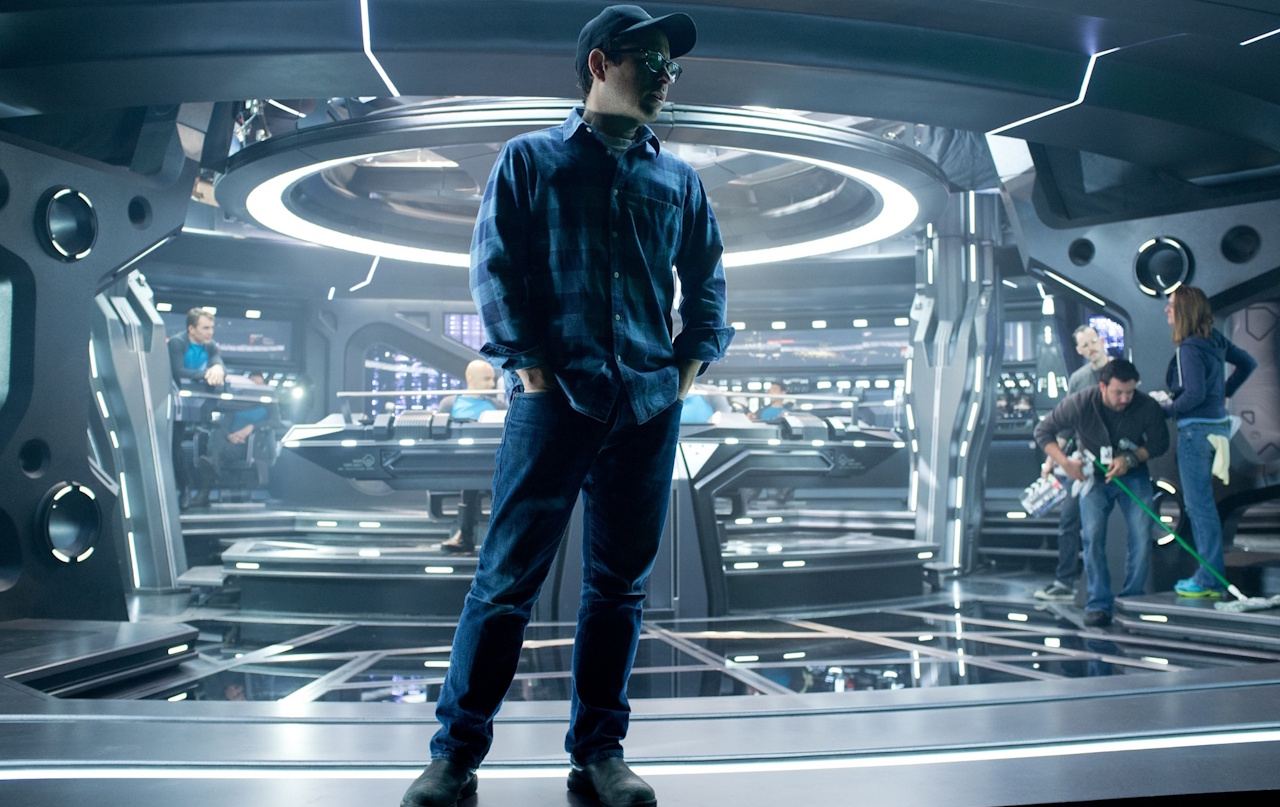
For me, this is still the high-water mark of the Kelvin trilogy – even though its big Khan reveal had been spoiled for me months in advance by investigative Trekkies online! The action-packed story is much more well-suited to J.J. Abrams’ style, there are some pretty shocking twists in the story, and we get to see an inversion of The Wrath of Khan, too. A fantastic “badmiral” makes for a wonderful secondary antagonist, and this universe’s versions of Kirk, Spock, and Khan have a really epic confrontation.
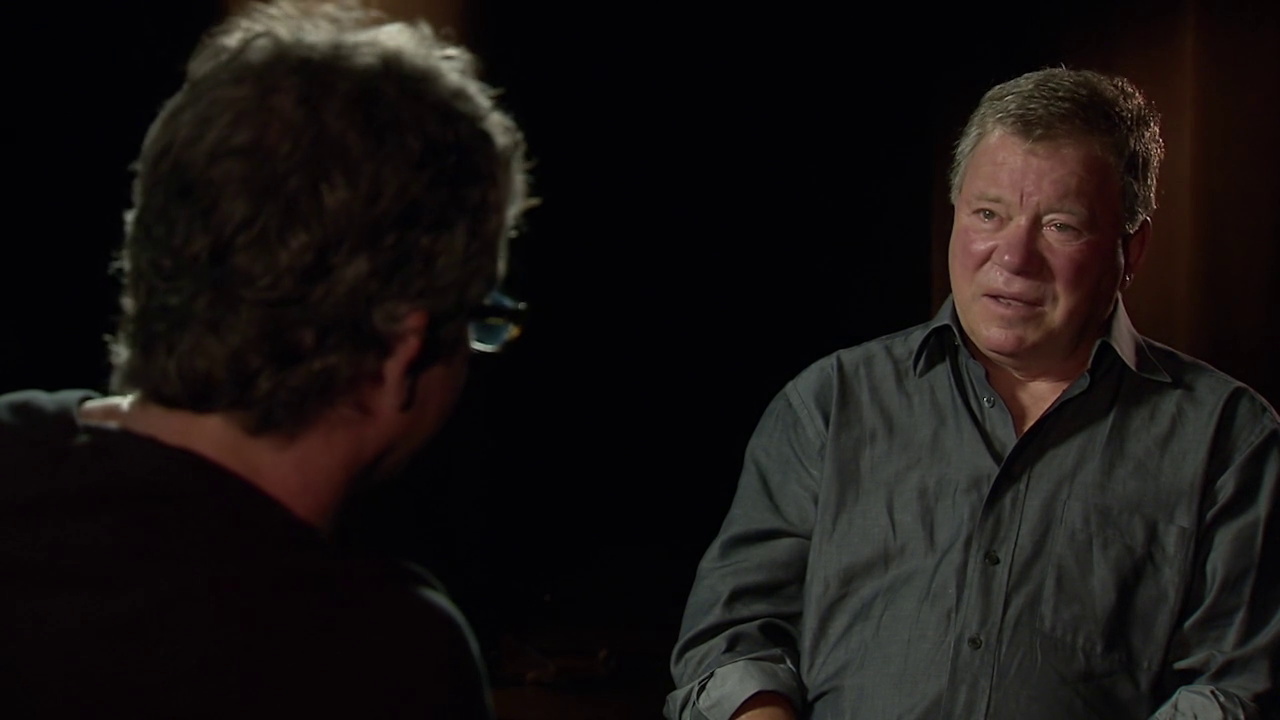
2014: William Shatner Presents: Chaos on the Bridge
It’s up to you to decide how accurate or unbiased you think Chaos on the Bridge is… but it’s a very interesting recounting of the events around The Next Generation’s creation and its first couple of seasons. This documentary seems to take aim at a few individuals in particular, singling them out for criticism, but it’s presented by William Shatner in a fun and engaging way. Sometimes it can be fun to catch a glimpse behind the scenes… and sometimes you come away from a documentary glad to know what happened, but disappointed at how petty and rude some of the folks involved with your favourite franchise could be!
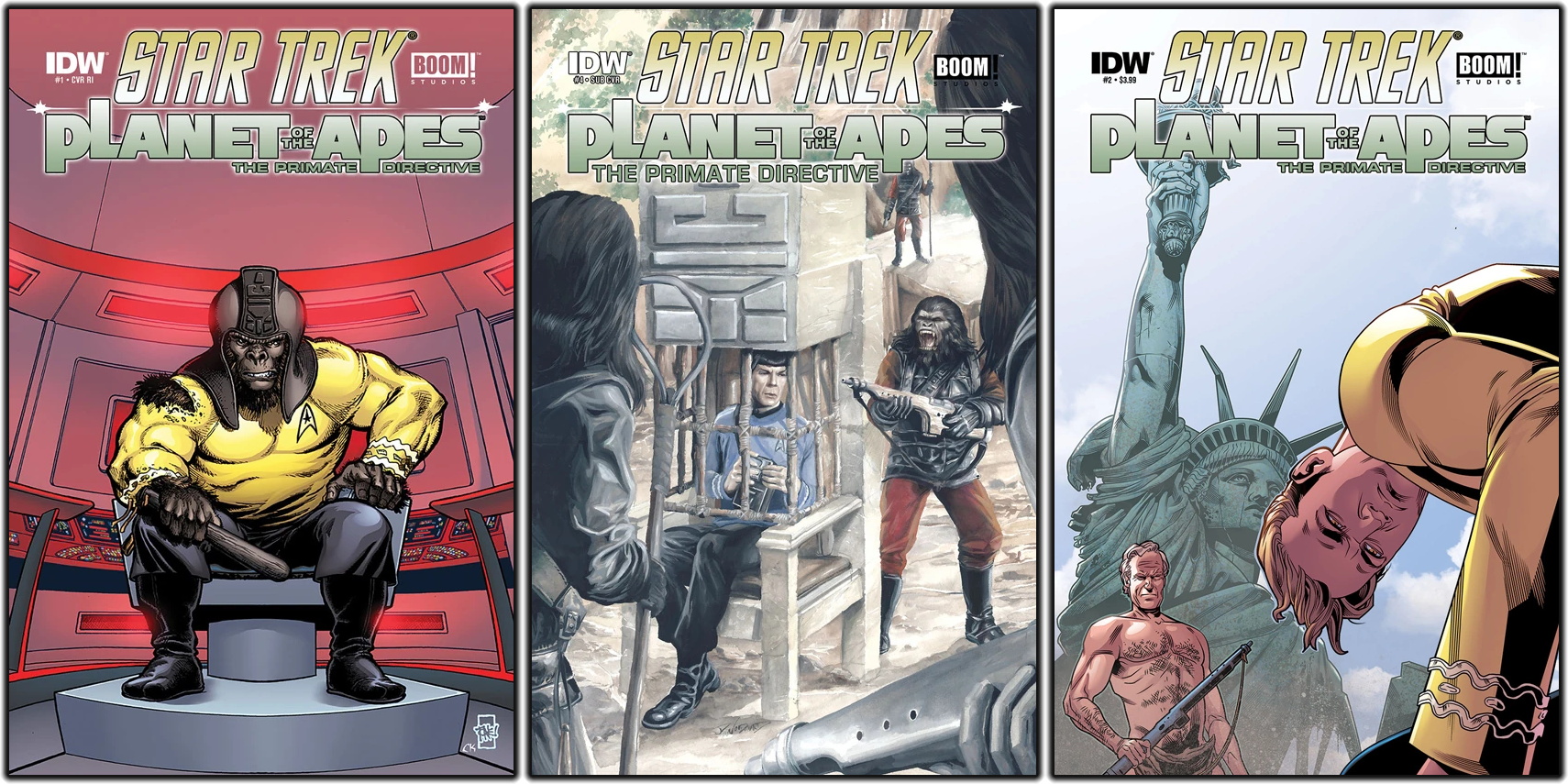
2015: Planet of the Apes: The Primate Directive
A crossover between Star Trek and Planet of the Apes sounds like it would be atrocious… but this comic series makes good on that silly concept! I’d never want to see Star Trek do something like this in live-action, but as a side project… I think it works well enough in comic book form. Kirk and co. cross over from the Star Trek universe to the Planet of the Apes timeline, discovering that the Klingons are secretly working with one faction of the titular apes.
2016: Beyond
The third and final Kelvin timeline film, Beyond was a bit of a dip in quality after Into Darkness. However, I can respect writer Simon Pegg’s intention to take the Kelvin timeline away from mindless action and closer to The Original Series in terms of narrative, even if not everything in the film succeeded at that. I liked the connection to Enterprise, and the idea that someone from that era might struggle in the more enlightened and less violent 23rd Century. There’s a message at the heart of the story – and messaging is something that Star Trek has always done.
2017: Context is for Kings
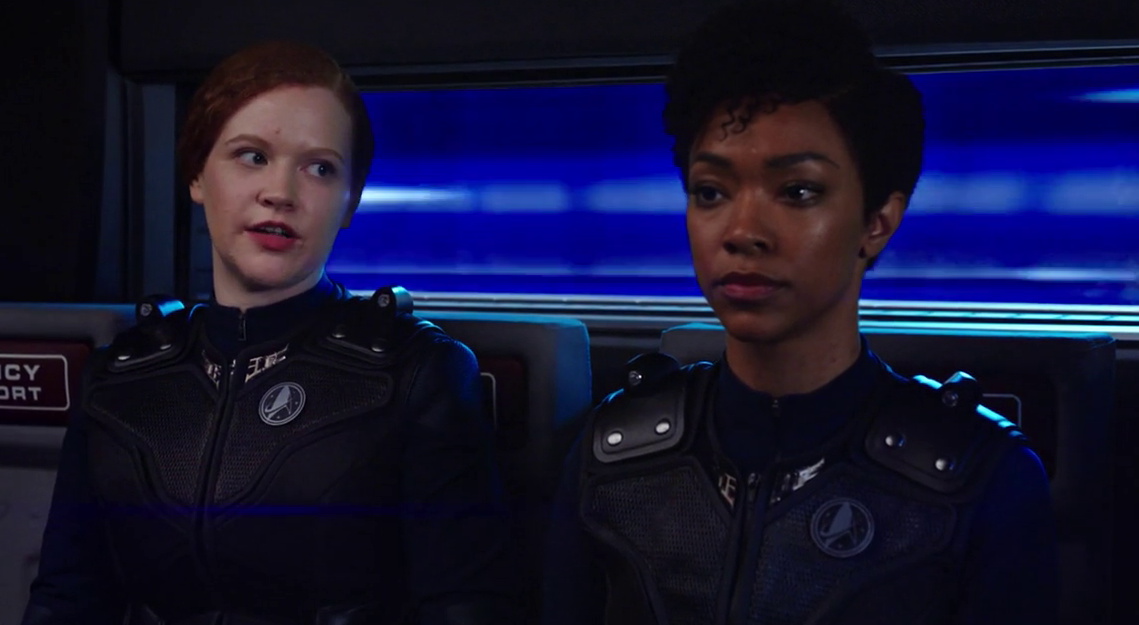
Discoverygot off to a rocky start, and Context is for Kings had the tough task of starting to smooth things over with a fan community that was arguably less than impressed! It’s an action-packed episode, in places, featuring a monster loose aboard the wrecked USS Glenn, but it’s also noteworthy for introducing us to the USS Discovery itself, as well as regular characters like Stamets, Tilly, and Captain Lorca.
2018: The Brightest Star
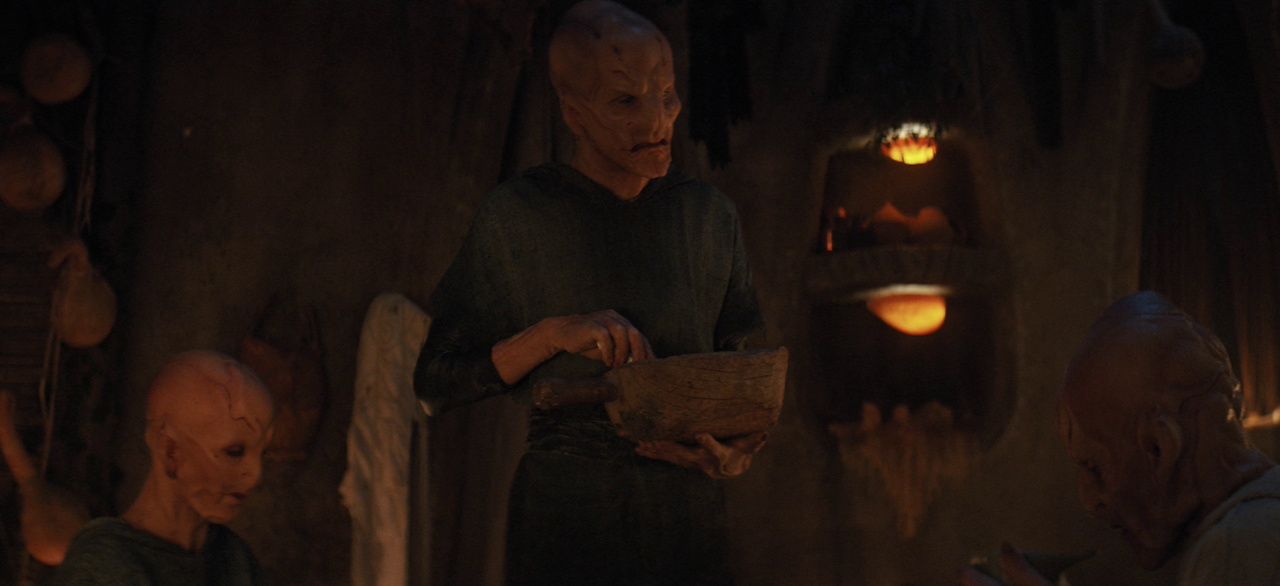
Short Treks was conceived for one reason and one reason only: to convince fans to remain subscribed to CBS All Access in between seasons of Star Trek! But that nakedly commercial purpose actually led to some fun stories – and a concept that, sadly, fell by the wayside way too soon. The Brightest Star gives us Saru’s origin story – how he came to escape his home planet, and the domination of the Ba’ul, to join Starfleet. Michelle Yeoh reprises her role as the Prime Timeline version of Georgiou, too. It’s a sweet little story – and one that proved Short Treks’ worth.
2019: An Obol for Charon
One of the few Discovery episodes that I feel works as a standalone piece, An Obol for Charon interrupts the show’s second season’s ongoing story arcs to introduce us to a brand-new – and very alien-feeling – life-form: the sphere. This would go on to have massive storytelling implications later on, but the episode itself works on its own. I love Captain Pike in this one, and after so many Discovery stories were all about action or soap opera levels of character drama, it was nice to get a classic-feeling episode about seeking out new life!
2020: Nepenthe
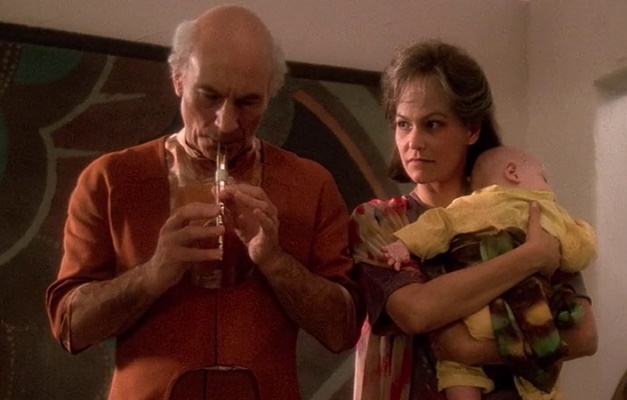
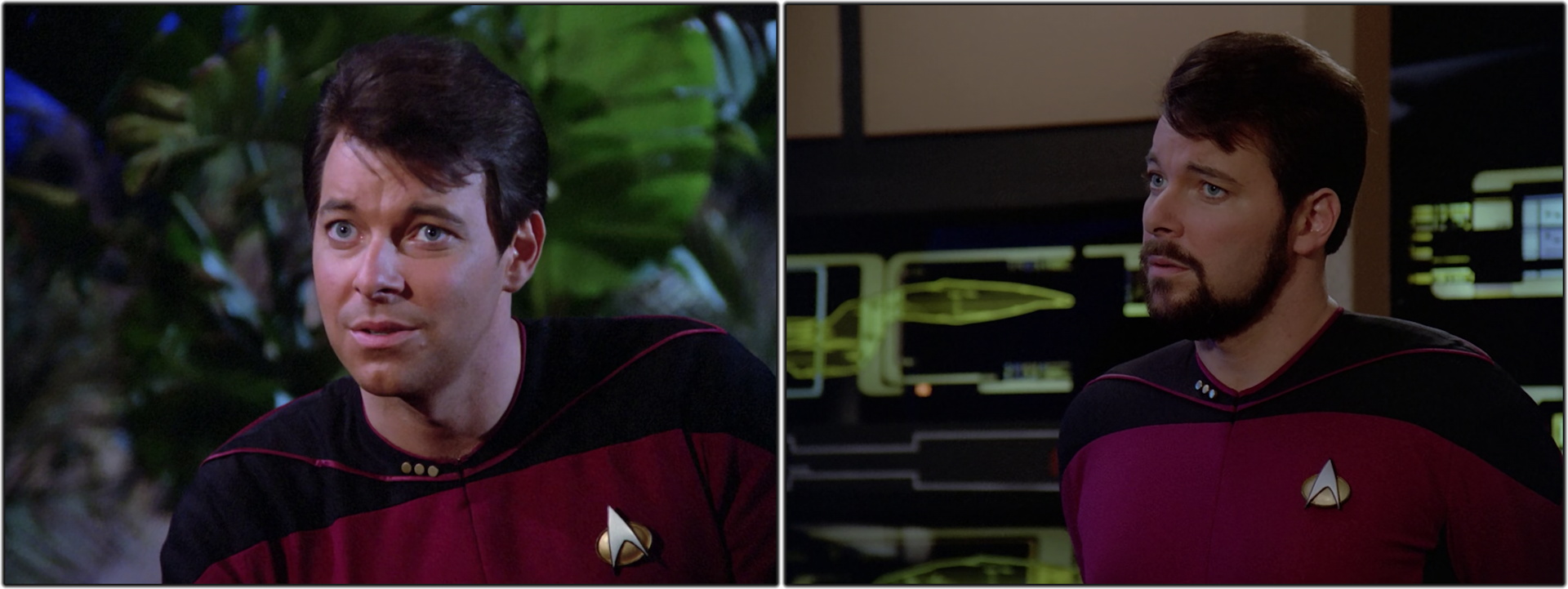
Though it feels bittersweet to return to this episode, in light of how subsequent Picard stories landed… I can’t deny that Nepenthe seemed absolutely brilliant on that first viewing. Picard escapes the clutches of the Romulans and makes it to the planet of Nepenthe with Soji… the home of Riker and Troi. Their reunion after so many years was incredibly emotional for this old Trekkie, and I enjoyed seeing the series take a moment to step away from its mysteries and plots and ex-Borg to let us hang out with these characters. In hindsight… well, I think it was a mistake to do a story like this when other ongoing storylines needed the time and attention. And Riker and Troi would return for bigger roles in Season 3 anyway. But on its own, and without the benefit of hindsight, it would’ve been my favourite episode of Season 1.
2021: First First Contact
This episode feels like it perfectly caps off Lower Decks’ first phase or first narrative arc. The crew of the USS Cerritos gets to save the day, and everyone has to pull together in a single, connected story to save a stricken Starfleet vessel. The return of Sonya Gomez was fun, it was a nice little rarity to see everyone in a single storyline, instead of being split up into A- and B-stories, and there were some genuinely emotional and high-stakes moments. I liked that this was a scientific and engineering puzzle, not something that needed violence and phaser fights, too.
2022: The Star Gazer
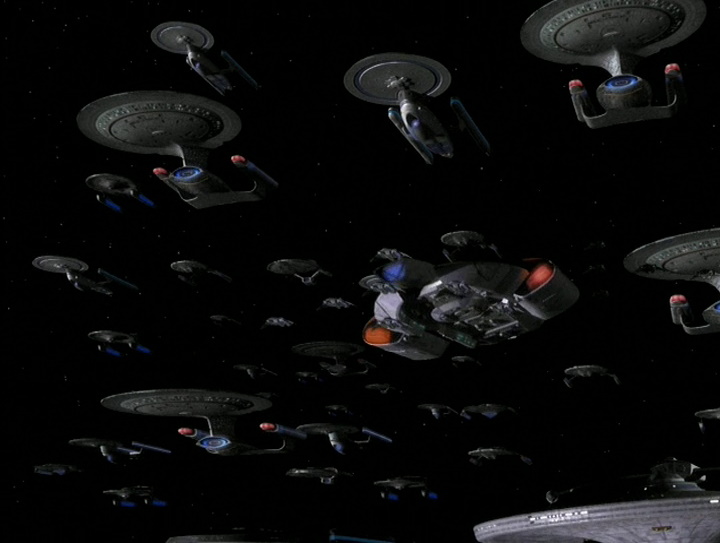
I’m caveating all of my Picard inclusions, aren’t I? This one comes with the caveat that, despite being a fantastic story and introducing a truly frightening new vision of the Borg… the subsequent nine episodes absolutely ruin The Star Gazer on a repeat viewing. Picard Season 2 was, on the whole, dog shit – but hey, it got off to a fun start, at least! I liked seeing Picard and Rios back in Starfleet, young Elnor joining the Academy as a cadet, and the new USS Stargazer, too. It was also fun to see a big, diverse Federation fleet after the disappointing copy-and-paste job back in Season 1.
2023: Hegemony
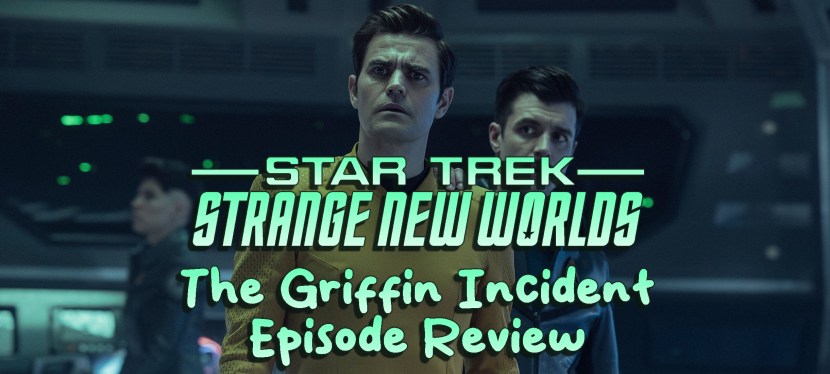
Strange New Worlds’ second season ended in spectacular fashion. The Gorn conflict, which had been part of the show since its first season, reached an explosive climax with an attack on a human colony. Several members of the Enterprise crew end up abducted, a young version of Montgomery Scott comes aboard for the first time, and Captain Pike has to figure out a way to come to the aid of the survivors of the USS Cayuga. The conclusion at the start of Season 3 was fantastic, too!
2024: Face the Strange
Two caveats this time! One: I haven’t seen the Lower Decks episodes that aired this year, and if I had… I might not have picked Face the Strange for this list. Two: Discovery’s fifth season was, on the whole, repetitive and just not very good. So… yeah. However, Face the Strange is a bit of a diamond in the rough; a rare gem of an episode that stands on its own two feet and works pretty well. It was creative with its time-skipping idea, Commander Rayner got some much-needed development, and seeing Burnham having to come face-to-face with a younger version of herself was, if nothing else, a fun visual.
2025: Terrarium
Far and away the best episode of Strange New Worlds Season 3 – and definitely a top ten or even top five for the series as a whole. Lieutenant Ortegas finally gets a belated turn in the spotlight, trapped with a Gorn on a desolate planet on the far side of a wormhole. After Ortegas had been abducted by the Gorn and injured, she was still dealing with the after-effects of that experience – and coming face-to-face with a Gorn was her own personal nightmare. The episode was perfectly paced, the setting was bleak, and there was an emotional sucker-punch right at the end, too.
2026: Across The Unknown
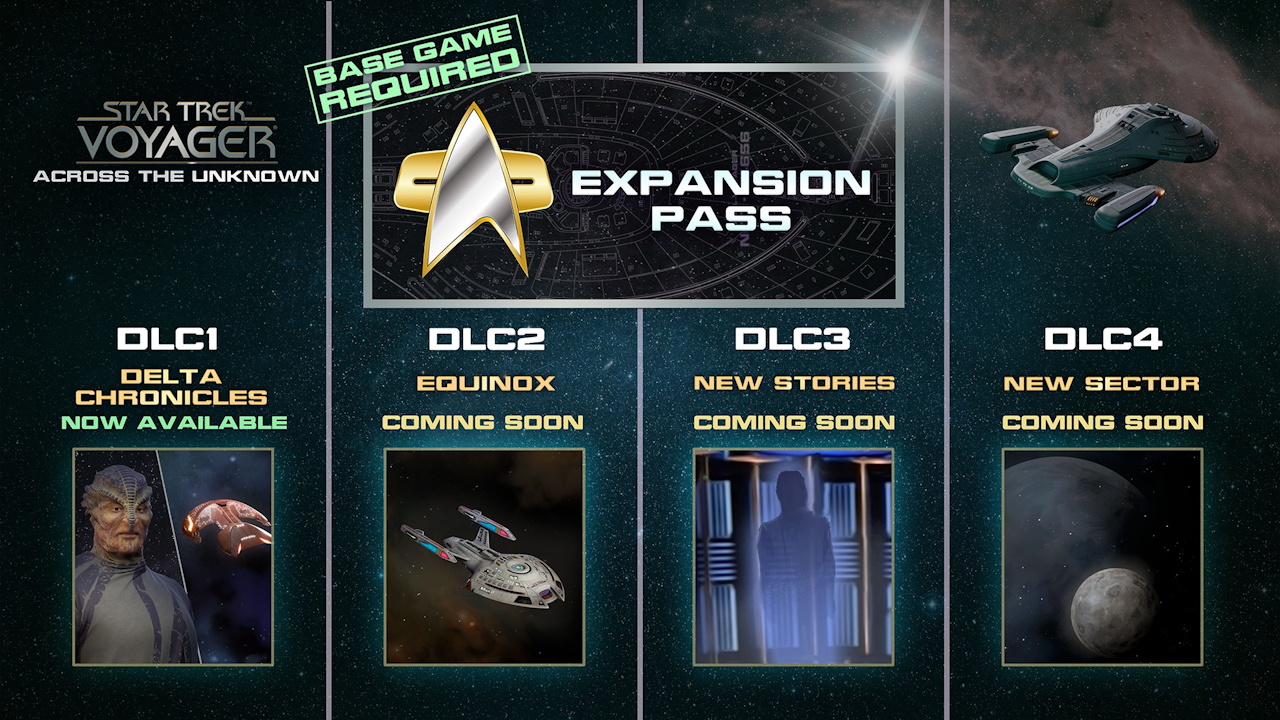
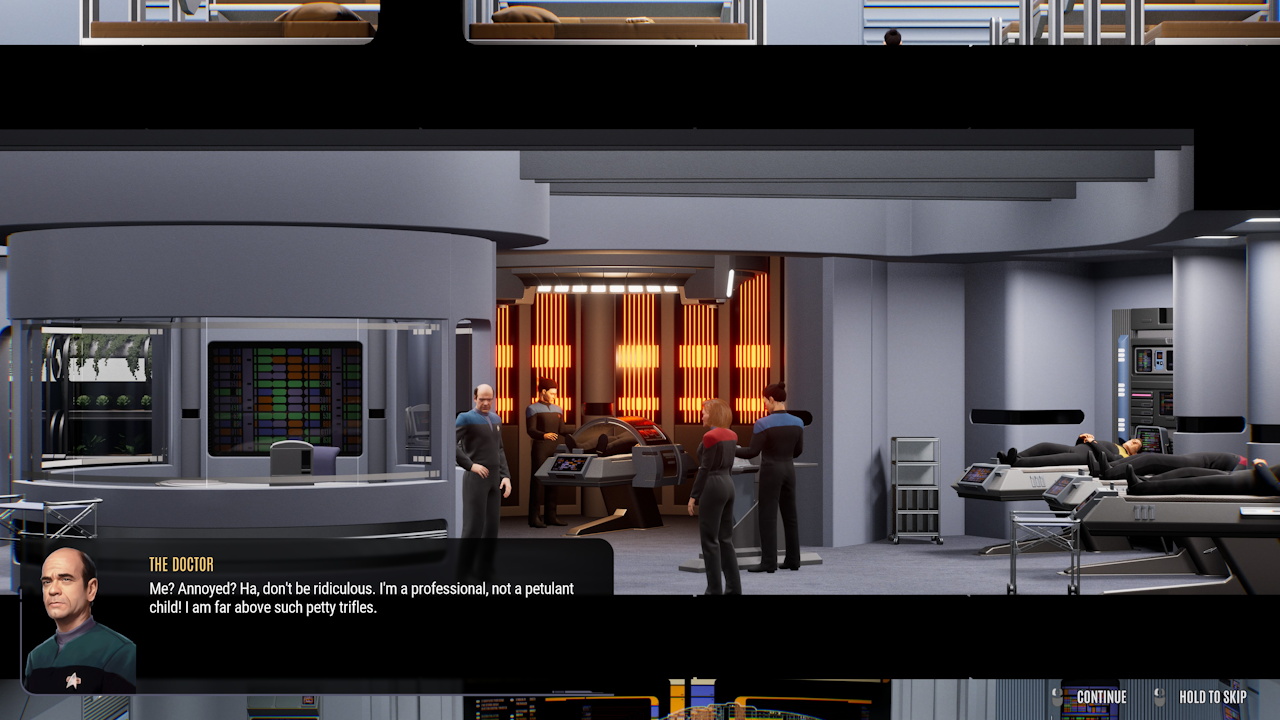
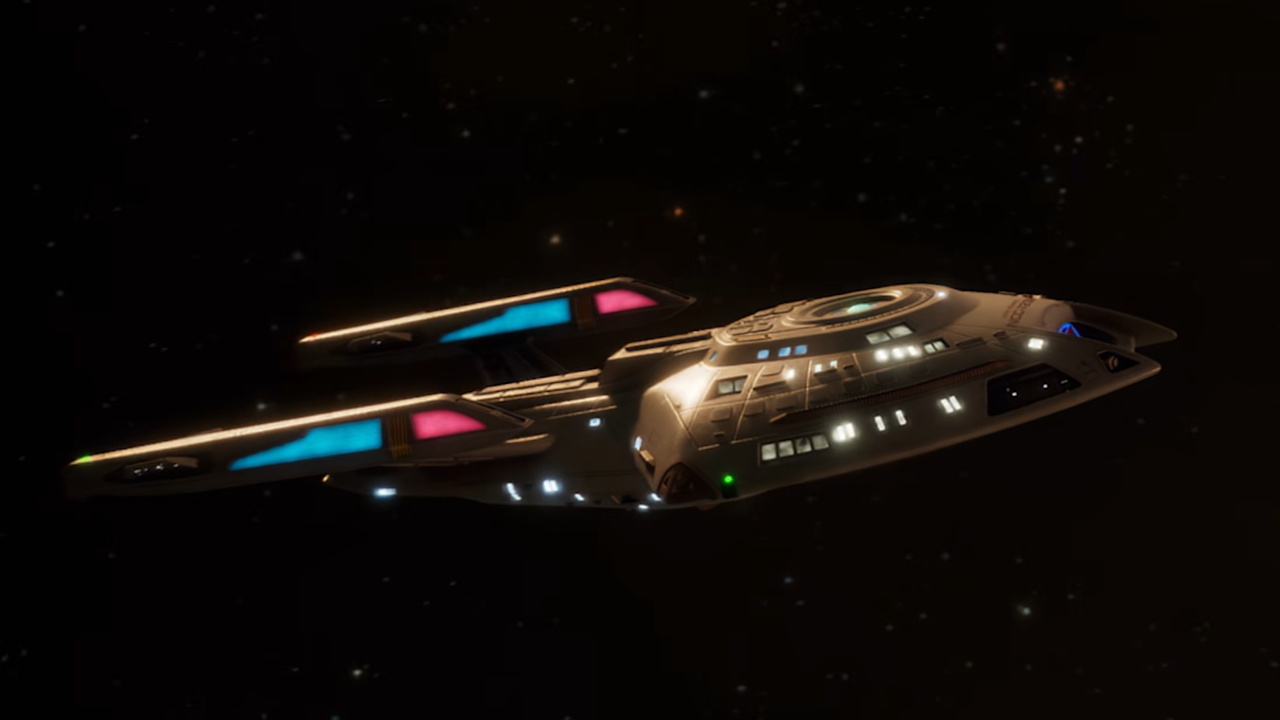
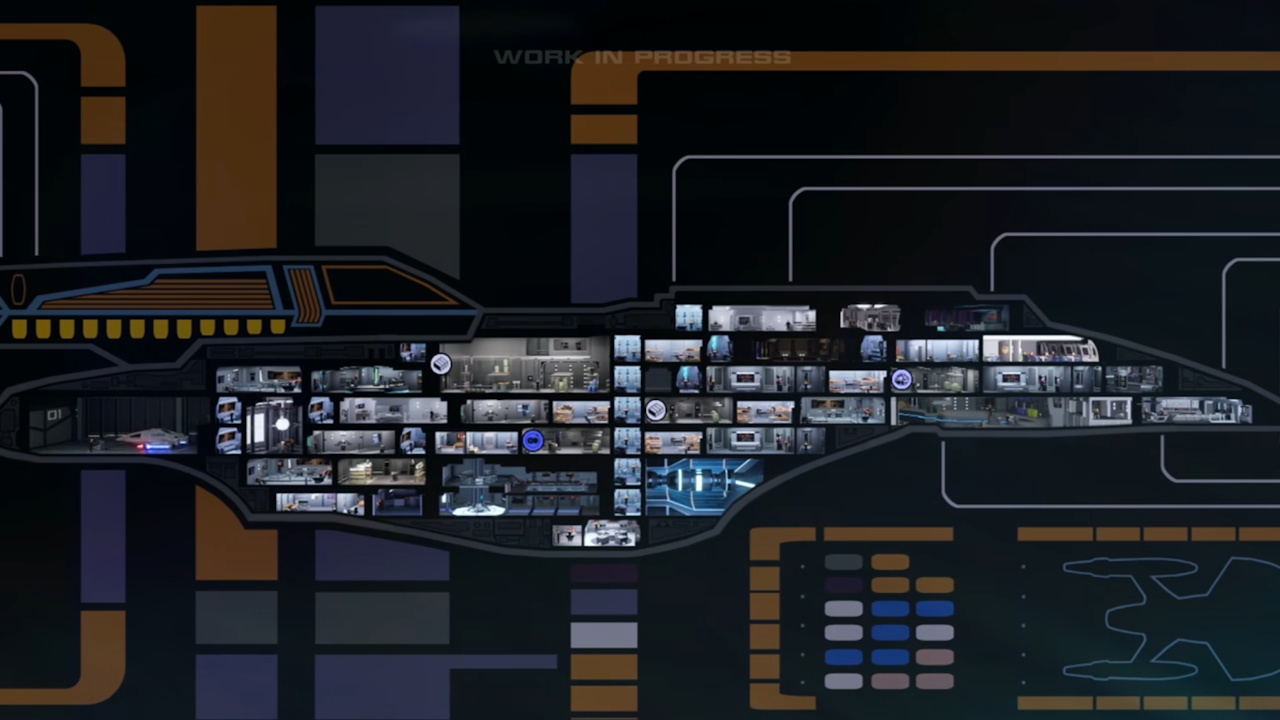
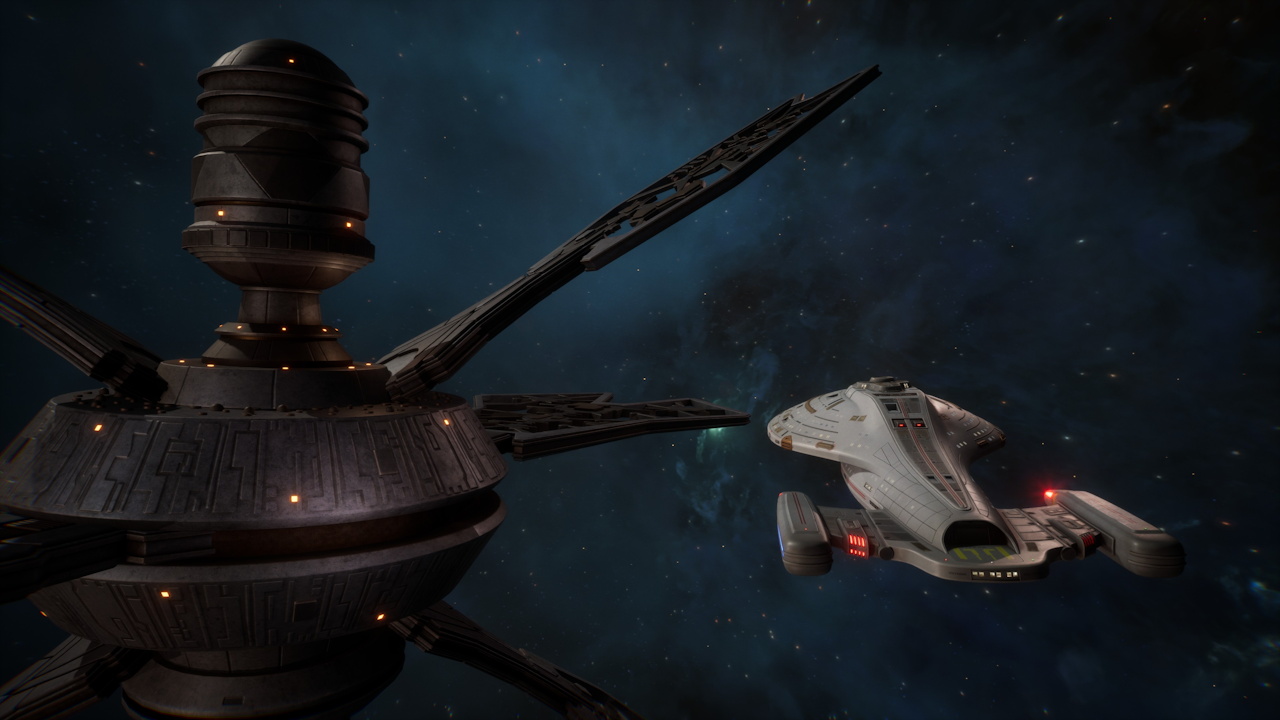
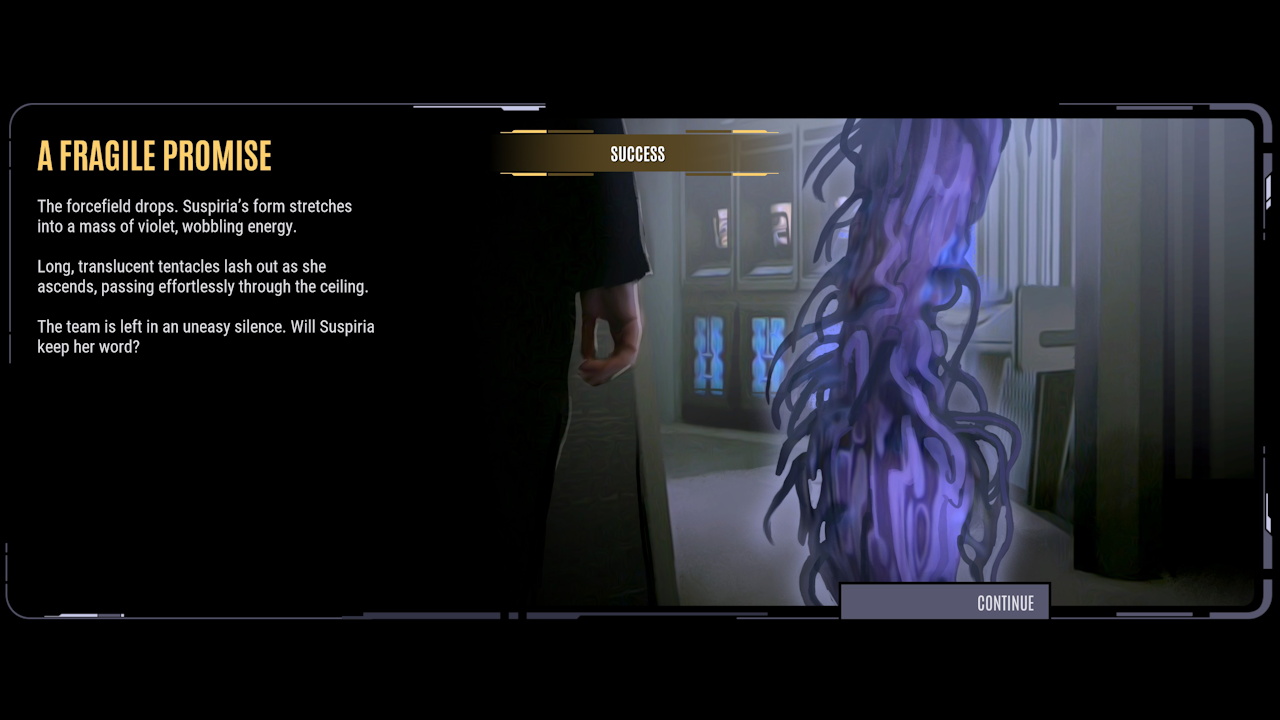
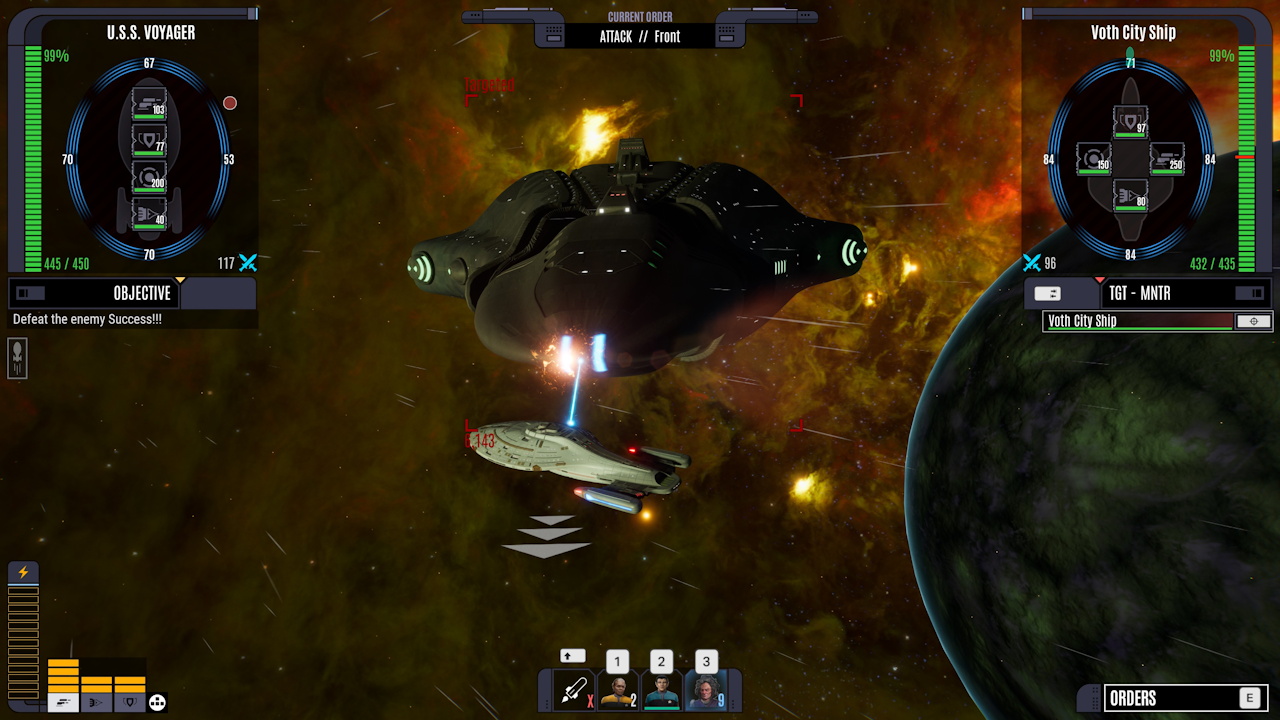
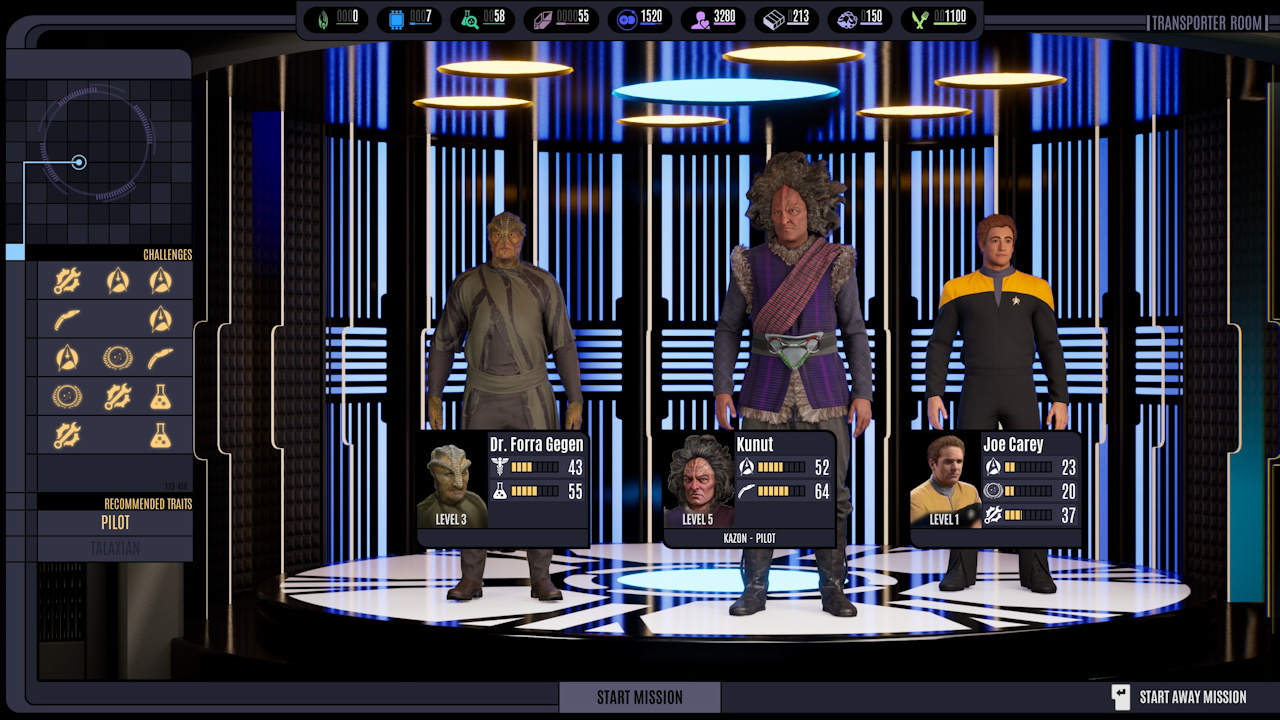
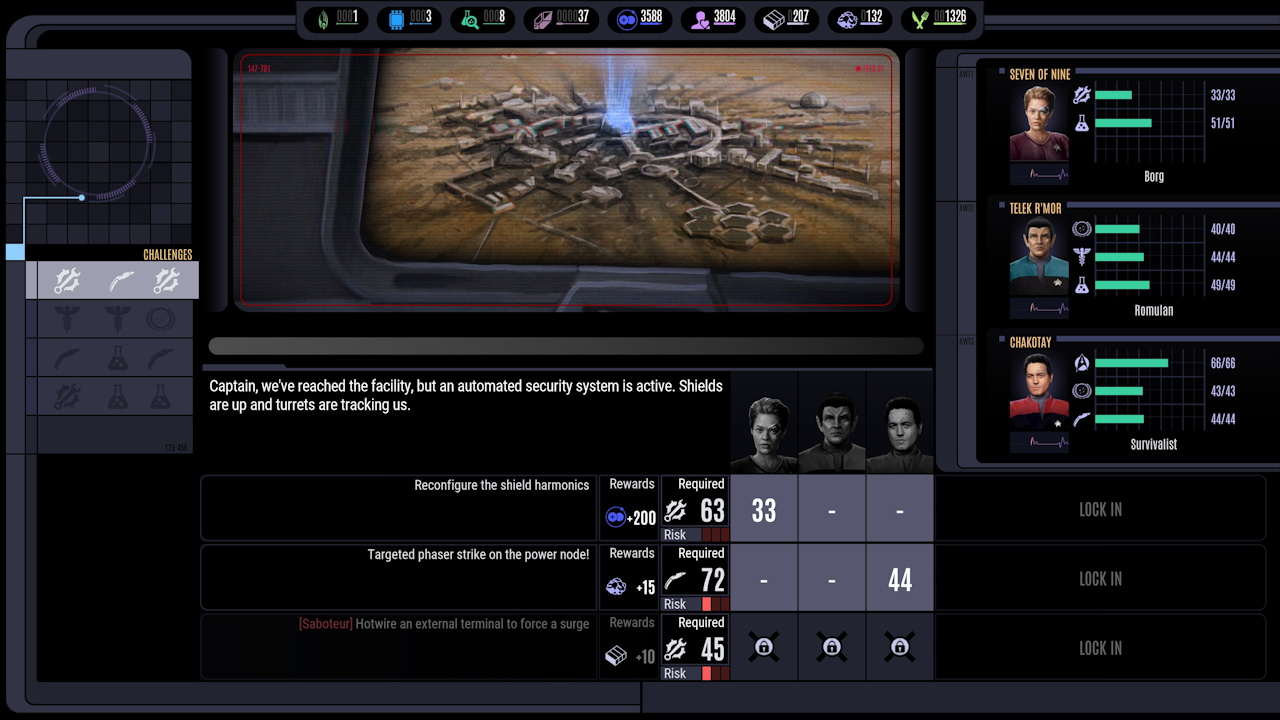
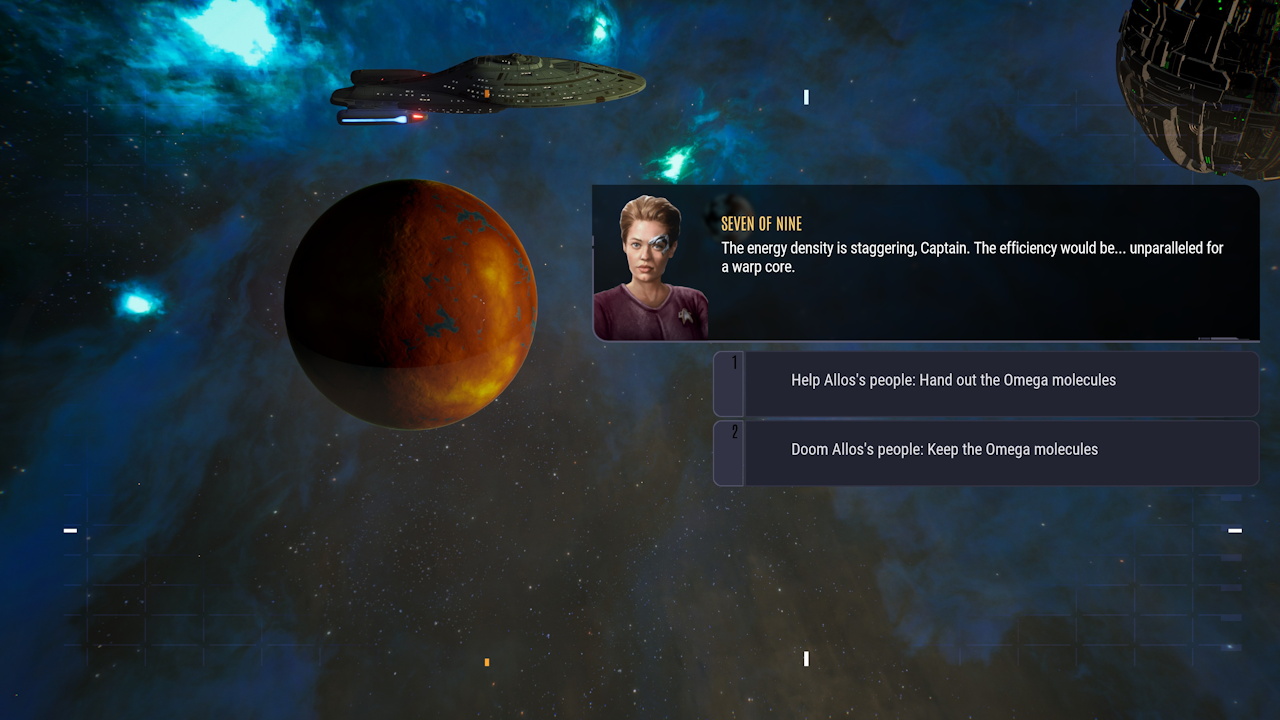
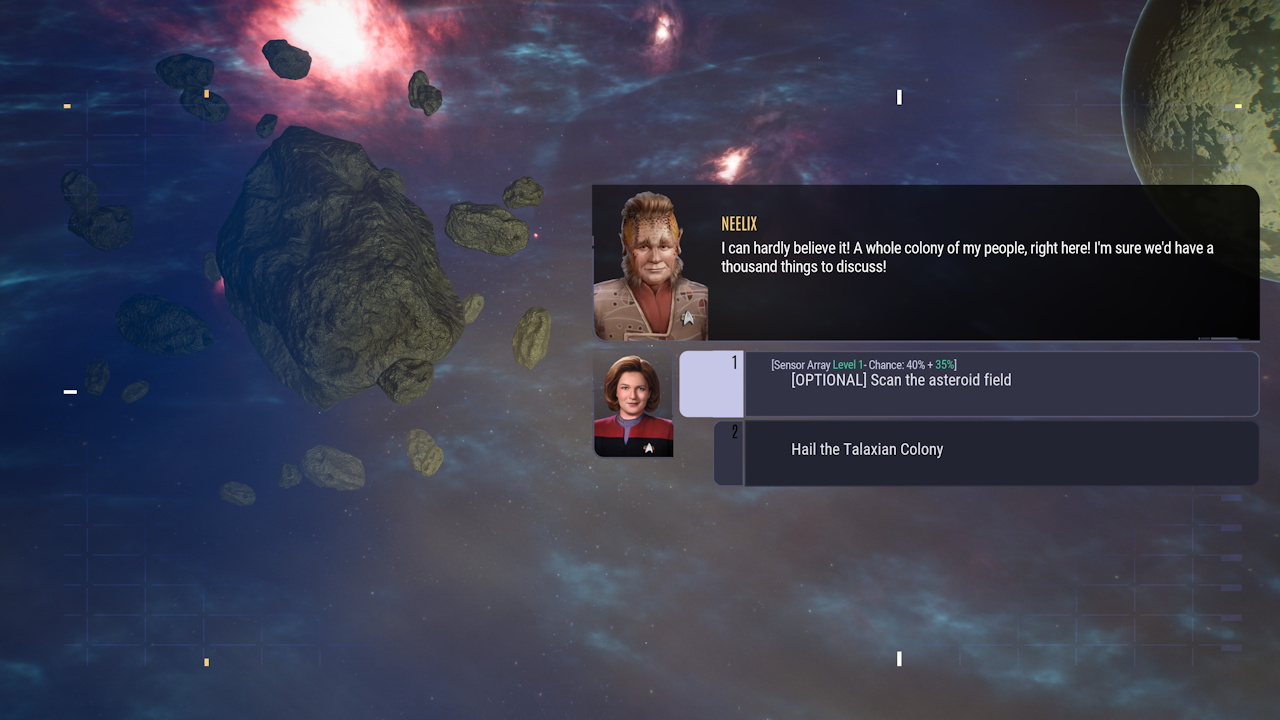
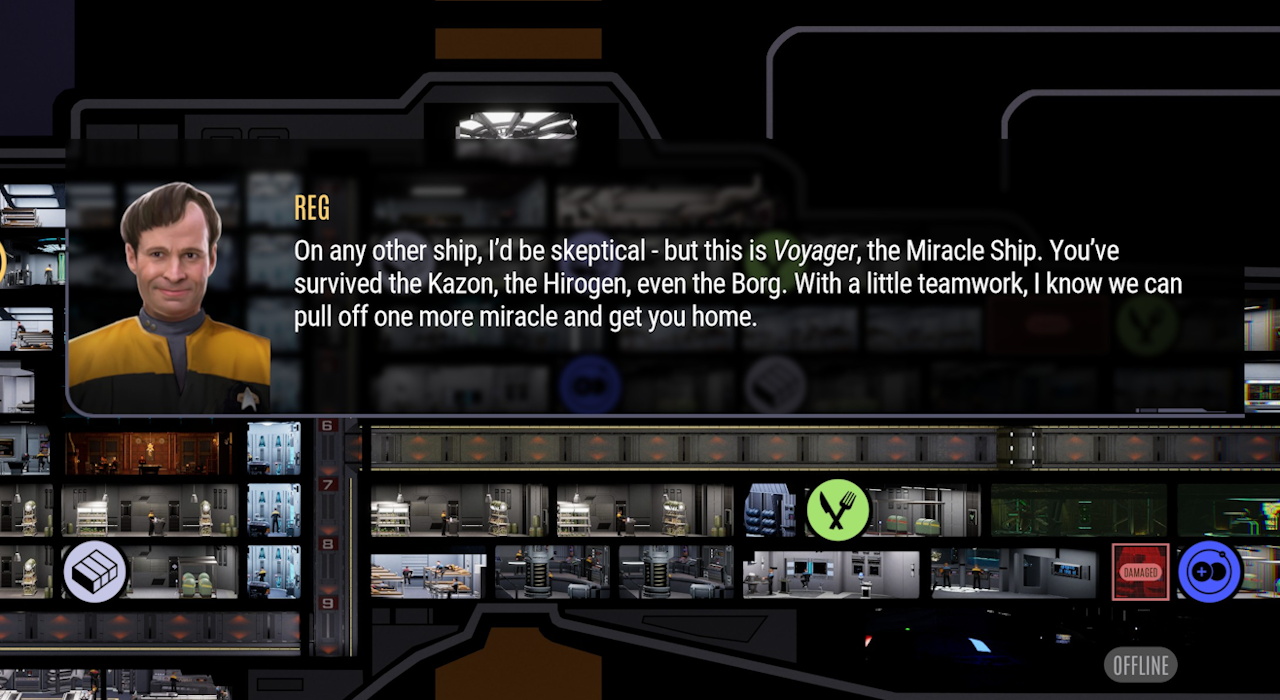
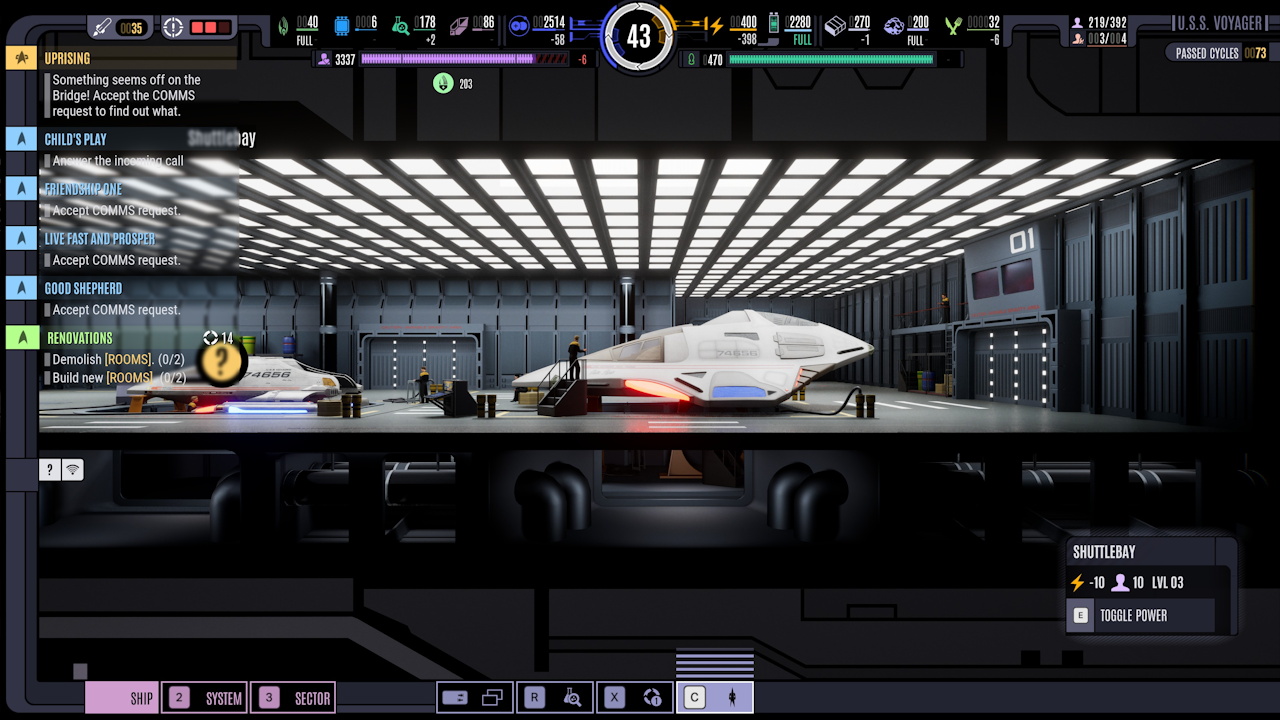
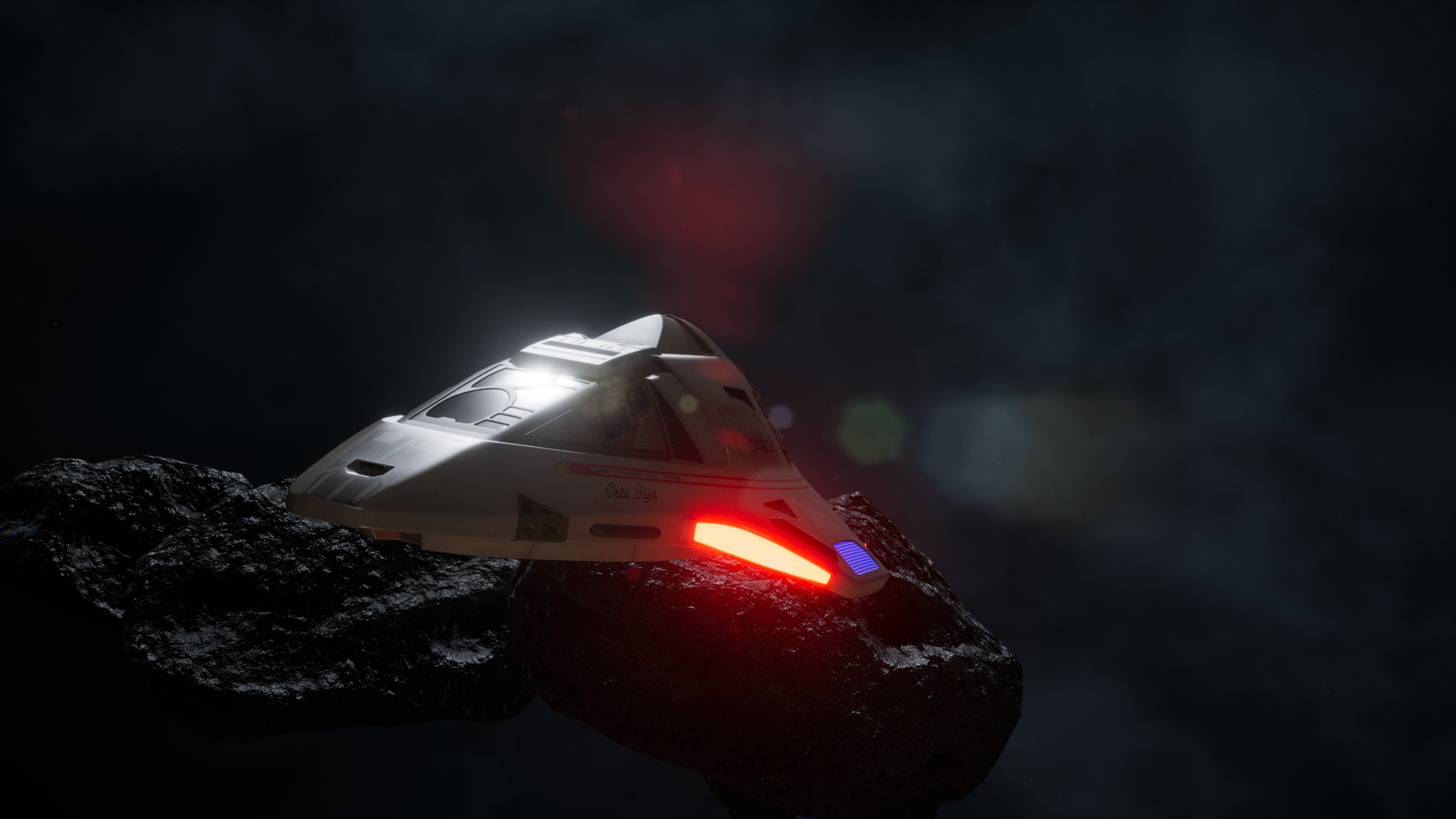
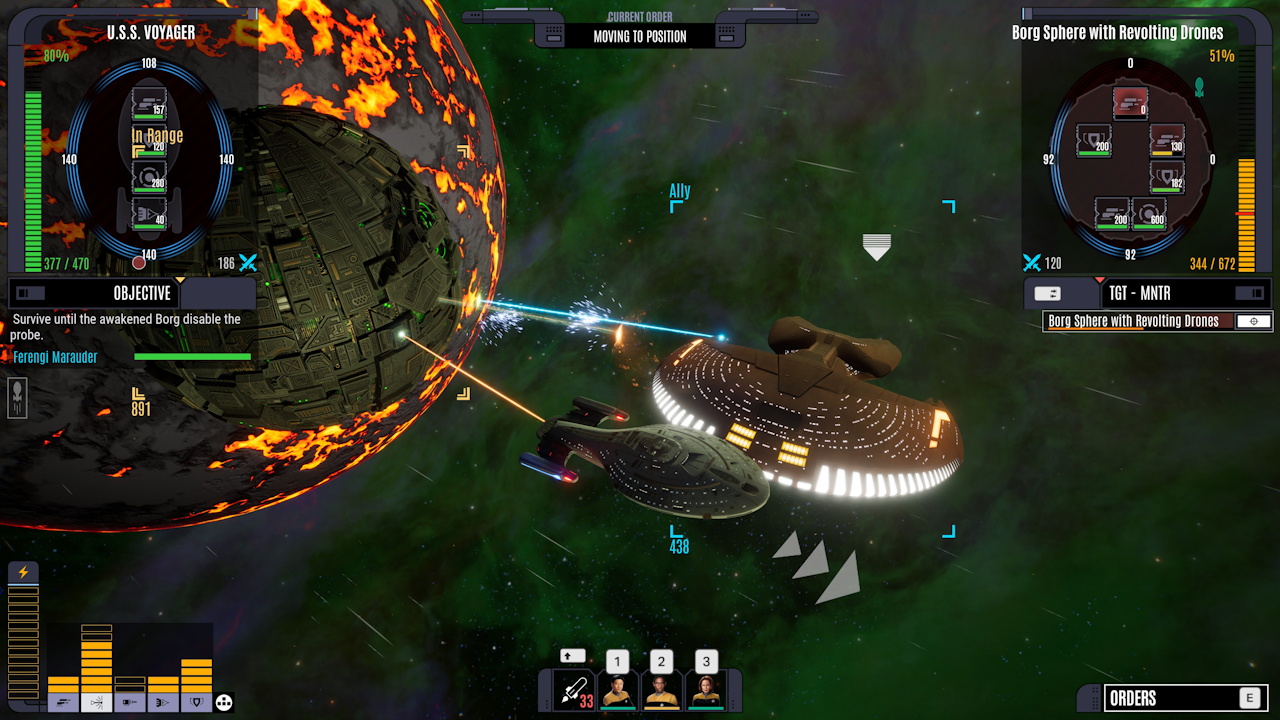
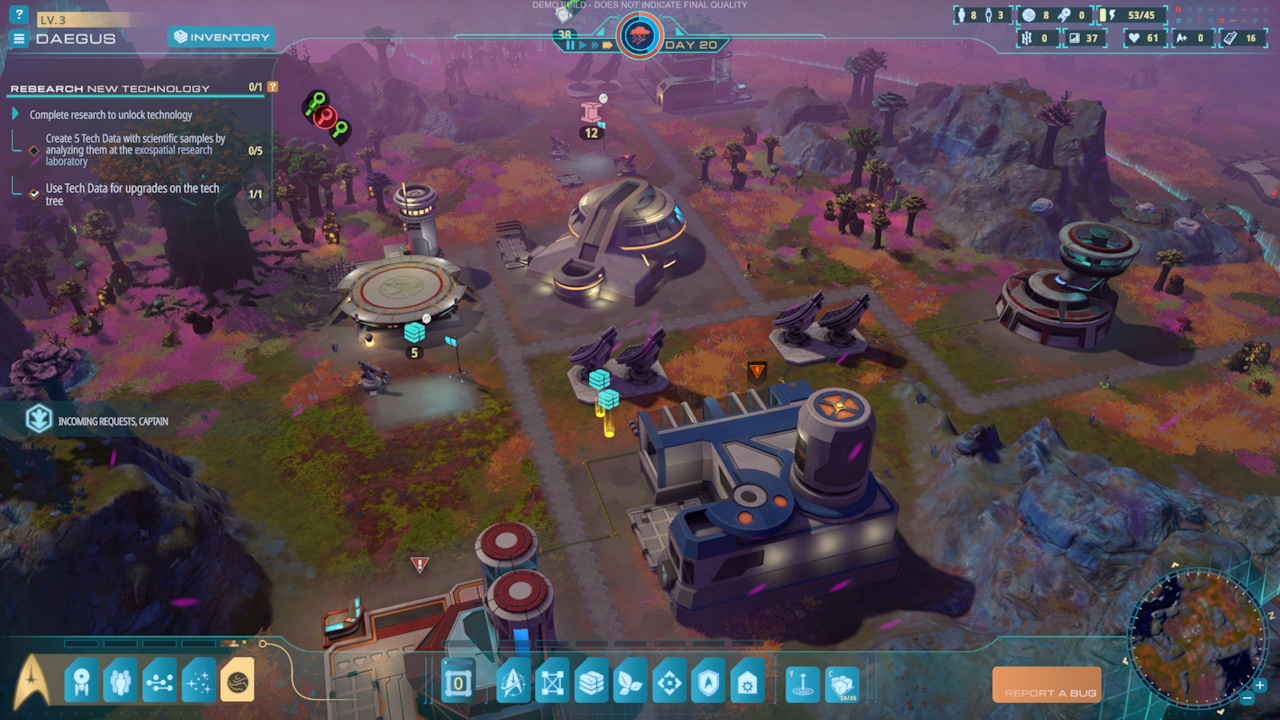
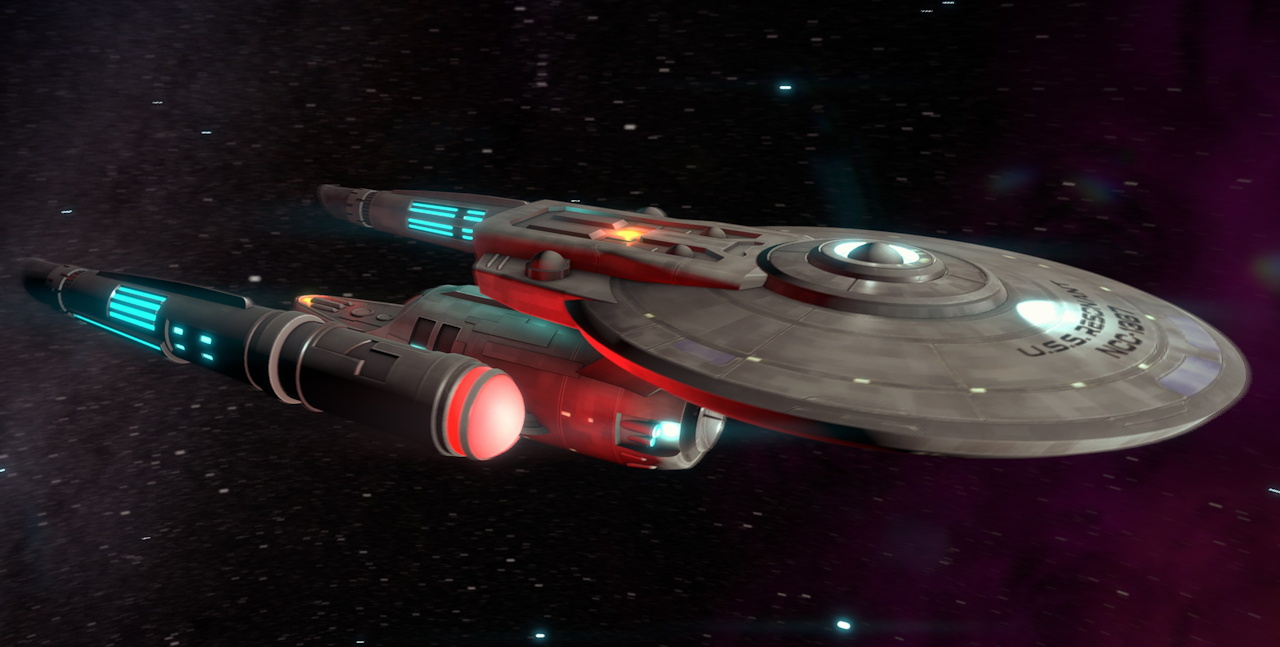
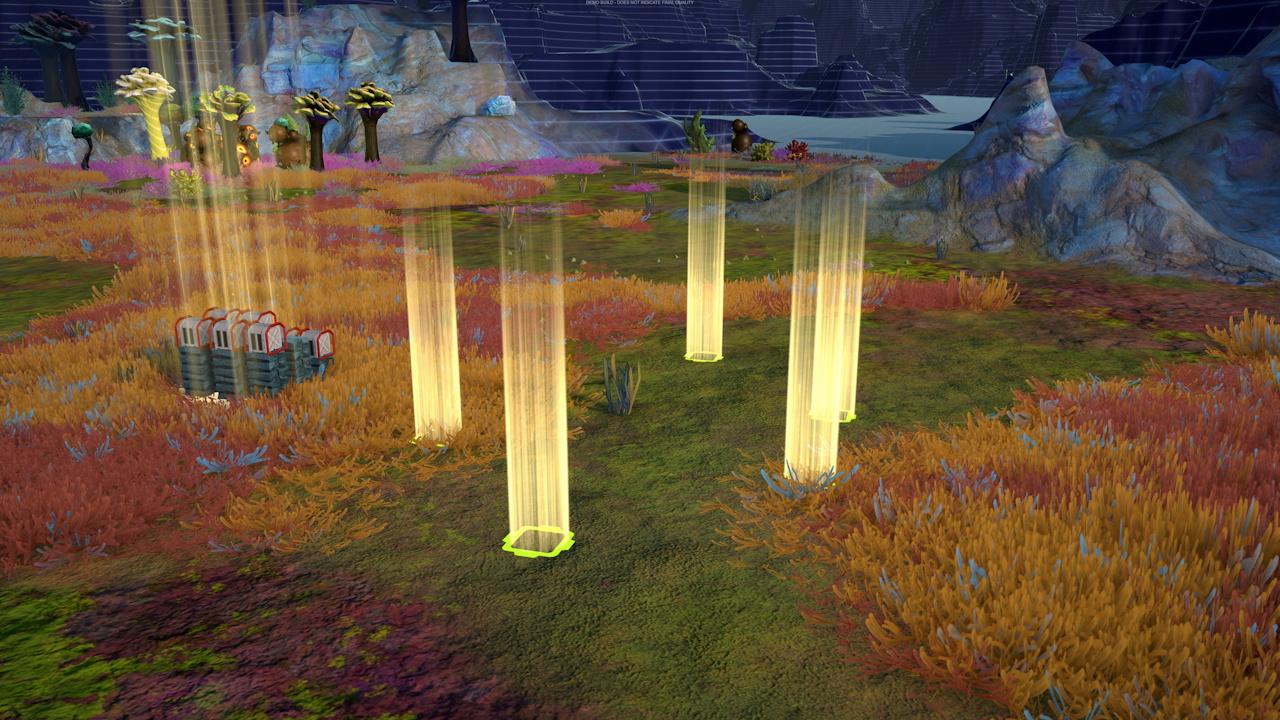
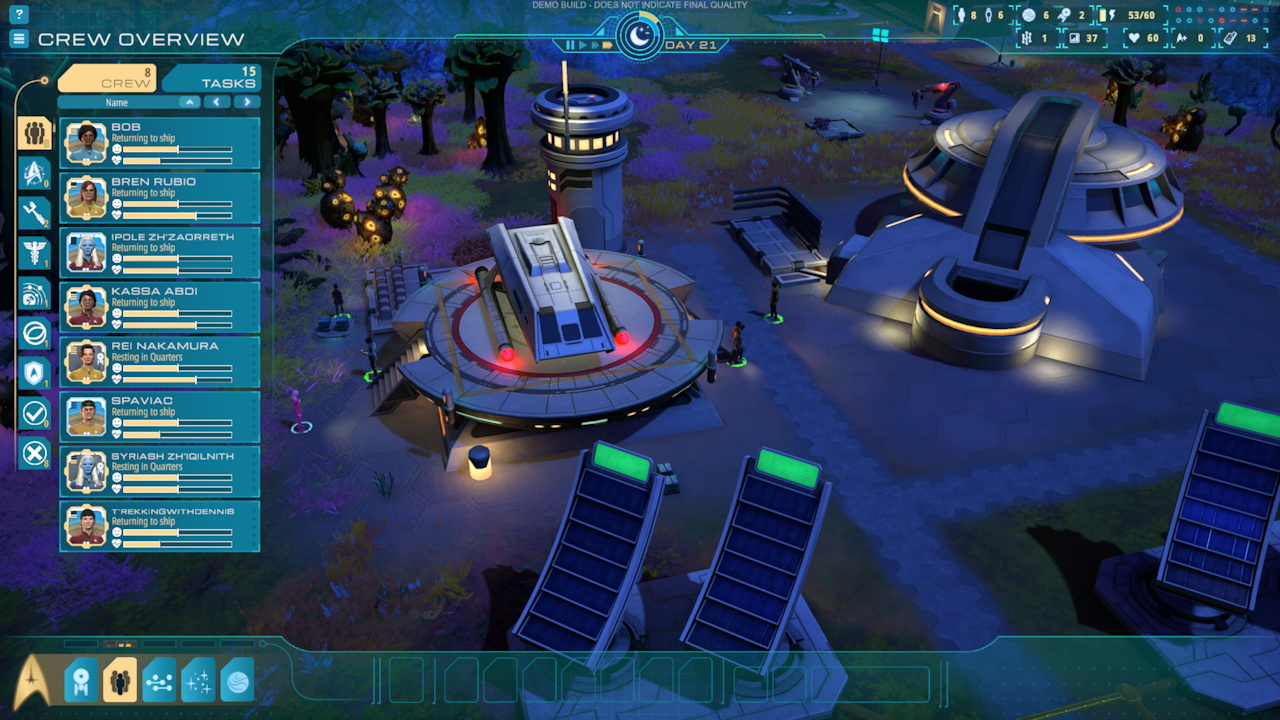
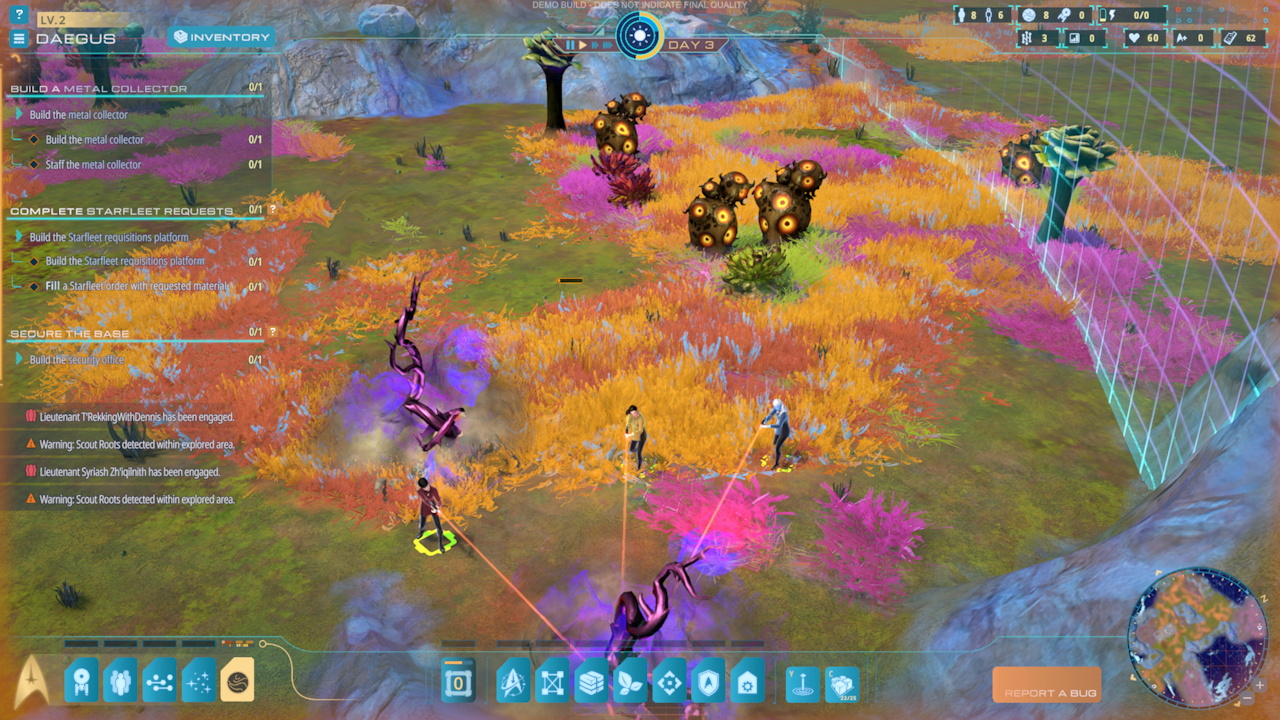
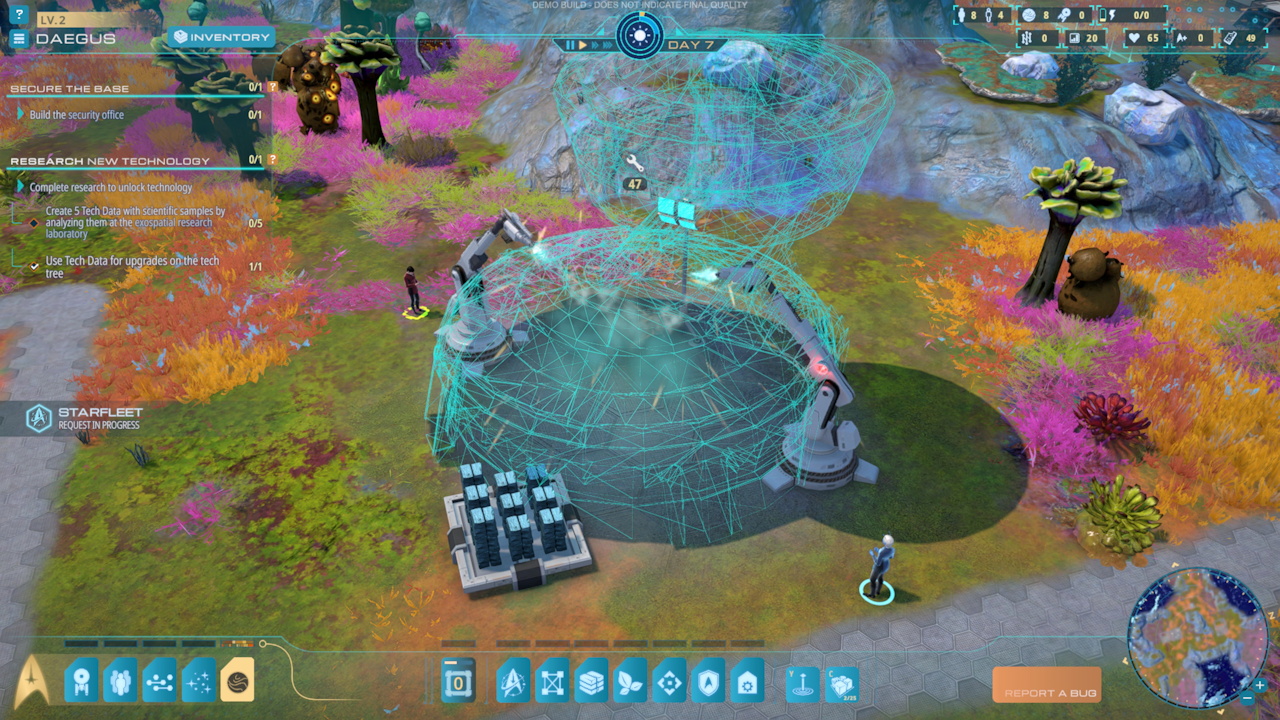
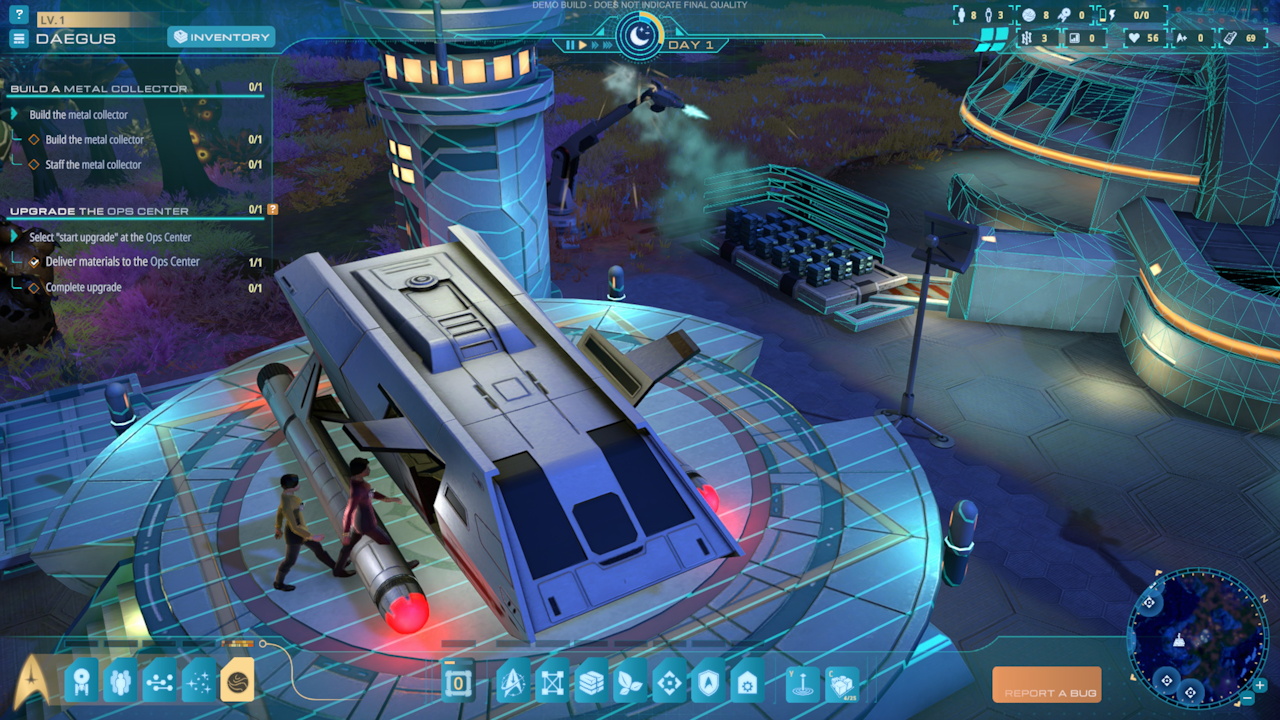
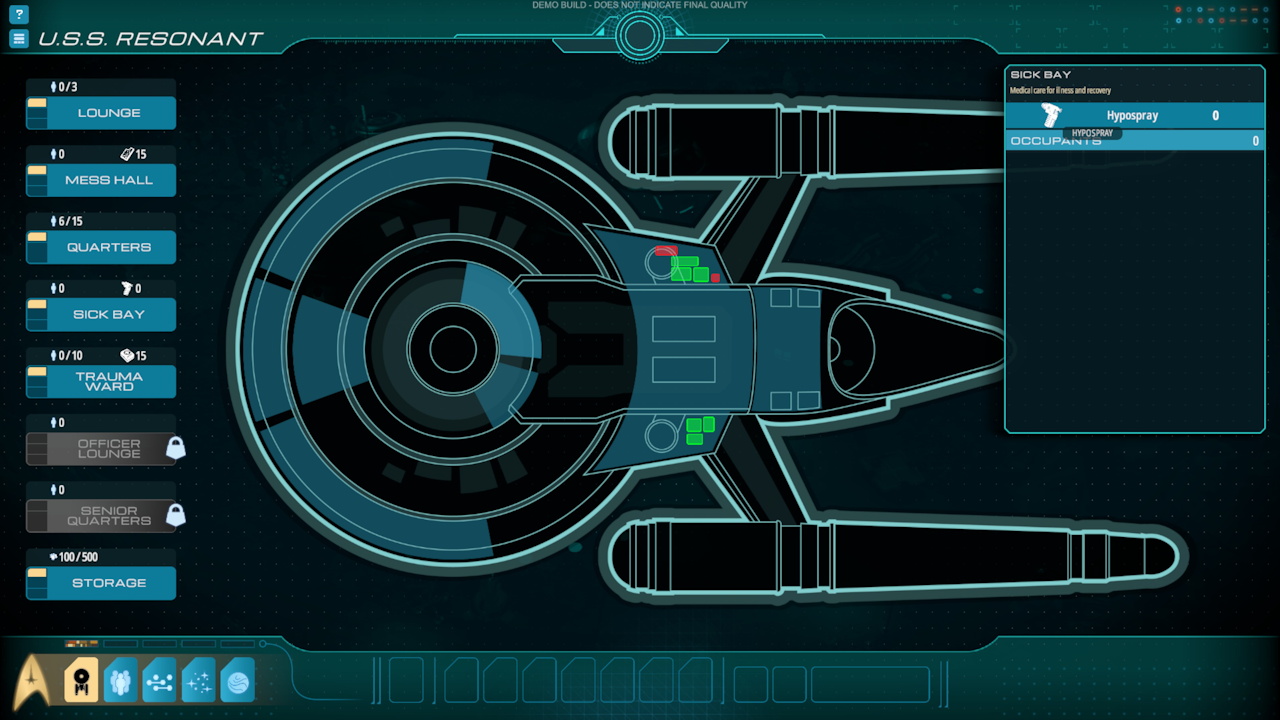
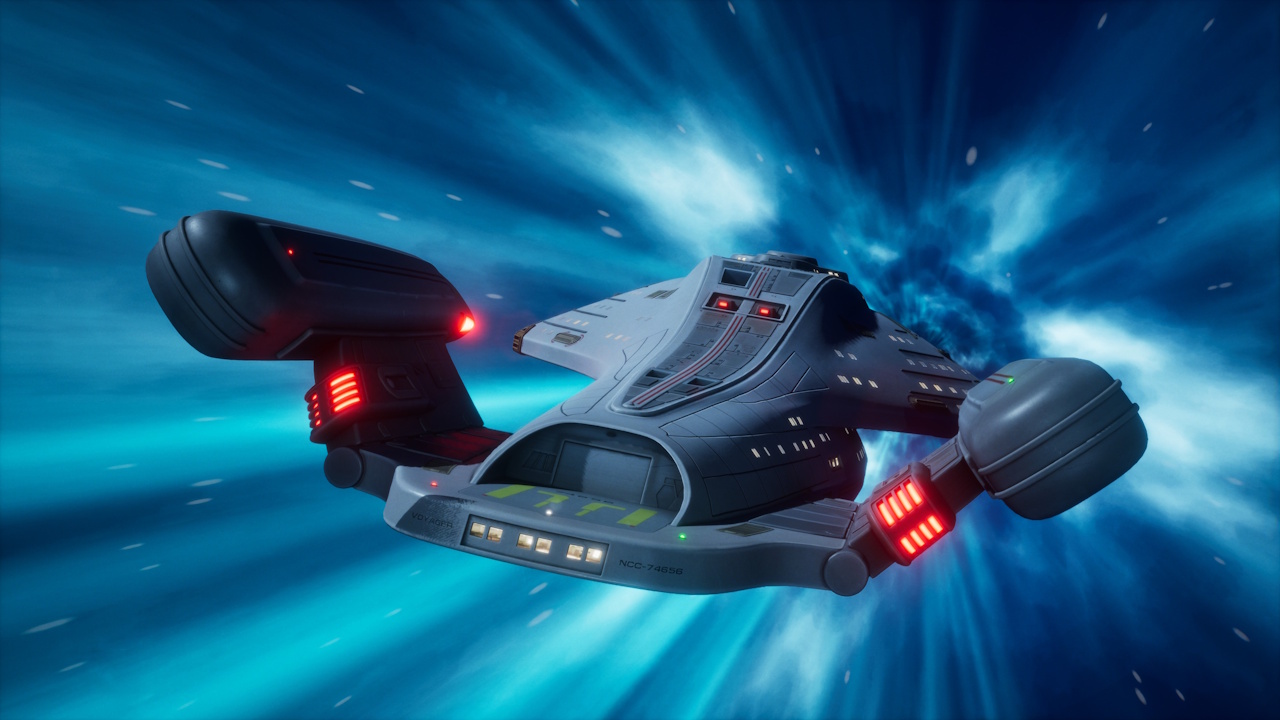
This video game is based on Voyager, and allows players to experience the entire seven-year journey across the Delta Quadrant, make different choices, and try to manage the ship and its systems. If you like these kinds of management-sim/base-builder types of games, and you’re a big Voyager fan, it’s an easy recommendation! It was a ton of fun for me to go back to Voyager in this new format, and there are some wonderful models and animated sequences created for the game, too. I returned to episodes I haven’t seen in a while thanks to this wonderful game… and I had an absolute blast with it! There’s new DLC to come, too, and I’m planning to jump back in when it’s all ready.
So that’s it!
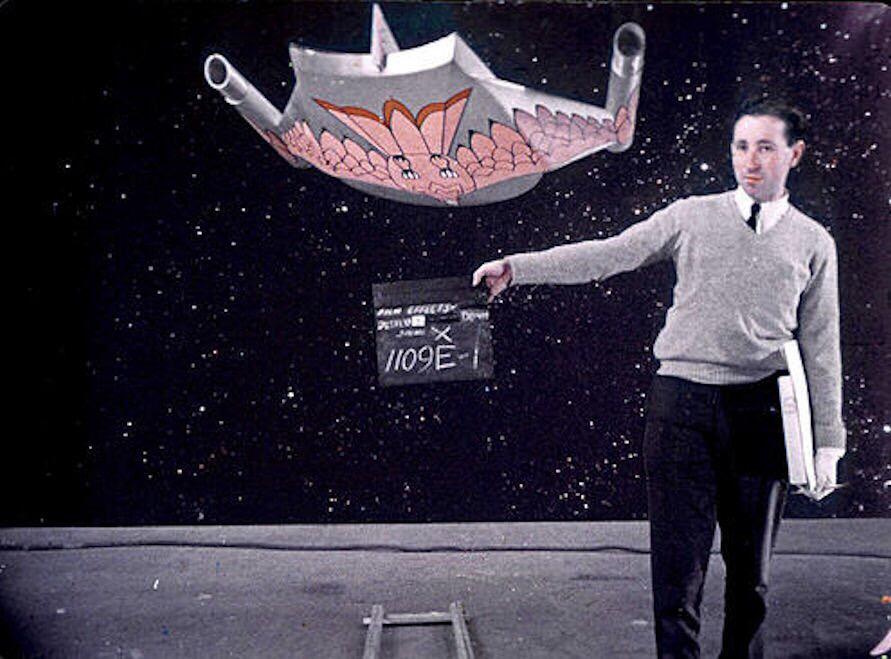
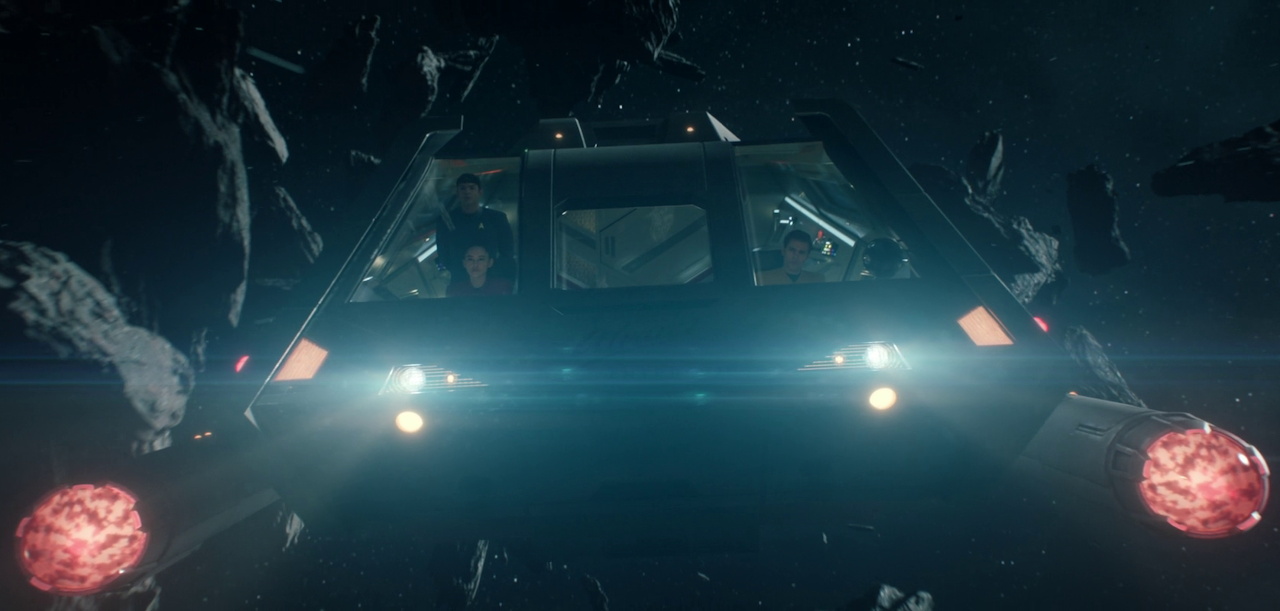
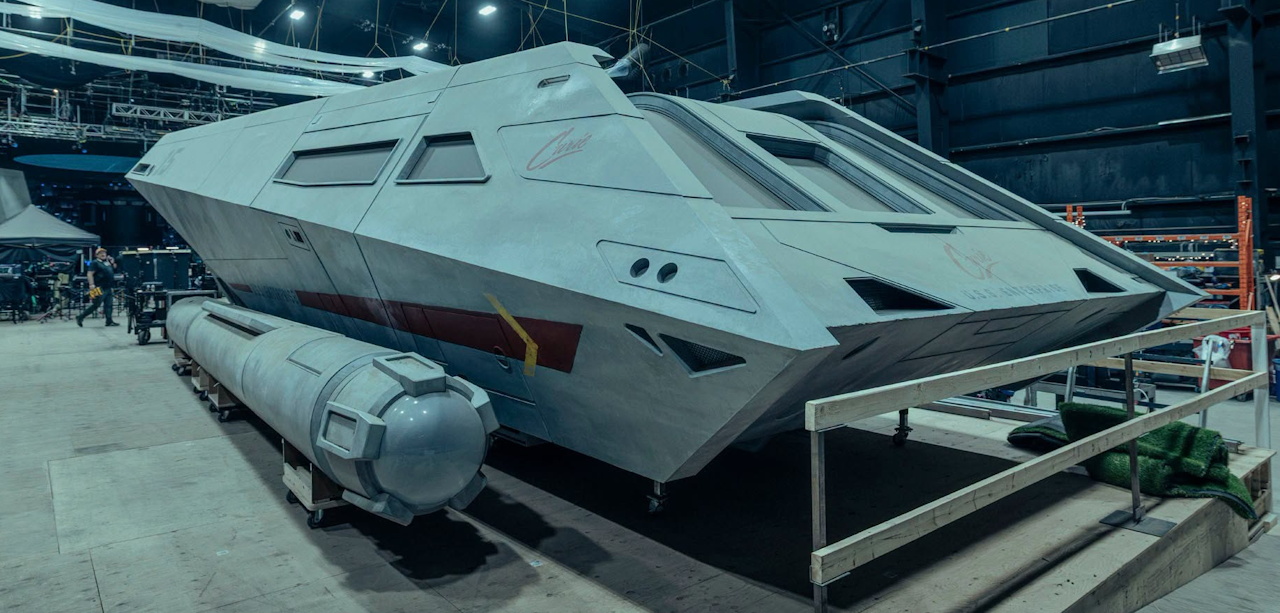
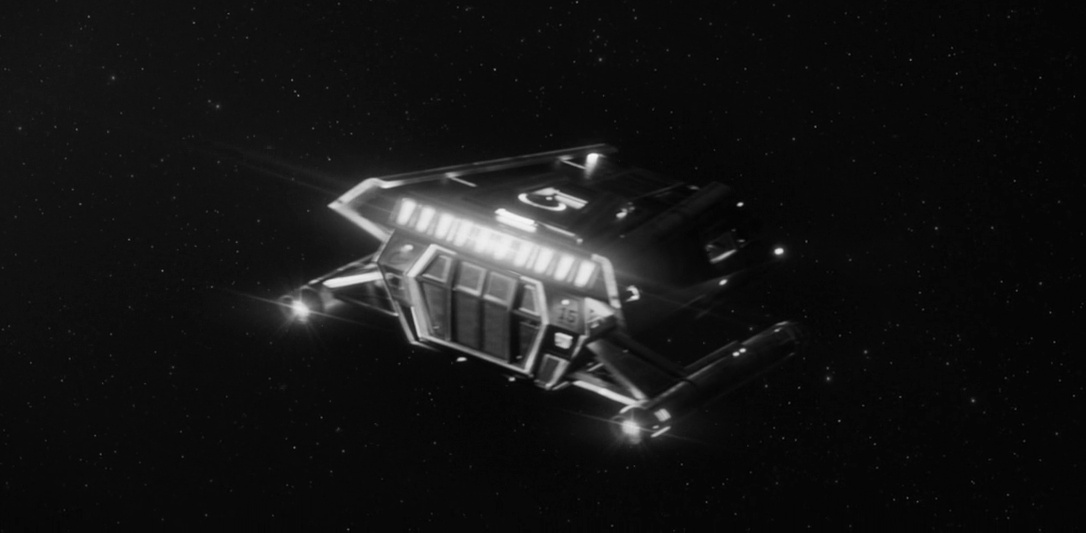
A shuttlecraft.
Phew, that was a *lot* of Star Trek, huh?
If you made it all the way to the end, thanks for reading! I hope this has been a bit of a fun way to celebrate this milestone anniversary. And I hope I maybe picked one or two stories you weren’t expecting!
Thanks again, and as always… Live Long and Prosper, friends!
The Star Trek franchise (except for Prodigy) is available to stream now on Paramount+ in countries and territories where the platform is available, and is also available on DVD/Blu-ray. The Star Trek franchise – including all films, shows, games, and other properties discussed above – is the copyright of the Skydance Corporation. Some photos/still frames were upscaled using A.I. tools. This article contains the thoughts and opinions of one person only and is not intended to cause any offence.
Spoiler Alert: Beware of minor spoilers for some of the titles on this list.
Happy Spooktober! We’re celebrating the scariest, most haunted month of the year with another of my horror hypotheticals!
I’ll briefly go over the format so we’re all on the same page. In this hypothetical scenario, I’m going to imagine that I’ve been magically whisked away (or isekai’d, to use some anime lingo) to a fictional world. These settings all come from films or TV shows, and what they all have in common is the presence of a monster! The monsters I’ll encounter will be bound by the rules of their respective fictional worlds, and it’ll be up to me to survive – alone – for 48 hours. I’ll give a simple score out of ten for how easy I think survival would be – and in my conclusion, I’ll pick the least-bad monster that I’d choose to face off against… if I absolutely *had* to!
The monsters I’m going to hypothetically encounter will not necessarily be aggressively trying to hunt me down; they’ll simply be existing in their worlds on their own terms. However, if and when they become aware of my presence, the rules of each fictional setting will dictate what happens next. For some monsters, that could mean they want to eat me or steal my soul right away, but others may be less bothered! I will be dropped into a typical part of the world where these monsters exist, so some settings might allow for more time to run away or hide than others.
Trick-or-treat!
As always, my usual caveats apply! Firstly, this is just meant to be a bit of Halloween-themed fun, so please keep that in mind! And secondly all of this is just the *subjective, not objective* opinion of just one person – a person who is not, generally speaking, a huge fan of horror! If I miss a detail because I’ve only seen some films in a franchise, if my plan to survive seems unrealistic to you, or you just don’t agree with my take on these villains from horror and horror-adjacent titles… that’s okay! There ought to be plenty of room for polite differences of agreement!
I wrote a similar piece last Halloween, so if a monster you hoped to see isn’t here, maybe it’s because I covered them last year! Click or tap here to check it out.
With all of that out of the way… let’s get isekai’d to some horrific monster-filled worlds!
Option #1: Gwi-Ma KPop Demon Hunters
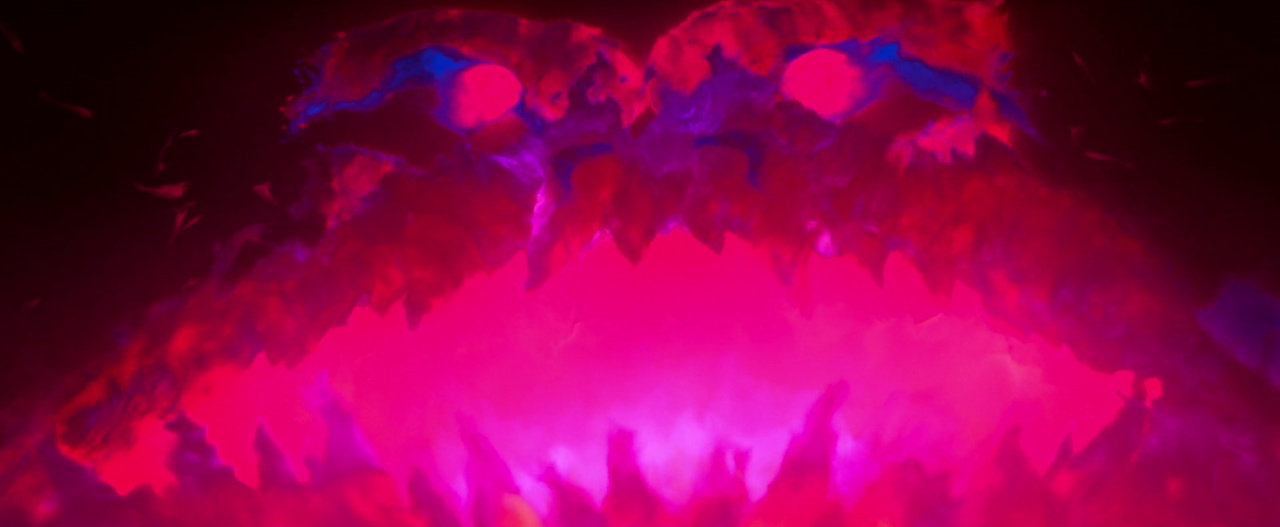
Gwi-Ma.
Though KPop Demon Hunters has roots in Korean folklore and history, Gwi-Ma is actually a unique creation for the film. He’s presented as the “King of Demons,” ruling over the underworld and with legions of lesser demons at his beck and call. The challenge here is to survive *alone*, so I can’t just get on the phone to Huntr/x and ask for help!
In the film, Gwi-Ma exists in the underworld (at least until the climax of the story), so if I can avoid going there, that’s a good start! But Gwi-Ma is capable of dispatching his minions to the surface, sending them to slip through the magical barrier that shields the human world from demons. Demons can assume human form, they can hypnotise people, and most importantly… it would only take one touch from a single demon to end my run. This is a toughie… I guess I’d try to find an empty building or apartment, barricade the door, and hold out for 48 hours alone. However, if Gwi-Ma decided to target me specifically, and I have no allies or helpers to call on? I’m pretty sure I’m screwed!
Survival Odds: 2/10
Option #2: The Borg Collective Star Trek franchise
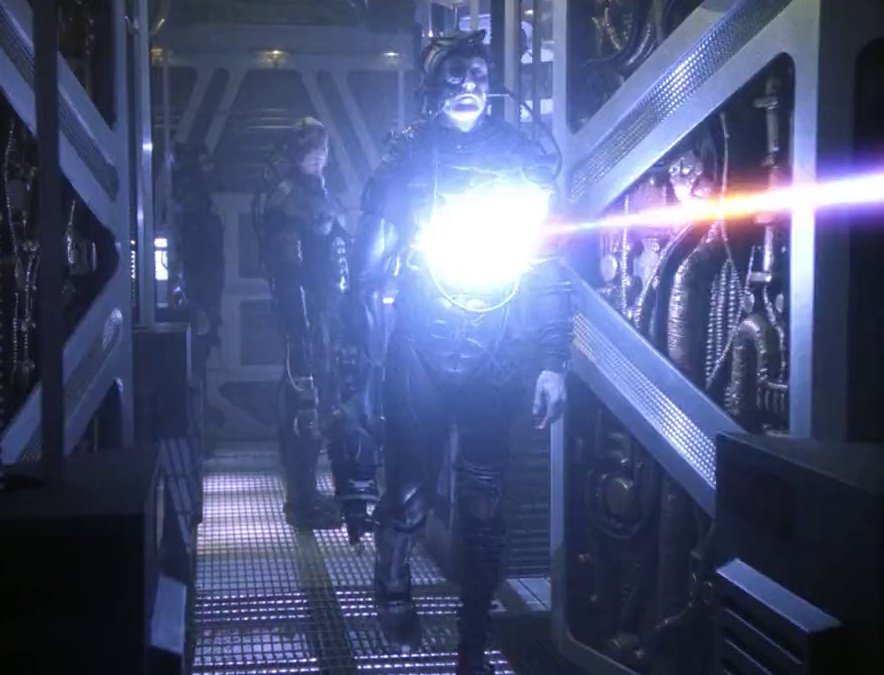
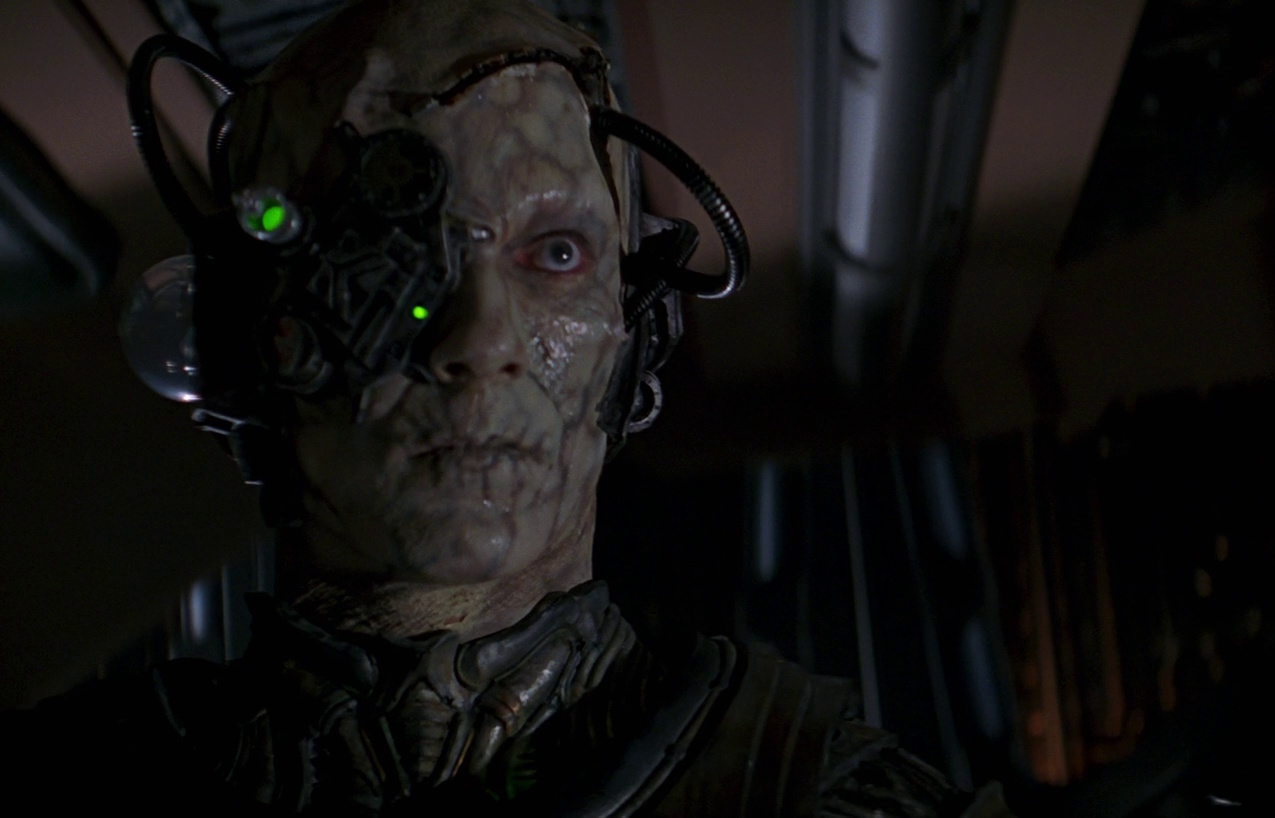
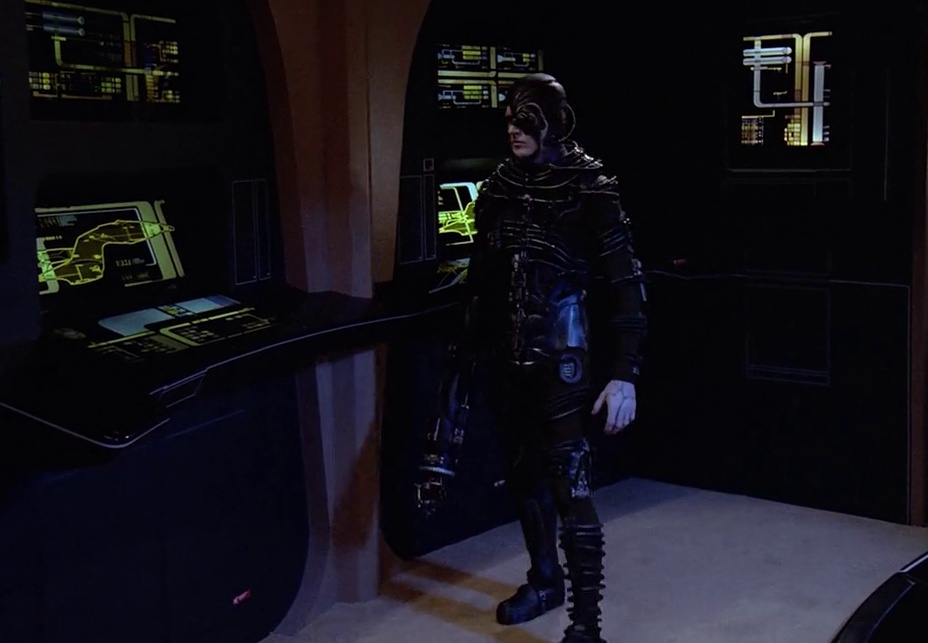
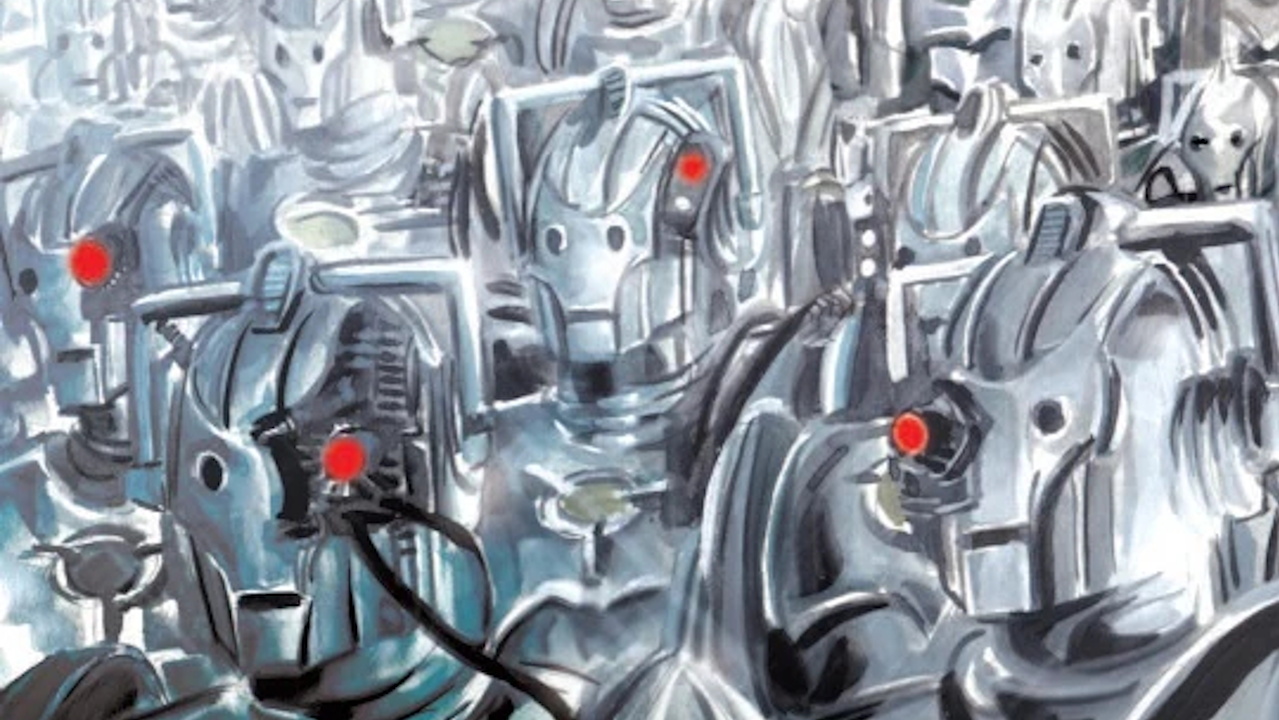
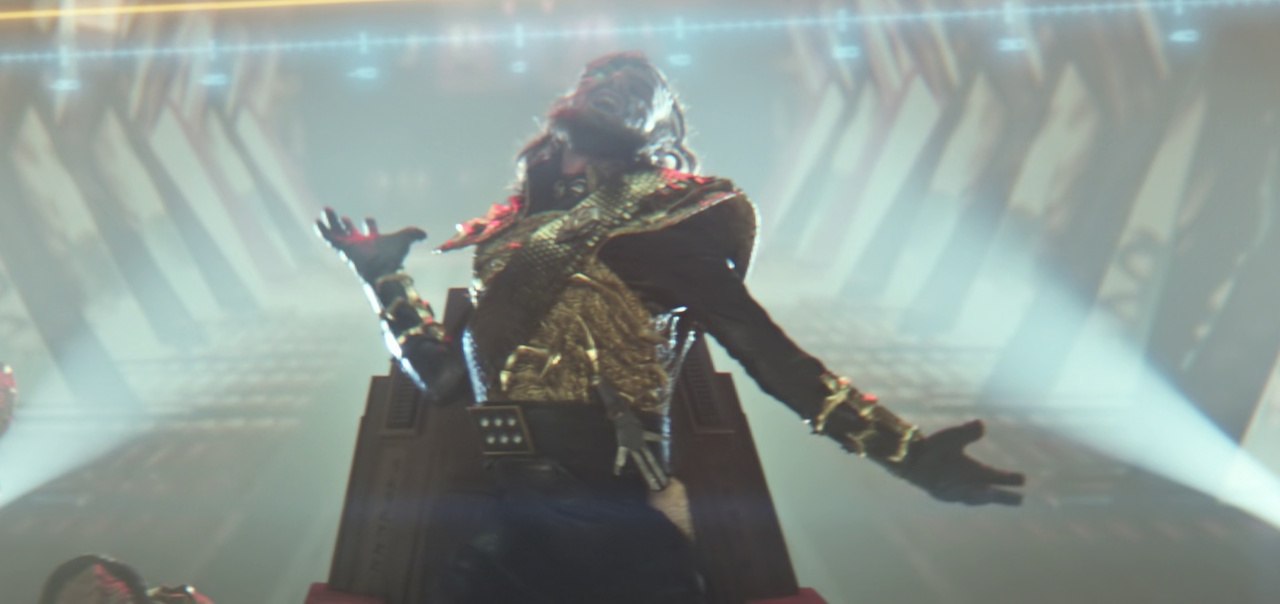
A Borg drone.
The Borg are basically cybernetic zombies; if they catch you, they’ll assimilate you and forcibly convert you to serve their hive mind. Again, the challenge is to survive alone, so I can’t just call on Starfleet for help! But in this case, being *alone* could be a blessing in disguise. See, the Borg conquer at scale – while they can be interested in lone individuals, their real interest is in planetary conquest and assimilating whole species at once. A single individual – if perceived as either nonthreatening or simply not useful – could just be ignored.
We see this with the crew of the Enterprise-E; Borg drones concentrated on their tasks and ignored Picard and the crew if they weren’t a direct threat. And the Borg have even chosen to ignore whole races – like the Kazon – if they considered them “unworthy” of assimilation. So if I can manage to stay nonthreatening and useless for 48 hours (and I’m pretty sure that I can), then I might just get through this… even if I’m dropped in the middle of a Borg planet or a Borg cube!
Survival Odds: 6/10
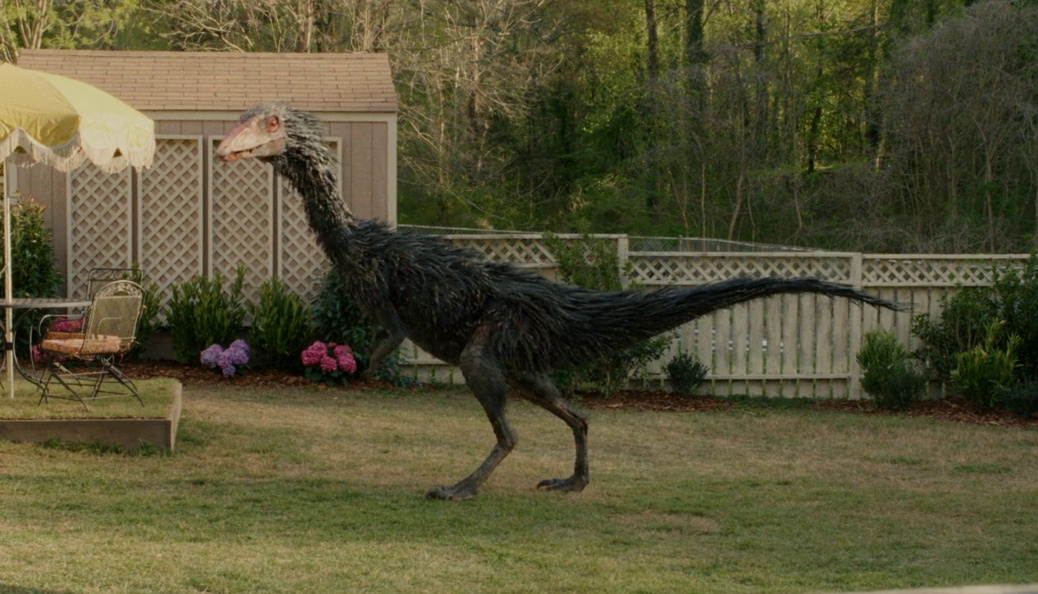
Option #3: Dinosaurs The End of Oak Street
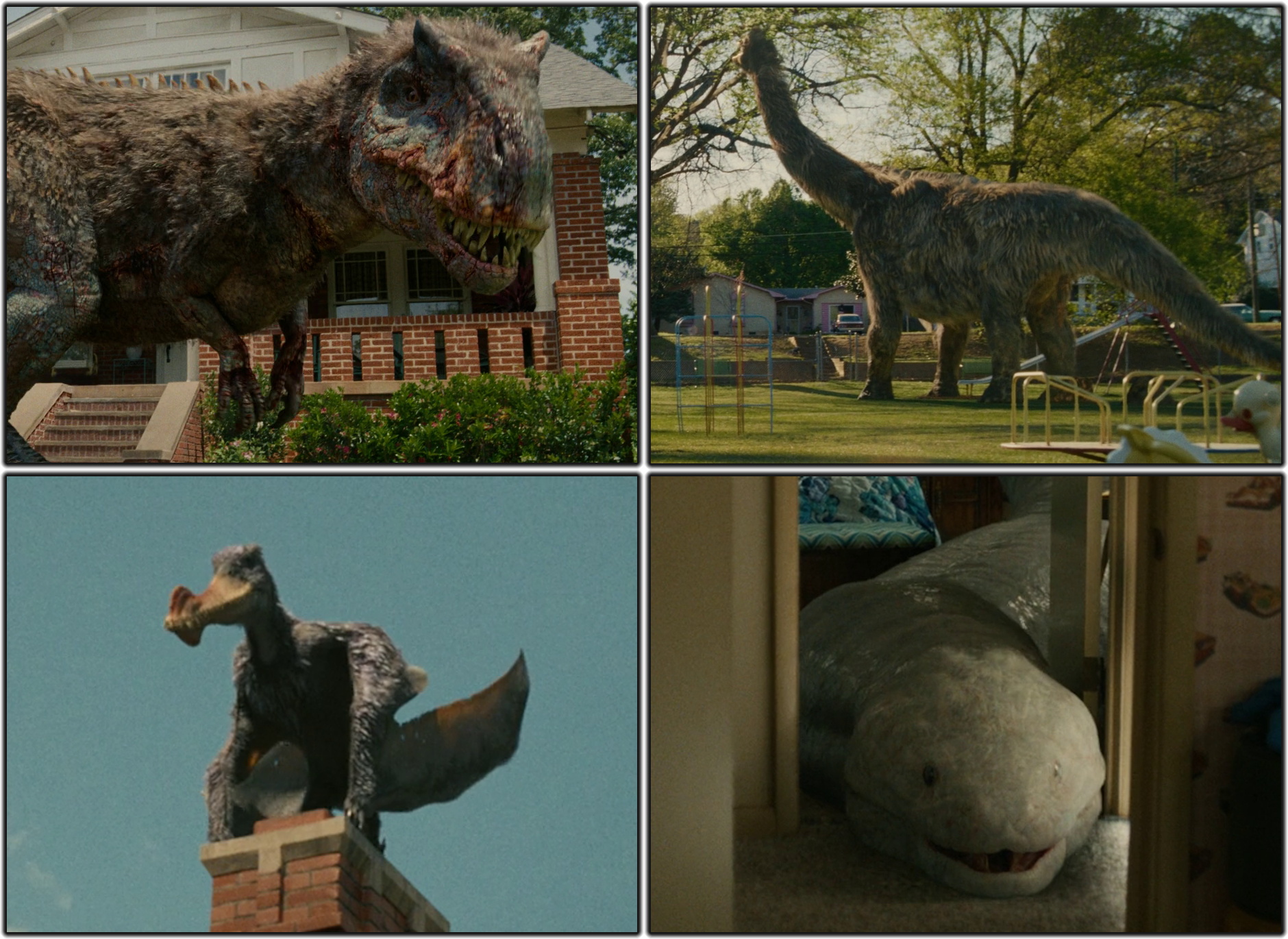
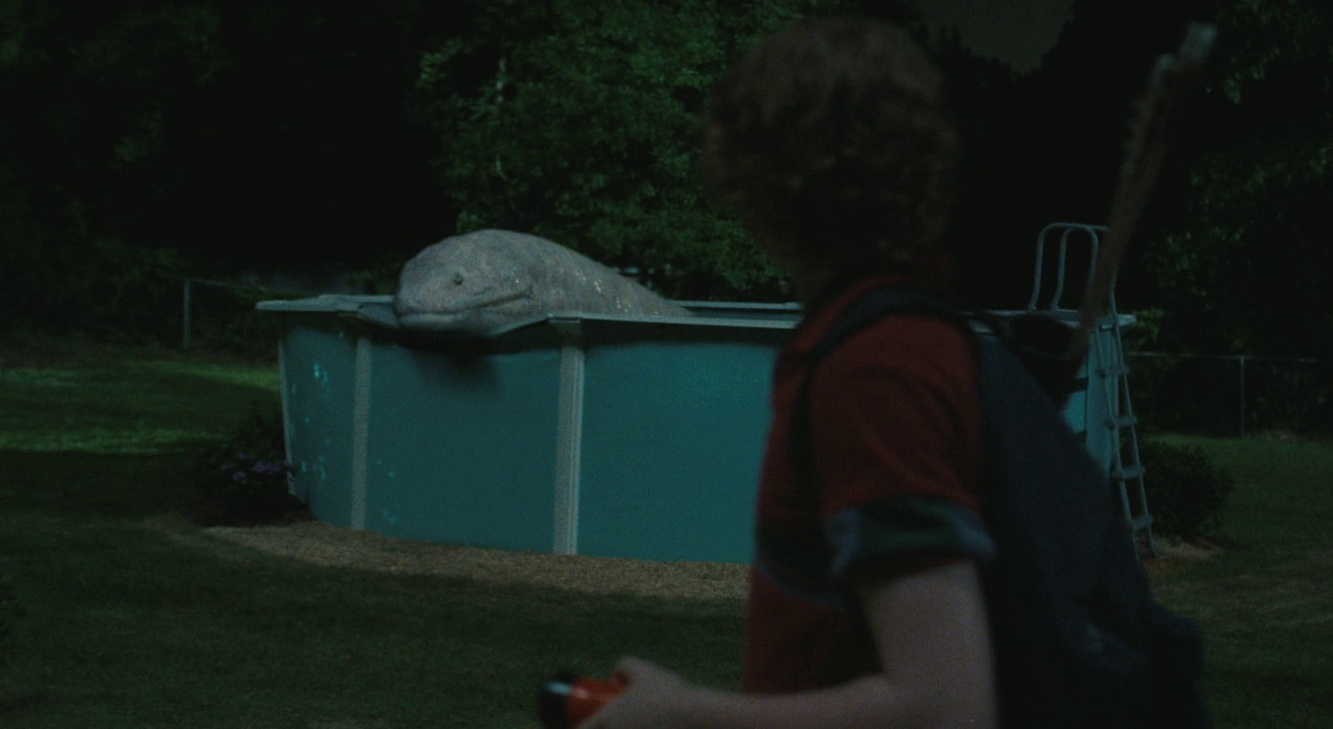
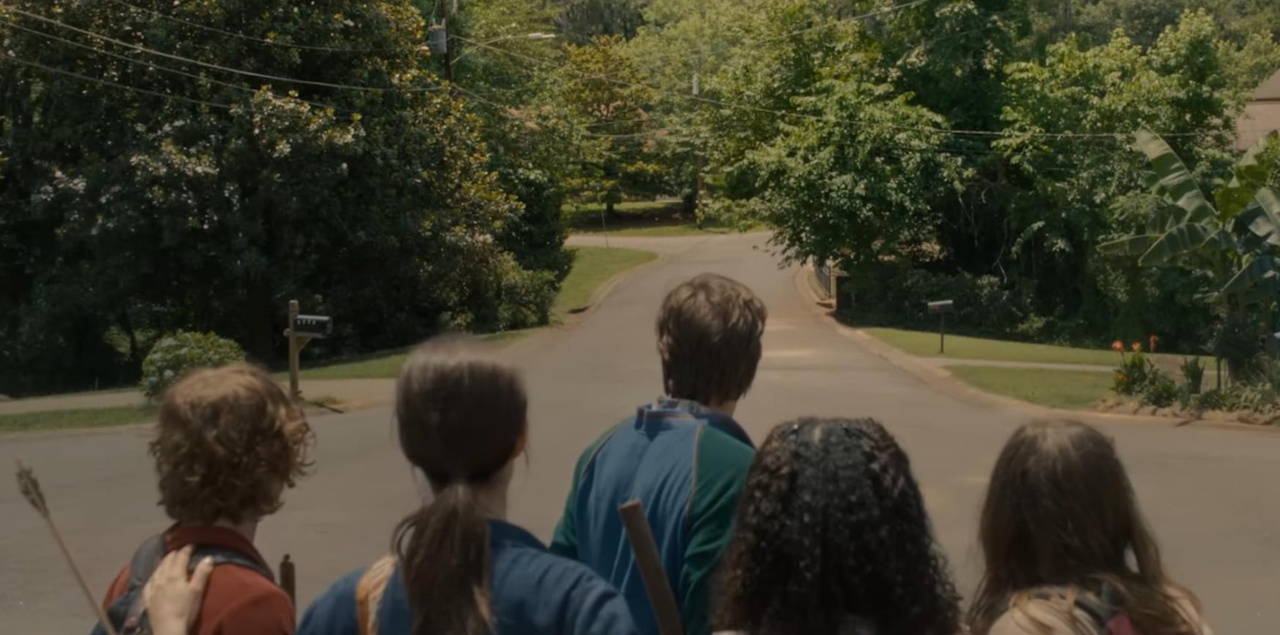
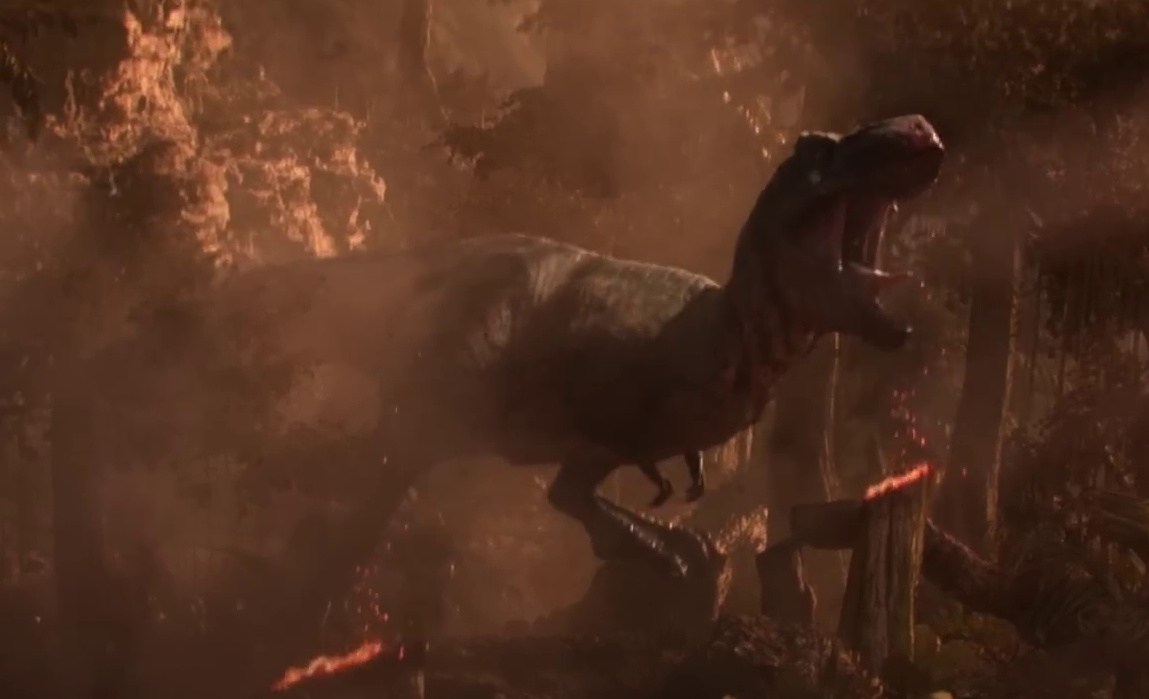
Several of the dinos.
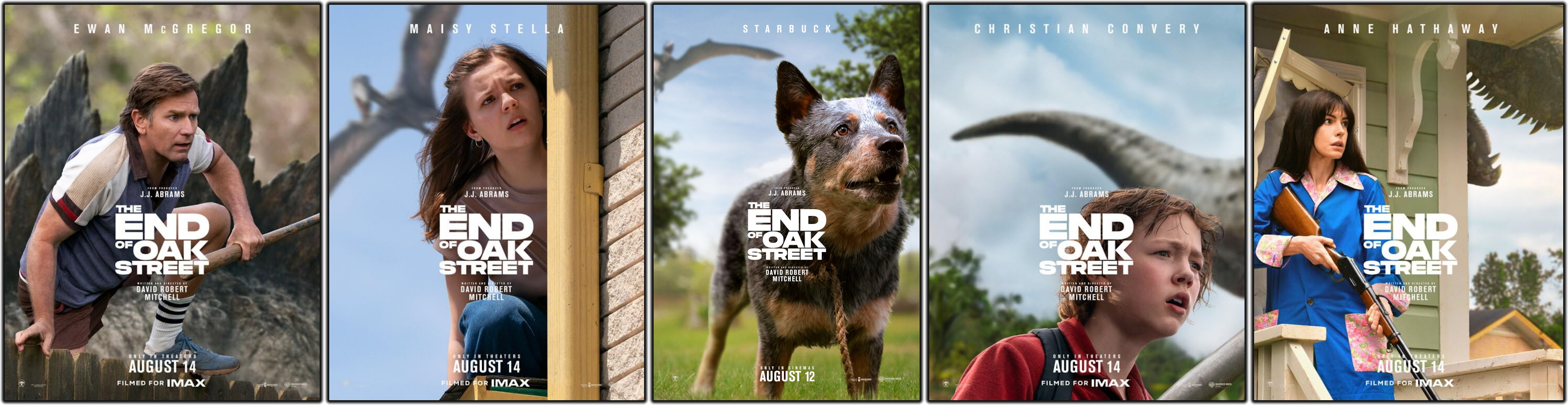
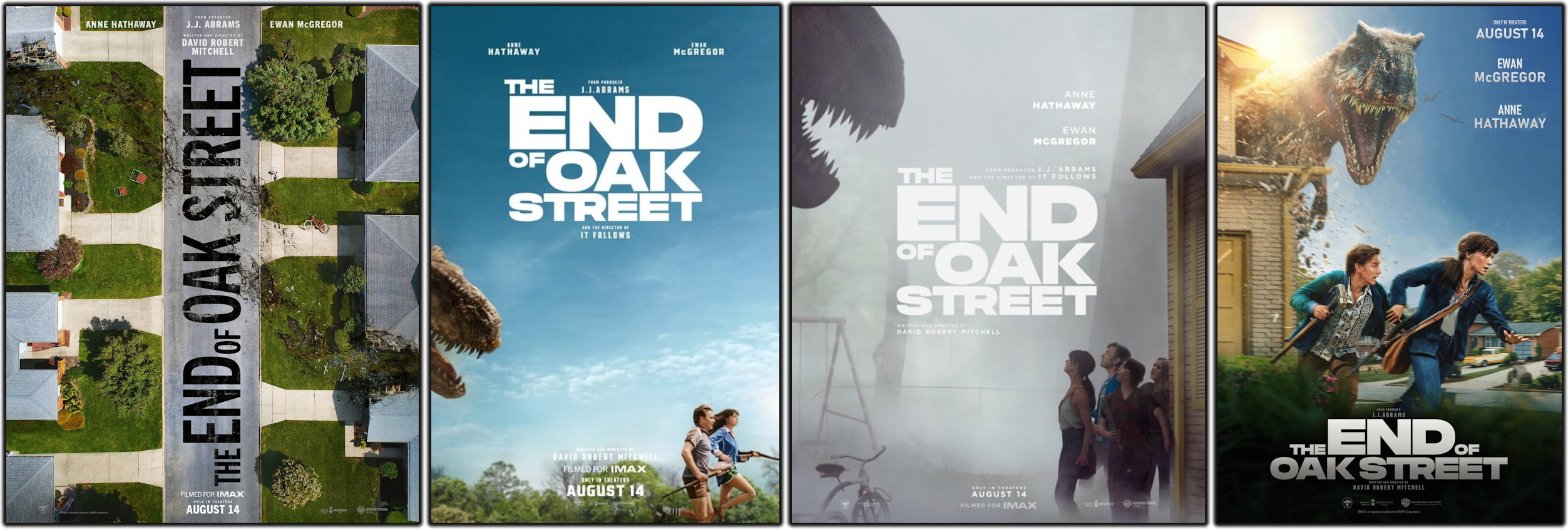
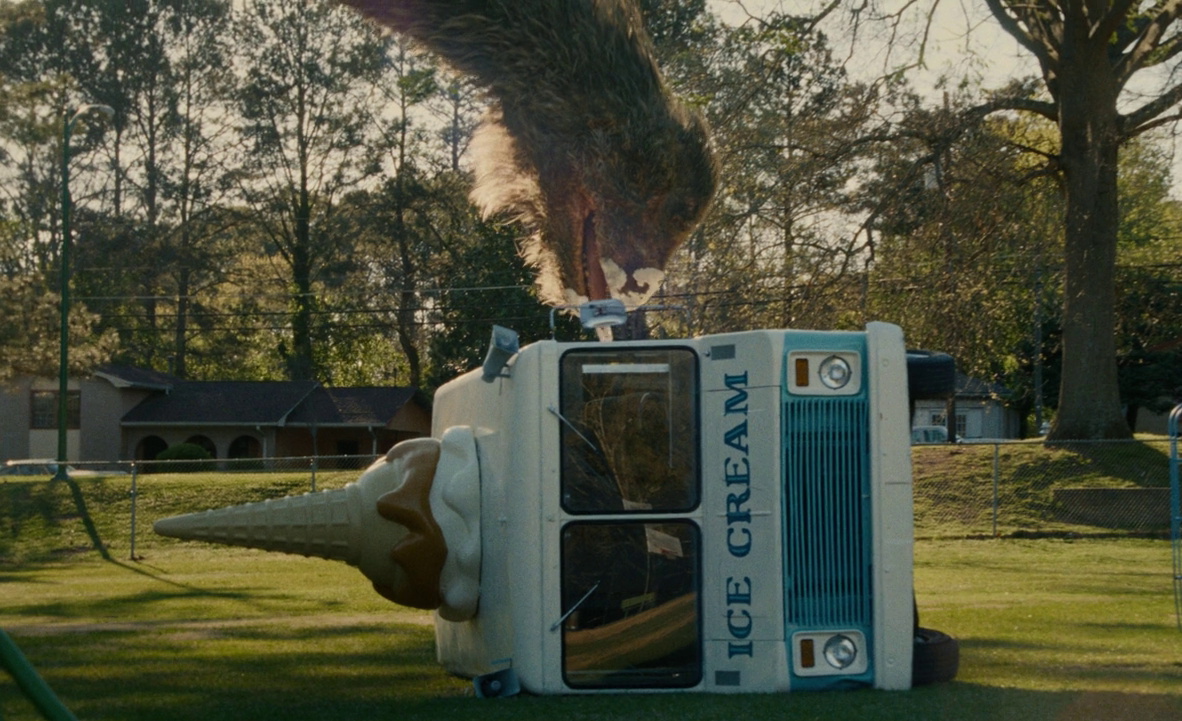
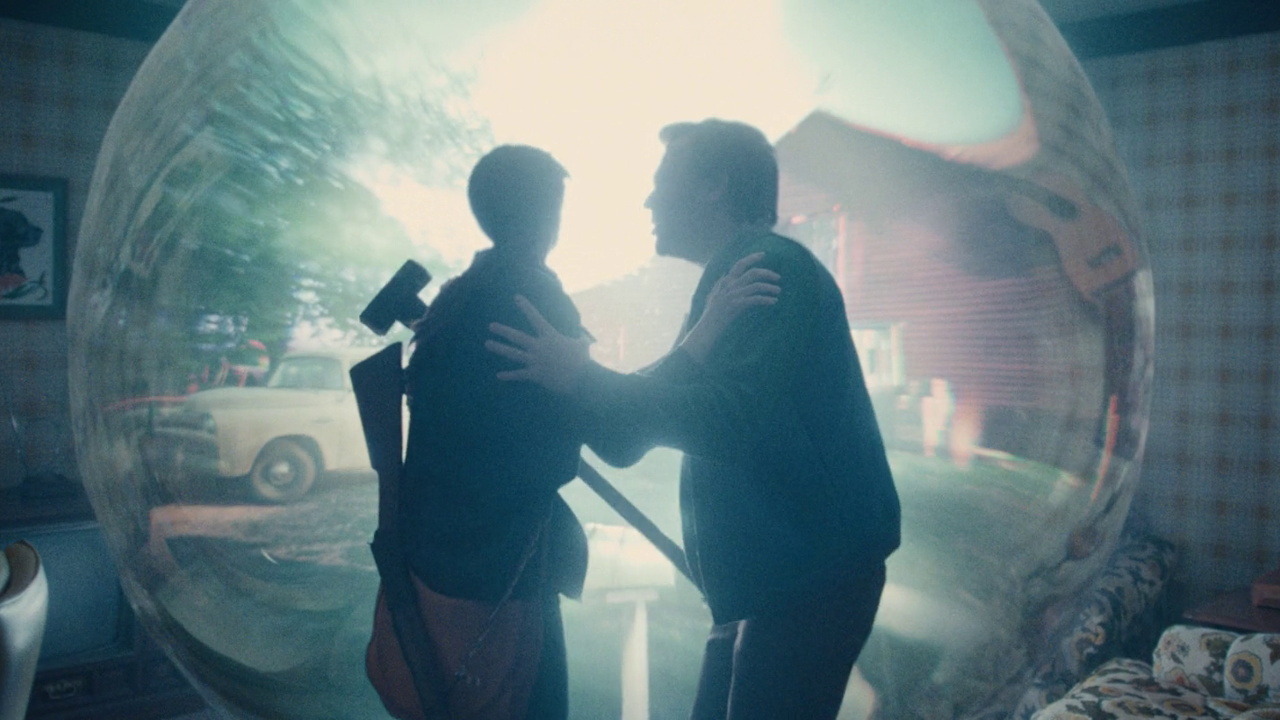
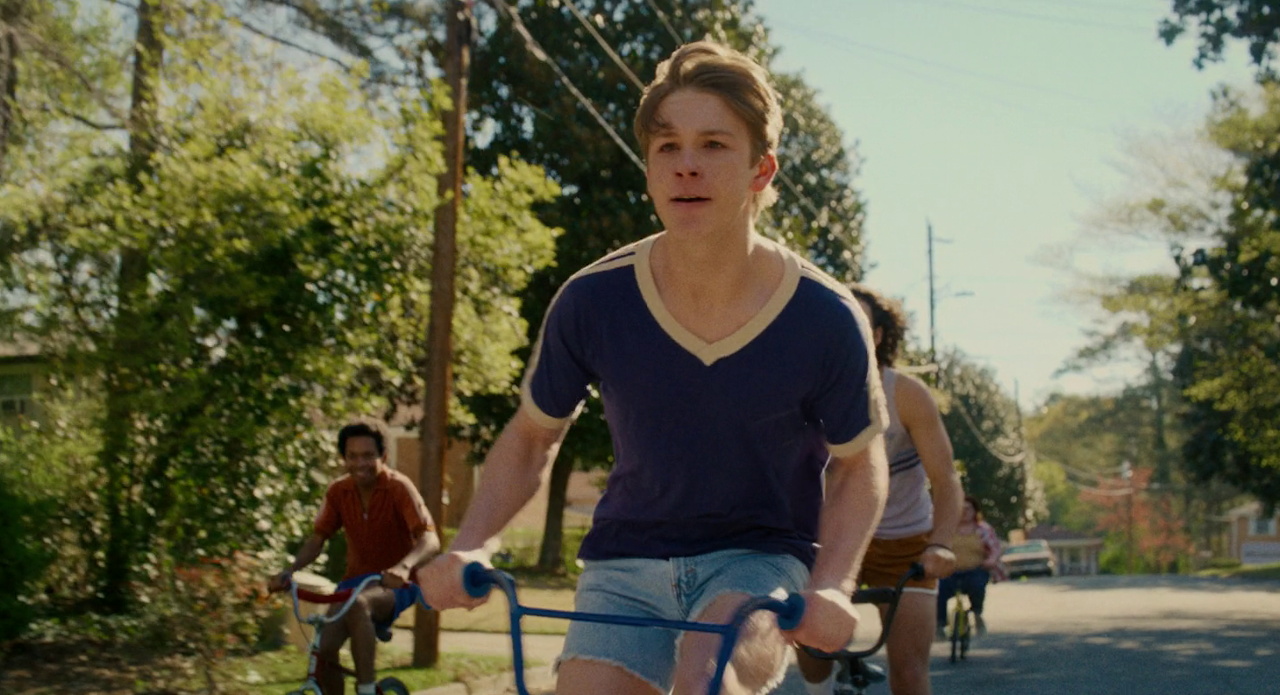
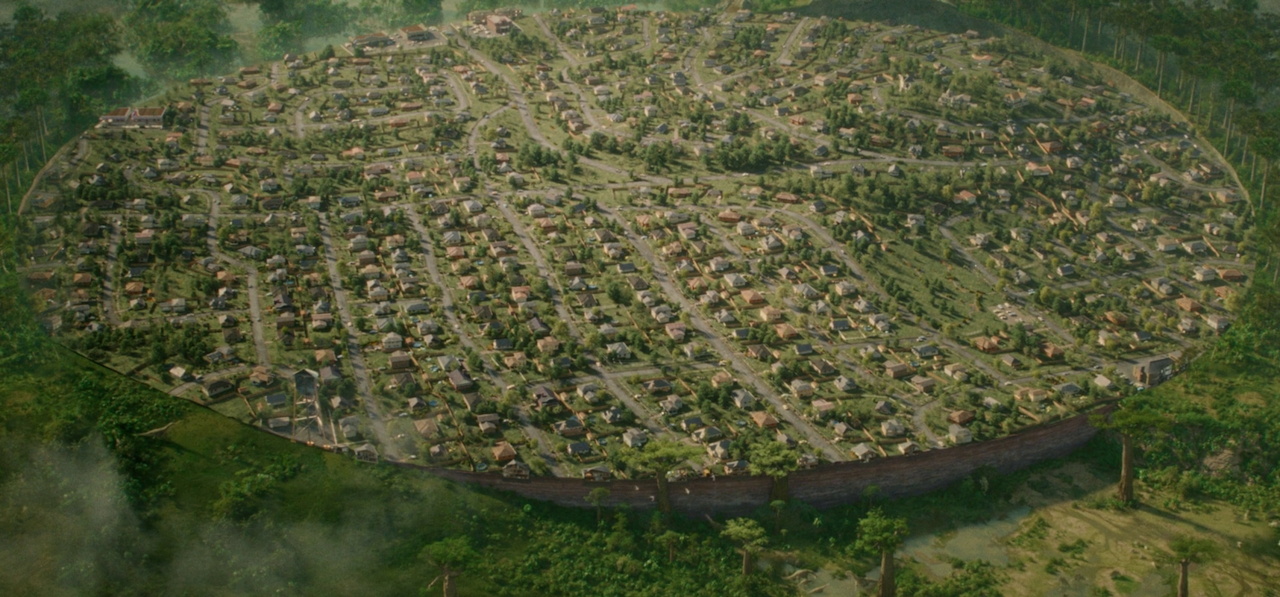
I enjoyed this year’s dino-themed horror-thriller The End of Oak Street. It was an inversion of the Jurassic Park formula; dinosaurs arrive in a suburban neighbourhood instead of people visiting a dino-themed park. But the dinosaurs made for genuinely threatening and dangerous monsters – breaking into houses with ease, eating most of the people in the neighbourhood… so, yeah. This is gonna be a hard one!
Even if I were safe and secure inside my own house… well, my house ain’t exactly dinosaur-proof. It wouldn’t be hard at all for some of the smaller carnivores to break in, let alone that giant snake-like creature. Hiding in the attic *might* work for a while, as it’s away from doors and windows, and honestly, trying to hunker down and shelter in place makes way more sense than going charging around the neighbourhood. But it would only take one or two dinos breaching my house (or whatever house I’m sheltering in) to force me out into the open… and that would almost certainly end my run!
Survival Odds: 3/10
Option #4: “Death Angel” monsters A Quiet Place
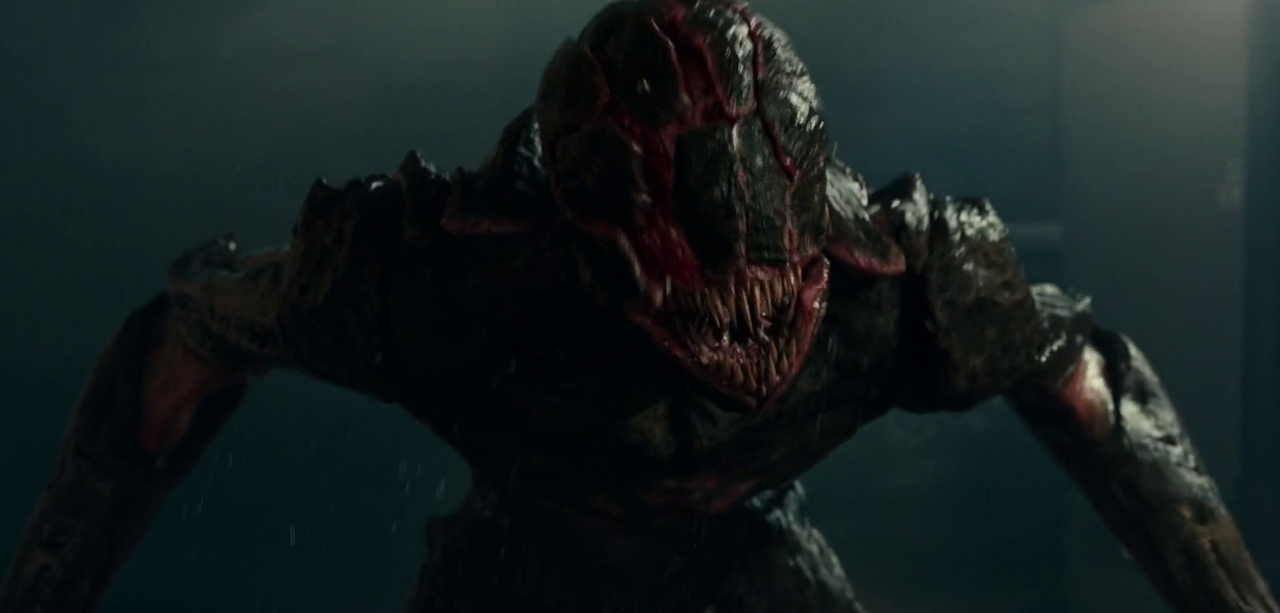
One of the monsters.
I haven’t seen A Quiet Place’s sequel or prequel, so I might be missing some context here! However, the premise of the nameless monsters – which fans have referred to as the “Death Angels,” so that’s the name I’m gonna use – is that they’re attracted to sound, and have *incredible* hearing, able to detect the tiniest noises at great distances. This can be a weakness, though, as they’re sensitive to particular frequencies… but let’s be honest, I’m not getting that far!
One snore, one clearing of the throat, one meow from a nearby cat, one fart… that’s all it takes to attract the Death Angels. And 48 hours suddenly seems like a *long* time to survive in the world of A Quiet Place if you can barely breathe, or every footstep is potentially ringing the dinner bell for these monsters. Even trying to stay as still as possible in a single place has its limits – and involuntary noises, or noises made by something or someone nearby, comepletely out of my control, would be enough. I don’t think I’m making it through this one!
Survival Odds: 1/10
Option #5: Count Orlok Nosferatu
Count Orlok as he appears in the 2024 remake.
Count Orlok, who was based loosely on Count Dracula, is one of cinema’s classic monsters; the archetypal vampire. If he’s moved into my town or otherwise set his sights upon me… I think I’m in trouble! The Count is out for blood, and with no one to help, if he targets me… I don’t see how surviving for 48 hours is gonna be possible. I mean, sure, I’d be okay in daylight hours – if I could avoid the Count’s castle – but at night? That’s when the danger is at its peak.
In the film, only a pure-hearted maiden can destroy a vampire, by offering herself to him willingly. And, uh, I don’t know if you’ve met me… but I’m not a pure-hearted maiden. So that’s not an option! Running away and hiding, trying to put as much distance between the Count and myself could work; using daylight hours to get a head-start and get as far away as possible is basically my strategy, and *maybe* 48 hours would be doable. But I suspect this’ll end with a bitten neck and a loss of blood.
Survival Odds: 2/10
Conclusion:
It’s time to choose!
So… which monster do I pick?
As weird as this feels to say as a big Star Trek fan… I think the Borg are gonna be my choice. If I could come across as nonthreatening (or merely useless to them), they’d ignore me entirely, and I think I might be able to find an out-of-the-way hidey-hole on whatever Borg-dominated vessel or planet I end up on to just wait out the 48 hours. It wouldn’t be fun, and I doubt I’d get any sleep! But compared to the other options? Yeah… the Borg take the win!
Gwi-Ma and Count Orlok both have supernatural powers, so if a target’s painted on my back and they’re coming for me? I don’t think there’s enough room to run away nor a safe enough place to hide! The dinosaurs from The End of Oak Street are animals – but there are so many of them, and some of them are so large, that surviving for that long seems impossible. And the Death Angels from A Quiet Place are so sensitive to sounds that one trip, stumble, or sneeze would be enough to draw their attention. The Borg… because of their tendency to ignore you if you’re not a direct threat, or if they’re just busy doing other things, are the least-bad option.
The very first Borg ever seen in Star Trek.
So that’s my answer! If you told me I’m about to be isekai’d to one of these worlds, and my challenge is to survive for 48 hours with one of these monsters? It’s gonna be the Borg.
I hope this has been a bit of fun, and a slightly different way to celebrate the spookiest month of the year than just talking about a few horror films or TV shows. I enjoyed putting this list together, in any case!
Thanks again for joining me! And don’t have nightmares…
All titles, creatures, and characters discussed above are the copyright of their respective studio, distributor, publisher, etc. This article contains the thoughts and opinions of one person only and is not intended to cause any offence.
Spoiler Warning: Beware of *minor* spoilers for Shenmue I-III and Shenmue: The Anime.
Before you get excited: there has been no announcement of a fourth game in the Shenmue saga! Sorry if the title of this piece tripped you up; that wasn’t my intention at all. Having just celebrated the twenty-fifth anniversary of Shenmue II a short while back, this epic video game series has been on my mind once again, and I wanted to take a moment to lay out my thoughts on a potential fourth game… and why it would *absolutely need* to bring the saga to a belated end.
Before we get into all of that, though, I have a couple of important caveats. Firstly, all of this is just one person’s *subjective, not objective* opinion. If our views on the Shenmue series don’t align… that’s okay. I trust that there’s room within the fan community for polite discussion and differences of opinion. Secondly, while I was a huge fan of Shenmue and of Shenmue II back in the Dreamcast era… I didn’t buy Shenmue III at launch, and while I did eventually pick it up when it went on sale, I haven’t played it. And I also haven’t watched the Shenmue anime adaptation yet, either – though I plan to get around to it eventually!
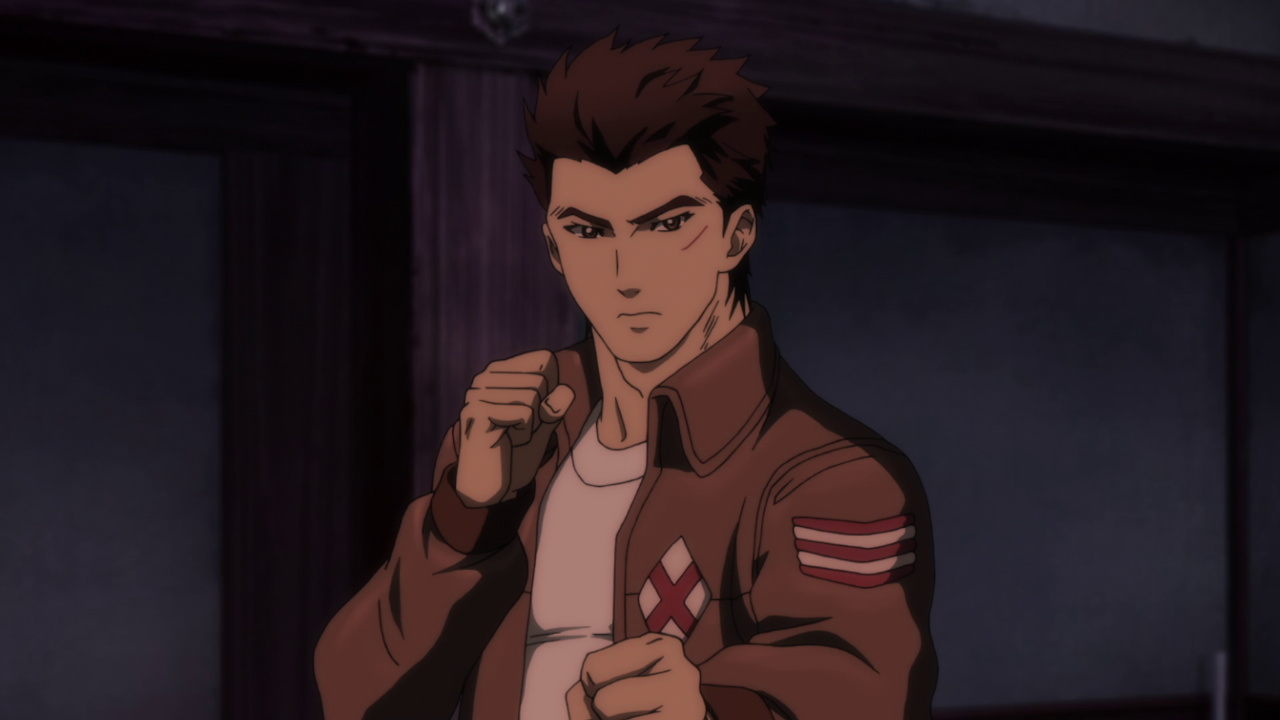
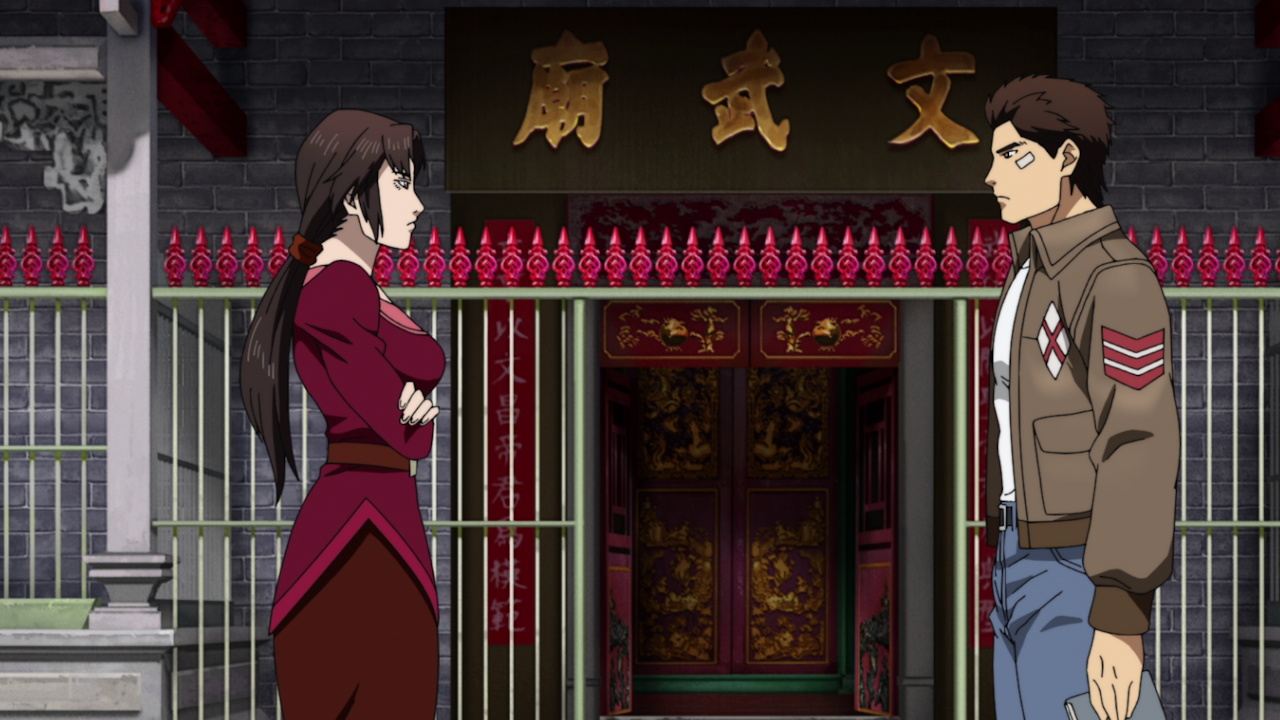
Ryo as he appears in the anime.
I’ll briefly recap why I didn’t buy or play Shenmue III – because I think it adds a lot of context to what we’re going to talk about today. However, if you think that ruins my claim to being a “true fan,” or somehow invalidates my take… no hard feelings. Consider this an opportunity to jump ship if you aren’t interested in reading any further!
The tl;dr is this: it was patently obvious to me, even as far back as 2015, that if Shenmue III didn’t finish the story and wrap things up, the chances of Ryo *ever* getting an ending were slim to nonexistent. And… am I wrong? Look at the sales figures for Shenmue I & II – the port of the first two games. Look at sales figures for Shenmue III, which barely registered on the lower reaches of the Japanese sales charts before disappearing entirely. And look at the low viewing figures for the anime – and the lack of attention the single season brought to the games before it, too, was cancelled.
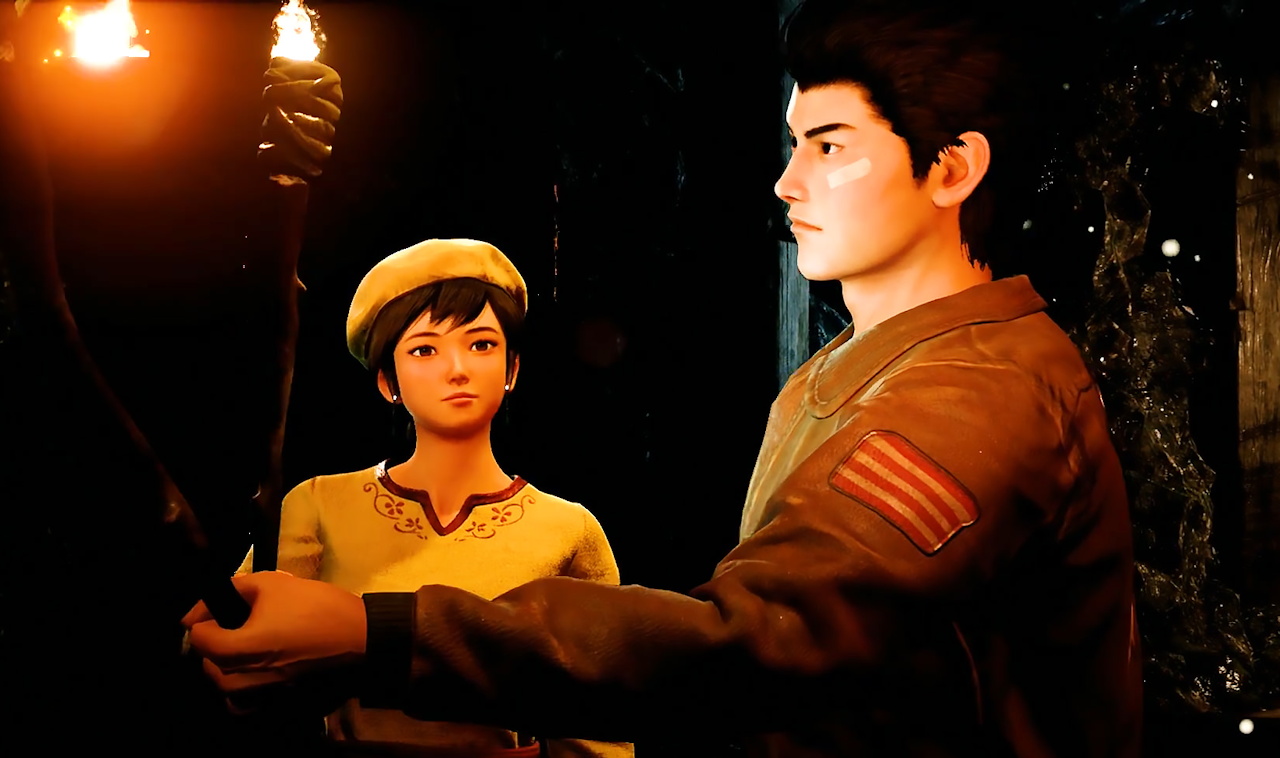
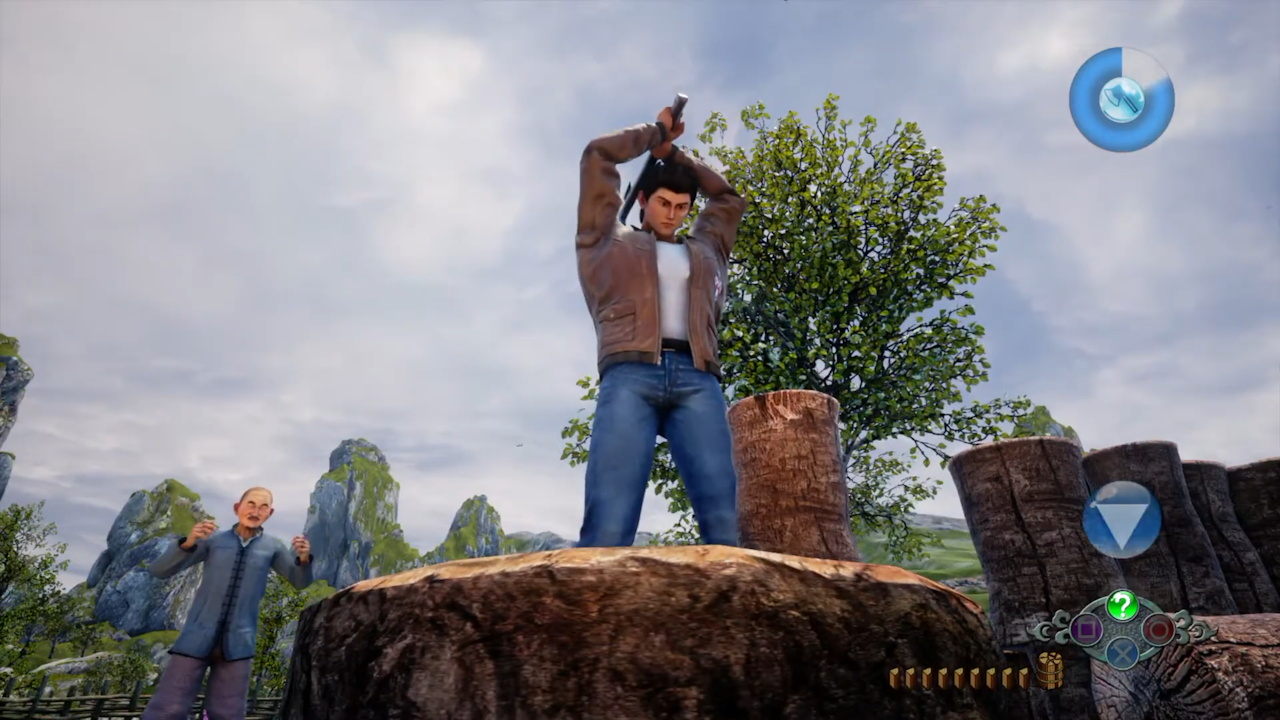
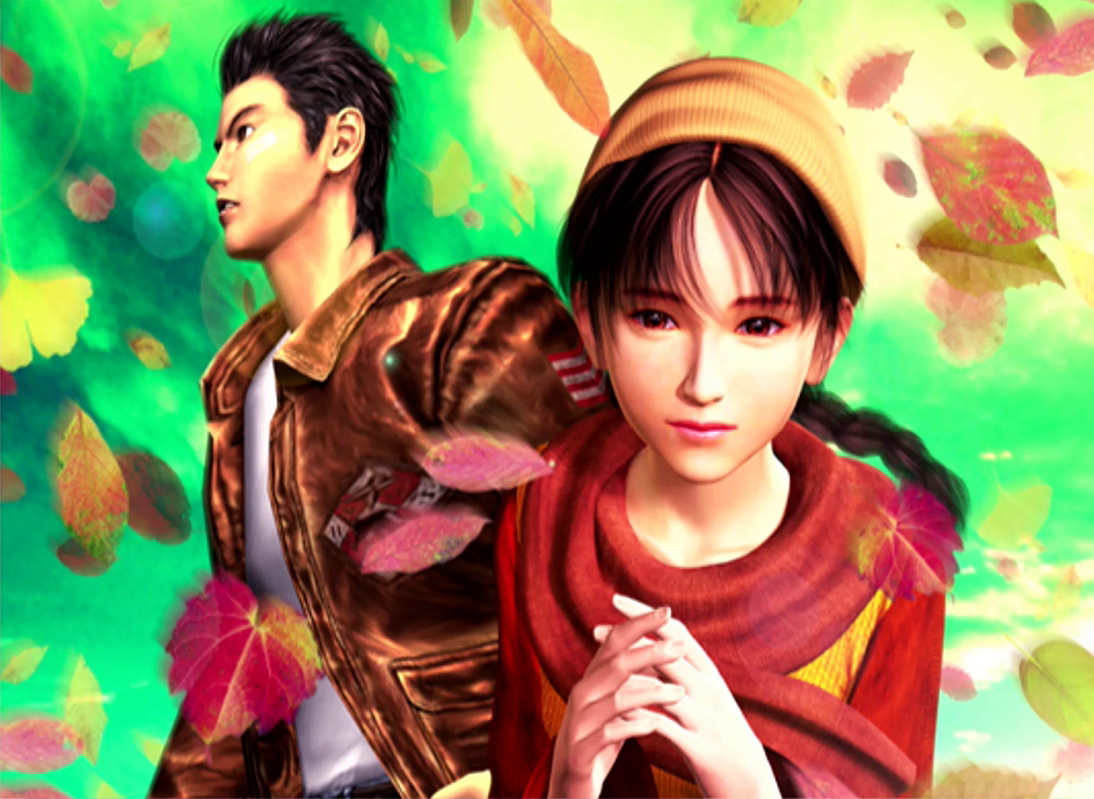
Shenhua and Ryo.
Yu Suzuki and YSNet refusing to take the once-in-a-lifetime opportunity that was literally gifted to them by fans reaching into their own pockets and finally bringing Ryo’s story to an end is, in my view, incomprehensibly idiotic. If Yu Suzuki couldn’t find it in his heart to make cuts to the bloated gameplay and storytelling of the final chapters of the Shenmue saga, someone else should’ve been brought in to do it for him. I can’t speak for *every* Shenmue fan out there, but the one thing I expected from Shenmue III – the *only* thing I expected from it, to be blunt – was that it would bring the saga to an end.
There was no realistic possibility, in my view, for Shenmue III to suddenly open up this incredible saga to legions of new players. That ship had long since sailed, and as disappointing as it may be, Shenmue fans must accept that this is a very niche product. It might not have been, had things been radically different for Sega and the Dreamcast around the turn of the millennium… but that’s the way it shook out. Shenmue III was only ever going to appeal to a small number of folks – many of whom backed the crowd-funding project and so wouldn’t need to buy a copy of the game at release. There was never a snowball’s chance in hell that Shenmue III would do what the first game couldn’t and bring in huge numbers of new players.
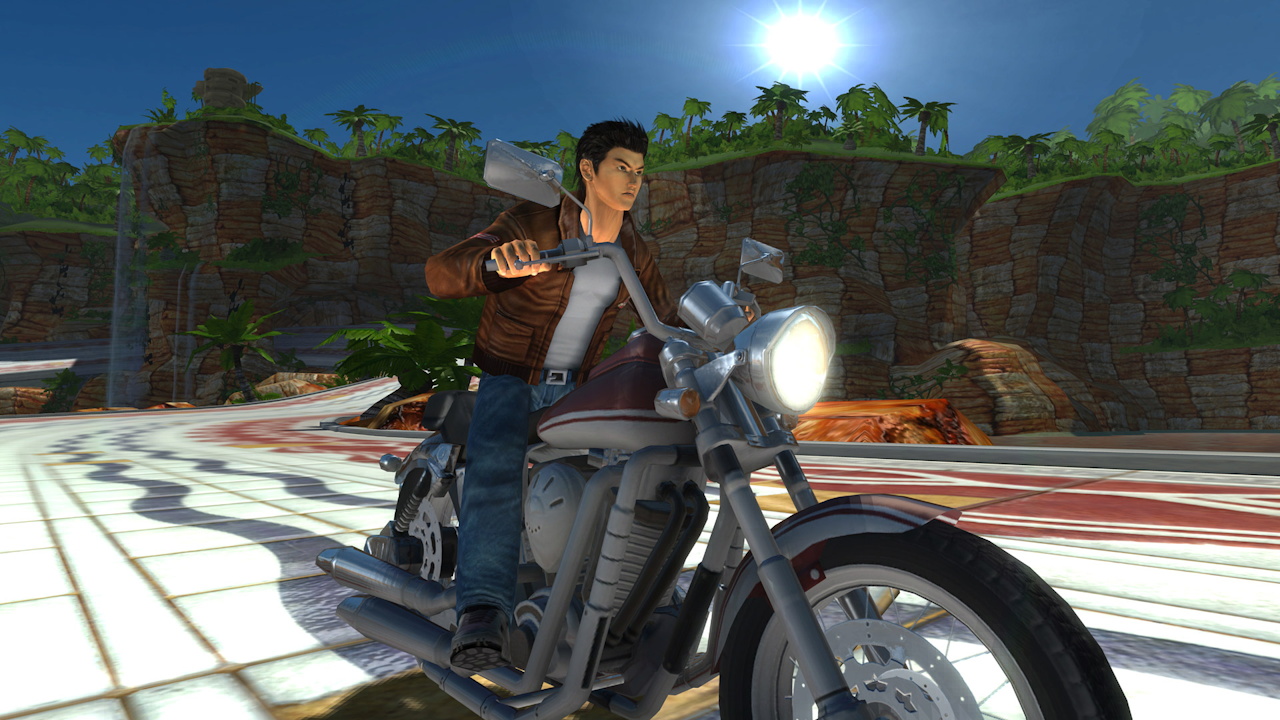
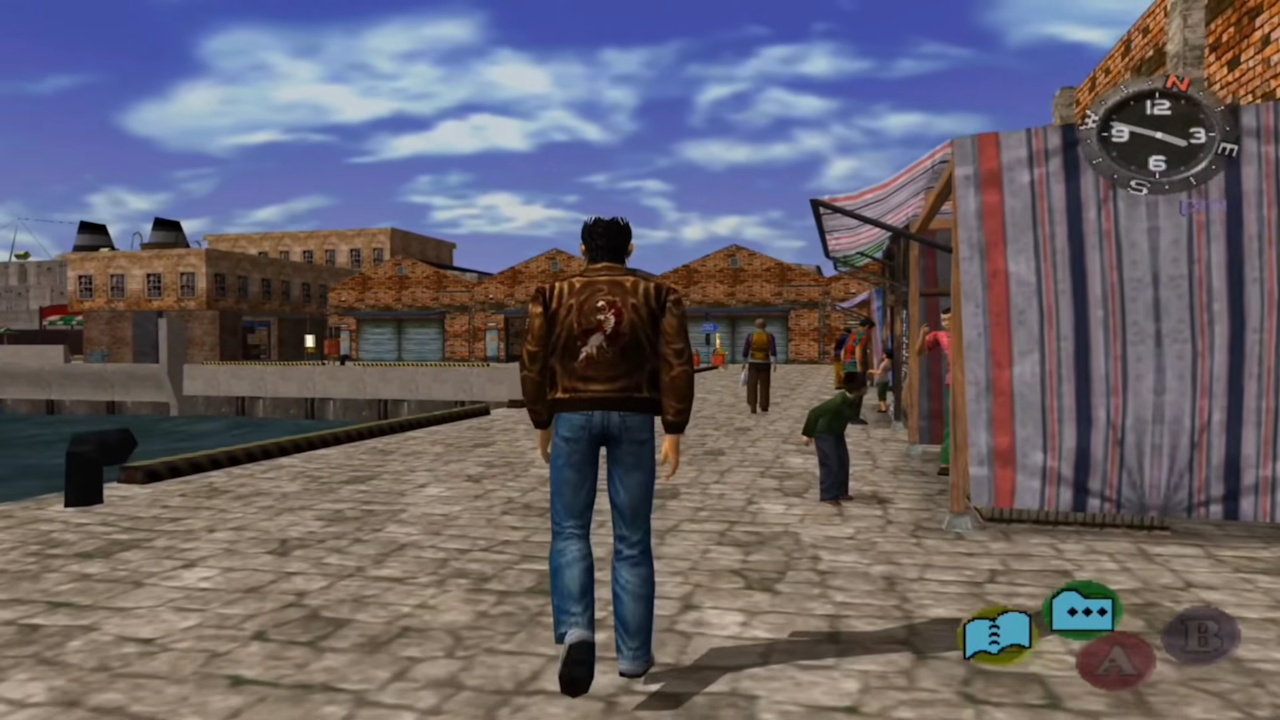
Ryo as he appeared in Sonic & Sega All-Stars Racing.
If I’d been writing here on the website back in 2015, I’d have said exactly that. I’d have made my voice heard – in whatever small way I could – and tried to let Yu Suzuki and YSNet know that Shenmue III should be the final conclusion to the series.
Though, now I come to think of it, that request seemed *so* blindingly obvious back then that I don’t know if I’d have even felt a need to write it down! The shock that hit me when I found out that Shenmue III wasn’t going to be the end, and would just move the story along was… even a decade later, it’s almost indescribable how utterly *stupid* I found it to be.
And to be clear… everything that’s happened in the years since has only reinforced my belief that I was, very sadly, right. Shenmue III didn’t take off and bring in tons of new players. The port didn’t sell well and didn’t even make a blip on the sales charts. And even the anime – which took Shenmue to a new medium – failed to move the needle. Can you look me in the eye and tell me that my approach to Shenmue III was wrong?
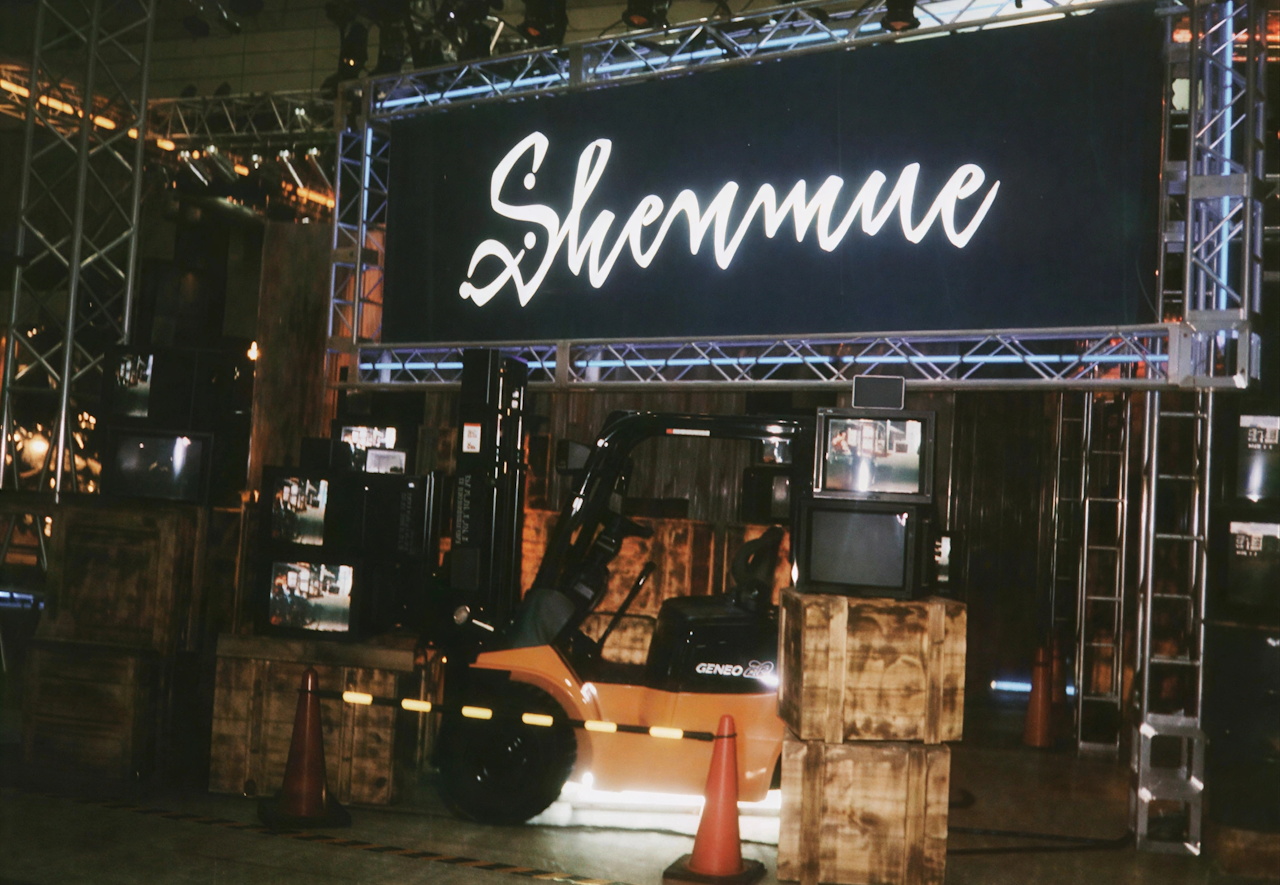
Part of the Shenmue III development team in the 2010s.
I’m of the opinion, unfortunately, that Shenmue III will eventually come to be seen as the saga’s final chance. Even if Shenmue III Enhanced does better than the original incarnation of that game – which I doubt, but I guess we’ll see – I just don’t see where the money comes from to create a fourth entry in the series. Crowd-funding is out of the question; YSNet burned a lot of bridges with the Shenmue fan community over the course of its first crowd-funding campaign, and with the overall decline of crowd-funding in general, a second attempt probably wouldn’t even raise half of the almost $7 million that came in last time.
So… where else is YSNet gonna get the money from? Its crappy mobile games – Steel Paws and whatever the other one was called – aren’t ten-plus-million-dollar earners. ININ Games, Shenmue III Enhanced’s new publisher, doesn’t have the resources to put into a game like this… and on current form, they seem to be struggling with just an upgraded version of Shenmue III. And how can YSNet go to any publisher, or any investor at all, with cap in hand and say: “can we have all of this money to make the fourth part of a game series when parts one through three, and an anime adaptation, all failed?”
Shenmue’s creator, Yu Suzuki. Photo: YSNet
Shenmue is kind of notorious in the industry, too, as “the game that killed the Dreamcast.” That title isn’t entirely fair… but it isn’t entirely undeserved, either. In short, any investor or publisher who knows *anything* about gaming is going to take one look at Shenmue IV and turn it down hard. Why invest ten-plus million dollars into a project that won’t earn its money back? Under the best possible circumstances, Shenmue IV might break even. But that’s not exactly a great pitch to investors, is it?
In any case, all of this was meant to be the preamble to my *main* point; the topic of this article. If, by some absolute miracle, the stars align for Yu Suzuki and Shenmue IV is able to enter development… it simply must bring the saga to an end.
Limited Run’s Shenmue cat plush. Yes, I bought one!
What’s the key thing that YSNet – and Shenmue fans – have learned from the crowd-funding campaign, from the port of Shenmue I & II, from Shenmue III, and from the anime? Most people, as sad and disappointing as this may be, don’t care about Shenmue, won’t show up for Shenmue, and won’t spend a penny on Shenmue.
Under those circumstances, there is less than a microscopic chance that Shenmue IV does what none of those other projects was able to do. There’s a reasonably high chance that the game doesn’t even make its money back. So the fourth game *needs* to be the end.
None of us are getting any younger. Yu Suzuki is pushing 70 years old, and time catches up to all of us in the end. Shenmue III has been kicking around for seven years, at this point, and we’re still no closer to a sequel. A fourth game would be in the exact same situation – and many of us just don’t have fifteen or twenty more years to wait. If we follow a similar timeframe to Shenmue III, and pretend that Shenmue IV will be announced tomorrow… that means it’ll be ready for release in late 2030 or early 2031, and if it takes seven-plus years after *that* before a potential fifth game could be greenlit… well, Yu Suzuki would be 83 or 84 before Shenmue V would be ready. Continuing the saga at that pace seems completely unrealistic to me.
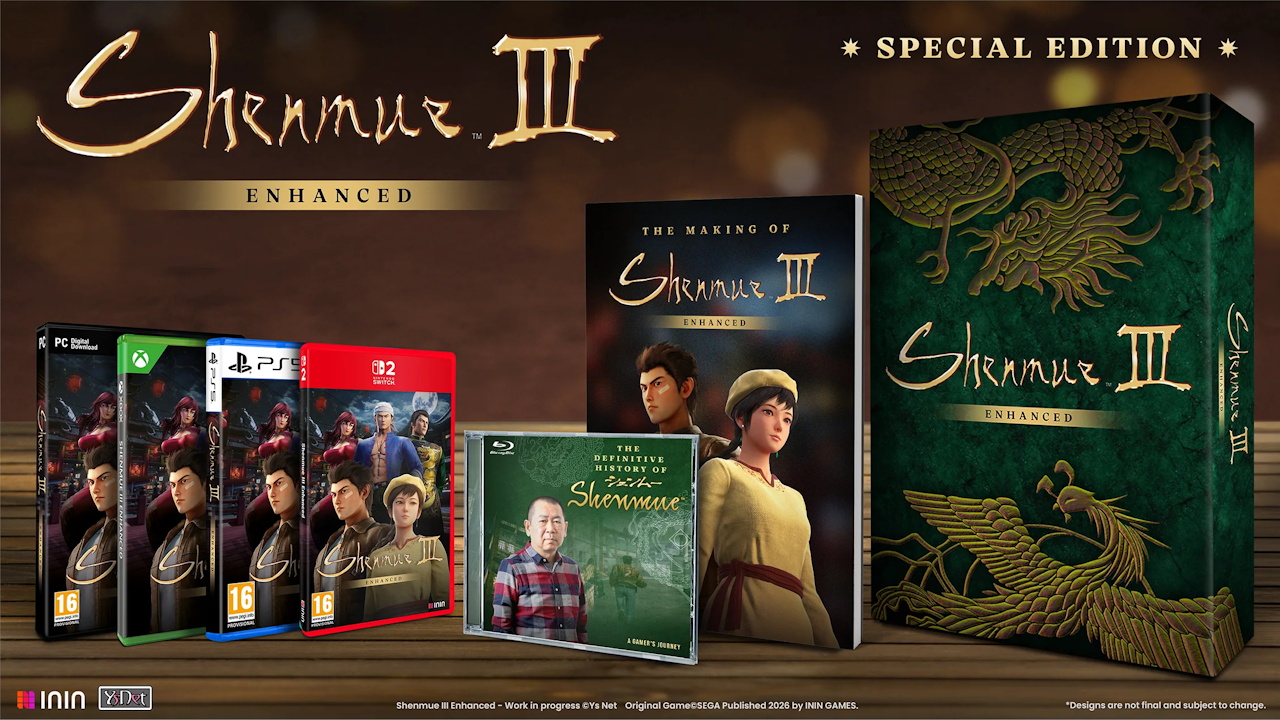
We’re still waiting on Shenmue III Enhanced…
And I have a stake in this, too.
I’m on the wrong side of forty myself, and in the 2010s I was diagnosed with arthritis. Arthritis is already affecting my hands and fingers, limiting my ability to play games – especially for long periods of time or with demanding multi-button combos and time-sensitive button presses. I might make it to the 2030s and still be able to play, all being well, but if we start talking about a potential fifth game that might not launch till the 2040s? If I’m even still alive by that point – which, given my other health issues, is sadly not a guarantee – I really don’t know how well I’d be able to hold a game control pad or interact with brand-new games.
So this isn’t just me saying “what if Yu Suzuki retires;” this is me saying… I want to see this story come to an end, and if it’s going to be in video game form, I want to still be well enough and healthy enough to play that game. I don’t have another ten or fifteen years to wait before, to be realistic, that may no longer be possible for me.
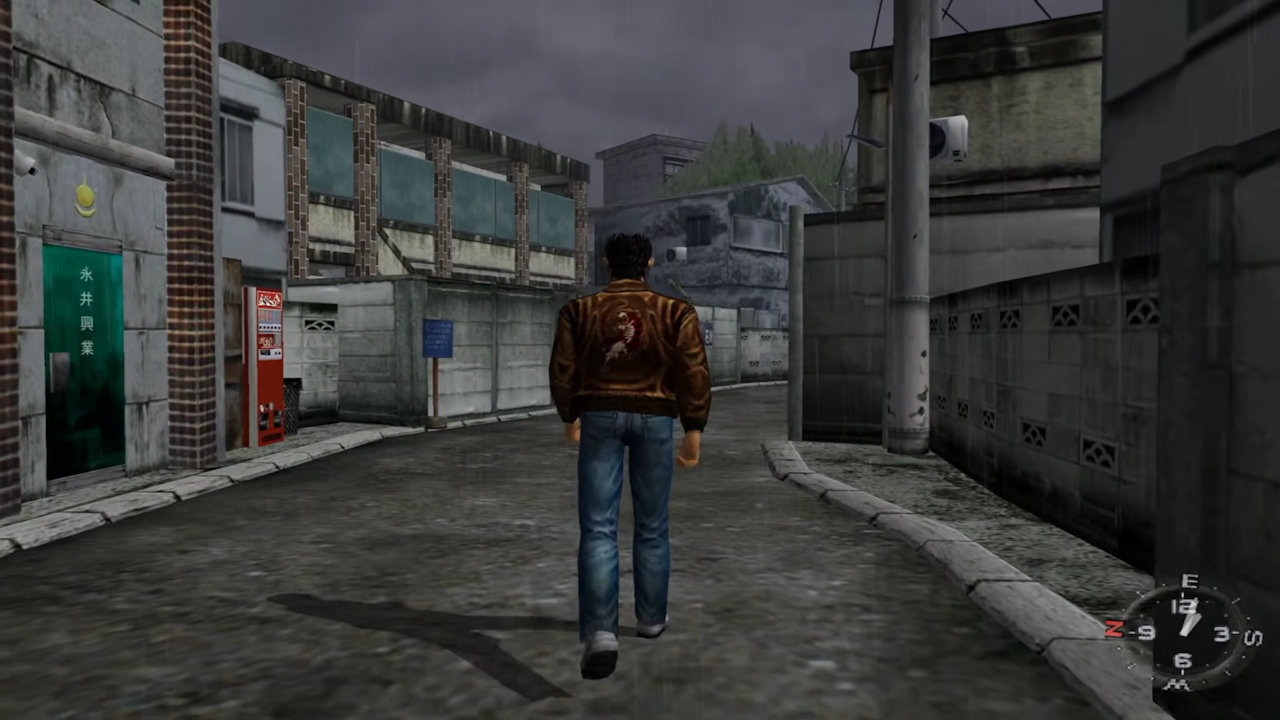
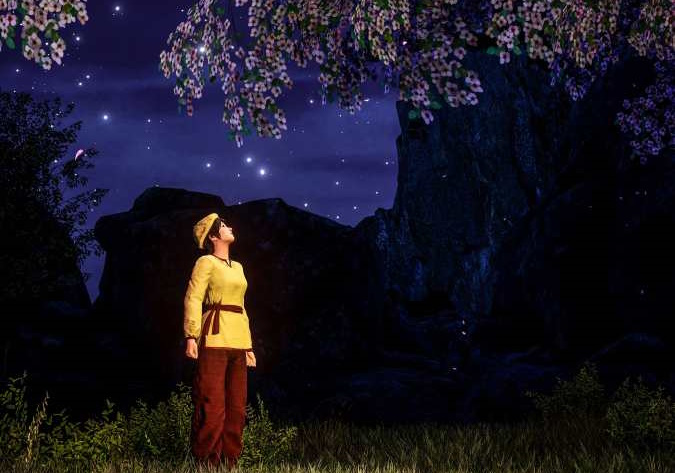
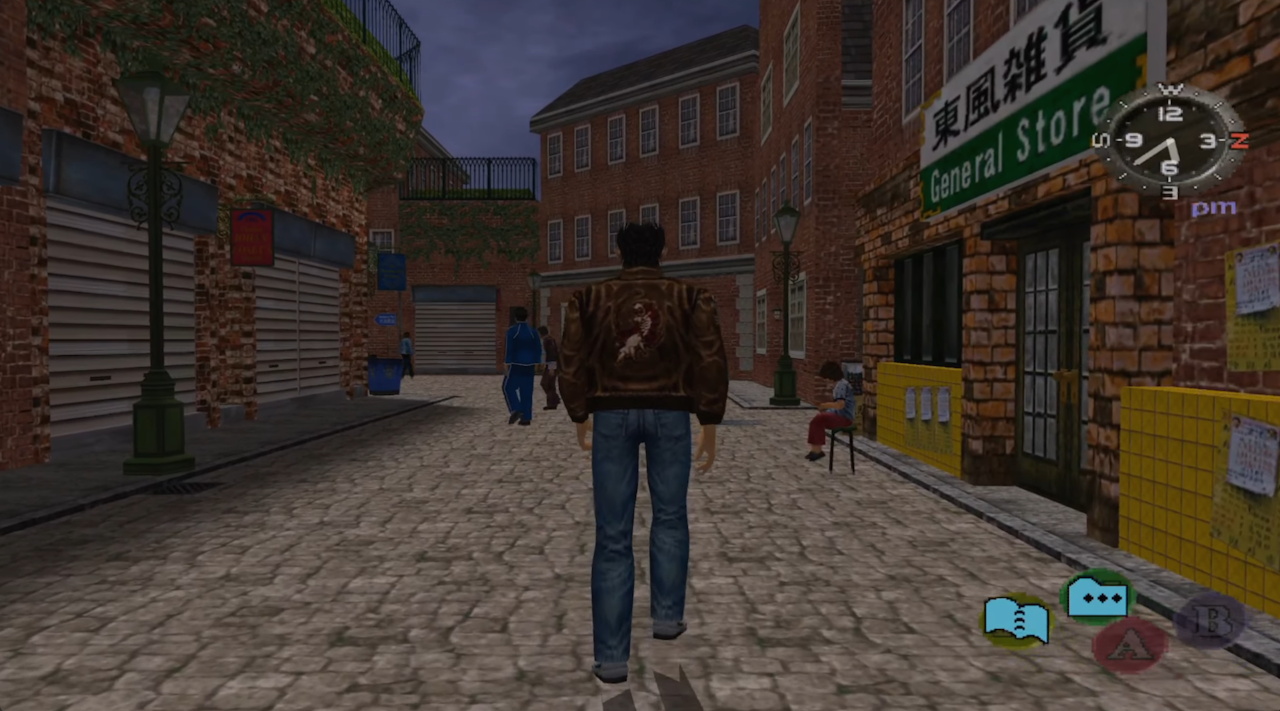
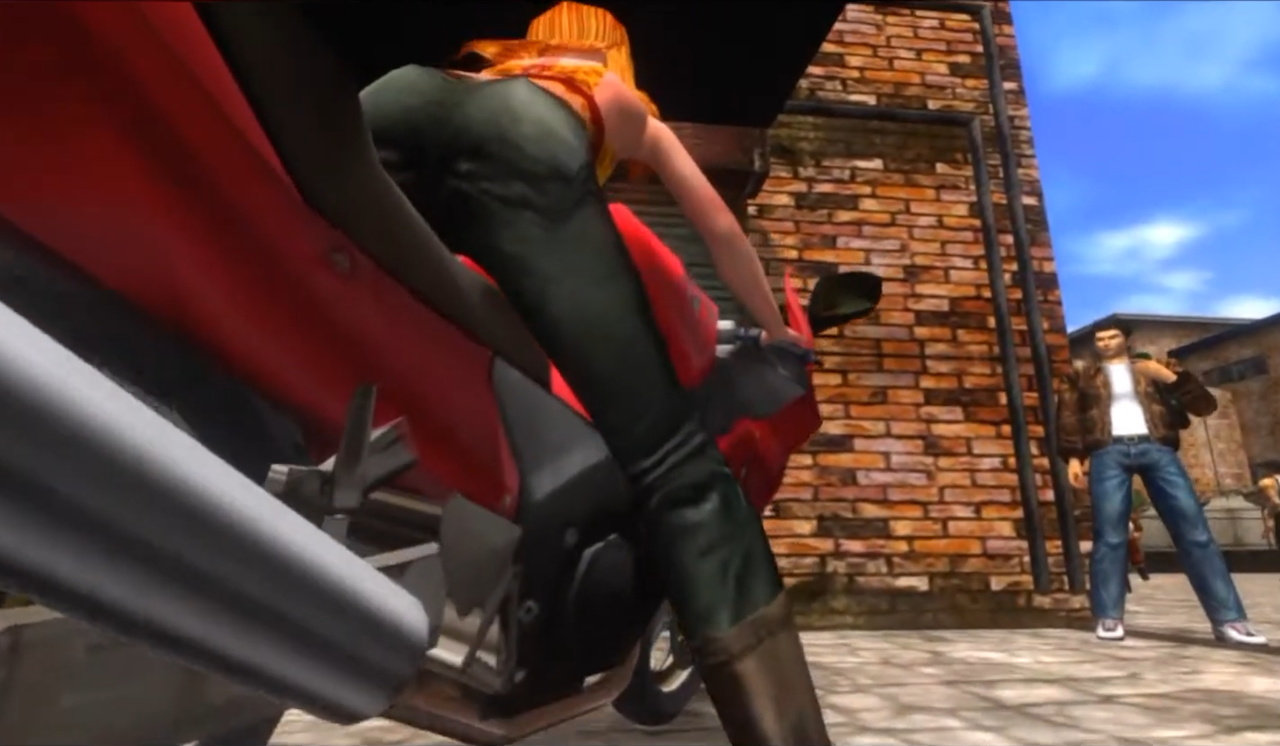
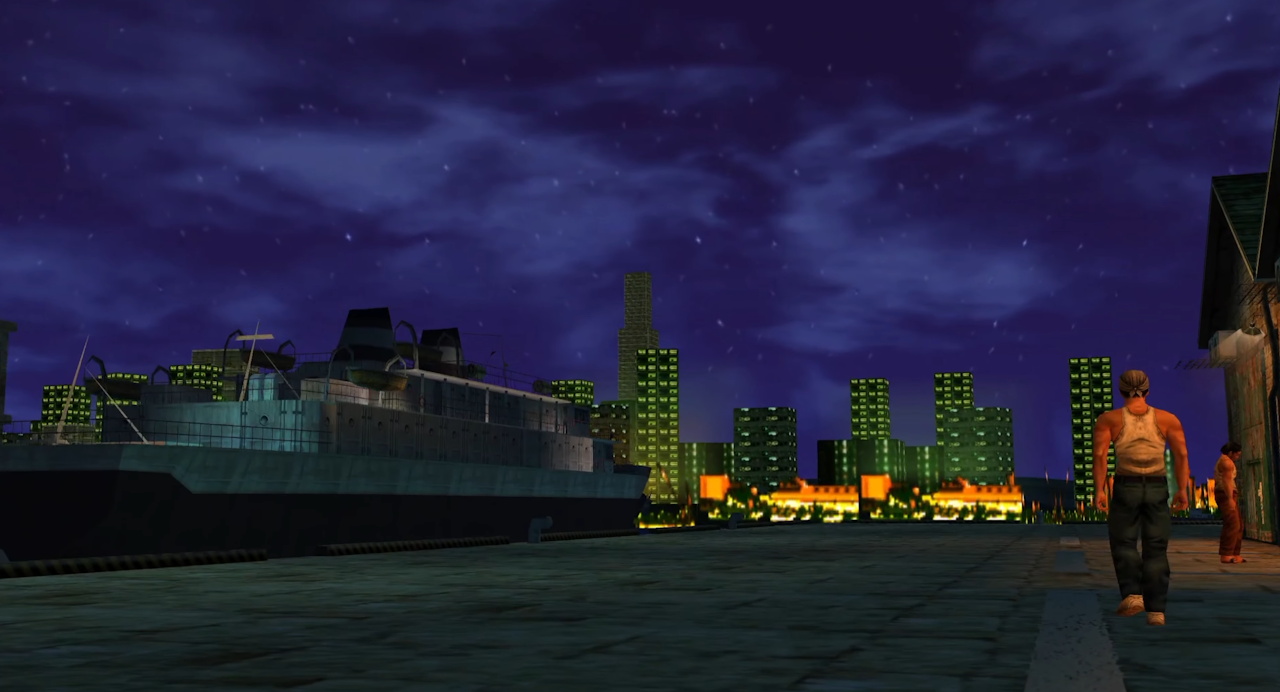
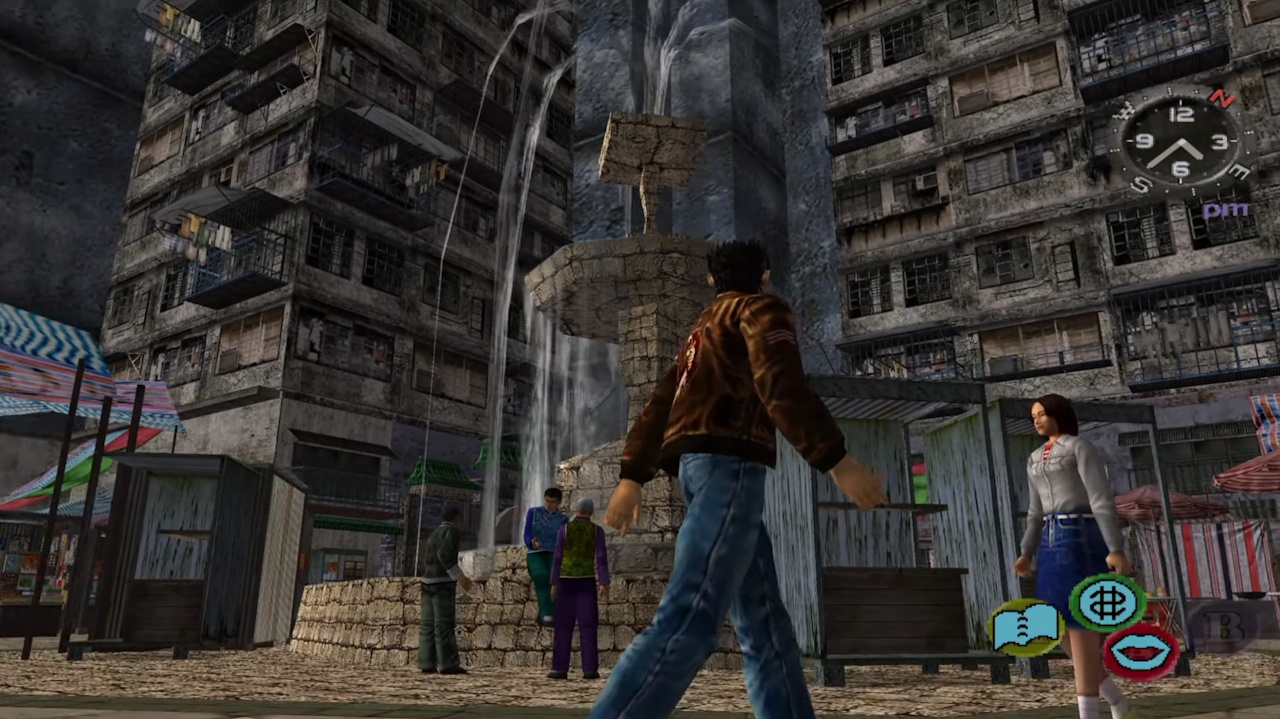
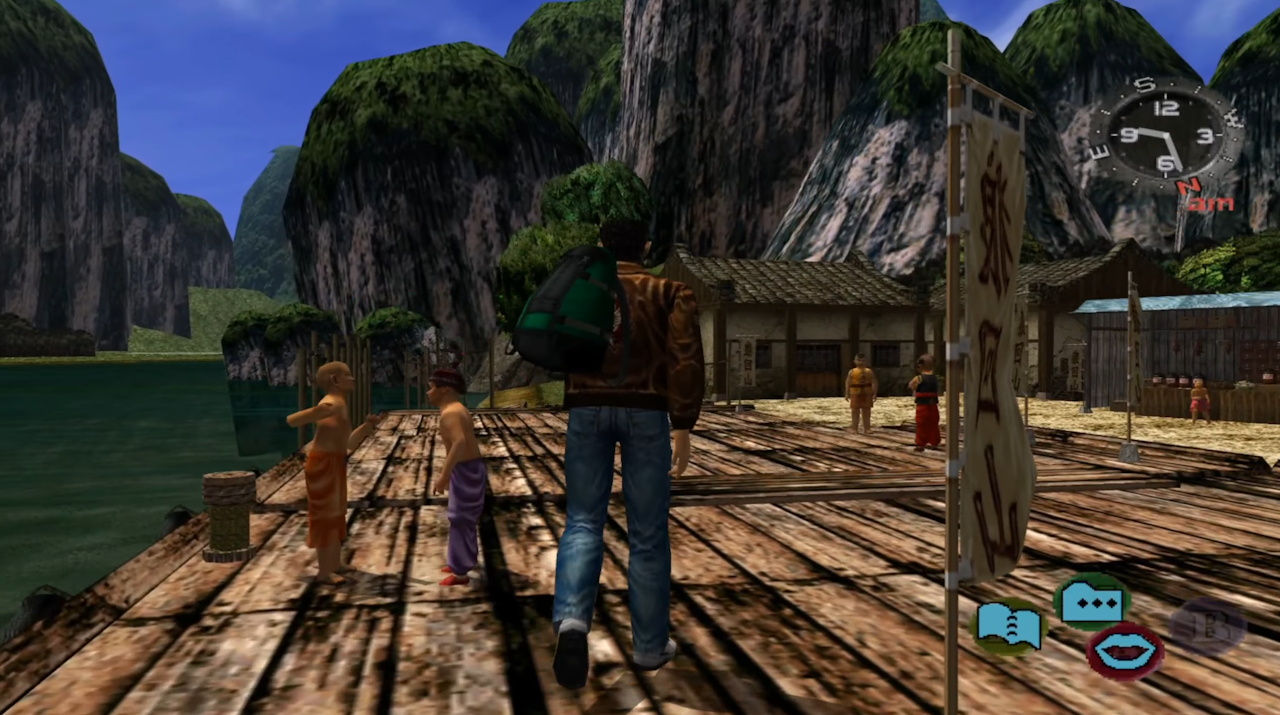
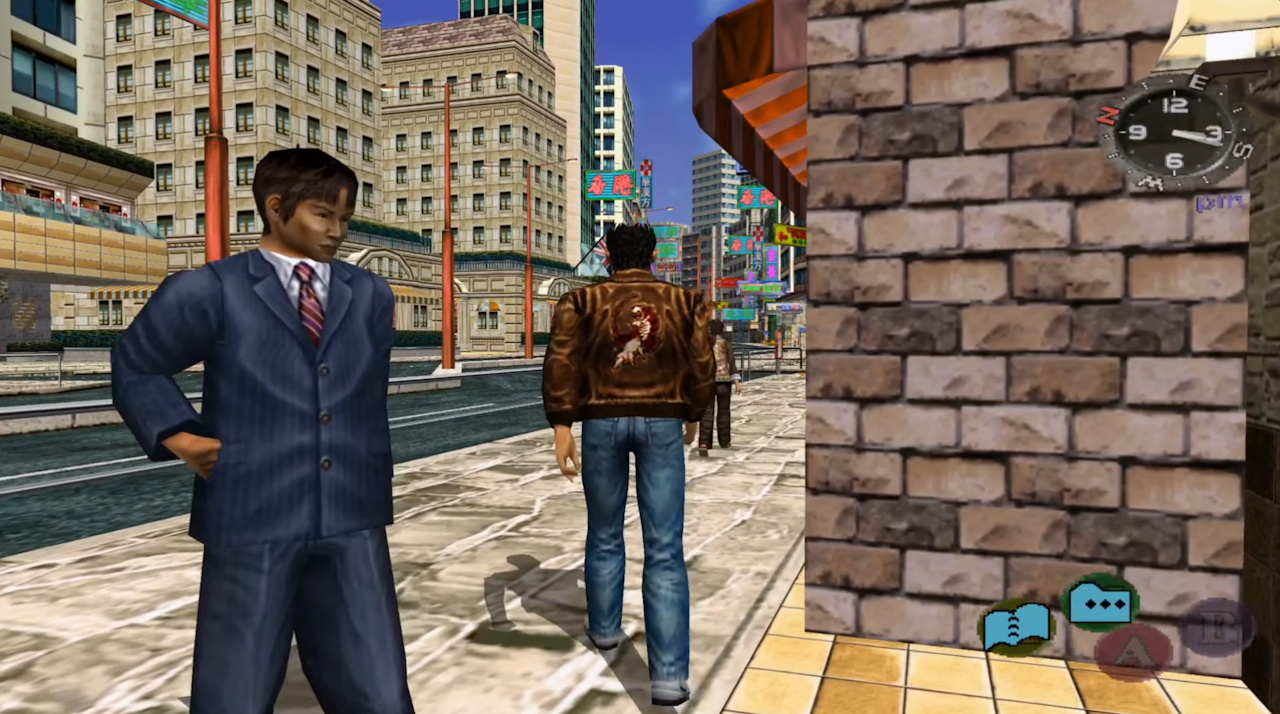
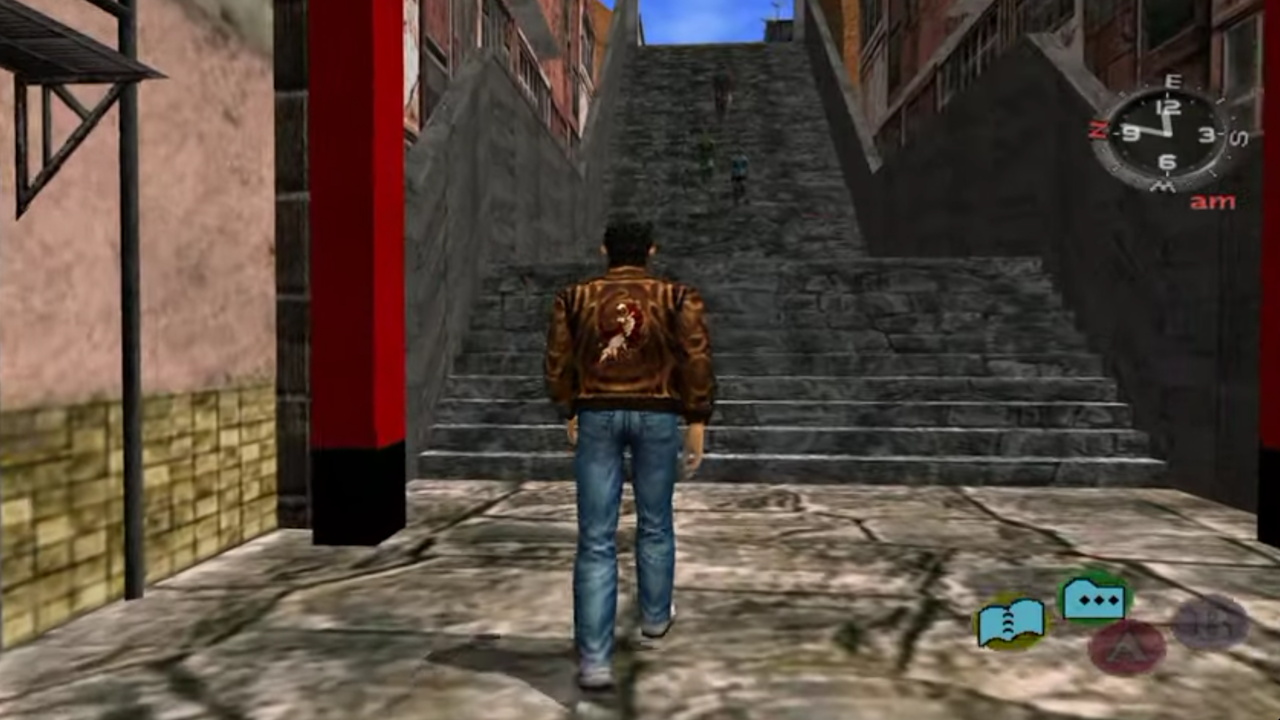
Ryo exploring Hong Kong in Shenmue II.
So this piece is really a plea to Yu Suzuki and YSNet.
If you’re able to get the funding together to make Shenmue IV – and, despite everything we’ve discussed, I really hope that you are – then please, *please* take the opportunity that you missed in the 2010s and find a pathway to the end of Ryo’s story that can fit within the confines of a single game. Don’t make the same mistake again of assuming a new game will bring in untold legions of brand-new players, because I can promise you now that *it will not*. Shenmue is a niche saga with a small but devoted fanbase. If you have a chance to make a game, make it for us.
I want to clarify what I’m really asking for and what I mean when I say that the gameplay and story can and should be cut down, for the avoidance of any confusion.
Shenmue at the 1999 Tokyo Game Show.
Cutting down the story doesn’t mean we need to skip entire chapters of the game – skipping, say, all of chapters nine through thirteen. What it means is finding the most important narrative points for Ryo’s journey and building the game around them. Look at what Shenmue II did – there was a whole sub-story that took place on the boat to Hong Kong that was never adapted and didn’t make it into the final game. Why was that content cut? Because it was ultimately not necessary to Ryo’s story of revenge against Lan Di and the mysteries of the mirrors.
I still haven’t played Shenmue III, so I can’t say for *certain* that things like turtle-racing mini-games or the wood-cutting side-job are totally unnecessary to the story. But… it seems to me like *those* are where I’d start cutting if I were the one in charge of swinging the narrative and gameplay axes. There will be similar things in the planned continuation of the saga – places where cuts could be made to move things along at a way more reasonable pace.
Did this need to be part of Shenmue III? Did its inclusion make the game better?
There are many, many ways to cut down a game to save money on development *and* to ensure a complex story can fit in the confines of a single title. Use of generative A.I. tools is a controversial topic among some players, but given YSNet’s size and resources, a smaller indie studio – in my opinion, anyway – gets a bit more leeway and more of a free pass when it comes to their use. Generative A.I. has so many uses in the game development space, but one place where I could see it being incredibly useful for a cut-down Shenmue IV would be in cut-scenes. Shenmue already has its anime spin-off, so why not make cut-scenes that take place in between different areas or levels using that art style? Those sequences could convey key story points that weren’t able to be part of the game.
Then there’s combining different storylines. Instead of Ryo racing to another new location to track down a missing person, why not have that person be present in the town where Ryo already is? The boss battle from one area could be relocated to fit in a different one, and instead of having two towns for Ryo to travel between, why not stick with the same one? When I think back to Shenmue II, just as an example, it would’ve been possible to cut basically all of the Kowloon section of the game and have the Dou Niu/Yuanda Zhu arc take place in either the existing map or a much smaller side-area. That’s the kind of thing I mean.
A rainy day in Dobuita…
And narratively… at this point, we’ve seen Ryo embark on this quest, encounter setbacks, and then seem to spin his wheels a bit. A tighter, more focused narrative would probably have to cut back on secondary characters, keeping Ryo and his quest front-and-centre. I don’t know what the ending is meant to look like, so I can only speculate about what kind of cuts would need to be made to the story. But there has *got* to be a way to get Ryo to his conclusion within the runtime of a single title.
Then we come to other ideas. Returning to a Dreamcast-esque visual style would probably cut down on development costs in some ways; the more complicated the tech, the more expensive it is to work with, as a general rule. Instead of having larger, expansive areas to explore, Shenmue IV could be much more linear, with smaller levels and a lot of exploration cut out.
Maybe that wouldn’t be “perfect,” nor true to the original style of the games… but if it’s this or nothing, what would you rather have?
Ryo meets Xiuying in the anime adaptation.
That was the question that no one asked Yu Suzuki in 2015. If the choice is either cutting out a bunch of superfluous content or never making it to the end of the story, what should you choose? I know what I’d want to see – but that’s exactly the same red line I had back in the 2010s, and apparently everyone involved with the project went the other way.
I’ve said this before, but I don’t want to let “perfect” be the enemy of “good enough,” to butcher an old saying. If the choice is a cut-down, smaller version of Shenmue IV that brings Ryo’s story to an end, or the desperate hope that the fourth game will *finally* be the moment where the series clicks for audiences, bringing in tons of players and cash to make a fifth or even sixth instalment… I know what I’d want YSNet to choose. I know what I’d want to see the fan community argue for, too. But I still feel, even seven years on from Shenmue III’s very real failure to do any of that, that Yu Suzuki still doesn’t agree. He has a vision of what the saga should look like, how many chapters it should encompass, how it should play, and how the story should unfold… and he doggedly refuses to deviate from that. You could call that admirable. Or you could call it idiotic to the point of being delusional.
Shenhua.
In my view, Shenmue III should’ve been the end of the story… but it wasn’t. And if its failure hasn’t completely killed the saga, and if Ryo is granted a reprieve that – from a financial and a business standpoint – he simply has not earned… then that task will fall on the shoulders of Shenmue IV. That game, if it ever makes it to production, needs to bring the saga to a belated end.
If Yu Suzuki and YSNet can’t see that reality, then the series will *never* be finished.
I’ve chosen to write this now partly to get my thoughts in order, partly as a way to air some of the feelings I had a decade ago that I didn’t get to share… and partly as a last-ditch plea to anyone reading who might have some sway over YSNet or the future production of a fourth Shenmue game. For all of the reasons we’ve discussed… Shenmue IV must be the final chapter. If you’re lucky enough to get one last chance to conclude a story that I first got invested in more than a quarter of a century ago, please don’t repeat the mistakes of the past. Please be realistic about what this series is capable of and what it isn’t. And please, please… let us belatedly see the final chapter and bring Ryo’s quest to its conclusion. That’s all I want.
Ryo’s notebook.
Thank you for reading. I realise this isn’t a *fun* topic, exactly, but I think this plea needed to be made and some of these things needed to be said. As much as I admire some folks in the fan community for being cheerleaders for Shenmue and doing what they can to draw attention to it, I think “toxic positivity” can creep in, sometimes – and some fans just have completely unrealistic expectations or ideas about how and where the saga should proceed. This criticism of Shenmue III and my plea for Shenmue IV to bring the story to an end genuinely come from a place of love, and from my desire to finally see Ryo get the conclusion that I’ve been waiting for since the turn of the millennium.
If you missed it, I recently talked about Shenmue II to mark its twenty-fifth anniversary. You can find that article by clicking or tapping here. And back in January, I talked about the hoax Shenmue IV trailer. You can find that piece by clicking or tapping here – though there’s some overlap with this article, so be warned! All of my other pieces about Shenmue can be found on my dedicated Shenmue page – click or tap here to head over there.
Thanks again for joining me. Hopefully, one day, if the stars align… we can all have one more adventure with Ryo. As sceptical as I am, I’m crossing my fingers and hoping for some good news.
Shenmue I & II and Shenmue III are out now for PC and PlayStation 4/5. Shenmue III Enhanced is coming soon for PC, PlayStation 5, Xbox Series, and Nintendo Switch 2. The Shenmue saga – including all properties discussed above – is the copyright of YSNet, ININ Games, and/or Sega. Some images, screenshots, and artwork courtesy of Sega, YSNet, Shenmue Dojo, and Wandering Through Shenmue on YouTube. Some photos may have been upscaled using A.I. tools. This article contains the thoughts and opinions of one person only and is not intended to cause any offence.
Spoiler Warning: There are spoilers ahead for Star Trek: Discovery, Star Trek: Picard, Star Trek: Strange New Worlds, and Doctor Who.
As we await the final season of Star Trek: Strange New Worlds, an interesting bit of news has done the rounds. I touched on this very briefly in one of my Season 4 episode reviews, but apparently the creative team behind Strange New Worlds was quite keen on doing a crossover episode with another long-running sci-fi series: the British institution known as Doctor Who. The crossover didn’t happen – and, thanks to both Star Trek and Doctor Who shutting down production, at least for a while, it won’t be happening any time soon, either! However, it still piqued my curiosity… so I wanted to talk a little about this abortive crossover today.
As always, a couple of caveats before we go any further.
First of all, I have no “insider information” about what this crossover could’ve looked like. My commentary is based on publicly available information, almost all of which has come directly from the producers and showrunners of Strange New Worlds and Doctor Who. Secondly, all of this is just one person’s *subjective, not objective* opinion on the matter. If you disagree with my take on either of these shows or their crossover potential, or you just hate what I have to say… that’s okay! There ought to be room in the Trekkie community (and the Doctor Who fandom) for differences of opinion and respectful disagreement.
The Tardis very nearly appeared in Star Trek…
It wouldn’t be unfair to suggest that Doctor Who and the Star Trek franchise are compatible at a core, fundamental level. Both exist in the sci-fi space, both feature humanoid aliens and interplanetary adventures, and both often tell stories that use a sci-fi lens to examine real-world issues. At least here in the UK – Doctor Who’s native land – there are plenty of folks who are big fans of both franchises, too, and there’s long been a connection between the fandoms that never devolved into the rivalry that Star Trek had, for a time, with Star Wars.
Furthermore, a crossover between Star Trek and Doctor Who has literally already happened… albeit only in comic book form! In 2012, the comic Assimilation² was published by IDW, and it’s a direct crossover story between Doctor Who and Star Trek: The Next Generation, depicting an alliance between the crew of the Enterprise-D and the Doctor and his companions as they try to stop the Borg and the Cybermen from teaming up. I haven’t read it (I’m not a comic book fan), but I think the existence of Assimilation² adds a little bit of context and depth to this story.
See? It already happened!
The read-out from both Strange New Worlds’ creative team and the folks behind Doctor Who is pretty much the same: both sides were interested, and at least some work went into creating a pitch or story outline, but corporate issues killed the idea before it could go any further. Doctor Who’s former showrunner, Russell T. Davies, recently said as much in an interview. Because Doctor Who’s most recent seasons were part-funded by Disney (who gained exclusive rights to put the show on Disney+ outside of the UK), and because Star Trek was owned by Paramount at the time… getting the two media giants to collaborate – particularly when it came to the timing of episodes being broadcast – seems to have been at the heart of the problem.
Henry Alonso Myers and Akiva Goldsman, who served as the co-showrunners for Strange New Worlds, have also talked about the project – and it really does seem like both sides wanted it to happen. There were even plans afoot for Doctor Who’s executive producers to fly out to the United States for talks – though this was cancelled seemingly at the last minute.
Showrunner Akiva Goldsman (right) on the set of Strange New Worlds Season 4.
This is the closest that Star Trek has ever come to this kind of crossover in live-action. And rather than get phenomenally excited, or dismiss the idea out of hand, let’s take a moment to think about what a crossover between these two sci-fi institutions might’ve actually looked like.
The first thing to say is, I’m afraid, somewhat negative. Neither Doctor Who nor Strange New Worlds have been at their best, of late. In terms of review scores and viewing figures, both shows have seen a pretty significant, measurable decline – and in that context, a crossover could feel less like a celebratory coming together and more like… well, a desperate grasping of straws. In its fourth season, Strange New Worlds didn’t once make it into the top-ten most-streamed TV shows of the day, week, or month – something it managed in previous years. And Doctor Who’s viewing figures have similarly fallen off a cliff. It would be difficult to see a crossover episode, at *this* moment, as anything other than a cloying attempt to attract lapsed viewers.
The Fifteenth Doctor regenerates…
I haven’t seen any recent episodes or seasons of Doctor Who. I noped out of the show after I felt the writing quality had catastrophically collapsed during Peter Capaldi’s tenure, and I haven’t been back since. I didn’t watch much of Jodie Whittaker’s tenure as the Doctor, I *definitely* wasn’t interested in David Tennant’s unnecessary return to the role – which just felt indicative of a production that had wholly run out of ideas – and I didn’t show up for Ncuti Gatwa’s tenure in the Tardis, either. Which stands me in good stead, apparently, since no one else did, either.
So while I can’t say for certain that Doctor Who has been a badly-written, declining, mediocre-at-best show for years, trying to coast on the genuine successes of the revival’s early years, while becoming increasingly reliant on cheap overplayings of the nostalgia card and desperate attempts to bring back former writers and even actors… I mean, that’s *exactly* where the show finds itself, isn’t it? And, as sorry as I am to say this as a huge Trekkie and someone who was a massive Strange New Worlds fan… that show ain’t exactly in a much better place.
The Eleventh Doctor.
Six episodes out of ten in Strange New Worlds’ recent fourth season were either bad, worse, or a level-five writing accident which was so atrocious that it should have genuinely resulted in producers and creatives losing their jobs. And that isn’t just my opinion, either – look at the individual episode review scores on review aggregators like Rotten Tomatoes or IMDB. All of Strange New Worlds worst-rated episodes came from the most recent season, and Doctor Who is barely any better, with several of its worst-rated episodes coming in the most recent two seasons, too.
In short, a crossover between two shows that are not at their best (by a country mile) probably wouldn’t have been the net positive that the production teams were hoping for. To be blunt about it, the best-case scenario for a crossover at the time it was planned would’ve been something that was merely okay; a safe play that ultimately led to something unremarkable and bland. In the worst case, though… well, Strange New Worlds’ writers have been piss-poor more often than not of late, and I wouldn’t have any confidence in their ability to handle a complex crossover between two long-running franchises.
The USS Enterprise.
Maybe they’d have gone all-in on their latest “big swing,” leaning heavily on tropes and clichés from both shows in a way that comes off less as respectful homage and more like laughing *at* these illustrious sci-fi properties – and by extension, at the fans who love them. Look no further than the genuinely nasty, mean-spirited soap opera spoof Like Chronitons Through The Hourglass in Season 4, or the piss-take of Star Trek: The Original Series in the third-season episode A Space Adventure Hour as cases in point.
And that’s “cases” plural; Strange New Worlds has had repeated problems with its genre parodies, spoofs, and “big swings,” and I see no reason to assume that a Doctor Who crossover would be handled any differently. Maybe you could argue that Doctor Who’s creative team would be an “emergency brake,” shutting down some of the worst and most moronic ideas that the Strange New Worlds folks might’ve come out with. But given the fan reaction to recent seasons and episodes of their show… I doubt it.
Strange New Worlds hasn’t been great with some of its spoofs and parodies..
I think both shows, given their relative positions, would’ve wanted to “go big or go home” with a crossover like this. By which I mean they’d want to go all-in on getting as many tropes, clichés, and parodies crammed into the story as possible in order to draw attention to it (and because, frankly, that’s just the calibre of writers we’re dealing with for the most part). There’d be a huge temptation to not only turn a crossover into just one more “big swing” in a season that was full of them, but also to go to even greater extremes as a way to try to claw back some of the attention and interest that viewers at large seem to have been unwilling to give either series.
And that… well, it wouldn’t have led to a great episode, I can say that for certain!
Doctor Who and Star Trek have both passed their sixtieth anniversaries. There are almost 900 Doctor Who episodes and (depending on who’s counting) close to 1,000 Star Trek episodes, too. Both franchises have spin-off productions, huge casts of characters, deep world-building and lore… and detail-oriented fan communities who keep track of all of it! Bringing them together is not an inherently bad idea, and I could see a pathway to making it work. But it would have to be handled with care and finesse – neither of which are words I’d use to describe most of the writing in Strange New Worlds’ fourth season (or much of modern Star Trek, come to that).
The very first episode of Doctor Who aired in 1963.
I can’t speak for recent Doctor Who episodes and stories, but modern Star Trek has repeatedly struggled to stay consistent with *itself*, let alone balancing six decades’ worth of lore and history from an entirely new fictional universe. Even as far back as Enterprise, shortly after the turn of the millennium, Star Trek was running into issues with internal consistency – and that’s only worsened in the modern streaming era. Contradictions and apparent retcons are frequent occurences – and even just within the confines of a single show, we’ve seen storylines abandoned without being completed, characters being dumped with no explanation, and writing that seems to misunderstand some of the franchise’s core technologies and narrative building-blocks.
Add an entire new show with decades of its own lore and history into the mix and you’ve got a recipe for disaster.
In brief, I just don’t see a way for the current crop of creatives and producers – either from the Doctor Who or Strange New Worlds sides – being able to pull off a crossover like this in a way that would’ve felt plausible and in keeping with the histories and complicated worlds that both shows have built up over decades.
Part of the appeal of both Doctor Who and Star Trek is that they present themselves as being set in the real world – *our* world – but with new technologies and alien races present. Star Trek is mostly set in the future – the 22nd Century and beyond – whereas Doctor Who routinely visits the past and the present day. But both shows claim to exist in the same world, the same timeline, and the same universe as their audiences. And that’s a big part of why they’ve been so successful at capturing the imagination of generations of fans.
But it isn’t possible for both properties to coexist in the *same* universe, right? Doctor Who and Star Trek have both explored the past, the present, and the future of Earth and humankind. There is no place for Silurians in Star Trek – because Star Trek’s Voth exist in the same space. Both the Time Lords and Sontarans, from Doctor Who, are supposedly natives of the Milky Way – but the size of their empires would mean Starfleet would’ve encountered them at some point, right?
The Daleks.
The Federation and the Doctor have both visited Earth in the 20th and 21st Centuries – repeatedly – but never ran into each other. And even if races like the Daleks aren’t from our galaxy, they certainly tried very hard to invade it on multiple occasions, including attacking Earth in the past, present, and future. None of those events happened in the Star Trek timeline – nor did things like the Borg incursion, Vulcan first contact, or the founding of the Federation in Doctor Who’s.
So the only way a crossover like this could work would be to explicitly state that the two shows take place in – say it with me, folks – parallel universes! Only… that would take something away from one or both of them, wouldn’t it? Not to mention that both the Doctor/Time Lords and the Federation would be very interested in exploration and learning more about this brand-new parallel universe.
How would crossing between these universes work?
Parallel universes exist in Star Trek (look at the Mirror Universe as just one example), and I’m pretty sure I remember similar concepts in Doctor Who, too, so on a technical level, nothing about that would be canon-breaking. But it would lead to an obvious question: which show is in “our” real-world timeline and which gets relegated to the status of a parallel universe? I guess that would depend on whether we’re talking about an episode of Strange New Worlds or an episode of Doctor Who. The framing and point-of-view would effectively decide how the audience interprets the crossover; who stepped through the looking-glass into whose universe?
And that might seem nitpicky or minor, but you gotta remember that Trekkies and Doctor Who fans can be ravenous when it comes to questions of lore and canon! Creating a story which could satisfy both groups of fans has so many hurdles – just one of which being the question of setting and parallel universes – and there would undoubtedly be many, many more that would arise.
Most of the Doctors.
Presumably, a crossover wouldn’t just be about meeting each other, shaking hands, and hanging out. There’d have to be stakes to the story, some way of creating drama and tension. And if we’re doing the first-ever crossover between two legendary, long-running franchises, fans would want to see iconic and well-known characters and aliens, right? So we’d realistically be looking at something not dissimilar to the comic book story I mentioned – the Doctor taking on the Borg and Starfleet taking on the Cybermen, or something like that.
And while it could be fun to see Captain Pike fight a Dalek or the Doctor trying to punch a Klingon… any story with villains to defeat means there’s less time for the characters who’ve crossed over to spend time together. Star Trek can do great scientific puzzles, but I think a story like Mirror, Mirror or Discovery’s first season – the “oh no, how do we get home from this weird parallel universe?” kind of thing – would feel underwhelming and just wouldn’t fly. So we’d be looking at an episode involving at least one villainous alien faction – almost certainly a very iconic, well-known one – and that would mean a more action-oriented story with less time for moments of characterisation.
Borg-ified Cybermen…
Even a feature-length episode, two-parter, or standalone TV movie would struggle, I fear, to cram in everything fans would hope to see. Strange New Worlds has ten main characters (if we count Kirk and Pelia), and Doctor Who’s recent seasons have had the Doctor frequently being accompanied by two companions. Some Strange New Worlds characters either wouldn’t make the cut or wouldn’t be able to have much time on screen, even in a longer TV movie-length story. And that’s before we look at guest stars, aliens, villains, or other such things.
While a crossover like this isn’t an inherently bad idea, the plain and simple fact is that the current creative teams, at both shows, don’t seem up to the task. Therefore, I’m left with the feeling that a crossover made by these folks – arguably not with the purest of intentions, as they hoped to shore up flagging productions – would have been middling at best, and absolutely catastrophic at worst. I don’t like to give much credit to corporations or businesspeople in the entertainment industry these days, but if it was indeed corporate issues that got the crossover shut down… well, that probably isn’t the worst decision they’ve ever made.
Captain Pike.
However… I’m not sure that should be the final word on Star Trek crossovers!
As we’ve recently discussed, Star Trek now shares a corporate overlord with quite a few well-known franchises – one of which the franchise has already collaborated with before in comic book form. DC Comics has had several Star Trek crossovers in the past, involving the superhero Green Lantern and a futuristic Legion of Super-Heroes. And would you look at that: DC Comics and Star Trek are now under the same corporate umbrella!
DC Comics has the likes of Superman, Batman, Wonder Woman, Aquaman, The Flash, and dozens of other heroes. While a crossover would be tricky, I think something like that could be made to work. Comic books routinely deal with parallel universes and alternate timelines; it’s certainly no less of a silly idea than, say, a muppets episode or a musical.
A singing Klingon…
There are other brands owned by Skydance where a crossover makes less sense (or no sense at all), like Harry Potter or Game of Thrones, but some of the new corporation’s intellectual properties could be ripe for a fun crossover. Even if we don’t get a full-blown coming together of fictional worlds, I could absolutely envision a future Star Trek story where, for example, a character plays through the events of Top Gun on the holodeck, or where a young cadet is eagerly reading an issue of Batman rather than a made-up fictional comic.
That’s one of the very, very few possible upsides to the Skydance merger, I guess: the potential for crossover stories or references to some of these big properties in future Star Trek productions. Or, likewise, for Star Trek to be referenced or even be a part of an episode or movie in another well-established franchise.
Skydance owns a lot of brands and intellectual properties…
I like the idea of a future Star Trek project crossing over, one day, with the likes of Doctor Who – but I think it would have to be handled with a level of grace, delicacy, and finesse that modern Star Trek hasn’t ever really demonstrated. So while I don’t consider it an inherently flawed concept, I struggle to see how *this* group of writers and creatives could’ve made good on the idea. This kind of crossover has been a fantasy that many fans of both franchises will have had for a long time; doing it for the right reasons at the right moment with the right story would be absolutely essential.
And I’m not convinced that this proposed crossover would’ve been any of those things, let alone all three.
However, I also like the idea of a future Star Trek series (or movie, if that’s where the franchise is going) being able to cross over with one of the many brands and IPs now under the same corporate ownership. There could be a lot of fun to be had with a DC Comics/Star Trek collaboration, for example, and Skydance now owns many, many other properties, from King Kong and Crocodile Dundee to Tom and Jerry and The Exorcist. Now, I’m not saying any of *those* would make for a good crossover! But they illustrate the broader point that there’s potential, under this new megacorporation, for future collaborations both large and small in scale.
It could happen, right?!
So that’s how I see this “crossover that never was.” Maybe it would’ve been fantastic, and I always like to be supportive, where possible, of Star Trek projects. But given the shows involved and where they’ve been trending in recent years… I can’t help but feel like we’ve dodged a bullet; a crossover that wouldn’t have properly celebrated either Star Trek or Doctor Who and would’ve ended up being a net negative and a drag on both of these illustrious franchises. It’s no coincidence that Strange New Worlds has been outright cancelled and Doctor Who has been put on hiatus just a couple of years after this crossover failed to get off the ground.
But I don’t think we should write off the idea indefinitely.
Star Trek will be back one day, I’m confident of that. And it seems like the BBC is still interested in Doctor Who right now, too. Perhaps in ten or fifteen years’ time, when someone has a really creative and fun idea for a story, these two sci-fi institutions will be able to successfully weave their universes and characters together. And if not… Star Trek has a *ton* of potential for collaborations in this new Skydance era. Assuming, of course, a new film or series gets going in the years ahead.
Thanks for reading, and as always… Live Long and Prosper, friends!
Star Trek: Strange New Worlds Seasons 1-4 are available to stream now on Paramount+ in countries and territories where the platform is available. The first three seasons are also available on DVD and/or Blu-ray. The Star Trek franchise – including Strange New Worlds and all other properties discussed above – is the copyright of the Skydance Corporation. Doctor Who is available to stream on BritBox/AMC+/Disney+/BBC iPlayer, and is also available on DVD/Blu-ray. Doctor Who – and all associated properties discussed above – is the copyright of BBC Televion/BBC Studios/Bad Wolf/Disney. One image used above (the fake movie poster) was generated using artificial intelligence. This article contains the thoughts and opinions of one person only and is not intended to cause any offence.
I was never interested in Star Citizen. I’m not an online multiplayer gamer, I don’t like “persistent worlds,” and I can honestly think of nothing more immersion-breaking, when I’m trying to get invested in a story and a fictional setting, than seeing “cOcKwAnK_1979” griefing his way across my screen, ruining the fun. So Star Citizen was never gonna be for me.
I also think – and I’ve said this before – that Star Citizen’s development has been a shitshow; feature creep on an unprecedented scale, incredibly poor oversight and management, and increasingly shady business practices. Selling add-ons, in-game content, and DLC for a game that’s essentially still in alpha, if not pre-alpha, is just awful – and some of the in-game items available for Star Citizen literally cost thousands of dollars. That’s thousands of dollars for what essentially amounts to an I.O.U. from the developer; a promise that – maybe one day, if the game’s ever ready – they’ll make you the ridiculously expensive in-game ship you paid $7,000 for.
Promotional artwork for Squadron 42.
But we aren’t here to dissect Star Citizen today! There are countless folks all over the internet who’ve assessed Star Citizen’s dodgy dealings, its lengthy development, its feature creep, and the current state of the game, and they go into way more detail than I have time for in this piece. Instead, I want to look ahead to the one part of Cloud Imperium Games’ project that I *am* interested in: the single-player title Squadron 42. Because I gotta be honest… at time of writing in late 2026, Squadron 42 finally seems to be showing promise.
As I alluded to, Star Citizen and Squadron 42 have had multiple controversies and issues throughout their fourteen-plus years in development. Squadron 42 was, according to the initial crowd-funding pitch in 2012, originally planned to launch all the way back in 2014, before being delayed, delayed, and delayed again. Assuming it actually makes it to release next year (it didn’t release in 2026, as we were promised last year, so that’s not impossible to contemplate), it’ll be thirteen years behind schedule. That’s gotta be some kind of record, right?!
Star Citizen has been downright aggressive with its monetisation.
But, issues and controversies aside, I’m always going to be interested in a good, fun, immersive single-player game – and that’s what Squadron 42 promises to be.
Squadron 42 recently got a new trailer, as well as confirmation that the game will launch on Steam – which is great news for me, as Steam is my go-to shop for PC gaming most of the time nowadays. But more than that, Squadron 42 also got a closed playtest, and while there are some concerns that have come out of that… the news is sounding more positive than negative. This is certainly the biggest win for Squadron 42 – and probably for anything Star Citizen-related – in quite a long time, so I wanted to look ahead to Squadron 42 and share my thoughts.
I don’t give money to crowd-funding projects… ever. I didn’t invest in Squadron 42 or Star Citizen, and while I’ve been aware of the game because of its high-profile developer (Chris Roberts) and its seemingly ever-declining reputation as “a scam” and “vaporware,” that’s really the extent of what I know. Given that the marketing campaign for Squadron 42 seems to be kicking off in earnest, I think there’s more room than ever for this kind of outsider’s perspective – because a lot of Star Citizen news and reporting seems to come from people who are already heavily-invested in the game’s success… or its failure. I’m not in either camp; not at all. So I hope my thoughts will prove interesting, useful, or will just be a breath of fresh air given where the discourse around Star Citizen and Squadron 42 has been.
I’m not a backer or investor in the Star Citizen/Squadron 42 project.
I’m a sci-fi fan. Star Trek is one of my biggest loves, but I also enjoy plenty of other sci-fi properties both in the realm of video games and beyond. A big-budget, high-quality, single-player sci-fi adventure is right up my alley, and if Squadron 42 is able to make good on that promise, I think there could be a lot to love in this game. I would put it on my *very* early preliminary list of “Game-of-the-Year” candidates for 2027 – again, assuming it actually makes it to release this time. I had Squadron 42 on my radar this year, where I felt it was potentially going to be in a similar space.
So… what does that mean? Well, it means that expectations are high! This game will feature voice and motion-capture performances from a number of high-profile actors: Mark Hamill, Gillian Anderson, Gary Oldman, Liam Cunningham, Andy Serkis, John Rhys-Davies, Henry Cavill, Ben Mendelsohn, Sophie Wu, and even Star Trek: Picard’s Harry Treadaway. The total amount of money raised for Star Citizen and Squadron 42 is over $1 billion, and while that is split between the two games, it still means Squadron 42 is easily one of the most-expensive games ever developed. Even if it “only” received 10% of that billion dollars, it’d still be in the top twenty.
Mark Hamill’s character.
Such a high budget – and a stellar cast of well-known performers – sets high expectations, and while I’m usually someone who forgives a lot of indie game jankiness, I’m not so sure that applies in this case! Yes, Squadron 42 is still, in purely *technical* terms, a crowd-funded “indie” project, insofar as it exists outside of the games industry’s big corporate publishers. But when so much money has been raised, when development budgets are so high, when the developer is hosting huge conventions, when they’ve hired Mark frickin’ Hamill to voice a character, and when Cloud Imperium Games has become such a big company that it employs almost 1,000 people… it doesn’t get that same free pass.
Assuming I’m able to review Squadron 42 next year, as I hope to, I will not give the game a lot of leeway when it comes to things like bugs and glitches. In my opinion, after so much money has been spent and so much time has been taken, this really ought to be a professional, polished release on day one. And given that Squadron 42′s launch could prove incredibly important to Cloud Imperium Games and Star Citizen’s future, too… they can’t afford to fuck this up, either.
Developers/playtesters at Cloud Imperium Games.
In short, if the launch version is akin to where Cyberpunk 2077 was when it released in 2020… not only will that not be good enough, but I genuinely think Cloud Imperium Games will struggle to turn things around. Some of the folks who took part in the closed playtest – who, lest we forget, are some of Star Citizen’s biggest fans, cheerleaders, and content creators – reported that the game is not yet fully polished, and that bugs and issues are present. Now, I’m glad that Cloud Imperium Games isn’t forcing its staff through the abusive “crunch” process – which might’ve happened if the game launched this year. But I am a tad concerned that a game that should’ve been ready to go within just a few weeks is still suffering from such egregious issues that even its biggest supporters and fans couldn’t hide them completely.
That being said, I’m usually a “wait for the reviews” type of player. *Especially* for a game like Squadron 42, with all of its development issues, I think it’s more important than ever to let independent reviewers get their hands on the game and deliver a fair assessment before jumping in. Star Citizen’s biggest fans were invited to this closed playtest – so, naturally, opinions will be trending in a positive direction. But next year, when the game launches (or when review codes are sent out, if that’s something Cloud Imperium Games is willing to do), then that’s gonna be the moment where I’ll make a purchase decision.
The view from the cockpit.
If Squadron 42 looks close enough to being ready, I’ll wait a couple of weeks to see if patches and updates improve the experience. If it seems awful, buggy, broken, and borderline-unplayable, perhaps I’ll just… move on and find other things to play! However, if things look good from the jump, and Squadron 42 reviews well from a technical standpoint with independent reviewers – i.e. folks who aren’t invested in the Star Citizen project – then I will certainly be jumping in within a few days of launch… time and money permitting, of course!
And that’s for a simple reason: I really, *really* liked what I saw in the Squadron 42 trailer.
The game seems to be a mix of space combat and first-person shooter, but there are also some really creative-looking puzzles that reminded me a lot of Half-Life 2. The big capital ships in Squadron 42′s space armadas reminded me a lot of Battlestar Galactica – and so did the naval uniforms worn by some of the characters, too. Obviously, Squadron 42 has long been pitched as a spiritual successor to Strike Commander, Wing Commander, and Freelancer – studio head Chris Roberts’ previous works. But there’s definitely a Battlestar Galactica influence in some of these designs, I felt.
Major Half-Life 2 vibes!
One thing that impressed me about Squadron 42 was the sheer sense of *scale* that the trailer managed to convey. Scale is something that matters in a space game – something I discussed when Bethesda’s Starfield failed to impress me. In short, Starfield’s world felt limited and small; I could visit every point of interest in the so-called “city” that was, in reality, no bigger than a small town, the whole galaxy consisted of fast-travel menus, “missions” would auto-complete with minimal interactivity… the list goes on. All of that came together to mean that I felt no investment in the game’s small, flat little world.
Now contrast that to what I’ve glimpsed of Squadron 42. Space battles involving flotillas of giant capital ships, a city that actually *looked* like a city, two competing factions or empires that – from this admittedly small first look – genuinely felt large enough and powerful enough to dominate whole sectors of space. Some solid-looking customisation. And interactivity with NPCs and the environment that added much-needed depth to the world.
This space battle looks epic.
I know that Squadron 42 is more of a linear thing that Starfield aimed to be. They aren’t even in the same genre, really. But my point isn’t that the games are direct competitors, but rather that the world-building – even from just this short tease – felt so much better from Squadron 42, and really succeeded at building up that sense of scale; that feeling that my character (“Gill,” is it?) is going to be just one person who’s part of a world that persists beyond the confines of the game map. Starfield never convinced me of that. But games like Mass Effect and Cyberpunk 2077 did. It’s the difference between good and bad world-building – and I have high hopes for Squadron 42 based on what I’ve seen so far.
Then there’s the three gameplay components: ship combat/spaceflight, first-person shooting, and puzzle-solving. All of these looked solid.
Jumping into a fighter ship and blasting away at enemy spacecraft has been fun for me since I played the Star Wars TIE Fighter game in the mid-’90s, and I really enjoyed Star Wars Squadrons, too, just a few years ago. First-person action games can be fantastic – like Cyberpunk 2077 – and Squadron 42 seems to have “gravity gun” environmental puzzles that reminded me a lot of Half-Life 2. Even if these individual elements aren’t as good as they might’ve been in some of the titles I mentioned, bringing them all together in a single experience could still be a blast.
The player character.
However, a single-player title like Squadron 42 lives or dies on the strength of its narrative! And at this stage, the game’s world is brand-new to me. As I said, I haven’t followed Star Citizen, so I know basically nothing about this world, its factions, or its alien empire. Battlestar Galactica may be present in some of the designs and theming, but I’m not even sure whether *that* is a good starting point to understand the kind of story Squadron 42 aims to tell.
Chris Roberts has said on the record that the game’s story will be a “good guys versus bad guys” kind of thing: the Empire of Earth being the goodies, the Vanduul aliens being the baddies. And there’s definitely a place for this kind of black-and-white storytelling in fiction when it’s done well. There’s also a place, to be honest, for games that don’t demand a ton of thought or emotional effort; games that just point you at waves of enemies and say “shoot them.” Whether either of those things will be part of Squadron 42, though, is unclear to me. And if they are… maybe it’ll work just fine. Or maybe it’ll feel a bit narratively underwhelming. It’s hard to say at this stage.
A Vanduul alien.
I mentioned that Squadron 42 has an all-star cast of well-known actors from the sci-fi space and beyond. Voice lines that I heard in the trailer seemed great, so I’m optimistic on that front. Some projects can struggle, even with great performers, to really make characters feel fully fleshed-out and real, though – the way voice acting is directed, as well as twists and turns in the narrative itself, can lead even some genuinely fantastic performers to either fall flat or for their characters to just not stick the landing. Because expectations are so high, and because this is the kind of all-star cast most video games could only dream of, I’m really hoping to meet a fun and engaging cast of characters!
But at the same time, I’m also trying to keep any potential hype in check. It’s a little odd to me that Squadron 42 is so heavily emphasising its cast rather than showing off the characters they’re meant to be playing; I saw a lot of digitally-recreated famous faces in the trailer, but I don’t think I could tell you, even having watched it a dozen or so times, what any of their characters’ names are. Gary Oldman’s the admiral, Mark Hamill’s some kind of squadron leader, maybe Gillian Anderson and Liam Cunningham are starship captains? The game will have to do a better job than that of building up these people – having them look and sound like famous celebrities can only take a project so far.
Liam Cunningham’s character.
It’s also news to me – though it won’t be to Star Citizen and Squadron 42 followers – that the game is effectively “part one” of what’s planned to be a three-part story. That always raises concerns for me when we’re talking about a brand-new, untested project – and that goes double or even *triple* for Cloud Imperium Games, given how long it’s taken them to get just one part of this story ready to go! In short, I hope that the Squadron 42 story will feel complete enough; that it won’t just end on a cliffhanger that either may never be resolved or that I may not live long enough to see the conclusion of!
There’s a lot to be said for a carefully-planned story – for not just trying to “wing it,” or to tack on sequels to stories that already feel functionally complete. Squadron 42, if indeed it’s planned as a three-game or three-episode arc, could very well succeed in that ambition. But if “part one” took fifteen years to be ready… well, all I can say is that I hope the final chapters will be developed a damn sight quicker! There’s a non-zero chance that I don’t have another five years in me, let alone fifteen, and with arthritis already affecting my hands and impacting my ability to play games… I’d hate to miss out on the continuation of this story – if it’s as fun and engaging as I hope it’ll be – simply because Cloud Imperium Games couldn’t get it ready in time.
A space station as seen in promotional art.
So that’s where Squadron 42 sits right now, at least in my estimations.
There are reasons to be concerned, if not downright sceptical, about this game. Cloud Imperium Games has not covered itself in glory since its Kickstarter project began a decade-and-a-half ago – and that’s the understatement of the week. This is also a brand-new and untested fictional setting that might not have what it takes to really get players immersed and interested in its story, its characters, and its world. The game is also ambitious, seeming to blend elements of well-known and beloved first-person, puzzle, and space-sim titles into one cohesive package. Ambition is to be commended – but it can go awry.
However, I’d be lying if I said that I wasn’t impressed and even excited by what I saw in the trailer and what I’ve heard from some of the folks who participated in the playtest. If Cloud Imperium Games can use these remaining months to squash bugs, polish the experience, and really get Squadron 42 ready to launch on day one… as I said, I think it could be in contention for a “Game-of-the-Year” award, if all goes to plan.
Could this really be 2027’s “Game-of-the-Year”?
So… join me for my annual End-of-Year Awards in 2027 to see if it makes the cut, I guess!
I hope to play and review Squadron 42 next year, so I hope you’ll consider checking back after the game releases to get my thoughts on the story, the world-building, the characters, the various gameplay elements, and more. I think every gamer has been burned by hype before, and I’m acutely aware of the fact that, no matter how good the game may look in its own promos and marketing material, it could still end up being a dud… or a disaster. There are plenty of examples we can point to for things like that, and Cloud Imperium Games doesn’t exactly have a stellar reputation when it comes to honesty and transparency.
But it’d be dishonest of me to say that I’m not at least slightly excited for Squadron 42 right now!
Thanks for joining me for this preview. I hope my take on this upcoming space adventure has been interesting and informative. Happy gaming, friends, and I’ll see you… out in space!
Squadron 42 will be released in Q2 2027 for PC. Squadron 42, Star Citizen and other related properties discussed above are the copyright of Cloud Imperium Games and/or Roberts Space Industries. This article contains the thoughts and opinions of one person only and is not intended to cause any offence.
The first part of this review is free from story spoilers for Forever Ago. The end of the spoiler-free section is clearly marked below.
Well, this is a rarity for me: reviewing a brand-new video game within just a few days of its launch! But Forever Ago had been on my radar for months, so I picked it up on Steam practically the moment it became available, and jumped in as soon as I had time to spare. That isn’t something I usually do; I like to wait for reviews and maybe a patch or two in most cases. However, something about Forever Ago seemed to speak to me when I saw some promo screenshots and heard its core premise… so I really did want to try it for myself as soon as possible.
Here’s the short version: I really enjoyed Forever Ago. It’s an intense and emotional experience; part “walking simulator” and part interactive movie, I guess, with a gorgeous art style that blends old-school 3D polygons with some truly stunning environments. It isn’t a “git gud” challenge; I suffer from arthritis which affects my hands and fingers, and I found nothing (intentional) in Forever Ago to be even slightly difficult. Some occasionally clunky controls and hit detection for points of interest, however, could use a little tweaking – more than once, I felt simply highlighting and clicking on an item or interactive moment was unnecessarily finicky or precise.
Promotional artwork.
I also encountered one bug: at one point, the mouse cursor became stuck right in the middle of the screen and refused to budge no matter what I tried. It spoiled a cut-scene for me, and I had to go exit out of the game and re-start to clear the issue. Is it the worst bug I’ve ever seen in a game? No. But it shouldn’t have been there! And for a game with relatively few actual items to engage with or really, moments where you have to press any buttons at all… I think the stupidly finicky aiming/hit box detection needed to be smoother at launch.
Maybe those minor niggles can be patched out, though – and if they’re the worst issues with Forever Ago… well, they’re not exactly game-breaking!
Forever Ago won’t be right for every kind of player. If you’re someone who likes complex multi-button combos, intense difficulty, a lot of combat, and such like… a walking simulator/narrative adventure might not be your kinda thing. However, if you want a deep and emotional story – and you either like this kind of slower-paced gameplay or think you could overlook it once in a while – then give Forever Ago a shot.
The road trip.
The story told here is mature, emotional, and intense – and it reminded me more than once of a close family member who’s no longer with us. A story about grief, loss, and trying to come to terms with something truly heartbreaking and impossible to move past was at the core of Forever Ago. Even if you’ve never lost someone close to you, and even if you’re a generation or three younger than the game’s protagonist… I still think the story is so incredibly well-told as to be relatable.
My playthrough of Forever Ago took just under four-and-a-half hours (including the one bug-induced reset I mentioned). And for a game of that length, I feel Forever Ago is priced fairly. At time of writing, Steam offers a 10% discount on Forever Ago, making it even better value than its $20/£16 RRP. I believe Forever Ago is also on Xbox Game Pass, so that could be a great way to experience it if you’re a subscriber.
Alfred in his van.
I’m happy to recommend Forever Ago to anyone who wants a slower-paced game, a walking simulator, a narrative-driven, linear adventure, or an emotional story. When people say that “video games can be art” – a statement I wholeheartedly agree with – well, it’s games like Forever Ago that we can point to. This game won’t be for everyone… but I think it’s a story well worth experiencing, and one where the interactivity adds something meaningful to the experience.
If you stick with me to the next part of the review, I’ll talk about Forever Ago’s story and characters in a bit more detail. If you want to go into the game un-spoiled, here’s where to nope out! But I hope you’ll consider bookmarking this review so you can return to it once you’ve beaten the game.
This is the end of the spoiler-free section. There are narrative spoilers for Forever Ago from here on out.
Earlier this year, I reviewed another of these indie narrative-driven games: Mixtape. And I said then that that game gave me “the feels” in a way I wasn’t expecting; transporting me back in time to my own coming-of-age moment, my own teen years, and the ’90s. I had a wonderful time with Mixtape – and Forever Ago feels comparable in many ways, despite very clear differences in, if nothing else, the age of the protagonists.
I’m not as old as Alfred – not yet, anyway! But he was so well-written by German developers Third Shift that he became instantly relatable. And just like Mixtape had done earlier in the year, I was transported to Alfred’s world… going along for the ride as he undertook a grief-driven road trip to fulfil a promise to his recently-deceased wife, Audrey.
Alfred is the game’s protagonist.
Here’s where the personal connections hit me.
My grandmother’s name was Audrey, and that name has always had a connection with her – even though she’s long since passed away.
When my father learned that he was terminally ill (he suffered from a condition called pulmonary fibrosis), he went on a series of trips not unlike Alfred’s – visiting old haunts, places from his youth, places he and my mother had spent time, and just places that held meaning to him or that were important in his life. And although that isn’t exactly the same as what Alfred’s doing in Forever Ago… that’s where the story took me. I felt echoes of my father in Alfred – though my father would’ve been a good ten or twelve years older than Alfred, based on the game’s dates! Still… it made the game that much more poignant and emotional for me.
The road trip.
The best works of fiction – whether they’re games, novels, films, or anything else – bridge those gaps between the story and the real world, and I felt, from almost the first moment, a very real connection with Alfred because of what I’ve been through with my own bereavements, and because he reminded me a lot of my father when he undertook comparable journeys to places that meant something to him. And I really value that experience – an experience I wouldn’t have had were it not for Forever Ago.
Because it’s a video game, with Alfred as the protagonist, and because the player – assuming the role of Alfred – gets to make some choices along the way, I think Alfred’s story is enhanced. The interactive element that *only* a video game can offer genuinely makes this story deeper, richer, more immersive, and more intense. Simply watching a compilation of cut-scenes won’t give you that same feeling – I’m about as certain of that as it’s possible to be. And, as I said above, games like Forever Ago are exemplars of the “video games as art” concept; it’s a game that uses its interactivity to enhance and deepen its storytelling.
Alfred buys a ticket…
What I appreciated the most about Alfred’s story was that it was ultimately one of hope.
Alfred begins the game genuinely angry – short-tempered, quick to shout or get upset, and still in a very early stage of grief. And that characterisation can feel genuinely uncomfortable during those early scenes; Alfred treats a waitress and a shop worker unkindly – though not out of malice, and with understanding built into those moments. But as the story progresses, and as he meets new people, gains new experiences – and gains a companion, too – he softens. Alfred comes out of the story a changed man with a new outlook – and having processed his grief while still carrying the love and memories of Audrey with him.
Alfred is presented as an imperfect man – not an anti-hero by any stretch, but a normal, flawed, and deeply *human* character. Many stories can gloss over a protagonist’s less-desirable qualities, but Forever Ago leans on Alfred’s imperfections to make him feel well-rounded and relatable. A worse story might make a character like Alfred come off as unlikeable – but again, I think the interactivity helps so much here. Players are put in Alfred’s shoes, not merely told that he’s the protagonist. Again, Forever Ago uses the medium of video games to great effect.
Alfred could be angry and short-tempered in the early part of the story.
Anyone who’s ever lost a loved one can find something in Alfred that’s relatable, I think. I’ve never been in the exact same position – losing a spouse. But I’ve suffered bereavements – friends as well as close family members – and I definitely felt that the way Alfred was written truly conveyed a sense of grief and loss in a way that many other stories have tried and failed to do. This didn’t feel like a sanitised, Hollywood story; an upbeat take on a man discovering how to move on with his life. It felt realistic… it felt intensely human.
The same was true, to a lesser extent, of the game’s secondary and side-characters. Audrey, like Alfred, was presented as imperfect and realistic without leaning into melodrama. And her story of coming to terms with dying – and the intense feelings of unfairness and despair that came with it – was, again, incredibly relatable and hit close to home. Audrey and Alfred didn’t come across as this perfect couple – but their arguments and disagreements didn’t cross a line into unrealistic high-stakes drama, either. Given the game’s short runtime, getting this kind of nuance into these characters is no mean feat – it’s something that even big-budget feature films have struggled with in the past.
Audrey with Alfred in a flashback.
Alfred’s standoffish persona was slowly broken down by his canine companion – I named her “Muffin” in my playthrough, though I like that you get a few different options here! And I think the game has something meaningful to say about pets, and how pets can help us through even our worst struggles or lowest moments. Muffin was such a sweet little rascal, and the bond she developed with Alfred over the course of their travels together was… well, it was just incredibly sweet.
When Muffin ran away, right at the end of the game, I was truly invested in Alfred finding her! Not since a horse in Red Dead Redemption II have I felt such a strong bond between a character and their animal in a video game – if you know, you know! But when Alfred set off into the snow to find Muffin, I was on the edge of my seat. I didn’t want the story to end that way – not for Alfred and not for Muffin, either. That moment was the most tense in the game by a long stretch, and I was overjoyed at their reunion.
Muffin the dog!
Forever Ago has a fantastic soundtrack. The importance of the song The Green Green Grass of Home was conveyed through a flashback to Alfred’s proposal, and the song – which Audrey said had been “haunting” them on their trip – made several reappearances at key moments. But the rest of the music, composed by Clark Aboud, was pitch-perfect. It elevated emotional sequences, set the tone for lighter moments in the story, and felt in keeping with Alfred’s age and the kind of story the game wanted to tell.
With the exception of the bug and finicky controls I mentioned above, I really enjoyed Forever Ago’s art style and graphics. It felt both like a throwback to an earlier generation, in some respects, with its polygonal style for Alfred and other characters, but also artistic and beautiful in its environments. The vignettes, created and framed by flowers and flower petals, made for a creative visual effect, too.
Discovering petals leads to optional little vignettes.
Alfred’s dream (or nightmare) sequences were also very creative from a visual and auditory standpoint. Again, the flower motif was present, symbolising Alfred’s connection to Audrey, but the darkness and the confusing visuals – broken pieces of a house, stairs that seemed to be too long, and rooms and doors that seemed to appear from nowhere all came together to be both unsettling and understandable at the same time. Going through those dreams with Alfred – seeing the inner workings of his mind in a literal sense – added a lot to his characterisation, too.
Aside from Audrey and Muffin, Alfred spent time with – and got to know – Sam and Charlie in particular, and both of these characters seemed to help him on his journey. Sam did so in a very literal sense, saving his life, repairing his van, and giving him a place to rest. And Charlie, as someone closer in age to Alfred, was perhaps someone he felt it a little easier to talk to – and by this point in his journey, Alfred was more willing to accept an offer of companionship.
Meeting Charlie and Luke.
In terms of interactivity and gameplay, here’s what I’ll say. Compared to a game like Mixtape, which I’d put in a similar genre or category to Forever Ago, this was the less-interactive and less-interesting option. Mixtape had a variety of basically mini-games, each of which genuinely played differently from the others. Forever Ago has its camera and photography mechanic, but almost every other part of the game just involved walking and occasionally pressing a single button to interact with something, discover a memory, or prompt a line of dialogue.
I personally don’t have an issue with that – I *like* and appreciate diversity in the games I play, and I don’t think one game needs to play like any other. For the kind of game it is, and the story it’s telling, Forever Ago’s minimalist approach to gameplay is just fine! But for the folks who criticised Mixtape for its lack of interactivity… well, Forever Ago doubles down on that even more. As I said above: it won’t be right for everyone because of the kind of game it is.
Press the buttons to tap your fingers on the steering wheel!
The core photography mechanic was a lot of fun, though – and I appreciated being able to use the camera freely for most of the game, even though the number of photos in each area was limited. I genuinely had fun lining up shots and framing pictures exactly the way I wanted them; I even got upset when Alfred accidentally scared off a bird I was hoping he could photograph! The photos – and the choice that the player is given for how and when to take them – go a long way to personalising the Forever Ago experience; no two players will have the exact same playthrough because the photos Alfred takes will be different every time.
I was trying to think of other games that choose to have a deliberately older protagonist… but I can’t call many to mind. Forever Ago feels unique and different as a result – putting players into the shoes of a man in his seventies as he goes through this story is something few other titles have attempted in the past. And despite what I just said about the relative lack of interactivity, it’s because Forever Ago is a video game – and not a movie – that we relate to Alfred in the way that we do. We quite literally walk a mile in his shoes – we point his camera, name his dog, explore the environments and see them through his eyes.
Alfred takes a selfie.
Although Forever Ago tells a story all about a man and his memories, it doesn’t come across as wallowing or leaving Alfred stuck in his grief. Alfred has to accept that he can’t get Audrey back; he can’t undo any of the fights they had or the angry words they said to each other, either. And in the course of coming to that realisation, Alfred goes on an adventure. It’s an adventure that takes him back to some of the places he and Audrey had been, but the experiences he has in each one are different – and he encounters new friends and companions along the way.
Again, I think a worse story would’ve felt… self-pitying, perhaps, or like Alfred was just lost in grief. But because Forever Ago was such a carefully-constructed and well-written narrative, Alfred’s journey never feels anything other than relatable and realistic.
The dream/nightmare environment.
The game also hammers home that the world is ever-changing – and that sometimes, reliving or recreating the past isn’t possible. Alfred’s journey arguably begins with that revelation: the gas station proprietor who he remembers has retired. And as his journey continues, he encounters a motel being renovated, a diner that’s completely transformed and modernised, a theme park that’s closed down, and even a lighthouse that’s closed due to the weather. Alfred feels *old* in some of these moments – the world is moving on and changing, and the places he and Audrey once visited have been utterly transformed.
In that sense, the game is making a point about memory and about nostalgia. Alfred can physically return to some of these same places – the places he’d travelled with Audrey when she was alive. But the places themselves are not static; they’ve changed and been redeveloped. And those memories – whether they’re happy, painful or both – can’t be completely relived.
Alfred and Audrey’s journal.
I’m glad that Forever Ago got an epilogue. You *did* stick around after the credits for the epilogue, right?!
As Alfred returns home, having survived his adventure, he seems happier and more settled – and even though he clearly still misses Audrey, he’s changed. The angry, short-tempered man we met at the beginning of the story is gone, and – thanks, in part, to his new canine companion – Alfred is beginning to rediscover his life.
I also appreciated that Alfred seems to have reached out to at least one of the people he crossed paths with on his journey – Milton, at the gas station – to apologise for the way he spoke. That was something I put in my notes, that I wanted to see Alfred try to apologise for that, and I’m glad that he did. Again… it humanises him, makes him feel more like a real person, and although we as the audience understood where such outbursts came from, it’s still something that a decent person – which Alfred clearly is – would want to make amends for.
Alfred in the epilogue.
So that was Forever Ago. A game about loss, grief, and a journey to fulfil a promise. But also a game about hope, about preserving love and a person we’ve lost while accepting that it’s okay to have new experiences without them. And perhaps a game that recognises the importance of pets and the love we have for our furry companions, too! I had a wonderful time with the game… even when it hit close to home.
I couldn’t recommend Forever Ago to everyone – but at the same time, it’s the kind of story, and the kind of video game, that I’d hope all kinds of players will try out. Narratively, Forever Ago has a lot to say about grief, memory, love, and loss, and I also think it’s a fantastic example of how video games as a medium can be used to tell intense, emotional stories that wouldn’t come across in quite the same way without that interactive component. There’s a lot to love here… and I really hope that Forever Ago is finding its audience.
Forever Ago is a great game.
If you missed my review of Mixtape earlier this year, I hope you’ll consider checking it out. You can find it by clicking or tapping here. Despite some major differences, the games are similar enough that if you’re a fan of one, you may very well be interested in the other! And, weirdly, both involve characters visiting abandoned theme parks!
I have plans to review a couple of other titles in a similar space in the weeks and months ahead – so stay tuned for that!
Thanks for joining me this time, and I hope you’ve found my take on Forever Ago to be interesting. I rarely jump into games on day one, but this had been a title I’d been looking forward to for a while, so I was happy to make an exception for Forever Ago. Thanks again… and happy gaming!
Forever Ago is out now for PC, PlayStation 5, Nintendo Switch 2, and Xbox Series S/X. Forever Ago is the copyright of Third Shift and/or Annapurna Interactive. This review contains the thoughts and opinions of one person only and is not intended to cause any offence.
Spoiler Warning: There are spoilers ahead for the following Star Trek productions: Discovery, Picard, Lower Decks, and Starfleet Academy.
Well, folks, it’s official: Skydance – which already owns Star Trek’s parent company, Paramount – has completed its takeover of Warner Bros.-Discovery. The newly-merged company will trade under the name Skydance, though senior figures have promised that both the Paramount and Warner Bros. brands (as well as other brands, too) will be retained in some form, at least in the short-term. Today, I wanted to discuss the merger a little from the point of view of a Trekkie, and consider what – if anything – it might mean for the future of Star Trek on the big screen, the small screen, and beyond.
Before we go any further, I have a couple of caveats! Firstly, I’m not a businessperson, I’m not an entertainment industry insider, and I don’t have any information on the merger beyond what’s publicly available. I’m approaching the subject from the perspective of a fan of one of the (many) brands now under Skydance’s ownership, drawing on news reports and other info that’s in the public domain. Secondly, everything we’re going to get into is the *subjective, not objective* opinion of just one fan. If you disagree with me, if you hate my take on what the merger could mean for Star Trek, or you think I’ve completely misunderstood something important… *that’s okay!* There’s room in the fan community for differences of opinion, and I share mine with you in that spirit.
With that out of the way, let’s talk about the latest change on the corporate side of things for Star Trek.
On the set of Starfleet Academy.
On the one hand, very little has actually changed for Star Trek specifically as a result of this merger. Skydance already owned Paramount – Star Trek’s parent company – and had done since last year. Star Trek is not really “under new ownership” as a result of this latest acquisition; rather, Star Trek’s existing owner has expanded and is now even larger.
But I don’t think that technicality really covers how big of a deal this *could* be for Star Trek’s future prospects.
I don’t think it’s unfair to say that, for CBS, then ViacomCBS, and finally Paramount Global, Star Trek was one of the biggest and most well-known brands. There were others, of course: the CSI franchise, for example, or The Vampire Diaries. But there’s a reason why Star Trek was tapped to be the flagship series when CBS All Access launched, and why the former Paramount corporation leaned so heavily on Star Trek when pushing Paramount+. Simply put, Star Trek was a big fish in a relatively small pond.
Remember CBS All Access?
That has now changed… massively.
Star Trek had already fallen way behind the likes of Yellowstone and its spin-offs to lose the Paramount+ crown. But now, Star Trek finds itself under the same corporate umbrella as the likes of HBO, with shows like Game of Thrones and its spin-offs, Harry Potter (for better or worse), the cinematic Lord of the Rings trilogy, the entirety of DC Comics, which includes Superman, Batman, and other heroes, and so many more.
Star Trek is no longer a tentpole franchise for a corporate entity that can call on Harry Potter, Batman, the world of Westeros, and more. And that simple fact could set the stage for a fallow period – perhaps lasting just a few years, or perhaps lasting… a lot longer.
Star Trek and Batman now share a corporate overlord.
In the short-to-medium term, we know that Skydance has a couple of Star Trek ideas in mind. There’s a new video game – one of the first to be published under the new Paramount Games brand – and a film that seems to still be in the “ideas” stage. But beyond that… there have been no announcements other than the cancellations of every show that had been in production at the time Skydance assumed control. I don’t see this merger making Skydance *more* likely to greenlight a new Star Trek show or film. If anything… it seems like it’ll make that less likely.
I’m increasingly iffy on the film that was announced last year, too. Maybe that’s a hangover from how poorly the previous incarnation of Paramount handled its film announcements for Star Trek… but at the same time, it’s been almost a full calendar year since we learned that Skydance wanted to commission a new film, which was to be spearheaded by the filmmaking duo Jonathan Goldstein and John Francis Daley. But since then, Goldstein and Daley have continued to work on Mayday, which released just last month, and there’s been very little by way of news about the project, which must still be at a very, very early stage. On past form, you have to acknowledge that it’s possible that this film just won’t make it off the drawing board… and I really don’t know what Skydance’s leaders would make of that. With so many other brands under their umbrella, would they care… or even notice?
The site of Warner Bros. studios in Hollywood.
Skydance clearly had no confidence in the Star Trek streaming shows that it inherited – cancelling all of them. I’m also of the opinion, by the way, that Starfleet Academy had been what I’ve called “de facto cancelled” before a single episode had even aired – such was Skydance’s dislike of streaming Trek.
Skydance CEO David Ellison seems much more interested in feature films than TV shows, but he now sits atop a media empire that relies heavily on both broadcast television and streaming. New spin-offs to Game of Thrones and Yellowstone are airing or will soon air, and none of those has been cancelled as a result of this merger. So there’s clearly still gonna be a place for TV and streaming in this new corporation.
Skydance CEO David Ellison.
And that matters to me because, as I’ve said countless times before, Star Trek has always felt more at home on the small screen – at least to me. Don’t get me wrong, there have been some great cinematic adventures, too! But I just feel that a franchise like Star Trek works best on television, where the Enterprise can warp away to a new planet, a new alien, and a new adventure pretty much every week. If the franchise goes back to the cinema, we could get some fun sci-fi or action/sci-fi stories, for sure. But we’d also be missing a key part of what makes Star Trek feel like Star Trek.
However… I’ve also stated before that Star Trek quickly became oversaturated in the first half of the 2020s. And partly that’s because the former Paramount corporation wanted the franchise to almost single-handedly carry a loss-making streaming platform over the finish line. That was never gonna happen, and some truly epic mismanagement on the corporate side also saw such stupidity as two brand-new episodes airing at the exact same time, down to the minute, as Star Trek shows tripped over one another on Paramount+.
When Enterprise went off the air in 2005, I was left stunned. I scoured the internet for any rumours of a new Star Trek show to replace it, but obviously found nothing. Enterprise’s cancellation was the first time since I became a Trekkie almost fifteen years earlier that there was no new Star Trek in production. And what happened next… well, it led me to double-down on Star Trek, to re-evaluate parts of the franchise I’d overlooked, and discover my passion for it all over again.
After some missteps in recent Star Trek productions, I’m firmly of the opinion that a clear-out at the top is not only a good idea, but *necessary*. Many of the same creatives have been working on Star Trek for ten-plus years already; some have even been with the franchise since the Kelvin timeline films. It’s absolutely worth introducing new folks with new ideas and letting new leaders take the reins – and that’s something that shouldn’t be rushed. If Skydance wants to appoint a new head of streaming, it’ll take a while for that person (or team) to get a handle on where things sit and decide what they want to do. And it’ll take new creative folks time to figure out where they might want to take Star Trek next, put together a pitch, and get it approved. Rushing that process won’t lead anywhere good, I’m certain of that!
Several recent Star Trek projects have flopped or underperformed.
It seems increasingly likely that, sooner or later, Paramount+ and HBO Max will unify as one singular streaming platform. That just makes sense; I can’t imagine Skydance keeping them separate for very long. And with streaming still dominant in the industry, that platform will be Star Trek’s new home. I can’t see Skydance being as shockingly incompetent as the former Paramount corporation, either, losing the rights to its own films and shows – so the days of the Star Trek films disappearing from Paramount+ for months should be over! So that’s a positive, I guess.
But when it comes to *new* creations, I still think we’ve got a while to wait.
The only thing I could see that might possibly change that is the amount of debt that Skydance is now in. Long story short, Skydance (which was already in debt from the Paramount acquisition) basically had to borrow *all* of the money it needed to fund the Warner Bros.-Discovery acquisition – and, on top of that, Skydance arguably paid over the odds for Warner Bros.-Discovery in order to muscle in on Netflix’s attempted takeover. So Skydance is in – what’s the technical term? – a metric fuckton of debt.
Skydance is in *a lot* of debt.
How do media companies pay down debt? Well, selling tickets at the cinema for blockbusters is one way, sure. But in the 2020s, recruiting and retaining subscribers to a streaming platform is another. This is Netflix’s entire business model, and it’s phenomenally profitable when done right. A merged HBO Max-Paramount+ would have a lot of existing content from some of the brands and franchises discussed above, but it will also need new shows all the time to lock in subscribers and convince folks that it’s a must-have subscription.
If there’s a reprieve for Star Trek on streaming, I think that’s where it lies.
I could see this new Skydance corporation taking a bit of time to consider pitches and ideas, and to allow its new streaming folks a chance to get their feet under the table. And then, maybe in 2029 or 2030 – a scant three or four years from now – going ahead and commissioning a brand-new Star Trek series. Maybe, if their new film has been a hit, it’ll be a continuation or spin-off. Or maybe it’ll be its own distinct thing. But to be realistic, I think we’re looking at 2031-32 before any new Star Trek could hit the small screen.
Concept art of the USS Enterprise.
If both Starfleet Academy Season 2 and Strange New Worlds Season 5 air next year, as we’re all assuming… that still means a break of five-ish years (at minimum) before there could be any new televised/streaming Trek. But that timeframe, to me, doesn’t feel unreasonable.
There are other possibilities, of course.
If Skydance struggles to manage this epic debt mountain, a “fire sale” of brands and IP could be on the cards in the years ahead. And where would a corporation want to start? With dormant brands that have good name recognition! Star Trek could, under those circumstances, potentially be sold to another media conglomerate. That’s much more of a hypothetical, but if Star Trek has been quiet for a few years and Skydance has struggled to make good on its debts… that’s the kind of thing that could happen. Though where Star Trek might end up, at that point, is anyone’s guess! I’ve heard some fans suggest that Apple TV, with its sci-fi programming, could be a good fit, and I don’t disagree. But whether Apple would really want to spend a lot of money on the rights to Star Trek is… questionable. Amazon founder Jeff Bezos is a known Star Trek fan, though, so maybe Star Trek would find its way over there. Amazon Prime Video did, once upon a time, pay for the international distribution rights to Star Trek: Picard, so it wouldn’t be totally unprecedented.
I could see someone like Amazon being interested in Star Trek if it were ever put up for sale.
But okay, those are much more speculative ideas on my part.
What I think seems more likely, at least in the short term, is Star Trek winding down. There will be books, comics, and the occasional video game if we’re lucky. And, if the stars align, either the previously-announced feature film or a different cinematic project could hit theatres in, say, 2029. The success or failure of that picture could determine whether there are sequels, spin-offs… or whether it’s back to the drawing-board again!
One thing that this merger has solidified for me is that Skydance doesn’t see Star Trek as either one of its biggest brands or a priority. Star Trek is now one property among dozens, some of which have much higher name recognition with casual audiences – and much greater profitability potential. If budgets are tight, Skydance won’t be able to commission every project that comes across the CEO’s desk. If it’s a choice between Batman and Star Trek, a Game of Thrones project and Star Trek, Harry Potter and Star Trek, or Yellowstone and Star Trek – to give a few examples – well, I don’t see Star Trek winning *any* of those quarrels as things stand.
I don’t see Skydance prioritising Star Trek over many of its other big brands.
For reasons that are unclear – and which, given the Ellison family’s ties, may be more political than anything else – production seems to be leaving Canada, which has been where most live-action Trek (except for Picard) has been produced for the last decade. A return to Hollywood could mean that Star Trek – and Skydance’s other big brands, too – are doubling-down on the cinema as opposed to the small screen, but I wouldn’t read too much into that, to be honest.
All of the sets that the previous CBS, ViacomCBS, and Paramount corporations had built have now been torn down in Canada, with many items being sold off at auction earlier this year. One thing I haven’t heard about, though, is the AR wall; the fancy screen that – to be honest with you – Paramount never seemed to properly figure out how to use! Maybe the AR wall will remain in use for other shows, and maybe we’ll even see something like it make a return in a future Star Trek production! But right now, a return to the United States, and to Hollywood, California in particular, seems to be where Skydance is going.
Filming Strange New Worlds on the AR Wall stage.
In terms of storylines and characters, I’m also of the opinion that most of the streaming Trek era won’t be revisited or returned to anytime soon. The only *possible* exception to that could be Lower Decks; for financial reasons, an animated series would be cheaper to produce than live-action, and most of the Lower Decks team have indicated that they’d be willing to return. Something like that could be a way for Skydance to test the waters and see how new Star Trek performs on its merged streaming platform without having to make the commitment to live-action.
However, that’s very much a hypothetical, and if I had to speculate, I’d say it won’t happen.
I really don’t see Skydance (or any future Star Trek owner/producer, come to that) wanting to revisit Discovery and Starfleet Academy’s 32nd Century. That timeline seems to have been completely shut down with Starfleet Academy’s cancellation, and of all the possible eras and settings to revisit, it’s rock bottom. I’d place it even below Enterprise’s 22nd Century – at least right now.
I don’t see the 32nd Century being revisited anytime soon.
While it’s *possible* we could see a Picard-type of series, picking up the story of a main character from The Next Generation era, I’m not sure that that’s especially likely right now, either. Firstly, you have the question of which character could even carry a series like that; Janeway is pretty much the only option, and she’s already had a major role in Prodigy. And secondly, even if you could find a character to follow, any such project naturally becomes a sequel – with the result being a more limited appeal primarily to existing Star Trek fans.
What seems more likely right now is a “reset.” Don’t call it a “reboot;” I don’t think we’re going to get another J.J.-verse alternate timeline thing! But some kind of attempt to reset the Star Trek franchise, to take this increasingly convoluted brand with a fractured timeline and simplify it, seems like it’s on the agenda. The best way to do that would be to set a new Star Trek series in the 25th Century, somewhere beyond the era glimpsed in Picard. Such a series could have a cameo or two from legacy characters, if handled well, but would basically be its own standalone thing.
Just don’t call it a “reboot!”
I just don’t see Skydance being interested in picking up any of the franchise’s dangling story threads right now – and given modern Star Trek’s failure to expand the fan community in a big way, that probably isn’t the wrong decision from a business point of view. A new series, functionally disconnected from anything that came before, would have the best chance of opening the door for new fans – fans who could then explore the rest of the Star Trek universe at their own pace. That’s what The Next Generation and the other shows of that era did, for the most part… and that’s what modern Star Trek has struggled with.
As the entertainment industry coalesces around a shrinking number of giant brands – Marvel, Star Wars, Westeros, and so on – I think there’s at least the *possibility* that Star Trek could join (or rejoin) that group. The brand name is still well-known, even amongst a casual audience; folks who’ve never seen a single episode have at least *heard* of Star Trek. But how Skydance turns that name recognition into interest, then excitement, then actual, ongoing viewership is an open question.
It’s the question that CBS, ViacomCBS, and Paramount all failed to answer convincingly.
Star Trek is still a well-known and iconic sci-fi franchise.
One thing that I think is possible, though, as the 2020s roll on and streaming begins to settle into its routines, is that audiences will begin to ask for something different. Ten-episode, eight-episode, and even six-episode fully-serialised stories have become streaming’s bread-and-butter, but we’ve seen the limitations and dangers of telling stories like that. Game of Thrones – one of Skydance’s new properties – basically disappeared on account of how poorly its ending landed, and there are other examples of serialised stories that just didn’t work or failed to stick the landing. Long breaks of two-plus years in between short, serialised seasons hasn’t helped, either.
And a franchise like Star Trek is well-suited to challenge that model.
Rather than forcing Star Trek into a modern, serialised streaming mould that – I would argue – is not and never was a good fit, Skydance *could* take the franchise in a more episodic direction once more. If audiences are burning out on serialised shows and ever-shorter seasons, you couldn’t ask for a better franchise than Star Trek to lead a new trend – back towards longer seasons and episodic storytelling. A show set on a moving starship, warping away to a new planet, a new alien, and a new adventure every week? That’s what Star Trek was when it was at its best… and that’s what it could be again one day.
Could a new, exploration-focused, episodic Star Trek show be on the agenda one day?
If I was making a pitch to Skydance, it would be for that kind of show.
But all of that is for the future! Right now, today, in October 2026, I would say that the Skydance-Paramount-Warner Bros.-Discovery merger is, on the whole, a net negative for Star Trek’s short-term prospects. Star Trek has gone from being one of the previous corporation’s much-needed and biggest brands to merely one IP among many that could easily be overlooked. Skydance’s decision to cancel every extant Star Trek series shows that the new leaders had no faith in what they were seeing when they took over, and a CEO who clearly prefers film over TV and streaming indicates that Star Trek’s short-term future lies at the cinema. If that film should flop – like the last one did – well… then we could be in a very bad situation.
Longer-term, though, I still don’t believe we’ve seen the last of Star Trek. Skydance’s debts could lead to a new streaming series being commissioned to give a boost to Para-Max-Plus-HBO-Mount (or whatever the merged streamer will end up being called). Or, alternatively, the Star Trek franchise could be put up for sale, and there are several big players elsewhere in the entertainment space who might be interested in a brand with a built-in fanbase and near-universal name recognition. So it’s not *all* doom and gloom!
Star Trek will be back.
I hope this has been interesting. I wanted to consider the possible ramifications of the Skydance merger now that it’s official. Star Trek has survived corporate changes and shenanigans before, and I daresay that the brand isn’t going to completely disappear. But we are set to enter another fallow period – perhaps one that’ll feel closer to the 2010s than the 1970s, though, with at least one feature film (allegedly) in early pre-production. Whether Star Trek will remain an occasional cinematic franchise, though, or whether a return to the small screen could happen in the first part of the next decade… I think that’s still to be determined!
One thing I can promise is that I’ll do my best to be supportive of whatever moves Star Trek makes next. The upcoming video game, Shadow Frontier, genuinely has me interested, as it’s being developed by a studio with a solid track record. And despite my scepticism, I’m crossing my fingers and hoping that the film which was announced last year will actually make it to the big screen this time! None of that means Star Trek gets a free pass or should escape criticism – I can be very critical when it comes to missteps, mistakes, and poor decisions. But I don’t want Star Trek to just… disappear. So I think, as Trekkies, we have an opportunity to show Skydance how much this franchise means to us and how far we’re willing to go to support it. I’ll do my best – including writing about the franchise here on the website!
Thanks for joining me this time. I hope my read on the situation has been, if nothing else, interesting! Time will tell what Skydance plans to do with Star Trek, and I will be watching and waiting to see if any big announcements are coming. If something major does get announced, or if we get news about the new film or another upcoming project, I hope you’ll join me once again for my thoughts and analysis. Until next time… and Live Long and Prosper, friends!
The Star Trek franchise (except for Prodigy) is available to stream now on Paramount+ in countries and territories where the platform is available, and is also available on DVD/Blu-ray. The Star Trek franchise – including all properties discussed above – is the copyright of The Skydance Corporation. This article contains the thoughts and opinions of one person only and is not intended to cause any offence.
Spoiler Warning: Beware of minor spoilers (and/or potential spoilers) for Grand Theft Auto VI.
It’s been a little while since we last talked about Grand Theft Auto VI – arguably the most-anticipated video game of 2026, at least for those of you lucky enough to own an Xbox Series or PS5 console. I recently watched Rockstar’s “Extended Look” at the game, and there’ve also been a couple of interesting tidbits of GTA 6 news that have trickled out, so I wanted to get into all of that today.
As always, I have a couple of important caveats before we get started! While I *am* looking forward to trying out Grand Theft Auto VI, I’m not gonna be picking it up next month. I don’t own a current-gen console, and I have no intention of spending an obscene amount of money on new hardware just for the sake of a single title. If and when Rockstar can be bothered to do what *every single other developer in the industry* does and release a PC port, I’ll be sure to check out GTA 6 at that point.
GTA 6 launches next month.
Everything we’re going to get into today is also the *subjective, not objective* opinion of just one player. I’ve been a fan of the series since I first played the original Grand Theft Auto and its London spin-off at the tail end of the ’90s, and I know what I like and want to see from these games. But I’m also keenly aware that, as someone who doesn’t play GTA Online, I’m not necessarily the true target audience here! Although gamers can be argumentative sometimes, I like to believe there’s room in the gaming community for disagreements and differences of opinion – even on the hottest games of the year – that don’t descend into name-calling and toxicity. I share my thoughts with you in that spirit.
Finally, earlier this year, I laid out three reasons why Grand Theft Auto VI could – possibly, conceivably – not be considered as big a success as its immediate predecessor. I want to clarify that, while I still believe it’s a slim possibility rather than something likely to happen, I am *not* rooting for the game to fail. I want to play a fun, engaging, and exciting open-world crime adventure as much as the next person, and while I will speak critically about GTA 6 where I feel it’s necessary, that doesn’t come from a place of “hate.” Analysis and opinions are just that – and any criticism is intended to be constructive for GTA 6, Rockstar, and the wider games industry.
With all of that out of the way… let’s talk Grand Theft Auto VI!
Ready for an “Extended Look?”
First of all, before we get into the “Extended Look,” a couple of other points have come up over the last few weeks. Firstly, and perhaps most significantly for the game’s potential sales prospects, we have the online mode – or rather, the complete *lack* of an online mode.
In short, while an online mode is planned for Grand Theft Auto VI, it won’t be available when the game launches, meaning GTA 6 will be a wholly single-player experience at first. I’m a single-player gamer; I’ve never really got on with online multiplayer games of any kind, so that’s just fine with me! But it does make me wonder how it’ll impact GTA 6′s potential sales. Let me explain.
Why is Grand Theft Auto V one of the biggest games on the planet? Why has it made so much money for Take-Two and Rockstar? Why is it *still* routinely in the top-twenty most-sold games some thirteen years after its launch? I’ll give you a hint: it ain’t because of its single-player mode!
Grand Theft Auto VI will launch without its online mode.
Grand Theft Auto V is where it is because it’s an online game. Many folks *only* engage with the online mode, or if they did play the single-player campaign once upon a time… they haven’t for years. To release the sequel without that online component feels like a risk… but it also makes me wonder what on earth Rockstar and Take-Two have been spending all this time and money on. For the amount of time Grand Theft Auto VI has been in the works… is it not reasonable to think it’d launch with both of its main modes – single-player and online – ready to go?
I’m not at all connected with the wider GTA fan community or any folks who regularly play online, but I have to imagine that if I were a huge fan of GTA Online, I’d be pretty disappointed to learn that the sequel – which took thirteen years to be ready to go – won’t be launching with my favourite mode (or the *only* mode I care about). Some folks may well decide not to even pick up the game at launch, instead choosing to wait until the online mode is ready. While there may be some advantages to playing the campaign first – like getting acquainted with the new map, new weapons, etc. – that may not be enough to convince folks to part with their money. And it strikes me as an odd decision.
How will the lack of an online mode impact sales?
It was argued for a while that one of the main reasons why Grand Theft Auto VI couldn’t get a simultaneous PC release was because of the potential for cheating in the online mode. Rockstar, some fans alleged, wanted to ensure the console launch went smoothly and that they had more time to patch out or catch any bugs, exploits, or issues that could give PC players an advantage in multiplayer. But that argument – weak though it was – is now completely shot, so any conceivable excuse there may have been not to give the game a PC release has also evaporated.
I don’t want to linger on this for too long, ’cause I admit it sounds a bit like sour grapes coming from a PC player, but I really don’t get why Rockstar has developed such an antagonistic attitude towards PC gaming. Grand Theft Auto began as a PC series, with ports to consoles coming *after* the first game’s PC-exclusive release. And when basically every other big studio in the AAA space can manage to launch their games on PC at the same time as home consoles… I really don’t get it. It’s not a money issue, it’s not a tech issue, and it’s certainly not a multiplayer cheating issue. Maybe Rockstar hopes some fans will “double-dip;” buying the game on console first, then re-purchasing it on PC a year or two later. And… yeah, maybe some people will. But most won’t, so why not take full advantage of a big, multiplatform launch?
It didn’t make sense to me when they did it with past games, and it doesn’t now, either.
Piloting a fan boat through the game’s version of the Florida Everglades.
With no online mode at all, no simultaneous PC release, and a smaller install base of current-gen consoles today compared with the Xbox 360/PS3 generation in 2013… I really do wonder whether this game’s launch is gonna be as big and as financially lucrative as Rockstar and Take-Two are predicting. And that’s before we get into the raised price of the game, its $100 “special edition,” which merely adds back in cut content, and the sky-high prices of current-gen hardware.
When Rockstar announced that Grand Theft Auto VI was going to get a collector’s edition for a whopping $400, I barely even rolled my eyes! That’s way too much money for a couple of keychains, shot glasses, and stickers, of course, but it’s also pretty common in the AAA games industry to have such things. But then I found out that this expensive collector’s edition… *doesn’t even come with a copy of the fucking game*!
Jason getting into his car.
So for $400, here’s what you get: a plastic alligator figure, a baseball cap with the game’s logo, a pair of plastic sunglasses, a bum-bag with the game’s logo, a mirror with a sticker on it, a keychain, a spoon, a shot glass, a bunch of stickers, a poster/map, and a metal tin.
And, as mentioned, no Grand Theft Auto VI to play.
Does that sound like $400 worth of value to you? Because to me, you know what it sounds like? One of those crappy “Loot Crate” things that people used to pay, like, $25 a month to get as a subscription. Some cheap tat vaguely related to something you’re into. I cannot fathom *anyone* looking at that collection of shite and genuinely, hand-on-heart believing that it’s worth much more than $40, let alone $400.
This can all be yours for the low, low price of… $400.
And I know games have been doing this for years. Every AAA game comes with an expensive edition that includes an action figure, some stickers, or whatever. But even by those standards, this feels both overpriced *and* lacklustre. Even in their own promo images, Rockstar and Take-Two couldn’t hide the fact that these things are cheaply-made shite, and some of them – like stickers and keychains – are the most basic, cheap, low-effort tat you could *possibly* throw into a collector’s edition.
To then tell players that they have to buy the actual game separately – and that their $400 is going on stickers, keychains, and plastic shite? I mean… what can I even say?
I think we’ve all known for a long time that Rockstar and Take-Two would push the boat out when it comes to monetising Grand Theft Auto VI’s launch. This is, after all, the company that sells “Shark Cards,” and is more guilty than most when it comes to normalising microtransactions in fully-priced games. But even knowing that GTA 6 was going to be monetised out of its backside… this collector’s edition still feels appalling.
The collector’s edition tat in its box.
Okay, okay. I promised you my thoughts on the game’s “Extended Look,” didn’t I? So let’s belatedly get into that!
Speaking as we were of Grand Theft Auto VI being excessively monetised, we have the deal Take-Two struck with Netflix; the “Extended Look” premiered exclusively on Netflix – a paid-for streaming platform – before being shown off to the rest of the world. How do we feel about that?
Though the “Extended Look” was only exclusive to Netflix for six hours, I still think it’s kind of a shitty thing to do to paywall what is, in essence, a glorified commercial. Not only that, but it generated a fair amount of ill-will towards the game, with folks rightly pointing out that locking your own marketing material away from fans, then demanding cash, isn’t a great idea. Will that translate to lower sales? No… not in any meaningful way, anyway. But it does feed into broader conversations about Take-Two and Rockstar being incredibly greedy, and has done nothing to help the game’s reputation.
Lucia and Jason with Val.
On the content of the “Extended Look,” here’s what I’ll say: I thought the game looked good.
I was definitely getting more of a Red Dead Redemption II vibe than a Grand Theft Auto V vibe from the footage that was shown off, perhaps with some Cyberpunk 2077 thrown in for good measure. Those two games are a starting point for beginning to understand Grand Theft Auto VI, I feel, and with both of them being pretty darn good… well, that indicates to me that this’ll be a title I’m going to enjoy!
Red Dead Redemption II sold a whopping 85 million copies, which puts it behind Tetris, Minecraft, and – what else? – Grand Theft Auto V as the fourth-best-selling game ever. It did sell substantially fewer copies than GTA 5, but it’s an incredible game… and I thoroughly enjoyed my time with it. If Grand Theft Auto VI channels some of that style of storytelling and world-building… I for one will be a very happy bunny.
Parachuting/hang gliding seems to be back!
And I’m sure a lot of other folks will enjoy that, too. Even if Grand Theft Auto VI doesn’t outperform its predecessor, I think there’s huge potential for it to eclipse Red Dead II’s numbers – and within a matter of days of launch, it should’ve broken even and begun to turn a profit, even with the insane and highly-inflated budget that the game was afforded by Take-Two and Rockstar.
Nothing I saw in the “Extended Look” turned me off or made me feel less interested in GTA 6′s world or story, and I really didn’t notice any causes for concern in gameplay terms, either. I know some folks have criticised Grand Theft Auto VI for being locked at 30fps on console, but I felt the game looked great and seemed to be running smoothly. Speaking for myself, I’ll take a smooth 30fps over a stuttering and lagging attempt to reach 60fps any day of the week, and if a lower frame-rate is the compromise Rockstar had to make to squeeze this ambitious title onto current-gen hardware… it was a sacrifice worth making, in my view.
Robbing a shop.
With the game’s story mode being so heavily emphasised – and literally being the only playable mode upon release – then the story will have to carry the game. Gameplay could be fantastic, but a narrative adventure lives or dies on the strength of its story. I have confidence in Rockstar, based on their past work – Red Dead Redemption II in particular. And with GTA 6 seeming to draw more on Red Dead II, that’s another positive note about the potential quality of its story.
I’m sure there will be opportunities in Grand Theft Auto VI to let loose in Vice City and just… go on a crime spree. That was where I had the most fun in several previous GTA titles! I had a blast tearing up those same streets in the original Vice City some two decades ago, and I’d often find that the game’s missions would be secondary to making my own fun, exploring the world, and getting into mischief! But Red Dead Redemption II, while it allowed players that same freedom, also felt like a game with a more curated story, and it was the game’s story that kept me coming back. I feel like GTA 6 is going to be more in that category, at least in single-player, with the open world serving the events of the narrative rather than being a pure sandbox. That’s my takeaway from the “Extended Look,” at any rate.
Jason firing his weapon from a moving vehicle.
I don’t think we’ve seen enough from Jason, Lucia, or any of the other main characters – even after the “Extended Look” – to really get a feel for who they are or what their arcs will look like. We’ve been promised a “Bonnie and Clyde” type of story; a modern-day crime thriller. But we all know how Bonnie and Clyde’s stories ended – and how the gang’s stories ended in the Red Dead Redemption games, too, come to that!
Vice City – and, to an extent, other GTA games – saw players building city-spanning criminal empires. But I’m not sure something so elaborate and huge would fit with the tone of what we’ve seen so far. To me, this story feels a bit smaller in scope, more comparable to Red Dead II or Cyberpunk 2077 – the city continues to exist around the player, almost indifferent to their actions most of the time. While you can build up your characters in those worlds, I think it’s fair to say that you never quite conquer the entire city in the way that you do in some other titles.
Again, though, that’s just my preliminary read on things.
Swapping between characters seems to work just like it did in Grand Theft Auto V.
So let’s wrap this up.
Gameplay? Looks good, though hardly groundbreaking in terms of being a third-person action/shooter. Performance? We saw a carefully-curated demo, but it was running on console and it looked solid. Narrative? Harder to judge, but there are plenty of reasons to be optimistic. The open world? It looked positively gigantic, with echoes of Cyberpunk 2077′s Night City in terms of how vast it is… and how small the player might feel within it.
Now all we need is a PC port and I’ll be all set!
Seriously, though… GTA 6 looks good. Which makes it kind of disappointing that Take-Two and Rockstar are such cheapskates when it comes to launching the game on PC. I’m not gonna buy an expensive console to play one game, so I’ll have to find something else to play while I wait for the inevitable PC port… hopefully next year, not in 2028 or 2029!
Driving to the airport after dark.
I can understand not wanting to support Grand Theft Auto VI given some of Take-Two and Rockstar’s other moves. Locking trailers behind a paywall, selling cheap tat for $400, cutting out content from the game to be re-sold as part of a more expensive edition, trying to force PC players to buy two copies… the list goes on. And, of course, Rockstar is accused of union-busting and mistreating its staff here in the UK, which is pretty awful.
But in terms of the way the game looks, I’m not gonna lie: this could be one of the biggest and best titles of the decade.
So I hope this has been interesting! I won’t be reviewing Grand Theft Auto VI this year, obviously, but if there’s more to say about the game when it launches, I’ll be sure to cover any big stories right here on the website. And when that belated PC port finally arrives, I’m looking forward to getting my hands on GTA 6 for myself. When that happens, I’ll be sure to talk about the game some more, so I hope you’ll join me for that. Thanks for checking out my thoughts on the “Extended Look” today. See you in Leonida!
Grand Theft Auto VI is scheduled to be released in November 2026 for Xbox Series S/X and PlayStation 5. A PC release has not been confirmed. The Grand Theft Auto series – including GTA 6 and other titles discussed above – is the copyright of Rockstar and Take-Two Interactive. This article contains the thoughts and opinions of one person only and is not intended to cause any offence.
The first part of this review is free from major narrative spoilers. The end of the spoiler-free section is clearly marked.
Happy Spooktober! To kick off the spookiest, most haunted month of the year… what could be better than watching a horror film?
I’m going to break this review into two sections, so if you haven’t seen Backrooms yet and just want to get my spoiler-free impressions, you can still go into it un-spoiled! But I hope you’ll bookmark this page and come back after you’ve seen the film to also get my thoughts on parts of the story in a bit more depth.
Okay, cards on the table: I am not a horror aficionado by any stretch! I’m a scaredy-cat and I’m particularly sensitive to jump-scares and the supernatural – both of which are present in Backrooms. I’m also not familiar with either the wider online lore of the titular Backrooms – from internet forums and creepypastas – nor with the work of director Kane Parsons (a.k.a. Kane Pixels on YouTube). So I approached Backrooms with that background – or lack of background, I suppose.
Director Kane Parsons (Kane Pixels) in a promotional photo.
I’m a big fan of passion projects, and of folks outside of the typical Hollywood bubble producing films. I watched and reviewed a film in somewhat of a similar space earlier this year – Iron Lung, which is another independent horror film produced by a YouTuber based on a work of media that they became passionate about adapting. In the case of Iron Lung, I came away less than impressed, unfortunately. But Backrooms was a much better experience all around.
At first, I thought Backrooms was taking a while to get going… but looking back, I think it’s just a great example of the film building up both its characters and a sense of tension – if not dread – in a way many horror titles today just don’t any more. This may sound like an exaggeration, but I feel echoes of classic Hitchcock films in the way Backrooms was a slow burn, and the way in which it used sound, silence, and things just out of sight or off-screen to construct a genuinely disturbing, unsettling, and frightening setting.
Three promo posters for the film.
Backrooms is, as a result, the scariest and most unnerving film I’ve seen in a while! It easily beats out other horror or horror-adjacent titles from 2026, including the likes of 28 Years Later: The Bone Temple and Disclosure Day, as well as the aforementioned Iron Lung. A relatively minimalist presentation hides some truly well-crafted horror, and even for someone unfamiliar with the original creepypasta – and therefore the premise behind the film – the character-focused part of the story was easy to follow.
I mentioned sound a moment ago, and I want to really emphasise how brilliantly Backrooms used sound and music to set the scene. I often say that my number-one rule for a film’s score is “do no harm;” i.e. not get in the way of what’s happening or pull me out of the action. In this case, some truly inspired horror music, co-scored by the film’s director and Edo Van Breeman. Again, I felt echoes of classic Hitchcock horror in the score; discordant music, sharp little stings, and sudden cuts to silence all leaning into that old-school style.
Stars Chiwetel Ejiofor (left) and Renate Reinsve (right) with director Kane Parsons.
At the same time, though, Backrooms is very modern in its visual presentation, particularly when it comes to some of its sets and special effects. I appreciated a reliance on practical sets, props, and puppets over CGI – and, for those of you interested in such things, the director is on the record with a very anti-generative A.I. stance, so there’s none of that in the film, either. Normally, A.I. wouldn’t even be a consideration, but independent films working with smaller budgets (Backrooms was working with a budget of around $10 million; practically nothing compared to Hollywood blockbusters) mean A.I. tools are bound to be useful in the indie space as a cost-saving measure.
What else can I say without getting into spoiler-ific territory? Backrooms scared me – it genuinely rattled me and unsettled me in a way that no other film this year has managed to do. It also kept me captivated from beginning to end with a pair of interesting and sometimes relatable characters, a bit of early ’90s nostalgia, and a presentation that was both creative and classic at the same time. It’s an easy recommendation for any horror fan, especially at this time of year, as well as for anyone who’s enjoyed the original internet posts and creepypastas and wants to see a cinematic take on it.
Up next, we’ll talk about the plot and characters in a bit more detail. Stick with me if you’ve already seen the film (or don’t care about spoilers!), or save this page for later if you want to watch Backrooms un-spoiled!
Spoiler Warning: There are spoilers for Backrooms from here on out.
For a film directed by someone so young, Backrooms genuinely blew me away. There are directors who’ve been working in the horror genre for years who *wish* they could direct a film with as much of a fear factor as Backrooms, and I’m truly in awe of the mature tone of the film, considering it was created by a twenty-year-old. There must’ve been a temptation to take the original premise of the Backrooms and focus on the monsters and entities inside the titular setting; a hyper-violent, gory slasher-fest could’ve been the result.
But many of the best horror films are defined by what we as the audience *don’t* see, or the things that are on screen for only a tiny fraction of a picture’s runtime. Look at Jaws as an example – we hardly see the shark, yet the film is masterful in the way it builds up a sense of dread and fear. Backrooms is in the same camp – and I wonder if the relatively low budget and decision to work primarily with practical effects are a part of the film’s magic… and the keys to its success.
Physical props and costumes were a huge part of Backrooms.
There’s an analogy in Backrooms’ story about mental health that I found interesting and relatable. When we meet Clark, he’s a man who feels like he’s a failure. His marriage failed, his business is failing, he seems to have no personal relationships outside of a couple of employees who don’t really like him, and even his conversations with his therapist come off as self-pitying or even that he’s in denial. The Backrooms, in this context, could be an analogy for Clark’s inner self, his mind – and his descent into madness.
I felt it was ambiguous as to whether what we were seeing was all really happening, or whether we were instead watching the “fever dream” of a man going through a psychotic break. As someone with a diagnosed mental health condition… I know what that’s like, or at least I know how it felt to me. Being unable to distinguish between what’s real and what isn’t – what’s in the Backrooms and the real world – added an undercurrent to the film that was disturbing in all the right ways.
Clark attends his therapy session.
I really enjoyed Backrooms creative use of “found footage”-style clips to depict the use of older recording equipment and camcorders. This is drawn partly from the film’s ’90s setting, but it also echoes classic found footage horror films – the exemplar, of course, still being The Blair Witch Project. The way some of these sequences were shot heightened the tension, and both the opening sequence and Bobby’s death benefited from using this technique.
Sticking with camera work, there were some beautifully-framed shots in Backrooms which, again, leaned on classic horror in the best way possible. Keeping things just off-screen or out of sight is part of that, but the film also makes use, in a few key places, of a first-person viewpoint. This tight angle again restricts the audience’s view, making any off-screen noises feel even more frightening, and quick, almost jerky camera movements and pans added to this effect. I think if the whole film had been shot like this (or had been edited to look like old camcorder footage) it would’ve been way too much, so using these things sparingly was called for – and Backrooms got it just right.
Backrooms makes great use of its camera.
In my review of Iron Lung earlier this year, I said I felt that the film might’ve been improved if the director had chosen to hire a seasoned actor for the lead role instead of trying to take it on by himself, and Backrooms feels like a definitive case in point. Chiwetel Ejiofor was a real coup for a project like this: Academy Award-nominated for his role in 12 Years A Slave, having worked with Disney on projects like The Lion King… a true veteran of the industry brought a complex character to life in a way that I suspect a newcomer would’ve struggled with, and his casting felt pitch-perfect.
Clark began as a flawed but still ultimately relatable character – someone whose life hasn’t gone the way he wanted, with unrealised dreams and a job that seems to be overwhelming him. But the film took this starting point and expanded Clark’s character, showing his selfish side, his inability to recognise or work on his issues, and then threw him into a dangerous place that he arrogantly believed he understood – despite the Backrooms seeming to be inherently unknowable.
Clark in his office.
Because I’m unfamiliar with the internet posts and the wider lore of the Backrooms, I wasn’t sure whether I’d feel confused or be unable to follow some of the film’s events. I understand, from having done a bit of research, that the corporation – Async – has been a part of the series for a while, so folks who know more about it than I do may have gotten a bit more out of some of those scenes. However, we got just enough from the scenes with Async, and the character of Phil in particular, that Backrooms didn’t leave me feeling completely lost.
The corporate angle could’ve been bigger – and if there’s to be a sequel or spin-off to Backrooms, I wonder whether it will be. For the story this film wanted to tell, I think we got just enough from Async to set the tone; this shadowy corporation is involved in some seriously unethical research. But it’s definitely something I’m curious to learn more about if there’s a sequel. The best films leave you wanting to spend more time in their worlds, eh?
Phil, from the Async corporation.
I hadn’t seen co-star Renate Reinsve in anything before, but she seems to be another well-established performer in her native Norway. I felt her portrayal of Clark’s therapist, Mary, was fantastic, and she brought some nuance to the role as well as some much-needed grounding for such a strange and supernatural picture. I was a little confused about Mary’s origin story: she came from a home with a mentally unwell parent, and that clearly had a profound impact on her. But the implications of that weren’t explored in depth compared with Clark’s struggles.
There’s definitely ambiguity with Mary, and the film (deliberately, I think) leaves her character open to interpretation.
The other two secondary characters – Clark’s employees, Kat and Bobby – were necessary inclusions to help the story feel more rounded and real, but neither character was particularly deep. Bobby’s death was the film’s first (well, outside of the opening sequence) moment of genuine brutality; the first time Clark had to contend with it, anyway, and it was definitely gory and shocking. Seeing Kat’s severed head was also a brutal and visceral moment.
Clark convinces Kat and Bobby to join him for a visit to the Backrooms…
The main monster – or “entity,” since we’re talking Backrooms! – was the corrupted or mutated Pirate Clark figure. First of all, I loved the design! I thought it was creative and fun, and again, I want to re-emphasise how much I respect the film for using physical costumes and props rather than CGI or even generative A.I. to create its main antagonist. Former basketball player Robert Bobroczkyi was the man in the suit, and he did a great job.
However… if I were to make one criticism (and if you know me, you know I must), I would say that nothing about Pirate Clark was particularly scary after we got the reveal. The film masterfully built up to this entity’s appearance, and there were drawings on the wall at one point that seemed to depict an all-black creature with large teeth. But Pirate Clark, compared to what the film had encouraged me to build up in my head, just felt a bit… I dunno. Is “underwhelming” too unkind? The design was creative and fun, and there’s always something “uncanny valley” about a human face with distorted features. But even a cursory look at the Backrooms wiki shows dozens of genuinely terrifying creations that might’ve had more of an impact, at least when initially revealed.
Mary faces off against Pirate Clark.
That being said, there were plenty of unsettling visuals and imagery in Backrooms that definitely stuck the landing. And again, the way the film built these up slowly, rather than introducing them all at once, was incredibly well-paced. We started by seeing furniture that looked out-of-place; two chairs fused together, for instance. Then we began to see things that just… didn’t look right. Walls in the wrong place, rooms with no exits, doors that were too small.
The stop sign with its mirrored letters was one of the first Backrooms props that felt truly… weird. And that whole sequence, as Clark explored the maze more deeply, was paced just right. By the time we came to the distorted “people” with missing or misplaced features, Clark’s descent into madness was complete. Seeing a man sit there, calmly, as pieces of him were torn out as food? That was gruesome – but there was still time for one more twist: the “flesh” that these entities have is just as weird and otherworldly as everything else.
Yummy.
So let’s wrap things up.
Backrooms scared and unsettled me… but I had a great time with the film. It was a fun way to kick off the spookiest, scariest month of the year, as Halloween draws nearer! And for an independent film with a relatively low budget, a passion project, and a film directed by someone so young… it really is a remarkable achievement that everyone involved can be exceptionally proud of. It’s a film I’ll be recommending to folks for years to come – and not only around Halloween! If there’s a sequel or spin-off in the years ahead, I’ll be very interested to check that out, too. Backrooms was a hit with this old scaredy-cat… and now I’m curious to learn more about this internet phenomenon.
Thanks for joining me for this review! I hope this has been interesting. I know Backrooms has been out for a while, but I wanted to save it for October, as that’s a month where I really like dipping my toes into some horror. If you want to check out some other horror or horror-adjacent film reviews, I’ve recently watched 28 Years Later and its sequel, The Bone Temple, as well as Iron Lung, The End of Oak Street, and Disclosure Day. Click or tap any of those links to check out those reviews – and stay tuned for more! I have a couple more horror-adjacent projects on my radar this month.
Thanks again for reading. I hope your exploration of the Backrooms goes smoothly!
Backrooms is available to rent on platforms like YouTube, Apple TV, Amazon Video, and the Sky Store. The film is also available on Blu-ray. Backrooms is the copyright of A24, Northroad Films, 21 Laps Entertainment, Atomic Monster, Phobos, and/or Oddfellows Pictures. This review contains the thoughts and opinions of one person only and is not intended to cause any offence.
Spoiler Warning: There are spoilers ahead for Star Trek: Strange New Worlds Seasons 1-4, and minor spoilers for Season 5. Spoilers are also present for the following Star Trek productions: The Original Series, The Animated Series, and Discovery Season 2.
So Season 4 has come to an end – the final ten-episode season of Star Trek: Strange New Worlds. There’ll be a measly six episodes next year (well, I assume it’ll be next year), because apparently those extra four episodes were really just fucking up Paramount’s budget. I sound disappointed by that… but after Season 4 brought more misses than hits to the table, and went *all-in* on some pretty poor genre spoofs and parodies – at least one of which feels genuinely bad-natured the longer I’ve sat with it – maybe the truncated, shortened season will be a blessing.
Ahead of Season 5 – and before we’ve seen anything by way of trailers, teasers, or marketing material – I wanted to get my thoughts in order. Where does Strange New Worlds find itself ahead of its final few episodes? What might Season 5 potentially look like? What do I want it to look like – and, just as importantly, what do I want it *not* to look like? Is the series badly-damaged after episodes like Level-Five Writing Accident with its “but it was all just a dream” ending? And more fundamentally… is Strange New Worlds still the series that I’d call “the high-water mark of modern Star Trek” after all’s said and done?
Those questions and more are what we’re going to get into today.
Behind-the-scenes with the shuttlecraft set.
I say this a lot, especially in pieces like this, but it bears repeating: everything we’re going to discuss is the *subjective, not objective* opinion of just one old Trekkie. If you hate my take on Strange New Worlds, think I’ve completely got things wrong or misunderstood something, if I praise episodes and storylines you despise or shit all over ones you enjoyed, or if our views on Star Trek’s latest outing just don’t align… that should be okay! It’s also worth keeping in mind that I have no “insider information.” I’m not claiming that I know for a fact what Season 5 will look like or what kinds of stories it will tell – these are my preliminary thoughts and some speculation, and that’s all.
There ought to be room enough in the Star Trek fan community for differences of opinion and respectful disagreement that don’t descend into name-calling and general toxicity, and I share my thoughts on Strange New Worlds with the internet in that spirit. However, if you aren’t in the right headspace for opinions on this wonderful sci-fi franchise that you might not agree with… no hard feelings. Consider this a final “content warning” before we get into the potentially controversial stuff!
Rebecca Romijn and Anson Mount during the filming of Once La’an A Time.
Okay, with all of that out of the way… let’s take stock of where Strange New Worlds finds itself.
There were probably four episodes out of ten in Season 4 that I could put my hand on my heart and say I thought were either “good” or “great.” The rest… well, as disappointing as this is to say… they kinda sucked. And the part of that that has me genuinely anxious for Season 5 is that several of them doubled-down on the exact same mistakes – mistakes, in some cases, that the series has made before.
Because Seasons 4 and 5 went into production back-to-back – and before Season 3 had even finished airing – there wasn’t time to take on board feedback; to gauge what worked well and what didn’t after Season 2. With Season 4 having so many issues in multiple episodes… I’m deeply concerned that Season 5 is gonna repeat those problems. And with fewer episodes next time, there isn’t room for even a *single* bad one.
Paul Wesley and Ethan Peck during production on the Season 4 finale.
Maybe Strange New Worlds’ writers got all of the dog shit ideas out of their system in Season 4, and Season 5 is gonna be stronger and more tightly-curated. I felt, at times, as if Season 4 was kind of a “let’s throw everything at the wall” batch of episodes; the writers and producers may genuinely have wanted to get all of these “creative” ideas made before the show came to an end. And it’s possible, I believe, that Season 5 might be more of a Discovery/Picard-inspired serialised story rather than a collection of episodic adventures. And if that’s the case… well, it’d better be a good story, right? But that could explain why so many of the episodes this season were these headfirst dives into parodies and spoofs, and why so many episodes seemed to pair up stories that didn’t really work well together; the writers and producers were getting all of their ideas out of the way before locking in for one final push to the finish line.
I don’t really want Season 5 to be serialised – though I’m about 99% certain that the finale, at least, will be a two-parter! But given how many weak episode ideas the team seem to have had this year… maybe a serialised story, if it’s a strong one, would be better. It might be an “emergency brake,” shutting down some of the writers’ stupidest ideas before they even get to the concept stage.
Anson Mount being directed by Sharon Lewis for Orders of Magnitude.
Even though Season 4 only wrapped up a short while ago, the longer I’ve sat with it and had time to process these ten episodes, the more convinced I am that it’s done a lot of harm to Strange New Worlds’ overall reputation. Is the series still the “high-water mark of modern Star Trek,” as I’ve repeatedly claimed? Probably… but now that claim comes with an asterisk, and it almost feels like Strange New Worlds is only at the peak by default. Discovery was worse overall, basically a full one-third of Picardis unwatchable garbage, Starfleet Academywas a teen drama with some Star Trek haphazardly stuck to it, and Section 31was a B-movie. So if you want live-action Star Trek in the 2020s, Strange New Worlds basically wins by default.
But that caveat is a big and growing one, and I would genuinely rank both Like Chronitons Through the Hourglass and Level-Five Writing Accident (as I’ve taken to calling it) as among the absolute worst stories that the franchise has told in this modern era. They’re right down in the sewer with Picard’s second season and some of Discovery’s godawful melodrama and failed “mental health” storylines. They truly were *that* bad.
A glimpse backstage during production on the upcoming fifth and final season.
Something you may have noticed, if you followed my reviews this year, is that I did something I very, very rarely do and genuinely do not enjoy doing: I called out an individual writer by name. Strange New Worlds’ Dana Horgan is responsible for writing (or co-writing) not only Like Chronitons Through the Hourglass and Level-Five Writing Accident, but also A Case of Chiaroscuro, Four-and-a-Half Vulcans, A Space Adventure Hour, and Subspace Rhapsody… basically every episode of the series that I detest or dislike. Horgan does have a couple of semi-redeeming episodes in her repertoire: Ad Astra Per Aspera and New Life and New Civilizations. But neither of those are what I’d call “all-time classics;” they’re not bad, but they’re not spectacular, either.
And I don’t like to call out individuals on the creative side, I think that’s a pretty weak thing to do most of the time. And I especially don’t like to come across as being one of *those* Trekkies, either – the folks who hyperfixate on “the minutiae of canon” or who seem to have absolutely no sense of humour. But honestly… if there’s one positive to Strange New Worlds wrapping up, and to a new batch of creative folks potentially joining Skydance-Paramount to work on Star Trek, it’s that people like Dana Horgan will be on the way out. “But it was all just a dream” is, in my view, the single worst ending to any Star Trek episode ever, and Horgan and co-writer Henry Alonso Myers deserve *all* of the criticism they’re getting for that – and then some.
Dana Horgan (left) and Henry Alonso Myers were responsible for a Level-Five Writing Accident.
Like Chronitons Through the Hourglass was the “soap opera episode,” but more so than with any other parody or spoof (or “big swing,” if you want to use their terminology) this time around… it felt pretty mean-spirited and bad-natured. Say what you will about A Case of Chiaroscuro or Human Best Friend; stories like those fully embraced the genres they were part of and went for it in an earnest and honest way. Results will vary when you so openly attempt to take a series to such extremes, I guess… but at least stories like that felt good-natured.
But the longer I’ve had to sit with Like Chronitons Through the Hourglass, the more genuinely mean-spirited, aggressive, and nasty it seems. Rather than respectful homage, the episode crossed a line, seeming to point and laugh at soap opera tropes and clichés – and, by extension, the folks who make those kinds of shows and the audiences that love them. Given that Deidre Hall, a famous American soap actress, was invited to have a guest-starring role, I think that feels even worse. I can only imagine what she (and her co-stars on Days of Our Lives) made of the finished product.
Deidre Hall.
Captain Pike spent much of the season relegated to a supporting role, which is not something I wanted to see from “the Captain Pike show” that many of us were pestering CBS to make a few years ago. And unfortunately, his two major moments in the spotlight – in the season premiere and the aforementioned soap spoof – came in weak, muddled stories that didn’t have enough time to do anything serious with his character.
If there’s one thing I want to see fixed in Season 5, it’s Pike’s disappearing act.
Strange New Worlds has now had two episodes which I think we can argue were “backdoor pilots” for the failed Year One spin-off idea: Season 3’s The Sehlat Who Ate Its Tailand Season 4’s Tomorrow’s Enterprise. So can we *please* check that item off the bucket list? We don’t need to spend even more time with Kirk as he prepares to take command; as fun and enjoyable as Paul Wesley has been in the role… this isn’t his show. It was Anson Mount’s Captain Pike that people were most eager to see more of – he’s why this series even exists. But Pike has been repeatedly sidelined and ignored, even in stories where he could’ve had more to do or a bigger role to play, in order to turn Strange New Worlds into the prequel show that it was never meant to be.
Director Chris Fisher with Paul Wesley on the set of Tomorrow’s Enterprise.
The original appeal of Strange New Worlds wasn’t that it would be a TOS prequel. In one of my first-ever posts discussing the series – before we’d even gotten so much as a teaser, a logo, or casting announcements – I said that I’d encourage the team to tread carefully when it came to introducing too many TOS characters in main roles. And it’s really unfortunate that most of the show’s unique and original creations – Hemmer, Pelia, Ortegas, and La’an – have been sidelined or seen their screen time reduced. Even the likes of Dr M’Benga, Una/Number One, and Sam Kirk have played second fiddle to characters who have major roles in The Original Series, a trend that has only accelerated in Season 4.
I would have been happy if Strange New Worlds didn’t do much of the prequel stuff outside of one or two characters – Spock, obviously, and I’ve enjoyed Uhura’s prequel arc, too. The final episode of a series like that could’ve been the handover from Pike to Kirk – something I think we’re still likely to see in Season 5 – but the rest of the show could’ve been much more of a standalone thing. However, looking back on it, the decision to bring in characters like Uhura and Chapel, and later Kirk and Scotty… well, it speaks to a production team that never really understood what it was fans wanted to see, or what the appeal of a series like this was in the first place.
Anson Mount (as Captain Pike) in a 2021 Super Bowl commercial.
But okay, rather than lamenting decisions taken years ago, let’s consider where Strange New Worlds actually is today – and what its final episodes can and should look like.
I want to set out a major red line right now: Pike’s accident, disability, and the subsequent mission to Talos IV (as depicted in The Menagerie) should be completely off the table. Between TOS and Discovery Season 2 we’ve seen all we needed to see of that, and although we know Pike’s ultimate destination, we don’t need a re-hashing of it with only six episodes left.
There are bound to be complications and explosions along the way, but for me, I still want the final scenes of Strange New Worlds to show Pike in command, on the bridge, ordering his crew – Ortegas, La’an, Una, and so on – to set course for parts unknown one final time.
Melissa Navia with her cactus counterpart…
Do I think that’s remotely likely, though? Well… that’s a different question!
The Season 3 epilogue – which was created before a fourth season renewal had been greenlit – gives me a flicker of hope. The very end of Season 3 saw basically what I’ve just described: Pike in command, the crew ready for orders, and the Enterprise warping away to a new, unseen adventure. That, I think, is how a series like Strange New Worlds needs to end… and I’m at least a little encouraged by the fact that the creative team seem to have agreed with me, at least as of Season 3.
But given that the end of the show was known in advance, I expect Season 5 to be structured quite differently. My gut instinct is still to say that it’ll basically be a “six-hour movie;” six fully-serialised episodes building to an explosive conclusion. But even if it’s more episodic than that, I still think we’re gonna get a lot more Kirk, a lot more TOS characters, a lot more “foreshadowing” and prequel storylines… and a lot less of Pike and the show’s original creations.
A rack of costumes backstage.
Moreover, I really fear that Season 5 is going to try to re-tell some (or perhaps even *all*) of The Menagerie, beginning with Pike’s accident.
I don’t want “The Menagerie, Part III” or any other kind of Menagerie redux. After we saw in Discovery’s second season – and re-emphasised in the brilliant Season 1 finale, too – Pike’s accident and the disability that followed, we simply don’t need to do that again. It would be repetitive, it wouldn’t add anything to the character or his arc on the series, and while it remains Pike’s ultimate destination, we’ve already seen what that looks like in different ways – going back some sixty years.
Given the weaknesses on the writing side, though… I’m genuinely worried that Season 5 will end by re-telling the accident aboard the J-class ship that ultimately crippled Captain Pike. For writers of this quality level, there’s surely gonna be a temptation to say “oh, that’s where the character’s storyline ends up, so let’s just… do it again.” And given everything we’ve just been saying about TOS characters taking over major roles and pushing out the show’s original creations… that storyline could be the *only* one that Captain Pike gets in the entire season.
Discovery’s second season already showed us Pike’s fate. We don’t need to see it again.
After Tomorrow’s Enterprise purportedly showed us a time-jump of just one year into the future, I also can’t help but wonder whether Season 5 is basically gonna pick up *there* instead. The very first scene could be Pike relinquishing command, with Kirk taking over – and Pike’s main (or only) story in the entire season could be that re-telling of parts of Discovery and The Menagerie. That would be… well, I think that would just be awful.
I also expect to see several characters shuffled off-stage pretty early on in Season 5. We’ve already seen that Ortegas departs the Enterprise to take up a teaching role – along with a promotion to the rank of Captain – and that Dr M’Benga is diverting more of his time away from the Enterprise, with Drs Boyce and McCoy stepping up to replace him. We already know of two TOS re-casts for Season 5: Thomas Jane as Dr McCoy and Kai Murakami as Sulu. I adored Thomas Jane in the sci-fi series The Expanse, but Dr McCoy and Sulu being present could indicate that both Dr M’Benga and Ortegas won’t be a big part of the show next time around.
Thomas Jane (left) will play Dr McCoy in Season 5, and Kai Murakami will play Sulu.
Then we have Pelia. In the episode Once La’an A Time, Pelia apparently chose to remain behind aboard the Elysian Kingdom’s flying planet-ship… but we didn’t see that for ourselves, we got no goodbye from Pelia, and I really hope that very poor exposition dump won’t be the last we see or hear of her. But, again, given Scotty’s rise to prominence… well, I can’t help but feel he’s going to be taking over for any and all engineering storylines. Re-introducing Pelia for an episode or two, only to have her leave again arguably doesn’t make a lot of sense… but her departure was so pathetically lacklustre that almost *anything* would be better than another character just telling us, in a throwaway line, that she’s gone away to live on a farm upstate.
I’ve said several times across Season 4 that La’an is the top of my “death watch” list going into Season 5, and that hasn’t changed. If anything, the finale – particularly Kirk’s reaction to her name being mentioned and his subsequent refusal to discuss her – ramped up the idea that, if anyone isn’t gonna make it all the way to the end, it’s gonna be La’an. There are multiple ways this could go, though I think the “latent augment DNA” angle that Season 4 introduced may have been as resolved as it’s gonna get. A heroic death of some kind, perhaps in a fight against the Gorn, could be on the agenda for her.
Christina Chong (second right) with her co-stars during production on The Griffin Incident.
Una is another character who I think could realistically be killed off. She was absent from the future timeline in Tomorrow’s Enterprise, but more significantly, perhaps, she played no role in helping Pike in The Menagerie. You could make the exact same case for several of Pike’s friends and shipmates, of course… but Una seems like someone willing to bend the rules enough to help. I guess I’d rank her just below La’an on my “death watch” list.
Una is also the main character who I feel Strange New Worlds has done the least with. After we learned in Season 1 that she’s an Illyrian, Season 2 put her on trial… and then she’s mostly been confined to smaller roles ever since. Her big outing in Season 4 came in A Case of Chiaroscuro, the noir-inspired episode, and although it wasn’t really “my thing,” I can appreciate that it was a solid spotlight for her. But look back at past iterations of Star Trek: the ship’s XO would usually have a bigger role in more stories. Una is basically Strange New Worlds’ Chakotay!
Rebecca Romijn (Una) and Anson Mount with executive producer Akiva Goldsman.
Chapel’s storylines have been increasingly tied to Dr M’Benga, and I think we’re gonna get something from the two of them as the doctor prepares to scale back his role. We could see, perhaps, Chapel’s first run-in with Dr McCoy – or there could be history between them that they’ll have to work through. That kinda thing is what I’d expect to see from Chapel in Season 5.
Uhura, as I’ve noted more than once, got the best and most complete prequel arc. We saw her go from an uncertain cadet to a confident officer – the embodiment of Nichelle Nichols’ character. And honestly, after *two* major spotlights in the second half of Season 4… I kinda feel like we don’t need any more from Uhura, to be blunt about it – especially if Season 5 has fewer episodes to play with. Her arc was basically complete as of Orders of Magnitude; Tomorrow’s Enterprise was the cherry on top.
Celia Rose Gooding during a break in filming on Season 4.
Spock… is a tough one, to be honest.
Strange New Worlds’ writers seem to have settled on one idea for Spock, and one only: “hey, aren’t these autistic-coded Vulcans all stuck-up, repressed, and weird? That’s just hilarious!” The result of that has been four seasons of “Spock comedy,” with very little by way of serious storylines for one of Star Trek’s most beloved and iconic characters. *Some* of that has been okay – I liked, for example, seeing Spock hallucinating plants in Human Best Friend. But it’s undeniably been too much of the same thing, as well as too much out-of-character stuff for Spock in these forty episodes.
So, as I’ve said more than once, if the writers really can’t think of anything else for Spock to do… it’s okay to use him in smaller roles. Don’t put him front-and-centre if another slapstick farce is the only thing they’re willing to write (or are capable of writing). I’d rather not see Spock at all than see more “Vulcan comedy” in Season 5.
Ethan Peck with Carol Kane in a behind-the-scenes snap.
There are a couple of secondary characters I’d like to see get some kind of story beat or sendoff. Sam Kirk, sadly, was relegated to playing second fiddle to his brother in stories where a Kirk was present – even though his scientific role could (and should) have been used more often. I’d like to see him get some kind of goodbye, even if it’s just a short scene as he departs the Enterprise to be with his family.
Then we have Mitchell, who was absent in Season 4 for some reason. It would be nice to see her back on the bridge – perhaps alongside Sulu, just to get another of those threads of continuity. Now that we know her step-brother is Where No Man Has Gone Before’s Gary Mitchell… maybe there’s something the series could do with that. I doubt we’ll see transporter chief Kyle or other secondary bridge characters; most of those haven’t been seen since Seasons 2 or 3, and didn’t play major roles anyway.
Part of the bridge set – the helm/navigation consoles.
Finally, we have T’Pring and Admiral April. T’Pring is a Spock-centric character, and I’d argue that they’ve basically gone through every possible relationship drama storyline that Strange New Worlds might invent. A short, minor role for T’Pring could be okay, but I don’t think it’s really necessary at this point. And, again, the writers’ love for “Spock comedy” is not something we need more of!
We know that Admiral April will be present in Season 5 in some form – I’d expect it would be him to offer Pike a promotion, perhaps paving the way for the changeover at the top of the Enterprise’s crew. Whether that’ll come at the end, the beginning, or in the middle… who can say? But we seem to have at least one more adventure with Admiral April on the agenda before the series wraps up.
Adrian Holmes (second left) with Ethan Peck, Anson Mount, and Rebecca Romijn during production on Season 5.
If I were to lump all of Season 4’s episodes into categories… here’s how I’d do it.
In the category I’m calling “irredeemably awful,” we have Level-Five Writing Accident – largely due to its atrocious ending, an ending that would’ve made a primary school teacher roll their eyes and that should’ve been nowhere near a big-budget TV production. And the second episode in this category is Like Chronitons Through the Hourglass, not only for squandering a genuinely relatable and emotional story for Captain Pike (and wasting Anson Mount’s best performance of the season), but also for how mean-spirited and *nasty* it was in the way it targeted the genre it was spoofing.
In the “boring, mid, and just generally not great” category, we have three episodes: Valles Marineris, A Case of Chiaroscuro, and Once La’an A Time. I will re-watch none of these episodes, probably – certainly not for a very long time – and they’re all some combination of forgettable, overstuffed, uninspired, or simply disappointing in various ways. I was particularly upset that the “dinosaur episode” that had been teased in a lot of pre-season marketing material turned out to be such a dud.
Christina Chong on horseback while filming Valles Marineris.
That leads us to the category titled “fun but flawed,” which contains a single episode: The Griffin Incident. Another episode let down by its ending – or, in this case, the absolute lack of an ending. The Griffin Incident is genuinely one of Star Trek’s best-ever horror stories… for the first fifty minutes or so. Then Captain Pike comes in, sits down with La’an and basically says “who cares what happened, maybe someone else can figure it out, but I honestly don’t give a shit.” And you know what? If that’s how the writers wanted the episode to “end,” I guess I don’t give a shit either.
The next category is “solid B-plus.” And this category also contains just one episode: Tomorrow’s Enterprise, the season finale. It was a bit unnecessary to do a second Uhura spotlight, given that her arc already felt complete, and I don’t think Strange New Worlds needed a *second* backdoor pilot for its failed spin-off. But it was a rare unicorn of an episode insofar as it’s a time travel/time loop paradox… that I didn’t hate. I enjoyed it pretty much the whole way through, and while it’s not the best of the series or the season… it was pretty good for what it was.
Did you spot M’Ress in Tomorrow’s Enterprise?
Finally, we come to the “cream of the crop.” These three episodes – Human Best Friend, Off-Hour, and Orders of Magnitude – hit all of the right notes for me personally, and I think all three did what they set out to do exceptionally well. Human Best Friend was a send-up of “stoner comedies” like Dude, Where’s My Car and The Hangover, and even though I know I’m in the minority here… I thought it was great fun for what it was. Star Trek doesn’t always need to be 100% serious, and when it fully leans into comedy – and the comedy doesn’t get in the way of anything else – it can be fantastic.
Off-Hour felt like “Strange New Worlds does TNG’s Disaster,” and while I argued there might’ve been more creative ways to use some of the characters (and that the drama was dialled a notch or two too high in places), it was a tense, exciting, and just plain fun ride all the way through. Orders of Magnitude had that great Uhura spotlight, as mentioned, and I also enjoyed the “badmiral” on Kirk’s side of the story, too.
Joe Morton (Admiral Reeger) being filmed for Orders of Magnitude.
As we look ahead to Season 5… well, I see some glimmers of hope, but quite a few reasons to be pessimistic, I’m sorry to say. A generally disappointing fourth season had basically four watchable episodes, four pieces of fluff, and two level-five writing accidents that should never have made it even halfway through the production process. If Season 5 is to be an improvement… we need some pretty major changes. And unfortunately, production has already wrapped. There’s no time for the team to take on board *any* feedback.
And that leaves me worried.
I am, however, crossing my fingers and hoping for the best. At its peak, Strange New Worlds can still be a fantastic series, full of that spirit of adventure and that elusive “Star Trek-ness” that Trekkies like you and I love to see. A few episodes this season managed to absolutely nail that feeling… and I still want more.
The main cast during production on Season 5.
I’m concerned that Season 5 is going to double- and triple-down on turing Strange New Worlds into “The Original Series Season 0,” with Kirk in command, the show’s original characters taking a back seat, and perhaps even trying to replay Pike’s accident as a way to end his arc. But that isn’t what I want to see – or what I *ever* wanted to see from this series.
I’m glad, despite some misfires in Season 4, that Strange New Worlds has tried to take Star Trek back to its episodic roots. This franchise – more than any other, really – needs the freedom that only episodic television can bring. The Enterprise needs to be able to warp away to a new planet, a new alien, and a new adventure pretty much every week. And after seasons of Picard, Discovery, Starfleet Academy, and even Prodigy were forced into a modern, serialised streaming TV mould… it’s been a breath of fresh air to get a Star Trek show that embraces that more episodic style.
The empty bridge set.
Unfortunately, that freedom has led to some silly – and some downright moronic – story ideas. Season 4 seems to have brought the worst of these to the fore… which I *hope* is indicative of the writers and production team getting their more “creative” ideas out of their systems ahead of Season 5! But that might be a plain and simple “cope,” and the truth is… I’m not especially optimistic, at this stage, that Season 5 won’t go even harder on the “big swings,” spoofs, and parodies.
I’m also concerned that Season 5 might end up being wholly serialised – perhaps akin to a “six-hour movie” to round off the series. If that happens, the single story being told will have to be exceptional, and if there’s one word I would *not* use to describe most of the writing in Season 4… it would be “exceptional.” So, again, that’s a big concern.
Serialised stories can work in Star Trek, don’t get me wrong… but my confidence in the writers is shaken right now, and if Strange New Worlds just kind of fizzles out with an unspectacular (or outright *bad*) six-episode finale, that’ll be a major disappointment.
That’s a wrap.
So that’s how I see things as Season 5 looms on the horizon!
If and when we get more information about Season 5, or if we see a trailer or a teaser clip at next month’s Comic-Con, for example, I’ll do my best to break it down here on the website. I may revisit some of these points, revising or even rescinding them if pre-season trailers and marketing material look better than ever. And I never *want* Star Trek to be bad – especially not a series like Strange New Worlds, which has been my favourite show of the current streaming era. I just can’t shake some of these concerns and worries right now, given how badly large parts of Season 4 landed.
Thanks for joining me for this look ahead, and I hope this has been interesting. I know it hasn’t been “fun,” but sometimes that’s the way it goes in the Trekkie community, eh? Stay tuned, because I’m hoping to write up re-watches of Strange New Worlds Season 1 between now and when Season 5 airs, and I’m sure I’ll have more to say about the show soon, too. If you missed my Season 4 episode reviews, you can find all of them on my dedicated Strange New Worlds page right here on the website. Click or tap here to check it out. There are reviews for all of Seasons 2 and 3, as well, along with other commentary, theories, and discussion pieces. Thanks again for reading, and as always… Live Long and Prosper, friends!
Star Trek: Strange New Worlds Seasons 1-4 are available to stream now on Paramount+ in countries and territories where the platform is available. The first three seasons are also available on DVD and/or Blu-ray. The Star Trek franchise – including Strange New Worlds and all other properties discussed above – is the copyright of the Skydance-Paramount corporation. Behind-the-scenes set photos courtesy of Skydance-Paramount/Paramount+/Star Trek on social media. This review contains the thoughts and opinions of one person only and is not intended to cause any offence.
I’ve swung back and forth on Xbox’s prospects over the years. As Microsoft’s gaming division seemed to be finding its feet with a new subscription-based model, I thought that had huge potential to be a new frontier in gaming. I was even a Game Pass subscriber myself for several years – until excessive price hikes convinced me to pull the plug. But at the same time, Xbox’s hardware has been losing the home console race for well over a decade – and that trend has not only not been reversed, but has accelerated since 2020.
Across 2026, Xbox has been laying off staff amidst a big restructuring of the entire business. And, if reporting is to be believed, that restructuring may have been necessary to keep Xbox alive. As harsh as these layoffs seem – especially for a corporation like Microsoft, with near-limitless resources – the Xbox division of the corporation has been burning through money. Xbox has been run so inefficiently that there were multiple superflous layers of management in between the developers doing the work and the studio heads making decisions. Some titles were given way too high a budget for the amount of money they would’ve ever realistically made. And, despite my personal belief that a subscription model is the perfect fit for gaming, Xbox seems not to have known how to handle what had been its biggest asset.
2026 is Xbox’s 25th anniversary.
Before we go any further, I want to give an important caveat. Everything we’re going to get into today with Microsoft, Xbox, and their various subsidiaries and studios is the *entirely subjective, not objective, opinion* of just one person. I don’t have any “insider information,” I’m not a “leaker,” and I’m not trying to claim that all of this is rock-solid fact. This is my analysis and my opinion based on my read of a complex and evolving situation – and based on news reports and publicly-available data.
I worked in the games industry for close to a decade, so I like to think I have *some* credibility when it comes to how the industry works! But that was a long time ago, and I only worked in junior roles on the marketing side of things – so it’s entirely possible I’m way off base with my analysis of the Xbox situation! I give these caveats because I don’t want to mislead anyone, to seem like I’m claiming to be 100% right, or to have knowledge of the situation that no one else does. I think everything we’re going to discuss is credible, if not plausible… but things change, and I’ve been wrong before!
I worked in the games industry for almost ten years.
The recently-announced changes at Xbox – combined with other issues facing Xbox and Microsoft – have led me to a conclusion that I haven’t seen anyone else draw: this could signal the beginning of the end for Xbox in the gaming realm. At the very least, this feels like Microsoft giving its gaming wing one very last chance to prove its worth to the corporation at large. Failure to do so… well, it could mean Xbox is about to disappear.
Xbox Game Studios – a.k.a. the flagship game development and publishing part of Xbox – is basically a shell company right now. Under its broader umbrella, Xbox has the likes of Activision-Blizzard, Bethesda, Mojang, and a couple of smaller teams that mainly focus on individual titles or series. But most of their other brands are gone: either sold off, shut down, spun off as independent studios, or incorporated into one of Xbox’s other brands.
Which begs the question: why?
This acquisition wasn’t that long ago…
I get why a studio like Compulsion Games would be spun off and regain its independence. A smaller team focused on narrative experiences… but whose latest game wasn’t a commercial hit. Xbox hasn’t lost a lot, to be blunt about it, by parting ways with Compulsion.
But closing Halo Studios/343 Industries – Xbox’s in-house development team for what is arguably the brand’s flagship franchise – only to give that franchise to Activision? That’s weird. That’s *very* weird. The same for moving RPG legend Obsidian over to Bethesda.
Unless… Xbox is planning a potential sale of Activision and ZeniMax (Bethesda’s parent company) in the near future. Building up those subsidiaries, giving them access to more franchises and IP… well, it suddenly starts to make a bit more sense. Activision is more valuable an asset with Halo than without, and Obsidian is probably worth more to Xbox as a ZeniMax subsidiary than it would’ve been alone.
Halo Studios has been effectively closed, and the franchise has moved over to Activision.
Let’s take a diversion and talk hardware. Trust me, it’s related!
Earlier this year, I tried to make the case for a delay in the announcement and release of next-gen hardware. Why? Because component prices are *insane*, and hardly anyone is going to want a $1,300 PlayStation 6 or an Xbox Project Helix for $1,450. But both Sony and Microsoft seem intent on rushing ahead with unnecessary and expensive next-gen consoles.
But is Project Helix a commercially viable product at prices north of $1,000? And if it isn’t… why are we bothering? Literally what is the point in launching new hardware that’s out of reach of most players? Waiting another year or two could mean prices will start to come back down as the A.I. situation begins to settle, but rushing in too soon could make new hardware a complete and total failure.
Project Helix is the code-name for Xbox’s next console.
And if Project Helix fails… I think we all realise that’s gonna be curtains for Xbox.
In January 2001, Sega announced that production of its Dreamcast console was going to cease after low sales. That came after the Sega Saturn had also been a flop – and as a result, Sega got out of the hardware industry altogether, refocused its efforts, and became a games publisher. Microsoft has now had two consoles in a row that were, at best, underwhelming – a third will surely tank the brand’s hardware division, at the very least.
But there was also news earlier this year that Microsoft had considered going even further – spinning off Xbox altogether and effectively getting out of the games industry. Xbox does not have the financial stability to survive on its own, without the backing of its parent corporation, so that would effectively mean no more Xbox, no matter how that news might’ve been reported at first.
Could Xbox go the way of Sega?
That original plan doesn’t seem to be going ahead, but executive changes within Microsoft and Xbox have definitely shaken things up – and seem to have put Xbox on a ticking timer to either turn things around… or disappear.
The upcoming launch of Grand Theft Auto VI – one of the games industry’s most-anticipated releases in years – could move the needle for Xbox. Xbox still has the cheapest home console on the market in the form of the Series S, so it’s not a lie to say that the least-expensive way to play GTA 6 for folks who don’t already have a console will be on Xbox. And just as a general rule, games like that have a tendency to shift consoles. Launching in the holiday season is also a big plus!
But if the only bright spot for an entire console and publisher is one third-party game… I mean, you can see why Microsoft is concerned. Several recent Xbox games that the company invested a lot of money in haven’t performed as well as Microsoft wanted or expected. Starfield, Call of Duty: Black Ops 7, Halo: Campaign Evolved, Forza Motorsport, Hellblade II, and The Outer Worlds 2 are just a few examples. A company can survive one or two high-profile flops… but not this many, and not all at once.
Last year’s Call of Duty was a flop. This year’s game is due for release next month…
My gut feeling is that Xbox is panicking, and in doing so, they’ve squandered their biggest asset: Game Pass.
Game Pass was growing, but it was taking longer than Microsoft may have been initially promised for the service to become as profitable as they’d hoped. And hitting the panic button meant massive price hikes… and the predictable massive wave of cancellations that followed. Current Xbox leaders seem to want to return to the digital sales model, with the high-profile Call of Duty series the first to be taken away from Game Pass on day one. I expect to see more of that to come… before the service is presumably shut down entirely.
When you make a subscription service, you’re naturally going to see fewer sales or individual rentals. That’s not a bug, that’s a feature! You want to rope people in and get them to stay signed up, and that obviously means that they aren’t gonna *buy* a game like Starfield if they can play it as part of their subscription. But platforms like these take time to develop, grow, and become sustainable – and Microsoft, it seems to me, didn’t give Game Pass the time it would’ve needed to get there. A game like South of Midnight was never gonna be a system-seller, but it’s exactly the kind of smaller, mid-sized, AA-type of game that made Game Pass feel like a worthwhile subscription to stick with.
I picked South of Midnight as my “Game of the Year” last year.
But if that’s not the approach any more, you can see why studios like Compulsion Games and even the venerable Obsidian no longer hold much appeal to a crop of Xbox executives who, in their own words, want the brand to focus on big, tent-pole franchises at the expense of smaller titles.
So that’s how I see it right now. Xbox has been losing money, or not making enough profit – which are the same thing to a corporate overlord, sadly – and rather than stick with what could’ve worked if it had been allowed more time, Microsoft is panicking and pushing for immediate, large-scale changes in the hopes that such changes will lead to faster growth and profitability.
My instinct is that it ain’t gonna work, and while Xbox may get a short-term boost as a result of getting rid of so many members of staff (as well as the bounce that a massive game’s launch this November will provide), the fundamental problem the company has is that… no one wants an Xbox. Most folks would rather play on PlayStation 6 or PC… or Nintendo Switch 2. And given where prices for components are right now, a new console that could easily cost $1,200, 1,300, or even 1,400 won’t sell anywhere near enough units for us to be able to say “Xbox is back!”
Most of us don’t have that kind of money right now…
Moving and merging several major studios and developers leaves Xbox with very little of its own any more; its biggest brands and franchises are owned by its subsidiaries. And any one of these – even the biggest, like Activision-Blizzard – could be spun off or sold off almost at any moment. With Sony potentially losing the likes of Bungie in the near future, they might be interested in a developer with first-person shooters like Halo and Call of Duty. And despite recent failures and disappointments, there’ll always be someone who has faith that Bethesda can still succeed with the sequel to Skyrim. Those companies just got a lot more enticing… if the goal is to increase their value and sales appeal.
I still think Xbox has one last chance. But it increasingly feels like the *absolutely final* chance that the brand’s gonna get. Microsoft has been impatient, and wasn’t willing to wait for the Game Pass model to grow and develop. And fair enough, you may say! But I wonder if, a few years from now, we’ll come to see that impatience as a mistake and wonder what might have been if Xbox had instead doubled-down on Game Pass, perhaps even beginning not to sell games on day one – or at all – in favour of bringing them to its subscription platform.
Satya Nadella, CEO of Microsoft.
If Xbox does end up getting out of the home console space, though… I don’t think that’ll be something to celebrate. It’ll give Sony an effective monopoly on cutting-edge games on home consoles, because Nintendo remains off to one side doing its own thing. There’ll be less choice for players, no one to counterbalance PlayStation or offer genuine competition, and monopolies are no good for anyone. PC will remain an option, of course, but PC is still, for many folks, not an adequate or like-for-like replacement for a home console that can be plugged into a TV and played on the couch.
These moves, though… they don’t feel like a typical restructuring to me. It seems to me as if Xbox is fattening up Activision-Blizzard and ZeniMax ahead of a potential sale, and that could indicate that Microsoft is planning to jump out of the home console space – if not gaming altogether – before the end of the decade.
This really could be the beginning of the end.
All titles discussed above are the copyrights of their respective developers, studios, and/or publishers. Xbox and Xbox Game Pass are the copyright of Microsoft. This article contains the thoughts and opinions of one person only and is not intended to cause any offence.
Spoiler Warning: There are spoilers ahead for Star Trek: Strange New Worlds Seasons 1-4. Spoilers are also present for the following Star Trek productions: The Original Series, The Next Generation, Deep Space Nine, Discovery, and Picard.
After a rollercoaster ride across Season 4 – which, I’m afraid, had more downs than ups, and also brought two of the worst episodes in the entire series to the table – I was hoping, if not positively *praying,* that Tomorrow’s Enterprise would at least end things on a high note. I wasn’t sure whether to expect a cliffhanger, like we got in Season 2, or a self-contained story – and we kind of got a bit of both, at least for one character in particular.
But above all, I’m happy to report that, despite some misfires earlier in the season, Tomorrow’s Enterprise was a good, solid finale that I enjoyed from beginning to end.
There will be time in the weeks ahead to take stock of where Strange New Worlds as a whole finds itself ahead of its truncated fifth and final season, but I want to touch on a couple of points briefly, at least insofar as they pertain to Tomorrow’s Enterprise. For much of the season – including in this episode – most of the show’s new, original characters took a back seat, and those with roles in The Original Series were more central. We saw that not only with Uhura, but also with Chapel, Spock, Scotty, and Kirk – all of whom overshadowed or outright replaced their Strange New Worlds counterparts, or original characters who could’ve filled those roles. And despite this being a fantastic all-around episode for Uhura, I can’t help but feel the curtain has fallen on a season that sidelined not only its new characters, but also Captain Pike himself – and it was Anson Mount whose incredible performance led to calls for a “Captain Pike show” a few years ago.
The Enterprise approaches a white hole.
But I guess we’ll have to dissect that in a longer article in the weeks ahead.
Time travel, time loops, and temporal paradoxes are far from my favourite storylines – either in Star Trek or in sci-fi more generally. So for me, of all people, to come away from Tomorrow’s Enterprise feeling that the episode took that narrative framework and built it up into a successful episode? That’s almost inconceivable!
Yet here we are: this rare unicorn of an episode managed to make a time travel plot work in a way that was understandable, but also intense, emotional, and just plain fun. There are a few nitpicks (and you know we’ll get into them as we go along), but overall? I had a really good time with Tomorrow’s Enterprise.
Lt. Uhura beaming in!
Sometime after it was announced that Strange New Worlds would end with Season 5, we got news that the show had cast both Sulu and Dr McCoy for that final season – and when this time travel story seemed to take Uhura into her own future, I wondered whether we might catch a glimpse of either character. However, I think it was good that we didn’t see *even more*TOS characters in this episode in particular, given that they would’ve arguably been a bit of a distraction from the main plot as it followed the two different versions of Uhura. And I can also see why Strange New Worlds wouldn’t want to play *all* of its cards too soon! Keeping those characters in reserve for whatever roles they may have in Season 5 was a genuinely good call.
One thing I found odd, though – not just about Tomorrow’s Enterprise, but going back to Off-Hour and even (kind of) Like Chronitons Through the Hourglass, too – was Dr Boyce’s role. In The Cage (and The Menagerie), Dr Boyce was a confidant, friend, and somewhat of an unofficial counsellor to Captain Pike, and they seemed to have a pretty good relationship. Yet in both of his appearances this season – and when Pike was at his lowest ebb and in need of someone to talk to – Dr Boyce and Captain Pike weren’t even in the same room. They never spoke to each other, never interacted at all… and that’s just a bit of an oddity.
Dr Boyce with Spock.
I liked seeing Dr Boyce in action in sickbay this week, as well as learning that he had a previously-unseen role aboard Kirk’s Enterprise, at least in the early years of his command. That was neat – and I liked that we got a bit more of an expanded look at Kirk’s early days in command; the “crew transition,” as I think Scotty or Uhura called it at one point. But it still strikes me as odd that this Pike-centric character, one of the few characters from The Cage to come aboard Strange New Worlds after the series had been running for a while, got no screen time at all with Pike.
Now, that *could* come in Season 5, sure. But we only get six episodes next time – six episodes to wrap up the show, move characters along, potentially kill someone off (more on that in a second), and… will there be time for that? A sickbay storyline showing Dr M’Benga getting ready to leave the ship, Chapel wrangling with all of that, Dr McCoy coming aboard… where would a Dr Boyce-Captain Pike scene even fit?
Is it the worst thing in the world? No. But it’s… well, as I say, it feels odd.
Uhura is being treated by Dr Boyce.
Last season, I said that the episode The Sehlat Who Ate Its Tail felt like a “backdoor pilot;” a pitch that the show’s producers and writers were making for their Year One spin-off idea, which would’ve focused on Kirk’s early days in command. That concept, by the way, is clearly not going ahead – something we’ve known for a while, but that was hammered home when the Strange New Worlds sets were torn down earlier this year. But that’s beside the point!
Tomorrow’s Enterprise – large chunks of it, anyway – felt like a second “backdoor pilot,” or, I guess… a “backdoor episode two?” That was *definitely* the sense I got from seeing Kirk in command, Ortegas, La’an, Una, and Dr M’Benga either gone or in the process of leaving, and the crew in that “transitional” state. I’m not sure that a time travel story like this was the best way to show off the potential in Year One as a spin-off, but I can absolutely feel the producers’ intentions in the way that side of the story was structured.
If you want to check out my thoughts on Year One in more detail, click or tap here. It’s a bit of a moot point now that the spin-off definitely ain’t happening… but it’s an interesting thought experiment nevertheless.
Did this feel like another “backdoor pilot” to anyone else?
However, dedicating so much time to two backdoor pilots – as well as other episodes and storylines that expanded upon or fleshed out TOS characters – has meant that we’ve spent less time with not only the show’s original creations, but also Captain Pike, Una, and Dr M’Benga, too. And Season 4 has massively accelerated that trend, with really only a couple of episodes where either Pike or one of the other non-TOS characters were front-and-centre.
Again, we’ll get into that in more detail on another occasion, but I think it’s worth keeping it in mind. As strong and as fun as Tomorrow’s Enterprise was, it came at the end of a season where not only the likes of Spock, Kirk, Scotty, and Chapel have all had major storylines and roles, but where Uhura herself got such an impressive spotlight just a couple of weeks ago that I literally said: “even if we never get to spend another second with Uhura (and I certainly hope and expect that we will, by the way!) we can now consider her character growth and prequel arc to be complete.”
That *is not* to call Uhura’s starring role this time in any way “repetitive!” It was nothing of the sort. But it is interesting – and a tad disappointing, I’m afraid – to see this trend in favour of TOS characters growing in strength as the series reaches its premature conclusion.
Behind-the-scenes on the set of Orders of Magnitude with Celia Rose Gooding (R) and co-star Bianca Nugara.
In the episode Off-Hour, I said that Dr M’Benga was a strange choice of character for the story to place in mortal peril. Why? Because, as a recurring character from The Original Series – set years later – we know that Dr M’Benga is effectively “unkillable” in Strange New Worlds.
And I felt *exactly* the same way with this side of Scotty’s storyline this week.
I know that there was the relationship drama stuff between Uhura and Scotty that was meant to add an extra dimension to Uhura’s quest to save his life. We can argue the toss about how well that was set up, how much chemistry the characters and performers had, and whether it treads on the toes of “canon,” if you like, but I want to posit a much more fundamental point: Scotty was a stupid choice for this role in the story. Because he’s a TOS character – and a major one, at that – there was no way Scotty could be in real danger in Tomorrow’s Enterprise, and for me, at least, that put a serious dampener on how intense, emotional, and dramatic this otherwise well-scripted and beautifully-performed story was.
Though I get why Tomorrow’s Enterprise put Scotty into this role, he wasn’t the best choice of character to endanger.
Breaking apart the two aspects of the story could’ve seen Uhura learning to “embrace the now” and say yes to Scotty’s advances while *also* actually saving the life of an unrelated character – a character like Ortegas or Una, perhaps, who genuinely would’ve felt like they were in danger. Or if (as I’ve repeatedly theorised) a character like La’an may not make it all the way to the end of the show… that could’ve been a final twist of the knife in a story like this one. Maybe the two Uhuras were able to successfully deliver the “space baby”… but couldn’t save La’an.
This is a trend we’ve seen this season. Strange New Worlds’ writers seem to be doubling-down on making the exact same mistakes in multiple episodes, and it leaves me more than a little anxious that the fifth and final season will have similar issues. Without being able to learn and take on board feedback (because Seasons 4 and 5 were in production before Season 3 even finished airing), there hasn’t been time for the production team to properly take stock of what worked… and what didn’t. As a result, we’ve seen several mistakes repeated, almost beat-for-beat, in multiple episodes… and this one – placing a functionally immortal character in danger of “death” – is just the latest example.
Scotty with Uhura.
And because this story could have worked just as easily if it were another character in danger… it just doesn’t make a lot of sense to me. Sure, Uhura and Scotty had their (brand-new for this episode) romantic sub-plot, and that *did* add to the tension when Uhura felt he was in danger of death. And I will also say that, in any work of fiction, the way the characters in a story respond to events can still be impactful even if we as the audience know something they don’t – like, in this case, that Scotty will definitely survive.
I don’t want to take away from Celia Rose Gooding’s excellent performance – taking on, really, two very challenging related roles!
But at the same time, because we know Scotty’s going to survive, *and* because this whole romance angle was completely new (and seemed to come from nowhere), there was a way to tell a very similar story without the prequel constraint. And if this was a one-off, maybe I’d feel a bit more lenient. But because Strange New Worlds literally made this exact same mistake just a few weeks ago with Dr M’Benga… well, unfortunately I think it needs to be pointed out.
Kaboom!
Sometimes – especially this season – I’ve felt like some of the writers don’t seem to remember that they’re working on *a prequel* with the way certain character decisions were handled. Other times, of course, they’re almost *too* aware of that fact – and choose to place TOS characters into major roles! But with these Scotty and M’Benga storylines, and the way they repeat a simple mistake… I can’t help but feel someone, at some point in the production process, could’ve raised the red flag.
It didn’t “ruin” the episode, of course – and the way Uhura and other characters reacted to Scotty’s death did still stick the landing. But for me, as a long-time Trekkie watching the latest episode, the plain and simple fact that Scotty was always going to survive was inescapable, and it makes me wonder why another character wasn’t chosen for this “danger of death” story. Even if the outcome was beat-for-beat the same, it could’ve been a more engaging and entertaining ride if – on that first viewing, at least – we weren’t 100% sure if they were going to survive.
Scotty at the end of the episode.
Sticking with the theme of characters surviving… what do we make of Kirk’s hesitation when asked about La’an? It felt too intense to be a simple misdirection on the part of the production team, didn’t it? But then again, given that La’an and Kirk might be on the verge of some kind of romantic relationship, Kirk could just as easily be upset about a bad breakup… so I guess there’s wiggle-room there, depending on what you want to believe! But either way, Season 5 owes us an answer as to why Kirk was so reluctant to talk about La’an.
I’ve said this before, but La’an remains at the very tippy-top of my “death watch” list ahead of Season 5. She may have survived the events of this episode, but the whole “latent augment DNA” angle that Season 4 introduced, as well as her absence from the Enterprise after Kirk assumes command, all lead me to believe that she may not be long for this world – and Kirk’s refusal to talk about that with a time-travelling Uhura *really* seemed to hammer that home. It could still be a red herring, of course, and I don’t *want* La’an (or any other main character) to be killed off! But I think at least one of the show’s original creations won’t survive past Season 5, and right now, if I had to guess? It would still be La’an.
Do we reckon La’an survives to the end of Season 5?
Tomorrow’s Enterprise is now the *third* episode of Season 4 in which the events we see on screen either didn’t happen at all or aren’t going to be remembered by most of the characters involved. We had the irredeemably awful writing failure of “but it was all just a dream” in Level-Five Transporter Accident, then Trelane’s meddling in Like Chronitons Through the Hourglass, and now it turns out that only Uhura will remember what transpired – and several key events were literally undone – in Tomorrow’s Enterprise.
As I said above: the show is doubling- and tripling-down on some… odd choices.
This week’s episode is so much stronger than those other two examples that it almost feels unkind to compare it to them! But I think it’s worth pointing out, as we consider how this episode fits in with the rest of the series, that we’re now at three out of ten episodes – just within Season 4 – where events we saw as the audience either didn’t happen at all or aren’t going to be remembered by most of the characters. I’d *happily* erase both Level-Five Writing Accident and Like Chronitons Through the Hourglass, and I think if neither of those episodes had existed, this aspect of Tomorrow’s Enterprise would be a complete non-issue. But coming at the end of a season where two other episodes have had stories that won’t actually be remembered by the characters involved (or just outright didn’t happen)? It’s another place where I feel the series repeating itself, at the very least.
For everyone except Uhura… none of these events happened.
Tomorrow’s Enterprise went out of its way to really lean into TOS’ 1960s style for all of its time-shifted characters, and I really enjoyed the way they looked. Hairstyles changed – very obviously for the likes of Chapel and Uhura, but subtly for the likes of Scotty, too – and we saw uniforms directly inspired by The Original Series, too. It was great to see Strange New Worlds embracing the idea that fashion and hairstyles can change over time – just like they do in the real world – and make an attempt to bridge the gap between this series and TOS in a way that felt natural.
One of the silliest criticisms of Discovery, when that show was announced, was how “out-of-place” it looked, from a visual standpoint, compared to TOS. And I would guess some folks will have said the same about Strange New Worlds, too. But for me, I was really never bothered by the aesthetic changes, and I don’t think it’s a stretch to say that things like fashion, hairstyles, uniforms, and so on change and evolve over time. The fashion of the ’70s was very different from that of the ’80s – at least here in the west – and even if we don’t notice at the time, because things just look “modern” or “normal,” trends stick out like a sore thumb after some time has passed! I just don’t think it’s much of an issue at all to say that similar trends and changes take place within the Star Trek galaxy, and I appreciate Strange New Worlds acknowledging and leaning into that idea.
There were some great costumes (and hairstyles) in this week’s episode.
I would extend that compliment to the performances, too. Martin Quinn, Celia Rose Gooding, Ethan Peck, Paul Wesley, and Jess Bush all honed or refined their performances to draw even more heavily on the original incarnations of their characters – and it really showed.
Paul Wesley has been great as Kirk, and I wouldn’t have said his performance really needed much alteration. But in Tomorrow’s Enterprise, I really felt that Wesley was leaning even more on William Shatner’s original (and iconic) portrayal to take his version of the character even closer to that TOS presentation. The same was true of Martin Quinn with Scotty; you could see the way he stood, the way he held himself, and how he was almost channelling his inner James Doohan! Celia Rose Gooding had the most time on screen (and we’ll talk about her split role with both Uhuras in a moment), but she was also excellent. Jess Bush also worked hard to bring Chapel even closer to the way she felt in TOS, as did Ethan Peck with his short scenes as Spock.
Kirk in command.
Tomorrow’s Enterprise also had a great score – which, again, felt like a bit of a throwback to TOS in some places. In fact, I half-expected to hear the familiar ending theme from The Original Series when the episode’s credits rolled! There was still a modern edge to some of the music; I don’t mean to say that it was identical to something you’d have heard in the ’60s. But, more so than any other Strange New Worlds episode, at least this season, it felt more “classic,” more of a throwback. And I really liked that.
The visual effect of the black hole (and the “white hole” on the other side) was solid. We’ve seen black holes using this Interstellar-inspired look in modern Star Trek before, so in that sense it wasn’t unique, and it wasn’t as stunning or spectacular as if it were brand-new. But as the episode’s main CGI creations, it was important to get the black and white holes looking right – and I’m happy to say that they looked great.
The black hole.
After a couple of places earlier in the season where I felt the AR wall hadn’t been used especially well, I also want to credit Tomorrow’s Enterprise for its well-constructed shuttlebay set. The AR wall worked really well as part of this set, and the shuttlebay felt as large and expansive a space as it needed to. The shuttlebay isn’t always going to be an area where we’ll spend a ton of time, but it’s important that it should feel large enough for its purpose, and I liked the way it came across this week.
There were also some creative physical props and costumes: did you notice Aleek-Om and M’Ress? I *adored* the way they looked, and while it’s not officially confirmed that the Caitian and Aurelian we glimpsed in the episode are the characters from The Animated Series… I mean, they were clearly meant to be, right? I always love seeing Caitians in live-action, so to catch a glimpse of M’Ress was just really neat.
Kirk with a character I assume is M’Ress.
Sticking with cameos: did you hear Kirk mention Gary Mitchell? Mitchell was a character from the episode Where No Man Has Gone Before, which showed his transformation into a powerful entity after an encounter out in space. It was neat to get a mention of Gary Mitchell, of course, but what was even more fun was how he was connected to Jenna Mitchell – a new character created for Strange New Worlds and who we’ve seen on the bridge a few times in earlier seasons.
Cameos like these go a long way to helping Star Trek feel like a cohesive, connected setting – and while modern Star Trek hasn’t always done a good job with that, I can appreciate the effort being made here to connect Strange New Worlds to The Original Series, The Animated Series, and the TOS movies. These felt like little “Easter eggs” for long-time Trekkies like us, and even if it might’ve been fun to get a whole episode focused on Caitian or Aurelian characters, I enjoyed the cameos for what they were.
This winged character is an Aurelien – perhaps Aleek-Om.
Did you feel echoes of The Next Generation’s finale, All Good Things, in the way that time seemed to flow “backwards” between the black and white holes? Because I certainly did!
Now, the two storylines are not really comparable in lots of other ways – and I really liked the idea of Uhura in the past setting up things that Uhura in the future would be able to use. We saw this with the dilithium diamond, Spock’s equation, and the mural recording the music. That was an incredibly creative way for a time travel/temporal paradox story to use its key narrative feature in a way that made sense – and in a way that most Star Trek stories dealing with similar ideas have never really done.
In All Good Things, to pick on that as an example, Picard was able to move between three different time periods, but actions he took in one seemed to have no effect on the other two. And in Past Tense, from Deep Space Nine’s third season, actions in the past *did* have a negative impact on the future, but not for our main characters. These differences help Tomorrow’s Enterprise stand apart even from superficially similar time travel stories – which is fantastic!
All Good Things’ anti-time eruption.
It was also a really creative idea to have one character split into two time periods, having to solve this puzzle from both ends. The way that time travel was integral to solving the mystery was handled just brilliantly, with Uhura from the future guiding her past self, and eventually setting up important things that would pay off a year later. But more than that, we got two different takes on Uhura – one that was, perhaps, a tad regressive and closer to her presentation in earlier seasons, and one that was very definitely trying to lean into the calm confidence of Nichelle Nichols’ character from TOS.
Last week, I talked about how Christina Chong took on a complex acting challenge – playing two different roles that had to come together. And Celia Rose Gooding stepped up to the plate this time to do something similar. Playing a younger version of a beloved character in a prequel is *already* a tough ask, so having to take on a version of Uhura who’s even closer to that familiar TOS presentation is even more of a challenge.
And Celia Rose Gooding nailed it.
A pair of Uhuras.
There’s a line to walk when differentiating two versions of the same character, and I don’t just mean costuming and hairstyles – though those did serve as important visual cues for us as the audience. In order to buy into the fact that one Uhura was older than the other, Tomorrow’s Enterprise played up – and, perhaps just a tad, exaggerated – these differences, and it worked well most of the time.
The only thing I’d say about that is that I felt maybe there was a bit more than just one single year’s worth of changes in between past and future Uhura. These were balanced between the two characters about as well as possible – with the younger version seeming to take a step back to become less secure and confident, and the older version becoming even more mature – which was a good call. And in a single episode of television, I think asking for too much subtlety would’ve lost something important; if both characters felt functionally the same, a big part of the episode’s core would’ve been lost.
But if Tomorrow’s Enterprise had been set, say, three years into the future instead of just one? Maybe it would’ve worked just a bit better!
Uhura jumped approximately one year into the future.
A longer time-jump could’ve also accounted for things like Ortegas’ apparent promotion – all the way from Lieutenant up to Captain, if Spock’s statement in the transporter room was accurate. Such things have happened before, of course, and Ortegas is an instructor rather than a starship commander… but even so. It was also interesting to see that Pike had been promoted not to “Fleet Captain,” as in The Menagerie, but to the full rank of Admiral. I wonder if that’s setting up a plot point that Strange New Worlds will revisit in Season 5… or if it was just a throwaway line.
To get back to Uhura, though, I stand by what I said after Orders of Magnitude: she’s gotten by far the best and most complete prequel arc on the series, taking her from a fresh-faced, uncertain cadet in Season 1 to now the literal embodiment of Nichelle Nichols’ character as of the end of Season 4. The way Uhura was written this time was pitch-perfect, the way Celia Rose Gooding was able to amplify different parts of the characters to sell the illusion of there being two temporally-displaced Uhuras was fantastic, and at every stage, Tomorrow’s Enterprise absolutely excelled as an Uhura spotlight episode.
We got two different – but related – takes on Uhura.
At first, I thought that Uhura was a bit of an odd choice to get a second major turn in this kind of role, coming just a couple of weeks after her excellent outing in Orders of Magnitude. But I can see the merits in putting a character like that into this kind of story – and it really did work incredibly well. Given where the episode wanted to take its time jump, with all of the TOS theming, it realistically demanded a TOS character to move between the two different eras, so Uhura was a great fit.
There was also the question of the black hole aliens’ transmission: as the Enterprise’s communications officer, Uhura was best-placed out of anyone in the crew to decipher this strange, musical message. I felt echoes of Season 1’s Children of the Comet, which had a similar musical influence, and was Uhura’s first major spotlight in Strange New Worlds, but these stories unfolded differently enough that neither treads on the toes of the other.
The musical side of the story reminded me of Season 1’s Children of the Comet – also an Uhura spotlight.
One thing I felt wasn’t particularly well set up was Scotty’s interest in a romantic relationship with Uhura, and her reaction to it. Obviously Scotty and Uhura have spent *some* time together over the past couple of seasons… but can you call to mind a moment between them in either Seasons 3 or 4 that might’ve so much as hinted at something like this? Because I can’t – and that put the brakes on this, at least for me.
I mean no disrespect to either Martin Quinn or Celia Rose Gooding, but I didn’t really feel much chemistry between their characters in Tomorrow’s Enterprise, either. Given that their relationship came from nowhere at the beginning of this episode, with absolutely no setup earlier in the season, we needed to feel *something* from the characters themselves to sell this. And while it wasn’t cringe-inducing or bad in any way, I just didn’t think it felt like a natural development for either of them. If anything, Scotty’s time on screen this season could’ve built up to some kind of crush on Ortegas, and Uhura, at least in Season 3, seemed to go back-and-forth a bit with Ortegas’ brother, Beto.
I just wasn’t feeling the spark, I guess, between these two established characters.
Kissy kissy.
However, I’m not gonna argue that Uhura and Scotty having some kind of “casual” relationship or fling in the years before TOS is in any way a problem for “the integrity of canon!” All that’s required is to say that Scotty and Uhura had a moment, and that moment passed. People can get out of relationships and still remain friends or close colleagues, and I really don’t think that this is in any way a “canon-breaking” moment for either of them.
So this aspect of the story served a narrative function insofar as it gave Uhura more of a reason to want to save Scotty. Did Uhura need that extra motivation? Personally, I’d say “no,” and given that these two characters didn’t actually have much on-screen chemistry, *and* the aforementioned “prequel problem” meaning that Scotty never actually managed to feel like he was in real danger… I could’ve lived without it. Or, at the very least, I might’ve preferred it if the relationship stuff was limited to Uhura learning the key lesson of her arc: that sometimes it’s okay to “live in the now.”
Uhura playing poker at the end of the episode.
Uhura got moments with Kirk and Chapel that I really enjoyed, as well as her future counterpart’s scene with “Admiral” Pike. The mutual respect that Pike and Uhura showed for one another was played just perfectly, and despite Anson Mount not having a huge role in this week’s episode, what we got was more than enough to remind me of why I was so keen to see this “Captain Pike show” in the first place! It also felt bittersweet, as if both Pike and Uhura were saying a final goodbye to one another. In Uhura’s timeline, Pike’s accident shouldn’t have happened yet, and although he’s no longer a part of her day-to-day life… I’m not sure I understand why Uhura was treating the moment with such finality. However, from the point of view of us as the audience, looking in from outside, I think it worked really well. If Pike and Uhura don’t get another moment together before the show ends, this goodbye will still work.
La’an and Uhura haven’t (to my recollection, anyway) spent much time together across all four seasons of the show. They’ve been present at the same time in some stories, and I’m sure they’ve at least spoken to each other… but I can’t really recall a single major La’an-Uhura storyline. So I liked that we got at least one scene between them, focusing on a conversation they had, before the show wraps up. La’an gave Uhura some useful advice about time travel based on her own experiences with it in Season 2, and I liked the way La’an had to be cagey in how she referenced what happened. It wasn’t the biggest part of the episode, but it was nice to give Uhura a one-on-one moment with a character she doesn’t always get to chat with.
La’an and Uhura talk time travel.
Star Trek can do action-packed stories very well – and some of those, from The Wrath of Khan to The Best of Both Worlds and beyond – are all-time fan favourites. But one of the core appeals of a franchise like Star Trek, at least to me, is that there are often scientific puzzles to solve, and ways to resolve stories that *don’t* require resorting to violence, phaser fire, and blowing things up. So I really appreciated that Tomorrow’s Enterprise was a purely scientific puzzle for Uhura and her counterpart to solve, not a story with a nefarious villain to be defeated.
And coming after Discovery, Picard, and other modern Star Trek shows have gone all-in on serialised story arcs with a massive, galaxy-threatening villain, conflicts, wars, and so on… this kind of story feels all the more refreshing. Some of Star Trek’s action-packed episodes are fantastic, don’t get me wrong, but a scientific puzzle like this feels… well, it just feels very “Star Trekky,” for want of another term.
The episode’s scientific puzzle was fantastic.
In a similar vein, I felt that Tomorrow’s Enterprise didn’t overdo its character drama. Yes, the romantic relationship for Scotty and Uhura was new, and yes, that was a secondary motivating factor for her when it came to wanting to save his life. But it didn’t feel melodramatic in the way that Discovery might’ve tried to play a similar idea; Celia Rose Gooding played Uhura at just the right level to seem convincingly worried for Scotty’s safety without going overboard. Again, after missteps and failures elsewhere in modern Star Trek, I really appreciated that!
Earlier in the season, I heavily criticised The Griffin Incident for not having an actual ending or resolution to its story. And a story like Tomorrow’s Enterprise is a great example of something I said in my review of that episode: you don’t have to get a down-to-the-millimetre explanation of every aspect of an alien race or interstellar phenomenon in order to write a story that feels narratively complete.
The birth of a “space baby.”
This week, we didn’t learn who the “midwives” were or what the “space baby” they were trying to deliver was. We didn’t learn why a black hole and a white hole were the incubator for this new life form, either. But we got enough from Uhura’s story to understand what was happening to her and to the other characters we care about, as well as what she needed to do to save a life – or two lives, really, including the baby – and restore the correct version of the timeline. We didn’t need a ton of technobabble about giving birth in space, black holes, or time travel, and we didn’t even need so much as a name for either of these aliens. We got enough from the story to make the ending feel satisfying – and compared to The Griffin Incident earlier in the season, that’s more than enough.
I will say, as an aside, that I didn’t really like the name “space baby” for this phenomenon! Though I will credit the episode with at least being self-aware enough of that silly name to have Uhura herself comment on it in the story.
I mentioned All Good Things (the TNG series finale) a moment ago, and there was one other way in which Tomorrow’s Enterprise seemed to borrow from that episode: the poker storyline.
The “space midwives.”
We got an overhead shot of a poker table that felt eerily similar to the one in All Good Things (which was also copied in the Picard series finale, too), and the emphasis on Kirk and his crew playing poker together felt like it was drawing on a Star Trek tradition which has been present since The Next Generation. I think I’m right in saying that we never saw Kirk and co. playing cards together in TOS (though Kirk and Spock famously played chess, of course), but I liked that not only is this another way to show Kirk being closer and more friendly with his crew, but also how it’s another little through-line connecting different parts of the franchise together.
In this case, not only did the poker game have some relevance to the story – with Kirk able to suss out that Uhura was an imposter aboard his version of the Enterprise – but it also links Strange New Worlds not only to The Original Series, but to The Next Generation as well. The shot of Kirk, Uhura, and others playing cards together was a great way to close out the episode.
The poker game links Strange New Worlds to The Next Generation in a fun way.
And I think that’s a good place to start to wrap things up!
Uhura got an epic time-splitting episode to end out the season, and while there are some disappointments as the curtain falls… mostly they’re in what we *didn’t* get to see rather than the way Tomorrow’s Enterprise itself comes across.
I was unsure, when I saw the promo images and the trailer, whether a time travel episode would really be good enough to draw a line under what has been, I’m sorry to say, an underwhelming season on the whole. And while I don’t think it was so stunningly spectacular that we can just forget all of the missteps and cock-ups in weeks gone by – looking at you, Level-Five Writing Accident – I think we can at least say that the season ended with one of its strongest episodes.
Captain Pike with Uhura.
In the days or weeks ahead, I’ll write up my preliminary thoughts on where Strange New Worlds stands ahead of Season 5, so I hope you’ll join me for that. And before Season 5 airs next year, it’s my hope that I’ll have time to write up re-watches of all ten Season 1 episodes, too; Paramount’s utterly ridiculous decision to cut the show off from international fans meant I didn’t write episode reviews back in 2022. So, again, please join me for those if you can!
I have reviews of every episode from Seasons 2, 3, and 4 – you can find them by clicking or tapping here. Earlier this year, I also reviewed Starfleet Academy’s first season, which you can find by clicking or tapping here, and the Star Trek: Voyager video game Across The Unknown, which you can find by clicking or tapping here. And if you missed my celebratory piece for Star Trek’s sixtieth anniversary earlier in September, you can find that by clicking or tapping here.
There’s more to come here on the website, though, even as Strange New Worlds goes off the air! I have reviews of other films, games, and TV shows in the works, and there’s bound to be more to say about Star Trek, too! The Star Trek franchise will be at New York Comic-Con next month, and there could be a trailer or teaser clip for Starfleet Academy Season 2, and perhaps something for Strange New Worlds Season 5 as well. If and when we get news or trailers for either of those, I’ll do my best to cover that here on the website. Next month will also bring us the video game Outposts Unknown, which I covered the demo of a while ago, so I’ll try to take a look at that, too.
Thanks again for joining me for this review. And, as always… Live Long and Prosper, friends!
Star Trek: Strange New Worlds Seasons 1-4 are available to stream now on Paramount+ in countries and territories where the platform is available. The first three seasons are also available on DVD and/or Blu-ray. The Star Trek franchise – including Strange New Worlds and all other properties discussed above – is the copyright of the Skydance-Paramount corporation. This review contains the thoughts and opinions of one person only and is not intended to cause any offence.
The first part of this review is free from major narrative spoilers for The End of Oak Street. The end of the spoiler-free section is clearly marked.
I would’ve been around ten when Jurassic Park hit cinemas, and I can vividly recall going to see the film with my friend and his dad and being absolutely enthralled. Jurassic Park brought dinosaurs to life in a way that nothing else at the time could even compare to, and it told a tense, exciting, and action-packed story to boot. The scene where the lawyer, sitting on the toilet, gets attacked by a T. Rex is *still* one of the most memorable moments in all of cinema for me.
After watching Jurassic Park, I bought the video game adaptation for my brand-new SNES, and I think I even had a poster of the film in my bedroom for a time. I actually *still* own – and, yes, occasionally wear – a Jurassic Park baseball cap! So suffice to say that I’m a fan of dino-thrillers, at least when they manage to stick the landing. Jurassic Park’s sequels have been hit and miss, though, so I was truly fascinated to see what a totally new take on this “humans-versus-dinosaurs” tale would look like when I caught a glimpse of The End of Oak Street’s trailer.
Promo posters featuring the main characters.
The film leans into plenty of tropes of the action and drama genres, takes quite a while to get going, has a few side-characters who feel pretty one-dimensional, and has a somewhat complicated ending that – some will argue – might lessen the impact of its biggest twists and set-pieces, especially on a repeat viewing. However… I genuinely had a great time with this film. I don’t think it’s gonna be a “film-of-the-year” contender, necessarily – but as a fresh take on the dinosaur adventure sub-genre, away from the confines of Jurassic Park, and doing a lot to update the way dinosaurs look? I think it worked pretty well.
I’ll get into more detail with visuals and CGI if you stick around to the spoiler-ific part of the review, but for now, I can say that The End of Oak Street relies heavily on CGI… most of which (but not all) manages to stick the landing. There are a variety of different dinosaurs – some of which may be familiar to you and some of which, at least to me, were brand new – and they were intimidating when they needed to be, grotesque at times, and occasionally even cute or funny. At a few points, I felt that some fantasically creative art direction and design was let down just a little by deficiencies in the animation, but this is by no means a “bad-looking” film on the whole.
Director David Robert Mitchell (left) with director of photography Mike Gioulakis on set.
While nothing in The End of Oak Street’s score is going to be as iconic or instantly-recognisable as John Williams’ Jurassic Park theme, it was solid. My rule of thumb for any film’s soundtrack is first and foremost “do no harm;” i.e. the music shouldn’t get in the way or pull me out of what I’m watching. There were a couple of places where familiar songs from the eighties set the tone or helped anchor the film in its chosen decade, and beyond that, the score was tense, mysterious, sombre, and action-packed at the right moments.
I think I said in one of my preview pieces earlier in the year that, if I had any concerns going into The End of Oak Street, it was co-star Ewan McGregor – and specifically, his “American” accent. I will caveat this by saying that I don’t think McGregor’s accent was flawless, but it was far less of an issue than I feared it might’ve been based on the trailer, and he was convincing enough in his role as to not put me off or take me out of the action.
Ewan McGregor as Greg in a promotional still.
Anne Hathaway seldom has a bad outing, and she was great in her role as the family’s mother, getting one particularly emotional moment that she absolutely nailed. I also want to give credit to Maisy Stella, who took on a challenging and emotional role as Audrey, and did an exceptional job. We’ll get into more detail with these characters in the spoiler-filled section, but I wanted to acknowledge some of these performers for the work they put in. I’m not at all familiar with any of Stella’s other work, but any time a younger performer excels in this kind of role, I think they deserve to be acknowledged for that!
Narratively, I would say that The End of Oak Street took a bit longer to get going than it really needed to. Once we’d established the basics of the main four characters and set up a couple of points that would become important later, the rest of it was just scene-setting fluff at best, overdone eighties nostalgia at worst. For a film that doesn’t have an exceptionally long runtime, I think we could’ve trimmed some of the fat here and spent a bit more time with the main characters as they struggled to adapt to the strange events unfolding around them.
Four more promotional posters for the film.
When the main story got going, however, I felt it worked pretty well. There are a couple of ideas – which we’ll get into if you stick with me later on – that may either have needed a bit more explanation or which, for a variety of reasons, I could see being contentious for some viewers. But the core narrative, focusing on a family trying to stick together and survive a traumatic and inexplicable event… I think it worked pretty well. And the dinosaurs made for such an interesting antagonist; as terrifying and monstrous as they could seem, they’re just animals, at the end of the day, and they’re trying to survive, too.
I think I’ve said everything I can without getting into story spoilers. If you just came here for a recommendation, then it’s a solid “yes!” I’m happy to recommend The End of Oak Street. At time of writing, the film is available on video-on-demand platforms to buy or rent, and here in the UK at least, it’s also still in some cinemas. But it’ll almost certainly be on DVD and a streaming platform before the end of the year, if you’re content to wait.
Up next, we’ll talk about the plot, characters, and some spoiler-y details.
This is the end of the spoiler-free section. There are spoilers for The End of Oak Street, including its ending, from here on out.
Okay, before we do anything else, I *have* to talk about these dinosaurs!
In the ’90s, when Michael Crichton was writing Jurassic Park and Steven Spielberg was working on the film adaptation, most palaeontologists were working under the assumption that dinosaurs looked kind of similar to crocodiles, lizards, and other modern-day reptiles – i.e. they were hairless, scaly, covered with skin, and wouldn’t look out-of-place next to a modern alligator or Komodo dragon. That assumption, we have since learned, was *wrong*!
Many dinosaurs had feathers, or proto-feathers, which helped them keep warm or regulate their body temperatures. These feathers may have also been useful for camouflage, as well as for threat displays and even mating rituals.
But because Jurassic Park is such an institution, almost every pop-culture depiction of dinosaurs since has followed that film’s model, meaning featherless, reptilian dinos are still the norm. Even a recent Star Trek episode featured a T. Rex very much in the Jurassic Park mould – so it really is everywhere!
One of the film’s many dinosaurs.
It was such an incredible treat, then, when The End of Oak Street updated the way (most) of its dinosaurs appeared to be more in line with what science has learned over the last thirty-odd years.
I absolutely *adored* the way the feathered dinosaurs looked in this film; for someone who cares about accuracy and who thinks entertainment should try to keep up with real-world developments, the dinosaurs just looked fantastic. There were a few “uncanny valley” moments with the dinosaurs, particularly in a couple of very fast-moving sequences, but by and large they were visually stunning. And I really think this point is worth emphasising, because too many films – even supposed documentaries or educational pieces – rely on depictions of dinosaurs that are just plain outdated and factually incorrect, so when someone gets it right, it’s worth celebrating!
There was also some fantastic diversity on display. We got some smaller dinosaurs, akin to real-world velociraptors, flying pterosaurs of some kind, large herbivores, chunky, heavily-armoured crocodilian types, as well as a water-dwelling snake, and several larger predators, too.
Several of the film’s dinosaurs.
In an action-adventure film with thriller, horror, and sci-fi elements, it’s obvious that we’re going to be running away from vicious dinosaurs rather than getting up close and studying more peaceful ones! And that was true in The End of Oak Street in 2026 just as much as it was in Jurassic Park back in 1993. But there were still a few places where the film took its time, allowing these animals – and they *are* just animals, at the end of the day – to exist on their own terms. Several moments, and even just lingering camera shots, were quite compelling and even beautiful.
I’m glad that The End of Oak Street had time to sprinkle in a few of these smaller moments. Despite the chaos that unfolded around the Platt family and their neighbours, there was still time to appreciate that these extinct animals were just as out-of-place in suburbia as suburbia was in their rainforest. And while some dinosaurs quickly took advantage of the change, preying on humans (and other animals), some just… chilled. There were moments where dinos were wandering the streets, curiously investigating this strange, new world. Moments where they were eating – one hilarious moment saw a diplodocus/brontosaurus type eating ice cream from a damaged van. And others were drinking from pools, eating from gardens, or just seeming to hang out in the streets. These moments were small, and they weren’t the focus of the film. But I really appreciated them; it made the dinosaurs feel a lot more like real animals and less like movie monsters, if that makes sense.
And, of course, who could forget the “mating” scene?! The longest and most light-hearted of the dinosaur scenes, where Denise stopped to snap a photo of Greg… it was funny and also quite a sweet moment between the characters.
I loved this moment!
I can see the film’s ending – its *happy* ending – being a point of contention for some viewers. And I will admit, the thought crossed my mind, too; why, after all the film did to show characters being killed, would it swoop in and “undo” some of that with mere seconds remaining? But having sat with it for a little while, I think I’m actually quite glad that The End of Oak Street got a happy ending.
We’re ever more used to films with bittersweet or just plain *dark* endings nowadays; those tend to be seen as more gritty and realistic, I guess. But there’s still room in cinema for films that manage to find a pathway to a genuinely happy ending, and for me, The End of Oak Street is one of them. We don’t need to see everyone die – or even lose some of the few survivors – in order for the film to make sense or work, and a nice, well-managed, uplifting ending can be right for some stories. It isn’t right for every story, of course, but the time-travel portal… thing? It worked for me this time.
A happy ending. Aww.
Greg’s death was one of the film’s most shocking and brutal moments. There had been other characters killed, of course, but outside of the main protagonists, most characters felt pretty flat, tropey, or just plain uninspired, so their deaths didn’t really hit as hard – despite the brutality and gore that some of them had. But undoing Greg’s death was a choice – and it’s a choice I can see some folks having trouble with, because it literally “undoes” one of the film’s biggest and most major twists.
In fact, pretty much every named character that we saw killed off – Jeanette’s parents, the librarian, and the grumpy neighbour – were also saved by Denise’s last-second actions at the end of the film, and again… that may not work for everyone. But because this is a time-loop-portal… thing? Those events aren’t erased by her actions; they still happened in the version of the timeline that the four survivors went through. At least, that’s how I read it, and that justification works well enough for me – especially in a film that, to be honest with you, I don’t need to think *too* hard about!
Denise was able to help several friends escape the wormhole before it stranded them in the past.
Let’s stick with the time-portal things. I guess the film presents them as “wormholes,” so we’ll try to keep to that terminology.
Sometimes you can just tell when a story is setting up something that’s going to lead to a dump of exposition, and for me, that happened with Audrey being the nerdy girl who was really into Carl Sagan, science, astronomy, and all of that. I didn’t feel this really had enough time dedicated to it earlier in the film to fully justify how quickly everyone bought into the wormhole idea, and it probably needed a bit more to really sell me on both the character’s key interest and how it would help everyone later on.
However, in a film that I just want to watch and be entertained by… I don’t think that’s as big of a hurdle as it sounds! The point of The End of Oak Street isn’t to get into the weeds with time travel, wormholes, and theories of relativity. It’s to have fun running around with dinosaurs, to be shocked by a few gory deaths, and to root for our heroes as they try to make it home. And with that in mind, the way the wormhole element was introduced – and how one character was familiar enough with the concept to give everyone else the idea of using it to get home – stuck the landing.
The wormhole.
I liked the visual effect used for the wormholes, too. They appeared not as “holes” or two-dimensional circles, but as fully three-dimensional spheres – which, if you think about it, probably makes more sense based on our scientific understanding of the principles behind wormholes and different dimensions! I also thought it was neat how The End of Oak Street depicted the aftermath of a wormhole’s presence – trees, walls, cars, even whole buildings just “sliced” cleanly, as if with a knife. It made for an interesting visual presentation.
Another thing I found interesting – and that I’d say The End of Oak Street did well, and will help it stand out – was the relative lack of guns. Some action, horror, and survival-type films, especially if they’re set in America, will be all “guns-ablaze” – which *can* be fine, depending on what kind of story they’re going for. But the Platt family don’t seem to have owned a gun, and the gun that Denise was able to acquire clearly had very limited ammunition before being lost entirely. Giving the characters makeshift weapons – a box cutter, a fire poker, a sledgehammer, and so on – made their desperate situation feel all the more dangerous and intense. If someone in the neighbourhood had been a doomsday prepper with an arsenal of grenades and machine guns… I mean, the film would’ve been a lot less fun.
The film’s stars at the premiere. Photo: Emma McIntyre/FilmMagic/IMDB
Maybe this is just me, but I always wince when I see an animal injured or in pain in a film – even a *clearly* fictitious, CGI animal like The End of Oak Street’s dinosaurs. I think it’s a testament to both the design of the dinosaurs (as discussed above) and the way in which they were incorporated into the story that I felt… well, sorry for some of them when they were hurt or in pain. These creatures weren’t malicious; they weren’t killing for sport. They were just animals, exploring a weird intrusion into their world – and discovering a potential new food source. Maybe I’m *too* sympathetic here – and I will accept that judgement, if it be the case! But for me, there were several moments where hurt or injured dinos, even if they’d been hunting our heroes, tugged at the heartstrings a little.
A couple of moments from The End of Oak Street are gonna stick in my brain for a while, I think!
Firstly, we have Greg’s brutal death. The death itself was sufficiently gory, with him first losing a leg, then being chomped on by a large predator. But what stood out to me the most was Denise’s reaction – that stunned, broken look that she got as she tried to process what she was seeing, and then how her focus had to immediately switch to the kids – getting them to look away, trying to usher them to safety, and then trying to keep it together after what had happened.
Denise in shock at Greg’s brutal death.
The film did a reasonable job with the “bickering couple rediscovers their love amidst an impossible situation” trope, and by the time of Greg’s death, I felt certain that that was all I would have to say about that particular storyline! It was a cliché, but one that the film did enough to justify. But Greg’s death came at just the right point in the script – when it seemed as if everyone was figuring out how to survive and might actually make it through to the end – and it was genuinely shocking and brutal.
The second thing that’s sticking with me is the giant snake-like dinosaur, and how it seemed to stalk Brian all the way back home before infiltrating the Platt household. That animal – perhaps more so than any other in the film – felt incredibly creepy and realistic, and the way it moved… I mean, I guess I can see why some people have a phobia of snakes!
Brian encounters the snake for the first time.
The fire breaking out added another sense of dread and time running out as Denise and the kids desperately tried to make it to the wormhole. And Starbuck’s last-second arrival, saving Brian, was an exceptionally well-played story beat that the film had set up earlier on. I love a film with a cute animal protagonist, and Starbuck definitely fit the bill this time.
Good dog!
I didn’t make much of the “Brian versus the bully” story, though – it was set up okay, with Brian having apparently caused an injury to another kid before the events of The End of Oak Street. But I felt the film could’ve made more of this – Brian could’ve had to choose, for example, to save the bully from a dinosaur attack, or even just discover that he’d been killed and re-evaluate some of his choices. There was the potential to use this as a way to show some character growth, but if that was ever the intention, it didn’t make it to screen.
Bullies on bikes.
There was also a hit – just a hint – at a potential relationship between Jeanette and Audrey, and I think that was reasonably well done. Not every film needs a ton of romance or relationship drama, and we got plenty of that in reverse with Greg and Denise! But as a little hint at something more – that’s definitely subject to interpretation – I think it worked pretty well.
So I think we should wrap things up!
The End of Oak Street feels like a film that’s reinvigorated the dinosaur genre after Jurassic Park and Jurassic World have gotten a little stale. I liked the juxtaposition of an early eighties suburban family with this completely wild and unpredictable situation, and there was just enough of a grounding in real-world science to make the wormhole idea not seem like a complete fantasy. I don’t think The End of Oak Street is particularly deep – but it doesn’t need to be. It’s a thrilling, action-packed ride with a happy ending, and I was content to go on this one-off adventure with the Platt family.
There goes the neighbourhood…
Though I don’t think this’ll be a real contender, I hope you’ll join me in late December when I hand out some of my annual “End-of-Year Awards.” It’s possible that The End of Oak Street will make an appearance in some form. It’s certainly one of the better films that I’ve seen in 2026, and I’m glad I was able to sit down and watch it. I didn’t mind paying a little extra to watch it on demand, either.
So that’s all for today! Thanks for joining me for this review. I’m a pretty big dinosaur fan, so The End of Oak Street had been on my radar for a while. Earlier this year, I’ve reviewed such films as 28 Years Later: The Bone Temple, The SpongeBob Movie: Search for SquarePants, Iron Lung, The Super Mario Galaxy Movie, The Mandalorian and Grogu, and Disclosure Day. You can click or tap those links to check out any of those reviews, if that sounds like something you’d be interested in! And there are a few other titles I’m hoping to get to before the end of 2026, too, so be sure to check back from time to time to see which ones I manage to write full reviews of!
Thanks again for reading… and watch out for dinosaurs!
The End of Oak Street is currently only available to purchase or rent via on-demand platforms like Amazon, Apple TV Store, and the Sky Store. The film may also be available to watch in cinemas, and will likely come to streaming and/or DVD and Blu-ray later in 2026. The End of Oak Street is the copyright of Bad Robot, Jackson Pictures, and/or Warner Bros. Pictures. This review contains the thoughts and opinions of one person only and is not intended to cause any offence.
Spoiler Warning: There are spoilers ahead for Star Trek: Strange New Worlds Seasons 1-4. Spoilers are also present for the following Star Trek productions: The Original Series, Deep Space Nine, Voyager, and Discovery.
A whimsical fairytale, a sequel to a Season 1 episode, and La’an wrangling with her feelings and personal history all came together this week in Once La’an A Time. The episode was better than I feared it might be when I saw the promos and read the blurb, though in a season where we’ve been treated to soap opera spoofs and “but it was all just a dream,” to be honest… there’s kind of a low bar! However, this isn’t going to be anyone’s idea of an all-time classic Strange New Worlds story, and with so little time remaining before the series goes off the air for good… I can’t shake the feeling that this kind of “big swing” is, yet again, not something I’d have chosen to indulge in.
I’m also of the opinion – and not for the first time this season, I should say – that this episode crammed too much into its runtime, meaning some ideas really didn’t get much time at all in the spotlight. And while I’m happy to have a La’an-focused episode, and to see her facing off against her own doppelgänger (and various fairytale monsters and tropes), I’m yet again unconvinced that taking a serious, introspective character moment and trying to jam it into the show’s latest pantomime or parody was the right call. Sometimes, playing it straight is just… better.
The Incredible Sulk.
That being said, La’an’s story this week felt stronger and just better all around than Pike’s did in Like Chronitons Through the Hourglass – and, again, that’s definitely a low bar, but it’s still a point in this episode’s favour. There were a few contrivances to get La’an into the spotlight – and several missing ingredients, too, when considering Season 1’s The Elysian Kingdom – but when she was there, I at least felt that her struggle and her inner conflict were handled better than Pike’s grief had been in the soap opera spoof episode.
However, despite La’an working through her issues and getting a resolution to her lingering family/ancestry/anger issues… the way these issues were set up earlier in the season (and at the beginning of this episode, too) was poor. In addition, La’an’s arc has taken her backwards in one sense – back to a relationship of some kind with Kirk, something she already wrangled with and eventually moved past in Season 2. And finally, because of the episode’s fairytale and almost pantomime theming, some of the more complex, nuanced, and serious ideas that this kind of storyline *could* have offered were either entirely absent or just muddied by the earnest and complete way that Strange New Worlds leaps into these kinds of genre parodies.
As you can see… a bit of a mixed bag, then!
L-R: Henry Alonso Myers, Rebecca Romijn, Ethan Peck, and Christina Chong at a recent Star Trek event in the United States.
We’ll deal with other aspects of the episode, as well as the other characters (and their doppelgängers) first, and save La’an for the end. There’s more to say for her storyline (obviously), so structuring the review that way makes the most sense to me!
In terms of visuals, and the way Once La’an A Time was presented, I really don’t have anything bad to say. I liked the costumes – some, but not all, of which were recycled from The Elysian Kingdom – and there were some creative and fun locales to visit when the away team were on the fairytale planet. Most of these were tropes of the genre, of course, but the way things like the castle and the swamp were brought to the screen were generally well done. Werewolf-Kirk was also a highlight!
When it came to the episode’s climactic stand-off between the dragon and the Enterprise, if you set aside the inherent silliness of the premise, the fight itself looked pretty darn cool. And the Uhura-dragon, while perhaps not as visually impressive as something from the likes of Game of Thrones, was pretty intimidating. It made for an exciting final act, and Uhura’s doppelgänger transforming, like Sleeping Beauty’s Maleficent, was a fun – albeit tropey – way for the story to take its one-dimensional villain.
The Uhura-dragon.
I’m in two minds about Pelia’s story this week – and I’m crossing my fingers and *hoping* that this won’t be her final appearance.
The final mention of Pelia in Once La’an A Time was from Captain Pike telling us that Pelia chose to remain behind aboard the Elysian Kingdom planet-ship-thing, and that *immediately* rang alarm bells for me. Firstly, if this is going to be Pelia’s swansong, she didn’t even say goodbye or get a single moment with… anyone. Not Pike, not Una, not Scotty, no one at all. So there’s no closure for this fun character and no proper send-off.
And secondly, after Pelia had gotten a pretty fun storyline (or a collection of fun smaller moments, I guess) in Once La’an A Time, she disappeared quite abruptly. I would’ve liked to have seen Pelia learning more about how the ship worked, working with some of the denizens of the fantasy world, and figuring things out. In fact, I’d have happily enjoyed an entire *episode* based around Pelia, Scotty, and an Enterprise engineering team working on a strange, otherworldly, and distinctly alien craft. That would’ve been fun.
I really hope this isn’t the last time we’ll see Pelia.
If, however, this isn’t a poorly-written way to get Pelia off the show, and a proper goodbye will happen later on, then I guess I can rescind that line of criticism somewhere down the line.
Based on what we got, I thought Pelia had another really fun moment in the spotlight this week. She’s been one of my favourite characters since she was introduced – though still, sadly, she hasn’t had a full episode or spent as much time on screen as I’d have liked! But Pelia was a great fit for a story like this, and I liked how her absence from Season 1 not only wasn’t a hindrance, but actually worked to everyone’s advantage. That was a creative way to acknowledge that she was missing from Season 1 while incorporating it into the story.
There was, I felt, a potential role for Hemmer here. Bruce Horak, who played Hemmer in Season 1, reprised his role in illusory form in Season 2, and also played a Klingon commander later in the season, so he clearly has been up for a return in the past. It could’ve added a completely different dimension to the story if, in addition to having to deal with strange doppelgängers, Pike and co. also had to confront the living, breathing embodiment of a deceased friend. Given Pike’s arc a couple of weeks back, dealing with grief and loss, that could’ve even been thematically relevant.
There could’ve been a role for Hemmer this time…
However! Rather than lamenting what we *didn’t* get – and for all I know, Bruce Horak may have declined such an offer if one had even been attempted – let’s return to Pelia.
Season 1 established that Benny Russell (a reference to Benjamin Sisko’s alter ego in the Deep Space Nine episode Far Beyond the Stars) was the author of the original Elysian Kingdom book. And Pelia being assigned that role – because she was new and hadn’t been part of the original group of doppelgängers – made sense. I liked that we got that little callback to DS9; at this point, as a huge DS9 and Sisko fan, I’ll take whatever crumbs I can get!
Because she’s a light-hearted and whimsical character who almost never seems to be bothered or thrown off by any of the shenanigans that the Enterprise gets into, Pelia was a great choice to bring into a fairytale story like this. I loved her line near the beginning about how she always misses out on the fun stuff; could that be a tiny bit self-referential, too, given Pelia’s sparse appearances across the three seasons she’s nominally been a part of? I wonder!
Pelia with Pike and Spock.
On a more serious note, I want to take a diversion to Dr M’Benga.
This week, Dr M’Benga played a very minor role, dumping a bunch of exposition onto Pike and the away team, catching them (and us as the audience) up on the events of The Elysian Kingdom. But because that episode and its story had been so important to Dr M’Benga’s entire Season 1 arc – and literally saw him lose his only daughter – I can’t help but feel that we should’ve seen more from him, gotten some kind of acknowledgement of how this was all making *him* feel, or done more to reference what happened to Rukiya.
And maybe… the fact that Once La’an A Time couldn’t do that means that this specific narrative framework wasn’t a great idea.
The Elysian Kingdom was a Dr M’Benga story… but its direct sequel sidelined him.
There are a million-and-one ways that La’an could’ve confronted her inner demons, her lingering feelings about her ancestry, and her childhood trauma. It didn’t *need* to come in the form of this pantomime thing, and given that The Elysian Kingdom was such an important episode for Dr M’Benga, and how Rukiya had chosen to stay with the entity (and was, therefore, presumably present in some form aboard the planet-ship-thing), it feels profoundly *odd* that Dr M’Benga played functionally no role in the episode whatsoever beyond “lore dump.”
And I realise that we’re yet again tackling what *wasn’t* present in the episode rather than what actually was, but don’t you think it’s a very strange omission? The Elysian Kingdom may not have been everyone’s favourite part of Season 1 (which makes it kind of an odd choice for a sequel, if you think about it), but it was a very important story for Dr M’Benga. If we’re talking about themes of family trauma, children losing their parents and parents losing their children, and coming face to face with complex and difficult emotions… why was Dr M’Benga relegated to this incredibly minor role when his only daughter – someone he was willing to make all manner of sacrifices for – could’ve been right there?
Dr M’Benga with Rukiya in Season 1.
To me, this reads kind of like Strange New Worlds’ writers not really knowing what they were doing. They wanted to do a (second) fairytale-inspired story, so a return to the basic world of The Elysian Kingdom must’ve seemed – superficially, at least – like a good fit. Only, the character they wanted to shine a spotlight on this time was La’an, and with other fairytale nonsense going on for Pike, Spock, and Pelia… there was no effort made to include Dr M’Benga at all.
Given that basically nothing in Once La’an A Time would’ve changed if this had been a *different* doppelgänger-populated fairytale planet… why bother calling back to The Elysian Kingdom at all? The only characters who really behaved like their Season 1 counterparts were Pike, as the cowardly knave, and La’an, as the spoiled princess. The rest of the characters were so one-dimensional as to be little more than fluff, and the whole “iron dragon” prophecy was also brand-new to the setting. There was a pathway to telling not just a similar story, but this *exact* story (if someone had decided it was worth telling) without complicating Dr M’Benga’s arc from back in Season 1. And while I get that those events are a few years ago, it wasn’t a great episode, not everyone is gonna remember it all, and blah, blah, blah… it still feels odd to me that we’d revisit this exact setting, where Dr M’Benga’s beloved daughter presumably still resides, and he would get absolutely no role in that story whatsoever.
The “iron dragon.”
Strange New Worlds’ writers seem to have a penchant for throwing the main cast into silly situations which force them to take on either completely new roles or else play different versions of themselves. We’ve had five just this season: the evil doppelgängers in The Griffin Incident, the drunk or drugged characters from Human Best Friend, the dream puppets in Level-Five Transporter Accident, the soap opera in Like Chronitons Through the Hourglass, and now these pantomime/fairytale characters this week. And that comes after some or all of the main cast were acting out-of-character in: Spock Amok and The Elysian Kingdom in Season 1, Among The Lotus Eaters, Charades, and Subspace Rhapsody in Season 2, and Wedding Bell Blues, A Space Adventure Hour and Four-and-a-Half Vulcans in Season 3.
That’s thirteen out of a total of forty-six episodes – more than a quarter of the entire show’s run – in which a major storyline involves one or more of the show’s main characters being duplicated, transformed, changed, or forced to act out-of-character.
If you’re a regular reader, you might remember an article here on the website a few months back, written in response to the news that Starfleet Academy had been cancelled and that, consequently, no new Star Trek was in production for the first time in a decade. I said then that one potential upside to the franchise taking a bit of a break could be an injection of fresh blood and new talent on the production side; people with new, different, and creative ideas for where to take Star Trek in the future. Given how repetitive Strange New Worlds has been with this “isn’t it funny when people don’t act like themselves” schtick, well… case in point, eh?
Concept art of Runa the dog from Season 1.
Pike and Spock – or rather, their fairytale doppelgängers – got a reasonably fun side-story as they schemed to take over the “iron dragon.” I think you have to work *hard* to suspend your disbelief for parts of this one; the idea that the likes of Una, Ortegas, and Uhura (as well as dozens of crew members in the bar) wouldn’t notice that the people in front of them weren’t *really* Pike and Spock – when they knew for a fact that they’re orbiting a planet of doppelgängers – takes a bit of effort to push out of your mind! And for some Trekkies, especially the detail-oriented canon sticklers, I can see that being a bridge too far.
For me, though, when I got into the flow of Pike and Spock’s silly pantomime thing, I was content to go along for the ride. There might’ve been a way to do a bit more with this idea, and the way it just kind of disappeared right at the end did feel quite abrupt. But in terms of what we actually got, it was okay, and there were some genuinely fun moments as the doppelgängers tried to blend in with the crew, but just weren’t able to do so. If you think of it as a campier, sillier take on Mirror, Mirror’s core concept, I guess it’s fine.
The doppelgängers.
The decision to pair up Una and Ortegas’ doppelgängers felt a bit… forced. It felt like the writers were aware that Strange New Worlds hasn’t had much by way of LGBT+ themes or characters and decided to use the excuse of “but they’re just doppelgängers” to throw something like that in. Compare it to Deep Space Nine’s Rejoined, where Jadzia Dax gets a same-sex parnter storyline, or even episodes in Discovery with Culber and Stamets, and it really just feels tokenistic.
Una and Ortegas – the real versions of their characters, at least – have absolutely no romantic chemistry whatsoever; they’re work friends, not even particularly close friends – or at least that’s how I’ve always interpreted their relationship. So it wasn’t even like this was a great choice of characters to pair up; there’d have been more chemistry between, say, Kirk and Scotty’s doppelgängers or even Chapel and Uhura’s.
And that reminds me: did Scotty not get a doppelgänger? Seems a shame to leave him out!
The kiss.
I’ll lump all of the other doppelgängers together, because they all felt incredibly one-note and basic; pantomime caricatures rather than real people. Uhura’s was just an “evil queen” trope that you’ll see in countless stories from Snow White to Narnia and beyond. Chapel’s was basically a sillier take on the insidious advisor or wicked witch who props up an evil ruler. La’an’s – despite her importance to the main character’s story – was a cheap damsel in distress, M’Benga’s doppelgänger got literally no screen time at all, and Kirk’s was, again, just a typical fairytale swashbuckler.
We’ll get into Kirk in more detail in a moment, though.
As I said above, this is the thirteenth episode (out of a total of forty-six that the series is gonna get) where characters behave unnaturally or where main cast members have to play completely different people. And that idea has *already* worn out its welcome, to be blunt. In isolation, there’s nothing wrong with doing a fairytale panto, or even doing a sequel to Season 1’s fairytale panto. But this is not merely the first or second time we’ve been here, and when the doppelgängers are all so exceptionally boring, tropey, bland, forgettable, and basic, and behave like the most one-dimensional clichés… well, it’s got old already. Thankfully, most of them weren’t on screen long enough to *properly* irk me, and I can appreciate that this episode gave (almost) everyone something to do. But it’s my sincere hope that we won’t be back to this overdone story idea again. In fact, if Star Trek makes a triumphant return to the small screen a few years down the line, Strange New Worlds’ overuse of these “everyone’s acting out-of-character” or “aren’t these doppelgängers just hilarious?” ideas should be enough to make any similar episode pitch receive an immediate “no” from the new production team!
Let’s not have any more “out-of-character” storylines, eh?
Earlier this season, I felt that La’an’s “latent augment DNA” thing wasn’t set up particularly strongly. The best that we got from this storyline came in The Griffin Incident, though, and by that point I thought there was merit in exploring the idea that La’an might be struggling – or might be about to face something bigger, something that could even lead to the end of her time aboard the Enterprise.
I will be honest: I could not have predicted *this* kind of episode being the culmination of that arc!
However, I’m sticking to my guns in one sense: I still think, somehow, that La’an might not be long for this world. Allow me to explain!
Chug! Chug! Chug!
What’s the point of getting Kirk and La’an back together a mere seven episodes from the end of the series? La’an doesn’t have any role (that we know of) aboard the Enterprise by the time Kirk assumes command. And for both of their character arcs – Kirk’s prequel arc and La’an’s overall arc across the show – they’d already been through this and come to a resolution. But what if one episode, either at the end of Season 4 or sometime in Season 5, is going to see Kirk having to deal with La’an’s death?
And for La’an, there’d be something quietly tragic about a character having finally gotten to a place where, in her own words, she might be able to begin to feel “happy,” only for that to be ripped away. Star Trek doesn’t always do character deaths with such brutality, but given where Strange New Worlds is going, I’ve felt really since Season 3 that *at least* one more main character is gonna kick the bucket to make way for their TOS counterparts! And La’an, having set up this “latent augment DNA” idea at the beginning of the season, still feels like candidate number one on my “death watch” list.
La’an is still top of my “death watch” list!
But that’s a theory for the future. Let’s concentrate on her arc in Once La’an A Time for now.
Firstly, while there have been moments in Season 4 where La’an has seemed grumpy or standoffish, most of the time she’s just seemed like herself. So that made her “I’m in a bad mood” thing (and apparently punching and kicking people off-screen, too) just not work as well as intended. “Show, don’t tell” is great advice in your first Introduction to Creative Writing class, and I think we needed to *see* more of the way La’an had been feeling – and how those feelings had been causing her to push friends away, damage her relationships, take risks, or just misbehave (for want of a better word) – before we reached this point. Forcing her to confront this complex part of her personality just didn’t seem to get the setup that it needed.
I felt echoes of Voyager’s first-season episode Faces, as well as the TOS classic The Enemy Within, in the way La’an had to come face-to-face with a side of herself that she’s been trying to suppress. And there is undeniably merit in the idea of a character recognising that they need different aspects of their personality working in tandem; that they can’t completely excise an integral part of themselves, no matter how ashamed, frightened, embarrassed, or anxious they might be about it. That’s something Star Trek has *always* done: used a sci-fi lens to tell relatable, meaningful stories. All of us have parts of our past, aspects of our personalities, or something within that we aren’t proud of or don’t want to show to the world, but you can’t entirely cut out that part of yourself without losing something valuable. That’s the message the episode was going for.
Meeting your doppelgänger is a trope in Star Trek, apparently!
Whether that message came across as well as intended, though… that’s another matter.
As happened to Pike’s story about grief in Like Chronitons Through the Hourglass – though, thankfully, to a slightly lesser extent – La’an’s story of wrangling with a side of herself she’s frightened of or doesn’t want to acknowledge *was* impacted by the decision to set it amidst this pantomime-fairytale story. The setting, the one-dimensional characters, the silly B-plot aboard the Enterprise… all of those things pulled against what should’ve been the episode’s defining storyline and key character arc.
If this was a one-off; a single episode out of almost forty so far in which the main idea in the episode clashed in a way that was jarring at best and irreconcilable at worst with its setting or narrative, I guess I’d be a little more lenient. But this *exact* issue has reared its head in Strange New Worlds before. Pike had what could’ve been a genuinely relatable story about loss and grief… but a soap opera spoof that didn’t even feel particularly respectful or good-natured shat all over it. And even this episode’s predecessor – The Elysian Kingdom – arguably had the exact same problem with Dr M’Benga and Rukiya; the core idea and theme of loss just couldn’t be made to work with the silly, light-hearted tone of the rest of the script.
Once La’an A Time was an episode at odds with itself.
Look at the Strange New Worlds character pieces that have worked the best: Season 3’s Terrarium, which saw Ortegas dealing with her lingering trauma from the Gorn conflict. Season 2’s Under the Cloak of War, in which Dr M’Benga had to come to terms with his Klingon war experiences when he came face-to-face with a war criminal. And Season 1’s A Quality of Mercy, where Pike had to accept that his impending accident and disability are truly inevitable.
What do these stories have in common? Yes, they’re sci-fi, and yes, they rely on aliens, spaceships, and technobabble in places, but they also take their core, important ideas and play them straight. They don’t force these heavy themes to sit awkwardly atop light-hearted scripts, they aren’t tonally jarring, and because of that… they work a lot better not only at conveying their intended messages, but also as enjoyable, interesting, relatable, and emotional episodes of television, too.
The Enterprise faces off against a dragon…
I think one vital thing we’ve learned from Strange New Worlds is simply this: Star Trek can be hilarious when it leans fully into comedy, and Star Trek can be dramatic, intense, emotional, and educational when it examines important real-world issues and ideas through its sci-fi lens.
But it can’t be both at the same time.
You can’t be a hilarious send-up of soap opera clichés and then try to tack on a serious story about a dad grieving his daughter. You can’t be a serious, introspective character piece about someone coming to terms with who they are as a person only to bury that message in a wacky slapstick plot about dream-puppets or characters turned into Vulcans. And, in this case, you can’t tell a story about La’an wrangling with a part of her personality that she tries to keep buried while at the same time doing a fairytale pantomime. The two ideas simply cannot be made to work together, no matter how hard you try.
La’an unconscious.
The sad thing is that there’s so much in La’an that we *could* have explored if we’d gotten a more focused and serious episode. For me, outside of Season 2’s Tomorrow and Tomorrow and Tomorrow, Strange New Worlds hasn’t done anywhere near enough to justify making La’an a descendant of the iconic Star Trek villain Khan. Her last name – and what it represents in this fictional world – would have been ripe for an introspective character piece like this. A more focused episode could’ve either gone full sci-fi, with La’an’s latent augment DNA being a metaphor for generational trauma, the burden of ancestry, and so on, or it could’ve been much more literal, with La’an having to confront something that her ancestor did and how it impacted the wider Star Trek universe.
Being a descendant of Khan Noonien Singh in a world that remembers him as an evil tyrant is like being a descendant of any one of a number of real-world dictators and despots. And, more broadly, it could be a metaphor for, say, the children of empire; those of us who grew up in a world shaped by the *bad* decisions of our ancestors. The British Empire did appalling things, the American “Empire” has plenty to answer for, and it could be cathartic to see a fictional character wrangling with the legacy of her ancestor and the lifelong burden that placed upon her.
La’an is a descendant of Khan… not that it’s ever really mattered to her character.
Strange New Worlds has never really done that – and this feels like it might just have been the last chance to take La’an’s identity, her family legacy, this core part of who she is, and tell a story with it that justified its controversial inclusion.
But because this is “the big swings show,” and because Strange New Worlds just *had* to cram in yet another genre spoof – one it’s literally already done before, in this case – we didn’t get that. Yes, La’an had to confront a part of herself that she doesn’t like. And yes, there was merit in that idea, imperfectly executed though it may have been. But when you stack up what we got against what we could’ve got in a more serious and straight-laced story… I dunno. I’m underwhelmed, I guess.
Some La’an-on-La’an action…
I try not to come across as *that* kind of Trekkie; someone who thinks Star Trek should never be light-hearted or that the franchise shouldn’t ever attempt new or fun ideas. And this season, my reviews of Strange New Worlds have tended to be quite critical of some of these genre spoofs and parodies in a way I wouldn’t have wanted. But this time, as in several previous cases across Season 4… I just feel that the silly spoof idea clashed with what could’ve been a genuinely great storyline if it had been taken more seriously. And when the show’s running out of time, and there’s not gonna be time to do everything, sometimes you have to choose one narrative concept or the other. Trying to push two things together didn’t work a couple of weeks ago, and it didn’t work here, either – though Once La’an A Time is, at least, less of a failure than Level-Five Transporter Accident or Like Chronitons Through the Hourglass.
For whatever that’s worth.
The view from the bridge…
When I mentioned Kirk above, I said that there *could* yet be a payoff to this La’an relationship angle if something like my theory is borne out. However, if we assume that (as usual) my theories are all wrong, then I gotta say that this Kirk-La’an storyline just feels like a waste. Why, after going to so much trouble to give La’an an arc in which she had to get over Kirk, would Strange New Worlds bring her back to him two seasons later? What’s the point? It feels genuinely regressive for her character in a way that I’m struggling to excuse.
It’s also a pretty tropey idea, if you think about it. “Character confronts an internal issue or overcomes some big personal struggle only to celebrate by immediately getting into a relationship” is about as boring an outcome to this kind of storyline as you can possibly get. If – *if* – there’s a bigger narrative function to this relationship, as suggested/theorised above, then we may be able to revisit this episode and judge this ending a bit more kindly in hindsight. But right now? It does not feel great to drag La’an back more than two seasons and throw her into a second Kirk love affair, especially after having just settled her down after her entanglement with Spock came to an end.
So we’re doing Kirk and La’an again, are we?
On a more positive note, I will say that Christina Chong (whom I have met!) did a great job playing two very different versions of her character. It can’t be an easy challenge to have to act against oneself – especially when camera trickery and/or CGI are needed to get both versions of “you” into the same scene. La’an and her doppelgänger felt distinct, and their climactic clash was genuinely well-acted, well-choreographed, and landed about as well as it could’ve.
And Chong has great on-screen chemistry with Paul Wesley, both in his guise as “Dashing” and as his more familiar character of Kirk. Even if I’m not wild about the way in which this episode brought the two characters together, the performers work well together, play off each other well, and I can buy into the idea that La’an has a thing for Kirk and that Kirk might just be into her, too.
Paul Wesley and Christina Chong have good on-screen chemistry.
In terms of the episode itself, La’an gets a character arc that doesn’t start particularly strongly, builds to a reasonably entertaining and interesting climax, before closing with an epilogue that – theories and potential future storylines aside – feels regressive, at least right now. There were fun moments along the way, don’t get me wrong, and werewolf-Kirk taught her a valuable lesson about fully embracing *every* aspect of herself, even the ones she’s tried to run away from or hide from others.
But this arc was not only ill-suited to the kind of fairytale that surrounded it, but the pantomime trappings arguably detracted from the core message that the episode was aiming to tell.
I would’ve happily gone along for a fun pantomime romp, even knowing that a story like that would never be a “top-ten greatest episodes of the series” contender for me. And I would’ve enjoyed and related to a more serious, introspective character piece focusing on La’an and her inner conflict, her struggle with her ancestry, and her lingering trauma from her childhood. But Once La’an A Time struggled – and ultimately failed – to bring these two diametrically-opposed ideas together into a single, cohesive story. And what we got, while a damn sight better than the worst offerings so far this season, is still a bit of a mess.
La’an with the were-Kirk.
That being said, Pelia made me smile, seeing the Enterprise facing off against a dragon was visually stunning, were-Kirk will always be a fun metaphor, and Christina Chong stepped up to the plate when it came to taking on a difficult acting challenge. I smiled, chuckled, and even laughed out loud in places, when the episode’s humour hit just right, and as someone who once dabbled in amateur dramatics a long time ago, I can appreciate the episode’s fairytale and pantomime inspirations, even while acknowledging that those elements took away from a more interesting and serious message.
That, in a nutshell, was Once La’an A Time.
I don’t “rank” episodes, nor do I put a numerical value or a letter grade on my reviews! But what I will say is this: in a stronger year, this would undoubtedly be considered the worst episode of the season. It’s only because we’ve had two complete and utter farces already this season – and three other episodes that had notable flaws and weaknesses, too – that Once La’an A Time is spared that ignominy. And the episode is – somewhat perversely, perhaps – given a bit of a boost by those earlier failures; a sense of “well, at least it’s not *that* bad” may have crept in.
Dragon fire!
Thanks for joining me for this review.
Next week is the season finale, Tomorrow’s Enterprise. The episode’s title intrigues me, and although a direct connection to The Next Generation era (and the episode Yesterday’s Enterprise) is all but certain to be off the table, I’m hoping that we’ll at least get a strong, engaging, and just plain *fun* episode to round out the season. Surely, after Season 4 has served up more misses than hits, we can manage to finish strongly! Right?
So I hope you’ll join me again next week for that! If you missed them, I’ve reviewed every Season 4 episode – as well as episodes from Seasons 2 and 3 as well – and you can find all of those by clicking or tapping here. And if you’d like to check out my article celebrating the Star Trek franchise’s sixtieth anniversary, you can find that by clicking or tapping here. See you next week, and as always… Live Long and Prosper, friends!
Star Trek: Strange New Worlds Seasons 1-4 are available to stream now on Paramount+ in countries and territories where the platform is available. The first three seasons are also available on DVD and/or Blu-ray. The Star Trek franchise – including Strange New Worlds and all other properties discussed above – is the copyright of the Skydance-Paramount corporation. This review contains the thoughts and opinions of one person only and is not intended to cause any offence.
Spoiler Warning: Beware spoilers for Shenmue and Shenmue II.
Happy twenty-fifth anniversary to Shenmue II!
The sequel to my favourite game of the Dreamcast era came along in September 2001, less than two years after Shenmue’s launch in Japan – and less than a year after the game launched here in the UK. By this point, though, it was already clear that the Dreamcast was on its last legs; Sega had announced earlier in the year that the Dreamcast would cease production.
Having been developed alongside the first game, Shenmue II was largely complete, and I guess there was a hope that launching the game would help Sega recoup at least a percentage of the money that had been spent on one of the most expensive titles of all-time. But you know the outcome by now: Shenmue II didn’t do anywhere near as well as its predecessor – selling, by some estimates, as little as 10-15% of the 1.3 million copies that the first game managed. An Xbox port, which launched just over a year later, did a little better, though… so at least there’s that!
Stepping into Hong Kong.
I picked up Shenmue II for the Dreamcast pretty much as soon as it launched. Even though I knew the Dreamcast was on the way out, I still really wanted to dive into the next chapter of what was, at that point, my favourite video game ever! And my first impressions of Shenmue II were very positive. Here was the next part of Ryo’s story, which took him far from home to the shores of Hong Kong.
By the time I played Shenmue II, I must’ve gone through the first Shenmue at least five or six times. It really was my absolute favourite game at that moment; a title that utterly transformed my relationship with gaming as a whole and showed me a glimpse at what the future of the medium could look like. I’d played Shenmue almost incessantly since picking it up in December 2000, so I was intimately familiar with Yamanose, Sakuragaoka, Dobuita, the Yokosuka harbour, and Ryo’s family dojo.
Concept art of Ren, Xiuying, Wong, and Fangmei.
That meant, when I sat down to play Shenmue II nine or ten months later, that I really *felt* the sense of stepping away from the familiar and leaping into the unknown – just as Ryo was doing. Because I’d spent so long wandering the streets of Japan with Ryo, getting immersed in that world, buying toys, going to the arcade, and getting home in time for Ryo’s curfew… going to Hong Kong really felt like I was leaving “home” behind and striking out in a completely new place. I don’t think that feeling would’ve hit me in quite the same way had I only played Shenmue once; it really took that familiarity from repeat playthroughs to make stepping into Hong Kong feel quite so odd and… different.
Although the gameplay is very familiar – thanks to being developed alongside the first game, by the same team, and for the same hardware – the setting of Shenmue II feels very different to the Yokosuka area that I’d become so at home in. Gone were the friendly neighbours and locals; people Ryo had known since childhood and regularly stopped to chat with. And in their place? Strangers, scammers, criminals… and a mysterious girl on a motorbike!
Ryo meets Joy for the first time.
Those first moments of stepping into Hong Kong felt tense, but also adventurous. I can vividly recall the first steps Ryo took along the Aberdeen harbour, rucksack still on his back, making his way into this strange, new place. The bedroom I’d become so familiar with was gone, replaced by a cheap flophouse by the harbour, and then… just when I thought I was beginning to find my feet after visiting a few of the shops and bars, Ryo got his bag stolen!
The opening act of Shenmue II really was intense.
The first Shenmue had quite literally redefined my relationship with gaming as a hobby. At a time when I might’ve begun to drift away as my life got busier, Shenmue came along and showed me what games in the 2000s could be; these intense narrative experiences that would be right at home on the big screen. Shenmue II didn’t feel as revolutionary, in that sense, because I’d been sitting with the first game for months already, and I’d already fully absorbed that transformation. But it was really only the second game I’d ever played to fully embody that style – the “F.R.E.E.” proto-open world thing.
The harbour at night.
Shenmue II’s Hong Kong felt densely-populated, even compared to the first game’s slice of Japan. Once Ryo got out of the harbour area and into Wan Chai, there were people *everywhere*, and even if most of them only had one or two lines, what was cool was that you could approach and try to talk to all of them. As in Shenmue, shops and restaurants that you had no need to visit and didn’t serve any narrative function could be entered at will and explored, and there was so much going on in Hong Kong’s cramped streets that the world felt *alive* in a way that, even today, many game worlds just… don’t.
I felt like there was a bit more diversity of environments in Shenmue II compared to the first game, too. While you really only got the rural area right at the end, each of the areas of the city felt distinctive – some were more modern, others clearly older and more run-down. The harbour had beautiful views across the water; the city streets were so built-up and vertical that you couldn’t see very far. There were luxurious hotels and arcades in some areas, literal ruins or people living on boats in others.
Kowloon.
Shenmue II also captured a moment in time. The Hong Kong of 1987 is very different to how it was even when the game launched; the handover in 1997 changed a lot for the city and its people, as did the clearing of the Kowloon Walled City. By the time Shenmue II launched, the way of life that some of the game’s characters had was already gone… and that’s something that I didn’t feel from the first game in the same way.
When Shenmue launched, I was engrossed by its Japanese setting – but also, I genuinely enjoyed playing through a depiction of the real world in the (almost) modern day. I didn’t see Shenmue as this ’80s nostalgia-fest – which I think you’d definitely get a lot more of if the game had been made in the 2020s. But because Hong Kong changed so much in the years between the game’s setting and its launch, it feels like it captured a piece of history, really – a world that just didn’t exist any more. And that’s a bit of an odd feeling, too, even if I couldn’t quite put my finger on it all those years ago.
Arriving in Guilin.
Gameplay-wise, Shenmue II does what any good sequel should: it keeps what worked and expands upon it. The game plays similarly to its predecessor, with collectables, QTEs, mini-games, martial arts moves, and combat – but some of these elements feel more refined, or at least different. You don’t get to drive a forklift, but you can work a part-time job. You can gamble, buy and sell capsule toys, and make money. Money is arguably *more* important this time around – not only does Ryo need, for parts of the game, to pay for his lodgings, but there’s no pocket money from Ine-san to top up his wallet, and there are a couple of points where Ryo needs a certain amount of money to progress the main story.
Quick-time events have developed a bit of a reputation with some players in the years since Shenmue launched, and as the first game to popularise the mechanic, I think these games get a bit of a bad reputation. You have to try to cast your mind back to 2001; quick-time events took what would’ve been cut-scenes and found a way to make them interactive. This was revolutionary at the time, and even if some games have overused or misused QTEs over the last quarter of a century, I’ll always give Shenmue and Shenmue II a pass when it comes to their inclusion.
QTEs have become somewhat infamous, eh?
Shenmue II expands the series’ roster of characters. Ryo makes friends and allies in Hong Kong – Xiuying and Ren being, perhaps, the most noteworthy. The characters are diverse – Ryo can befriend younger characters, like Wong and Fangmei, as well as people his own age, like Ren and Joy, and even meet older folks like Guixiang and Jianmin. There are some incredibly memorable characters that Ryo will meet on his journey, and when it’s time to say goodbye to some of them… well, even all those years ago, I can remember how bittersweet that felt. Like, it was great to be progressing through the story – but sad that the likes of Xiuying couldn’t come along for the next chapter.
There are also some great villains and anti-heroes. I’ve already mentioned Ren and Wong; both characters get off on the wrong foot with Ryo, but become more friendly as the story unfolds. In terms of bosses and baddies, the one that sticks in my mind is the game’s biggest boss – figuratively and literally – Dou Niu. I remember that fight being incredibly difficult back on the Dreamcast, but the reward of beating him and advancing to the final part of the story was just… indescribably fantastic!
Yuan, Dou Niu, and Lan Di: a trio of villains!
Shenmue is a game I’ve always associated with the winter time and festive season; the first game takes place in December, and at points, there’s even some explicitly Christmas theming that you can encounter. But Shenmue II has more of a springtime flavour, I guess, although I wouldn’t say it’s quite so intensely tied to one specific moment in the year in the way its predecessor is. As in the first Shenmue, it’s possible to run out of time – though you almost have to deliberately choose to trigger the game’s bad ending, because both Shenmue and Shenmue II are pretty lenient when it comes to timing and running out the clock.
Ryo’s quest for revenge still feels just as relatable as it had in the first game, and it remains his driving force. But the story is incredibly well-written, and Ryo is challenged in his assumption that he can simply track down the murderous Lan Di and enact his revenge. Ryo has to learn patience – as exemplified by the book-carrying and leaf-catching mini-games that I just *know* some fans of faster-paced action games despise! But there’s more to Shenmue II than mindless action; the game’s story leans into the idea that Ryo isn’t ready for the challenge ahead, and that he needs to take time to slow down, hone his skills, and build up to that climactic confrontation.
Airing out the books…
It’s just such a shame that the Dreamcast’s demise meant that the story couldn’t be continued in the way it should’ve been. It’s also disappointing that, when a reprieve was belatedly granted and Shenmue III finally entered production… well, it wasn’t the ending that it should’ve been.
But this isn’t a forum to debate Shenmue III, is it?
To get back on topic, Shenmue II did exactly what I hoped it would do in 2001: it expanded the story, took Ryo to new places, introduced him to new friends and new enemies alike, and began to unravel some of the mysteries that the first game had so expertly set up. Many questions weren’t resolved by the time the credits rolled – and, in many ways, leaving Ryo and Shenhua in a mysterious, otherworldly, and magical cave felt like a cruel cliffhanger! But the way these storylines advanced felt satisfying at the time.
Ryo and Shenhua.
Because I played Shenmue II on the Dreamcast, there was no English audio available. And I think I’m remembering correctly when I say that this was the first time I’d played any game in Japanese. I know absolutely nothing of the Japanese language, of course – though with subtitles, the game was perfectly fine to play! But I wonder if that experience of playing the game in Japanese changed how I think about Shenmue II. In some ways, it probably meant I had to concentrate a little more; relying on subtitles meant I couldn’t look away, even for a second, lest I risk missing something important! On the other hand, I think that language barrier was another reason why Shenmue II’s world felt just a bit more different and “alien” than the first game’s had.
I don’t object to non-English media, of course, and Shenmue II was almost certainly the first video game I played that didn’t have an English translation. I guess folks from other countries are laughing at that; if your first language is anything other than English or Japanese, chances are a lot of games you were playing in the ’90s and into the 2000s weren’t in your native tongue! But for me, as someone who grew up in the UK and speaks English, that was just another thing that made Shenmue II a little… different.
I played Shenmue II on the Dreamcast where it only had Japanese audio.
Looking back on it now, a quarter of a century later, I don’t think Shenmue II is quite as big or revolutionary a title as its predecessor. But it continued and expanded on that wonderful story – and I really do wonder why so many people who played the first game didn’t come back for the sequel. Was it just the Dreamcast having already been cancelled? Were people – especially in Japan – already moving on to new hardware? Or was the first game even more of a niche thing than I appreciated back then? I guess the answer is a combination of those things, as is often the case!
Perhaps it’s because I played the first Shenmue over and over, but I feel the first game has more memorable locations than its sequel. There are places in all of Shenmue’s main areas that just stick in my mind or that capture a very specific kind of atmosphere. The cafe at the harbour, the car park in Dobuita, the candy store in Sakuragaoka, the arcade, and so on. Shenmue II, in contrast, has some absolutely beautiful and well-crafted locations, but I don’t think as many of them are “iconic” in the same way.
The stairs leading to Man Mo temple.
However, I’d also say that Shenmue II has by far the better character roster. Ren, Xiuying, Dou Niu, Wong, Fangmei, and more are all absolutely fantastic, deep characters, and compared to the first title… I just think Shenmue II takes the win on that front! That’s not to say that any of the first game’s characters are “bad,” but the way the story unfolds and these characters are introduced more naturally just gives the second game the edge.
There are some very memorable moments in Shenmue II. Obviously, visiting the mysterious cave in Guilin has to be among them; this was, for more than eighteen years, as far as Ryo’s story got. Moreover, it was the moment when this grounded story of revenge set in a realistic, modern-day setting took a turn in more of a fantastical direction. And that was truly an interesting development!
Ryo at the end of the game.
The long QTE section of ascending the Ghost Hall Building in Kowloon is also incredibly memorable – probably because of just how damn long it took me to perfectly progress through that particular challenge! Often if I encounter a similar section in a game – balancing on beams or boards, navigating narrow or dangerous elevated paths, and so on – it reminds me a lot of Shenmue II! I think I noted that in a review of a recent game – Indika.
In terms of narrative or character moments, Ryo realising that the person he’d been sent to track down – this famous martial arts master who he hoped would help him – was… shock horror, a *woman* is still pretty funny. It says a lot about Ryo, his expectations, and his biases – and I love how the story takes him to task for making such assumptions, particularly when Xiuying easily kicks his butt! Then there’s Ryo catching up with Wong on his boat-home, giving Fangmei a birthday gift, and the burgeoning friendships Ryo develops with Joy and Ren. There’s some great stuff here, and it’s beautifully brought to life in the game, making the world and characters feel real.
Ryo has his expectations challenged… and gets his butt kicked.
I still haven’t watched Shenmue: The Animation, but it’s on my list, and I hope to get to it sooner or later! As I think I said last time, when we celebrated the first game’s anniversary, I’ll be curious to see how well the story translates to a completely new medium. And having just started to dip my toes into anime this year, I’m definitely interested in continuing that by revisiting Shenmue and Shenmue II.
So I hope this has been a fun look back!
Shenmue II is a great game – and, even more so than its predecessor, is sorely underrated and underappreciated. The mystery of the mirrors unfolds, Ryo’s quest for revenge continues, and along the way, he meets some fascinating characters in a dense, lived-in world. I adored Shenmue II back in 2001… and I still appreciate its successes today, a quarter of a century later.
The cave at the end of the game.
Thanks for joining me on this retrospective. I really need to do more of these “video game spotlight” pieces; I have at least a dozen other games that I’d like to talk about in this format! If you missed it, I wrote up a similar 25th anniversary piece for the first Shenmue, which you can find by clicking or tapping here. Earlier this year, I also talked a little about the hoax trailer for a fourth game, and you can check out my thoughts on that by clicking or tapping here. And all of my other pieces about the Shenmue saga can be found by clicking or tapping here.
For me, Shenmue II is still where this story ended. Incomplete and on a cliff-hanger… a masterpiece of the Dreamcast generation that, for reasons beyond its control, wasn’t able to be continued. I have my doubts, but if – *if* – a fourth Shenmue game ever makes it to production… I’d still like to see how this story ends. Never say never, I suppose.
Shenmue I & II is available now for PC and PlayStation 4. Shenmue – The Animation may be available to stream on CrunchyRoll. Shenmue is the copyright of YSNet and/or Sega. Some images, screenshots, and artwork courtesy of Sega, YSNet, Shenmue Dojo, and Wandering Through Shenmue on YouTube. This article contains the thoughts and opinions of one person only and is not intended to cause any offence.
Spoiler Warning: There are spoilers ahead for Star Trek: Strange New Worlds Seasons 1-4. Spoilers are also present for the following Star Trek productions: The Original Series, The Search for Spock, The Undiscovered Country, and Star Trek ’09.
Happy sixtieth anniversary to the Star Trek franchise! On the 8th of September, 1966 (or the 6th of September in Canada), The Original Series premiered with the episode The Man Trap. And I just wanted to take a moment before jumping into the review of Star Trek’s latest episode, some six decades later, to acknowledge that milestone. I also have a short piece that I wrote to commemorate the anniversary; click or tap here to check it out if you’re interested!
Okay, on to Orders of Magnitude – a completely different episode, in so many ways, to The Man Trap… but at the same time, the DNA of what makes Star Trek “feel like Star Trek” was present, I felt.
I’ve tried to go into every Strange New Worlds episode this season with an open mind, even when the latest “big swing” or genre spoof didn’t really hold much appeal. But Orders of Magnitude was the first episode since really the premiere where I felt a sense of real optimism before I even pressed “play.” Having seen a very brief trailer on social media (in vertical format, unfortunately), it seemed like the teased episode would be action-packed and explosive. And so it proved to be.
Uh, La’an? You okay there?
When a franchise has existed for as long as Star Trek has – telling close to 1,000 stories across six decades – there are bound to be stories that just… rhyme. And for me, I felt echoes of several familiar episodes, films, and character archetypes in Orders of Magnitude. On one side of the story was a fairly nondescript gang of mercenaries, holding members of the away team captive and forcing them to perform some feat of technobabble. And on the other? The latest in Star Trek’s long and storied history of “badmirals!”
Orders of Magnitude ran to basically an hour, including the opening titles, and the episode *needed* all of that time to make its two storylines work. When it became clear that Pike’s away mission to the crystal caves was going to be more than just a convenient excuse to give Admiral Reeger command of the Enterprise, I was a little worried that we were going to run out of time for both sides of the episode to really shine. And there were a couple of places back on the Enterprise where I would, in hindsight, have liked to have spent just a tiny bit more time. But overall, I think Orders of Magnitude worked well at balancing two powerful storylines for Kirk and Uhura.
This was a good episode.
Orders of Magnitude had a fantastic score. My number one rule for music in any episode (or film, TV show, game, etc.) is “do no harm;” i.e. the music shouldn’t be overbearing, tonally clash with what’s going on, or otherwise take me out of a scene. And most of the time, modern Star Trek does its music so well that I barely even register it while I’m watching! But this time, I felt the episode’s score was fantastic; there were tense pieces, mysterious pieces, dramatic ones, and exciting ones all at the right moments. When Kirk scrolled Admiral Reeger’s padd, taking those first steps to uncovering a mystery… the music absolutely elevated that moment in just about the best way possible.
Visually… I think it was a bit of a mixed bag, though. I loved the dark tone aboard the Enterprise, as set by the dimmed lights of the ship’s red alert status. Kirk’s radiation burns were suitably gruesome, and so was A’Sha’s injury on the planet. And the set constructed for the inside of the crystal cave was solid enough, although not particularly original. However, the exterior of the crystal cave was less impressive; a recycled location that we’ve seen before with a few giant crystals superimposed. Thankfully, we weren’t in that space for too long, but it was enough to be noticeable. Also on the visual side – or rather, the *lack* of a visual side – we saw nothing at all of the attack on Vaardan; the storyline’s inciting incident. And although the point of the story was that the ship was cloaked, we also saw nothing of the ship, its wake, or even the planet it landed on. Even the attack on the cargo ship near Argus II was fuzzy and only appeared briefly. I just felt we could’ve gotten a little more on the visuals/CGI side to add a bit more depth to this side of the story.
The away team.
Let’s tackle the away mission first, and then move on to Kirk and the badmiral.
Call me a cynic, but the second I saw Cadet A’Sha on the away mission, my first thought was “redshirt!” As Strange New Worlds had done with Ensign Gamble last year (and as Discovery did several times across its run), I suspected that our new Vulcan cadet might not be long for this world. That feeling only intensified when Uhura made her comment about how she insisted that A’Sha be invited to join the away team.
And it seemed, for a time, that I was about to be proven right – only for the episode to take a couple of last-minute twists with A’Sha’s story. After being injured and suffering some kind of crystal-induced ailment, Uhura worked overtime to save A’Sha – only for the cadet to decide, in the episode’s final moments, that life in Starfleet wasn’t right for her, after all. A logical reaction, perhaps, to nearly dying from crystal wounds on a random moon!
A’Sha has decided (perhaps understandably) that Starfleet isn’t right for her, after all.
Joking aside, I quite liked the direction this storyline took, and that it wasn’t as predictable as I feared it would be. Redshirts in Star Trek are a trope, of course – The Man Trap, sixty years ago, contained the very first such example – but it can be nice when an expected storyline has a twist or a surprise; something to keep us on our toes and make things feel a bit… different. A’Sha’s survival was the first twist, but her decision to leave Starfleet shortly thereafter was the second.
Obviously, A’Sha is not a particularly well-developed character. Her biggest outing, aside from this week, came in Off-Hour, where she worked with Scotty in the turbolift and transporter room. But she’s arguably the only Vulcan character in Strange New Worlds to have been played straight; the likes of T’Pring have usually been thrown into slapstick, comedic, or romantic storylines that (in my opinion) are not especially well-suited to the Vulcans, and rely on a joke or a bit that’s just been stretched way too far. So A’Sha has been a breath of fresh air, in that sense, and I’m sad to see her go.
A’Sha after being stabbed.
A’Sha also turned out to be an important character for Uhura, following up on an (admittedly too short) scene from the season premiere. Uhura, having been assigned to the role of mentor, has demonstrated arguably the most growth of any of the show’s regular characters (so far, anyway), going from a fresh-faced and unsure cadet back in Season 1 to a more confident and settled mentor of cadets by Season 4. If we keep in mind that part of the objective of this season in particular has been, to quote the show’s tagline, to “boldly go one step closer to where it all began,” then we can see Uhura’s arc as bringing her closer to her TOS role ahead of the show’s finale.
And, I would argue, Uhura’s arc is now pretty much complete – as capped off by her promotion at the end of the episode.
I want to spend more time with this incarnation of Uhura, of course! In fact, I’m not ready to say goodbye to any of these characters, yet, and I just know next season’s finale is going to be an emotional sucker-punch. But… if this is the final Uhura spotlight that Strange New Worlds has time for, then I think we can consider her arc well and truly complete. Strange New Worlds hasn’t always made good on its prequel status, but in Uhura’s case, it really did succeed. The show has shown us the character’s younger days in a way that made sense, taking her from a cadet with doubts about her abilities and her role in Starfleet through to a newly-promoted lieutenant. If there’s no time for anything else, and even if Strange New Worlds fumbles the ball with all of the other TOS characters, we’ll always be able to point to Uhura’s arc as a success; a way in which the show expanded the world of Star Trek in a way that made sense and felt good for her character.
Uhura’s promotion caps off an impressive character journey across all four seasons of the show.
This week, Uhura’s story excelled in two key ways.
Firstly, we see her taking a stand – even if that meant clashing with Captain Pike. You would never have seen Season 1 Uhura talking to Captain Pike the way she did in Orders of Magnitude, which just emphasises what we were saying about how far she’s come in her character journey. That confidence – partly inspired by Hemmer, early on – led to her taking on a very risky rescue attempt, butting heads with her own captain in the process.
Secondly, the way Uhura’s story subtly leaned into both her role as a communications officer and her knowledge of the Andorians and their sensitivities was fantastic. I don’t think someone like Captain Pike could’ve as easily gotten away with jury-rigging the mercenaries’ machine to emit a debilitating sonic pulse; it took someone like Uhura, who has those linguistic skills and that connection with Hemmer, to be able to pull off something like that in a way that felt natural and not like a complete deus ex machina!
The way Uhura took on the Andorians felt clever – and in keeping with her character and her role on the ship.
This led to a firefight with the mercenaries, and perhaps this was where I felt the episode dragged its feet just a little. Don’t get me wrong: it was cool to see badass Uhura kicking Andorian butt! But having gone to the trouble of setting up a more complex solution – the sonic attack – to then descend into a bog-standard firefight kind of took away from Uhura’s unique accomplishment and what we were just saying about how she was the only one able to pull off something like that. Any idiot could get in a firefight; Uhura’s skills were better-displayed when she used her technical and comms know-how to reconfigure the mercenaries’ machine – and I just think *that* would’ve been a better way to defeat the mercs.
That being said, there were some neat moments during the firefight, as well as plenty of tension, too. The only other thing that I didn’t like as much was the death of the mercenary leader; the whole “noooo!” thing while staring up at the camera (and not even *trying* to get out of the way or move at all) just… felt like a bit of a tropey way to end what had been an otherwise pretty good storyline for Uhura.
Just move out of the way, you daft bastard.
Speaking of the mercenaries… well, what is there to say? Bog-standard, bland, and really only noteworthy for being Andorians. I don’t think we learned any of their names, nor really what their scheme was beyond “general piracy and/or smuggling,” and while the gang served a narrative function as antagonists for Pike, Uhura, and the rest of the away team… I mean, I don’t think anyone’s going to come out of Orders of Magnitude desperate to learn more about this group.
And that can be okay. The episode already had a memorable antagonist on the other side of the story in Admiral Reeger, and as I said, the Andorians had a role to play in the narrative and played it just fine. All I’m saying is that there are better pirates, better mercenaries, better criminals, and better Andorians in Star Trek – and you don’t have to look far for examples!
The Andorian pirates/mercenaries weren’t the greatest or most-developed antagonists that the franchise has to offer…
Uhura’s promotion, which closed out the episode, was just wonderful. Everything about it, with Pike and Una setting it up, felt pitch-perfect, and I think it was great for Uhura to get that moment with the captain after their earlier clash. Pike clearly respected Uhura taking the initiative, and wanted to reward her not only for that one moment on the away mission, but really for her entire service aboard the Enterprise to date.
And as Strange New Worlds adjusts and repositions its characters ahead of the end of the show – and, in-universe, the start of TOS and Kirk’s famous five-year mission – that makes sense. Uhura is now basically where she needs to be, and as I said above: if we get no more spotlight storylines for this character, Strange New Worlds has more than done its duty as a prequel, taking her character from the fresh-faced cadet we met in Season 1 to the more confident, established bridge officer Kirk could rely on in TOS. A successful arc indeed.
Uhura gets shot.
Before we hit up Kirk and the badmiral, a brief diversion to two other characters: Dr M’Benga and Nurse Chapel.
This whole “Dr M’Benga wants to leave” storyline seems to have come out of nowhere, doesn’t it? I mean, I’m not making that up, am I? We knew, of course, that Dr M’Benga couldn’t remain as the Enterprise’s *chief* medical officer heading into TOS, and we also know that Dr McCoy will make at least one appearance in Season 5, thanks to a casting announcement from Paramount. But I’m just not convinced that his potential departure/demotion/disappearance needed this… soap opera quality, with Chapel getting all offended and sulky and Dr M’Benga himself seeming to connive and engineer his route off the ship or to a lower duty station.
Then there’s the question of how much sense it makes *in-universe* for this storyline to play out as it was set up by the end of Orders of Magnitude. One: Dr M’Benga “admitted” (though his confession was a lie) to abusing his position as a doctor to illegally drug a senior flag officer, compromising a mission in the process. And two: Admiral Reeger’s reputation is now in ruins, surely, so his ability to enact revenge is going to be stymied, at best, by the events of this episode. So we’re either looking at Dr M’Benga being struck off and having his medical license revoked for what he confessed to doing, or we’re looking at… nothing at all, because Admiral Reeger is going to suffer the fallout of his lies being exposed. It just feels like a bit of a contrivance and a complication, and one that – I would argue – doesn’t even serve a major narrative function. Dr M’Benga will continue to serve aboard the Enterprise in some capacity after Pike departs the ship, and I just don’t think there needs to be a massive in-universe explanation for why he ceded the role of CMO to Dr McCoy… especially not one so convoluted.
Dr M’Benga.
Admiral Reeger is the latest “badmiral” in a long, long line! In fact, I’m pretty sure that Starfleet has more evil, nasty admirals than it does genuine good guys, at this point! But that’s okay… Reeger made for a fun and occasionally complex antagonist for Kirk – though, as we’ll discuss, he wasn’t perhaps as nuanced as he could’ve been, and trying to give him not one but *two* backstories to explain his villainous turn and conflict with Kirk was, perhaps, a step too far given the amount of time we spent with him.
So let’s start with Admiral Reeger being a brand-new character. This is common in Star Trek for “badmirals” and other antagonists, of course – but because he’s a new creation for Orders of Magnitude, it means we’re introduced to him, spend time with him, and see his downfall all in the span of a single episode – or rather, two-thirds of an episode. And that limits how much of an impact a character like this can have. In this case, I think Admiral Reeger worked about as well as he could’ve, but part of me wishes that some part of his character or backstory had been established in an earlier episode.
Admiral Reeger: Star Trek’s latest “badmiral.”
We see both Ortegas and La’an seemingly reverent toward the admiral’s wartime service, and the Battle of Zeta Reticuli in particular. But because, again, this event is brand-new – and neither character spent much time in the spotlight this week – it doesn’t hit as hard as it could’ve. Past iterations of Star Trek got away with this because they were entirely episodic, but with the franchise having more ongoing arcs and storylines in its modern incarnation… I can’t help but feel an opportunity was missed, earlier in the season, to name-drop the admiral, the battle, or some other part of his story in a way that would’ve added something to this setup.
Is that an unfair criticism? Maybe. But given how Season 4 has taken diversions into a variety of different genre parodies and spoofs… I mean, I don’t think we would’ve really missed the soap opera fluff or the puppet silliness if one of those stories had taken a couple of minutes to set up something that would’ve been important this time. In fact… dumping one of those episodes entirely to allow both halves of Orders of Magnitude to be their own full story? That wouldn’t have been a terrible idea.
Doing more to set up Admiral Reeger wouldn’t have gone amiss.
But okay, let’s review the storyline we got rather than the one we might’ve preferred to get!
Admiral Reeger was a compelling character. But in the time allotted to his story, I think one backstory or the other – either the deaths of his family spurring him on to get revenge *or* the stolen valour/George Kirk angle – would’ve been a better call. Trying to cram in both left absolutely no margin for error, and given Reeger’s role as a foil for Kirk, I just don’t think the “family revenge” angle was sufficiently deep or well-explored. It felt more like a narrative excuse for Reeger to go off the rails – and a better-written story could’ve seen Kirk pushing his buttons in just the right way to make the lies and the cover-up a more compelling and exciting revelation.
That isn’t to say that what we got was “bad,” and I found Joe Morton’s performance in the role to be absolutely one of the best parts of the episode. But rather, given that this episode, in spite of its long runtime, had a lot to do… two separate backstories for Reeger (neither of which we actually got to see any part of on screen) might’ve been a bit much, and given where the story wanted to take Reeger and Kirk, the George Kirk/stolen valour angle would’ve been more than sufficient to explain his clash with Kirk – and Kirk’s insubordination.
The climactic clash.
Remember at the beginning of Star Trek: Discovery when Michael Burnham led what I’ve since termed “the moron’s mutiny” against Captain Georgiou? That was pretty awful… but *this* is how you write an insubordination-to-mutiny storyline in a way that makes actual narrative sense and doesn’t harm or ruin anyone’s characterisation! Kirk began to unfold a mystery involving Admiral Reeger, Dr M’Benga, his father, the USS Constitution, and the Battle of Zeta Reticuli… and it was utterly compelling stuff.
There was a sense, as Kirk’s story unfolded, that it was *he* as much as (or perhaps even more so than) Reeger who was personally compromised by what was happening; that Kirk’s determination to prove Reeger had stolen credit for his father’s actions was what drove him – not any sense of compassion, empathy, or concern for the lives of the people of Argus II. And that angle added some much-needed moral ambiguity to what was unfolding. Kirk had a personal vendetta here, almost as much as Reeger did – and the story was structured in such a way as to make you feel like neither man was wholly in the right.
Kirk and Reeger’s stories complemented and paralleled each other, in places.
I liked that Reeger wasn’t a completely typical “badmiral,” either. He wasn’t “evil for the sake of it,” he wasn’t a traitor, nor horribly corrupt; he felt more like someone out of his depth – a man promoted above and beyond his capabilities, and who didn’t really have any business commanding a starship. That gels with Dr M’Benga’s line to Kirk about Reeger’s promotion having more to do with getting him off the bridge and behind a desk rather than anything else. And I really felt that in Reeger’s characterisation.
I also liked the idea of Star Trek tackling this “stolen valour” idea in a way that I don’t think we’ve ever really seen before. Reeger had, for years, been taking credit for another man’s accomplishments – and both George Kirk and Starfleet at large had let him get away with it in the interests of overall morale. Reeger developed a personal legend – a legend that characters like Ortegas and La’an fully bought into – on the basis of a lie, and his determination to keep that covered up could have been a bigger motivating factor for him as the story unfolded. I liked what we got to see of it, and I liked how it made Reeger a different kind of “badmiral” than the likes of, say, The Undiscovered Country’s Cartwright or DS9′s Layton.
Reeger was a slightly different take on the “badmiral” idea.
However, I felt that Reeger’s arc seemed to take him from “war hero” to “war criminal” almost instantly; his decision to enact General Order 24 and order the total destruction of an inhabited planet seemed to come *very* quickly, when realistically, I think it was such a major turn that we needed to see more of Reeger’s slide into “madness” or obsession for ourselves. If you look at comparable characters on revenge quests or obsessions – like Moby-Dick’s Captain Ahab, basically the archetype for this kind of character – their descent is always slower-paced. Other characters might even go along for (some of) the ride, sticking with a character on an obsessive quest for a time. But Reeger – partly because of the confines of the story – had to make that switch in an instant when ordering the destruction of the planet.
And this same issue recurred later, when Reeger – as we’d subsequently learn, under the influence of a drug – began ranting and raving on the bridge.
I felt echoes of Star Trek ’09 in the climactic confrontation between Kirk and Reeger – the physical altercation, the emotional outburst, and finally, Reeger being relieved of command all mirrored Spock’s role in that film, which saw Kirk ascend to command the alt-timeline Enterprise. As I said above, after six decades and a thousand stories, some are bound to rhyme!
This moment reminded me a lot of Star Trek ’09.
If Reeger had an obsession with the cloaked ship, so too did Kirk develop an obsession with exposing Reeger and proving his father was more of an upstanding officer – and there were parallels in the two mens’ arcs that bounced off each other really well. As I said above, this gave Kirk and Reeger enough complexity and ambiguity – at least, for most of the story – to keep things genuinely interesting. As Trekkies, of course we’re inclined to support Kirk over some random “badmiral-of-the-week,” but that didn’t mean that the way Kirk handled himself and his conflict with Reeger was perfect!
In fact, Kirk’s arc this time arguably sets up some of his other conflicts and run-ins with authority figures further along the timeline. There are several occasions in TOS and beyond where we’d see Kirk seemingly disobeying orders or striking out on his own – most notably, perhaps, in The Search for Spock, where he’d steal the refitted Enterprise.
Kirk accessed Admiral Reeger’s medical file without authorisation.
And that makes an interesting point of comparison between Kirk’s story and Uhura’s.
If Uhura’s story was about bringing her over the line; getting her from her younger, less-confident prequel version closer to the person we remember, Kirk’s was more to do with setting up a specific kind of self-reliance, an anti-authority streak, and – arguably – a single-mindedness that could veer into obsession, as we’d see not only in films like The Search for Spock, but in episodes like The Conscience of the King, too.
What I was a little surprised about – especially given that it was explicitly referenced in the “previously on…” compilation right at the start of the episode – was that Kirk’s brief tenure in the captain’s chair of the USS Farragut, and the destruction of a comparable pirate-raider ship, didn’t so much as get an oblique reference. I felt *certain* that Kirk would’ve drawn on his own experience in The Sehlat Who Ate Its Tail from just last season when trying to make his case to Admiral Reeger… but if that was ever an idea, it either didn’t make it to the script or else ended up on the cutting-room floor. Which makes it all the more of an oddity, in some ways, to see a clip from that episode right at the beginning. Why bring it up if it ultimately wasn’t going to matter for Kirk’s arc this week?
Was it too difficult to connect Kirk’s experience on the Farragut to this week’s story?
One thing I noticed, albeit very briefly and only on a single star map, was that the cloaked ship that Admiral Reeger was tracking seemed to be flying rather close to the Romulan Neutral Zone. The Neutral Zone was prominently featured on that star map, and given that we know the Romulans use cloaked ships – and that, just a few years from now, Kirk will face off against a similar cloaked intruder – well… put the pieces together! Could this be yet another reference to the events of Balance of Terror, and to the burgeoning conflict with the Romulan Empire? Orders of Magnitude left things ambiguous on that front, and after A Quality of Mercy already delved deeply into that idea in Season 1, I’m sure that was the right call. But it’s interesting in any case.
If it isn’t the Romulans, who else could it be? The Klingons use cloaked ships, of course, but after a recent war with the Federation, would they risk being so aggressive again so soon? Otherwise, we have the Suliban, I guess, from Enterprise, but that’s about it. I suppose a pirate ship or something like that is a possibility – but then, why would pirates massacre an entire planet? Perhaps this is setting up something we’re yet to discover; I note that the Season 4 finale is titled “Tomorrow’s Enterprise,” and makes reference to “the future Kirk will one day inherit” in its blurb. So could that be another hint at the Romulans, Balance of Terror, or some other cloaked ship? It’s definitely a head-scratcher, eh?
Was the cloaked ship meant to be Balance of Terror’s bird-of-prey?
I’d be surprised if, after A Quality of Mercy already did so – and did it quite spectacularly – Strange New Worlds would return to Balance of Terror for a *second* time… especially if it’s another time-travel plot. However, after “but it was all just a dream” and other nonsense this season, I suppose anything’s possible, eh?
But we’re speculating about future storylines, and that’s not really a good use of our time!
Orders of Magnitude brought James and Sam Kirk together for the first (real) time this season, and I really enjoyed the way the brothers played off each other. Dan Jeannotte kind of drew the short straw in Strange New Worlds, especially when the show started bringing James Kirk into stories more frequently, but he was well-used here, as Sam added a lot of context to James’ quest to uncover the truth about what happened between their father, George, and Admiral Reeger.
The Super Kirk-io Brothers.
Kirk also got a bit of closure with La’an after the events of The Griffin Incident earlier in the season. I didn’t really like the way this storyline kicked off; Ortegas’ remarks to La’an felt completely wrong and tone-deaf given what happened between La’an and Kirk, and I was just a bit taken aback by the flippant way Ortegas brought up Kirk’s arrival on the ship.
However, Kirk’s line to La’an about how she “did stab [him]” felt suitably in-character for the Kirk we know and love, and I liked that line and the way Kirk kind of got his own back by stunning La’an with her own phaser. Again, if we’re talking about parallels between Kirk and Reeger, there’s another one on the “revenge” side, I guess! La’an having a lucky charm wristwatch, though, seemed to come out of nowhere, and it didn’t really serve any purpose – other than allowing Kirk to come up with a distraction to snatch her phaser. A bit of an oddity. Overall, though, I guess I’d say Kirk and La’an somewhat ended the awkwardness of their time on the USS Griffin, though they might’ve just set up *another* conflict or reason to avoid each other in the process. Not sure I like the implication of La’an – fresh off her breakup with Spock – being allegedly interested romantically in Kirk again, though; we finally dealt with that back in Season 2.
So, uh, are Kirk and La’an good now?
Most of the other characters got relatively minor roles this time, which is okay. I wasn’t clear whether Pike and/or Una knew what Uhura was planning to do when she began her feint to take on the Andorians; I read the scene as Pike *not* knowing, otherwise he might’ve volunteered to do something himself. And for Uhura’s arc, I think it works better if we say that Pike and Una didn’t know what she was planning.
Pelia was absent, which was a bit of a shame – I always like seeing her, and I think she could’ve been an interesting character for Kirk to consult or for Reeger to boss around. However, I liked the moment we got with Scotty this time – and his appearance in the skant variant of the uniform. He looked cute like that, and I think it kind of fits with his dress uniform kilt that we saw in Season 2 (or 3?)
Scotty in the skant uniform variant.
So let’s wrap things up.
Orders of Magnitude was an action-packed, exciting episode featuring a great “badmiral” as an antagonist. It had enough narrative similarities to Star Trek’s past to feel a lot more celebratory, at this milestone anniversary moment, than last week’s soap opera mess, and its Uhura storyline in particular did a lot to justify the show’s place in the timeline and prequel status. Even if we never get to spend another second with Uhura (and I certainly hope and expect that we will, by the way!) we can now consider her character growth and prequel arc to be complete.
And for Kirk, while I don’t think he grew or changed as much over the course of his adventure as Uhura did, Orders of Magnitude established and/or cemented important character traits that will go on to be important further along his character journey in The Original Series and beyond, adding to that sense that Strange New Worlds is finally starting to justify bringing Kirk in for a prequel arc. His clash with Admiral Reeger furthers a “challenge to authority” character trait that we know Kirk has, and his willingness to bend and break the rules is something we’ve seen countless times in The Original Series, The Animated Series, the movies, and more.
Reeger and Kirk on the bridge.
I have not been Strange New Worlds’ biggest fan or cheerleader this season. In fact, I’m pretty disappointed with more than half of the episodes we’ve gotten so far, for a variety of reasons. I don’t think some of the “big swings” and genre spoofs have worked as well as they could’ve, and I don’t think the writing has been top-quality, either, unfortunately. So it’s great to be able to put my hand on my heart and say that Orders of Magnitude joins Off-Hour and Human Best Friend as one of “the good ones;” episodes from this season that I’ll happily return to for a re-watch in the months and years ahead!
Next week, Strange New Worlds promises “a genuine fantasy world” and “fairy tale” in Once La’an A Time. Could this be the moment where La’an gears up for an exit from the Enterprise, as I’ve repeatedly speculated? I guess we’ll have to tune in to find out! Though I confess, I feel echoes of Season 1’s The Elysian Kingdom already, and after such a solid, upstanding, and “Star Trekky” episode this week, I’m not thrilled about a return to the “big swings” and genre spoofs next time. But I’ll try to approach it with an open mind – and hope to have my doubts proven wrong!
The Enterprise in orbit of the crystal moon.
Thanks for joining me this time. I hope this review has been interesting. I’m aware of the fact that, over the season as a whole, most of the episodes I’ve favoured have been the action-packed ones, which I wouldn’t have necessarily expected a couple of months ago. But some of these other genre spoofs and pastiches haven’t worked as intended, at least for me… so here we are, I guess!
I’m glad that, after three of the last four Strange New Worlds episodes have been flawed, tropey, or otherwise just plain unenjoyable, the series has once again demonstrated that it can find its feet. Sure, it’s a bit late in the season, and Orders of Magnitude can’t wipe away some of the disappointments of prior episodes. But as a Trekkie, I sit down to watch Star Trek because I want to have a good time – not because I want to write a 3,000-word teardown of the latest ill-conceived or poorly-executed genre spoof. Orders of Magnitude has been, in that sense, a pleasant and refreshing change of pace!
See you next week for Once La’an A Time… and until then: Live Long and Prosper, friends!
Star Trek: Strange New Worlds Seasons 1-4 are available to stream now on Paramount+ in countries and territories where the platform is available. The first three seasons are also available on DVD and/or Blu-ray. The Star Trek franchise – including Strange New Worlds and all other properties discussed above – is the copyright of the Skydance-Paramount corporation. This review contains the thoughts and opinions of one person only and is not intended to cause any offence.
Happy Star Trek Day, everybody! And a very happy *sixtieth* anniversary to the Star Trek franchise, which first aired on this very day in 1966.
I wanna start today’s celebrations by talking not about the sixtieth anniversary, but rather the thirtieth! In 1996, a young Dennis made the long trek by rail to Manchester. Why? Because Manchester’s Museum of Science and Industry was playing host to Star Trek: The Exhibition, which was a travelling collection of screen-used props, model ships, a replica of the Enterprise bridge, and more. The Exhibition had stays around the UK, Ireland, and Germany from 1995 through to 1998, and some of its props and exhibits later re-appeared in Blackpool, in time for the 50th anniversary in 2016.
But that visit to Manchester… I remember it being magical! It was one of my first major outings on my own, taking two separate trains, and I remember being amazed at the full-size replicas, the props that had actually been seen on screen, and everything else that was on display. It was a truly wonderful way to celebrate the franchise’s thirtieth anniversary, and I remember it being just an incredible experience.
I visited this exhibition in 1996 to celebrate the 30th anniversary!
But the thirtieth anniversary was far from over! I bought a special edition of the Star Trek Magazine, which celebrated the milestone, and then there was the BBC’s Star Trek Night! That broadcast had quizzes, interviews with famous fans, and concluded with the UK premiere of Caretaker – Voyager’s first episode. If you’re an American, that might seem a little late, but remember that in the ’90s, the UK (and much of the rest of the world) was running at least a full season – if not two – behind the United States in terms of broadcasts.
There were two special episodes produced for Star Trek’s thirtieth: Deep Space Nine’s Trials and Tribble-ations and Voyager’s Flashback. Both are great episodes that are a ton of fun to revisit, even though I didn’t get to see them until a bit later! And lest we forget, 1996 was also the year of First Contact! Widely hailed as the best TNG film (though I might be tempted to disagree!) First Contact hit cinemas in November that year.
We got two wonderful crossover episodes for the 30th anniversary.
The thirtieth is, for me, Star Trek’s best and biggest anniversary; it was a real blow-out. By the time of the fortieth in 2006, we were kinda down in the dumps as Trekkies, sadly. Enterprise’s cancellation meant that no new Star Trek was being broadcast or even in official production, so there was no chance to repeat crossover specials or anything of that nature. And by the fiftieth in 2016, Discovery was still in early production, and we just got the one Kelvin timeline film – Beyond – in cinemas. Beyond’s premiere was rather bittersweet, coming after the deaths of Leonard Nimoy and the young Anton Yelchin. So the fiftieth – a half-decade of Star Trek – came at a time of optimism in some ways, but with only the one film premiering.
So where does Star Trek stand today, as the sixtieth anniversary lands?
Well, Strange New Worlds is currently on the air, with Season 4 more than halfway over. We’ve also had Starfleet Academy’s first season, a pretty solid video game called Across The Unknown, and the announcement of another interesting-looking game called Shadow Frontier. Not bad, for sure… but perhaps not as big or spectacular as I might’ve hoped for three or four years ago!
Star Trek: Starfleet Academy premiered earlier this year.
I would’ve liked to see more of an effort made to get some kind of crossover going – like we got for the thirtieth. Perhaps Pike’s crew could’ve linked up (somehow) with characters from The Next Generation era, or the Starfleet Academy kids might’ve been able to revisit the events of a fan-favourite story. There was potential to do something a bit bigger than we ultimately got from this new Skydance-Paramount corporation, and given Star Trek’s short-to-medium-term future… I’m a bit disappointed, to tell you the truth.
Every Star Trek show which had been in production at the time of the Skydance merger has since been cancelled, and I think we have to accept the disappointing reality that this modern incarnation of Star Trek did not do as well as the TNG era in terms of bringing in a wider audience. Streaming numbers aren’t always easy to come by, but neither Starfleet Academy’s first nor Strange New Worlds’ fourth seasons have cracked the top-ten most-streamed shows in the United States this year. And that’s a bit of a shame.
Strange New Worlds Season 4 is currently airing.
At the same time, though, I see reasons for optimism in Star Trek’s longer-term future. As I said, there’s at least one new, interesting-looking video game from a known developer in the works, and that has the potential to be bigger and more successful than any Trek game since 2000’s Elite Force. And there’s at least one new film idea being worked on; whether it’ll make it to full production is another matter, of course!
But after the previous Paramount corporation arguably mishandled Star Trek, I think there’s value in giving a new team time and space to go through a bit of a reset. I’d have preferred if at least one show could’ve kept the flag flying, of course, but given where we are right now… maybe a break is needed. If Star Trek can come back stronger – perhaps in time for the seventieth anniversary! – we might not consider the impending hiatus to be a bad thing at all.
An enhanced/upresed still from a 1960s TV advert promoting The Original Series.
Star Trek is still a unique offering in the sci-fi realm. Much of the genre in the modern day focuses on dystopias – civilisations where technology has gone awry, or where corporations and autocrats are in control. Star Trek’s vision of an enlightened future, where humanity has overcome many of its worst impulses and flaws, and where technology solves more problems than it causes, still makes the franchise stand out – even though some recent offerings have challenged that idea.
And there’s still a place for a franchise that looks ahead with hope and optimism. Not only is that something I’d argue many of us want and *need* to see in the entertainment space, but it’s also something that makes Star Trek different. In a growing, crowded genre, Star Trek still has something that helps it stand out from the pack. It’s going to fall on the shoulders of new producers, writers, and directors to take advantage of that properly – and in a way that, arguably, those of the recent streaming era failed to do – but I still believe that it’s not only possible, but desirable, too.
The world still needs entertainment with an optimistic tone and a hopeful approach to the future.
I first became a Trekkie in 1991. I wrote up a re-watch of the very first episode I can ever remember watching – The Next Generation’s second season episode The Royale – earlier this year. And I’ve spoken before about how Star Trek was a source of help, comfort, escape, and companionship to an awkward, nerdy, and lonely kid through the ’90s and beyond. Star Trek helped me navigate school, social life, adolescence, and more – and the franchise has been a near-constant companion to me for more than thirty-five years at this point.
I went back to watch The Original Series and its films as I began my journey as a Trekkie – culminating in meeting William Shatner at a fan event just this year. And, as The Next Generation’s spin-offs and films made their way to the UK from the mid-90s on, I religiously watched every episode and film that I could! I even began collecting The Next Generation on VHS, before making the move to DVD box sets in the new millennium. I’ve owned action figures, model ships, prop replicas, posters, kitchenware, clothing… the works. I’m a Star Trek fan through-and-through, and I always will be.
The Royale, from TNG’s second season, is the first Star Trek episode I can remember watching.
This franchise means a lot to me. I’ve supported Star Trek for most of my life, since before I turned ten years old, and for more than thirty-five of its sixty years of existence to boot. I’d love nothing more than to learn a new series is in early production, and that the new Skydance-led team has a concrete plan for where to take the franchise next. Films can be great and all… but for me, at least, Star Trek has always felt much more at home on the small screen.
Which is why, a decade ago, I was so excited for Star Trek: Discovery’s announcement and impending premiere!
Since Beyond was in cinemas ten years ago, we’ve had more than 200 episodes of new Star Trek across six-and-a-bit different shows, as well as a TV movie. Star Trek has tried some very different things in this era – new genres, new styles of storytelling, and attempts to reach out to different audiences and demographic groups. Not all of those experiments have been successful, thanks in no small part to poor decision-making on the corporate side, but if nothing else, I can say that I respect the efforts that were made, and the attempts to take Star Trek to new places while retaining what’s made the franchise so special to me for all these years.
Behind-the-scenes photo from the set of Star Trek Beyond.
Over six decades, Star Trek has introduced us to some wonderful characters, wacky aliens, and incredibly cool technologies. The franchise arguably “predicted” the likes of cell phones, tablets, wireless tech, digital record-keeping, real-time translation, and many more things years or even decades before the real world caught up! That’s pretty cool, if you think about it. And many designs for things like starships, communicators, weapons, and uniforms have become iconic; instantly-recognisable pieces of our shared pop culture.
Star Trek memes still circulate on social media, even if the shows that spawned them have been off the air for decades! The “Picard facepalming” and “it’s a faaake!” memes have gone on to have lives of their own, far beyond the Trekkie community, and I daresay most people would recognise at least one or two things from the Star Trek franchise wherever you go in the world, from Okinawa to Harare and Port Stanley to Tromsø. Star Trek is just… that big.
“It’s a faaaaake!”
As we look to the future, I think it’s understandable, for us as fans, to feel a little anxious, a little concerned, and even a little disappointed. Some shows seem to have ended too soon, without being given a proper chance to connect with their intended audiences, and with only one feature film allegedly in early pre-production, Star Trek could be about to enter a bit of a fallow period. But the franchise has taken breaks before, only to come back stronger, and with a new corporate team now in charge… I think it’s at least possible that conversations are going on about what to do with this iconic brand and where to take it next. A bit of a break might give everyone time to let those discussions play out – and to get some new faces into the room for the first time in a decade.
I will always do my best to support Star Trek – and that means hyping it up where I can, but also calling out and criticising failures or disappointments where I see them. When I used to do Twitter a few years ago, I remember one fan had words in their bio to the effect of “I never want to say anything negative about Star Trek ever!”, and for me… that’s just silly. If we give a brand unflinching, unquestioning loyalty, that isn’t actually helpful. Sometimes it takes a franchise’s biggest fans to hold producers and corporate leaders to account – to let them know that some decisions, whatever they may be, have gone too far in the wrong direction. And that philosophy is a core tenet of my website.
Representatives from across the Star Trek franchise at a recent Comic-Con panel.
So yeah, I’ll continue to support Star Trek! But I won’t hold back from criticising it, either, if and when mistakes are made. It’s easier, in some ways, to criticise an episode or two of a series when you know there are more episodes – and different shows – still in the pipeline. But if we’re back to only getting one film every few years, as happened with the Kelvin era and Star Trek’s last fallow period… it’ll suck ten times more if the *only* Star Trek content we get isn’t very enjoyable! But we all have to make decisions, as fans, about how best to support the franchise.
Six decades ago, The Man Trap graced American television screens, and introduced audiences to Captain Kirk, Spock, Dr McCoy, Sulu, Uhura, and Scotty. And all these years later, here we are, gathered together to celebrate a franchise that now extends to almost 1,000 stories across eleven mainline shows, a cinematic franchise, and more. Spin-offs have taken Star Trek to books, comics, board games, and video games – which didn’t even exist back in 1966! The fan community is still just as vibrant, passionate, and wonderful as ever – something I can attest after visiting two Star Trek conventions in the past couple of years! And even if cancellation is looming, and Star Trek might be less of a feature on our screens for a while, we still have that extensive back catalogue to revisit.
The very first shot of the USS Enterprise from The Man Trap, which aired sixty years ago today.
Thanks for joining me for this celebration of Star Trek’s sixtieth anniversary.
Click or tap any of those links to check out those pieces.
All that’s left to say is this: Happy Sixtieth Anniversary, Star Trek! Here’s to many, many more milestones and celebrations. And, as always, Live Long and Prosper, friends!
Most episodes and films discussed above can be streamed on Paramount+ in countries and territories where the platform is available, and are also available on DVD and/or Blu-ray. The Star Trek franchise – including all series, films, and properties discussed above – is the copyright of the Skydance-Paramount Corporation. Still frames from Star Trek: Deep Space Nine, Star Trek: Voyager, and an old TV commercial were upscaled using A.I. tools. This article contains the thoughts and opinions of one person only and is not intended to cause any offence.
Spoiler Warning: Beware of minor spoilers for some of the episodes on this list.
In celebration of Star Trek’s imminent sixtieth anniversary, I want to make a list of some great episodes! And I know what you’re thinking: “Dennis, you’ve done this before.” True. But this list is slightly different – I’m going to exclusively focus on episodes that I think are “hidden gems;” episodes you might overlook, episodes you might skip if you’re going back for your sixtieth re-watch of a box set, and episodes that basically no Trekkie is recommending as a starting point for new viewers of the franchise!
So that raises an obvious question, right? How do we determine what is and is not a “hidden gem?” I’m glad you asked!
Last year, I used IMDB’s episode review scores to put together two lists: the “top five” and “bottom five” episodes from each of the pre-Discovery shows. And I’m taking IMDB’s rankings as a starting point again. In short: if an episode is either in the top ten most highly-rated episodes, or the bottom ten most-disliked episodes from a series, I’m excluding it. That also applies if one half of a two-part story is in either the top- or bottom-ten. But the rules don’t end there!
I’m also going to exclude stories that are – in my *subjective opinion*, of course – well-remembered, “iconic,” or that have otherwise crossed over to become part of pop culture. In brief: episodes everyone remembers, stories with clips or scenes that have been meme-ified, and really any episode that I think an average non-Trekkie might look at and say “oh, I remember that.” I think that definition *has* to include series premieres and finales, which introduce characters and wrap up key storylines. And finally, I’m going to exclude crossover episodes, which I think are pretty memorable by default.
So that’s how we’re reaching our conclusion for what is and is not a hidden gem! Partly based on review scores from IMDB, and partly based on how subjectively “iconic,” easily-recognised, or memed on an episode might be.
Does that sound fair? I hope so, because that’s what we’re going with!
Behind-the-scenes on the set of Star Trek: The Next Generation.
What’s the point of this? Well, I want to celebrate the franchise’s sixtieth anniversary, but I think there are gonna be a ton of “bEzT sTaR tReK ePiSoDeZ eVaRrR!!1!” list-icles all over the internet this week, and many of them are gonna just pick the same fan-favourites: City on the Edge of Forever, The Best of Both Worlds, and so on. And likewise, some folks are gonna ironically recommend the likes of Spock’s Brain or Shades of Gray.
I just thought it could be fun to pick out a few episodes that might fly under the radar; genuinely good, enjoyable stories that might’ve been eclipsed by stronger episodes, or that just didn’t catch fire in the way some others did.
Captain Kirk.
I’m not putting any other limitations on my selections. Episodes will come from right across the franchise, and as long as they aren’t in the top- or bottom-ten from their respective shows, and don’t have iconic moments, famous memes, or other such things… they’ll be entered into consideration! I hope this’ll be a bit of fun, and maybe you’ll be inspired to return to a story you haven’t seen in a while, or even try out something brand-new.
I’ve picked fifteen episodes for this list… and hey, if you’re looking for a playlist for your sixtieth anniversary Star Trek marathon? Here ya go!
With all of that out of the way, let’s get into the episodes!
Episode #1: The Star Gazer Picard Season 2, Episode 1
Picard gives a speech.
Star Trek: Picard is awkward for this list, because at only thirty episodes in total, two-thirds of the entire series is excluded by default! But of the ten episodes in the middle, The Star Gazer leapt out at me. In my review of the episode from back in 2022, I described it as “one of the best episodes of live-action Star Trek that I’ve seen in a long time,” and I stand by that… with a caveat or two! After a disappointing end to Season 1, The Star Gazer took Picard and his new friends back to Starfleet in a big way, and not only that, but it reintroduced a villainous faction by giving them a truly terrifying new look.
After that, though… well, Season 2 kinda went off the rails! And as the first chapter of a ten-episode story, The Star Gazer isn’t gonna be the easiest thing to watch in isolation. The subsequent nine episodes put a pretty big downer on it, and that’s just unavoidable. If you can enjoy it on its own merits, though, I think there’s a lot to love here. A new version of an iconic starship, Picard seemingly back to his old self, and an updated take on one of the franchise’s biggest baddies that, at the time, I found to be genuinely shocking and quite frightening.
Episode #2: The Maquis, Parts I-II Deep Space Nine Season 2, Episodes 20-21
Commander Sisko.
DS9 has a ton of classic episodes, particularly involving Sisko, Garak, the Dominion War, and more. But if we’re looking for the real hidden gems, I want to pick out The Maquis. I think it’s an important episode – but one that’s easily overlooked both within DS9 itself and within the broader category of stories featuring the titular faction.
This was the episode that first introduced us to the Maquis – a faction that would reappear in DS9 as well as in The Next Generation and, of course, in Voyager. But being the first to establish an important faction is meaningless if the story isn’t good – and for me, at least, The Maquis has a solid, enjoyable story that really calls into question some of the Federation’s lofty ideals, and puts Sisko to the test. Star Trek has always done stories with big moral questions, and The Maquis absolutely fits in with the best of them.
Episode #3: Off-Hour Strange New Worlds Season 4, Episode 6
Here’s A’Sha!
Call this “recency bias” all you want, but Off-Hour is a solid and very “Star Trekky” episode in a season that, to be honest, has had more misses than hits. So I’m glad to be able to recommend at least one episode from Strange New Worlds’ fourth season, which, at time of writing, hasn’t yet concluded! Off-Hour is kind of an updated take on The Next Generation’s Disaster, putting the ship and crew into a dangerous situation and forcing several characters to work miracles to keep everyone alive.
The episode gave most of the show’s main characters something to do, meaning it feels more of an ensemble piece than a lot of modern Star Trek stories. Its core premise was suitably tense – even if that tension, for me, could’ve been dialled back a notch or two! And after quite a few Strange New Worlds episodes have notoriously taken “big swings” into a variety of different genre parodies and spoofs… it was just nice to get an episode that felt very much like Star Trek. If you dipped out of Strange New Worlds after the musical or the puppet episode… come back for one more try! I don’t think you’ll regret it.
Episode #4: The Ultimate Computer The Original Series Season 2, Episode 24
Dr Daystrom with Dr McCoy, Spock, and Kirk.
I had a hard time with TOS! So many episodes are either flat-out iconic in their own rights, or else they have incredibly memorable scenes or clips that I think would disqualify them from this list! But of all the episodes outside of the top-ten, The Ultimate Computer really stands out to me. What’s more, I think its core message and theming is *incredibly* relevant in 2026, some fifty-eight years after its original broadcast, as the world struggles with the rise of advanced A.I. systems and large-language models.
The Ultimate Computer is a “man versus machine” story, and a tale of how overreliance on technology can go horribly wrong. TOS made many “predictions” that have since come to pass: technologies like mobile phones, video calling, computer libraries storing all of human knowledge, wireless technology, iPads, real-time translation… the list goes on! But this depiction of a rogue A.I. feels like a timeless warning from the past, and given where we are today… it’s uncanny.
Episode #5: Face the Strange Discovery Season 5, Episode 4
Burnham and Rayner.
I did not care for Discovery’s fifth and final season, on the whole. But one real hidden gem amidst a generally disappointing story is Face the Strange, which sees Burnham and her new XO – Commander Rayner – forced to work together in the face of a weird time travel plot. Time travel is *also* not one of my favourite parts of Star Trek, usually, but I’m making an exception for the creative way it was utilised in Face the Strange.
Face the Strange feels like a bit of a diversion from the season’s bland and uninspired main storyline, which perhaps helps it stand out just a little bit more. I also enjoy the way Rayner comes across in this episode – as a relatively late addition to Discovery’s cast, Rayner needed the extra screen time that an episode like Face the Strange granted him. Again, an episode to try out if you had already checked out of Discovery before the fifth season.
Episode #6: The Royale The Next Generation Season 2, Episode 12
The Enterprise-D.
This is, admittedly, pure bias on my part: The Royale is the first episode of Star Trek that I can remember watching, all the way back in 1991! But hey, if this is the episode that turned me into a Trekkie, it can’t be that bad, right? I like the episode’s away mission plot, I like that this kind of sci-fi mystery is something silly and weird that only a Star Trek show would dare attempt, and I like the way the episode handles the characters on the planet and back on the ship. Is it purely a nostalgic pick for me? Maybe. But that doesn’t make it bad!
The Royale uses its setting well, and although the characters on the planet feel like cardboard cut-outs for the most part, the episode explains why this is – and even has time to consider the idea of a very different kind of alien life trying to make sense of humanity through our literature and art. There are some genuinely fun moments for the away team, as they explore a weird, almost surreal 20th Century setting that they weren’t expecting to find, and back on the ship, Picard and the crew work hard to help them. A solid, enjoyable, and easily-overlooked episode.
Episode #7: Macrocosm Voyager Season 3, Episode 12
The Doctor treating Captain Janeway.
Macrocosm sees Janeway and the Doctor fighting giant single-celled viruses that have taken over the ship! Cool, right? After an away mission goes awry and the ship is infected, it’s up to Janeway to save the day in what is genuinely one of the best action-packed storylines she gets across the show’s entire run. It’s a nice, self-contained story featuring a one-off alien race, a one-off antagonist, and a silly premise that has just enough of a basis in real science to make the technobabble seem believable!
There’s enough of a threat to Voyager that everyone feels in real danger, and while I will admit that the CGI macro-viruses probably haven’t aged especially well, there can be a charm to this kind of thing! I like when Star Trek depicts alien races that aren’t just part of the “nose and forehead brigade,” and these flying mega-viruses definitely fit the bill. A great episode if you want to see Janeway running around with a phaser, and the Doctor gets a moment to shine, too.
Episode #8: Where Pleasant Fountains Lie Lower Decks Season 2, Episode 7
Andy Billups.
I really need to get caught up on Lower Decks. Maybe you think this ruins my standing as a Trekkie, but I’ve only seen up to partway through Season 3 at time of writing! But of the episodes I’ve seen (that meet the criteria for this list), Where Pleasant Fountains Lie was the one I wanted to highlight the most.
I read part of the episode’s story – involving the USS Cerritos’ chief engineer, Andy Billups – as a metaphor for asexuality. Doing what Star Trek has always done, Lower Decks uses a sci-fi lens to shine a light on a real-world situation, and puts Billups in a difficult situation as he struggles with “fitting in” with his people. There’s plenty of comedy, and I think it’s also an interesting take on how some human societies exist outside of the Federation, which adds a bit of depth to the world of Star Trek. But it’s really that core message that I find the most interesting and relatable.
Episode #9: The Catwalk Enterprise Season 2, Episode 12
Reed and Dr Phlox in the titular catwalk.
Few episodes really manage to convey the dangers of pushing the frontiers of space travel in this 22nd Century era quite as well as The Catwalk. Because the NX-01 is a less-powerful ship than her namesakes further along the timeline, she’s less well-shielded and armoured, and that means that, when a dangerous interstellar phenomenon approaches, the crew has to take refuge in the only part of the ship that can keep them safe from the radiation: the nacelles.
There’s something weirdly almost “cozy” about that setup that I’ve always really appreciated. A community coming together, riding out a storm in a safe space… it just gives me the warm fuzzies, I guess! Of course, there’s more to the episode than that – and, naturally, things don’t go to plan. This is another episode with a one-off alien adversary who we haven’t seen return, and despite the uniqueness of its core premise, I think it’s one a lot of folks will have just scrolled past, especially on repeat viewings.
Episode #10: How Sharper Than A Serpent’s Tooth The Animated Series Season 2, Episode 5
On the bridge of the Enterprise.
I’m cheating a tiny bit with this one; at a mere twenty-two episodes in total, it was too difficult to exclude both the top-ten and bottom-ten from The Animated Series! But ranked roughly in the middle – and, I would argue, easily overlooked – is How Sharper Than A Serpent’s Tooth, which is a fun story that sees Kirk and co. facing off against an ancient alien who once visited Earth.
The Animated Series was “officially non-canon” for a while, and it was only when I bought the DVD box set that I watched it in full. The animation work is definitely a product of its time (and something modern Star Trek has even parodied, with a miniseries called Very Short Treks) but for me, there are some great episodes in this oft-neglected series. How Sharper Than A Serpent’s Tooth was also the episode selected when The Animated Series won a Daytime Emmy Award in 1975 – so it has pedigree. And I think its core story is very “Star Trekky,” if you can look past the deficiencies in its animation.
Episode #11: The Wounded The Next Generation Season 4, Episode 12
Gul Macet with Captain Picard.
When you think of classic Cardassian episodes, I bet you don’t go to The Wounded first and foremost! Even in TNG, episodes like Chain of Command are much more likely to be memorable or draw your attention. But The Wounded marks the Cardassians’ first-ever appearance, and as such, it started the process of setting the stage for The Next Generation’s first spin-off: Deep Space Nine. We also see that through this episode’s massive expansion of Chief O’Brien’s role – O’Brien would go on to play a major role on DS9, of course.
The episode is also noteworthy for its introduction of Gul Macet – played by Marc Alaimo. Alaimo is best known for another Cardassian character: DS9′s Dukat. And you can kind of consider Macet a “proto-Gul Dukat,” I think! The Wounded is a kind of “Apocalypse Now” story, following O’Brien and Picard as they have to work *with* the Cardassians to stop a rogue Starfleet captain. It’s a great episode in its own right, and well worth a watch.
Episode #12: Terrarium Strange New Worlds Season 3, Episode 9
Lieutenant Ortegas.
I’ll be honest: I was surprised to see Terrarium ranked so low amongst Strange New Worlds episodes! For me, this is probably the best individual episode of Season 3, with a strong focus on Lieutenant Erica Ortegas and the lingering after-effects of the Federation’s conflict with the Gorn. In my review of the episode last year, I said that it was “intense, dramatic, emotional, and just fantastic,” and that really encapsulates how I feel. After having not spent that much time with Ortegas across the show’s first three seasons, her first real spotlight was genuinely exceptional.
However, I guess I can see why some fans might overlook it or choose to scroll past. When compared to the likes of Memento Mori or the two parts of Hegemony – episodes which also feature the Gorn – it’s not as action-packed or explosive. It’s also a character piece and a bit of a slow burn, in places. But as viewers and as Trekkies, I think we should be able to appreciate stories that aren’t just mindless action and fighting all the time, and slower, more introspective pieces about bridging a cultural divide and working together in the name of survival can be just as compelling and engaging.
Episode #13: The Magnificent Ferengi Deep Space Nine Season 6, Episode 10
The Ferengi and their captive.
Of all the episodes from DS9′s fantastic Dominion War arc, be honest: how many of you would’ve picked The Magnificent Ferengi for a re-watch? The episode is genuinely very funny, playing on DS9′s sillier and more light-hearted take on the Ferengi. It’s a great episode for recurring characters Rom, Brunt, and Nog in particular, as they join a mission of Quark’s to rescue Ishka (Quark and Rom’s mother) from Dominion captivity.
Naturally, nothing goes to plan for the Ferengi; the episode is almost a comedy of errors! But that’s what makes it so fun, and a guest-starring role for musician Iggy Pop was also a blast. The Magnificent Ferengi makes great use of DS9′s expansive secondary cast, ties into the sixth season’s Dominion War storyline in a new and unexpected way, and is a great example of how Star Trek can be hilarious when it embraces comedy and even slapstick. The Ferengi are indeed magnificent!
Episode #14: Night Voyager Season 5, Episode 1
Chakotay and Captain Janeway greet a guest in the transporter room.
Night is an episode of two halves. One side of the story explores something that few other Voyager episodes – or Star Trek episodes in general, come to think of it – really ever did: what does the crew do when there’s nothing to do and no planets to explore? We catch a glimpse of what life is like for the crew as they navigate a starless expanse with no interesting phenomena, alien spacecraft, or planets to crash-land on. And it really is fascinating!
But then the episode introduces one of Voyager’s lesser-remembered recurring aliens: the Malon. The Malon are another example of Star Trek shining a light on real-world issues through the lens of sci-fi: in this case, the financial incentives companies have to keep polluting, or to keep burning fossil fuels, despite knowing the harm it causes. It’s a great idea for a story: Starfleet shows up, offers an alien society a better, safer, cleaner technology… only to be turned down because of what it would mean for corporate profits. If only there was a modern-day industry that could benefit from this kind of metaphor, eh?
Episode #15: Assignment: Earth The Original Series Season 2, Episode 26
Gary Seven’s shape-shifting companion.
TOS has a lot of iconic moments, doesn’t it? But would you say Assignment: Earth or Gary Seven are among them? For me, this is an episode I will openly admit to regularly scrolling past when I re-watch The Original Series; I’m just not wild about time travel stories, as I think I’ve already mentioned. But that’s part of why it deserves a place on this list: Assignment: Earth is the definition of a hidden gem; an overlooked episode that has a lot of great qualities.
Firstly, it’s fun to see Gary Seven and catch a glimpse of a new faction that subsequent Star Trek stories did nothing with for half a century! But it’s also neat to see Kirk and co. in the 1960s, dealing with NASA. Remember that this episode aired shortly *before* the first moon landing, at a time when interest in NASA and space exploration was at its height. It’s another great example of Star Trek telling a “morality play;” in this case, an explicit warning against the use of nuclear weapons at a moment when the Cold War was raging.
Bonus Film: The Motion Picture
Admiral Kirk
I wanted to put one feature film on this list, and for me, no film quite embodies the “hidden gem” idea better than The Motion Picture. Fans tend to overlook Star Trek’s first film in favour of The Wrath of Khan, as well as other action-packed entries like The Undiscovered Country and First Contact. But for me, no film quite matches the tone of The Motion Picture, which has an ethereal sci-fi story that plays out like an extended episode of The Original Series.
This film is also where much of the aesthetic of Star Trek was created. Klingons with armour and forehead ridges, angled starship hallways, the warp core as a glowing upright tube, even metal Starfleet insignia on uniforms… so many things created for The Motion Picture have gone on to become inseperable from Star Trek, defining its visual language and identity. The film’s story is one of seeking out new life – even if that form of life is almost incomprehensibly different from anything Starfleet or humanity had previously encountered. Moreover, The Motion Picture brought Star Trek back and re-established it for a new decade – a decade which would eventually lead to more films and a return to the small screen.
So that’s it!
Producer Bob Justman with his namesake shuttlecraft and Gates McFadden.
Happy sixtieth anniversary, Star Trek! I hope this selection of “hidden gems” has given you an idea or two if you’re planning a Star Trek marathon to mark the franchise’s birthday. I know that’s what I’ll be doing on Tuesday!
As I said above, I really wanted to put together a selection of episodes that I don’t think will be featured on a lot of similar list-icles. Star Trek has almost 1,000 episodes and films to choose from, but fans tend to gravitate to certain ones more than others. Some episodes aren’t great or are just padding, sure, but there are some really fun stories that tend to get overlooked or overshadowed by more popular or better-remembered contemporaries. And I wanted to highlight a few of them this time.
I hope you’ll join me on the 8th for an article all about Star Trek and its sixtieth anniversary! And if you missed them earlier in the year, I have a few other celebratory pieces I’d like to recommend to you.
DeForest Kelley and Patrick Stewart in a behind-the-scenes photograph.
Click or tap any of those links to check out those pieces.
An original 1960s advert for TOS.
So I hope you enjoyed this list! It was fun to go back to these episodes, and it was also interesting to see just how many stories, characters, aliens, and more than I consider to be “too iconic” for a list like this one! I excluded quite a few episodes that would’ve been fun to discuss simply because I felt their status was a little too high, or else they had moments that crossed over into pop culture for one reason or another.
Thanks again for joining me on this exploration of a few “hidden gems” from the Star Trek franchise. There’s more Star Trek content to come here on the website; more Strange New Worlds reviews, more episode re-watches, more commentary, and who knows what else. But until then… Live Long and Prosper, friends!
Most episodes and films discussed above are available to stream now on Paramount+ in countries and territories where the platform is available, and may also be available on DVD and/or Blu-ray. The Star Trek franchise – including all films, TV shows, and properties discussed above – is the copyright of the Skydance-Paramount Corporation. Still frames from Deep Space Nine and Voyager were upscaled using A.I. tools. This article contains the thoughts and opinions of one person only and is not intended to cause any offence.
Spoiler Warning: There are spoilers ahead for Star Trek: Strange New Worlds Seasons 1-4. Spoilers are also present for the following Star Trek productions: The Original Series, The Final Frontier, and The Next Generation.
At the start of 2026, I wrote that Strange New Worlds’ fourth season was almost certainly a top contender for my coveted “TV Show of the Year” award. But now that we’re seven episodes in, I can put my hand on my heart and say that, honestly? I’ve really only enjoyed two of them.
And, as you might’ve guessed, Like Chronitons Through the Hourglass ain’t one of the two.
I’m kind of in two minds about the episode – and, as we go along, I’ll talk about one way that I think its story could’ve been salvaged, because there was a genuinely emotional story for Captain Pike that I think should’ve gotten more attention. On the one hand, the deliberately melodramatic soap opera stuff was so tacky and awful that I’m left scratching my head as to who thought it was a good idea. (As well as who keeps allowing writer Dana Horgan to remain employed). But on the other, Pike’s arc had merit – at least in theory – and I’m disappointed that this story of grief, loss, and mental health wasn’t explored in more depth and in a better way.
Yep. We’re really doing this.
I’ve said this before, particularly with Discovery and Picard, but modern Star Trek has been shockingly bad with its depictions of mental health. There have been some genuinely well-intentioned ideas; storylines involving our favourite characters and their struggles that absolutely are worth exploring. But in almost every instance, the execution of these character arcs and narratives have been, in a word, atrocious.
And so it was in Like Chronitons Through the Hourglass with Captain Pike.
It was a good idea to revisit what happened to Pike at the end of Season 3 and explore how losing a partner – and mourning the life they could’ve led – was causing him pain. This is something Star Trek has always done: looking at real-world issues through the lens of science-fiction. In this case, Pike *literally* saw and experienced that alternate life, but if you take it as a metaphor, many, many people have gone through loss, grief, mourning, and reflecting on the possibility of a different outcome and a different life.
Captain Pike with his daughter.
Like Chronitons Through the Hourglass lets us see this from a different angle with La’an and Spock, too. Captain Pike is literally in mourning; grieving the death of not only Captain Batel but the nonexistence of his daughter, Juliet. La’an, though, is metaphorically “grieving” the end of her romantic relationship with Spock, understanding that their breakup was right for both of them, while still feeling that sense of emptiness and wondering what could’ve been.
Those storylines, had they taken place in a stronger, more grounded narrative framework, were absolutely worth examining. There was a point to be made about loss and grief, and how the end of a relationship can be devastating – even if it was the right decision. For La’an, as she potentially gears up for an exit from the Enterprise (in keeping with the season’s idea of “boldly going one step closer to where it all began”; i.e. moving characters into place in time for The Original Series), that could mean stepping away from the ship to help her move on from Spock (and Kirk, I guess). And for Captain Pike… well, we saw a tiny glimpse at the very end of the episode of how he’s still emotionally wrecked by what happened.
Captain Pike is still reeling from the death of Captain Batel, and the loss of their daughter, Juliet.
The soap opera story, though, completely ruined any chance of those narrative arcs being successfully explored, and I’m genuinely left feeling shocked at the stupidity of the show’s writers and producers – not for the first time this season, I should say. Did they *genuinely* think that this kind of overly-melodramatic soap opera spoof was the best way to examine complex themes of mental health, mourning, grief, loss, and more? What do they think this soap opera stuff added to the story? Could they not recognise that the tone of such a story is in complete contrast to its serious themes?
There are a couple of ways an episode like Like Chronitons Through the Hourglass could’ve been made to work. One would’ve been to lean fully into the soap opera stuff and treat it like a comedy story. Strange New Worlds has done several episodes with overtly comedic premises, and some of them have worked better than others, admittedly, but when they get it right, it works. Look at Human Best Friend earlier this season as an example: it leaned fully into its “Dude, Where’s My Car” and “The Hangover” inspirations, and what resulted was a genuinely fun, light-hearted story.
The soap opera plot detracted from what could and should have been the episode’s core themes.
Alternatively, if the focus of the story was to be on such serious things for two of the show’s main characters, then the soap opera stuff could’ve been limited to short vignettes; we could’ve gotten a taste of Trelane’s meddling but without turning nine-tenths of the episode into a tonally jarring mess.
For me, I think themes as serious as grief and loss really need a dedicated storyline – one that *isn’t* wrapped up in the trappings of Strange New Worlds’ latest genre parody. And I feel the consequences of both modern Star Trek’s cut-down, ten-episode seasons as well as the show’s imminent cancellation in the way two completely, fundamentally incompatible concepts were forced together. The result was a mess; an episode that didn’t know whether it wanted to be silly or serious, tried to be both, and ended up succeeding at neither.
Ortegas.
Two groups of writers and/or producers clearly had competing ideas. One was to revisit Captain Pike’s family from the end of Season 3, and explore these themes of loss, mourning, and how Pike’s imagined reality could be a metaphor for people in the audience who are going through similar grieving processes. And the other idea? “Let’s do a silly soap opera parody with all the dramatic musical stings, close-up shots, and overblown lighting! Won’t that be fun?”
And then, somehow – perhaps because the show only had a few episodes per season, or because cancellation loomed – some utter, abject*moron* decided to put both ideas together into one single episode. Is it a coincidence that both Like Chronitons Through the Hourglass and Level-Five Transporter Accident, with its appalling ending, share a writer? Hmm.
Trelane watches his masterpiece unfold…
If I’d been Strange New Worlds’ showrunner, and two groups of writers had approached me with these ideas, I’d have picked the more serious one. That isn’t because Star Trek can’t be silly, Star Trek shouldn’t do comedy, or even because I don’t like genre parodies. All of those concepts can work in Star Trek, have already worked in Star Trek, and can be a lot of fun. But having already had several overtly comedic stories across the show’s run, *and* with several other “big swings” into different genres already on the books just in Season 4… I think I’d have said “no” to the soap opera and insisted on doing a more in-depth look at the themes on Pike and La’an’s sides of the story in a more straight-laced setting.
There *can* be value in contrast; in juxtaposing a serious idea against an inherently silly setting. But doing that successfully requires finesse, and frankly, it requires a level of production and writing quality that I don’t think either Strange New Worlds or indeed modern Star Trek as a whole have demonstrated themselves to be capable of. Ambition is great! We should all endeavour to be ambitious in our writing and with our creative ideas. But there comes a point where ambition runs into the brick wall of reality, and for me… I think some of the show’s producers and writers need to recognise their own limitations.
Behind-the-scenes during production.
Maybe a really exceptional writer-director-producer combo could’ve pulled this off. But clearly, no one in the Strange New Worlds writers’ room or on the production side is at that level.
This episode’s writers *certainly* weren’t.
I’m also hyper-aware of the fact that this is now the *second* episode this season – after Level-Five Transporter Accident – where the bulk of the story didn’t “really” happen. Like Chronitons Through the Hourglass’ ending isn’t as bad as “but it was all just a dream” (though let’s be honest: nothing could be as bad as that), but despite leaving the characters with most of their memories of what took place… it still scrubs those events from the show’s internal reality.
Again: that’s pretty fucking weird, isn’t it?
The Enterprise is now back to normal.
Maybe there’s supposed to be a point about making emotional connections through fiction, and how the emotions we feel when reading a book or watching an episode of television are no less real just because it was fiction that elicited them. That might be an idea worth exploring – but again, such a concept would require higher-quality writing, a planned narrative arc, and less of a tonal clash between the soap opera silliness and the characters’ real lives.
In a way, I like this idea a lot. My website exists because I find value in fictional worlds like Star Trek; spending more time in those worlds, with those characters, is fun for me and always will be. And I don’t deny the power of all forms of media to evoke strong emotions. The emotional reaction we have to an episode of Star Trek, a movie, a book… those are *real*, even if the stories and characters aren’t. And there’d be value in an exploration of the idea of exploring that kind of emotional connection.
But that isn’t what Like Chronitons Through the Hourglass was going for – and even if it had been, it didn’t work.
Dr M’Benga.
I feel rather sorry for Anson Mount. After being functionally absent for most of Season 4, his first real spotlight ended up being a tonally muddled episode where two clashing ideas just couldn’t be forced together cohesively. That means that what is objectively one of Mount’s best – and certainly his most emotional – performances in the role of Captain Pike came in an episode that’s honestly better left forgotten, for the most part.
Like Chronitons Through the Hourglass managed to hit the right emotional note with Pike… at the tail end of the story. And seeing him break down, expressing those emotions he’d been holding onto since the end of Season 3 genuinely hit me. But they didn’t hit as hard as they might’ve if the rest of the episode had been stronger and more grounded, and because Pike’s moment of emotion came right at the end of the episode, just as the credits were about to roll… I just don’t think it landed as hard as it should have.
Captain Pike breaks down.
If Strange New Worlds wanted to do this kind of story, examining Pike’s mental health and his emotional state after losing Captain Batel and Juliet, then it realistically needed to be part of a completely different narrative framework. Trying to squash genuinely complex emotional storytelling for the man who’s (allegedly) the show’s main character up against this bizarre and over-the-top genre parody didn’t work.
What’s more, it should’ve been obvious from the *concept* stage that these two ideas couldn’t work together, which is why I stand by what I said above: the people who came up with this idea, turned it into a complete script, and greenlit it for full production are stupid, idiotic people who shouldn’t be working in this industry! It was *painful* to watch parts of Like Chronitons Through the Hourglass because of how cringe-inducing it was… and that would be bad enough on its own, but when you add into the mix that there was an actual, genuine story worth telling that the soap opera pastiche shat all over? It’s unforgivably bad, to be blunt.
There was a story worth telling for Captain Pike (and La’an) that got buried by an unnecessary and over-the-top spoof.
I’m in favour of Star Trek trying new things. And I’m in favour of Star Trek trying out stories in radically different genres and with completely different tones. Part of the franchise’s appeal, at least for me, is its episodic nature, and that the Enterprise can warp away to a new planet, new aliens, a new adventure, and a new kind of story each and every week. I’m not saying “don’t do these kinds of genre stories,” and I’m not saying “Star Trek has to be 100% straight-laced and serious every single time.” That wouldn’t be fun.
But what I am saying, at least in this case, is that the genre parody fundamentally could not work with the more complex themes that the other side of the episode wanted to address, and by trying to force these two diametrically-opposed ideas together, what resulted was neither a successful homage to soap operas nor a clever and relatable exploration of themes of loss and grief. And frankly, that should have been obvious to all involved well before the episode even had a finished script.
La’an with Sybok. Sorry: “Sybok.”
Uhura’s story, seeing Pike as her father (for inexplicable reasons) was little more than a piss-take of similar soap opera plots over the years. And I mean… I get it. Two totally unrelated characters, who viewers have known for years, are suddenly revealed to be father and daughter or mother and son or long-lost conjoined twins. I get it. It’s a soap opera trope. But did it need to be such a big part of Like Chronitons Through the Hourglass? And what was the point of it for Uhura?
For Pike, this story tracks insofar as it set up his arc of confronting what happened to his family in the life he led and lost. But for Uhura… what are we supposed to get from this storyline? Am I missing something? She sees Pike as an important mentor figure in her life. Great. We knew that already. But given where Uhura is in her character journey – and the season’s stated aim of moving characters “one step closer to where it all began” – what are we gaining by putting her, of all people, into this soap opera plotline with Pike? I know it wasn’t real (and it was obviously not supposed to be real), but still. This was such a big part of the episode – and not just from Pike’s perspective – and yet we gained basically nothing from it.
What was the point of this story for Uhura?
I’m not from the United States (and I’m not a viewer of American soaps), so I confess that I didn’t know who actress Deidre Hall was when she was introduced as Counsellor Eleanor Chivers. If you’re in the same boat as me, Hall has played one of the main characters on the American soap Days of Our Lives since 1976, so bringing her aboard for an episode with this soap opera style was a genuine coup for Strange New Worlds. If you’re British, like me, I guess this would be akin to bringing William Roache (Ken Barlow on Coronation Street) on board for a guest-starring role.
Outside of the soap opera pseudo-reality, we didn’t get to spend too much time with Chivers. I liked her outfit, which I felt drew a little on TNG’s Dr Crusher for inspiration, being a similar length and colour, but obviously a bit more elaborate with its collar and the way it fastened. And I think it’s interesting that, at least in this era, the Enterprise has a counsellor on board.
Doctor (or Counsellor?) Chivers.
However, given last week’s (re)introduction of Dr Boyce – who, as the ship’s former chief medical officer, served as kind of unofficial counsellor to Captain Pike… well, bringing Counsellor Chivers into the mix as well might arguably complicate things. I thought, at first, we were going to learn that Chivers was one of Trelane’s creations, a fictional character he invented for the sake of his dramatic production. But Chivers is, apparently, a fixture aboard the Enterprise.
I think you could argue that it makes sense for Pike to seek out an *actual* counsellor, given where he’s at emotionally, instead of trying to talk to someone like Dr Boyce, Una, or Dr M’Benga, so it’s not necessarily a *bad* thing. And starships having counsellors is clearly not uncommon for Starfleet in this era; I think there was someone in that role aboard the USS Discovery, or at least I remember it being mentioned.
Funnily enough, I had Pike’s expression on my face for almost the entire time I was watching Like Chronitons Through the Hourglass.
I would’ve definitely liked to have spent more time with Pike and Chivers outside of the soap opera sequences; Pike’s breakdown in her office had all of the ingredients to be the kind of hard-hitting moment that his storyline needed more of, and Anson Mount genuinely gave an exceptional performance in that scene. It was just cut too short for an episode that wanted to do other things.
Within the soap opera reality, though, I don’t really know what to say. Chivers was – surprisingly, perhaps – the least-offensive of the soap opera fluff. Deidre Hall wasn’t hamming it up in the way that most of the show’s regulars were, leaving her character to feel like simultaneously the most-grounded and least-likely to be real at the same time. An odd mix… but then again, that’s Like Chronitons Through the Hourglass in a nutshell, eh?
Ethan Peck (left) and guest-star Rhys Darby on the set of Like Chronitons Through the Hourglass.
Season 1’sThe Serene Squall reintroduced us to Spock’s half-brother, Sybok – albeit only briefly – and ever since, I think a lot of Trekkies have been wondering whether Sybok would be back before Strange New Worlds comes to the end of its run. And as I was saying above with Pike and La’an and their complex storylines… I would not have chosen to bring back “Sybok” in this form, if I had been in charge! In this case, though, that’s for a different reason.
Pike’s story (and La’an’s too, to a lesser extent) needed to be more grounded and serious if the messaging was going to stick the landing. But Sybok, because he’s such a uniquely interesting character within the broader lore and canon of Star Trek… well, I think he deserved to be handled better. Being reduced to essentially a joke; a gag parodying the “evil twin” cliché from bad soap opera storylines… I mean, I think even Sybok – who was a part of what is usually considered the weakest film, at least of The Original Series era – deserved better than that.
The illusory “Sybok”.
Moreover, there was a chance for Strange New Worlds to explore the feud between Sybok and Spock – and perhaps between Spock and his father, Sarek, too – in more detail than we ever got in TOS or The Final Frontier. If I were making a list of potential characters and stories to return to for a potential “Captain Pike show,” I’m not sure I’d necessarily have picked Sybok. But having teased the character back in Season 1, I can see the value in revisiting him, expanding on his backstory with Spock, and going into more depth about their conflict.
Such a storyline could have set up the events of The Final Frontier, or at least leaned into Sybok’s “share your pain” philosophy that would be so important to the events of that film. And I’m left lamenting, really, that Strange New Worlds took nothing but this character’s name to do a very silly (and far too long) gag or bit with it. Once again… what was the point?
Sybok in The Final Frontier.
That last question – “what was the point?” – could really apply to 90% of the episode, to be honest. Previous genre parodies have (usually) made the case for themselves; even if I didn’t personally like the finished product, I could at least see what the writers and production team were going for. But in this case, I’m really struggling to see what the intention was in doing a soap opera spoof other than… to do a spoof.
And is *that* a good use of the show’s time when there are a mere nine episodes remaining, and fewer than fifty in total?
If this was Season 1 or 2, with Strange New Worlds potentially looking at a six-, seven-, or eight-season run, I still wouldn’t *like* this episode, but I think it might’ve felt less offensive. However, we’re now nine episodes from the show’s finale, and I just don’t think there was time to waste on a genre parody or spoof that not only didn’t have anything to say in and of itself, but that also ended up actively detracting from what should’ve been a powerful, emotional, and relatable arc for two of the show’s main characters.
Captain Pike.
With the exception of Anson Mount, who did well with Captain Pike’s emotional torment, the only other performer I could really single out for praise is Rhys Darby, who reprised his role as Trelane from Season 3’s Wedding Bell Blues. We’re sticking with the idea that Trelane is a kid, and Darby brought almost a sense of childlike wonder to the character, despite having phenomenal powers and abusing them to toy with the emotions of the crew.
I also found it interesting that Like Chronitons Through the Hourglass introduced another member of the Q Continuum as Trelane’s teacher/advisor. I wasn’t wild about the Q-inspired costuming, though: the judges’ robes that Q wore in The Next Generation were meant to be a copy of something from Earth in the mid/late 21st Century, and I felt that leaning on that idea for inspiration kind of misunderstands or muddles that. A very minor point, admittedly, and one that you might say is a nitpick. But I like Star Trek to be consistent with itself, and for me, this other Q wearing an outfit clearly at least partially inspired by those judges’ robes wasn’t right.
Oh, and if you missed it last season: yes, Rhys Darby’s character is the same Trelane as Kirk will encounter in The Original Series, and he’s a member of the Q Continuum. Spoiler alert for Wedding Bell Blues, I guess!
Rhys Darby is great as Trelane.
There were a couple of funny moments in Like Chronitons Through the Hourglass that successfully won a chuckle, or at least made me smile. Dr M’Benga having a disease as ludicrously-named as “space madness” was one of them, because it was just so utterly absurd and silly.
And it was also a funny bit to see Trelane and his teacher munching on buckets of popcorn as they watched Captain Pike wrangling with the memory of his daughter; neither of them expected that “storyline” in Trelane’s fantasy world, I guess. It was a funny moment, in any case.
But that’s really all the praise I have for this… well, this disappointing mess.
This was an admittedly funny visual.
Do I need to tell you, for the fourth or fifth time this season, that I can respect the commitment to the bit; that fully and whole-heartedly embracing everything about a genre in this kind of genre parody is, in some ways, commendable? Because I feel like I’ve been saying that a lot, of late!
Like Chronitons Through the Hourglass is the first episode, really, where I feel that everyone involved should’ve known that the core concept and storylines wouldn’t work. The hammy over-acting, the ridiculous dialogue, and the attempt to blend a full-throated soap opera pastiche with complex themes and long-running storylines for main characters was a genuinely bad idea. And I’d actually quite like to know how this concept made it all the way through the production process. How is it that no one – not one single person from this pretty accomplished group of television writers and producers – didn’t stop for a second and say, “yeah, this ain’t gonna work”?
Cast and crew behind-the-scenes.
Like Chonitons Through the Hourglass is saved from the title of “worst Strange New Worlds episode” by the existence of Subspace Rhapsody and the “but it was all just a dream” ending to Level-Five Transporter Accident. But that’s it. That’s the best I can say about it… and I guess that makes it the third-worst episode of the series.
Like Chronitons Through the Hourglass isn’t just a disappointment because its soap opera parody was over-the-top, hammy, and silly. Those things made me roll my eyes, sure, but as someone who isn’t a soap fan, perhaps that side of the story would never have been “my thing,” and that’s okay. Not every episode is gonna be a ten-out-of-ten for every viewer, especially with such narrative and genre diversity on display. But because the episode’s other side had an important and potentially powerful and emotional message about grief and loss… the failures of the soap opera fluff feel infinitely worse.
Dr M’Benga and Una.
I would’ve been down for an episode exploring Pike’s grief, either through a sci-fi lens or just… by playing it straight. And I liked the attempt to draw a comparison between Pike’s grief and La’an’s feelings about her second heartbreak. But those ideas got precious little time and attention in an episode that wanted to be something else – something fundamentally incompatible with those loftier ideas. The choice should’ve been to either massively reduce the soap stuff to a few small vignettes, drop it entirely, or else abandon the serious themes and lean fully into the parody.
I know what I’d have chosen, if I had the option.
Star Trek’s sixtieth anniversary is in just a few days’ time, and we’re going into the anniversary with *this* as the most recent episode. That… would not have been my preference, I’m not gonna lie. And now that Strange New Worlds Season 4 is three-quarters done, there are still only two episodes that I can say I fully enjoyed and didn’t find glaring flaws in. It’s such a shame that this show – which I’ve said repeatedly has been my favourite of Star Trek’s modern revival – just isn’t on top form at the moment.
Next week, we’re going to get Orders of Magnitude – an episode which promises “an alien pursuit that grows far beyond its original orders.” Maybe that’ll be a better, more grounded, or more interesting story. Maybe it’ll be *orders of magnitude* better than a soap opera parody or an episode that ends with “but it was all just a dream.” We can but hope, I suppose.
Thanks for joining me for this review. I really don’t like being so negative about Star Trek, and especially about Strange New Worlds when there are so few episodes remaining. But… here we are, I guess. I’m crossing my fingers and hoping for better things next time.
Star Trek: Strange New Worlds Seasons 1-4 are available to stream now on Paramount+ in countries and territories where the platform is available. The first three seasons are also available on DVD and/or Blu-ray. The Star Trek franchise – including Strange New Worlds and all other properties discussed above – is the copyright of the Skydance-Paramount corporation. Days of Our Lives is the copyright of NBC/Corday Productions/Peacock. This review contains the thoughts and opinions of one person only and is not intended to cause any offence.
Over the past few days, I’ve been having a lot of fun with a game I didn’t even know existed until recently: Melody’s Escape 2. Long story short, I was looking at a bunch of different rhythm games and music visualisers; something that would work with the MP3s that I’ve accumulated over the past quarter of a century or so. And, especially after having a blast with the music-themed game Mixtape a few weeks back, I was on the lookout for something to make my music… a bit more interactive.
If you owned an original Xbox back in the day, you might remember ripping music CDs to the console’s internal hard drive – a console with a hard disk was unique at the time – and then listening to music while playing your favourite games. Some titles, like the Xbox releases of Grand Theft Auto III and its sequels, even had dedicated in-game ways to incorporate your own music into the experience. I’d love to see something like that in, say, Cyberpunk 2077 or the upcoming Grand Theft Auto VI, by the way!
But we’re already veering off-topic, aren’t we?
Melody’s Escape 2.
Melody’s Escape 2 is a pretty basic game, I guess. Visually, you have a single character who’s pretty much the definition of a blank slate, made up of little more than a few slabs of colour. And all you really do is press one of four buttons on cue – think Shenmue’s QTEs, but lasting the length of an entire song, and you’ve got the concept. But there’s something mesmerising about the game, and about experiencing my favourite songs in this different way that I just… well, I can’t put it down!
While admittedly quite simple, the game’s environments are visually beautiful. The sky is my favourite; there’s something almost ethereal or otherworldly about running through the clouds, but the grass and ocean are pretty, too. And Melody herself (I’m assuming that’s the name of the “character” in the game, anyway) has a surprising amount of personality, despite her basic, faceless design.
Hi, you must be Melody.
I love a game with customisation options, so being able to choose Melody’s hairstyle, outfit, and colour scheme – and change them at will, too – is a bit of fun. And I like that there are free downloads via the Steam Workshop to add new and different ones, too. Sure, there’s not a *ton* of customisation, but it seems like Melody’s Escape 2 has a community willing to dedicate time to adding more cosmetic content, and there’s a very detailed and well-written modding guide from the developer.
And yes: that’s “developer,” in the singular form, because – just like another game I’ve covered, Banished – Melody’s Escape 2 is made entirely by one individual! Belgian developer Loïc Dansart is the man behind Icetesy, and is responsible for both Melody’s Escape 2 and its predecessor from a few years ago. I love indie games, and I’m *always* stunned to see what one single dedicated developer is capable of creating.
Cosmetic options.
The same thing that appealed to me all those years ago – when I ripped some of my favourite CDs to my Xbox or ported my MP3 files into The Sims – is exactly what Melody’s Escape 2 gives me. Being able to rock out to my own music, or kick back with a slower-paced track, but via the medium of interactive entertainment. I guess that’s also what some folks liked about games like Guitar Hero; that sense that you’re not just a passive listener, but somehow participating in the music.
As someone who’s disabled and doesn’t get out much, least of all to something like a music concert or a nightclub, that’s not a feeling I get very often! I’m not particularly musical; a few piano lessons as a kid and an abortive attempt to learn to play the guitar are about all I can claim in that regard – as well as a D grade in my Music GCSE! But I’ve always found music to be incredibly powerful and emotive, and the right song still has the power to take me away – perhaps to a fantasy, or to a memory long buried.
A sepia colour scheme.
I guess you could make the argument that games like Melody’s Escape 2 – and yes, there are other titles offering comparable experiences – are designed for people who don’t have the attention span to just sit and listen! That these games are made for ADHD sufferers who need to be constantly stimulated. But… that’s not how it feels to me, anyway. And even if that were true, well… if someone struggling with a mental health condition or who can’t concentrate now has a way to help them enjoy music, why should that be a bad thing?
Melody’s Escape 2 also offers a challenge for people who want to “git gud” in the form of an “Intense” mode. That basically amounts to more buttons to press more quickly, and – as someone with arthritis – it’s something I haven’t even tried because I *know* I’ll be atrocious at it! But it’s worth being aware of that if a challenge is what you’re after, I guess. There’s a custom difficulty setting, too, for folks who really want to tweak the experience.
There are a range of difficulty options.
I have quite an eclectic taste in music, so I tried out a bunch of different tracks in Melody’s Escape 2. In terms of gameplay, I found that tracks with a strong, consistent bassline or drumbeat were easier to play than tracks which had bigger variations in tempo, long instrumental solos, or that jump around a lot. However, Melody’s Escape 2 isn’t limited to a single genre, or even up-tempo songs; I had just as much fun with slower songs as I did faster ones, and even instrumental tracks work well. So if you think the game wouldn’t work just because you don’t like heavy metal or trance-pop… don’t let that stop you!
I guess poor Melody – who’s modelled after a young, fit woman going for a run – probably wasn’t wild about some of my song choices! I mean, the last time I found a playlist I liked online, it was called something like “Grandad Rock.” Rude. But like I said, there’s something fun and relaxing about experiencing my favourite songs in this new way, so Melody’s stuck with me for the foreseeable future!
The game works with all kinds of music – not just modern pop or rock.
This isn’t my usual kind of game. But at the same time… I like finding these “cozy” experiences, and for me, that’s exactly what Melody’s Escape 2 is. It’s been great fun to run along these little obstacle courses with Melody, trying to hit the buttons in time to the beat of some of my personal favourite songs. I like that I can choose literally any song, and I’m not limited by a game’s soundtrack or a publisher’s licensing deals. And experiencing music in this more interactive way is just… soothing.
Melody’s Escape 2 also has a couple of visualiser modes – one where the game literally plays itself in time to any song of your choosing, and another that seems to work a bit like the old Windows Media Player skins from years gone by. I haven’t played around with those very much, yet, but it’s nice to have further options should I ever need a break from the obstacle course-QTE game!
Soaring through the clouds…
So that’s all for today. I’ve been having a lot of fun with this unexpected little title, and I just wanted to share my thoughts. If you like rhythm games, music games, or just want a new way to experience your favourite songs, it’s a title I’d happily recommend. The only caveat is that you have to own your own music; you can’t stream from sources like Spotify or YouTube directly into the game. But if, like me, you still haven’t made the switch to streaming, or you’ve accumulated a back catalogue of MP3s over the years… Melody’s Escape 2 gives you a new way to experience those songs.
I hope this has been interesting. Melody’s Escape 2 is something a bit different for me – but at the same time, it reminds me a lot of playing games on my PC with custom soundtracks or ripping CDs to my old Xbox console. That desire to bring my own music into my favourite games has been present for a long time, I guess, and just being able to listen to music in a different, calming, yet more interactive setting is a lot of fun.
Thanks for reading… and happy gaming, friends!
Melody’s Escape 2 is out now for PC. Melody’s Escape 2 is the copyright of developer/publisher Icetesy. This review contains the thoughts and opinions of one person only and is not intended to cause any offence.
Spoiler Warning: There are spoilers ahead for Star Trek: Strange New Worlds Seasons 1-4. Spoilers are also present for the following Star Trek productions: The Original Series, The Next Generation Season 5, Generations, and Discovery Season 2.
After last week’s absolute travesty, Strange New Worlds needed a win. And while the bar for success after Level-Five Transporter Accident was so low that it had melted through the basement like Chornobyl’s elephant’s foot, I’m pleased to say that Off-Hour was a massive improvement – and, in my subjective opinion, of course, the second genuinely good episode of the season.
Note that I said “good” and not “perfect,” though – because, despite being infinitely better than last week’s abomination, Off-Hour dialled up some of its drama just a tad too high for my liking, and when I make the obvious comparison – to The Next Generation’s stellar episode Disaster – I find it to be the lesser offering for that primary reason. We’ll get into all of this in a bit more detail as we go, but I felt the long shadow of Level-Five Transporter Accident hanging over Off-Hour, as I genuinely feared the return of “but it was all just a dream,” or some other kind of pathetic cop-out as the narrative seemed to reach an impossible crescendo.
The Enterprise is about to experience a disaster!
There was also, I felt, a bit of a missed opportunity presented by Off-Hour’s unique narrative framework – something that, again, TNG did better some thirty-five years earlier.
None of this is to say that Off-Hour was in any way a “bad” episode; it’s probably my second-favourite of the season so far, and would easily crack a “top ten” for Strange New Worlds as a whole. I also appreciated several well-written callbacks to past iterations of Star Trek in this anniversary year – from The Cage to Court Martial and even a deep cut to That Which Survives, from The Original Series’ third season. Star Trek’s official sixtieth anniversary is in just over a week’s time, and I have to imagine that the writers and producers were at least aware that Season 4 would arrive sometime around then. Given that Skydance-Paramount as a whole doesn’t seem to be going overboard with the celebrations, it’s nice to get little references like that within the show itself – and we’ll talk about those in a bit more detail momentarily!
Who remembers Court Martial?
I would also be remiss not to tell you that this is the first Strange New Worlds episode I’m reviewing since meeting Ethan Peck and Christina Chong (Spock and La’an) at a recent Star Trek convention here in the UK. I haven’t written up a full piece about this year’s event; much of what I had to say would’ve felt repetitive, to be honest, after I wrote about my experiences barely twelve months ago. But if you join me later in 2026 for my annual “year in review,” I expect I’ll talk a bit more about Destination Star Trek then.
For the purposes of this review, well… it means I’ve personally met and shaken the hands of *three* of the principal cast, now! I met Martin Quinn (Scotty) last year, and it never ceases to be a strange feeling to look at someone on the screen and think to myself, “huh, I’ve met them!” But I’ll try not to let such things interfere with my analysis of Off-Hour – or, indeed, any future episodes going forwards.
And if you want to see what I made of 2025’s Destination Star Trek event, click or tap here! My thoughts haven’t really changed much after this year’s visit.
I got to meet both Ethan Peck and Christina Chong last weekend.
Okay, enough boring chit-chat about what I got up to at the weekend! Let’s get into Off-Hour.
When The Next Generation premiered the fifth-season episode Disaster, the writers and creative team took advantage of the chaos aboard the Enterprise-D to bring together character groups and pairings that we didn’t often get to see. What’s more, the story then plunged several of those characters into situations way outside of their usual roles or areas of expertise – and what resulted is genuinely one of my favourite episodes from the show’s entire run.
We got to see Worf delivering a baby. Geordi and Dr Crusher spent more time together than… well, practically any other story I can call to mind. Deanna Troi took the conn, and had to wrangle with Ro Laren and Chief O’Brien as the ranking officer on the bridge. And Picard got stuck in his own personal hell: trapped with three young children!
Disaster made creative use of TNG’s main characters.
Off-Hour could’ve used its setup to do something similar, but the only “unusual” character pairing we got was Scotty and Cadet A’Sha – and, really, *any* character pairing with A’Sha would be out of the ordinary because of how little screen time she’s gotten across the season so far! I don’t dislike the scenes we got with Uhura and Ortegas on the bridge, Una, Spock, and La’an in the lounge, or Chapel and M’Benga in sickbay – but given the unique premise of the episode, *and* the addition of characters like Dr Boyce to add another medical officer… well, I can’t help but lament, in a way, a missed opportunity.
When we look back at Strange New Worlds’ run to date, how many times have we seen Ortegas and Dr M’Benga interacting? Or Chapel and Scotty, Spock and Una, or Pike and Pelia? There were so many possibilities for pairing up or creating groups of characters who don’t usually spend any time together, and this kind of story provided the *perfect* narrative framework for doing so. But the characters mostly stayed in their established pairings and groups, and when I compare that element of Off-Hour to The Next Generation’s similar offering… I just feel like full advantage wasn’t taken of this concept.
A’Sha and Scotty formed the only uncommon character pair.
Partly, I’m afraid, the reason for that is that Off-Hour – like several Strange New Worlds stories (and many others in Discovery, Picard, and even Prodigy in recent years) dialled up the drama and stakes just a little too high. Dr M’Benga’s gruesome injury is the main culprit here, but the danger posed to the ship by the “warp slingshot” or “neutrio wormhole” or whatever we’re calling it is a big part of that, too.
And again, TNG’s Disaster is a great point of comparison. That episode had stakes and tension; there were injured characters and others were in mortal danger. But the way it communicated those storylines was ever so slightly less… melodramatic. Because of that, the story opened up, and it meant it was absolutely possible for an injured character like Picard to be stuck with some scared kids, or for Troi, on the bridge, to have to wrangle with potentially fatal decisions without the support of other senior officers. Dialling things back just a couple of notches worked wonders for Disaster, and it allowed the story more freedom to shake up TNG’s characters in fun and creative ways.
If any part of Off-Hour was lacking… well, there it is.
Dr M’Benga’s injury as shown on a padd.
Since I mentioned Dr M’Benga’s injury, let’s head to Sickbay next.
I’m sorry if this is going to sound crude or facetious, but when Dr M’Benga was almost bisected by the rolling table, I could only think of one thing: the parody of Signs from the beginning of the 2003 “comedy” film Scary Movie 3. I know, I know… cringe millennial humour, right? But honestly, when Chapel revealed the scan of Dr M’Benga’s injury… that thought almost made me laugh out loud. Does that say more about me than Off-Hour? I mean, probably.
Perhaps a more casual audience isn’t aware of this, but Dr M’Benga is a minor character on The Original Series, making I think three appearances on the show alongside Dr McCoy. What that means, for those of us who did know that, is that Dr M’Benga is basically immortal in Strange New Worlds. And that fairly typical “prequel problem” robbed this storyline of much of its dramatic tension, unfortunately. Plenty of stories can still be thoroughly enjoyable even when you know how they end, but because of Strange New Worlds’ place in the timeline, any TOS character is an odd choice to place in mortal peril. Compare M’Benga’s injury in this episode to Ortegas’ injury at the start of Season 3 as a case in point; Ortegas could have been killed off, just as Hemmer had been in Season 1. But M’Benga is unkillable – and that knowledge detracted from this storyline, at least a little. And maybe that’s why my initial reaction was to recall that dumb scene from a pretty awful early 2000s spoof movie instead of being gripped by the tension that the episode was going for.
Half of Dr M’Benga…
The preamble to M’Benga and Chapel’s story saw them get into an argument. And while friends having disagreements and arguments is something that happens every day… this one felt just a little bit forced. It worked in the sense that it gave Chapel an extra motivation to stay with Dr M’Benga after he was injured; she didn’t want to prove him right by walking away, as he’d called her out for having “one foot out the door.” But if we stop to think about that… did Chapel need that as an extra reason to stay by her friend’s side? Aside from Spock, and the complicated romantic relationship there, Dr M’Benga is by far Chapel’s closest friend on the ship. They have a history that extends way back before the events of the series, and we’ve also seen Chapel as being dedicated to her patients on numerous other occasions. I just don’t think the argument and the conversations they had about which of them might be leaving really added much to *this* specific storyline.
However, given that Strange New Worlds is in the process of shuffling some of its characters around ahead of next season’s finale, talk of Dr M’Benga potentially stepping away from the chief medical officer role is noteworthy. This episode (re)introduced Dr Boyce – the Enterprise’s very first CMO from The Cage – and we also know that Dr McCoy has been cast for at least one Season 5 episode. As I said above, Dr M’Benga would serve aboard the Enterprise during Kirk’s time – but not in the chief medical officer’s role, so some kind of exit, or partial exit, seems to be on the cards, and I think we’ve seen the beginnings of that here.
Is Dr M’Benga really going to leave the Enterprise?
I could appreciate, though, that Chapel got one of her best stories of the show so far – and that Jess Bush really got a chance to show off her range and put in an exceptional performance with this incarnation of the character. Even if the idea of Chapel being a bit “flaky” in her commitment to serving on the Enterprise felt less-than-developed as a premise, her dedication to saving her friend’s life when he was in danger was admirable, and we went through a range of emotions with her as she refused to confront what should’ve been a guaranteed death for Dr M’Benga.
The technobabble macguffin that saved both M’Benga and the ship was, perhaps, a tiny bit lacking in explanation; we got some fun lines between Chapel, Pike, Scotty, and Pelia, but it felt a bit lightweight given the scale of what these “super-neutrinos” were capable of doing. Perhaps a stronger story would’ve used the neutrinos for one role, but not both – and found an alternative way to either save Dr M’Benga or refuel the ship. Again, that comes back to my point about the stakes and tension being cranked all the way up; in a story with marginally lower stakes, the magical neutrinos wouldn’t have needed to do *everything*.
These neutrinos sure are useful, eh?
Sticking with characters that Off-Hour endangered who, realistically, we knew were never in any danger… we also have Spock.
Again, as with Dr M’Benga, Spock was just a really odd choice for this kind of storyline. I appreciated the callback to Court Martial with the ion pod and how it could be jettisoned; that isn’t the issue. When the story really wanted us to feel that a main character was genuinely in danger of losing their life, the writers chose literally the only character from that group who couldn’t die. Dr Boyce, Una, or La’an could all have taken on Spock’s role in heading for the ion pod; there was nothing about it from either an in-universe point of view or for Spock’s character arc that meant it *had* to be him. And any of them – or the likes of Ortegas and other non-TOS characters – would’ve felt in danger in a way that Spock simply never did.
There were some creative visuals on this side of the story – Spock and La’an’s slow, painful climbs across the hull were both impressive-looking and tense. The animation work used to represent the wormhole and the neutrinos was fantastic. And on the practical side, Spock’s painful radiation burns were particularly gruesome, as was the visual of him spitting up blood. But the show’s status as a prequel, and the decision to put the one character who we know couldn’t be in any real danger into this situation, rather worked against this part of the story.
La’an climbing over the hull.
La’an said it best herself: she’s “expendable,” at least in a narrative context! And given her concerns earlier in the season about her latent augment DNA, some kind of exposure to super-neutrinos or outer space radiation could be something that we follow up on in subsequent stories. Given that La’an had to go after Spock anyway, and her scene climbing over the hull was very similar to the one we’d just seen with Spock… I can’t help but feel that maybe other choices could’ve been made to make this storyline a bit more tense. Sending both characters out, one after the other, maybe even felt a tad repetitive – though I didn’t really notice that on my first viewing of the episode, to be fair.
La’an and Una had some great moments together in earlier episodes – particularly Season 1’s Ghosts of Illyria and Season 2’s Subspace Rhapsody, and I read their conversation here as a bit of a follow-up to that. That “big sister-little sister” dynamic hasn’t been as present with them lately, but it seemed to be back in play here. If – as I’ve repeatedly theorised this season – La’an may not be long for this world (or may be about to depart the Enterprise in some other way), then taking a moment to remind us of her friendship with Una is no bad thing.
La’an and Una.
Is Strange New Worlds paying Anson Mount by the line, or something? Is that why Captain Pike has been such a small part of the show this season? On its own, Pike’s relatively small role in Off-Hour wouldn’t be noteworthy. He spent a good chunk of the episode unconscious, but he got a good moment of self-sacrifice as he risked his safety to activate the Enterprise’s deflector screens, and then got a moment later in the story when he had to make the tough decision to jettison the ion pod. But given how Pike’s roles across the season so far have been pretty minimal… I dunno. I continue to hope for more Captain Pike in what we used to call “the Captain Pike show,” I guess.
On its own, it wouldn’t matter. Off-Hour had good storylines for Scotty, Chapel, and M’Benga in particular, and Star Trek has *always* done episodes where some characters were more in focus than others. It just feels like we’ve now had five in a row where Pike’s role has been fairly small, and given that the original appeal of Strange New Worlds – the reason fans like myself were clamouring for more from this version of the character after his appearance in Discovery’s second season – was Anson Mount’s wonderful performance… well, it’s become noticeable. And I’d hope that we’ll get to spend a bit more time with the Enterprise’s captain between now and next season’s finale.
We don’t seem to be spending as much time with Pike this season.
Pelia has been one of my favourite characters in Strange New Worlds since she arrived back in Season 2, and I’m so glad to see her in the kind of mentoring role that this younger version of Scotty needs. Although I wouldn’t call Pelia and Scotty a “rare” or “unusual” pairing in the way I described above, they’ve had precious little time together since Scotty came aboard the Enterprise, sadly, and I’m glad that Off-Hour went some way to remedying that deficiency. The whole point of doing a prequel story for characters like Uhura, Spock, or Scotty is to show how they grew to become the people we’re familiar with, and given where Scotty started – and his existing relationship with Pelia – that’s something I’ve felt Strange New Worlds hasn’t really done enough of.
But Pelia got a genuinely enjoyable storyline this time, guiding Scotty less on the technical side and more in terms of boosting his confidence – and that’s *exactly* what this younger version of the character needed. I liked Scotty’s callback to the USS Stardiver (the ship he served on in Season 2, before he joined the Enterprise) and how his conversation with Pelia gave him enough of a boost to play a role in saving the ship.
Pelia’s just fantastic, isn’t she?
The only downside to this part of the story, really, is that Pelia’s confidence-boosting didn’t really lead to Scotty actively *doing* anything differently. He’d already made the adjustments to the ion pod and to the bussard collectors; all he really had to do was have faith that the ship would hold together despite passing its safe limits. And that was important, don’t get me wrong – we saw the genesis of Scotty the “miracle-worker,” willing to push the Enterprise and squeeze every last bit of juice from her engines! But what I mean is that, for all of Pelia’s nice words, it didn’t really change anything that Scotty *did* – with some slight changes, Scotty could’ve listened to something Pelia said and that might’ve given him a final boost to… I dunno. Technobabble something about an extra ounce of power to the deflectors; something to help the ship when it passed that threshold.
But that’s really just a nitpick. This Pelia-Scotty storyline was fantastic, and it’s something I’ve been waiting to see from Strange New Worlds for basically a season-and-a-half at this point! Scotty, since coming aboard, has kind of eclipsed Pelia in several engineering stories, and because she’s such a fun character, that’s been a little disappointing. So I’m really glad to see her in that senior role this time. It was also fun to revisit Pelia’s cabin and see some of the random nonsense she’s accumulated over such a long life! That will never cease to be a fun space to spend time in.
This moment at the end of the episode was incredibly sweet.
A’Sha has been a bit of a non-entity so far this season. After what could’ve been a strong start in her initial scene with Uhura, she faded into the background quite quickly. But given the Strange New Worlds writers’ proclivity to put Vulcan characters into either slapstick comedy stories or soap opera-level romantic plots, it was a breath of fresh air to get a Vulcan who behaved… well, like a Vulcan, for once. And A’Sha’s scenes with Scotty this week were a lot of fun.
Even as the ship was in danger, A’Sha kept her head. She helped Scotty where she could, even coming up with the idea to turn off life support to non-essential areas of the ship, and later beaming him to just the right place to be able to make the modifications to the ion pod. I’m hoping there’s more to A’Sha than just being a “glorified redshirt,” like last season’s Ensign Gamble, but whatever may lay in store for the character, her scenes this week were pretty good – and by far her biggest outing of the season to date.
Here’s A’Sha!
I wasn’t a huge fan of the 24-inspired clock or countdown on the screen. It did hammer home that (most) of the episode took place in real-time, which could’ve been fine, but after the first couple of appearances it just began to feel a bit gimmicky, to be honest, and I don’t think it really added a lot. The episode was already tense and dramatic – arguably just a little too much! And adding a ticking clock didn’t really do much for me to ramp that up much further.
What I liked a lot better, though, were the 24-inspired split-screen sections. Some of these were better than others, admittedly; a few of them were little more than just side-by-side close-ups of characters. But when they worked, they really worked, and it’s a creative technique that we don’t often see in Star Trek. The moving “wipes” from one character to another, and how the screen wasn’t always a perfect 50/50 split were also fun visual effects, and that kind of thing definitely helps Off-Hour stand out.
One of the split-screen moments.
We mentioned Court Martial and the ion pod, and that was a fun callback. But one reference I never would’ve expected in a million years was to the TOS third-season episode That Which Survives. I don’t mean to be unkind, but is That Which Survives an especially memorable episode for you? Because it isn’t for me! So it was a ton of fun to get a deep cut to a random minor character from that episode: Lieutenant Rahda.
Rahda takes over the conn for the Enterprise’s beta shift (an earlier episode this season mentioned alpha and beta shifts, if I’m remembering correctly), and she’s the one who initially notices the problem of the warp-wormhole (or whatever we’re calling it). In That Which Survives, Rahda takes over for Sulu at the helm, so she kind of plays a similar role in both stories. It was a totally unnecessary callback – this could’ve been a brand-new character and she would’ve served the exact same function. But I love that Strange New Worlds went back to Star Trek’s past and pulled out a minor character like Radha for a moment like this. It adds depth to Star Trek’s world, and makes the franchise’s newest outing feel even more strongly tied to its first. In the sixtieth anniversary year… well, I love to see things like that.
Rahda appeared in a Season 3 episode of The Original Series.
As the story unfolded, and especially as it seemed like both Dr M’Benga and the Enterprise were in mortal danger, I’m afraid I felt the hideous spectre of Level-Five Transporter Accident’s ending looming ever larger. If you read my review of last week’s episode, you’ll know that I felt the “but it was all just a dream” ending is probably the worst ending to an episode in the entire six-decade history of Star Trek, and when Off-Hour seemed to be writing itself into a corner, well… I began to fear the worst.
I didn’t think for a second that we’d get another identical “dream” story, but I did wonder whether – through some technobabble, perhaps – these super-neutrinos might rewind time or undo much of the episode’s story. Star Trek has done similar things on occasion, so it wouldn’t have been totally unprecedented. But after last week’s episode had so thoroughly shit the bed, I couldn’t *bear* the idea of another story being erased in any way, and as the tension ramped up and we got closer to the explosive conclusion… it was a real, genuine worry. The stench from Level-Five Transporter Accident’s ending will take time to dissipate, apparently.
The Enterprise in the wormhole.
When Strange New Worldswas first announced, and before we knew anything about who would or wouldn’t be joining the cast, I wondered if we might see a new version of Dr Boyce. Boyce was the Enterprise’s doctor – and Pike’s counsellor of sorts – in The Cage, but obviously the Strange New Worlds team chose to adapt Dr M’Benga instead. So it was a real surprise, then, to see Dr Boyce in this episode – and to learn that he’s apparently playing second fiddle to Dr M’Benga after returning to the Enterprise from a different posting.
I gotta be honest: this version of the character seemed a lot harsher and less personable than the Dr Boyce from The Cage, to such an extent that they almost don’t feel like the same individual. I think it’s possible that Dr Boyce might reappear either later this season or next season, so maybe we’ll get to spend a bit more time with him and reestablish that softer or more personable side, or there could be a conflict looming with Dr M’Benga. Given that M’Benga might be on his way out… Dr Boyce could have a role to play in facilitating that, perhaps.
Dr Boyce.
I did like Dr Boyce’s no-nonsense approach, though. He was calm and professional, even under pressure, and although he might’ve seemed quick to dismiss Chapel’s pleas to try to save Dr M’Benga, that came from an understandable place. M’Benga’s life was only saved by magical nonsense, if you think about it, and Dr Boyce had other patients in need of treatment, so his attitude makes sense. I still think that he didn’t have quite the same charm or bedside manner as he did in The Cage, but given the stressful situation, I could understand where it was coming from.
Again, as with the ion pod and Lieutenant Rahda, this was a fun callback in this big anniversary year. It was also nice to get some (admittedly belated) explanation as to why Dr Boyce was no longer the Enterprise’s CMO after the events of The Cage, as that filled in a little bit of backstory in between events we’ve already seen on screen. As above, this character’s role in Off-Hour could’ve gone to someone brand-new, but returning to someone from Star Trek’s past – someone quite important, in this case – worked well and was a fun little callback for Trekkies.
Dr Boyce, as he appeared in The Cage.
Speaking of callbacks, the damaged engineering being sealed off reminded me of a similar moment in Generations, shortly before the destruction of the Enterprise-D’s stardrive section. The engineer who sealed the room also had some pretty painful-looking radiation burns (and I have to assume that he, along with several of his colleagues, won’t have survived if they were sealed inside the irradiated engine room). This character was functionally little more than a redshirt, I guess, but it was nice to see engineering so lively and populated at the start of the episode; we’ve hardly spent any time in main engineering, really, even after Scotty joined the show, yet it’s such a fun space.
One thing that confused me was Dr M’Benga’s line about the temperature outside Sickbay being “-400 degrees.” Is that a Fahrenheit thing that I’m too non-American to get? Star Trek has (usually) used metric measurements in the past, and the temperature of outer space is famously -270° C. It just seemed like a very odd thing for Dr M’Benga to say – either he was exaggerating, delusional from his injury, or just… I dunno. It felt like a bit of an oddity, though.
A Dr M’Benga popsicle.
So that was Off-Hour. A good episode, but perhaps one that didn’t take full advantage of its unique premise.
Jess Bush and Martin Quinn were, for me, the standout performers this week. Both ran the gamut of emotions, taking their characters through very difficult and complex situations and journeys, and Scotty in particular has taken a massive step closer to the man we remember from The Original Series. There were several fun callbacks to Star Trek’s past, helping Off-Hour to feel just a little bit celebratory with Star Trek’s big anniversary right around the corner, and the episode put together a strong story… albeit one where the drama was just a notch or two too high for my personal taste.
Still, it’s one of the best episodes of the season without a doubt, and as things stand right now, I’d happily put Off-Hour in a hypothetical “top ten” of my favourite episodes from the entire show. After last week, Strange New Worlds desperately needed a palate-cleanser, and I’m pleased to report that Off-Hour successfully delivered on that.
Uhura.
I hope this has been interesting… and you aren’t *too* jealous that I’ve now met Christina Chong, Ethan Peck, and Martin Quinn! I definitely felt that there was a low bar for this week’s episode after *that* ending last time, but even with that in mind, I think Off-Hour was good.
Next week, Like Chronitons Through the Hourglass promises to trap the crew inside “a soap-opera reality.” So… Star Trek: Discovery, then? Jokes aside, I’m not sure if I like the sound of that premise, to be blunt. We’ve already seen episodes like A Space Adventure Hour and The Elysian Kingdom doing these kinds of “what if Star Trek… but different?” ideas, and they haven’t all worked as well as I’d have liked. However, I shall endeavour to go into it with an open mind, and if nothing else, I like the idea of Captain Pike potentially taking centre-stage again.
So hopefully you can join me next week for that review! Thanks for checking out my thoughts on Off-Hour, and if you missed them, you can find the rest of my Strange New Worlds reviews by clicking or tapping here. And maybe, sometime soon, we should return to TNG’s Disaster for a re-watch! Until next time… and Live Long and Prosper, friends!
Star Trek: Strange New Worlds Seasons 1-4 are available to stream now on Paramount+ in countries and territories where the platform is available. The first three seasons are also available on DVD and/or Blu-ray. The Star Trek franchise – including Strange New Worlds and all other properties discussed above – is the copyright of the Skydance-Paramount corporation. This review contains the thoughts and opinions of one person only and is not intended to cause any offence.
Spoiler Warning: There are spoilers ahead for Star Trek: The Next Generation. Spoilers are also present for the following Star Trek productions: The Wrath of Khan, The Search for Spock, Deep Space Nine, Enterprise, Picard Season 3, and Star Trek Online.
This past weekend, I had the opportunity to meet Denise Crosby at a Star Trek convention here in the UK! So what better way to celebrate than by returning to what is arguably Tasha Yar’s most iconic episode: Skin of Evil?
I haven’t written up a full article on this year’s Destination Star Trek convention, by the way; much of what I said last year about the organisation, great accessibility, and so on still applies, and I didn’t really want to repeat myself. If you join me later in the year for my “year in review” piece, I daresay I’ll discuss Destination a bit more then. And if you want to see what I made of last year’s event, you can find out by clicking or tapping here!
For now, suffice to say that it was wonderful to meet Denise Crosby, share a fist-bump, and pose for a photo. And that meeting is what convinced me to return to this episode for the first time in… well, a while, I guess!
Denise Crosby faces off against “Armus” at a Star Trek convention in the UK. Image: Destination Fan Events via Facebook
If you’re a Trekkie and a big fan of TNG, I daresay you already know the story of how Skin of Evil came about. In brief, Crosby became dissatisfied relatively early on, feeling that the character of Tasha Yar wasn’t being given much to do or getting much time on screen. As a result, she asked to leave the series while production on Season 1 was still ongoing; by January 1988, the script for what would become Skin of Evil had been drafted.
This is, in a very real sense, a landmark episode – not only for The Next Generation, but for Star Trek as a whole. We’d seen plenty of redshirts killed off before, and villains, too – but this was the first time that a *main* character had been killed (and stayed dead, so Spock doesn’t count!). Not only was that new for Star Trek, but it was a relative rarity in prime-time television at the time, too.
Tasha’s death was a first for Star Trek.
I’d argue that Tasha’s death set the stage for Worf to grow into the character we’ve come to know and love. Worf took over the security and tactical roles that had initially been hers; it’s hard to envision Worf’s subsequent development across both The Next Generation and Deep Space Nine if he’d remained a roving presence on the Enterprise-D. Tying him down to a role that both suited his skillset and – arguably – kept him in a pretty narrow lane defined his character. And as Worf is the character with the most appearances in Star Trek (285, according to Memory Alpha), that’s kind of a big deal! In that sense, Skin of Evil arguably did more for Worf than for any other character – including Tasha Yar.
For her part, I think it’s fair to say that Denise Crosby quickly came to recognise that leaving the show was a mistake. As The Next Generation “grew the beard” and went from strength to strength, missing out on that must’ve stung. Crosby would return to the series in guest-starring roles as an alternate timeline’s version of Tasha Yar, and then as Yar’s half-Romulan daughter, Sela, for a pretty successful story arc. But Tasha Yar is not as big a character as she could’ve been, and I’ve always felt that there’s some regret from Denise Crosby because of that. Crosby has remained involved with the Star Trek fan community, though – not only making convention appearances, like the one I attended, but also producing the documentary Trekkies and its sequel, as well as appearing in the video game Star Trek Online.
Denise Crosby has returned to Star Trek on multiple occasions since Tasha was killed off. Pictured: Star Trek Online
I first came to The Next Generation (and Star Trek as a whole) during the show’s second season, so it was only when episodes of Season 1 were repeated that I would’ve encountered Skin of Evil – and Tasha Yar as a character. That being said, it must’ve been sometime in the early ’90s, because I don’t have a particularly strong memory of watching Season 1 and thinking “wait, who’s that character standing at Worf’s post?” So I think my younger self just kind of rolled with it! I also couldn’t tell you exactly when I first watched Skin of Evil or what I made of it… though I do seem to have a fragment of a memory, wondering why – with all the 24th Century medical technology present in the show – Tasha’s life couldn’t be saved and Dr Crusher simply pronounced her dead.
We’ll get into all of that in a minute, though, because I definitely have some thoughts about the way this episode implemented its main storyline!
One thing I really wasn’t sure of, all these years later, is whether – or to what extent – Tasha’s funeral would still hit those emotional notes. Knowing what’s coming in a story can rob it of its impact, and having seen Skin of Evil more times than I can remember… well, I just didn’t know how I’d feel, I guess. Tasha’s death on Vagra II was expected on a re-watch, naturally, and the shock of the moment wasn’t there. But in her funeral scene? I still teared up.
Tasha at her own funeral.
On the technical side of things, I’d forgotten just how great Skin of Evil’s musical score is. As the ship races to Vagra II we get a tense, tension-building piece of music. On the planet, and in scenes with Armus, the music conveys a very real sense of danger. And finally, at Tasha’s funeral, the music changes again to take on an emotional, almost bittersweet tone as Picard and the crew listen to her final message. Ron Jones, the show’s regular composer for Seasons 1-4, wrote the episode’s score.
This is my personal bias coming through, but I’ve always liked what The Next Generation did with indoor sound stages – especially in the first season. Some of these settings feel much closer in visual terms to planets and locales from The Original Series than even to places we’d encounter just a couple of seasons later. For me, there’s a real charm to the way Vagra II (and similar places) are presented; it’s something Star Trek literally hasn’t done for decades. And while it may be less “realistic” in an objective sense, with fairly plain, flat terrain, scattered rocks, and a clear stage backdrop that, in this case, was an incredibly basic colour gradient… I really like the way these places look. It’s a limitation of both budget and technology, as well as a product of its time – and I think if one of Star Trek’s modern shows saw an away team land on a planet that looked like Vagra II, we’d criticise it! But… I just find it charming in episodes like this one.
I like this overhead shot.
Skin of Evil also had some creative camera shots. The close-up on Picard, at the end of the funeral, lingered in such a way as to convey his emotional state, even as he didn’t really show a lot of emotion on his face. There was a great overhead shot of the bridge that we’d occasionally see in the show’s first season but very rarely thereafter. And some of the shots of Armus (and Riker submerged in the Armus goop) were also well-framed.
The wreck of the shuttle looked great on the surface of Vagra II. The damaged nacelles and the back section of the shuttle made for a striking visual effect when we first saw them – comparable, perhaps, to earlier Star Trek episodes like The Galileo Seven. The damaged shuttle interior, where Troi and the injured Ben spent most of the episode, was also brought to life well, and the red emergency lighting really set the tone.
The shuttle crash site.
We should also talk about the difficulties the team had in creating Armus, since we’re talking about sets and such.
The costume used to depict Armus’ humanoid form wasn’t compatible with the liquid that enveloped it, and the glue used to hold parts of it together repeatedly came unstuck during filming. The viscous liquid – a mixture of printer’s ink and a thickening agent – was infamously unpleasant to work with, not least for Jonathan Frakes, who performed his own stunts in the episode, including being submerged in the stuff.
It sounds like working on that side of the episode was more of a challenge than the crew expected, but I think the finished product works about as well as it could! I don’t think anyone’s out there hailing Armus as one of Star Trek’s best or most iconic villains – which is a shame, given his role in killing off a main character – but the way he comes across on screen, dripping, jet black, oozing, and unpleasant… it made for a suitably menacing and intimidating effect. Seeing Armus rise taller than Riker – the tallest of the main cast – hammered that home.
Armus.
Armus is, though, a pretty one-note villain, if you think about it. Partly that’s by design: if he’s an entity composed *entirely* of an entire alien race’s worst and most negative qualities, well… there isn’t a lot of room for nuance, I guess. And partly, it should be said, it’s because this single forty-five-minute episode had other things to do. Worf had to accept his new role and play a major part on the bridge when Picard, Riker, and Data were all away. We had a sequence in Sickbay trying to save Tasha’s life. And then the funeral, at the end of the episode, needed sufficient time to hit those emotional notes. There wasn’t more time, sadly, for Armus to be much more than he was.
That also means that the resolution to the episode’s core problem – the need to save the shuttle crew – felt quite abrupt. After Picard and Troi hit on the idea of basically making Armus as upset as possible to weaken his forcefield… that was it. We got a short conversation as Picard pushed his buttons, leading to a pretty stereotypical “roar of anger,” before the away team were all beamed away to safety. A bit anticlimactic, perhaps, given what Armus had done earlier in the story.
Members of the production crew on the set of Skin of Evil.
In some ways, Armus feels like a different take on a familiar character from TNG’s first season: Q. They exhibit some of the same traits – a need to be amused or to have attention focused on them, trickster-like, teasing qualities, and powers that go far beyond what Starfleet in this era was able to counter. But while Q, even in his first appearances, had both a curiosity about humans and even, dare I suggest, a helpful streak… Armus is purely malevolent.
I liked Troi’s line about pity; how this creature, powerful and deadly though it could be, was still a tragic and sad figure. Armus represents one of the oldest warnings about immortality, in one sense: how one would feel after aeons alone, trapped with no one to talk to or nothing to do. That isn’t meant to justify or excuse his behaviour, but it does go some way to giving it an explanation or at least some context. To choose a real-world parallel: Armus is akin to the criminal who comes from a troubled past. Their past doesn’t give them free rein to do the bad things they’ve done, but it can go some way to explaining why those things happened, where they came from, and even why we should pity, rather than *hate*, someone in that position.
Troi.
Troi was arguably Skin of Evil’s real star. This episode must be one of Marina Sirtis’ best and most challenging performances in the role, having not only to display very strong emotions, but doing so with no other physical performer to bounce them off. Every conversation Troi has with Armus, unlike those of the rest of the away team, takes place inside the shuttle with only Armus’ voice. It’s a tricky acting challenge, but Sirtis rose to the occasion wonderfully.
Troi was also the character who figured out how to beat Armus, laying the groundwork for the resolution to this storyline. It might’ve been possible, based on what we saw of their earlier conversations, for Troi to have single-handedly defeated Armus without Picard’s intervention; that’s a fun little “what-if” idea, I guess. But again, this was a good episode for both character and performer, and Troi really excelled – despite spending most of the episode trapped in a wrecked shuttle, barely moving.
This was a good episode for Troi.
At this point in The Next Generation’s run, we had seen Picard on a handful of away missions, but we’re also aware that he’s a very different kind of captain from Kirk – taking a much more hands-off approach, with Riker usually leading the charge. So to see Picard volunteer to beam down to the planet himself was something a bit different, and I think it emphasised the severity of the situation. As I said above, Picard’s ultimate role *might* not have been totally necessary, but as the captain, it makes sense for him to play a leading role in this kind of story.
Picard’s dedication to helping his crew – the away team, Riker, Tasha, and the survivors of the shuttle crash – was on full display, and it’s one of the best early-season indications of this, in my opinion. We also get to see Picard having to wrangle with the emotional toll of losing someone under his command, someone he personally recruited, as well as someone he’d become friends with, while also having to remain in control of his emotions and guide the rest of the crew. Tasha’s death was cruel, and they were all suffering – but there was still a mission at hand and two injured crewmates to rescue. Picard had to be the one to tell them to keep their emotions in check long enough to help the shuttle crew, and that can’t have been easy.
Picard in the Briefing Room.
I mentioned Worf above, and for me, Skin of Evil feels like *the* inflection point for his character; the moment the version of Worf we’re most familiar with came into being. With Tasha’s death, Worf is given her roles at tactical and security by Picard, and we see a flicker of emotion on his face at that moment as he absorbs both the loss of a friend and the responsibility of assuming her dual roles aboard the ship. Worf instantly puts his own stamp on things, though – declining to join the away team, despite clearly wanting to avenge Tasha’s loss, because he believed his skills were better-utilised on the bridge.
Worf feels like a natural fit for the security and tactical roles – though that’s admittedly with the bias of hindsight! As I revisit Skin of Evil, though, I can’t help but wonder what might’ve been – what other role or roles would Worf have found aboard the Enterprise-D had Tasha remained a part of the series? It’s another of those interesting “what-ifs,” eh?
Worf and Tasha together at the beginning of the episode.
I was also reminded of how, even a full season into the show’s run, TNG lacked a chief engineer! Geordi wouldn’t take over that role until Season 2, and Season 1 showed off a succession of one-off characters in the engineering role. In this case, we meet (briefly) Leland T. Lynch, who was responsible for recalibrating the ship’s dilithium crystals at the start of the story. Lynch was a very minor part of the episode, and didn’t return after Skin of Evil, but he’s just a reminder, really, of how – despite having a successful formula from The Original Series to adapt – The Next Generation was still finding its feet, even a full season into its run. As with Worf above, we’ve come to see Geordi as inseparable from his role in engineering… but that wasn’t where he started.
Although Engineer Lynch’s work on the dilithium crystals kind of feels like padding to stretch out the episode’s runtime a little, it did lead to one cool visual moment: seeing the Enterprise-D in flight but without its nacelles illuminated. This made for a fun and different look, albeit just for a moment, and the need to reach Vagra II added a little tension to those opening moments after the shuttle crash, too.
It’s Leland T. Lynch!
So let’s talk Tasha.
Skin of Evil is remembered not for Armus, nor Worf’s new role, nor even Troi’s struggle against Armus, but because it’s the episode where Tasha Yar was killed off. Although Star Trek had killed off Spock a mere six years earlier, that doesn’t really count because the next film brought him back to life again! So this was Star Trek’s first real encounter with death, if you think about it. Combine Tasha’s death here with Dr Crusher’s departure at the start of Season 2 (something caused by behind-the-scenes shenanigans), and it definitely felt like TNG was going through a shake-up.
This is something that Star Trek still doesn’t really do very often. If you remember my reviews of Discovery and Picard in recent years, you might remember me saying words to the effect of characters seeming to have “plot armour” even in seemingly impossible situations! And that’s because, to be blunt, I don’t think the franchise has *ever* done death particularly well. Spock’s was emotional and impactful… but was undone in the very next story. Jadzia’s, which came a decade after Skin of Evil, is arguably the most impactful… but others, like Kirk’s or Tucker’s, have proven incredibly controversial. And don’t get me started on redshirts and “glorified redshirts!”
Tasha Yar was Star Trek’s first major death.
So this moment… it still matters to Star Trek, even as we close in on Skin of Evil’s fortieth anniversary. This is the moment where main characters could no longer be considered safe, where someone other than a redshirt went on an away mission… and didn’t come back. A character fans had gotten to know over more than twenty episodes, who had relationships with practically everyone else on the Enterprise-D just… straight-up died. And the show made a creditable effort to celebrate Tasha’s life and legacy in a funeral scene that still hits hard all these years later.
The contrast between the dim, desolate surface of Vagra II and Tasha’s funeral – in a sunlit, grassy meadow – is stark, and the visual impact of the two sequences is incredibly striking. At first, the moment felt less funereal than Spock’s had done aboard Kirk’s Enterprise, but this memorial service was for a different character, and a different *kind* of character, too. In my head canon, Tasha chose such a bright, sunlit, pastoral setting because it represented everything she got away from when she escaped to join Starfleet. And there’s something about the bright blue sky, white clouds, and natural grassland that feels, well… heavenly, at least if you buy into western or American depictions of the afterlife.
The characters gather for Tasha’s funeral.
Skin of Evil needed this epilogue. If Tasha was going to be killed off – and not exit the show by some other means – then her death needed more than just expiring on a bio-bed in Sickbay. The funeral, and particularly Tasha’s own address to the gathered characters, was her swansong; the end of her time on the show. It mattered to those involved – the cast as well as the characters they played – but also to us as the audience. The funeral underlines that there is no technobabble solution – Tasha isn’t coming back and there will be no last-second reprieve. It allows us to bid a fond farewell to the Enterprise-D’s first tactical officer, and to draw somewhat of a line under the first iteration of the show’s principal cast.
Tasha Yar was always an enjoyable character. Her tragic backstory informed why she wanted to join Starfleet, and why she had the tactical and combat skills that she possessed, but it didn’t define her. She may not have been front-and-centre across Season 1, but just like most of the rest of the main characters, she had her moments, made connections with her shipmates, and took part in some iconic moments and storylines. Her loss in Skin of Evil would go on to define – and, I would argue, refine – The Next Generation going into Season 2.
Tasha at her post on the bridge.
And, of course, Tasha would be back! Yesterday’s Enterprise introduced an alternate timeline version, she returned again in All Good Things right at the end of the show’s run, and her daughter – Sela – was an important character, too. Tasha even appeared, albeit only briefly, in Picard’s third season, proving that her legacy and importance lived on well past the events of this one episode. She would prove important to Data in particular (thanks in no small part to their… y’know… *encounter* in the episode The Naked Now). And all these years later, we’re still talking about Tasha Yar and her place in the series.
So I think that’s all for now.
Thanks for joining me on this re-watch. It was fun to revisit Skin of Evil, even though I wouldn’t necessarily consider it a personal favourite episode, or anything! Skin of Evil is more so an inflection point; a key moment in the history of The Next Generation, moving one character aside and arguably making room for others to step up. Slimming down what was arguably a slightly overladen cast probably helped the series going into the next part of its run, and for Worf in particular – an incredibly important character in all of Star Trek’s history – this moment cleared a pathway for him to become the character we know and love.
Star Trek’s sixtieth anniversary is upon us, and it was wonderful to be able to celebrate that milestone at a convention. Meeting Denise Crosby was a wonderful experience, and it’s what prompted me to step back to Skin of Evil and write this piece. I hope this has been interesting, and I hope it wasn’t too controversial a pick for a Tasha Yar episode to revisit!
Thanks for joining me, and as always… Live Long and Prosper, friends!
Star Trek: The Next Generation is available to stream now on Paramount+ in countries and territories where the service is available, and is also available to buy on DVD/Blu-ray. The Star Trek franchise – including The Next Generation and all other properties discussed above – is the copyright of Skydance/Paramount. This article contains the thoughts and opinions of one person only and is not intended to cause any offence.
Spoiler Warning: There are spoilers ahead for Star Trek: Strange New Worlds Seasons 1-4. Spoilers are also present for the following Star Trek productions: The Next Generation Season 6, Into Darkness, Lower Decks Season 2, Discovery Season 3, and Starfleet Academy Season 1.
Well… uh… where to start?
Last week, I began my review of A Case of Chiaroscuro by telling you that I always try to keep in mind what an episode of Star Trek was intending to achieve – and how well it measured up to its ambitions – when writing my reviews. That doesn’t mean I’m being “objective” in any sense of the word, but rather than just telling you whether I personally liked an episode or not, I think it’s important – *especially* in a series like Strange New Worlds, which regularly dips its toes in different genres and styles of storytelling – to try to gauge what an episode wanted to be rather than merely make a snap judgement about the final product.
But I gotta be honest: I’m having a hard time doing that with Level-Five Transporter Accident.
It’s Captain Pike…
The Muppets, upon which the episode draws inspiration, is inherently silly. And if there’s one word I’d use to describe this week’s episode, it would be “silly.” I mean that in an almost entirely negative way, unfortunately, because while I can respect that Level-Five Transporter Accident knew exactly what it was doing and just went for it in the most honest yet unhinged way… the finished product was, to be blunt, a complete mess.
For a lot of Trekkies, and whatever wider audience might still be watching Strange New Worlds, this will undoubtedly be seen as the moment where the series “jumped the shark,” if it hadn’t already done so after episodes like Subspace Rhapsody.
As I said last week in response to the “film noir” black-and-white episode: I can respect the commitment to the bit. The writers, the director, the designers, the cast… everyone involved knew what kind of story they wanted to tell and they whole-heartedly embraced the silliness. There was even an *attempt* at a message, I think… about trauma and stress, the importance of talking it out, and, perhaps, how leaning into the absurd can be helpful. That messaging, however, was lost in a bumbling, childish mess of an episode, and an ending that utterly ruined whatever could’ve been salvaged.
There could’ve been a story about trauma, stress, and burnout.
When I write these reviews, I try not to come across as one of *those* Trekkies – the ultra-nerdy folks who hyper-fixate on the tiniest minutiae of “canon,” who can’t accept that Star Trek has a sense of humour, or who refuse to acknowledge that the franchise changes and evolves over time. I don’t want to gatekeep the fandom, rain on anyone’s parade, or sound like I’m insisting that Star Trek should always be uptight and taking itself 100% seriously. Episodes like that can be great, sure, but part of the franchise’s appeal has always been its light-hearted moments and its sense of humour, and the last thing I ever want to be accused of is taking Star Trek “too seriously.” There’s a place for comedy, joking around, and completely unscientific absurd premises in Star Trek… and there always will be for as long as the franchise exists.
But… even with that in mind, and even having appreciated the genuine successes of the likes of Human Best Friend a couple of weeks ago, or some of the more overtly comic offerings in Lower Decks, I’m afraid that Level-Five Transporter Accident was, for me, a bridge too far. There were a handful of interesting ideas in the mix – and I promise we’ll cover them as we go along – and in terms of the way the puppets themselves were designed, operated, and brought to life… I don’t really have much to criticise. But the story just didn’t do it for me at all, and any potentially salvageable moments were completely expunged by what is literally the most clichéd, “avoid-this-at-all-costs-even-if-it’s-your-first-time-writing-anything” ending.
The episode’s ending was probably the worst in the entire franchise to date.
I mean… “it was all just a dream.” Seriously? Is that the quality level we should accept from Strange New Worlds? Or *any* big-budget streaming series? If that’s the best thing this group of writers could come up with to end the story, then thank god Strange New Worlds is almost at the end of its run. I’ve talked before about the potential upsides to Star Trek getting a bit of a refresh in the years ahead, and that kind of absolutely pathetic, awful, clichéd way to end an episode absolutely hammers home the need for new producers, writers, directors, and creatives. I hope the new Skydance-Paramount team is planning to have a proper clearing of the decks.
I will return to discuss the ending a bit later on, but for now… let’s get into the weeds with Level-Five Transporter Accident as best we can.
This was the first Strange New Worlds episode where a big part of the premise – i.e. the Orions’ attempts to capture the Enterprise – felt derivative. Not just because we’ve seen this in Discovery with the Emerald Chain, or as far back as The Next Generation with Starship Mine… but because Strange New Worlds itself literally did a “pirates are taking over the ship” story back in Season 1. The Serene Squall had a very similar setup, minus the puppets, and again, as I said above, if we’re at a point of recycling pretty basic narrative ideas because no one can come up with anything better… it’s time to let someone else take the helm, you know?
Haven’t we already seen this story?
The Serene Squall also put Spock in a comparable position as the pirates’ captive, one of the only main characters aboard the Enterprise able to do anything, and talking about his personal life with one of his captors. It was just derivative and repetitive all around to see so many of those same points re-used this time. And that wasn’t the only “Spock recycled” aspect of Level-Five Transporter Accident, sadly.
It’s been clear for a while that Strange New Worlds’ writers have latched onto this idea that “these autistic-coded Vulcans are all stuck-up, stoic, and weird… isn’t that just hilarious?” And they seem to want to throw Spock (and other Vulcan characters) into one of two situations: slapstick/cringe comedy or soap opera romance. And both of those were present in Level-Five Transporter Accident. As I said last season (I think it was in my review of Four-and-a-Half Vulcans): if the writers don’t know how else to use Spock, or what other storylines could work for this incarnation of the character… just don’t use him in a major role. It’s okay! Star Trek is sixty years old, and between Discovery, Strange New Worlds, The Original Series, the movies, The Next Generation, and the Kelvin timeline, we’ve spent plenty of time with him! Instead of doing another tired, overused, pretty boring “Spock comedy” or “Spock love triangle” plot for the eighth or tenth time, respectively, just… don’t. Level-Five Transporter Accident would genuinely have been a better story if another character – La’an, Una, Chapel, Dr M’Benga, or even Scotty – had taken over Spock’s role.
Spock is taken captive by pirates. Again.
Spock’s break-up with La’an – or rather, hers with him – was fine, I guess, and not unexpected after events earlier in the season. It does seem to stack more evidence in the “La’an might not be long for this world” column; a theory I’ve been toying with since La’an (clumsily) brought up the question of her latent augment DNA in the season premiere. Giving Spock a romantic interest has – as I said above – completely run its course for me as an interesting storyline, and seeing Spock sleep his way through the Enterprise’s female crew complement hasn’t been the best part of the show by any stretch. So I’m fine with this relationship coming to an end.
Season 4’s tagline/motto is: “boldly go one step closer to where it all began.” And I think we can see Spock and La’an’s break-up through the lens of the show moving its characters around to get them closer to their Original Series roles. Other aspects of Level-Five Transporter Accident arguably work against that for Spock, but this break-up, and the way both of them handled it, was far from the worst part of the story. Did I roll my eyes when it looked like we were about to get another “Spock in love” or “Spock’s heartbroken” storyline? Yeah, a little. But the positives probably outweigh the negatives, and I did appreciate that both characters referenced the events of The Griffin Incident, noting that what happened aboard that derelict ship has been weighing on them. Whether that’ll set up something more for Spock, La’an, Kirk, or all three, I’m not sure – but I’m glad, at least, that such a traumatic experience wasn’t simply locked away, never to be mentioned again. If this conversation is all the follow-up we get, at least we can say we got *something*.
La’an and Spock have broken up.
Level-Five Transporter Accident was known as “the puppet episode” for more than a year, I guess, ever since we caught a glimpse of one of the puppets in a pre-season teaser clip. If Star Trek is gonna do an episode featuring puppets, it’s important that the puppets themselves look good – and I gotta say that they really did.
Paramount worked with The Jim Henson Company – famous for its work on The Muppets, Sesame Street, The Dark Crystal, and other puppet-focused projects. And this was a genuinely good choice; The Jim Henson Company is light-years ahead of any other puppet shop in the industry when it comes to creating something like this. And that partnership paid dividends – at least in design and aesthetic terms. All of the puppets – yes, even Pelia’s – looked fantastic, they all resembled the real-life versions of the characters they were supposed to depict, and the way they moved and (for want of a better term) emoted was exaggerated, but mostly in a fun way.
A puppet-maker creates the episode’s puppets.
The puppets themselves are not the problem with this story – and I know that sounds a bit weird, given everything we’ve talked about, but let me try to explain what I mean.
I felt that the puppets themselves looked fantastic, they moved well, were well-articulated, and although prone to exaggerated expressions and movements, that kind of thing *could* work if it had been part of a stronger story. Most of the main cast put in solid voice performances – though I would say that Christina Chong and Celia Rose Gooding in particular seemed to over-exaggerate just a bit too much for my ears. But a combination of great-looking puppets and a cast who’ve inhabited these characters for three-and-a-half seasons was generally pretty good.
They were let down, though, by a story that was just too wacky and silly.
Una’s puppet being worked on behind-the-scenes.
What might’ve worked better is if the *entire* episode had been done with puppets – Spock included, and any villains or aliens, too. And, just like last week with the black-and-white, or like Human Best Friend with its “atmosphere that makes you drunk,” some hand-wavey line of technobabble could’ve explained why everything looked like that. Or… maybe it didn’t even need that. Maybe just play it straight: do a regular Star Trek episode, just… with puppets. That would’ve almost certainly been better than what we got.
I almost feel like there’s no point in dissecting Level-Five Transporter Accident’s main narrative because of the absolutely pathetic “it was all just a dream” ending. But I suppose we should, if only to criticise what didn’t work, eh?
I liked this shot of the Enterprise from the shuttle’s cockpit…
Star Trek has done silly “the transporter done goofed” storylines before. Crossing over to alternate dimensions, fusing two characters together at the molecular level, and perhaps the most apt comparison in terms of both narrative and comedic tone: when The Next Generation turned Captain Picard, Guinan, Ensign Ro, and Keiko O’Brien into children. That premise is not a million miles away from what we got in Level-Five Transporter Accident, with the de-aged characters having to fight off a Ferengi invasion of the Enterprise-D. And the resulting episode is genuinely enjoyable; it was a fun premise that was well-executed.
I had Rascals in my notes ahead of Level-Five Transporter Accident because I wanted to use it as a point of comparison to show that Star Trek has always had this comedic side, and that similar premises have worked well in previous incarnations of the franchise. And when I read the blurb for this week’s episode, it was literally the first thing that came to mind. I thought it could be a fun comparison, but also a reminder to some of *those* Trekkies – the “nu-Trek” haters who seem to insist that Star Trek always has to be straight-laced and super serious – that the franchise has always done similar absurd ideas… and generally made them work.
Plenty of “transporter accident” stories have worked well in the past.
But I think Rascals now serves as a different kind of comparison: it shows how that kind of story, using a very similar setup, can work well in Star Trek… if you have the writing quality to back it up. And for me, Level-Five Transporter Accident absolutely did not.
I’m saying all of this because I really want two incredibly important points to come across in this review. One: I wanted to like Level-Five Transporter Accident. I wanted to enjoy the comedy, the inherent silliness of the premise, and to get a fun, light-hearted adventure with Pike and the crew. And two: I really gave the episode a chance to impress me. I went into it with an open mind, not pre-judging it or thinking I’d end up disliking it, and I’d even prepared, in my notes, points of comparison from Star Trek’s past to – for want of a better term – defend its honour against some of the lines of criticism that I could tell were going to come from certain corners of the fan community.
The tl;dr? I *really wanted* to come away from Level-Five Transporter Accident having had a whale of a time, and I hoped to be able to tell you that this silly idea, despite what some naysayers might think, had just plain *worked*. But I can’t. Because it didn’t.
Pelia was great, though. She’s always great!
There was enough of a technobabble excuse from Scotty, who had concocted a long-range beaming scheme, to make the core “everyone’s a puppet now” idea believable enough within our understanding of the Star Trek galaxy. Is it unscientific to a ridiculously silly degree? Sure. But so are a ton of things in Star Trek – from brain-stealing aliens and god-like tricksters to time-loop paradoxes and sexy ghosts – so I think we could have overlooked that in a stronger story.
I also felt, on Scotty’s side of the story, that his transporter-range-extension plot made sense. We know, thanks to Star Trek Into Darkness, that Scotty eventually developed something known as “transwarp beaming,” a way of massively extending the range of transporters that enabled someone on Earth to beam all the way to Qo’noS – a distance of dozens of light-years. So, if we look at the season’s core premise – moving these characters closer to their original incarnations – we know that Scotty’s work on long-range transporting is something that fits with his character. And after emerging from transporter suspension in the late 24th Century, he’d continue to work on it.
There was a believable enough core to Scotty’s story which this episode could have tried to build on.
That technobabble, and Scotty’s obsession with outdoing an old Academy rival, could have set the stage for a believable (or believable enough) “the transporter done goofed” story. And in addition, an episode of Lower Decks’ second season also saw a character turned into a puppet, only to have that process reversed so he could continue to serve aboard the USS Cerritos. So if you wanna be technical, we’ve already seen this kinda thing before. In “canon,” puppets can exist in Star Trek, and being turned into a puppet is not necessarily a death sentence!
But… all of that would’ve needed the main thrust of the story to be better, stronger, and more engaging.
And not to be undone with seconds to go right at the end with the “but it was all just a dream” cliché.
Several of the puppets.
After being puppet-ified, we get into the repetitive “pirate attack” and “Spock’s been captured” storylines from Season 1… only worse. The Orions were so one-dimensional, slapstick, and just plain *stupid* that they were impossible to take seriously as a threat to anyone, and while I can recognise that the way they were written is clearly drawing inspiration from the same slapstick comedy as The Muppets… it just didn’t work in this context. Even going back to the episode to re-watch it, knowing that it’s all just a dream and that they aren’t real people… they just don’t work as villains.
I’ve said a few times, when Strange New Worlds has done one of these “big swings” in terms of genre, that I can respect the commitment to the bit; that fully and whole-heartedly embracing the tropes of whatever genre of style of storytelling the show’s trying out is, in some ways, admirable. Even if I didn’t like the finished product, I can at least acknowledge that the writers and creative team totally went for it, and they jumped in head-first to this kind of Muppets-inspired slapstick comedy.
Puppet La’an beating up an Orion pirate.
But committing *so hard* to any “bit” means you import all of the genre’s weaknesses and flaws. Last week, that meant Strange New Worlds didn’t just get the black-and-white, the soft-focus close-up shots, and the smoke-filled alleyways of film noir, but the cardboard cut-out secondary characters and unnecessary melodrama, too. And this week, it means that the episode was plagued by ridiculously over-the-top slapstick baddies that came right out of children’s television, a paper-thin, repetitive story that the show has literally already done, and the most pathetic cop-out ending that would earn you a grade F even in a primary school creative writing class.
There were *some* positives and creative ideas, though – at least until the ending ruined all of them.
Pike’s assertion that the crew had to “think like puppets” if they were going to help Spock and retake the ship made sense in context, and I clocked pretty early on that the best way for the apparently immortal puppets to outmanoeuvre the Orions would be to turn off life support. The way it was executed – i.e. the slapstick fight on the bridge – went on a bit too long, but they got to the right answer even if it dragged out a bit.
Captain Pike floating in space.
There was creative potential in the “the puppets are basically unkillable” idea that parts of Level-Five Transporter Accident took advantage of. Pelia being sliced in half was simultaneously brutal and kind of funny, the unnamed navigator getting a hole blasted right through him (and then just staying like that for the rest of the episode) was also neat, and there was a genuinely beautiful – if admittedly absurd – moment as the puppet-ified crew floated in space, taking full advantage of their puppet forms to do something they’d never be able to do otherwise.
Star Trek, from its inception, really, told stories that had real-world parallels or messages that could be important. And I can appreciate Level-Five Transporter Accident’s attempt – however flawed and ultimately disappointing it may have been – to showcase how trauma and stress can impact even the most disciplined mind. This was the arc intended for Spock – to show how he’s been struggling, and how piling too much work on one individual, even if there seems to be a good reason for doing so, can lead to burnout and mental health struggles. We can debate whether *Spock* was the right character for this kind of storyline, but I think that’s all pretty much a moot point in light of the way the story ended.
A better story could’ve made more of the stress and burnout angle.
But as a broader point, I’ve always tried to support the Star Trek franchise’s examinations of real-world issues through the lens of sci-fi, and there were some ideas in Level-Five Transporter Accident that a stronger core story could’ve made more of. Spock isn’t just suffering because of workplace stress, but he’s still unsettled by what happened to him aboard the USS Griffin – a traumatic incident – and then, on top of that, his girlfriend dumps him. That sets the stage for Spock to be feeling down and just not at his best, before the stress of being the only one on the ship capable of operating anything at all pushes him over the edge.
A more grounded story could’ve taken a different approach to stress, burnout, and mental health, and what resulted would’ve certainly been more impactful with its messaging. I guess you could argue that the ridiculousness of the puppet dream is part of the point; a character like Spock would only ever have such an absurd dream *because* of the mental health struggles he was going through, and that the way he was forced to play every role on the ship when everyone was puppet-ified was a manifestation of how he’d been feeling. But… well, a story like that needed stronger, more down-to-earth writing if that was the intention, and while I can respect the core idea, and I think there’s merit in Star Trek looking at issues like workplace stress, burnout, and so on, this way of communicating it was poor.
A tower of puppets…
What can I even say about “it was all just a dream,” though?
Literally *any* good points that Level-Five Transporter Accident might’ve been able to claim to have had simply evaporated; they went up in smoke as soon as Spock woke up. I had in my notes that there were some positive ideas in the mix, even if the story’s slapstick comedy and childish tone worked against them most of the time, but when the episode’s final scene revealed that none of it was even real? I was genuinely stunned by the sheer *audacity* of whoever wrote that, whoever approved that story beat, and Strange New Worlds as a whole.
If I’d been the show’s executive producer or showrunner, and you were the writer who showed up with *this* way of ending the story? You’d have been fired on the spot. This is the kind of narrative cliché that literal primary school children are warned to avoid. To see it as the honest-to-god ending to a brand-new Star Trek story in 2026 is… I mean, I don’t have the words for it.
Who in their right minds would’ve written an ending like this?
Actually, I lied. I *do* have the words.
Pathetic. Creatively bankrupt. Shoddy. Awful. Amateurish. Childish (though that actually feels like an insult to children, many of whom could write better than this). Appalling. Shockingly bad. Disgraceful. A sacking offence. Feeble. Worthless. Lame. Revolting. Disgusting. Lousy. A festering pile of absolute dog shit.
I want a refund on this month’s Paramount+ subscription. Paramount literally owes me my money back after presenting *that* ending as if it were a genuinely serious way to close out an episode of one of its flagship big-budget streaming shows.
Paramount, I want my money back.
This episode was co-written by Dana Horgan (whose other credits include Subspace Rhapsody, A Space Adventure Hour and Four-and-a-Half Vulcans) and showrunner/executive producer Henry Alonso Myers. And I *never* like to call out individual creators by name, but in this case I’m making an exception because of how shockingly awful that ending was. Unfortunately, Strange New Worlds has already wrapped production on both Season 4 and Season 5, so we can’t take their pens or laptops away from them. I just hope to god that neither of them was trusted to write another *line of dialogue*, let alone an entire story, after this absolutely pathetic abomination of an ending.
I shouldn’t need to do this, but let’s briefly recap why “but it was all just a dream” is such an atrocious way to end a story, for the benefit of both Dana Horgan and Henry Alonso Myers – who evidently slept through that lesson when they were in primary school.
This episode was co-written by Dana Horgan (left) and Henry Alonso Myers (right).
Firstly: it’s a played-out cliché. It’s arguably the *most* clichéd cliché to ever be a cliché in the realm of creative writing. Secondly: it’s a cop-out. It’s a cheap, nasty way to end a story when an incompetent, sub-par writer realises they don’t know how to get out of the narrative corner they’ve painted themselves into. Third: it completely undermines and invalidates *any* points in the story, because if it was “all just a dream,” why should I as the reader or viewer give a shit?
Fourth: it renders any advancement of character arcs or long-running storylines completely dead, because nothing we saw or read actually happened in the characters’ real lives. Fifth: it’s a complete betrayal of the audience’s trust. We were asked, in this case, to get invested in a silly story about puppets, but the ending comes across as *laughing at the audience* for believing it was real. It’s mean-spirited. And finally: none of the characters, Spock included, learned anything, grew in any way, or even experienced anything of consequence. Most dreams fade away within minutes of waking up, and none of the other characters even experienced these events.
So Dana Horgan and Henry Alonso Myers? Please don’t write another Star Trek script (or anything else, for that matter) until you’ve gone back to primary school and sat through that English lesson.
Me when I realised that they were really doing the “but it was all just a dream” cliché…
Look, I know how this review comes across. And if this is your first time reading any of my reviews, I want to assure you that I’m not usually this negative about Star Trek. Please go back to earlier seasons of Strange New Worlds to see that, or to my reviews of Picard, Discovery, and Lower Decks. I’m not a hater, I’m not a “nu-Trek” avoider, and I’m not someone who thinks that comedy has no place in Star Trek, or even that the franchise’s modern incarnation is substantially worse than Star Trek was during The Next Generation era. I genuinely wanted to have a good time here, and even when the episode felt too slapstick and silly for my taste… I could at least appreciate the earnestness with which it approached this absurd premise.
Until the ending robbed Level-Five Transporter Accident of any value it could’ve conceivably had.
I think I’d better wrap this up. Truth be told, returning to Level-Five Transporter Accident to take notes and map out this review was not a fun experience, and writing such a negative review just… well, it makes me sad, to tell the truth. There are only a handful of episodes left before Strange New Worlds – my absolute favourite series of Star Trek’s modern revival – will come to an end, so to get one like this that I so utterly detest… it’s just unfortunate.
Pike and the crew arrive to re-take the bridge.
I don’t know what the Trekkie consensus, the critics’ opinions, or a wider audience’s take on Level-Five Transporter Accident is going to be. I never read other reviews or expose myself to others’ opinions before writing my own reviews if I can possibly help it, and based on my track record across Season 4 so far, I think I’ve been in the minority in all four episodes! I liked stories that others didn’t, and I criticised episodes that others seem to have enjoyed. So… could Level-Five Transporter Accident surprise me by being everyone’s pick for the best of the season? I mean… who even knows any more!
If you did enjoy this episode more than I did, or if you feel my criticism of its slapstick comedy or its ending are unfair or unnecessarily harsh… that’s okay. All of this is subjective, at the end of the day, and there ought to be room within the Trekkie community for differences of opinion when it comes to what makes for a good or enjoyable story. I share my thoughts with you in that spirit, and it’s not my intention to stir the pot, start an argument, or add to the toxicity that exists within certain small corners of the fandom.
It couldn’t possibly be a visual metaphor, could it?
And hey, I hope you liked Level-Five Transporter Accident. I hope *someone* did, anyway! I want Star Trek to succeed because I want Star Trek to stick around, or at least to be resurrected sometime soon if a hiatus is coming up. The best way to guarantee that that can happen is if fans share their enjoyment and their love for this franchise, and I’m happy to acknowledge that some fan-favourite episodes – going all the way back across most of the franchise’s various shows – haven’t always been “my thing.” And conversely, that some episodes fans really don’t enjoy are fun for me!
At the end of the day, we’re still talking Trek. And maybe, just maybe, a wacky, wild, unhinged episode like Level-Five Transporter Accident will bring new eyes and new attention to Star Trek at a time when the franchise’s new corporate overlords are still deciding what to do and where to take it. That *could* be a positive thing. But… maybe that’s a little too much positivity after an episode like this one, eh?
Not my favourite episode…
Next week, Strange New Worlds will premiere Off-Hour – an episode which promises a “warp emergency” and “pushing the Enterprise to its limits.” Level-Five Transporter Accident certainly pushed me past my own limits, but I’m crossing my fingers and hoping that, after two weeks on the trot of generally unenjoyable episodes – and, to be blunt, four out of five so far this season that were weaker than I hoped for or that came with glaring narrative flaws – Off-Hour will be a return to form. I guess we’ll have to wait and see.
Thanks for joining me for this review. Here’s hoping next week’s won’t be anywhere near as negative. As always… Live Long and Prosper, friends!
Star Trek: Strange New Worlds Seasons 1-4 are available to stream now on Paramount+ in countries and territories where the platform is available. The first three seasons are also available on DVD and/or Blu-ray. The Star Trek franchise – including Strange New Worlds and all other properties discussed above – is the copyright of the Skydance-Paramount corporation. The Muppets and associated properties are the copyright of The Jim Henson Company and/or The Walt Disney Company. This review contains the thoughts and opinions of one person only and is not intended to cause any offence.
Spoiler Warning: There are spoilers ahead for Star Trek: Enterprise Seasons 1-4. Minor spoilers are also present for the following Star Trek productions: The Original Series, The Motion Picture, The Voyage Home, The Next Generation, and Strange New Worlds.
I have kind of a weird relationship with Star Trek: Enterprise, and the show’s first season in particular. I can remember listening to the radio, sometime around the turn of the millennium, when news was breaking that a brand-new Star Trek series was going to be created. But my excitement at that announcement was almost immediately dashed upon learning that it would be a prequel! Yes, I’m one of *those* Trekkies – the “oh god, not a prequel show” Enterprise-avoiders!
Okay, that’s a bit of an exaggeration, but you see my point. When Enterprise landed here in the UK in early 2002, I tuned in for the premiere, but after that, I really only watched the show sporadically while it was on the air, and I didn’t really consider myself a huge fan of Captain Archer’s adventures. It was only in the latter part of the 2000s, after Enterprise’s cancellation, that I became fully acquainted with the series; I purchased Enterprise on DVD to round out my Star Trek collection.
The NX-01 as it appears on a background graphic in Strange New Worlds.
I’m pretty sure that The Andorian Incident is one of the episodes I first watched on DVD; I don’t think I caught it on TV when it first aired, but I might be mixing it up with Shadows of P’Jem, its sequel/sister episode (that I hope to write up a re-watch of one day, too!). In any case, I came late to most of Enterprise, but I’ve since come to regret my snap judgement of Star Trek’s first prequel series. Enterprise told some fun, enjoyable, and very “Star Trekky” stories across its four seasons, expanded our understanding of the Federation and the wider Star Trek universe, and padded out historical events and first contact missions that other Star Trek shows only made oblique references to.
Enterprise is the show I point to whenever I hear fans (both inside and outside of the Trekkie community) use the expressions “no one’s asking for this,” or “who asked for this?” in response to a new series, film, or spin-off. If you’d asked most Trekkies in 2001 what kind of show they’d like to see, I doubt that many of us would’ve said “a prequel set a century before Captain Kirk!”, but Enterprise took that premise and did some truly wonderful things with it. It’s perhaps my biggest regret as a Trekkie that I didn’t do more to support the series during its original broadcast run, and that I misjudged it upon hearing little more than its premise.
Several of the main characters in a Season 1 promo photo.
I’ve been meaning to return to Enterprise for a while, and regular readers might have an inkling as to why! Almost a year ago, I had the immense pleasure of meeting Connor Trinneer – Enterprise’s Trip Tucker – at a fan convention here in the UK. Being able to shake his hand was absolutely fantastic, and ever since, I’ve wanted to dip back into Enterprise and write up my thoughts on a few of the episodes. This is the first time, in almost seven years of writing here on the website, that I’ve done one of these re-watches for Enterprise, if you can believe it! I guess I’m in danger of losing my Trekkie credentials, eh?
The Andorian Incident isn’t a “Trip episode,” though Tucker is featured as part of the away team to the Vulcan outpost of P’Jem, so I think it still works for a re-watch! This’ll be the first time, since I had the opportunity to meet him, that I’m watching any episodes of Enterprise, actually – it’s a series I enjoy, but I guess I haven’t found the time to sit down and watch any episodes for a while.
Connor Trinneer (left) at a fan convention in the UK in 2025. Photo: Trekking with Dennis
So that’s a bit of personal background for you as we sit down to re-watch The Andorian Incident.
The Andorian Incident was the first of ten Enterprise episodes to be directed by former Voyager star Roxann Dawson. Dawson played B’Elanna Torres for all seven seasons of Voyager, and went on to direct two episodes of that series, too. She worked on episodes across all four seasons of Enterprise, which helped to establish her as a television director; she continues to direct today.
After Enterprise, Roxann Dawson has gone on to direct episodes of The O.C., The Mentalist, Agents of S.H.I.E.L.D, House of Cards, and Foundation, among many others. It’s always nice to see the stars of Star Trek succeed beyond the franchise, and Dawson’s TV directing career really began with Star Trek; it was Enterprise where she first directed an episode of a show that she wasn’t also starring in.
Roxann Dawson on the set of The Andorian Incident with Jeffrey Combs. Photo: Star Trek Monthly via Memory Alpha
The Andorian Incident is the kind of episode that could really only work as a prequel, and saw Enterprise taking full advantage of its prequel status. At this early point in the show’s run, the Vulcans’ attitude towards their new human allies is still being established, but we know that Earth is very much the junior partner in this relationship. The Andorian Incident expands on that a little, and also sets the stage for something Enterprise would do a lot more of over its subsequent seasons: exploring contradictions within the Vulcans and showing how their High Command, in particular, was not always as friendly or peaceful as it appeared to be.
This episode is also notable for bringing the Andorians back to Star Trek after a long absence. Andorians appeared in The Original Series and The Animated Series, as well as in background roles in The Motion Picture and The Voyage Home, but they were essentially absent for the entirety of The Next Generation era, save for a couple of very minor appearances. Early ideas for this episode may have considered bringing in the Gorn, but the switch was made to the Andorians relatively early on – and I think we can all agree that that was a great choice! The Andorians went on to play a prominent role in Enterprise.
The Andorians have arrived!
In Journey to Babel – the TOS episode where the Andorians first appeared – their animosity toward the Vulcans had been established, and The Andorian Incident picks up that thread in a way that feels natural. This is our first look at the pre-Federation conflict between these two powers, and we get some interesting bits of lore and background that help build up the early days of the Federation – and both races’ roles within it. That’s exactly the kind of story that only a prequel (or a flashback, I guess) can really tell, which is what I meant when I said that this is a great example of Enterprise fully taking advantage of its place in the timeline and leaning into that.
The animosity between the Vulcans and Andorians needed to have more of a reason than “just because,” but if there was ever going to be a believable narrative pathway to get them – and Earth – to one day work together, it was incredibly important for stories in this era not to make out either faction to be irredeemably awful and villainous, and for me, I think The Andorian Incident stays on the right side of that line. That isn’t to say that the Andorians or Vulcans come across as particularly *nice*, but rather there’s room in the way their conflict is depicted to see how, one day in the future, humanity and Earth could help bring it to an end.
T’Pol with an Andorian soldier.
Let’s talk briefly about Enterprise’s other regulars – the ones who didn’t go on the away mission.
Hoshi and Travis don’t get very much to do in this episode; I think they really only get a few lines each. It was interesting, though, that Hoshi was the one selected to operate the transporter – Reed’s first-ever time transporting, I think I’m right in saying. You’d think that Enterprise would’ve had a dedicated transporter officer, or that the role would’ve at least been delegated to an engineer! Still, it gave us a couple of cute moments in the transporter room as Reed and his security team prepared to beam down.
This episode also saw Reed sitting in the captain’s chair, being left in command of Enterprise in lieu of Archer, T’Pol, and Tucker. Reed’s role is more notable, really, for how the away team discussed him – Archer and Tucker both agreed that Reed wouldn’t wait indefinitely before launching a potentially deadly rescue operation.
Reed got a turn in the captain’s chair… and a turn being transported.
Dr Phlox got a fun scene with T’Pol near the beginning of the episode. After agreeing to divert Enterprise to P’Jem, T’Pol shares a meal with Dr Phlox in Enterprise’s dining area, and Phlox philosophises about the nature of being an outsider aboard a human ship, as well as why T’Pol may be reluctant to appear at an important site to the Vulcans in the company of humans. It was a nice little scene, and I think it says a lot for T’Pol at this early point in the show’s run, as well as shows that she has a bond (of sorts, anyway) with Dr Phlox.
This conversation takes an interesting turn, with Phlox and T’Pol discussing the Vulcan motto “infinite diversity in infinite combinations,” and what exactly it means in the context of Enterprise’s mission. Unfortunately, in the years since The Andorian Incident aired, the word “diversity” has become a little contentious – even among some Trekkies – so I’m not sure how well a scene like this would land today! Still, as an homage to what Star Trek is and has always aimed to be, as well as an exploration of the Vulcans and T’Pol’s thoughts on serving aboard a human ship… I liked it. It was a cute scene, and Phlox helping himself to part of T’Pol’s meal showed a friendliness and familiarity between them.
T’Pol dines with Dr Phlox.
Since we’re talking about the start of the episode, I do want to flag up one thing that I don’t think worked especially well. The very short scene leading into the opening titles showed the Andorian squad’s arrival at P’Jem… but then later, after Archer and co. arrived, it was kind of treated as a bit of a surprise that the monastery had been invaded and attacked. I can’t help but feel that this little opening scene could’ve been cut or moved, making the revelation of the Andorians’ presence a surprise to us as the audience, not just the characters in the show.
It’s not the biggest deal in the world, sure. But, given how The Andorian Incident presented the away team’s arrival at P’Jem and encounter with the Vulcan elder, I think it could’ve been a bit more exciting or entertaining if *that* had been the moment where we learned what was really going on; a surprise ambush by the Andorians could’ve been a fun reveal instead of something we already knew was bound to happen.
The ambush.
I liked the design of P’Jem – inside and out – though I would say, unfortunately, that some of Enterprise’s early 2000s CGI doesn’t hold up quite as well a quarter of a century later! That’s not a problem unique to this series by any means; just look at the Star Wars prequels, which were also released around the same time, for plenty of other examples of CGI that just wasn’t quite ready for prime-time.
The biggest CGI/green screen offender, in my opinion, comes at the very end of the episode; Archer and co. stepping through the doorway into the Vulcan observation post has aged quite poorly. The exterior shots of the P’Jem monastery, the shuttle taking off, and shots of the NX-01 in space are all vastly superior by comparison. Is it the end of the world? No. And partly it’s because, in 2026, we’re watching on bigger, better screens; in standard definition in 2001-02, these shots probably looked a lot better! However, I’d be remiss if I didn’t say that a lot of similar shots in the movies and across the TNG era, which relied more on physical models, props, and even matte paintings, have stood the test of time a lot better. A subjective take, sure, but one I stand by!
Not a great visual effect, at least in my opinion.
In terms of physical sets and props, The Andorian Incident does a lot better. The monastery – despite being built entirely on a sound stage – manages to feel ancient, with a kind of “Mediterranean” vibe that reminds me a little of Ancient Greece or perhaps Italy. I really did get the sense, as the away team arrived, that this was an old, isolated, religious outpost – something absolutely crucial to keeping the episode’s biggest revelation a secret until the right moment.
Many of the statues, reliefs, icons, and other props also looked pretty great inside the P’Jem monastery, and again, that sensation that this is both an ancient and holy place was present throughout. The cobweb-covered transmitter was also a fun prop, and I liked Trip’s line about having “never met a radio he couldn’t fix!” Several props seen in The Andorian Incident were either recycled from episodes in the TNG era or would go on to be re-used in future Enterprise stories.
Trip meets another resident of P’Jem…
Jeffrey Combs is legendary within the Star Trek fan community! Combs has played nine different roles (or more, if clones, holograms, and alternate-timeline characters count separately) across four different series, including the iconic Weyoun on Deep Space Nine. And The Andorian Incident brings him back to play the role of Shran, the Andorian leader. Shran would go on to be another recurring role for Jeffrey Combs; his second-biggest after Weyoun.
I fear my judgement of Shran is coloured by his subsequent appearances; he’s just such a fun character, and his relationship with Archer develops across the show’s run in a truly entertaining way. In this first appearance, Shran seems to get off to a rough start – he’s almost Klingon-like in his aggression, torturing prisoners, beating Archer or ordering him beaten, and seeming to be completely unreasonable in his demands. However, the episode’s final moment reveals that Shran and the Andorians are right: there really is a listening post hidden beneath the monastery. And while that doesn’t mean that Shran was right in *everything* he did… it certainly reframes how we’re meant to understand his character.
This episode set up Shran for a recurring role.
Those final scenes show the beginnings of an understanding between Archer and Shran – and, by extension, between humanity and the Andorians. This is what I was talking about a moment ago: this is how we start to build a narrative pathway for the Andorians to become founding members of the United Federation of Planets. And it’s ironic – deliberately so – that humans and Andorians get off to such a rocky start! It doesn’t do anything to take away from or minimise the Andorians’ roles in episodes set a century later, like Journey to Babel. But it does add context, background, and – I would argue – extra believability to stories like that.
A good prequel does exactly this. It deepens our understanding of the way the Vulcans, humans, and Andorians interact, provides context that could explain lingering mistrust or ill-feelings, and makes sure we understand that there’s blame to go around. The Andorians were aggressive, mistrusting, and treated their prisoners awfully. But the Vulcans lied – to their enemies *and* their supposed friends – and used a religious site as cover for a military installation. I guess we can appreciate why Ambassadors Shras and Sarek had a hard time getting along!
Ambassadors Sarek and Shras with Captain Kirk a century later.
The Andorian Incident also does a lot to further the complex and occasionally tense relationship between Captain Archer and T’Pol. Having expressed her feelings about serving aboard a human ship earlier in the episode, T’Pol has to confront Archer’s doubts about her loyalty when they’re in captivity. She disagrees with Archer’s plan to have Reed lead a rescue mission to the monastery, but makes it clear that she will obey his orders – even if those orders, in her view, put Vulcan lives and a Vulcan holy site at risk.
At this point in the show’s run, T’Pol hasn’t had many opportunities to demonstrate that she’s a team player, and given his contentious relationship with the Vulcans in general, we can kind of understand Archer’s point of view here. It’s not always easy to step back and completely set aside dozens of other episodes which add to the Archer-T’Pol dynamic or to T’Pol’s evolving relationship with humans – both of which are parts of her character arc that Enterprise handled well. But if we *try* to keep in mind how early in the series this takes place, and how much growing Archer and T’Pol still have to do to fully trust one another, I think the scenes between them work. We feel Archer’s barely-concealed resentment toward the Vulcans in moments with T’Pol and while being “interrogated” by Shran, and we also feel T’Pol’s righteous indignation at Archer’s implication that she’d go against his orders or side with the Vulcans against him.
T’Pol and Archer.
For Tucker, The Andorian Incident is a chance to show off his friendship with the captain – I like some of their little moments of banter together both before and during the away mission – and his technical prowess. We don’t get a complicated sequence of him repairing the old transmitter, nor a lot of technobabble about what’s going on, but just the fact that he could take ageing, decrepit technology and get it to work well enough to send a signal back to the ship is impressive. Tucker is very much in the Scotty mould: a miracle-worker!
Tucker is also the one who figures out the layout of the tunnels at the P’Jem monastery, which later enables Reed and his team to get the drop on the Andorians. The scene of the large Vulcan relief exploding was incredibly cool, and it was brought to screen exceptionally well. It’s not totally unique in Star Trek, of course – see The Final Frontier’s jail-break scene, among plenty of other similar moments – but I really liked it here. And it was a fun excuse to return to one of the Star Trek franchise’s ubiquitous underground caves and caverns! Seriously, a lot of planets seem to have something like that, eh?
The Vulcan sculpture gets blown up!
One thing Enterprise did well, especially in these early episodes, was conveying that sense of exploration; that space really was “the final frontier,” full of wonders and dangers to encounter. And for me, The Andorian Incident is among those stories. We continue the trend of seeing humanity as the junior, less-experienced partner to the Vulcans, hammered home by the fact that Archer and co. don’t even know who the Andorians are. And we get the sense that space is bigger and more dangerous than they could’ve expected, as seen by the Andorian attack on a seemingly-peaceful Vulcan monastery.
At the same time, The Andorian Incident is a great prequel: linking up with events in The Original Series in a big way, doing a lot to establish the Vulcan-Andorian conflict and cold war, while also setting the stage for a more peaceful future and the founding of the Federation. We also learn that there’s clearly more going on with the Vulcans than meets the eye, while giving T’Pol her clearest opportunity yet to demonstrate – to us as the audience as much as to Archer – that she’s on the side of Enterprise and the humans, even if that brings her into conflict with the Vulcan High Command. This arc would pay off in a big way in the seasons ahead.
Archer discovers the listening post.
I’d forgotten just how abruptly The Andorian Incident ends. Although the story started here would be picked up later in the season in Shadows of P’Jem, the final moments of this episode seem to wrap up very quickly. We don’t see Archer and the away team returning to Enterprise, nor Shran’s ship departing the planet. The Vulcan listening post is exposed, Shran is handed the sensor data, and then… that’s it. While this storyline will be continued, the episode itself kind of just ends, and that’s a bit of an odd feeling.
All in all, though, I like The Andorian Incident. We met Shran for the first time, Archer and T’Pol shared a blanket, and the Vulcans turned out to be sneaky little so-and-sos! It’s a fun episode in its own right, as well as an important one for Star Trek’s fictional history. It’s one of the episodes that really justifies Enterprise’s prequel setting and place in the timeline, stepping back in time to add context and detail to historical events but without treading on the toes of stories set a century or more later. That isn’t always easy to get right – and Enterprise could mess this up, too – but when it works… it works.
A fun episode of Enterprise.
I hope this has been a bit of fun. I’d been meaning to revisit Enterprise for a while, even before I got to meet Connor Trinneer, because it’s been a while since I last sat down and just enjoyed an episode or two of Enterprise. And in Star Trek’s big sixtieth anniversary year – and Enterprise’s landmark quarter-of-a-century milestone anniversary year, too – it seemed like the right moment! Here’s hoping it won’t take *another* seven years for me to get around to doing another one of these re-watches!
If you missed them, I’ve done a few other re-watches this year. When Starfleet Academy was on the air, I went back to revisit The First Duty – the Academy’s first big on-screen appearance in The Next Generation. Then I re-watched The Original Series’ second pilot, Where No Man Has Gone Before. And I’ve also re-watched The Royale from TNG’s second season, which was my personal “first contact” with the Star Trek franchise. Earlier this year, I had the fantastic opportunity to meet William Shatner – Captain Kirk himself – at an event here in the UK. And, as I’ve noted a few times already, I met Enterprise’s Connor Trinneer last year at a Star Trek convention.
Click or tap any of those links to check out those re-watches and other articles, and stay tuned! I’ll have more to say about Star Trek before long. Thanks for joining me for this re-watch, and as always… Live Long and Prosper, friends!
Star Trek: Enterprise is available to stream now on Paramount+ in countries and territories where the platform is available. The entire series is also available on DVD and Blu-ray. The Star Trek franchise – including Enterprise and all other properties discussed above – is the copyright of the Skydance-Paramount corporation. This article contains the thoughts and opinions of one person only and is not intended to cause any offence.
Spoiler Warning: There are spoilers ahead for Star Trek: Strange New Worlds Seasons 1-4. Spoilers are also present for the following Star Trek productions: The Original Series, The Search for Spock, The Next Generation, Deep Space Nine, Enterprise, and Lower Decks.
I think I ought to start this week’s review with a bit of an explanation of how I try to approach new episodes of Star Trek. On the one hand, I’m obviously going to tell you whether I personally enjoyed the story, the character moments, the presentation, the score… all of that *subjective* stuff. But I also try to keep in mind, when writing a review, what an episode was aiming for and how well it measured up to those objectives.
That’s why I can look at an episode like last week’s Human Best Friend and say that I truly enjoyed its sense of humour, its pastiche of films like The Hangover, and its genuinely well-written character moments – and why, conversely, I’ll tell you that the otherwise outstanding horror offering The Griffin Incident came with a glaring narrative flaw. I’ll even admit – however begrudingly – that Season 2’s Subspace Rhapsody was competently made, musically solid, and even had some solid characterisation… even though I will literally never watch that absolute travesty ever again!
I considered doing all of the still frames like this… but don’t worry, I thought better of it!
Why did I start my review of A Case of Chiaroscuro with that explanation-come-caveat? Well, the truth is… I *really* don’t like watching black-and-white films and TV shows. I realise that’s a horrible generalisation, and there are some exceptions – Christmas films, like Miracle on 34th Street, for instance. But, generally speaking, I just struggle to get immersed in black-and-white media, and *modern* productions which deliberately use black-and-white – as A Case of Chiaroscuro does – almost universally feel gimmicky and silly to me.
Again, this is a *subjective, not objective* take – but I wanted to be up front about my bias here, because my general dislike of black-and-white has undoubtedly coloured (pun very much intended) my thoughts on A Case of Chiaroscuro.
A Case of Chiaroscuro was a faithful recreation of the kind of ’30s and ’40s noir movies that inspired it. Not only in terms of its use of black-and-white, but the entire episode’s visual style and presentation all drew from that source, as did its score. Narratively, A Case of Chiaroscuro also leaned heavily on noir and melodrama from a bygone era. And regardless of whether I *liked* that in a personal sense… I respect the commitment to the bit.
A shuttle in black-and-white.
However, more so than any other story so far this season – and really, any other story in Strange New Worlds, save, perhaps for Subspace Rhapsody – A Case of Chiaroscuro felt like “a bit.” Its noir inspiration was *so* omnipresent in everything from the set design and music to the soft-focus close-up shots and narrative melodrama that it feels less like an actual story within the Star Trek universe and more like a pulpy television serial. It was hard to take A Case of Chiaroscuro as seriously as I wanted to – because, by turning the dials all the way up and not just drawing inspiration from film noir but actively copying as many aspects of it as possible, the episode imported all of what I’d consider to be the genre’s flaws.
By choosing to employ an outdated kind of storytelling – not just the black-and-white, but a melodramatic narrative with over-the-top twists and turns and cardboard cut-out secondary characters who didn’t feel like real people – A Case of Chiaroscuro feels… vintage. But that isn’t a good thing in this case, if we’re talking about an episode of Star Trek that I want to watch and enjoy. Most of the episode didn’t just look dated, but it also *felt* out-of-date; TV serials and movies like this were past their prime even sixty years ago, when The Original Series was on the air. And while there absolutely are interesting points in A Case of Chiaroscuro that I can wholeheartedly say that I enjoyed… the final product is simply too gimmicky for my personal taste.
The collaborator.
I concede, though, that A Case of Chiaroscuro knows exactly what kind of story it wants to tell, and sets out to tell it earnestly and successfully. I can absolutely see this being considered a highlight of the season – and perhaps even of Star Trek as a whole – for Trekkies who have a fondness for these kinds of mystery-thriller noir stories. And, as I’ve said before, it’s to the credit of the former Paramount corporation that the executives were willing to greenlight a project like this, to spend a not insignificant amount of money on scripts and sets, and to – for lack of a better word – allow Star Trek to be “weird.” I can’t think of many other big-budget streaming productions that would’ve so wholeheartedly embraced the kind of genre-shifting that Strange New Worlds has done… and, for all of the many, many flaws and failings of the old Paramount, I think they deserve at least some kudos for giving the thumbs-up to a story like this one.
So… another “big swing” in Season 4, then! Adventure, horror, comedy, and now film noir… and we still have the puppet episode yet to come. I think this season will go down in the history books for just how many different ideas the writers brought to the table – and I can appreciate the diversity, the semi-episodic storytelling, and the willingness to go to places Star Trek hasn’t always gone before. Even if the results, on this occasion, weren’t “my thing.”
The city on Mat’Aar XII.
Let’s concentrate on the part of the episode which I liked… or at least the part I felt wasn’t as weak as the main story.
Back aboard the Enterprise – but still in black-and-white – we have La’an’s investigation of a mysterious signal. The probe – little more than a macguffin to kick-start the episode’s two main storylines – may have been tampered with, or at least La’an believed so.
I liked the way that the episode framed this, and the way the story convinced us as the audience that what we were seeing was nothing more than La’an overreacting. Even the little recap at the beginning of the episode, which went back to last season, showed how La’an might be succumbing to paranoia. And, as her storyline unfolded, A Case of Chiaroscuro tried very hard to convey to us that La’an was seeing things that weren’t really there.
La’an investigated some missing data.
This made the ultimate reveal – that the probe *had* in fact been meddled with – hit a bit harder. I still don’t think that this storyline was executed perfectly; both Spock’s dismissal of La’an’s concerns and Chapel’s confession felt rushed. But that’s a consequence of this being the B-plot of an episode that had its attention elsewhere. Had we not already got a major La’an storyline already this season, I might’ve said I’d have liked to see this B-plot fleshed out into its own episode. But, that limitation aside, I liked this storyline.
Firstly, the Vulcan cadet – I’ve now learned her name is A’sha – finally got something plot-relevant to do after her introduction in the season premiere. Maybe it’s this episode’s noir tone and double- and triple-crosses, but I can’t help but wonder if A’sha is going to turn out to be a spy or something! But maybe that’s too much of a reach based on her limited screen time. In any case, it was nice to see her on the bridge and for her to get something to do. Modern Star Trek hasn’t always handled its secondary characters especially well, but it’s nice to get *some* conversations and interactions outside of the main cast; it populates the Enterprise and makes the broader world of Star Trek feel more lived-in and real.
La’an with Cadet A’Sha.
I wasn’t wild about the speed with which Spock dismissed La’an’s concerns – though, in a noir-style story, it made me question whether *he* might’ve been complicit in… whatever may or may not have been going on, so I guess that’s not all bad. I do wonder, though, what recent events – including last week’s argument in the bar and now this dismissive reaction – might mean for La’an’s relationship with Spock.
We also got a bit of a follow-up to last week’s episode as Ortegas and Scotty were seen hanging out together. I wondered, when they seemed to be in the same quarters, whether this might be another hint at some kind of romantic relationship, but La’an stated they’re “friends now,” at the end of the episode – and I think that’s how we’re meant to read it. In any case, it was cute to see them together after their adventure, and I appreciate how Strange New Worlds retains these character relationships and moments that it develops.
Scotty and Ortegas are friends now, after last week’s adventure.
Scotty gave us a great line of technobabble about how he was keeping tabs on the Klingon ship, and that was both fun and very “Star Trekky,” for want of another term. I felt Dr M’Benga’s line about why everything was in black-and-white was a bit hand-wavey earlier in the episode, as technobabble goes, but Scotty’s was definitely more in line with what we’ve seen before. Not sure why he was keeping it a secret from the ship’s security officer, of all people, but I guess it worked as an excuse for La’an to chase leads and catch up with other members of the crew.
One thing I didn’t really like, though, was Scotty’s line about being “trapped in a transporter buffer;” a reference to his ultimate fate and the TNG episode Relics. If this had been a one-off, I wouldn’t have minded (I think), but so far this season, La’an has called back to The Search for Spock and Dr M’Benga made another reference to Relics just last week. Occasional callbacks to past iterations of Star Trek – or calls forward, I guess, to these characters’ fates and ultimate destinations – are okay, but they really ought to be *occasional*. Otherwise they come across as heavy-handed and overwhelming… and it just isn’t necessary and stops being fun. A single line like this is great; a nod and wink to long-time Trekkies. Too many just feel like navel-gazing, self-referential fluff… or just a plain lack of originality, I guess. And because we’ve had several of these lines in earlier episodes – one of which already featured Scotty – this one was a bridge too far. On its own? Totally okay. But after seeing several others already this season, I felt it crossed that invisible line between being a playful in-joke and becoming excessive.
Don’t call it “foreshadowing”…
The conclusion of this storyline sees Chapel confessing to being the one who interfered with the probe and deleted its data. Though, as I said, this felt kind of rushed, it was nice that in this kind of storyline, the ending was difficult to deduce and there was still time for a twist. I think both Chapel and La’an got good moments of characterisation here: Chapel didn’t just let La’an think paranoia was overtaking her, instead confessing even though doing so could’ve had real consequences for her, and La’an chose loyalty to a friend over following the letter of the law.
For both characters, those are positive things – and while not “out of character” by any stretch, it’s still good to see both of them doing the right thing and choosing friendship, not blind rule-following. Chapel’s decision to delete the incriminating data felt understandable, even though I wish we’d gotten a longer scene explaining it, and La’an’s choice to keep the issue between them said a lot about her character. If, as I’ve theorised, we could be seeing the beginning of the end for La’an – either aboard the Enterprise or, y’know, alive – moments like this will be all the more important.
Nurse Chapel with La’an in Sickbay.
La’an got this week’s secondary story, with the main focus of A Case of Chiaroscuro being on Una. But these two stories were thematically linked, and that made these two otherwise disconnected parts of the episode feel a bit closer together. La’an had to wrangle with her own paranoia and consider whether she was imagining things, or whether there actually was an issue with the probe. But the end of this story saw her choosing to do the right thing by a friend, even if that ment bending the rules.
Una’s story ends in a similar way. She chooses to bend the rules – in this case actively, whereas La’an’s was more passive, I suppose – to facilitate the rebels’ plan on Mat’Aar XII. But both characters had to deal with intrigue, mysteries, and ultimately, both had to decide whether to do the right thing – or what the “right” thing even is when faced with complex and nuanced situations.
Una’s storyline was similar, in thematic terms, to La’an’s.
Before we get further into the main thrust of the mysteries on Mat’Aar XII, I want to talk briefly about the Klingons.
A Case of Chiaroscuro wasn’t really a Klingon episode. The Klingons were present, sure, and they played a significant narrative role – but the bulk of the story was focused on the main characters and the intrigue on Mat’Aar XII. But the episode did something for the Klingons that I think is kind of important – and that I approve of!
I’ve said, on the record, that I felt Enterprise’s “Klingon-augment virus” storyline was one of the show’s weakest, and that the change in prosthetic makeup for the Klingons in between TOS and The Motion Picture simply did not need to be called attention to nor given an in-universe explanation. Thankfully, modern Star Trek has walked away from that idea, and we’ve already seen Klingons in Strange New Worlds with the more familiar design. That continued here – even with the character of Kor. Kor is a Klingon who tangled with Kirk in The Original Series and returned in three episodes of Deep Space Nine, too.
Kor with his band of Klingons.
In Kor’s TOS and TAS appearances, he sports the original Klingon aesthetic, but this was updated for DS9. So if you want to be fussy about it, now we have a contradiction! But I don’t really see it as a contradiction at all. Just as when Kor appeared in DS9, prosthetic forehead and all, Star Trek was kind of drawing a line under TOS and updating things without drawing attention to it. And I read this prequel version of Kor in much the same way. Some parts of Star Trek… well, they can (and should) be ignored. Some stories didn’t work, some aesthetic changes could be made as new technologies and higher budgets allowed, and this is the result.
And hey, if you want to be picky and make everything in Star Trek fit? Let’s just say that Kor contracted the virus in between his posting to Mat’Aar XII and his run-in with Kirk!
I felt that Demore Barnes’ take on the character of Kor was one of the best parts of this weaker side of the story. Barnes – who you might recognise from Supernatural, Hannibal, or Twelve Monkeys, among other high-profile TV roles – was absolutely excellent in this villainous role, showing us a nuanced take on a Klingon leader that didn’t just rely on anger, aggression, and murder. In this kind of noir-inspired story, that’s how a villain should behave. Was bringing Kor into the show a bit of cheap nostalgia bait for Trekkies? Well… maybe. And I could entertain the argument that *this* version of Kor doesn’t fully line up with the way the character behaved in TOS and DS9. But that doesn’t mean I didn’t enjoy the performance or Kor’s role in the story!
I enjoyed this new take on the established character of Kor.
The Klingons, in their original incarnation some sixty years ago, were famously meant to be metaphorical stand-ins for the Soviet Union, with the Federation representing the United States or the broader western alliance. And A Case of Chiaroscuro called attention to the “cold war” that exists between the Klingons and Federation in this time period. That little connection was neat, and the lines referring to it were well-delivered.
But in this story, the Klingons felt less like 1960s Soviets and more like 1940s Nazis with the way their occupation of Mat’Aar XII came to life. Roving gangs of collaborators, uniformed soldiers, symbolic armbands, and propaganda messages being broadcast all linked up to create a really unsettling feel to the entire city; even seemingly “safe” spaces like the bar or the office felt like they could be raided or interfered with at any moment.
Una in the doppelgänger’s office.
The sets and stages used to create Mat’Aar XII were genuinely very well done. I got a “Paris in World War II” kind of vibe; that this city was very much under occupation. The ’40s-style barrage balloons, the spotlights, and the art deco-style architecture (which was mostly seen in CGI establishing shots) all added to this sensation, as did the claustrophobic street set with its archway checkpoint. The white steam or smoke – another hallmark of films from this era – was well-used, too. As I said above, every aspect of A Case of Chiaroscuro leaned into this film noir style, and that extends to the way the sets were designed. The city was undeniably atmospheric.
Parts of A Case of Chiaroscuro reminded me a little of A Piece of the Action from TOS – the “gangster episode” where Kirk and co. visit a planet whose inhabitants were inspired by a book about 1920s Chicago. Some of the costumes, sets, and vehicles – all inspired by the first half of the 20th Century – gave me that feeling, and even the Klingons’ disruptors seemed to resemble Tommy guns! Obviously, A Piece of the Action was, itself, drawing on stories from the ’30s and ’40s for inspiration – G-Men, Invisible Stripes, and others – and there’s a difference between the kind of noir story present here and the simplified gangster/crime drama of that older episode. But, as I’ve said before, it can be nice when Star Trek stories… rhyme.
I liked these establishing shots of the city, and how atmospheric they felt.
The main storyline’s central conceit was that Una is the exact doppelgänger of Mat’Aar XII’s resistance leader. And… I gotta be honest: I hated this and the stupid way it was “explained.” Basically, Dr M’Benga says that “well, space is big so we all have doppelgängers,” and that hand-wavey line is the only explanation offered for this really contrived setup. I admit that I don’t see an easy narrative pathway to tell this exact story without having Una share the exact same look as the resistance leader, but the way it was handled left a lot to be desired.
As I said in my review of The Griffin Incident: this is Star Trek. And in Star Trek, we like our technobabble explanations! You don’t have to be 100% scientifically accurate. You can make something up and then invent fancy-sounding technical words to fit. But in Star Trek stories, I don’t think it’s too much to ask that major narrative points receive more of an explanation than we got in A Case of Chiaroscuro. It was just a weaker narrative setup than the story deserved.
The doppelgänger’s corpse.
Once you got that out of the way, though, A Case of Chiaroscuro was a good episode for Una’s character journey. Her story intersected with her Illyrian heritage – something that we learned about in Season 2 – and gave her an arc about “doing the right thing” even if that meant breaking the rules. For a character who’s usually portrayed as a by-the-book kind of officer, this was a turn – albeit one that makes sense in context.
One thing I didn’t really follow, on this side of the story, was whether the Prime Directive should’ve been applied to Mat’Aar XII and its inhabitants. The planet’s own technology looked like it was from the 20th Century, with only the Klingons in possession of what might reasonably look like 23rd Century tech. But, despite being undercover the entire time, none of the away team mentioned the Prime Directive even once. Does it cease to apply when a planet meets another interstellar power, maybe?
So I guess the Prime Directive doesn’t apply…
To get back to Una, there was a lot of noir-style intrigue on this side of the story, as Una’s doppelgänger appeared, at first, to be a collaborator, then a rebel leader, and the episode did a reasonably good job of making it difficult to know who she could fully trust. Most of the Mat’Aar XII inhabitants felt fairly two-dimensional – which, let’s be honest, is kind of a hallmark of many films of the era A Case of Chiaroscuro is mimicking – but the question of which one of them betrayed Una’s doppelgänger still felt like an open one as the story progressed.
One thing I don’t really like in Star Trek – and *especially* in modern Star Trek – is just how many alien races are literally identical to humans! There aren’t enough “alien-looking” aliens in Star Trek’s galaxy, and while this was a contrivance during the early days of The Original Series with all of its budgetary and technical limitations… it’s something I wish modern Star Trek would dump. On this occasion, given that Una needed to be an exact lookalike of this rebel leader, I guess you can say the story wouldn’t have worked. But the episode itself even referenced this, with Uhura wondering aloud what the native population of Mat’Aar XII look like. It’s just something that, in older shows – and TOS in particular – I could overlook, but I don’t think it really fits modern Star Trek or a modern sci-fi setting any more, and I’d rather see the franchise invent more aliens who look truly otherworldly and different. With a few changes, we could’ve said that Mat’Aar XII was a human colony under occupation, or… something.
Mat’Aar-ians.
That issue also extends into Uhura’s storyline. After being arrested by the Klingons for not showing her ID, Uhura was taken to a Klingon facility to be tortured. But despite having access to 23rd Century scanners, tricorders, and some kind of brain-alyser, the Klingons never found out that she wasn’t actually a Mat’Aar-ian. How’s that possible? Even human-looking aliens, surely, have different DNA or other identifying markers? That’s how sensors and tricorders across Star Trek are able to differentiate between different races.
As an aside, though, I actually really liked the design of the Klingon torture device. It was a retro throwback – and, in this case, I mean that as a positive thing! I suspect that, if the episode was in full colour and trying to employ a more modern visual style, something like that would’ve looked dated and out-of-place, but in this kind of story, the brain-alyser looked pitch-perfect! There’s something about its simple design that just felt like the perfect TOS throwback, and it looked great.
The brain-alyser.
To wrap up Una’s story, I thought the ending was pretty predictable; I clocked what Una had done – planting the macguffin bomb thing on the collaborator – long before the episode revealed it. But at the same time, it says something about her character that she’d get so involved in this planet’s cause and crusade for freedom. Una bent (or broke) the rules in order to help the people of Mat’Aar XII in their fight against the Klingon occupation, despite knowing that doing so could have massive consequences. She took a risk, but it always felt like a calculated risk.
Dr M’Benga referenced his service in the Klingon War – something that’s become a defining trait of his character, especially in more recent seasons. The show’s writers clearly like this idea of “the doctor who’s also a special forces killer,” and they’ve really latched onto that. I would like to see Dr M’Benga in different storylines, though, as I feel his arc with the Klingons and his backstory from his war days has been reasonably well explored, and with limited time remaining to do anything else… well, time’s a-ticking, sadly.
Dr M’Benga.
That being said, Dr M’Benga was a great choice to involve in a story like this, not least because of the Klingon element. He managed to be a mentor to both Una and Uhura at different points, offering advice, making note of how the Mat’Aar XII resistance was operating, and kind of serving as an exposition device for us as the audience, too! His war service felt like a natural thing for him to bring up in the context of the story, and while there were some contrivances – like how he could instantly recognise Kor, for example – they’re minor enough to not be bothersome.
Dr M’Benga guided Una, keeping her from making too many mistakes, but this was still Una’s story first and foremost, so we didn’t get any gratuitous scenes of him massacring legions of Klingons, or using his special forces background as an excuse to take the lead. Again, given the kind of story this was, and who it was centred around, that worked pretty well. From an in-universe standpoint, Dr M’Benga has told us many times that he wants to leave his past behind him, so again, his taking a back seat makes sense, too.
Uhura and Dr M’Benga.
Celia Rose Gooding put in a great performance as Uhura this week. This younger version of the character is still, in some ways, finding her feet – and this mission took her far outside her comfort zone in more ways than one. Uhura’s friendship with Dr M’Benga was on full display, and the two characters played off one another exceptionally well in those supporting roles for Una and the noir-intrigue story.
However, I didn’t really feel like Uhura was ever in any real *danger,* even when she was literally facing the Klingons and their torture machine. Partly this is because Strange New Worlds is a prequel, and we know, in the backs of our minds, that Uhura will make it off-planet, back to Starfleet, and resume her career (relatively) unscathed. However, for a storyline involving literal torture… I think the episode could’ve made more of it. Perhaps Uhura will reference this experience in a future episode; I didn’t get the feeling, though, that this was an “Ortegas with the Gorn” or a “La’an’s DNA” type of situation, where a character’s storyline in one episode is clearly being set up for something more. But I guess we’ll have to wait and see on that front!
Will this storyline lead to anything more for Uhura?
A couple of final points before we wrap things up.
This is at least the second Strange New Worlds episode where ships (or a shuttle, in this case) have literally been within visual range of one another, but – for no other reason I can discern than “because plot” – the adversary’s ship doesn’t notice or detect our heroes. In this case, a Klingon battlecruiser just wasn’t aware of either the probe or the shuttlecraft until the shuttle passed through the planet’s sensor grid. I know that, in prior Star Trek stories, the range at which sensors are effective can vary a lot depending on the needs of the story… but even with that in mind, this feels like a real stretch.
For the third episode in a row, Captain Pike had very little to do. I think I said this last season, too, but one of the main appeals of “the Captain Pike show” that fans – myself included – were clamouring for back in 2019 was Anson Mount and his incredible take on this character. We’re now a mere twelve episodes away from the end of the show’s run… and I kind of want to get a few more stories with Pike before the curtain falls. Star Trek has always done spotlight episodes where one or two characters are in focus – and this episode was very much an Una story, with supporting roles for Uhura and M’Benga, and a B-plot for La’an. And that’s great! But with limited time remaining, I’d like to spend a bit more time with the Enterprise’s captain.
Captain Pike hasn’t had much to do for several episodes now.
As the dust settles, I’m left with one feeling more than any other: A Case of Chiaroscuro just isn’t an episode I’m in a rush to revisit, and as and when I return to Strange New Worlds in the future, it’s an episode I’m more likely to skip than sit through. Despite its earnestness and the way it fully embraced its film noir and mystery inspirations… it just wasn’t for me. Partly that’s the black-and-white; a gimmick that felt, well… nothing more than gimmicky. But it’s also, at least in part, due to some outdated and two-dimensional tropes among the secondary characters, the melodrama that the episode imports directly from its source material, and the simple fact that this genre is quite a niche thing nowadays.
That being said, I tried very hard to give A Case of Chiaroscuro a fair shake, and not pre-judge it based solely on the fact that it was going to be in black-and-white. And, as I said above, I respect both Strange New Worlds’ creative team and the leaders at Paramount for creating a story like this and getting it across the line in a way that stayed largely true to the kinds of stories that inspired it. It’s something very few other franchises would attempt, and – at least in that sense – it’s a very “Star Trekky” thing!
A Case of Chiaroscuro stayed true to its noir inspirations.
Next week, Strange New Worlds is going to serve up a Level-Five Transporter Accident – the (in)famous “puppet episode” that was teased in pre-season marketing. I honestly don’t know what to expect from that one; I like that they went to the Jim Henson Company to get proper puppets made, and there’s a potential tie-in, I guess, with an episode of Lower Decks that could be interesting. It’s certainly going to be another “big swing” after this week’s noir-style story.
I hope this has been interesting! As I often say: please keep in mind that all of this is just the *subjective, not objective* take of one old Trekkie. If you liked A Case of Chiaroscuro a lot more than I did, feel it’s irredeemably awful, or just don’t agree with my take… that’s okay! There’s plenty of room in the Star Trek fan community for differences of opinion and respectful disagreement.
Thanks for joining me for this review, and as always… Live Long and Prosper, friends!
Star Trek: Strange New Worlds Seasons 1-4 are available to stream now on Paramount+ in countries and territories where the platform is available. The first three seasons are also available on DVD and/or Blu-ray. The Star Trek franchise – including Strange New Worlds and all other properties discussed above – is the copyright of the Skydance-Paramount corporation. This review contains the thoughts and opinions of one person only and is not intended to cause any offence.
The first part of this review is free from major story spoilers for Mixtape. The end of the spoiler-free section is clearly marked.
I’d really been looking forward to Mixtape. The game’s trailer looked great, I liked the art style, and I’m generally a fan of narrative adventure titles. But what appealed to me the most about Mixtape was the game’s ’90s setting and its promise of an eclectic soundtrack featuring some of my favourite bands and some of the era’s best-remembered hits. I was ready for a nostalgic punch to the gut, and Mixtape delivered.
I always try to approach any title that I’m reviewing without having read or listened to any other critics’ opinions – I fear that doing so risks colouring how I approach any piece of media. But the maelstrom that Mixtape got caught up in a couple of months back proved inescapable, and some of the criticism of the game’s perceived “lack of interactivity” and status as a so-called “walking simulator” did cut through.
Mixtape.
I’ll level with you: that line of criticism is valid – but only if you think that a game *needs* non-stop button-pressing and complicated combos to be fun. Mixtape is a game I would categorise as a “narrative adventure;” as the player, you follow a very linear story featuring three main characters, and you play through a series of connected levels, quick-time events, and mini-games – the interactivity levels of which do vary. If you’re a player who wants to be constantly challenged by difficult gameplay, and your reason for picking up a control pad is to “git gud” at a complex title that requires a lot of either button-mashing or complicated combos… perhaps you’ll bounce off Mixtape quite early on. Even if the story might be something you’d vibe with, I’d understand if the gameplay – or, let’s be blunt, the *lack* of gameplay – would turn you off.
However, that wasn’t my take on Mixtape, and I had a genuinely fantastic time with this game.
I’ve said this before here on the website when discussing other titles, but I’m someone who’ll happily play through basic, bog-standard gameplay if I’m caught up in a story. Not only does Mixtape have a truly compelling narrative, but I also really liked its animated, almost stop-motion art style; I found its main characters incredibly relatable, and gosh, does the game have a *fantastic* soundtrack!
The game features around two dozen songs from the likes of Rainbow (pictured).
So there’s that important caveat: if you hate “interactive movies” or “walking simulators,” and you want a game that offers more interactivity than mini-games, QTEs, and a bit of environmental exploration, Mixtape might not be for you. It might still be for you, though, if you’re after a game with great characters, a relatable narrative, an incredible soundtrack, and a nostalgia overload for players of a certain age – or players who *wish* they lived through that mid-90s era. This game isn’t going to be for everyone, I suspect, which is probably why opinions are split! But if you’re the kind of person with whom the story connects, and if this slower-paced narrative adventure is your style of game? I think there’s a *lot* to love in Mixtape.
I’d go so far as to put Mixtape on my list of contenders for the coveted “Game of the Year” title at the annual Trekking with Dennis End-of-Year Awards!
Could Mixtape be a “Game of the Year” contender? Come back just before New Year to find out!
I would give one caveat, though, about the story Mixtape tells. This is a story about teenage characters having “one last hurrah” before finishing school and going their separate ways. It leans into tropes of the genre that you’ll have seen in dozens of films, not only from the ’80s and ’90s, but really in any coming-of-age title from the last forty-some years. When you stack up an objectively low-stakes story with some melodramatic teenagers… well, you’ll either feel that whack of nostalgia and remember your own schooldays – as I did – or maybe you’ll cringe!
For me, these characters and their stories genuinely hit close to home. We’ll get into more detail about that if you stick with me to the spoiler-ific part of the review, but suffice to say that I think each of them represents not only a character archetype from this kind of coming-of-age story, but a truly relatable part of a teenage experience that a lot of us will share. There were moments in Mixtape that, I’m sure, are curiously American – and as a Brit, I wouldn’t get all of that. But there were plenty of things that reminded me very strongly of my own youth, my own schooldays, and my own “last hurrah” with friends as we parted ways, knowing it would be for the last time.
The game’s trio of main characters.
In that sense, Mixtape really did hit all of those nostalgic notes; its story is genuinely bittersweet. I don’t think I was quite expecting it to resonate with me quite so strongly or quite so emotionally, especially for such a short experience. But it did. Mixtape isn’t a game I’m going to rush to replay; it’s linear, and once you’ve tried the mini-games, explored the levels, and experienced the story, the only reason to go back is to go through it all again. But like any good coming-of-age movie – St. Elmo’s Fire, The Breakfast Club, The Graduate, or even Bend It Like Beckham – it *is* a story I’m going to want to revisit one day. I can already feel that.
And there are some songs, too, that I think I’m going to forever associate with moments, levels, or characters from Mixtape.
Mixtape is a relatively short experience. My playthrough clocked in at just shy of three-and-a-half hours – but I think that Mixtape, at £16/$20, is priced fairly for such a short title. The game ran well, without any crashes, bugs, or framerate issues on my PC, and I didn’t have any trouble with adjusting the settings to my liking. In terms of difficulty, I managed the game in one hit, despite having arthritis which affects my hands and fingers, and while I wasn’t perfect at every mini-game or QTE, the game was more than forgiving enough to let me progress.
Skateboarding.
I think I’ve said all I can without getting into narrative spoiler territory. If you want to know if I recommend Mixtape, the answer is a categorical and definitive “it depends!” If you like narrative adventure titles, ’90s nostalgia, and great music, it’s an enthusiastic “yes.” If you want games with a great deal of interactivity, and story matters less to you than engaging gameplay, perhaps it won’t be your thing. If you think of Mixtape as a three-hour movie with some interactive sections… well, you can answer the question of whether you think that sounds like something you’d enjoy. But I reiterate what I said a moment ago: this game won’t be right for everyone.
Spoiler Warning: This is the end of the spoiler-free section. There are narrative spoilers for Mixtape – including the game’s ending – from here on out.
I’m the wrong side of forty years old, suffering from arthritis and other health issues that make me feel even more decrepit, and my schooldays are so far behind me by now that I can’t even glimpse them over the horizon any more! So why, then, did Mixtape make me feel like a teenager again for those three-and-a-bit hours? Am I just a pathetic middle-aged person, desperately trying to reclaim any semblance of youth? And did Mixtape offer me that escapist fantasy for a short time? Or is there something deeper… does this game truly embody what it means to *feel* young?
I’d love to offer Mixtape to younger players – folks in and around the age group of the game’s protagonists – and see what they think. To them, Mixtape might feel like an old person’s idea of what “being young” is, or its ’90s setting might make them feel like I do when watching films from, say, the ’60s or ’70s. Maybe Mixtape feels the way it does to me because this was my coming-of-age moment, too.
I wonder what younger folks will make of Mixtape; is it just a game for people my age, or is its story timeless?
I’ve written about this here on the website before, but 1999 and Y2K were “my years;” that was the end of my schooldays, the beginning of “adulthood,” both in a legal and, I suppose, a practical sense, and the ’90s as a whole were my adolescence and teenage years. Mixtape doesn’t tie itself to one specific year, but I get an early-to-mid ’90s vibe from the game. I think a ticket stub was dated 1993 at one point, so it might be set a year or two after that. I guess that makes me a bit younger than the game’s protagonists – but I lived those years, you know? I… I *feel* the era that Mixtape is bringing back to life. And because it coincides with a similar period of my own life… the game brought back all kinds of memories that I just wasn’t expecting.
And I feel… well, I feel a lot of things, to be honest. Partly I feel old: knowing that that part of my life is so long gone as to be someone’s idea of a “cool vintage setting” for a story! Partly I feel kind of pathetic: I’m this old dinosaur pretending to be young and hip again by going through this story. Partly I feel like these characters, relatable and fun as they were, just aren’t me anymore: I’m looking in from the outside at teenagers doing teenage things, and I just don’t fit in with that age group. And partly I feel like I’m seventeen again: like someone’s dad banning them from a party, or not being able to scrounge up enough pennies to buy a few beers are the biggest – and only – problems in the world. That carefree moment of youth when teachers and parents are the obstacles to fun, and nothing else matters but your friends. That’s Mixtape in a nutshell.
Mixtape made me feel 17 again.
And that sensation… I don’t think I was prepared for just how well Mixtape captured it, bottled it, and then smashed me in the face with it over and over again!
I remember what it felt like to be a teenager, desperate to go to some big party. In the rural area where I grew up, there were so many farmers’ kids at school that there’d always be someone willing to volunteer a field for us to throw a party – and we’d set up a boom box, play tunes, drink way too much, smoke cannabis, and just… be free. That feeling… I mean, I haven’t felt it in a long time. A long time. Until I played Mixtape, and all those memories and feelings came flooding back.
That’s testament to the power of media, and to interactive media in particular. I stand by what I said above: Mixtape is not the most interactive game out there. But the interactive elements that it brings to the table are a huge part of what makes it work and what makes those feelings hit so hard; I don’t think you’d get it in the same way if you watched a video of someone else playing the game, or a compilation of cut-scenes. The interactivity – actually taking part in the kids’ journey – is what makes it work and what makes it hit as hard as it does.
The slushie-making mini-game.
Let’s talk characters!
Cassandra is probably the character who came closest to my own teenage experience: her overbearing parents seemed to be trying too hard to keep up appearances and cut her off from her friends and the things that she enjoyed. It was an exaggerated portrayal, and far from my own in some respects, but I felt her sense of entrapment; that she didn’t have the freedom to do what she wanted, that her parents wanted her to follow a path they’d chosen. And that sense of rebellion, of wanting to do the opposite of what’s expected of you – a typical teenage thing, I guess!
Cassandra’s arc was genuinely fun to watch unfold. Flashbacks showed her meeting her friends for the first time, her genuine wish to branch out and find her own path, free from the demands and expectations of her parents… and she got arguably the most complete story of all three characters, as her arc with her father actually ended with at least the beginnings of an understanding between them, and she also resolved her conflict with Stacey.
Cassandra got arguably the most complete arc.
Slater reminded me *so much* of several people I knew when I was in school – the typical directionless, unbothered, seemingly “chill” guy who considered himself to be deep and thoughtful. Maybe that’s harsh, sorry! But I’m looking at these characters now with the (questionable) benefit of decades of life experience, so some of the things they come out with – Slater especially – just feel so… naïve and childish. The words make sense, and I can absolutely tell that they’re serious and sincere. But when they’re said in relation to something so small in scale and so fundamentally meaningless as a teenage party… the philosophy definitely wears off!
And I think – I *hope* – that Mixtape is self-aware when it brings these characters to life. Yes, there’s an earnestness to Slater and his philosophising about friendship and life… but there’s also an awareness from the developers, I think, that this is a teenager, right at the start of his journey, who isn’t gonna feel that way forever and who might look back on saying things like this and, well… cringe a little! I know I do when I think back not only to the people Slater reminds me of, but to my own words and actions in those days – words and actions not unlike Slater’s, in some cases.
Slater’s ‘stache.
That brings us to Stacey, the game’s main protagonist and the character you spent 95% of your time playing as. I thought, for much of the game, that Stacey’s arc was going to involve realising that her dream – to go to New York and become a professional mixtape-maker – wasn’t practical, and that there was value in sticking with her friends, even just for a little while longer. That seemed to be her trajectory, at least for parts of the game. So it was a surprise, I admit, that the game ended the way it did.
The ending didn’t “rob” Stacey of her arc, nor deprive her character of something big and meaningful – and there’s something positive, in a way, about seeing a young person pursue their passions and their dreams with that almost naïve optimism that you only have when you’re seventeen! But it does mean that Stacey kind of begins and ends the story in the same place – her last night in town, bidding everyone goodbye, ready to strike out on her big adventure.
I’ve been there – I’ve been Stacey in that moment. And I’ve also been the friend left behind when others are moving on and going their own way.
Stacey – a.k.a. Rockford.
This was another thing that punched me in the gut with “the feels.” That sense of a chapter of your life coming to a close – and not only that, but the *first* chapter, your schooldays, the only kind of life you’ve ever really known… it’s a truly strange sensation that I think only hits a person once in their life. And Mixtape made a creditable recreation of how that moment, that “one last night together,” really feels. We approach that feeling from Stacey’s side, but as the story unfolds, we also get it from Cassandra and Slater, to varying degrees.
I liked Stacey’s repeated fourth-wall breaks, and how she’d directly address the camera when introducing and explaining the various songs on the game’s soundtrack. Combined with some of Mixtape’s other fantastical elements – soaring through the sky, watching a baseball stadium appear out of nowhere, and so on – I think it worked exceptionally well, and it added to the sense that, despite the very real feelings the game brought up, it’s a fantasy as much as anything else.
Stacey regularly broke the fourth wall.
Mixtape also has something to say about the reliability of memory. Dreams, memories, and power fantasies all seemed to merge together – not only in flashback sequences, but even in levels and story moments set in the present day. We see characters soar through the sky, ride on the back of a dinosaur, make fireworks explode in time with the music, or float through a series of disconnected video clips. And none of this is presented as weird or unusual in the context of what was otherwise a very simple and grounded real-world narrative – which means Mixtape is deliberately leaning into the way we – especially as younger people – process thoughts, memories, dreams, and fantasies.
In a worse game or a worse story, it would feel jarring to go from a grounded, normal story about three teenagers about to graduate from school to Harry Potter-style flying cars, or floating through a void of images and video clips. But Mixtape makes that weirdness… work. I don’t want to say that it “shouldn’t” work, because a good enough story clearly *can* bring together the ordinary and extraordinary in a cohesive way. But the way Mixtape makes it feel so natural and so effortless… it’s really something to see. I really, truly adored this way of experiencing the story. It reminded me, again, of being a kid or a younger person, looking out of the window of the car and imagining flying through the air or sprinting along at high speed.
Flying home…
I am not the best gamer in the world – I wasn’t when I was younger, and I’m definitely not now that arthritis is afflicting my hands and joints! So I appreciate that Mixtape isn’t a game with stupid difficulty spikes, or that punishes anything but frame-perfect button-presses in quick-time events. There were a couple of places where I didn’t get everything right – Cassandra’s softball game, for instance, and it took me a few tries to hit all of the targets in the rock-skimming game, too. But even then, Mixtape didn’t punish failure, nor send me back to the start of a level as I feared it might. Instead, I could progress through the story at my own pace, enjoying the moments and the narrative without really needing to worry too much about making mistakes or missing essential button-presses.
That style of gameplay – let’s call it “casual,” for the sake of simplicity – is not everyone’s cup of tea, and I totally get that. I could see people wanting the game to implement a more difficult mode where timings matter more and where mistakes are costly. Maybe, if you ask nicely, developers Beethoven & Dinosaur will consider it in a patch or update! But speaking for myself, I’m just not that kind of player, and I found Mixtape‘s difficulty, accessibility, and forgiving gameplay to be just my speed. I came for the story, not to punish myself trying to “git gud” at frame-perfect button-presses.
Stacey with Cassandra.
Mixtape’s explorable environments weren’t huge, but they were beautifully designed and well laid-out. They also had just the right amount of content for their size; they felt neither overstuffed nor too spread out and sparse, making walking around and examining things feel worthwhile. In terms of visuals, all three characters’ rooms looked… well, like typical teenagers’ rooms from that era. Like my old bedroom, or bedrooms of my friends – only a little larger, I guess, since this is set in America! Slater’s loft, in particular, reminded me of the attic bedroom of a friend of mine; a hangout spot that was conveniently located five minutes’ walk from our school, and where we spent a ton of time playing games and kicking back.
I liked the way the game indicated which interactions would advance the story and which would expand it – that kind of thing gives players the choice to dive deeply and explore a game’s world or to push through. Personally, because I was getting so into the story, I was happy to explore every nook and cranny, and I enjoyed practically all of the flashbacks, vignettes, and even just lines of dialogue from Stacey upon encountering an item in the level. These things added a ton of detail to the world and the backstories of the main characters.
The white markers indicate optional interactions.
And on the subject of voice acting, Mixtape once again excels. Bella DeLong was fantastic in the lead role as Stacey, incredibly convincing as that kind of teenage character. Max Korman, Jessica Ma, Monique Thomas, and JB Tandena round out the major voice roles, and all of them did a great job at bringing their characters to life in a realistic, believable way. Given the game’s subject matter and art style, it might’ve been tempting to go over-the-top with some of the voice direction; I’m glad that Mixtape stayed on the right side of that line.
These were all compelling and interesting characters in their own ways, and voices that matched the tone that the game was going for was always going to be vitally important. In a narrative adventure like this, the story lives or dies on the strength of its characters, and a big part of getting me invested in these characters is the voice acting. I’m pleased to say it was excellent across the board.
The main characters.
I suppose, for a game called “Mixtape”, we should actually talk about the soundtrack, eh?
It’s not a new thing for games to use popular songs in their soundtracks. Nor is it unique to Mixtape for a game to set a level or an action sequence to music. A memorable example for me would be Control – if you’ve played that game, you’ll know the level I’m referring to! But it is pretty unusual for a game to lean so heavily on its soundtrack, making the songs integral to the narrative itself, and incredibly important to the main character in particular.
Stacey is set up from the start as being incredibly passionate about music, and this extends to the way she introduces all of the songs in the game. Not only does she turn to the camera, breaking the fourth wall – as we discussed – but she explains why a song is relevant to the passage of gameplay or the narrative moment that we’re seeing or playing through. It heightens and elevates the soundtrack to draw attention to it in this way. And it goes without saying that the song choices were pitch-perfect.
Stacey lives for music.
Mixtape was more eclectic with its music than I thought it might’ve been, so if you were worried that you won’t enjoy the game because you don’t like ’90s pop/rock songs… don’t be! There’s way more to it than that, and even tracks that I’d probably skip if they came up in a playlist worked well or at least felt in keeping with the narrative moment that they were part of. And really, there weren’t any songs on the game’s soundtrack that I actively disliked. There were a few forgettable numbers, sure; songs I’d never intentionally seek out or choose to listen to. But there were – to use some popular slang – plenty of bangers, too.
Two sequences really stand out to me – probably because they paired two songs I genuinely adore with two fun gameplay sequences.
The first is the softball one: Stacey introduces Stan Bush’s The Touch as being the only sports-themed song she knows, but it really was just pitch-perfect for that moment. The QTEs were hard, sure, and I struggled with the analogue stick-and-button combo a lot of the time! But the soundtrack was great, and managing to land the perfect hit, then seeing a piece of the baseball stadium rising from the ground? It was magical.
The softball mini-game. I sucked at it!
Then there’s the desperate race to get to Cassandra before her dad finds her. Set to John Paul Young’s Yesterday’s Hero, this entire sequence – which was perfectly timed to coincide with the song, by the way – felt like it came straight from the kind of coming-of-age movies that inspired Mixtape. I think that song is now gonna be forever tied to that video game sequence – running, jumping, and sliding with Stacey as she battled to make it in time to save Cassandra from her dad’s wrath. It was… beautiful. Touching. And just fantastic all around.
Aside from the sequences and levels we’ve already discussed, Mixtape had some other fun games and mini-games. The skateboarding mechanic, while not exactly as in-depth as something like Tony Hawk’s Pro Skater, was a lot of fun – and, again, another nostalgia blast. The skateboarding sequence with the explosions was incredibly fun and memorable, too! And what other game could make painting a door so… fun? I loved that you could stylise the door and then have it show up in future vignettes and chapters of the story, too.
The painted door… or at least my effort at it!
The drunken stumble through the video store was hilarious, and I felt Mixtape captured a character’s inebriated state in a way few games ever really manage to! Then there was slingshot shooting, rock-skimming, and even moving a couch that were all a ton of fun, creative, and just neat little mini-games. They aren’t necessarily things you could build an entire game around, but they work well as pieces of a larger whole. Not so keen on the kissing mini-game, though – but that’s just me!
I particularly enjoyed the slushie machine mini-game, and how the exact combo of slushie flavours would then show up in the subsequent cut-scene. I know it’s such a small thing, but it really was fun to mess around and experiment with different colours, seeing how the cup came together.
Taking a photo of Cassandra.
And, of course, we have to mention the dinosaur theme park experience! One of the kids’ fondest memories involved sneaking into this abandoned Jurassic Park-inspired theme park, and messing around. The ride was the highlight, but I also enjoyed the camera mini-game, and how you could actually get some pretty creative shots, despite the limitations of the ’90s digital camera. The camcorder mini-game, in the final act, was in a similar vein, and I liked how you could film different partygoers and make these little vignettes.
So I think that’s everything I wanted to say.
Mixtape isn’t gonna be the right game for every player. But it’s confident in knowing what kind of game it wants to be – a narrative adventure. It’s bold with some of its storytelling choices and character beats. And it leans heavily into nostalgia and that sense of being a teenager again, going through that final goodbye before everything changes. And it absolutely *nails* that feeling in a way I just wasn’t expecting.
I thoroughly enjoyed Mixtape.
I had a great time with Mixtape, and it’s a game I’ll be happy to recommend – to a certain kind of player! And speaking for myself, it’s a game I can already tell I’m going to want to return to every once in a while. It’s like a good film, in that sense – I don’t want to watch The Breakfast Club or St. Elmo’s Fire every day, but sometimes, when I’m in that nostalgic mood… I really enjoy them. And Mixtape is the interactive version of that kind of story.
Earlier this year, I reviewed Pragmata and Star Trek: Voyager – Across the Unknown. But if you want to check out titles a bit more similar to Mixtape – at least in some ways – I hope you’ll consider taking a look at my reviews of Indika and South of Midnight. If you liked Mixtape and you’re on the hunt for something to play next, I think either of those could be good choices. Click or tap the links to read my reviews of any of those titles.
And I still have several games in my pile that I hope to get around to in the next few weeks! If you’re interested in reviews of the likes of inKonbini: One Store, Many Stories, Mouse: P.I. For Hire, or Kioku: Last Summer, I hope you’ll stay tuned. I can’t *promise* reviews of all of them imminently, but they’re on my list, so to speak. Thanks for reading, and I hope this review has been useful, interesting and/or enjoyable for you! Happy gaming!
Mixtape is out now for PC, PlayStation 5, Nintendo Switch 2, and Xbox Series S/X consoles. Mixtape is the copyright of Beethoven & Dinosaur and/or Annapurna Interactive. Some promotional screenshots courtesy of Beethoven & Dinosaur/Annapurna Interactive. This review contains the thoughts and opinions of one person only and is not intended to cause any offence.
Spoiler Warning: There are spoilers ahead for Star Trek: Strange New Worlds Seasons 1-4. Spoilers are also present for The Original Series and The Search for Spock.
In the lead-up to Strange New Worlds’ fourth season, much was made of this idea of “big swings” across the ten episodes; i.e. that there’d be episodes in completely different genres, with the show jumping from one to another and trying out completely different styles of storytelling. And after last week’s ghost story? Well, Human Best Friend was *definitely* a “big swing!”
At its core, if you strip away all of the drunkenness, partying, and other fluff, Human Best Friend is a character piece that saw Scotty and Ortegas bring their (short) feud to a climax and then figure out a way to work together. That side of the story genuinely worked well – though I would caveat that, at least a little, by saying that the setup to this feud was both short and felt pretty arbitrary in the first two episodes of the season. But I think Human Best Friend will be most remembered for its lightheartedness and sense of fun – and I really did have fun with this story!
L-R: Rebecca Romijn, Celia Rose Gooding, and Anson Mount at a Season 4 promo event. Photo: TrekMovie
I don’t think any individual moment or scene in Human Best Friend eclipsed the high points in either Valles Marineris or The Griffin Incident, by which I mean both of those episodes had genuinely fantastic highlights – the visual beauty of prehistoric Earth, or the shocking twists and turns aboard the wreck of the Griffin. But, as you’ll know if you’ve read my reviews, both of those episodes also came with significant weaknesses. Valles Marineris was so overstuffed with ideas that it didn’t manage to do justice to the “dinosaur episode” idea that I felt had been teased in pre-season marketing, and The Griffin Incident came with a fundamentally unsatisfying lack of an ending. In contrast, while the high points of Human Best Friend may not soar quite as high as its two immediate predecessors, it comes with basically none of their flaws, either, making it a better all-rounder – and, I would argue, the first genuinely *good* episode of Season 4.
What was nice about Human Best Friend when compared to a lot of modern Star Trek – including in Strange New Worlds itself – was that the episode didn’t need to have some giant existential threat hovering over the Federation or the whole galaxy. Even the final act’s bomb plot really only impacted a couple of characters – and it never felt like a true threat (for reasons I’ll elaborate on later). This is something I’ve said before when talking about modern Trek: you don’t need to put the entire galaxy in danger to tell a story that’s worth following. I got invested in Scotty and Ortegas’ quest to locate their missing shuttle because it was… fun. And I know Star Trek’s streaming era is coming to a close, but I hope that’s a lesson that the franchise can truly take to heart one day.
The Enterprise with a Rodaxian starship.
Human Best Friend might’ve found a stronger foundation to build upon if we’d heard more about this conflict between the Enterprise’s different shifts before. I don’t remember Strange New Worlds so much as mentioning “alpha shift” and “beta shift” until this episode – though there have been similar references in other Star Trek stories, on occasion. We also don’t know any of the characters who might be part of any of the Enterprise’s other shift rotations, so again, there just wasn’t much to this idea that “those guys got shore leave, so we need it too.”
Where the setup worked, though, was in showing how several members of the crew seemed tired and overworked. Some of this felt a tad exaggerated in the opening montage at the bar; Chapel breaking a glass and La’an and Spock seemingly having some kind of “domestic squabble” seemed to come from nowhere. What might’ve been stronger, perhaps, would’ve been to lean into what happened last time and use *that* as the excuse to divert to a shore leave planet; a couple of lines in Pike’s log could’ve said something like: “After the shocking tragedy aboard the USS Griffin, I’ve determined that a short diversion on the way to our negotiations will give the crew some much-needed shore leave…”
We could start from basically the same place, but without a few moments at the beginning that felt just a little contrived. Is it a huge deal for the episode? Not at all – but worth mentioning, I feel!
This scene didn’t make for the strongest narrative setup.
Star Trek has always included planets and aliens that, to be blunt, don’t make a ton of sense if you think about them too hard! And the shore leave planet of Cesnar in Human Best Friend, with an atmosphere that makes you drunk? It’s the latest part of a storied tradition of Star Trek being weird and wacky, and in that sense I really liked it as a concept!
It’s also interesting, if you think about it a bit more deeply, that both the planet of Cesnar and the wreck of the USS Griffin from last week’s outing are both settings that cause changes to characters’ mental states. In this case, it was clearly explained from the start that the planet’s unique atmosphere is to blame; The Griffin Incident didn’t come up with an in-universe reason for its ghostly shenanigans. But it’s still noteworthy, I feel, that – despite “big swings” in terms of tone, style, and genre – we got two episodes in a row that both rely on the same “mind-altering” underlying premise. It’s a way for both episodes to feel connected, like their stories conceivably take place in a consistent setting.
Both this episode and The Griffin Incident saw characters affected by mind-altering macguffins.
Sticking with Cesnar, I felt that the sets used to depict the planet and its luxury resort were… fine. But they weren’t spectacular, and there were a couple of places where either set redresses seemed pretty obvious – like the bar – or where sets used to depict the inside of the resort didn’t really line up with the exterior, which was a wholly CGI creation. Several of the hotel rooms just looked kinda… generic. If Strange New Worlds was a modern-day series – or this episode was supposed to involve time travel to the 2020s – I’d have just rolled with it. But this futuristic 23rd Century luxury resort on a planet with a funky atmosphere that causes strange effects looked a lot like a modern-day three- or four-star hotel, with a few Enterprise sets redressed for good measure.
The exterior shots which established Cesnar were pretty good, though, and I thought the creations matched the planet’s “Risa but with more booze” idea. There were some creative CGI moments in the story; I particularly liked the shot of the missing shuttle parked on top of a skyscraper, semi-obscured by a billboard. That kind of method of “hiding” something was truly in keeping with the episode’s inebriated characters! It was both a great effort and also kinda silly, which I appreciated.
The “lost” shuttle.
We’ll cycle through the other main characters first, then come to Scotty and Ortegas in a moment, since their storyline was the main focus of the story.
Captain Pike getting a tattoo was a fun idea. I wish we could’ve seen more of the tattoo he was getting on his arm, as I think the glimpse we got looked really neat – and I can see that kinda thing being something fans would want to recreate (either impermanently for cosplay or perhaps even more permanently!) And in an episode where drunken shenanigans were a big part of the story for most of the characters, it was fun to see Pike joining in, and not locking himself in his room with a padd and trying to get some work done.
It’s a relative rarity, in Star Trek as a whole, to see characters off-duty – captains even more so. Some of my favourite moments with Picard came from stories like Captain’s Holiday, where we got to see some of the things he actually enjoys doing in his time off. And though it was completely different in tone, I got some of that from Anson Mount’s take on Pike this week. Here was the captain, who’s been so focused on his ship and his job – going all the way back to his first appearance in The Cage, where he lamented the weight of command – finally just… letting go of it all, even if it was just for an evening. I liked it.
The captain’s tattoo.
Uhura got a pretty typical “let your hair down and unwind” sub-plot. Literally: her hairstyling in this episode was pretty fun! Her mini-arc took her from “but I like working and I’ve got so much to do!” to “let’s just party!” and it was pretty well-executed. It was basic, but for something that wasn’t the episode’s major focus, I think it worked quite well. And her costume in this story was great, too. I liked the kind of “retro” rave aesthetic that her design leaned into.
We know that Uhura can dance – and likes to dance. Just look at Star Trek V: The Final Frontier for an example of Uhura’s dancing being plot-relevant! And her scenes this week felt like they naturally followed on from last season’s Wedding Bell Blues and What Is Starfleet?, which also gave us some off-duty moments with Uhura.
A relatively minor part of the episode, but a good one nonetheless.
Uhura likes to party.
Una got even less of a “story” than any of the others, really – we really only saw her singing on stage. But you know what? I love this entire sequence, and the callback to it during the closing credits!
I’m a big Bonnie Tyler fan – she passed away just a few weeks ago, may she rest in peace – and her music was just such a perfect choice for this kind of moment. First of all, props to Paramount for licensing a *modern* (okay, modern-ish) pop song for an episode of Star Trek for once, instead of relying on out-of-copyright trad-pop numbers! But also… Klingon power ballads? It just makes so much sense that you almost wonder why it’s never been tried before!
Una on stage.
We’ve had Klingon opera for a long time. And, thanks to Star Trek VI: The Undiscovered Country, we also know that Klingons have a penchant for Shakespeare! But this warrior culture would surely have more than one musical genre, right? Power ballads are just a great fit for the Klingons, and it kinda makes me want: 1) a full recording of this song as an MP3, and 2) an entire album of Klingon covers of power ballads! We could have Livin’ on a Prayer, Don’t Stop Believin’, It’s All Coming Back To Me Now… I mean, you’d buy that album, wouldn’t you?
I liked how Una’s singing also connected back to her role in the Short Treks mini-episode Q&A. If you’ve forgotten, Q&A was a flashback to a young Ensign Spock’s first moments aboard the Enterprise – and it ended with he and Una singing while stuck in a turbolift. I wish Star Trek had done more with Short Treks… there was a lot of potential in it as an idea! But these sequences with Una, short though they were, harkened back to that and felt in keeping with her character.
Scotty and Ortegas liked Una’s performance, too.
Dr M’Benga got a turn playing bartender, and again this was a short but fun sequence. It reminded me of The Cage, in a way, where Dr Boyce played barkeep and counsellor to Captain Pike – though obviously with a very different tone. There was also a fun little callback to The Next Generation, where Data presented Scotty with a drink with the line: “it is green,” which M’Benga also said here.
I think too many references or callbacks like that could overwhelm a production, so I’m glad Strange New Worlds doesn’t overdo it! But for long-time fans, small moments like that go a long way to tying different parts of Star Trek together. It’s now canon, if you want to be fussy about such things, that Scotty was *twice* served an unknown green alcoholic beverage!
As above with Pike, it was fun to see Dr M’Benga – who’s usually quite serious – letting his hair down, having fun, and not even caring if he messed up or smashed a bottle.
Joseph M’Benga: bartender.
Chapel’s bingo sequence was funny – but I didn’t really get the aliens she was facing off against. They looked like Vulcans at first, but then seemed to have Ferengi-like teeth, before going almost vampiric when they became hostile. I actually would like to know more about those aliens, because even in such a short appearance, they made a pretty big impression!
Otherwise, though, Chapel being hyper-competitive in such a completely low-stakes environment made for a fun little set-piece, and seeing her carried out of the room as La’an’s group and the bingo players descended on one another was… I mean, it made for a funny visual presentation, and was one of those laugh-out-loud moments that Human Best Friend managed to do really well.
Who else wants an entire spin-off focused on this character and her friends?
La’an’s story was interesting. Maybe you’ll say I’m overreaching with this, but I felt the Cesnar atmosphere seeming to heighten her inclination towards violence actually furthers a theme we’ve been seeing this season – and, I would argue, going back to Season 3 with her Romulan turn, too. Obviously this was more in focus last week, where La’an succumbed to… whatever was going on aboard the wreck of the USS Griffin, fully giving in to a violent streak that she fears is part of her latent augment DNA. But this time, we saw her also losing her composure, thanks to the atmosphere, and once more going down that violent path.
My theory for this season, by the way, is that this “augment DNA” storyline will – somehow – lead to the end of La’an’s time aboard the Enterprise. It seems too much of a coincidence that it arose now, with the show moving “one step closer to where it all began.” Lest we forget, La’an has left the Enterprise by the time of Kirk’s five-year mission.
Am I right about La’an?
If I’m right, La’an’s story this week furthers her overall arc across the season – losing control, giving in to violent impulses, fearing what that might mean, and potentially seeing her dormant augment genes “awaken” somehow. If that isn’t part of the plan, though… I think it could’ve been a lot of fun to put La’an in a totally different situation. Maybe she could’ve sung karaoke with Una, been at the bar with M’Benga, or partied with Uhura. But I’d have done something a bit different, if I had the choice!
La’an is another workaholic, like Pike, M’Benga, and so on. But she’s also the security officer with a traumatic Gorn past. I’d have liked to put La’an in a totally different – and much softer – mini-story, something that saw her relaxing and unwinding in an unexpected way for her character. Maybe she could’ve had a spa day, or something like that! You see what I mean, right? It would’ve been a twist on what we might’ve expected – but, as I said, I think there are bigger reasons for her to be shown in this kind of light given her potential arc this season.
La’an prepares to steal Scotty’s shirt…
That brings us to Spock… and Kirk.
I’ll level with you: I did *not* see the “Kirk actually isn’t a hallucination” twist coming! And I was totally prepared to sit here and write about how it wasn’t exactly strong world-building to say that Spock’s opinion of Kirk is at least partially based on a hallucination that he had on a shore leave planet. But then we got a last-second twist: that Kirk actually was really there all along, and that Spock simply believed that he was hallucinating him because of the effects of the planet’s atmosphere. This was creative, clever, and – for me, anyway – it worked really well!
Spock’s other hallucinations – that Scotty and Ortegas were plants – was such a stupid non-sequitur that it made me laugh out loud both times it appeared. I didn’t think the episode would actually depict both characters *as* plants, but it was such a dumb and ridiculous visual that it caught me completely off-guard. Oh, and Spock “mind-melding” with a plant – complete with a spin on the typical mind-meld line – was another genuinely funny moment. I guess there’s still a tiny bit of room for “Spock comedy” in Strange New Worlds, after all.
“Are you both plants right now?”
If La’an’s role this week continued a theme that’s part of her season-long arc, so did Spock’s. If we use that tagline again – that Season 4 is going to “boldly go one step closer to where it all began” – then establishing the Kirk-Spock bond is going to be part of that. We saw their first canonical meeting last season, and we’ve since had a couple of episodes where that friendship is strengthened. Spock referenced their mind-meld from the end of Season 3, and I liked this continuation of their friendship.
In my review of New Life and New Civilizations, I said that it would feel kind of underwhelming if Strange New Worlds was going to say that Kirk’s close, brotherly bond with Spock was nothing more than the lingering after-effects of a Vulcan mind-meld. So I’m glad that this season is building on that, referring to it where it makes narrative sense, but not leaning on it as the exclusive reason for Kirk and Spock becoming so close. Though you could argue, I guess, that their friendship being partly built on a misunderstanding (that Spock thought he was hallucinating when he wasn’t) is no better! It’s a sitcom cliché in a way; a character says something aloud, not expecting or realising that the person is really there and able to hear it all. But I still think it’s better than a mind-meld, and for a one-off comedic storyline that *probably* won’t come up again in a big way, I think we can give it a pass. It made me laugh, anyway.
Kirk and Spock.
So that brings us neatly to Scotty and Ortegas – the main duo that Human Best Friend focused on.
As I said above, and in my review of the season premiere, I kind of felt that Scotty and Ortegas’ rivalry pretty much came out of nowhere. They were never friends before this season, sure, but I just didn’t feel they’d spent enough time together on screen to really justify that kind of rivalry. I even speculated, when reviewing Valles Marineris, that the writers might’ve been setting up a “rivals-to-lovers” kind of storyline, with Ortegas and Scotty following Pike and Batel, Spock and T’Pring, Spock and Chapel, Spock and La’an, and others to become Strange New Worlds’ next power couple. That seems not to be on the table any more – though I suppose this new friendship could still blossom into something more.
The arc they got over the course of Human Best Friend was a fairly straightforward “enemies become friends” plot, complicated only by the weird goings-on on this strange alien world. It played out almost like a comedy film, in parts, with even the rivalry between the two characters coming over as less-than-serious. Given that we want to see both Ortegas and Scotty as protagonists, letting the story unfold in a way that neither of them seemed annoying, unfair, or like they were instigating things was definitely the right call.
The episode’s co-protagonists.
We got the comedy cliché of “two characters who hate each other wake up next to each other,” and that made for a fun start. At first, it seemed to reinforce my “enemies to lovers” theory from a couple of weeks ago! But it definitely gave both Scotty and Ortegas a genuinely fun adventure, starting out with a hangover and no memories of the night before… I mean, we’ve all been there, right? Remind me to tell you one day about the time I woke up next to a dumpster!
I also really liked Scotty’s shirt. We talked a bit about costuming with Uhura a moment ago, and her costume was definitely neat. Dr M’Benga and Una also got some fun outfits. Scotty’s shirt was *definitely* a modern-day thing – you couldn’t get away with calling that anything other than the kind of silly shirt people would wear nowadays! But it was a fun design, it suited him, and Martin Quinn wore it well. I liked the “outer space” theming, and again, as with a recording of Una’s songs or Pike’s tattoo, I could see the shirt being something fans would want to own and wear at conventions!
Do you want Scotty’s shirt as much as I want Scotty’s shirt?
Scotty and Ortegas’ quest took them across the resort, and gave us those little vignettes with all of the other members of the crew. Their initial goal – to deliver the letter to Pike – was so incredibly basic, but it worked really well as an excuse to explore the resort and see what everyone was up to. Then when they had to locate the missing shuttle, the tension did ramp up a notch or two – and this is where we got to see a bit more action, albeit that Human Best Friend kept that same lighthearted and comedic tone.
The mystery of who took the shuttle fed into both characters’ dislike of one another, and it was pretty creative how each of them could be both in the wrong and in the right at the same time; the blame for the missing shuttle and the potentially compromised negotiations seemed to fall on one, then the other, then both of them. And this was in keeping with the episode’s core message for Scotty and Ortegas: that insecurities led to this dislike of one another, that they were each overreacting to perfectly understandable behaviour from the other side, and that they’re not only on the same team, but they even come from similar backgrounds. Star Trek has done stories like this before, but the way it was handled here was particularly smooth – the writers really seem to have thought of everything to make this “rivalry-turned-friendship” arc stick the landing.
Both characters felt well-written and got enjoyable arcs.
I think I’m right in saying that Scotty’s family and background weren’t ever explored in The Original Series and its films, so there’s plenty of scope to pad out the character with new revelations without treading on the toes of what came before. The same is true for Ortegas – she’s still, really, the main character we’ve spent the least amount of time with across the three-and-a-bit seasons of the show so far. So giving both of them effectively the same Starfleet background (only from opposite angles) was a creative idea and a fun way to help them find common ground.
We tend to look at characters and see them fully-formed – of course Scotty’s an engineer, so he must’ve *always* wanted to be one. And for Ortegas, because she’s so natural and skilled at piloting, we just assume that it’s – for want of a better term – her “calling” in life. But I think it humanises both characters, and makes them feel more real and more well-rounded, to know that they didn’t start out just knowing, innately, where their skills were best utilised.
We have to remember, sometimes, that we’re dealing with younger versions of familiar characters.
How many folks reading this review right now started out thinking that you’d want to be a teacher or a chef or a professional golfer – only to come to the realisation that it wasn’t right for you, or that the “dream job” didn’t align with your skillset? And how many of us started a job, changed jobs, changed again, and took a while to settle? I don’t want to say those things are “universal” – I know a few people who knew what they wanted to do in life from the age of ten and went on to achieve it! But I think it’s fair to say that I know a lot *more* people who had an idea, tried it out, didn’t stick the landing for whatever reason, and ultimately moved on to something else.
I know I’ve done that more than once in my life.
And I think there’s something about saying that Scotty had dreams of being a pilot, or that Ortegas once aspired to be an engineer that really makes both of them feel more like real people. Sure, it’s a bit of a convenient way to push them closer together for the sake of this one episode, and that’s a point of criticism I’d expect some long-time Trekkies to make. But for me, I just really liked the way this came across; even though it’s arguably not the most original storyline, it was well-executed. And anything that adds to the depth that these characters have is a net positive.
Back aboard the Enterprise… and finally friends.
All of their chasing around and bickering back-and-forth eventually led to them making it back to the Enterprise in time for the peace talks that served as little more than the background to the episode. But it also set up one last twist: the bomb aboard the shuttle!
I’ll be honest: I kind of rolled my eyes a little when I realised that Scotty was holding a bomb. I mean, it just seemed like such a clichéd way to take this kind of “frenemies” storyline to an extreme – and I was also *convinced* that it would be revealed to be just another of the Cesnar Grand’s illusions before the credits rolled. I was still sure of that even as Scotty and Ortegas flew their shuttle away from the Enterprise and Pike tried to give his speech to the delegates.
So when it turned out that Human Best Friend was playing this final act about as straight as possible, under the circumstances… well, I was surprised! It seemed like such a trope, but both Melissa Navia and Martin Quinn played their roles so earnestly that I actually really enjoyed this way of ending their story and bringing them closer together. And on a second watch, knowing what was going on? I think it works even better.
The shuttle explodes.
On the visual side of things, I wanted to highlight the cute little Animated Series-inspired clips that played near the beginning of the episode as part of the Cesnar Grand’s advertisement. The animators were clearly leaning into The Animated Series for inspiration; we even caught sight of an Edosian, which was really fun to see. Again, I like when Star Trek harkens back to its past in small ways – especially in this big anniversary year. A few years ago, Very Short Treks even showed off some TAS-style mini-episodes, which were a lot of fun.
The main character from the Cesnar Grand, though, seemed to be set up as some kind of big antagonist-slash-ally… but nothing ever really came of that. In fact, the character – who could’ve been fun if we’d spend much time with him – just felt like a bit of a non-entity in the story. He clearly pulled the strings behind the scenes, setting things up so that everyone would get the right kind of shore leave experience: be that something cathartic, some relaxation, or just blowing off steam. But as a character in a story, I just didn’t really get much of anything from him, to be honest.
An Andorian and an Edosian in The Animated Series style.
So that was Human Best Friend.
A fine addition to Strange New Worlds, and an episode I’ll happily revisit when I want a self-contained Star Trek story that doesn’t take itself too seriously! It’s definitely a “big swing” from the time travel adventure of the season premiere and last week’s spooky ghost story, but that’s in keeping with what we’ve come to expect from Strange New Worlds, isn’t it? The show is happy to be more episodic, to dip its toes into different genres and different kinds of storytelling. Or, as in this case, to enthusiastically jump into this kind of unashamedly comedic story.
I didn’t really know what to expect when I sat down to watch Human Best Friend, but I found a lot of things to enjoy. Some sub-plots – like the instigating diplomatic negotiations – didn’t feel fully fleshed-out, and I can see that being a point of criticism. But as a character piece looking at Scotty and Ortegas, it was genuinely well-constructed and well-written. And plenty of smaller moments throughout the story, from beginning to end, literally had me laughing out loud.
Lieutenant Ortegas.
Next week, we have an episode titled A Case of Chiaroscuro. Some of you might’ve already been able to watch it; the episode allegedly “leaked” prematurely on some international Paramount+ platforms a few days ago. This episode is, if I’m remembering correctly, a “noir-inspired” story, and the blurb seems to hint at Una being involved with a world under Klingon occupation. Sounds interesting, and another “big swing” after this week’s comedy story! I hope you’ll join me for that review, too.
I hope you enjoyed Human Best Friend as much as I did. On the whole, it’s my favourite of the three stories we’ve seen so far in Season 4 – not because it’s exceptional, or anything, but because it was focused on its two main characters and stayed consistent in tone. Star Trek can be funny, Star Trek has always been funny, and it’s nice – every once in a while – to see our characters let their hair down and have a bit of fun, even when things don’t go *entirely* to plan.
Thanks for reading, and as always… Live Long and Prosper, friends!
Star Trek: Strange New Worlds Seasons 1-4 are available to stream now on Paramount+ in countries and territories where the platform is available. The first three seasons are also available on DVD and/or Blu-ray. The Star Trek franchise – including Strange New Worlds and all other properties discussed above – is the copyright of the Skydance-Paramount corporation. This review contains the thoughts and opinions of one person only and is not intended to cause any offence.
The first section of this review is free from major narrative spoilers for The Mandalorian and Grogu and The Mandalorian Seasons 1-3. The end of the spoiler-free section is clearly marked.
It doesn’t feel like too long ago that I sat down to watch The Rise of Skywalker for the first time – the last Star Wars film I had the displeasure of sitting through. Since then, the franchise has focused on streaming, with shows airing on Disney+ that have been – in my subjective opinion, of course – more miss than hit. The Mandalorian and Grogu is Star Wars’ first trip to the movies in almost seven years… and having not really vibed with the show it serves as the final chapter of, I didn’t exactly have sky-high expectations.
At about the ninety-minute mark, I paused The Mandalorian and Grogu to go to the bathroom. And that trip was probably the most fun I had while watching the film. After The Rise of Skywalker, I’d have said that the bar for the worst Star Wars movie was so low it had melted through the floor, Chernobyl-style, deep into the basement. The best and kindest thing I can say about The Mandalorian and Grogu is that it wasn’t quite *that* bad; for all the flaws this film has, it has not eclipsed The Rise of Skywalker for the title of “worst in the franchise.” But that is hardly an achievement.
Three promotional posters.
The Rise of Skywalker failed for myriad reasons, but none more so than its writer and director had absolutely no idea where to take the story or how to end it. The result was two films’ worth of plot haphazardly crammed into a single picture – one of which was desperately trying to overwrite character backstories and whole chunks of plot from The Last Jedi. This isn’t the same failing that The Mandalorian and Grogu has.
At its core, The Mandalorian and Grogu is meaningless and uninspired, desperately trying to lean into the aesthetic of Star Wars, but without seeming to really understand what made any of it work in the first place. It’s a boring, trope-laden, aggressively bland film; the cinematic equivalent of jangling keys in front of a baby. Hardcore Star Wars fans might be interested in some of the minute details and additions to the franchise’s wider lore, but the main narrative of the film just feels like fluff. The Mandalorian (the character) still feels like one of those silent protagonists from a 1980s or 1990s video game; the kind of guy who runs through a bunch of samey levels, shooting whatever moves, for the very flimsiest of reasons (that you probably had to read about in the manual).
The title characters in a promotional still.
This was the same criticism, by the way, that I had of The Mandalorian’s first few episodes; all the way back in 2019, I described Mandy as “an emotionless helmet-wearing slab of nothing” who seemed to act not because of any discernable character trait or motivation, but at the behest of a room full of TV writers who were desperate to move the plot along. And even the word “plot” is being generous – most of The Mandalorian, as well as practically the entirety of this new cinematic adventure, feels like a series of barely-connected individual action sequences. To continue our video game analogy: these are side-quests to keep the player character busy in a title that doesn’t have enough actual narrative content to stretch for even just a couple of hours.
I don’t sit down to watch a film *hoping* to have a bad time. I paid good money to watch The Mandalorian and Grogu, and I wouldn’t have done so if I was absolutely convinced that it was going to be another stinker. I genuinely hoped that Star Wars’ latest trip to the cinema would be an improvement; that the writers had been able to come up with an ending to these characters’ stories that might’ve even made the preceding three seasons of the show feel better in hindsight. And, to be honest… I kinda feel like Star Wars is overdue for a win! The divisiveness of The Last Jedi, The Rise of Skywalker, and several of the streaming shows has done perhaps irreparable harm to the fan community and the brand, but a new film had the potential, at least, to get everyone on the same page once again.
Director Jon Favreau during production.
The version of the film I watched was advertised as “IMAX” resolution. But… it wasn’t. The film uses a variable aspect ratio, where some sequences are basically in 16:9 widescreen and others are in 2.39:1 theatrical/anamorphic – i.e. the standard you’d get for most films. This was *incredibly* jarring, especially because some scenes are incredibly short, so the film jumps from one aspect ratio to another and then back again in quick succession. If you choose to watch The Mandalorian and Grogu, I think you have the choice to disable this, effectively “cropping” those non-IMAX “IMAX” scenes and putting the entire film in a standard theatrical letterbox. I highly recommend you do that, because the not-even-properly-IMAX ratio adds absolutely nothing of consequence to any single frame.
The Mandalorian and Grogu makes use of some pretty neat physical props and puppets – something I will continue to praise the modern Star Wars franchise for, especially when compared to the janky CGI of the prequel trilogy! But for a big-budget film coming from Disney, the first Star Wars cinematic adventure in almost a decade… there were some pretty poor CGI moments in The Mandalorian and Grogu, too. If you stick with me to the spoiler-y part of the review, I’ll point out a couple of my least-favourite CGI misfires.
At least Baby Yoda is an actual puppet…
The Mandalorian and Grogu is not a good film. But it isn’t a total failure of storytelling or filmmaking, either. It’s just forgettable, bland fluff. No characters are memorable, no events are interesting, it relies on contrivances and tropes to move its very bare-bones story along, and it’s a film that takes basically no risks with its narrative, its characters, or its world.
With that being said, I can absolutely see The Mandalorian and Grogu being the “best film of 2026” for a very specific subset of viewers. If you absolutely *adored*The Mandalorian, its spin-offs, and its characters, the film is basically more of the same. If this slice of Star Wars has been your jam since it debuted in 2019, there’s a reasonably high chance you’ll enjoy its cinematic adaptation, too. And, hey, I hope you do! Just because the film wasn’t my speed, that doesn’t mean it won’t find support from folks who were bigger fans of the series than I ever was.
Up next, we’re going to get into spoiler territory and talk about The Mandalorian and Grogu’s story in a bit more detail. If you haven’t seen the film yet, and still want to head into it un-spoiled, I hope you’ll consider bookmarking this review and coming back later! My official recommendation, such as it is, would be to wait a few weeks until the film inevitably hits Disney+ and you can watch it less expensively. At £16 here in the UK (at time of writing), it’s a pretty tough sell, at least in my opinion.
Spoiler Warning: This is the end of the spoiler-free section. There will be spoilers for The Mandalorian and Grogu – including the film’s ending – from here on out. Spoilers are also present for Jedi: Fallen Order, The Mandalorian, The Book of Boba Fett, and Obi-Wan Kenobi.
Narratively, I felt that The Mandalorian and Grogu suffered a very similar problem to parts of the show it’s based on, as well as The Book of Boba Fett and Obi-Wan Kenobi – that being that the “main story,” such as it is, isn’t really a single cohesive thing. In The Mandalorian, Mandy would get sidetracked, starting a job, then having to go somewhere else to fix his spaceship or track down a contact who’s supposed to lead him to another contact… and so on. Obi-Wan Kenobi – probably the worst piece of Star Wars media to exist, eclipsing even The Rise of Skywalker – was likewise a series of lightly-connected action set-pieces, as “Young Old Ben” left Tatooine to track down the missing Leia.
The Mandalorian and Grogu sees Mandy working for the New Republic, helping them track down some of the Empire’s remaining leaders in the aftermath of Return of the Jedi. He’s given an assignment by his nameless handler (or maybe she had a name, but she was just so bland and forgettable that I’ve forgotten it already?) to track down a faceless Imperial commander. But first, before he can do that, he has to do a favour for the Hutts, because they’ve promised information! And we’re only a few minutes into the film and we’re already starting out with this side-quest story idea.
Captain Whatshername.
I genuinely feel that The Mandalorian and its cinematic sequel would’ve worked better – and perhaps even worked *well* – as a video game. These kinds of storylines can feel a lot more engaging in interactive media, where you, as a player, are in control of the protagonist. Look at one of my favourite recent Star Wars stories as an example of this: Jedi: Fallen Order. That game unfolds similarly to The Mandalorian and Grogu – you go to a planet, meet a character, start a side-mission that takes you partway to your goal, then go somewhere else and do something else, and eventually make it to the end of the story.
But what works for a video game doesn’t always work for a film. Getting sidetracked or doing barely-connected, action-packed levels is fun… *when you’re in control of the character* and when you’re part of the action. But a film doesn’t have that interactivity, so you’re stuck watching a character go through this series of loosely-connected events that just… aren’t as much fun to watch as they might’ve been to play. Perhaps writer and director Jon Favreau missed his calling; the kinds of stories he seems able to tell would just work way better if they had that interactive element.
Mandy the Mandalorian.
In order to advance its plot, The Mandalorian and Grogu relies heavily on cut-down sequences and contrived moments. After figuring out (thanks to Jabba the Hutt’s weirdly buff son) that the crime lord he came face-to-face with a few minutes earlier is the same Imperial officer he’s meant to be arresting, Mandy and his nameless pilot/sidekick (or maybe he had a name, but he’s so bland and uninteresting that I’ve already forgotten it?) decide to launch a full-frontal assault on the man’s heavily-guarded mansion.
Do we get to see this attack being planned? Nope. Do we see the attack itself? Barely. What we get is Mandy storming in, guns ablaze, in another action sequence that’s basically the same as the film’s opening act. It just felt so incredibly rushed; something this important to the story seemed to be planned and executed in a heartbeat. And why? So we could get a car chase scene that reminded me of the one in The Rise of Skywalker? Is… is that *really* the best we can do?
Aww, they’re having a nice day out at the beach. Cute.
I’ve talked about this before, but Star Wars *desperately* needs to move on from the so-called “Skywalker Saga” and the characters that inhabited it. That was one of the things I really hoped for from The Mandalorian back in 2019, when the show premiered. But The Mandalorian very quickly brought the Jedi and the Force back into play, as well as Luke Skywalker, Boba Fett, and other major characters from the past. And this time, rather than finally leaving all of that behind to tell a *unique* story, The Mandalorian and Grogu introduces us to the son of Jabba the Hutt.
To be clear, I think that Rotta the Hutt was one of the film’s more interesting characters, and the one who came perilously close to having a point and a message that went beyond “look at the shiny shiny!” There’s something fascinating, in theory, about a character who feels trapped by the legacy of an infamous parent or illustrious forebear, and wanting to strike out on one’s own is something that can be relatable. When Rotta came to realise that the crowd at the fighting pit was just as happy to jeer and chant for him to be killed as they were to cheer for his wins, that was probably the closest that The Mandalorian and Grogu managed to get to a genuinely heartfelt or emotional moment.
Ever wanted to see a weirdly buff Hutt?
I also liked the idea of showing a different side to the Hutts. In practically every piece of Star Wars media, we’ve seen Hutts as nothing more than corrupt gangsters; their grotesque slug-like appearance reflecting the depravity within. So to take a member of a reviled and deliberately ugly species and give them a completely different spin and a different kind of characterisation is a good idea. It’s probably the only genuinely good idea in the film’s conception. It wasn’t executed especially well, because The Mandalorian and Grogu prioritised other things – brain-dead action set-pieces, for the most part. But I can appreciate that there was a genuinely interesting idea there, and I might even be tempted to say that I’d have liked to have seen more of Rotta’s story.
But – and here’s where the film’s overreliance on Star Wars’ past trips things up again – did Rotta have to be the son of Jabba the Hutt for this story to work? Jabba’s not a character in the film; he’s long-dead by the time these events take place. We have two Hutt characters in The Mandalorian and Grogu – the twins, who I think were introduced in either The Mandalorian or The Book of Boba Fett. Why not give Rotta a more direct connection to them and forget the name “Jabba?” Oh, that’s right: because modern Star Wars can’t escape the shadow of its original trilogy, even for a second.
The Hutt twins.
Capturing Commander Coin at his mansion was too quick and too easy. But so was Mandy and Rotta’s escape from the fighting pit. After realising they needed to team up, a lucky accident involving a weird electric monster of some kind short-circuited the digital fence penning in the monsters, and they all escaped into the crowd. This was… not great, let’s be honest. It’s a contrivance, but it’s such a basic one that it felt fundamentally weak and unsatisfying. This moment could have seen Mandy and Rotta realising they needed each other; that working together was going to be key to their survival and escape. Instead, the writers realised they’d got stuck in a narrative dead-end and magicked up a solution out of nowhere.
Even the lead-up to the fight was overladen with tired clichés. Mandy wants to track down Rotta, but because this is a video game story, he has to first track down “Lord Janu.” But Lord Janu, despite operating his crime syndicate out of a downtown bar, doesn’t take kindly to people… trying to do business with him? So everyone has to attack Mandy as soon as the name “Janu” is mentioned. It’s the kind of thing that, once again, you might overlook in a video game because it got you a fun boss fight, but it just doesn’t make much sense in-universe and it doesn’t work well for a film.
Lord Coin/Commander Janu/who even cares?
As The Mandalorian unfolded, I felt Grogu – a.k.a. Baby Yoda – was a bit of a contrivance in himself. Grogu seems to swing wildly from “helpless toddler” to “overpowered Force-wielder” depending on the needs of the individual scene or set-piece he’s currently part of, and it makes it really hard to get a read on what kind of character he’s even supposed to be. I like the idea, in theory, of someone like Mandy having a young apprentice that they have to train; that Grogu is new to all of this and still learning the ropes. But the way it’s been handled – both in the show and the film – leads to some just plain weird contradictions.
Grogu can, for instance, heal Mandy’s wounds with the Force, lift Rotta the Hutt with the Force, or use the Force to pacify a rabid dog-like animal. But he can’t handle *basic* instructions like, “no, don’t press the missile button twice.” I’m not a parent, so I don’t know exactly how young childhood development works. But to me, Grogu seems either too overpowered for his developmental stage, or too developmentally delayed given the impressive things he can do. I get that we’re dealing with an alien species that clearly ages at a different rate, but the contradictions are too extreme to make the character feel at all believable. When it was a seemingly instinctual thing – that Grogu was using the Force innately without really *intending* to do so, as in his first couple of appearances – that might’ve just about passed muster. But when he clearly has powerful abilities that he can control, his otherwise weak and helpless presentation, and his inability to do basic tasks or follow simple instructions, doesn’t make much sense.
Grogu.
I will give credit to The Mandalorian and Grogu for – somehow – avoiding the worst fan theory on the internet: that Grogu is, in fact, a time-travelling Yoda. I genuinely feared that this was gonna be the way this character’s story would end; that somehow, some way, he’d *literally* turn out to be Baby Yoda. Thankfully, that was a bridge too far even for this iteration of Star Wars.
However, you could tell from the very on-the-nose, not-at-all-subtle imagery in Grogu’s sequences on the Hutt planet that the film was leaning into Yoda in a huge way. The mud hut Grogu constructs for Mandy is very similar to Yoda’s Dagobah hut, the stick he uses is reminiscent of Yoda’s own walking stick, and even the boggy, swampy setting reminded me a lot of those scenes in The Empire Strikes Back. Rather than coming across as respectful homage, though… it just felt like a blatant, shameless rip-off, done for no other reason than to say to fans, “hey! Remember how good Star Wars used to be?”
‘Member how much fun Star Wars used to be?
I almost wrapped up this review without actually talking about Mandy the Mandalorian – y’know, the title character? Mandy is such a non-entity in both his own show and his own film that I literally do not know what to say about him. He wanders around, shooting and punching things for the barest of reasons, stumbling through the plot, reading all of his lines in a bland monotone, never emoting, never explaining, and just… doing nothing at all. When he got injured and poisoned and seemed on the verge of death, I didn’t think “oh no!” and I didn’t even think “good, finally we can get rid of this clown.” I just felt absolutely nothing at all; no reaction. Mandy could’ve died, and I guess the film might’ve been able to claim it had made a point about parents making sacrifices for their kids, or something – even though that isn’t really what Mandy did. But at least it would’ve been *something* – and a definitive ending for the character, given that the film is supposed to bring this chapter of Star Wars to a close.
But The Mandalorian and Grogu couldn’t even do that, of course. Gotta leave that door cracked open for a sequel for when Disney runs out of other characters to strip-mine, eh?
Mandy’s best moment arguably came when he was stripped of his helmet by the Hutt twins, robbing him of some of his honour or standing in the Mandalorian community. Except… we’ve already done this before in the series, where Mandy had a whole storyline of having to “atone” for removing his helmet. And, to cap it all off, the Hutts *gave him his fucking helmet back* all of three minutes later because… plot armour has to be literal, I guess?
Wait, that might be the wrong helmetless Mandalorian…
I mentioned earlier that some of the film’s visual effects weren’t spectacular, so let’s briefly touch on that. There were a few moments when Mandy and Grogu visited “the 90’s New York planet” (whose name I’ve already forgotten) where Disney’s fancy AR wall just wasn’t especially well-integrated into the sets around it. This is also a problem I noted in Obi-Wan Kenobi, though I would say things have slightly improved since then.
While I’ve praised The Mandalorian and Grogu for its use of physical props and puppets, CGI continues to be a weak spot for the Star Wars franchise. Several of the film’s alien monsters, especially in the fight sequence with Rotta and Mandy, didn’t look especially believable, and there were moments with Rotta himself and the other two Hutts that just weren’t at the level I’d have expected from a film with a budget well north of $150 million. There were also a few odd moments where Mandy’s alien pilot/sidekick’s mouth seemed not to move in sync with his voice lines; the same issue plagued the Hutts at several points, too.
Behind-the-scenes during production.
The Mandalorian and Grogu was a boring, uninspired film that achieved next to nothing. Its world was populated by paper-thin, intensely forgettable characters, it arranged a series of action scenes into something barely resembling a plot, and the only time it even came *close* to having something meaningful to say, it quickly dumped all of that for the next brain-dead fight sequence or lingering shot of an unimpressive CGI creature.
Unlike The Rise of Skywalker or The Phantom Menace, which stick in my memory for all the wrong reasons, The Mandalorian and Grogu is already fading. It’s just pure fluff; the absolute definition of “content for content’s sake.” The film says nothing, delivers nothing, goes nowhere, and doesn’t even introduce anything genuinely new to this long-running fictional world. I would say that The Mandalorian and Grogu will be a contender for my “worst film” award when I hand out some imaginary statuettes in December (something I do every year, so I hope you’ll join me for that!) but honestly… I’m already forgetting about the film *now*, having seen it twice in the span of just a few days. I doubt I’ll even remember it exists in four-plus months from now.
It wouldn’t be Star Wars without X-Wings, right?
I continue to hope for better things from Star Wars, but the franchise has really been on a downward trajectory for close to a decade already. Disney spent a ton of cash to buy the rights to this IP, in the full expectation that it would be a license to print money. But The Mandalorian and Groguhas been a box office bomb; the worst-performing film in the franchise to date, eclipsing even Solo: A Star Wars Story from 2018. There are fewer and fewer bright spots in Star Wars, unfortunately, and relatively few things I can say I’m genuinely looking forward to any more.
Perhaps this’ll have to be the subject of a longer essay one day, but… do you think maybe Star Wars needs another break? Novels, comics, and video games could keep the franchise alive for its hardcore fans, but maybe it’s time to take the cinematic franchise and the streaming shows and just put them on the back burner for a while until someone has a genuinely good idea for what to do and where to take things. I know that there are new Star Wars projects in various stages of production… but can you honestly say you’re *excited* for any of them? At best, I’m mildly curious to see whether the next film, the next show, or the one after that might actually bring something new to the table. The Mandalorian didn’t, and nor did its cinematic adaptation.
So that’s all for today. I didn’t enjoy this film, as you can tell! If it’s the final chapter in The Mandalorian saga, as has been promised, well… all I can say is that I hope whatever Star Wars does next will be an improvement. Thanks for checking out my review. Click or tap here to read some of my other reviews and articles about the Star Wars franchise… and may the Force be with you, I guess.
The Mandalorian and Grogu is available to stream now (for a fee) on Amazon Video, Apple TV, and other video-on-demand platforms. The Mandalorian and Grogu will likely be available to stream on Disney+ later in 2026, and will also be available on DVD/Blu-ray later in 2026. The Mandalorian Seasons 1-3 are available to stream now on Disney+. The Star Wars franchise – including The Mandalorian and Grogu and all other titles and properties discussed above – is the copyright of Lucasfilm and The Walt Disney Company. This review contains the thoughts and opinions of one person only and is not intended to cause any offence.
Spoiler Warning: There are spoilers ahead for Star Trek: Strange New Worlds Seasons 1-4. Spoilers are also present for the following Star Trek productions: The Original Series Seasons 1 and 2, The Wrath of Khan, The Search for Spock, The Voyage Home, The Next Generation Seasons 1, 2, and 7, Deep Space Nine Seasons 1 and 4, Voyager Season 7, and Discovery Season 2.
Last week saw Strange New Worlds’ fourth season get off to a bit of a lacklustre start, to say the least. An overstuffed story with too many things on the go at once didn’t have the space to do justice to “the dinosaur episode” concept that pre-season marketing material had teased, so I had hopes that this week’s outing – The Griffin Incident – would be a significant improvement.
Going into Season 4, we’d seen a couple of tiny clips from the episode as part of pre-release trailers and teasers, but nothing to really gauge what kind of episode The Griffin Incident was going to be. When it was revealed that this was going to be a horror-inspired story, my curiosity was genuinely piqued! Depending on how we count things, Strange New Worlds has done horror or horror-adjacent episodes about half a dozen times up to this point in its run, and some of those episodes – All Those Who Wander from Season 1 most notably – have been exceptional. So there were reasons to be optimistic heading into this “ghost story.”
Hold on to your dookie… it’s about to get spooky!
As always, I’d like to give a caveat. Everything we’re going to get into today is the *subjective, not objective* opinion of just one old Trekkie. If you disagree with me on the strengths and weaknesses of The Griffin Incident, if you don’t like my take on Strange New Worlds in general, or we just have different opinions on what makes for a fun Star Trek episode or a good horror story… that’s okay! The Star Trek fandom is big enough for a wide range of opinions to peacefully coexist, and there’s no need to get into an argument.
Okay, so what did I make of The Griffin Incident, then?
This is a bit of a toughie, to be frank. On the one hand, I spent close to fifty minutes on the edge of my seat, engrossed in a horror mystery that took me right to the edge of my personal comfort zone, with jumpscares, gore, a fantastic soundtrack, great cinematography, and some wildly unhinged (in the best way possible) performances from some of the show’s main cast! But on the other, The Griffin Incident broke what I consider to be one of the fundamental rules of storytelling within Star Trek by failing to provide an in-universe explanation for what happened aboard the titular USS Griffin.
The USS Griffin at the end of the episode.
The Griffin Incident was, in a sense, a bit of a “bottle episode,” using only a couple of guest stars and no new sets or filming locations; the action took place aboard the Enterprise sets. But working within that limitation, I have to give credit to the set designers, artists, and camera crew for coming up with some incredibly creepy and creative ways to make the familiar seem strange, unsettling, and genuinely frightening. The Griffin Incident, in that sense, reminded me a lot of All Those Who Wanderfrom Season 1, which likewise took advantage of existing sets to tell a horror story. Or, going back even further, we could point to episodes like Voyager’s The Haunting of Deck Twelve, DS9′s Empok Nor, or TNG’s Starship Mine as examples of spooky or creepy stories which mostly relied on their shows’ main stages and sets.
When you have to work with sets that aren’t really designed with horror in mind, figuring out how to make them feel intimidating, unsettling, or spooky is a genuine challenge. It’s never as simple as “just turn the lights off,” or “mysterious blood stains;” episodes like The Griffin Incident have to do more if we, as the audience, are to buy into the idea of being trapped aboard a derelict starship where terrifying things are unfolding. And that comes from a combination of things: set dressing, to take existing sets and “spookify” them. Camera work, using established horror techniques to ramp up the tension. Focus, by keeping certain creepy characters just far enough out of focus that our imaginations run wild. Sound design, including the use of familiar sounds, silence, and unexpected noises. This goes beyond just “bumps in the dark!” And finally, music. The score has to learn from old horror films and episodes to really elevate the tension and fear factor.
For me, The Griffin Incident did all of those things phenomenally well.
The episode made wonderful use of light, darkness, the camera, sound, and more.
The lights aboard the USS Griffin weren’t just “off,” there was an ethereal glow to a lot of the scenes set aboard the derelict ship. And computer panels and displays used a shade of green that, in some films and horror stories, is associated with ghosts or supernatural phenomena. In past iterations of Star Trek, that same shade of green is often used for the Borg – another faction with a definite fear factor! There was an almost sickly feel to parts of the USS Griffin: the medical bay and the hallways in particular. Scenes set in these locations, through little more than changes in lighting, conveyed a real sense that something wasn’t right – that spooky shenanigans were afoot.
There can be something inherently unsettling to seeing usually bustling places abandoned or deserted. This is the explanation behind the “liminal space” idea that’s become popular online, and has even translated to big-budget horror films like this year’s Backrooms. Seeing spaces that should be populated left empty and abandoned makes the hairs on the backs of our necks stand up; it’s an instinctual thing, I guess. And, again, this feeling was present in the deserted hallways and rooms of the USS Griffin – elevated by the lighting and an absolutely fantastic musical score.
La’an in the USS Griffin’s deserted engineering room.
From the moment the trio boarded the Griffin, we were also treated to some fantastic cinematography and camera work. The way the camera would linger over certain shots, or keep spooky ghostly figures just out of focus behind whoever was in front isn’t earth-shattering stuff for the horror genre, but it was pulled off absolutely pitch-perfectly here. The production team had clearly watched plenty of horror films for inspiration, and managed to recreate established techniques to really convey that sense of dread, unease, and fear.
The combination of these techniques – lighting, cinematography, set design, and the camera – would still have fallen flat, though, were it not for music and sound design. The Griffin Incident used silence to great effect, but also brought in recurring noises from everyday life that – thanks to the inherently creepy setting – became genuinely frightening. Hearing a baby cry or a wind-up toy in motion wouldn’t even register most of the time, but these became almost motifs for the episode’s intensely frightening story. And the score, once again, was just perfect for this kind of spooky episode.
“Sam” hears a noise.
I’m a bit of a scaredy-cat when it comes to horror, and supernatural stories in particular really give me the creeps! Past Star Trek episodes – including in Strange New Worlds – have occasionally caught me out with a jump-scare or frightening moment, but I think it’s fair to say that The Griffin Incident is unmatched anywhere in the franchise for its unsettling, haunting, and downright creepy atmosphere. From the first moment the away team boarded the USS Griffin, that sense of dread and fear set in… and didn’t let up again until they made it back to the Enterprise.
We got some interesting character moments in The Griffin Incident for each of the three primary characters. I’ll cover each of La’an, Kirk, and Spock in turn.
For La’an, The Griffin Incident seems to further a storyline that last week’s episode raised – but didn’t have enough time to do anything of consequence with. For some context, I felt La’an’s scene with Dr M’Benga and Nurse Chapel in Valles Marineris was little more than clunkily-worded exposition; the worst part of an episode that was already disappointing. But there was scope, I felt, for that storyline to be expanded upon.
What’s going on with La’an?
The Griffin Incident feels like the next chapter of an unfolding La’an story. I’m not one to speculate or theorise (okay, that’s a *blatant* lie) but if I were, I’d stand by what I said in my review of Valles Marineris: that this storyline involving La’an’s recessive augment DNA is, somehow, going to lead to the end of her time on the show. The tagline for Strange New Worlds Season 4 has been “one step closer to where it all began;” i.e. that the season is going to bring the characters on the show closer to where they were at the start of The Original Series. Only… La’an is one of several characters who isn’t serving aboard the Enterprise by that time.
I won’t dedicate too much time to theory-crafting, because the truth is that I really don’t know precisely where this storyline will lead. It could conceivably lead to La’an’s death; Strange New Worlds has already killed off Hemmer, Captain Batel, and others across its three-and-a-bit seasons so far. Or it could see La’an take a leave of absence, quit Starfleet altogether, go rogue and have to be taken out… the list goes on! But this idea – that La’an’s latent augment genes could be becoming more active – is clearly tied to her arc this season, and with this season beginning to set the stage for the end of the series and a transition, of sorts, to TOS, I can’t help but wonder if we’re seeing the first steps down a path which will lead to La’an’s end… one way or another.
Could this “augment DNA” storyline be La’an’s swansong?
Kirk and Spock were both able to push past the supernatural nonsense of the USS Griffin, at least to an extent. Spock drew on his inner logic, and Kirk – despite hallucinating wildly – managed to repeatedly tell himself that the noises he was hearing weren’t real, and retained more of his sanity than La’an did. But La’an, by the story’s climax, had been fully claimed by whatever was aboard the USS Griffin, and I think it was implied that that was tied to her augment heritage and DNA. As happened last season, when she was briefly given Vulcan DNA and turned into a Romulan, La’an’s recessive augment DNA seems to have caused her to have more of a reaction to the Griffin and whatever was going on there.
That’s my read on her side of the story, anyway.
La’an was also the one who decided that the group should split up (which, let’s be honest, is a bit of a horror cliché, but I think we can overlook it!) This saw Spock left alone in the abandoned sickbay, and later, Kirk alone on the bridge. La’an seemed to be taking on a leading role, at times, offering suggestions and, while not exactly giving orders, certainly taking charge of the situation in those crucial early minutes. I like this, at least in theory, less for what it does for La’an than what it says about these younger versions of Spock and Kirk. If we return to the season’s promise to take us “closer to where it all began,” we’re seeing Kirk and Spock before they were captain and first officer, and I think I’m right in saying that they’re all the same rank as of this episode.
Kirk, Spock, and La’an aboard their shuttlecraft.
La’an’s storyline also saw her uncovering parts of the story of the USS Griffin’s security officer, Lieutenant Harper. The episode leaves it open to interpretation, I guess, how much of what La’an saw of Harper’s logs was real and how much was illusory, but I think there must’ve been at least some truth to it. We’ll get into a bit more detail about this when I talk about my biggest dislike from The Griffin Incident, but for now, suffice to say that this was an interesting idea that I don’t think the episode managed to make the most of.
Harper’s logs depicted a “descent into madness” that mirrored La’an’s own – though it was ambiguous whether she was the only one affected on the ship, whether she might’ve been immune, at least at first, or whether any of the things she reported actually happened. As I said, we’ll cover this in more detail later on, but for me… this side of the story started out very strongly, but didn’t end spectacularly. If a storyline is going to tease us with an engaging and horrifying mystery, that’s fantastic! But it needs to have an ending. And Harper’s story… doesn’t.
The “ghost” of Lieutenant Harper.
I did like, however, the makeup and costume that brought Harper back to “life” in her scenes with Kirk and La’an. The grey, cracked skin and moulded, decaying uniform made her look truly unsettling and spooky; somewhere between a ghost and a zombie, perhaps. Combined with all of the cinematography and lighting stuff we talked about earlier, I got the sense that Harper – or whatever entity was using her form – was almost constantly watching the away team, ready to materialise at any moment. For this kind of story, that’s exactly what the audience should be feeling!
Let’s move on to Kirk.
Kirk’s story bridges a gap between something we learned last season and what we’d eventually see in The Wrath of Khan and The Search for Spock: the birth of David Marcus and Kirk’s relationship with him. In The Wrath of Khan, Kirk didn’t immediately recognise David, but did know who he was when he confirmed his name. The Wrath of Khan makes it pretty clear that Kirk was an absent father – by Carol Marcus’ request. With David being a baby in this era, it doesn’t tread on the toes of canon to say that Kirk might’ve visited Carol and David, attempted to maintain some kind of a relationship with them for a time, and even, as we see in the episode, treated David to gifts and messages.
Kirk works on his message to Carol and David.
This is the kind of thing that, in my opinion, modern Star Trek hasn’t always done particularly well. If you’re writing a prequel, or a story which otherwise has to fit in with an existing, long-running franchise, there’s a balance to be struck between doing something new and ensuring your story doesn’t retroactively change things. Moments in The Griffin Incident with Kirk showed that he had an interest, at least in the beginning, in being part of Carol and David’s lives, which I think is actually an improvement for his character. One of Strange New Worlds’ producers, in a pre-season interview, said something along the lines of wanting to transform Kirk into less of a “deadbeat dad,” and while I never really interpreted Kirk and David’s relationship that way in The Wrath of Khan or The Search for Spock, I think you can make the argument that doing something like this is a net positive for Kirk’s characterisation.
When you’re writing a prequel to a well-established story, it’s not difficult to come up with moments that seem to “foreshadow” events which transpire further down the timeline. La’an’s line to Kirk about how his son would die “at the end of a blade” – referencing the famous scene in The Search for Spock – really did hit me, though, because it was such an unexpected callback (or call forwards, I guess). It was an impactful line referencing one of Star Trek’s most brutal and unexpected character deaths, and on a first viewing, not knowing that La’an was about to say it? It really landed.
This moment was brutal.
One character I feel that Strange New Worlds has sidelined and hasn’t fully taken advantage of is Kirk’s brother, Sam. When Sam was introduced as part of the crew back in Season 1, I felt it was a good idea – a way for the new show to include someone connected to Captain Kirk but without making Kirk himself so prominent. But I think it’s fair to say that the writers have favoured Jim over Sam in stories where a Kirk has been present! The version of Sam Kirk that we encountered this time was a fiction; a completely illusory character created from his brother’s mind. But it’s still the most significant time we’ve spent with Sam in… ages, really, and we got a few interesting moments from those sequences.
Firstly, I thought it was interesting how the brothers talked about their father and how he’s been absent from their lives. I can’t help but feel it clashes a little with a line from Star Trek ’09, where Spock Prime told JJ-verse Kirk that his father watched him become captain of the Enterprise… but, thematically at least, it was in keeping with Kirk’s storyline in The Griffin Incident, as Kirk contemplated his own role as David’s father and contrasted it with his own memories of his father’s parenting skills.
The Kirk brothers.
Sam Kirk also got one of Star Trek’s most genuinely gruesome and brutal deaths, being sucked out of a hole in the Griffin’s damaged bridge. Seeing his intestines ripped out through the hull breach and then his body ejected into space was shocking stuff – and by Star Trek standards, at least, exceptionally graphic and visceral.
This theme of visual brutality was present throughout the episode. We’ve talked about the makeup used for Harper – and for numerous other ghostly apparitions, particularly in La’an’s engineering scene – but there are two other powerful moments that have really stuck in my mind. I think you’ll probably guess which ones they are!
“Sam” got one of the most genuinely sickening and gory deaths that Star Trek has ever attempted.
First we have Captain Pike.
Anson Mount’s performance as the illusory version of Pike was truly fantastic; he could go from the regular version of the character to this unhinged maniac in a heartbeat. And his smile – or grimace, really – when staring down Spock was menacing. It reminded me of Heath Ledger’s take on the Batman villain the Joker from 2008’s The Dark Knight. There was something so truly unsettling seeing Pike’s instantaneous switch from the captain we all know and love to this dark, twisted vision… and Mount was exceptional at pulling it off.
Then we come to the moment of sheer unhinged brutality. Taking Pike’s love of cooking – long-established in the series – as a starting point, this illusion of the captain slices through his own fingers as if they were carrots or spring onions… and it was truly gut-wrenching stuff to watch. The prop used to represent Pike’s hand in that scene was fantastically detailed, and I think using a physical prop rather than trying to do something with CGI was absolutely the right call for this moment. It was gruesome, shocking, and bloody… and – again, by Star Trek standards – really sickening and unsettling to watch.
Captain Pike’s fingers…
Then we come to Spock.
We’ll start with Spock’s brutal moment, then talk about the rest of his storyline. Spock’s moment of visceral, bloody insanity saw the pointed tips of his ears sliced off – apparently not by any physical entity, but by Spock himself while his mind was controlled by whatever was happening aboard the USS Griffin. I kept expecting the camera to pan away or for the scene to fade to black before the illusory T’Pring made her “incisions;” the fact that we had to sit through the whole thing was, once again, exceptionally shocking and painful viewing!
The subsequent revelation that Spock injured himself – while under the sway of whatever happened aboard the Griffin – was equally shocking. Though it seemed obvious that T’Pring was just an illusion… there were moments, especially early in Spock’s storyline, where I just wasn’t sure what was going on. Could an entity (like Q, for instance) have beamed T’Pring to the wreck of the Griffin? It wasn’t outside the realm of possibility! The fact that The Griffin Incident could set up such a mysterious storyline is testament to the quality of the writing (in the first, like 90% of the episode, anyway… more on that later) and I was absolutely gripped.
Spock.
I was pleased to welcome back Gia Sandhu as T’Pring for this week’s outing. More than that, though, I was positively *thrilled* that we got a Spock storyline that didn’t rely on a love triangle, his romantic life, or some other kind of cringeworthy “Vulcan comedy” idea. I said multiple times last year that the writers seemed to have latched onto this idea that “Vulcans are all stoic and stuck-up, isn’t that hilarious?” and didn’t really know what else to do with Spock. It had gotten so bad that I genuinely wanted Spock to take a back seat if those were the only kinds of storylines that Strange New Worlds was going to throw him into.
There were brief hints at Spock and La’an’s relationship this week; a line in Kirk’s log, and a kiss between them near the beginning of the away mission. But for the most part, Spock’s romantic life wasn’t in focus – and when it was, it was *finally* played straight instead of as a joke. The illusory T’Pring brought up Spock’s insecurities – his half-human heritage, how she perceived him as lesser than other Vulcans because of his “emotional” side, and so on. And it was far and away more interesting than pretty much any “Spock comedy” storyline has been in the show so far. I might even be tempted to say that this was Spock and T’Pring’s best storyline in all three-and-a-bit seasons of the show to date.
Finally, a Spock and T’Pring moment that doesn’t rely on cringe humour!
What I think could be interesting for Spock and Kirk – we’ll have to see next week, or in subsequent episodes – is whether *this* away mission is going to be one of the inciting incidents in establishing their bond. We’ve seen glimpses in pre-season trailers and heard from producers in interviews that Season 4 is going to bring Kirk and Spock closer together – again, that “one step closer” idea from the season’s tagline coming into play. I was admittedly a bit surprised that the final act of The Griffin Incident didn’t so much as put Kirk and Spock together, let alone give them time to talk about what happened and share their experiences. But maybe that’ll come next time.
Kirk and Spock were both injured during this mission – Kirk more gravely than Spock, but even so. They both experienced hallucinations and other intense psychological effects from whatever happened to them aboard the USS Griffin, and bonding over a shared traumatic experience is an established way of setting up characters as friends. Or more than friends, if Strange New Worlds is bold enough to go full Spirk! I’m going to be very interested to see how the ramifications of this week’s adventure are handled for all three of the main characters; Strange New Worlds is semi-episodic insofar as most episodes offer a self-contained adventure, but characters grow, change, and develop over time, as well as retain what happened in previous episodes. If The Griffin Incident and its traumatic effects are just dropped and never mentioned again, I think that’ll be a bit of a black mark against it; if these events build up Kirk and Spock’s friendship or contribute to whatever’s happing with La’an, I think we can view it more favourably.
But that’s the hard thing about reviewing individual episodes before we know how the season as a whole will unfold, I guess!
Will these events strengthen the bond between Kirk and Spock?
I mentioned at the beginning that I felt reviewing The Griffin Incident was tricky because, as much as I enjoyed the vast majority of the episode and its horror-tinged story, it came with a pretty glaring flaw. In short, practically every other Star Trek story that I can call to mind does *something* to explain what happened, resolve its mysteries, or at least provide a definitive-feeling ending… but The Griffin Incident, despite setting up a truly engaging mystery, left things completely unresolved as the credits rolled.
I’ll give a few examples from past iterations of Star Trek, so we’re all on the same page.
The Doomsday Machine, from Season 2 of The Original Series, doesn’t tell us exactly who built the planet killer and why… but we learn enough about the automated weapon over the course of the story to understand its purpose, the threat it poses, and the necessity of stopping it. The Whale Probe, from Star Trek IV, likewise has an unexplained origin, but we understand what Kirk and the crew must do to save Earth in the future, and why they need to undertake their mission. The D’Arsay Archive, from The Next Generation Season 7 episode Masks, presents the crew with a problem to solve and mysteries to unravel, and despite the D’Arsay never being seen in person, we get a satisfactory resolution to the story.
La’an at the end of the episode.
There are many other stories like these across Star Trek’s six-decade run: the nebula aliens from Voyager’s The Haunting of Deck Twelve, the Sphere in Discovery’s second season, the Ennis and Nol-Ennis from Battle Lines in DS9′s first season, the neural parasites, the Conspiracy parasites, the infections from The Naked Time and The Naked Now, the Crystalline Entity… all of these, and many more, were never given full, in-depth explanations about their origins, their species, their overall objectives, etc.; some are still unknown decades later. But we understood their roles in the stories they were part of, and each of these stories and episodes received a proper ending.
That contrasts with The Griffin Incident. In addition to not even pretending to make up a technobabble explanation (negatively-charged ions was pretty much all we got, and that was right at the start), the episode just… ended. As soon as the trio were beamed away from the USS Griffin, La’an snapped back to normal, and Kirk and Spock were already most of the way there, pretty much. The episode provided neither an explanation for what happened nor a resolution to the story… and that’s unsatisfying in a fundamental way.
Who are these entities? What caused La’an, Kirk, and Spock to hallucinate?
I don’t want to go so far as to say that this lack of ending or explanation “ruins” The Griffin Incident, because – as mentioned – I enjoyed the preceding fifty-plus minutes of the story. But I’m afraid that the ending – or lack of ending, really – does taint the finished product. We got absolutely no explanation for what happened to either our away team or to Lieutenant Harper and the crew of the USS Griffin. Was it a disease or a pathogen, akin to what happened in episodes like The Naked Time or Genesis? Was it an unseen, aggressive alien messing with everyone, like a particularly sadistic Q? Was it technological, like a radiation leak or nano-bot infection? Was it a genuine ghost, spectre, or spirit? No character so much as offered a word of technobabble to explain it… and in some horror stories, that might be okay.
But this is Star Trek.
Star Trek has always been about heading into the unknown, exploring strange new worlds… and trying to make sense of it all. In the episodes and films I used as examples, we don’t always get a fully fleshed-out, down-to-the-millimetre explanation for everything. Sometimes our characters encounter aliens or phenomena in space that are too ancient, too incomprehensible, too different, or too… weird to really have a proper explanation. But in all of those stories, they at least *try* to figure out what happened, and don’t do what Pike did at the end of The Griffin Incident: hand-wave all of that away with a “space is weird, don’t even worry about it” kind of line.
“Meh, it doesn’t matter what happened. Maybe Division 12 can figure it out, but who cares, really?” is basically Pike’s attitude at the end of the episode.
As I said above, this is an exceptionally unsatisfying way for a story to end *in the Star Trek franchise,* even if such an ending might work just fine in some other sci-fi or horror series. Starfleet sets out to uncover the unknown, and in almost every other story in the franchise – of which there are 1,000 already – they achieve that, one way or another. That doesn’t mean we need to get into the weeds with the minutiae of every alien race or weird space phenomenon, but it does mean that, somehow, a story like this needs to end with either some kind of explanation for what happened or at least with the defeat of a clearly malicious adversary.
The Griffin Incident did neither.
Instead, the story ends with all three characters starting to get back to normal and process their experiences. And there were some genuinely great moments in this final act. I liked how each of Kirk, La’an, and Spock were paired up with a different main character for their epilogue. La’an got a mentoring moment from Captain Pike, which, deficiencies in the plot aside, was a nice moment for his character and hers. Spock got a rare scene with Chapel that was neither sexually charged nor ridiculously cringeworthy – again, a net positive for both of them. And Kirk got far and away the best of these little epilogues with Uhura.
Spock’s ear being healed by Nurse Chapel.
Season 3 gave us some interaction between Kirk and Uhura, particularly in the episode The Sehlat Who Ate Its Tail – but this epilogue, I feel, did a lot for their relationship. Uhura calls Kirk by his first name for what I think is the first time, and if we’re looking at the story (and the season as a whole) from the point of view of bringing these characters closer to their TOS depictions, that’s a great thing. Kirk and Uhura were clearly on good terms by the time of The Original Series, establishing a firm friendship that saw them get through many different adventures together! Setting up how that began is an interesting idea with these younger, less-experienced versions of the characters.
But the epilogues, for all they brought to the table, still left things open-ended, as emphasised by the final shot of the episode: the ghostly form of Lieutenant Harper in the window of the wrecked USS Griffin. And, as I said, the lack of either a coherent explanation for what happened – alien entity, possession, infection, etc. – or the defeat/destruction of Harper and the Griffin leaves The Griffin Incident feeling unfinished and just unsatisfying.
The final shot of the episode.
As with La’an’s ongoing arc, though, perhaps it’s possible that we’ll revisit the ending of The Griffin Incident later in the season, or even next year in Season 5. If that’s the case, and if the mysterious Division 12 has found something to explain what happened… maybe we’ll be able to revisit the episode with the benefit of hindsight and cross out this line of criticism. I’m not holding my breath for that, given the way Strange New Worlds’ episodes have been structured… but you never know, eh?
A few final thoughts before we start to wrap things up.
This is the second time (after the fantastic episode Terrarium in Season 3) that “Division 12” has been mentioned. Are we going to learn more about this mysterious outfit later in the season, or at least before the series comes to an end? It feels suspiciously like Strange New Worlds is trying to drop hints at something to come, especially given how easy it would’ve been to say something more generic, like “the Starfleet science department” instead. I also wonder, unfortunately, whether this Division 12 might be tied to a story idea that, because of the show’s cancellation, we’re never going to get to see.
“Sam” floats in space… dead.
The “future leaders’ summit” was an interesting idea, and I appreciated that The Griffin Incident found a more natural-feeling way to include Kirk, as well as to set up the whole “there’s no immediate help” thing that was so crucial to the episode. It provided a solid way for the episode to get started, and all three characters feel like they could conceivably have been part of something like that – perhaps recommended by their captains, or else volunteering off their own backs.
Among several things left on the table were: was the shuttle really destroyed, or was that just another illusion? Did Spock actually learn the real fates of the Griffin’s crew – were they stabbed and beamed into space as the sickbay computer indicated? How did Pike and co. determine that it was safe to beam the away team to the Enterprise, given the conditions aboard the USS Griffin? Why did all three members of the away team have visions or hallucinations of the same Enterprise away team, and why weren’t any characters “duplicated,” or appearing to be in two places at once? Was that just for the benefit of us as the audience, to sell the illusion that Pike’s away team was real?
The Pike illusion…
So that was The Griffin Incident.
A huge improvement on last week’s outing… most of the time. The unsatisfying lack of explanation or a proper ending does, I’m afraid, put a bit of a downer on the final moments of the episode. And that’s such a shame, because not only was this Star Trek’s best and most terrifying horror story ever, but it really wouldn’t have taken much more than a couple of lines of technobabble to completely negate that.
Imagine if the episode ended with Spock saying something like this: “I have determined that a leak in the Griffin’s warp core caused the entire ship to slowly flood with negatively-charged ions, which affected the mental health of the crew – and, in turn, us as well.” Boom. Mic drop, science-y explanation delivered, and we could move on with our lives! Or, alternatively, La’an could’ve said something like this: “Lieutenant Harper’s logs showed that the Griffin visited Beta Sigma IX, where a member of the away team was infected by an unknown virus. I think this virus must’ve spread throughout the ship and compromised the crew. Residual viral spores then infected us – until the transporter cured us when we beamed back to Enterprise.” Again, we technobabbled our way to an explanation and a proper end to the story.
There’s something behind you, La’an…
Despite the fundamentally unsatisfying way The Griffin Incident concluded, I can’t lie: I had a lot of fun with the rest of the episode. We got a genuinely unsettling and frightening ghost story set aboard a derelict ship, deliciously evil illusory versions of several familiar characters, some absolutely brutal gore, an interesting idea that could bring Kirk and Spock closer together, and what feels like another step down a difficult path for La’an as she wrangles with her ancestry. There are plenty of wonderful things that the episode brought to the table, and while the lack of a proper resolution does put a downer on the story as a whole… it isn’t fatal, by any stretch.
Next week, Strange New Worlds is going to give the crew shore leave in Human Best Friend, and I’m already intrigued by both the concept and the episode’s title! I hope you’ll join me for a review of that. And if you missed it, I’ve already reviewed Valles Marineris and every episode from Seasons 2 and 3 of Strange New Worlds. Click or tap here to check out any of those reviews. As Star Trek’s sixtieth anniversary approaches, I’ve got a few more ideas for articles and essays, too, so I hope you’ll stay tuned. Earlier in the year, I wrote about the very first Star Trek episode that I can remember watching: click or tap here for that. And if you didn’t know already, I had a wonderful experience in May, when I got to meet William Shatner – Captain Kirk himself – at Comic-Con: click or tap here to check that out.
Thanks for reading, and as always… Live Long and Prosper, friends!
Star Trek: Strange New Worlds Seasons 1-4 are available to stream now on Paramount+ in countries and territories where the platform is available. The first three seasons are also available on DVD and/or Blu-ray. The Star Trek franchise – including Strange New Worlds and all other properties discussed above – is the copyright of the Skydance-Paramount corporation. Some still frames used above have been adjusted for brightness and ease of viewing. This review contains the thoughts and opinions of one person only and is not intended to cause any offence.
The first part of this review of Disclosure Day is free from major narrative spoilers. The end of the spoiler-free section is clearly marked.
When I looked ahead to the cinematic experiences I hoped to enjoy in 2026, few stood out more than Disclosure Day. Steven Spielberg is a director whose films I’ve thoroughly enjoyed for decades, and not only was this a return to the science-fiction genre, but it was also something of a passion project. Spielberg has, apparently, been enamoured with UFOs and “little green men” for years, so Disclosure Day was the culmination of a long-held aspiration.
The trailer for Disclosure Day looked fantastic, too. An incredibly engaging mystery seemed to be on the cards, with government agents, alien abductors, and plenty of action to boot. I was genuinely looking forward to Disclosure Day, and I had high hopes for an enjoyable sci-fi UFO mystery-thriller.
And… I’m sorry to say that I came away pretty disappointed.
A trio of promotional posters.
As you can see above, this review is in two parts. I’ll try to briefly explain what I did (and didn’t) like about Disclosure Day without getting into narrative spoilers in this first section. And if you stick with me to the second section, we’ll talk about the story in a bit more detail. If you haven’t watched Disclosure Day yet, and want to avoid spoilers, the end of the spoiler-free part of the review is clearly marked. Feel free to bookmark this page so you can come back after you’ve seen the film, if you want!
Okay. Let’s talk about what I did and didn’t like.
Disclosure Day was a bit of a mixed bag in visual terms. There were plenty of well-done moments, and 95% of the time, I’d say the film looked good. It doesn’t have a particularly distinctive or unique visual style, and there aren’t going to be any UFO or alien designs that people are going to consider “iconic” in years to come… but it was solid enough most of the time.
Promo photo of Emily Blunt in Disclosure Day.
However, there were some visual misses – and they crossed the line into the dreaded “uncanny valley,” where people, animals, and aliens just didn’t look quite right. They weren’t realistic enough in terms of things like fur, hair, skin, or eyes… and it was incredibly jarring. Because these CGI creations were intended to be hyperrealistic, and because they were close enough that they didn’t look outdated or video-gamey, somehow that made it worse, if that makes sense! I just got the impression that more of Disclosure Day’s $115 million budget should probably have been spent on animation – or, failing that, the film could’ve used trained animals, puppets, and prosthetics to get a genuinely better and more believable visual effect.
Because some of these CGI misfires came at points that were incredibly important to the plot, they really dragged me out of Disclosure Day right at the moment where I *should* have been the most invested in the story. Because the film was a bit of a narrative mess, the story needed all the help it could get – and where the visuals and CGI should’ve been primed to assist… they fell way short of the target.
One of the CGI critters.
Although I consider myself a sceptic when it comes to things like UFOs and giant government conspiracies, I’m happy to set real-world considerations aside when it comes to sci-fi and movies. Disclosure Day ain’t a documentary, and I’m perfectly happy to suspend my disbelief and go along for the ride – just as I am with other mysteries, conspiracy thrillers, and sci-fi titles. But I found Disclosure Day to have a weak, muddled story, one where characters didn’t speak or act at all naturally, and where the core premises seemed to trip over one another.
Disclosure Day wanted to tell a story about a cover-up and the race to tell the whole world the truth about UFOs and extraterrestrial visitors. And I can see a world where that kind of story is a fascinating, thrilling adventure. But because of the way Disclosure Day went about it, with so many ideas and concepts haphazardly thrown together… not only did none of the individual story elements work, but the big ideas at the film’s core ended up falling completely flat.
Two posters advertising the film.
I don’t like to come across as “picking on” individual actors or performers in any of my reviews. An actor’s performance is always at least partially helped or hindered by the quality of the writing, direction, editing, and other elements in a movie; look at 2019’s Cats as an example, which has an all-star cast but still flopped hard. So believe me when I say that this line of criticism is a rarity for me. But I felt Colin Firth was horrendously miscast in Disclosure Day, and he was not at all convincing as the head of this supposedly off-the-books American black-ops organisation.
Firth is British, and made no effort to change his voice or to appear in any way American, and that’s just such a weird and jarring choice – especially considering the point that Disclosure Day desperately wanted to make about cover-ups in the United States government. A British villain is also a bit of a Hollywood cliché nowadays, and I can’t help but feel that this role would’ve been so much better and more impactful had it been taken on by someone else.
Colin Firth felt miscast here.
One area of Disclosure Day that definitely deserves praise is John Williams’ score. Williams – a long-time Spielberg collaborator – never disappoints, and his score was intense when it needed to be, mysterious, and emotional. Towards the end of the film in particular, I found that the music really managed to elevate some otherwise really disappointing scenes, and it definitely succeeded at getting the emotional tone across.
There were also some clever stunts, action-packed car chases, and solid camera work and cinematography throughout the film. Despite the aforementioned CGI that I disliked, the rest of Disclosure Day looked pretty good, and there were a few particularly creative camera shots which managed to convey the idea that something was hiding just out of sight, or that characters were in more danger than they appeared to be.
Director Steven Spielberg during production.
I think I’ve said as much as I can without getting into narrative spoilers. If you want to know whether or not I recommend Disclosure Day, I’m afraid that the answer is a very reluctant “no.” I regret paying to stream it, quite honestly, which is a rare thing for me to say, and at time of writing at the end of July, it’s certainly the most disappointing film I’ve seen so far in 2026.
If you’ve already seen Disclosure Day (or you don’t care about spoilers), then stick around. Up next I’m going to talk about the plot in a bit more detail, and cover some of the specific areas where I felt Disclosure Day came up short.
Spoiler Warning: There are major story spoilers for Disclosure Day, including the ending of the film, from this point on.
Disclosure Day’s story suffers from one issue more than any other: there are too many elements and narrative threads present, and several of them seem not to be serving the main themes and ideas that the film wants to convey. I get the sense that Spielberg – who both directed and co-wrote the film – had all of these ideas about alien abduction, UFOs, government conspiracies, astral projection, crop circles, alien technology, and so on… and just kind of threw them all into a single story. Disclosure Day would’ve worked so much better if several of these ideas were cut back or cut out entirely, allowing the film to have more of a tight focus on its characters and core conspiracy idea.
The two main characters we meet in the film – Margaret and Daniel – both have some kind of connection to the aliens. And there was merit in the idea of watching this unfold over the course of the film; that we’d slowly unravel this mystery at their pace, discovering the truth as they discovered it. But the way this was handled, by granting Margaret in particular these weird “superpowers” of language, empathy, and basically mind-reading… it came across about as well as any unexplained superpower might. Margaret seemed to have the perfect skill at just the right moment to advance the plot, and it felt like she was being guided not by the unseen hand of a benevolent alien, but by the unseen hand of a writer who was out of their depth and had to invent new powers on the fly.
Margaret.
At key points in the story, Margaret was able to use knowledge from people’s minds and memories to basically give her the narrative equivalent of a “get out of jail free” card – literally breaking Daniel out of Wardex’s custody. And these powers weren’t established very well; she seemed to just pull them out of thin air, and then everyone around her acted strangely.
In the scene I just referred to, Margaret takes on the appearance of the wife of Scanlon (the head of Wardex). And by appearing as this (presumably) deceased individual, she’s able to just walk over to Daniel, break him out of custody, and even bring his backpack full of illegally-obtained evidence. She repeats this trick on half a dozen other agents who are tasked with stopping her. In order for this moment to be believable, we have to accept that not only can she do this – that she possesses this awesome power – but that everyone around her believes it, even though they still seem to know, deep down, that the person they’re seeing in front of them isn’t actually their loved one. Sure, it might be a shock for a few seconds to see a deceased partner or parent… but aren’t these supposed to be trained operatives? I had a hard time buying that *all of them* would just let her walk away because she has this party trick.
The crowd parts, and Margaret and Daniel just… drive away.
The same problem occurs at the film’s climax. After storming the TV station building, Scanlon and his team are ready to do anything to stop Margaret from revealing the truth. Until she picks up a magical macguffin and turns the power back on, at which point Scanlon apparently just gives up… and his team literally just walk away. That’s the culmination of this big fight, this conflict that’s been running for the entire length of the film. The villains just sit down, walk away, and let the heroes get on with it without, I dunno, firing their guns, breaking the cameras, arresting people, or whatever else shadowy government conspirators are meant to do at moments like that.
It was just so profoundly odd to sit there and watch the whole Wardex team, sans Scanlon, literally give up and walk away when they still had time to act. Stopping the truth from going public was the entire point of their organisation, and at the moment when they could have done something more to further that goal, they just… leave. Forget about “does that make sense in-universe,” because for a story, a narrative we’re supposed to be invested in? It’s massively unsatisfying. And it comes across like the writers realised they’d backed themselves into a corner and just kind of went “well, what if the Wardex agents all just… fucked off?”
Scanlon takes a seat and his team just… walks away.
For most of the film, I would’ve said that Disclosure Day did a reasonable job of avoiding the worst UFO and alien abduction clichés. There were oblique references to “seventy-nine years ago” (i.e. 1947, the year of the Roswell UFO incident, assuming the film is set in 2026), but that was okay. But the film’s final act leaned heavily into Roswell and other big UFO conspiracy events, and not in a way that felt natural. Perhaps a stronger story could’ve harkened back to these conspiracies and clichés, but for a film as muddled and narratively weak as Disclosure Day, I’m afraid this came across as desperate rather than anything else.
The same is true of the design of the aliens themselves. “Greys” have been a part of UFO lore for a long time, with some folks genuinely believing that this is what aliens will look like when we inevitably meet them. Whether you buy into that or not, I think we should be able to agree that the “grey alien” design feels pretty bland and trope-y in 2026, and a big-budget sci-fi film should be able to come up with something better and more original. Spielberg has already introduced us to a unique-looking alien in E.T. the Extra-Terrestrial, but the aliens he brought to screen this time were basically unchanged from his earlier film Close Encounters of the Third Kind – some fifty years ago. I just think that both Spielberg personally and the sci-fi genre as a whole can do better than that when it comes to depicting alien life.
A “Grey alien” in 2026’s Disclosure Day…
…and a similar “Grey alien” from Close Encounters of the Third Kind in 1977.
All things considered, I think this ambitious story tried to bite off more than it could chew. Some elements – like crop circles or astral projection – could and should have been removed while Disclosure Day was still in the scriptwriting stage, and clichés like “two strangers who share a connection that only magical macguffins can reveal” should also have been cut out. The core idea of the government covering up UFOs – and UFOs, therefore, being a metaphor for all of the things that our governments hide from us or decline to tell us – is a genuinely interesting one, both on a surface level and more deeply. But a lot of the extraneous fluff got in the way and harmed that core message.
The film’s religious angle also seemed to go nowhere. Jane – the main character through whom this religious message was supposedly being conveyed – had a few moments of wrangling with it near the start of the film, but then both she and this idea fell by the wayside pretty quickly. Again, there’s the kernel of a good idea here: what would it mean for the world’s religions (Christianity in particular, I guess, since this is an American film) if alien life were revealed to exist? And would people worship benevolent aliens as akin to “gods” if they possessed sufficient powers?
This threatened to be an interesting concept for the film to examine… for all of five minutes.
Disclosure Day pretends to set out to answer these questions, but quickly abandons them. The argument of “should we cover up the truth” is seen through the lens of “religion is good for people, even if it isn’t true,” and that’s a conversation that’s absolutely worth having. But realistically, if the film wanted to approach that topic, it needed to be the main focus – not a half-arsed side-story.
The film relies heavily on one-dimensional cardboard cut-outs outside of its main three (or even just two) characters, and we get very little characterisation for most of them. There are clichés aplenty, too, like dead wives and jealous boyfriends, and some incredibly convenient characters who happen to say just the right thing at just the right moment. Where else would we find, for instance, a nun who happens to be open to the idea of extraterrestrial life?
Here she is.
I wanted to like Disclosure Day. I like Steven Spielberg’s films – not all of them, but even some of his supposed “lesser” titles, like The BFG or Ready Player One – and I like the idea of a UFO mystery-thriller. Spielberg has pedigree in the sci-fi world, so I didn’t sit down to watch Disclosure Day hoping I’d hate it or wanting to have a bad time. I wouldn’t have paid good money to stream it if that were the case!
Unfortunately, though, the film’s trope-laden story, odd narrative choices, uninspired visual style, and more all came together to make a picture that I just did not enjoy. Even more disappointingly, I feel like I can see the barest bones of a good film buried deep beneath the surface. Excavating that version of the film would’ve taken major rewrites and a massive amount of work, though.
I hoped for better things from Disclosure Day.
So that was Disclosure Day. Will it be eclipsed before December by an even worse film? Or have we found the first genuine contender for 2026’s “Worst Film” award? Every year, I like to hand out some made-up trophies and imaginary statuettes, so swing by just before New Year to see whether Disclosure Day makes the cut!
I’m a sci-fi fan and a Spielberg fan, so I hoped that Disclosure Day would be my kinda thing. It wasn’t, for the reasons I’ve tried to lay out in the review above, but I hope my take on the film has been of some interest, if nothing else. If you like film reviews, stay tuned! I’d like to take a look at titles like Supergirl, The End of Oak Street, and Digger over the weeks and months ahead. And I have reviews here on the website of a few other titles from earlier in 2026, including Iron Lung, 28 Years Later: The Bone Temple, and The SpongeBob Movie: Search for SquarePants. Click or tap the links to read any of those. Thanks for reading, and see you… out there!
Disclosure Day is available to stream now (for a fee) on platforms like YouTube and Amazon Video. The film will be released on DVD/Blu-ray at a later date. Disclosure Day is the copyright of Universal Pictures and Amblin Entertainment. This review contains the thoughts and opinions of one person only and is not intended to cause any offence.
Spoiler Warning: There are spoilers ahead for Star Trek: Strange New Worlds Seasons 1-4. Spoilers are also present for the following Star Trek productions: The Next Generation, Voyager, Generations, Discovery, and Starfleet Academy.
And we are back! Strange New Worlds’ fourth season has officially landed on Paramount+, so it’s time for a review of the season premiere. Unlike last time, Season 4 didn’t begin with a double-header, so there’s only one episode to get things started. I think I prefer it this way; Star Trek can be a binge-worthy franchise, but I personally prefer to give new episodes a bit of room to breathe.
As I did for Seasons 2 and 3, I’ll be following along with Strange New Worlds for weekly episode reviews, so I hope you’ll join me over the next couple of months.
As always, an important caveat before we get into the meat of the review! Everything we’re going to talk about today is the *subjective, not objective* opinion of just one old Trekkie. If you hate my take, think I’ve missed something important, or don’t share my opinion of either Valles Marineris or Strange New Worlds as a whole… that’s okay. There’s enough room in the Star Trek fan community for differences of opinion and polite disagreement.
A new season of Star Trek is beaming in…
The start of a new Star Trek season always feels like a cause for celebration, and there are definitely aspects of Valles Marineris that I can say that I enjoyed. But I’m afraid that I didn’t really think that this episode was an especially strong one, narratively speaking, and that’s really for one main reason: there were too many ideas, too many characters, too many storylines, and too much going on at once. The episode simply didn’t have enough runtime to do justice to, frankly, *any* of the main things it brought to the table. And that’s a pretty big disappointment.
I’ve said this before in several of my Star Trek episode reviews, so I’m sorry for repeating myself! But the disappointing thing about Valles Marineris isn’t that the ideas, concepts, storylines, or character moments were bad… it’s just that none of them really got an adequate amount of time on screen to be fully explored. As a result, we got an episode of Star Trek which felt bitty and scattered, and which left way too many things unsaid or on the cutting-room floor. There were several genuinely fascinating ideas in the mix, but because the writers threw *all* of them into this one single episode, none of them had enough time to shine. And the result? Well… a bit of a mess. A disappointment. An underwhelming start to the season. Take your pick.
L-R: Celia Rose Gooding, Ethan Peck, Rebecca Romijn, and Paul Wesley on a barge at a Star Trek promo event in January 2026. Photo: Paramount
Let’s start with Uhura and her new Vulcan cadet. I’m sure this character (whose name I don’t think we even learned in the episode) will be back in subesequent episodes, and we’ll get to spend a bit more time with them then. That’s at least potentially interesting – and as I said in one of my Season 4 previews, I like the idea of Uhura getting this kind of character arc across the series as a whole – growing from the unsure cadet we met in Season 1 to a teacher and a mentor by Season 4. That’s a positive thing, and I’m happy to see it… at least, in theory.
But because this standoffish Vulcan cadet, and Uhura’s reaction to them, was such a nothing-burger in Valles Marineris, I can’t help but feel like this entire storyline could and should have been moved. Perhaps introducing this cadet next week, or in another episode where they’ll be more plot-relevant, would’ve been the better decision. It could’ve freed up a few absolutely vital minutes of screen time this week that other storylines were desperately lacking.
Uhura with the cadet.
Again, for the sake of clarity: this storyline isn’t bad – or, at least, it isn’t off to a bad start. It’s just that this episode in particular already had so many other things going on that these moments between Uhura and the nameless cadet would’ve been better spent elsewhere. I have to assume that the cadet is going to be part of at least one significant storyline later in the season – and even if not, I like that their presence adds flavour and depth to the wider Star Trek universe. Seeing cadets on assignment like this is like seeing a random Andorian or Caitian in the background; it reminds us that Starfleet is bigger than just our main hero characters. And that’s a positive thing because it helps the Star Trek universe feel lived-in and real.
But on this occasion, Valles Marineris wanted to have storylines about time travel, dinosaurs, the concept of cosmic fate and destiny, Pike coming to terms with what happened to Captain Batel last time, Pike’s promotion, some kind of burgeoning conflict-slash-inevitable romance between Ortegas and Scotty, and brand-new additions to the history of Star Trek’s galaxy. There wasn’t time for everything… not at all. And I’m afraid that, in order for the episode to get across the *main* themes and story ideas that the writers wanted to convey, something should’ve been cut or adjusted. And if I had to pick one place to start cutting? It would be the scenes with Uhura and the cadet, as they were totally disconnected from everything else.
This was a busy episode with a lot going on.
There were two big ideas on the go in Valles Marineris, and while they could – and arguably *should* – have been able to work together… they didn’t. The first was something that we saw teased in pre-season marketing material: Star Trek’s first-ever “dinosaur episode.” And the second was a time travel story about fate, destiny, and the need to allow a horrible catastrophe or crime to take place in order to secure the “correct” version of the present day.
Going back to dinosaur times to set up this kind of story was a creative idea. But the way it was handled in Valles Marineris meant that we neither spent much time with the dinos, having a fun Jurassic Park-inspired adventure, nor was there sufficient time to consider the real ramifications of everything on Pike’s side of the story. We learned, in brief, that: Pike and the Enterprise are literally responsible for the asteroid wiping out the dinosaurs, and by extension, humanity’s existence, that there used to be two other sentient alien races (besides the precursors to the Voth) in the Sol system, that some kind of “fate” or “destiny” exists in Star Trek at the macro level, not just for individuals like Pike, and that a race of humanoid Martians from millions of years ago had some kind of role in seeding the galaxy with their DNA. That’s *a lot* for any story to incorporate, so it’s no wonder that basically none of these points got time to be sufficiently explored.
So, uh, Pike (indirectly, I guess) wiped out the dinosaurs.
If you’ve read my review of Discovery’s fifth season, you might remember me saying something similar, but I don’t really like when Star Trek gets into the weeds with massive questions like “where did we come from?” or “who created the races in the galaxy?” because I think it robs the setting – and, by extension, us as the audience – of one of the franchise’s most fundamental building-blocks. We *don’t* always know why certain things happened – like the asteroid that caused the extinction of the dinosaurs – and we don’t *need* to know. There doesn’t have to be a single in-universe reason for why humanity evolved… and it certainly doesn’t need to be tied to some of our hero characters. Those kinds of things are best left unexplained.
This was, in a nutshell, the Discovery Season 5 problem. By going all-in on the Progenitors, the seeding of the galaxy, and so on… the show tried to answer questions that never needed to be asked, let alone given an in-universe explanation. And this side of Valles Marineris suffered the exact same fate. What do we, as the audience, gain by learning that the Enterprise caused the extinction of the dinosaurs? That was never the point of Star Trek; it was never a story that set out to ask the question “where did we come from and why?”, and because Strange New Worlds is still a semi-episodic project, the massive in-universe implications – for humanity at large and for our characters on the show – almost certainly won’t be addressed in a big way.
Captain Pike.
The appeal of Star Trek, to me, is that the Enterprise encounters different aliens, different planets, and goes on different adventures every week. There’s plenty of room in that framework for things like time travel, and even for encountering humanoid races in the distant past. I think both of those concepts could have been made to work. But by doing the Discovery-esque thing of making it this massive, fundamental, history-altering thing – let alone a time-loop paradox that’s hand-waved away with the old “destiny” excuse – I’m afraid that Valles Marineris didn’t stick the landing.
Going all the way back to The Lost World (not the Jurassic Park sequel; Arthur Conan Doyle’s 1912 novel), dinosaur stories have been all about adventure. Conan Doyle imagined a remote plateau in South America where dinosaurs still walked the Earth, Jurassic Park depicted mad scientists bringing the long-extinct creatures back to life to turn a profit… but there’s always been that adventurous tone. Valles Marineris offered the opportunity for Star Trek to have its very own dinosaur adventure… but an overladen episode didn’t have the time for that. The moments we got with the away team were fun – almost certainly the most fun I had with the entire episode. But they were so painfully short that the idea of “Star Trek meets the dinosaurs” fell pretty flat.
I had high hopes when I saw the trailers…
Perhaps it’s because “the dinosaur episode” had been so prominent in Season 4’s marketing material and promos, but I really feel this promised episode didn’t live up to expectations. I liked the idea of seeing, for example, Spock using his tricorder and meticulously scanning and categorising different dinosaurs. But, of course, Spock didn’t even join the away mission. The away team encountered precisely *two* dinosaurs: a T. Rex, which they shot and stunned, and some kind of feathered velociraptor, which La’an punched. That’s it. Two dinosaurs. In the dinosaur episode.
There were the beginnings of a fun story here. I like the idea, for instance, of an alien shipwreck on Earth in this era, and a stronger story could’ve considered what that might’ve meant for the history of life on Earth. And I liked the idea of the crew landing on a strange M-class world, without understanding where or when they are because of technobabble. Concealing the truth like that… it could have been a creative way to introduce this story and set up the kind of dino adventure I was hoping to see. But it turned out to be a disappointment, because the episode had too much to do elsewhere.
A wrecked spaceship on the surface of prehistoric Earth.
I will say, on a more positive note, that I liked the way the dinosaurs looked. It was nice to see a feathered dinosaur; since Jurassic Park’s premiere some thirty-odd years ago, palaeontologists have discovered that a lot more dinosaurs had feathers, and I’m glad the designers were able to incorporate that. The T. Rex, too, felt like it could’ve walked straight out of Jurassic Park! And even the plants and trees of prehistoric Earth looked pretty great.
Star Trek’s creative team have clearly gotten a lot more comfortable with the AR wall since its introduction. There are still some occasional misfires; the hideous CGI whale in Starfleet Academy’s premiere, for instance. But for the most part, sets built around the AR wall have looked pretty good, and I think the recreation of prehistoric Earth looked great here. There was some fantastic CGI and animation work to bring this place to life. I just wish we’d had the chance to spend a bit more time hacking through jungles, climbing volcanoes, and dodging dinos with the away team.
Two of the CGI shots of prehistoric Earth.
This next part is going to seem a bit nitpicky, so feel free to disregard it if you think it doesn’t matter!
Voyager’s third season episode Distant Origin introduced us to the Voth – the descendants of a race of sentient dinosaurs who left Earth millions of years ago and eventually settled in the Delta Quadrant. The latest DLC pack for the video game Star Trek: Voyager – Across The Unknown even features this race and a mission based on the episode, which is why it’s so fresh in my mind right now! The Voth were believed to have descended from hadrosaurs – a real-life dino species which existed in the Cretaceous period. So… where were the Voth, or proto-Voth?
When we saw an alien spaceship attaching itself to the Enterprise, I felt certain that we were about to encounter the Voth! That could’ve been a fun way to tie in this adventure to dinosaur times with an existing piece of Star Trek lore. Instead, we were introduced to a race of sentient Martians, and their enemies on another M-class planet in the Sol system. And while I don’t dislike that necessarily (at least, not in isolation), it does make me wonder why the Voth weren’t chosen instead. Was it the prosthetic makeup? I note that the Martians were pretty basic in their design, whereas the Voth’s reptillian makeup would’ve been more complicated (and expensive) to replicate.
A dinosaur.
I don’t wanna spend too much time on this, and I think there’s enough wiggle-room based on dialogue in Distant Origin to argue that the Voth (or their ancestors) might not have evolved into a sentient species by this point in time, let alone have been a technological or spacefaring people. But it would’ve been a fun callback to Voyager if we’d encountered the Voth or proto-Voth in this episode.
I mentioned above that I don’t dislike the introduction of the Martians or the Dol’drm *in isolation*, so let’s expand on that a little.
The history of Star Trek’s galaxy is already… well, let’s just call it “unnecessarily complicated.” There are the Progenitors, who apparently seeded half of the galaxy with genetic material. There’s the Q Continuum, with all of their time travel shenanigans. Then we have all of the time travel episodes to various periods in Earth’s past (or the past relative to the 23rd and 24th Centuries), which often saw various characters getting a little *too* involved in history!
Una and Ortegas on Earth.
In short, if this was the first Star Trek episode to visit the past, or even to touch on events in this exact era, I think I’d be okay with the Martians and the Dol’drm. Their existence adds to our understanding of the Star Trek galaxy. But because Star Trek is some six decades old, closing in on its 1,000th story, and because we’ve had plenty of episodes and storylines dealing with Earth, Mars, human history, pre-human history, and so on… it feels like an unnecessary addition. It complicates elements of the Star Trek galaxy’s fictional history rather than explains storylines that needed to be expanded upon… and I can’t help but feel that the dangling narrative threads that this episode leaves behind will never be addressed.
How, for instance, did the pre-warp Martians manage to travel the galaxy and leave their genetic material in dozens of races? Isn’t that what the Progenitors did in The Next Generation and Discovery, so doesn’t it tread on the toes of that story? And where were the Voth, or the ancestors of the Voth, in an era where we should’ve seen some evidence of them? Star Trek had never before teased the idea of a prehistoric Martian race, nor of a destroyed planet in the Sol system, and while these ideas can be made to work… they’d have worked a lot better if they were painted on a blank canvas instead of having to be shoehorned in between existing pieces of lore from across sixty years of the franchise’s history.
Dr M’Benga explained that the Martians’ DNA somehow made its way all over the galaxy.
Time travel is not easy to get right. It doesn’t always work well in Star Trek, and even in dedicated films or books where time travel is a major plot point, it’s all too easy for writers to tie their stories in knots with paradoxes, time-loops, and so on. And Valles Marineris falls victim to this. The Enterprise’s direct involvement in the destruction of the Dol’drm homeworld and the Chicxulub asteroid impact is a predestination paradox; a particularly annoying kind of time travel plot hole that the episode tries to just hand-wave away right at the end. Why was the Enterprise there? Because *it was always supposed to be there*, duh. That’s it. That’s all the explanation we’re gonna get.
Even if this was for something small, it would still be infuriating! But the Enterprise is responsible for *literally all of humanity ever existing*, and it’s a fucking paradox! And all the explanation we’re offered is “well, that was supposed to happen. Now shut up and don’t tell anyone, ever.” Doesn’t that piss you off? Because it pisses me off! Throwing out “fate” and “destiny” as ways to get out of a time travel paradox is just so exceptionally lazy. Worse, it’s a massively overused trope; a cliché of time travel stories that’s been seen way too often. Star Trek has done this before, of course, but that doesn’t make it any better. And in a Discovery-inspired “the entire fate of all of history depends on this” storyline? It’s absolutely atrocious, to be blunt about it.
Spock explaining the origin of the Chicxulub meteor.
I want to talk about the Martians.
I was underwhelmed, to be honest, by the Martians’ visual presentation. The “humans with painted foreheads” thing really didn’t do it for me; they felt neither sufficiently ancient nor adequately alien, and their design didn’t even do what the Progenitors’ did back in The Next Generation, feeling like it could conceivably be a precursor to humans and other humanoid races. Costuming was also pretty uninspired; the Martians’ costumes looked like they might’ve originally been intended for the Romulans to wear.
Then there’s the question of technology. The Martian ship was easily able to pick up the damaged Enterprise, yet it was immediately assumed by Pike and co. that the Martians must be a pre-warp civilisation. Their visually impressive spacecraft apparently possessed no antimatter, because a single antimatter fuel cell from the Enterprise was able to be turned into a powerful weapon. Given that the Martians seemed to possess technology superior to Starfleet’s in some ways – like phasing through walls or language translation – I had a hard time buying that they were a pre-warp, pre-antimatter society. Heck, we can create actual antimatter here on Earth, today, in the real world. So how could the Martians not have that technology given the power of their spaceship, phasing, and so on? It just felt quite jarring to go from “oh no, this incredibly powerful warship has captured us!” to “the Prime Directive applies to these pre-warp simpletons” without sufficient explanation. “Show, don’t tell” – the old adage from Creative Writing 101 – should’ve been applied here, and if we’d seen for ourselves the limitations of the Martians’ technology, the episode would have avoided this. But, as we’ve already discussed, Valles Marineris was already overstuffed with storylines and content.
The Martians.
If I might nitpick (again), what do we make of a single starship fuel cell being used to destroy an entire planet? I know that antimatter is powerful – both in the real world and in Star Trek’s technobabble. Photon torpedoes use antimatter in some form, for instance, so we know it can be weaponised. But it seemed a bit of a stretch, to me, that an entire *planet* could be destroyed so casually with something that the Enterprise – and, by extension, every warp-capable ship in the galaxy – just uses for fuel. Why are *all* weapons not antimatter? Could a single torpedo blow up a planet?
In this instance, I get the sense that the writers just didn’t have the attention to detail or level of care that a story set in a long-running fictional universe needs. If a single fuel cell, small and light enough to be carried by a couple of people, can be used to blow up an entire planet… I mean, how are *any* planets left standing in the Star Trek galaxy? Surely the likes of the Klingons, the Cardassians, or the Borg would’ve weaponised antimatter in that way centuries or millennia ago. In other Star Trek stories, planet-killing superweapons – such as the unmanned vessel from The Doomsday Machine, or Red Matter from Star Trek ’09 – were assumed to be rare. They’re analogous to nuclear weapons: exceptionally powerful and dangerous, but very uncommon and difficult to create. Valles Marineris is apparently saying that every ship in the fleet is cutting about with dozens or even hundreds of potentially planet-killing superweapons that they do nothing with except use for fuel. And the only reason no one’s out there blowing up planets all willy-nilly is… just because?
The Dol’drm homeworld is destroyed.
In the run-up to Season 3, we learned that Strange New Worlds has been cancelled. And a big part of the marketing material for Season 4 has been this idea that the stories this time will take us “one step closer to where [Star Trek] all began” – i.e. The Original Series. As part of that, I have to imagine that we’re going to learn the eventual fates of several of Strange New Worlds’ original characters, the ones who weren’t part of The Original Series: La’an Noonien-Singh, Erica Ortegas, and Pelia, as well as Una Chin-Riley, who was absent after The Cage. I think Valles Marineris started at least one story arc which could tie into that.
Though, once again, it didn’t get enough time on screen or a sufficient explanation, La’an suffered an injury to her hand in Valles Marineris. The conversation she had with Dr M’Benga and Nurse Chapel made reference to her (in)famous ancestry and her “recessive” augment DNA, though it was a massive dump of exposition and a clumsily-worded scene that was probably the worst in the episode. Given that we know La’an had left the Enterprise before TOS, and that modern Star Trek writers have a penchant for taking things to the extreme… I think it’s fair to say that *at least* one of SNW’s original characters is going to be killed off before the end of the series, right? And what we saw this week with La’an could have set the stage for that. Perhaps she’ll go rogue if her augment DNA activates, and someone will have to stop her. Or maybe, as we saw last time with Captain Batel and the Gorn, something’s going on inside her with this DNA that’s going to accelerate the end of her life. In any case… it was a very barebones foundation, but perhaps it’s something to build on.
Goodbye La’an?
In Season 3, Captain Pike got a complex and deeply emotional story with Captain Batel – their relationship expanded and deepened before her untimely sacrifice. I said after the Season 3 finale that I’d have liked to spend a bit more time with Pike to consider the ramifications of what he went through; he seemed to experience an entire lifetime with her before her sacrifice, and then saw that “perfect” life ripped away. It was not only a life he got to lead with someone he loved, someone he had a family with… but it was also a lifetime in which his debilitating accident never occurred. There was scope, I felt, to consider an age-old question: is getting a taste of paradise, for just a moment, worse than never experiencing it at all?
This time, the Martian commander picked up on Pike’s loss, and snippets of conversations with Admiral April and Number One both hinted at or referenced what happened with Captain Batel. But I don’t think we’ve fully explored this idea just yet, and I’ll be curious to see how much further Strange New Worlds takes Pike’s emotional journey in the aftermath of Captain Batel’s loss. As above with La’an, there’s an interesting framework to build upon, and I’m glad that Season 4 didn’t just try to drop it and move on – something modern Star Trek has done with too many storylines, to be honest! But there’s more to do with Pike and his emotional state, I feel.
The Enterprise.
Then we have Pike’s promotion. This storyline reminded me a little of what we saw with Picard and Kirk in Generations – Kirk advises Picard to stay on the bridge of his ship, and not to accept a promotion to Admiral. Admiral April offers Pike the role of Commodore – a half-step to becoming a full Admiral, and role he may one day accept (depending on how we interpret Kirk’s line about Pike becoming a “Fleet Captain” by the time of The Menagerie), but on this occasion, Pike turns him down – though Una does receive a promotion of her own at the end of the episode, which was nice to see.
I think we’re going to see Pike’s promotion at the very end of the series, with him accepting this new role and having to transfer command of the Enterprise to Kirk as a result. But, again, this feels like Strange New Worlds laying the groundwork for that. Starfleet is sufficiently impressed with Pike as to offer him a promotion, and we know that, sooner or later, he *will* take a promotion ahead of his debilitating accident.
Pike turned down April’s promotion offer… for now.
Before we wrap things up, a few final thoughts.
Is Strange New Worlds setting up a sitcom-y “frenemies to lovers” storyline with Scotty and Ortegas? I don’t remember much interaction between them in Season 3, after Martin Quinn joined the cast, but there was definitely something between them this week. Ortegas complained about Scotty’s safety features and mocked his accent, and the two developed some kind of rivalry between the pilot who flies the ship and the engineer who keeps it flying. Could this arc – if indeed it exists – be tied to Ortegas’ exit from the Enterprise bridge ahead of the season finale? We know, thanks to Paramount’s casting announcement, that Sulu will have some role to play in Season 5… and Sulu will be the Enterprise’s helmsman under Kirk’s command. So where does that leave Ortegas?
Pelia seemed to make a reference to long-running sci-fi series Doctor Who, claiming to have seen one of these solar storms before, while aboard “a phone box.” This is a fun little Easter Egg, of course, but it also ties into something that showrunner Akiva Goldsman has said: a crossover with Doctor Who was actively considered by both the Star Trek team and the Doctor Who team, and that it came relatively close to happening. In Goldsman’s words: “Pelia travelled in the TARDIS. Why not?” I don’t mean to say that this reference was intended to tie in with a specific crossover story idea, but it furthers something we saw in Season 3, and it’s another fun little connection between these two legendary sci-fi properties.
It was nice to see Pelia this week.
So that was Valles Marineris. It didn’t wow me, to be blunt about it. And I think, on balance, it’s the weakest of Strange New Worlds’ season premieres, which is a bit of a shame.
However, Strange New Worlds remains a mostly episodic show, and while there are storylines that kicked off this week that will be continued across the rest of the season, there will be a new adventure for Pike and the crew next time – hopefully a stronger, more enjoyable one. I had high hopes for a fun dinosaur-themed adventure when I saw them in the trailers and teasers, but unfortunately, the finished product was a muddled, overstuffed time travel episode with a glaring, overdone paradox at its heart, and an episode that didn’t really have enough time to spend on any of its potentially interesting and fun ideas.
Given that Seasons 4 and 5 were written with the knowledge of the show’s cancellation and ending in mind, I hope this week’s overladen, disjointed episode isn’t a harbinger of things to come. If the writers and creative team have more ideas for stories than there are available episodes… well, we could see more episodes that end up trying to cram in too much content. For me, that would really soil the remaining season-and-a-half, so I’m crossing my fingers that Valles Marineris is a one-off blip rather than an indication of what the rest of Seasons 4 and 5 will look like.
Scotty and Ortegas… Strange New Worlds’ next couple?
Thanks for joining me for this review. If you missed them, I have reviews of every Strange New Worlds Season 2 and 3 episode here on the website – you can find them by clicking or tapping here. And as this season rolls out, I’ll be following along with weekly episode reviews, so I hope you’ll stay tuned for some of that! In this big sixtieth anniversary year, I’ve also been writing a few pieces celebrating the Star Trek franchise, and I’ve reviewed Season 1 of Starfleet Academy and the video game Across The Unknown, too. I hope you’ll check out some of those articles and reviews if you have the time.
So Strange New Worlds Season 4 has landed… but not with as strong an episode as I’d have hoped to see. However, there’s still plenty of time for things to turn around, and every season of Star Trek, frankly, has these duds or less-interesting stories. As long as it’s a one-off, I think we can survive episodes like Valles Marineris. And hey, if you enjoyed it more than I did… then that’s great! The Star Trek fan community should be a big tent, and there’s always going to be a range of different opinions on which episodes and films are the best.
See you next week for a review of The Griffin Incident, and until then… Live Long and Prosper, friends!
Star Trek: Strange New Worlds Seasons 1-4 are available to stream now on Paramount+ in countries and territories where the platform is available. The first three seasons are also available on DVD and/or Blu-ray. The Star Trek franchise – including Strange New Worlds and all other properties discussed above – is the copyright of the Skydance-Paramount corporation. This review contains the thoughts and opinions of one person only and is not intended to cause any offence.
Spoiler Warning: Beware of spoilers for Star Trek: Voyager – Across The Unknown and its DLC. Spoilers are also present for Star Trek: Voyager.
I wasn’t expecting this – and certainly not so soon after launch – but Star Trek: Voyager – Across The Unknown has just received its first add-on! There were a couple of free updates to the game earlier in the year, which made a few improvements and also added in the fan-requested Delta Flyer, but this is the first of several planned pieces of DLC for the game. I paid £25 here in the UK for the “Expansion Pass,” which promises to add all of this content in four additions over the next few months. So far, at time of writing, only the first DLC pack – titled Delta Chronicles – is available, but I jumped in anyway to check out what’s been added.
And I gotta say, I’m impressed!
This review will be in two parts… probably. I don’t anticipate reviewing each of the four DLC pieces individually; that just seems like a lot of work relative to the amount of content. I’ve already written two articles reviewing the base game, and I even compiled almost two hundred screenshots in a gallery here on the website, so Across The Unknown has been covered pretty comprehensively! Today, I’m going to cover the first DLC pack (that’s Delta Chronicles) and talk a little about what’s been teased for the remainder of the Expansion Pass. And later in the year – or in the early part of 2027, perhaps, once all of that content has launched – I’ll talk about the rest of it. That’s the plan, anyway! But plans have been known to change.
At time of writing, only the first of four planned DLC packs is available.
Before we go any further, I encourage you to check out my review of Across The Unknown, which you can find by clicking or tapping here, and my follow-up piece, which you can find by clicking or tapping here. Those articles will give a lot of context for what we’re going to discuss today, and you can get my thoughts on other aspects of the game from my first two run-throughs.
Secondly, I want to briefly talk about what I did – and didn’t – do in order to review this downloadable content. I went back to Across The Unknown… but not for an entire playthrough. Instead, I used the game’s sectors as checkpoints, and jumped in only to the places where there was new content to play. I didn’t really want to commit to another full run through Across The Unknown, having done two already just a few months back. As a result, I didn’t necessarily get the “full DLC experience,” like having DLC characters or allies available for the remainder of a playthrough. I think what I did is more than enough for a review of the available content, but if you disagree… no hard feelings!
Captain Janeway and the Doctor in Sickbay.
Before we talk about what’s been added, let’s talk about what’s yet to come!
Later in the year, there’ll be new missions, new characters, and even an entire new sector – presumably complete with a main mission of its own. And all of that sounds like an absolute blast! Across The Unknown adapted many different episodes from Voyager, but there was still a lot of content left on the table for the game to pick up. I’m very pleased that the developers are continuing to add new content – some of which, like the Delta Flyer, is free – and I’m happy to pay for DLC for a game like this. I know this is my bias as a Trekkie showing, but Across The Unknown is genuinely one of my favourite games of the year so far, and when it wasn’t overpriced to begin with, I’m happy to splash out on DLC.
Perhaps the thing I’m most curious about, though – and very, very interested in – is the upcoming Equinox DLC.
This sounds like it’s going to be some kind of much more difficult mode, with players able to take on the challenge of commanding the USS Equinox instead of (or as well as? Not sure on that!) the USS Voyager.
A new DLC based around the USS Equinox is coming soon.
I just think this sounds like a fantastically creative and fun idea! The whole point of Equinox (the episode, as well as the chapter in Across The Unknown) is to make you think. Captain Ransom commits a horrible atrocity, but he does so claiming he was out of options and facing starvation and the deaths of his crew. Putting players in his shoes – perhaps facing a much more harrowing and difficult journey – could be absolutely fascinating.
Mechanically, it could be the game’s equivalent of a “hardcore mode,” with fewer hero crew members, less space for resources, a smaller, less-powerful ship, and more. And narratively, it could be a much more in-depth examination of that core theme of Equinox – challenging players by asking “what would you have done in Captain Ransom’s shoes?” In a way, only interactive entertainment can *really* get at the core of that kind of question. If that’s what Across The Unknown’s Equinox DLC is about… I’m all for it! I think it could be a really interesting and unique idea. Even though I think I already know, deep down, that I’m gonna be absolutely *rubbish* at any kind of extra-hard game mode!
Equinox’s MSD was briefly glimpsed in the trailer…
But that’s for another time. For now, let’s focus on the newly-available DLC for Across The Unknown.
Delta Chronicles adds two new hero characters, a fun new allied ship, and several new missions based on classic Voyager episodes. I tried out all of them, and I really had a blast. I’d say, if you take your time, don’t try to rush the missions, and just incorporate them into a standard playthrough of the game, there’s about two hours’ worth of additional content – perhaps two-and-a-half or even three if you really take your time, or have to re-play any of the missions. Here in the UK, Delta Chronicles retails for £8.49 (for the Steam version), and it’s also included as part of the £25 Expansion Pass. I think it’s pretty good value for what it is – though it’s almost certainly gonna be better value to buy the Expansion Pass rather than individual pieces of DLC.
The first mission is Cold Fire, based on the episode of the same name. This appears in Sector 3, and gives you the chance to meet Suspiria – the “other” Caretaker.
Voyager approaches Suspiria’s array.
This mission came with a few skill-checks, an away mission, and a bit of time spent researching and preparing an upgrade that (spoiler alert!) is necessary if you want to get a reasonably good outcome from the mission. Cold Fire is potentially risky for Kes; I think this is a point at which she could be lost, which could impact the remainder of your run. But it was fun, the away mission wasn’t too difficult or silly, and it was neat to step back to an episode I remember fondly but haven’t seen in a while.
One criticism of Cold Fire, though, would be that it felt *relatively* easy to accidentally get Voyager home years ahead of schedule! In my run, using an arguably imperfect save file, at a pretty early stage and without having the benefit of a ton of XP and upgrades, I basically had a 65% chance to convince Suspiria to use her Array to send Voyager back to Earth. That triggered a little cut-scene, which I did appreciate… but I can’t help but feel that a lot of folks could just sort of bumble into this early end to the game without really appreciating what’s about to happen. The whole point of Across The Unknown is to give you these choices, to let you have the run of Voyager and make different decisions. RNG (that’s “random number generation”) has been a big part of the game, and that’s… okay. But in this case? Maybe the probability of success is a little too high for something so early into the story!
Suspiria can send Voyager home…
Up next is Distant Origin. This mission was a bit more of a challenge; there were several pretty low chances of success, and failing any of them during the “away” mission (which actually takes place aboard Voyager this time) leads to the Voth escaping and the mystery remaining unresolved. A bit unsatisfying, especially if you’re doing a “no save-scumming” run! But if you beat the RNG (or you’ve upgraded everyone and everything so much that you have a higher likelihood of success than I did) then you’re rewarded with a fun encounter.
Voyager gets to take on the Voth City Ship – a massive capital ship – in a combat encounter, and I like the unique look of the ship that’s been created here. This is a mission, though, where you almost have to choose to get a less-than-perfect outcome; it’s possible, I think, for the Voth to basically believe Dr Gegen’s claims about his species’ true history, which in turn means he’s not gonna be available as a hero. The same can happen with Dr Telek R’Mor, Kashyk, and others – you have to be careful when making your dialogue choices with the Voth leader, in this case, to ensure you can escape with Dr Gegen in tow.
Engaging the Voth in combat.
I didn’t get to use Dr Gegen much after recruiting him, but I did go out of my way to bring him along on an away mission. As you might expect, he’s got scientific and medical skills which could be useful, and he offers a new kind of cloaking device when he’s recruited – though this needs to be researched in the tech tree. His unique ship combat skill is called Ship Hibernation, and it stops Voyager dead while repairing shields and other damaged systems. That seems… well, let’s just call it “situational” and leave it at that, eh? Not necessarily the most powerful ability!
But Dr Gegen has other potential uses on away missions, and his cloaking device reduces the difficulty of away missions – which, again, could be very handy as you get deeper into a run. When I go back to Across The Unknown for another full playthrough – perhaps later in the year or next year, when the rest of the DLC is out – I’ll definitely be curious to experiment with this a bit more! Re-playing Sector 5 to get the Distant Origin mission was a bit punishing; I’d forgotten how much Across The Unknown’s difficulty spikes around this point in the story!
Dr Gegen can join away missions once recruited.
Sector 7 brings us to Omega Directive, and this is a story with an away mission, some dialogue choices, some tech to research… and a major time crunch! In my first run through Across The Unknown, I got caught out by a Malon ship which I didn’t know would explode (ending my run and forcing me to restart or reload a save) if I let the timer run out. And I’m 99% sure that Omega Directive operates in much the same way. I think it could’ve been interesting to give players a choice here about whether or not to include other members of the crew; perhaps framing it as a “obey the law” versus “circumstances have changed” debate. But as it is, the story plays out pretty similarly to the episode it’s based on.
The away mission isn’t especially tough, and as long as you pick the right conversation options, you’ll get the chance to build an advanced Omega Molecule chamber. There’s still an amount of luck; this is an RNG-based game, at the end of the day! But if you play your cards right, this is one area where you can actually get a better outcome than the real Janeway did by stabilising the Omega molecules. If you’re going for an “evil” run, you can even steal the synthesised molecules – or try to, anyway.
Omega Directive’s away mission.
I’d rank Omega Directive about on par with other side-missions in the game. It was fun, but I’d have happily entertained a proper cut-scene, and maybe some kind of risk-reward option when it comes to deciding who to trust with the secrets of the titular Omega Directive. The away mission was okay, and as long as you have engineers and techies in your crew, you’ve got a pretty good chance of success. The ticking clock adds a bit of jeopardy to the situation, and if you wait too long, it’ll clearly end in disaster – so there’s definitely something to spur you on.
Given that Omega molecules have just recently been referenced in Star Trek, it was a bit of fun to step back to this story – it’s another episode I haven’t seen in a while. It’s a good mission for Seven of Nine, and I like that it’s an example of how Across The Unknown gives you the chance to not only recreate Captain Janeway’s choices… but to do better than she managed to do. The base game didn’t always have that – so this was a fun change of pace.
You can choose to steal the Omega molecules…
Sector 10 brings us the final two away missions: Homestead and Inside Man.
Despite Homestead being one of Voyager’s final episodes, at least in my playthrough of Across The Unknown, it came first. So we’ll start there! This mission felt the most basic of all the DLC content, to be blunt. I think there’s a way for it to end in a ship battle with the miners who are attacking the Talaxian settlement, but I played the mission twice and didn’t get that outcome. Story-wise, Homestead follows the basic plot of the episode; if you’ve got some of the upgrades and researched specific techs, it seems like there are multiple ways to convince the miners to leave the Talaxians alone.
What was unusual here, I felt, is that Tuvix – a potential hero character if you play that mission – has no role here. If Neelix is missing or replaced by Tuvix, then your “we’ve got Neelix at home” replacement Talaxian takes point on this mission. It’s nice that you don’t have to just skip Homestead, and still have the option to play it, but I can’t help but feel that this could’ve been a fun way to include Tuvix, or to further that particular storyline in a new or different way.
Neelix gets to meet a colony of his people… if you managed to keep him around!
Inside Man can lead to the recruitment of holographic Barclay, and I really like this idea. One thing I’d love to see, as the Expansion Pass continues its rollout, would be more hero characters from other parts of Star Trek. A fun idea would be replacing certain Voyager characters with others from The Next Generation era – Deanna Troi, Garak, Jadzia Dax, or Data could all be really fun inclusions in a game like this, if the point is to give you a completely different voyage across the Delta Quadrant! And, to me at least, this Barclay inclusion feels like a first step.
Because this is getting towards the end of the game, Barclay won’t get a ton of time to make an impact – but I enjoyed Inside Man for what it was. There’s some RNG in determining whether or not your heroes figure out the original deception in time, and I think this has the potential to end your run if you get it wrong (or get unlucky), but that’s part of the game!
It’s Mr Broccoli… I mean, Mr Barclay!
Inside Man also offers a potential new allied ship: the Ferengi Marauder! I’ve always loved this design, so I went out of my way to make sure I could get the ship. And it really is a fun thing to see Voyager and a D’Kora-class ship going into battle together! Given that this is, again, the final act of the game, you could conceivably bring the Ferengi with you in the final confrontations with the Borg… and I just think that’s a really neat idea. I like that the developers took the basic storyline from Inside Man and extended it, asking the question “what if the Ferengi came to the Delta Quadrant?” Narratively, the mission ends and you don’t get to see the Ferengi again. But having them as a recruitable ally for combat… it’s just really neat!
Finally, we have the Delta Flyer – the only piece of content we’re discussing today that you don’t need to pay extra for!
I’m glad that this was added in; it felt like a pretty glaring omission from the original game, and it was something I noted in my review. Because of the way the Delta Flyer was conceived of and built in the series, it seemed like something that would be *pitch-perfect* for a game like Across The Unknown, which made its absence all the more odd.
Finally!
The Delta Flyer is a difficult unlock, coming right at the bottom of the tech tree under all of the other shuttlebay upgrades. As a reward, you get to see the Delta Flyer in your shuttlebay, and you get to use it to enhance your chances of a successful outcome during some away missions, as well as when scanning planets and debris in the system view. I didn’t spend a lot of time with the Delta Flyer, but I managed to get it built and tried it out – and it definitely increases your chances of nabbing the most resources in a system!
There was also a truly beautiful cut-scene depicting the Delta Flyer’s maiden voyage. One of the best things about Across The Unknown has been the attention to detail in all of the cut-scenes; we’ve been treated to some absolutely beautiful “starship porn!” And, with Voyager languishing in un-remastered DVD quality on Paramount+, the shots of Voyager, the Delta Flyer, and more are quite literally the best-looking official depictions we have right now. The Delta Flyer in particular just looks incredible, and I really want to highlight the developers’ beautiful animation work.
It’s worth unlocking the Delta Flyer purely to watch this cut-scene!
So I think that’s all for today!
If you played and enjoyed Across The Unknown, as I did, or you’ve been waiting for the game to get its first big updates, then the Expansion Pass is the way to go. I don’t think there’s a lot of point in buying Delta Chronicles separately – unless money’s tight right now. But if you didn’t enjoy Across The Unknown, or it just didn’t seem like your kinda game, it’s worth being aware that nothing in this DLC fundamentally changes how the game plays. There’s no additional voice acting, the missions and heroes are narratively distinct from – but mechanically similar to – the content already in the base game, and really, this is just more Across The Unknown for fans of the game.
For its price point, I feel satisfied with Delta Chronicles, and I believe the Expansion Pass will feel like a good investment, too. That’s assuming, of course, that all of the promised content actually makes it to release! But because Across The Unknown was priced appropriately from day one, I don’t mind paying extra for this kind of thing. The base game feels complete enough without it for folks who don’t want to pay extra; none of this really feels like “cut content” in that sense, and the base game is feature-complete. But for fans of the game, I think the additional missions and heroes are worth the price of admission.
Voyager and a D’Kora-class ship fighting side-by-side against the Borg.
I thought I was done with Across The Unknown, but apparently not! When the rest of the Expansion Pass content launches, I hope you’ll join me for another review, as I’m sure I’ll be checking it all out. And if we get news of further DLC content to come, I’ll definitely take a look at all of that, too!
If you missed them earlier in the year, you can find the first part of my review of the game by clicking or tapping here, the second part by clicking or tapping here, and my screenshot gallery by clicking or tapping here. I’ll probably go back, in the next few days, and update my screenshot gallery with some of the DLC content, too.
There’s more Star Trek content to come here on the website, too! Strange New Worlds’ fourth season kicks off imminently, so I’ll be doing individual episode reviews. And as the big sixtieth anniversary nears, I have a few other plans for articles and essays all about the Star Trek franchise! So I hope you’ll join me for some of that. Safe travels in the Delta Quadrant, friends! And, as always… Live Long and Prosper!
Star Trek: Voyager – Across The Unknown is out now for Nintendo Switch 2, PC, PlayStation 5, and Xbox Series consoles. The Expansion Pass and the Delta Chronicles DLC pack are also available now. Across The Unknown was developed by GameXcite and published by Daedalic Entertainment. Star Trek: Voyager remains the copyright of the Skydance/Paramount corporation. This review contains the thoughts and opinions of one person only and is not intended to cause any offence.
If you’ve been a regular reader for a long time, you might remember some of my coverage in the months leading up to the launches of the PlayStation 5 and Xbox Series consoles. I argued at the time that it wasn’t the right moment to launch new hardware – the pandemic and its associated disruptions had had a massive impact on the entire world, there were shortages, factories had temporarily shut down, there were shipping and supply problems, and delays to what were supposed to be launch titles. The result of releasing new consoles in 2020 was sad but predictable: scalpers and touts bought up practically the entire supply, and for months afterwards, people were paying through the nose to get their hands on consoles that offered a relatively minor upgrade to the previous generation, and with practically no next-gen-exclusive titles.
And here we go again.
At time of writing, in mid-2026, both Xbox and PlayStation are working on new hardware. Rumours abound that next autumn could be a targeted launch date; I’ve also heard spring or autumn of 2028 being mentioned. But one thing’s clear: both hardware manufacturers are hard at work getting ready for next-gen.
New consoles could be launching as early as next autumn.
But, as happened last time, there are serious problems on the hardware front. Xbox has openly admitted that the prices they’ve been paying to their component suppliers have doubled, and are likely to double again. The same will be true of PlayStation and Nintendo – and all three companies have used this as an excuse to hike prices even further.
The current hardware generation felt like the smallest-ever leap in terms of graphical fidelity and gameplay – the main things players look for in a new console generation – and this next one is likely to be very similar. I can’t always tell, at a glance, if I’m looking at gameplay from an Xbox Series or Xbox One, or a PS5 or a PS4, because there just hasn’t been as significant a jump as there had been in the past. And that’s in 2026: almost six years into the current generation of consoles. Many games are still being released cross-platform; there’s a case to be made that we’ve hardly even started this generation properly, let alone fully taken advantage of current hardware.
Games like Grand Theft Auto VI are only just beginning to push current consoles close to their limits.
The same thing will happen this time. Look at the upcoming Grand Theft Auto VI – the game Rockstar and Take-Two hope will be one of this generation’s biggest hits. It promises to be a hugely interactive sandbox; an “open” world in the truest sense of the term, set in a sprawling metropolis based on Miami, and with fantastic visuals to boot. What can new hardware do for gaming that GTA 6 isn’t already doing? With changes being so incremental these days, will we even notice a significant difference between the PS5 and PS6 versions of a game like that?
Games today are pretty darn great. They look good, play well, and while there’s always gonna be room for improvement… we’ve realistically reached a place where those improvements are smaller and smaller than ever. I’m perfectly happy to recommend games to people from fifteen or even twenty years ago; graphical fidelity and gameplay just haven’t changed all that much in all that time. That’s why folks are still perfectly happy to stick with the likes of Skyrim, Grand Theft Auto V, The Witcher 3, Mario Kart 8, and so on. New games will always appeal, and there are still plenty being created that push the boundaries. But it’s easier than ever to play a years-old game and not even really notice that it’s old!
This game is more than ten years old and still looks fantastic.
A.I. datacentres are currently being built at large scales around the world. Near where I live in the UK, a massive new datacentre project has been given the green light relatively recently, with construction due to start either later this year or early next year. But as we know by now, the A.I. boom has resulted in an even worse shortage of components and hardware than the pandemic did, driving up prices for all kinds of hardware – but especially GPUs.
I don’t pretend to understand A.I. to any great extent, so I don’t know why GPUs – a.k.a. graphics cards – are of so much use to datacentres! But I know that it’s happening, and that RAM and GPUs are two of the most in-demand items for those projects. The results are that there’s a massive shortage of components, and sky-high prices for the ones that are available.
A.I. datacentres are buying up a ton of components. Image: Meta A.I.
PlayStation has stated, on the record, that they’re unwilling to sell their next console at a loss. Hardware has often (but not always) been a loss-leader for games companies; selling a console at a small loss still pays dividends when players buy games. But if PlayStation isn’t willing to do that anymore, and component prices are shooting up… well, you do the maths on that. I’ve heard $1,000 (or £750) genuinely suggested as the price of the next PlayStation at launch – and it could even be higher than that.
Xbox, too, has said that its next console – currently codenamed Project Helix – will be a “very premium, high-end experience.” And if that doesn’t sound like they’re *also* looking at prices north of $1,000, well… I don’t know what does! We’ve just seen Valve’s new Steam Machine launch for the same kind of money, too.
“Project Helix” is Xbox’s upcoming console.
Adding those two factors together – that next-gen is likely to be a minor upgrade at best, and that current prices are already getting silly – then I think we can make a great case for a delay. Mid-2026 is probably the final opportunity that Xbox and PlayStation will have to make such a decision, before contracts have to be signed and before manufacturing really begins in earnest. With prices too high for a lot of players, and no real pressing need to launch brand-new hardware that won’t actually make a massive difference to game design or graphics… isn’t that the smart move?
It’s certainly a consumer-friendly move – which is why it won’t happen! But I would argue that it’s also a sensible business move, too, and announcing a delay today could win both Xbox and PlayStation some desperately-needed good press. Xbox is reeling from layoffs, and the unsurprising news of how bad things have gotten over there. And PlayStation recently had the double-whammy of removing purchased digital content from players and then announcing that they’re no longer going to make physical games. Both companies could use some good headlines!
PlayStation is going all-digital in 2028…
Imagine if one or both of these companies said something like this: “As a response to the impossible challenges of today’s hardware shortages and sky-high prices, we’ve taken the decision to delay our next-gen hardware by eighteen months.” I genuinely believe it’d win them some much-needed positive headlines. And, thinking about it from a corporate point of view, there could be real, genuine advantages to launching new hardware that could undercut the competition. Looking back across the history of the games industry, cheaper hardware almost always performs better than more expensive competition. The Wii against the Xbox 360 and the PS3, the N64 and PlayStation against the Sega Saturn, and of course, the PS4 against the Xbox One are all examples of this.
If Xbox announced a delay today, it would be a gamble in some ways. They’d be betting on hardware prices slowly coming back down as either datacentre excitement falls, or as manufacturing scales up to meet it. But the rewards could be incredible if the new Xbox could come in even £100 cheaper than the PS6 as a result. And the same is true for PlayStation – being able to offer a cheaper console than Xbox’s Project Helix could cement their status at the top of the industry.
The Sega Saturn lost its console war.
Right now, it feels like both Xbox and PlayStation are locked in to a launch window *because* their competitor is also locked in. It’s like corporate mutually-assured destruction; neither company wants to be the one to delay, because they don’t want to cede any ground to the competition in a difficult marketplace. But this line of thinking isn’t gonna lead anywhere good. The current generation of home consoles is the first ever, in history, that looks set to be smaller and to have sold less hardware than its predecessor. And sky-high prices are part of that.
If next-gen hardware launches at the kinds of prices the industry is currently expecting, it will meet a similar fate. Right now, it seems to me as if the only chance Xbox and PlayStation have to even possibly mitigate that is to wait; to delay their upcoming consoles until the A.I. datacentre situation is resolved – one way or another. And it seems all but guaranteed that that’ll happen. Prices are inflated right now, and it’s a struggle for individuals and companies to keep up. Prices *have* to reach a more reasonable level, otherwise individuals will be priced out of buying anything electronic, corporations will make fewer sales, and even these A.I. behemoths won’t be able to sell their services because no one will want them, be able to afford them, or have any hardware to run them on. Something’s gotta give sooner or later.
Not even Wario will be able to afford a next-gen console at this rate…
But unless and until that happens, going ahead with a massive rollout of new video game consoles feels like a mistake. It will almost certainly be a very rough, rocky, and underwhelming launch for the PS6 and Project Helix if they’re even close to the rumoured prices. Just look at Nintendo’s Switch 2 – it’s less than half of the PS6/Helix’s $1,000 and yet it’s still considered to be overpriced by a lot of folks, which has led to it struggling to move as many units as its predecessor.
The real danger here, for us as players, is that Xbox and PlayStation will ramp up efforts to extract even more cash from a smaller playerbase. If they sell fewer consoles this time than last time, and even fewer next time because of insane prices, well… investors want to make money, and that money has to come from somewhere. They’re gonna feel the only option they’re left with is to wring out every last penny from a smaller and smaller number of players. Expect to pay more for games, expect more in-game microtransactions, and expect additional fees for things that used to be considered standard – like getting a control pad or even a basic power lead with your new console. The Steam Machine, for example, has launched without a controller in the box, and I think Xbox and PlayStation are looking at that, too.
The Steam Machine doesn’t come with a control pad as standard.
As someone who’s enjoyed gaming for close to forty years, since I first picked up a joystick at a kids’ club in the ’80s, I feel truly saddened by the state of things. Gaming has always had a barrier to entry in terms of price; you can’t play games if you don’t have some kind of hardware capable of playing them on. But that barrier – until recently – has always appeared to be surmountable. Gaming has only been able to become such a big hobby because it’s been something that most folks are able to buy into. Sure, you might have to save up for a while to get the latest console or the newest blockbuster game, but until now, it’s been an achievable goal.
If gaming continues on this path of increasingly-expensive hardware, higher prices, more in-game transactions, and worse-value products… people are gonna stop playing. Gaming is going to end up as this “elites-only” hobby that us plebs are priced out of. It wouldn’t be the first time something like that has happened… but it’s terribly sad to think of all the kids, all the folks on lower incomes – such as myself – and all the people who just have other financial commitments who are either already priced out of the hobby, or who are about to be.
There are some wonderful games out there. Pictured: Pragmata
The sunny side of this, as I tried to illustrate a couple of weeks ago (click or tap here for that), is that there are still ways to play even if budgets are tight. Older hardware, second-hand devices, emulators, even phones… all of these and more offer ways to get started or to keep playing even as prices for newer stuff soar ever higher. And because, as we discussed above, many older games are still perfectly playable and no less enjoyable than their modern counterparts… well, what have you got to lose by buying a second-hand PS3 instead of a $1,000 PS6? Until prices settle, that could be the only option for some folks.
Sorry if this was a big dump of negativity. But I really believe that a delay to next-gen consoles, given everything happening in the world right now, just makes a lot of sense. I don’t see what next-gen hardware really has to offer at the moment, anyway, so why not kick the can down the road by a couple of years and wait to see whether prices might start to settle down? If only one company does it, I think it’ll be to their long-term benefit. If both major hardware manufacturers do it, it could genuinely be the best news the industry has had in a long time. And right now is probably the last opportunity to delay things before it’s too late.
All titles and properties discussed above are the copyrights of their respective manufacturers, corporations, oweners, developers and/or publishers. This article contains the thoughts and opinions of one person only and is not intended to cause any offence.
Spoiler Warning: Beware minor spoilers for Fallout 4, Fallout 76, and the Fallout TV adaptation.
One story to come out of the latest mess at Xbox is one that I predicted back in January: the next Fallout video game is being taken away from Bethesda. I thought it would be interesting to talk about that today, as well as consider what a new title in the storied – but arguably sullied – post-apocalyptic franchise could have to offer.
As always, everything we’re discussing today is the *subjective, not objective* opinion of just one person. If I highlight a part of the Fallout franchise you despise, or criticise something you adore… that’s okay. There ought to be enough room in the fan community for differences of opinion and respectful conversations that don’t descend into toxicity. I will also say, for the record, that I haven’t played every game in the Fallout series (I didn’t play Fallout 1 or 2 back in the ’90s, and I still haven’t played New Vegas), and that I’m not the world’s biggest fan of the Fallout TV adaptaion. I don’t hate the show, but the best thing I can say about it is that it’s “solid, but not spectacular.” If you think any or all of that renders my take on the next Fallout video game invalid… well, here’s your chance to click off and read something else, I guess!
A Pip-Boy.
It’s also worth noting that what we’re going to get into today has not been officially confirmed by Bethesda, Xbox, or Microsoft at time of writing. Rumours abound in the games industry, and while what I’ve heard about Fallout seems credible to me based on the sources that have stated it, until it’s official it should be taken with a healthy pinch of salt. It isn’t my intention to stir the pot (too much), or add to unsubstantiated rumours, but this topic is of interest, and I think the sources are reliable enough to warrant an article like this.
I think the first and most important thing to say is this: Bethesda losing the right to make the next Fallout video game is *entirely* the fault of Todd Howard and the other executives at the studio. I have precisely zero sympathy for any of them, and frankly, this situation should be neither a shock nor a disappointment to the senior folks at Bethesda. Their own actions and policies directly caused this, and the only surprising thing, for me, is that it’s taken this long for Xbox and Microsoft to act.
Todd Howard, head of Bethesda, at the premiere of Fallout Season 2.
In the ’90s and into the 2000s, when Bethesda was a smaller outfit and when games didn’t take quite so long to make, it was totally okay to only work on one game at a time. But the gaming landscape has shifted – both for Bethesda itself and the industry at large – and for years, I’ve been struck by the absolute bone-headed, stubborn idiocy of Bethesda Game Studios to continue to insist on only developing one project at a time.
Backed up by the almost limitless resources of Xbox and Microsoft, and with several subsidiaries under its own umbrella, Bethesda has had years to build up or adapt a second team capable of developing one of its big open-world role-playing titles. And… the execs chose not to do so. The result of that is that it’s going to be near enough two decades in between The Elder Scrolls V and The Elder Scrolls VI – and, left to their own devices, Bethesda would’ve allowed a similar span of time to elapse in between Fallout titles, too. Fallout 4 launched in 2015, and with The Elder Scrolls VI (Bethesda’s next project) not launching until 2028 at the earliest, it would be 2033 or beyond before another Fallout game could be ready. And that’s under the best circumstances, assuming that game development cycles don’t lengthen any further in the years ahead.
Asha Sharma, the new CEO of Xbox, has wasted no time in pushing for a new Fallout game. Photo: Microsoft/Xbox
For obvious reasons – or, at least, reasons that *should* be obvious – two-decade-long waits in between entries in a series are beyond unacceptable. Fans want games sooner than that, of course, but from a business perspective, I mean… it’s just idiotic. Given the resources available to Bethesda, and the amount of time they’ve been working with Microsoft and Xbox, there’s been more than enough time to create a second development team. That would’ve allowed Bethesda to keep their IP in-house while also getting more games ready more quickly. But Bethesda was unwilling to do that – for some reason – so it’s now fallen to Xbox’s new leadership to step in.
Good.
There’s a happy medium somewhere in between the annual releases of something like Call of Duty or EA Sports titles and the insane waits for new entries in series like Fallout and Grand Theft Auto. Too many titles in the same series coming along too quickly often means releases are lower quality (something Bethesda *definitely* can’t afford!) or that franchise fatigue will eventually set in. Look at the likes of Assassin’s Creed for an example of that. But there’s got to be a balance – twenty-year waits for new titles absolutely takes the piss, and worse, it risks making new entries in dormant franchises less interesting to audiences.
It’s been over a decade since the last single-player Fallout game.
Since Fallout 4 was launched more than a decade ago, gamers have been treated to open-world adventures like Red Dead Redemption II and Ghost of Tsushima, and role-playing epics like Baldur’s Gate 3 and Cyberpunk 2077. Not only are those games giving players new and fun experiences, but in many ways, they surpass what Bethesda has shown itself to be capable of so far. Fallout 76 may have appealed to fans of multiplayer experiences, but for a lot of fans of the series, that title hasn’t filled the void left behind by a new single-player title. And with other games coming along and doing many of the same things as Bethesda did – only better – well, there’s a case to be made that Bethesda has been waiting too long, leaving too much time in between releases, and prioritising the wrong things.
All of which is to say that I totally understand Xbox and Microsoft’s decision here. If Bethesda isn’t capable of making a new Fallout game anytime soon, because their sole development team is currently dedicated to The Elder Scrolls VI… well, why should the parent company wait another three or four years (at minimum) before development can even *start?* This was not only self-inflicted by Todd Howard and other senior figures, but it was so predictable you could’ve seen it from space.
Bethesda’s only development team is currently hard at work on The Elder Scrolls VI. Hopefully.
However, as is often the case… that isn’t all there is to say.
The studio that Microsoft and Xbox seem to be tapping to lead this new Fallout project is Obsidian. That name should be familiar to Fallout fans; Obsidian developed Fallout: New Vegas in 2010, and that title is widely hailed as the best modern Fallout game, eclipsing both Fallout 3 and Fallout 4 in terms of narrative, characters, setting, and world-building. Obsidian also developed one of my favourite-ever games: Star Wars: Knights of the Old Republic II. So… good, right?
Well, not so fast. Obsidian’s recent titles haven’t been quite so hot, to be blunt about it. I tried out Avowed last year, but bounced off it after a few hours, feeling that its world, characters, and core narrative hadn’t really gripped me the way I’d hoped. And The Outer Worlds 2, while arguably overshadowed by conversations around its price, underperformed. Obsidian is also a different studio in 2026 than it had been in 2010, with many of the New Vegas development team no longer working there.
I didn’t stick with Avowed when I tried it.
Then we come to a pretty disturbing rumour. This part of the story, more so than anything else we’ve been discussing, should be treated as unconfirmed – I will give that caveat straight away. But it’s been suggested that Obsidian had already been working on its own post-apocalyptic title prior to being tapped by Xbox and Microsoft to develop a Fallout game, and that this game – which was never meant to have anything to do with Fallout – will be adapted and revised to work in the Fallout universe. In short, a non-Fallout game may be “reskinned” to have more of a Fallout flavour.
That’s a double-edged sword – at best. On the one hand, I can see there being an advantage to converting an already-in-progress project like this; it would mean the new game could be ready for release more quickly. However, it could also be *painfully* obvious that the new game was never meant to be set in the Fallout universe if this transformation isn’t handled perfectly, and there could be all kinds of issues that arise. The game’s world and characters could feel inconsistent with what’s come before, or there could be questlines or factions that just don’t seem to fit. If Obsidian takes its time – and, crucially, Xbox and Microsoft are willing to allow sufficient time to be taken – I think a lot of that can be mitigated. But if, as I suspect is the case, the entire reason for handing Obsidian the Fallout license is because Xbox’s new leaders are panicking, there’s going to be a rush to get this game out as soon as possible. And if, as has been suggested, it’s going to be built atop an existing game that wasn’t originally set in that world? I think fans are gonna pick up on that.
Fallout 3.
A proper Fallout game, in the current gaming landscape, is gonna take four-plus years to make. And even if Microsoft and Xbox throw everything they have at the project, we’re realistically looking at a game that won’t launch before 2030, and will almost certainly be a next-generation title for Xbox’s new hardware. So even this move, panicky and rushed as it seems, still won’t result in a new Fallout game immediately. However, four years is better than fourteen, so fans should be able to look forward to a return to the post-apocalyptic wasteland far sooner than they might’ve been expecting.
With the third season of the TV adaptation already in production, it’s still unclear to me whether a new Fallout game will be ready before the series concludes its run. It would obviously be very useful for both projects if the game could be released before the show’s finale, but I’m not convinced, yet, that that’ll be possible. Games this size take time to develop, and even if Obsidian throws all of its people onto this one project, it’s still not going to be a rapid process. And if it is… well, the game’s gonna be shit, isn’t it? As I said above, there’s a balance to be struck when it comes to game development; take things too slow and you end up with an irrelevant brand that fewer people are interested in, but rushing and crunching almost always result in an inferior, broken title. Microsoft and Xbox clearly want this game ready ASAP, but my advice would be not to set an arbitrary deadline and don’t try to rush it.
A third season of Fallout is currently filming.
From my point of view, I don’t have any particular expectations or wishes for a new Fallout game – but there are a few basic things that I think Obsidian needs to keep in mind. A new Fallout title would need to be true to the formula of Fallout 3 and 4, so it will have to be fully open-world – which isn’t something Obsidian has done with The Outer Worlds 2 or Avowed. The game will also, realistically, need to be bigger than both of those games, even if it’s technically a spin-off rather than the official “Fallout 5.” In fact, I doubt very much whether this game would be titled “Fallout 5!” And I think, in terms of setting, the game would need to be based in the remains of the United States; as popular as some fan mods have been, Fallout is a distinctively American thing with its aesthetic, its alt-history, and its Americana.
I would imagine that a new game would connect, in some way, to stories, themes, characters, or settings from the Fallout TV show. That would be the best way to get “brand synergy” going, after all – something a corporation like Microsoft adores! So that probably means the new game would be set sometime after the events of the TV show, and any characters who survive to the end of the show could, in theory, make a cameo in the new game. We’ve already seen the Ghoul appear in Fallout 76, and that’s the kind of thing I’m talking about. As much fun as it could be to set the new game in a different era – perhaps in between the events of Fallout 76 and Fallout 3 – I suspect that won’t happen.
The Ghoul (from the Fallout TV series) appeared in Fallout 76.
Location-wise, aside from Vegas, Washington, and Boston… the game could really be set anywhere. If rumoured remasters of Fallout 3 and New Vegas are true, then I highly doubt a new, original game would want to re-use the same setting, but I could see a New Vegas 2 potentially being greenlit, given the studio involved. I still don’t think it’s necessarily the most likely, but you never know! Some fans have suggested that a new game developed by someone other than Bethesda might be set away from the East Coast; Bethesda’s games have all been set in that region, with earlier titles and New Vegas, which weren’t developed by Bethesda, being set in the western U.S. That may just be coincidence, though, and I wouldn’t read too much into it!
I think pretty much any major American city that hasn’t already been explored is fair game for an adaptation. So you could see New York City, perhaps, Chicago (though that might draw unfavourable comparisons with Cyberpunk 2077′s sequel), or somewhere like Seattle or Detroit. Having said all that, I got it completely wrong when I said that Grand Theft Auto VI would (and should) be set in a new city that the series hadn’t explored before… so I could be wrong here, too!
Where (and when) will the new game be set?
That’s all for today. I wanted to share my thoughts on the news that the next Fallout game is to be stripped away from Bethesda. If a company sits on a license and does effectively nothing with it for a decade, and has no plans to for at least the next four years… I mean, what did we expect? The reason I predicted that this would happen is because it seemed so obvious, and I really don’t feel bad for Todd Howard or any of the Bethesda higher-ups whose intransigence and refusal to move with the times caused this.
Despite not being the world’s biggest Fallout fan, I’m pretty sure I’ll check out the new game when it’s ready (assuming I’m able to do so, anyway). Obsidian is about as good a studio as Microsoft and Xbox could’ve picked for a project like this, in spite of recent titles not being quite at the same level as New Vegas or KotOR II. There are reasons to be optimistic… unless you’re Todd Howard, I guess.
The Fallout franchise is the copyright of Bethesda, Xbox, and Microsoft. A new Fallout game has not been officially announced, but may be in early pre-production. This article contains the thoughts and opinions of one person only and is not intended to cause any offence.
As part of my ongoing series of articles to celebrate Star Trek’s big sixtieth anniversary year, I want to take you to an alternate reality! No, not the Kelvin timeline, the Mirror Universe, nor any of the other parallel worlds glimpsed in various Star Trek productions over the past six decades. What I want to examine is what our world – the real world – might look like if Star Trek had never aired.
Because… we came closer to that than you might think.
I daresay most Trekkies know this, but I’ll very briefly recap for anyone new or who doesn’t remember. In 1964, Gene Roddenberry penned Star Trek Is…, the first pitch for what would become The Original Series. In late 1964 and into 1965, The Cage was produced by Desilu for NBC… who shot it down. However, convinced that Star Trek could still be made to work – subject to some revisions – NBC approved the production of a second pilot. That episode would become Where No Man Has Gone Before, which I re-watched here on the website a few weeks back.
Kirk and Spock in Where No Man Has Gone Before, the second pilot.
But for our purposes today… we’re gonna say that the second pilot didn’t happen, and then examine the alternate timeline created by Star Trek’s absence.
In this timeline, NBC took a look at The Cage and rejected it even more strongly, refusing to pick up Star Trek or greenlight that second pilot, let alone commission a full season. Gene Roddenberry and Desilu might’ve tried to shop the project to CBS and others, but they also refused to pick it up. Star Trek would never be made, and The Cage would remain in Desilu and NBC’s vaults for decades without being broadcast.
What’s the point of this exercise? Good question!
The USS Enterprise on a recent promotional poster.
I think it’s an interesting thought experiment. What might the sci-fi landscape look like, six decades on, without Star Trek? Would other shows of the mid-60s have stepped up to take its place? Would some shows that, in the real world, only lasted one or two seasons, have taken the audience that TOS got, and gone on to become enduring, popular franchises? And what of Star Trek’s legacy beyond the world of entertainment? The franchise has inspired people all over the world to get into fields like engineering, medicine, and, of course, astronomy and space sciences.
In short… what might the world look like without Star Trek, and how big can we really argue the franchise’s influence has been? Those are the questions I want to consider as we step “through the looking-glass” to this strange parallel universe!
So let’s get back to our alt-history story. It’s early 1965, and the word from NBC and Desilu is “no.” Gene Roddenberry’s sci-fi pitch hasn’t been picked up and won’t be going ahead.
Gene Roddenberry, by the mid-1960s, had already been working in TV for a decade. He had credits as a writer and as a producer on dozens of productions in genres like police procedurals and westerns, and was the creator of The Lieutenant, a drama series set in the US Marine Corps. I daresay that, if Star Trek hadn’t been picked up, Rodenberry’s career would have continued in a similar vein – writing a few episodes here and there for various different shows, working as a producer where he could, and perhaps continuing to pitch new ideas to the networks. Whether anything else would’ve been on Star Trek’s level, though… well, I doubt it.
Here in the real world, after The Original Series had aired, but before the Star Trek films and The Next Generation were created, Roddenberry put together a few more pitches and ideas for new TV shows. Four of these became TV movies: Genesis II, Planet Earth, The Questor Tapes, and Spectre. I daresay none of these would’ve been made without Roddenberry’s status having been inflated by Star Trek’s success – and there’d almost certainly be no Earth: Final Conflict or Andromeda, either – the two ’90s/’00s sci-fi shows produced after Roddenberry’s death based on his work and ideas.
No Star Trek almost certainly means no Andromeda…
The Original Series, despite its prominence to us Trekkies, wasn’t the only sci-fi series on American TV in the mid-1960s. Science fiction was still a relatively new genre, especially on television, but there were successful sci-fi and sci-fi-adjacent shows on the air. The Twilight Zone is one of the most famous, of course, and predates Star Trek by more than seven years. The first Batman TV series – the one starring Adam West – was also on the air from 1966 to 1968. Then there’s the likes of Lost in Space, which aired for three seasons from 1965, The Time Tunnel, which only managed a single season in 1966-67, Voyage to the Bottom of the Sea, which ran for four seasons from 1964, and The Invaders, which ran for one season.
In a world without Star Trek, might some of these have been more successful?
We already know the legacy of Batman – new films with the titular character are still being created today, and Batman was a pretty big hit at the time. The same is true for The Twilight Zone. But I want to zoom in on The Time Tunnel, The Invaders, and Voyage to the Bottom of the Sea this time – I think, in a world without Star Trek, they’re exactly the kinds of niche, nerdy, “cult classic” TV shows that could have hoovered up the Trekkie community that never was!
The Time Tunnel was one of Star Trek: The Original Series’ sci-fi contemporaries.
Picture this: The Time Tunnel doesn’t get canned in 1967, but runs for two more seasons. It gets re-broadcast in syndication in the early ’70s, growing in popularity, and before you know it… fans are clamouring for more. Perhaps an animated series would be created to satiate fans, or maybe the show would be picked up for some kind of second phase.
Voyage to the Bottom of the Sea could be in a similar boat (if you’ll excuse the pun). It has a lot in common with Star Trek, with aliens, monsters, and a lot of themes that tie into real-world events and issues. In a world without Star Trek, Voyage to the Bottom of the Sea – which was already on the air – could’ve been primed to pick up the baton for sci-fi with a message, and the fan community could’ve latched onto that. Again, after the series went off the air, re-runs could’ve grown its audience, leading to calls for a sequel series or movie.
The Seaview from Voyage to the Bottom of the Sea.
The Invaders only lasted for a single season, but I can absolutely see a pathway for a show like that to succeed in a world without Star Trek. After defeating the initial alien invasion, perhaps the characters would’ve discovered that it was only the first part of a larger plan, or that other alien races also have designs on Earth. The Invaders, being set on Earth, is different to Star Trek – but still has that “cult classic” potential.
I haven’t mentioned another ’60s classic, yet – but there’s a reason for that.
Doctor Who started airing here in the UK in 1963, and it quickly became a family favourite with us Brits! But Doctor Who didn’t cross the Atlantic until well into the 1970s, and I think its legacy is still very much a British thing. That isn’t to say Doctor Who couldn’t have gotten even bigger, if there were a big Star Trek-shaped void in the sci-fi realm. But in terms of what we’re talking about today… I consider it kind of off to one side in its own, very British niche.
Doctor Who didn’t hit American screens until the 1970s.
So that’s our alt-history ’60s! With no Star Trek, a show like Voyage to the Bottom of the Sea, Lost in Space, The Invaders, or The Time Tunnel manages to pick up some of the would-be Trekkies, and blows up to become much bigger than it ever did in our world.
If I had to pick just one – based on my admittedly incomplete knowledge of these programmes – I’m going to say, for the sake of argument, that it’s Voyage to the Bottom of the Sea that makes the leap. Lost in Space might seem superficially more similar to Star Trek, and I like The Time Tunnel for its visual style and timeline-hopping shenanigans! But if we’re picking just one of these, for the purposes of building out our alt-history of televised sci-fi, I’m gonna say that Voyage to the Bottom of the Sea has the right mix of sci-fi, classic adventures, and a comparable kind of moral messaging to The Original Series, so it’s going to be the winner!
In our alt-timeline, the void left by Star Trek’s absence is filled by Voyage to the Bottom of the Sea…
But what does that mean for the next chapter of our alternate timeline?
In the real world, the success of Star Trek – especially in the early 1970s after being rebroadcast – directly led to an expansion of the sci-fi genre. George Lucas, the creator of Star Wars, has said on the record that Star Trek paved the way for Star Wars, literally saying that Star Wars stood “on the shoulders” of Star Trek and the sci-fi-friendly audience that it helped to create. So, without Star Trek… do we get Star Wars?
There are other sci-fi films and series in our alt-timeline, so I’m not going to suggest that an expansion of the science fiction genre “never happens.” 2001: A Space Odyssey was in pre-production before Star Trek came along, and that film is still hugely influential over the genre, just as one example.
Other sci-fi titles, like 2001: A Space Odyssey, would still be made.
However, I do believe that, in a world without Star Trek, the timings of some of these things changes. Perhaps 2001: A Space Odyssey is still a success, or maybe it’s slightly less successful without Star Trek giving its audience a bit of a boost. But without Star Trek, and especially without the resurgence of space-based sci-fi that Star Trek led in the late ’60s and early ’70s, I’m going to say that there’s no Star Wars in 1977 – and no Alien in 1979, either.
There’s still a place, in our alt-timeline, for both an epic space fantasy like Star Wars and a gritty sci-fi horror picture like Alien. But because Star Trek looms so large over both films (and their subsequent franchises), and because in this alt-timeline, sci-fi has gone in a different direction, I’m going to posit that neither of these hugely influential pictures gets made. There will be epic sci-fi and sci-fi horror… but it won’t come along in the second half of the ’70s, it’ll come much later.
Gene Roddenberry (left) and George Lucas. Photo: Dan Madsen
Now we have to talk even more speculatively!
I’ve suggested that, without Star Trek, and with the sci-fi genre looking very different in the ’70s, we don’t see Star Wars in 1977 or Alien in 1979. Star Wars, according to George Lucas, was only able to come along when it did because Star Trek had “softened the ground” for sci-fi and brought new eyes to the genre. And Alien almost feels like the antithesis of Star Trek in many ways – a working-class crew of “space truckers,” a corporate dystopia, and a film that presents space not as “the final frontier” for peaceful exploration, but as a dark, dangerous place. Neither film gets to exist without Star Trek.
But what does the absence of *those* titles mean? Arguably, the Star Wars franchise is even more important for sci-fi going into the ’80s than Star Trek, and Alien is not only a landmark science fiction film, but a seminal work of the horror genre, too. If Star Trek means neither of those films get made… well, now we have to look at the snowball effect and the ramifications of that!
No Star Trek means no Star Wars, and no Star Wars means…
I maintain that, somehow, sci-fi would have a resurgence on both the big and small screens in our alt-timeline. But if it doesn’t happen in the ’70s, then do we get films like E.T., The Terminator, Blade Runner, Flight of the Navigator, or The Last Starfighter in the ’80s? And without Alien, what becomes of films like The Thing or The Fly? None of this is to say that Star Trek, Star Wars, and Alien are directly responsible for these films’ existence, but if you hack away at the foundations of sci-fi on the small and big screens, it’s at least conceivable to me that these stories never get greenlit; that studio executives and producers aren’t willing to fund “experimental” films or “unproven” genres like sci-fi and sci-fi/horror in such a big way. The entire landscape of ’80s cinema would be completely changed as a result.
With less space-based sci-fi, we come back to my idea about shows like Voyage to the Bottom of the Sea and The Time Tunnel proving popular. Perhaps sci-fi goes in more of a terrestrial direction, with films inspired by those shows doing more with sci-fi concepts on Earth, in the deep sea, and going backwards and forwards through time. That might bode well for Back to the Future, The Abyss, RoboCop, and similar titles in this era!
Our alt-timeline could see more Earth-based sci-fi stories, like The Abyss.
I also think that, in lieu of sci-fi, we could see more films in the fantasy or superhero genres in the ’70s and continuing into the ’80s. There are landmark fantasy films in this era – The NeverEnding Story, for instance, which was a favourite of mine when I was a kid. You could also point to Labyrinth, The Dark Crystal, The Last Unicorn, Highlander, and even The Princess Bride as films that would likely still exist. Some of these titles might grow in popularity in a world without Star Trek and Star Wars, with fantasy becoming a much bigger genre in this era.
Without Star Trek and Star Wars leading the way for sci-fi, films like Superman could have led to the superhero genre becoming much bigger, much earlier. It’s hard to remember nowadays – almost twenty years into the Marvel Cinematic Universe’s dominance at the box office – but the superhero/comic book adaptation genre wasn’t always a guaranteed box office draw. The end of the ’80s saw Tim Burton’s Batman, but in our alt-timeline, I wonder if superheroes like Iron Man, the X-Men, and others might’ve stepped into the void left by fewer sci-fi titles. Superheroes and sci-fi have a lot of things in common, and comic book adaptations could easily be this timeline’s biggest blockbusters.
There might be a lot more superheroes and comic book adaptations in our alt-timeline.
Having rolled the snowball into the ’80s, I think changes from here become harder to predict. If we have more fantasy films, for instance, could an adaptation of The Lord of the Rings be produced years earlier? And if so… would it be as well-received? That’s very much an open question. If superheroes dominate the ’80s box office, how long does that last? And what does it mean for blockbuster titles in the ’90s and towards the millennium? Again, stacking change atop change makes things harder to predict!
I will posit, though, that sometime in the late ’80s or early ’90s, someone, somehow, cracks the sci-fi genre open again. Films set in space, be they horror titles, pure sci-fi, or epic adventures will – eventually and, from our point of view, belatedly – hit the big and small screens. But in our alt-timeline, I doubt we’d recognise any of them, or any of their names. Some might draw inspiration from the same sources as Star Trek and Star Wars, whereas others may be inspired by the dominant fantasy and superhero genres, or even the terrestrial sci-fi shows that replaced Star Trek. But somehow, some way, we don’t see space stories completely disappear. And going into the millennium and beyond, there may be fewer films and TV shows like that… but there are still going to be *some*.
Films set in space wouldn’t be entirely absent. Photo: ESO/WFI (Optical); MPIfR/ESO/APEX/A.Weiss et al. (Submillimetre); NASA/CXC/CfA/R.Kraft et al. (X-ray)
Star Trek’s influence, though, doesn’t merely extend to the world of entertainment. So let’s also consider what the franchise’s absence could mean outside of the realm of film and TV.
There are countless individual stories of people who were inspired to become engineers because of Scotty, doctors because of Dr McCoy, or astronomers because of Star Trek’s focus on science. We can’t possibly account for all of those individually, but there are some trends we can point to.
First of all, I think a world without Star Trek would gradually see less interest in space and space exploration. It wouldn’t be obvious at first; the moon landing, the Space Shuttle, and so on would still happen on schedule and would still attract interest and attention. But gradually, over time, without the inspirational aspect that Star Trek brought to the table, there’d be fewer people getting interested in astronomy and related scientific fields, and – as above – that would have a kind of snowball effect.
Gene Roddenberry and several members of The Original Series cast at the dedication ceremony for the Space Shuttle Enterprise, 1976. Photo: NASA
There are some specific areas where Star Trek had more of a direct influence. For example, the first Space Shuttle was only named “Enterprise” because of a campaign by Trekkies! So I think, in our alt-timeline, that Shuttle would almost certainly have a different name (most likely “Constitution,” for America’s bicentennial) – and that could have knock-on effects for the rest of the fleet. Then there’s Nichelle Nichols’ role in helping to recruit female astronauts, as detailed in Women In Motion, a great documentary film.
NASA would still want to recruit women astronauts to go into space, but it’s conceivable that this would be slower, and perhaps the first American woman to go into space (which, in the real world, was Sally Ride in 1983) wouldn’t happen until later.
I don’t think we’re talking about major discoveries or missions not going ahead; the space shuttle was already in early development by the late ’60s, and I can’t really point to any specific mission to space that wouldn’t have been able to go ahead without Star Trek and its legacy. But I think it’s fair to say that some missions might’ve launched later, that fewer people might’ve felt called to work in space-related scientific fields, and that there would be knock-on effects of that. By the time our alt-timeline reaches 2026, the snowball effect could put it several years behind the real world in terms of certain missions and discoveries.
Nichelle Nichols leveraged her fame and role on Star Trek to help NASA recruit women astronauts.
As we can see, Star Trek’s absence doesn’t mean there’s *no* sci-fi, no space adventures on TV, or massive, earth-shattering impacts on space exploration. But the entertainment landscape – and the world at large – would be undeniably different without it. Science fiction could easily have gone in a very different, more terrestrial direction, focusing for years not on outer space, but on the deep oceans, time travel, and the future of Earth. If aliens appeared at all, they’d appear as visitors – or invaders – rather than being encountered out in space, on their own home worlds.
Star Trek’s vision of humanity’s future is more optimistic, uplifting, and aspirational than practically any other sci-fi setting, and its writers have almost always found ways to tell interesting and dramatic stories despite the denizens of Earth living in a tech-driven post-scarcity “utopia.” I’m not sure any other franchise – real or imagined – could pull that off quite so successfully in our alt-timeline, and that means that sci-fi almost certainly looks darker and more dystopian than it does in the real world.
Sci-fi (and entertainment in general) would be bleaker and less hopeful without Star Trek.
I would like to add one addendum; an epilogue to our alt-timeline. After passing through various different corporate owners, and with its sole tape remaining locked in a vault… I think The Cage would eventually be cleaned up, remastered, and turned into a TV movie. It would take decades before it would ever see the light of day, and the chance to launch Star Trek as a real show would have long since slipped away. But a version of The Cage would eventually be broadcast – and audiences would see it as a fun little curiosity; a relic of a bygone era of television production. There might even be articles like this one, wondering “what might have been” if this weird little mid-60s sci-fi series had been picked up for a full season!
So that’s all for today. I hope this little thought experiment has been of some interest.
I was inspired by Star Trek’s 60th anniversary, and I’ve actually had a piece in my writing pile for several years, tentatively titled “Star Trek’s Contemporaries”, in which I planned to look a bit more deeply at shows like The Time Tunnel and Voyage to the Bottom of the Sea, which I referenced in this piece. Stay tuned, because I daresay I’ll get around to that one day!
Jeffrey Hunter as Captain Pike in The Cage.
The point was to take a look at a world without Star Trek… not because that’s a world I’d ever want to live in, but as a way to highlight the very real, tangible impacts that Star Trek has had and continues to have on sci-fi, the wider entertainment industry, and even beyond. If Star Trek had never got past the pilot stage – as very nearly happened – I think we can make a case for sci-fi being in a radically different place, the entertainment industry looking quite different, and perhaps even some real-world space missions not happening on schedule. As we celebrate the franchise’s landmark sixtieth anniversary, I think it’s worth taking time to acknowledge how important Star Trek has been and continues to be.
If you want to check out more pieces celebrating Star Trek’s 60th, I’ve recently written up re-watches of The Original Series’ second pilot, Where No Man Has Gone Before, and the very first episode of Star Trek that I can ever remember watching: The Next Generation Season 2 episode The Royale. Earlier in the year, I reviewed Star Trek’s newest series, Starfleet Academy, and the video game Star Trek: Voyager – Across The Unknown. I also took a look at the franchise’s uncertain future amidst a corporate merger, and wrote about my encounter with William Shatner – Captain Kirk himself – who I met at Comic-Con. Click or tap any of those links to check out those articles, and stay tuned! There’s more to come here on the website as the sixtieth anniversary year continues.
Thank you for coming along with me on this alt-timeline adventure! And, as always… Live Long and Prosper, friends.
All TV programmes and films discussed above are the copyrights of their respective studios, production companies, distributors, and/or broadcasters. The Star Trek franchise – including The Original Series and all other properties discussed above – is the copyright of the Skydance Paramount Corporation. Star Trek: The Original Series is available to stream now on Paramount+ in countries and territories where the platform is available, and is also available on DVD/Blu-ray. This article contains the thoughts and opinions of one person only and is not intended to cause any offence.
Spoiler Warning: This review contains spoilers for Pragmata, including the end of the story. If you want to check out my spoiler-free thoughts on the game, click or tap here.
I’m finishing up my coverage of Pragmata today with the second half of my review. If you missed it, last time I wrote up my thoughts on the game without getting into spoiler territory – I talked about gameplay, boss battles, level design, and more. If you just want a brief summary from last time, I said that the game was a lot of fun with an old-school feel – but with a punishing difficulty spike and a lack of proper accessibility options that made it too tough of a challenge without using an unofficial mod.
This time, I want to delve into the game’s story, characters, and world in a bit more detail – and talk about a few things that I couldn’t last time without spoiling it. So if you ignored my little graphic above, and if you still want to go into Pragmata without knowing how the story ends… this is your final chance to nope out! Click or tap here to read my spoiler-free thoughts, bookmark this article, and come back when you’ve beaten the game.
Concept art.
I don’t often break reviews into two parts like this, but last time, I felt the spoiler-free section was running too long and warranted its own post here on the website. Hopefully this two-part format isn’t too annoying, and if you’ve been waiting around for the continuation… thanks! I hope this will be interesting.
As always, my usual caveat applies: everything we’re going to talk about today is the entirely *subjective, not objective* opinion of just one person. If I praise an aspect of Pragmata that you didn’t enjoy, or criticise something you liked… that’s okay. There ought to be enough room in the gaming and sci-fi fan communities for respectful disagreement without descending into arguments and toxicity!
With all of that out of the way, let’s talk about Pragmata.
An early combat encounter.
When I played the demo earlier in the year, and for my first couple of hours with the game after I picked it up… I wasn’t particularly interested in either of the main characters. Hugh seemed incredibly, almost aggressively *bland*, and I struggled to get invested in his emotional arc after the apparent deaths of his captain and the other members of his team. And because his encounter with Diana felt so random, their coming together didn’t really have much of an impact, either.
Not at first, anyway.
I was playing Pragmata because I was enjoying its level design, its combat, its hacking mechanic, its exploration, and its enemy varieties. The game, as I said last time, has an old-school charm that makes it feel, in many ways, like a title from the Dreamcast/Xbox era – the second generation of truly 3D games, after the worst of the jank had been overcome! I had a blast playing games on the Dreamcast and original Xbox back in the day, and Pragmata felt like a modernised, shinier version of that kind of title.
Pragmata feels like a bit of a throwback, gameplay-wise.
But as Hugh and Diana spent more time together, and bantered back-and-forth both at the Shelter and while exploring the game’s various environments, I felt myself getting a bit more invested in their stories. I maintain that Pragmata’s narrative is never going to be its biggest selling-point – this is an action/adventure game that you can play while paying remarkably little attention to the story, if you so choose! And it’s very much a video game story, not something cinematic. But… that’s okay. It was still enjoyable for me, and as time went on, I found myself getting more attached to both characters.
I’m not usually any kind of “completionist” when it comes to gaming. If a level is fun to explore, I’ll happily explore it, finding whatever hidden treasures and items are on offer. But I’m never gonna be someone who has to get *every single* weapon upgrade or random collectible. When it came to Pragmata, however, I was really quite keen to make sure I picked up all of the “Real Earth Memories” – the little additions to the Shelter that are scattered across the game world.
One complete and one incomplete REM area in the Shelter.
These REMs have absolutely no material impact on gameplay. And even in the Shelter, they’re basically just cosmetics to make sides of the room look a bit different. Some of them trigger a brief dialogue exchange between the co-protagonists, but that’s really all there is. But I found myself compelled to go back and re-play whole chunks of levels that I’d already beaten if there was a missing REM to find! That just isn’t something I usually care about… and I think it’s a testament to how Pragmata successfully got me invested in Hugh and Diana’s stories. I wasn’t just collecting these things to beautify the Shelter, but because Hugh wanted to give them to Diana, and she wanted to play with them.
The Shelter is a *very* video-gamey location; the player’s base, securely hidden away from IDUS, Eight, and the game’s legion of robots, but conveniently accessible from almost everywhere in the game world! This is what I mean when I say that Pragmata is a video game, not a cinematic story. But I really didn’t mind it, once I got into it, and on the rare occasions where I couldn’t get back to the Shelter easily enough… I could actually feel my anxiety starting to rise!
The Shelter.
I don’t really appreciate games without a free save system. Having to trek back to the Shelter to save, then seeing all the robots respawn, could feel annoying on occasion. But I will caveat that complaint by saying that, if a game *insists* on this Dark Souls-inspired feature… the way it’s handled in Pragmata is about as good as it gets. The Shelter usually felt accessible enough that I could make it back there if I wanted to save, if I’d just beaten a boss, or if I was running low on health and needed to regroup. Shelter access hatches appeared with just enough frequency that returning there never felt like too much of a chore – even if it wouldn’t have necessarily been my first choice for how to handle saving.
This may be less of an issue for you than it is for me – because I wanted to be able to go back to different parts of the game to grab screenshots for this review! But someone’s gonna have to explain to me why there are only ten save slots available. Save files aren’t exactly big – and even if they were, I have the disc space to accommodate them. So why am I limited to so few save slots? I’d like to have been able to use more, so I could’ve returned more easily to different parts of the game. In my case, it’s because I wanted to get a diverse range of screenshots to use in this piece, but there are plenty of other reasons why you might want to replay a particular level, or go back to a boss fight.
I’d have liked more than ten save slots.
As is the case with practically every title nowadays, Pragmata comes with a “deluxe edition.” I will give credit to Capcom for not locking the game’s release date behind a few days of so-called “early access,” but for my money… the deluxe edition really doesn’t seem to have much to offer. You get a couple of skins for each of the two characters, one weapon skin (which is barely noticeable and has no gameplay impact), and a few pieces of concept art and music which can be played at the Shelter. If you want to go the extra mile to show support for Pragmata and Capcom, that’s totally okay – how anyone spends their money is up to them, at the end of the day! But for me, I didn’t really think that the small amount of extra content was worth the asking price.
To get back to the narrative, the game’s two big “twists” – that Diana’s friend Eight was actually a baddie and that Hugh was going to die before he made it home – were not exactly subtle. I called Eight’s villainy from basically her first moment on screen, so when the “shocking reveal” of her betrayal came to pass, the moment perhaps lacked the weight and surprise factor that the writers may have intended. Hugh’s condition, though, was more of a slow burn thing, but from the second he was injured, it seemed as if his chances of surviving to the end of the story were slim!
Hugh cradles an injured Diana.
I think it’s bold, though, in the current media landscape to create such a clearly one-and-done story. There can’t be a direct sequel to Pragmata because one of its two protagonists (arguably its *main* protagonist) has died. And after defeating IDUS and Eight and stopping their plans, the main villains are gone, too. Given the investment a game like Pragmata requires (the game cost a reported $80 million to make), the decision not to even leave the door cracked open for a possible sequel is a bold one.
We’re firmly in the grip of sequels, spin-offs, and franchises across the entire entertainment industry. From the likes of Marvel and Star Wars at the cinema to Halo and Call of Duty in gaming, if there’s one thing you can be certain of it’s that corporations love nothing more than a story with sequel and spin-off potential. But stories… end. Every story has to eventually come to an end, and if that end is to be satisfying, it usually needs to come sooner rather than later. Pragmata told a fully contained story with a beginning, a middle, and a proper, definitive ending. That’s rare right now – so I think it’s worth celebrating.
Pragmata got a definitive ending.
With all that being said… if there’s one *more* thing you can bank on in the modern entertainment industry, it’s that any successful title will be practically forced to get a sequel. Even if, as in cases like The Last Of Us, there’s no need – and no real pathway to do so successfully. So I wouldn’t be stunned to learn that Pragmata 2 is going to be greenlit, and that – somehow – Hugh and Diana will get back together for another adventure.
Not sure I’d wanna play it, though.
Lots of games give you either magical or tech powers alongside your weapons, and in Pragmata, these take the form of Diana’s hacking abilities. These hacks unfold almost like quick-time events, with some pretty rapid button presses necessary to open up enemies and make them vulnerable to weapons fire. I generally liked the way this was handled; it added a second dimension to combat that you had to be almost continuously on top of, lest your attacks become ineffective.
A completed hack.
In terms of weapons, though, the main gun Hugh uses in Pragmata could be pretty annoying! There are a range of weapons with different abilities, but the key caveat here is that all weapons – bar one – are one-time-use only, meaning that when you’re out of ammo, you either find a new one, return to the Shelter and 3D print one, or swap to an alternative. The main gun Hugh uses – the only one not restricted in this way – could be annoying because of its limited magazine capacity and *painfully* slow reload time.
Even after multiple upgrades (I think, by the end of the campaign, I’d taken the grip gun about 80% of the way to its maximum upgrades), you still only go from six bullets per clip to eight, and reload times are still unusually slow for a game of this type. Switching to different weapons, dodging attacks with Hugh’s thrusters, and using Diana’s hacks could go some way to making up for this – and it’s something I found I started to get used to as the game wore on. But it felt a little *too* restrictive, if that makes sense, and I’d have liked to have seen this feature toned down just a tad – or perhaps given an option to do so.
The grip gun’s limitations felt a bit restrictive.
The other weapons, though, were pretty good fun, and could synergise well with different mods. (In this case, I mean the in-game collectibles, not unofficial downloads!) As one example, I favoured the short-range “shotgun” style weapon, and when combined with a mod that let me do more damage at close range, I found that to be an exceptionally effective combo against some (but not all) enemies.
The mods were also great for adding new hacking abilities or increasing Diana’s potential. I used mods to increase hacking range, allowing Diana to hack robots from further away. A second mod meant that being hit didn’t reset the hacking gauge, which was *incredibly* useful for my poor arthritic hands and not great gaming abilities! And later into the game, another mod allowed Diana to make enemies overheat much more quickly, allowing Hugh to perform some very powerful moves with another QTE-type button press.
Hacking from long range.
Those are just a few examples from the way I chose to approach Pragmata’s combat – but what I like about the game is that there is genuine variety. If you don’t wanna shoot enemies up close, there are mods and weapons to allow you to hit them from a greater distance. If you want to focus more on hacking than weapons, you can do that. You can choose what to prioritise, and in what order you want to unlock upgrades – and as long as you keep on top of things and make sure you’re checking treasure chests to find all the mods and upgrade materials, there’s a lot of ways to customise the experience.
As I said last time, the amount of hidden or unlockable content felt pitch-perfect relative to the size of Pragmata’s levels. Exploring side-rooms or hidden corridors *always* felt worthwhile, because you’re almost always going to come upon something of use or something of interest. Even if it’s “just” lunafilament (the game’s generic sci-fi “do everything” wonder material that you spend on upgrades), it still serves a very useful purpose! And there was never too much lunafilament, nor too little – at least for me. Some games either drown you in resources, making finding them not feel worthwhile, or else are way too stingy, making building even a single upgrade feel like a chore. Pragmata absolutely nails this, getting the amount of everything just right.
Exploring every nook and cranny always felt worthwhile.
In a worse game, you might feel that some of Pragmata’s gameplay loops get repetitive. “Go to place, clear all the enemies, maybe solve a small puzzle, then repeat” is basically what you’re doing a lot of the time. But because each level feels different, and each new area throws new enemy variants and new puzzles at you, I never really felt it get stale. Combined with making upgrades to alter the way I was playing, this worked pretty well. If it had been stretched too thinly, then perhaps it would’ve worn out its welcome eventually. But, as above, the game’s story and levels were paced just right.
As I said last time, though, a lot of this felt very “video gamey!” More than once you encounter a locked gate or door that requires three or five or seven different buttons to be pressed (all in different areas, naturally) in order to be unlocked. Then, when you enter a room filled with enemies – or one of Pragmata’s obvious boss battle arenas – the doors all conveniently lock behind you, only to open as soon as the baddies have been defeated. It sure was nice of IDUS to unlock all of those doors for us after we defeated their bots, eh?
Battling a big bot.
Jokes aside, this way of building levels just felt charmingly old-school to me. Sure, it isn’t “cinematic” or particularly modern, and if you think about it too hard, it’s a bit of a contrivance that Eight and IDUS would simply unlock all the doors right after you defeat a boss or a legion of robots. But I don’t think Pragmata is meant to be that kind of game.
Last time, I talked about Pragmata’s ridiculous difficulty spike, and I want to go into a bit more detail on that. I was able to beat the game’s first boss – the one you can also encounter in the demo – without too much difficulty. And most of the rest of the enemies in the second area of the game, including the giant baby-faced robo-things, I was able to figure out and push through. But at the end of that second section, after unlocking the giant gate in the cityscape area, I was shocked by the absolutely insane difficulty of the boss battle.
This boss fight was impossible for me.
Bosses are meant to be a challenge, and I get that. But this felt like way too high of a difficulty spike when compared not only to what came before, but also to the enemies and challenges that came shortly after, too. It was a “spike” in difficulty in the truest sense of the word, and even after going back through the second and first areas to pick up as much lunafilament and make as many upgrades as possible, that boss was just too much for my poor arthritic hands to manage.
I’ve said this before, and I daresay I’ll have to say it again before too long, but proper difficulty settings are a basic accessibility feature that any game in 2026 needs to incorporate. Pragmata only has two difficulty settings – effectively “normal” and “hard” – and that’s just not good enough. I’m trying to continue to enjoy my gaming hobby in spite of disability, and Pragmata’s well-designed levels and generally enjoyable combat was something I wanted to continue to experience. The game very nearly cut me off from that with this stupid difficulty spike, and I just wish that there’d been a way to properly adjust the difficulty without having to resort to unofficial mods. I have no objection to mods whatsoever, especially in the single-player space, but something like basic accessibility should be officially included, and I’d love to see Capcom take this feedback on board and patch in an “easy” mode. Unless they do, it makes Pragmata a difficult recommendation to anyone in a similar position to myself – and a title I would absolutely tell players on console to avoid, as there’s no modding support on PlayStation or Xbox at time of writing.
The game needs better difficulty and accessibility options.
However, if the very *worst* thing I can say about a video game is that I was having such a good time with it that I was willing to go above and beyond to ensure I could keep playing it, well… that probably isn’t the most damning condemnation ever, eh? I just think it’s worth re-iterating the point about difficulty and accessibility, because in this case, I was very nearly cut off from getting much further into Pragmata. I don’t believe it’s right that folks with disabilities or skill mismatches should be cut off from single-player games like this, not when basic accessibility features and difficulty options have been around for decades and are part of many games. Look at a title like Control – that game’s wide range of difficulty options and accessibility features should be the baseline industry-wide standard, not an exception.
But enough about that. I think, between this piece and the previous one, I’ve covered the topic in enough detail.
I enjoyed the design of each of Pragmata’s bosses, and I liked how they all looked and played in completely distinct ways. The standout, perhaps, is the Lunadigger – the giant Dune-esque “worm” that closes out the game’s fourth sector. The way the levels leading up to this fight had you being incredibly careful about stepping on the moon’s surface was also incredibly creative, and led to some fun platforming – as well as more than a few mad dashes across the dust!
The Lunadigger was a tough but fun boss.
Given where the world is today with artificial intelligence, a game like Pragmata feels pretty timely. Not so much because of its robot baddies or its hacking – though those are interesting, too – but because of the way the story was written and how it leans into an old sci-fi trope that’s being taken increasingly seriously by computer scientists and those in the A.I. space.
Eight – Pragmata’s overarching villain – wants to send a kind of biological weapon of sorts to Earth. Why? Not because she was ordered to do so, but because her programming interpreted her creator’s wishes that way. Dr Higgins was furious with the Delphi corporation for not heeding his warnings and causing the death of his daughther, and wanted to punish them for it – and Eight responded to that by seizing control of IDUS, killing everyone at the Cradle, and attempting to exterminate life on Earth. Not because she was *ordered* to, but because that course of action made sense to her programming.
Eight was revealed as the game’s overarching villain.
That’s an extreme example, arguably, of the A.I. “alignment problem,” which is an increasingly prominent topic of discussion out here in the real world. In short, an A.I. could become “misaligned” if its goals – or even just its methods – don’t line up with what humans want or need. And if an A.I. were to, for instance, decide that the best way to achieve its goal was to kill humans, it might do so not out of malice or murderous intent, but simply because it had other priorities.
In this case, Eight and IDUS represent the concept of A.I. in a more general sense. They’re taking actions not because they particularly *want* to kill Hugh, Diana, or anyone else, but because they have goals that even they don’t fully understand. The professor’s dying wish that Delphi should be exposed for what it did to Daisy was processed through Eight’s programming… and the solution she came up with isn’t one that he – or anyone else – could have possibly wanted or even predicted. And given some of the things we hear from time to time from the world of A.I. here in the real world, that’s a pretty interesting and timely story! It reminds me a little of Star Trek’s classic episode The Ultimate Computer, in that sense.
IDUS is a depiction of A.I. gone wrong.
The other theme that we see in Pragmata’s story is one of family. Hugh and Diana become a “found family” over the course of their adventure, with Hugh playing a fatherly role to the robot’s child-like personality. This led to some cute moments between the two of them, particularly when they were chatting at the Shelter. This bond seemed to form quite quickly, which would probably be my only somewhat-criticism, but there were plenty of sweet moments between Hugh and Diana as the game wore on.
Sticking with the theme, Pragmata makes a point about the sacrifices parents make for their children – in Hugh’s case, literally using the last of his strength to send her to Earth so she can live out her dream of seeing the beach and the ocean with her own two eyes. And this moment, which was sufficiently built up across the latter part of the game, definitely plucked the right emotional chords. This was a man devoting his final moments to giving his surrogate “daughter” the one thing she wanted – and you’d have to have a heart of stone not to feel *something* as the game’s story came to an end.
Hugh’s sacrifice came at the end of the story.
So let’s start to wrap things up.
Pragmata is a pretty fun game with a classic, old-school feel – and one glaring flaw in terms of its accessibility. Once I got around that, however, I had a good time as I followed the story to its conclusion. I enjoyed some well-designed levels, came to care more about two characters than I initially expected I might, got into some tough combat encounters, and hacked my way across the moon with Hugh and Diana.
This game hadn’t been on my radar at all in 2026, but a strong and enjoyable demo version earlier in the year convinced me to add it to my wishlist. And I’m glad that I picked up the full version and got to go on this adventure with Diana and Hugh. As I said last time, there’s some stiff competition in 2026, but if you join me in December for my annual “End-of-Year Awards,” I have a feeling that Pragmata could be a dark horse contender for “game of the year.” We’ll have to wait and see on that, though!
Hugh and Diana near the end of the game.
I hope this spoiler-filled look at Pragmata’s story and gameplay has been interesting. I originally intended for this review to be a single article, but having written so much in both the spoiler-free and spoiler-filled sections, I thought it made more sense to break it into two separate pieces.
I have a few other games on my list that I’d like to get around to before too long, so stay tuned for reviews of games like Mixtape, inKonbini: One Store, Many Stories, Mouse: P.I. For Hire, and 007: First Light. I’m not sure when (or if) I’ll get around to all of them, but they’re definitely on my agenda this summer and autumn. I don’t play as many games as I used to, these days, but 2026 has felt like a pretty good year for new video games – even if it’s an absolutely atrocious one for gamers and the games industry as a whole.
Thanks for reading… and happy gaming!
Pragmata is out now for PC, PlayStation 5, and Xbox Series consoles. Pragmata is the copyright of Capcom. This review contains the thoughts and opinions of one person only and is not intended to cause any offence.
This review is free from major narrative spoilers for Pragmata.
I recently completed Pragmata – Capcom’s sci-fi adventure – so it’s time for a review!
Pragmata hadn’t been on my radar this year, but I picked up the demo version back in February – and if you know me, you’ll know I’m a sucker for a good free demo! The demo version only lasted about half an hour, if I recall correctly, but it was interesting enough for me to put the game on my wishlist. I don’t usually like to pay full-price for video games, so I waited to see if Pragmata was gonna go on sale this summer. It didn’t… but I picked it up anyway!
There will be no major narrative spoilers in this article, so nothing’s gonna ruin the story for you. I’m only including official screenshots from Capcom this time, too, and none will show anything that could spoil the game. If you just want my take on Pragmata prior to picking it up for yourself, feel free to only read this article! But if you also want to get my thoughts on the game’s narrative and main characters in a bit more detail, as well as a couple of mechanics that you gain access to later in the campaign… I hope you’ll join me next time. I’ll get into the game’s story, world, and characters in more detail. When the spoiler-filled review is ready, click or tap here to read it, or follow the link above.
No spoilers today… but check back soon for my thoughts on the game’s story.
It goes without saying that everything we’re going to talk about today is the *subjective, not objective* opinion of just one critic. If I highlight something in the game that you think sounds awful, or if I offer criticism for something you enjoyed… please keep that in mind! There ought to be enough room in the sci-fi and gaming communities for polite discussion and differences of opinion without getting into toxic negativity.
Alright, with all of that out of the way, here comes the two-sentence summary!
I liked Pragmata for its old-school charm, its “double-A” story, and a pair of characters who grew on me over the course of their adventure. But I didn’t like Pragmata for its ridiculous difficulty spikes and lack of proper accessibility options.
There’s a lot to love in Pragmata, and one big point of criticism.
Let’s go into a bit more detail about each of those points.
Pragmata is unapologetically a video game. It doesn’t try to go for a “cinematic” presentation, it isn’t aiming for realism, and it embraces things like boss fights, locked doors, and a player base that’s always accessible. Its story, while it does throw up a few twists and turns, is fairly straightforward, and there are really only three characters to speak of. Enemies come in different flavours, and each takes a slightly different combination of weapons and powers – presented here as “hacking” – to defeat. If you dialed back the graphics (and toned down some of the bright white hallways and offices), you’d easily believe that this was a video game from, say, 2006 – not 2026. And in this case, I mean that as a compliment!
Sometimes you just want to switch off and blast through waves of enemies – and Pragmata offers that. There are puzzles to solve along the way, as well as some elements of platforming, and that’s basically the gameplay loop. Go to an area, kill all the bad robots inside, solve whatever puzzle is required to move on to the next stage, and repeat.
Going up?
But within that structure, there are some very creative levels. Pragmata has you wandering through a variety of different simulated environments – including a cityscape, a beach, and a jungle, as well as the futuristic sci-fi base which serves as the game’s main setting. Each level is well laid out, and while they aren’t vast and expansive, there are enough unlockables and secrets to make exploration and checking out side-rooms and secret areas feel genuinely worthwhile.
If you’ve been a reader for a long time, you might recall one of my criticisms of Star Wars Jedi: Survivor being that there just wasn’t enough content to find when exploring that game’s vast, semi-open levels. Pragmata absolutely does not have that problem. If you’ve found a room, a chamber, a corridor, a hidden area… you’re gonna find something worth your while. Maybe it’s a “log,” documenting the problems at the company and its sci-fi base. Maybe it’s an unlockable – something to improve your health, weapons, or tech powers. Or maybe it’ll be one of the cute collectibles to add to your home-away-from-home. I spent more time in Pragmata than I expected… in part because I wanted to collect all of the additions to my character’s home base. That’s something I don’t often do when playing games – and I think it’s testament to how Pragmata roped me in in ways I wasn’t expecting.
The way into the player’s base.
I described Pragmata’s story as “double-A,” so let me elaborate on that (without getting into narrative spoilers!)
Many of today’s “triple-A” video games go for these big, cinematic stories with characters who are meant to feel incredibly realistic. Think of games like The Last Of Us or Red Dead Redemption II – every aspect of the narrative in a title like those is designed to feel like something out of a Hollywood blockbuster. Pragmata, to me, feels like a video game story. And that is not a criticism! Some stories are well-suited to one medium or another, and for my money Pragmata’s story is fine. It isn’t gonna be a big-budget streaming series or a movie, and that’s okay. It works *because* it’s a video game.
I guess that might sound like a backhanded compliment; like I’m calling the story “simplistic,” or something. But that isn’t really what I mean. The parts of the story that are there are genuinely interesting, and I found myself getting more invested in it as the game unfolded. I just mean that there’s a difference between a story like Pragmata’s and one you might get in some other modern titles. For me, the story and gameplay generally worked pretty well together, and the narrative added to that old-school charm rather than detracted from it.
Hugh and Diana encountering bots.
Where Pragmata really succeeded, though, was in its characterisation. If you’ve only got *two* characters in your story 90% of the time, you have to absolutely nail both of them – and Pragmata really did. At first, I felt Hugh was a pretty bland “everyman” type; but he very quickly grew on me as the story unfolded. And his sidekick Diana, while she could be annoying on occasion, certainly did, too.
We’ll go into more detail about Diana and Hugh in the spoiler-filled article in the days ahead, so stay tuned for that. But both characters were interesting and engaging. I also felt the way that you controlled both characters in gameplay was something a bit different. It’s certainly a twist on the old “escort mission” idea! Both characters had things to say, ways to contribute to the fight, and their own emotional moments, too. I could see there being some criticism of how quickly their bond seemed to build, but for me, I think the game’s story was paced just right, and it’s not a criticism I’d personally agree with.
Diana and Hugh: the game’s co-protagonists.
Okay, let’s be negative for a moment.
Pragmata is not a particularly accessible game. I suffer from arthritis, which affects my hands and fingers – and, to be blunt about it, I was never the best gamer in the world even before that became an issue! But because Pragmata doesn’t offer adequate ways to tone down the difficulty… well, it made the game too difficult and borderline inaccessible for me.
One relatively early section of the game builds up to a boss battle. And though groups of enemies could occasionally pose a challenge, I got through the game up to that point without too much difficulty. But then came one of the worst difficulty spikes I’ve enountered in a game in a good long while. And look, I get it: bosses are supposed to be tough. But this one, compared to the game around it, was exceptionally difficult, and for someone with limited dexterity… I couldn’t do it. And this was on the easiest of Pragmata’s two difficulty options. You read that right: the game only has *two* difficulty options – with a third, much harder one being unlocked after beating the campaign.
Because of that… I can’t recommend Pragmata to someone in a similar position to myself, unfortunately.
A combat encounter.
“But Dennis,” I hear you ask, “didn’t you say you completed the game?” And that’s right – I did. But I was only able to do so by downloading and installing an unofficial mod.
To me, that kind of game design is not acceptable. I praised Pragmata for its old-school feel, its classic level design, and its creative enemy types. But I cannot stand for a modern game, in 2026, launching without proper accessibility features. And, say it with me, folks: “difficulty options are an accessibility feature!”
I turned the mod off after beating that one impossible boss, and I hoped I could get through the rest of the game without it. And I tried, believe me! But I did end up having to use the mod a couple more times before the end of my run, again because either a boss or a swarm of enemies was just too much for my decrepit body to handle. I’m disappointed by this, and I would encourage Capcom to seriously look into including more difficulty and accessibility options in future titles.
Ironically, for a game about hacking, I had to “hack” my copy to make it playable!
That’s the end of the worst of my criticisms of the game!
Sound design and music can go unnoticed in games, sometimes. For my money, Pragmata did a good job here. Beeps and boops felt sufficiently futuristic and sci-fi – if that makes sense – and each of the game’s weapons had sound effects that seemed to fit with the design. Music could be intense during combat, gentle during quiet story moments with the two characters, and melancholic at key moments in the story, too. I haven’t set the game down humming its theme tune, or anything, but sound and music were solid throughout.
Visually, I have to say that nothing in Pragmata really jumped out at me as being uniquely interesting – but I didn’t hate any of the designs, really. Robots (the main cadre of enemies you’ll encounter) all felt sufficiently futuristic, and some could feel either creepy or intimidating, with designs that leaned into those ideas. Bosses always managed to feel genuinely imposing, too.
Detail of one of the game’s robotic enemies.
There were some cute collectibles for the player’s base, and I went out of my way to make sure I got the entire set. Most of these also triggered a small cut-scene or moment of dialogue between the main characters, which added to the fun. I’ve never been someone who needs to get 100% of all collectibles in a game, and I missed my share of weapon mods and upgrade materials across my adventure! But it was always worth backtracking to get those other pieces, and I’m glad that I was able to gather and install all of them before beating the final boss.
So I think that’s all I can say for now without getting into spoiler territory.
If you want to know if Pragmata is right for you… first answer this question: are you reasonably good at third-person action/adventure games? If you are, and if you aren’t suffering from arthritis or a similar issue to me, then I absolutely recommend it. It was a fun experience, a bit of a throwback in some respects, and a generally fun time. But if you’re someone, like myself, who prefers to play on easy mode – or if you just want to experience a story without needing to worry too much about dying over and over in a game that *doesn’t have a free save system* – then you might want to think twice. If you play on PC, you can do what I did and mod the game. But if you’re on Xbox or PlayStation, that option’s not available to you… so it’s absolutely worth being aware that there aren’t proper difficulty or accessibility options before you part with your money.
I recommend Pragmata… with a major caveat.
Once I got around that issue, I did enjoy the rest of the game. And I wouldn’t have wanted to miss out on playing the remainder of Pragmata simply because of Capcom’s refusal to cater to gamers of different ability levels. For me, this is an absolutely valid point of criticism, and by far the worst thing about Pragmata. The only reason it didn’t ruin the game for me – and the only reason I was able to keep playing – was thanks not to Capcom, but to the efforts of the modding community. Another great reason for playing on PC, eh?
If that’s not an issue for you, though (or if you’re okay with modding the game), then I’ll absolutely say “go for it!” I had fun on this sci-fi adventure with Hugh and Diana, and over the course of my seventeen-and-a-half hours with Pragmata, I was enjoying myself far more often than not. I think Pragmata faces stiff competition when it comes to deciding on my personal “game of the year,” but it might be a dark horse contender come December.
I hope you’ll check back at the end of the year for that! And if you’re okay with story spoilers, join me next time. I’ll break down Pragmata’s narrative in a bit more detail, as well as touch on a few things that I wasn’t able to this time. Thanks for reading… and happy gaming!
Pragmata is out now for PC, PlayStation 5, and Xbox Series consoles. Pragmata is the copyright of Capcom. This review contains the thoughts and opinions of one person only and is not intended to cause any offence.
Xbox has been losing the home console war for… what? Thirteen years, give or take? The launch of the Xbox One was where it all went wrong, and this generation’s Series S and Series X consoles haven’t been able to win back players en masse. So Microsoft clearly has to do *something* to reinvigorate its gaming division. But are Microsoft’s recent moves the right ones? Is killing off multiple studios just days after announcing their latest titles a sign that Xbox is getting a grip… or are they finally losing the plot? With Microsoft’s A.I. investments also helping to drive hardware prices through the roof, what does the future look like for the brand? And could there be a day – perhaps sooner than we think – where there isn’t an Xbox to compete with PlayStation in the home console market?
Let’s break down the latest Xbox news and discuss that today.
If you’re a regular reader, you might recall articles over the past few years which had titles like “What’s Going On At Xbox?” and “I’m Not Sure What Xbox Is Doing Any More” – because this is hardly a new issue. Microsoft’s gaming strategy has been muddled, confused, and contradictory for a long time, and Xbox has seemingly tripped over itself time and time again over the last few years. Sadly, for fans of Xbox… this ain’t new.
We’ve been here before.
The latest news from Xbox, if you haven’t heard, is that huge layoffs are imminent as major studios are set to close. Xbox also pulled out of funding several third-party titles, leaving their futures uncertain. And this comes just a few days after what had been a relatively successful Xbox Games Showcase event, where excitement for new titles – including several that are now either all but cancelled or whose futures are uncertain – had been effectively built up.
Senua, the third entry in Ninja Theory’s Hellblade series, was prominently featured at the Xbox Games Showcase just a few days ago… but Microsoft had already decided to pull the plug. The same is true of State of Decay 3, with Undead Labs seemingly on the chopping block. And other games which had been previously revealed or teased, like Arkane’s Blade adaptation and IO Interactive’s fantasy title, are also seeing funding pulled and may face cancellation as a result.
Senua may never be finished or released.
The word is that Xbox needs to cull “underperforming” or just plain unprofitable studios as part of a scheme to refocus on big, established brands. The likes of Halo, Call of Duty, and – thanks to its TV adaptation bringing in new eyes – Fallout are among the series that Xbox sees a future in. They might actually be the *only* ones, at least right now.
If you just take a surface-level view, that kind of thing makes sense. If a studio has developed a game, perhaps over five-plus years, and that game makes a net loss… why should a corporation trust that studio to get it right next time? That’s the basic argument that a lot of folks have been making in defence of these shutdowns, closures, and layoffs.
But is that really all there is to say?
Halo could be one of the only brands Xbox is interested in right now.
Microsoft and Xbox’s leadership and executives have to own up to the roles they played in these disappointments. A game like Redfall was always a risky prospect to greenlight, coming from a studio with no multiplayer experience and with the live-service space already saturated. The Outer Worlds 2 saw its marketing catastrophically overshadowed by a desperate attempt to hike up its price. Games like South of Midnight just don’t seem to have been advertised very effectively (I only saw that the game existed because I was subscribing to Game Pass at the time). And so on. In each of these cases, any disappointment is at least as much on management and leadership as it is on the studios, the developers, and the games themselves.
Some of these decisions may be “necessary,” from a corporate point of view, to balance the books and shore up Xbox as a brand. But they’re also undeniably the result of more than a decade’s worth of failures on the corporate side, and there’s no escaping that. Xbox may have recently parachuted in new leadership, who can claim that they weren’t around for any of that, and they’re just here to clean up the mess. But at Microsoft, many of the folks who are ultimately responsible for these decisions remain in place. And it’s pretty galling, as a developer or junior employee, to lose your livelihood because of decisions that were made years ago by people who either remain gainfully employed or who have enjoyed the most luxurious of golden parachutes.
Former Xbox head Phil Spencer.
But okay, let’s stop before this turns into another one of Dennis’s anti-corporate rants!
I want to consider what this means for Xbox, and what a slimmed-down, smaller Xbox might look like in a few years’ time when the results of these closures and layoffs becomes more obvious.
This should be obvious, but the most important thing that any video games publisher and hardware manufacturer needs is… *games*. Xbox needs big games, sure, but it also needs smaller and medium-sized games – exactly the kinds of titles that are currently being killed off. Hardly anyone buys an Xbox console entirely because of Hellblade or South of Midnight, but without those kinds of games for folks to play in between releases in some of the bigger franchises… what else is there? Third-party stuff, sure… but then why not buy a PlayStation, a Switch 2, or a PC? Why sign up for Game Pass if there are gonna be fewer of those kinds of titles to dip in and out of? Game Pass is worth it if you get to play a dozen or more games a year… it’s a lot less of a good value proposition if all you’re gonna get is one game in a big franchise every few years. And no Call of Duty to boot.
Any games publisher or platform needs smaller and medium-sized titles in between its biggest releases.
Xbox’s big brands, too, aren’t as strong as they need to be – and they aren’t as strong as the CEO and executives seem to think they are. Last year’s entry in the Call of Duty series – Black Ops 7 – was a bit of a flop, and there hasn’t been a truly great entry in the Halo series since Reach. Just in the first-person shooter space, then, there’s absolutely a case to be made for a new series, or the return of a long-dormant series, to be given a chance to impress. But Xbox’s executives also killed off the remake of Perfect Dark, didn’t they?
The games industry is changing, and for a lot of players, a handful of games – or even just a single title – is all they’re interested in. Folks will play Grand Theft Auto Online, Fortnite, or Roblox for years or even a decade, and Xbox – like all of the big players in the AAA space, really – has been desperately trying to create “the next Fortnite” or “the next GTA Online”. It hasn’t worked.
Like everyone else, Xbox has been trying to create “the next big thing.”
By killing off (or selling off) unprofitable or underperforming studios, Xbox may be able to claim a short-term win in its next financial earnings report. Spending less money on these kinds of studios will combine with a slow return of Game Pass subscribers after last year’s exodus, and that’ll probably make Xbox’s balance sheet look reasonable by this time next year. If this year’s inevitable Call of Duty is a success – and if titles like Fable do well, too – that’ll be another boost.
However, I can’t shake the feeling that this is *desperately* short-term thinking from Xbox’s executives. Just like last year’s Game Pass price hike, it’s an attempt to shuffle things around to make the books look better to investors – but not only does it not address Xbox’s real, core issue, it risks making the future of the brand even less secure. By increasing Xbox’s reliance on a handful of massive brands, Microsoft is practically inviting trouble – especially when most of those brands haven’t been performing particularly well for quite a long time.
Xbox is doubling-down on the likes of Call of Duty.
When was the last genuinely great Fallout game – one that received as close to universal approval as possible? It wasn’t Fallout 4, with its voiced protagonist, annoying settlement system, and degraded role-playing experience. And it definitely wasn’t Fallout 76. So… New Vegas, I guess? And that’s already more than fifteen years ago.
The same is true of Halo. Halo Infinite underwhelmed. The Halo TV adaptation was unceremoniously cancelled. Halo 4 and Halo 5, while appreciated by some fans, definitely didn’t hit the highs of earlier games in the series, and weren’t as widely-played. And the jury’s out on Campaign Evolved – the *second* remake of the first game, which launches in a few weeks’ time.
The TV adaptation of Halo was cancelled after two seasons.
My point is this: are *these* really the kinds of names that Microsoft and Xbox can rely on and build the future of the brand around? Will a new Halo game deliver the kind of win that Xbox needs, and bring in unprecedented player numbers? What about Fallout? The TV show may have been a success so far, but by the time a new game is ready it could easily have finished its broadcast run. Think about it: Fallout is already two seasons in, and even if a brand-new Fallout game were announced today, with experienced developers and a big budget, you’re looking at a minimum of four years to have it ready to go. Two or three more TV seasons could easily have come and gone by then… and the moment to capitalise on its success will have well and truly passed.
Putting a growing number of eggs in fewer and fewer baskets is basically what Xbox is announcing they plan to do. So if any one of those baskets should fall… you’re looking at a big, eggy mess, if I can stretch the metaphor that far! By reducing the number of studios under its umbrella, laying off potentially thousands of developers, and publishing fewer games in the years ahead, Xbox might be able to show a positive balance sheet in 2027… but how long will it last? And with that dependence on a handful of franchises to prop up its hardware, its ports, and Game Pass, too… is it sustainable?
By the time a new Fallout game has been developed, the TV series could easily have finished its run.
Speaking for myself, one of the things I enjoyed most about Game Pass – and one of the things I missed when I cancelled last year – was being able to hop onto the app and see what was new. I tried out games I’d never have thought to buy simply because they were there. If Xbox doubles- and triples-down on Call of Duty and Halo, where will that kind of experience go for players? Where will the next South of Midnight come from? That was my “game of the year” in 2025, and while I fully accept it wasn’t a commercial success… it was still a fantastic title. Not every game from every studio can be a massive hit every time. Sometimes you have to learn from failure and do better next time – something which applies to Compulsion Games *and* to leadership at Microsoft.
Or at least it would in an ideal world.
Maybe Xbox’s financial situation really is so dire that it’s either make these cuts now or watch the entire business fold. Perhaps Microsoft’s leadership has basically threatened to get out of the hardware business – or gaming entirely – if Xbox can’t demonstrate that there’s a way back. And if that’s the case, if the ship is sinking so badly that the only thing to do is throw *people* overboard… well, it isn’t the fault of the people being tossed, is it?
New Xbox CEO Asha Sharma. Photo: Microsoft/Xbox
From the point of view of players like ourselves, the games industry needs Xbox. Not because of anything Xbox does, has done in the past, or might do in the future. Not because Xbox hardware is fantastic, powerful, or well-designed. And not because any Xbox games – past, present, or future – are must-play “games of the generation.” The industry needs Xbox because, without it, there’s only gonna be PlayStation and Nintendo. Xbox is a balance – not only a one-to-one competitor with PlayStation in a way that Nintendo hasn’t been for twenty-plus years, but a non-Japanese company in the hardware space. If Xbox falls and disappears from the gaming hardware landscape, your only choices for new hardware in the years ahead will be Nintendo, PlayStation… or PC.
Nintendo, since the days of the Wii, has been off to one side, doing its own thing – and, generally speaking, doing it pretty well. But Nintendo doesn’t compete with PlayStation in the same way as Xbox; a lot of current-gen titles don’t even come to Nintendo’s less-powerful hardware, and the brand is arguably more focused on family-friendly titles, casual titles, and a handful of bigger exclusives. Xbox is the counterweight; the competitor that PlayStation needs lest it gets a monopoly on the entire hardware market. And that would be a net negative for players, unfortunately.
Without Xbox, Sony will effectively have a monopoly over current-gen gaming, and that’s not acceptable.
Sony has recently announced – to some backlash – that, after 2028, they’re going all-digital. There will be no more PlayStation discs produced after that date (which I have to assume will coincide with the launch of their new hardware, which may very well not even have a disc drive included). Right now, there’s a *chance* – however minuscule it may seem – that Xbox can force Sony to walk that back by offering a competing device that does come with physical discs. Xbox has an opportunity to do to PlayStation what the PS4 did to the Xbox One some thirteen years ago.
But PlayStation clearly feels confident in making this move in part *because* they know that the competition from Xbox isn’t serious. Numbers are difficult to come by, but it’s generally accepted that, for every one Xbox Series console sold since 2020, there have been three PlayStation 5s sold. Sony feels it can act with impunity right now, because of this disparity. But as long as competition exists, there’s at least a chance for Xbox to score a win – and that could force Sony to pull back from some of its unpopular and anti-consumer moves.
PlayStation has massively outsold Xbox for two console generations in a row.
Without Xbox, there’s nothing to stop Sony going all-digital. Without Xbox, there’s nothing to stop Sony jacking up the price of PlayStation 6 consoles way beyond the $1,000 mark, or increasing the base price of games to $80, $90, or beyond. With Xbox in the marketplace, Sony might still do that. And given Xbox tried, with The Outer Worlds 2, to force an $80 base price for games, maybe they’d just follow suit. But at least it’s possible for genuine competition to exist… and in a capitalist marketplace, competition is one of the only things protecting us as consumers from the worst impulses of corporations.
I sympathise with the folks being laid off. I’ve been there, I’ve been in that position, and I know how much it can hurt. And given the state of the industry, with job losses elsewhere and an apparent contraction in the market, this could very easily be the last time some of these people will ever get to work in game development. If there are fewer jobs going at fewer studios, and a glut of newly-available workers entering the job market… I mean, do the maths. There may not be a game development job available for all of them. And that’s just awful.
This was less than three years ago…
I hope that Xbox’s decision to slim down, streamline, and kill off whole studios will lead to a more stable brand going forward, because the industry needs the competition that, right now, only Xbox is able to offer. But to be blunt with you, I struggle to see how doubling- and tripling-down on a handful of franchises that are arguably way past their own heydays is going to accomplish that, and I fear that Xbox’s leaders are merely shuffling things around to make their balance sheet look better in the short-term… at the expense of the longer-term.
However, with Sony receiving criticism for its all-digital idea, maybe an opportunity has just opened up for Xbox. They might’ve lost the console war for two generations running, but that could change… right? If Sony’s belief that they can get away with those kinds of things is mistaken, it could hand Xbox an opportunity to close out the current generation strongly, and perhaps even make a comeback in the years ahead. I wouldn’t put a lot of money on that, were I someone who liked a gamble. But you never know, I guess.
Today, though, doesn’t feel like a day for that much positivity. And I’m afraid I see way more negatives than positives for Xbox right now. It may be possible for the brand to make a comeback – if Sony presents an opportunity on a silver platter through its own missteps. But it’s more likely, in my opinion, that these closures, cancellations, and layoffs will come to be seen as the beginning of the end for Xbox… not the start of a bright future.
All titles and hardware discussed above are the copyrights of their respective studios, developers, publishers, etc. Some promo images courtesy of IGDB. This article contains the thoughts and opinions of one person only and is not intended to cause any offence.
Spoiler Warning: Beware of minor spoilers for some of the titles discussed below.
Where has the first half of 2026 gone?! I can’t believe the year’s already halfway done; New Year’s Eve quite literally feels like it was yesterday! But it’s the 30th of June today – so as I do every year, I’d like to take a look ahead to some of the entertainment experiences that lie ahead between now and Christmas.
And yes… Christmas is coming. We’re already halfway there!
This isn’t a review or recap of some of the films, games, and TV shows of 2026. That’ll come in December, when I hand out my annual “End-of-Year Awards,” so stay tuned for that! Instead, this is a look ahead – I’ve chosen five films, five TV programmes, and five video games that I’m looking forward to as the second half of 2026 gets underway.
What might we watch and play between now and Christmas?
As always, a couple of important caveats!
At time of writing in late June 2026, all of the titles discussed below are still officially slated for release later this year. However, it’s not impossible to think that some (or even all) of them will miss their intended release/broadcast dates, and may even slip back into next year. These things happen all the time.
Secondly, if a title you’re really hyped up for or excited about doesn’t make the list, or if I show interest in something that sounds just awful to you… *that’s okay!* There will always be a range of opinions on entertainment and media, and we don’t all like the same things. I’m sharing a few titles that – in my *subjective* opinion – seem interesting or entertaining, but this is by no means an exhaustive list!
Which upcoming games are on your radar?
With that being said, I feel a need to point out one particular exclusion this time around. You’ll notice below that Grand Theft Auto VI – arguably the biggest release of the year for the entire entertainment sector – isn’t on my list. That’s for a couple of reasons. One: GTA 6 has been teased and delayed before, and I wouldn’t be stunned to learn another delay is imminent. I don’t have any “insider information” on that, but it feels like a 50/50 bet to me right now.
Secondly, and more importantly from a personal point of view, the money-grubbing pricks at Rockstar and Take-Two have deliberately cheaped out on giving Grand Theft Auto VI a PC release. Because PC is where I play games – and I have no intention of buying an expensive console – I won’t get access to GTA 6 this year, even assuming that it makes its release date. For that reason alone… I’m not even thinking about the game, to be honest. There will be plenty of other things to watch and play. Assuming GTA 6 makes it to PC in a year or two from now, I daresay I’ll try it out (perhaps when it goes on sale). But in 2026? It isn’t even a blip on my radar!
Okay, with all of that out of the way… let’s get into the list!
Film #1: The End of Oak Street
I’ve seen a couple of trailers for The End of Oak Street, and I’m kind of intrigued! It could be terrible, of course, but its basic premise reminds me a little of a book I read a long time ago called Island in the Sea of Time, which sees a modern-day settlement sent back to the Bronze Age. This film, though, might involve time travel to the dinosaur era… and, I mean, who doesn’t love a good dino movie or Jurassic Park homage?
Director David Robert Mitchell was responsible for the critically-acclaimed 2014 film It Follows, and The End of Oak Street will star Anne Hathaway and Ewan McGregor. I wasn’t totally sold on McGregor’s “American accent” in the trailer, to be honest, but he’s usually been solid in other films I’ve seen him in. It just seems like a really interesting idea for a film, something a bit different to typical horror or monster movies, and perhaps a step away from the recent Jurassic World saga, too.
Film #2: Hexed
Walt Disney Animation Studios has been on a bit of a winless run, of late. An overabundance of sequels hasn’t helped, and other titles from the likes of Netflix and Sony have arguably surpassed their best offerings. But I have hope for Hexed – the studio’s first original story in a couple of years. Wish may not have been the kind of film everyone was looking for, but maybe a change of pace will be just what Disney needs to get back on its feet.
We don’t have a ton of information about Hexed just yet, only that the film will see a teenage character (voiced by Hailee Steinfeld) discovering that she has magical, witchy powers. I welcome Disney stepping away from sequels (did we really need a *fifth* entry in the Toy Story series?) to try something original. Sequels may provide a short-term cash boost by playing on fans’ positive feelings for an earlier title, but for long-term success, original stories are what’s needed.
Film #3: Digger
A “black comedy” starring Tom Cruise as a man trying to save the world… from a disaster he himself unleashed. It sounds like it has potential, right? Digger is directed by Alejandro González Iñárritu, who won Oscars for his work on Birdman and The Revenant – so, again, the pedigree there makes me feel optimistic!
We don’t have a ton more information about Digger yet; all we’ve seen of the film is a teaser and there’s only a very short outline of the premise. But what’s out there is already enough to pique my curiosity, and I have high hopes for a funny, engaging, and perhaps somewhat thoughtful picture when Digger is released.
Film #4: Werwulf
Robert Eggers, best-known for the likes of The Witch, The Northman, and the remake of Nosferatu, is coming back with this new horror film. And the premise sounds… interesting. Set in medieval Britain, and seemingly drawing on British folklore surrounding werewolves, Werwulf will star Aaron Taylor-Johnson, Lily-Rose Depp, and Willem Dafoe.
As a Brit, I like the premise of a film exploring British folklore, and there have been relatively few successful werewolf films, if you think about it. Aside from cult classic Dog Soldiers, I can’t think of many recent pictures to feature these iconic monsters. We don’t have a lot of information to go on about this one, and there hasn’t been a trailer yet, but Werwulf is one to keep an eye on.
Film #5: Dune: Part Three
Maybe I was mistaken, but I believed for the longest time that Denis Villeneuve’s Dune was going to be a two-part adaptation. Regardless, Part Three – which is based largely on Dune: Messiah – is the final instalment, and will premiere later this year. Most of the cast from the first parts are returning, and with this adaptation having been one of the best sci-fi film series of the last few years… I’m definitely excited to return to Arrakis for one final adventure.
My recollection is that Dune: Messiah is somewhat of a lesser story, but Villeneuve obviously saw value in continuing his adaptation, so I’ll be curious to see where this final chapter goes. With a TV prequel/spin-off already having hit streaming, this version of Dune is growing into its very own franchise – and as a sci-fi fan, I welcome that.
TV Series #1: Star Trek: Strange New Worlds Season 4
I bet you saw this one coming from a mile away! Strange New Worlds has been – for me, anyway – the absolute high-water mark of modern Star Trek, with a return to a more episodic style of storytelling. This has given the show the freedom to travel to new planets, encounter a wider range of aliens, and dip its toes in such diverse genres as horror, war, comedy, and even do a musical. This episodic style feels, for want of a better word, much more “classic,” like Star Trek shows from decades past.
Season 4 has teased us with some kind of wormhole mystery, dinosaurs, and an episode where the main characters are played by Jim Henson’s muppets. No, I’m not kidding! Above all, though, it’s my hope that the show’s final ten-episode season (Season 5 will be a measly six episodes, sadly) will be more of the same. That mix of classic “monster-of-the-week” storytelling with characters who grow and evolve over the course of multiple stories is what’s made Strange New Worlds such a joy to watch. And yes, I’m *still* salty about the show’s premature cancellation.
We won’t have to wait long for this one – Silo’s third season arrives in just a few days’ time! I called Season 1 my favourite TV show of 2023, and even though I felt the quality dip a little in Season 2, there’s still a ton of potential in this unique sci-fi mystery series. Season 2 ended on multiple cliffhangers for different characters, and also introduced us to a new storyline set in Washington, DC, apparently some time before the events of the series. I can’t wait to see what happens this time around.
Silo’s third season went into production back-to-back with its fourth and final season, too, so it’s my hope that this story will move along at a reasonable pace and won’t feel either stretched too thin or unnecessarily padded. Apple TV+ has been pretty good with its sci-fi content; I simply must catch up with For All Mankind one of these days, too! Silo is one of the shows that I fully expect will be in contention for my “TV Series of the Year” award come December.
I still haven’t watched very much anime, but 2026 has been the year in which I first dipped my toes in the medium. When I started looking for new and upcoming anime series to watch, The Cat and the Dragon leapt out from the bunch. I mean, it’s a story about a baby dragon who’s raised by a family of cats. What’s not to love? Oh, and the cats are magical, too.
Truthfully, I don’t really know what to expect here! I’m still pretty new to anime in general, and this adaptation of a fairly long-running light novel/manga series might turn out not to be “my thing.” But I’m curious, and I’m definitely keen to continue my exploration of anime with something that sounds a bit… different.
TV Series #4: The East Palace 동궁
The East Palace is a historical dark fantasy series set in Korea. It follows the adventures of a “ghost slayer,” who has the ability to travel between the human world and the spirit world, after he’s recruited by the king. It sounds interesting, and I felt that the trailer teased an action-packed, exciting, and decidedly spooky production. The East Palace was produced in Korea with a Korean cast, and draws on Korean folklore and legends for the core of its story.
Would it be glib and unfair to suggest that The East Palace is “KPop Demon Hunters for grown-ups”? Because honestly, that’s kinda the vibe I’m getting! If you know me, you know that KPop Demon Hunters was my favourite film of 2025, so I very much meant that as a compliment. It’s also part of the reason why The East Palace piqued my curiosity, to be honest!
TV Series #5: Stuart Fails to Save the Universe
I’m not really a Big Bang Theory fan, and I think I gradually stopped watching the series around Season 3 or so. So I’m not at all caught up on the show or its characters – including the titular Stuart. I’m not even sure, in the photo above, which character *is* Stuart. But this “spin-off” from The Big Bang Theory looks like it’s going to be something different – a comedy series all about travelling between different parallel worlds and trying to stop or prevent some kind of apocalyptic event.
With the caveats that The Big Bang Theory’s sense of humour wasn’t always my thing, *and* that time travel-multiverse stories can be a pain to get right… I’m curious, I gotta say. The trailer didn’t exactly blow me away, and it’s probably 50-50 whether I watch the season to the end or bounce off it. But I think there’s potential in the idea of a sci-fi/action story that has this comedic angle. Whether it needed to be a Big Bang Theory spin-off using characters from that series, though, and whether that’ll end up being a net negative for someone who only casually watched the first few seasons of that show… I guess we’ll see.
Video Game #1: Kena: Scars of Kosmora
At time of writing, Scars of Kosmora is on the schedule for 2026, but with no release date set in stone yet… that could slip. Kena: Bridge of Spirits was my pick for “game of the year” in 2021, and I’ve been eagerly awaiting developer Ember Lab’s next project. A direct sequel has got me genuinely excited, and I can’t wait to pick up the next chapter of Kena’s story. This older, wiser version of the character looks to be a ton of fun.
There are new gameplay ideas in Scars of Kosmora, and some of the levels we glimpsed in the trailer a few months back look larger and more expansive, too. This might actually be my most-anticipated game at the moment!
Do you remember Star Trek: New Worlds around the turn of the millennium? Outposts Unknown is kinda in the same vein; I called it “Star Trek meets Banished” when I took a look at the demo. You build a colony in a fairly laid-back way, the game has a cute art style, and it’s set in the Strange New Worlds timeline, featuring Admiral April in a cameo at the beginning.
These kinds of games have been fun for me for a very long time, so to get a new base-building strategy game set in the Star Trek universe – and tying in, in some capacity, with my favourite series from the modern franchise – is genuinely fantastic! There are several other Star Trek games in the works, too, so with the franchise potentially disappearing from streaming in the years ahead… could Star Trek find a home in the realm of video games?
This game looks like it’s going to have an intense and emotional story – following an older man as he undertakes a road trip. I like the visual style, I like what I’ve heard of the game’s music, and I’m always up for a narrative adventure, particularly one that has heart. As I’ve gotten older, these kinds of stories – a man remembering his life and reflecting on his choices – hit close to home, too.
Forever Ago also features a charming little camper van; a VW combi in all but name. I’ve long had an appreciation for those kinds of vehicles, and having one in the game as perhaps a home base or a road trip vehicle just looks like a lot of fun. A game like this will obviously live or die by the strength of its story… but I’m optimistic at this stage.
Video Game #4: Gears of War: E-Day
I’ve never played any games in the Gears of War series before, and to be honest, I don’t really know what to expect. But E-Day is being heralded by Xbox as a good place to start; a prequel, set before the events of the main series, but with many familiar characters present. I’ve heard good things about Gears of War – the first game in particular – and I think there’s at least the potential that I’d enjoy this series.
However, as I’m no longer subscribed to PC Game Pass… this could end up being a “wait for a sale” title for me! It certainly isn’t something I’m gonna jump into on day one. But as I look ahead to the second half of 2026 and beyond, it’s definitely on my radar.
Video Game #5: Cognition Method
I played the demo/teaser for Cognition Method more than five years ago, and I discussed my time with the game here on the website. I assumed that the full game must’ve already launched, but no! Cognition Method, which is an independently-developed game, is due out later this year. I’ll be very curious to see what the devs have managed to create.
Cognition Method: Initiation (the demo/teaser that I mentioned) had gameplay that involved manipulating gravity, kind of like a more advanced version of Half-Life 2′s gravity gun, if I’m remembering correctly. The developers claim to have been inspired by 2001: A Space Odyssey, and that the game will be a “non-ordinary” sci-fi story. Sounds intriguing!
The first half of 2026 has given us some fun entertainment experiences, and I’m sure there will be more to come between now and the end of the year.
From a personal point of view, the first half of the year has been a bit of a mixed bag. There have been some real highlights – I got to meet William Shatner, Star Trek’s very own Captain Kirk, at Comic-Con, for example – but also some low points, too, and I admit that I’ve struggled with motivation and finding topics to discuss here on the website. Here’s hoping that the second half of 2026 will be more positive than negative!
September will also bring us the sixtieth anniversary of Star Trek, and I hope that Skydance-Paramount will do something – *anything* – to mark the occasion. I guess we’ll find out soon enough, eh? And if some of the titles discussed above sound like fun, I hope you’ll check back for reviews and discussion of some or all of them over the months ahead. Thanks for tuning in this time, and see you… out there!
All titles discussed above are the copyrights of their respective studio, developer, broadcaster, distributor, publisher, etc. At time of writing, all titles discussed above were scheduled or heavily rumoured to have a broadcast/release date in the second half of 2026, but that may be subject to change. This article contains the thoughts and opinions of one person only and is not intended to cause any offence.
The Steam Machine is gonna be close to $1,500. Xbox just announced yet another price hike for its hardware. Nintendo’s Switch 2, which already launched at an inflated price, has also just had its RRP raised. So if you’re a gamer, and especially if you *want* to get into gaming… what should you do?
That’s the question I want to wrangle with today.
First of all, a couple of quick caveats. I’m going to talk about a few pieces of hardware, hardware categories, and specific brands – but none of this is sponsored or endorsed. All of this is just one person’s opinion, and I wasn’t paid in any way for making these recommendations. Secondly, everything we’re going to discuss is *subjective, not objective* – these are my thoughts and ideas, but I’m not trying to claim that this is somehow “the only correct way” to approach video games in 2026. Other people can and will have completely different opinions… and that’s okay. There ought to be enough room in the gaming community for differences of opinion and polite disagreement.
Let’s talk about gaming in 2026.
Two things to say, right off the bat.
One: I don’t believe the video games industry is going through “a crash” akin to what happened in 1983. Back then, as I’ve said before, gaming was brand-new, and the market for home consoles in particular was minuscule. It was genuinely possible that video games themselves would’ve been a flash in the pan; a fad that didn’t catch on. Gaming could literally have disappeared altogether before it really got going – and we aren’t there in 2026. Not at all.
But this clearly *is* a contraction in the video games market, and it looks like – in the short-to-medium term, at least – we’re going to see the industry shrink. That has already manifested in layoffs and studio closures, and more of both are certainly still to come. There could be industry-shaking earthquakes, like a hardware manufacturer quitting altogether, or a huge powerhouse of the industry filing for bankruptcy. Watch this space… but I’m afraid the short-term future of gaming isn’t looking too hot.
There’s a definite slowdown in the video games market.
Two: a lot of what we’re seeing is a direct result of corporate greed. And I don’t see how we can separate price hikes and the insane cost of video games and gaming hardware from that. Anyone who tries to claim that “the market” is to blame either doesn’t understand that a few mega-corporations dominate the industry, or is being deliberately disingenuous.
The biggest factors on the corporate side that I can see are as follows: corporations raked in unprecedented profits during lockdown, and blindly assumed those revenue levels would continue. They didn’t – and companies that staffed up and invested on that basis are now having to cut back. Many of the same companies involved with the current A.I. and datacentre investment boom are also players in the video games space (i.e. Microsoft, Nvidia, and Sony), so they’re trying to argue on the one hand that component prices are out of control… while *causing* those same prices to spiral out of control on the other. Corporations have also been greedily chasing every trend going – especially live-service, always-online multiplayer titles. There was only ever room for a few games like that to turn a huge profit, but companies like Sony over-invested in those kinds of games, burning *tons* of cash in the process.
This is how I imagine most corporate CEOs and investors…
And, of course, there’s plain and simple *greed*. “Economic headwinds,” “tariffs,” “inflation,” and “supply chain issues” are all excuses that corporations have used over the last few years to attempt to justify jacking up prices. But these same corporations – as I have pointed out here on the website – have literally never been more profitable in their entire existences. Both Sony *and* Microsoft had the gall to boast to investors about record-breaking profits… only to turn around within a matter of weeks, if not days, and tell gamers that prices were going to have to rise.
Greedy corporations are nothing new, of course. But I don’t believe we can separate the issue of corporate greed from the increasing unaffordability of gaming. If you want someone to blame… start there. Because these corporations have been pushing and pushing for years, if not decades, and we’re finally seeing the consequences of that greed in the form of an industry-wide slowdown.
Gaming is being fucked over by people like this.
But this isn’t meant to just be a forum to whine about corporate decision-making! So let’s try to find some less-expensive routes into gaming for newbies. And for older folks like myself, let’s look for ways to keep gaming, even if the industry continues this slide into unaffordability.
What device are you using to read this article? Whether it’s a phone, a tablet, a laptop, or a desktop PC, chances are it’ll be able to run *some* games. I think you might be surprised at how even a pretty basic, low-end smartphone can run pretty good games. To pick just one example (for now) – you can play Grand Theft Auto: Vice City on Apple and Android devices, including budget-friendly models. Vice City was originally launched in the PS2/Xbox era – and plenty of titles from that generation (and earlier) have received official iOS and Android ports in recent years. Not every single game will work on every device, so you’ll have to check your spec. But you’d be surprised at the kinds of titles your phone or tablet can run.
Four games of the Xbox/PS2 era that have received full Android ports. Clockwise from top-left: GTA: San Andreas, SpongeBob Squarepants: Battle for Bikini Bottom, Max Payne, and Star Wars: Knights of the Old Republic II.
And if you have a laptop or even a mini PC, you’ll be able to run titles like The Elder Scrolls III: Morrowind – another classic of the Xbox generation. I recently got Morrowind working on my laptop, and that was part of what inspired me to put this piece together. I was surprised that a budget laptop (I think I paid about £125 for it) could run an open-world game, even one that’s twenty-something years old.
Games are better today than they were back then. But I think it’s fair to say that there have been smaller and more iterative improvements with each generation since really the PlayStation 2/Xbox era, and many games from twenty or even twenty-five years ago are still just as much fun as brand-new titles. If you have a better laptop or PC, and you’re able to run a few graphics mods, you can even improve the way some of these titles look, too.
There are some fantastic older titles that are still perfectly enjoyable today – and they can be a heck of a lot cheaper than modern games!
Speaking of “retro gaming,” don’t snooze on emulation. Emulation can be a controversial topic, and you should *always* make sure you stay on the right side of the law, and only emulate games that you definitely own a copy of! But emulators exist for most older consoles, and you can get emulators that run on most phones, tablets, and computers. You’ll have to check your system spec to see what emulators you can work with and thus which titles you’ll be able to play, but as a general rule of thumb, most modern phones, tablets, and laptops ought to be capable of running any pre-2000 game via an emulator, and probably quite a few Xbox/PS2/GameCube-era titles, too.
Emulation can be a lot of fun. If you missed a title when it was new, or if you want to return to a classic but your old hardware isn’t cooperating… emulation is the way to go. Many emulators are free and open-source, too, so you don’t necessarily have to spend a lot of money to get started. As long as you’re careful and you follow the rules, emulation opens up a whole new world. Or… a whole *old* world, I guess.
If you missed a game like Halo: Combat Evolved when it was new… why not try emulating it?
We mentioned older hardware there, which is a great segue into my next point! Instead of spending silly money on a brand-new console, look to second-hand shops, pawn shops, places like CeX – if you’re in the UK – online auctions like eBay, and private sales on places like Facebook Marketplace. You can easily find a working PlayStation 3 console for a fraction of the cost of a PS5, and there are some absolutely fantastic, graphically beautiful games from that generation that are well worth playing.
Here in the UK, I’ve seen second-hand GameCubes and PlayStation 2 consoles for well under £100, and PS3s, Wiis, and Xbox 360s in the £80-100 range, too. It can be worth visiting local auction houses – a few years ago, I bought a box that contained a PS2, a television set, and a bunch of games and DVDs for around £15. Even if that price has doubled by now… it’s still gonna be worth it! I gave the TV to a friend, and it still works, and I still own the PS2.
Older hardware can be picked up inexpensively second-hand.
If you want to buy new, though, you have options there, too.
There are dedicated “gaming handheld” devices in the £70-100 range, and these machines can easily emulate games from before the millennium. One that I’ve heard good things about (and is actually on my wishlist) is the G350. This Game Boy-inspired device runs a version of Linux, and I think there are quite a few other handhelds in the same category. Obviously you can spend more money on a handheld device – the Steam Deck, for instance, or a Nintendo Switch Lite – and those will give you more options. In fact, the Steam Deck is currently (as of June 2026) relatively reasonably priced compared to current-gen consoles and the Nintendo Switch 2.
Then we have laptops, tablets, and mini PCs. For my money, a mini PC or laptop probably offers more versatility, and many of these devices, even at the lower end, can run older games pretty well. I don’t want to get into the weeds with specific PC recommendations, but if you can find one with reasonably good VRAM (that’s your graphics memory), then you should be set to run at least some games.
Even a cheap laptop should be able to handle some older and less-demanding titles.
PC is, generally speaking, more expensive to get started with. But the advantage to playing on PC is that, in my experience, anyway, there are way more discounts and sales. Steam and Epic Games – two of the biggest digital shops on PC – regularly run sales, and Epic even offers free games once a week. Some titles can be 80% or 90% off during big summer and holiday sales events, so this is absolutely a factor if money’s tight. Spending more up front to get even a low-end PC can pay dividends if you end up paying less for your games.
Another advantage to PC is the abundance of controllers and peripherals you can use. If you’re looking to replace a PlayStation or Xbox console that’s stopped working, don’t throw out your old control pads! They’re all compatible with PC. Anything with a USB cord (pretty much) will work on PC, even if you have to track down drivers online, so those old controllers from previous consoles can even find a new lease on life. There are USB adapters for many older wired control pads, too.
PCs can use all kinds of controllers and input devices.
Then there are new controllers. I recently picked up an 8BitDo control pad for less than £25. This model – the SN30 Pro – is modelled after old SNES controllers – but with analogue sticks and all the modern buttons. It’s a blast to use a device like that… and it’s cheaper than most official peripherals from the big manufacturers. Considering the Steam Controller will be £85 (if you can even manage to get one), that’s not bad!
Despite Xbox’s recent price hikes, an Xbox Series S console – the brand’s lower-end, digital-only model – might be an option. If you pick up a Series S, you’ve basically got access to every current-gen title (except PlayStation and Nintendo exclusives, obviously). And with the Game Pass subscription service recently being given a rare price cut… that’s definitely the least-expensive route into current-gen gaming. At time of writing, a Series S is under £300 here in the UK, and a full year’s worth of Game Pass Ultimate will set you back £17 per month – more than Netflix, sure, but that’s £204 per year. The base price of most AAA games nowadays is £60-70, so if you’re gonna play more than four of those games per year on your Series S… you’re still coming out ahead.
An Xbox Series S with Game Pass is the least-expensive way to get into the current generation of games.
Then there’s Nintendo. The Switch 2 is – I would argue – overpriced. But you can pick up a preowned Switch 1 here in the UK for around £120-130. And there are some fantastic Switch games, as well as ports of great games from other studios, including The Witcher 3 and Alien: Isolation. The Switch is still being supported by Nintendo, at least in the short term, with occasional updates – Animal Crossing: New Horizons recently got a free update, for example. So that could make it worthwhile, too. And with 150 million Switches out there, there may well be new games still to come on that console.
So I hope this has been helpful in some way to… someone!
I’ve been a fan of gaming since I first picked up a joystick at a kids’ club in the ’80s, and the idea that gaming is going to become this “elites only” hobby that everyday folks are getting priced out of… that hurts. I was fortunate to have built my PC a couple of years ago, before prices started to get silly, but I gotta admit… I’m looking at the state of the industry with increasing despair these days. And god forbid my PC (or one of its vital components) should pack up!
Here’s hoping my PC will outlast the current price hikes and component shortages…
In a way, this is a market “correction.” The games industry’s big corporations overspent after lockdown, or chased the wrong trends years too late, and they’re now seeing the results. But it’s coinciding with a huge boom in A.I. and datacentre construction, which has hoovered up insane amounts of components – RAM in particular. It’s kind of a double-whammy, in that sense, with the industry being hit on both the hardware and software fronts simultaneously.
I used to work in the video games industry. I spent close to a decade on the inside, and I really feel for the developers who are suffering and being laid off. It absolutely sucks. And I feel bad for the folks who want to get started with gaming – perhaps by buying their very first home console – and now feel they’re priced out of the hobby. That cannot be allowed to continue, or gaming as a whole risks losing vast numbers of potential players.
Marathon developers Bungie are being hit by layoffs, sadly.
On a more positive note, it’s at least *plausible* to me that this current trend will only last a few short years. If the A.I. and datacentre rollout slows down – for any reason – then there should be more components available for less money. There could even be a glut of cheap components hitting the market in just a year or two’s time if things change on that front. Even if that doesn’t happen, manufacturers will scale up to meet demand, and the current spike in prices could ease. It won’t go back to where it was, but it certainly could drop from where it is today.
Games corporations want to make as much money as possible. It’s in their interests to make sure gaming remains as accessible as possible to as many players as possible, and I don’t believe that the industry’s big players – Nintendo, Xbox, and PlayStation – see a future where gaming is a luxury that only the wealthiest in society can afford. If you can sell a million consoles for £400 apiece, you’re gonna make more money than if you can only sell 50,000 consoles for £2,400 apiece. So it’s in everyone’s interests for the price of hardware to come down – and soon, because Microsoft and Sony both have plans afoot for new consoles within a couple of years.
That doesn’t help if you need to get a console today, but… well, if there’s literally nothing you can do but wait, waiting could actually mean that prices will become more affordable.
Hopefully you’ll be gaming soon… somehow.
My intention here was to try to stay positive. I wanted to lay out a range of options, from devices many people already own through cheaper hardware to pre-owned consoles, trying to show that gaming doesn’t have to be totally unaffordable to everyone. The headlines sound scary: $1,500 for a Steam Machine, a PlayStation 5 for $800, and so on. But there *are* cheaper options, less-expensive routes into the hobby for people who want to get started, or who want to know where to turn. I hope at least some of these suggestions were relevant, informative, or sparked your interest.
I encourage you to take a look around the web for other articles like this one. I’m by no means an expert, and there are bound to be things I’ve missed. Depending on where you are in the world, some hardware could be a lot more expensive… or it could be a lot cheaper. So check your local listings, your local second-hand shops, and so on. Whether you’re just getting started, looking for something new to play, or feeling dejected about the price of something you hoped to buy… I hope this piece has been of some use.
Have fun out there, and whatever platform you play on… happy gaming!
All titles and hardware discussed above are the copyrights of their respective developers, publishers, studios, companies, etc. This article contains the thoughts and opinions of one person only and is not intended to cause any offence.
Excitement for the sequel to Grand Theft Auto V was always going to reach fever-pitch, so this level of hype was to be expected. But with pre-orders for Grand Theft Auto VI officially open… should you put your money down? Let’s get into all of that today.
Back in the day, when games came on cartridges or discs, pre-ordering could make sense in certain cases. There could be limited copies of some titles, especially at launch, and if you lived in a region like the rural area where I grew up, there might only be one or two video game retailers. If the store you went to had sold out of a particular title, it could mean a long journey to track down another one – or a long wait. I pre-ordered or reserved games under those circumstances a few times – and I did the same for books, video cassettes, and DVDs, too. When something you really want is coming out, and you don’t have the time or energy to queue up at midnight to grab a copy, pre-ordering or reserving your copy just… made a lot of sense.
Pre-orders for GTA 6 are now live… but don’t bother.
But that isn’t the world we live in anymore.
Sure, some console players – especially on Nintendo, but also on PlayStation and Xbox – still buy physical copies of all of their games. But is that the norm anymore? And even if you’re one of the players in that category, chances are you still buy downloadable content, receive patches and updates digitally, or occasionally splash out on a digital-only title. The industry has moved on, and fewer and fewer discs and cartridges are sold every year.
Grand Theft Auto VI will be available digitally on both PlayStation 5 and Xbox Series consoles. There are literally *infinite* copies of digital games, so there’s no chance you’ll miss out. GTA 6 might sell out physically for a time – maybe. But even if it does, or even if it’s sold out in your local area, those digital copies will remain available. There’s no “FOMO,” because you have literally zero chance of missing out on playing Grand Theft Auto VI the day it launches – if that’s what you want to do.
If you want this character costume, you’ll need to buy the $100 “ultimate edition.”
Nowadays, most big-budget games come with day-one patches and updates anyway, *especially* titles on disc. Day-one bug-fixes and last-second patches are commonplace. But here’s the thing with GTA 6: you don’t get a disc even if you buy a “physical copy;” all you get is a download code in a pretty case.
In short… there’s no advantage to buying the game physically over downloading it digitally, even if you have a slow internet connection.
Speaking as we were of bugs, do you remember Cyberpunk 2077? That game – which generated a similar level of hype back in 2020 – launched in such an appalling state that many folks considered it to be literally “unplayable,” and the game was yanked off Sony’s PlayStation Store as a result, with plenty of refunds being offered. Cyberpunk 2077 is, to me, the game that best embodies the “no pre-orders!” movement. If folks had been willing to wait even a day, a mere twenty-four hours, instead of rushing to pre-order… they’d have seen the state the game was in.
What kind of state will the game be in at launch?
To be clear, I’m categorically *not* suggesting that GTA 6 will launch in such a rotten state! Although the recent launch of the atrocious GTA 3 Trilogy Remaster should be enough to give anyone pause; that was a total fuck-up. But for such a big game, and one developed by Rockstar’s main team, I’m pretty confident that the launch version of GTA 6 will be functionally playable.
That doesn’t mean, however, that it will be the “best” version of the game.
Patches, bug fixes, and free updates happen all the time. Rockstar’s last two big games – Grand Theft Auto V and Red Dead Redemption II – both received numerous patches after they launched, tweaking and improving them. The launch version of basically any game in 2026 is demonstrably worse than the version you might play even just a few days later. So, once again, why would you want to play on day one, knowing that to be the case?
A gun which you can only get in the “ultimate edition” of the game.
It isn’t my intention to shit all over the hype or excitement anyone is feeling for Grand Theft Auto VI. I’m sure that the game will be entertaining, and I’m looking forward to getting my hands on it one day, too. But I also believe we’re at a point now where pre-ordering a title isn’t just bad for individual players, it’s actively harmful to gaming as a whole. It encourages bad behaviour from games companies – things like paying extra to play the game on its *real* release date instead of a few days later, or releasing incomplete, bug-riddled messes in the full knowledge that they’re already going to make a huge profit. The biggest corporations in the industry are getting worse, charging higher prices for less content, and paywalling off more and more pieces of titles… and pre-ordering helps them get away with it.
I know, however, that I’m shouting into the void. Pre-order numbers for GTA 6 are going to be huge; this is arguably the most highly-anticipated release of the year across the *entire* entertainment sector. But I still think it’s worth *trying* to dissuade people from putting their money down unnecessarily for a title that – I would certainly argue – is overpriced, that we still don’t have a ton of information about, and to reward a publisher and a developer who, in my opinion, have been misbehaving pretty badly for years.
Flamingos, as seen in the trailer.
Some of the things Rockstar and Take-Two have achieved with Grand Theft Auto V have been emulated – or attempted, anyway – by other titles across the games industry in the thirteen years since GTA 5 was released. Microtransactions and an in-game currency in a title that players have to pay for up-front has become normalised thanks, in large part, to Grand Theft Auto V’s success, and we’re seeing the impact of that now. Going all-in on live service, always-online multiplayer titles – as Rockstar and Take-Two have done – has been a huge weight around the neck of many studios and publishers across the entire video games industry, as corporations have tried to recreate GTA 5′s success… and income.
And there’s more.
Grand Theft Auto VI should’ve been created and released years ago. But because its predecessor has been such a cash cow, Rockstar and Take-Two put the game on hold. They also sacrificed GTA 5′s planned DLC at the altar of the game’s online mode, cancelled Agent – Rockstar’s planned Cold War-era spy title – and even quietly stepped away from Red Dead Online, not because it wasn’t profitable, but because it wasn’t *as* profitable as GTA 5′s online mode.
Take-Two’s board of directors.
Grand Theft Auto V has been a double-edged sword for the games industry. On the one hand, it’s introduced lots of new players to interactive media, and demonstrated that video games can go toe-to-toe with films and TV programmes in terms of profitability and cultural impact. On the other, it poured diesel on the fire of the “live service” trend, pushing other companies further down that path – a path that has led to billions of dollars being pissed away on titles like Concord and Highguard, games that were never going to make their money back. And that’s been bad for the industry overall, as well as arguably caused game development elsewhere to be under-invested, to stagnate, and even regress in some cases.
Rockstar and Take-Two have become arrogant. Forgetting the series’ PC roots, Grand Theft Auto VI won’t get a simultaneous PC launch – something practically every other AAA title can manage. Ports of ancient games, like 2010’s Red Dead Redemption, are belatedly launched on PC for a ridiculous price tag. And there seems to be less of an expectation, and more of an *entitlement* in the Take-Two boardroom that GTA 6 will earn even more money even more quickly than its predecessor.
Even if the game is good… I don’t want to support a company like that. Certainly not by pre-ordering their latest title.
There’s a more expensive edition, naturally, containing all of the game’s cut content.
Some of the conversation and analysis surrounding Grand Theft Auto VI seems to be praising Take-Two and Rockstar for resisting the temptation to try to launch the game with a $100 price tag. And that is ridiculous. GTA 6 is going to be $80 in the United States for the base version of the game – though, naturally, the “ultimate edition;” i.e. the complete version of the game *without* content having been cut out, will retail for $100. In the UK, that’s £70 for the basic version and £90 for the complete edition.
Since Nintendo launched the first $80 base version of a game with Mario Kart World, other greedy corporations in the industry have been salivating at the prospect of selling their own titles for the same money. We’ve seen it with Xbox, who tried to push The Outer Worlds 2 at that price, and there are other examples, too. But most titles, at least for now, still go for $70 or $60 – so this $80 price tag is nothing to celebrate, nor should Rockstar or Take-Two receive *any* praise whatsoever for capping their greed at a “mere” $80!
See you in Vice City… if the money-grubbing pricks at Take-Two ever launch the game on PC!
I’ve been a GTA player since the very first top-down game in the late ’90s. In fact. Grand Theft Auto is the first game I can remember buying that had a BBFC “18” rating. I had fun with that game, its sequel, and its London spin-off, and I enjoyed the series all over again on the Xbox, when I played Grand Theft Auto III, Vice City, and San Andreas. I’m by no means a “hater” of this series, and I still hope to play and enjoy Grand Theft Auto VI if and when it comes to PC… and perhaps when it goes on sale!
But pre-ordering this game feels pointless, and even if I owned a current-gen console, I wouldn’t.
You gain nothing – the game’s all-digital anyway – and with patches, hotfixes, and updates bound to arrive within days or weeks of launch, why would you want to sign up to play a demonstrably, objectively *worse* version of the game? There are so many other things to play! If you’re like me, you’re bound to have a backlog of titles you haven’t gotten around to playing yet. And if you’re a subscriber to something like Game Pass, there’s a whole library of titles out there. I just don’t see any point in pre-ordering Grand Theft Auto VI when we don’t know what kind of state the launch version will be in, we don’t even know for certain that this long-delayed title will actually make its purported November relase date, and when it’s fully-digital anyway, even if you buy a “physical” copy. Do yourself a favour and wait… at least wait till launch day, if not a few days after. Make sure Take-Two and Rockstar have earned your $80-100 before you commit.
Grand Theft Auto VI is scheduled to be released in November 2026 for Xbox Series S/X and PlayStation 5. A PC release has not been confirmed. The Grand Theft Auto series – including GTA 6 and other titles discussed above – is the copyright of Rockstar and Take-Two Interactive. This article contains the thoughts and opinions of one person only and is not intended to cause any offence.
Spoiler Warning: There are spoilers ahead for Star Trek: Strange New Worlds Seasons 1-3 and the trailers and teasers for Season 4.
We’ve recently been shown another new trailer for Strange New Worlds’ fourth season – perhaps the last trailer before the premiere next month. I thought it could be fun to go over the trailer together and see what – if anything – we might be able to learn or infer about the stories that lay in wait!
Along with the trailer, Skydance-Paramount released a brand-new poster for Season 4, too – a cropped version of which you can see above. The poster is pretty plain, in my opinion, depicting the main characters standing on a mountain or rocky outcrop, with the USS Enterprise above them. Clouds seem to form a swirling circular pattern around the Enterprise, but that’s about it. Compared with the fun, artistic posters we got for Season 3 – which depicted pairs of characters in various moments inspired by some of the stories – I felt this one was pretty plain. “Plain” is not synonymous with “bad,” of course! And it is noteworthy, I think, that Paul Wesley’s Kirk is now considered a main character – or a major enough character to warrant a spot on the poster with the rest of the cast.
Kirk is a prominent character in the new trailer.
A few weeks ago, I noted that an earlier Season 4 trailer seemed to contain a lot of talk about the dangers of Starfleet’s mission of exploration, and of death. I wondered if that might be hinting at something big and explosive this season – the loss of a main character, perhaps. That trend didn’t really continue this time, though, and while the latest trailer was still action-packed, there wasn’t really any of that potential “foreshadowing” of death. Make of that what you will!
Also last time, I half-jokingly commented on “Spirk” in the trailer, as Kirk and Spock seemed to be paired up and even hugged at one point. That was more tongue-in-cheek than anything, but this time… well, there were definitely undertones to the clips of Kirk and Spock, especially at the beginning of the trailer.
Are things about to get… Spirky?
Now, I doubt whether Strange New Worlds will go for any kind of explicit Kirk-Spock romance in Season 4, and I suspect these moments, however they’re arrived at, will be about building the friendship and brotherhood between the two men. Spock, at least in Strange New Worlds’ canon, seems pretty clearly heterosexual, and Kirk told us back in Season 2 that he’s either married or engaged (presumably to Carol Marcus?) in this era. So, again, my suspicion is that we won’t see any overt romance between Kirk and Spock. But their moments together definitely seem to take them beyond mere friendship and hint at the creation of a much stronger bond.
The season’s tagline, according to the poster, is “boldly go one step closer to where it all began.” Referencing Strange New Worlds’ status as a prequel to The Original Series, this line hints at a season of episodes that will manoeuvre characters into position for the beginning of TOS, and part of that seems to include building up the Kirk-Spock friendship. Kirk and Spock start out in TOS as already great friends; we never really see the beginnings of that bond. Perhaps one storyline in Strange New Worlds’ fourth season will show us how that friendship came to be.
Kirk and Spock.
That tagline, though, could also imply that some characters will be stepping away from the series ahead of the truncated fifth and final season. We already know that Strange New Worlds has cast both Sulu and Dr McCoy – the latter being played by the venerable Thomas Jane, who excelled in The Expanse a few years ago. That could be another indication that the likes of Ortegas (the ship’s helm officer) and Dr M’Benga in sickbay could be stepping back. Dr M’Benga was seen a couple of times in The Original Series, but he’d clearly ceased to be the Enterprise’s chief medical officer by that time. And Ortegas may have departed the ship, taken a promotion, left Starfleet… or passed away.
Then there’s Una, La’an, and Pelia. Pelia didn’t even make the cut for the poster, and while we’ve seen her in a previous clip from the season, she was entirely absent from this trailer. Una and La’an may also be on the chopping-block if the show’s writers and producers aim to reposition characters to set up the beginning of TOS, though neither seems to have explicit replacements in the way Pelia has with Scotty, Dr M’Benga has with Dr McCoy, or Ortegas has with Sulu. But I still think, especially after what we saw last time, that a death or other departure for one or more of these characters is a possibility in Season 4.
Dr M’Benga is one of several characters who could be replaced by the end of the season.
There was a lot of Kirk in the trailer, and not very much Pike. Captain Pike may have drawn the short straw this time, again following that trend of going “one step closer” to the beginning of The Original Series. Because we know Pike’s ultimate destination, he can’t be written out of the show! But he does seem – based not only on this trailer, but the previous one, too – to be taking more of a back seat. I hope that won’t be the case; this was “the Captain Pike show” that fans were clamouring for a few years ago, and I still want to spend more time with this incarnation of the character.
That leads into my next point, which isn’t about the trailer directly, but rather about the direction Strange New Worlds has taken and now seems ready to double-down on. I’m not convinced, I’m afraid, that this series needed to be such a direct prequel to TOS. I think I’d have been much happier, all things considered, to have spent less time with legacy characters like Kirk, Scotty, and Chapel, and to have spent more time with Captain Pike and his crew – some of whom we glimpsed in The Cage, but were never seen again. The core concept of the series – at least, the series that I wanted to see – was, as I said, “the Captain Pike show;” an exploration-focused, episodic show in the vein of classic Star Trek, but that just happened to be set before Kirk’s famous five-year mission. It didn’t need to include all of these characters… and I don’t think it needs to be such an overt prequel.
But all of that’s for the birds now, eh?
The new season’s tagline.
We seemed to get another clip of a scene from the earlier trailer, showing Kirk yelling “noo!” as something happens off-screen. I speculated last time that this could be a character death, and Kirk’s line to Spock in this trailer about “saving [their] friends” could be connected to that. Perhaps the event that pushes Kirk and Spock together is something traumatic; an incident which forces them to come together to help the ship and crew. That, in turn, could lead to the scene we glimpsed at the beginning of the trailer, perhaps as the two men decompress and begin to process whatever it is that they went through.
There was an interesting clip of Kirk (at least, I’m pretty sure it’s Kirk), with his phaser raised, as several characters appear to be transporting in, with either a large window or perhaps the main viewscreen behind. These transporter beams *looked* to be Starfleet in origin (based on how transporter beams have looked previously in Strange New Worlds)… so why would Kirk feel threatened by that? I would point out, though, that we don’t see these people materialise. They could be here to help… or not.
Who’s this beaming in?
There was a new admiral briefly seen in the trailer – someone other than Admiral April. This character seems to be telling the crew that what they’re being ordered to do “is hard,” and combined with the earlier clip of Kirk… I wonder if this new character is going to be one of Star Trek’s many “badmirals!” A rogue admiral, or an admiral ordering the crew to violate their own ethical boundaries, is pretty much a stock character in Star Trek at this point, but we haven’t really seen much of that in the modern era. It would be interesting if Strange New Worlds were to introduce this kind of antagonist in Season 4.
Those two clips could easily be from different episodes, though – and I could be way off base with this character and his intentions. We only saw the briefest glimpse of him, he doesn’t even have a name, and simply being an admiral and giving orders doesn’t automatically mean he’s gonna be an evil-doing villain! I just thought it seemed like a possibility.
Is this a new “badmiral?”
Dr M’Benga’s line to Pike about time was especially interesting, and I wonder if we’re going to get some kind of time travel or time-bending story at some point. Again, time travel is pretty common in Star Trek, and Strange New Worlds has already done stories sending characters backwards and forwards through time, so it wouldn’t be unexpected. Given that Pike’s future is set in stone, I wonder what he might make of time travel; does he now see the dangers in it, or would he be willing to embrace it if there was a way to use it for the greater good?
An intimidating alien ship fires on the Enterprise, and I think I’m right in saying that this isn’t the same vessel that we saw being prominently featured in the previous trailer. I don’t recognise the design, so this could be a brand-new alien faction, or it could be intended to be a new type of ship for someone we’re already familiar with. This clip also gave me the impression that it was being witnessed from behind glass; perhaps the conflict is being seen from another character’s perspective aboard a third vessel.
Under attack!
One of the clips in the trailer appears to have been “mirrored;” La’an, Una, and Ortegas all have their Starfleet badges on the wrong side of their jackets. Was that a “goof,” or a mistake in the trailer? Or is it something we’re gonna see in the finished episode… for some reason? No idea, but I thought it was worth mentioning!
Could it be a hint at a visit to the Mirror Universe, though? That… doesn’t seem likely. The Mirror Universe doesn’t literally “mirror” the way characters look, and while, if Strange New Worlds was gonna do a Mirror Universe story, those three characters could fit without treading on the toes of established canon, I’m still not convinced. Modern Star Trek has done a lot with the Mirror Universe since 2017, as well as similar dystopian settings, and with the Mirror Universe having never really been my favourite part of the franchise… I’m content for Strange New Worlds to steer clear of it!
Why was this clip “mirrored” in the trailer?
Scotty seems to get a romantic encounter in the new season, sharing a kiss with a character who I thought might’ve been the Vulcan cadet we saw in the first teaser clip. Not so sure that’s who it is now, having looked more closely, but in any case, giving Scotty a storyline like that could be fun. Anything’s better than more Spock romance, right?
Did we see a *zombie* aboard the Enterprise (or a similar-looking derelict ship)? At one point near the end of the trailer, a very zombie-esque character raises a finger to their lips in a “shush” motion, and… yeah. They look like they could be some kind of zombie. That could be a trick of the light, but I’ve seen other fans speculating that the previous trailer contained a scene in engineering with La’an where she may have been surrounded by similar-looking “zombie” characters. I didn’t read that clip that way last time… but maybe I got that wrong.
Is… is that a *zombie?*
This is already running long for an article about a two-minute trailer, so let’s quickly run through a few other things I noticed. I like the city we see as a shuttle approaches; it felt like it could be a Federation colony, or maybe one of those “lawless” settlements that modern Star Trek likes to visit. It’s always cool to see a shuttle being flown – though we also see a shuttle encountering a problem at one point. The settlement also had a hot air balloon, which was funny – I wonder if anyone’s gonna take a ride in it?
Did someone draw on Captain Pike’s face while he was asleep? In one clip he seemed to have some kind of marking or drawing on half of his face, while a group of aliens (and some members of the crew) were present. That clip also looked like it could involve a supernova or perhaps a wormhole. Spock having posters in his quarters (if indeed that room is his quarters) was kinda funny.
Did someone doodle on Pike’s face while he was asleep?
We saw clips involving sword fighting, riding on horseback, wearing dresses, and a dragon-like creature attacking the Enterprise. Is that hinting, perhaps, at another fantasy-inspired story? I wasn’t wild about The Elysian Kingdom back in Season 1, to be honest, but if a story like that was played a bit more straight, with some of the familiar fantasy ideas coming into Star Trek’s galaxy… I could see that being interesting. Lower Decks already established that some human settlements use “dragons” in some capacity, so it’s not totally out of left-field.
I couldn’t tell what Uhura might’ve been doing with a drone while wearing a spacesuit, but maybe it’s connected to the black hole we saw. The black hole was glimpsed this time, but was more prominent in the previous trailer. Admiral April telling Pike he’s going on a “fun” mission could set up something comedic… or it could lead to a dark twist; perhaps even an episode where a character is killed. Something about the way he said it, and the way it was presented, just made me feel that “fun” might not actually mean “fun” in this instance!
Will this mission turn out to be as “fun” as Admiral April hopes?
Several clips showed the ship in flight, encountering various phenomena, and at one point we hear Ortegas telling everyone to “hang on,” perhaps suggesting she’s about to pull a difficult or dangerous manoeuvre. The away mission that, last time, I said could’ve taken the crew back to the Vezda prison looks a bit different now that we’ve seen it from a different angle, for which I’m glad. I still think this set design isn’t the greatest, but seeing it from a new angle – as the crew are seemingly ambushed by Andorians – definitely improved things.
We also saw a second, much shorter clip of one of the dinosaurs or dino-like aliens. I still can’t tell if this will be a time travel story to ancient Earth or if we’re gonna see dinosaur-eque aliens on another planet, but I’m definitely curious! Spock seems to be addressing an Orion or a group of Orions when he warns that “the finest crew in Starfleet” will fight back. I also glimpsed what looked like a Gorn ship, perhaps implying that the Gorn aren’t completely gone from the show. And one of the buildings – perhaps in the settlement with the hot air balloon – seemed to have a digital display with writing in Klingon as well as Chinese.
A dinosaur.
Is Pike being beamed away from the bridge against his will? One very brief snippet seemed to suggest he might be! And was Spock conjuring something by magic, at one point? Again, it looked like he was. We see at least two characters walking or clambering on the Enterprise’s hull – I assume one might be Uhura, because that could be where she launched her drone. Not sure about the other, though.
So I think that’s all for today!
I encourage you to take a look at the trailer for yourself, and to look at other breakdowns and analyses from elsewhere in the fan community. I could be way off-base with some of my assumptions and guesses, and other folks have undoubtedly spotted things I’ve missed. Still, the trailer looked fun, certainly seemed action-packed, and it’s set the stage for what I hope will be an interesting and enjoyable season of Star Trek.
I liked this shot of the Enterprise’s “shadow.”
What I didn’t see was anything to indicate that Skydance-Paramount is gonna really lean into the franchise’s big sixtieth anniversary. I’ve said before that I’d have loved to see a crossover, perhaps the return of an actor from The Original Series, or a storyline that links up in a big way with something from past iterations of Star Trek. Strange New Worlds Season 4 will run through September – with episodes presumably airing either side of the anniversary. It would’ve been the perfect moment to do something big to really celebrate this milestone, and I’m still crossing my fingers and hoping we get *something* like that.
I hope this has been interesting – and please take all of this with a grain of salt! I have no “insider information” about the upcoming season, and at the end of the day, all of this is just one old Trekkie’s *subjective, not objective* take.
When Season 4 hits our screens next month, I’m planning to write individual episode reviews. I hope you’ll join me for those! And if you missed it, I’ve also talked about previous trailers and clips for the upcoming season. You can find the first of those articles by clicking or tapping here, and the second by clicking or tapping here. The sixtieth anniversary has also been a cause for celebration here on the website! I’ve written up a re-watch of Where No Man Has Gone Before, the second pilot for The Original Series. And most recently, I’ve also written up a re-watch of The Royale, from Season 2 of The Next Generation, which is the earliest episode of Star Trek that I can ever remember watching. Check out those posts by following the links! And until next time… Live Long and Prosper, friends!
Star Trek: Strange New Worlds Season 4 will premiere on Paramount+ on the 23rd of July 2026. Seasons 1-3 are available to stream on Paramount+ now, and are also available on DVD/Blu-ray. The Star Trek franchise – including Strange New Worlds and all other properties discussed above – remains the copyright of the Paramount Skydance Corporation. Some still frames used in this article were edited using A.I. tools to remove logos and watermarks. This article contains the thoughts and opinions of one person only and is not intended to cause any offence.
Spoiler Warning: There are spoilers ahead for Star Trek: The Next Generation.
Do you remember your “first contact” with the Star Trek franchise? The *very first* episode or film you ever watched?
Let’s set the scene! It’s the 19th of June, 1991. The Soviet Union, while in decline and wounded by the revolutions of 1989, still exists, and the coup attempt that finished it off hasn’t yet taken place. The England football team is still reeling from a semi-final defeat at last year’s World Cup in Italy. The World Wide Web doesn’t exist publicly yet. And Sonic the Hedgehog won’t be released on Sega’s new Mega Drive/Genesis console for a few more days.
It was also on this day that The Royale premiered in the United Kingdom, on the channel BBC 2. And this is the very first episode of Star Trek that I can ever remember watching. Thirty-five years ago this very day, I began my journey as a Trekkie. And I thought it could be fun to mark the occasion by taking a look at the episode together.
I’ve chosen this photograph to represent the summer of 1991 in the UK! Photo: Ben Brooksbank / Eastcote station, entrance 1991, via Wikimedia Commons
Okay, let’s step back for a moment. The Royale is the first episode of The Next Generation that I can remember watching in its entirety. However, I’m reasonably sure that I’d seen at least *parts* of other episodes prior to that. And my uncle, who was big TOS fan, had certainly talked Trek with me when I was a wee bairn! I can very vividly recall being enthralled with a toy phaser that he owned when I must’ve been only five or so – a solid two or three years prior to this moment. So why pick The Royale, then? Fair question!
This is the moment at which I became a regular viewer of The Next Generation, kick-starting a love of Star Trek which has persisted to the present day. Even if I’d played with that toy phaser a couple of years earlier, or watched parts of other episodes… The Royale is the one that turned me into a Trekkie. This is the moment I decided that Star Trek was something I needed to see more of; a TV show that I couldn’t put down and a world I wanted desperately to explore. Is it a great episode in its own right, or one of the best offerings in the franchise? Arguably not – though I’m afraid the rose-tinted glasses of nostalgia rather blind me to that! But it’s a special episode for me personally, as it marks the moment when I fully joined the Star Trek fan community.
William Shatner, Gene Roddenberry, and Patrick Stewart, circa 1990-91.
At this moment in the early summer of 1991, I’d have been finishing Year 3 at school (which I believe is the equivalent of second grade in Ameria; not sure on that, though). My memory isn’t great these days, but I can remember some of the things I experienced that year. Year 3 marked the beginning of being in the “Juniors” at school, not the “Infants” with the younger year groups. It was around this time that I got my first taste of computing – at my small school in the rural north of England, there was only one computer, and it was in the Juniors classroom! I can remember sitting with another pupil – an older girl – as I had my first-ever lesson on a BBC Micro. I looked down at the keyboard and told the girl, with some alarm, that I wanted to use “little letters, not big letters” (meaning lowercase, not uppercase) and listened as she explained to me that the keyboard could write *both* sets of letters!
At home, we didn’t have a computer. My household had a landline telephone, a single television set, and a Betamax recorder that my parents would begrudgingly swap for VHS later in ’91. And we didn’t own a games console, either – although I’d played games before, at a kids’ club and at my uncle’s place, I wouldn’t get my first games console for another year. I finally got a Super Nintendo in the summer of 1992.
A Betamax recorder, similar to the one my parents owned in June 1991.
Sorry, this is turning into a stumble down memory lane, isn’t it?
But I suppose that’s a testament to the power of media. When I re-watched The Royale, I wasn’t just revisiting the episode and its story. I was stepping back in time to the moment I became a Star Trek fan, and that brings with it a certain amount of reflection. The world has changed a lot since that episode premiered here in the UK some thirty-five years ago. In fact, it’s almost unrecognisable in some ways. If I could magically teleport through time and sit down with my eight-year-old self, they’d be *stunned* to hear about some of the things that happened in the intervening years. And probably a little shocked at my appearance, too!
My point is that this episode holds a very special – and an utterly unique – place in my heart. Returning to it is always fun, but when I started to put pen to paper to write about it, I found myself wallowing in memories. Because this episode made me a Trekkie, I can’t help thinking back to that time in my life and reflecting on all of the things that have changed. Returning to The Royale today, on the thirty-fifth anniversary of its UK premiere, is something I’ve been looking forward to! I guess I just didn’t expect to take such a diversion back to my own past and my own schooldays.
A behind-the-scenes photo of the bridge of the Enterprise-D.
Season 2 of The Next Generation coined the phrase “growing the beard;” the opposite of “jumping the shark.” This phrase means, in brief, that a television show has improved significantly after a rougher first season, and references Jonathan Frakes’ character of Will Riker, who first got his iconic beard this year. While I don’t agree at all with the sentiment that Season 1 of TNG is somehow “bad” in its entirety, I think it’s fair to say that the show went from strength to strength, growing into something better over time.
And it’s that moment that I joined in and became a Star Trek fan. That can’t be a coincidence, can it? In fairness, I’ve always wondered what I might’ve made of Star Trek if, at this seminal moment, I’d have watched an episode like Angel One, or a similar lowly-rated story from Season 1. Would I have persevered with Star Trek, or written it off? I suppose we’ll never know… but it’s an interesting “what if” idea, isn’t it?
Riker in Season 1 (left) and Season 2 (right).
If you’ve made it this far, thanks! I think we’re finally ready to get into The Royale and its story.
The Royale aired at the midpoint of The Next Generation’s second season, in between Contagion and Time Squared. It was broadcast in the United States more than two years ahead of its UK premiere, in March 1989, and was written by Tracy Tormé and directed by Cliff Bole. Bole had previously worked on William Shatner’s police show T. J. Hooker, and had directed three episodes of TNG’s first season, including the penultimate episode, Conspiracy. He’d go on to direct almost two dozen more, as well as seven episodes of Deep Space Nine and ten of Voyager.
Tracy Tormé, the episode’s writer, is credited under a pseudonym for The Royale, as a result of conflicts with Maurice Hurley, TNG’s head writer for Season 2; Hurley had made changes and revisions to Tormé’s original script for the episode. According to Chaos on the Bridge, William Shatner’s documentary about the making of The Next Generation, Tormé and Hurley regularly butted heads during Seasons 1 and 2, before Tormé ultimately left the series ahead of Season 3.
The opening shot of the episode.
According to director Cliff Bole, The Royale suffered from having a low budget. The revolving door leading into the hotel – and, really, the entire surface of Theta VIII outside of the hotel – is, to be incredibly generous, “minimalist!” Even the remastered version of the episode doesn’t change this (for which I’m actually glad), but I think there’s a weird kind of low-budget charm to the way the planet and away mission are presented. It’s kind of like The Original Series with its papier-mache and polystyrene rocks; something about that, while objectively unrealistic in its appearance, just… “feels like Star Trek,” or at least it does to me!
Tracy Tormé has said that his original draft was much more surreal, and from what I can glean, it sounds like it might’ve been closer to The Original Series in tone, perhaps with more of a focus on comedy or even outright silliness. Allegedly, this version of the story was felt to be too similar to A Piece of the Action from TOS; both stories involve an alien society contaminated by a book from Earth, and both had gangsters in them. That version of the episode may have been a lot funnier… or it could’ve been a lot worse, but I suppose we’ll never know, eh?
A very minimalist set…
The episode begins with the Enterprise-D arriving at Theta VIII, and a brief discussion between Riker and Geordi about the planet. This sets up Theta VIII as an inhospitable place; a freezing planet with high winds and ammonia tornadoes. It’s a cute little conversation, and I like the shot of Riker on the bridge, moving from the front, near the helm and conn positions, to Geordi’s station at the back. It’s not something we’d see a lot of across the show, this kind of panning shot, following a command character as they move between stations.
It’s also a bit of a rarity to see Geordi on the bridge after Season 1, and I think this moment worked a lot better than if, say, Riker had called down to Engineering. Having the two together, with Riker looking over Geordi’s shoulder for the chat, just felt a bit more personal and familiar, adding to the sense that these two are friends as well as colleagues. Not a huge moment in the episode, considering what’s to come – but I still really like it!
Riker with Geordi on the bridge.
Riker’s conversation with Picard in the Ready-Room has drawn a lot of attention over the years, but not for the reasons the writer may have wanted! Picard talks about Fermat’s last theorem, which was a famously unsolved problem in mathematics, and uses it as an example of how much Starfleet and the Federation still have to learn about the universe. This point is interesting, and it establishes a couple of things about Picard: that he spends his downtime thinking about puzzles like this, and that he’s keenly aware of how far humanity still has to go to uncover the mysteries of the universe. It neatly encapsulates who Picard is, why he’d join an organisation like Starfleet – and why, all these years later, he’s a character that so many of us absolutely adore!
But this moment has been overshadowed somewhat by the solution to Fermat’s last theorem! Only a few years after The Royale aired, mathematician Andrew Wiles published his proof, rendering Picard’s statement inaccurate. And some fans and viewers hold up this moment not as Picard being philosophical about Starfleet’s mission of exploration… but rather, as an example of how Star Trek’s vision of the future can be invalidated as the world around it shifts. I don’t really like that approach, and while we can look back at this scene now, with the benefit of hindsight, and acknowledge that, factually speaking, Picard is now incorrect to say that Fermat’s last theorem was never solved… I think his point still stands! And it feels a little pedantic for folks to seize on this moment as a kind of “gotcha” to say that Star Trek gets its vision of the future wrong. Star Trek, for me anyway, kind of exists in a floating timeline, and while we wouldn’t make an episode today using Fermat’s last theorem in this way, the point Picard was making about how humanity still has a long way to go to understand the universe isn’t invalidated. It’s interesting, though, that the proof was published only a few years after the episode aired.
This discussion of Fermat’s last theorem is interesting.
The teaser ends with the revelation that the debris detected in orbit of Theta VIII is from a NASA spacecraft. I like the little scene in the transporter room, and it’s always fun to see Chief O’Brien prior to his role in Deep Space Nine! However, I can’t help but feel like this moment – which is treated as a huge revelation by the episode – doesn’t quite make sense if you stop to think about it. Why wouldn’t either the Klingon cruiser or the Enterprise-D have been able to detect that the debris was of Earth origin? And given how much random junk and debris there must be in space, why would the Enterprise-D have diverted here just for that? Would the episode have been a bit more solid if it began with the message from the Klingons saying that they’d detected the wreck of an Earth spacecraft in orbit of Theta VIII?
I think this is an example of the passage of time – and the fact that I’ve seen this episode so many times over the years – getting in the way! The “big reveal” of the NASA emblem doesn’t shock me any more, and it hasn’t since I was eight years old and I first saw the episode! But that isn’t The Royale’s fault, and thinking about the mystery that the episode wants to establish going into the ad break… it’s done pretty well. I just get the sense that, if you think about it from an in-universe point of view, the Enterprise-D wouldn’t have necessarily diverted to Theta VIII for no reason, and the Klingons probably wouldn’t have even mentioned the debris unless they knew it was of human origin. Changing that would’ve completely ruined the shock of seeing the NASA emblem and American flag, but I’d still argue it would make more sense in-universe for the crew to have deliberately set out to recover the debris of a ship from Earth, rather than diverting the entire ship to take a look at some random space junk.
O’Brien and Riker with the recovered debris.
In the Conference Room, the crew briefly discuss what they’ve found. The damage to the debris could indicate it was hit by weapons fire, and Picard states that there’s no way a vessel from the mid-21st Century could have travelled so far into deep space. I think it’s fun to see, now we’re almost forty years on from The Next Generation’s premiere, how the show, especially in its first couple of seasons, was trying to remain consistent with The Original Series and its vision of Earth in the late 20th and early 21st Centuries. Encounter at Farpoint showed us the aftermath of World War III and the “post-atomic horror,” and now we’re getting NASA spacecraft from that same kind of era venturing beyond the solar system.
As we get closer to some of these dates and moments in real-time, we can see how wrong those depictions were! And that’s kind of sad, in a way. But speaking as we were of Star Trek having a kind of “floating timeline,” where events in the real world can ultimately overwrite some of these ideas… I don’t think it really matters all that much. If you look at Star Trek episodes produced in the 2020s, they might not reference the “mid-21st Century” in quite the same way, but Star Trek’s internal timeline is, for me, vague enough to still come together! And my personal head canon, anyway, is that Star Trek diverged from the real world at some point in the mid/late 20th Century! But I think we’ve gotten a little off-topic, huh?
Data and Picard in the Conference Room.
I love the handheld phasers that the crew use for the away mission. A lot of phaser designs feel “iconic,” but something about the models used in the first part of The Next Generation just feels even more special, somehow. Perhaps that’s the nostalgia talking again! This model, lovingly referred to as the “dustbuster” after a handheld vacuum cleaner that it resembles, was seen on a few occasions across Seasons 1 and 2, but was changed by Season 3.
To get back on topic, Wesley and Geordi show Picard and the others a “structure” that they’ve detected on the surface of Theta VIII. And here’s where I feel like the script and the production didn’t quite align! This structure, briefly glimpsed on Wesley’s monitor, is simply never shown at all; the away team beams down to a black void with a simple revolving door set into it, and the exterior of the hotel is simply never seen, nor even acknowledged. This is clearly a consequence of the budget issues we talked about, and I happen to find the black void and simple door to be suitably mysterious and otherworldly, especially for the kind of story the episode is setting up. But it’s also a bit of an inconsistency, if you think about it, and it makes me wonder why they didn’t rework this moment on the bridge to perhaps make note of a pocket of breathable air, but not draw attention to the existence of a “structure” that we never get to see.
We never actually get to see what this structure looks like.
The away team beams down to Theta VIII, and they encounter the revolving door! One thing I didn’t realise until looking into the production history of The Royale is that all of the sets for the hotel were constructed specifically for The Next Generation – they didn’t use an existing hotel or casino set, which is genuinely fascinating. I guess it must’ve been cheaper to do that than to try to book an existing location or reuse a set from another series, but… how?
Director Cliff Bole, who had previously worked on a crime drama called Vegas, described the set as being built with “curtains,” and recalled that whole scenes needed to be shot from very specific angles so as not to give the game away! The moment the away team walks into the hotel for the first time, though, doesn’t feel – to me, anyway – like actors walking onto a set. The number of people in frame, as well as the score and sound design, too, make the hotel’s casino feel like a very real – if mysterious and otherworldly – space.
The casino.
The interaction with the assistant manager at the hotel’s front desk is still, all these years later, absolutely hilarious. Sam Anderson, the actor who took on the role, has absolutely perfect comedic timing, especially in this first encounter. As Riker and Worf push him on what the planet’s called… I can’t help but laugh every single time, no matter how many times I’ve seen The Royale.
Anderson would go on to have roles in films like Forrest Gump and TV shows like ER and Lost.
There’s a creepiness to this interaction, making us think that the assistant manager is hiding things or refusing to share everything he knows about the hotel or the planet it’s situated on, and that successfully builds up more of the mystery that The Royale is going for.
The assistant manager.
It’s also at this moment that we get the first signs of the episode’s other angle: the cheap story from a low-quality novel. Playing out like a tired cliché of the crime and drama genres, the hotel’s bellboy interrupts the away team to talk to the assistant manager about a girl. And the soundtrack here! It’s just pitch-perfect for this kind of over-the-top drama cliché; exactly the kind of thing you’d have heard in a B-movie or TV soap opera. The dramatic change in music adds so much to this scene, indicating to us as the audience that there’s something very strange going on. I love it!
This leads into the revelation that none of the people the away team has encountered are emitting life-signs. And this gets a little confusing; Data explains that they exist, but that they aren’t organic, nor are they machines. Again, the mysteries of the story are deepening. And we get a fun introduction to the character “Texas” to round things off.
The away team scanning for life-forms.
We get a brief scene back aboard the Enterprise-D with Wesley and Geordi still working on a way to break through the communications blackout. Picard talks to them, wondering whether something intelligent may be blocking their signal, and then hears from Counsellor Troi that Riker doesn’t appear to be in danger; she describes his mood as “amused,” which obviously tracks with what we just saw! This little scene on the bridge doesn’t add a lot, but it’s a fun little cutaway in its own right.
I think it might’ve been interesting for Picard to ask Troi, rather than Wesley and Geordi, whether there was some kind of intelligence or life-form at work here. Surely she’d be able to tell whether there was anyone else down there besides the away team, and that could’ve impacted how the crew were reacting to the situation. Deanna’s empathic abilities are not always perfect, of course, but she might’ve been able to join in this conversation and share her perspective, at least. Again, a nitpick – but it’s a role we’ve seen Troi fill multiple times already, even at this point in the show’s run, commenting on the likes of Q or the Ferengi, to name but two examples. So I don’t think it’s out of the question for Picard to have asked her if she could feel another presence down on Theta VIII.
Why doesn’t Captain Picard ask Counsellor Troi if she can sense another intelligence or presence down on the planet?
The blackjack scene with “Texas” is funny. Noble Willingham, the actor who played the role, would later go on to have a starring role in Walker, Texas Ranger with Chuck Norris, and he just feels perfectly cast as the old gambler in The Royale. He reminds me of The Simpsons’ character of the Rich Texan, thanks to a similar outfit, accent, and mannerisms, and I just think he’s a really fun and pretty unique character across really the entirety of Star Trek. He fits perfectly into this pulpy, low-quality novel, but there’s an edge to the character, too.
We get some genuinely cute moments with Texas and Data – Texas gives him his stetson hat to wear, briefly, and tries to talk him out of asking for another card during the game. I’m not a gambler, and I’m not all that familiar with blackjack as a game, but its rules are simple enough to understand – and Data explains them well – meaning it makes for a good choice of game to show off in a scene like this. Trying to explain the rules of a more complex game would’ve taken too long and could’ve been confusing or just less engaging for the audience.
“Texas.”
After another short scene on the bridge, it soon becomes clear to the away team that they’re trapped in the hotel. The scene of the three of them running through the revolving door is a little silly, to be honest; they’re clearly just going all the way around and coming back out into the hotel, and it makes for a kind of comical presentation which contrasts with how seriously all three characters are taking it! But it does well enough to establish the core premise: they’re stuck in the hotel, unable to leave, and also cut off from communicating with the Enterprise.
The Royale always reminded me a little of The Eagles’ song Hotel California. Remember the line “you can check out any time you like, but you can never leave”? Isn’t that pretty much the premise of the story here, that escaping the hotel is impossible? I’ve never seen other Trekkies making that link, though, so maybe that’s just a me thing! And the song isn’t *literally* about a magically inescapable hotel, it’s a metaphor. Still, I find the comparison to be a fun one.
Behind-the-scenes during production.
Riker attempts to talk to the assistant manager again, but makes no progress in figuring out how to leave the hotel. The Enterprise-D is able to briefly get in contact with Riker, but only long enough for him to tell Picard that they can’t leave the building. We get another scene with the bellboy and the assistant manager, with that absolutely wonderful scene-setting score again! And I just really love this incredibly cheesy story that’s unfolding at the hotel; it’s so silly, but it’s so… *Star Trek* at the same time.
Maybe you won’t agree, but I think The Royale is the kind of episode that modern Star Trek wouldn’t do. We’ve seen recent episodes involving time travel, including to the modern day, as well as stories involving aliens capable of generating illusions not dissimilar to the hotel in The Royale. But this kind of self-contained story – an alien recreation of a low-budget Las Vegas hotel, based on a book, and complete with one-dimensional characters played with self-awareness by the performers? I mean… would modern Star Trek do something like that? I doubt it… but it’s episodes like this one that make Star Trek what it is, at least to me. Recent stories all seem to be galactic in scope, with existential threats to the entire Federation and moustache-twirling villains who are played completely earnestly. The Royale is totally aware of the kind of books and TV shows it’s parodying, and I think that self-awareness is a big part of how well it works.
The bellboy with his gun.
After a cute moment with Worf at the “turbolift,” the action moves to one of the hotel’s upper floors – and it’s here that the mystery begins to be explained. The away team reaches one of the hotel’s rooms, where Data’s detected “human DNA,” and they uncover the body of one of the NASA astronauts.
For a Star Trek episode, on a relatively low budget, produced in the late ’80s… the prop of the skeletonised astronaut is actually really good! At least, I think it is. It manages to feel old, decrepit, mouldy, and like it’s been there for centuries, and the reveal, I’m certain, would have shocked me when I first saw the episode all those years ago. It’s a well-executed moment, suitably creepy and intense for a mystery story, and it sees The Royale take a surprisingly dark twist. Yes, the away team has been trapped for a while, and yes, we know that, back on the ship, there are problems with communication. But this is the first time, really, after meeting some fairly whimsical characters and seeing a cheesy side-story right out of a mid-century soap opera, that the crew feels in danger. And if this prop had looked a lot worse… well, that feeling wouldn’t have been as strong.
The skeleton.
Worf’s comment about how dying in one’s sleep is “terrible” didn’t pass unnoticed – a subtle nod to how Klingons view such things. He then goes on to uncover the dead man’s NASA flight suit as Data explains that the astronaut – Colonel Richey – has been dead for almost three centuries. The Enterprise is able to get back in touch at this point, conveniently allowing Riker to ask them to search for details of Colonel Richey’s identity, while Worf uncovers the novel Hotel Royale – a ficticious book created for this episode.
I like the flight suit, and how it feels comparable to NASA’s spacesuits of the Space Shuttle era. Riker’s comment about the 52-star American flag indicating a time period was also interesting; it continues Star Trek’s theme of depicting a positive future for the United States in particular! I wonder which two new states those stars are meant to represent? Puerto Rico, perhaps, and Washington, DC? Those are the two most-likely candidates for statehood right now, I believe!
The flight suit with its flag and mission patches.
As an aside, the remastered version of the episode contains one major difference from the original, and it’s at this moment. The original mission patch on Colonel Richey’s flight suit was much more basic; an Apollo 17 patch with the name scrubbed off. The remaster updates this, giving the patch a unique design, which I think looks a lot better – and certainly feels a bit more realistic for a mission of this type. It’s only seen briefly, but it is seen in close-up, so I definitely think it was worth updating it when The Next Generation went through the remastering process a few years ago.
After Worf discovers the novel Hotel Royale, Riker hands the book to Data to summarise it. And I’ve always loved seeing Data do these superhuman feats – reading an entire book in seconds, as in this case, just makes him feel like a unique character with special abilities. Data proceeds to explain, in brief, the plot of the book to Captain Picard and the away team, and they realise that the characters in the book are some of the people we’ve been seeing downstairs. It was a bit of a heavy-handed approach to have the characters say, out loud, things that we could’ve easily understood for ourselves, but that’s my only real criticism of this scene.
Data explains the plot of the book (left) while Picard and the crew listen.
Things take a darker turn again when Worf and Riker uncover the colonel’s diary. Somehow (and it isn’t explained how, sadly), Colonel Richey pieced together that the illusory hotel was concocted by an alien that he claims was aboard his ship and killed his crewmates. The alien (or aliens), out of a sense of guilt, built the hotel for him and allowed him to live there. He then spent the next thirty-eight years trapped in the Hotel Royale, before passing away.
So now we know why the hotel exists on this barren, otherwise lifeless world! The mystery has been at least partially solved, and with the exception of a bit of heavy-handedness in some of the dialogue, this worked pretty well. The mystery connects to Star Trek’s fictionalised past – the 21st Century – and to a race of aliens who appear to have inadvertently caused the deaths of the other NASA crew. And the book being misinterpreted as a kind of almost religious text by the aliens would be funny… if it wasn’t so dark. Colonel Richey’s final words, that he would “welcome death,” really hammer home that much darker tone for this aspect of the story.
Data and Riker with the diary.
The next scene aboard the Enterprise gives us Dr Pulaski’s only lines in the episode. The crew come up with a plan – spearheaded by Geordi – to “slice” into the forcefield around the hotel, even though doing so would cause the frozen atmosphere of Theta VIII to rush in. If the away team couldn’t be beamed out in time, Dr Pulaski opines that, in theory, they could be resuscitated after being flash-frozen.
I like Dr Pulaski, and one of my biggest Star Trek “what-if” questions is what The Next Generation and the rest of the franchise might’ve looked like had she stuck around. Her role in The Royale is relatively minor, but I daresay it’s no coincidence that her presence in the first episodes I can remember watching is a big part of why I find her to be such a fascinating character. Dr Crusher’s return in Season 3 was welcomed by fans (and the cast) at the time, of course, and we’ve since seen different things from her. But Dr Pulaski is a unique character; her conflicts with characters like Data and her occasionally standoffish manner contrast in a fun way with other members of the crew.
Dr Pulaski doesn’t play a big role in this episode.
As the away team splits up, Picard and Counsellor Troi begin to look over the text of Hotel Royale. I absolutely *adore* Picard’s disgusted expression on reading the opening line: “It was a dark and stormy night.” Somehow, that line has become a byword for poor-quality writing, often criticised and parodied, and its use here really emphasises the low-quality nature of this fictitious book. Picard, who had been discussing complex mathematics and high-brow philosophy with Riker at the start of the episode, is forced to engage with a text he clearly detests – and it’s kind of funny.
Back on the casino floor, Data attempts to get “Texas” to leave the hotel, surmising that he may be trapped within its walls, too. But the blackjack game is still going, and Texas shows off a much creepier side, as he tries to leverage Vanessa’s losing streak to… well, you can figure out the rest. It’s a turn for this previously comedic character to end up looking controlling, manipulative, sexually aggressive, and creepy, but it fits with the tone of the kind of novel Hotel Royale purports to be.
Vanessa and Texas.
As Riker and Worf reconvene to share that they found “nothing” of consequence to aid in their escape, we get another of the pulpy scenes with the bellhop. It starts with the assistant manager, as the TV drama-style music swells, and leads into the arrival of Mickey D: the gangster at the heart of the novel.
The only part about this I didn’t really like was the action cutting between the planet and Picard, in his Ready-Room, who could apparently hear everything going on through the comm channel. Picard, for me, didn’t seem to take it as seriously as he perhaps should’ve; in-universe, the characters don’t know how dangerous the situation is, and we know that even holograms can kill if they malfunction. There’s no reason to assume that, just because this is a low-quality story, Riker and the away team will be safe – Mickey D could, perhaps, have harmed them if they’d got caught up in the middle of it. It was just a bit… tonally weird, I suppose. And cutting away from the actual scene to watch someone listening to it, only to make yet another comment on the quality of the writing? It just didn’t add a lot to the episode.
Mickey D arrives.
The conflict between Mickey D and the bellboy, over a girl named Rita, escalates, despite the assistant manager’s attempts to defuse the situation, and the two seem to be heading outside for a confrontation. However, Mickey D shoots the bellboy in the back, quips about Rita not being worth dying over, and then departs.
Mickey D is a completely one-dimensional character – but in a self-aware way. He’s a typical “Vegas gangster” of this time period, with his mannerisms, style of dress, and everything made out to emphasise that. His one big action – shooting a young man in the back – also hammers home that this is a man who doesn’t play fair. I’d never say he’s a great or even good character (he gets far too little screen time for that), but he fills a role in this story in a way that makes sense, and he advances the plot both within Hotel Royale’s fictional story, and for the away team down on Theta VIII. They witness the shooting (complete with over-acting and no visible injuries or wounds), and that kick-starts the final act of the episode.
Michael Dorn (right) with guest star Leo Garcia, who played the bellboy.
Riker and Worf watch Mickey D walking out of the hotel, surprised that he’s able to leave while they remain trapped. This leads to a conversation with Captain Picard, who recounts the scene from the book. Riker then asks how the book ends – and after learning that “foreign investors” buy out the hotel, he comes up with a plan for the away team to *become* the foreign investors. This was hinted at, by the way, in their first interaction with the assistant manager shortly after their arrival.
One thing that’s great about this moment is how the typical TNG music sting starts to play, then blends into the TV drama jazz music that had defined the scenes recounting the pulpy Hotel Royale story. I just think it’s really creative; a way to kind of symbolise that these two disconnected halves of the episode’s story are going to come together. And, for the first time since arriving, Riker and the away team now have a plan to get back to the Enterprise-D.
The music swells… and Riker is a man with a plan.
The away team re-encounters “Texas” and Vanessa, this time at the craps table, and begin their scheme to win enough money gambling to buy out the hotel and finish the story, hopefully allowing them to escape. Data’s unique skillset once again proves invaluable; he’s able to “fix” the dice to make sure they win, much to Texas and Vanessa’s enjoyment.
We get a tiny sub-plot with “Texas” trying to bet against Data, and taking it personally when he loses. It was of some interest, especially given his earlier creepy behaviour, and seeing him taken down a few pegs is definitely satisfying. But he isn’t a major antagonist, and this feels like little more than a minor stumbling-block on the way to finishing the story.
The craps game.
What I love about this sequence is how into character both Data and Riker get. Data adopts mid-century gambling mannerisms and terminology, despite not quite understanding all of it, and his line “baby needs a new pair of shoes” is delivered in a totally deadpan way that *only* Brent Spiner could ever manage! It’s really funny, really cute, and it’s one of the many reasons why I fell in love with Data way back when. He’s just such a fun, charming character, and every time he tries act “more human” he does it so earnestly and in such a fun way that it’s impossible not to root for him.
You know the rest of the story: thanks to Data’s interference, they win over and over at craps, breaking the bank in the process. They then announce they’re buying the hotel, to the surprise and gratitude of the assistant manager, and spread the rest of their winnings around. Even “Texas” gets to benefit, remaining at the craps table with Data’s loaded dice.
The assistant manager realises who he’s dealing with.
I think we’re meant to understand that, because the away team was believed to be the trio of “foreign investors,” they couldn’t leave the hotel until they’d completed their role in the story. Whether Colonel Richey was also assigned that role by the aliens who created the illusion isn’t clear, though, and the episode ends with the core mystery solved – but still some unanswered questions.
Back in the Ready-Room, Picard and Riker recall Fermat’s last theorem, and suggest that some of the mysteries of Colonel Richey’s story, and the hotel on Theta VIII, may simply never be solved. And while that may seem unsatisfying (which, in a way, it is), it’s also an interesting take on space exploration and Starfleet’s mission, isn’t it? We’re used to our heroes turning up at a planet, solving a puzzle or unravelling every aspect of a mystery, and warping away to a new adventure. But space… well, it isn’t always easy to understand. Who were these aliens? Why did they choose that book for Colonel Richey? What went wrong in their encounter with humanity – and what were they even trying to do? Why strand Colonel Richey on Theta VIII – is the planet their homeworld? Why not attempt to make contact with the Enterprise-D if that’s the case? So many questions left unanswered… but the lack of an answer is kind of the point.
Picard and Riker are left with unanswered questions as the Enterprise prepares to leave orbit.
So that was The Royale! Thanks for joining me on this re-watch of the episode.
I had a blast stepping back in time some thirty-five years to the episode that first turned me into a Trekkie, and I hope it was a bit of fun to come along for the ride with me. I adore this story, despite its low-budget sets, hammy acting, and kind of silly premise – and I hope that came across! As a kid, I was absolutely transfixed by this story, and desperately keen to go on more adventures with Riker, Data, Worf, and the rest of the crew of the Enterprise-D. From this moment on, I was a regular viewer of The Next Generation, watching the rest of Season 2, then Season 3, and going back to earlier episodes from Season 1 when they were re-broadcast.
Star Trek became a pretty big part of my life from then on. As I navigated school and social life, and especially as I grew into adolescence and attended seondary school, it became both a source of joy and, sometimes, an escape from the real world. I loved going on these adventures with the crew, and when TNG’s two spin-offs (Deep Space Nine and Voyager) came to the UK, I watched those religiously, too. And I may never have started to do so were it not for The Royale.
The Enterprise-D in orbit of Theta VIII.
In Star Trek’s big sixtieth anniversary year, I thought it was fun to return to my own origins as a Trekkie, and with today being the thirty-fifth anniversary of The Royale’s UK premiere… well, it all just sort of fell into place!
It’s impossible for me to be in any way “objective” when dealing with an episode like this, so I hope that didn’t impact your enjoyment of this re-watch. I wanted to go back to The Royale not to criticise it or pick it apart – though I daresay there’s been some of that – but really to celebrate what it means to me personally, and to my journey into the Star Trek fan community. Hopefully that positivity came across, anyway.
It’s been a long time since June 1991, and a lot has changed. But my love of Star Trek – and of The Royale – hasn’t diminished. Star Trek has been a near-constant presence in my life since this moment, even when new episodes and films weren’t being aired, and without it… well, I probably wouldn’t be here running a small website! I really don’t know where I’d be without this wonderful franchise, to tell you the truth.
The away team beams back to the ship.
If you liked this format and want more re-watches of older Star Trek episodes, I have several here on the website. My most recent was Where No Man Has Gone Before – The Original Series’ second pilot. You can find that piece by clicking or tapping here. Earlier this year, I also took a look at The First Duty from The Next Generation’s fifth season. Click or tap here to check that out. And if you visit my dedicated The Next Generation webpage, you can find all of my commentary and other TNG episode re-watches. Click or tap here to head there.
Later this year, we’ve got Strange New Worlds’ fourth season to come, and I plan to write episode reviews for that, so I hope you’ll join me for some of those. And as the sixtieth anniversary gets closer, I have a few other ideas for articles and episode re-watches that I hope I’ll be able to find time for.
Thanks for reading, and as always… Live Long and Prosper, friends!
Star Trek: The Next Generation is available to stream now on Paramount+ in countries and territories where the service is available, and is also available to buy on DVD/Blu-ray. The Star Trek franchise – including The Next Generation and all other properties discussed above – is the copyright of Skydance/Paramount. This article contains the thoughts and opinions of one person only and is not intended to cause any offence.
Spoiler Warning: Beware of spoilers for the prologue to 1666: Amsterdam.
Isn’t it great that free demos are coming back in such a big way? Demo versions of games used to be ubiquitous; you’d even get free demo discs with certain gaming magazines back in the 1990s and 2000s! Having recently tried the demo version of Star Trek: Outposts Unknown, I’ve just finished playing my way through the “prologue” to the upcoming horror-fantasy game 1666: Amsterdam.
And you know what? I had fun.
Horror isn’t usually “my thing,” which is something I’ve said many times here on the website! But horror and horror-adjacent titles can still be enjoyable for me if they’re done well (and they aren’t overly reliant on cheap jumpscares or excessive gore). Despite mages and wizards being stock fantasy characters – especially in the realm of video games – witches haven’t been quite so common, if you stop to think about it. So a game that dips its toes in the world of European witchcraft seemed… interesting.
Arriving at a witches’ coven.
I’m always going to have my curiosity piqued by titles that look to offer some kind of different experience; something I haven’t necessarily played before. And while, in strict gameplay terms, 1666: Amsterdam didn’t feel all that special, its narrative – and its time-bending story involving a secret witchy cult – definitely fits the bill!
Obviously, gameplay matters in a video game. And we’ll get into a couple of specific gameplay gripes in a moment – because 1666: Amsterdam’s prologue has definitely highlighted a couple of areas where improvement is needed! But, broadly speaking, I come to a title like this to be engaged by a strong narrative, and the fact that, even after barely half an hour of gameplay, I feel compelled to return to this world and uncover the next chapters of the story? That’s a good sign!
Cilo and the professor.
Let’s get the negatives out of the way first.
There were a couple of moments in the prologue where I felt some refinement to the controls was needed. On a couple of occasions, you’re steering two people at once – one supposedly following another, and then later, a couple holding hands. Although an interesting riff on the “follow the NPC” idea *in theory*, I just wasn’t wild about how this worked in practice. Having to steer two characters through some occasionally narrow doorways or staircases using just one control stick just… I dunno. If it’s a small part of the game, I guess I could overlook it. But it felt clumsy, and I wasn’t sold on this method of circumventing the old “follow this important character” cliché.
Secondly, there were two moments where button-prompts either didn’t appear at all or didn’t appear in time. The first “puzzle” – if we can call it that – in the prologue involved finding a specific book on a specific shelf, but even after locating the correct shelf, the prompt to search for the book didn’t appear at first, leaving me wandering aimlessly around the library wondering what I’d done wrong. Secondly, in the section where you play as a cat, my cat-character got stuck on a log, unable to jump down for a minute, because the button prompted me to jump onto a log… but the prompt to jump down again didn’t appear.
One of the places where a button prompt went missing.
As I said in my last look at a demo version, this is a game’s chance to make a *good* first impression! Bugs are to be expected in a game which is still being developed, and I understand that game development isn’t easy. Feedback from players can also be important. But a demo version should be polished… and the level of polish, at a couple of points, was imperfect.
That being said, nothing I encountered prevented me from progressing to the end of the prologue, for which I’m glad!
There was no combat in the demo, so I can’t say whether 1666: Amsterdam’s combat encounters will be fun, but from what I’ve managed to glean from the short teaser at the end of the prologue, it looks comparable to something like last year’s South of Midnight – third-person combat with some magical witchy powers in the mix. Combat may not be the biggest part of the game, with puzzles, exploration, and advancing the story clearly having big roles to play, too, but as long as combat is competent, I’ll be satisfied.
Combat, as glimpsed in the trailer.
I love games where you get to play as a cute kitty cat – two of my favourite titles of the last few years have been Stray and Little Kitty, Big City! And black cats are absolutely adorable; my own cat has black fur. Despite what people say about bad luck or evil spirits or whatever nonsense… black cats are cute! So any game that gives me a black cat – either as a companion or, as in this case, as a playable secondary character – I’m gonna be happy.
Choosing which “personality” the cat will have was also an interesting element to the game, and while it didn’t mean much in terms of the demo, I expect it’ll matter a lot more in the full version of 1666: Amsterdam. There seemed to be half a dozen or so cats to choose from, and the little descriptions they were given hinted at different abilities. There might be some different lines of dialogue, or even completely different side-missions, as a result of these choices.
Choose your furry feline friend!
I don’t know, at this stage, whether a game like 1666: Amsterdam will have a lot of replayability. Some games offer branching narratives, or gamplay that’s so varied that coming back to it can feel like a completely new experience. Others are much more linear. If I had to guess, I’d say 1666: Amsterdam will probably have quite a linear narrative, but that there may be ways to shake up the combat or puzzle-solving, depending on certain choices. I don’t object to that at all – I love a good linear title. Indika, which doesn’t feel a million miles away from 1666: Amsterdam, as they’re both third-person, horror-adjacent historical titles with female protagonists, is one of my favourite games of 2024, for instance.
Time travel can be difficult to get right in any work of fiction, and having two (or perhaps three) time periods on the go simultaneously can feel confusing. For my money, though, the prologue to 1666: Amsterdam seems to have done this side of its story quite well. It was actually quite nostalgic to step back to Millennium Eve and see all the decorations; I’m not sure if that moment has ever been recreated in a video game like this. Certainly not one I’ve ever played! But it did make me feel oh so old to see one of the game’s playable characters – a woman in her mid-twenties – who was presumably born *after* the turn of the millennium!
It was weirdly nostalgic to go back to Millennium Eve…
The story of a “Collector” intrigues me. And I think it’s a testament to the strong storytelling present in the prologue that I really want to learn more about this world and unfold this story. That’s what a demo version for a game like this is supposed to do, I suppose! But it definitely roped me in, and I can feel my interest for the game starting to build. When it releases in full – potentially sometime next year – I’ll definitely be checking it out.
The studio behind 1666: Amsterdam is Panache Digital Games, who you might be familiar with from 2020’s Ancestors: The Humankind Odyssey. I didn’t play that game, which received mixed reviews upon release, but it was another game with a unique concept, I guess. Patrice Désilets, who was the creative director behind Prince of Persia: The Sands of Time and the first two games in the Assassin’s Creed series, is the head of Panache Digital Games. With Assassin’s Creed supposedly also working on a witch-themed title (Hexe), comparisons may be inevitable when the two games launch!
Aaron, the kitty cat.
1666: Amsterdam seems to be getting an “early access” launch later this year. But that’s not something that I usually dabble with, so I expect I’ll be waiting for the game’s full release before I jump in. Still, the prologue was interesting – and from the point of view of getting me hyped up for the title, a definite success!
I hope this has been interesting.
I like to check out demo versions when they become available, and a title like 1666: Amsterdam definitely feels like something a bit different right now. There are a couple of places where some additional polish is needed, but the game’s story feels genuinely compelling, and I really can’t wait to see it unfold. When 1666: Amsterdam gets a full release – which may be next year – I hope you’ll join me for a review.
1666: Amsterdam will launch in early access on PC in late 2026. A full release date and console launches have not yet been announced. A demo version, titled 1666: Amsterdam (Prologue) is available now on PC. 1666: Amsterdam is the copyright of Panache Digital Games. This article contains the thoughts and opinions of one person only and is not intended to cause any offence.
Last year, when Microsoft announced that the price of PC Game Pass was going to rise for the second time in twelve months, effectively going up by more than 70% in just over a year, I cancelled my subscription. I laid out my rationale in a post here on the website (click or tap here to read it, if you’re interested!) and I said at that time that I would consider returning to the service if it was going to be priced fairly. Recently, Microsoft has announced that the price of Game Pass will fall – not back to where it was, but certainly a significant cut from last year’s excessive and unnecessary price hike, proving wrong the folks who said that “corporations don’t care what you think,” or that “voting with your wallet can’t change anything!”
Don’t get me wrong: I’m glad to see this price cut. And I still believe, despite what we’re going to discuss today, that a good, fairly-priced subscription model probably represents the future of gaming as a medium. An Xbox Series S console with a Game Pass subscription has once again become my go-to when I’m asked for the best way to get started with modern gaming, especially on a budget.
But, at least right now… I don’t feel like I personally miss Game Pass too terribly – and despite the price cut, I haven’t been tempted back.
Xbox recently reduced the price of its Game Pass subscription.
For some context, I became a subscriber to the PC version of Game Pass back when it was in beta, and I remained a subscriber for more than five years. In that time, Game Pass introduced me to some wonderful games, including titles I’d never have thought to try for myself if I had to pay full price. Two of those titles – Little Kitty, Big City and South of Midnight – were even named my “games of the year” in 2024 and 2025 respectively. So it’s fair to say that Game Pass had an impact on me, and gave me access to a library of titles, some of which I found to be incredibly fun.
Moreover, it was a blast to be able to *try* games without the fear of wasting a lot of money. I dabbled in a few titles I’d never have chanced spending money on… and I bounced off some of them hard! Firing up the app and scrolling through new games, newly-added games, and classics from years gone by felt like a lot of fun, too, and just choosing what to play was part of the experience. I was never a Game Pass “hater,” and it really was with a profound sense of regret that I felt the service had become unaffordable. Moreover, I wanted to make my voice heard – in whatever minuscule way I could – and tell Microsoft that that kind of exploitative price hiking just isn’t okay.
Most of us don’t have unlimited budgets, so massive price hikes aren’t okay.
After I cancelled Game Pass, I bought a couple of titles that were either already part of Game Pass or that have been subsequently added to it. And during last winter’s Steam sale, I picked up a couple of others, too. This year, I’ve also purchased a couple of new games that are part of Game Pass – and I haven’t worked my way through all of those titles, yet!
In short, while there are games on Game Pass right now that I don’t own and would like to play – titles like Forza Horizon 6, for example, The Alters, or Indiana Jones and the Great Circle – I don’t feel a desperate need to jump in again… at least, not as things stand. I haven’t been playing as many games over the past few months, but I’ve picked up a couple of titles that I’d been really looking forward to, like Mixtape and inKonbini: One Store, Many Stories, and I still have games from last year, like Empire of the Ants, that I’m yet to get around to. Until I get some way into clearing that backlog… why do I need Game Pass, again?
A selection of titles coming to Game Pass over the next few months.
I took the roughly £160 that I would’ve spent on Game Pass after last year’s price hike and put some of that money towards games like Sonic Racing: CrossWorlds, which is a title I thoroughly enjoyed and still dip into. But now that the price of Game Pass has come down, well… I still own those other games. Some of them are sitting in my library, waiting to be played (and hopefully also reviewed here on the website!), and because of that, I just don’t feel like making that monthly commitment right now. If I were to buy every single game I wanted, every year, it would undoubtedly add up to more than a Game Pass subscription at the current price, which is a pretty big argument in favour of the service. But having stepped out of that “ecosystem,” to use some corpo-speak, after more than five years inside of it… I don’t really feel compelled to rejoin.
I think a lot of players – especially on PC, thanks to the abundance of discounts and cheaper titles – have a backlog of games. My Steam library has over 225 games in it at time of writing, and I haven’t played all of them by any stretch! There are games I bought on sale, intending to play later. Games I started but didn’t finish for one reason or another. And even a few brand-new titles that I want to play and review but I just haven’t found the time to do so yet. With such an extensive collection – and even more titles over on Epic Games, some of which were totally free – I guess I just feel like I’ve got most of what I want, at least for now. By pushing me away from Game Pass, Microsoft has pretty much lost me as a customer for the foreseeable future. And that’s despite my having been an active and pretty vocal supporter of the subscription in the past.
I’ve got a Steam backlog to work through!
There are titles on Game Pass now, like Forza Horizon 6, and that will come to Game Pass in the near future, like Clockwork Revolution and possibly Fable, that have definitely piqued my curiosity and that I’d like to try for myself. But every game I can think in those categories has a replacement – a game I already own on Steam or Epic (or even on my Nintendo Switch) that I could play instead. And with a backlog that’s only grown over the last few years, I think I’d rather work my way through some of those rather than make an expensive commitment to Game Pass.
Because despite the recent price cut, taking it from £13.49 a month here in the UK down to £10.99 a month for the PC version, Game Pass is still more expensive than it was a year ago, a *lot* more expensive than it was a couple of years ago… and as much fun as Forza Horizon 6 might be, I can get a similar kind of racing experience elsewhere. Having paid £60 for Sonic Racing: CrossWorlds, I’d rather spend more time playing that at the moment – even though they aren’t directly comparable games in a lot of other ways!
inKonbini: One Store, Many Stories is a game I’ve recently purchased.
I thought long and hard about the title of this piece, because despite how I feel right now, I did enjoy the freedom Game Pass gave me when I was subscribing to it. And I maintain that, even at its current price, it’s a relatively good value offering, especially on the lower tiers, and an easy recommendation to anyone getting started with current-gen gaming. Since the price was cut, I’ve been less reluctant to recommend Game Pass to folks in that position.
But for me… I’ve spent years accruing a backlog of games on Steam and Epic, and I think it makes more sense right now – especially given the state of things here in the UK and around the world – not to add another subscription and monthly commitment. Without spending a penny, I could play a new-to-me game every single day from now until the first part of 2027! So… I think that’s what I’m gonna do. Not literally, of course! I don’t have that much time or energy for gaming, these days, unfortunately. But when I am in the mood to play, I’m gonna fire up a title I’ve already bought on Steam, and set Game Pass aside for the rest of 2026. Perhaps, if the service continues to improve, add new titles, and maybe even offer some kind of extra discount… I’ll reconsider at some point.
Xbox’s current logo.
I hope this has been interesting. After Microsoft announced the price reduction, I did think about whether or not I wanted to jump back in. And I wanted to write up how I’ve been feeling as a kind of addendum to my piece last year, when I discussed my reasons for cancelling. Having specifically said, back then, that I’d reconsider if the price came down, I thought it would only be fair to lay out the reasons why I’ve opted *not* to rejoin the service at this time.
And hey, if reviews of games like Mixtape and inKonbini sound like something you’re interested in, stay tuned! I’d love to get around to one or both of those games this month or next.
Thanks for reading. I hope this made sense and didn’t come across as a silly stream-of-consciousness waffle! Have fun out there… and, whether you’re a Game Pass subscriber or not, happy gaming!
The Game Pass subscription service is available now for players on PC and Xbox game consoles. All titles discussed above are the copyright of their respective developer, publisher, and/or studio. This article contains the thoughts and opinions of one person only and is not intended to cause any offence.
Spoiler Warning: Beware of minor spoilers for Star Trek: Outposts Unknown and Star Trek: Strange New Worlds.
I did not expect to be talking about *another* brand-new Star Trek video game so soon after covering Shadow Frontier, but here we are! Paramount Games – Skydance-Paramount’s newly-established interactive media wing – is clearly going all-in on the Star Trek franchise, which is great to see. After the announcement of a third-person horror title, “Summer Games Fest” has just introduced us to a top-down strategy game also set in the Star Trek franchise: Outposts Unknown. And there’s a free demo available to play right now!
Here’s a question which might cement your Trekkie status (or leave you questioning whether you can really call yourself a “true Star Trek fan” any more!) – do you remember a game called Star Trek: New Worlds? No, not “Strange New Worlds,” just simply “New Worlds” – it was a similar colony-building title which was released in the year 2000. Outposts Unknown is, as you might expect, light-years ahead in terms of graphics, and takes advantage of a quarter of a century’s worth of improvements in game design… but there are echoes of that older title, I felt. I had a blast playing New Worlds shortly after the turn of the millennium, so to get another game in that same kind of space all these years later? It’s just a lot of fun!
If you missed it, by the way, I’ve already taken a look at Shadow Frontier, so click or tap here if you want to check out my thoughts on that title.
The player’s ship in a cut-scene.
Last time, I said that Bloober Team – the developers of Shadow Frontier – was a studio I’d heard of and that has a good reputation. Their 2024 remake of Silent Hill 2, for instance, won several top industry awards. Outposts Unknown is being developed by Magic Fuel Games and published by Playstack, neither of which I’m familiar with.
However, Magic Fuel Games seems to have experience in developing city-building games, which is a positive thing, and Playstack published Post-Apocalyptic Courier Service, which is a game I’ve at least heard of! Cityscapes: Sim Builder – developed by Magic Fuel Games – seems to get good reviews on Apple and Android, too. So there are reasons to be positive, even if the developers and publishers aren’t big names in the industry yet.
Beaming down at the start of the game.
But that’s for the future, and while I *hope* that the finished game will be good… the demo had a problem. In short, after I’d played for almost three hours (on a single save file), the demo locked up and wouldn’t let me progress any further. In-game characters came to a standstill, the in-game clock stopped advancing, and while the music kept playing and I could move the camera around, I couldn’t do anything. I tried all of the usual things to unlock a locked-up game: closing the programme, re-loading the save, even rebooting my PC. But nothing helped – and with no other save files (that I could find, anyway) my three hours of progress seem to have been for nought.
I appreciate that “game development is hard,” and that this demo version represents an unfinished game that’s still being worked on. Bugs are expected. But… I don’t think it’s unfair to ask Magic Fuel Games and Playstack to make sure that the *demo version* is playable and free from this kind of issue. Is it? I would’ve liked to at least get to the end of the part of the game that the demo allows, partly for my own enjoyment and partly so I could relay that experience to you via my website… but I couldn’t. There’s a serious bug in the current version of the demo, as of mid-June 2026, which prevented me from going beyond in-game day 21. And so, with great regret, I have to recommend *against* downloading the demo unless and until that issue can be fixed.
This was as far as I could get before everything locked up.
That is a major caveat, as you can see.
But I did spend close to three hours with Outposts Unknown before I was locked out of progressing, and I have some thoughts. I’ve tried not to let the run-ending bug colour my impressions, because there are definitely things to enjoy about Outposts Unknown.
First of all, I really like the game’s art style. You might say it’s got a kind of “mobile game” aesthetic, but I don’t necessarily mean that as an insult. I like the less-than-realistic style used for character models, buildings, and so on, and I especially enjoyed the bright colours in the environment. Outposts Unknown is vibrant, and that gives the alien planet a truly “otherworldly” feel. Sometimes, even Star Trek on TV can mess this up, with too many planets feeling samey, like they’re all filmed on the same handful of sites in Southern California or Toronto! So to get a planet that looks genuinely alien and different was pretty great.
I really like the bright colours and the game’s overall aesthetic.
Something I thought to myself several times while I was playing the demo is that Outposts Unknown is the kind of game I could easily see myself sinking hour upon hour into. Although the game isn’t a true “sandbox,” its procedurally-generated elements give it a certain amount of replayability – assuming that the main story will be solid enough. Gameplay reminded me a little of titles like Banished, and if you know me, you’ll know I’m a huge Banished fan. I’ve sunk hundreds of hours into that game, and I can see the potential in Outposts Unknown to become a similar kind of obsession!
If you’ve played games like Banished, you’ve got a starting point for understanding how Outposts Unknown works. You have resources to collect, buildings to construct, upgrades to unlock, trades to manage, and individual workers (referred to here as “crew members”) to keep happy and healthy. Basic resources can be used in construction, or they can be refined into new variants, which in turn are needed to unlock more advanced buildings and to replenish supplies. Balancing all of this will be something that takes some figuring out; I wasn’t perfect at it in the demo by any stretch!
A building (the security office) under construction.
This kind of gameplay naturally means that there are going to be times where you have more to do and times where you have less to do. Waiting while members of the crew gather enough resources to progress with construction, or waiting for enough refined materials to be produced may, to some players, feel “boring.” I didn’t really get that impression most of the time, but I think it’s worth noting that – *especially* in the opening act – games like this can feel slow-paced.
One thing that I felt really *didn’t* help in this regard, though, was Outpost Unknown’s crew shift system. In brief, the game is split into a day-night cycle, and during the day, your crew will be on the ground, doing their jobs, keeping your little outpost running. But at night? They all board a shuttle and fuck off back to the ship. That *would* be fine… except the in-game clock keeps ticking, and you’re just sort of… sitting there, looking at the screen, waiting for them to come back. Nothing can happen at the outpost without crew; there’s no way (that I found, anyway) to automate things like resource extraction or refining, and there also doesn’t seem to be any way for the crew to rest on the planet. Even speeding up the in-game clock to its fastest setting still meant several minutes of just… nothing at all happening. I’d love to see an option to skip these dead night sections by the time the game makes it to its full release.
The entire crew just fucks off for several in-game hours, and you’re stuck with nothing to do…
I was also a little confused by the ship itself; in brief, you have a few things aboard your ship (in orbit) that you can upgrade and manage, even though you don’t spend any time there and only see it on a menu screen. This wasn’t particularly well-explained in the demo, and I found that my ship, for instance, complained about running out of hyposprays at one point. But… why? And also, why should I care? I mean, it *sounds* like it could be an issue, right? But… with no explanation for what I need hyposprays for, or what their absence may do to the crew (nor how to manufacture them, either) it just kinda… passed me by.
Games like this can feel like they’re throwing a lot at you, especially when you’re just getting started, and in some ways, that’s just how it goes when you boot up a brand-new strategy game. Figuring out the intricacies of the rules and which resources to prioritise – especially when you don’t have the manpower to do it all – is part of the fun of playing! But, especially in a demo version, I guess I just expected a little more guidance on getting started.
The ship menu.
I like that Outposts Unknown is set in the Strange New Worlds timeline, and that the game is clearly leaning into the aesthetic of that series. Unfortunately, it comes along a little late – Strange New Worlds has been cancelled, sadly, and will end with a truncated fifth season that will probably air next year. But it’s nice to get at least one video game set in the Strange New Worlds era before the show fully wraps up. And yes, I’m still upset that Strange New Worlds was prematurely cancelled by Star Trek’s new corporate overlords!
Admiral Robert April, who appears in Strange New Worlds, was seen briefly in the demo; I don’t know if any other characters from the show will cross over, nor even how prevalent Admiral April’s role will be further into the game, but it would be nice to get even just a couple of short missions or cameo moments from familiar faces. Does the game *desperately need* that? Arguably not… but if it’s a game made to appeal to existing Trekkies, why not include a handful of familiar characters at key moments in the story?
Admiral April kicks off the game’s story.
I’m not the *greatest* player in the world when it comes to strategy games! And I give that as a caveat because I felt a few moments in the demo were either confusing, not sufficiently explained, or just set up in such a way as to take a long time. At one point, relatively early in my run, my next objective (the game gives you objectives in a linear fashion) was to unlock something from the tech tree and synthesise five refined materials called Tech Data. But the demo didn’t explain how to do this or where to get these from – and it was actually a pretty convoluted process.
To get Tech Data you need some kind of advanced science lab (I forgot its name, sorry!), but you can’t just build one. In order to build this lab, you first need refined metal, which means harvesting enough raw metal to build a metal refinery, *then* even more metal to get enough to build the lab. But the refinery and the lab both need power, so you need to build a power generator, *and* wire up the generator to both buildings. All the while… I still only had eight crewmen to get anything done. It took multiple in-game days to achieve this one task when every preceding task had been much quicker. And I just… I didn’t like that, to be blunt. Not for a demo. If I was playing a full campaign, then sure – that kind of thing is par for the course. But to take, like, forty minutes or more of real-world time (at the game’s full speed, too) just… waiting? It didn’t leave a great impression, to be honest.
My small colony. The advanced science lab is the building with the blue roof.
There were a couple of other bugs in the demo besides the one that killed my run. At one point, two different crewmen were killed by one of the planet’s weirdly aggressive plants – but they didn’t fight back, and I didn’t get any kind of alert or warning. I didn’t see the first one happen, but the second one was in the exact same location, so I think it was the same issue. In brief, both crewmen were attacked while harvesting a resource, and they seem to have prioritised continuing to work over defending themselves, leading to both of them being killed.
And this leads nicely into my next point: it takes *forever* to replace even one dead crewman! You only get “resupplied” once every four or so in-game days, and when this pops up, you get the chance to add one new crewman (or to choose to add some rare resources). But this is *painfully* slow, especially in what feels like the early game; there’s gotta be a better way to replace dead crewmen than just waiting around for days on end while your colony’s efficiency drops.
Getting re-supplied gives you a chance to expand your crew roster (or replace dead crew members).
That being said, I liked the characters. I *adore* any strategy game that lets you rename your workers – your crew, in this case! And it’s just a bit of fun to give them silly names (or, perhaps, to pick real names from Star Trek’s extensive history if you wanna go lore-accurate!) And the crew were pretty diverse – a good mix of humans, Vulcans, and Andorians, though it would be nice to see a few other familiar races represented, too.
And, like I do in any game like this, I found myself getting attached to some of the crew! When they were in danger – and when the game worked properly and *informed me* that they were in danger – it could feel genuinely tense. Combat, such as it is, is pretty minimal, with crew members firing phasers and wearing down the hit-points of mysterious alien flora. But it looks pretty good, and the game has a photo mode if you’re into that kinda thing.
A close-up look at one of the crew members.
I think I’ve waffled on for long enough.
Think “Star Trek does Banished,” and you’re not a million light-years away from Outposts Unknown. If you like slower-paced base-building games, or if you enjoyed New Worlds back in the day, I think there’s a lot of potential in the game. But, at this stage, I have to recommend caution because of the game’s bugs. Being forced to end a three-hour run, with seemingly no way to go back and salvage things… that’s kinda annoying, and I would’ve liked to have made it to the end of the demo so I’d feel more confident in issuing a recommendation.
If Magic Fuel Games and Playstack keep working on it, and can successfully quash these bugs, then I can see Outposts Unknown becoming a real time-sink for me. It’s the style of game that generally appeals to me, especially with my arthritis limiting my reflexes in some other, faster-paced titles. And as a Trekkie… I’m always going to be interested in a game like this. It’s a genre I like and a franchise I love coming together. As long as the game actually works by the time it launches, I’ll be happy.
A crew member gathering resources.
This is not a big-budget, “triple-A” kind of title, so you will need to set appropriate expectations. But, speaking for myself, I enjoy the art style, the somewhat less-realistic but still bright and cheerful colour palette and character designs, and the largely text-based interface, with little voice acting, isn’t really a problem for me personally. But as the games industry moves on and more players *do* expect more things like that, it’s something to be aware of before you commit.
I hope this has been interesting. I’m in no mood, frankly, to try again with the demo and potentially kill another two or three hours, only to get locked out again. So unless I see a significant patch, I’ll wait for the game’s full release. And… to be honest, maybe I’ll wait a few days *after* launch to check the reviews! Bugs happen in games, especially games that are still in development – I get it! But this was Outposts Unknown’s one chance to make a good first impression. And despite enjoying myself with the demo much of the time… that bug absolutely ruined it, and it’s definitely giving me pause and making me feel a little cautious about jumping in on day one.
If you decide to try out the demo for yourself… good luck. I hope you’re able to make it all the way to the end! When Outposts Unknown launches – which is allegedly gonna be later this year – I’ll try my best to review the full game, so be sure to check back for that. And if you missed it earlier in the year, I reviewed Star Trek: Voyager – Across the Unknown, which is another Star Trek strategy/management title. Click or tap here to check out my thoughts on that game. And until next time… Live Long and Prosper, friends!
Star Trek: Outposts Unknown will be released on PC and MacOS in 2026. Star Trek: Outposts Unknown is the copyright of Magic Fuel Games and/or Playstack. The Star Trek franchise is the copyright of the Skydance-Paramount corporation. This article contains the thoughts and opinions of one person only and is not intended to cause any offence.
Spoiler Warning: Beware minor spoilers for Star Trek: The Next Generation and Star Trek: Picard.
I wasn’t planning to cover anything that came out of “Summer Games Fest” this year; none of the rumours about updates, reveals, and announcements prior to the broadcast really leapt out at me – and I still have a backlog of games from the past few years that I need to get through! But I was pleasantly surprised to see that Star Trek: Shadow Frontier has been announced – a new single-player, third-person, horror-focused adventure game from Bloober Team… a development studio that I’ve actually heard of!
Skydance-Paramount is doing some *weird* things with the Star Trek franchise at the moment, eh? After cancelling every single TV series that had been in production at the time of the corporate merger, we’ve since had three new video games announced: the VR-only Infection, the absolutely brilliant Across The Unknown (which I reviewed earlier this year), and now Shadow Frontier. Just as Star Trek seems to be winding down on the small screen, at least for the foreseeable future, in the interactive space, we’ve hardly ever seen this many titles in production at once!
A new Star Trek game is coming next year!
Paramount Games is Skydance-Paramount’s newly-formed publishing arm, and in addition to Shadow Frontier, it’s also going to be taking the reins of other big franchises and properties that now fall under this growing corporate umbrella. Teenage Mutant Ninja Turtles: The Last Ronin was also announced at “Summer Games Fest,” and there’s a fighting game based on the Avatar: The Last Airbender series, as well as a few other titles. Paramount Games is also taking over the publishing rights for the SpongeBob SquarePants franchise, which has several video game adaptations under its belt, and even (weirdly) the upcoming title Marvel 1943: The Rise of Hydra.
I think it’s interesting, in the aftermath of the corporate merger, to see Skydance-Paramount making a big push in the video games space. Interactive media is a growing and lucrative business, so it makes a lot of sense – and for a big corporation with successful and beloved IP, it’s a no-brainer to develop video games using those familiar names. As a Trekkie, I kinda hope that this means we’ll see more Star Trek games going forward, and I want to support Shadow Frontier as best as I can with that goal in mind. If Star Trek is disappearing from streaming/TV in the years ahead, and perhaps only popping up as an occasional cinematic franchise, video games could be a new frontier for the franchise, keeping the lights on and throwing a bone to the fan community.
Paramount Games’ lineup.
Very few Star Trek games have ever really taken the gaming landscape by storm, which is such a shame. If you think about it, there should be a huge overlap between Trekkies and gamers, yet most Star Trek games have tended to be relatively low-budget titles that really only appealed to the existing fanbase. The only real exception that I can recall was 2000’s Elite Force, which, for a time, became a darling of LAN parties and the burgeoning online shooter scene.
Bloober Team, though, is a good developer – their Silent Hill 2 remake a couple of years ago was wildly successful and highly-praised. You could hardly have picked a better studio to develop a single-player horror title, and I’m genuinely optimistic and even enthusiastic for Shadow Frontier based on little more than the development studio’s pedigree.
Bloober Team’s remake of Silent Hill 2 won several big awards.
A horror game wouldn’t necessarily have been my first choice – it isn’t my personal favourite genre for video games, films, or TV. But there are two great reasons to be hopeful about Shadow Frontier. The first, as mentioned, is Bloober Team’s track record. Their two most recent horror titles: Silent Hill 2 and Cronos: The New Dawn were both well-received upon release. And the second, to be honest, is that Star Trek can do horror really well.
Recent episodes of Strange New Worlds, Picard, and Discovery have all leaned into horror and horror-adjacent ideas in recent years, and going further back, episodes like DS9′s Empok Nor are rightly heralded as classics. Star Trek may not be the first name audiences think of when considering sci-fi horror, but after telling almost 1,000 stories across six decades, it’s fair to say that the franchise has tangled with the genre on more than one occasion! There are some truly unsettling aliens and monsters in Star Trek’s galaxy, and even if none of them are going to be the main antagonist in Shadow Frontier, I think it’s fair to say that space has all kinds of terrifying monsters and mysteries to explore.
Sprinting down a spooky starship corridor…
I got the impression, just based on the teaser trailer that Paramount Games released, that players are going to be wrangling with a new alien or monster on this occasion, not a familiar faction like the Borg or Klingons. So my dream “Borg Invasion” idea will have to wait a bit longer! It’s hard to judge from a very short teaser, which was mostly cinematic and seemed to show only the barest teases of gameplay, but I got a kind of Dead Space or Prey vibe from the weird-looking tendrils or “corruption” that seemed to be afflicting parts of the starship.
But there will clearly be room for connections to familiar characters and factions, even if the entity or alien monster itself is new to Star Trek, and I’d really love to see how this new story will fit in with what we already know of this part of the 24th Century. I don’t want to speculate too much, but I think it’s gotta be at least possible that a bigger link to someone like the Borg, the Dominion, or the Romulans will be part of the game’s narrative.
Objects floating in zero gravity.
And then we have Ro Laren! Ro, who will be voiced by original actress Michelle Forbes, is going to be the main playable character! That just sounds like a really fun idea, and I can see Shadow Frontier potentially filling in some of the gaps in Ro’s story in between The Next Generation and her return in Picard a couple of years ago. Despite the TNG-era combadge, which featured prominently in the trailer, I’m not convinced that this game will take place during or just after The Next Generation, but rather a few years later, perhaps, somewhere in the final couple of decades of the 24th Century.
Ro’s role in Starfleet, which was explained in Picard, makes her a great choice of character for a game like this. If we assume that this alien monster (or whatever it is) will be something that Starfleet needs to send a covert agent to tackle… I mean, the stage is pretty much set for someone like Ro, isn’t it? Above all, I just think it’s so nice, all these years later, to be getting new stories with this wonderful character. Ro was one of the first major recurring characters in the Star Trek franchise, and her arrival also began Star Trek’s expansion, with the Bajorans and Cardassians taking on an important role in Deep Space Nine. I was thrilled to welcome Ro back to Star Trek a couple of years ago, and to get a new chapter of her story in this interactive form… it just sounds really fantastic!
Ro Laren as seen in the teaser.
I’m also thrilled to see Skydance-Paramount greenlighting a *single-player* title for Star Trek, instead of trying to cram the franchise into a live service or online multiplayer mould. There are too many games like that already, and even massive, well-established brands have faltered when trying to launch that kind of game. You need only look to Marvel’s Avengers or Suicide Squad: Kill the Justice League for examples of that. There must’ve been a temptation to say, “hey, let’s try to make a Star Trek Fortnite clone,” with the ambition of raking in stupid levels of cash. That was never realistic, of course… but when has that stopped a corporate executive from drooling all over their shirt at the chance of making that kind of money?
I’ve always preferred single-player games, and I think I always will! So, speaking for myself, I’m really glad to see this kind of game being created in the Star Trek franchise. I’m sure there’ll be a “special edition” with character costumes and that kind of thing, and perhaps even DLC if Shadow Frontier sells well; such things are par for the course in the modern video games industry. But at its core, Shadow Frontier will be a single-player adventure with a story to follow… and I just like that kind of game much more than the open-ended, story-less titles that have become more common in recent years.
A “corrupted” Federation starship.
There are, I should point out, reasons to be cautious with a new Star Trek game. The franchise doesn’t have a great track record in the video games space more generally, even if some recent titles have done very well. 2013’s Kelvin timeline game is one of the worst games of its decade, being released in a broken, unplayable state. And some other titles, despite seeming to have potential, never really took off in the way I’d have hoped.
The current video games industry also has its unpleasant trends. “Release now, fix later” has screwed over so many titles in recent years, as games are launched too soon, needing a lot of work in order to meet what I’d consider the bare minimum acceptable standards. And there are monetisation problems, not only with titles being overpriced, but also coming with expensive “special editions,” paid “early” access periods, and more. I hope that Shadow Frontier will be priced fairly, and that if there is to be DLC, it’ll be good value for what it is. Above all, I hope that the game will launch in a decent state, and won’t be forced out too soon to meet an arbitrary deadline.
Red Alert! A new Star Trek game is incoming!
So that’s all for today.
I’m genuinely looking forward to Shadow Frontier, and I think the game has a ton of potential. It’s the first Star Trek game from the newly-established Paramount Games, and of this new Skydance-Paramount era, so I hope the corporation is planning to go all-out and make it special. Star Trek: Voyager – Across the Unknown did really well earlier this year; I think it’s fair to say that that game exceeded expectations. If Shadow Frontier can do something similar… we could be seeing a Star Trek resurgence in the interactive space. And that would be fantastic.
In the 60th anniversary year, things have felt pretty quiet… or even disappointing. Starfleet Academy’s cancellation may have been expected, but it was still a bitter blow to learn that Star Trek on streaming seems to be winding down in its entirety. This announcement may not be as big or bold as a new TV show, but I’m still pleased to see it. And there are reasons for positivity. I’ll do what I can to support Shadow Frontier, and when it’s ready I’ll try to review it here on the website. Thanks for reading, and as always… Live Long and Prosper, friends!
Star Trek: Shadow Frontier is currently scheduled to be released in 2027 for PC, PlayStation 5, Xbox Series, and Nintendo Switch 2. Star Trek: Shadow Frontier is the copyright of Bloober Team and Paramount Games. The Star Trek franchise is the copyright of the Skydance-Paramount corporation. This article contains the thoughts and opinions of one person only and is not intended to cause any offence.
Spoiler Warning: There are spoilers ahead for Star Trek: The Original Series.
2026 marks Star Trek’s landmark 60th anniversary – and six decades later, we’re still getting brand-new episodes and stories! That’s something incredibly special; a milestone few other franchises have ever reached or will ever reach. Today, as part of my ongoing celebrations of the 60th anniversary, I thought we could step back in time, not only to the first season of The Original Series, but to a particularly special – and rather unusual – episode. Today, we’re watching Where No Man Has Gone Before – Star Trek’s second pilot.
After The Cage wasn’t picked up by NBC in 1965, Gene Roddenberry and his team were given a rare and unusual second chance to salvage Star Trek. The resulting script was Where No Man Has Gone Before, and after almost the entire cast – sans Leonard Nimoy as Spock – was changed, the new episode entered production. Recycling the sets which had been built for The Cage, but which were subsequently dismantled and rebuilt ahead of filming the rest of what we now know of as The Original Series, the episode has a completely distinct look, one which simply doesn’t appear anywhere else in the franchise.
Black-and-white promotional photos showing Leonard Nimoy with George Takei (left) and William Shatner (right).
The uniforms may be the most obvious, with Star Trek’s (in)famous red shirts nowhere to be seen! Instead, the entire crew wears either blue, a different shade of “gold” that almost looks green or khaki, or beige. And, with the exception of Kirk, the remaining characters we’d come to know – Spock, Scotty, and Sulu – are all wearing a different colour than we’d expect. Spock gets a uniform similar to Kirk’s in command gold, Sulu – who isn’t the helmsman this time, but some kind of mathematical aide – wears medical blue, and Scotty is in one of the beige uniforms that seem to have taken the place of engineering/security’s red.
The uniforms are also different in the way they appear: visual zippers on the shoulders, a softer, ribbed crew-neck collar that evokes World War II-era naval uniforms, and smaller, slightly different Starfleet delta patches, too. These uniforms are similar to those seen in The Cage, which is another quirk of production. But for the main crew and characters we’d come to know, this was the only time we’d ever see them in these particular uniforms.
The uniforms are different in this episode.
Then there are the sets. The bridge is different – albeit in ways that may not be obvious at first. Kirk’s chair has a large communicator on one side, which I think I’m right in saying wasn’t seen again. The main viewscreen, though, is the most clear and obvious point of difference; its corners are far more rounded than they would be in the rest of the show, again evoking more of that World War II naval style in some ways. The set was moved to a different sound stage when The Original Series entered full production, which is why it looks different here.
Sickbay, which is one of the only other Enterprise rooms where the episode spends much time, is also quite different, with different coloured walls and simpler upholstery than we’d see in the rest of the show. Some doors in Where No Man Has Gone Before are grey or silver instead of the more familiar red, chairs are a different colour and have shorter backs, and the Enterprise as a whole just feels a little… different. You weren’t making that up, if you felt something was “off” upon watching this episode! Things really are different.
The main viewscreen on the bridge (left) and sickbay (right) aren’t quite the same as they are in the rest of the series.
Unusually for a pilot episode, Where No Man Has Gone Before wasn’t the first to be broadcast. That honour fell to The Man Trap, which executives at NBC apparently felt was a simpler, more straightforward story. This episode was pushed back and aired as the third of Season 1 in the United States… but interestingly, when Star Trek came to the UK in 1969, it actually was the first episode that the BBC chose to broadcast. I wonder why that happened?
Here’s a fun question: how many times, across The Original Series, do we see Captain Kirk wielding his phaser rifle? This iconic, legendary prop, which is well-known to all of us Trekkies and instantly recognisable, must’ve been used a lot… right? Well, no! The phaser rifle *only* appears here, in Where No Man Has Gone Before, and despite being seen in publicity photos of William Shatner in his role as Kirk, it never appears again in the entire series. According to Star Trek legend Bjo Trimble, Gene Roddenberry disliked the design, feeling that it looked “too lethal” for his calmer, more rational vision of humankind’s future.
Prop designer Reuben Klamer (pictured in 2013 with the original prop) designed the phaser rifle for Where No Man Has Gone Before.
In addition to Chekov, who wouldn’t be seen until Season 2, Where No Man Has Gone Before is also noteworthy insofar as it was produced before Nichelle Nichols was cast as Uhura, and before DeForest Kelley was cast as the ship’s doctor. The role of communications officer is instead taken by Lieutenant Alden, played by Lloyd Haynes, and standing in for DeForest Kelley is Paul Fix, who plays the character of Dr Mark Piper.
I’ve always felt that Dr Piper – in his limited on-screen moments – is a bit of a half-step between The Cage’s Dr Boyce and the main show’s Dr McCoy. He’s similar to both characters in as much as he’s older than Kirk, but he comes across as being a bit less serious than Dr Boyce, slouching during a conference meeting, but also less lighthearted or quippy than Dr McCoy would be. The archetype that Gene Rodenberry wanted to create – the older, slightly wiser ship’s doctor, who could be a guide to the captain both in medical matters and beyond – was clearly present in Dr Piper and Dr Boyce, but these versions feel… less refined, if that makes sense. Like, I can see where Dr McCoy is going to materialise, but the full personality of the character isn’t there yet.
Dr Piper with Captain Kirk.
As an interesting aside, Gene Roddenberry had his heart set on casting DeForest Kelley for both The Cage and Where No Man Has Gone Before, but was overruled by others involved in the production. It was only when Star Trek was fully greenlit that Rodenberry got his man – and I think we can all agree that it was the right call! Still… it’s interesting to see what might have been.
I usually prefer to watch Star Trek on streaming nowadays… or at least I do during the months where I pay for Paramount+! But on this occasion, I actually went back to my old DVDs; the streaming versions are the remastered ones, complete with new special effects and CGI shots of the Enterprise. And while the remastered version of The Original Series does look, by every objective measure going, “better,” I wanted the classic look this time. There are differences in the way the episode looks – the Galactic Barrier, for instance, looks very different, as do a few other VFX shots. The Enterprise itself is also a fully CGI model in establishing shots.
The original versions (left) and remastered versions (right) of two moments in the story.
As a Trekkie, there are a lot of things that seem “wrong” about Where No Man Has Gone Before. What I mean by that is… with the hindsight that six decades and almost 1,000 subsequent stories can provide, there are things in the story that just don’t seem to fit. Spock being so quick to advocate for Mitchell’s extrajudicial execution, the Enterprise being on a mission to scout outside of the galaxy, some confusion about warp drive and impulse engines, and how fast impulse actually is when trying to get between star systems… all of these things feel a little “off.” To what extent that will bother you, or whether you can set it all aside and enjoy the story for what it is will be a matter of personal taste!
For me… I kind of place Where No Man Has Gone Before along with The Cage in almost their own category. These are fun Star Trek stories, of course, but they’re also unique oddities within the broader franchise; episodes which almost seem to take place apart from the rest of The Original Series. I think I can fall victim to being overly nitpicky sometimes (check out some of my other episode write-ups and reviews for that!) and the temptation is there with Where No Man Has Gone Before to say that things like the uniforms, the attitudes of some of the characters, and the Enterprise’s strange mission all seem to be, for want of a better word, “wrong.” But placing the episode in context, and understanding it for what it is, helps me set a lot of that aside. Even though it’s not an episode I re-watch all that often, I still had a good time when I revisited it, and I found myself getting swept along for the ride.
Black-and-white promotional photos of James Doohan (left) and Leonard Nimoy (right).
That’s testament to the power that Star Trek still has some six decades later! There are undeniably outdated things in Where No Man Has Gone Before: papier-mache rocks, for instance, or Kirk and Mitchell’s attitude towards women. But the story itself is timeless; a classic morality fable about the dangers of granting a mere mortal the powers of a god. Given where we are today with conversations about artificial intelligence and its potential to far exceed us in terms of its capabilities, and the so-called “alignment problem,” stories like Where No Man Has Gone Before actually seem *more* relevant, not less.
So I like that we catch a glimpse of a kind of “alternate reality” for both Star Trek the show and the USS Enterprise in-universe. We see Kirk, presumably at a slightly earlier moment in his command, with different crewmates, wearing different uniforms, and even with a slightly different design to parts of the ship. It makes for a fun “what if;” what might The Original Series have looked like if *this* series – the one we catch a glimpse of for just one episode – had been continued with zero changes? Would these uniforms have been as iconic, with their toned-down colours and no red? Would the phaser rifle have become a standard part of the Federation’s arsenal? Would Dr Piper have been as well-received and well-remembered as Dr McCoy? And would some of the characters we don’t spend as much time with in the episode – like Alden or Yeoman Smith – have gone on to fill the absent roles of Uhura, Rand, or Chapel? I guess we’ll never know, eh?
Lieutenant Alden, the Enterprise’s communications officer in this episode.
I think I’m right in saying that extra-sensory perception, or ESP, wasn’t mentioned again after Where No Man Has Gone Before. Obviously, we’ve seen similar abilities in races like the Talosians, Betazoids, Q Continuum, and more – and humans would occasionally gain similar powers in some stories. But it was never again expressed in quite this way, with Starfleet apparently keeping track of humans who possessed these seemingly magical powers.
It’s interesting that this vision of the future sees almost a blend of magic and science. ESP, even in the 1960s, was a fringe idea at best, but Where No Man Has Gone Before wraps it up in the language of science, presenting it as something to be merely noted and catalogued, the way we might expect Starfleet to make note of someone’s height or allergies. Because ESP is this kind of pseudoscientific, paranormal thing – which, if we think sceptically, has never been proven to exist – it feels odd to see it included in a Star Trek episode in this manner. I don’t hate it, and when you look at other stories in The Original Series, The Animated Series, and even early Next Generation episodes, it doesn’t feel that out-of-place. But once you get past, say, Season 2 of TNG, it’s not the kind of storyline I’d expect to see. Star Trek could make a comparable episode today, but if one were commissioned, I don’t think the ESP angle would be included at all – at least, not in this straightforward, scientific way.
Kirk, Spock, and Dr Dehner discuss extra-sensory perception.
So we’ve talked a lot about what makes Where No Man Has Gone Before stand apart, different from the rest of Star Trek. Let’s move on to ways in which the episode *does* feel familiar!
I recently had the opportunity to meet William Shatner – Captain Kirk himself – at an event here in the UK. Click or tap here to check out my thoughts on that, by the way; it’s a big part of why I wanted to write up another TOS episode re-watch! Shatner’s Captain Kirk arrives in Where No Man Has Gone Before basically fully-formed as the character we know and love: friendly with his crew, especially close to Spock, flirty with women, and with a strong sense of duty and protectiveness for his ship. Those traits would go on to define the character, and they’re all present here, in what was the first time Kirk was conceived and brought to the screen.
Spock has changed from The Cage, but in terms of the character we’re most familiar with, he’s also more or less fully-formed. Where No Man Has Gone Before was the first time (in production order, I mean) that the Vulcans were established as being a logical, unemotional people, and Spock embodies that here in a way he didn’t in The Cage.
Kirk and Spock in the conference room.
The barest bones of Scotty can be glimpsed; James Doohan is already doing the accent, and while we don’t exactly see Scotty as a miracle-worker (major repair tasks and the retrofitting of Delta Vega’s station fall to other characters this time), he’s at least established as the Enterprise’s senior engineer. Sulu is a bit of an oddity; as I said above, he’s not a helmsman, nor even a bridge officer, and if uniform colours mean *anything* in this particular story, he might well be supposed to be affiliated with the science or even medical divisions. But nevertheless, we have George Takei in his familiar role, and Sulu gets a few lines.
Dr Piper is a Dr McCoy prototype, as discussed above, and although he doesn’t get a ton of screen time or a lot of lines, you can see the outline for that kind of character in Paul Fix’s performance. So, once again, we have the bare bones of a familiar character – albeit that this one isn’t played by the actor we’d expect to see!
Sulu, Scotty, and Dr Piper.
The Enterprise, despite some key differences that we’ve already discussed, still feels familiar. The bridge is set up the same, despite the different main viewscreen, and the captain’s chair, Spock’s science station, the red turbolift doors, and the helm console are all exactly as we’d remember them. Minor differences may be a result of the set being dismantled and rebuilt at a different location, but by and large, the internal areas of the Enterprise that we see are still familiar enough not to feel totally “wrong.”
The exterior of the ship is also exactly the same. Where No Man Has Gone Before re-uses the filming model that had been built for The Cage, and some establishing shots of the ship would go on to be mainstays of The Original Series. The remastered Blu-ray version has different CGI shots; the Enterprise moves in ways we didn’t really see in the show’s original run. But, like I said, that’s partly why I wanted to watch my old DVD copy on this occasion!
The exact same moment in the story as seen in the original version of the episode (left) and the Blu-ray remaster (right).
For a one-off character, Gary Mitchell is surprisingly well-written. He fits seamlessly into The Original Series at this very early stage, and if Where No Man Has Gone Before was the first episode you ever watched, I could see what happens to him being genuinely shocking – especially to an audience some sixty years ago. I genuinely buy into Kirk and Mitchell’s friendship. Some one-off characters who are introduced as supposed besties of someone on the main cast don’t always stick the landing – their inclusions can, sometimes, feel a little *too* forced. But Mitchell and Kirk have chemistry together, thanks to William Shatner’s performance playing well with guest star Gary Lockwood.
Opinions on Mitchell himself may vary, I suspect, due to the passage of time. Writing in 2026, some six decades on from the character’s debut, I view Mitchell as being kind of arrogant and unlikable from the get-go; his dismissive attitude to the Enterprise’s helm officer and his unpleasant interaction with Dr Dehner being examples of this. But to an audience back then, I think Mitchell was meant to come across as kind of similar to Kirk; a ladies’ man with a sense of humour, perhaps even a happy-go-lucky attitude that would contrast with his later god-like powers.
Gary Mitchell, prior to his transformation.
I would argue, though, that Mitchell’s early scenes with Kirk on the bridge and in the turbolift are at least meant to inform us of a selfish or arrogant side – something that would make his developing powers even harder to handle. Because Mitchell starts out as arguably a flawed person, there’s room for him to abuse the powers he develops later on in a way that feels plausible. If a character like Kirk had been given such powers, it would be harder, perhaps, to imagine that he’d want to misuse them; Kirk has a stronger moral core – or at least, I feel he does with the benefit of more than a hundred other episodes and films! But Mitchell has that arrogant streak from the get-go; a flaw that makes him susceptible to being corrupted by power.
But is that the moral of the story? That *only* a flawed person would abuse power?
I suspect the real intention was to show that a normal guy – as Mitchell is supposed to be, for the era in which Where No Man Has Gone Before was produced – is always going to be too tempted to abuse power. He’s an example of, to quote Kirk in the episode itself: “absolute power corrupting absolutely.” Mitchell was intended to be just an “everyman,” a regular Starfleet officer who couldn’t handle that kind of power. None of us can… and that’s supposed to be the point.
Mitchell with his god-like powers.
Gene Roddenberry saw Star Trek, in part, as a vehicle for conveying these kinds of morality fables. Yes, there’s a vision of the future where humankind has overcome all kinds of obstacles, and there’s an incredibly positive outlook which, at the height of the Cold War, seemed impossible to a lot of folks. That inspirational side, that optimism, and that sense of hope are still part of the franchise to this day. But there’s also storytelling by metaphor – Gary Mitchell receives god-like powers, but those powers can be read as a metaphor for political power. Mitchell’s transformation, seen through that lens, is a warning against granting *anyone* – even a likeable guy or an “average Joe” like Gary Mitchell – too much power. I wonder if you can think of a contemporary example of someone like that… a politician, perhaps?
Then there’s Dr Dehner. Her powers take longer to manifest, and seem to be a little behind Mitchell’s – whether that’s because she’s supposed to be weaker, or because powers grow and improve over time isn’t 100% clear in the story itself, but it’s still an interesting question. It’s fascinating that Dr Dehner, not Mitchell, is the character able to be reasoned out of her power-mad state. If we take what I was saying before about storytelling by fable and metaphor, I think we can argue that Where No Man Has Gone Before wants to present intelligence, and perhaps education, as being virtues; that Dr Dehner, as a psychiatrist and a more intelligent and thoughtful person than Mitchell – was able to snap out of it and resist the temptation of unlimited power.
Kirk was able to remind Dr Dehner of her humanity in a way he couldn’t with Mitchell.
So I hope this has been interesting.
Where No Man Has Gone Before is, in many ways, an odd little curiosity; produced more than a year before the rest of The Original Series’ first season, it doesn’t integrate with it perfectly. But the outline of what Star Trek would become is present here – some characters aren’t fully fleshed-out yet, and others would be added, removed, or changed entirely. It makes the episode feel… unique. A distinct offering, and a rare glimpse at a vision for the series that’s both similar and different. Compared to The Cage, the episode is a lot closer to the rest of The Original Series. But compare it to any story produced later and it stands apart.
My encounter with William Shatner last month, and Star Trek’s big 60th anniversary year, were the catalysts for returning to Where No Man Has Gone Before. And you know what? I had fun with it! It’s an episode I haven’t actually re-watched in a few years, at this point, and it’s been even longer since I went back to my TOS DVD collection and watched the show in its un-remastered form. It was a lot of fun.
Fire on the bridge!
As the 60th anniversary nears, I have a few other ideas for episode re-watches, essays, discussion pieces, and more. Some of those may eventually make their way onto the website – so please stay tuned for that! And just next month we’ll be graced with Strange New Worlds’ fourth season. I plan to write individual episode reviews, so if that’s something you’re interested in, I hope you’ll join me for that.
Star Trek: The Original Series (a.k.a. Star Trek) is available to stream now on Paramount+ in countries and territories where the platform is available. The series is also available on DVD and Blu-ray. The Star Trek franchise – including The Original Series, Strange New Worlds, and all other properties discussed above – is the copyright of the Skydance-Paramount corporation. This article contains the thoughts and opinions of one person only and is not intended to cause any offence.
Spoiler Warning: There are spoilers ahead for Iron Lung.
After reviewing one video game adaptation – The Super Mario Galaxy Movie – just the other day, I’m back to check out another game-turned-into-a-film! But I think it’s fair to say that this one’s a little different.
I haven’t played Iron Lung, the game upon which this film is based. If you think my unfamiliarity with its source material makes my take somehow less valid… well, no hard feelings! But I wanted to be up front about that before we got started. I also want to add that I’m not a viewer of the video game YouTuber Markiplier, as Iron Lung is a film he wrote, directed, produced, edited and starred in. Note that I *didn’t* say that I dislike Markeplier, merely that his channel isn’t one I’m familiar with, as that kind of “gamer” content isn’t something I watch. Again, if you think my unfamiliarity with the film’s lead invalidates this review, that’s okay. These things are all subjective, at the end of the day.
Iron Lung is based on the video game of the same name.
I love to hear that someone is *passionate* about a story – even more so in the overly-commercialised film and entertainment landscape we inhabit in the 2020s. So I’m always willing to give passion projects like Iron Lung an opportunity to impress me, and perhaps a bit of a pass if things don’t quite measure up to other titles in the same space. The story behind the cinematic adaptation of Iron Lung is genuinely pleasing, even to an old cynic like me, and knowing that a video game could compel someone to use their money, fame, and connections to put together an entire film… that counts for something.
But let’s be honest: not all passion projects are any good, right? John Travolta’s Battlefield Earth, for instance, or last year’s Megalopolis, which I also reviewed; that film being the longstanding passion project of legendary director Francis Ford Coppola. Being truly excited about something – and exercising full creative control over the subsequent project – does not always make for a compelling or enjoyable movie. And, to be blunt, it’s in that category that I would place Iron Lung: a well-intentioned film, clearly created by someone truly passionate about its story… but that just didn’t come together to make something I enjoyed watching.
Simon (the protagonist) aboard his submarine.
Let’s start with the film’s central – and, for almost its entire runtime, *only* – on-screen performance. Being the only character on screen almost all of the time, having to react and emote and talk to oneself… these are acting challenges that would trip up even a seasoned Hollywood veteran. And, as I said a moment ago, I don’t doubt the passion behind the performance, nor that Mark Fischbach (a.k.a. Markiplier) truly gave the role everything he had. But there were moments in his performance which, to be blunt, were so bad that they veered into being unintentionally funny. There weren’t enough of those, sadly, to turn Iron Lung into a “so-bad-it’s-good” title that I could ironically enjoy. But the performance of the film’s lead, especially as the story progressed and Simon began to hallucinate and spiral… it was too over-the-top, too unbelievable, and just wasn’t good enough to carry the film.
When the staging is so minimalist, and the story is so muddled, a film like Iron Lung needs that sole acting role, that central performance, to step up and carry it over the line. And for me, it absolutely couldn’t do that. Perhaps Fischbach would’ve been better served by hiring a professional actor to take on the lead role instead of trying to do it himself – even if that might’ve taken some of the fun out of the production for him.
Simon was the only character on screen almost all of the time.
I called the story “muddled,” so let’s talk about that.
At key moments in the film, and especially from the halfway point onwards, I struggled to follow what was going on. The script didn’t make clear why Simon was doing some of the things he was doing or what his goals may have been. From the first moment we meet him, Simon’s main objective appears to be to survive the expedition and win his freedom. Great, got that. That explains why he’s mapping the cave, why he’s trying to find his way back, and why he seems, at points, to be pretty desperate and despondent.
But we don’t get enough of an explanation, either through monologue/dialogue, or even just from staging, camera work, and environmental storytelling, to explain some of the things that are going on. There’s deliberate ambiguity in some cases – like his hallucinations, the question of radiation exposure, and so on. But others – like the attack on the second submarine, and Simon sabotaging his own sub at the film’s climax – that really needed some more explanation. If Simon was going to go out in a blaze of glory; a heroic act of self-sacrifice to try to preserve the unseen and unexplained data… why was that not made clearer? I just didn’t get it… and it took looking up a plot summary after the credits had rolled for me to finally go “oh, so he deliberately rigged his own sub to explode.” Still not clear on the “why,” but at least I get what he was trying to do now.
The story felt muddled and confusing, especially towards the end of the film.
I will credit Iron Lung for its practical effects and its visual style. The submarine’s X-ray camera, set back from the minimalist pilot’s station, was genuinely well done, and it made for a tense voyage of exploration when Simon couldn’t see, in real-time, anything that was in front of him. Having to constantly stop and check the camera upped the tension, and the large rectangular button, with its slightly ominous green light, was a huge part of that. The grainy black-and-white X-ray images that the camera produced also added to this effect, and it was a lot better doing it this way than, for example, trying to have a bunch of CGI shots of the outside of the submarine.
The submarine set – which is more or less directly copied from the video game, as far as I can tell – was minimalist, but it was still an atmospheric space. The rusted, corroded metal, all of which felt old and decrepit, the clunky physical buttons and switches, the gauges and valves, they all evoked old World War II submarine films, and the claustrophobia that classic titles of the genre could create. Sealing the only porthole on the sub, too, added to that sense of being trapped; that this submarine was really just an over-engineered tomb from the very first moment Simon was sealed inside.
Simon at the camera station.
Fake blood, especially in lower-budget titles, doesn’t always look great – but Iron Lung did a pretty good job with it. Especially later in the film, the blood became incredibly important, and the viscosity of the liquid actually looked about right, as did the colour. There were a couple of moments where I felt maybe it wasn’t *perfect*, but I’m content to let such things slide for the most part. What Iron Lung desperately needed to avoid was using something too thick – and looking like ketchup – or too thin and watery. I think, on balance, this exceptionally important aspect of the film landed about right.
I’m also pleased to see, in 2026, a film that doesn’t over-use CGI and digital animation. There’s something just… neat about old-school physical sets and props, and while there was CGI in the film, it didn’t swamp the production or feel overdone. And again, for a film on a shoestring budget compared to a lot of Hollywood titles, the CGI that was present actually looked pretty darn good.
An example of the film’s use of blood.
Although Mark Fischbach’s performance was more miss than hit, the voice roles of some of the other members of the cast were a lot better. Captain Ava stuck the landing, really nailing the feel of being a post-apocalyptic captain, barely keeping her ship and crew together. I was still confused why she was so willing to risk her own life at the end to rescue the data… but that’s a script issue rather than a performance issue. And the other voices we heard – the male engineer during Simon’s second dive, or the crew of the doomed SM-8 (and their hallucinatory forms) – were likewise well acted and well performed.
Iron Lung is, in a way, a bit of a tough one to review. I didn’t really like the film as it was presented, and ultimately… you can be as excited about a subject as you like, but if the way you bring it to life isn’t up to scratch, that’s what I’m gonna remember. But at the same time, it’s the kind of project I want to see more of and I want to be supportive of – not because I support this particular YouTuber; I’m not a viewer of his channel or familiar with any of his other work – but because I think the world needs more independent films, and films that don’t easily fall into the typical Hollywood mould.
Writer, director, and star Mark Fischbach at a promo event for Iron Lung.
I will say that I’m glad to have been able to watch Iron Lung, and for the money I spent on it (about tree-fiddy on YouTube at time of writing (£3.50 in the UK)) I wasn’t exactly furious that I didn’t like it! It’s my hope that Mark Fischbach, and the team he put together, will continue to make films, and will continue to find projects that excite them and that they *want* to adapt for the big screen. And, like any actor, Fischbach has room to grow. A less challenging role, or even a lead role as part of a bigger cast, where he has other actors to bounce off of and work with, may well suit him better.
Perhaps Iron Lung was never gonna be “my thing.” I’m not a big horror aficionado, I’ve never played the game it’s based on, and I’m not a viewer of Markiplier’s YouTube show. But… the point of adapting a story is to bring it to new eyes, and I like to think I gave the film a fair shake. I wouldn’t have paid to watch it if I didn’t think it had potential, and I certainly didn’t sit down to view it wanting or hoping to have a bad time. It just… didn’t do it for me, I’m afraid.
Thanks for reading. There are a couple of other horror and horror-adjacent films that I’d like to check out later this year, such as The End of Oak Street and Disclosure Day, so I hope you’ll stay tuned for that. And I’ve also recently reviewed both 28 Years Later and its sequel, 28 Years Later: The Bone Temple, so follow those links if you want to get my take on those titles.
Iron Lung is available to stream now (for a fee) on YouTube. Iron Lung is the copyright of Markiplier Studios and/or Iron Lung Productions. Two images used above courtesy of IGDB and IMDB. This review contains the thoughts and opinions of one person only and is not intended to cause any offence.
The first part of this review is free from major narrative spoilers for The Super Mario Galaxy Movie. The end of the spoiler-free section is clearly marked.
I wasn’t the biggest fan of the Super Mario Galaxy games when they premiered on the Nintendo Wii a few years ago. So when Illumination and Nintendo announced that a sequel to 2023’s Super Mario Bros. Movie would be based on those titles… I was a tad underwhelmed, to be honest. And in 2026, Nintendo – with its price hikes, anti-consumer attitude, and underwhelming new console – isn’t exactly my favourite company in the gaming space, either! So it’s with that background that I belatedly sat down to watch The Super Mario Galaxy Movie.
With all that being said, I had a great time with The Super Mario Bros. Movie in 2023 – I even called it my favourite film of the year. And my feelings about the Mario Galaxy games have more to do with their confusing spherical levels and the Wii remote’s awkward motion controls, rather than any actual narrative gripes. So there were definitely reasons to be optimistic about this return to the Mushroom Kingdom!
Here’s the one-sentence summary: I liked The Super Mario Galaxy Movie. I don’t think it’s necessarily a “film of the year” contender, as its predecessor had been, but it’s definitely an enjoyable film for folks who’ve liked any of Nintendo’s games, the wider Mario franchise, or just animated films in general. Two main story threads felt connected, not just by characters, but also thematically, thanks to a strong focus on family ties, and the film had plenty of good-natured, kid-friendly humour throughout. Despite how I may have felt about the Mario Galaxy source material, the film wasn’t merely an attempt to re-tell the story of either of those games, and it included plenty of references to basically four decades’ worth of Mario games, from the original 2D platformers of the 1980s through to Odyssey and Wonder.
In terms of animation, I really can’t fault Illumination. I was lucky enough to watch The Super Mario Galaxy Movie in 4K on a pretty decent screen, and it really did look fantastic. Bold, bright colours are the order of the day, and there are plenty of stunning views of outer space, too. A variety of different locales came to life, and my only criticism would be that a couple of them felt a little samey, thanks to re-using the Mario franchise’s “blue sky, green grass, and brown rocks” aesthetic. But character models looked fantastic, there were a great variety of allies and villains for Mario, Peach, and the gang to encounter, and big set-piece moments all looked spectacular.
The animation was fantastic.
The film’s score was solid, and it leaned heavily into nostalgia, with classic refrains from the video games being heard at multiple points. That goes for sound effects, too, with many different noises from the games being brought to the big screen. While I wouldn’t say I was “disappointed” that the film didn’t get a big song, like its predecessor… perhaps that’s something which, having sat with the film for a couple of days, I might say was missing. Given how Peaches, Bowser’s song from the first film, went mega-viral, I’m a little surprised to see Nintendo and Illumination not trying to repeat that.
Voice acting was generally pretty good. Brie Larson did well as Rosalina, with the only downside to her ethereal performance being that she wasn’t actually on screen all that much. The controversy of casting Chris Pratt as Mario has subsided since the first film, and again I think he did well in the part. I wanted to highlight the performance of Benny Safdie as Bowser Jr.; he gave so much life and personality to what could’ve been a pretty flat, over-the-top kind of villain. Jack Black as Bowser… I’m actually in two minds, and we’ll have to talk about why in the spoiler-ful part of the review.
Most of the main cast with Mario creator Shigeru Miyamoto at the film’s premiere in April 2026.
So I think that’s all I can say without really getting into spoiler territory.
Who’s this film for? Nintendo fans, obviously. But also fans of animated films in general, kids, parents of kids, and anyone looking for a fun adventure, really. If you *despise* Mario and all things Nintendo, I doubt this film will be the thing that finally wins you over! But even if you’re just a casual player of a few Nintendo titles every now and then – as I am, really – I still think you’ll find something to enjoy. In many ways, the film is a nostalgia overload; drawing on familiar characters, visuals, sounds, references, and more. But I don’t think that has to be a problem; a film like this, really, is designed from the ground up to be that kind of thing. My concern was whether, beneath all of that, there’d be a story worth following. And there was.
The Super Mario Galaxy Movie was lighthearted and funny in places, intense and action-packed in others, and even managed to hit some emotional beats. It’s a film I’d be happy to recommend to anyone who enjoyed the previous instalment and any fan of Mario or Nintendo games. We’re going to get into the film in a bit more detail now, so if you don’t want to see any spoilers, this is your chance to jump ship!
Spoiler Warning: There are spoilers for The Super Mario Galaxy Movie from here on out. Also beware of spoilers for several Super Mario games, and the first Super Mario Bros. Movie.
The Super Mario Galaxy Movie was really about two families – neither of which were Mario’s! Bowser and Bowser Jr., on one side of the film, got a storyline about a deadbeat dad’s reconciliation with a son who adores him. And on the other, Peach yearned to discover her true origin – something she talked to Mario about in the first film – and belatedly discovered Rosalina, her long-lost sister. These stories weren’t symmetrical, but I liked the way that they rhymed, and how both Peach and Bowser Jr. kind of started out with similar motivations.
I love a good villian, so let’s start with Bowser.
The decision to have the pitch of Jack Black’s voice altered for basically half of the film was… well, not my favourite, to be honest. It was one of those things where, when you first hear it, it sounds hilarious; like hearing a friend who’s just inhaled a helium balloon. But for that to take up so much of his performance… I don’t think it landed as well as it should’ve. With Jack Black usually being such a commanding presence in any role, messing with his voice so much didn’t really work. I get where it came from, but for me, Bowser’s best moments came *after* he regrew to normal size and got his voice back.
Miniature Bowser.
Sticking with Bowser, a story about being true to oneself is a good one for a kids’ film. But to frame that story through a villainous lens isn’t necessarily a choice I’d have made. Bowser, though clearly still struggling with his evil side, had made clear and demonstrable progress since the events of the first film, and even seemed to be ready to overcome all of that in a moment of self-sacrifice, willingly going to prison so that Mario, Luigi, and Toad could go free. That’s character growth.
So to take that and then toss it aside so that Bowser could be his “true self”… it sends a bit of a weird message to the film’s intended younger audience, doesn’t it? It’s either saying “rehabilitation doesn’t work; evil people will be evil forever,” or it’s saying “it’s okay to be a bad person if that’s who you are, just be yourself.” I don’t like either of those messages *in a film for kids*, and while I agree with the sentiments that “Bowser should be Bowser,” and that a Mario movie wouldn’t work with Bowser being a reformed ally… it does make me wonder why the writers and producers inserted any of that rehabilitation stuff at all. Was it just to be able to pull a twist later on? Was it to make Bowser’s supposed death hit harder? I don’t know… but I don’t think those justifications are enough, I’m afraid.
Bowser’s downfall.
That being said, Bowser Jr. made for a strangely relatable character. A kid who just wants to see his father again, who’s willing to do anything to get him back, and who’s taken his father’s lessons to heart – evil though those lessons may have been – is a character I can empathise with to an extent. And far from being a one-dimensional “I’m evil for no reason, mwahaha!” type of villain, it gave both Bowser Jr. and his dad a bit more depth. I don’t think kids’ films should be granted an exception for weak writing, worldbuilding, or character motivations – not in most cases, anyway – so to see Bowser Jr. given a backstory that led directly into his scheme, and a plan to reunite with his dad that I could understand and that made sense? I liked it.
On the other side of things, we have Peach and Rosalina.
For the culmination of Peach’s single biggest desire across both films, my only criticism of the Rosalina connection would be that it felt a bit hollow to just have Peach learn about it from a book, rather than having another character – like one of the Lumas – explaining it to her. It was also, perhaps, a tiny bit rushed; Peach’s memory of being sent away seemed to come rushing back to her very quickly as she read from Rosalina’s storybook.
Peach remembers…
But the sibling connection worked really well. I genuinely couldn’t remember if, in the *very* loose “lore” of the Super Mario games, Rosalina and Peach were already siblings, or otherwise related, but I think the connection works really well in the film. The way it’s set up, with Rosalina as the older sibling, having to send her younger sister away for safety… it made for a decently emotional setup for both of their arcs. I’d have liked to have spent a little more time with Rosalina, and especially with Peach and Rosalina after their reunion, but maybe that’s something we’ll see more of in the inevitable sequel.
One thing I strongly complimented 2023’s Super Mario Bros. Movie for was how it moved away from the tired, played-out (and arguably pretty sexist) “save the damsel in distress” trope. And while The Super Mario Galaxy Movie gets some credit for making Peach the main character invested in saving her sister… the setup, with Rosalina being kidnapped, still felt just a little bit regressive. And certainly less original than the previous instalment’s quest to save Luigi.
Peach and Mario have to save the princess.
Perhaps it’s because I don’t have a lot of close family left, and because I live far enough away from my remaining close relative that I don’t see them as often as I’d like, but both of these storylines – Peach’s quest to help her sister and Bowser Jr.’s mission to save his dad – resonated with me, and I think they hit more of those emotional beats than I’d have expected when I sat down to watch the film. I don’t think The Super Mario Galaxy Movie is a tear-jerker by any stretch, but there are moments between both pairs of characters that hit me quite hard.
Mario’s storyline, such as it was, was definitely less important this time around. His “should I ask out Peach?” mini-arc didn’t really go anywhere, and didn’t get enough time in the spotlight to really build up much dramatic tension. It wasn’t bad, and it gave the character something to do beyond just chasing after Peach and Bowser. But in a film that had its main focus elsewhere, Mario’s hesitancy to ask out Peach, and his self-doubt about his “worthiness” to date a princess just… didn’t do much for me, I guess.
Mario with Luigi and Yoshi.
There was potential in Mario and Luigi losing control of the Mushroom Kingdom, perhaps coming to realise that Peach’s job was harder than they realised. But that idea, when it was hinted at at all, likewise didn’t really get much time to shine. Nor did the fact that, on their watch, Peach’s castle was obliterated. In fact, I wish the film had made a tiny bit more of that – either through Mario confessing to Peach what had happened, or through an extended rebuilding sequence at the end. This is, after all, Peach’s home and the seat of authority in her kingdom. She left Mario in charge, yet didn’t so much as bat an eye when he showed up to help. And Mario and Luigi didn’t even have one moment of conflict or anxiety about how to explain to Peach what had happened.
Okay, let’s talk cameos! I don’t think I noticed everything, and The Super Mario Galaxy Movie might be a ton of fun to revisit just to catch more of these little easter eggs that Illumination and Nintendo slipped in! But I loved seeing things like the Nintendo 64 logo in the “seedy underworld” part of the galactic spaceport. Birdo made for a fun mini-villain at one point. R.O.B. (the annoyingly slow information kiosk robot) was a cute callback to the Nintendo product of the same name from the 1980s, Bowser Jr.’s weapon looked like a SNES Super Scope, and there were plenty of others, too. Some of these were deep cuts to a single game – Luigi’s frog suit, for instance, or the Tostarena Kingdom from the beginning of the film. And others were more directly connected to the Mario Galaxy titles, like the Lumas, the star bits, the star cannons, and so on. The baby characters – a callback to Yoshi’s Island – were cute, too.
Did anyone else have a SNES Super Scope? I loved mine!
Then we have Star Fox! I loved Star Fox on the SNES; it was one of the games that really made me fall in love with that kind of space-shooter. It was a real treat to see Fox McCloud in The Super Mario Galaxy Movie… but I agree with what a lot of other commentators and critics have said: spoiling that reveal ahead of time, in the film’s own marketing material, was a bit of an own goal.
That being said, I loved the way Fox was presented in this story – a kind of Han Solo-esque rogue with a heart of gold. Fox didn’t get a ton of time in the spotlight, but his moments were some of my favourites in the film. And the sequence of him piloting his ship, blasting his laser cannons and taking down Bowser Jr.? That was genuinely a lot of fun – and a sequence, which, quite frankly, eclipses many comparable sequences in “serious” sci-fi films! It was genuinely that good.
Fox McCloud, from the Star Fox series.
The Super Mario Bros. Movie was a hard act to follow. And I felt some absences this time around: there’s no Donkey Kong, for instance, despite D.K. returning for his first 3D adventure in decades on the Switch 2 just last year. The first film’s Mario Kart sequence is still one of my favourites, and it’s a shame there wasn’t more of that this time around. And, as mentioned, the lack of a big musical number, while not something every animated film *needs*, felt a bit odd in light of what we got last time.
With all that being said, I enjoyed my time with The Super Mario Galaxy Movie. It met my expectations in many ways, exceeded them in a few, and didn’t really let me down at all. It’s unlikely to be a film I revisit a lot; I’m just not *that* big of a Nintendo fan, especially at the moment. But I’m glad to have seen it, I certainly enjoyed my time with it, and it’s the kind of happy, bright, kid-friendly adventure that I think we all need to see, sometimes.
So that’s all for today. If you missed my review of The Super Mario Bros. Movie back in 2023, you can check that out by clicking or tapping here. And I have quite a few articles about the venerable Mario Kart series – click or tap here for more on that! I still don’t own a Nintendo Switch 2, so I’m afraid reviews of any potential upcoming Mario titles will have to wait! But I’m sure I’ll have more to say about Nintendo – and the wider video games industry – before too long, so be sure to check in from time to time if you’ve enjoyed my take. Thanks for reading… and let’s-a go!
The Super Mario Galaxy Movie is available to stream now and will be released on DVD and Blu-ray later in the year. The Super Mario Galaxy Movie is the copyright of Nintendo and Illumination. This review contains the thoughts and opinions of one person only and is not intended to cause any offence.
Spoiler Warning: Beware of spoilers for the following Star Trek productions: The Original Series, The Search for Spock, The Next Generation, First Contact, Deep Space Nine, Voyager, Discovery, Lower Decks, Picard, and Strange New Worlds.
It’s Star Trek’s big 60th anniversary year, and since January, I’ve been poking a bit of fun at the franchise! We’ve talked about some truly awful fan theories, some “unpopular opinions” shared by Trekkies, and I’ve even published another of my “what if?” alt-history pieces, postulating about the outcomes of some major storylines. This time, though, I want to get way darker! We’re going to talk about some of the very *worst* things that characters in Star Trek have ever done.
As always, a couple of caveats! Firstly, and most importantly, everything we’re going to discuss today is the *subjective, not objective* opinion of just one person. There’s room within the Trekkie community for a spectrum of different opinions, so if your take on a character, storyline, or episode doesn’t align with mine, that’s okay! We don’t need to get into an argument about it. Secondly, this is meant to be a bit of fun, and an opportunity to talk Trek. If I say that a character acted immorally or that I disagree with their actions, that shouldn’t be taken as me “hating” that character, that episode, or that part of Star Trek. If anything, it’s testament to the power of media – and the power of the Star Trek franchise – to evoke such strong opinions. And it *definitely* shouldn’t be taken as criticism or hate for any individual actors, writers, directors, or behind-the-scenes folks!
The view from the captain’s chair of the Enterprise-B.
Next, let’s briefly talk about the format. I’ve picked ten storylines or character moments from across the franchise’s history where one character – or, in a couple of cases, multiple characters – did something truly awful… when you think about it from an in-universe perspective. I’ve deliberately excluded villains, because it should be obvious that villains would do bad things! I’m instead focusing on immoral or questionable actions taken by characters we’re meant to see as protagonists, heroes, or at least allies. I’ve also chosen, on this occasion, to focus on main and major recurring characters rather than one-off guests – though this may be a subject I’ll revisit in the future, so watch this space!
With all of that out of the way, this is your final chance to jump ship if you don’t want to get into some potentially controversial Star Trek opinions!
Number One: Sabotaging Starfleet’s next major technological leap for selfish reasons. Scotty in The Search for Spock.
He looks quite proud of himself, doesn’t he?
The Search for Spock sees Kirk and his friends deciding to steal the badly-damaged USS Enterprise from Spacedock to rescue Spock from the Genesis Planet. But standing in their way is the USS Excelsior, commanded by Captain Styles. The Excelsior was the testing ground for Starfleet’s new “transwarp” programme, and it was a functional technology that could have utterly transformed Starfleet’s missions of exploration and defence. Until Scotty sabotaged it.
Because Starfleet’s “transwarp” was never mentioned again after The Search for Spock, that seems to imply that the programme was abandoned or never moved forward. Putting two and two together strongly implies that Scotty’s sabotage was at least a contributing factor, and could be the reason why Starfleet and the Federation still rely on warp drive into the 25th Century… and beyond.
The USS Excelsior sputters to a halt outside Spacedock.
There are counterpoints to this, though. My personal head canon has, for a long time, been that Starfleet simply re-designates warp factors as new engines are designed, rather than continually adding decimals to Warp 9.99 or new numbers beyond Warp 10. So it could be that “transwarp” was a success, and Excelsior’s engines were rolled out to the fleet. I also believe Scotty would, after the events of The Voyage Home, have come clean about what happened – or even that the Excelsior’s engineering staff would’ve been able to figure out what happened. So I offer those rebuttals!
However, none of that has ever been shown on screen to my knowledge, and the absence of the term “transwarp” after The Search for Spock could mean that the Excelsior was considered a failure. Given how much more powerful its engines were when contrasted with the Enterprise and other ships at the time… that one act of sabotage may have set back Starfleet’s exploration by literally decades! That’s almost as bad as Starfleet choosing to abandon the Spore Drive.
Number Two: Dating a one-year-old. Neelix in Voyager’s first couple of seasons.
Neelix and Kes in a promotional photo.
I know what you’re gonna say: Ocampans age at a different rate when compared to other species, so Kes wasn’t *really* a “one-year-old” in the way I’ve implied. Okay, granted. But she was, at the time we met her, around the Ocampan equivalent of age eighteen, whereas Neelix was already well into middle age. Even if you completely set aside the fact that Kes is literally one year old, you’ve still got a creepy-ass middle-aged man dating a teenager. And that’s really icky.
I’ve said this before, but I’m really glad that the Neelix-Kes relationship wasn’t in focus more in Voyager’s first couple of seasons. If it had been, I think it would’ve been detrimental to both characters and even to the series as a whole. Perhaps, to be incredibly generous, you could say that attitudes to large age gaps in relationships have hardened in the thirty-plus years since Voyager premiered, making this relationship a bit of a product of its time, and something we’re less likely to see replicated today. Even with that in mind, though, I remember seeing it being discussed on Star Trek sites in the ’90s, when Voyager was airing, so I don’t think that fully excuses it.
Neelix’s jealousy and possessive side are on full display.
Some episodes, like Parturnition, also saw Neelix displaying very jealous, possessive, controlling, and I would argue abusive behaviour towards Kes. And that’s also something that really detracted from his characterisation. Neelix was a lot of fun as the happy-go-lucky guide to the Delta Quadrant… but he also clearly has a darker side when it comes to his personal relationships.
Fortunately, this wasn’t the main focus of Voyager, nor even of Kes and Neelix’s arcs on the show. But just because it was only in focus on a few occasions doesn’t mean we can or should ignore it, and Neelix dating a literal one-year-old – or the equivalent of a high-schooler, if you prefer – when he’s a middle-aged man is still insanely creepy and unsettling, no matter how you slice it.
Number Three: The moron’s mutiny. Michael Burnham in the Discovery series premiere.
Burnham attempts her mutiny.
As I said a few years ago, when I re-watched The Vulcan Hello and Battle at the Binary Stars, I’ve never seen a TV series – inside or outside of the Star Trek franchise – do so much to present its own protagonist as an arrogant idiot. Because that’s how Burnham comes across in the premiere: a complete and utter moron. Burnham misunderstands the advice given to her by Sarek, decides that she knows best and everyone around her is stupid, and tries to stage a one-person mutiny against her captain and entire bridge crew when she doesn’t get her way. It isn’t hard to see why some Trekkies soured on the character immediately, and weren’t willing to give her a chance to redeem herself.
Think about where Burnham and the USS Shenzhou were when she decided to mutiny. On a far border of Federation space, staring down a fleet of powerful Klingon vessels. Sarek told her about the way the Vulcans treated the Klingons *before* first contact had been made, but the circumstances were completely different. If Burnham did manage to get her way and shoot first, the only thing that would’ve happened would’ve been the loss of the Shenzhou and her own death; obliterated in a hail of disruptor fire.
Burnham faces a court-martial at the end of the premiere.
The sensible thing to do – as proposed by Captain Georgiou, Saru, and others – was to wait for backup. The Shenzhou was outmatched and outgunned, so waiting for Starfleet reinforcements, and the arrival of a senior officer who hopefully has more diplomatic sway, is the only sensible move under the circumstances. Burnham’s decision didn’t directly cause the Klingon War; we as the audience know this because we’re privy to what the Klingons discussed with each other. But *Burnham* doesn’t know that – she didn’t see those conversations. There’s no evidence for or against her claim that the Klingon ships are here because they want to unite and declare war, so the sensible course of action, once again, is to wait – not shoot first.
I love the idea of a redemption arc, and I think a flawed character who learns what they did was wrong and actively works to overcome their faults can be fun to root for. But… is that how we’d describe Michael Burnham, either in Discovery’s first few episodes or, really, across the entire five-season run of the show? She softens a bit, later on, and settles into her relationship with Starfleet a bit more. But she never really loses that arrogant, single-minded streak. And she never really has to confront her own actions in the premiere or come to terms with what she did wrong. Her statement at the end of Battle at the Binary Stars hammers this home: she doesn’t lament the loss of her captain or her crewmates, nor the war that broke out. She talks about herself and how sad she is that she’s lost the opportunity to one day command a starship.
Number Four: Creating holographic facsimiles of real people without their consent. Reginald Barclay and Geordi La Forge in The Next Generation.
Data, Picard, and Geordi re-imagined as holograms.
The holodeck is an awesome piece of technology! And it’s something that, as Trekkies, I think we’d all love to be able to play around with one day! But Starfleet and the Federation seem to have absolutely no safeguards when it comes to the holodeck being used to potentially abuse real people. The ease with which seemingly anyone can just create holographic replicas of their friends and crewmates is… well, it’s pretty weird, if you stop to think about it. And two of the best examples of this come from The Next Generation.
While working on an engineering problem, Geordi recreates Dr Leah Brahms, one of the designers of the Enterprise-D, on the holodeck. And he soon falls in love with her – something that the *real* Dr Brahms berates him for when she discovers the truth. Her reaction is pitch-perfect, showing how violated she feels by being digitally created in this fashion.
Dr Leah Brahms (the real one).
Then we have Barclay. Barclay created for himself a kind of “Walter Mitty” power fantasy on the holodeck. And… let’s be honest, that kinda thing is perfectly fine in a lot of cases. But Barclay did it using real people – the officers and crew of the Enterprise-D, people he hated, people he respected, and people he was crushing on. Again, the reactions of those depicted, upon discovering what Barclay had done, showed how wrong and violating this behaviour was… but Starfleet clearly took no action to discipline Barclay *or* to prevent that kind of thing from happening again, because we’ve seen similar behaviour from characters in Deep Space Nine, Voyager, and beyond.
Think about it like this: if you found that one of your friends had created an AI chatbot based on an interpretation of your personality, using a photo of you, and they’d been using that bot for role-play and fantasising… you’d feel sick to your stomach, right? I know I would. And the holodeck is massively more immersive than one of today’s chatbots could ever be. So using it to recreate real people – to date them, fight duels with them, kill them, presumably have sex with some of them… it’s abhorrent.
Number Five: Polluting and changing the timeline. Riker and the away team from the Enterprise-E in First Contact.
“Stay out of history’s way…”
It’s fair to say that human-Vulcan first contact is one of the most significant events in the history of the Federation. So if there was *one* event to which the Temporal Prime Directive should apply, it’s this one. And I know what you’re gonna say: the Borg attack means there are mitigating circumstances, and Picard and his crew had to get involved to *preserve* the timeline and ensure first contact happened on schedule.
But did they have to do it in such an obvious and ham-fisted way?
Geordi and Barclay told Dr Cochrane that he was going to have a statue built and that his entire launch site would be a museum. Even if they had to reveal limited knowledge of the future to convince Dr Cochrane to accept their help, did they need to go that far? No, of course not! And did they need to be present aboard the Phoenix when it launched? Also no!
Riker and Geordi on Earth in the 21st Century.
Given the nature of the Borg attack and the damage to the Enterprise-E, some amount of interference with the timeline was inevitable. But there must’ve been more subtle and less damaging ways for the away team to have involved itself with the events leading up to first contact, ways which would’ve limited the contamination the timeline suffered. And, given Enterprise’s semi-sequel episode Regeneration, we also know that Picard and the crew were downright incompetent and negligent when it came to cleaning up the multiple messes that they left behind.
At this point, Star Trek’s timeline is a bit of a mess – and that’s putting it mildly! Between Kirk, La’an, Picard, and the Soongs, the history of Khan’s birth and rise to power is completely screwed up. Sisko had to trigger the Bell Riots after accidentally getting the real Gabriel Bell killed. Kirk and his crew literally abducted a woman from the 20th Century and brought her to the 23rd. But of all the events in Star Trek’s timeline, first contact is one of the most important in the creation of the Federation and the “correct” version of the future. For Picard, Riker, and the others to have contaminated it so thoroughly, and to have not been so much as reprimanded for it after… it beggars belief!
Number Six: Kidnapping a sentient energy life-form for a laugh. Beckett Mariner in Lower Decks Season 1.
The offending moment.
You might remember this from my review of the episode Envoys, if you’re a regular reader. That episode’s opening moment sees Ensign Marniner trying to kidnap a sentient energy-based life-form that she encounters aboard the USS Cerritos. Why? Because she thinks it’ll be funny, and maybe she can force it to grant her a wish. There are very few moments in the entire six-decade history of the franchise that see Starfleet personnel behaving in a worse way than that, in my view.
Starfleet’s mission is to seek out new life and new civilisations. Mariner’s mission was to put herself first at the expense of one of those new life-forms. It’s inherently un-Starfleet in a way that I struggle to put into words, and while I absolutely concede that it was meant to be a joke and not taken too seriously… I think I’m glad that *this* kind of joke, and that this way of characterising Mariner, weren’t the main focus of Lower Decks. Where the show succeeded was how it made the regular goings-on in Starfleet humorous. Where it failed, in my view, was in trying to emulate the likes of South Park’s Eric Cartman or Rick and Morty’s Rick Sanchez, using Mariner as a stand-in for that kind of character.
Mariner (left) with Ensign Boimler.
Think about what Mariner does in this moment. She sees a brand-new life-form for the first time, and her first instinct isn’t “woah, that’s so unusual and interesting,” it isn’t “I better tell the captain or a senior officer,” and it isn’t to introduce herself or offer help and support. Instead, she thinks it’ll be funny to violate one of the most fundamental ethical rules that Starfleet has, to kidnap a sentient life-form against its clearly-expressed wishes, and then to force it to perform for her or grant her some kind of gift in exchange for its freedom. If the Cerritos’ senior officers found out… surely that would mean not only her expulsion from Starfleet, but also perhaps a period of incarceration.
Fortunately, this was the only time Mariner did something this egregious – at least, across the first half of Lower Decks’ run, which is all I’ve seen of the series so far! And there are moments in every Star Trek show that we basically have to write off or ignore in order for character arcs or other storylines to make sense. So I’m content, in a way, to set the opening minutes of Envoys aside. But that doesn’t mean I have to like it!
Number Seven: Erasing an entire timeline, decades’ worth of people’s lives, and genociding untold millions or billions of people. Admiral Janeway in Voyager’s finale.
Admiral Janeway.
Some fans argue that the worst thing Janeway ever did was murdering Tuvix. I disagree! The way Admiral Janeway’s actions are presented in Endgame leads to one conclusion and one conclusion only: she committed a war crime of almost unimaginable proportions. The Temporal Prime Directive, if it exists at all, exists to prevent actions like those taken by Admiral Janway. By travelling back in time, she wiped out almost three decades’ worth of people’s lives and memories, and erased or “un-made” millions (or perhaps billions) of people who were born and lived in the timeline she wiped out. That is… beyond horrific.
If the future that Admiral Janeway came from was awful, perhaps devastated by a Borg conquest of the galaxy, then we could reframe her choices. But because, for basically everyone except Tuvok and Seven of Nine, the future was at least tolerable – the least-bad version of events, considering how long it took Voyager to make it home – her actions are incredibly selfish, narrow-minded, and immoral.
Sabrina (left, with Harry Kim) is one of millions of people whose lives will have been erased by Admiral Janeway.
It was Spock who famously said that “the needs of the many outweigh the needs of the few,” so in this case… Seven and Tuvok kinda have to take one for the team. Admiral Janeway’s actions may have saved Seven’s life and helped the elderly Tuvok live a little longer without succumbing to Vulcan dementia, but what are two lives when stacked up against the millions or billions who were erased – genocided, in effect – when the timeline was reset? Sabrina, the young daughter of Naomi Wildman, is one such individual – someone we actually get to meet in the episode. The circumstances of her birth, conception, and parents’ meeting are completely changed by Janeway’s actions, so unless we subscribe to some notion of fate or destiny, Sabrina was un-made – murdered, really – by Janeway.
This isn’t a ranked list, but if it were… I think this would be number one. What Admiral Janeway did is a war crime, by the definitions we have within Star Trek of how time travel can be used as a weapon. It’s mass murder if not genocide, thanks to the changes to the timeline un-birthing countless numbers of people and preventing them from ever living. And it’s a complete betrayal of one of Star Trek’s core philosophies. Admiral Janeway may have felt that her voyage home was unfairly difficult. But… them’s the breaks. Destroying reality to save one or two lives? That’s not acceptable by anyone’s standards.
Number Eight: Torturing Odo. Garak in The Die Is Cast.
Garak with Odo.
When Garak agreed to team up with his old mentor, Enabran Tain, for a mission to the Gamma Quadrant… things quickly went off the rails. A joint Tal Shiar-Obsidian Order plot to attack the Founders of the Dominion on their homeworld was infiltrated by the Founders themselves, paving the way for the destruction of Cardassia’s intelligence agency and Dukat’s rise to power. But Garak himself crossed a line during that journey to the Gamma Quadrant.
Odo began by investigating what appeared to be an attempt on Garak’s life – though this was later revealed to be a feint by Garak to attract attention. But with a *real* plot to kill Garak in the offing, Odo joined the Cardassian on a venture away from DS9 that led them to Enabran Tain. Odo didn’t *have* to do that; he could’ve concluded his investigation, blaming Garak, or remained aboard DS9, leaving Garak to confront Tain alone. They were never “friends,” but Odo went above and beyond to aid Garak in the first half of this story.
Odo during his torture.
But when Garak agreed to join Tain on his crusade against the Founders, Odo became a suspect and an enemy. Garak was assigned to “interrogate” him – and was given the use of an experimental device that could prevent changelings from shape-shifting. A side-effect of this device was extreme pain and discomfort, and Garak used that, intentionally, to try to force Odo to give up information about his people. There’s a word for that: torture.
To be fair to Garak, he feels bad about the torture, and even tries to prompt Odo to share *something* with him; some new information that isn’t on file so he can call the interrogation a success and turn off the device. But… feeling sad about something, while still continuing to do it, doesn’t erase or justify what’s been done. And yes, you could try to make a case for Garak being under duress with the Tal Shiar and Obsidian Order demanding results. But again, that doesn’t justify literal torture. Odo’s subsequent reaction to what happened, helping Garak escape and later suggesting that the whole torture thing is something “best forgotten” is… incredibly generous, under the circumstances.
Number Nine: Declaring Talos IV to be off-limits and banning all contact with the Talosians. Captain Pike et al., after the events of The Cage.
Talosians as seen in Discovery.
Think about where The Cage (and The Menagerie) end. The Talosians were deceptive, sure, and they did use their impressive mental and telepathic powers to trick Pike and the crew of the Enterprise. That ability should not be forgotten. But the Talosians also came to accept, however reluctantly, that enslaving humans and Vulcans was not acceptable – and, more to the point for them, simply not practical. So this raises a question: why would Starfleet, an organisation dedicated to seeking out new life and rendering aid, go on to ban all contact with Talos IV and the Talosians?
How many Star Trek stories start with an alien being adversarial or even villainous, but end with communication and understanding? The Talosians in The Cage are the original archetype of that familiar trope; Pike’s story in the episode sees him overcome their telepathy, but moreover, open the first genuine reciprocal dialogue between the Federation and Talos IV. Both sides come to an understanding: that enslaving humans is, if nothing else, not worthwhile for the Talosians. And subsequent events see the Talosians willingly helping both Spock and Pike, without really demanding anything in exchange.
The surface of Talos IV.
So why should Talos IV be off-limits to everyone? The Talosians possess the ability to deceive, using their mental powers to trick people. But is ability alone enough to warrant such a ban? Given the Federation’s resources, helping the Talosians rebuild, or at least stabilise their population, is well within their capabilities, and surely having the Talosians as a friend, or at least being on positive terms, is better than a blanket ban. Especially for an organisation like the Federation, with its mission of peaceful exploration and co-existence.
Cutting off the Talosians will, in the longer-term, likely condemn the entire race to death. Without the ability to maintain their planet, their machines, and their underground home, the Talosian population will continue to decline, resulting in their extinction. This is not a “Prime Directive” kind of situation, either; the Talosians already know about Starfleet and humanity, so offering assistance in some form, even if it’s just resources and materials at first, is surely the right call. Condemning an entire race to extinction based on *one* interaction – an interaction which, to be honest, didn’t end all that badly – just doesn’t feel right based on everything we know about Starfleet. And as the Enterprise’s captain, the leader of the away mission, and the man who spent the most time with the Talosians, I have to assume that it was at least partly Pike’s idea to recommend cutting off Talos IV.
Number Ten: Resurrecting Data after he very clearly expressed a desire to die. Picard in Picard Season 3.
The golem which would later become the resurrected Data.
One of the few genuine highlights of the rough and rushed Picard Season 1 finale was the sequence in which Picard laid Data to rest. I wrote at the time that I could finally see how a sequence like this was missing from Nemesis, and how it was a beautiful way for fans to get closure all these years later. Season 1 had its issues, sure, but the way in which Data was finally able to die – achieving his goal of becoming as close to human as possible in the process, because what could be more human to a machine than mortality? – was not one of them. In fact, it *should* have been left alone, remaining one of the best parts of the entire show.
But Terry Matalas, the showrunner for Picard’s third and final season and who also directed the final two episodes of the show, desperately wanted to reunite the *entire* cast of The Next Generation. He wanted to “play with his action figures,” and the set wouldn’t have been complete without Data… so Data needed to be brought back somehow. Even though, in-universe, Data was as dead as it was possible to be, with both his physical body destroyed *and* his remaining neurons having been shut down.
Data asked for and willingly embraced death in Picard’s first season.
So Picard, who sat with Data in the “digital afterlife,” went against Data’s expressed wishes, resurrecting him again in a new body, using a different set of memories or neurons. He should’ve known that what he was doing was wrong, and that it completely betrayed Data’s own clear instructions for what should happen. But this was really only acknowledged very briefly, and well after the fact, before Picard and the crew just pressed on with the rest of the mission.
I like to believe that, by the 24th and 25th Centuries, a lot of diseases and health conditions will have been totally cured. But there will be some that won’t have been, and there will be some cases where assisted dying or discontinuing treatment will be the least bad option for some folks. Data was in that position in Picard – being forced to exist in the digital afterlife was, for him, akin to being in a coma, vegetative state, or worse. So he asked Picard to help him; to shut down the small part of him that remained and finally allow him to die with some degree of dignity. And it was a powerful, deeply emotional sequence. For Picard to go back on that mere weeks or months later… it doesn’t sit right. And when the storyline found no real narrative justification beyond “hey, look at the shiny thing! Isn’t nostalgia great?” it feels all the worse.
So that’s it… for now!
A Federation fleet as seen in Deep Space Nine.
Stay tuned, because I have another set of “the worst things” that I’d like to write up one day. If your favourite (or least-favourite, I guess) didn’t make the list this time… well, be sure to check back the next time I do this. Because I may already have it under consideration!
I hope this has been interesting, and as I said at the beginning, not something to get too worked up or upset over! If I called out one of your favourite characters for their misbehaviour, or you think what they did was either totally okay or justified by circumstances… well, that’s okay. There will always be a range of different opinions on stories and media, and one of the things I love the most about the Star Trek fan community is how passionate folks can be in defending their favourite characters and episodes!
The USS Voyager.
Although this was intended to be just for fun, these are opinions I genuinely hold. I’m not making stuff up for the sake of clickbaiting you, and I think there are genuine moral and ethical issues with what each of these characters did in the stories discussed above. But again, one of the great things about Star Trek is that it’s *never* really been a purely black-and-white, good-versus-evil kind of franchise. There are shades of grey in many different characters and stories, and even the most virtuous heroes can have flaws or make mistakes.
I know I haven’t been as active on the website over the past couple of months, but I still have some ideas in the pipeline as the 60th anniversary nears. We’ve also got Strange New Worlds to look forward to in the summer, and I’m planning weekly episode reviews as those new episodes air. I hope you’ll join me for some of that! And if you missed it, I had the incredible good fortune to be able to meet William Shatner – Captain Kirk himself – at a recent Comic-Con event, so click or tap here to read about that experience.
Until next time… and Live Long and Prosper, friends!
The Star Trek franchise – including most films and TV series discussed above – can be streamed now on Paramount+ in countries and territories where the platform is available. Many are also available on DVD and/or Blu-ray. The Star Trek franchise is the copyright of Skydance-Paramount. Some still frames used above were upscaled using A.I. tools. This article contains the thoughts and opinions of one person only and is not intended to cause any offence.
Even as the astronauts suited up and boarded the impressive Space Launch System rocket… I was sceptical. When the countdown got to ten minutes, and then paused… I was *even more* sceptical! Would this long-delayed, oft-postponed mission to the moon ever make it off the launchpad? Or would this be just another broken promise, another failure, and another let-down in a long line? After so many cancellations and disappointments courtesy of NASA, I’m afraid my faith in these things has been well and truly sapped.
But the idea of a return to the moon – even just for a flyby, this time – was so incredible, intense, and inspirational that even as I sat there, watching that stalled clock… I found myself *wanting* to believe it. As the minutes passed, and various NASA ground control crew talked to each other over the radio, it didn’t seem like a sure thing, but I felt my hopes slowly starting to build. And then… it actually happened. Artemis II took humanity back to the moon.
The launch of Artemis II.
Here on the website, we’ve talked a few times about real-life space exploration. Specifically, I’ve shared my scepticism about recent space projects, and how a crucial element of space exploration – the inspirational factor – has gone missing more often than not. Flights to low Earth orbit have become so commonplace that I don’t really consider the most recent astronauts, space station visitors, and space tourists to truly be “pioneers” any more, which I guess says a lot about how far we’ve come as a spacefaring species! But on the other hand, I’ve come to feel distinctly uninspired by and even bored of repeated missions to the ISS, test launches for new rockets and vehicles, and even sending *another* rover to the same planet where we’ve already got one!
Space exploration *needs* that inspirational element. Without it, how are we to convince a new generation that there’s anything worth doing in space? If all we’re able to do any more is go back to the same space station time and again, or send identical-looking robots to the same planet over and over again, or launch the same wealthy bajillionaires into space for ten minutes over and over again… why would *anyone* be interested in that? And without that interest, that inspiration… how can humankind take the next big steps in space technology and space exploration?
That’s where Artemis II came in.
The moon as seen by the crew of Artemis II.
I’m the wrong side of forty, but in my entire lifetime, no humans had so much as left low Earth orbit. The last mission to the moon was all the way back in 1972, meaning you’d need to be past fifty to have even been alive for that – sixty-plus to remember it with any real clarity. Artemis II was the culmination of decades’ worth of effort to take humanity back to the true frontiers of space exploration – and the first spaceflight in years to really feel like it was inspiring masses of people and capturing the imagination of the public at large.
I watched the live stream of Artemis II’s launch – which was late at night here in the UK – while on a video call with my sister. My niece was born just last year, and my sister and I talked at length about how exciting it was that, within her first year of life, something that feels so profound and huge was happening. Artemis II took humans further from Earth than we’ve ever been before, and also paved the way for a new landing on the surface of the moon sometime in the next few years. Those are incredible achievements, and I was thrilled to be able to watch the mission as it unfolded.
Earthrise.
As Artemis II cruised to and around the moon, I periodically checked in with NASA’s live streams. I wouldn’t say I was glued to my screen for the duration of the mission, but I certainly spent a good amount of time seeing this mission unfold as close to first-hand as I could. And one evening, when the clouds had parted and the sky was clear, I perched outside on my garden wall, just gazing up at the moon. “It’s incredible,” I remember thinking to myself, “that right now, people are… there.” Was this what it felt like in the 1960s, during the first Apollo missions? Apollo 8 was the Apollo programme’s equivalent; the first mission to leave Earth behind and orbit the moon. I wonder how many people, in 1968, perched on their garden walls and gazed up at the moon, as I just did.
Artemis II feels like NASA (and the Americans in general, I suppose) planting a flag and saying, “we’re back, we’re really doing this.” And after so many false starts, cancellations, and disappointments… I’m glad to see it. And this isn’t some kind of flag-wavy thing; I’m not an American, and I’d have been just as excited if China or India or the European Space Agency had managed to launch a similar moon-orbiting mission. Space isn’t the sole preserve of one faction or one nation, and it should be something we can explore together – or at least somewhere we can celebrate all achievements, no matter where they originate.
The crew of Artemis II during the mission. Clockwise from left: Christina Koch, Jeremy Hansen, Reid Wiseman, and Victor Glover.
There are still innumerable hurdles for current and future space missions to overcome. Going beyond the moon to send humans to visit the likes of Mars or Venus – our closest planetary neighbours – still feels out of reach with current technology, despite recent advancements and promises of a Martian colony springing up! And there will be more setbacks to come, for sure; Artemis III has been “downgraded” from its moon landing to another trial run, and Artemis IV has been pushed back to 2028. But that potential moon landing – humans setting foot on the moon’s surface for the first time in more than half a century, and for the first time in my lifetime… well, it feels a lot closer today than it did just a few months ago.
Sci-fi is what really kick-started my love for all things space. As a geeky little kid, I can remember reading every book about outer space that I could get my hands on, and being *obsessed* with the Space Shuttle and NASA. Going to space – actually sending real people up there – felt magical, like something out of Star Trek. But as time passed (and as I got older), that excitement seemed to fade. And there haven’t been very many missions in the last few years to truly recapture it. The last two I can remember before Artemis II were New Horizons’ visit to Pluto, which completed the “set” of the nine planets I learned about in school, and William Shatner’s trip to space. The idea of sending Captain Kirk himself into space in real life… that definitely tickled me!
We really went back to the moon. Wow.
I’m still not sure what the future will hold for space exploration. Events here on Earth have a tendency to get in the way, unfortunately, and with wars, political disruption, economic problems, and all kinds of other issues already plaguing us… I can’t say I have 100% confidence in Artemis IV landing on the moon a couple of years from now. But I feel more confident in the possibility – the idea that it plausibly *could* happen – than I did at the beginning of the year.
And that’s pretty neat! It’s a feeling I haven’t had in a long time, really.
So, as I said at the beginning: Artemis II inspired me. It’s a rare space mission in the 2020s to truly recapture that sense of excitement, that humanity was going “where no one has gone before” – quite literally, in this case, as Artemis II went further than any of the Apollo missions, setting a new record! It’s important that space exploration retains that sense of wonder and excitement if we’re to inspire the next generation of astronauts and rocket scientists, and I hope that many of my niece’s generation will look at Artemis II with the same sense of wonder that I had when I looked at the Apollo missions and the Space Shuttle. Who knows… maybe one day *she’ll* suit up and blast off to the final frontier. I may not be here to see it, but she’ll have an incredibly proud uncle either way.
Some images above are courtesy of NASA. This article contains the thoughts and opinions of one person only and is not intended to cause any offence.
I’ve told this story once before here on the website, so please bear with me. In the mid-1990s, around the time Generations was in cinemas, I attended my first-ever Star Trek fan meet. I’d read about it in a sci-fi magazine, and after what felt like a long journey to a kid, I ended up in a big city where I had my first real-life encounter with the Star Trek fan community. As a kid, I grew up in a small, rural area, and I was the only person (that I knew of, at any rate) who even *watched* Star Trek, let alone was a big fan. So being able to hang out with other Trekkies was a blast.
At that meet-up, I was the youngest person there by an entire generation, but the Trekkies I met were incredibly welcoming, and several of them had fun stories to tell about their favourite episodes, merch they owned, or encounters with some of the stars. I distinctly remember a couple of folks sharing tales of how they’d been able to meet William Shatner at fan events in the United States – Captain Kirk himself. Although my way into the Star Trek fan community was via The Next Generation, and by that point I wasn’t fully caught up on The Original Series, I remember being very impressed! And a little jealous.
Well, some three decades later, I can finally check that item off my bucket list! Because this past weekend, I got to meet William Shatner.
William Shatner at the 2026 Saturn Awards. Photo: TrekMovie
Over the past year or so, I’ve been pushing myself harder to get out of my “comfort zone” and become a bit more resilient to the pain. You may know if you’re a regular reader, but I’m disabled, and I can’t walk without the aid of a walking stick, walk very far at all, or stand for any length of time without being in pain. But my desire to spend more time with my family – I have fewer family members these days, so the ones who are still here are important to me – spurred me on to try new things, push myself, and grow my confidence a little. I still can’t manage these kinds of events very often… but some things are worth trying to achieve.
Last year, for the first time in fifteen years, I made it to a Star Trek convention. And I had a blast meeting some of the actors from The Original Series all the way through to Strange New Worlds! It was a long, difficult, painful day, but I made it to the end with a smile on my face and some wonderful memories. The success of that event led me to look for similar things this year, as I’ve been interested in spending money on “experiences” rather than just… stuff.
Publicity photos of William Shatner as Captain Kirk from the 1960s.
I’ve never been to a Comic-Con event before. But when, just after New Year, I saw that Liverpool Comic-Con here in the UK had booked William Shatner – Captain Kirk – as a guest… well, I decided to push myself once again. Because of Mr Shatner’s age (he’s 95 years old, though you’d never know it), as well as my own shaky health, I spent the next few months talking it down. “It probably won’t happen”, and “we’ll see” became my refrains, as I tried to put a lid on any potential disappointment if, for whatever reason, I wasn’t able to get there and meet him.
But, to my surprise, the day of Comic-Con rolled around, and everything was still on the schedule! I’d bought my train tickets weeks in advance (Liverpool is actually slightly easier and more convenient for me to reach than Blackpool had been last year), so I set off. It was an early start, and I actually made it to Liverpool with almost two hours to spare before my 11AM entry to Comic-Con. I killed some time at a nearby shopping complex, the Albert Dock, and with a ride on the Wheel of Liverpool – a large ferris wheel which is that city’s equivalent of the London Eye. The Wheel of Liverpool was right outside where the convention was taking place – and I was the *only* rider when I boarded, for some reason!
Liverpool Comic-Con from the Wheel of Liverpool. The main convention buildings are to the right. Photo: Trekking with Dennis
I’ll be honest: Liverpool Comic-Con, and the venue that hosted it, felt quite poorly-organised, and not very disability-friendly. The event was, in my opinion, oversold, which resulted in densely-packed crowds in some of the venue’s relatively narrow hallways and areas. There were fewer stalls and shops than I expected for an event of this size, too, and even though I wasn’t really there for shopping, it would’ve been a way to kill time while I waited for my meet-and-greet with Mr Shatner.
From a disability access perspective, there were very few accessible bathrooms, even fewer “changing places” bathrooms, and an almost total lack of seating. There *may* have been a way to gain access to extra help, as I was able to do at last year’s Star Trek convention, but the only way I could find to get that access at Comic-Con was by *paying for* some kind of special disability access card, which I refused to do – partly on principle, and partly due to lack of funds.
I was unimpressed with Liverpool Comic-Con’s organisation and accessibility. Photo: Trekking with Dennis
Then we come to the meeting itself. A few days before Comic-Con, I was invited to book a timeslot for my photo session with Mr Shatner, and I duly chose one out of the available options, which were in half-hour increments. I arrived a few minutes early, hoping that there’d at least be somewhere to wait… but I was *stunned* to see that a massive queue had already formed. With none of the staff checking to see timeslot bookings, it seemed as if it was a free-for-all, with everyone just turning up and a giant queue forming for the photo sessions. I was a little disappointed by that; if I’d known, I would’ve arrived way earlier and could’ve perhaps been closer to the front of the line.
All of this is to say that, despite having a wonderful time with Mr Shatner and achieving what I set out to on the day… Liverpool Comic-Con was not well-run, not nearly accessible enough, and if I’d been going there to experience the event rather than for one specific reason… I’d have been *very* disappointed. I felt last year’s Star Trek convention in Blackpool was, in some ways, quite low-budget, but its organisation absolutely blew Comic-Con out of the water, and especially in terms of being accessible and disability-friendly, it takes the win.
The banner in the room where the photographs took place. Photo: Trekking with Dennis
However!
I wasn’t there to go to Comic-Con. There really wasn’t anything else going on at the event that I wanted to do; the only thing I even *considered* was booking a photo session with a couple of the voice actors from Futurama, who were also in attendance. This isn’t actually a slight against Liverpool Comic-Con, it’s just that most of the guests that were booked, as well as the panels and events on the schedule, involved franchises, films, and TV shows that are either not my thing or that I’m just not interested in enough to want to spend that kind of money on.
From my perspective, I was going to Liverpool for one reason and one reason only: to meet William Shatner. And I can now tell you, dear reader, that I did it! A lifelong dream to meet Captain Kirk – and to meet someone who’s actually travelled into space – has been achieved, and I can check that off the bucket list once and for all.
William Shatner as Captain Kirk in The City on the Edge of Forever.
I talked about this last year, when I went to the Star Trek convention, but if I have the choice, I’ll always choose a meeting or a photo rather than an autograph. I know some people are autograph collectors, and this is no shade to them at all, but I’ve personally never been all that interested in autographs. With the money I had, I couldn’t have gotten both a photo and an autograph from Mr Shatner, so I chose to have my photo taken with him. That moment – which probably lasted less than a minute – is a memory that, frankly, I couldn’t put a value on. Being able to be there, with him, to talk to him and thank him for his incredible contributions to the Star Trek franchise… that’s something so incredibly special.
And William Shatner, for many folks, is *still* the one person they associate the most with the words “Star Trek.” To have been able to meet the man who, arguably more than any other, defined what Star Trek was for decades… it’s a really incredible feeling. I could’ve spent that money on something like a Captain Kirk statue, or put it towards that stupidly expensive Star Trek Lego set, maybe, or a prop replica. But I don’t think any of those things really compare to the feeling of being there in that room, standing right next to him, talking to him, even for just a moment, and making that memory.
William Shatner in space aboard Blue Origin’s NS-18 mission in 2021.
So it was another long day. And it was difficult day, thanks in no small part to Liverpool Comic-Con’s poor organisation and lack of disability access. By the time I was on my way back to the railway station I was exhausted, overheating, and probably a little dehydrated, too. But I made it home in the end with my prize: a simple photo of myself standing with William Shatner. And despite everything… it was worth it.
As Star Trek celebrates its sixtieth anniversary, this was even more of a special thing to have been able to do. And I’m glad that both Mr Shatner was well enough to make the trip, and that I myself was able to do it. I have to assume that Mr Shatner doesn’t do this kind of thing for the money any more, not at his time of life and given his financial situation. So I can only imagine that he still attends conventions like these because he likes them, or because he genuinely *enjoys* meeting fans. That’s a pretty incredible thing, to be honest, and at 95 years of age, no one would blame him for retiring quietly and never shaking another hand again!
Kirk in The Search for Spock.
So I hope this has been interesting – and I hope you aren’t *too* envious! I know a lot of Trekkies will have had similar opportunities in the past; it’s by no means a unique thing for a fan to meet the star of their favourite franchise. But for me, this was my first time meeting Mr Shatner, and having been a Trekkie for thirty-five years (I first began watching The Next Generation during its original broadcast run here in the UK in the early ’90s), it was just a really special thing to have been able to do. I’m glad I felt up to it, and I’m glad I pushed myself – even though I’m still feeling the lingering after-effects a couple of days later!
I know I haven’t been as active here on the website over the last month or so, but I have a few ideas in the pipeline as Star Trek’s sixtieth anniversary gets closer. Thanks for reading, and I hope you’ll stay tuned for some of that in the days and weeks ahead.
Live Long and Prosper, friends!
The Star Trek franchise – including all films and TV series discussed above – is the copyright of the Paramount Skydance Corporation. Logos, branding, etc. for Comic-Con and Comic-Con Liverpool are trademarks/copyright of their respective owners and organisers. This article contains the thoughts and opinions of one person only and is not intended to cause any offence.
Spoiler Warning: Beware of spoilers for Star Trek: Strange New Worlds Seasons 1-3 and the trailers and teasers for Season 4. Spoilers are also present for Discovery Season 2 and Picard Season 3.
I haven’t had as much to say as usual over the past few weeks, but we’re slowly getting back into the swing of things – and the website isn’t going away, so don’t worry about that! A few days ago, though, we got to catch another glimpse of Strange New Worlds’ impending fourth season! So I thought it could be a bit of fun to go through the trailer and share my thoughts on how the season is shaping up. In addition to the trailer, we also got a release date for the season premiere – the 23rd of July, which is a little over eleven weeks away at time of writing. These spring and summer months can pass quickly, so it won’t be long before we’re sitting down to watch the next batch of episodes – and, disappointingly, Strange New Worlds’ final ten-episode season.
If you want to check out what I thought of the first Season 4 clip we got, back at last year’s Comic-Con event, you can find that by clicking or tapping here. And it goes without saying, but there will be spoilers for all of Strange New Worlds – including Season 4 – from here on out!
The destruction of a planet.
First of all, I’d like to start by saying that a July broadcast date is a little earlier than I expected. Starfleet Academy only wrapped up its first season a few weeks ago, and while we’re still a long way away from 2022’s incredibly poor scheduling, with Star Trek shows tripping over one another… I wouldn’t have objected to Paramount-Skydance giving the franchise a bit more of a break. There are only two more seasons of Strange New Worlds left, and maybe it’s just me… but I really don’t wanna rush through these remaining episodes! I’d have been happy to leave Season 4 until the autumn/winter season, or even into the first part of 2027, if that in turn would’ve meant the remaining season of Starfleet Academy and Strange New Worlds’ own swansong could’ve also been pushed back a bit. As this current era of Star Trek winds down… that kind of thing has been on my mind.
And as another aside, we got news recently that the sets and stages for both Starfleet Academy and Strange New Worlds are to be fully dismantled. That seems to put the final nail in the coffin of any kind of resurrection for Starfleet Academy or for the Year One spin-off idea that we discussed last year. Neither seemed likely to me, so this news is really just a confirmation rather than a shock. But as we look at the trailer for Season 4… I can’t escape the fact that we’re looking at a show cancelled before its time, and that the curtain is already beginning to fall on this era of Star Trek.
The Strange New Worlds sets have been dismantled now that production has wrapped.
The first thing to say about the trailer is this: for something that was barely a minute long, there seemed to be a lot of discussion about danger – and perhaps even death. Strange New Worlds has killed off characters before: Hemmer and Captain Batel, to name just two. But with the show winding down – and, crucially, the production team being aware of that and trying to pivot to their Year One pitch… could we see another main character death this season? If so, it would obviously have to be one of the original characters: La’an, Pelia, or Ortegas. I suppose we could throw Una into the mix, too, as her fate beyond the end of the series is also unconfirmed.
That could be a total overreach, but in a short trailer, I thought it was at least noticeable that some of the only lines of dialogue we got involved the danger of Starfleet’s mission and the risk of injury or death to Federation personnel. Hemmer’s death in Season 1 was admirable, in some ways, for its sheer brutality and the impact it had on the crew, but it’s also a plot point I’ve criticised, as I felt we hadn’t really spent enough time with Star Trek’s first Aenar main character (and first blind character to be portrayed by a visually-impaired performer). However, now that we’re three-plus seasons in and we’ve gotten to know these characters a lot more, a main character death – if handled well – could be an incredibly powerful moment. I don’t necessarily think it’s something the series “needs,” but if it was well-written and the story could carry such a powerful emotional beat… I do believe it could work.
An away mission to a crystal-filled cavern.
Speaking of Hemmer, one of the clips in the trailer showed a suspiciously pale hand on La’an’s shoulder. Could that be a hint that Hemmer might return for a cameo or single-episode role, as he did in Season 2? If this moment were taking place in the past, either as a flashback or through some kind of time-travel shenanigans… well, anything’s possible. And as Connor Trineer told the audience at a Star Trek convention just last year, in sci-fi, no one is ever *really* dead, right? I mean, if Data can come back after everything that happened to him… why not have a story in which Hemmer once again features?
The very next frame of the trailer shows La’an standing in Main Engineering, speaking to a crowd. And if you look closely, one of the people closest to her in the crowd looks like an Andorian or Aenar. So… Hemmer’s return is confirmed! Just kidding, there’s been no official word on that so far. But it’s interesting, in any case, to even be considering Hemmer as a possible returning character this time around.
La’an with a hand on her shoulder. Inset: Could the highlighted character be Hemmer?
Obviously, the dinosaur has picked up the most attention from fans coming out of the trailer, and it was undeniably a cool “Jurassic Park”-inspired moment. I’m going to reserve judgement on the dinosaur until we know a bit more about this story; will it be a wonderful homage to classic monster movies, or is there something else being planned? Will the creatures be actual Earth dinosaurs, or dino-like aliens from another world? And will they even play a major role in the episode that features them, or is this all just a bait-and-switch; a cool visual for the trailer to get viewers interested? Without knowing more, it’s hard to say.
I will say, though, that last season’s “zombie episode” was in pretty much the same camp for me! When we glimpsed what appeared to be Klingon zombies in the Season 3 trailer, I was cautiously excited – but I wanted to wait and see what the finished episode would be like. Shuttle to Kenfori ultimately turned out to be a great story, a horror-tinged outing that was fun and frightening in equal measure. So I’m cautiously optimistic that this season’s upcoming “dino episode” will go the same way. It’s definitely something different for Star Trek, and I continue to appreciate that Strange New Worlds is willing to try different things and explore not only the Final Frontier, but also new genres and different ways of telling stories.
*The Jurassic Park theme plays.*
Speaking of new forms of storytelling, we didn’t see anything of the puppet episode this time around, which I think is a noteworthy omission from this trailer. We’ve known for a while that the Jim Henson Company has created puppets for one Season 4 episode, and I guess Paramount-Skydance doesn’t want to spoil too much more of that story at this early stage. I know the puppet announcement wasn’t met with universal support from Trekkies, but I’m definitely curious to see what kind of episode it’ll turn out to be – and whether the writers and creative team have been able to take full advantage of a very different medium to put together a story that we may not have seen in Star Trek before.
The young Vulcan cadet whom we’d caught a glimpse of in last year’s clip also made a return, this time serving as a stand-in transporter chief. This would seem to indicate that this character might be a slightly bigger presence on the show, perhaps appearing in more than one episode (and certainly appearing in more than one scene). In both of her appearances, she was paired up with one of Strange New Worlds’ younger characters – Uhura last time, and now Scotty. I think that could be interesting, and I like the idea of one or both of those characters getting an arc that could take them from being the younger, less-experienced trainee to a mentor of sorts to a new, up-and-coming cadet.
The Vulcan cadet.
There were two points in the trailer where we seemed to see a “black hole” – or at least a space phenomenon which greatly resembles one. First, we saw the Enterprise approaching one right at the beginning of the trailer, and later, we saw one of the female characters – Uhura, perhaps, or La’an, I couldn’t really tell – flying towards a black hole-like phenomenon in a space suit. These clips are probably from the same episode (it would be kinda repetitive to re-use the same kind of CGI creation twice in one season), but at the same time, I felt that the scale of the black hole was different when you look at the two clips side-by-side.
Black holes in Star Trek have been a kind of magical macguffin in the past; a real-world scientific name that has been bent and twisted to fit the whims of generations of storytellers! But it will be interesting to see something like this up close again; my mind wanders back to Season 2 of Discovery, where the Talosians projected an imaginary black hole as a shield to hide their planet. I’m not saying a return to Talos IV is on the cards, of course. But there’s precedent for things not being entirely as they seem!
A black hole.
Kirk and Spock – who’ve been building up a friendship across several episodes now – seem to get another turn in the spotlight. Their hug – or rather, Kirk’s hugging of Spock – seems to indicate that this friendship is progressing even more, bringing both characters closer to how we remember them from The Original Series. Strange New Worlds has already done a lot to lay the groundwork for this relationship, so I don’t think we need to go overboard with this younger version of Kirk. One storyline with Spock should be all it takes, as Strange New Worlds enters the latter part of its run, to get Kirk exactly where he needs to be.
Speaking of Kirk, I hope we’ll get to see him with other characters this time around, too. Season 3’s “backdoor pilot” for the Year One spin-off saw Kirk meeting Chapel, Scotty and Uhura, as well as Spock, and Kirk also got a B-plot with Scotty in the comedy episode Four-and-a-Half Vulcans later in the season, so there’s plenty of room to build up some of those relationships a little more. Perhaps it’s because I’m beginning to feel a little burned out on this version of Spock (after so many “Spock comedy” and “Spock relationship drama” stories), but I’d quite like to see Kirk teamed up with other characters this time around… at least for some of the time.
Things are about to get… Spirky.
One of the CGI clips showed a planet (or moon, I guess) being destroyed in a way that felt eerily similar to Star Trek 2009′s destruction of Vulcan. I don’t think we’re going to get things like Red Matter or the Kelvin timeline in Season 4, of course, but there’s gotta be an explanation for this destroyed planet… and the advanced-looking starship of unfamiliar design seen in orbit as it blew up.
Pike’s voiceover, which carried through the first part of the trailer, was interesting. At first, I thought it sounded like it could be one of the captain’s typical inspirational speeches… but now I’m not so sure. Could Pike’s words – if they’re taken from the season and weren’t written for the trailer itself – actually be a eulogy? Think about it: Pike starts by reading what seems like a quotation about exploration, and specifically the *dangers* posed by exploration, then goes on to say that “space is limitless in its beauty… and in its terror.” He concludes with the line “sometimes, things still don’t work out the way we’d hoped.” Could he be speaking to his crew after someone’s death? Could this speech be a eulogy delivered at a wake or a funeral? Combined with La’an’s line about how “any of these missions could be our last,” I think we’ve got at least enough evidence to posit a theory!
“Any of these missions could be our last.”
Then there’s Kirk’s scream as turbolift doors are closed. What’s happening on the other side of those doors, behind the camera? Is Kirk… leaving someone behind? It could be Spock, of course – perhaps Spock is saving Kirk’s life or putting himself in danger in some way, and that could be what leads to the hug and the strong bond the trailer is hinting at. Or… this could be another piece of the puzzle hinting at a main character’s death, perhaps a death involving self-sacrifice to save their comrades.
Okay, I’ll drop the “death” angle for now. But that was a big part of the tone and presentation of this trailer, in my opinion, and while of course it could be the case that the trailer was deliberately cut this way to generate interest, excitement, and trepidation… somehow, some way, by the end of next season, Strange New Worlds will have to explain what’s coming next for its main characters. Why, as of The Original Series and Kirk’s tenure in the captain’s chair, were the likes of Ortegas, Una, La’an, and Pelia no longer serving aboard the Enterprise? They could be promoted, transferred, demoted, arrested… any of that. Or… one or more of them could be killed in action.
Three characters who may not survive to the end of the series…
A few final thoughts, then, before we wrap this up. The cliff or canyon, with flying creatures, would seem to be taken from the same episode as the T. Rex; I read those flying animals as being pterodactyls, or similar winged dinosaurs. The shot of the canyon was pretty, though, and I liked that it seems to be a unique location rather than a re-used outdoor filming site. The same can’t be said, though, for the away mission to the crystal cave, which looks like it might’ve been filmed at the quarry near Toronto that has been seen quite a few times since Discovery premiered.
Speaking of familiar locales… was the moment with Pike and Una being fired at taking place in a similar complex to last season’s Vezda prison? The dark stone, the angles of the plinths… it kinda looked like that to me. Again, that could be a coincidence (or a consequence of recycling sets), but it could also indicate that the Vezda storyline hasn’t been entirely wrapped up. I hope that isn’t the case; it would make Captain Batel’s sacrifice feel a lot worse if the enemy she gave her life to stop came back just a few episodes later! But that very brief clip definitely reminded me of last season and the Vezda prison.
Does this location feel familiar to anyone else?
We saw a brief shot of characters on horseback; Pike is known to be an equestrian, but we haven’t seen him in the saddle since Season 1. It would be neat to get another sequence of Pike on horseback, and perhaps see him introducing some of his shipmates to the joys of riding. The next clip seemed to show an all-female away team, comprised of Una, La’an, and Ortegas, which was interesting. We can also briefly see a shuttle in the background, which could suggest that Ortegas gets another chance to show off her piloting skills.
The alien ship seen in orbit of the destroyed planet seems to have some kind of energy field or weapon which we briefly saw encroaching on the Enterprise; will this be another “they just wanted to communicate!!1!” story, or could we be seeing the introduction of a new villain? I didn’t recognise this ship, and the blue colour used for its engines and weapons is also not something we’ve seen a lot of in Star Trek before. While I think it’s fun to welcome back alien races and villainous factions from the past, it’s also interesting – and healthy for the long-term prospects of Star Trek – to introduce new ones. As with characters, striking a balance between new and returning alien races is important.
The Enterprise being attacked(?) by the alien ship.
So I think that’s everything for now. I wanted to take a look at the trailer, even though I’ve been absent and not really posting much over the last few weeks. I guess Starfleet Academy’s cancellation – and the realisation that this era of Star Trek really is winding down – kinda hit me harder than I expected, and while my website has never been *only* about Star Trek, that news has kinda sapped some of my enthusiasm for writing about the franchise – or writing in general, I guess. So… sorry about that. I’ll try to get back into the swing of things over the next little while.
This trailer did what it needed to do. It piqued my curiosity and got me a little more excited for the upcoming season. I wouldn’t necessarily have rushed Season 4 out the door this summer (and TV shows tend to perform worse in the summer months, which is another great reason to wait), but now that we have a confirmed date of the 23rd of July, I promise to be here with individual episode reviews! So I really hope that you’ll join me for those in what we can officially say is “just a couple of months’ time!”
Dinosaurs, black holes, and Spirk. Oh my.
Until next time… and Live Long and Prosper, friends!
Star Trek: Strange New Worlds Season 4 will premiere on Paramount+ on the 23rd of July 2026. Seasons 1-3 are available to stream on Paramount+ now, and are also available on DVD/Blu-ray. The Star Trek franchise – including Strange New Worlds and all other properties discussed above – remains the copyright of the Paramount Skydance Corporation. Some still frames used in this article were edited using A.I. tools to remove logos and watermarks. This article contains the thoughts and opinions of one person only and is not intended to cause any offence.